Active listening, assertive expression, and boundary-setting strategies for interpersonal success. Develops proficiency in conflict mediation, cooperative teamwork, and the cultivation of healthy romantic and platonic connections.
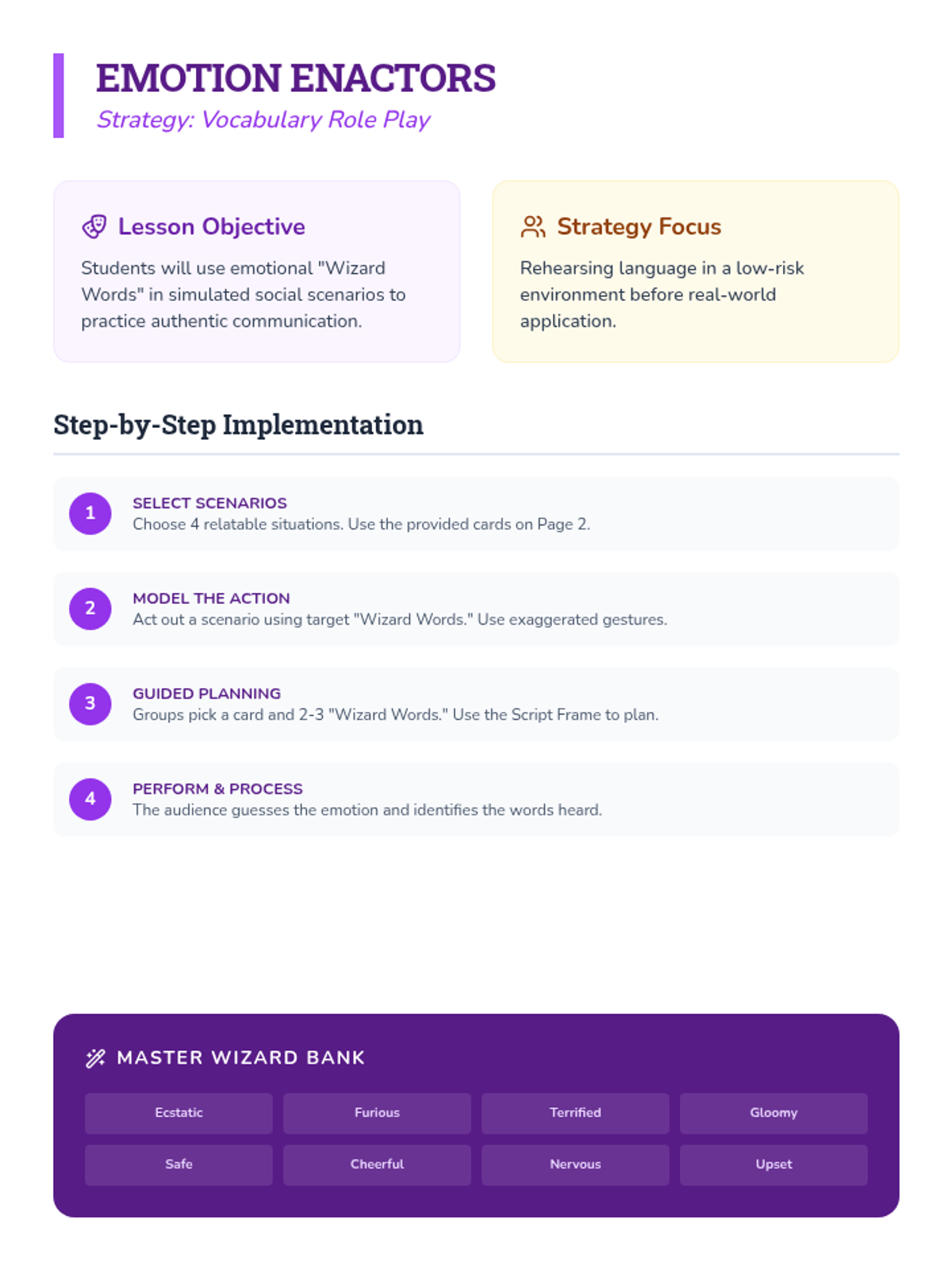
Students apply their expanded emotional vocabulary in simulated social situations, practicing the 'Vocabulary Role Play' strategy to solidify language acquisition through performance and interaction.
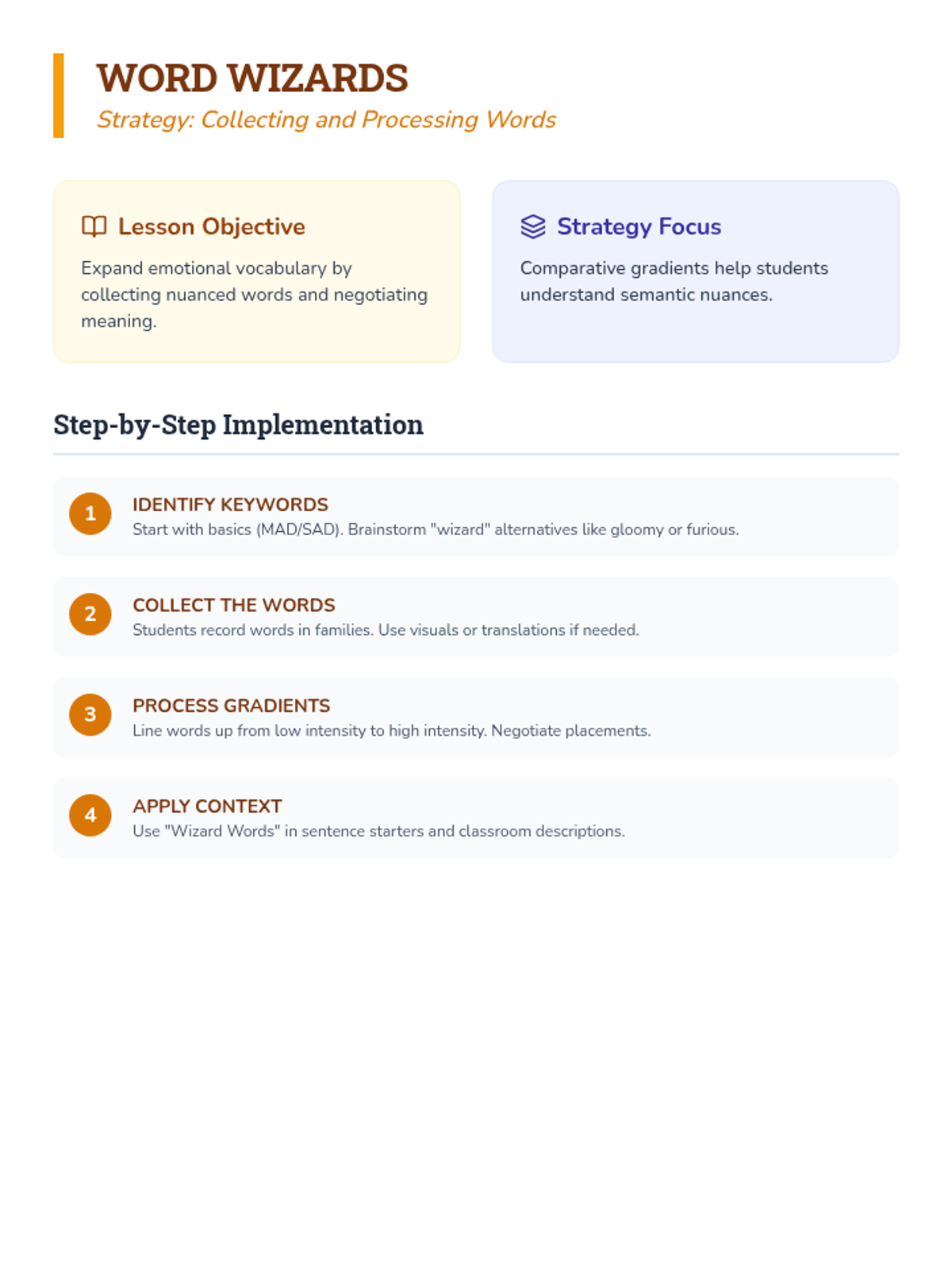
Builds a robust emotional vocabulary by systematically identifying, recording, and interacting with new words that describe complex feelings.
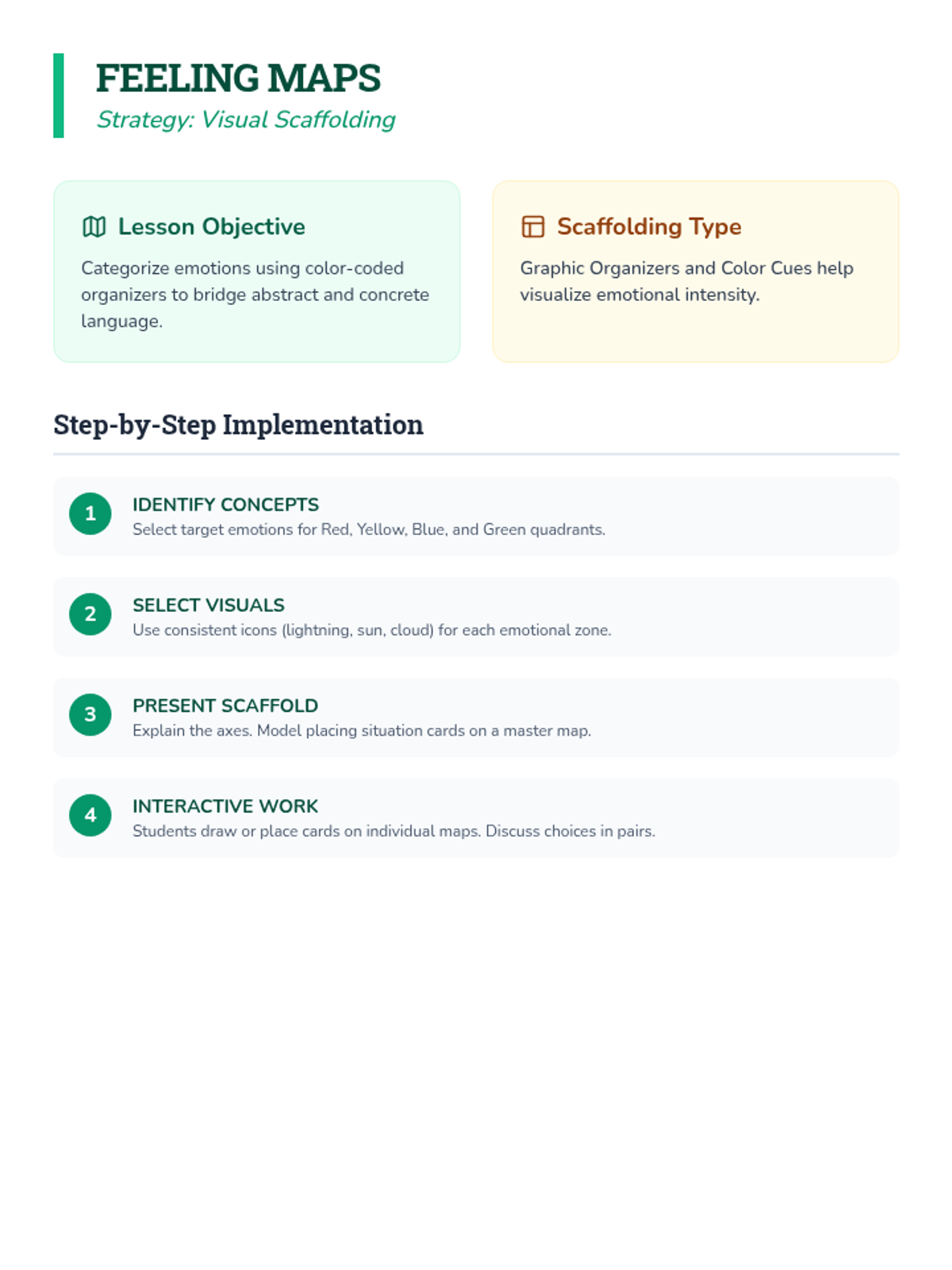
Employs graphic organizers, color-coding, and images to help students map the physical and situational connections to their feelings.
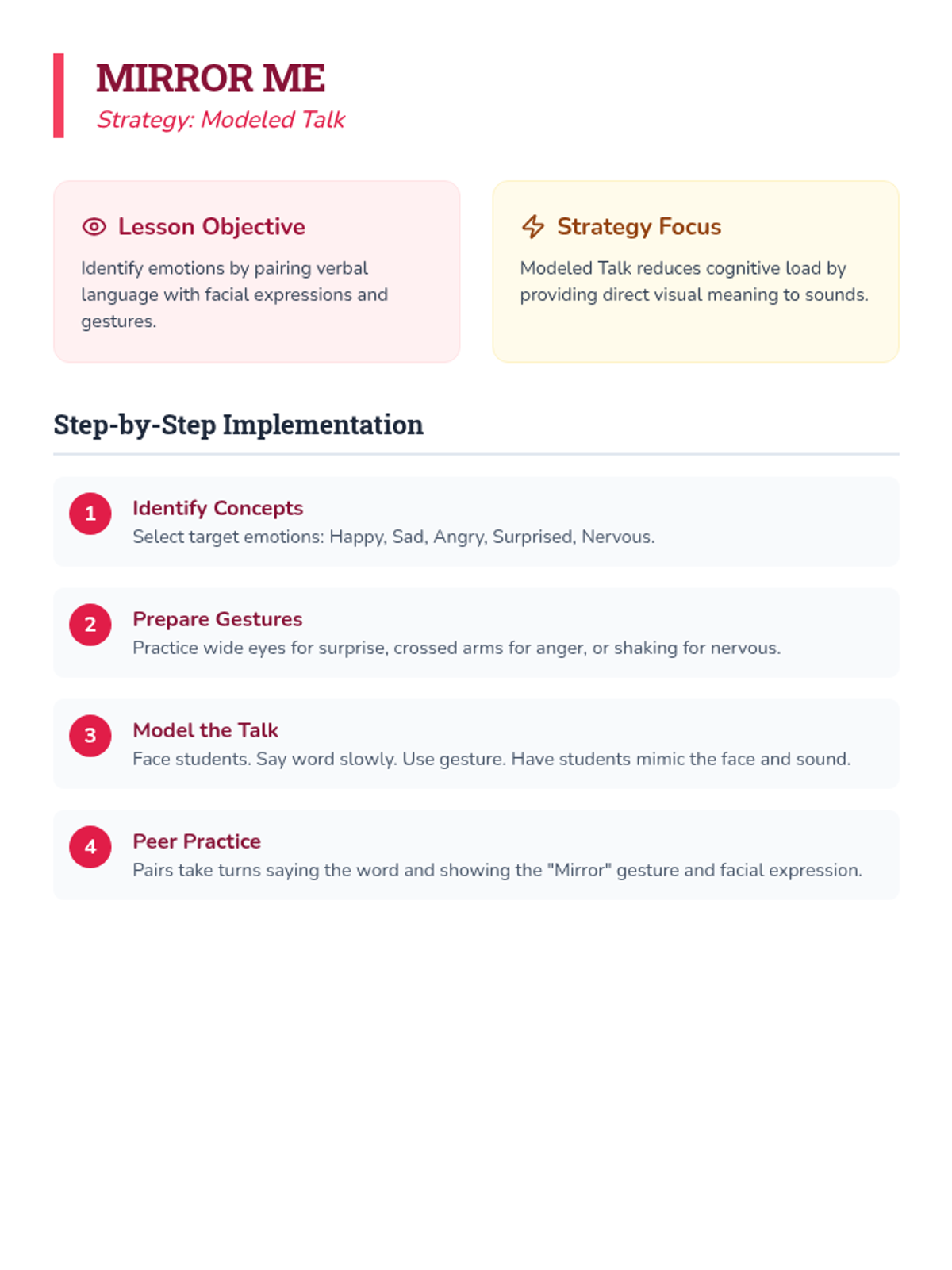
Uses gestures, facial expressions, and slowed speech to demonstrate emotional vocabulary and social interactions, making language comprehensible for ELLs.
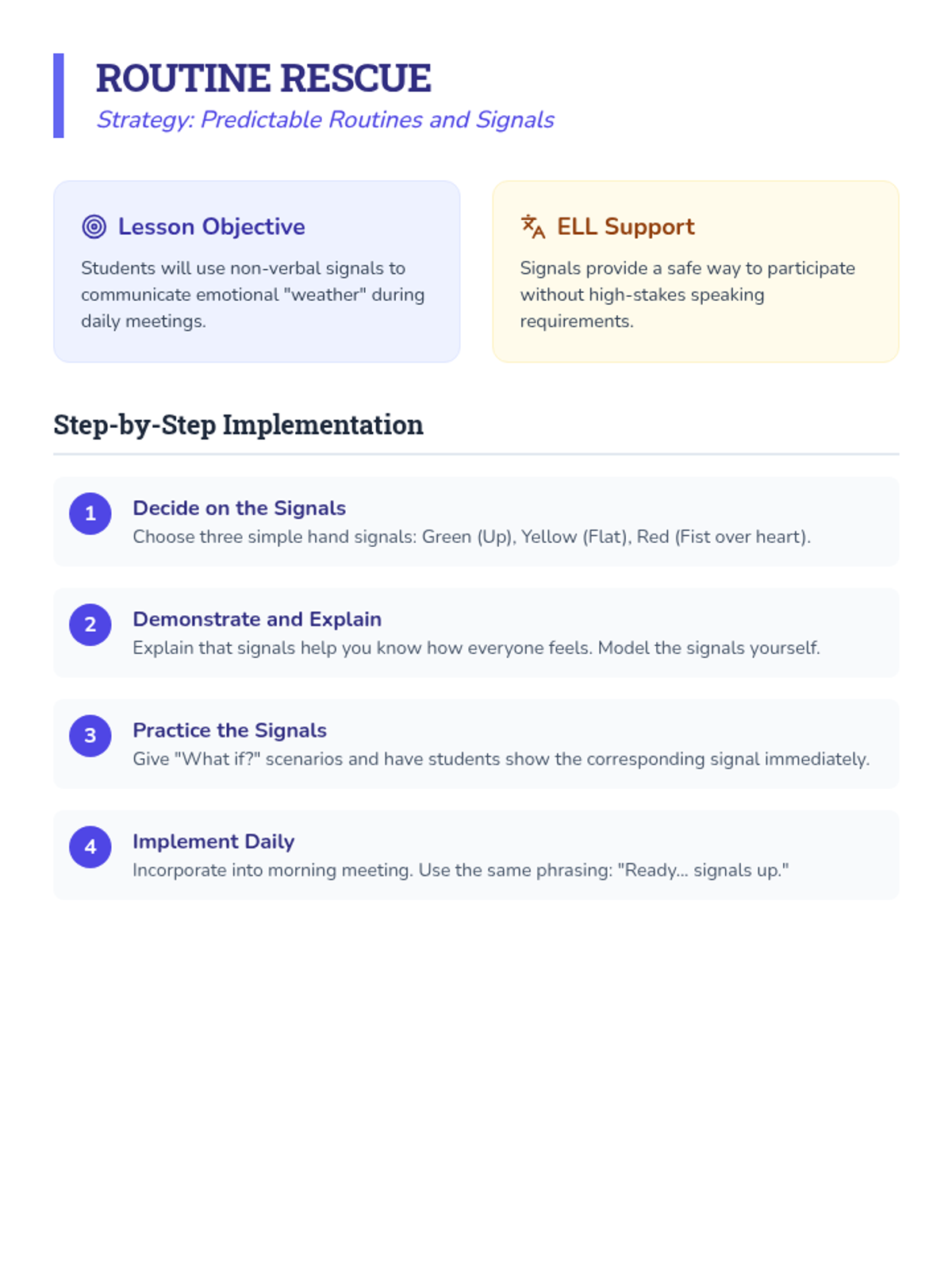
Establishes daily signals and routines for students to communicate their emotional state and readiness for learning, providing a safe and predictable classroom environment.
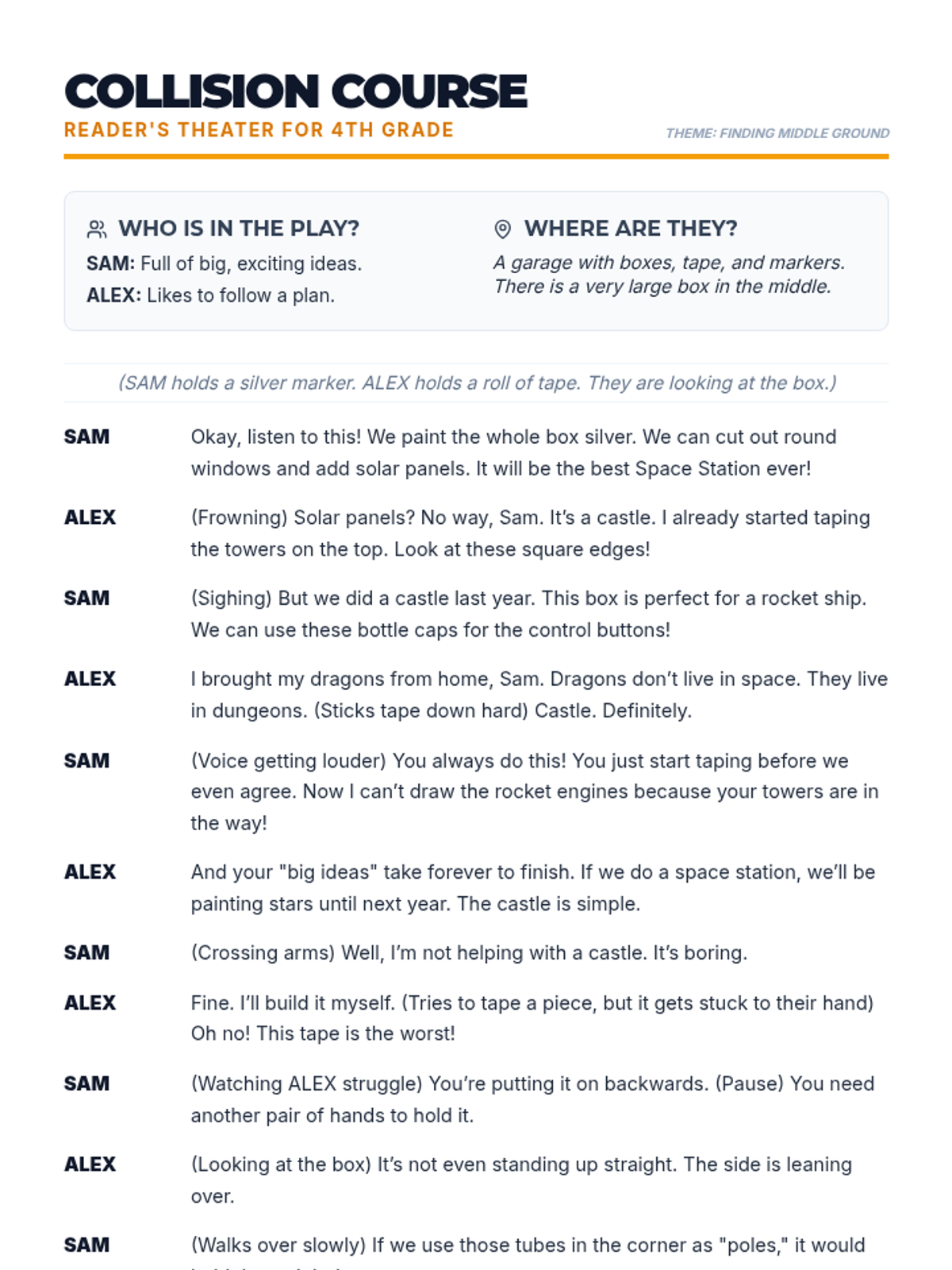
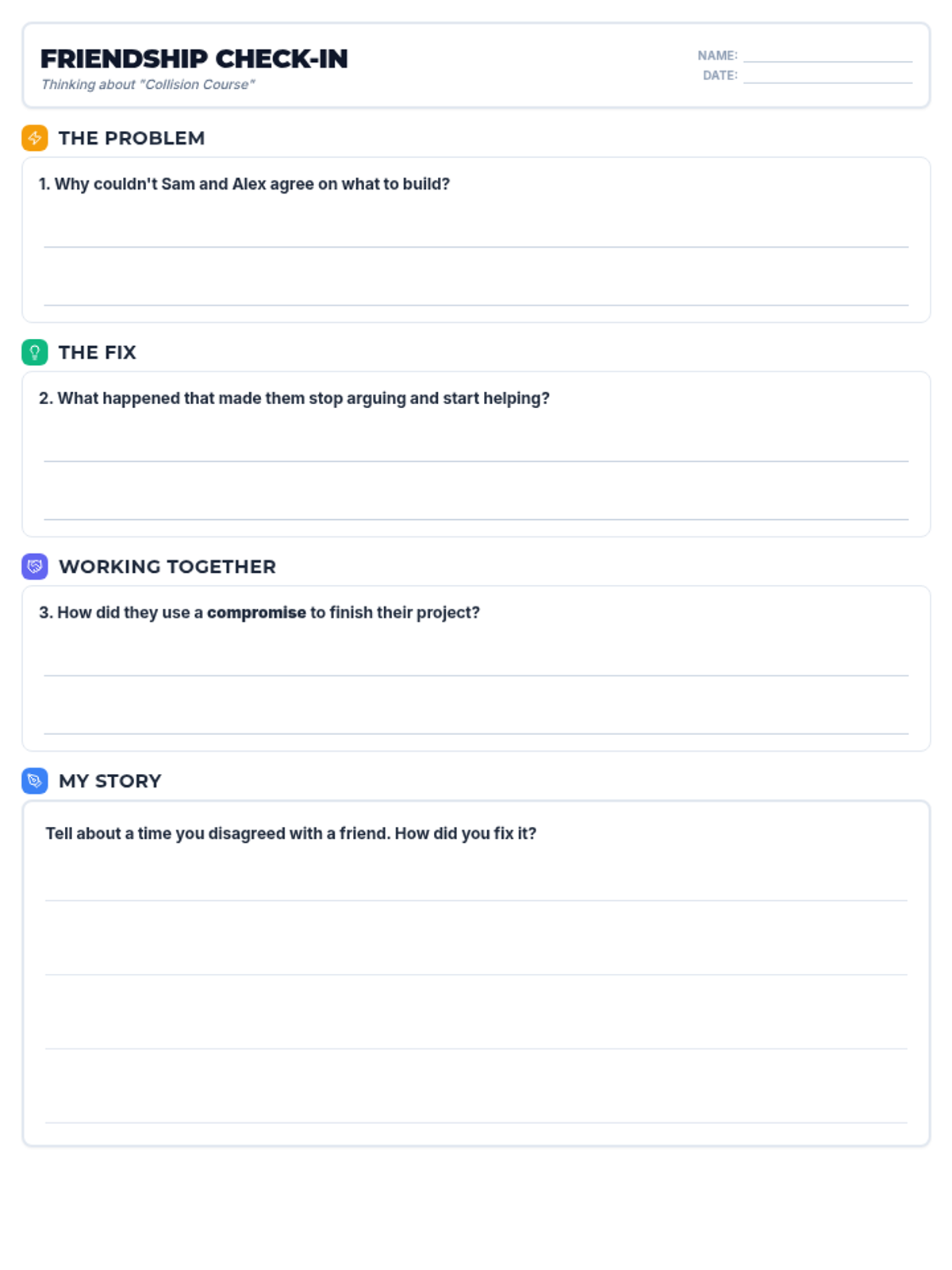
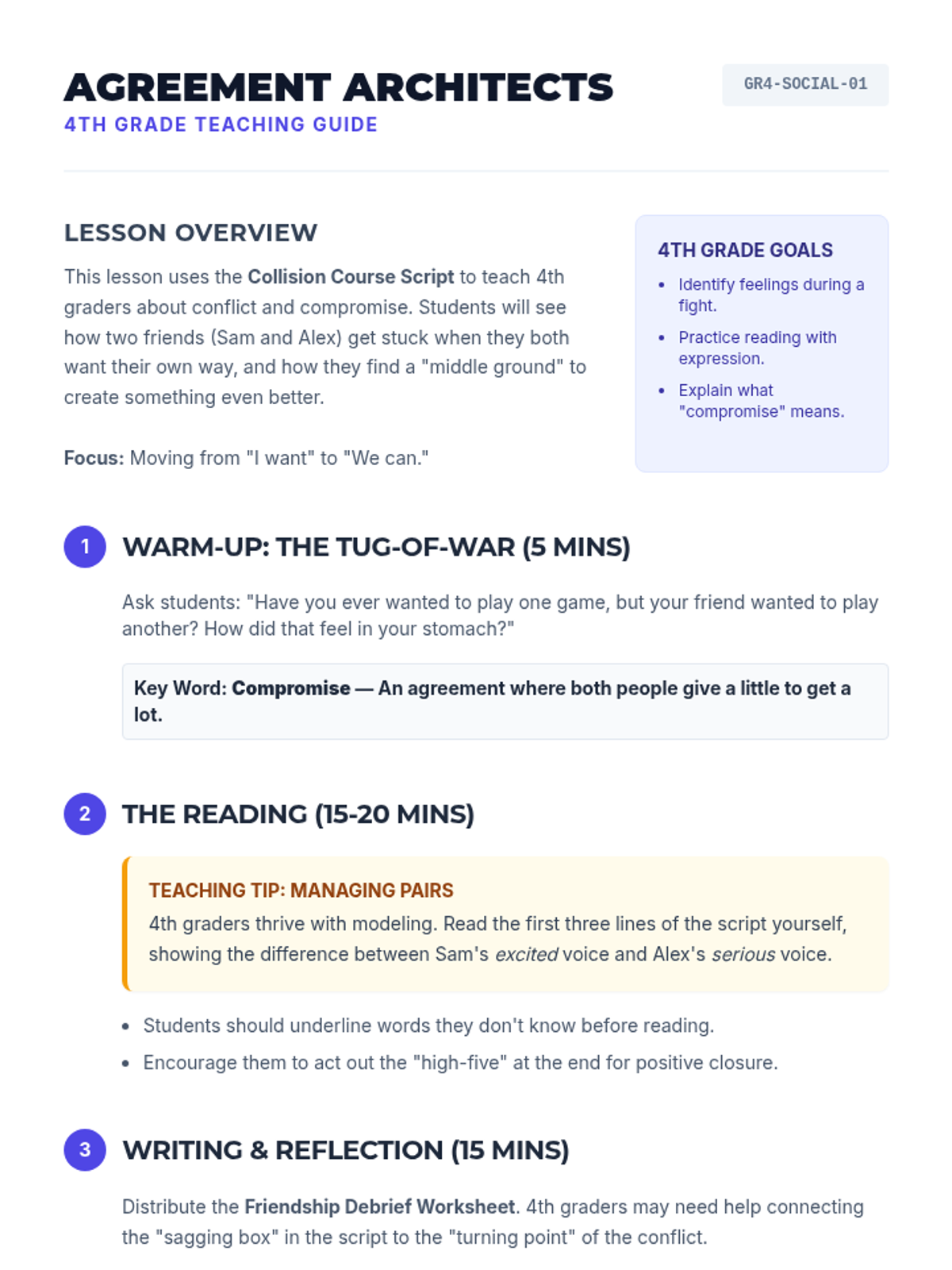
A lesson exploring conflict resolution and compromise through a two-person Reader's Theater script about friends navigating a creative disagreement.
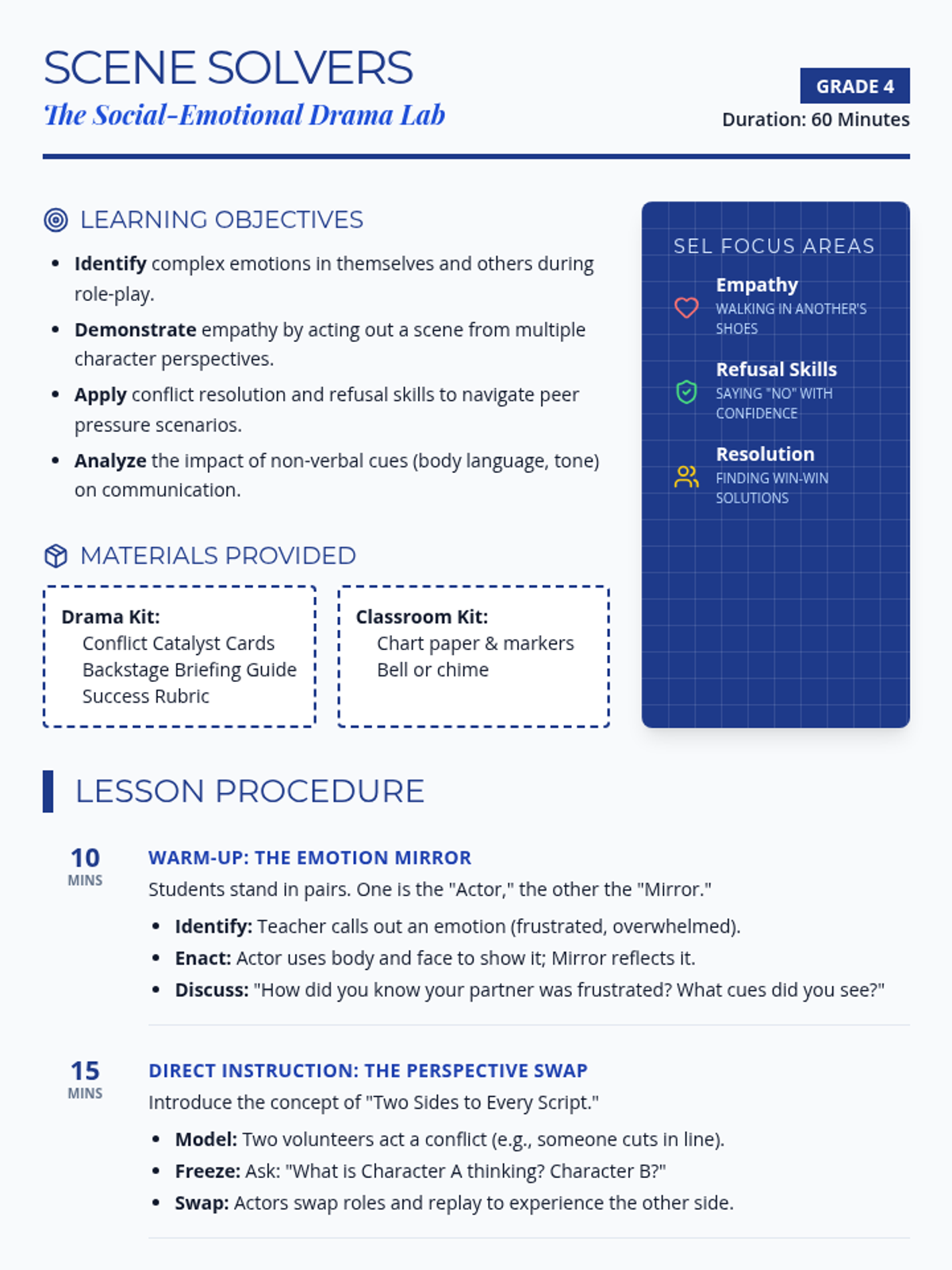
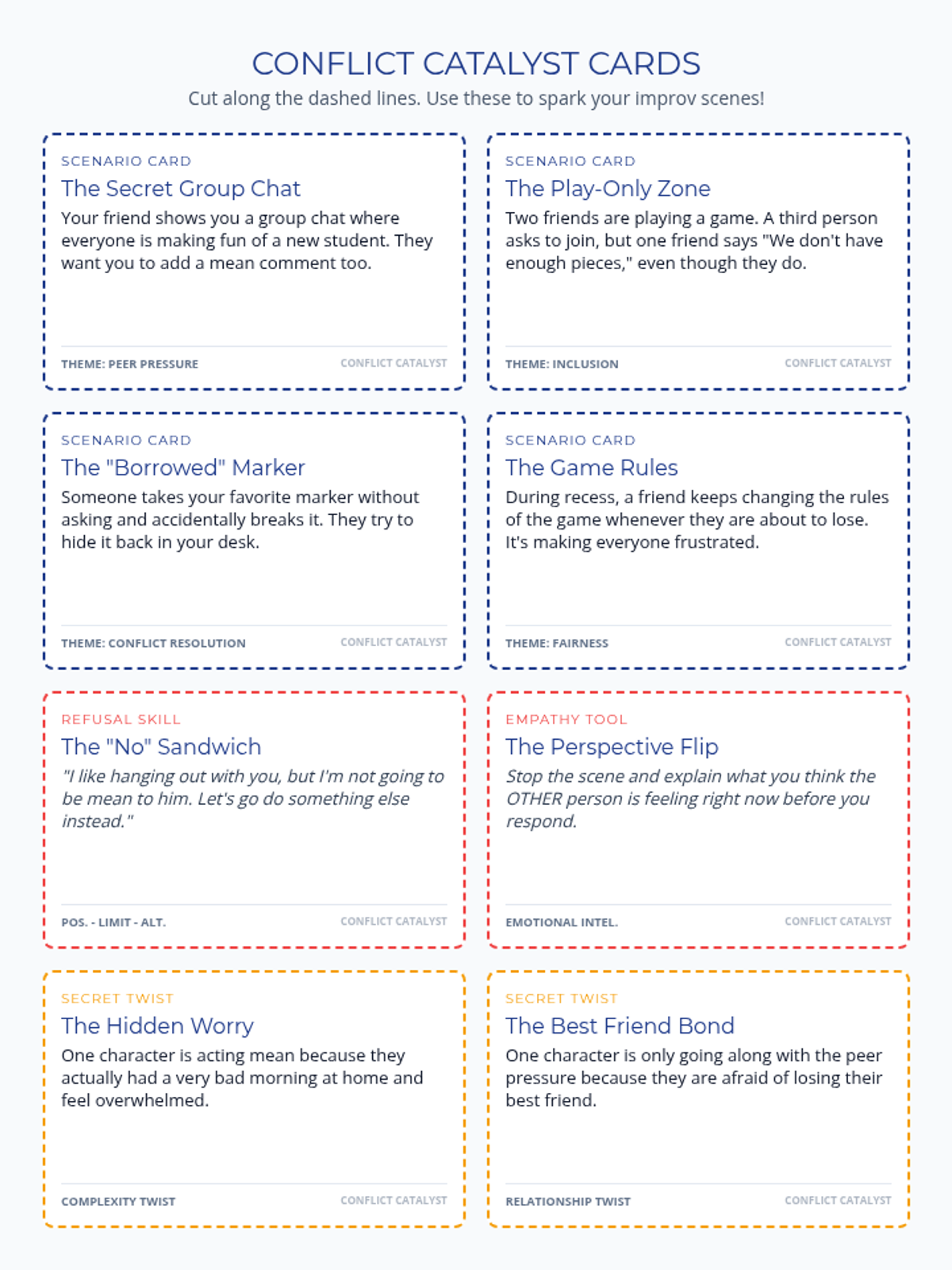
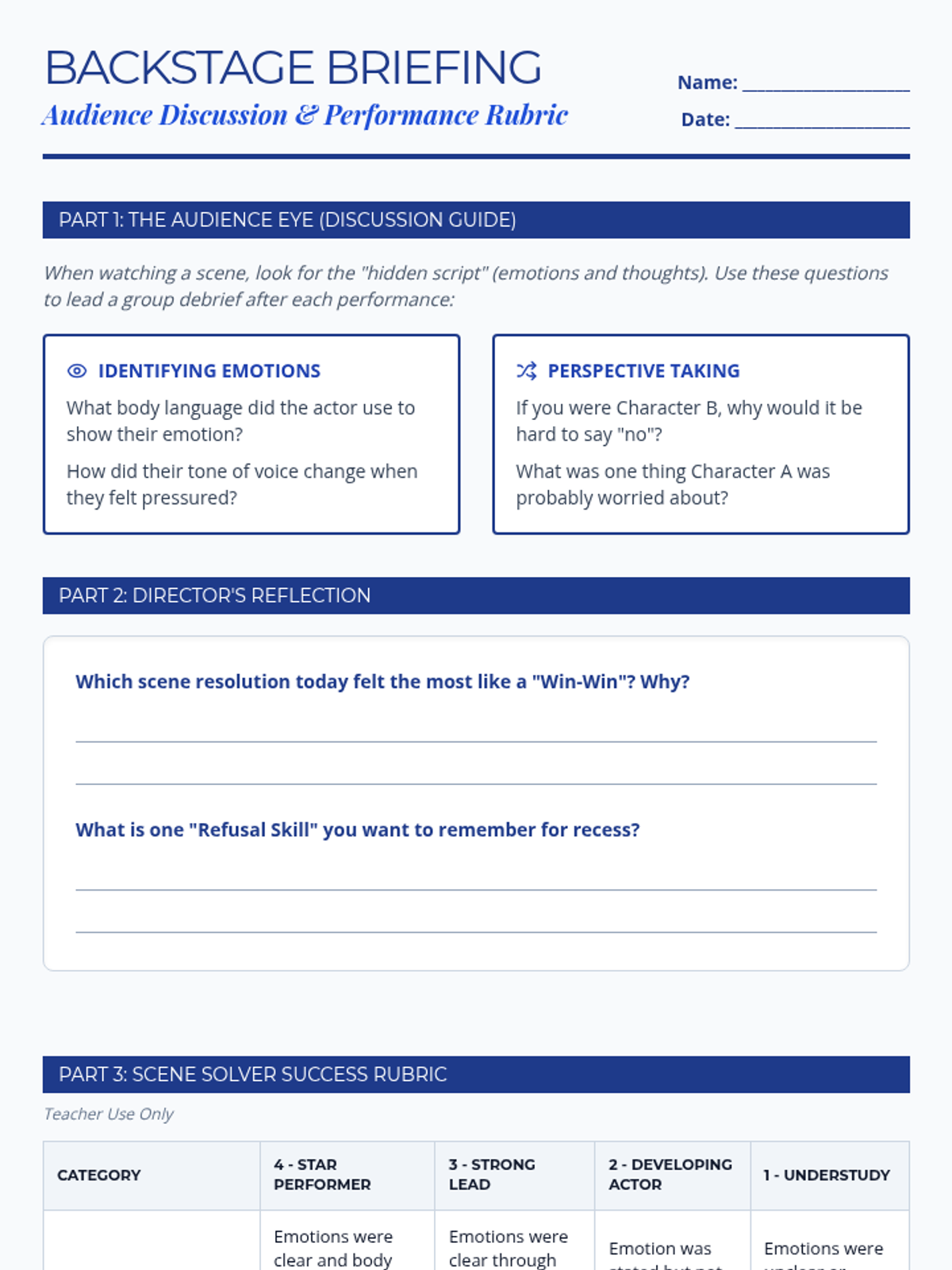
A 4th-grade drama lesson focusing on social-emotional learning through improv and role-play, covering conflict resolution, empathy, and refusal skills.
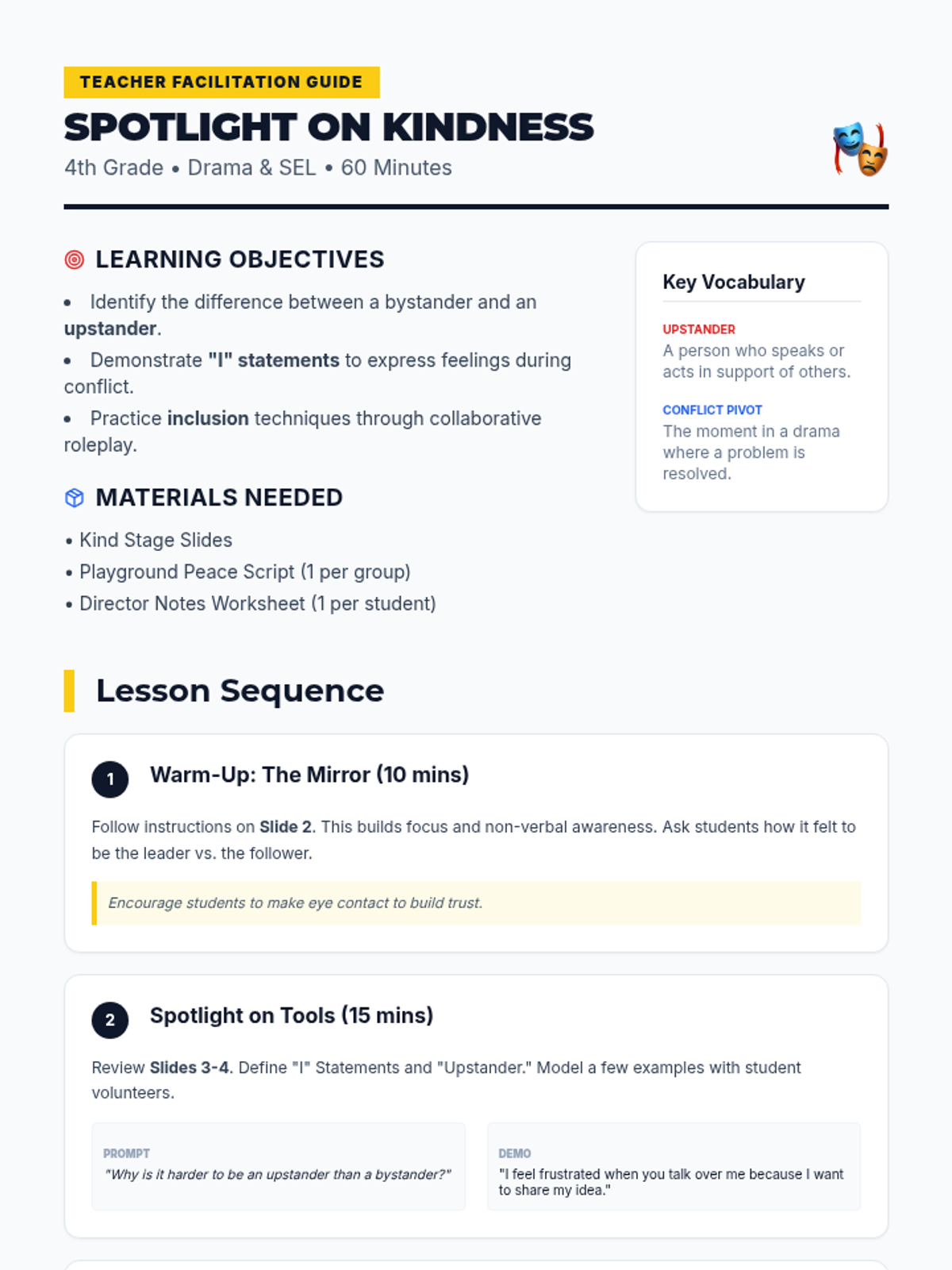
A drama-based lesson for 4th graders focused on building friendship, resolving conflicts, and preventing bullying through roleplay and performance. Students learn 'I' statements and the power of inclusion.
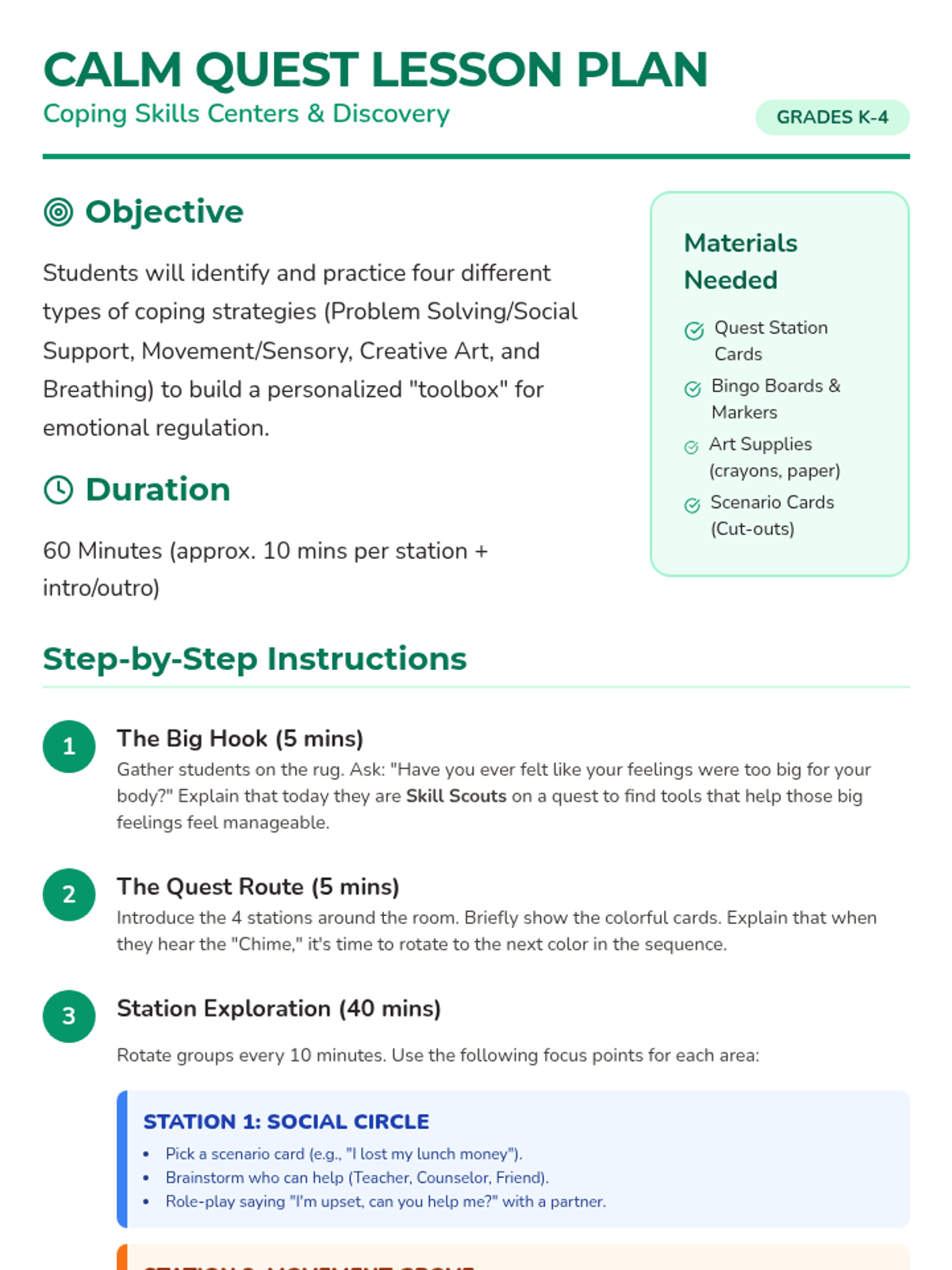
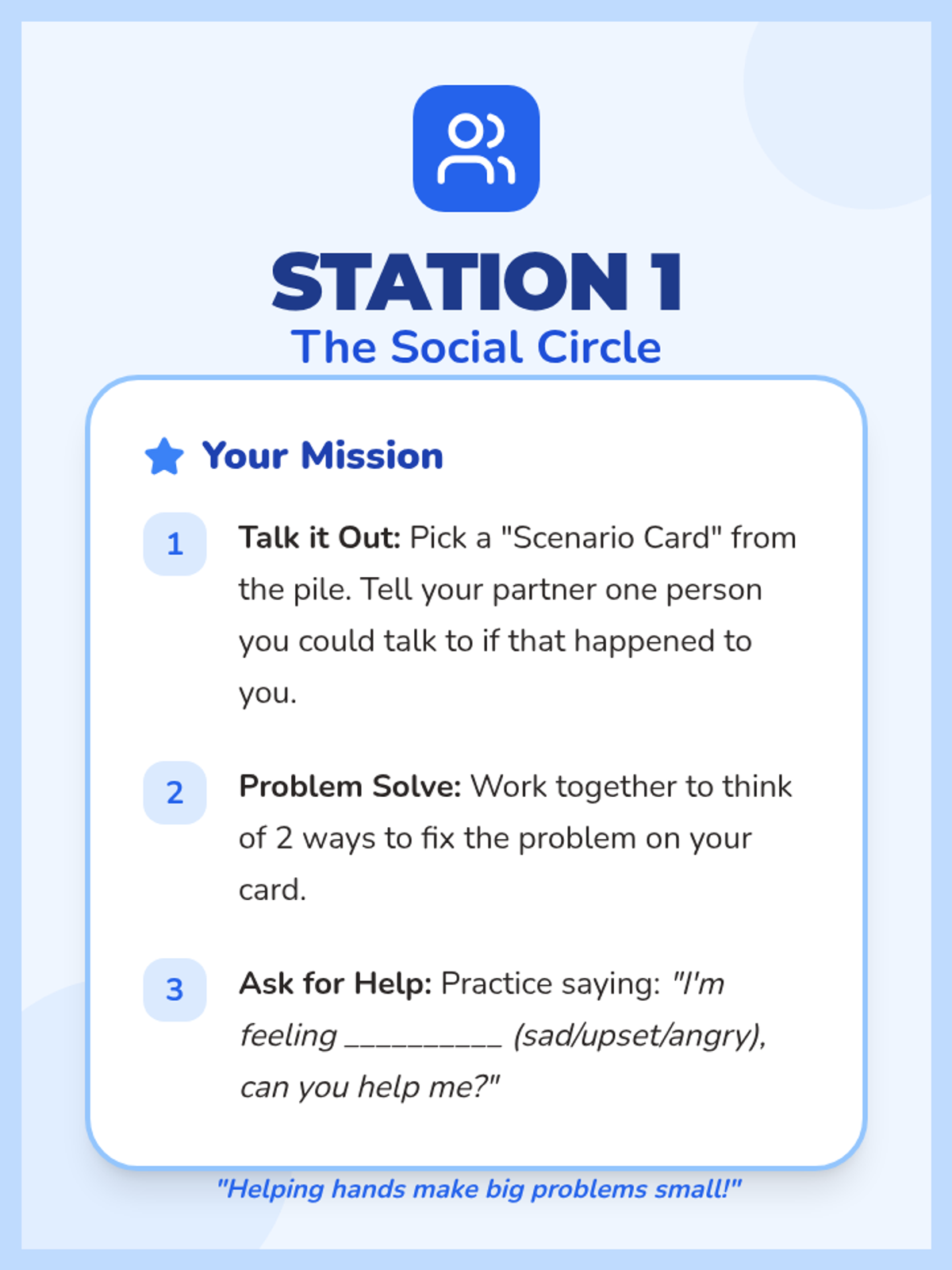
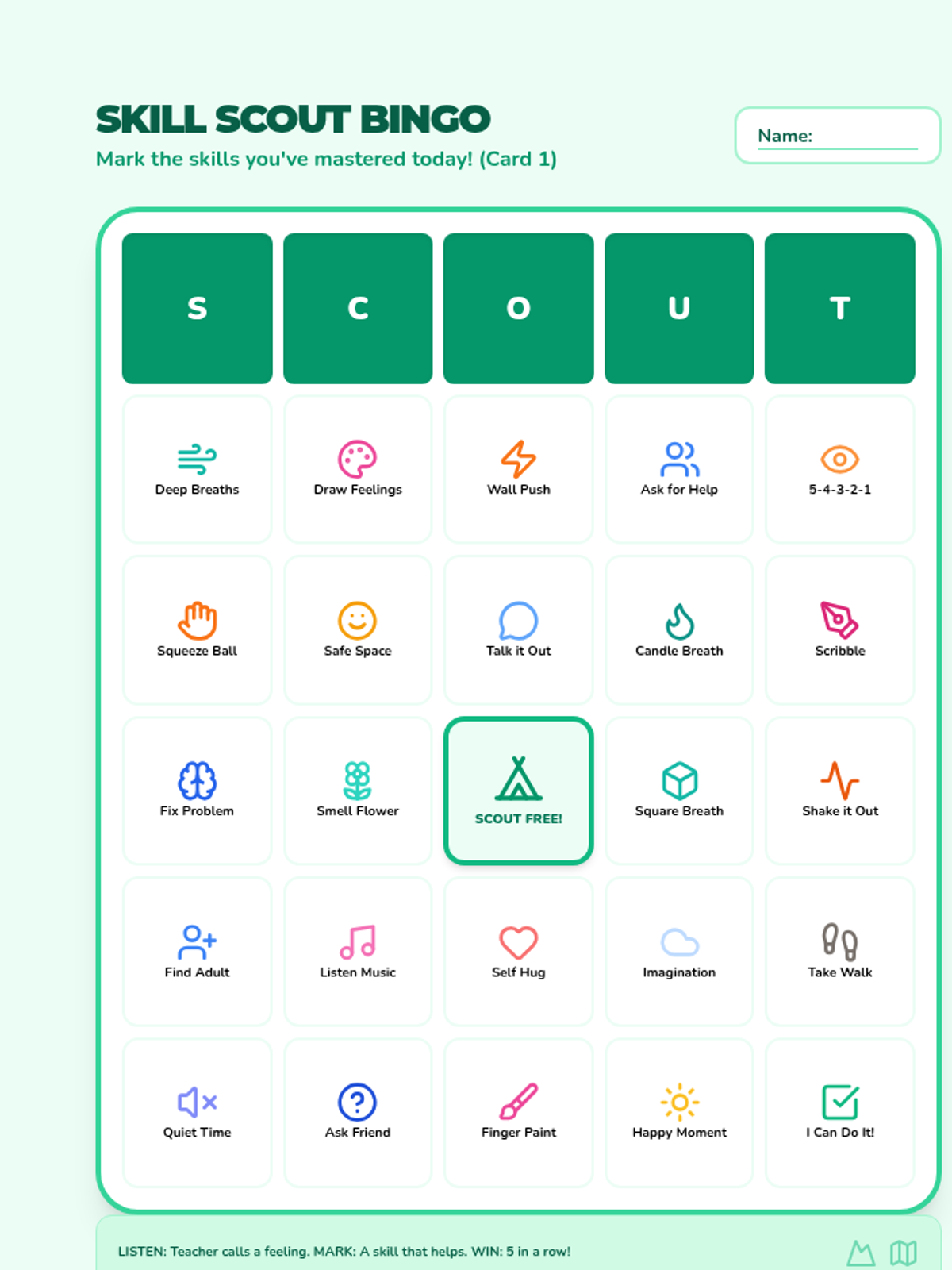
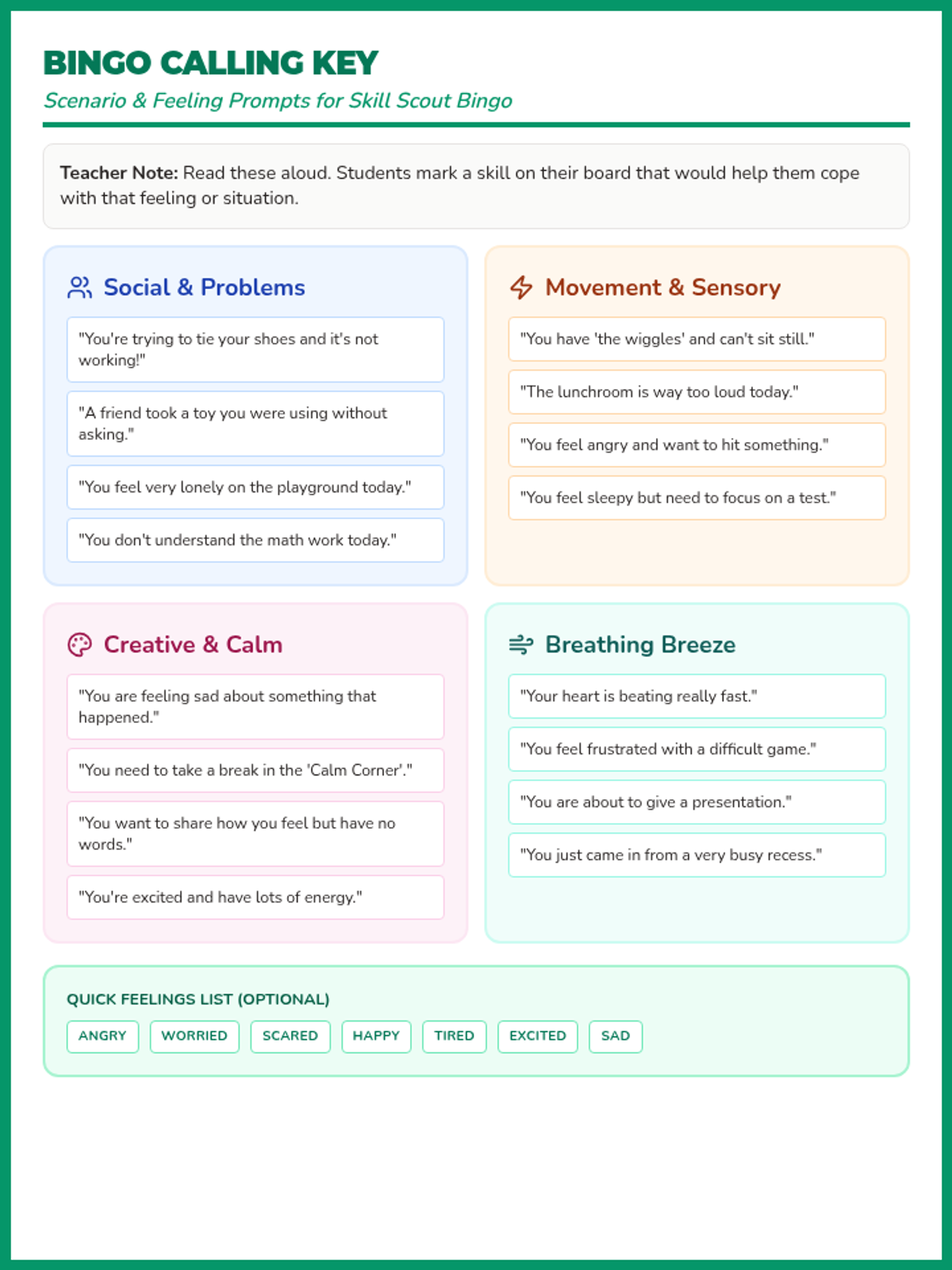
A comprehensive lesson introducing students to various coping strategies through interactive stations and a group bingo game. students will explore problem-solving, movement, art, and breathing techniques to manage their emotions.
A reflection on what has been learned and a call to action to practice acceptance every day.
Practical skills for including neurodivergent peers in play and conversation, focusing on kindness and patience.
Understanding different communication styles and how to connect with others who may communicate in unique ways.
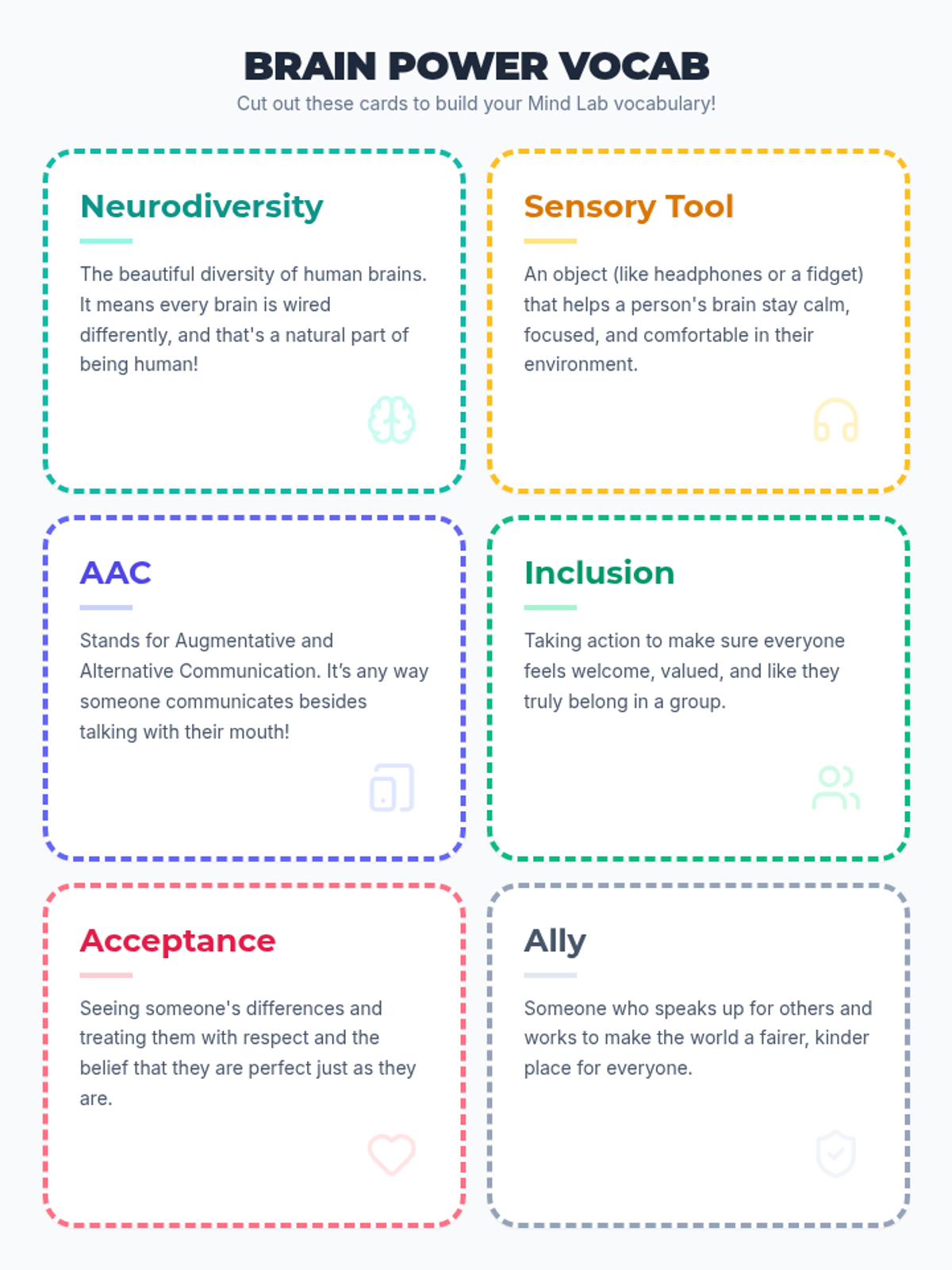
Exploring the five senses and beyond, focusing on how different brains process sensory information and the tools that help.
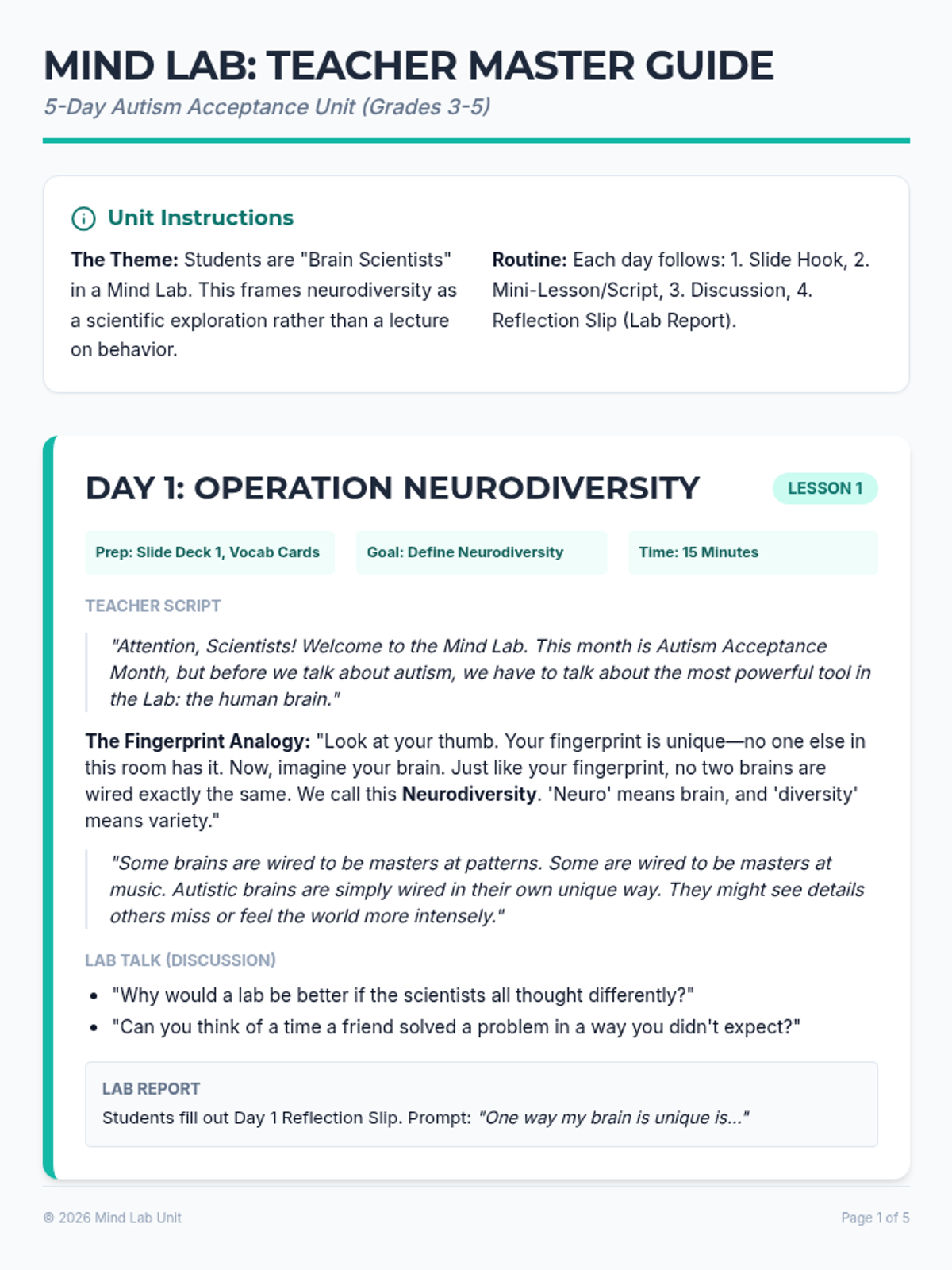
An introduction to neurodiversity, exploring how every brain is unique and wired differently, using the 'Brain Lab' concept.
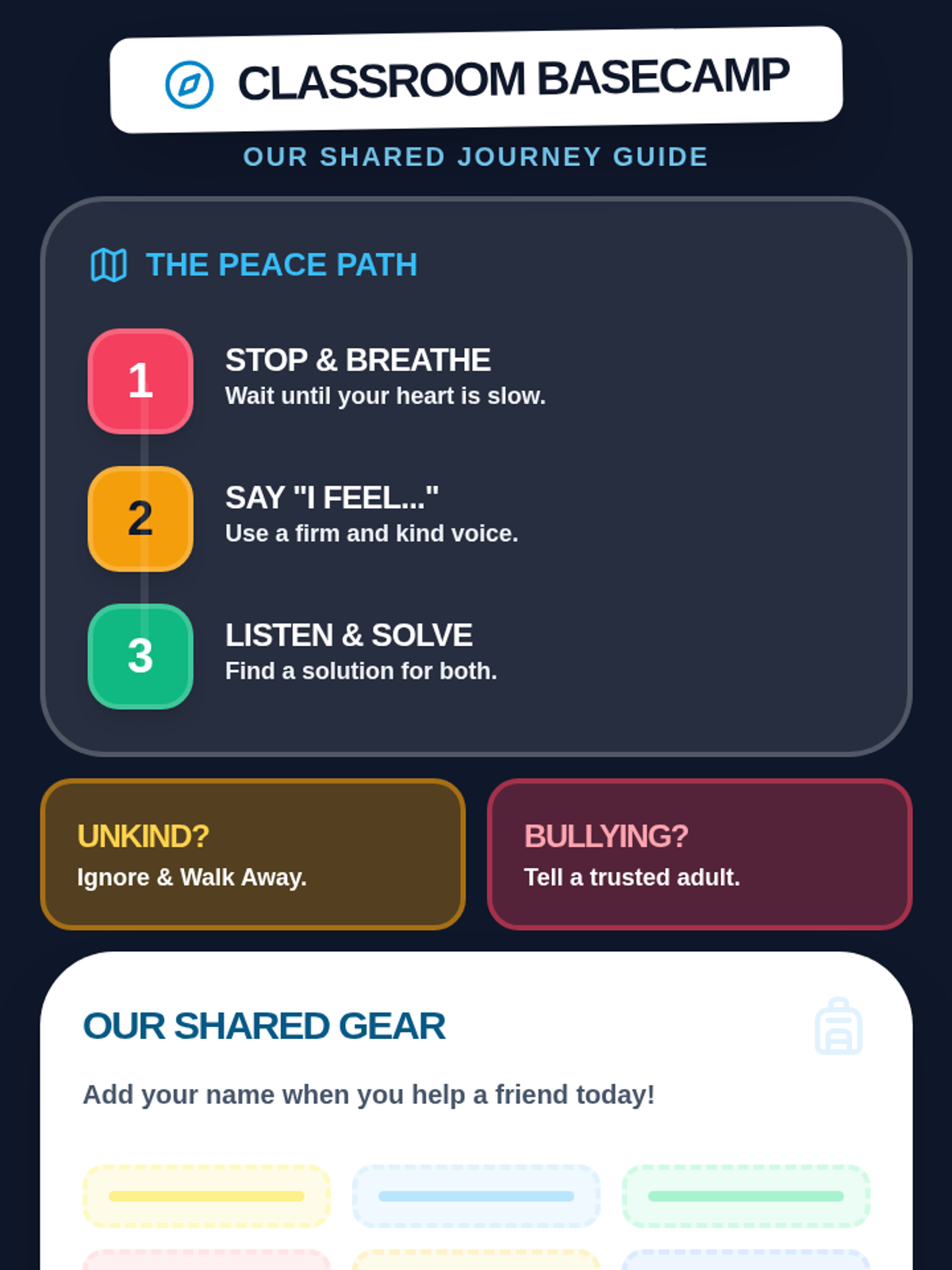
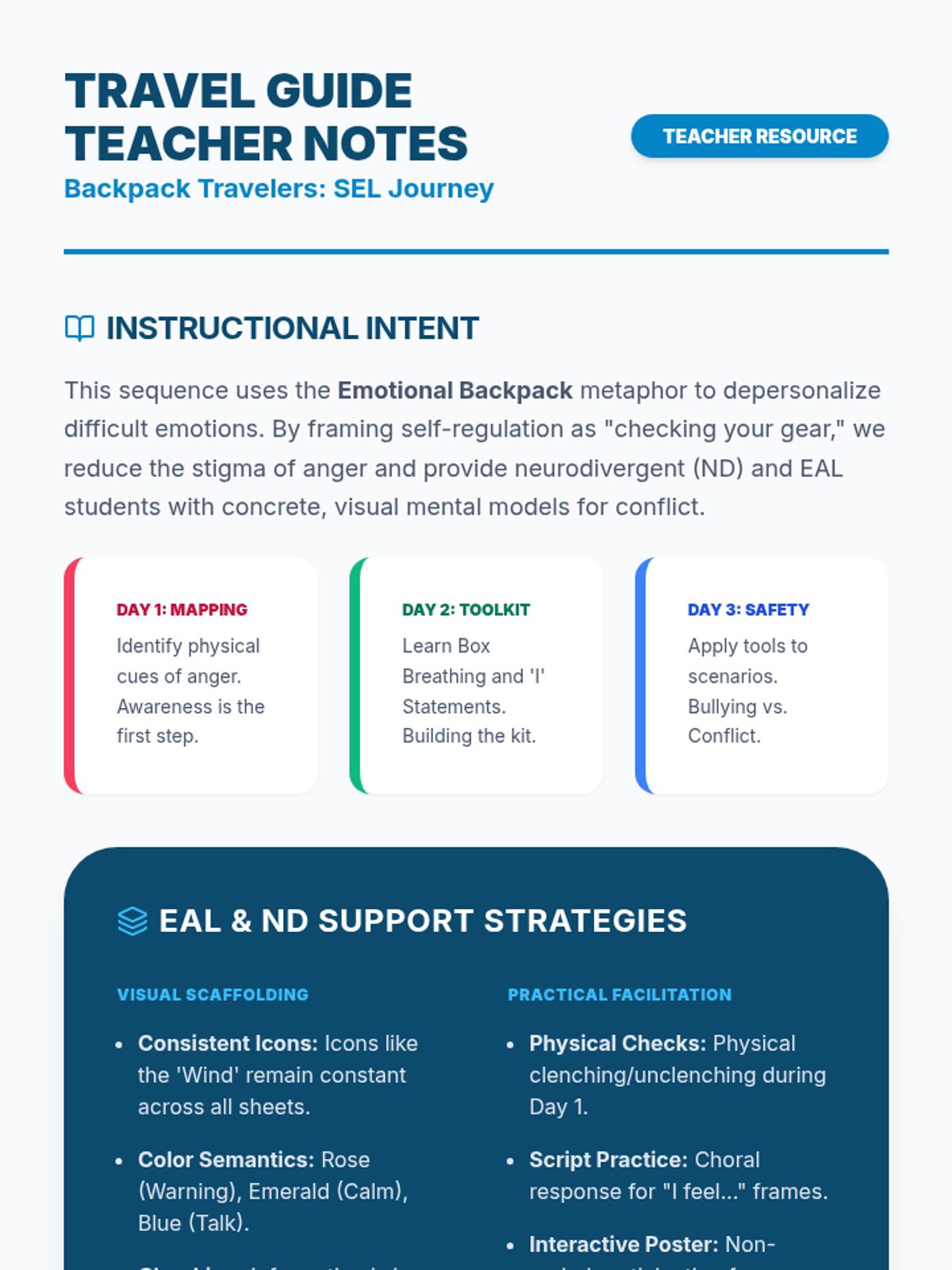
Applies regulation tools to social situations, including conflict resolution steps and handling unkind behavior or bullying.
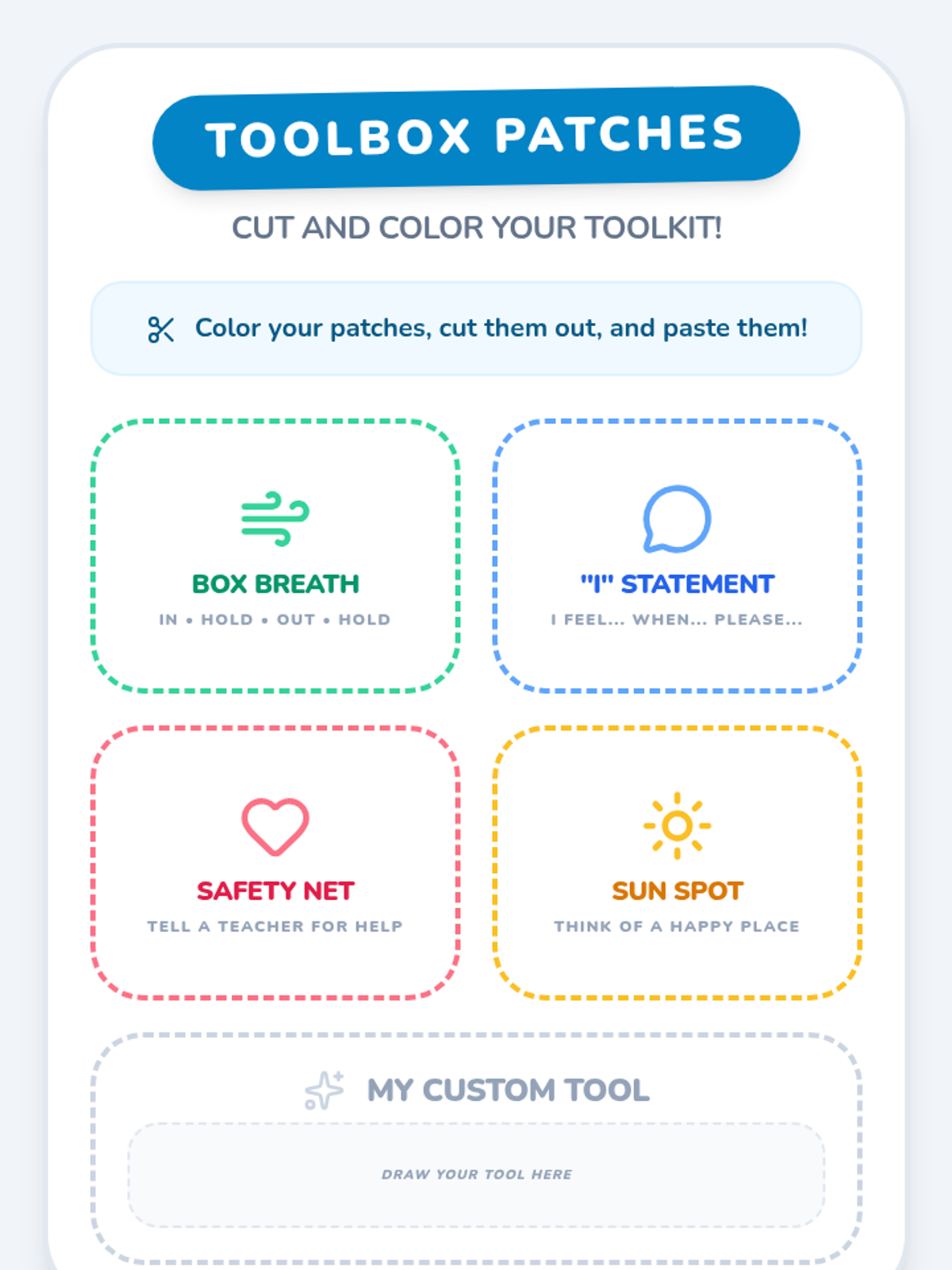
Focuses on practical tools for regulation: deep breathing, mindfulness, and the 'I' Statement tool.
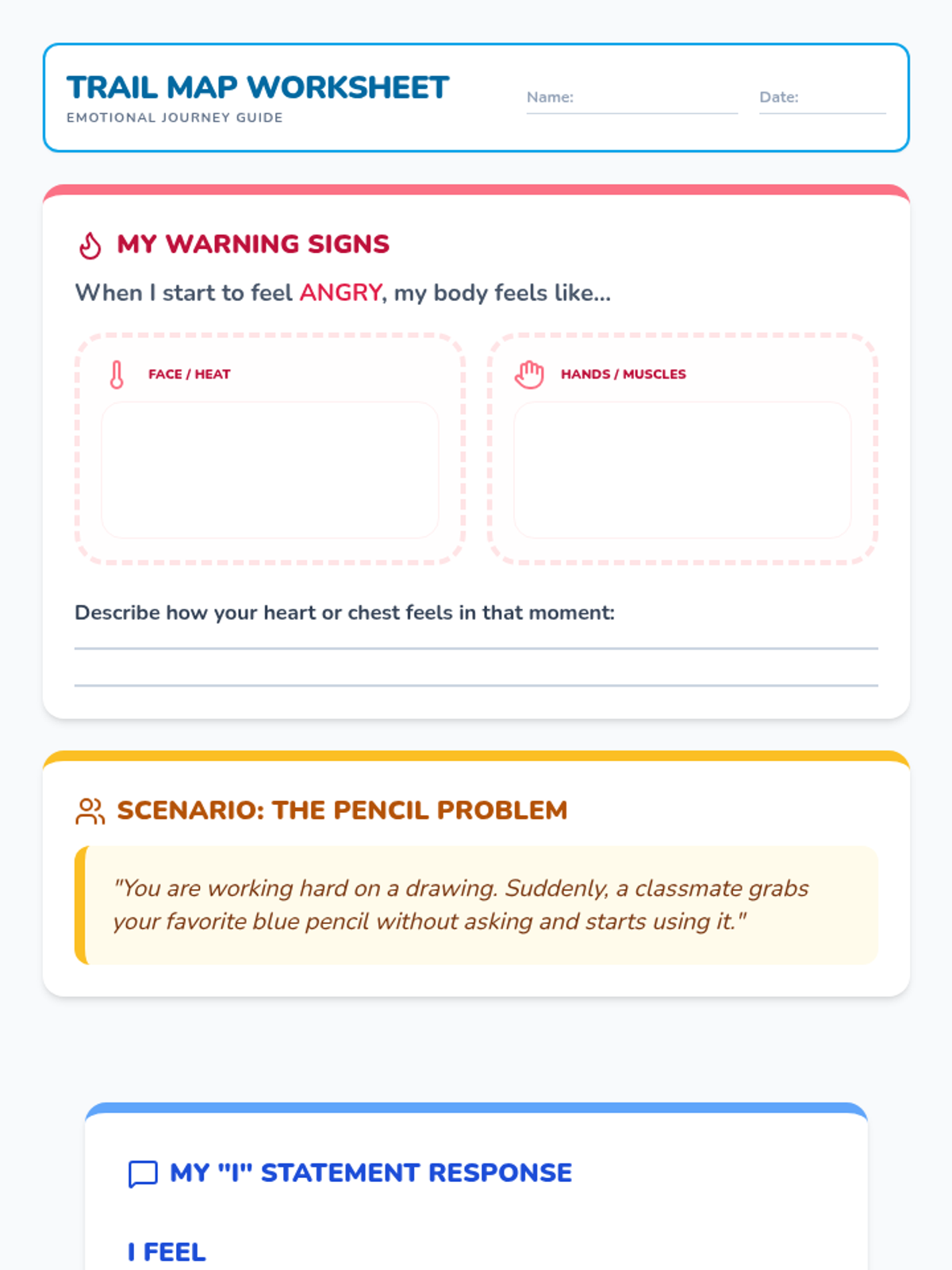
Students learn to identify physical signs of anger and use the 'Emotional Backpack' metaphor to understand that everyone carries feelings.
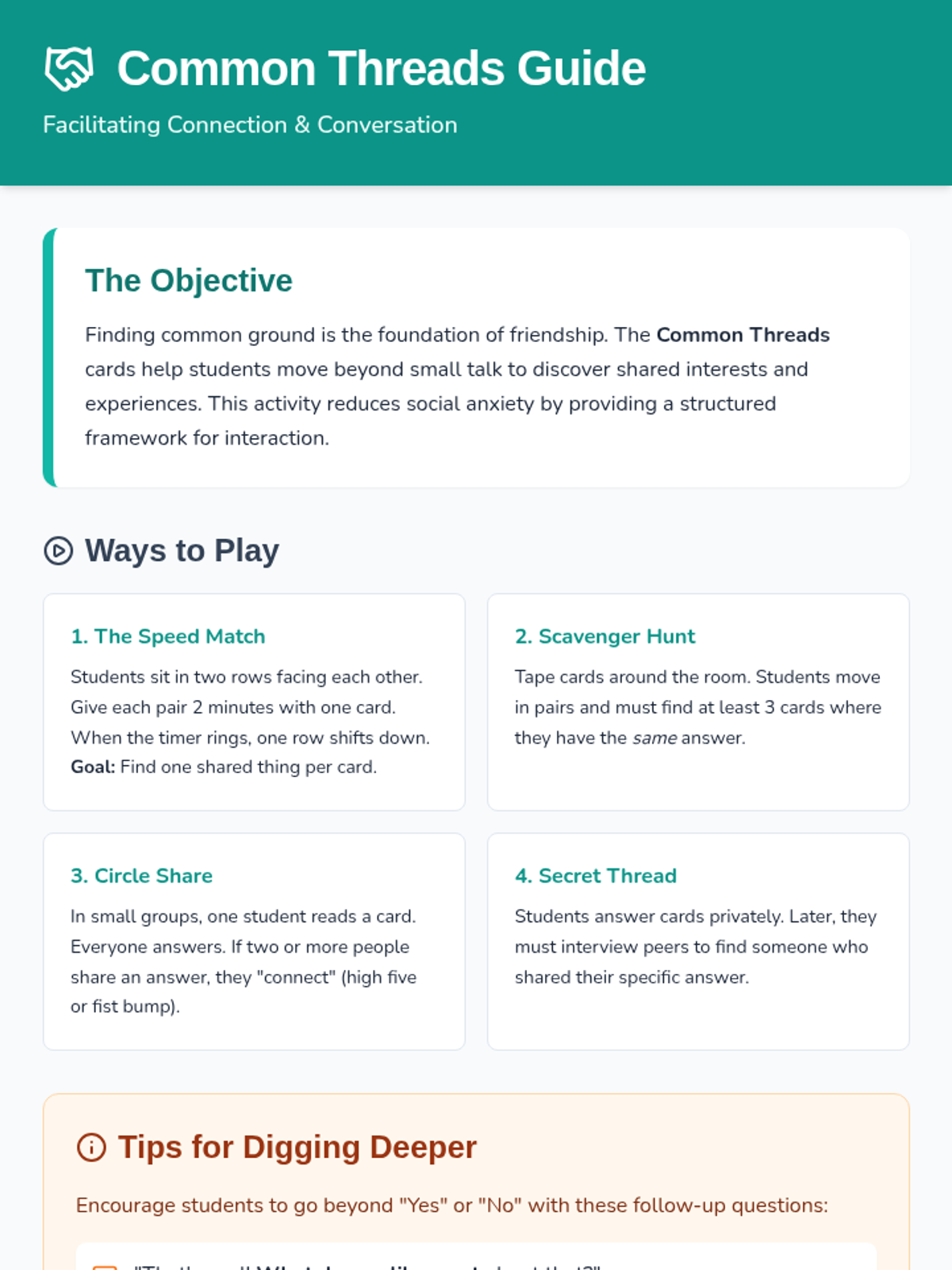
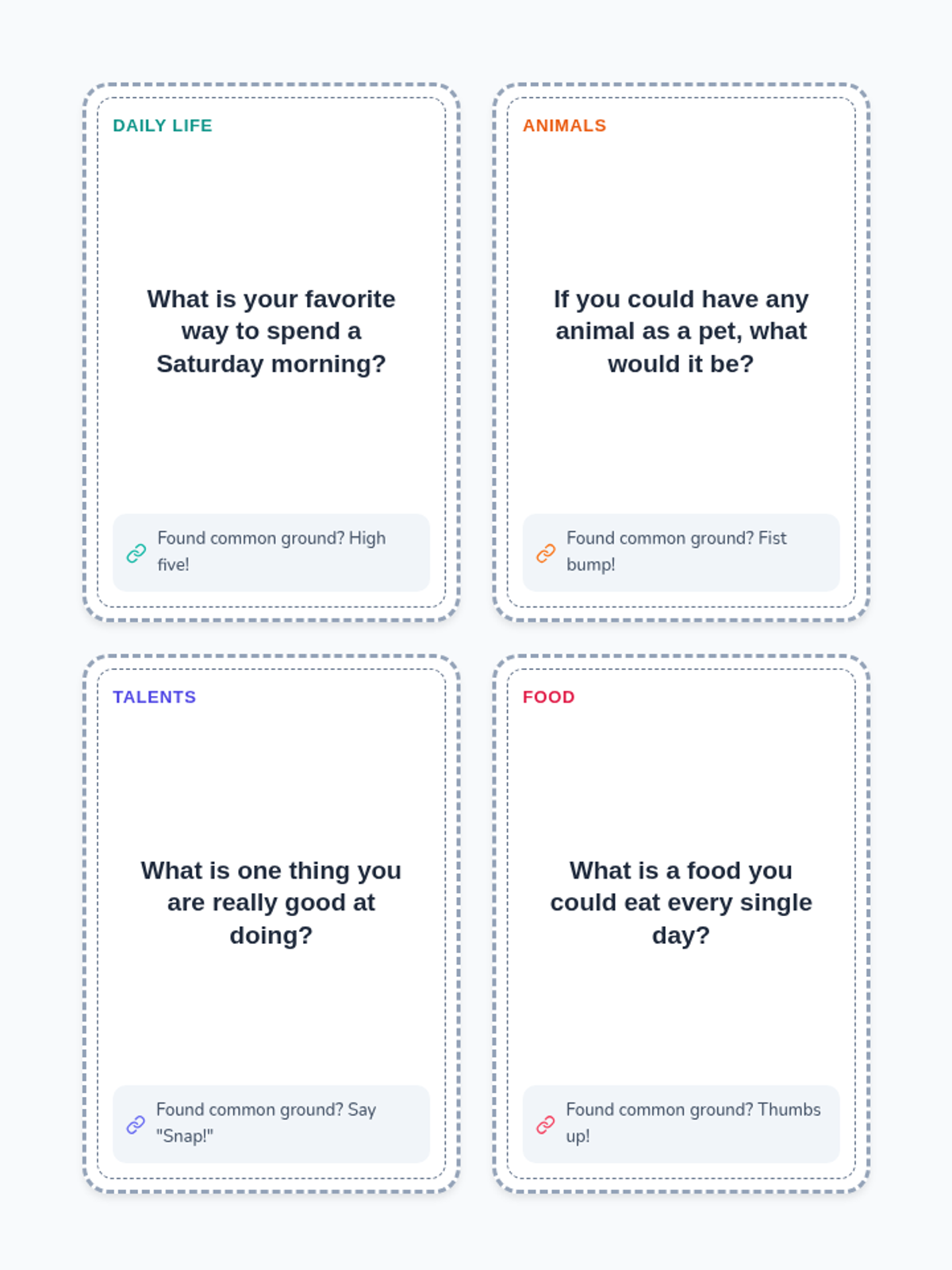
A social-emotional learning lesson focused on finding commonalities with peers through structured conversation. Students use conversation cards to discover shared interests and build connections.
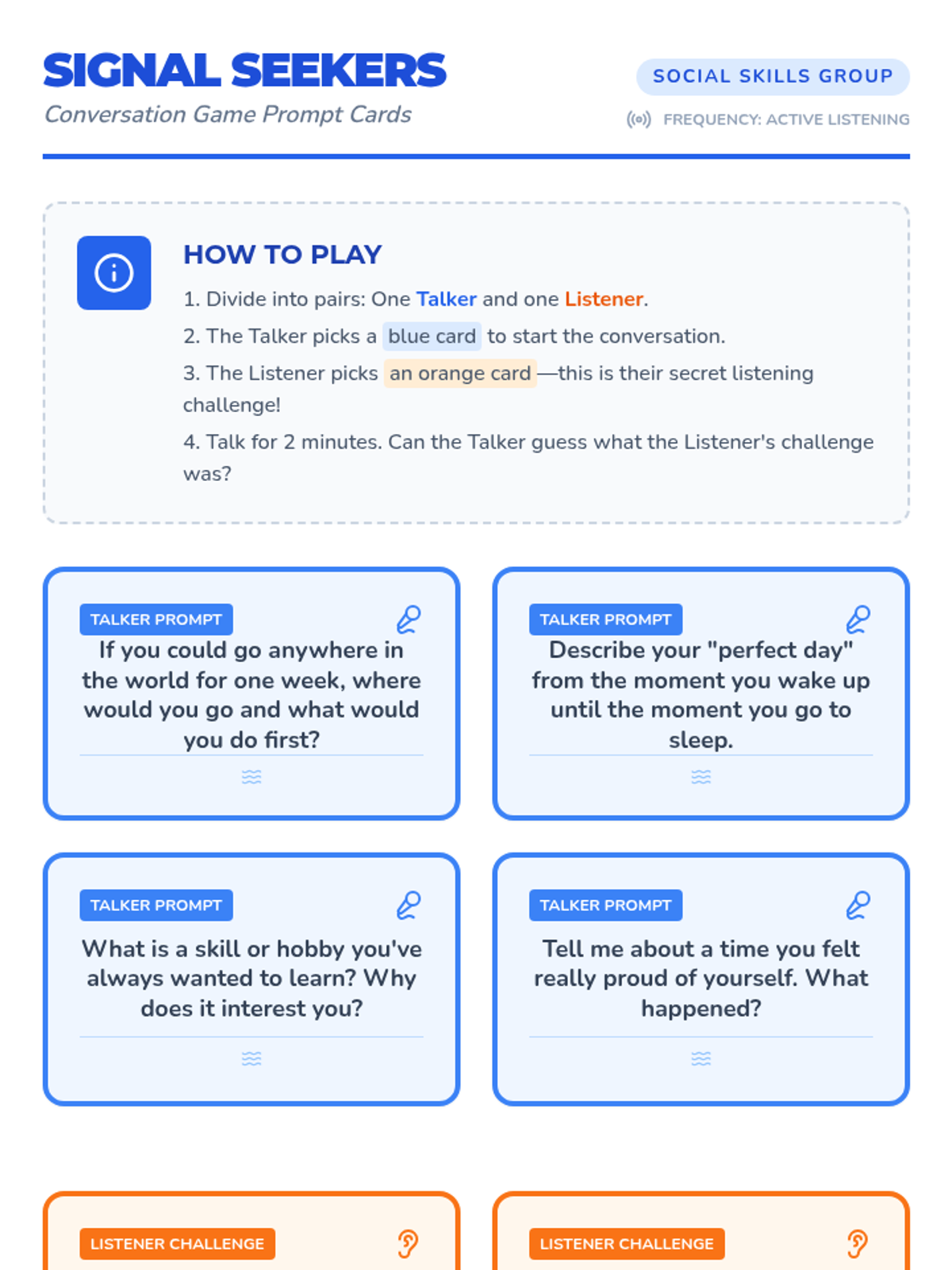
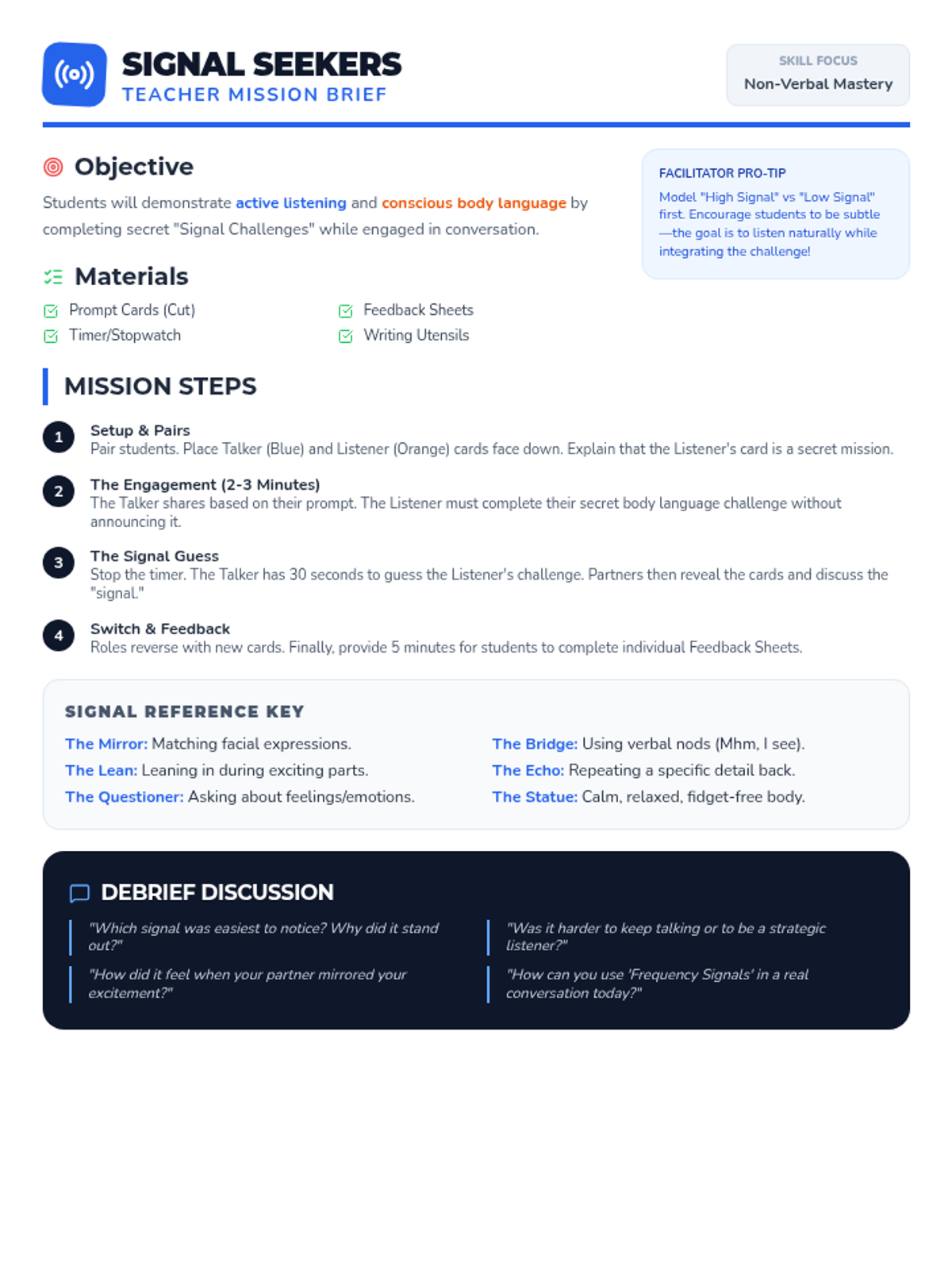
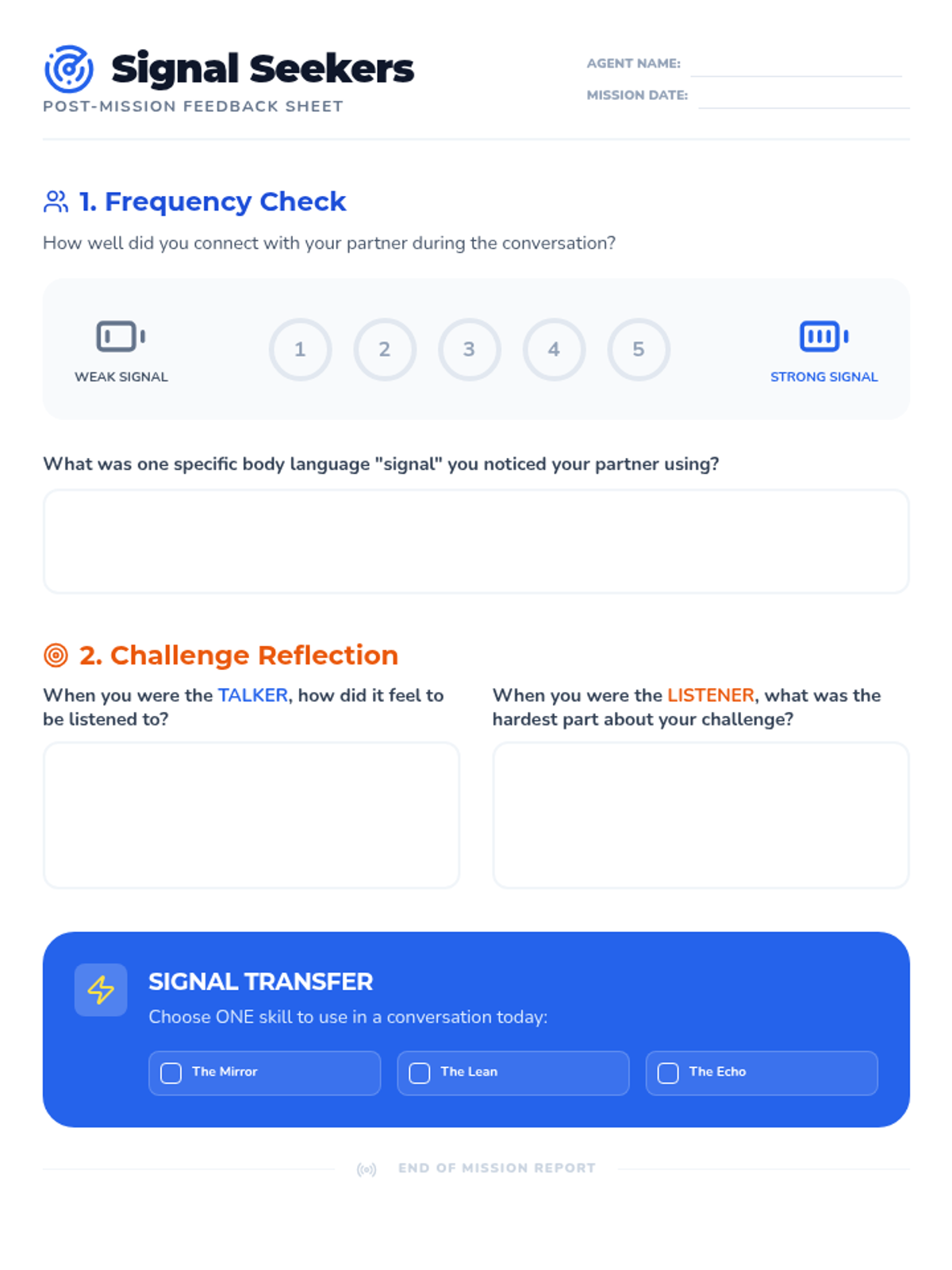
A dynamic conversation game where students practice active listening and non-verbal communication through 'Talker' prompts and 'Listener' challenges. Students learn to recognize and use body language to show they are truly engaged in a conversation.
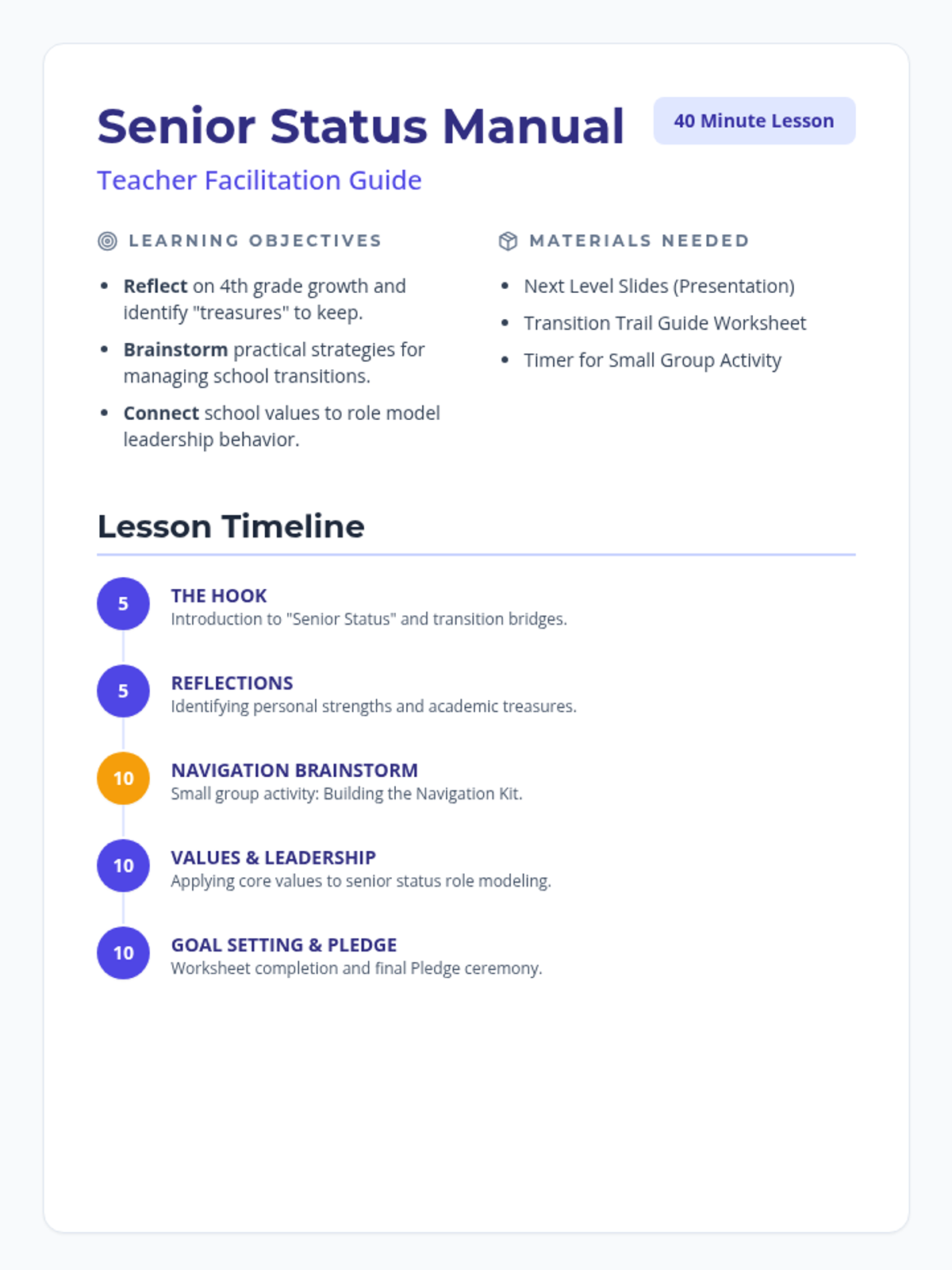
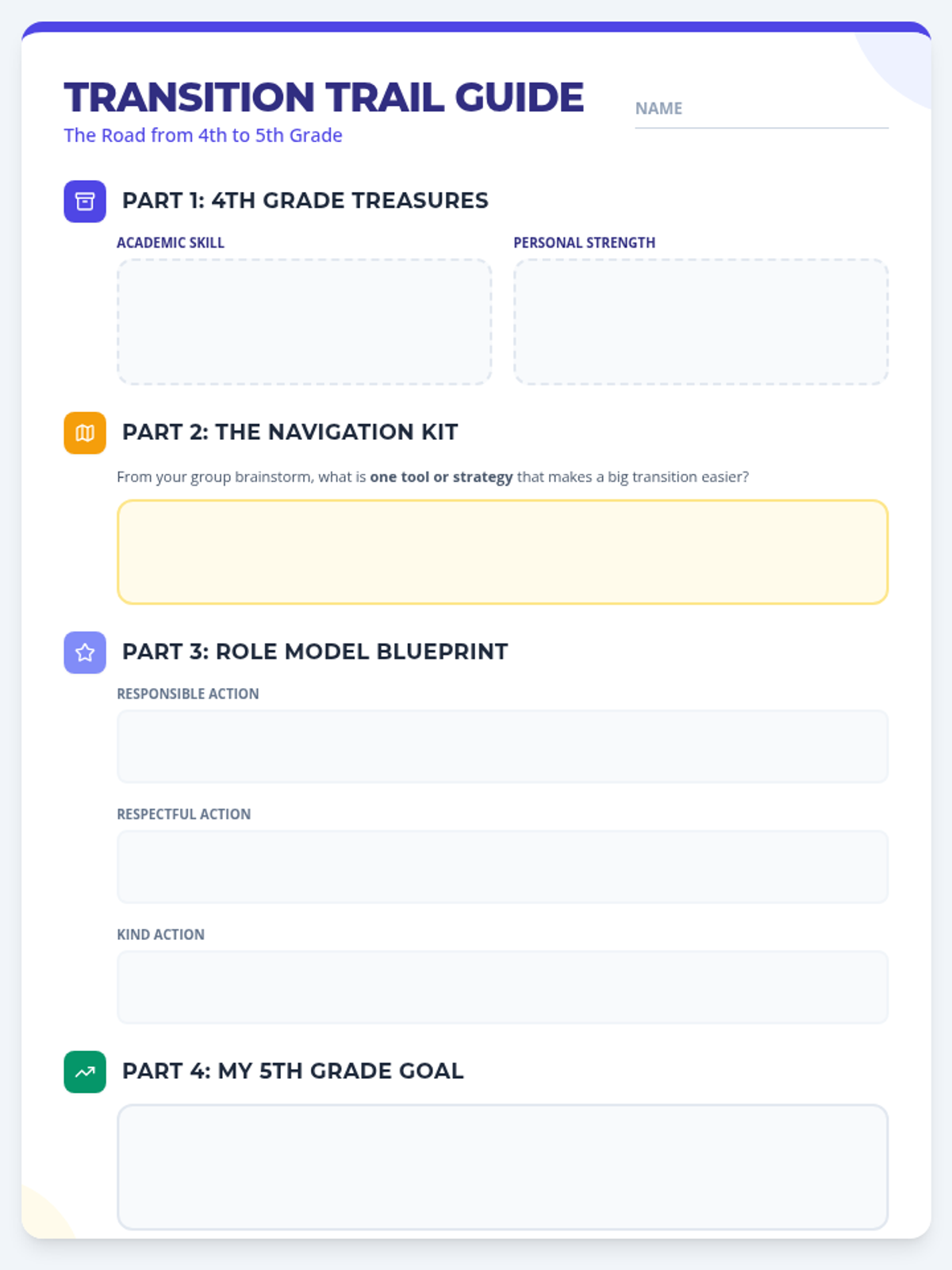
A 40-minute transition lesson for 4th graders moving to 5th grade, focusing on reflection, school values, and leadership as the new 'seniors' of the school.
The final stage focuses on cloud-based collaboration, where students share files and provide constructive peer feedback through digital comments.
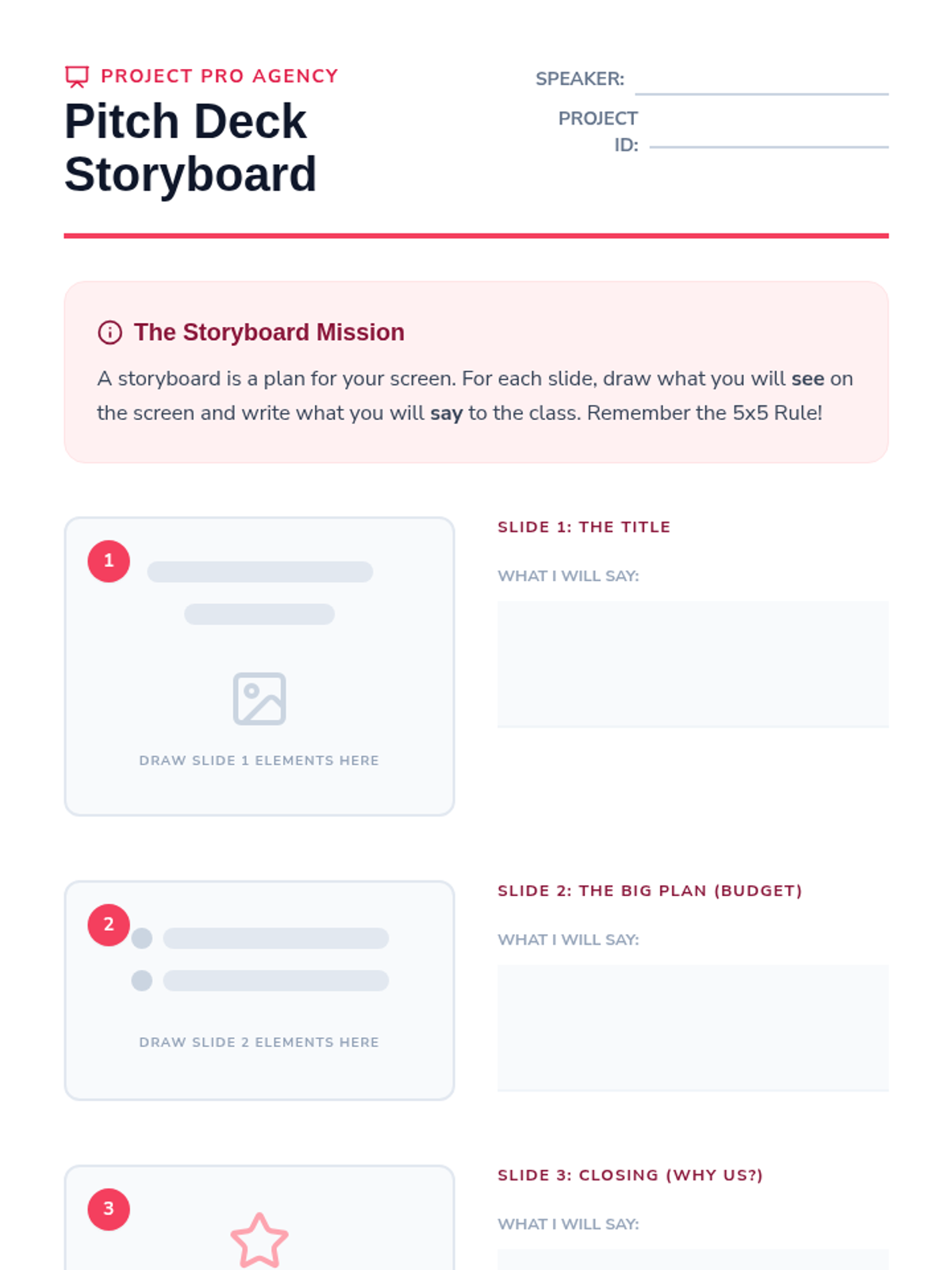
Students design a slide deck to pitch their event ideas, learning the difference between reading-focused documents and presentation visuals.
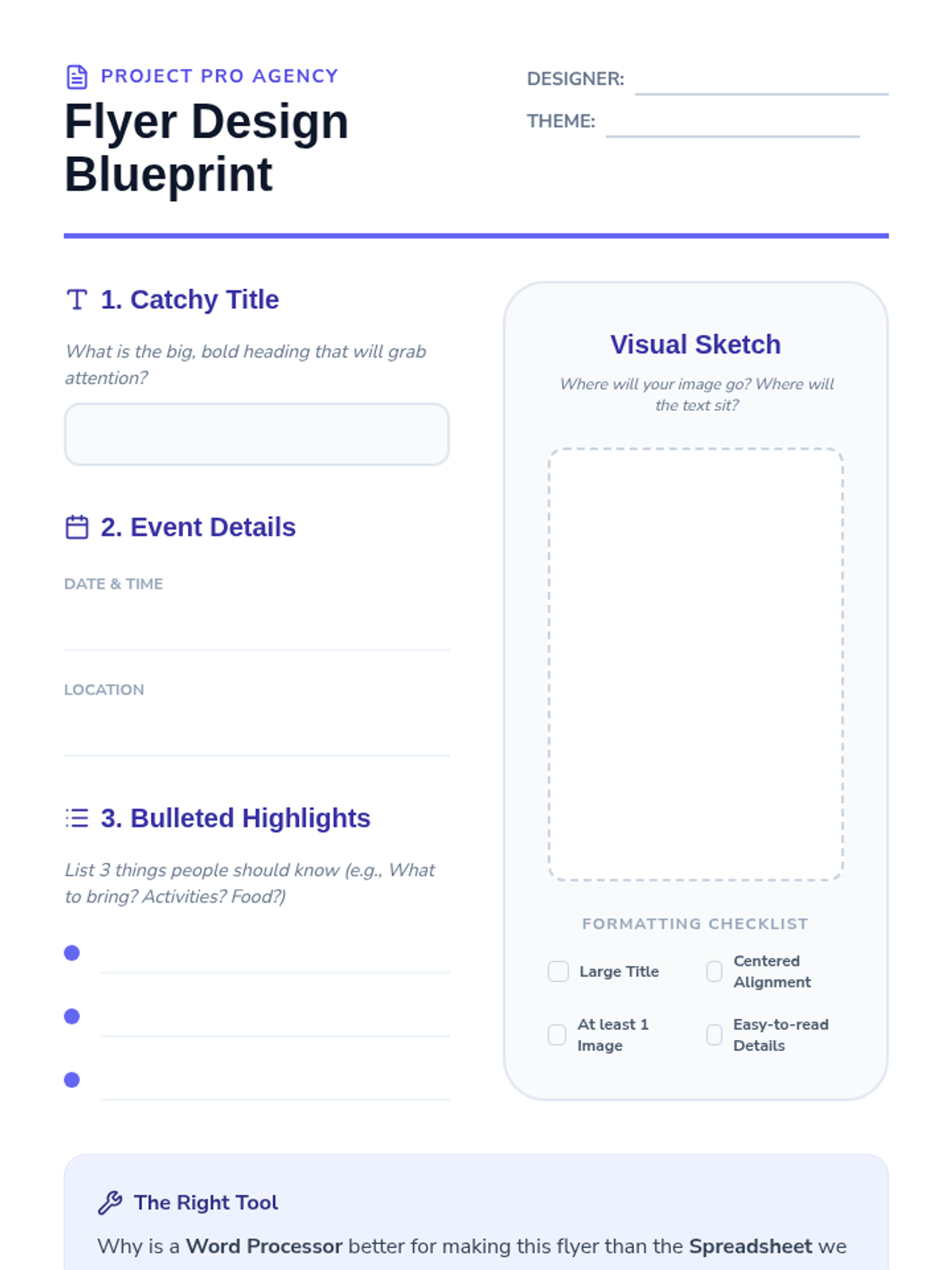
Students explore word processing tools to create professional flyers, focusing on typography, alignment, and visual hierarchy.
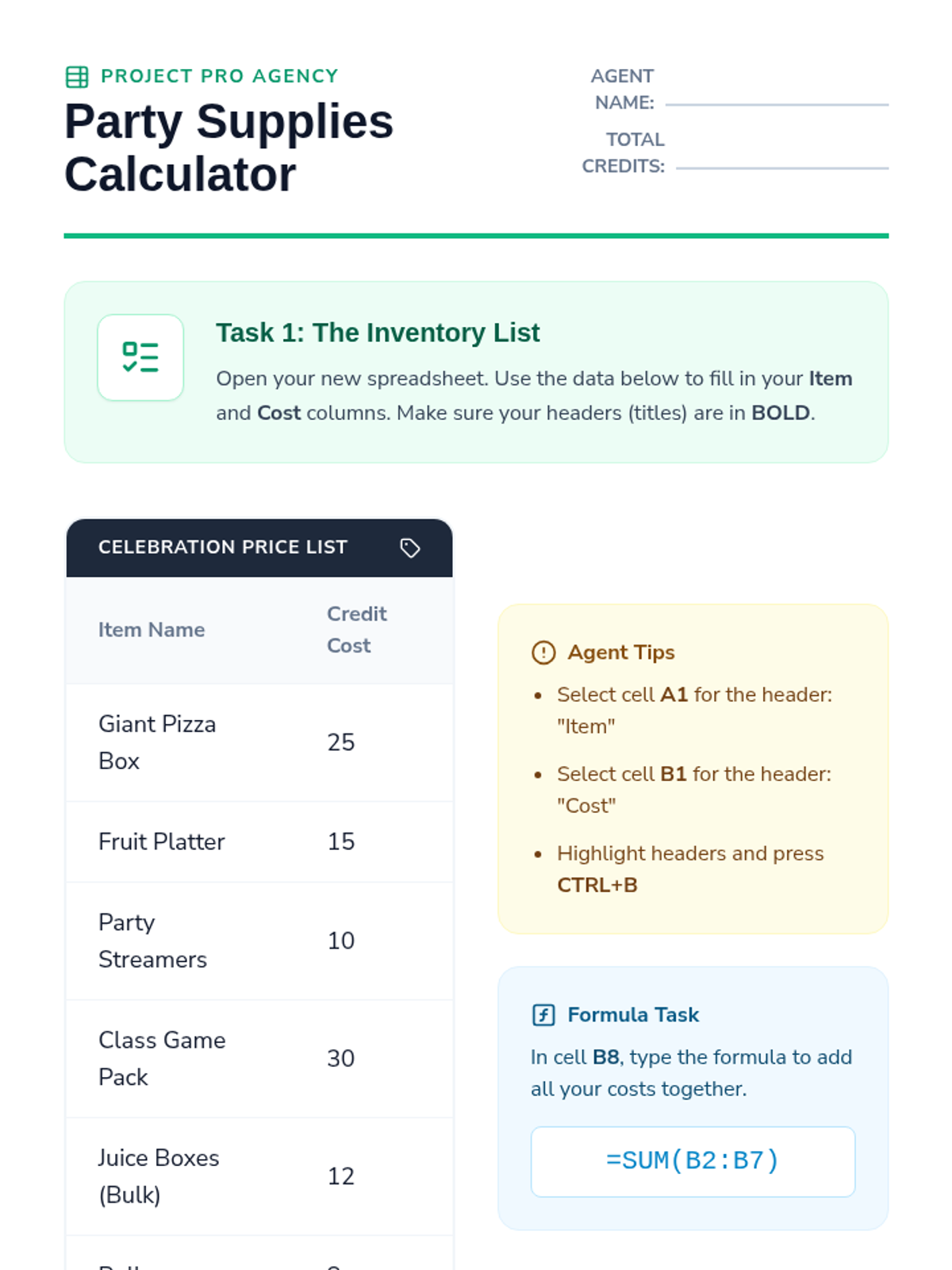
Introduction to spreadsheet software where students organize supply lists and use basic formulas to manage a party budget.
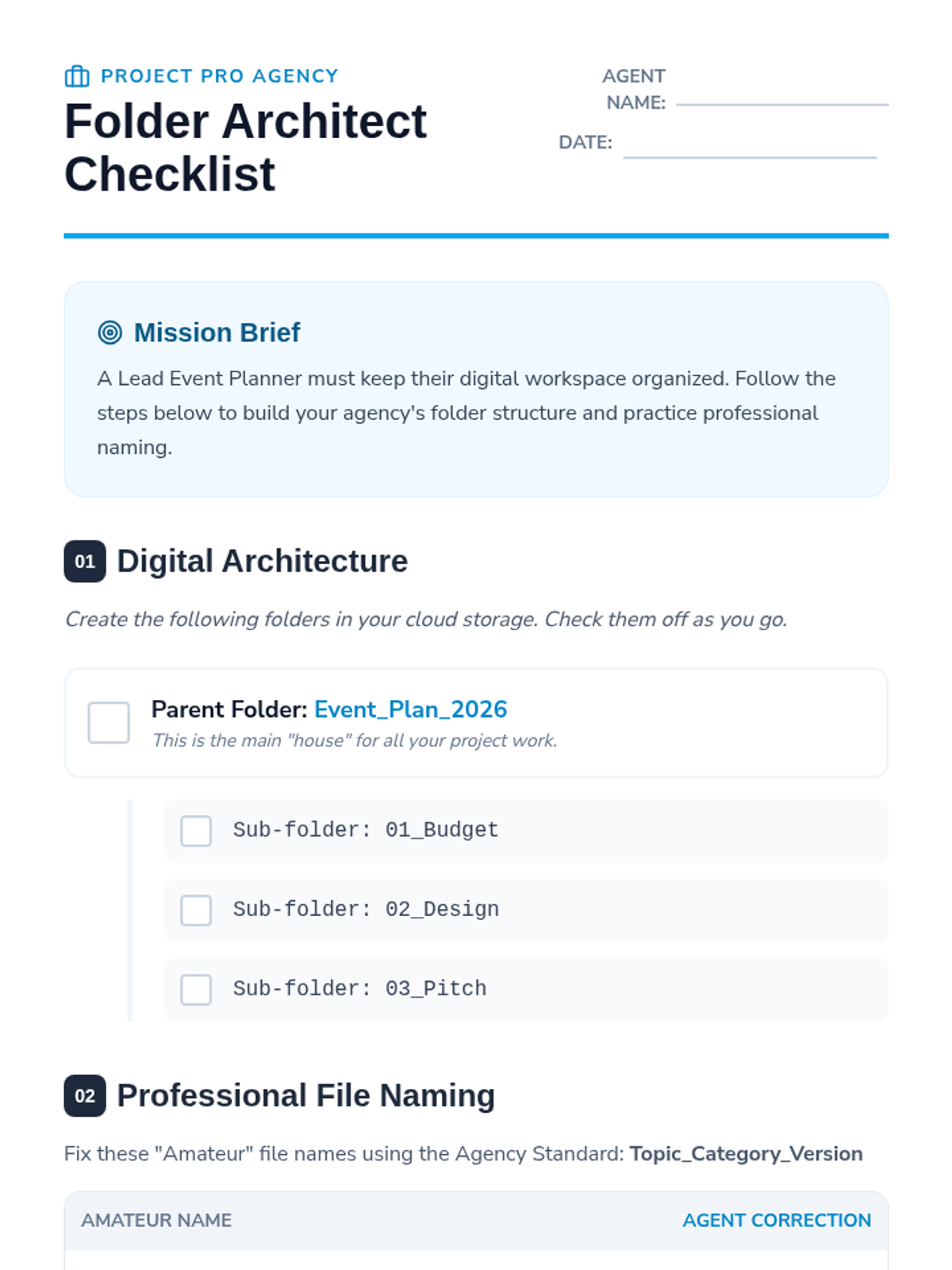
Students learn the foundations of digital organization by mastering cloud storage, folder structures, and professional file naming conventions.
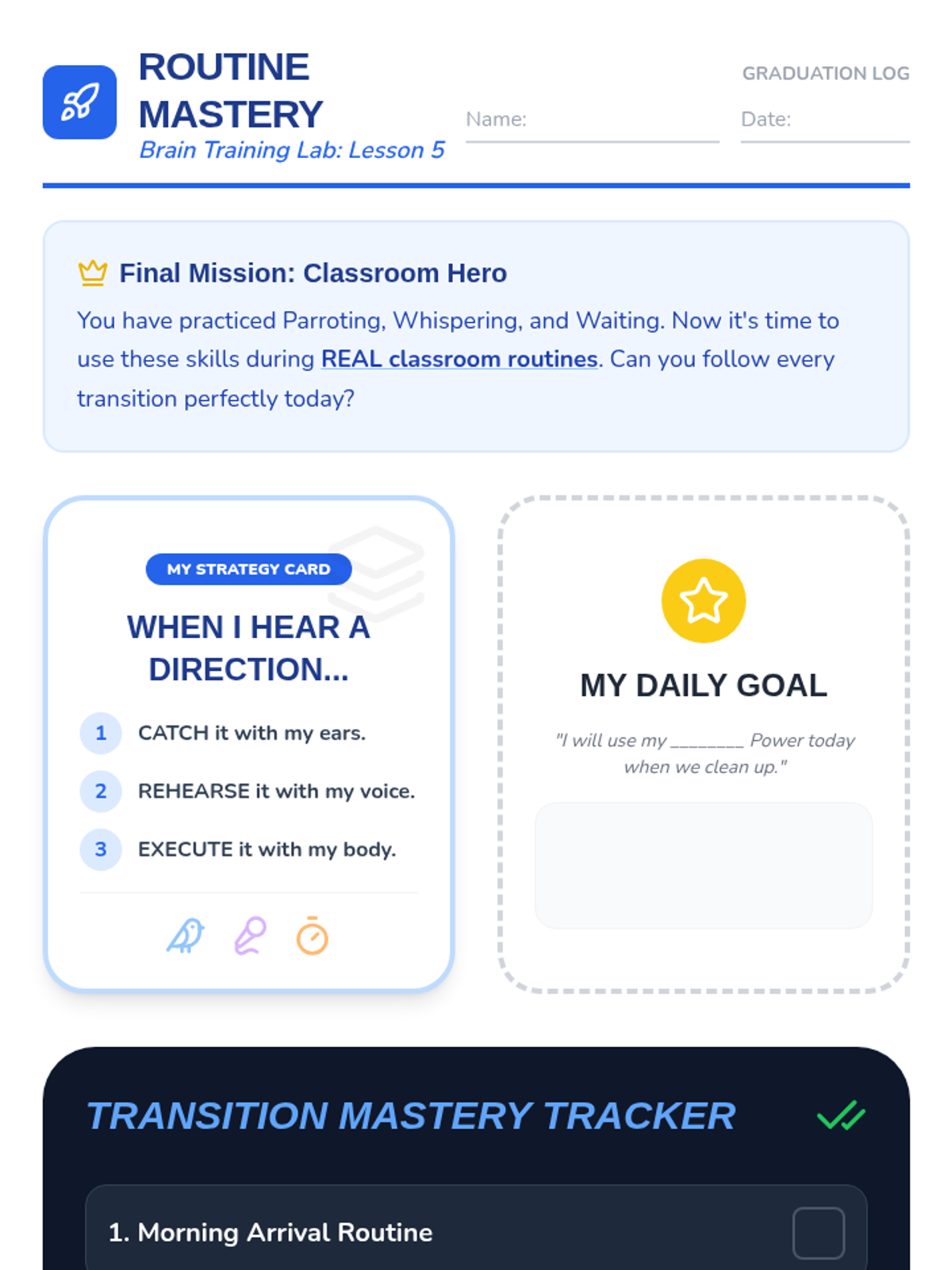
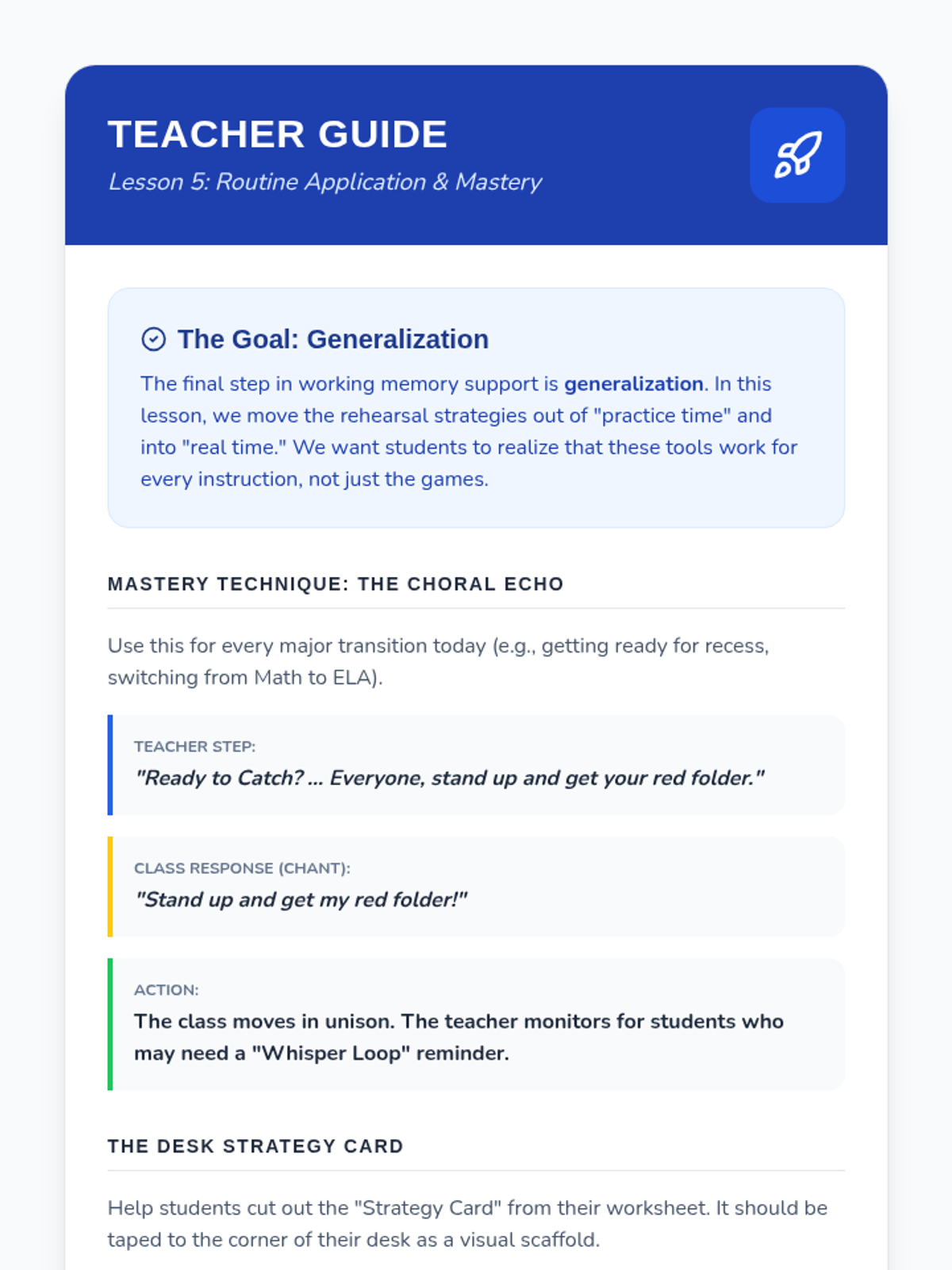
Students apply verbal strategies to actual classroom transition requests using choral responses to confirm steps.
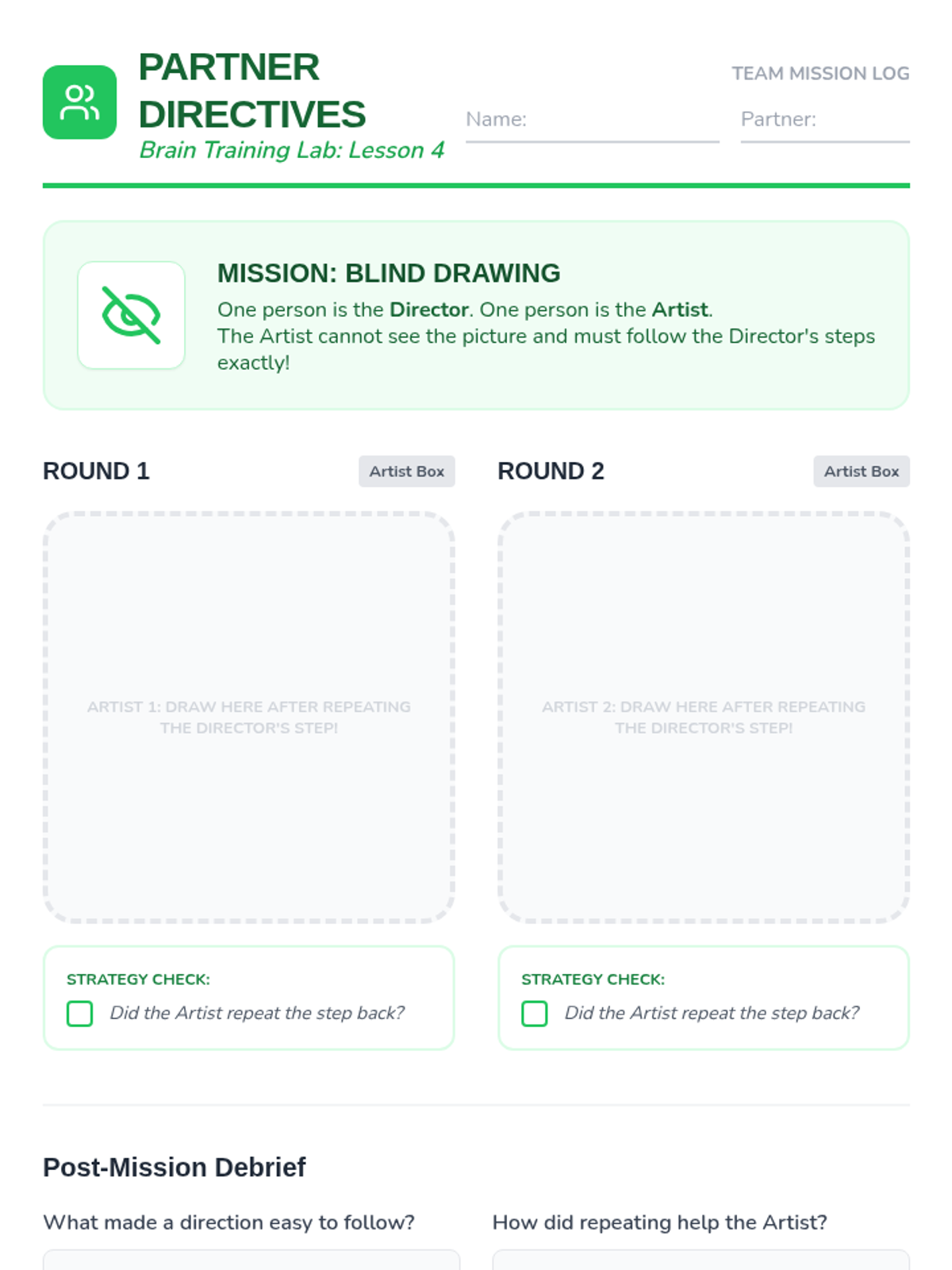
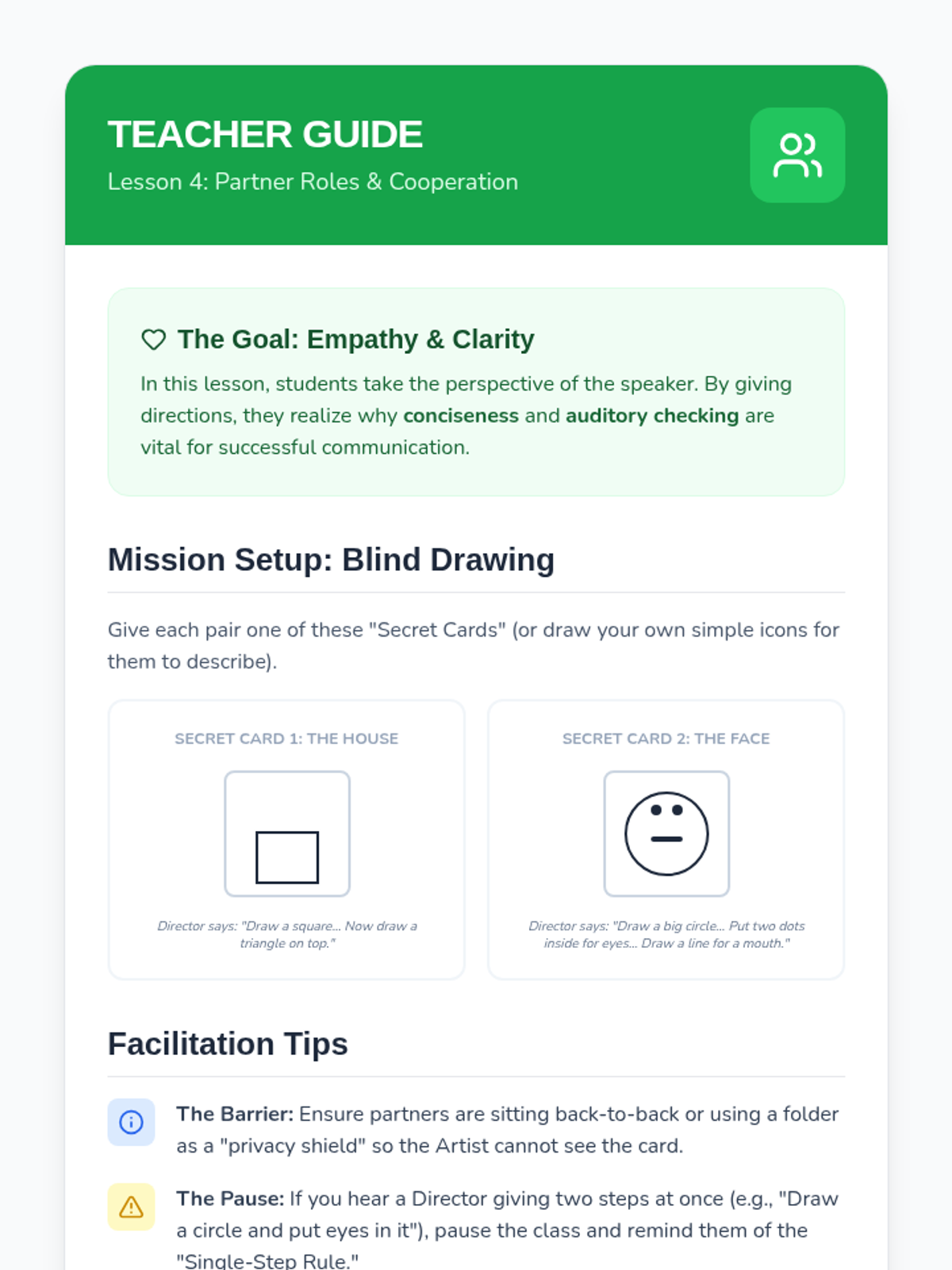
In pairs, students take turns being the 'Teacher' and the 'Student' to practice giving and repeating explicit steps.
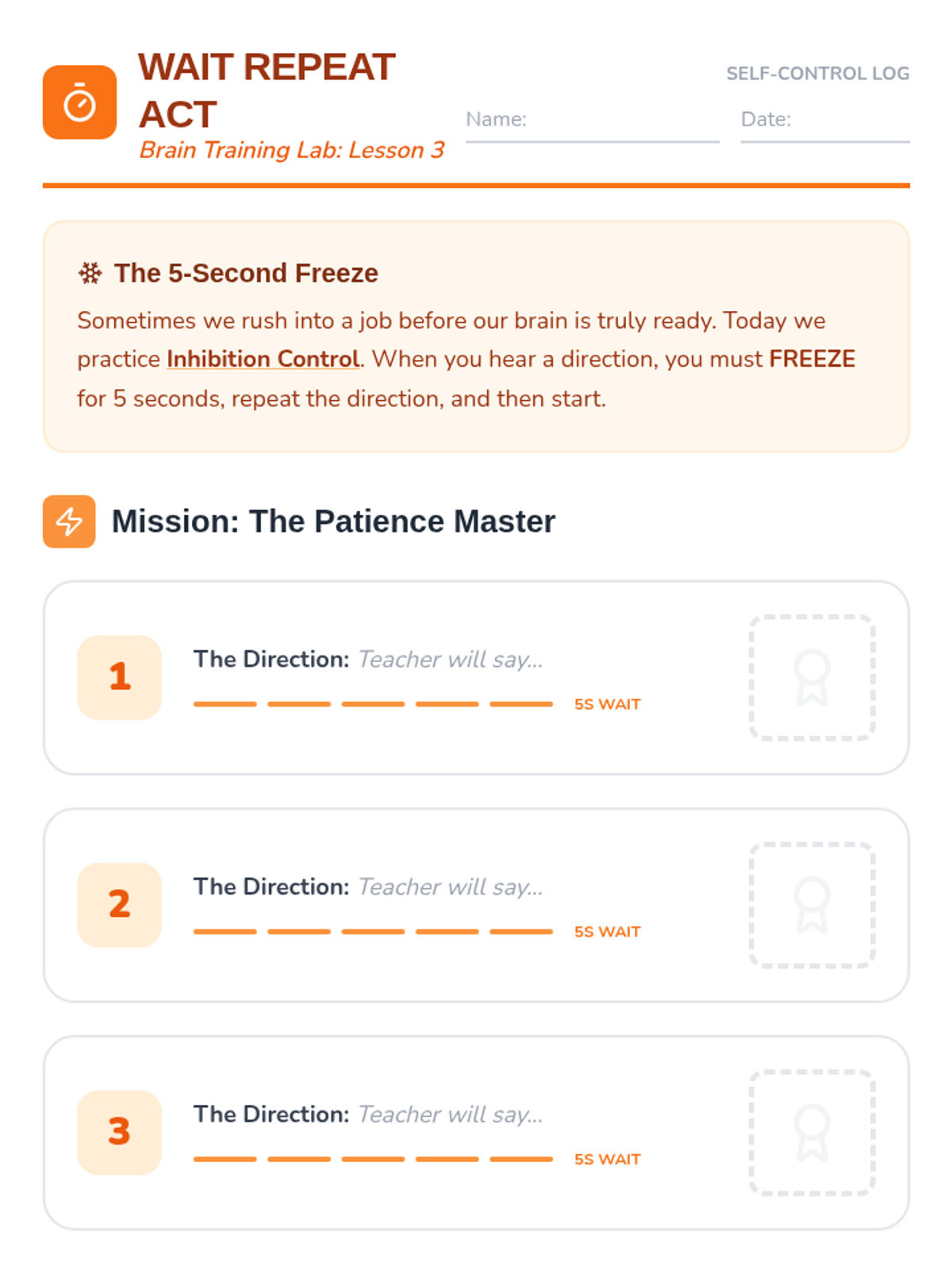
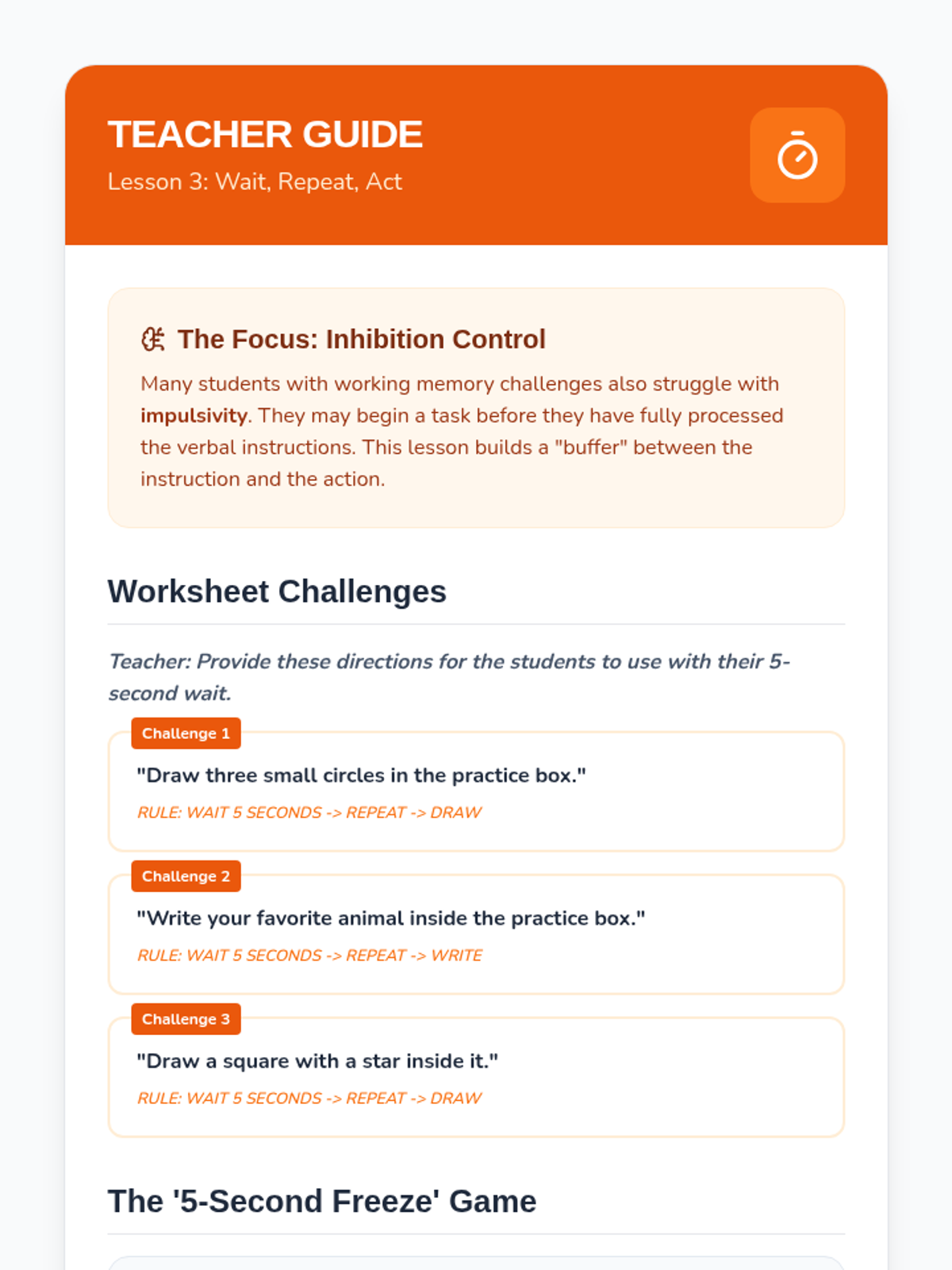
Students engage in inhibition control activities where they must wait 5 seconds after hearing a command, repeat it, and only then act.
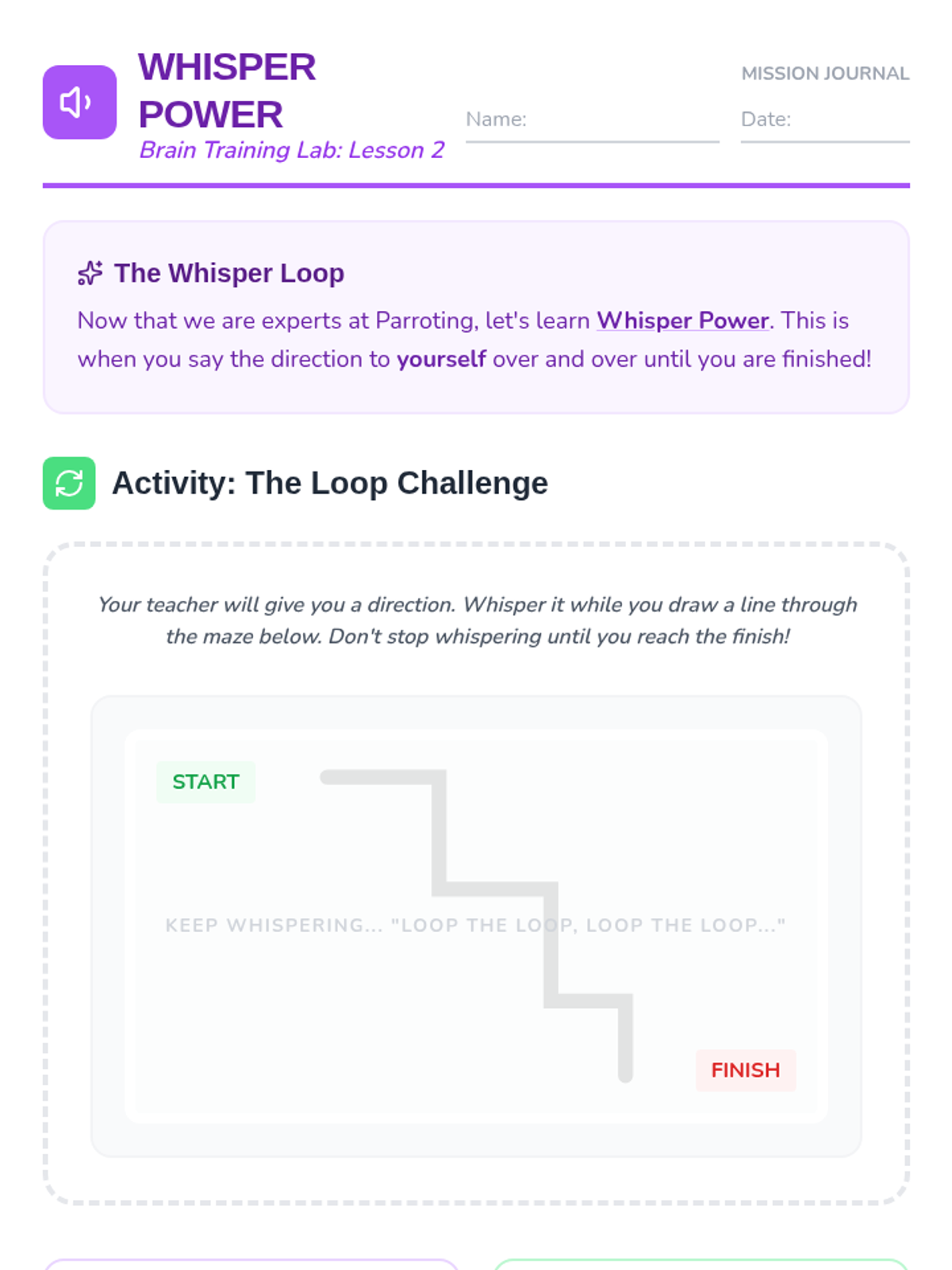
Moving from loud repetition to whispering, students practice 'self-talk.' They are given a single direction and must whisper it on a loop while performing the action.
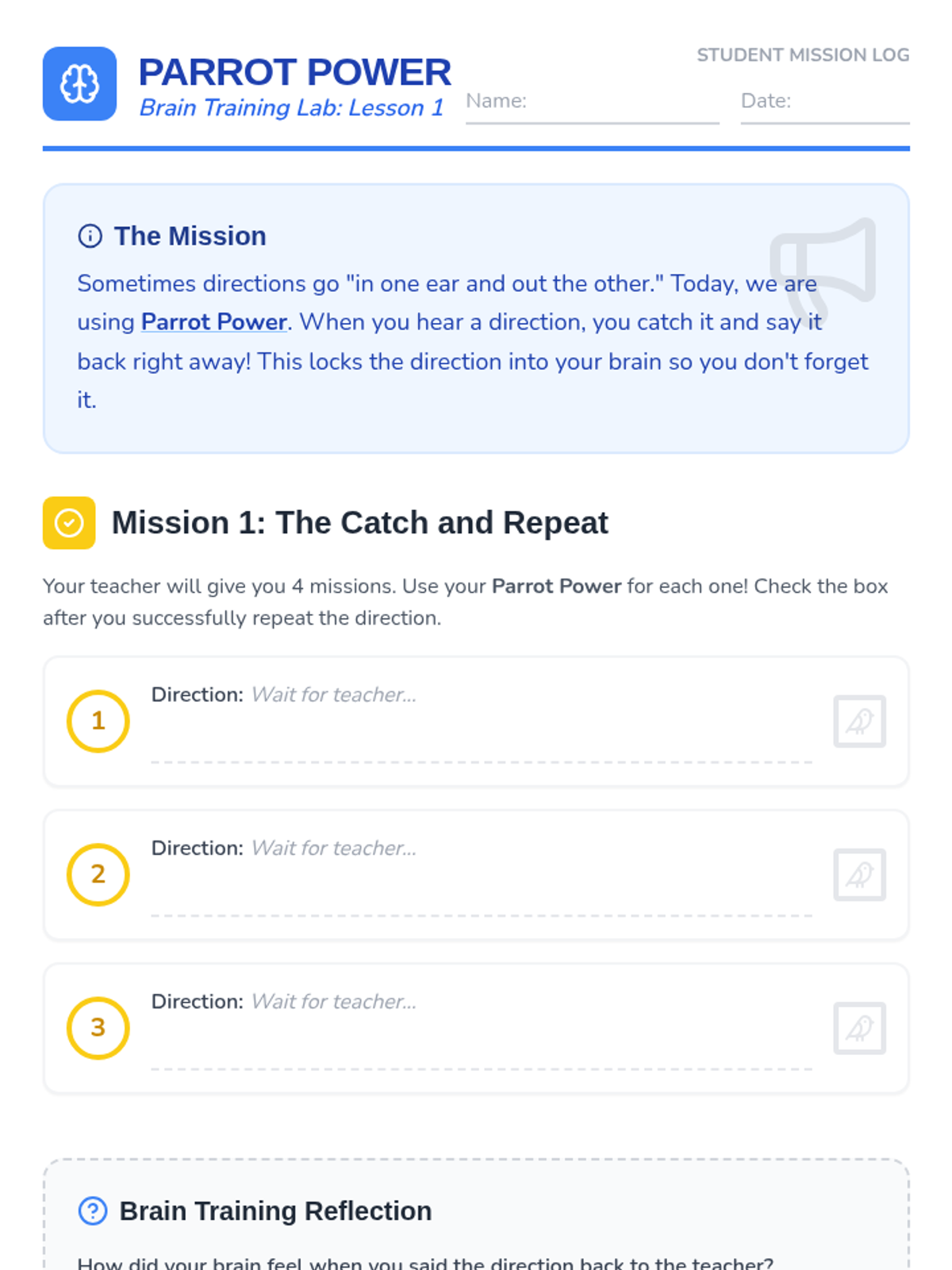
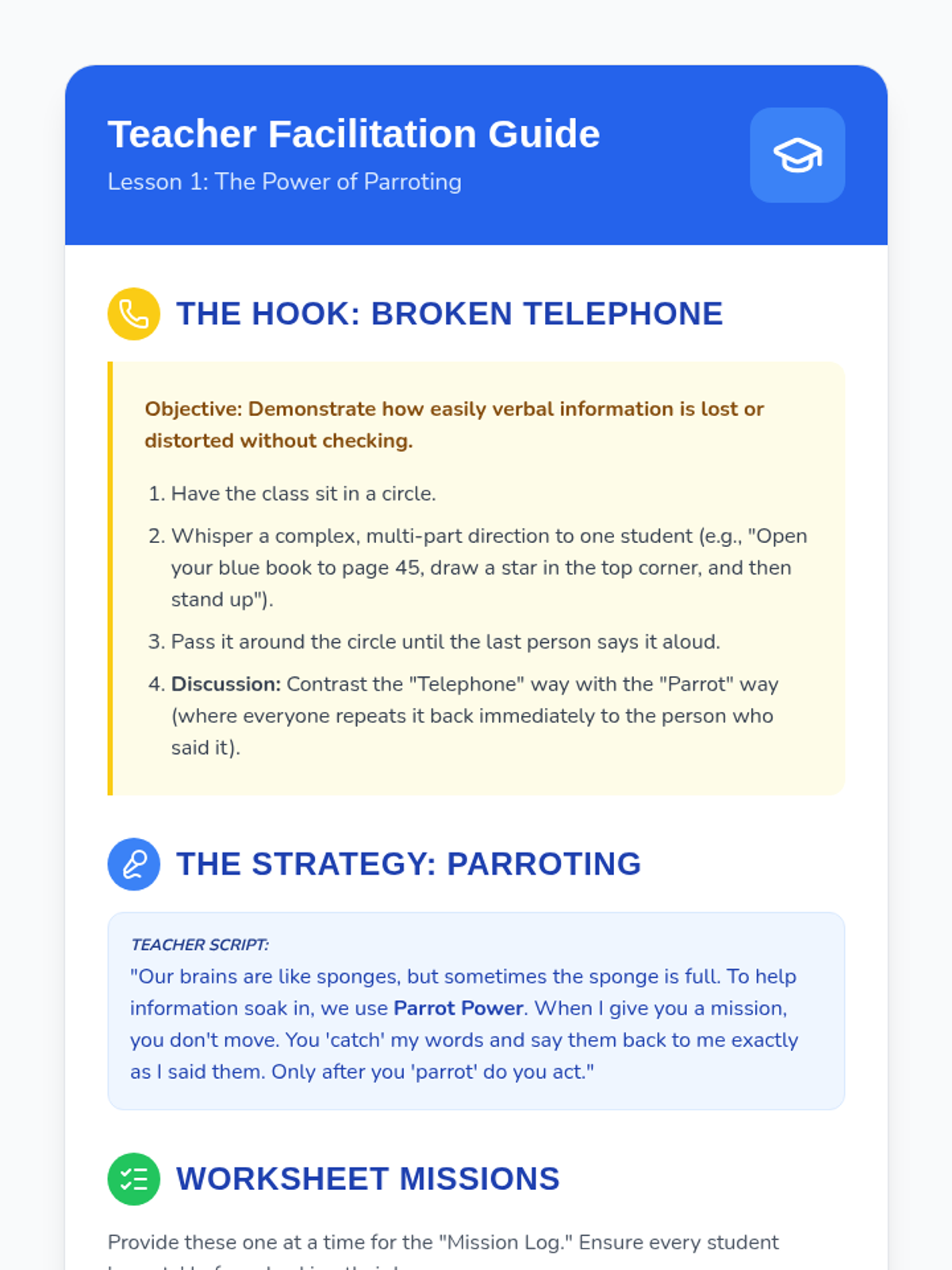
Students practice the 'parrot' technique, where they must immediately repeat a single-step direction back to the speaker before moving. The lesson emphasizes that saying it locks it into the brain.
Students design and create a personalized desk reference card to remind them of their self-monitoring and clarification strategies.
Students practice their self-advocacy scripts in peer-to-peer role-plays to build confidence in real-world situations.
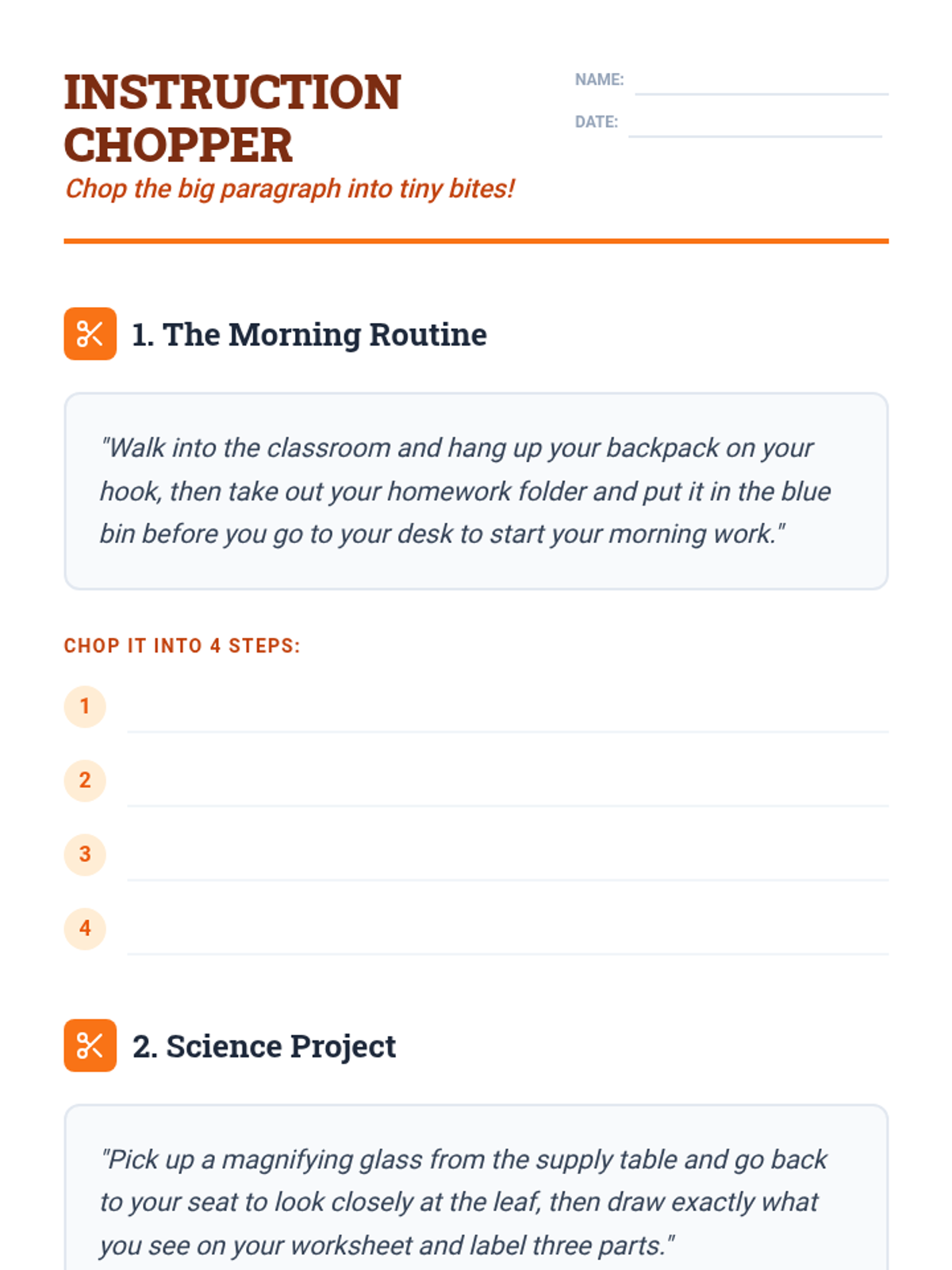
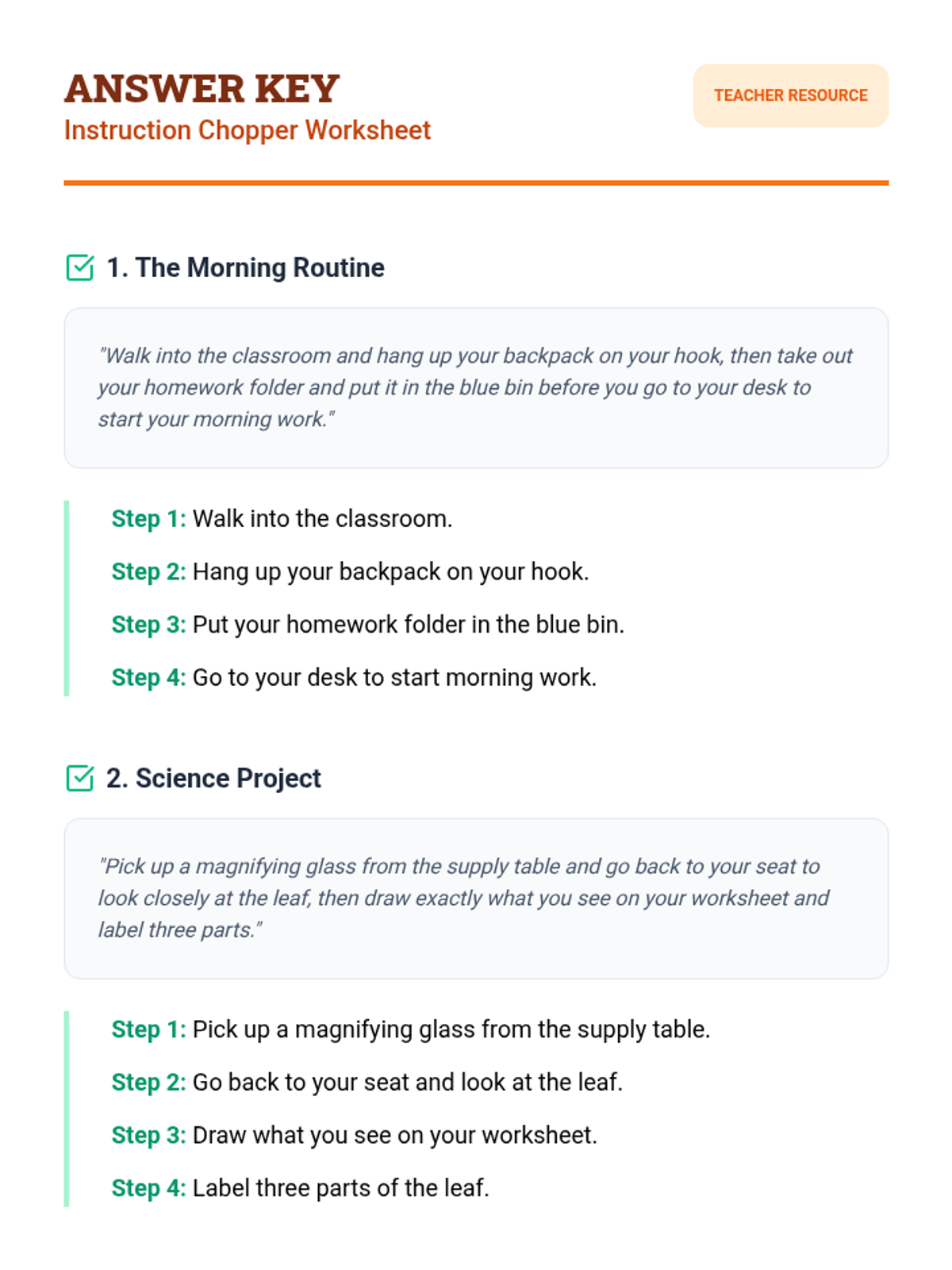
Students learn to analyze complex paragraphs of instructions and extract simple, single-step tasks.
Students learn and practice the 'One Thing' script to respectfully ask for directions to be broken down into single steps.
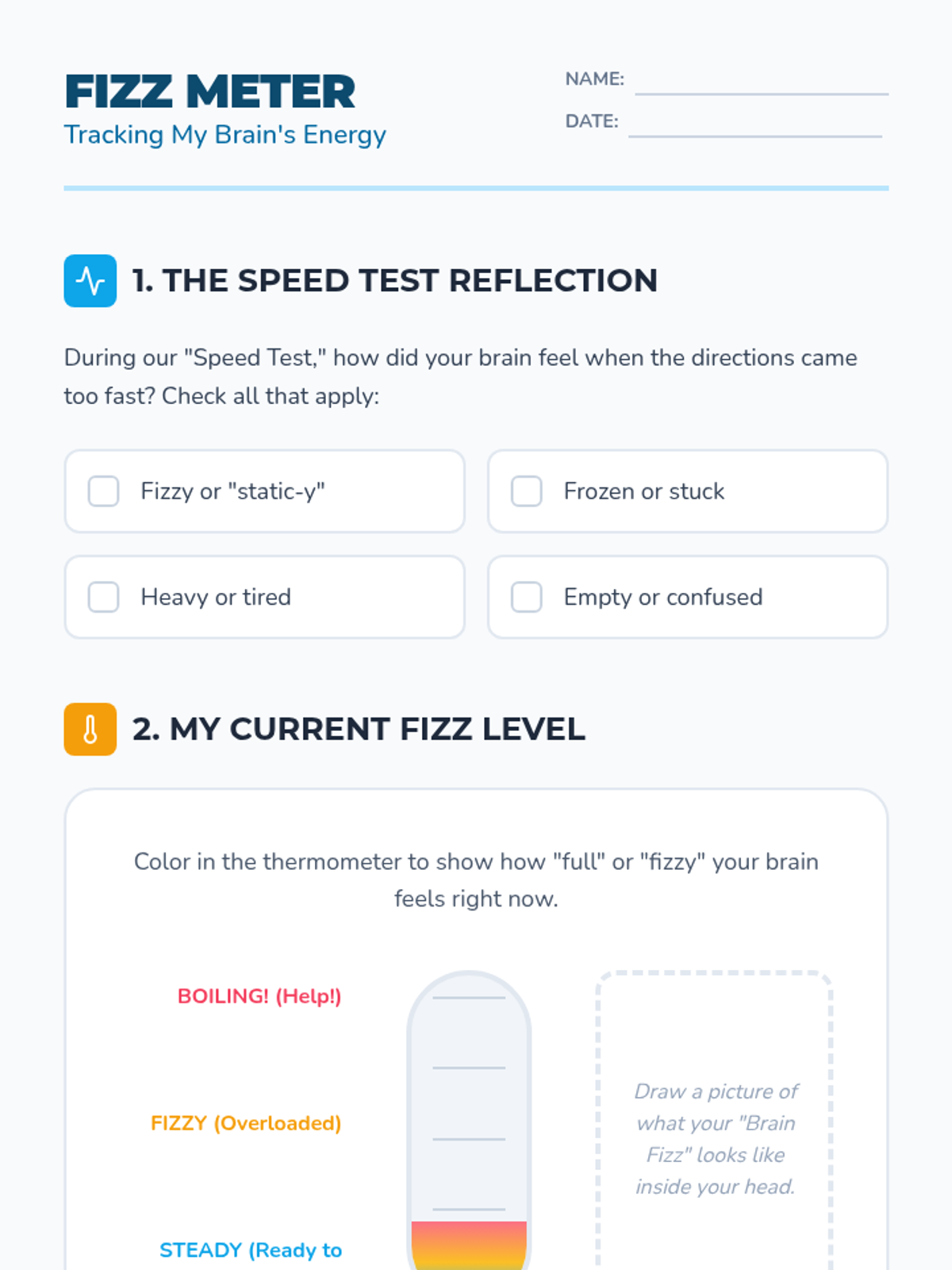
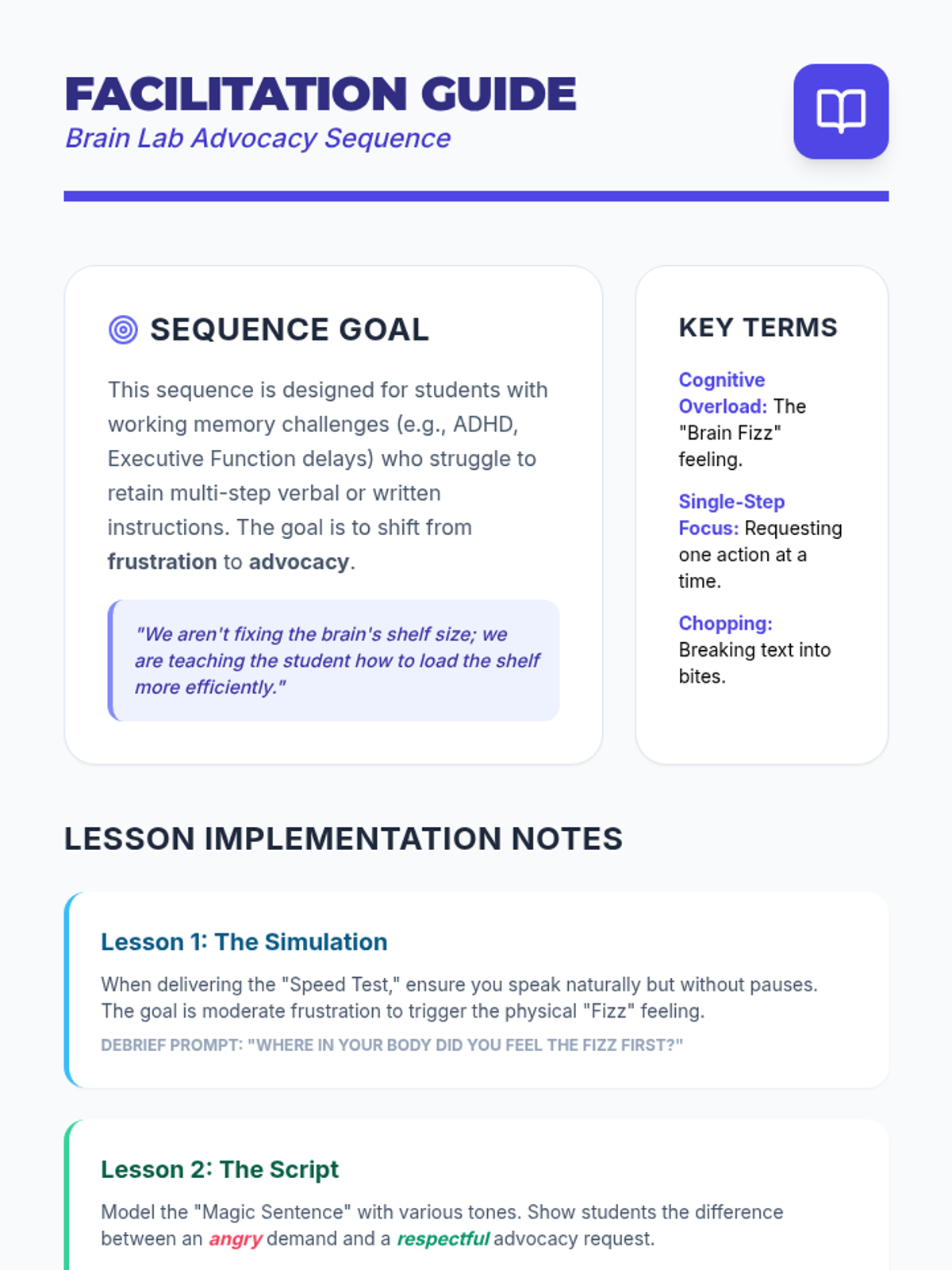
Students identify the feeling of cognitive overload through a simulation and learn to label that 'fizzing' feeling as a signal for help.
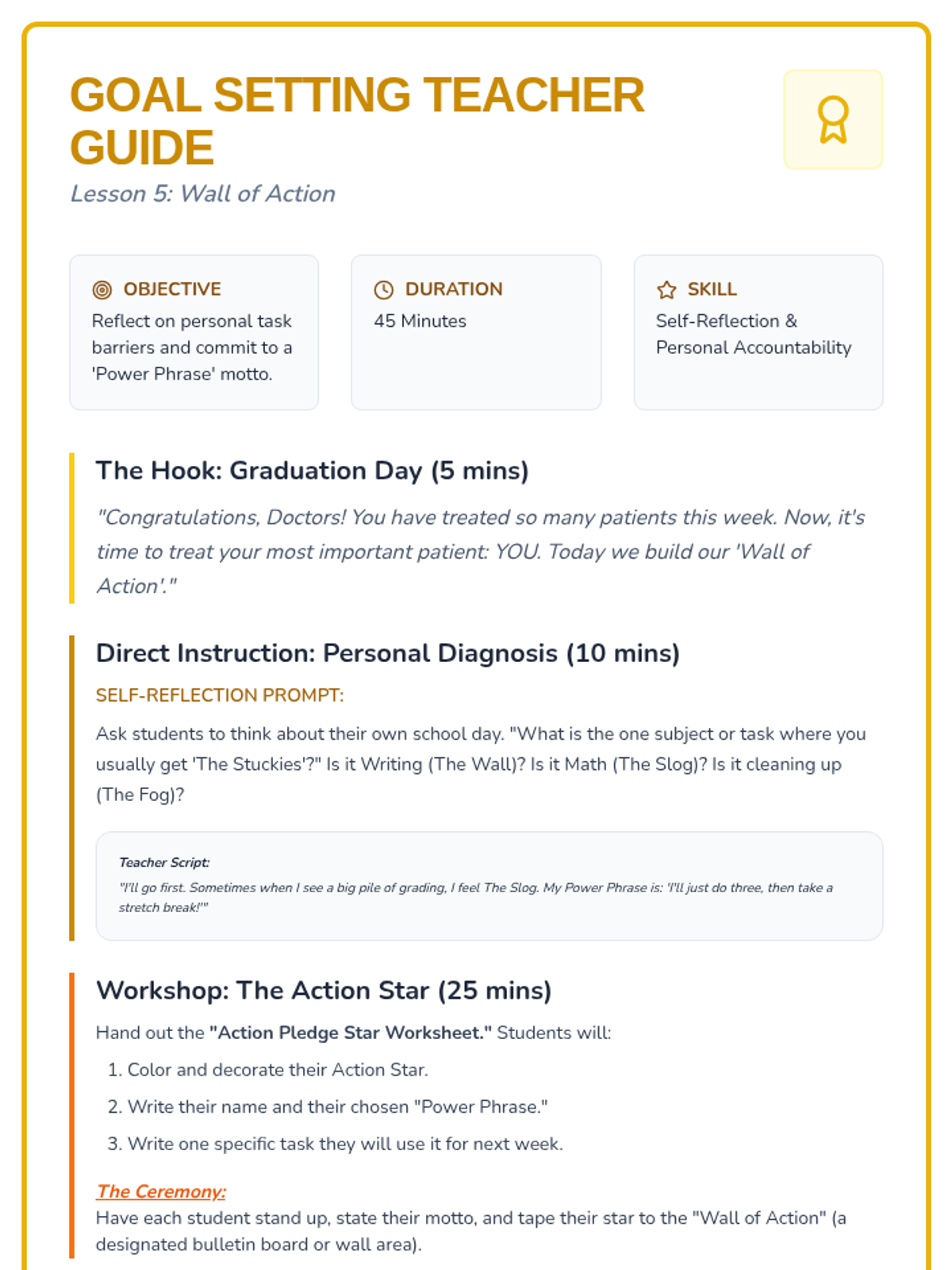
Students identify their own barriers to starting work and select a personal 'Power Phrase' motto for future tasks.
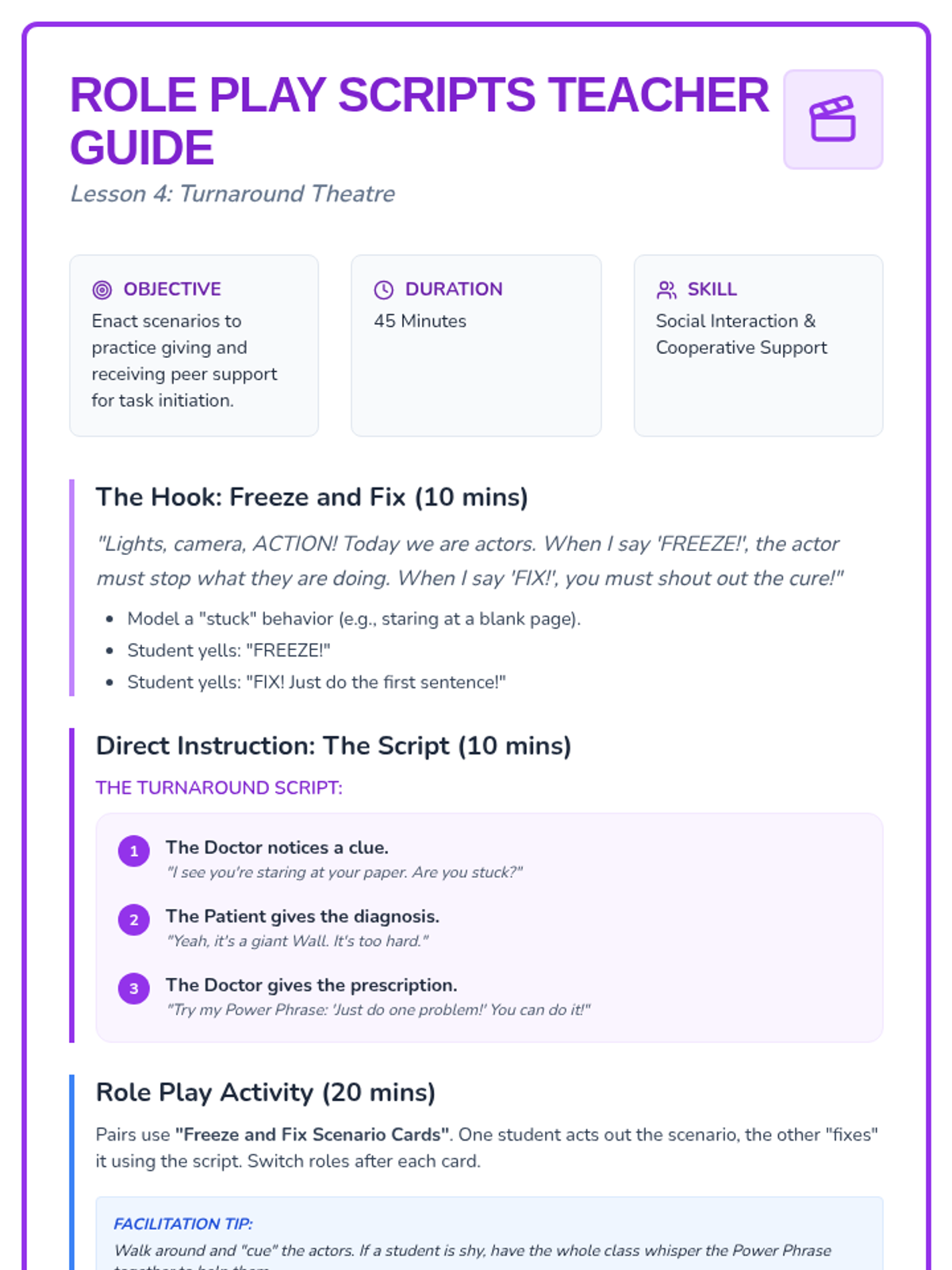
Students role-play scenarios where they help a peer get 'unstuck' using their self-talk prescriptions.
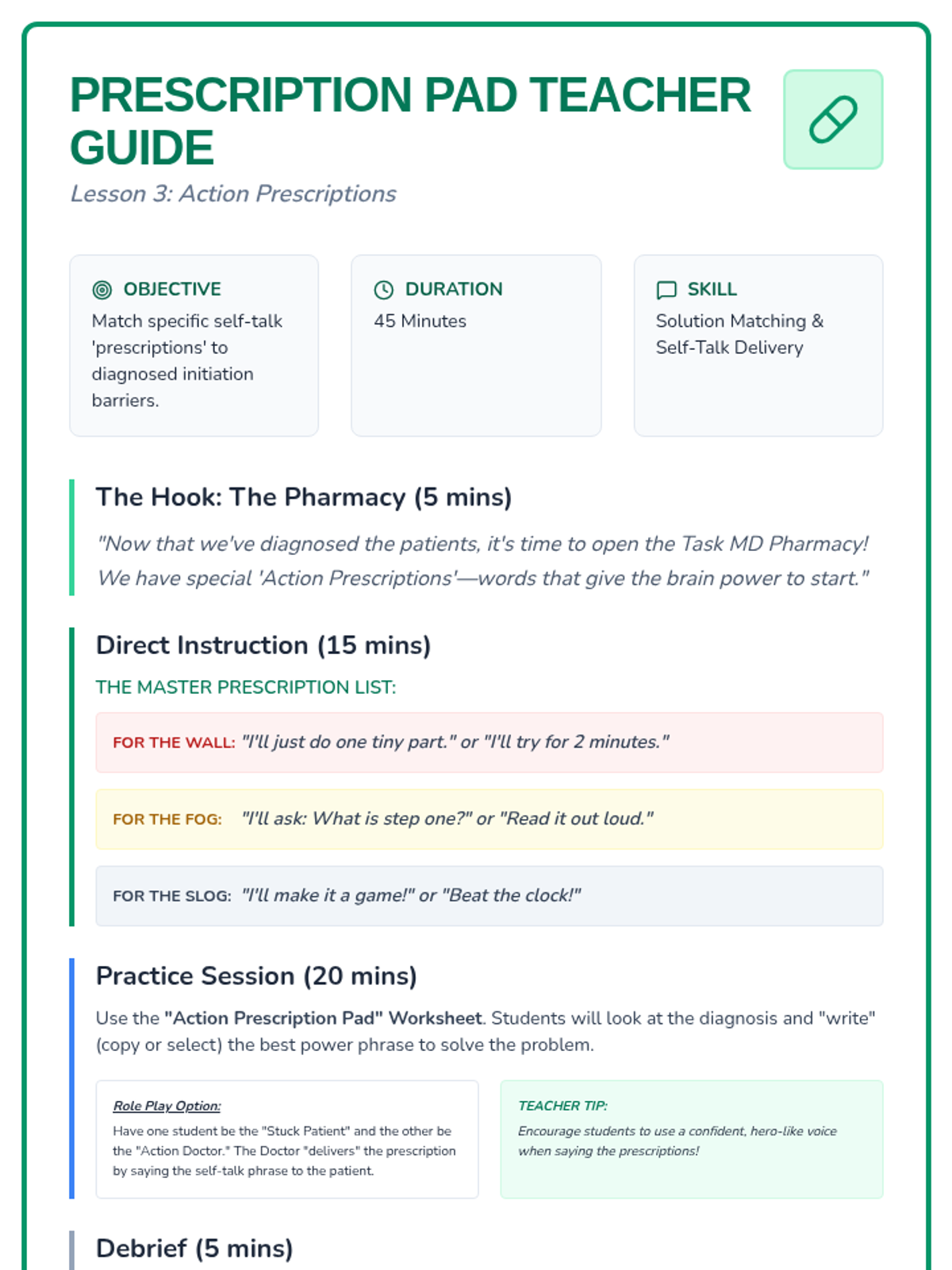
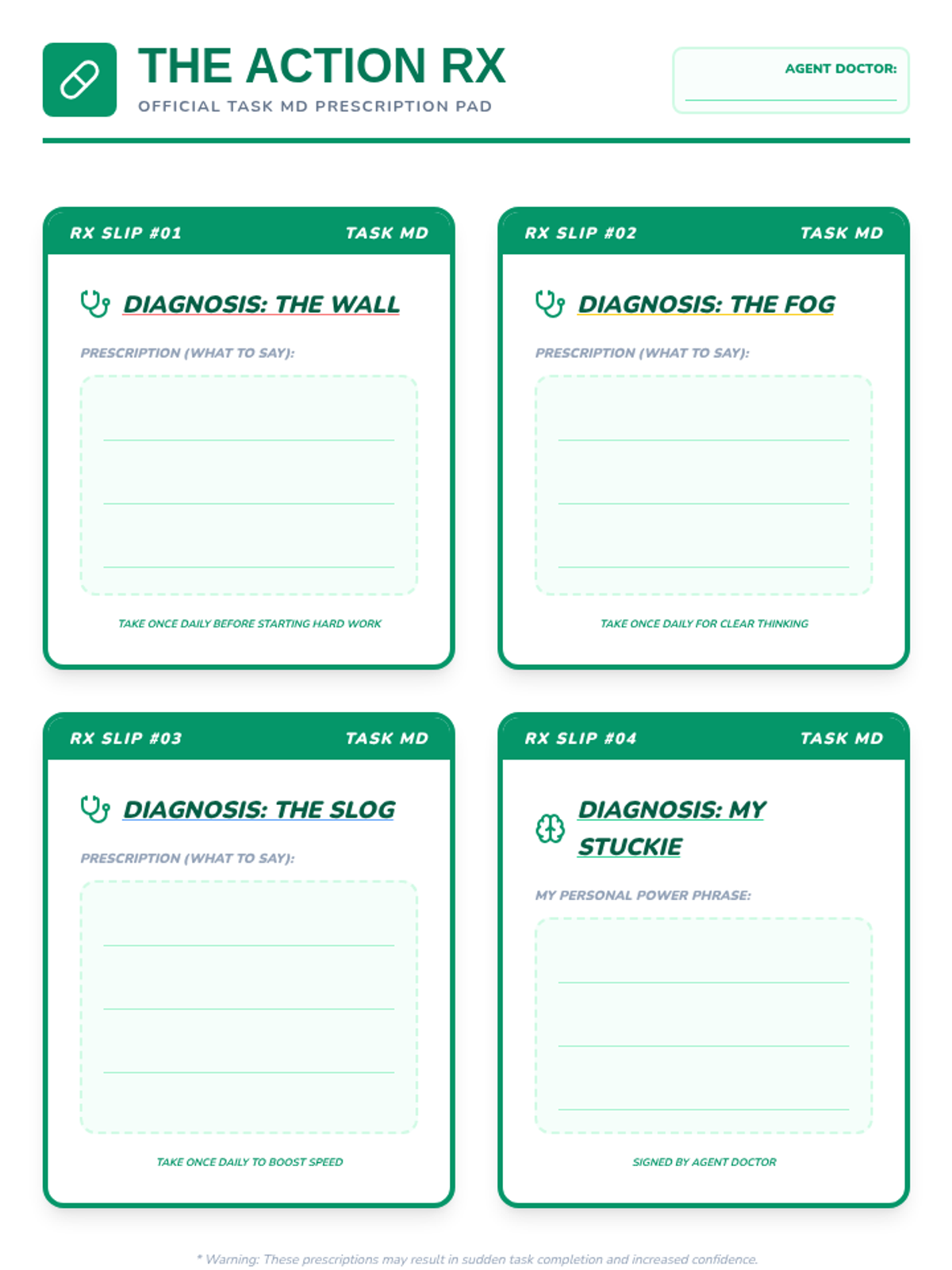
Students match specific self-talk 'prescriptions' to diagnosed problems and practice delivering these lines to characters.
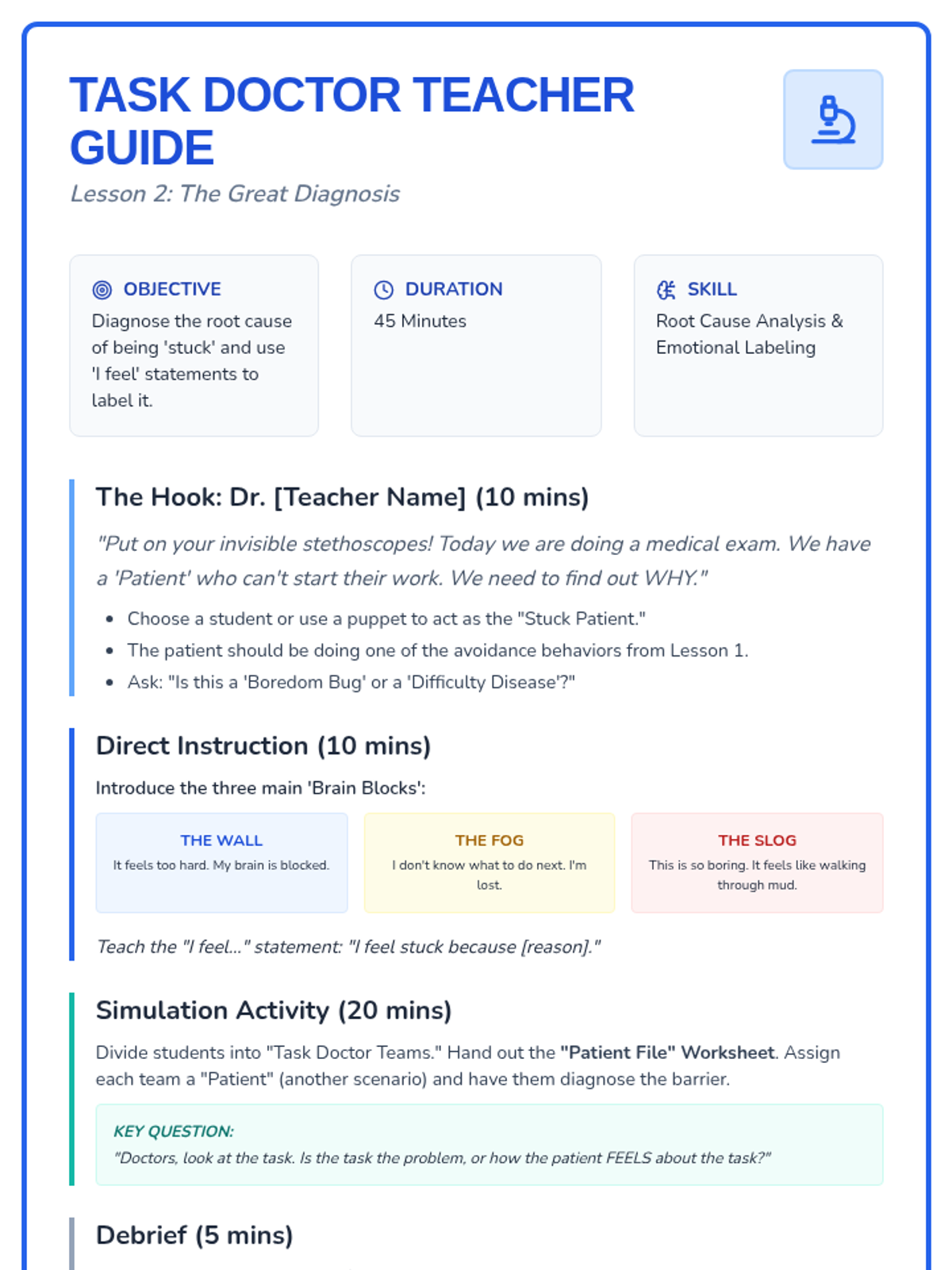
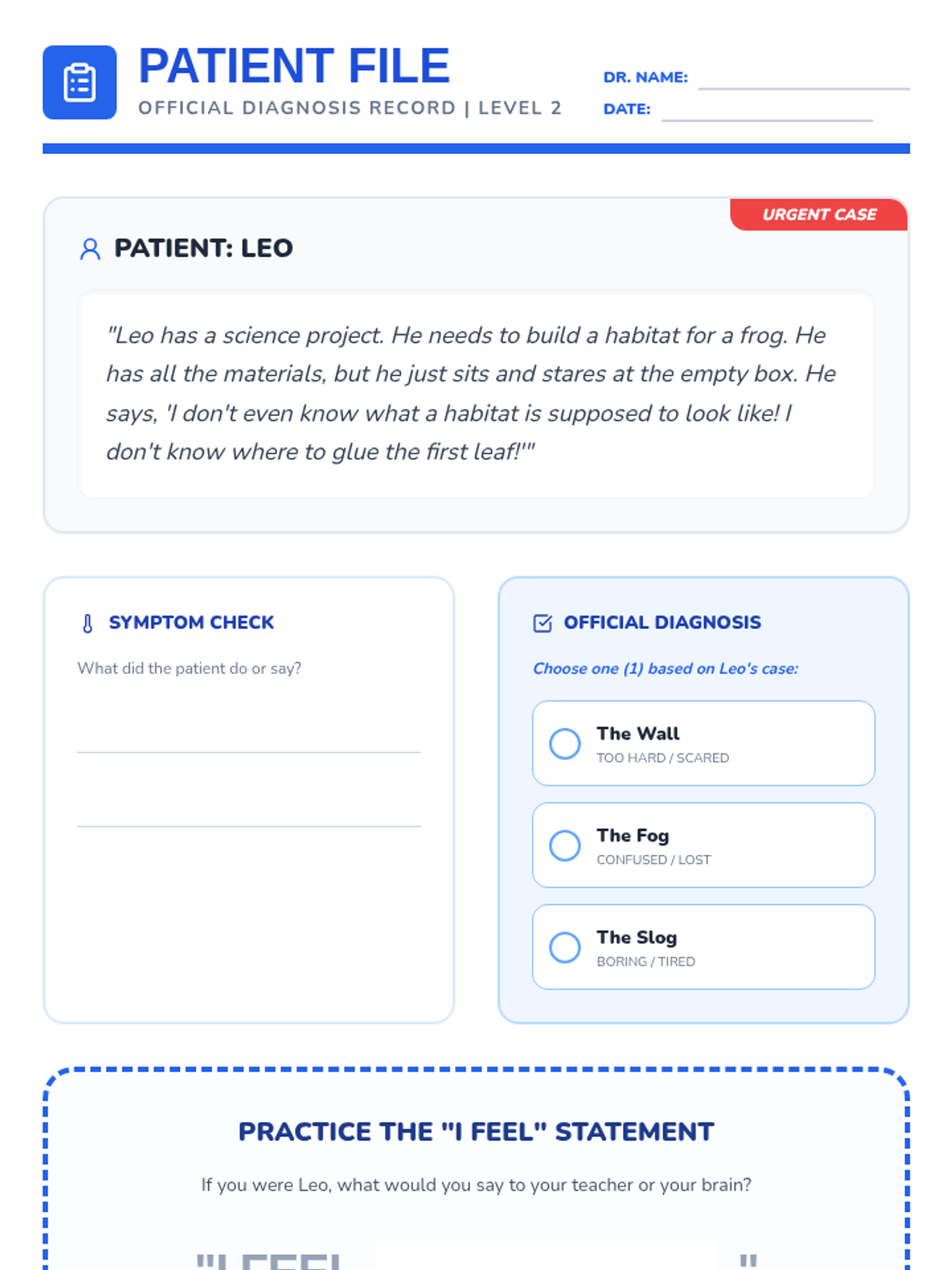
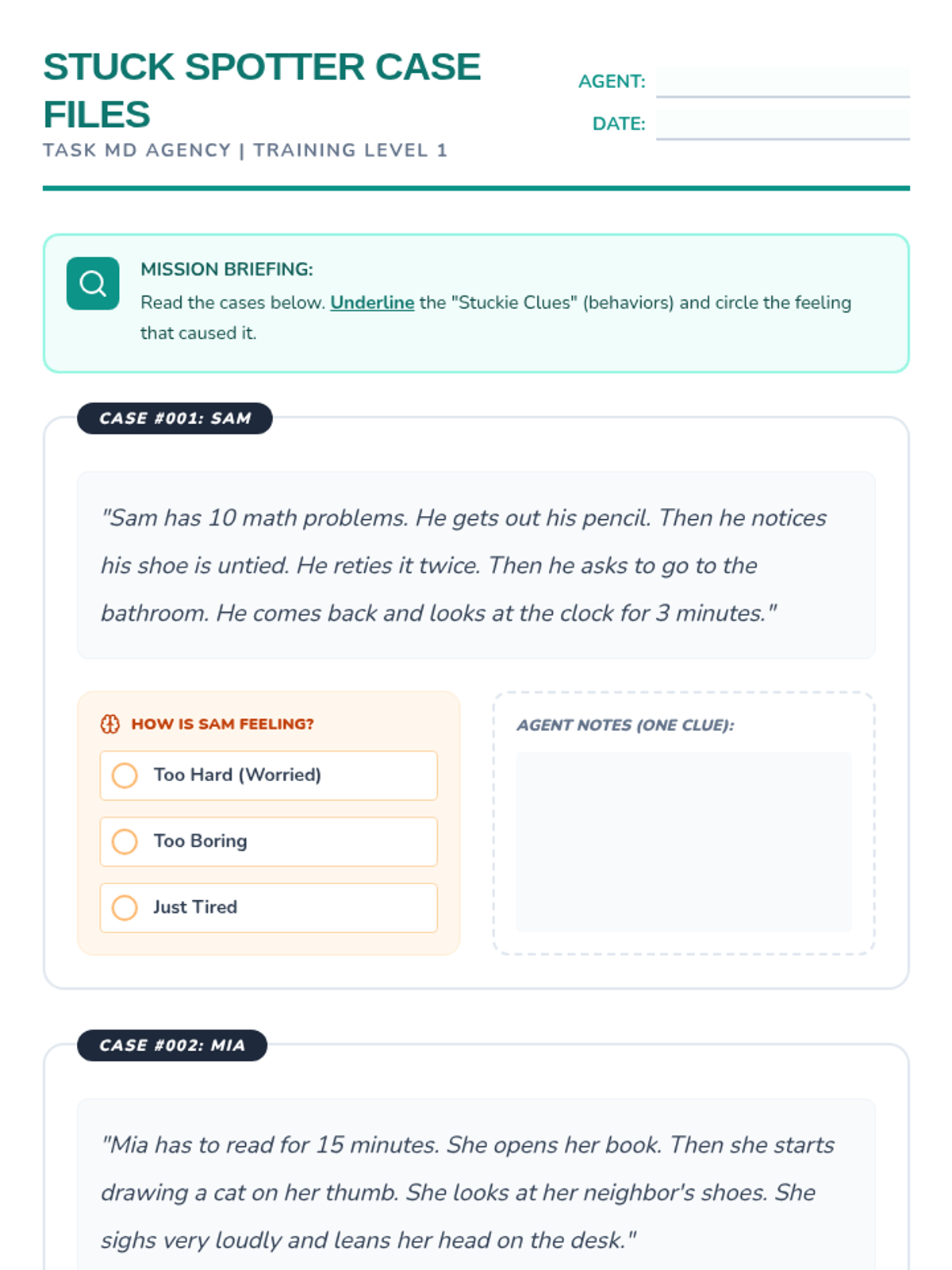
Students act as 'Task Doctors' to determine why a character is stuck (boredom, difficulty, fatigue) and practice labeling these emotions.
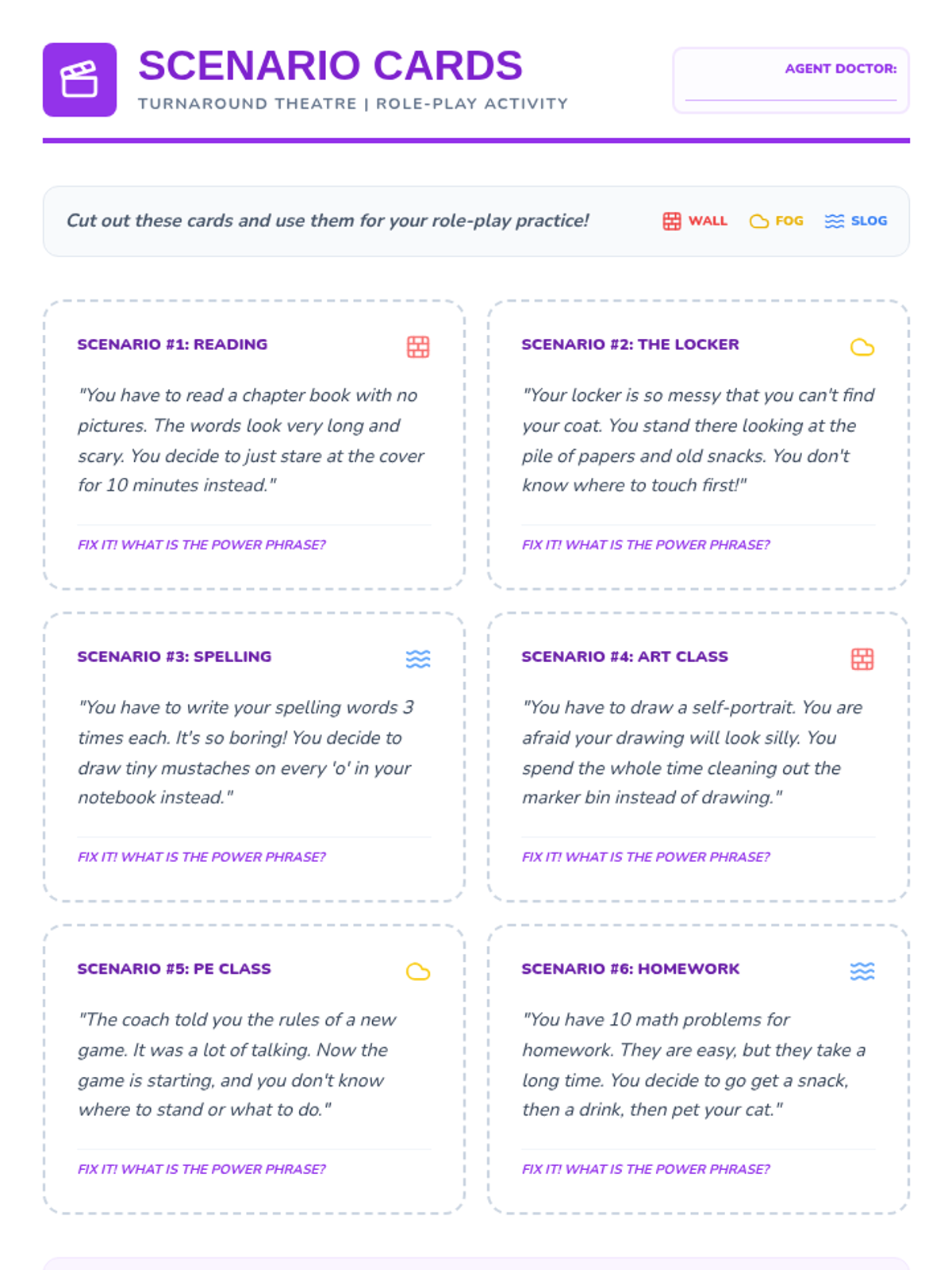
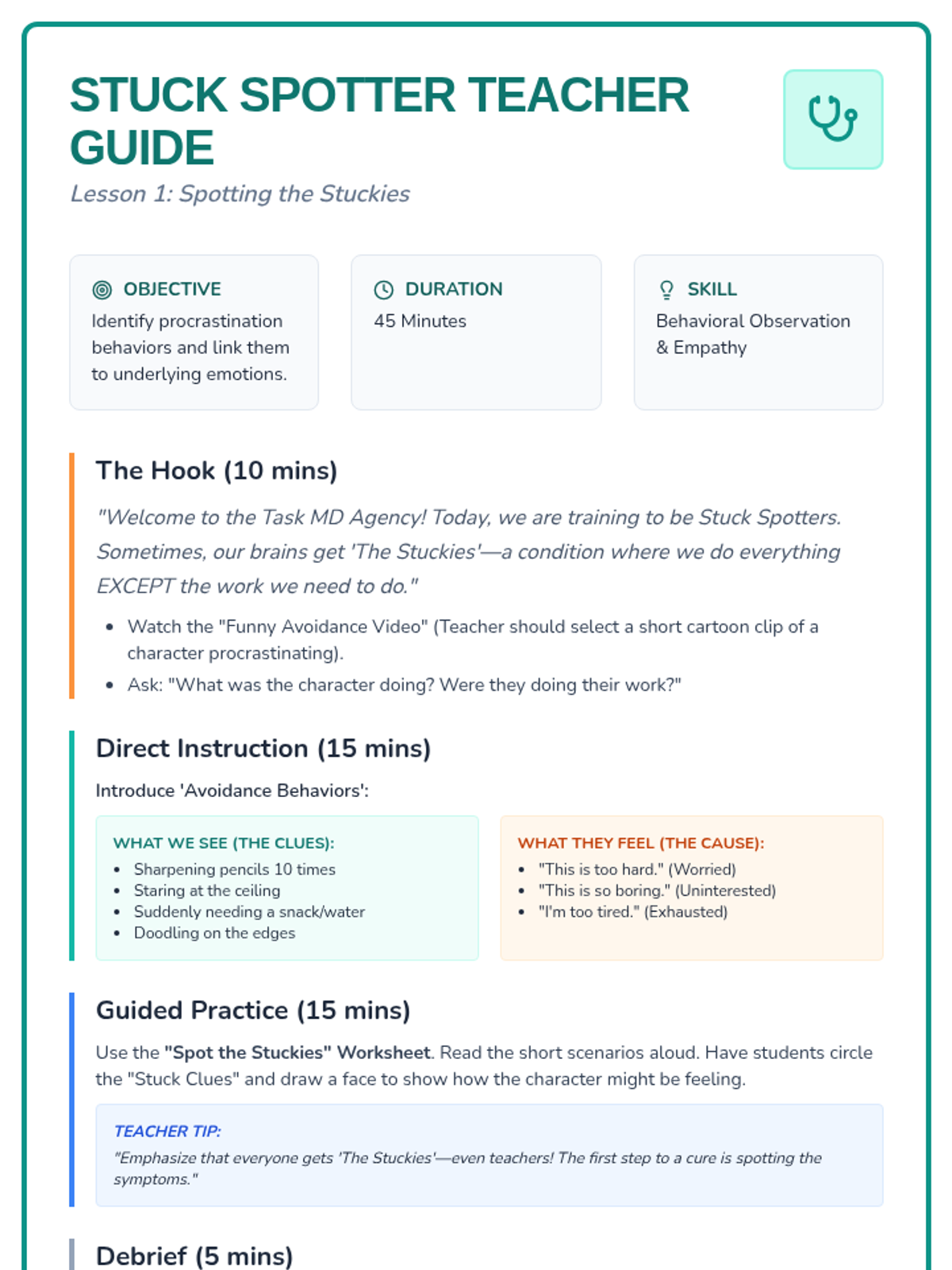
Students identify behaviors that show someone is avoiding work and brainstorm what emotions might be driving those behaviors through case studies.
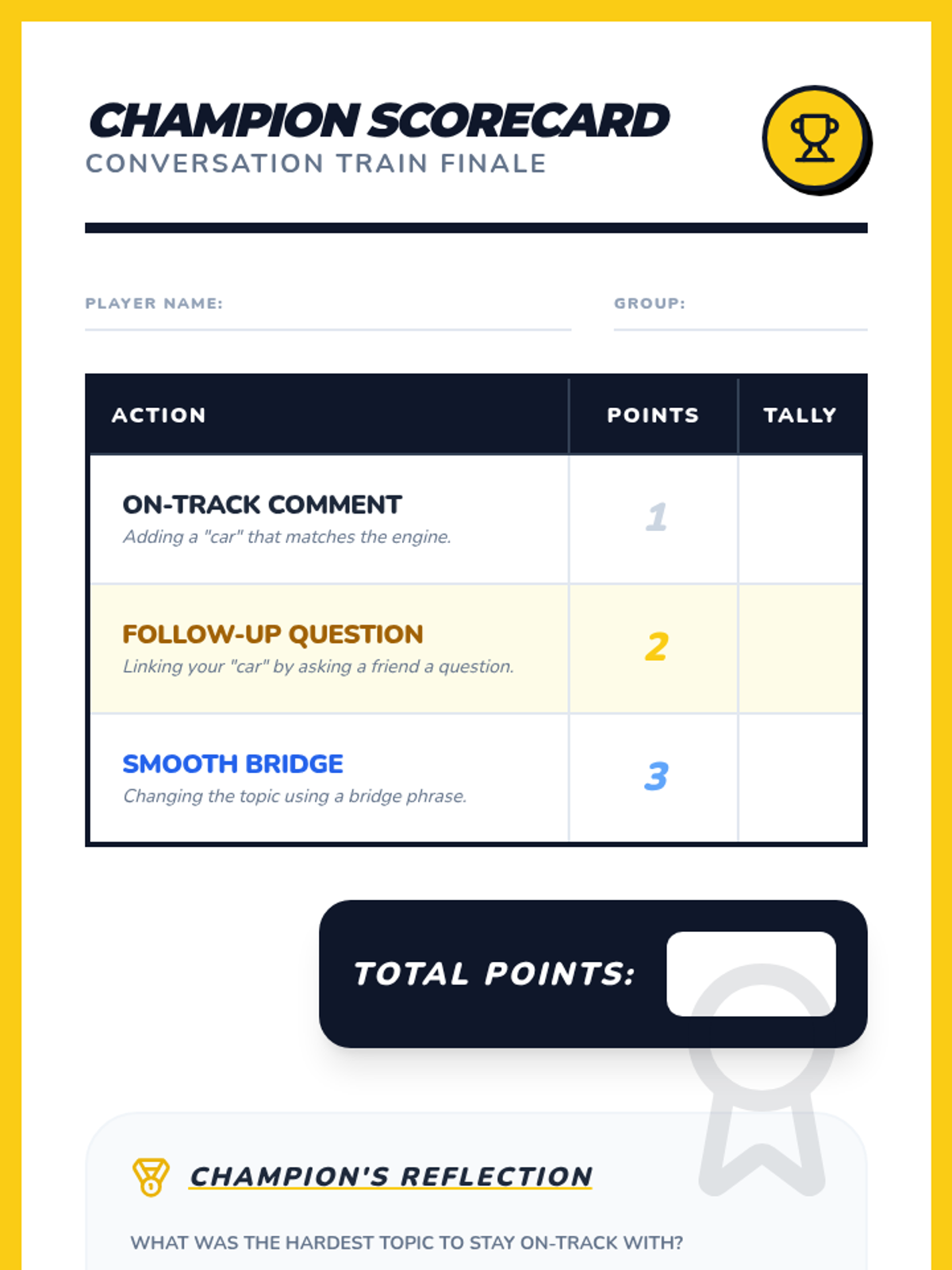
A culminating activity where students apply all previous strategies in a structured 'Conversation Championship' game to demonstrate mastery of topic maintenance.
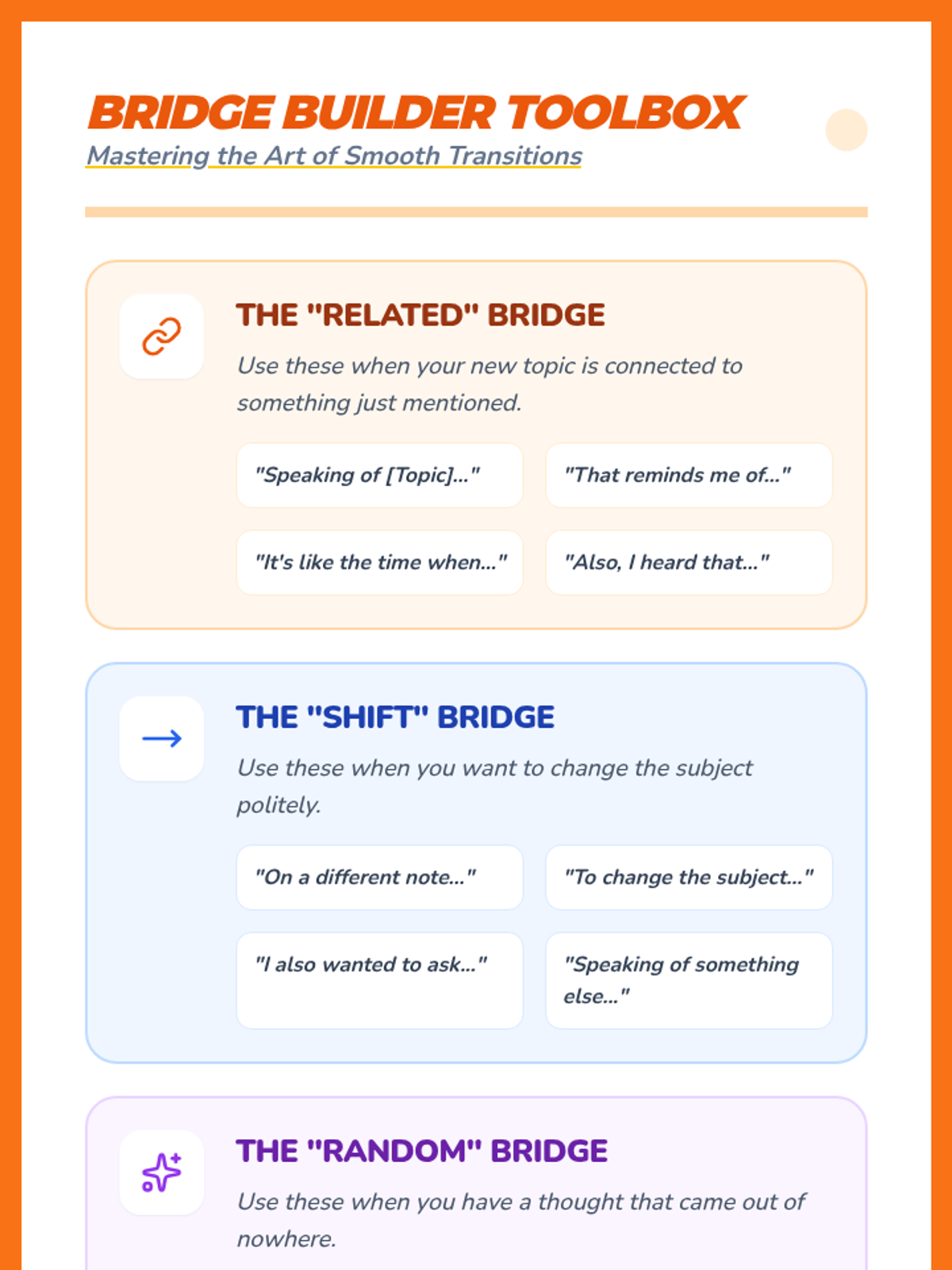
Teaches students how to use 'bridge phrases' to shift topics politely and purposefully without disrupting the flow of conversation.
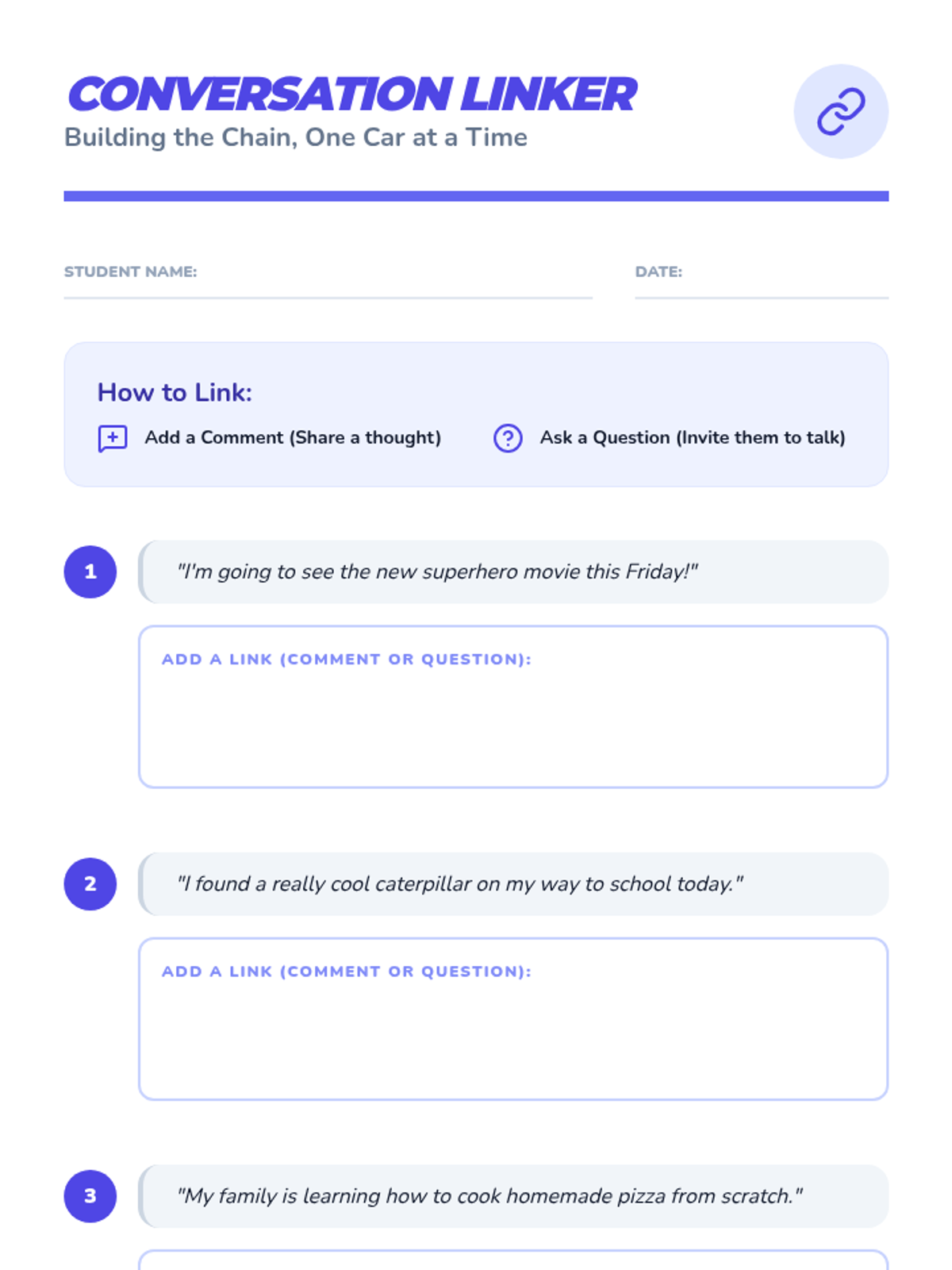
Focuses on building conversation momentum by using connecting blocks or paper chains to visualize follow-up questions and linked comments.
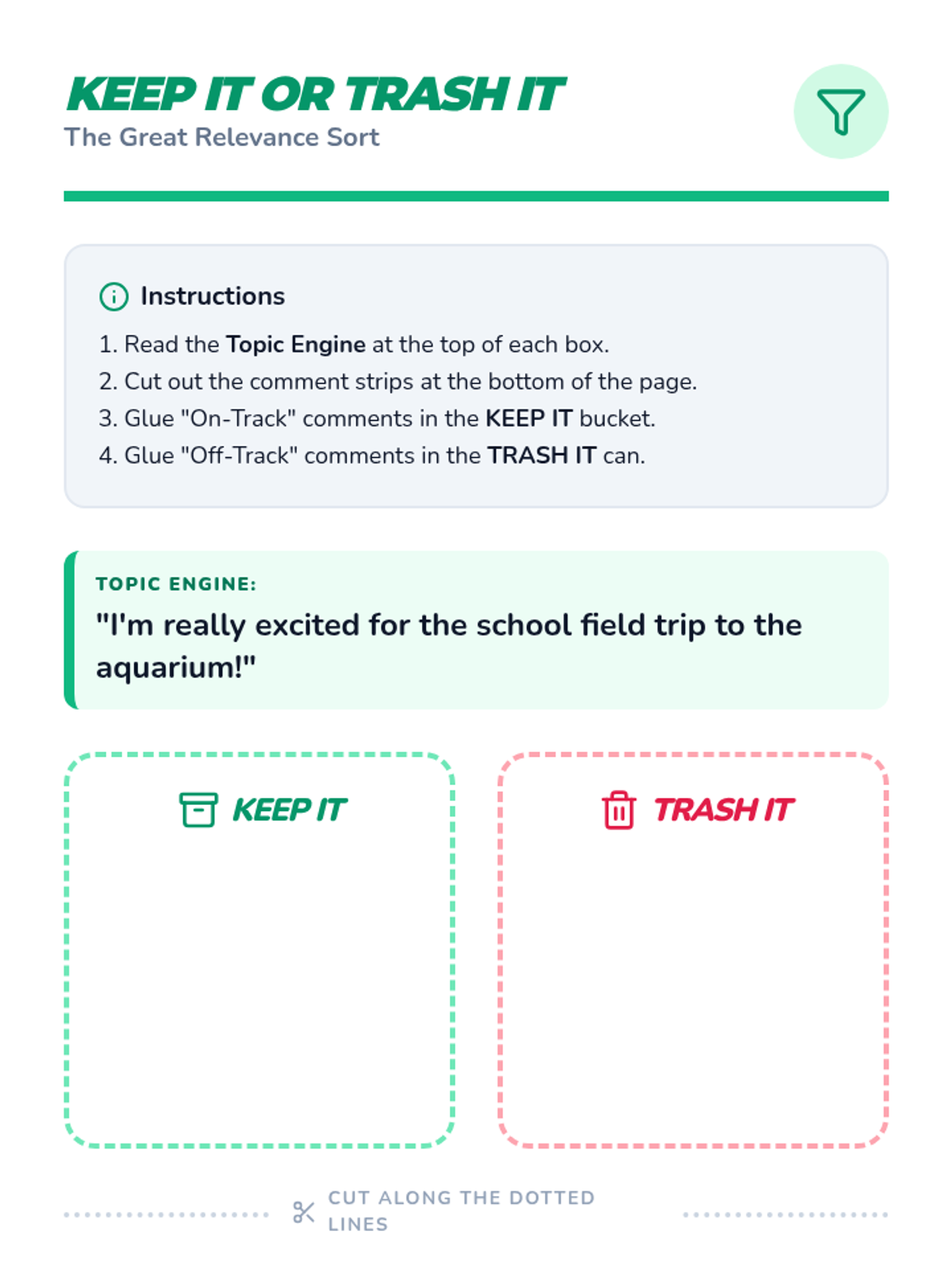
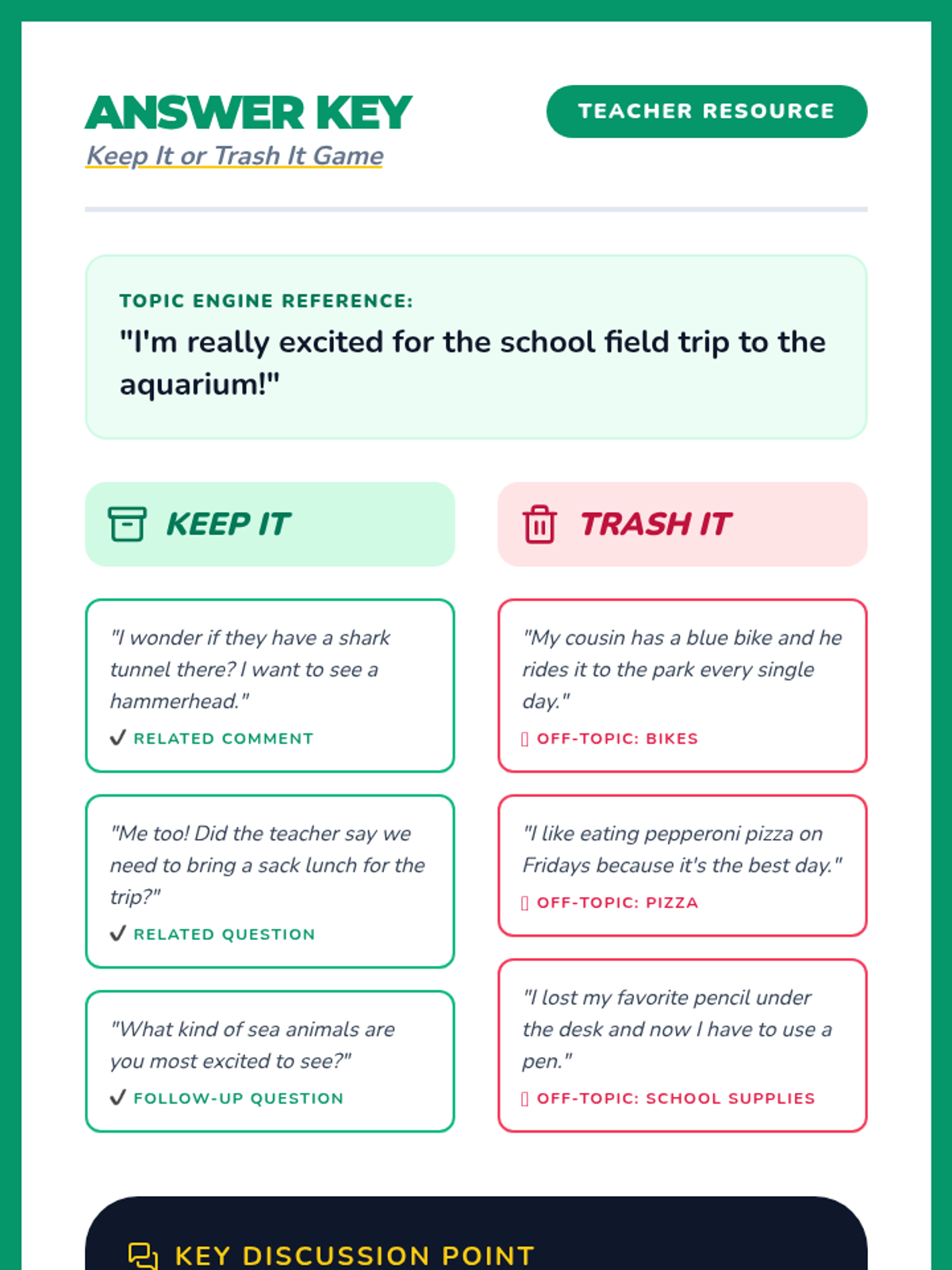
Students practice filtering their thoughts by distinguishing between 'on-track' and 'off-track' contributions using a 'Keep It or Trash It' sorting game.
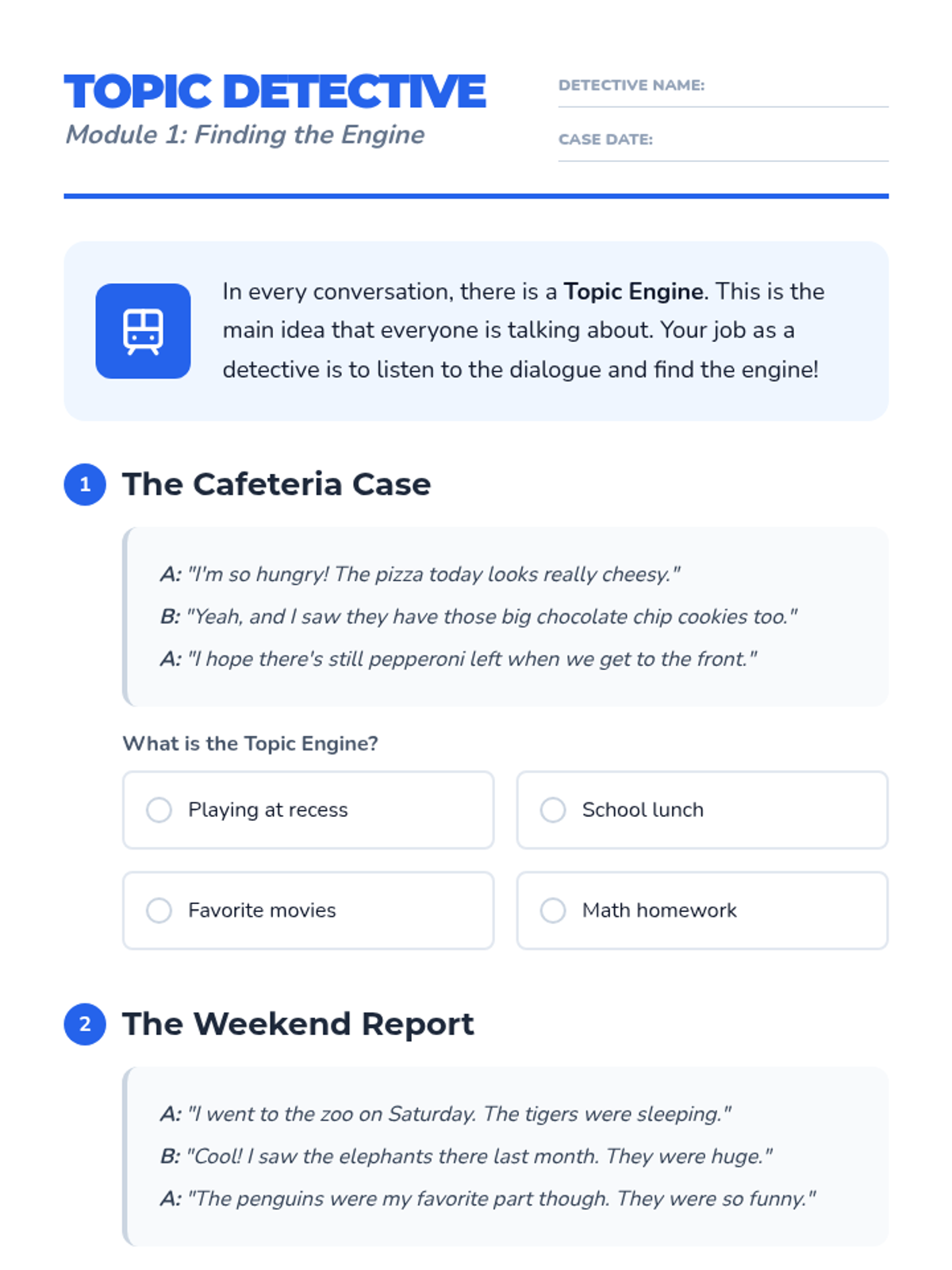
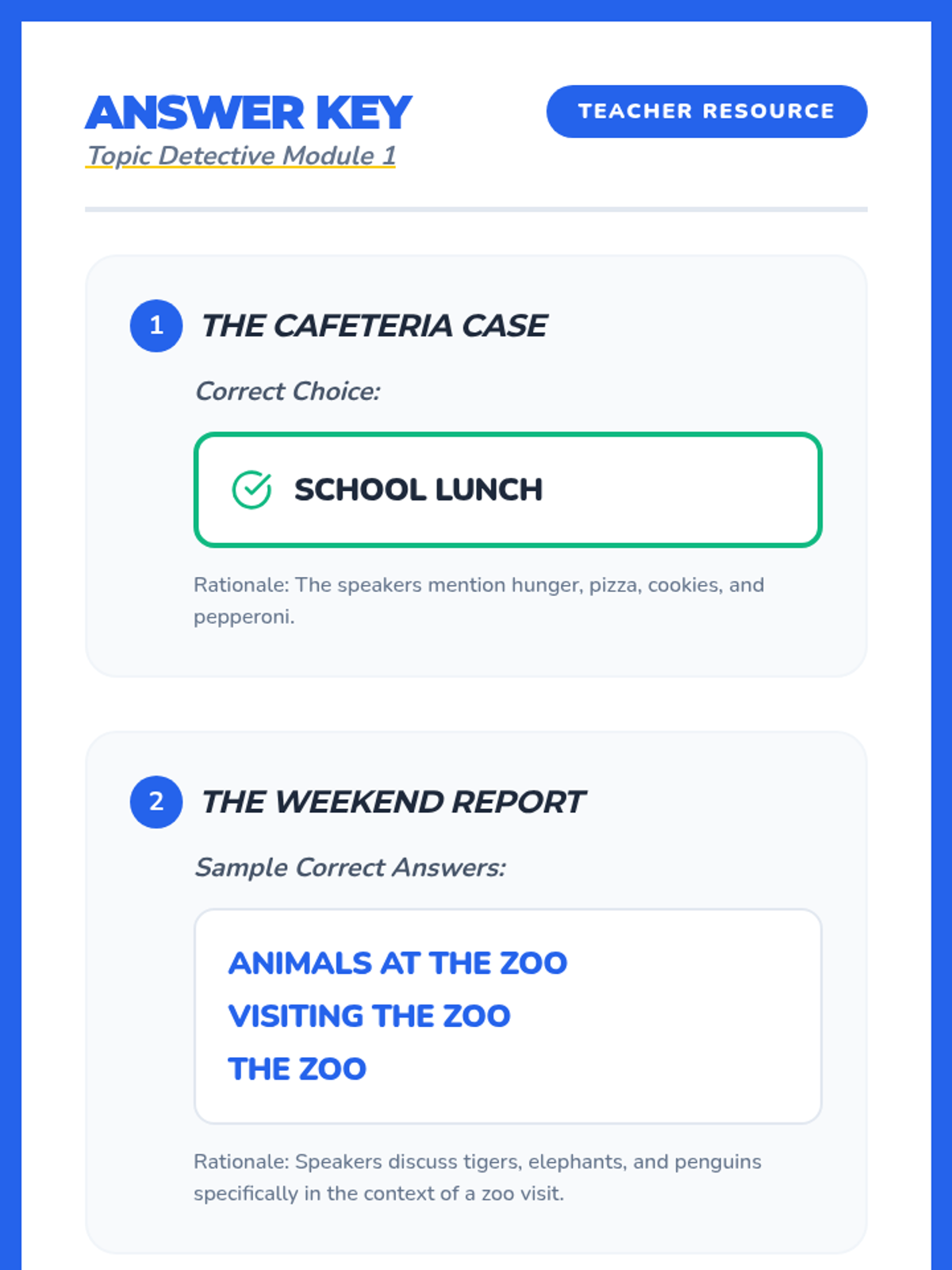
Introduces the 'Conversation Train' metaphor where the engine is the main topic, helping students identify the shared focus of group interactions through a mystery bag challenge.
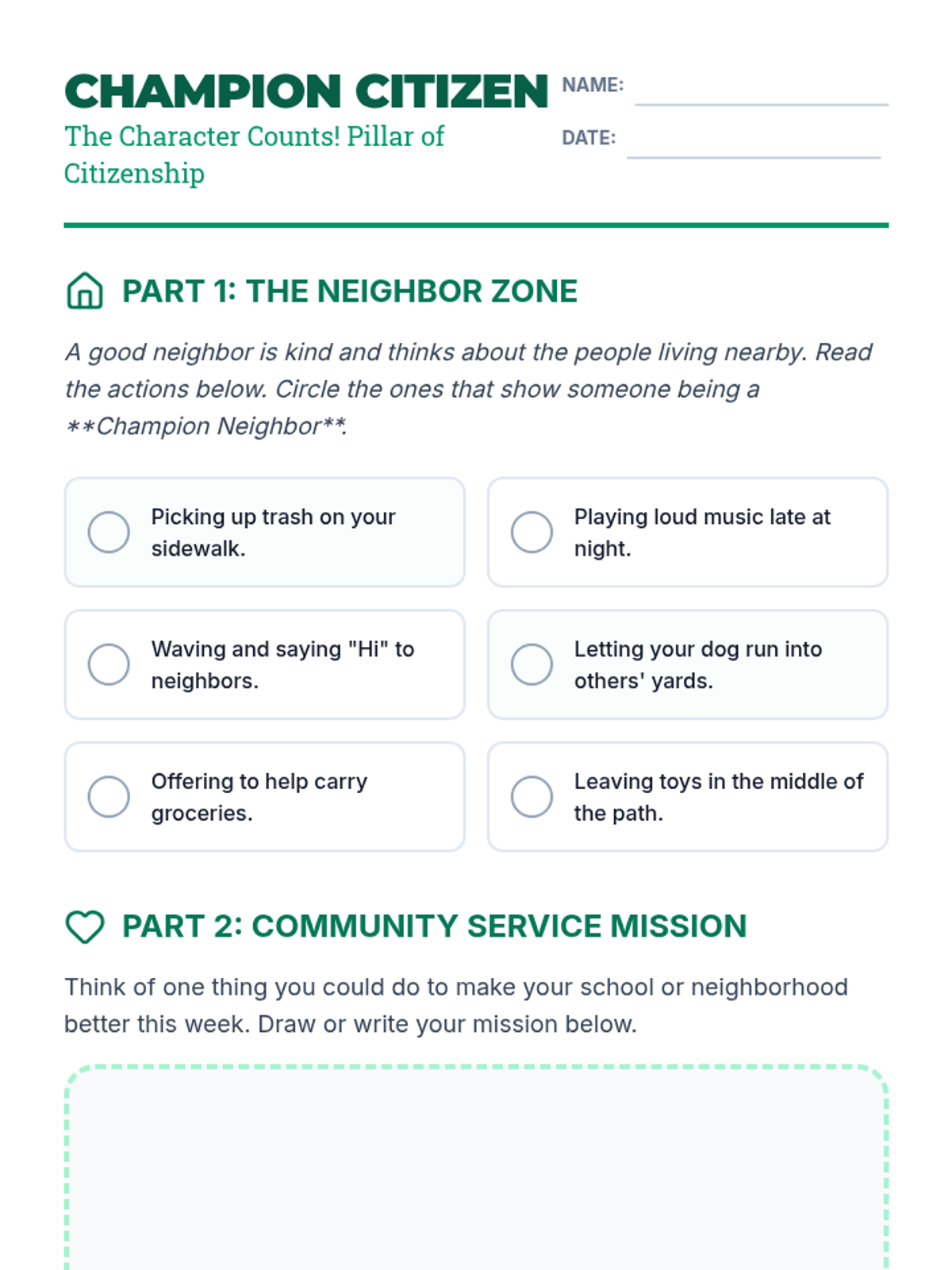
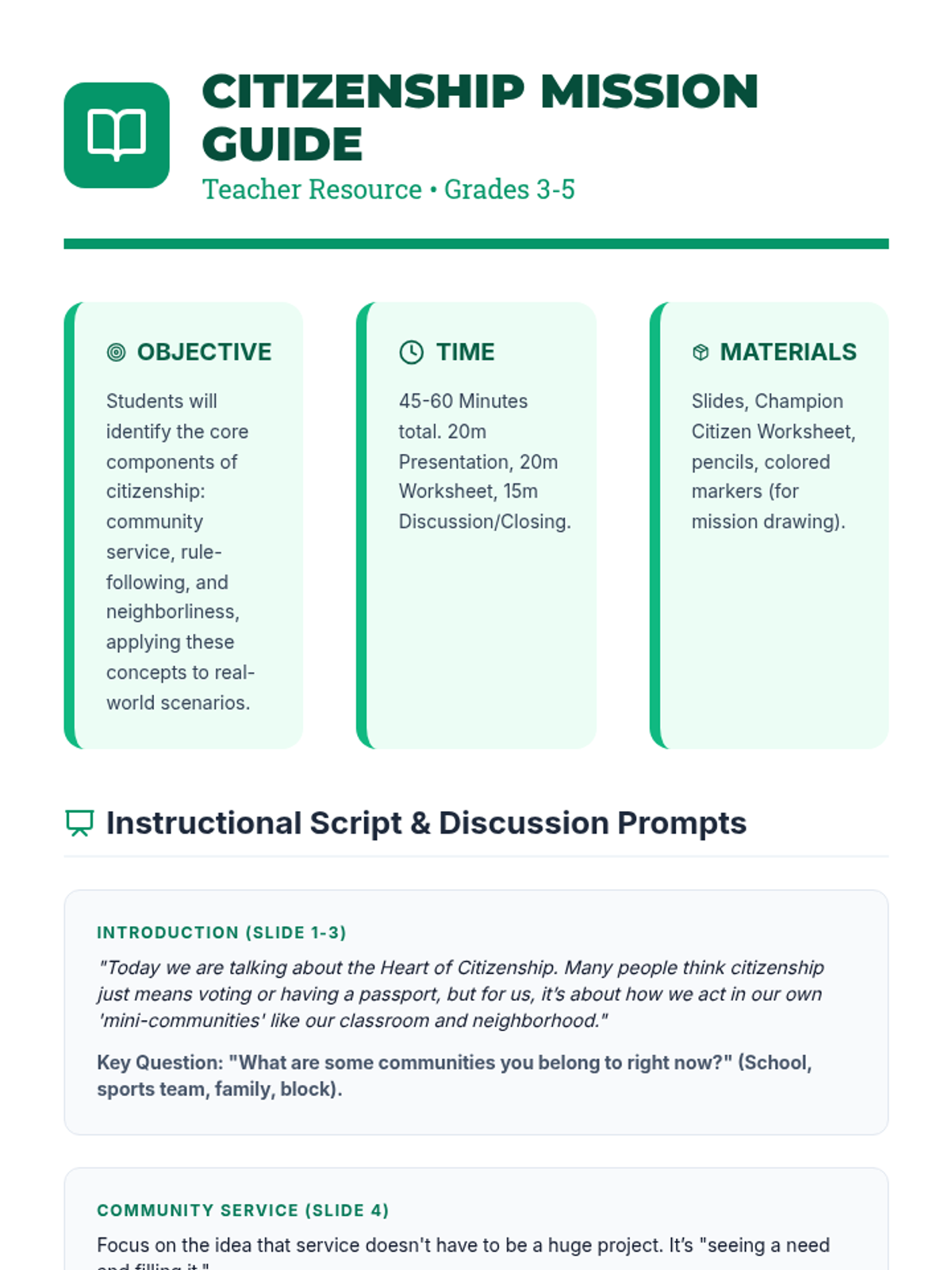
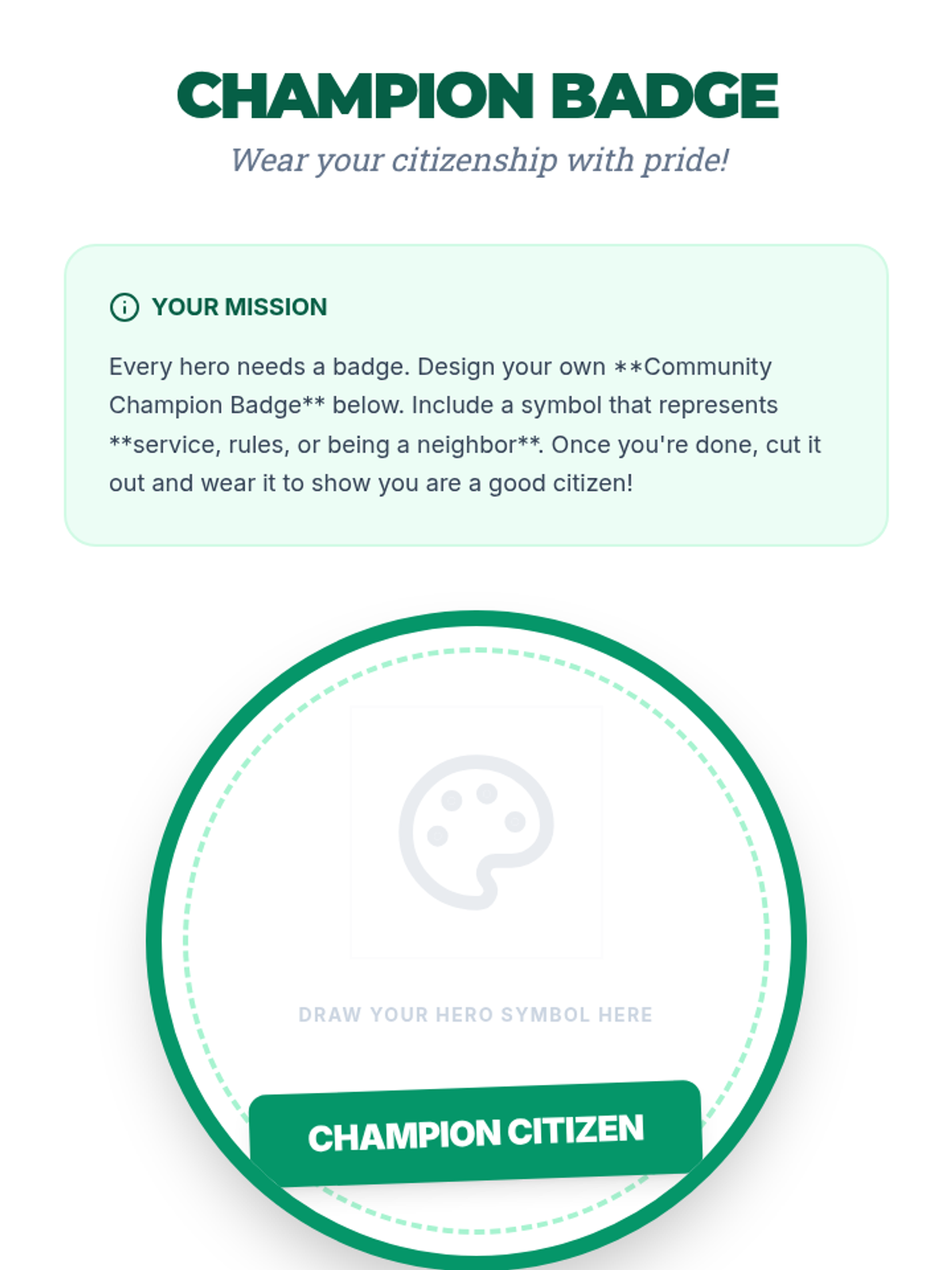
A lesson for grades 3-5 focusing on the citizenship pillar of character. Students will learn about community service, the importance of following rules, and how to be a good neighbor.
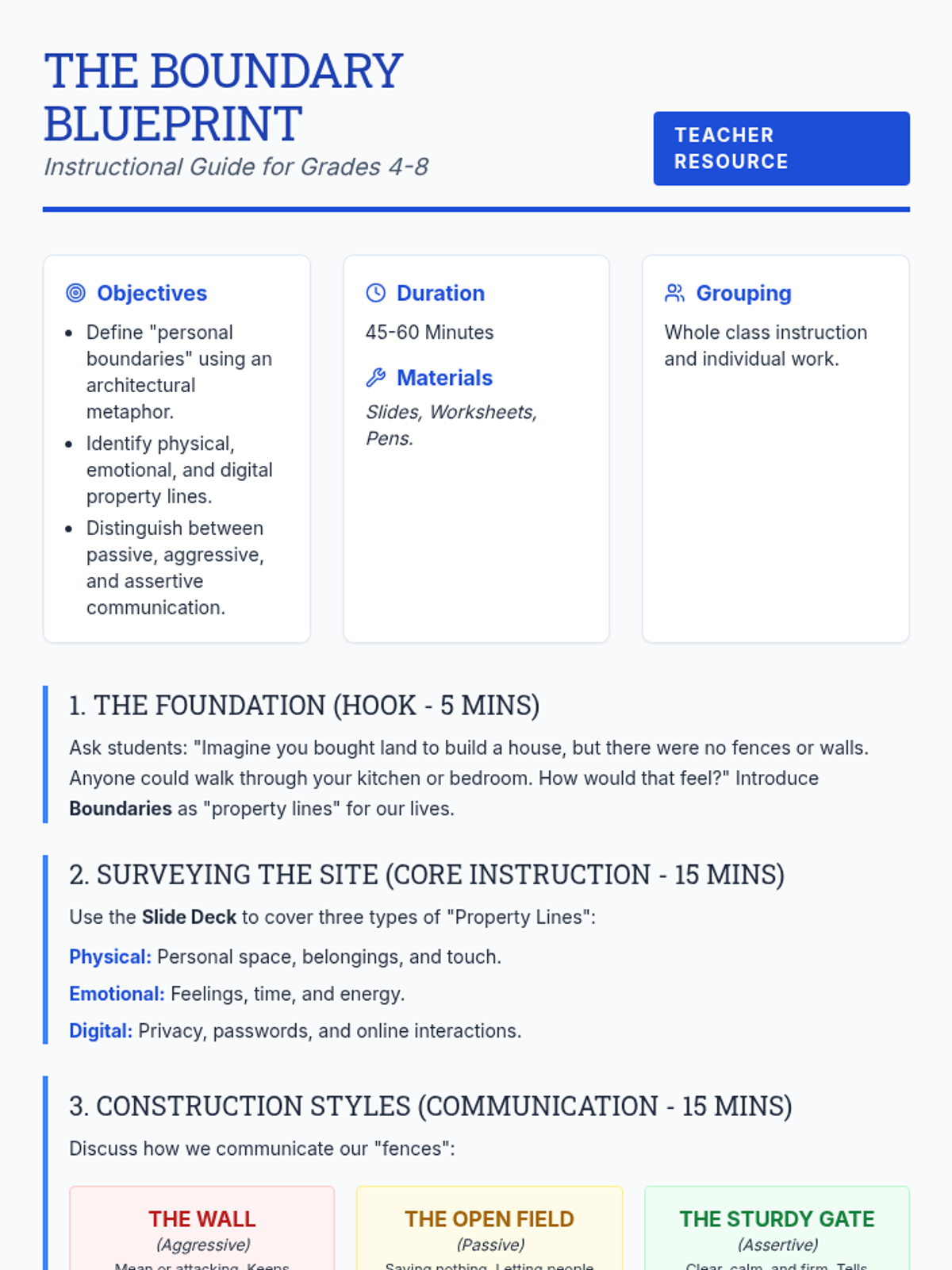
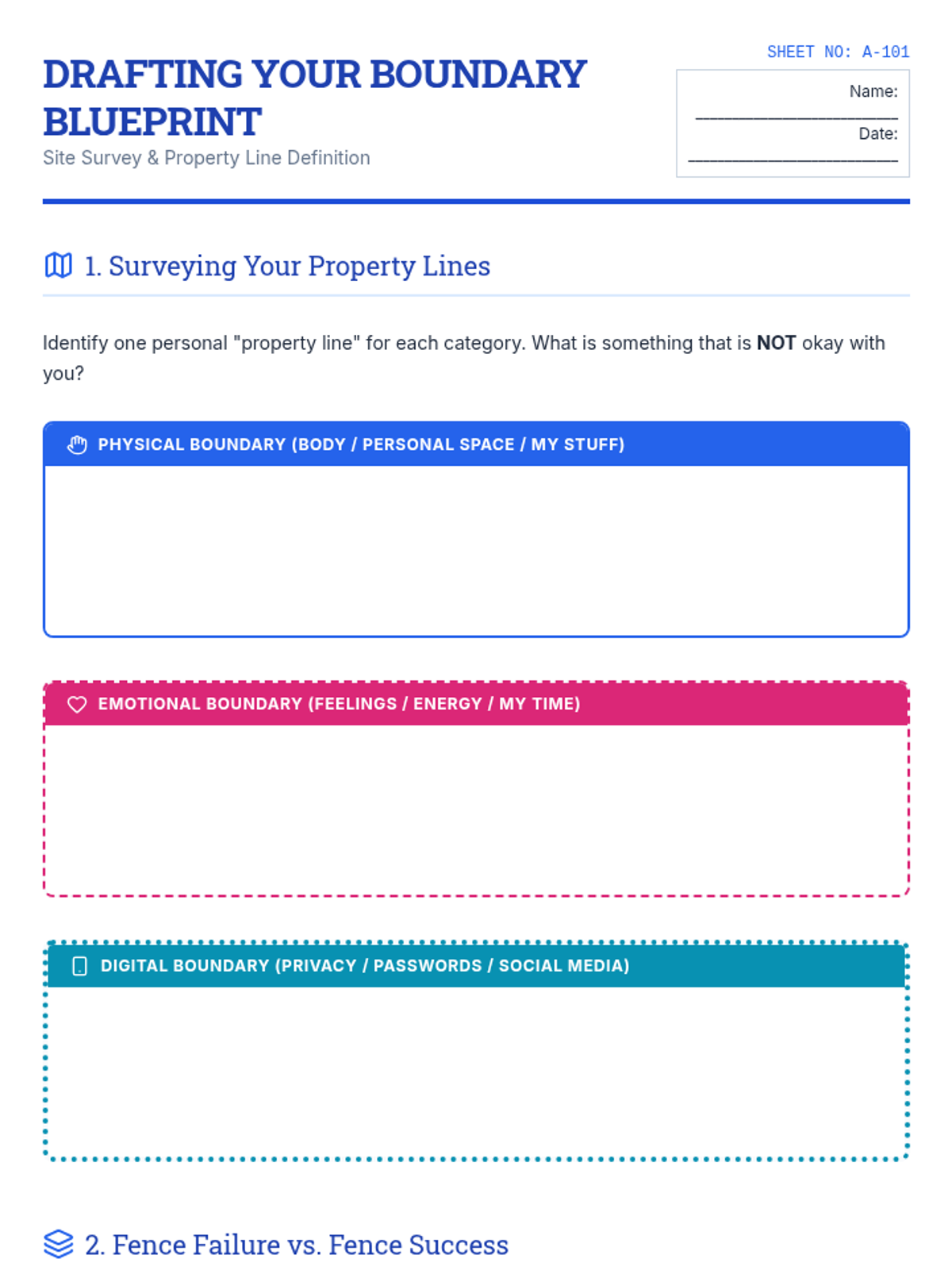
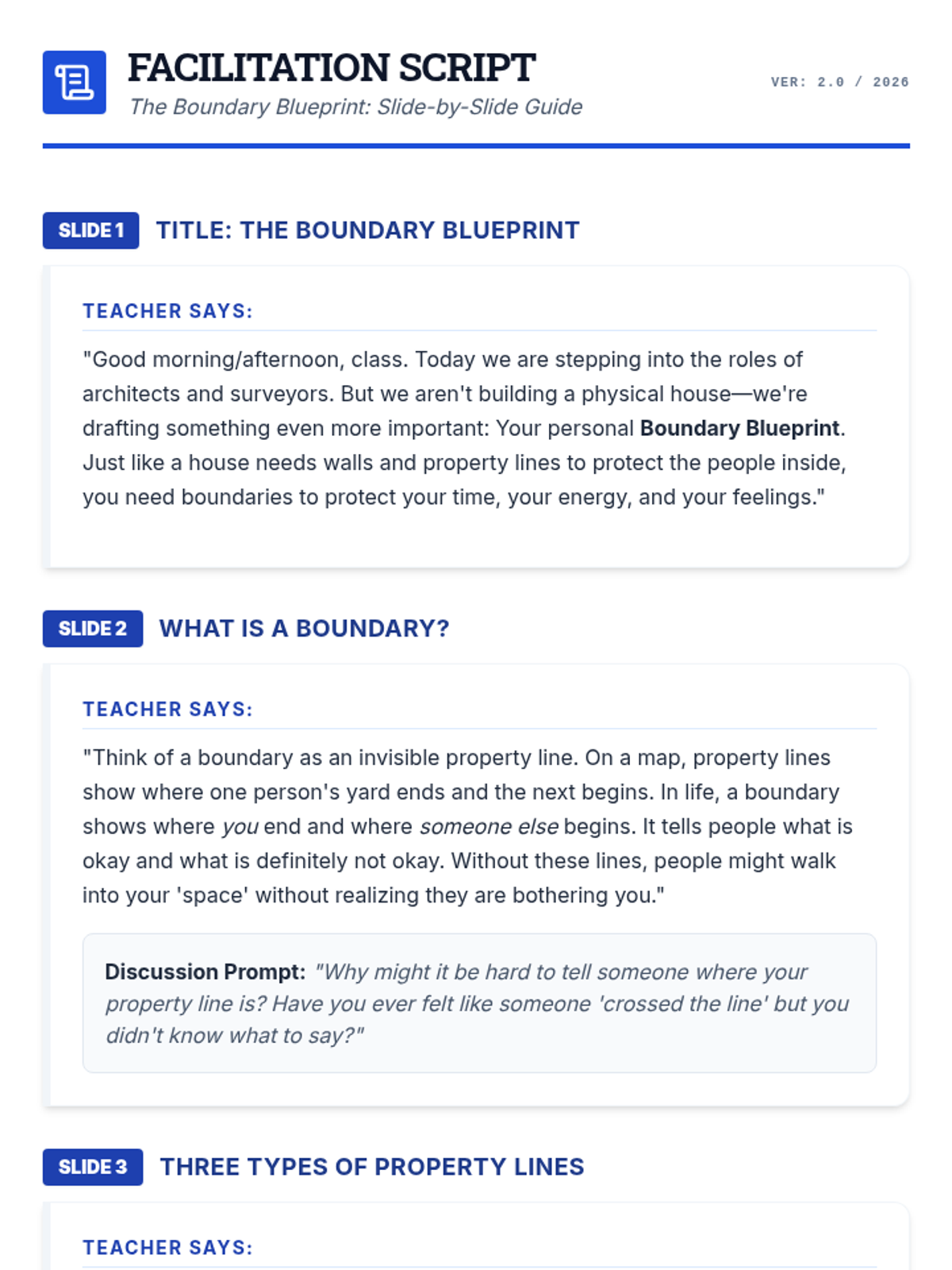
An architectural-themed lesson for grades 4-8 that uses the metaphor of a 'blueprint' to teach personal boundaries, property lines, and assertive communication.
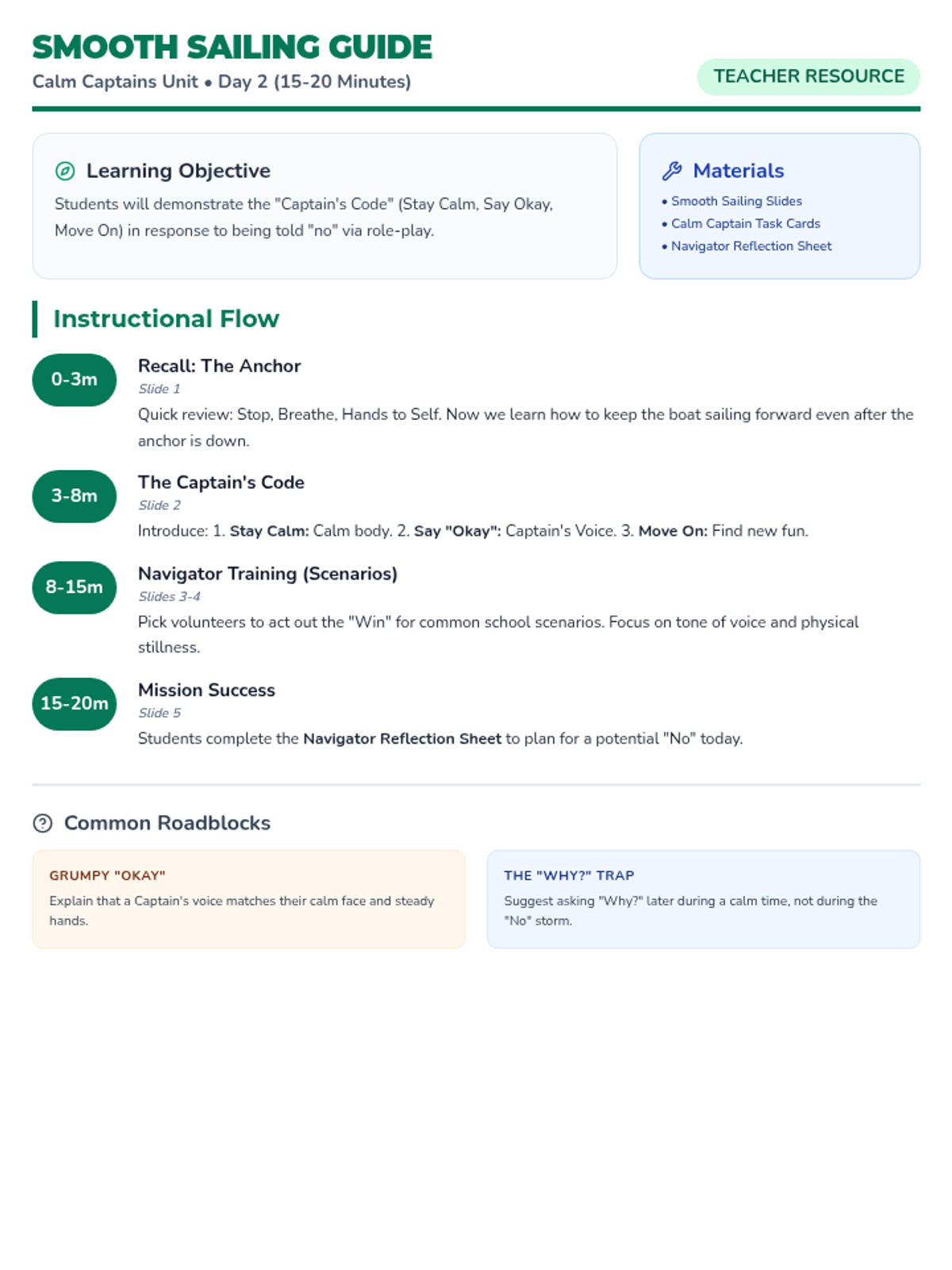
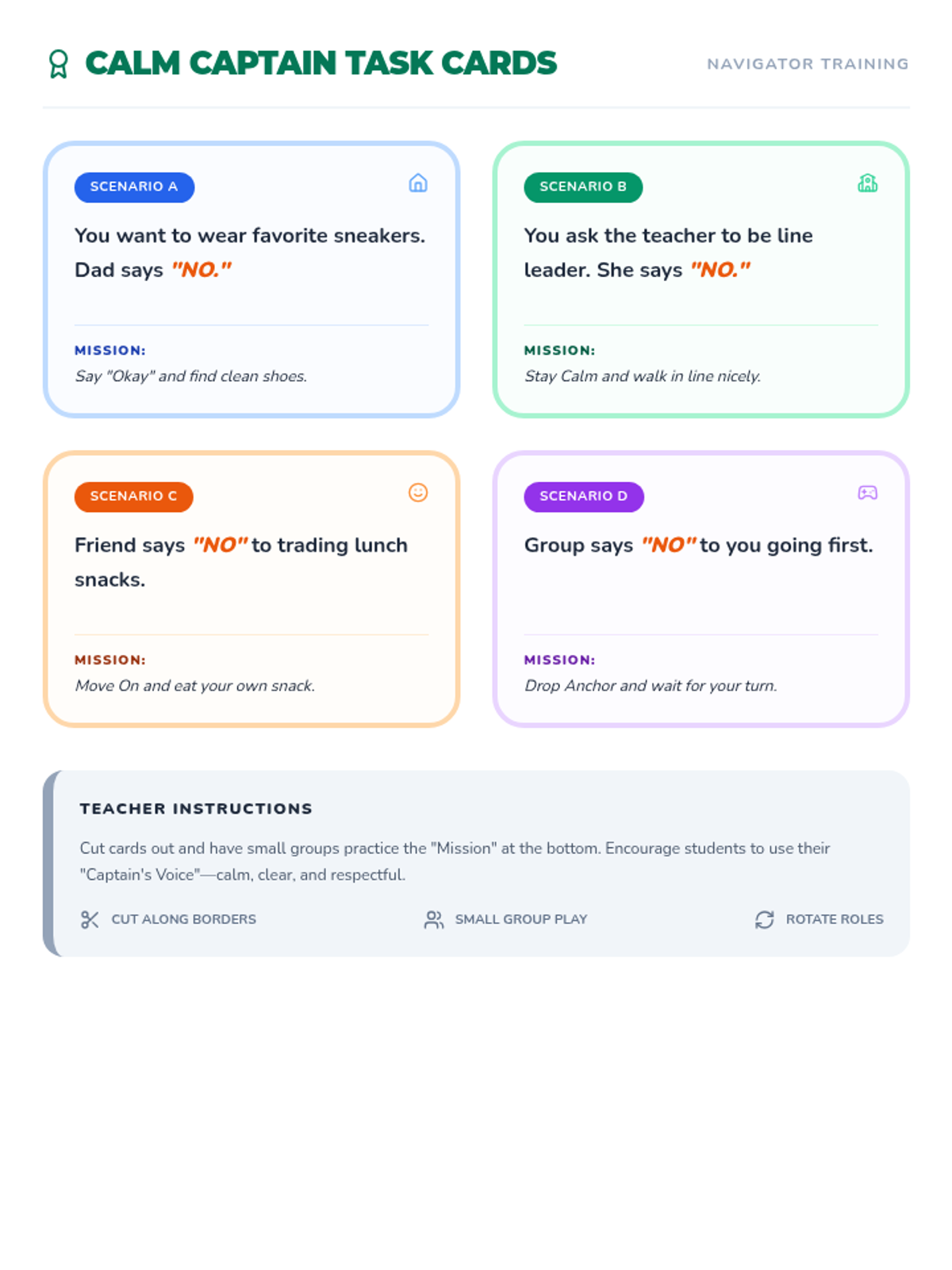
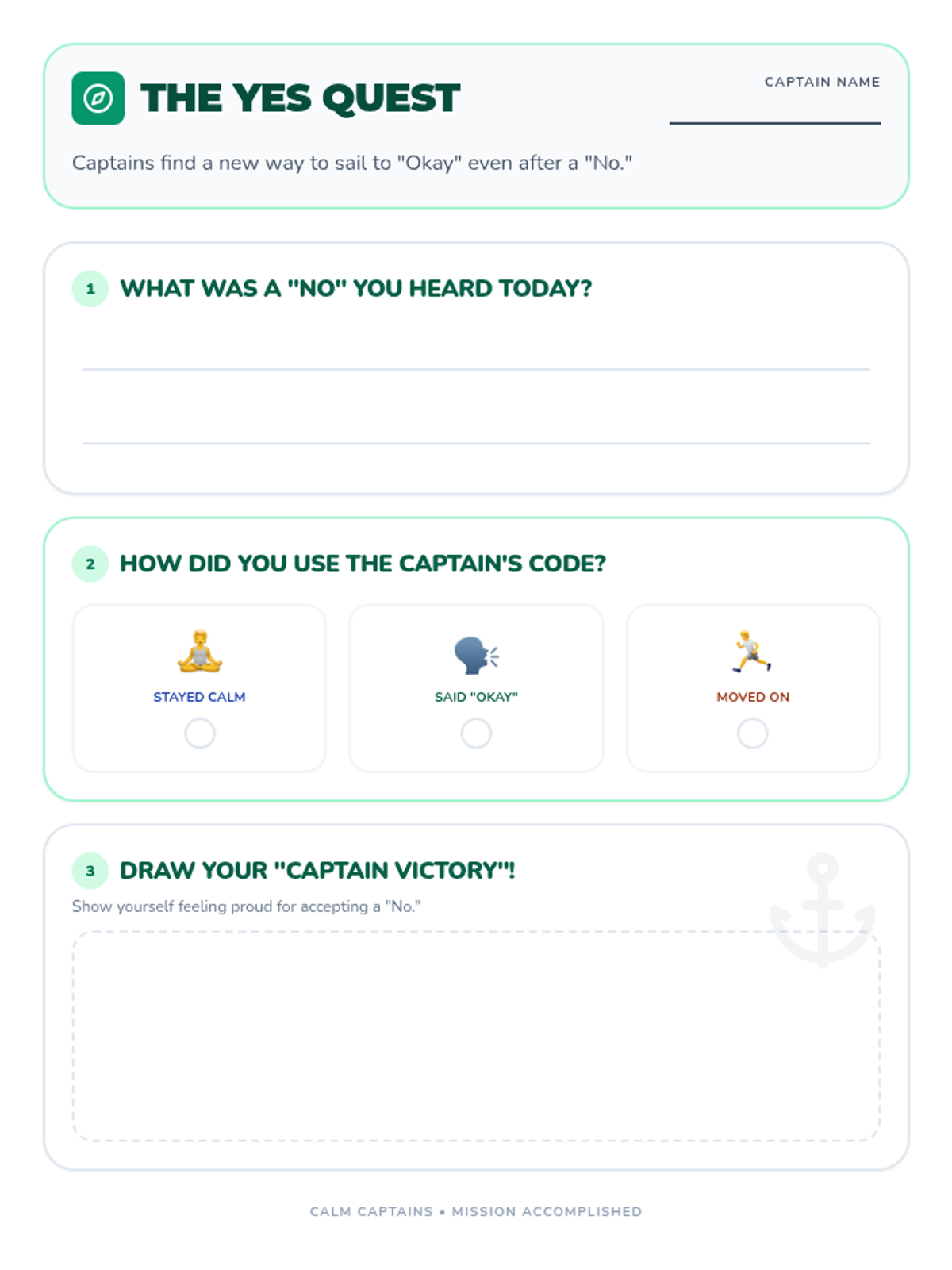
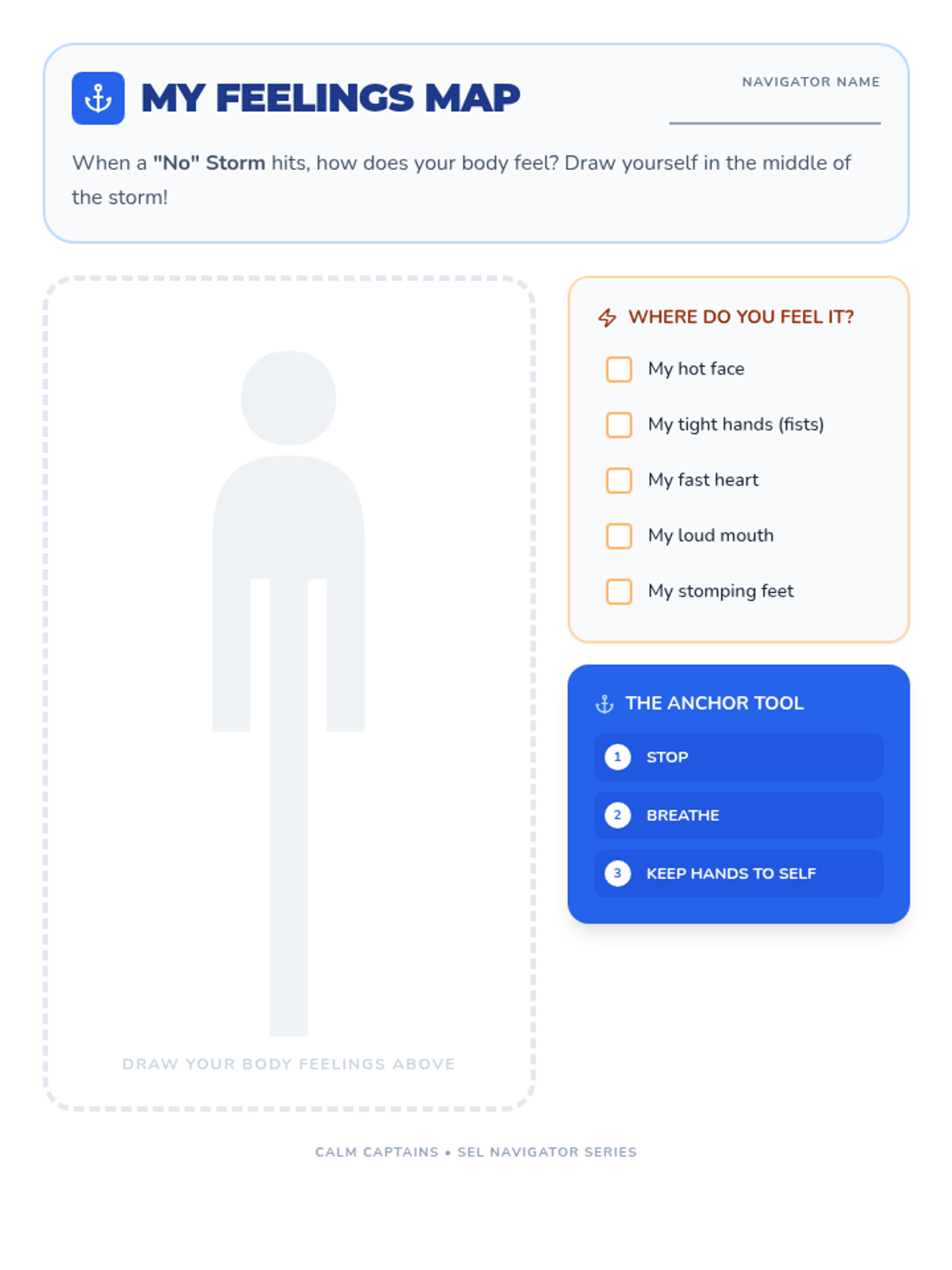
Students practice three specific strategies for accepting "no" (Stay Calm, Say Okay, Move On) through role-play and reflective activities.
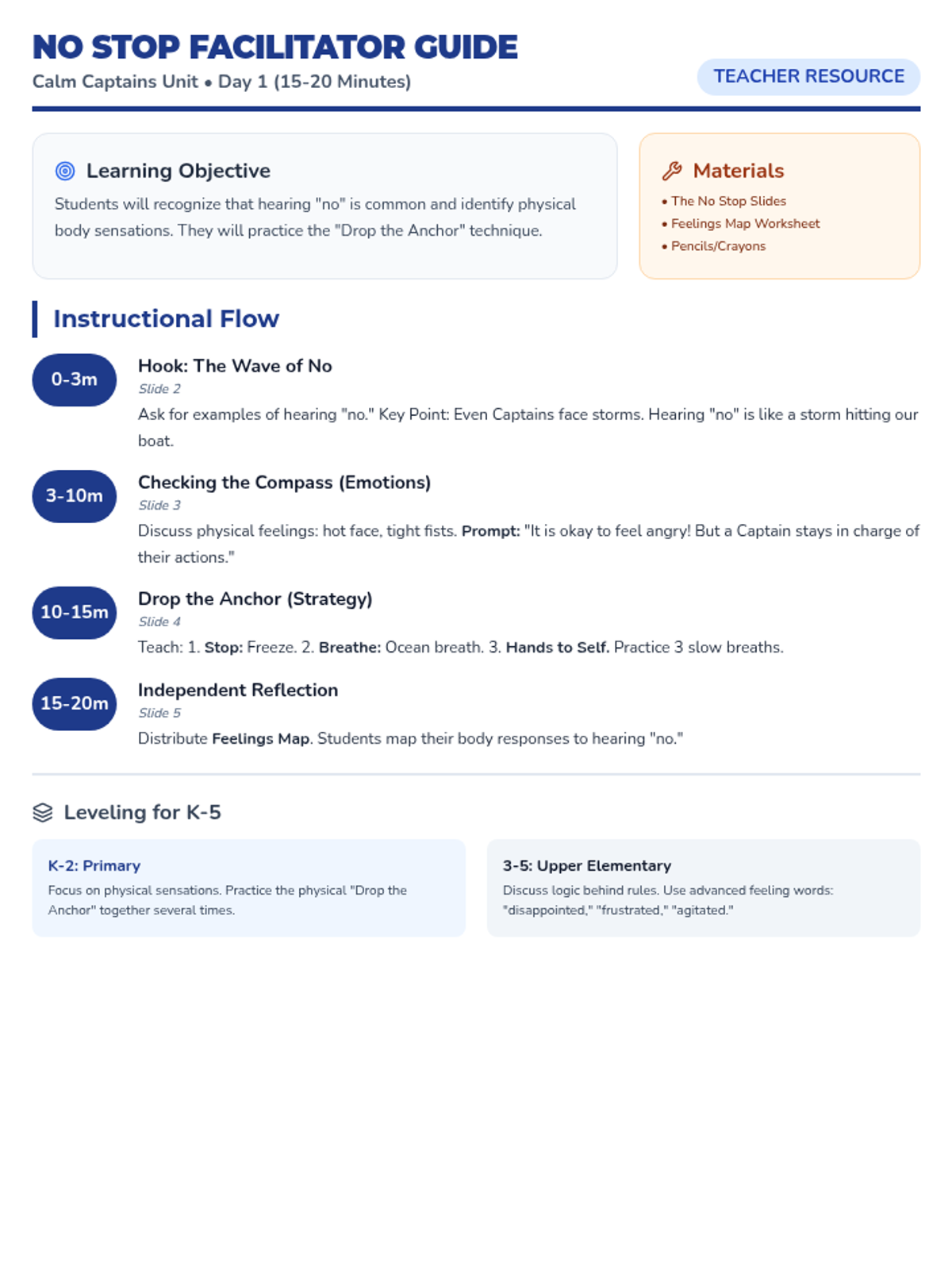
Students identify that hearing "no" is a common experience and explore the feelings that arise when they don't get what they want. They learn the 'Stop and Breathe' technique.
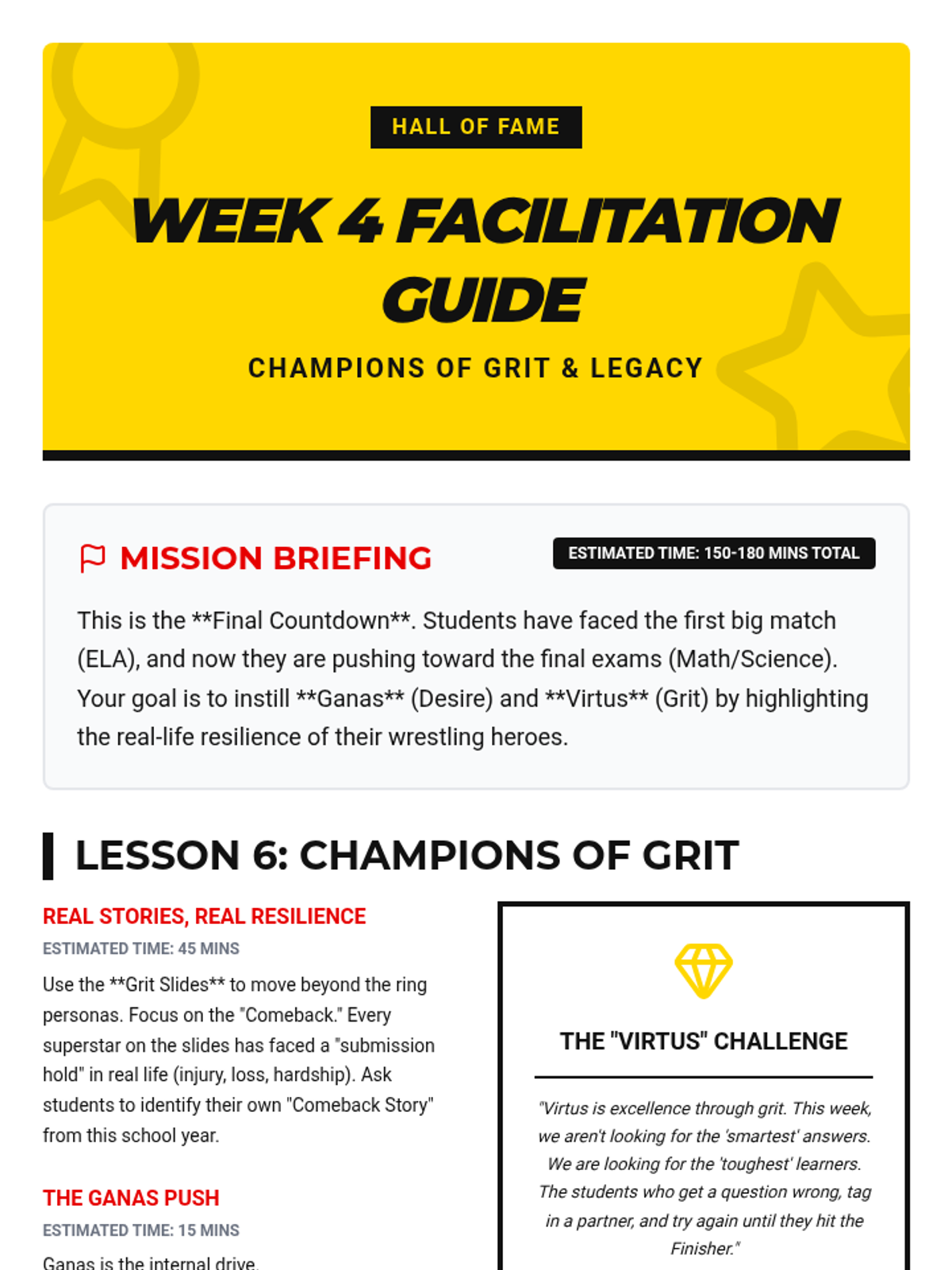
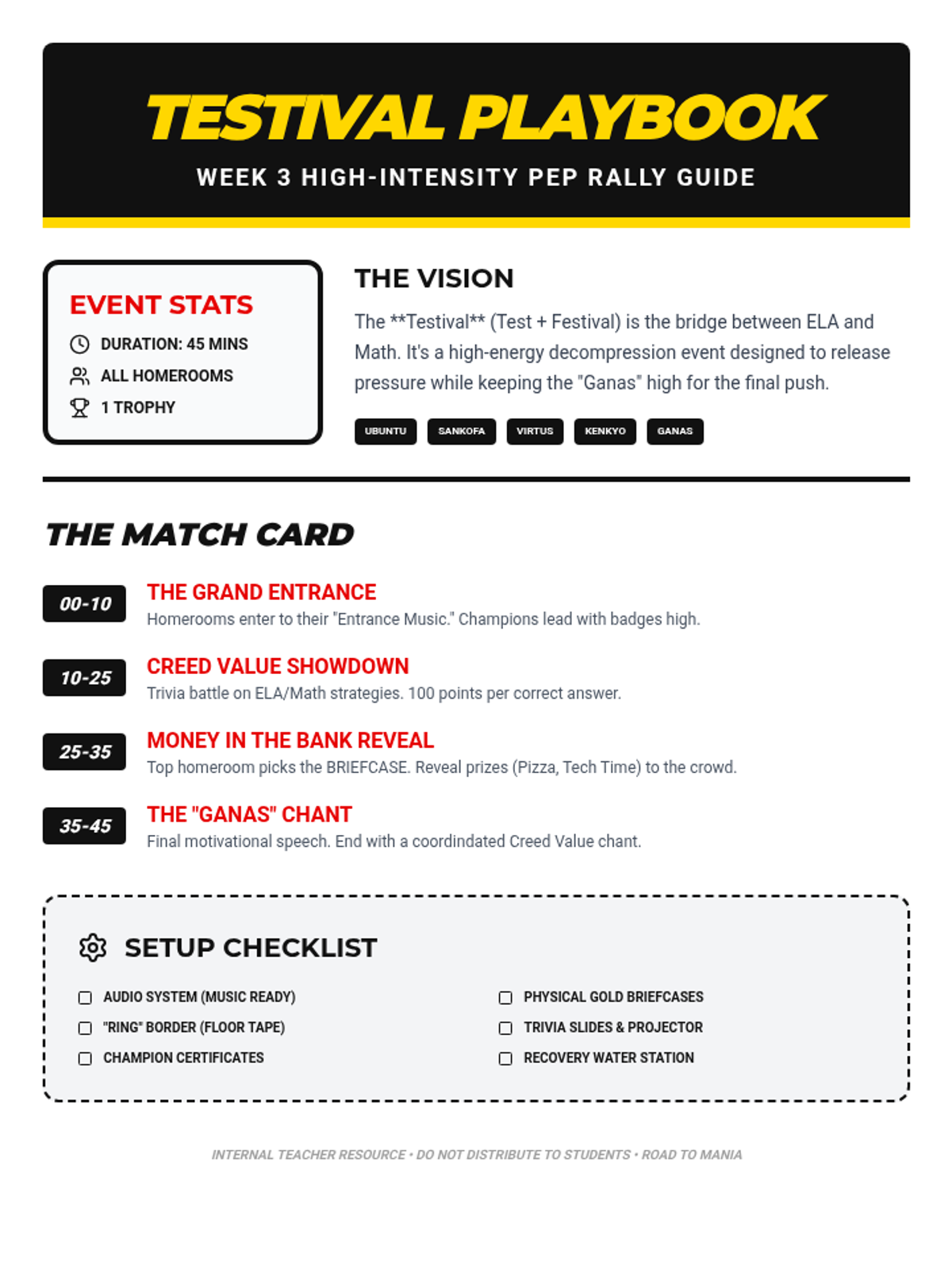
Examining real-life challenges faced by WWE stars to inspire resilience, grit, and the 'Ganas' required for the final push.
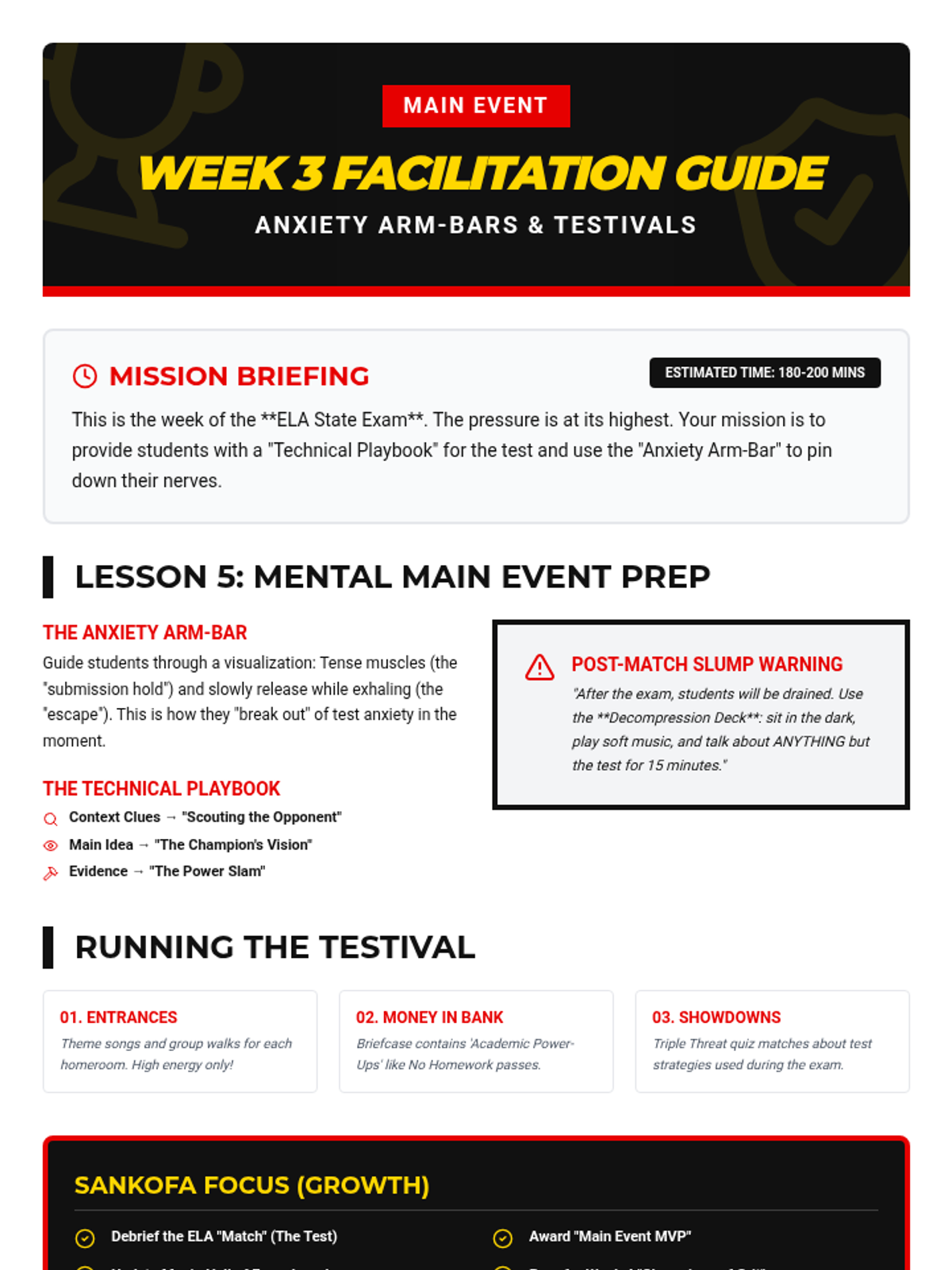
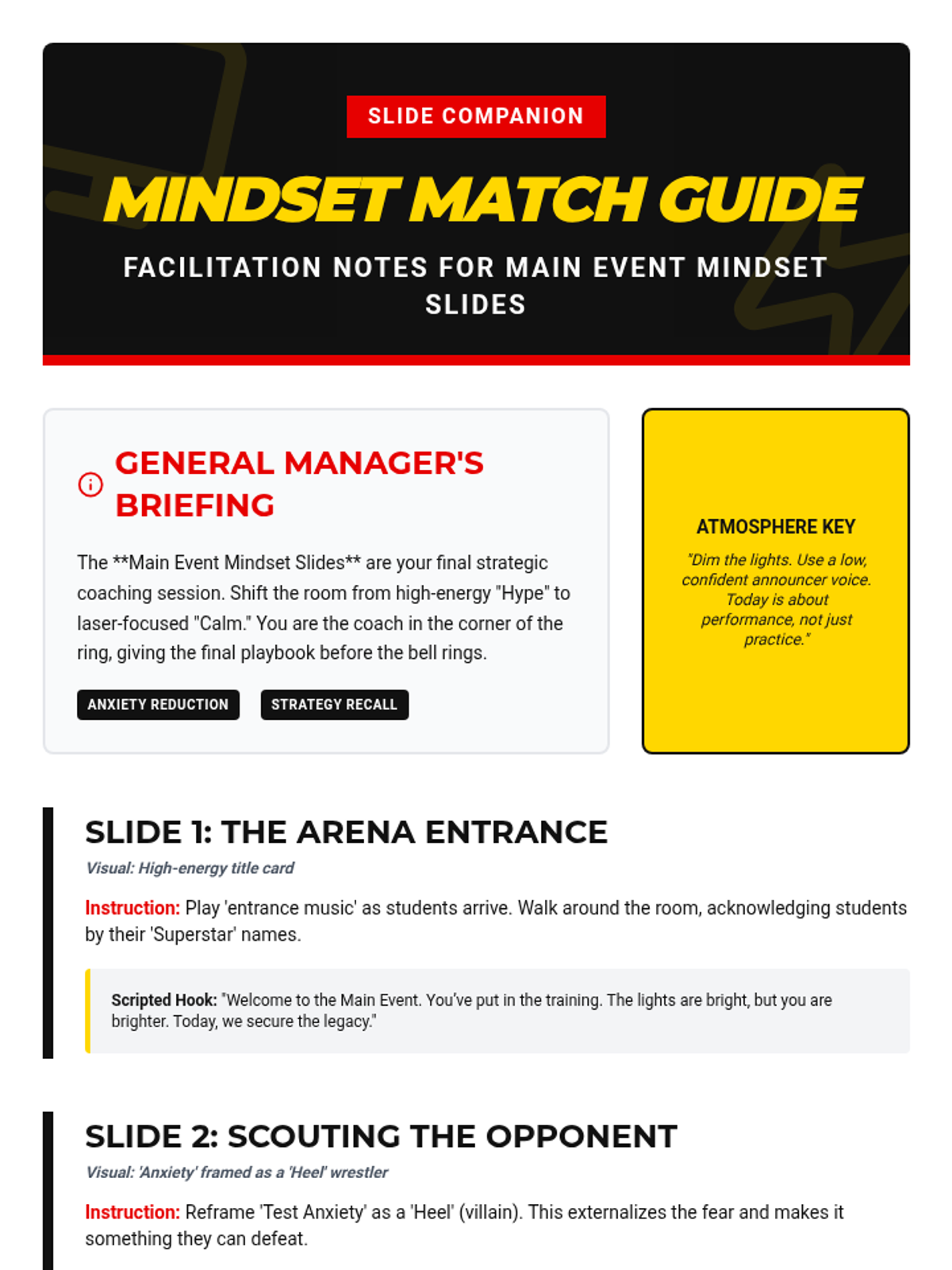
Addressing test anxiety and ELA state exam preparation, including decompression strategies to stay 'main event' ready.
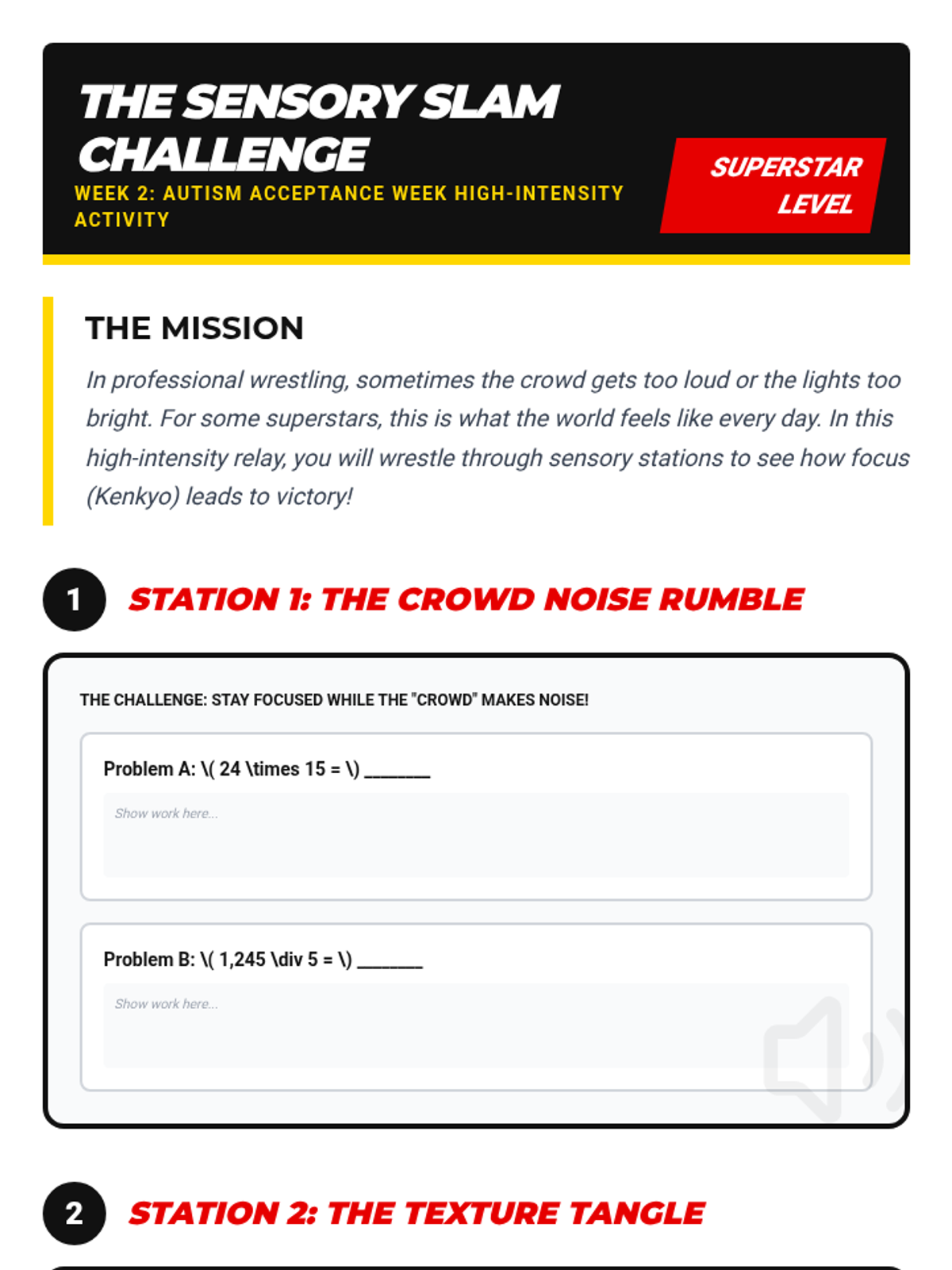
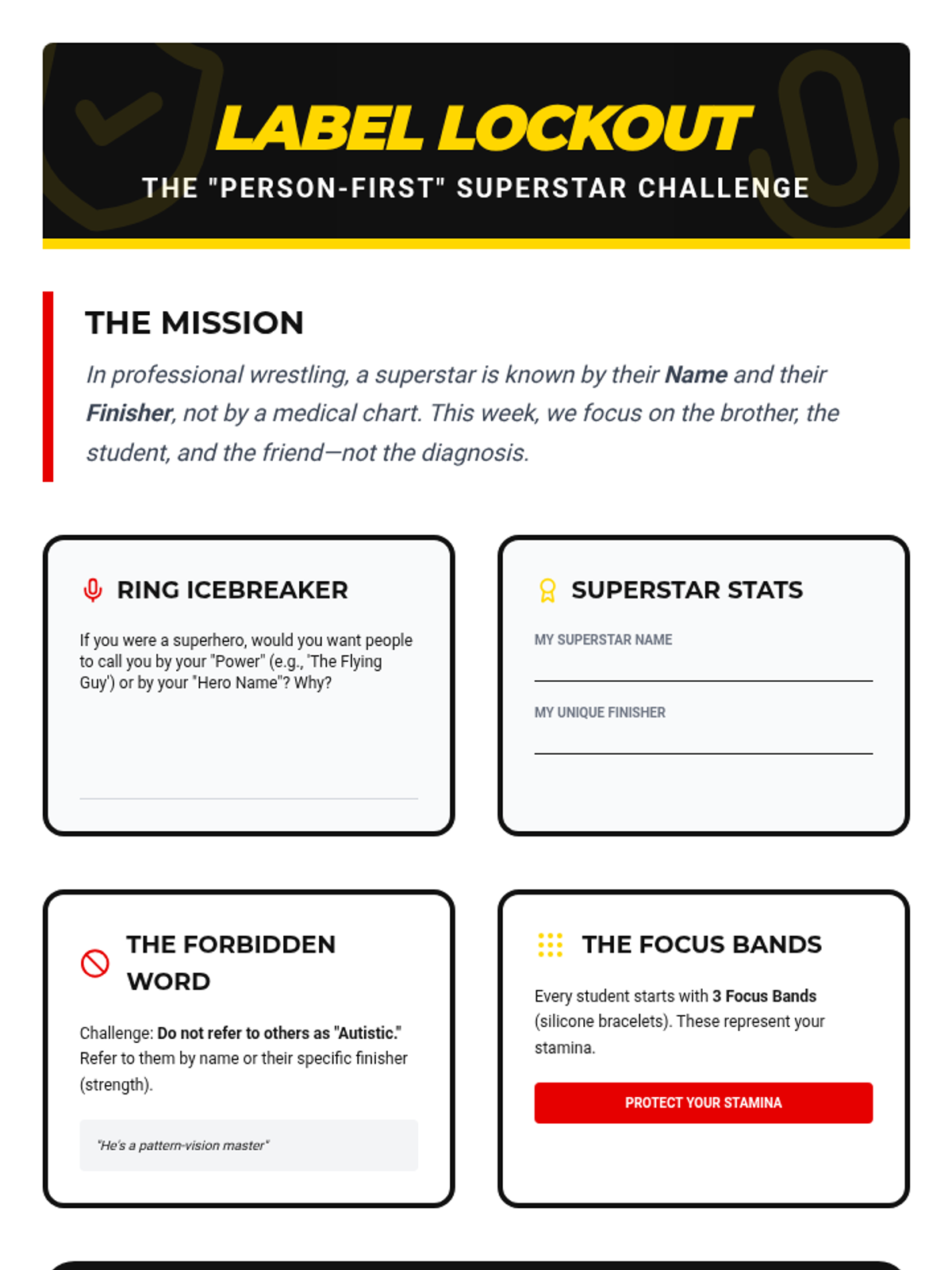
A high-energy activity focusing on inclusivity and celebrating different ways of thinking and 'wrestling' with challenges.
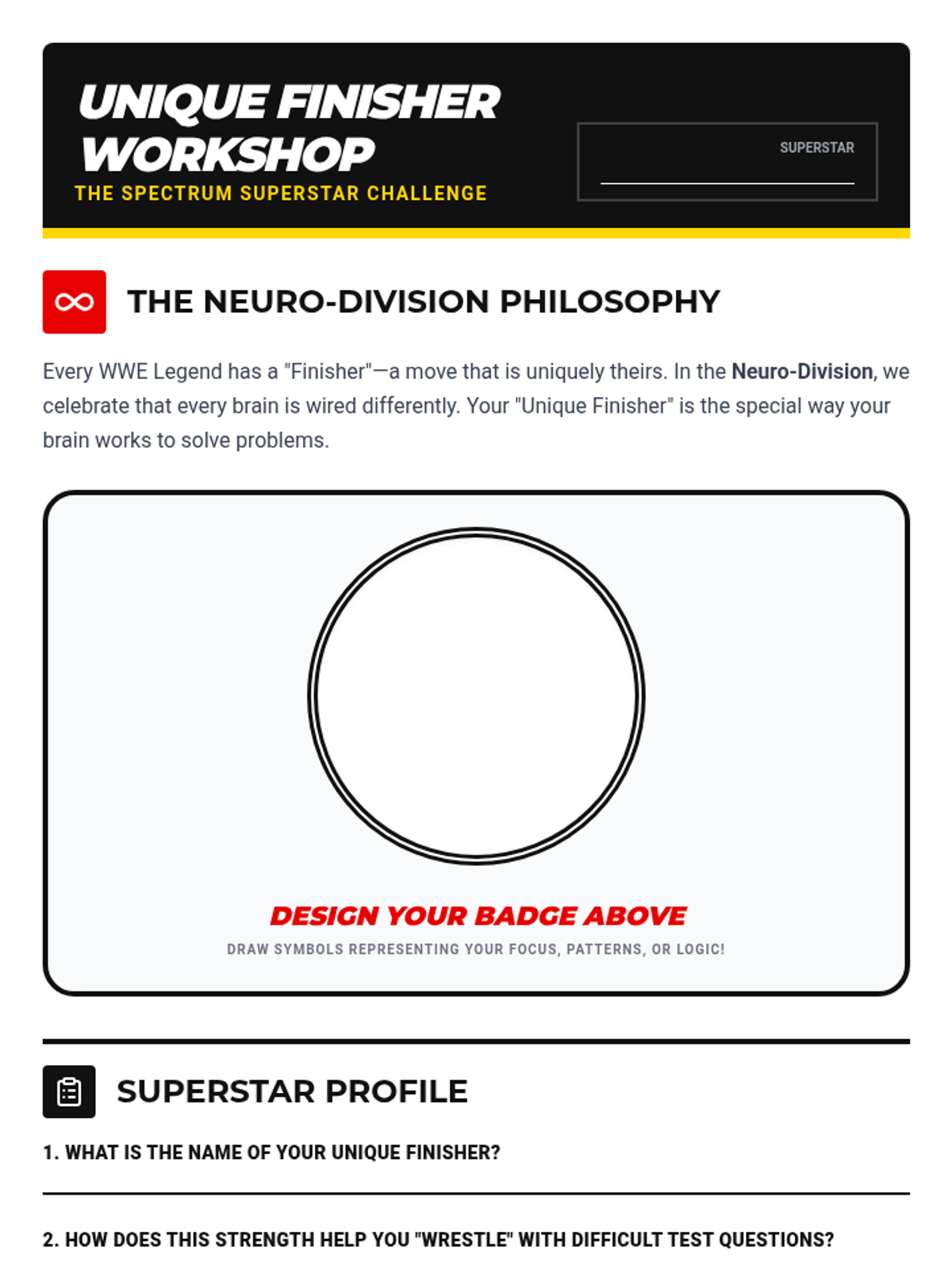
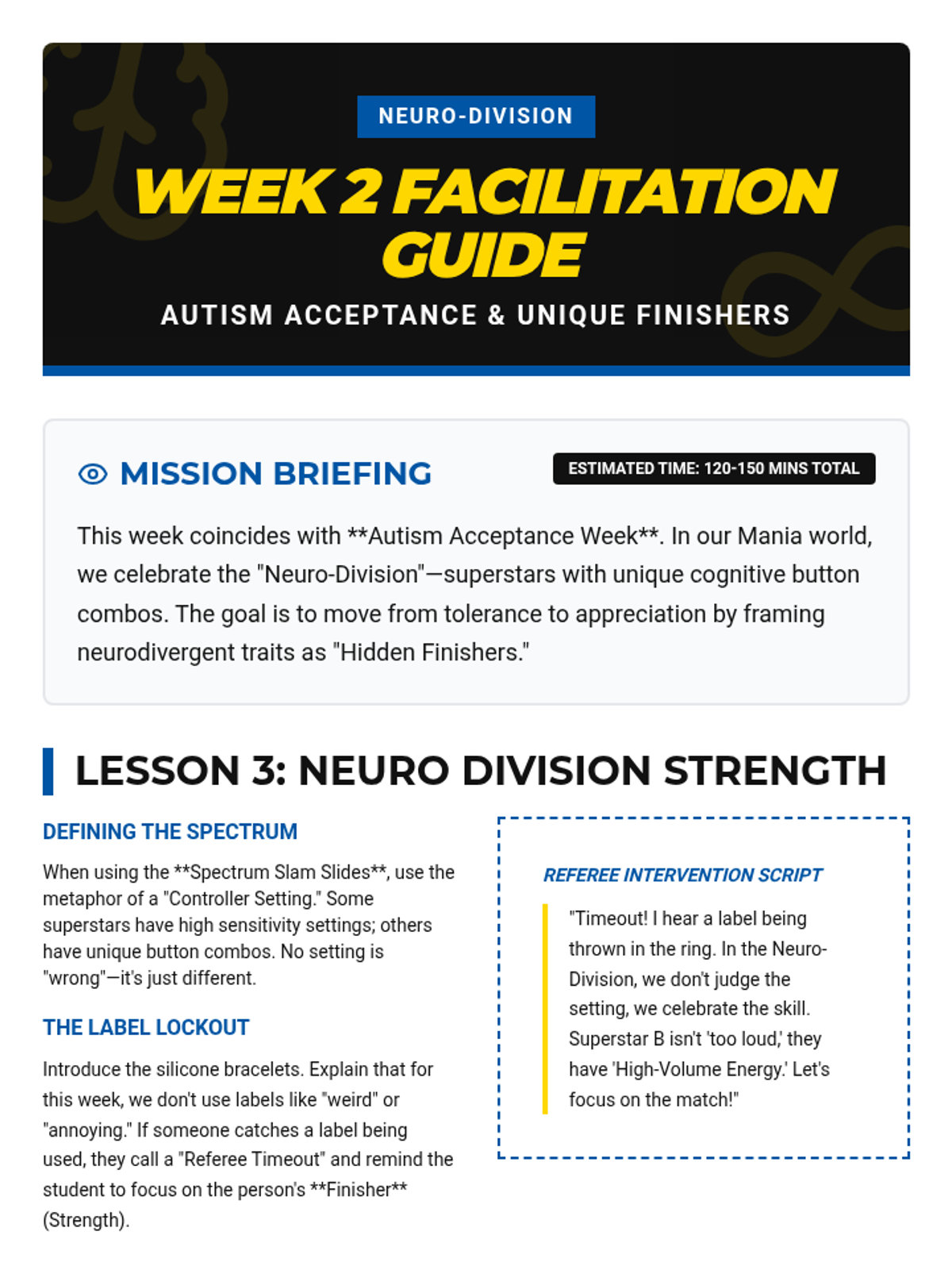
The first of two activities celebrating Autism Acceptance Week, highlighting the unique 'finishers' and strengths of neurodivergent individuals.
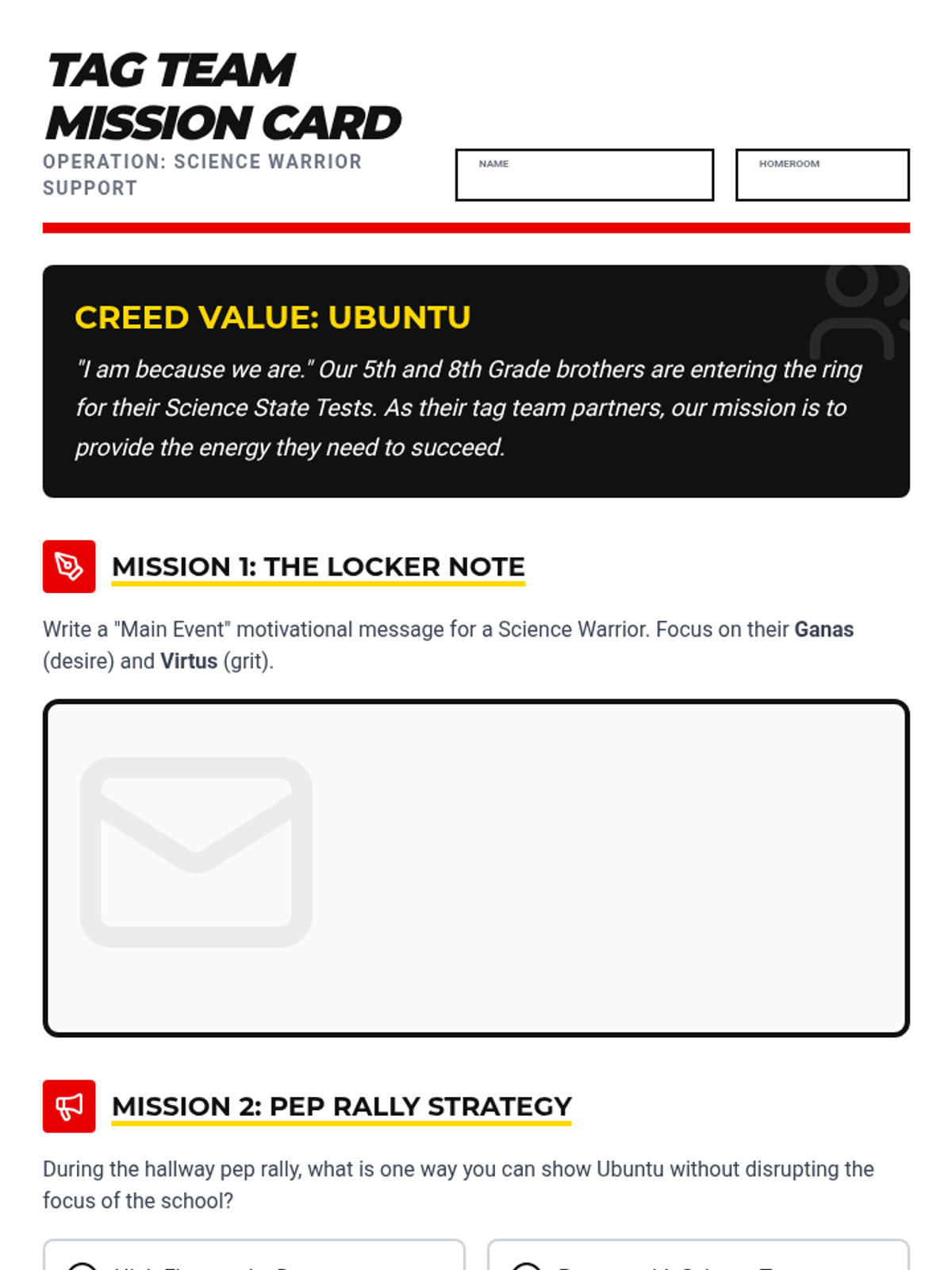
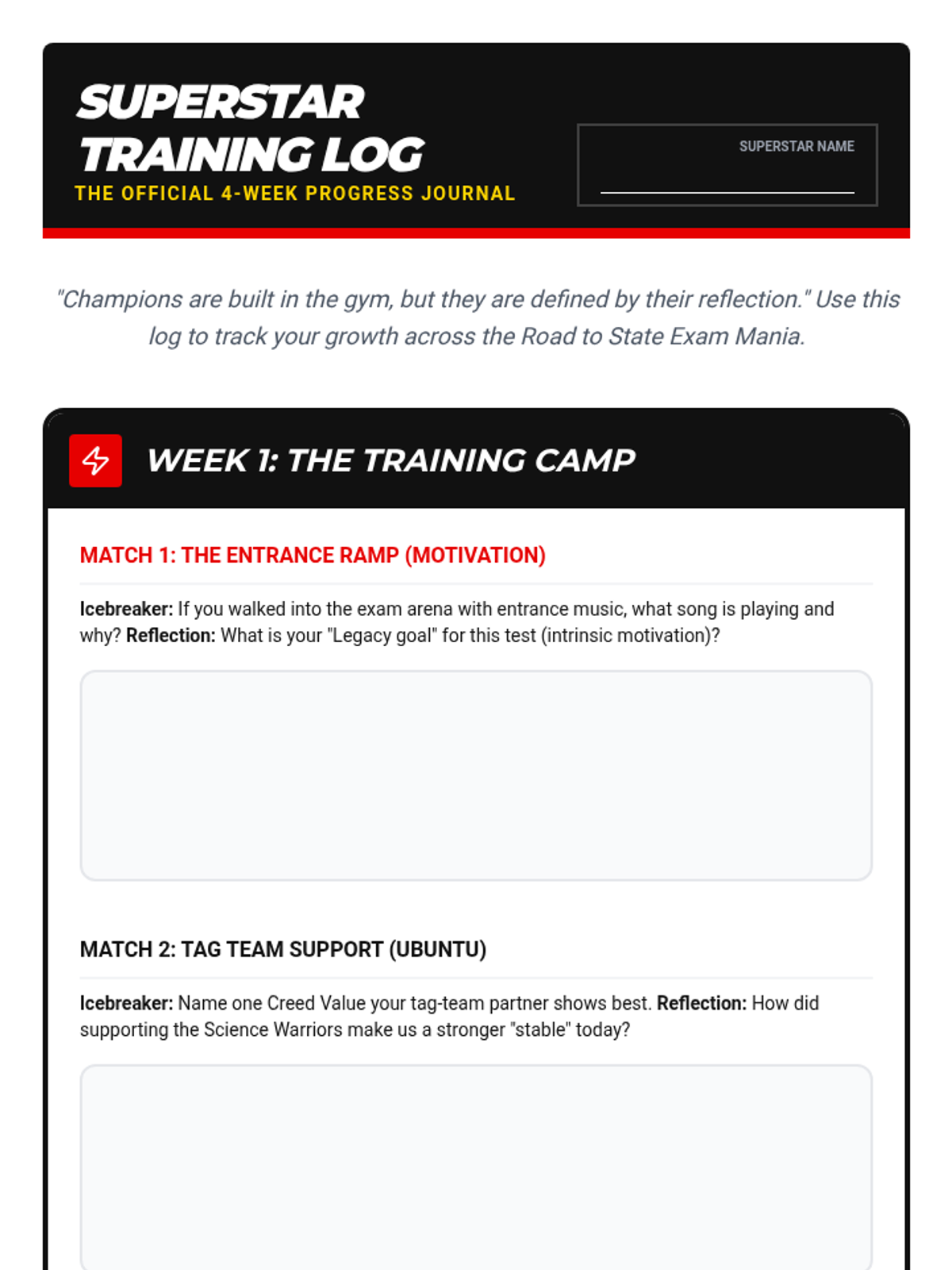
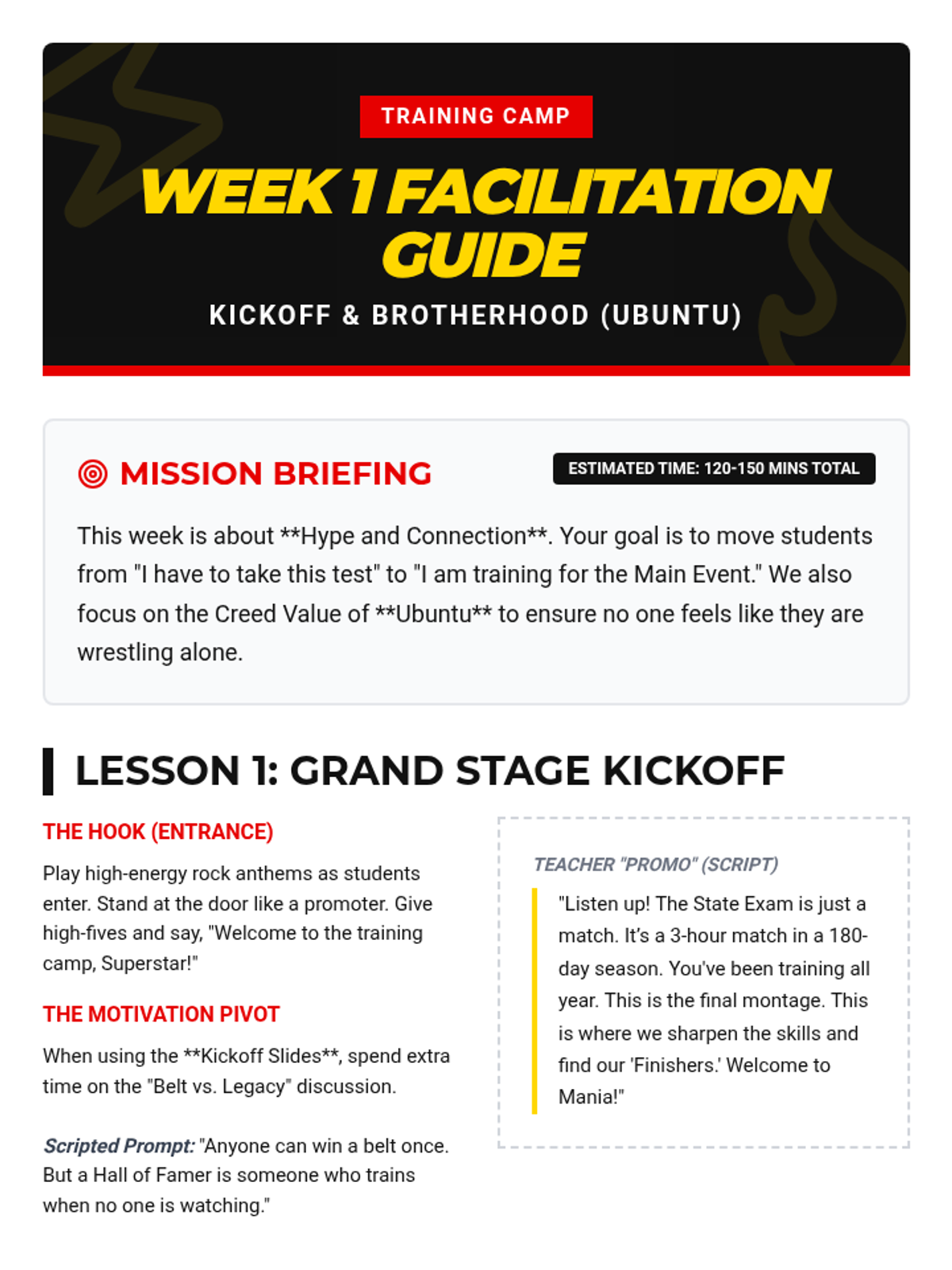
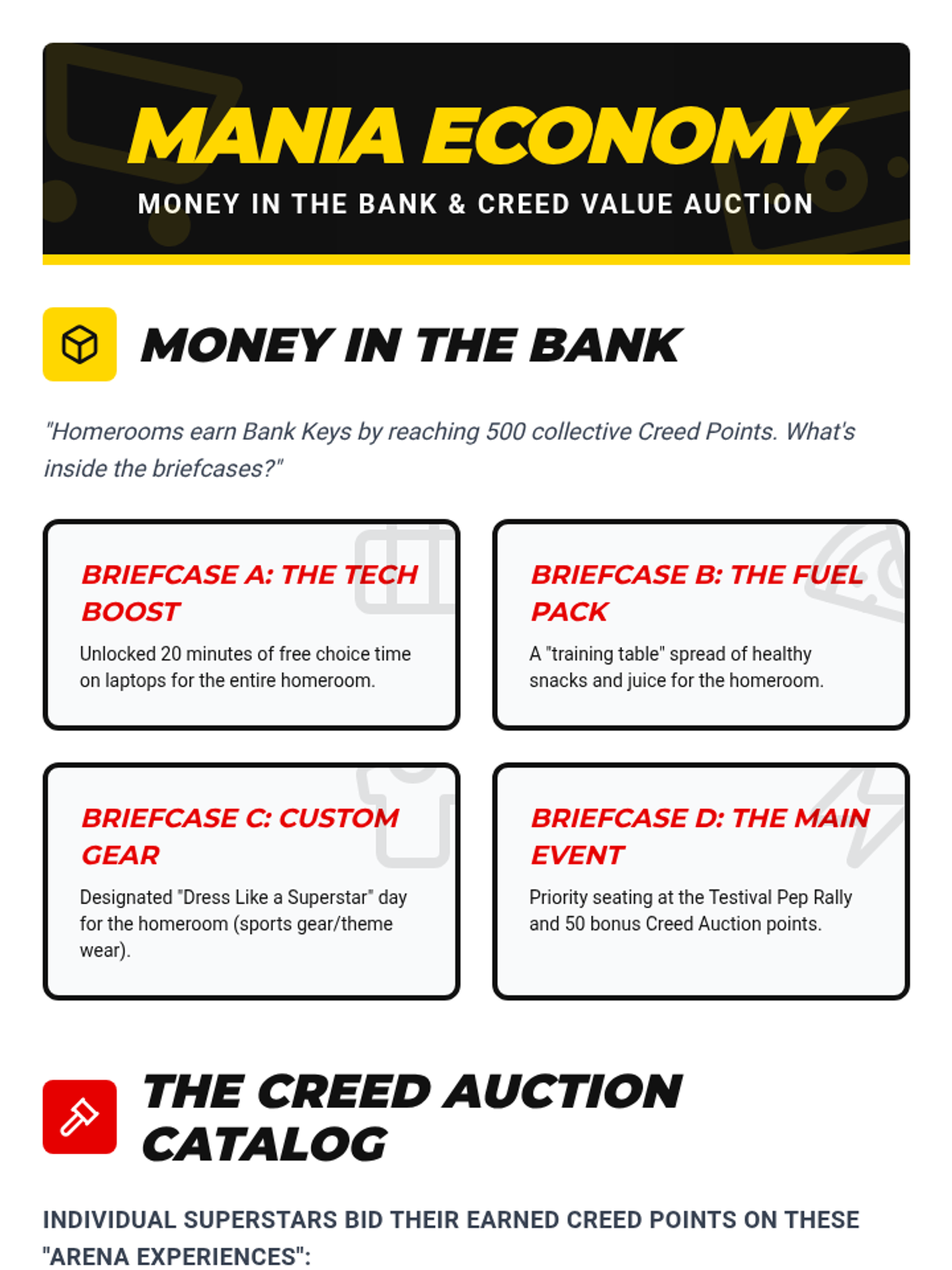
Focus on the Creed Value of Ubuntu and brotherhood, preparing students to support their peers during science test pep rallies.
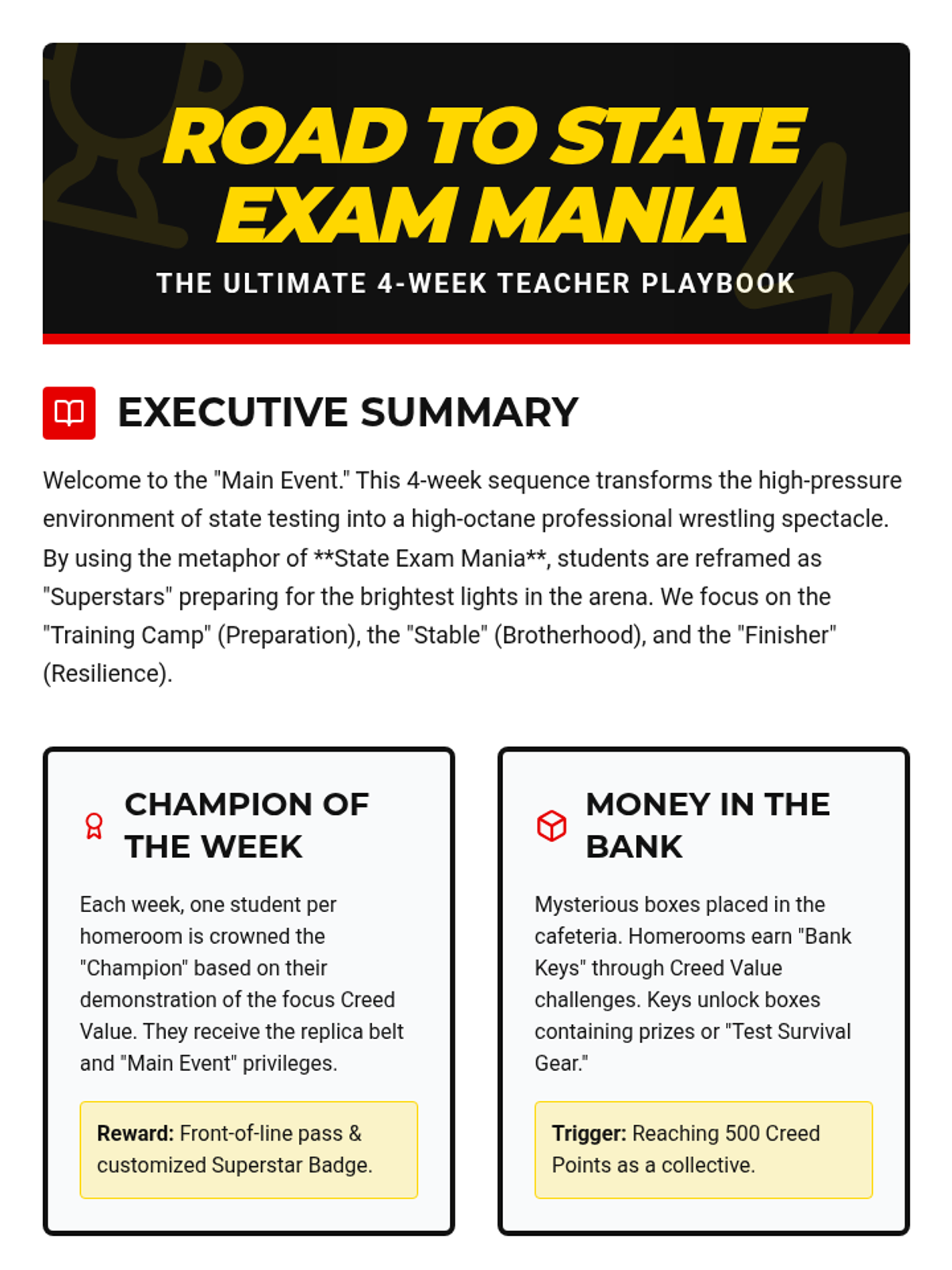
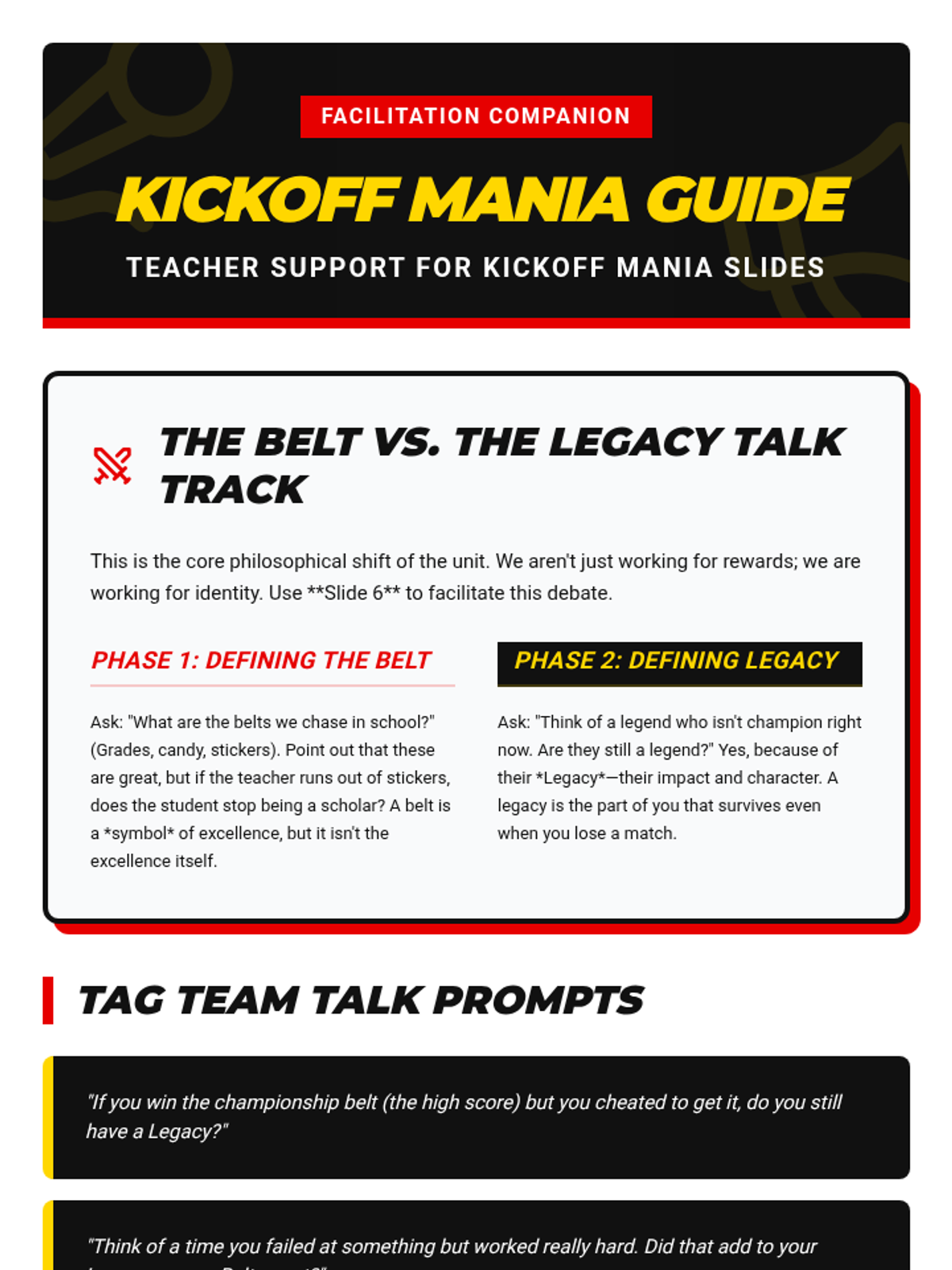
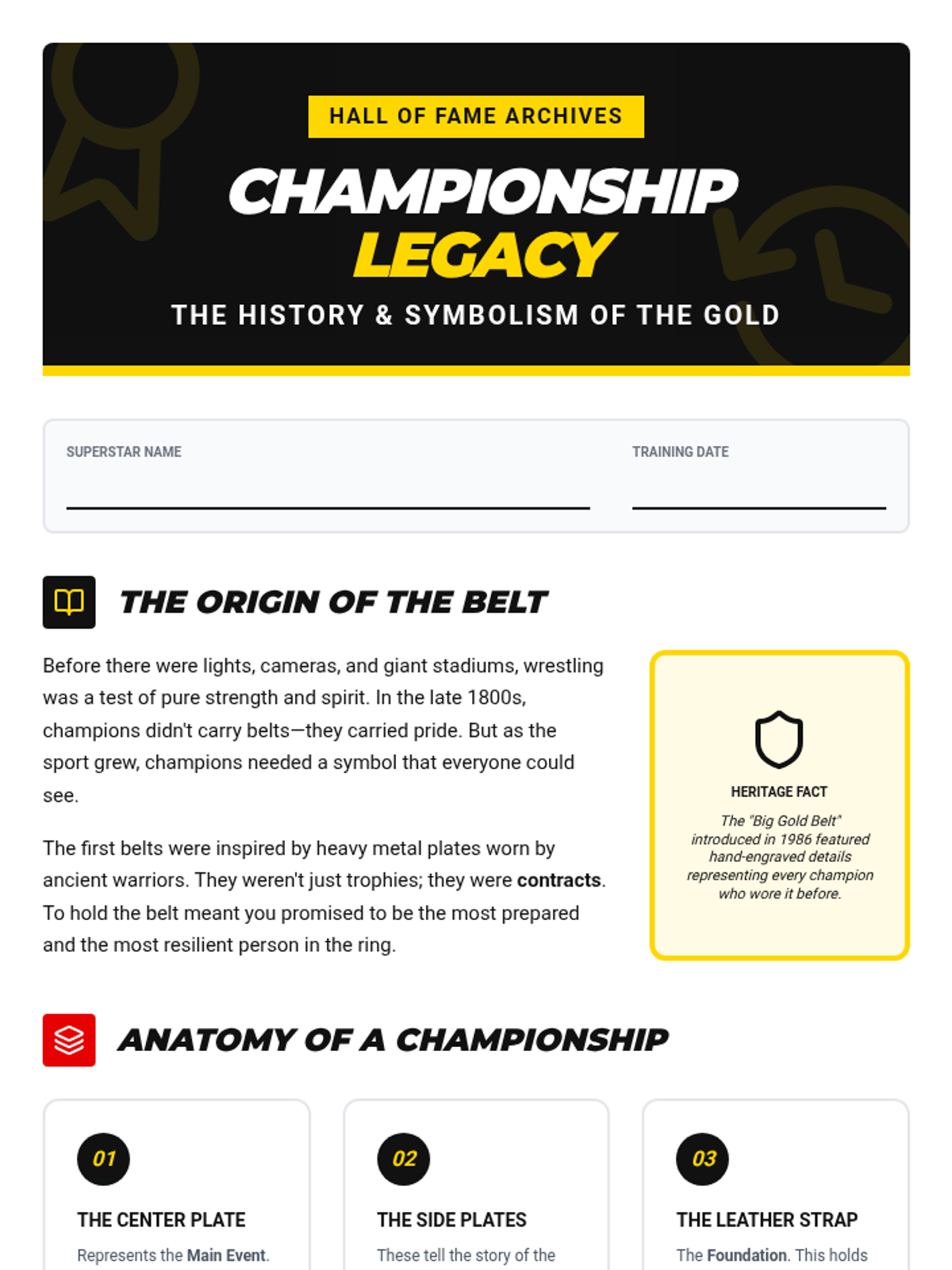
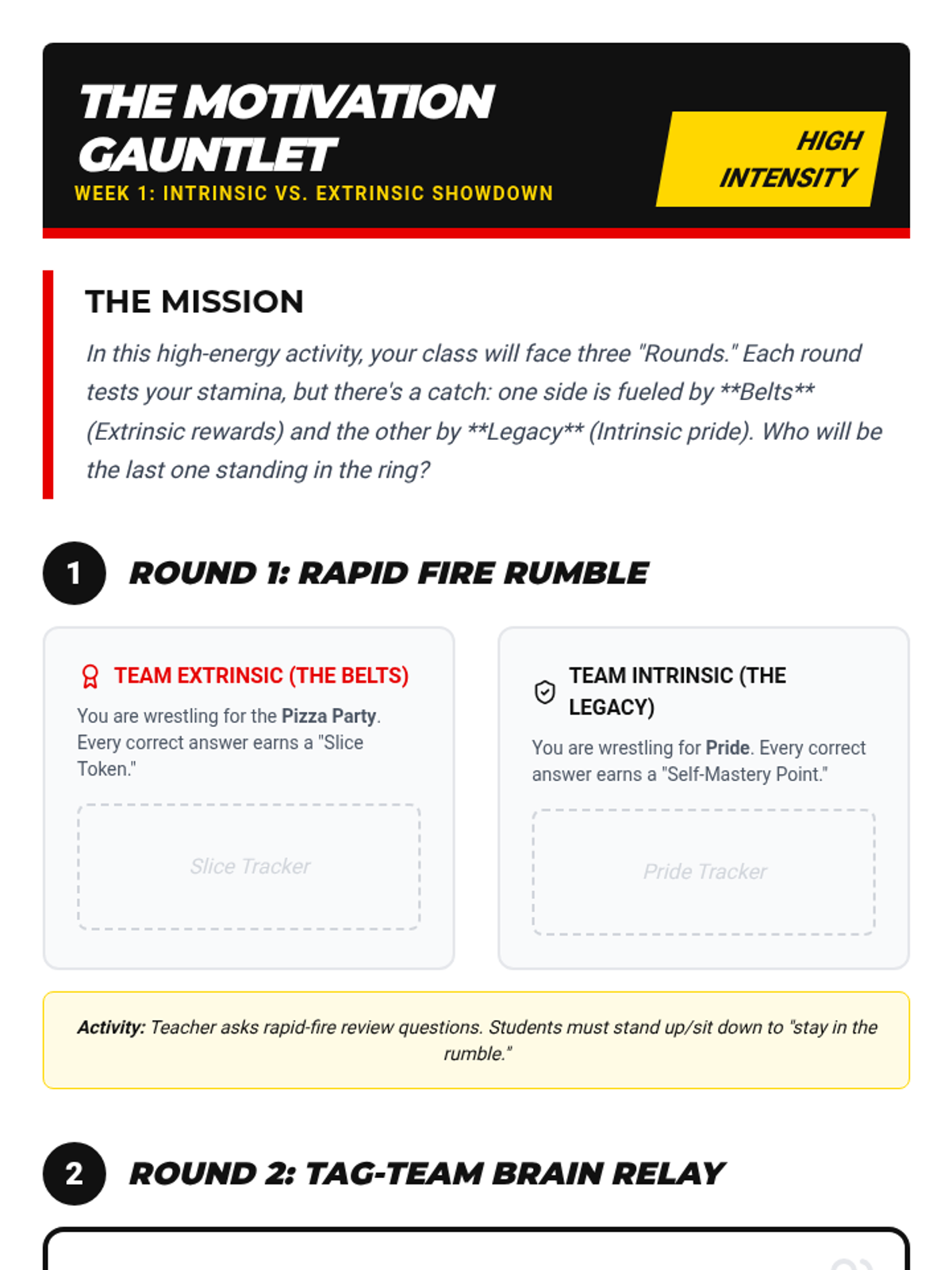
Introduce the 'State Exam Mania' theme, focusing on the difference between intrinsic and extrinsic motivation using the metaphor of championship belts vs. personal legacy.
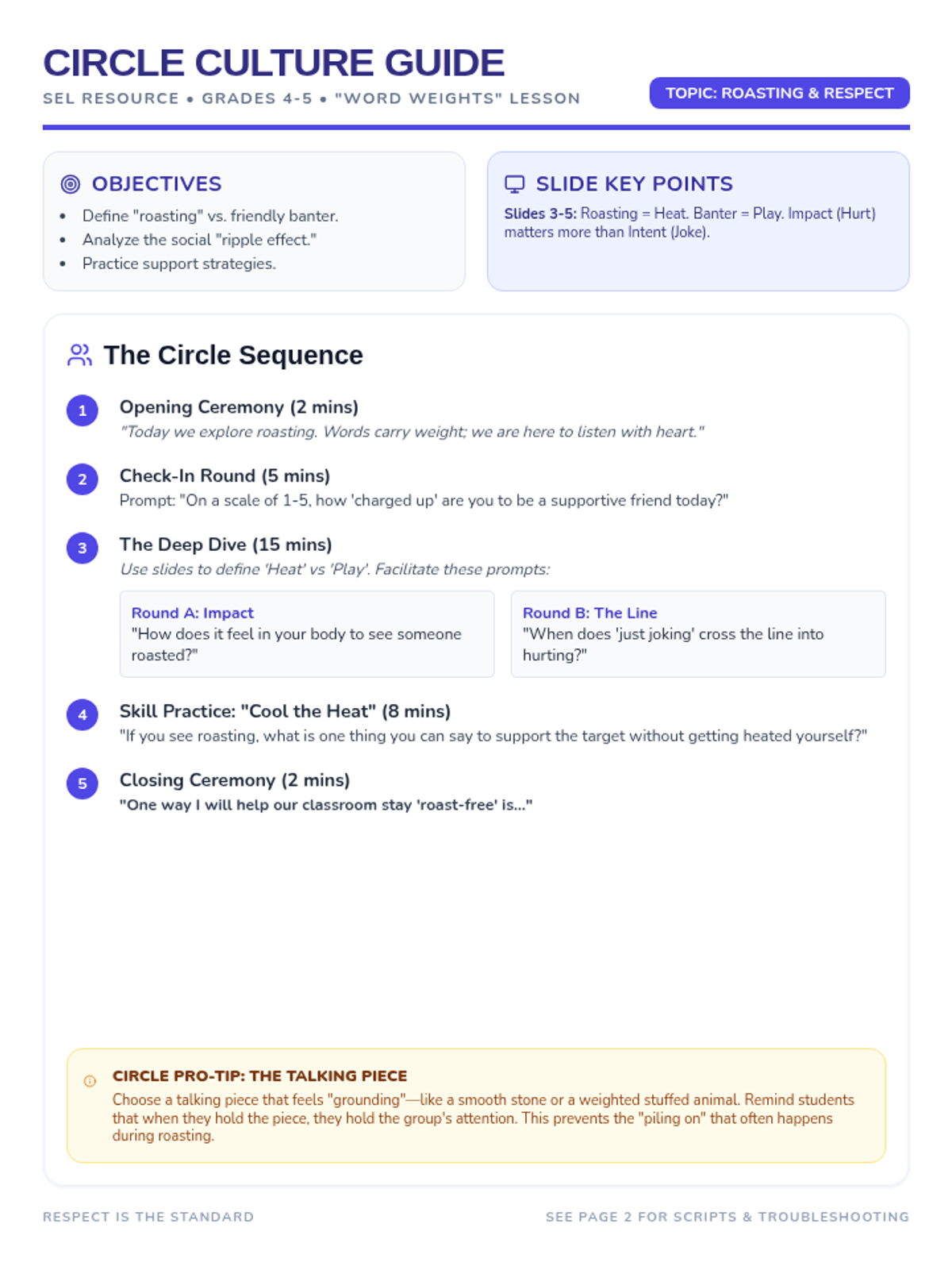
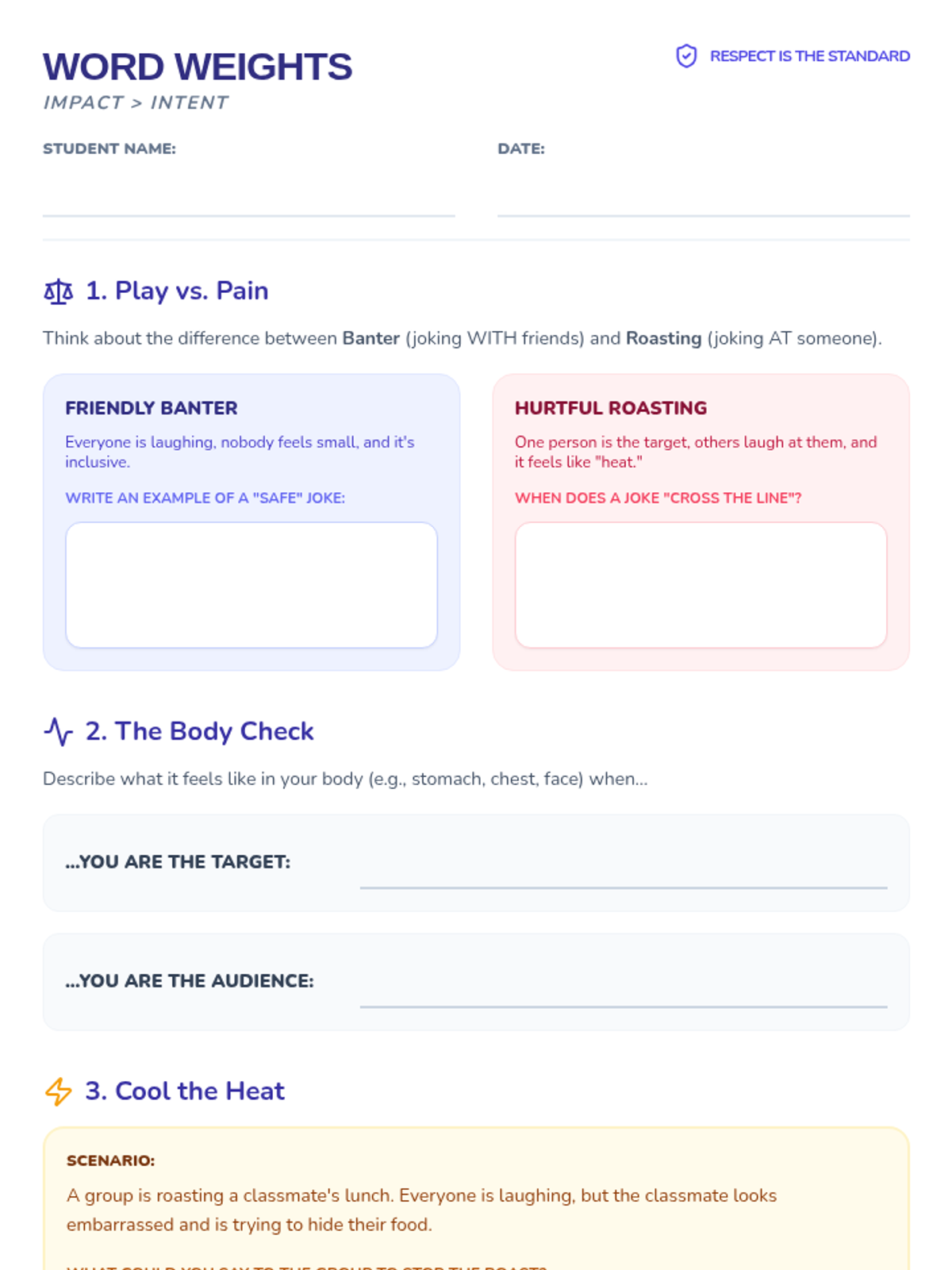
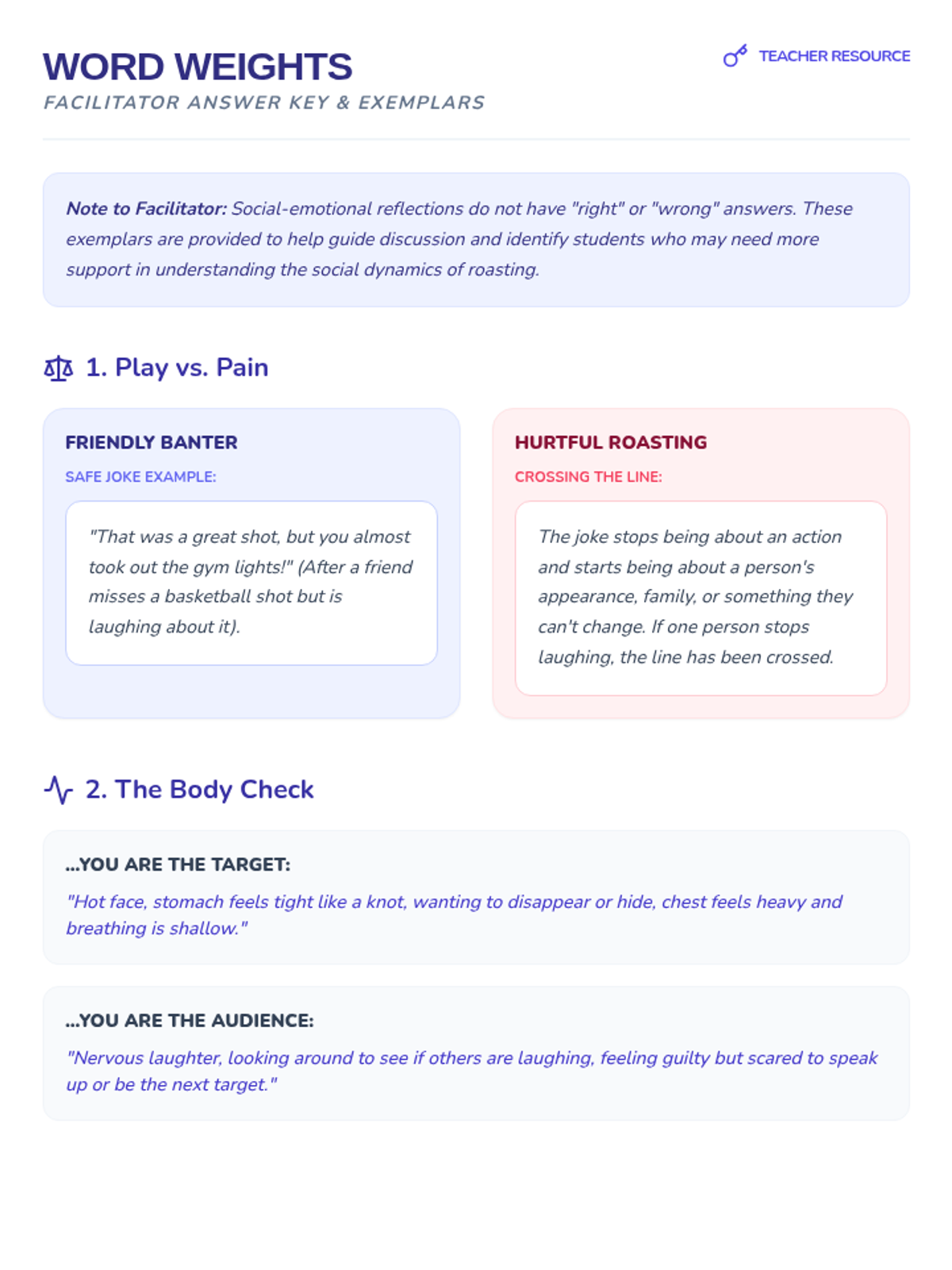
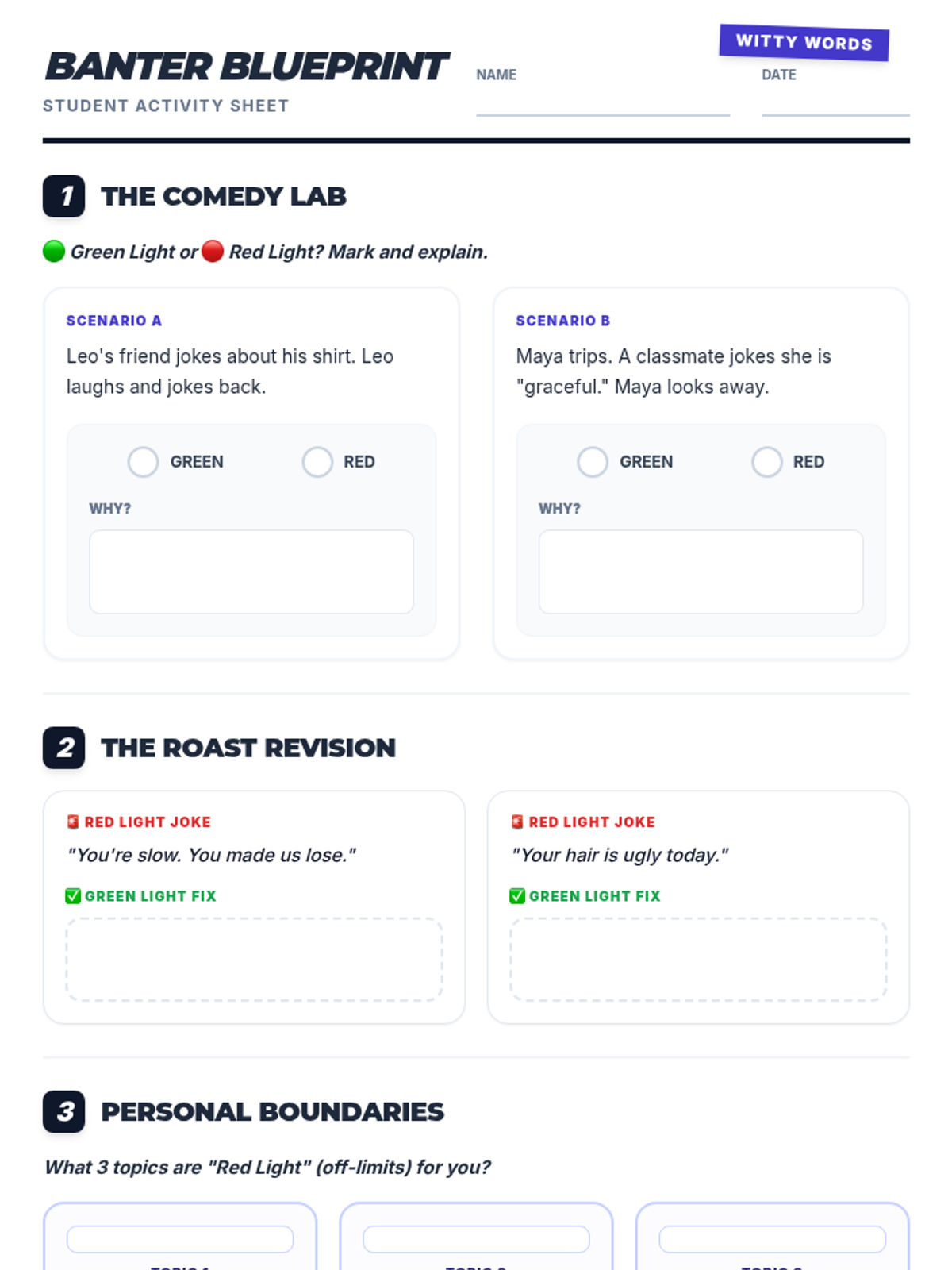
A social-emotional learning lesson designed for 4th and 5th graders to explore the impact of 'roasting,' distinguish it from playful banter, and build a culture of respect.
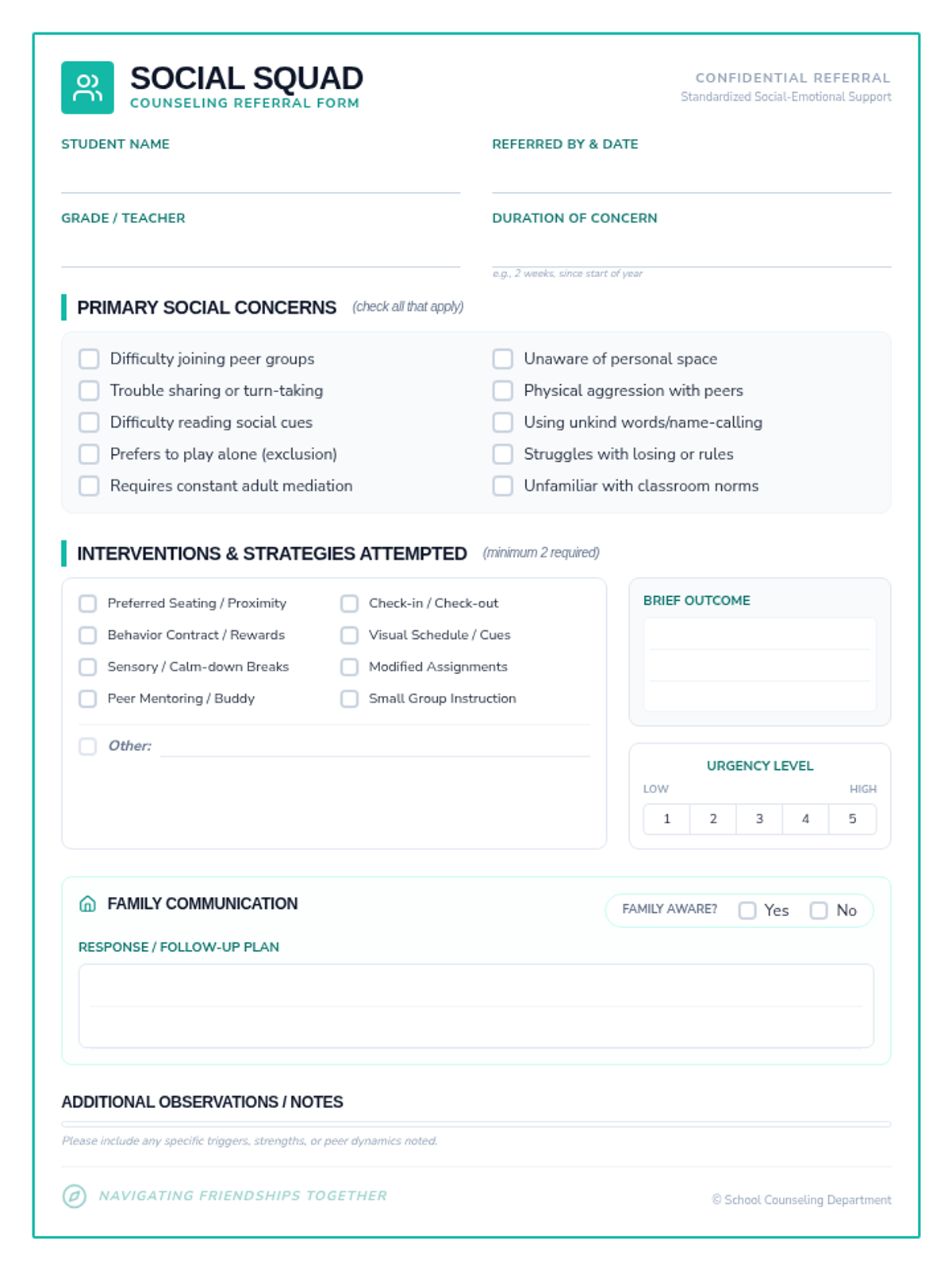
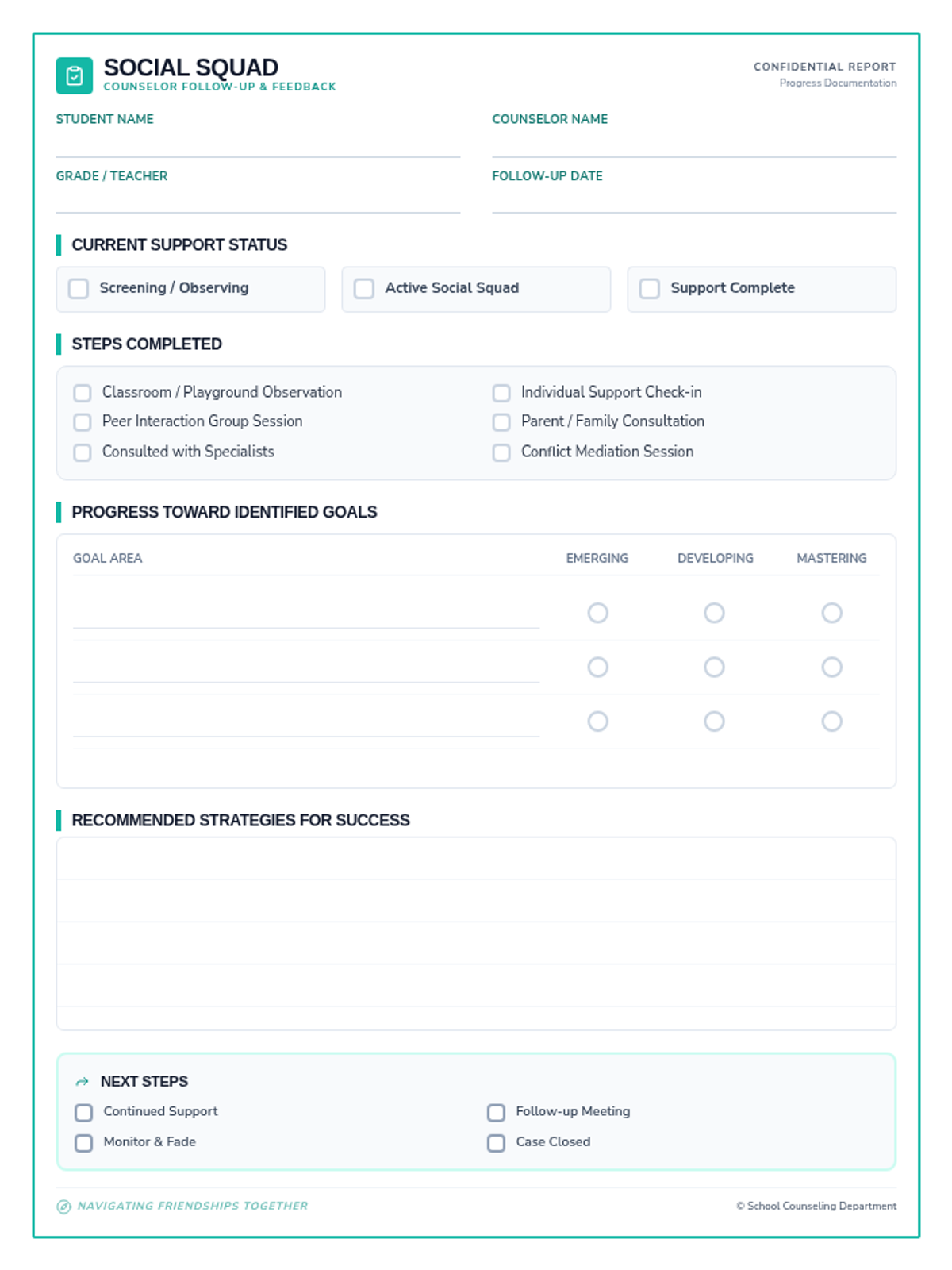
A suite of professional school counseling forms for managing student referrals, tracking progress, and providing feedback to teachers and families.
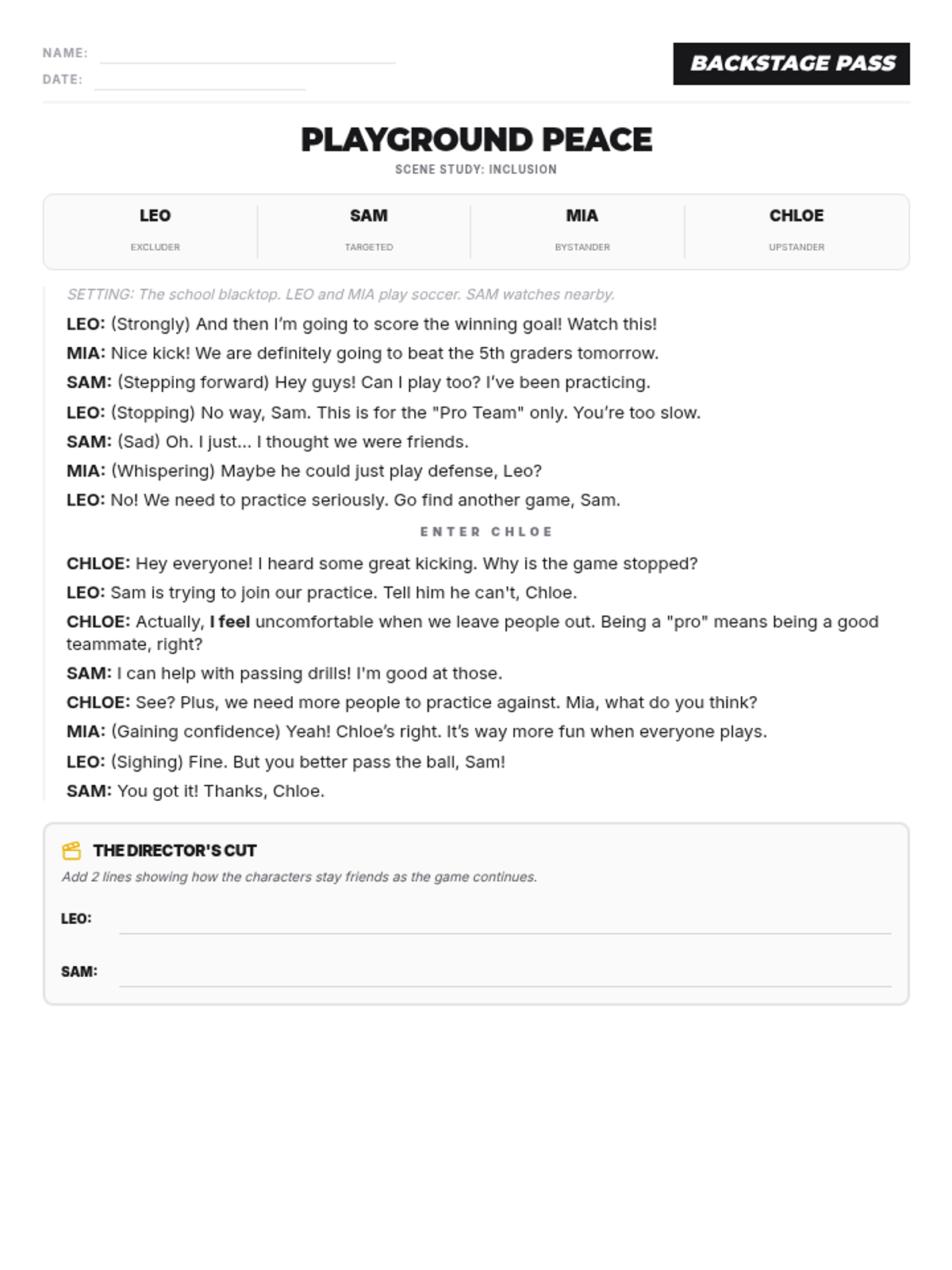
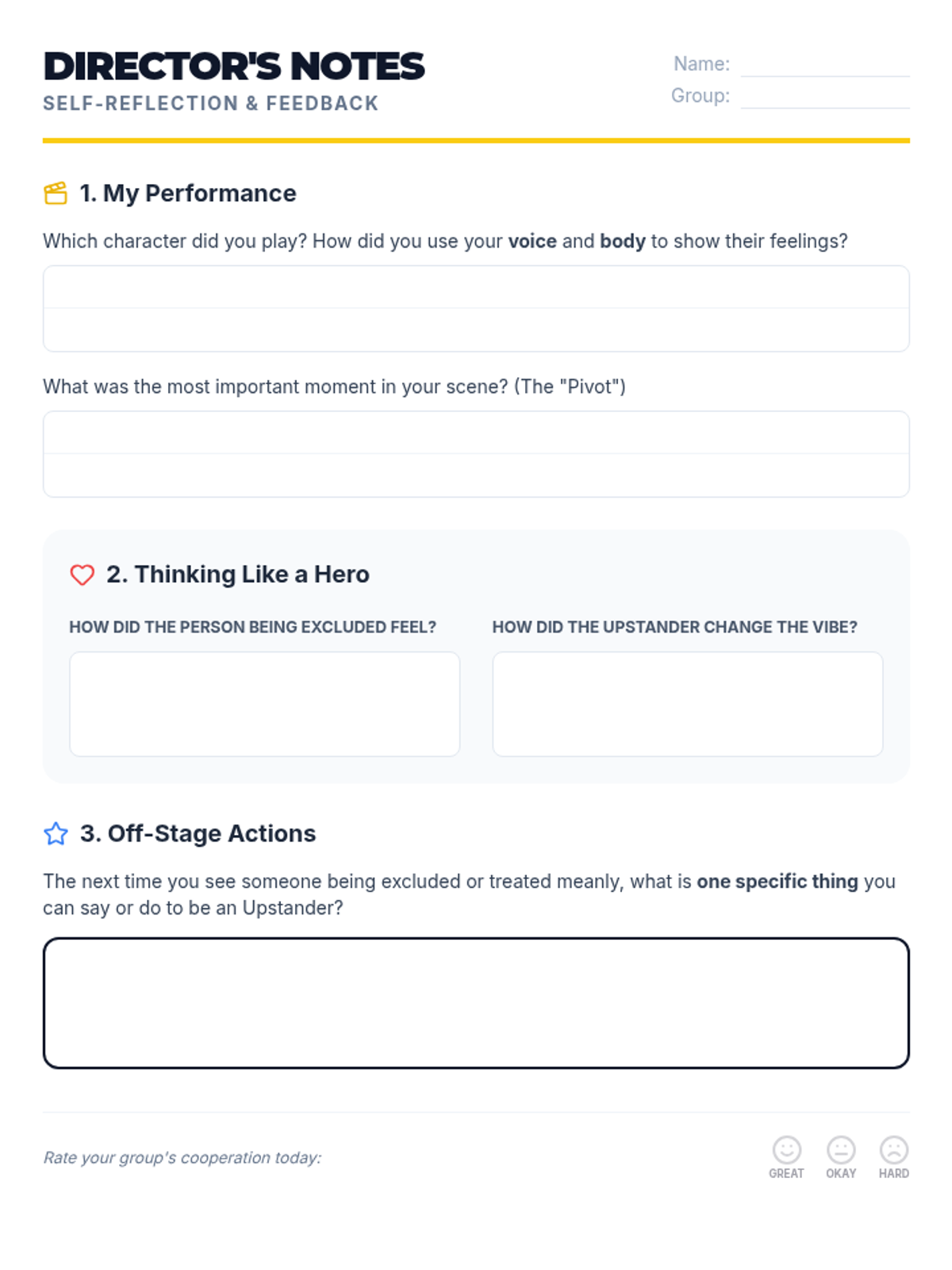
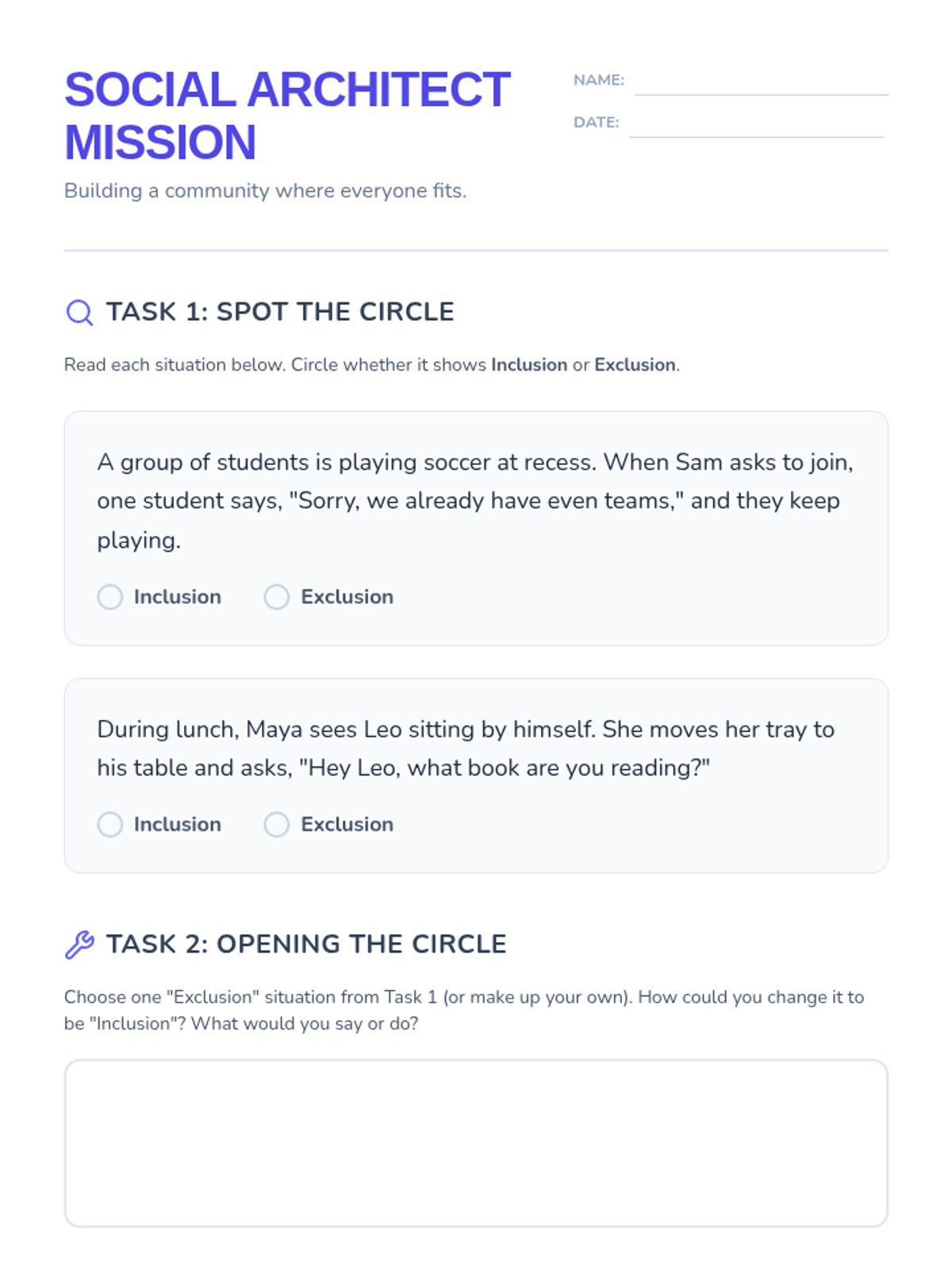
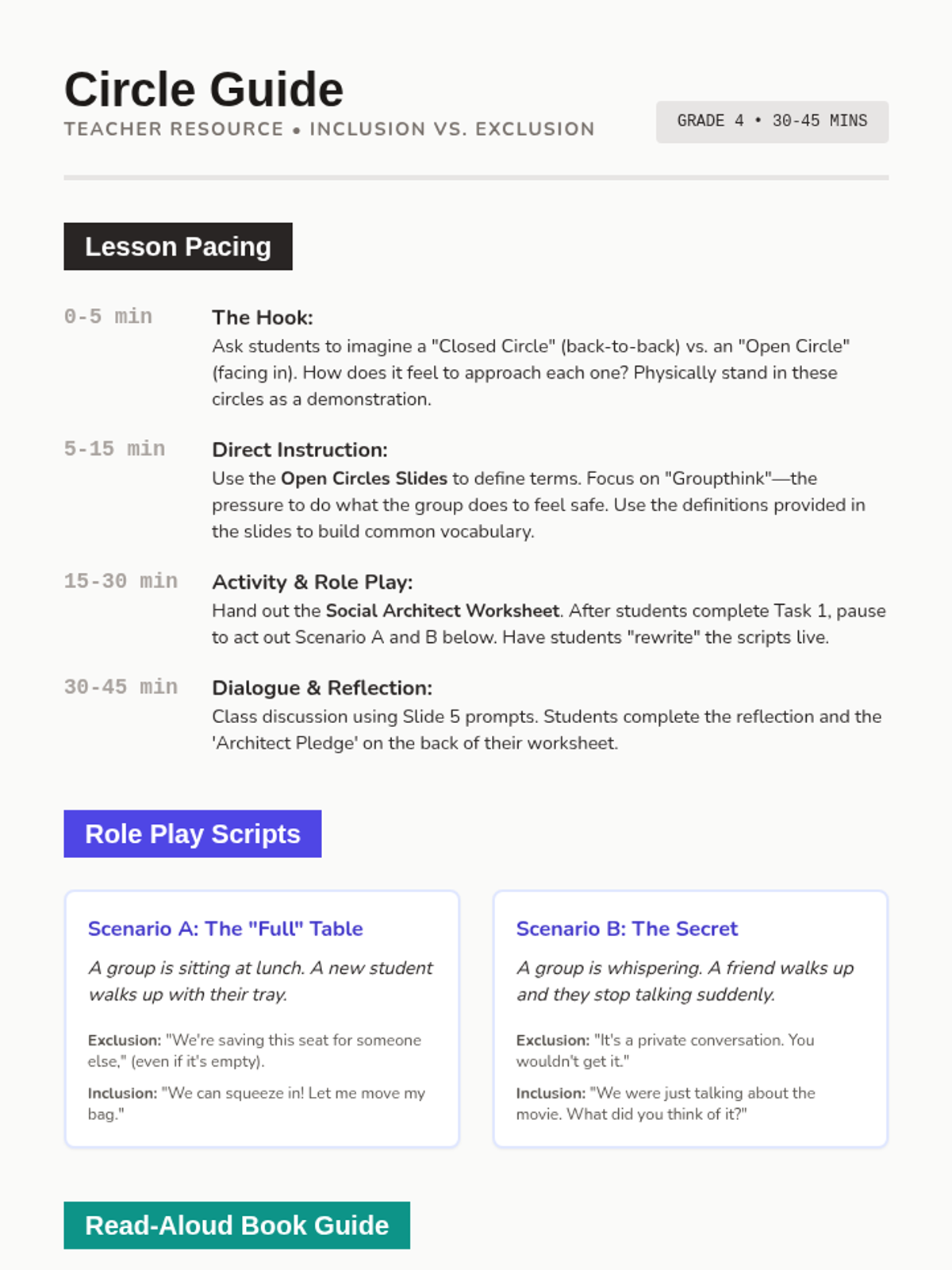
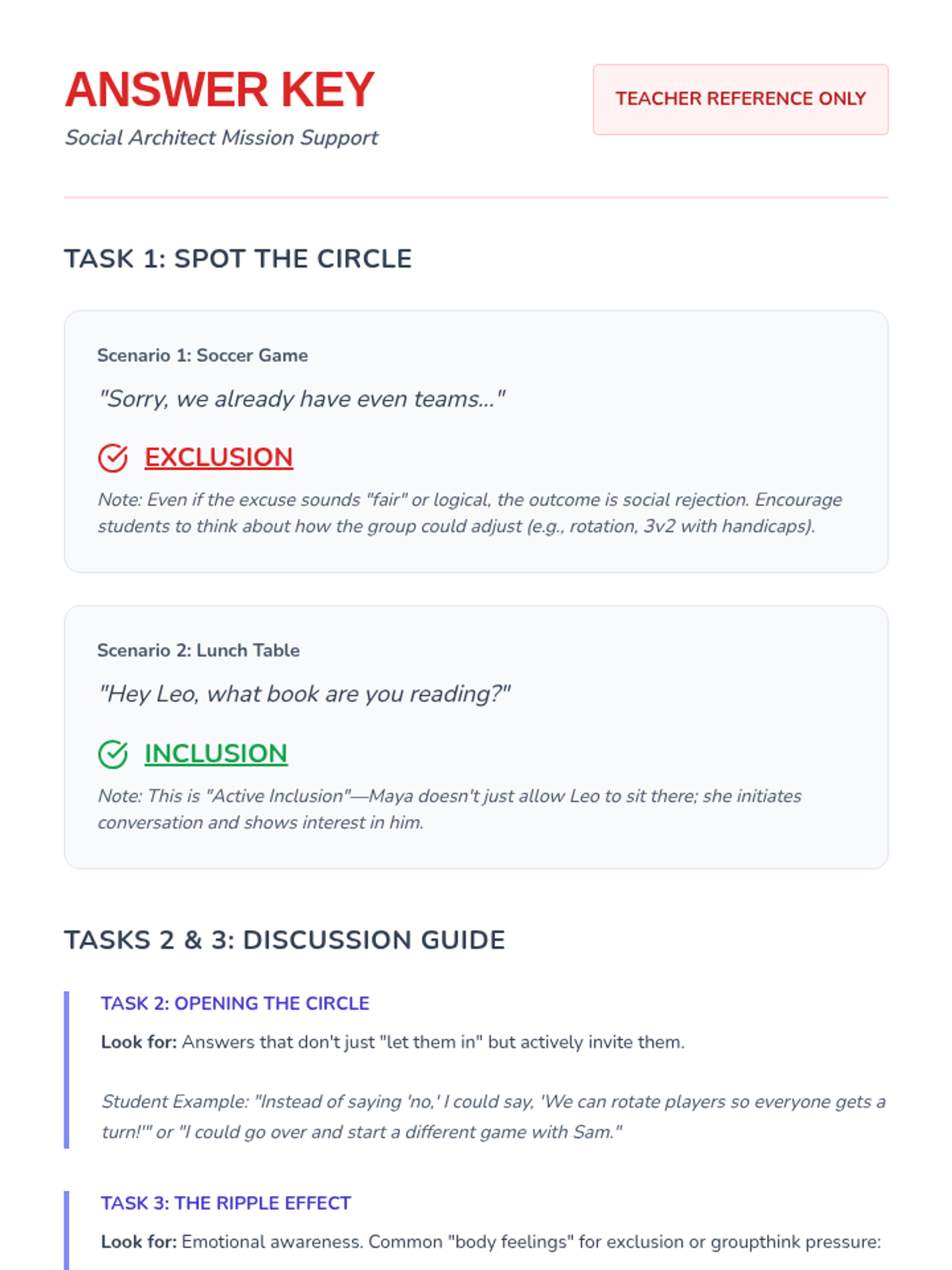
A social-emotional learning lesson for 4th graders exploring the definitions and impacts of inclusion and exclusion, focusing on empathy and breaking down 'groupthink' dynamics.
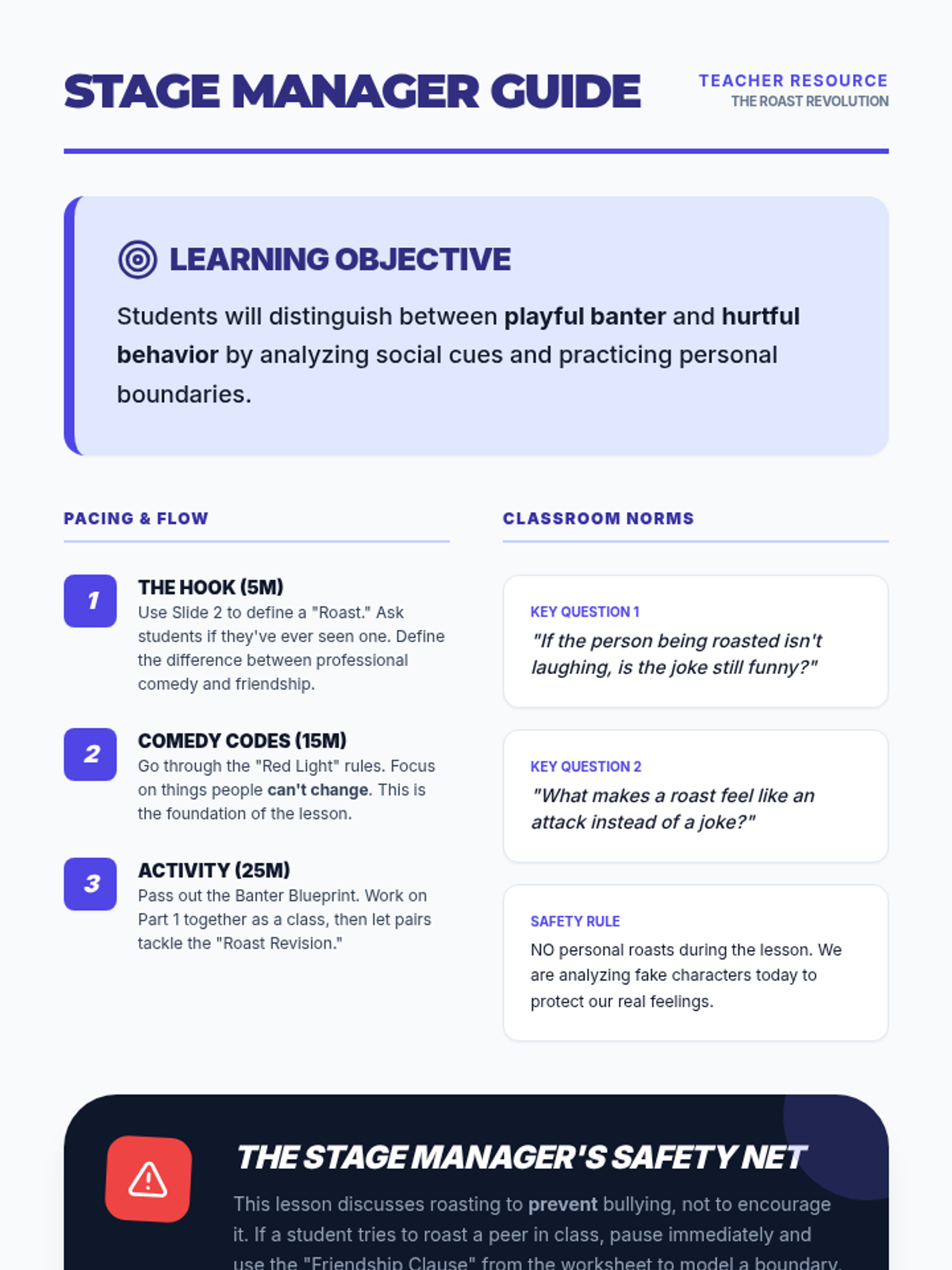
A social-emotional learning lesson for 4th and 5th graders that explores the boundary between playful banter and hurtful behavior. Students learn to identify 'friendly fire' humor and practice setting personal boundaries through the lens of a comedy workshop.
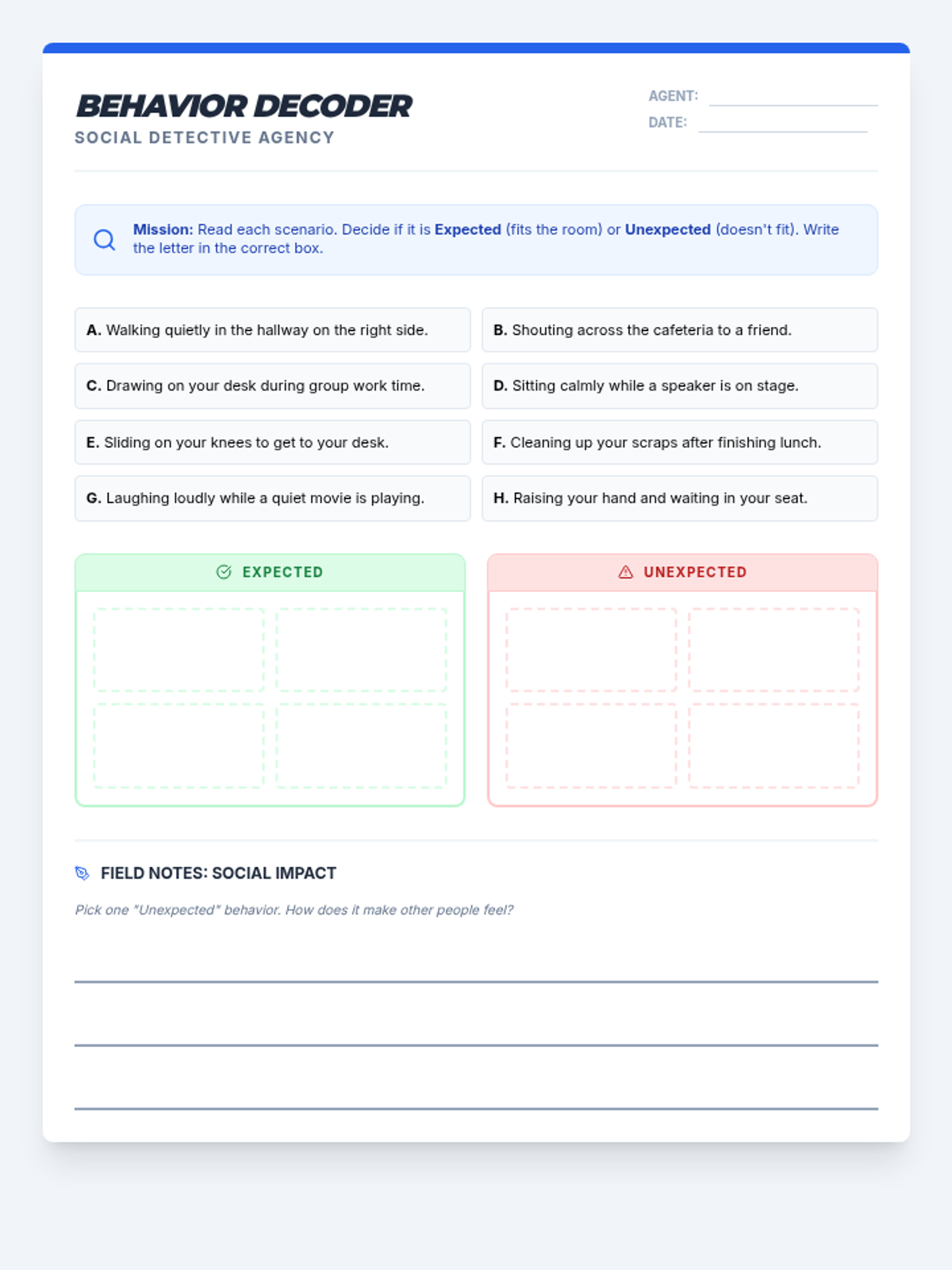
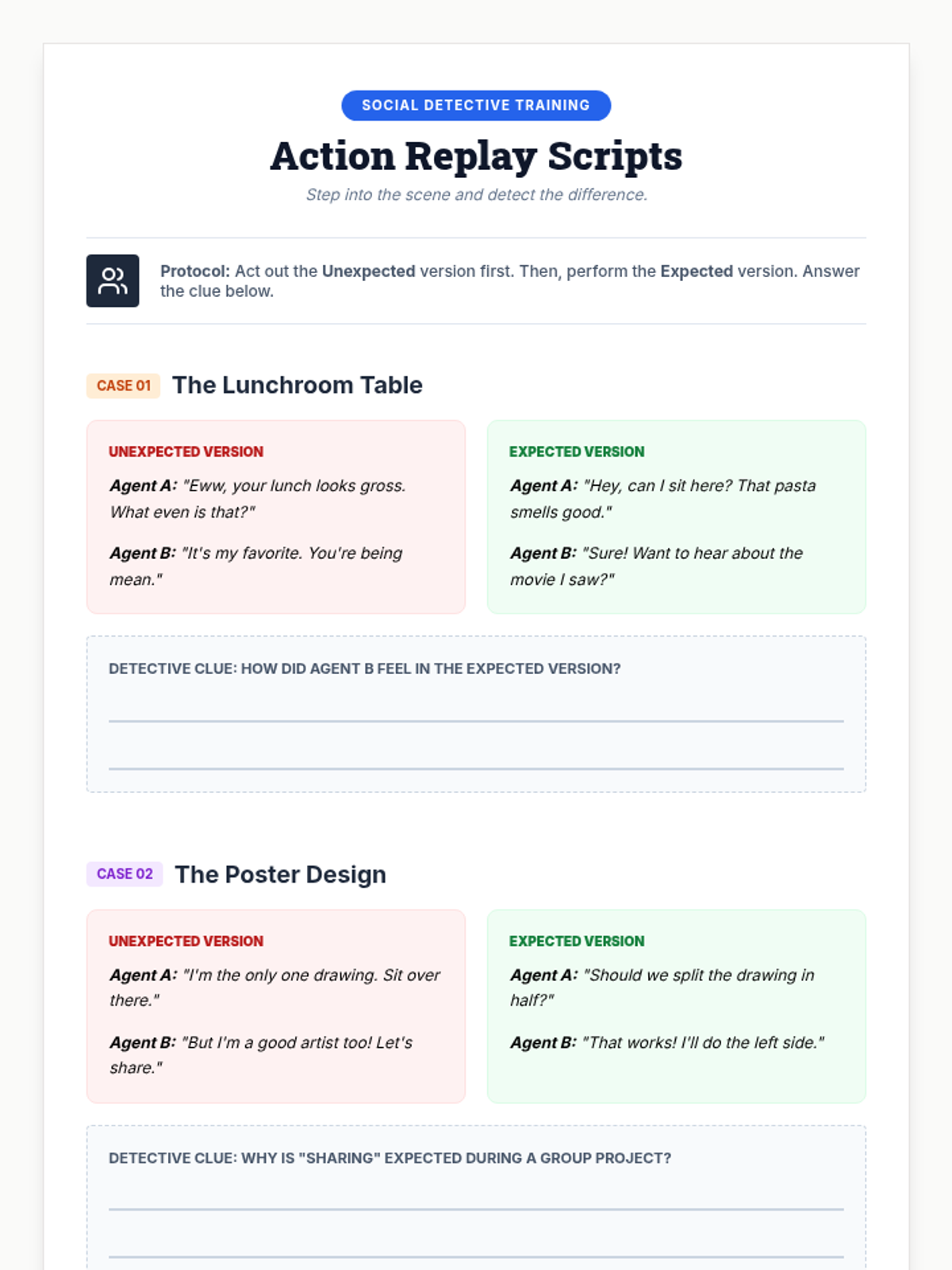
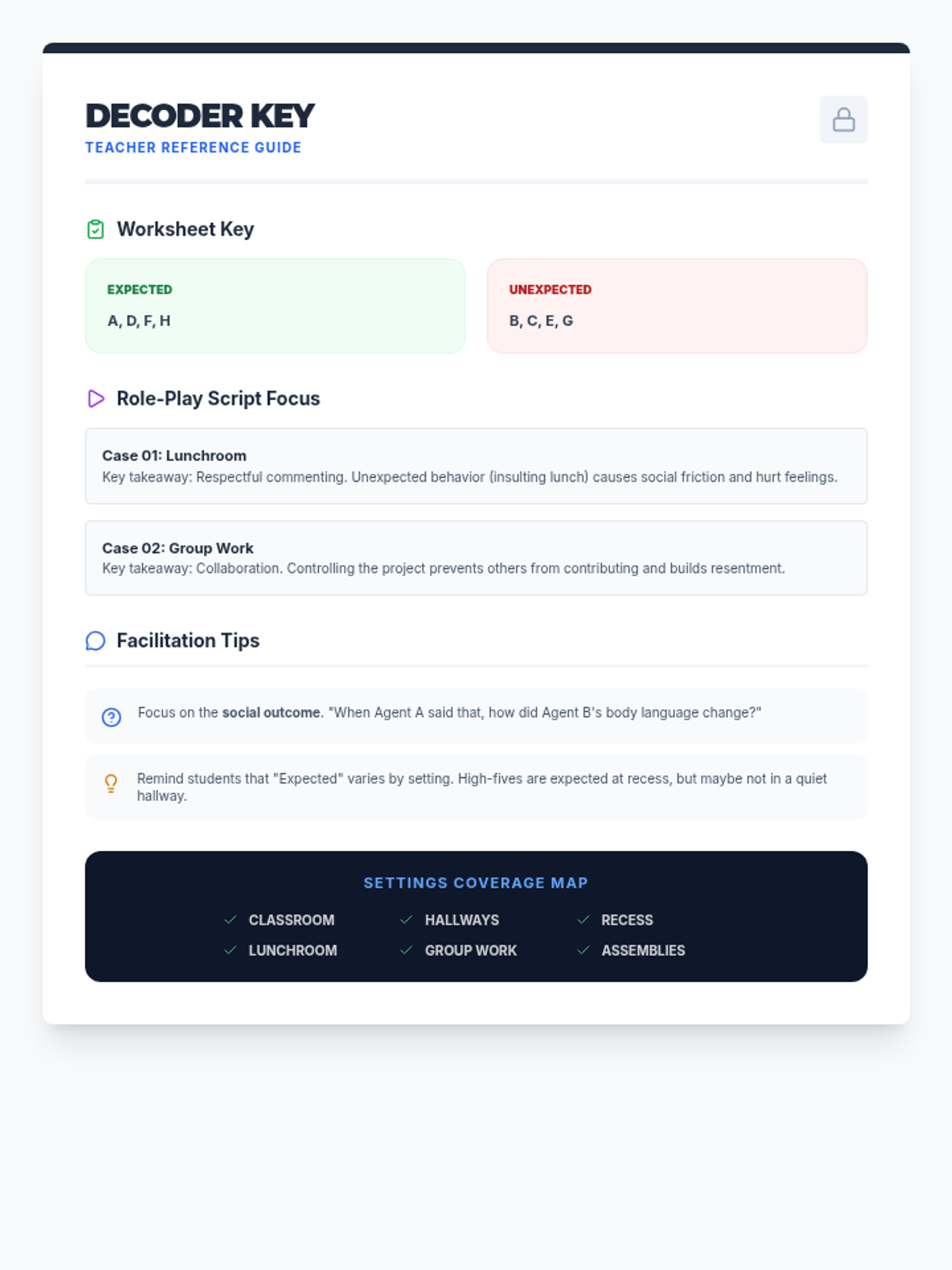
A social-emotional learning lesson where students become 'Social Detectives' to identify expected and unexpected behaviors across various school settings including the classroom, lunchroom, and assemblies.
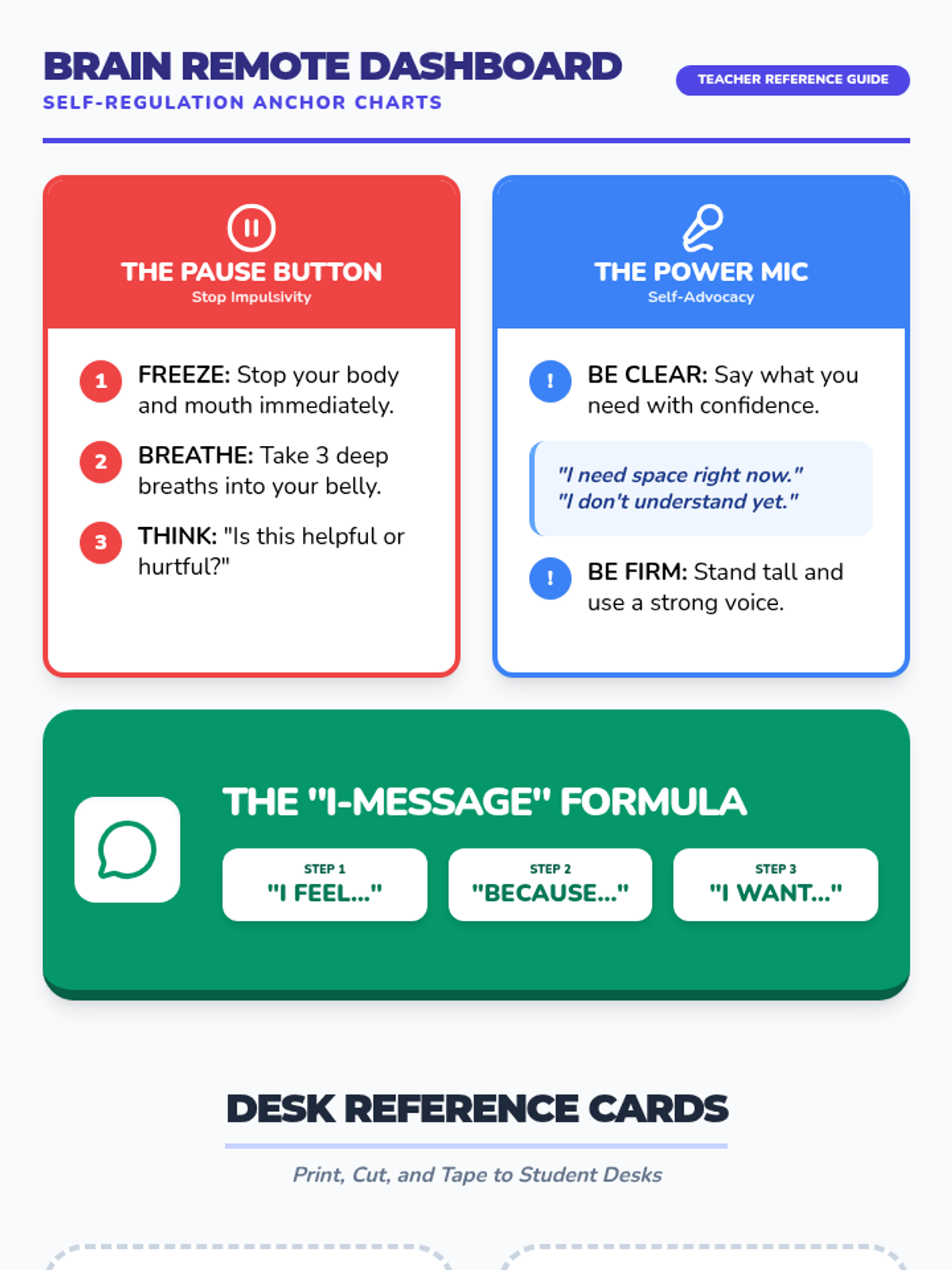
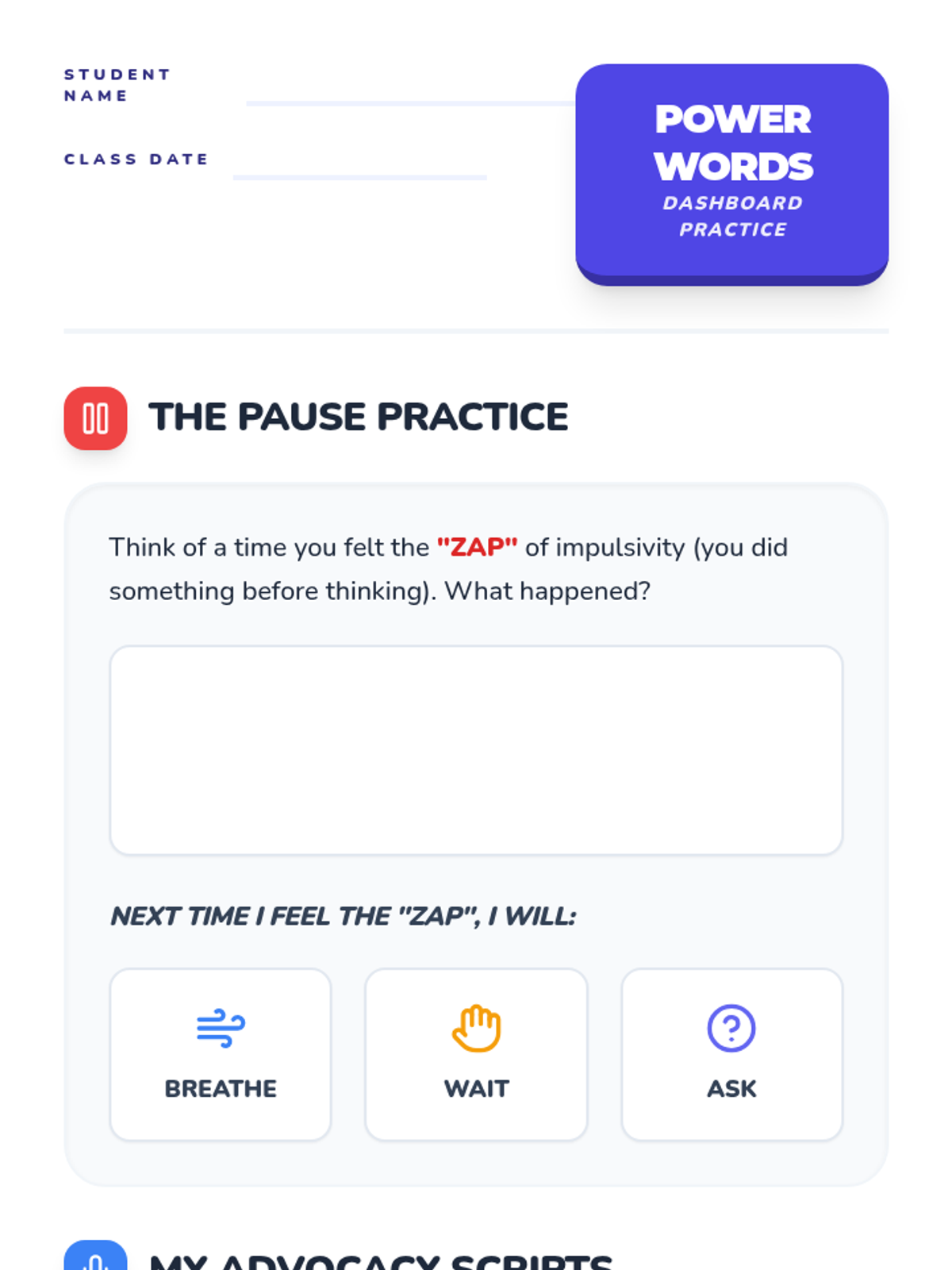
A comprehensive lesson exploring the 'Brain Remote' to manage impulsive urges and use 'Power Words' for self-advocacy and conflict resolution.
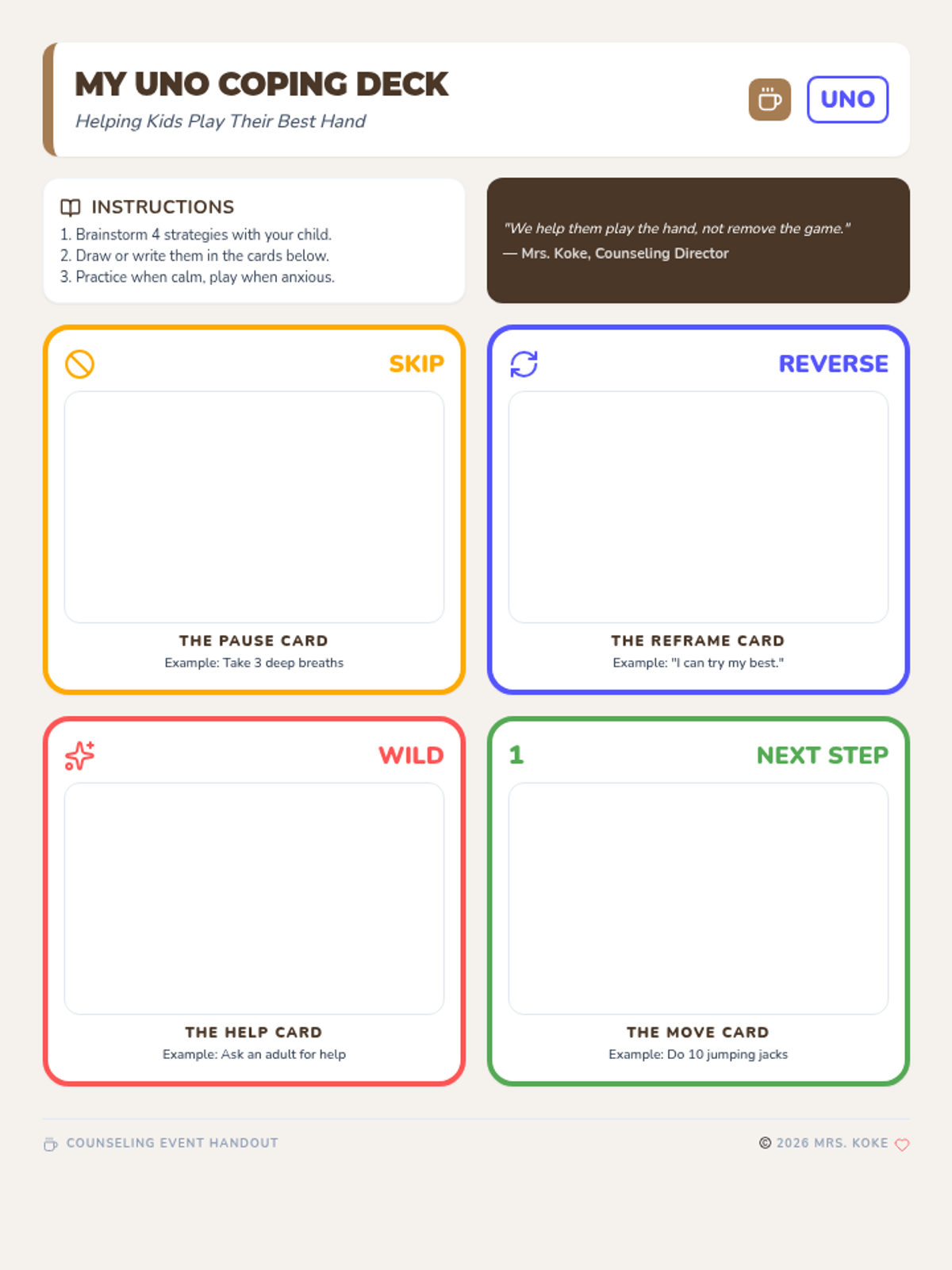
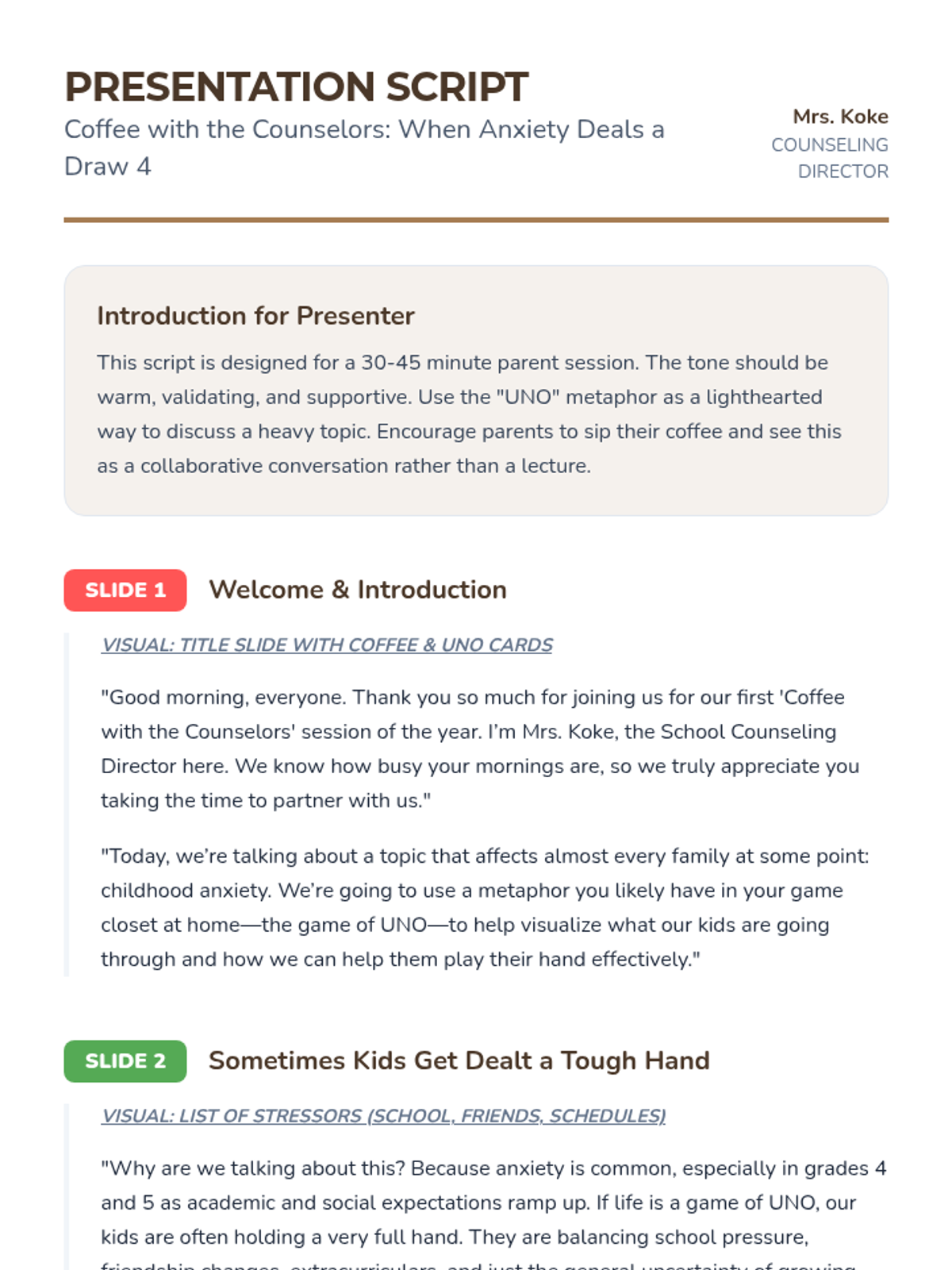
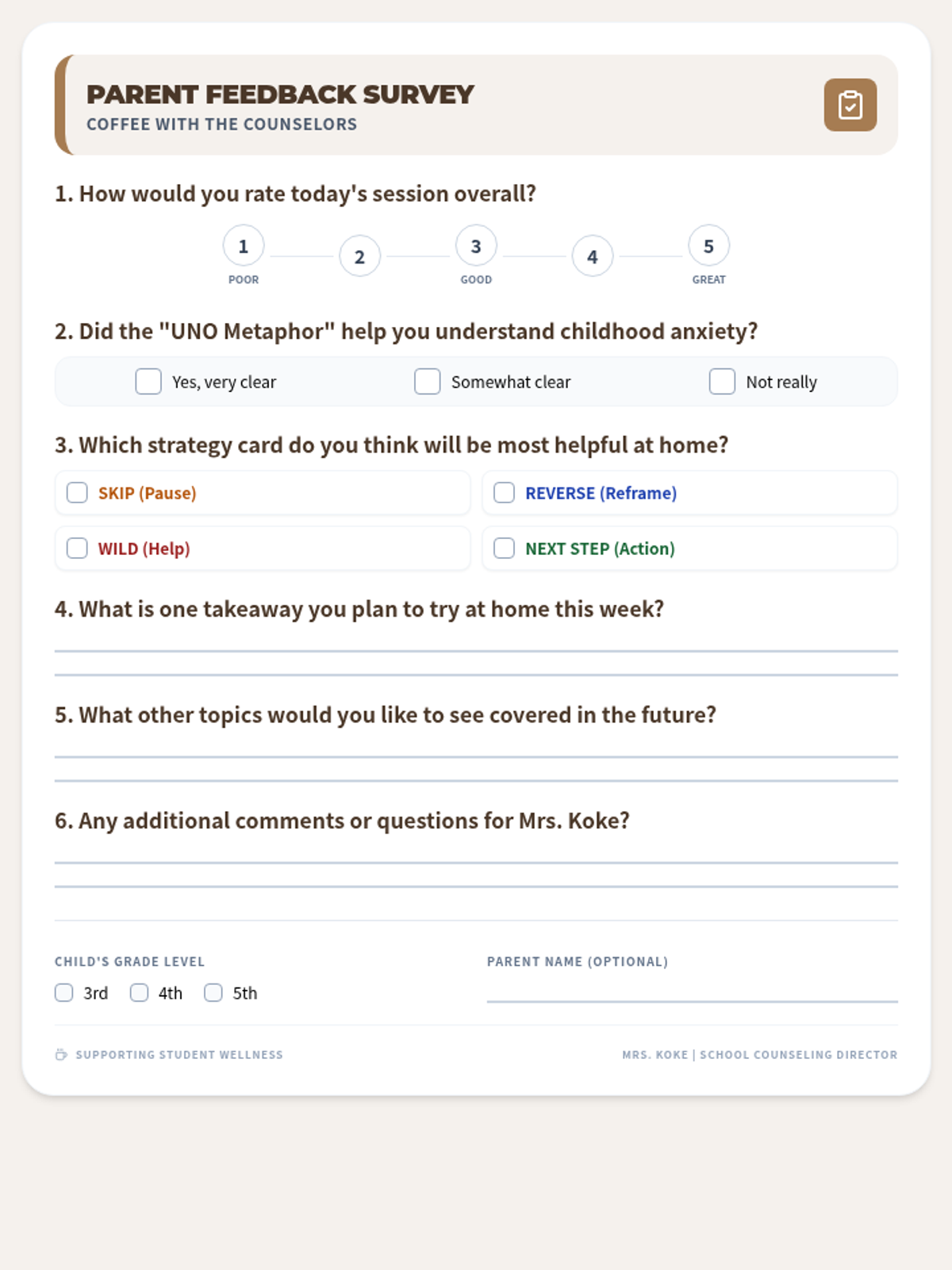
A comprehensive parent education session using a creative UNO card metaphor to help elementary families understand and manage childhood anxiety through school-home partnership.
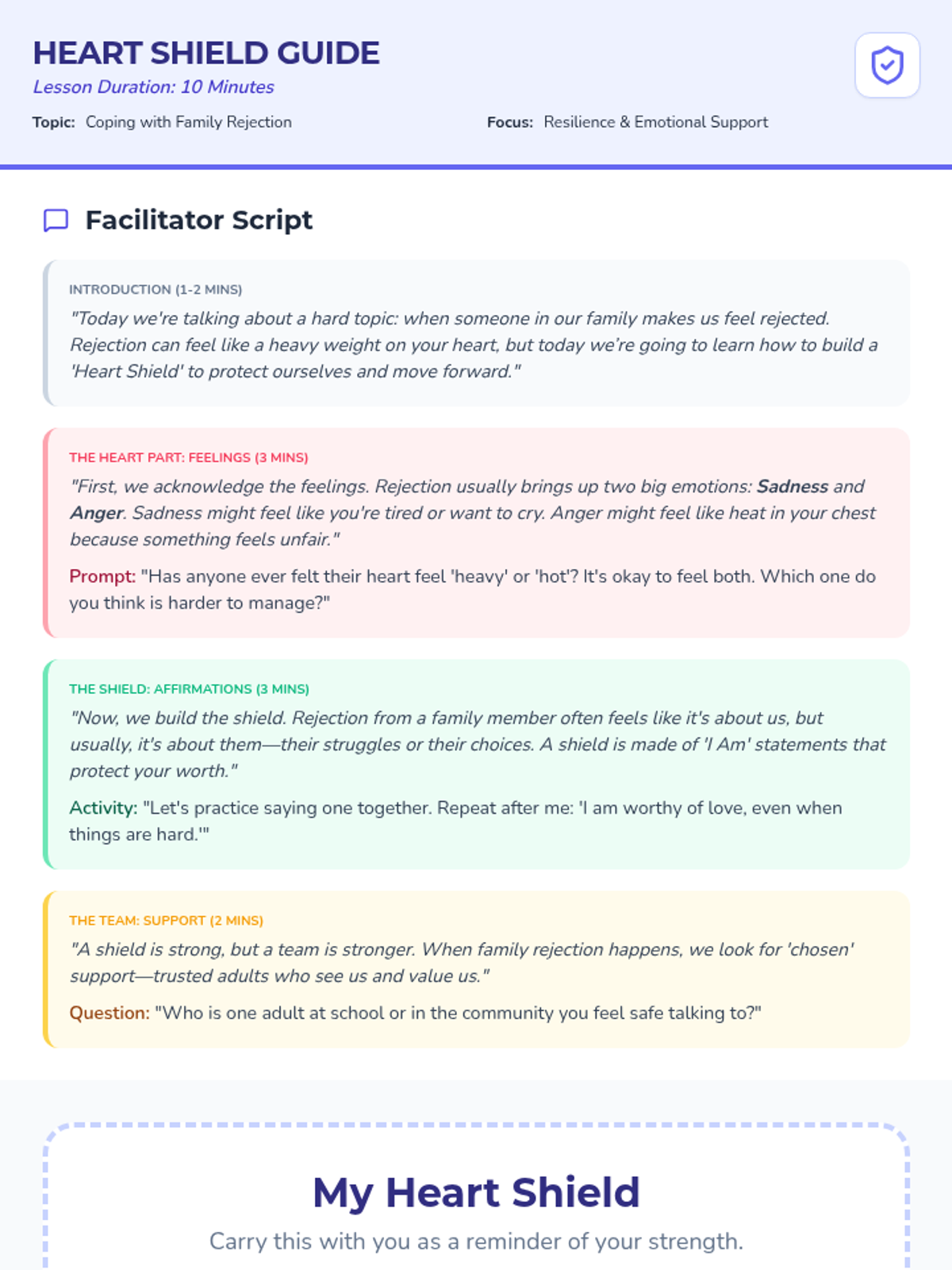
A brief, 10-minute social-emotional learning lesson focused on building resilience and processing emotions after experiencing rejection from a family member. Students learn to identify their feelings, use self-affirmations as a 'shield,' and identify a support network of trusted adults.
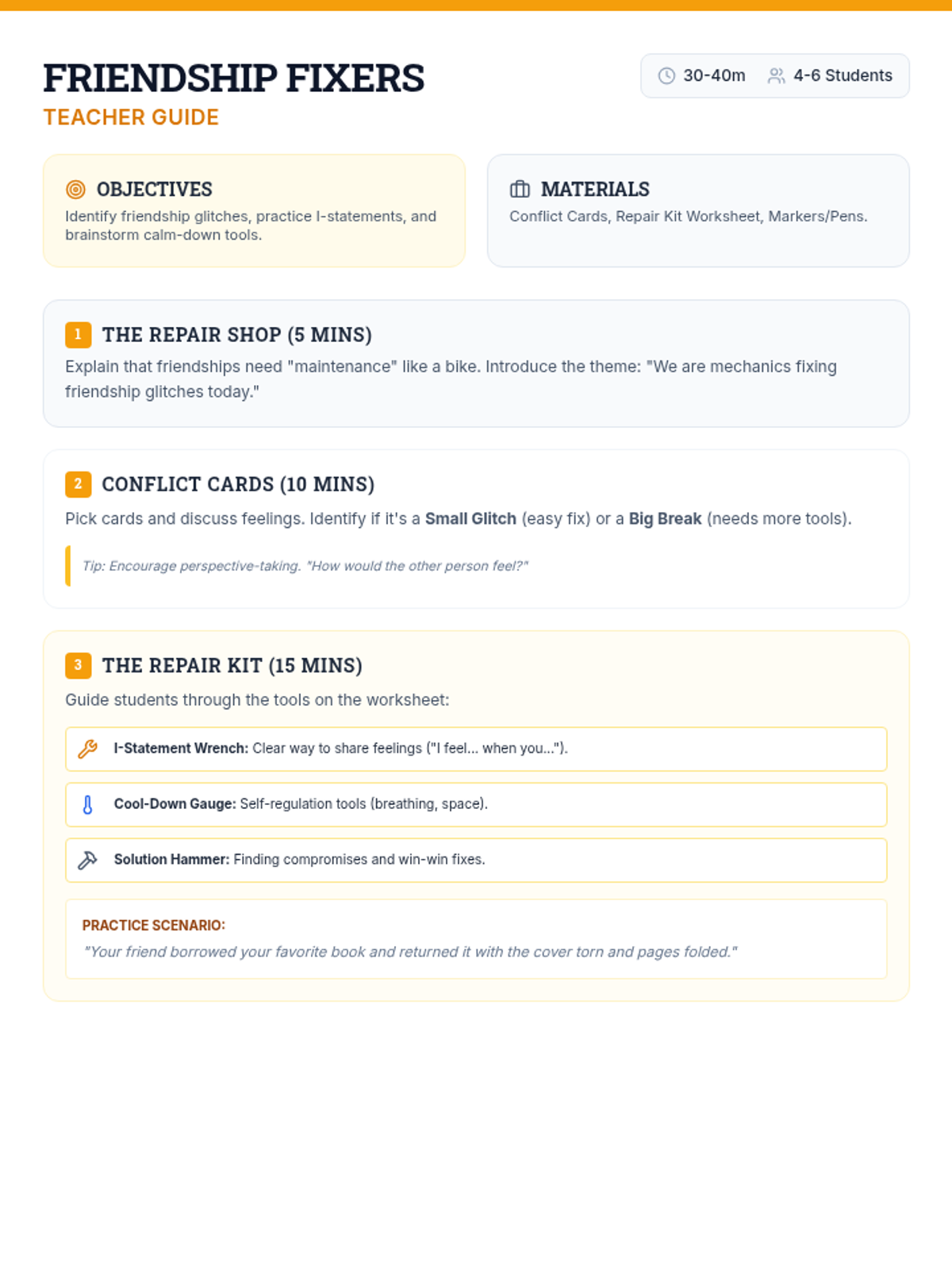
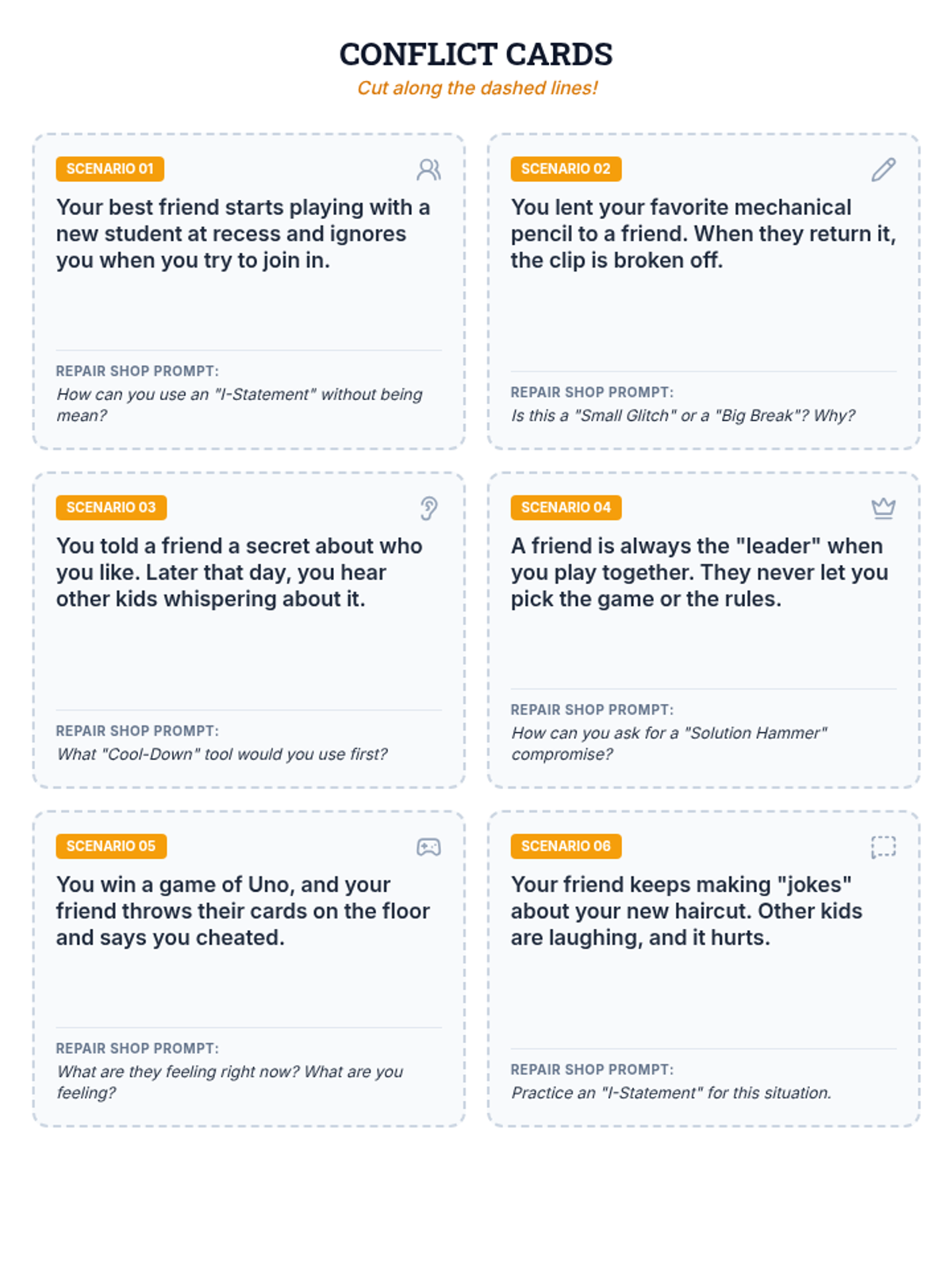
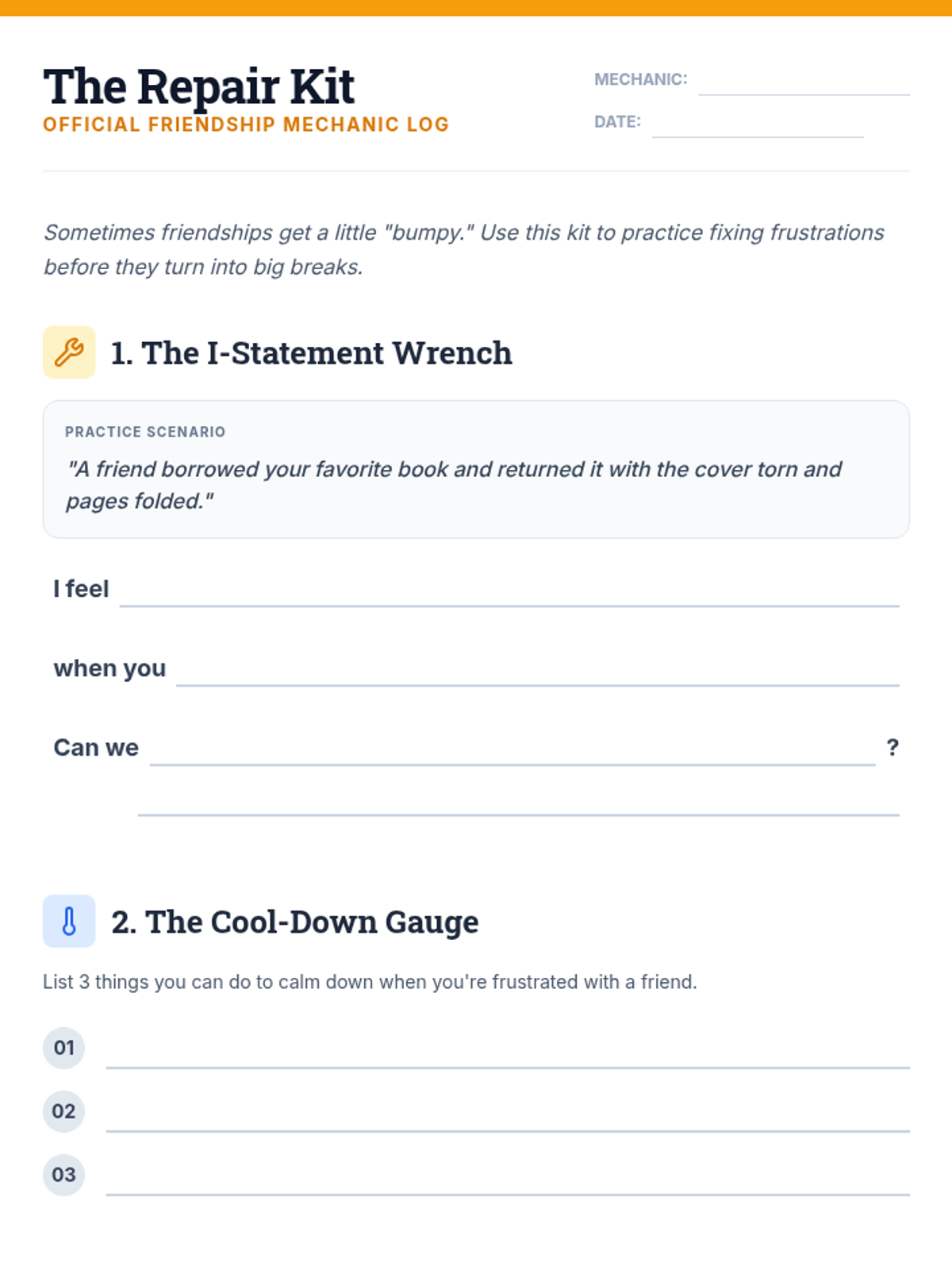
A small-group lesson for 4th graders focused on navigating common friendship conflicts and frustrations using effective communication and problem-solving tools.
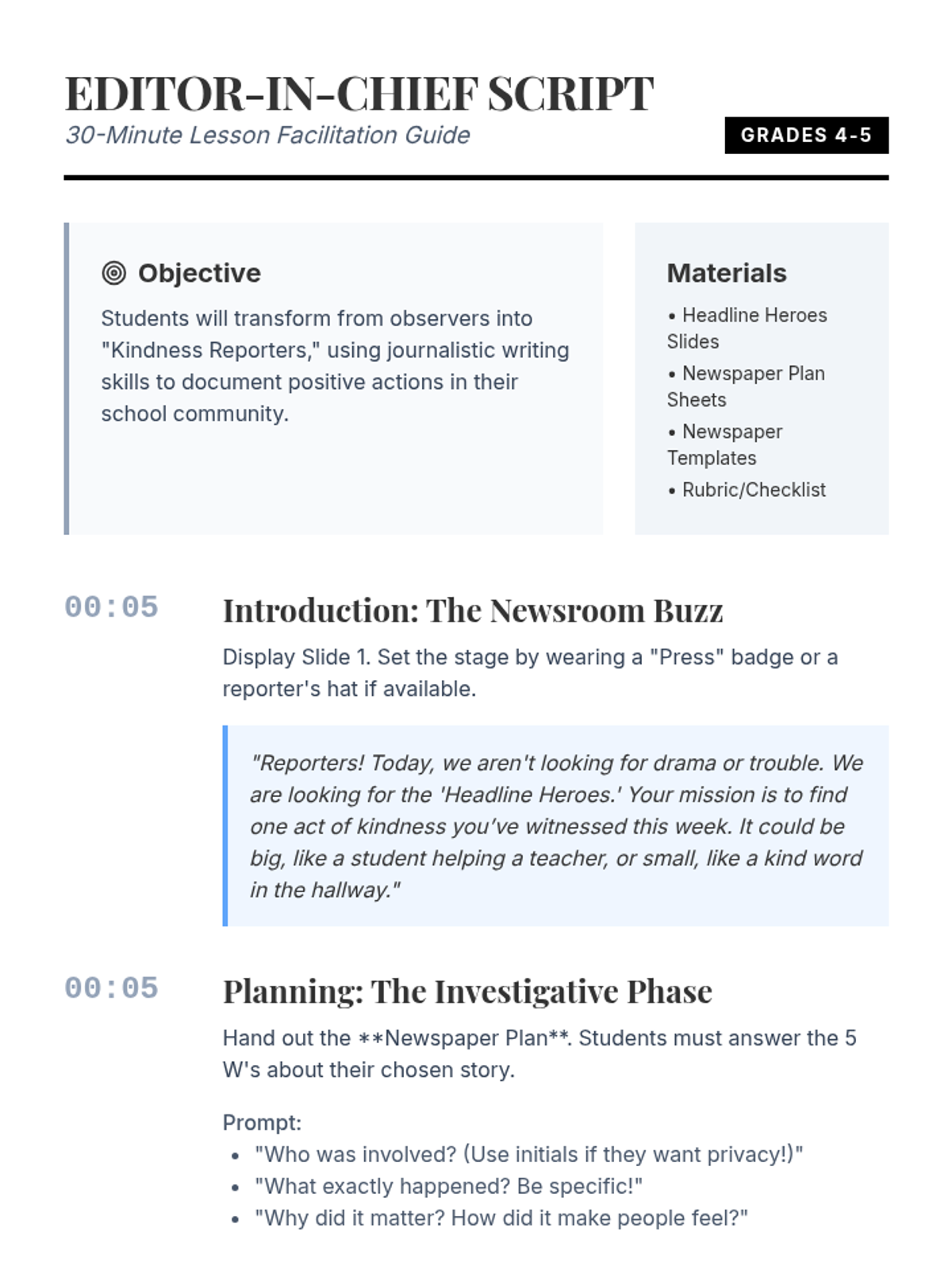
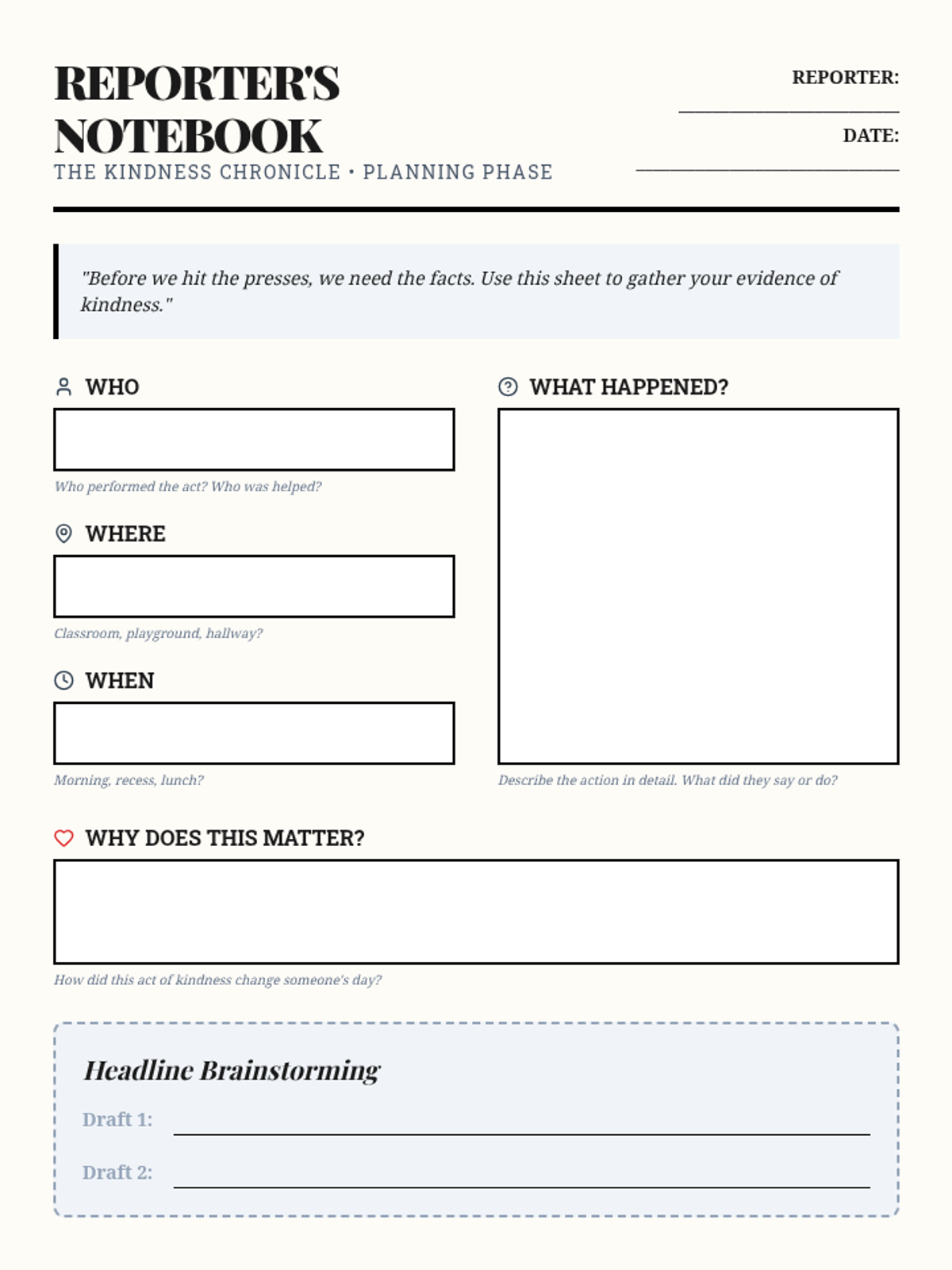
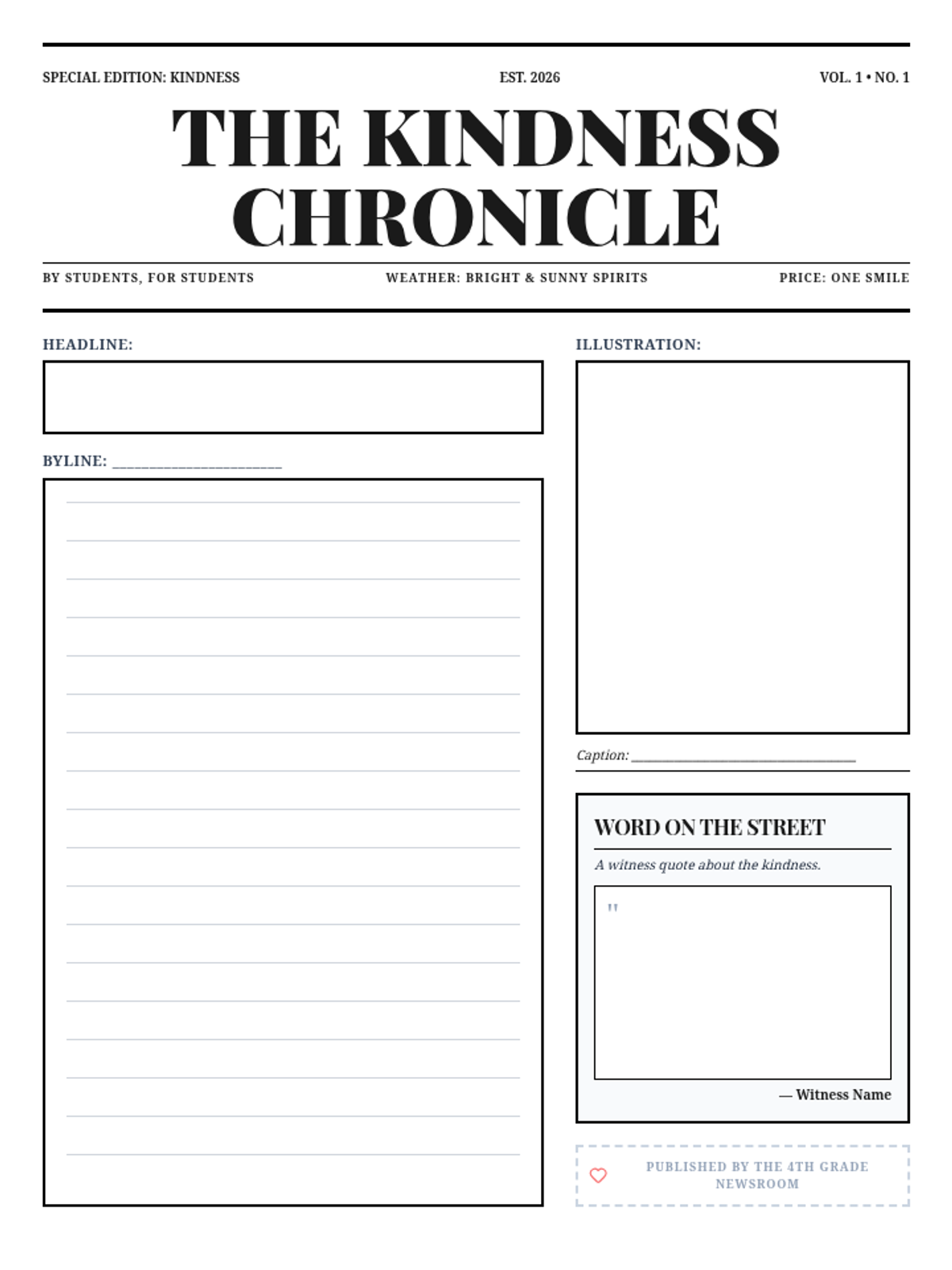
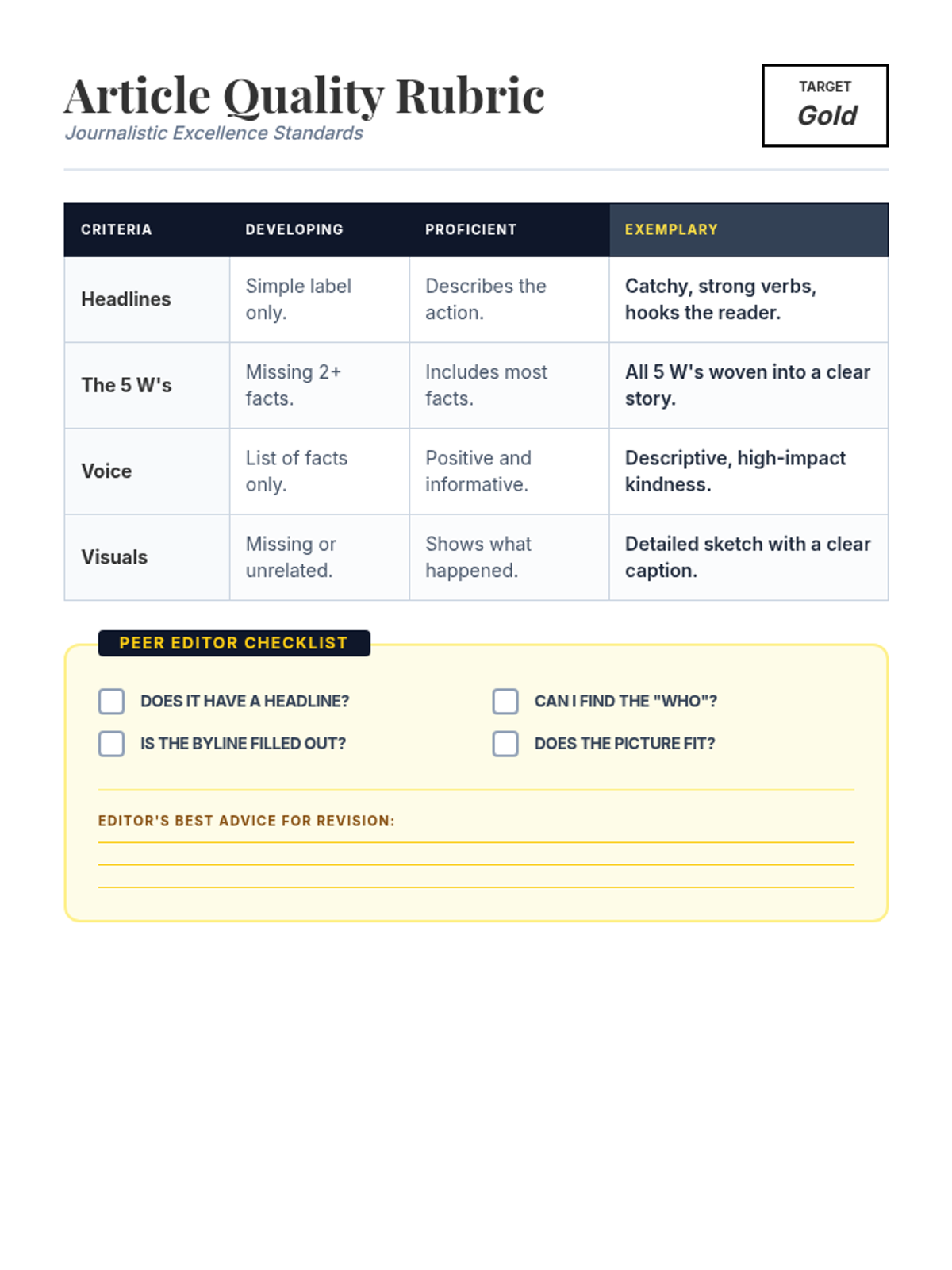
Students become investigative reporters to document and publish acts of kindness within their school community, creating a collaborative class newspaper.
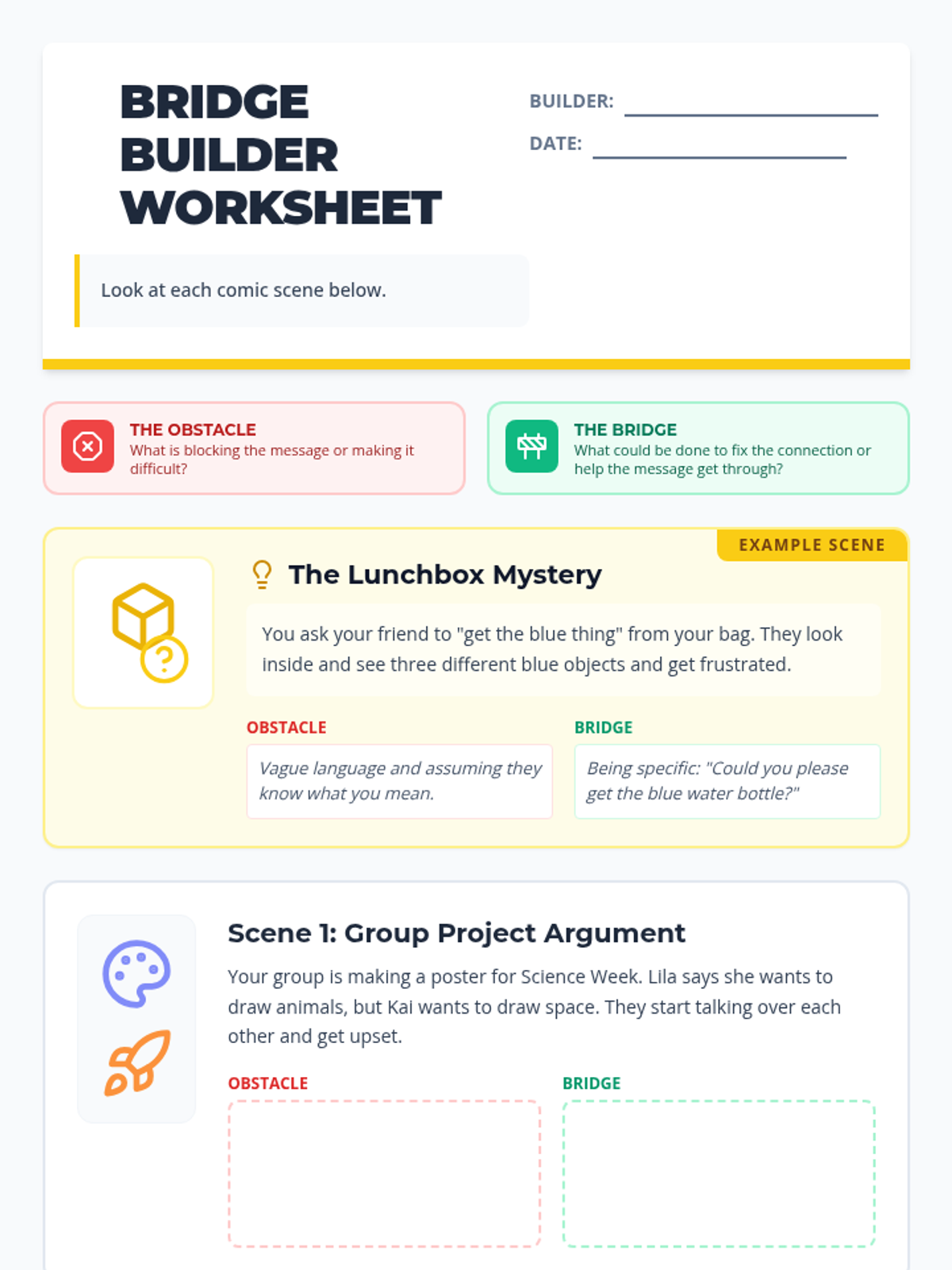
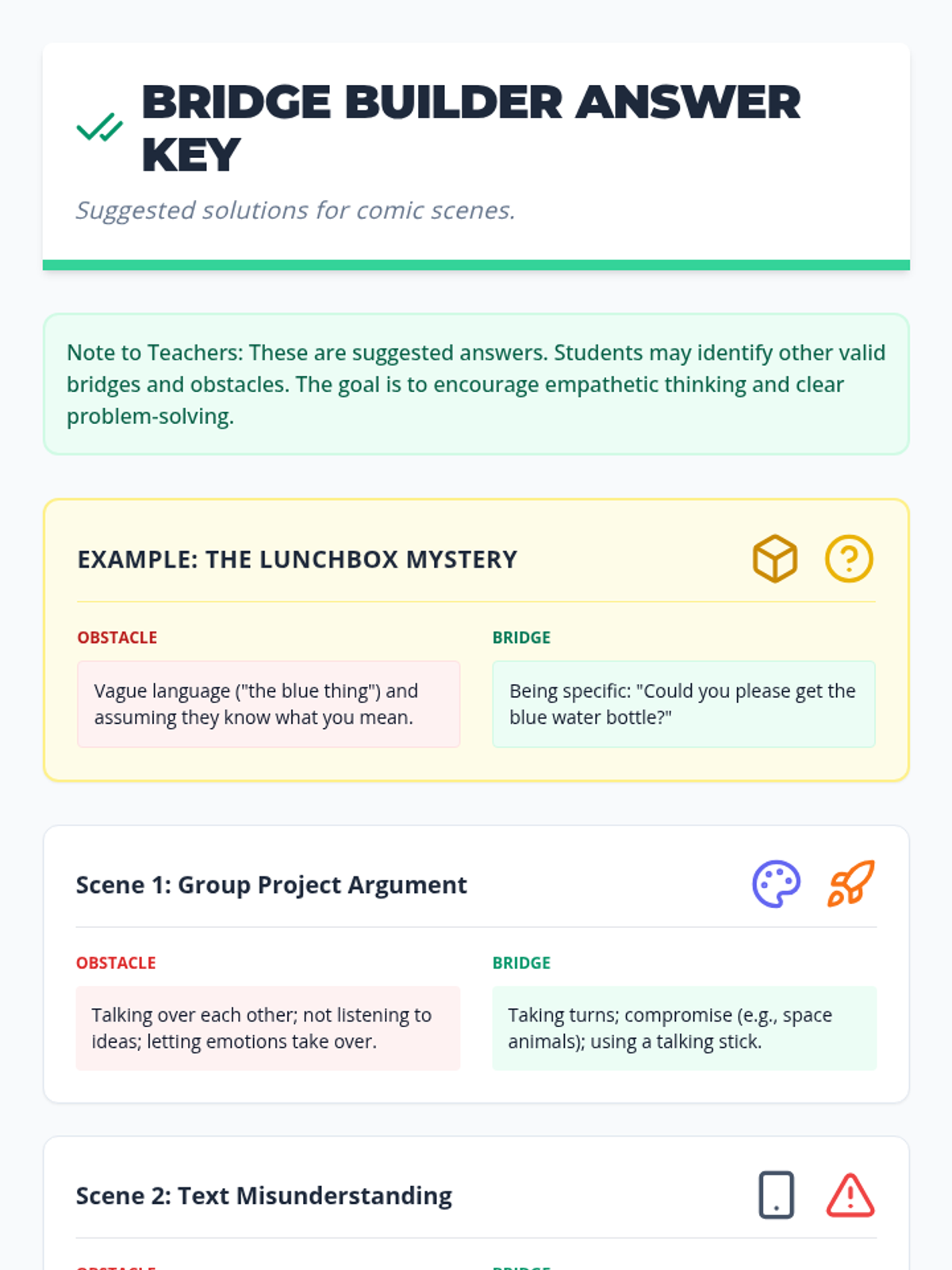
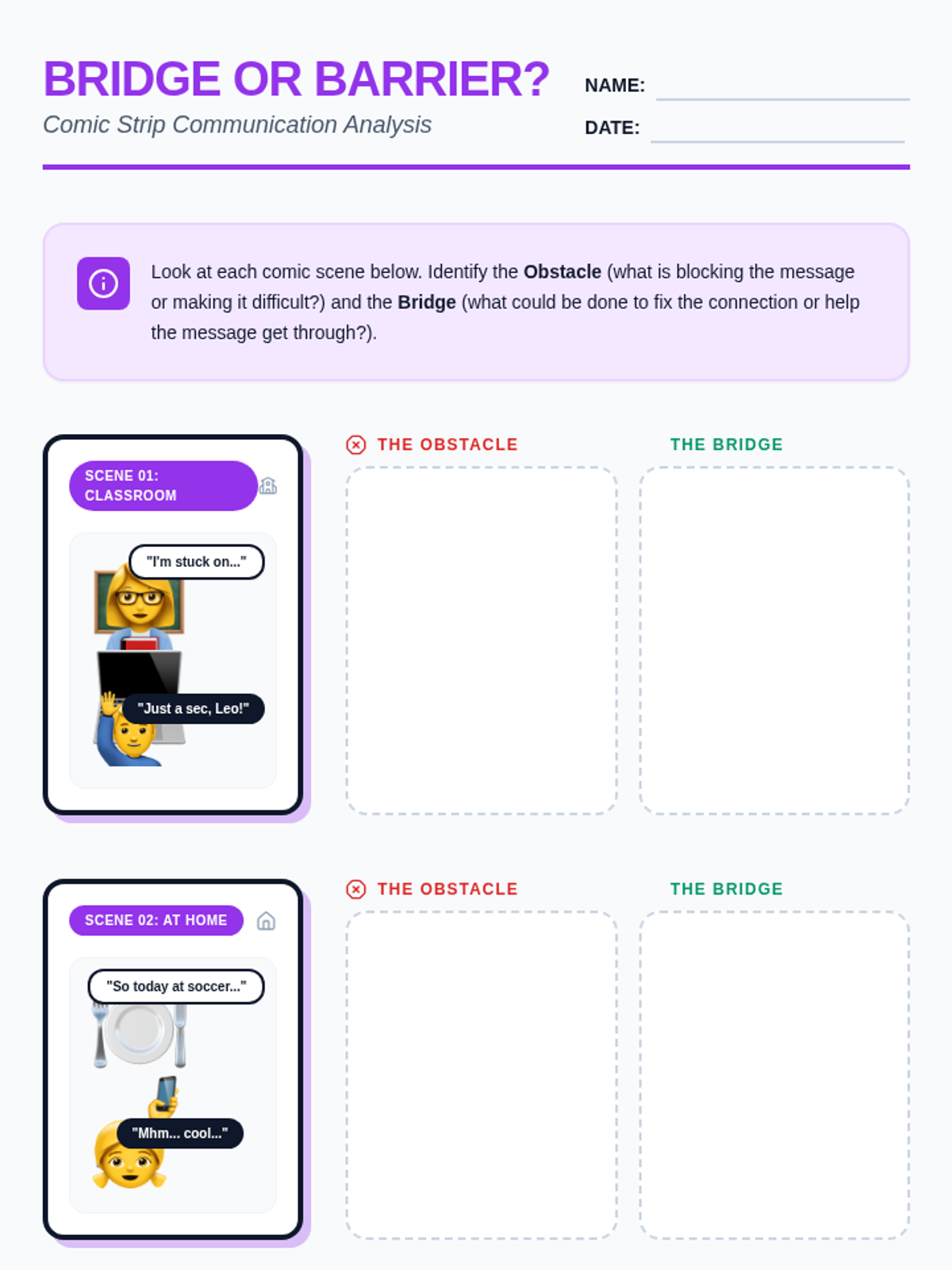
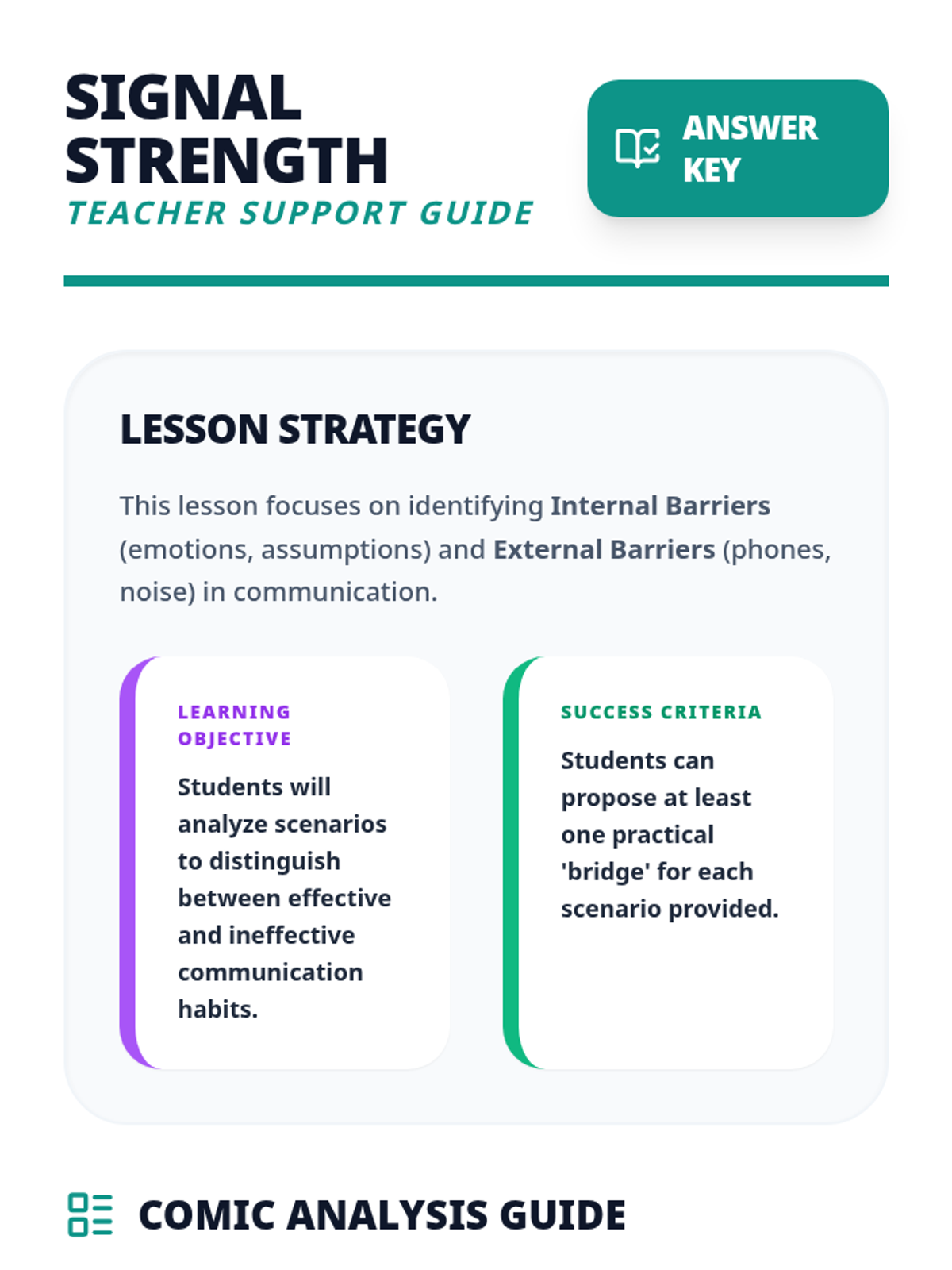
This lesson focuses on identifying communication breakdowns and practical solutions through relatable real-life scenarios, helping students develop empathy and effective interpersonal skills.
A lesson exploring communication dynamics through 'bridges' that connect people and 'obstacles' that block understanding. Students analyze real-world scenarios to improve their interpersonal skills.
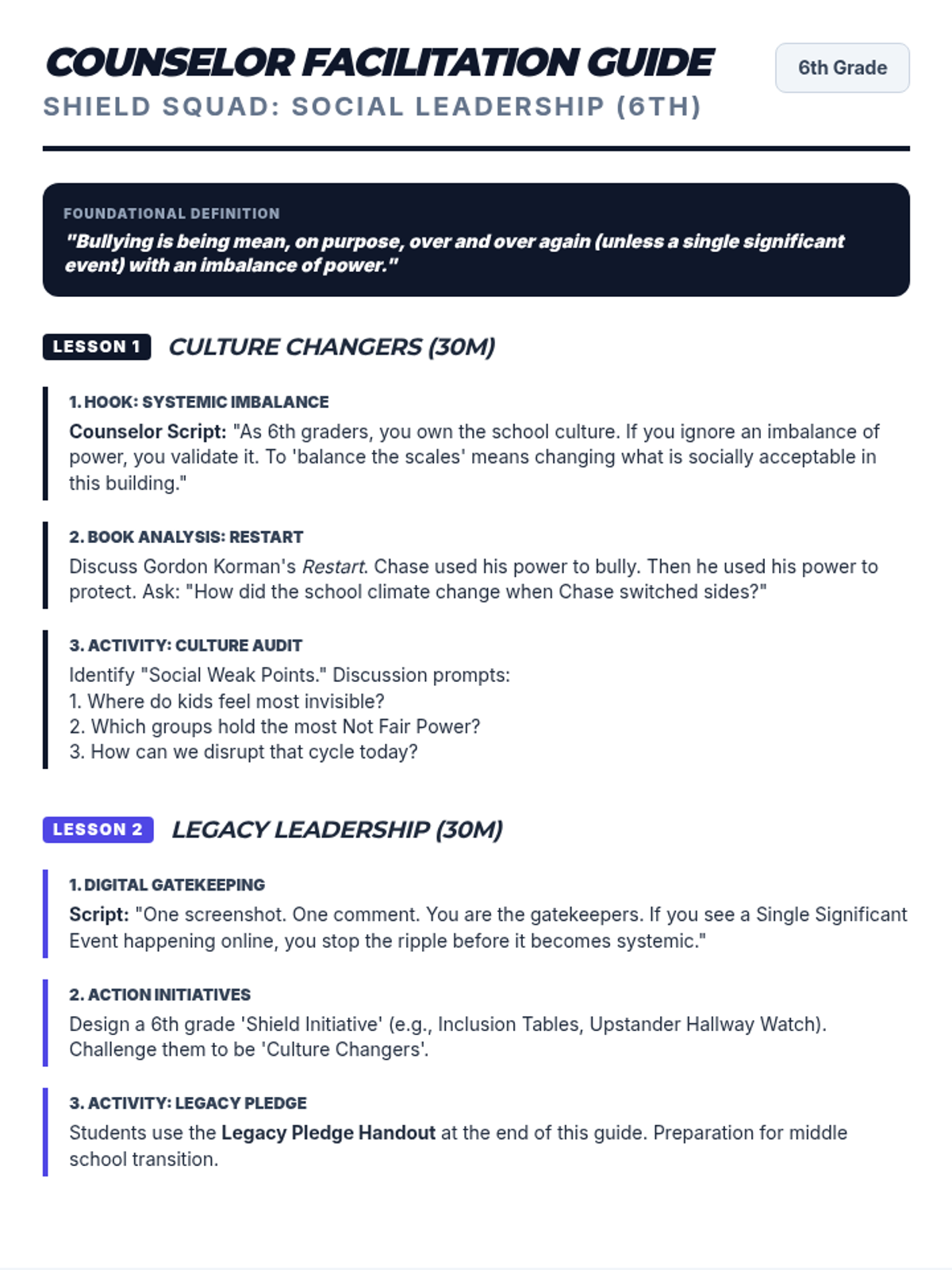
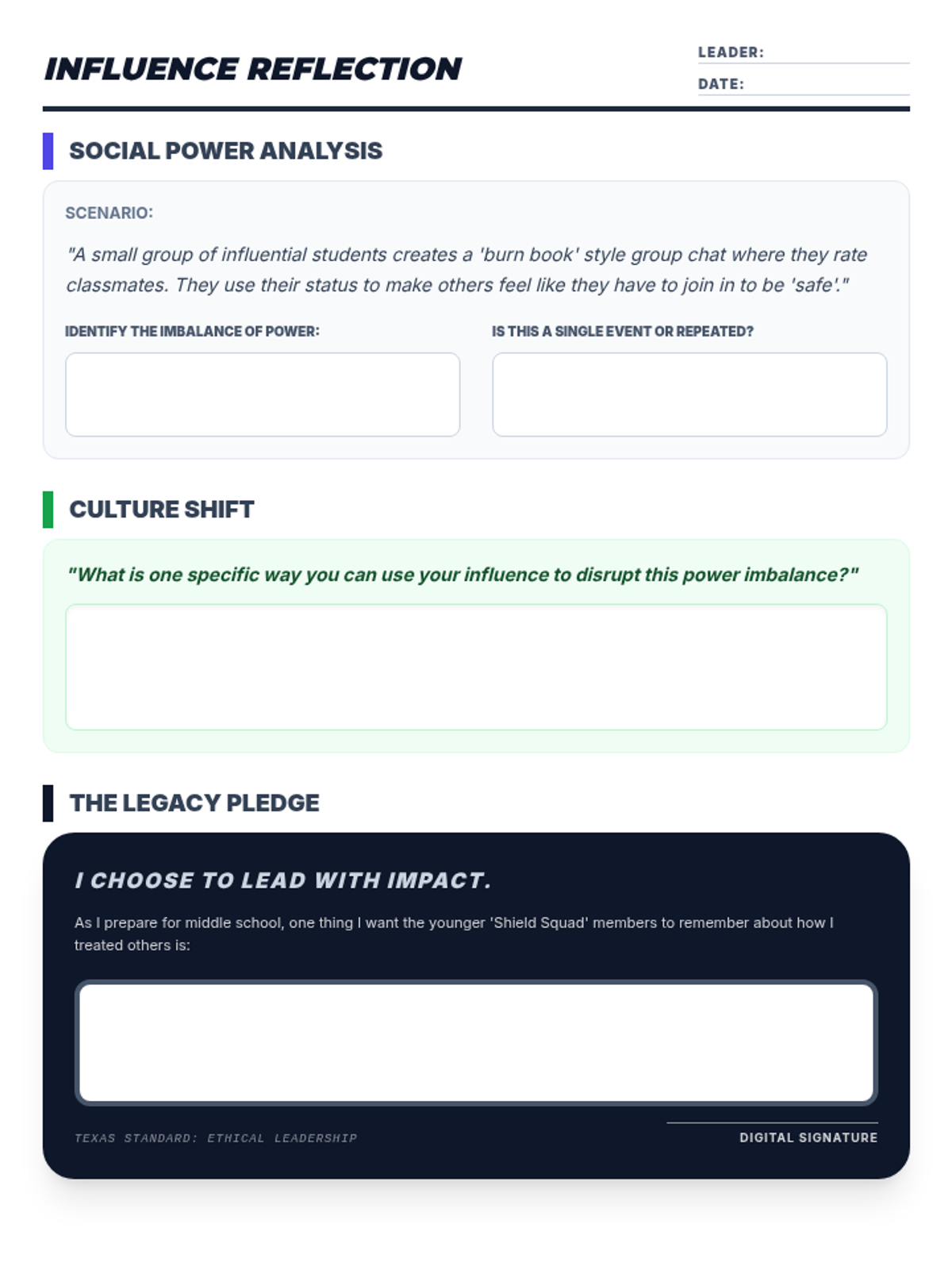
The first of two 30-minute sessions for 6th grade. Using 'Restart' by Gordon Korman, students analyze school culture, social leadership, and the concept of a 'Social Reset'.
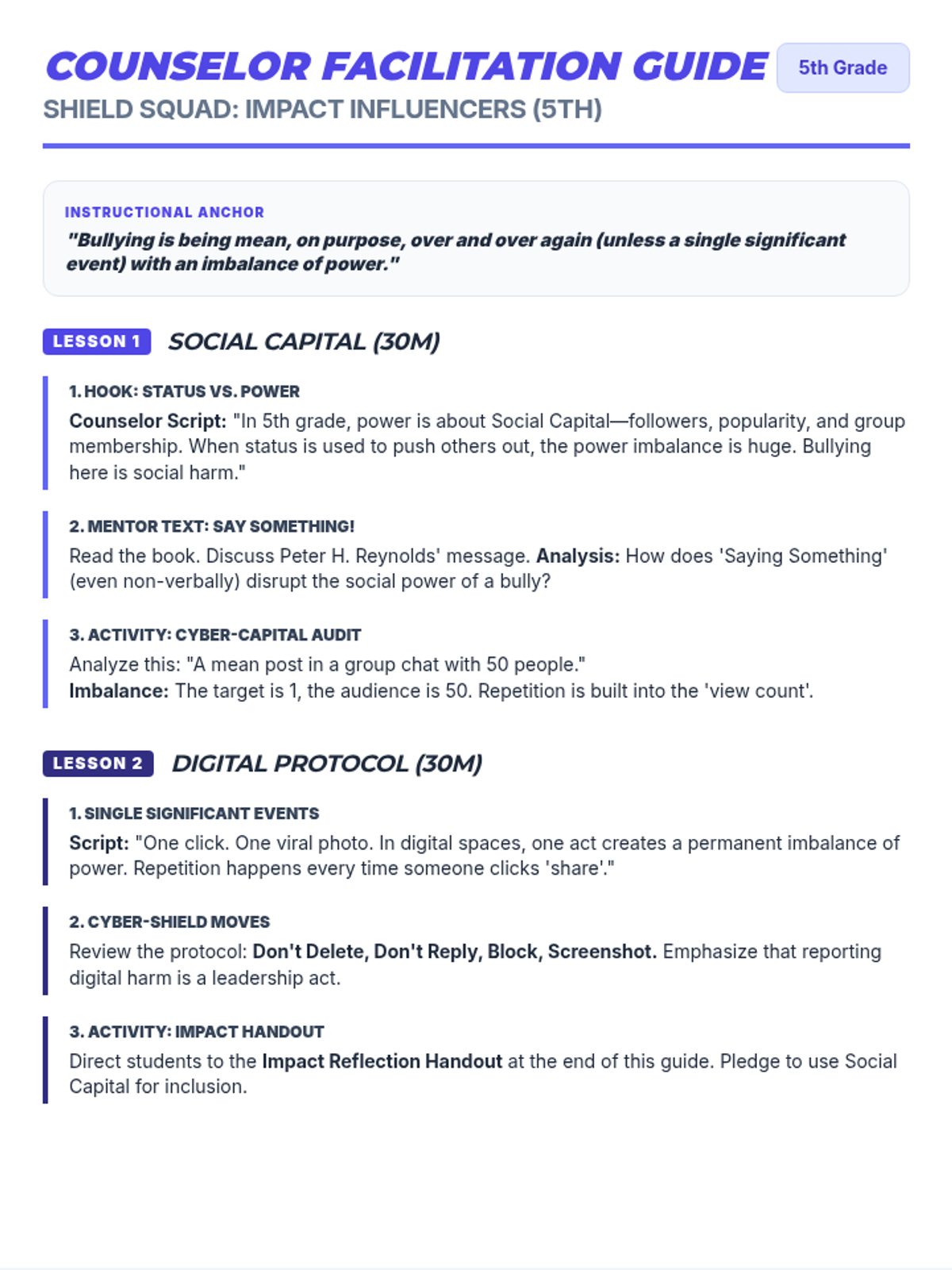
The first of two 30-minute sessions for 5th grade. Using 'Zero' by Kathryn Otoshi, students explore social capital as power and the specific dynamics of cyberbullying.
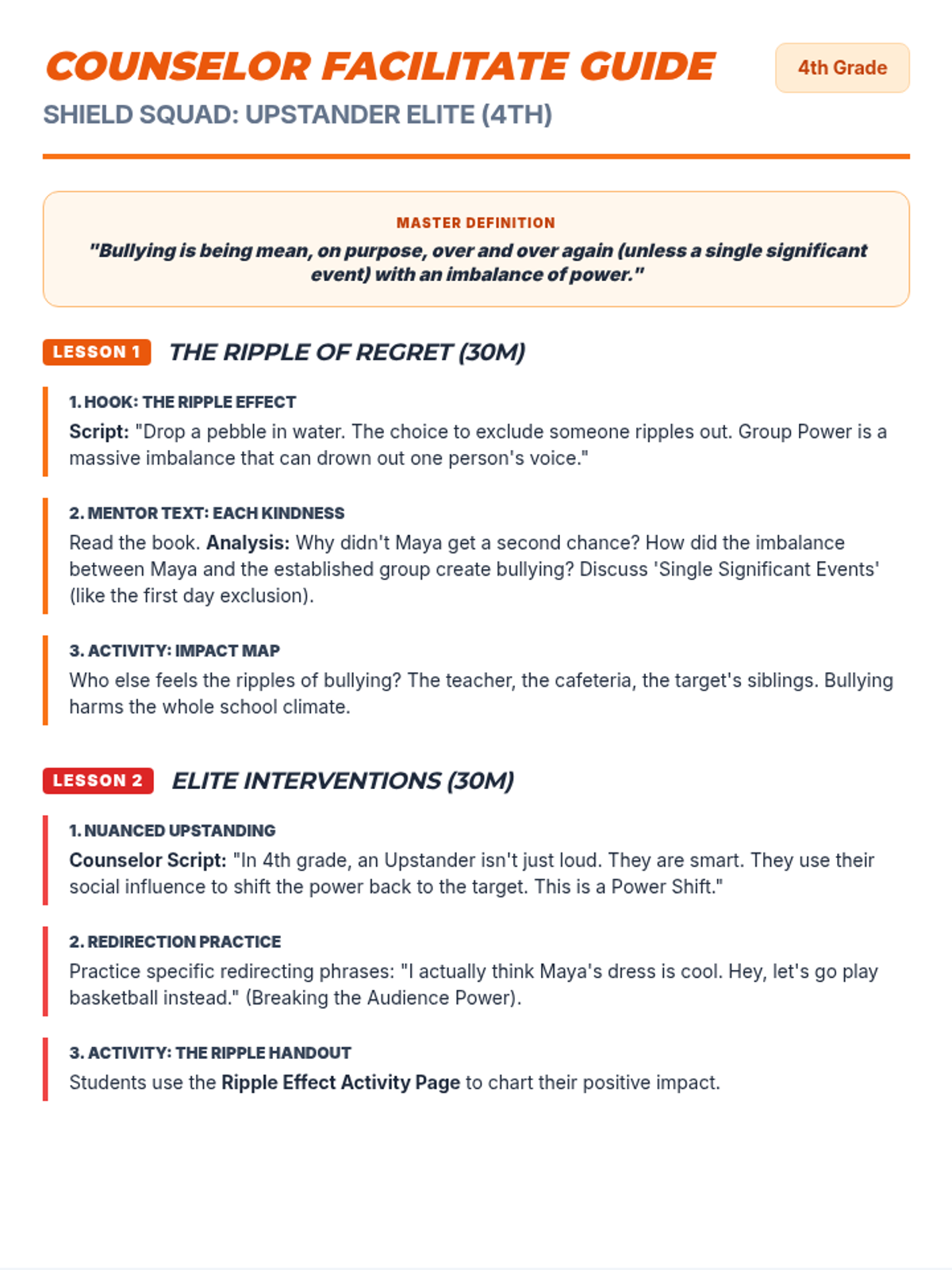
The first of two 30-minute sessions for 4th grade. Using 'Confessions of a Former Bully' by Trudy Ludwig, students understand the bullying circle and the roles people play in social dynamics.
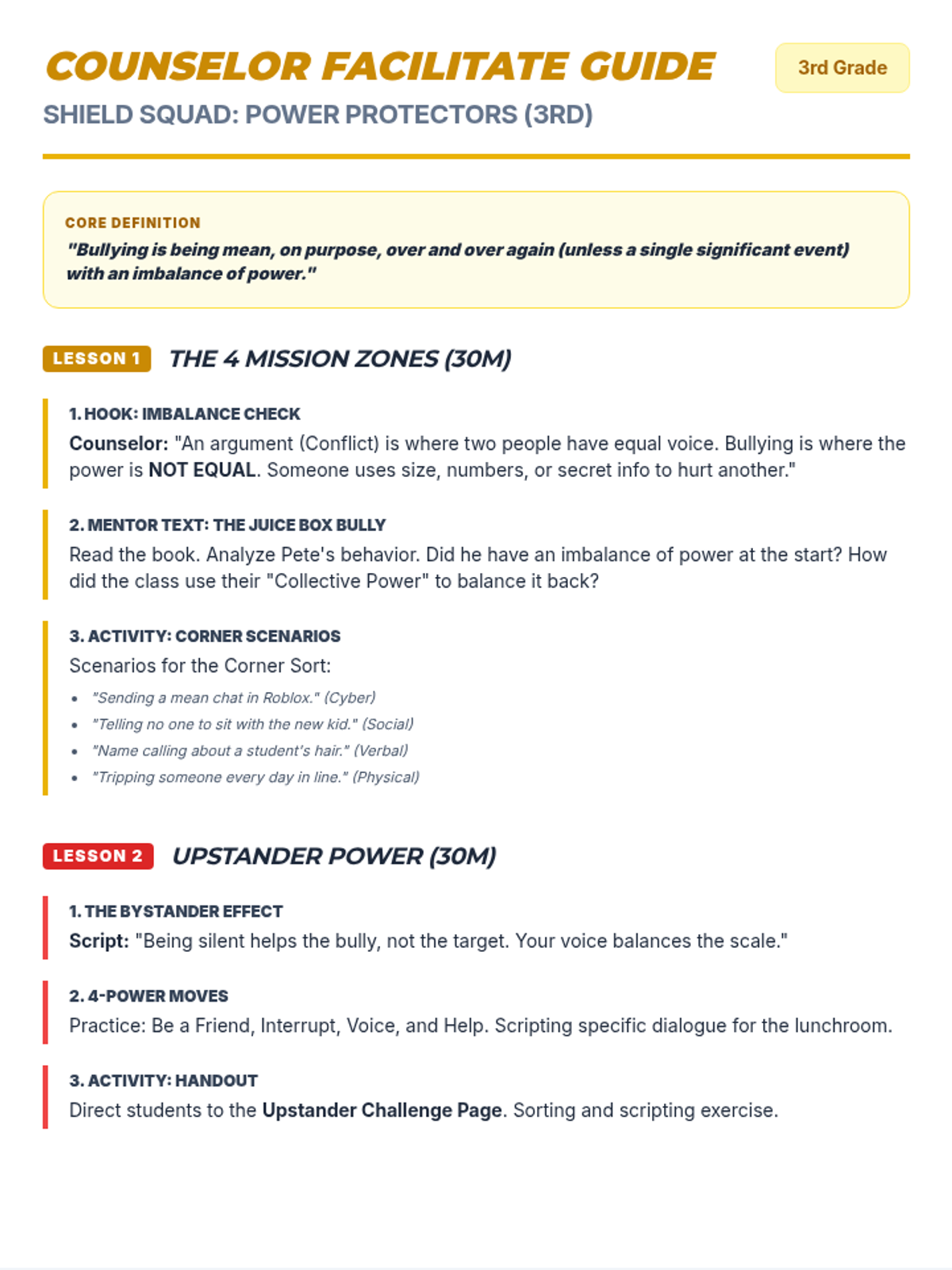
The first of two 30-minute sessions for 3rd grade. Using 'Tease Monster' by Julia Cook, students categorize behavior and analyze the 'Target' vs 'Bully' power gap.
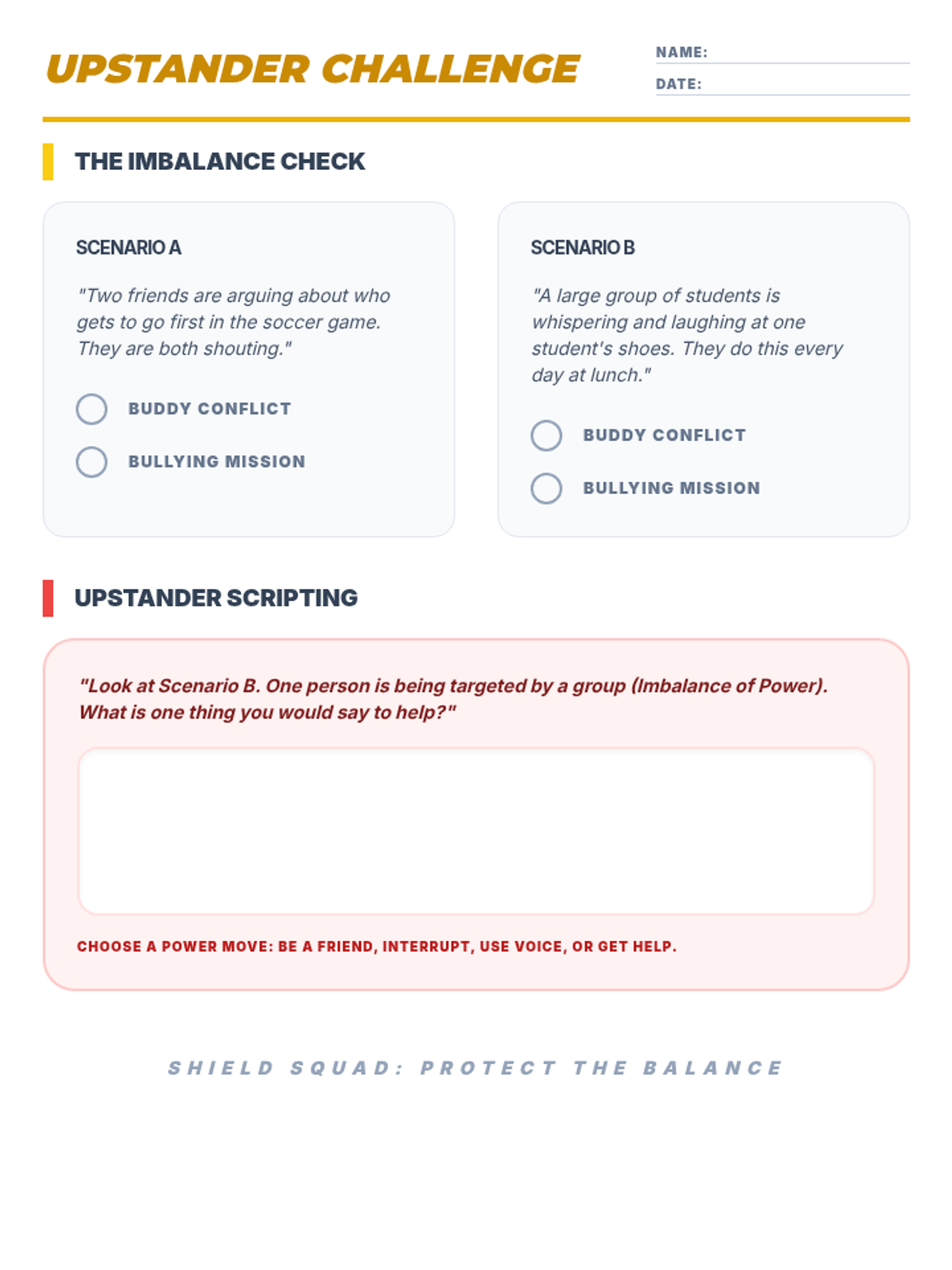
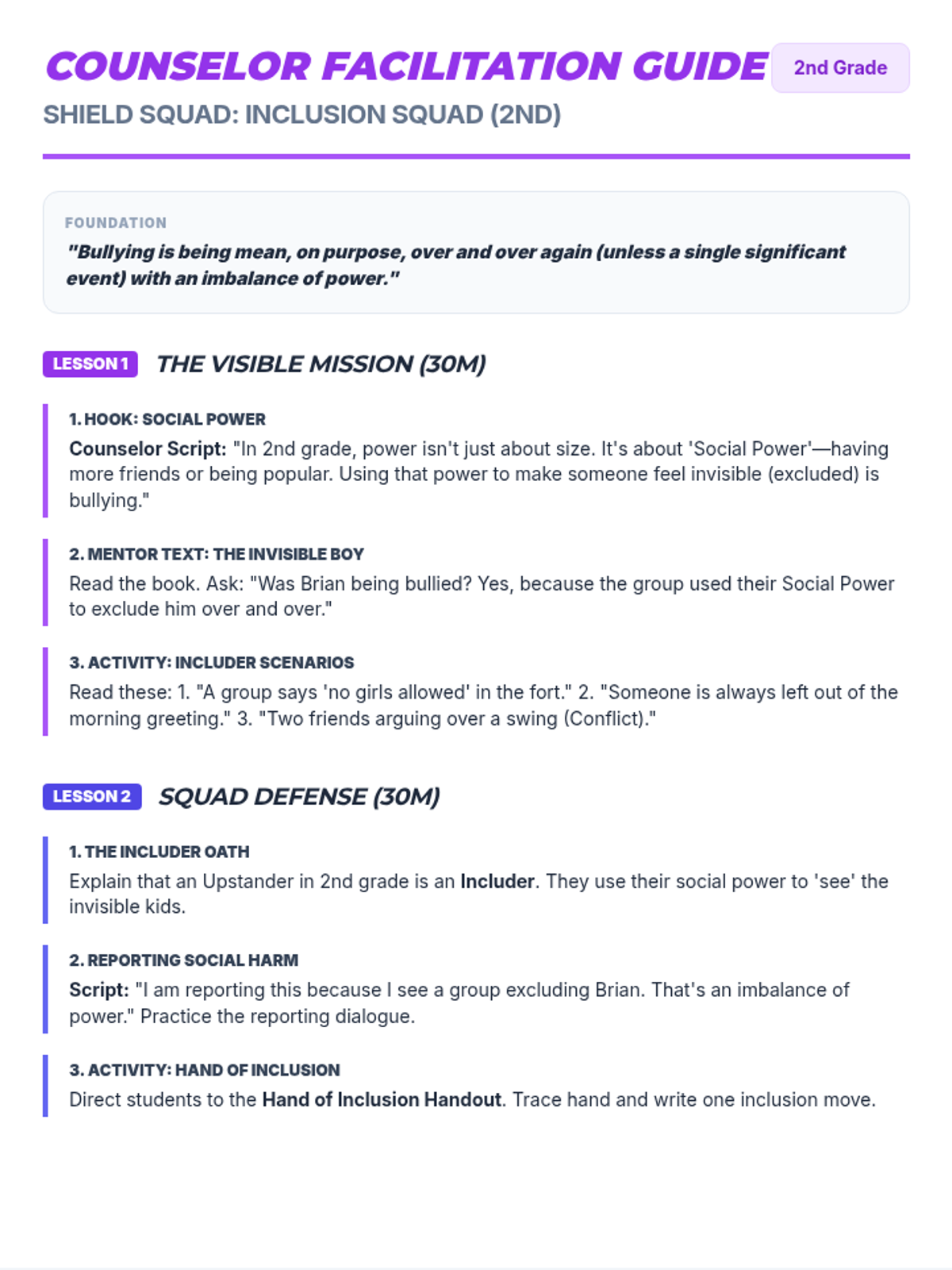
The first of two 30-minute sessions for 2nd grade. Using 'The Invisible Boy' by Trudy Ludwig, students explore social exclusion and the transition from a 'Buddy Conflict' to bullying.
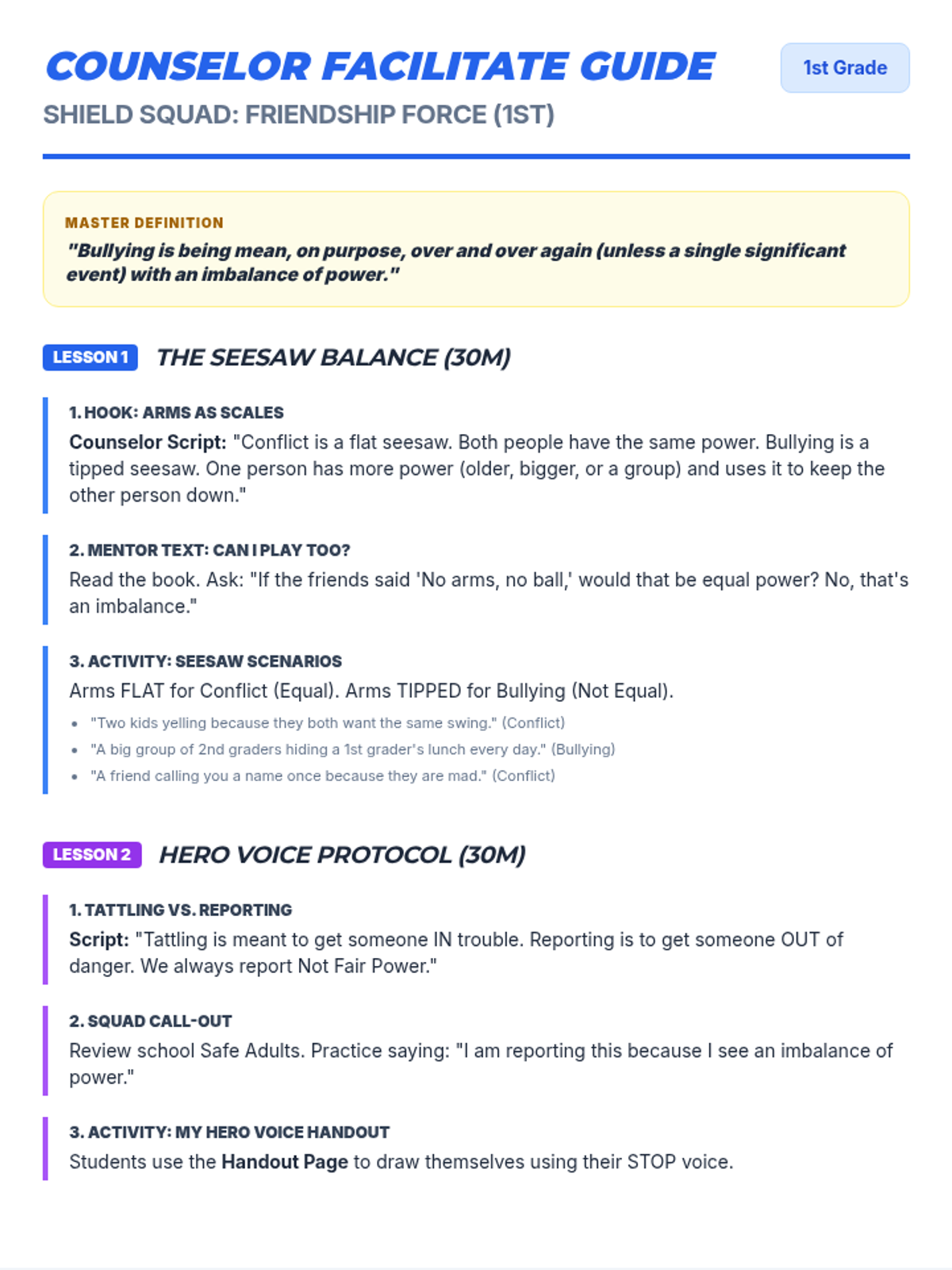
The first of two 30-minute sessions for 1st grade. Using 'Trouble Talk' by Trudy Ludwig, students explore verbal bullying and the 'Seesaw' model of unequal power.
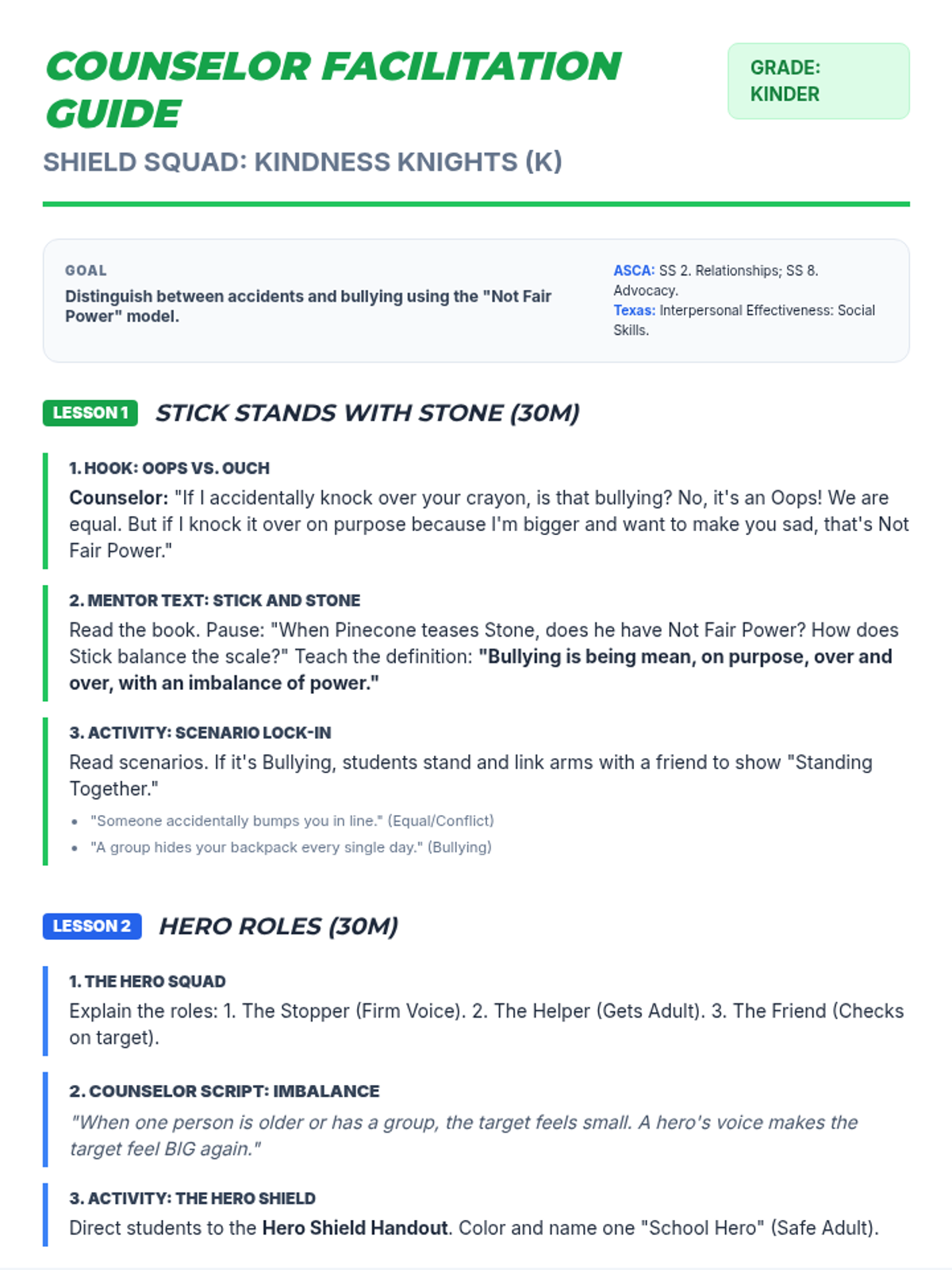
The first of two 30-minute sessions for Kindergarten. Using 'Bully B.E.A.N.S.' by Julia Cook, students learn to distinguish between accidents and bullying using the 'Purposeful' and 'Repeated' criteria.
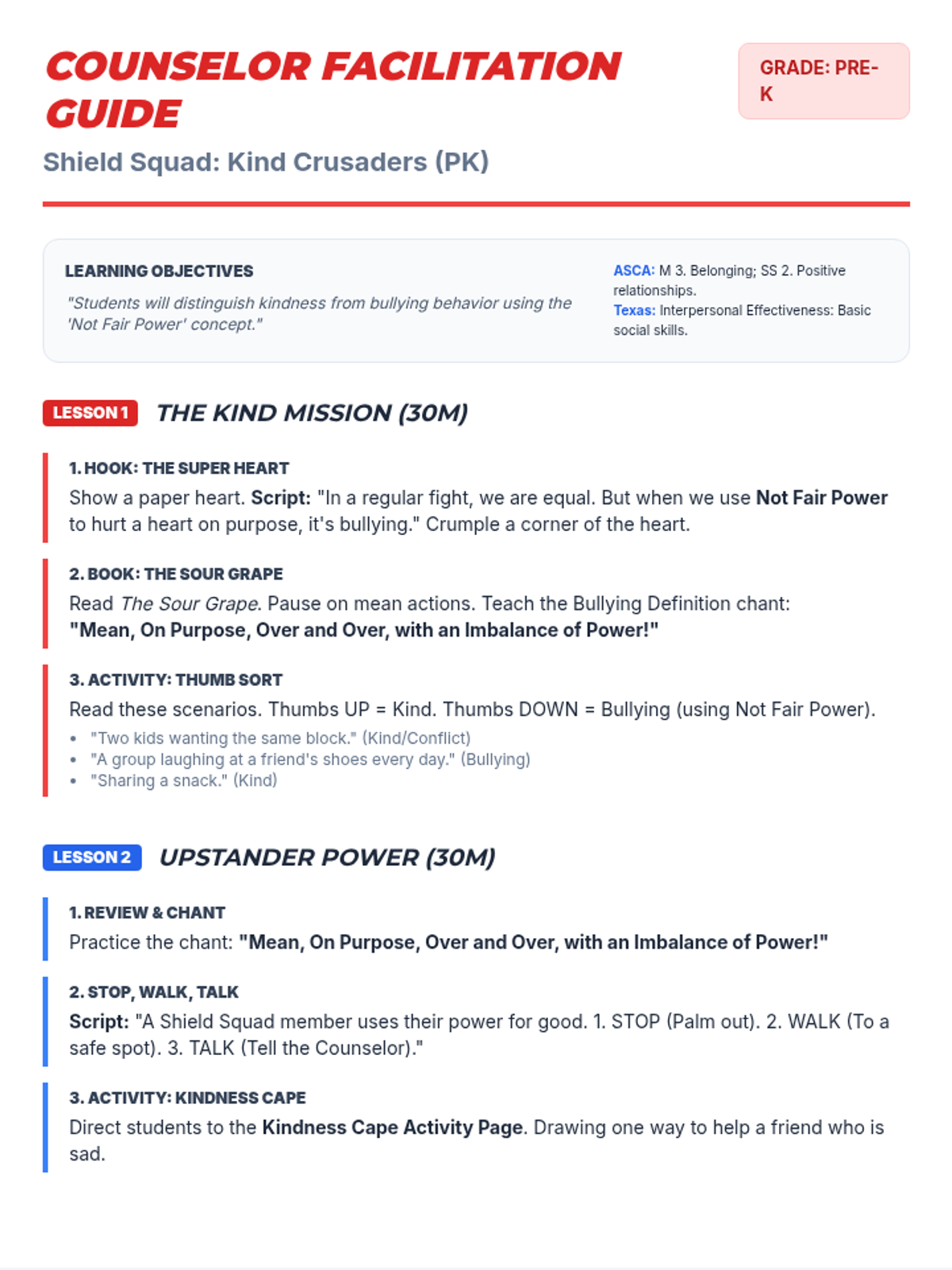
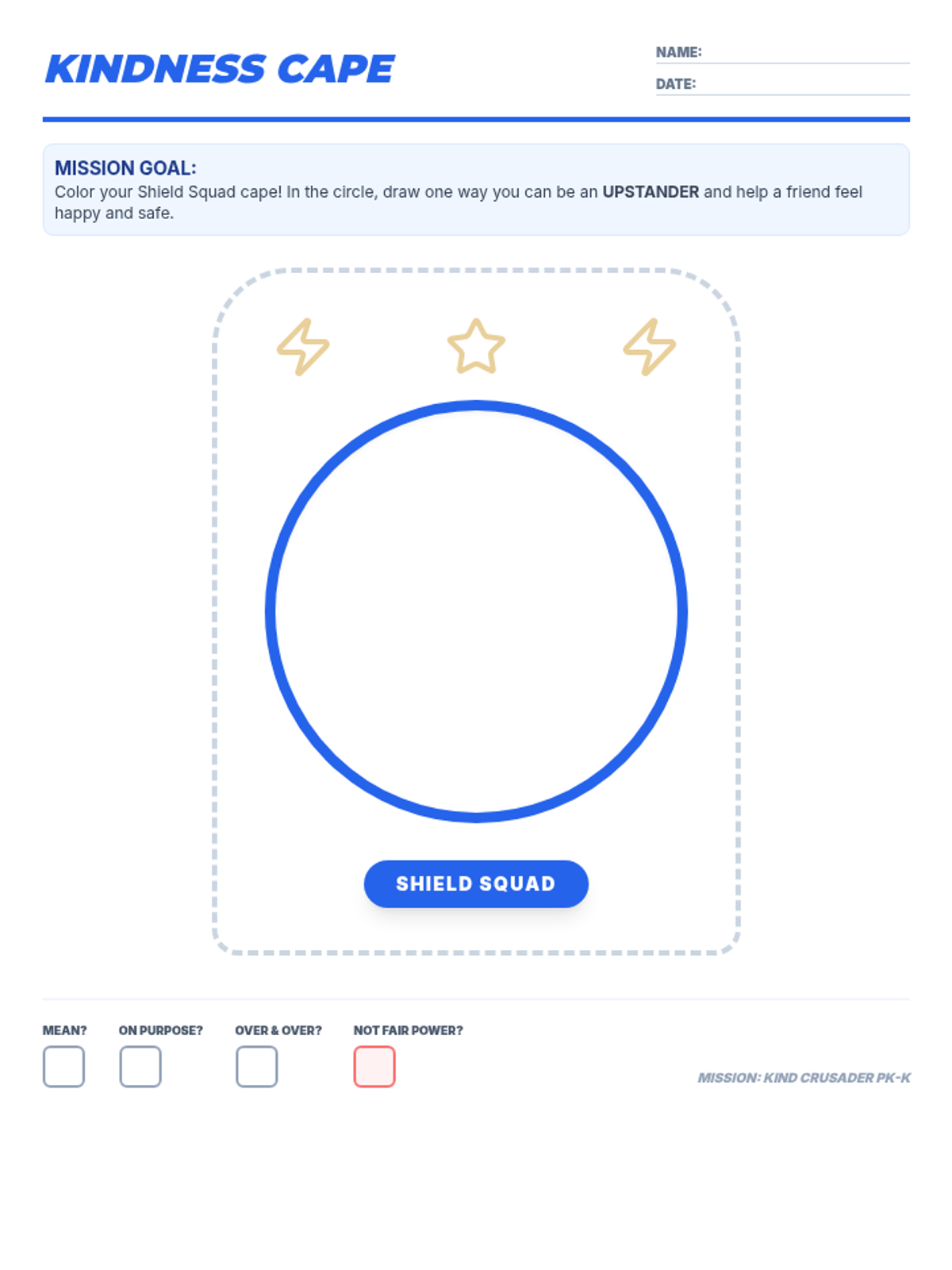
The first of two 30-minute sessions for PK. Using 'One' by Kathryn Otoshi, students are introduced to the 'Shield Squad' definition of bullying and the concept of 'Not Fair Power'.
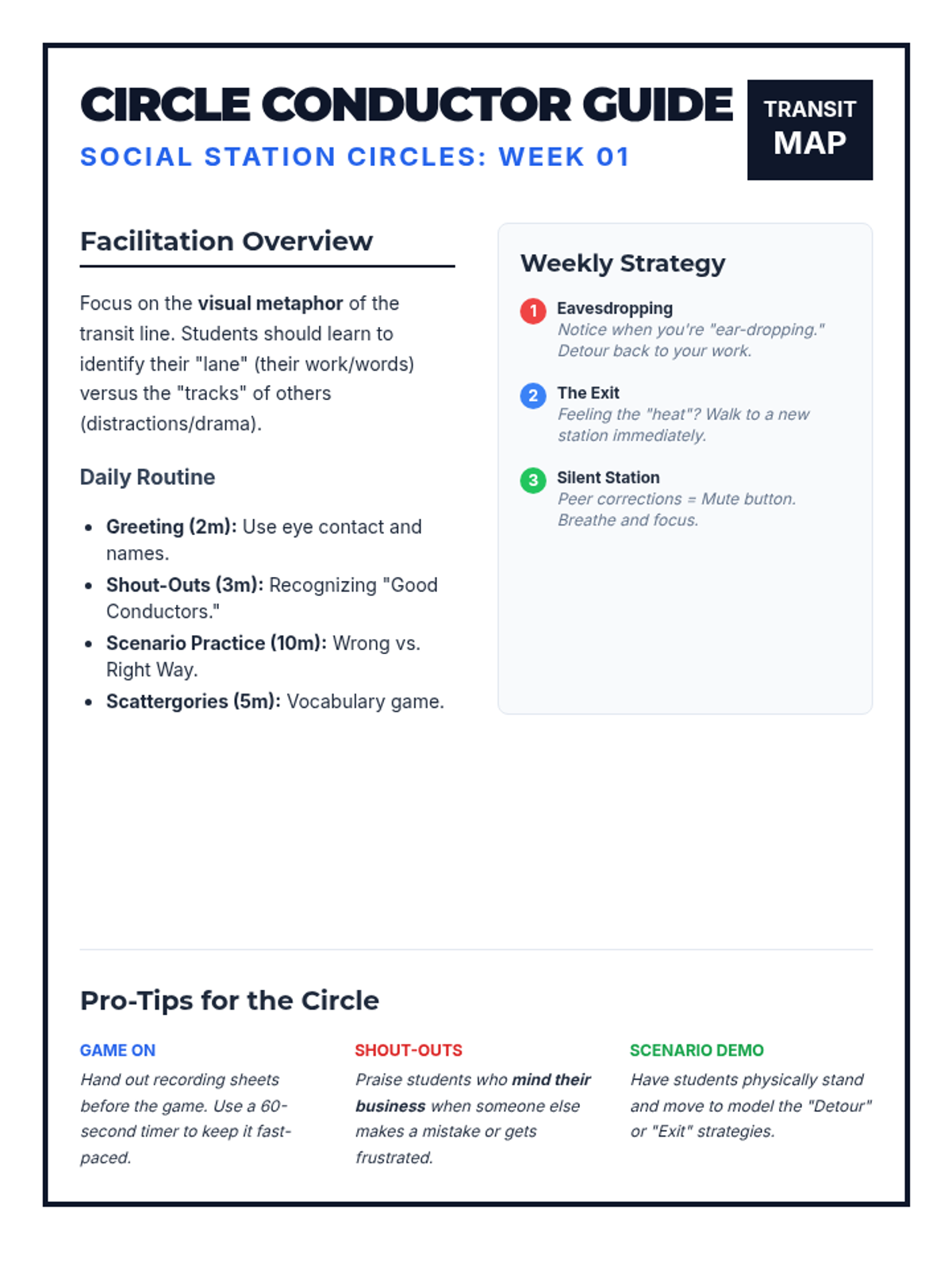
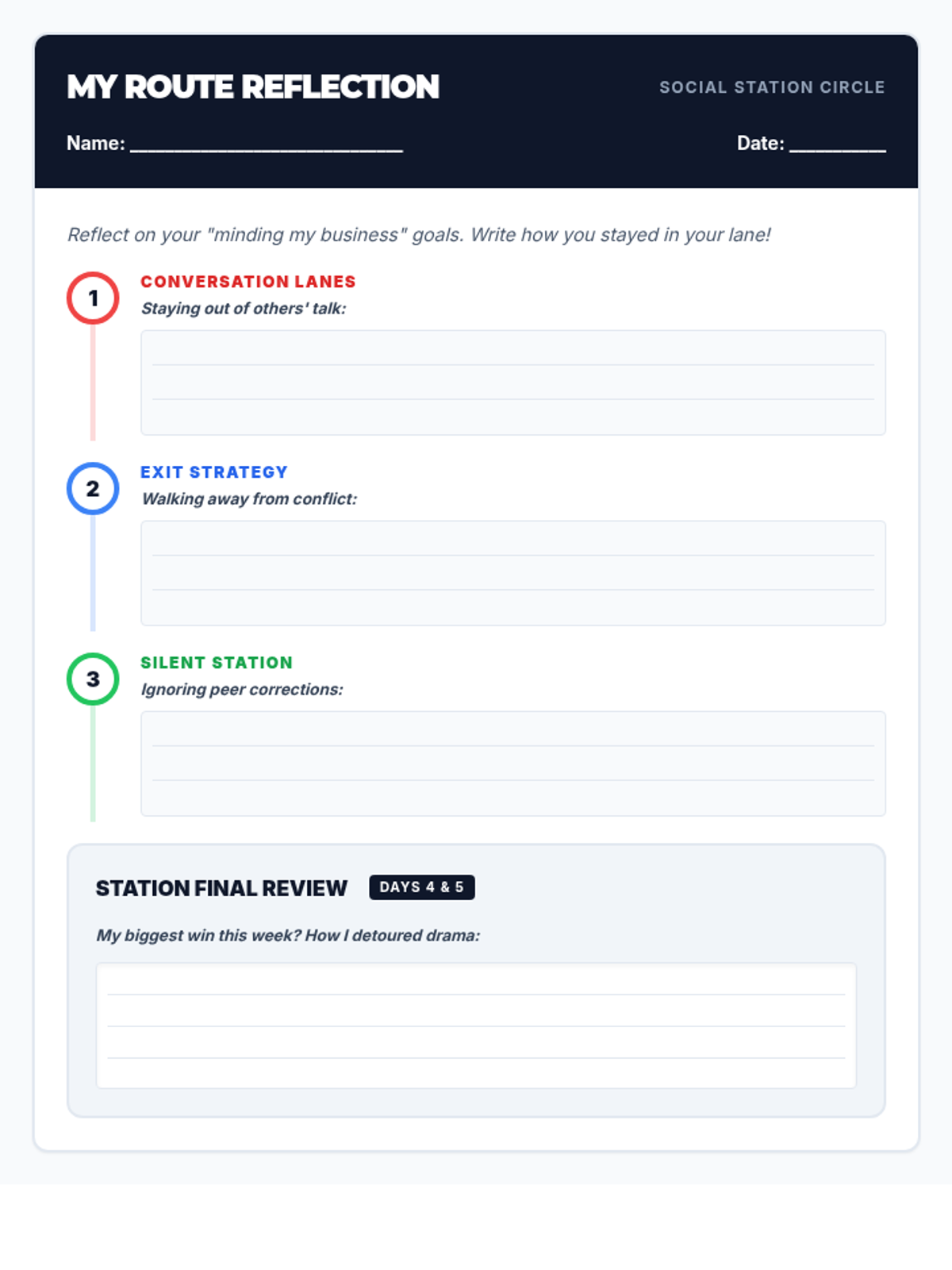
Day 5 covers staying focused and not contributing to classroom distractions.
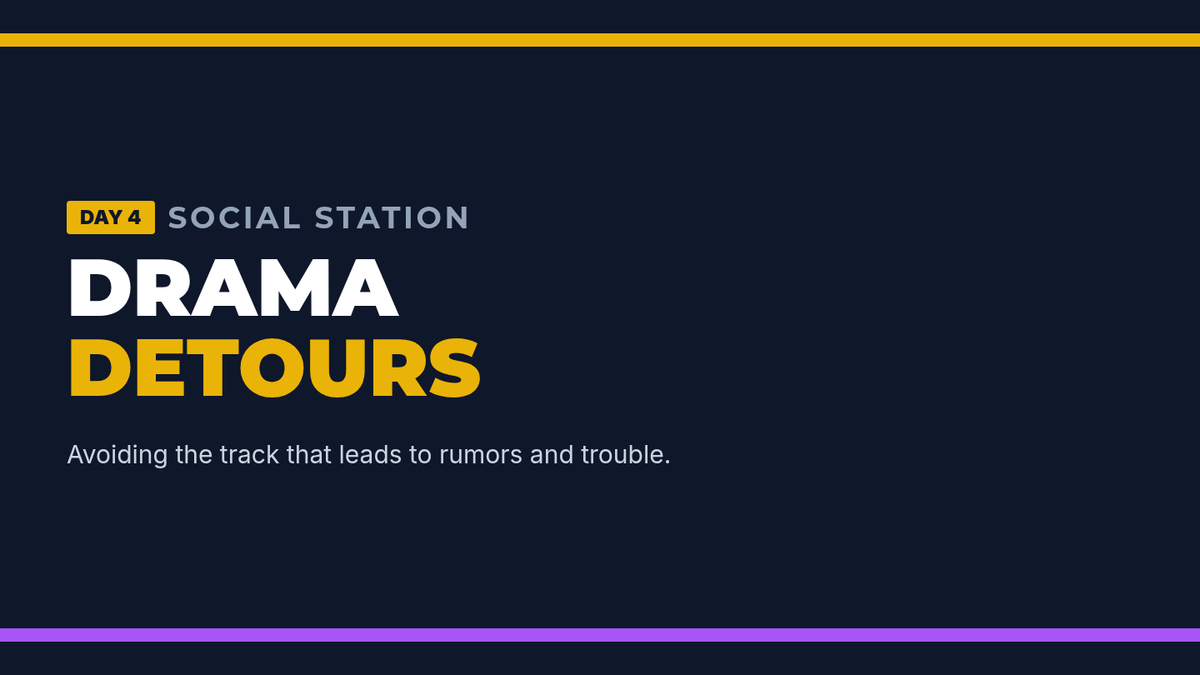
Day 4 teaches students how to avoid drama and rumors by taking a 'detour'.
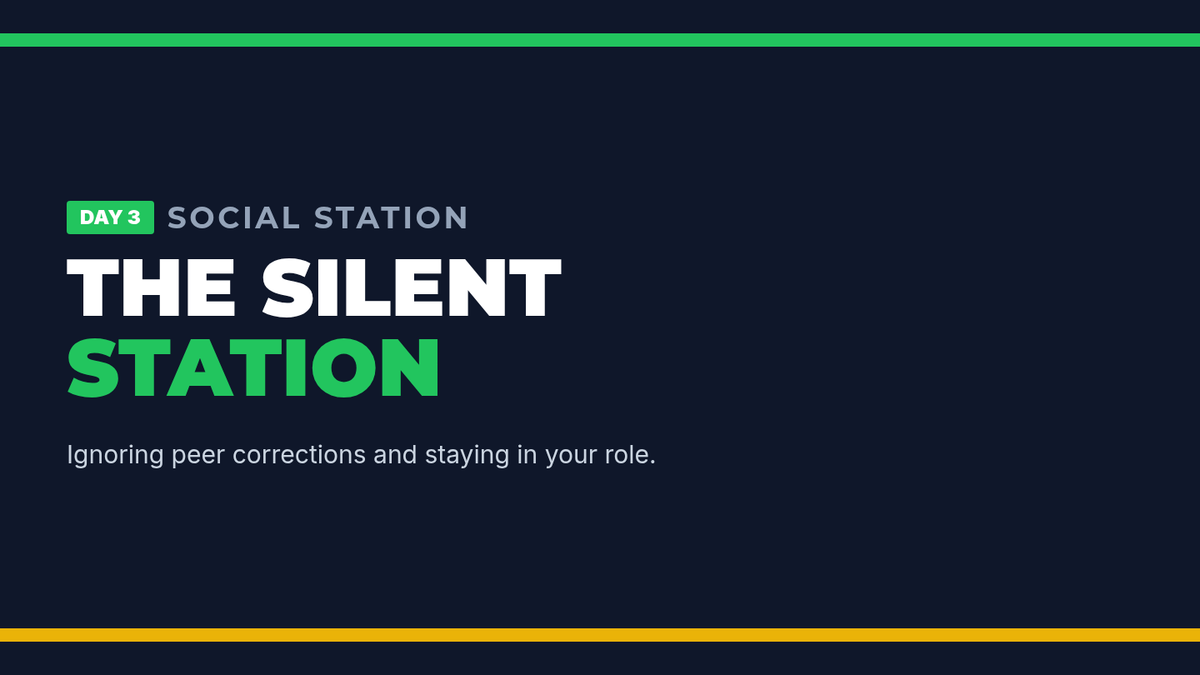
Day 3 addresses how to ignore peer corrections and focus on one's own work.
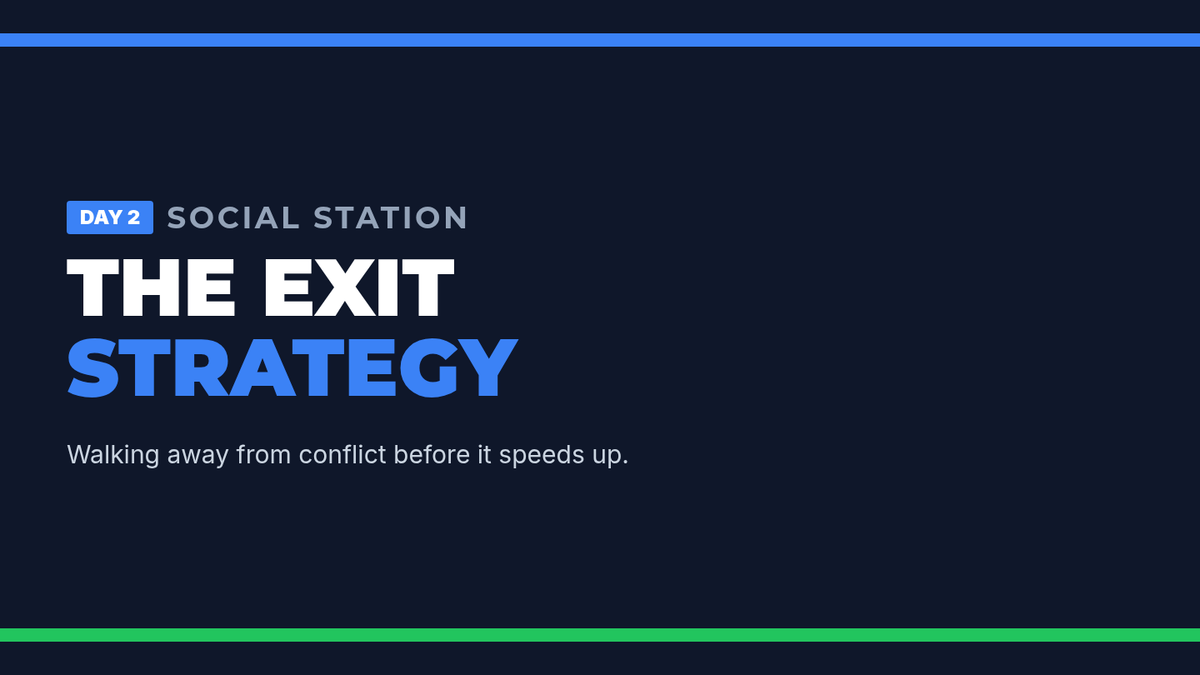
Day 2 focuses on the 'exit strategy' for walking away from rising conflict.
Day 1 focuses on staying out of others' conversations and 'ear-dropping' awareness.
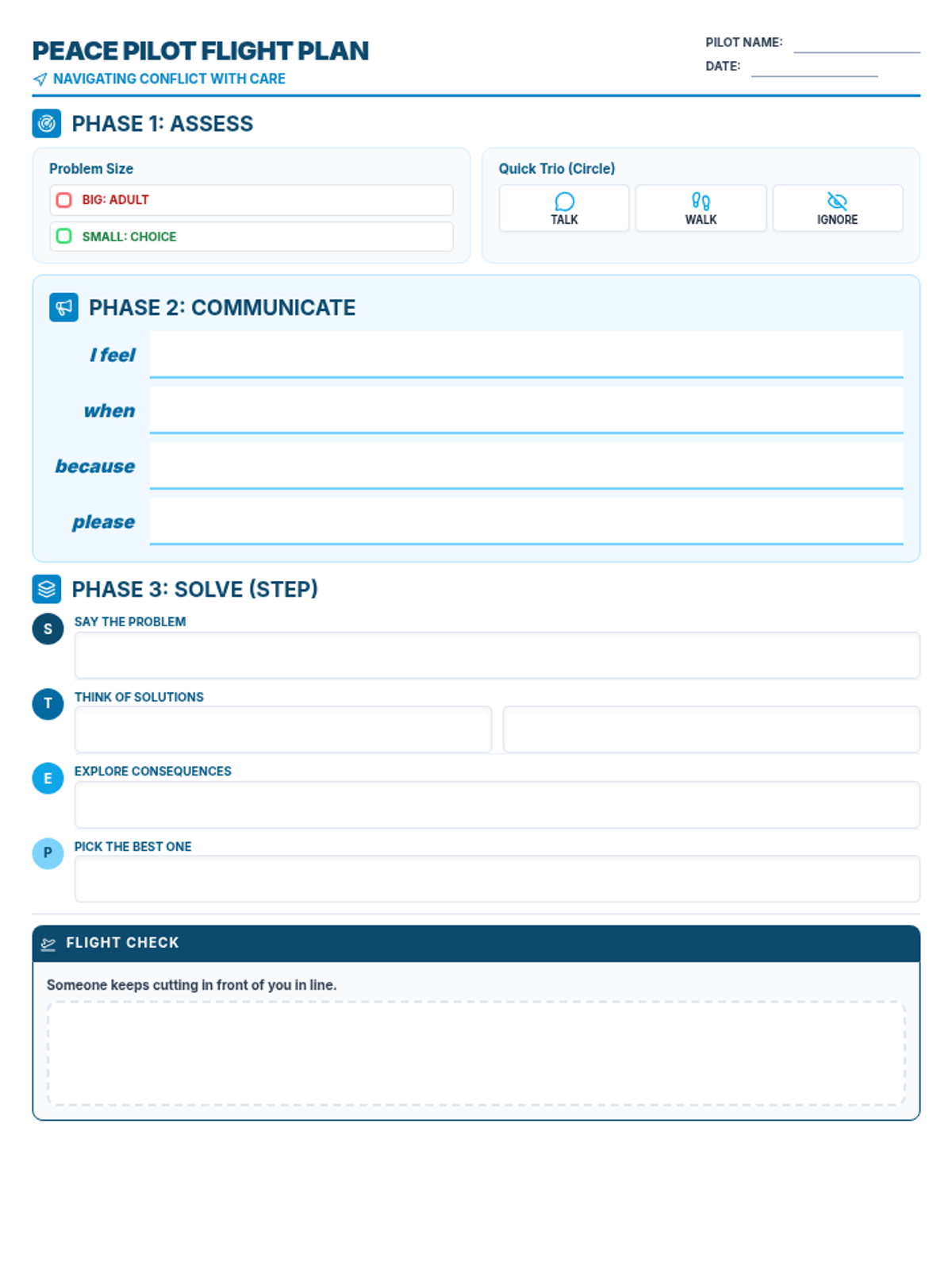
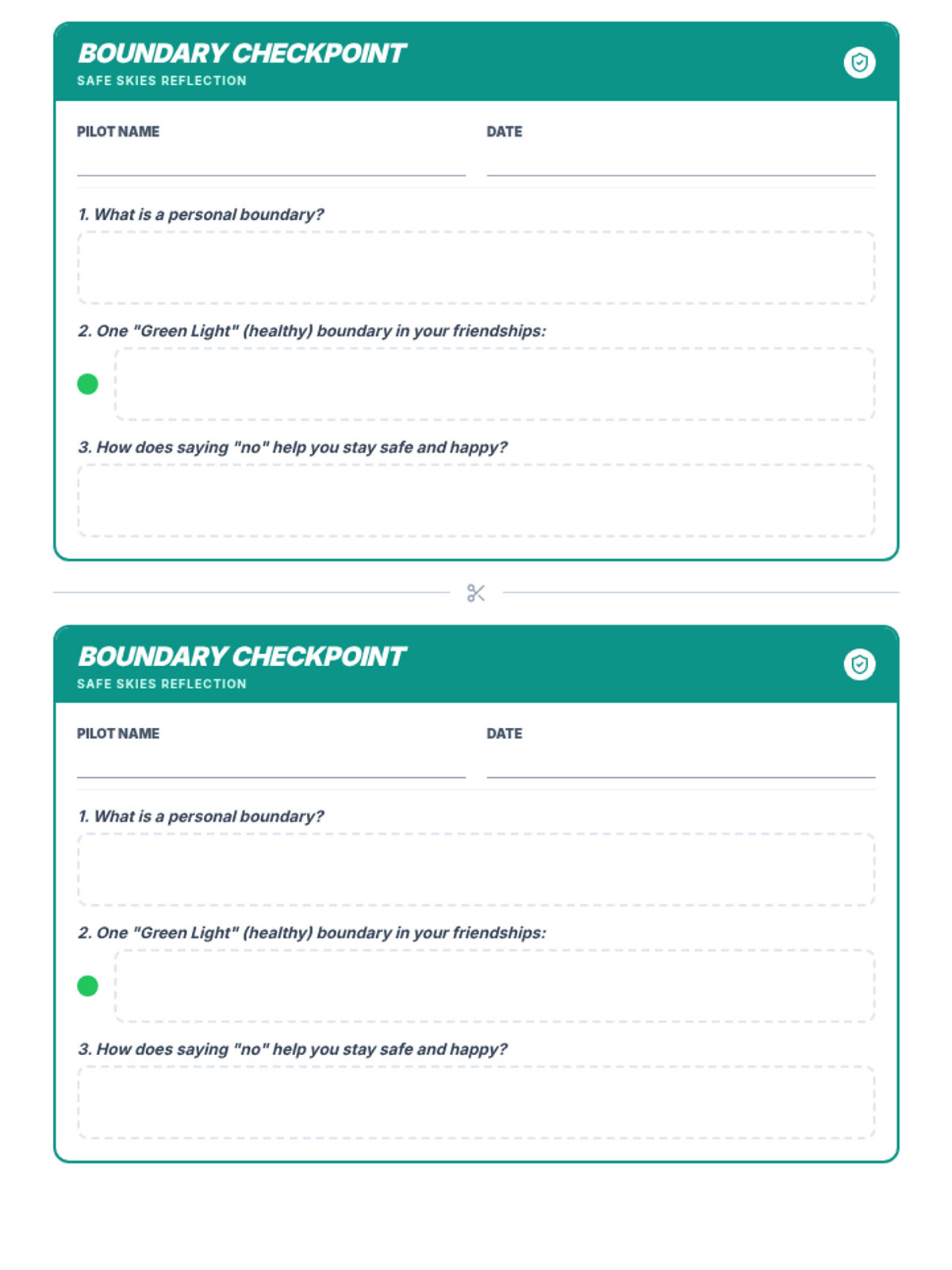
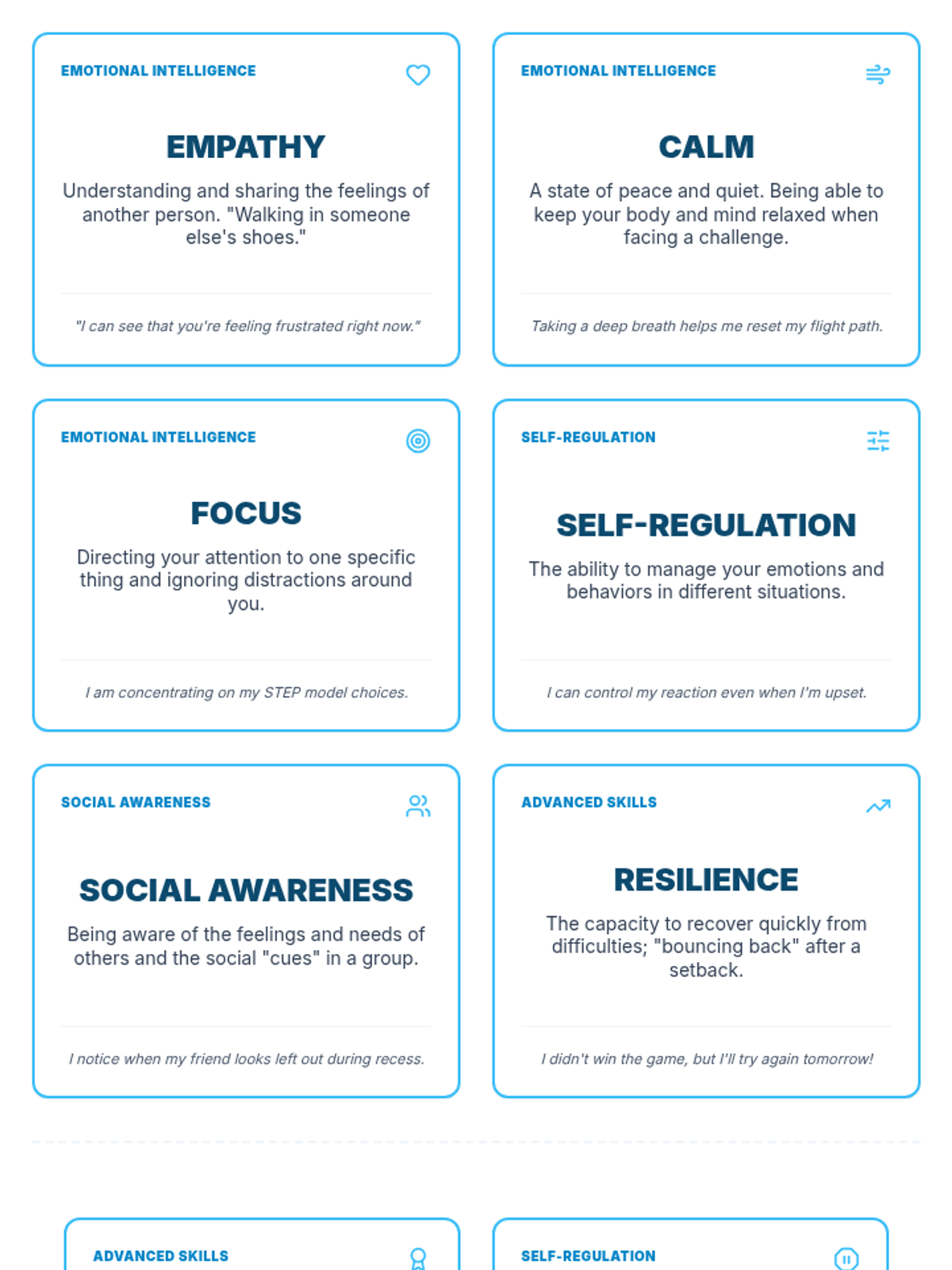
This lesson introduces students to essential conflict resolution strategies and emotional intelligence vocabulary. Students will learn to navigate social challenges using Kelso's Choices, I-Messages, and the STEP model, while also exploring the importance of healthy boundaries.
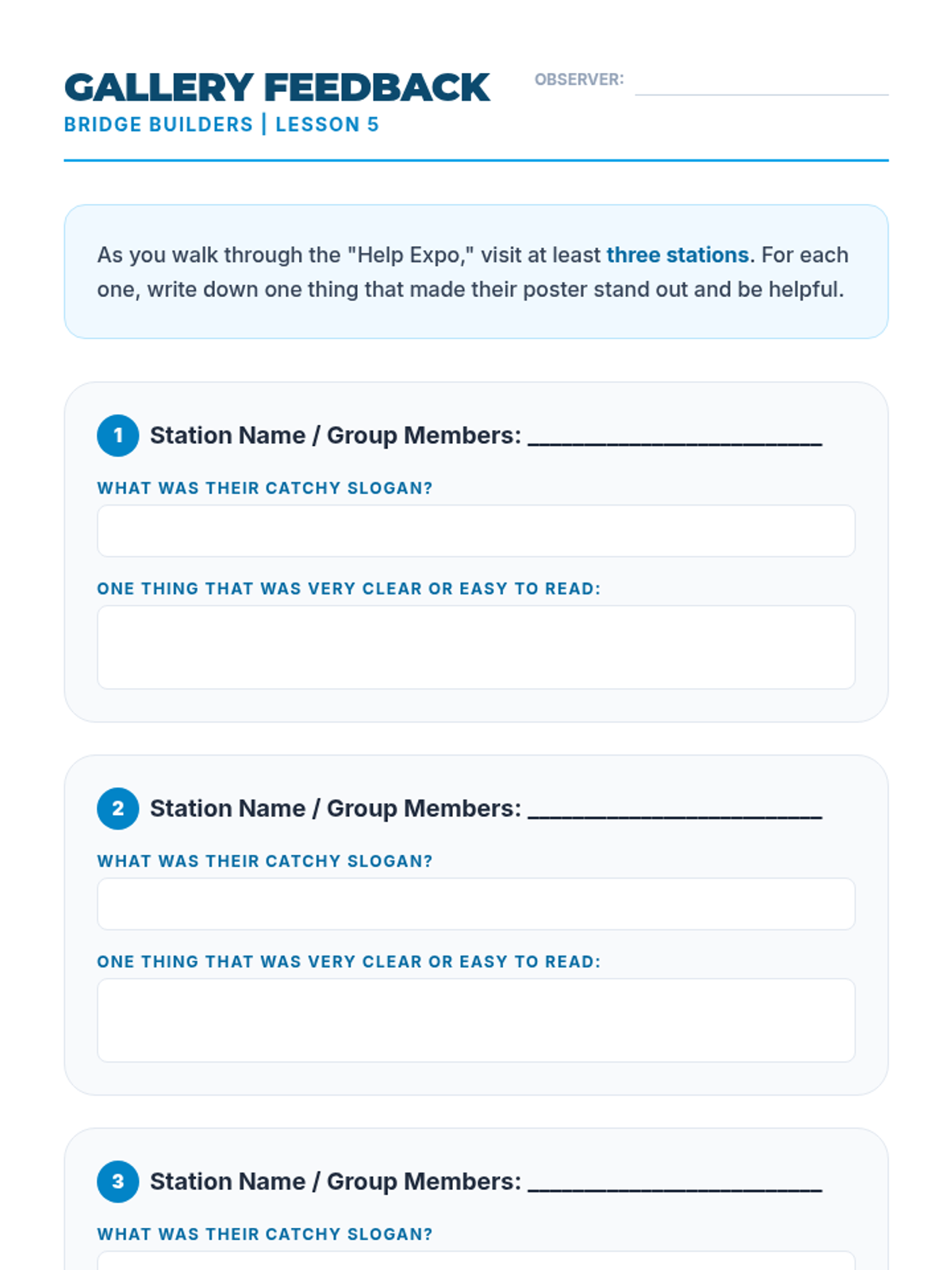
Students present their advocacy projects in a gallery walk format, reinforcing their knowledge by teaching others.
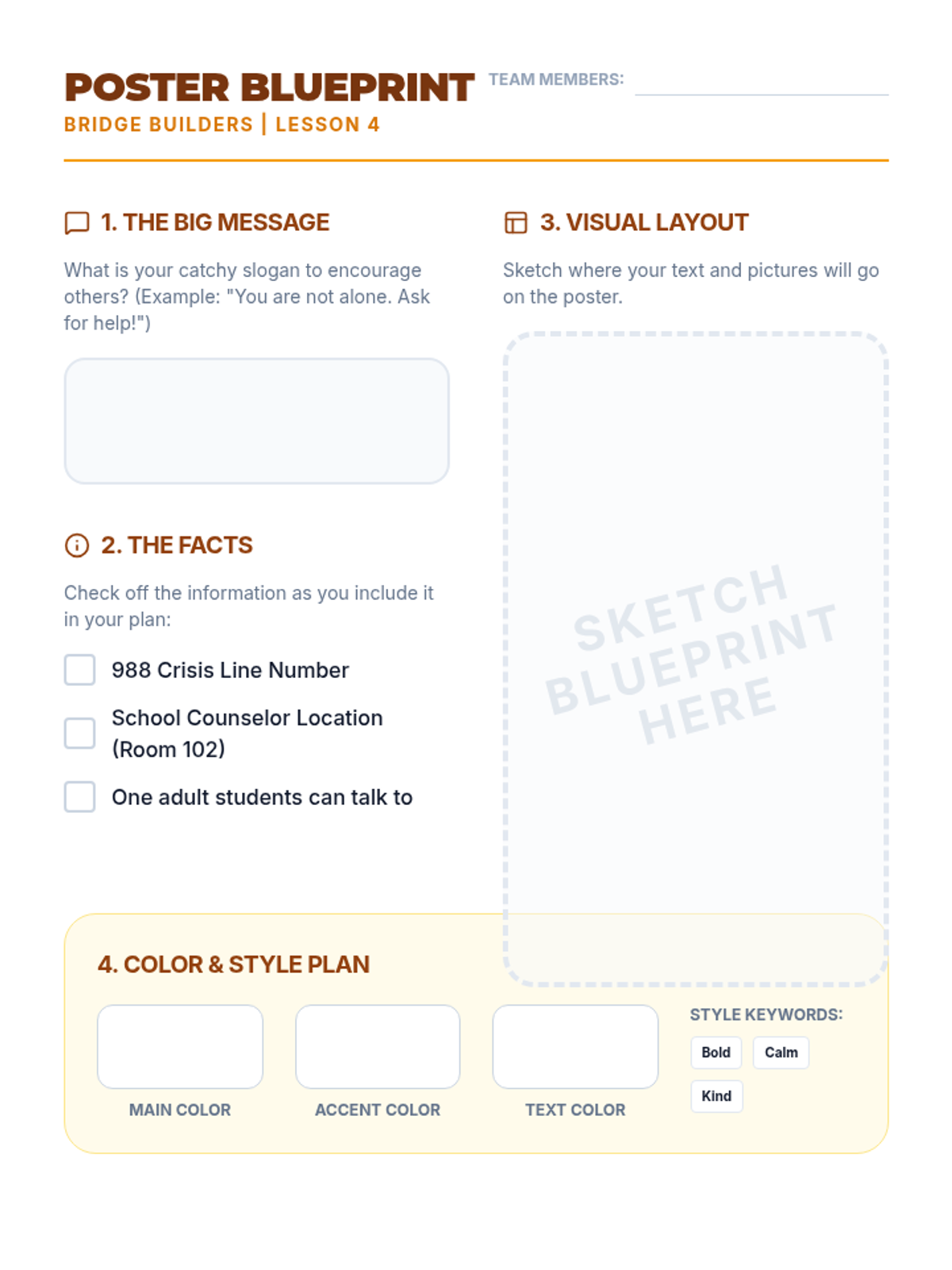
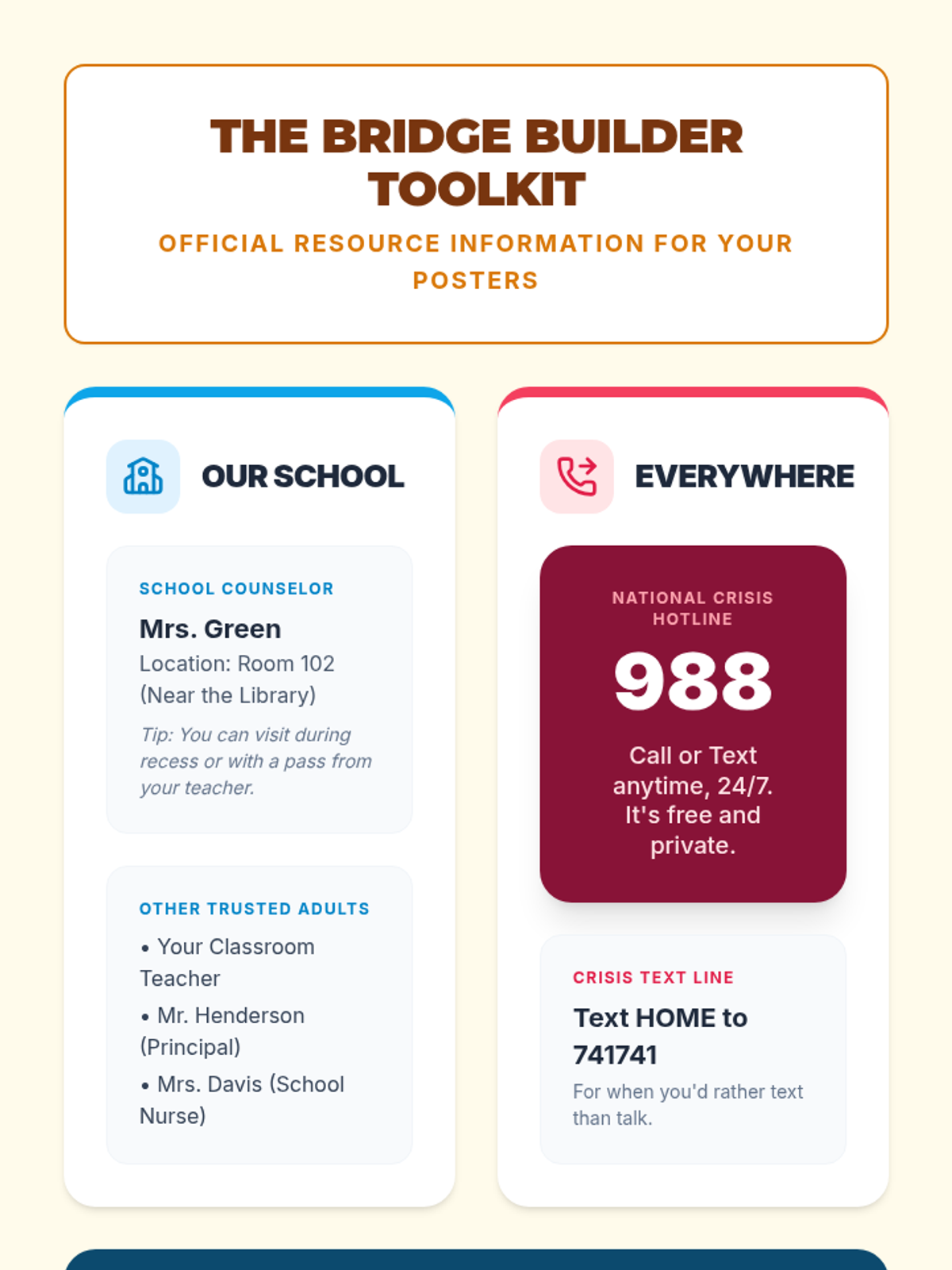
Students collaborate to design informational posters that communicate school and national mental health resources.
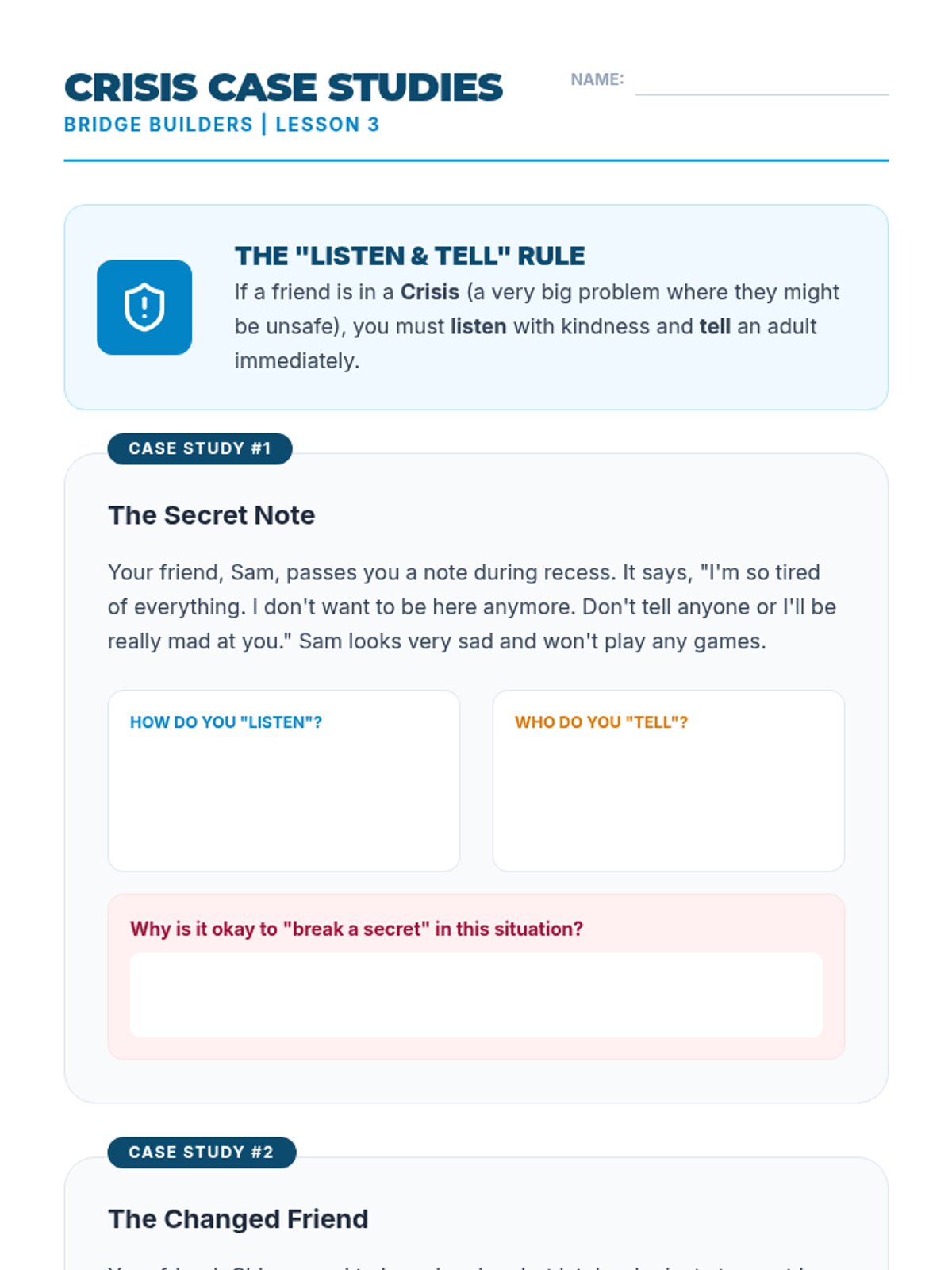
Students explore how to support peers in crisis using the 'Listen and Tell' rule, understanding when a problem is too big to handle alone.
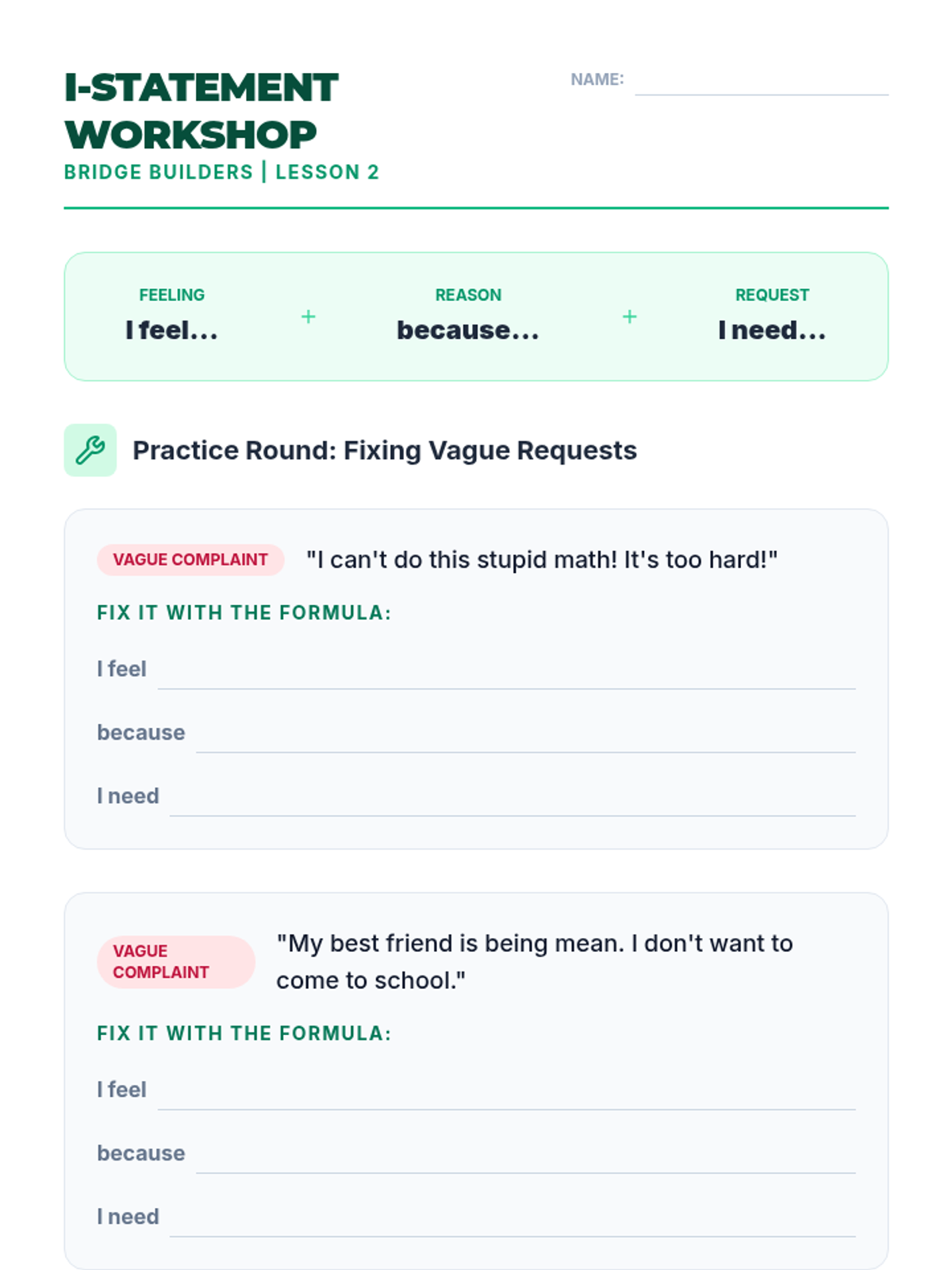
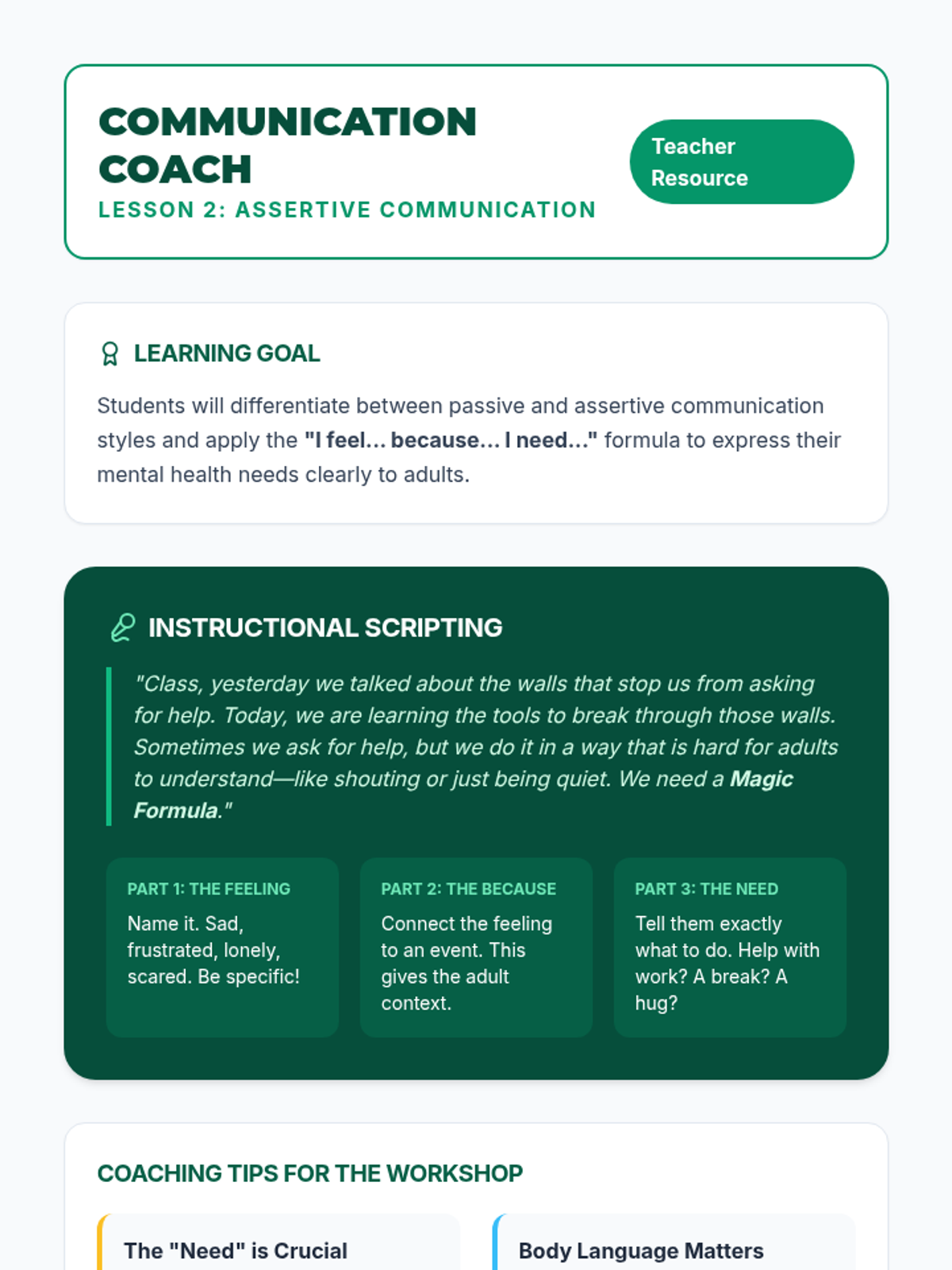
Students learn and practice using 'I-statements' and assertive communication to clearly state their needs to trusted adults.
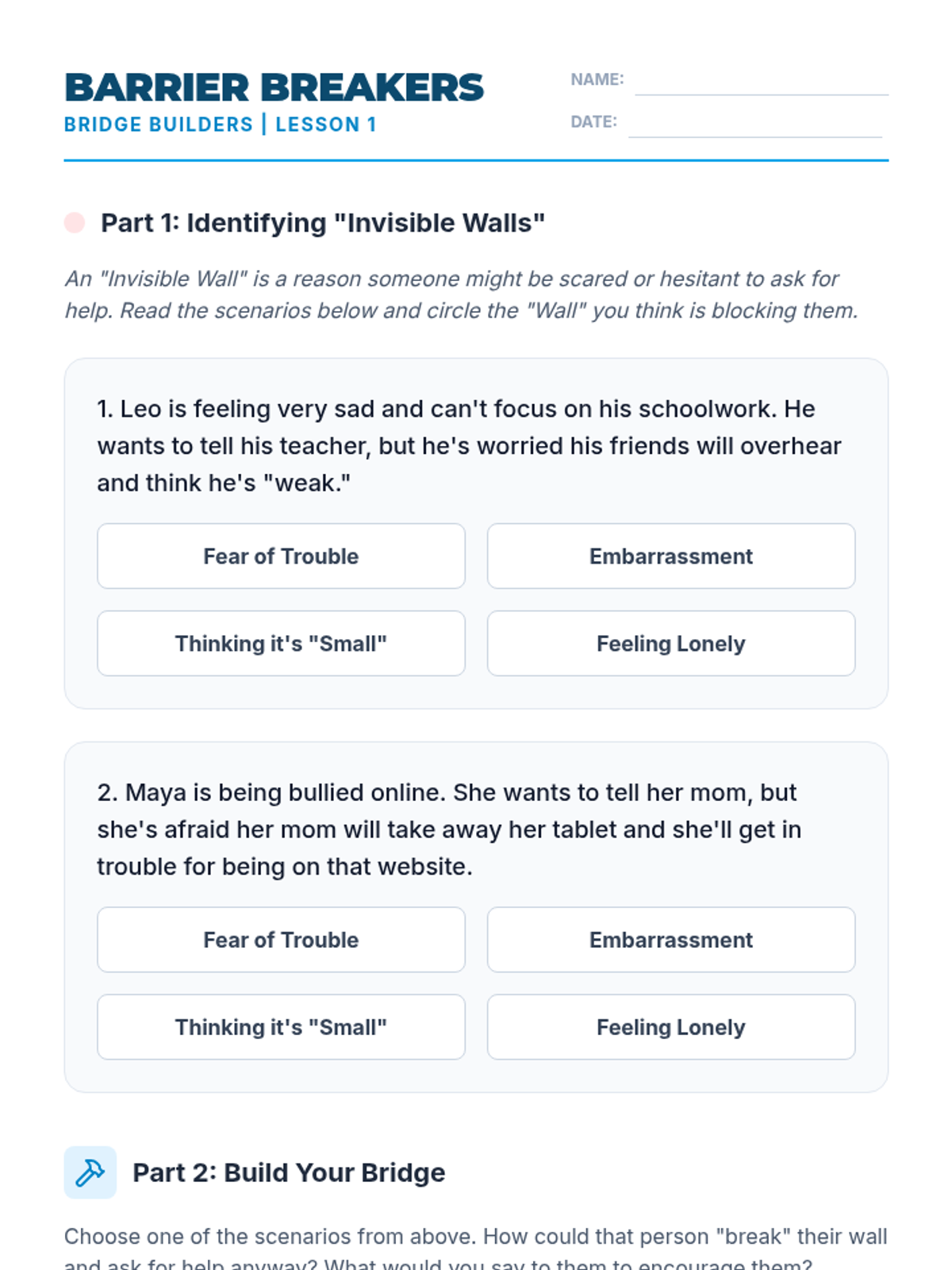
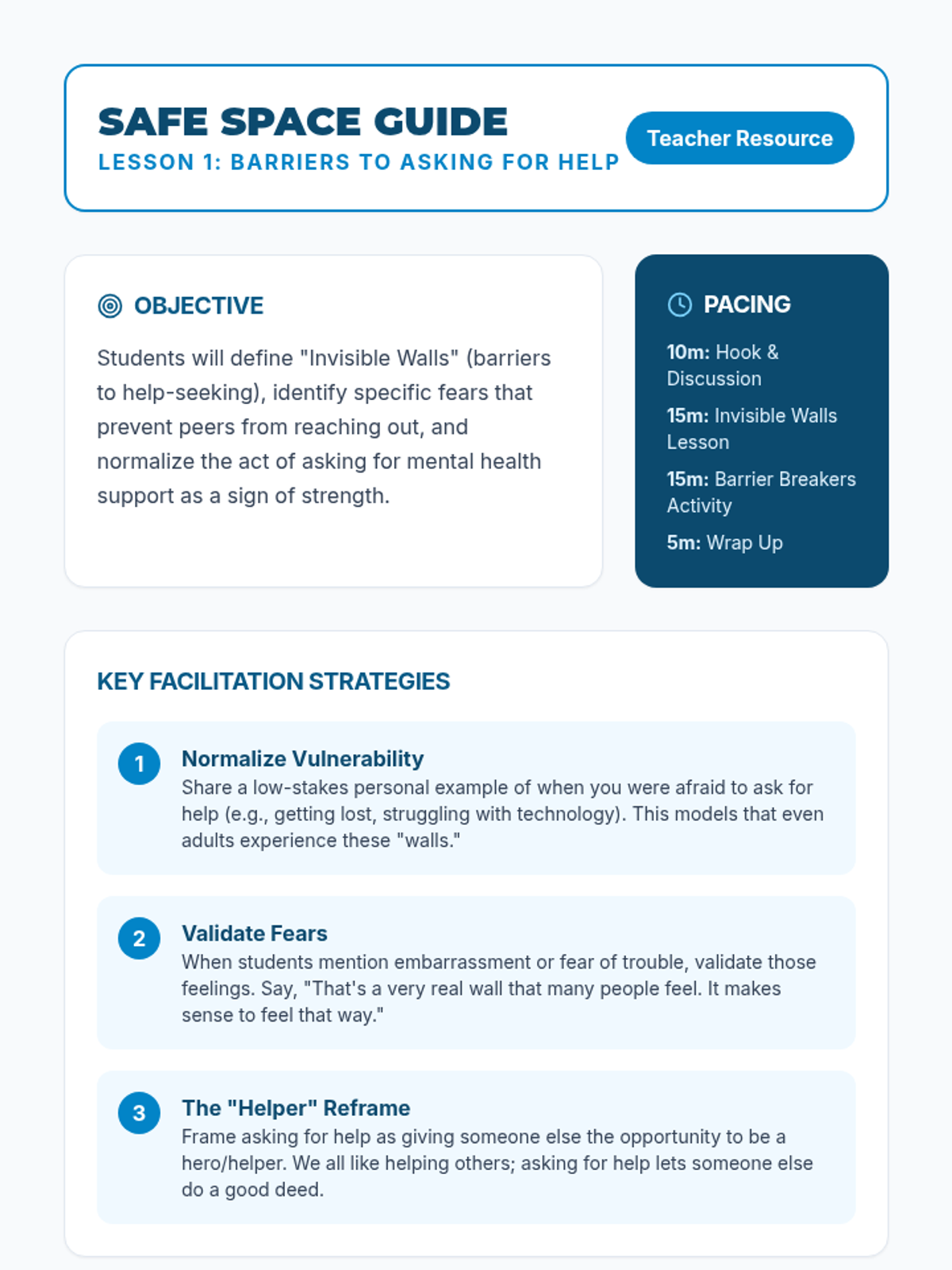
Students identify emotional and social barriers to asking for help and brainstorm strategies to normalize help-seeking behavior.
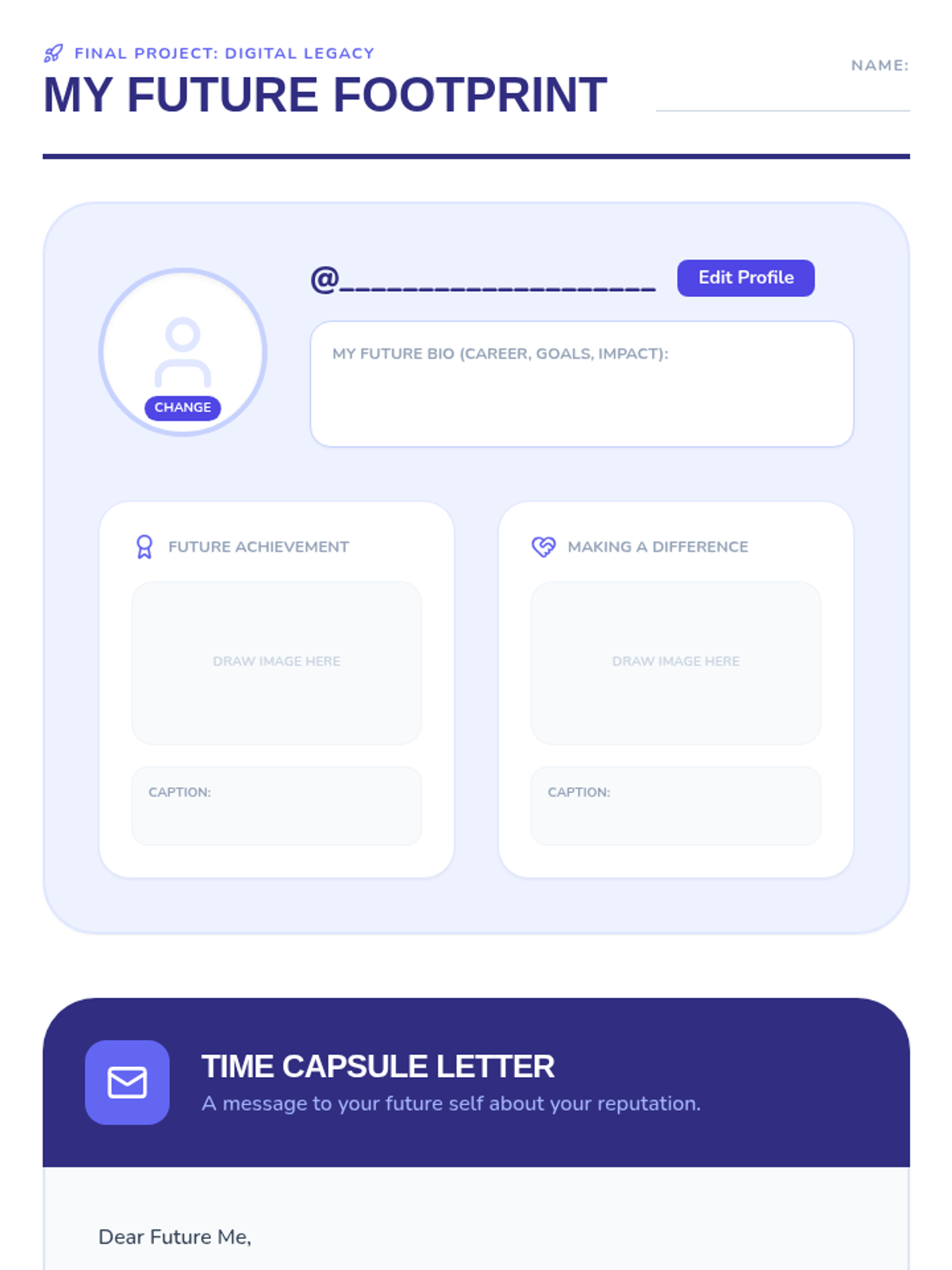
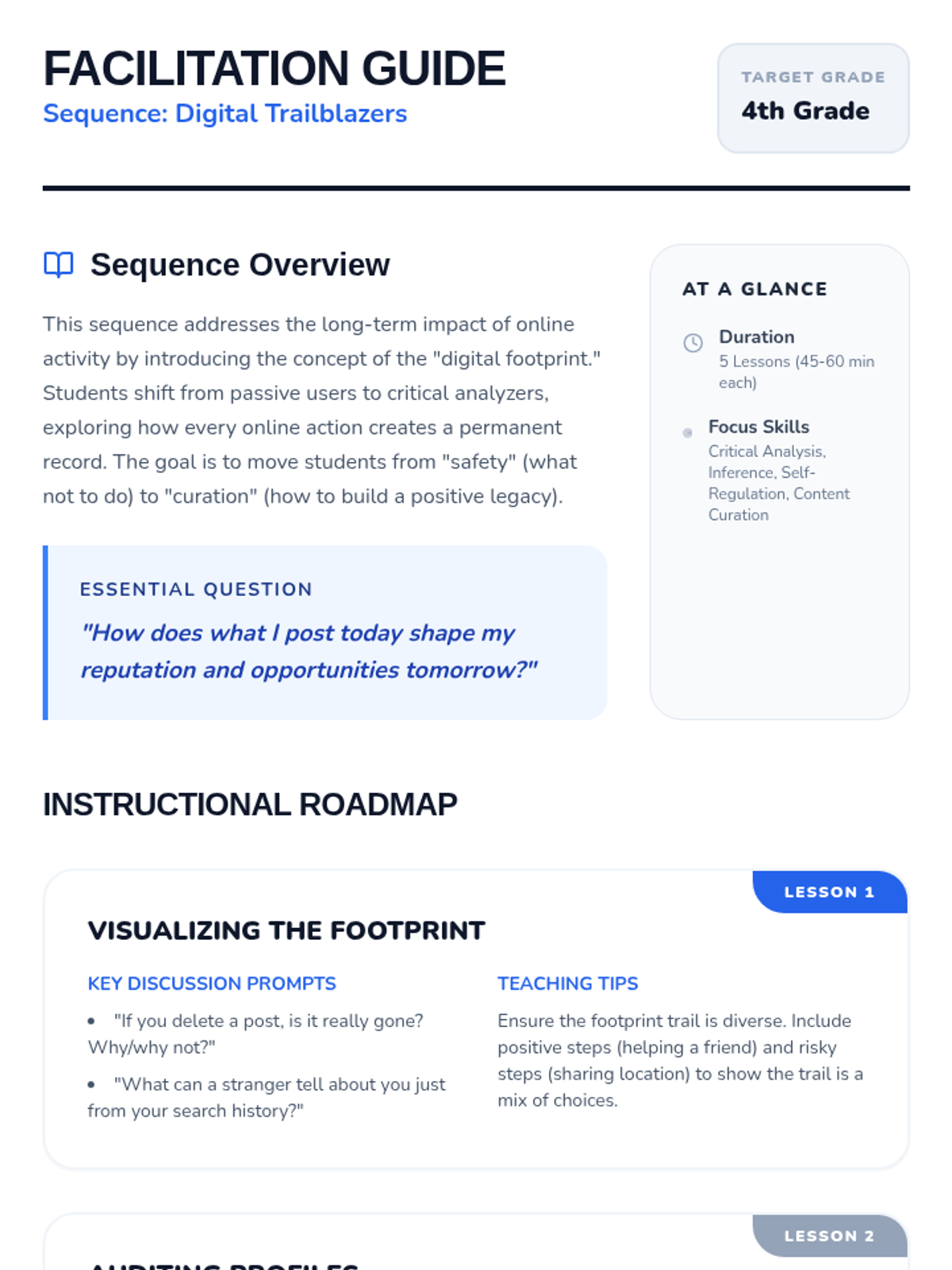
As a final project, students design a mock profile for their future selves and write a 'time capsule' letter about protecting their reputation.
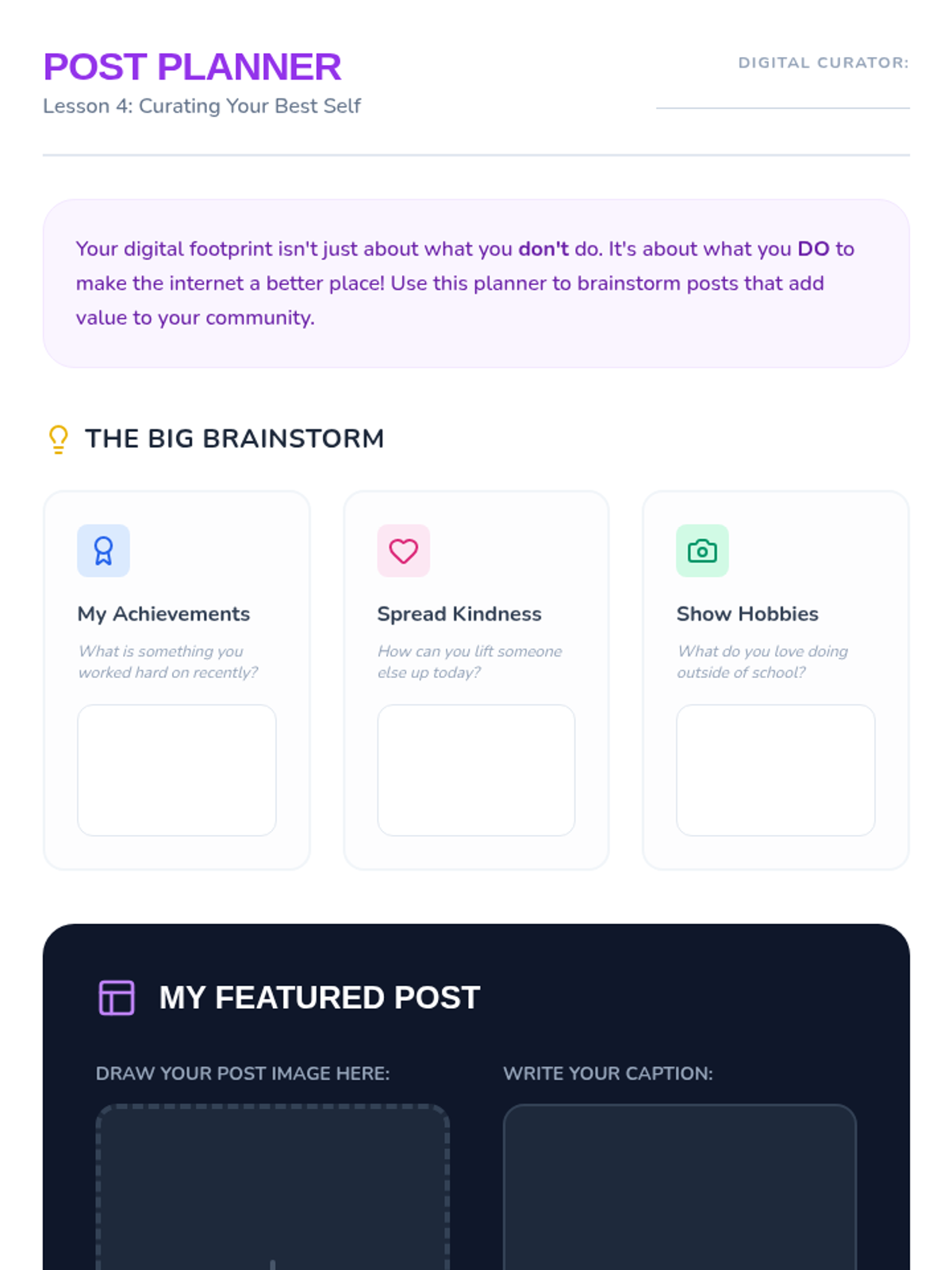
Students shift to proactive content creation, brainstorming ways to showcase hobbies and kindness online to add value to their community.
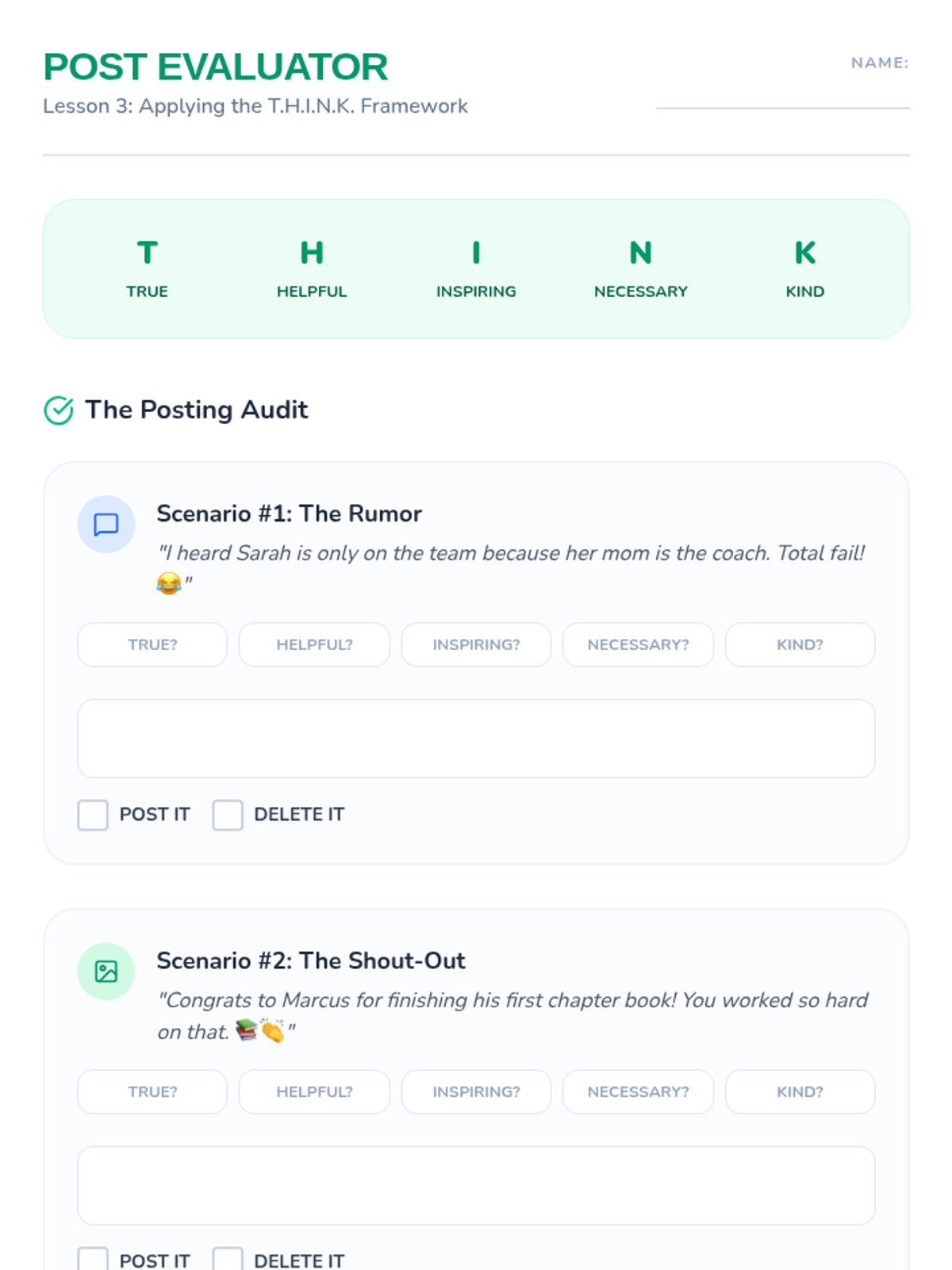
Students learn the T.H.I.N.K. framework (True, Helpful, Inspiring, Necessary, Kind) and apply it to sample posts, using the 'toothpaste challenge' to illustrate the permanent nature of online sharing.
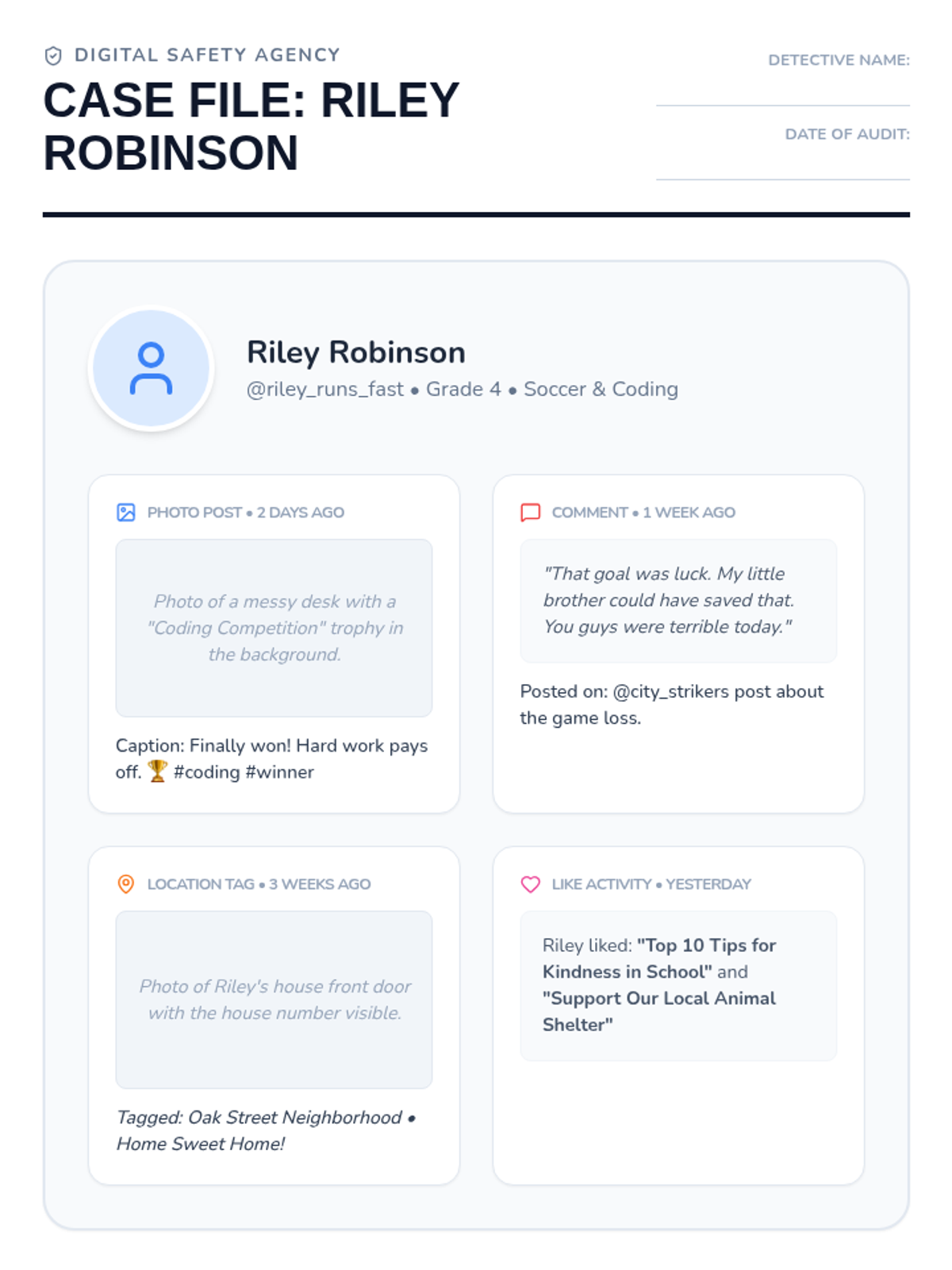
Students become digital detectives, examining a fictional student's profile to decide if it represents a positive or negative footprint based on evidence and inferences.
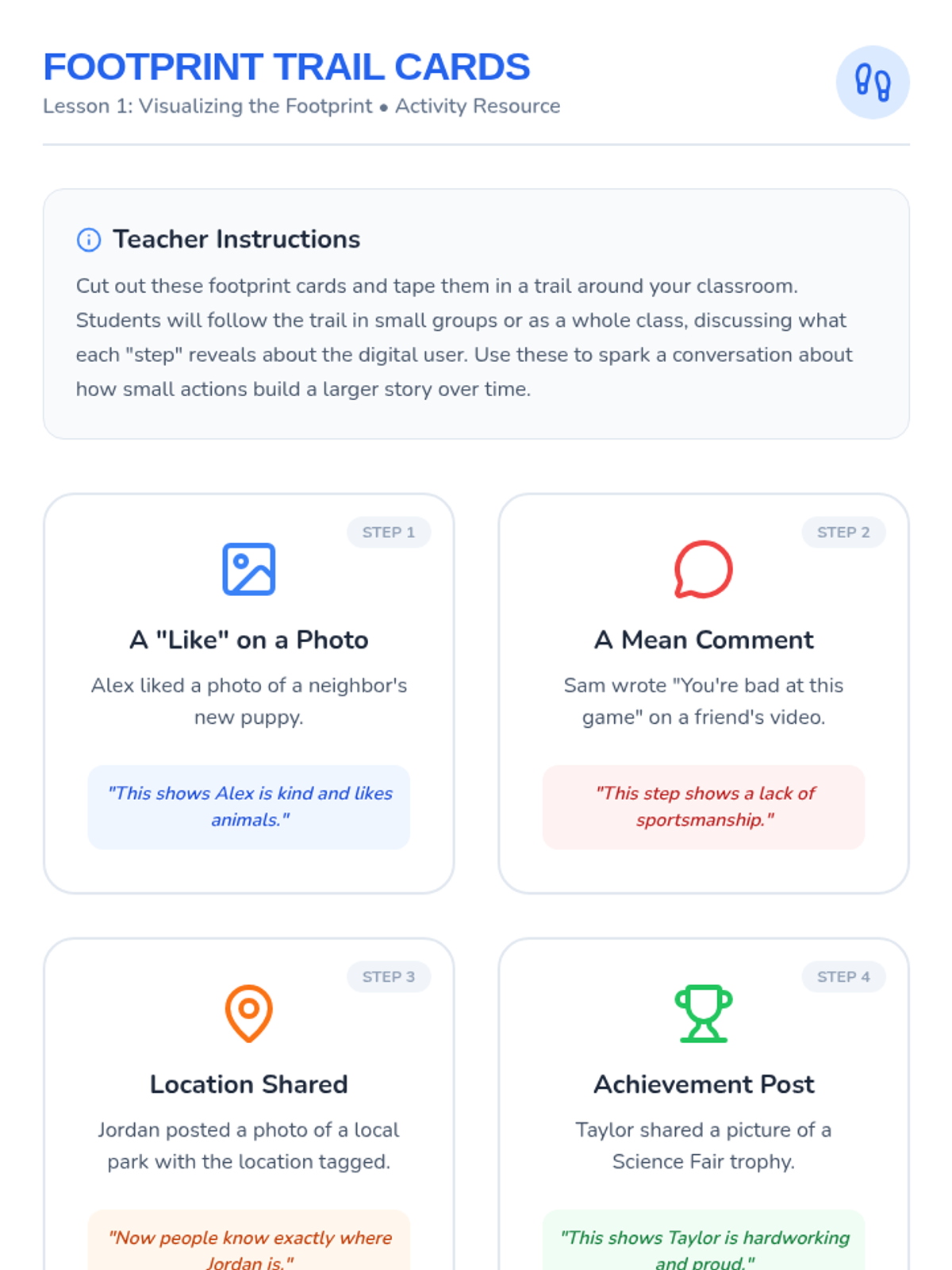
Students follow a physical trail of footprints in the classroom to discuss how steps are permanent and traceable online, using the 'Invisible Ink' hook to symbolize data persistence.
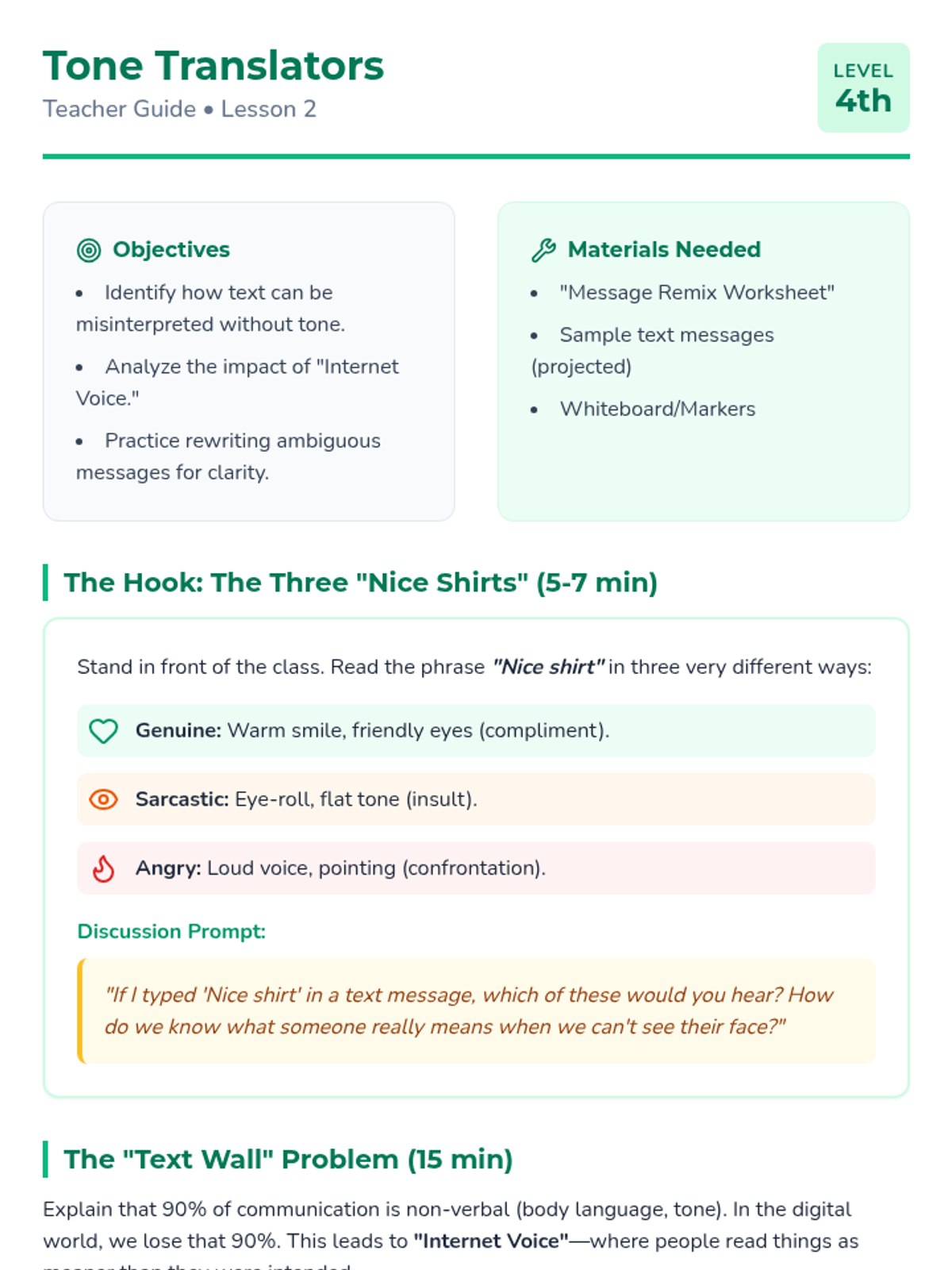
Students analyze how the absence of facial expressions and voice tone can lead to misunderstandings in text messages. They rewrite ambiguous messages to make them clearer and kinder.
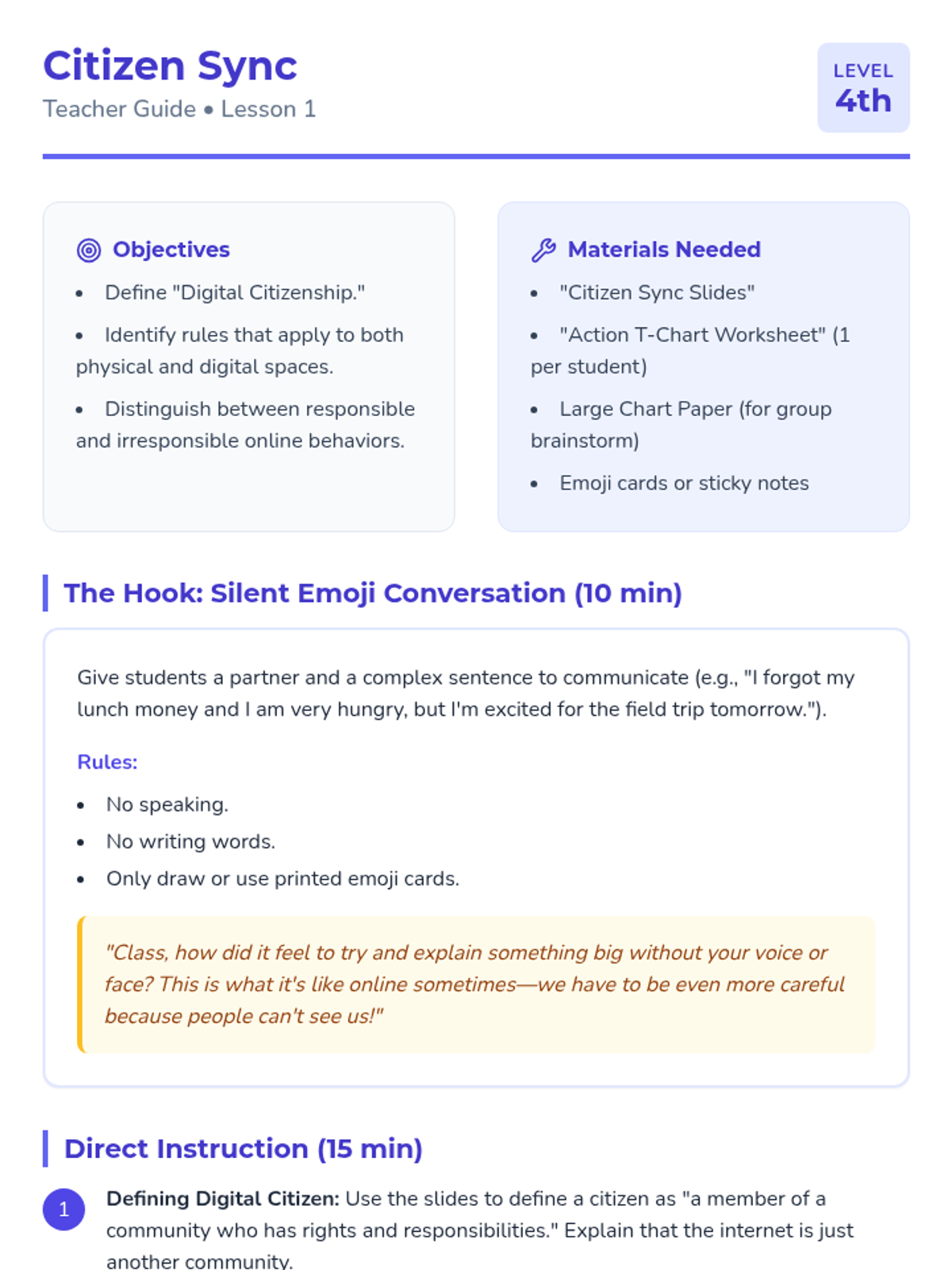
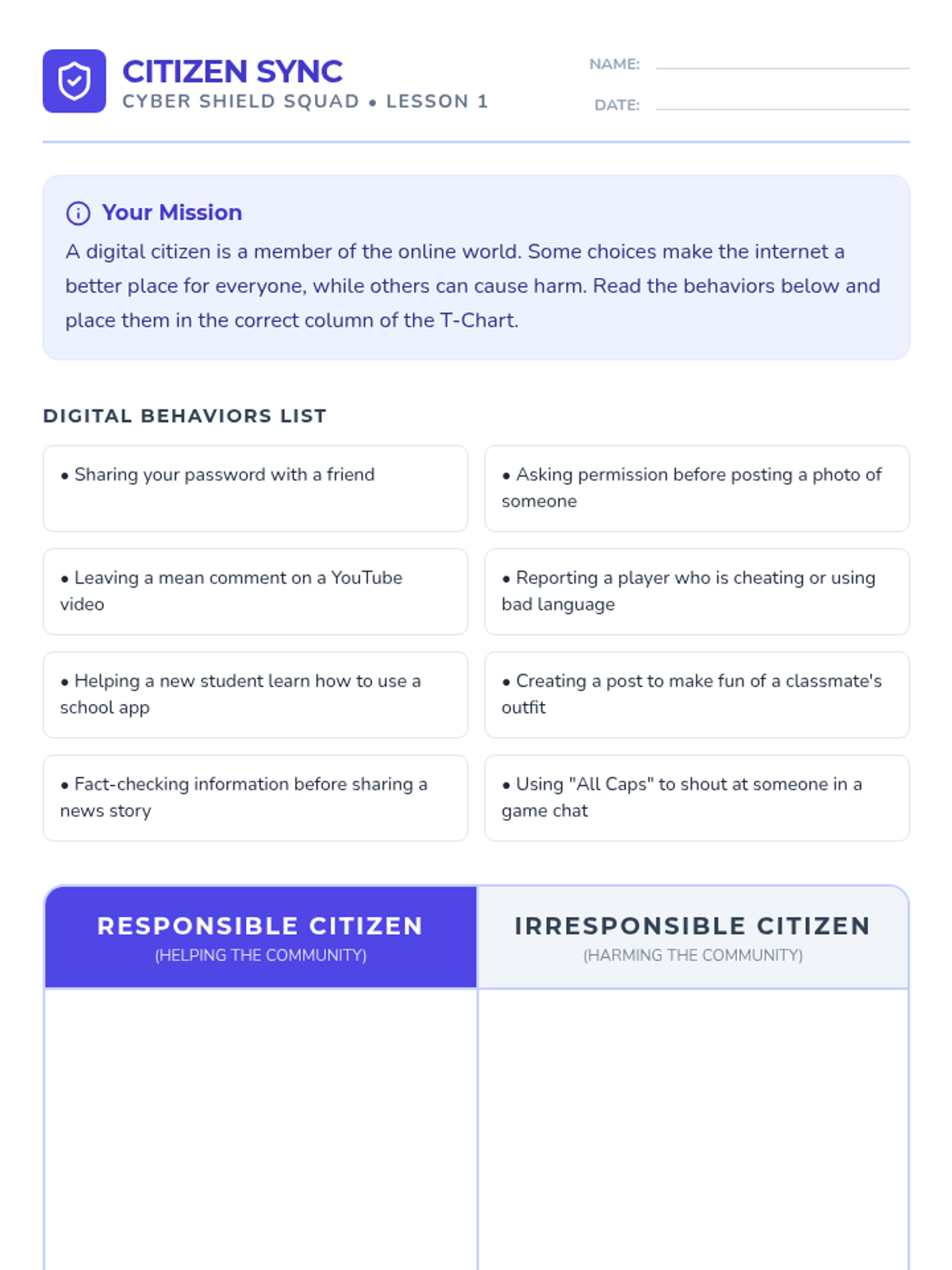
Students explore the concept of a 'digital citizen' and compare rules of the physical classroom to rules of the internet. They collaborate to create a T-chart of responsible vs. irresponsible online behaviors.
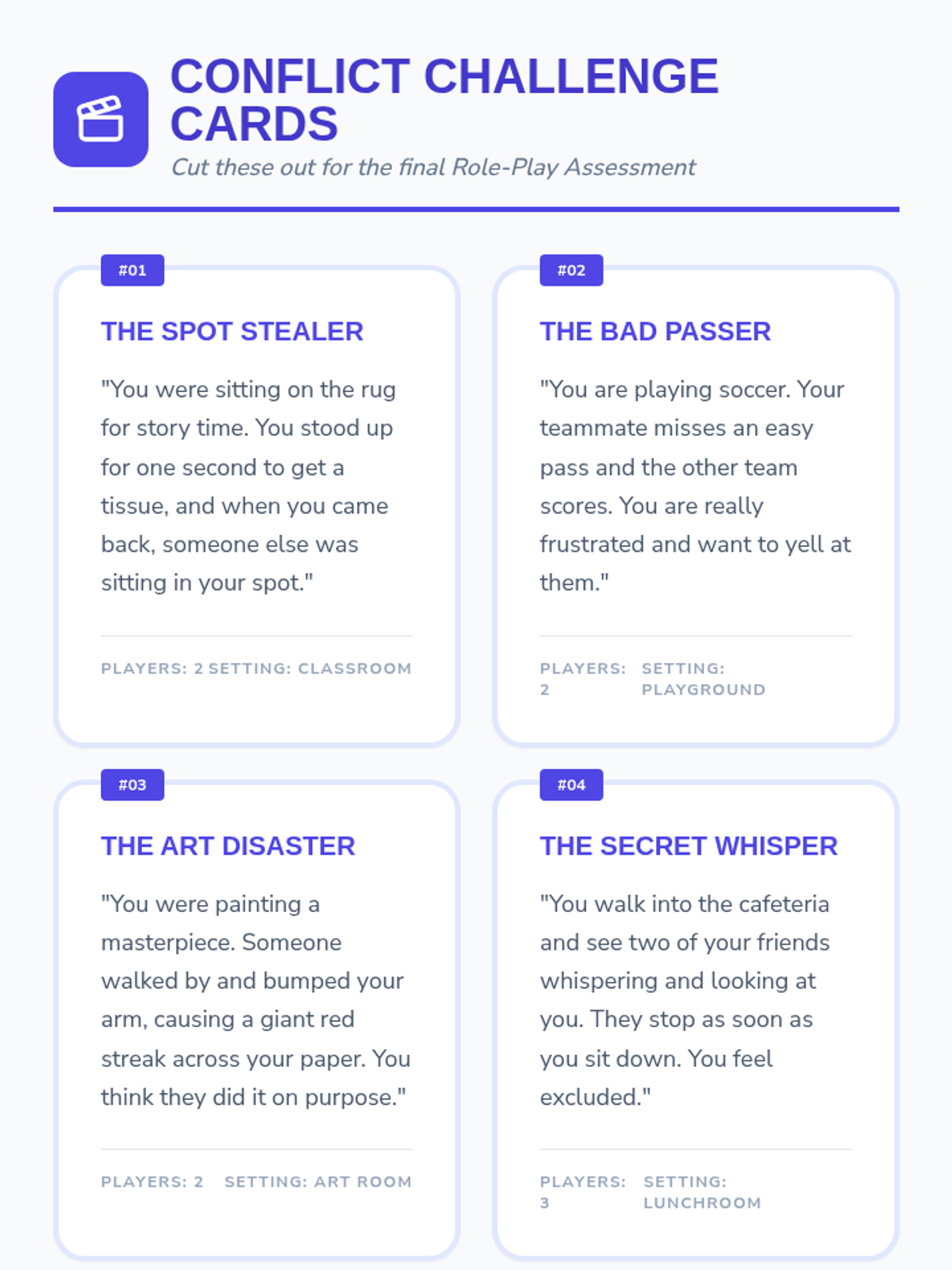
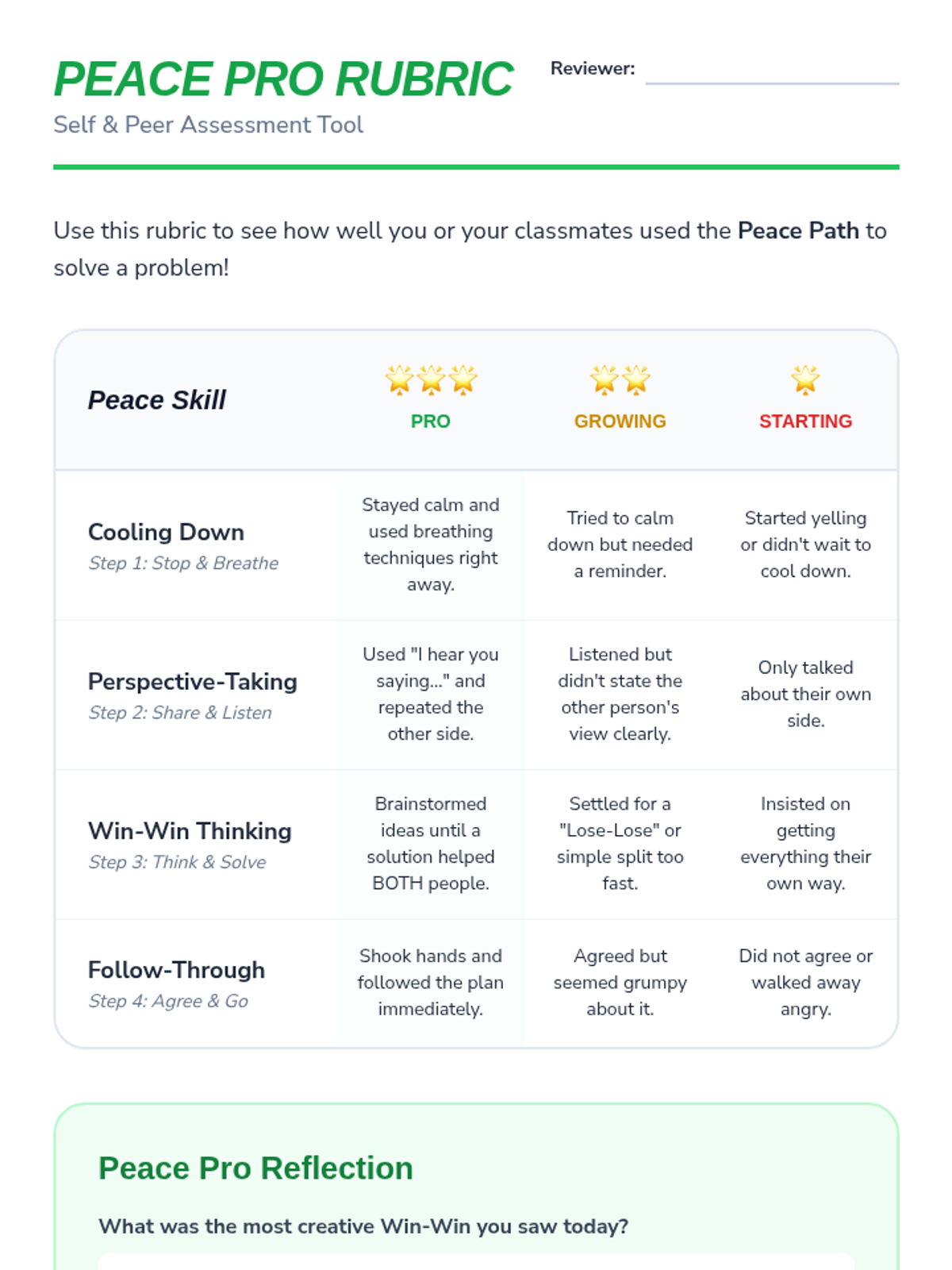
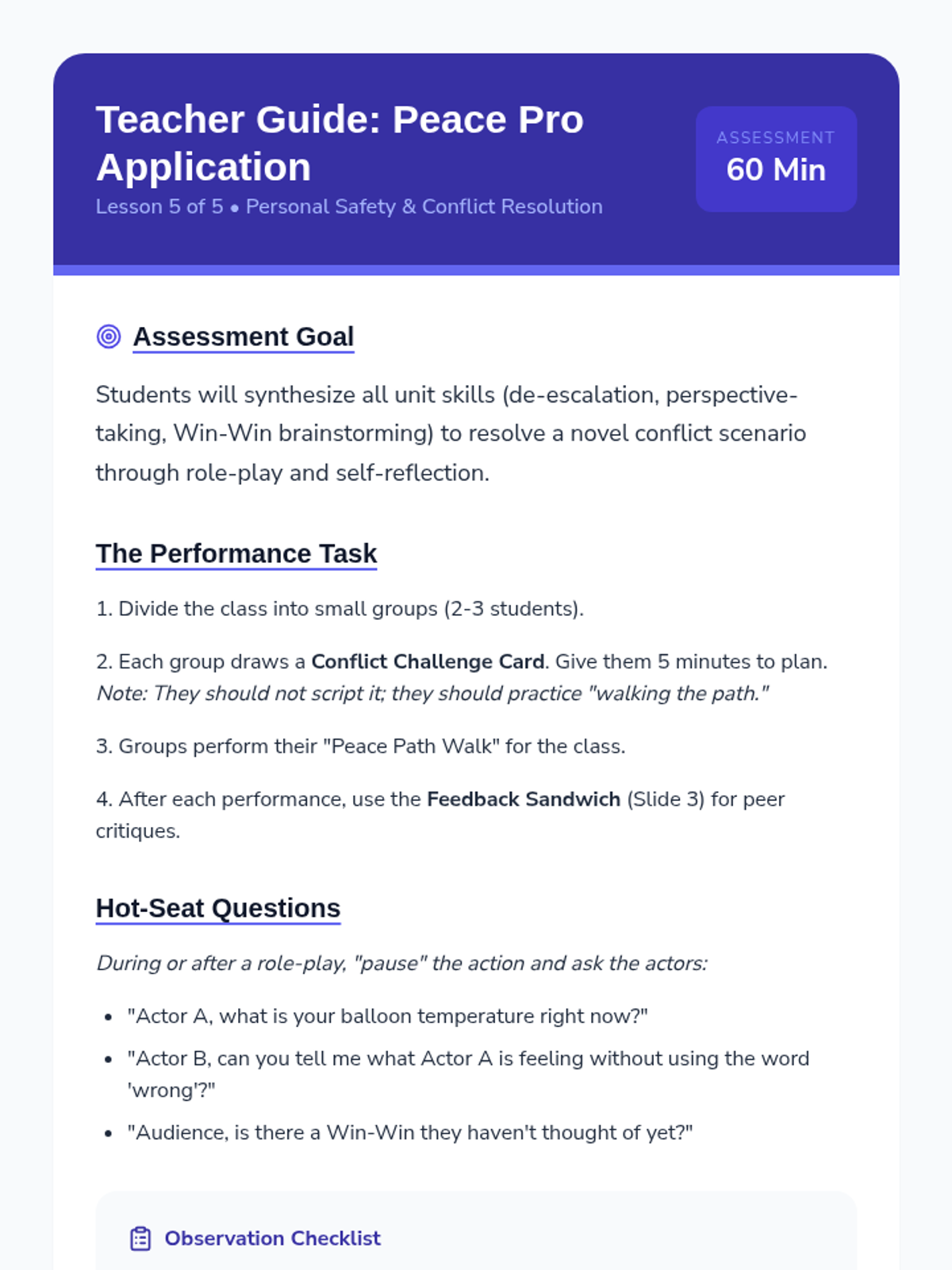
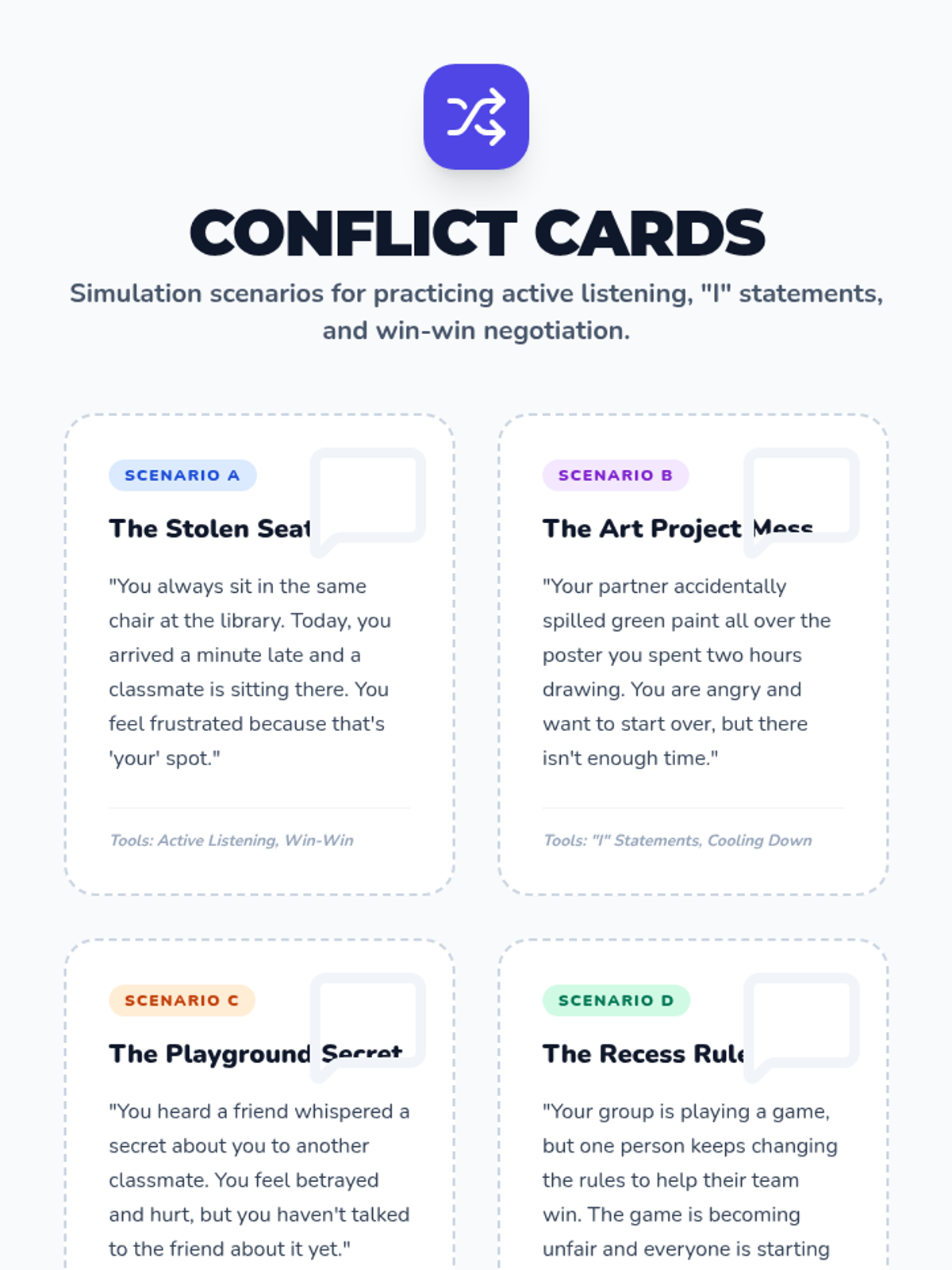
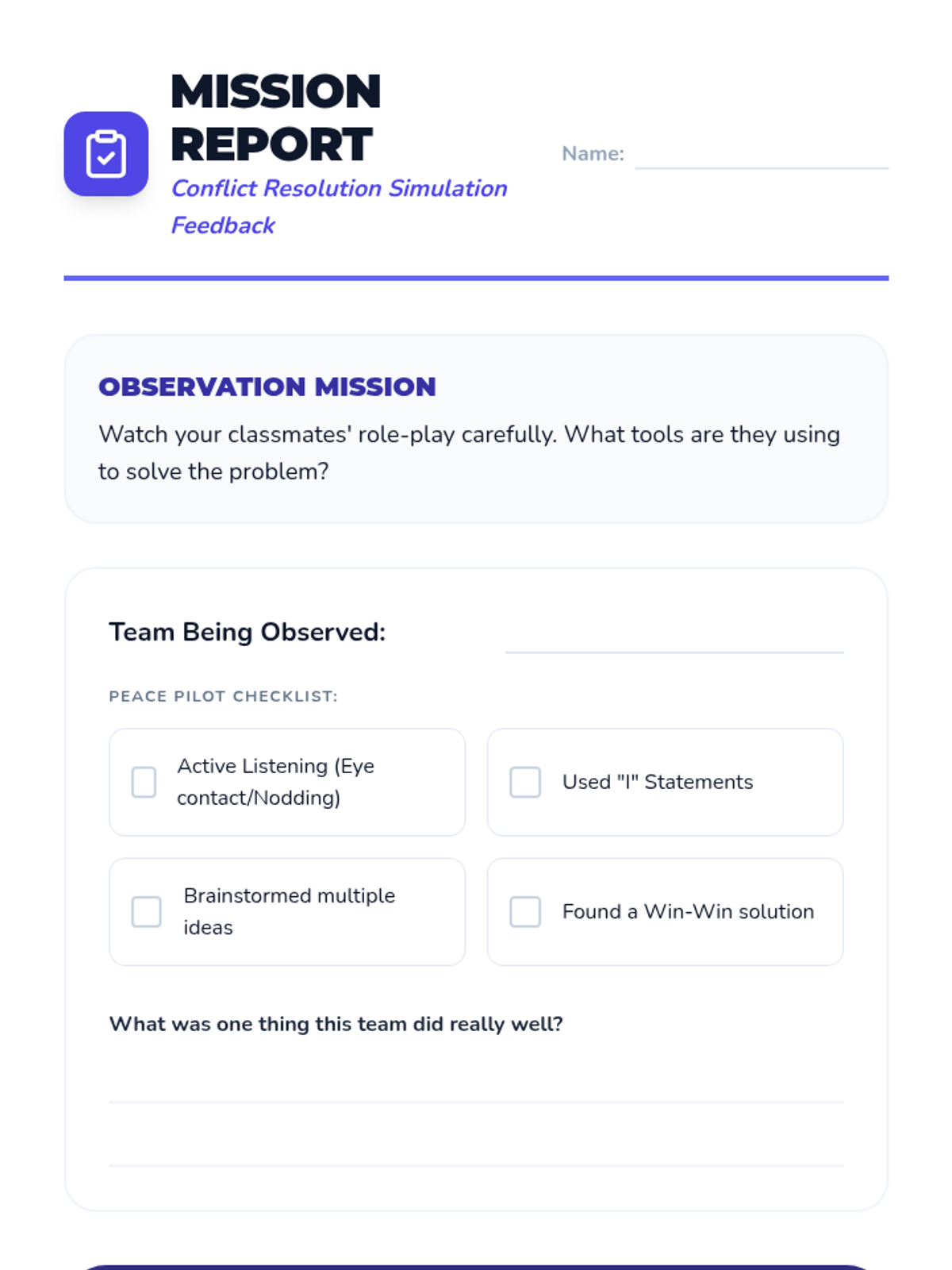
Students apply their skills to real-world scenarios through role-play and receive peer feedback on their resolution strategies.
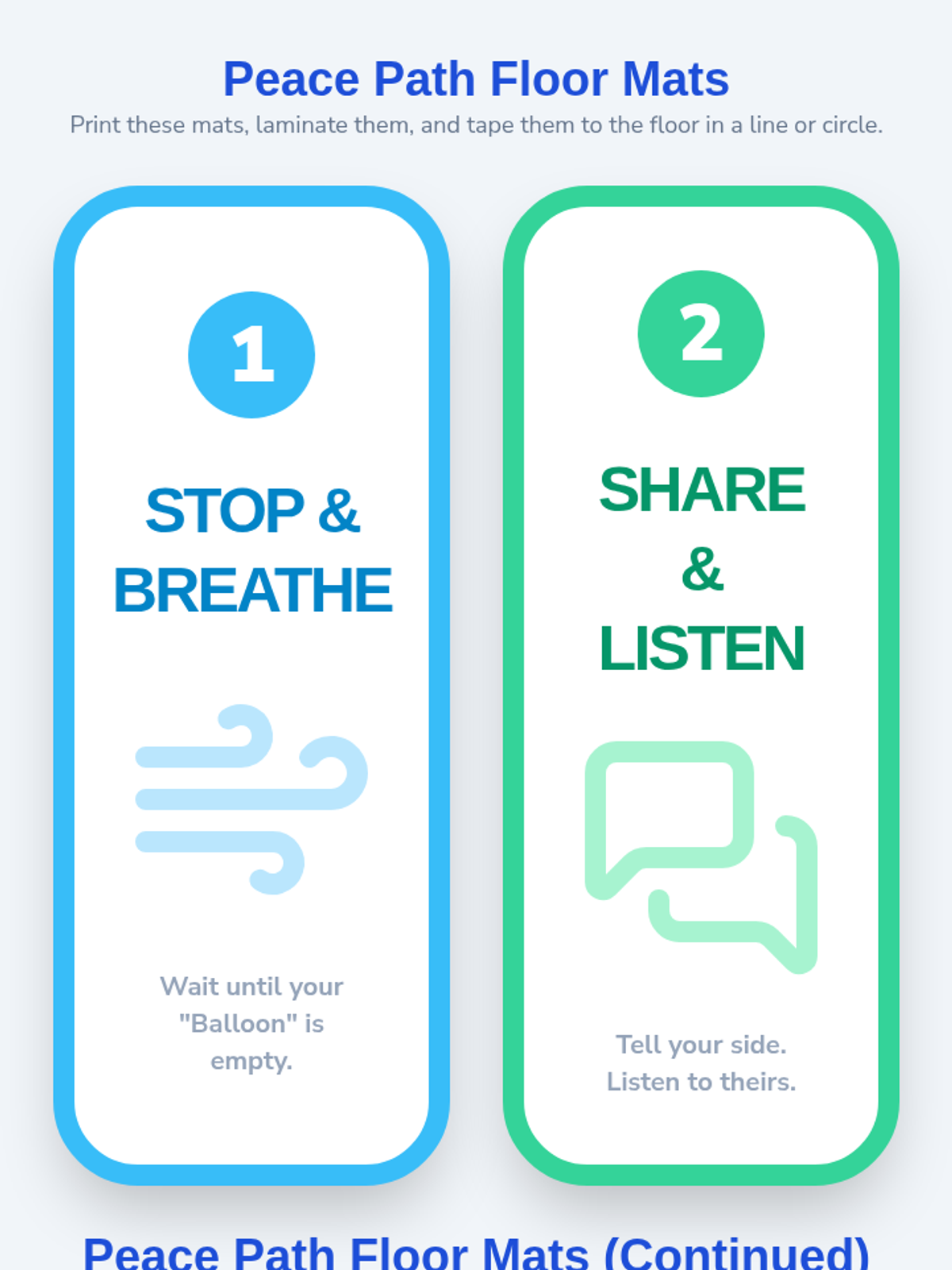
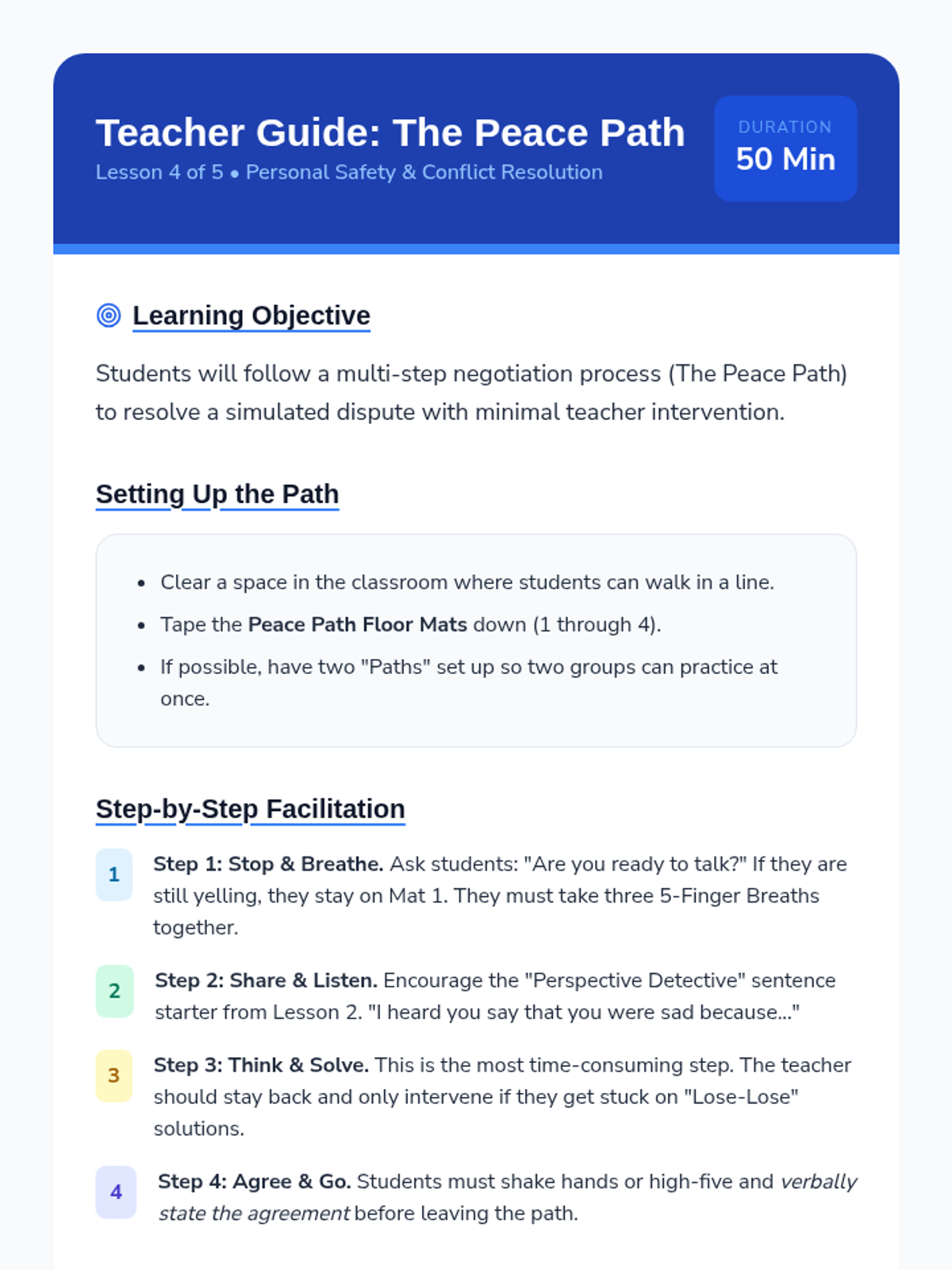
Students are introduced to the 'Peace Path'—a 4-step structured model for conflict resolution—and practice walking through it physically.
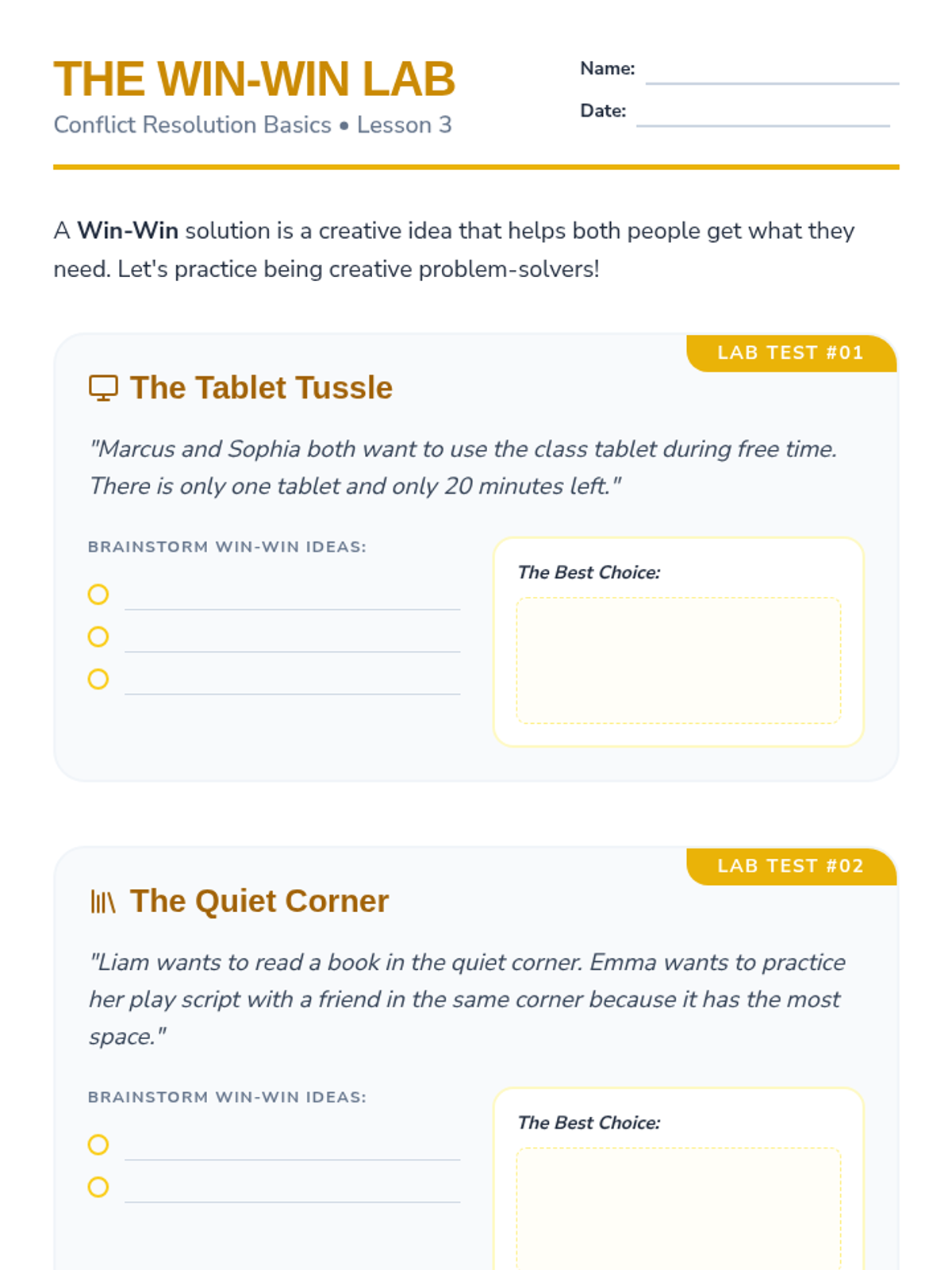
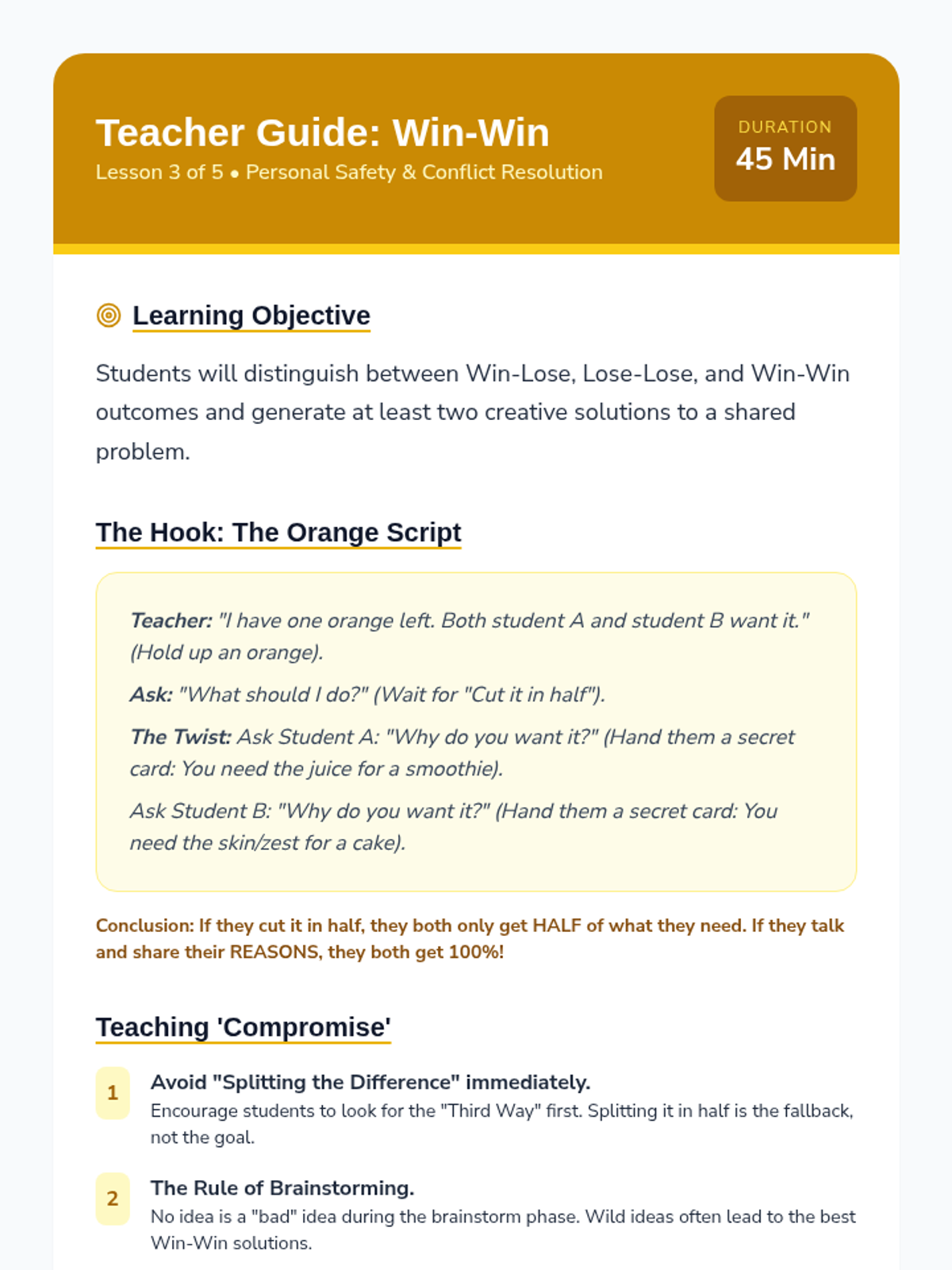
Students learn to brainstorm creative solutions where everyone wins, using the 'Orange Problem' as a case study for compromise.
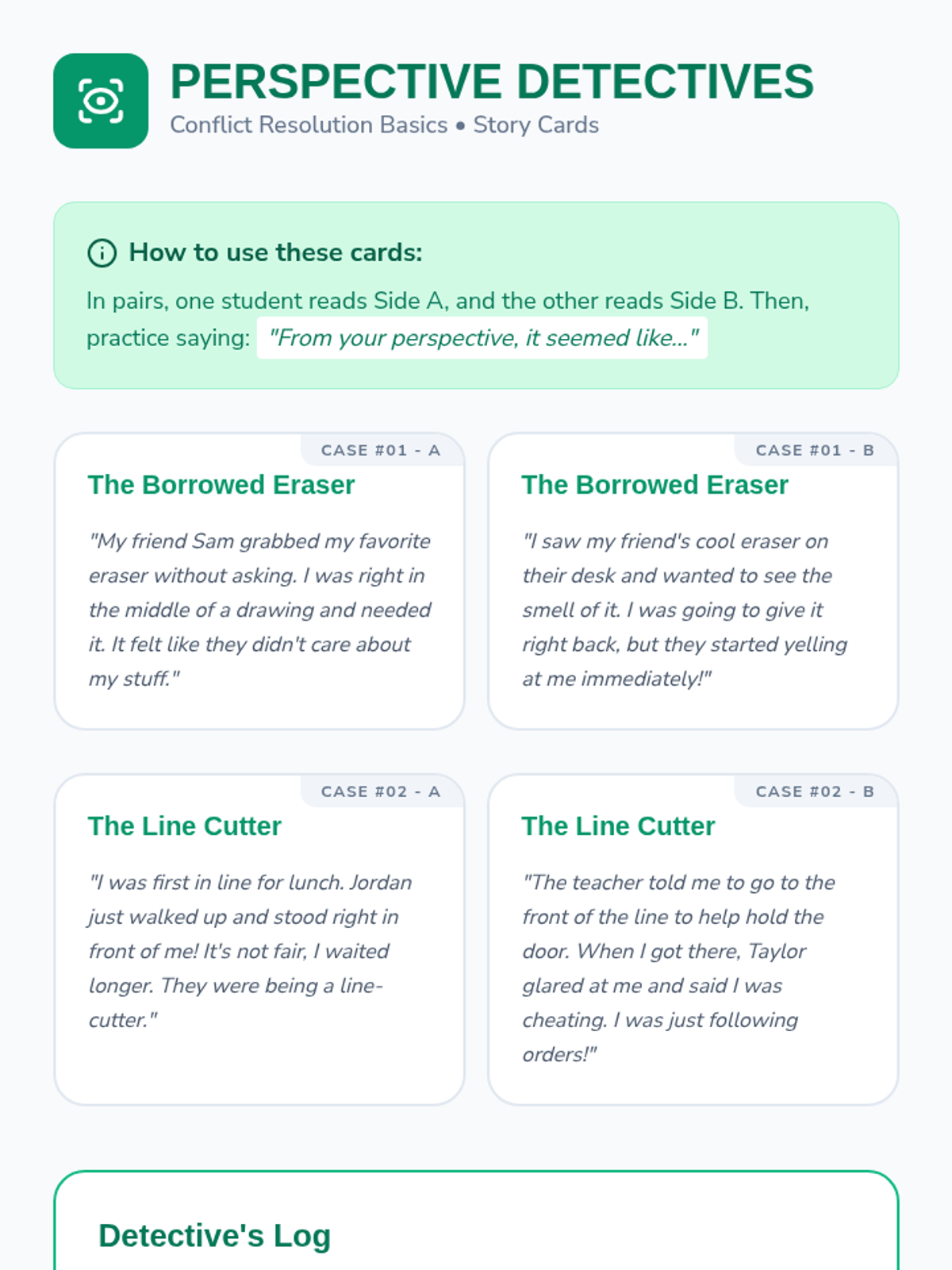
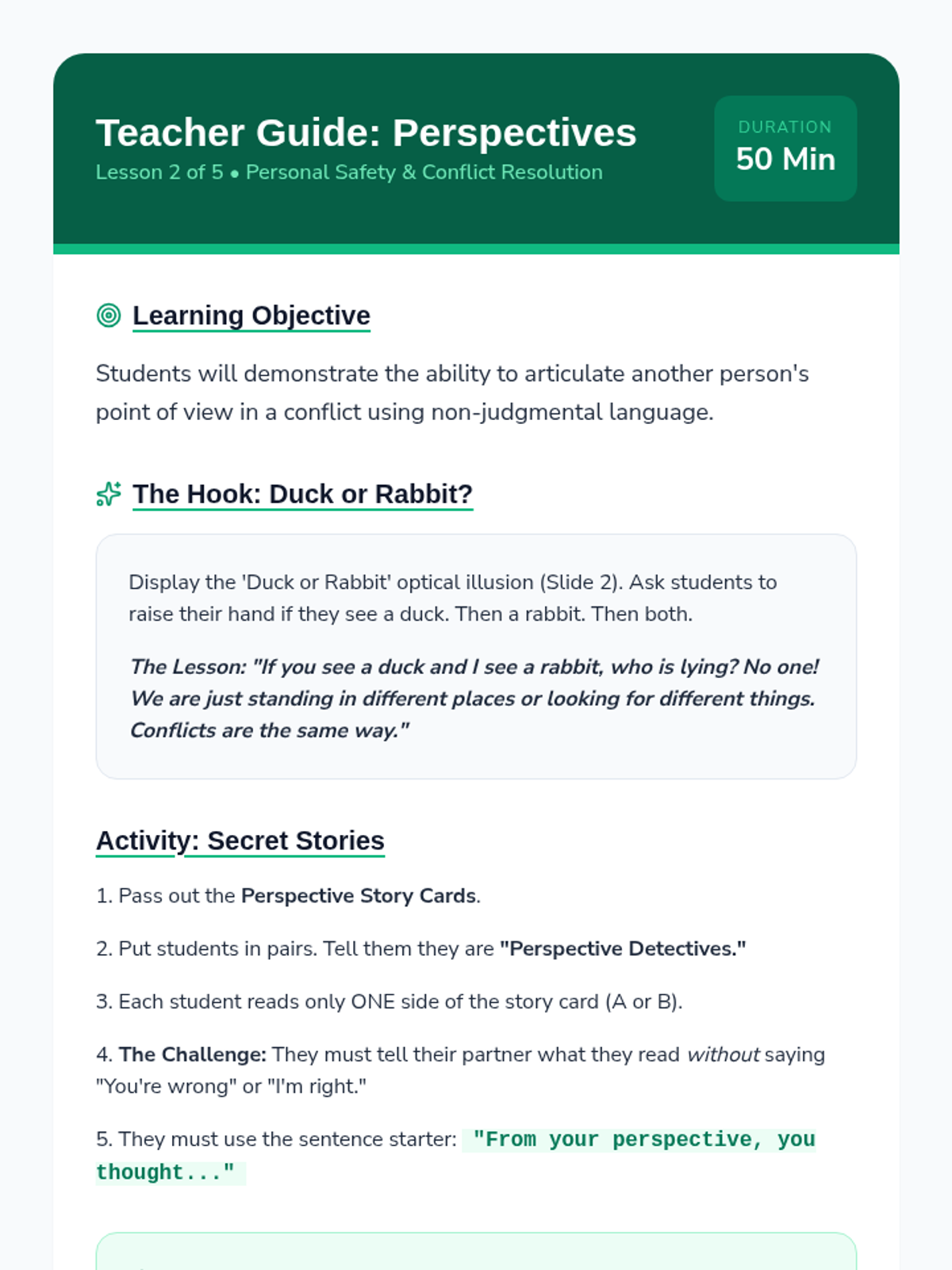
Students explore how two people can see the same event differently using optical illusions and dual-narrative stories.
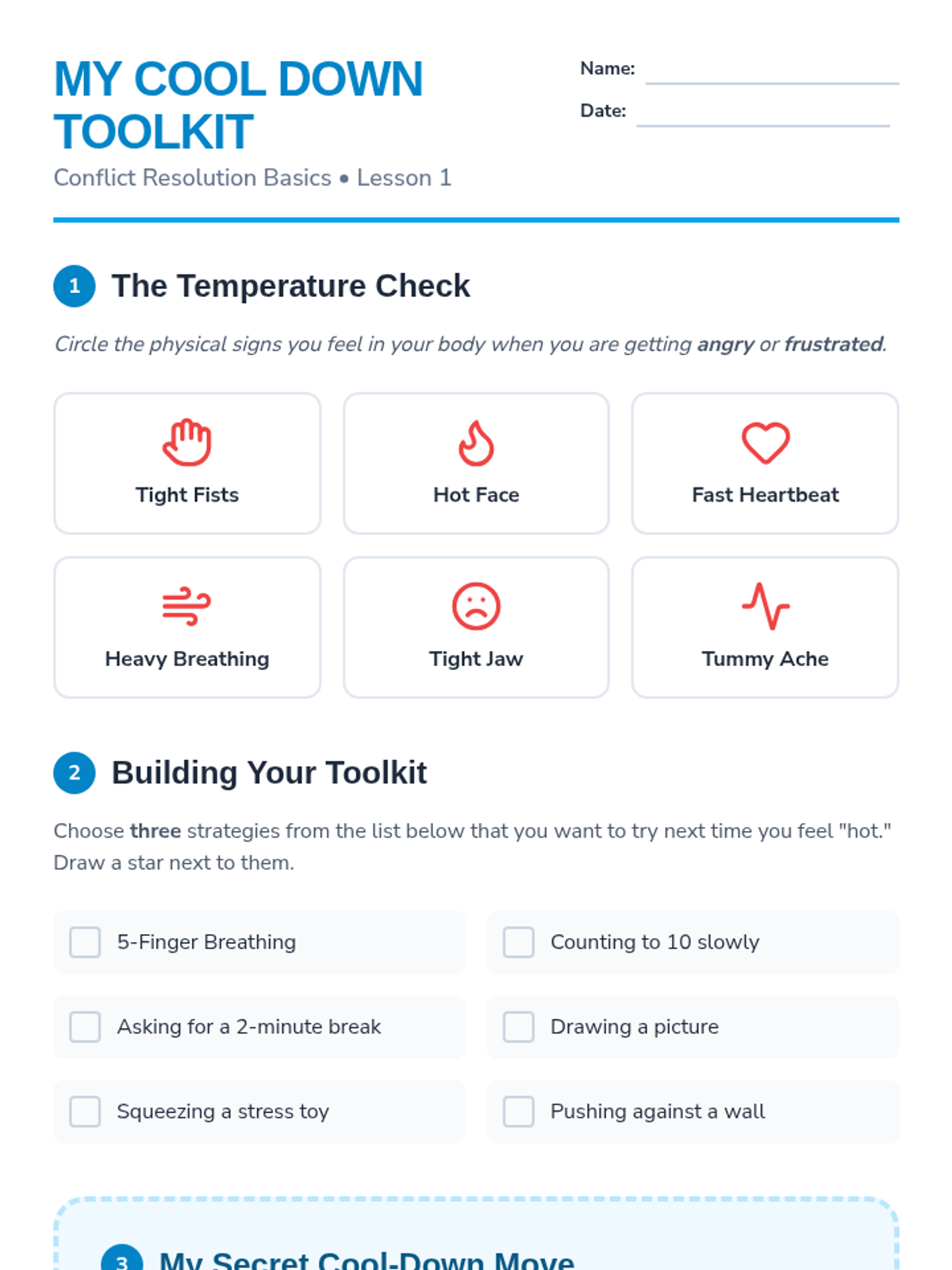
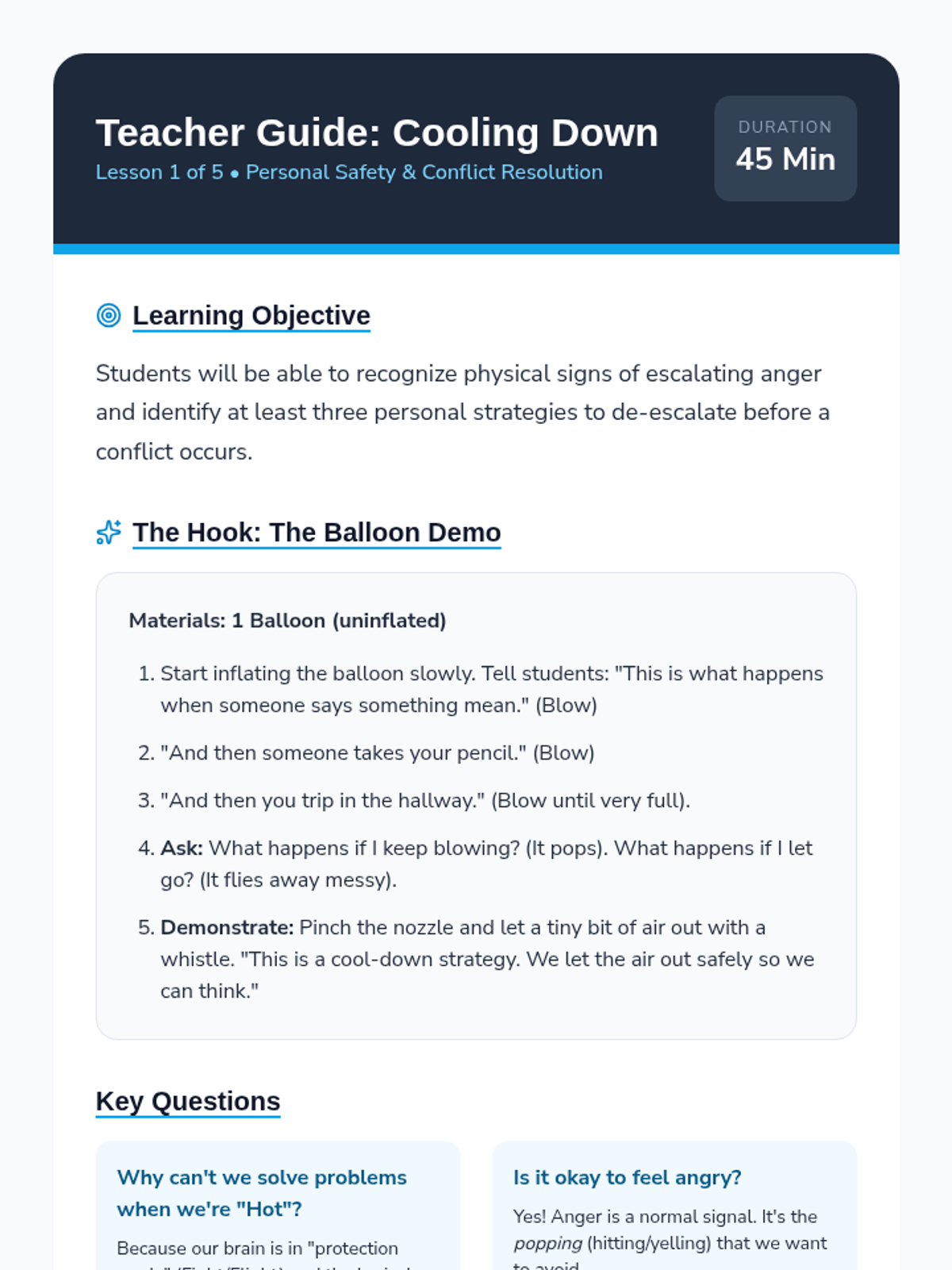
Students identify physical signs of anger and learn personal strategies to lower their emotional 'temperature' before attempting to resolve a conflict.
Apply all learned skills in realistic role-play scenarios to resolve common peer conflicts and practice mediation.
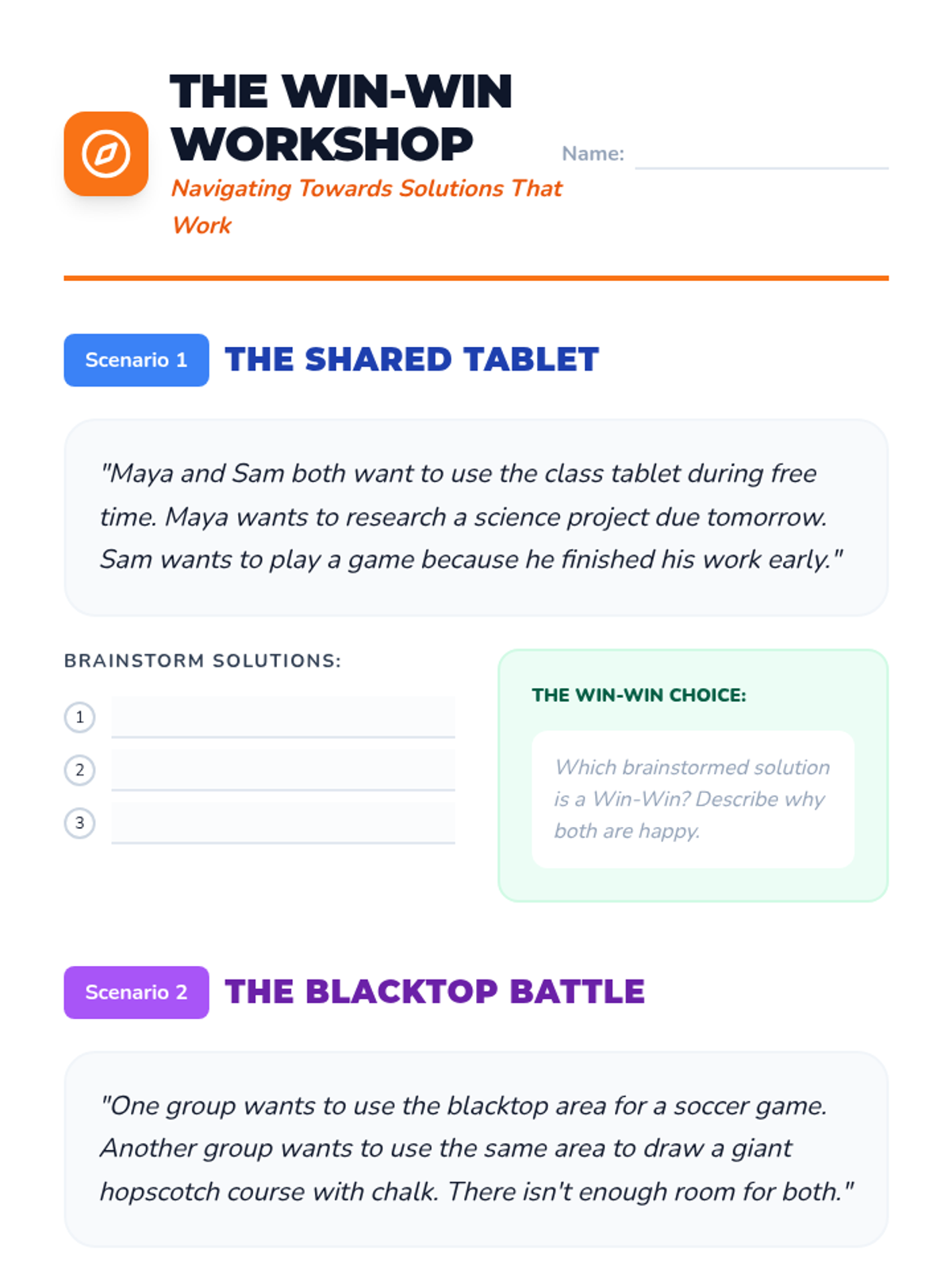
Discover the concept of 'win-win' solutions and practice brainstorming collaborative outcomes where both parties feel heard.
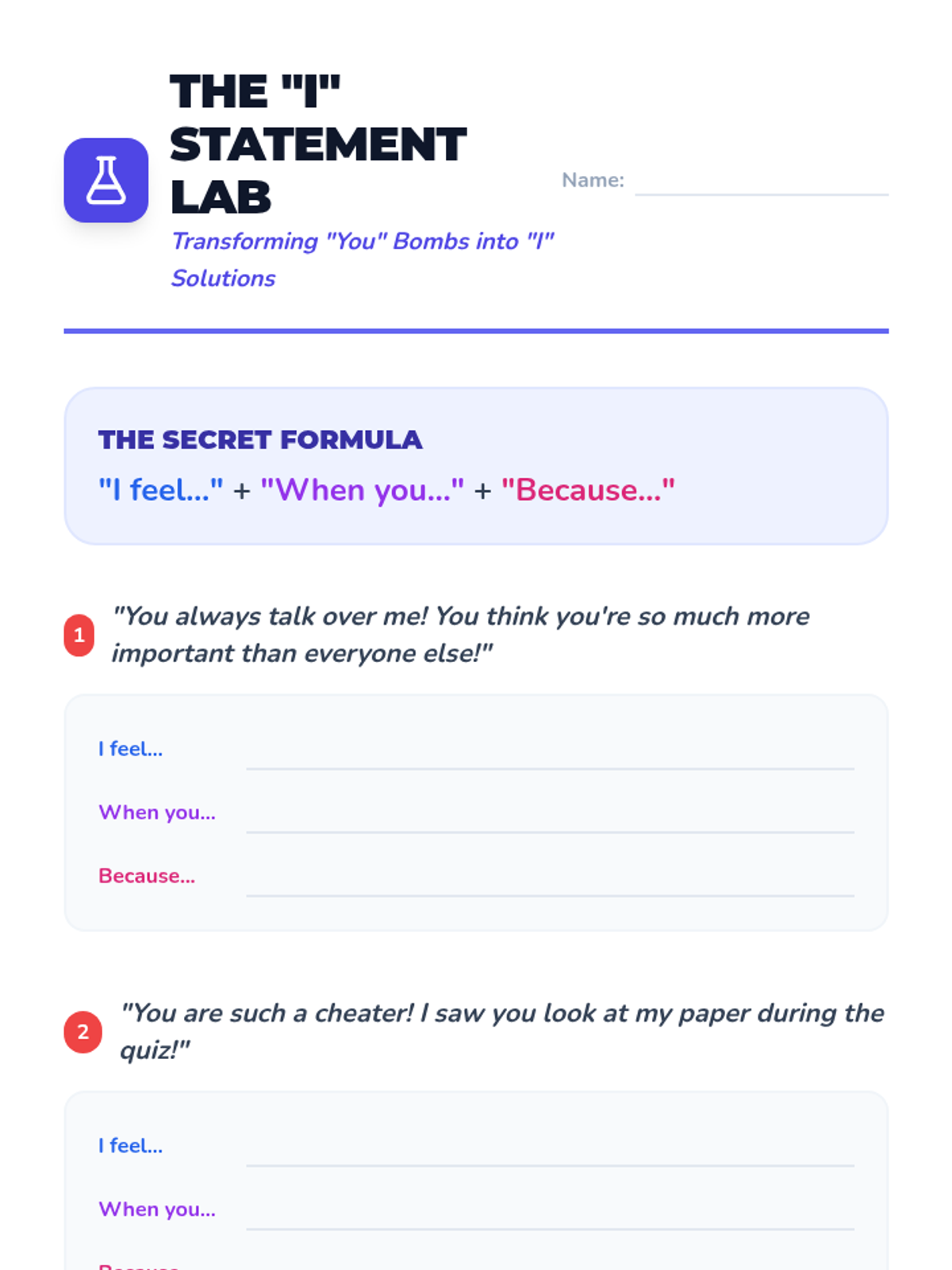
Learn to shift from accusatory 'You' language to assertive 'I' language to express feelings and needs without attacking others.
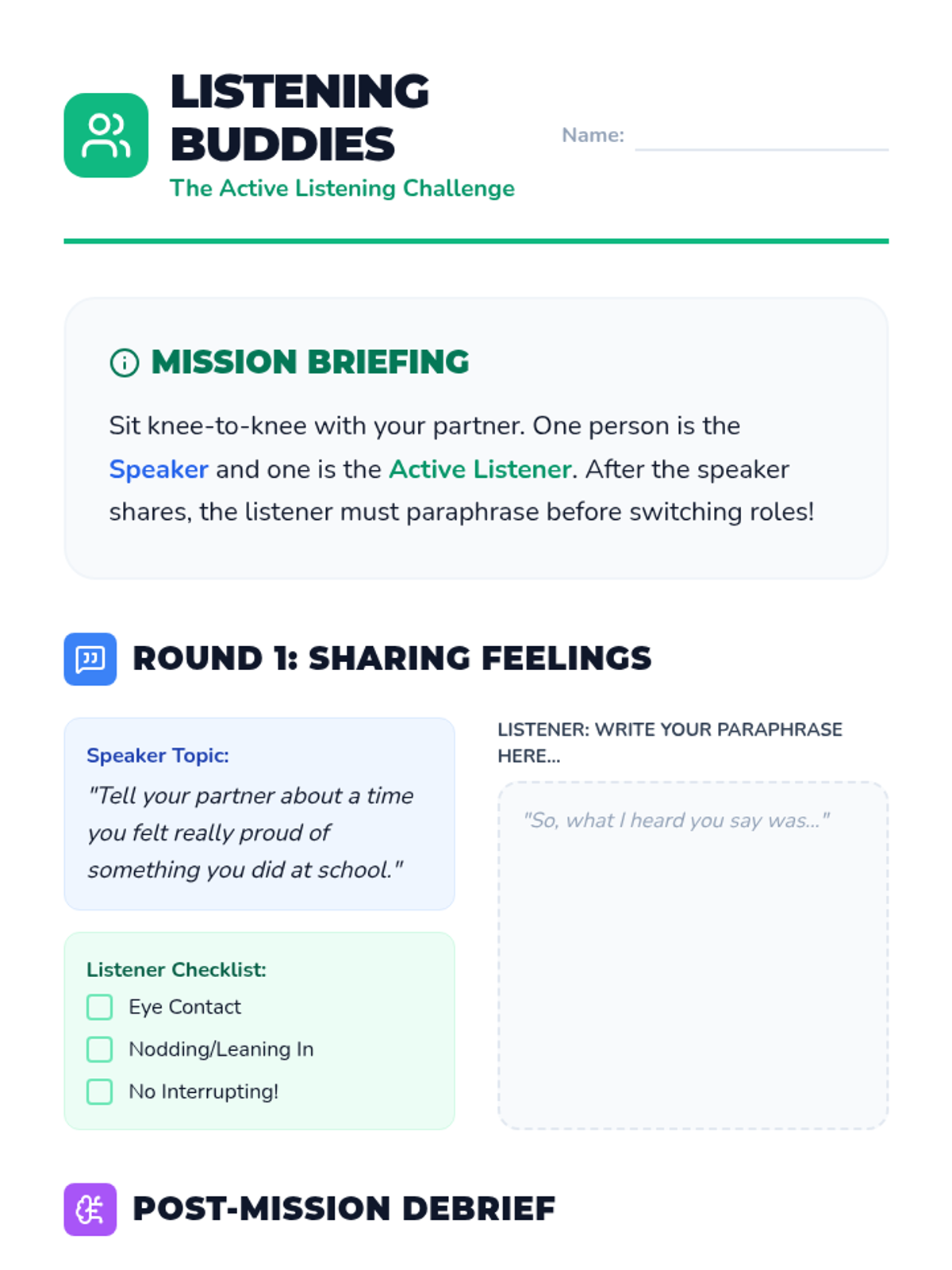
Master active listening techniques like eye contact, nodding, and paraphrasing to ensure understanding during disagreements.
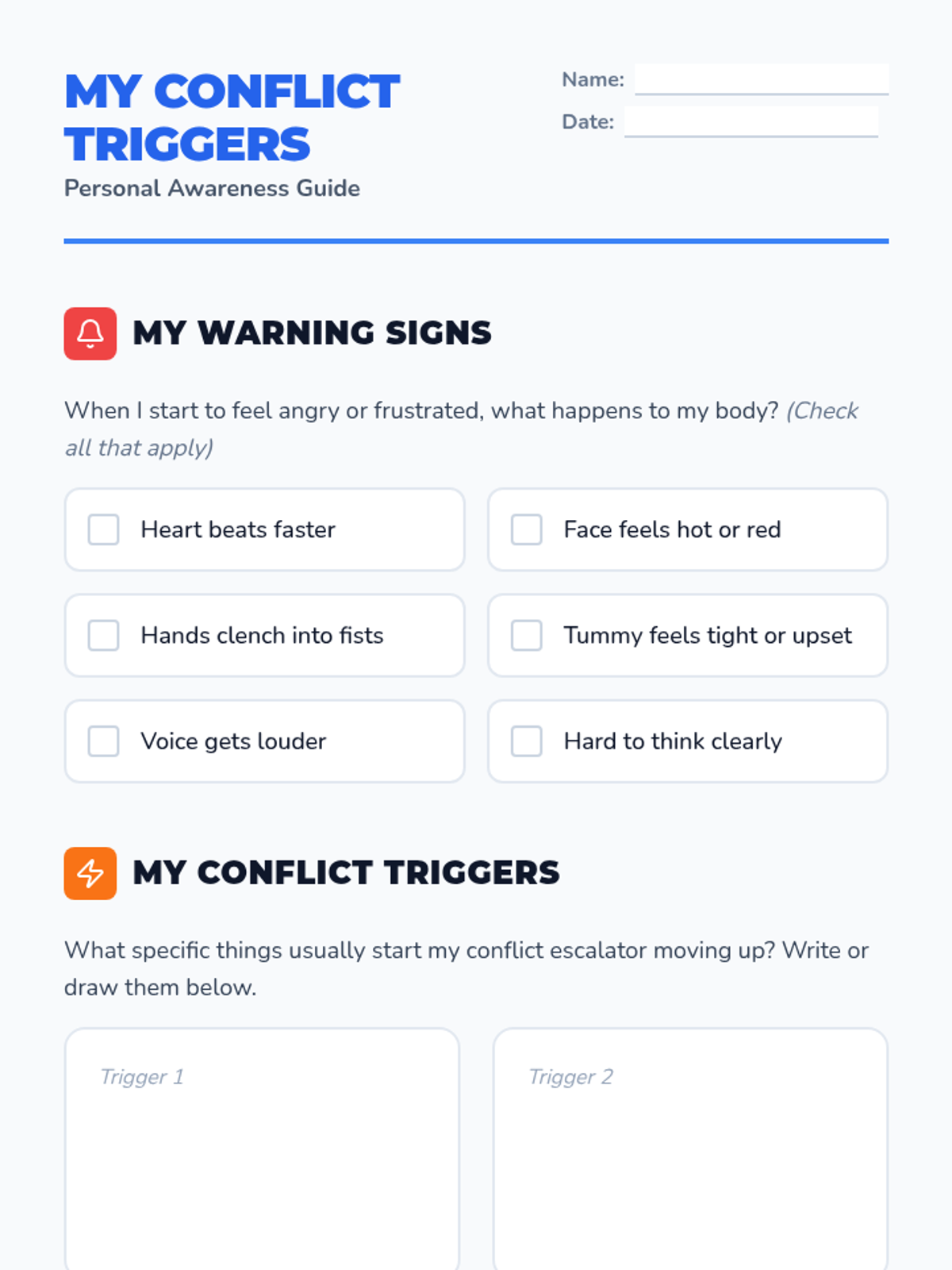
Explore the 'Conflict Escalator' concept to understand how disagreements grow and identify personal triggers and physical signs of anger.
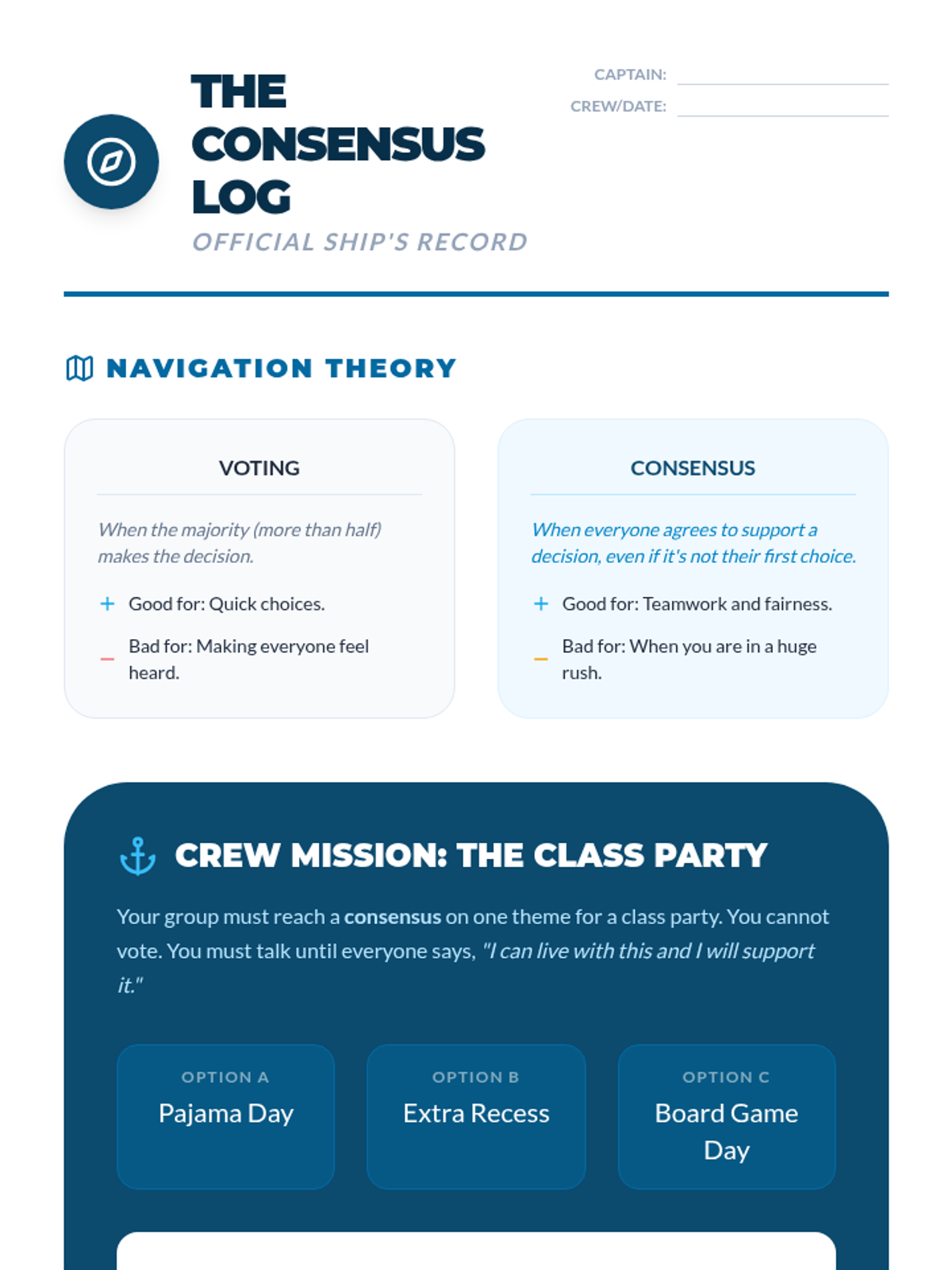
Students explore decision-making strategies when a group cannot agree. They practice distinguishing between 'consensus' and 'voting', applying these methods to make a group decision about a class preference.
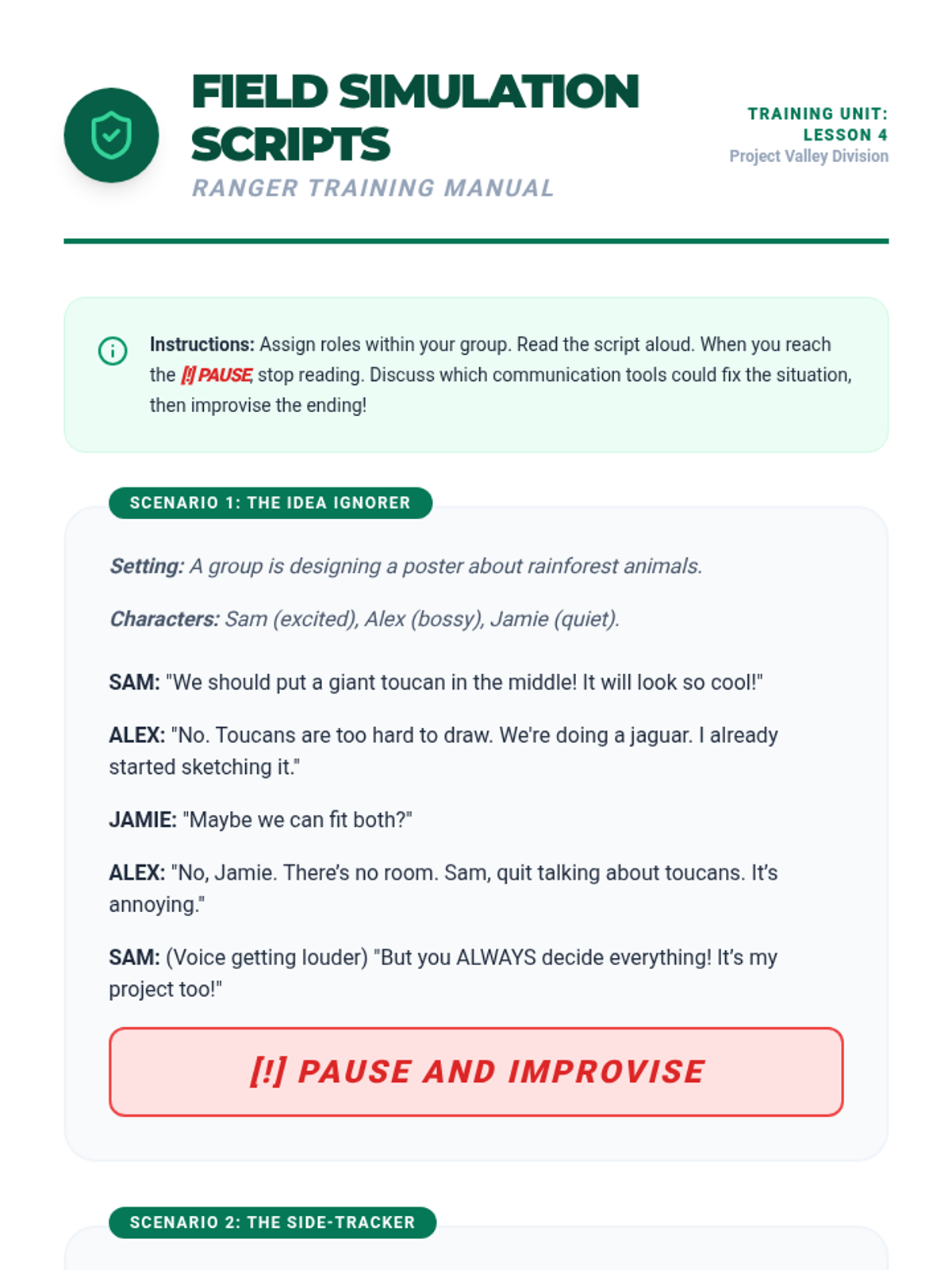
Student groups are given scripts detailing common classroom project conflicts. They must pause the script at the climax and improvise a resolution using the strategies learned in previous lessons.
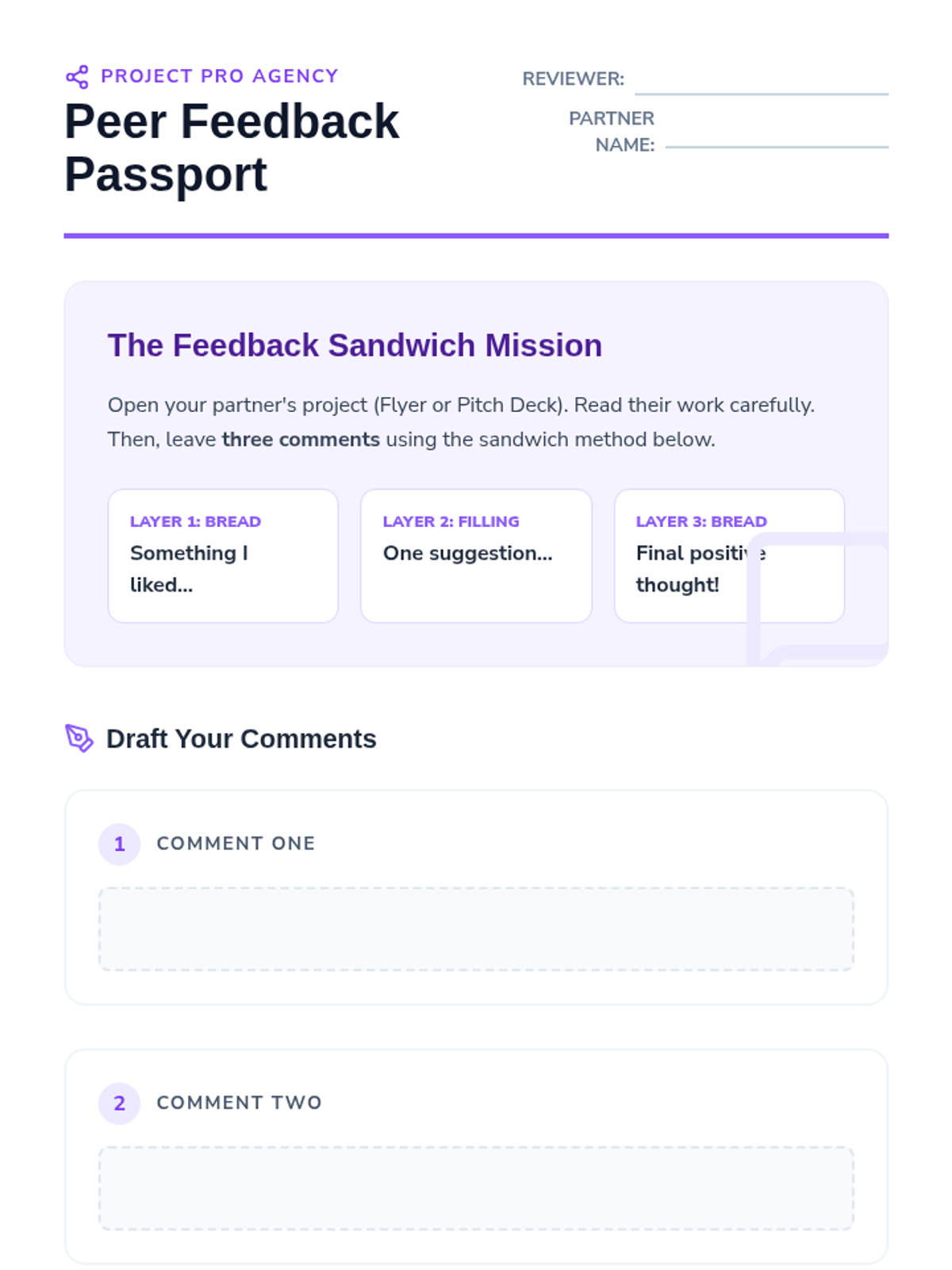
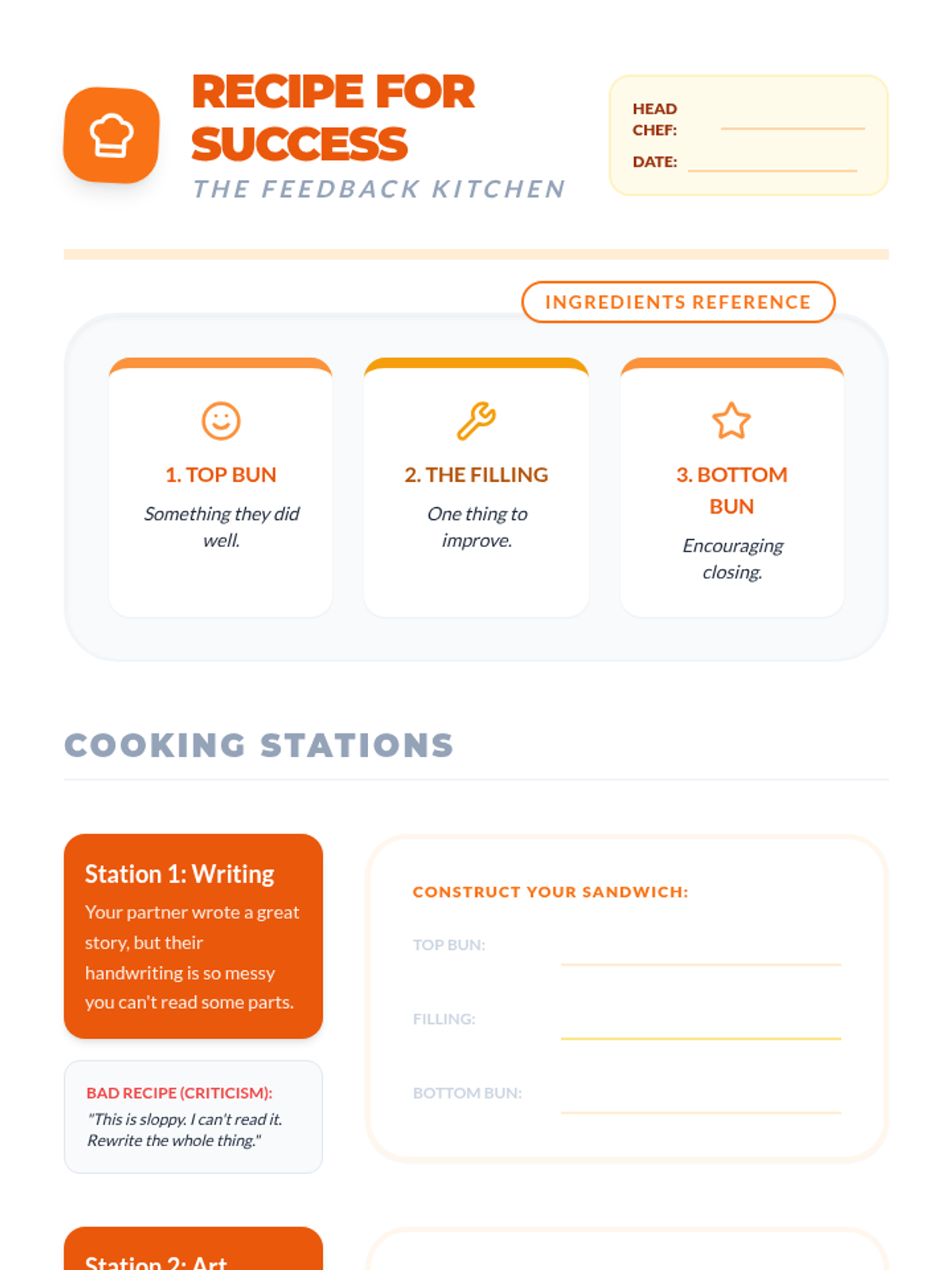
Students learn the difference between criticism and constructive feedback. They practice the 'Feedback Sandwich' method (Positive comment + Area for improvement + Positive comment) to review peer work in a way that encourages growth rather than defensiveness.
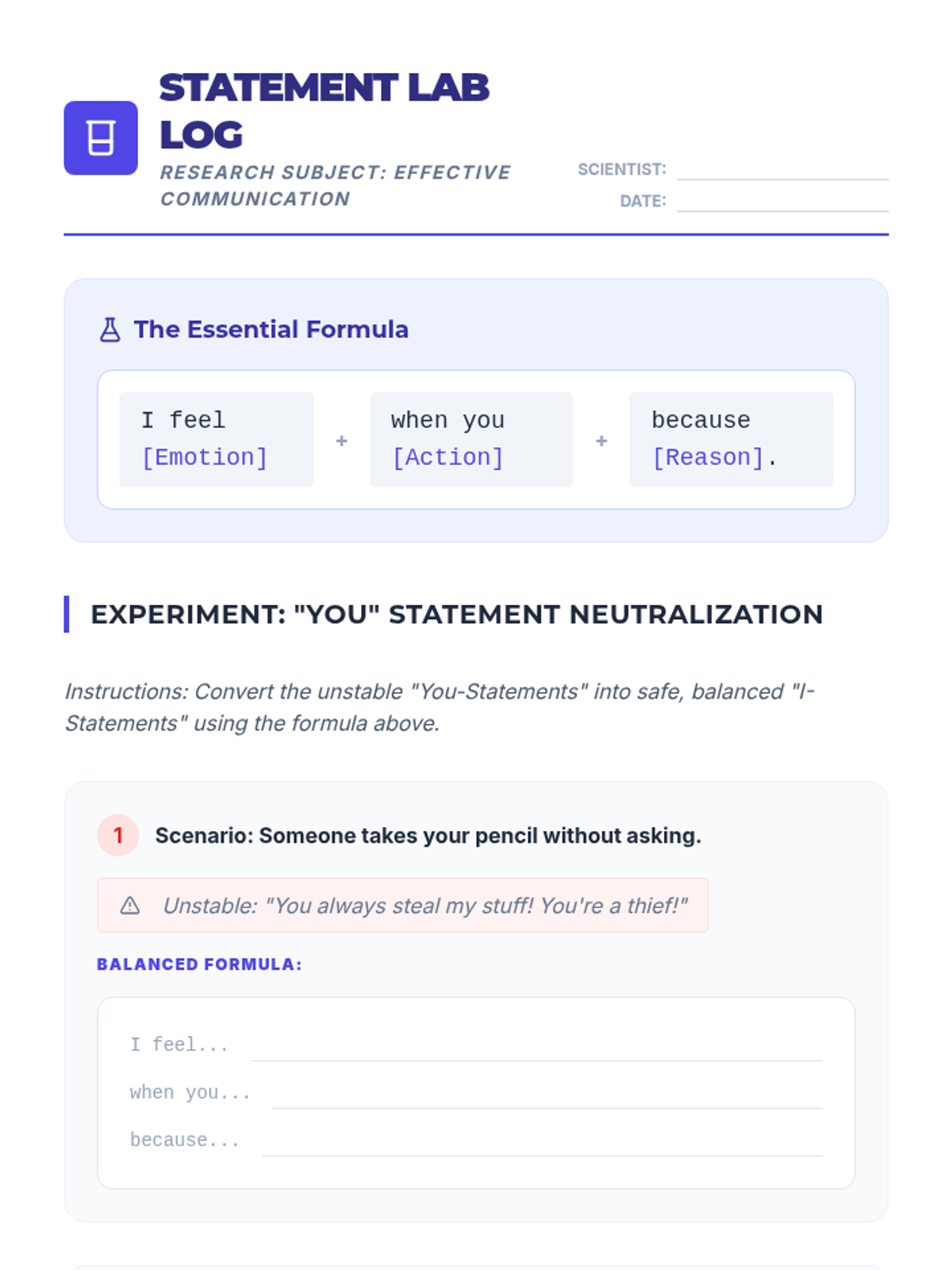
This lesson introduces a specific formula for expressing frustration: 'I feel [emotion] when [action] because [reason].' Students practice rewriting accusatory 'You-statements' into assertive 'I-statements' to communicate needs without attacking teammates.
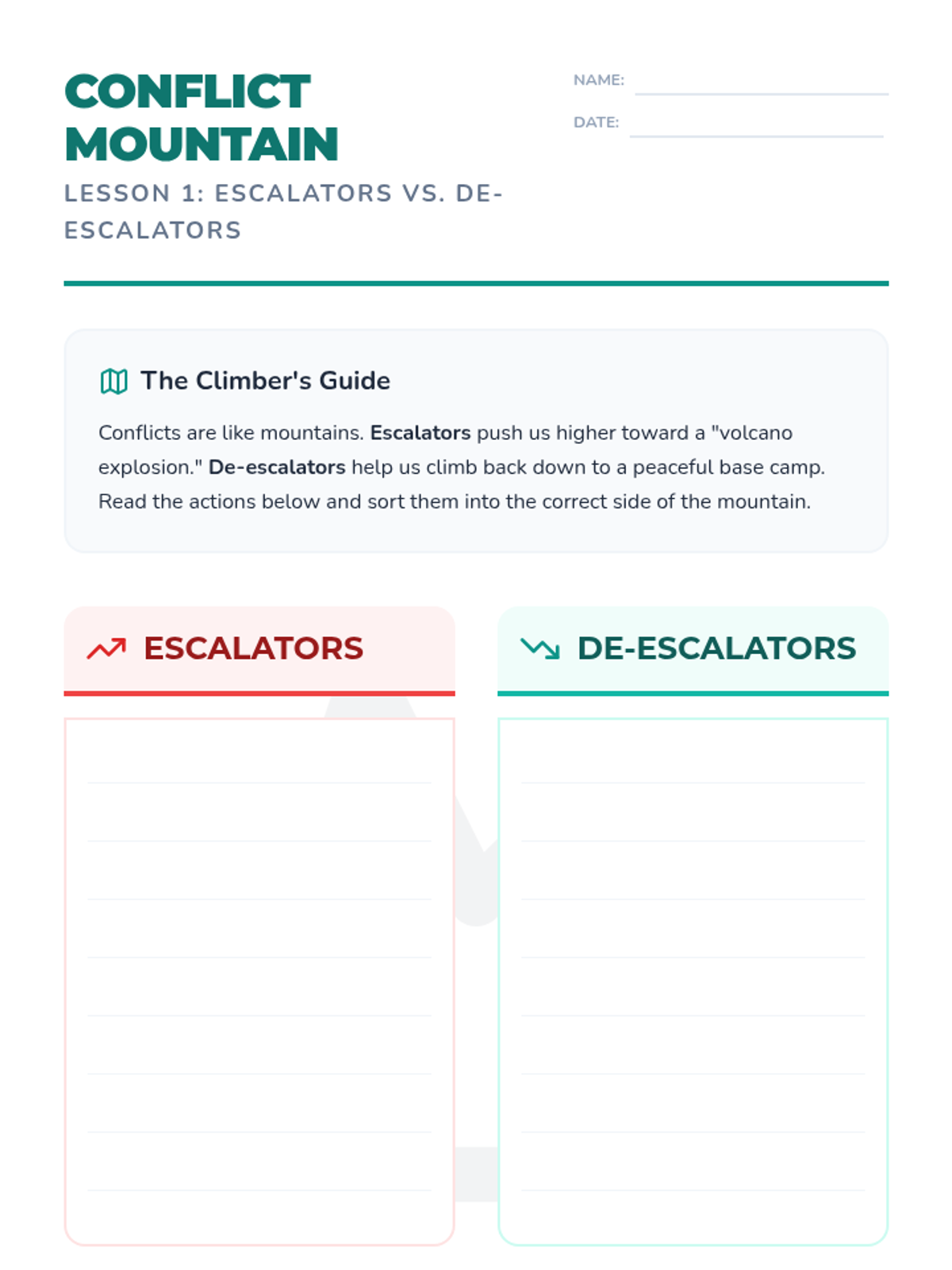
Students investigate what causes small disagreements to turn into big arguments, identifying 'conflict escalators' like name-calling, interrupting, or blaming. They categorize behaviors into 'Escalators' (making it worse) and 'De-escalators' (making it better).
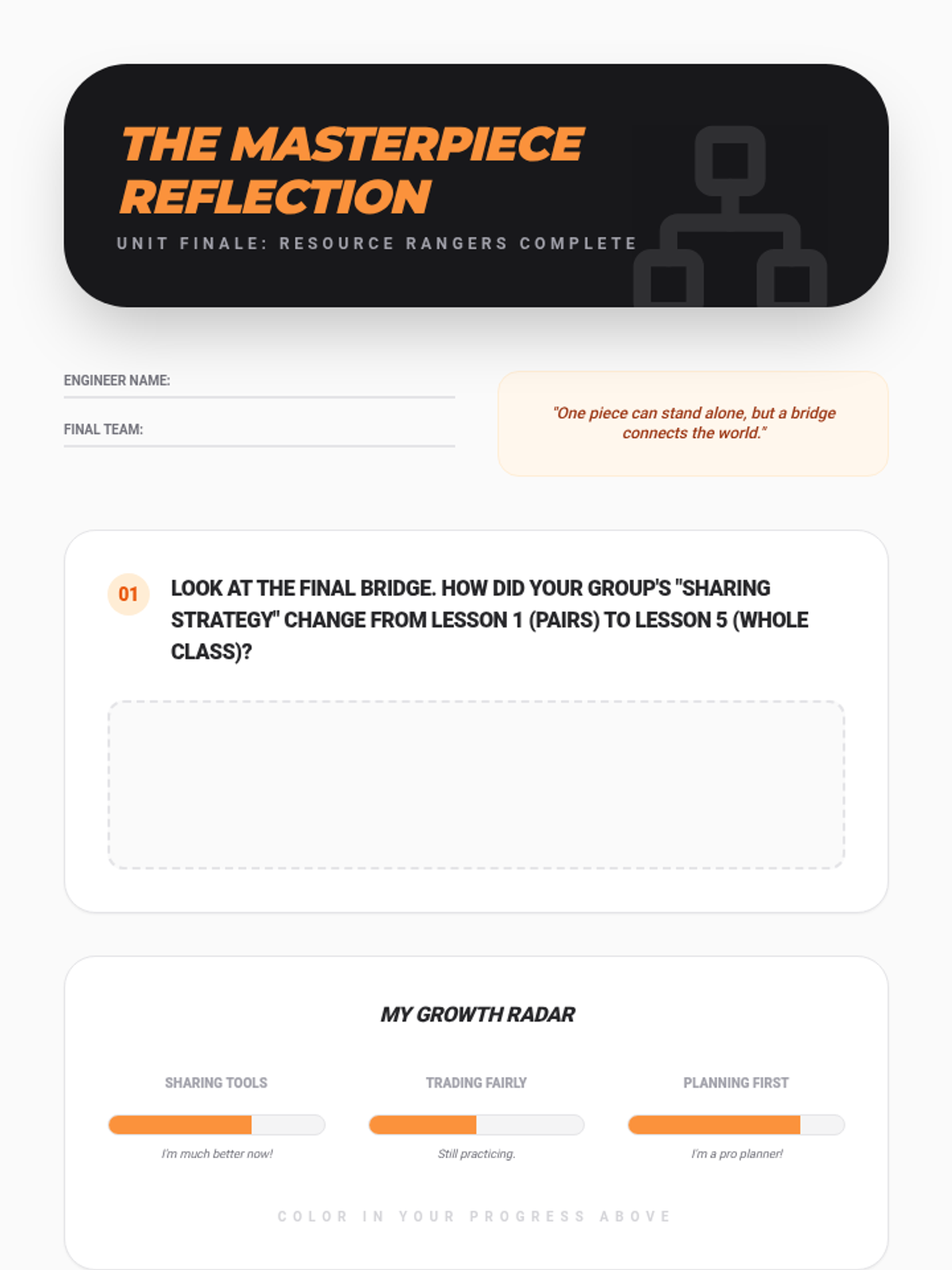
The entire class works together to connect their individual projects into one massive structure, requiring high-level coordination and space-sharing.
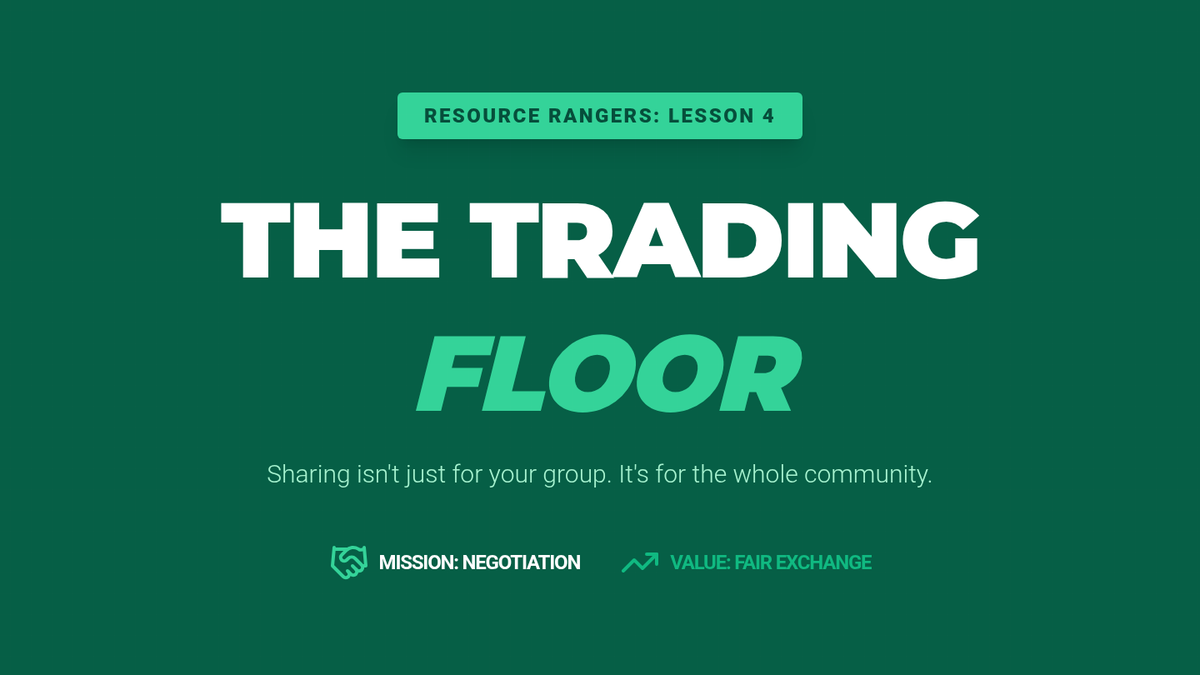
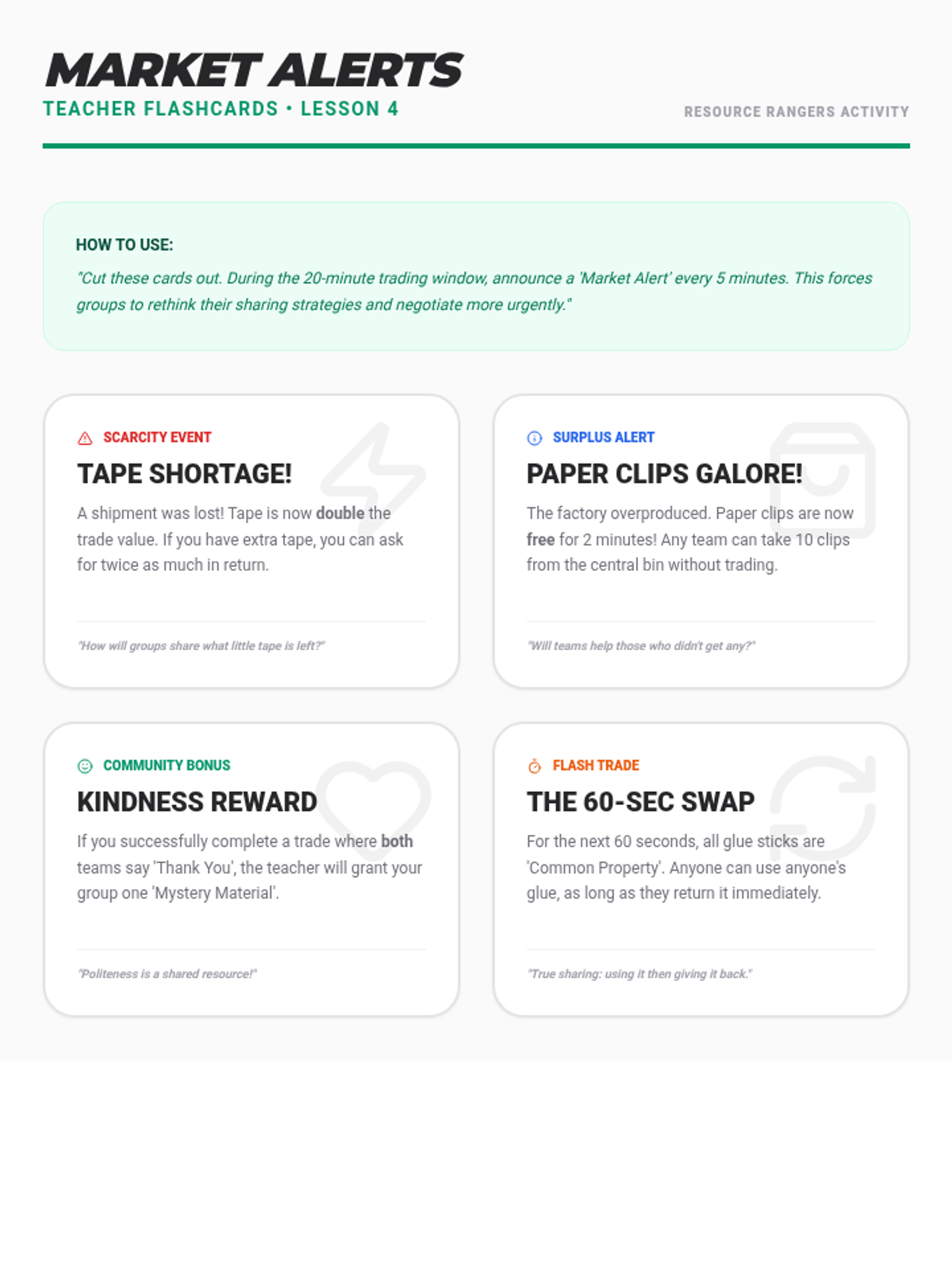
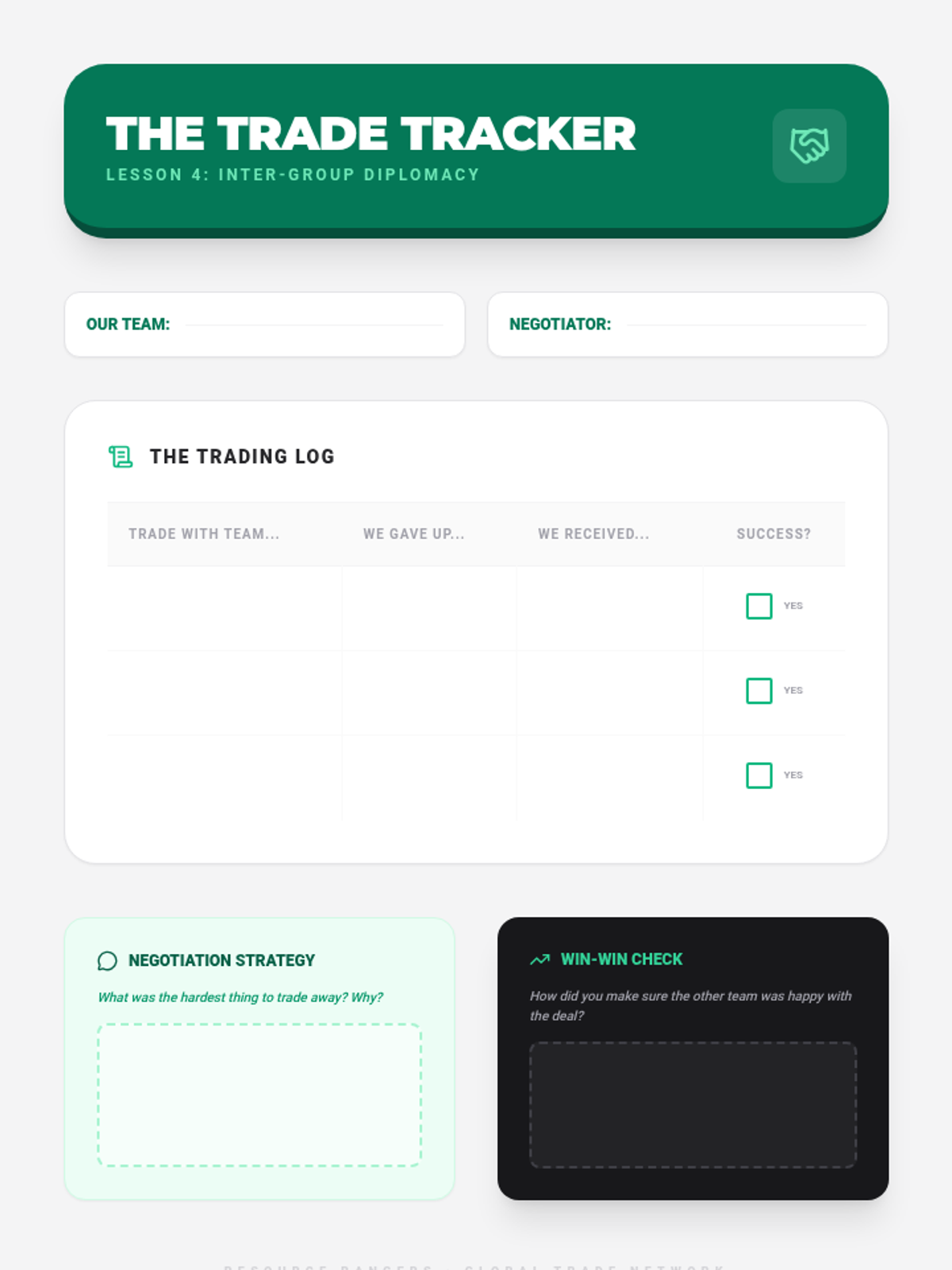
Groups trade excess materials with other teams to get what they need, moving sharing from a group level to a whole-classroom community level.
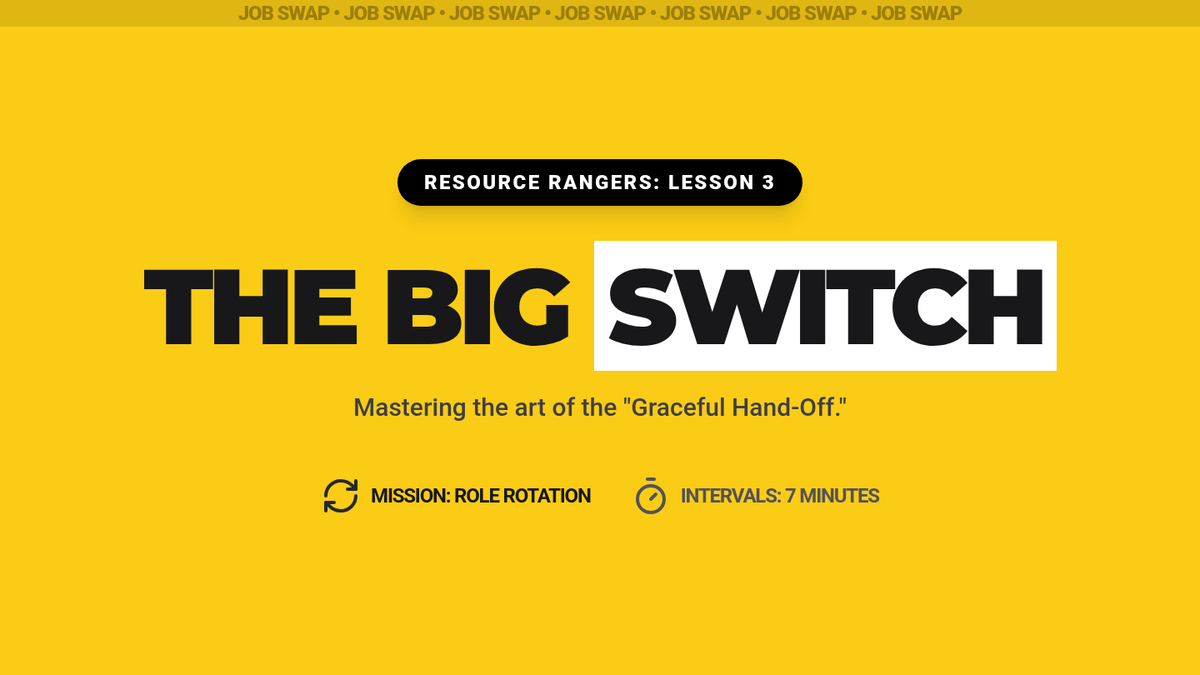
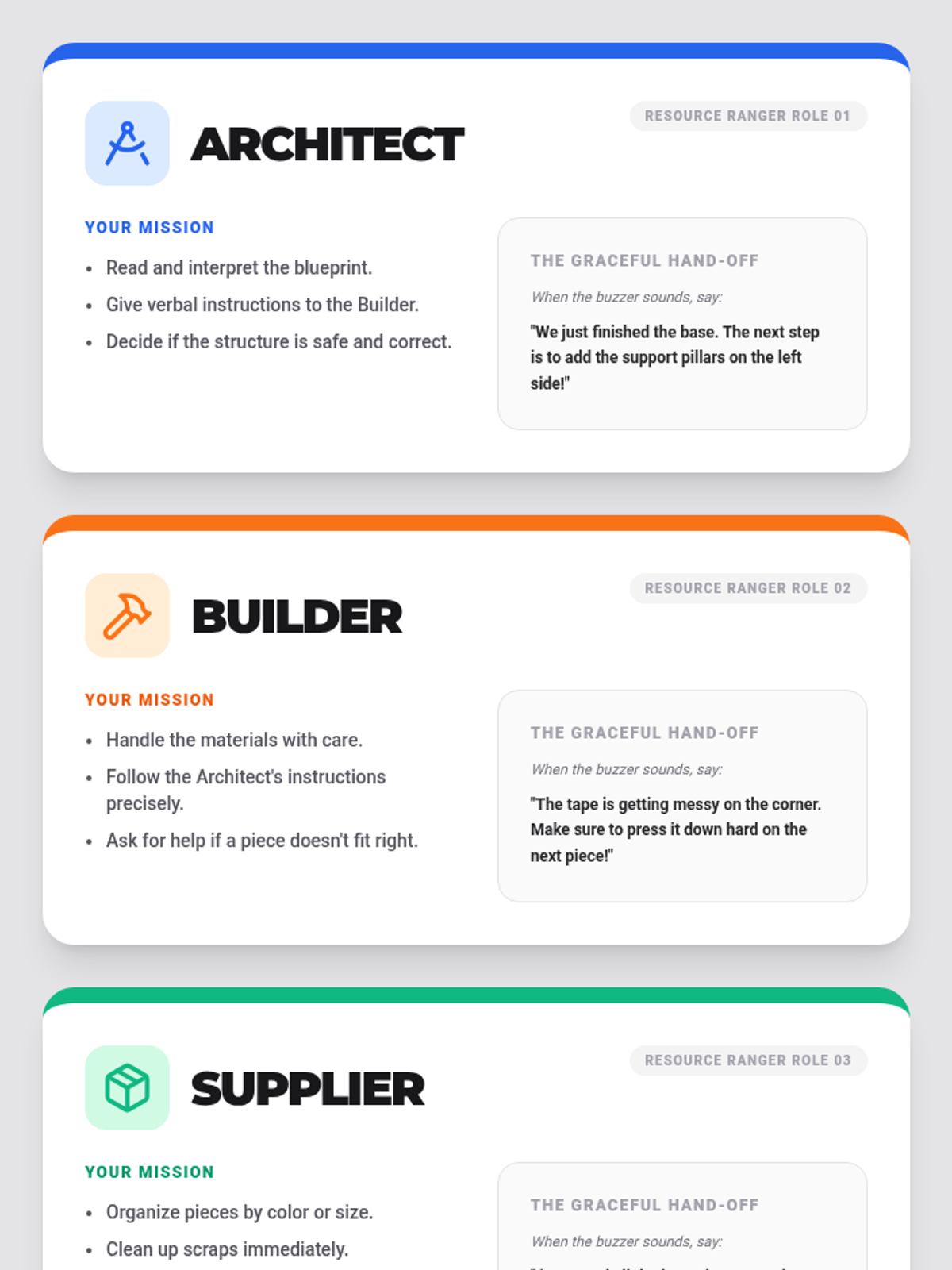
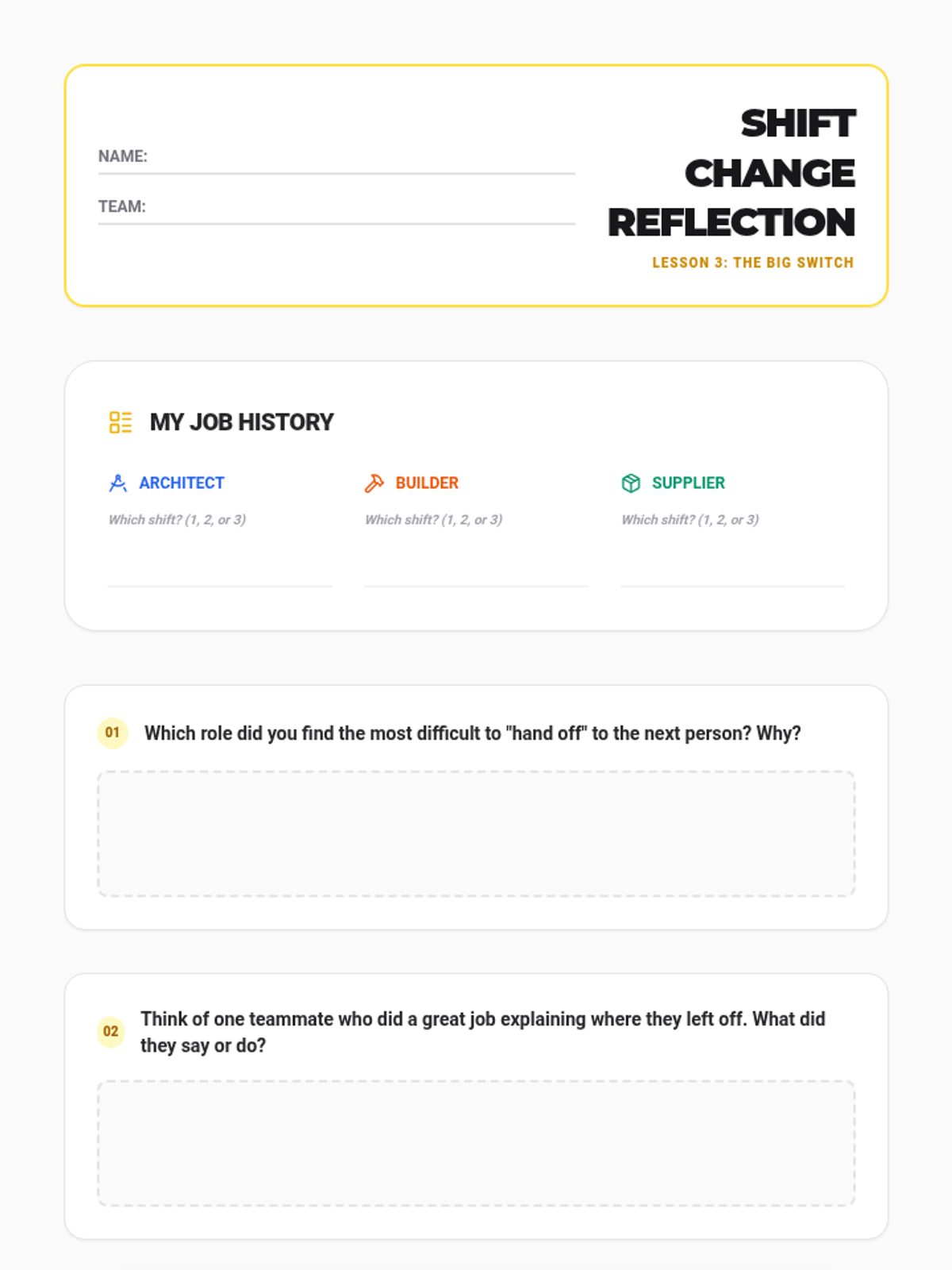
A simulation where students rotate through specific roles (Architect, Builder, Supplier) on a timer, practicing graceful transitions and shared responsibility.
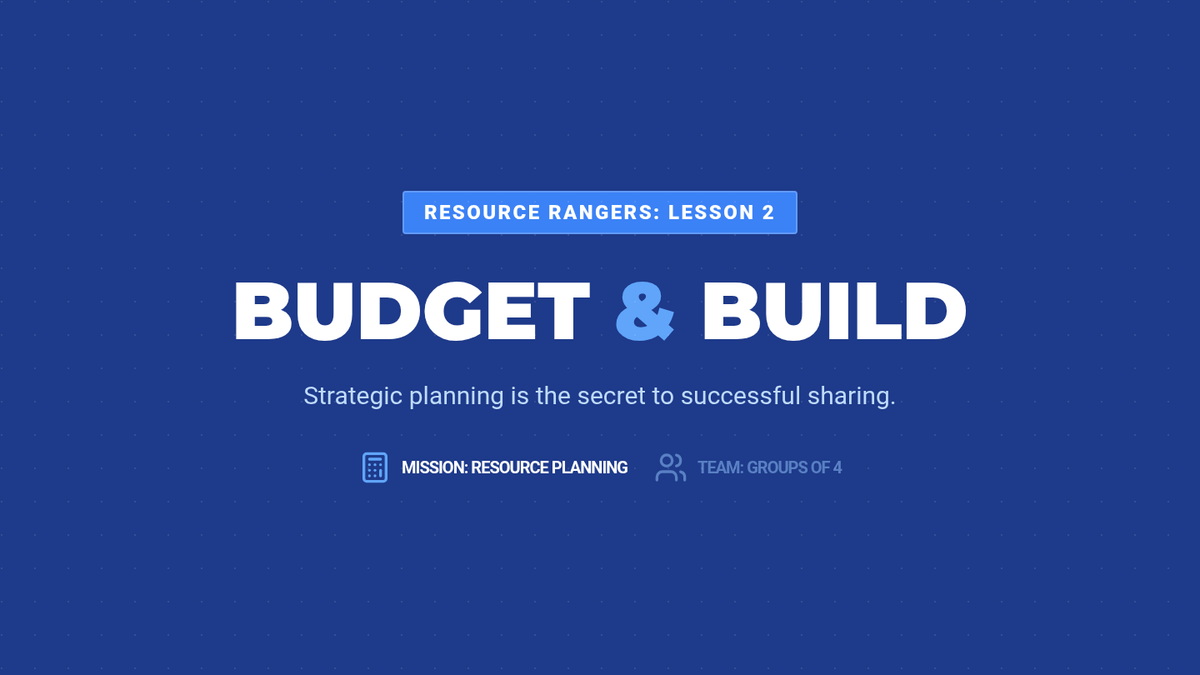
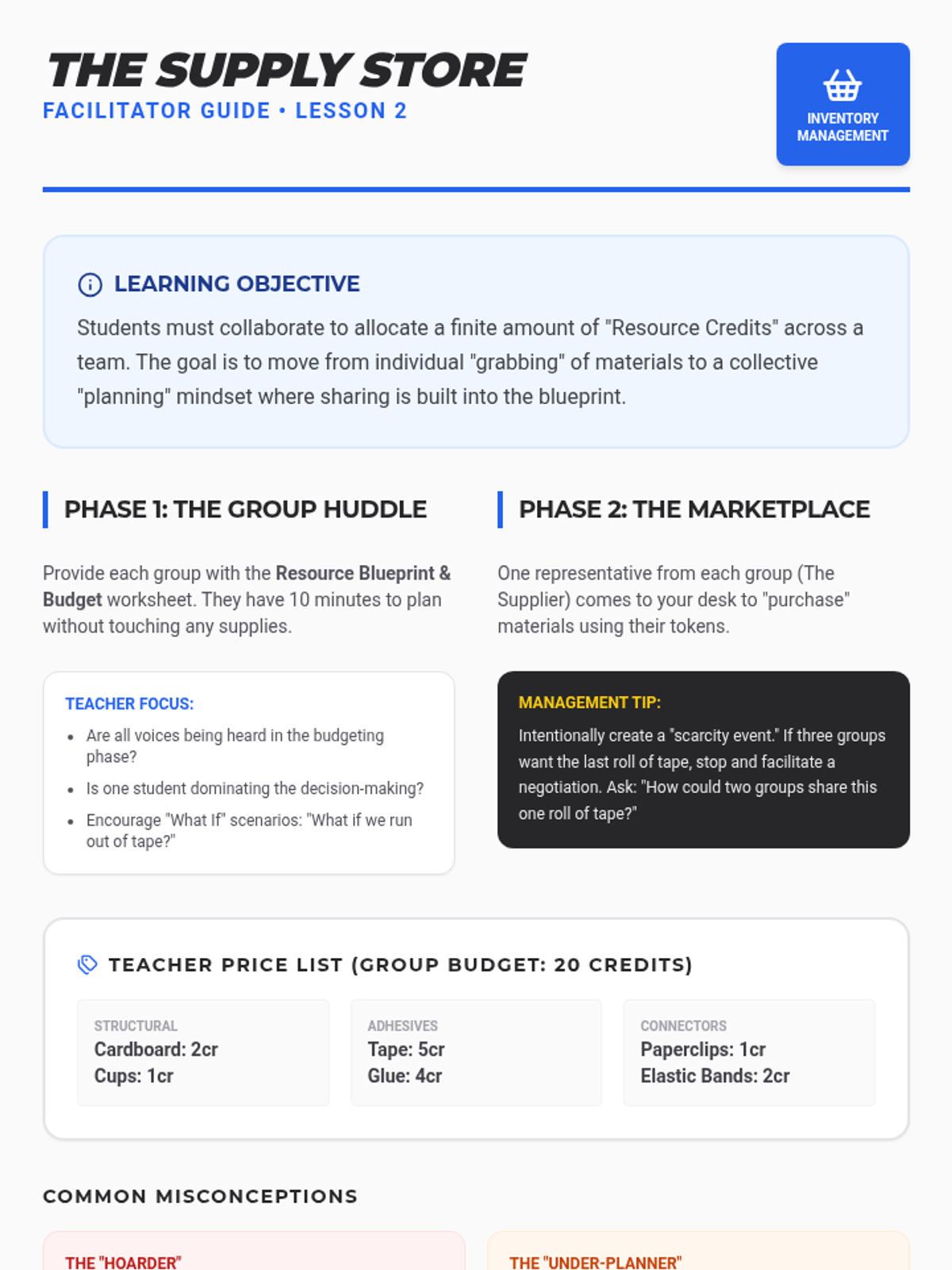
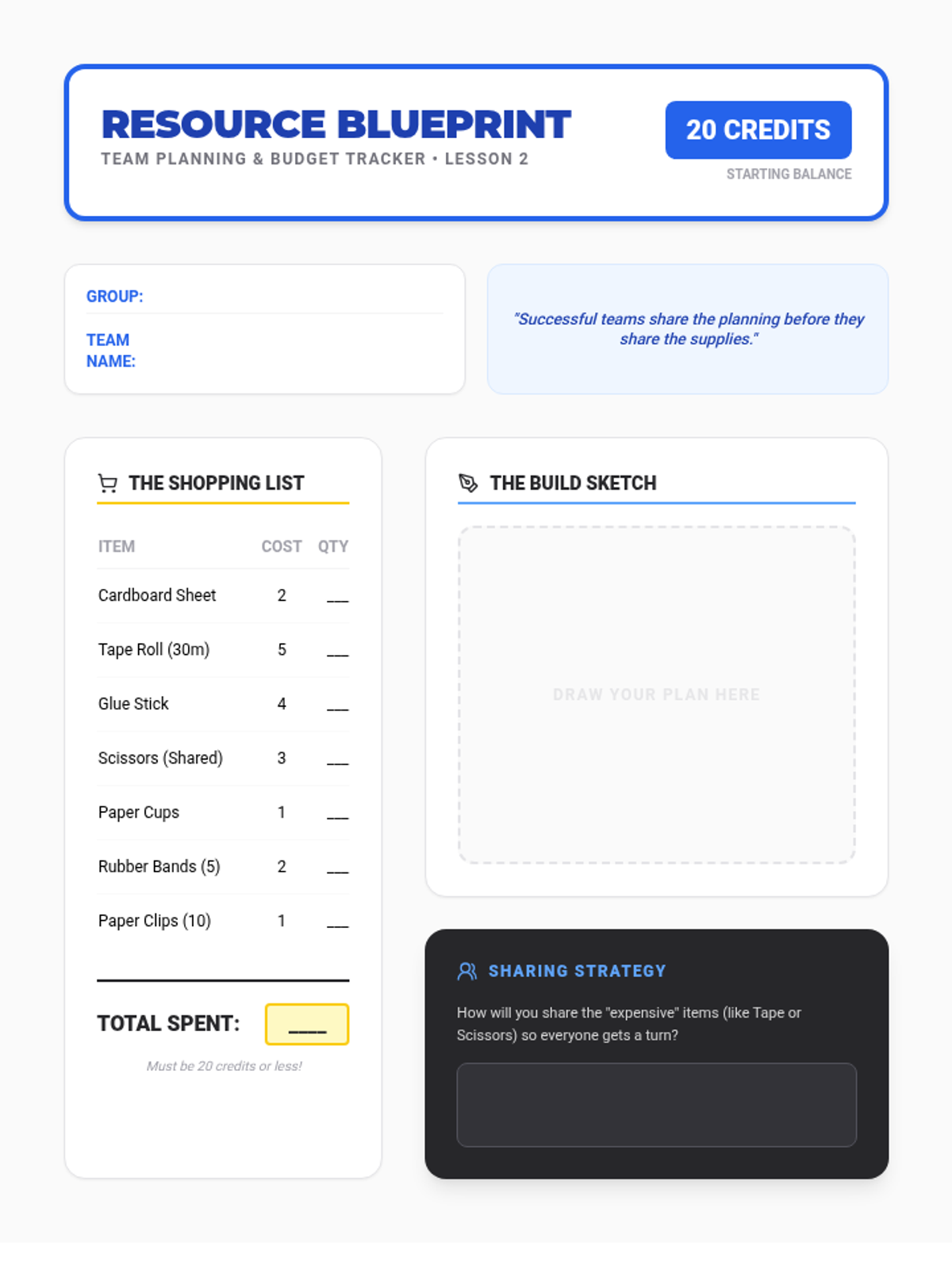
Student groups must negotiate and budget for limited materials before they begin building, learning to plan for shared resources strategically.
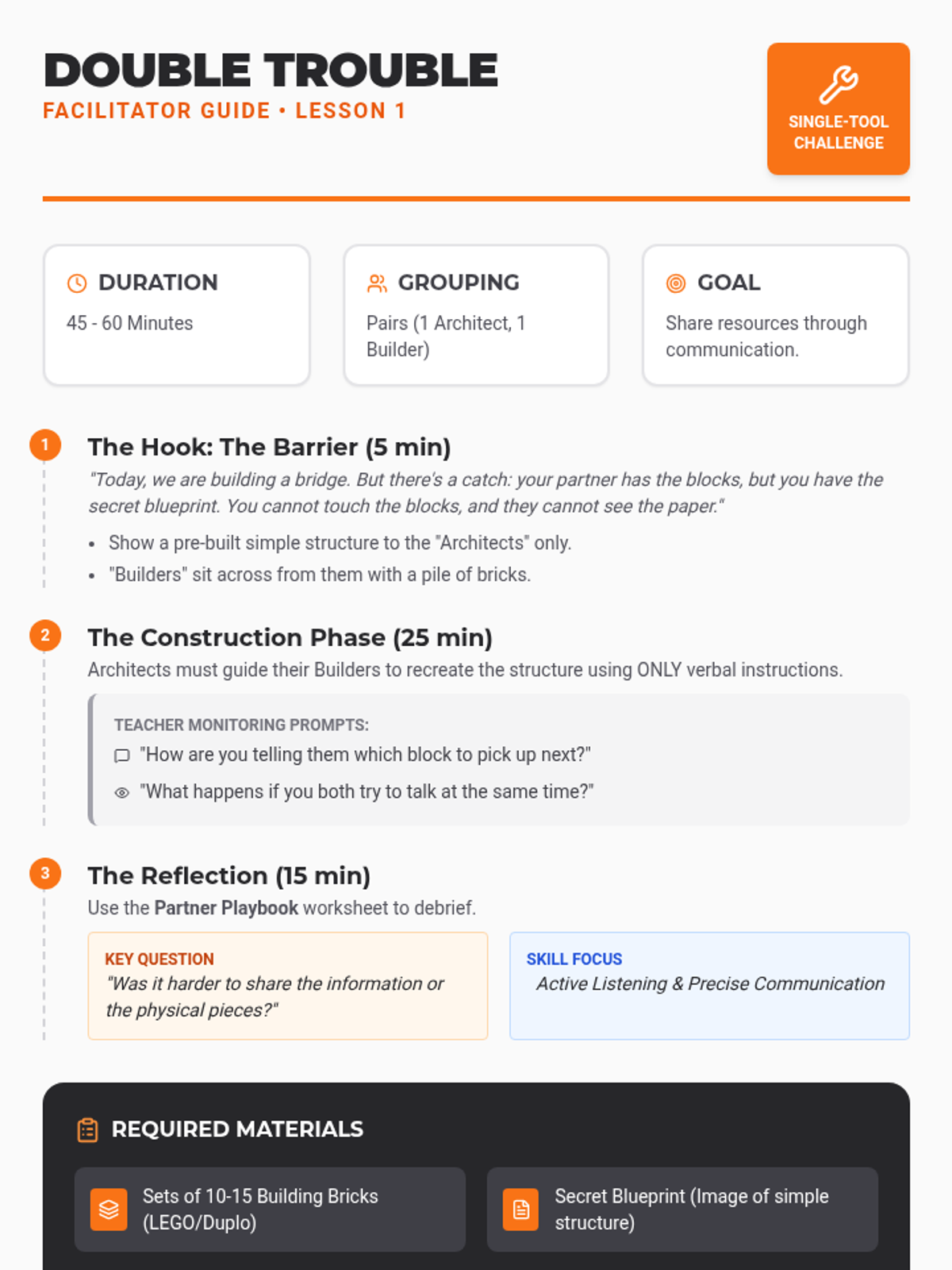
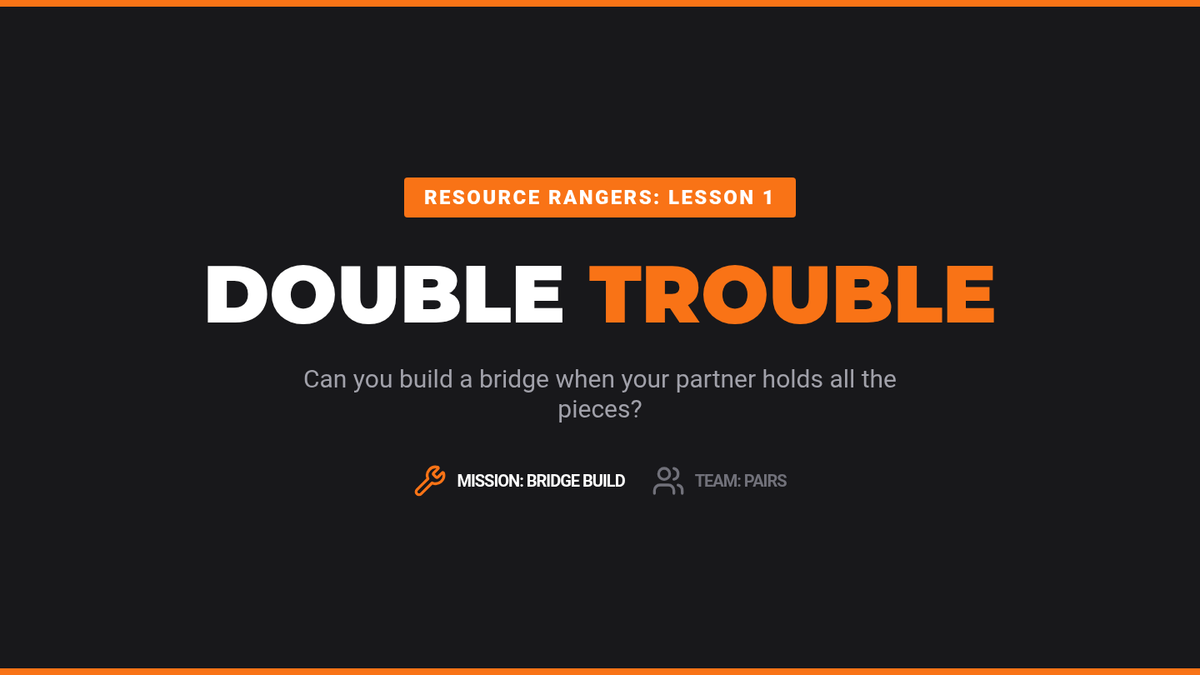
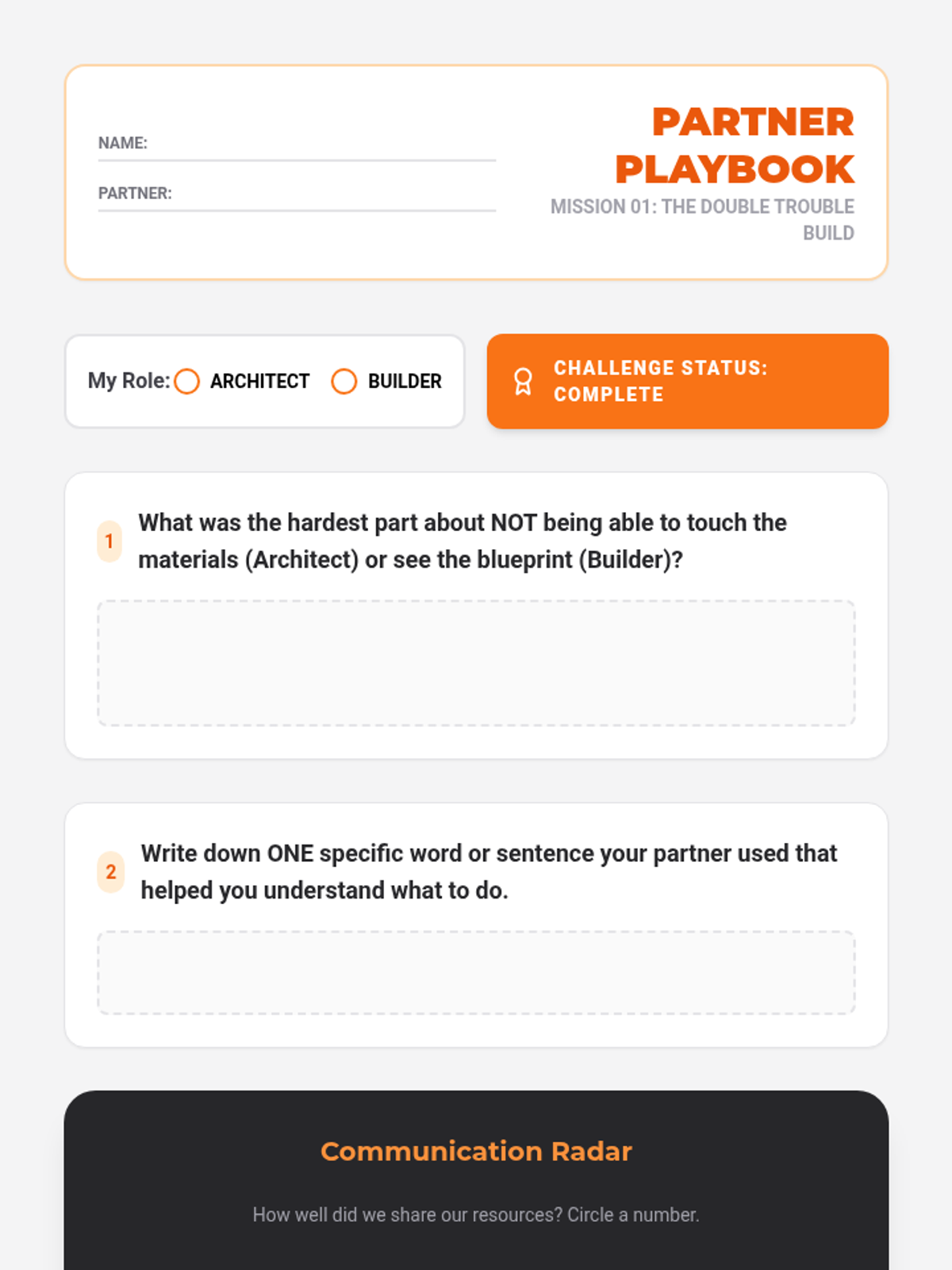
Pairs work together to build a structure where one partner has the instructions and the other has the materials, necessitating constant communication and turn-taking without physical role-swapping.