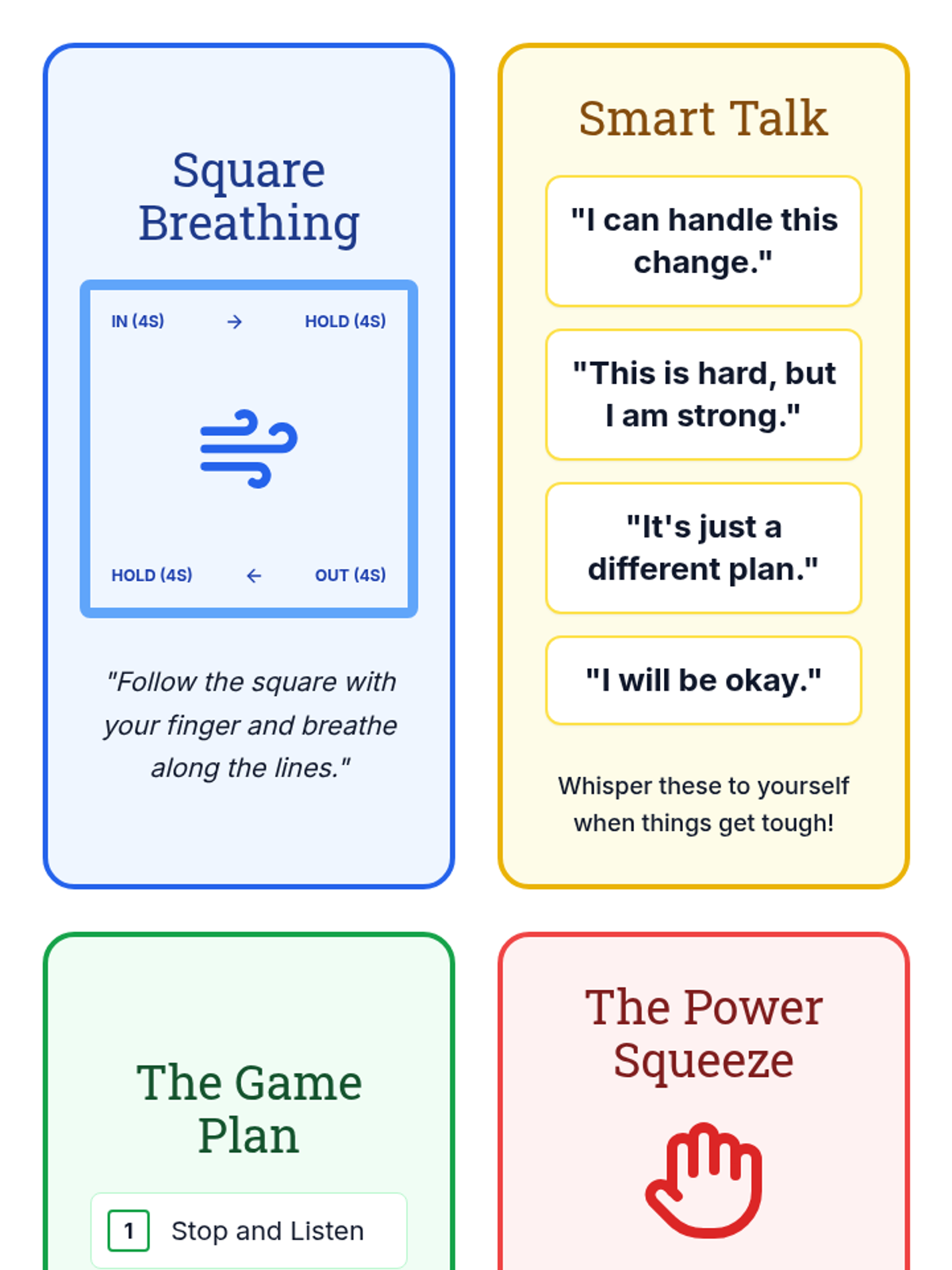
Stop-and-think strategies, impulse management, and SMART goal setting for personal growth. Develops internal motivation, stress reduction techniques, and resilience through proactive planning and monitoring.
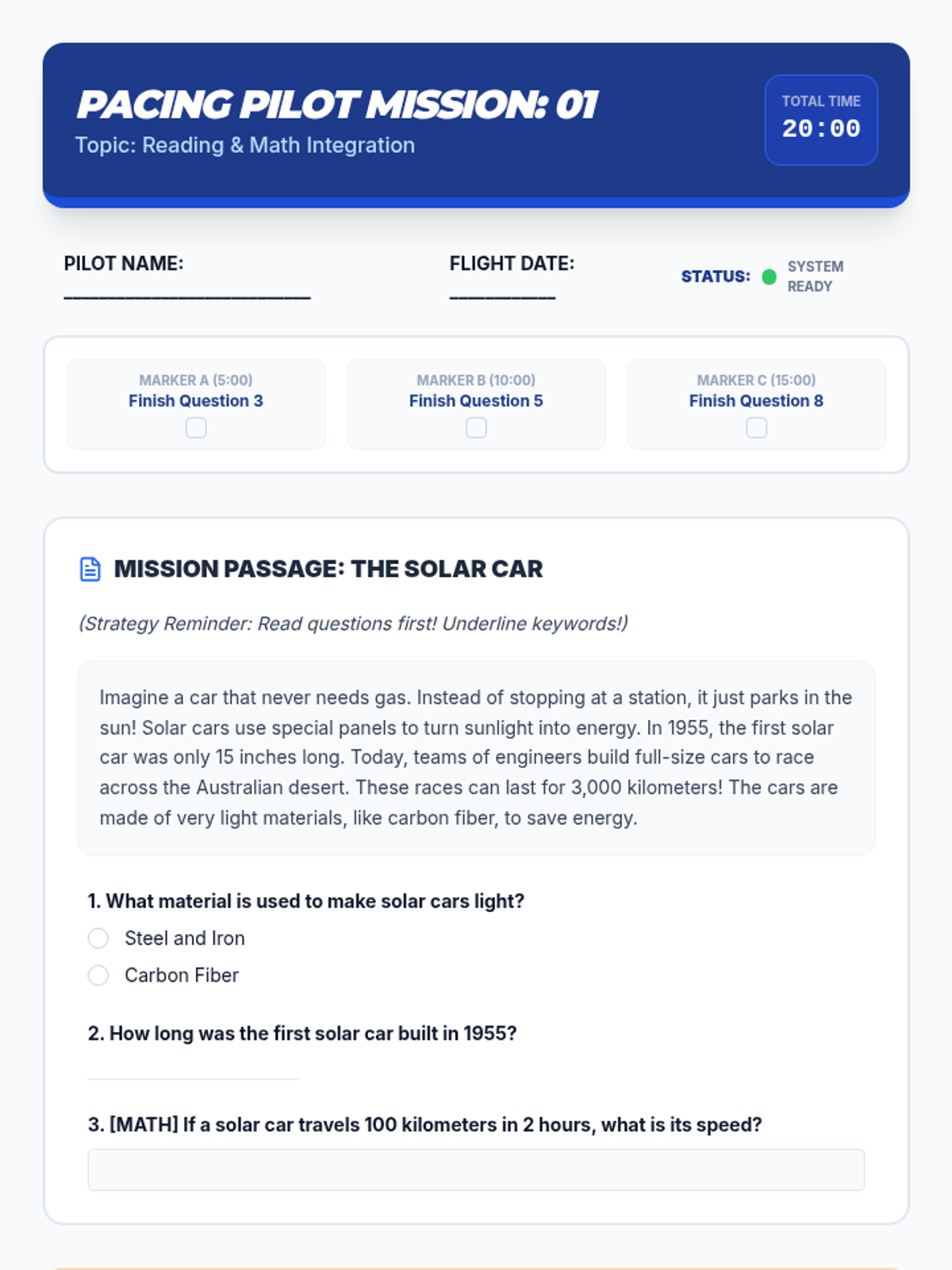
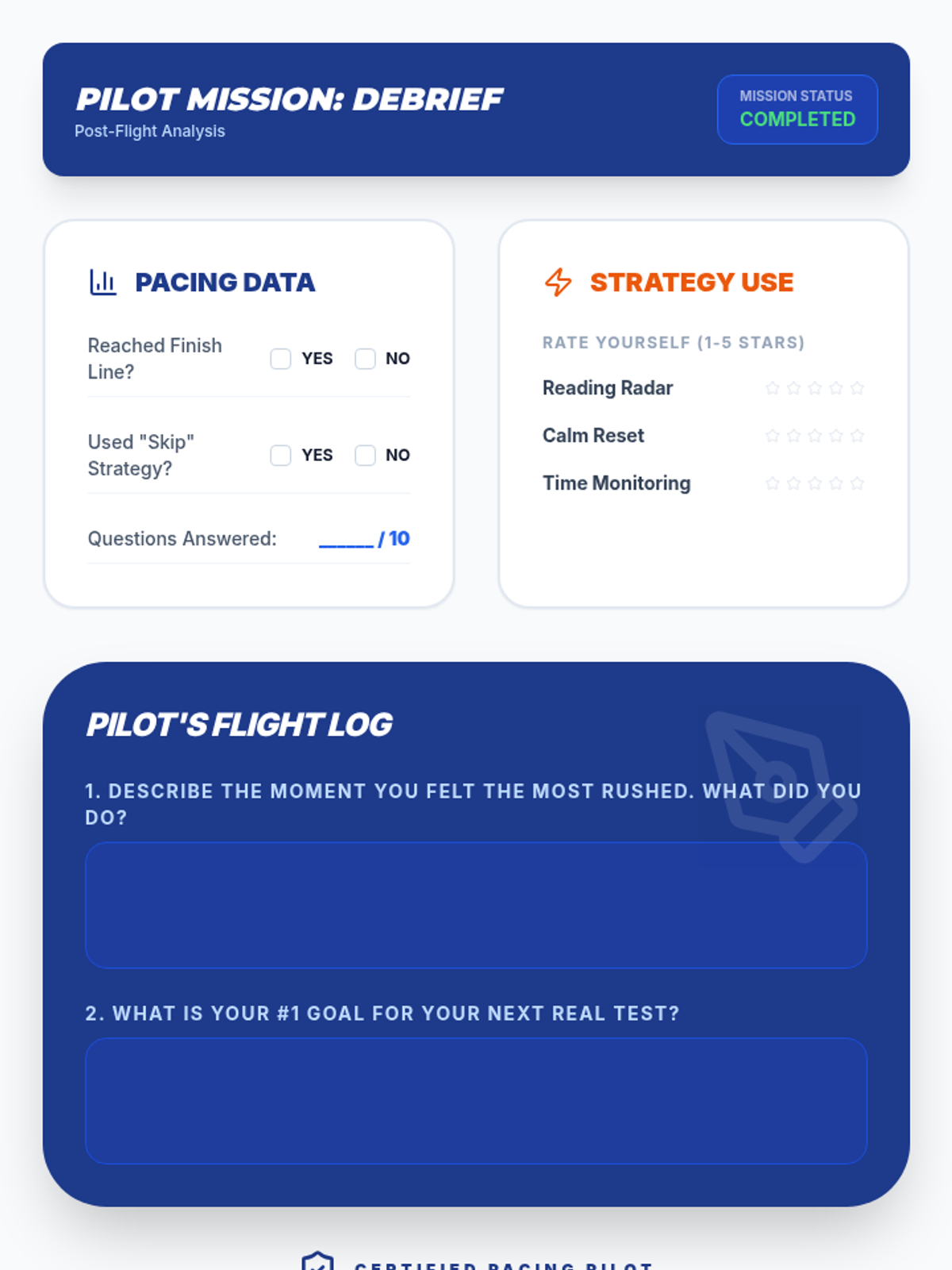
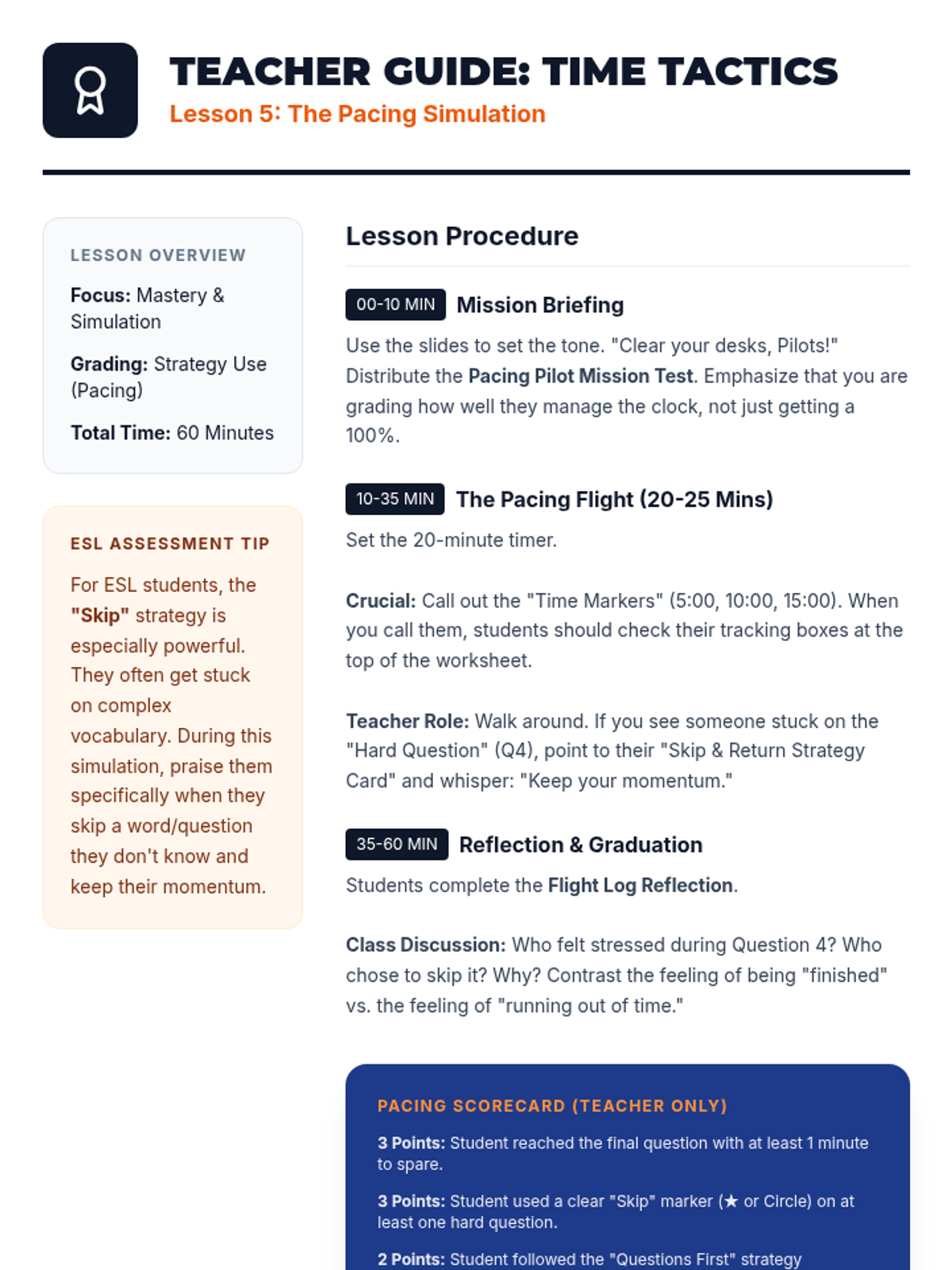
A simulated test session where students are graded on their ability to hit specific pacing markers and reflect on their performance.
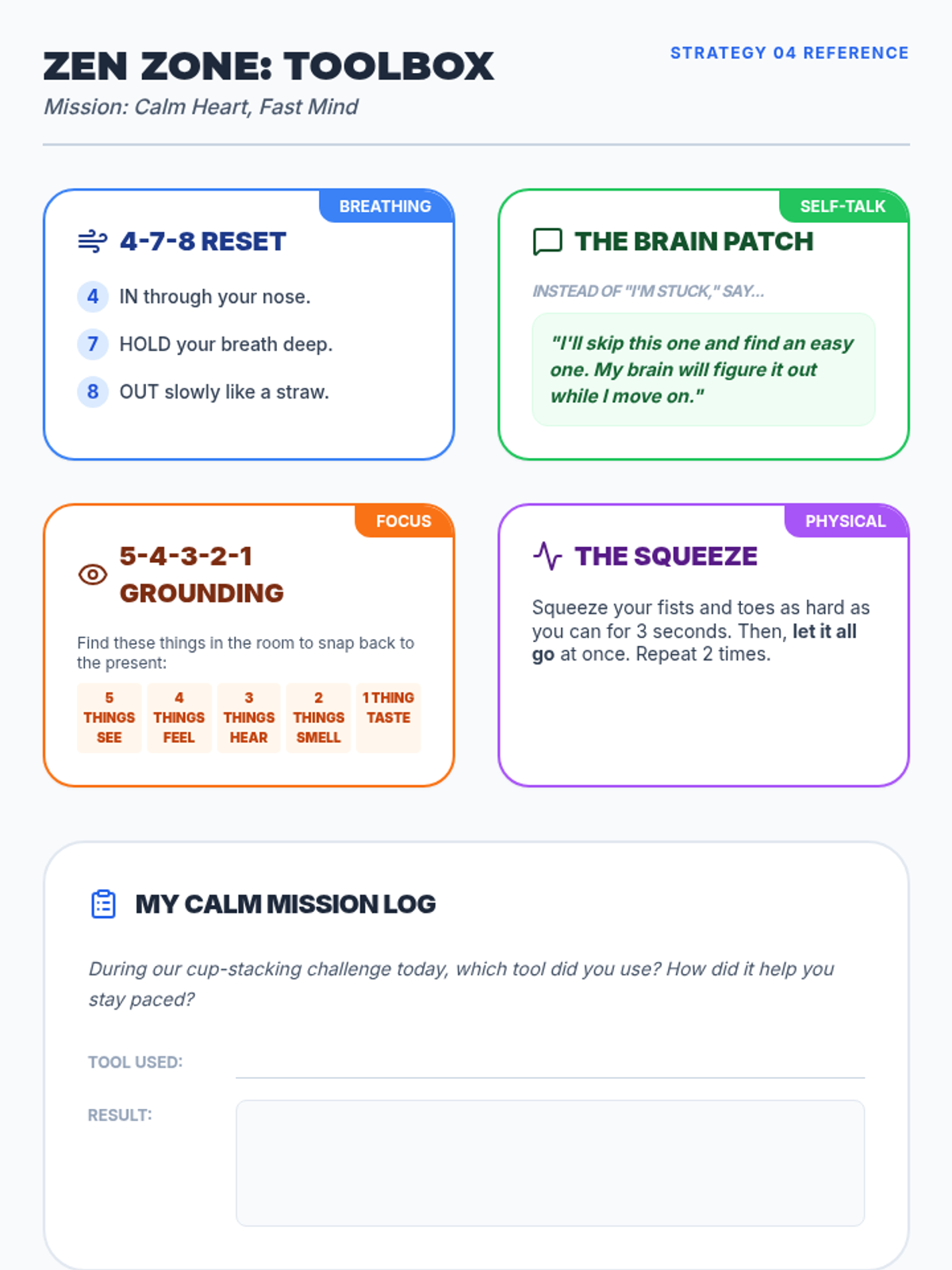
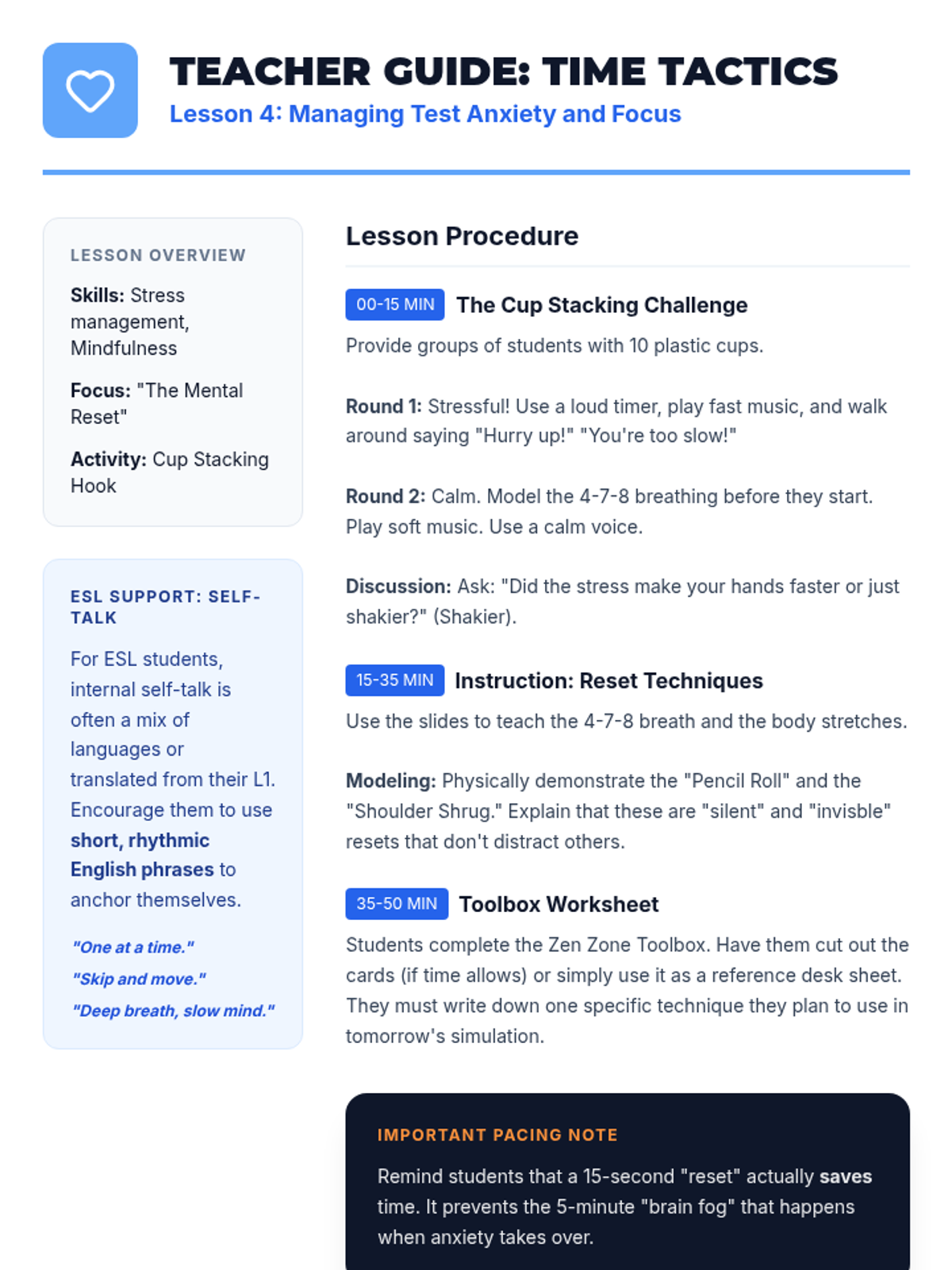
Teaches students physiological and mental reset techniques to stay calm and focused when the clock is ticking.
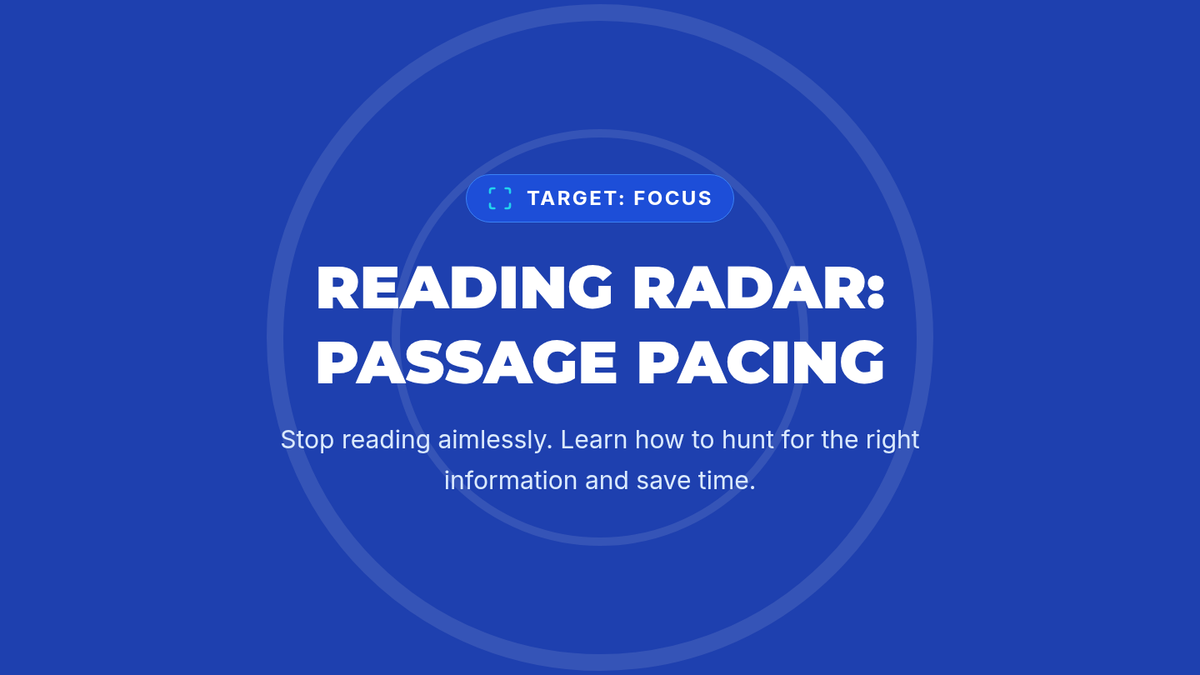
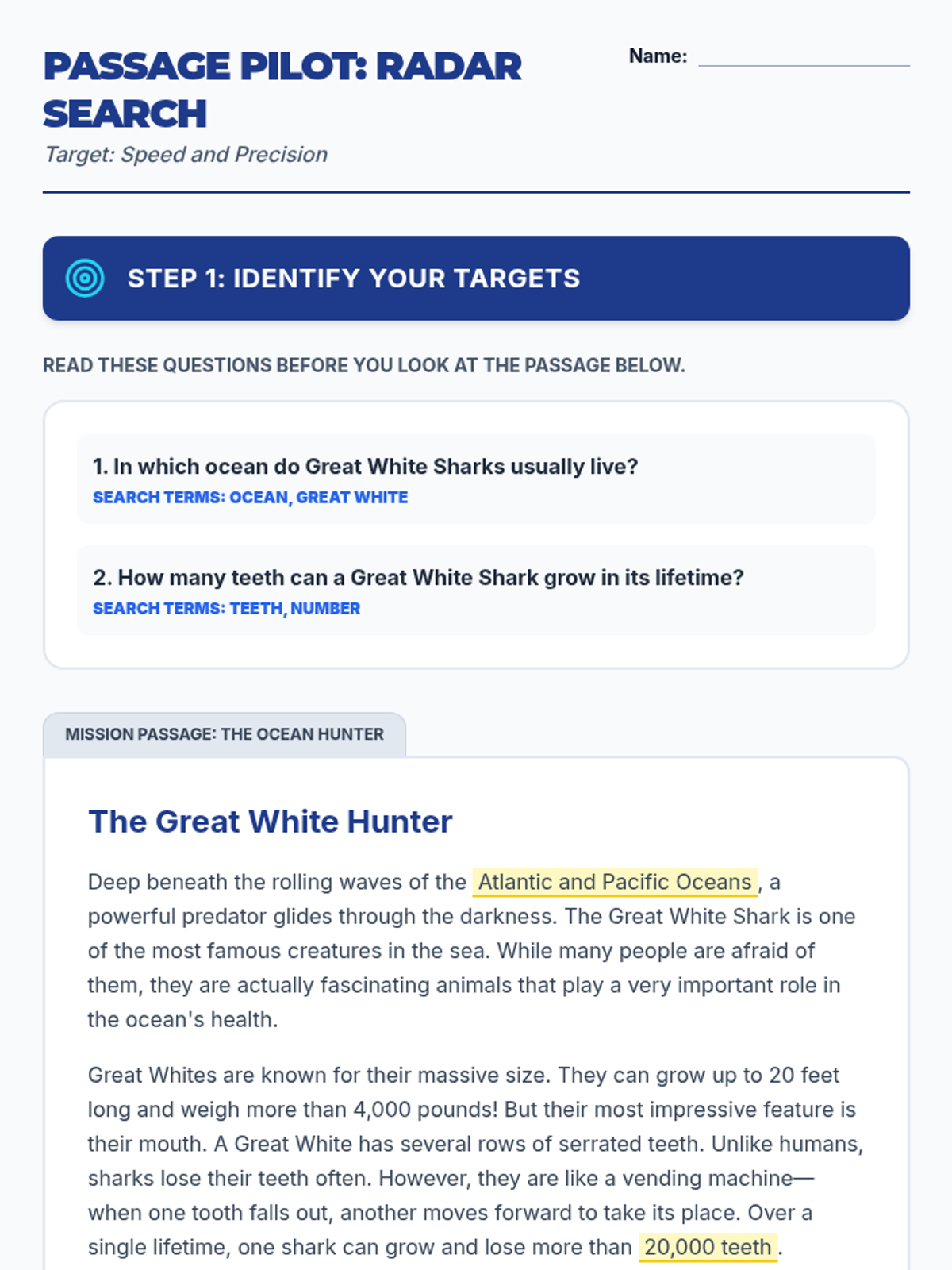
Focuses on reading strategies like 'questions first' to save time and improve focus during long reading comprehension sections.
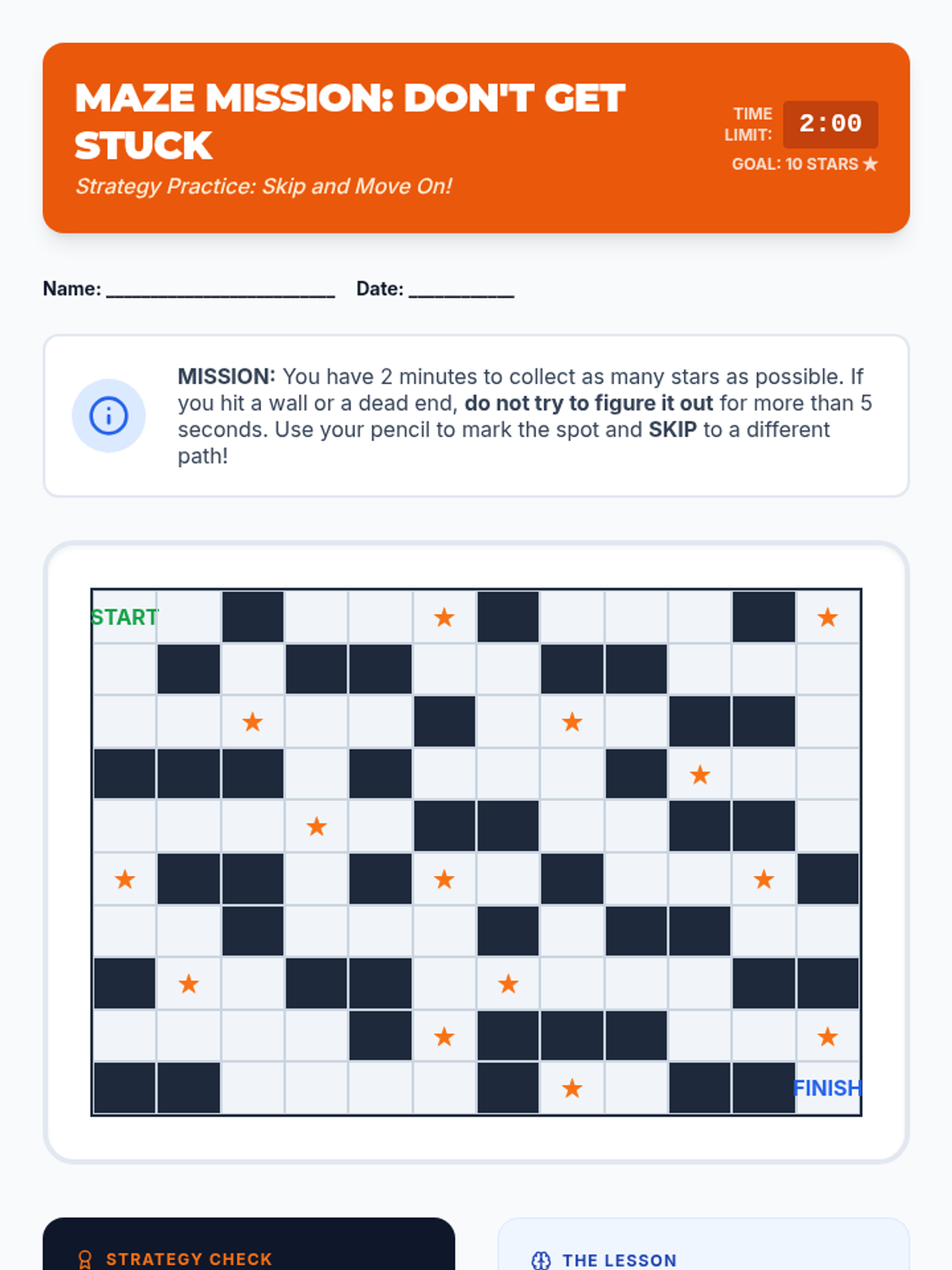
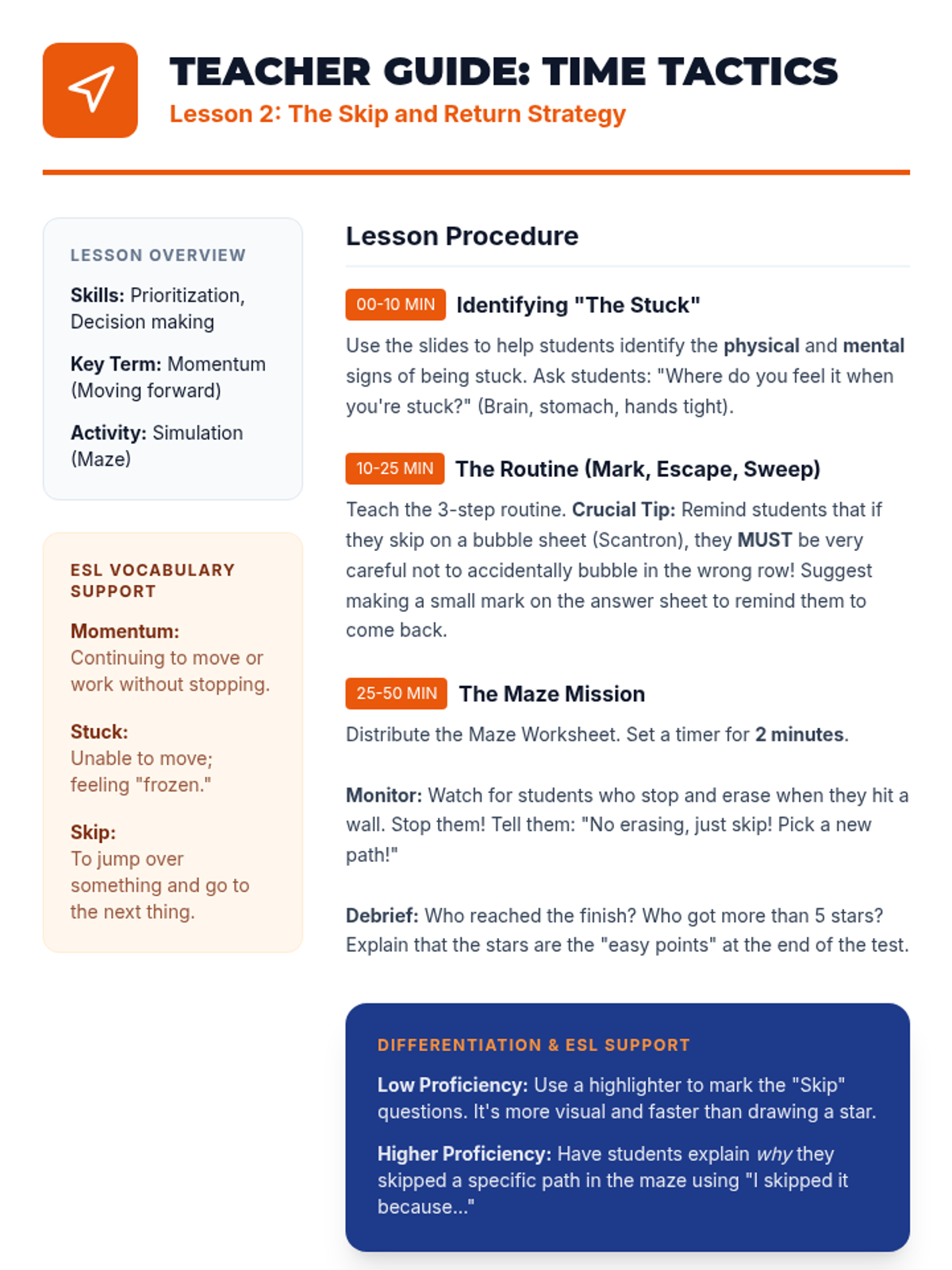
Students practice identifying when they are stuck and learn the 'skip and return' method to maximize their points by answering easy questions first.
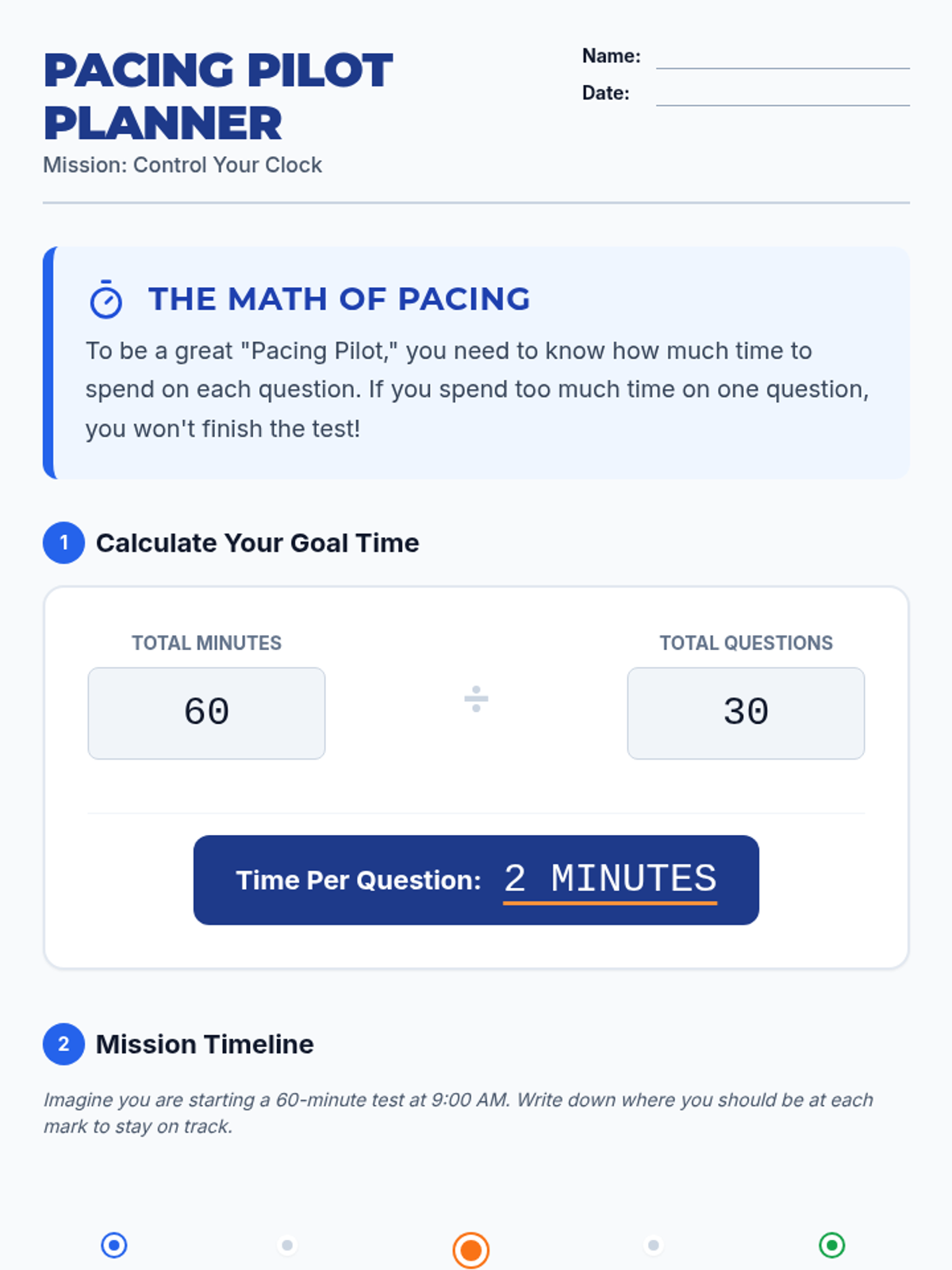
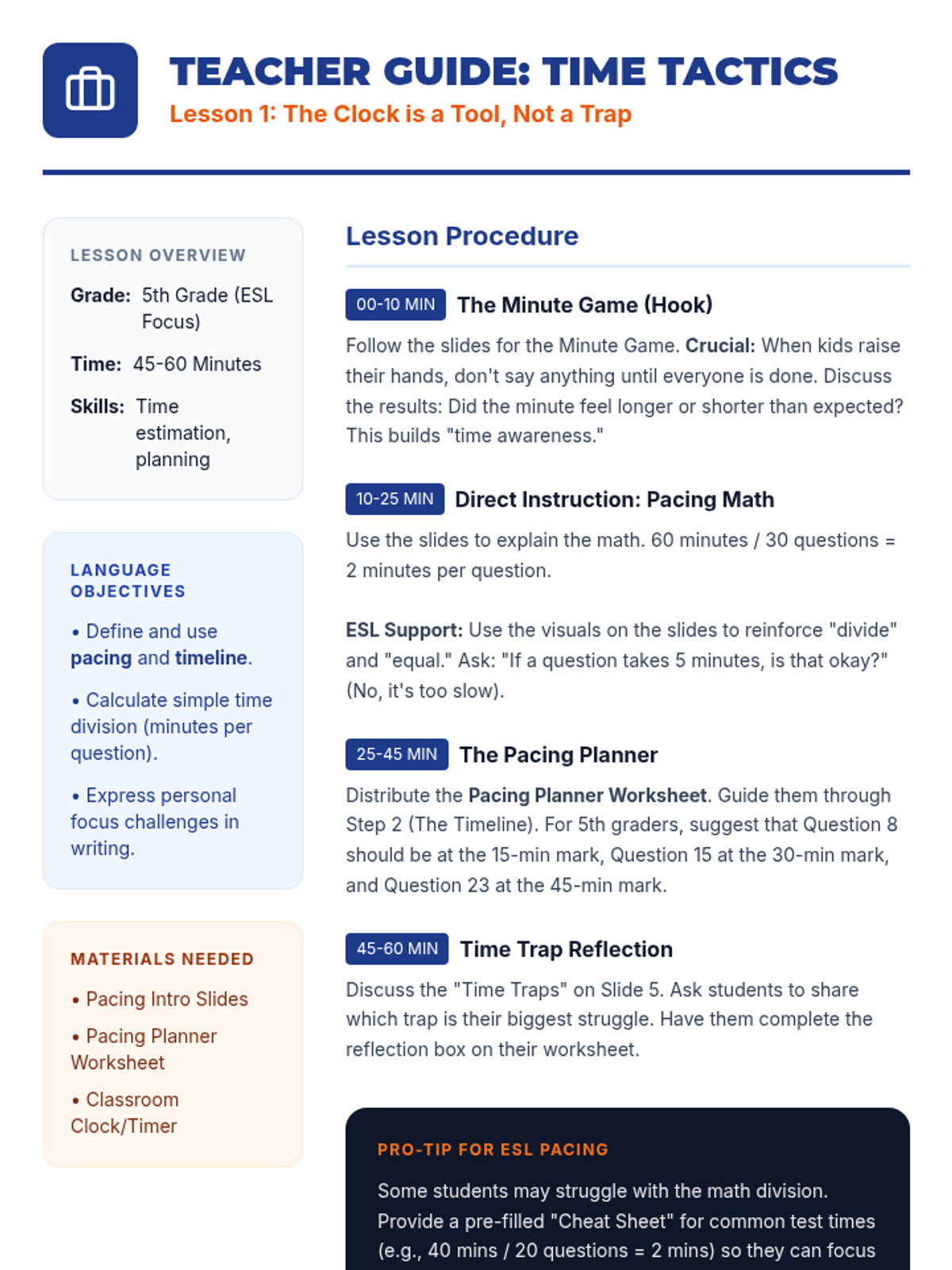
Students learn the basics of pacing by breaking down total test time and creating visual pacing guides to avoid the 'time trap.'
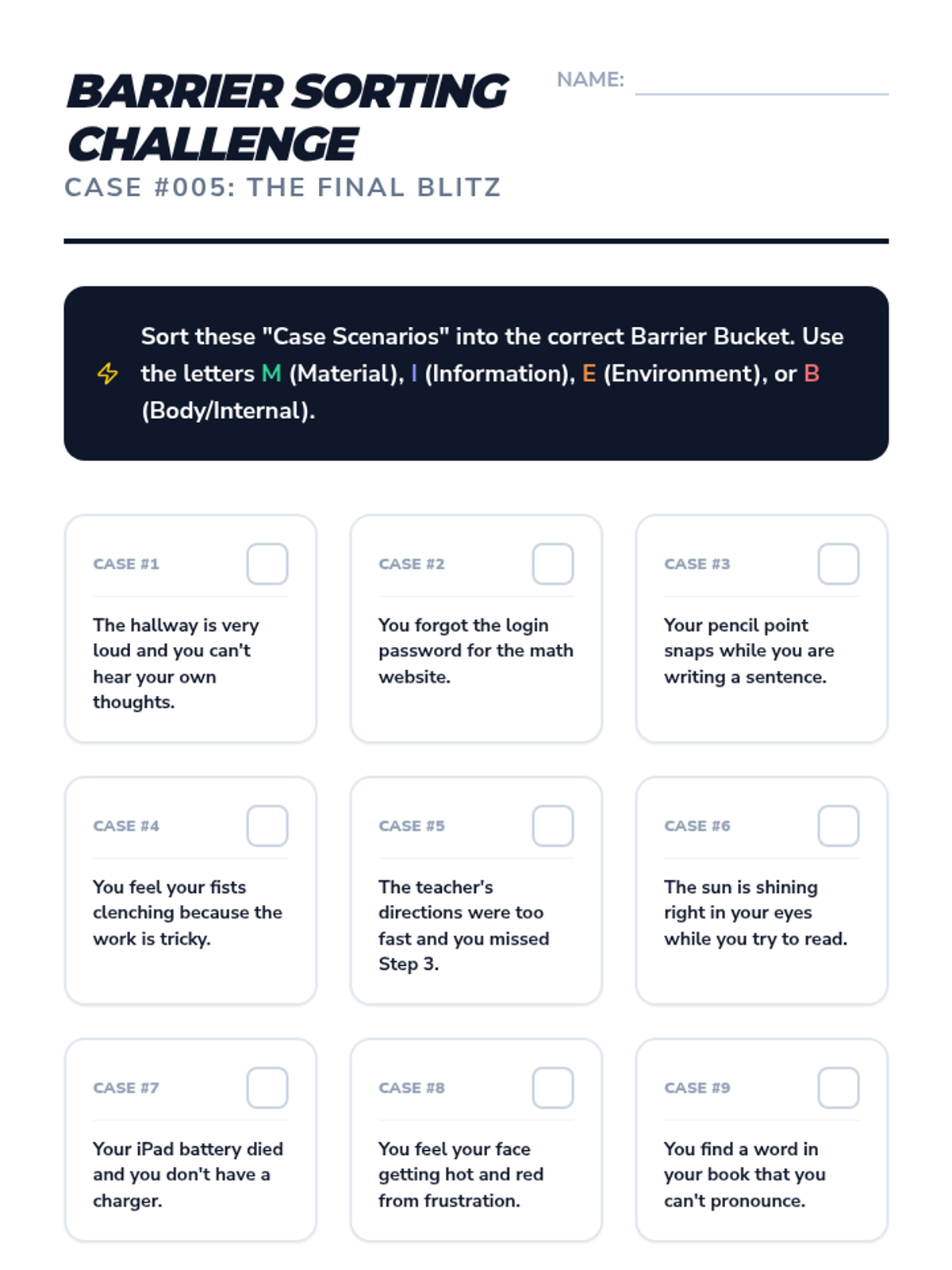
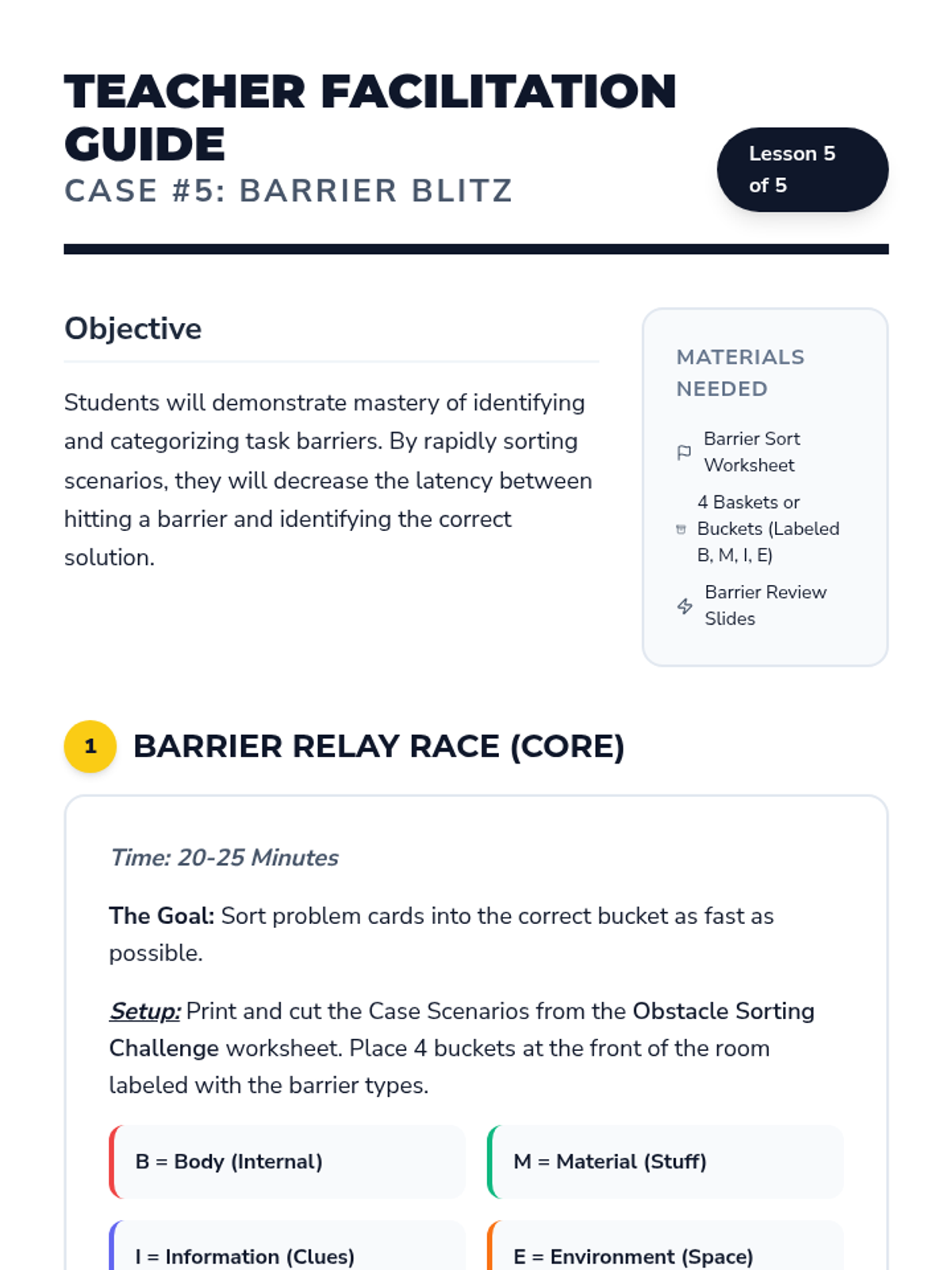
A culminating lesson where students rapidly sort various scenarios into barrier categories to reduce the time between hitting a wall and identifying the solution.
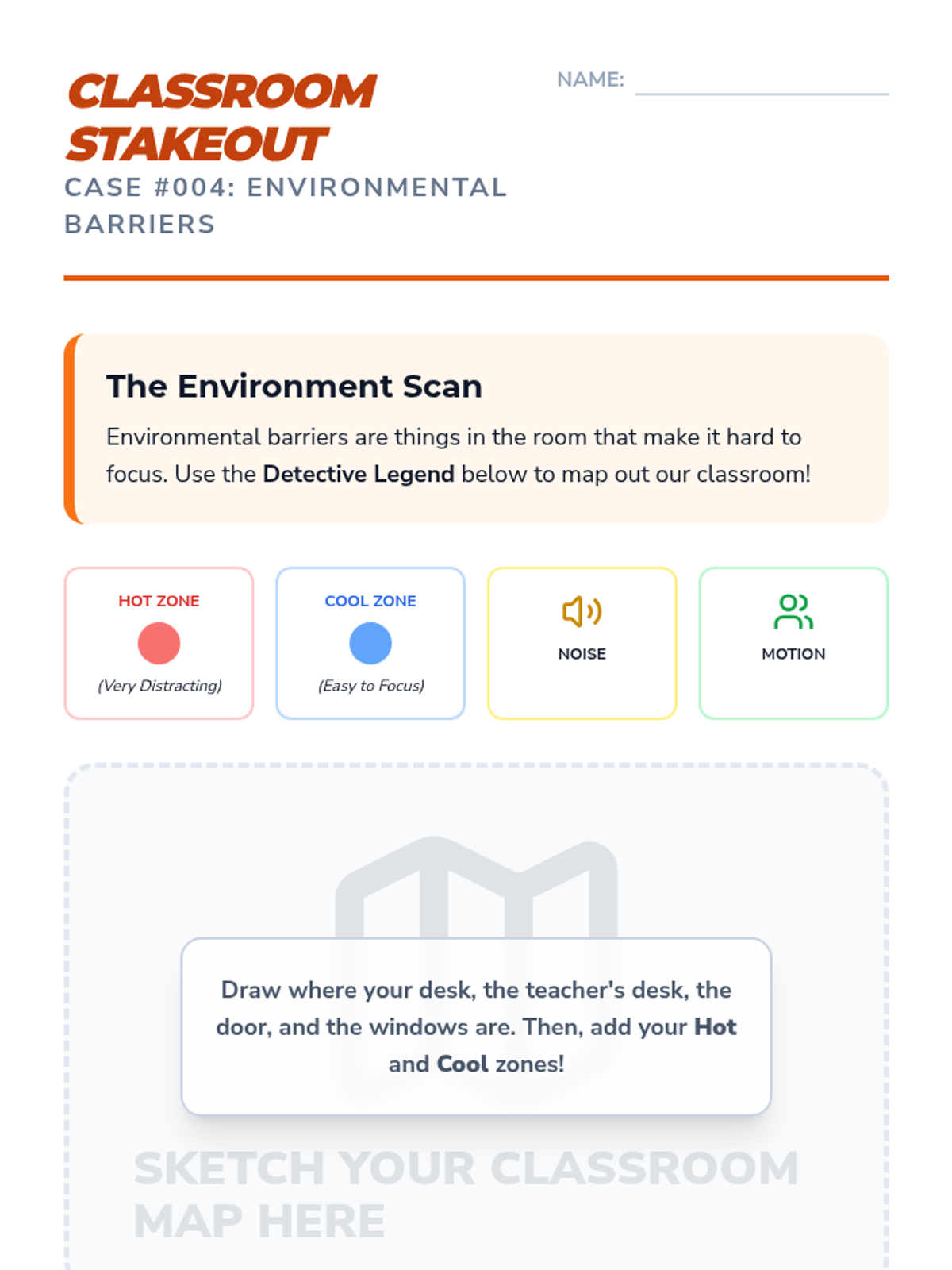
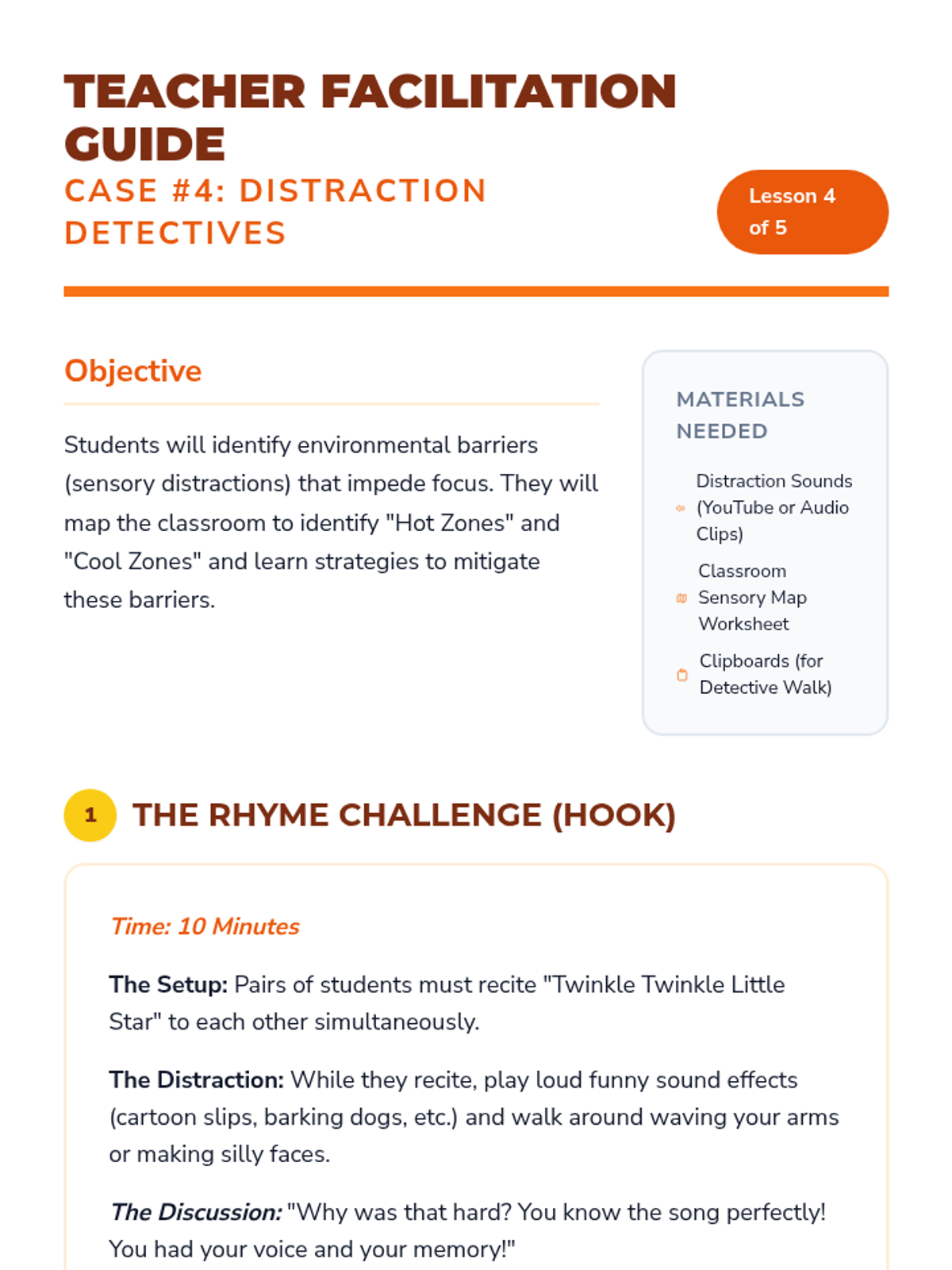
Investigates sensory and environmental barriers like noise or clutter, conducting a 'detective walk' to identify classroom distractions.
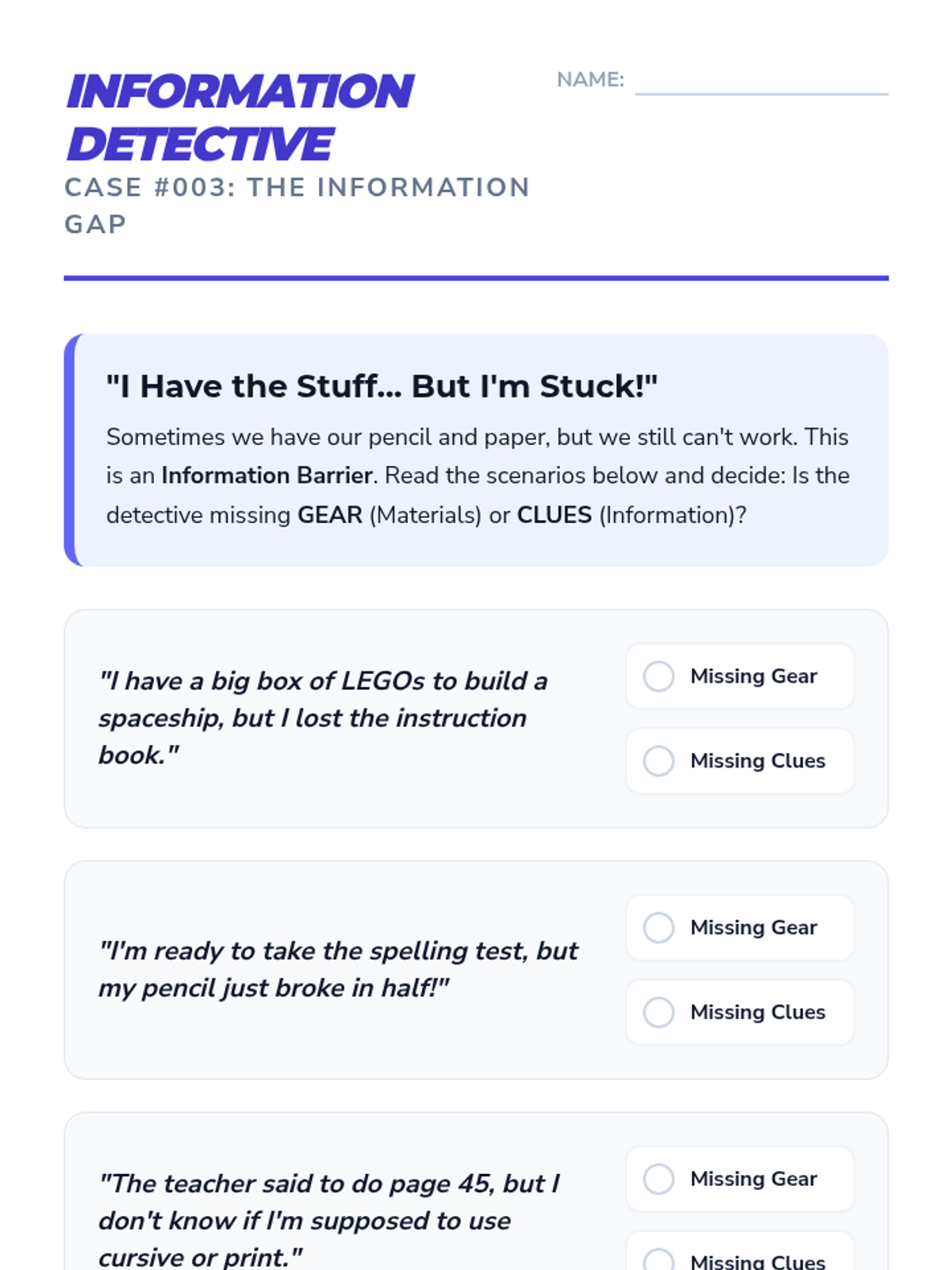
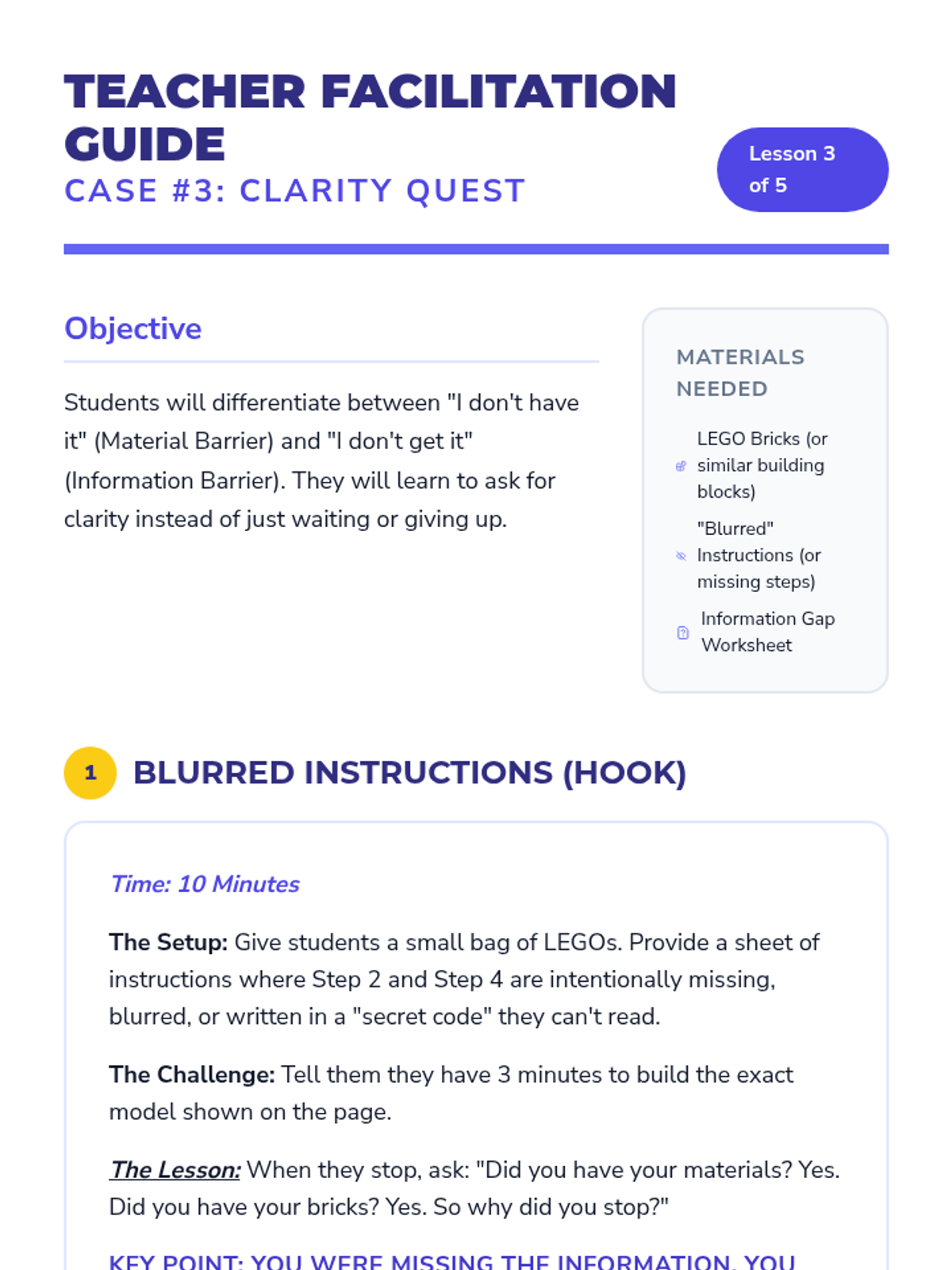
Teaches students to recognize when they are stuck due to a lack of clarity or understanding, differentiating between 'I don't have it' and 'I don't get it.'
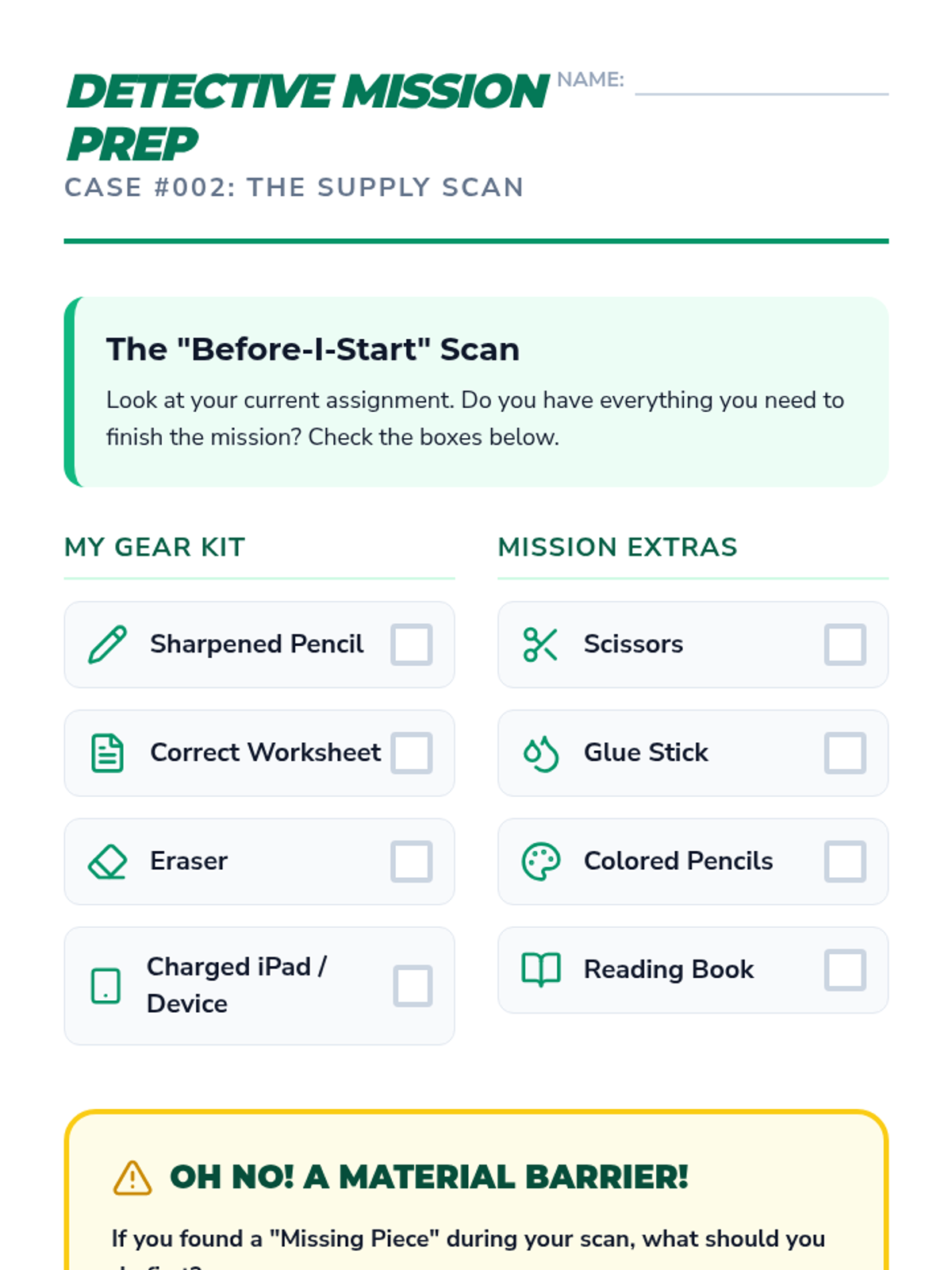
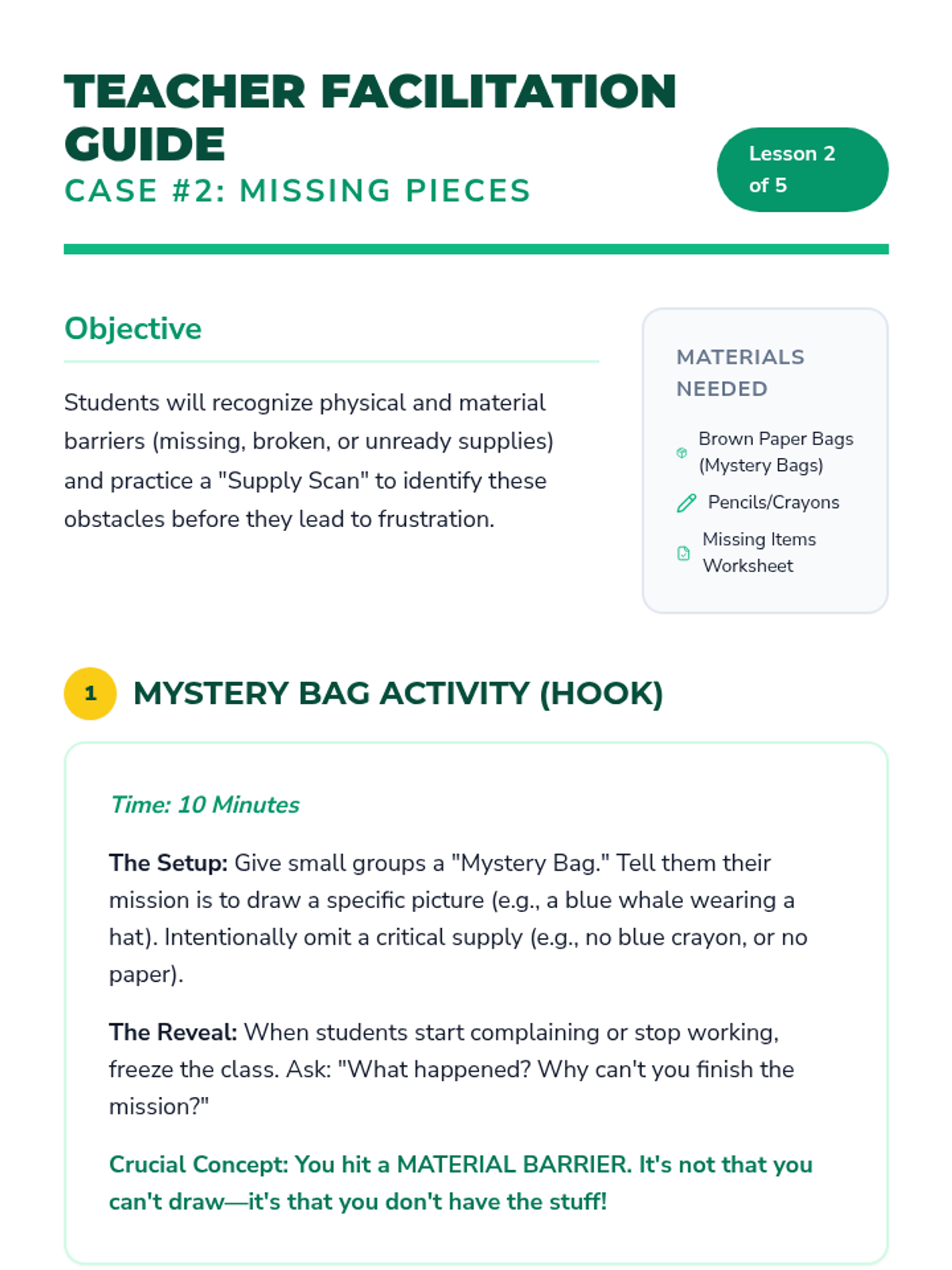
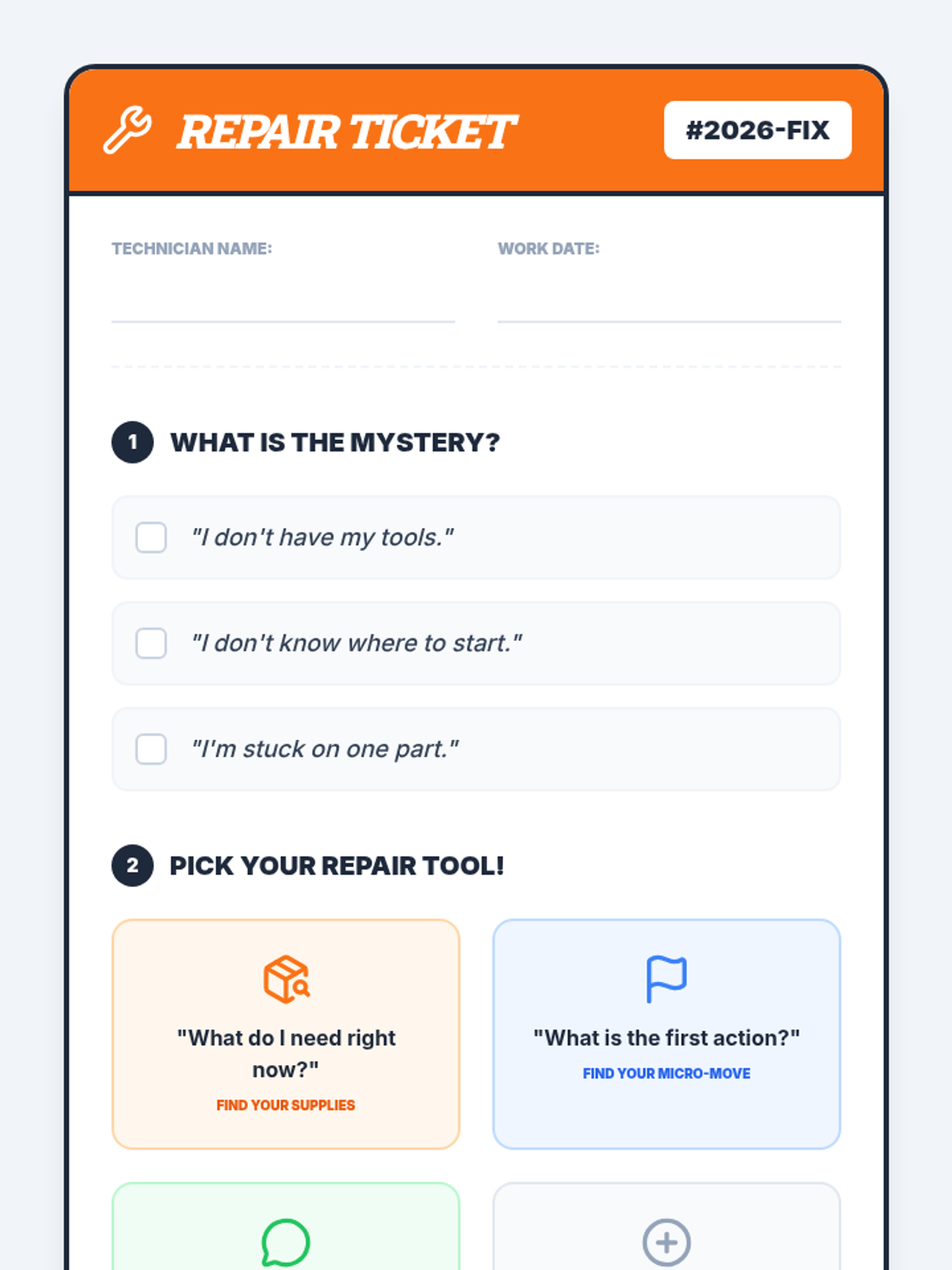
Focuses on tangible obstacles like broken tools or missing materials, teaching students to perform a 'supply scan' to identify what is physically missing.
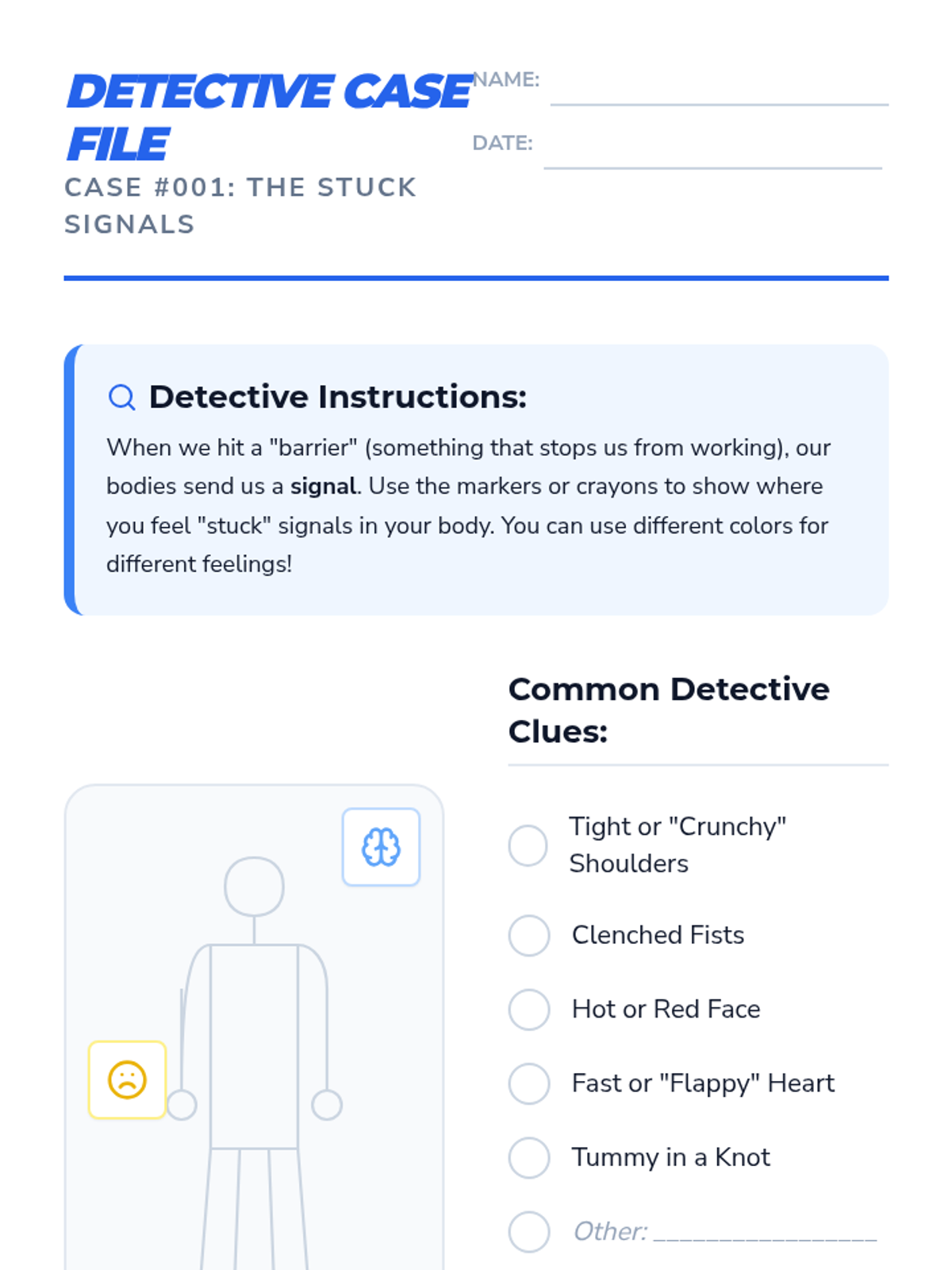
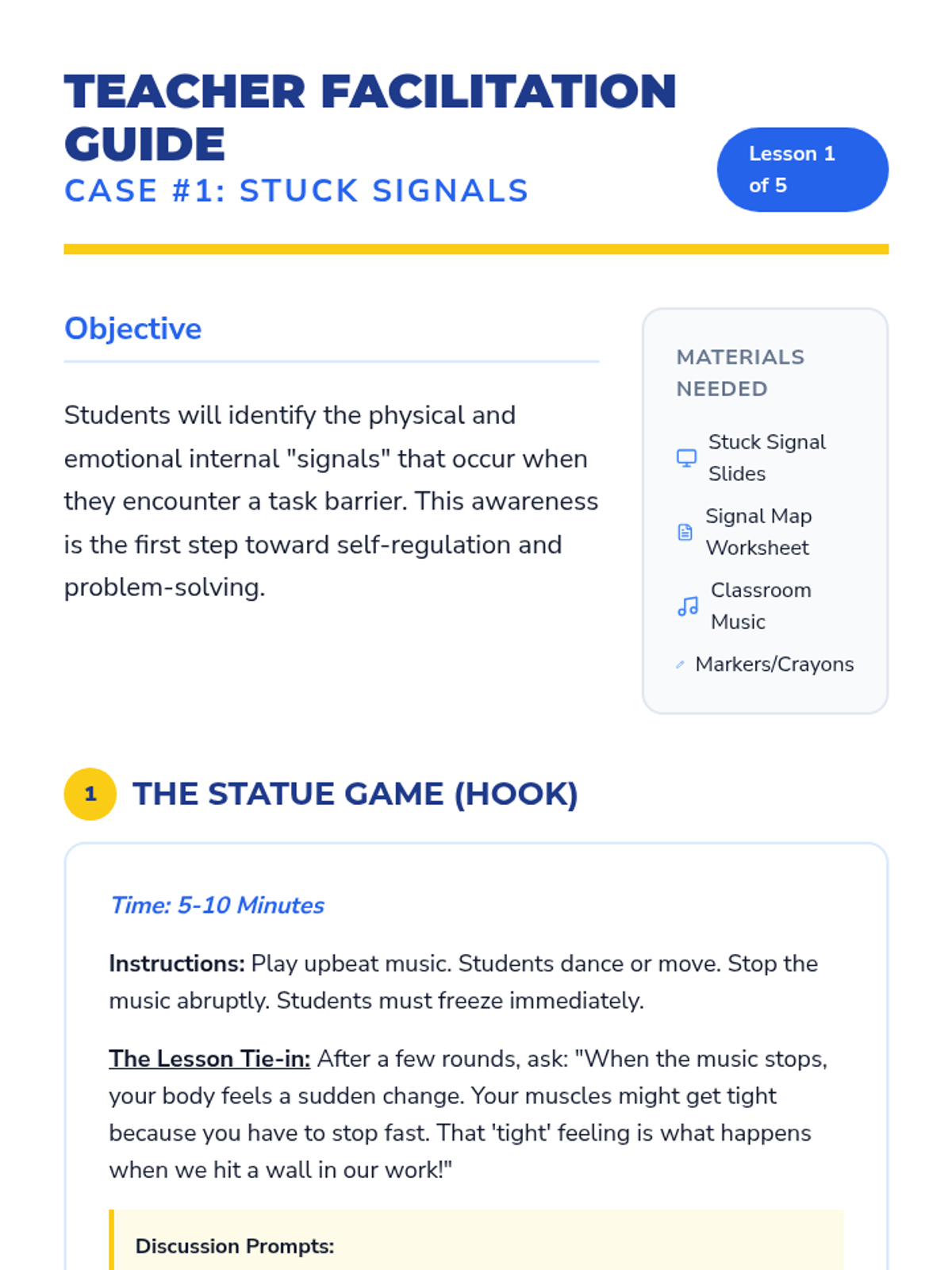
Students explore the physical and emotional sensations associated with hitting a task barrier, identifying what frustration feels like to recognize the moment they need to stop.
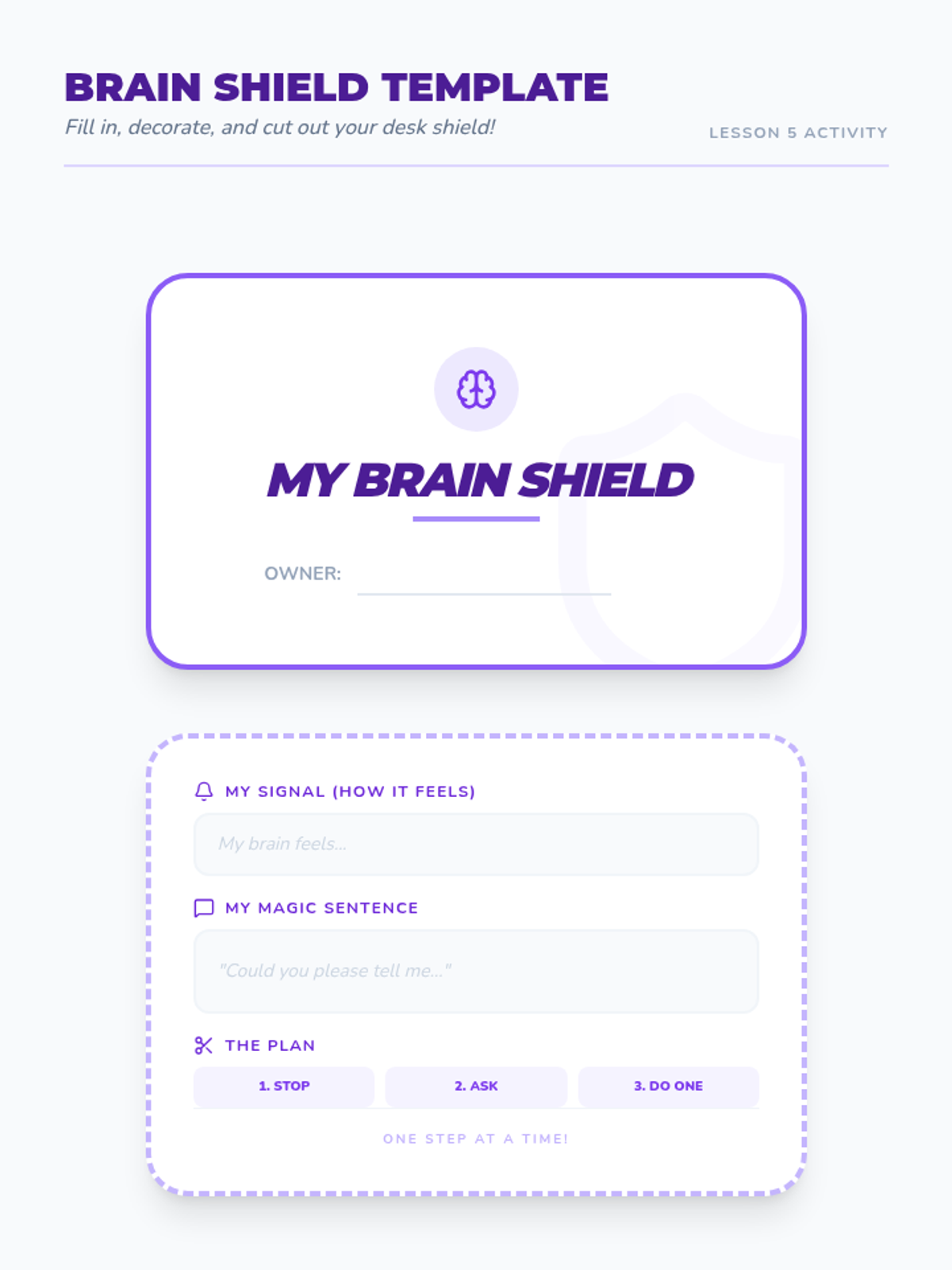
Students design and create a personalized desk reference card to remind them of their self-monitoring and clarification strategies.
Students practice their self-advocacy scripts in peer-to-peer role-plays to build confidence in real-world situations.
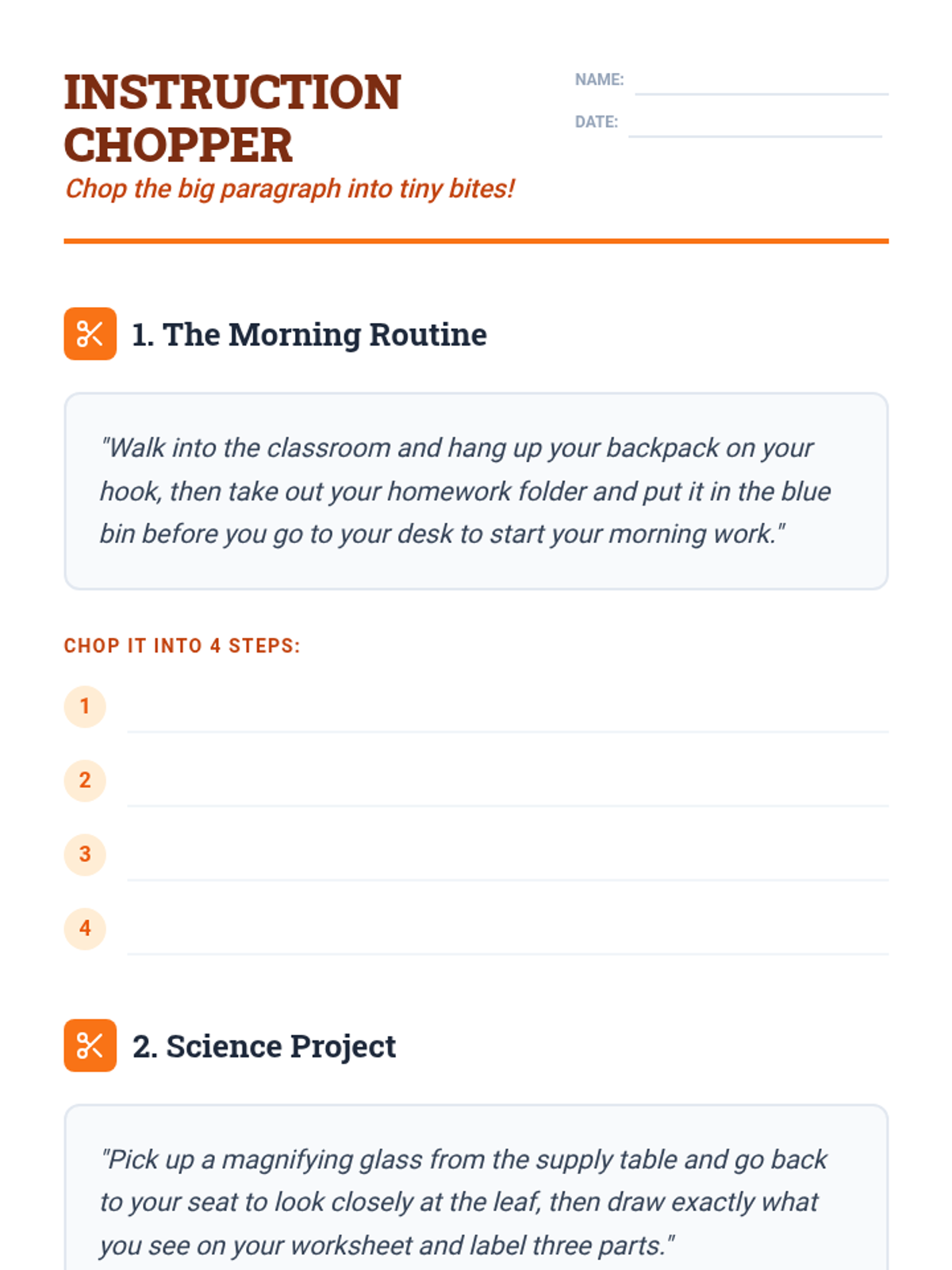
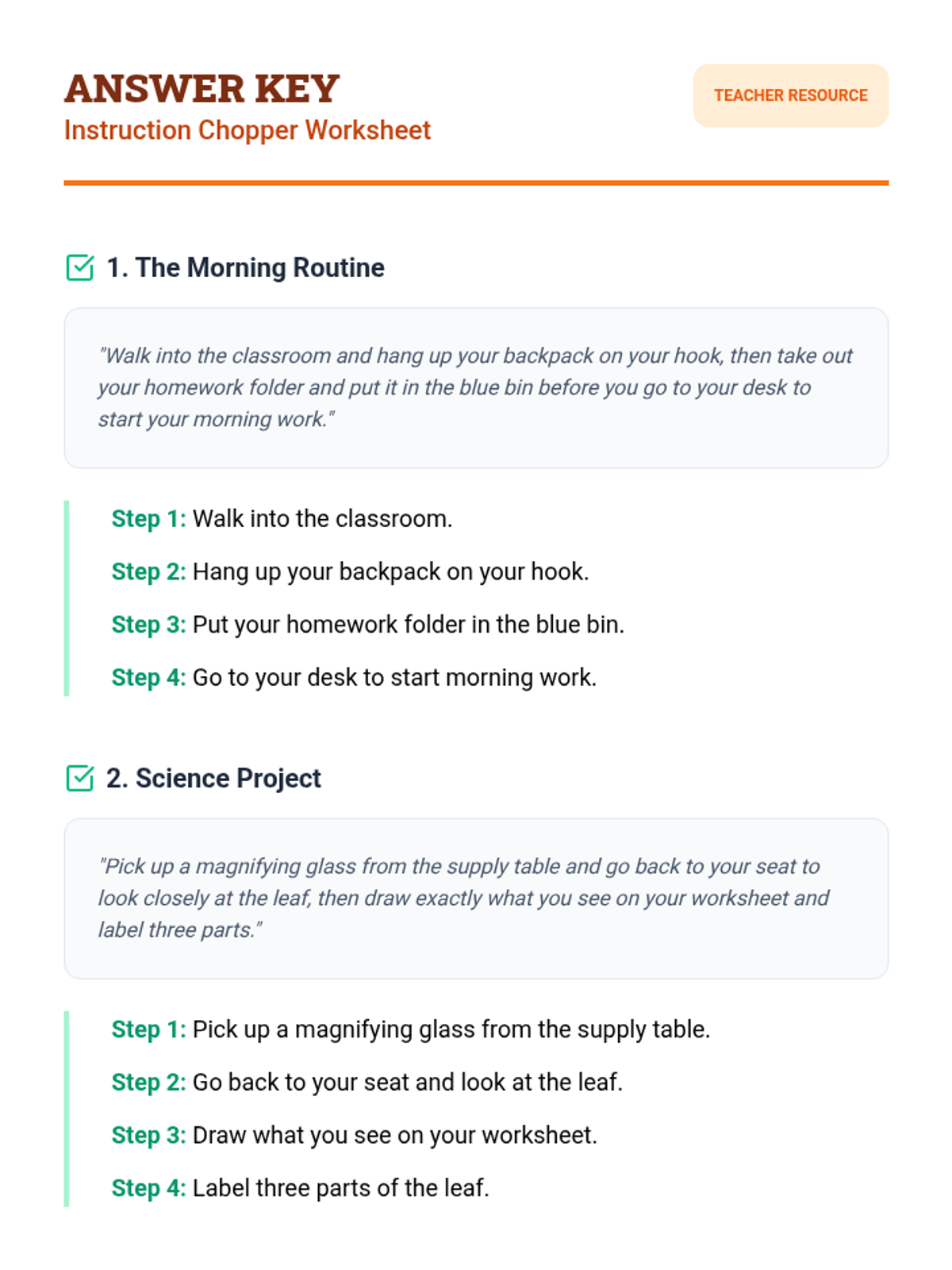
Students learn to analyze complex paragraphs of instructions and extract simple, single-step tasks.
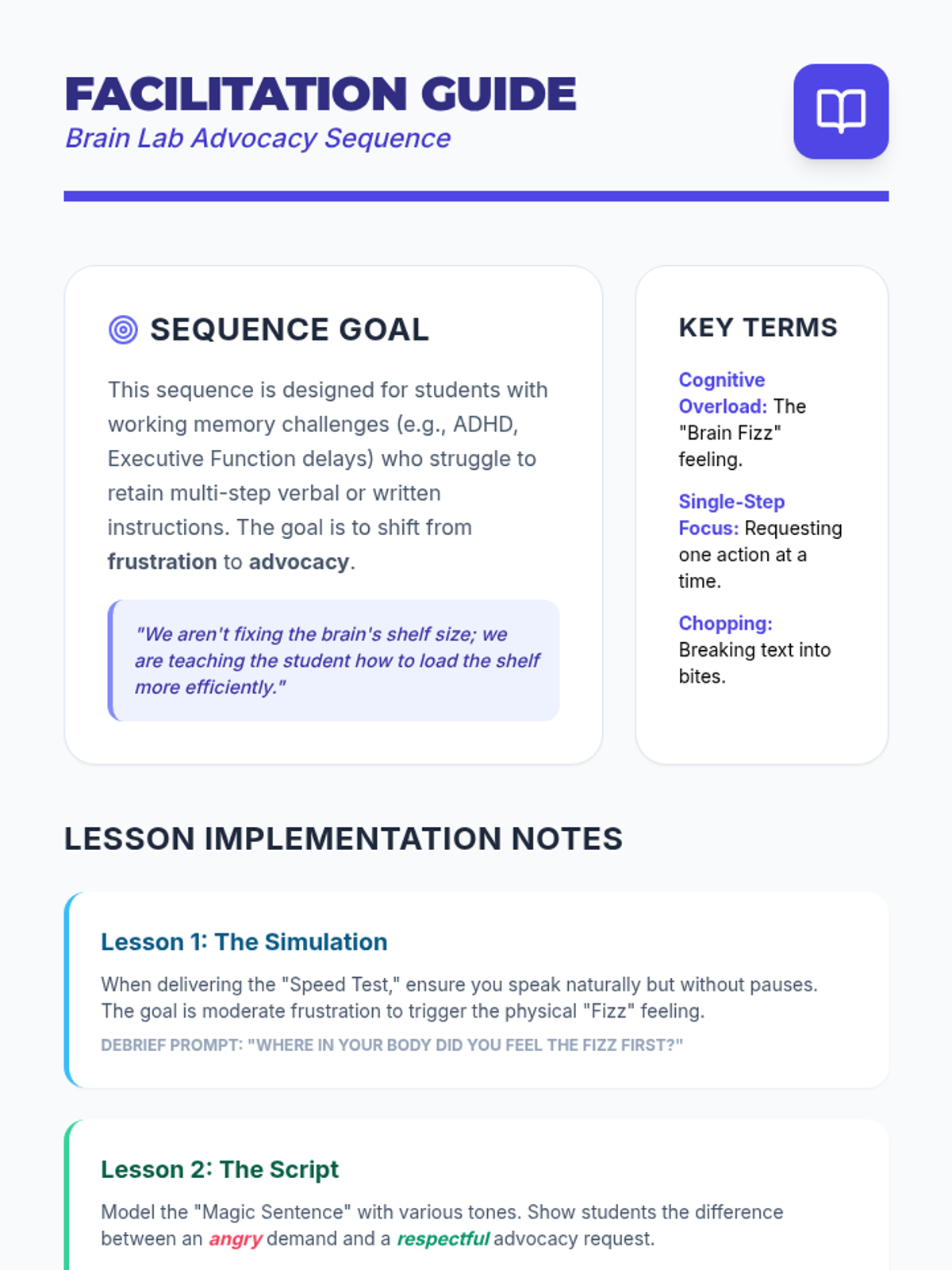
Students learn and practice the 'One Thing' script to respectfully ask for directions to be broken down into single steps.
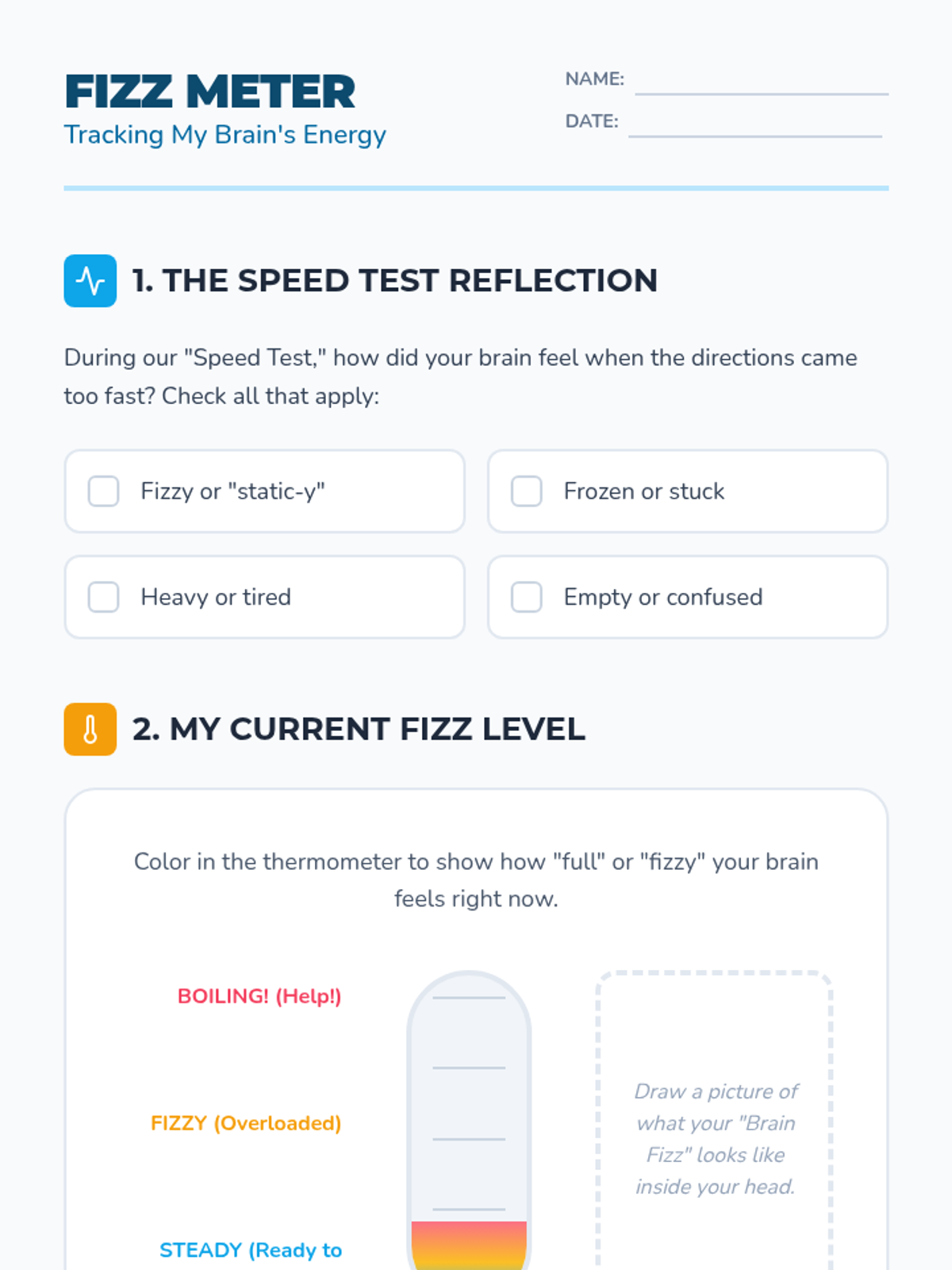
Students identify the feeling of cognitive overload through a simulation and learn to label that 'fizzing' feeling as a signal for help.
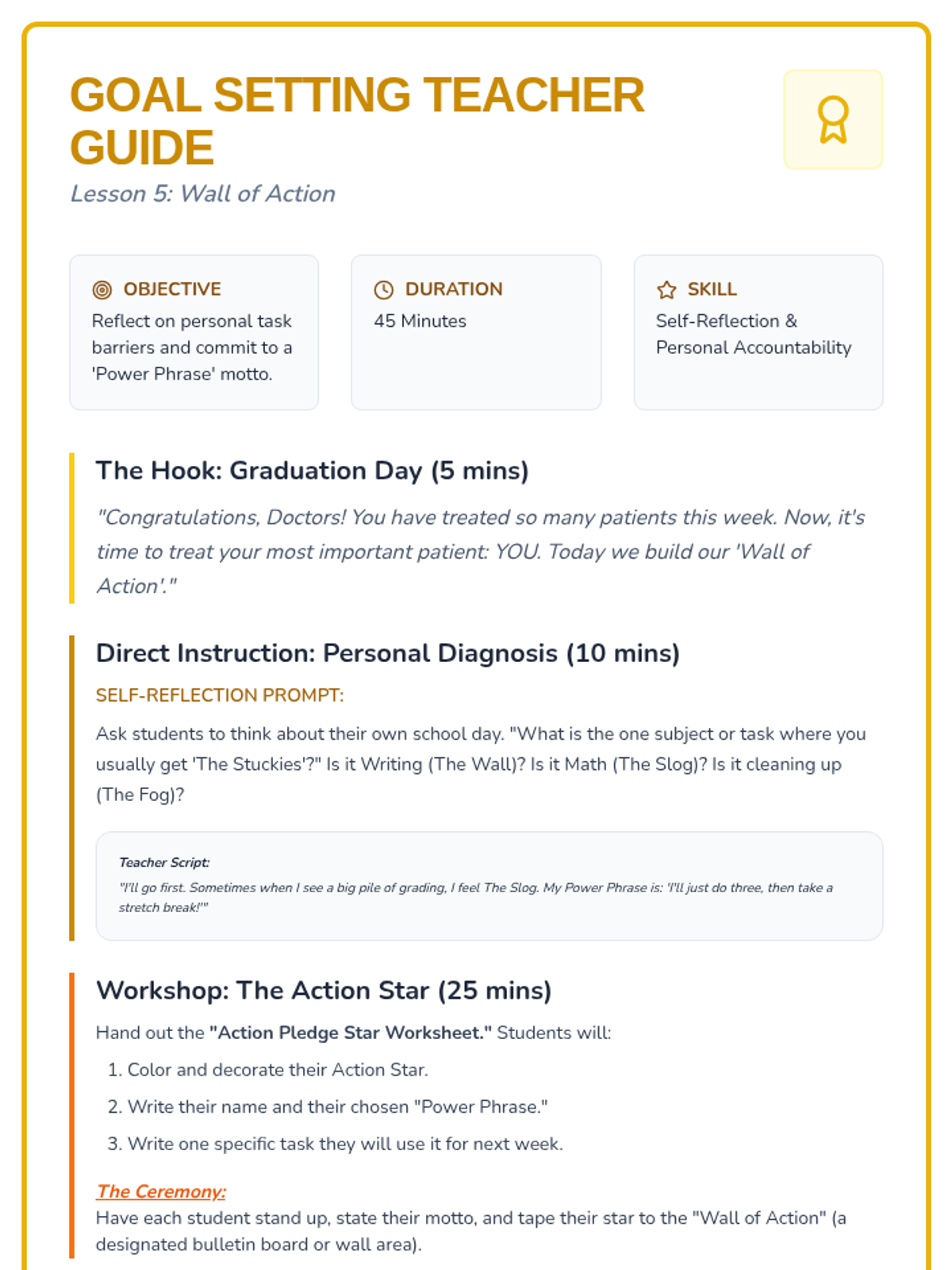
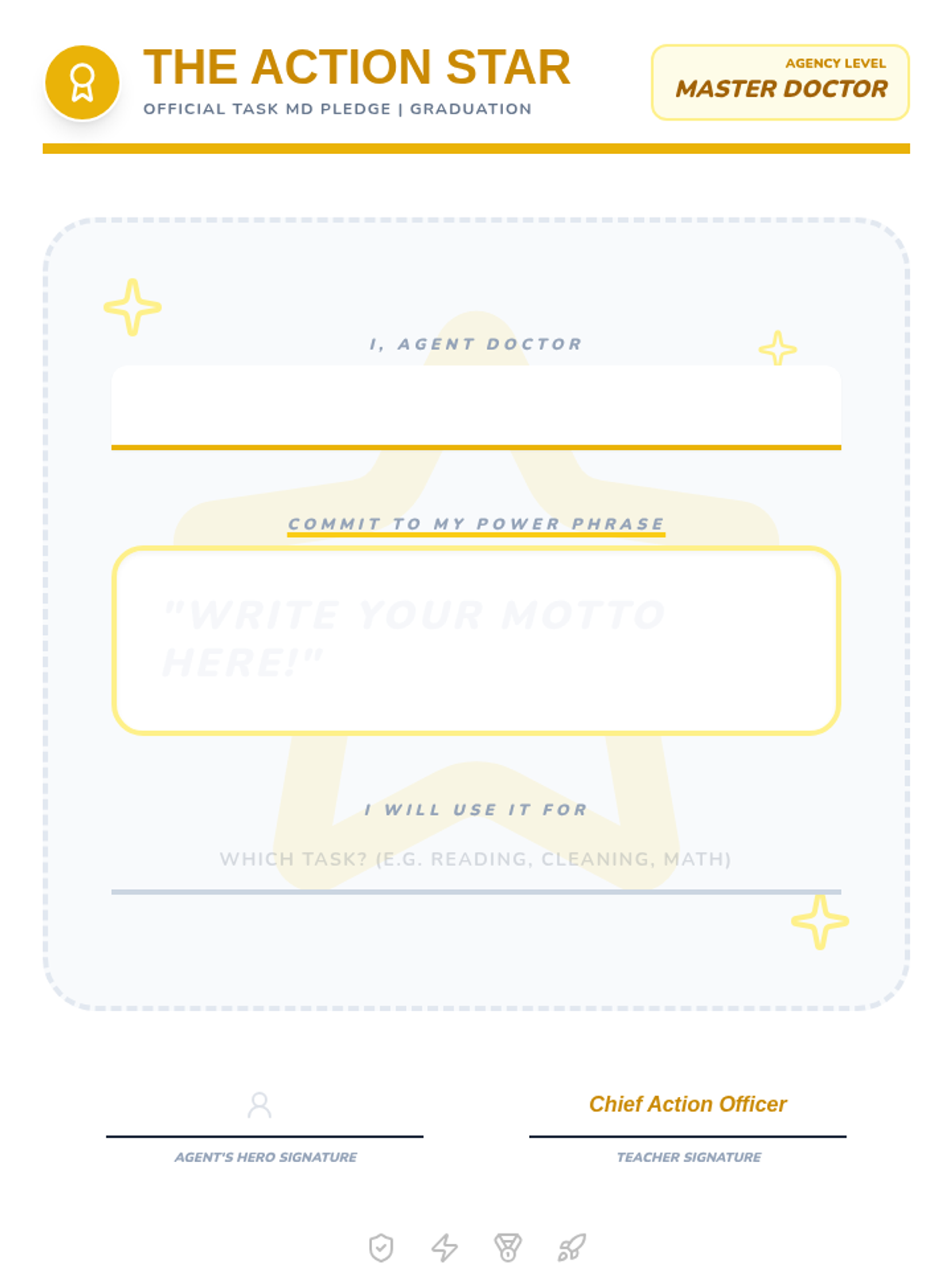
Students identify their own barriers to starting work and select a personal 'Power Phrase' motto for future tasks.
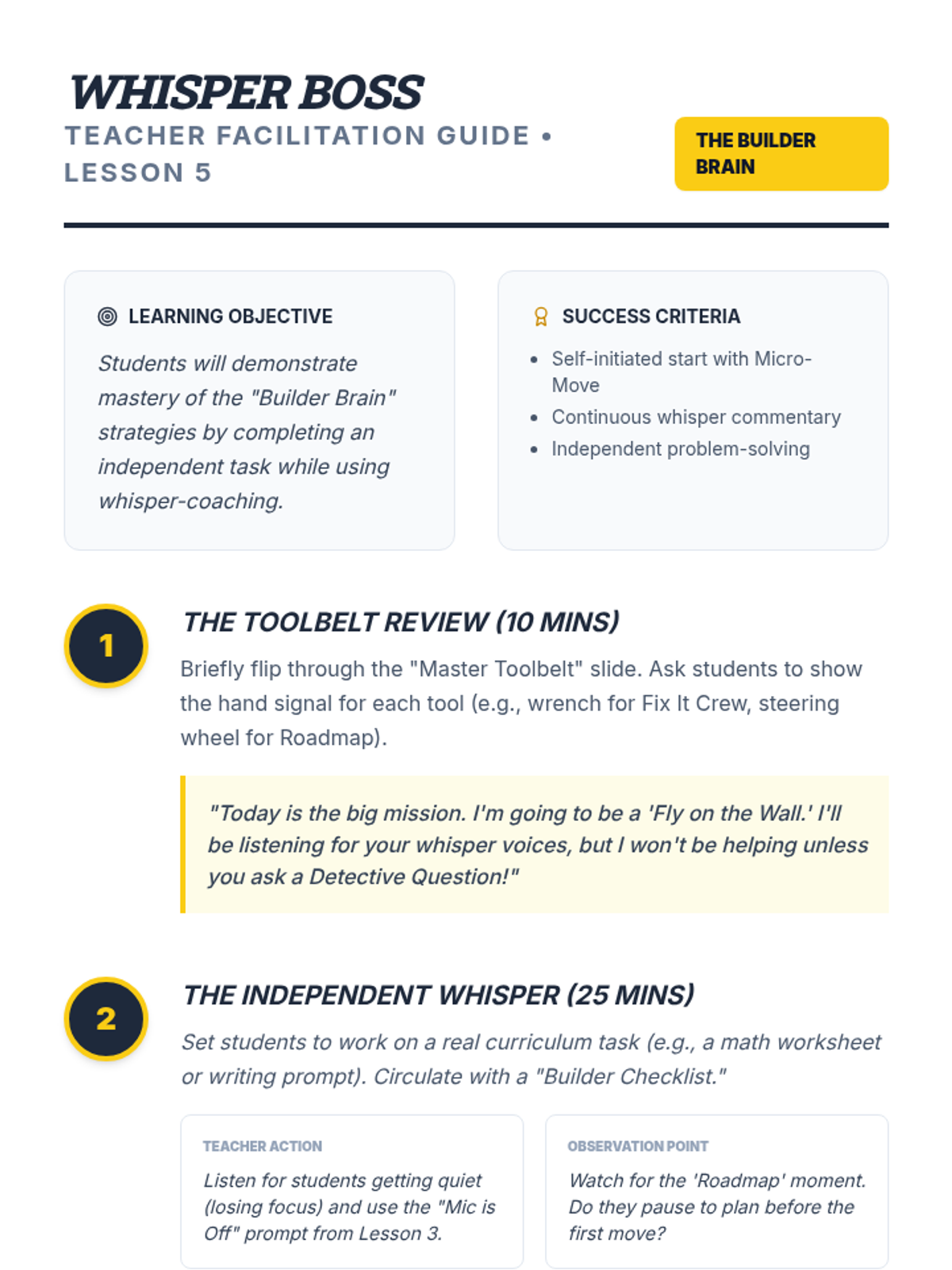
Students apply the breakdown and narration techniques to a real independent work session. The teacher circulates to listen for 'whisper coaching' as students initiate and sustain their work.
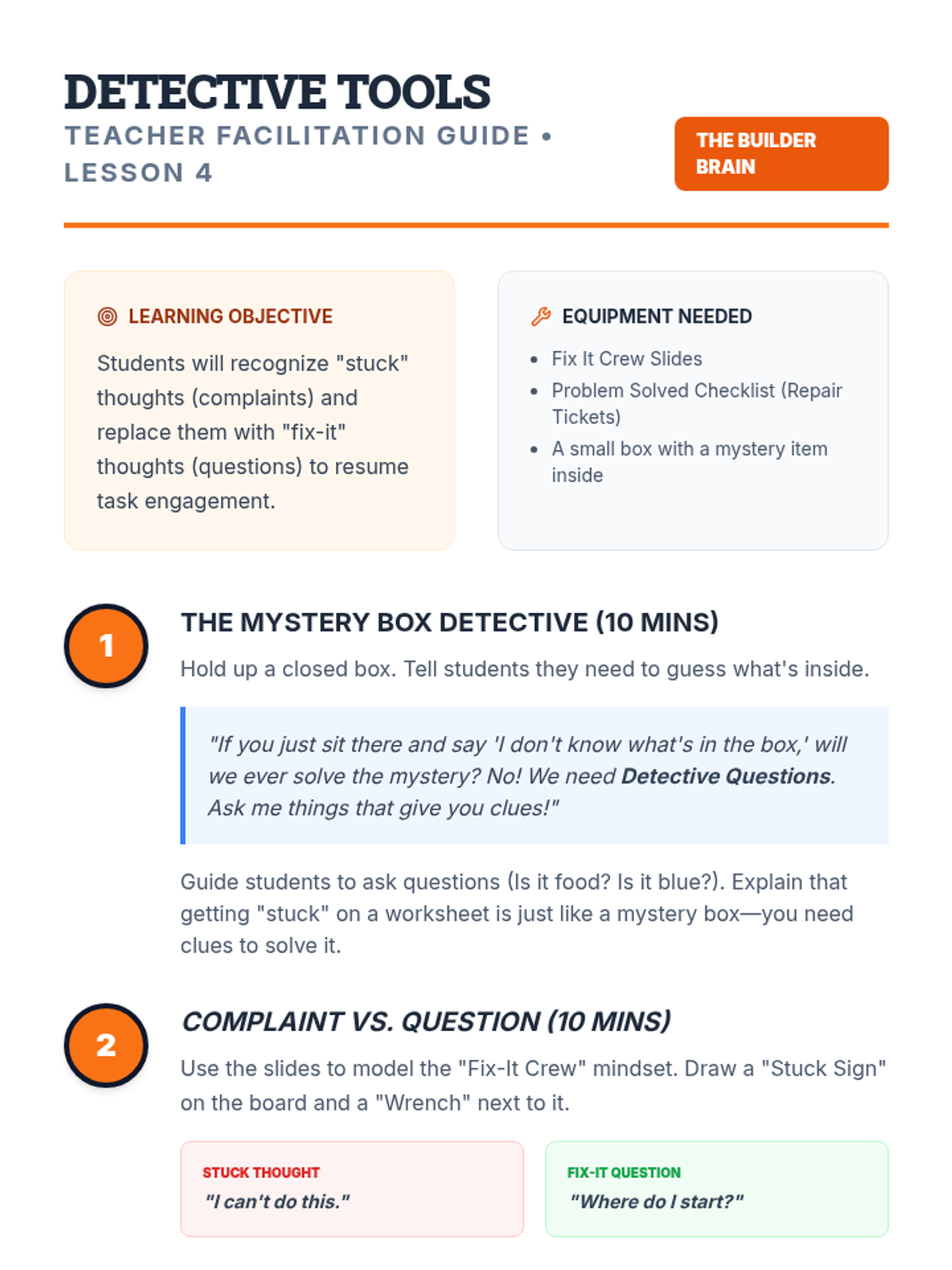
Students learn to ask themselves specific questions when they get stuck. This shifts the internal monologue from complaint to inquiry and problem-solving.
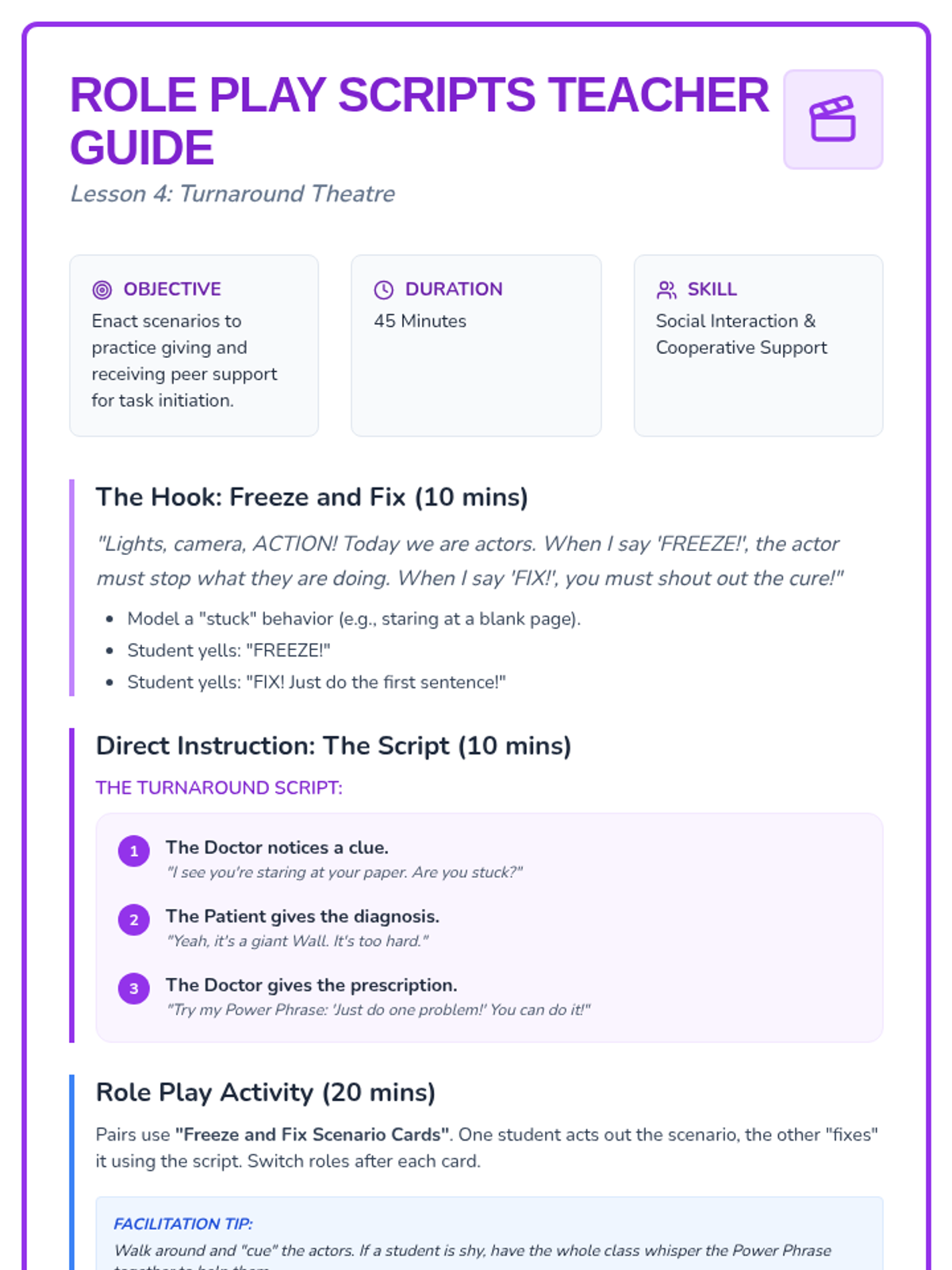
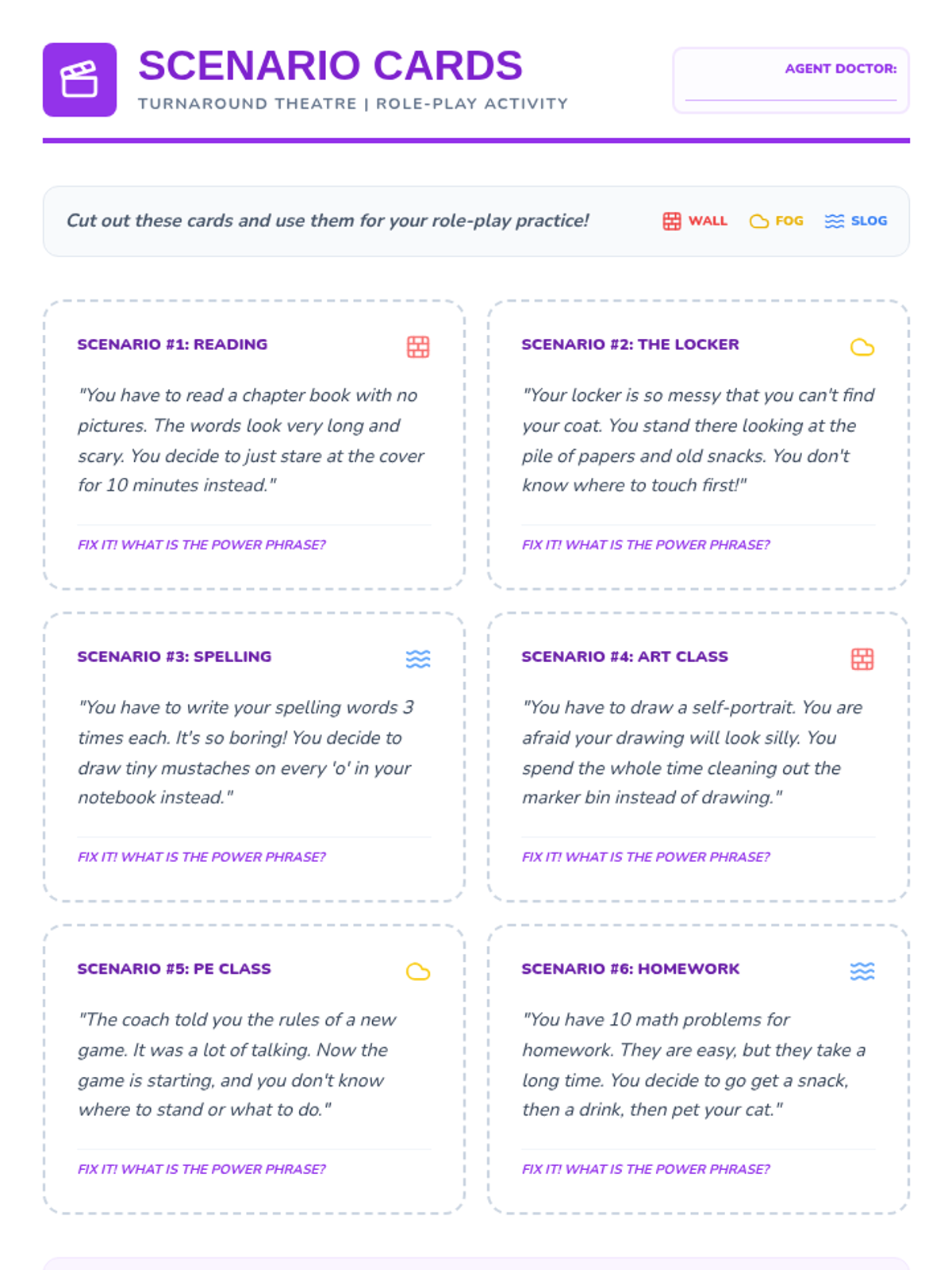
Students role-play scenarios where they help a peer get 'unstuck' using their self-talk prescriptions.
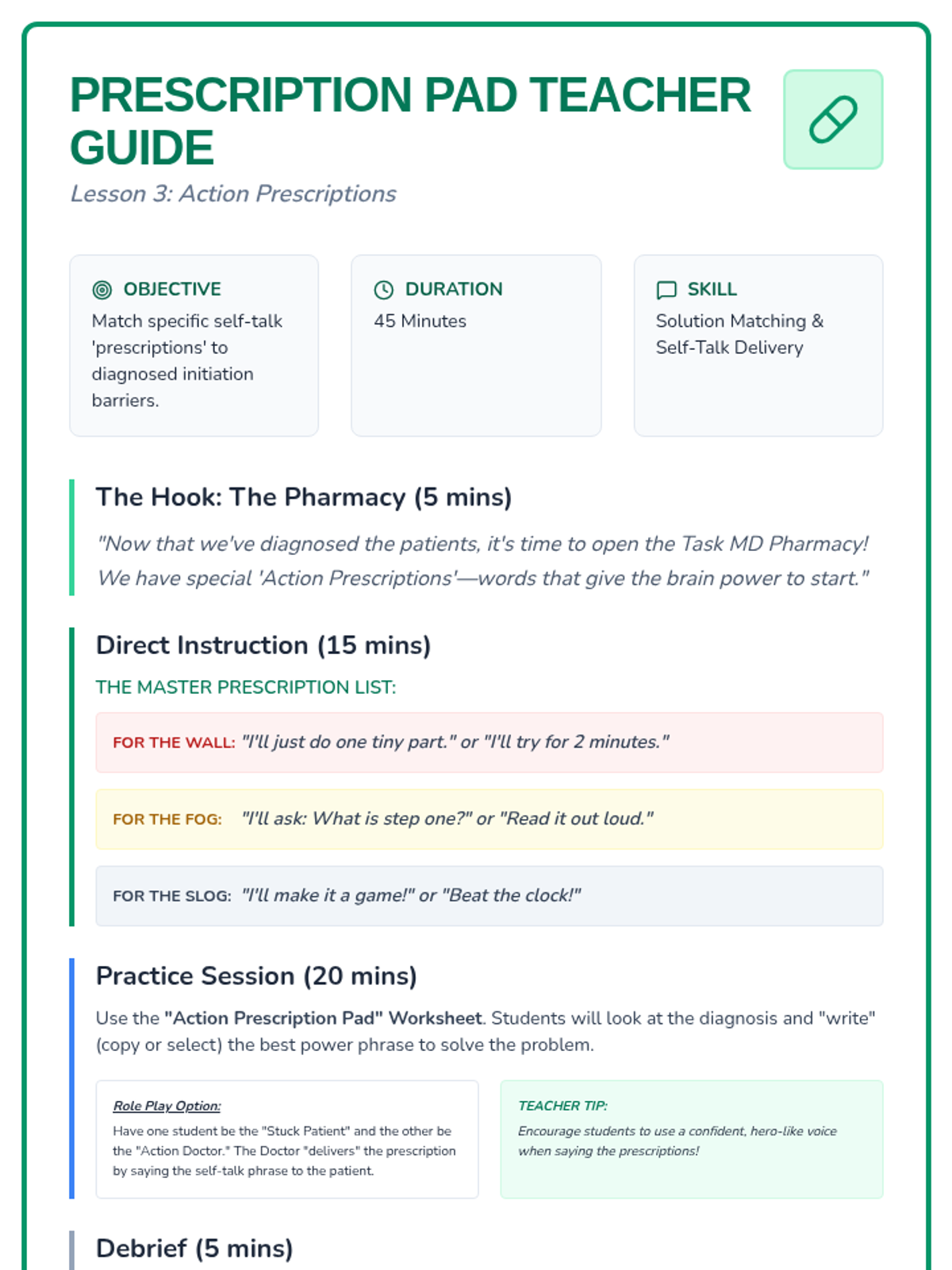
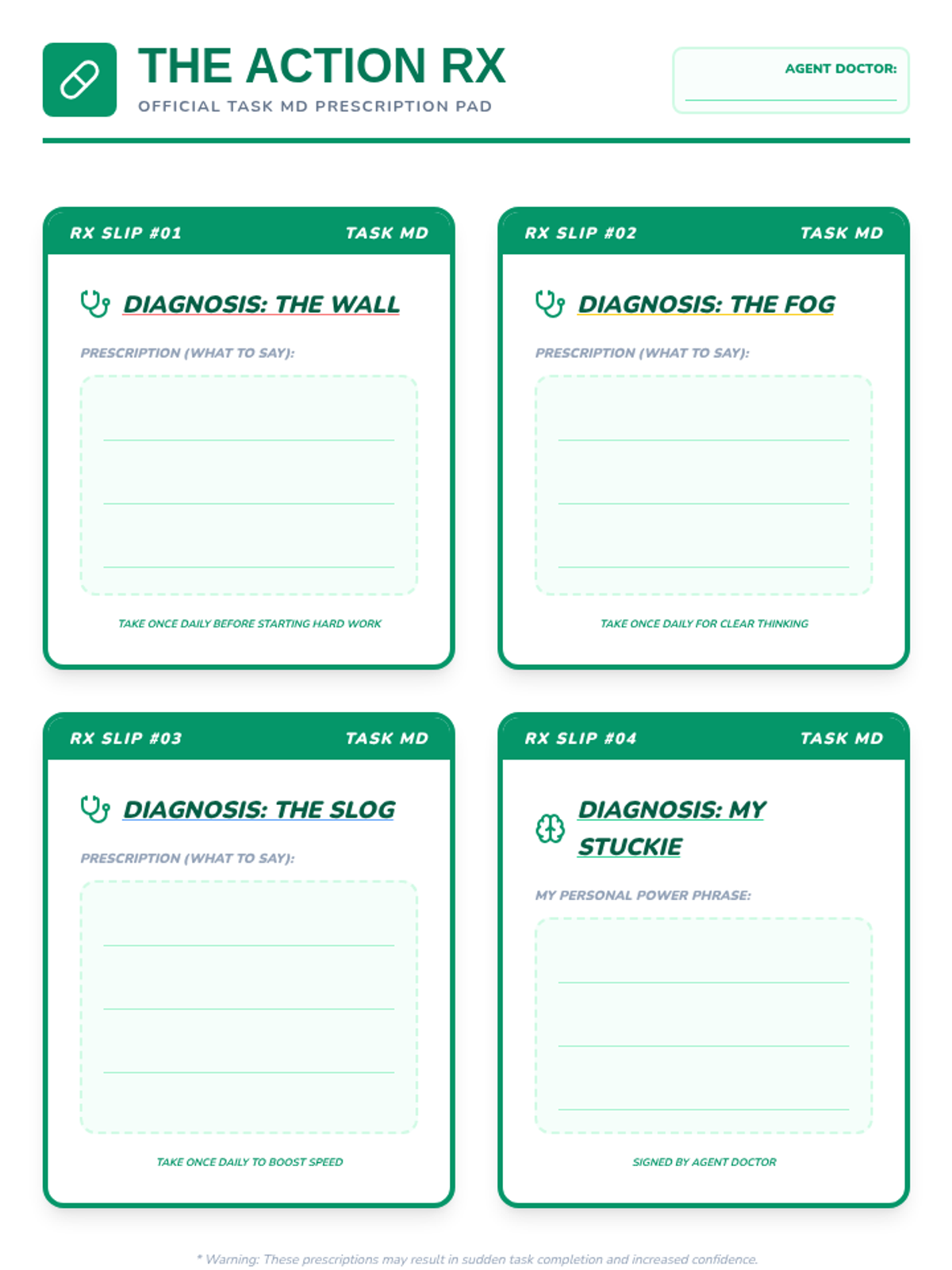
Students match specific self-talk 'prescriptions' to diagnosed problems and practice delivering these lines to characters.
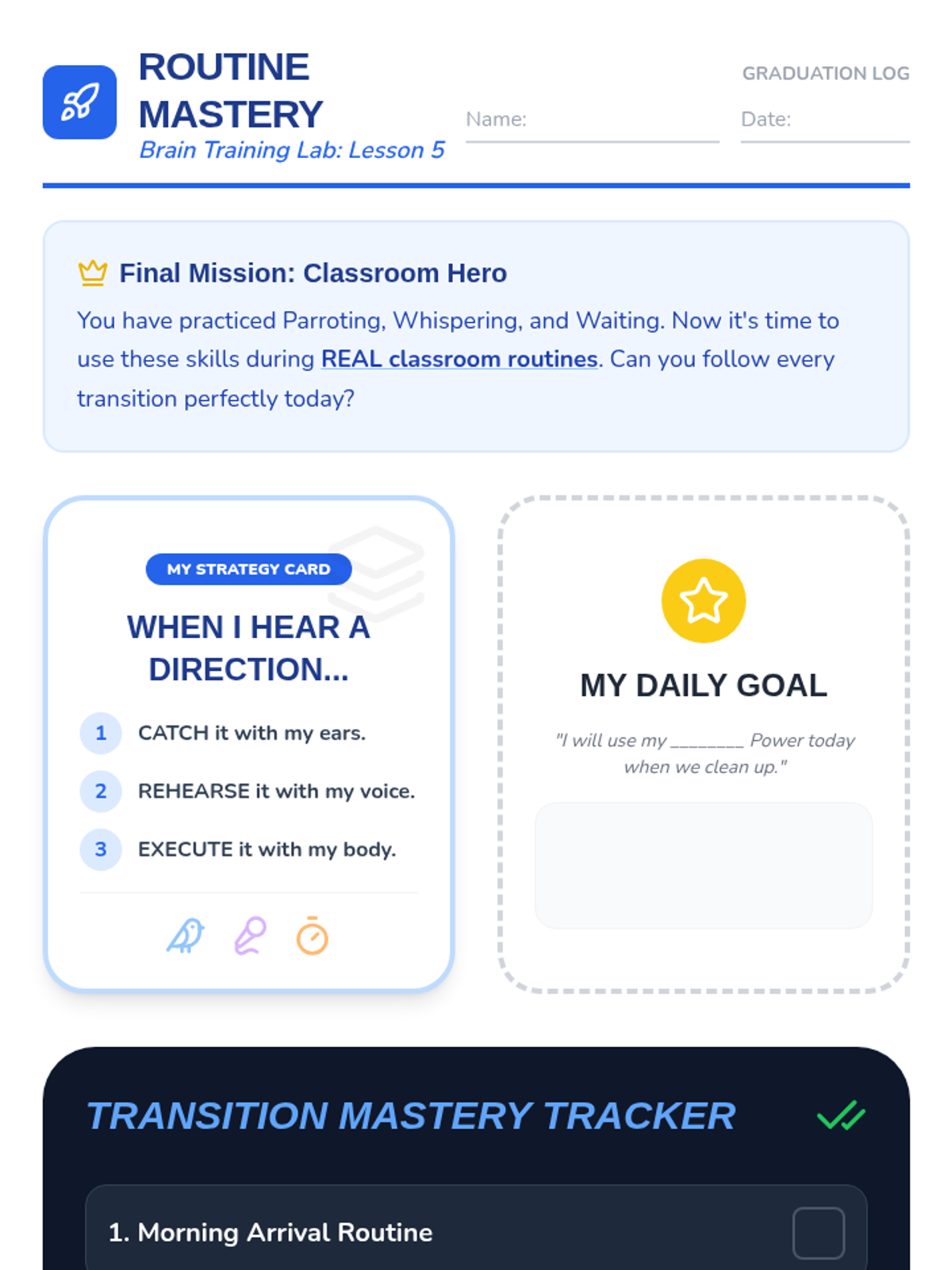
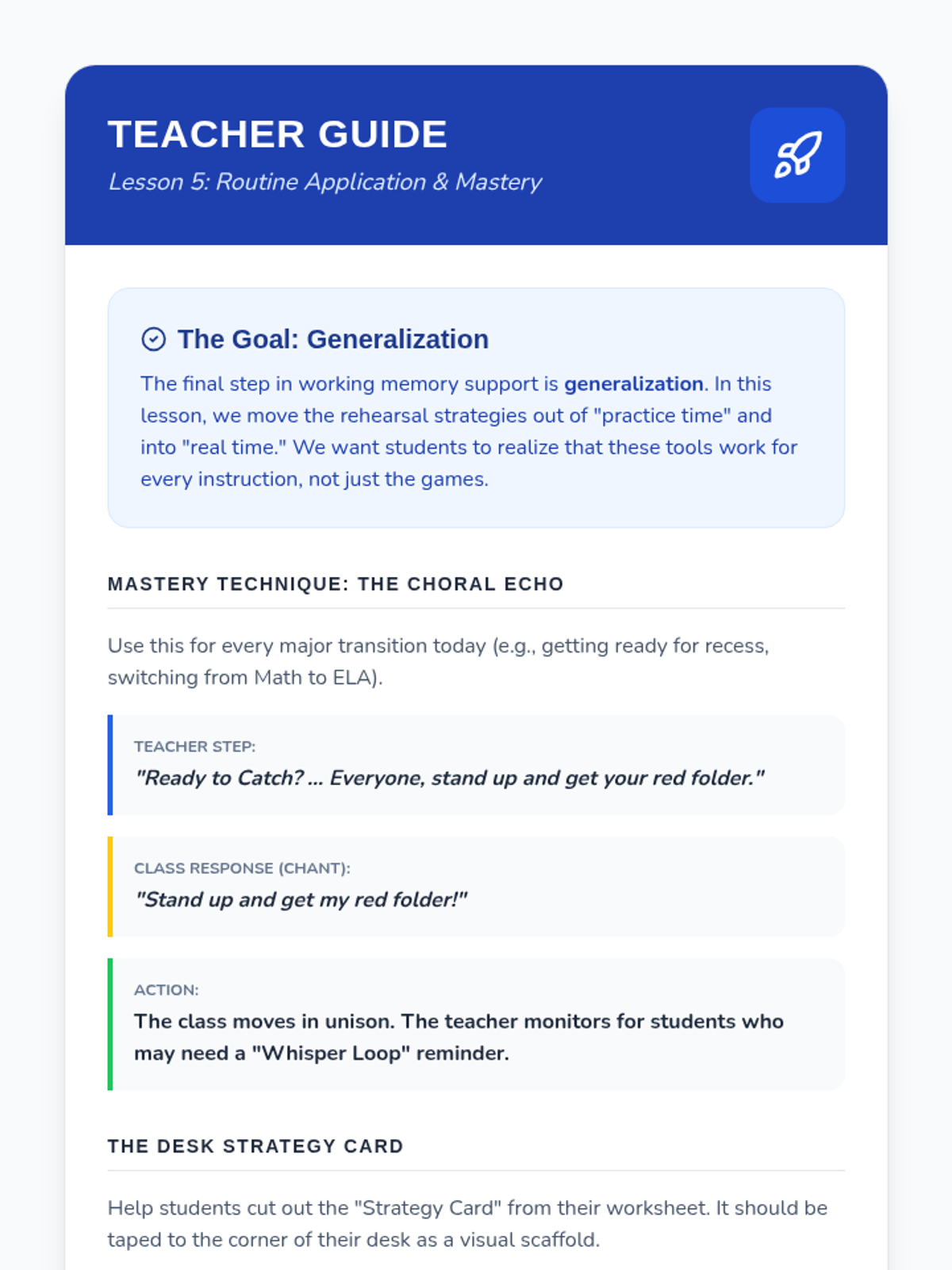
Students apply verbal strategies to actual classroom transition requests using choral responses to confirm steps.
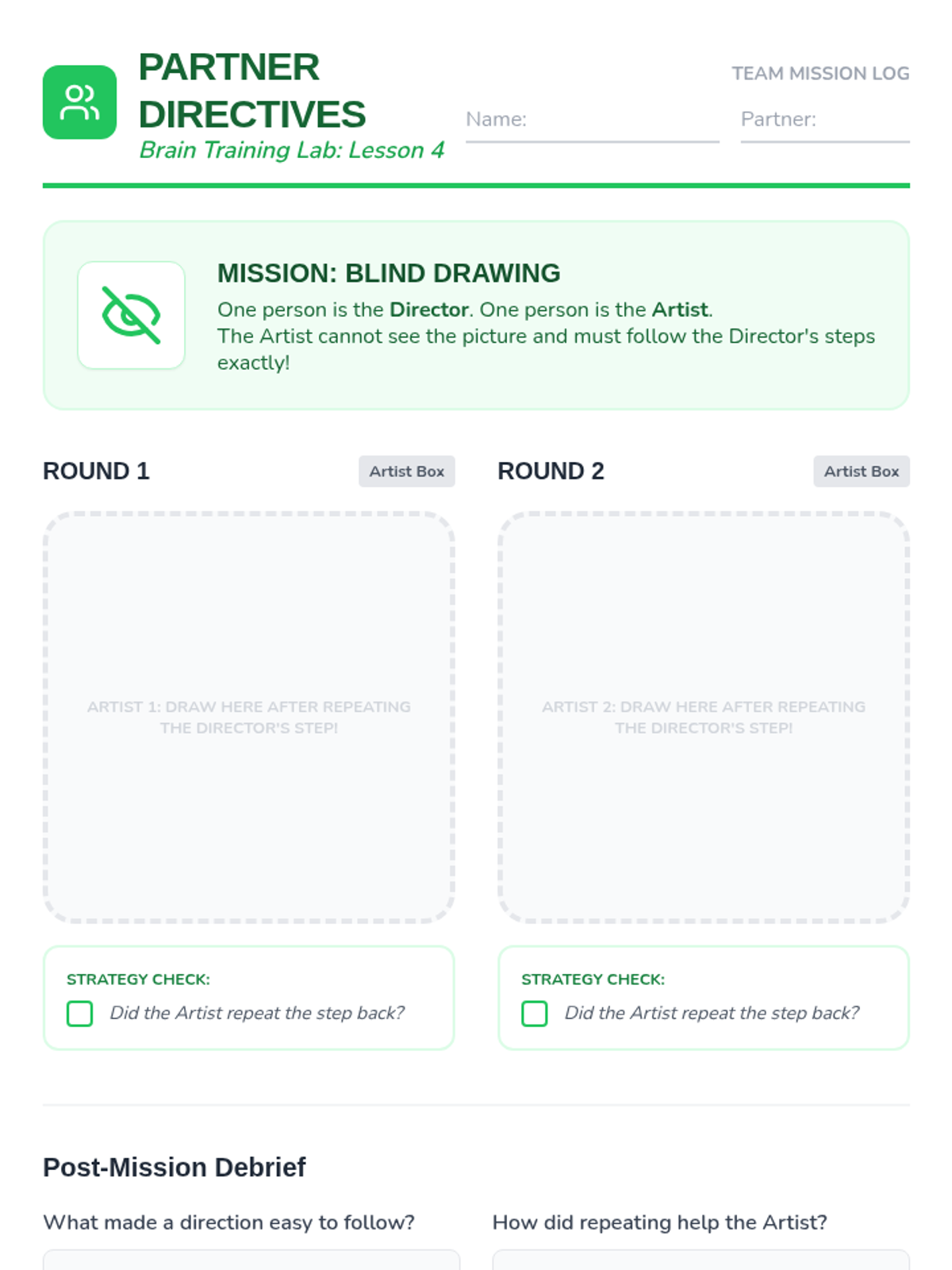
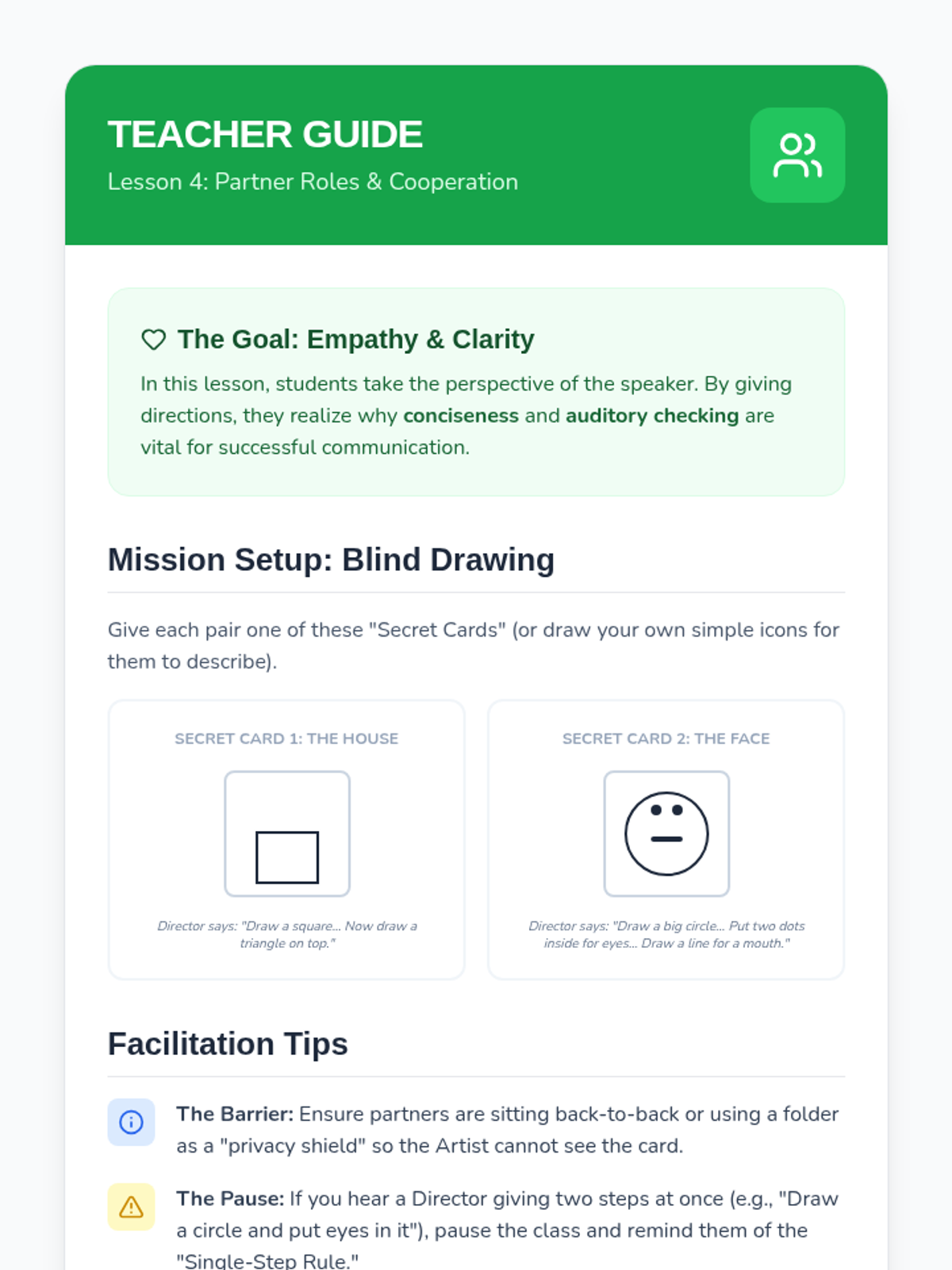
In pairs, students take turns being the 'Teacher' and the 'Student' to practice giving and repeating explicit steps.
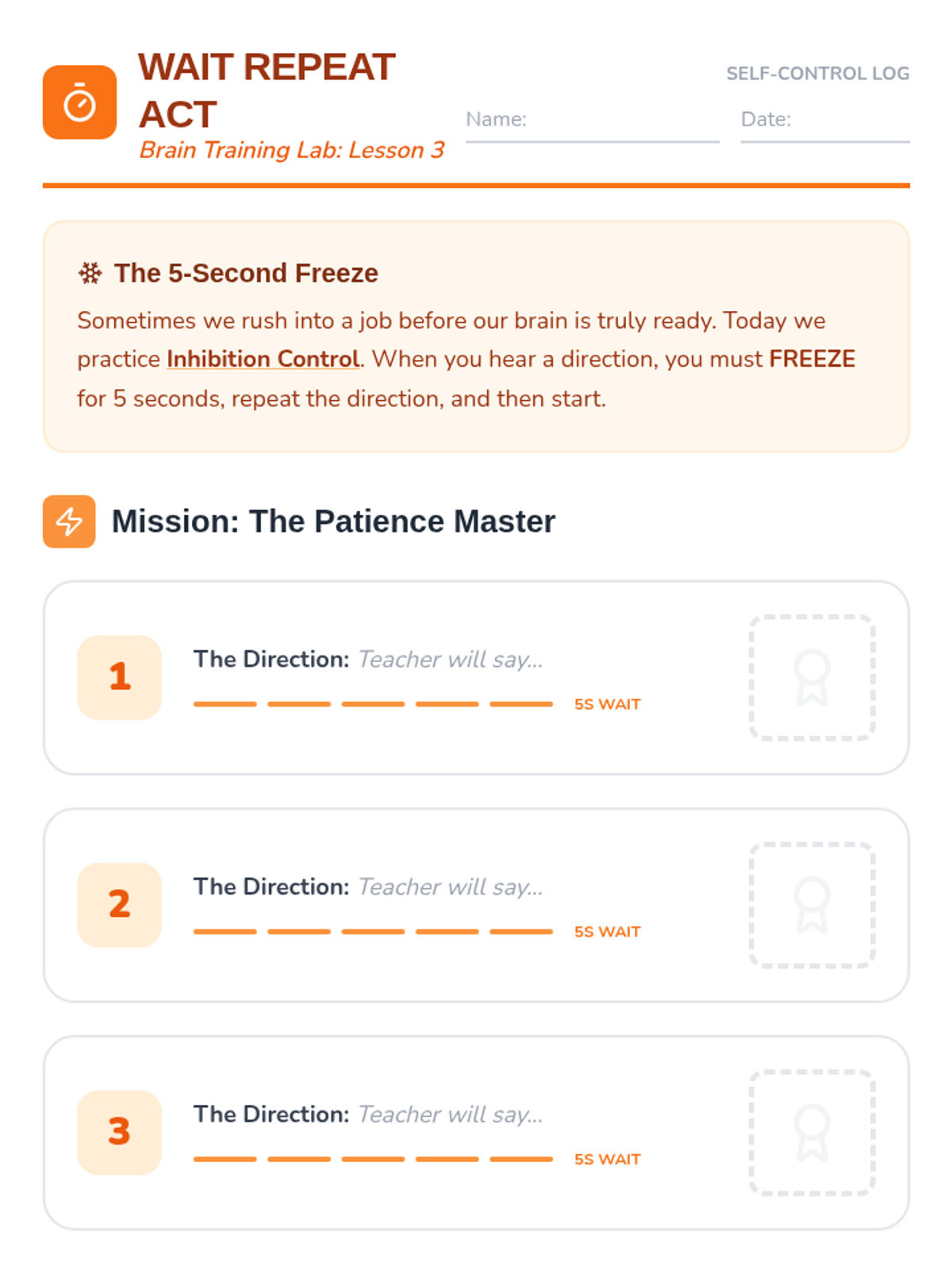
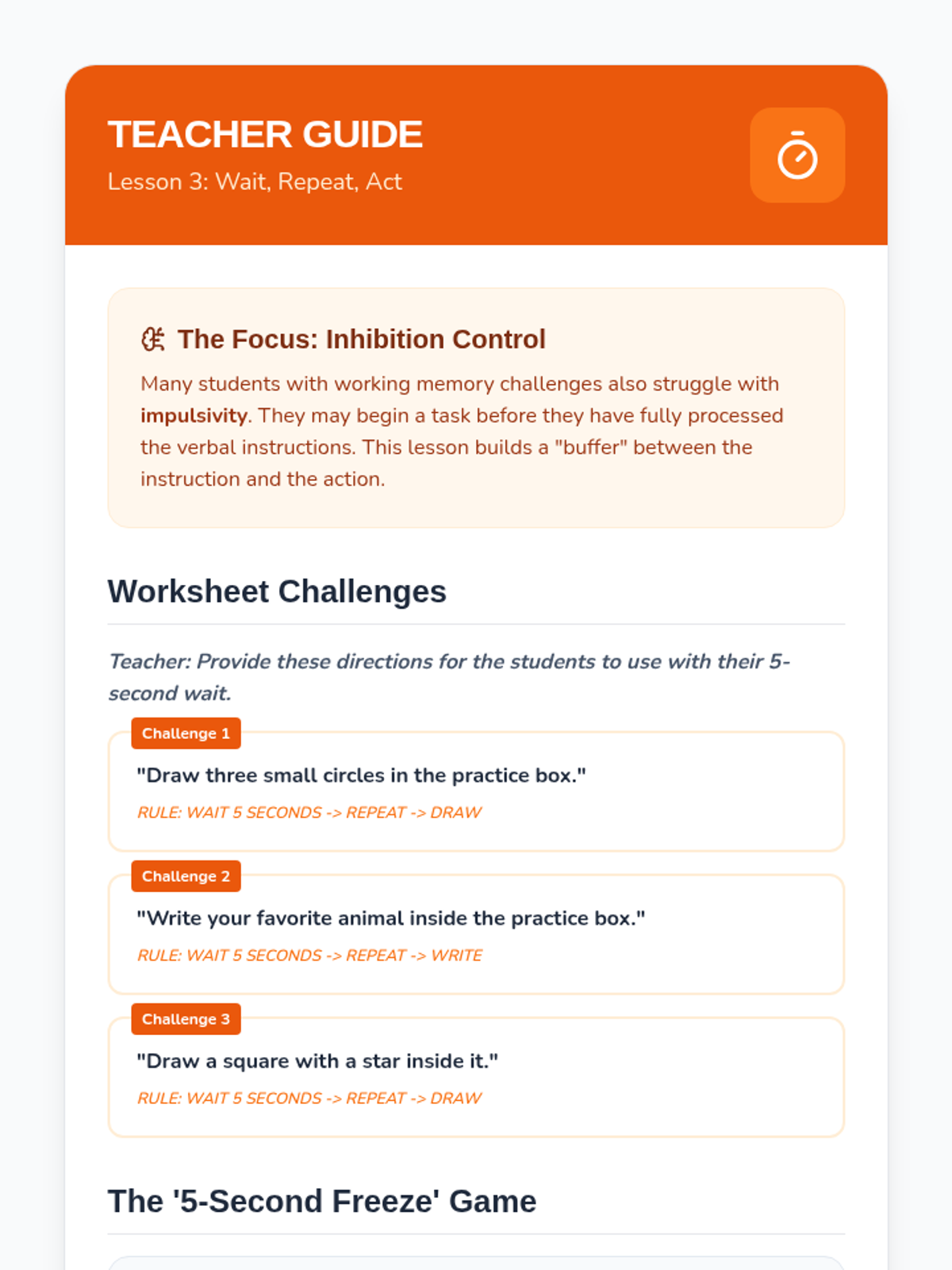
Students engage in inhibition control activities where they must wait 5 seconds after hearing a command, repeat it, and only then act.
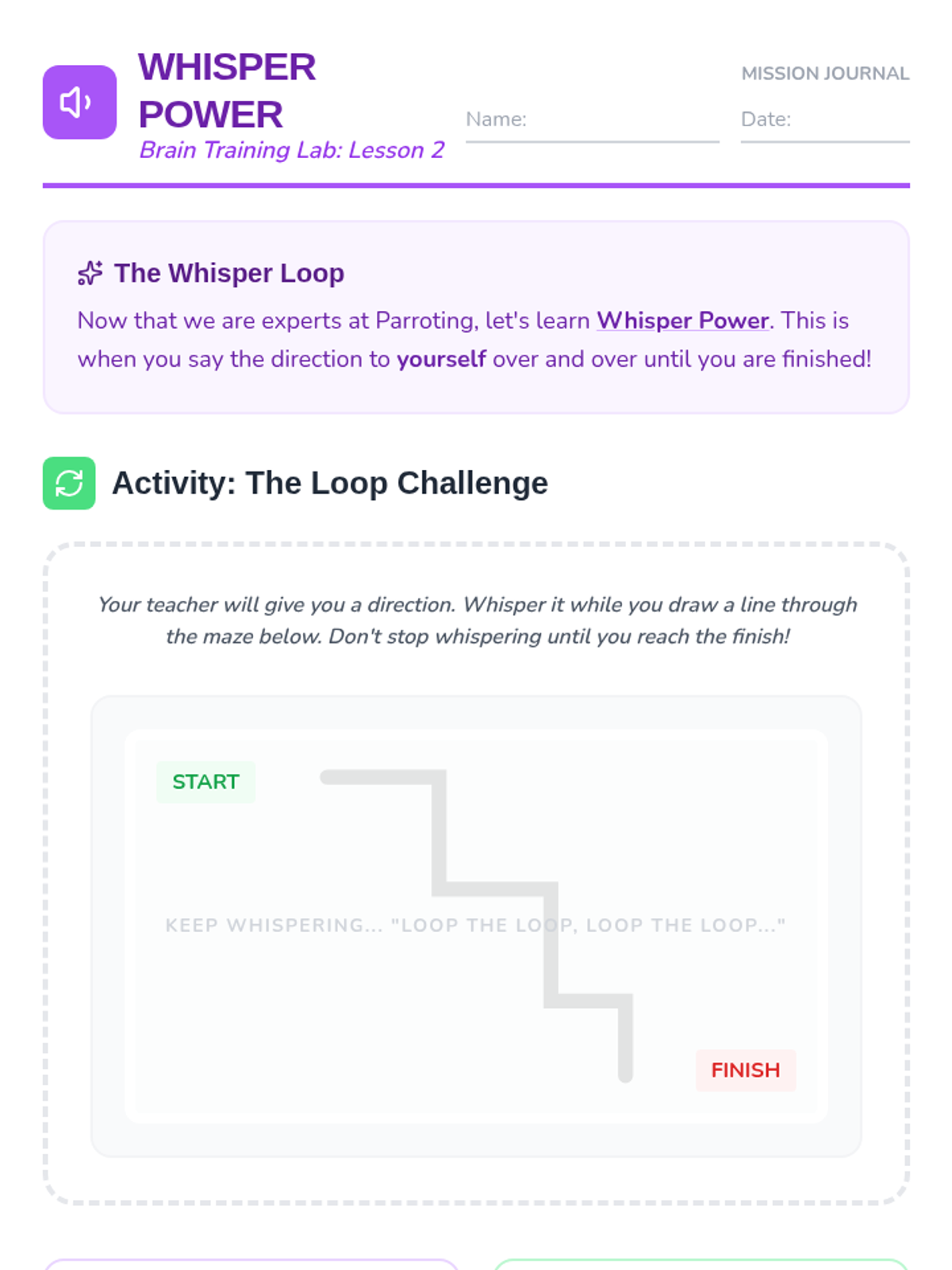
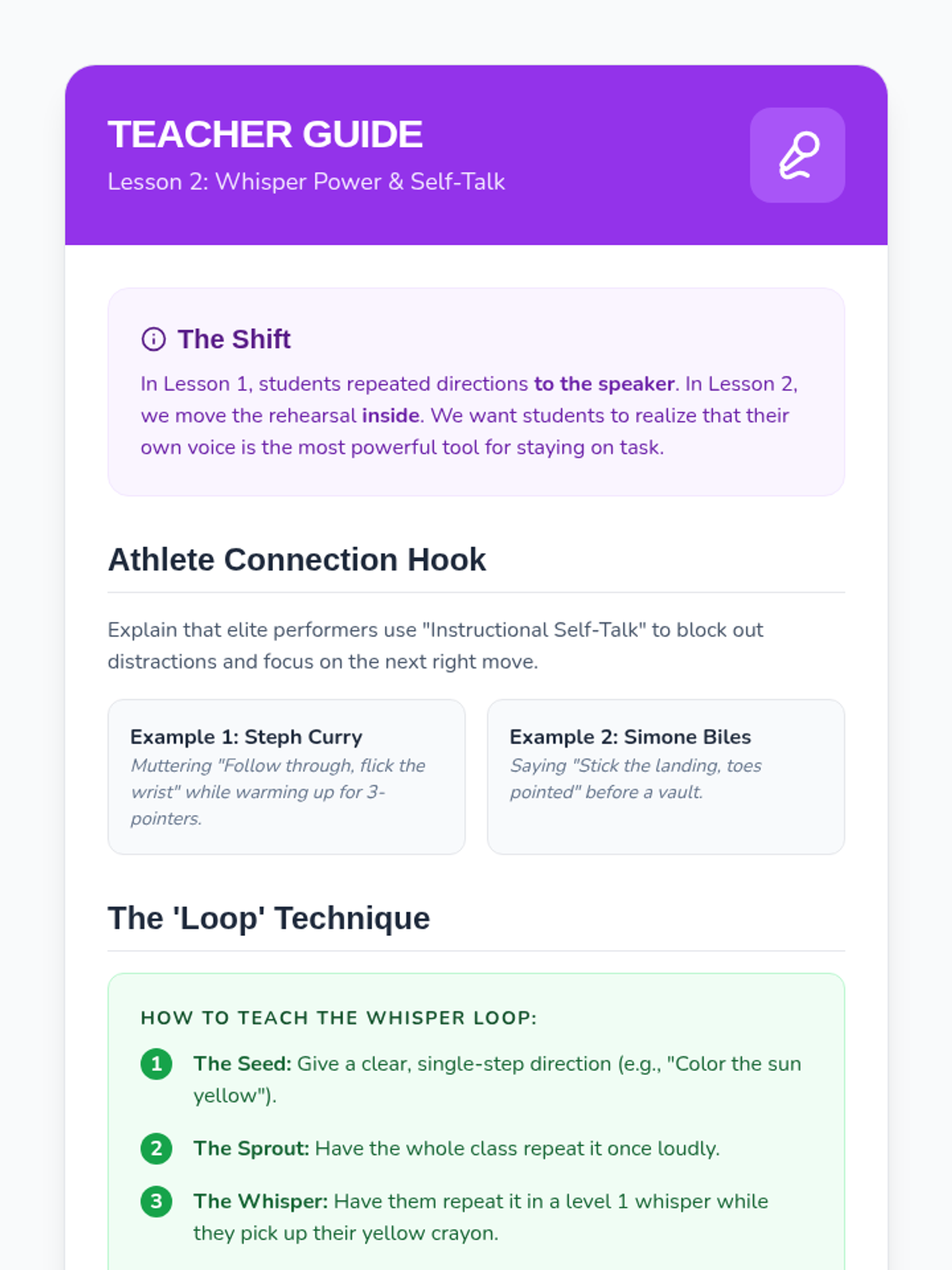
Moving from loud repetition to whispering, students practice 'self-talk.' They are given a single direction and must whisper it on a loop while performing the action.
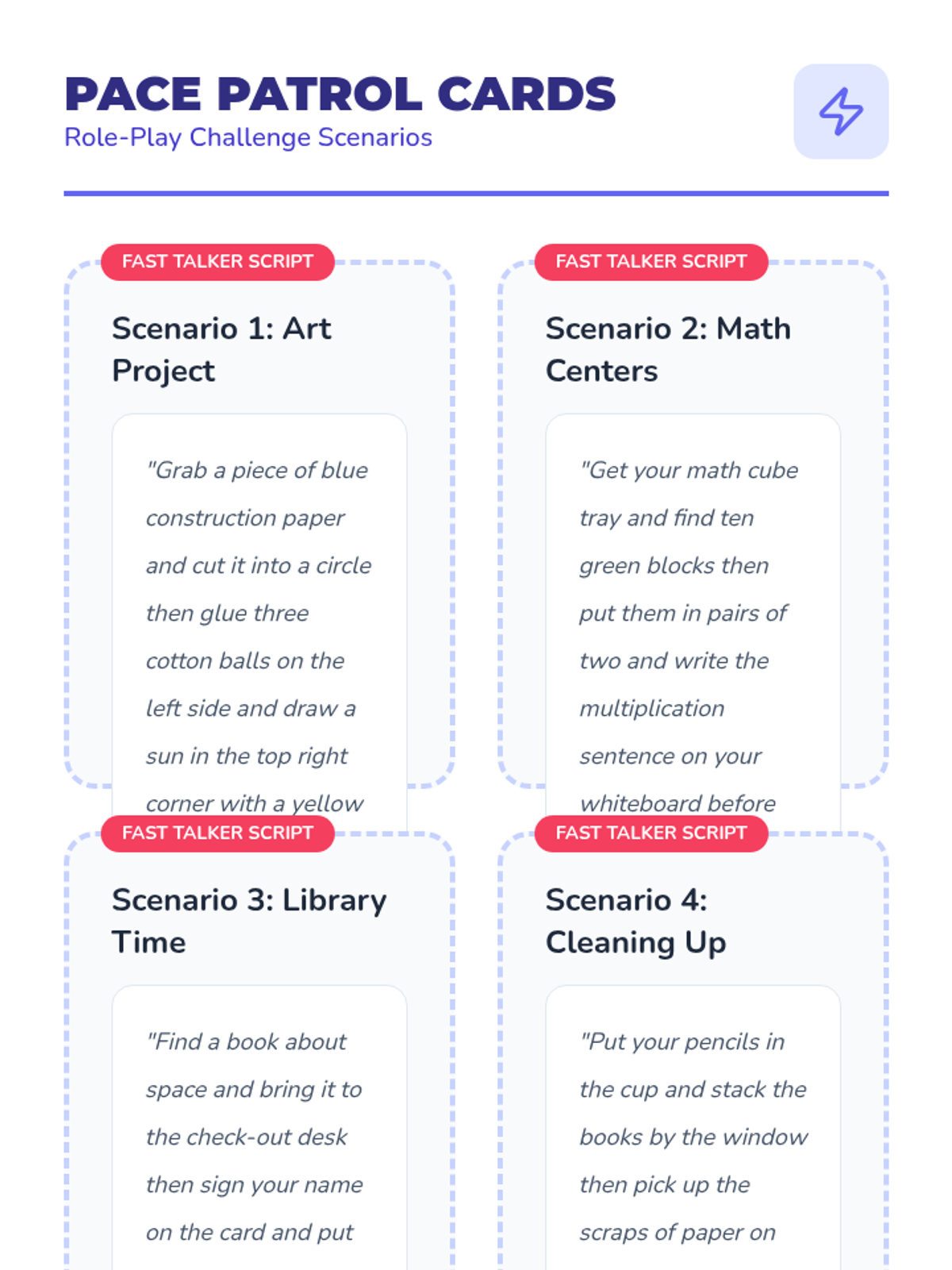
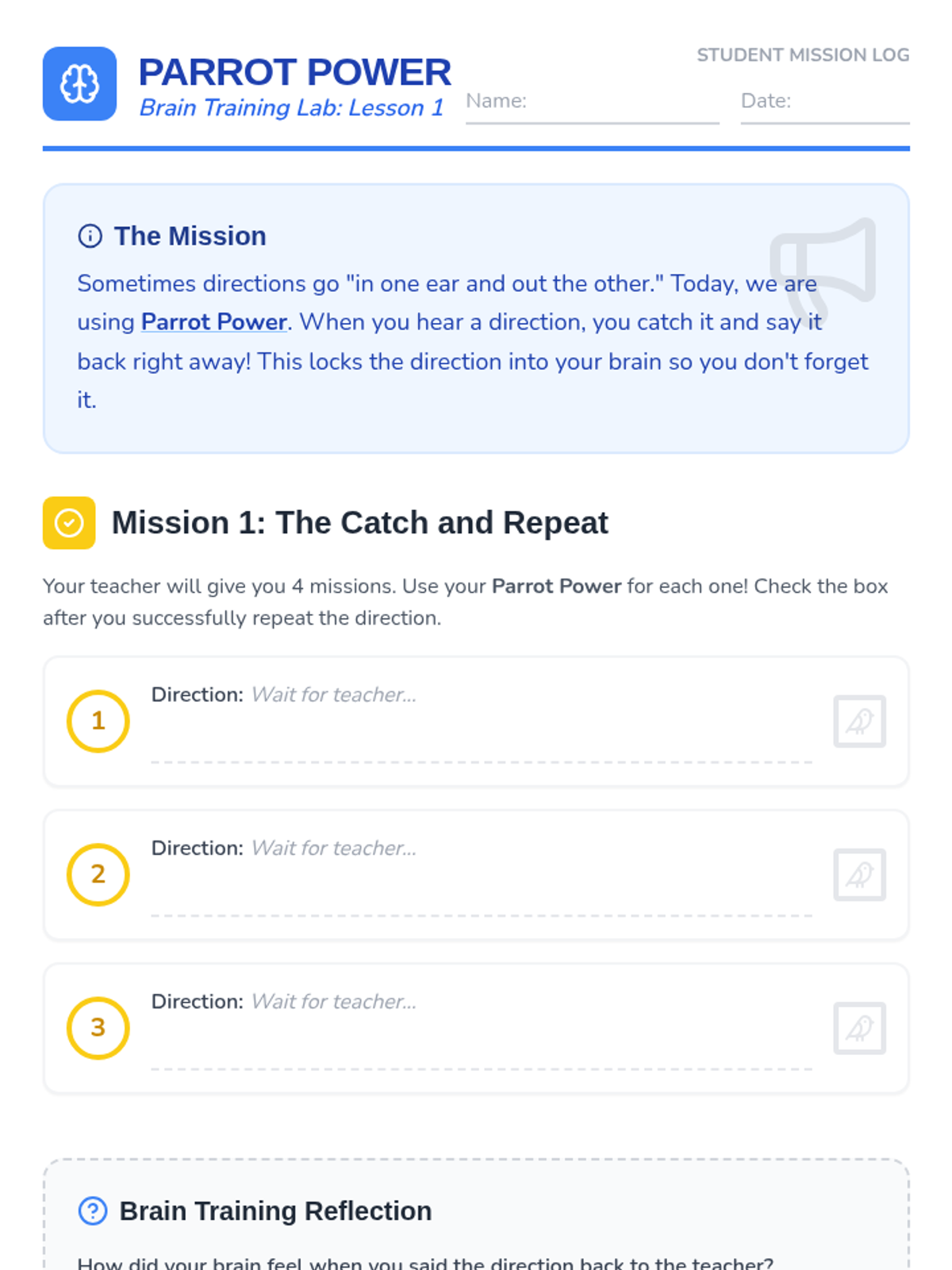
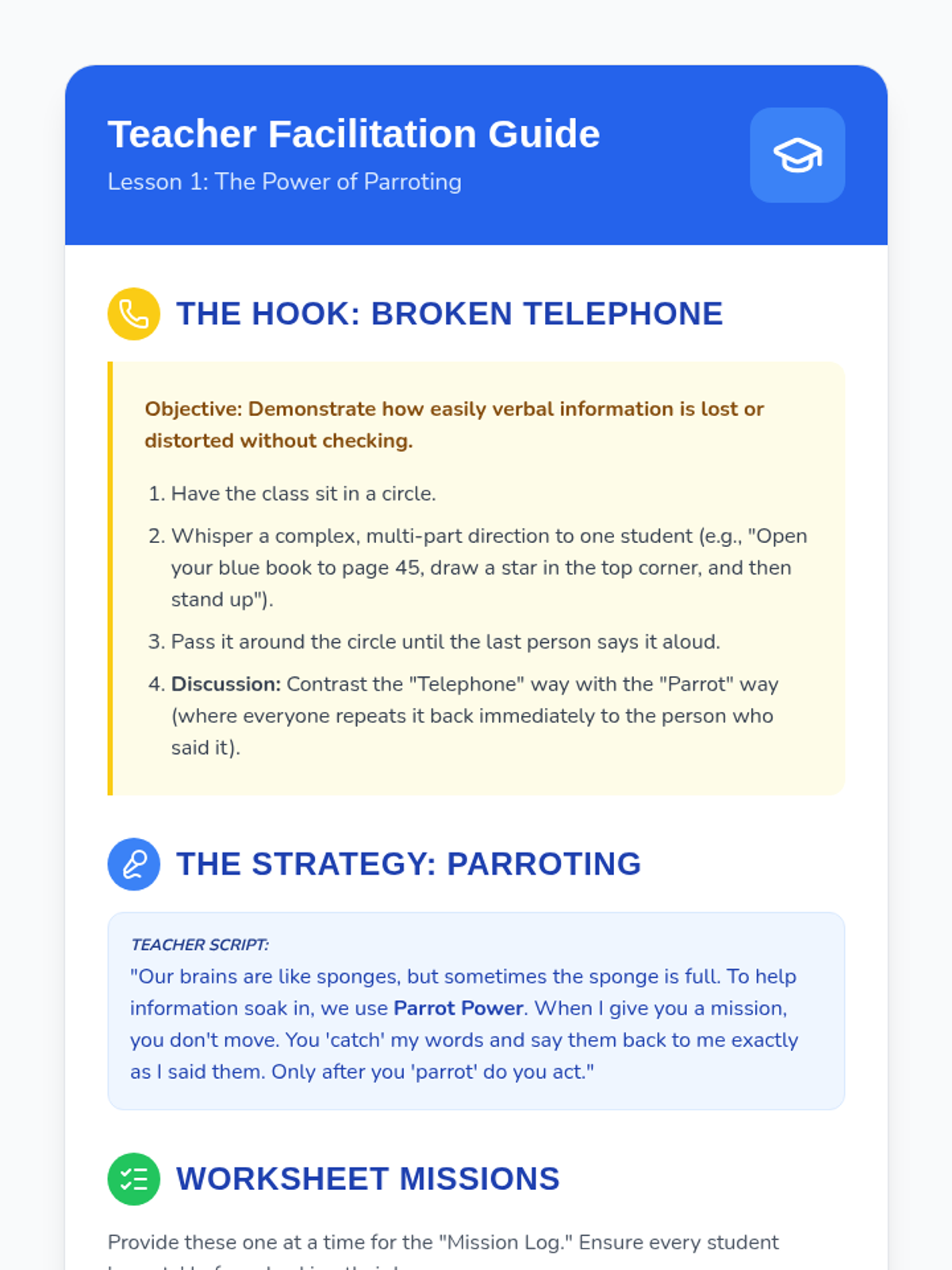
Students practice the 'parrot' technique, where they must immediately repeat a single-step direction back to the speaker before moving. The lesson emphasizes that saying it locks it into the brain.
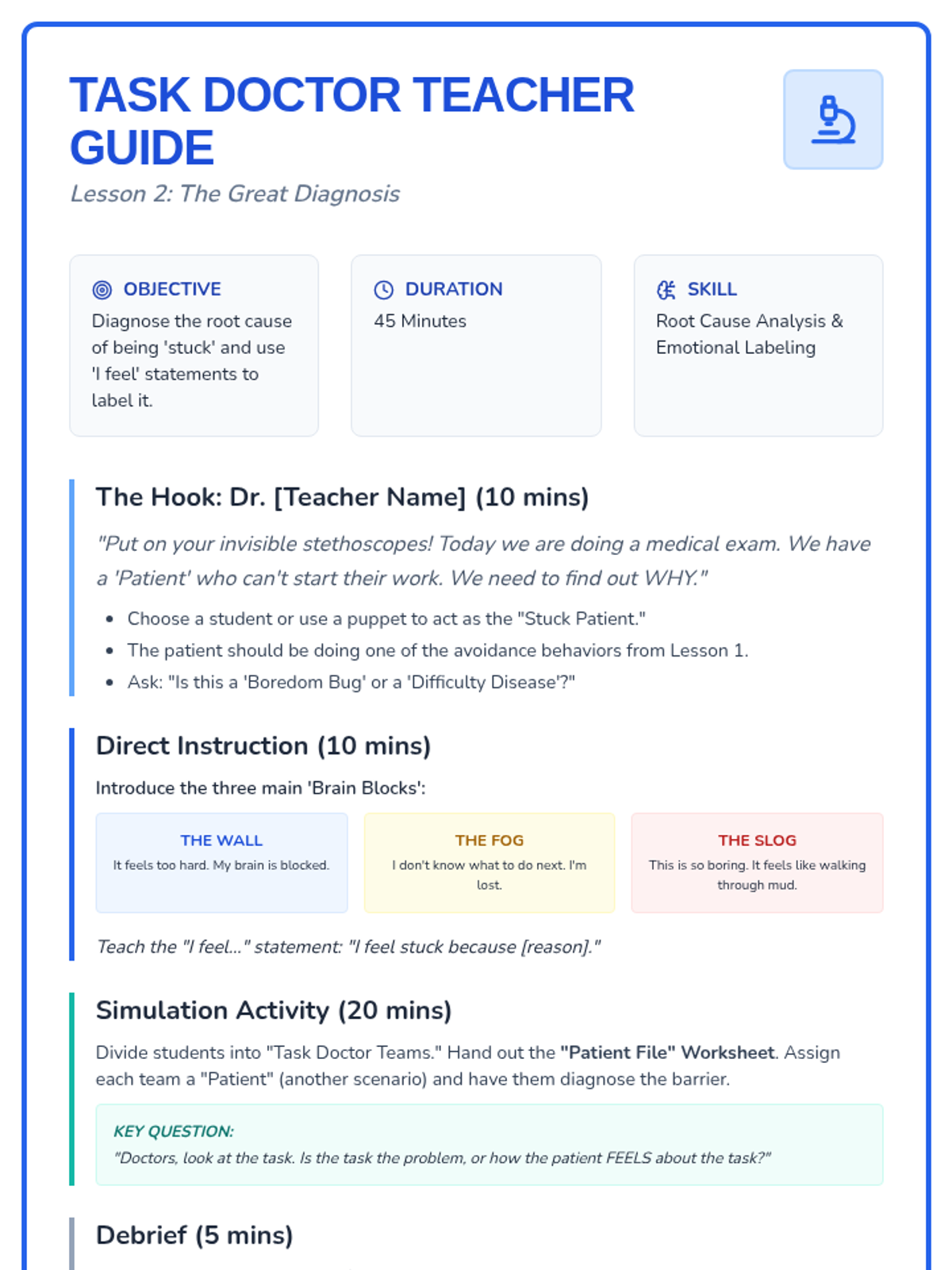
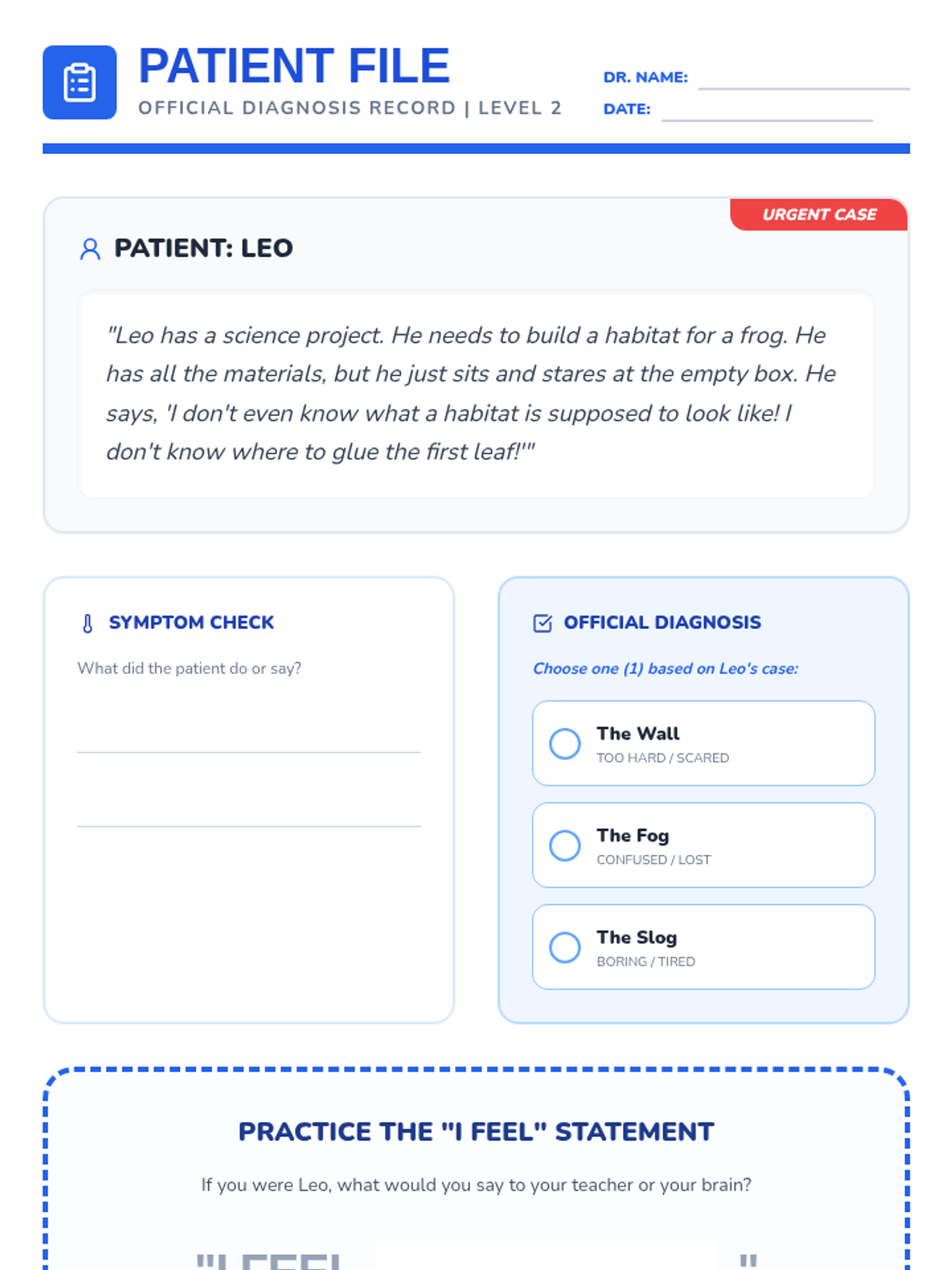
Students act as 'Task Doctors' to determine why a character is stuck (boredom, difficulty, fatigue) and practice labeling these emotions.
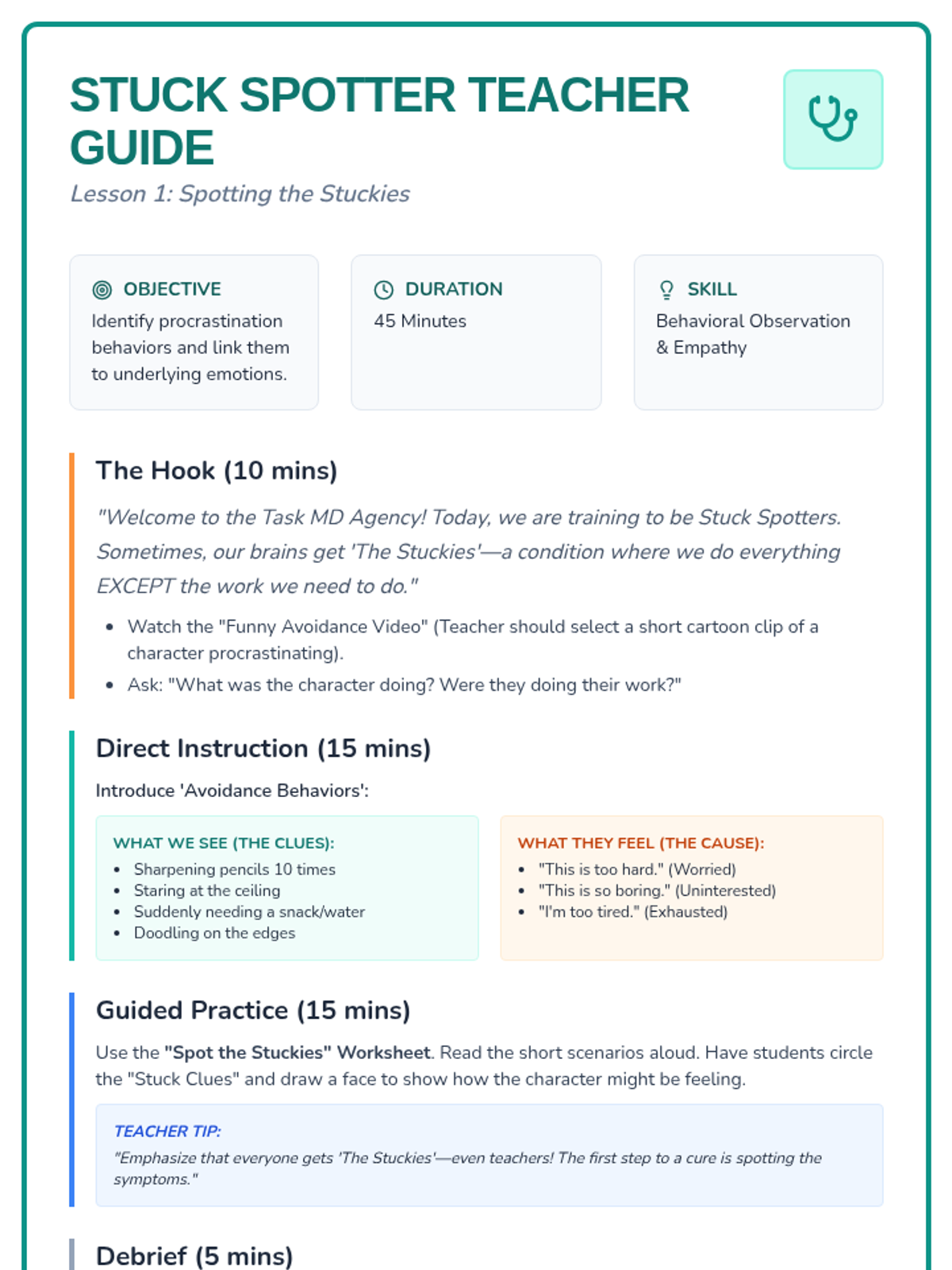
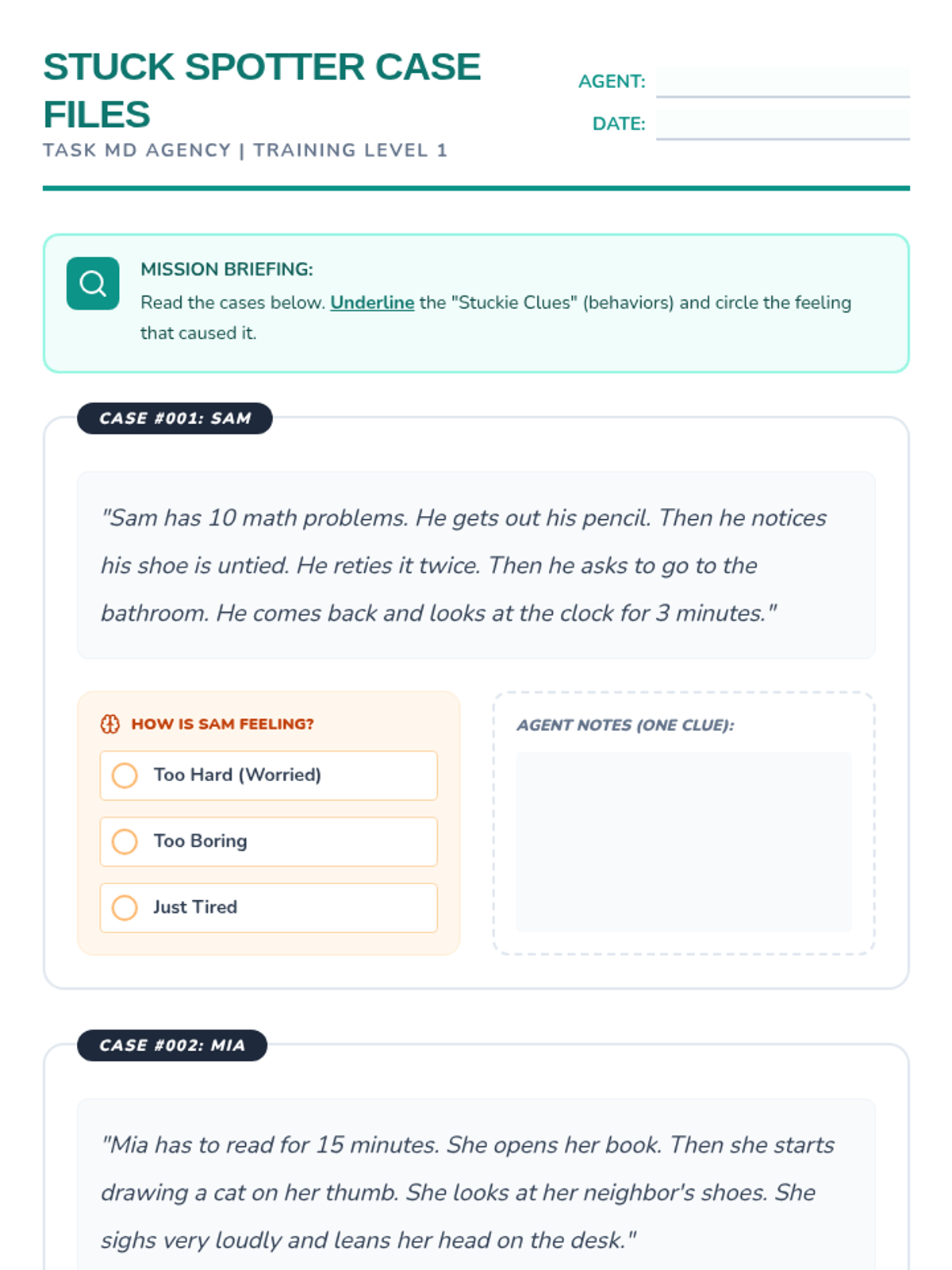
Students identify behaviors that show someone is avoiding work and brainstorm what emotions might be driving those behaviors through case studies.
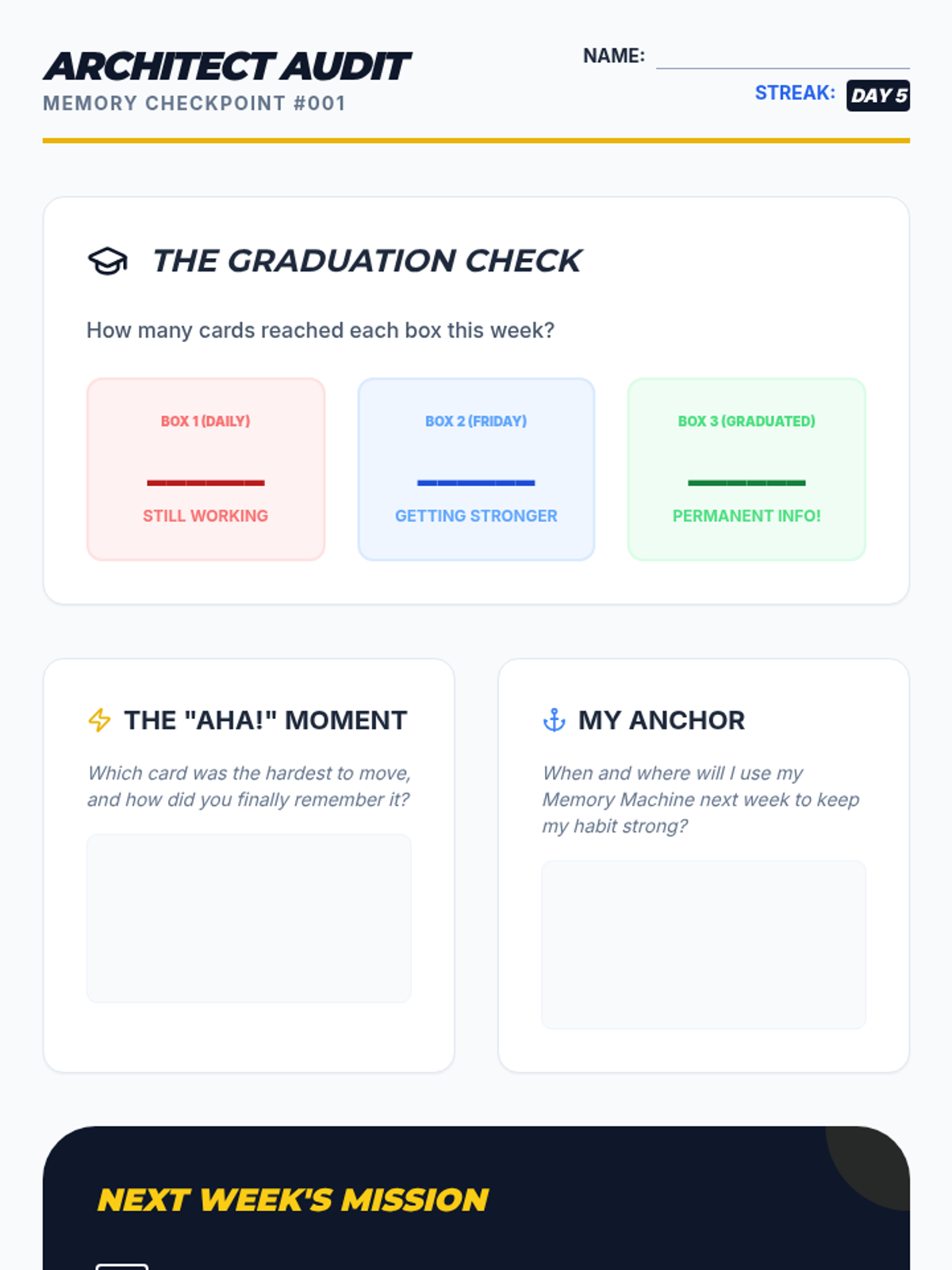
Students evaluate their progress, celebrate 'graduated' cards, and plan for long-term study habits.
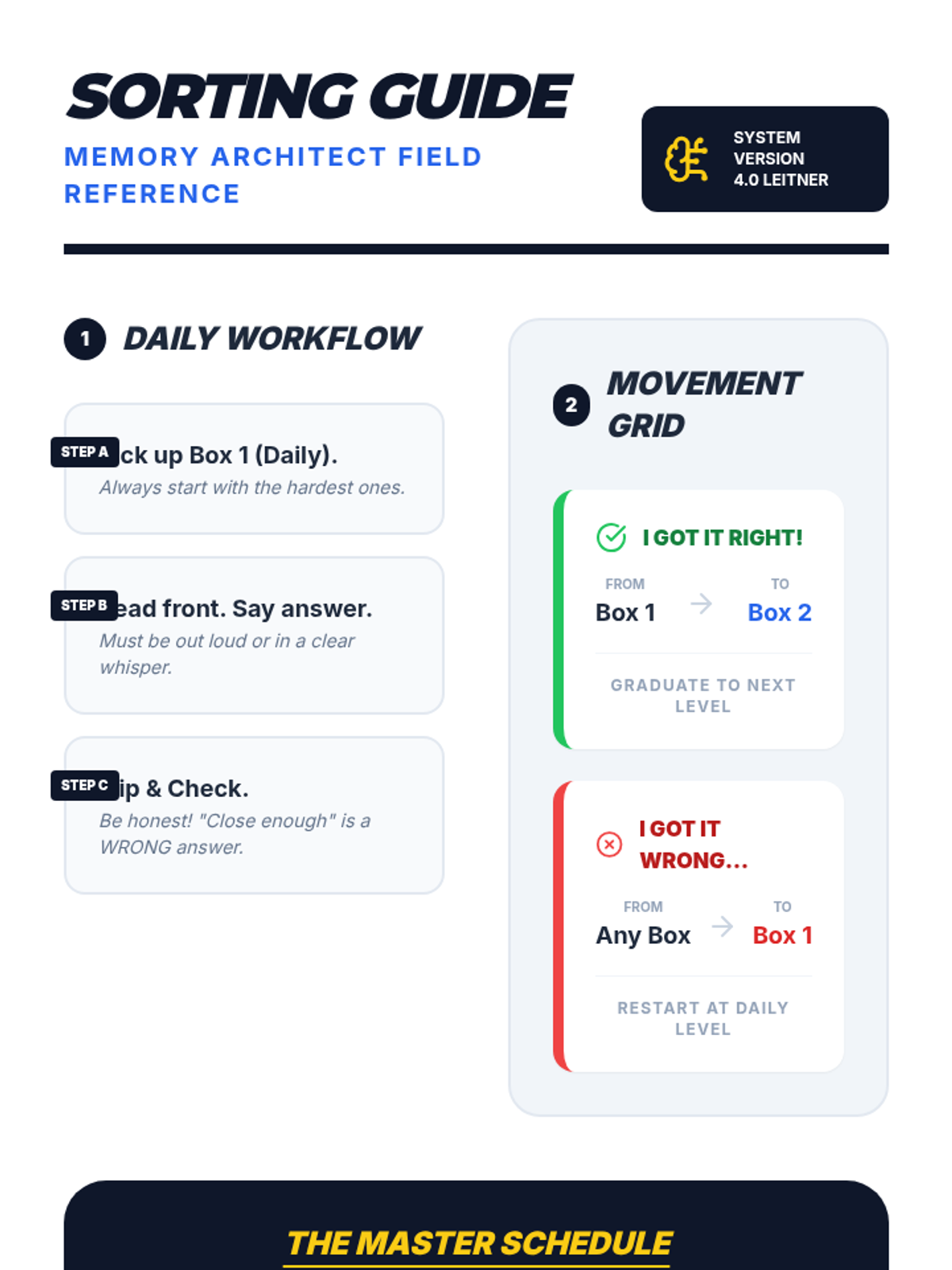
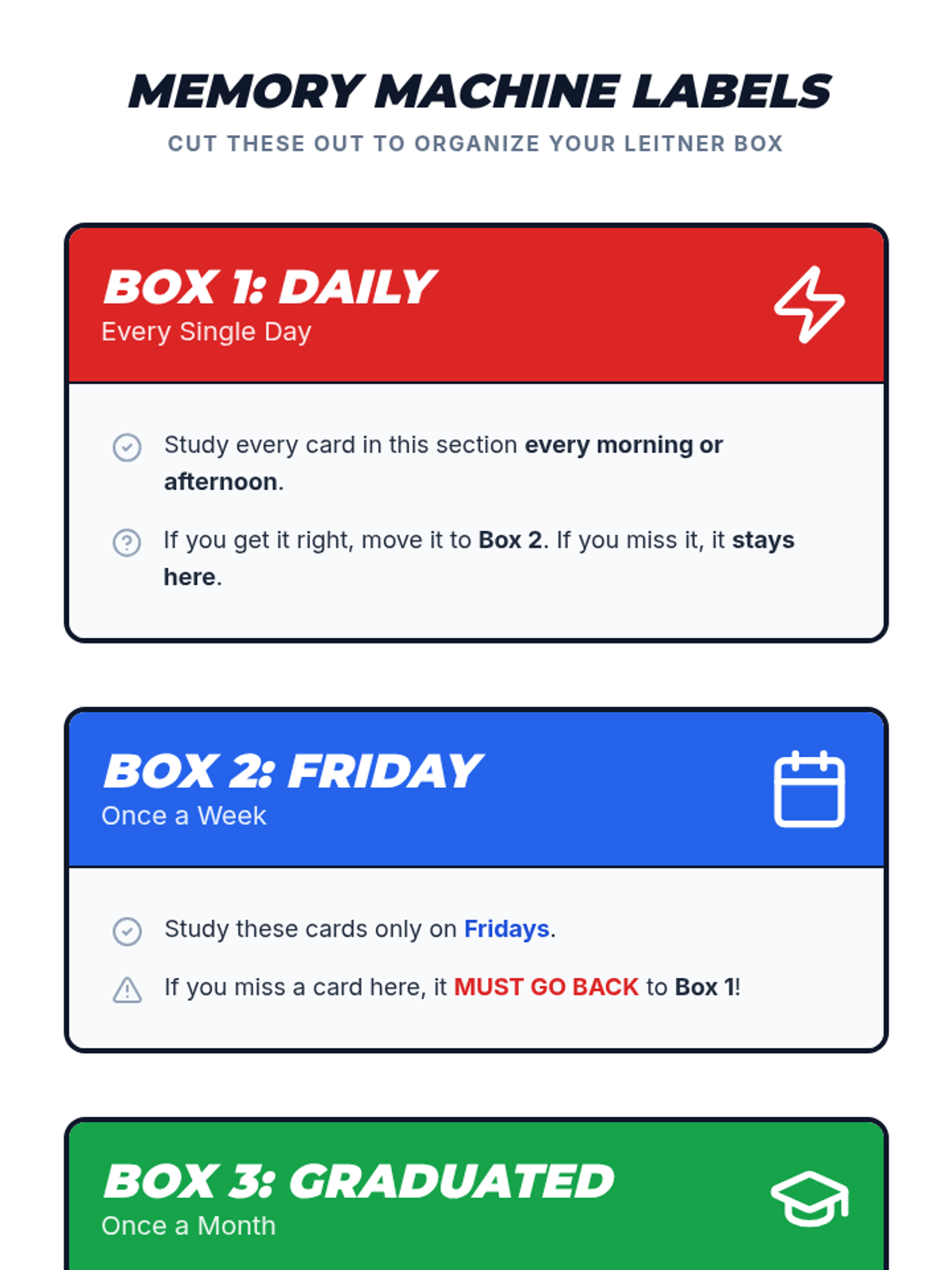
A guided walkthrough of the daily Leitner routine, focusing on self-assessment and the 'graduation' of cards.
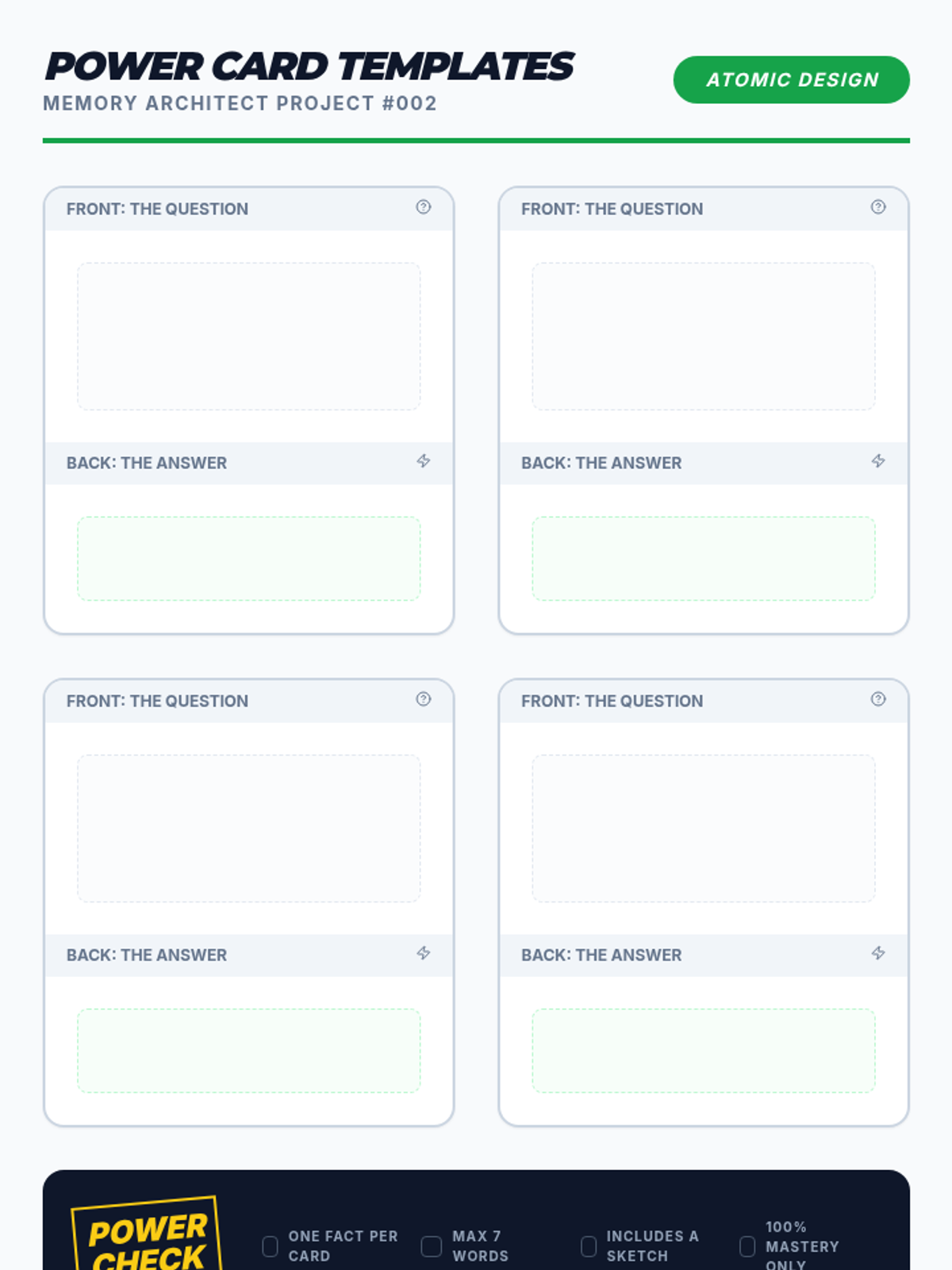
Students learn the 'Atomic Card' principle to create effective, clear flashcards that are easier for the brain to process.
Students build their physical Leitner boxes and learn the basic mechanical logic of how cards move between compartments.
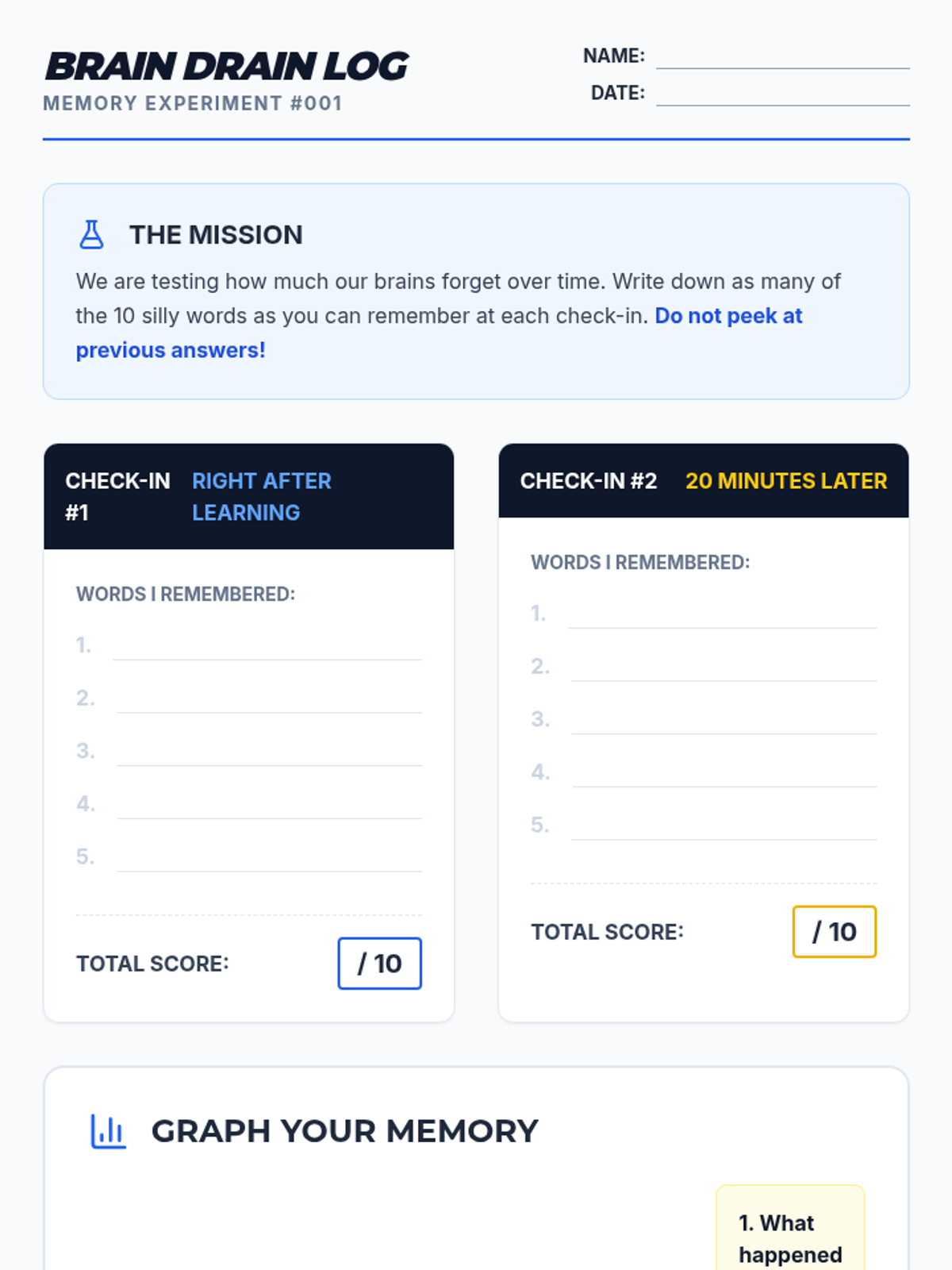
Students explore how memory fades over time through a 'Brain Leak' experiment and learn about the forgetting curve.
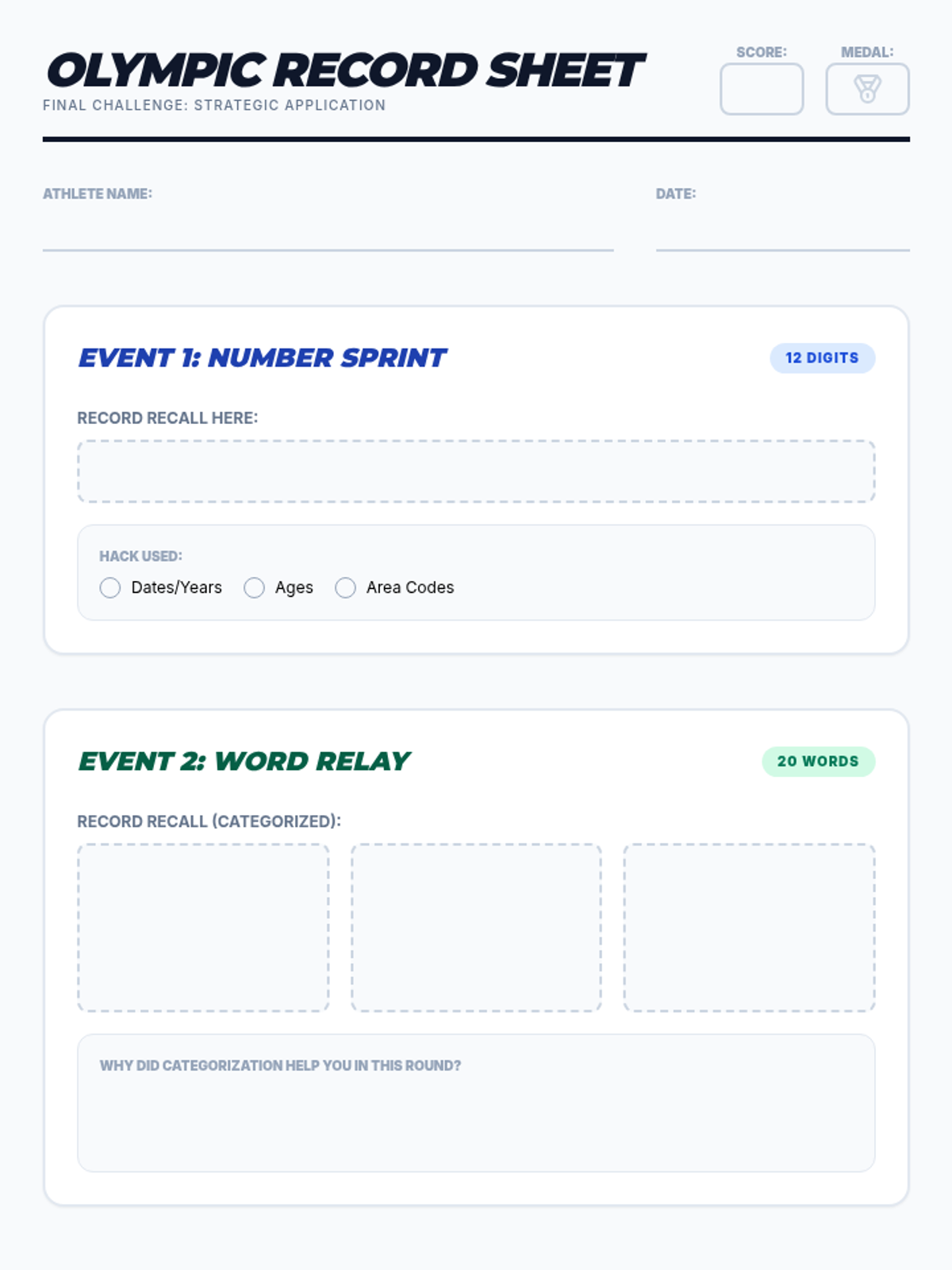
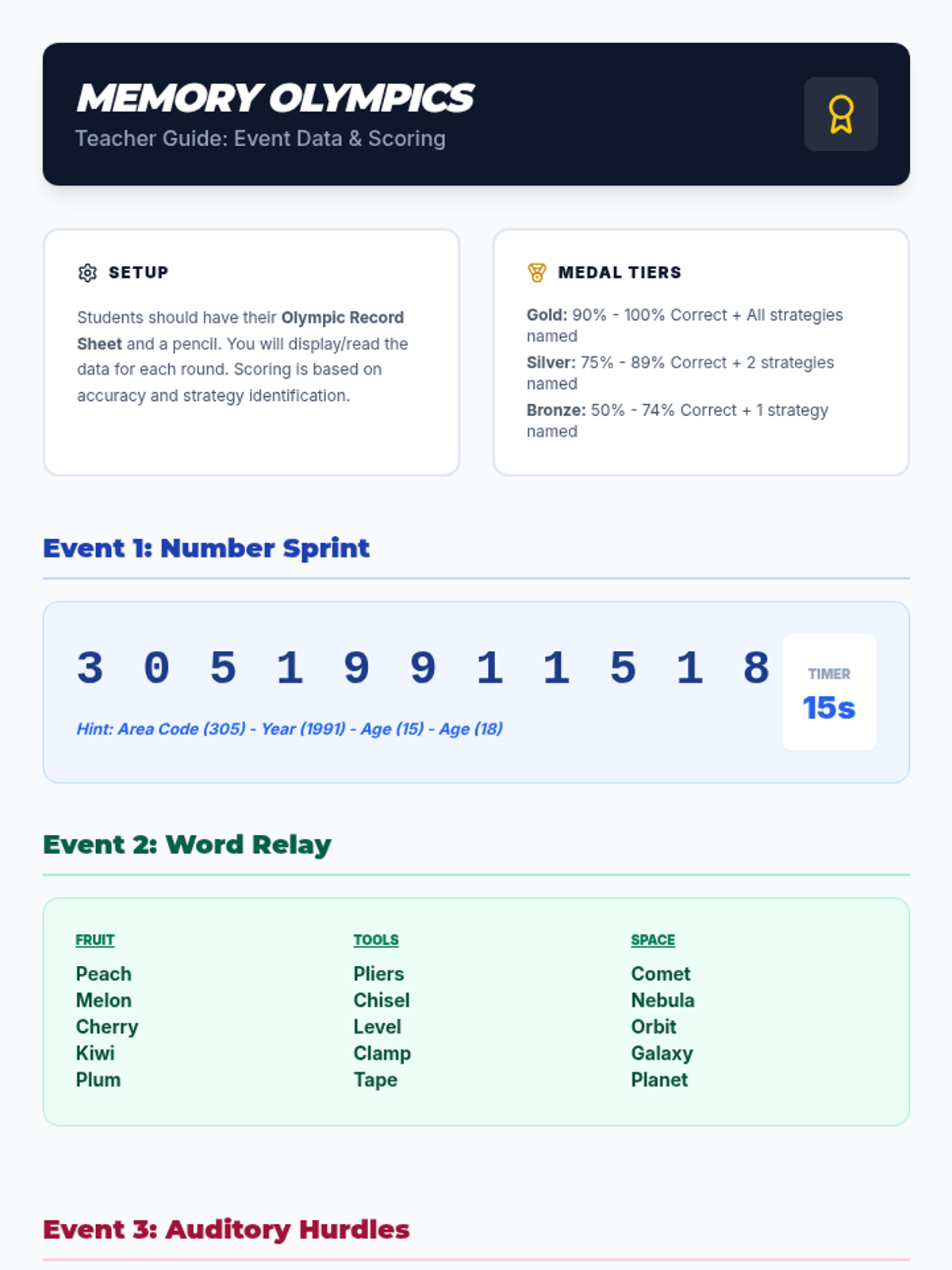
A gamified review where students compete in 'Memory Olympics' to apply all strategies learned in the sequence.
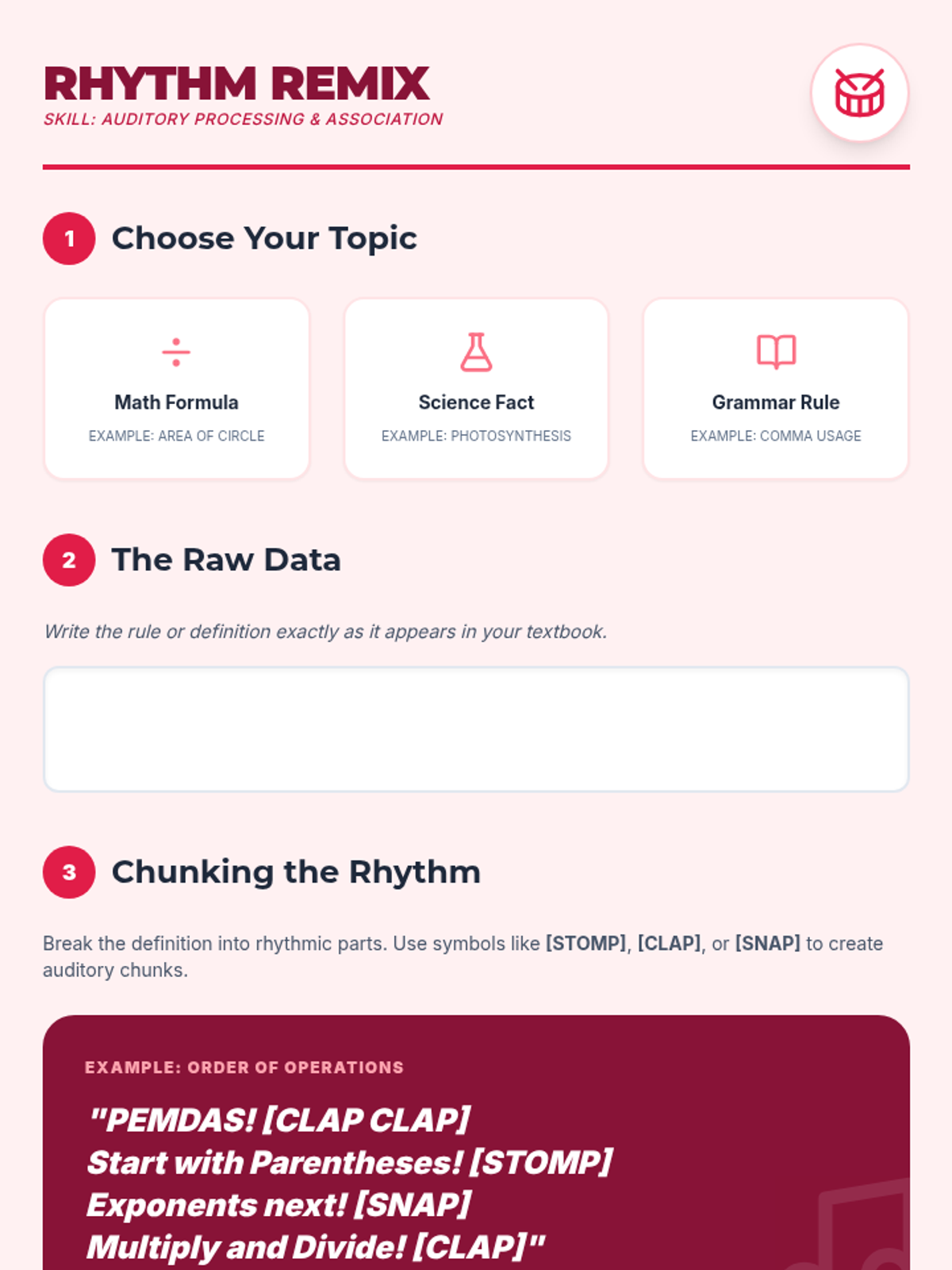
Students explore auditory chunks by using rhythm, rhyme, and melody to memorize academic definitions and rules.
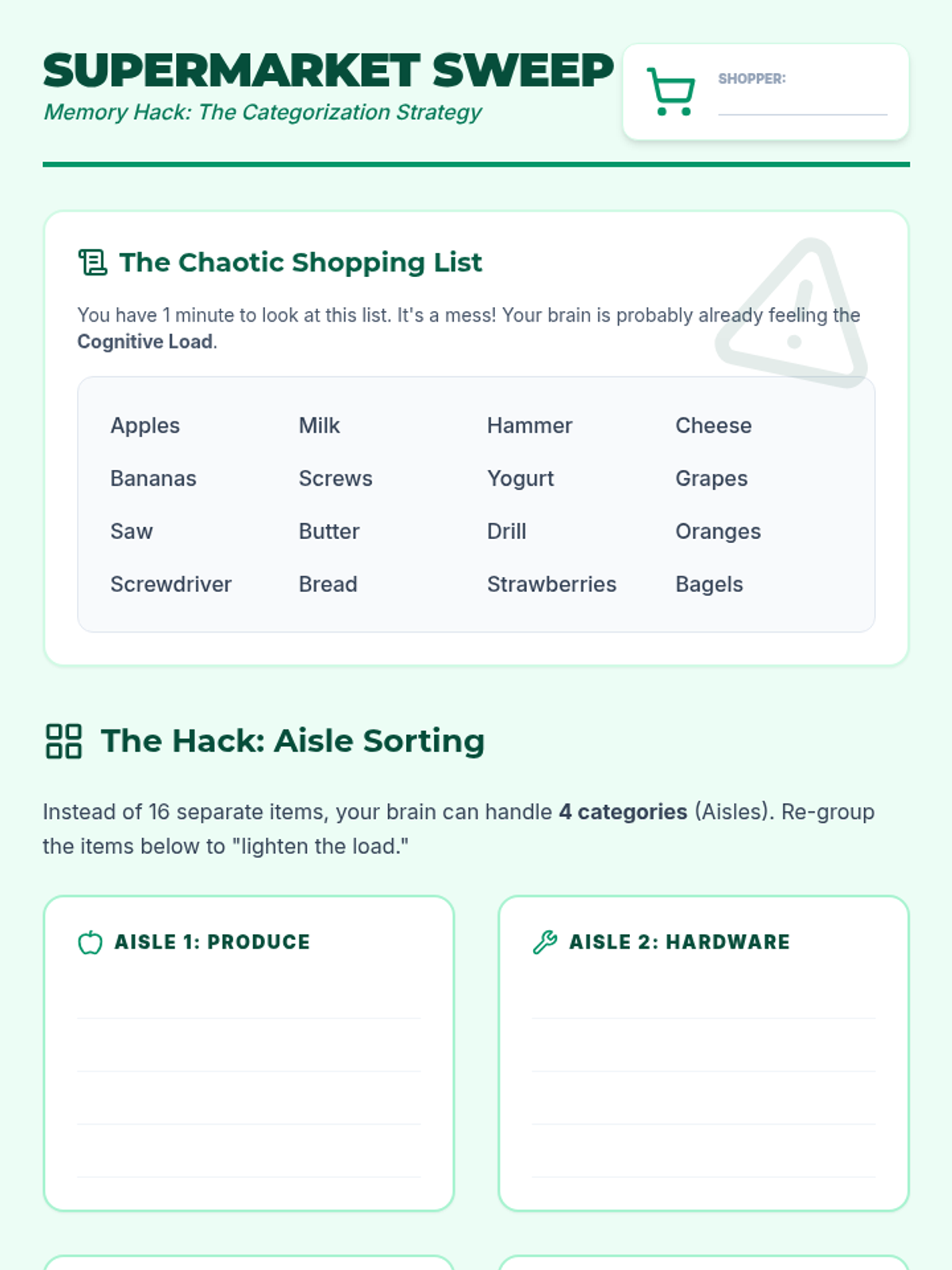
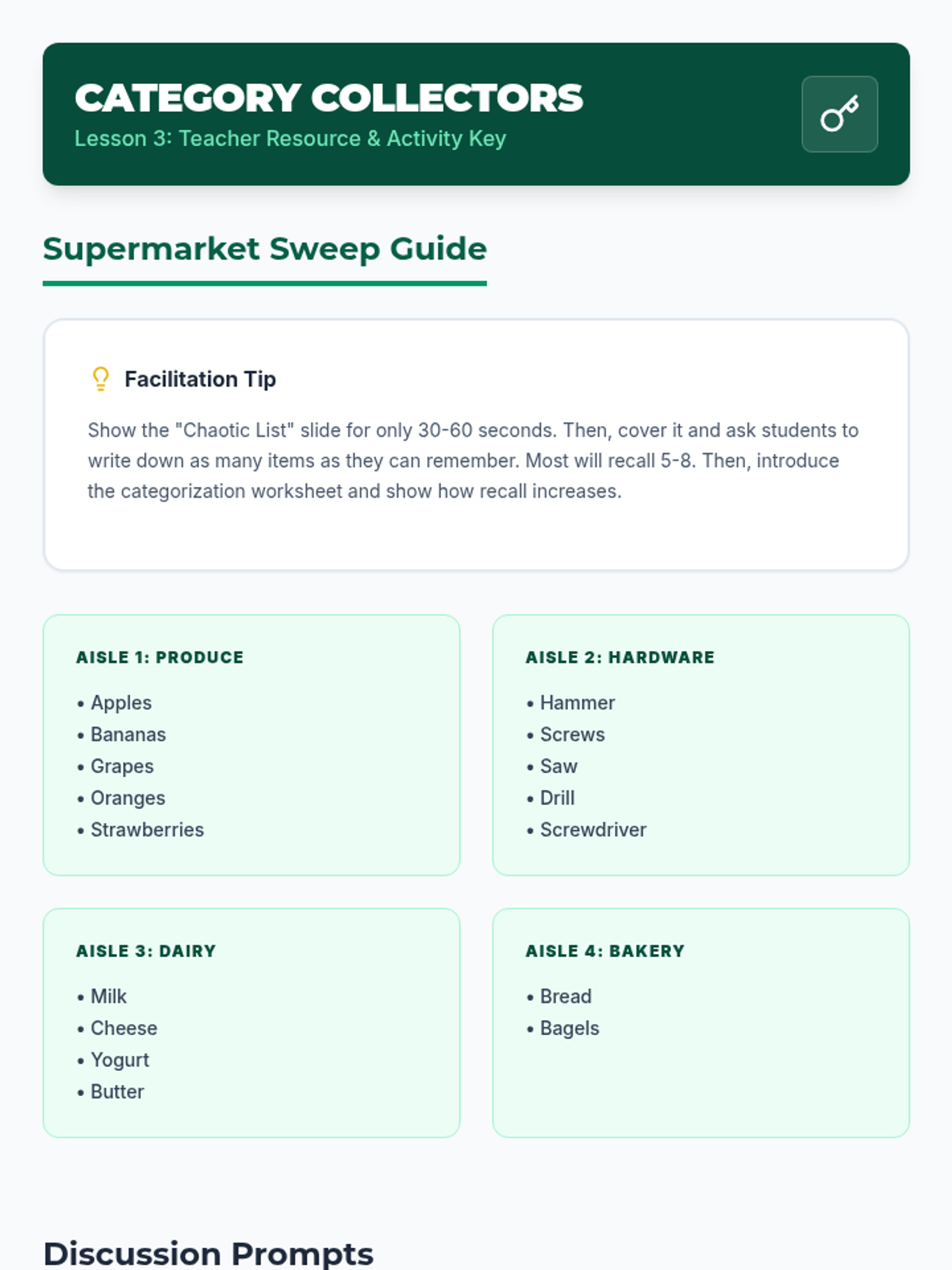
Students apply chunking to word lists by reorganizing them into meaningful categories to improve recall speed and accuracy.
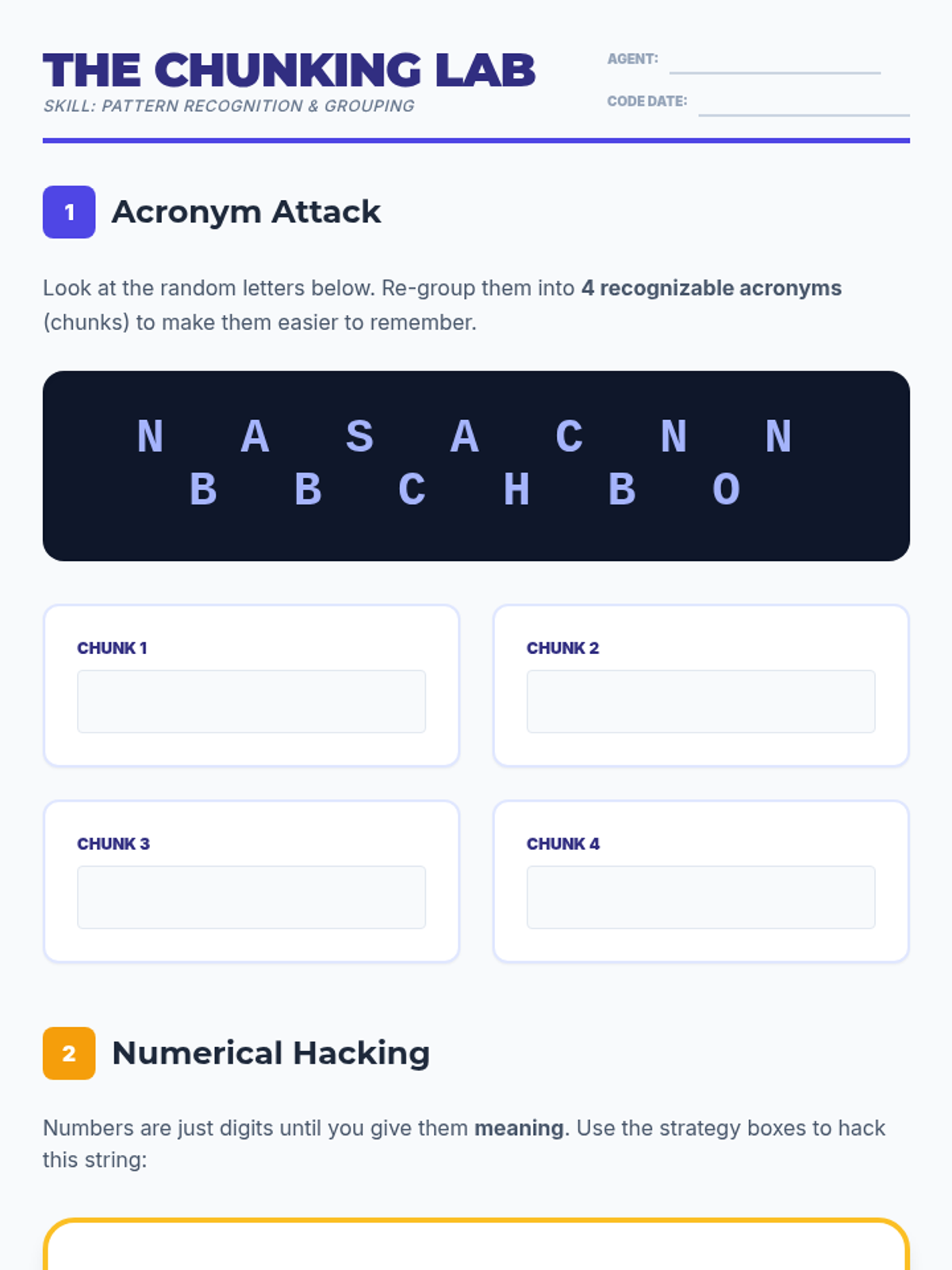
Students learn to group distinct items into larger units (chunks) using acronyms and numerical patterns.
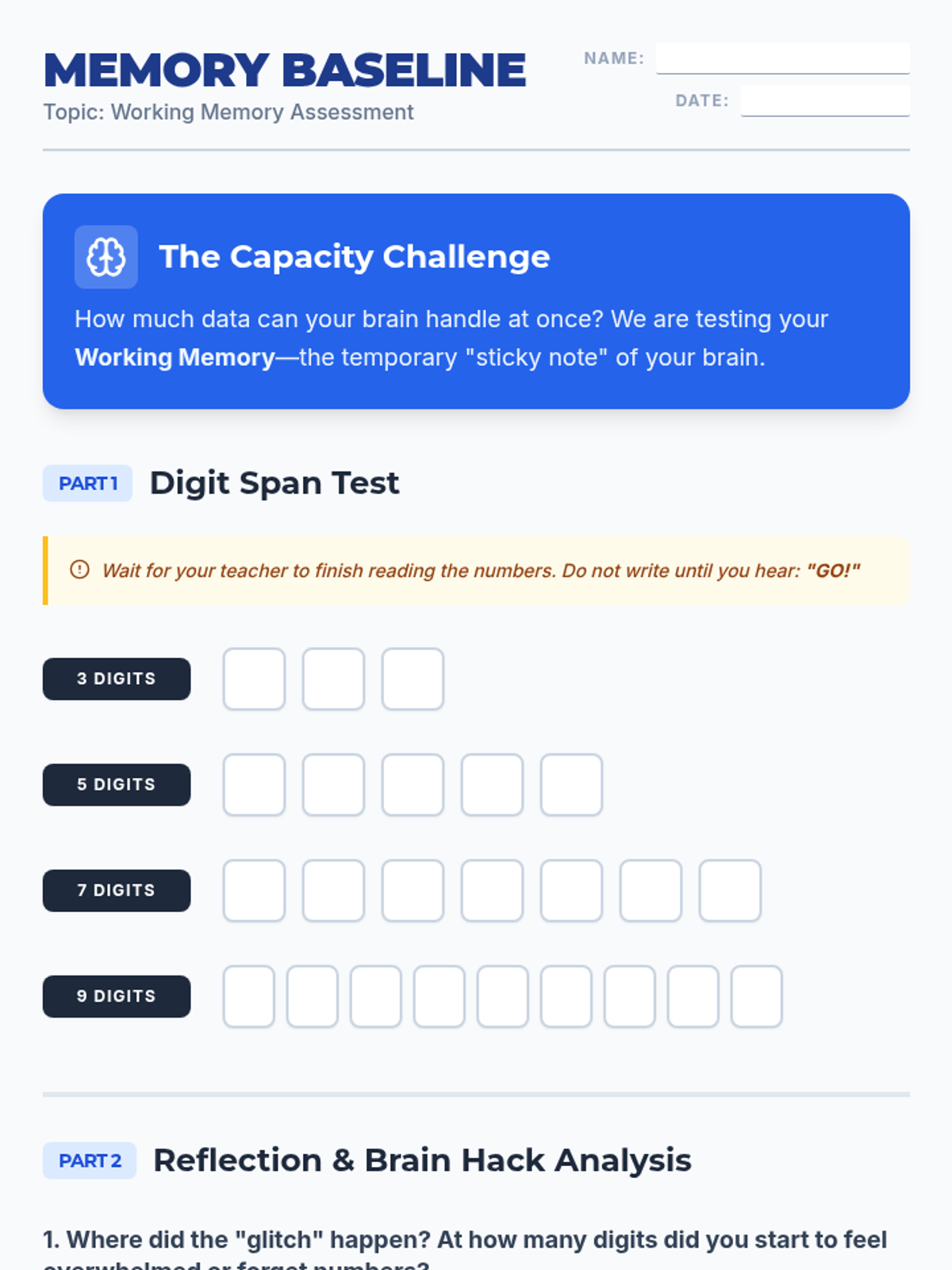
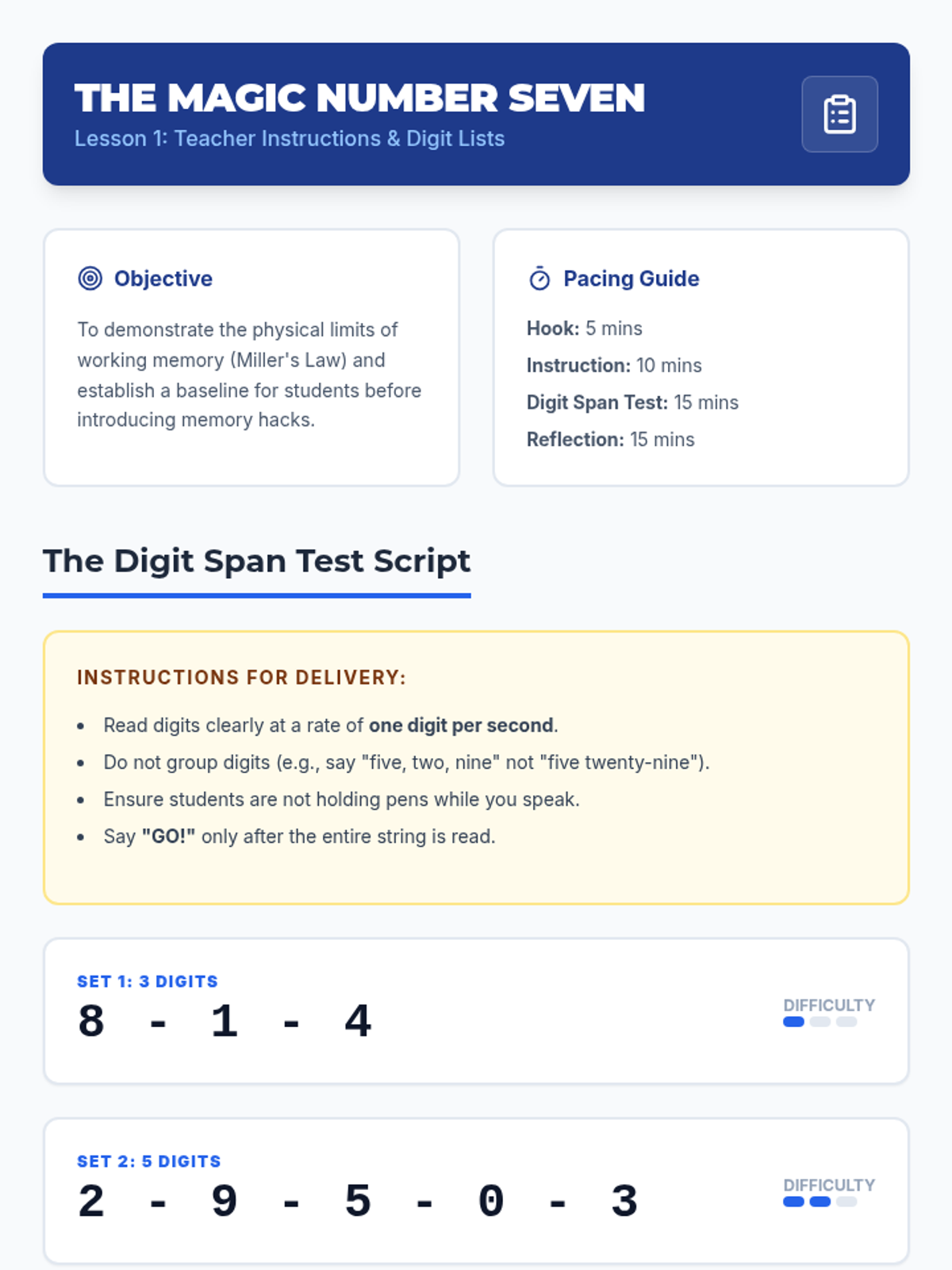
Students discover their personal working memory baseline through digit-span tests and learn about the concept of cognitive load.
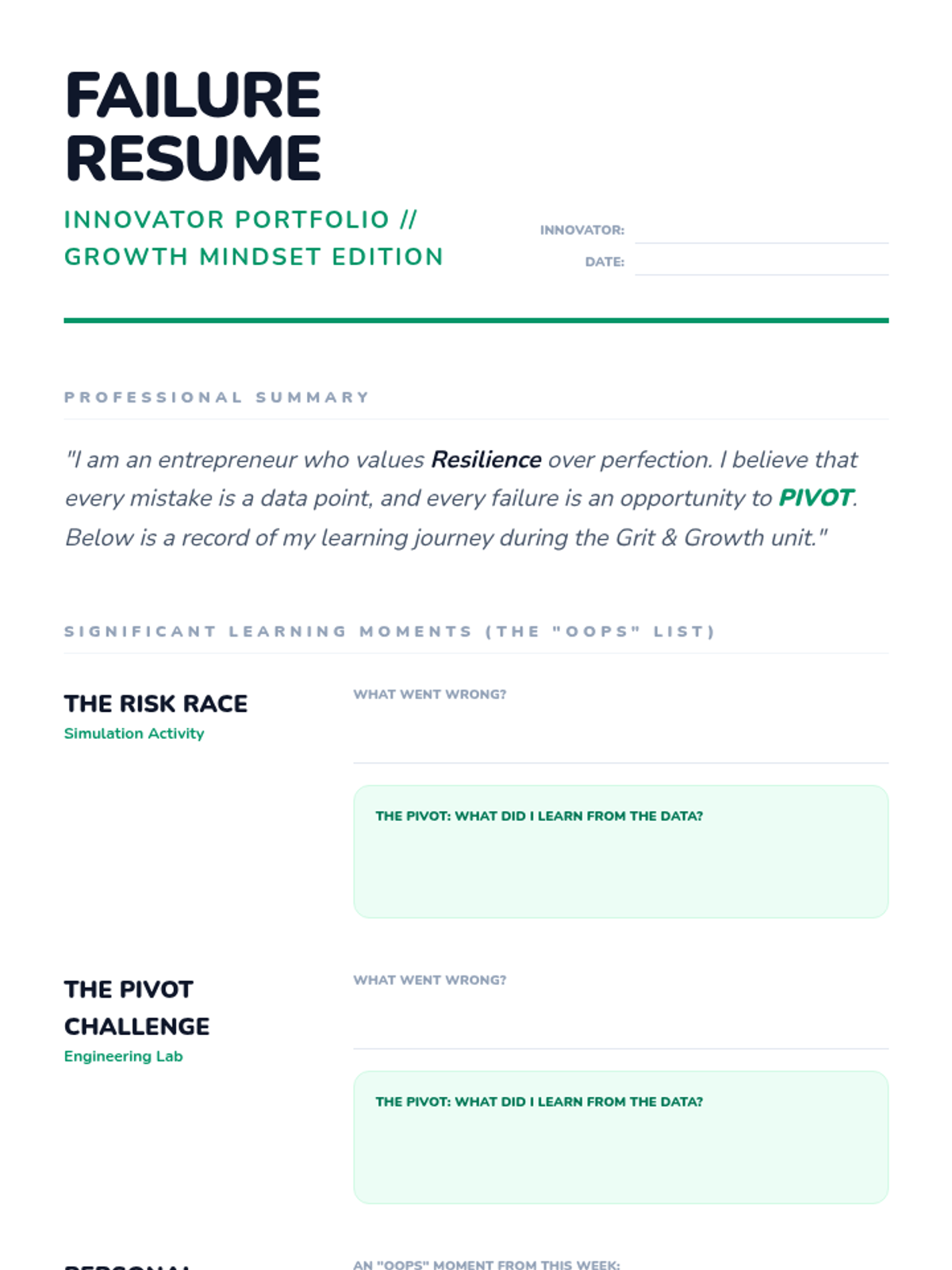
Students create a 'Failure Resume' to celebrate mistakes and document the learning that came from them.
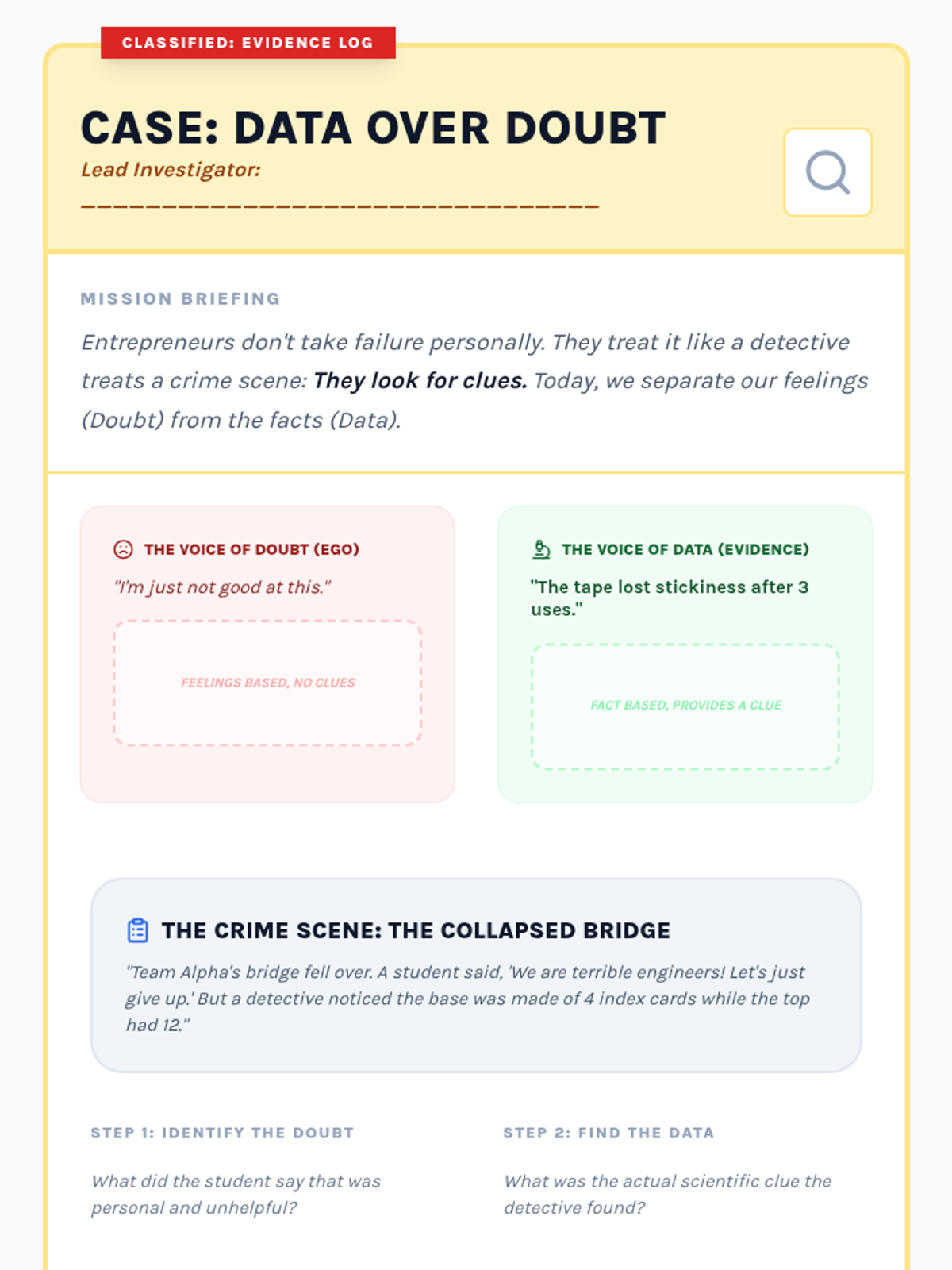
Students learn to separate their ego from results by analyzing simulation data to find objective causes for failure.
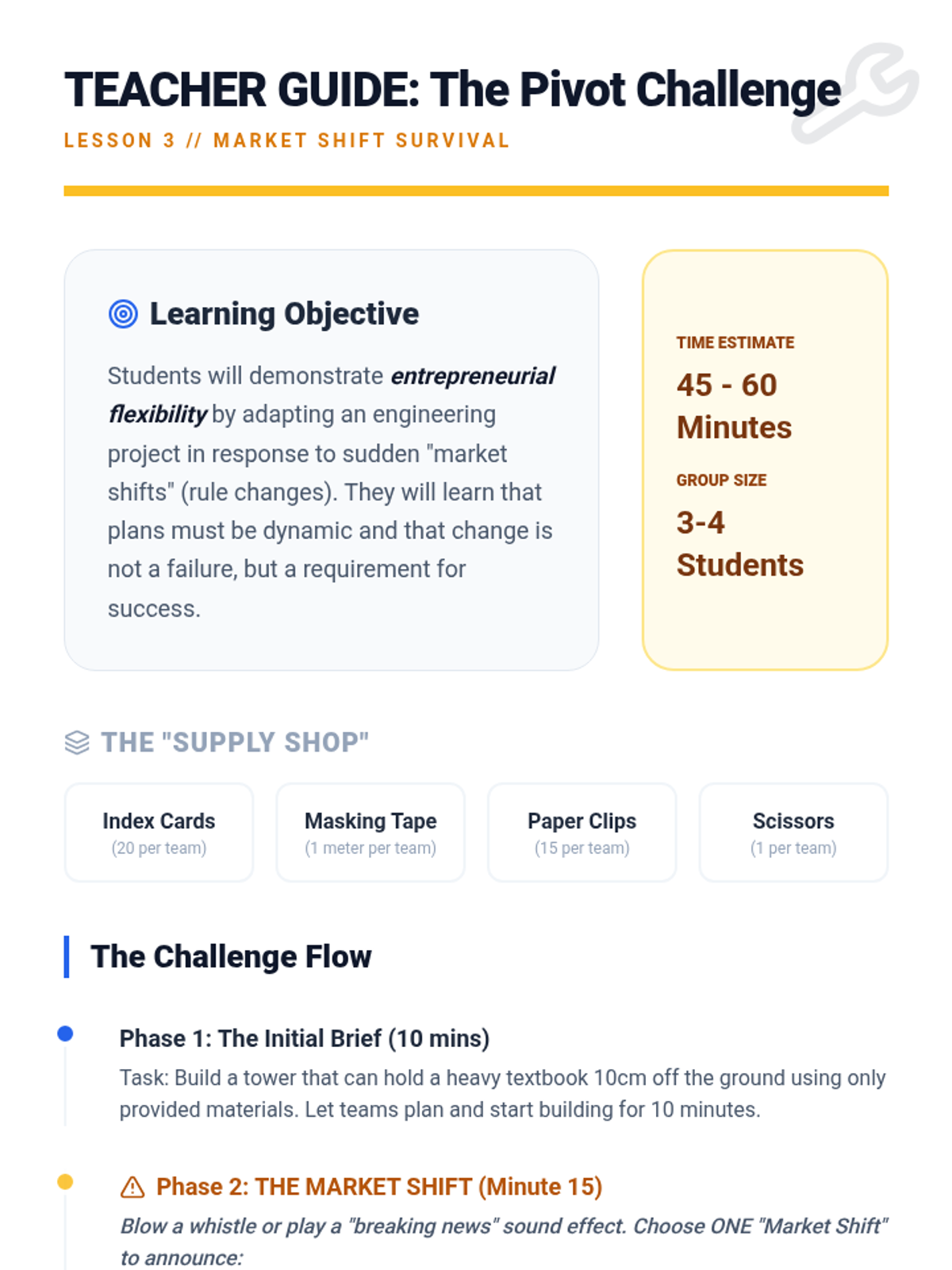
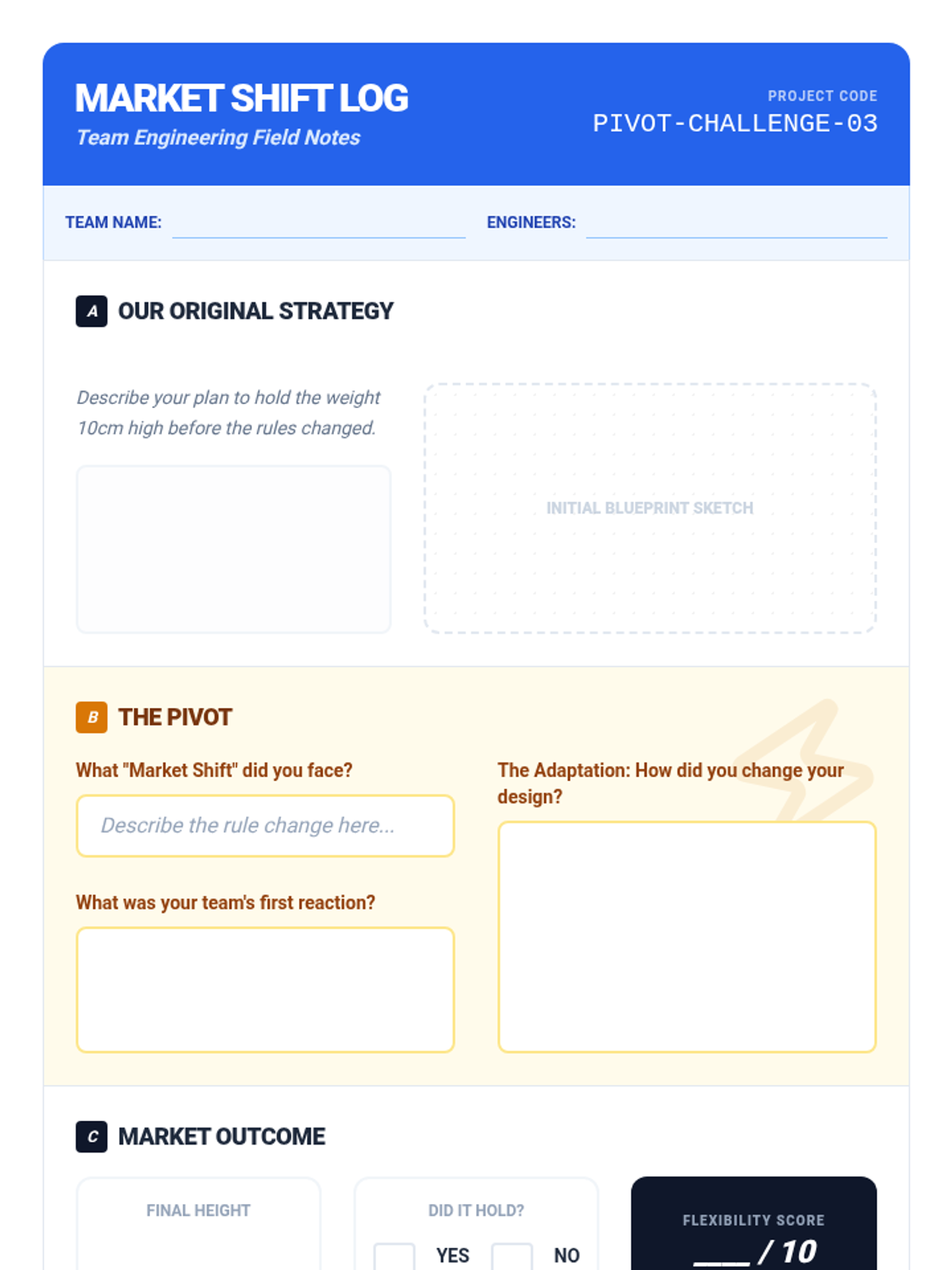
An engineering challenge where students must adapt to a sudden 'market shift' mid-project, testing their flexibility.
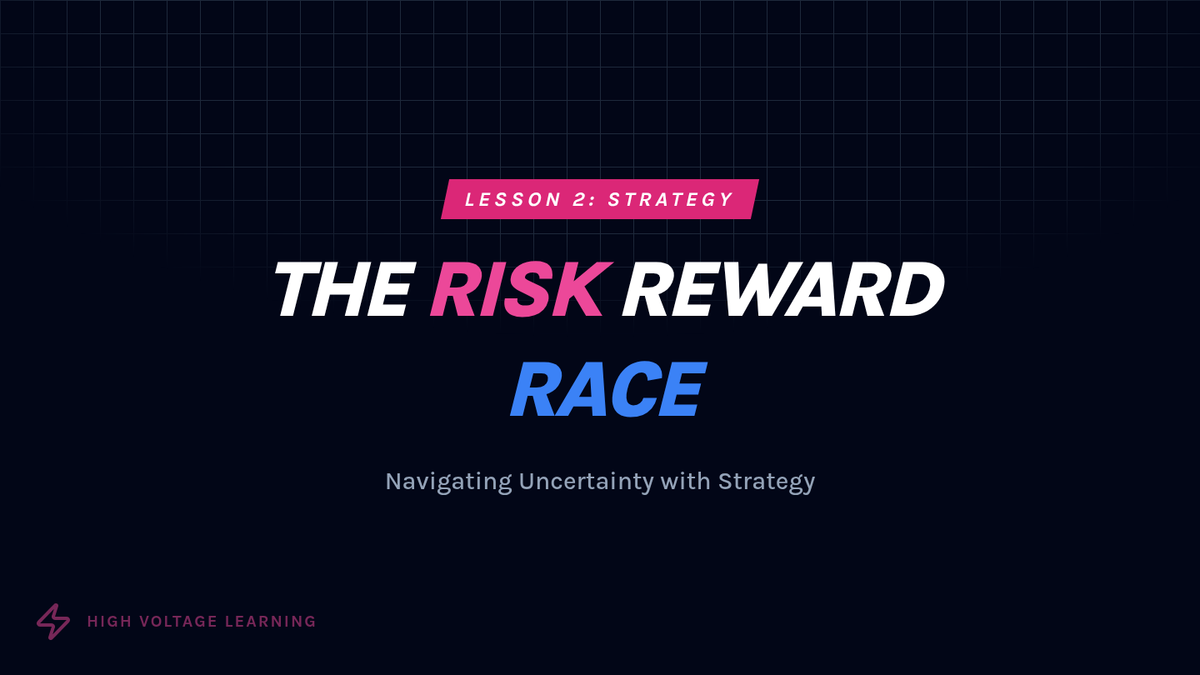
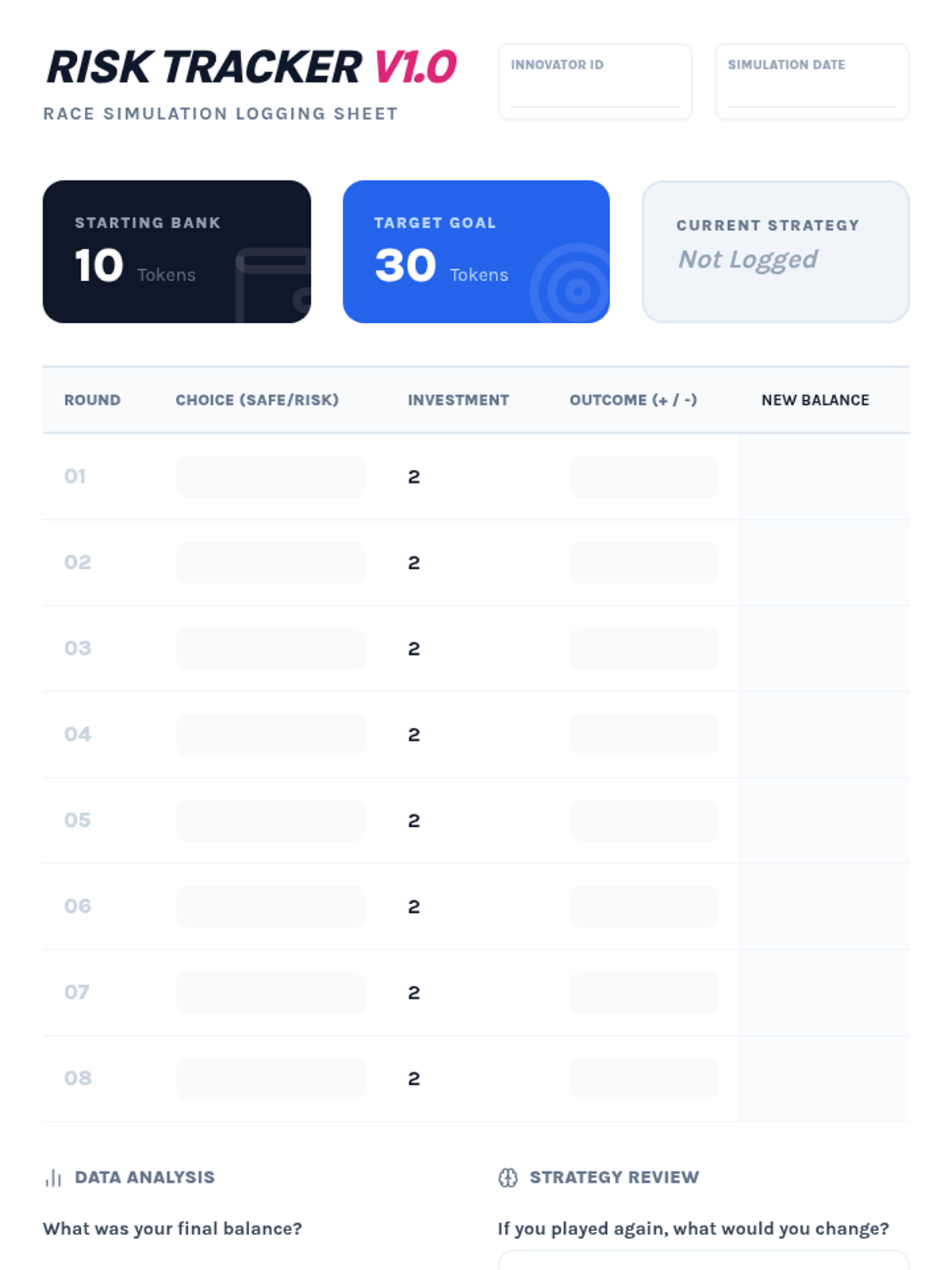
A simulation where students weigh safe vs. risky decisions, learning the difference between gambling and calculated entrepreneurship.
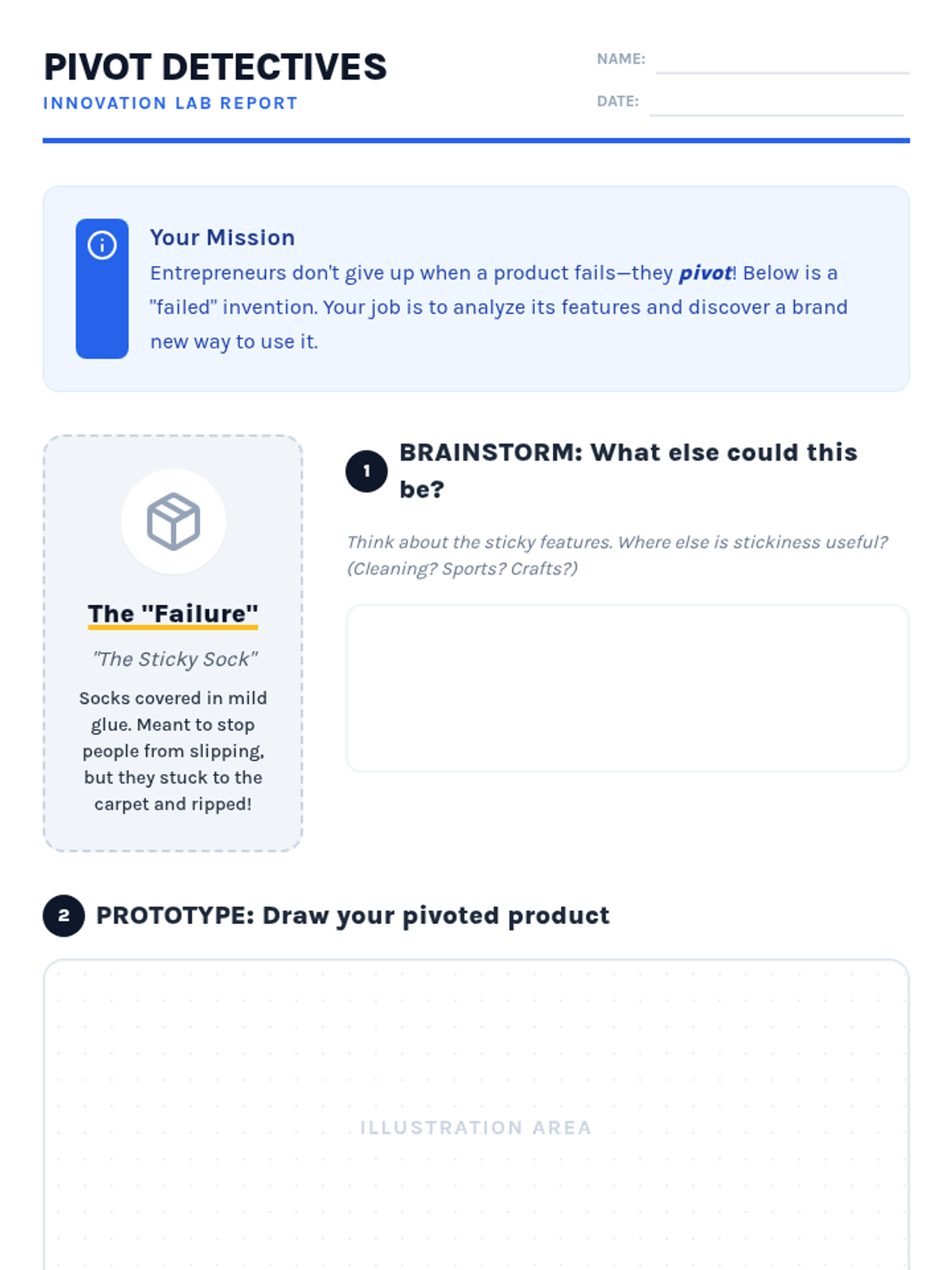
Students analyze how famous failures became successes through 'pivoting.' They learn to identify opportunities within setbacks.
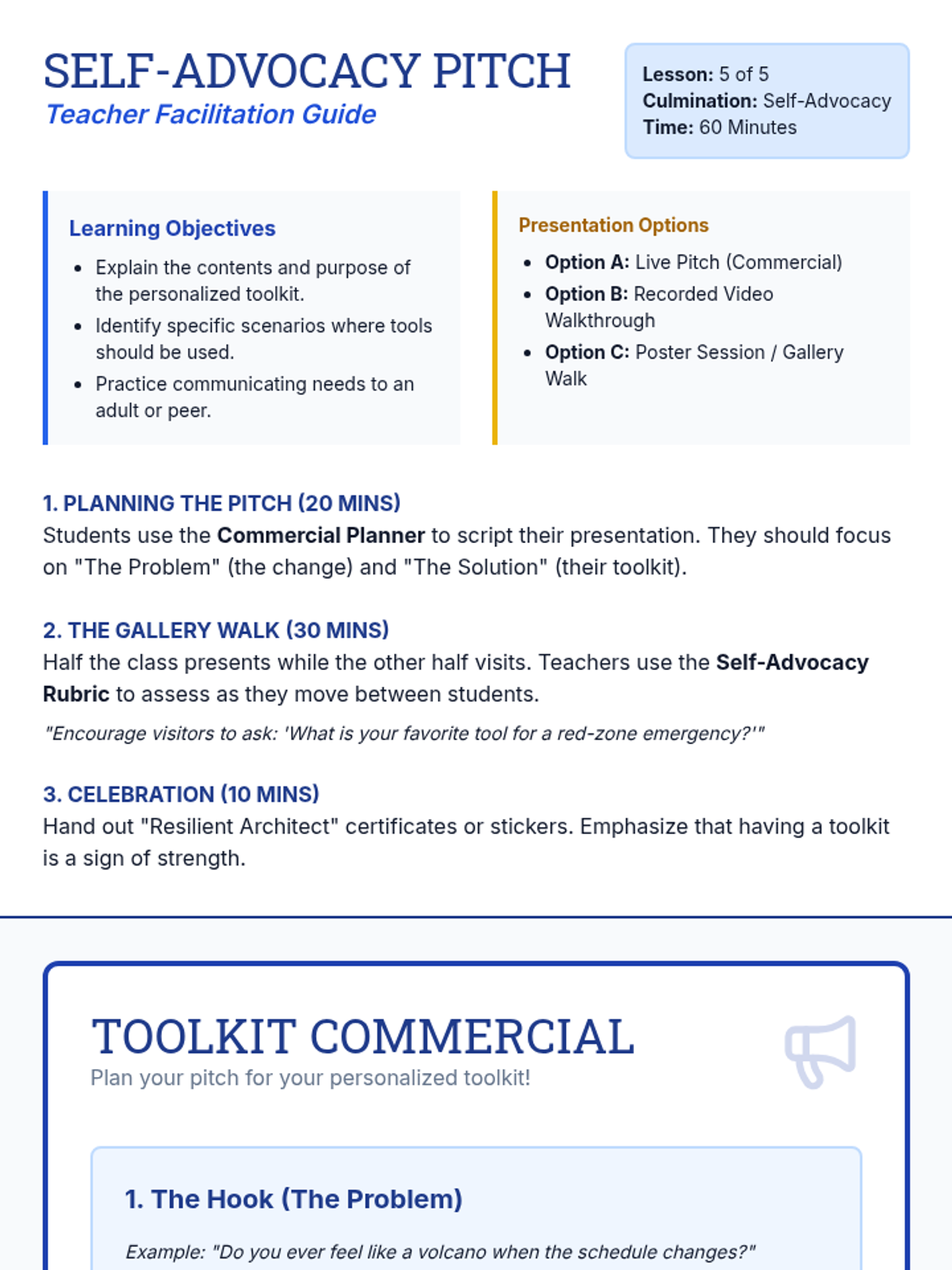
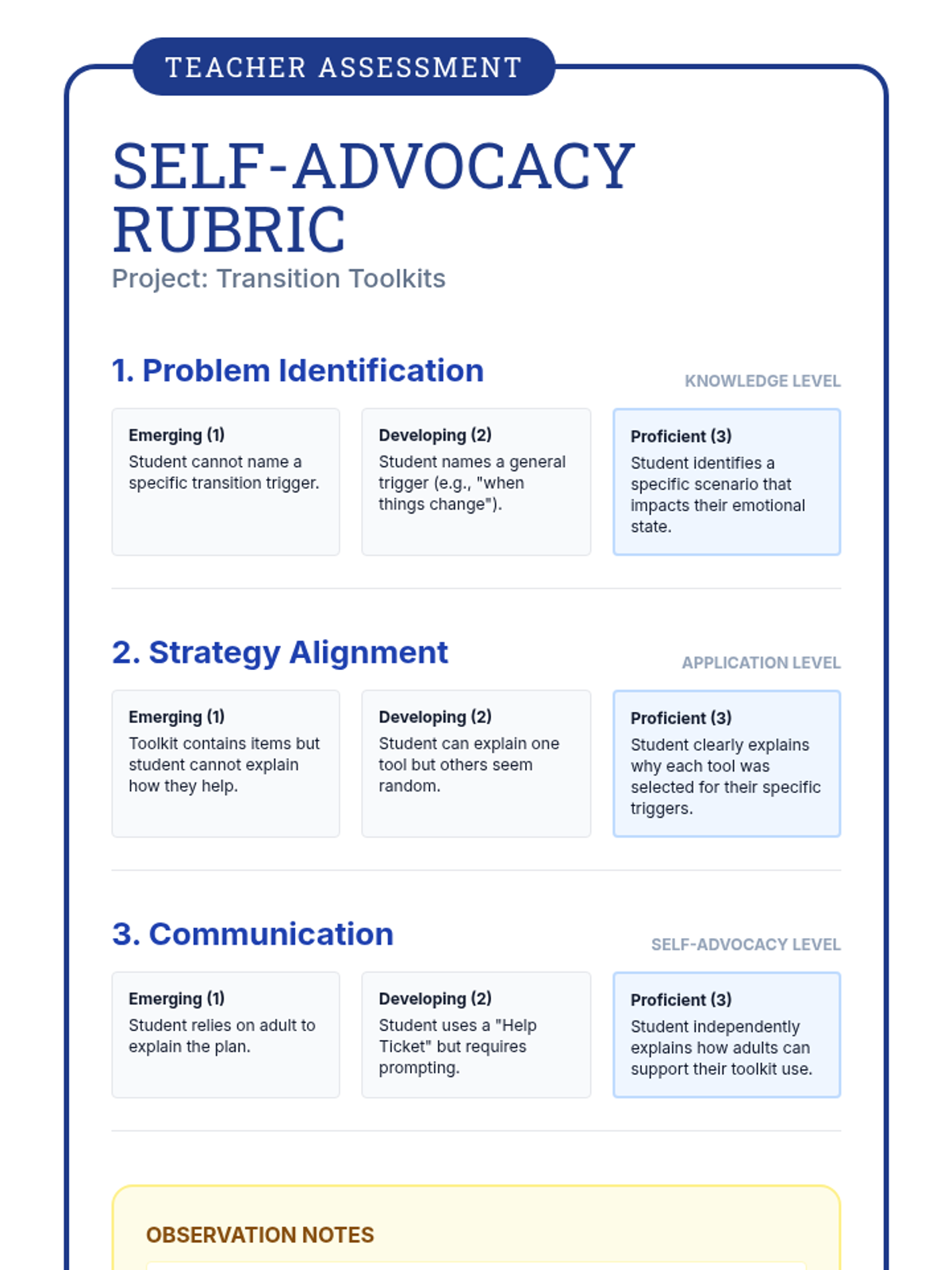
Students present their toolkit to a teacher or peer, explaining what is inside and how it supports their self-advocacy.
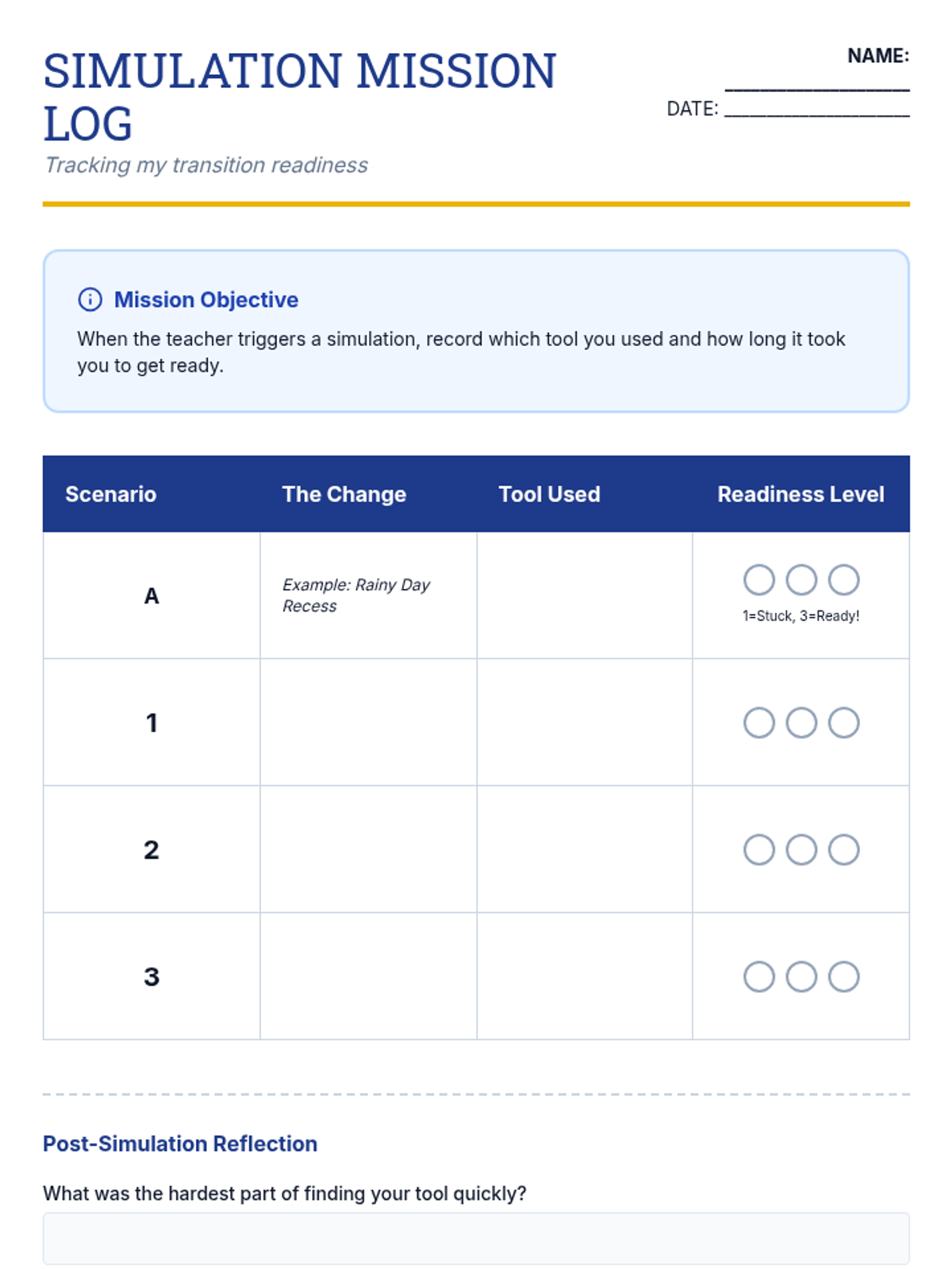
Students participate in a simulated schedule change to practice immediately retrieving and using their toolkit resources.
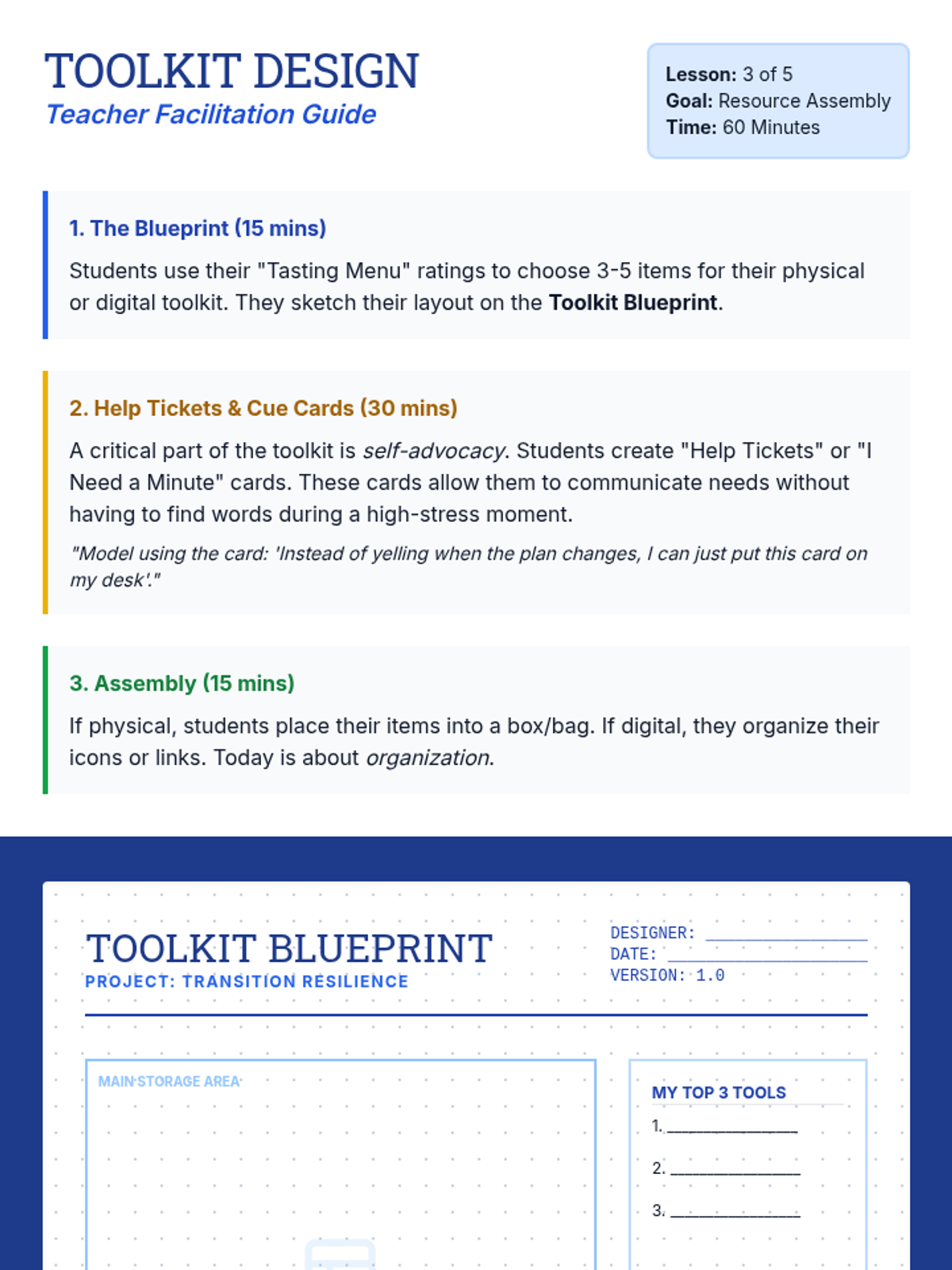
Students select their top strategies and begin assembling their physical or digital toolkit, creating custom cue cards for support.
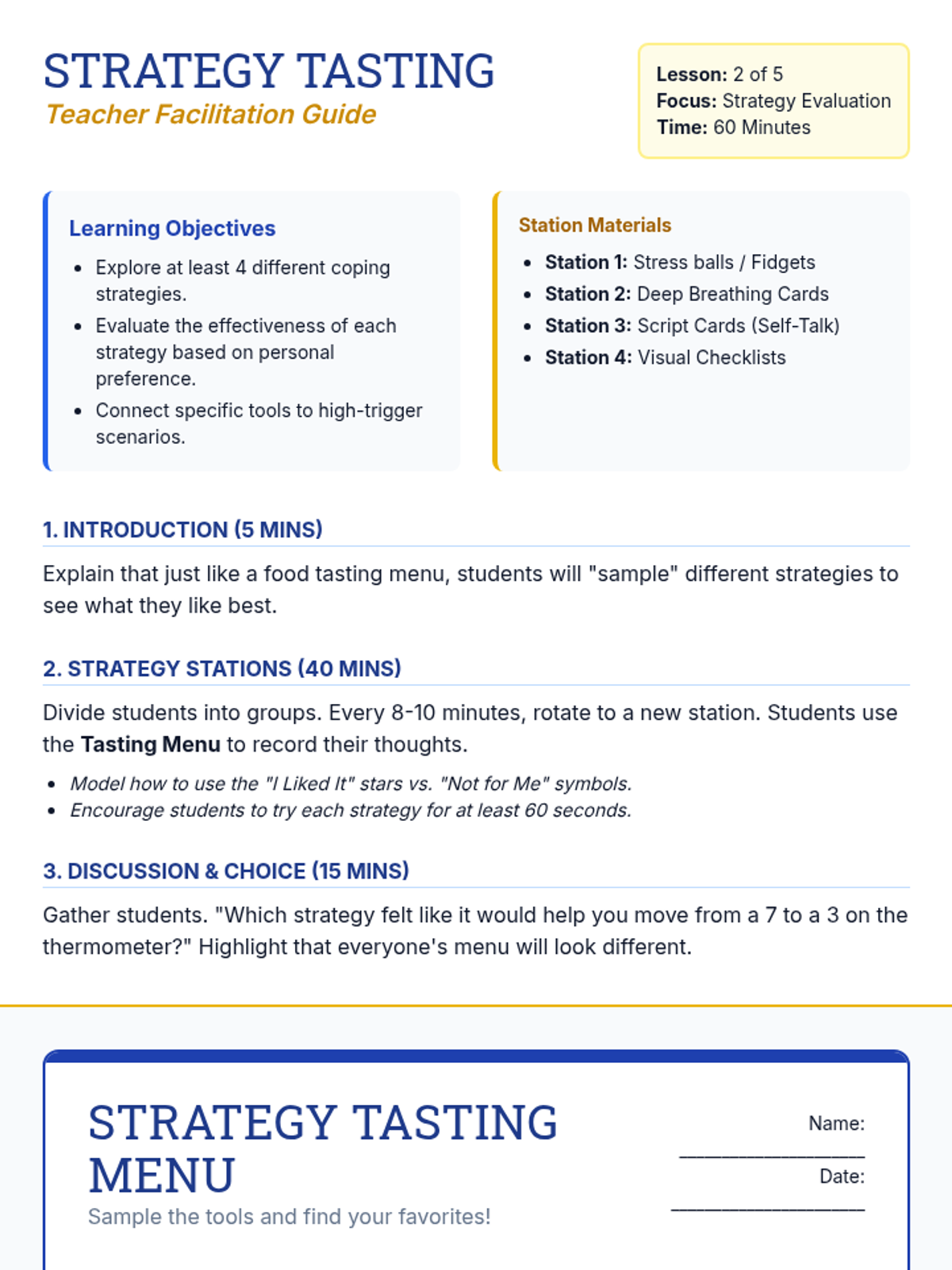
Students rotate through stations to test different coping mechanisms and rate the effectiveness of each strategy for themselves.
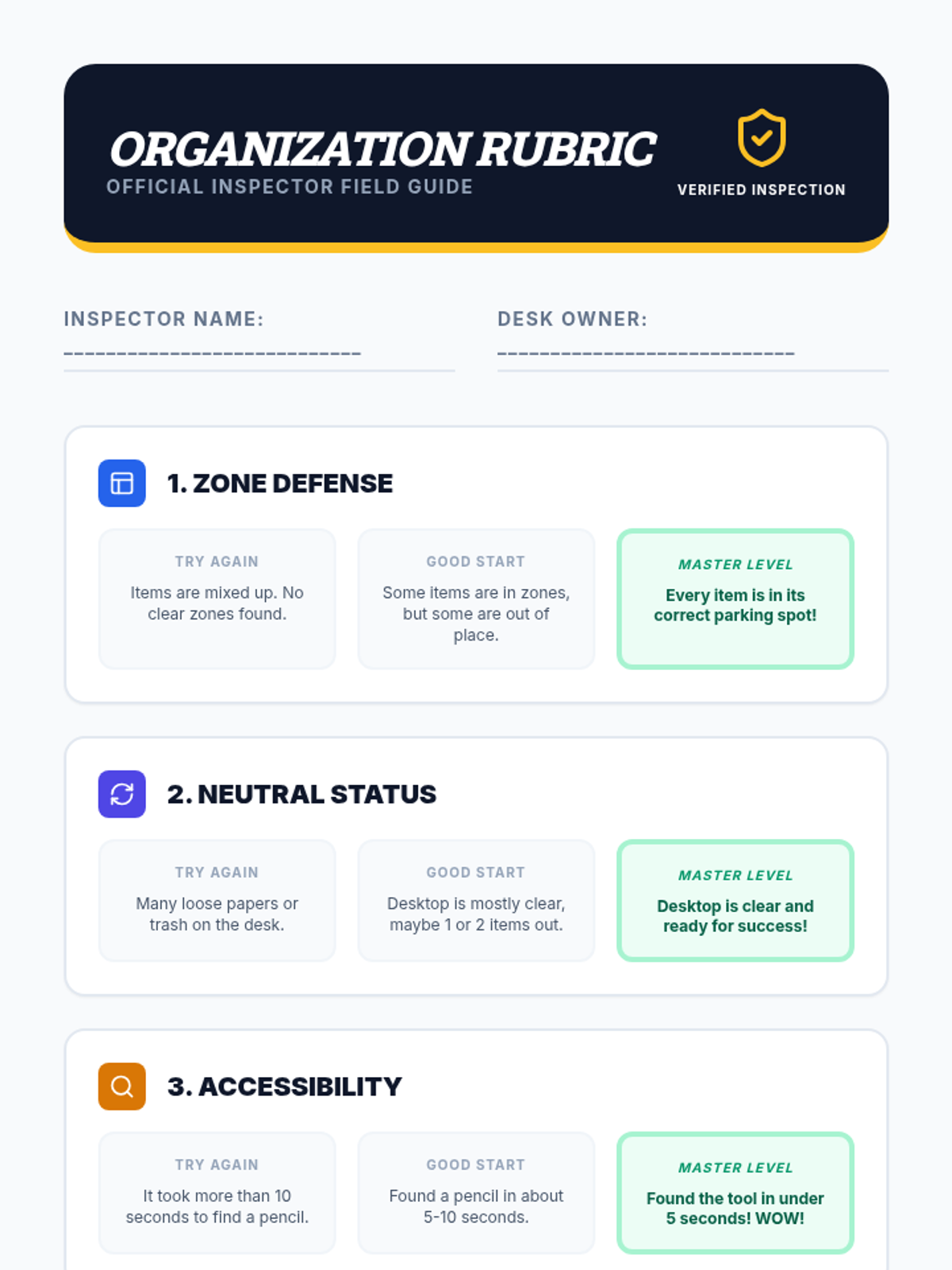
Students use a rubric to provide peer feedback on workspace organization and finalize their personal maintenance systems.
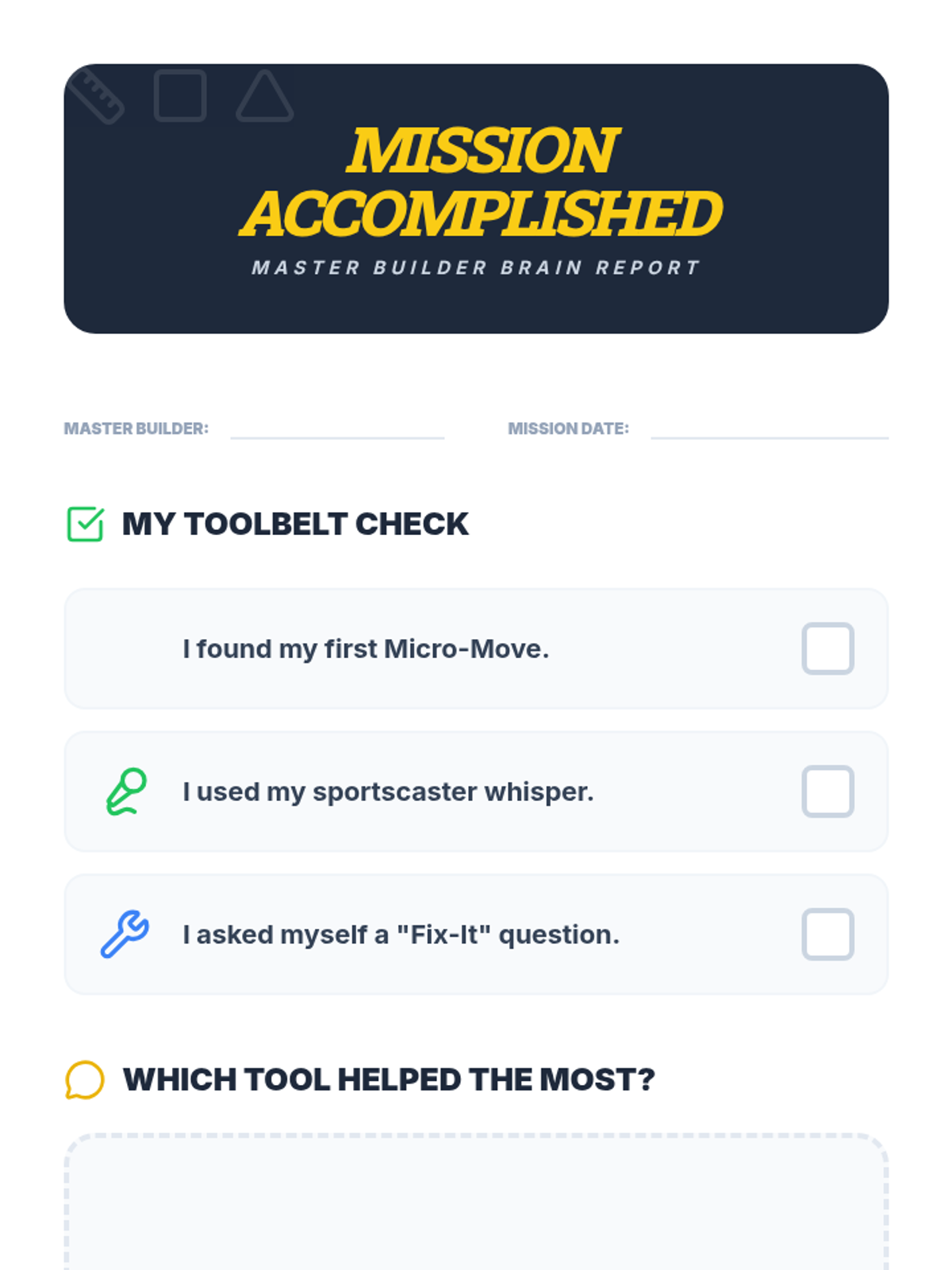
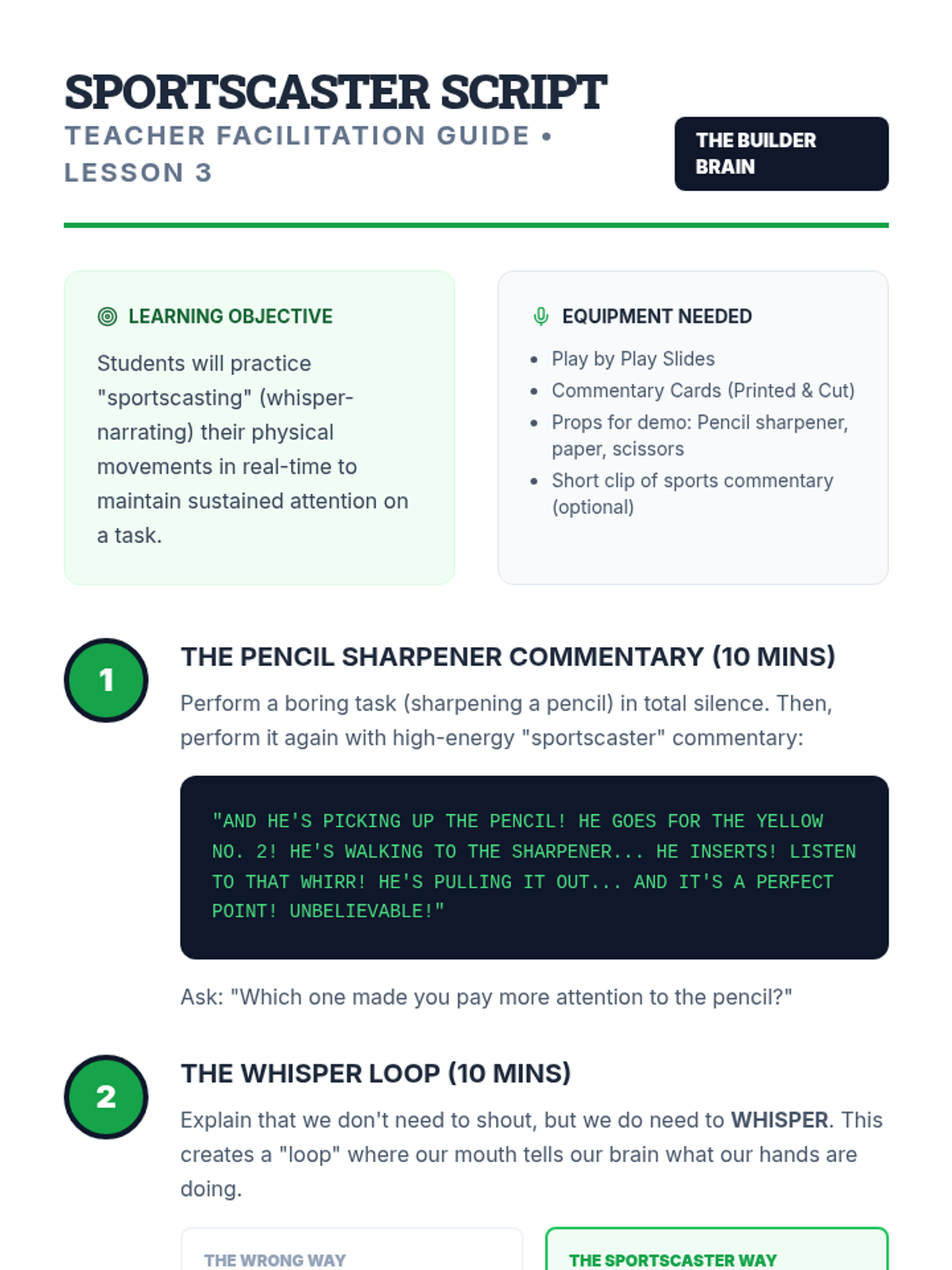
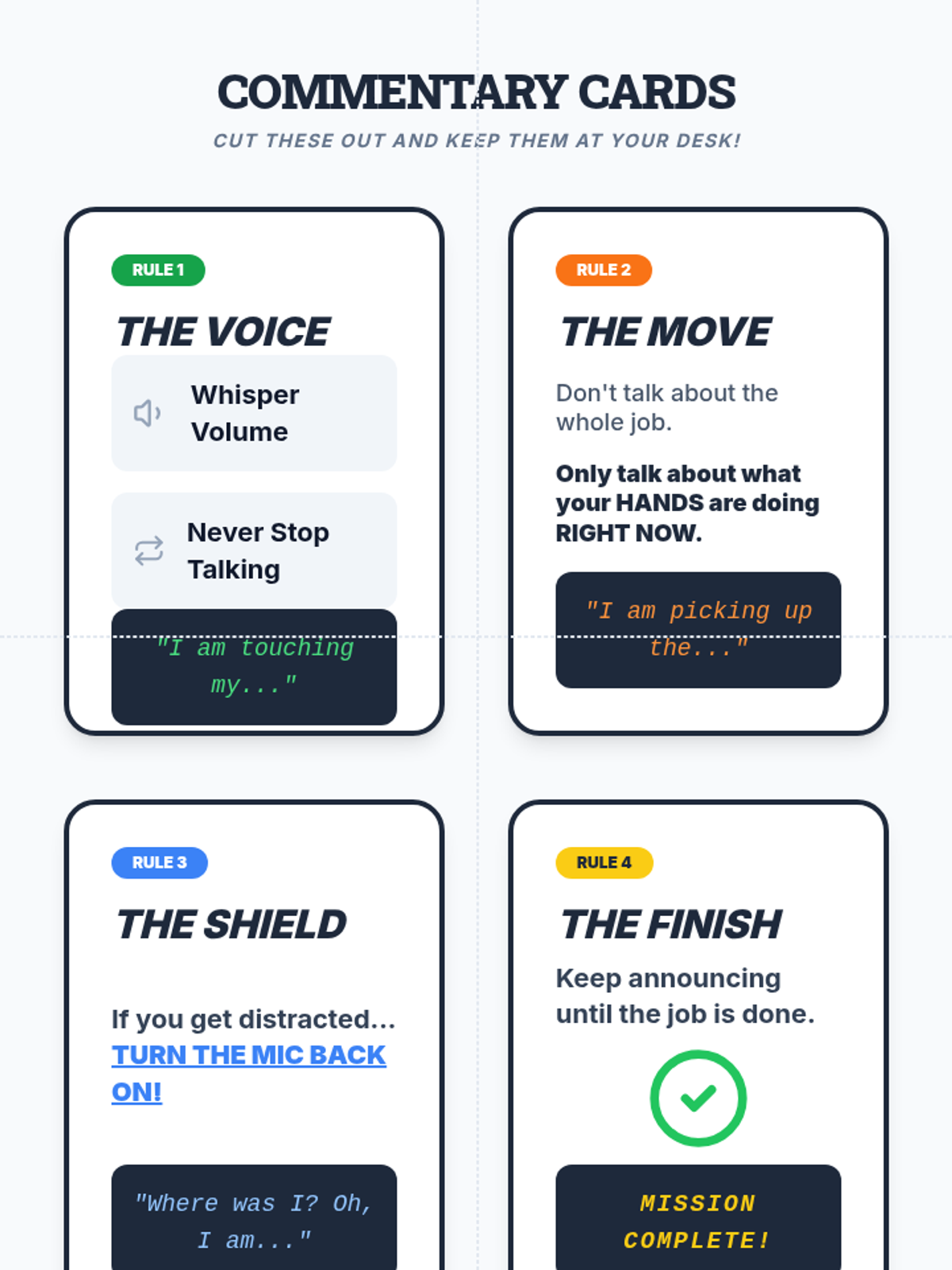
Students practice whispering their actions as they do them, similar to a sportscaster announcing a game. This continuous verbal loop helps prevent distraction and keeps the student engaged.
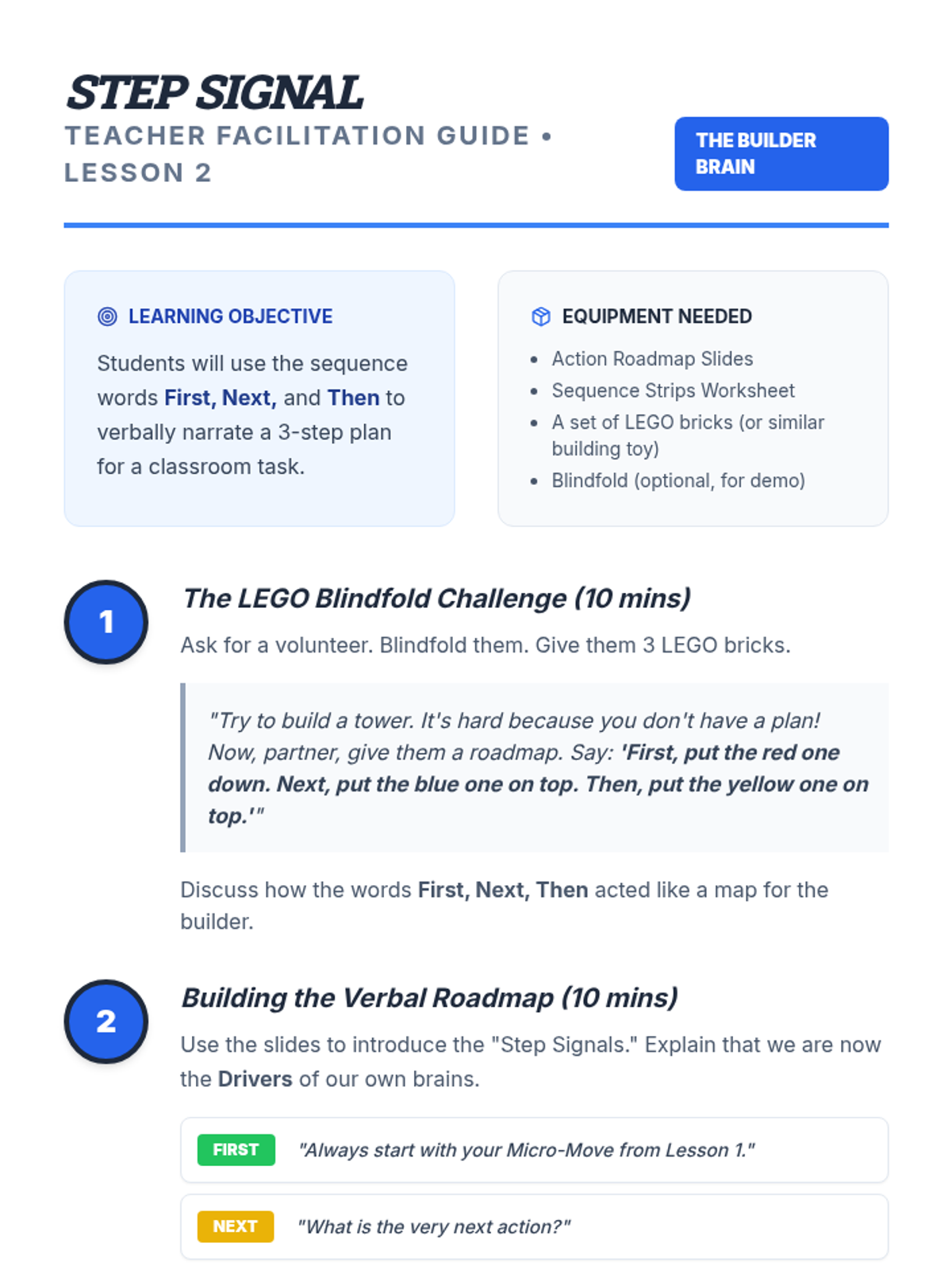
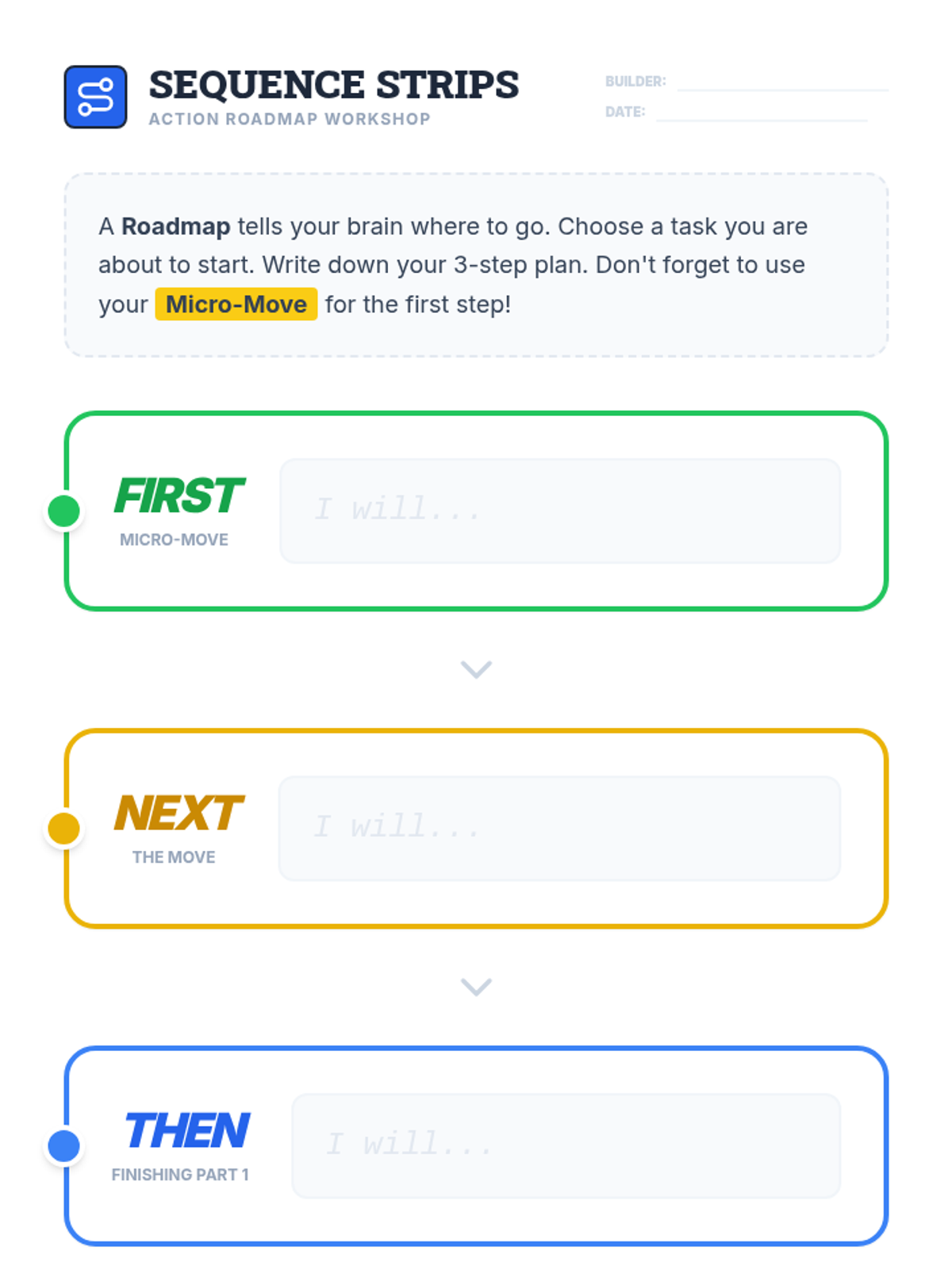
Students practice using the words 'First,' 'Next,' and 'Then' to create a verbal roadmap. They verbally plan a simple classroom routine, ensuring they can narrate the order of operations before beginning.
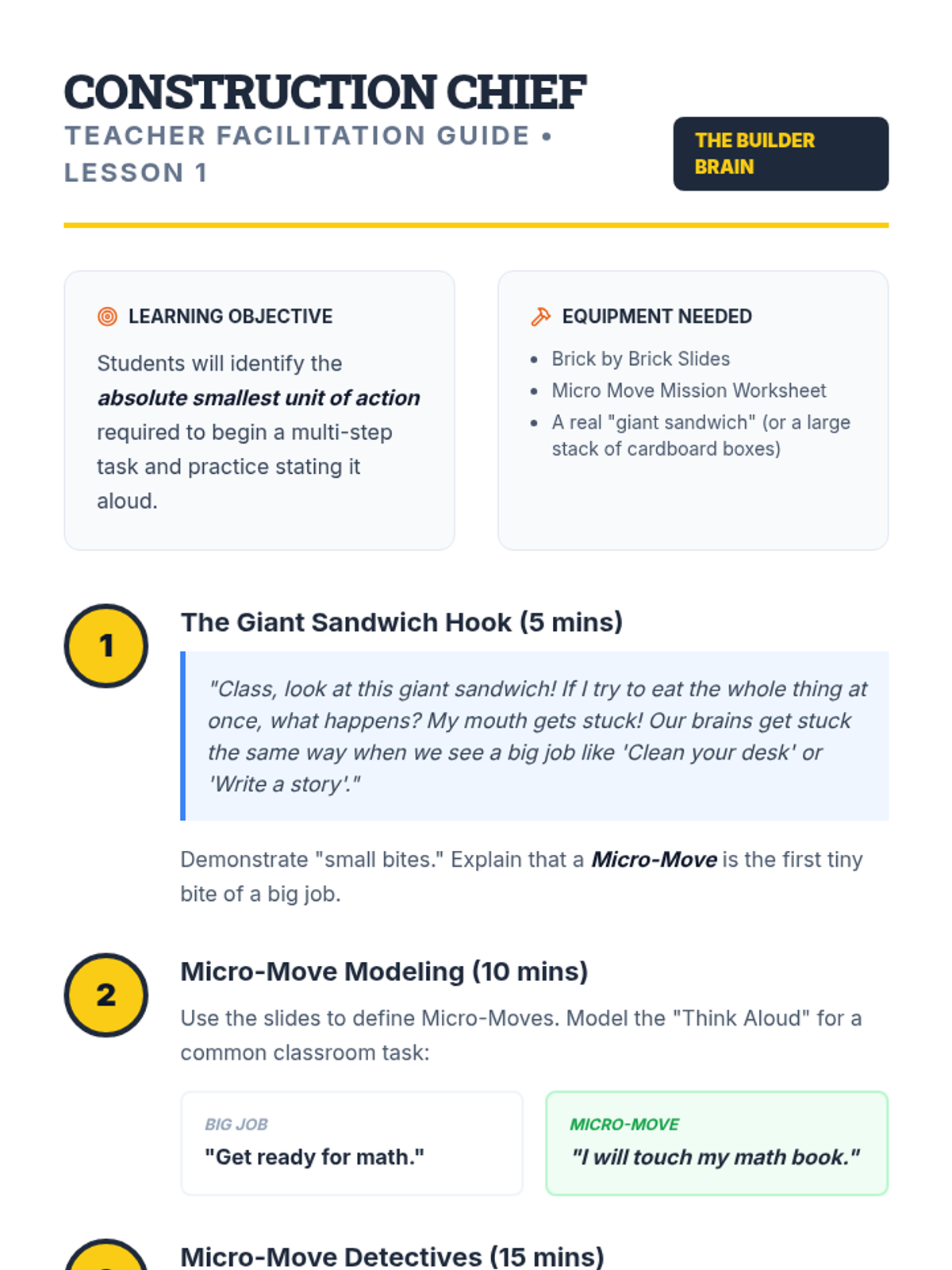
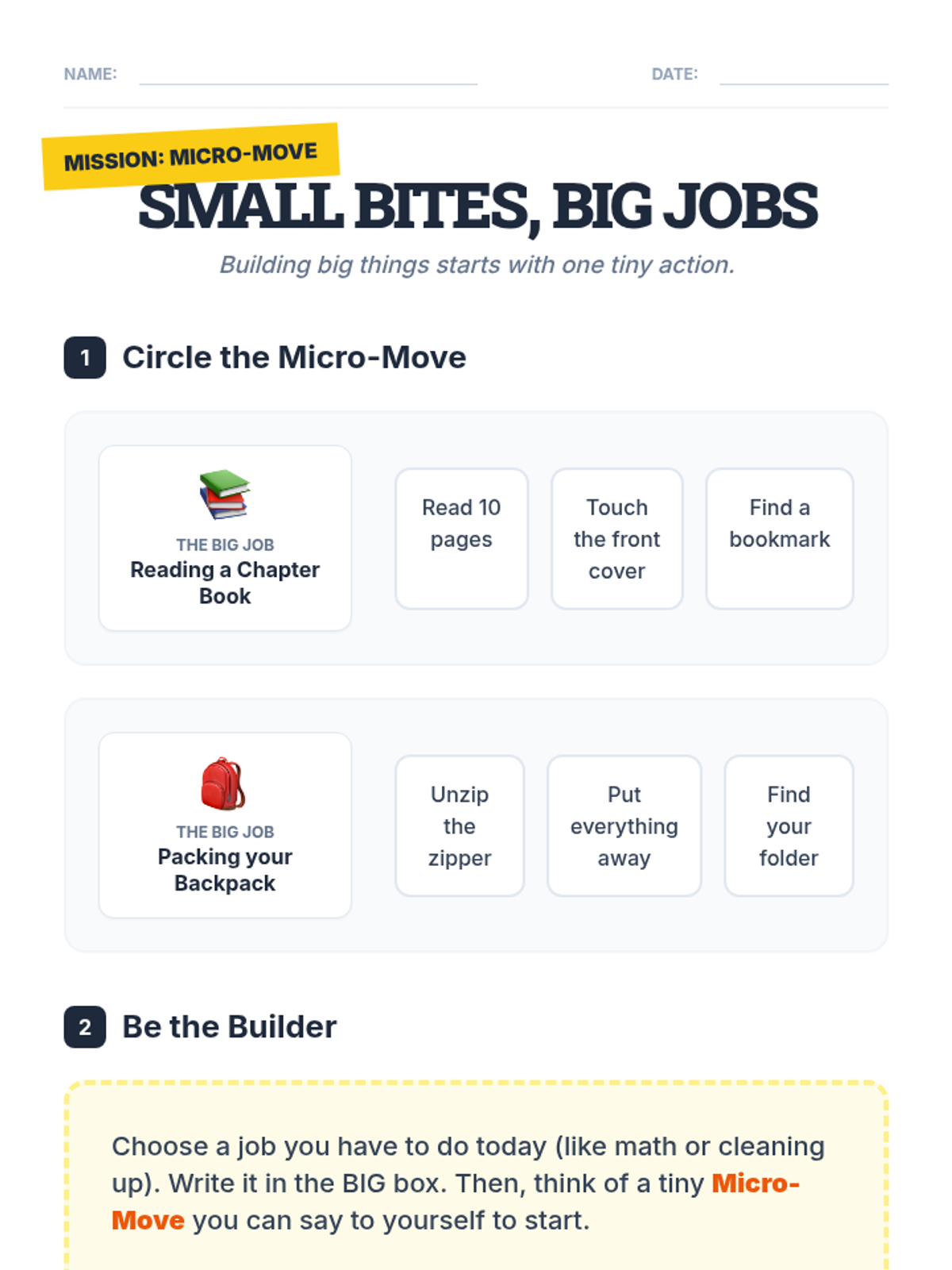
Students learn to identify the absolute smallest unit of action required to begin a task. They practice ignoring the whole assignment to focus solely on the physical action needed to start.
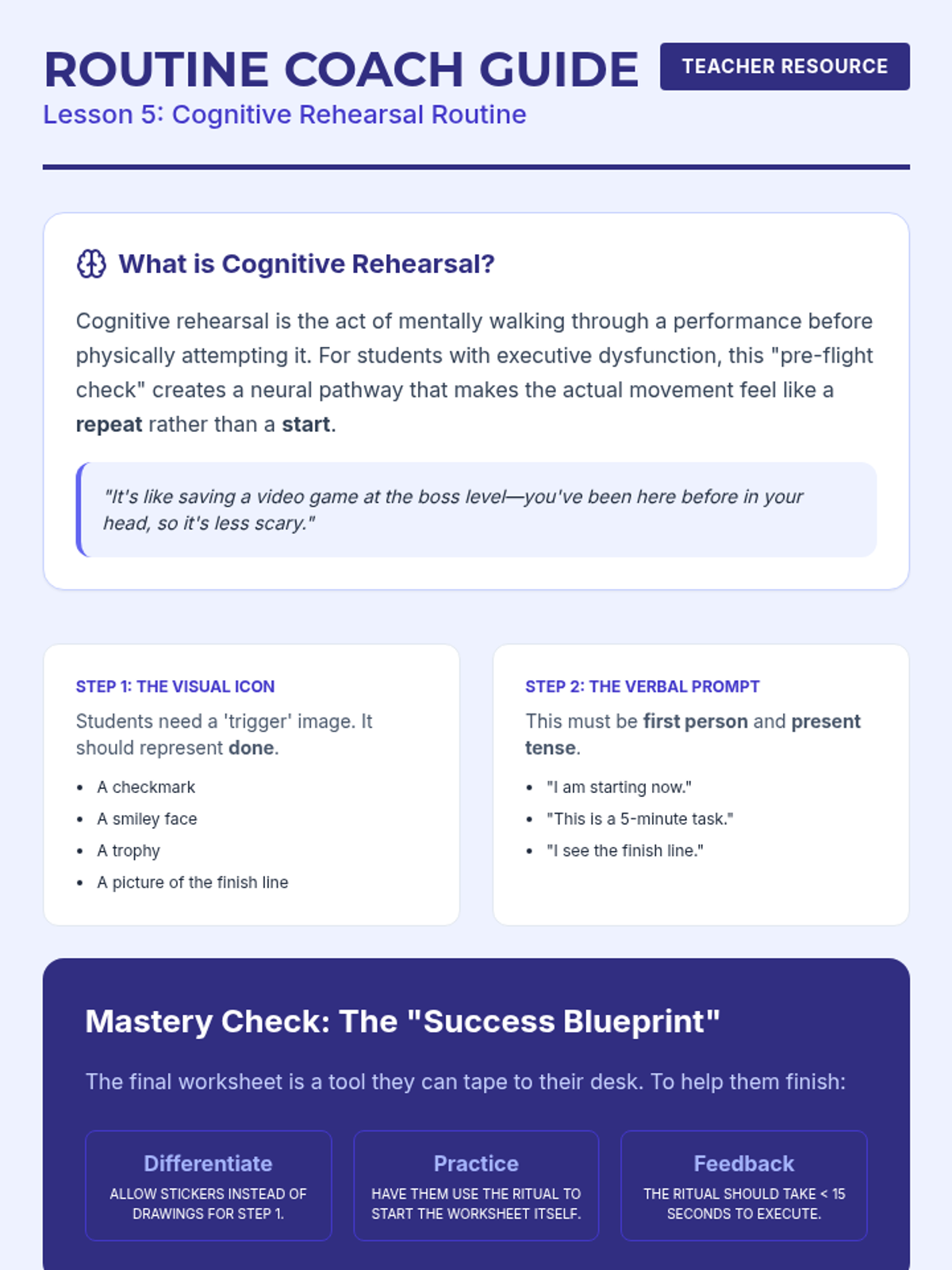
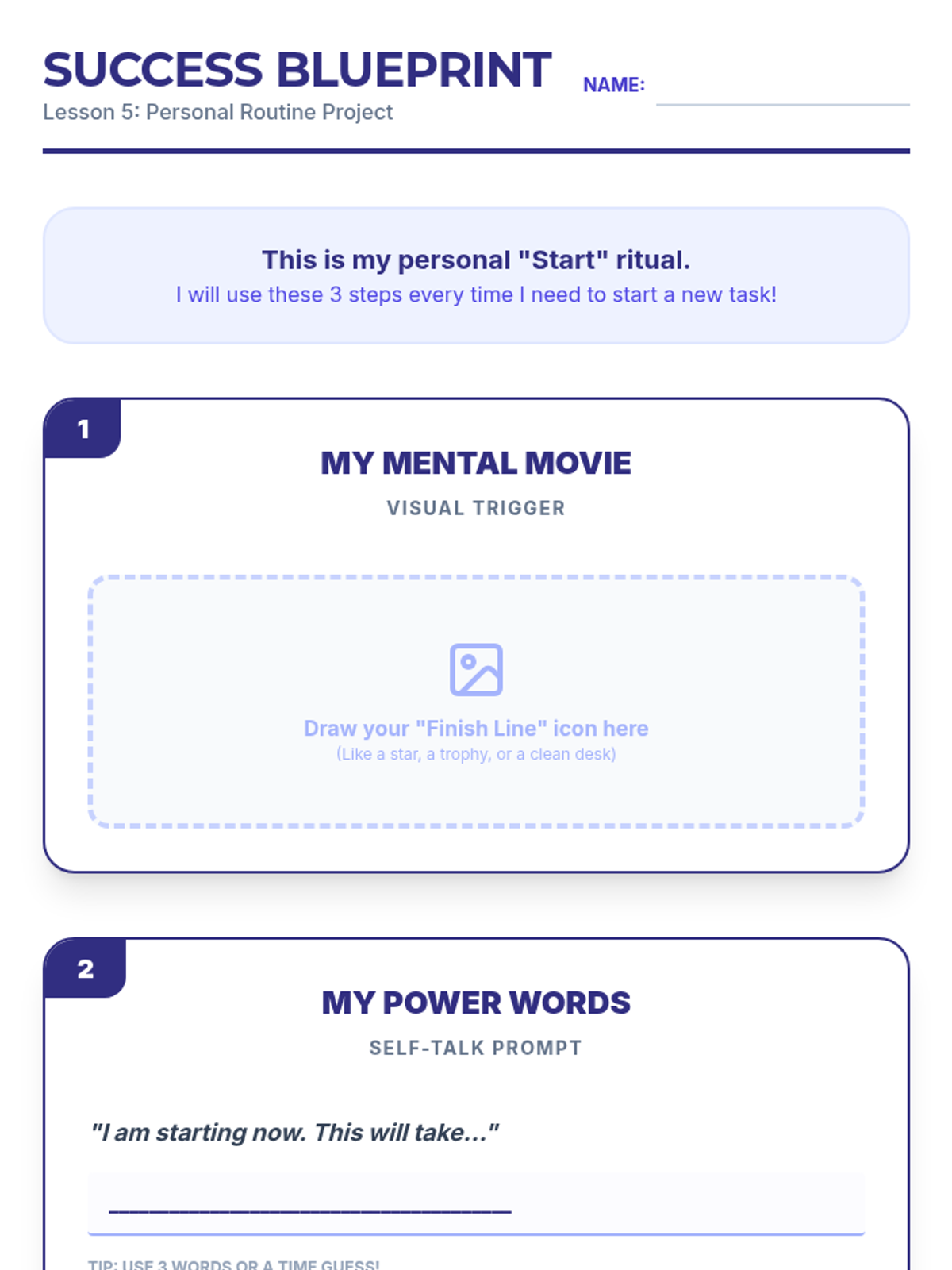
Students create a personal storyboard or checklist that combines a visual icon with a verbal prompt for task initiation.
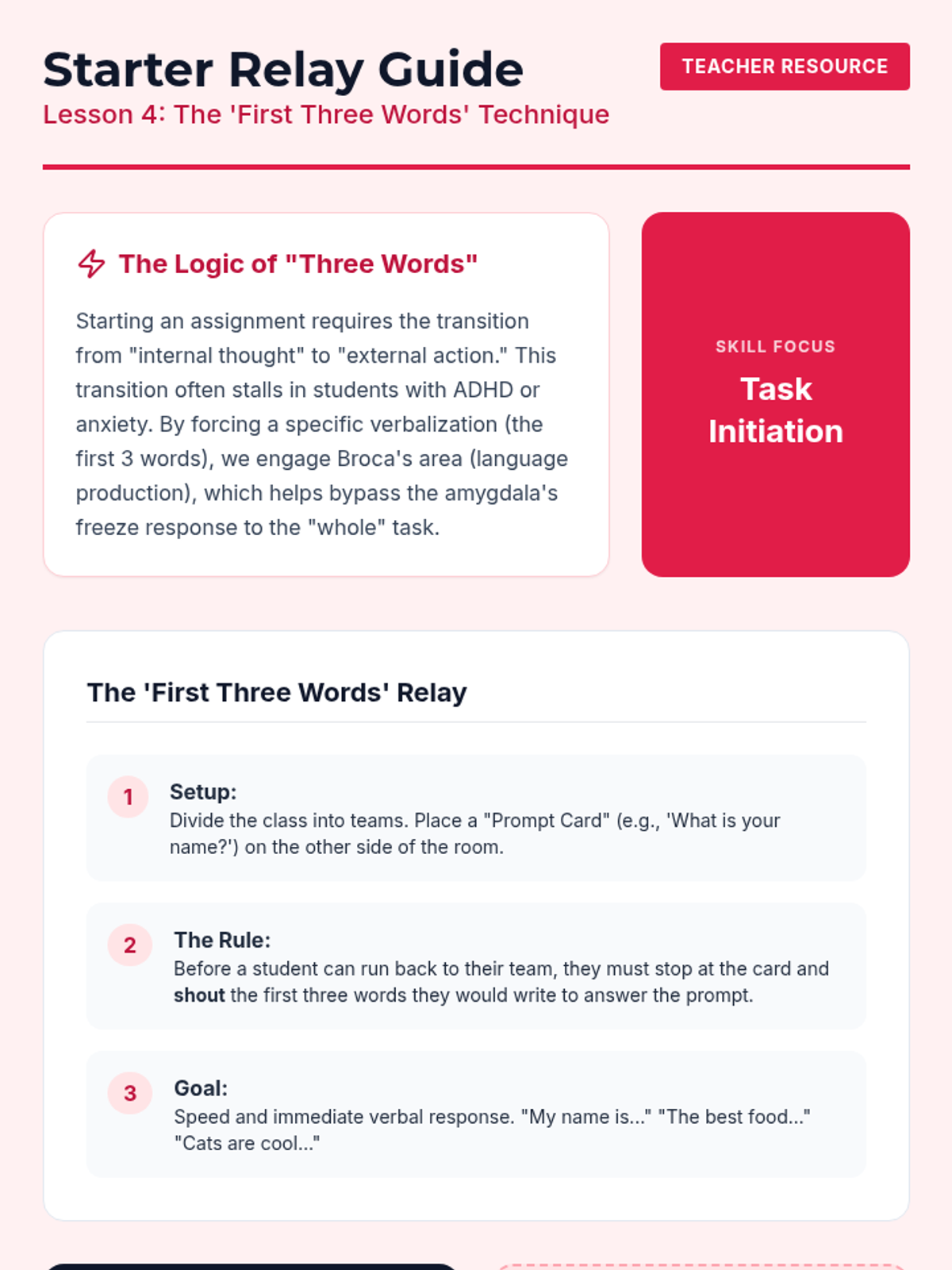
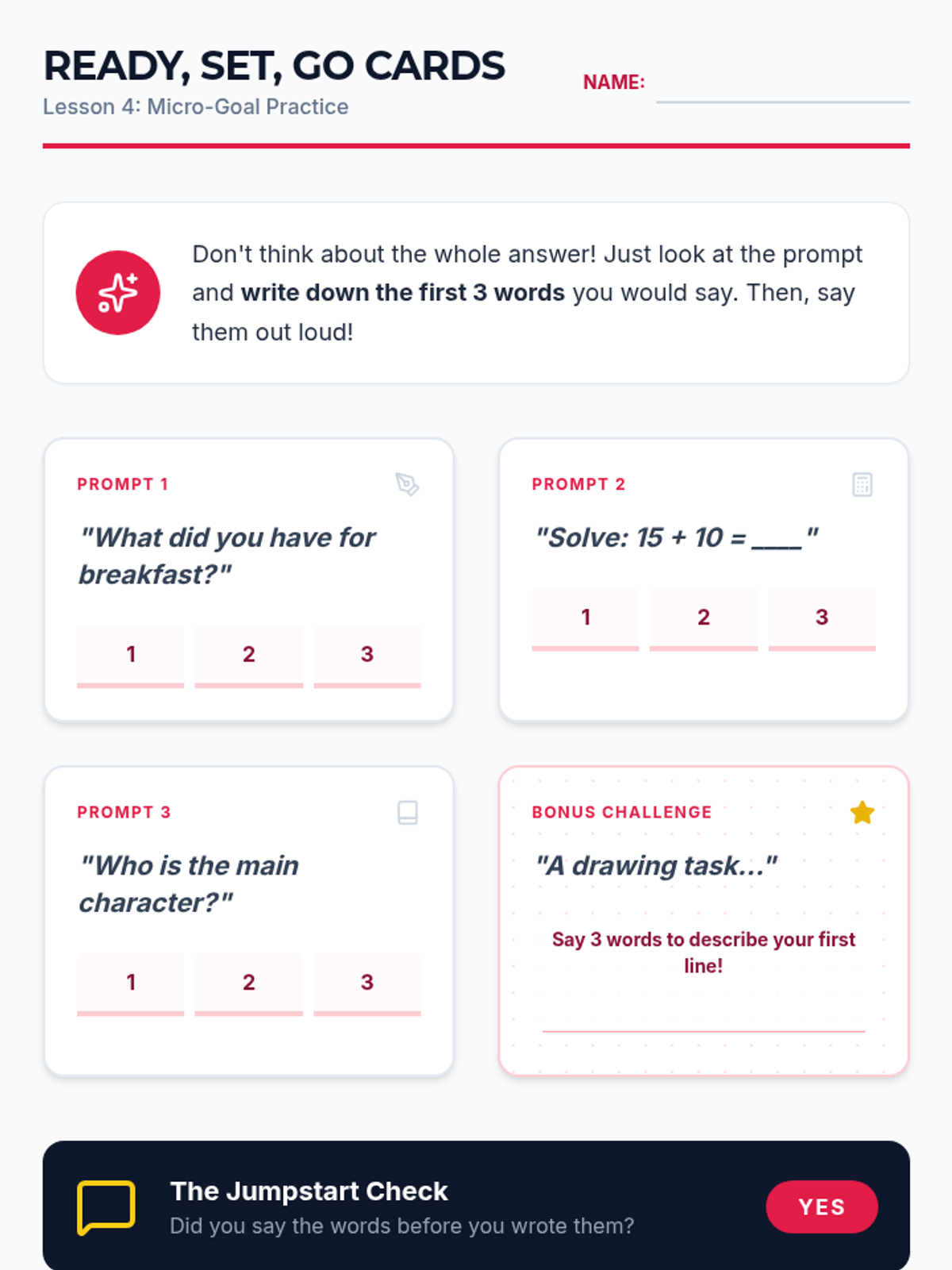
Students learn to identify the first three words of a task to lower the barrier to entry and engage the brain's language center.
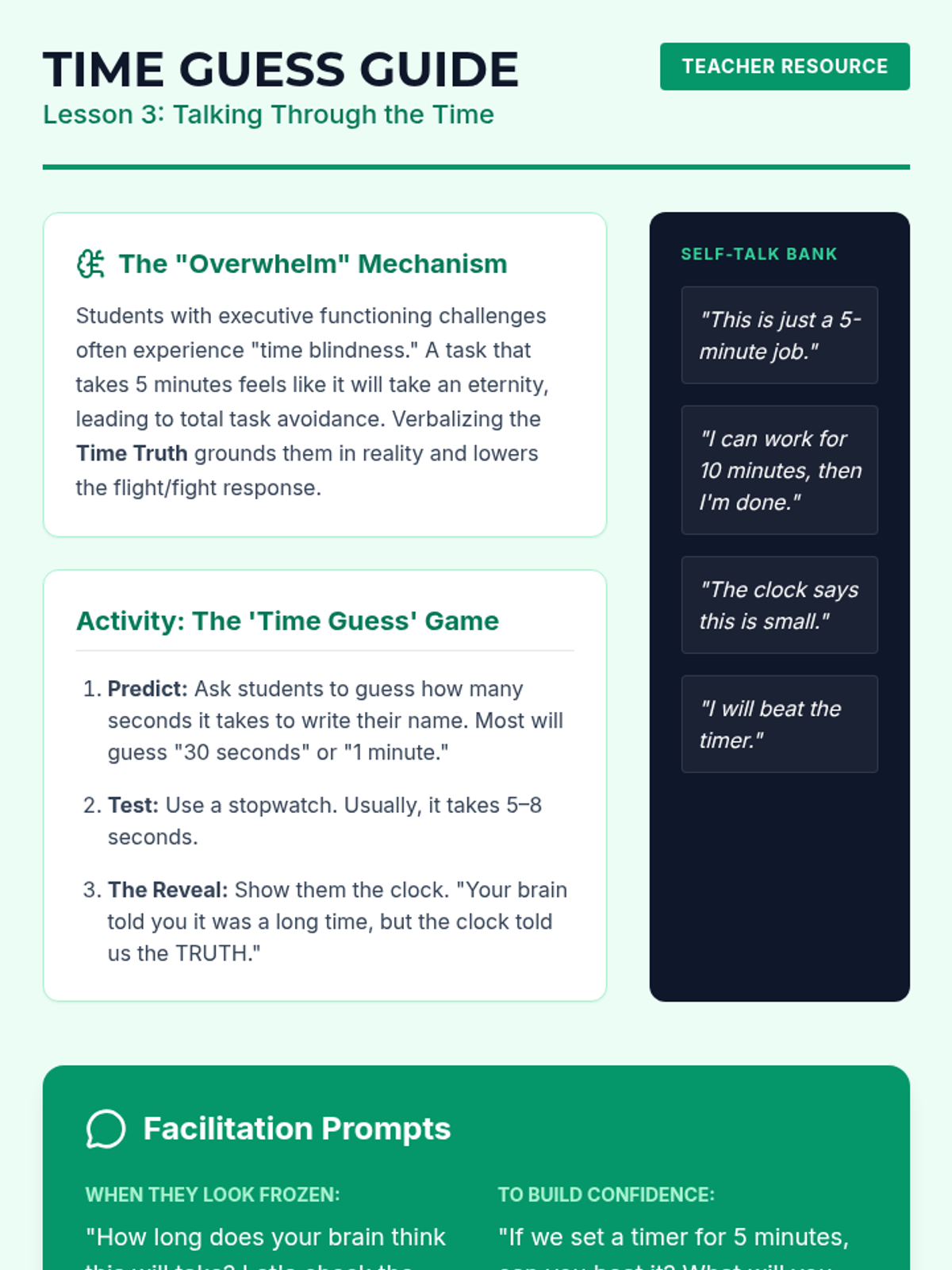
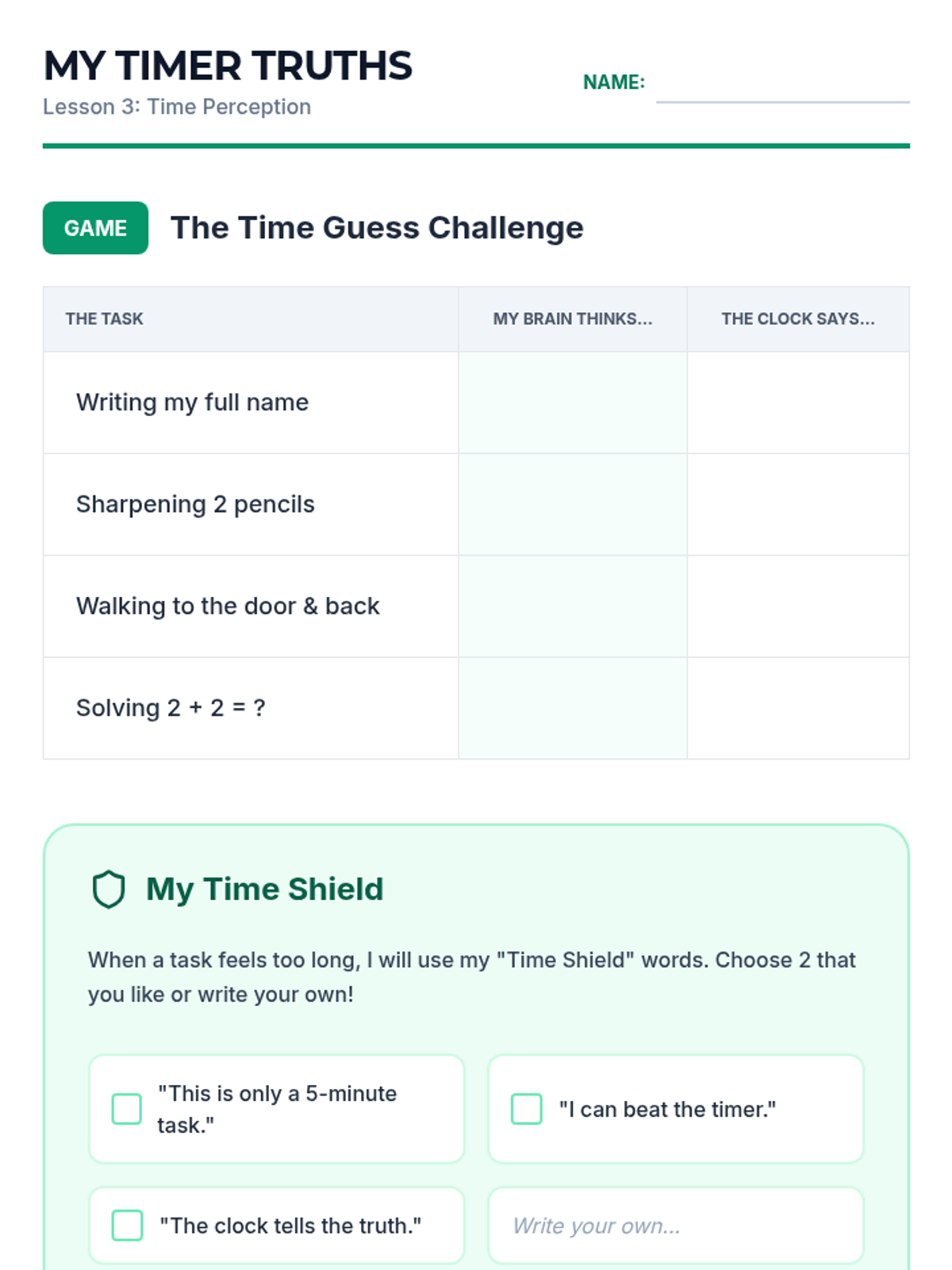
Students learn to estimate time and use verbal reassurance to reduce overwhelm.
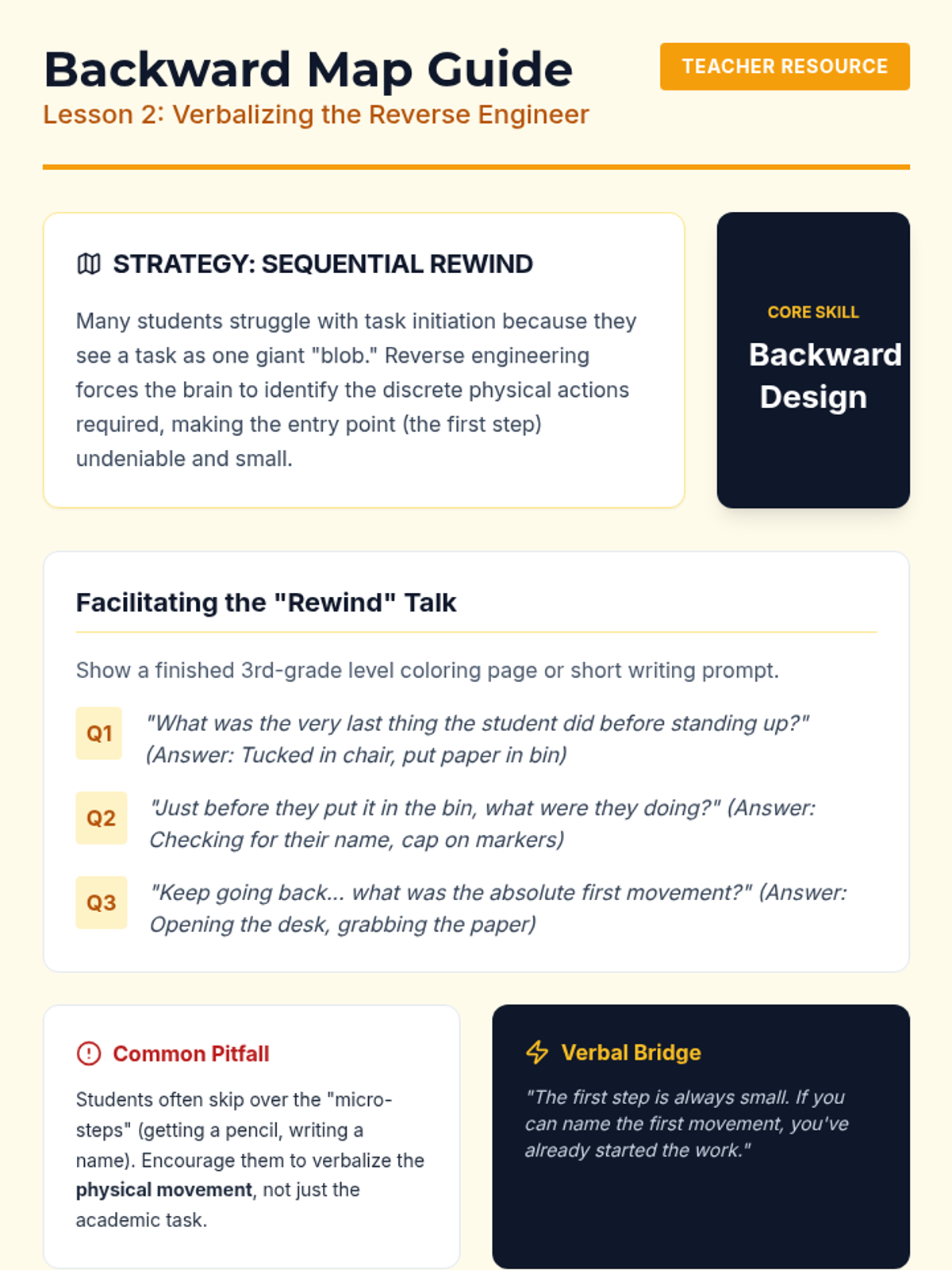
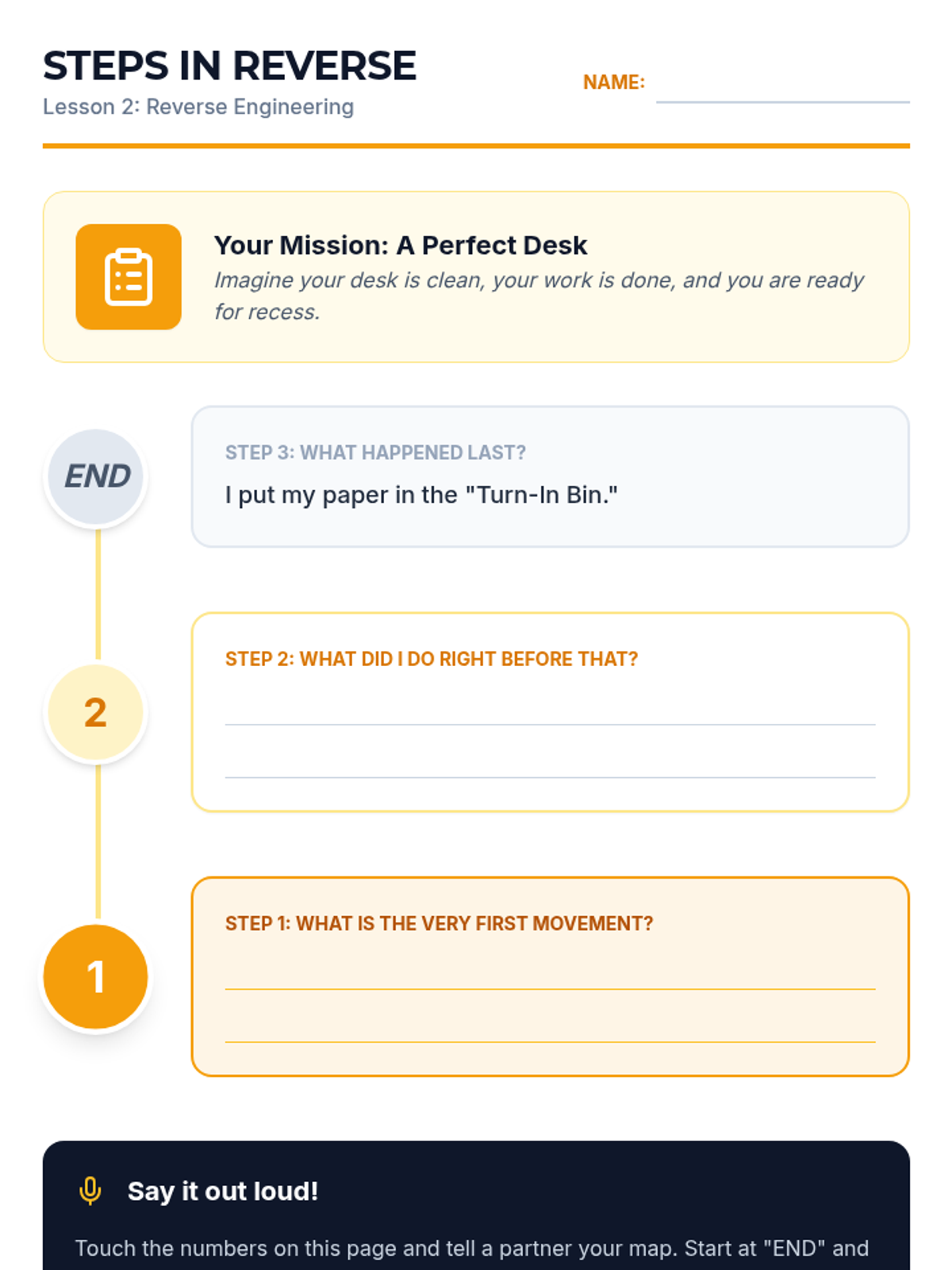
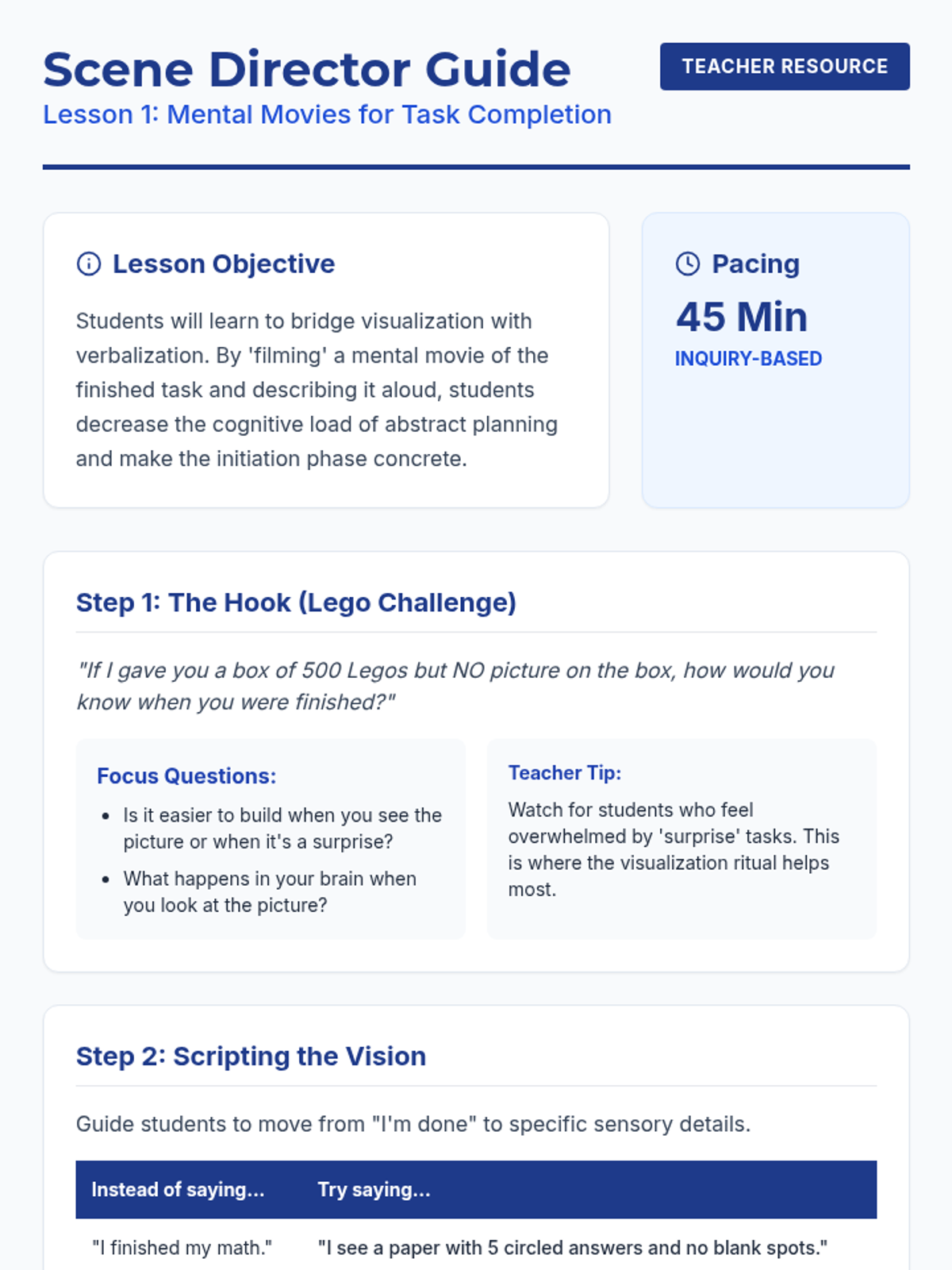
Students talk backward through the steps of a completed sample to make the first step obvious and approachable.
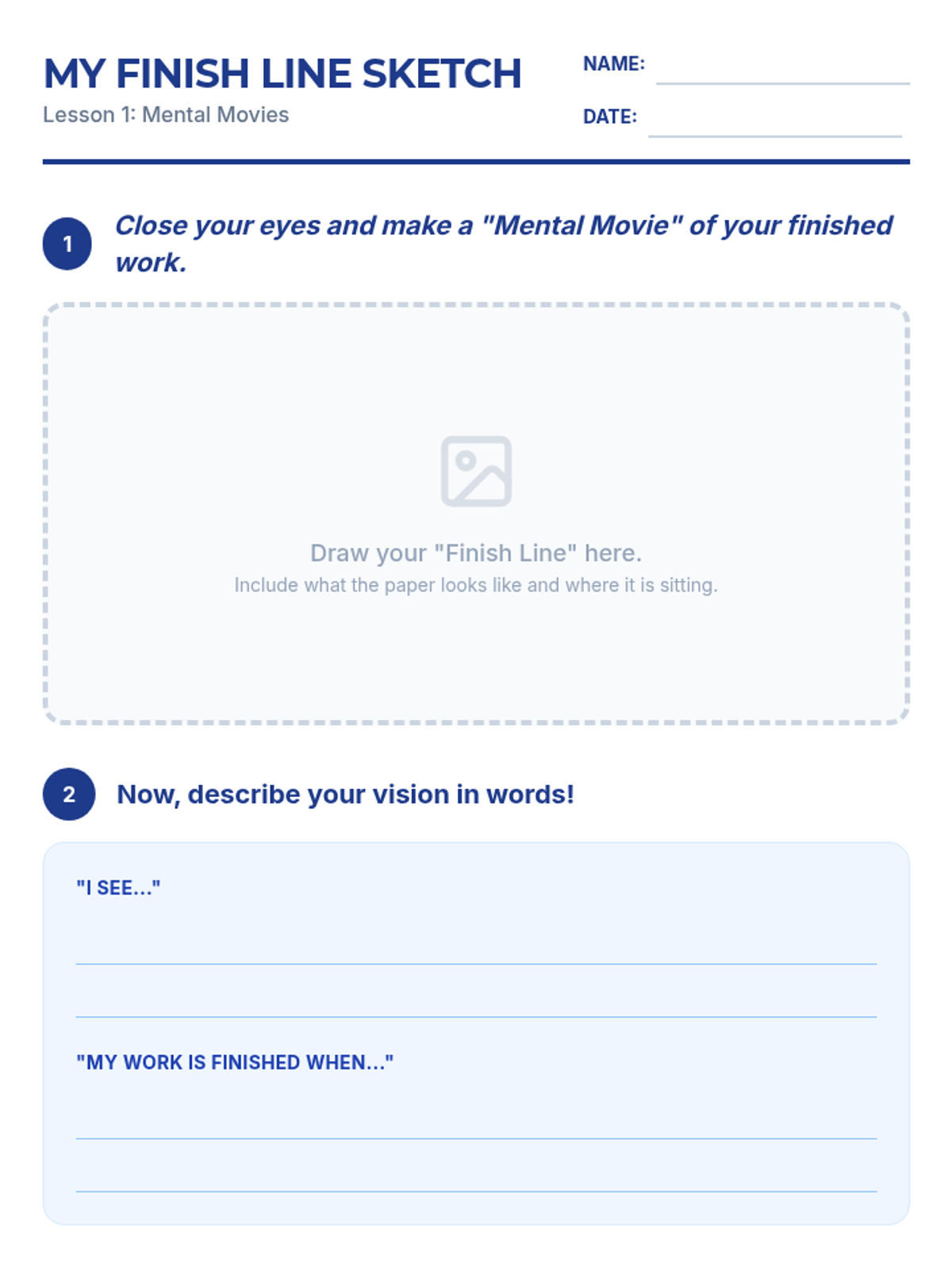
Students practice closing their eyes and creating a detailed mental image of what 'finished' looks like before describing it aloud.
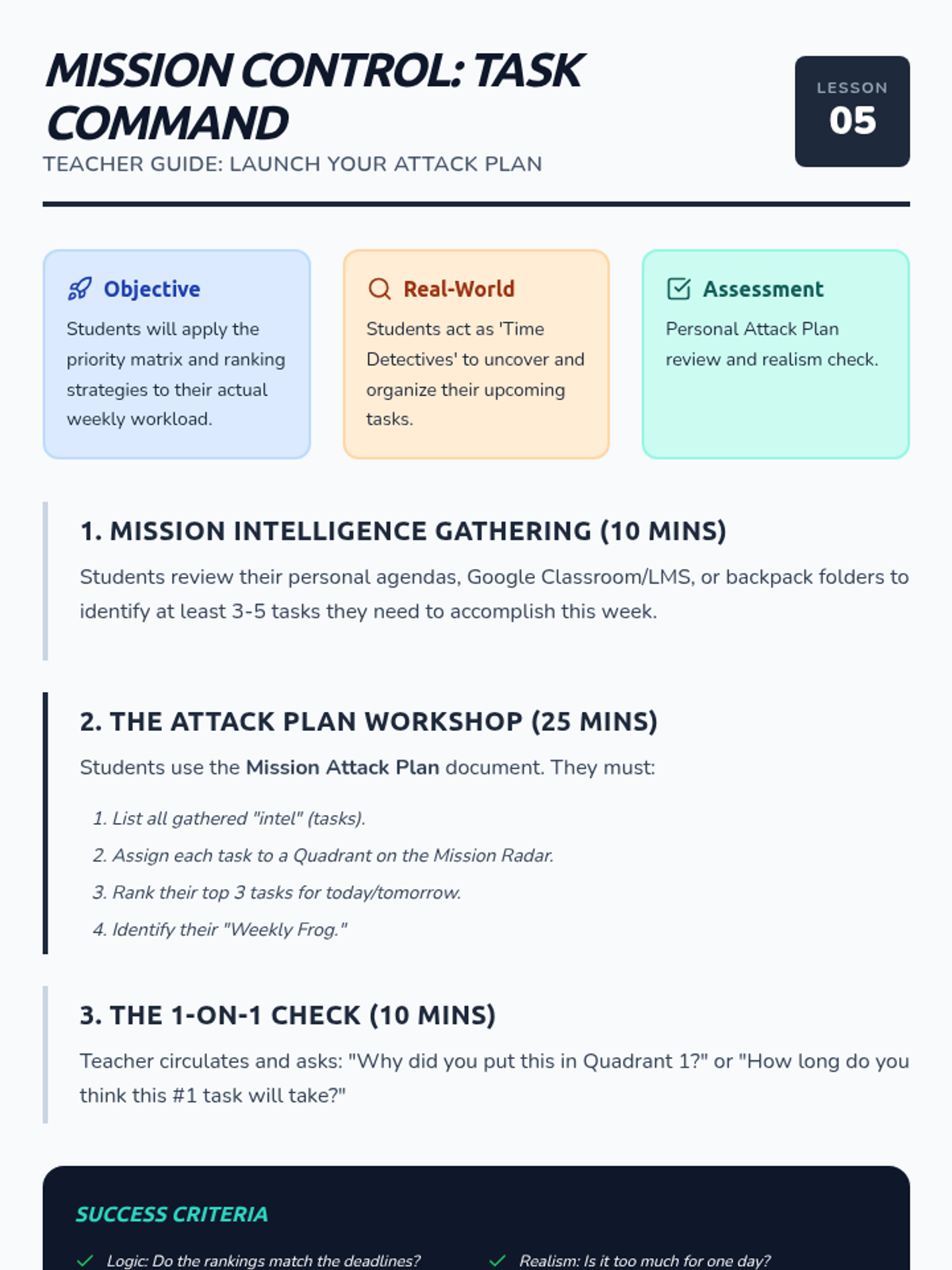
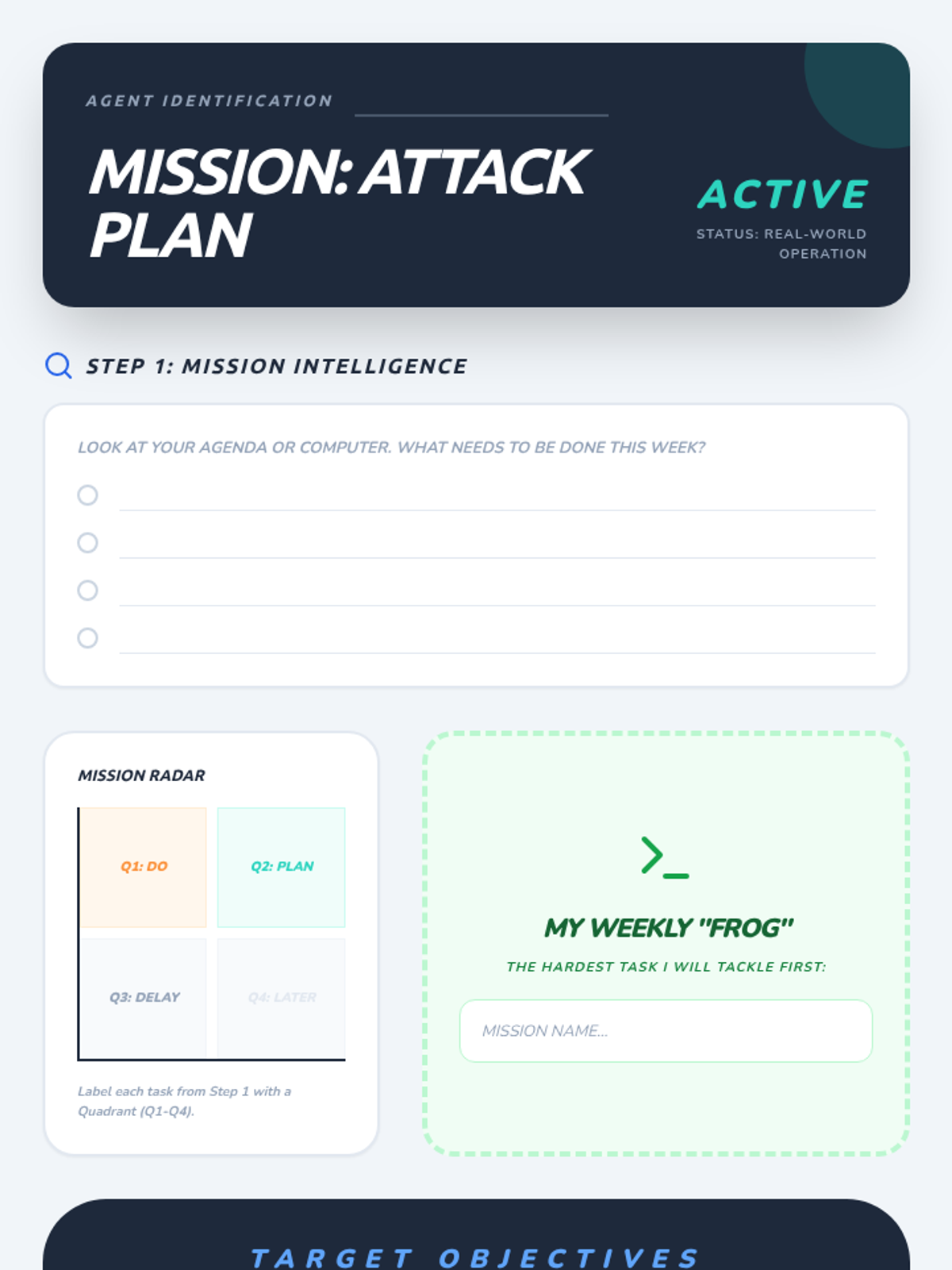
Students apply prioritization strategies to their own upcoming academic tasks to create a personalized weekly 'Attack Plan'.
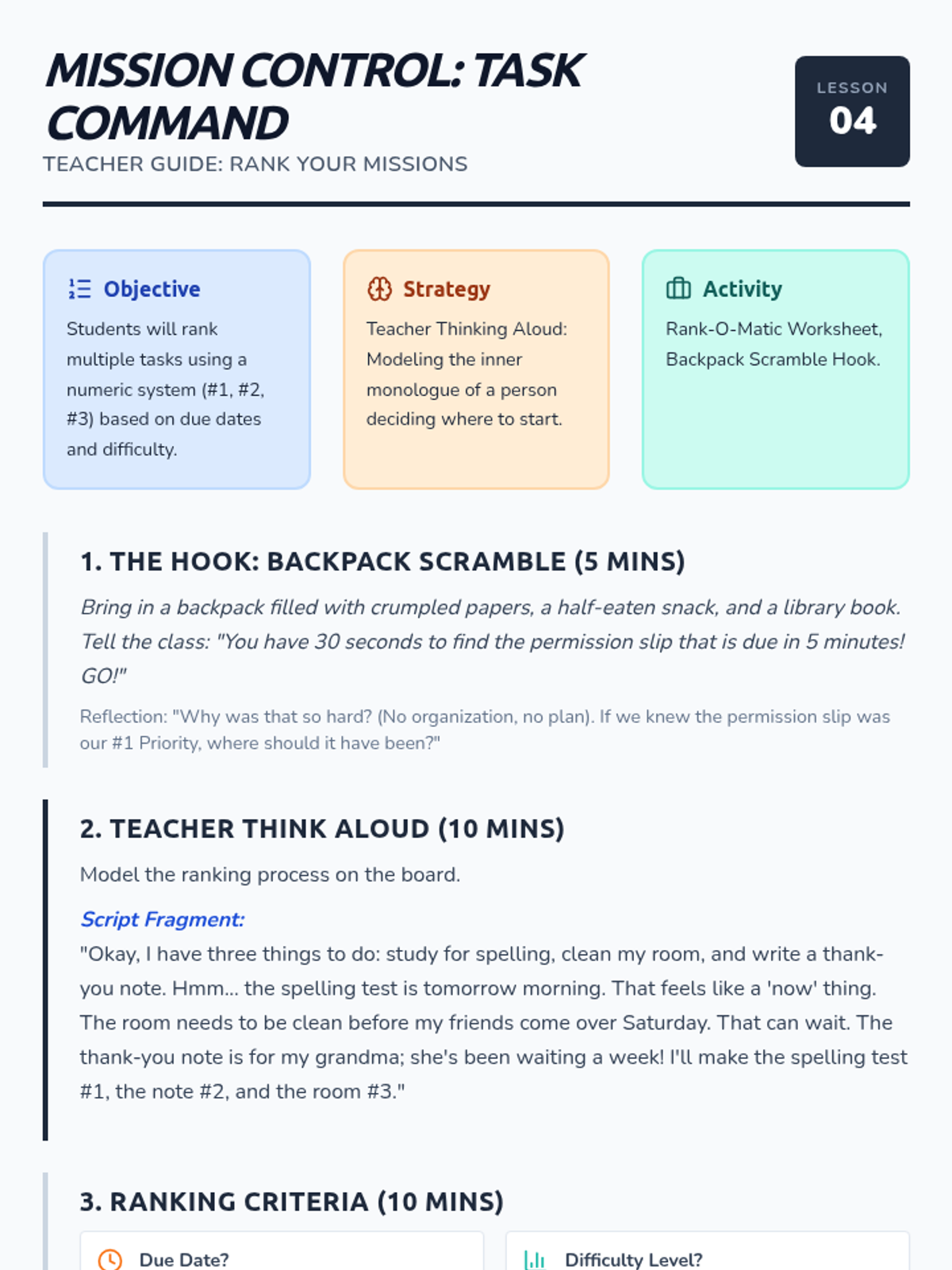
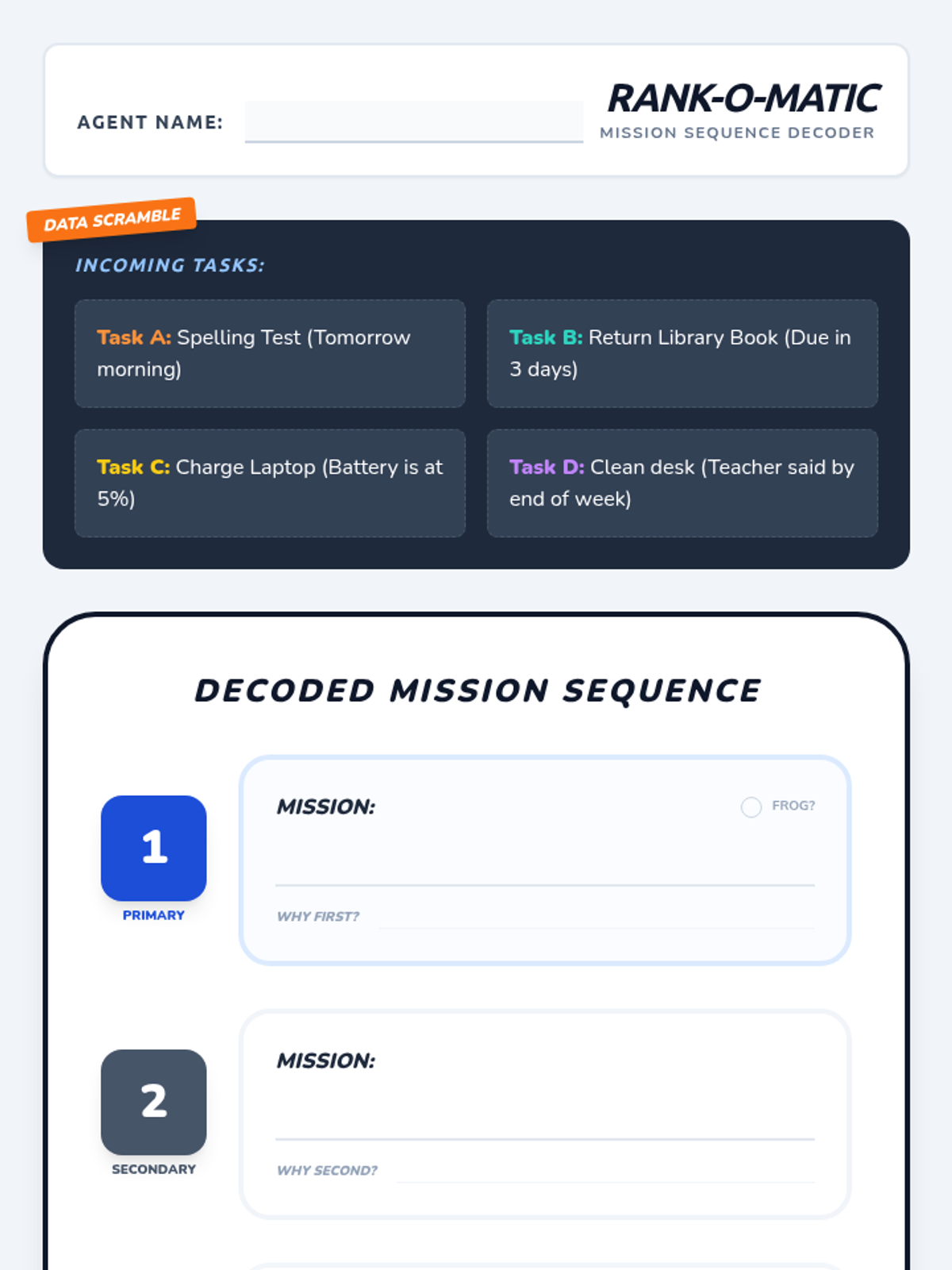
Students practice ranking tasks based on due dates and difficulty using visual ranking templates.
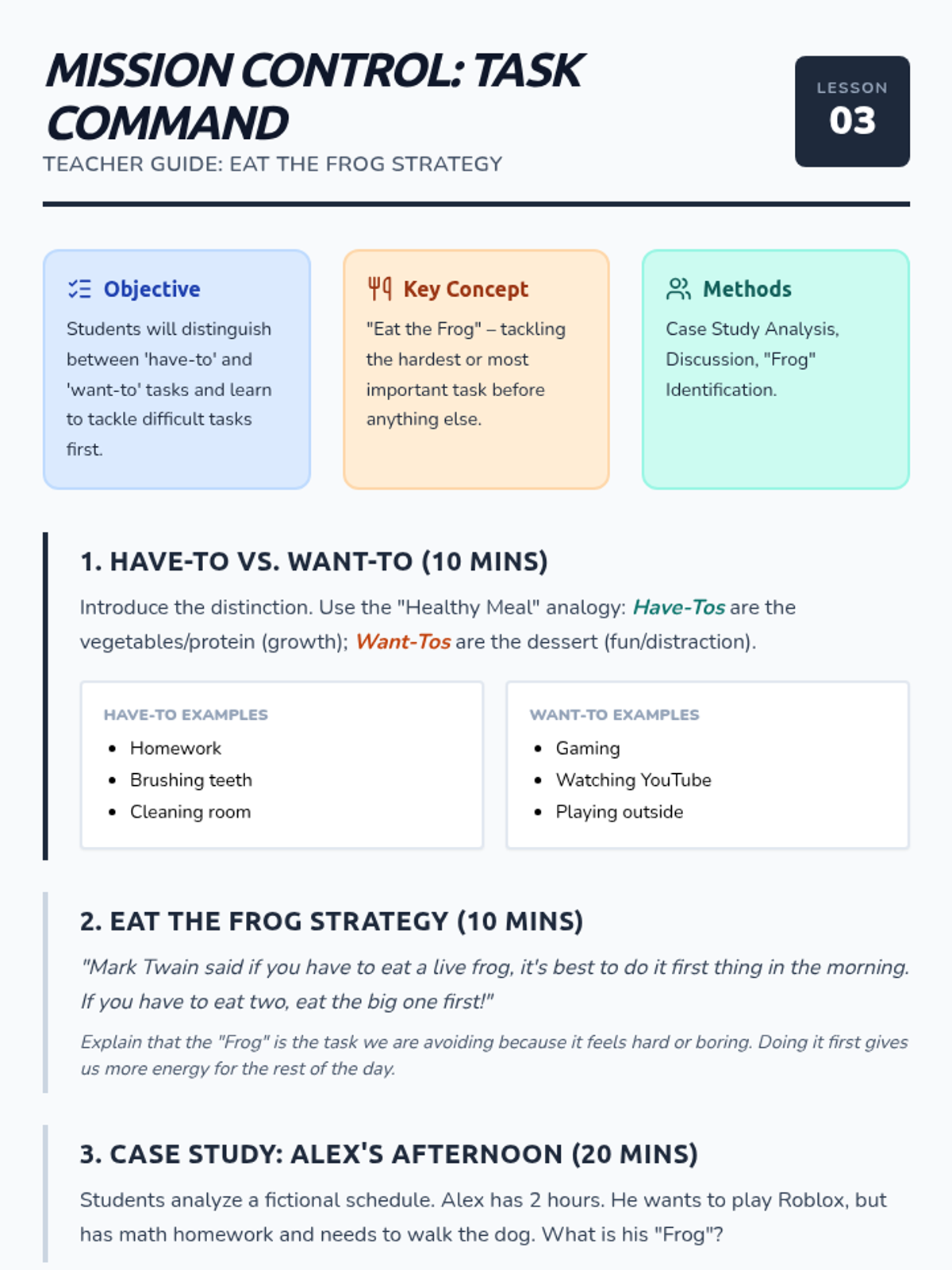
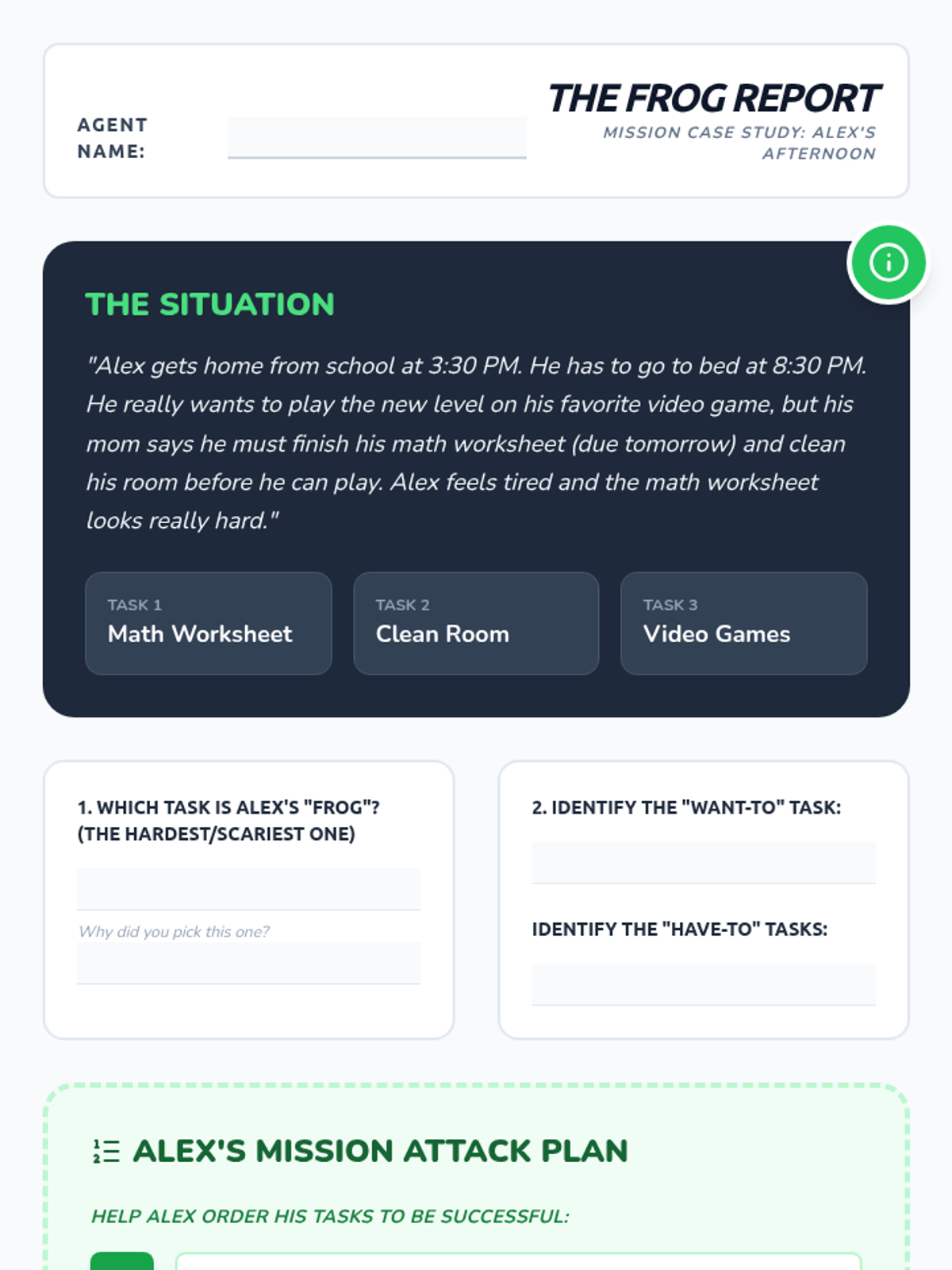
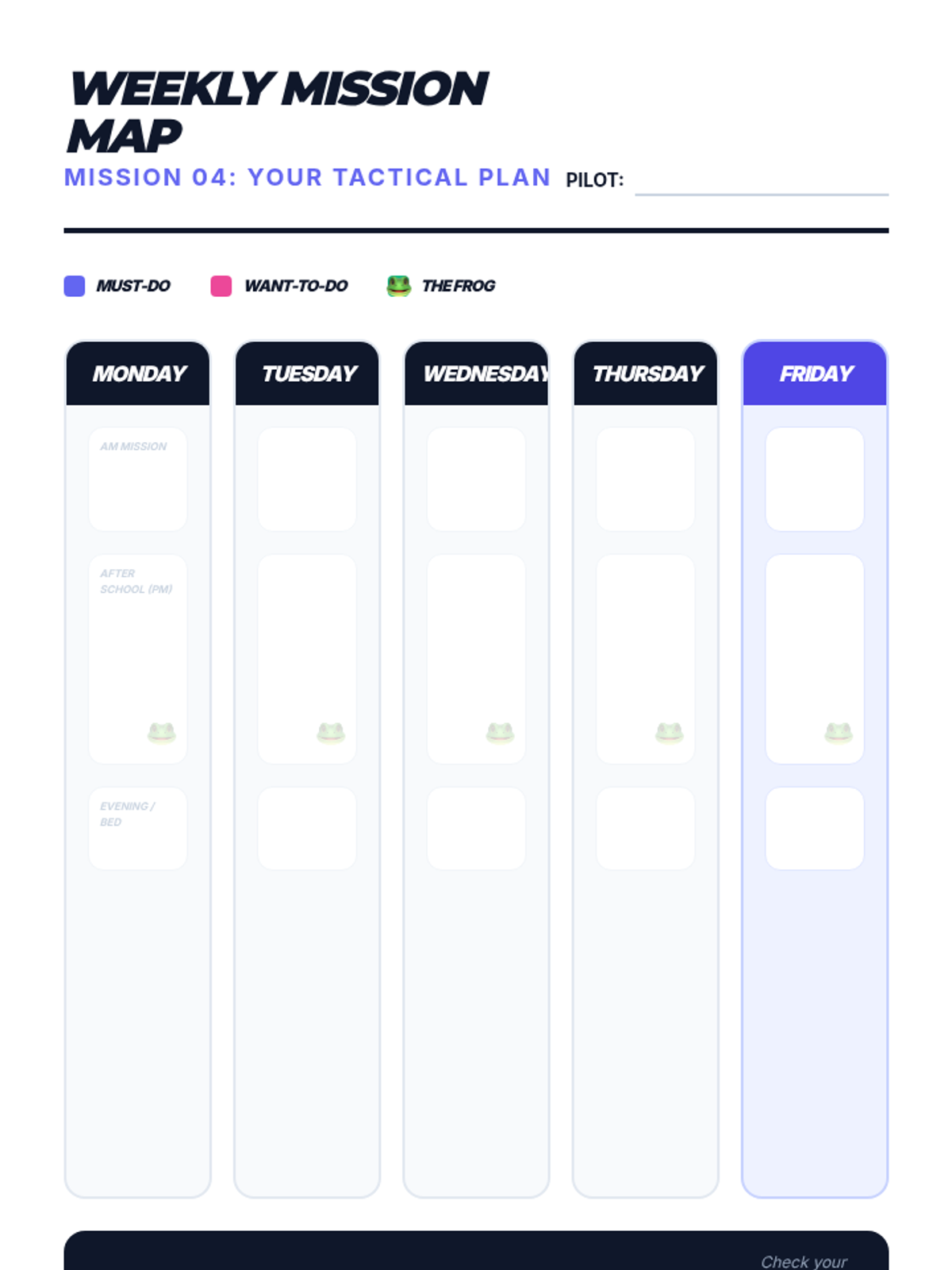
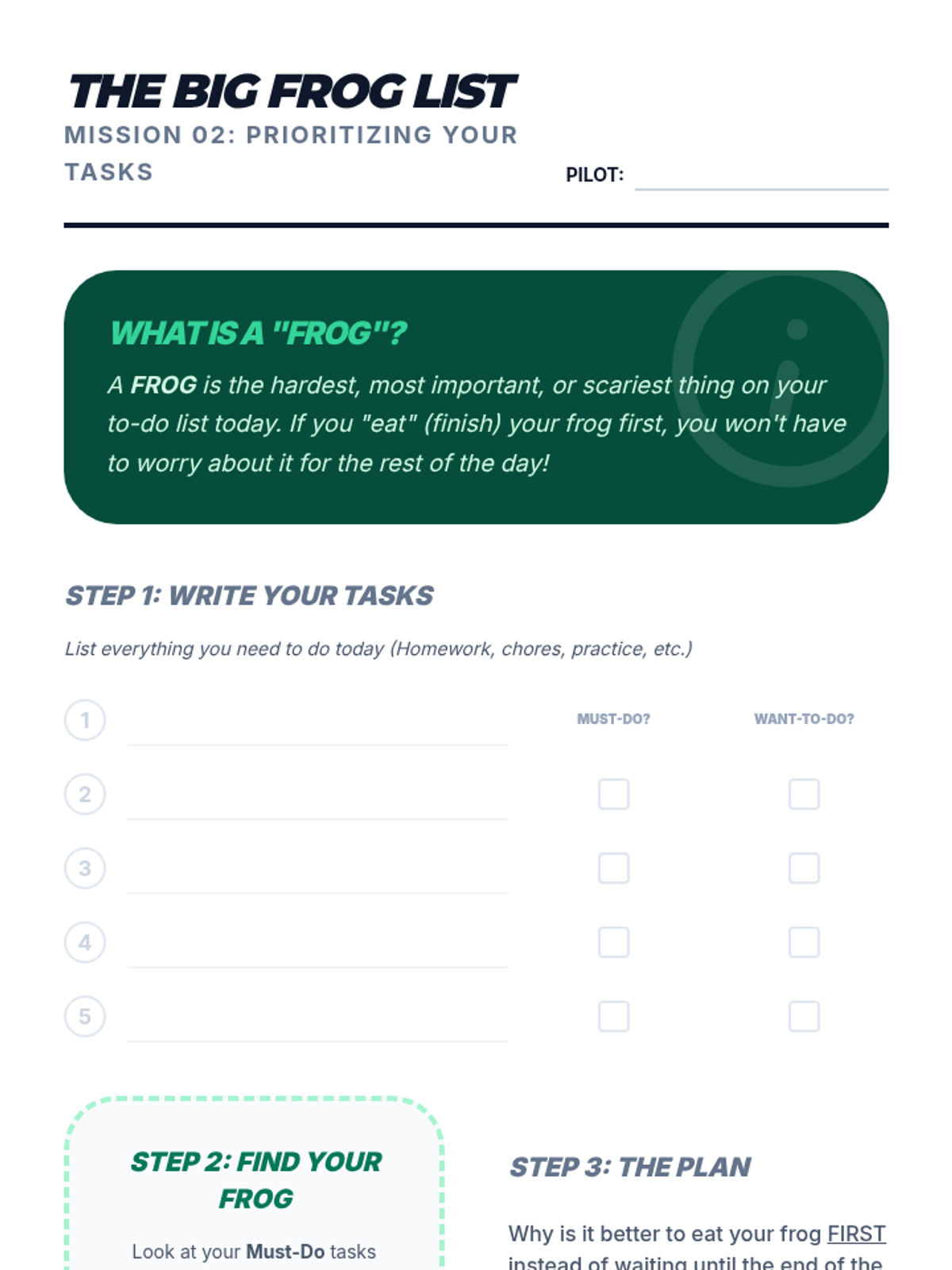
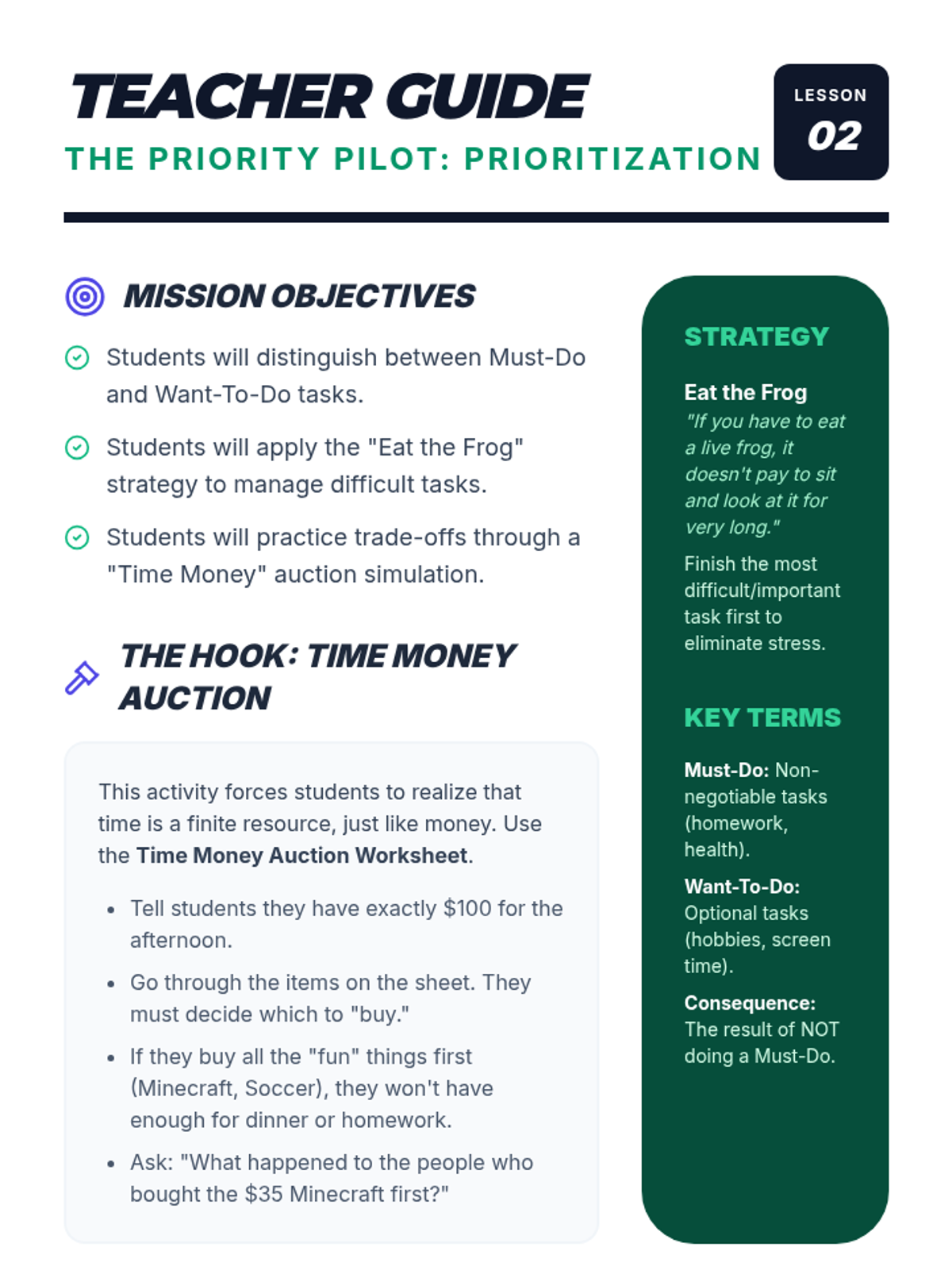
Students distinguish between 'have-to' and 'want-to' tasks, exploring the 'Eat the Frog' strategy to manage time effectively.
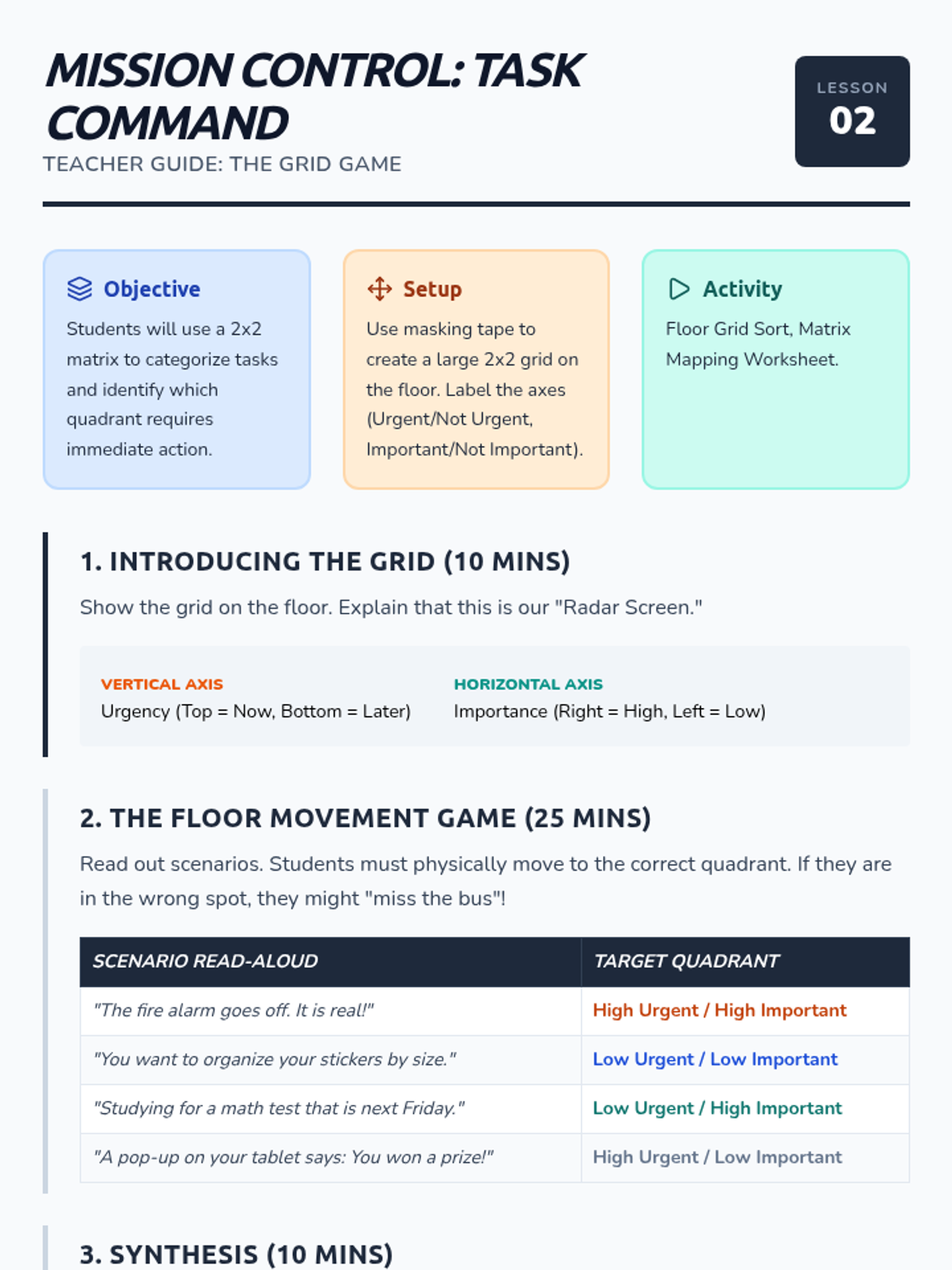
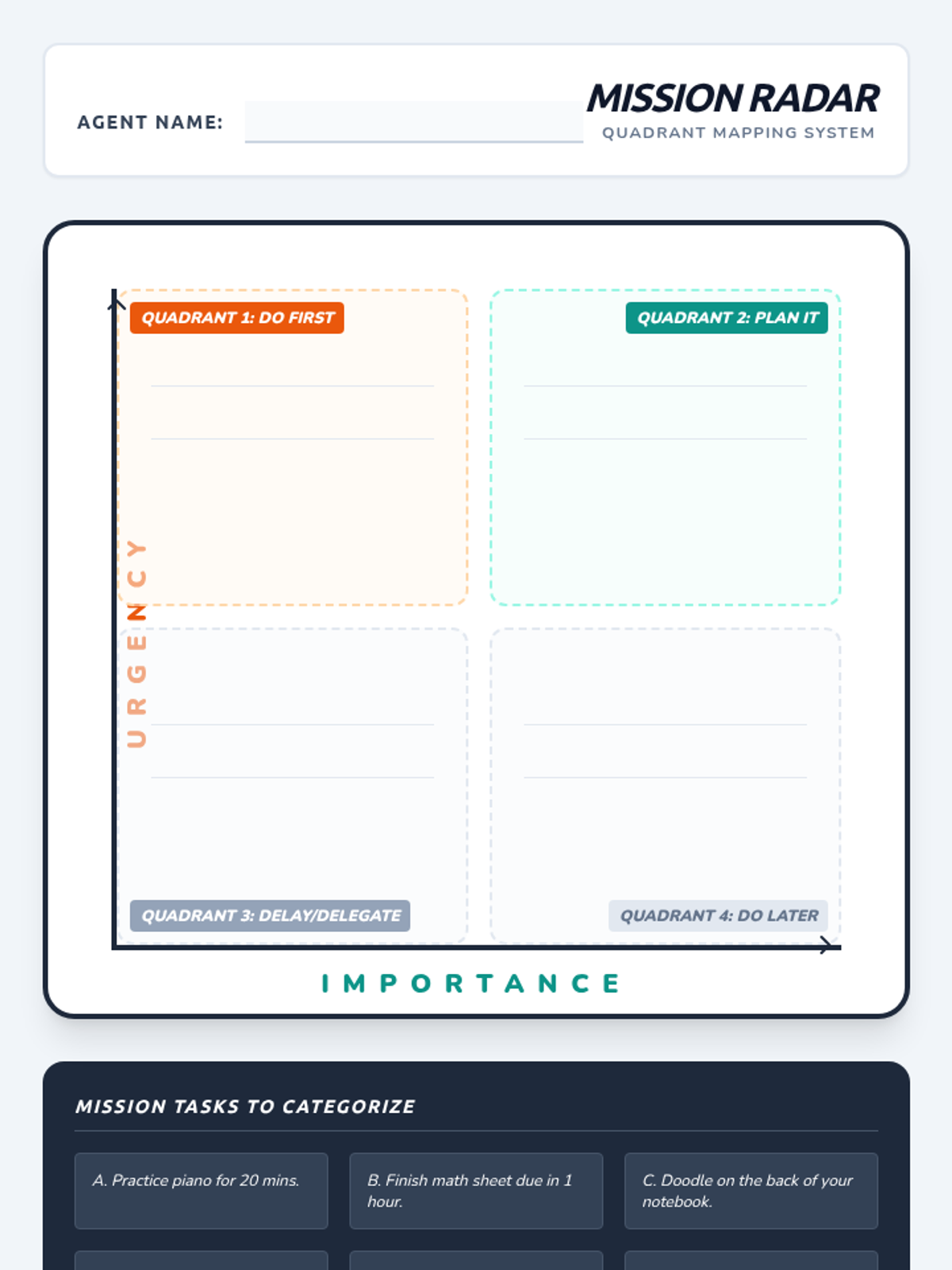
Students use a physical 2x2 grid to categorize tasks by urgency and importance, solidifying the priority matrix concept.
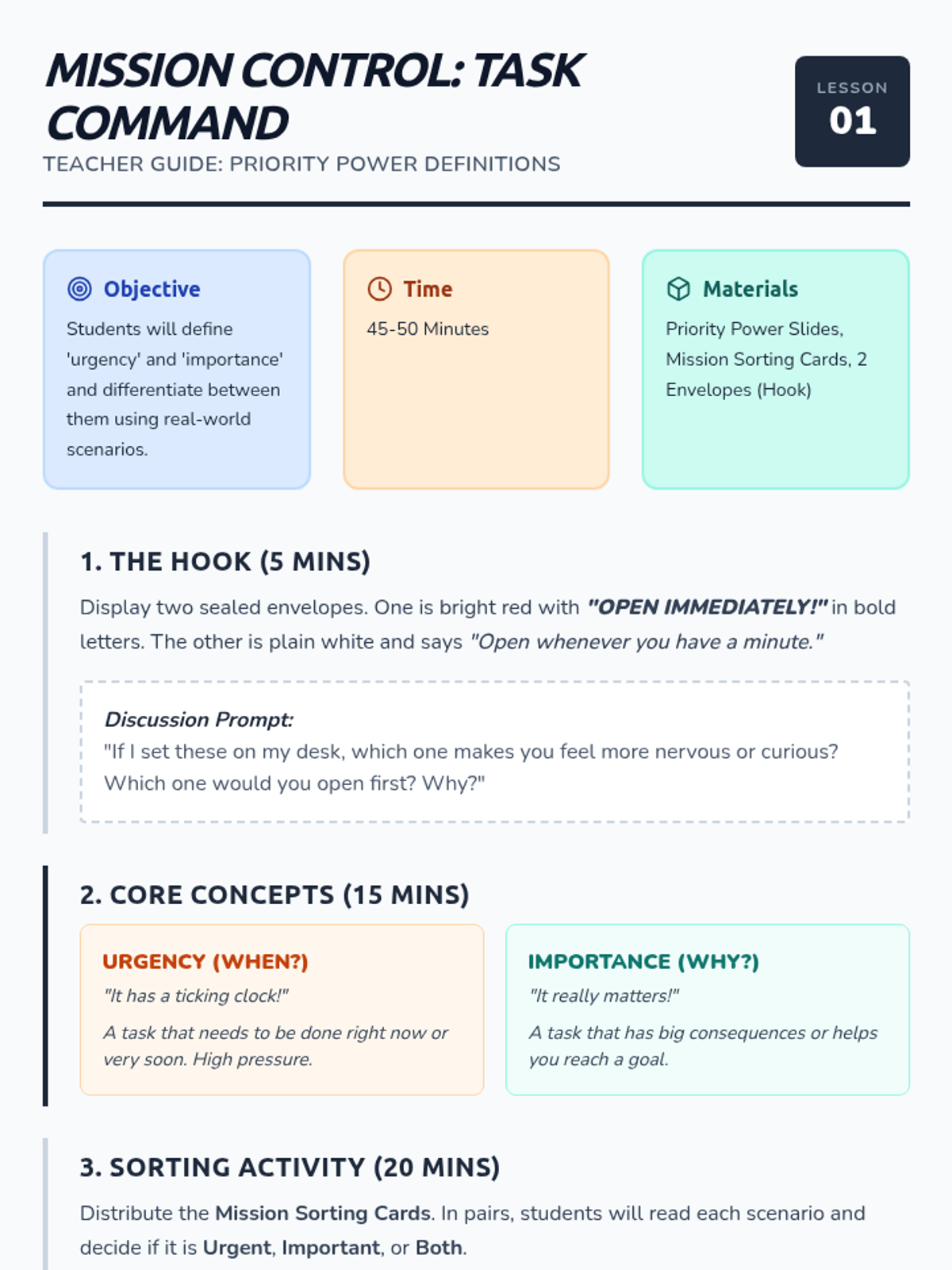
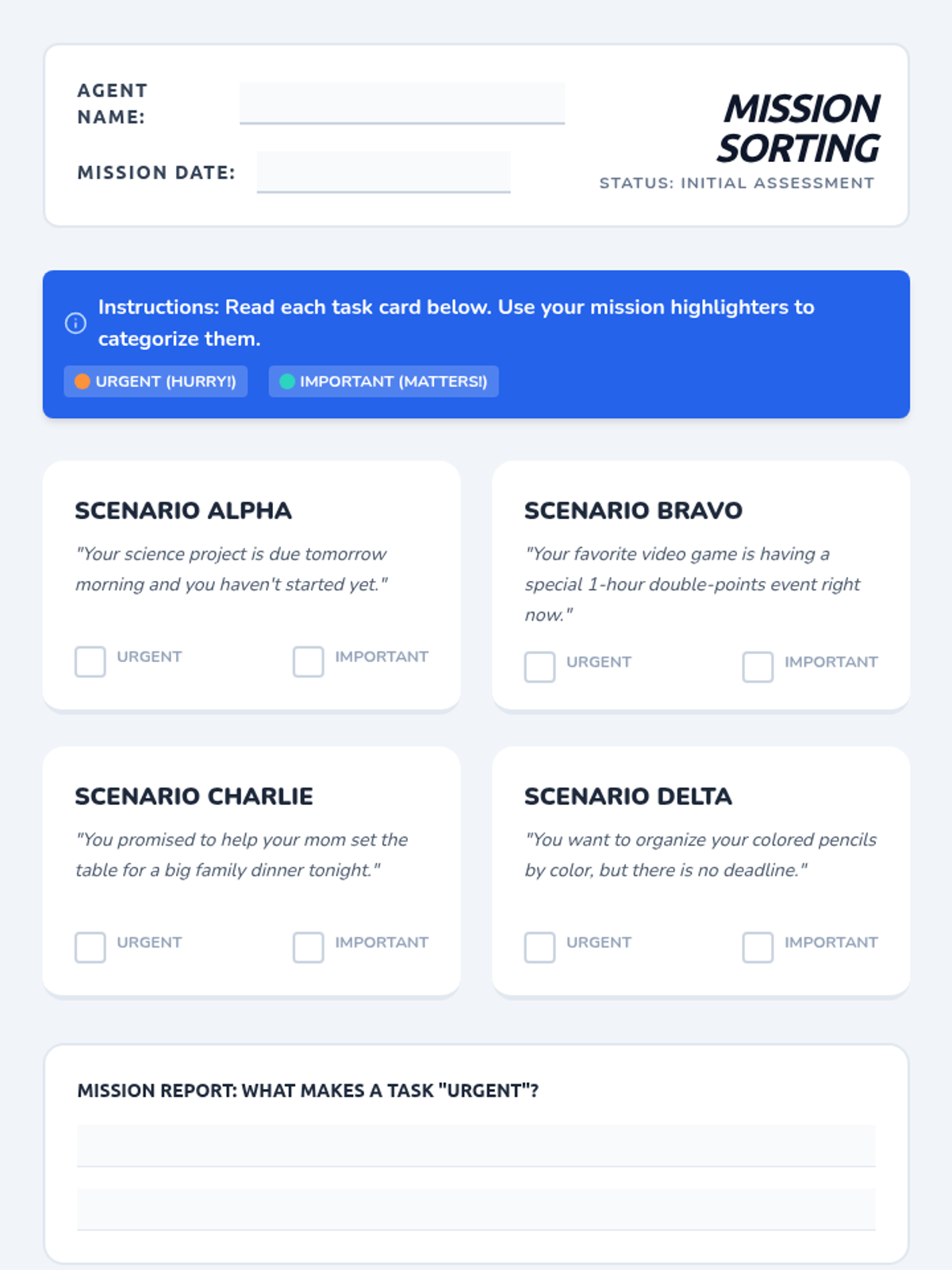
Students define 'urgency' and 'importance' through guided discussion and categorize school and home scenarios.
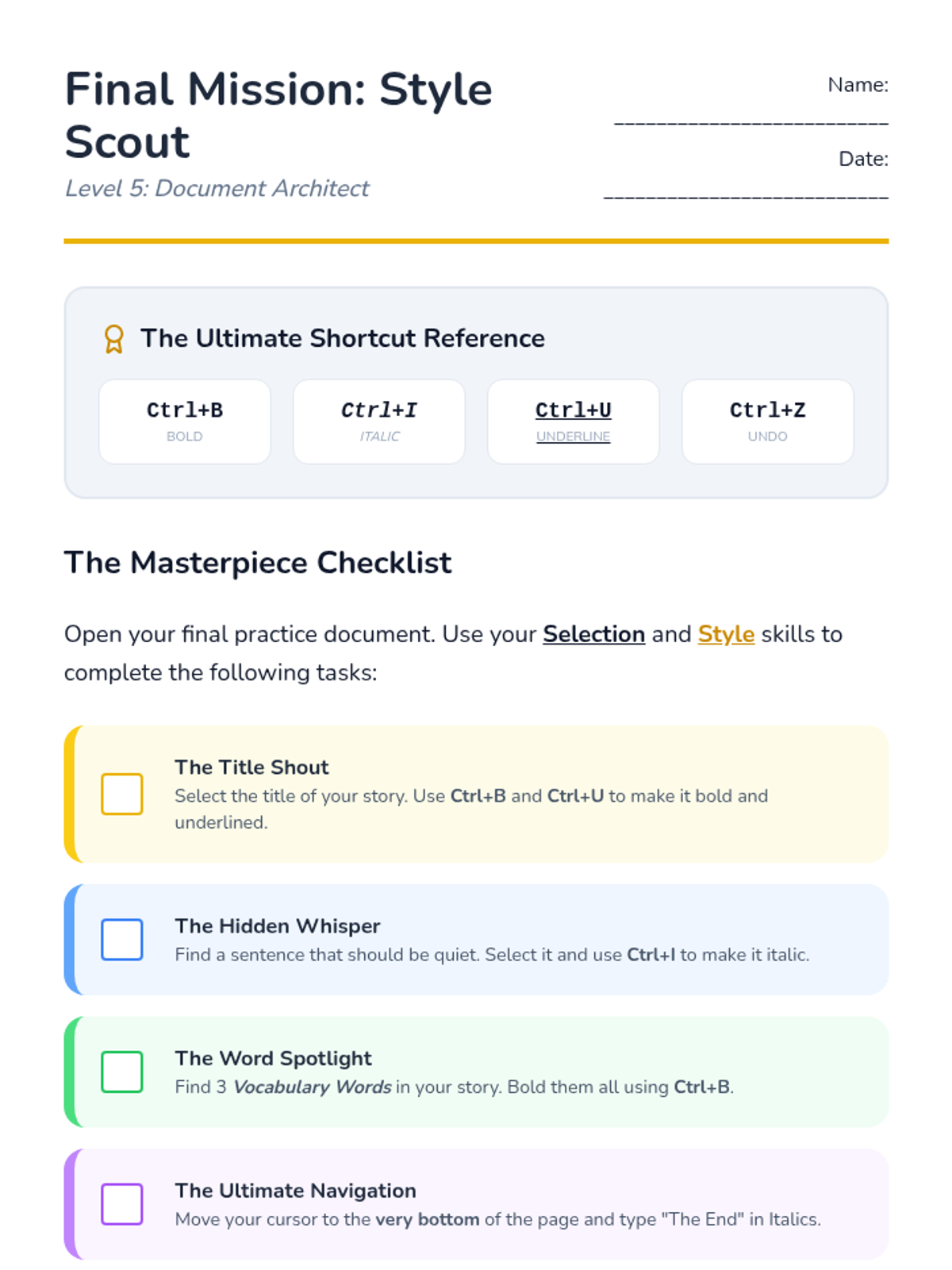
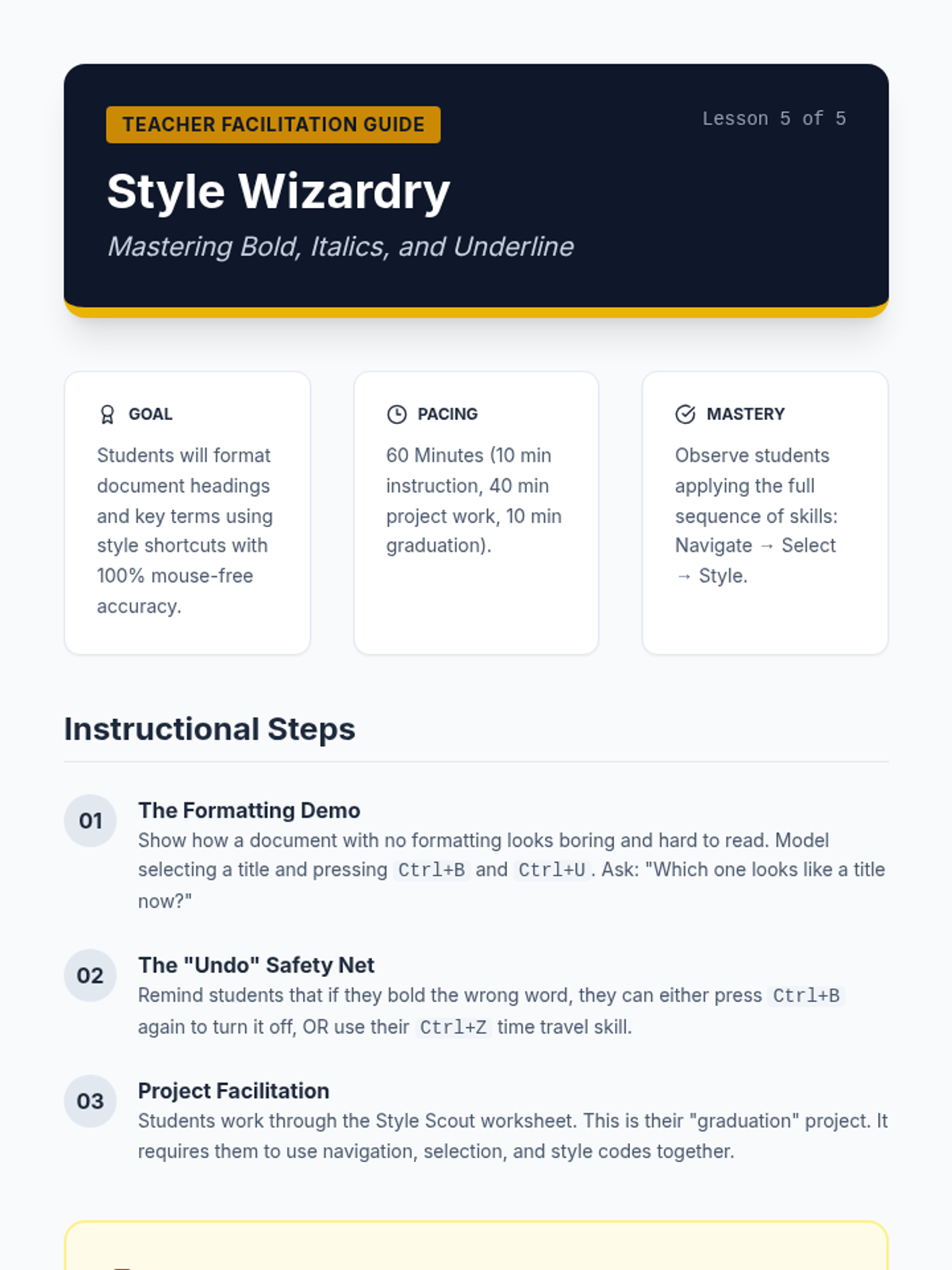
Students apply Bold, Italics, and Underline shortcuts to emphasize and design their documents.
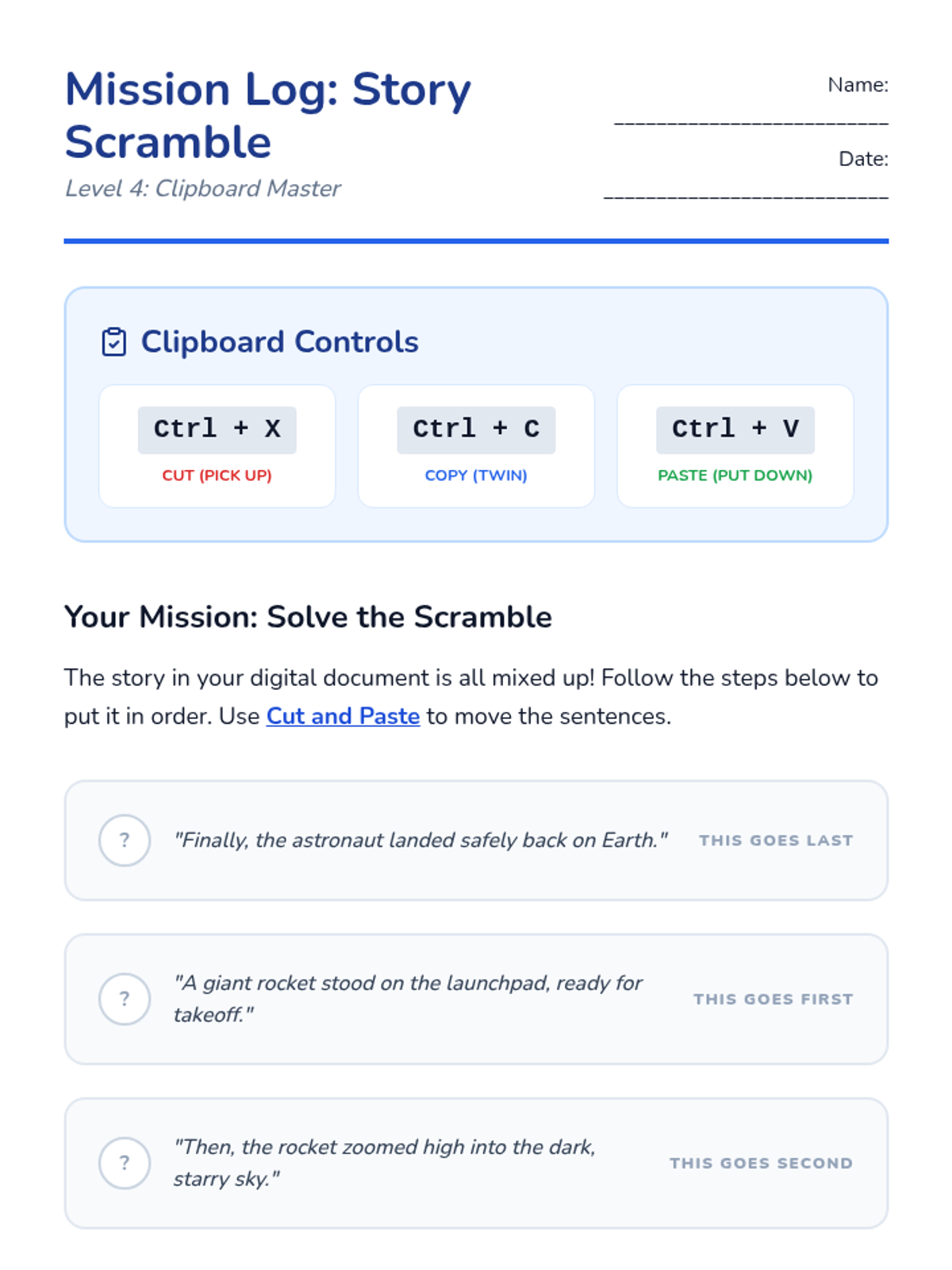
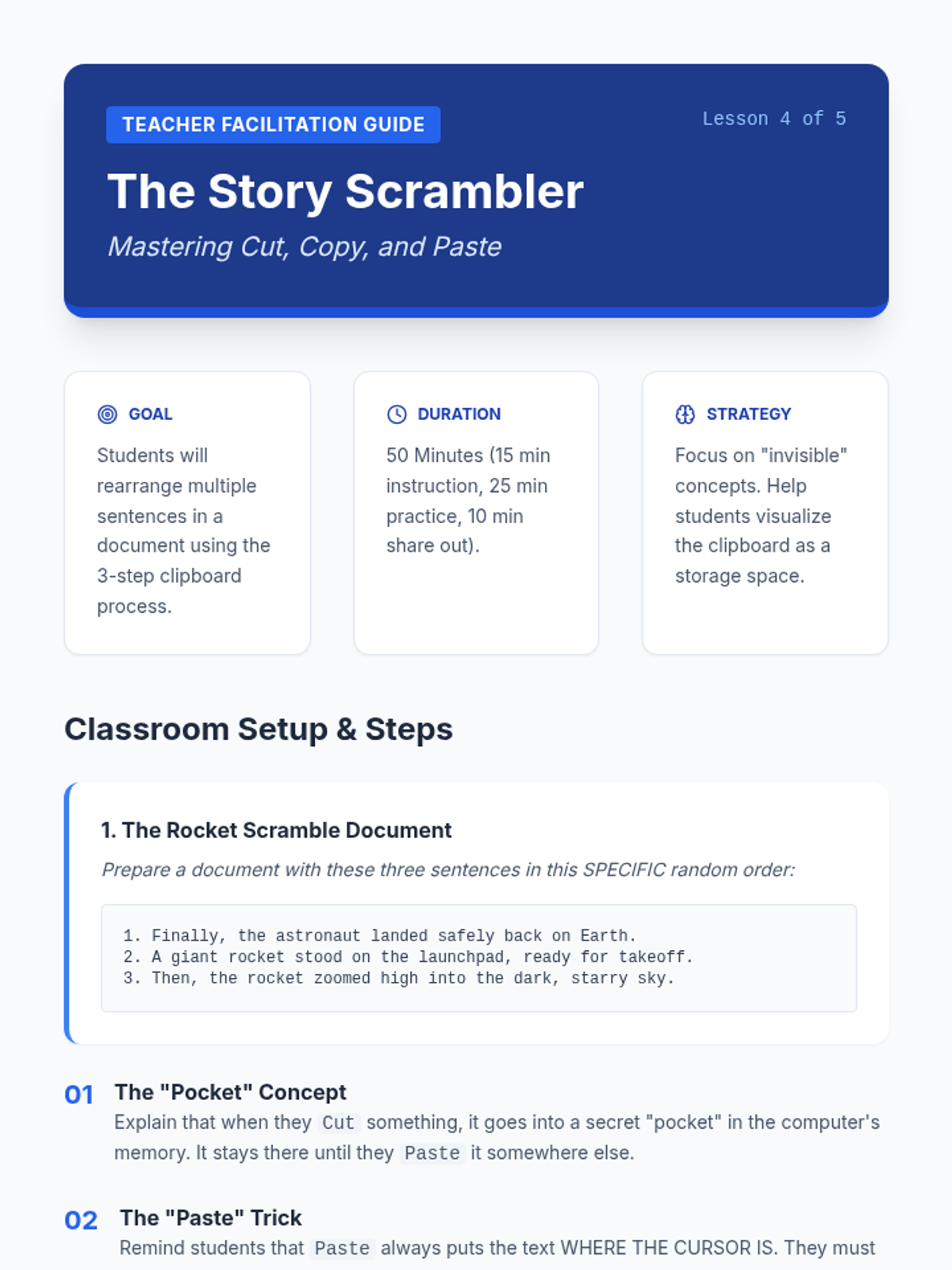
Covers essential clipboard shortcuts (Ctrl+C, Ctrl+X, Ctrl+V) to rearrange and organize text efficiently.
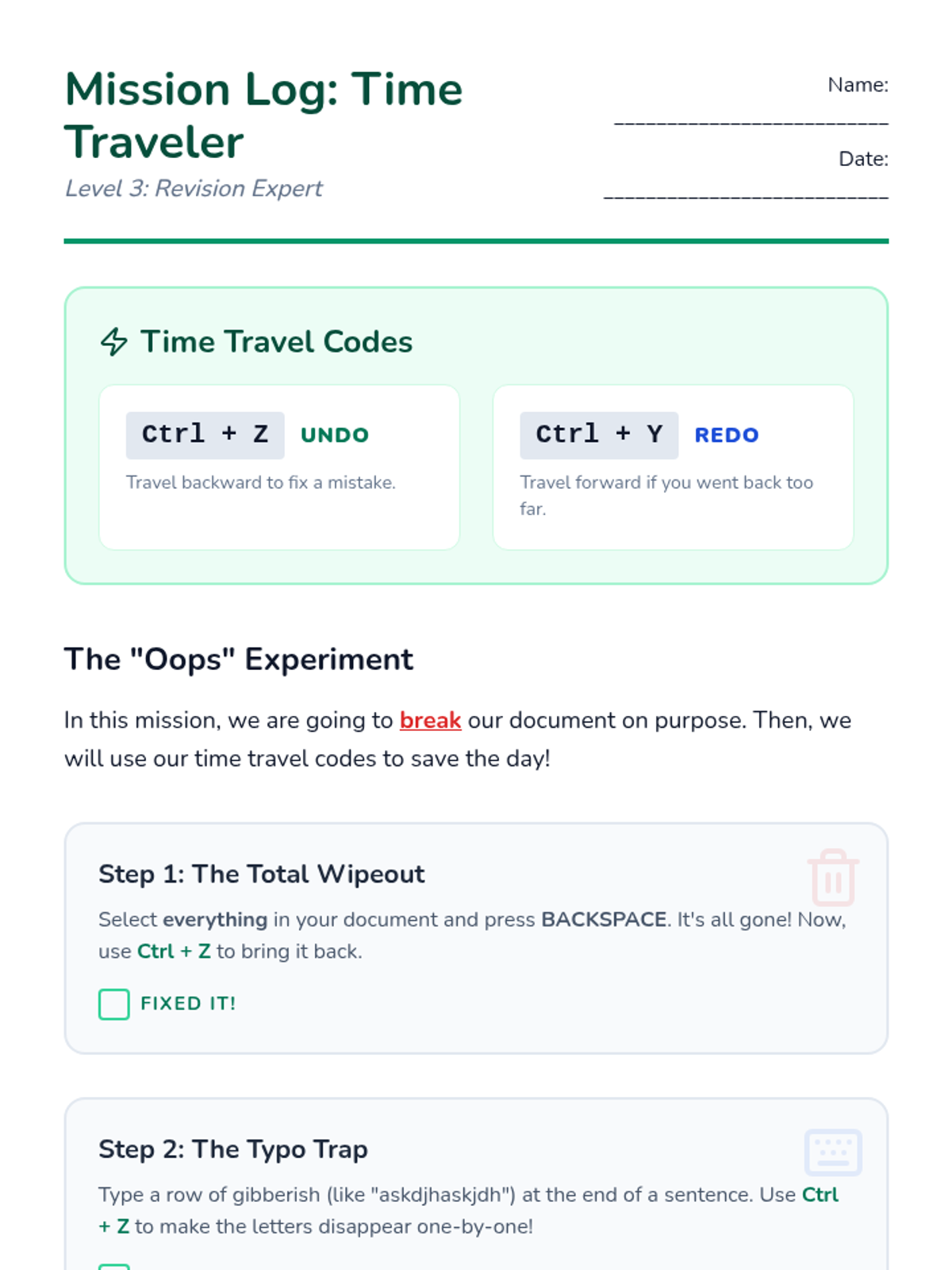
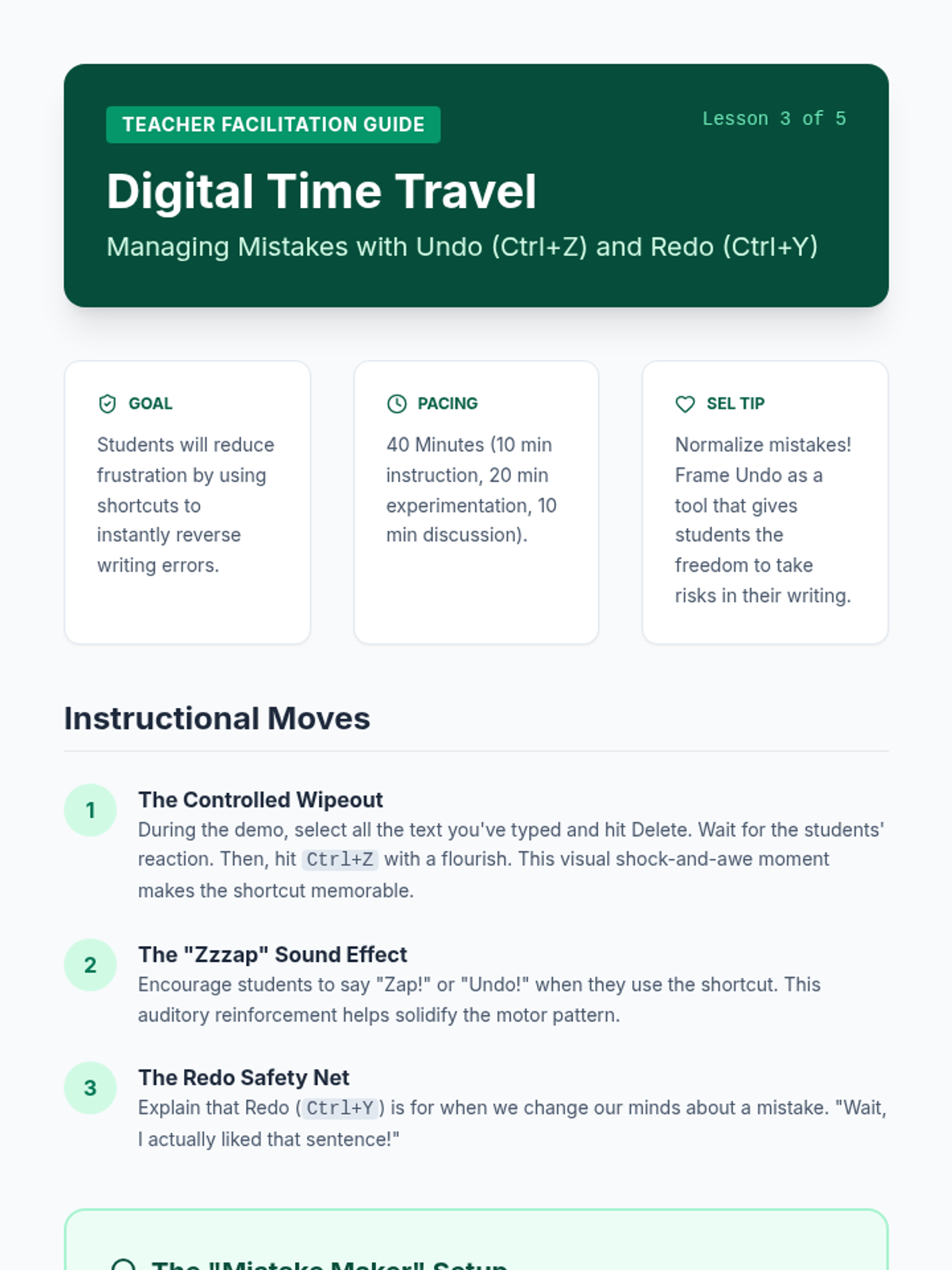
Students explore Ctrl+Z (Undo) and Ctrl+Y (Redo) as safety nets for writing and error recovery.
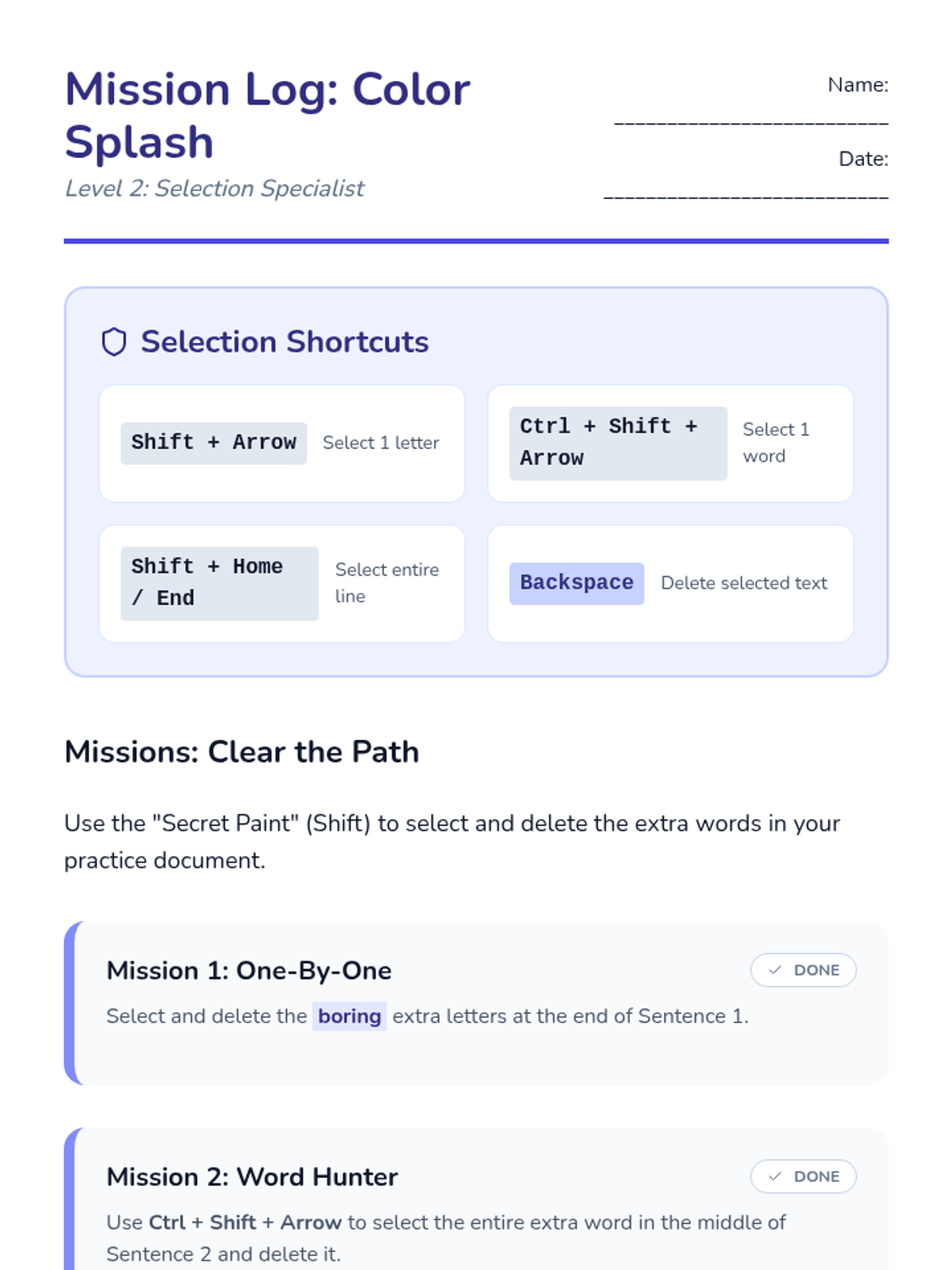
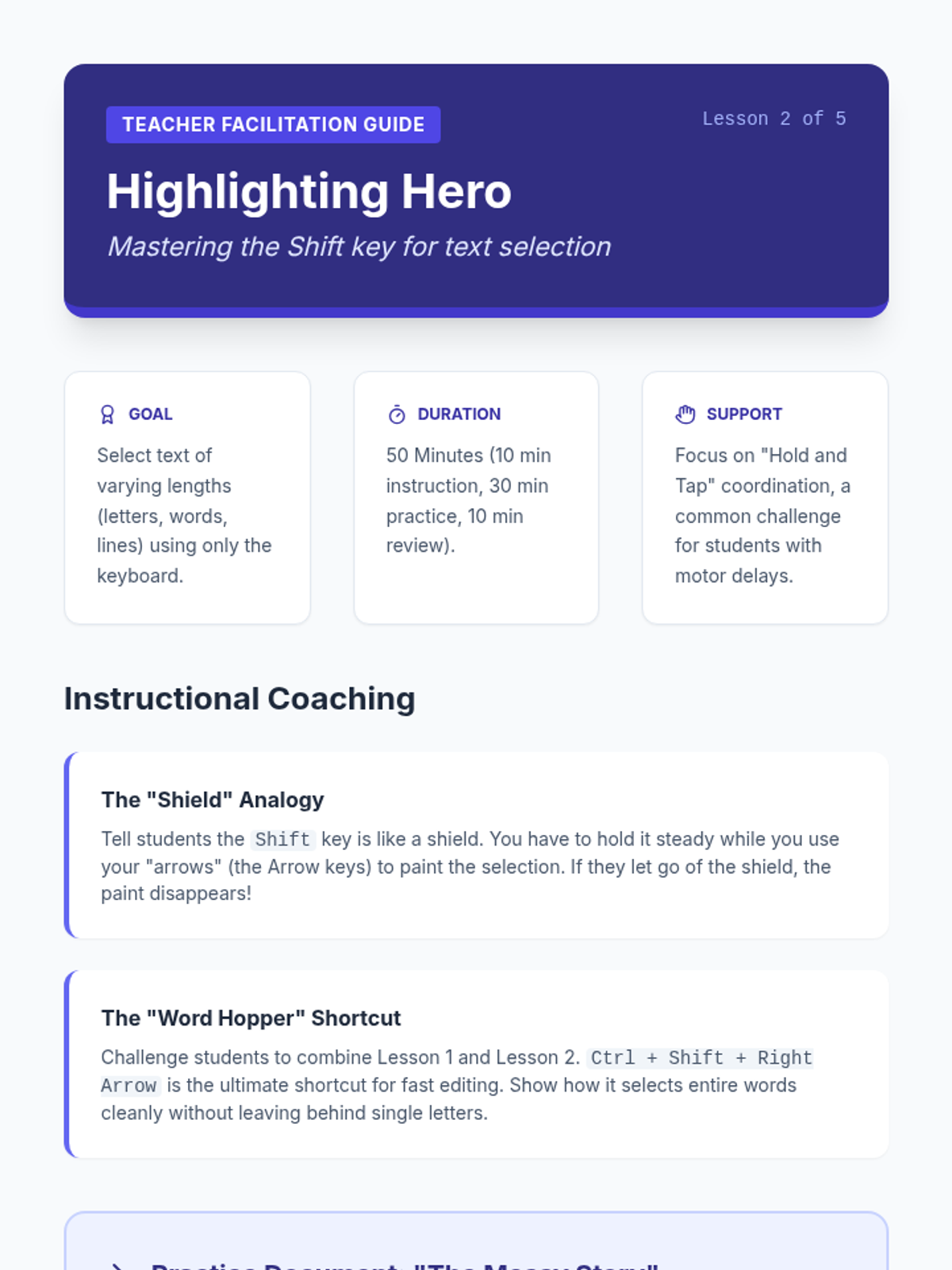
Learners practice highlighting text using the Shift key combined with arrows to prepare for formatting or deletion.
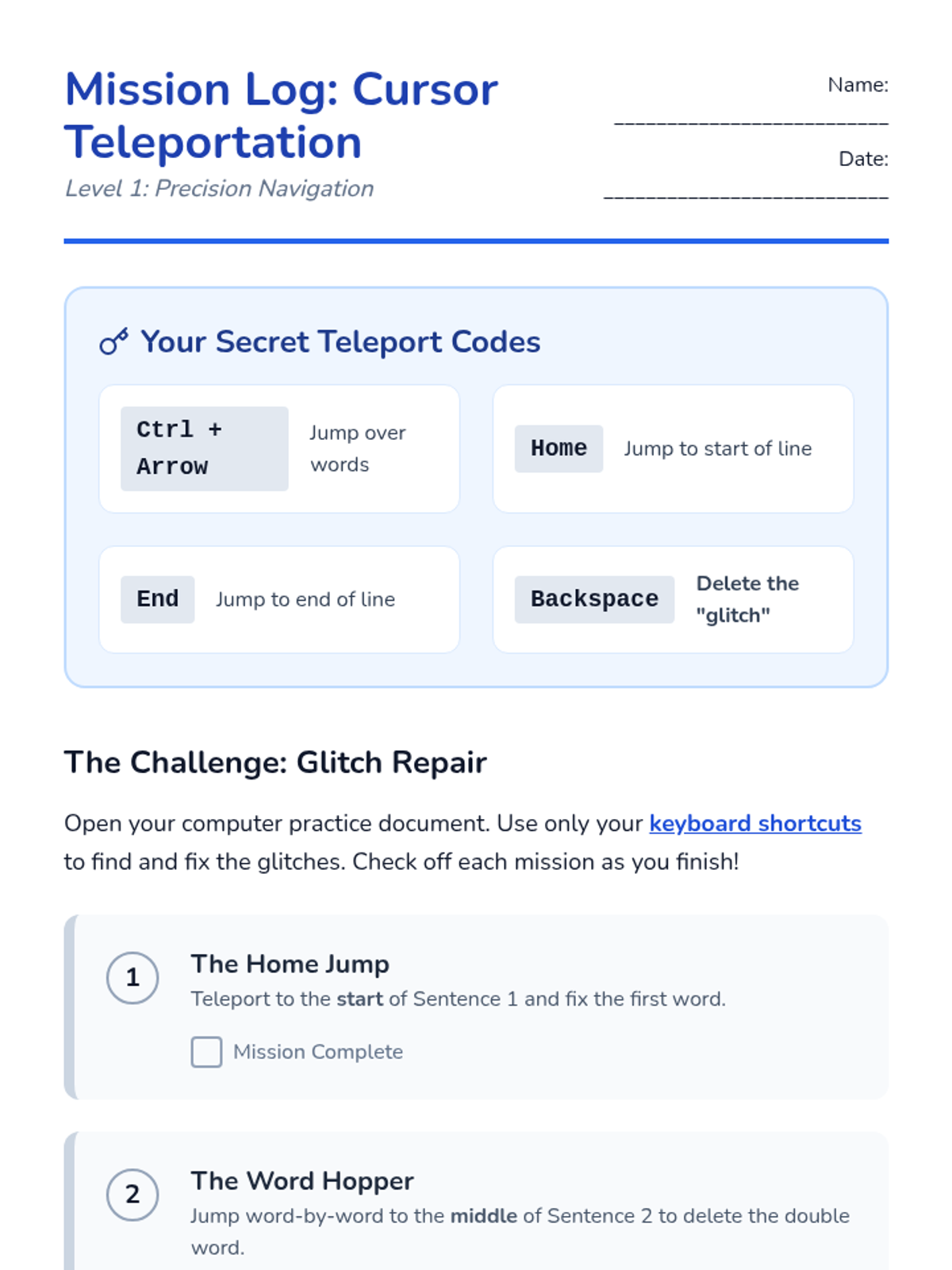
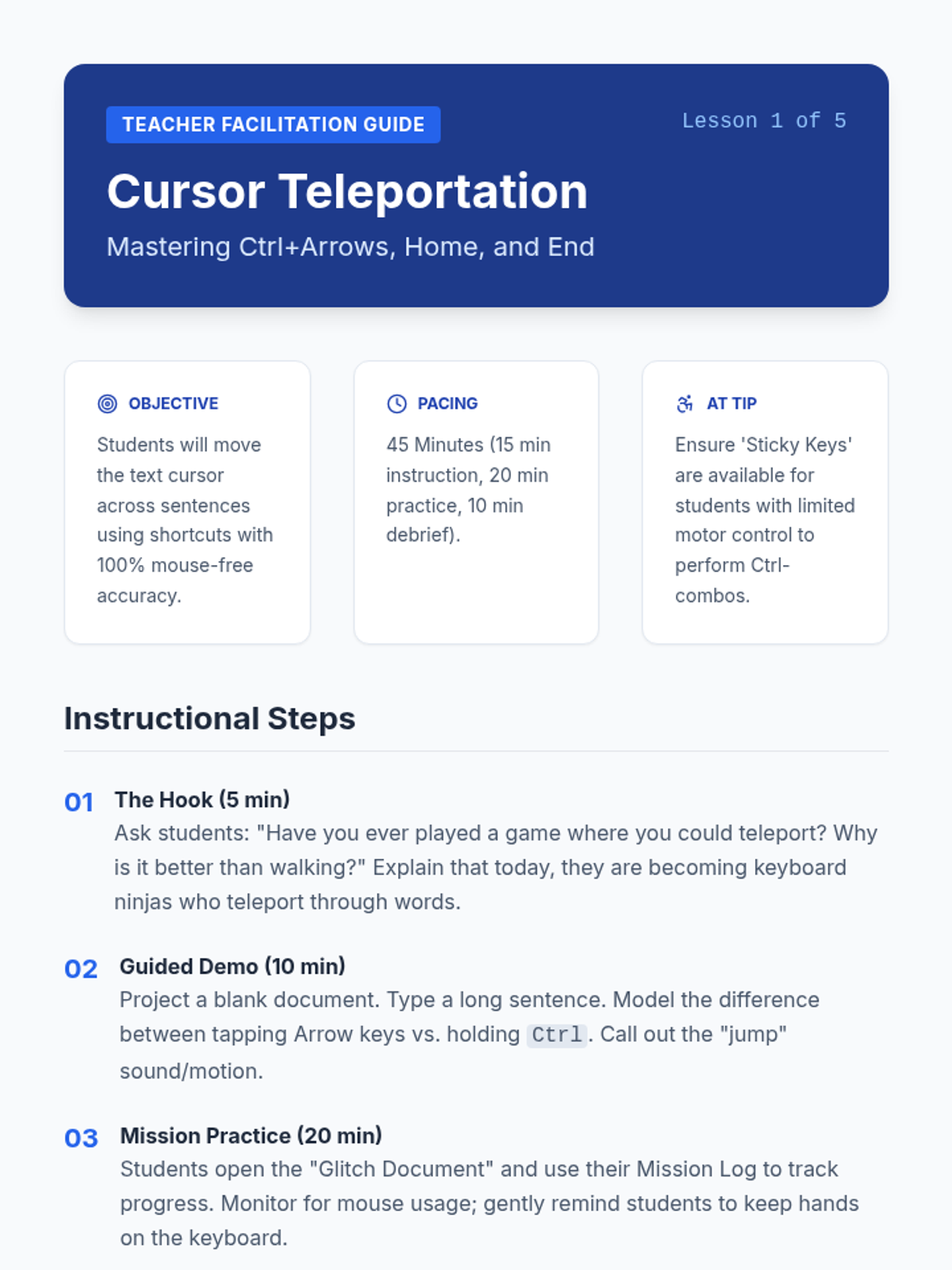
Students learn to move the text cursor word-by-word (Ctrl+Arrow) and to the start/end of lines (Home/End) to fix typos quickly.
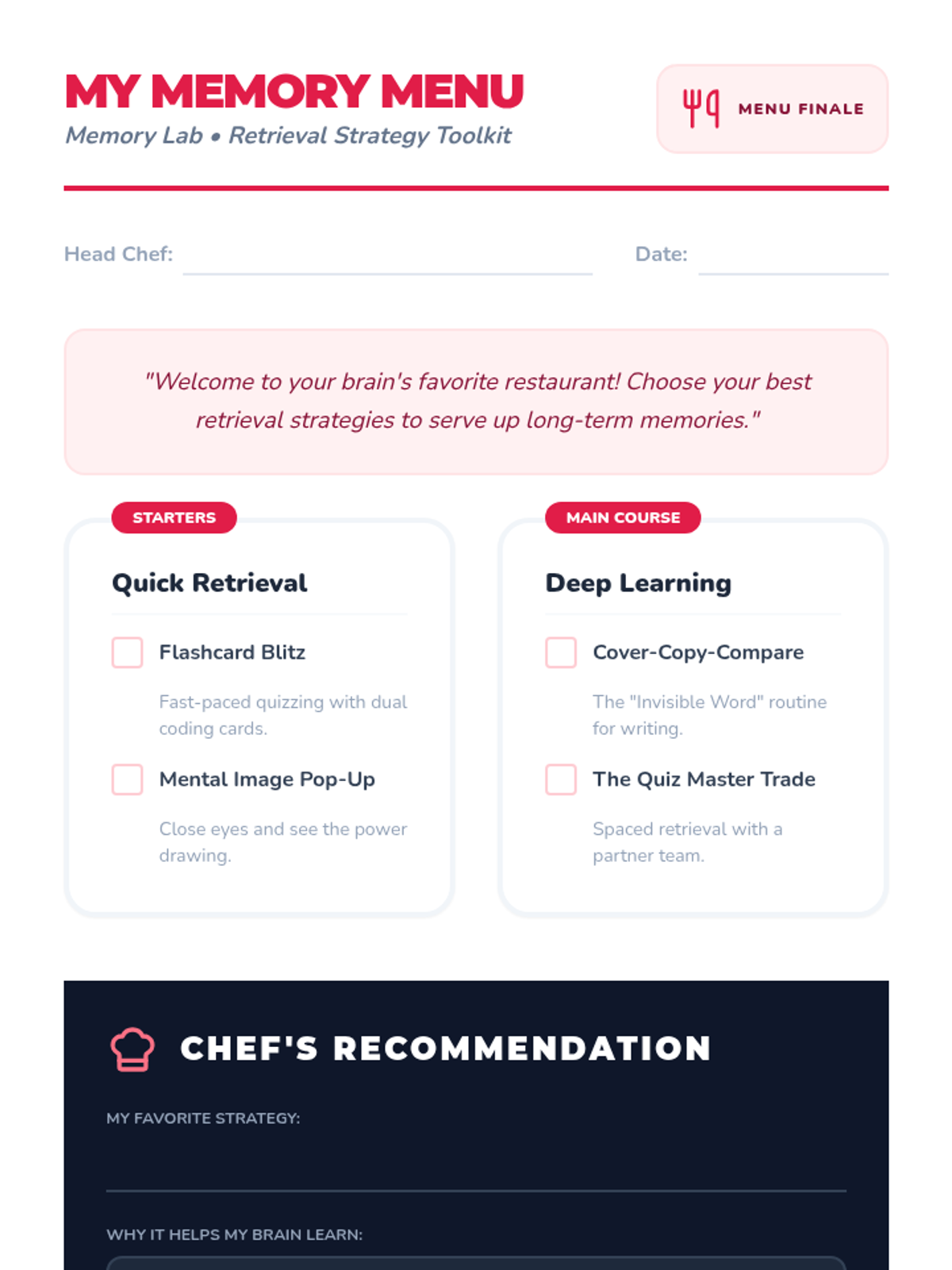
Students compile their favorite active recall strategies into a 'Retrieval Menu' and reflect on which methods helped them remember the most difficult words.
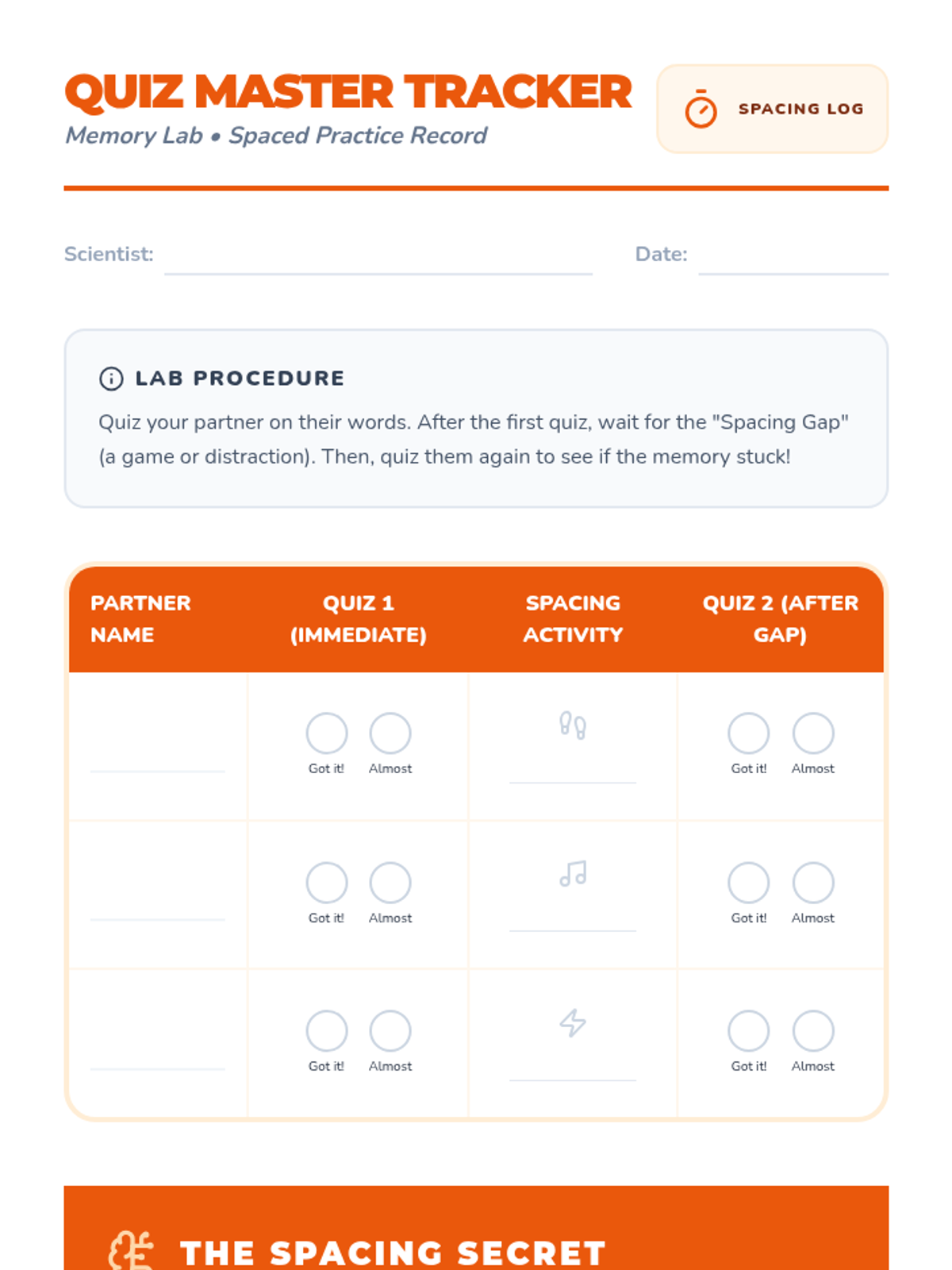
Students pair up to practice 'Quiz-Quiz-Trade' with a time delay, exploring how spacing out retrieval attempts helps move information into long-term memory.
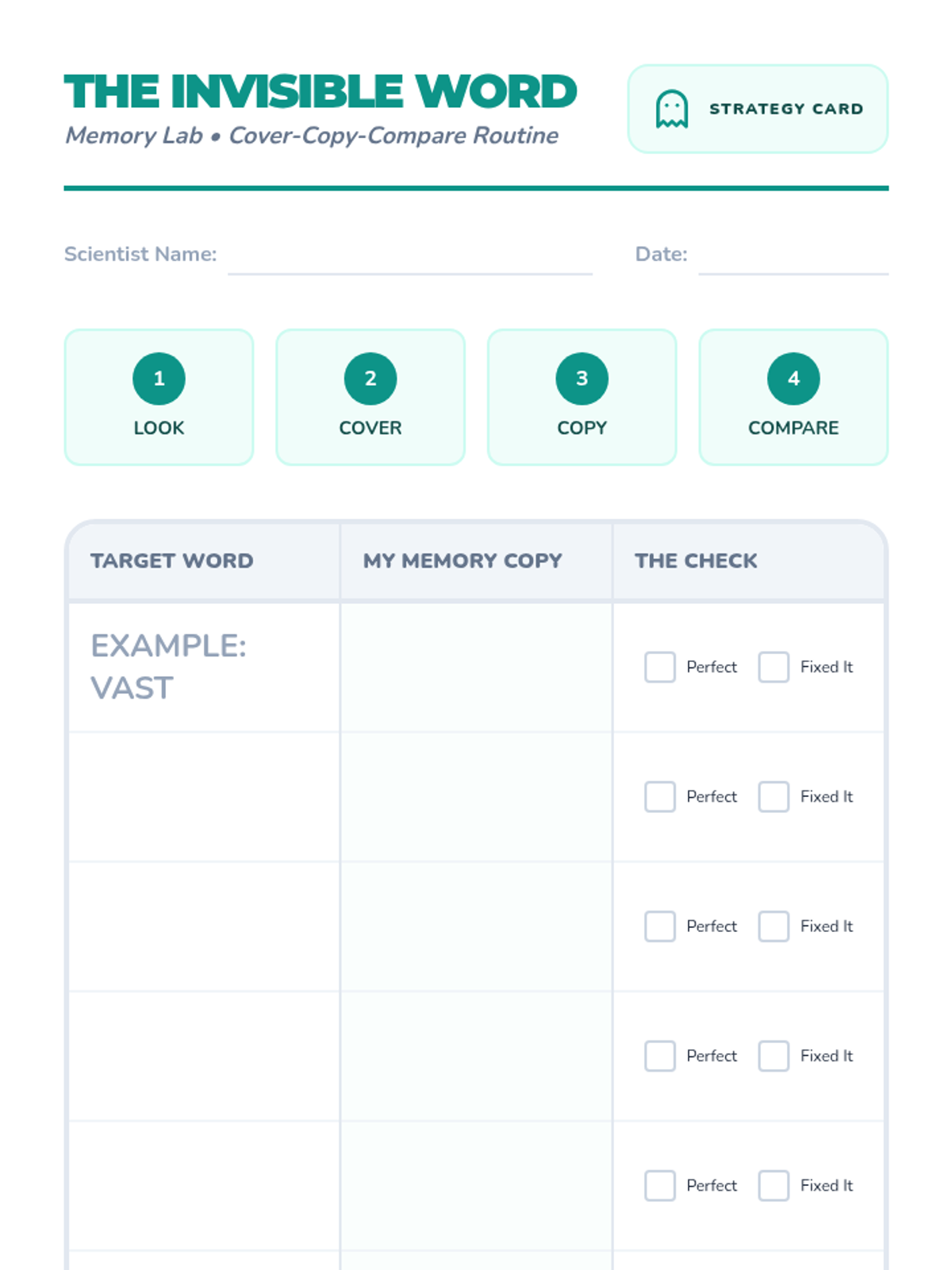
Students learn the Cover-Copy-Compare strategy for spelling and vocabulary, practicing self-correction and memory strengthening through a specific written routine.
Students design their own flashcards using dual coding (text and images) to support memory. They learn to put the prompt on one side and the answer on the other to force active recall.
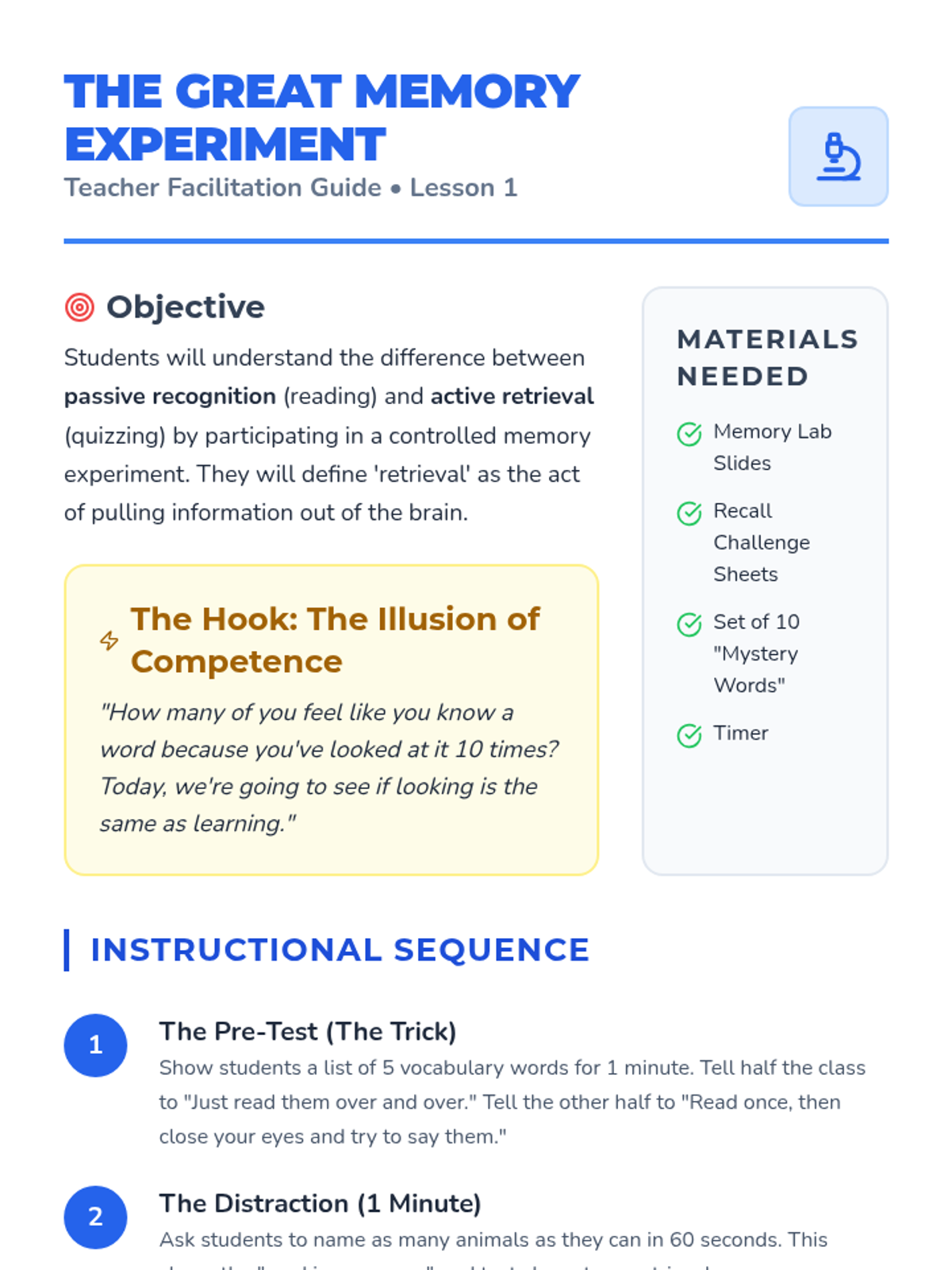
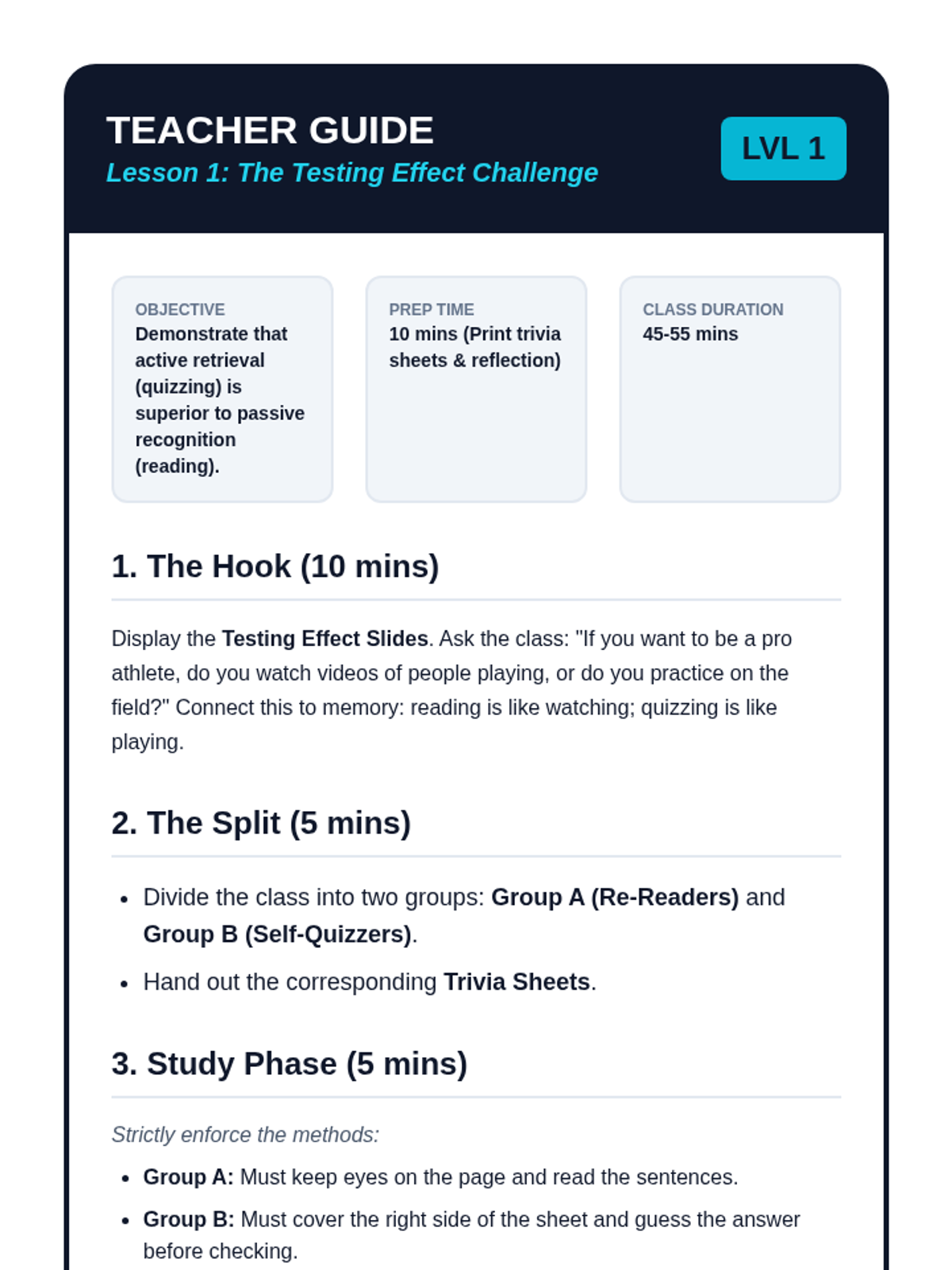
Students participate in an experiment comparing passive reading vs. active quizzing to see which yields better results. They learn the term 'retrieval' and identify why looking at the answer prevents true learning.
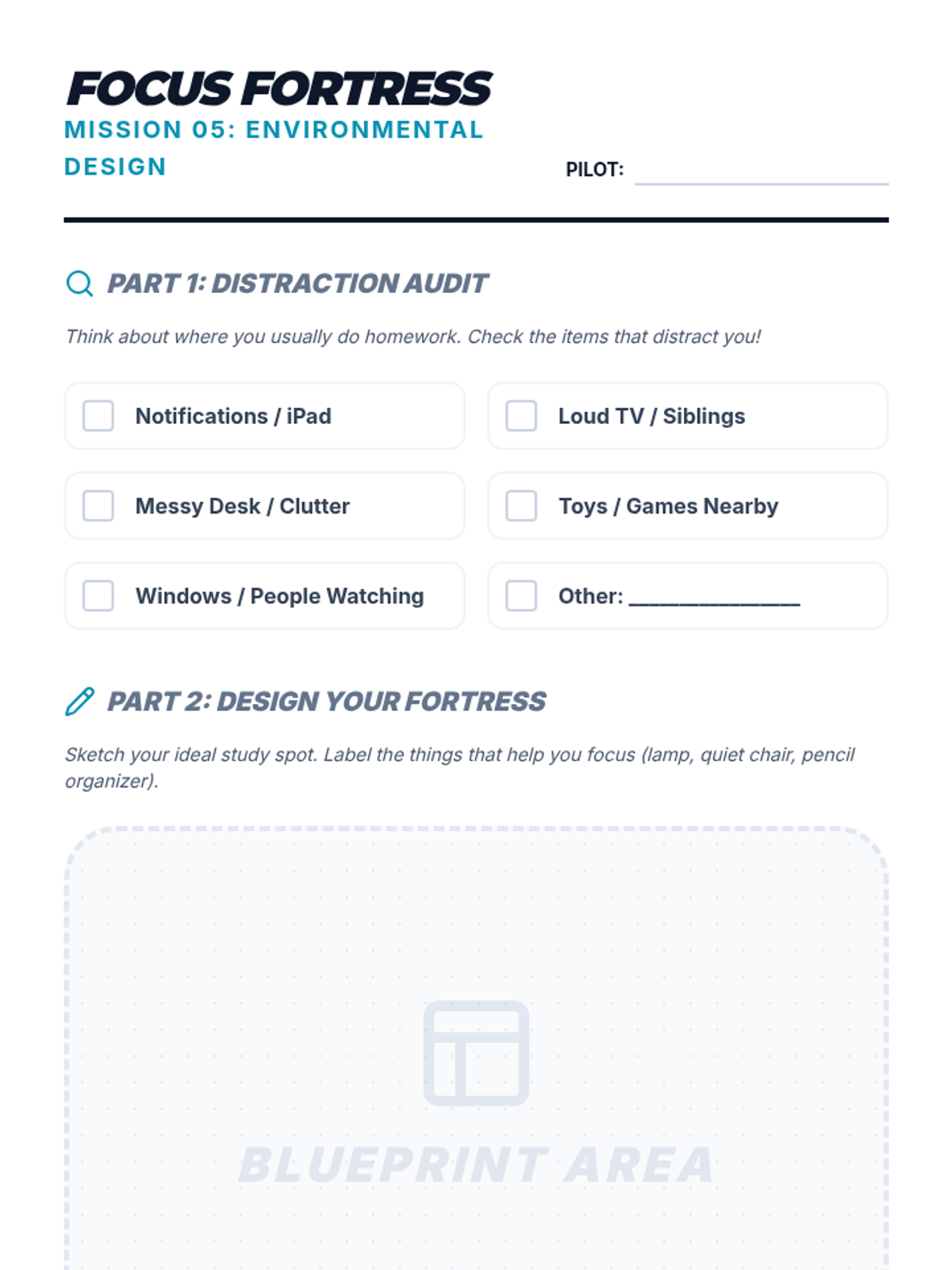
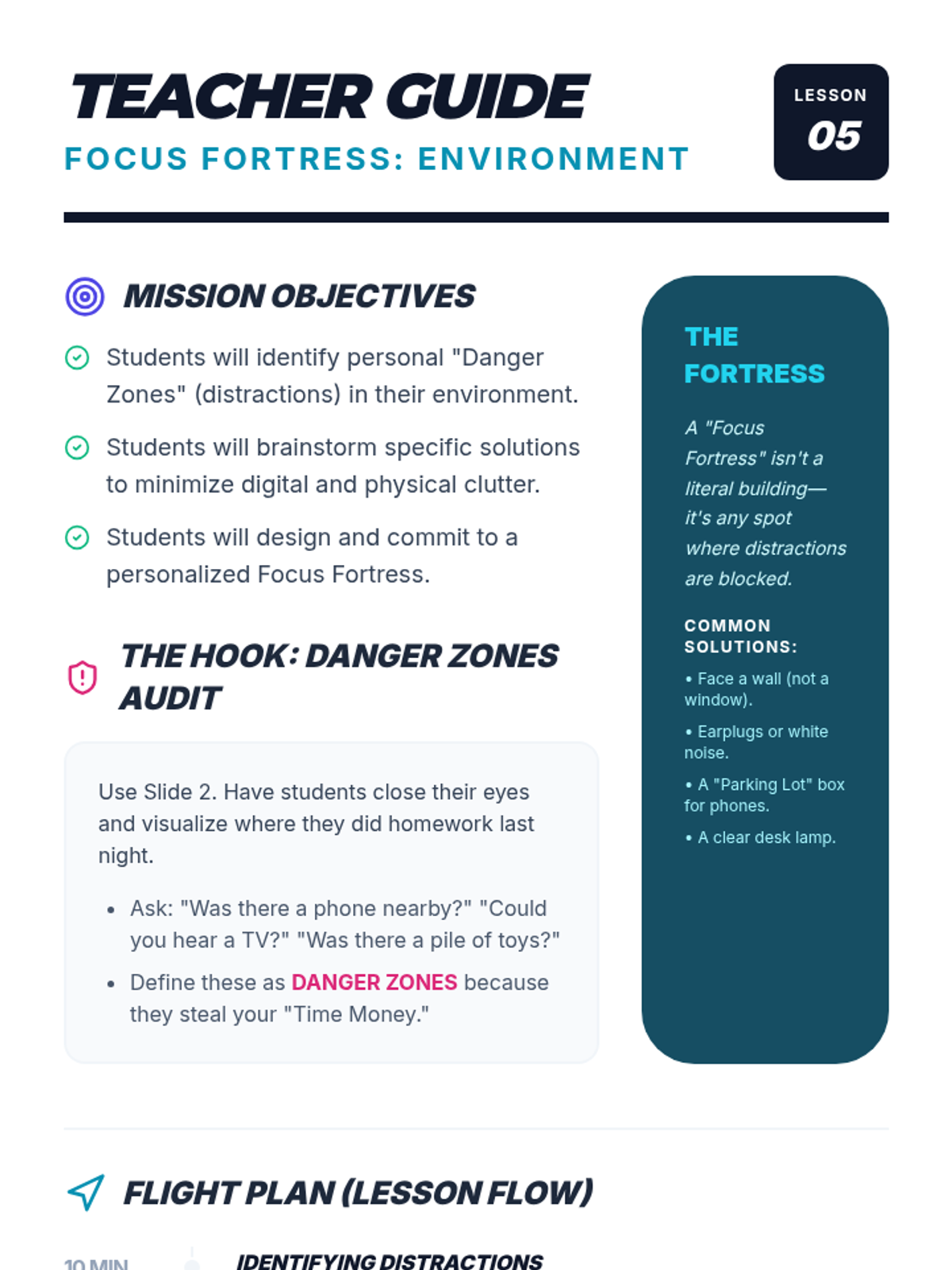
Students identify personal distractors and design their ideal 'Focus Fortress' to optimize their learning environment.
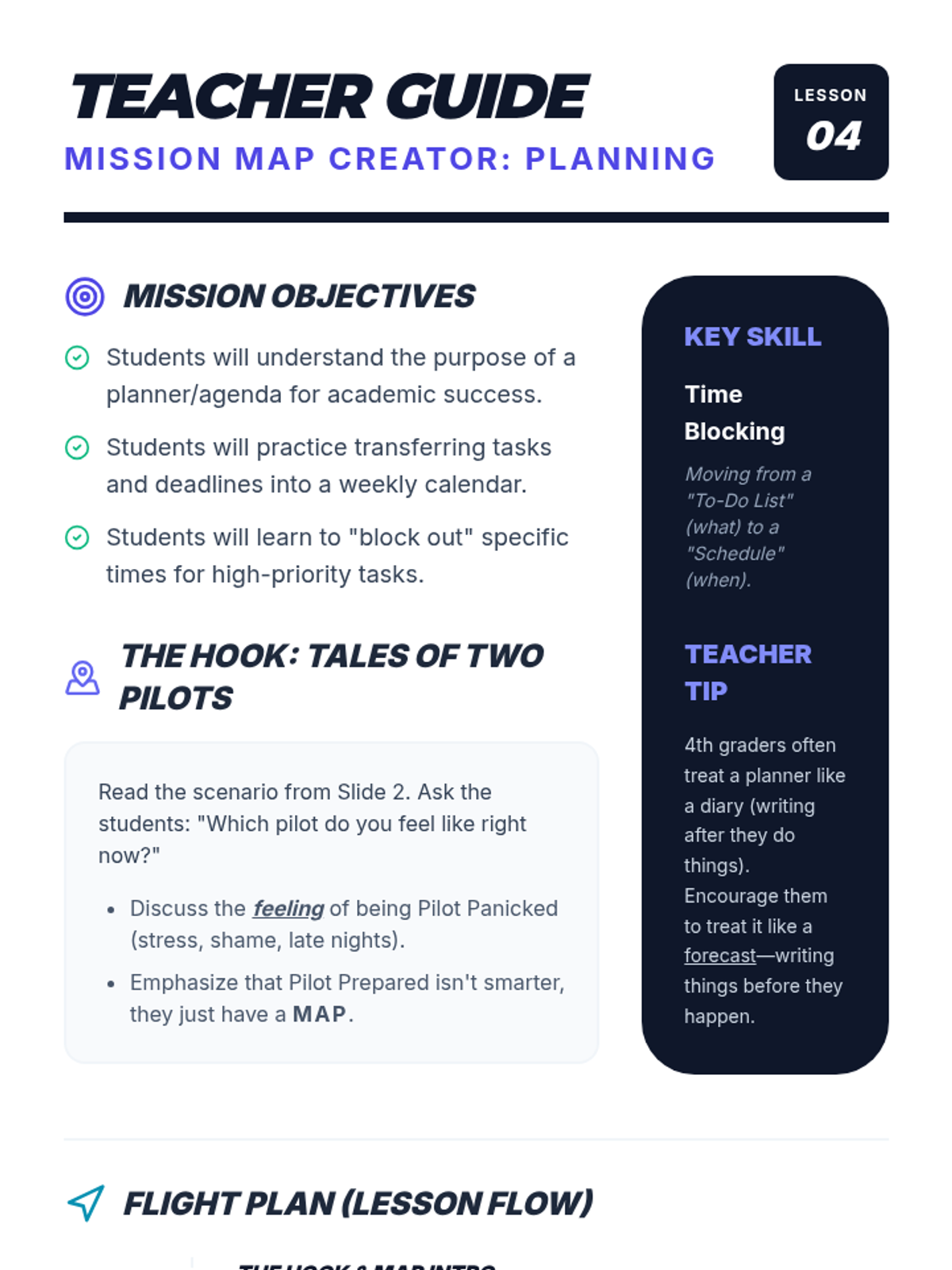
Students learn the mechanics of using an agenda and blocking out time to create a personalized weekly schedule.
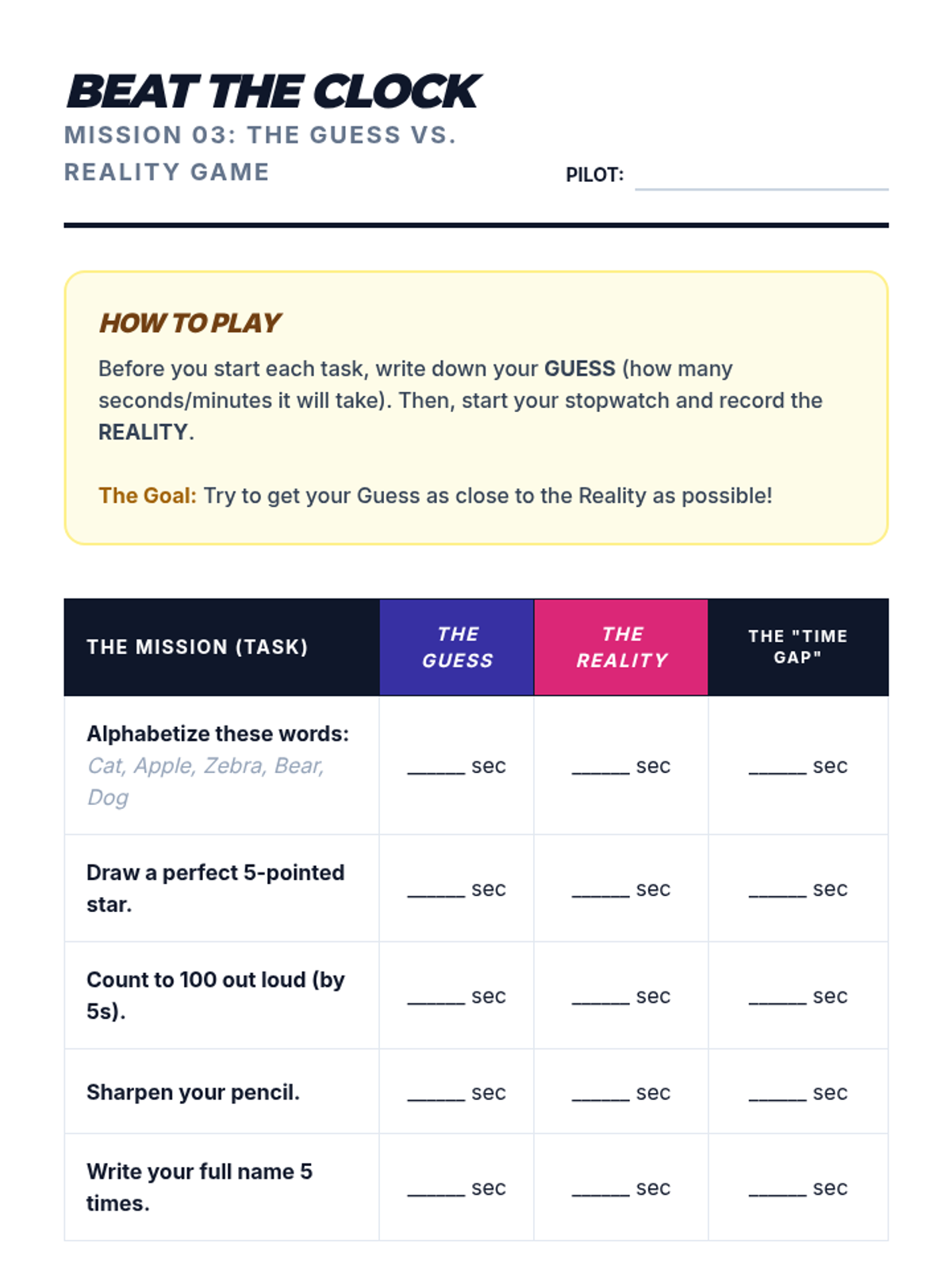
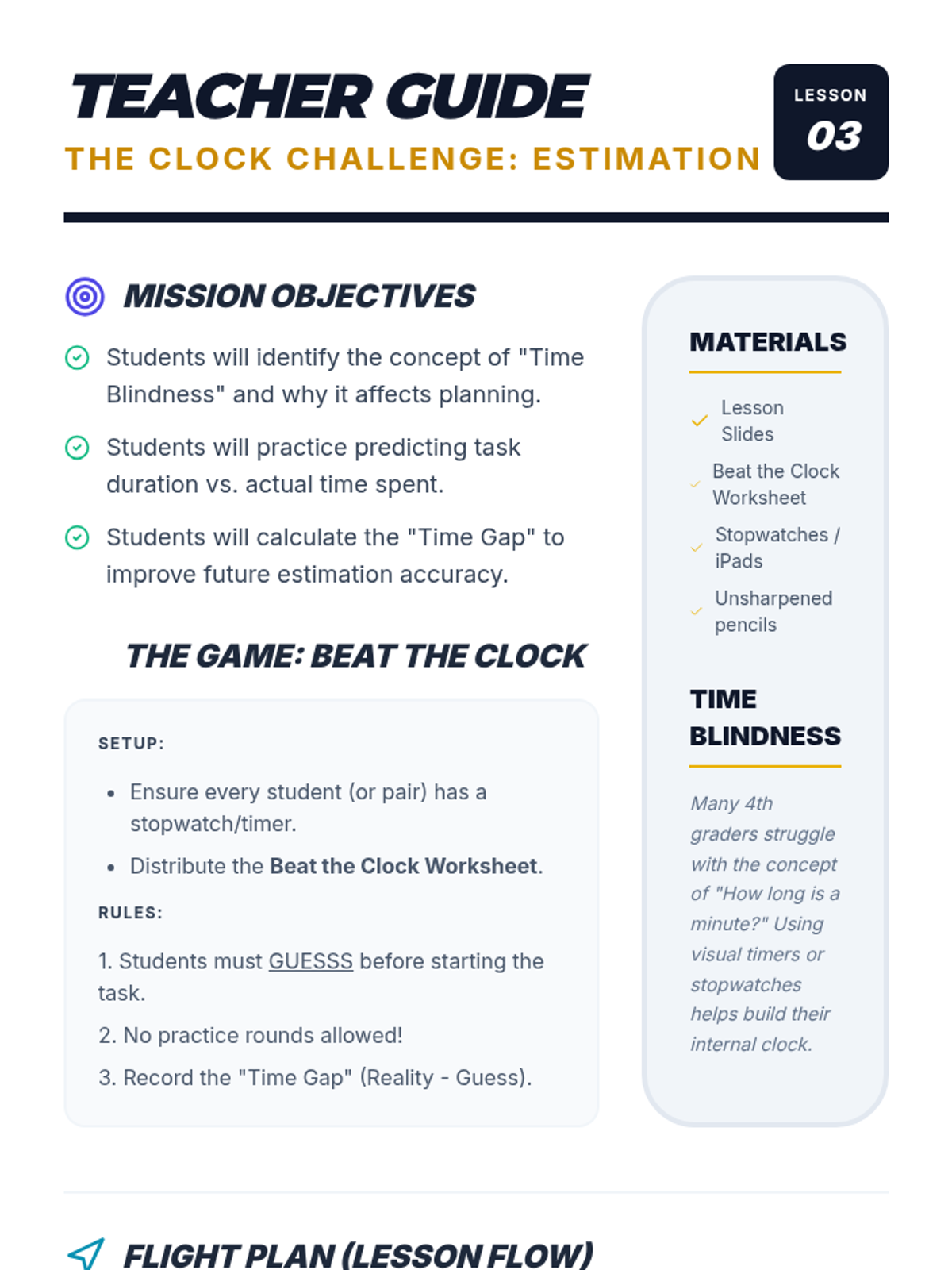
Students practice predicting how long tasks take versus reality through 'Beat the Clock' challenges to improve their planning accuracy.
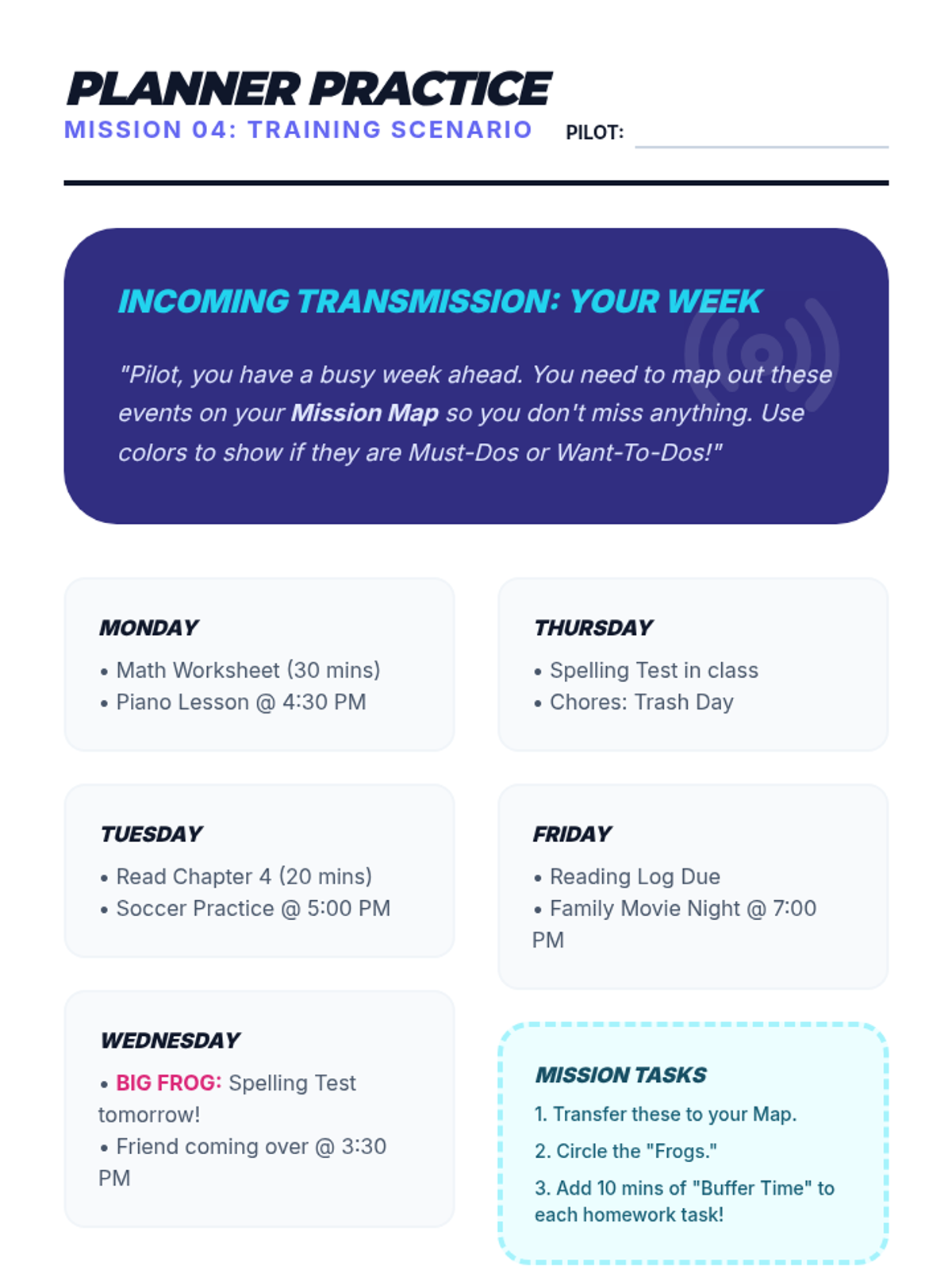
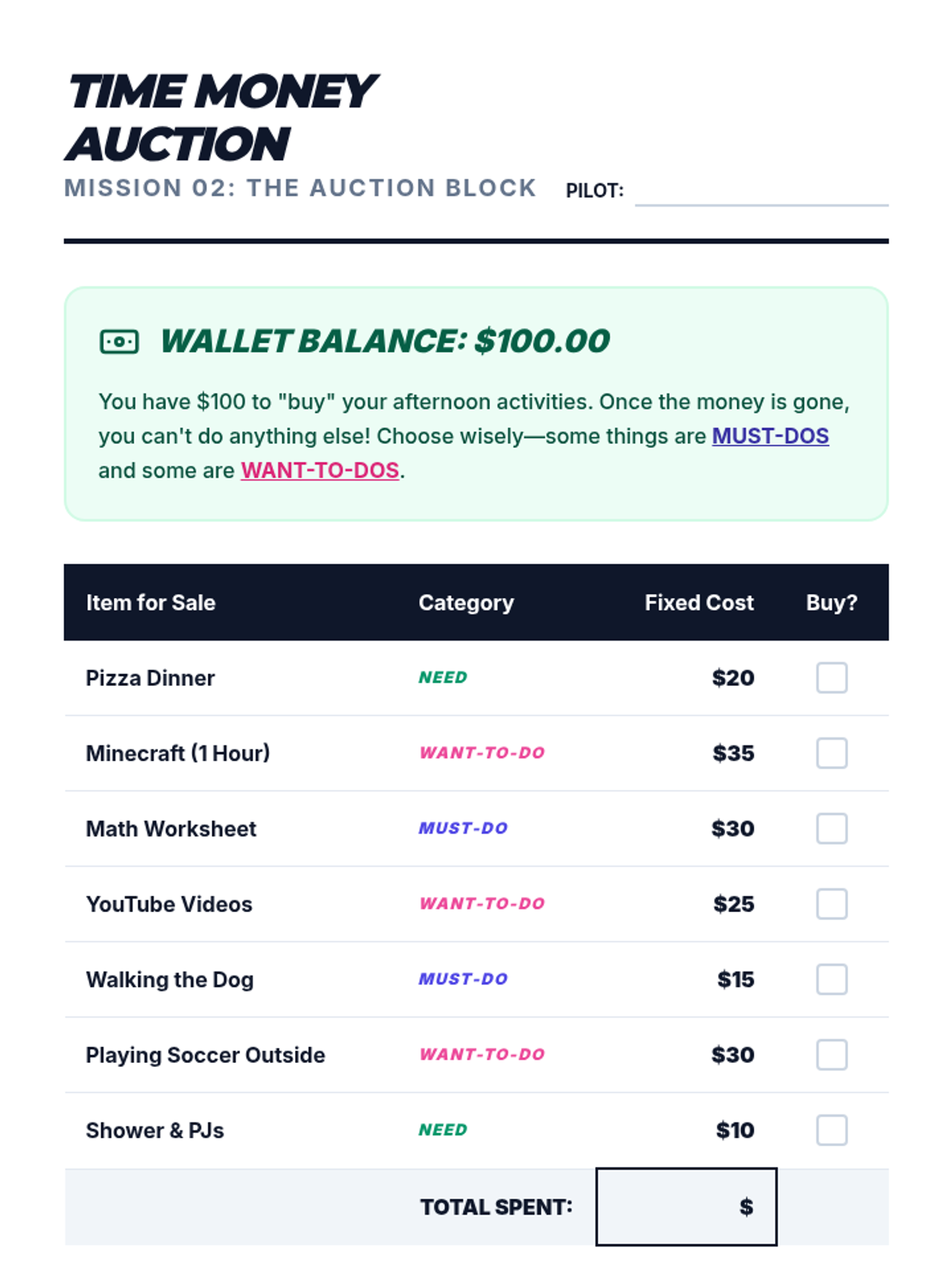
Students learn to distinguish between urgent 'Must-Dos' and fun 'Want-To-Dos' using a 'Time Money' auction and the 'Eat the Frog' strategy.
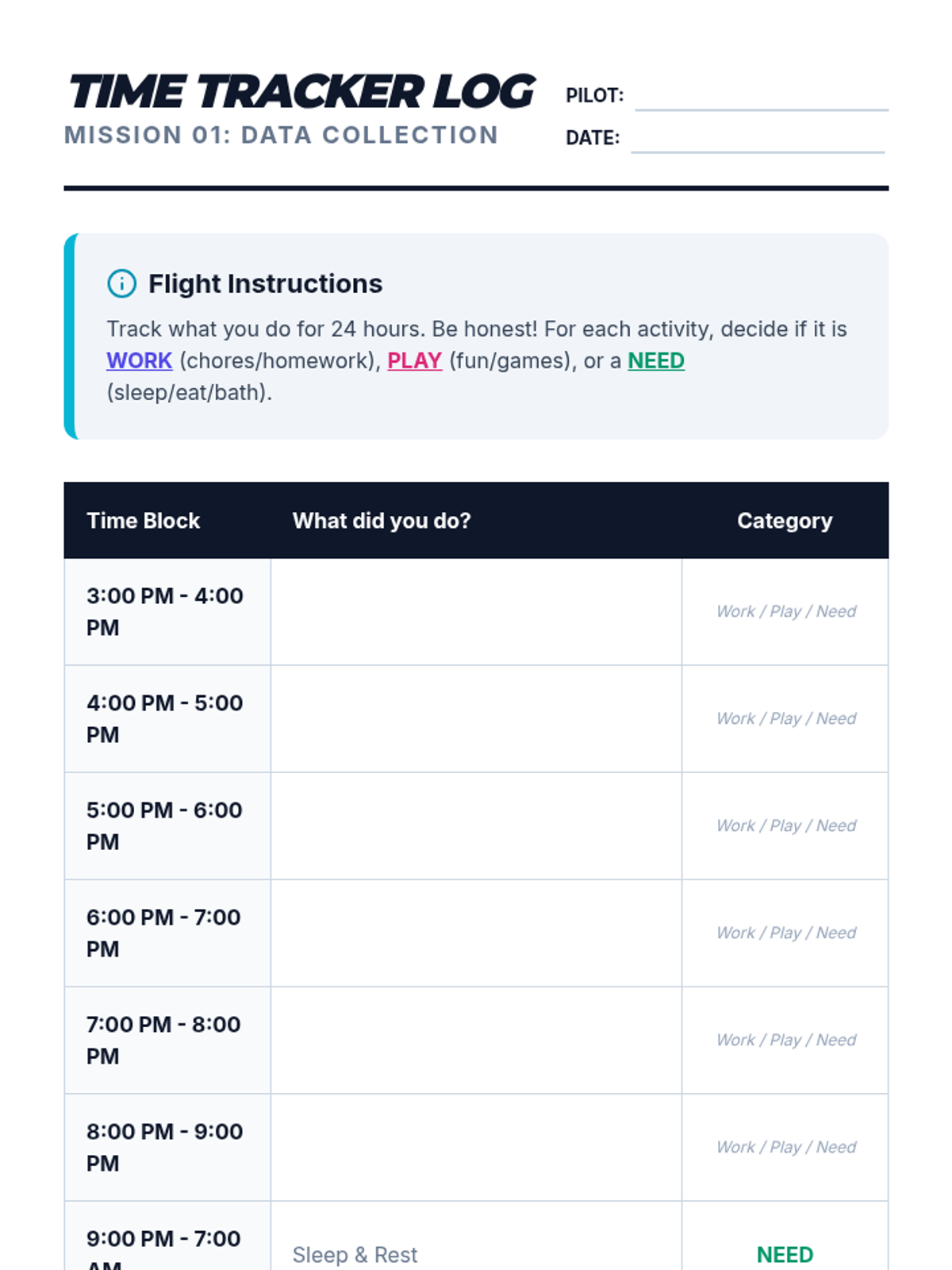
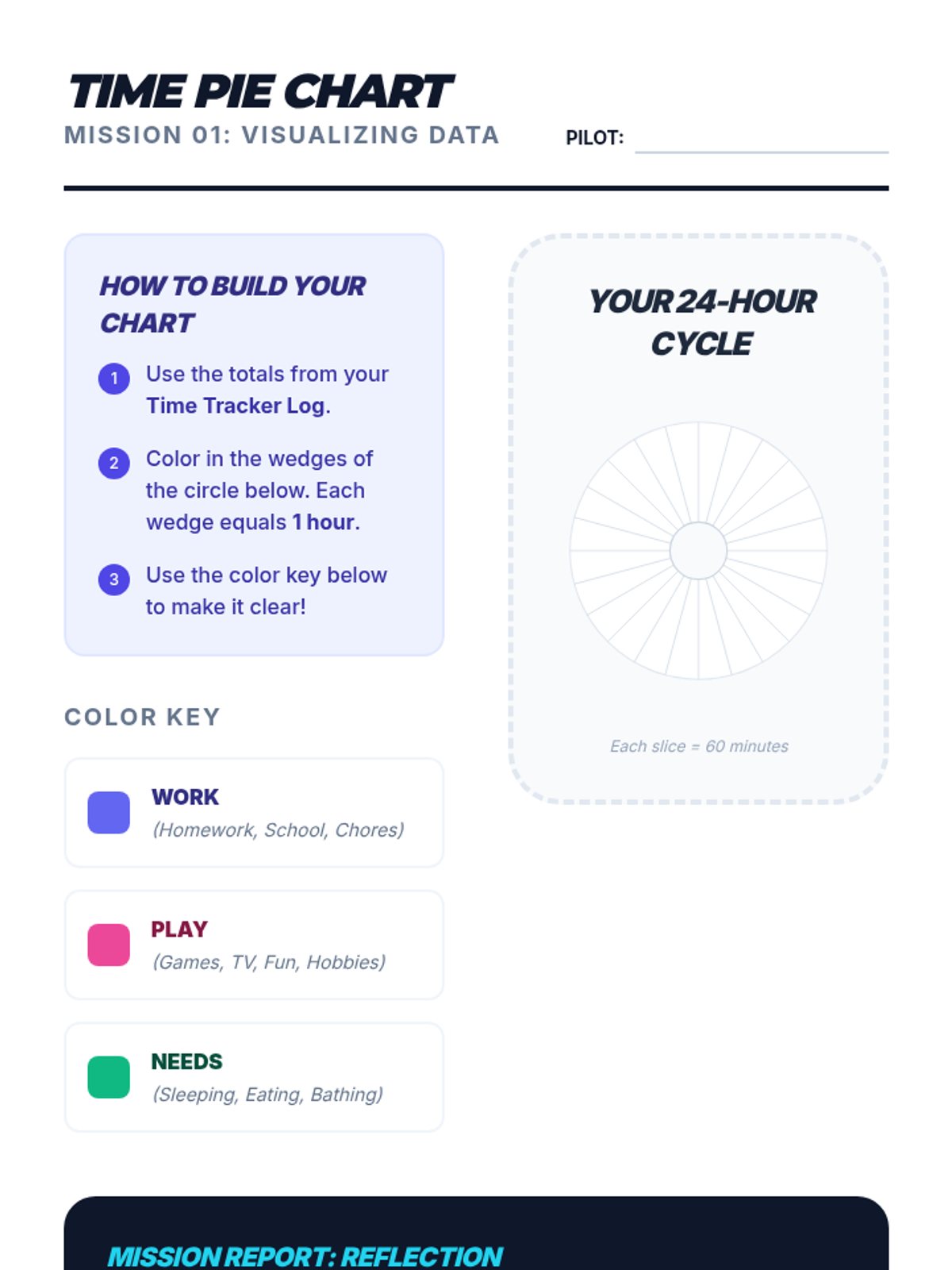
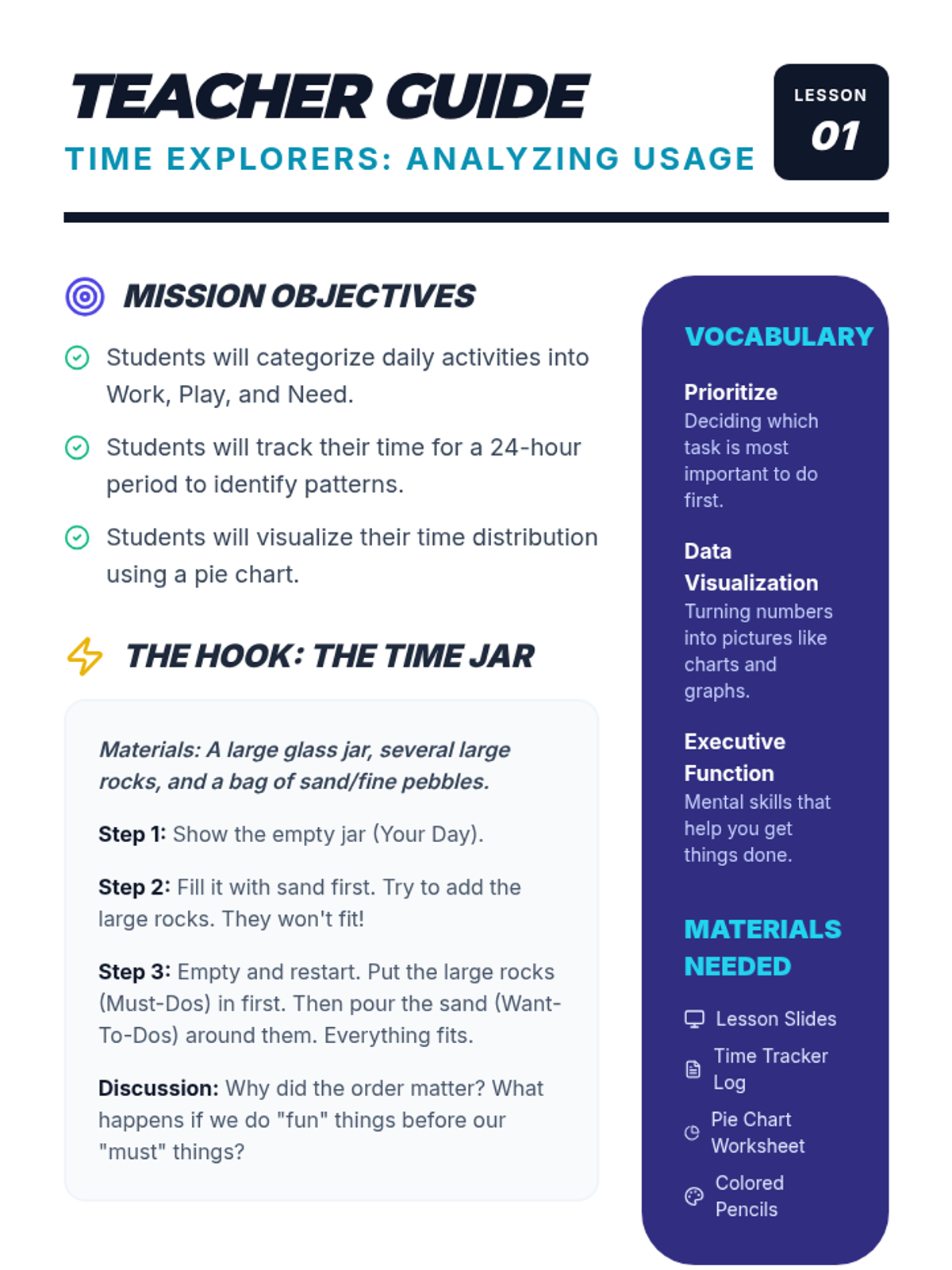
Students investigate where their time actually goes by tracking daily activities and visualizing their schedule using a 'Time Jar' analogy and pie charts.
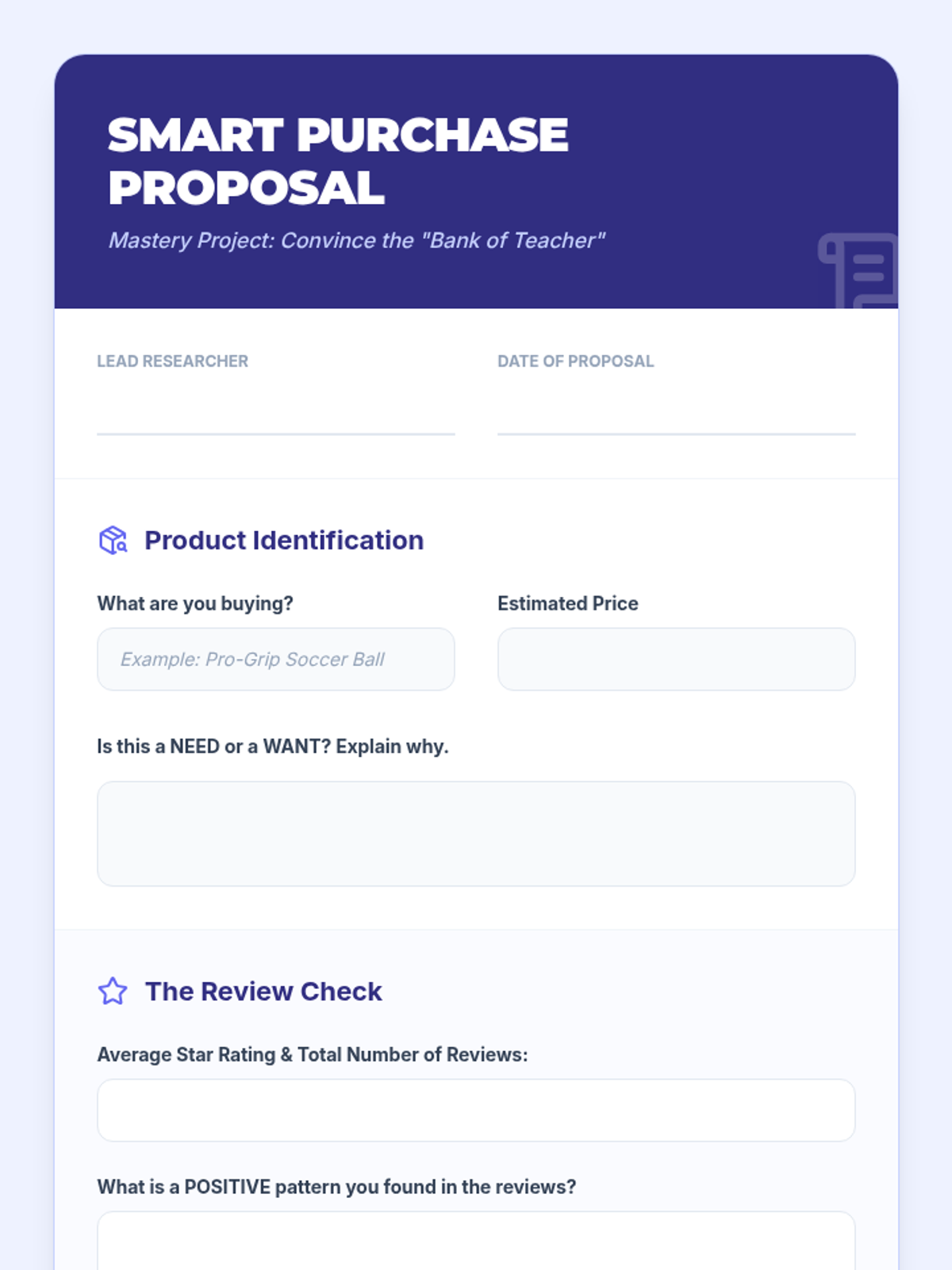
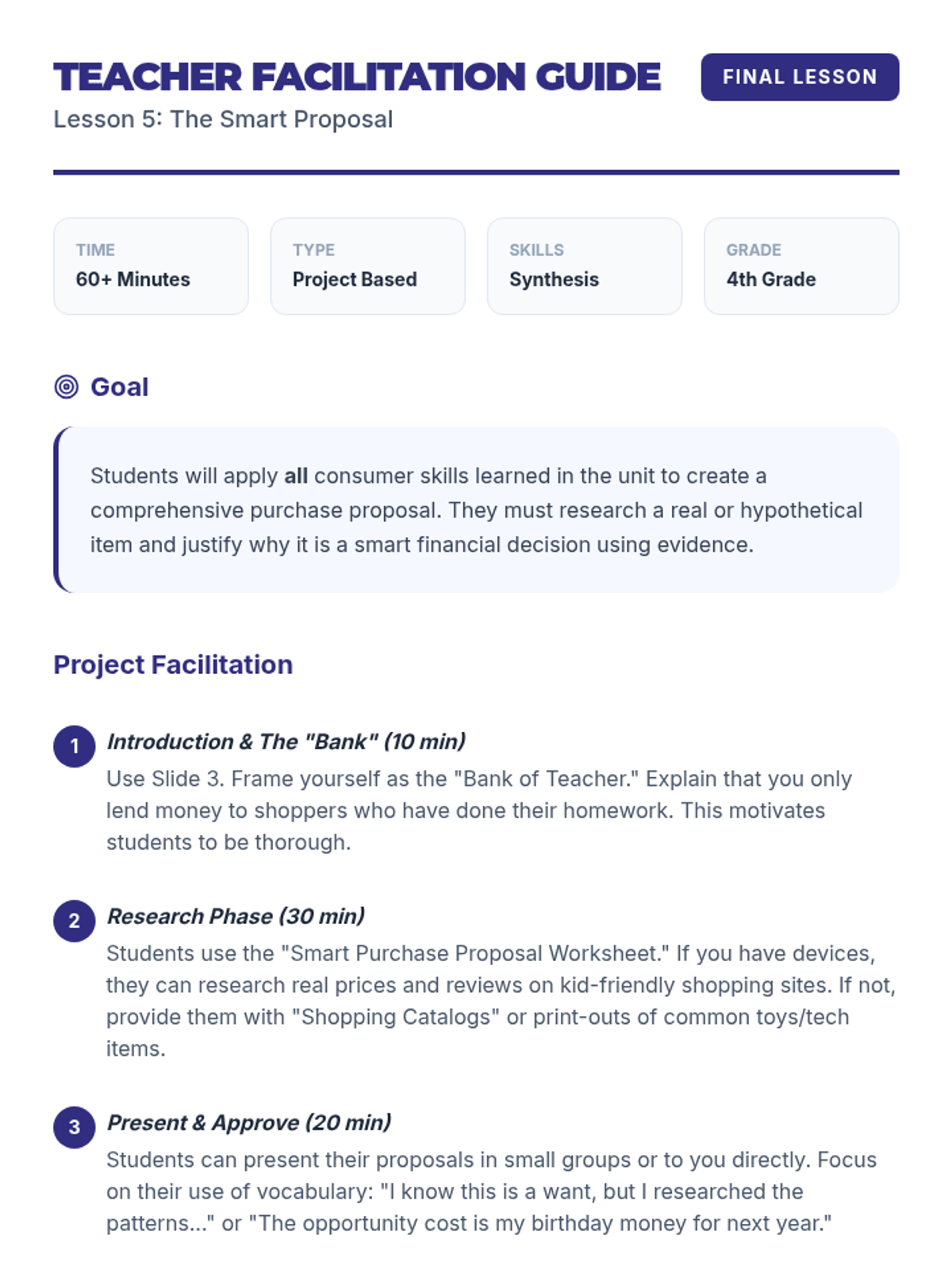
Students apply all learned skills to create a proposal for a large purchase (real or hypothetical). They must include price comparison, review summaries, return policy details, and a justification of need/want.
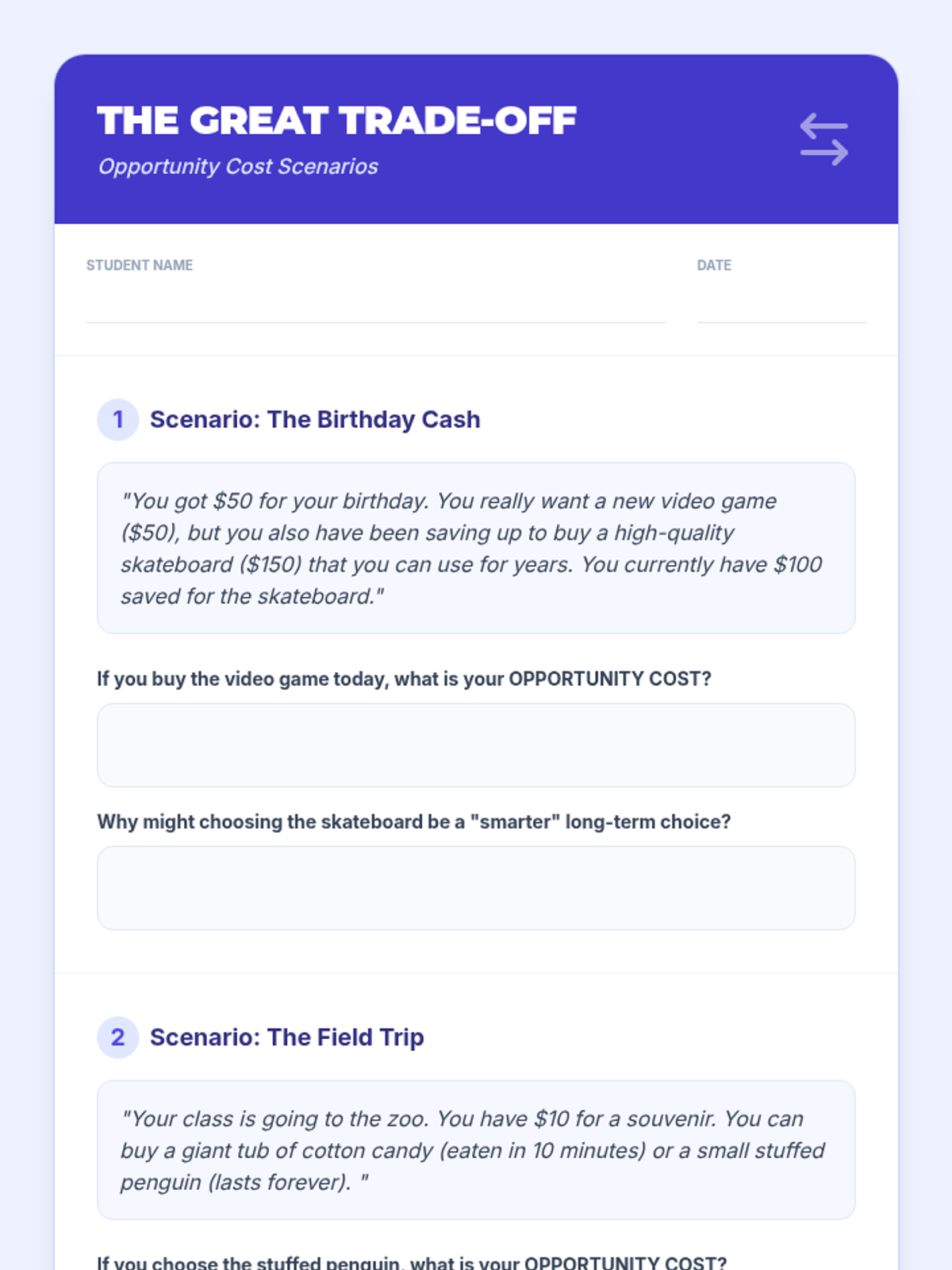
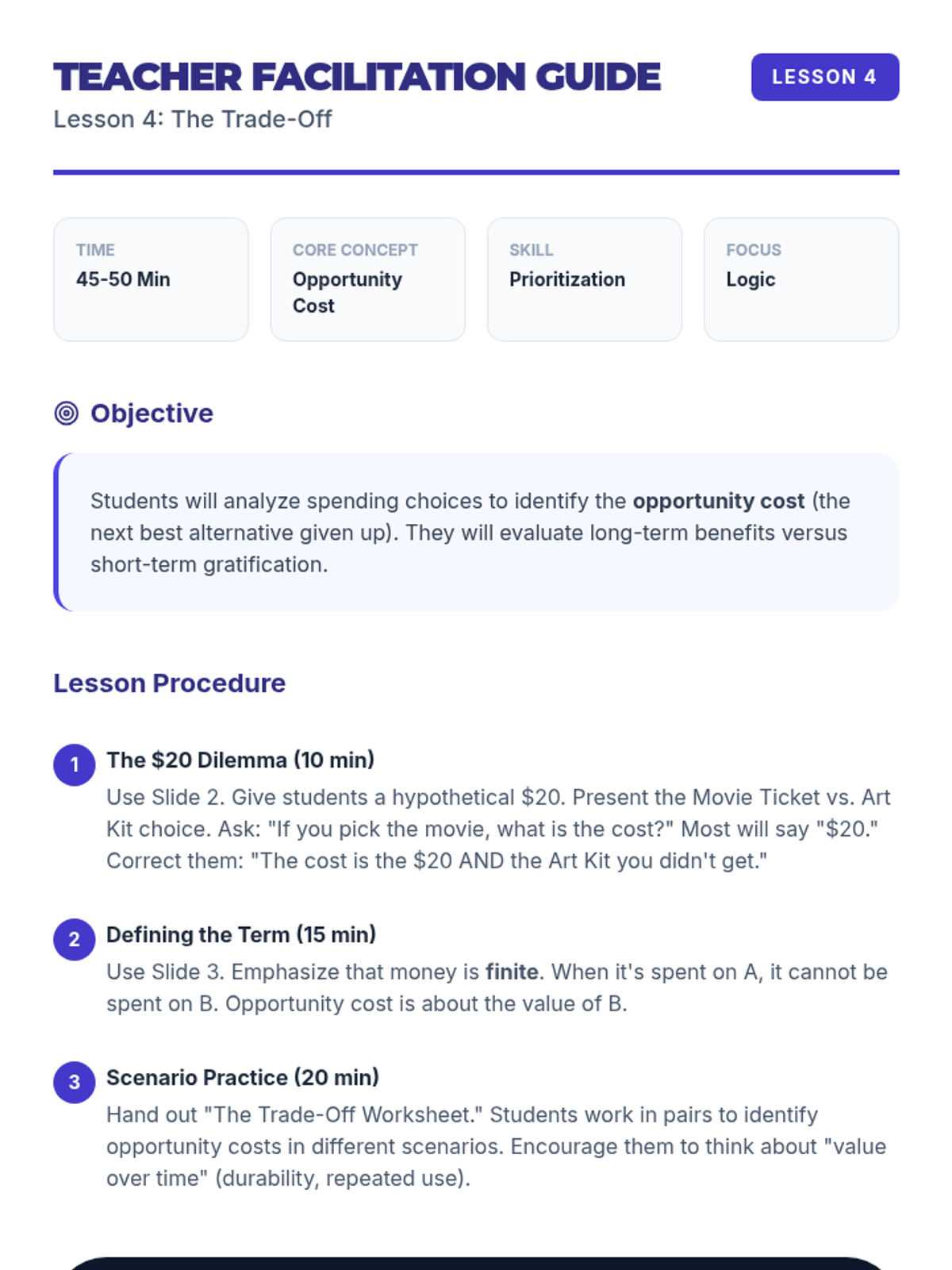
Students explore the economic concept of opportunity cost—understanding that money spent on one thing cannot be spent on another. They solve scenarios deciding between two desirable options based on long-term goals.
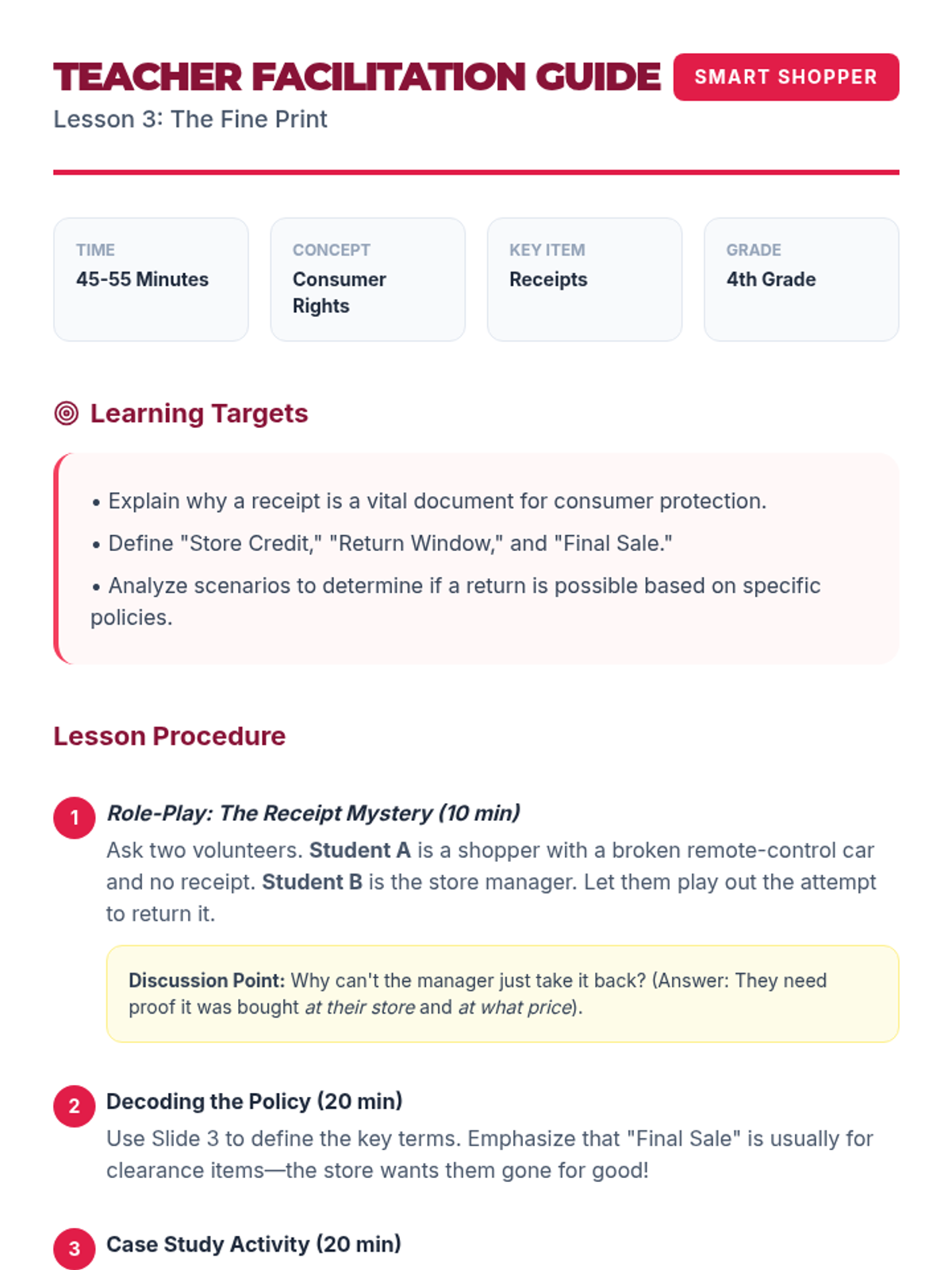
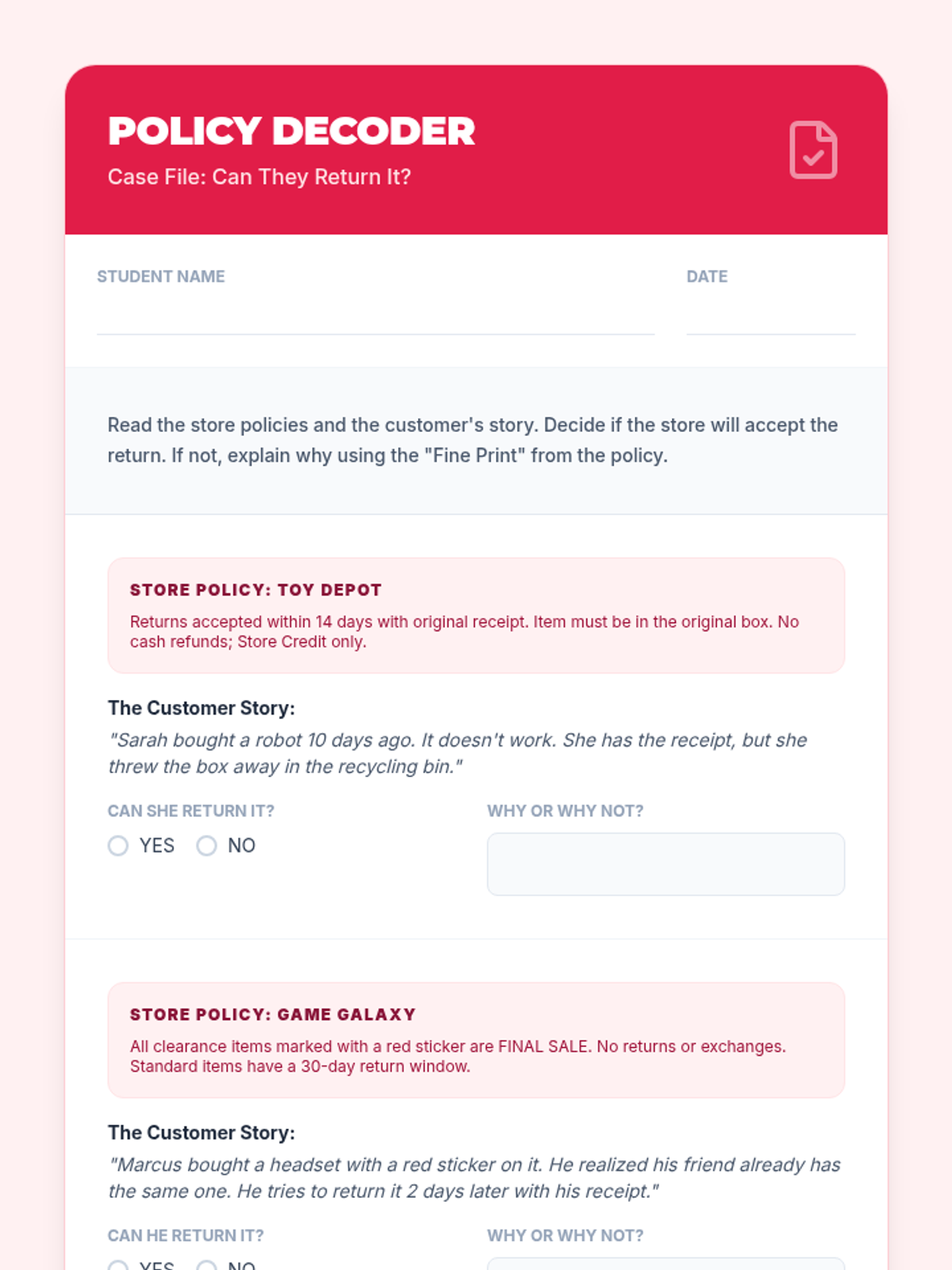
Students examine the fine print of shopping, focusing on return policies, warranties, and the importance of keeping receipts.
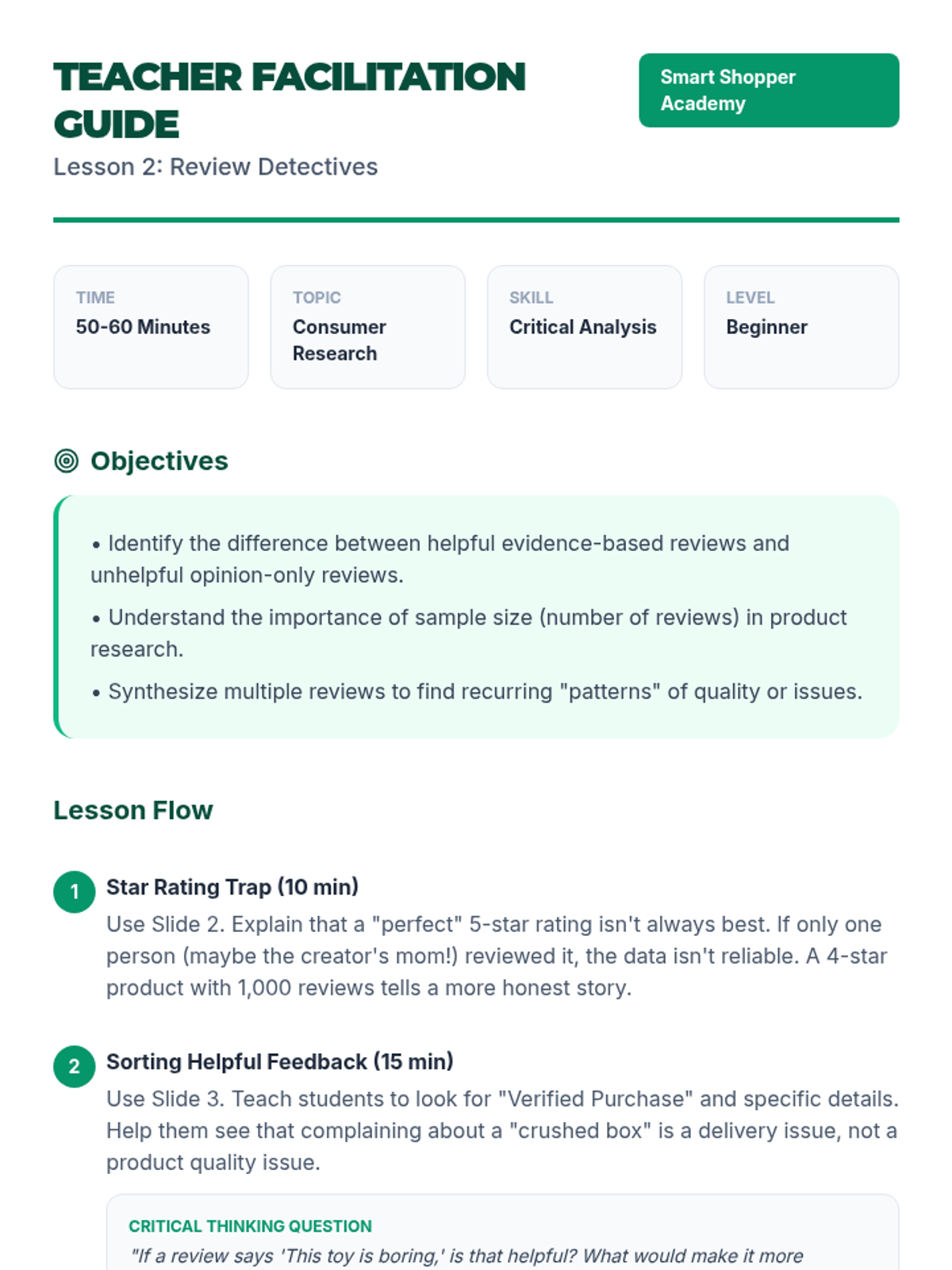
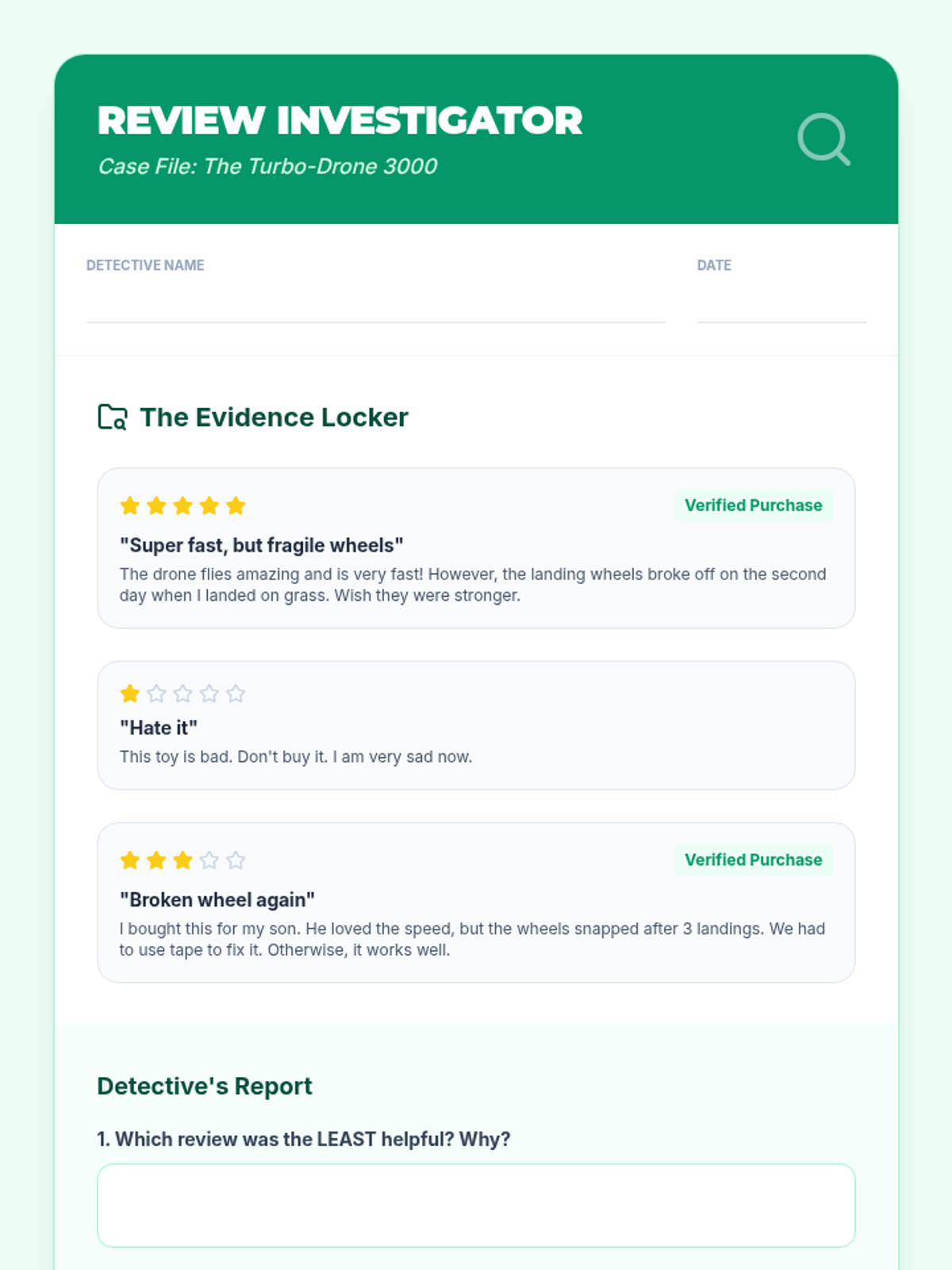
Students learn to evaluate product quality by critically reading online reviews and identifying helpful vs. unhelpful feedback.
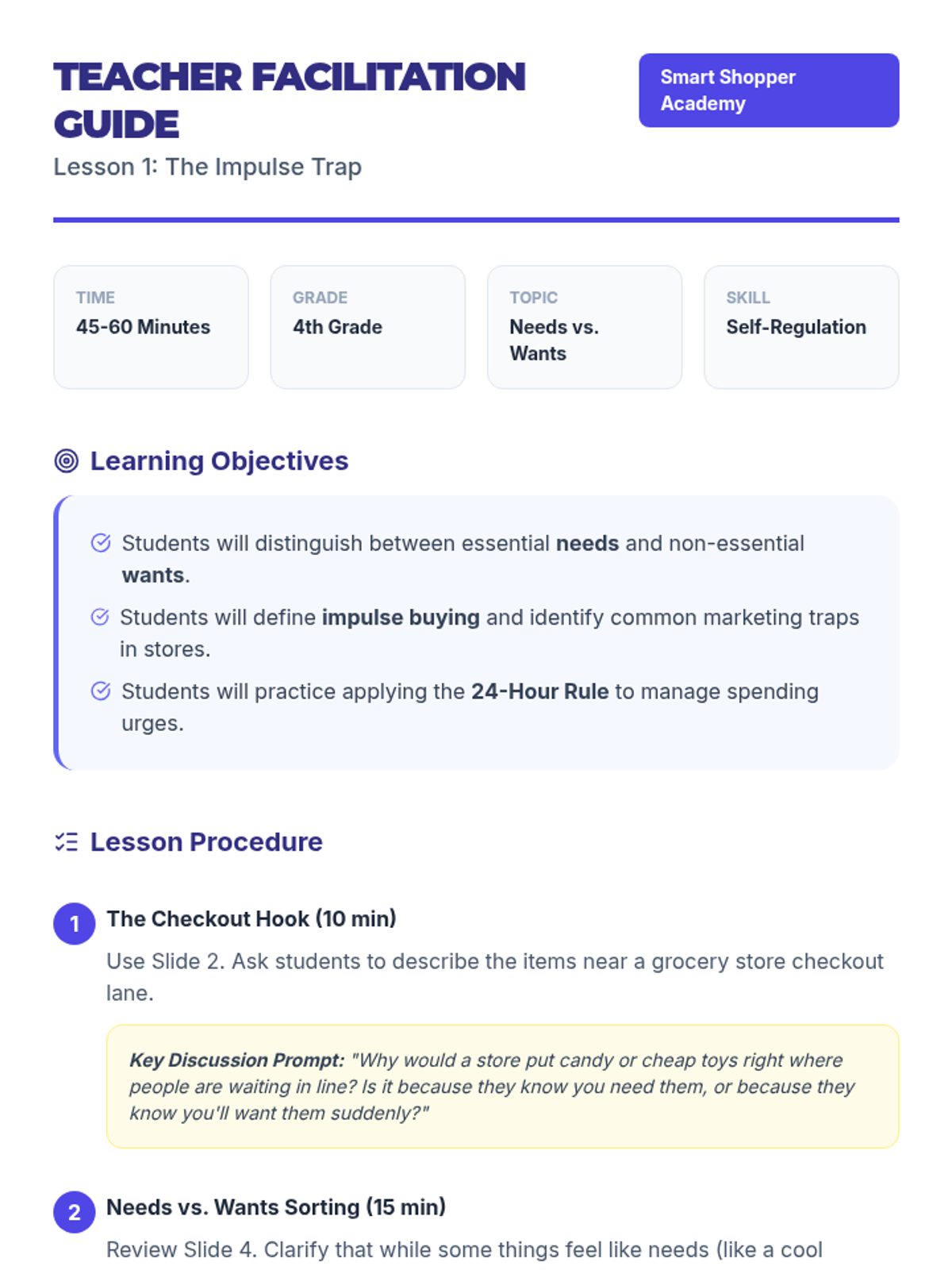
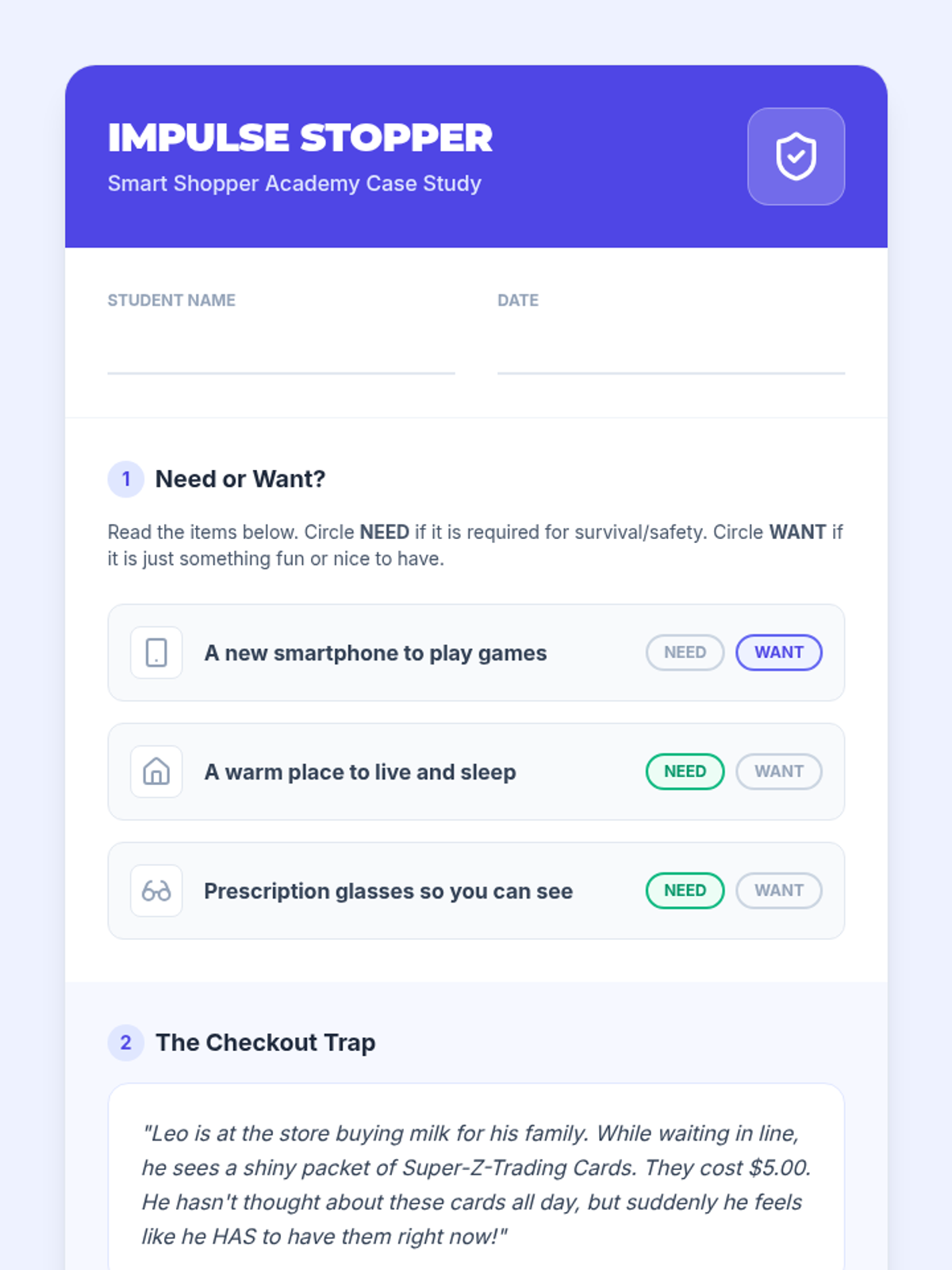
Students define needs, wants, and impulse buying. They learn strategies to avoid 'spur-of-the-moment' purchases and practice categorization.
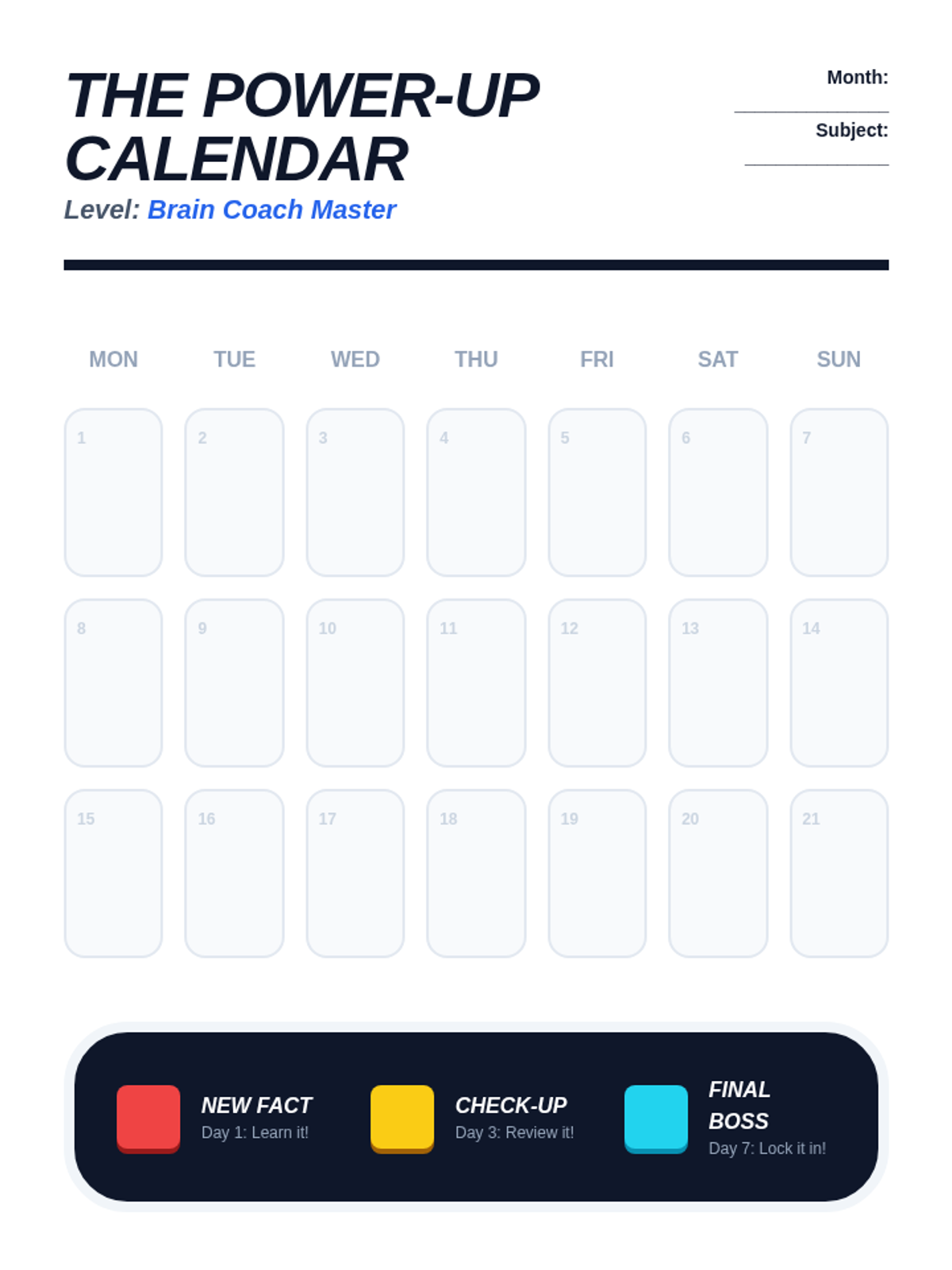
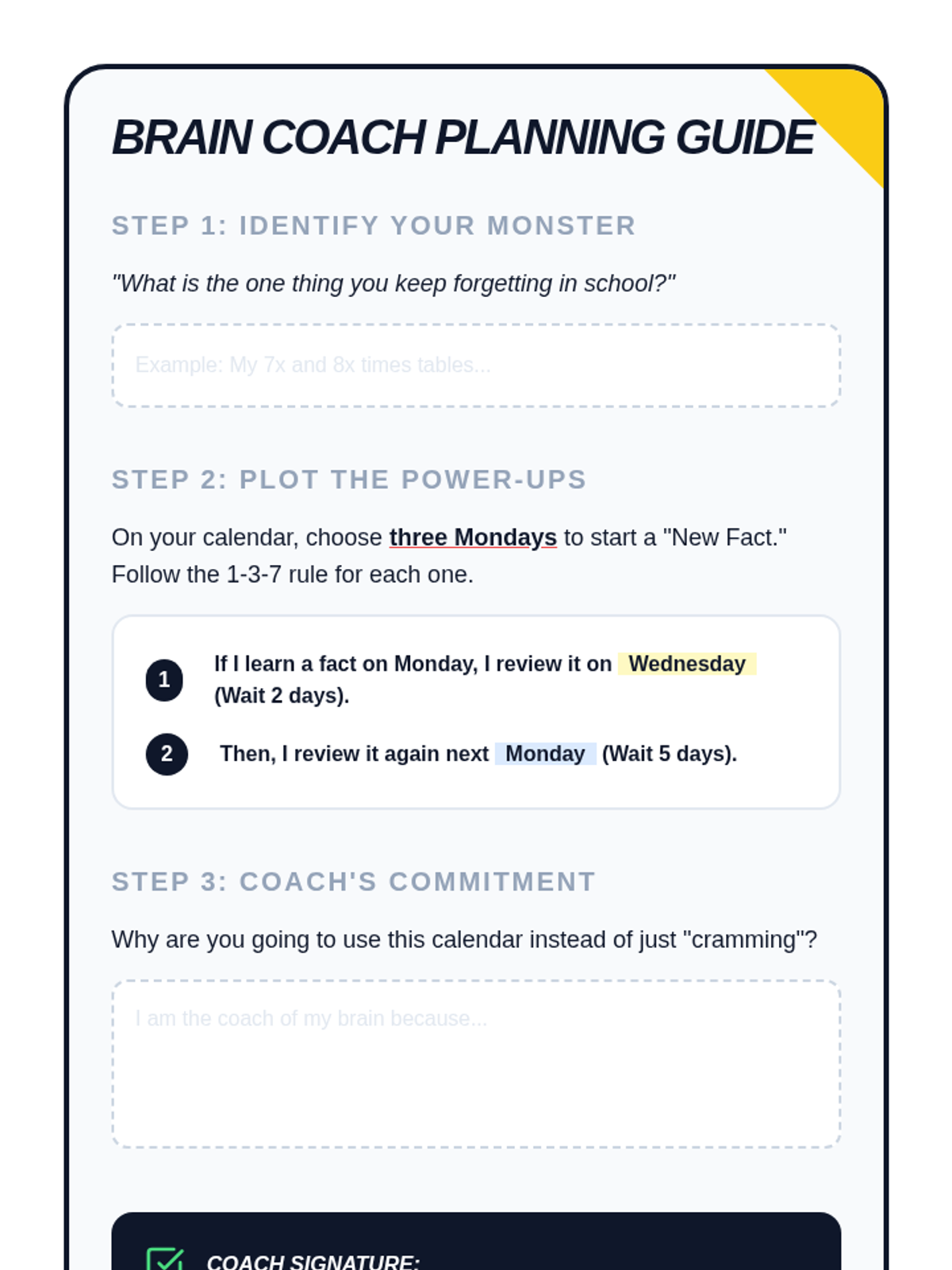
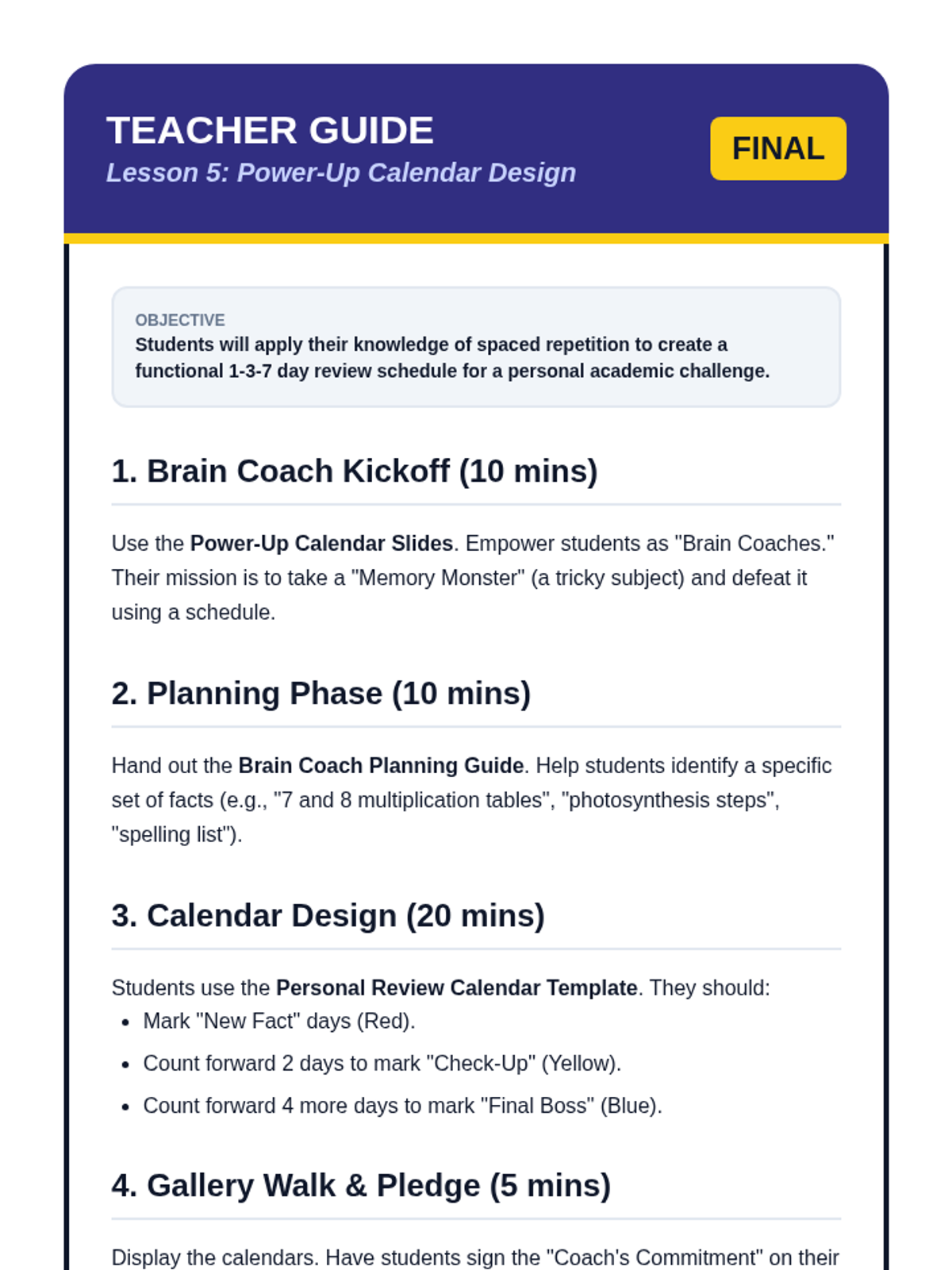
As a final project, students act as their own 'Brain Coach' to design a personal study calendar for their specific academic needs, applying the 1-3-7 day spacing rule.
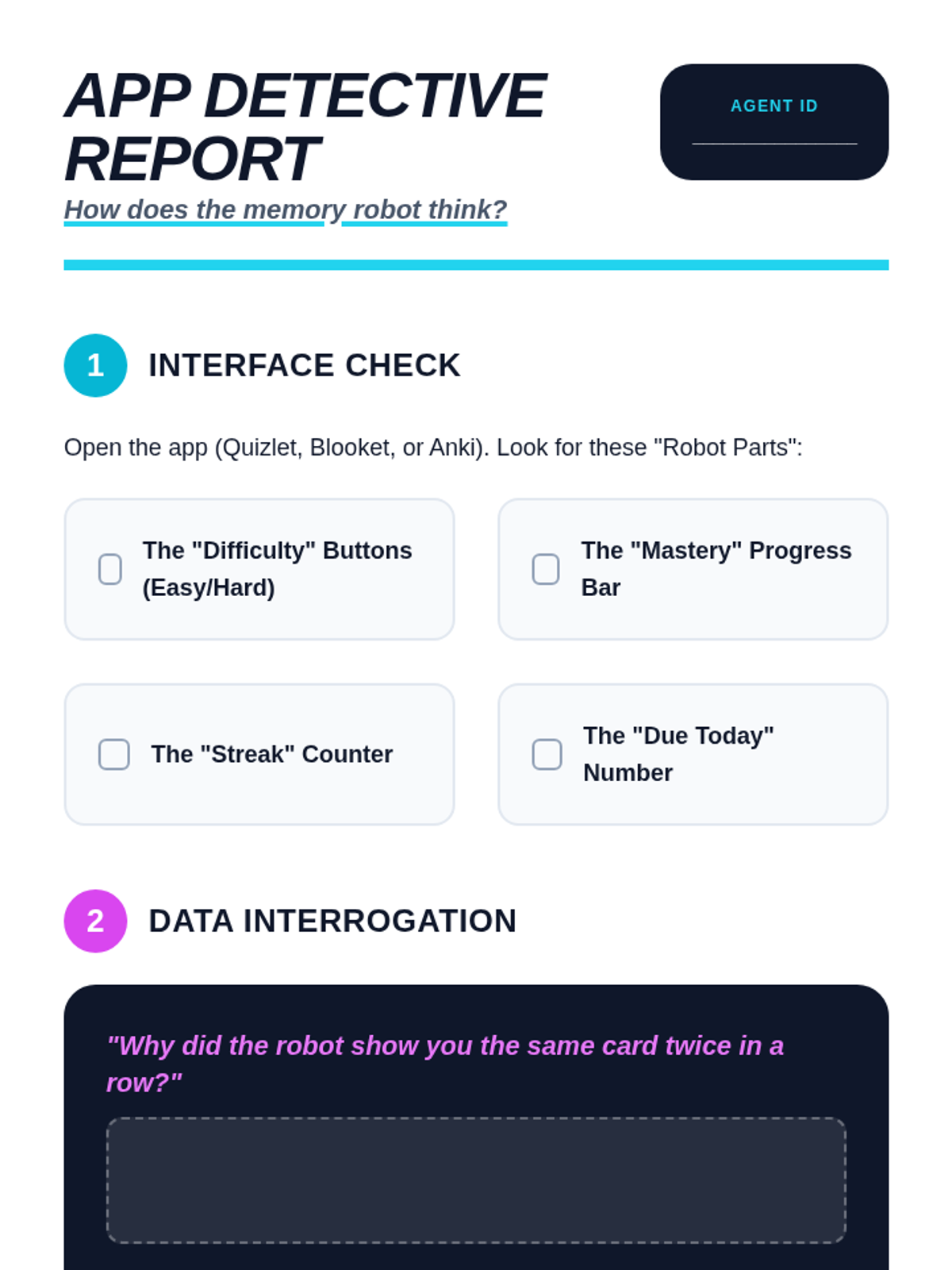
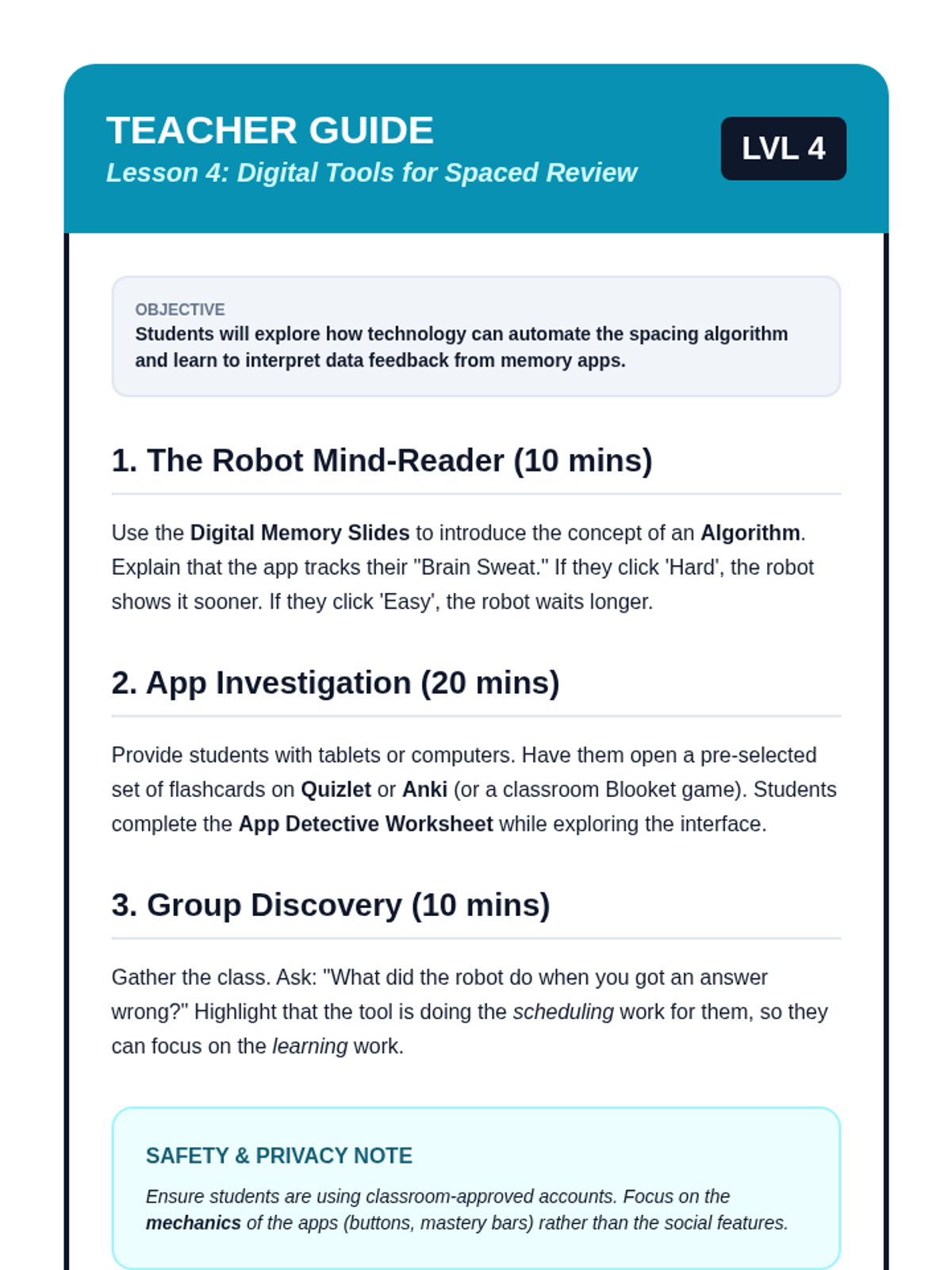
Students investigate digital tools and algorithms that automate spaced repetition, learning how to interpret 'forgetting curves' and feedback from memory-focused apps.
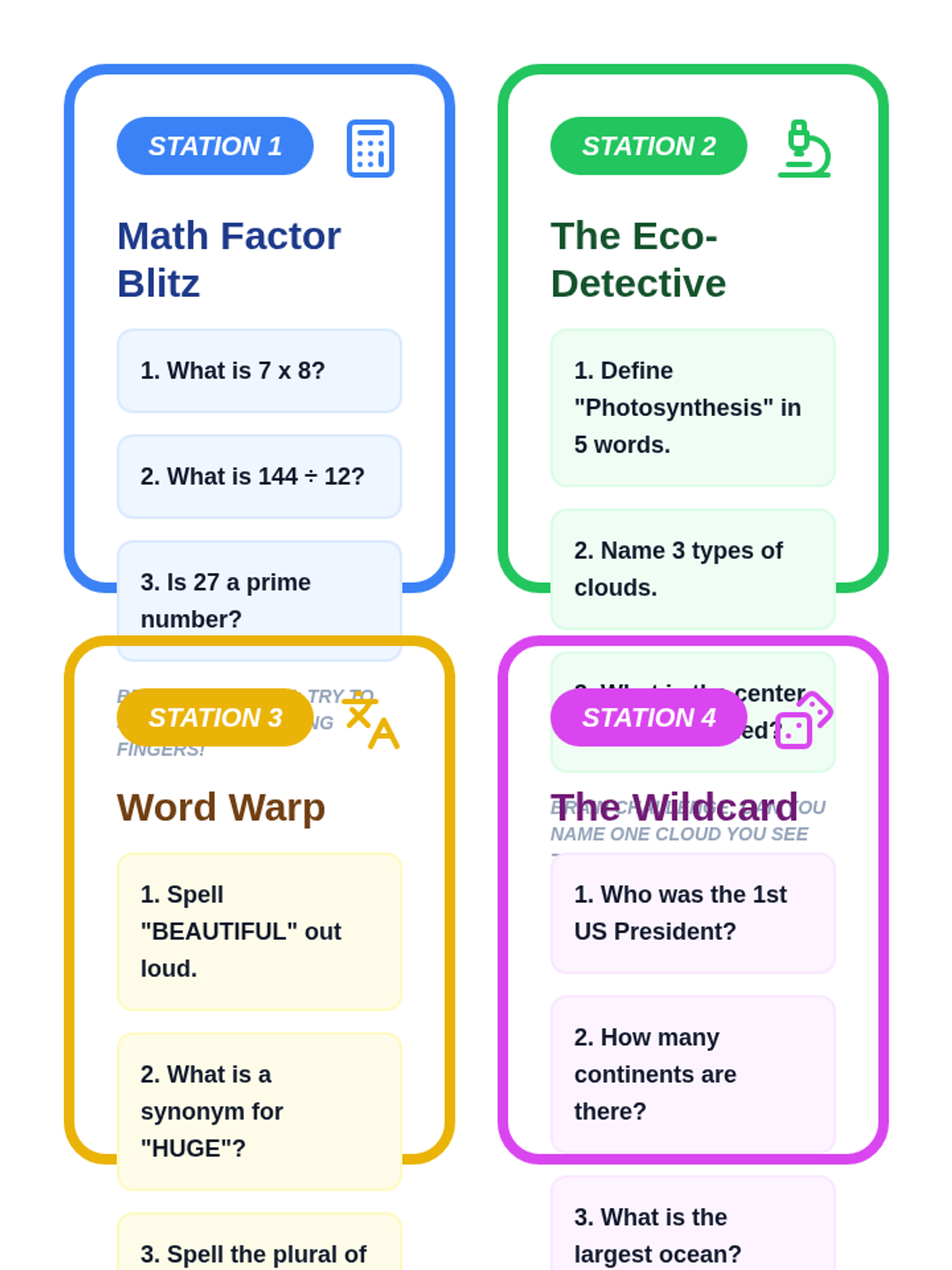
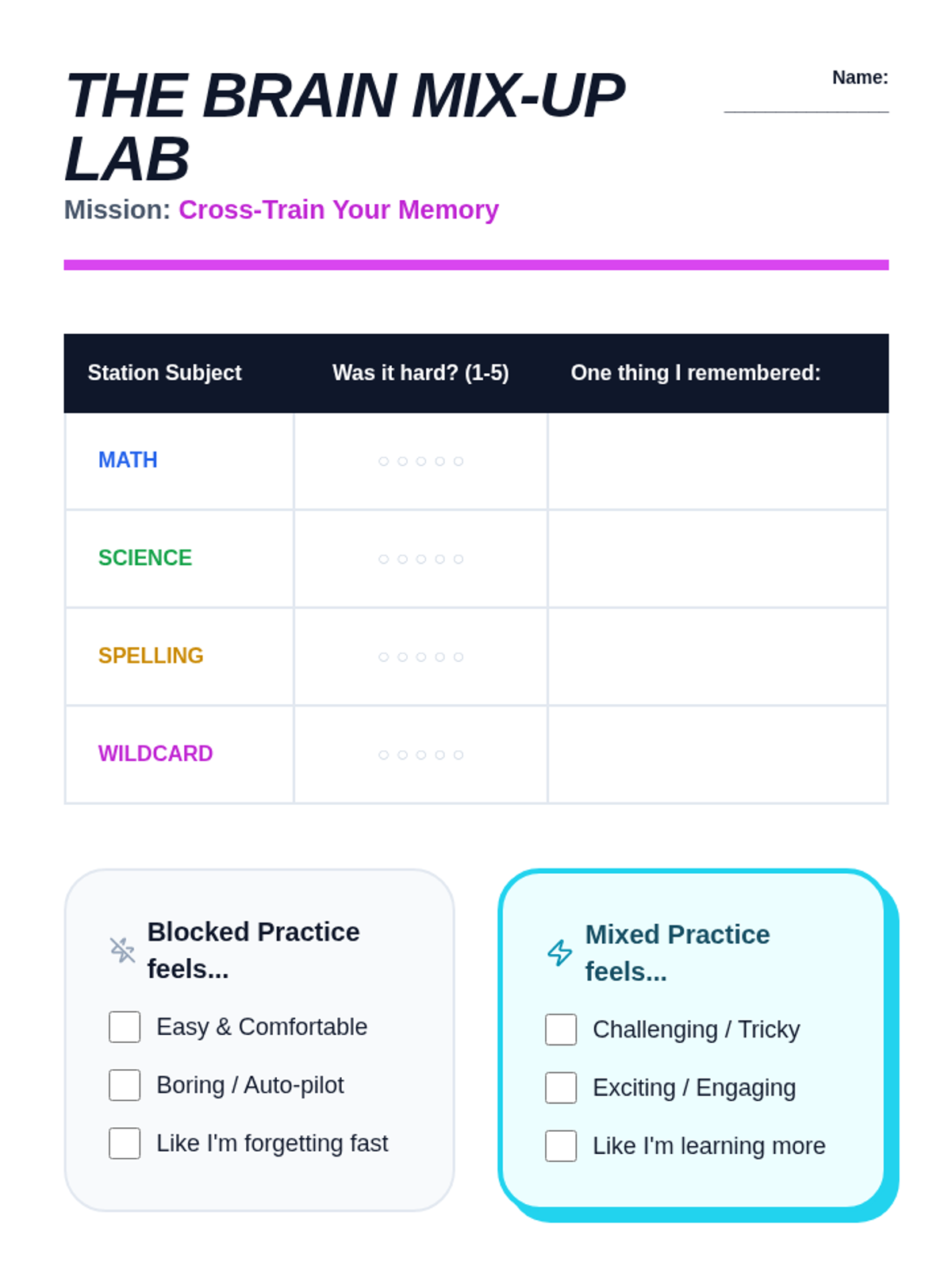
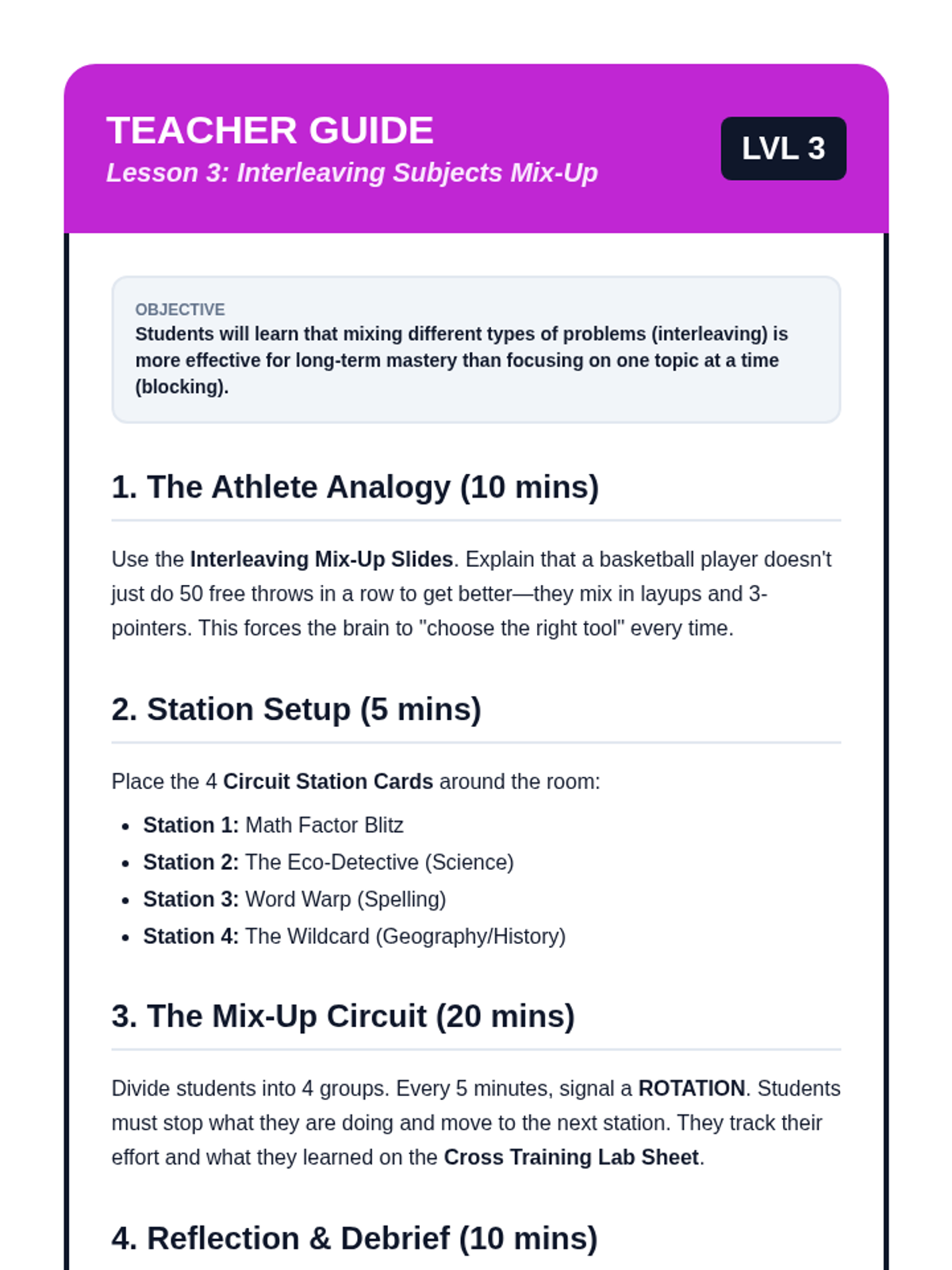
Using a circuit of varied subjects, students learn the concept of interleaving—mixing different types of problems—to prevent 'autopilot' learning and force the brain to differentiate between skills.
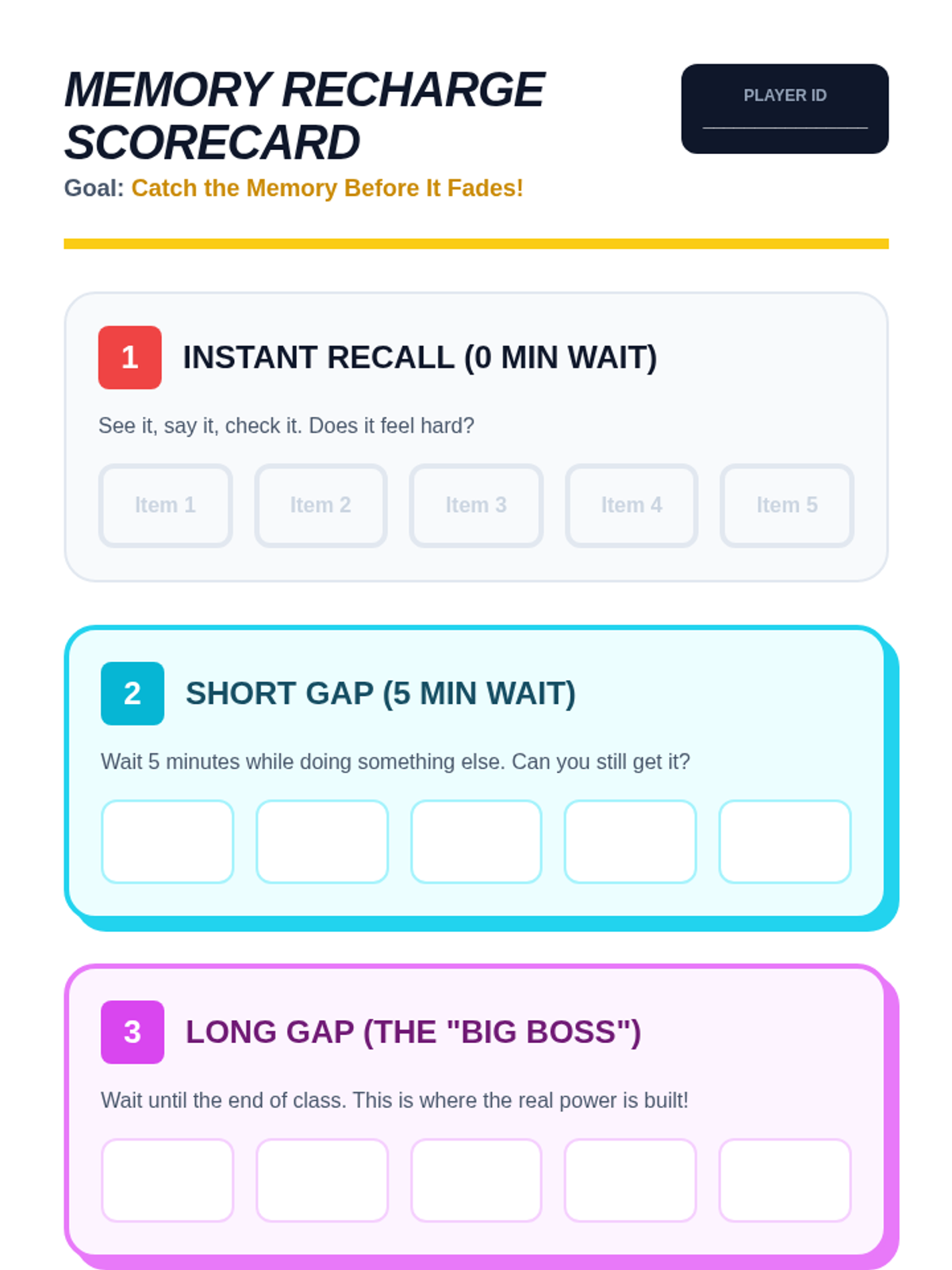
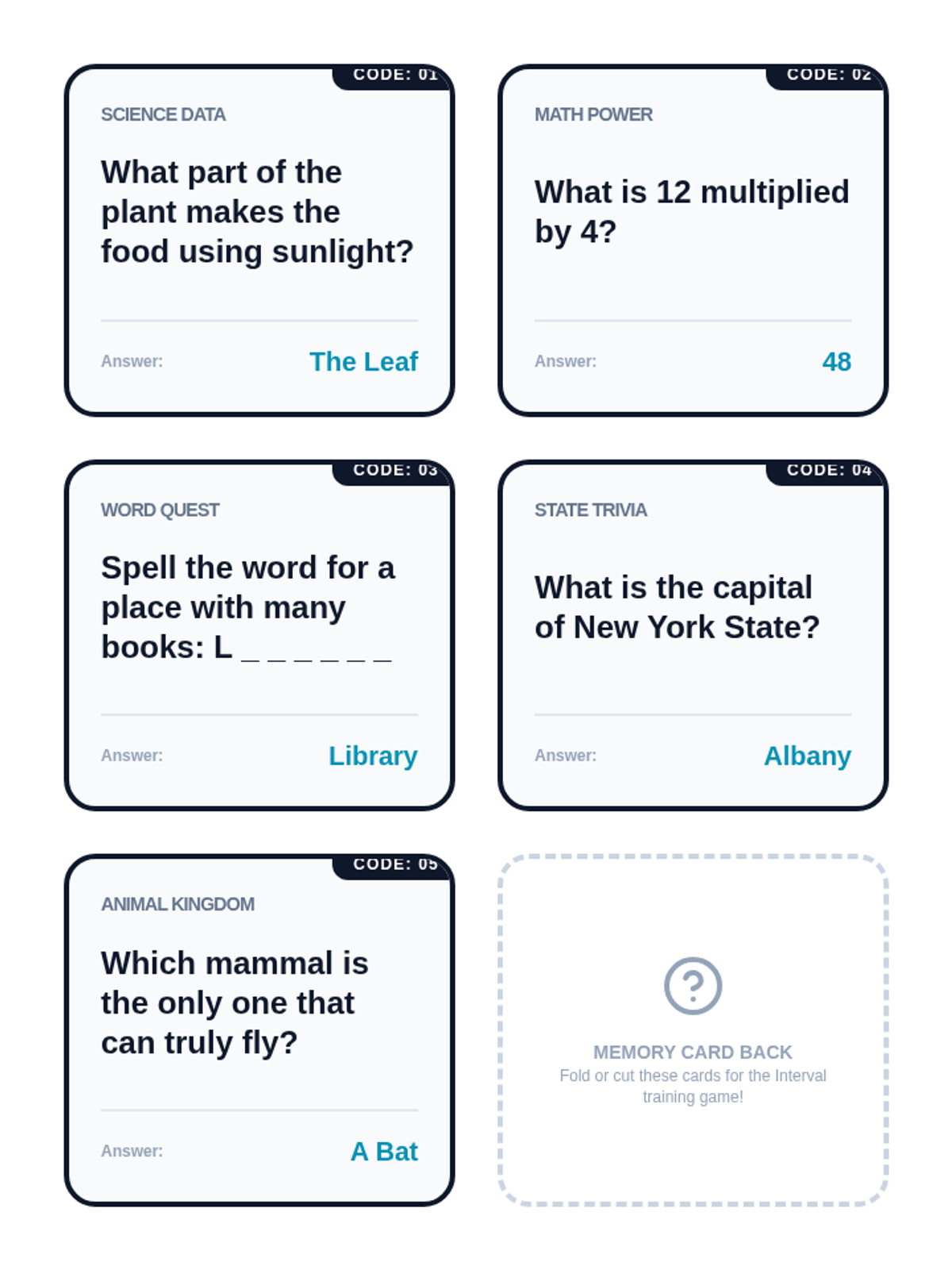
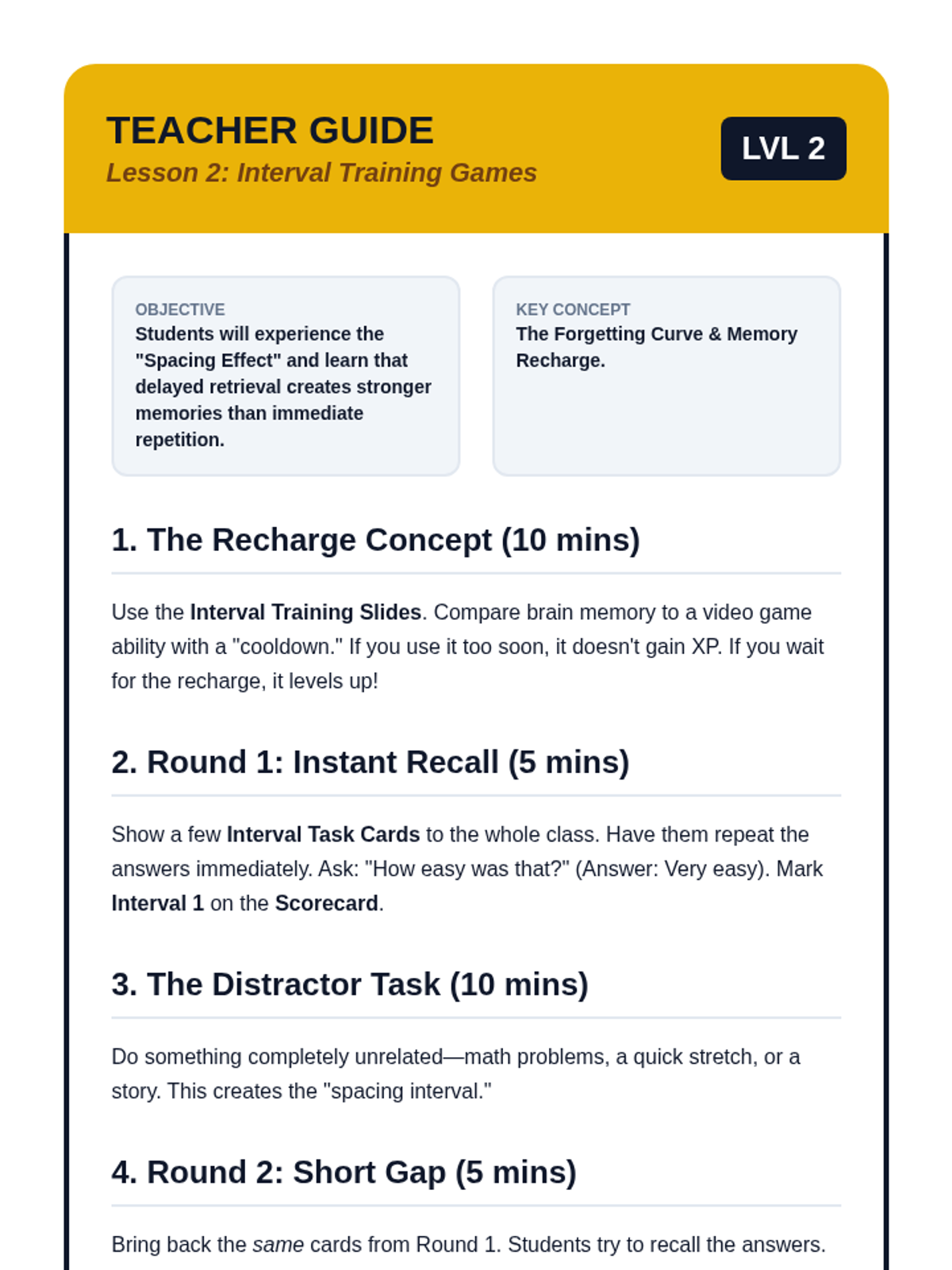
Students play games that introduce 'time gaps' between learning and review, simulating the spacing effect. They learn to track their success at different intervals to see how 'waiting to forget' actually helps them remember.
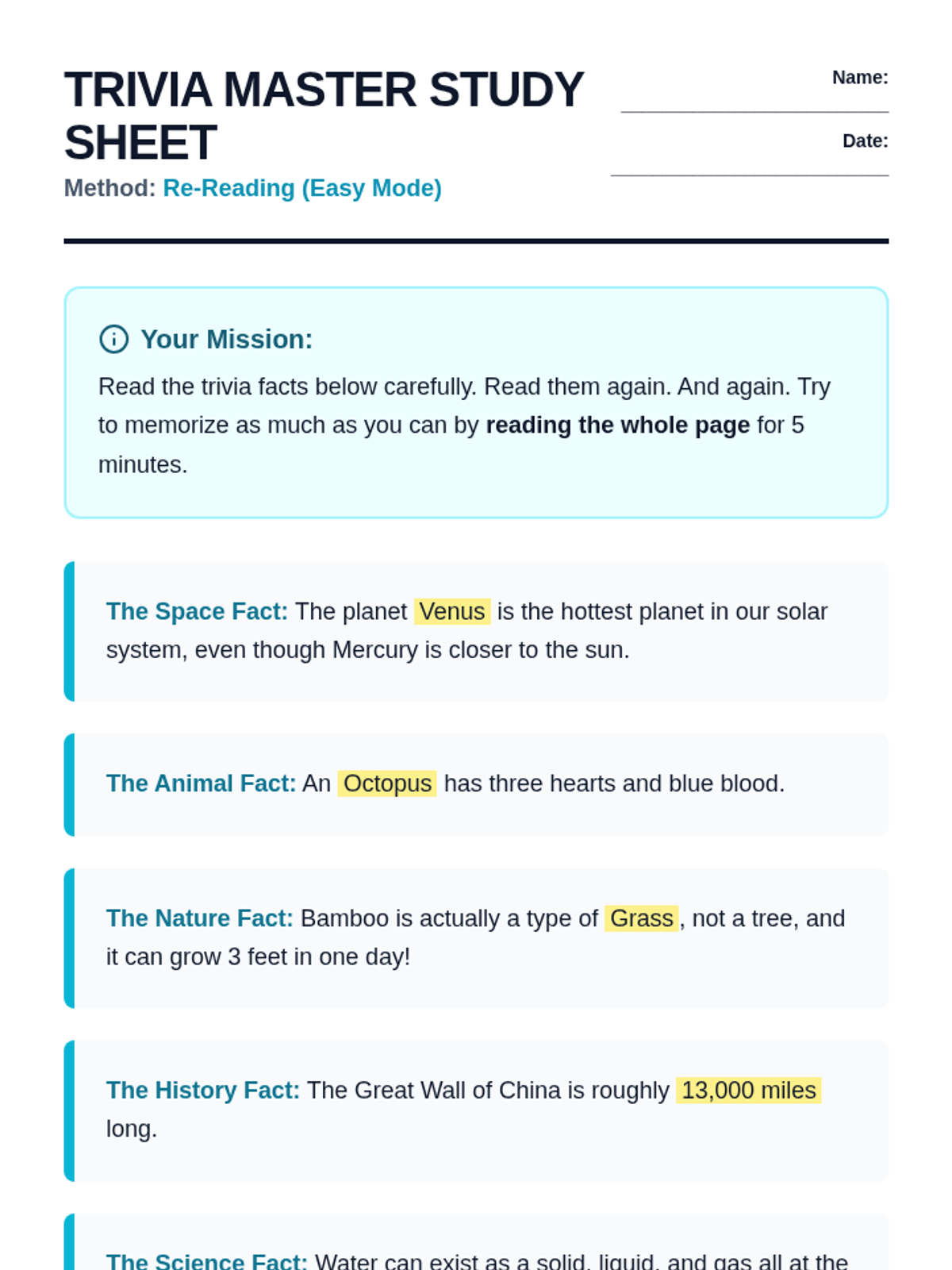
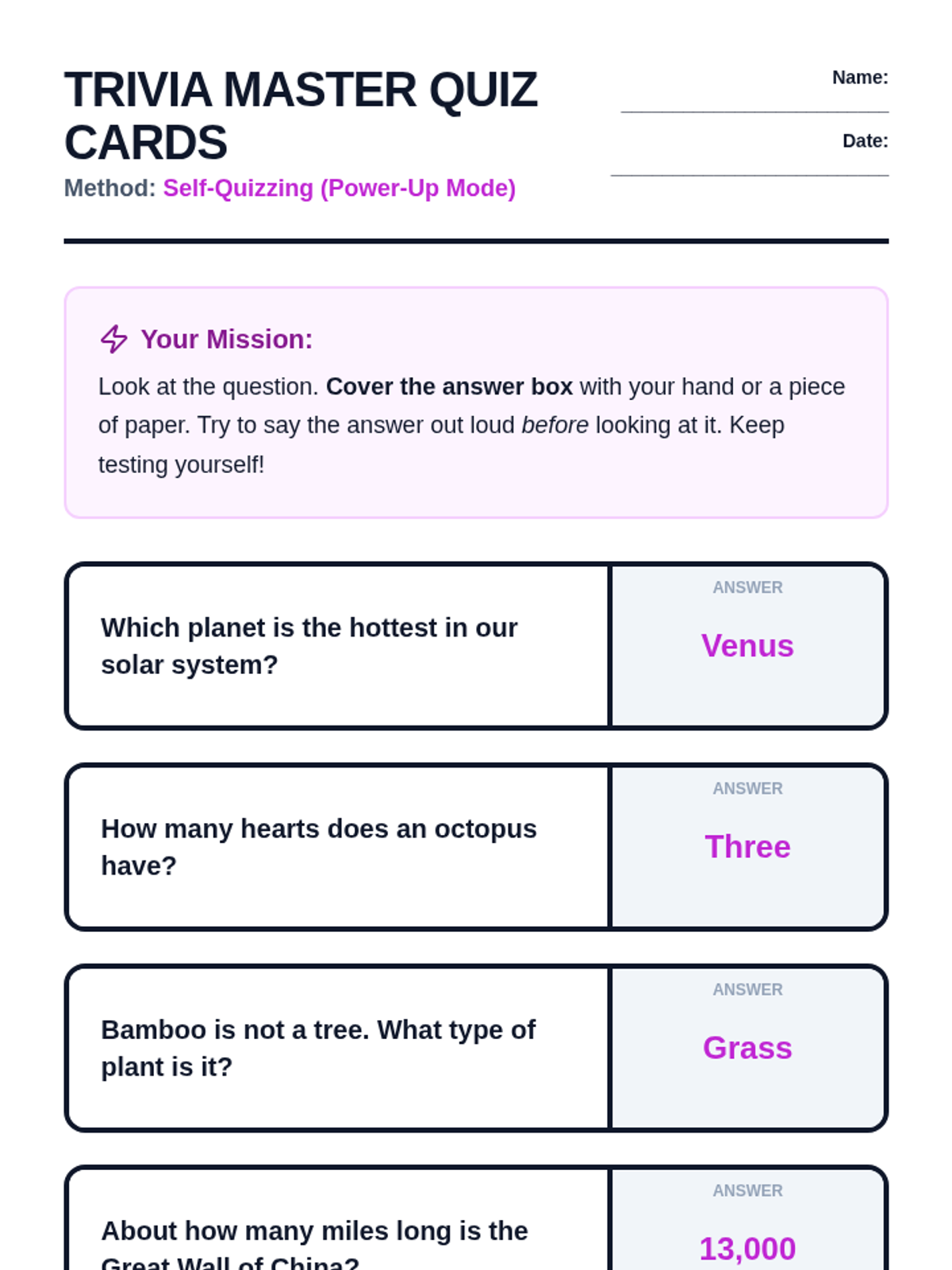
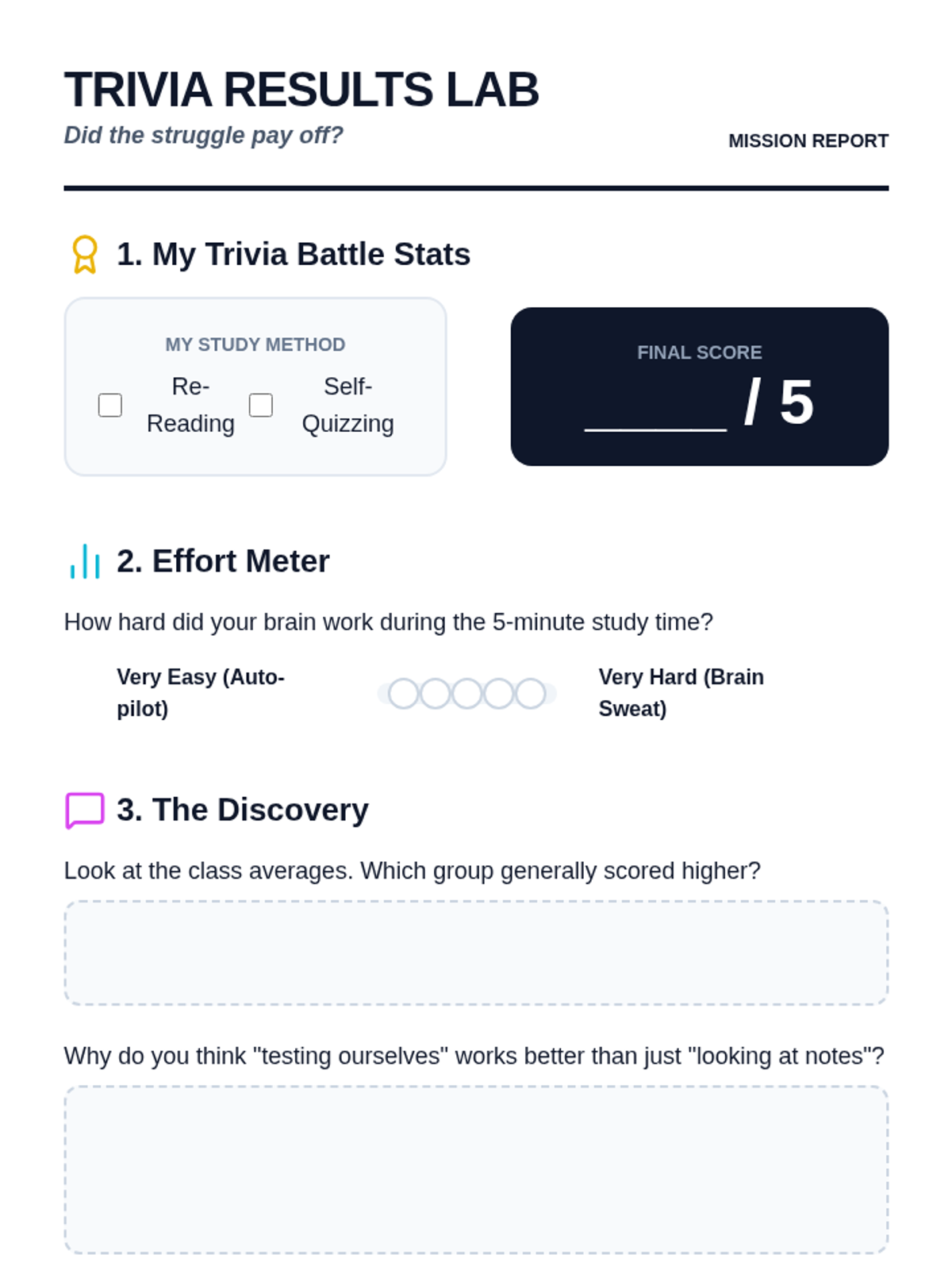
Students discover the 'Testing Effect' by comparing two study methods (re-reading vs. self-quizzing) in a competitive trivia format. The lesson highlights that the struggle of retrieval is what strengthens memory.
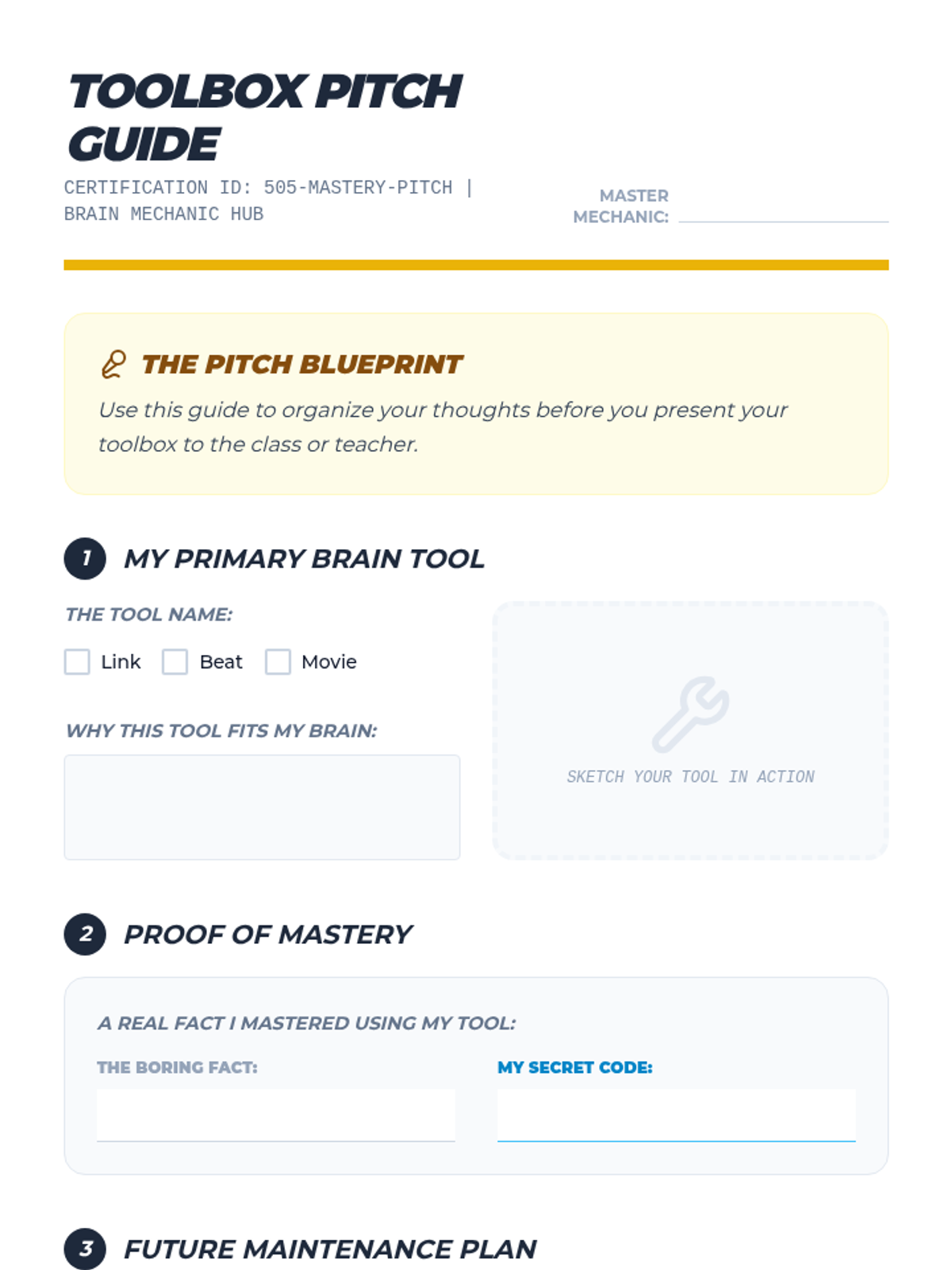
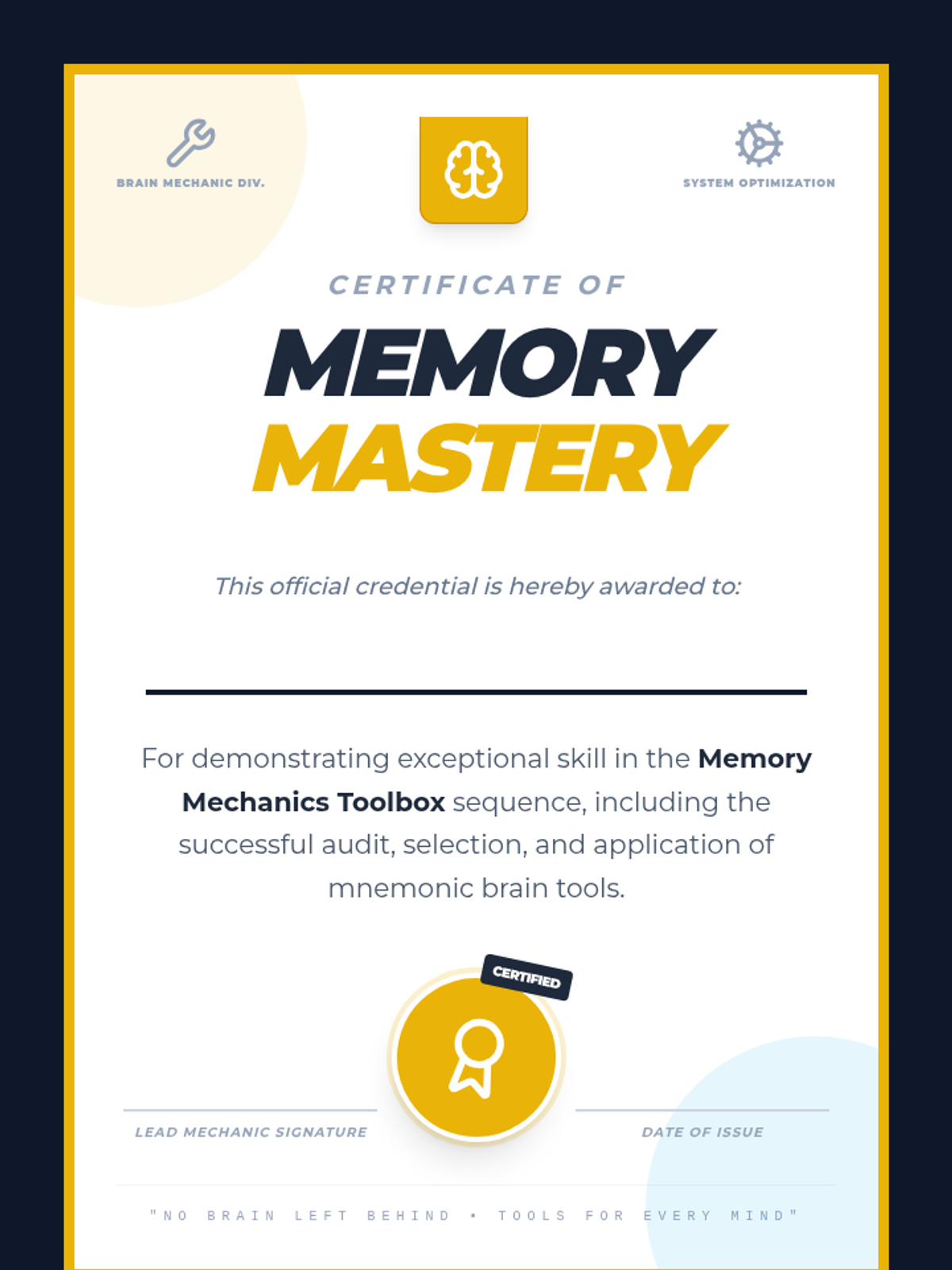
Students present their finalized 'Personal Memory Toolbox' and set goals for future application, earning their 'Memory Mastery' certification.
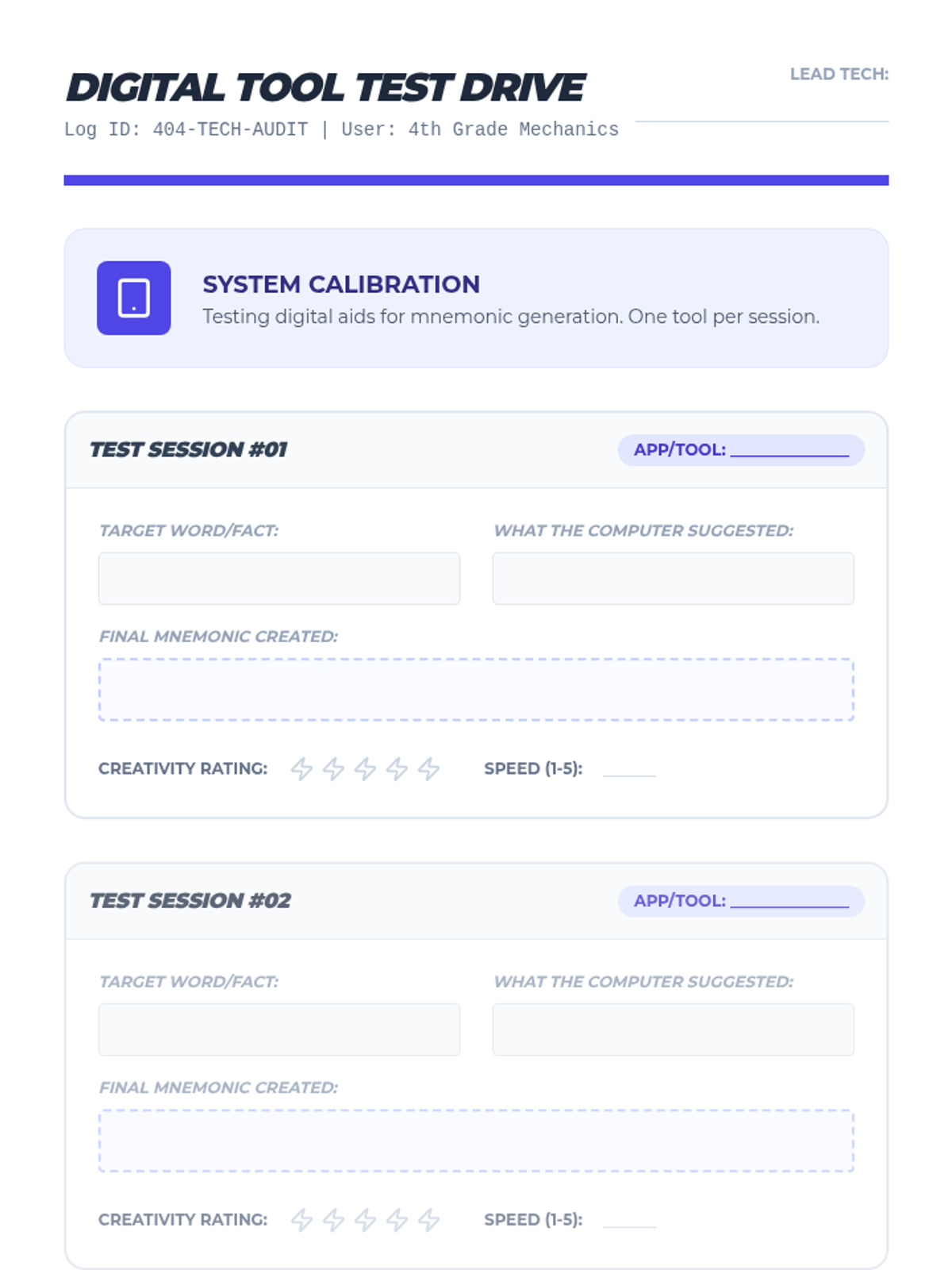
Students explore how digital tools can assist in creating and organizing mnemonics, integrating technology into their support system.
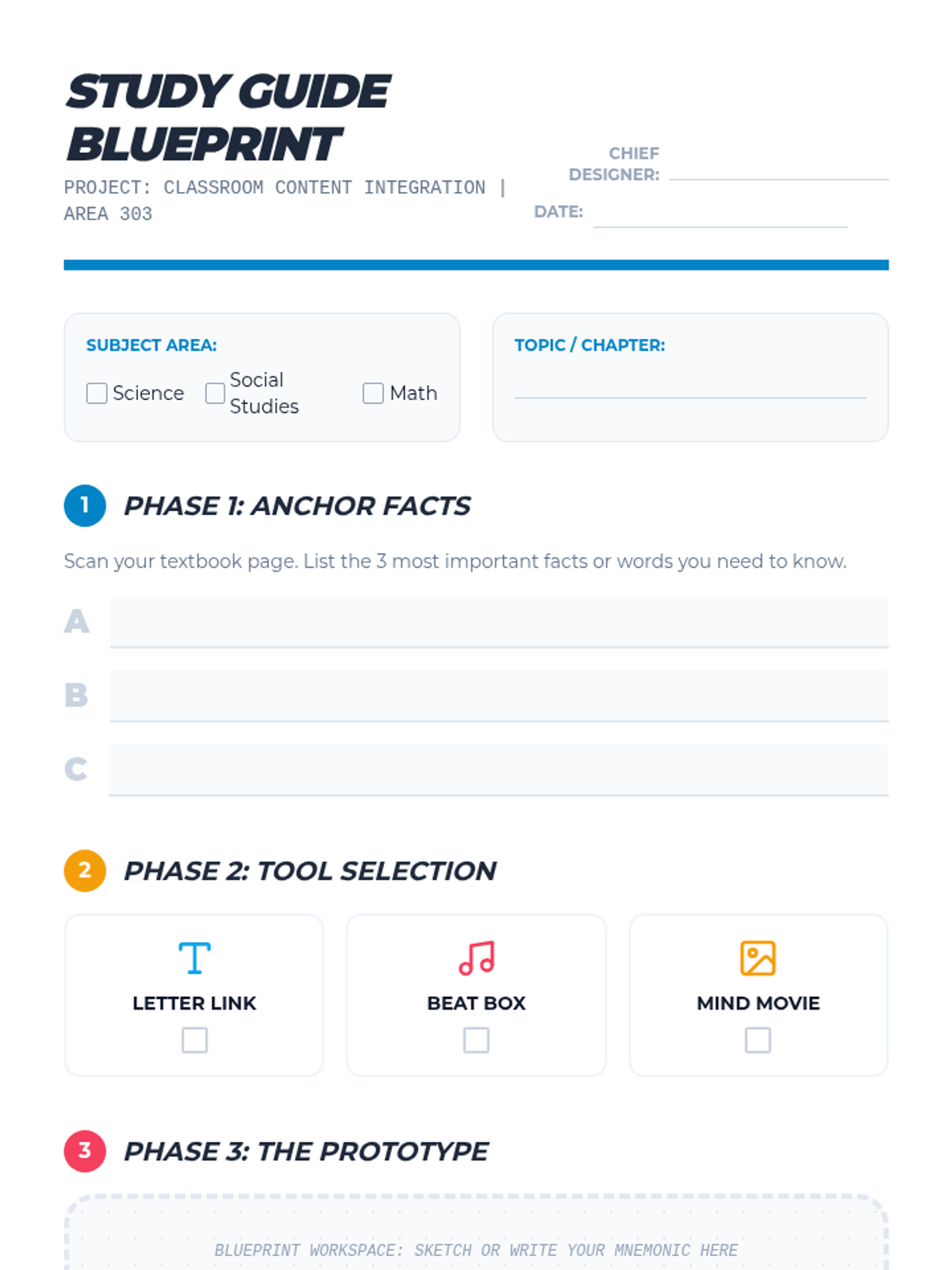
Students bridge classroom learning by applying their preferred mnemonic strategies to real content from other subjects like Science or Social Studies.
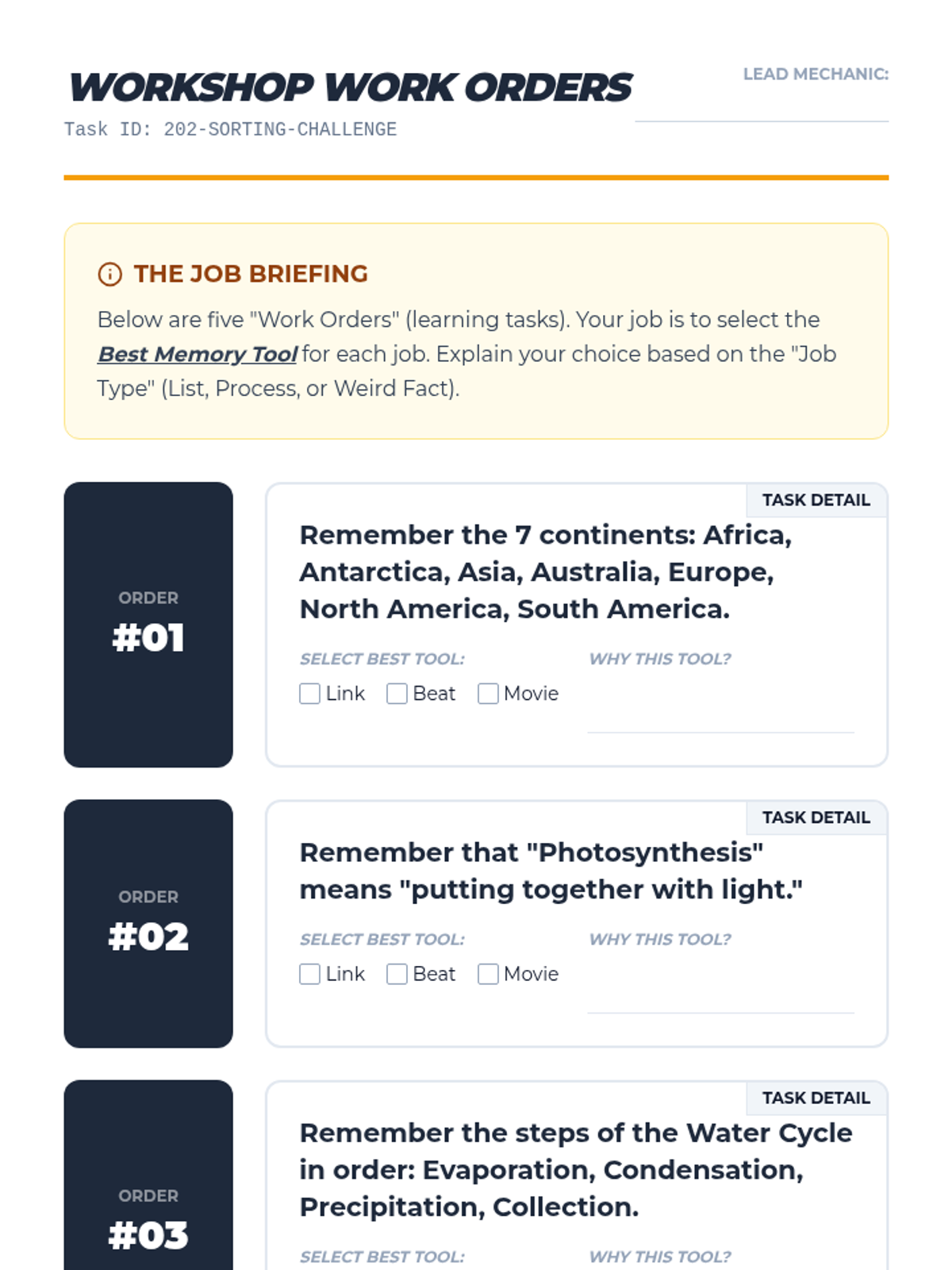
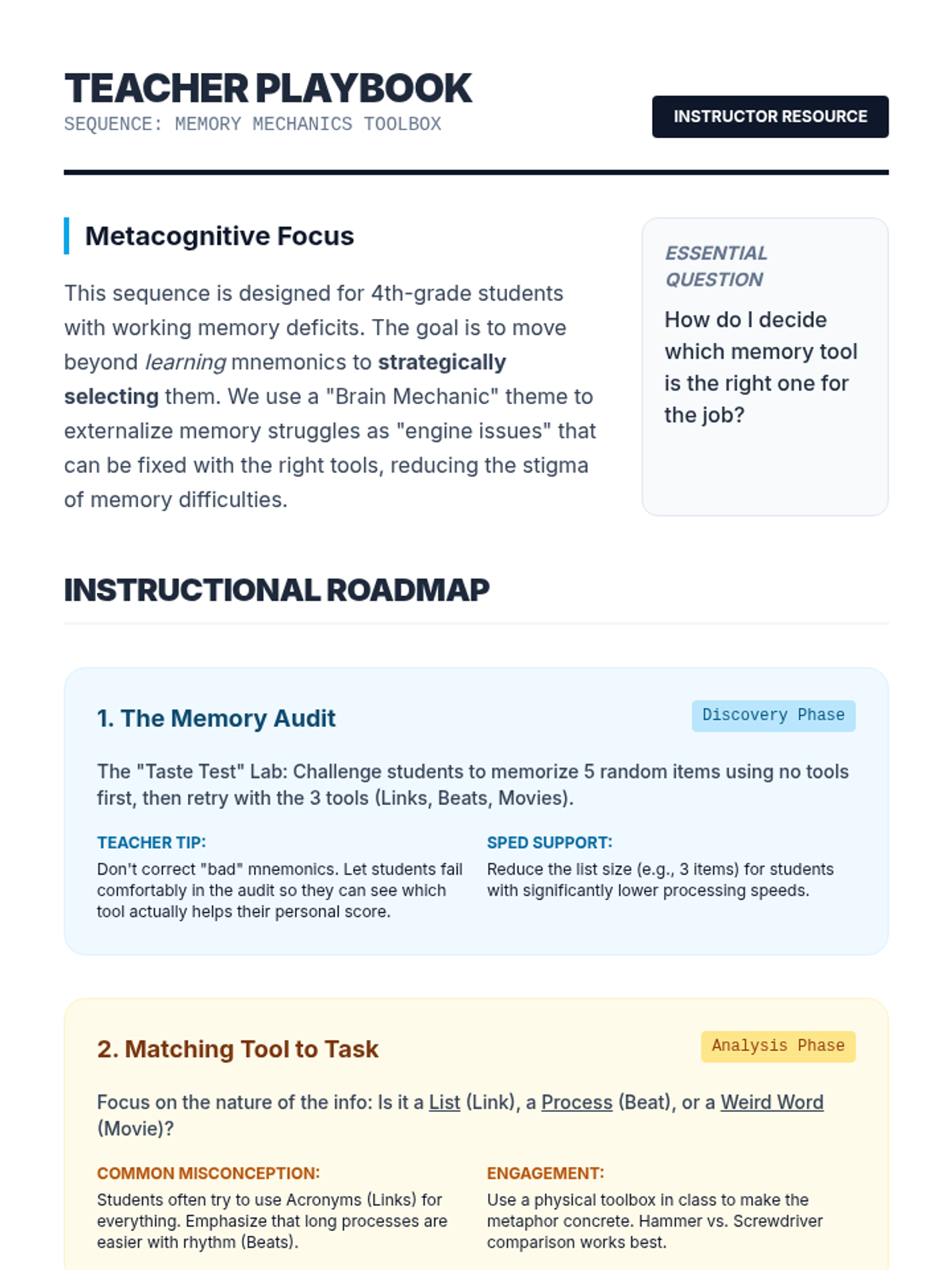
Students analyze academic scenarios to match specific mnemonic tools to the nature of the information being learned (e.g., lists vs. processes).
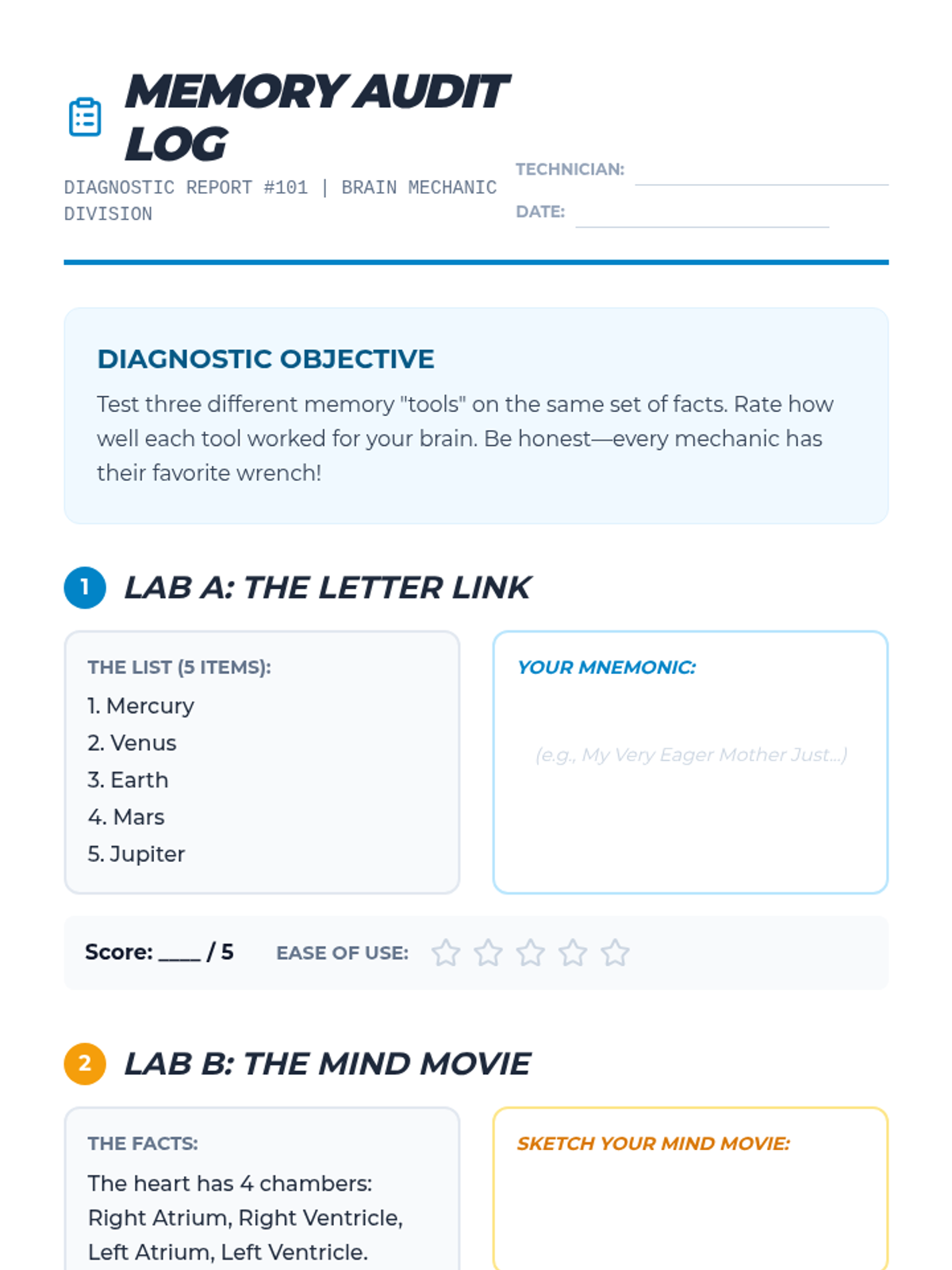
Students test different mnemonic types (acronyms, visualization, rhyming) to discover their personal memory strengths through a 'Taste Test' lab.