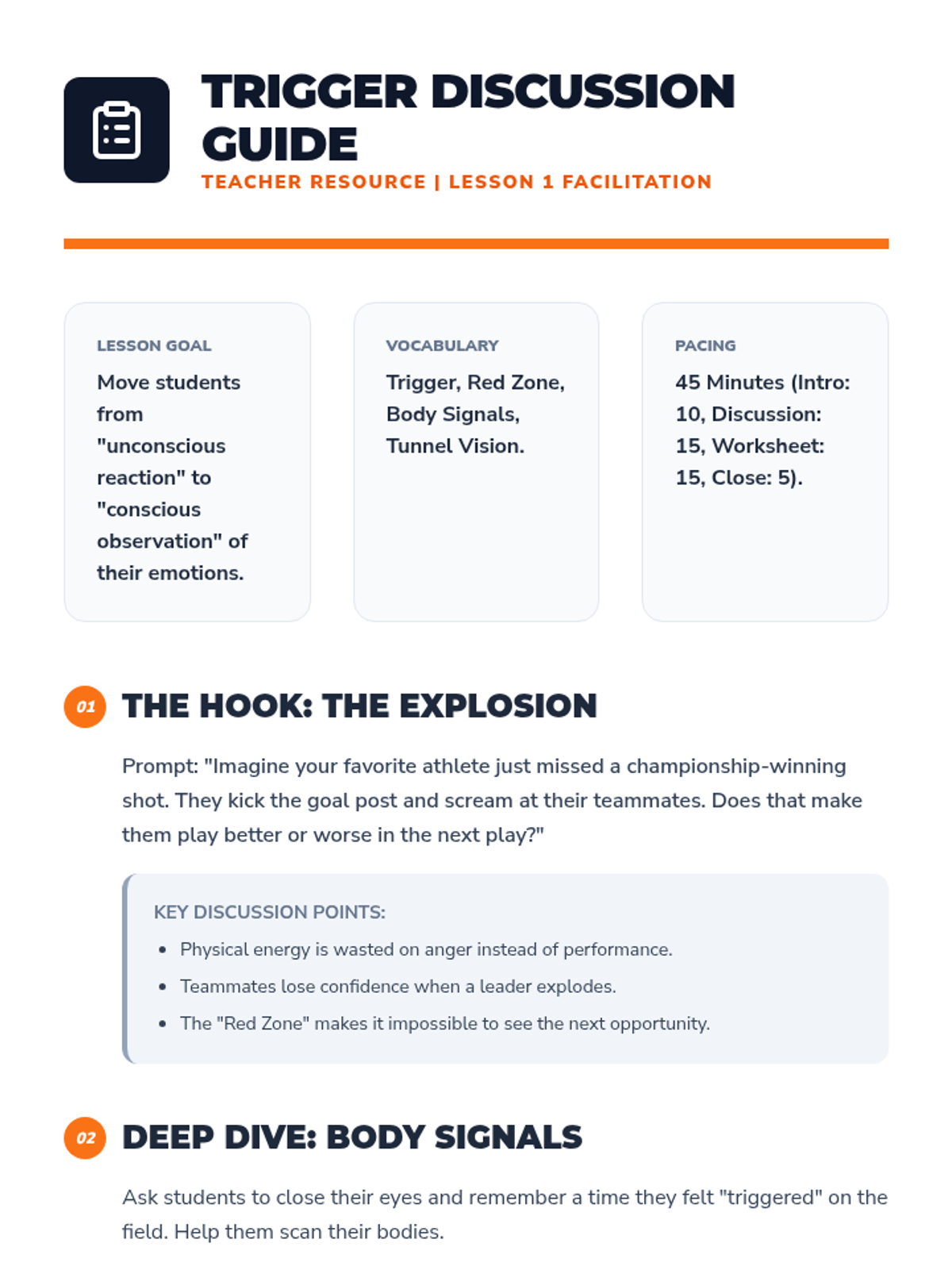
Stop-and-think strategies, impulse management, and SMART goal setting for personal growth. Develops internal motivation, stress reduction techniques, and resilience through proactive planning and monitoring.
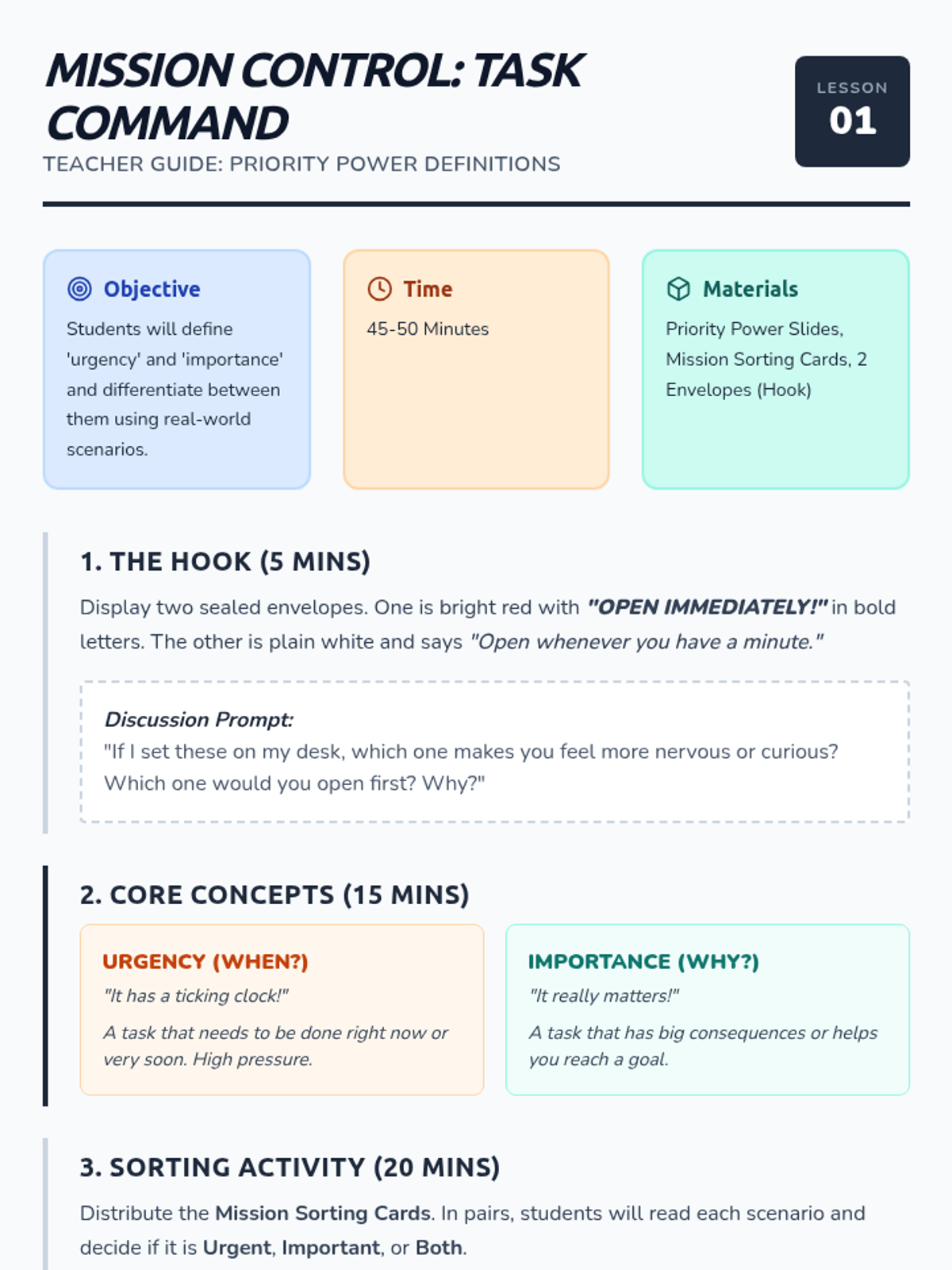
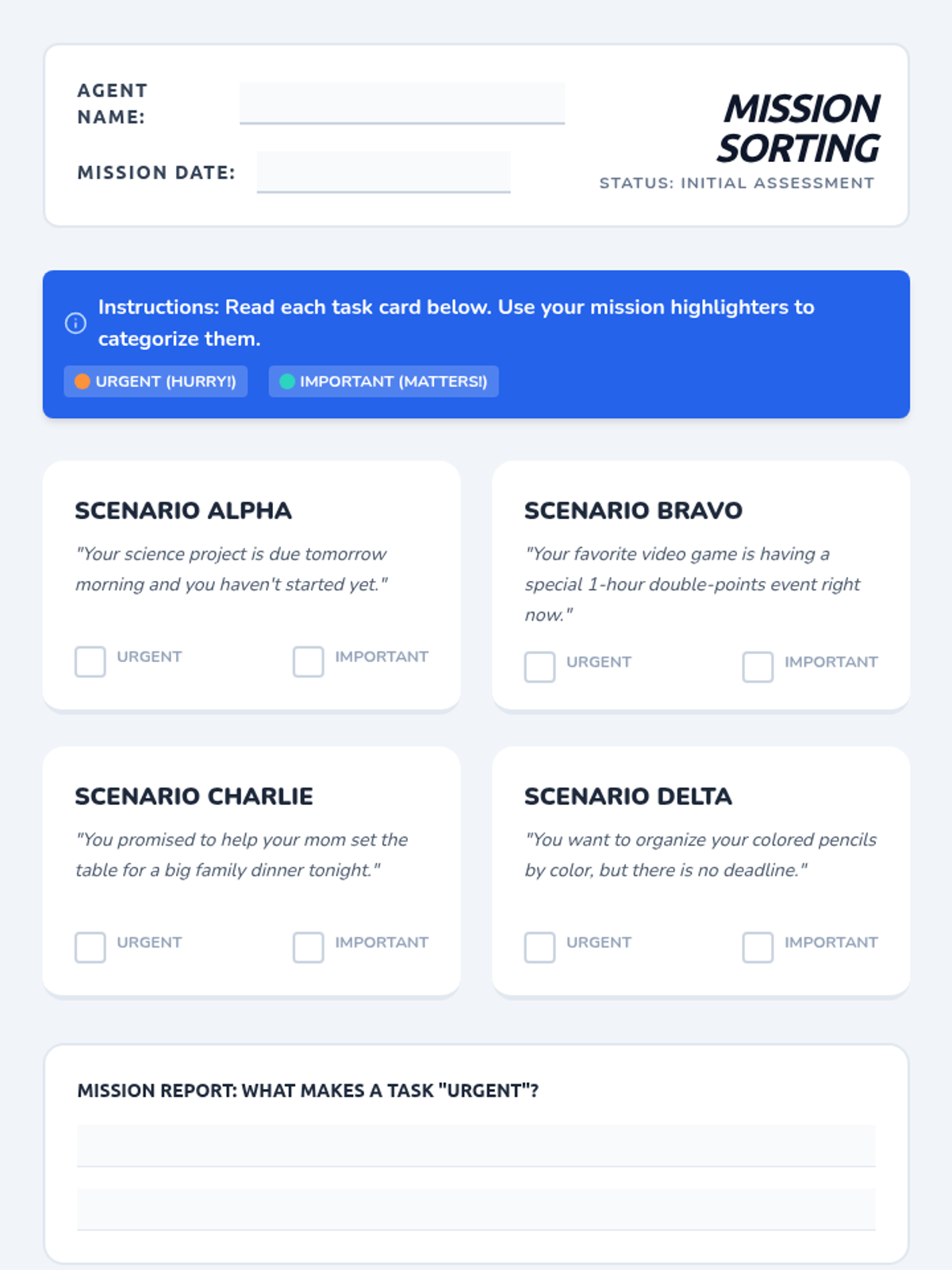
A 5-lesson sequence designed to help 4th-grade students master task prioritization using visual matrices and executive functioning strategies. Students progress from defining urgency and importance to applying a 2x2 priority matrix to their own real-world schedules.
A 4th-grade sequence introducing the Leitner System for spaced repetition, helping students understand memory, build physical study tools, and develop effective long-term retention habits.
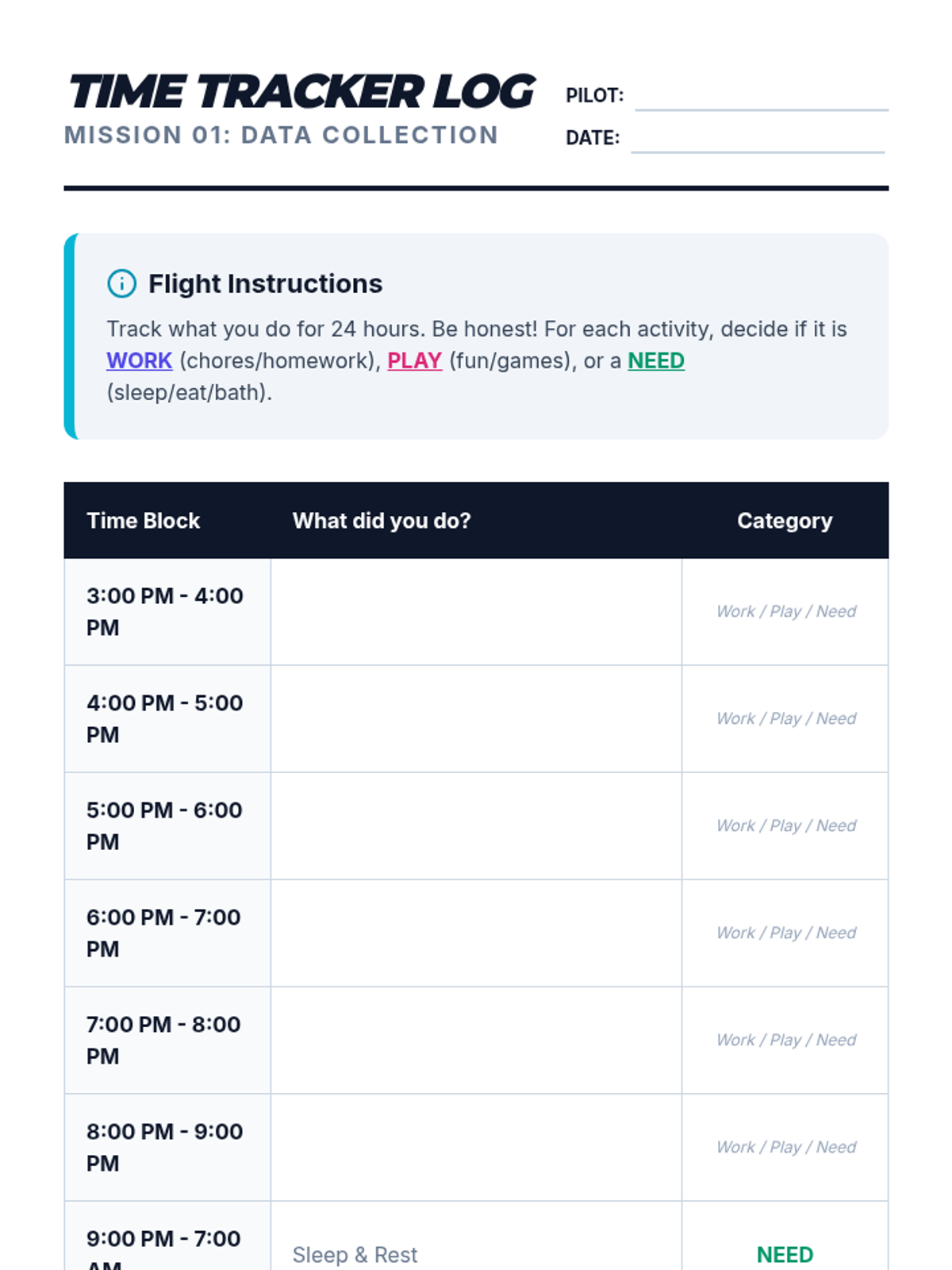
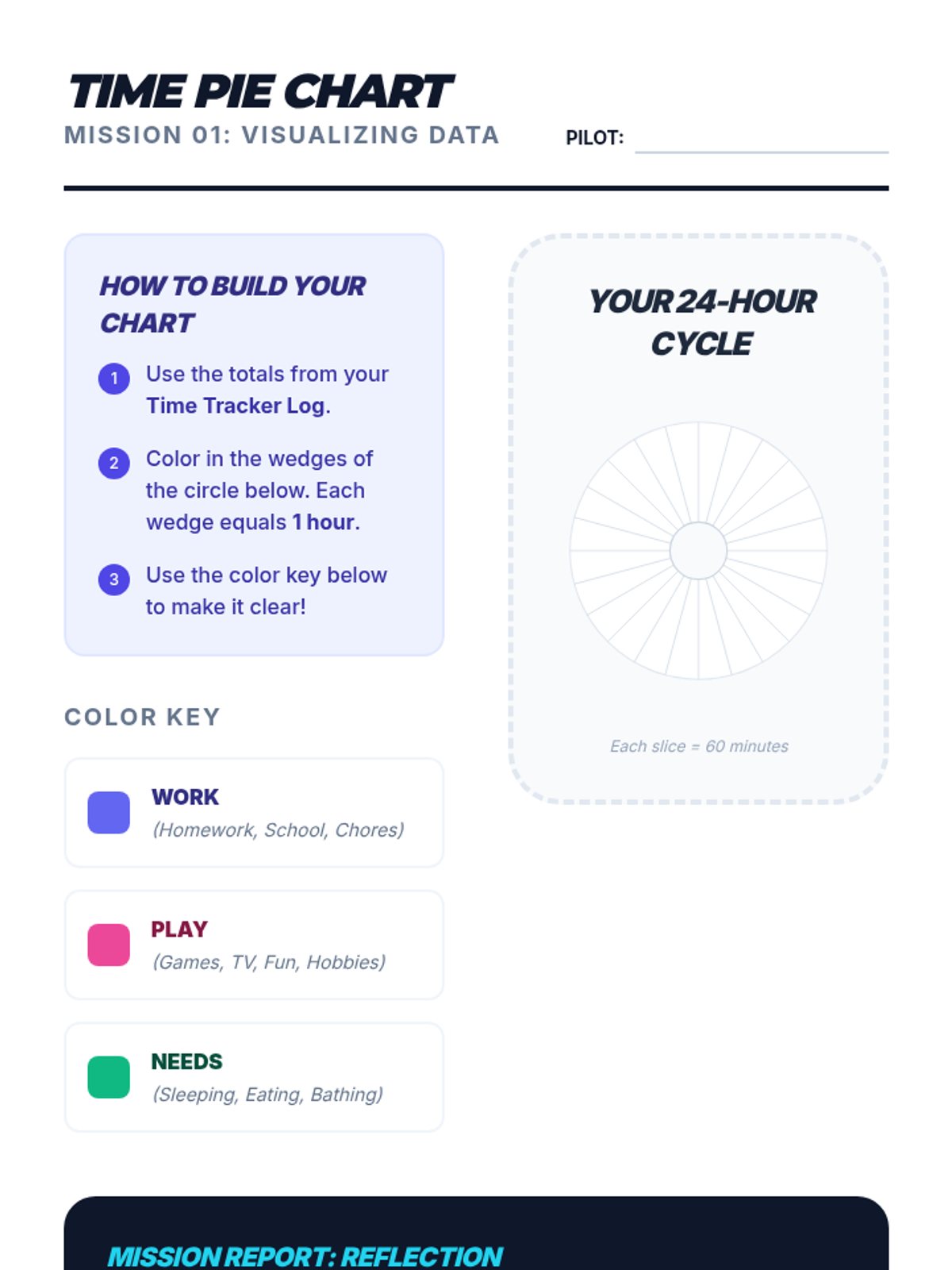
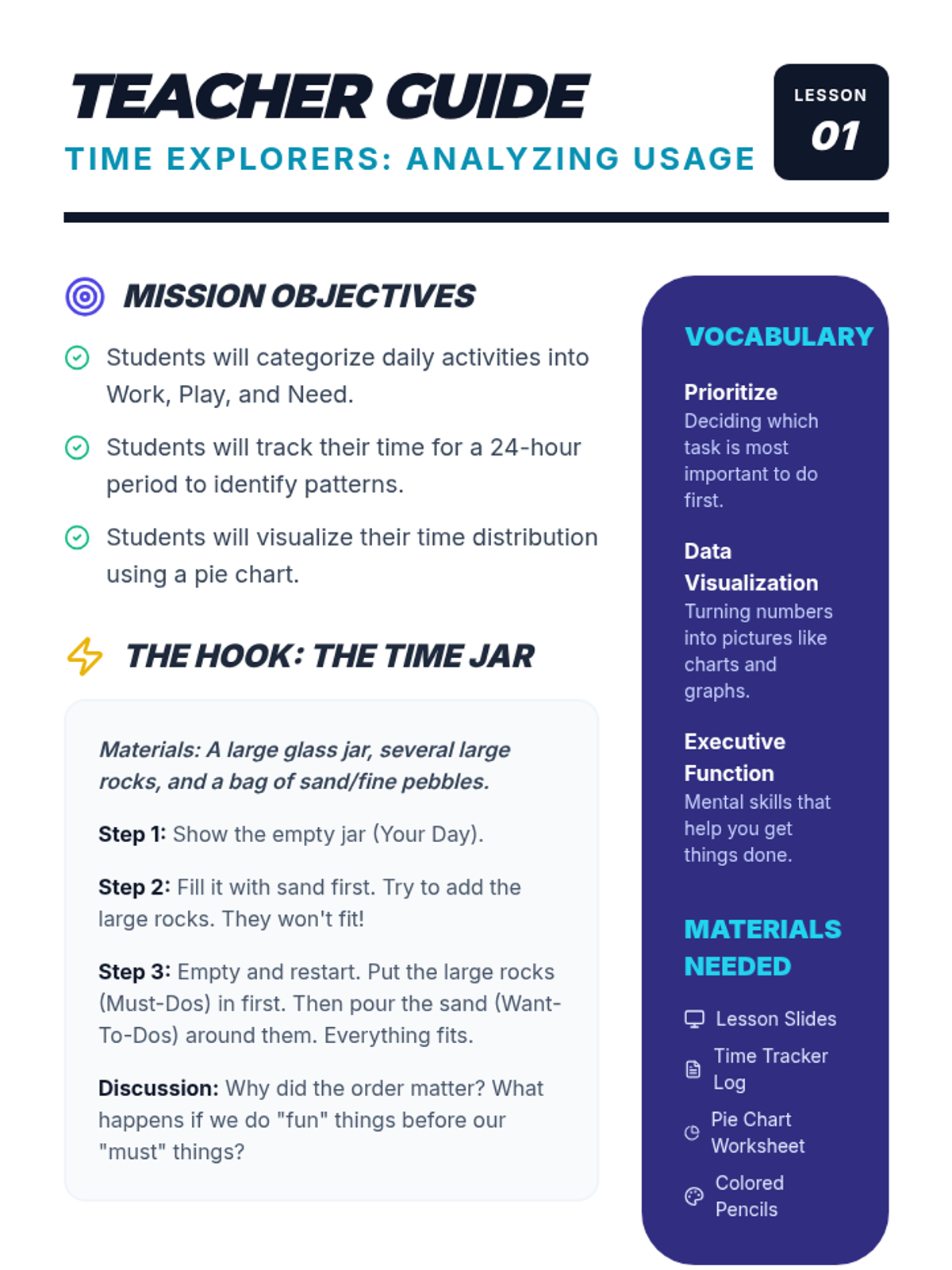
A comprehensive sequence for 4th graders to master executive function skills like time management, prioritization, and organization. Through hands-on activities, students learn to track their time, 'eat the frog' for difficult tasks, and design their own distraction-free focus zones.
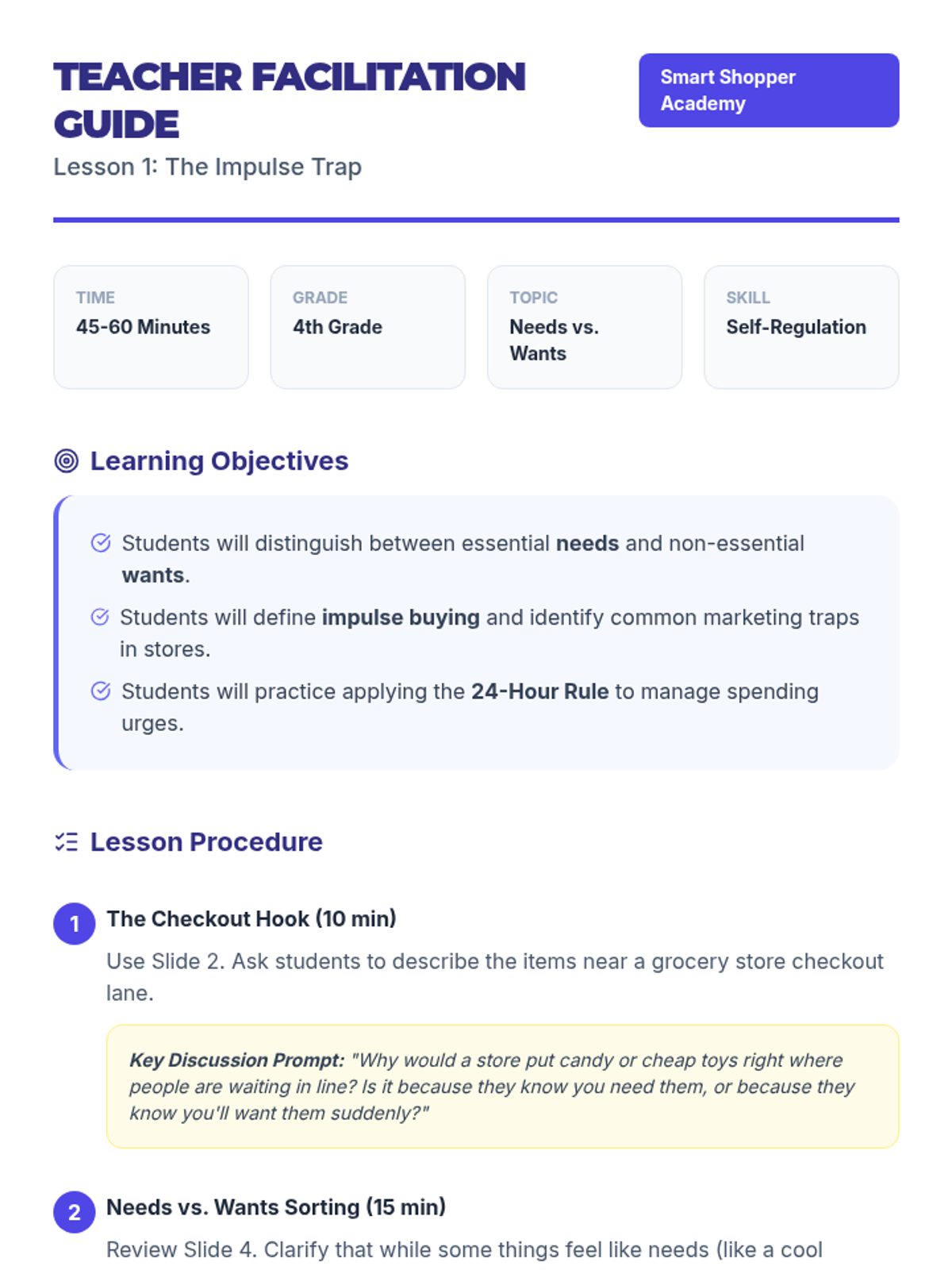
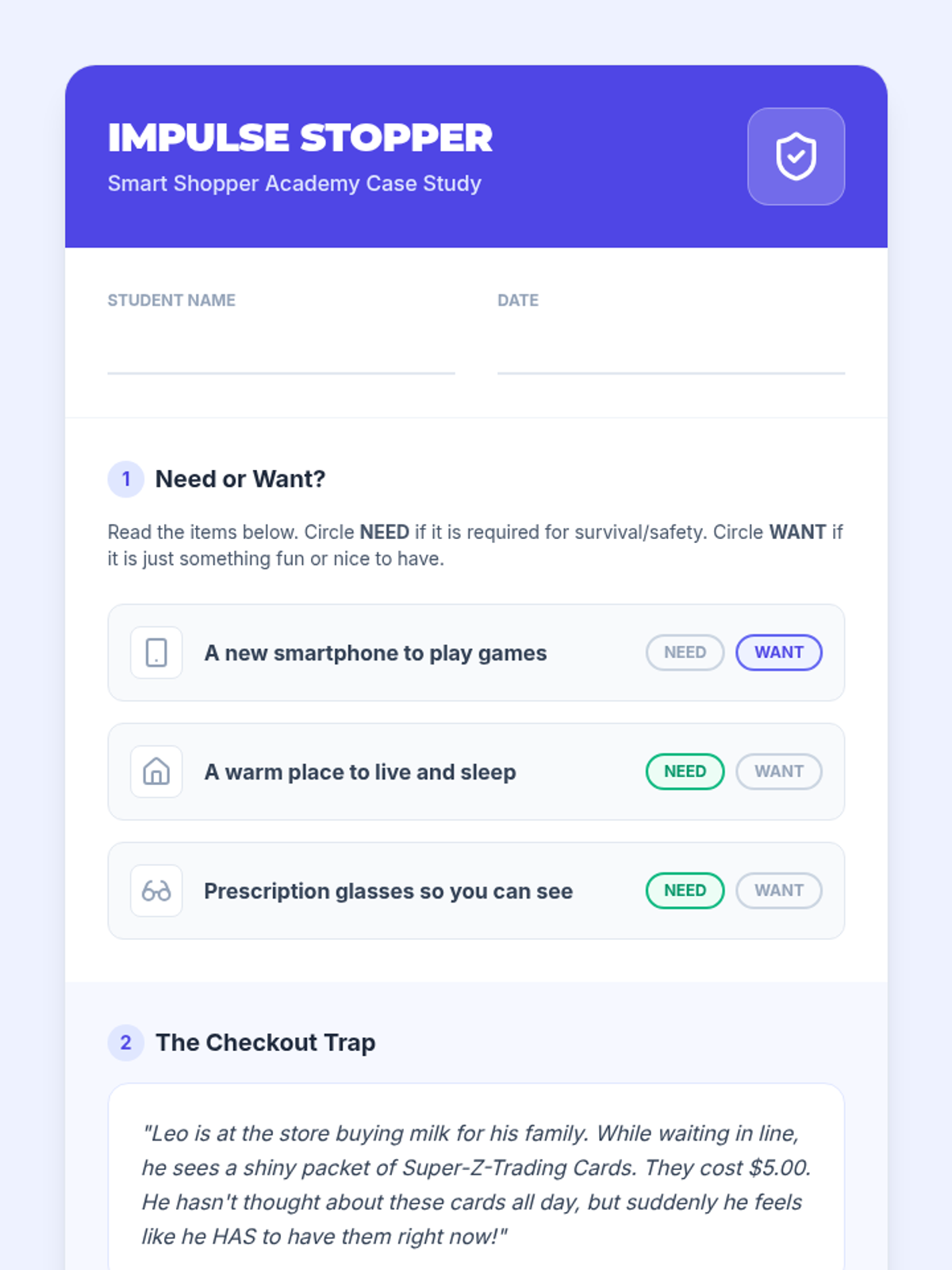
A 5-lesson workshop sequence for 4th graders to develop strategic consumer skills. Students learn to navigate needs vs. wants, analyze product reviews, understand return policies, and evaluate opportunity costs to create a final purchase plan.
This sequence explores the psychology of motivation and reward systems. Students learn to distinguish between internal and external rewards, design meaningful reinforcement menus, and plan for long-term growth and independence.
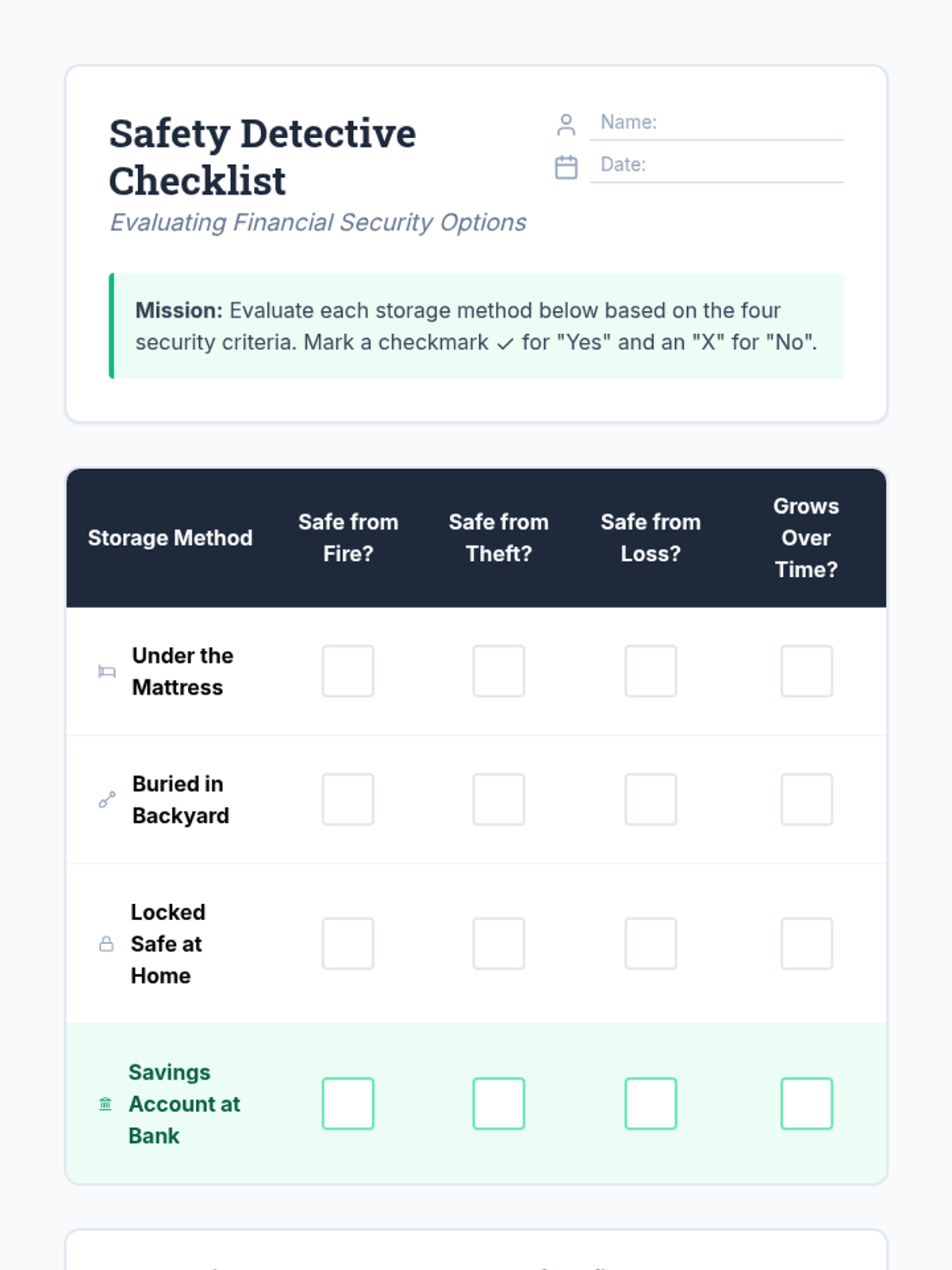
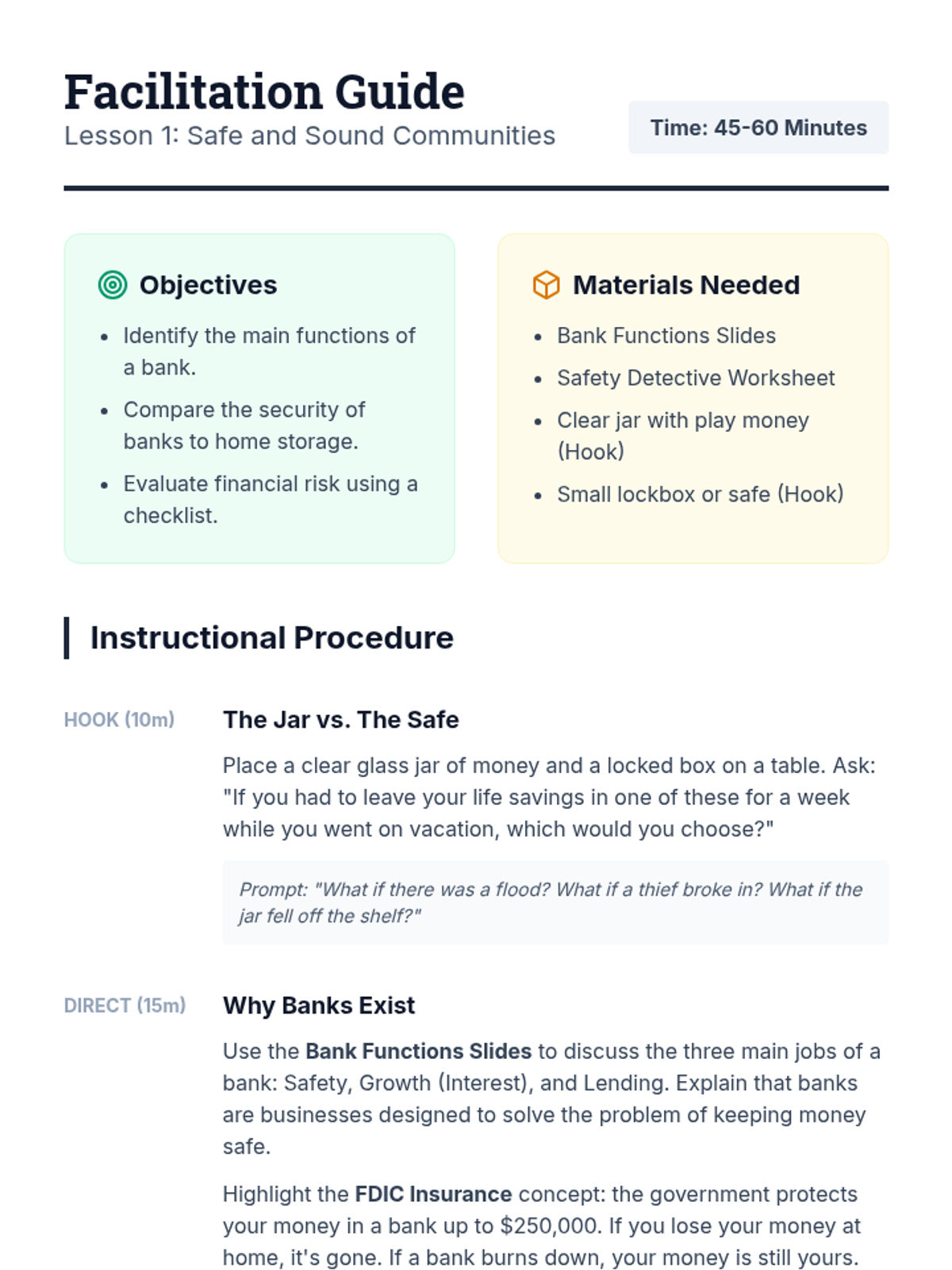
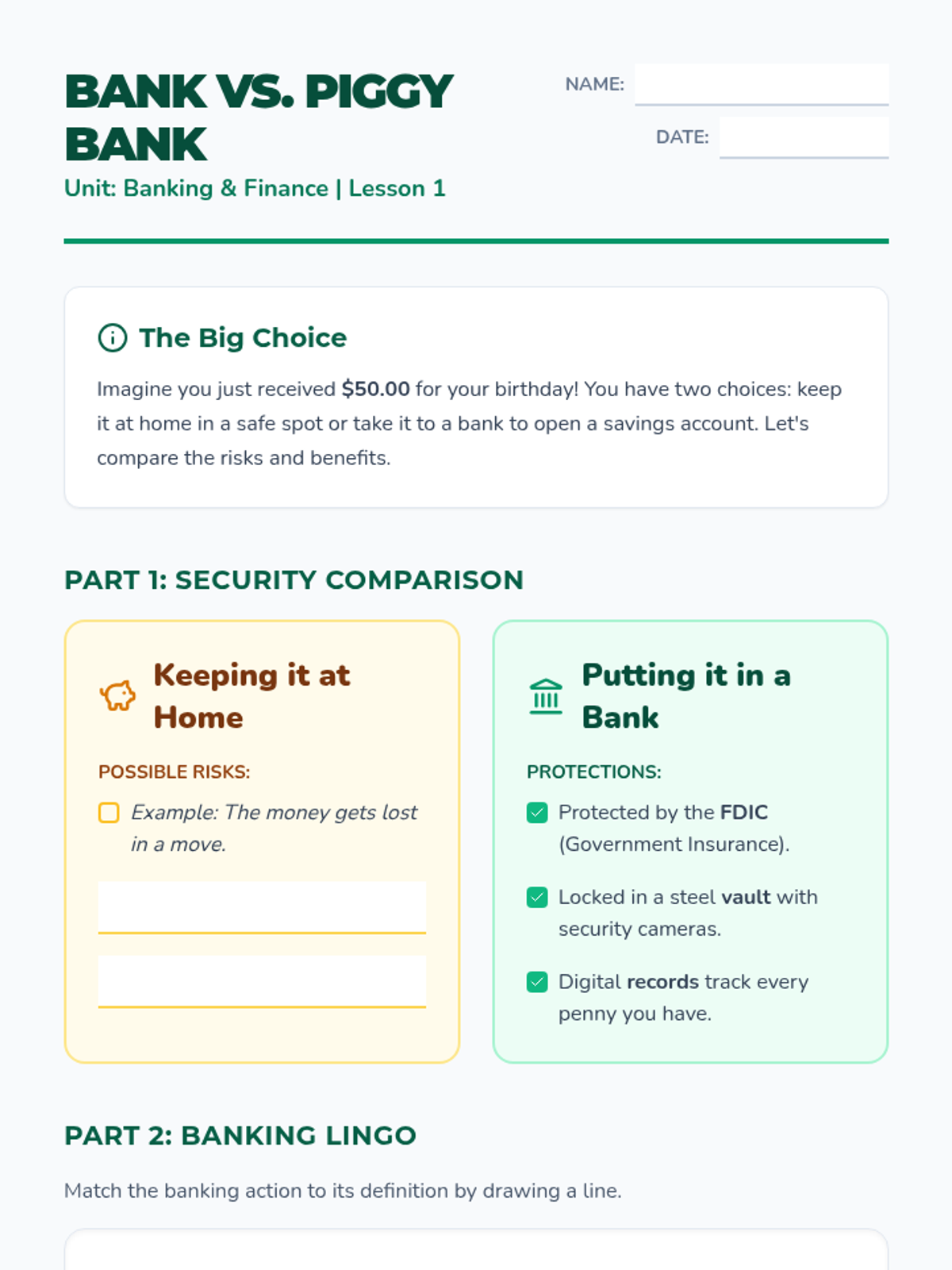
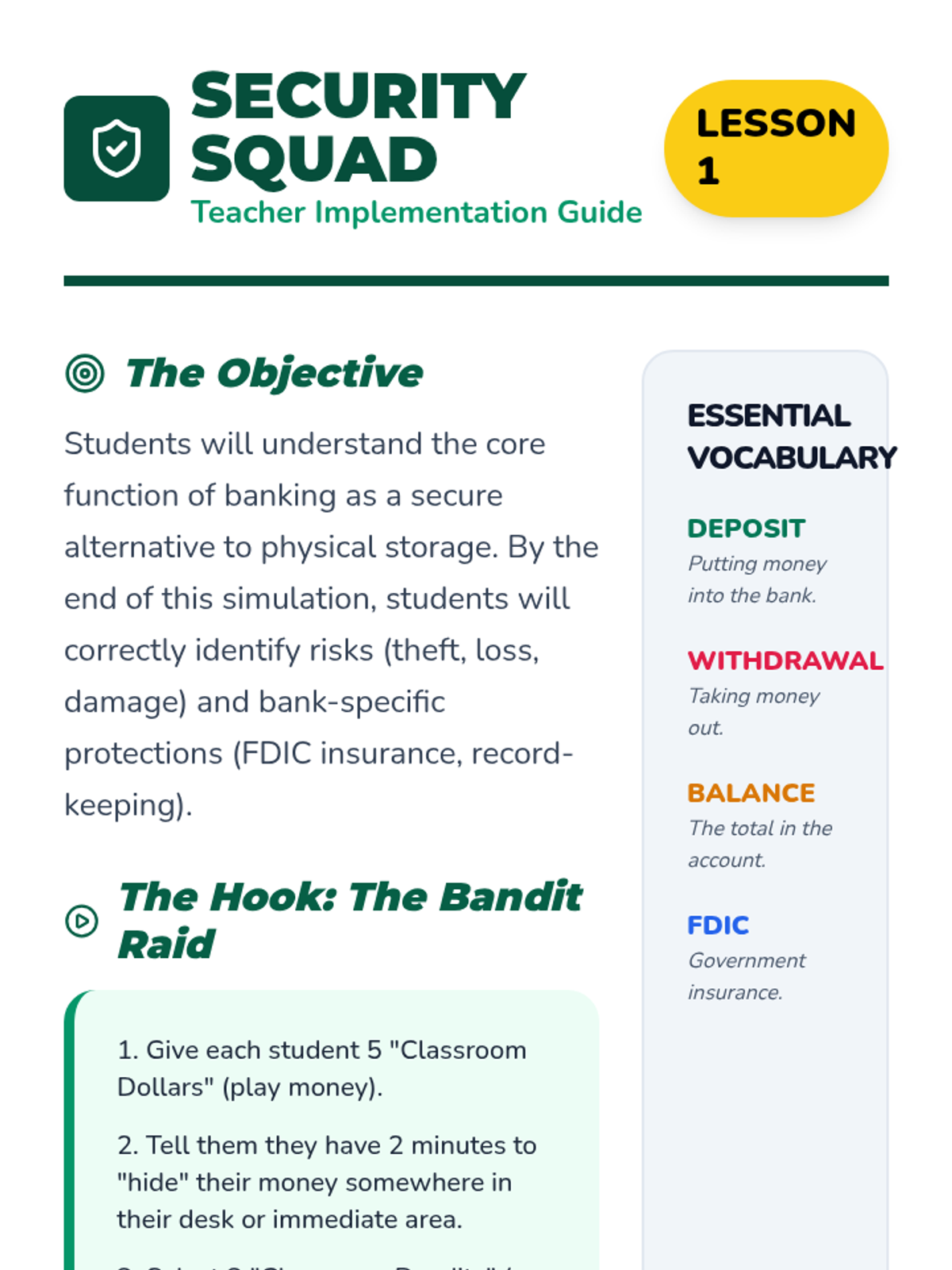
A comprehensive 5-lesson unit for 4th grade students exploring the role of banks, the mechanics of interest, goal-setting, transactions, and digital financial security. Students progress from understanding physical safety to managing digital assets.
A 5-lesson simulation-based journey where 4th graders explore banking mechanics, interest, borrowing, and budgeting to understand how financial choices impact future goals and community health.
An 11-session Tier 2 social skills intervention for elementary students, focusing on friendship, empathy, patience, and conflict resolution through a superhero-themed creative curriculum.
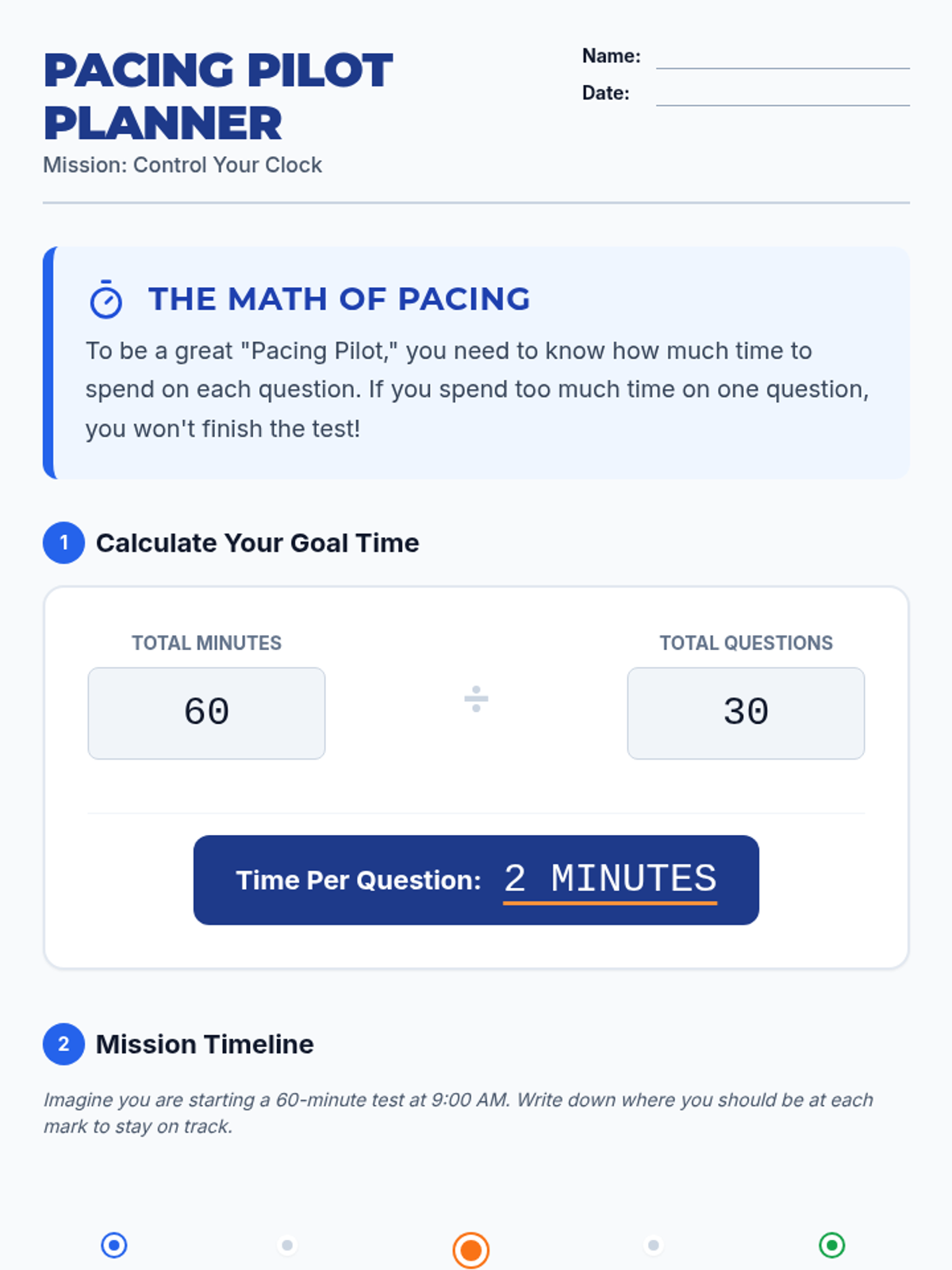
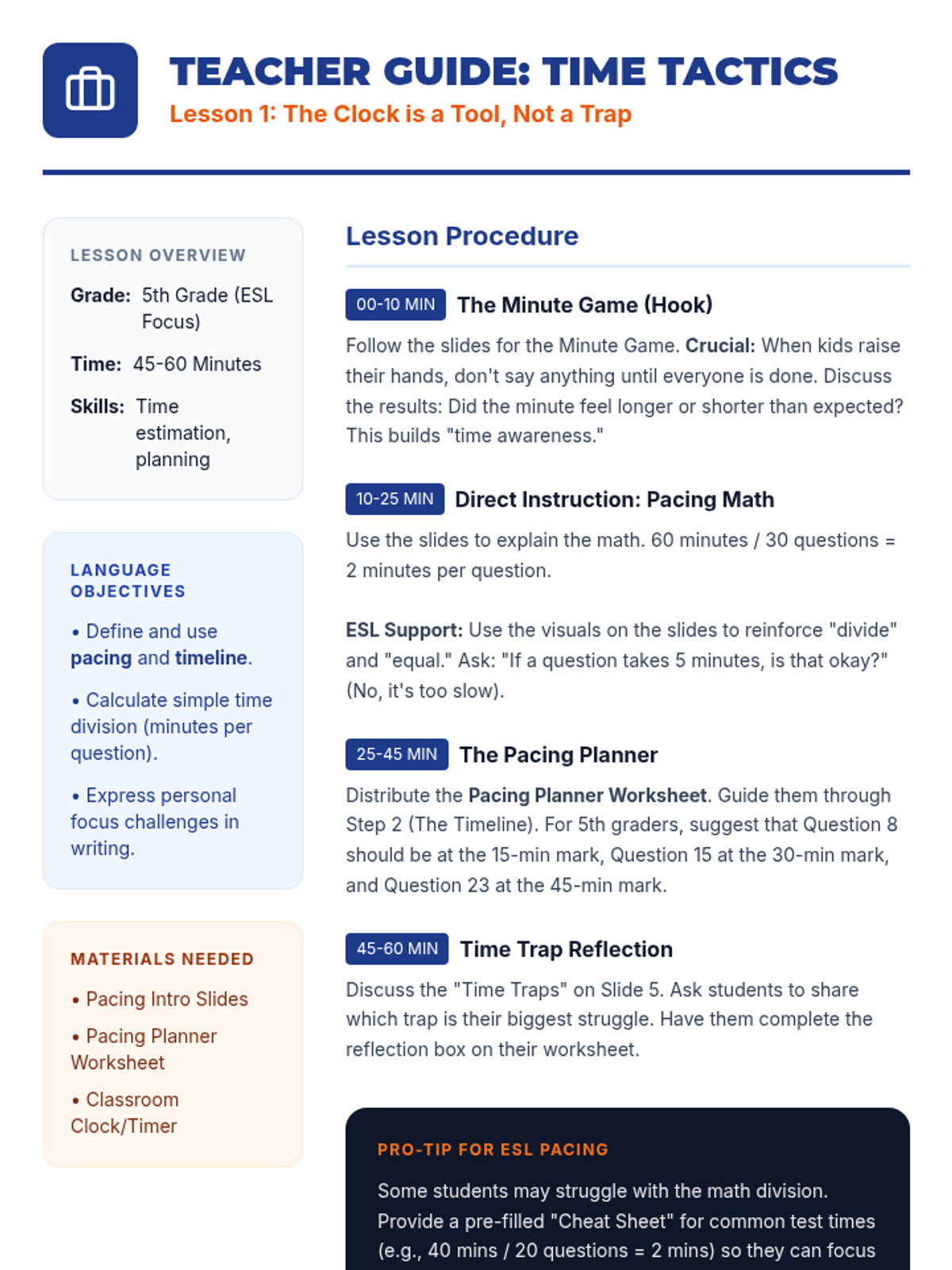
This sequence helps students master time management and prioritization during exams. Through hands-on activities and simulations, students learn to estimate pacing, use the 'skip and return' strategy, navigate long passages efficiently, and manage test anxiety.
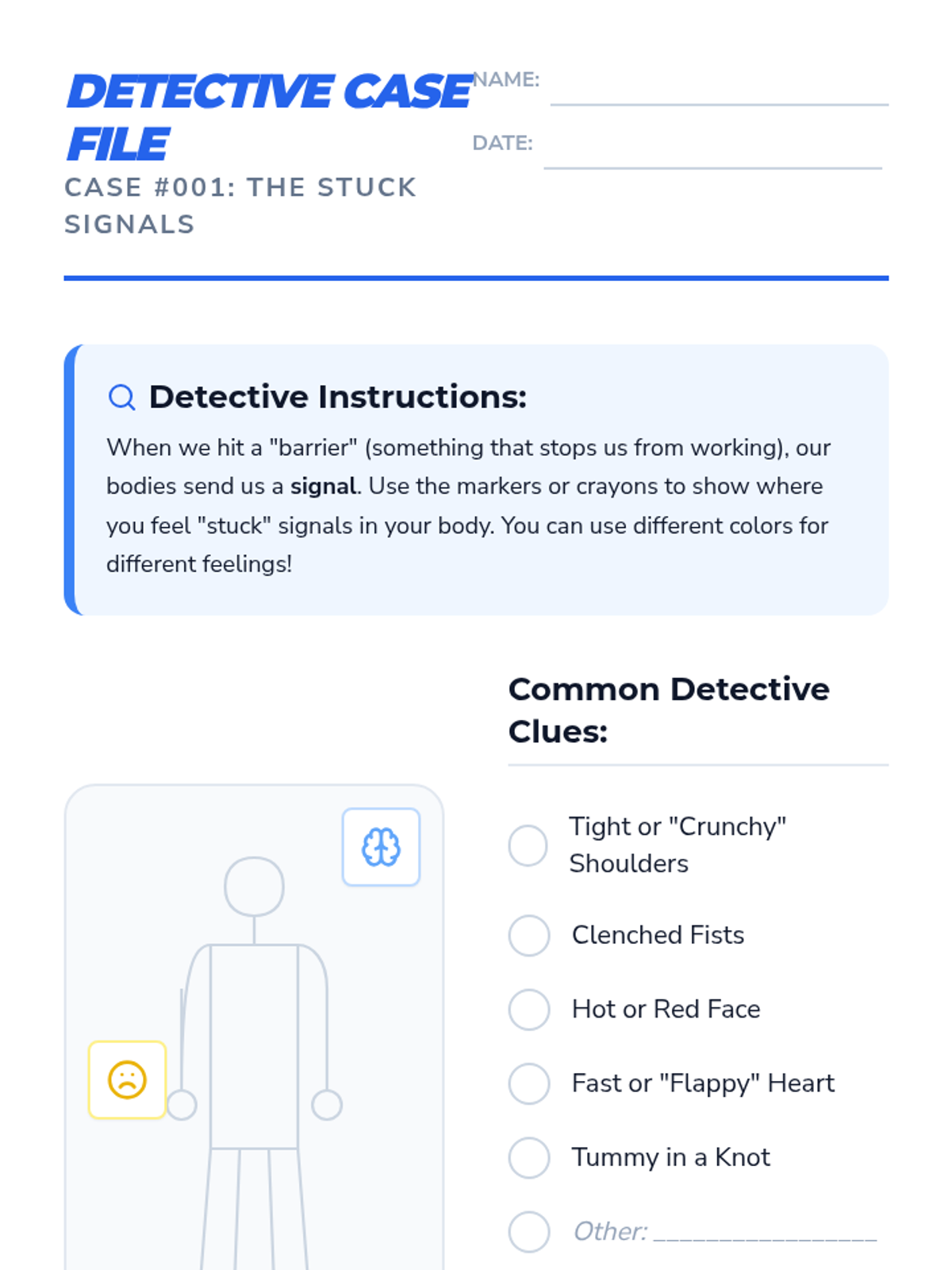
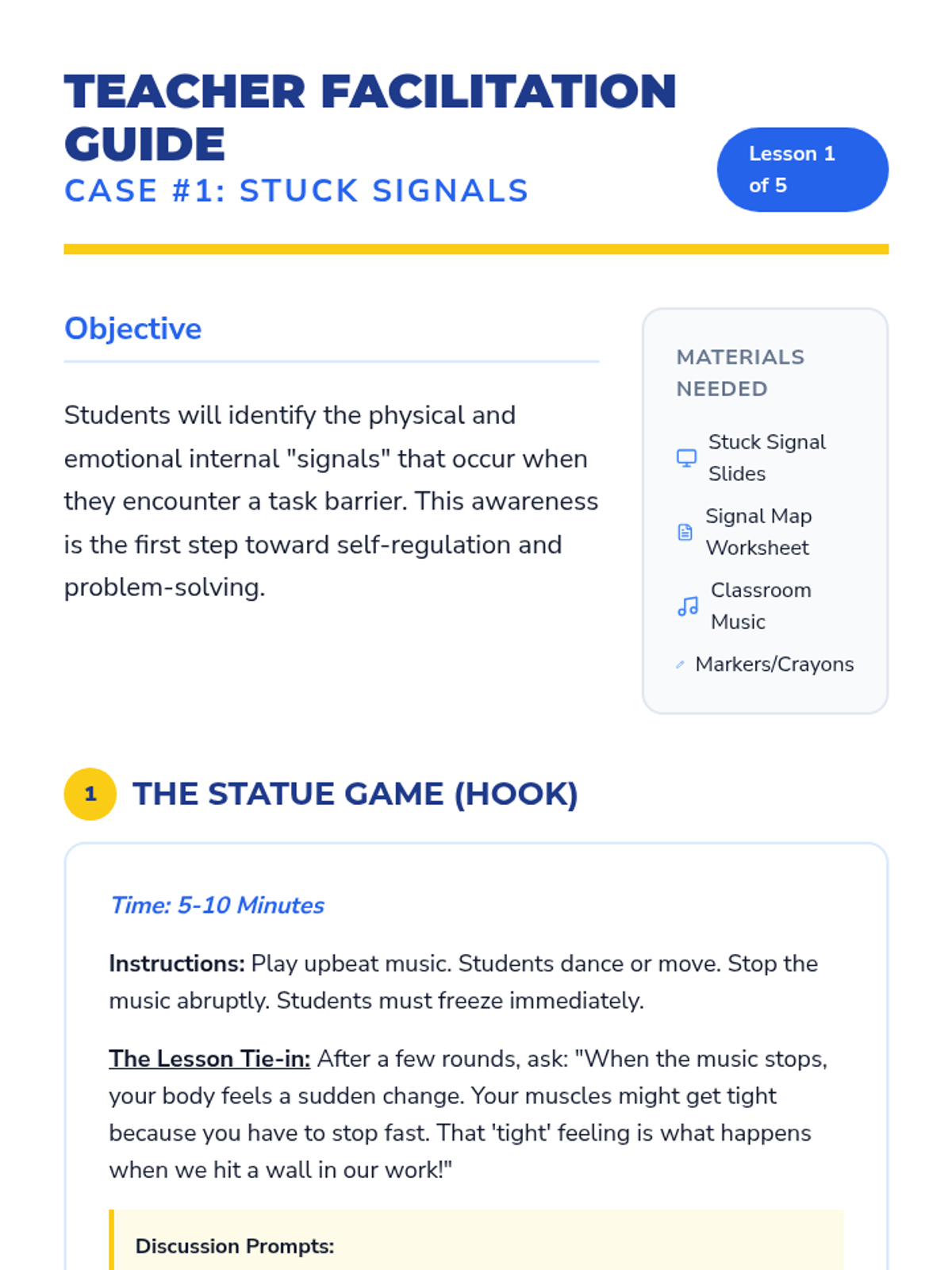
A 5-lesson unit for 3rd-grade students focused on identifying and categorizing obstacles that prevent task completion. Students learn to recognize internal emotional signals and external barriers (physical, informational, and environmental) to build self-advocacy and problem-solving skills.
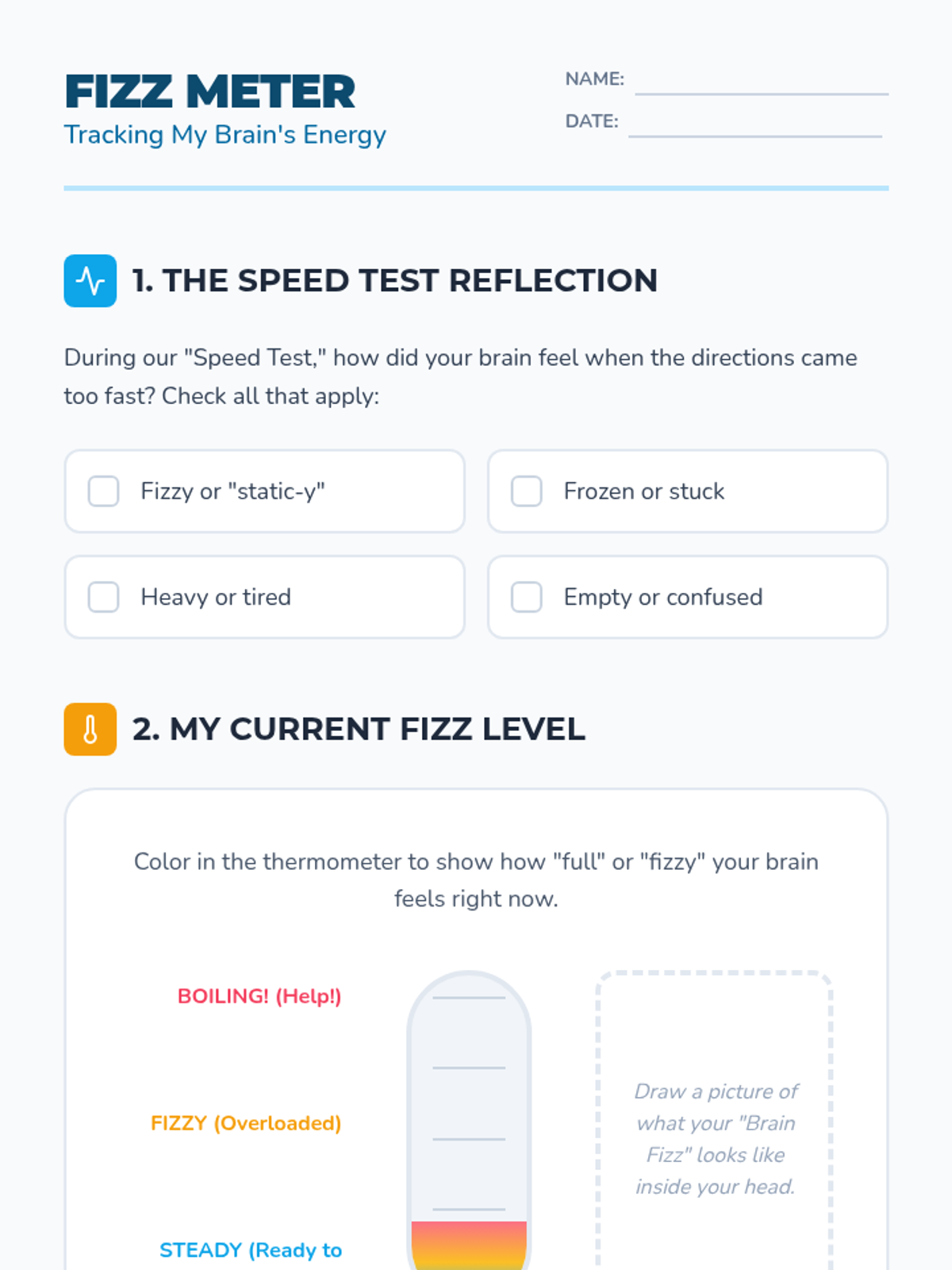
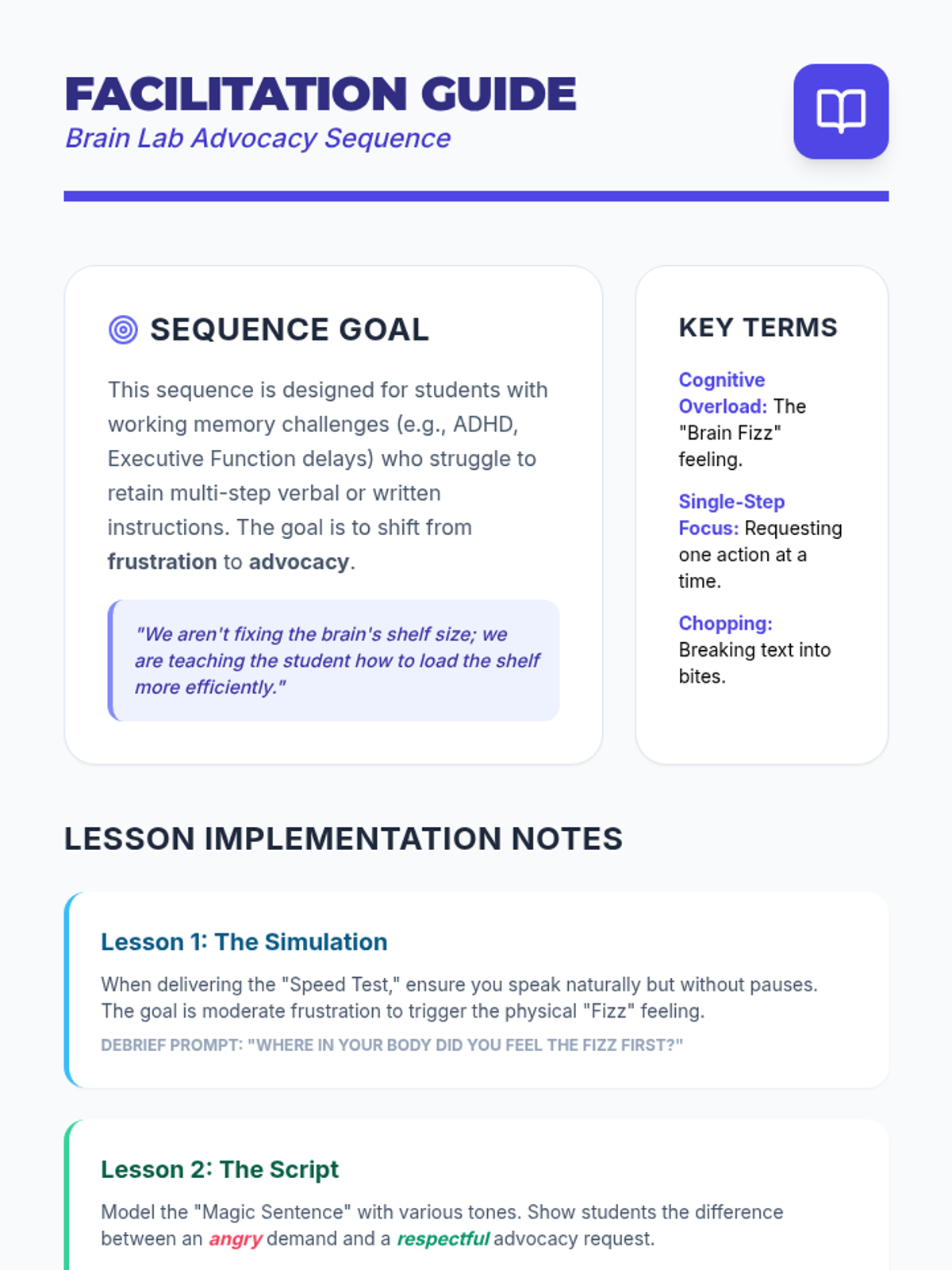
This sequence teaches 4th-grade students to recognize cognitive overload and use self-advocacy scripts to request single-step directions, supporting their working memory and independence.
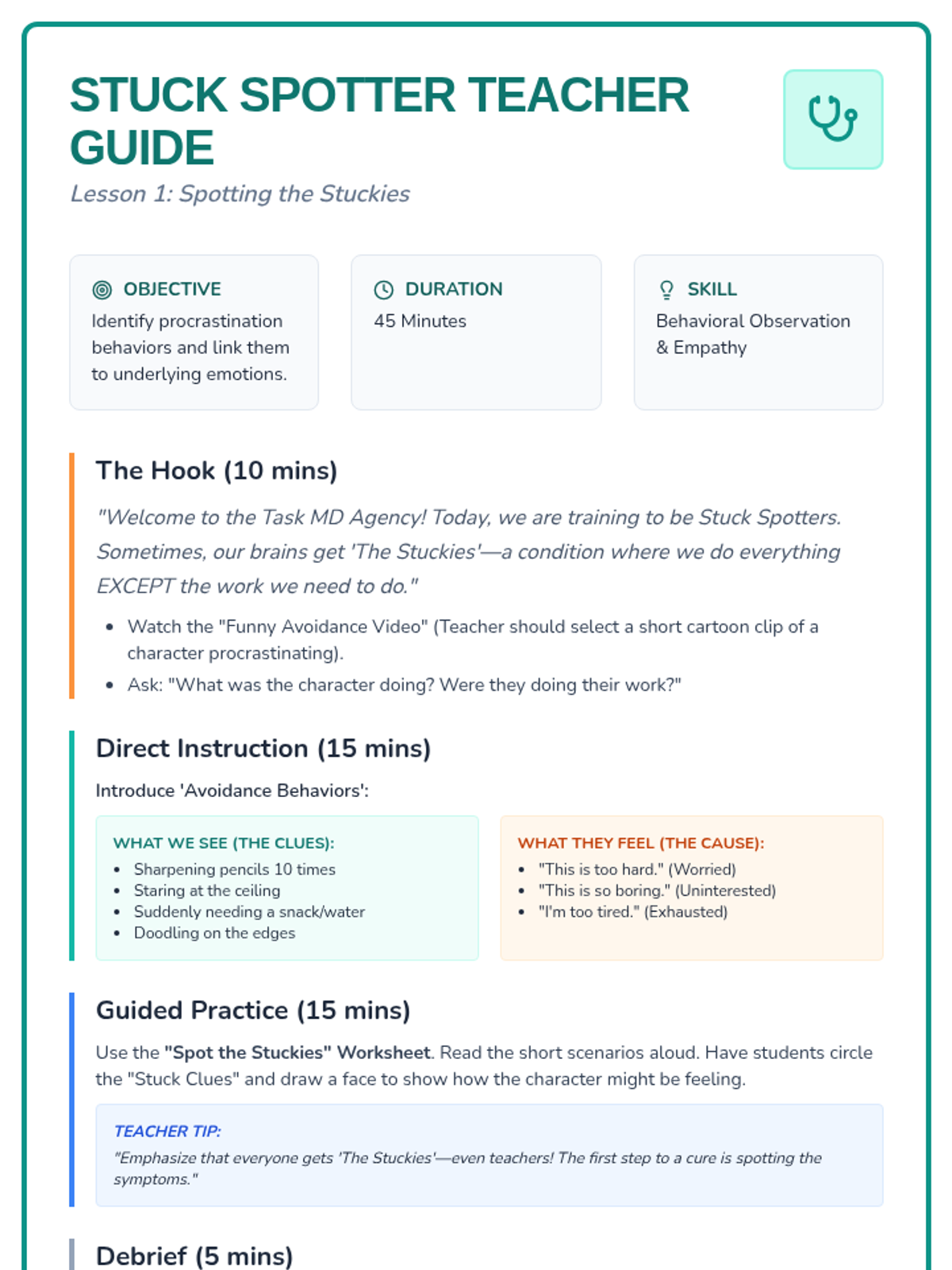
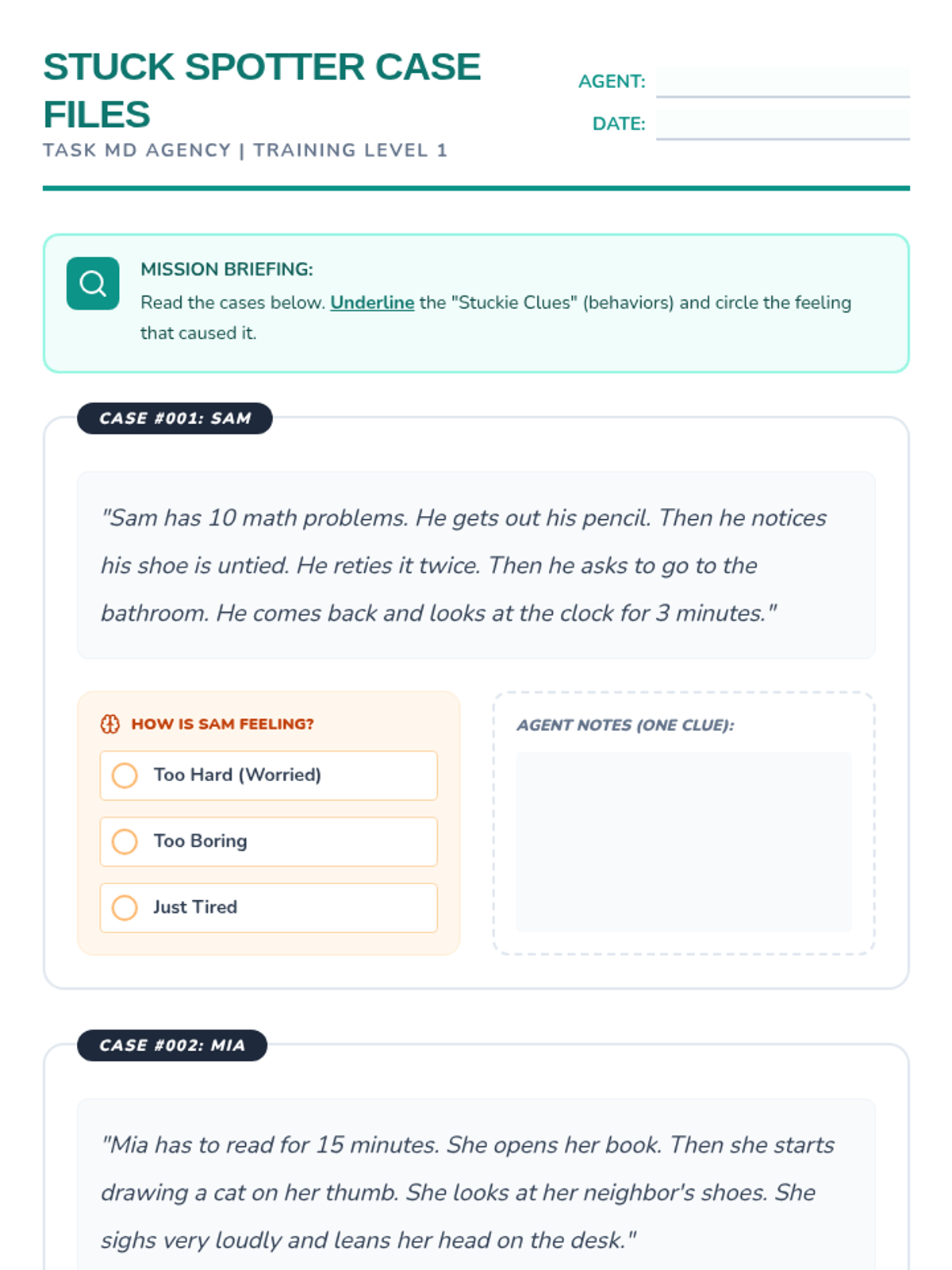
A sequence focused on helping students overcome emotional barriers to task initiation using a 'Task Doctor' theme. Students learn to identify avoidance behaviors, diagnose the root cause of being 'stuck', and prescribe effective self-talk solutions through role-play and reflection.
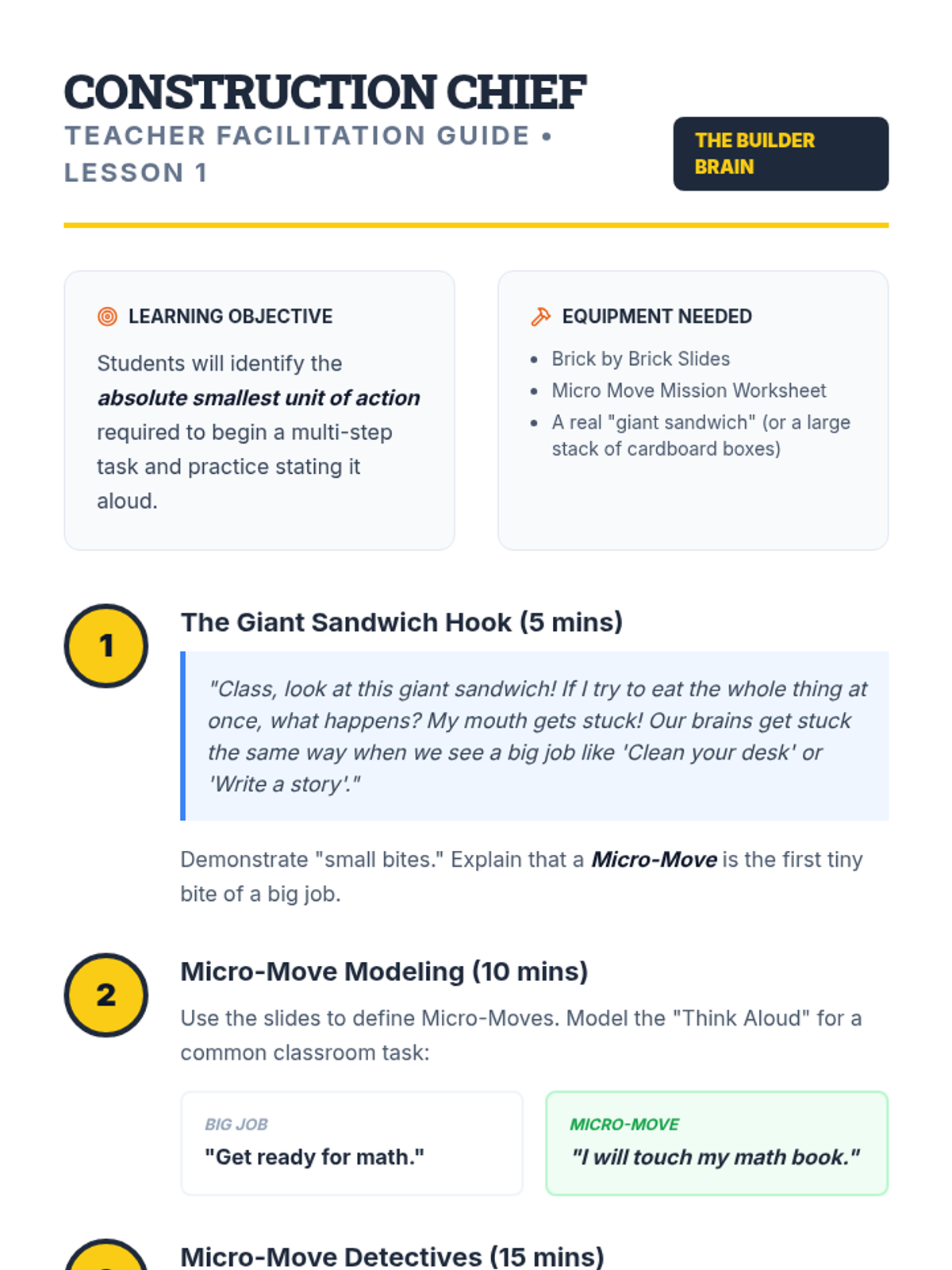
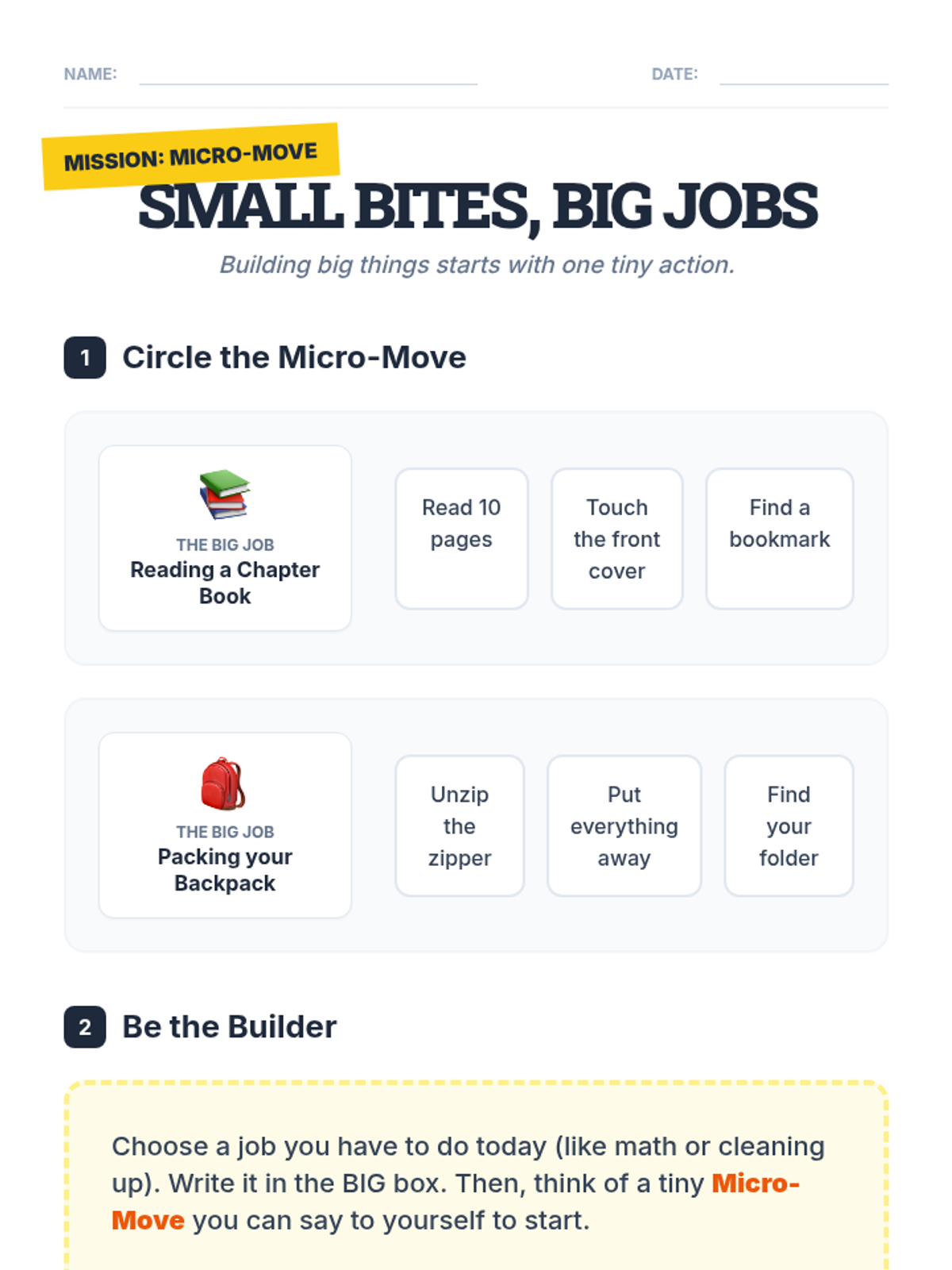
Students learn to use verbal prompts to break complex tasks down into manageable actions. The sequence moves from identifying the immediate first step to narrating a sequence of actions and troubleshooting challenges.
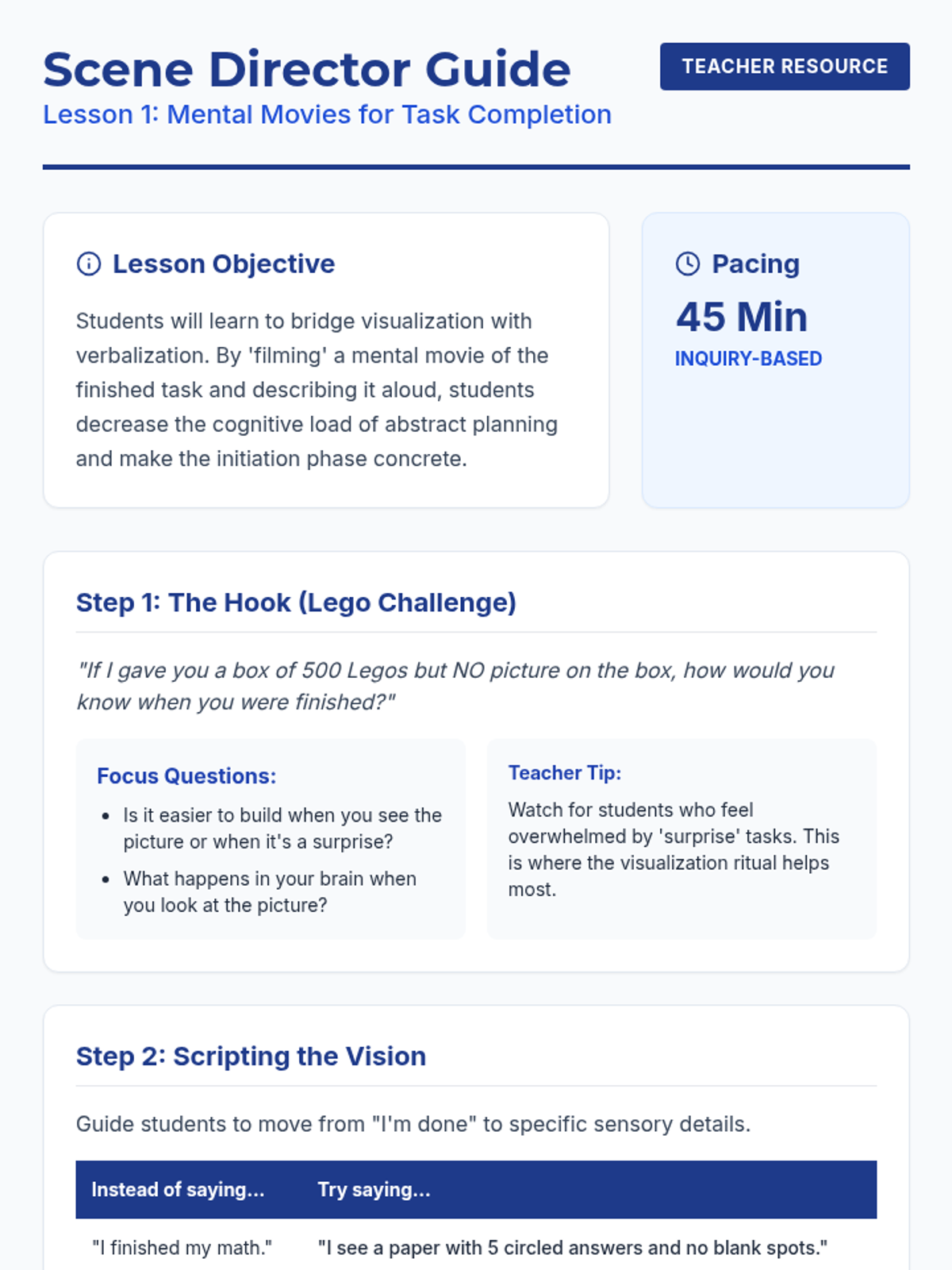
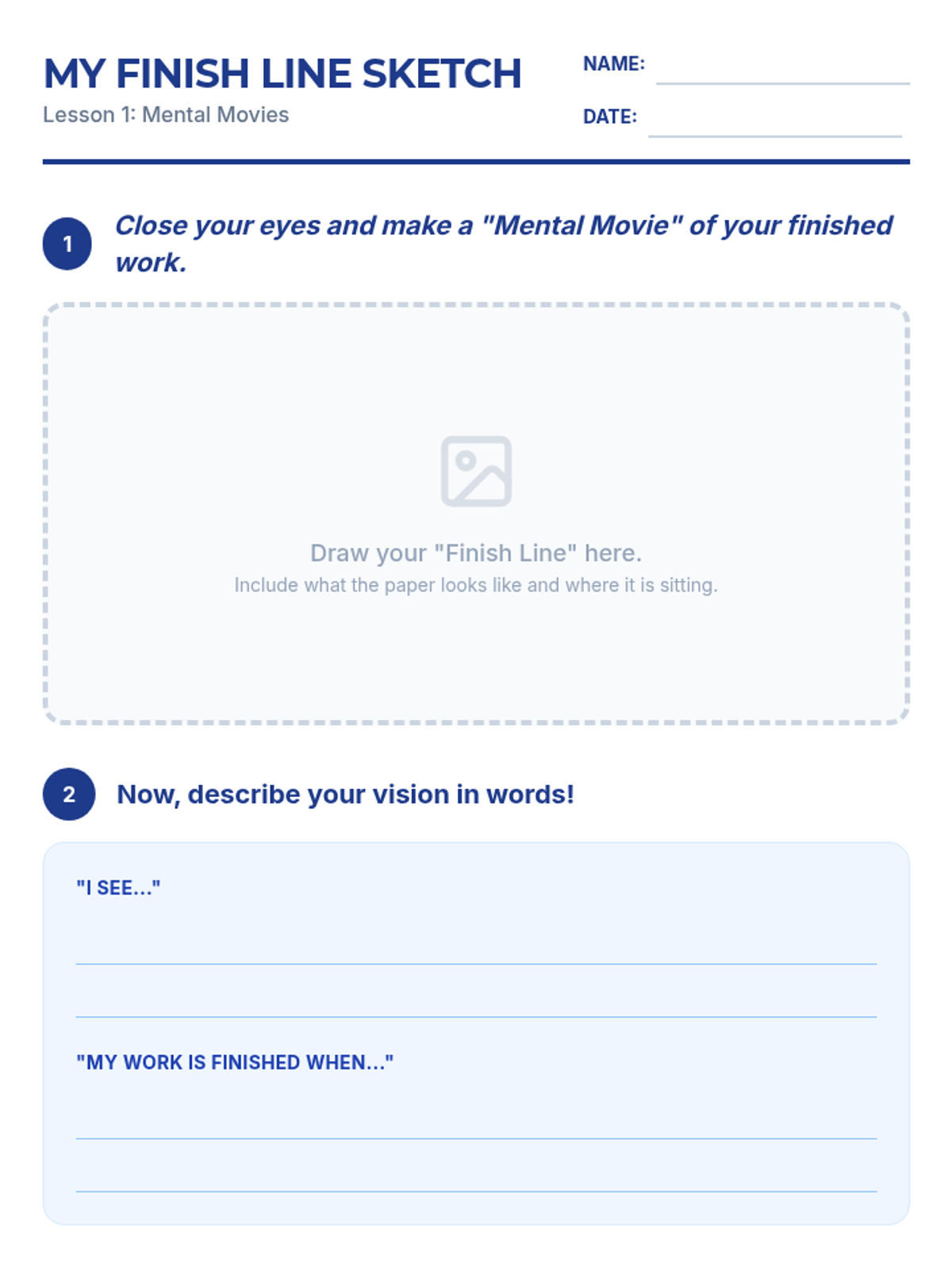
This sequence helps students overcome task initiation hurdles by combining visualization and verbal self-talk. Students learn to 'see' the finished product, reverse engineer the steps, estimate time accurately, and use micro-goals to take the first step.
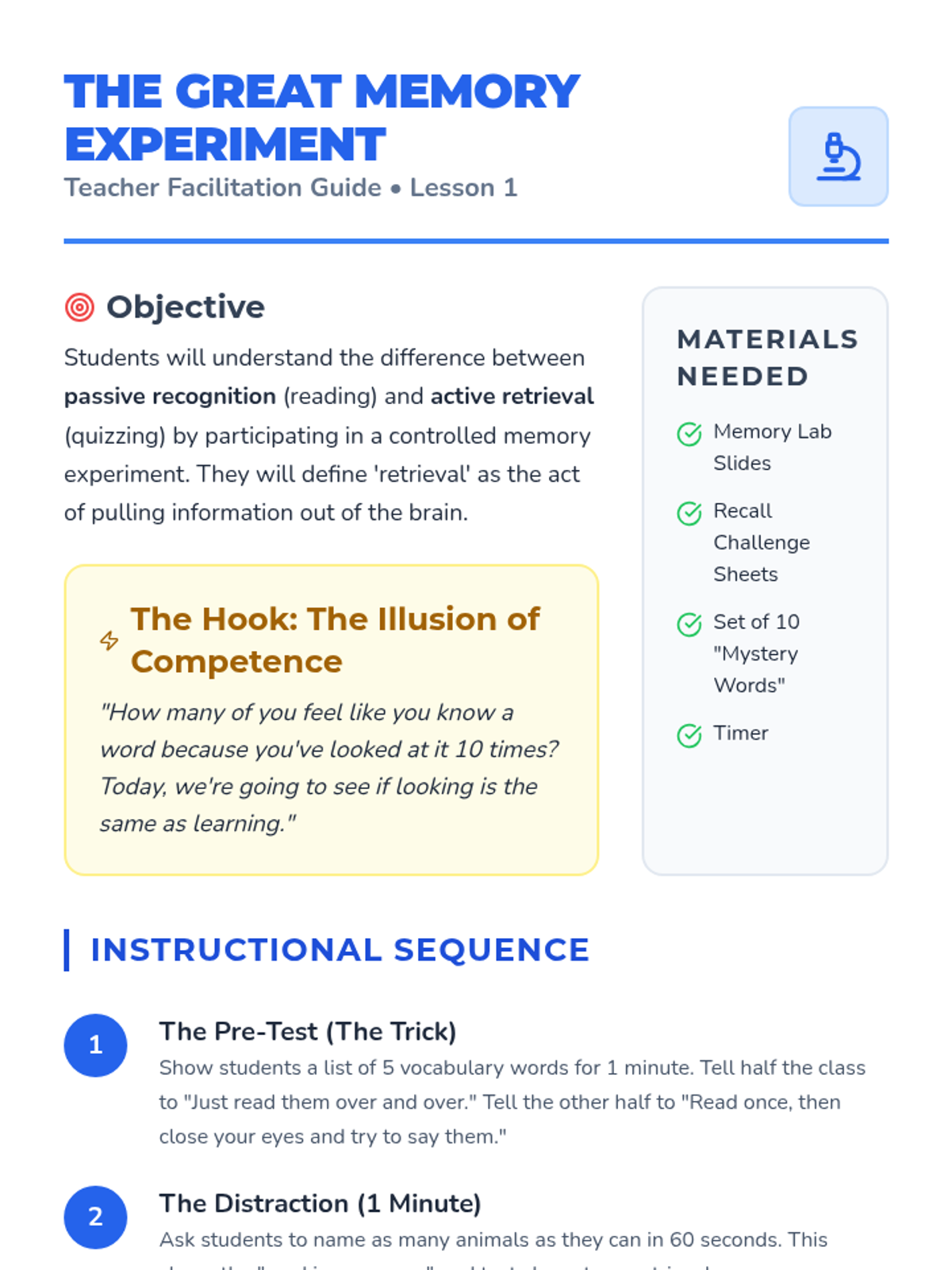
This sequence introduces 3rd-grade students to active recall and spaced repetition strategies for vocabulary. Through a 'Memory Lab' theme, students move from understanding the 'illusion of competence' to building a toolkit of retrieval practices like flashcards and the Cover-Copy-Compare method.
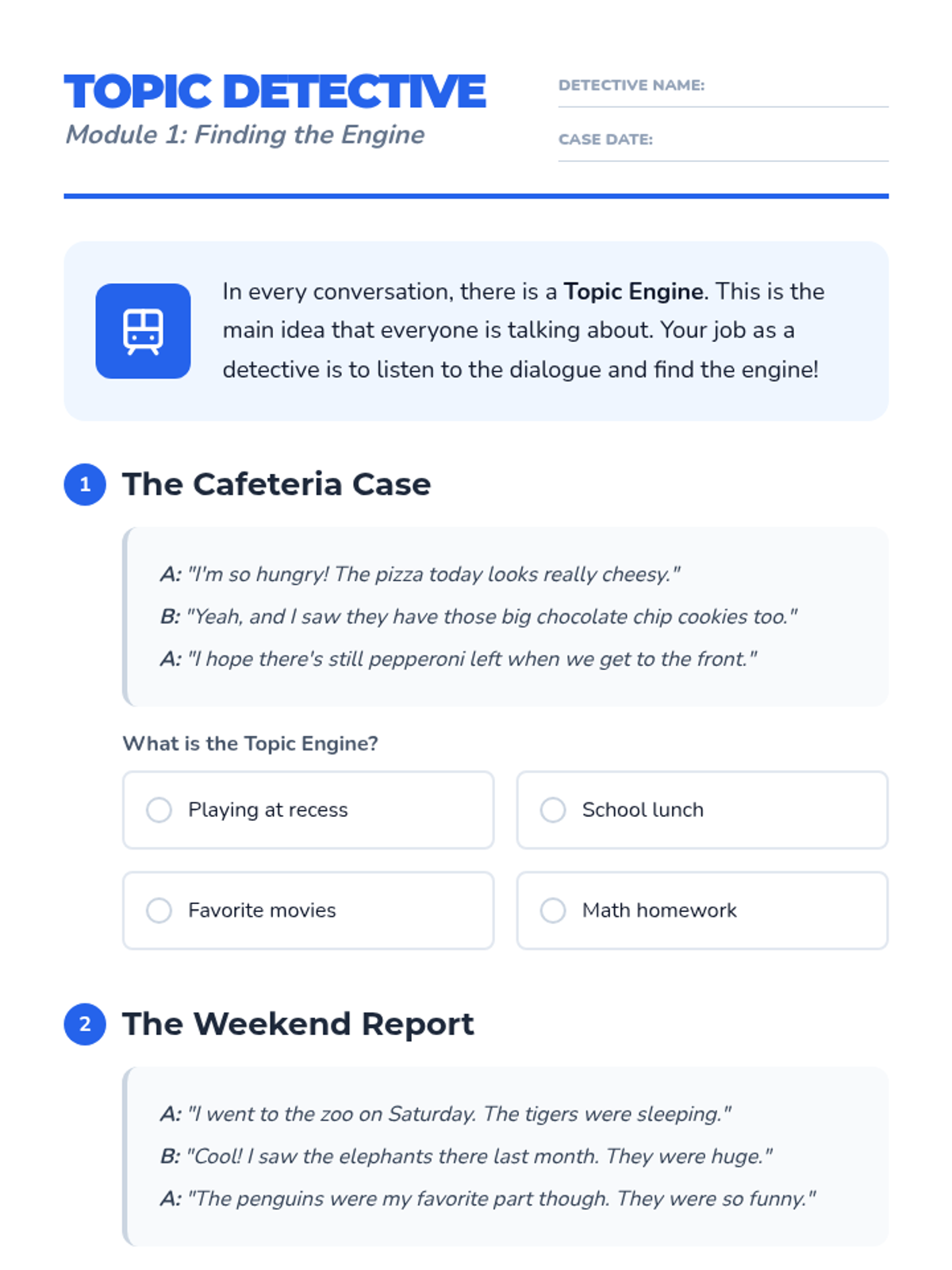
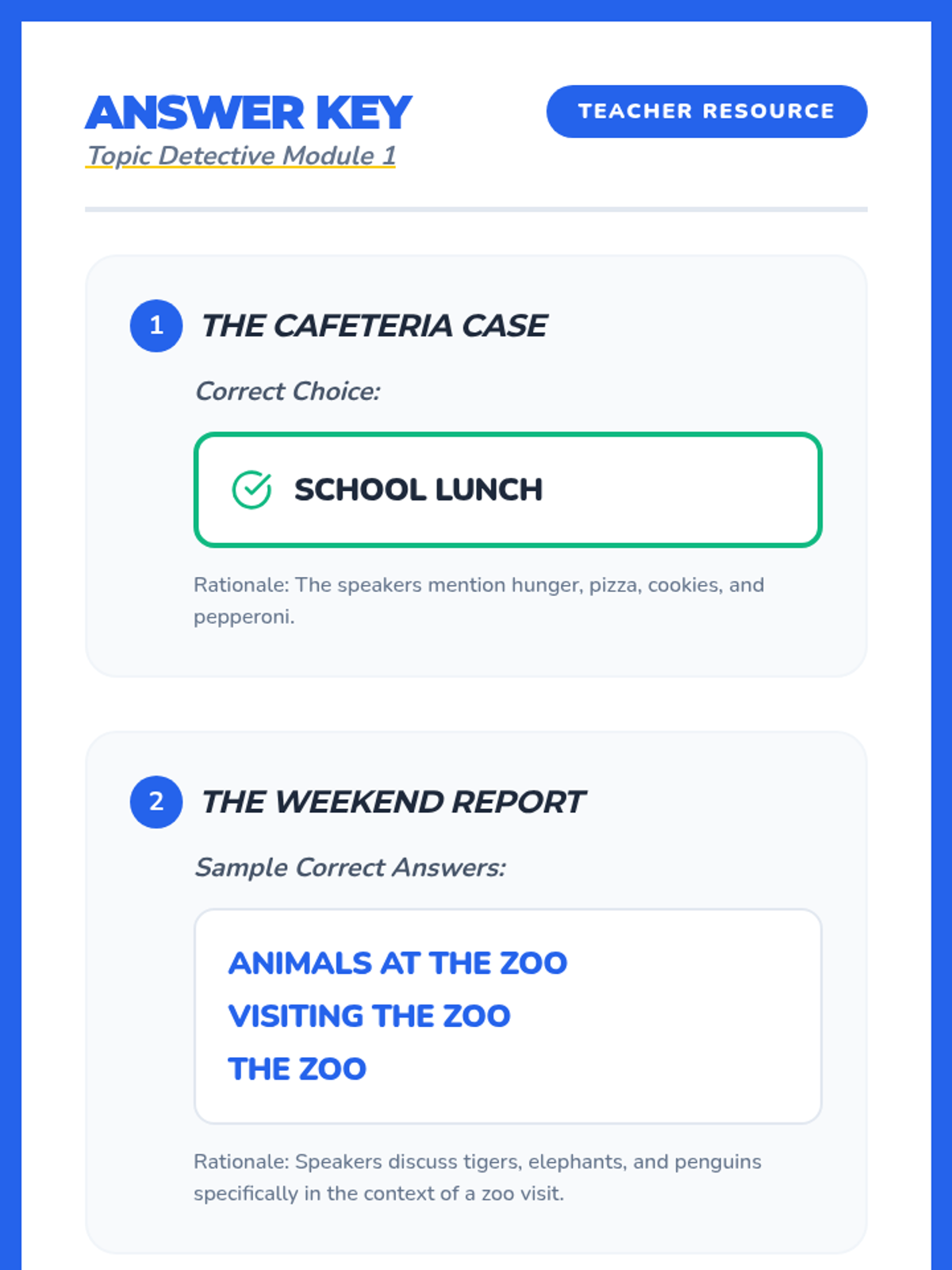
A game-based sequence focused on topic maintenance, using the 'Conversation Train' metaphor to help students visualize linear coherence, filter relevance, and utilize smooth transitions in discussion.
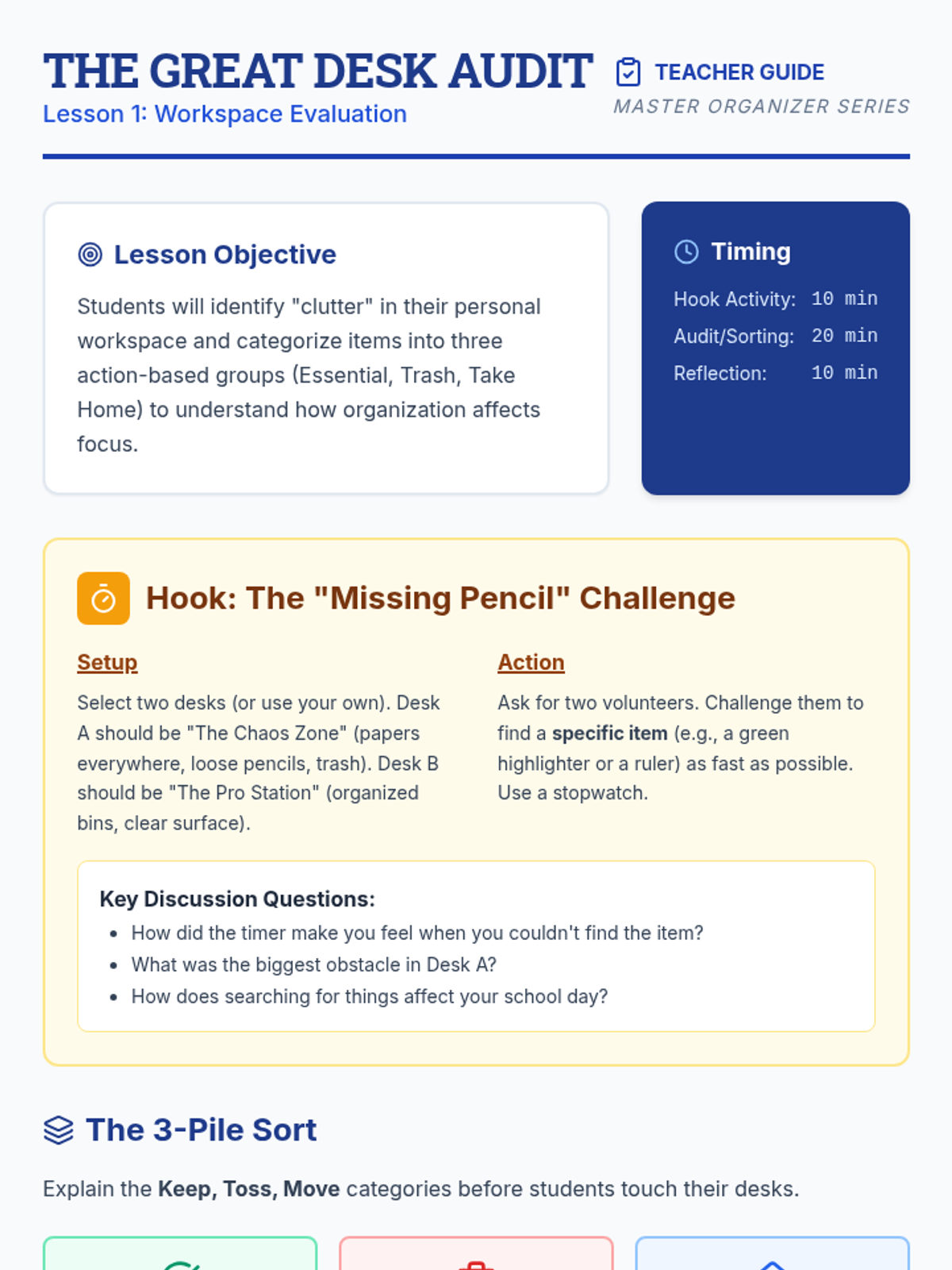
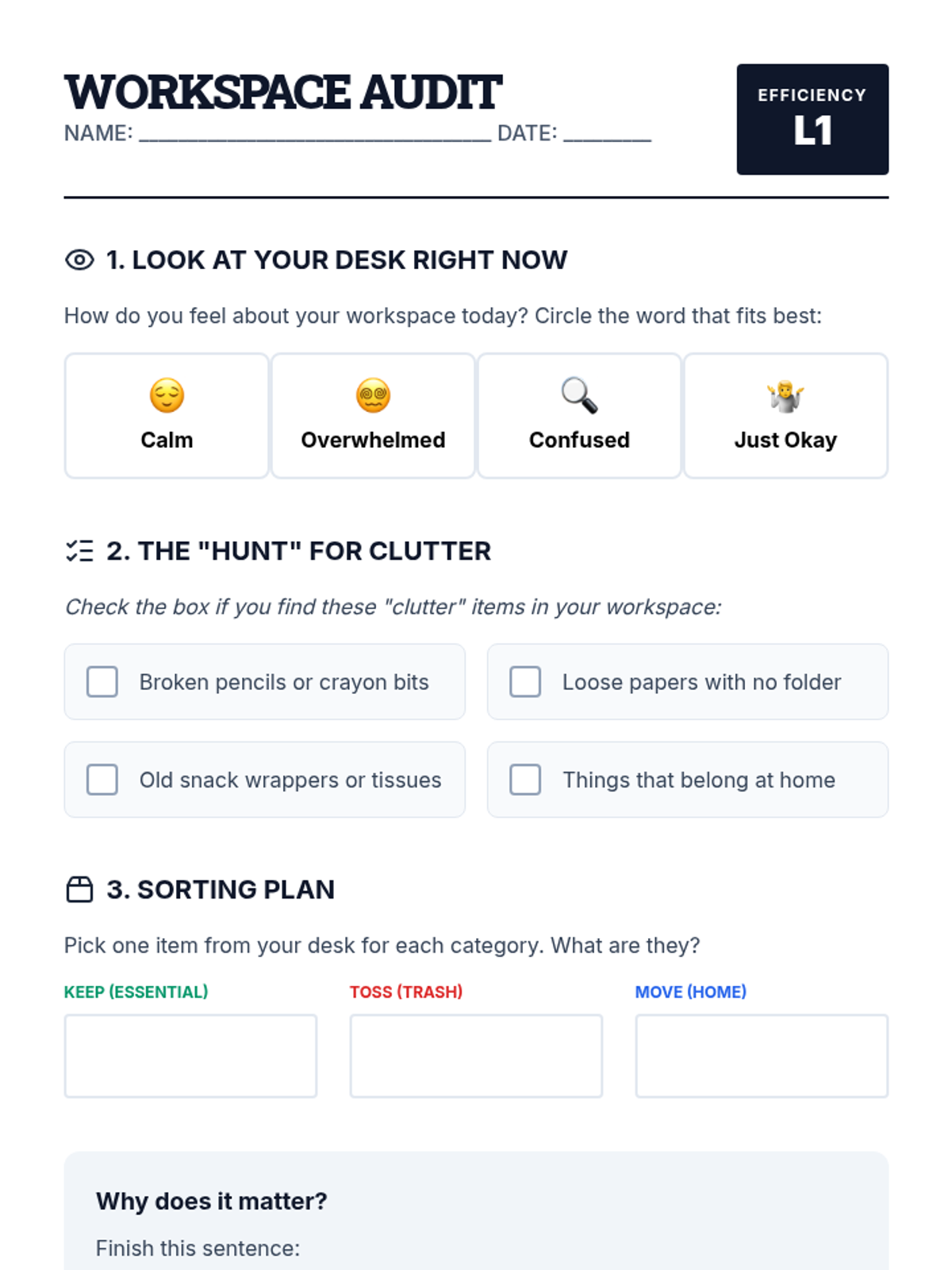
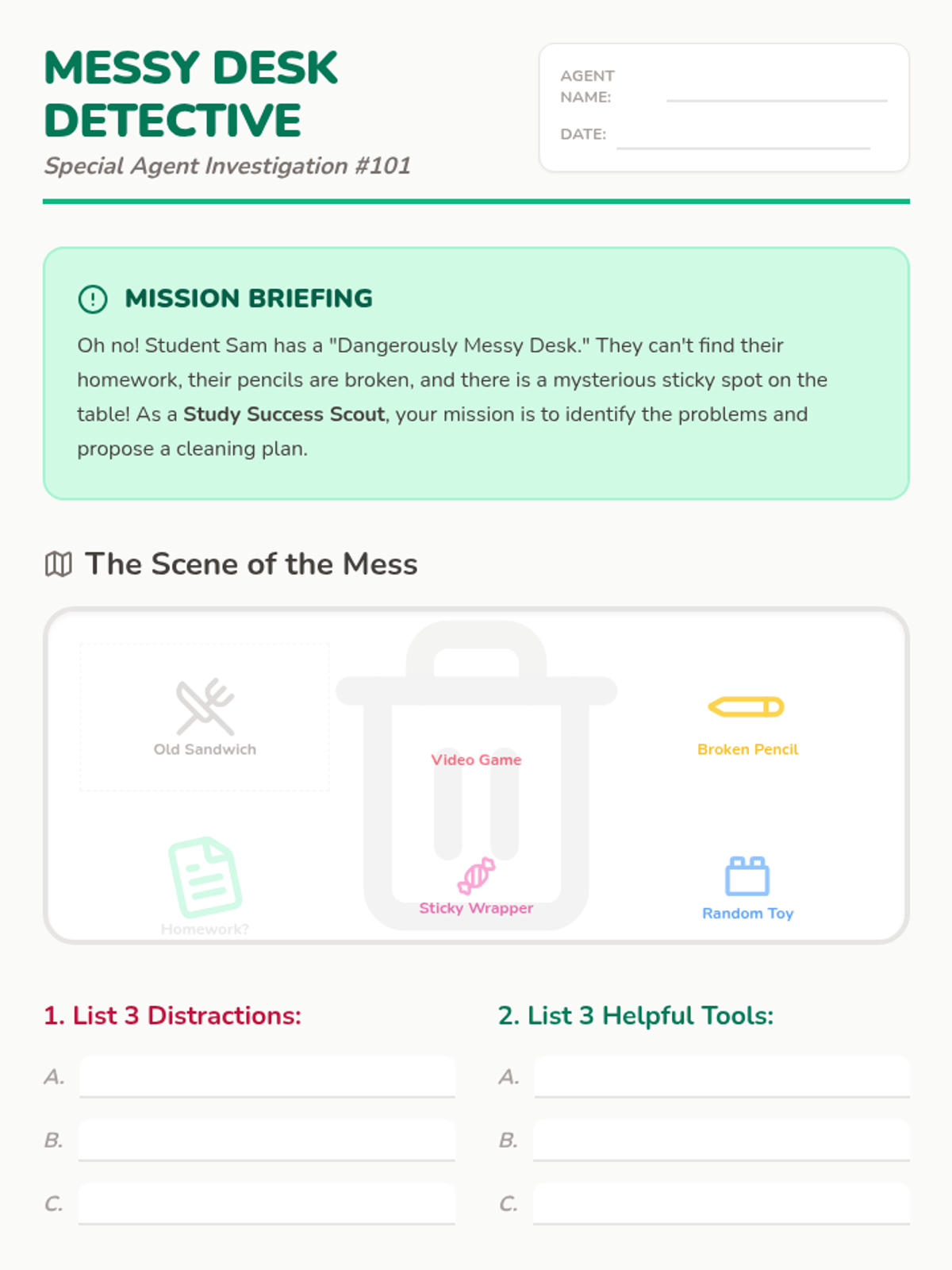
This sequence guides 4th-grade students through executive functioning skills for workspace organization, focusing on sorting, zoning, routines, and peer evaluation to foster independence and reduce stress.
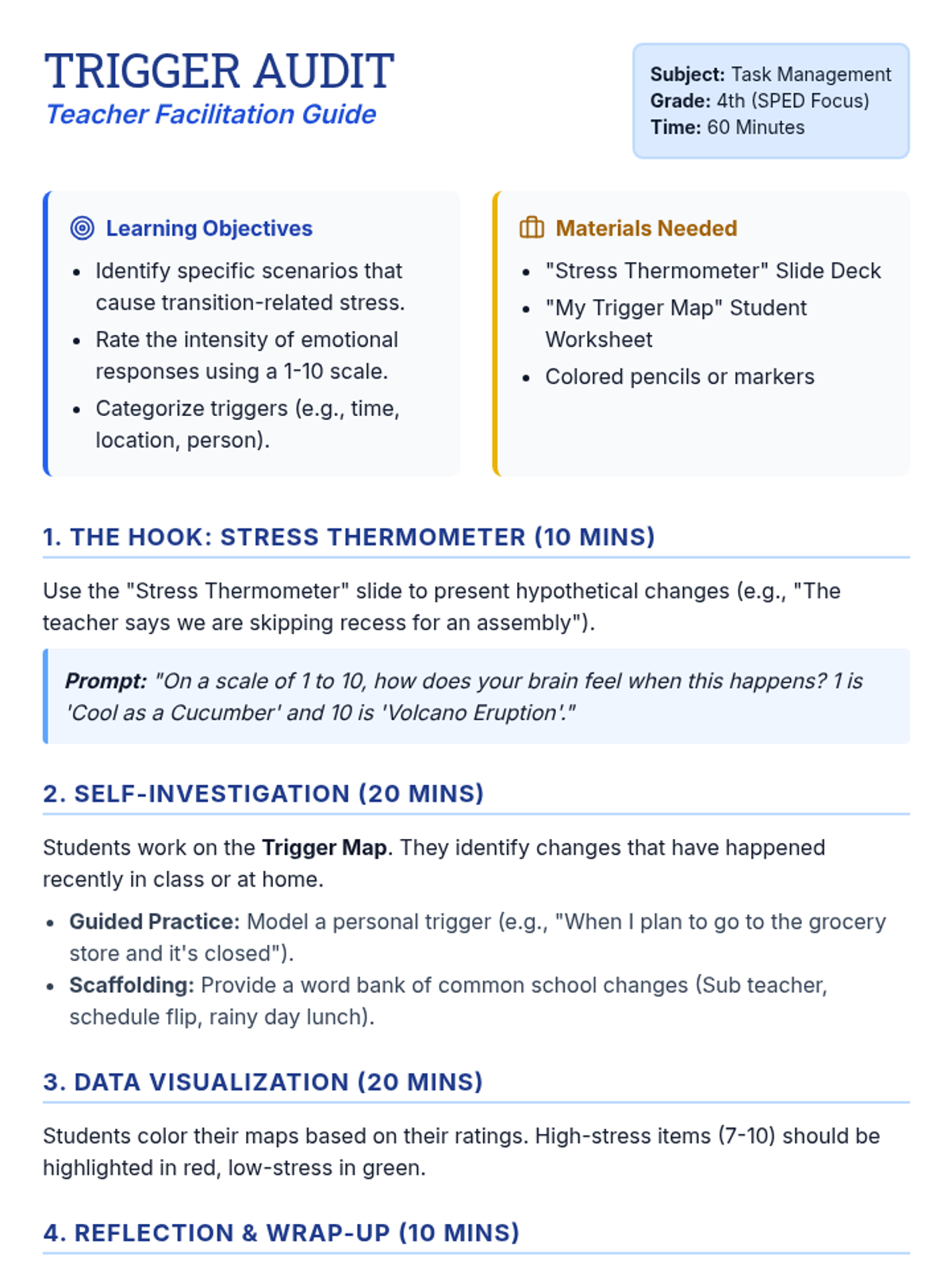
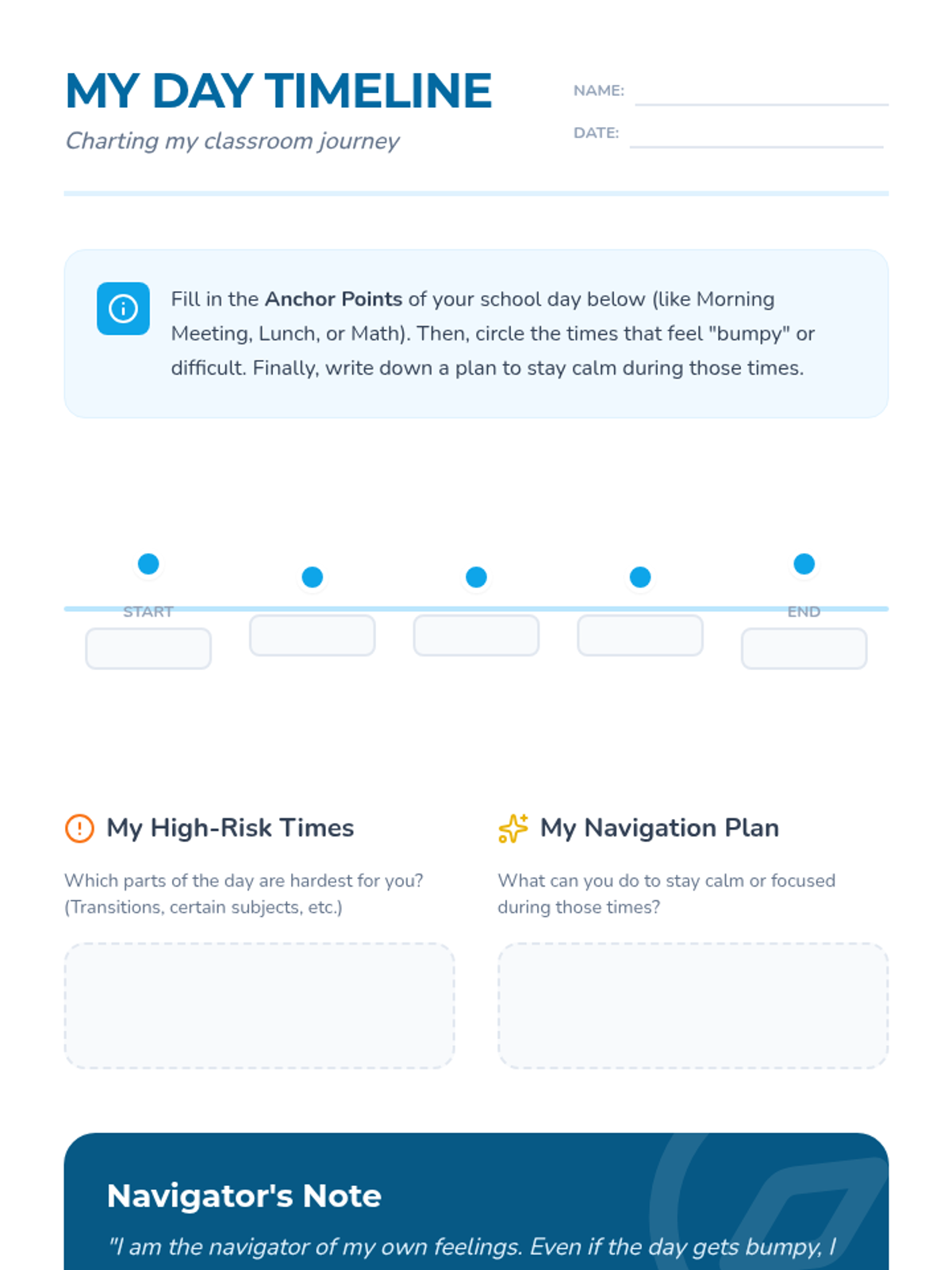
A 5-lesson project-based sequence where 4th-grade students identify personal transition triggers, test coping strategies, and build a customized 'Transition Toolkit' to support self-advocacy and emotional regulation during schedule changes.
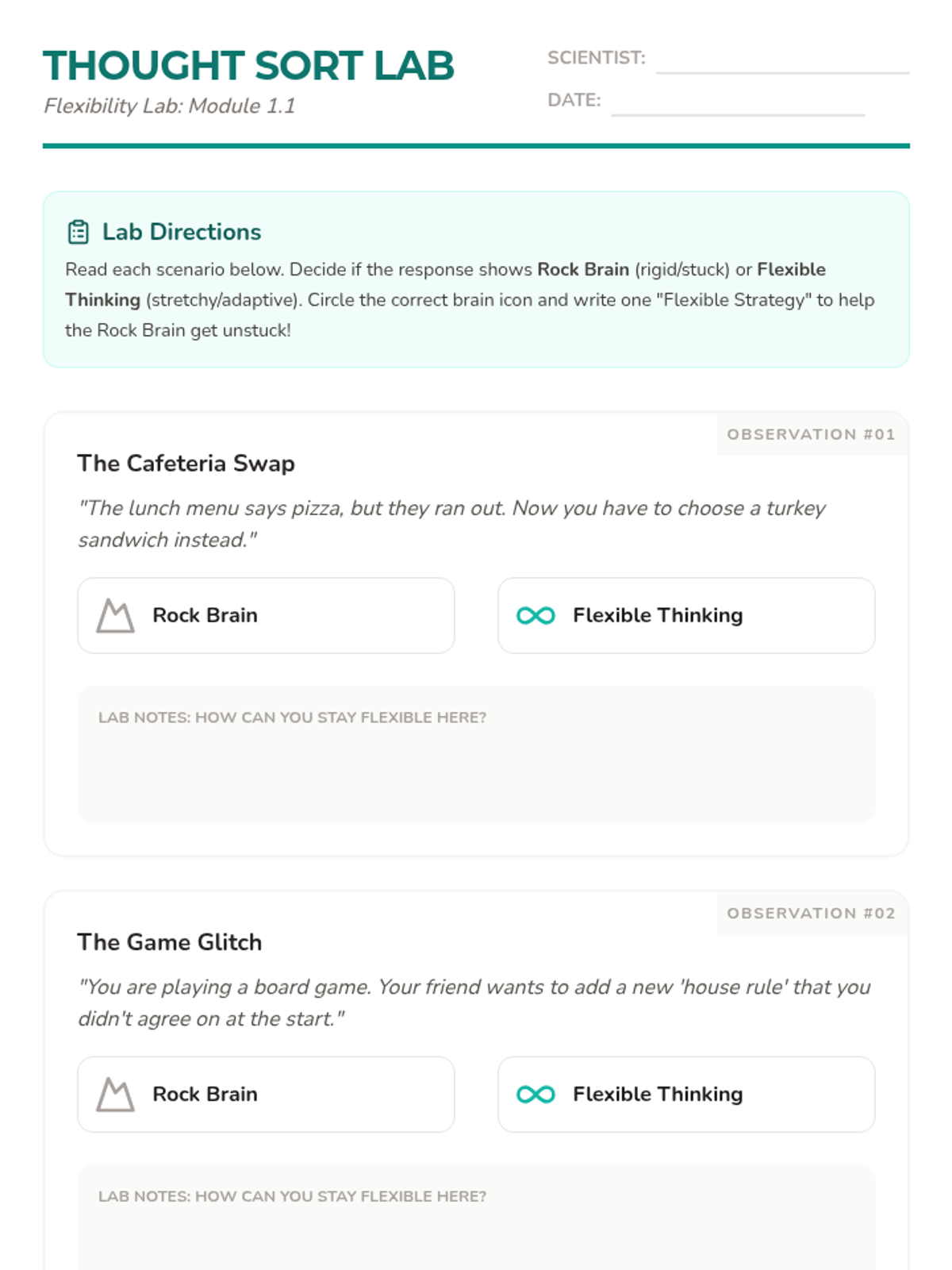
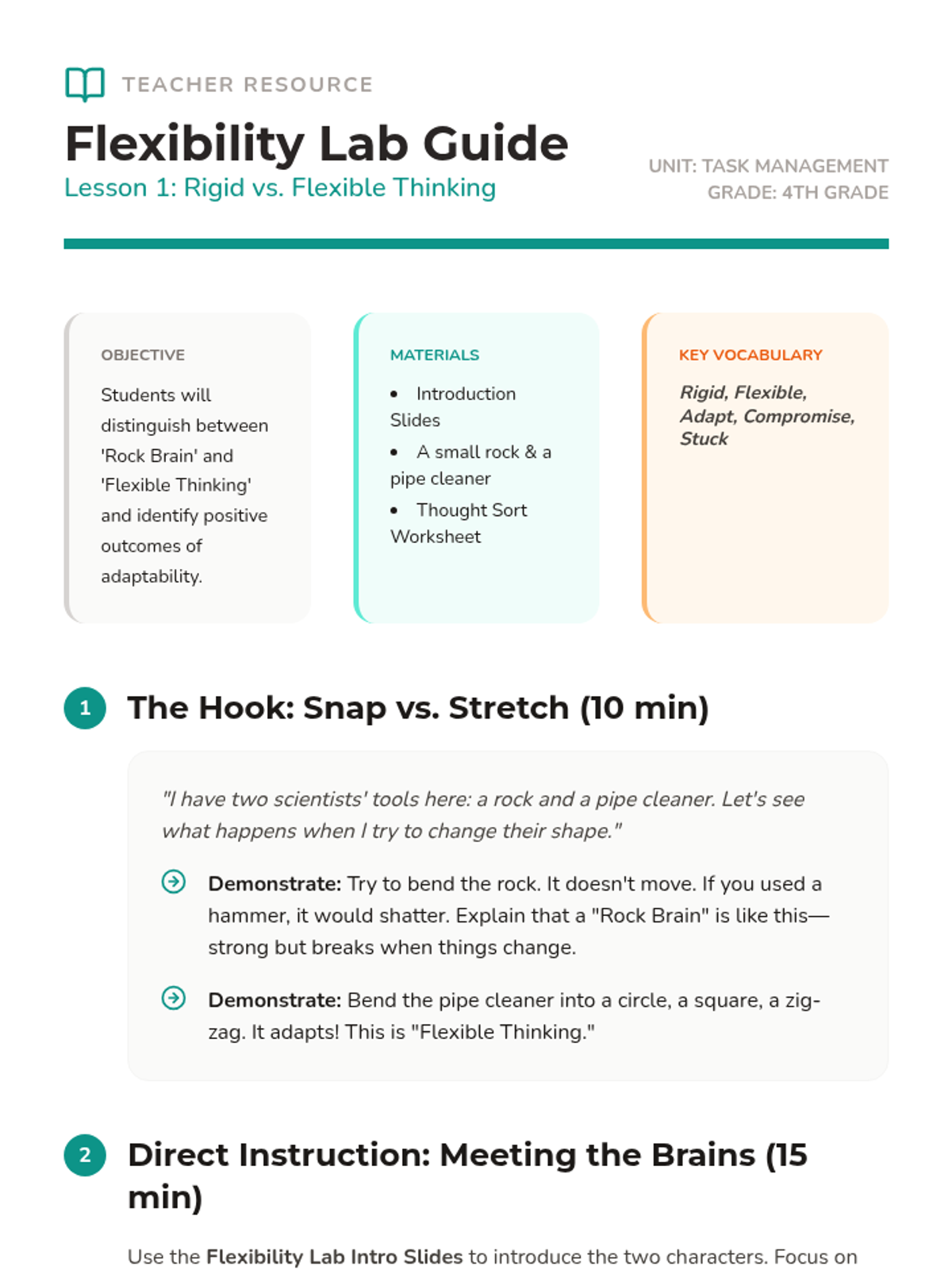
A 5-lesson sequence designed for 4th-grade students to build cognitive flexibility. Students learn to identify rigid versus flexible thinking, recognize physical stress responses to change, practice rapid task-switching, and apply emotional regulation strategies through role-play and a final 'flexibility obstacle course'.
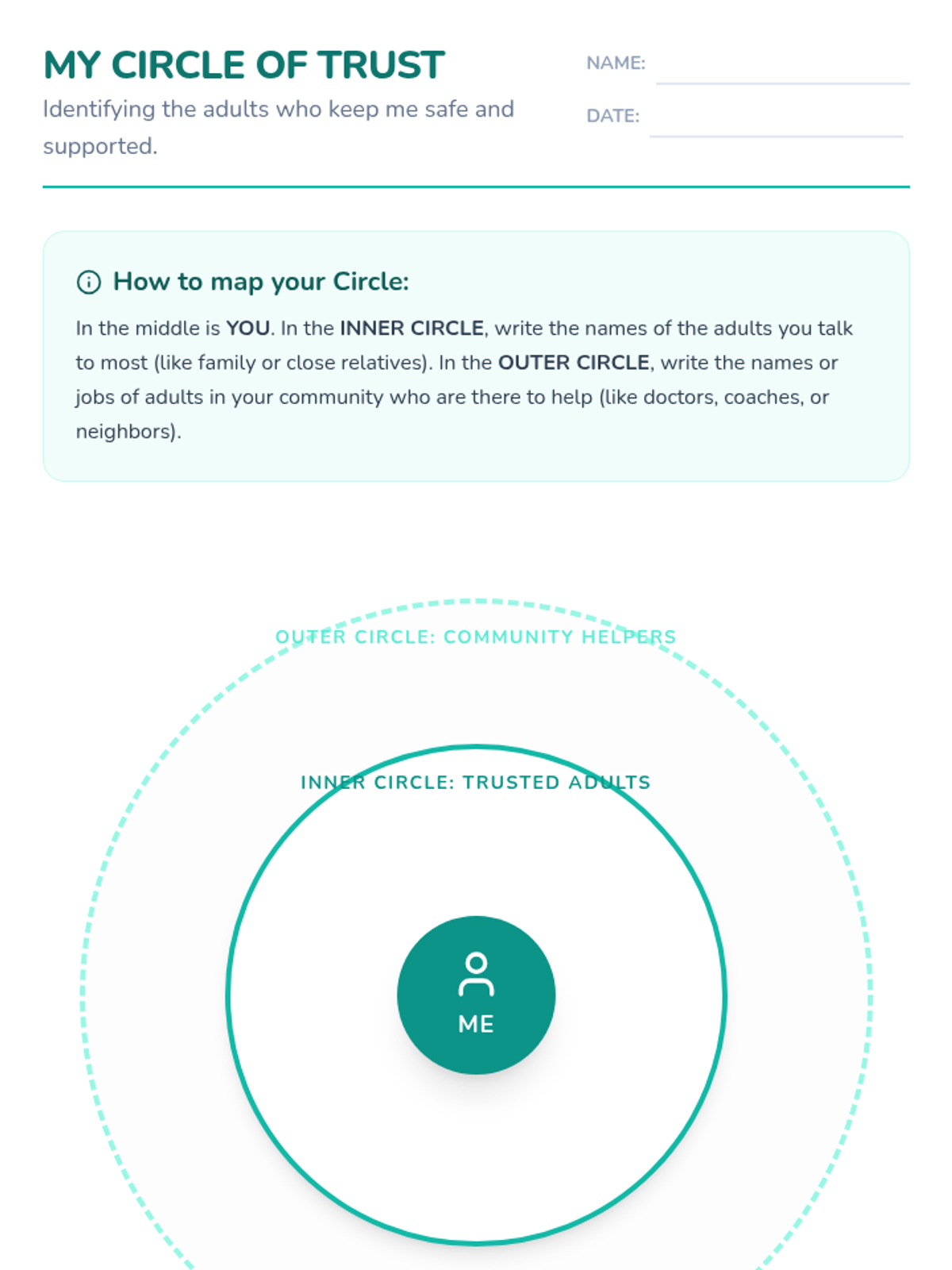
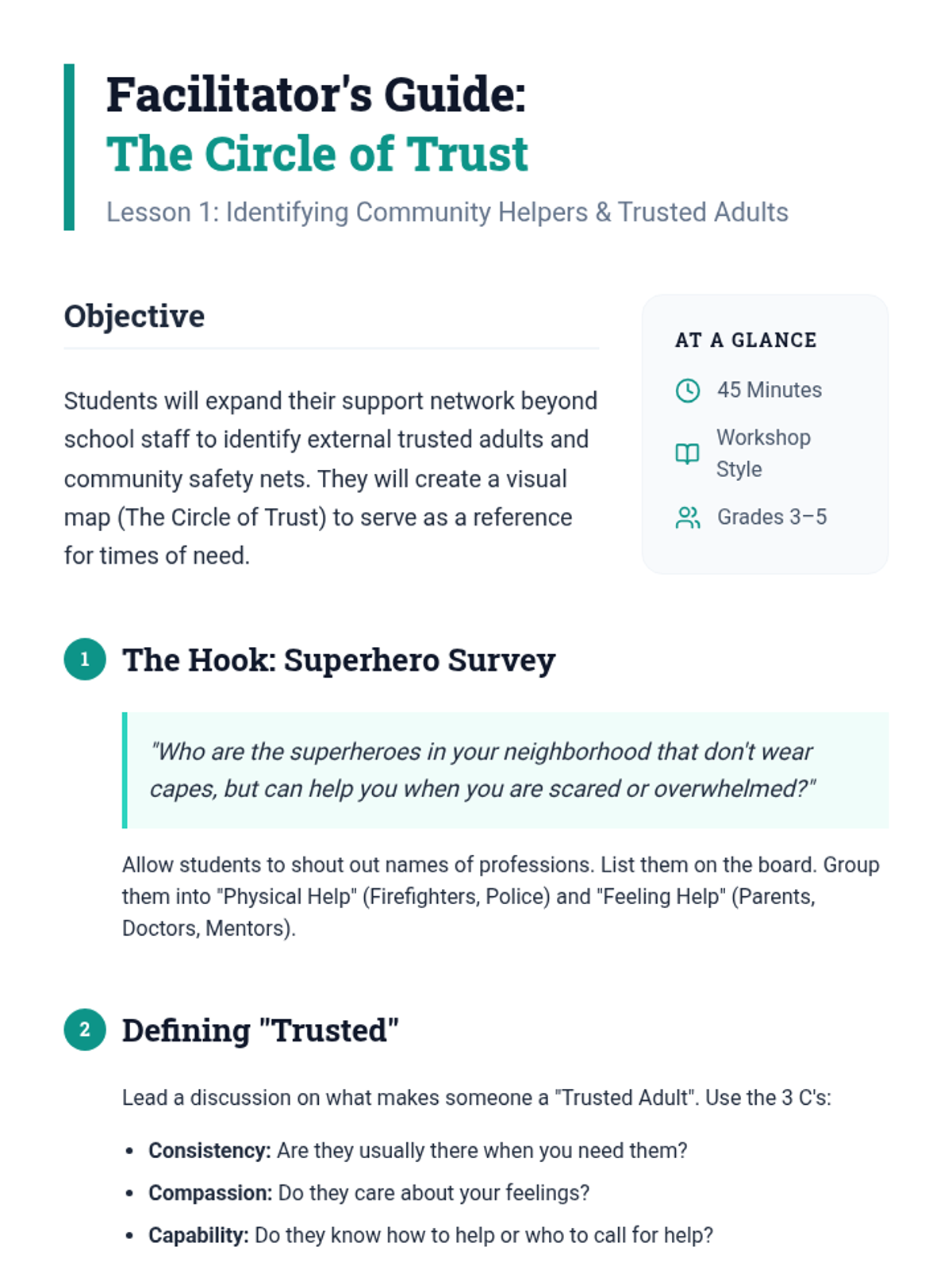
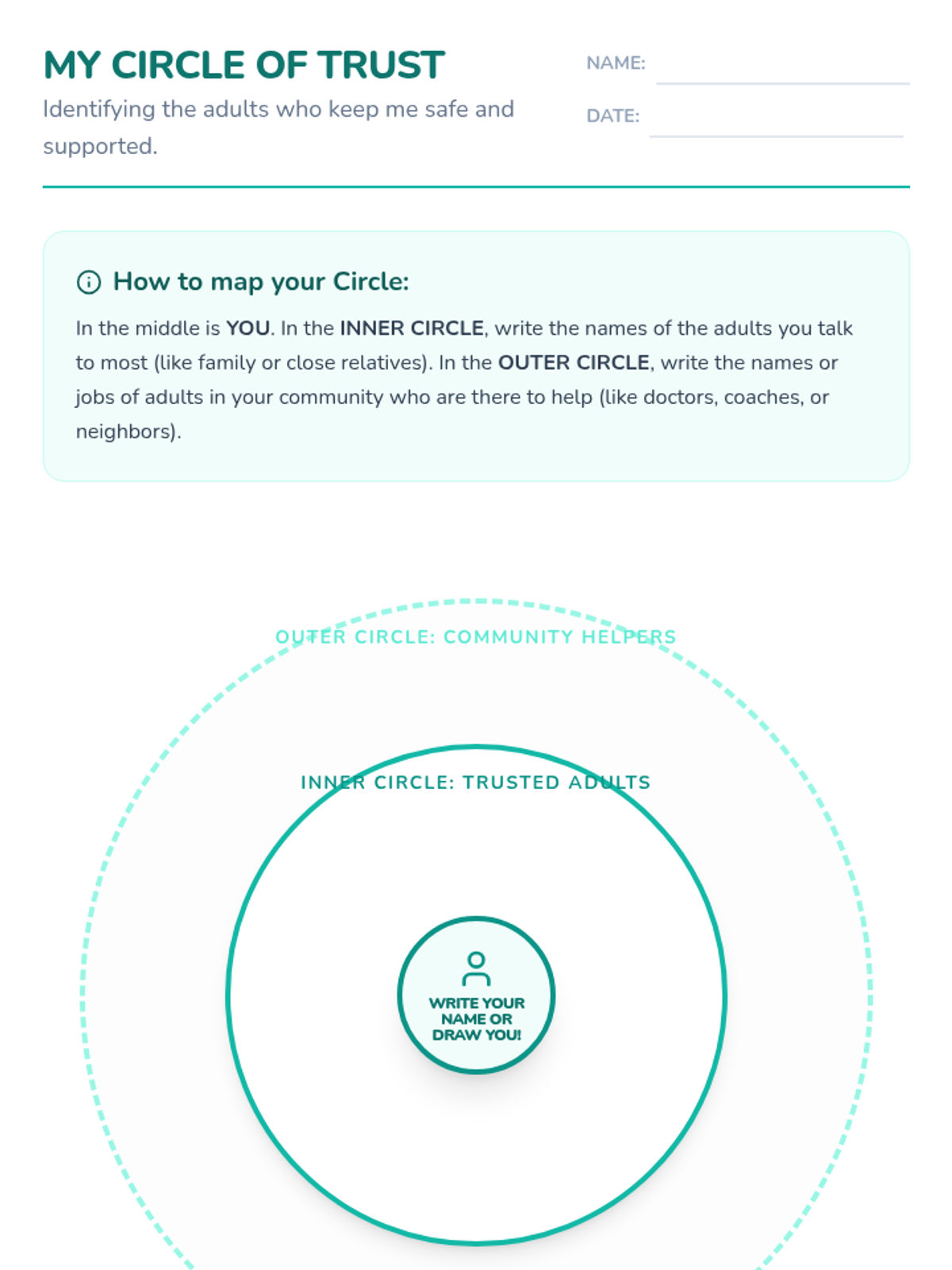
This sequence teaches 4th-grade students how to identify and access external mental health resources and emergency protocols. It covers trusted community adults, the 988 Suicide & Crisis Lifeline, emergency communication skills, and distinguishing between types of crises, culminating in a personal safety plan.
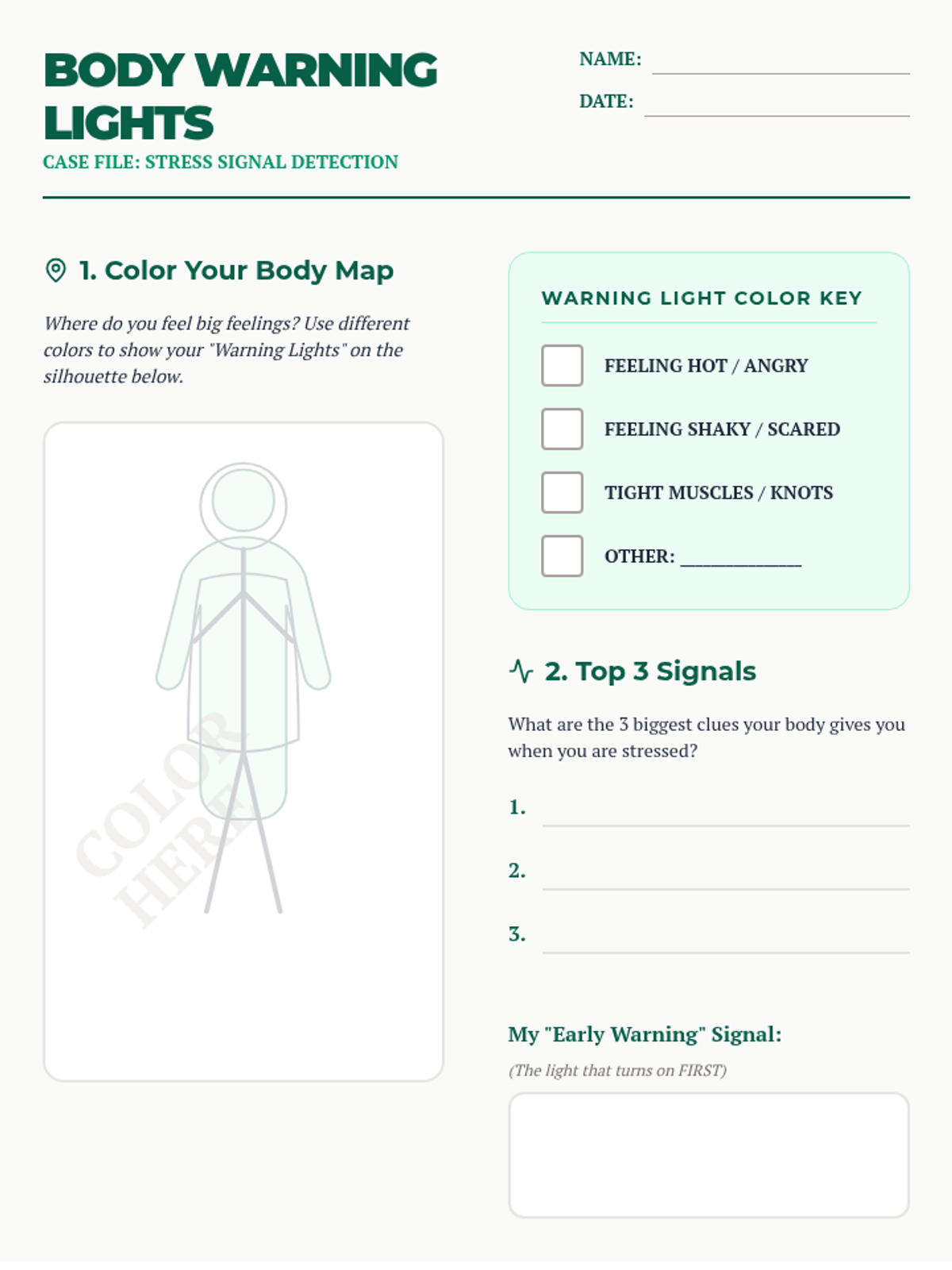
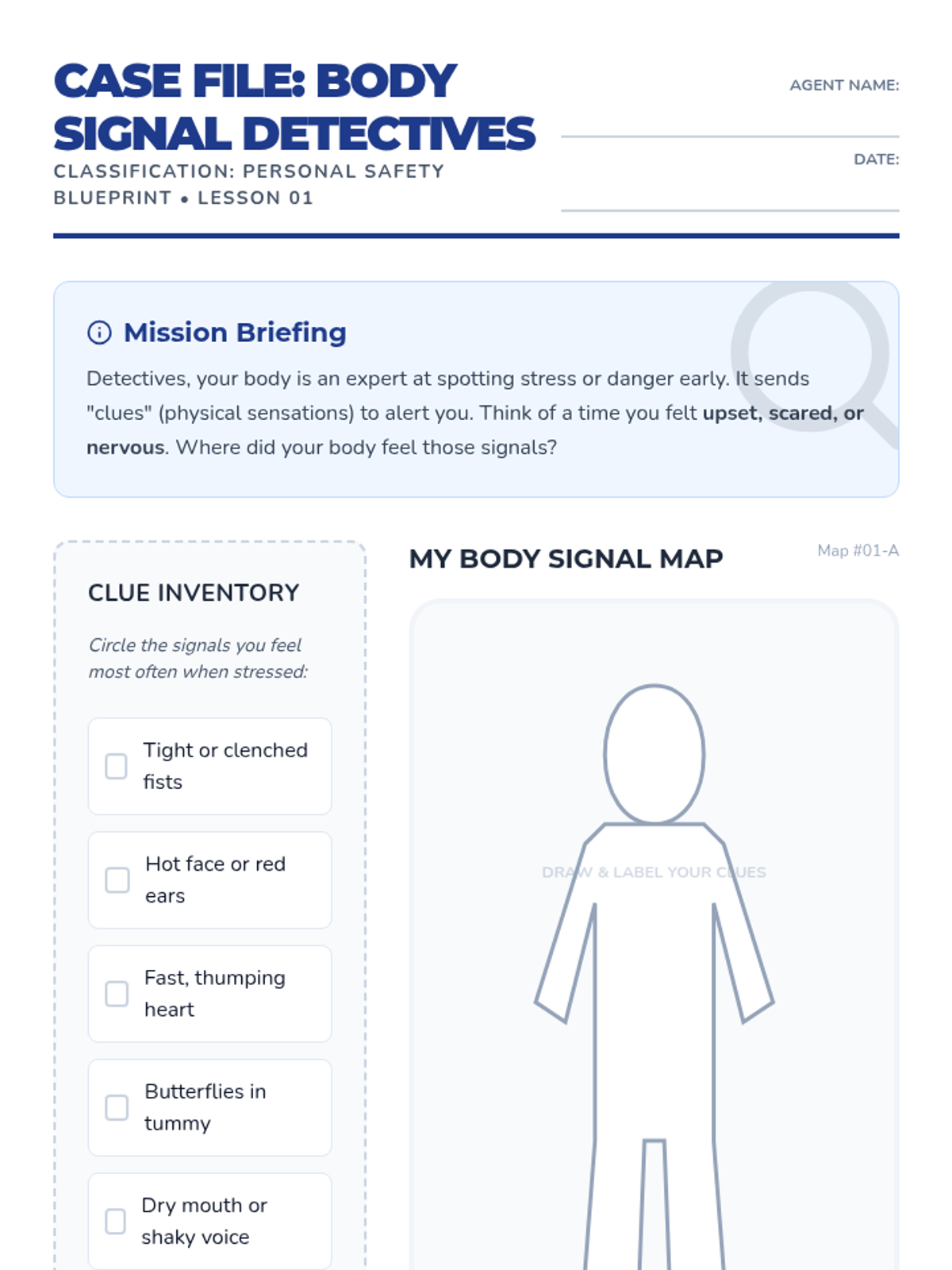
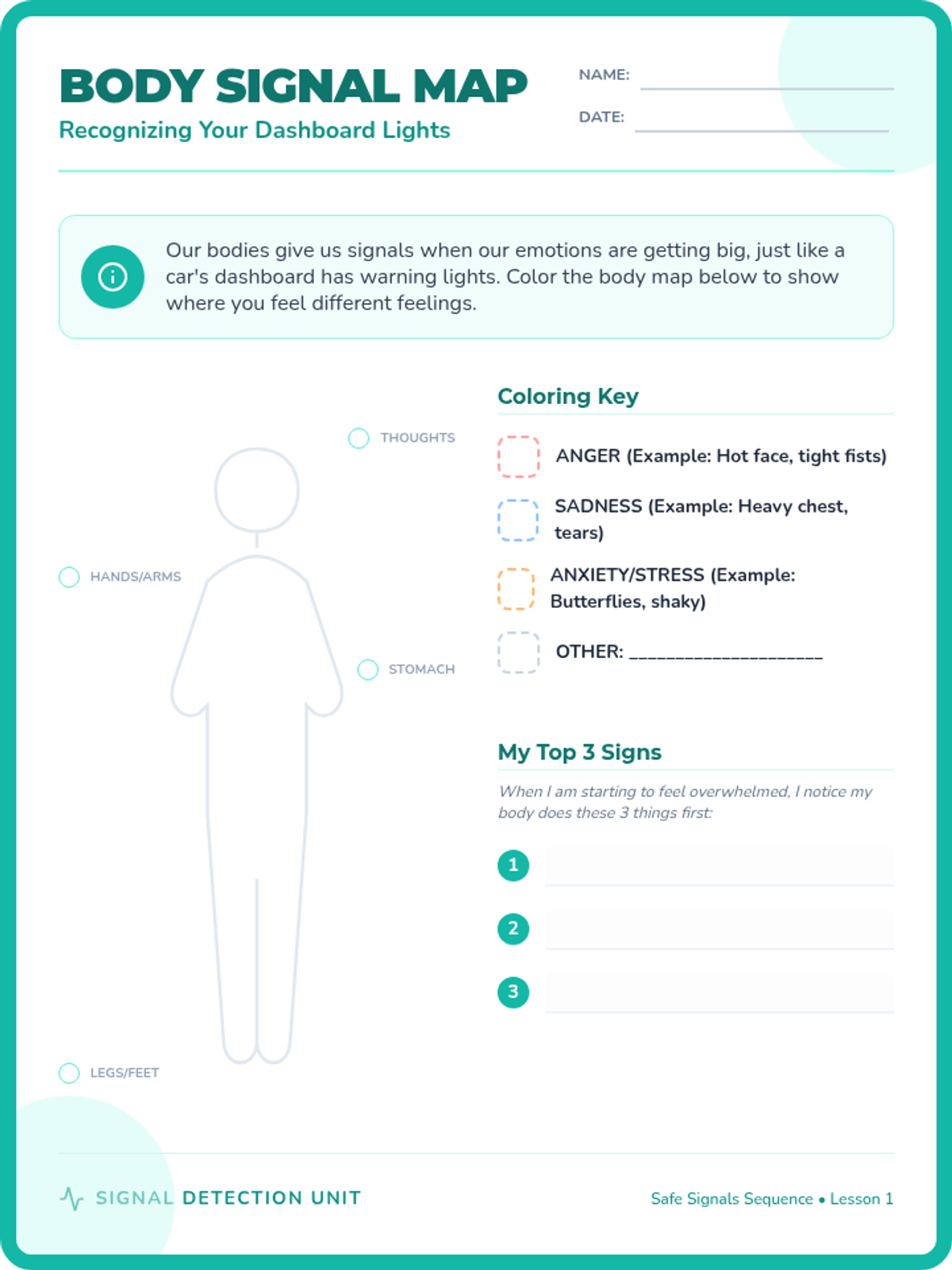
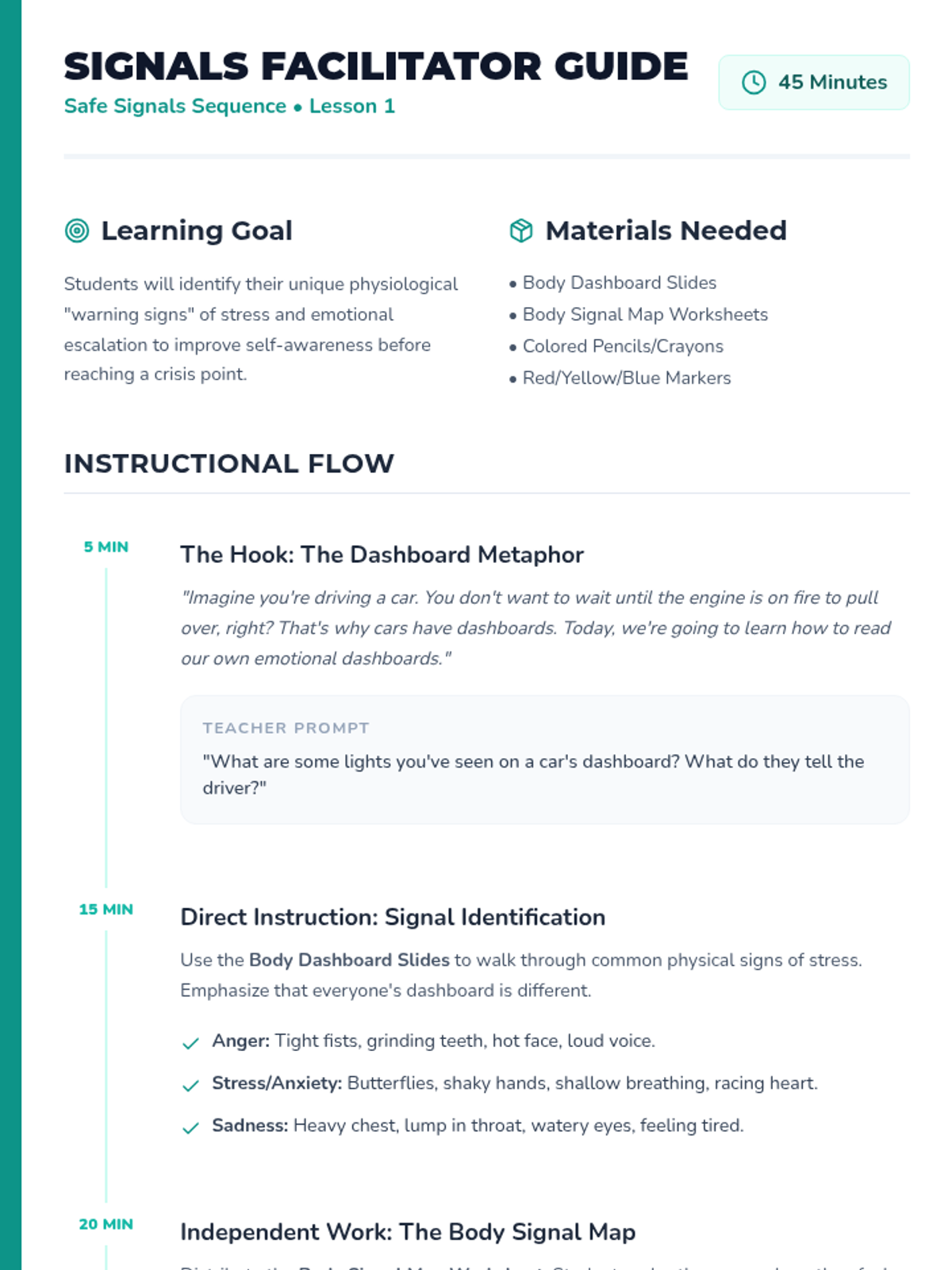
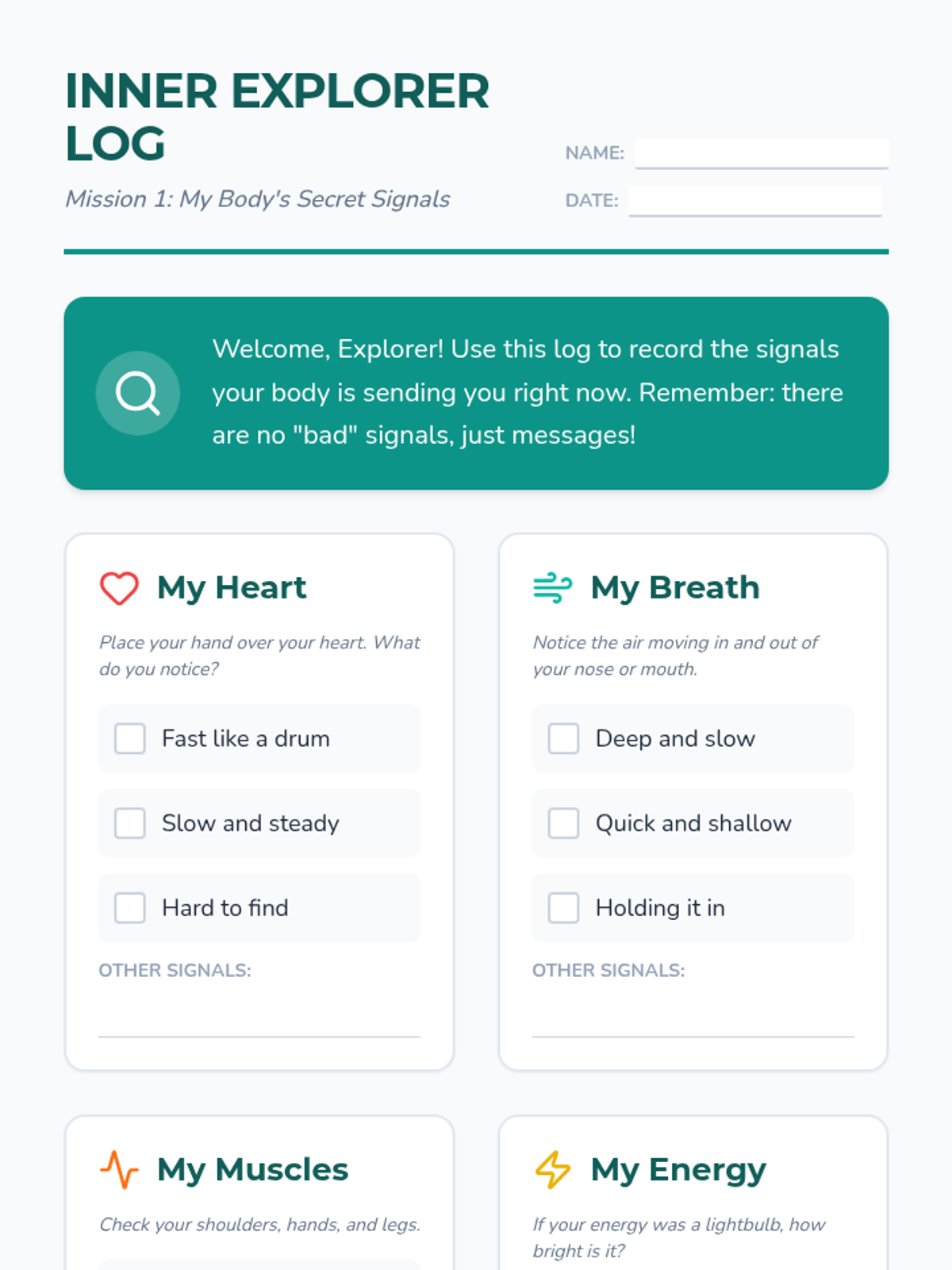
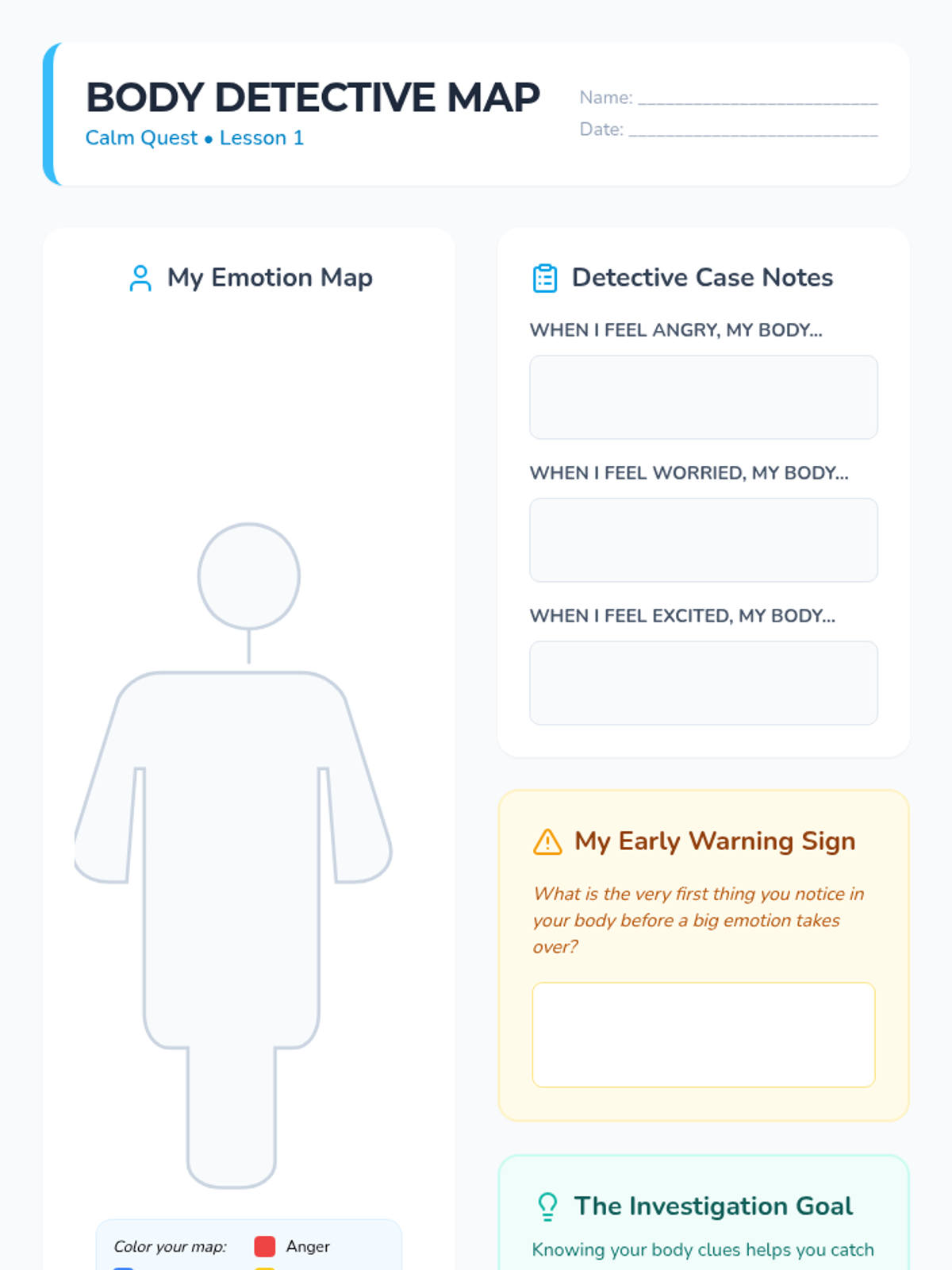
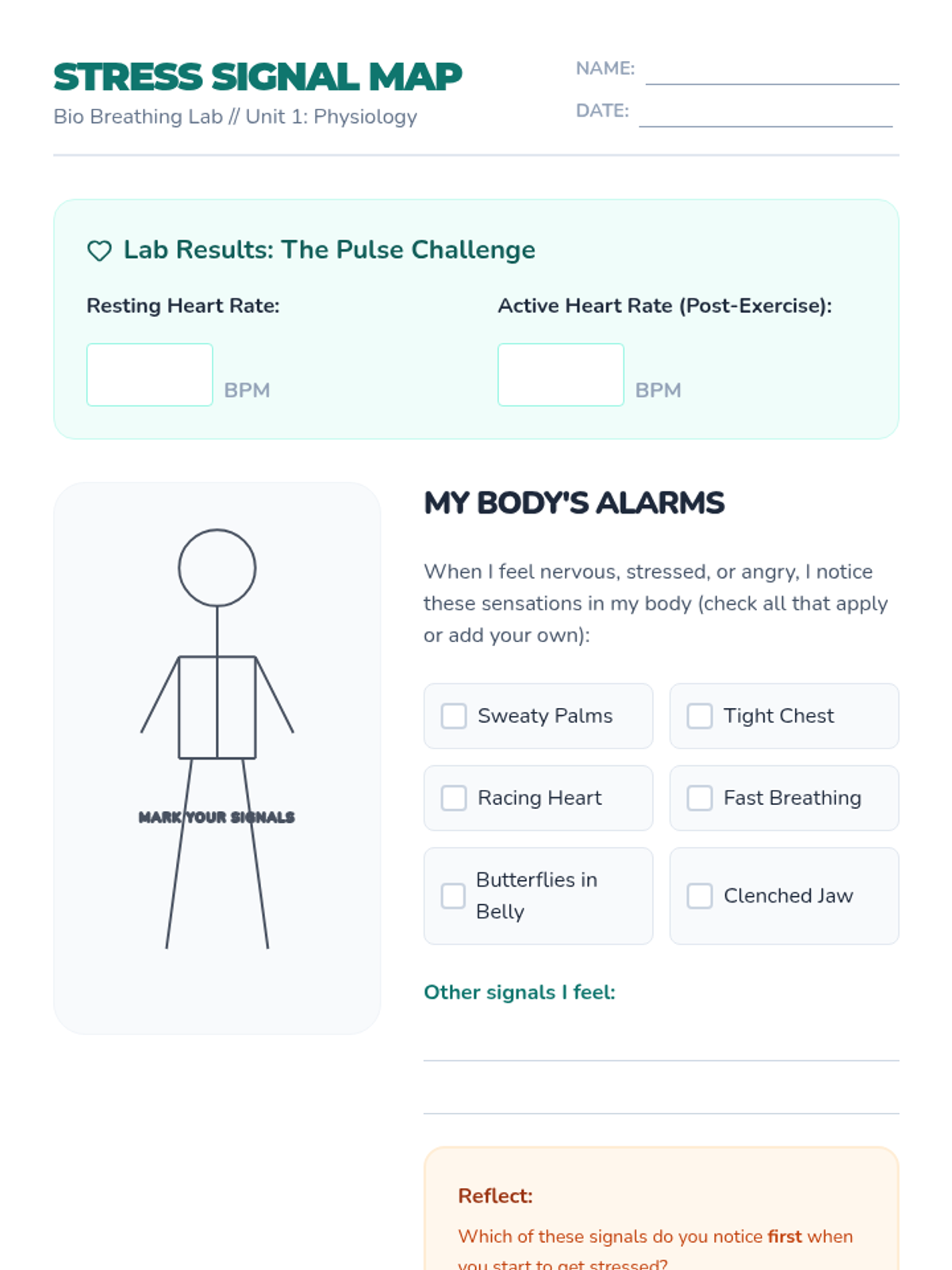
A comprehensive 5-lesson unit for 4th graders to learn somatic awareness and sensory grounding techniques for managing emotional distress. Students move from identifying physical stress signals to creating a personalized sensory safety plan.
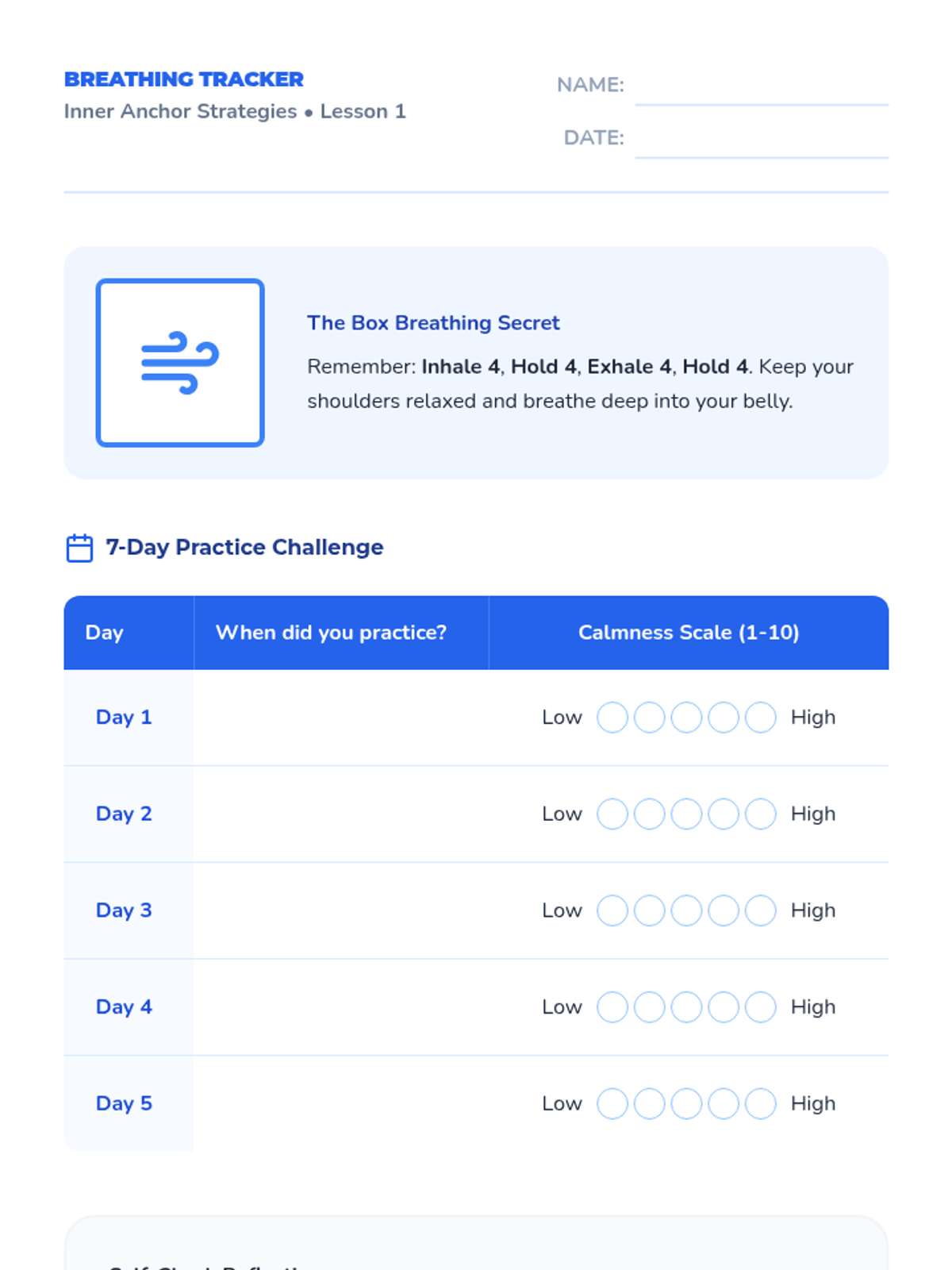
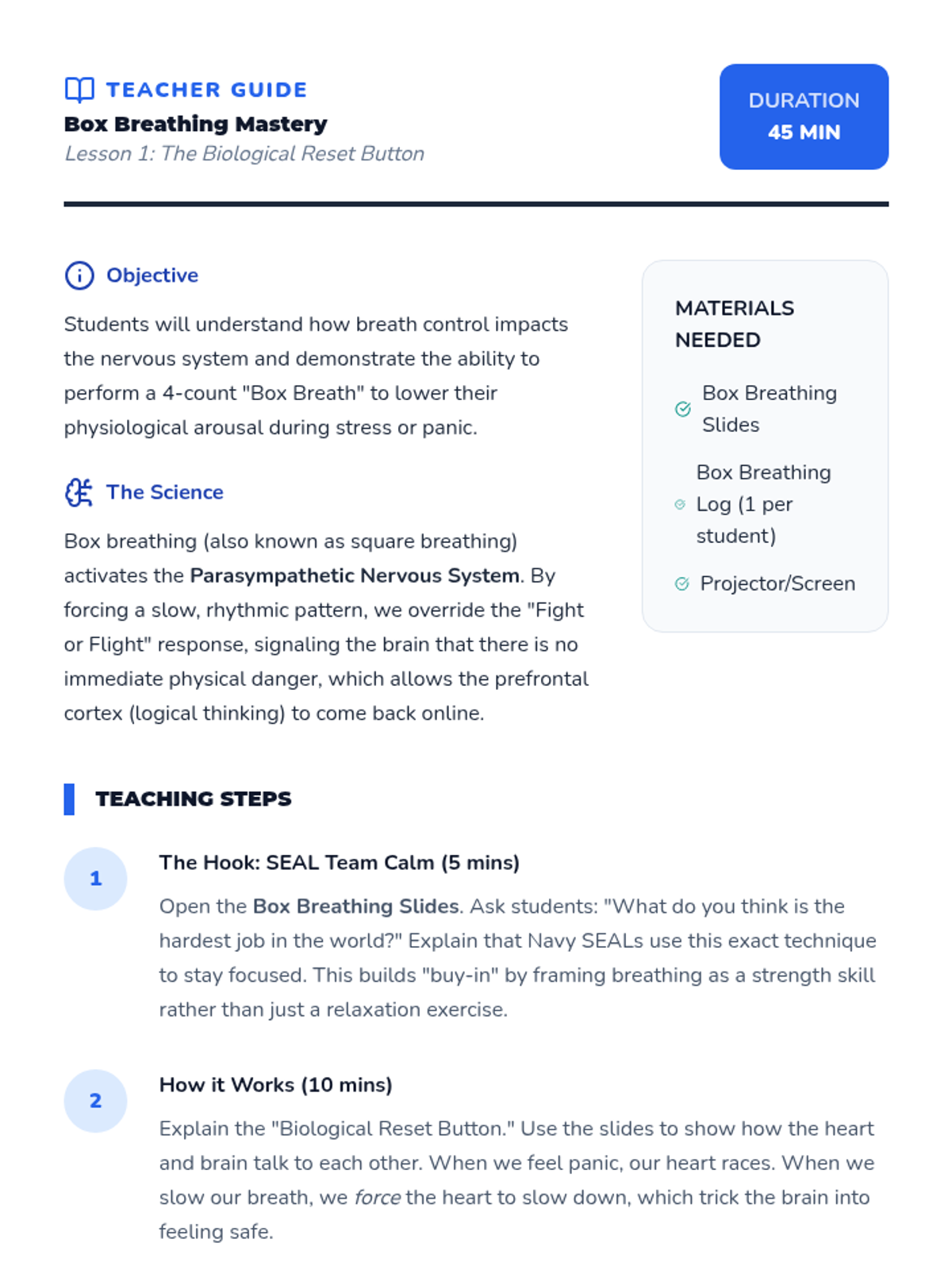
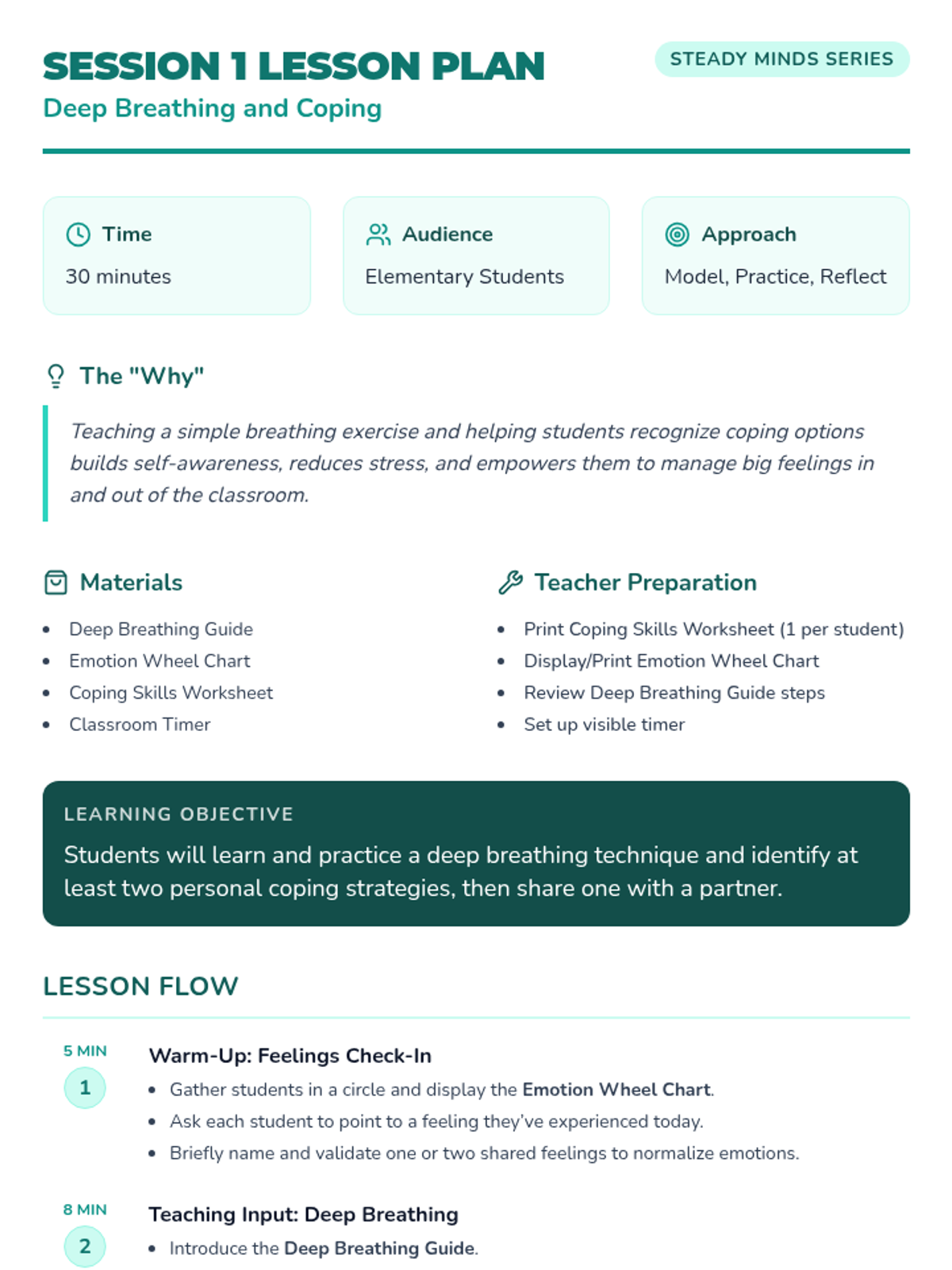
A 5-lesson sequence for 4th graders to develop grounding techniques, including box breathing, visualization, cognitive distraction, and self-talk, to manage stress and panic.
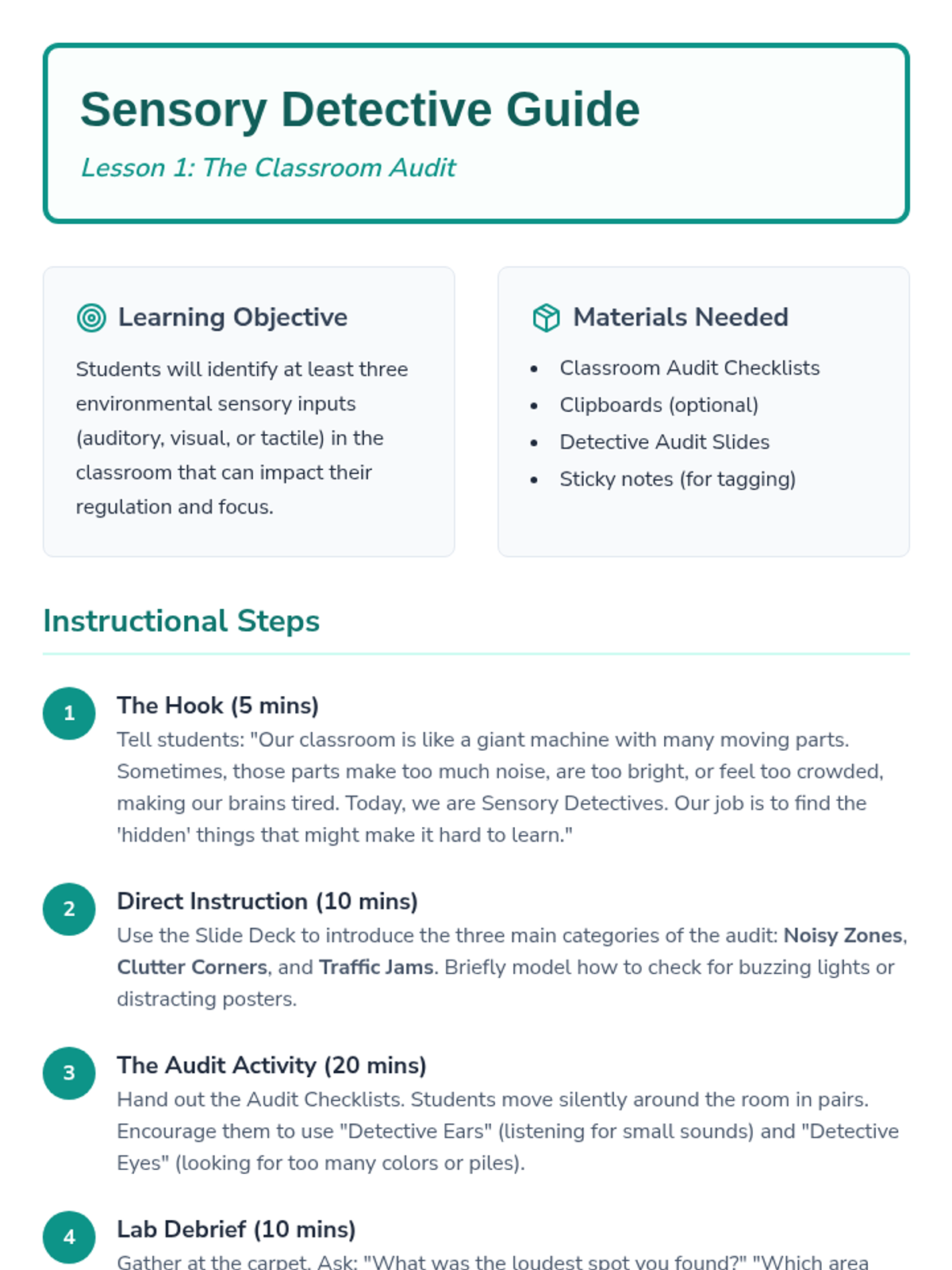
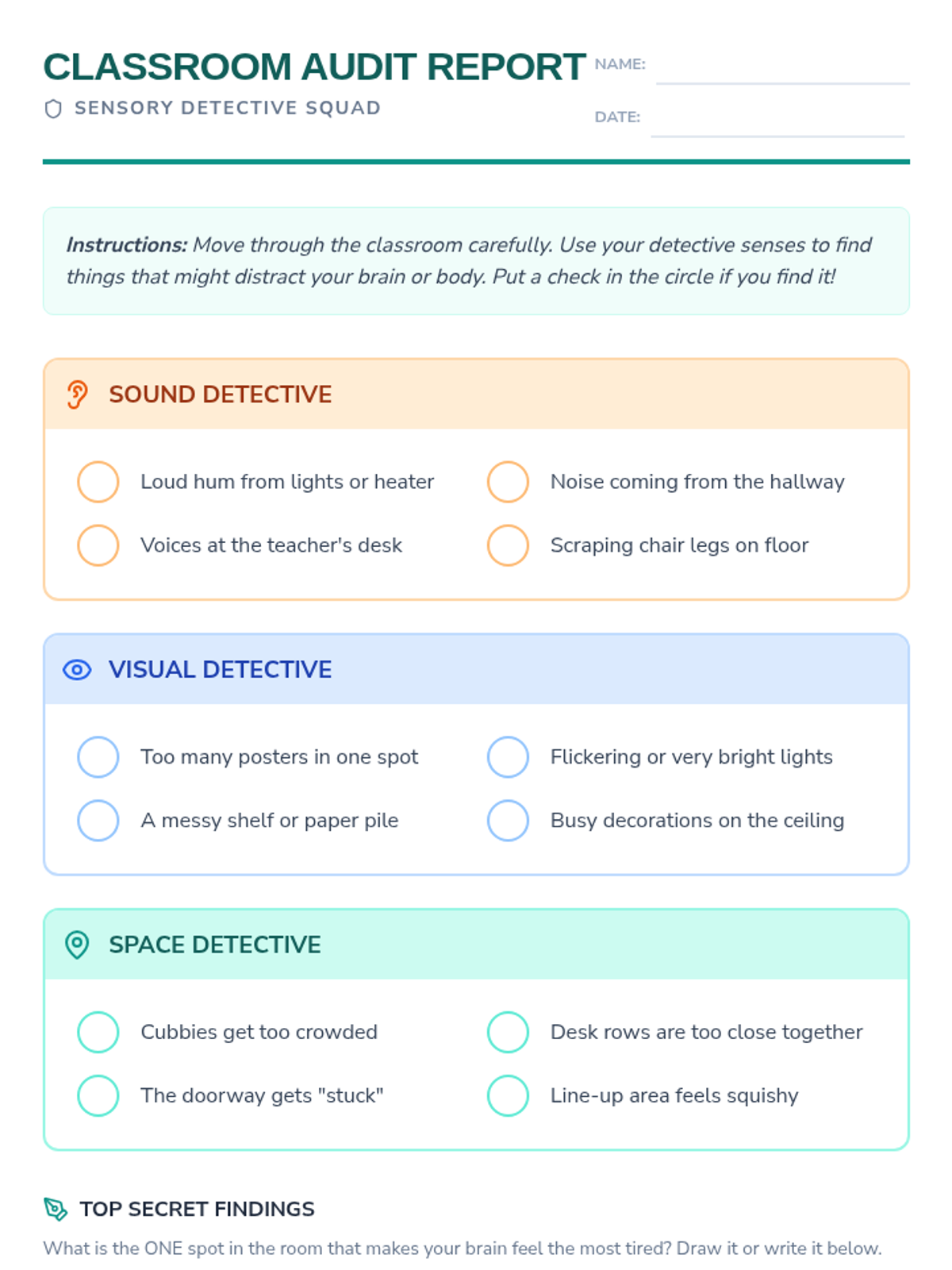
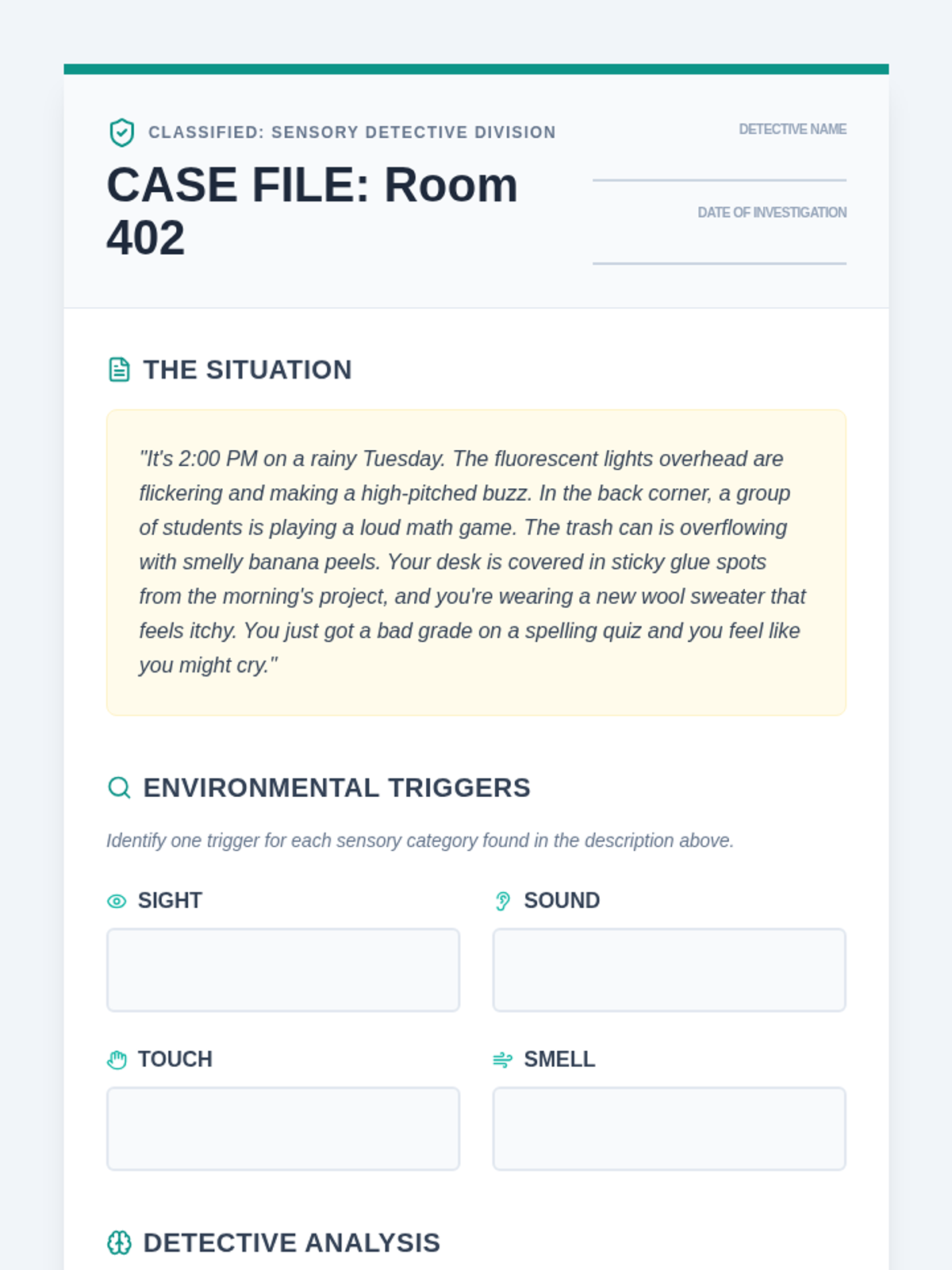
This sequence explores how environmental factors and community interactions impact sensory regulation. Students learn to audit their surroundings, respect diverse sensory needs, practice co-regulation, troubleshoot transitions, and collaboratively create a classroom sensory contract.
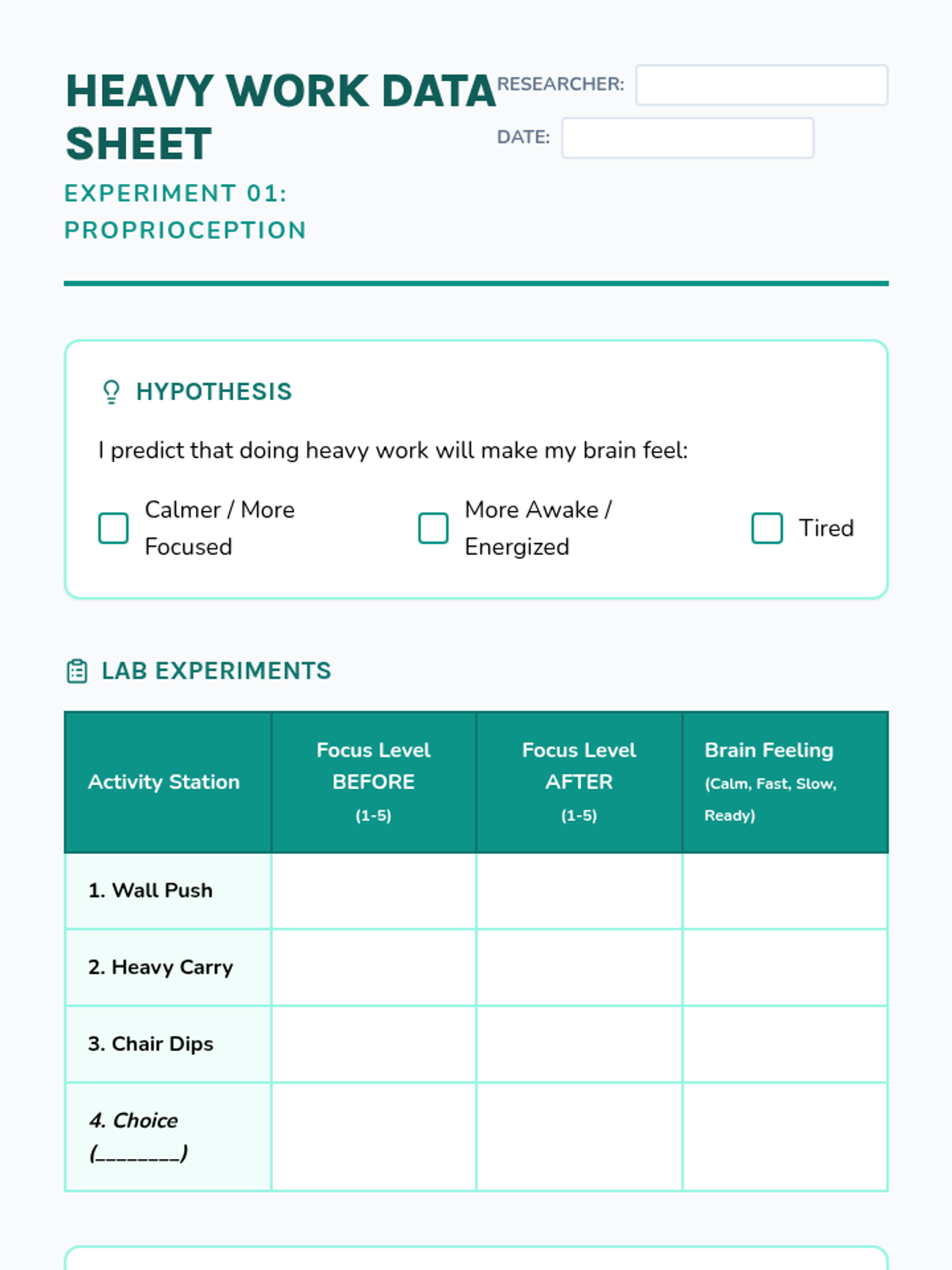
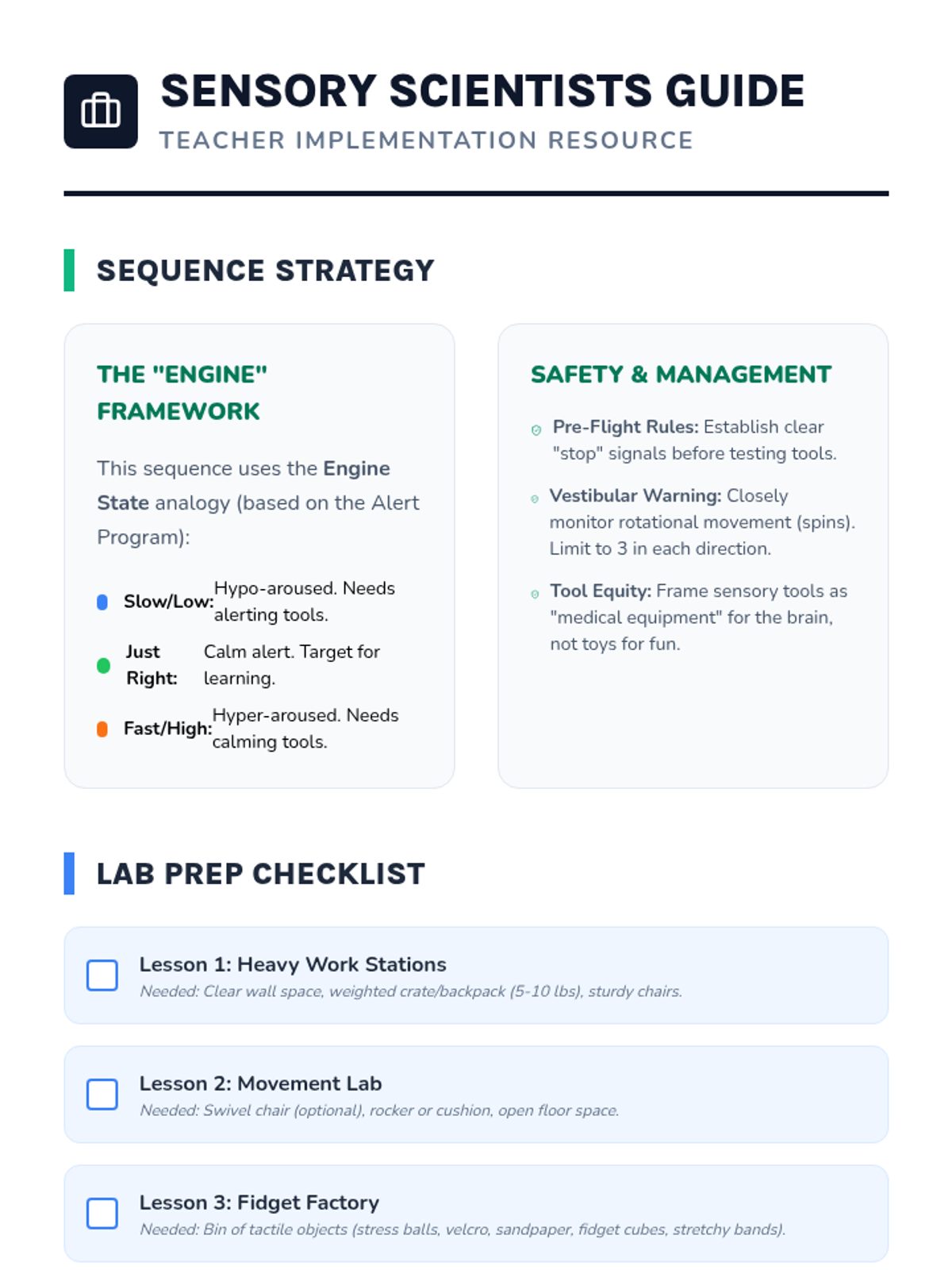
A hands-on, workshop-style sequence where 4th grade students experiment with various sensory strategies to discover what helps them regulate their nervous systems. Students act as 'Sensory Scientists,' collecting data on proprioceptive, vestibular, tactile, visual, and auditory tools to create a personalized 'Regulation Menu.'
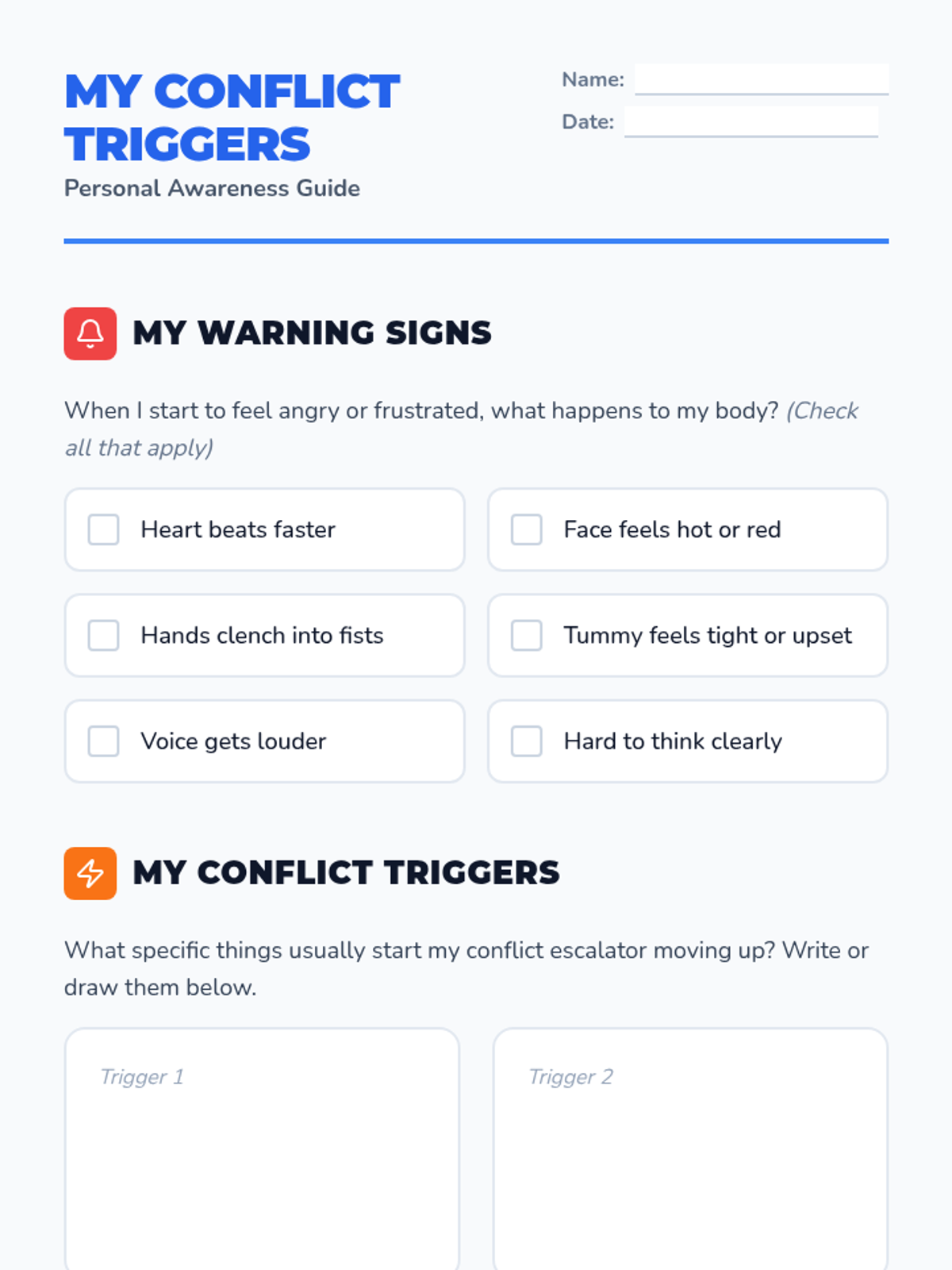
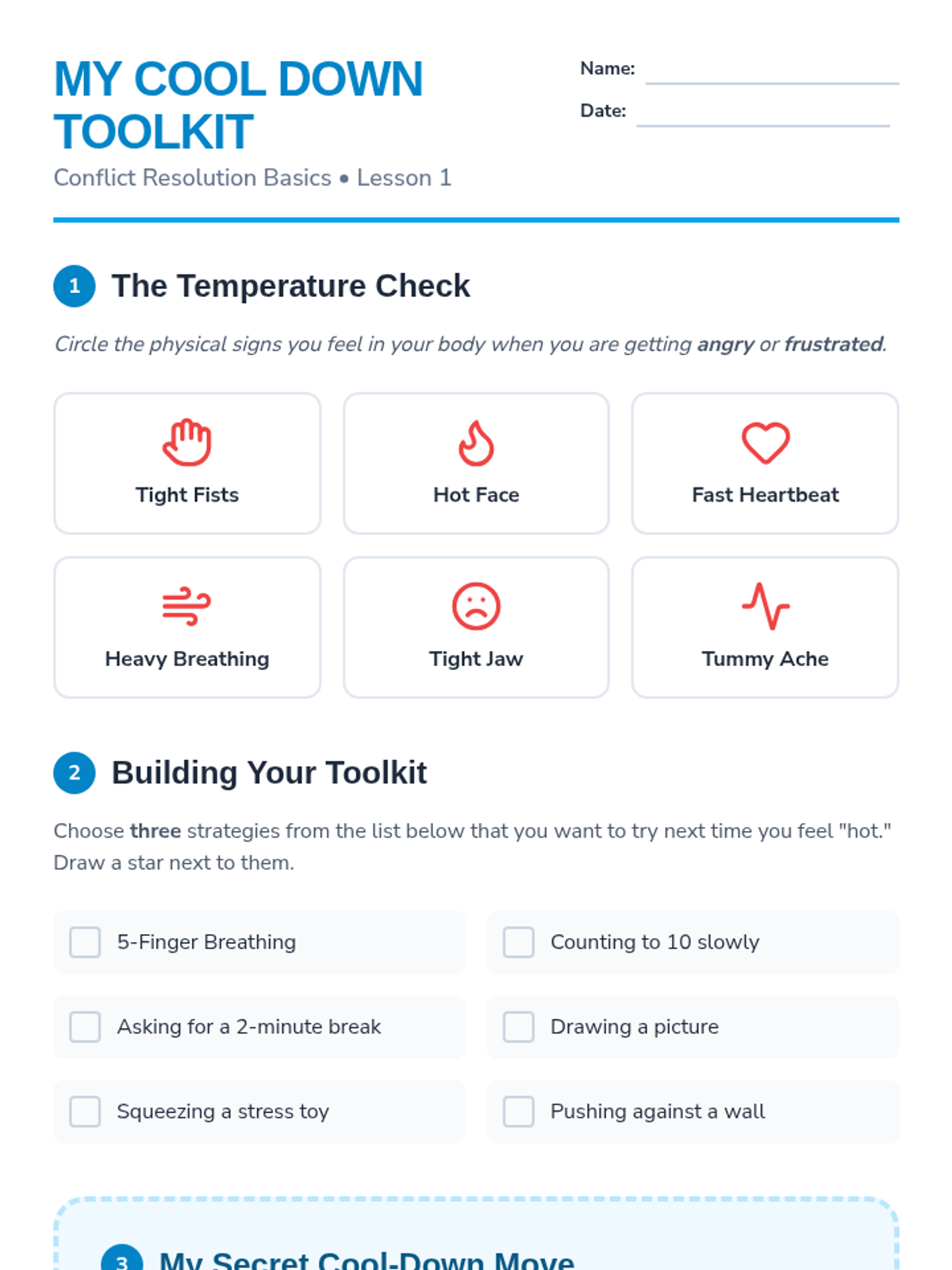
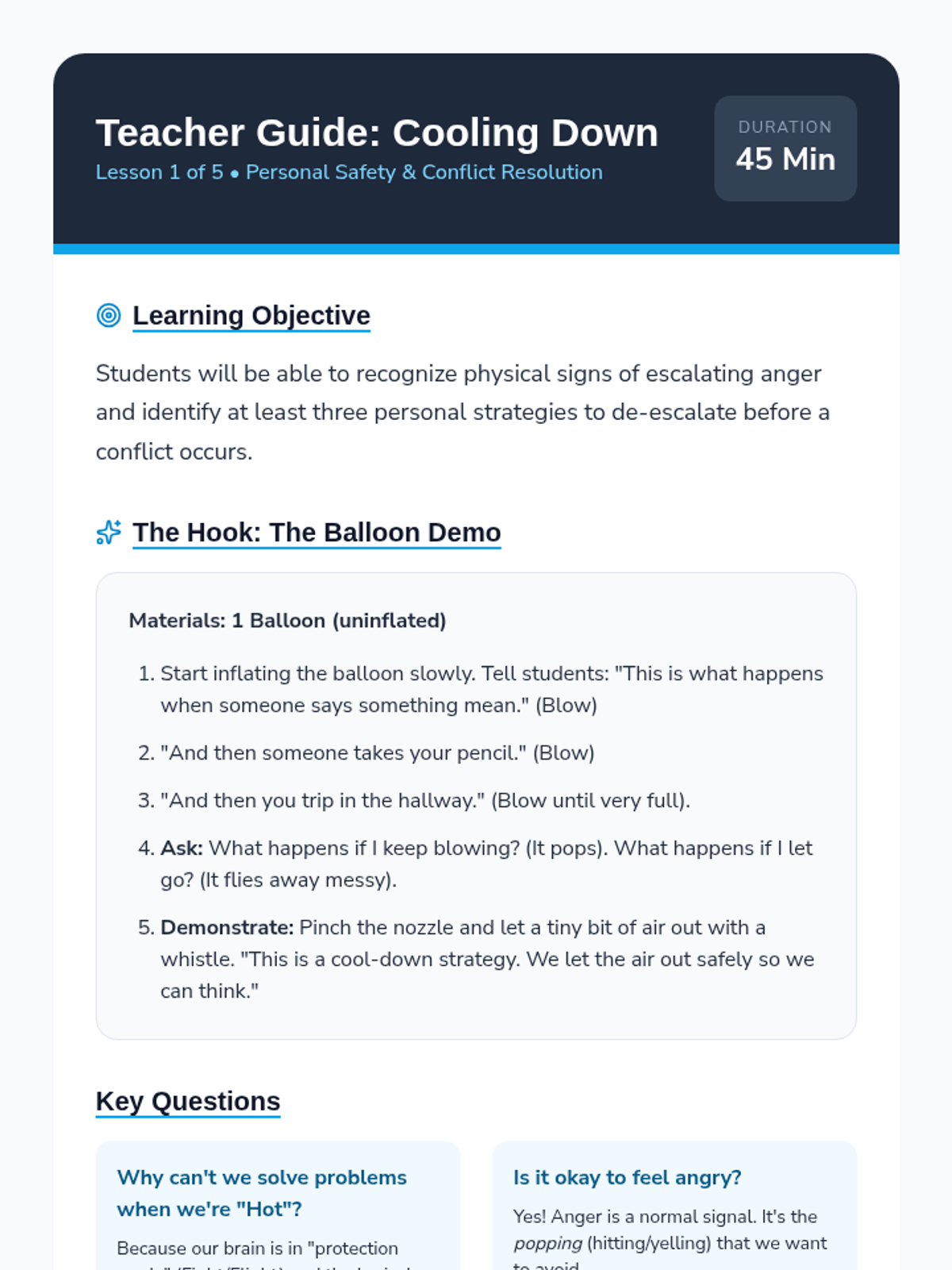
Students develop practical social-emotional skills to manage and resolve interpersonal conflicts effectively through identifying escalation, practicing active listening, using 'I' statements, and negotiating win-win solutions.
A comprehensive 4th-grade sequence focused on building executive functioning skills, including time management, environmental organization, active study techniques, and test-taking strategies with a focus on ESL/Academic English support.
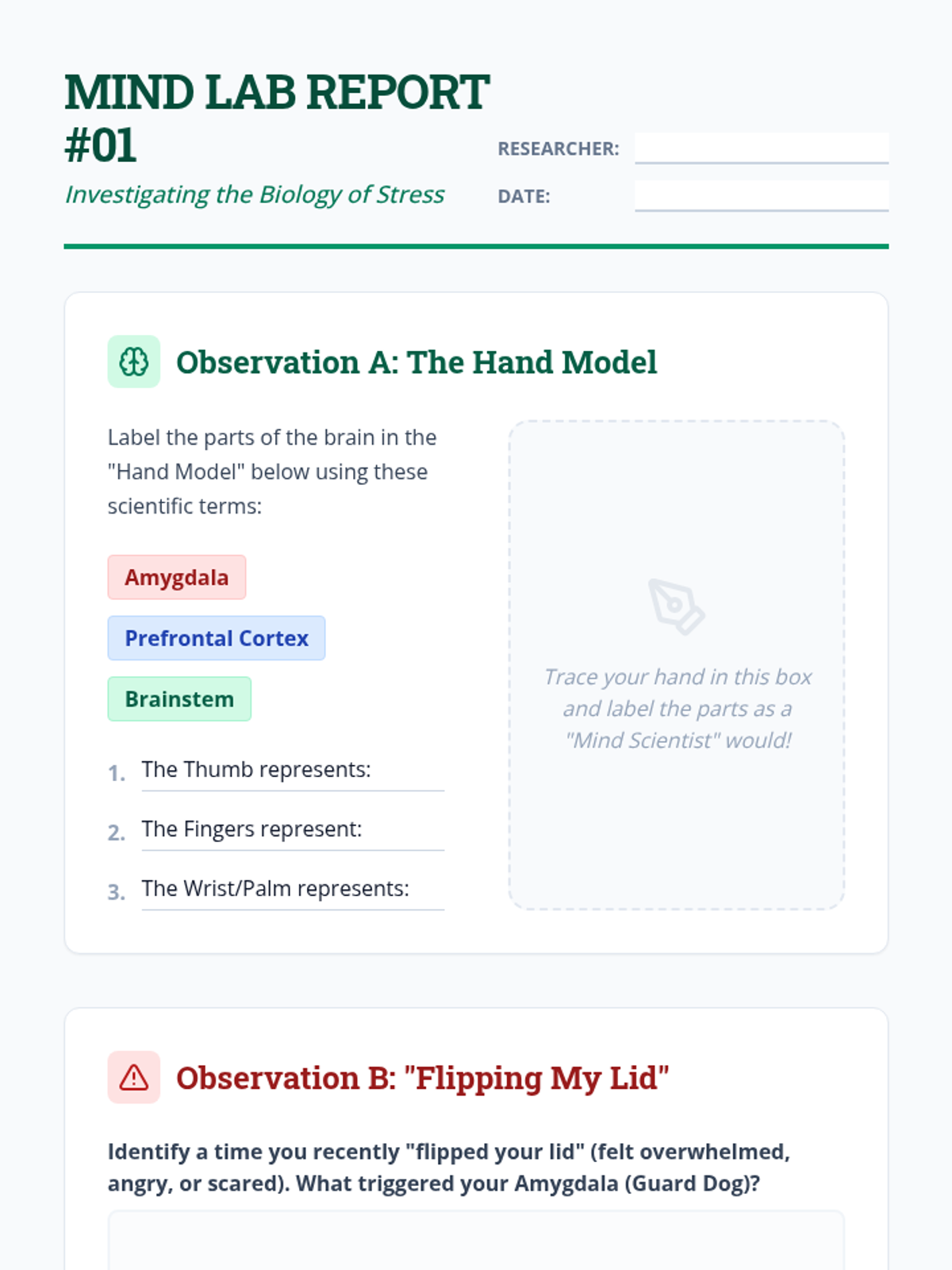
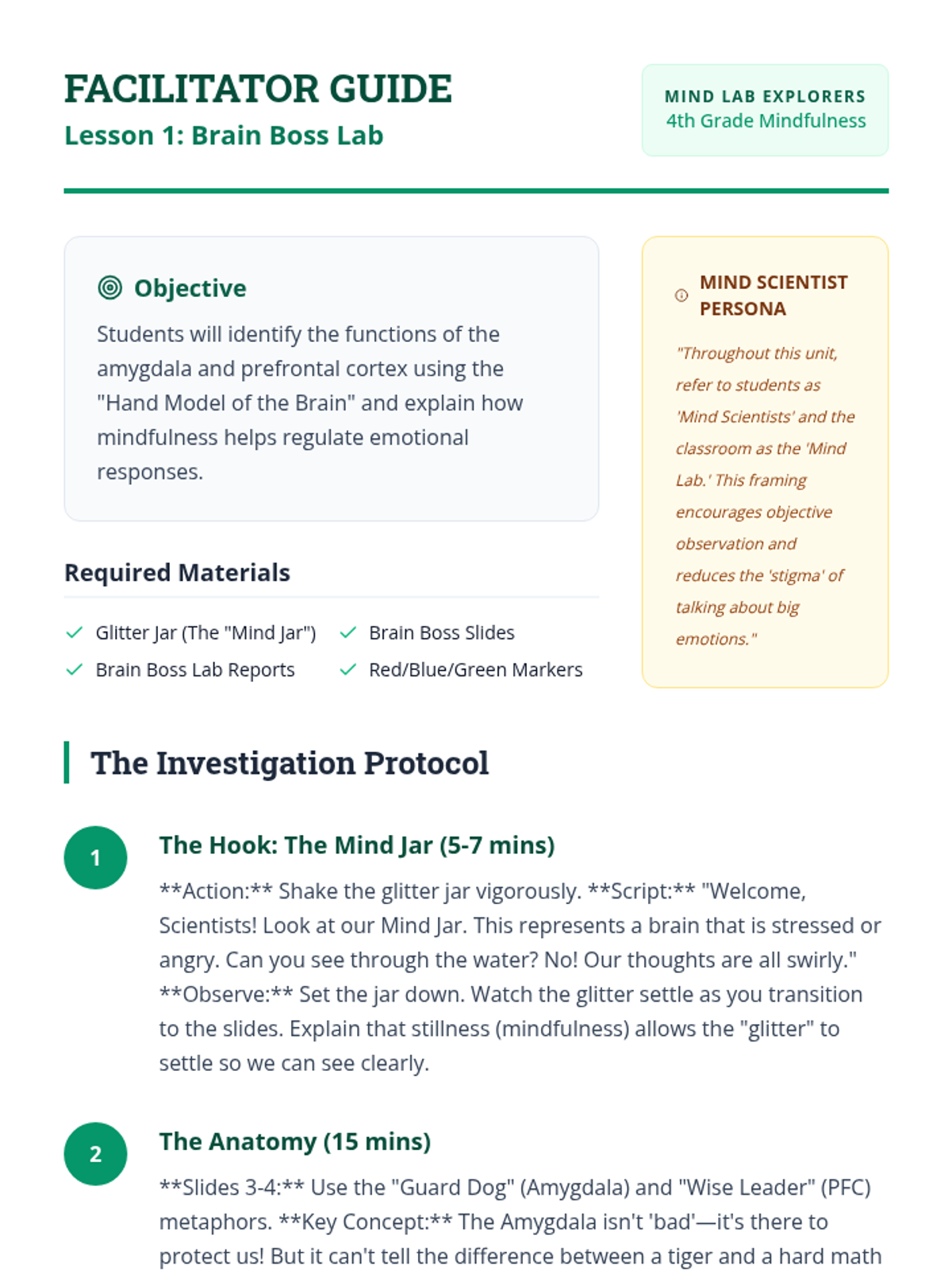
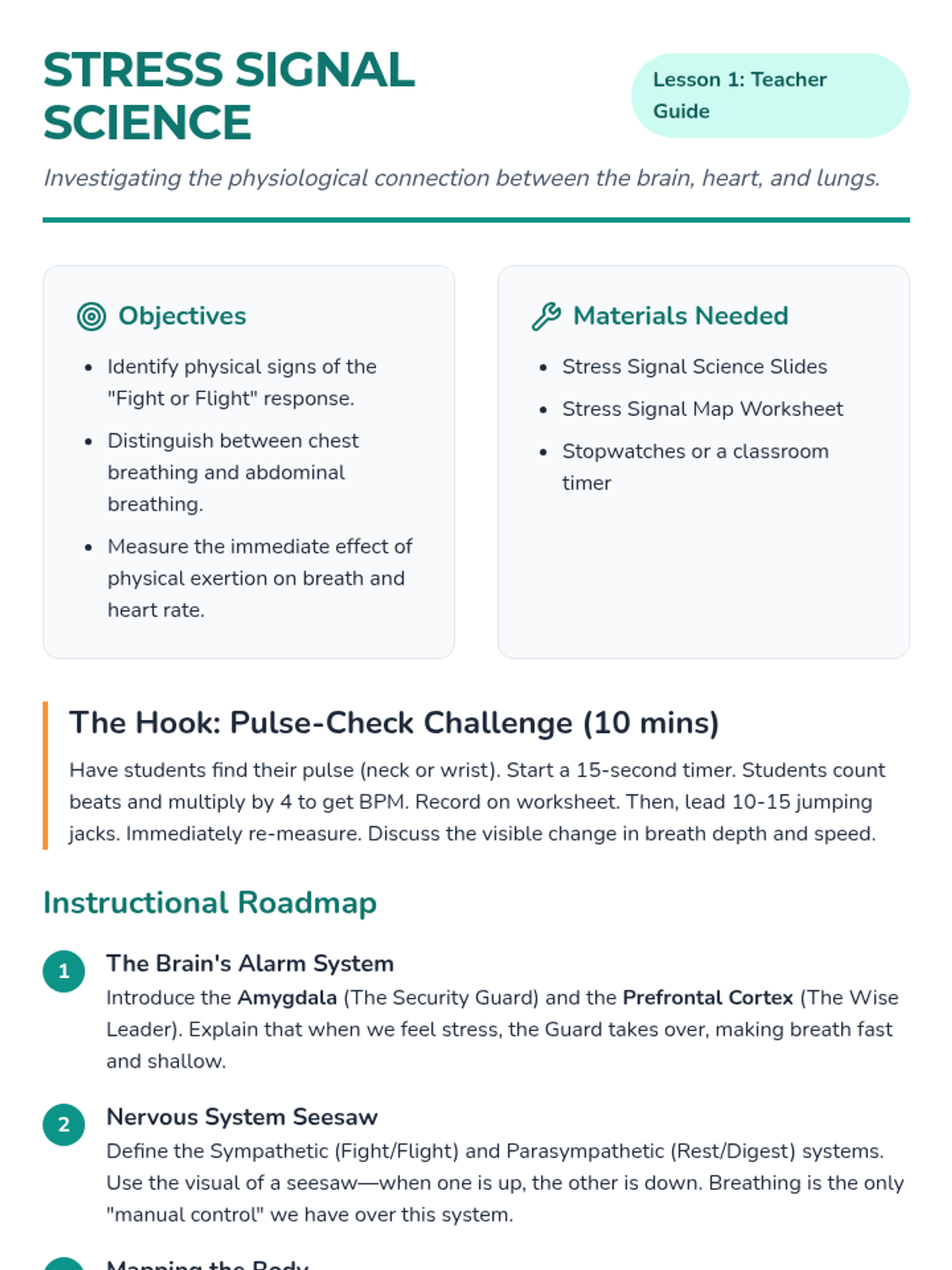
An inquiry-based mindfulness sequence for 4th graders, framing students as 'Mind Scientists' who investigate the neuroscience of stress, the power of sensory attention, and the practice of non-judgmental observation. Students explore the brain-body connection through sound, visualization, movement, and somatic awareness.
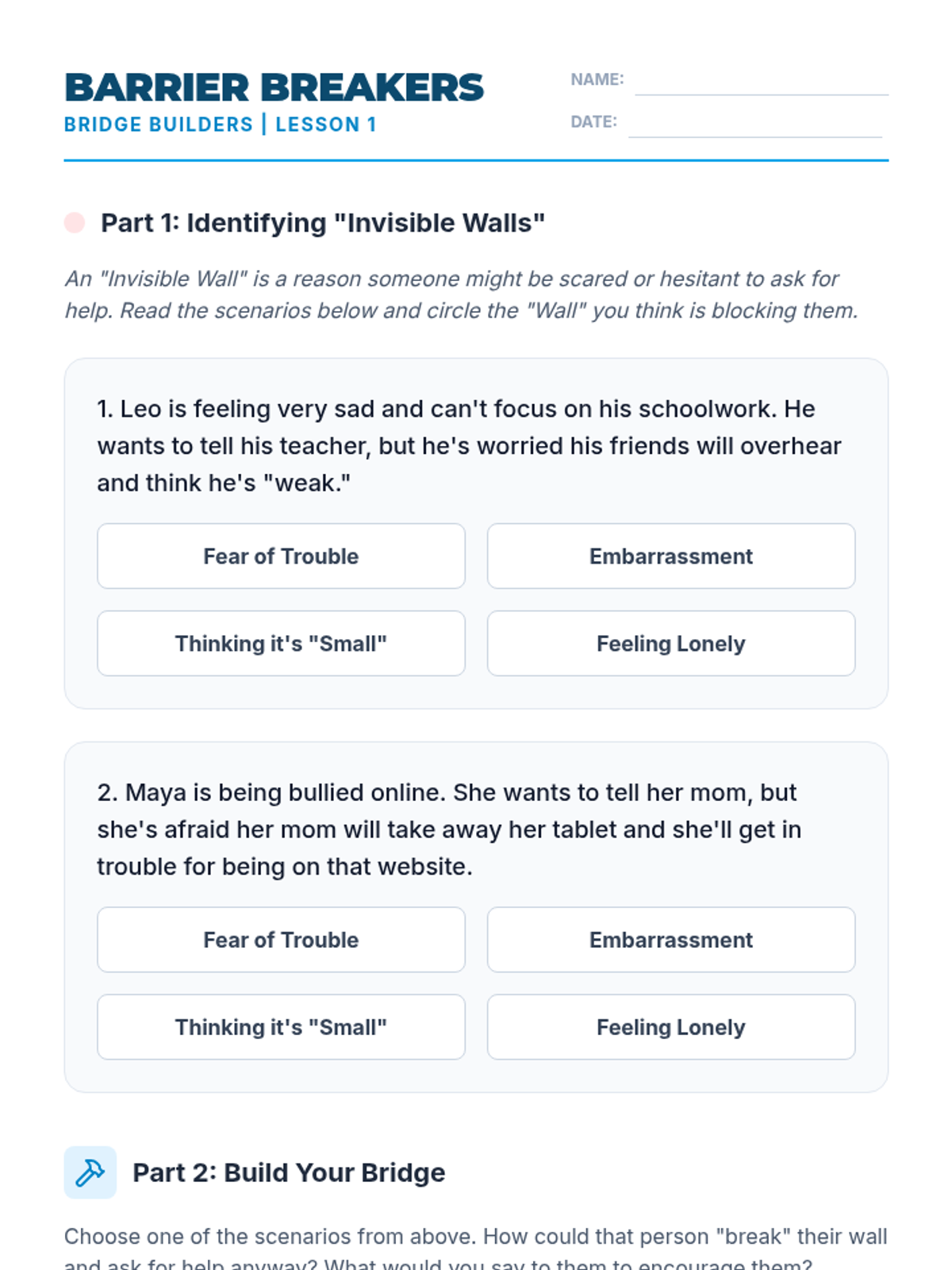
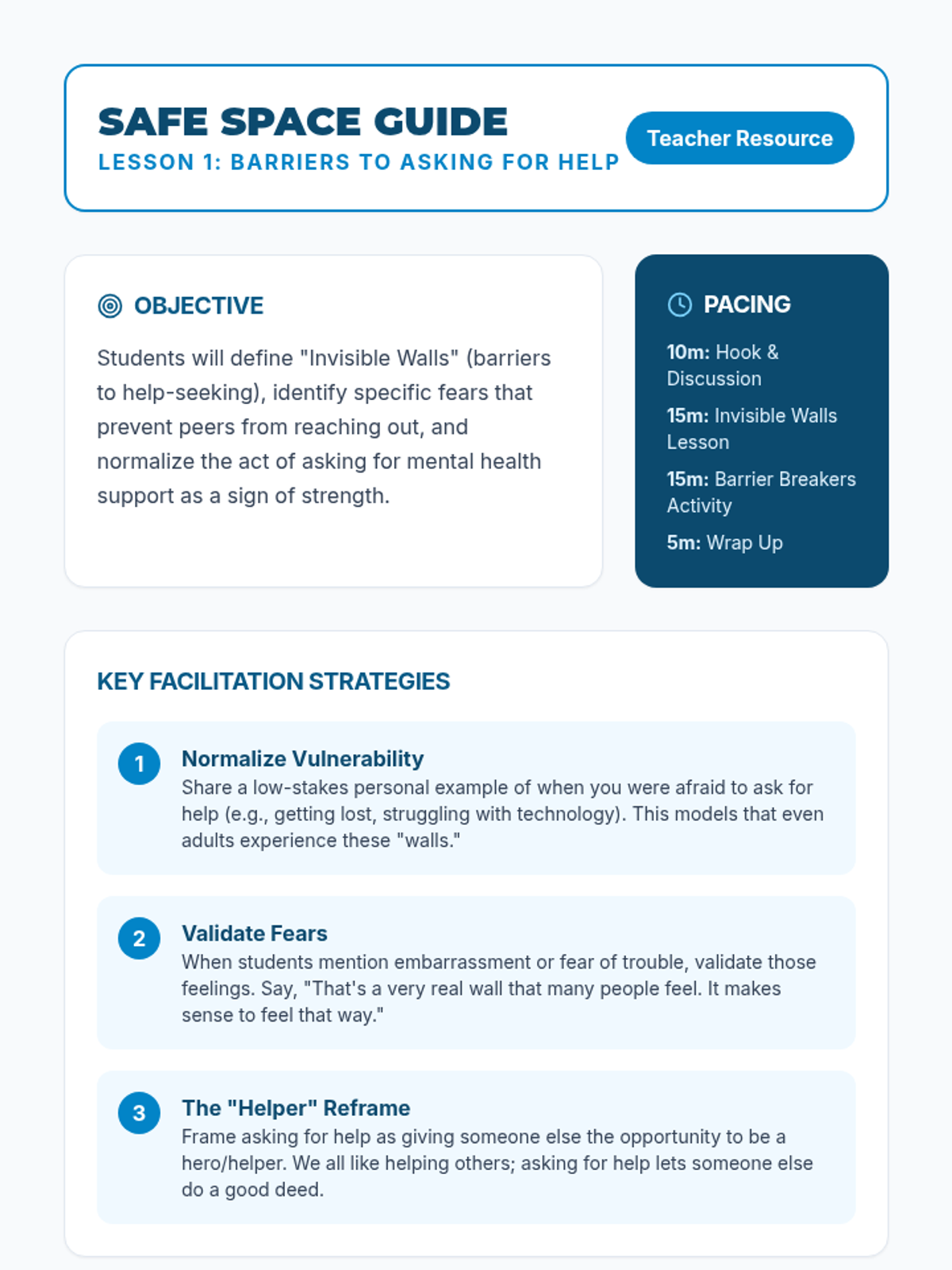
A project-based unit for 4th graders focused on overcoming barriers to seeking mental health support, mastering assertive communication, and advocating for resources through a school-wide informational campaign.
This sequence guides 4th-grade students through self-monitoring and proactive safety planning. Students learn to recognize physical stress signals, identify coping strategies, build a support network of trusted adults, and practice assertive communication, culminating in a personalized safety plan.
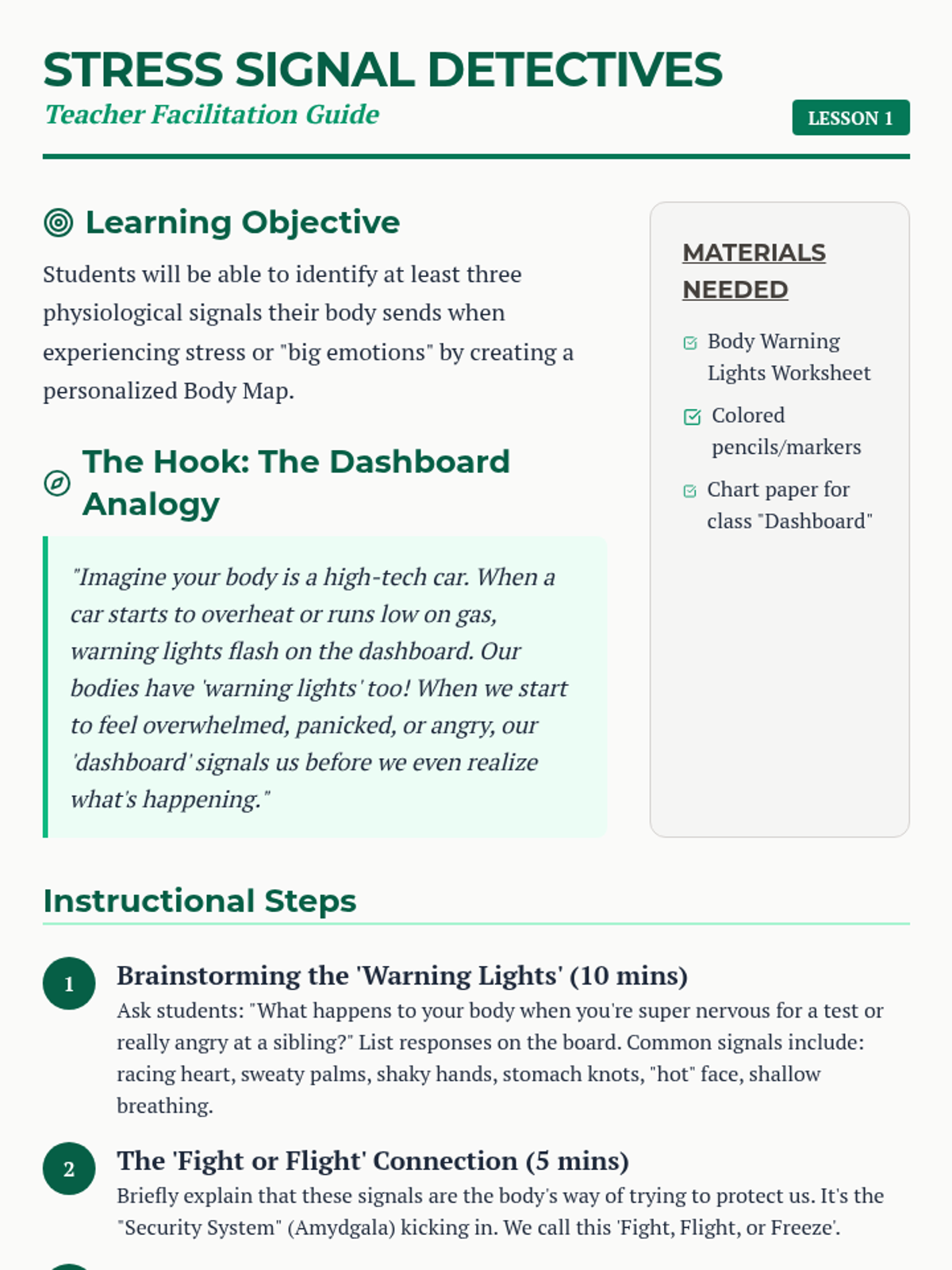
A comprehensive 5-lesson unit for 4th graders focused on identifying physiological stress signals, understanding emotional triggers, practicing grounding techniques, and developing a personal safety plan with a support network.
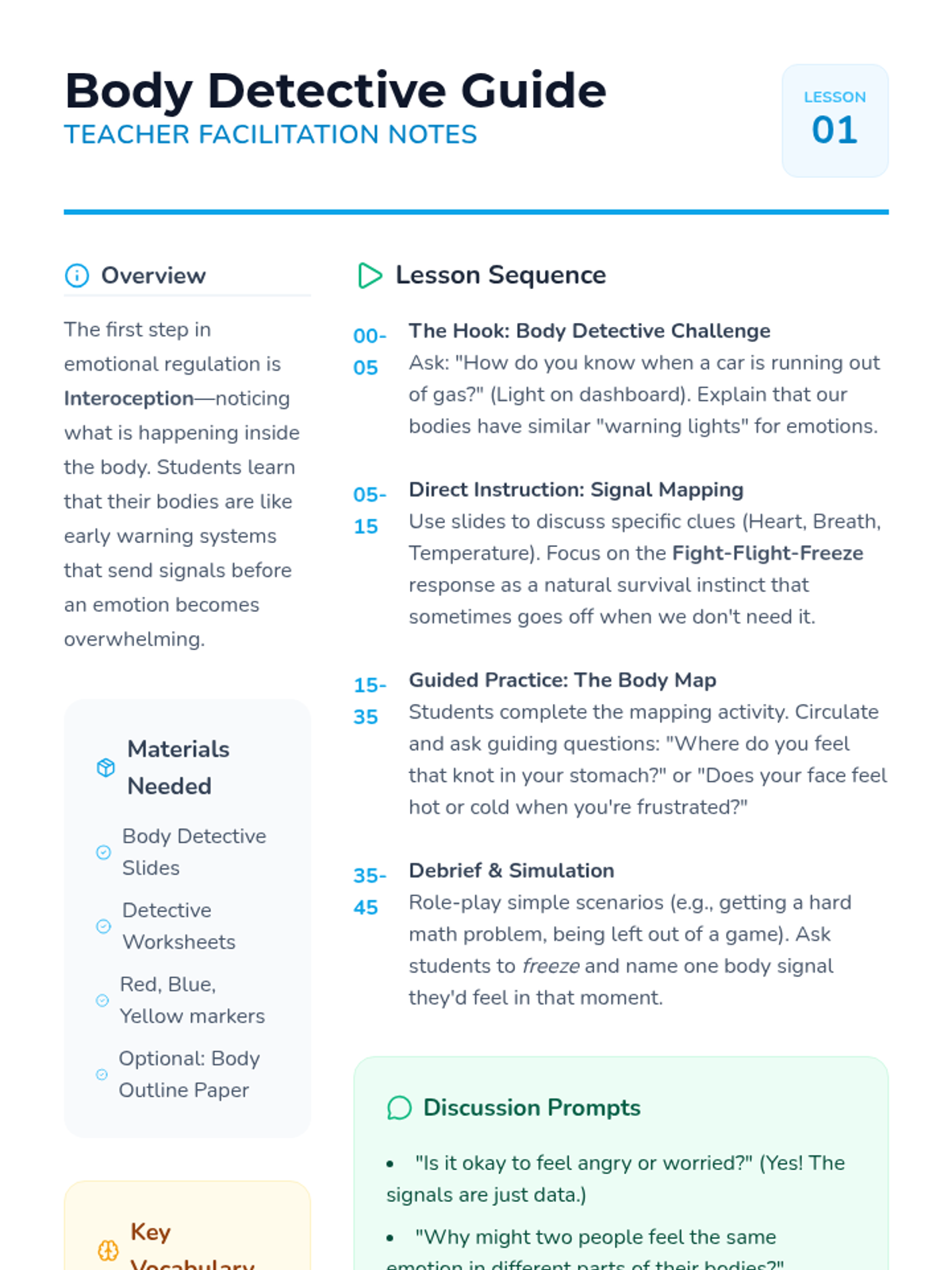
A 5-lesson sequence for 4th Grade students focused on interoception and self-regulation. Students learn to recognize physiological signals and use proactive sensory breaks to stay in a 'ready to learn' state.
A 5-lesson series for 4th graders to build a personal emotional regulation toolbox. Students learn to identify physical stress signals and practice breathing, grounding, and relaxation techniques to proactively manage their mental health.
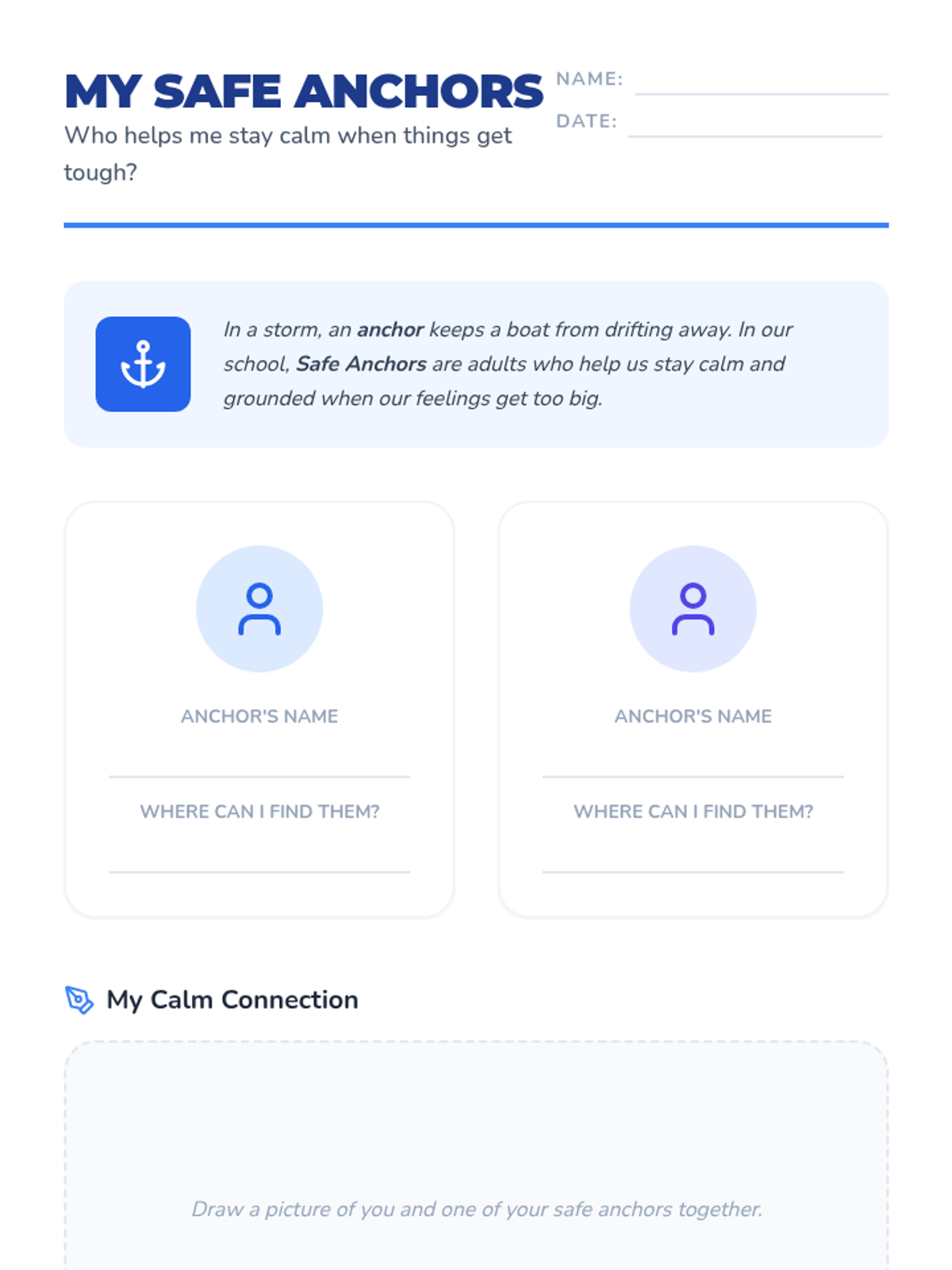
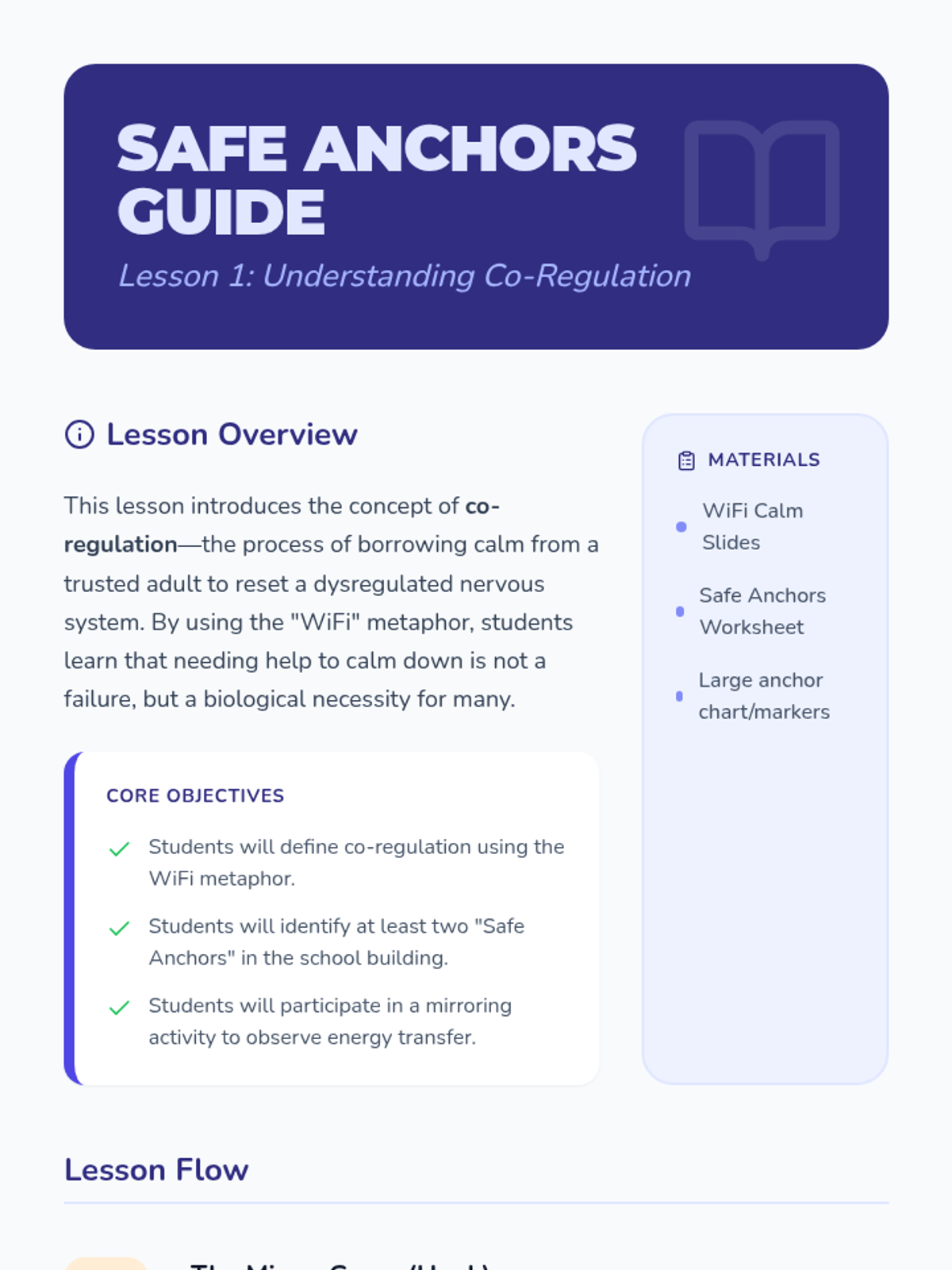
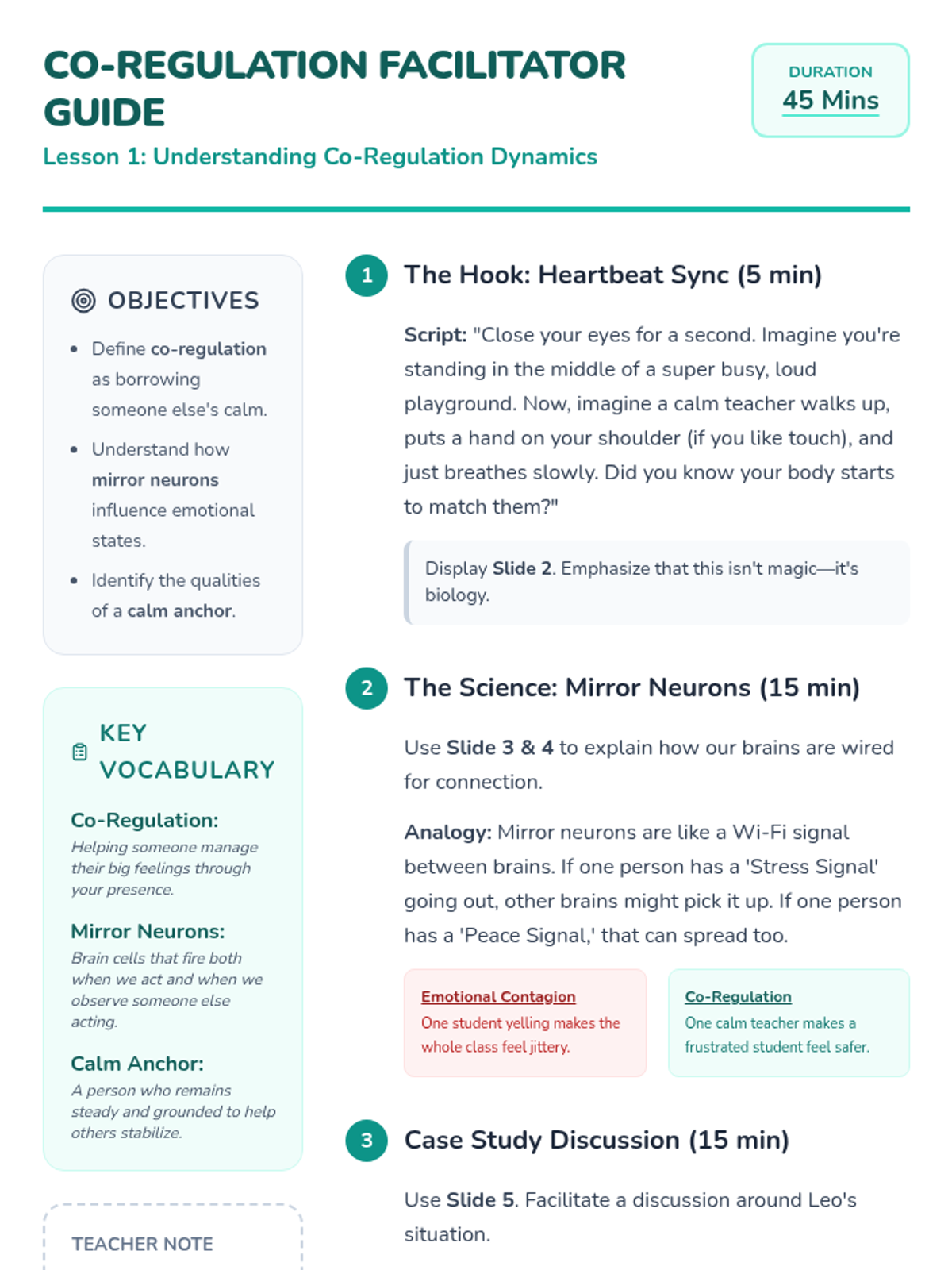
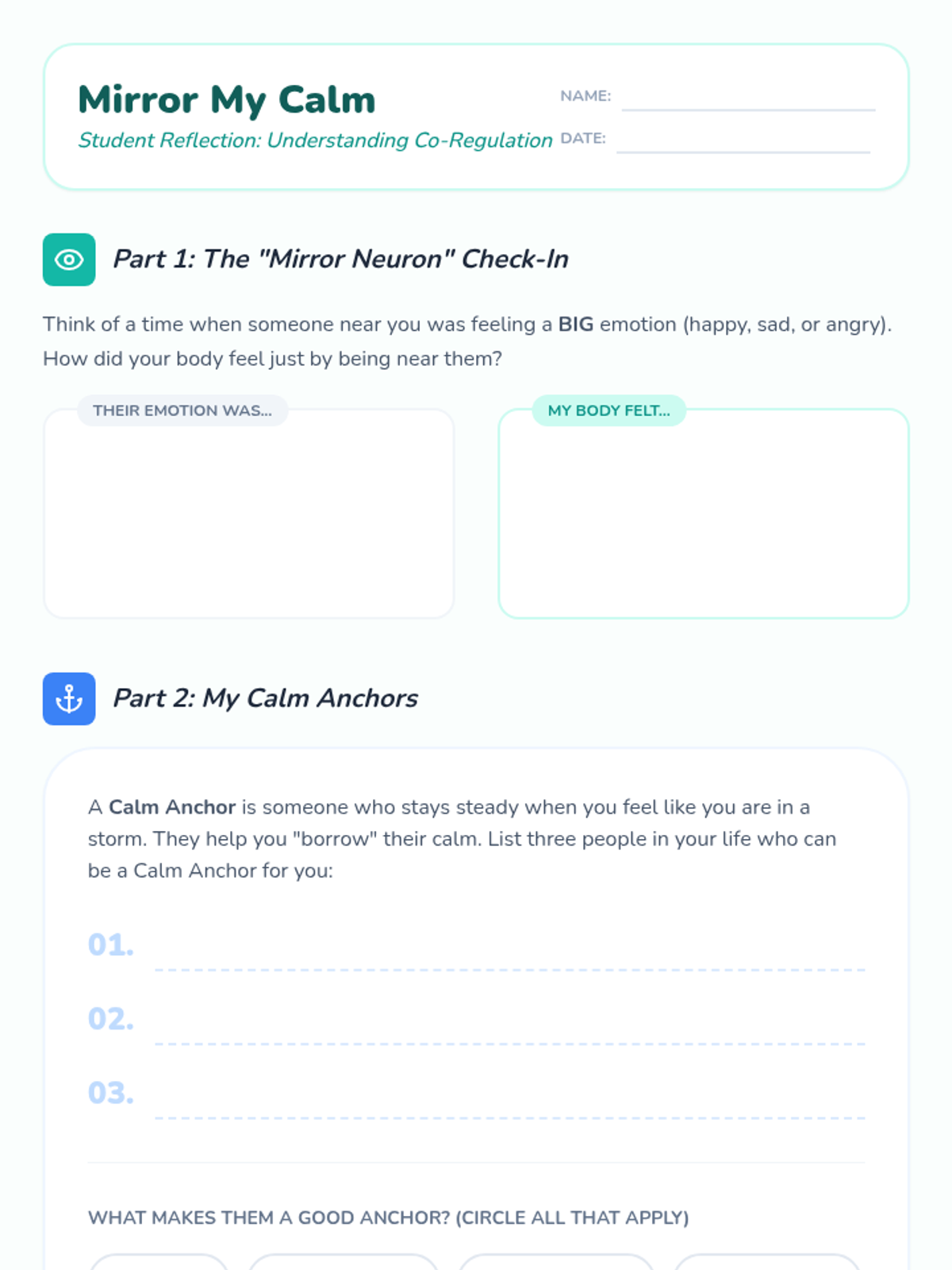
This sequence teaches 3rd-grade students how to communicate their needs for co-regulation during moments of dysregulation. It moves from understanding the concept of borrowing calm to developing non-verbal signals, verbal scripts, and personalized co-regulation plans.
A 4th-grade sequence focused on empowering students to modify their physical environment to facilitate emotional recovery. Students progress from identifying environmental triggers to designing their own sensory-friendly 'fortresses of calm' and evaluating recovery scenarios.
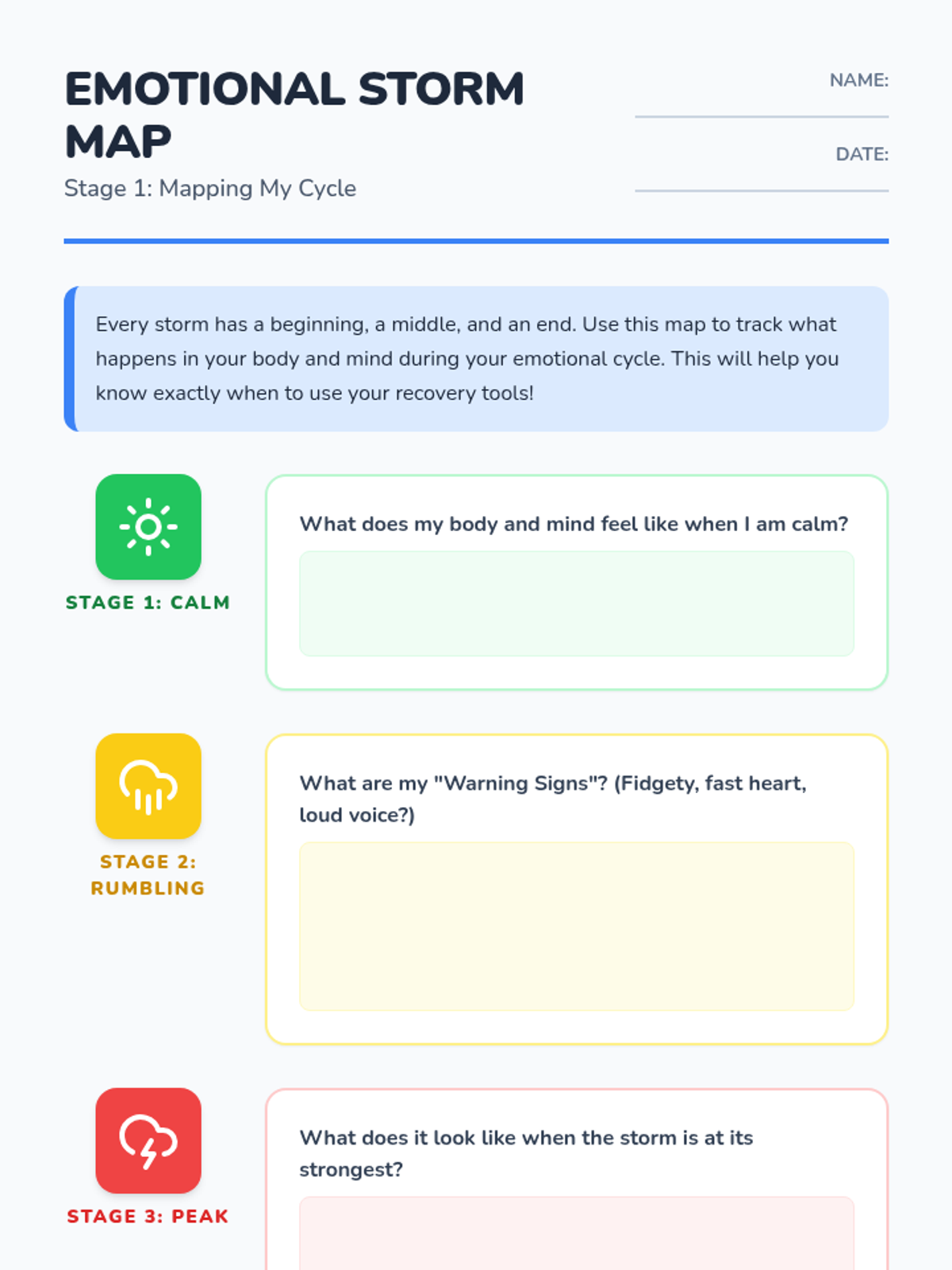
A culminating 5-lesson project-based sequence where 4th grade students design a Personal Recovery Plan (PRP). Students map their emotional cycles, assemble sensory toolkits, script their return to the classroom, and create visual guides for self-regulation and recovery.
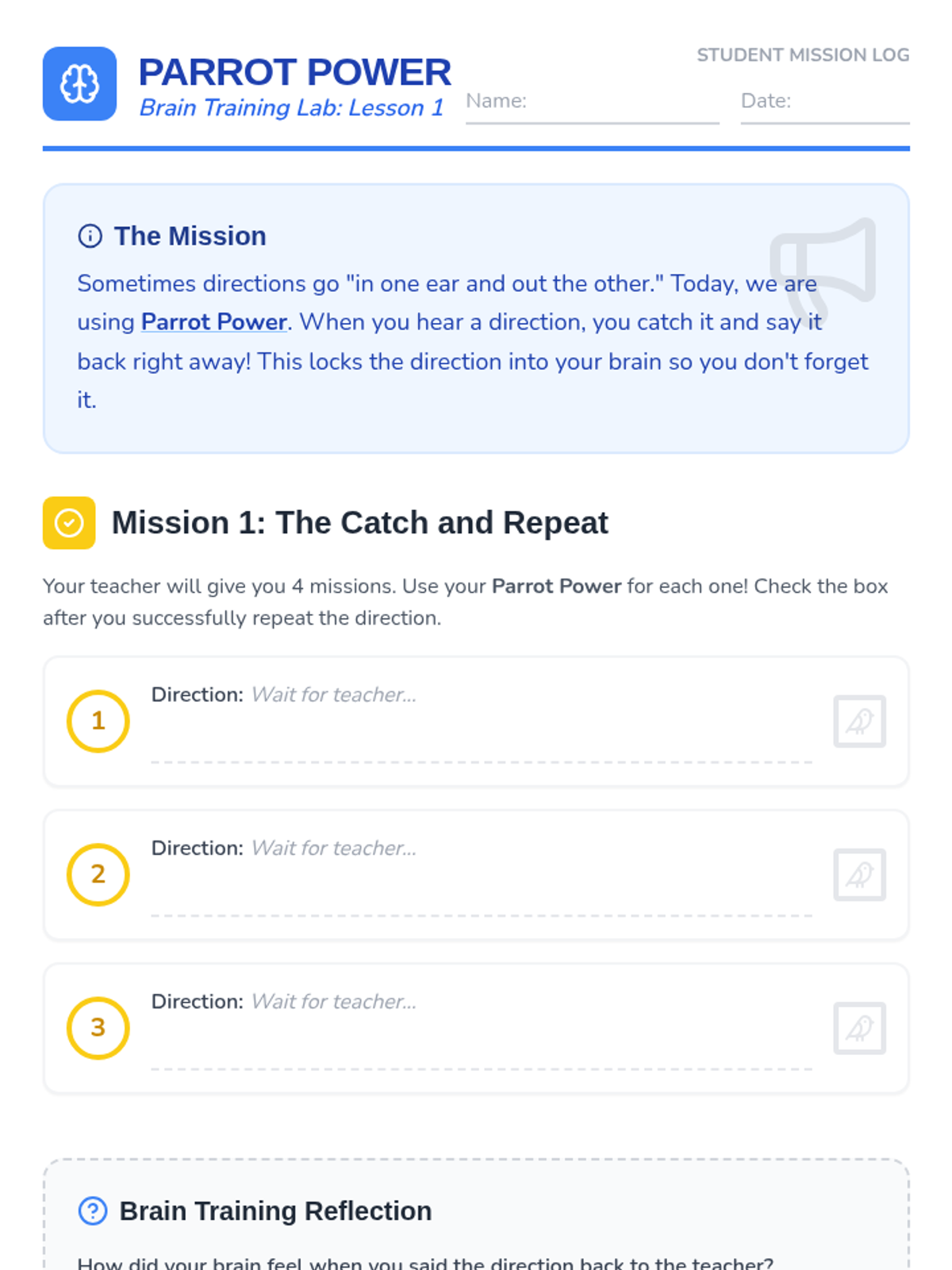
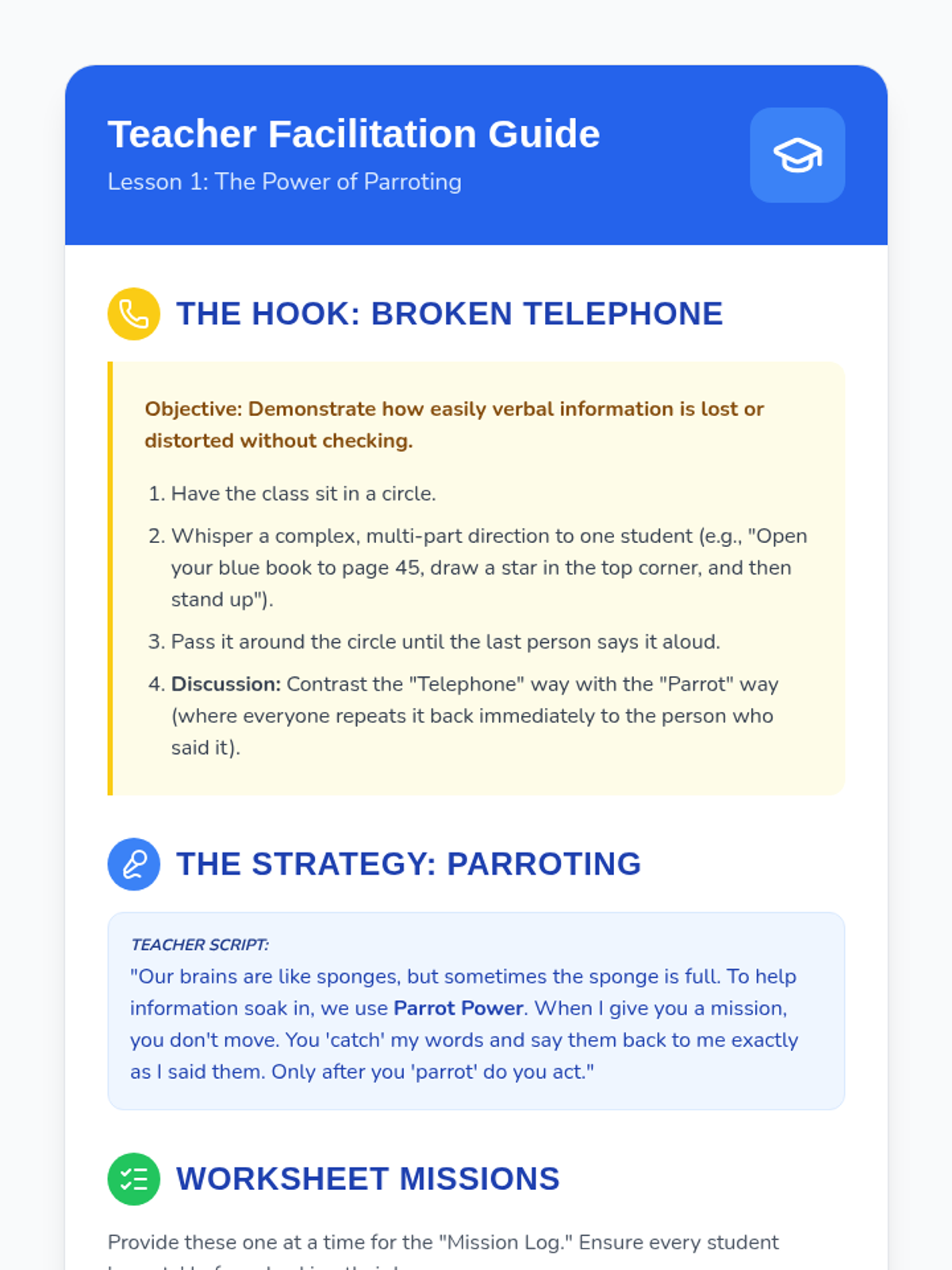
This sequence focuses on auditory processing and the cognitive strategy of verbal rehearsal (self-talk) to hold information in working memory. Students learn to 'catch' a verbal instruction, repeat it to themselves or a peer, and then execute it.
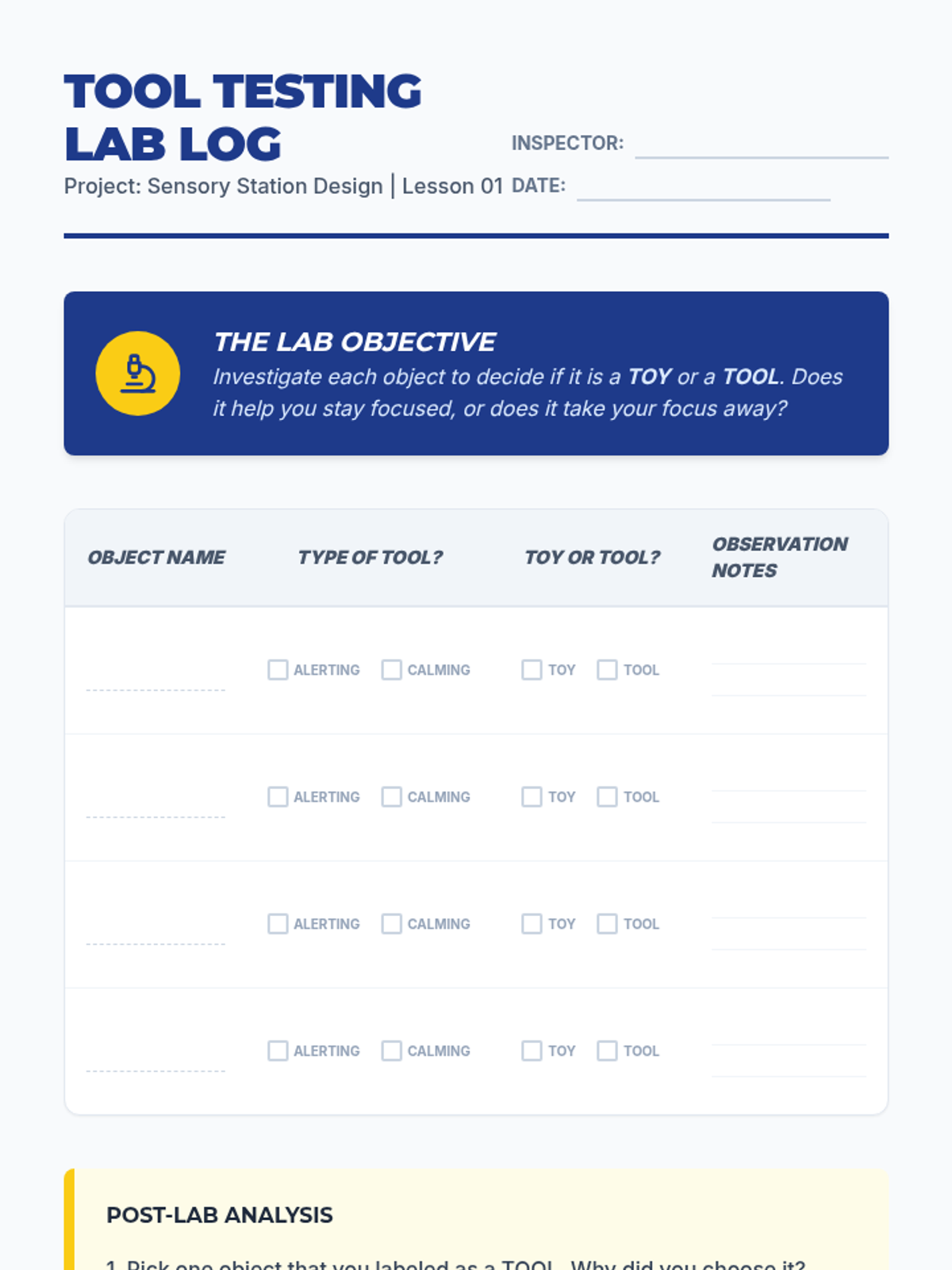
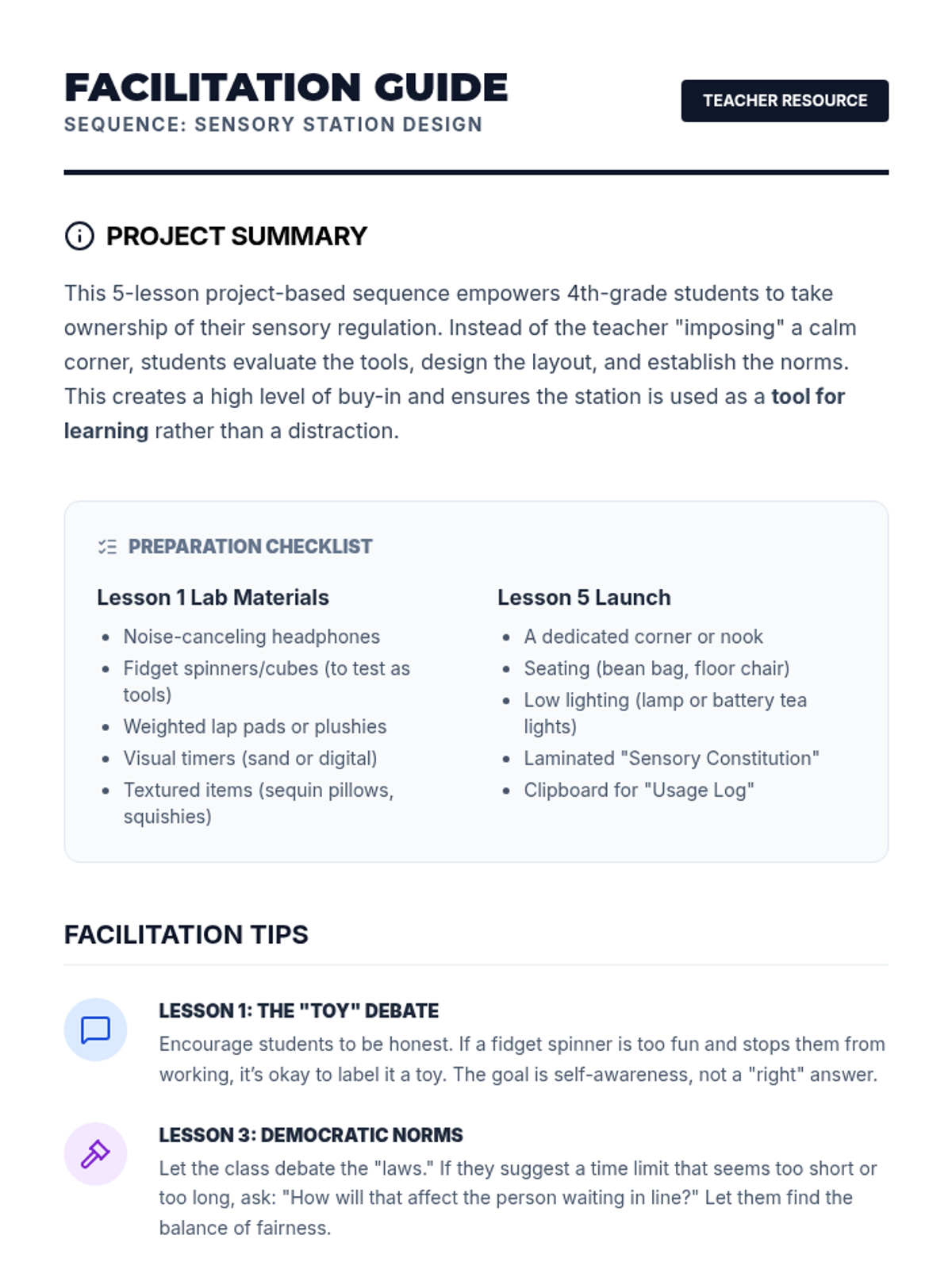
A project-based sequence where 4th-grade students evaluate sensory tools, design a classroom 'Sensory Station,' and establish community norms for its use to support proactive self-regulation.
Students move from reactive emotional responses to proactive negotiation. They learn de-escalation, empathy through perspective-taking, and a structured 4-step 'Peace Path' to resolve playground and classroom conflicts independently.
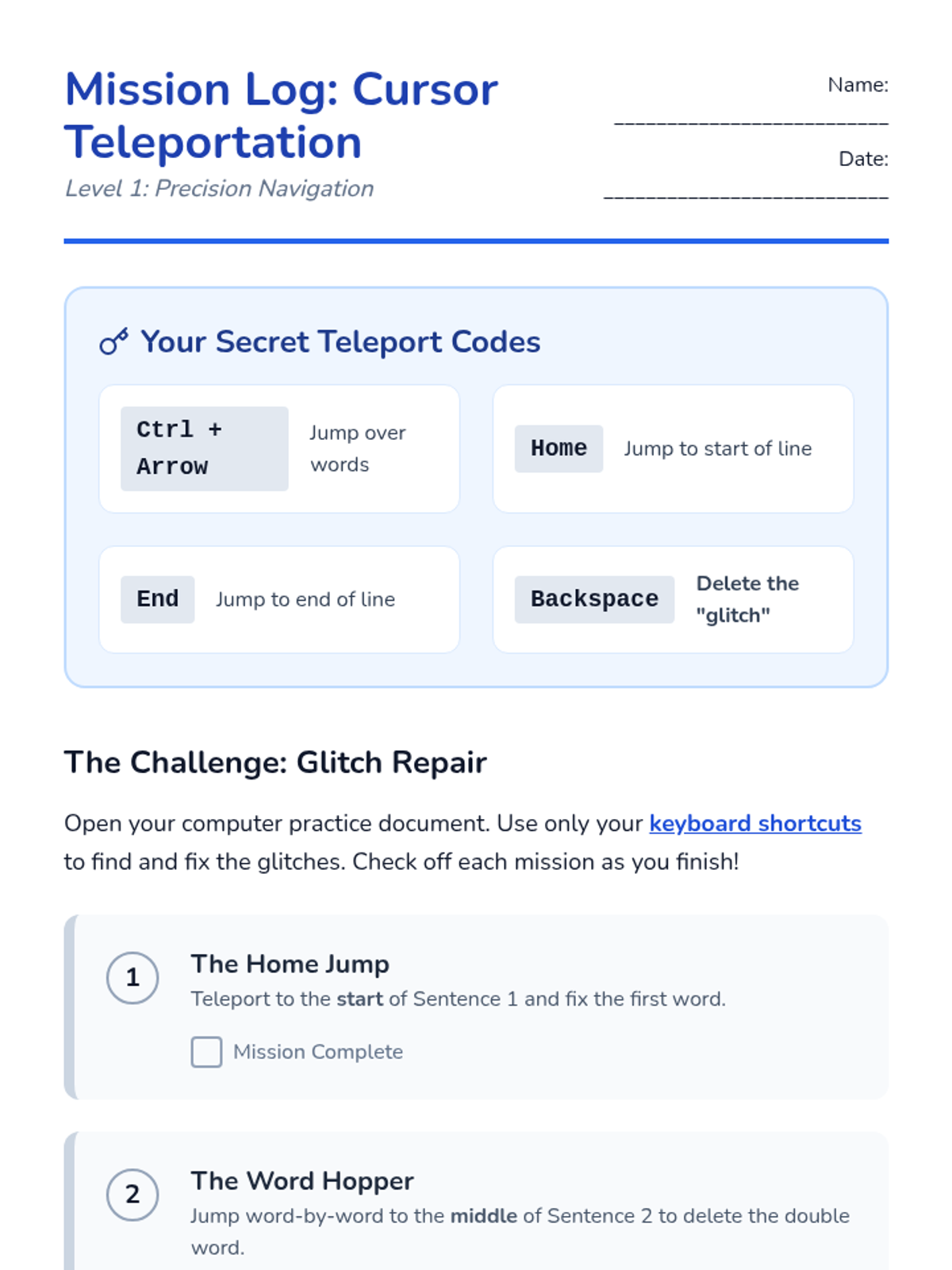
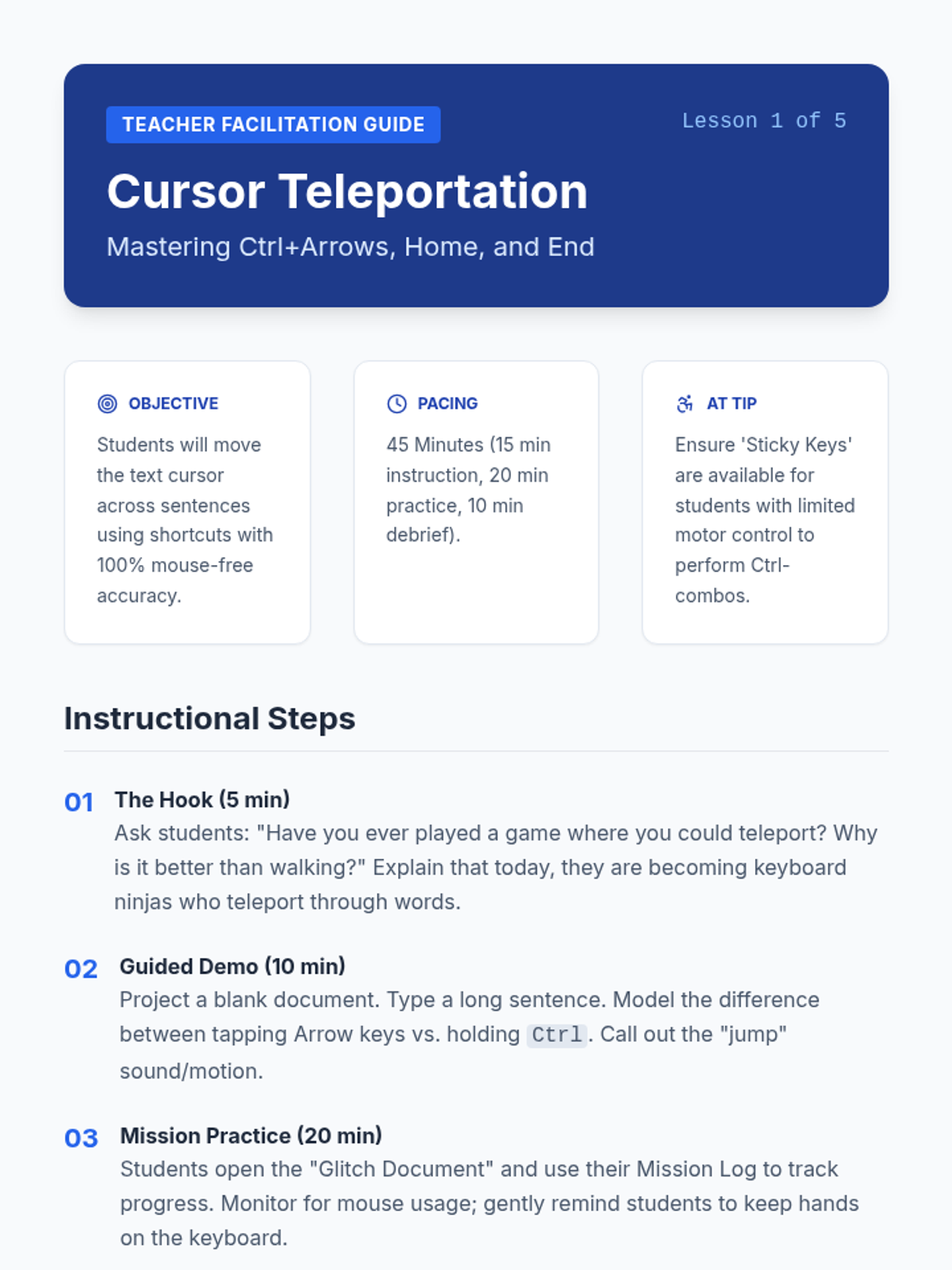
A comprehensive sequence for 4th-grade students to master keyboard shortcuts for text editing and navigation, particularly beneficial for students using assistive technology. Students learn to navigate, select, undo, organize, and format text efficiently.
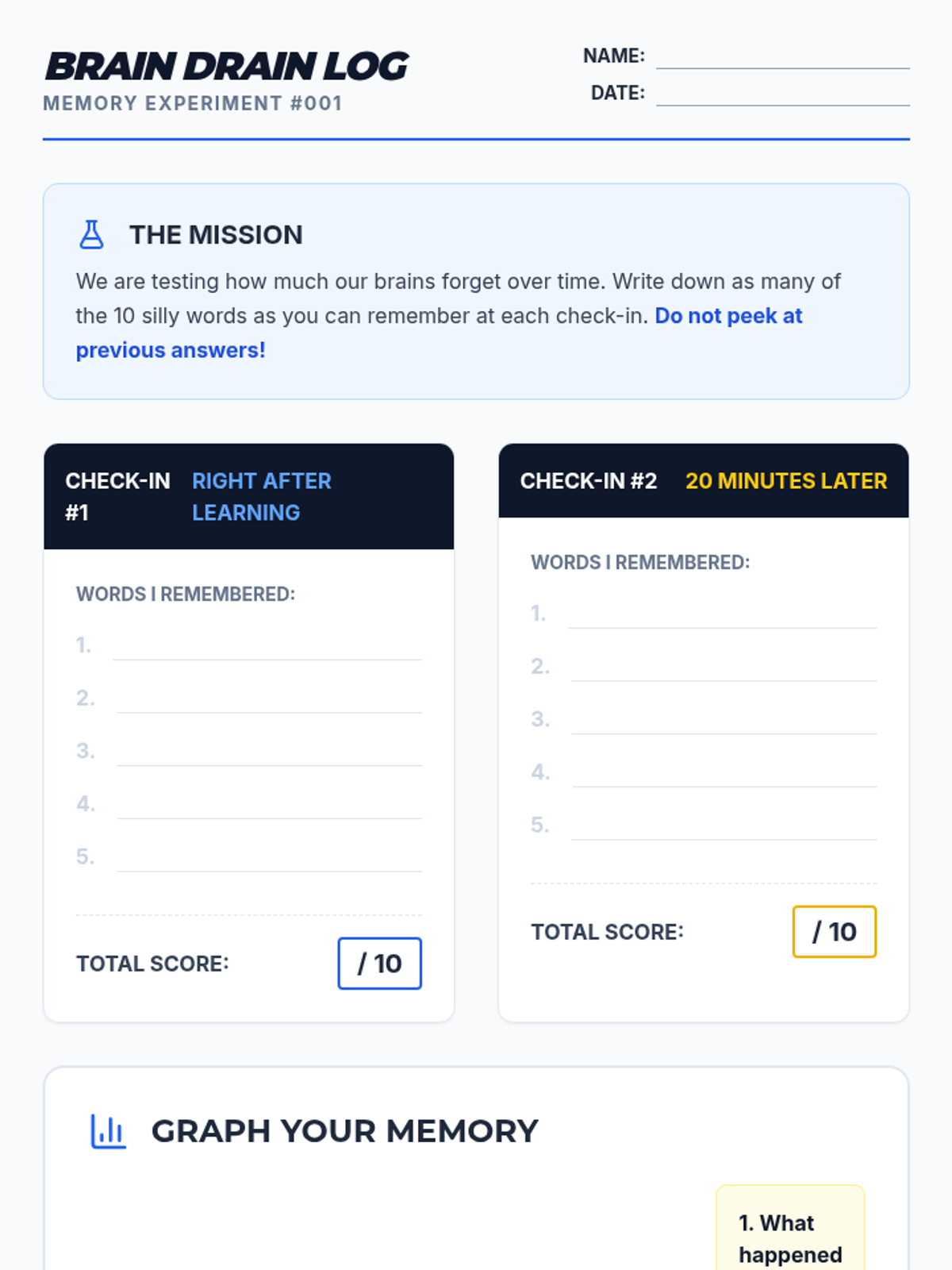
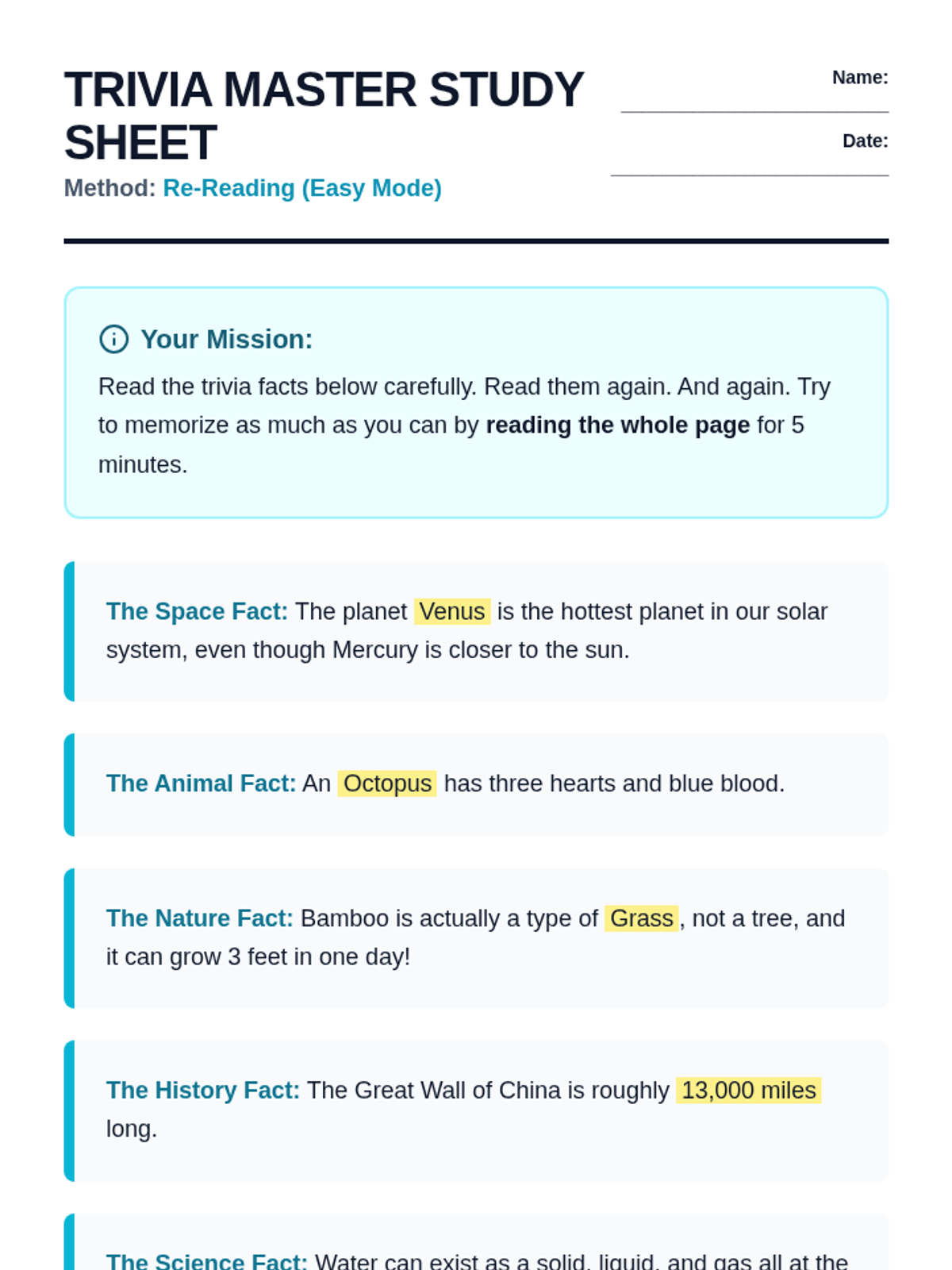
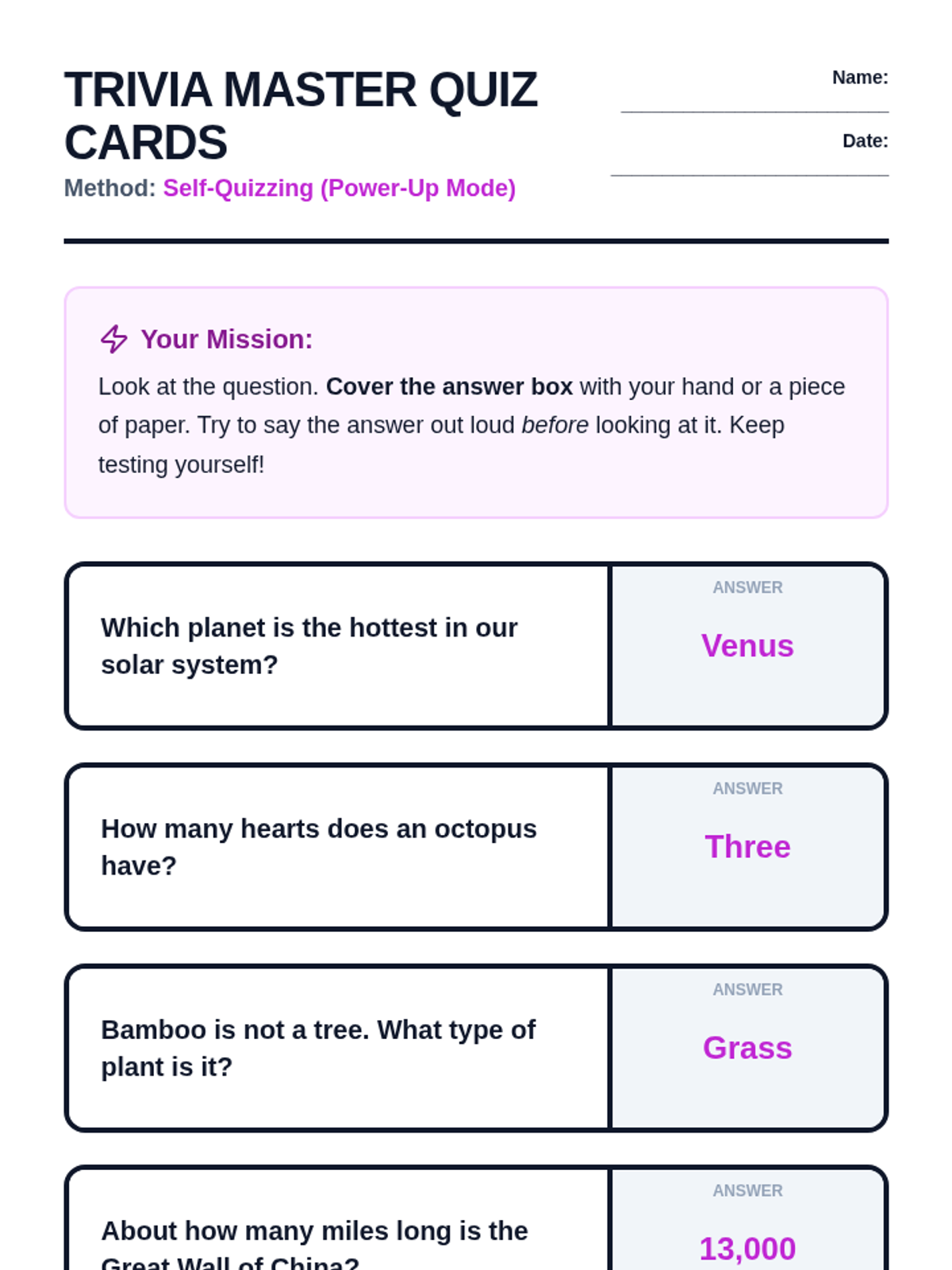
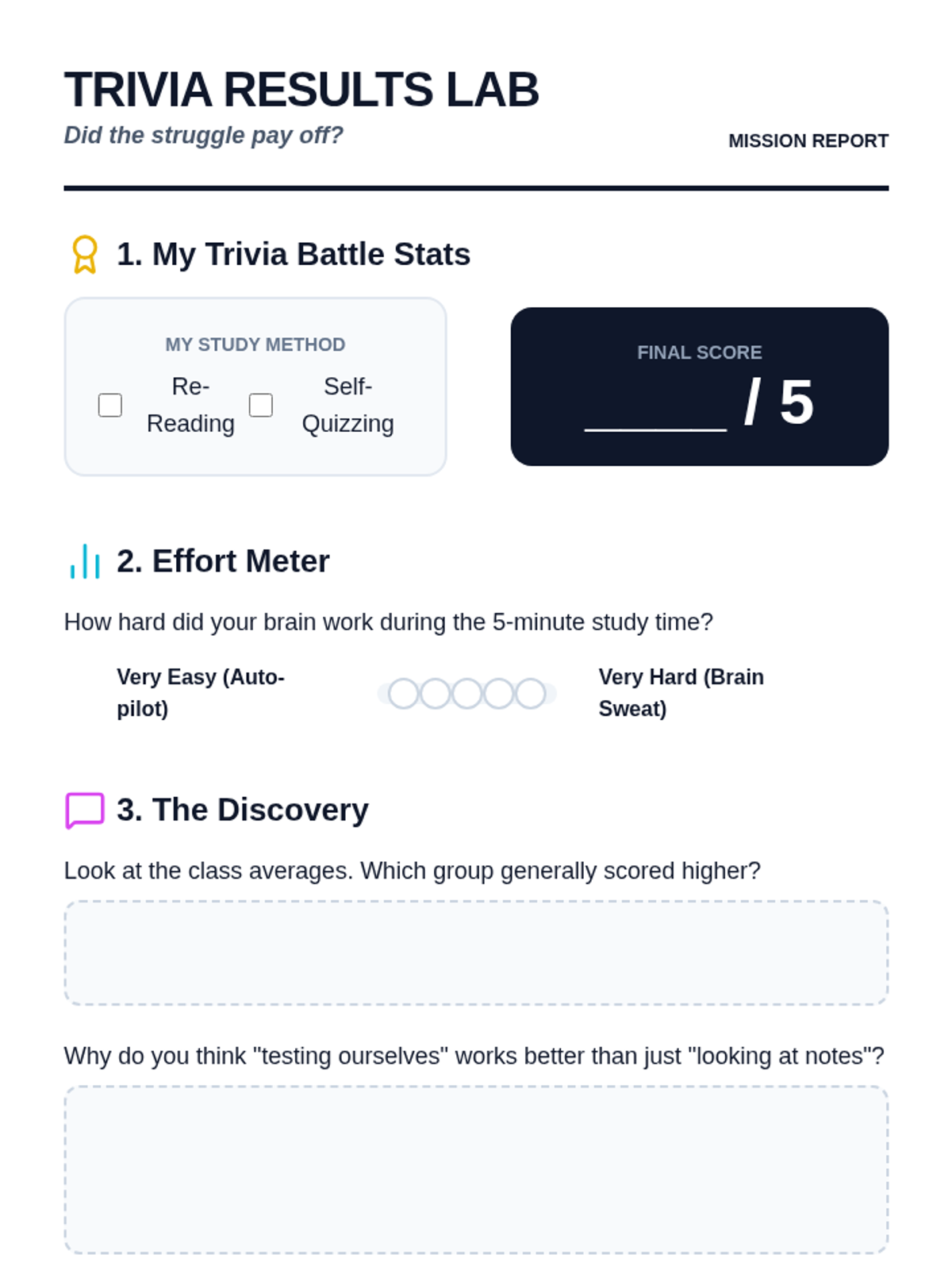
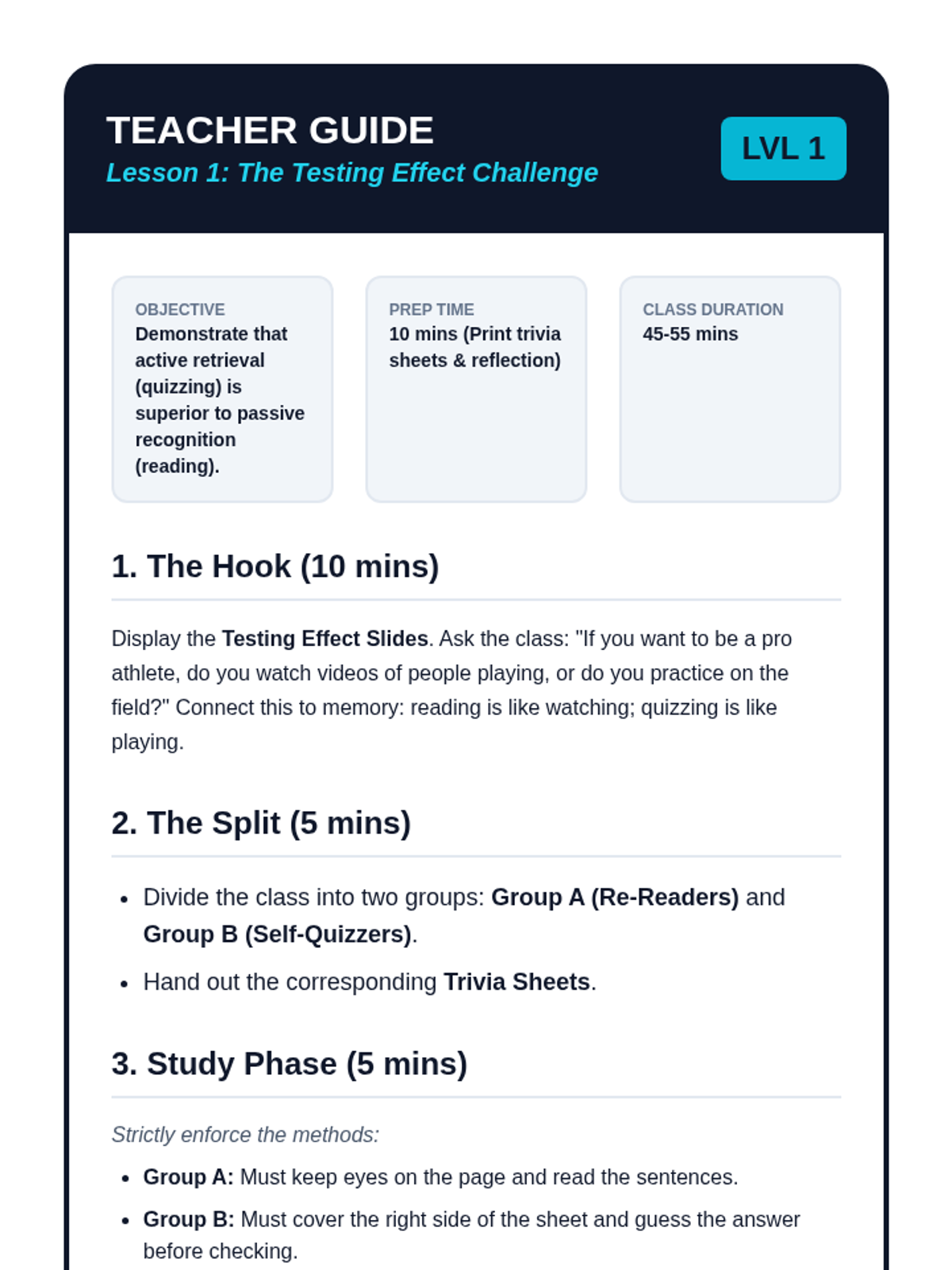
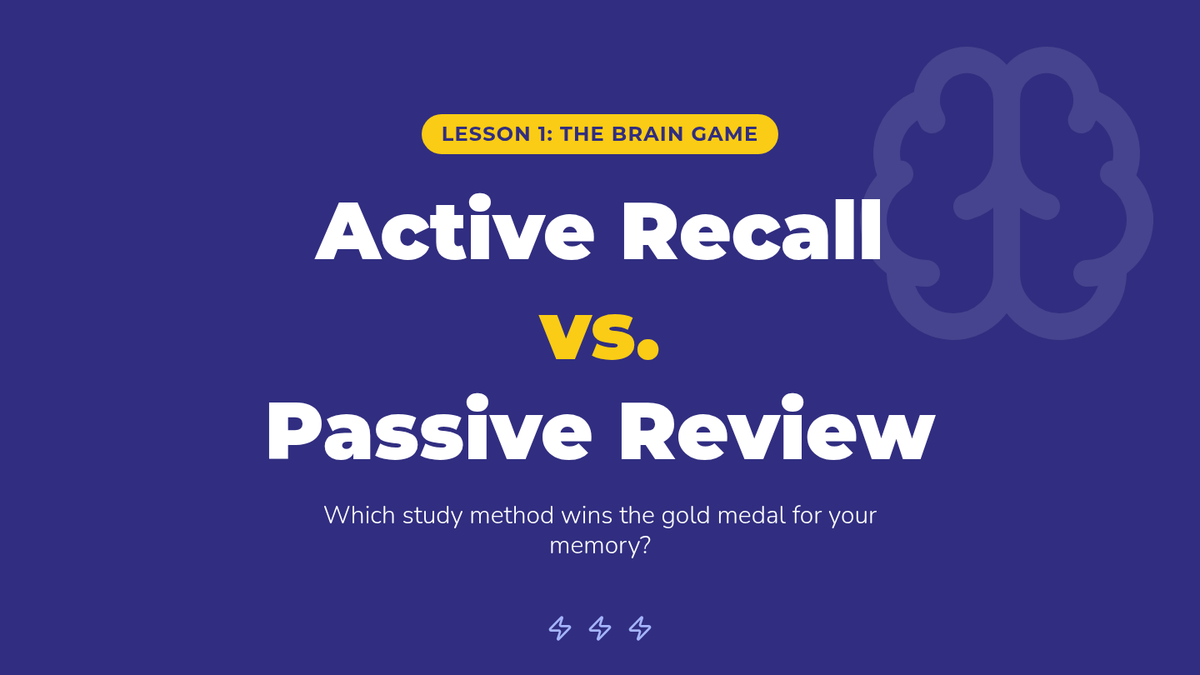
This sequence teaches 4th-grade students the power of active recall and spaced repetition through a gamified approach. Students move from understanding why testing is better than reading to designing their own personal review schedules to ensure long-term memory retention.
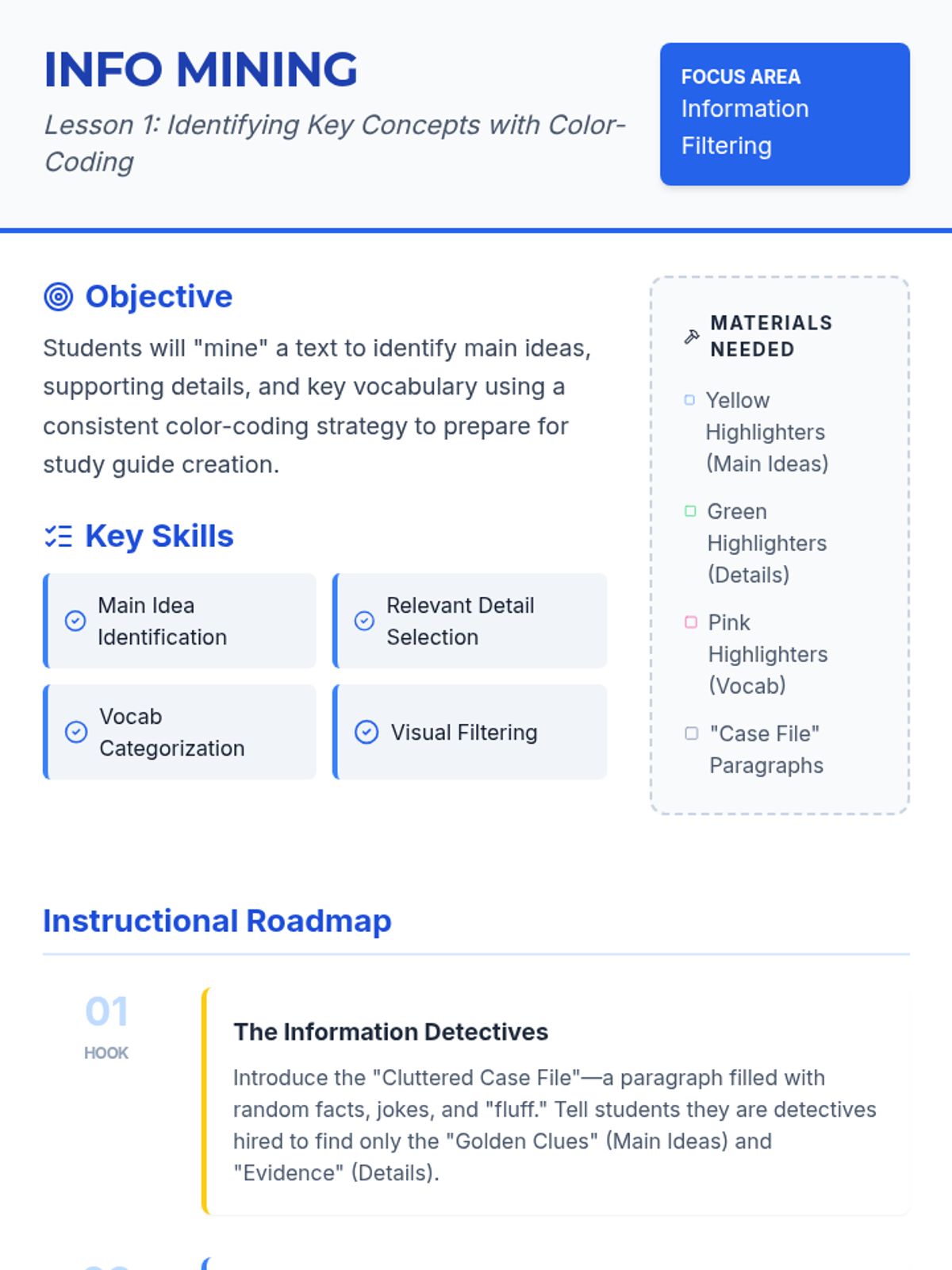
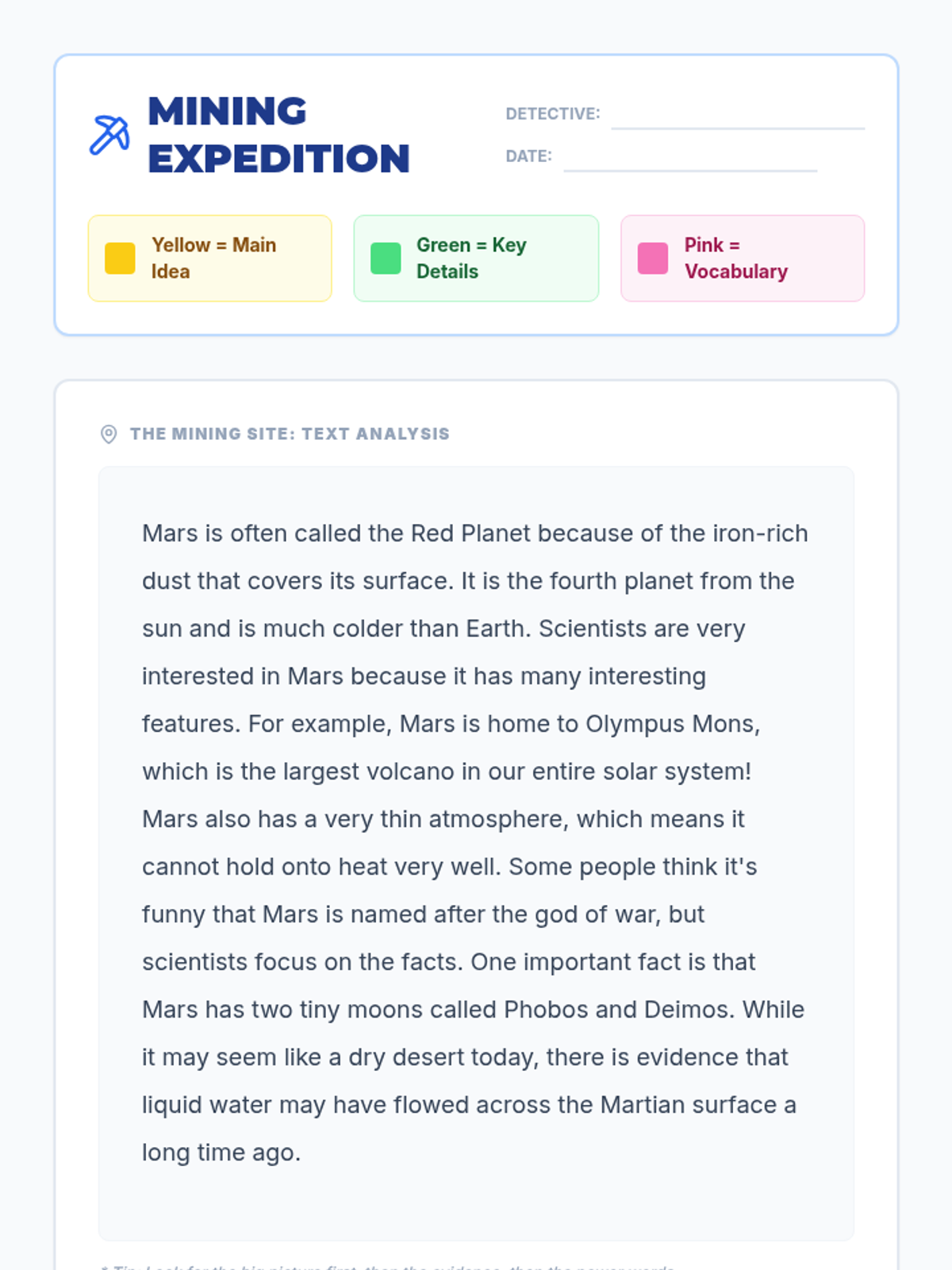
A sequence focused on helping students transform passive reading into active, visual study tools. Students learn color-coding, concept mapping, foldable creation, and comparison charting to organize and retain information.
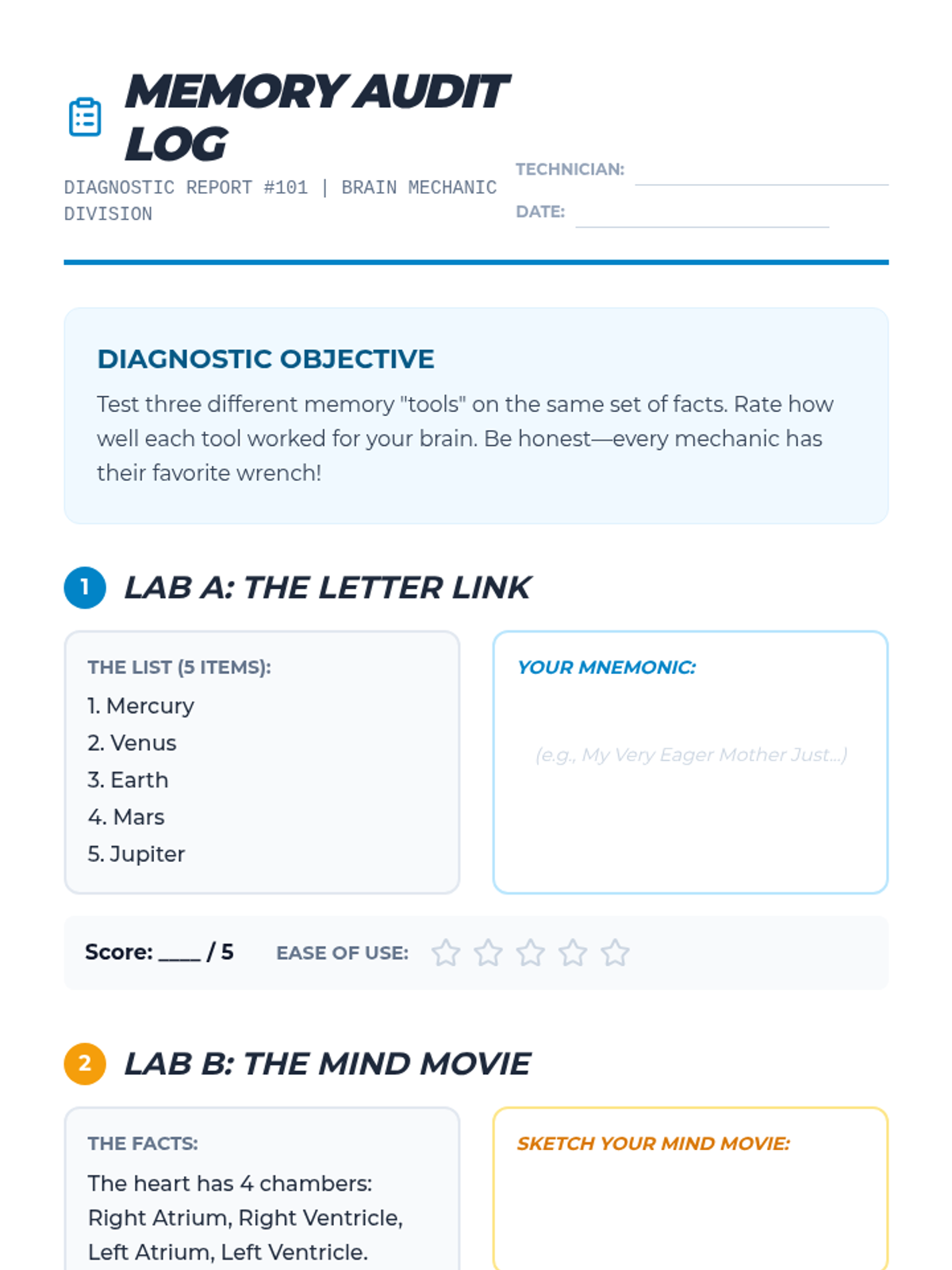
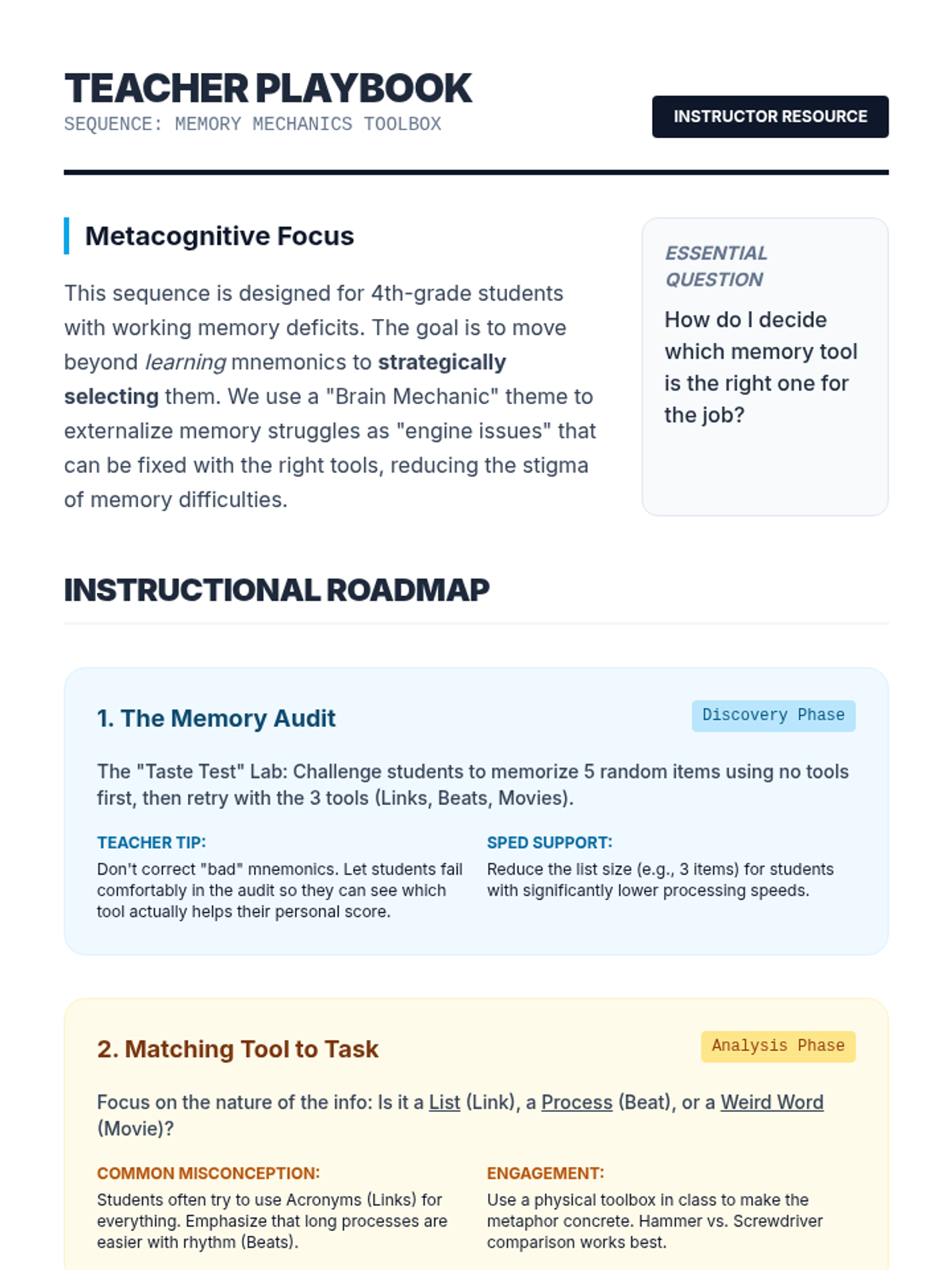
A metacognitive sequence for 4th graders to audit, select, and apply mnemonic devices to their own learning, culminating in a personalized memory toolbox.
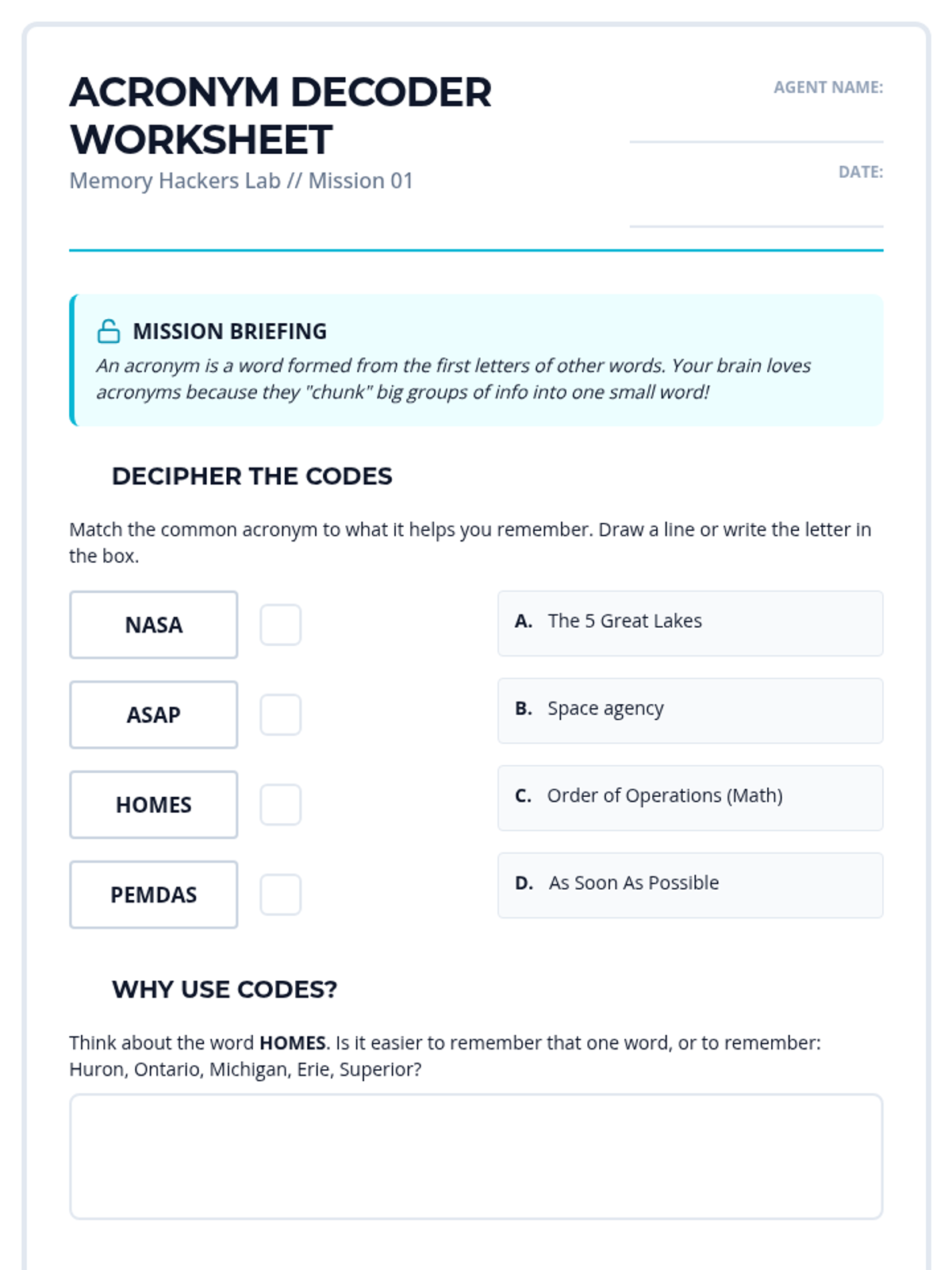
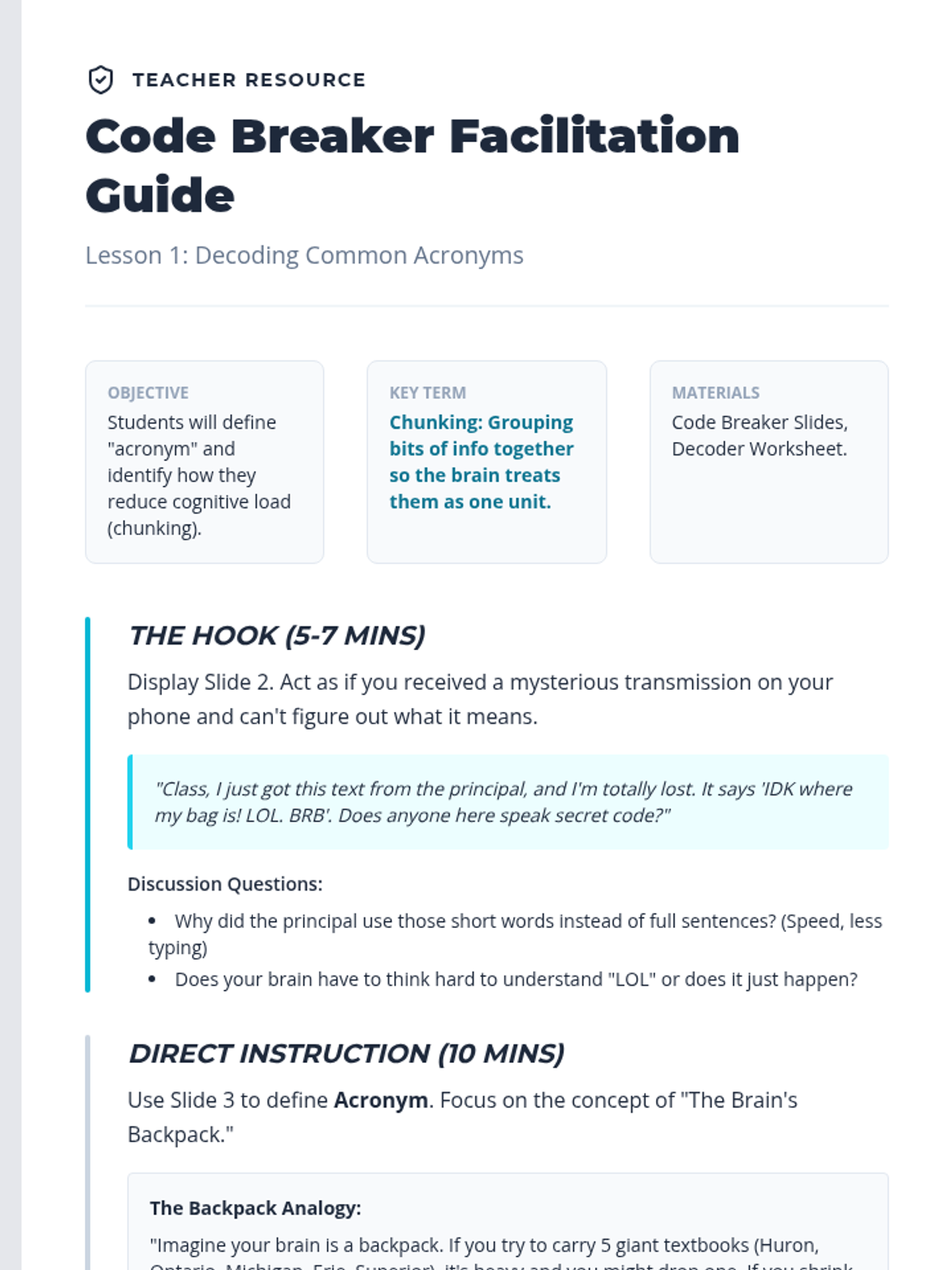
Students master the art of creating and using mnemonic acronyms to reduce cognitive load and improve concept retrieval. The sequence progresses from decoding common acronyms to engineering personal and academic ones, culminating in a mastery arcade.
This sequence teaches 4th-grade students how to use mental imagery, the Link Method, and the Method of Loci to improve working memory and information retention. Students move from concrete visualization to linking unrelated items and finally mapping abstract concepts onto physical spaces.
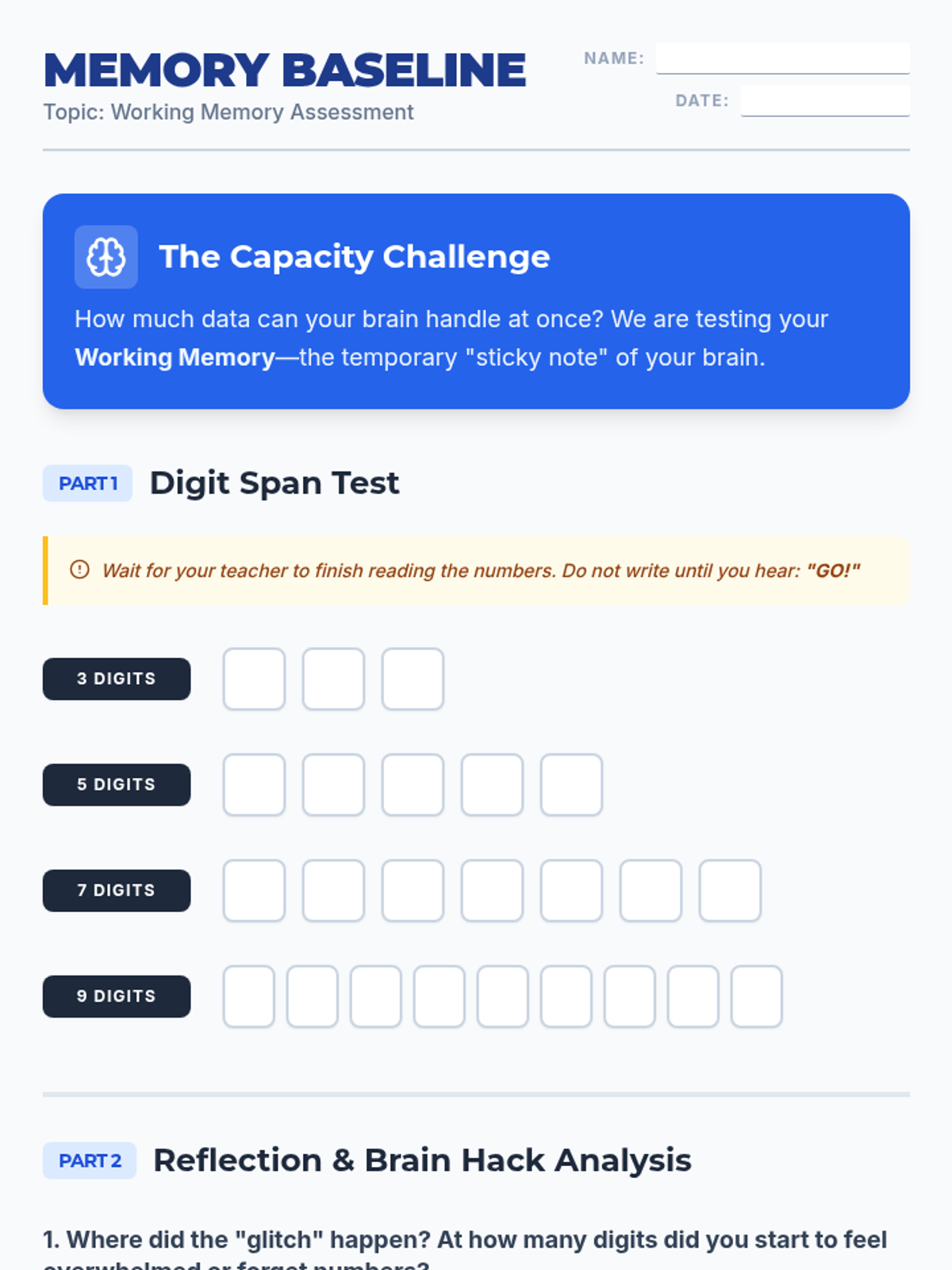
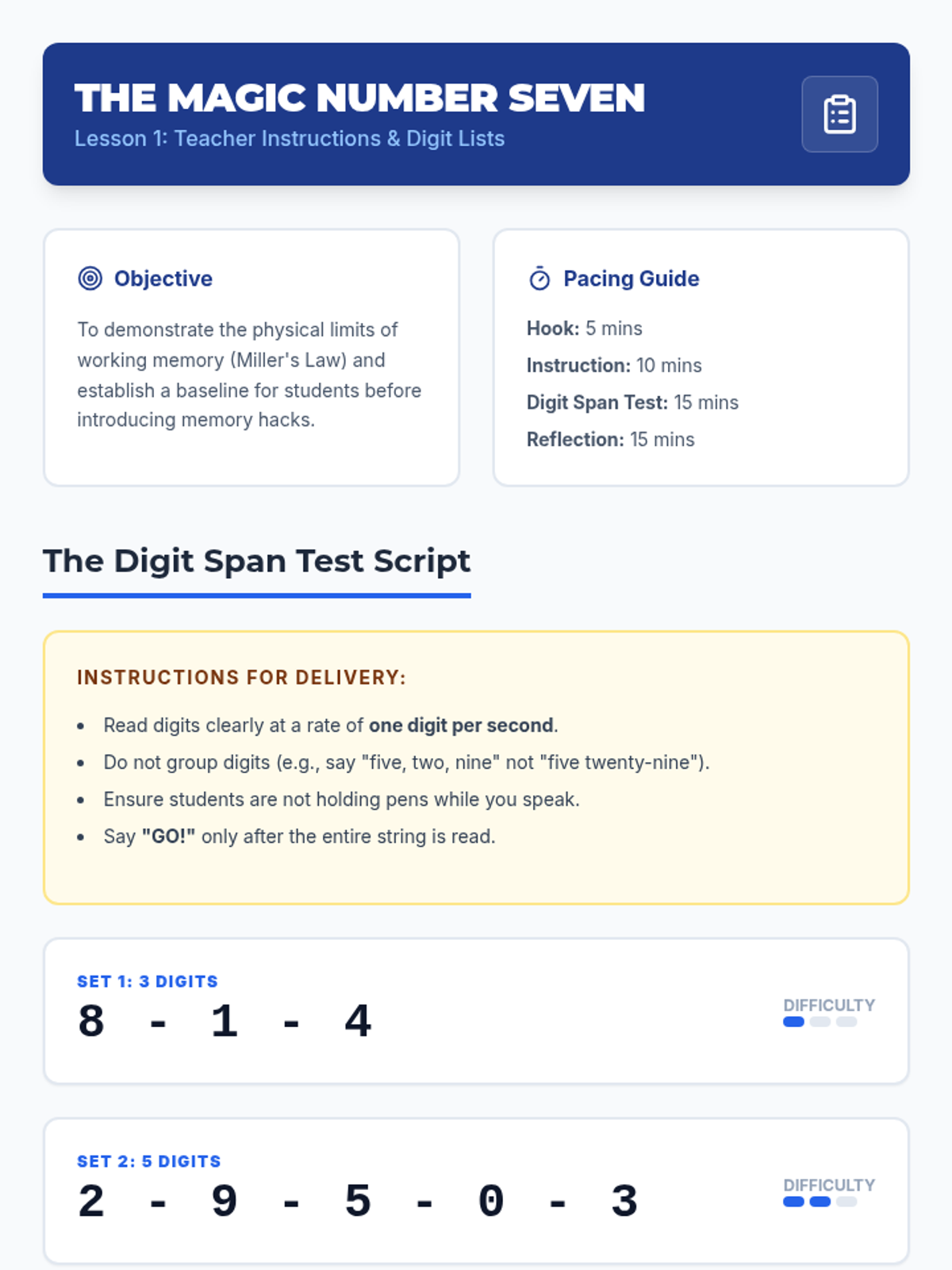
This sequence helps students understand and apply chunking and association strategies to overcome working memory limitations. Through a series of game-based lessons, students will learn to organize data into manageable patterns to increase their cognitive processing capacity.
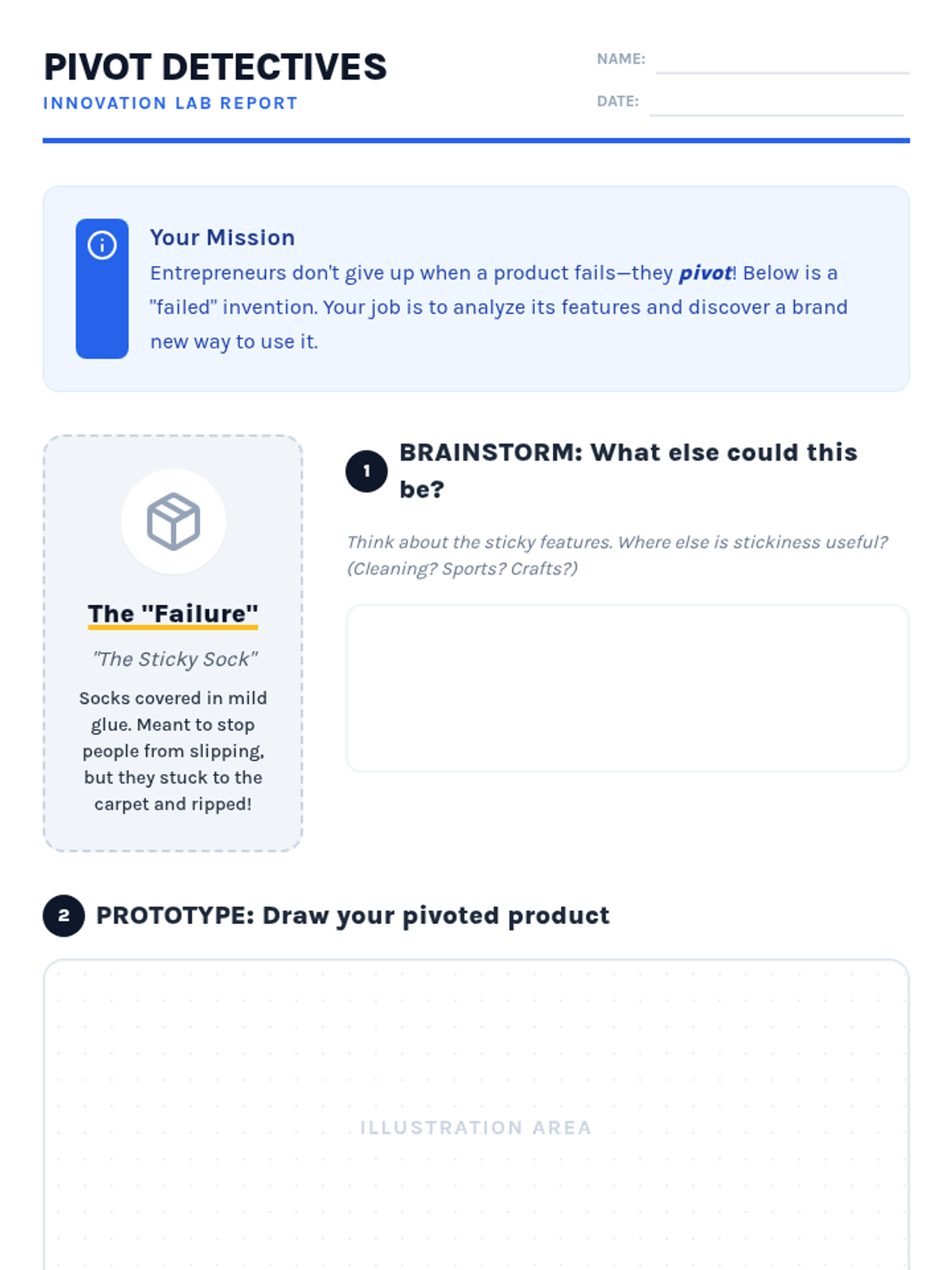
This sequence guides 4th-grade students through the entrepreneurial mindset, focusing on resilience, risk-taking, and the 'pivot.' Students learn that failure is a data point, not an endpoint, through case studies and simulations.
A 4th-grade sequence where students transition from learning meditation styles to designing their own personal stress-management toolkits, culminating in writing and leading their own guided meditations.
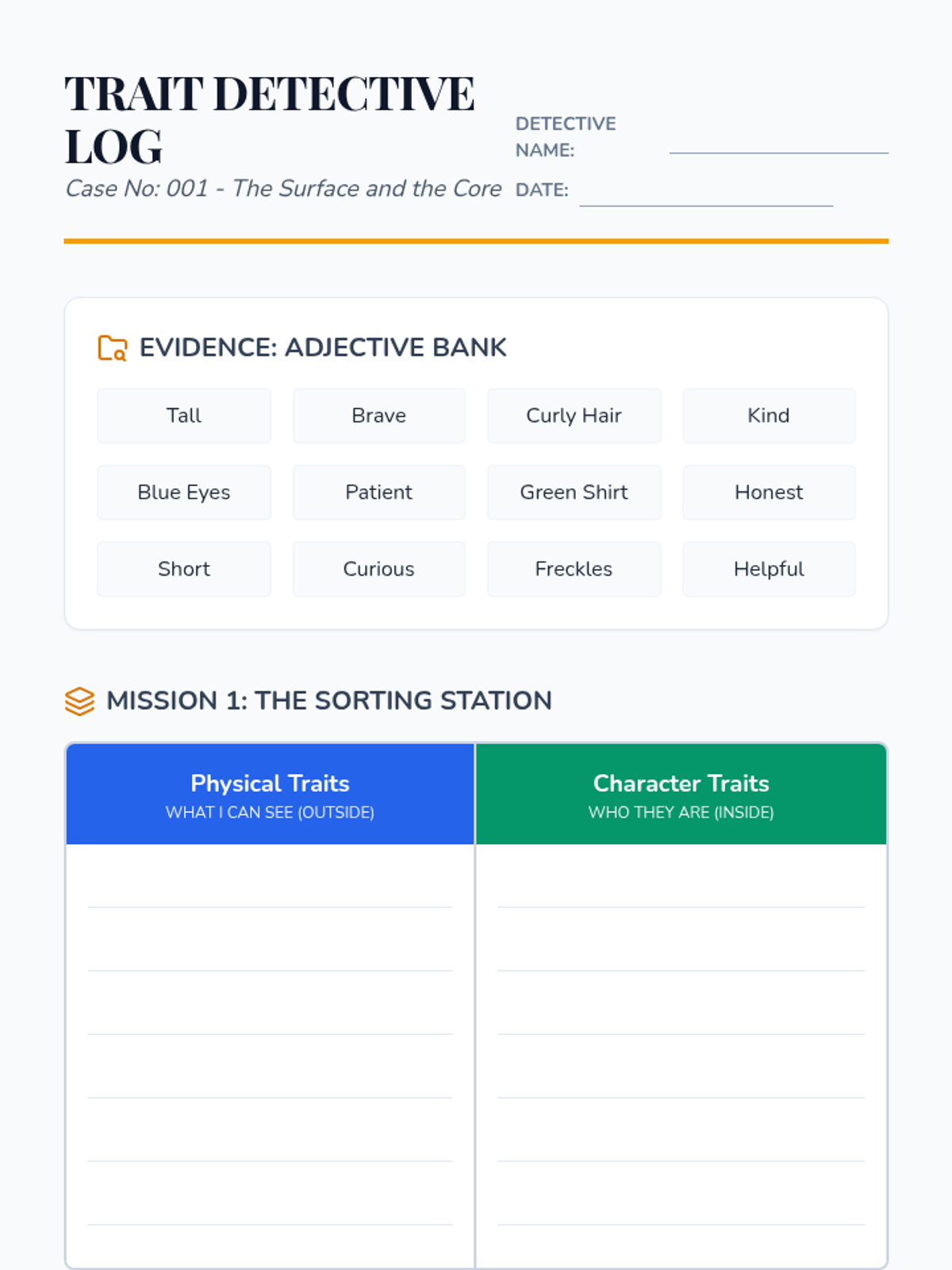
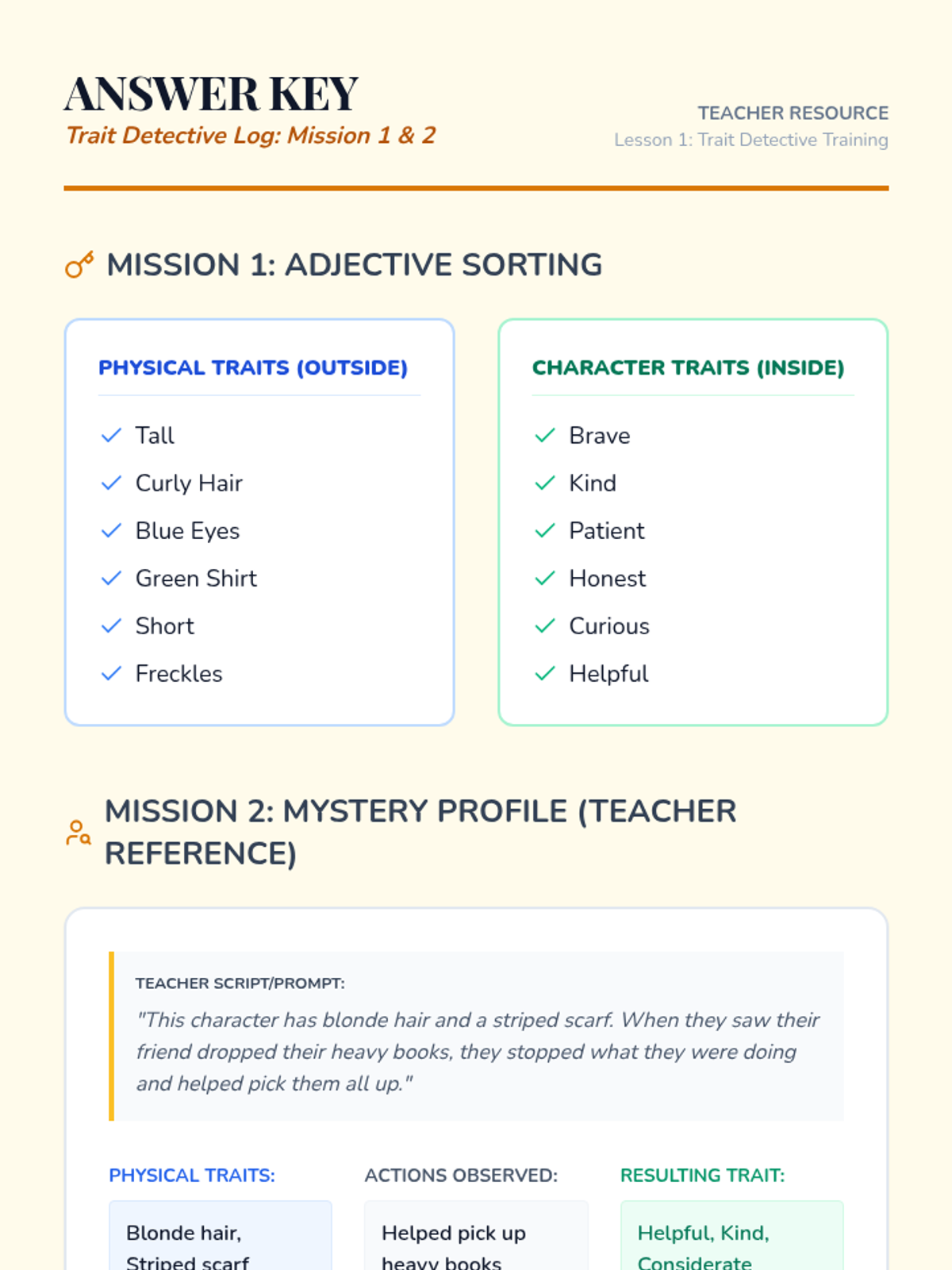
This sequence introduces students to the concept of personal identity by distinguishing between physical attributes and internal character traits. Students explore their own strengths, recognize how actions reflect identity, and learn to view growth areas through a growth mindset, culminating in a symbolic self-portrait.
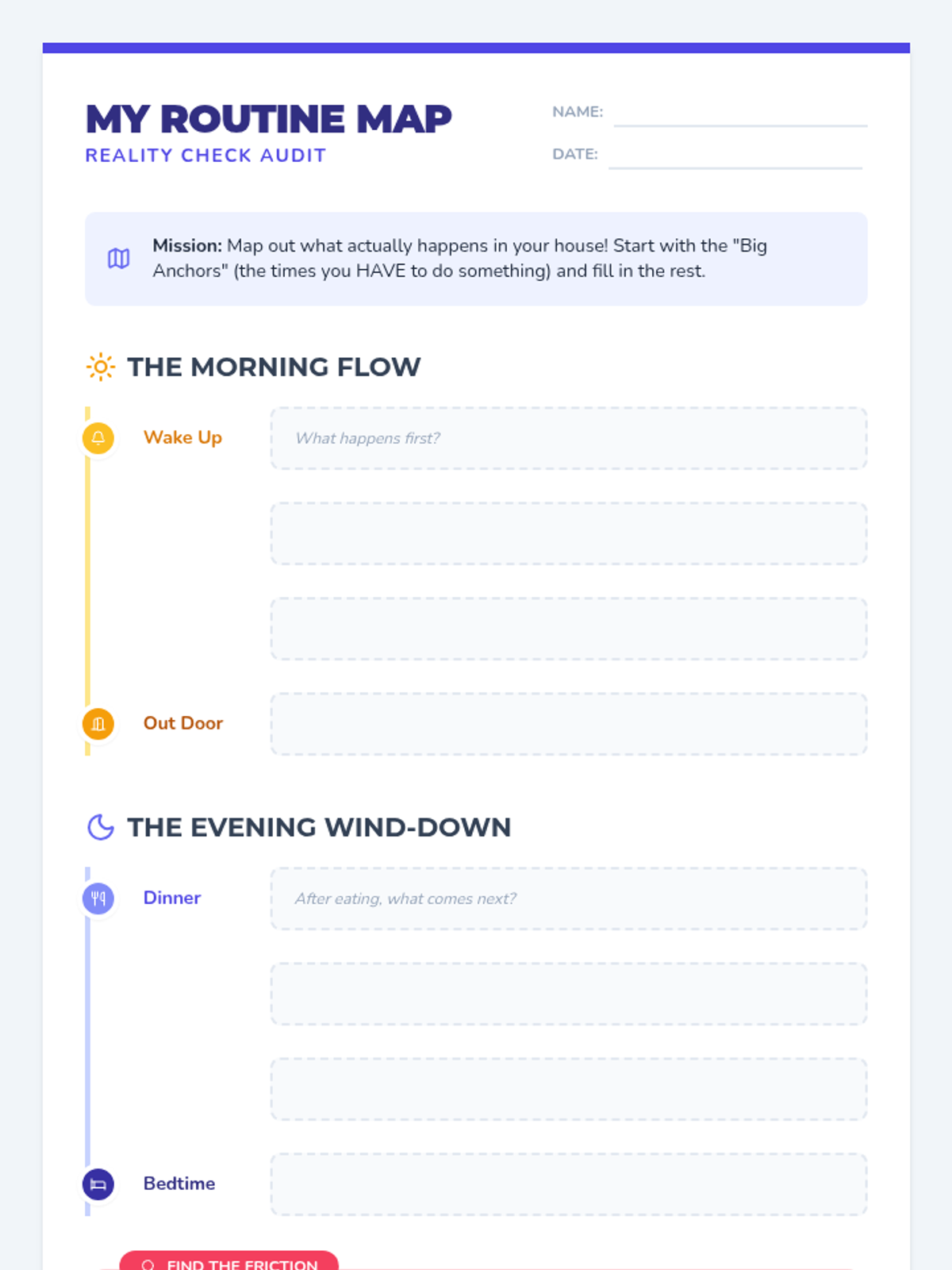
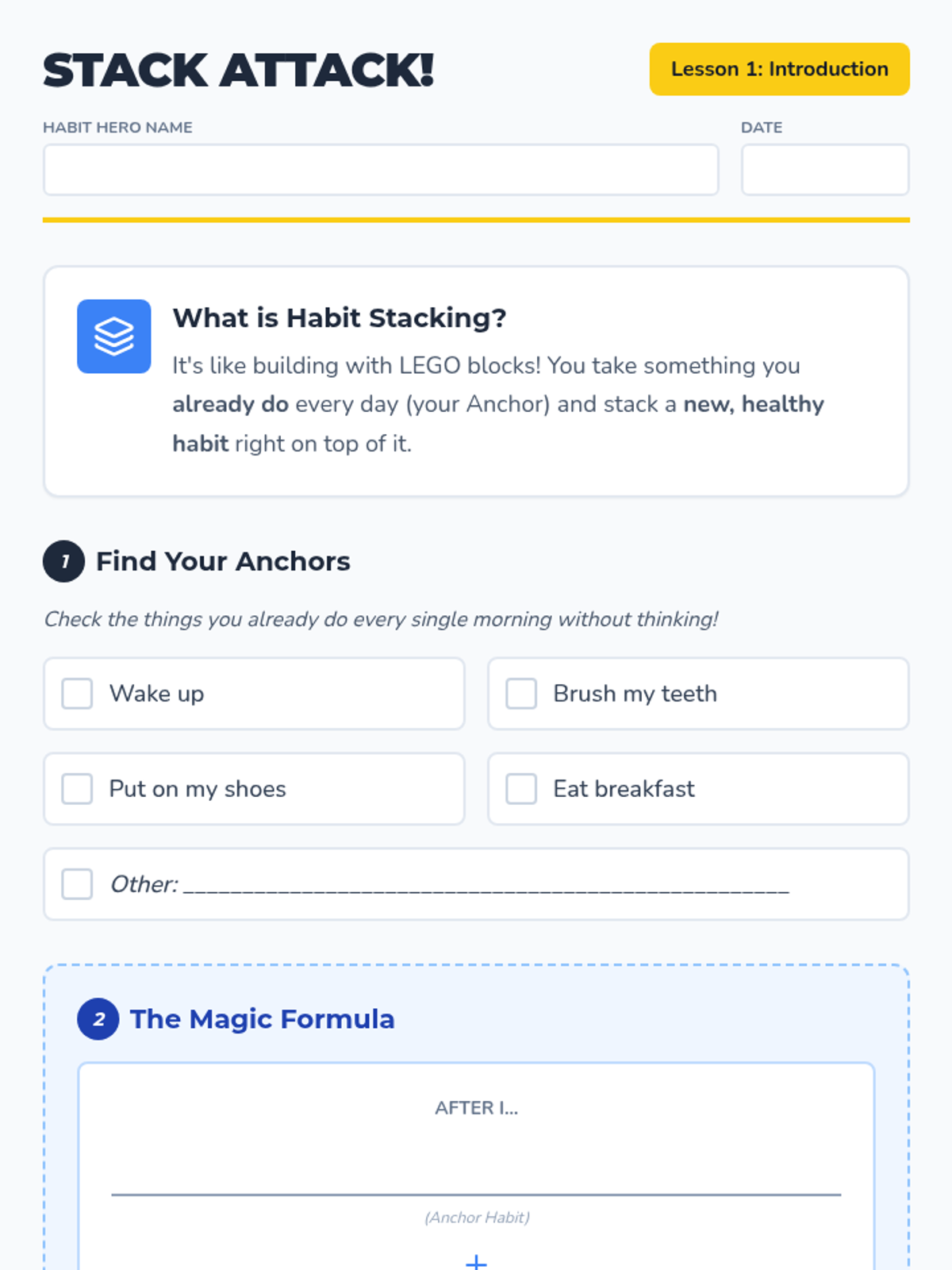
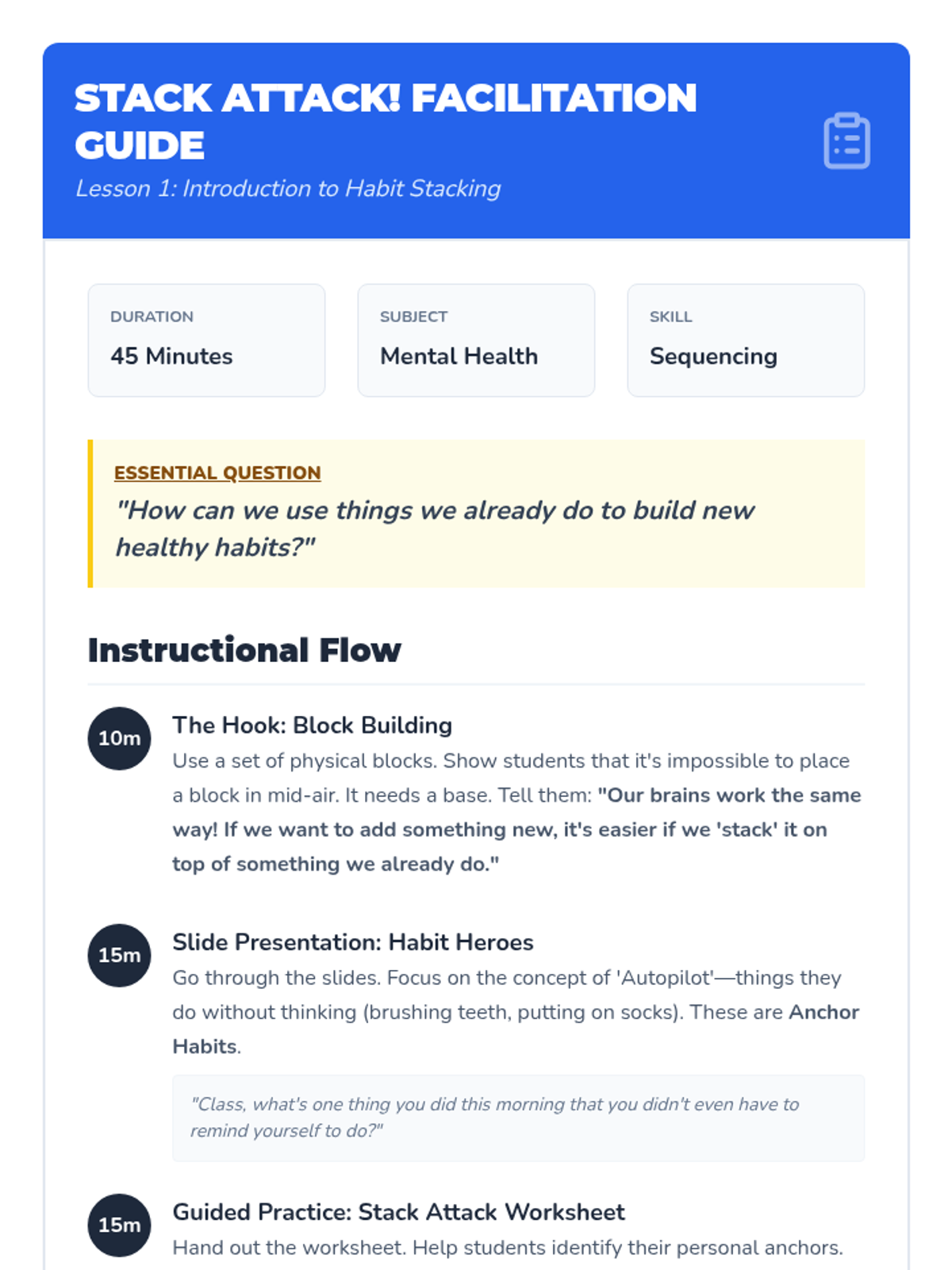
A 5-lesson sequence for 4th graders focused on designing and implementing mood-supporting sleep and morning routines using habit stacking and backward design.
This synthesis sequence focuses on the mechanics of habit formation, specifically 'habit stacking' to build morning routines that support mental health. Students move from understanding individual healthy choices to organizing them into a coherent flow using simple tracking tools and reflection.
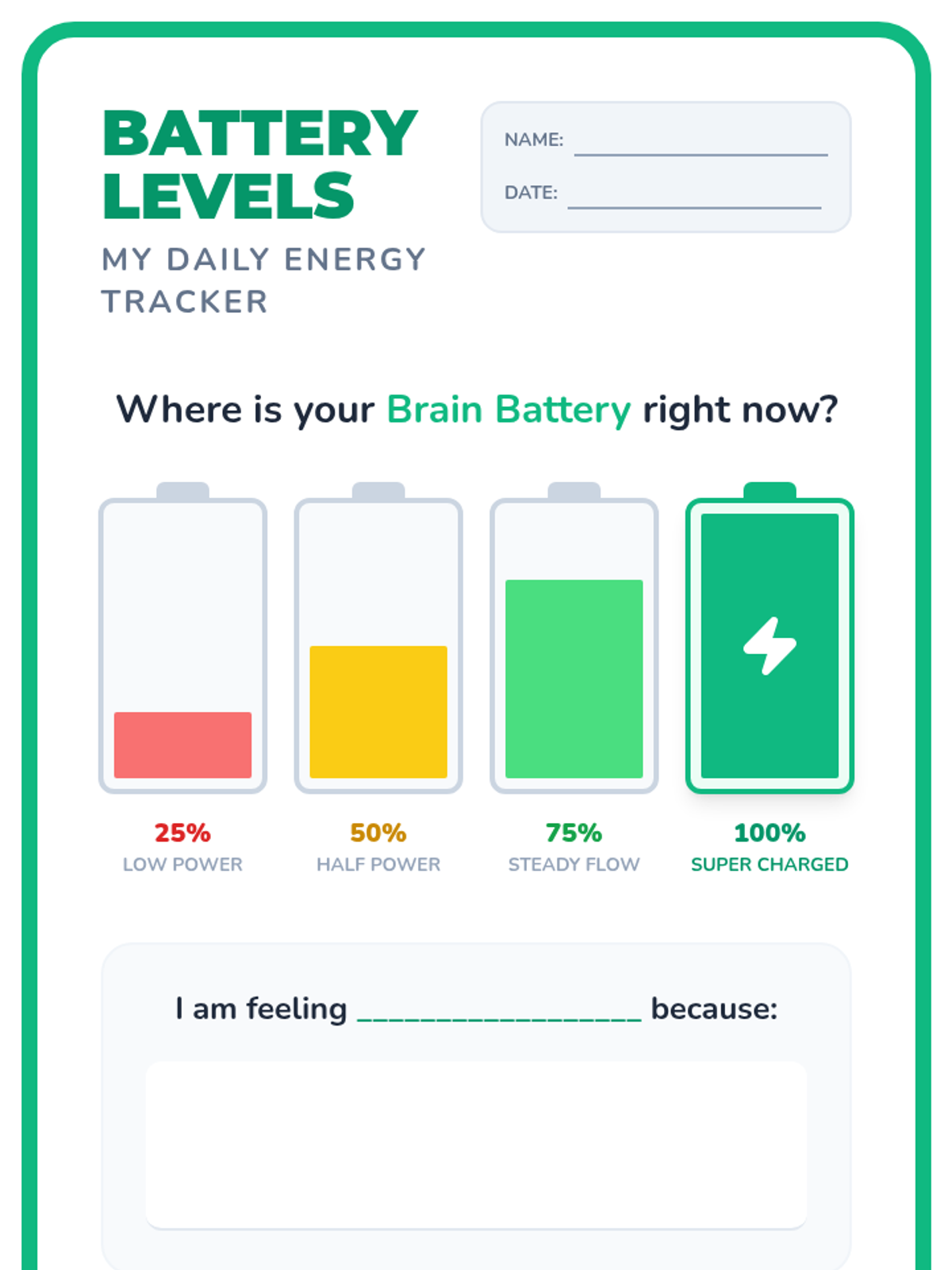
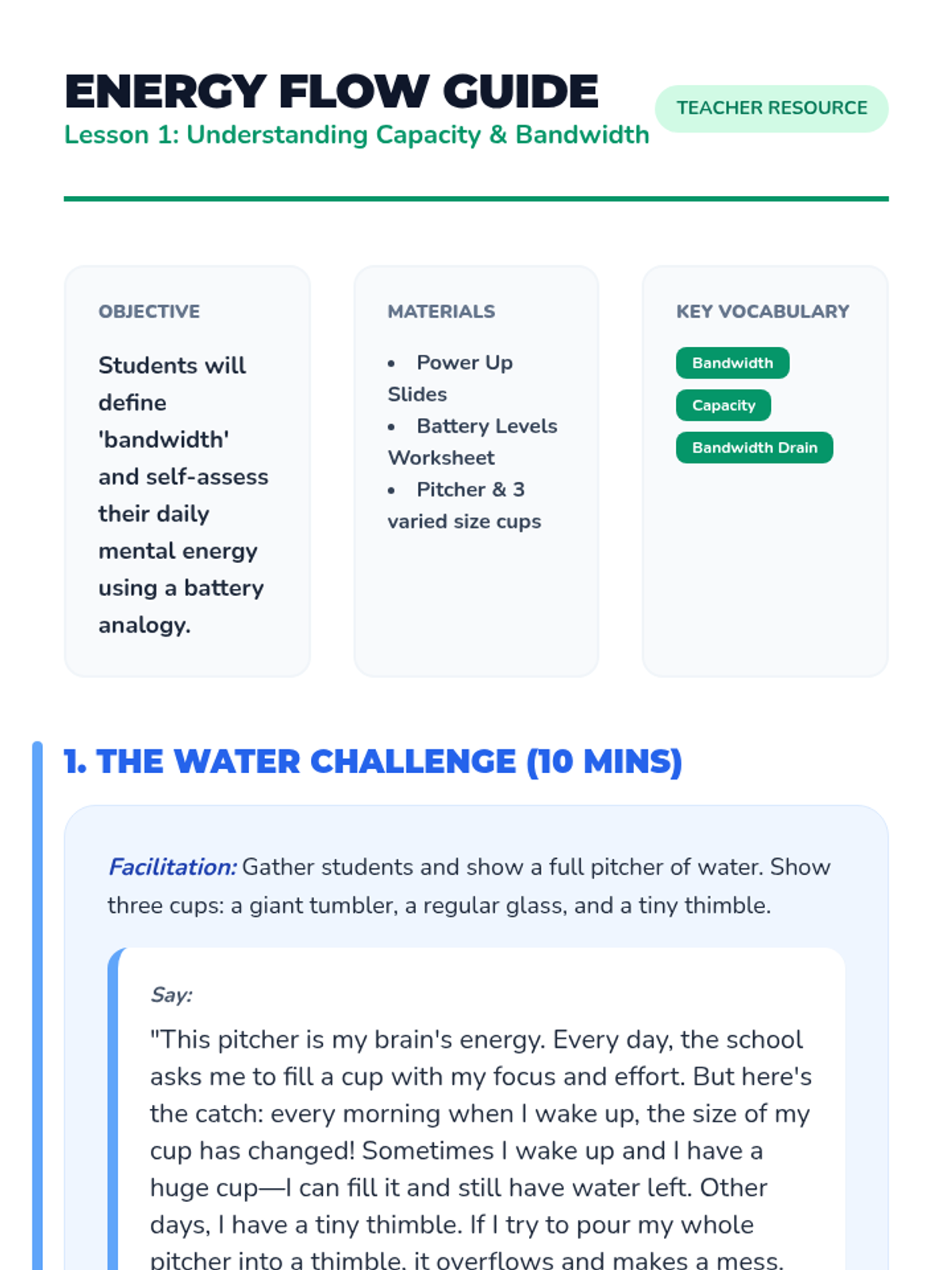
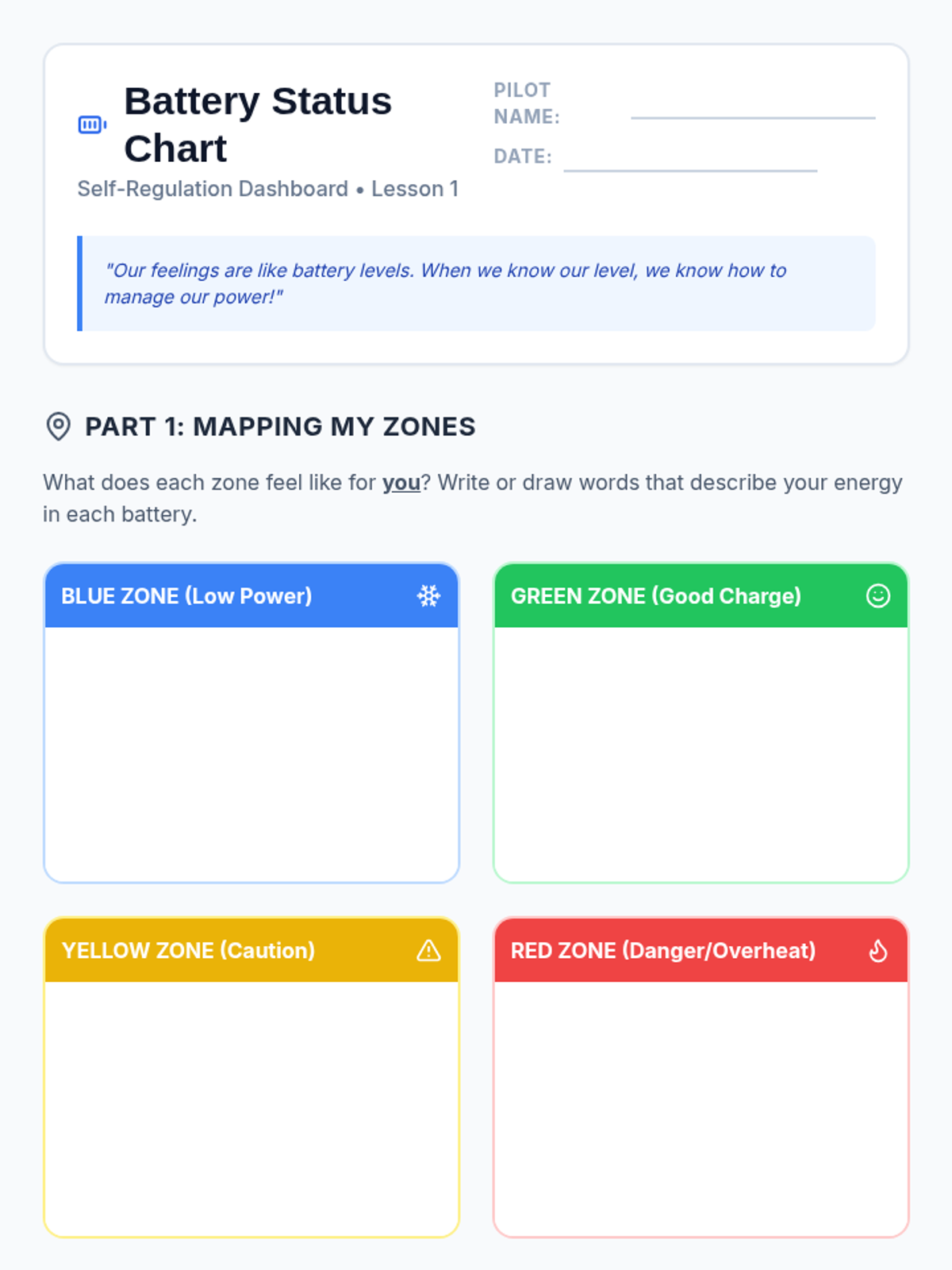
This sequence teaches 4th-grade students to link emotional check-ins with daily goal setting. Students learn to assess their mental 'bandwidth' using a battery analogy, set realistic daily intentions, create if-then action plans, and reflect on their progress, fostering executive functioning and self-management skills.
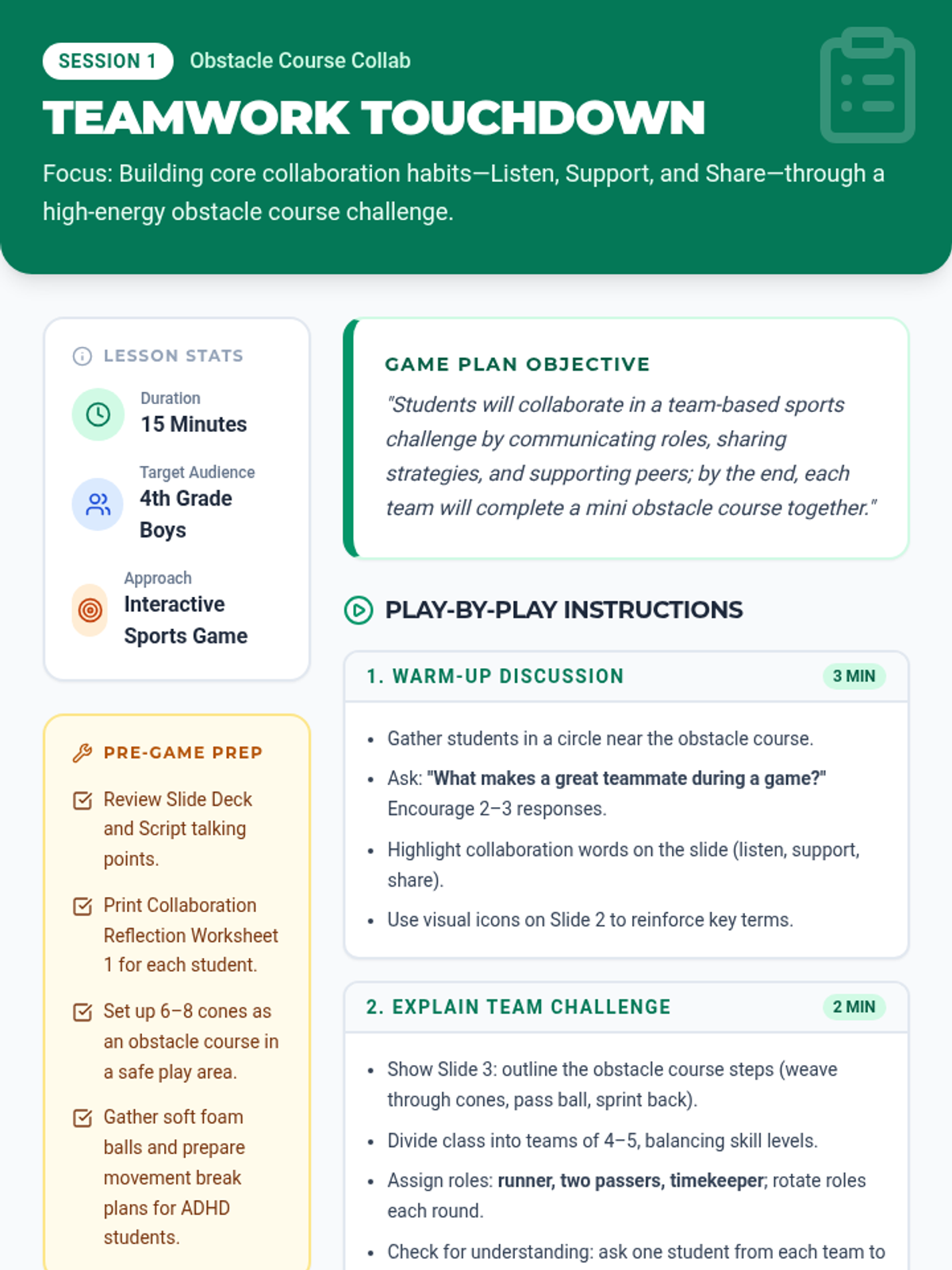
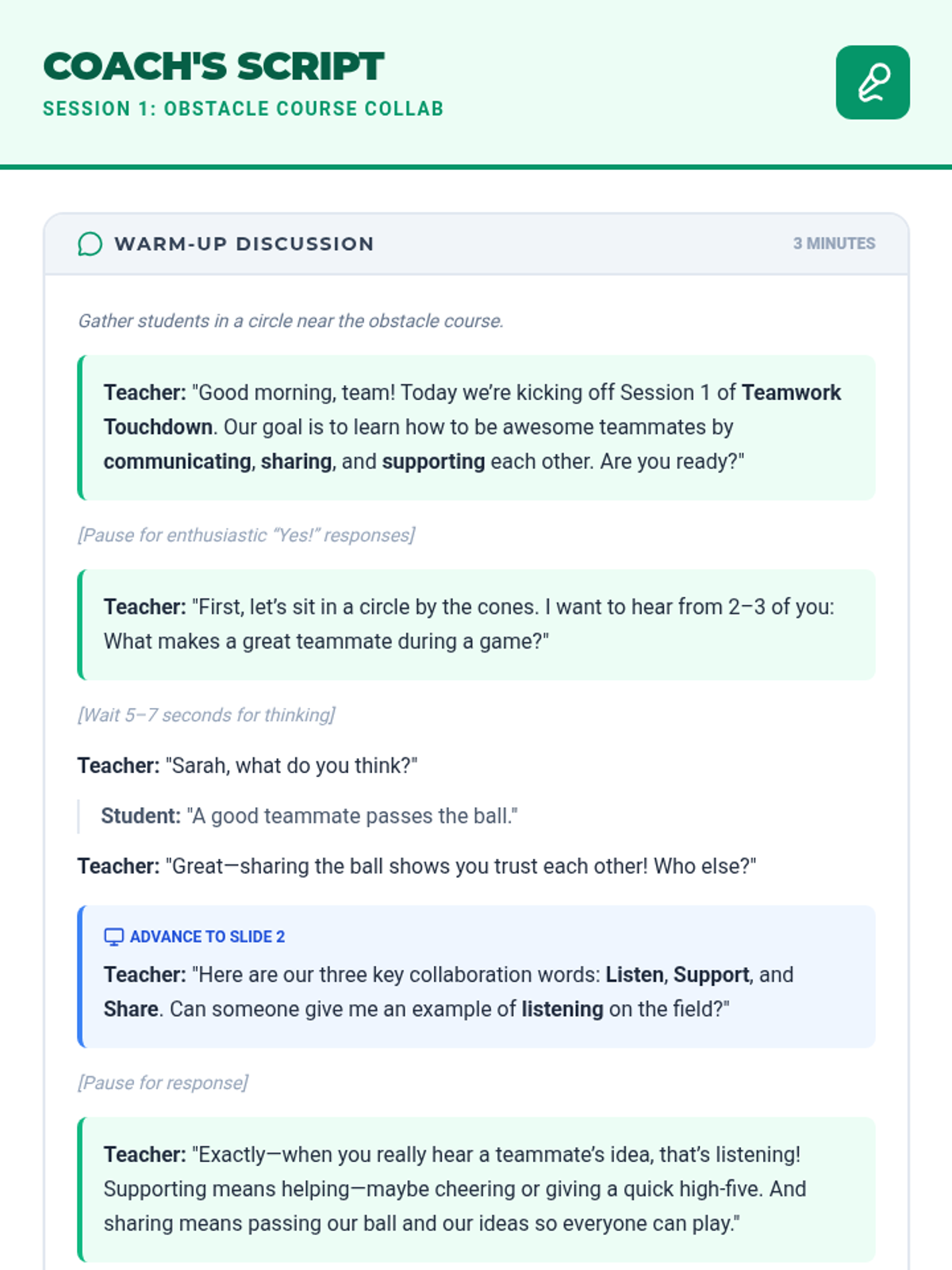
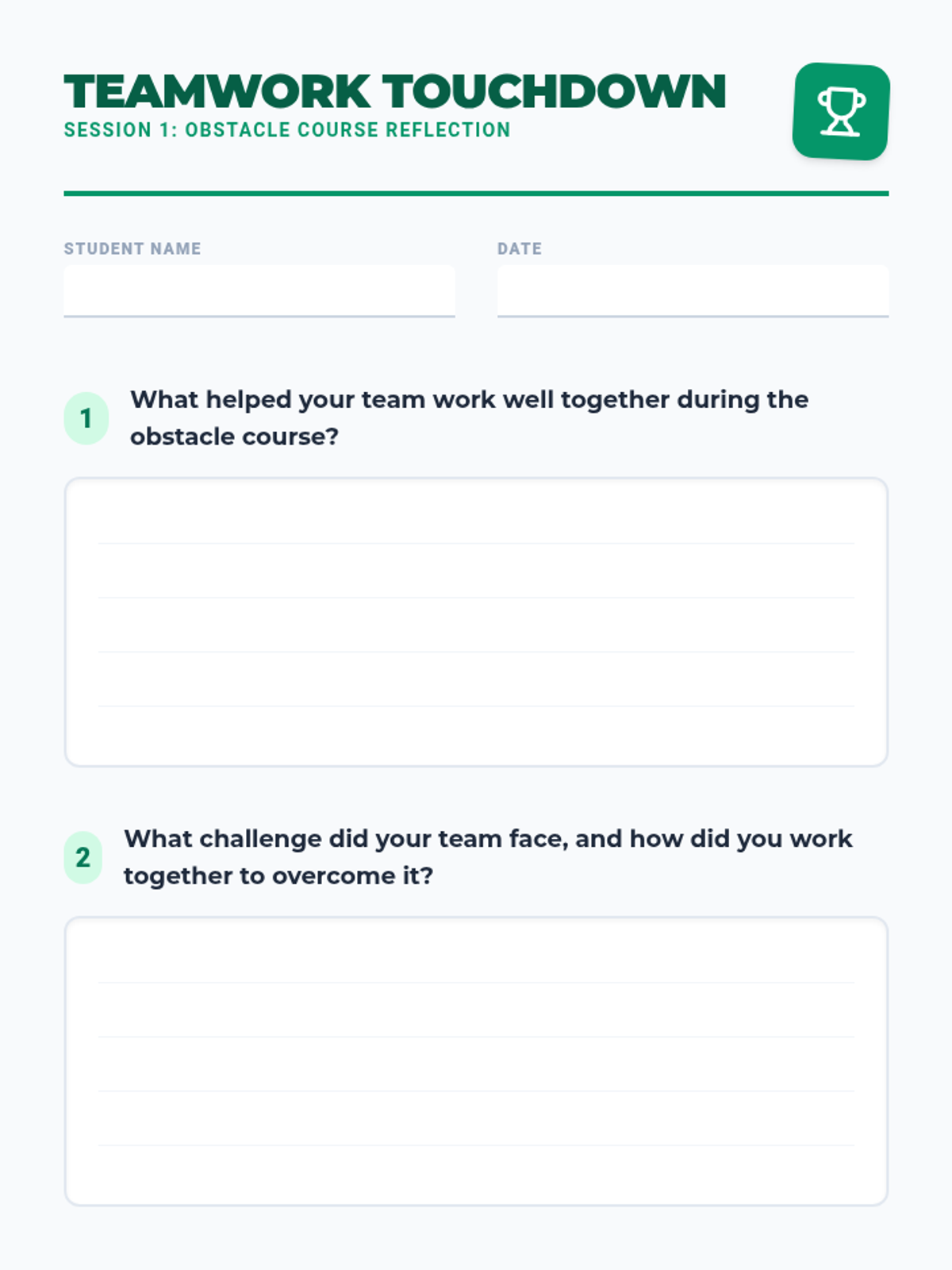
A two-session program for 4th-grade boys to develop collaboration and communication skills through high-energy, sports-based challenges and reflections.
A 4th-grade sequence focused on building interpersonal recovery skills during sensory dysregulation. Students learn to use non-verbal signals, distinguish between the need for space versus support, and practice co-regulation strategies to repair relationships after high-intensity emotional events.
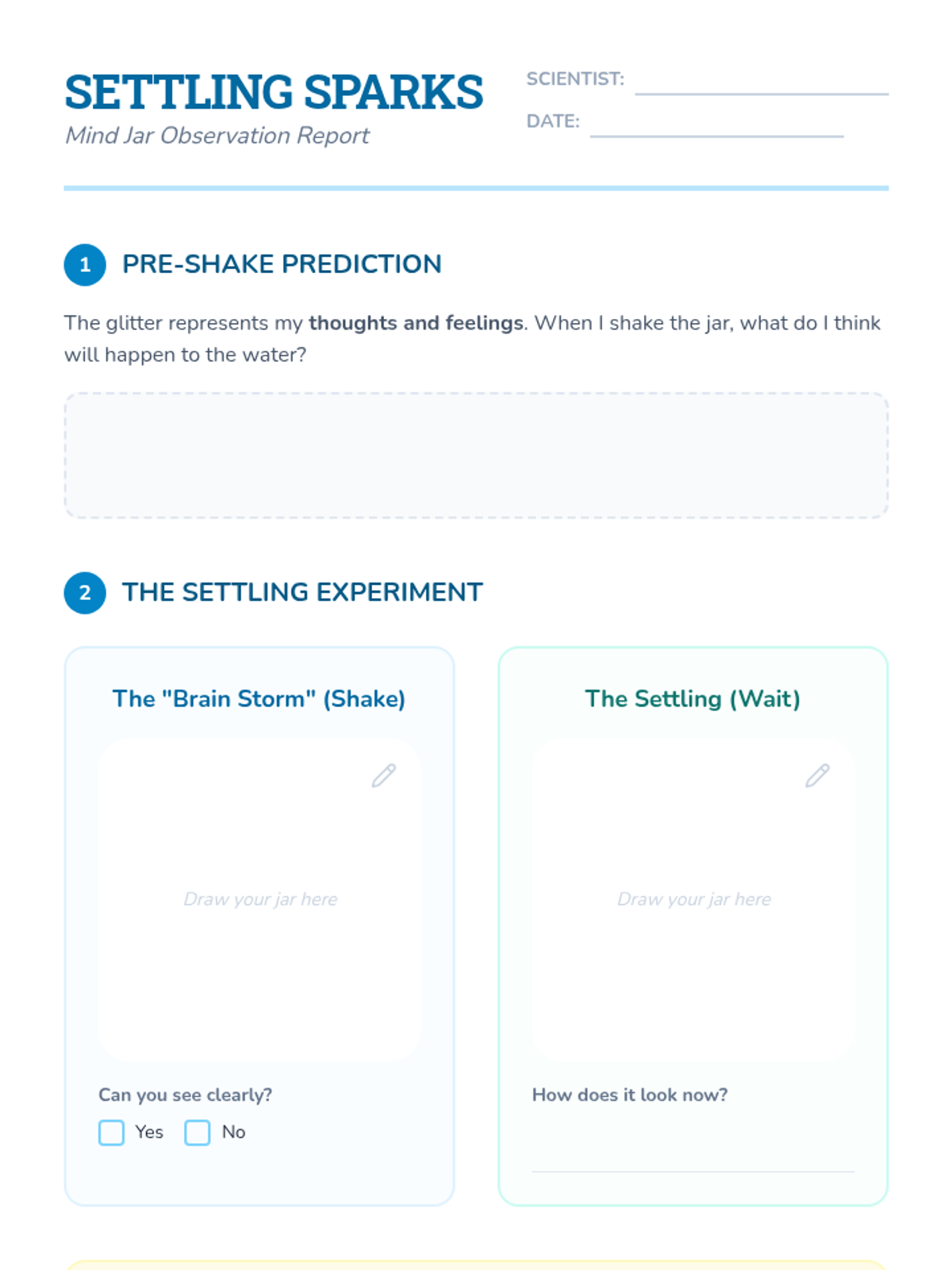
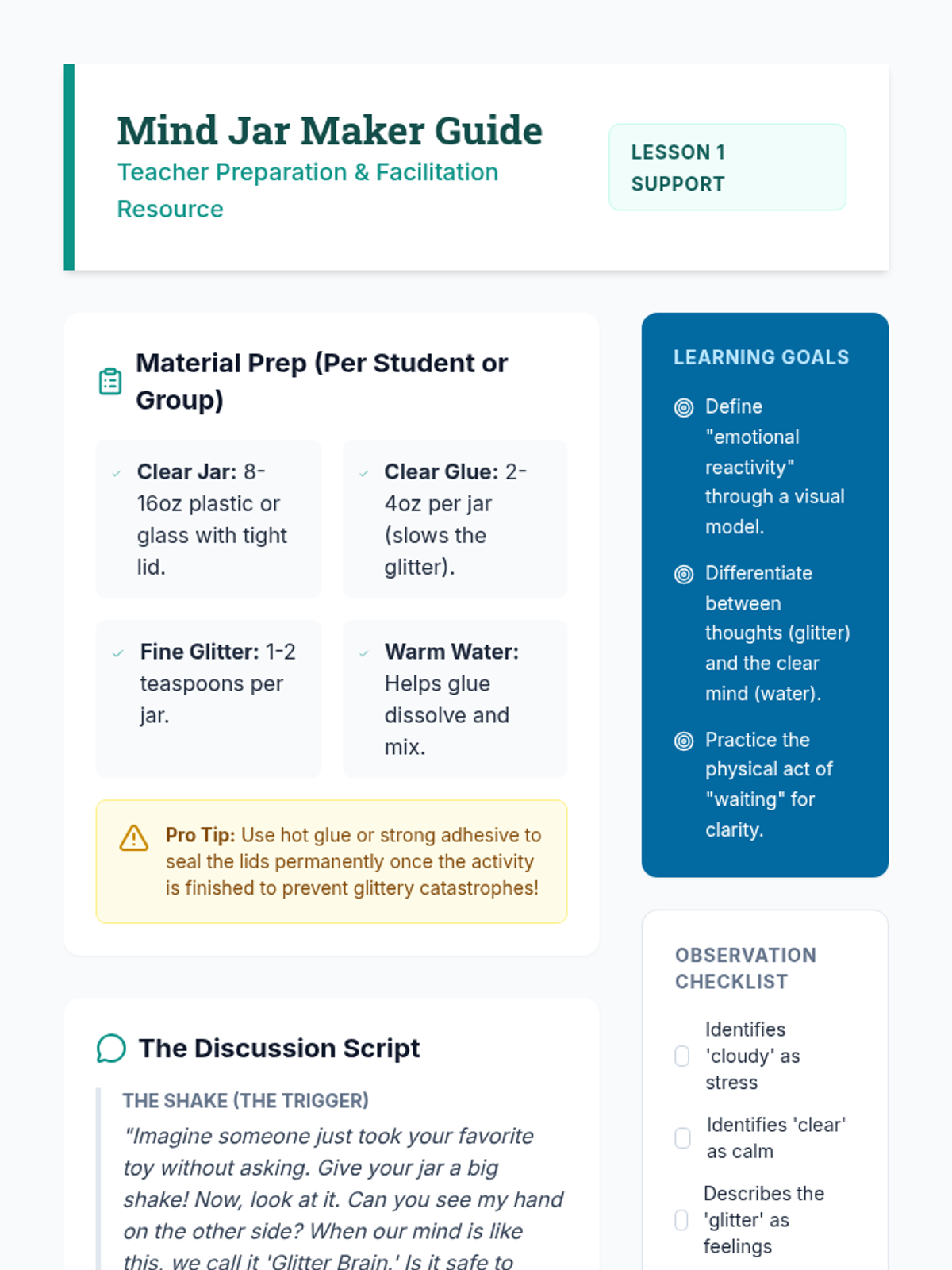
A 3rd-grade mindfulness sequence exploring emotional regulation through metaphors like mind jars, weather reporting, and visualization to help students widen the gap between triggers and reactions.
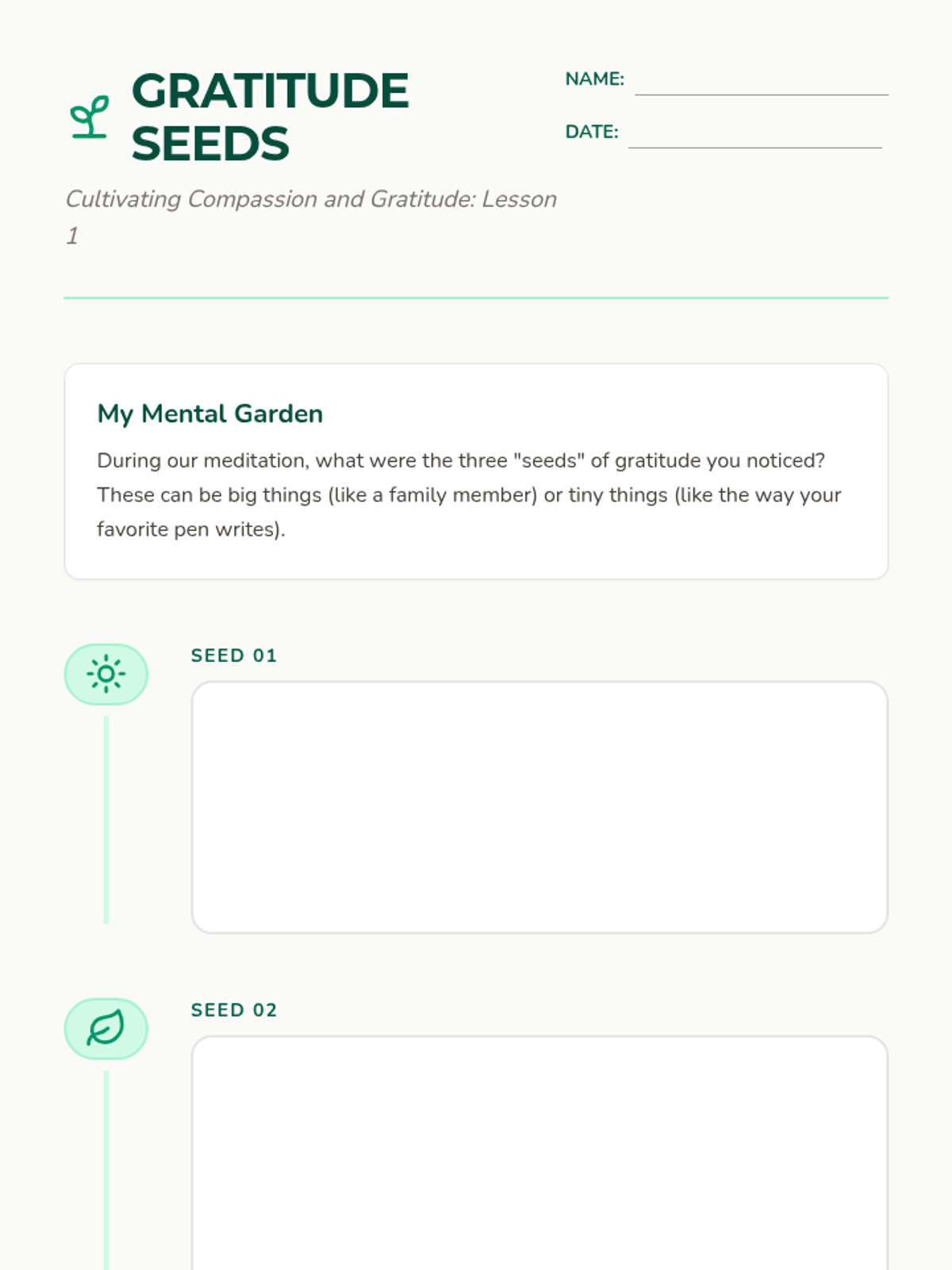
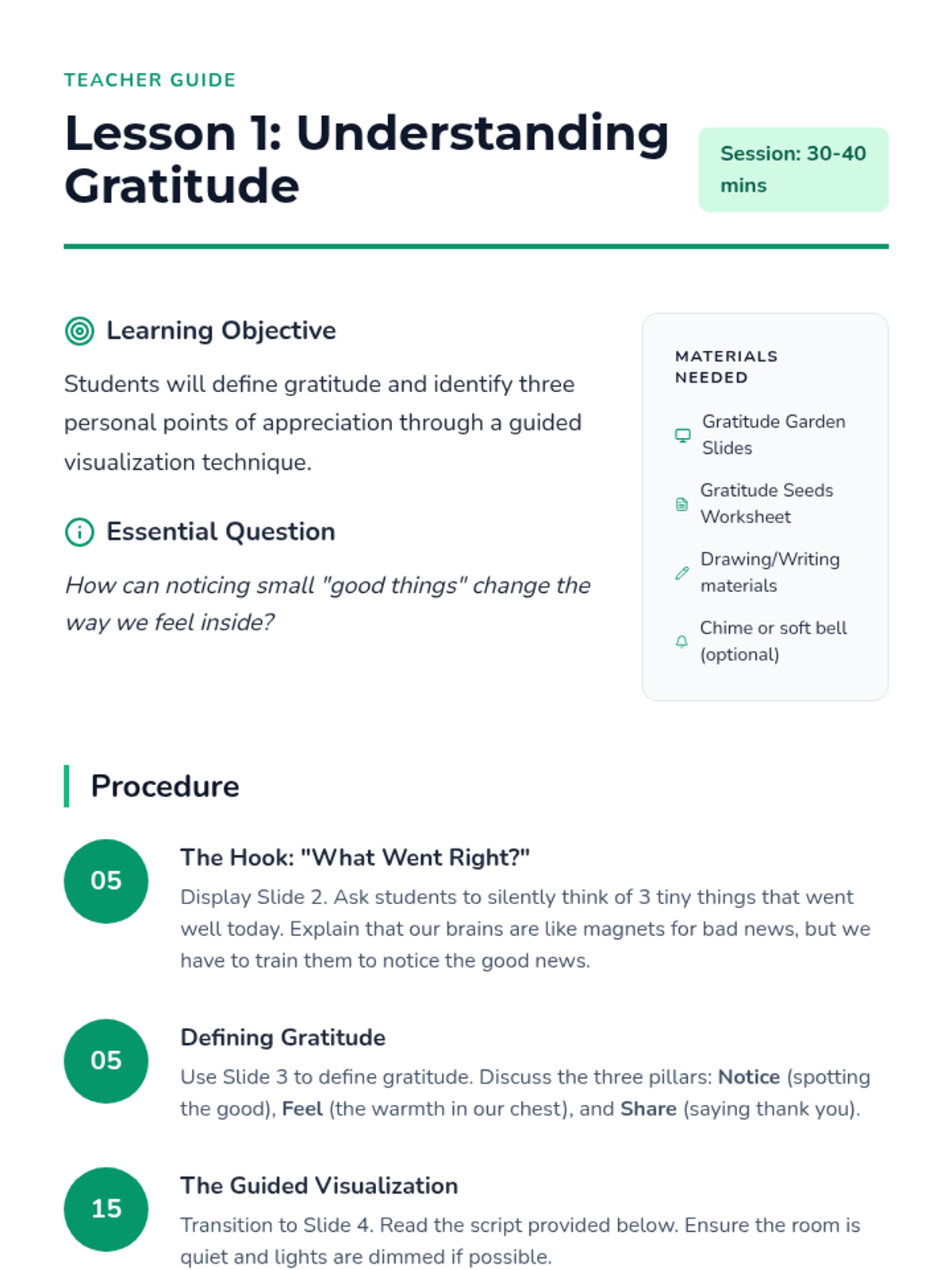
A 5-lesson sequence for 4th graders focused on the social-emotional aspects of meditation, teaching gratitude, self-compassion, and loving-kindness ('Metta') to build empathy and emotional resilience.
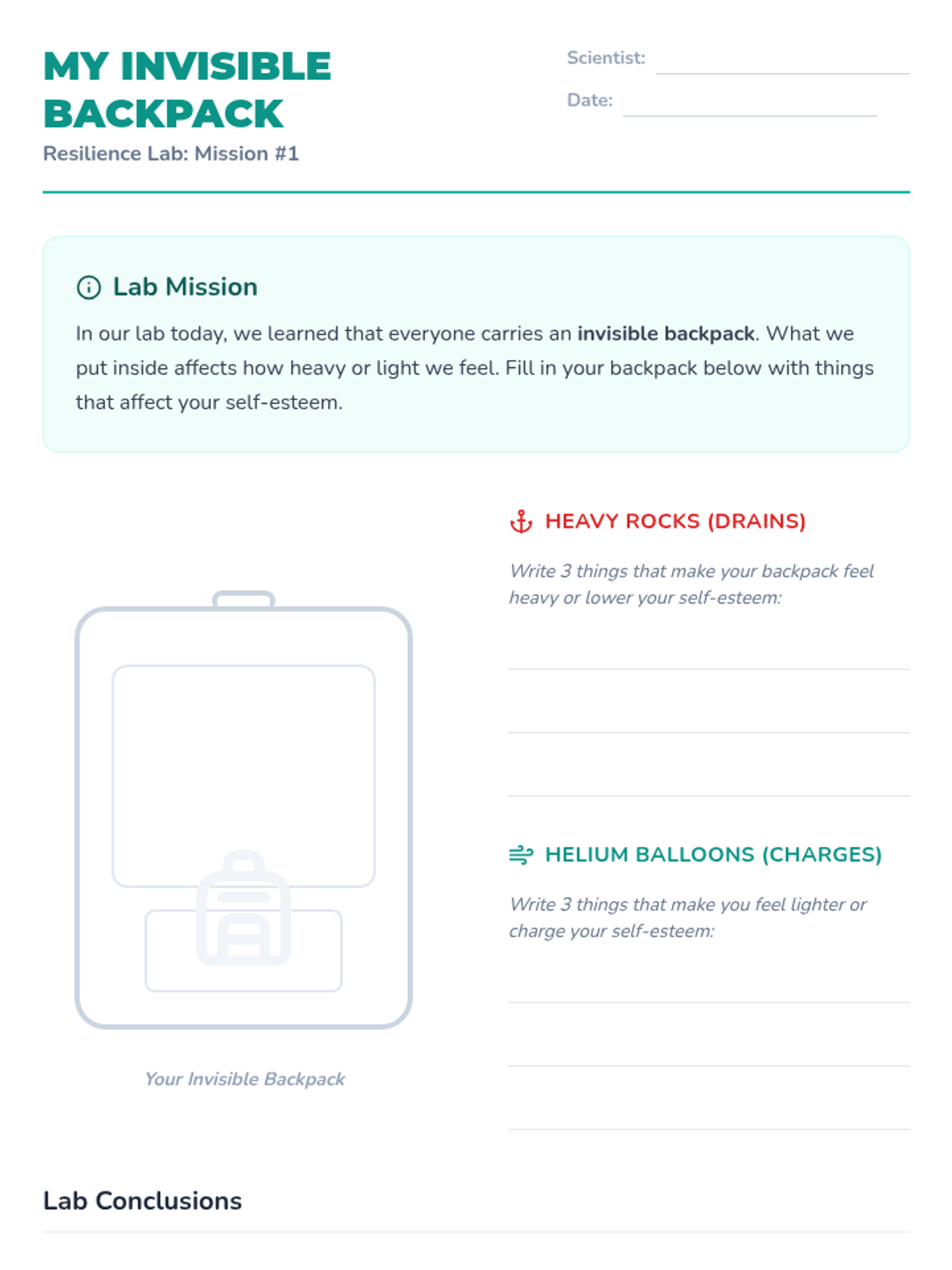
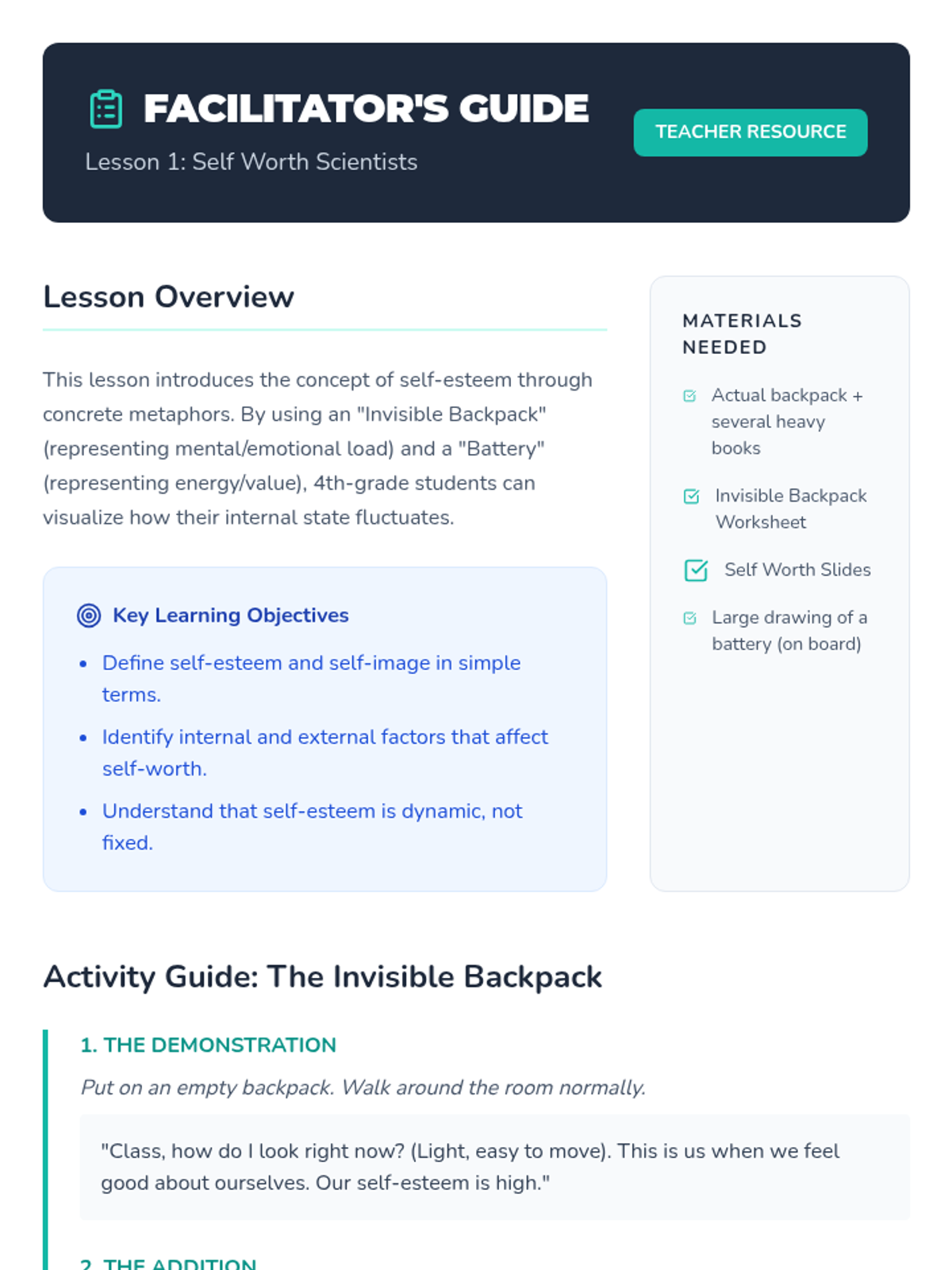
This sequence utilizes inquiry and case studies to examine the formation of self-esteem and the impact of external feedback. Students analyze sources of self-worth, critique media messages, and develop a personal toolkit of resilience strategies.
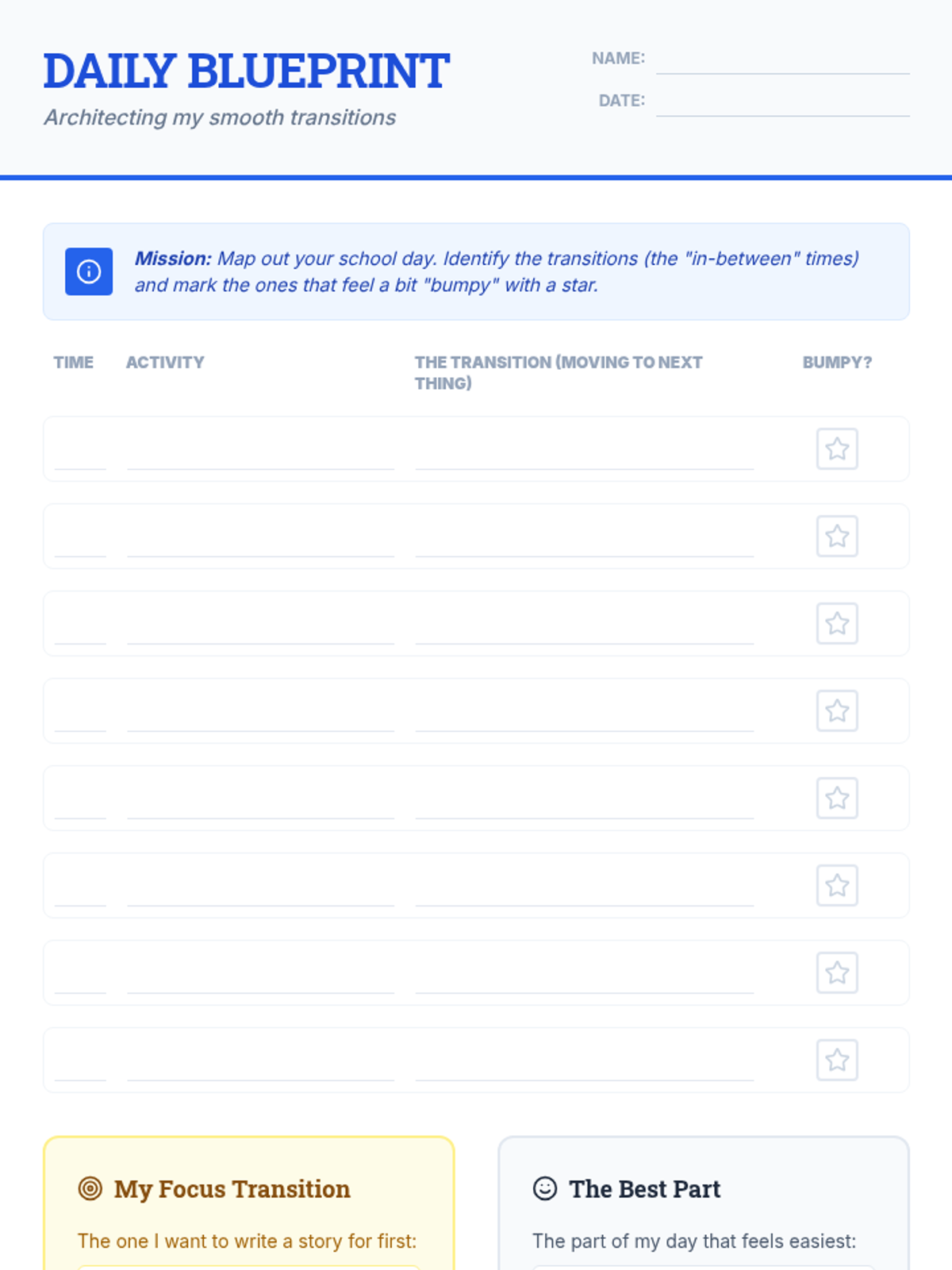
A project-based sequence where 4th-grade students learn to create personalized social stories to navigate transitions and routine changes, culminating in a personal 'Routine Manual'.
This mastery-based sequence teaches students to view check-ins not just as a morning event, but as a continuous cycle of self-monitoring and reflection. Students learn to track their emotional patterns over time, identifying triggers and successful interventions to develop long-term metacognitive habits.
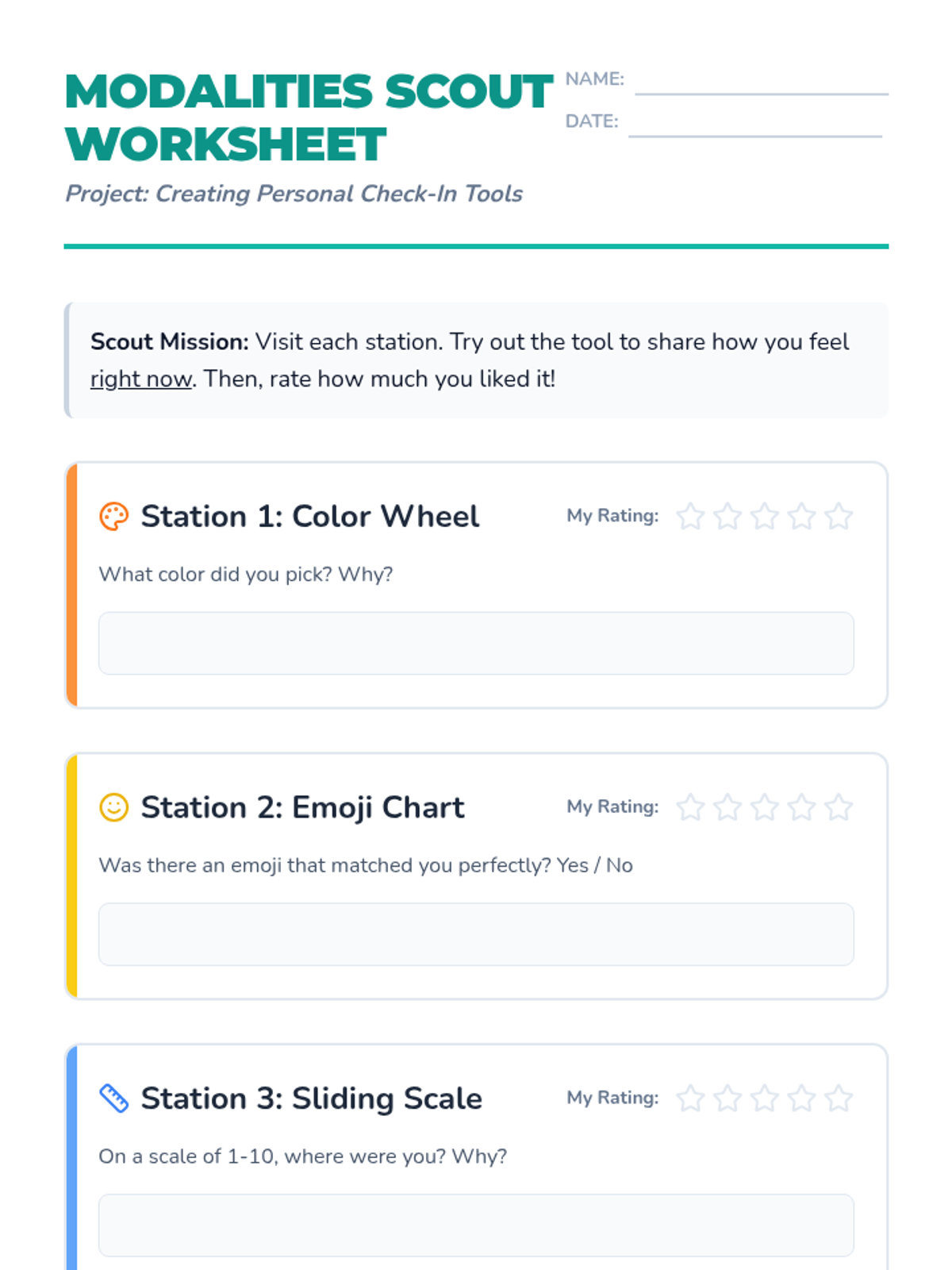
Students design and create their own personalized check-in tools to foster ownership over the behavioral check-in process. The sequence moves from exploration of different modalities to the design, construction, and implementation of a personal 'Check-In Toolkit'.
An 8-session Tier 1 classroom series on emotion regulation to help students develop and practice coping skills in 30-minute lessons. Includes mindfulness, self-reflection, and practical strategies.
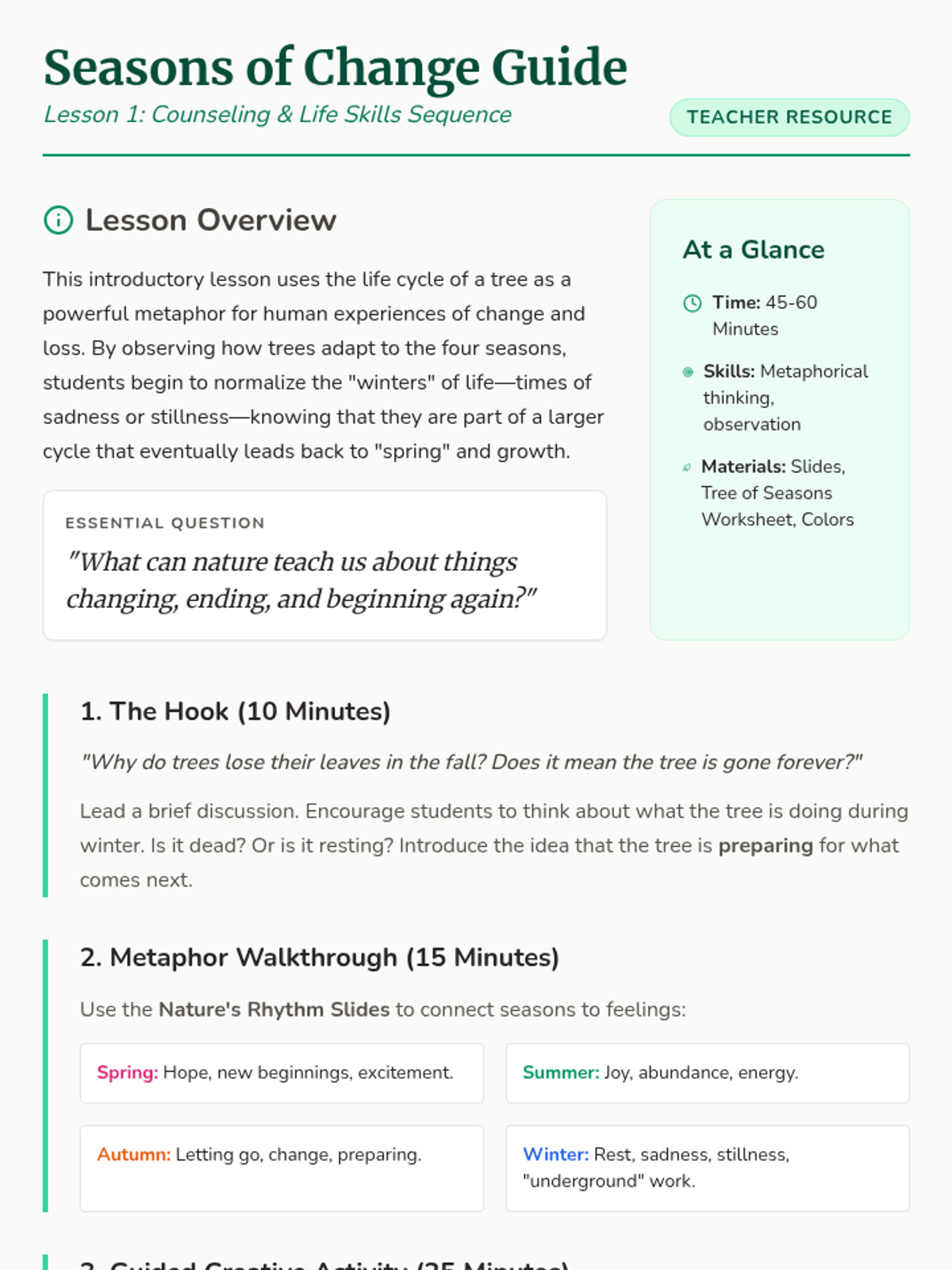
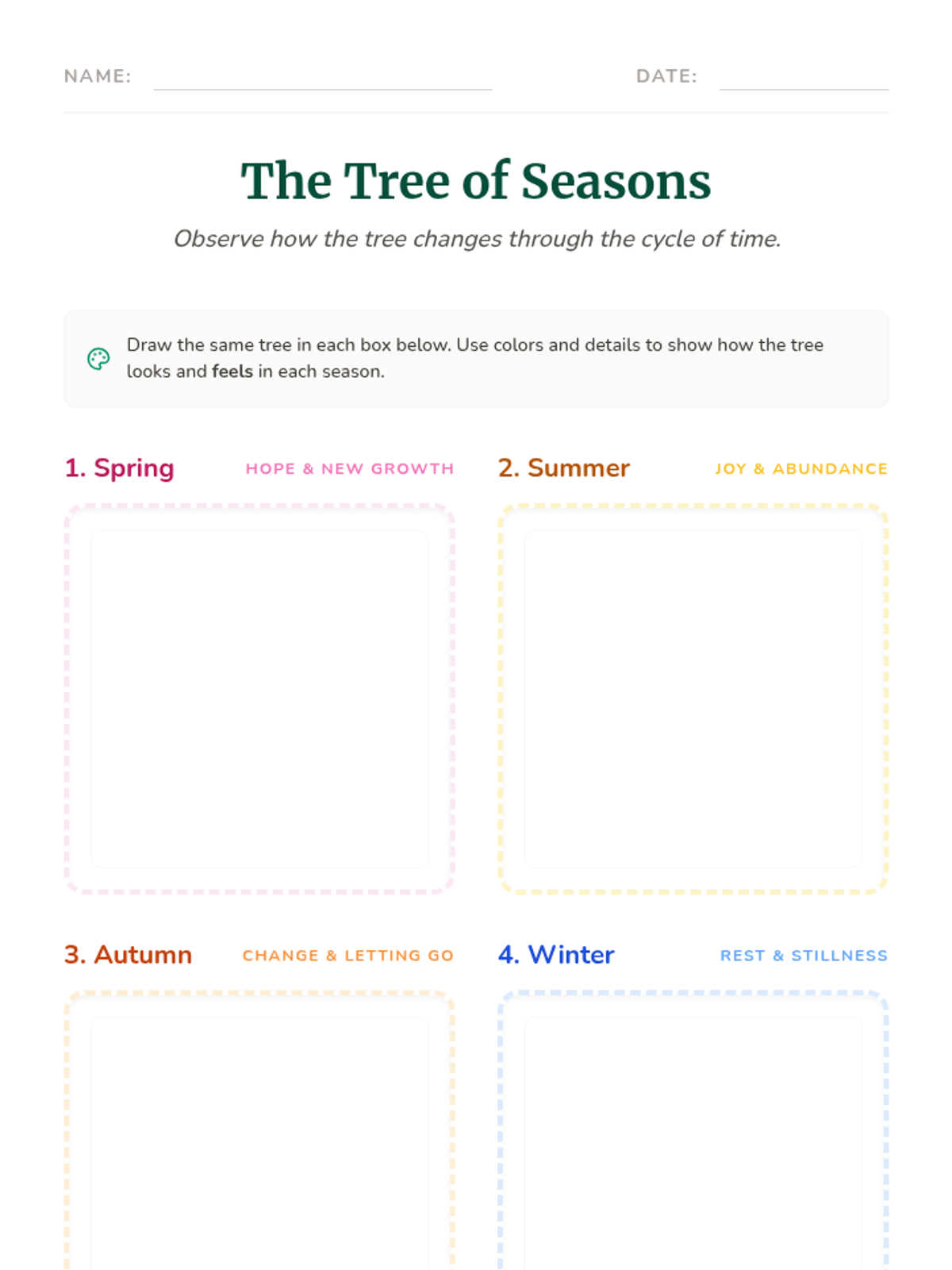
A counseling sequence for 4th graders that uses nature and ephemeral art to explore cycles of change, loss, and hope. Through metaphors of seasons and hands-on nature activities, students learn to process impermanence and build resilience.
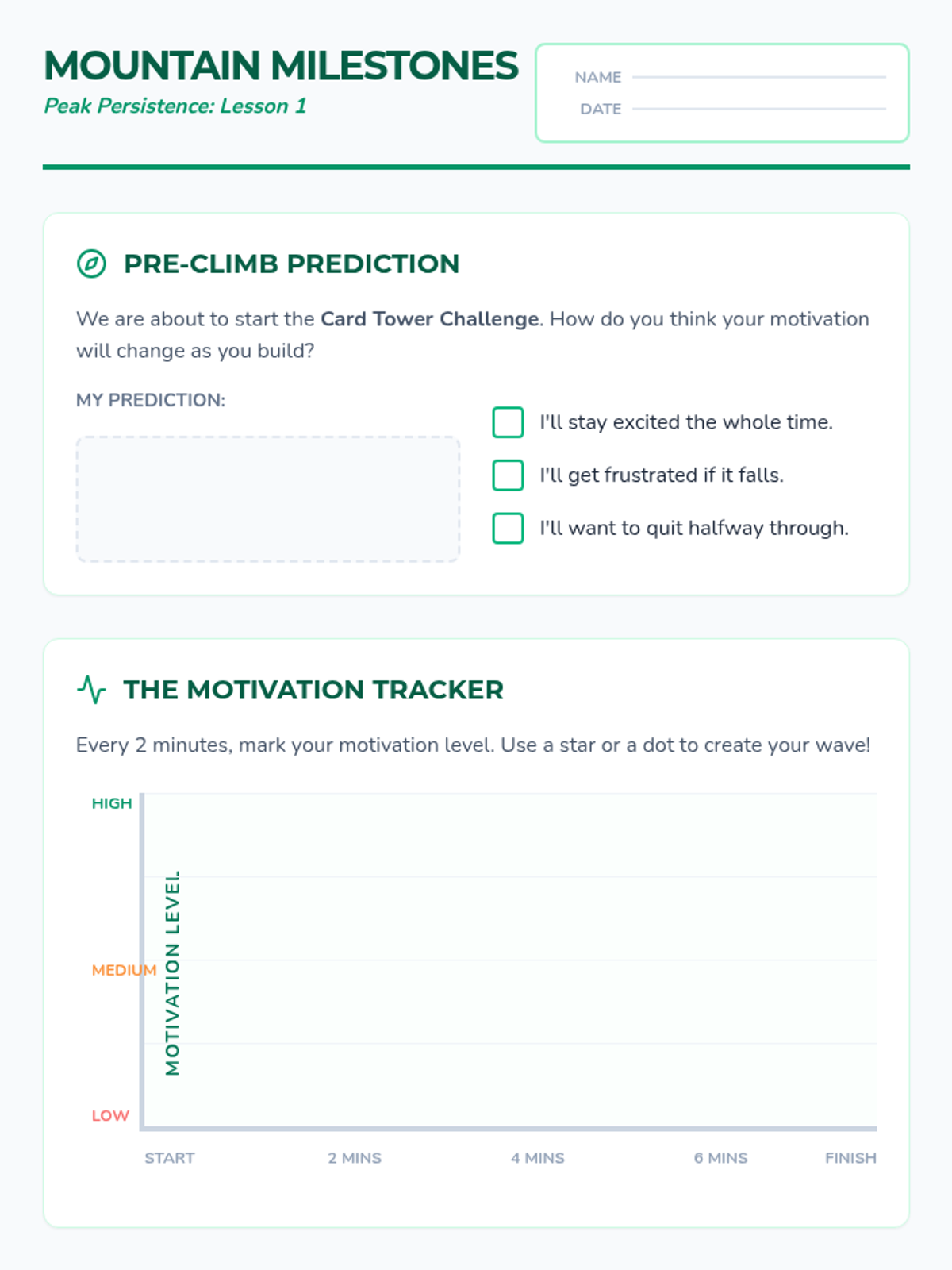
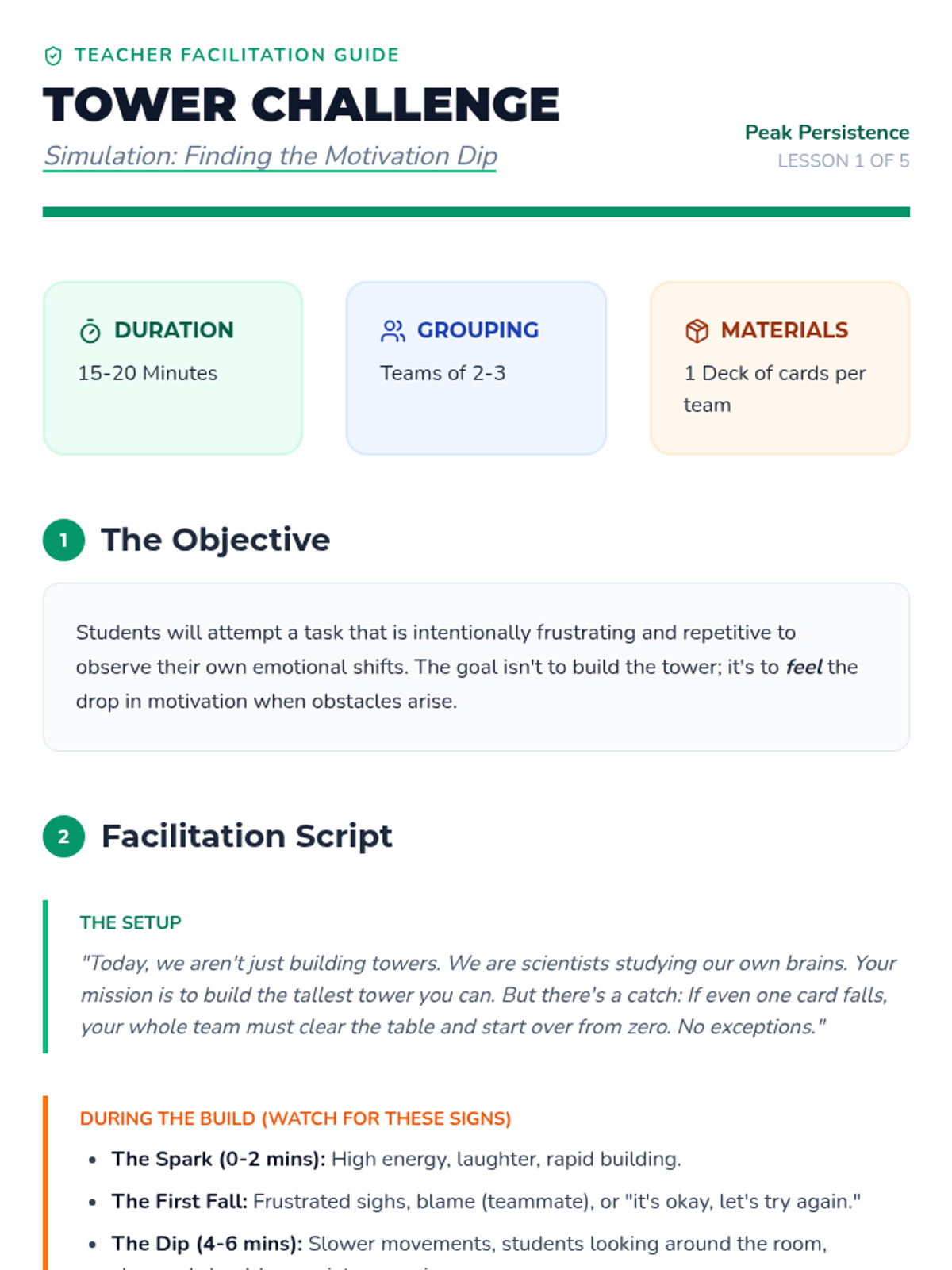
A workshop-style sequence for 4th graders to develop internal motivation, grit, and goal-setting strategies using a mountaineering theme. Students learn to navigate the 'Motivation Dip', break goals into 'Micro-Goals', use positive self-talk, and apply the WOOP method.
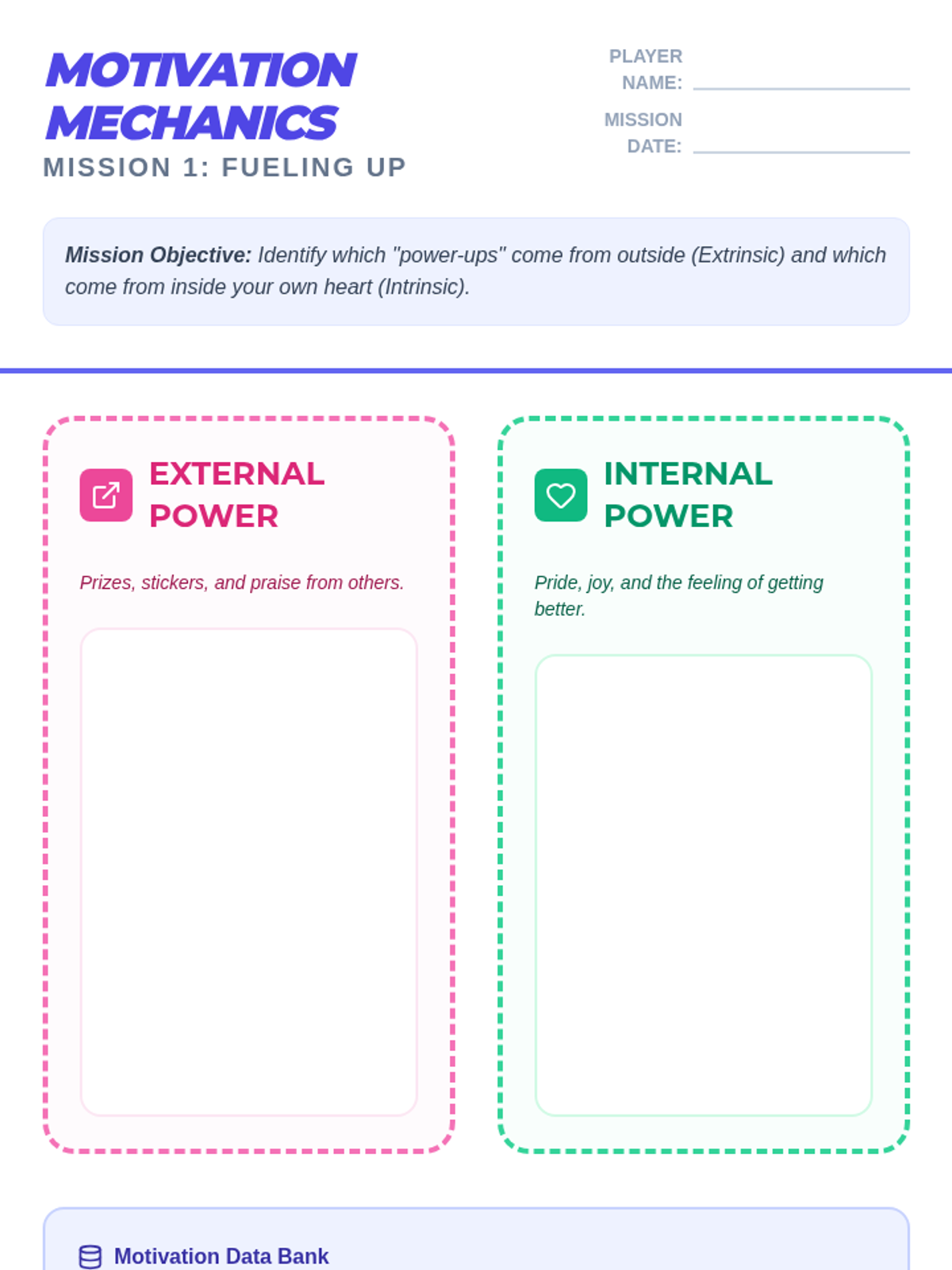
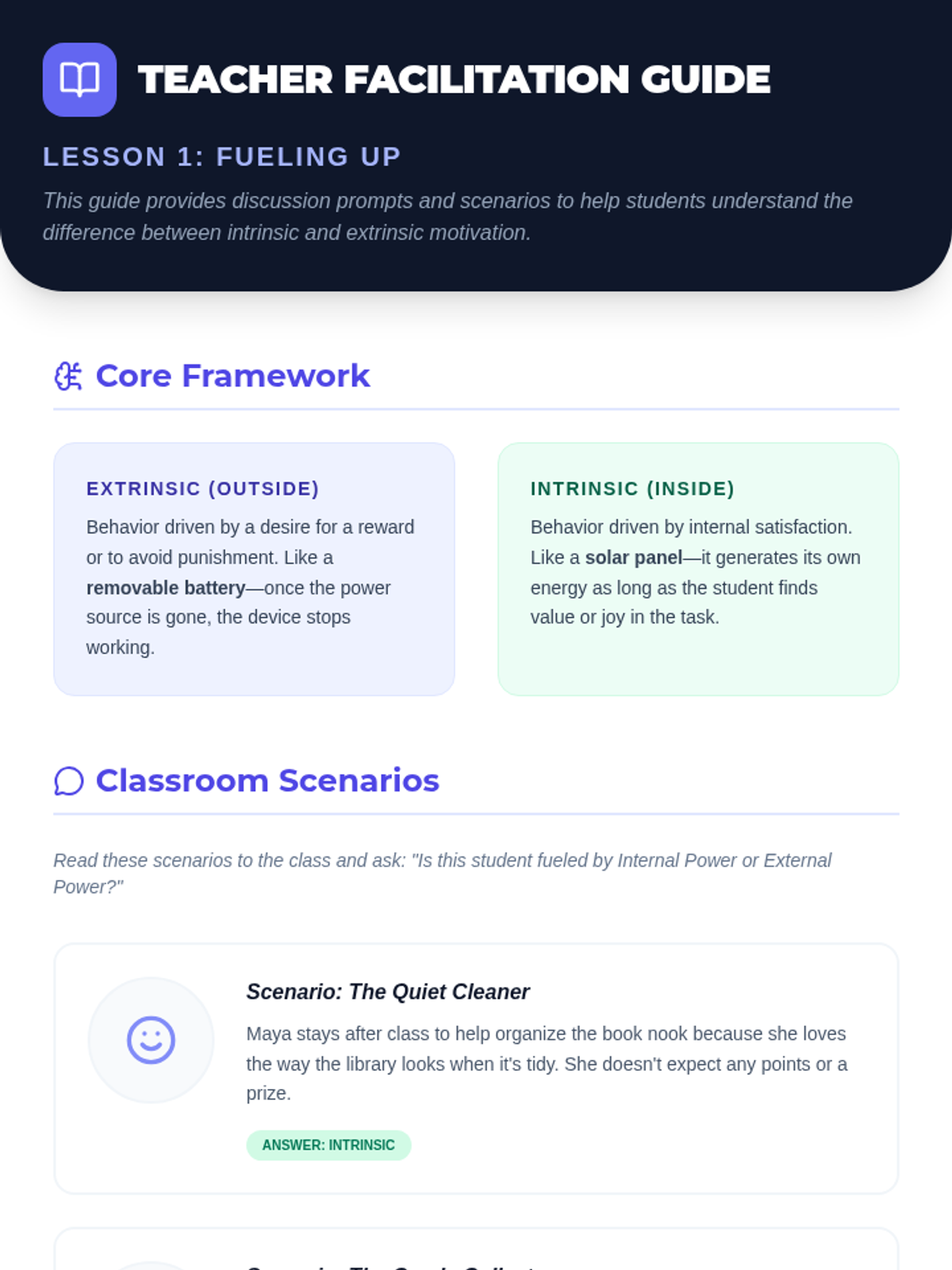
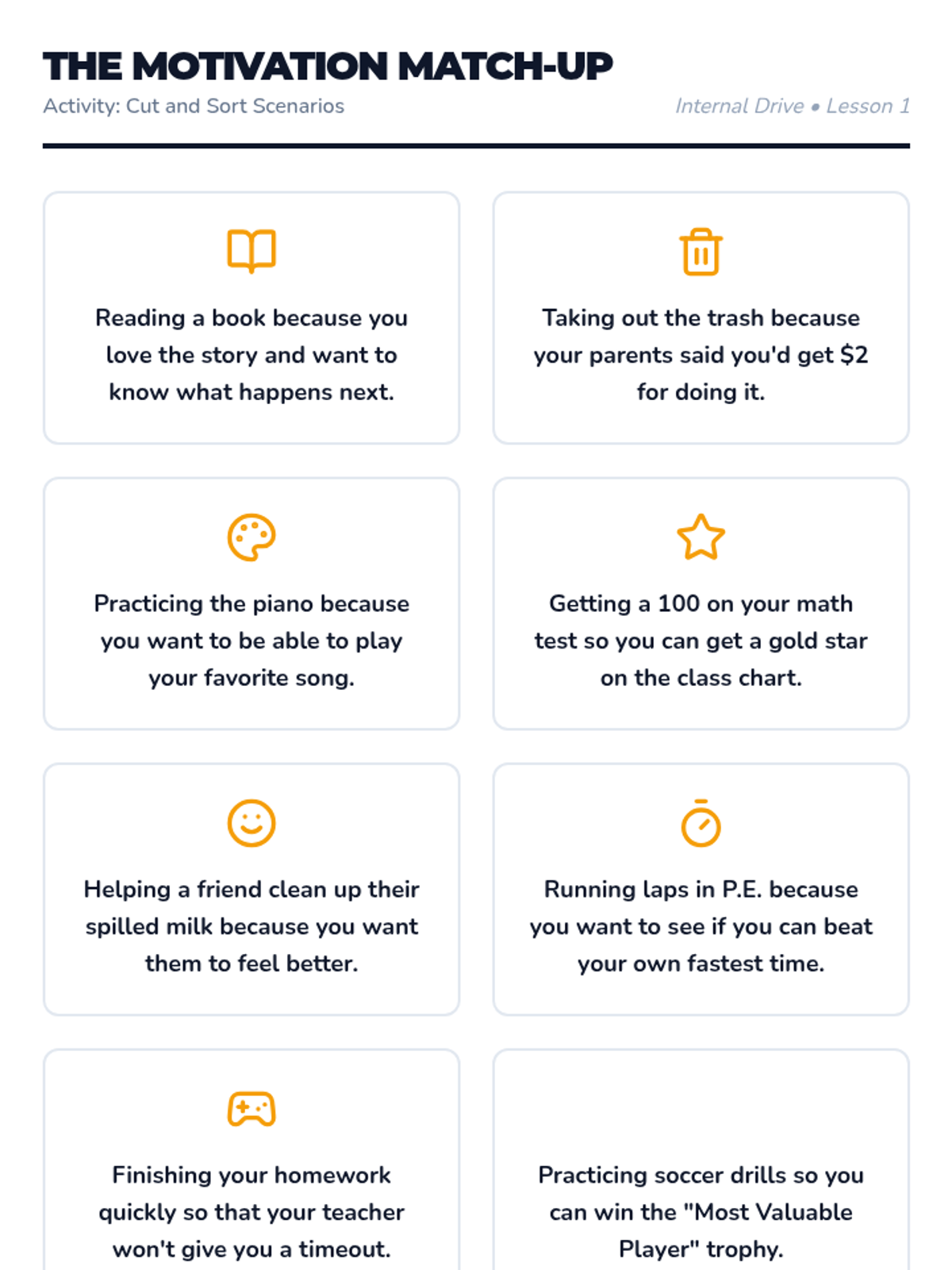
A comprehensive 5-lesson sequence for 4th graders to explore the difference between extrinsic and intrinsic motivation. Students identify personal interests, the power of autonomy, and how to fuel long-term effort through internal satisfaction.
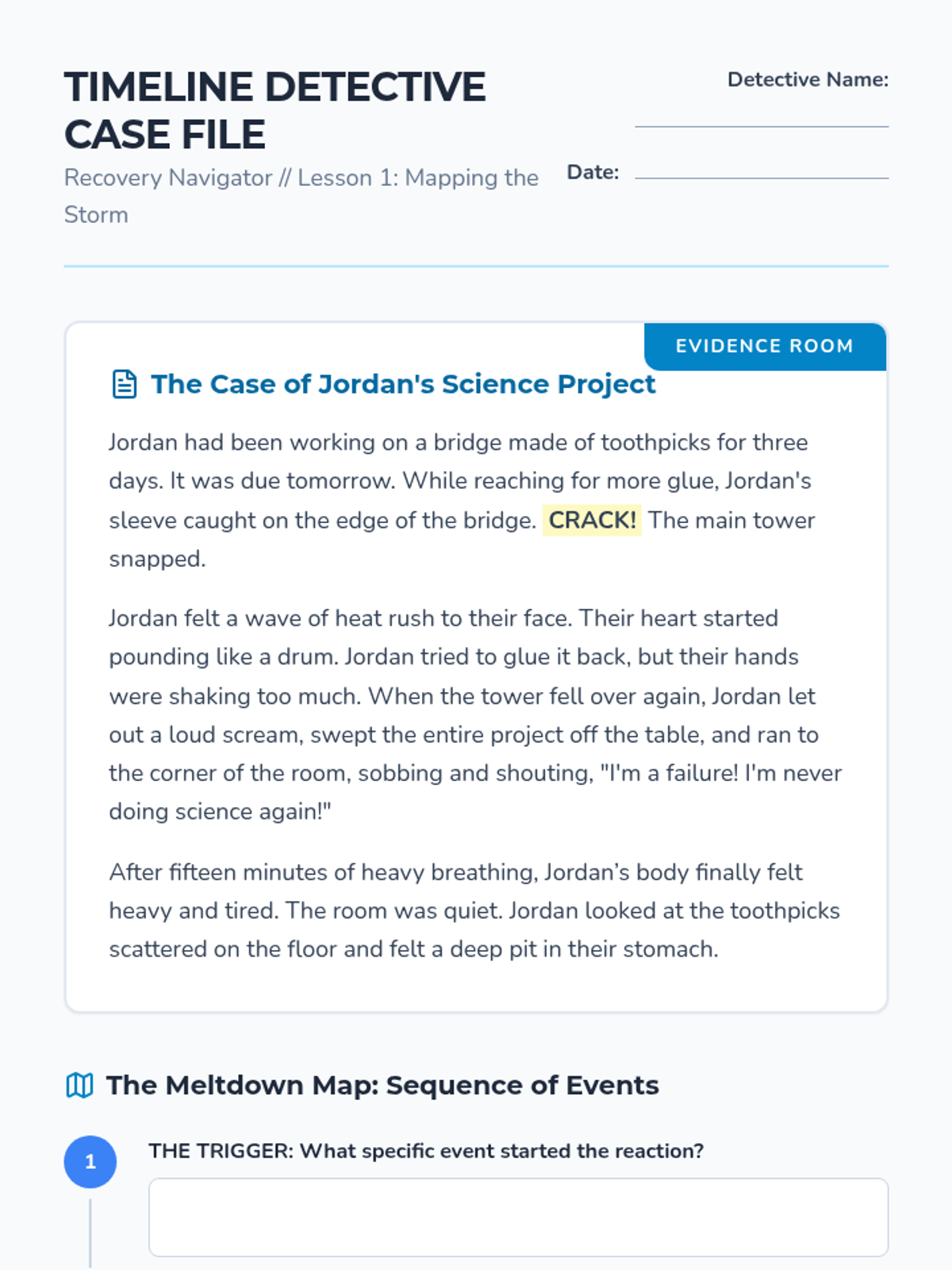
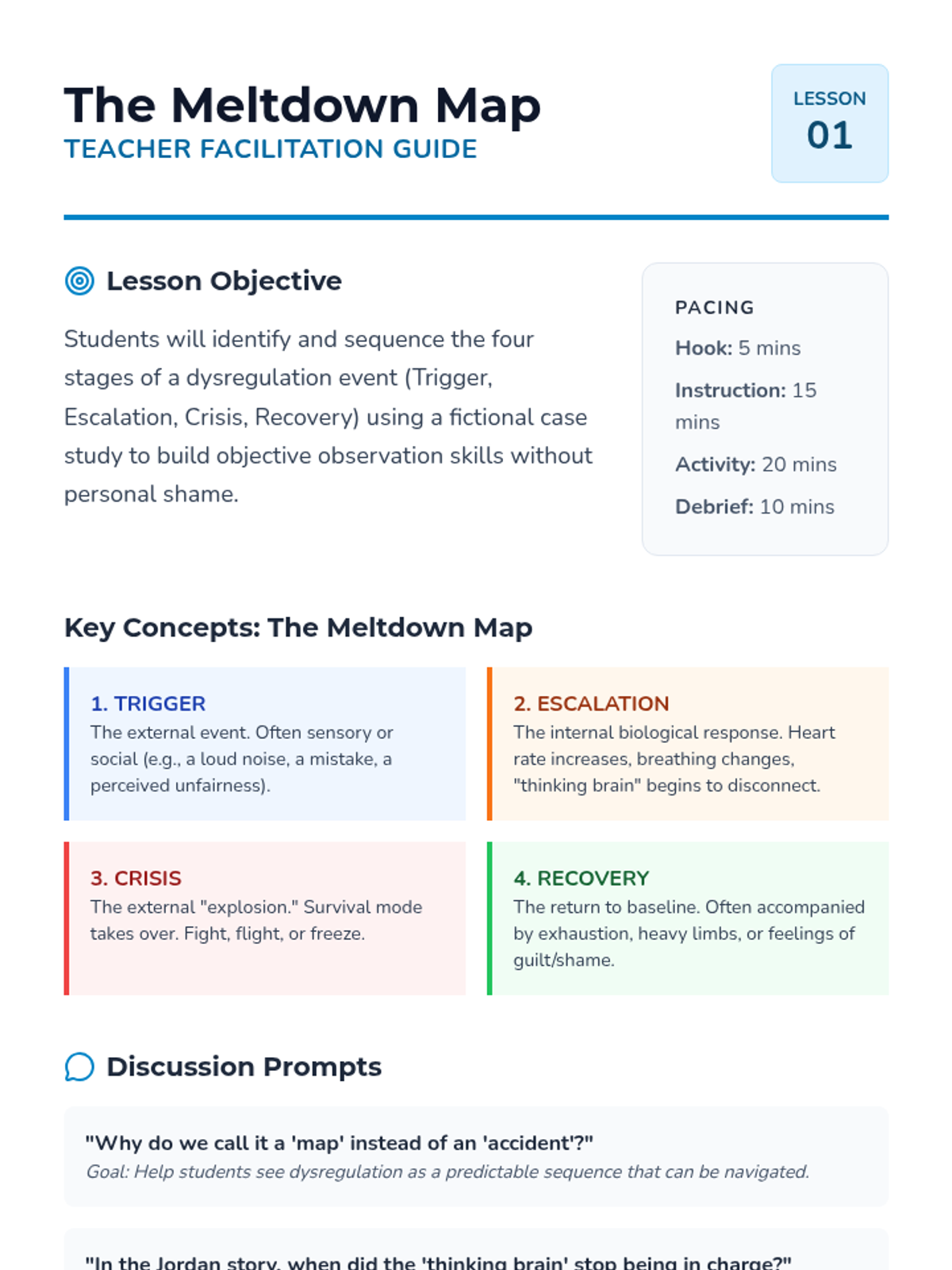
This sequence explores dysregulation recovery through a restorative lens. Students use case studies and fictional scenarios to analyze meltdowns, separate behavior from identity to reduce shame, and master the art of repair conversations. The unit culminates in creating personal debriefing habits and future planning for emotional resilience.
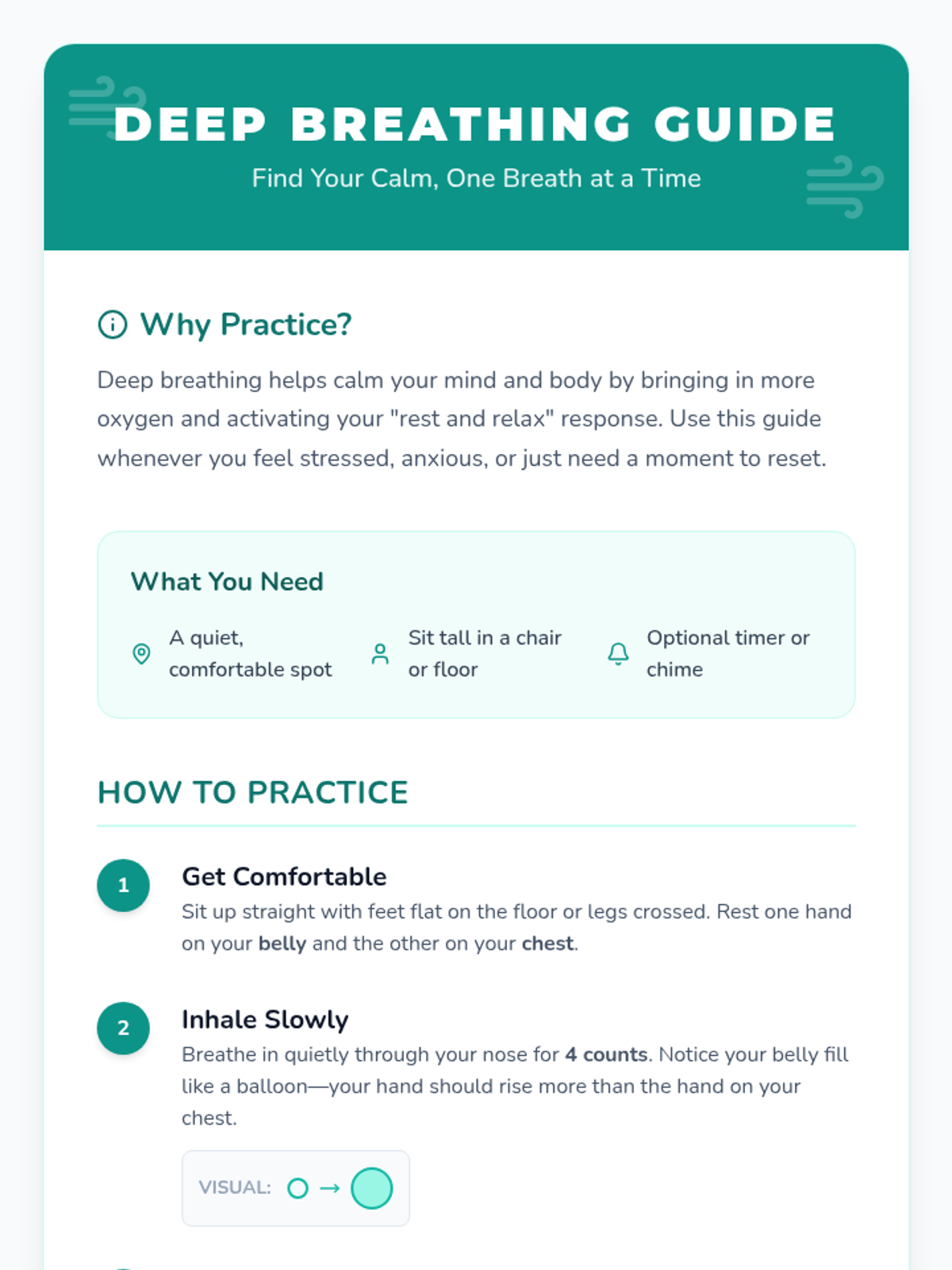
A comprehensive sequence for 5th-grade students to understand the physiological connection between breath and the nervous system, featuring hands-on practice of diaphragmatic, box, and rhythmic breathing.
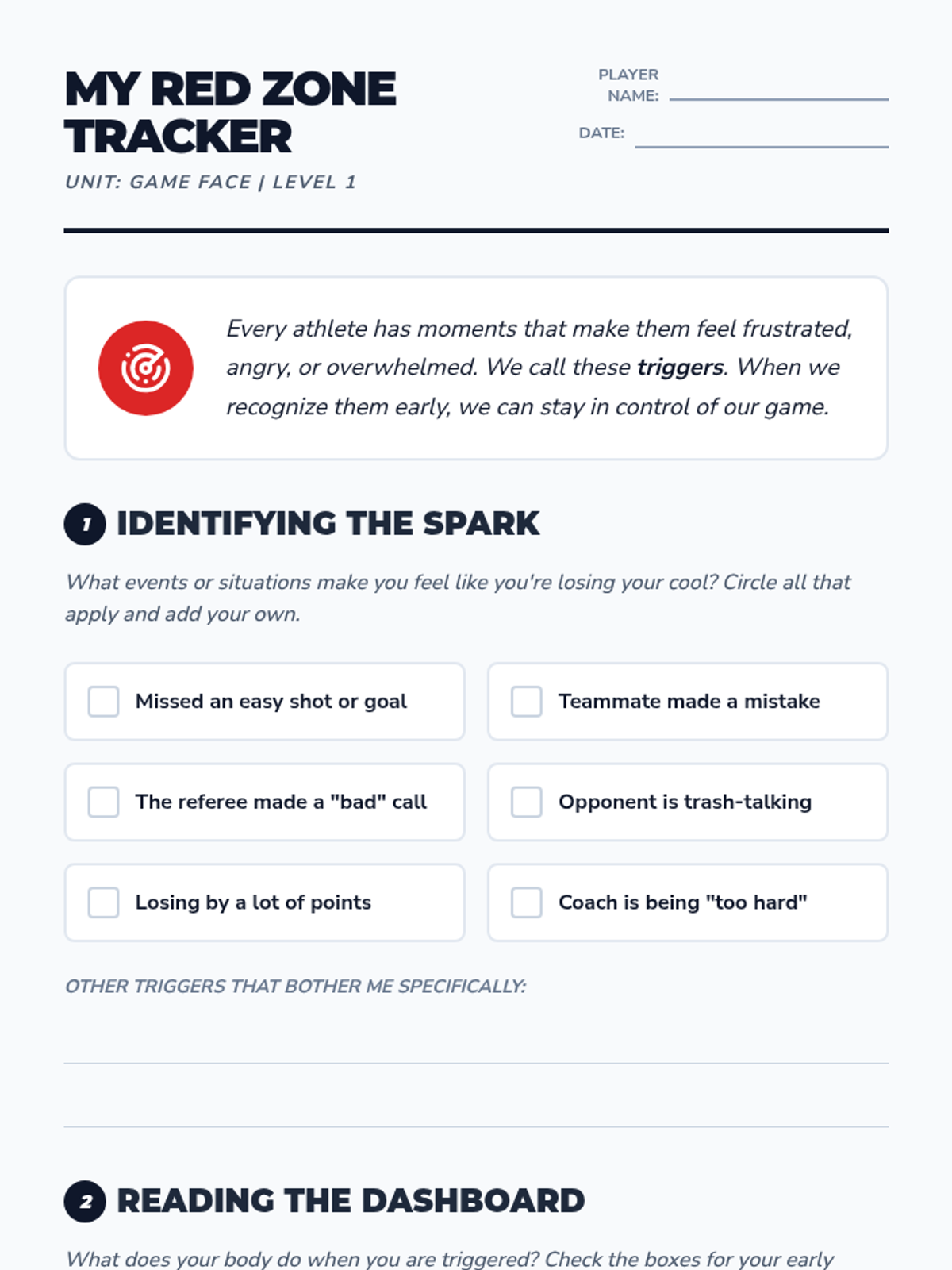
This 5-lesson sequence for 4th-grade students focuses on the internal psychological aspects of sportsmanship: emotional regulation and self-control. Students progress from identifying personal emotional triggers to practicing de-escalation strategies and applying these skills in high-intensity gameplay and post-game rituals.
A comprehensive 5-lesson sequence designed to teach 4th-grade students self-regulation through daily emotional check-ins, goal setting, and non-verbal communication. Students learn to identify their internal state using a battery metaphor and connect it to their readiness for learning.
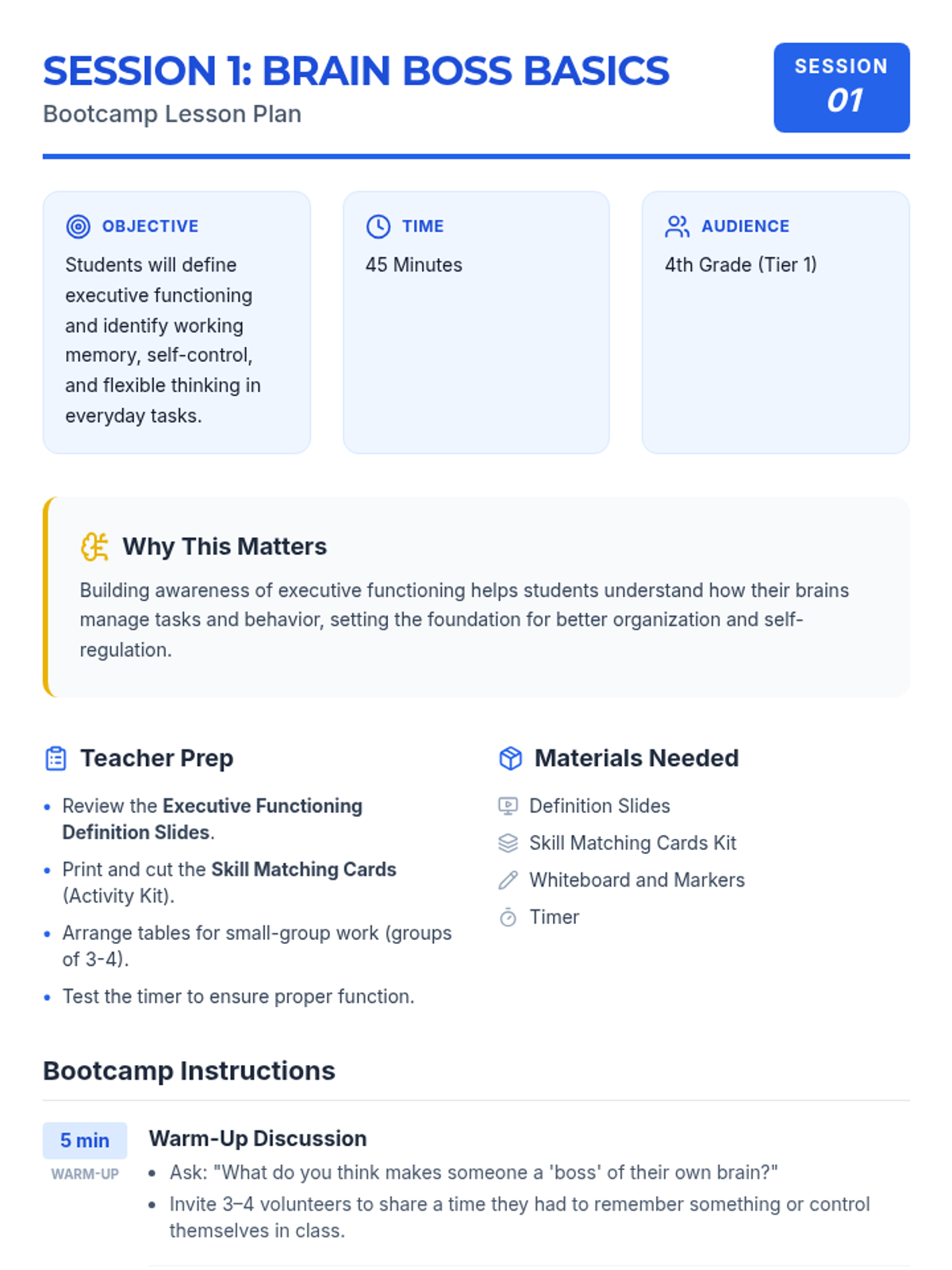
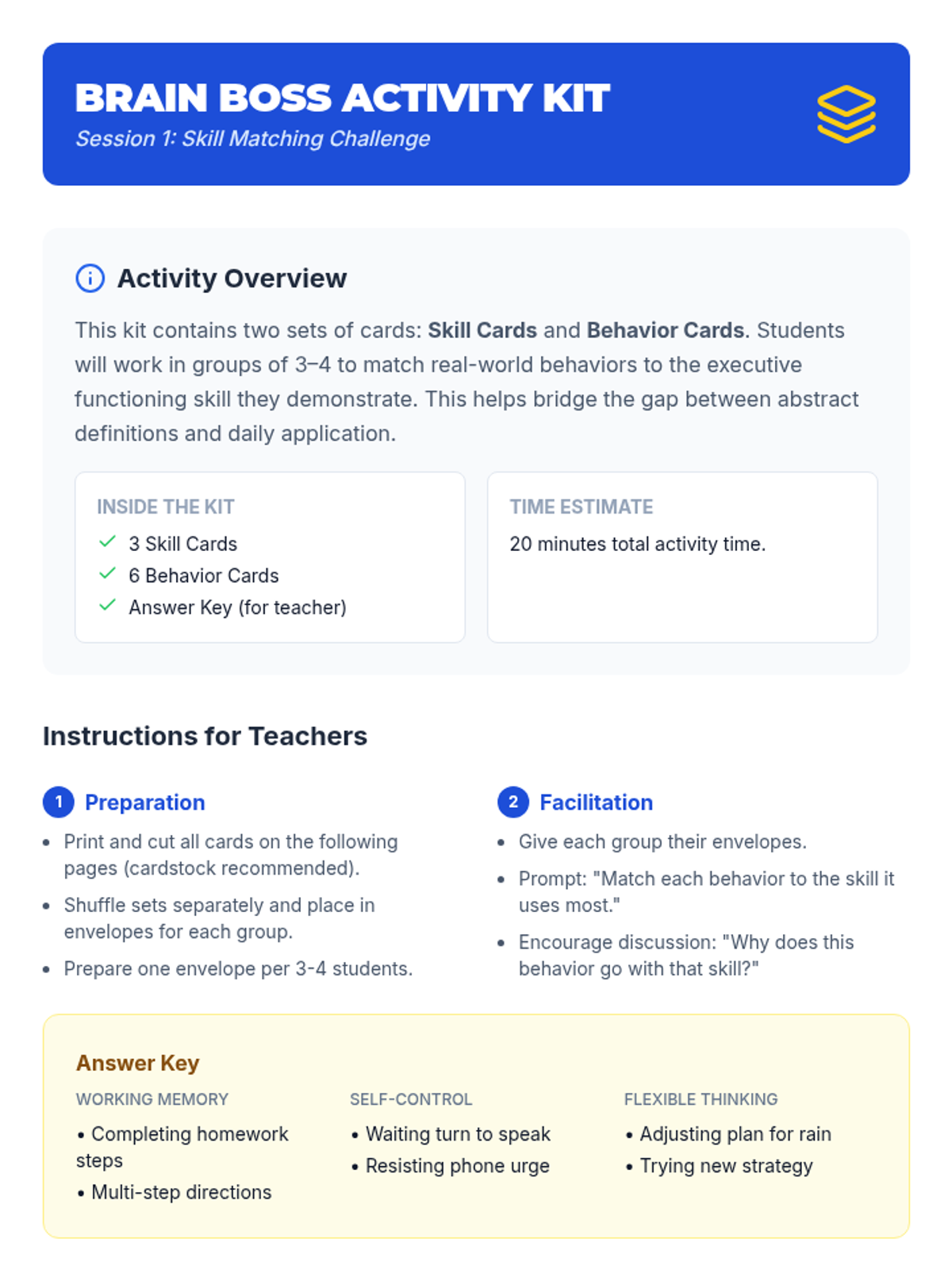
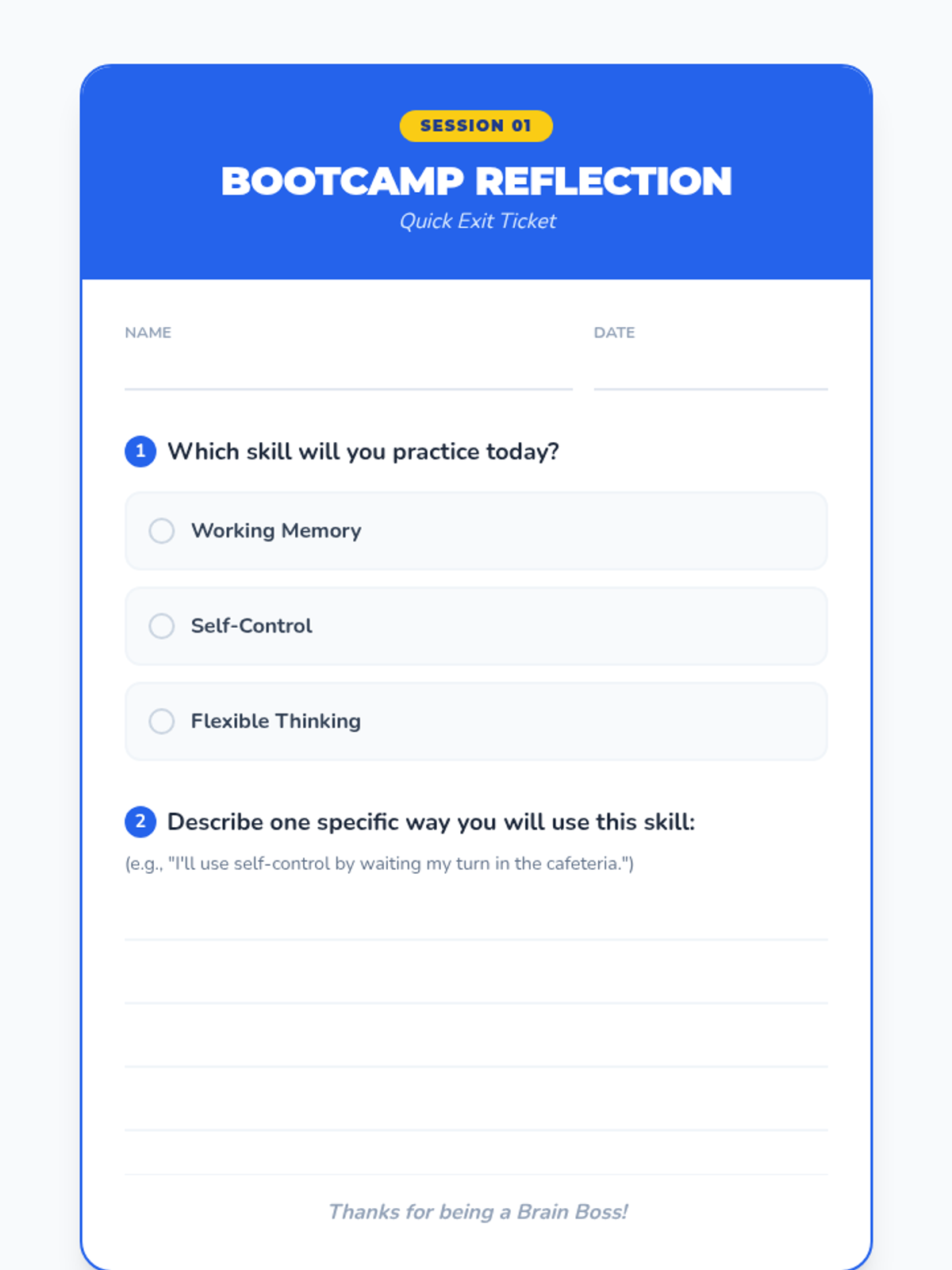
A 3-session series for 4th graders introducing executive functioning through interactive activities, planning challenges, and goal-setting strategies.
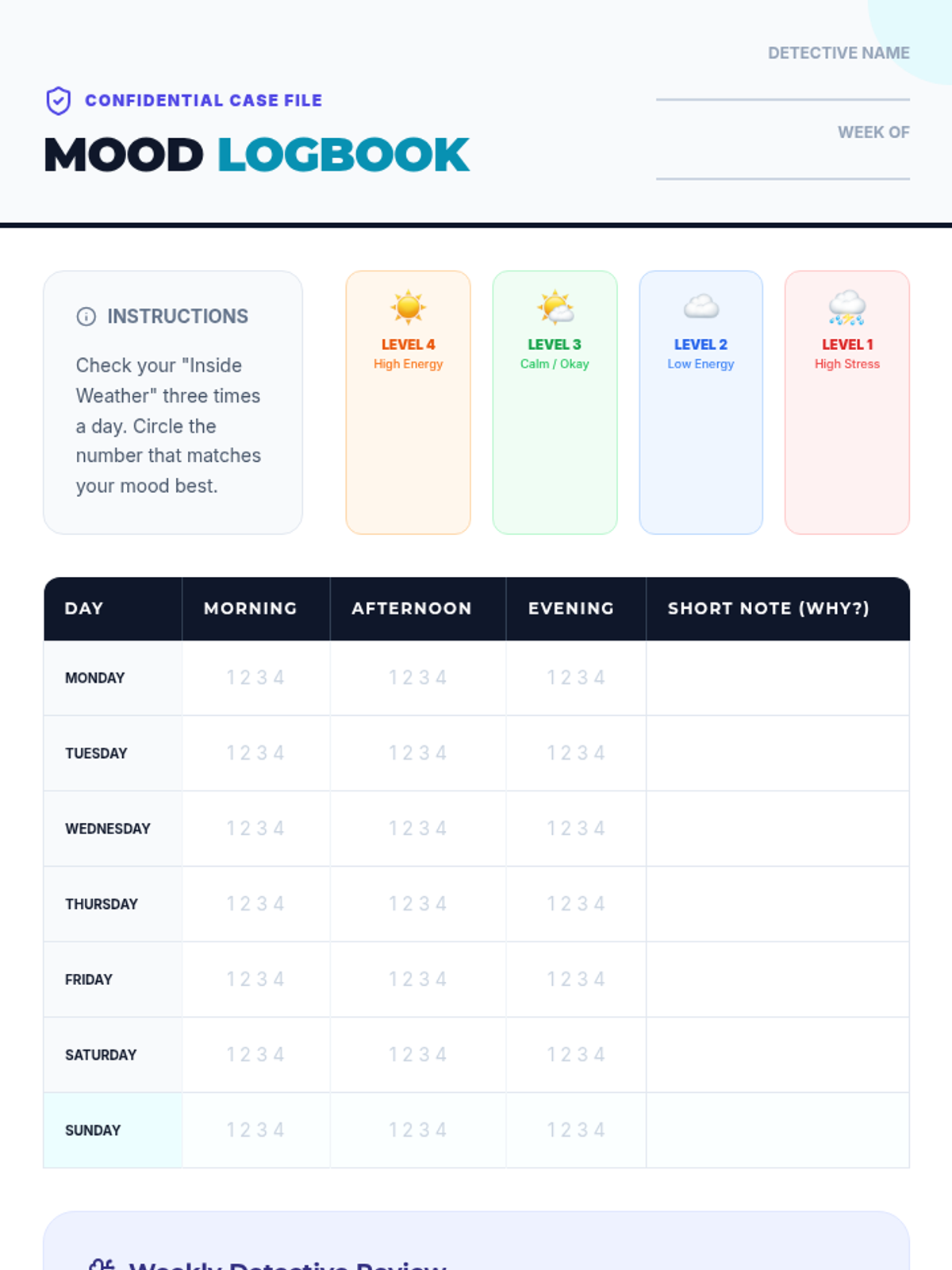
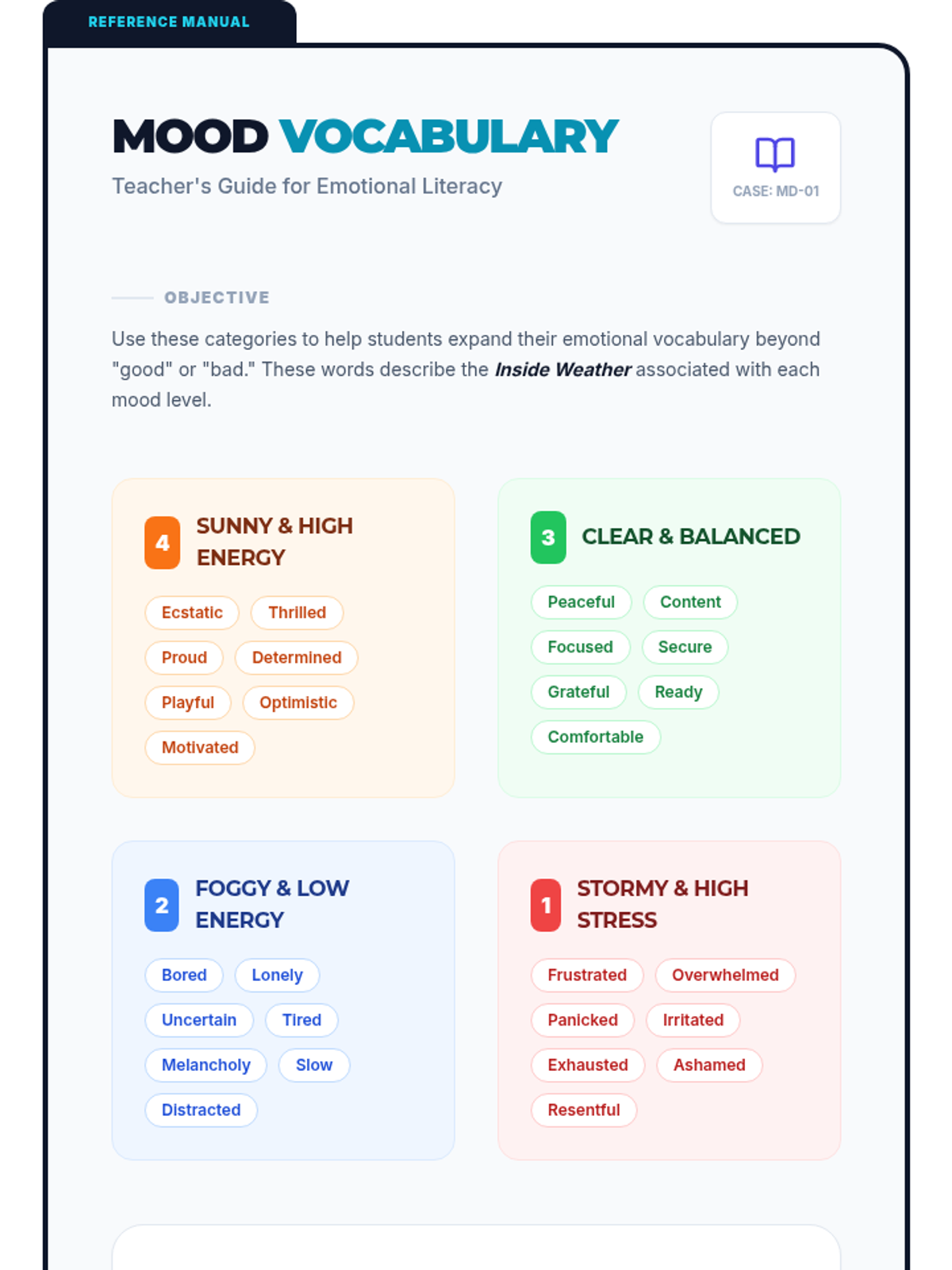
Students become 'Mood Detectives' to track daily habits and emotions, uncovering patterns to manage their mental health. The sequence culminates in a personalized 'Mood Toolbox' and Wellness Dashboard.
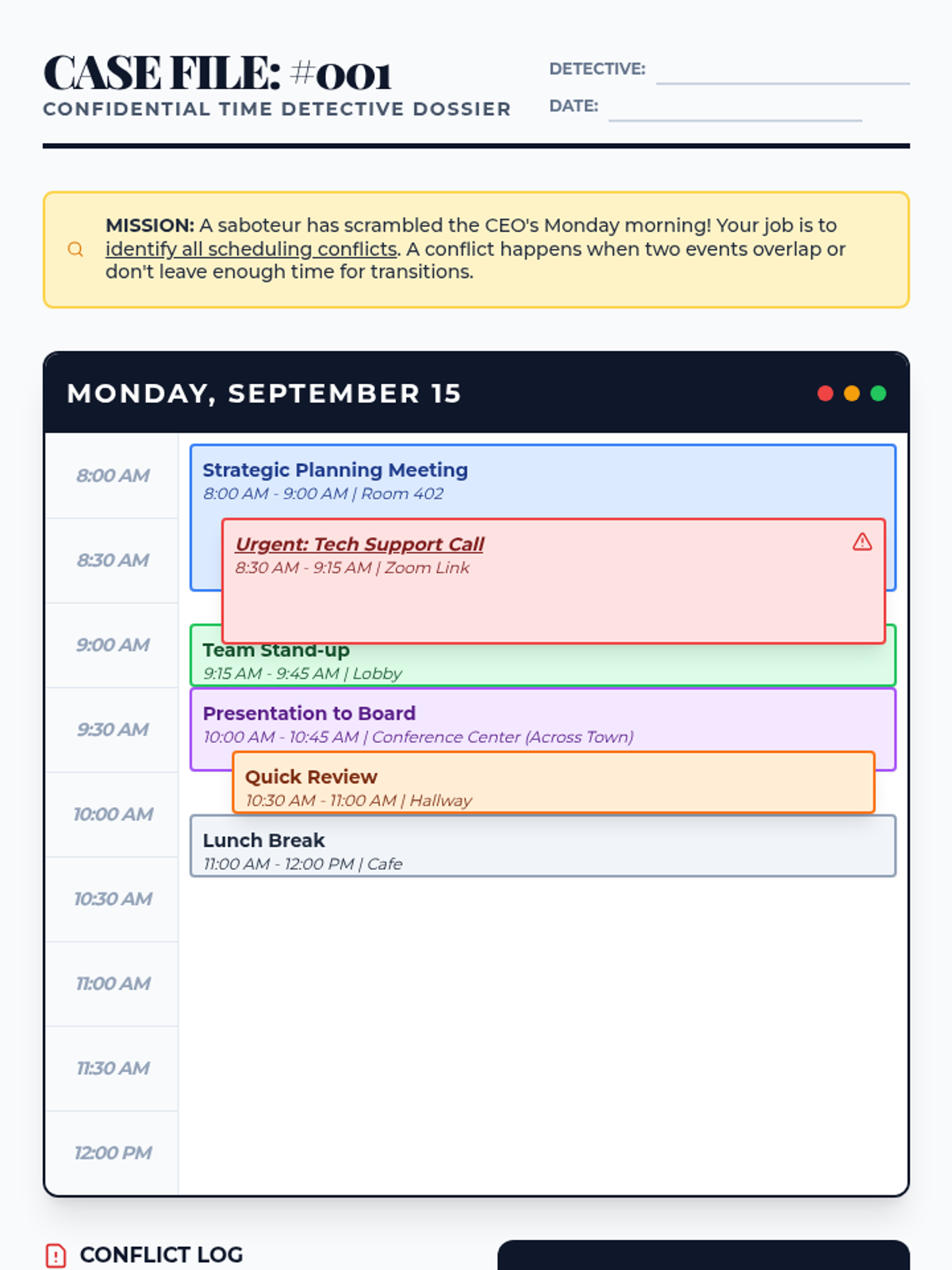
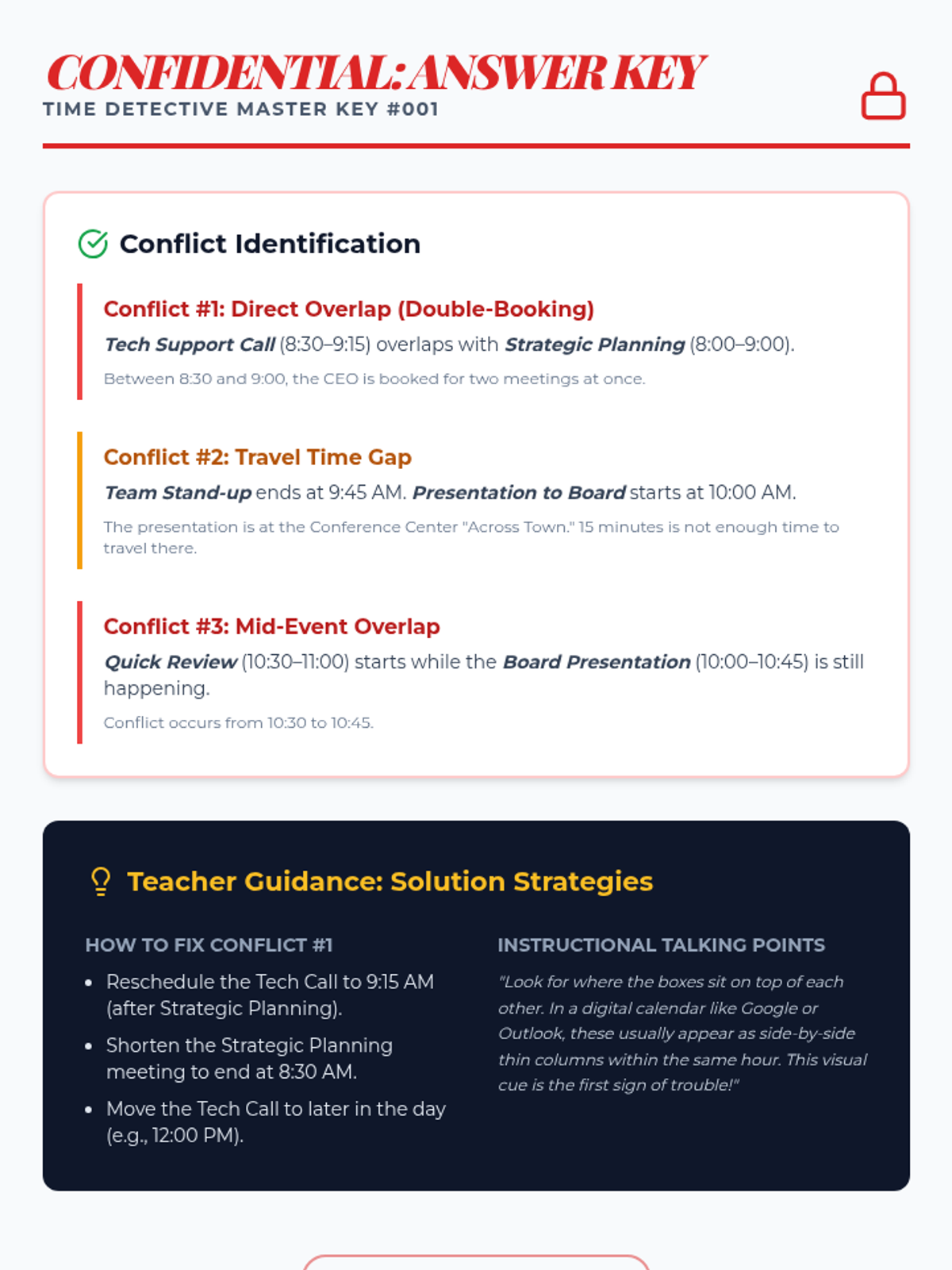
A game-based sequence where students act as 'Time Detectives' to master digital calendar skills. Through five interactive challenges, students learn to identify conflicts, adjust durations, manage locations, fix recurring patterns, and synthesize their skills into a master schedule.
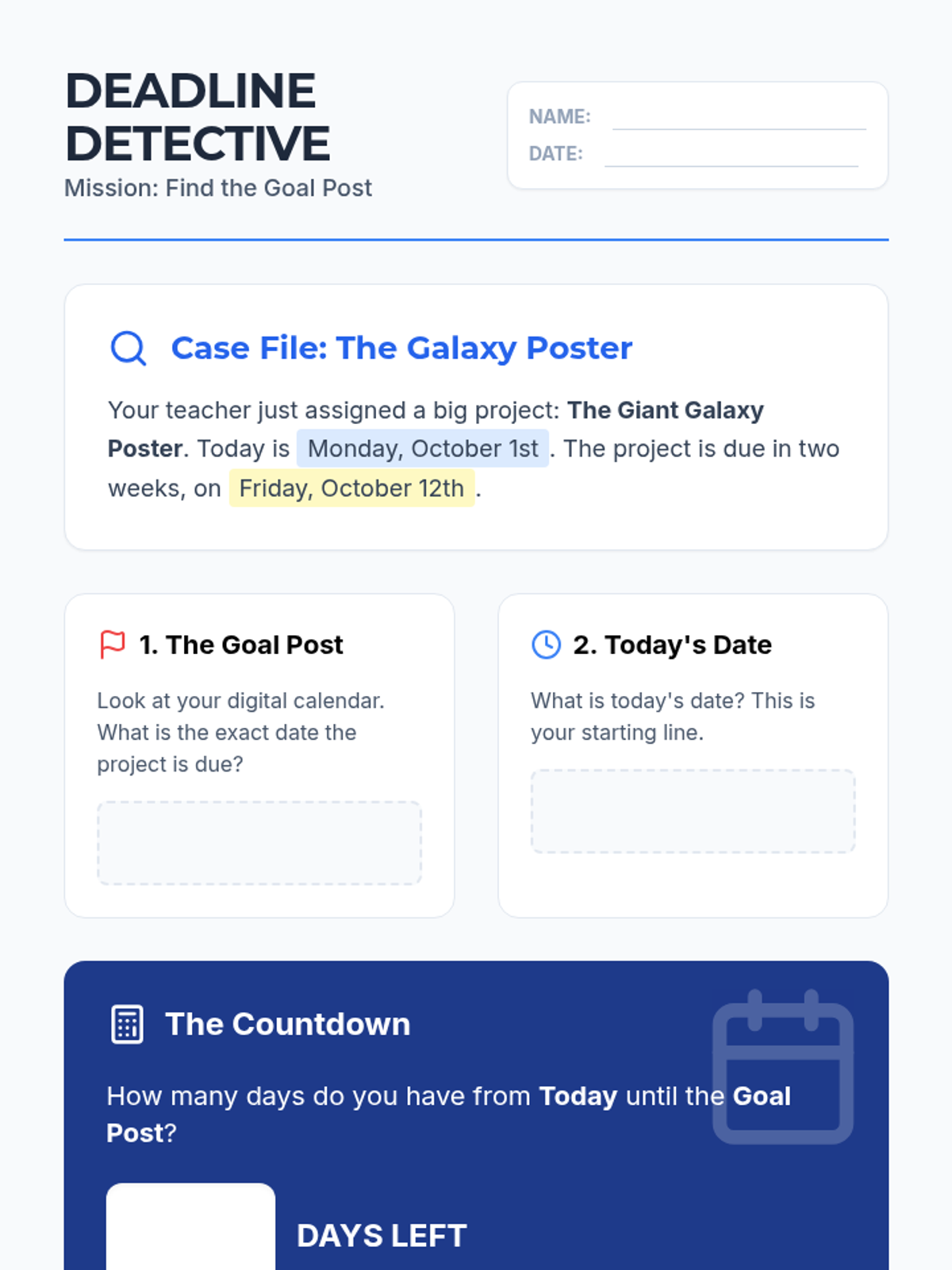
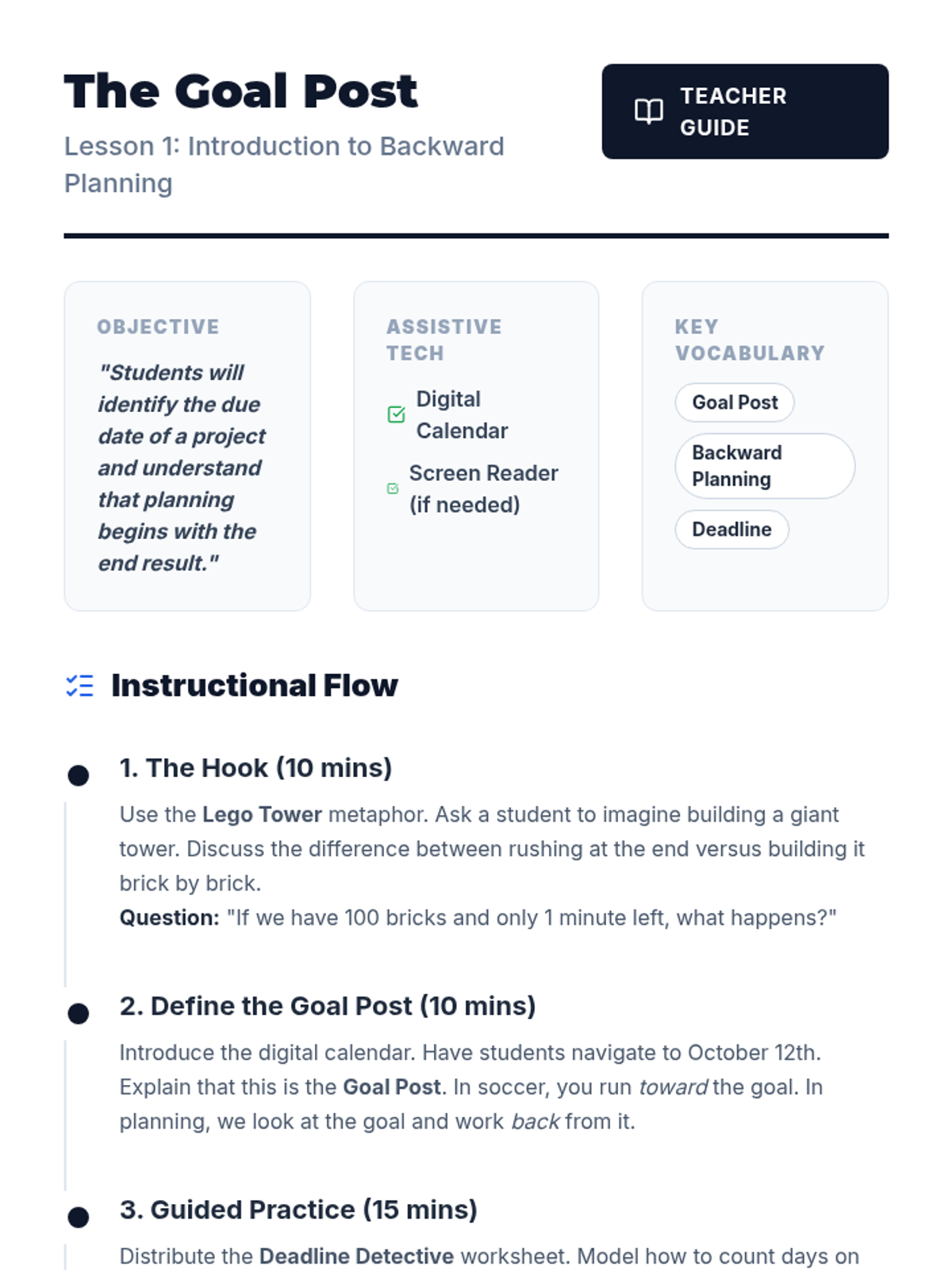
This sequence teaches 4th-grade students how to use digital calendars for backward planning and project management. Students learn to break down large projects into manageable tasks, schedule them effectively, and resolve scheduling conflicts.
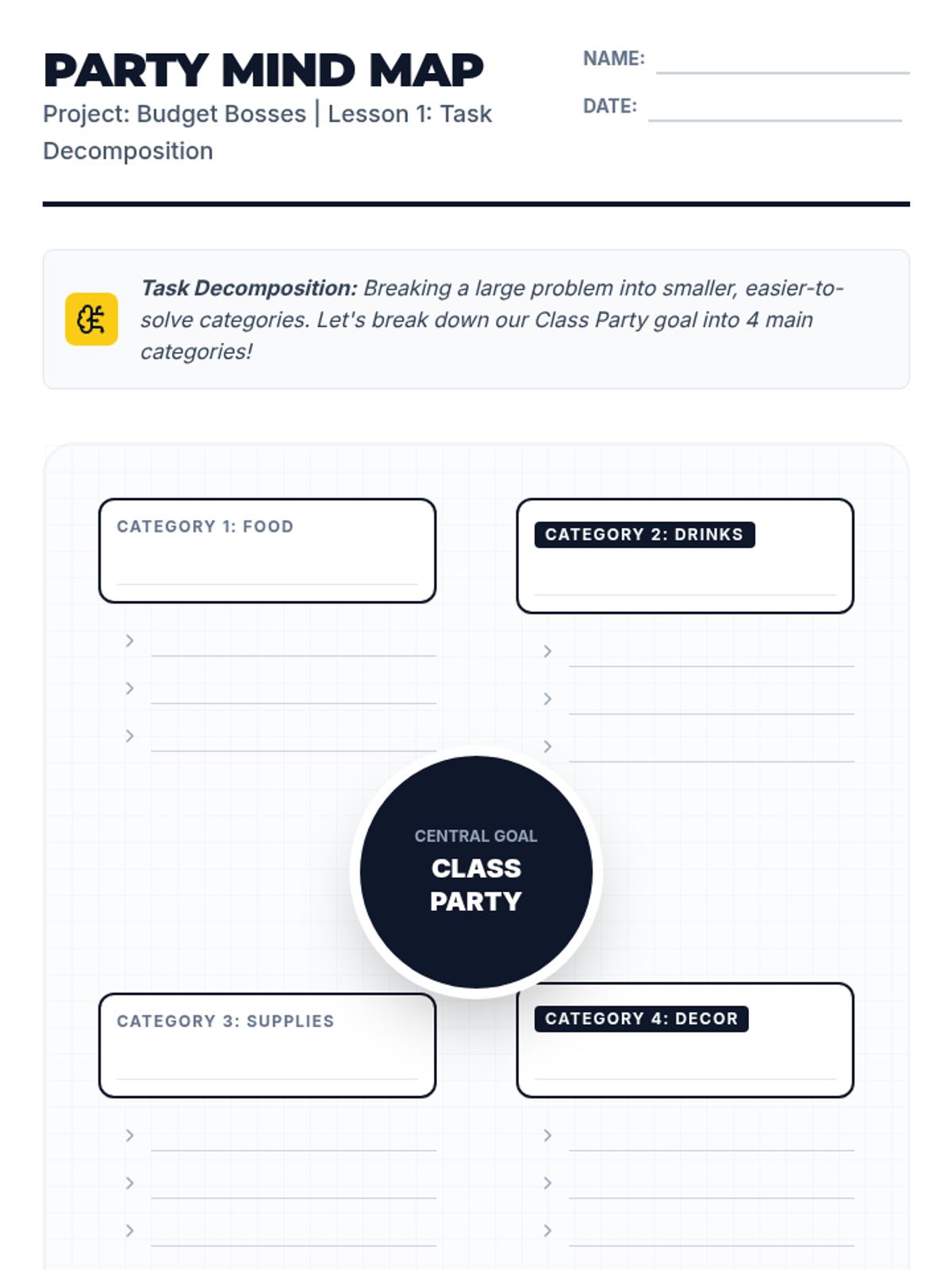
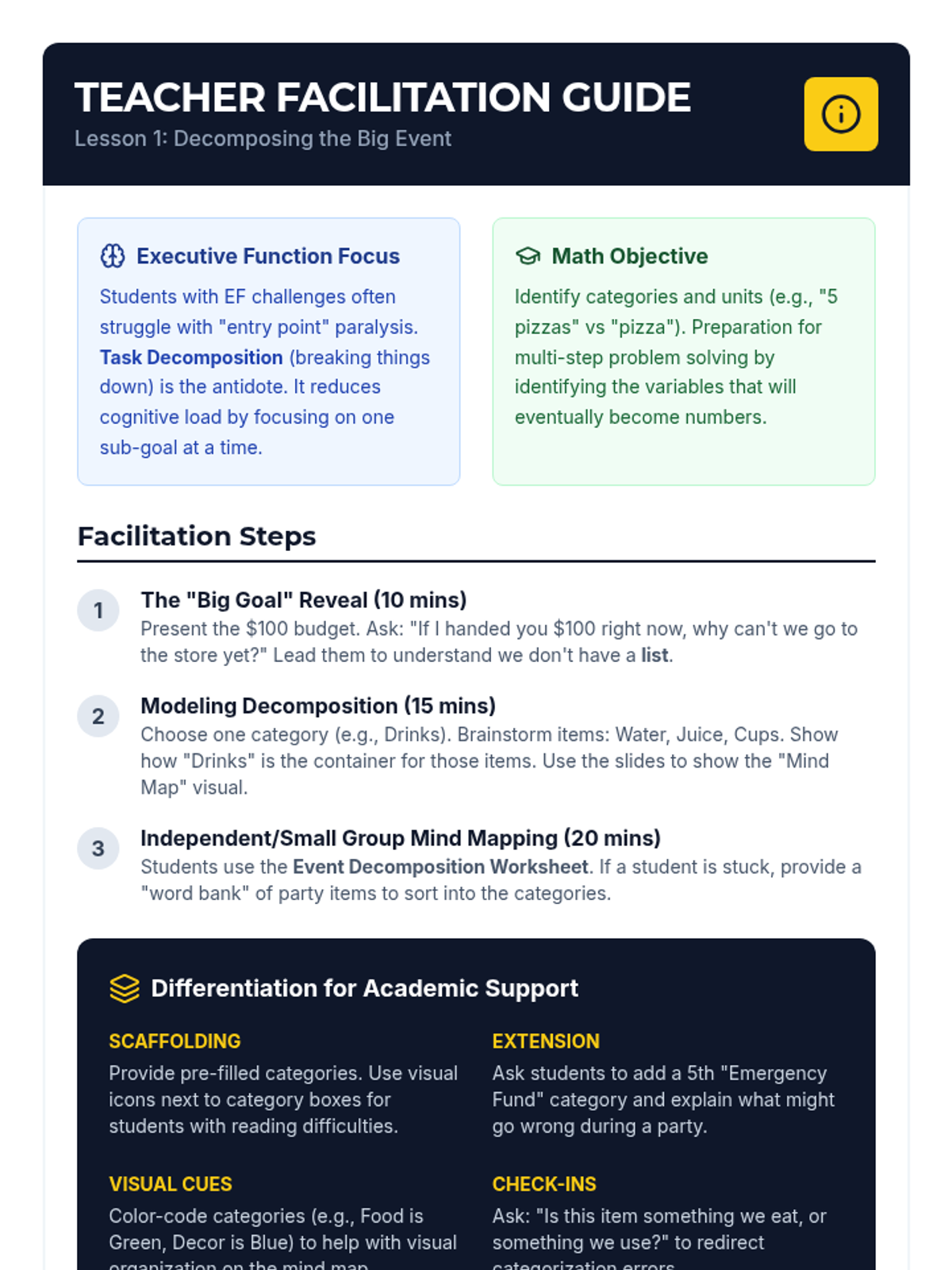
A project-based sequence where 4th-grade students use task analysis to plan a class event budget, breaking down a complex problem into manageable steps while developing executive function and multi-digit math skills.
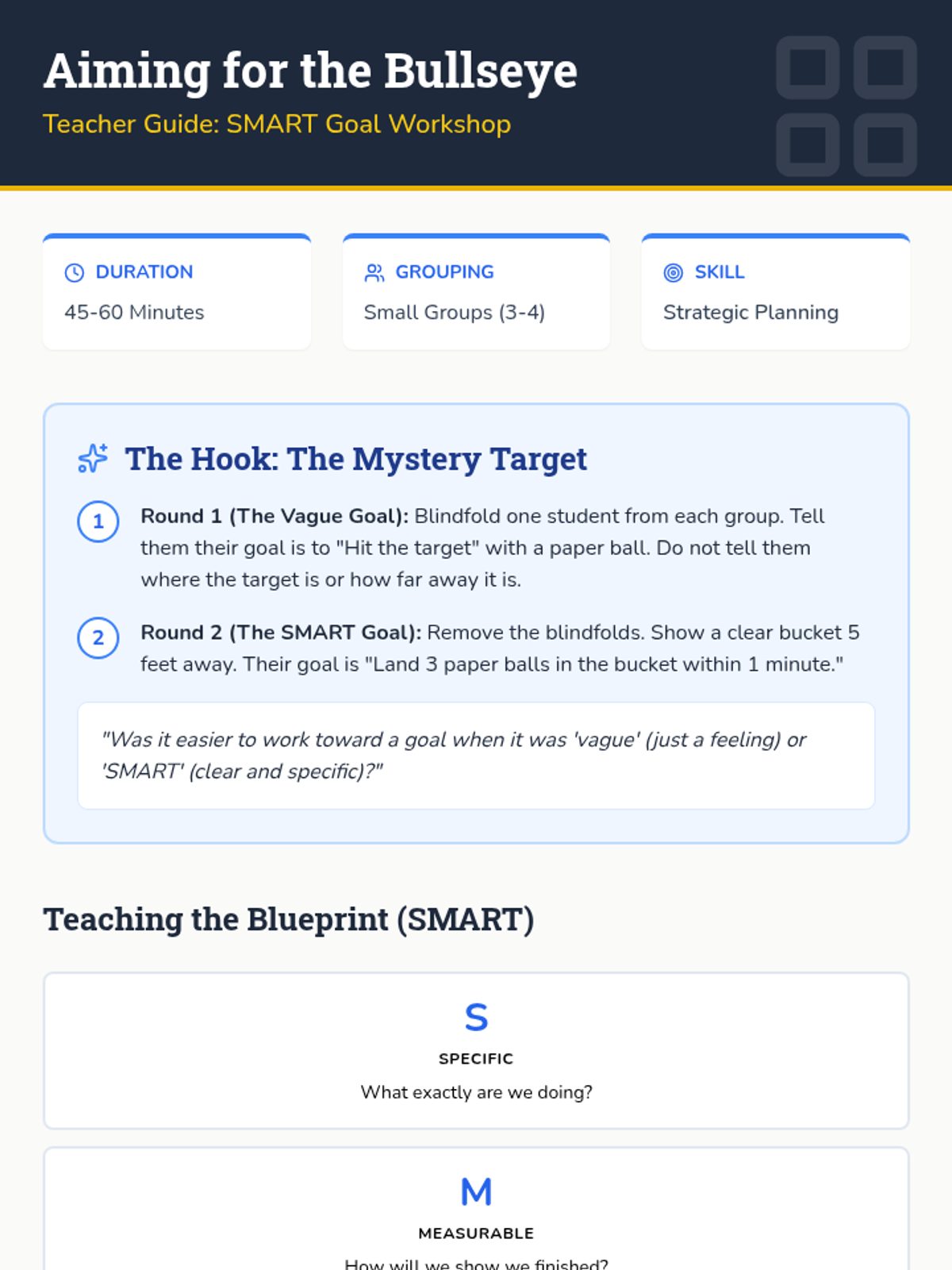
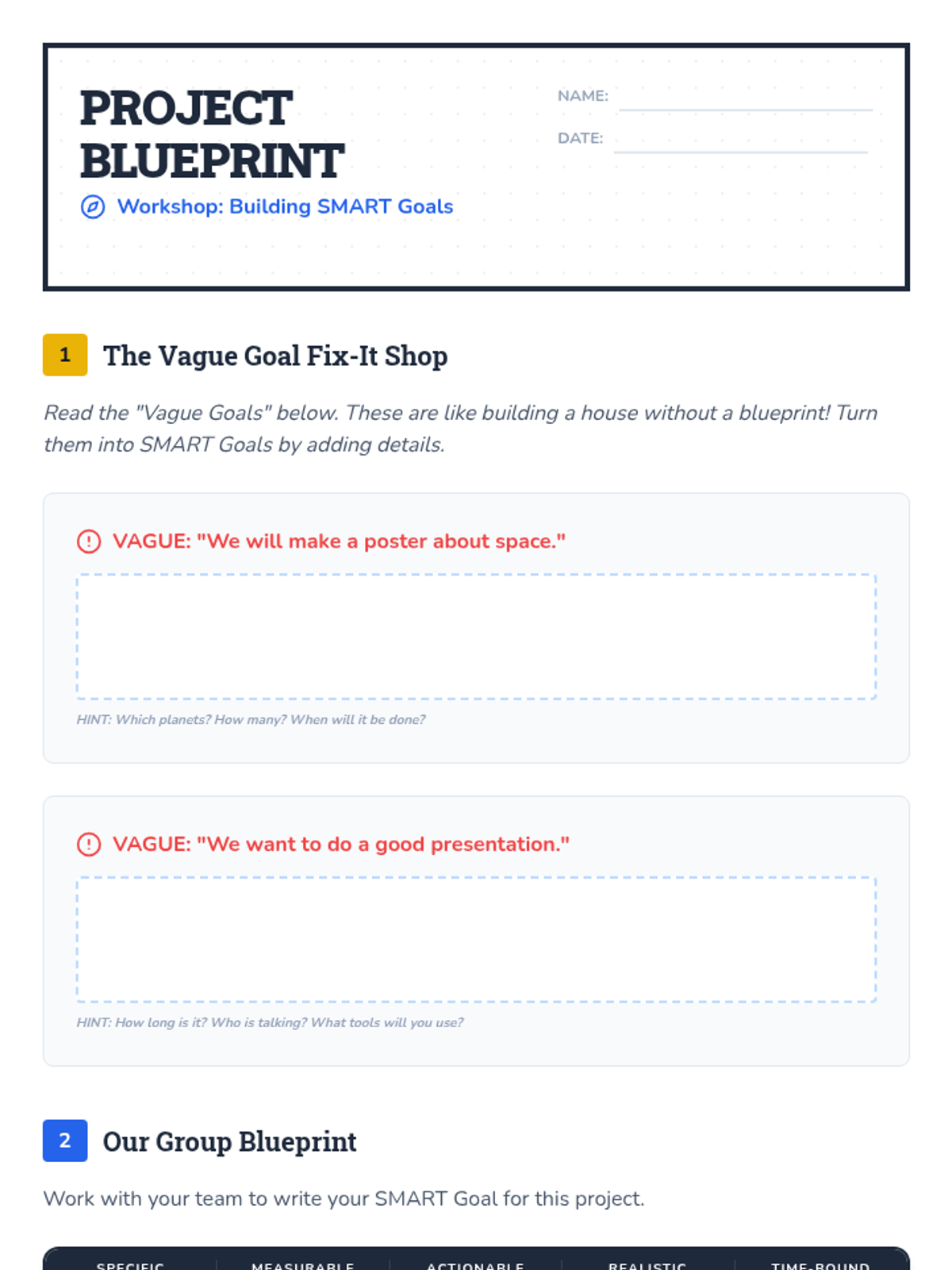
A 4th-grade sequence on teamwork focusing on setting SMART goals, backward planning, progress monitoring, and collaborative execution using a 'blueprint for success' theme.
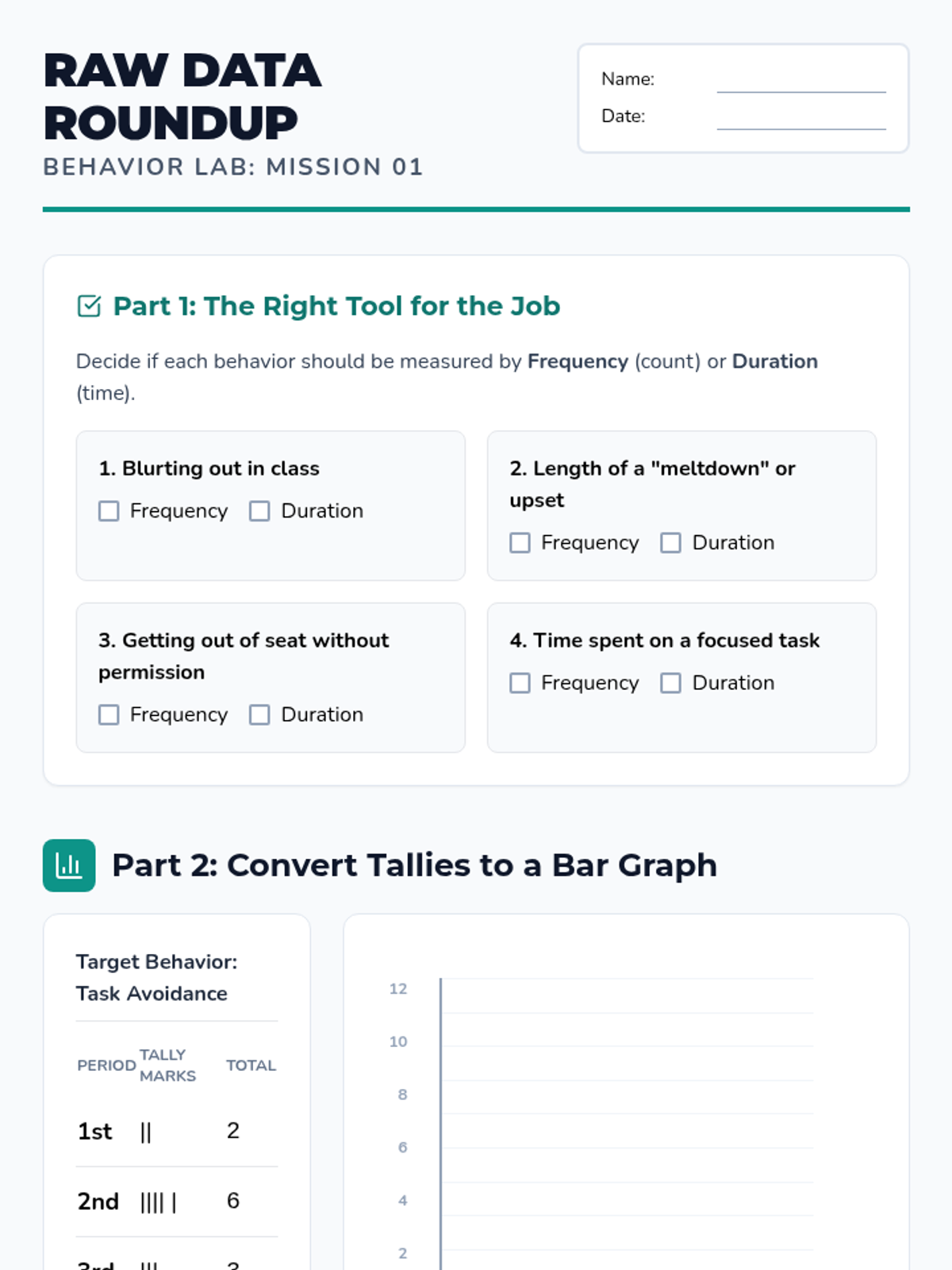
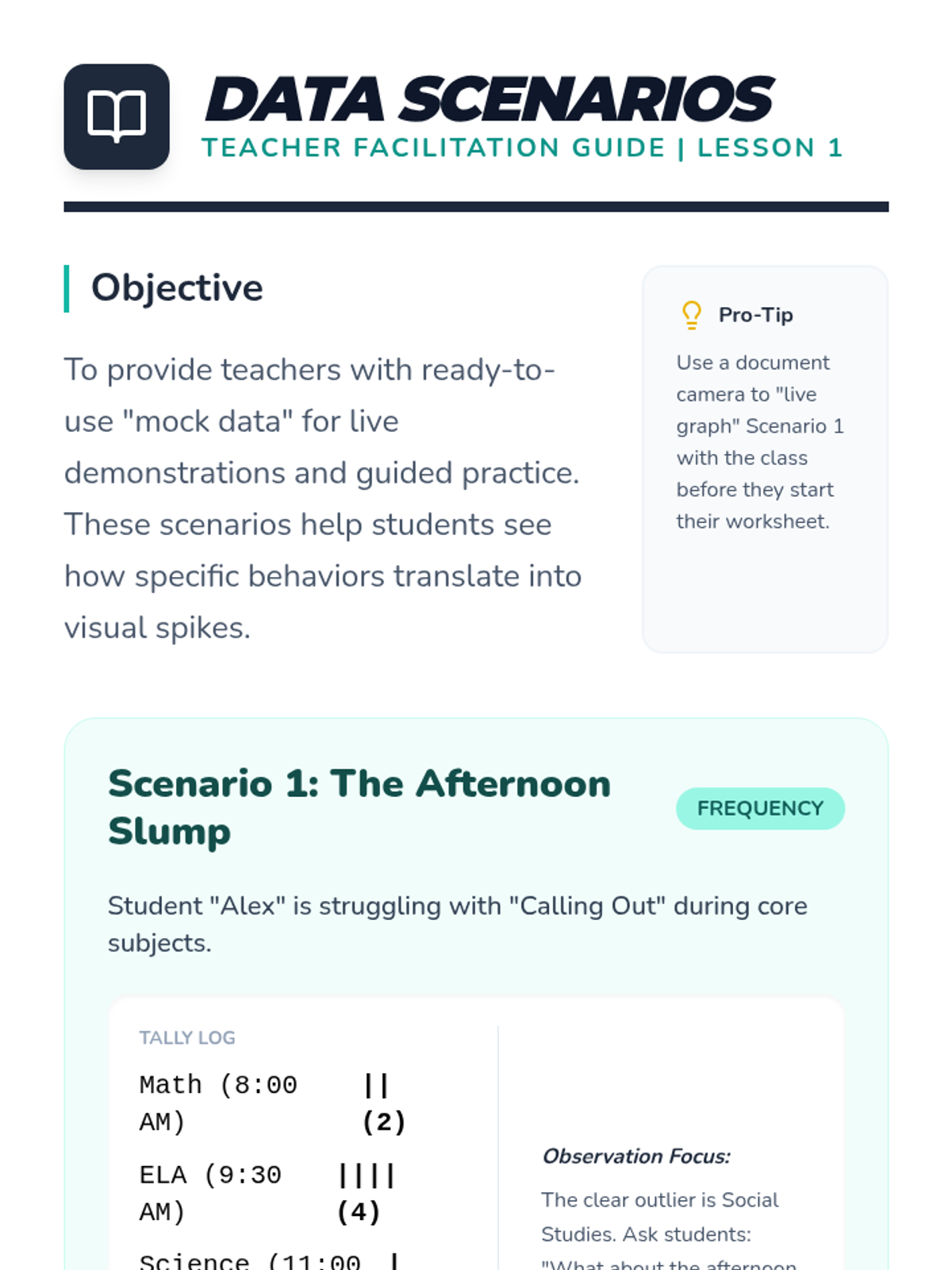
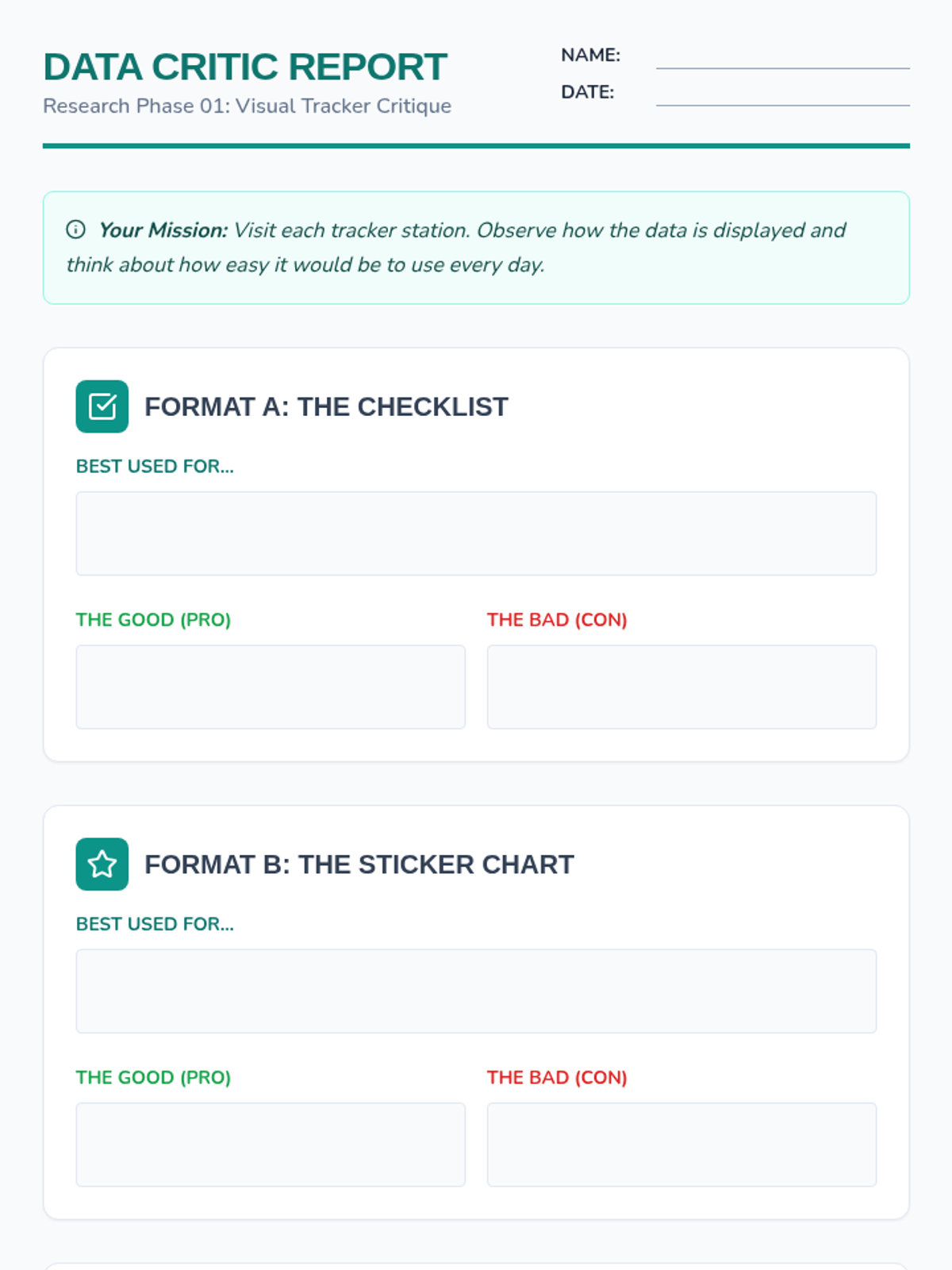
A data-focused sequence that teaches students how to transform behavioral tracking into visual insights. Students learn to graph frequency and duration, identify patterns and triggers, and develop data-driven interventions for personal growth.
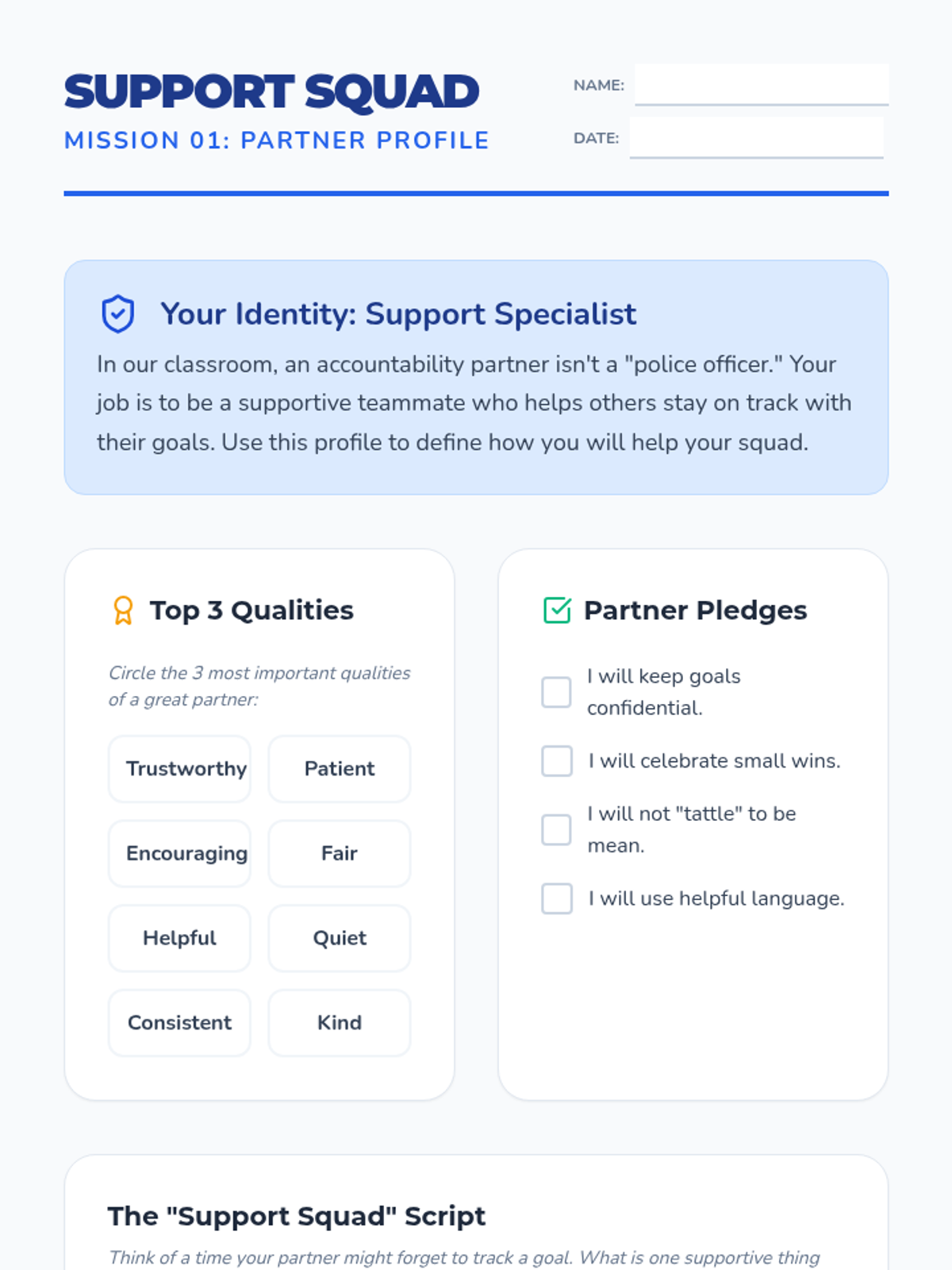
Focusing on the social aspect of behavioral growth, this sequence introduces peer accountability and collaborative goal setting. Students participate in simulations to learn how to be supportive accountability partners without being critical. The sequence builds social-emotional skills by teaching students that individual tracking contributes to the community environment.
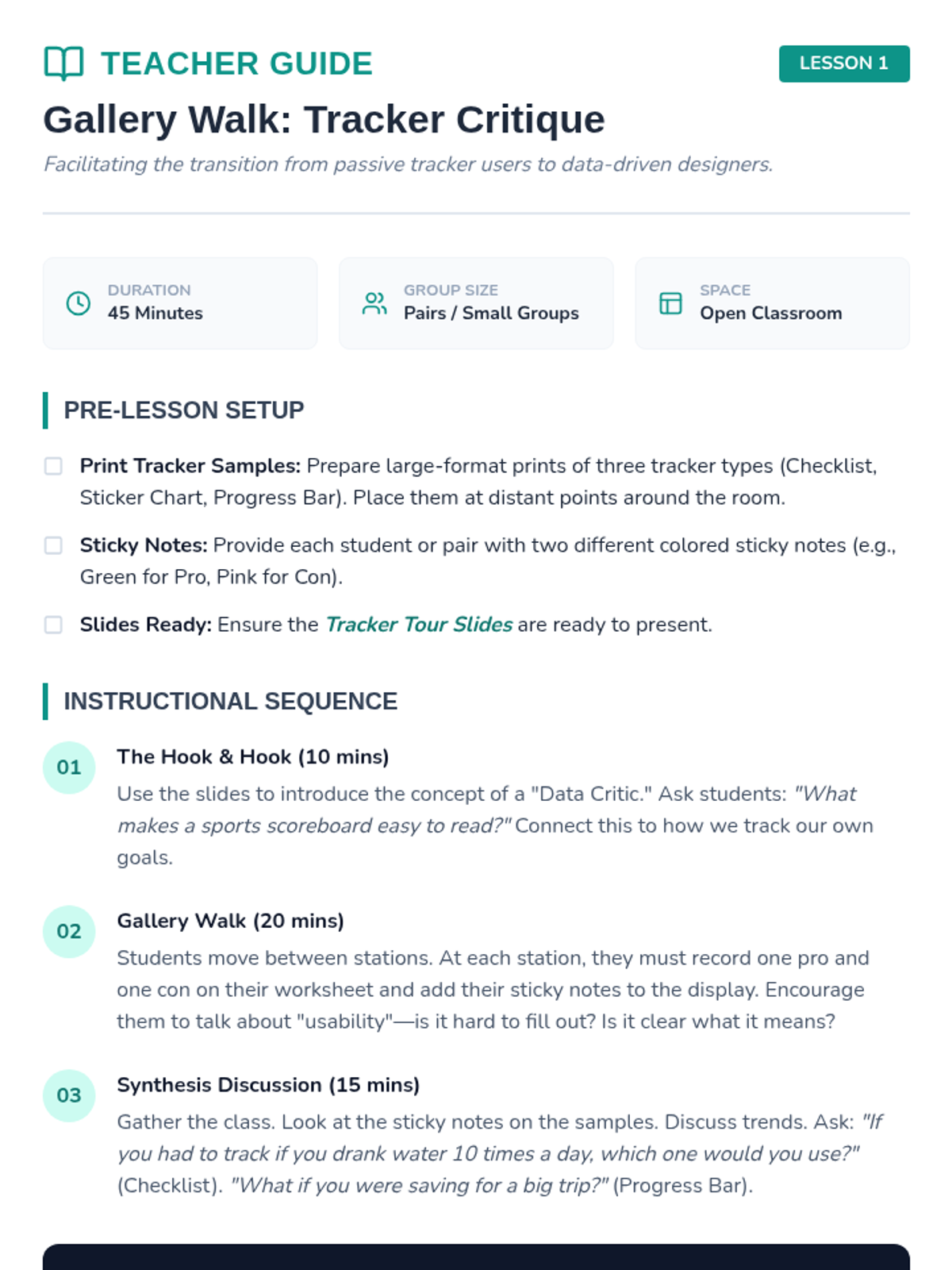
Students transition from passive recipients of behavior charts to active designers, creating personalized systems for tracking their own goals. The sequence covers visual design for data clarity, the ethics of self-reporting, and establishing sustainable routines for long-term success.
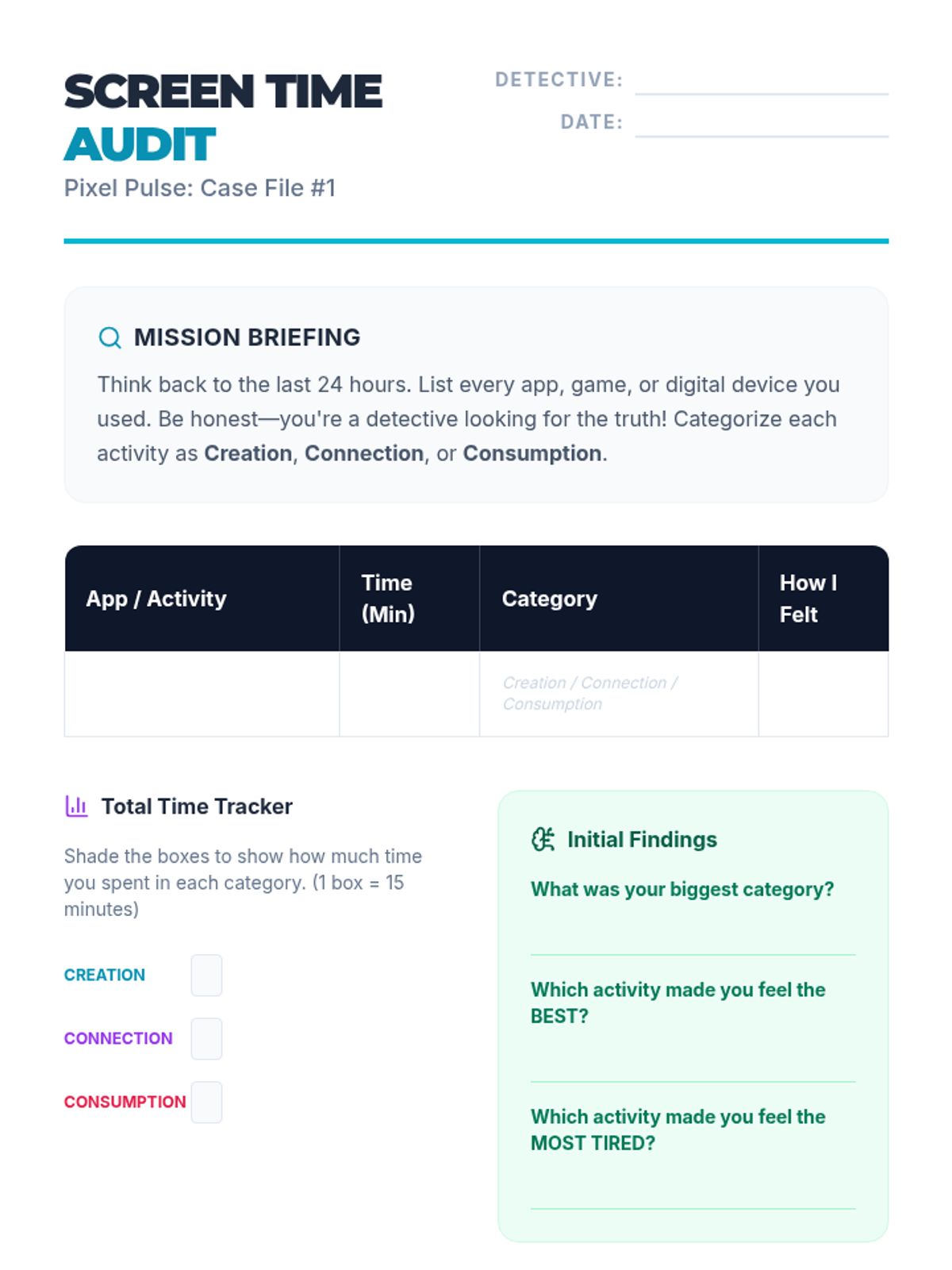
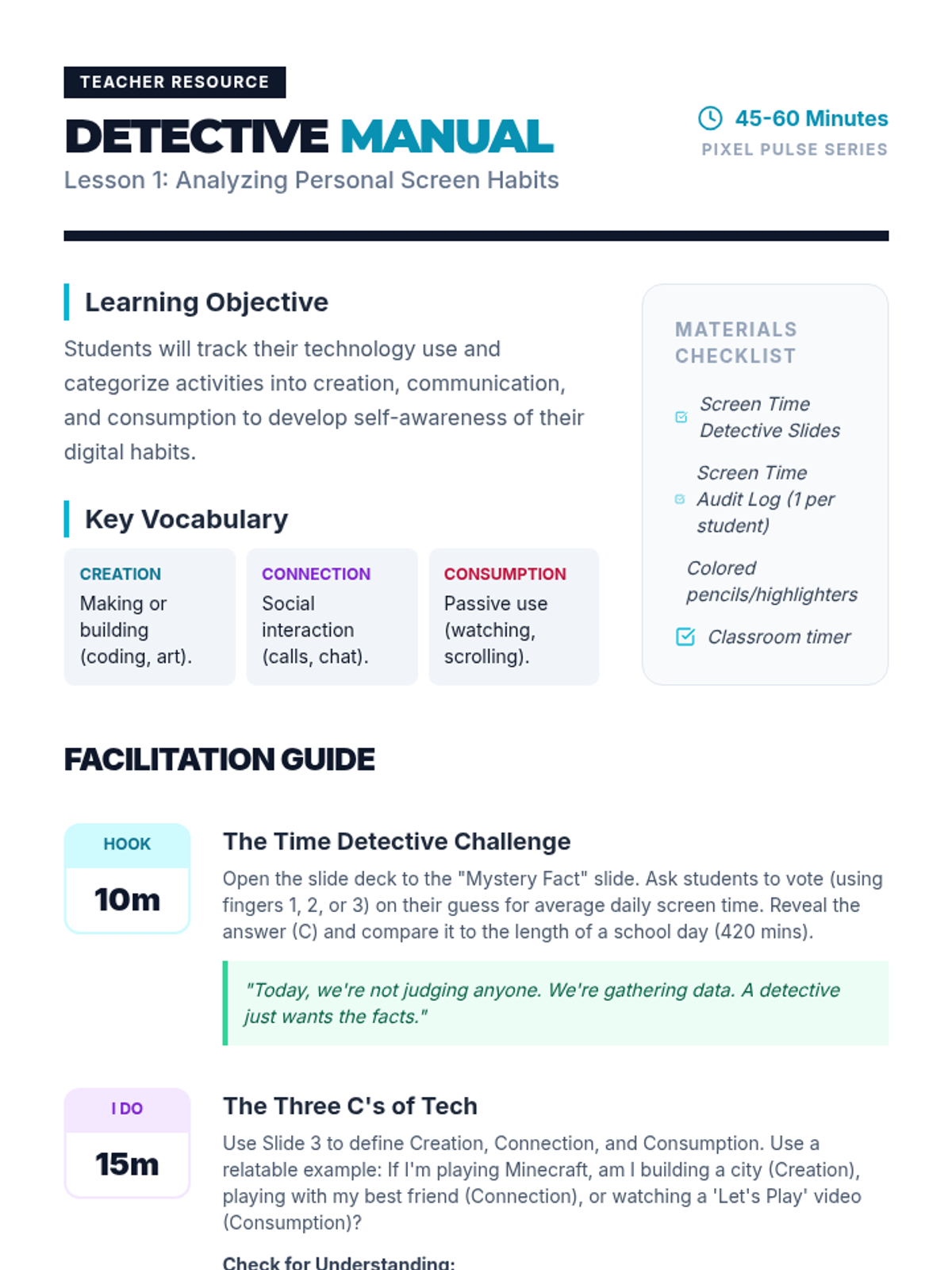
A comprehensive unit for 4th graders to audit their tech habits, recognize signs of digital overload, and design a personal 'Digital Wellness Plan' that balances screens with offline life. Students move from passive consumption to active, intentional technology use through data analysis and goal setting.
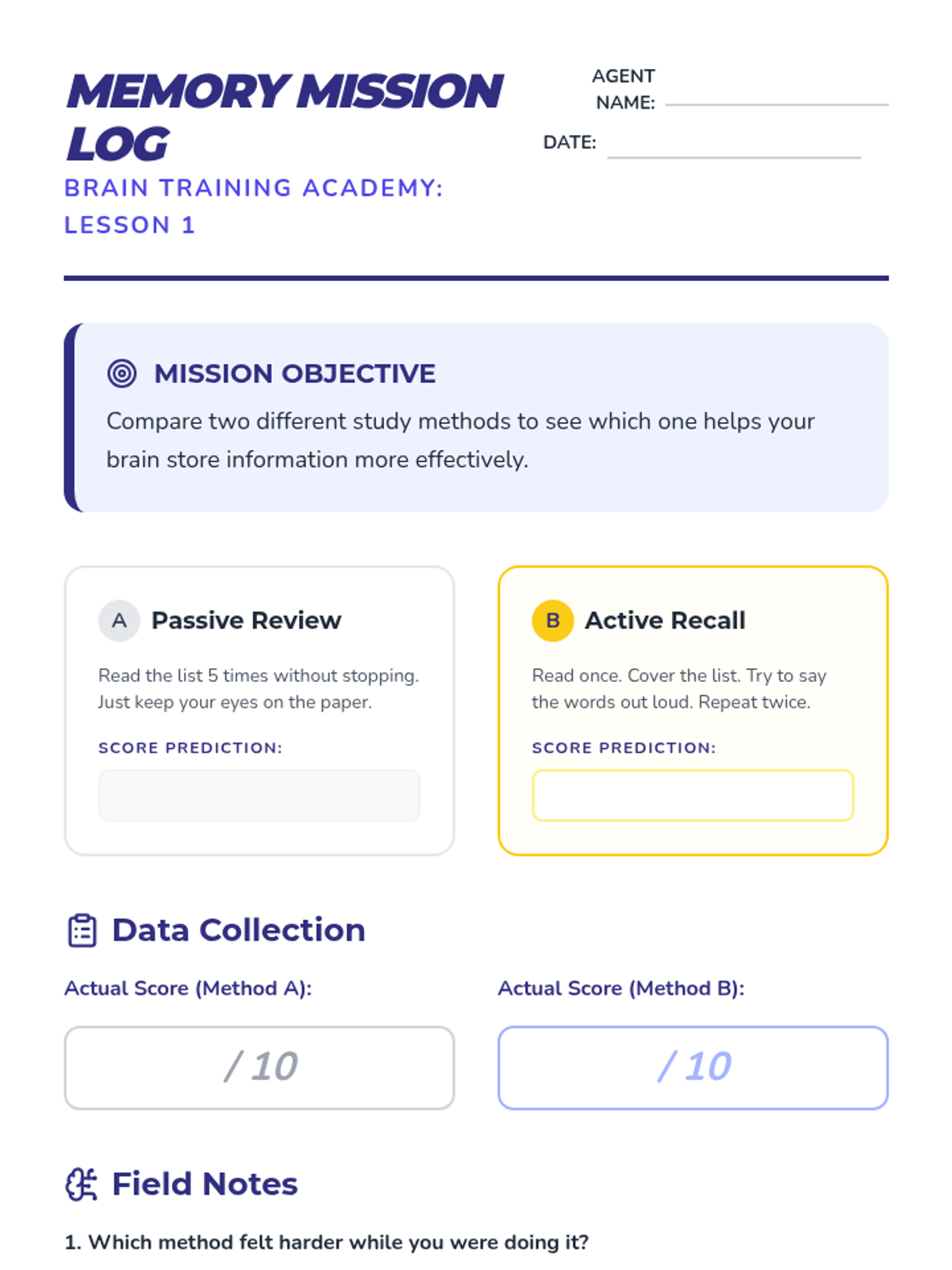
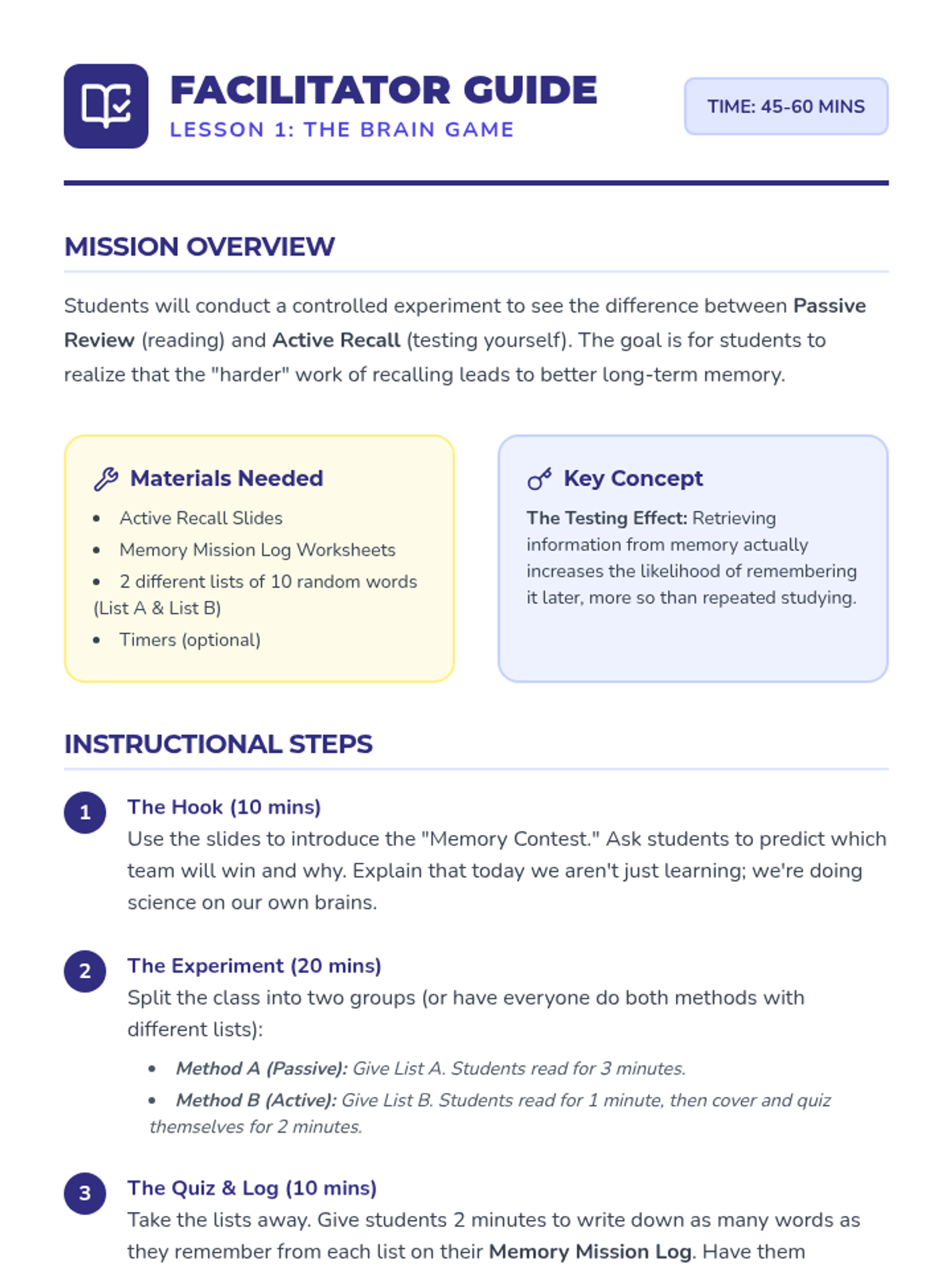
A comprehensive 5-lesson sequence designed to equip 4th-grade students with evidence-based study strategies and test-taking skills. Students transition from passive reviewing to active recall, mnemonic creation, and anxiety management techniques through a 'Brain Training Academy' theme.