Root cause analysis and brainstorming techniques for everyday problem-solving. Equips learners with ethical frameworks and risk-benefit evaluation skills to predict consequences and make informed choices.
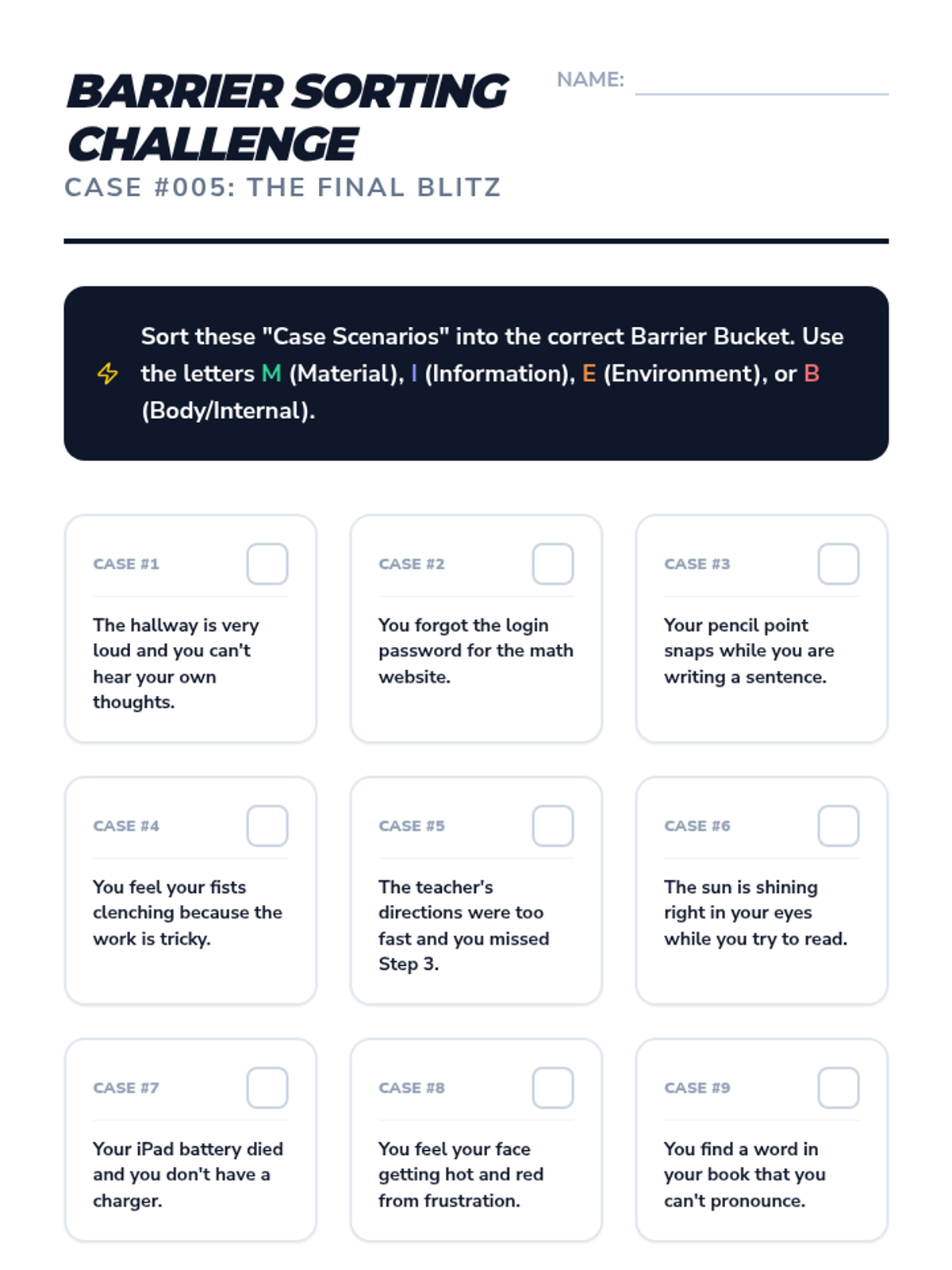
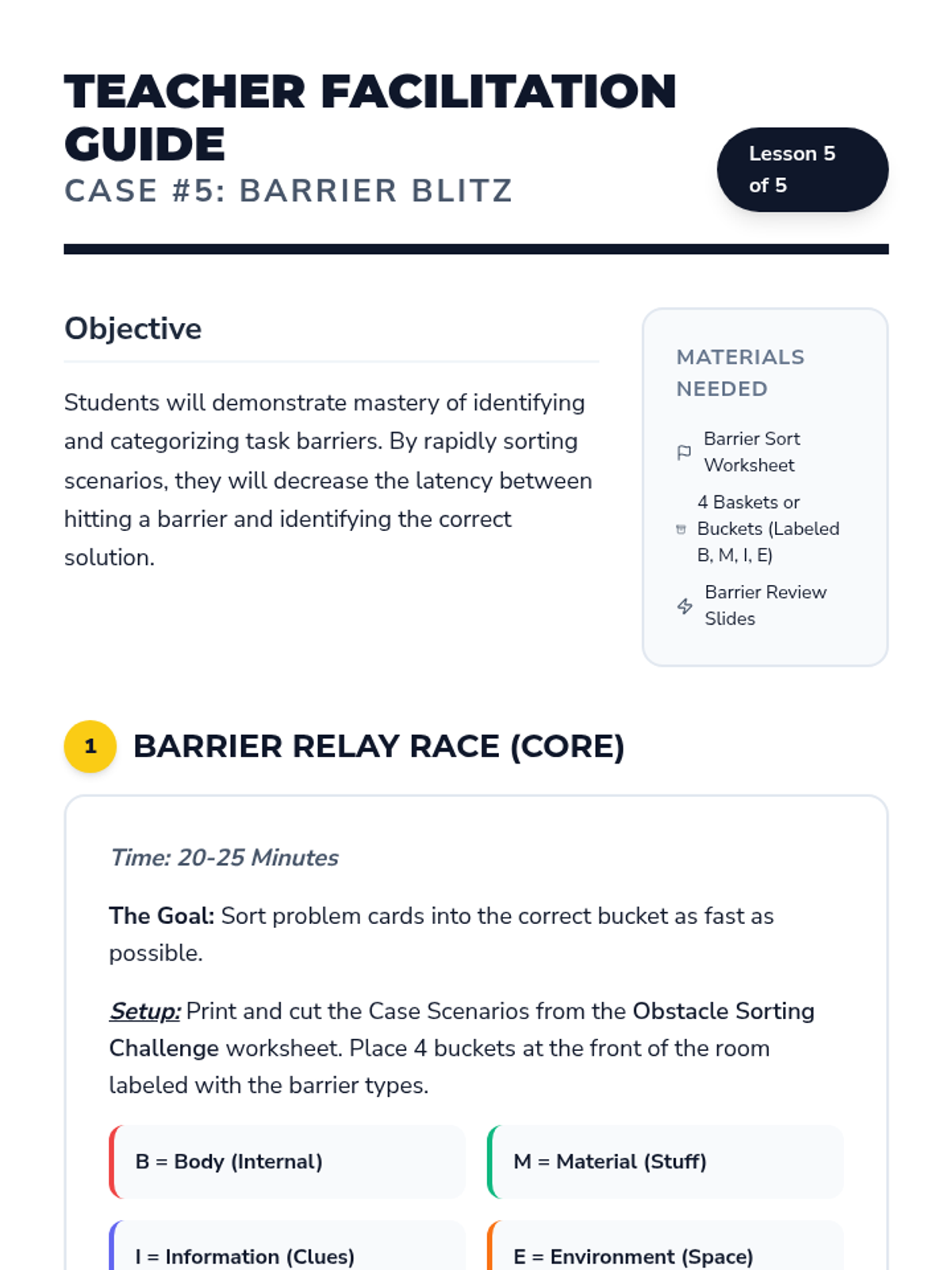
A culminating lesson where students rapidly sort various scenarios into barrier categories to reduce the time between hitting a wall and identifying the solution.
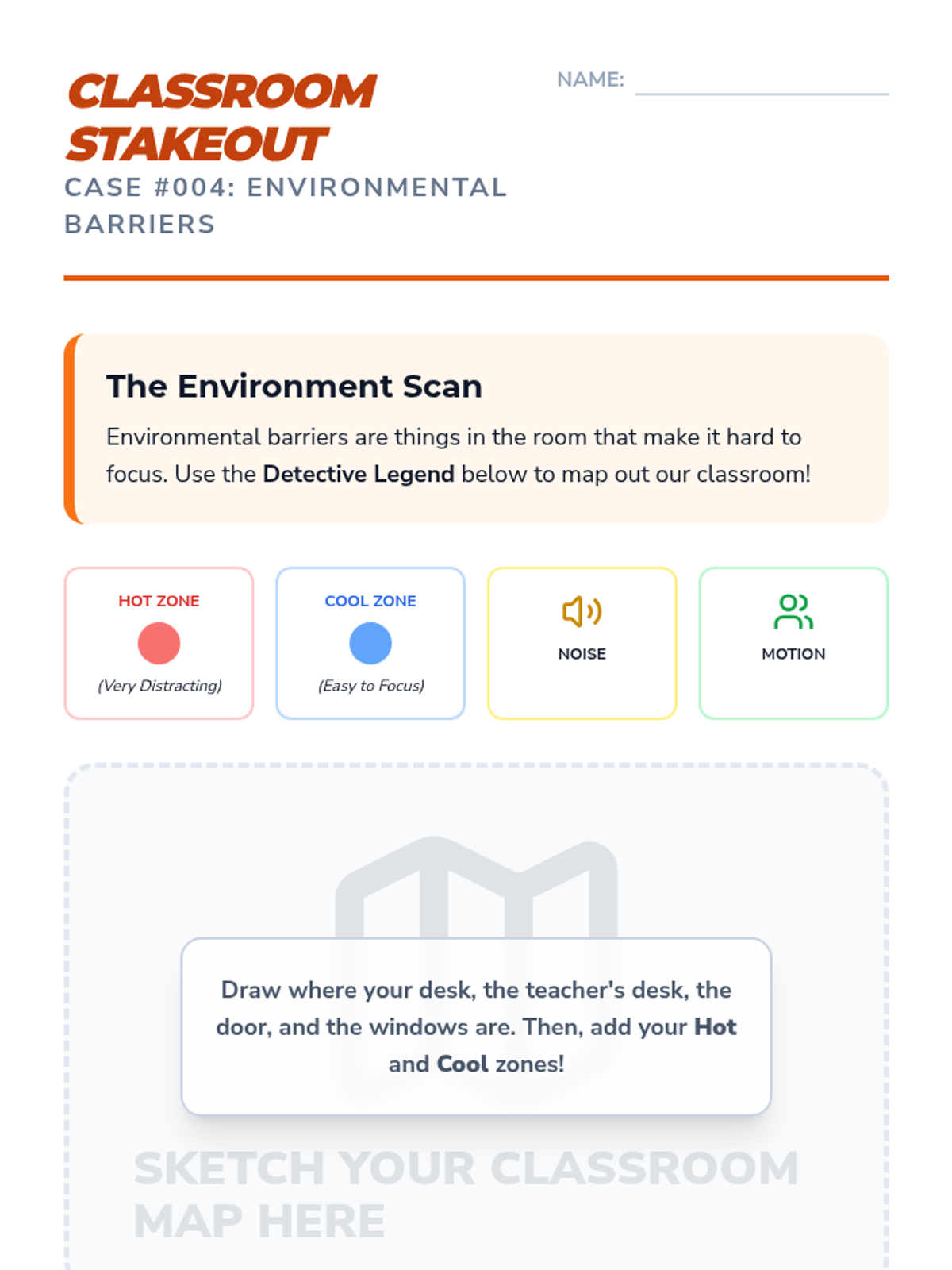
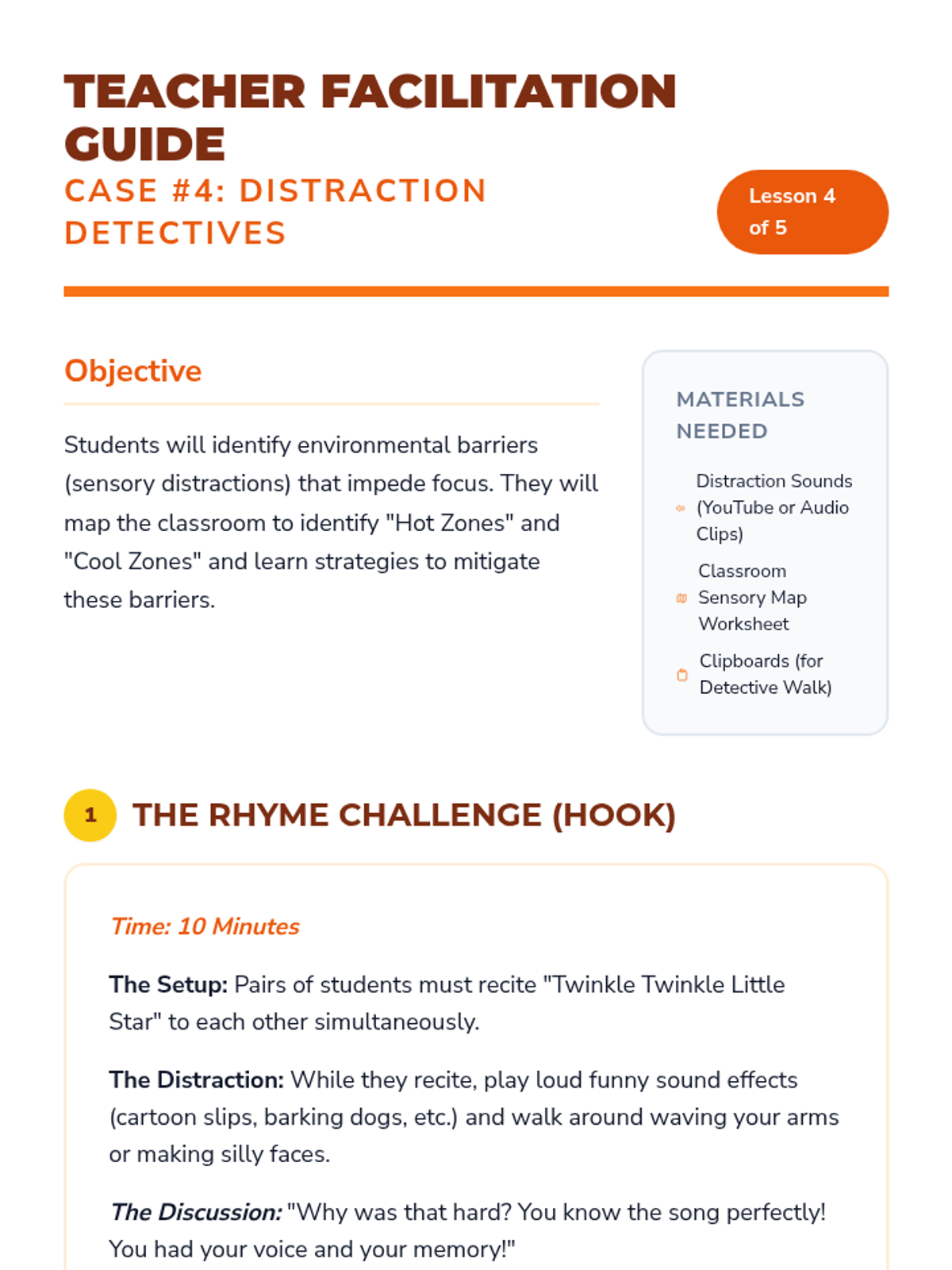
Investigates sensory and environmental barriers like noise or clutter, conducting a 'detective walk' to identify classroom distractions.
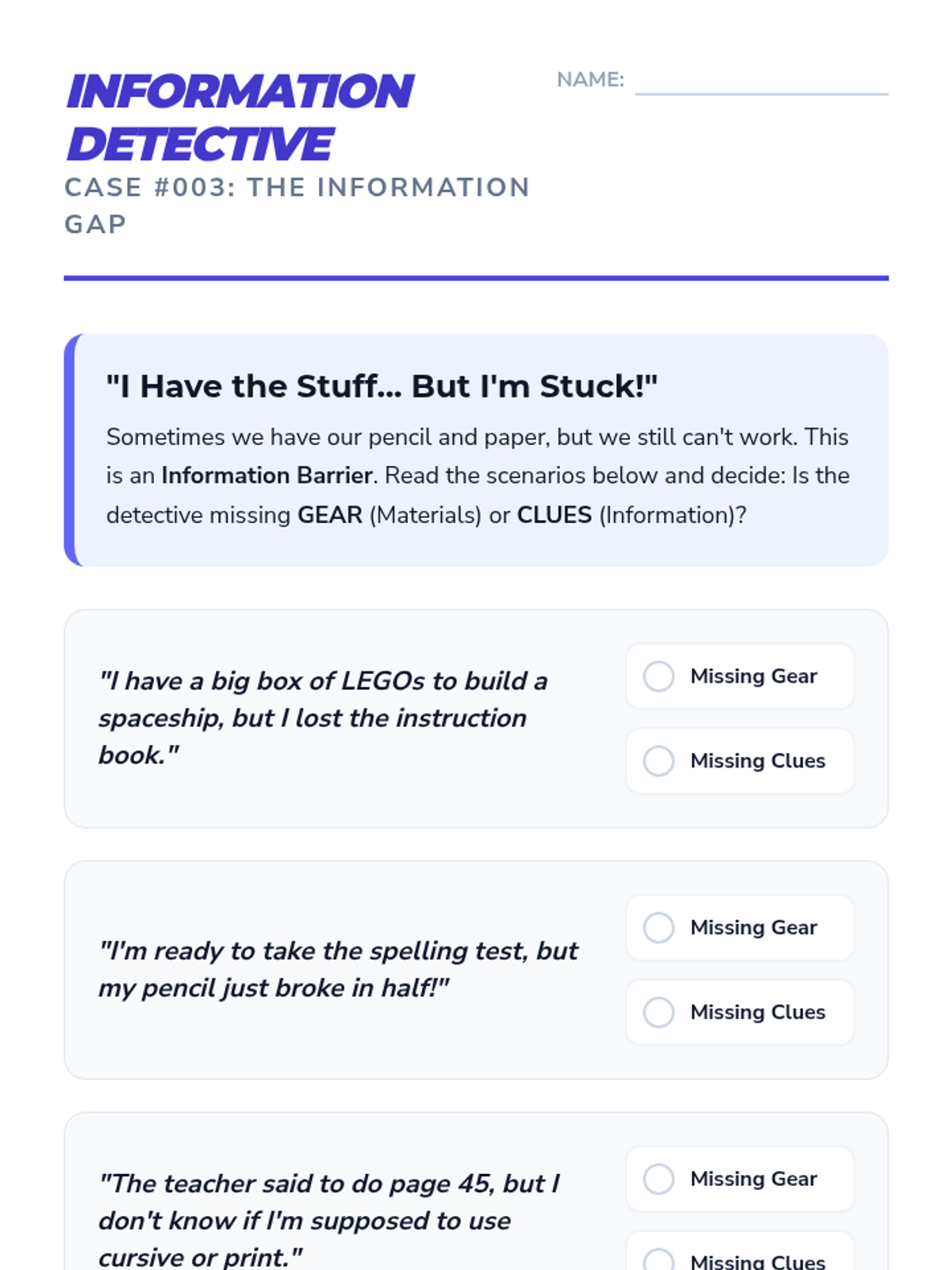
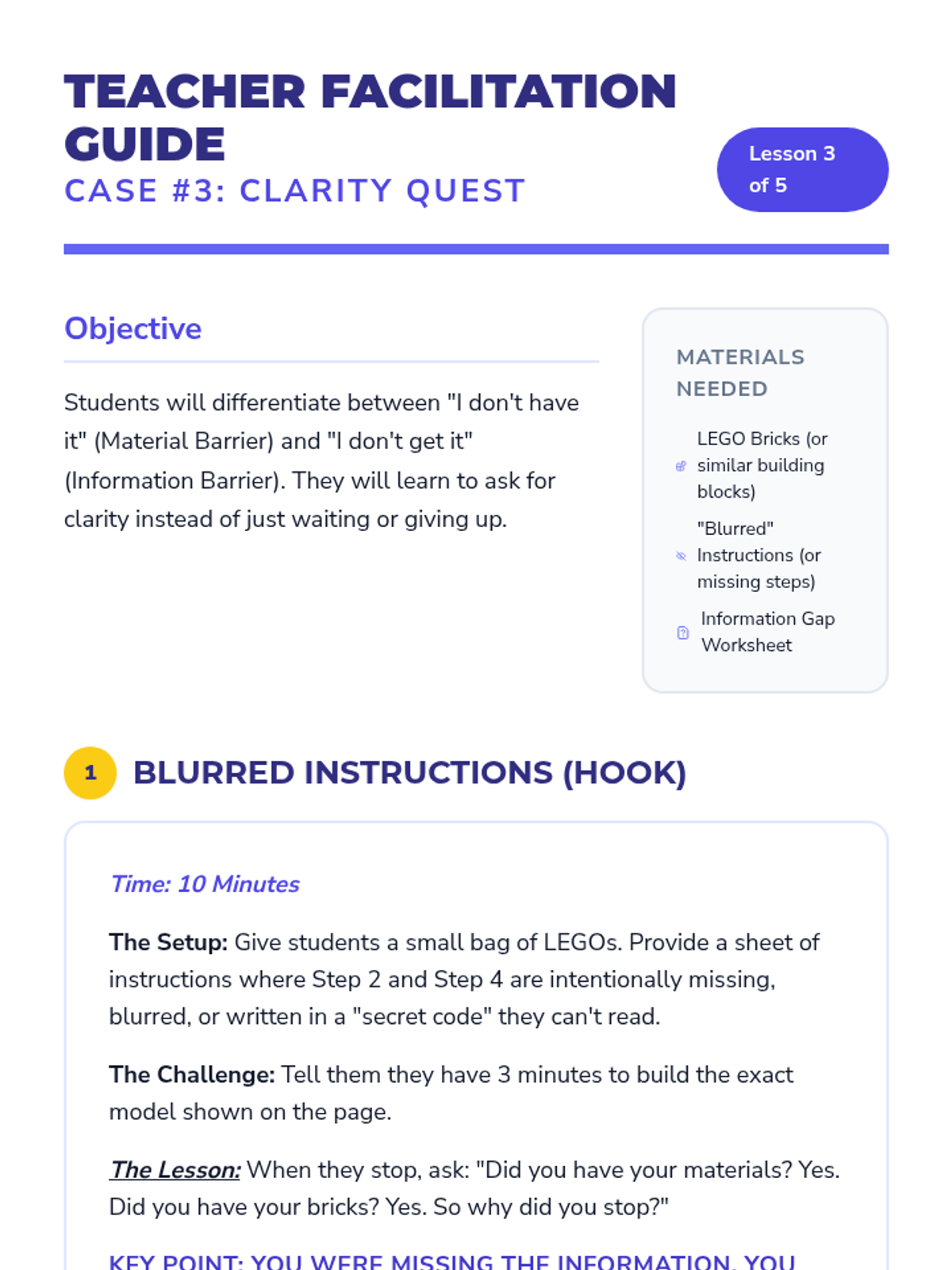
Teaches students to recognize when they are stuck due to a lack of clarity or understanding, differentiating between 'I don't have it' and 'I don't get it.'
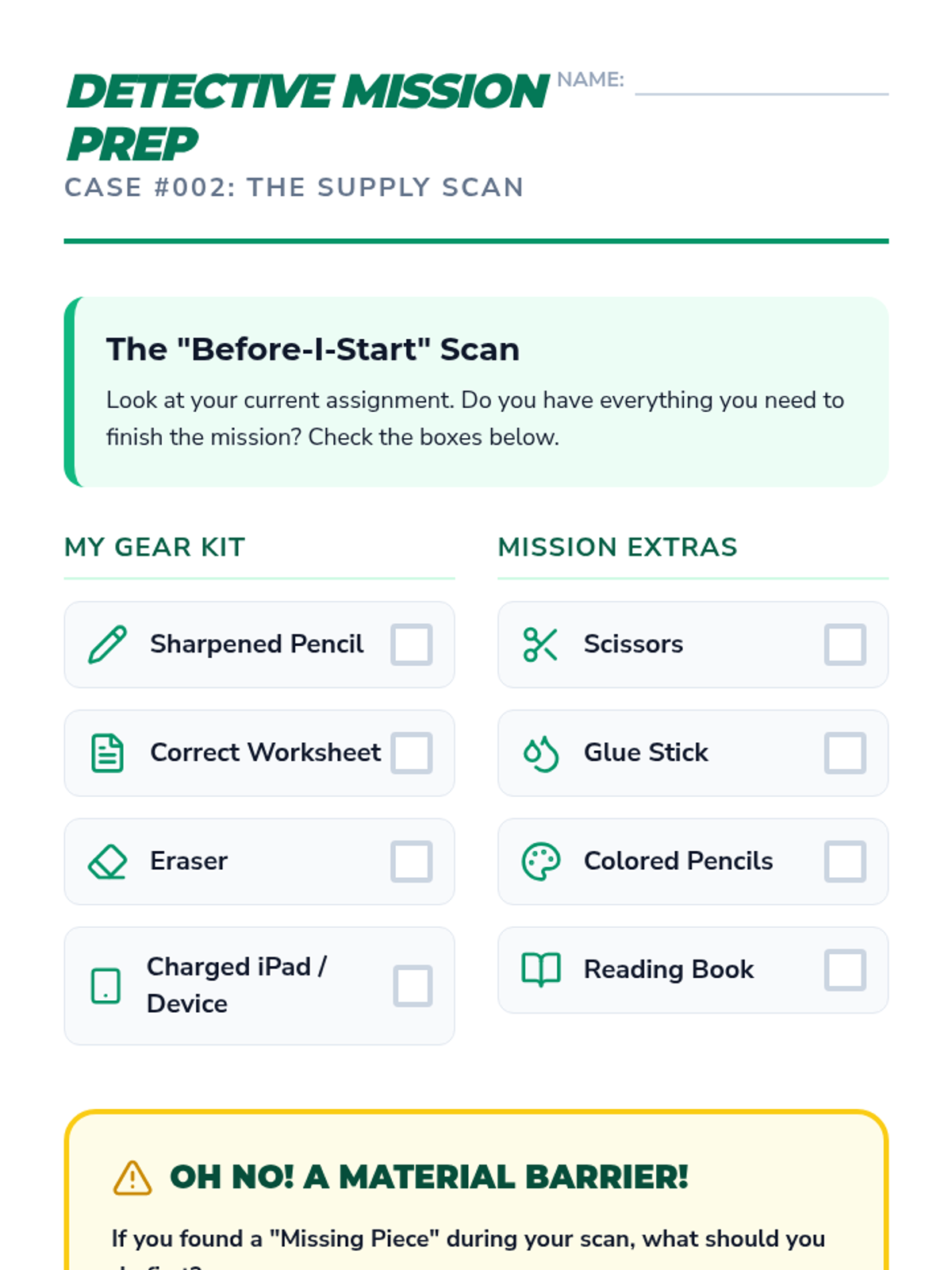
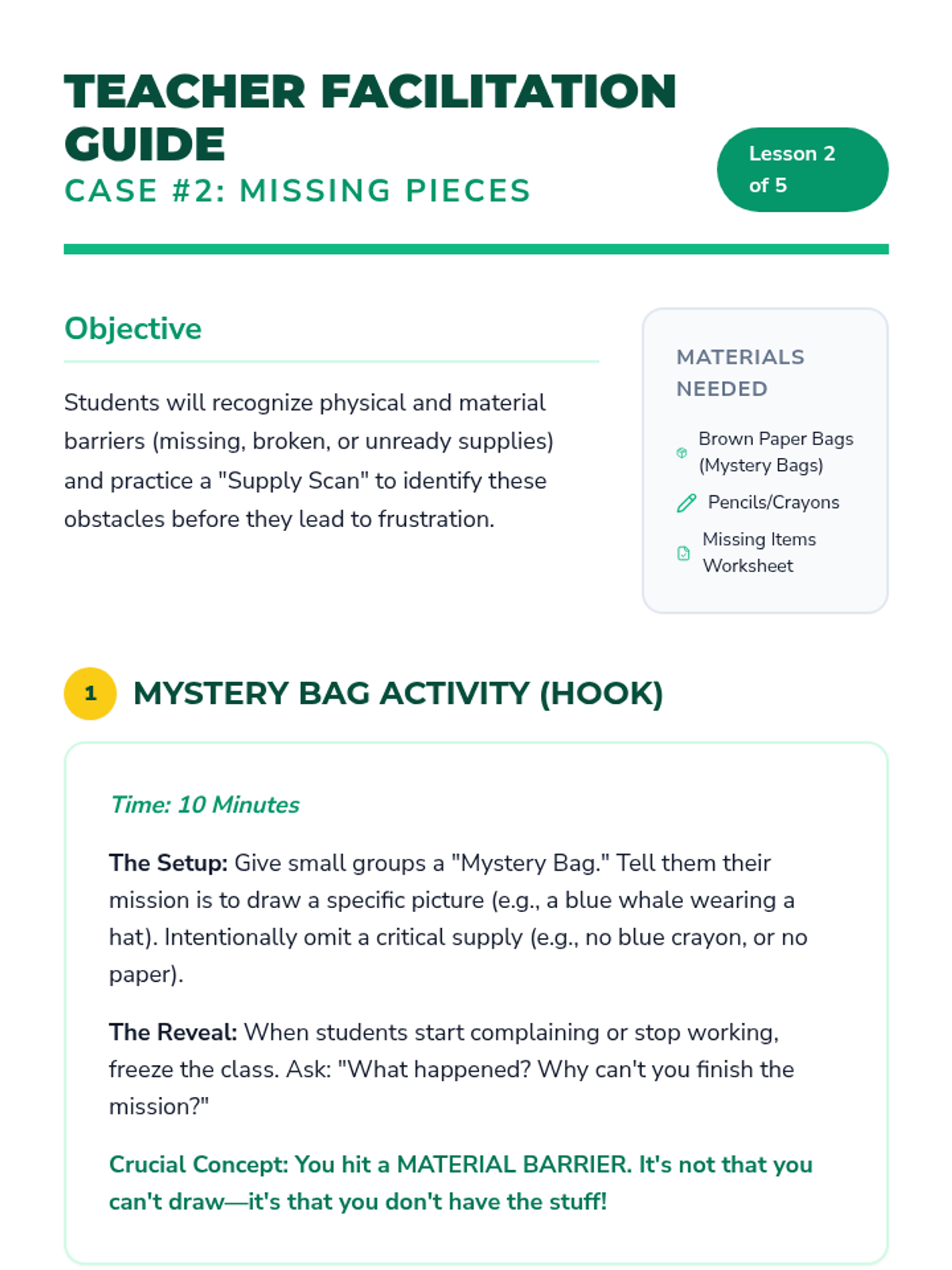
Focuses on tangible obstacles like broken tools or missing materials, teaching students to perform a 'supply scan' to identify what is physically missing.
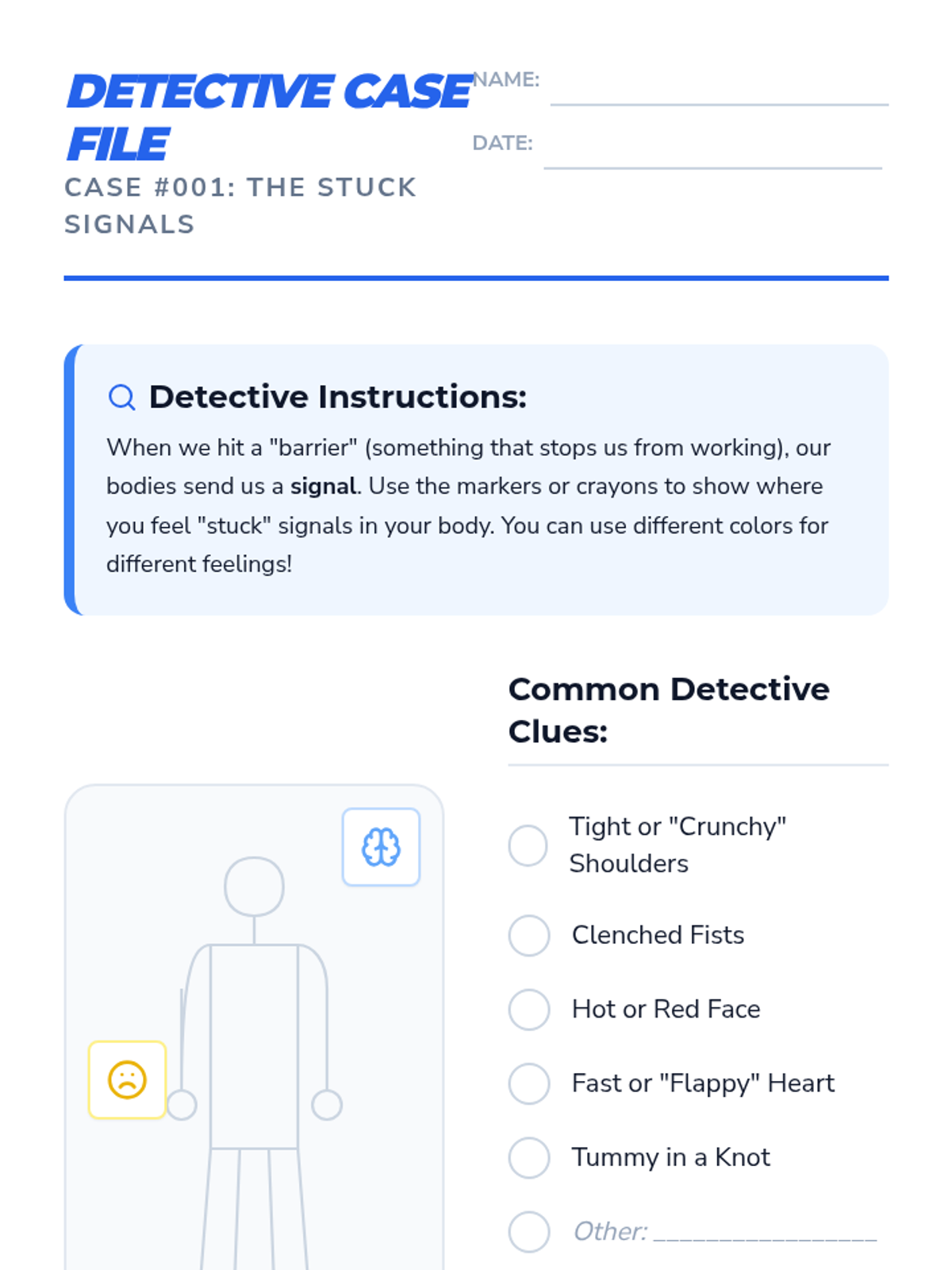
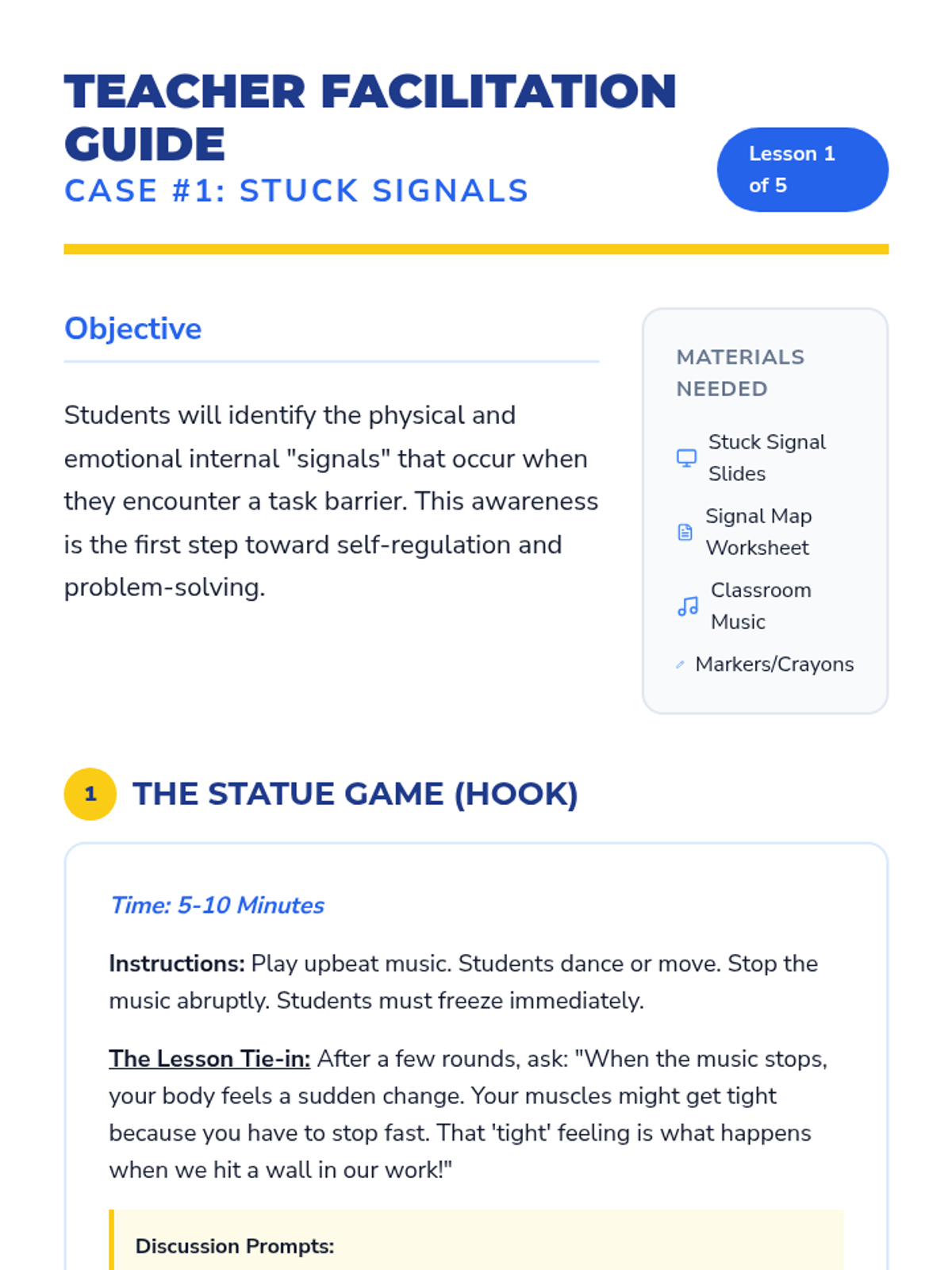
Students explore the physical and emotional sensations associated with hitting a task barrier, identifying what frustration feels like to recognize the moment they need to stop.
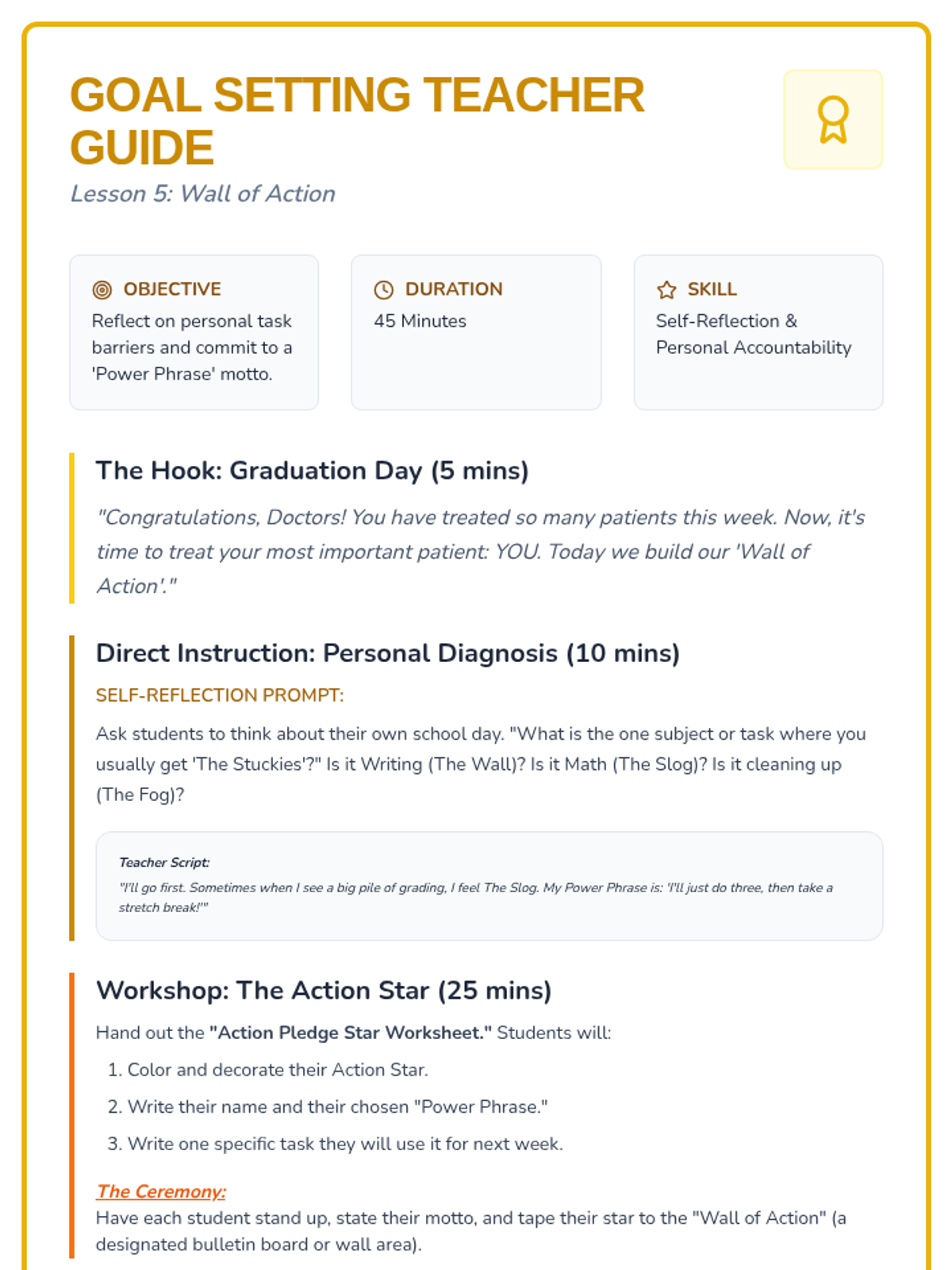
Students identify their own barriers to starting work and select a personal 'Power Phrase' motto for future tasks.
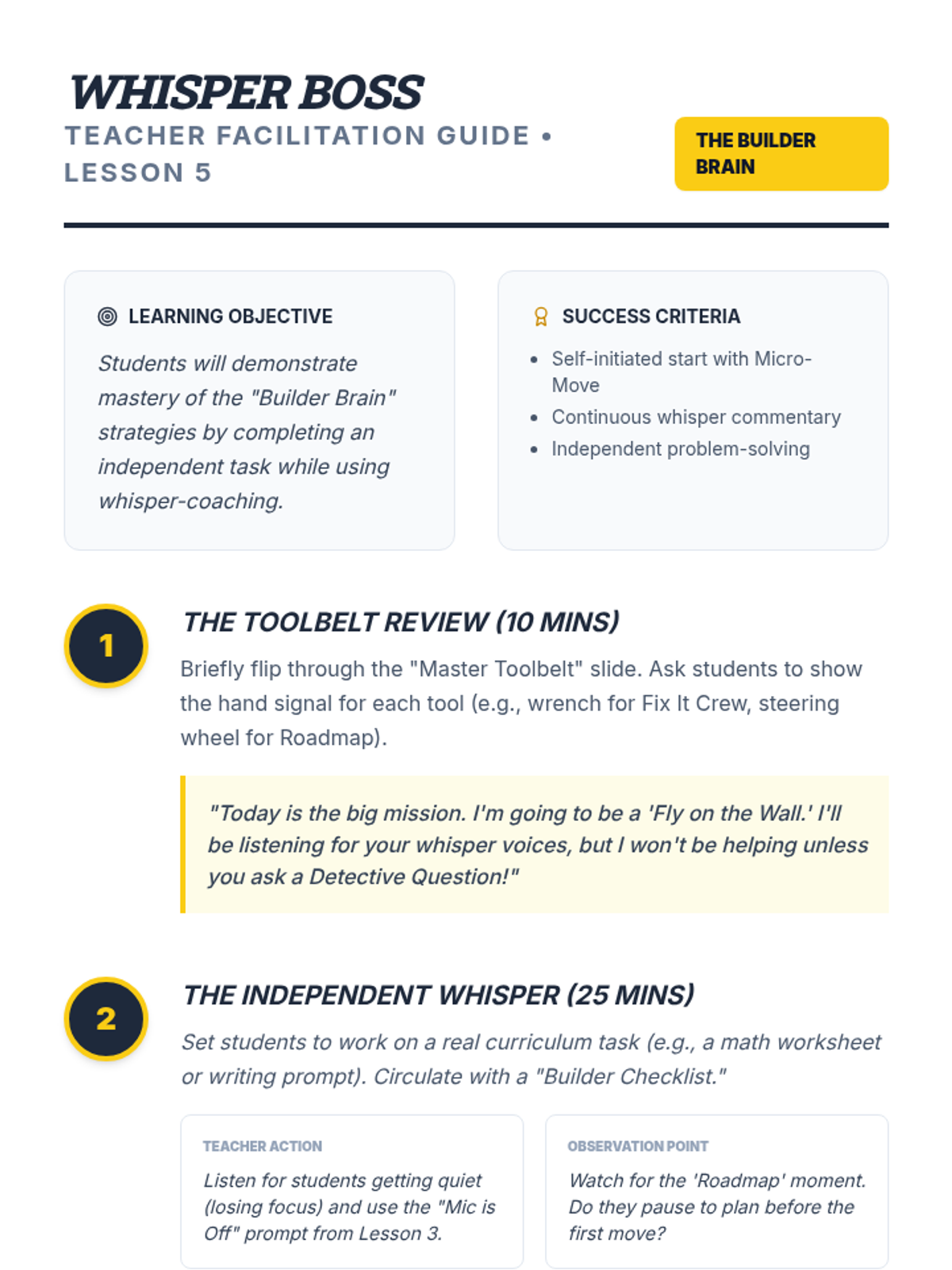
Students apply the breakdown and narration techniques to a real independent work session. The teacher circulates to listen for 'whisper coaching' as students initiate and sustain their work.
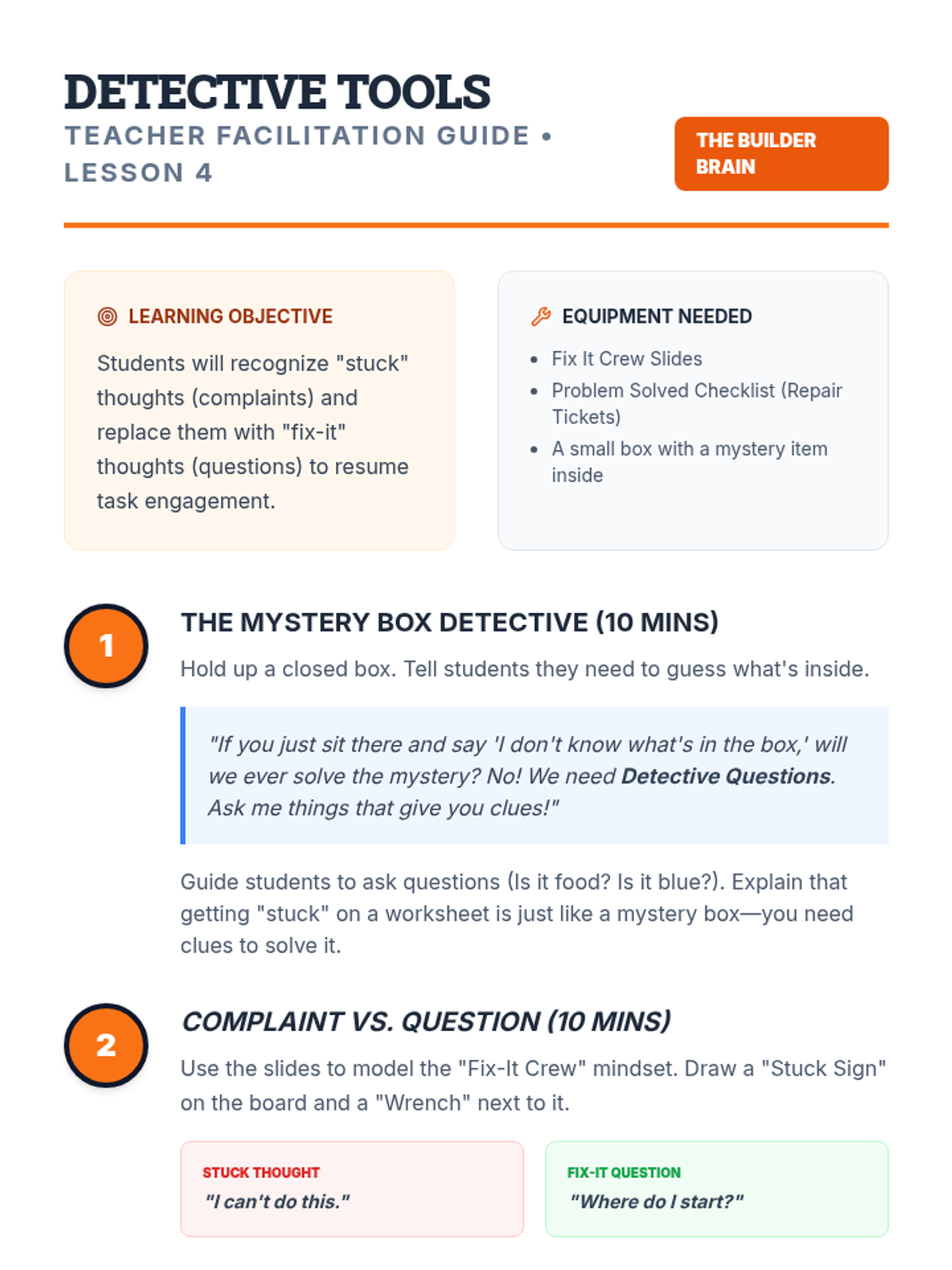
Students learn to ask themselves specific questions when they get stuck. This shifts the internal monologue from complaint to inquiry and problem-solving.
Students role-play scenarios where they help a peer get 'unstuck' using their self-talk prescriptions.
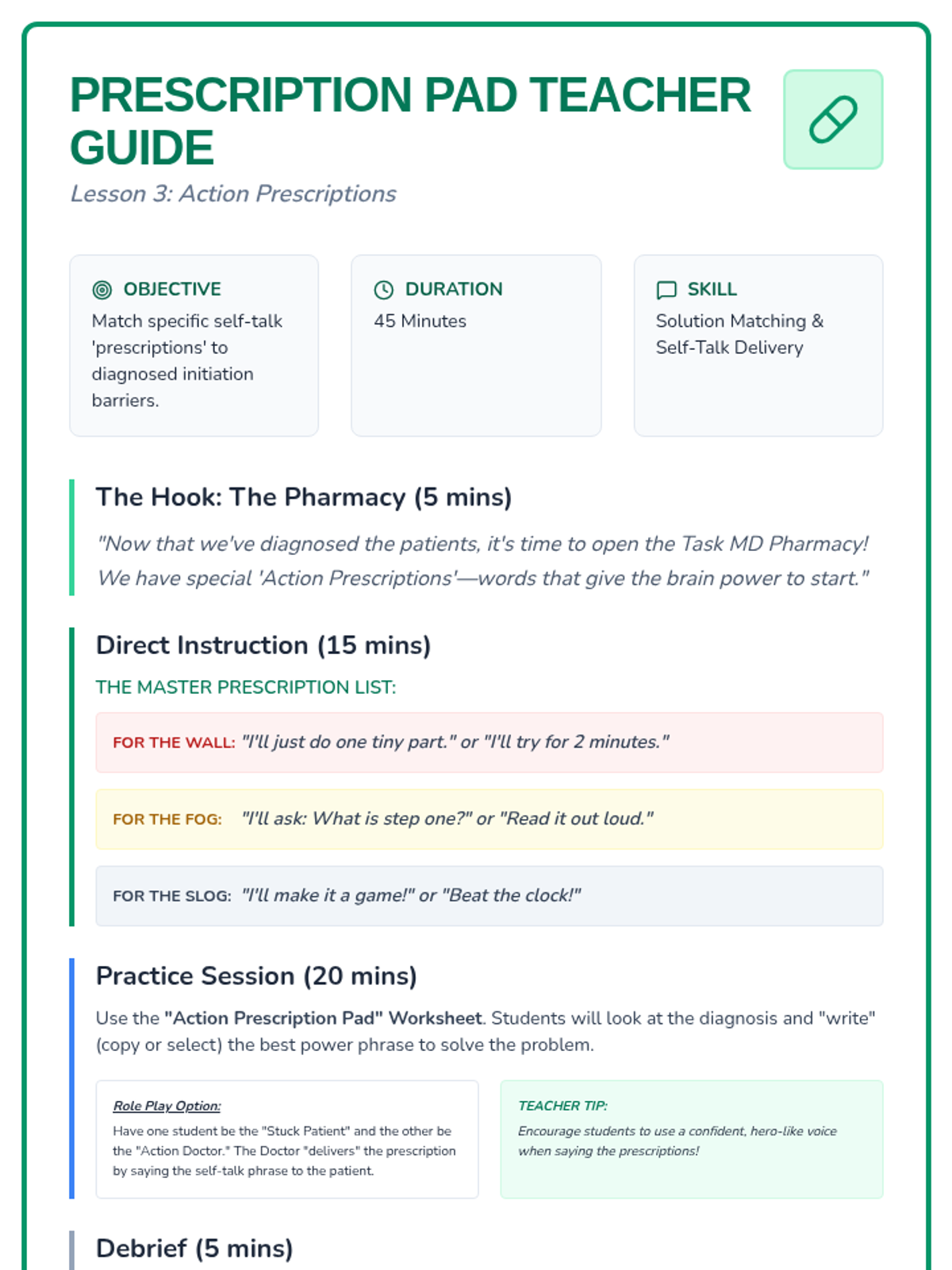
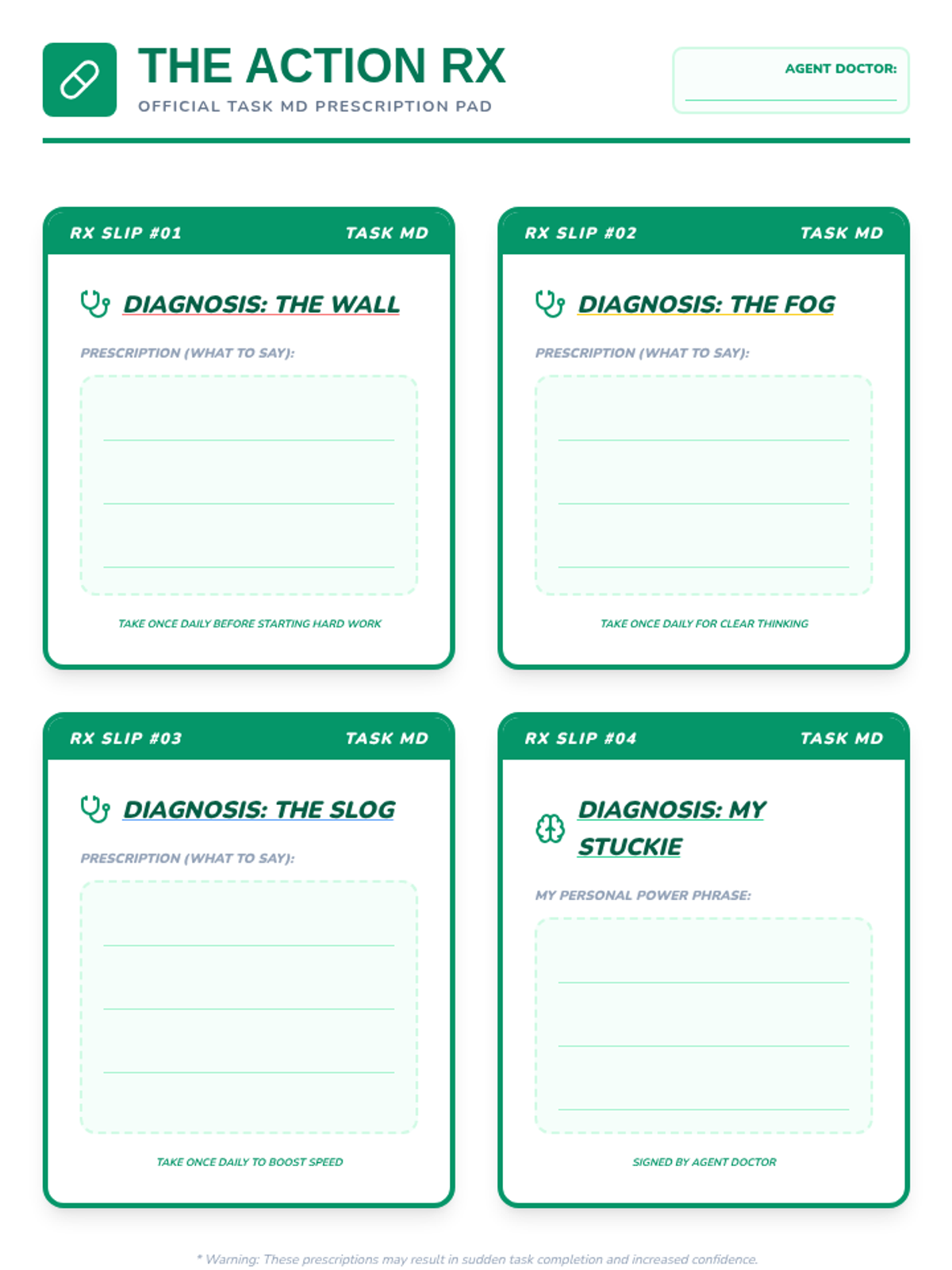
Students match specific self-talk 'prescriptions' to diagnosed problems and practice delivering these lines to characters.
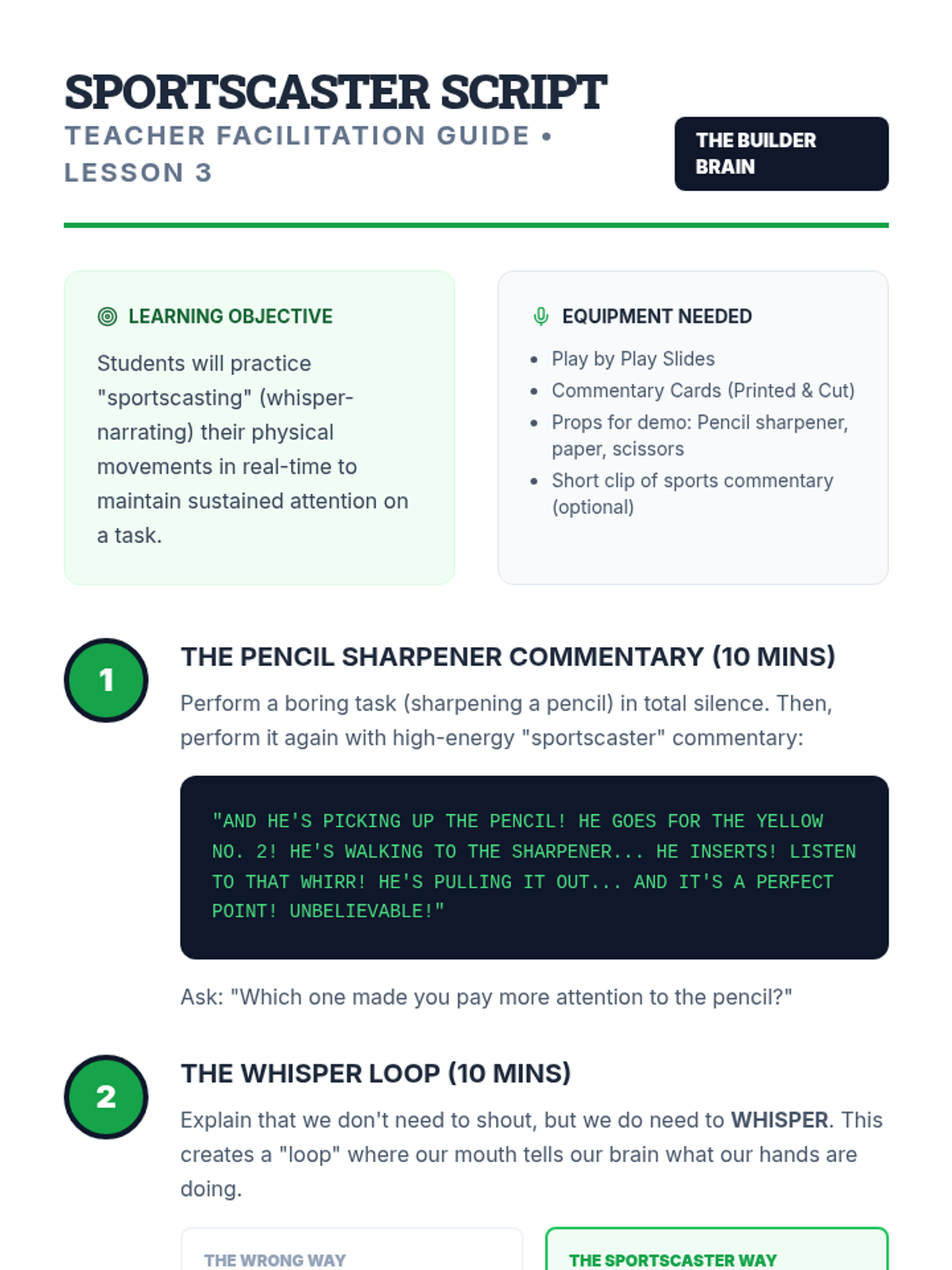
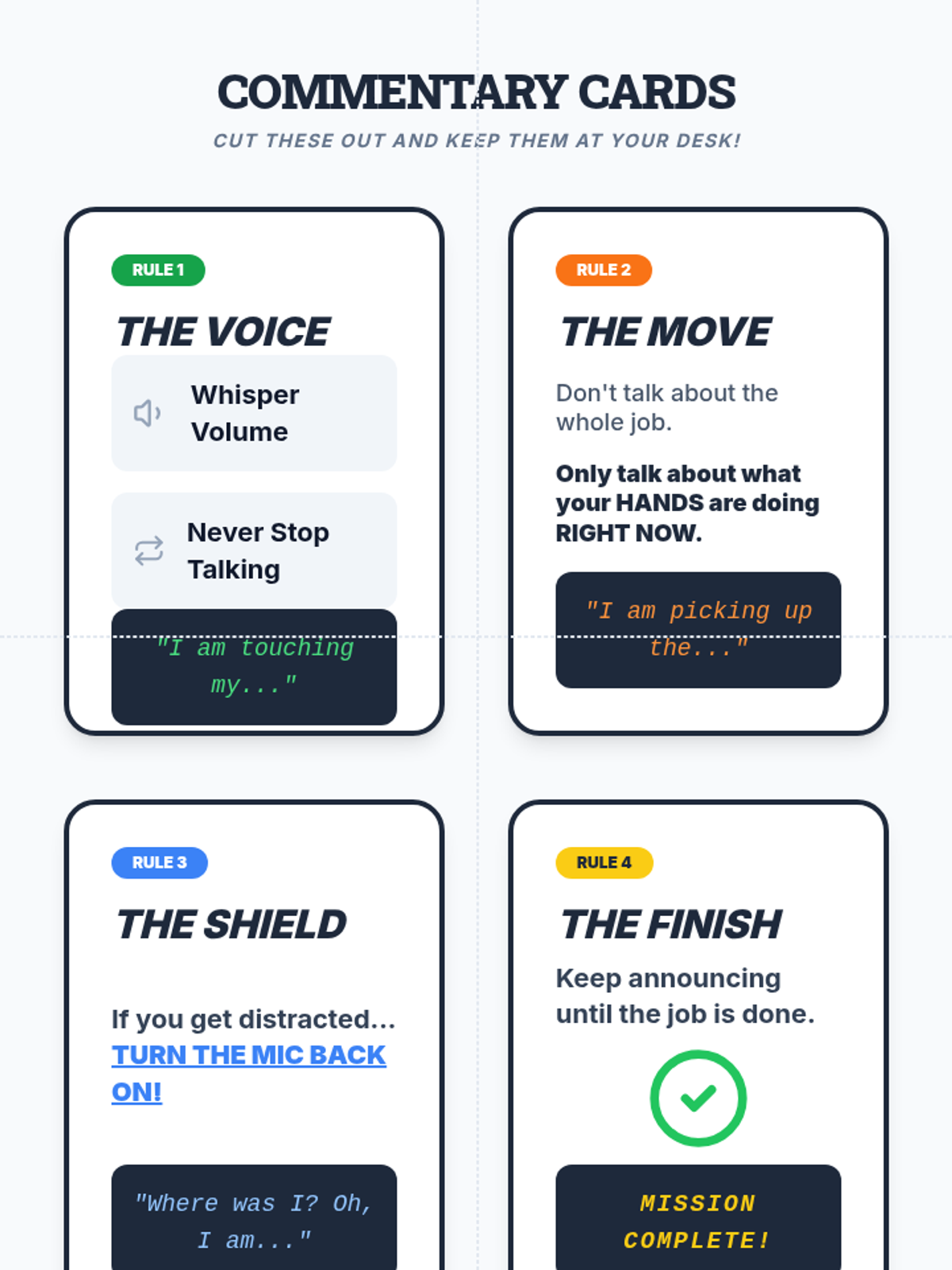
Students practice whispering their actions as they do them, similar to a sportscaster announcing a game. This continuous verbal loop helps prevent distraction and keeps the student engaged.
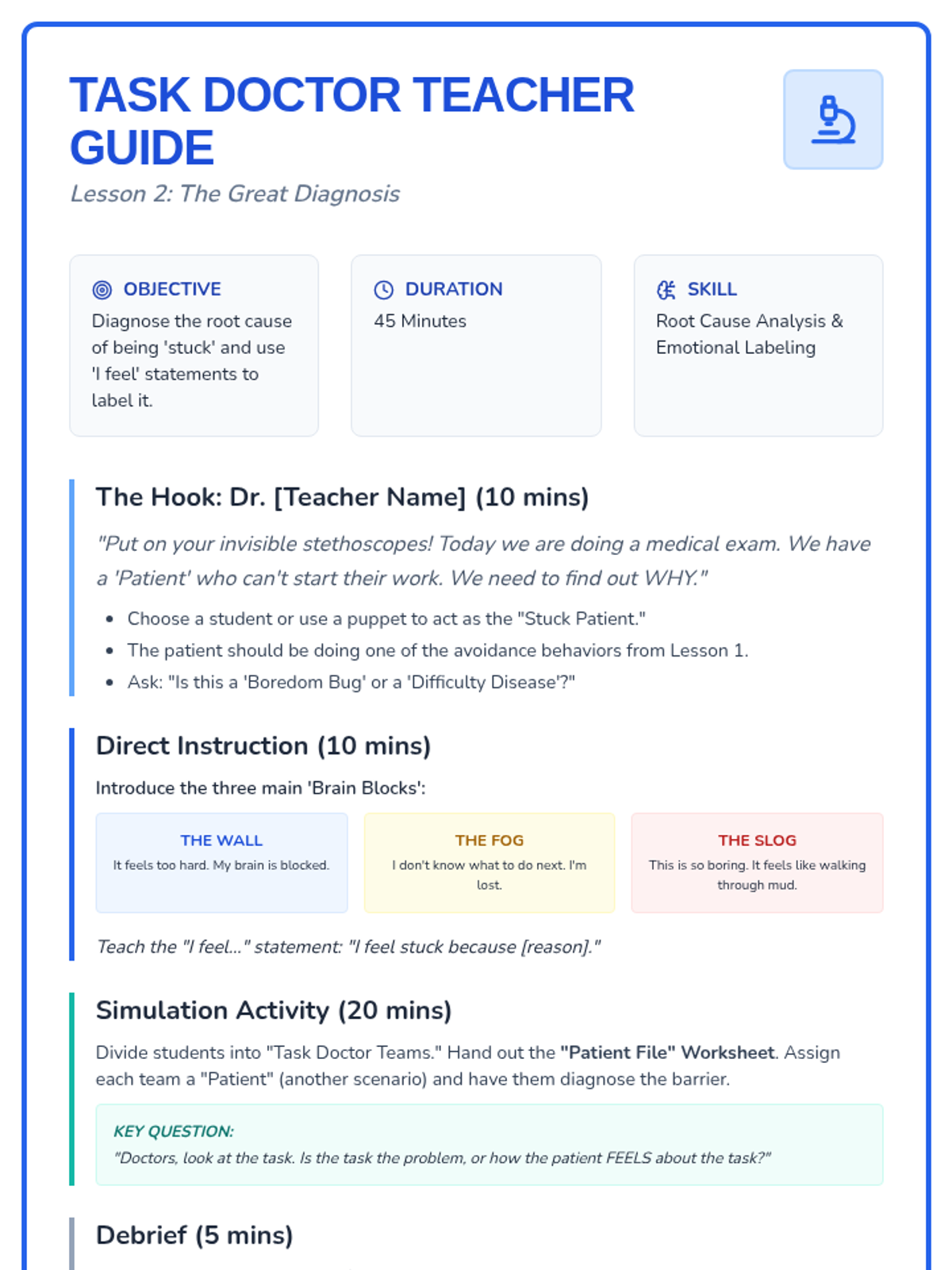
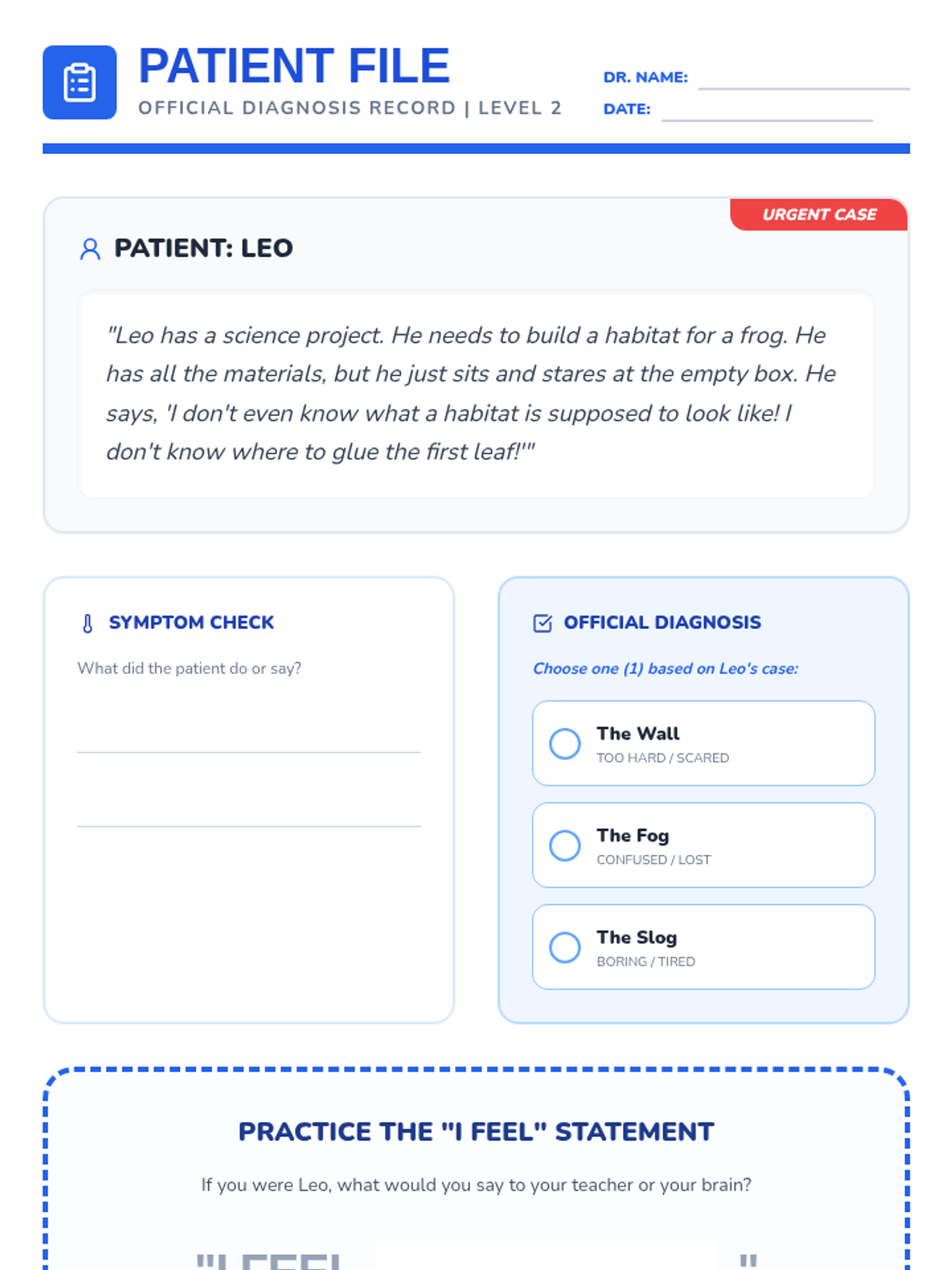
Students act as 'Task Doctors' to determine why a character is stuck (boredom, difficulty, fatigue) and practice labeling these emotions.
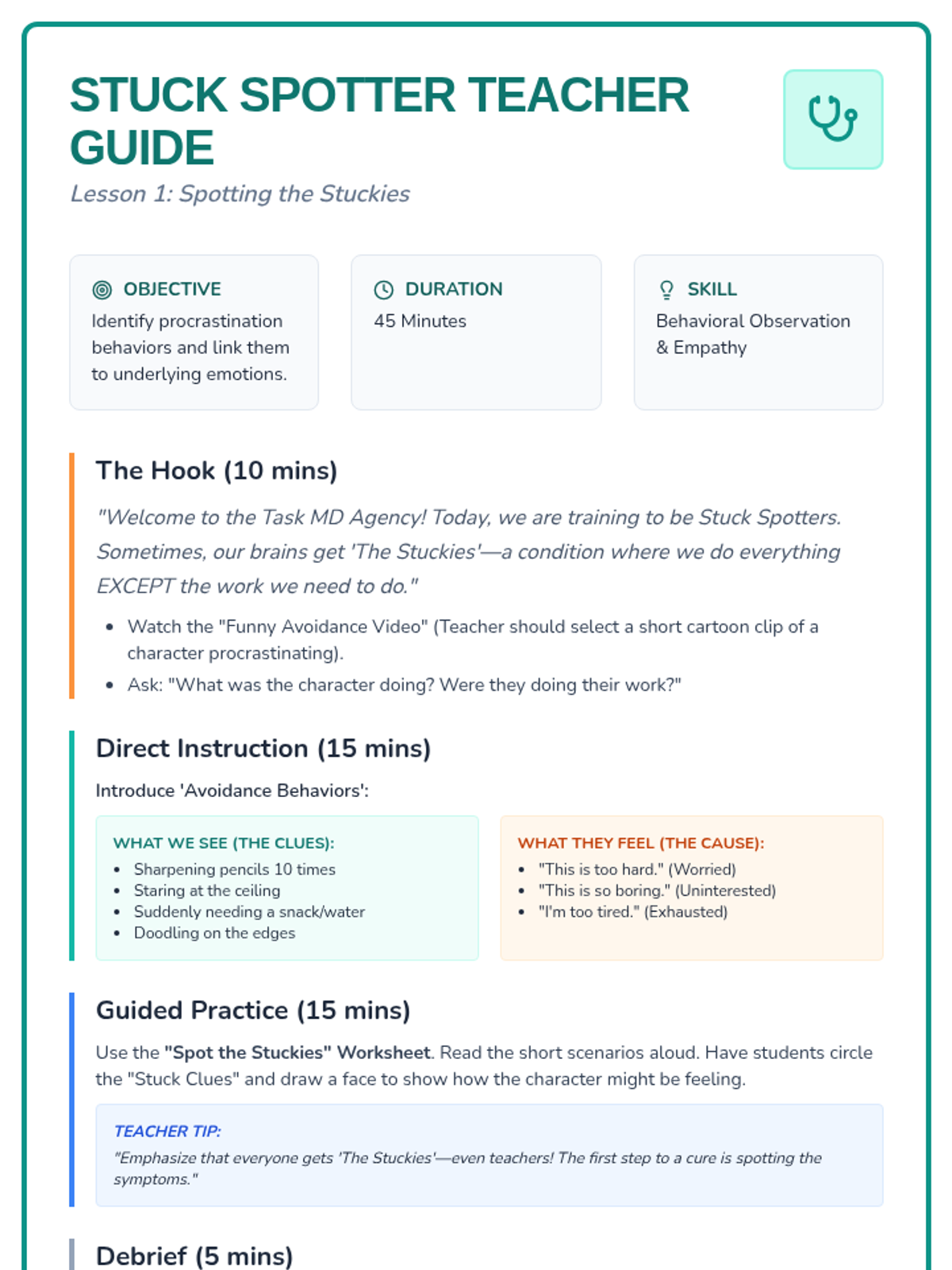
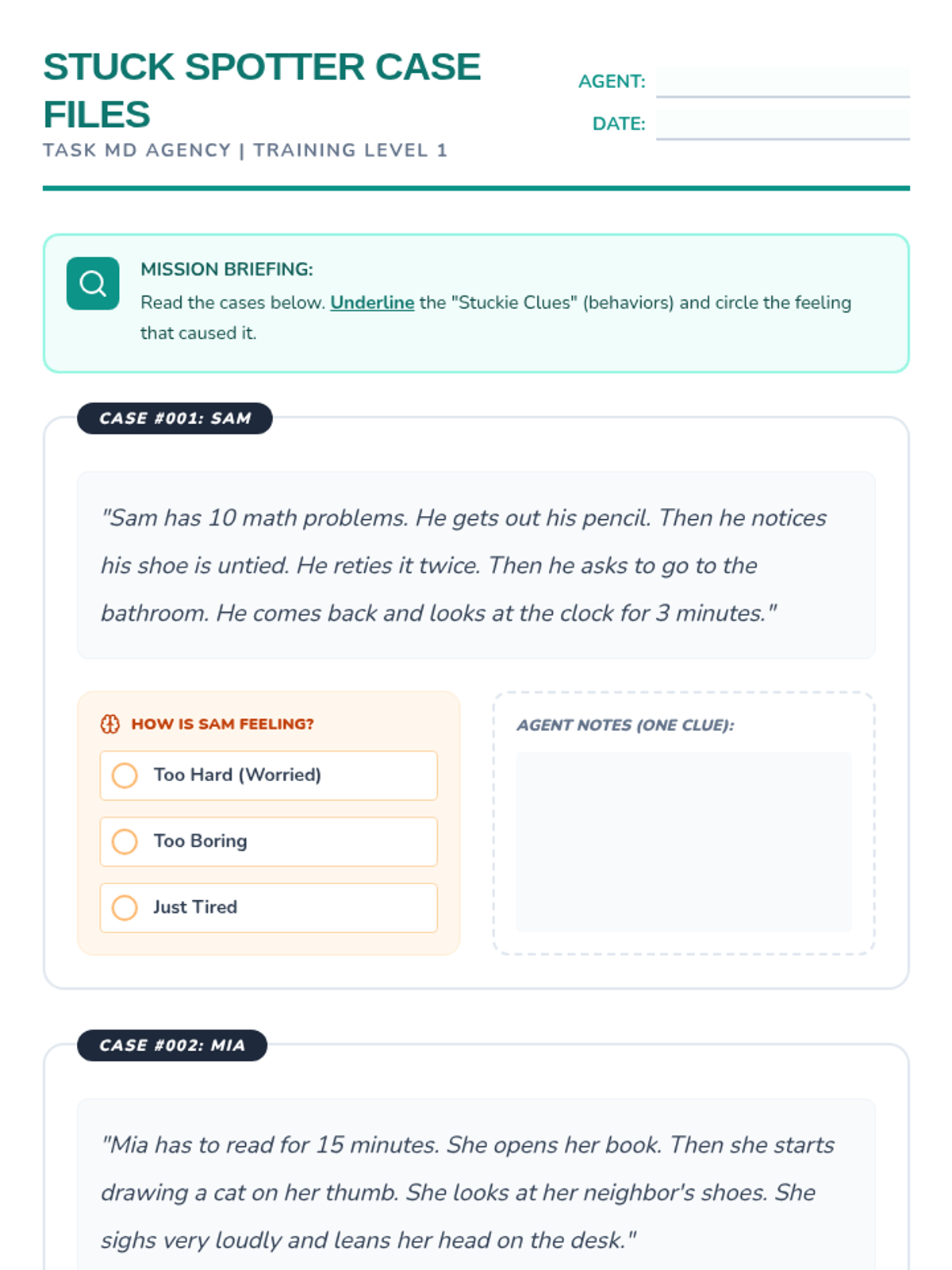
Students identify behaviors that show someone is avoiding work and brainstorm what emotions might be driving those behaviors through case studies.
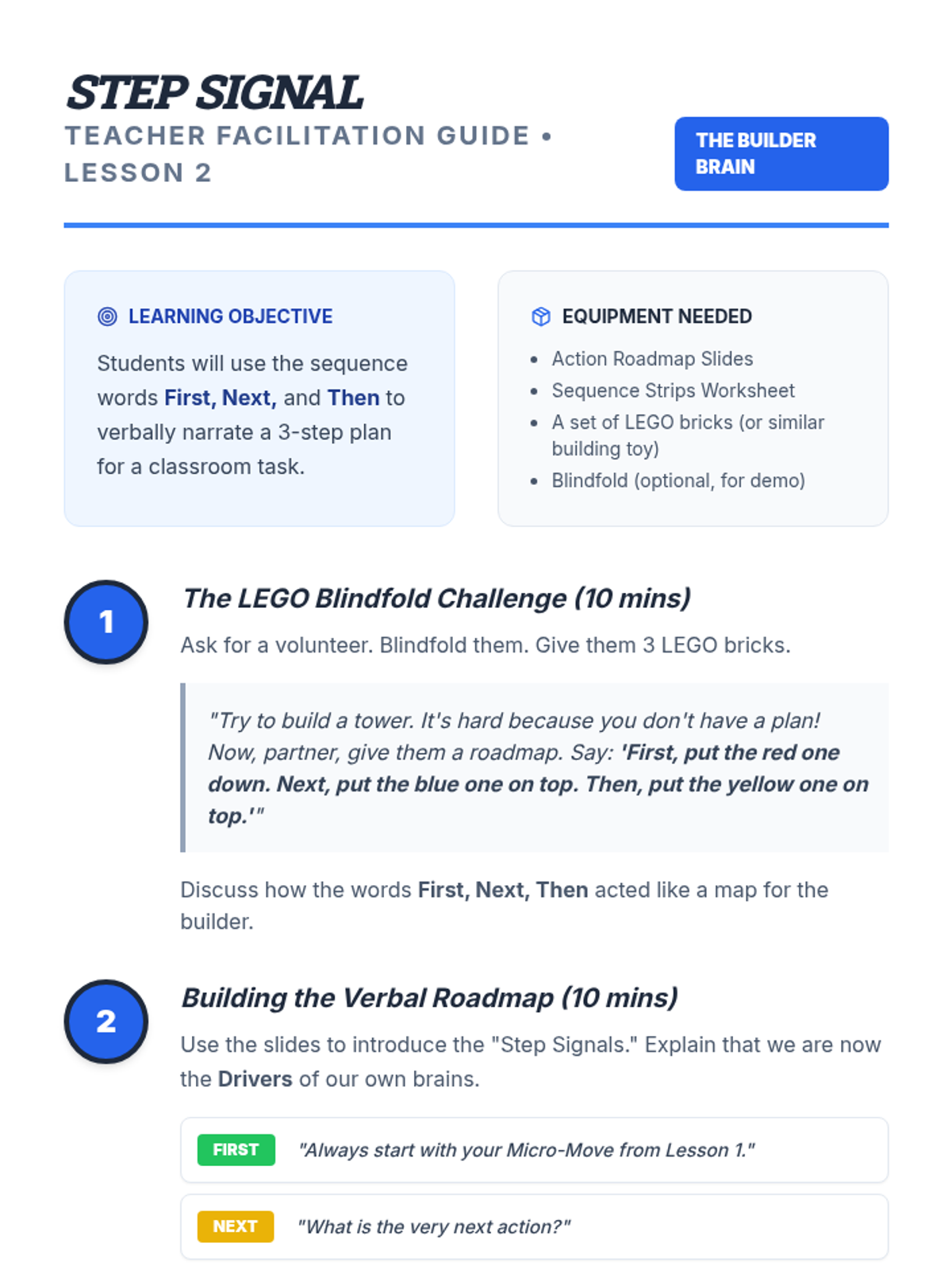
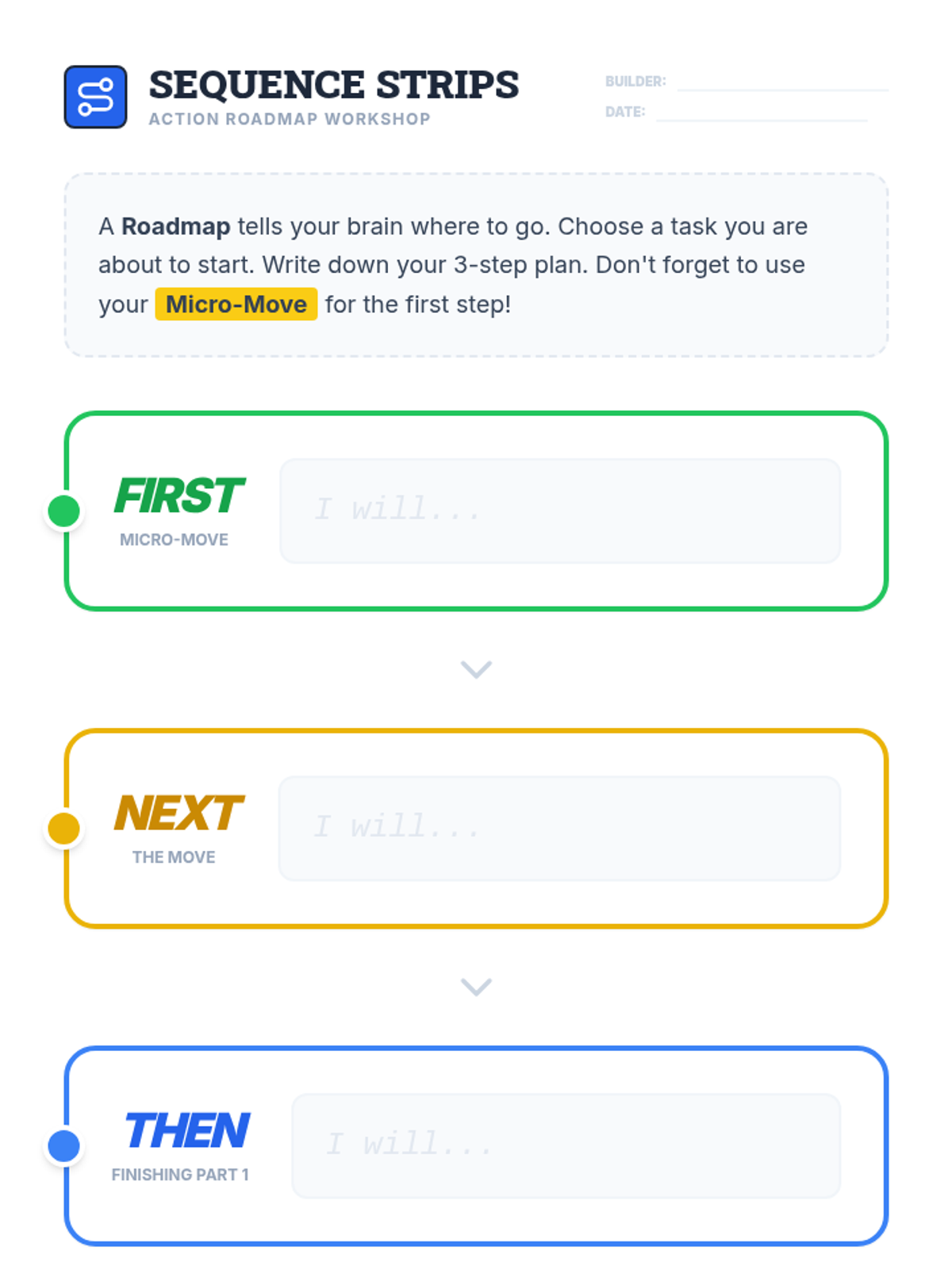
Students practice using the words 'First,' 'Next,' and 'Then' to create a verbal roadmap. They verbally plan a simple classroom routine, ensuring they can narrate the order of operations before beginning.
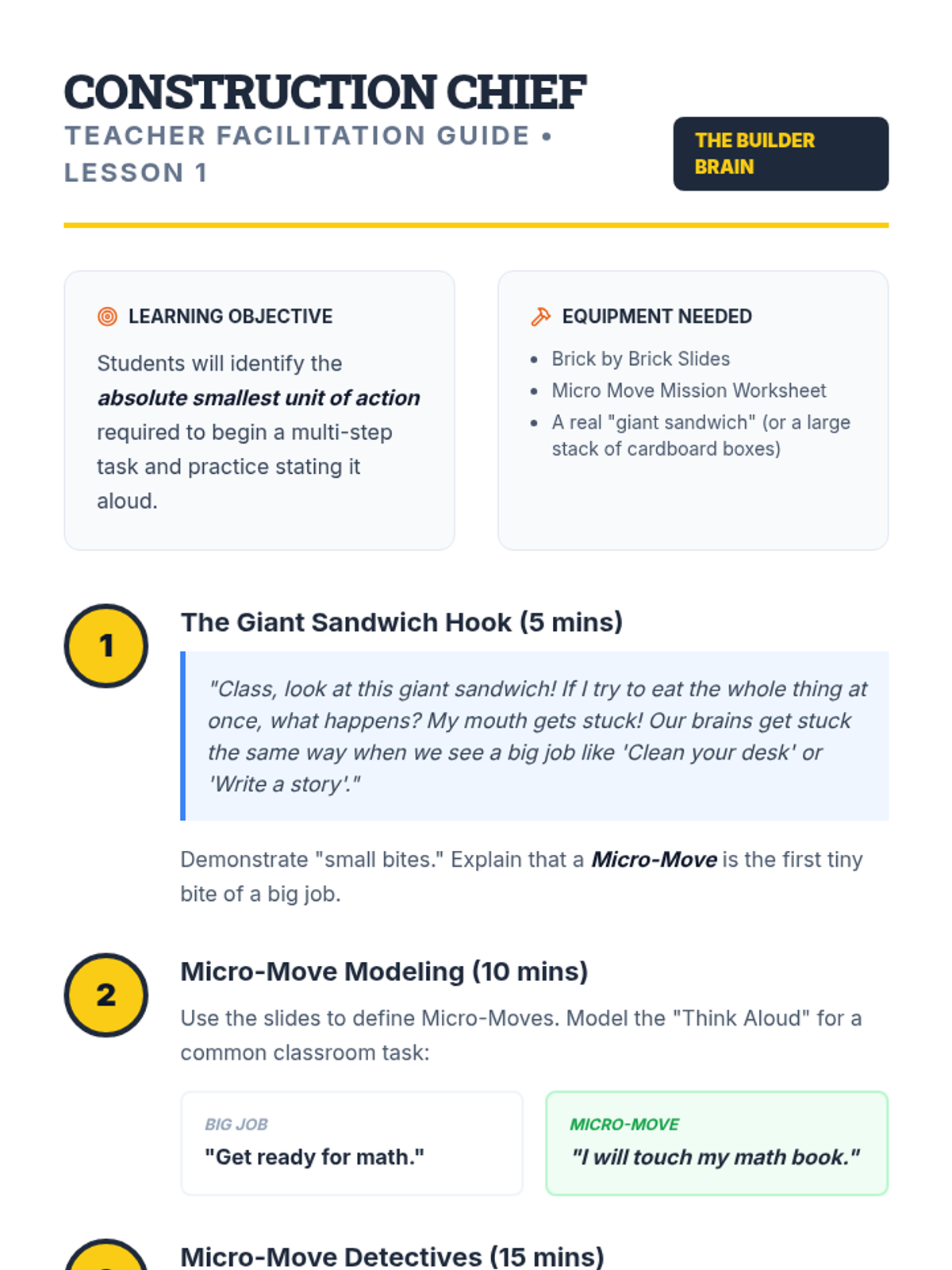
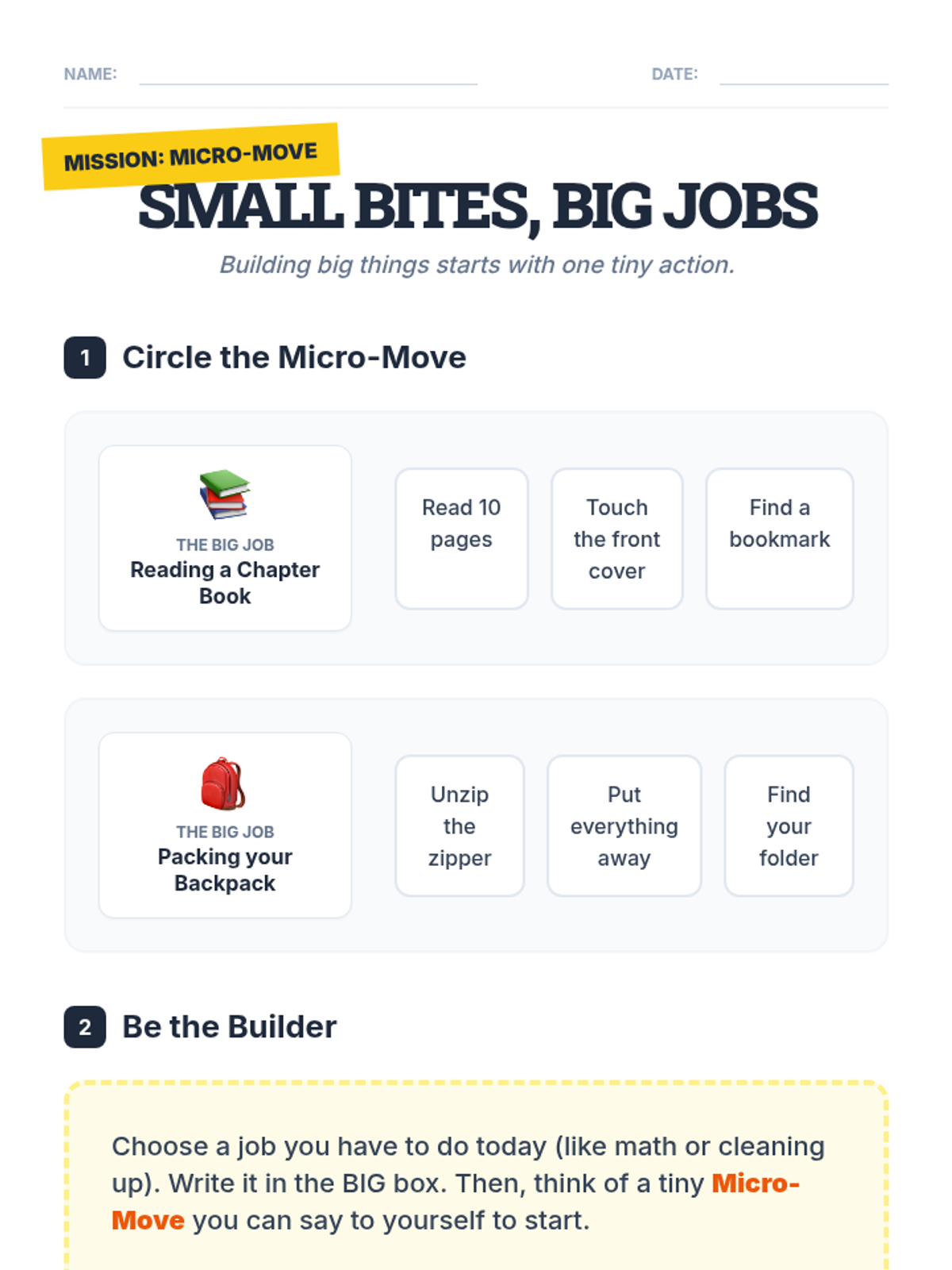
Students learn to identify the absolute smallest unit of action required to begin a task. They practice ignoring the whole assignment to focus solely on the physical action needed to start.
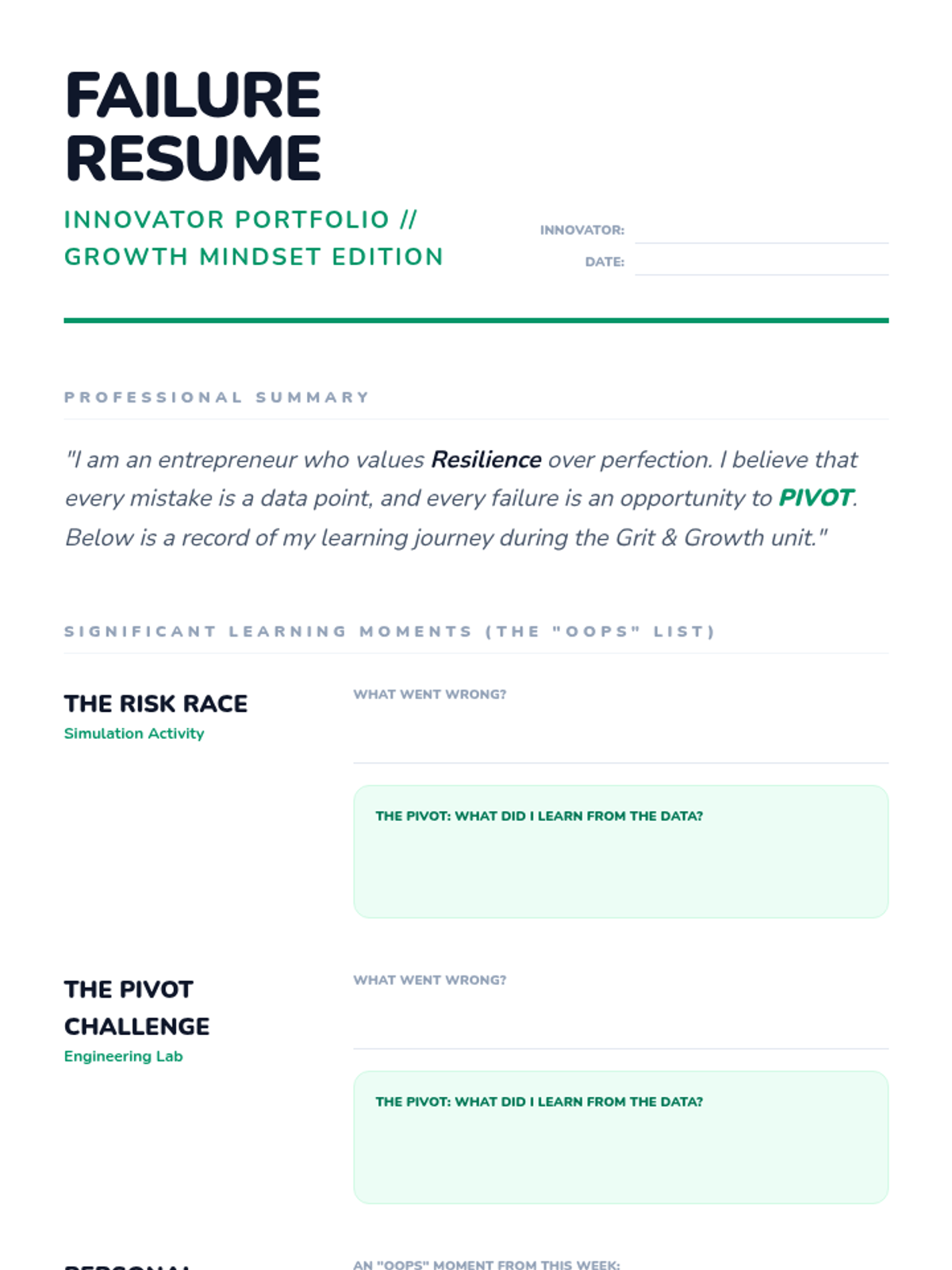
Students create a 'Failure Resume' to celebrate mistakes and document the learning that came from them.
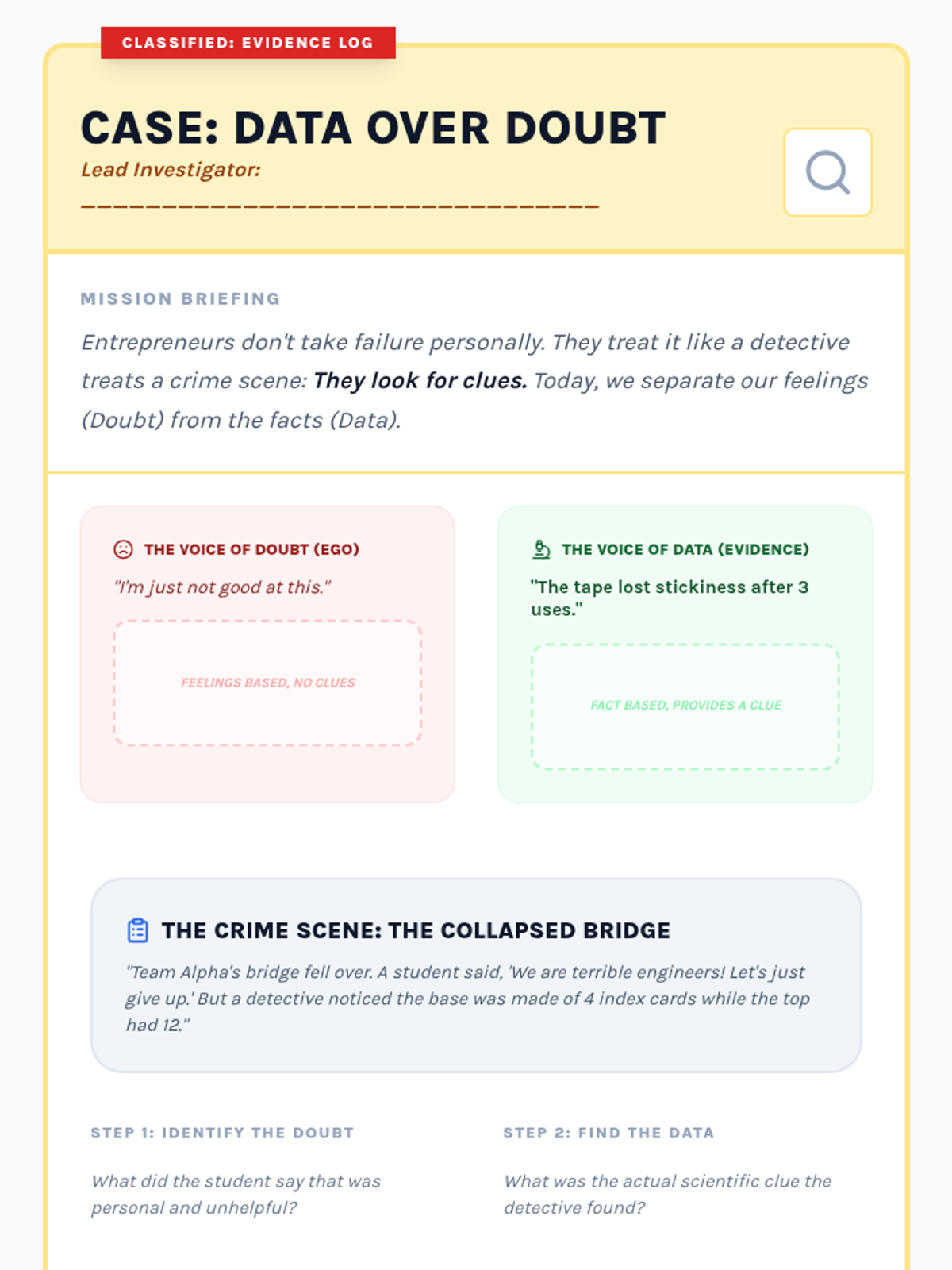
Students learn to separate their ego from results by analyzing simulation data to find objective causes for failure.
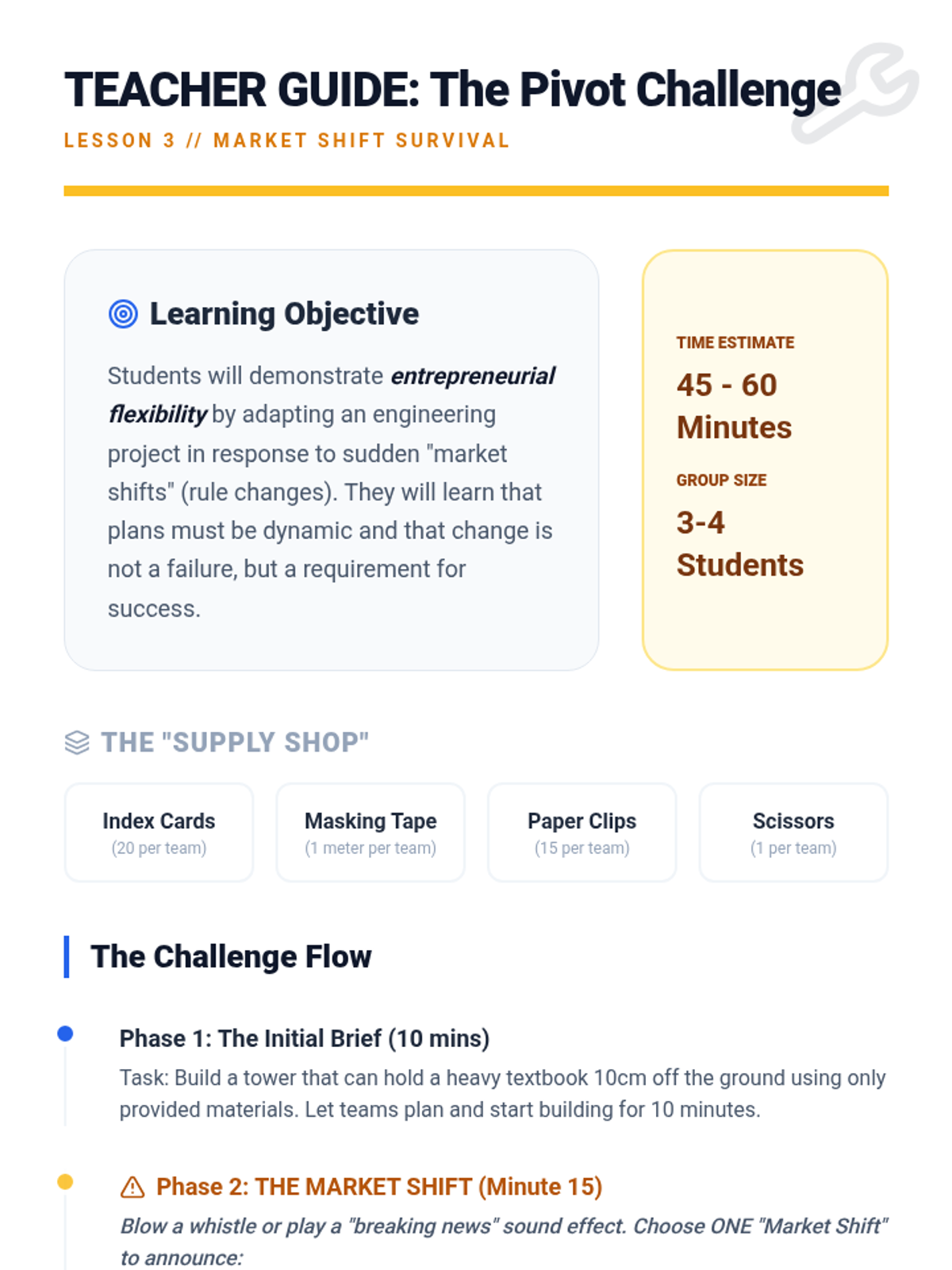
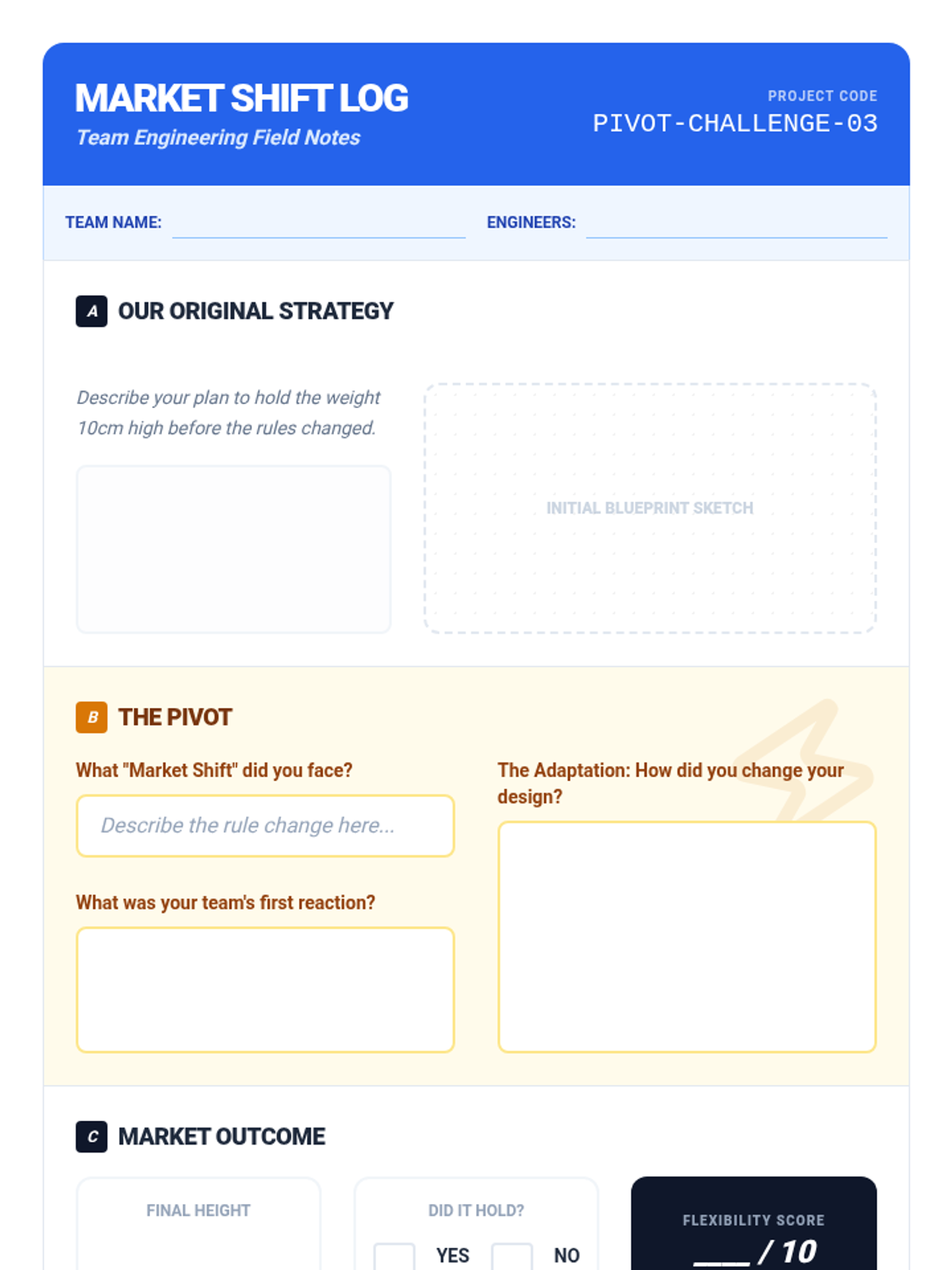
An engineering challenge where students must adapt to a sudden 'market shift' mid-project, testing their flexibility.
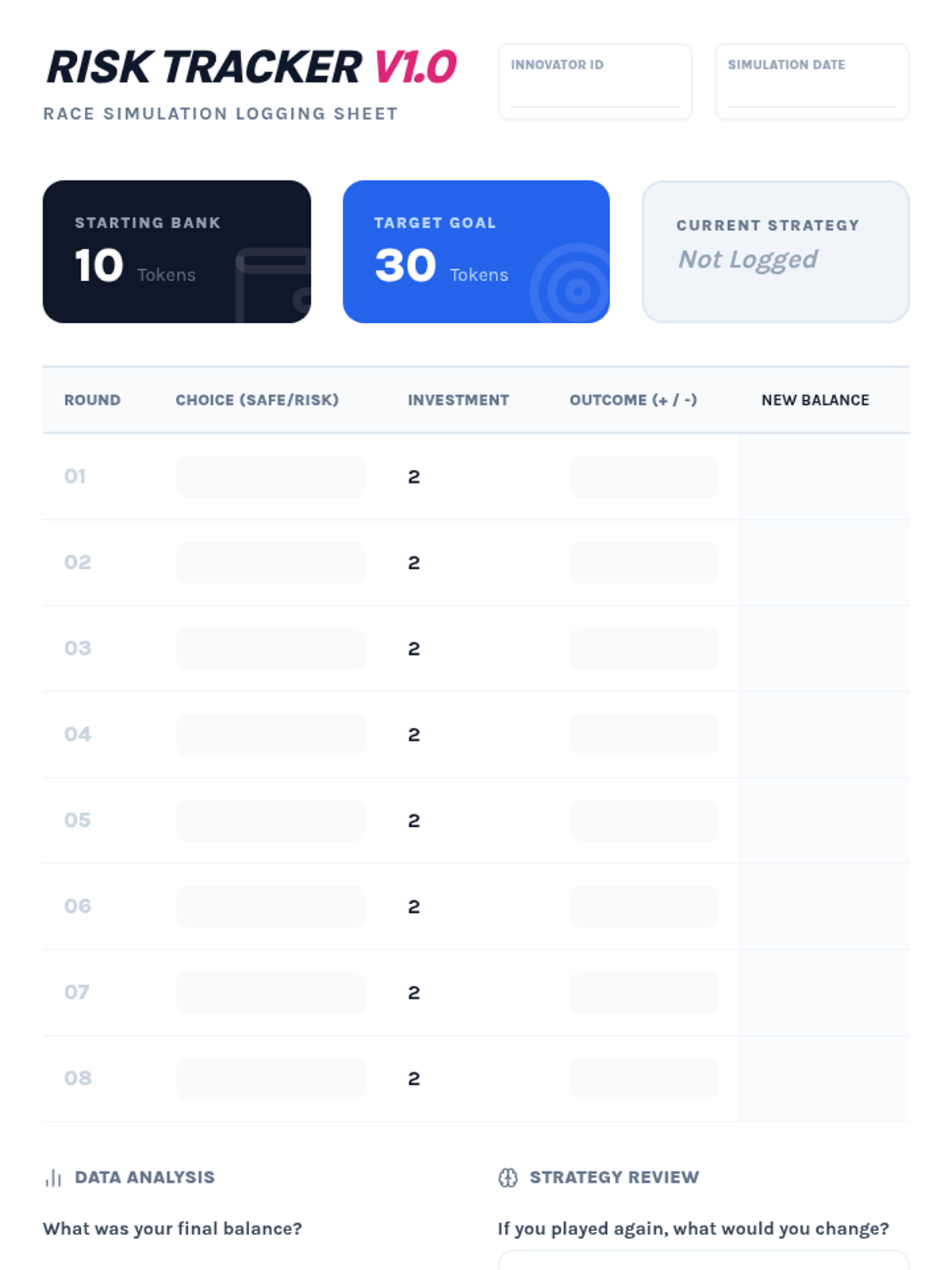
A simulation where students weigh safe vs. risky decisions, learning the difference between gambling and calculated entrepreneurship.
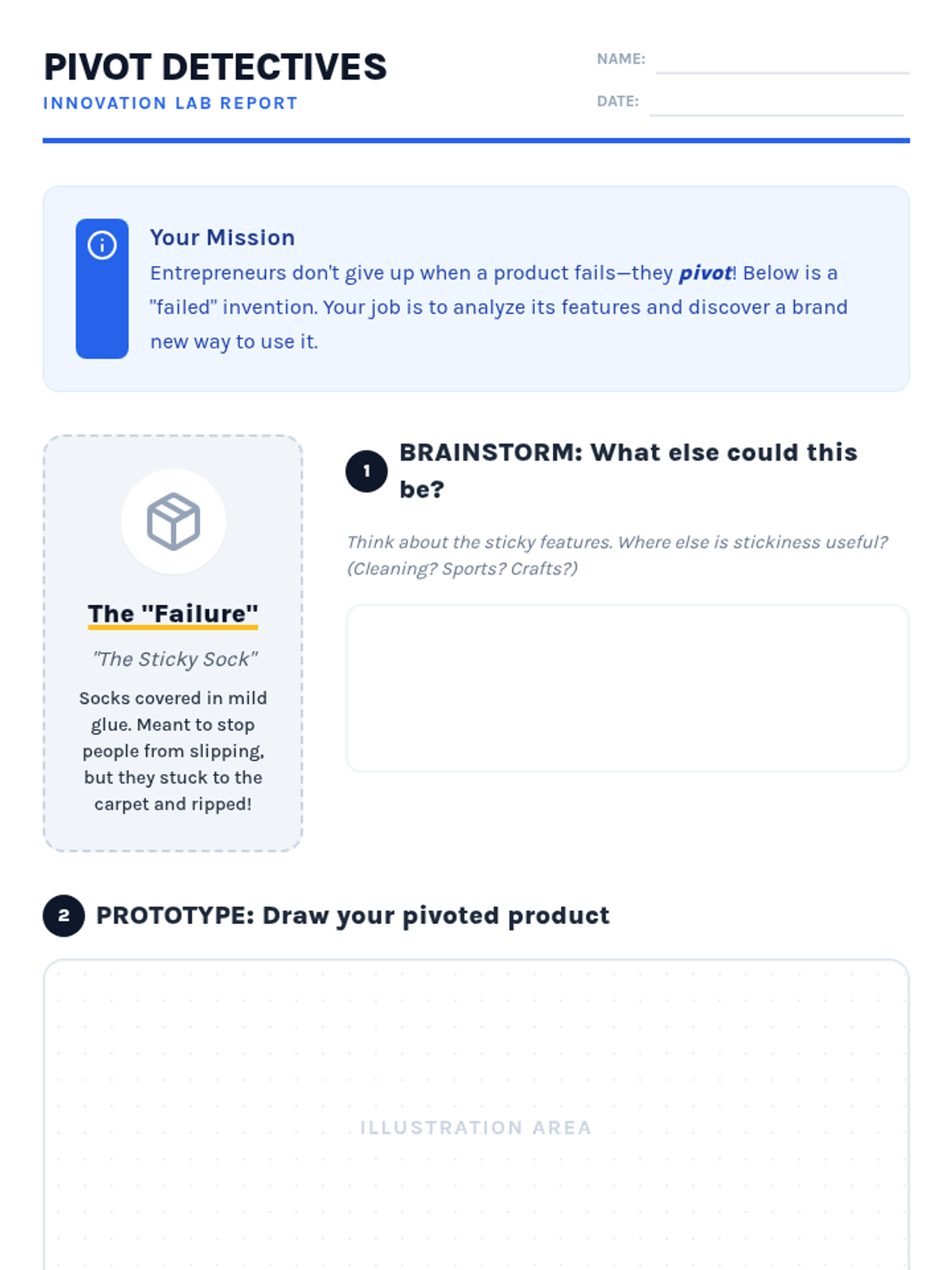
Students analyze how famous failures became successes through 'pivoting.' They learn to identify opportunities within setbacks.
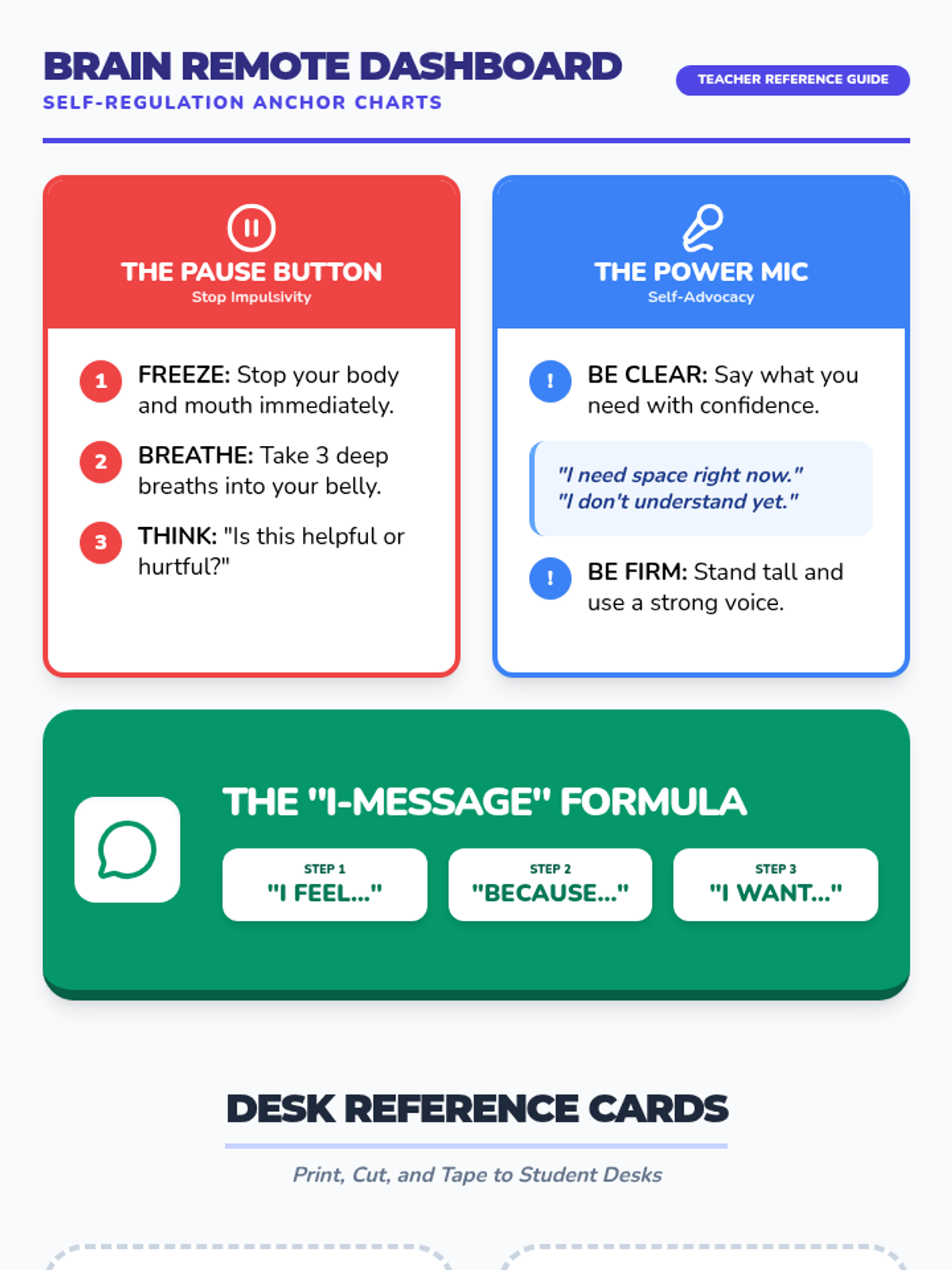
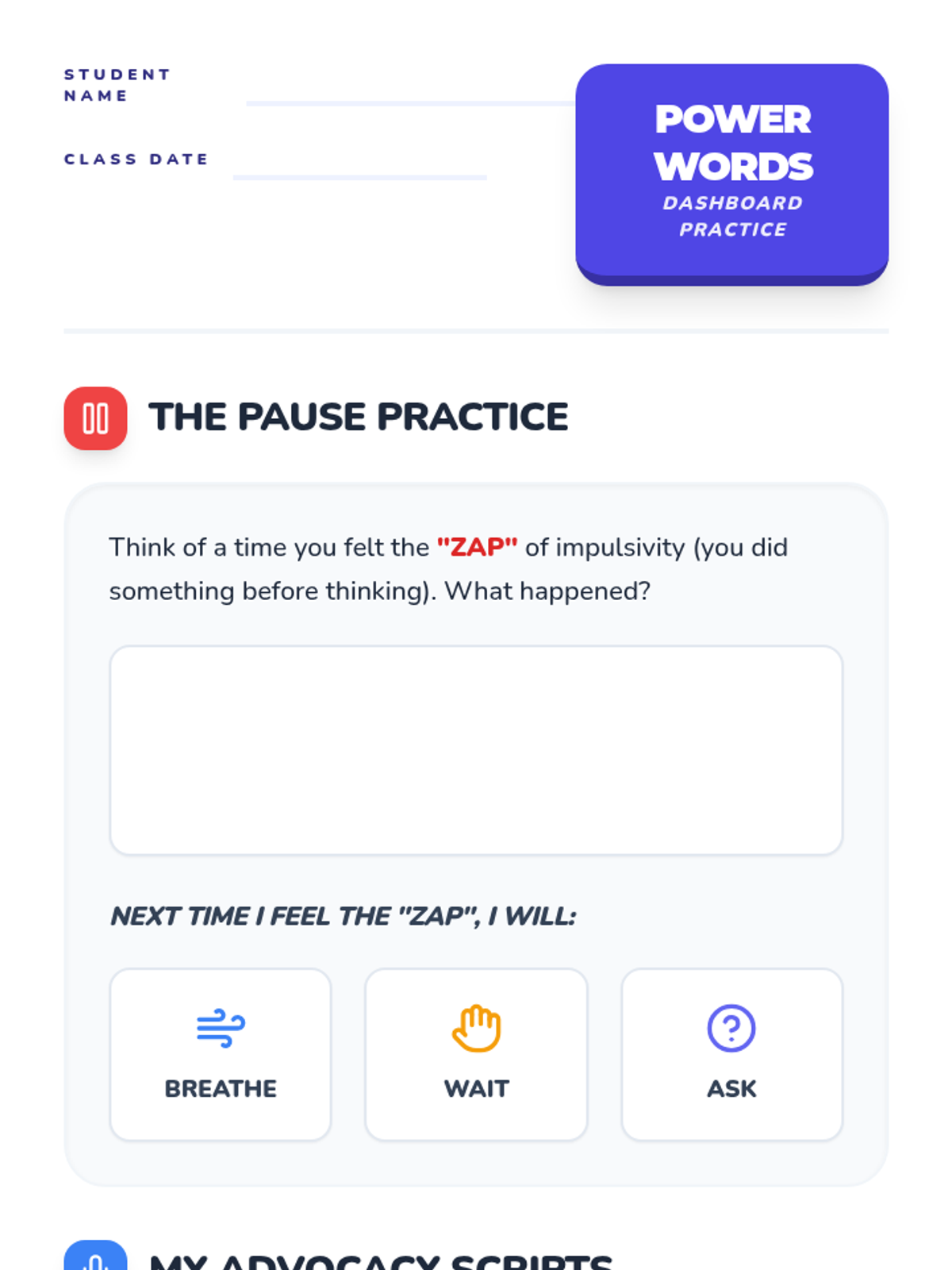
A comprehensive lesson exploring the 'Brain Remote' to manage impulsive urges and use 'Power Words' for self-advocacy and conflict resolution.
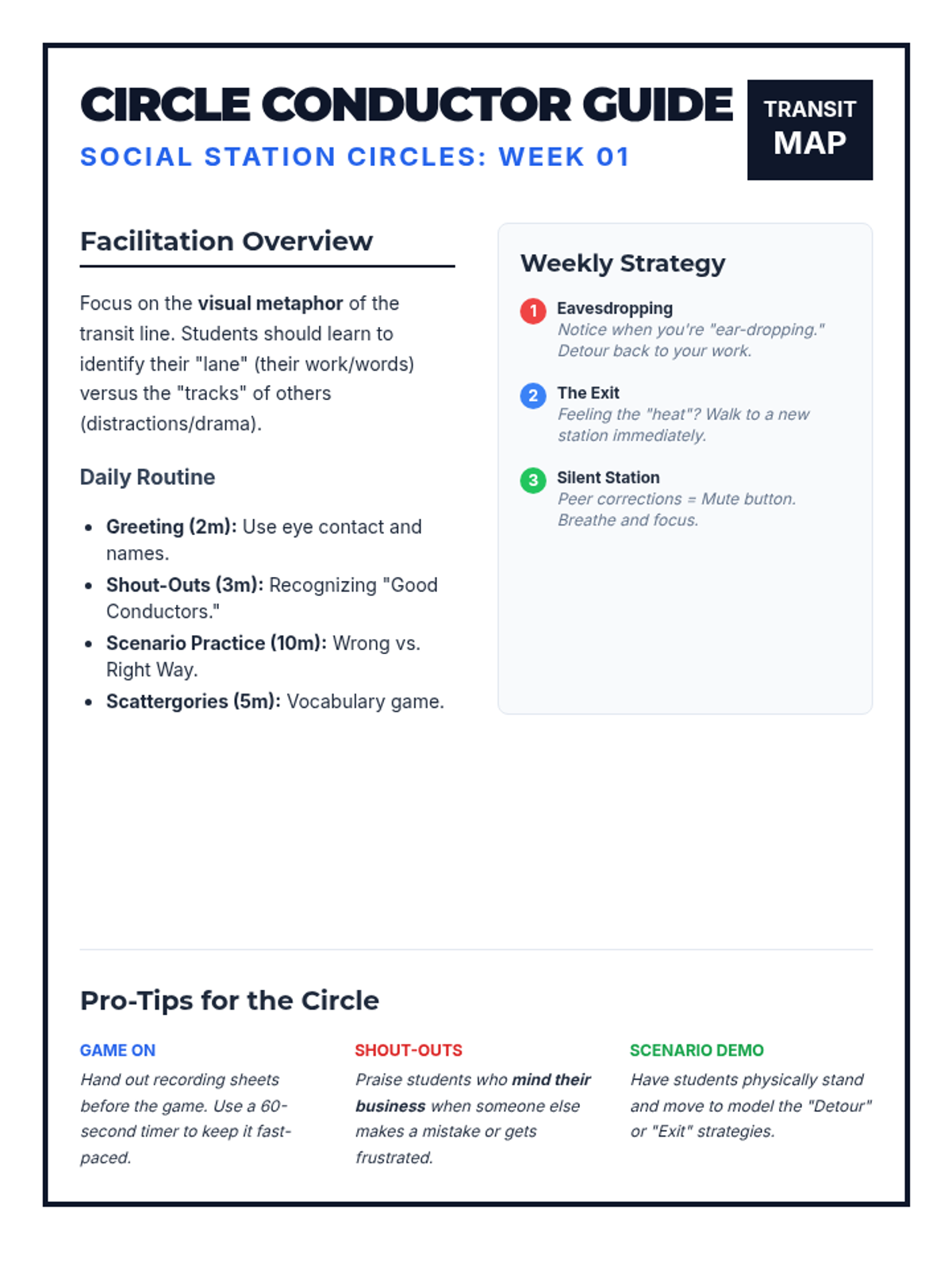
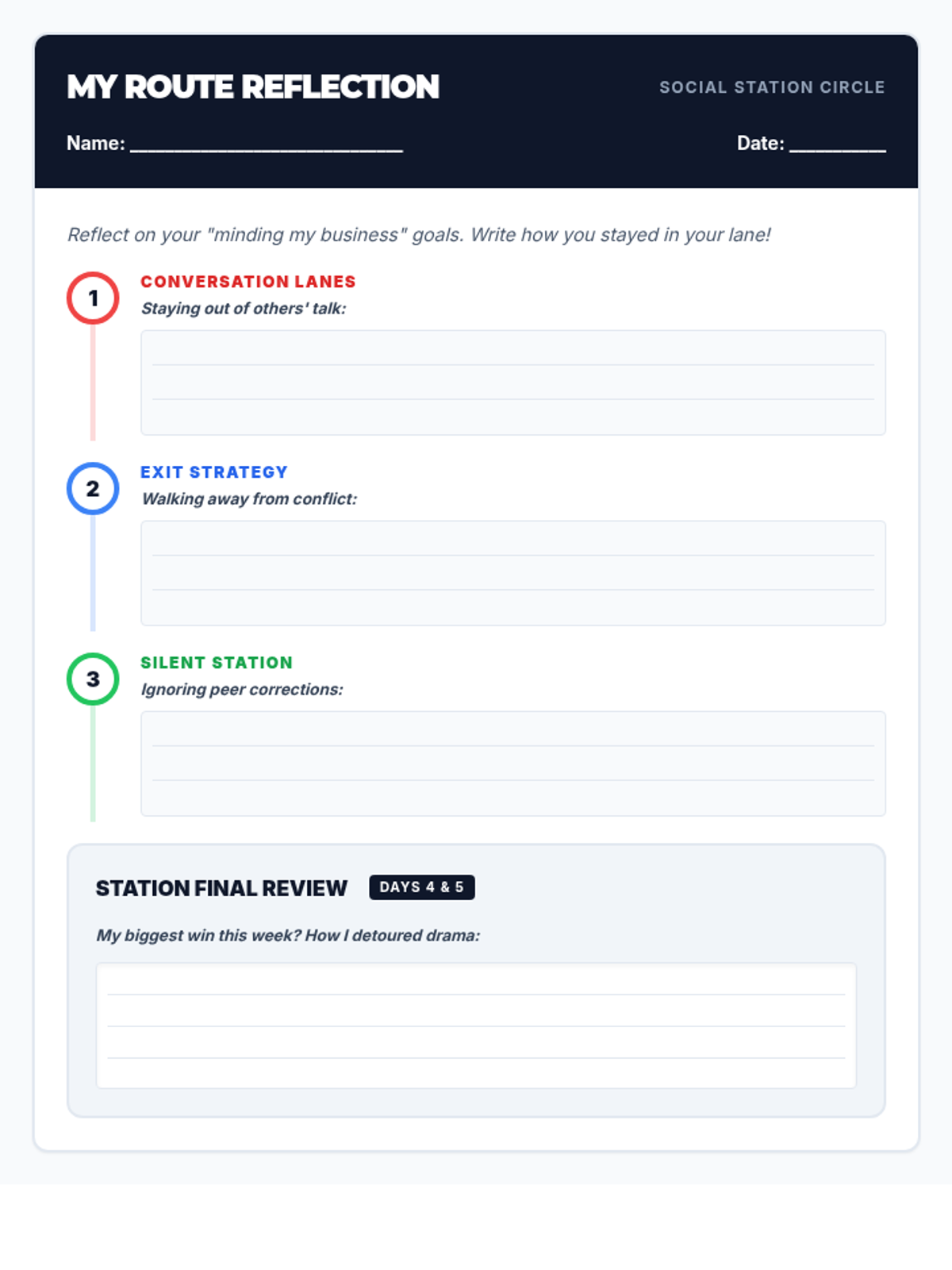
Day 5 covers staying focused and not contributing to classroom distractions.
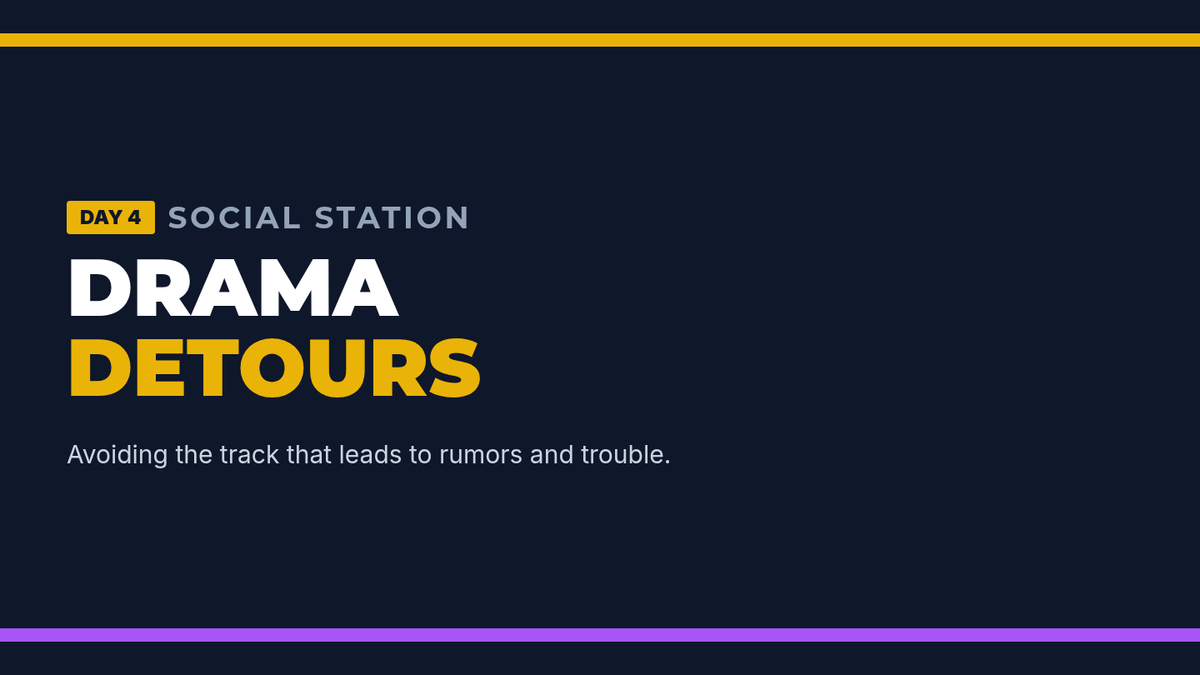
Day 4 teaches students how to avoid drama and rumors by taking a 'detour'.
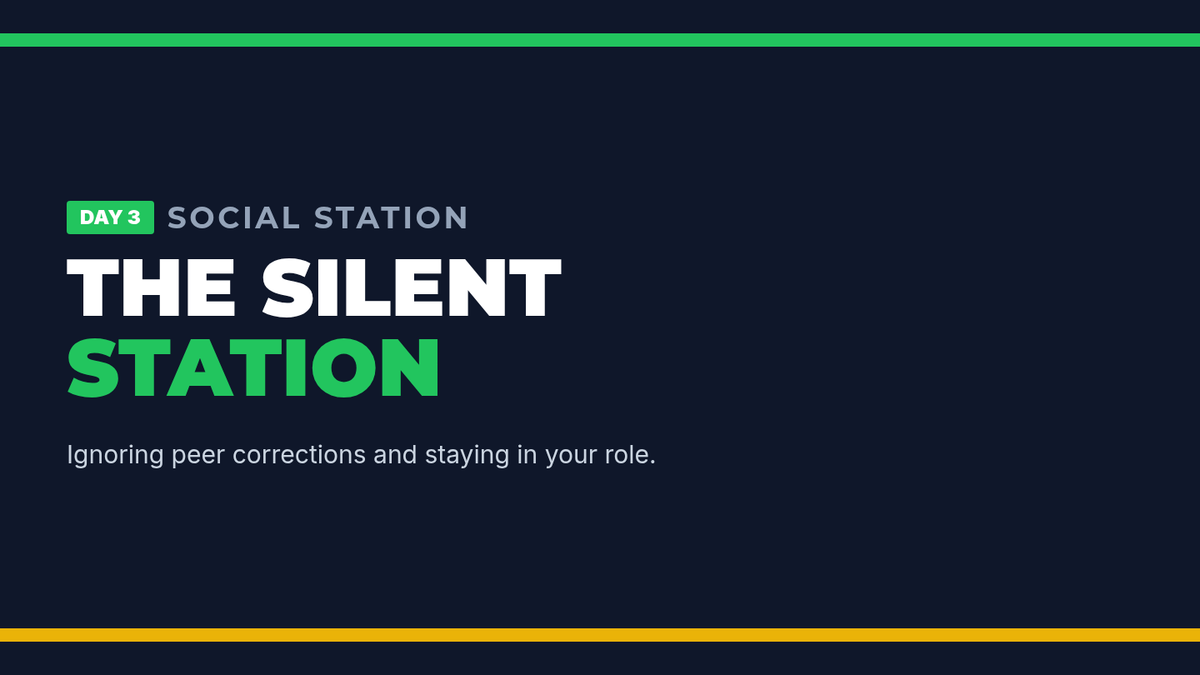
Day 3 addresses how to ignore peer corrections and focus on one's own work.
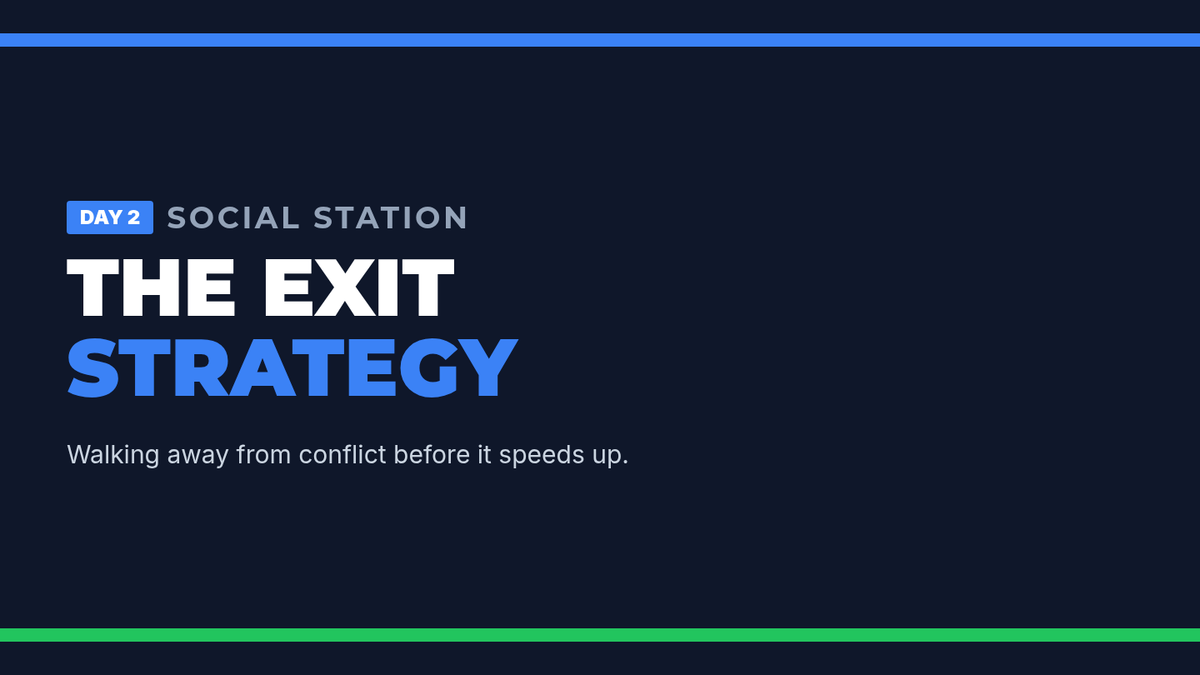
Day 2 focuses on the 'exit strategy' for walking away from rising conflict.
Day 1 focuses on staying out of others' conversations and 'ear-dropping' awareness.
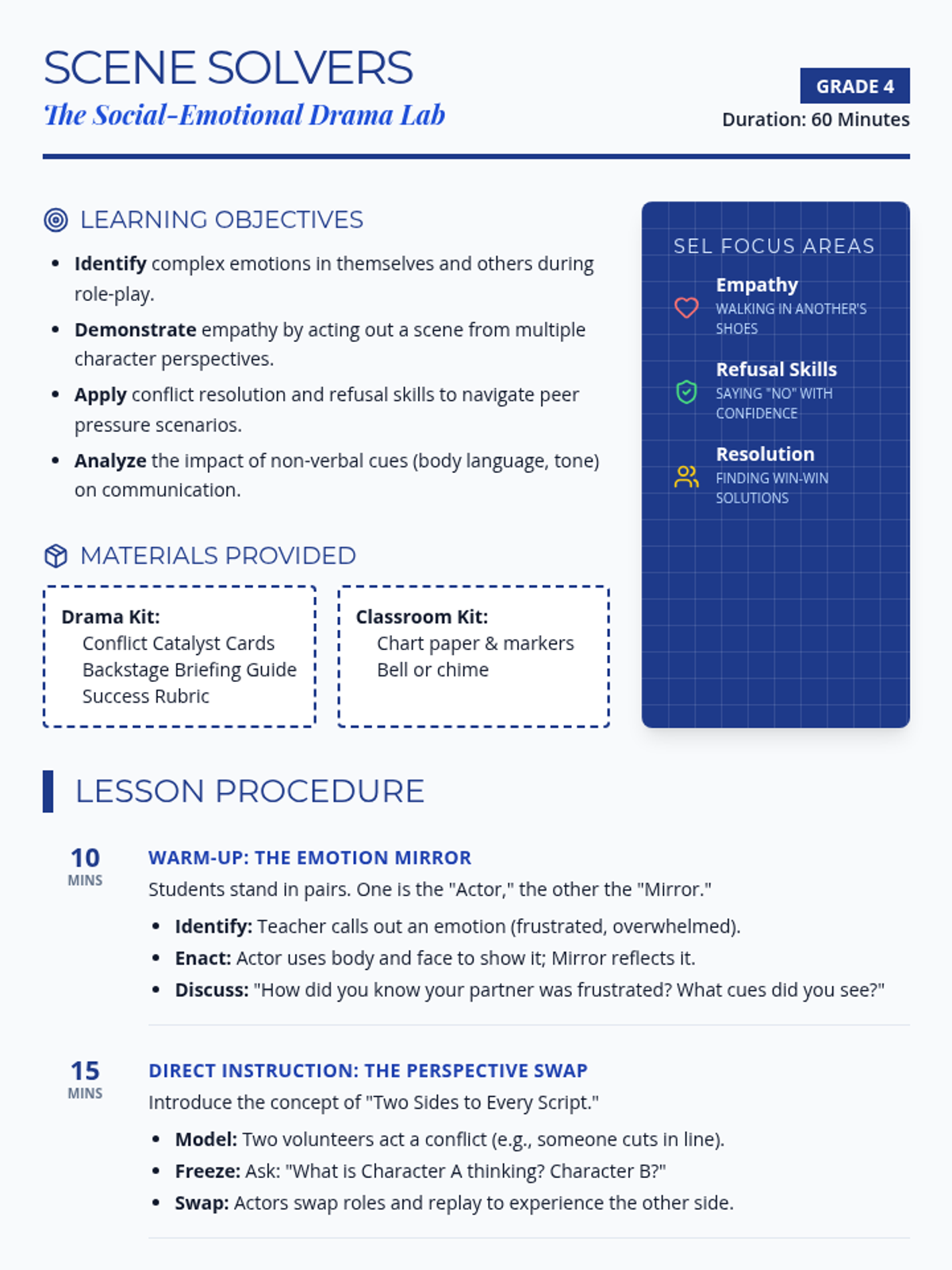
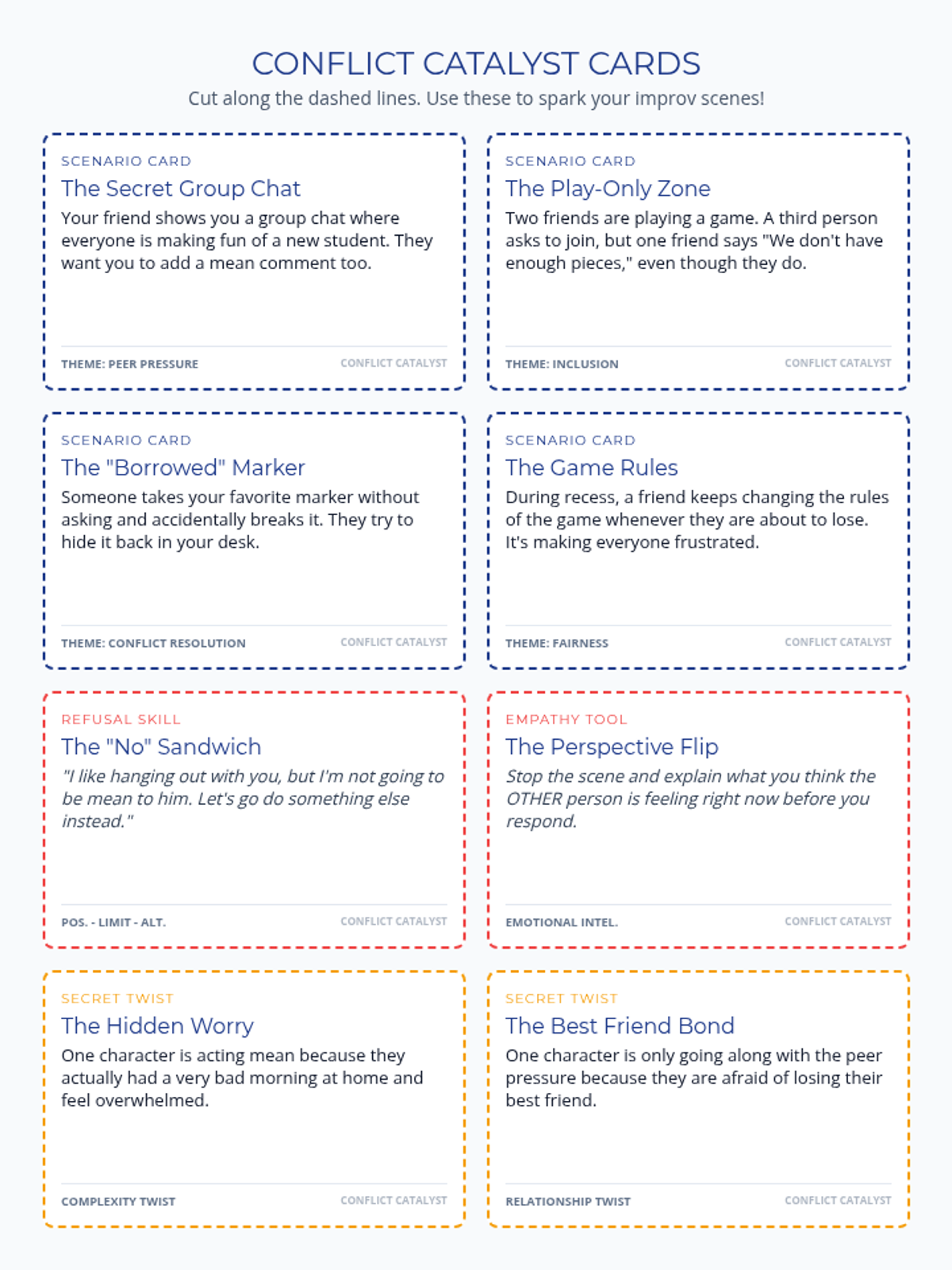
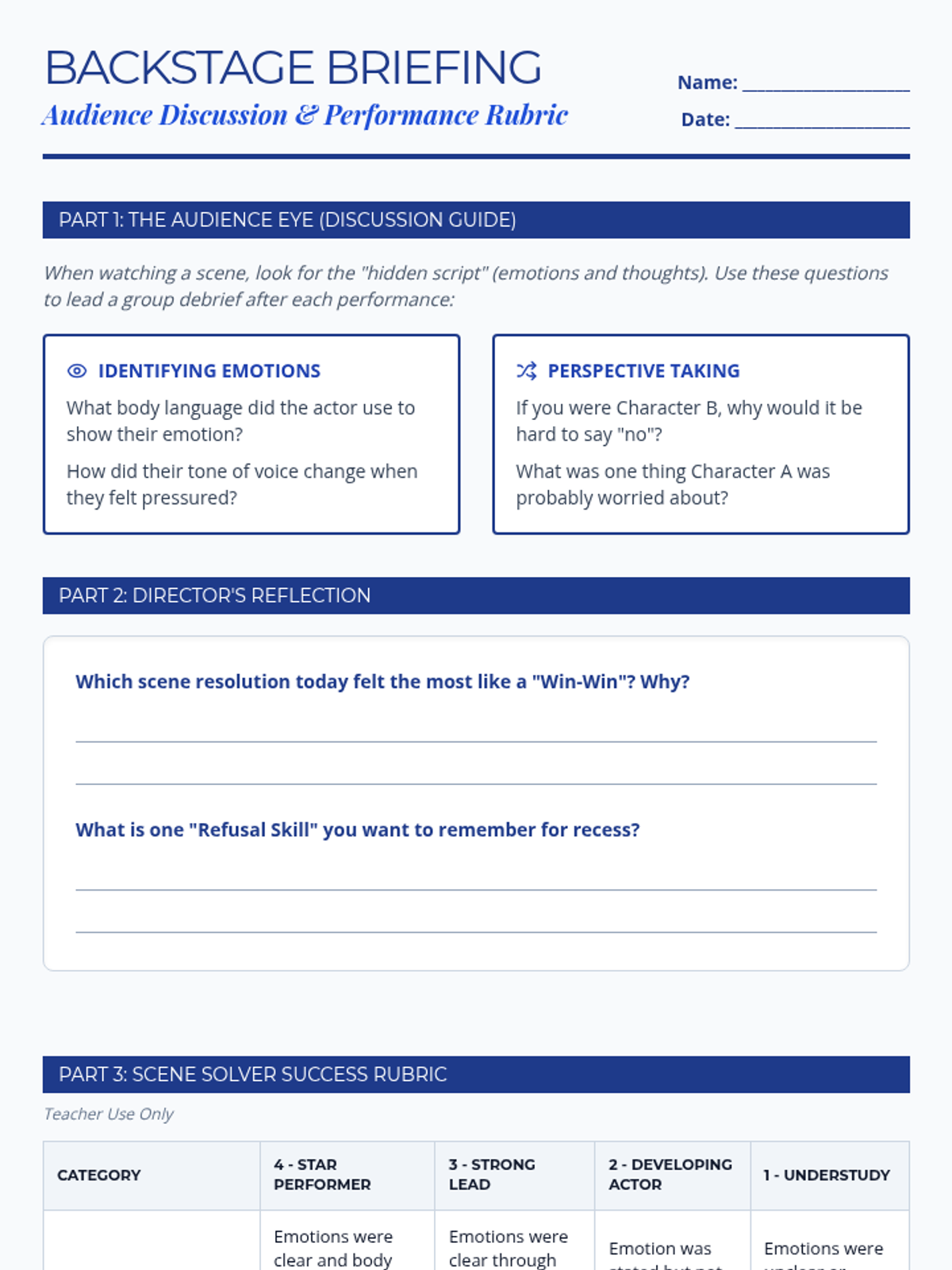
A 4th-grade drama lesson focusing on social-emotional learning through improv and role-play, covering conflict resolution, empathy, and refusal skills.
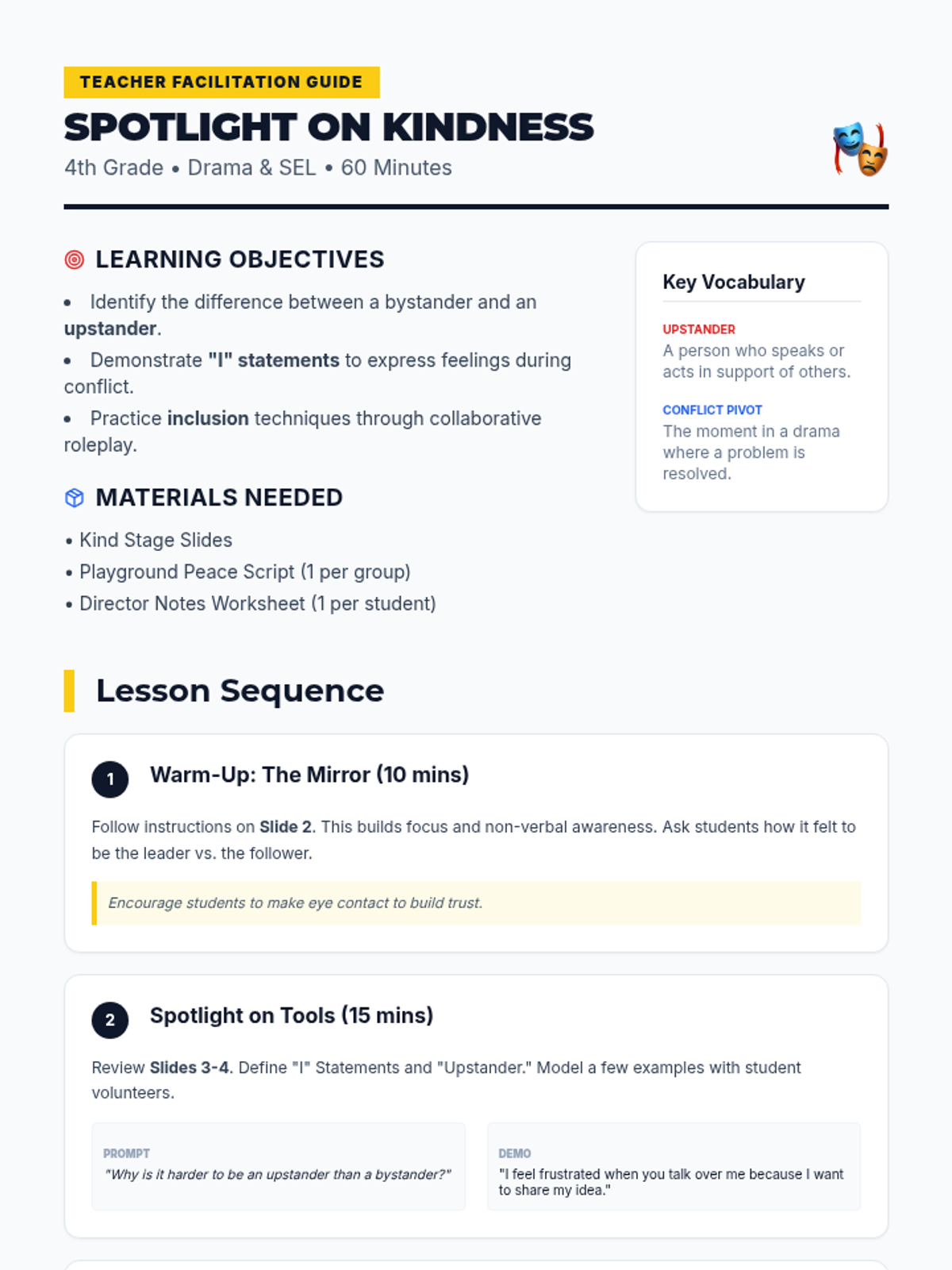
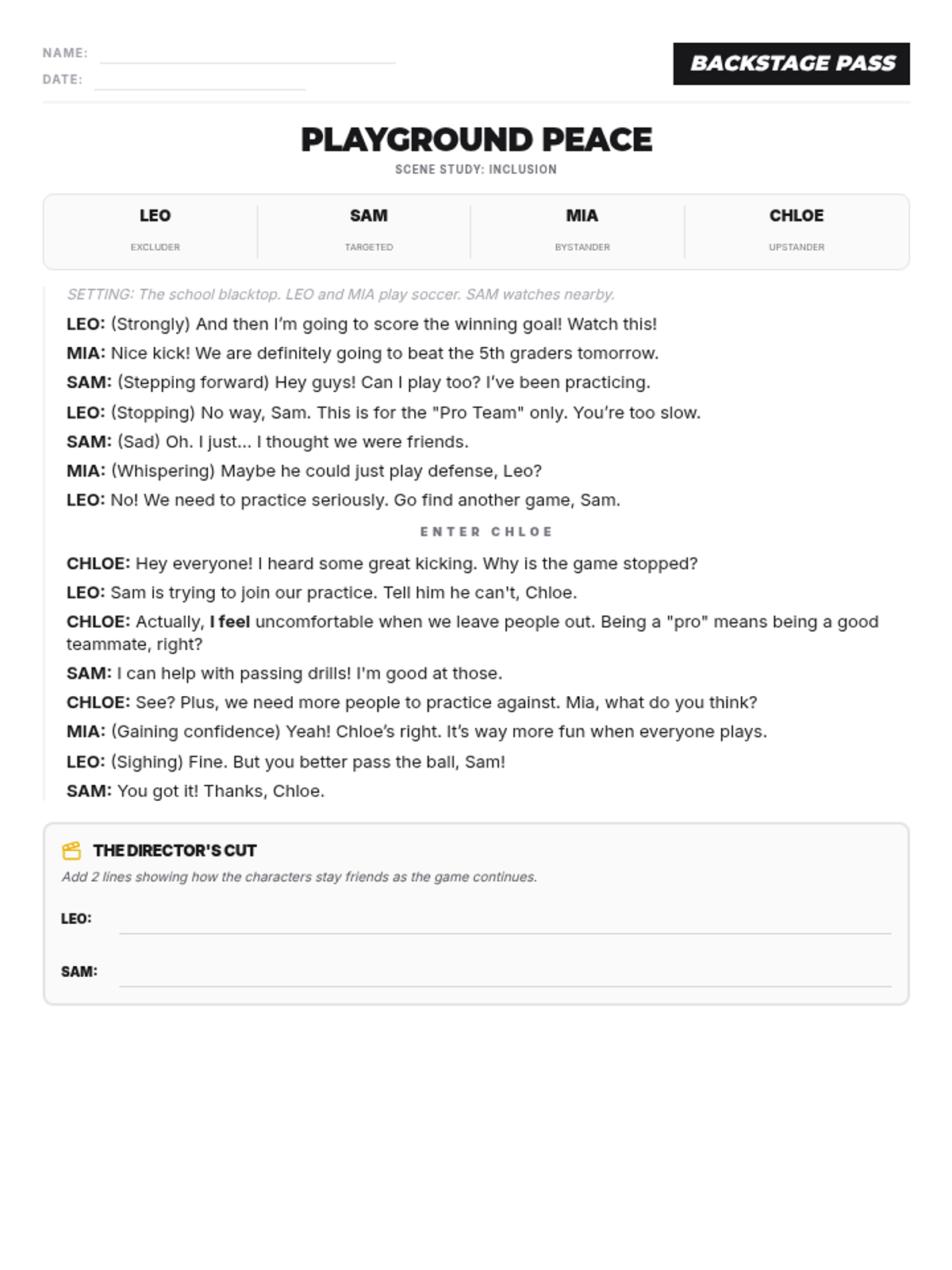
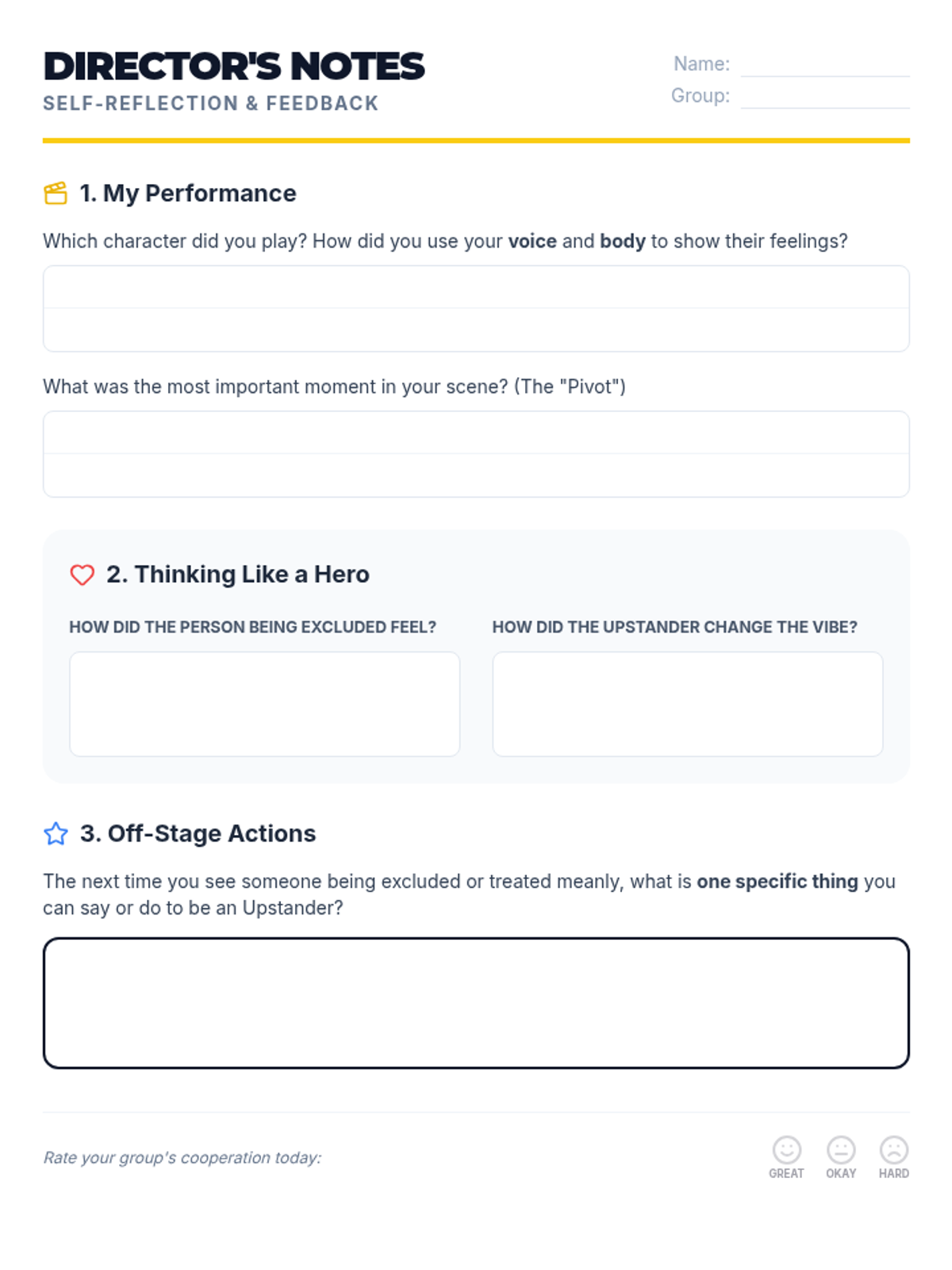
A drama-based lesson for 4th graders focused on building friendship, resolving conflicts, and preventing bullying through roleplay and performance. Students learn 'I' statements and the power of inclusion.
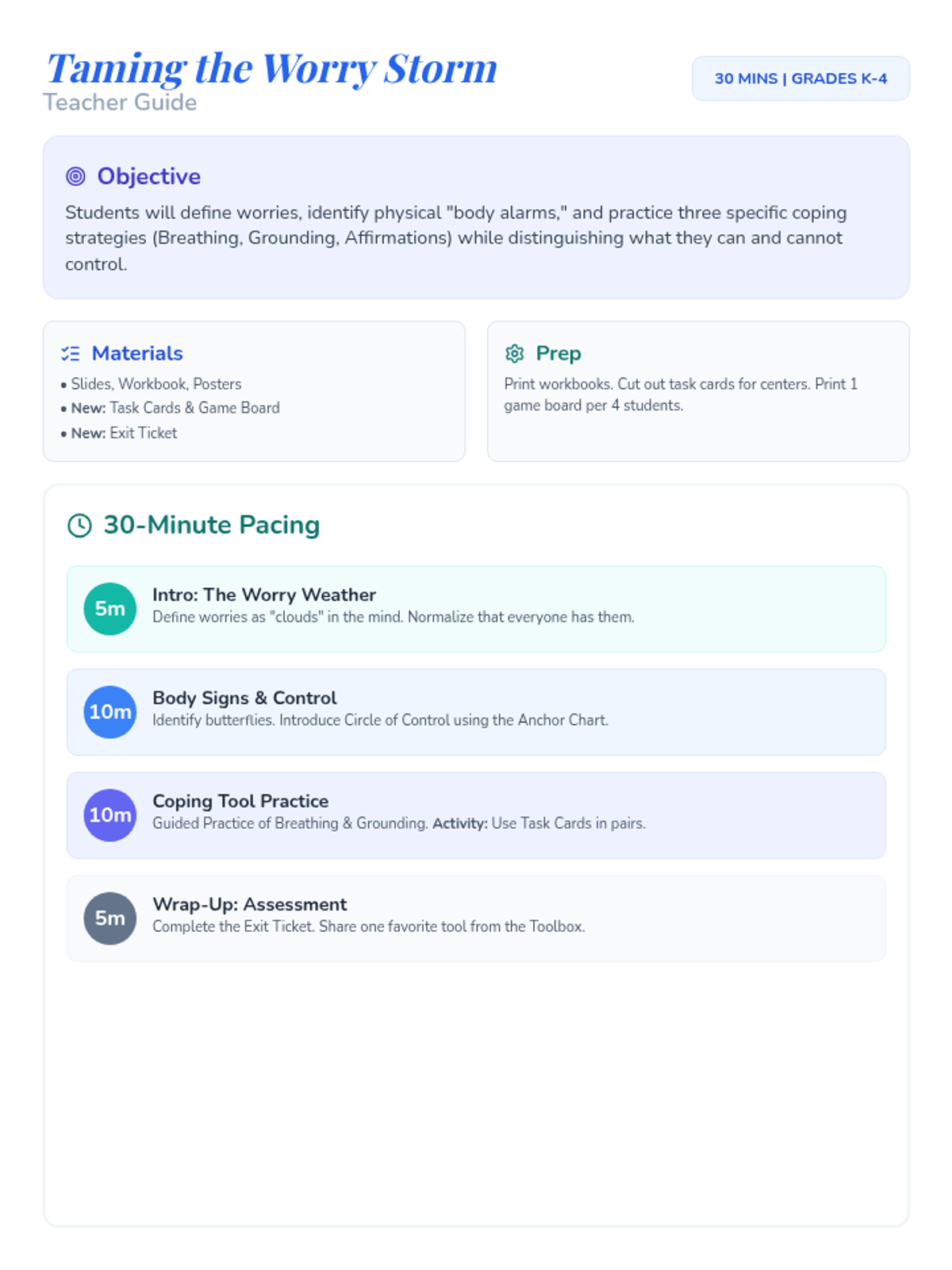
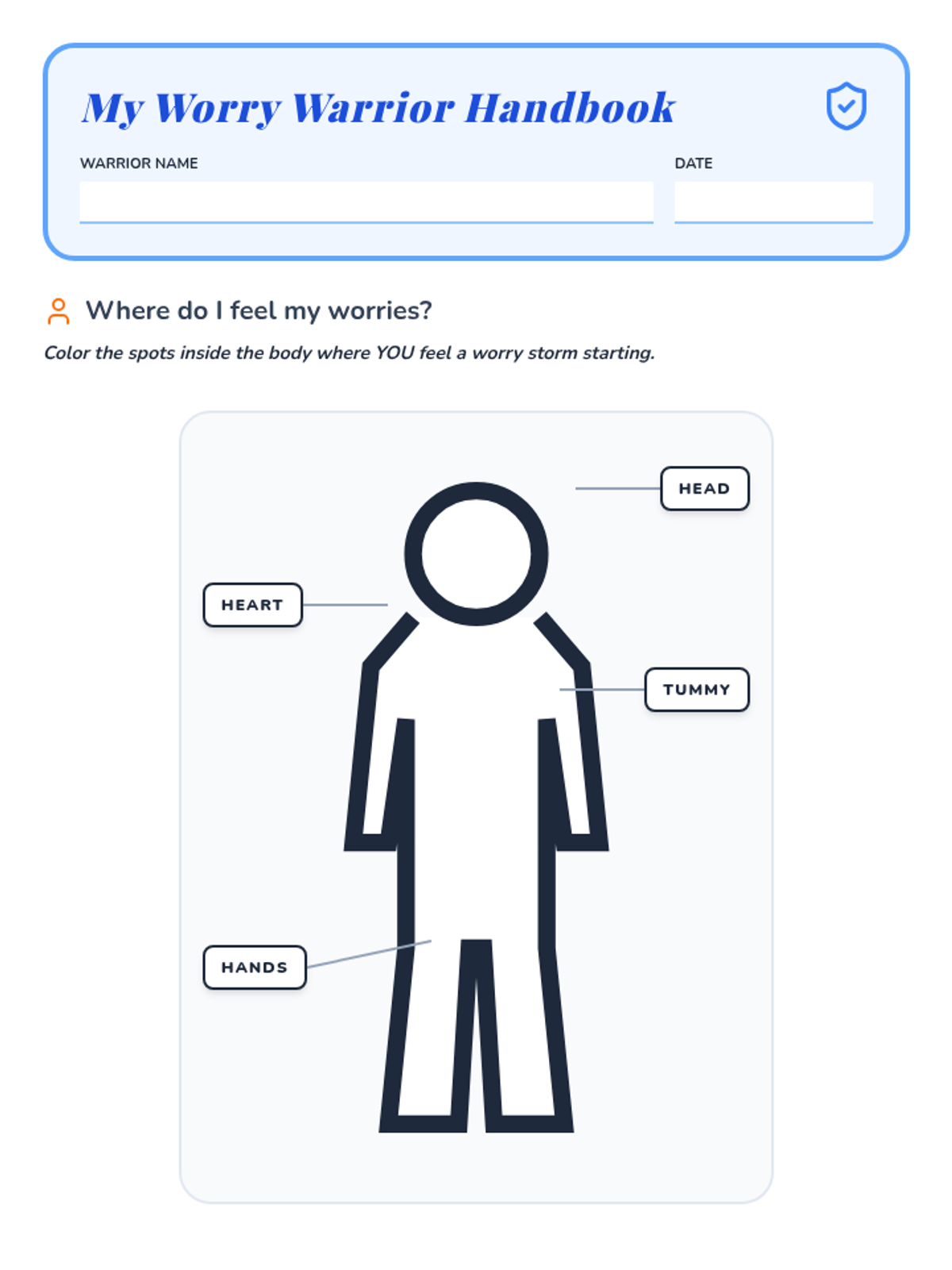
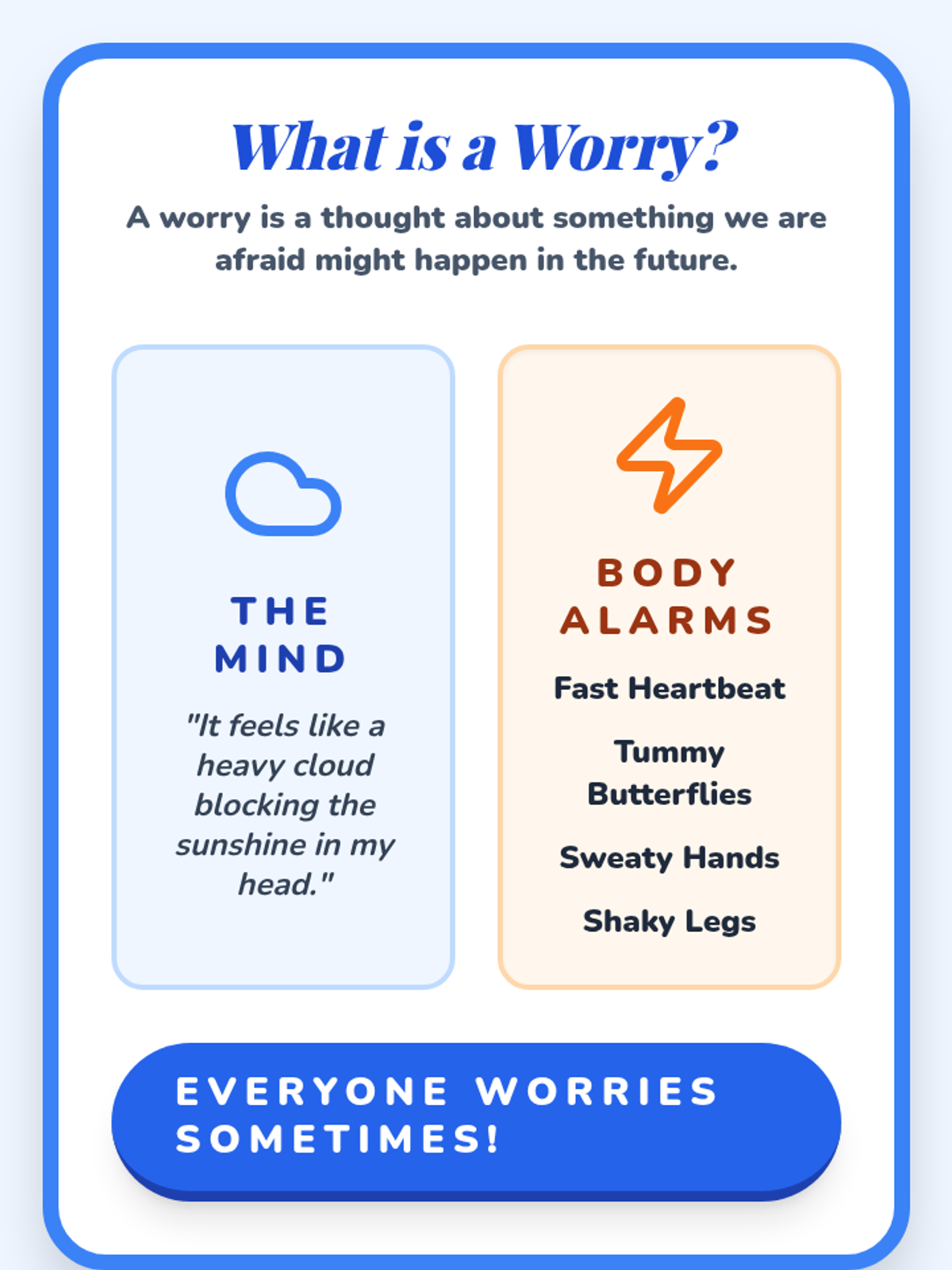
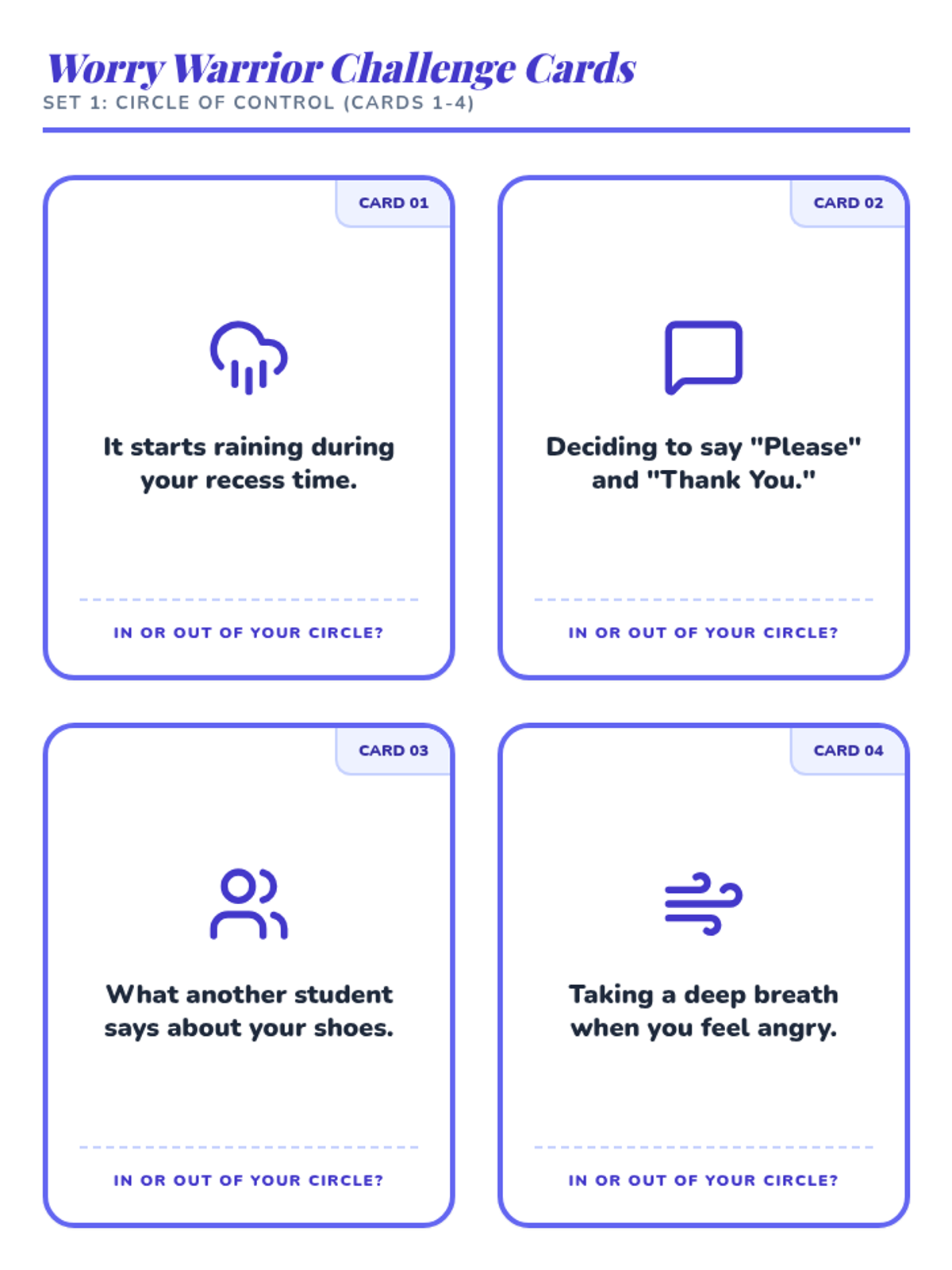
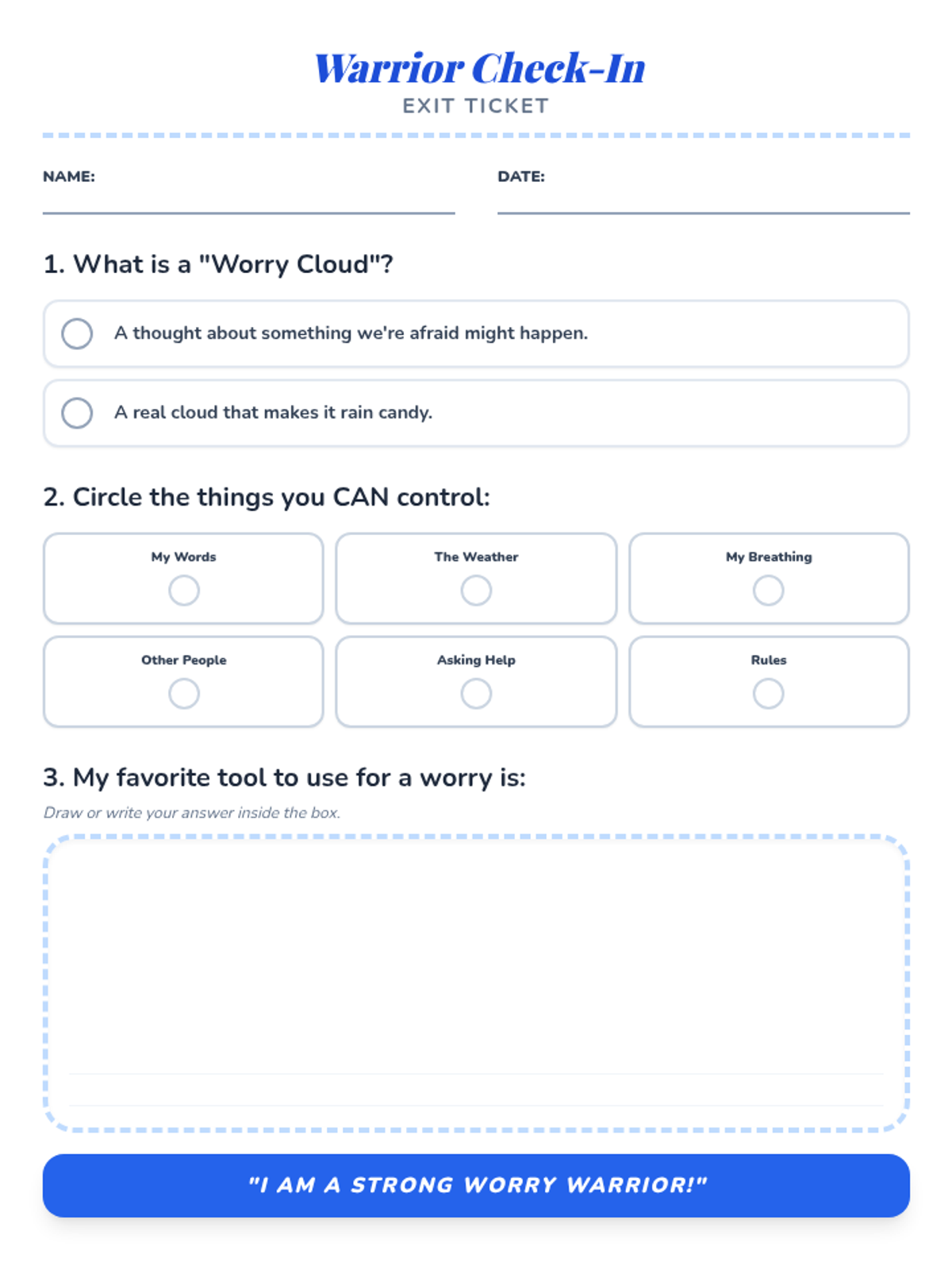
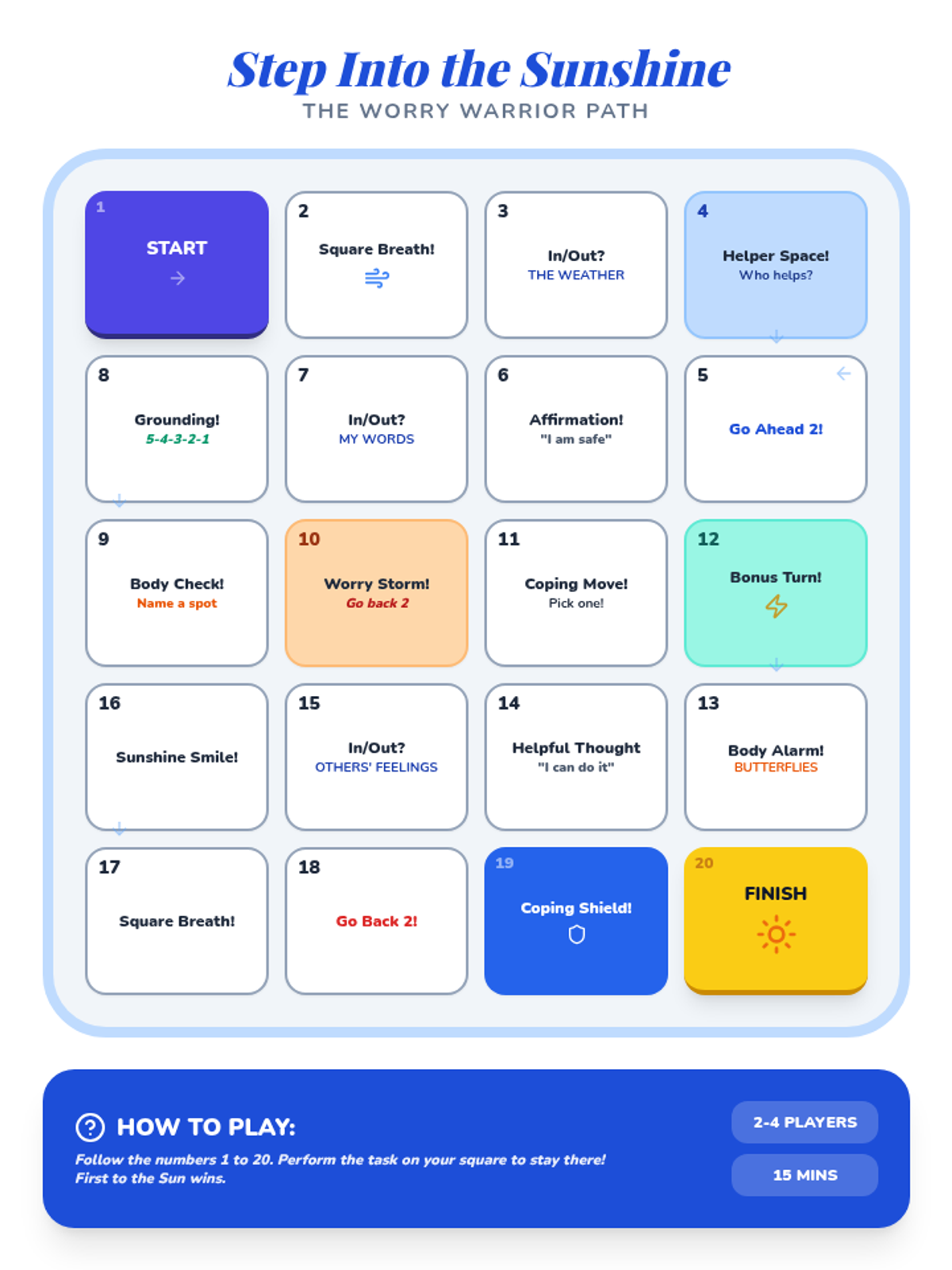
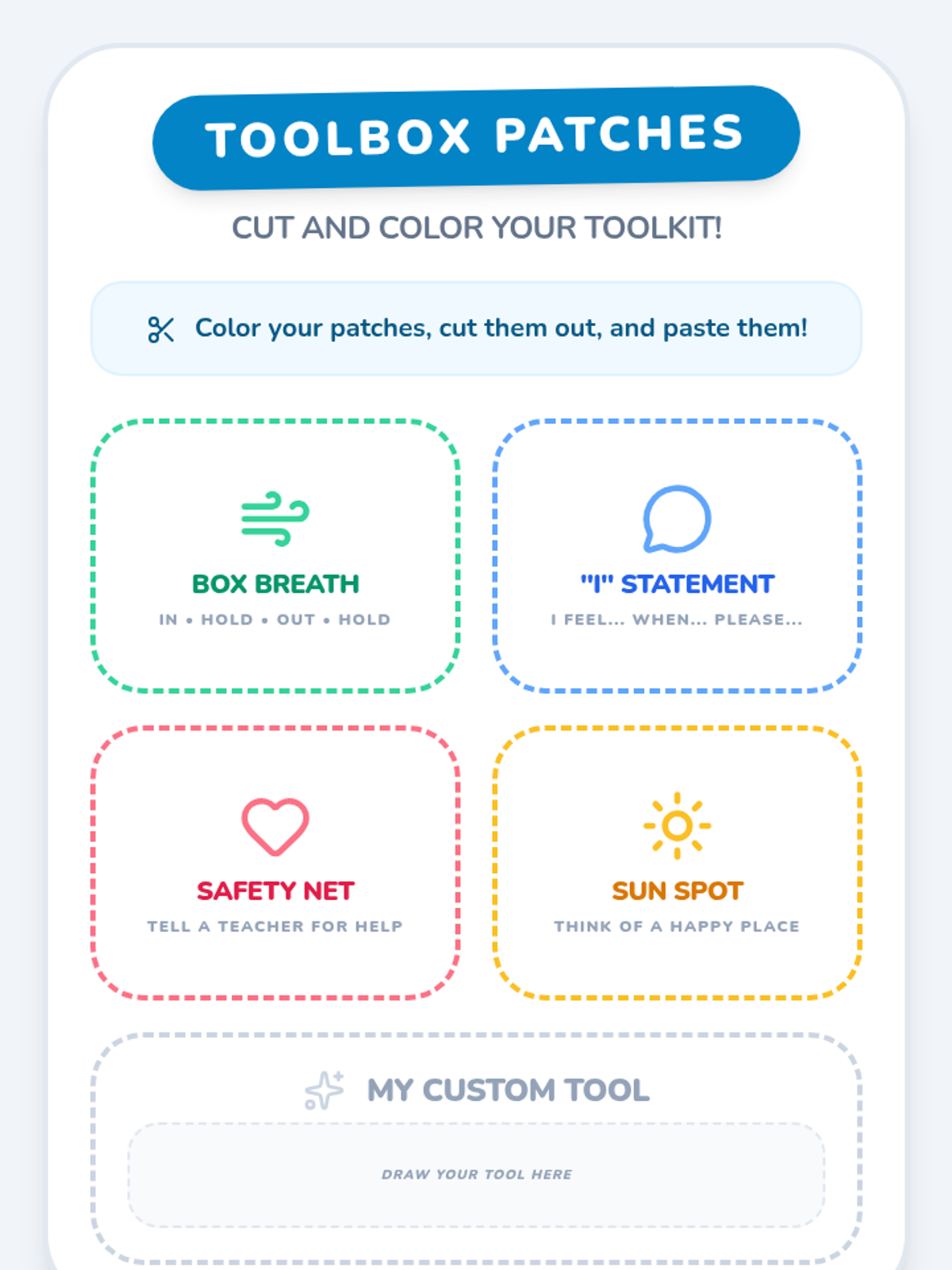
A comprehensive 30-minute lesson designed for grades K-4 to help students understand the nature of worries, recognize physical signs of anxiety, and learn to distinguish between what they can and cannot control. Students will explore practical coping strategies and build a personal 'Coping Toolbox'.
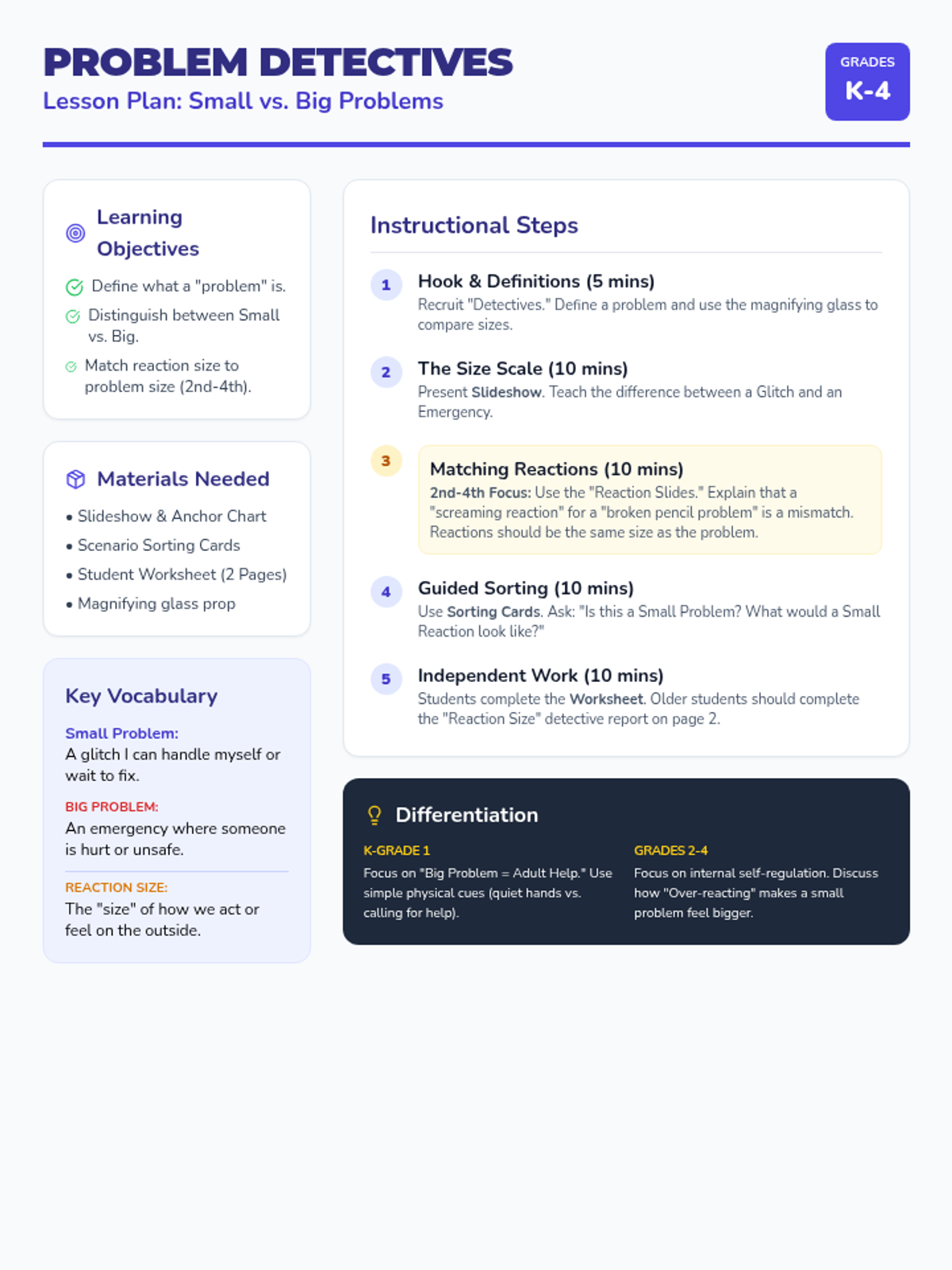
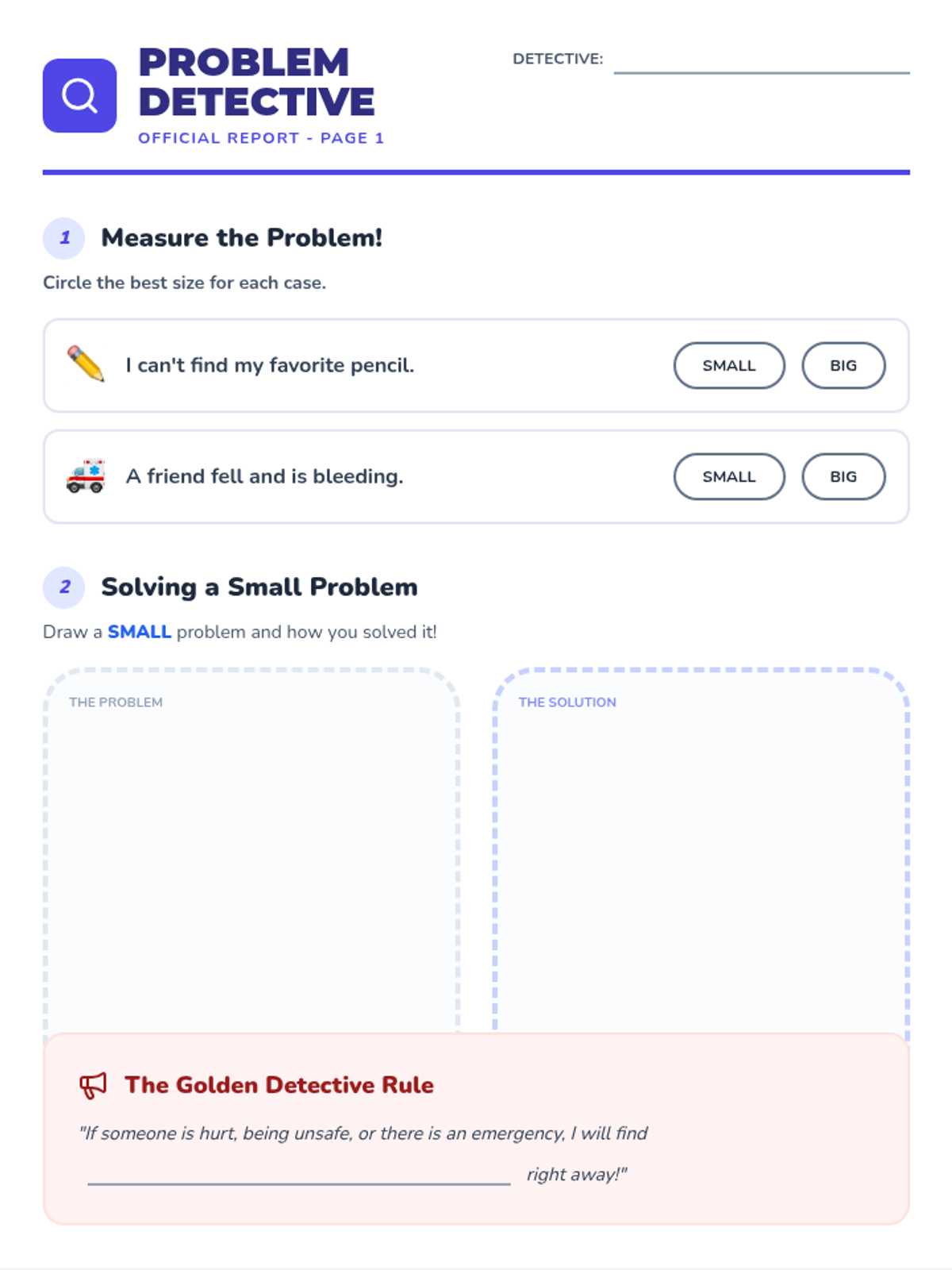
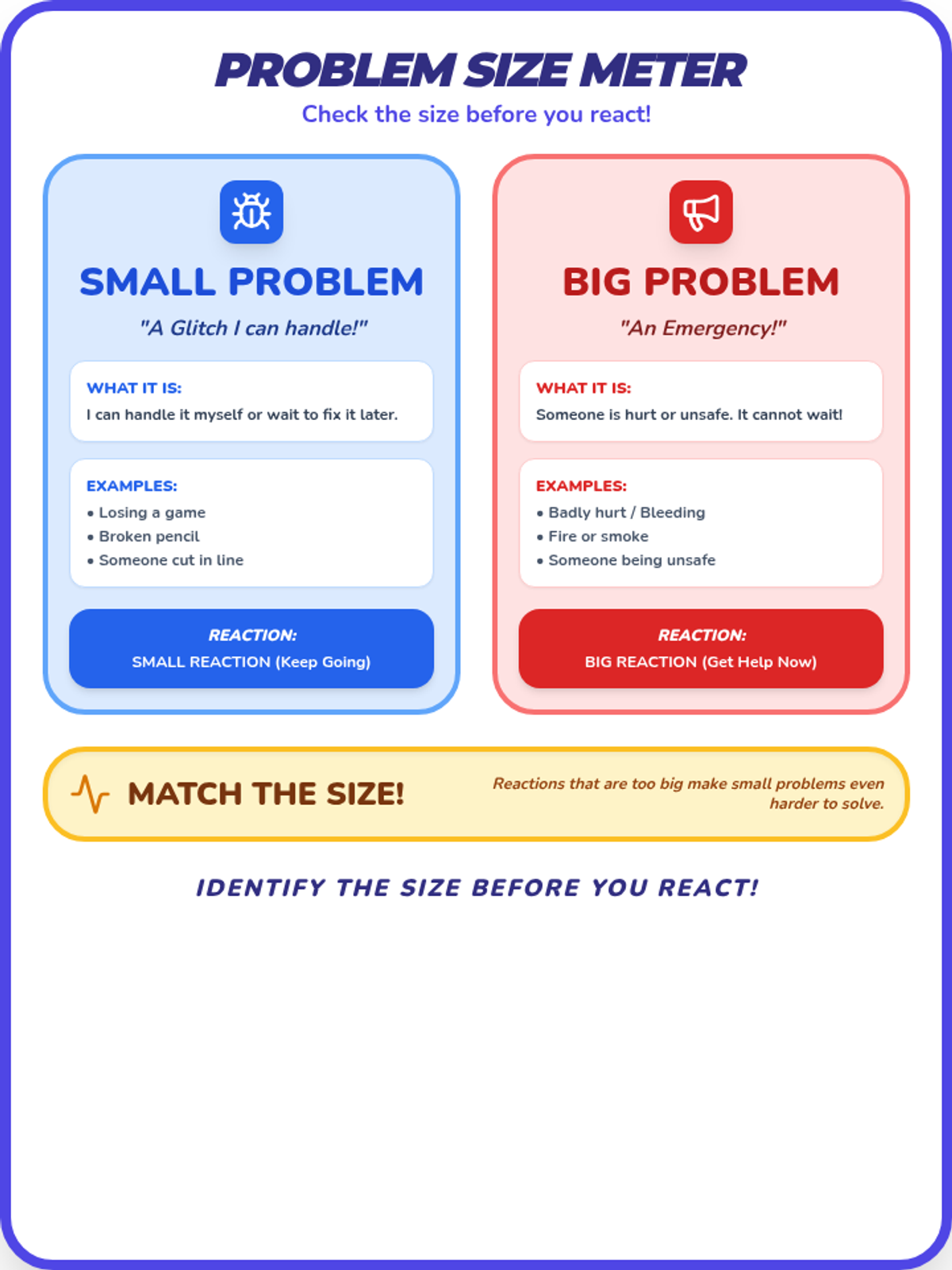
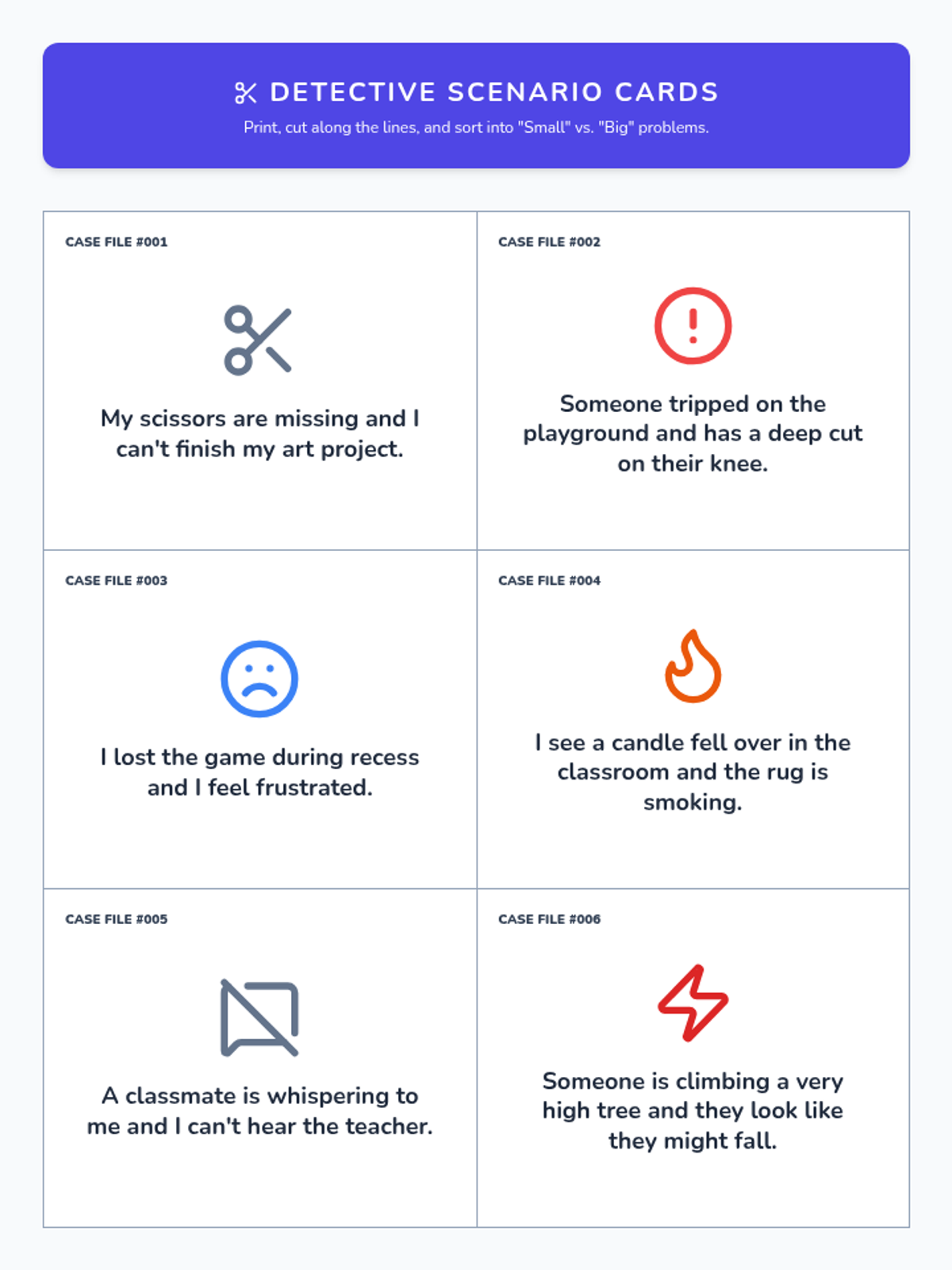
A lesson designed for K-4 students to distinguish between small problems they can handle independently and big problems that require immediate adult assistance. Students will learn to identify the 'size' of a problem to choose the appropriate reaction and coping strategy.
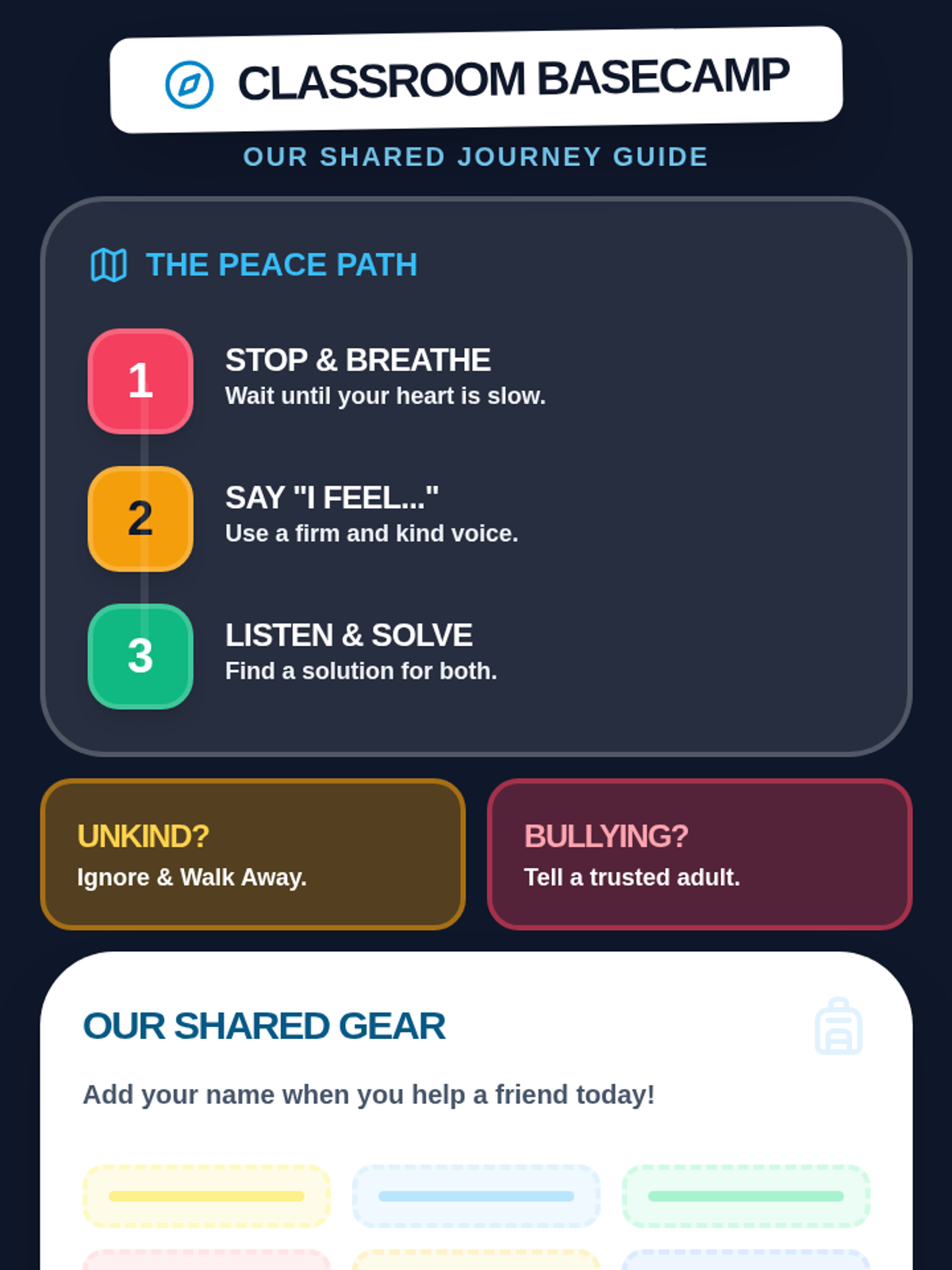
Applies regulation tools to social situations, including conflict resolution steps and handling unkind behavior or bullying.
Focuses on practical tools for regulation: deep breathing, mindfulness, and the 'I' Statement tool.
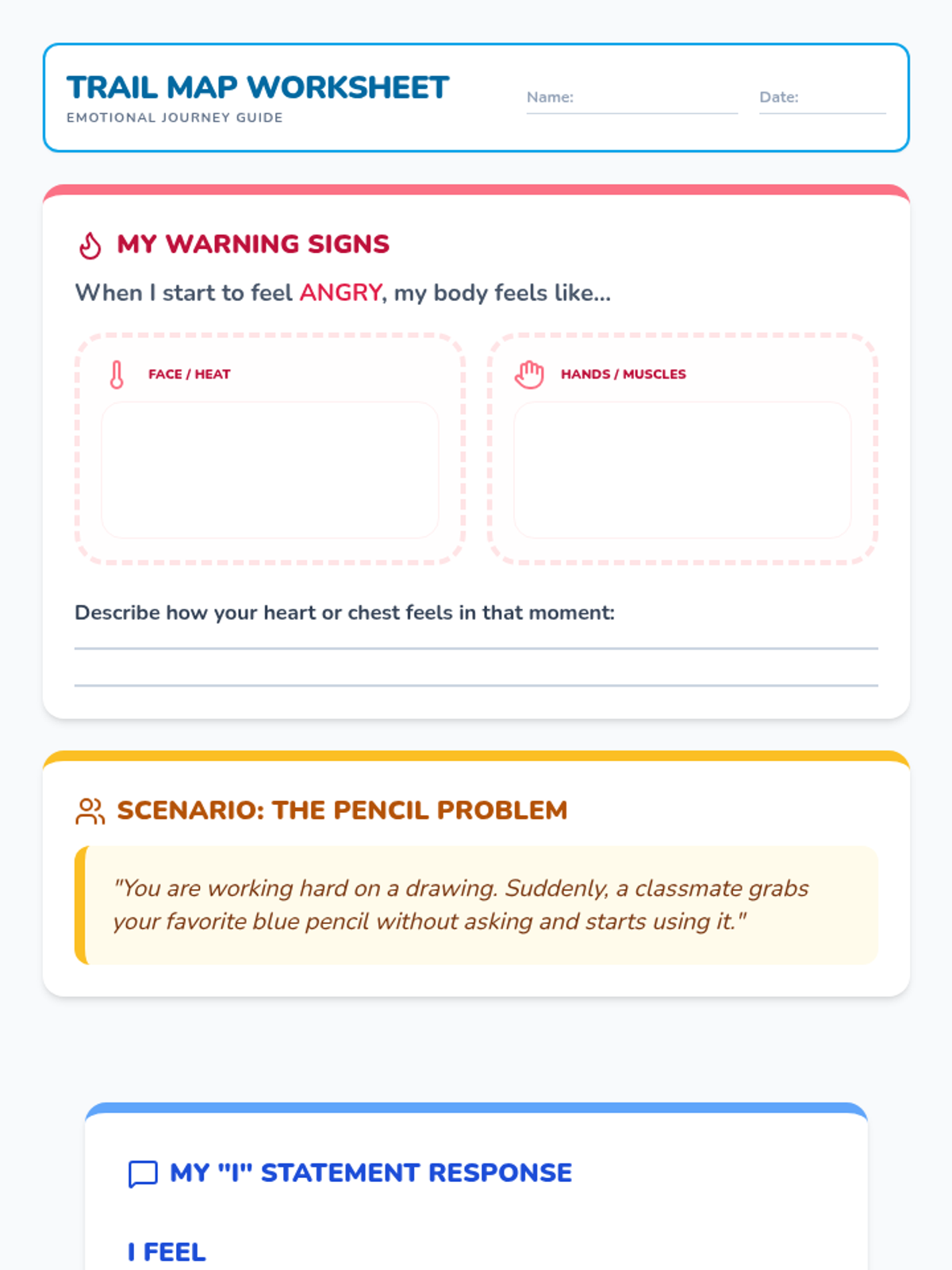
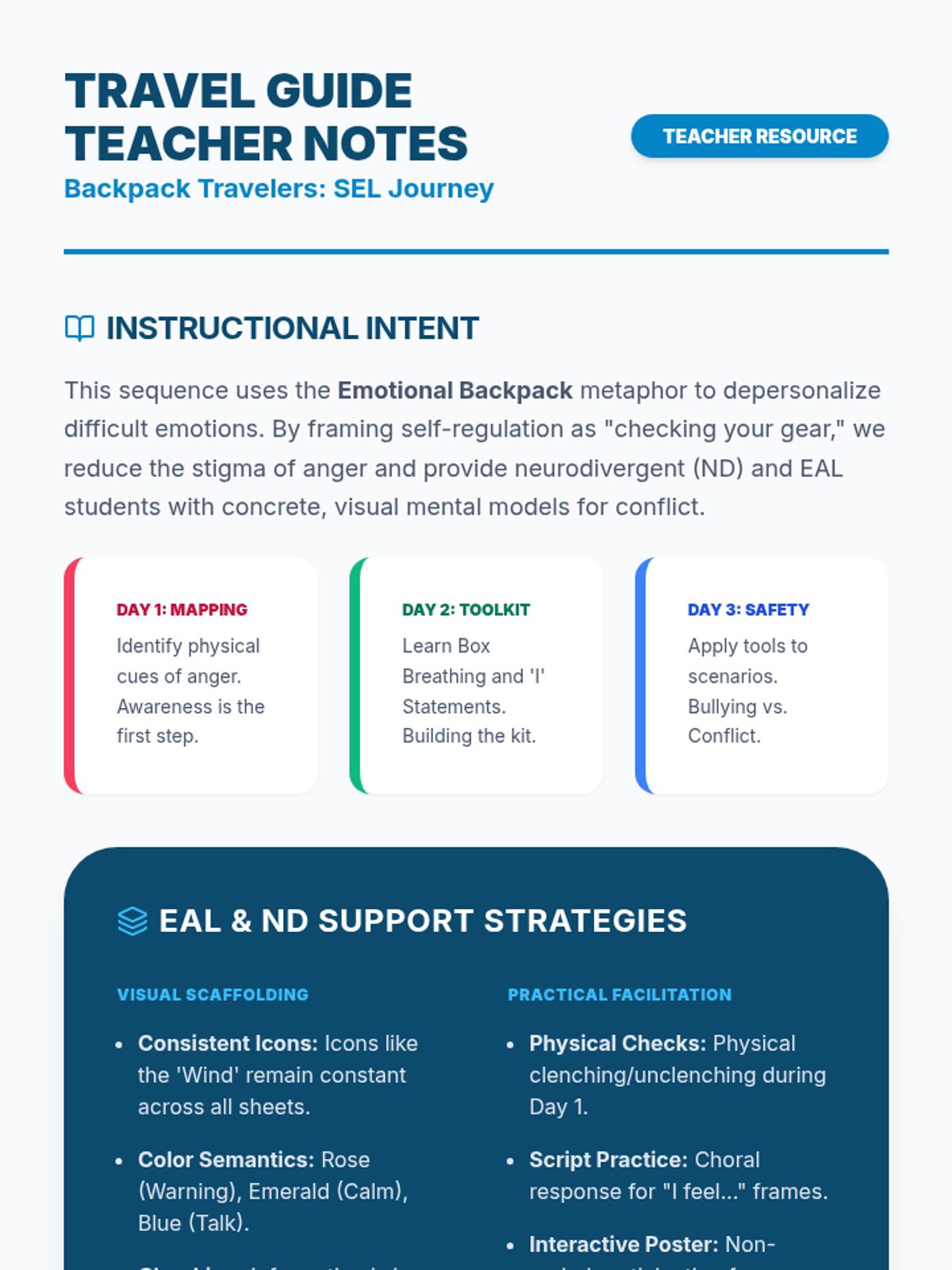
Students learn to identify physical signs of anger and use the 'Emotional Backpack' metaphor to understand that everyone carries feelings.
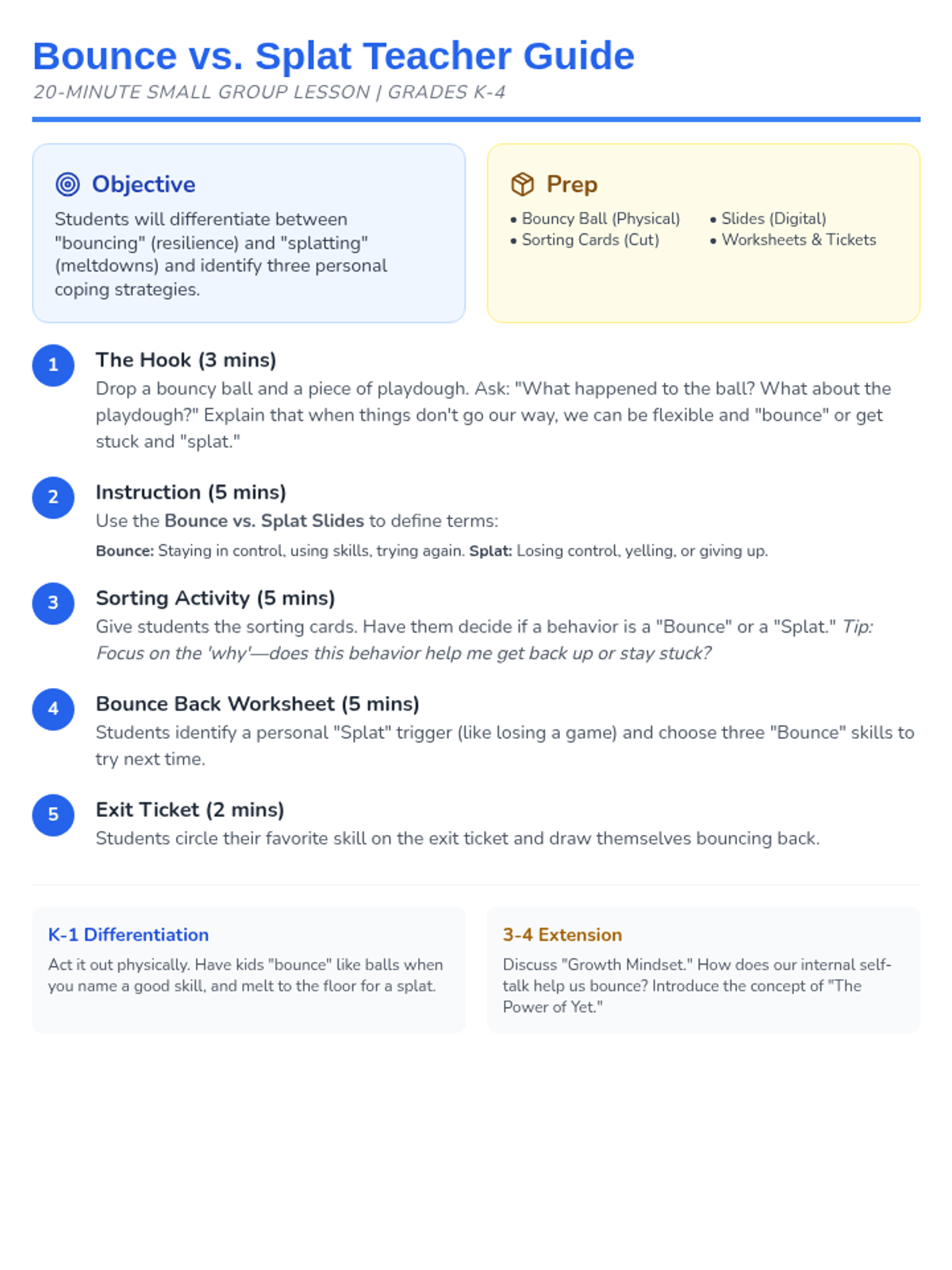
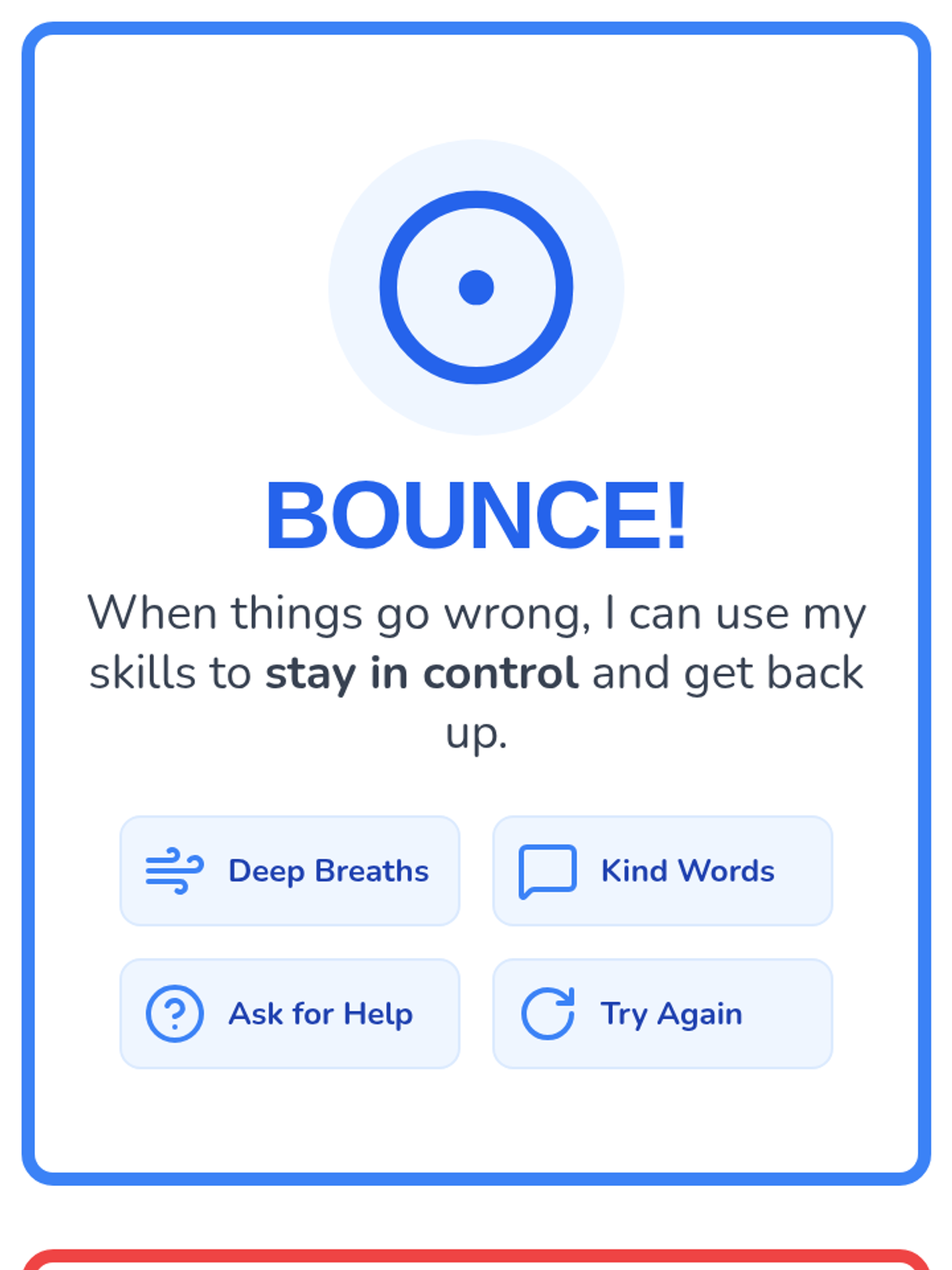
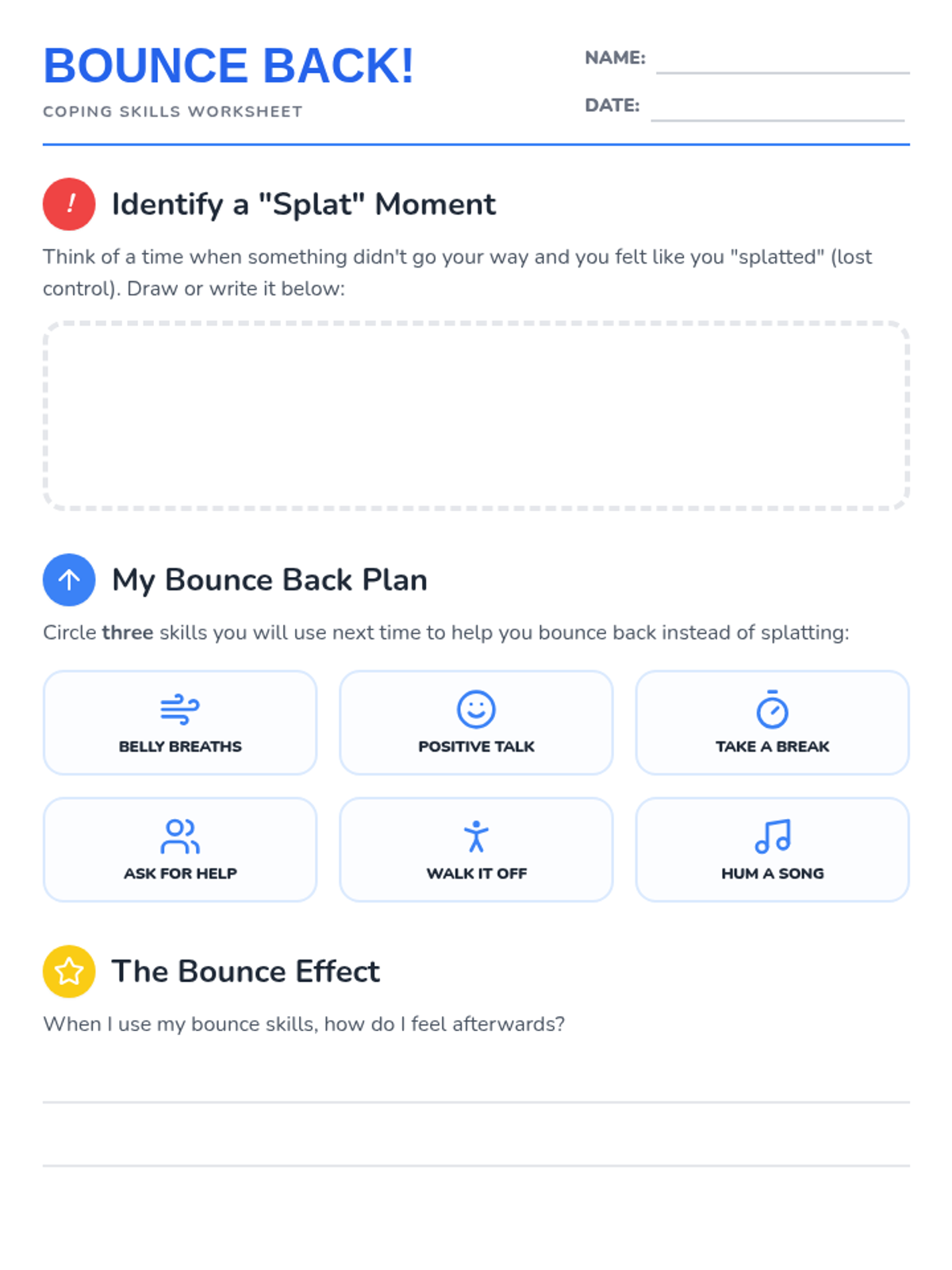
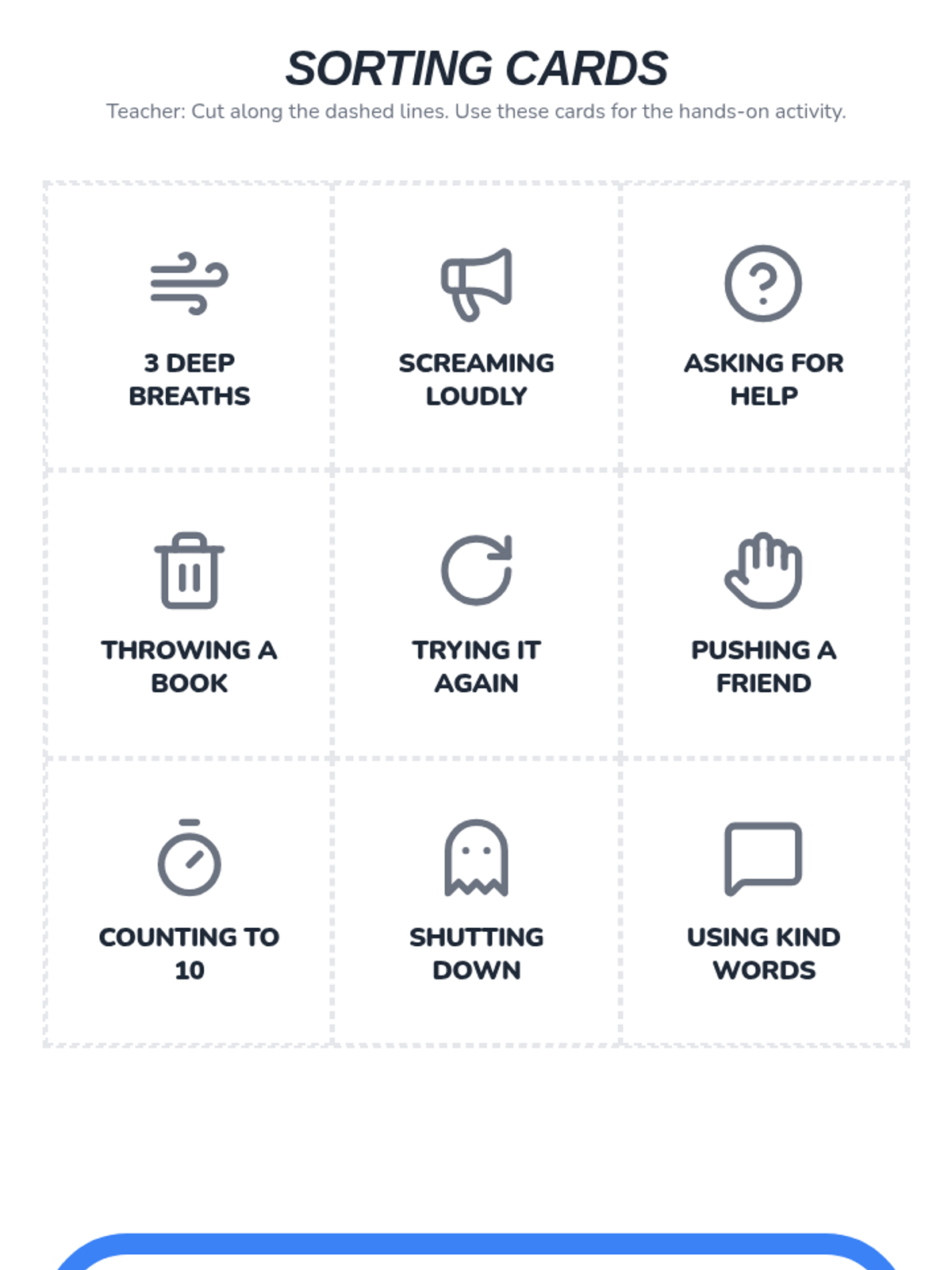
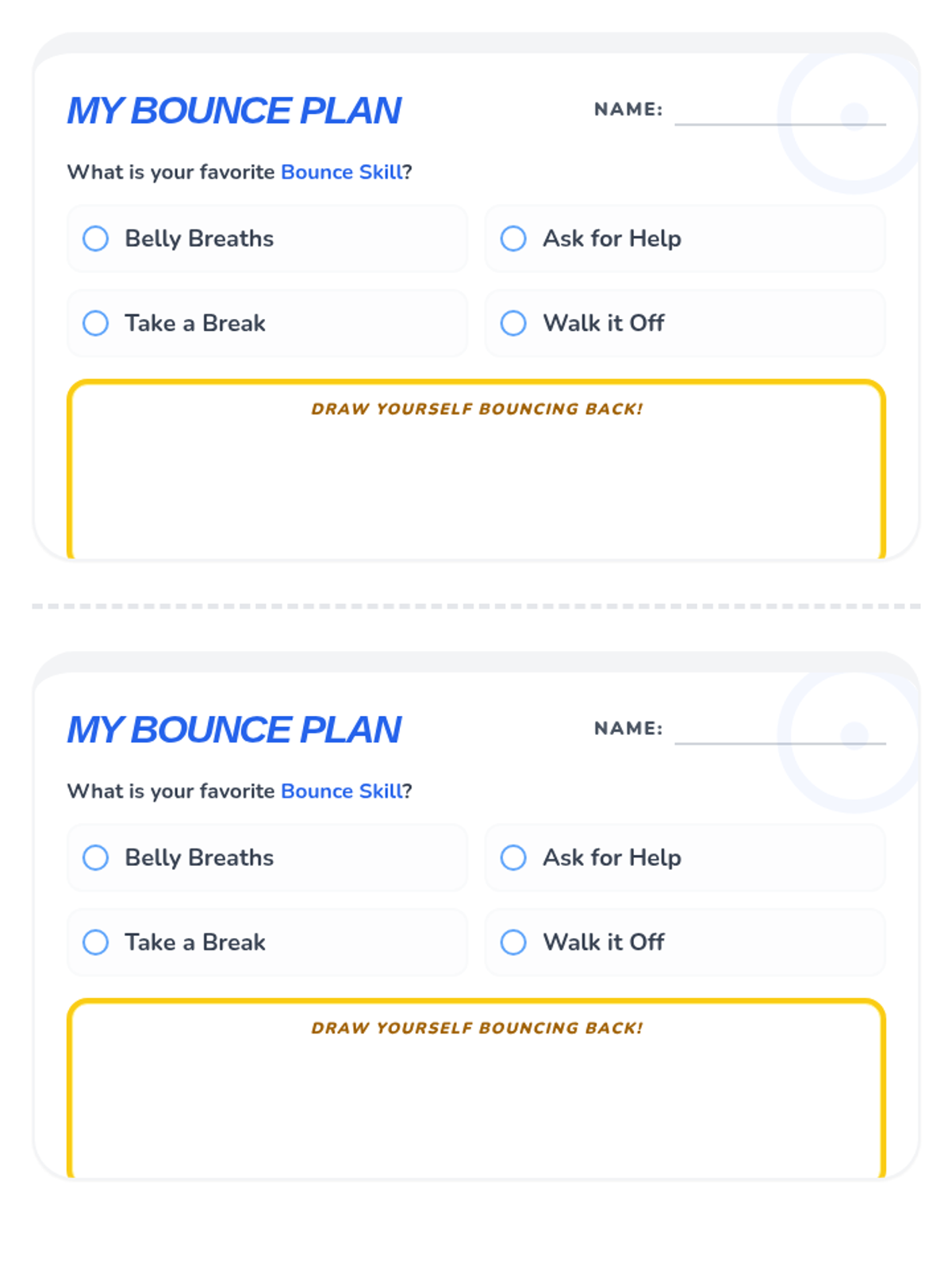
A small group counseling lesson for K-4 students teaching emotional resilience through the Bounce vs. Splat metaphor. Students learn to use coping skills to 'bounce back' from disappointments instead of 'splatting' into a meltdown.
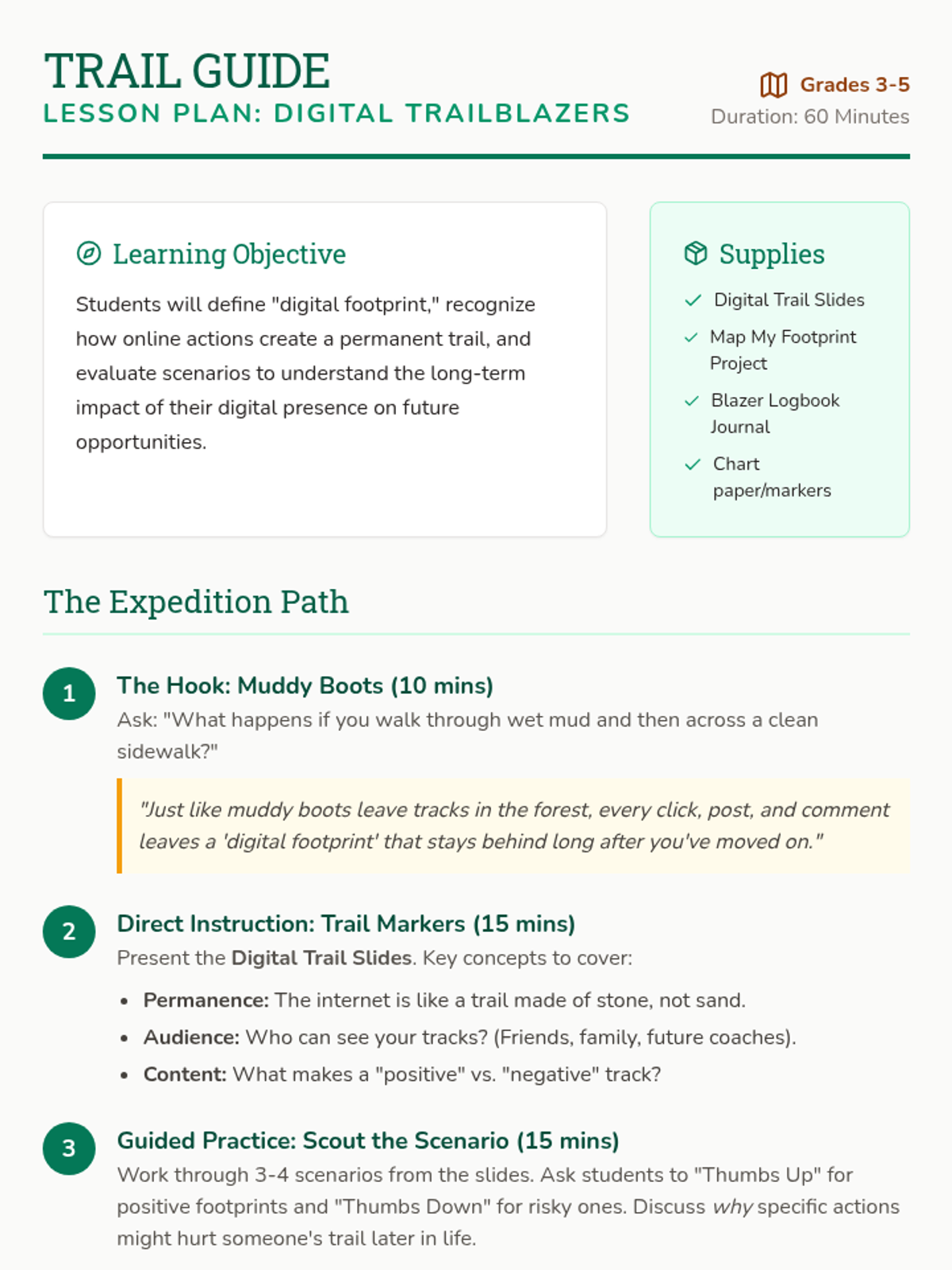
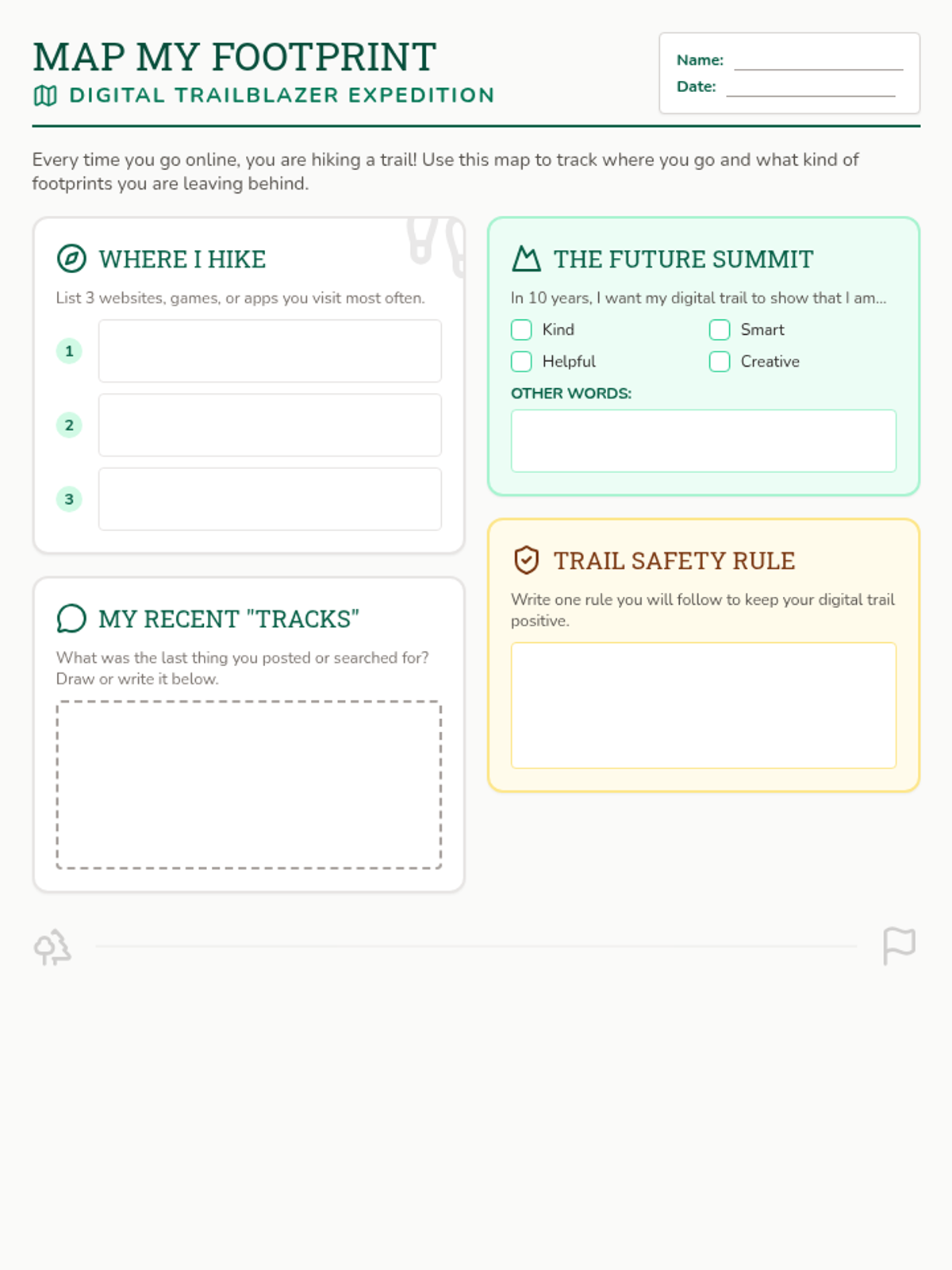
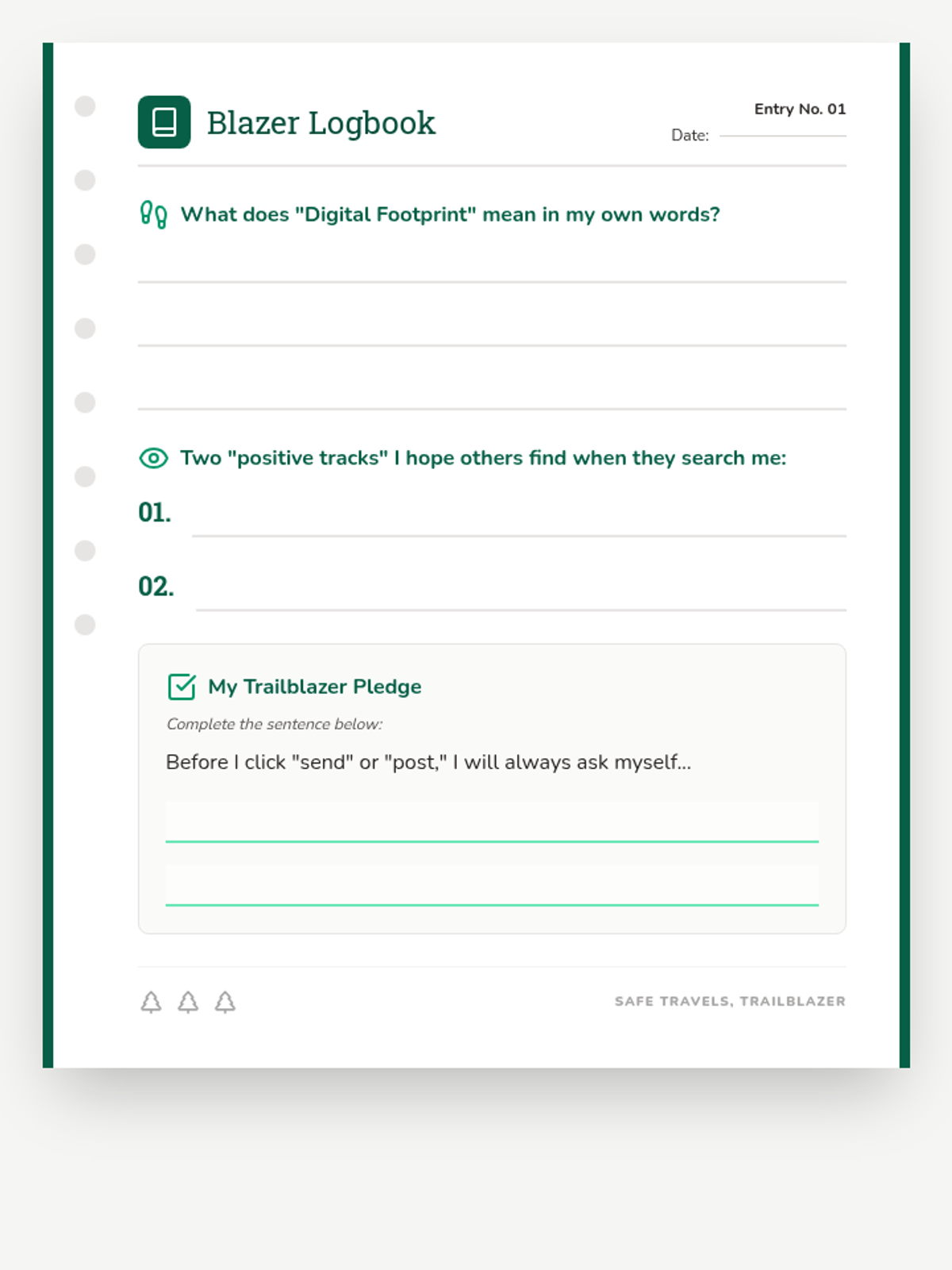
A lesson for grades 3-5 on digital footprints, using a wilderness trail analogy to explore how online actions leave lasting marks and affect future opportunities.
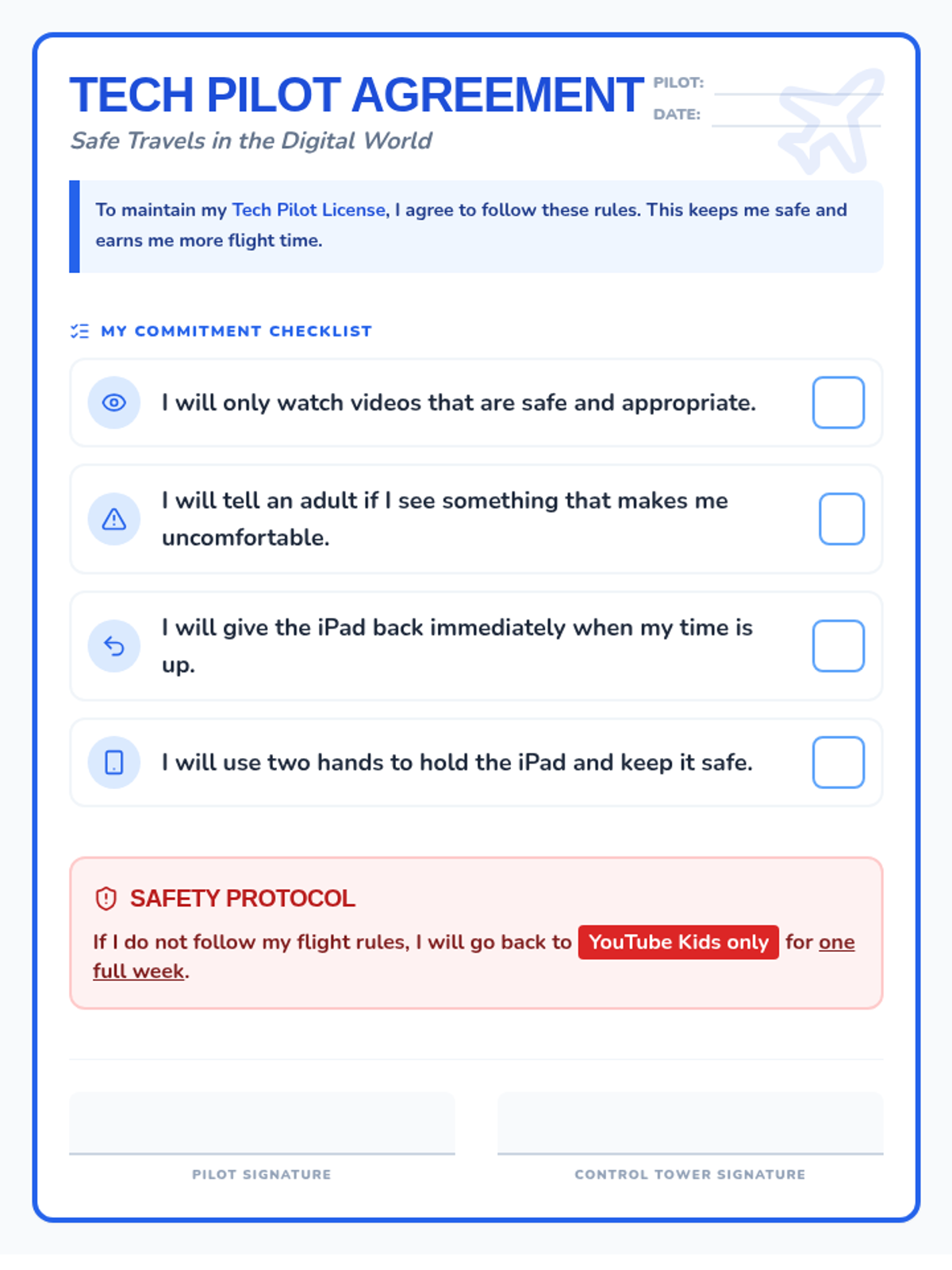
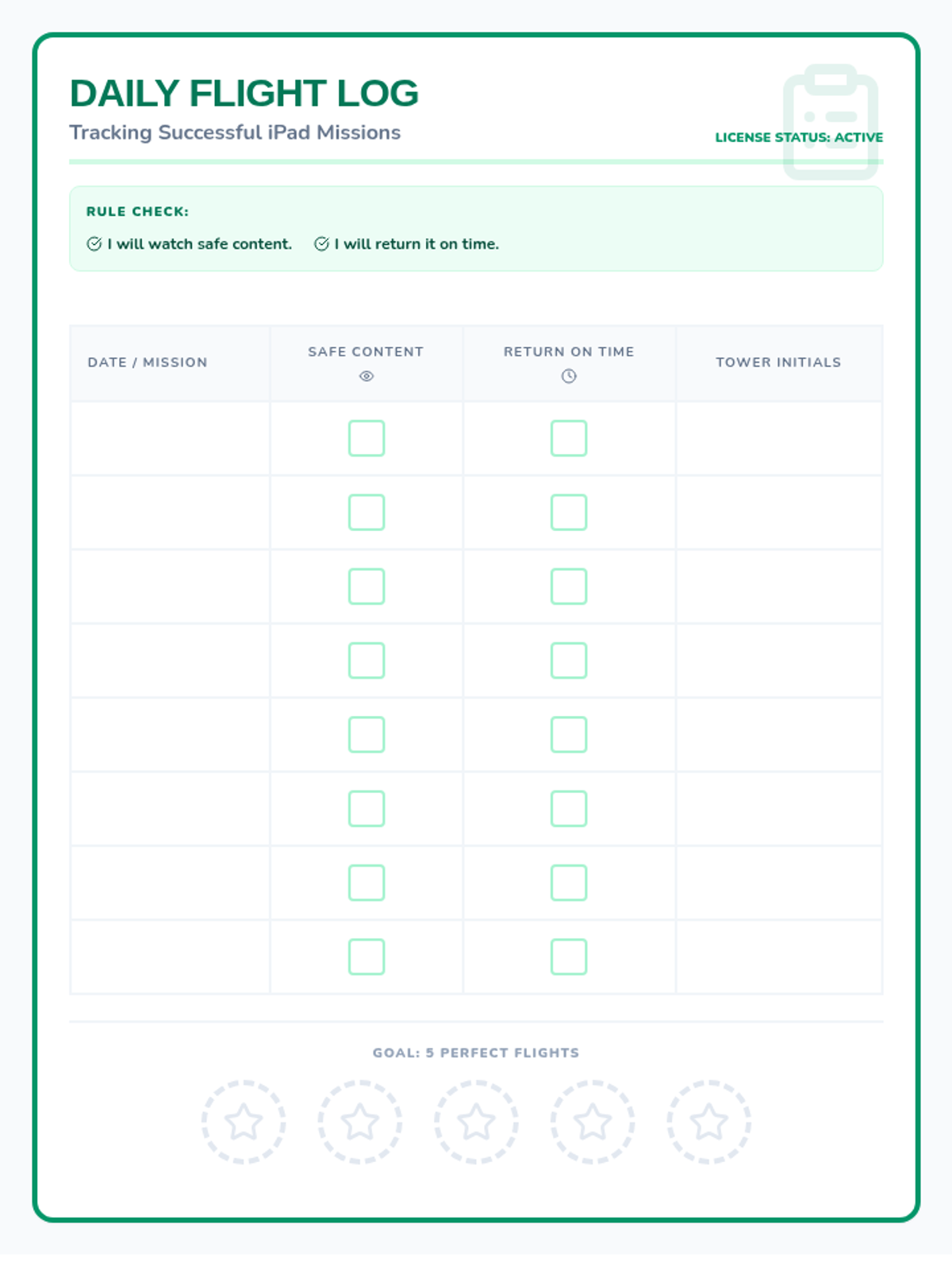
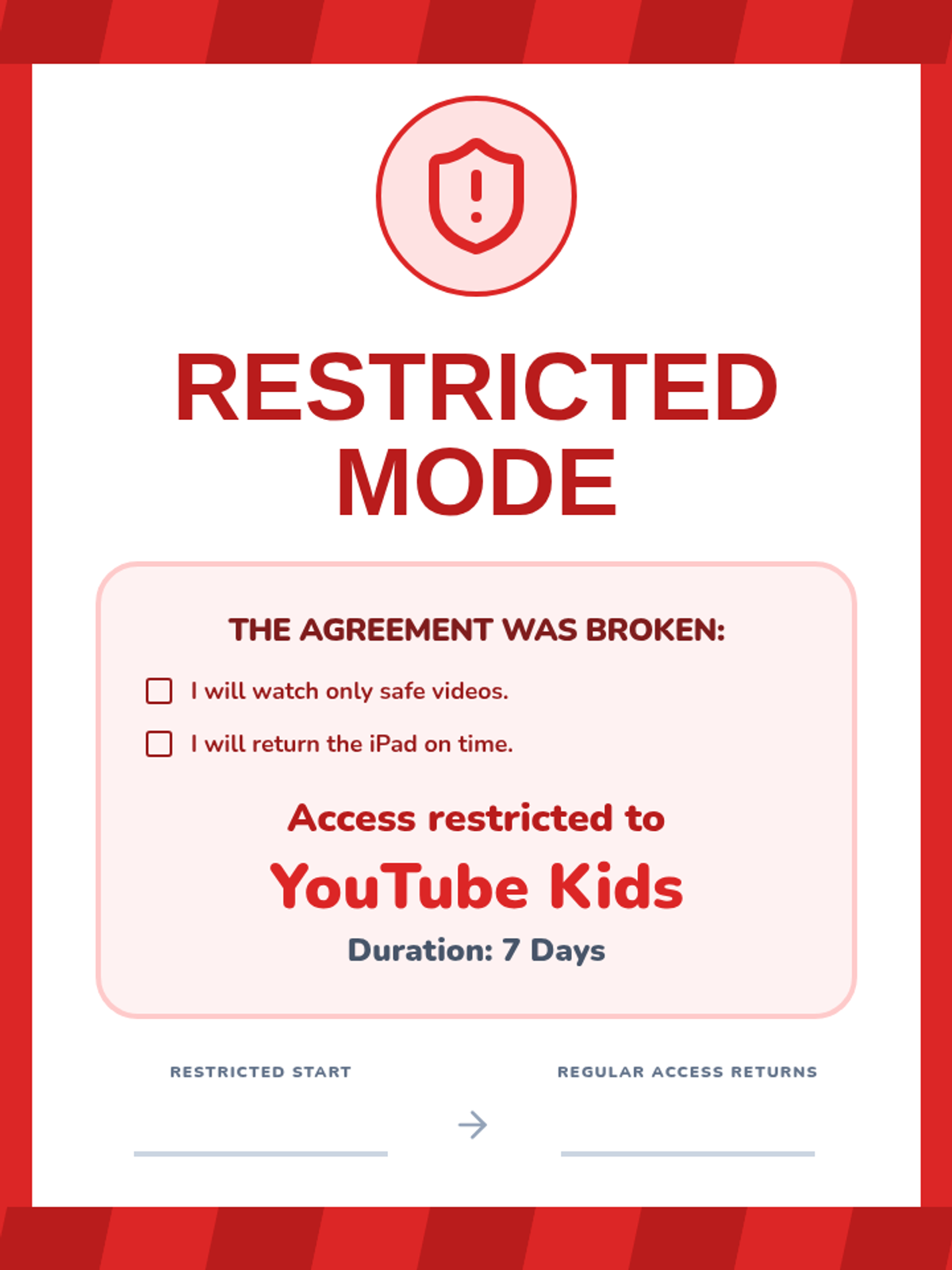
A lesson focused on establishing clear boundaries and accountability for iPad and YouTube usage, using a 'Tech Pilot' theme to frame digital responsibility.
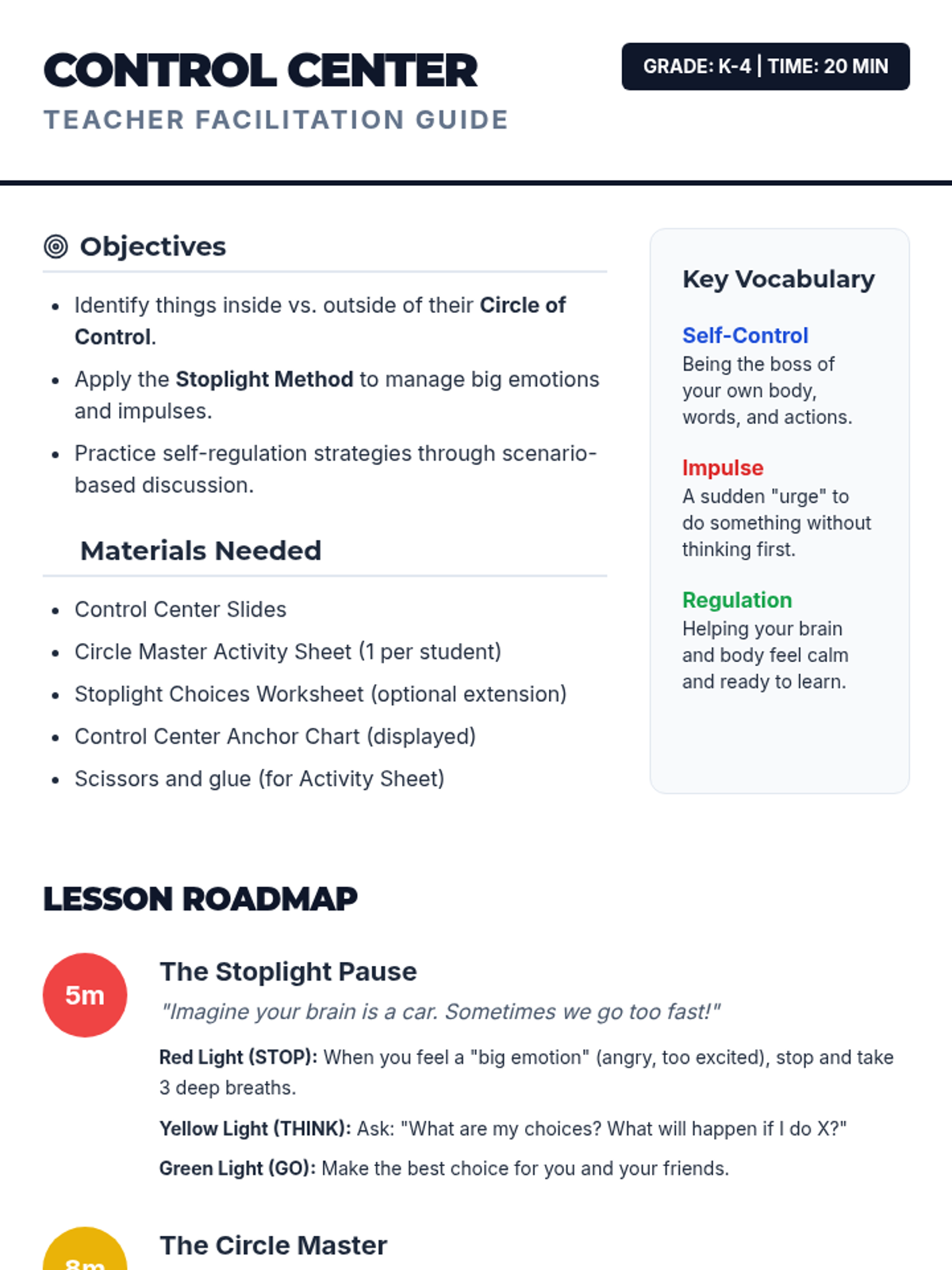
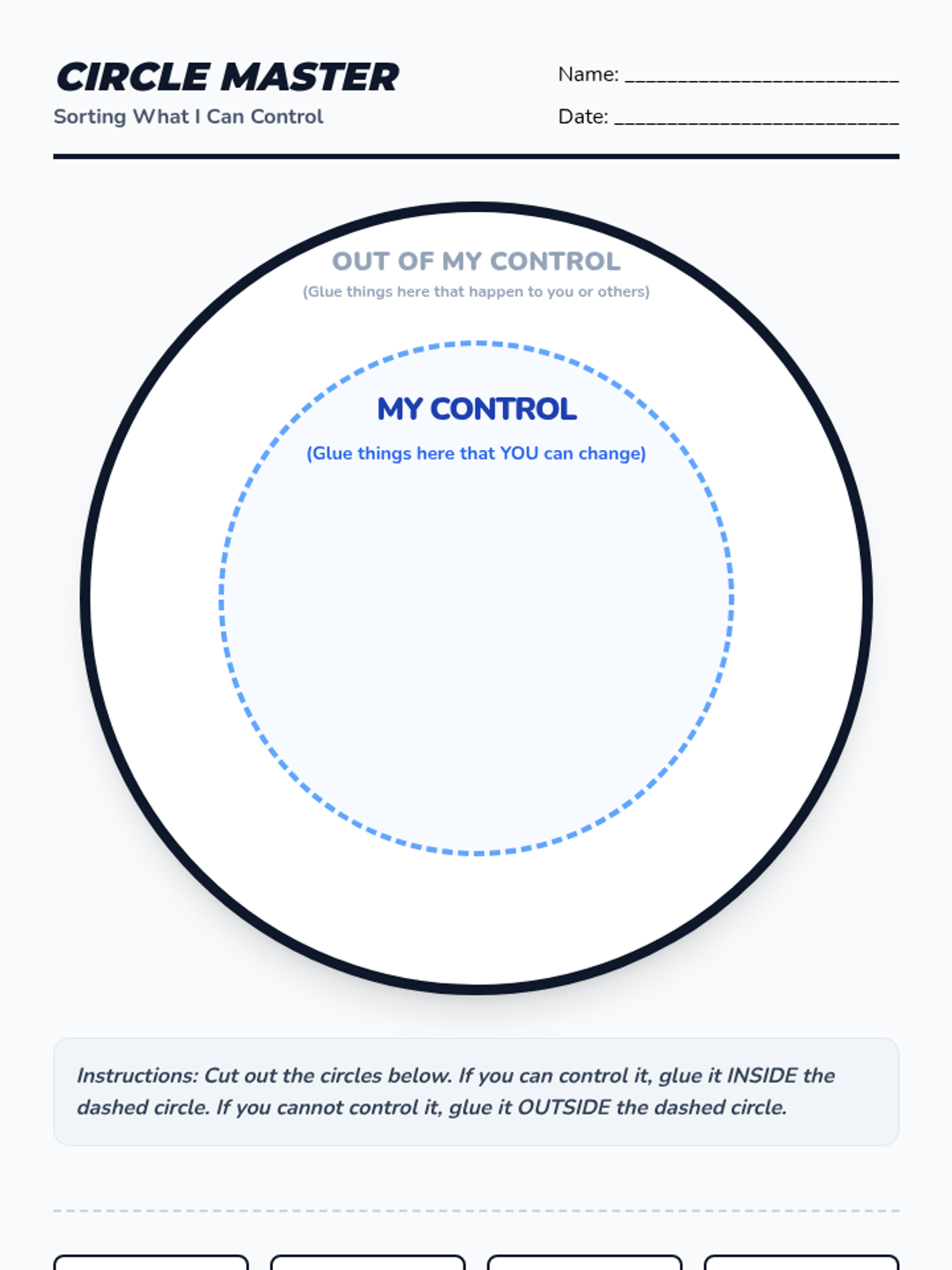
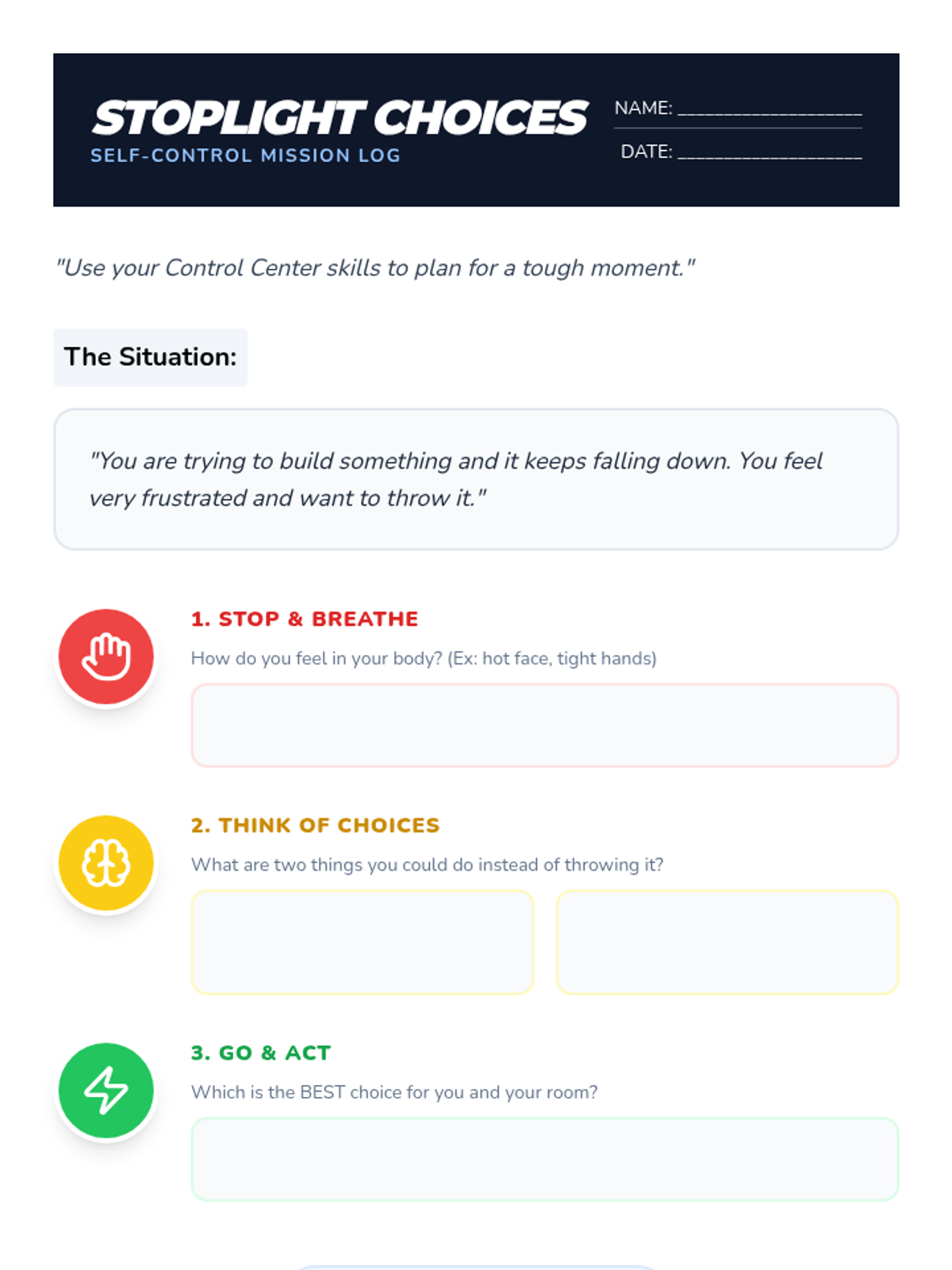
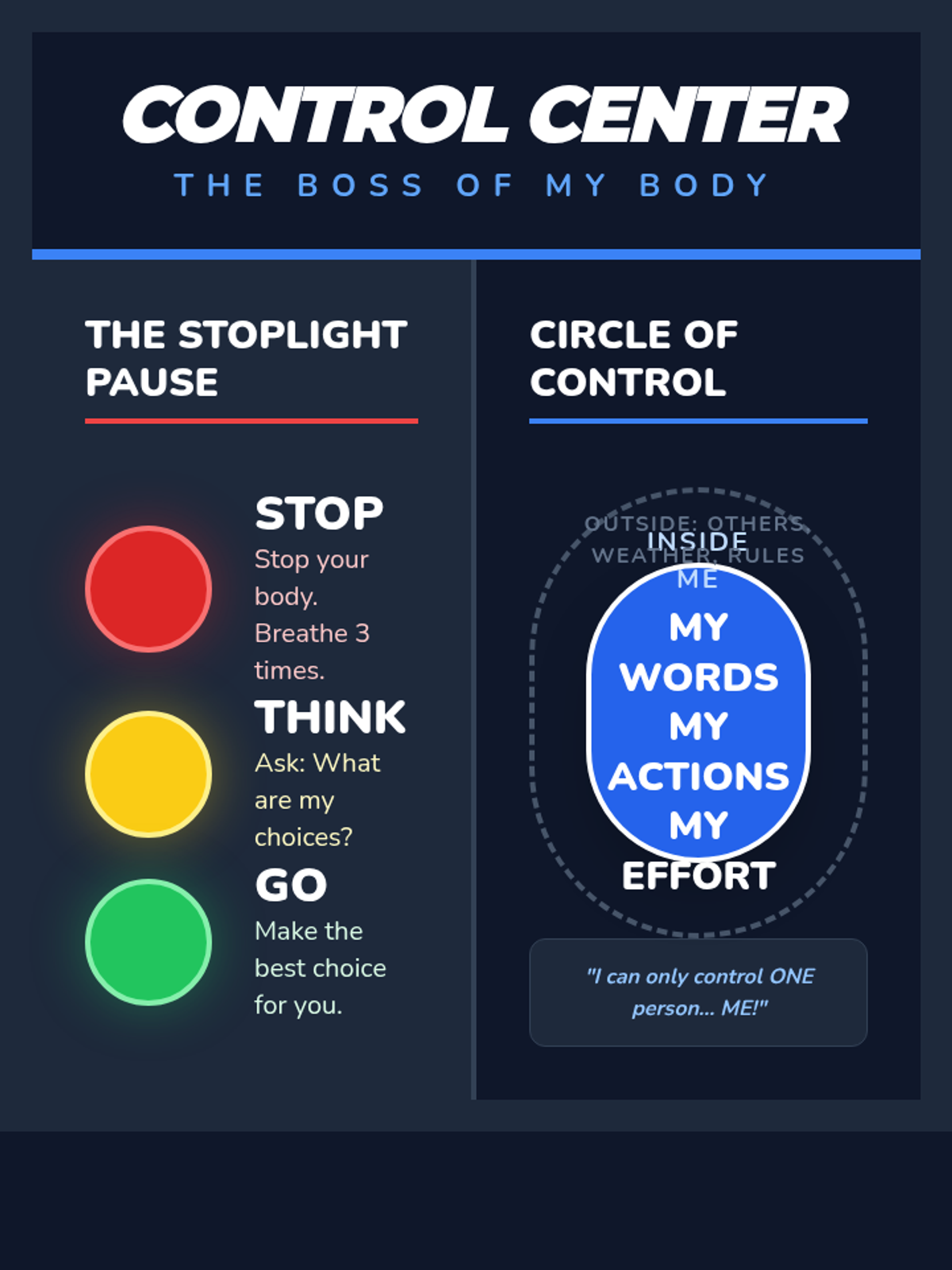
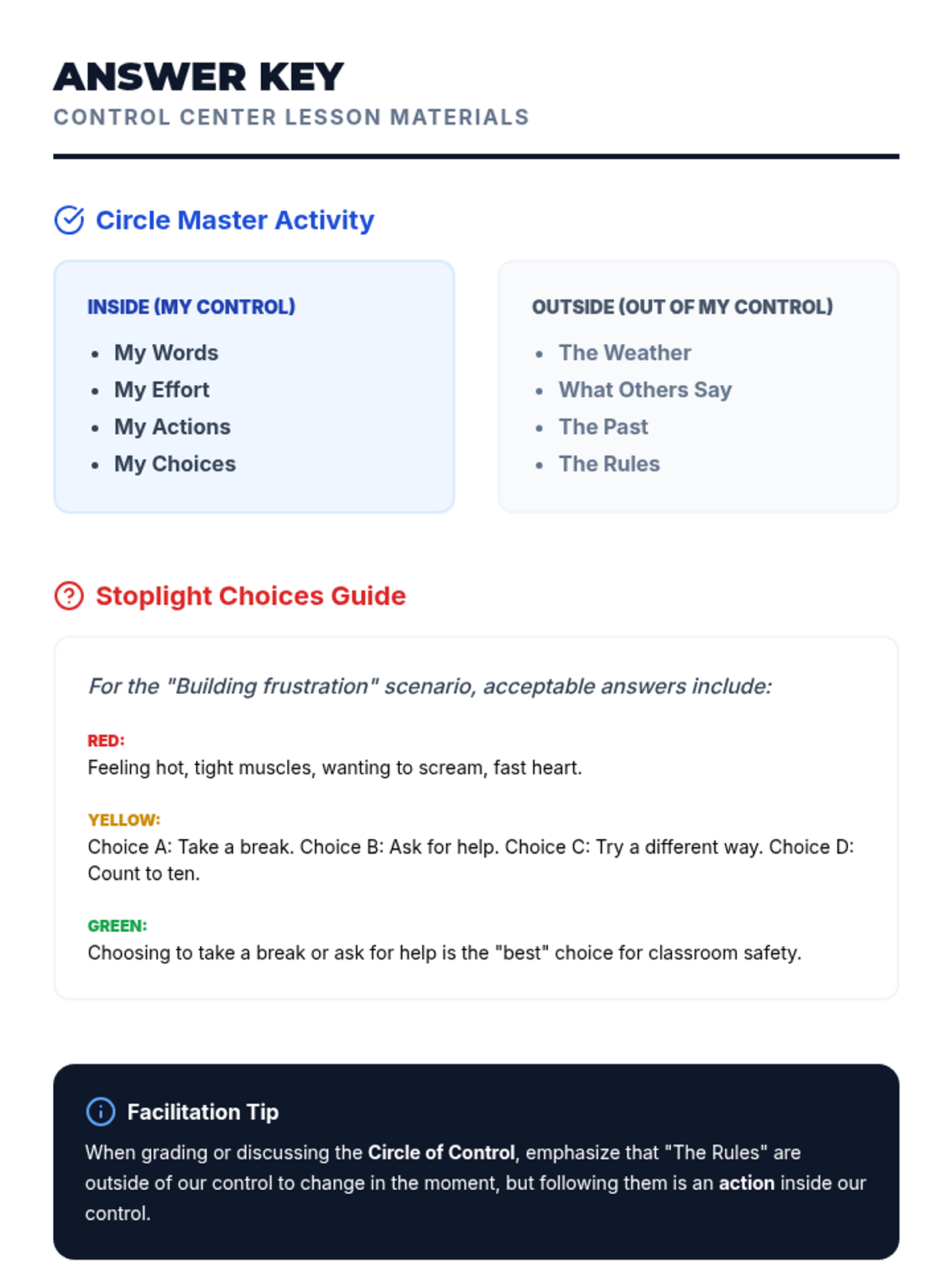
A 20-minute social-emotional learning lesson for K-4 students focusing on self-control using the Stoplight and Circle of Control metaphors. Students learn to distinguish between what they can and cannot control and practice pausing before acting.
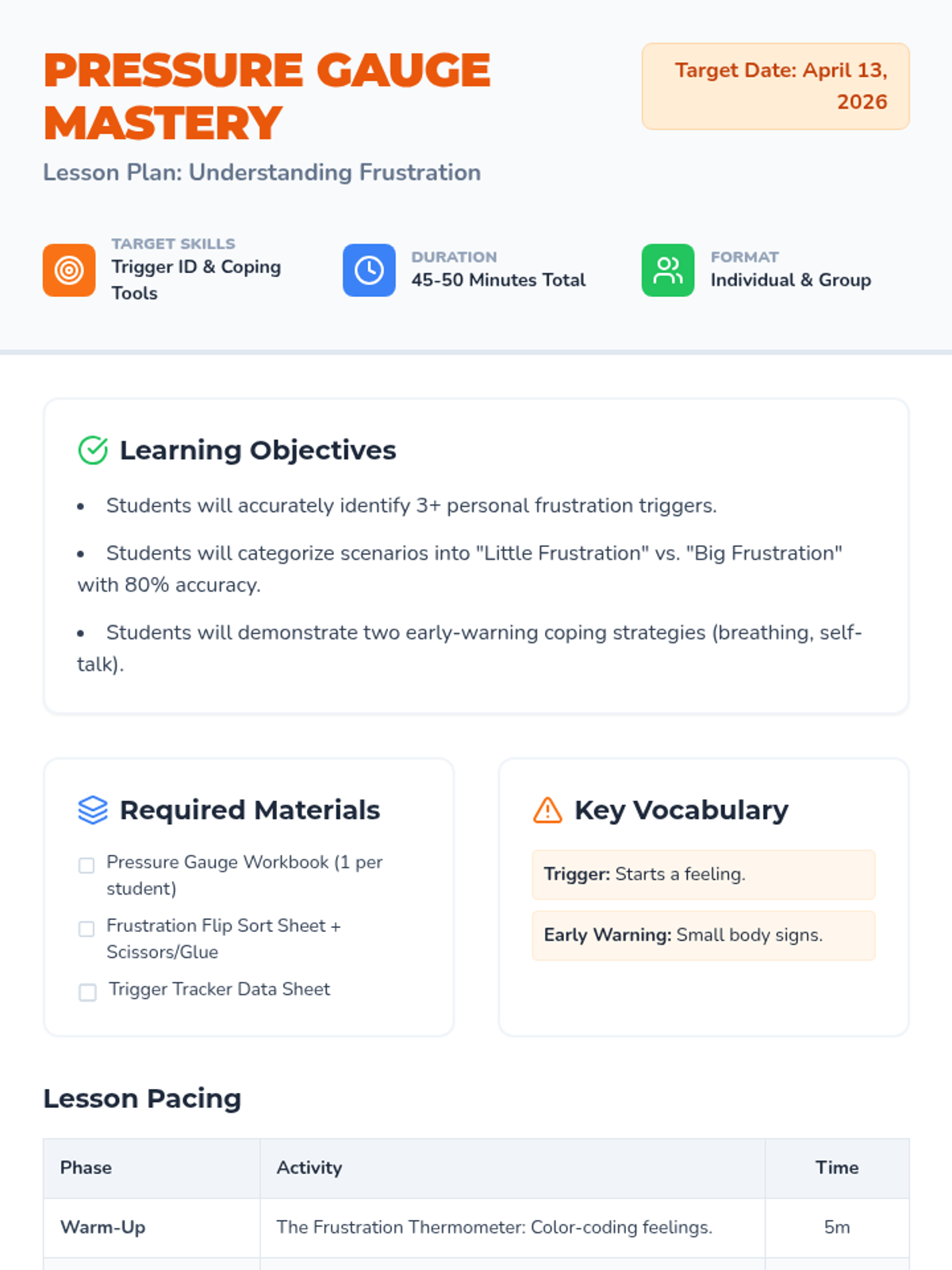
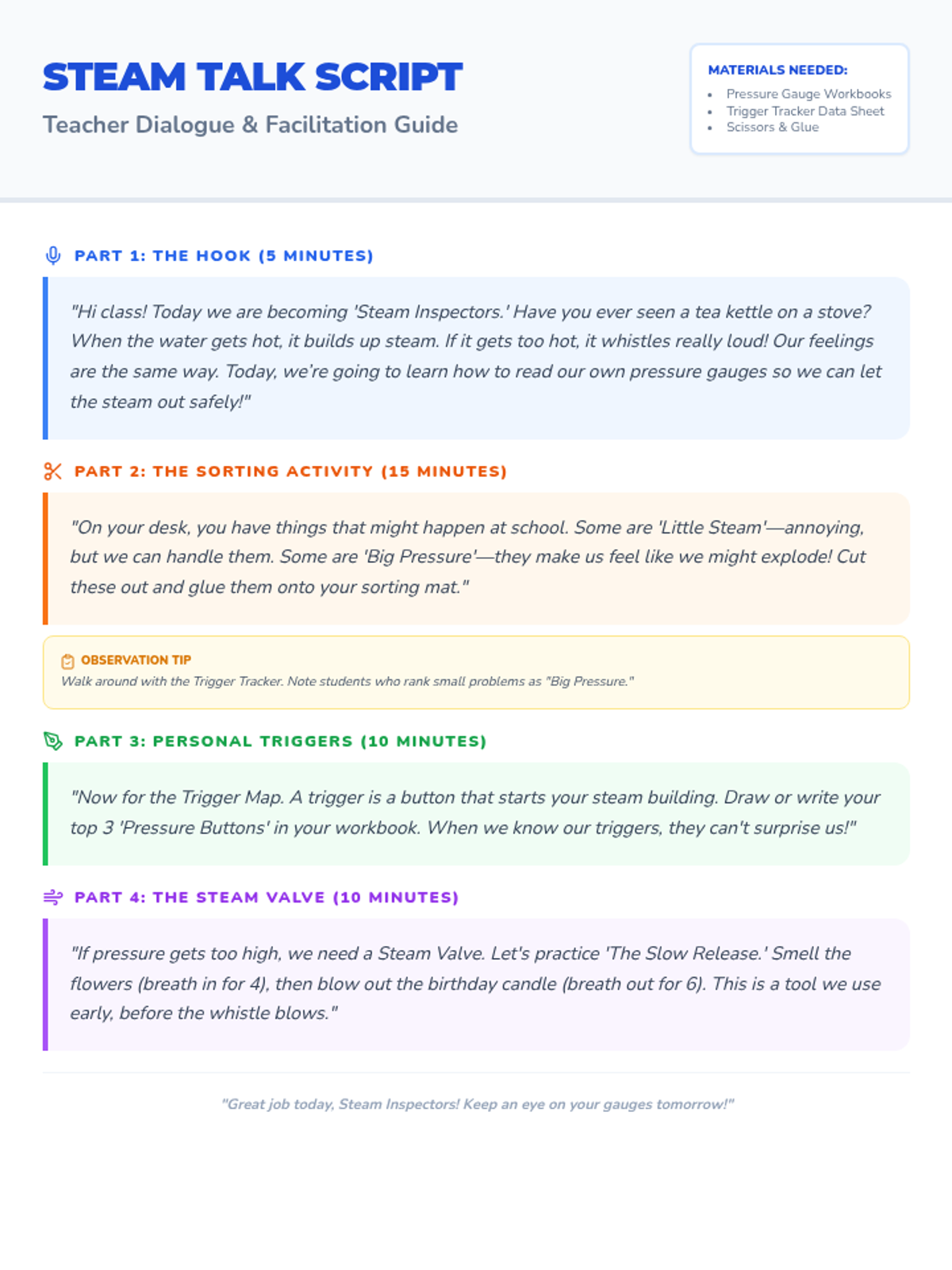
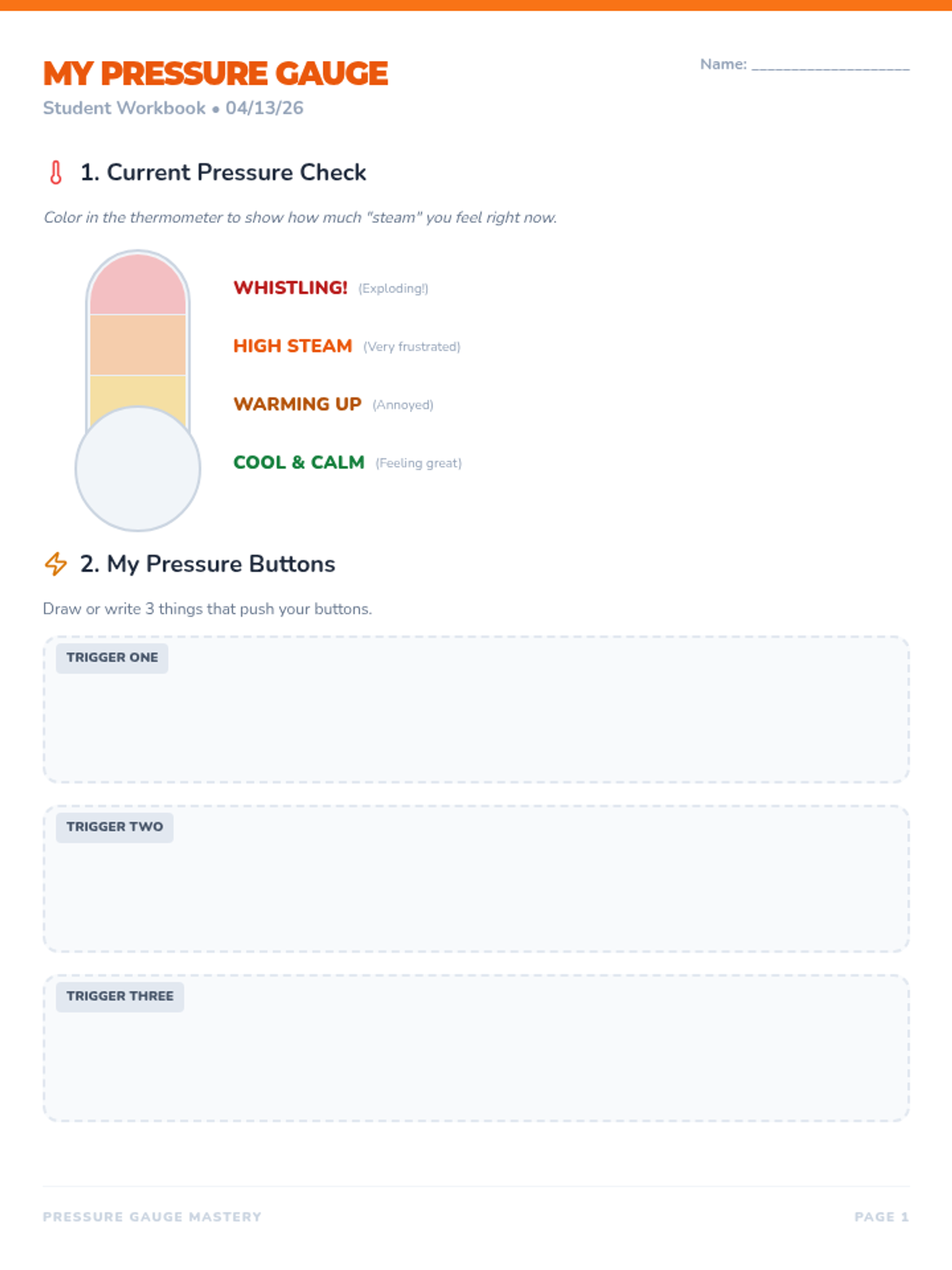
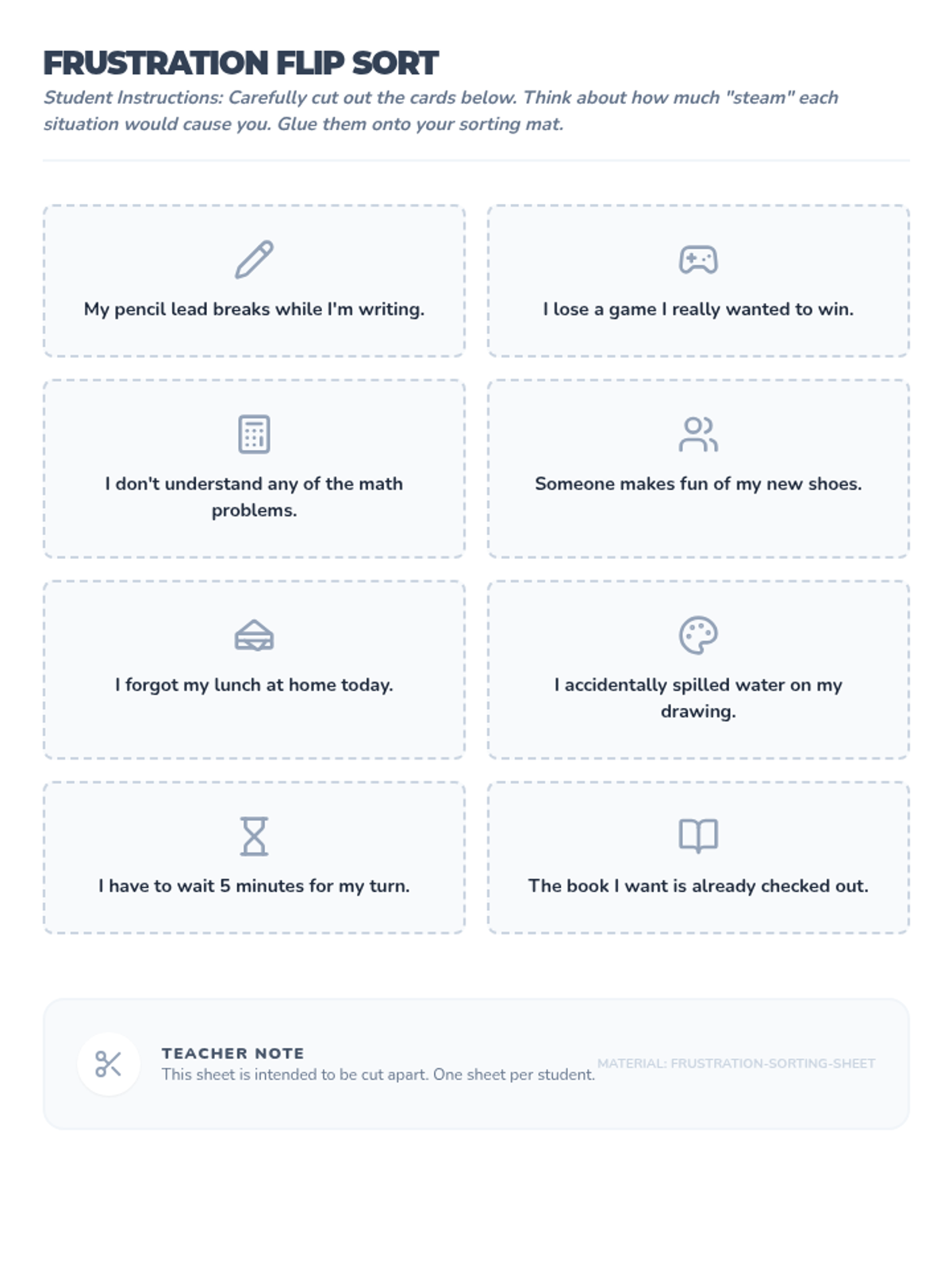
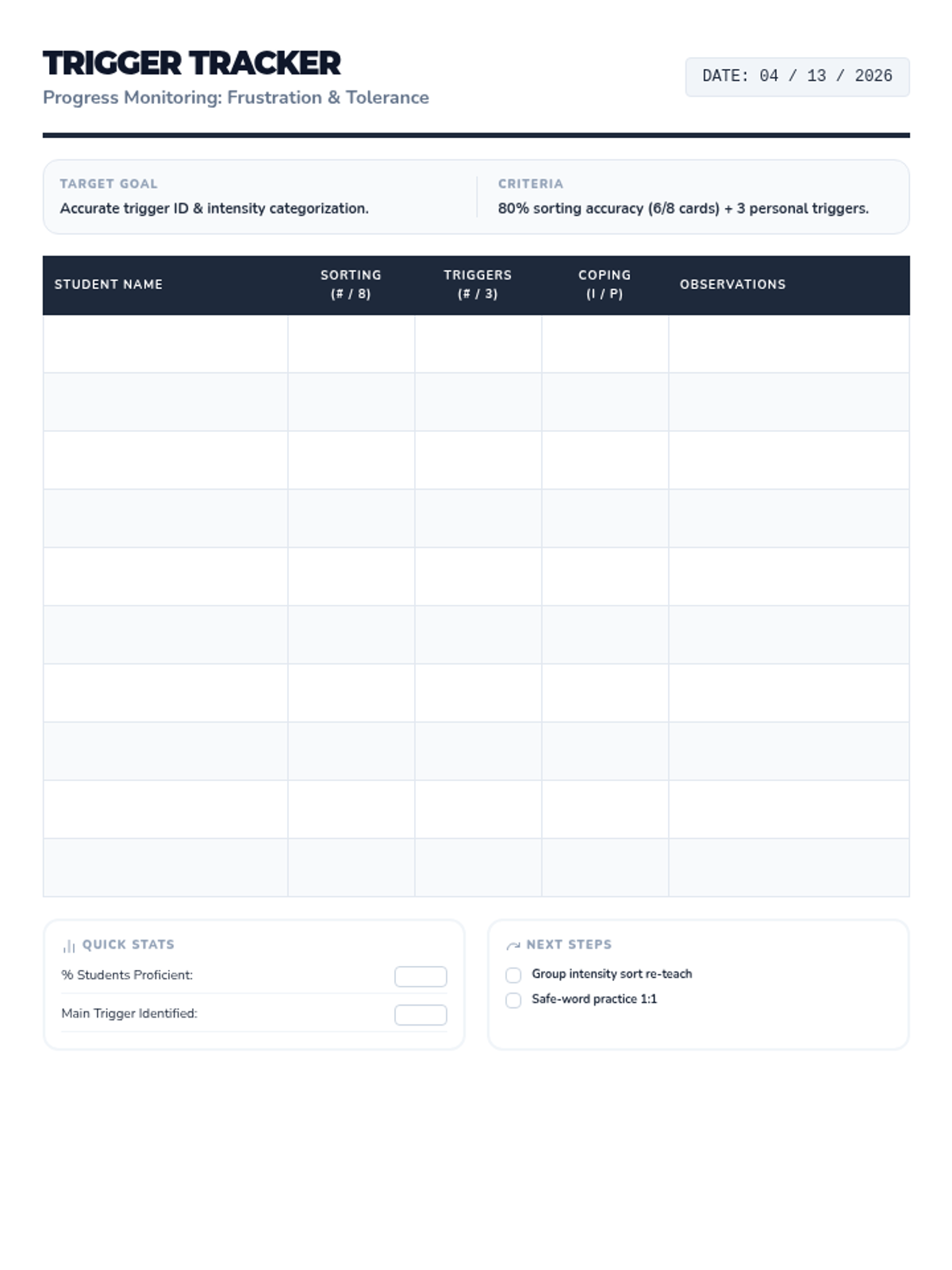
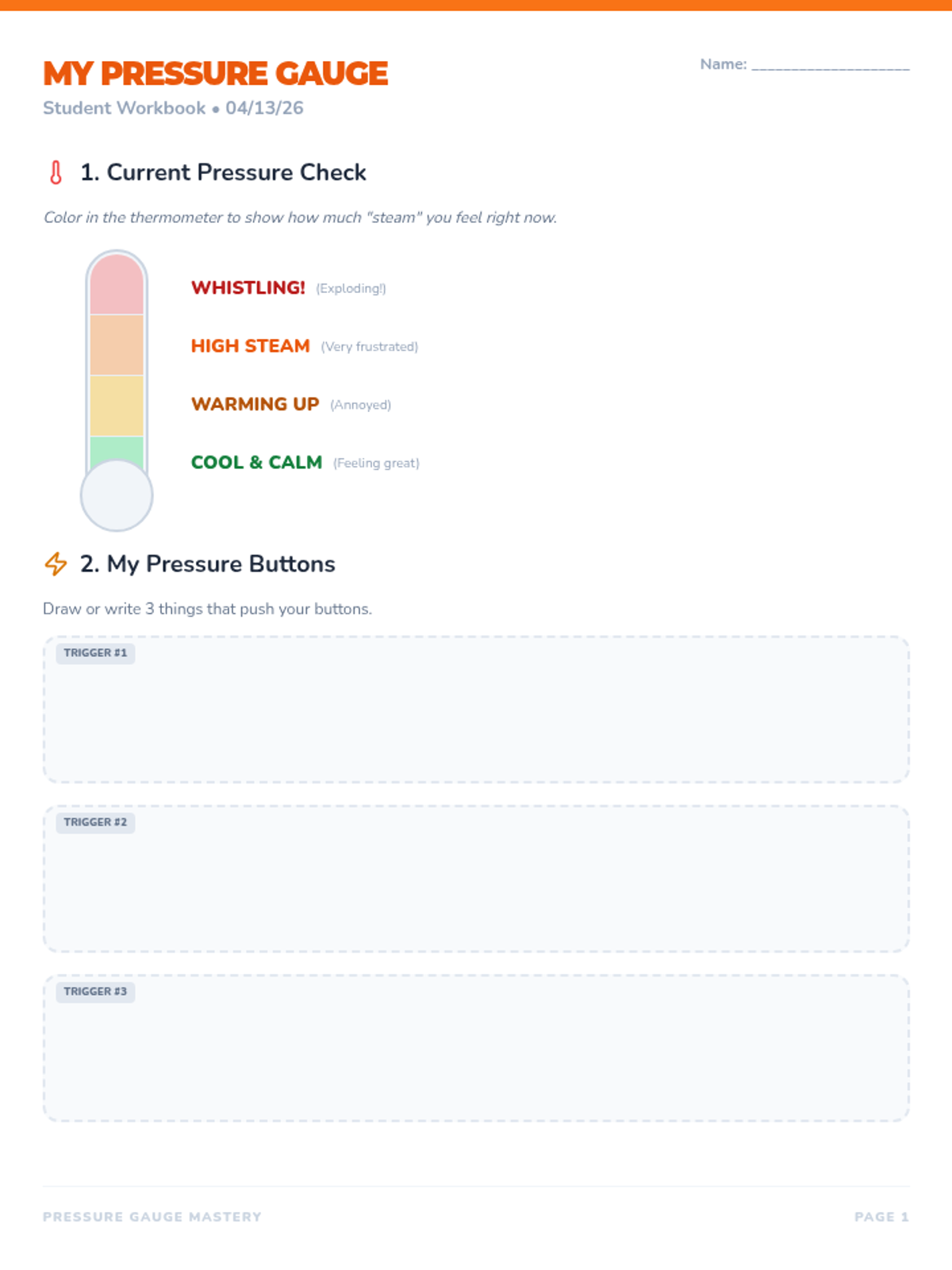
A comprehensive lesson on identifying frustration triggers and developing early-intervention coping strategies. Students learn to categorize frustration levels and match them with appropriate tools to maintain emotional regulation.
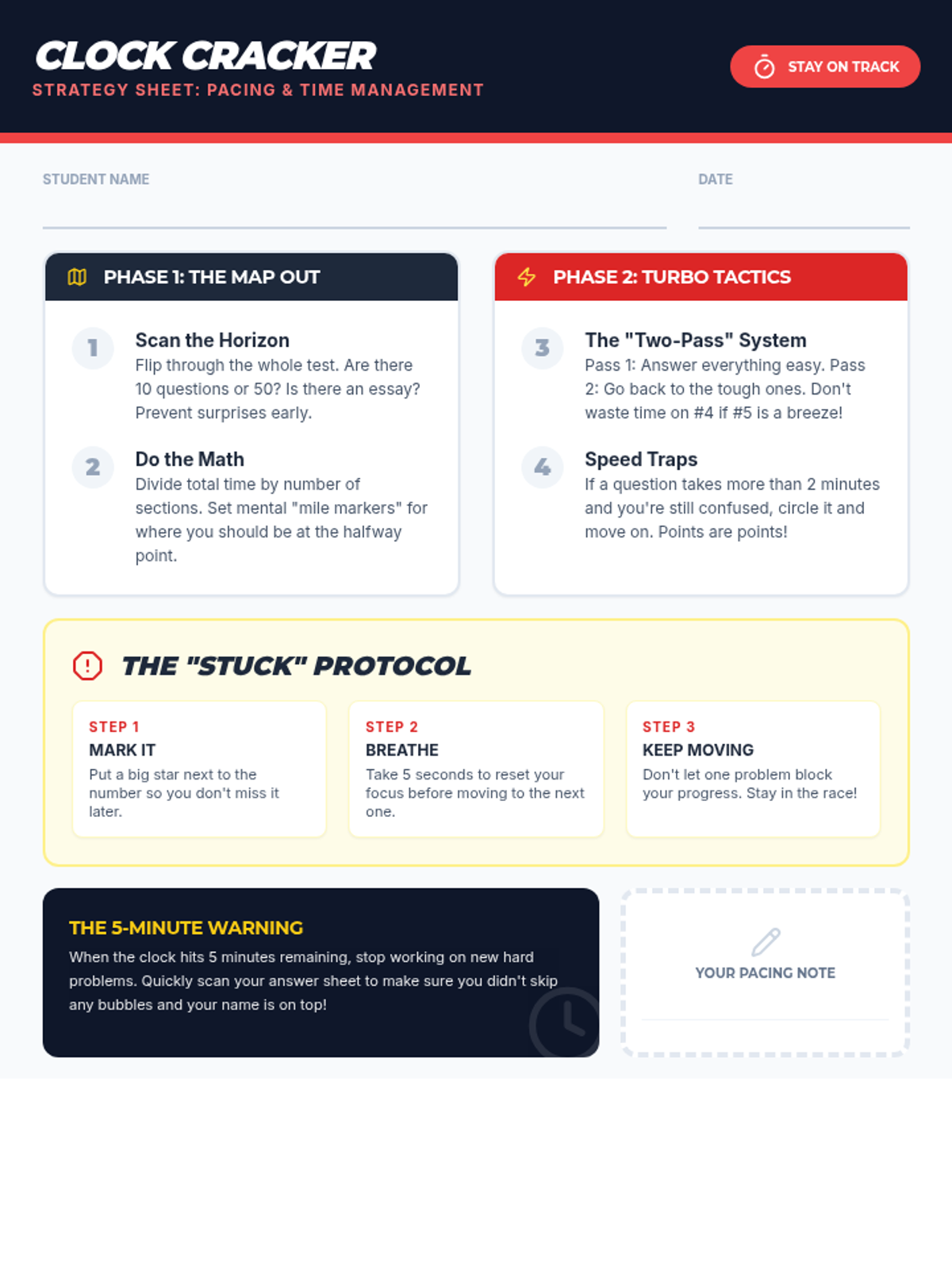
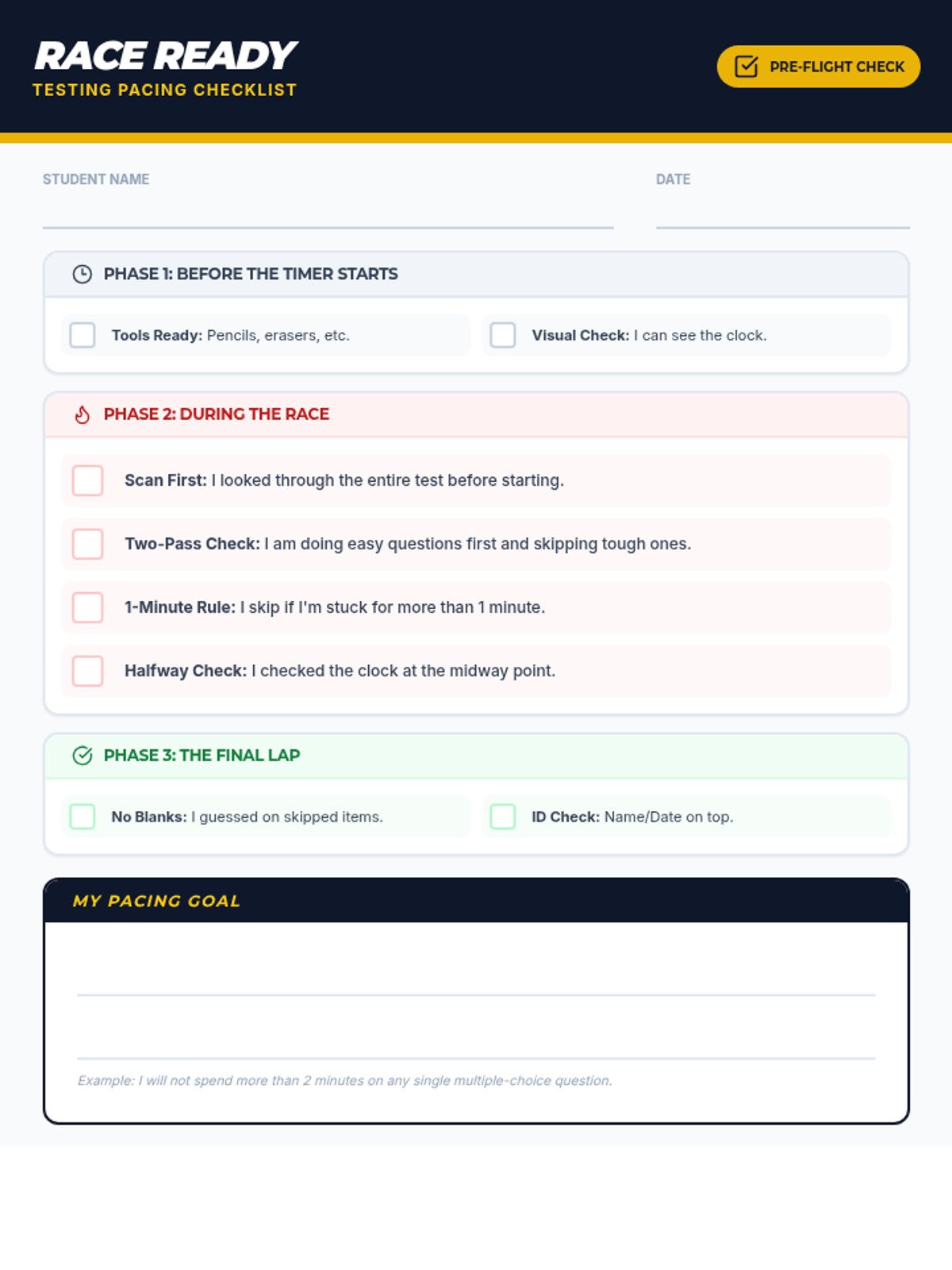
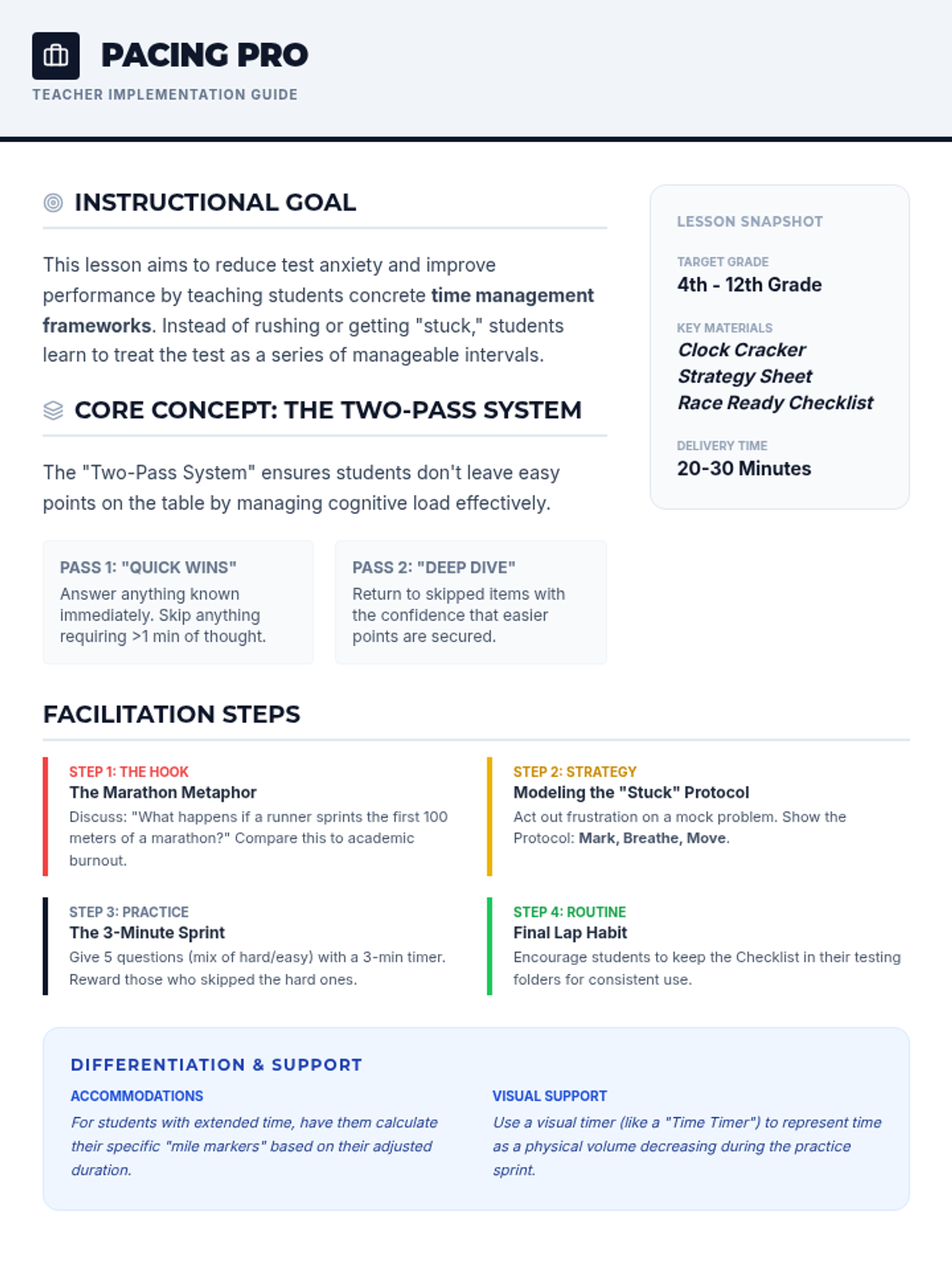
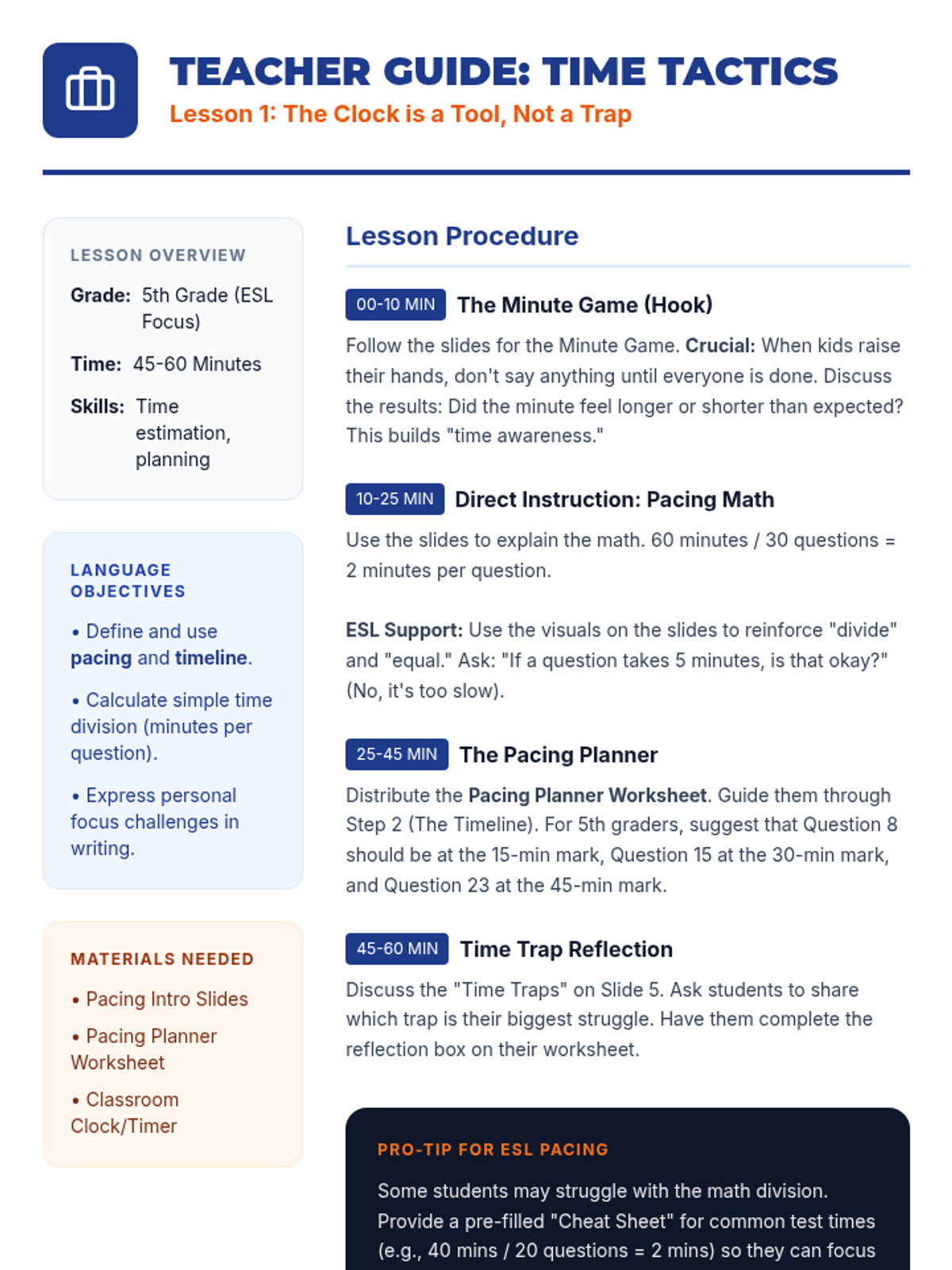
A high-energy set of resources focused on mastering test-taking pacing and time management strategies to help students finish exams with confidence.
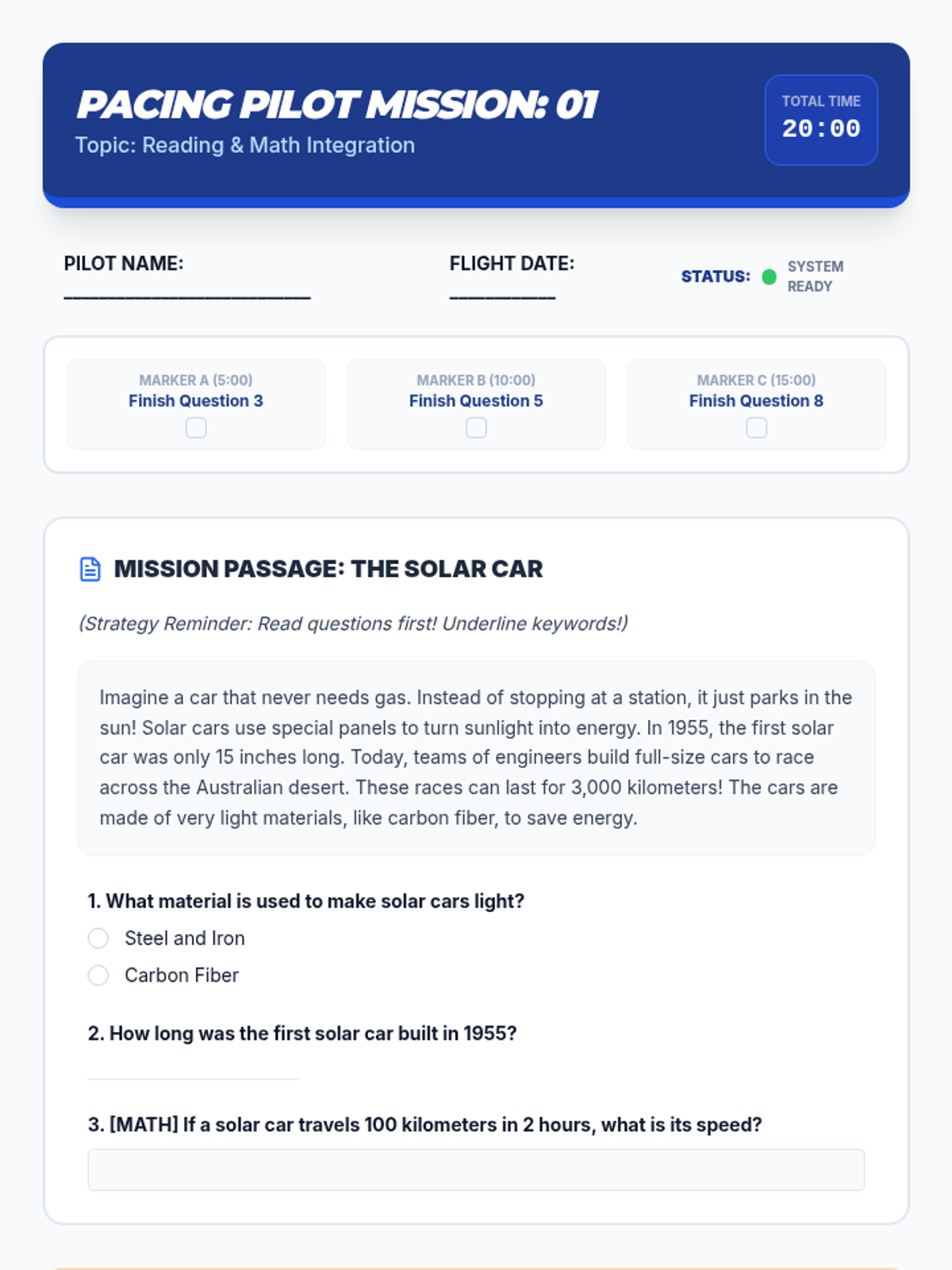
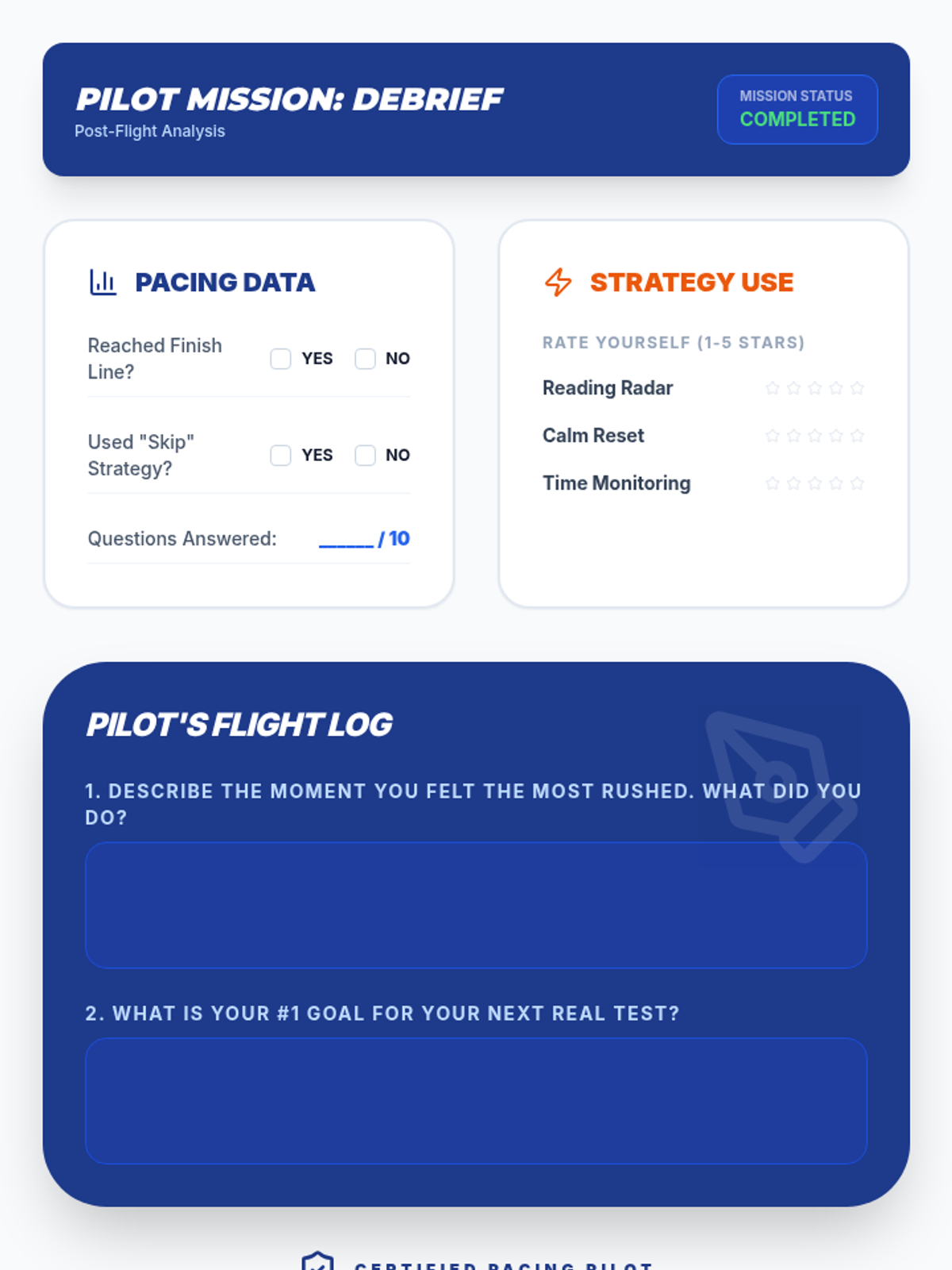
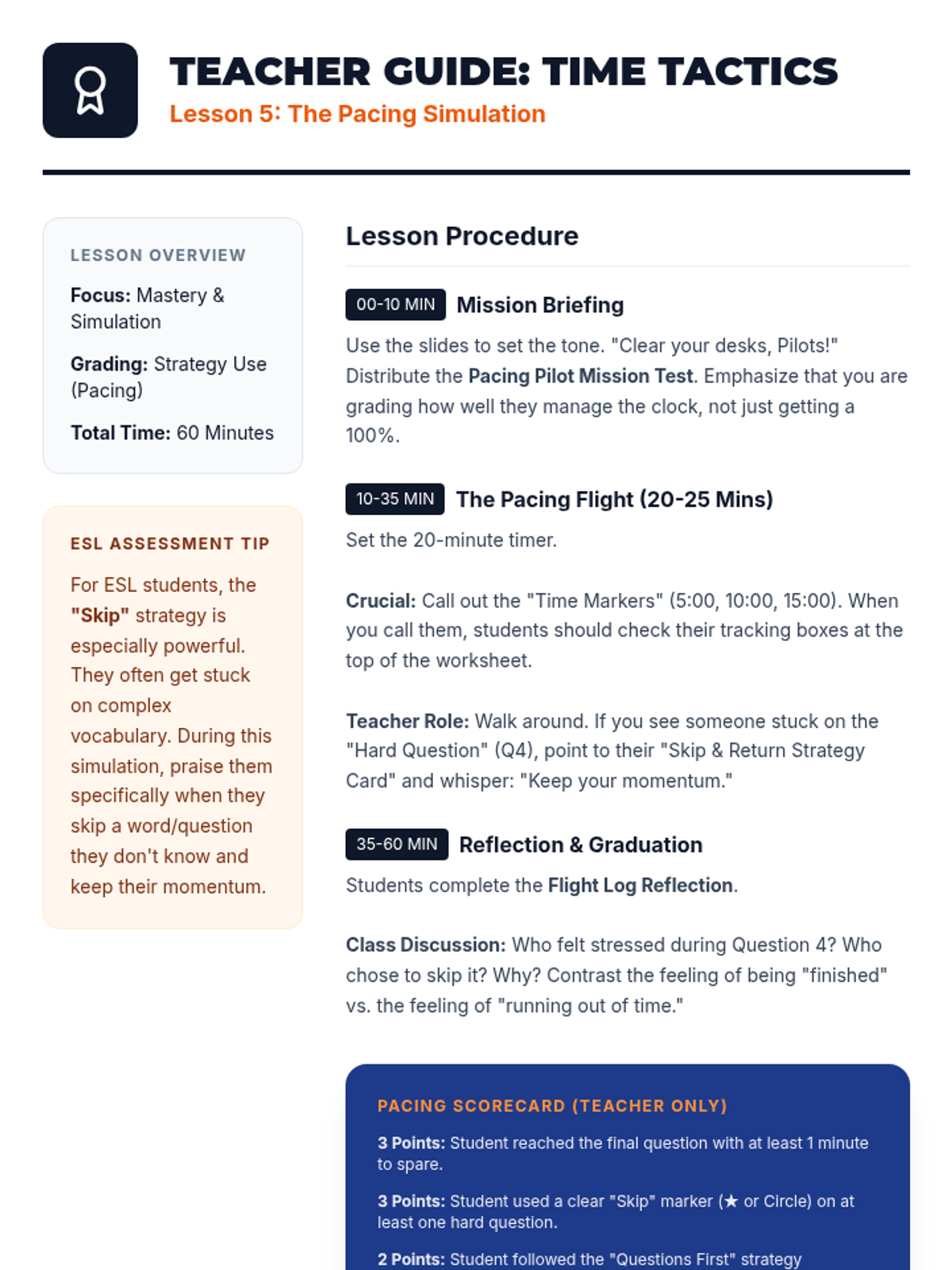
A simulated test session where students are graded on their ability to hit specific pacing markers and reflect on their performance.
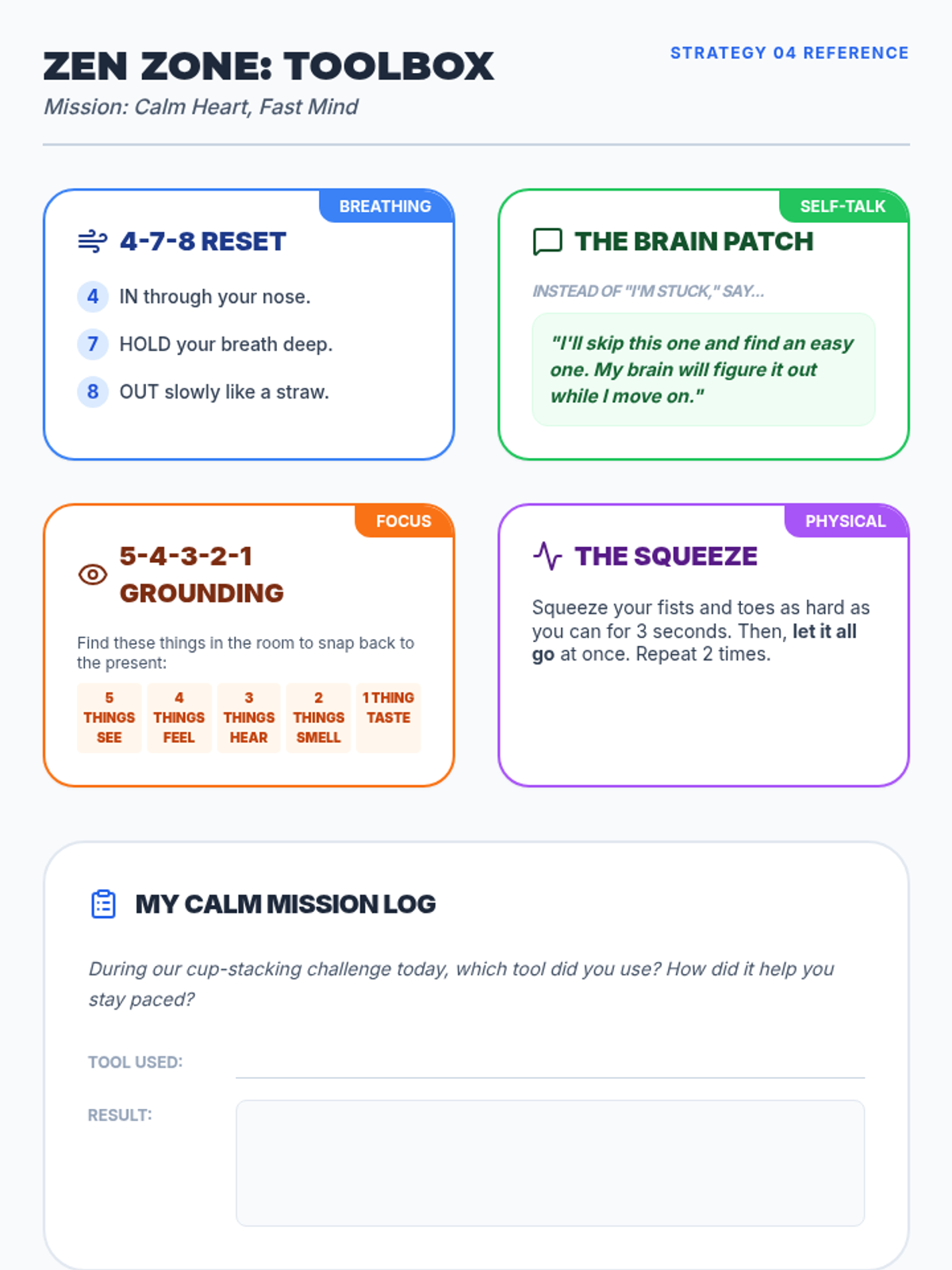
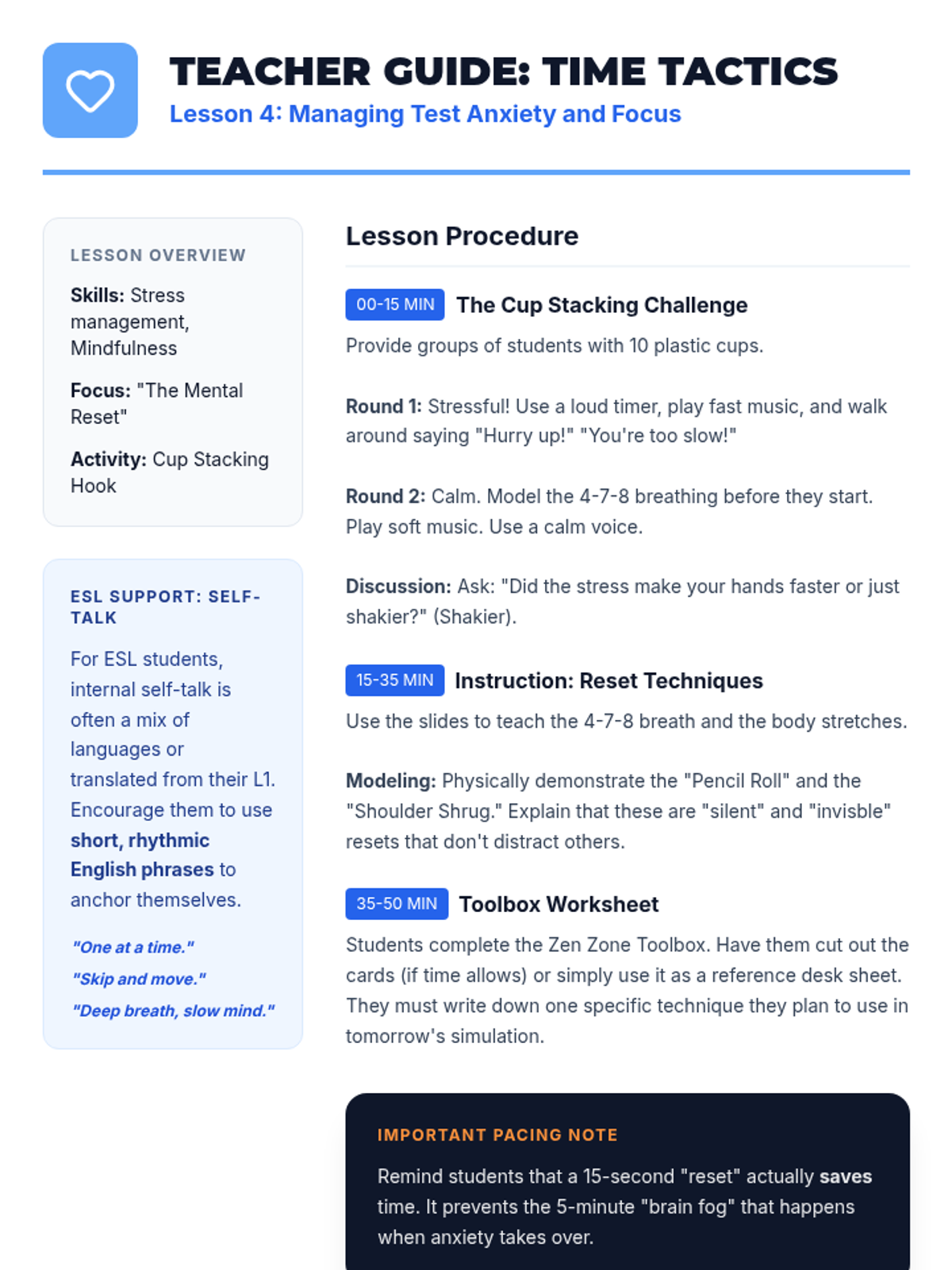
Teaches students physiological and mental reset techniques to stay calm and focused when the clock is ticking.
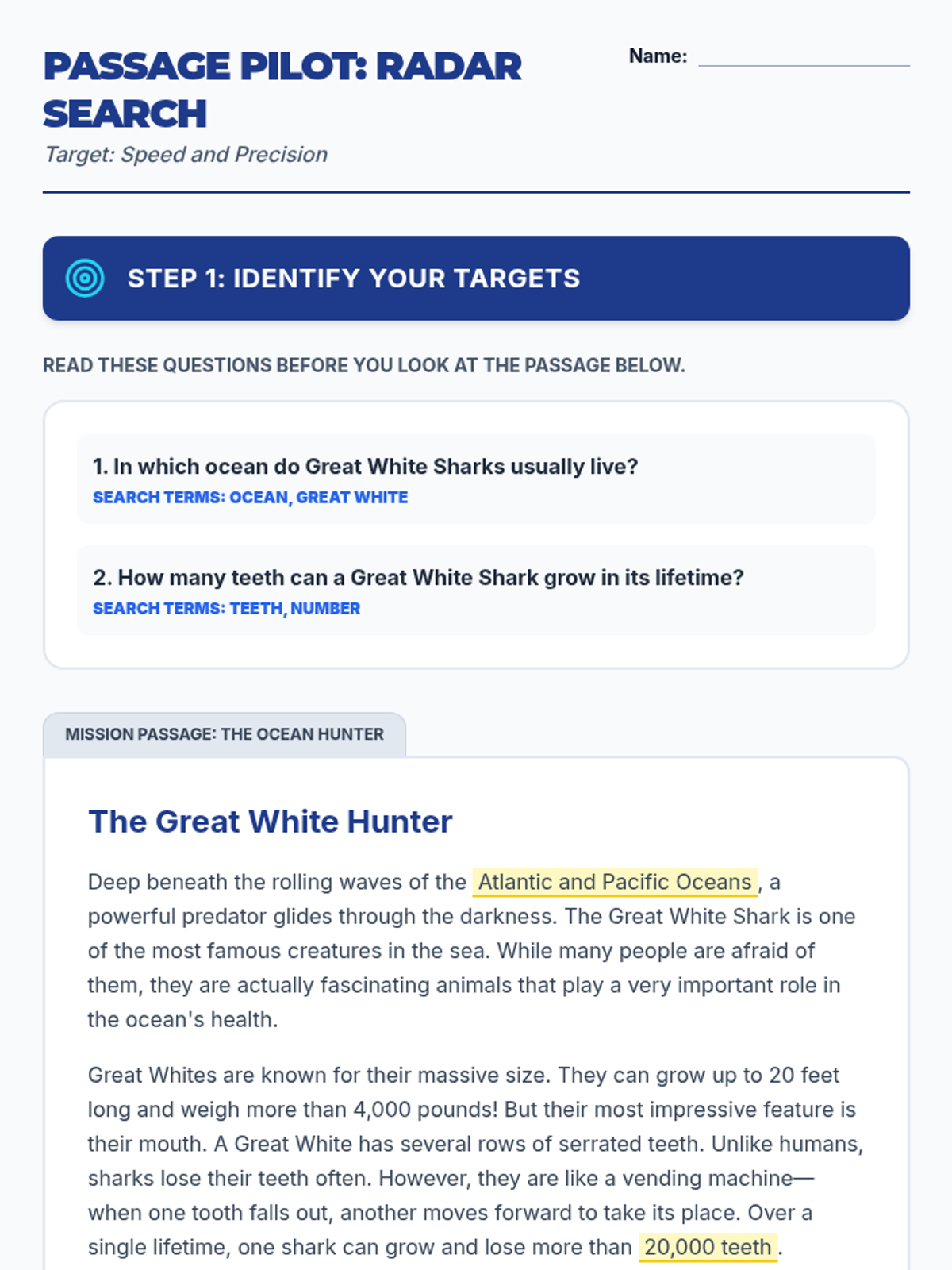
Focuses on reading strategies like 'questions first' to save time and improve focus during long reading comprehension sections.
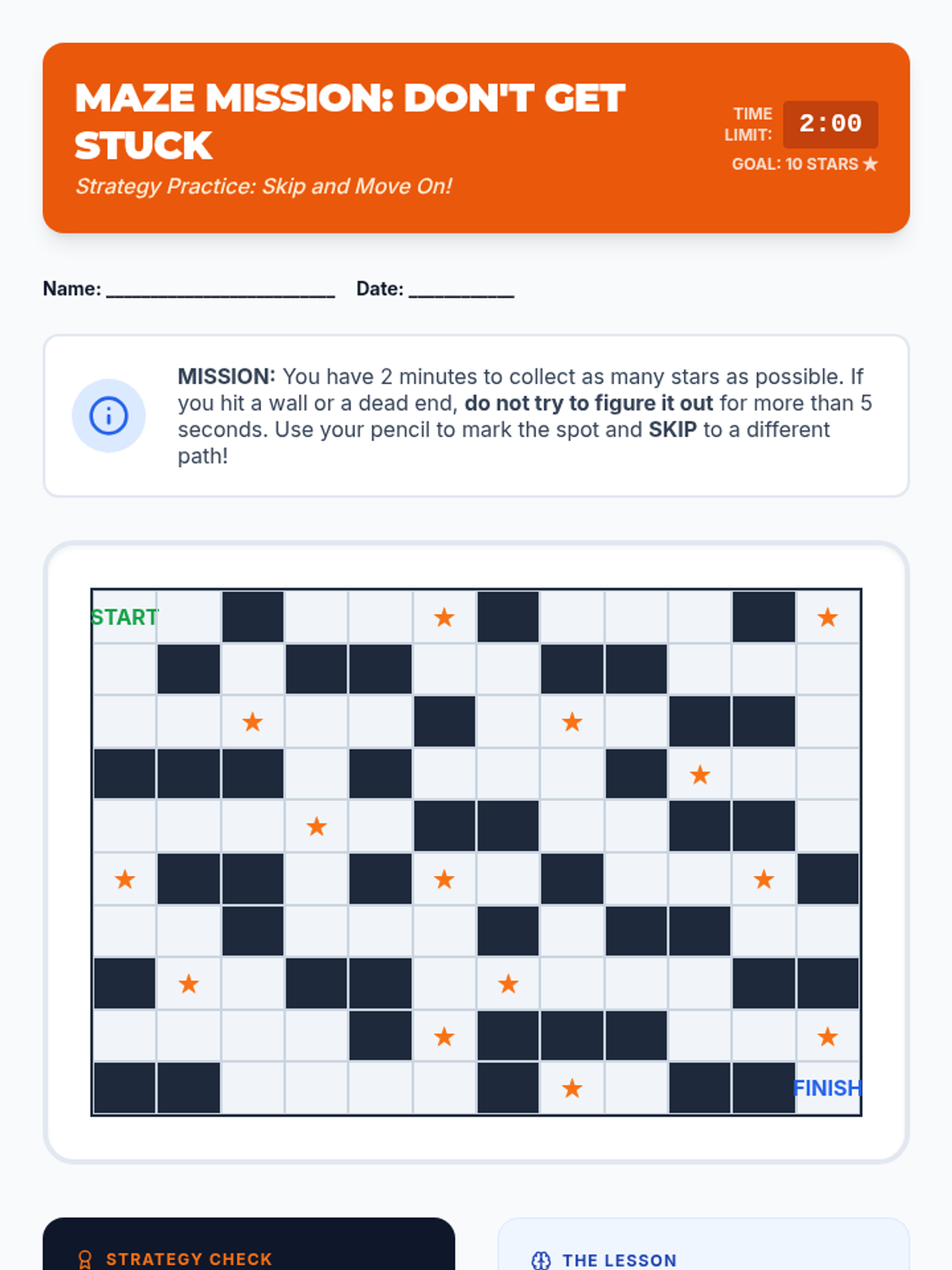
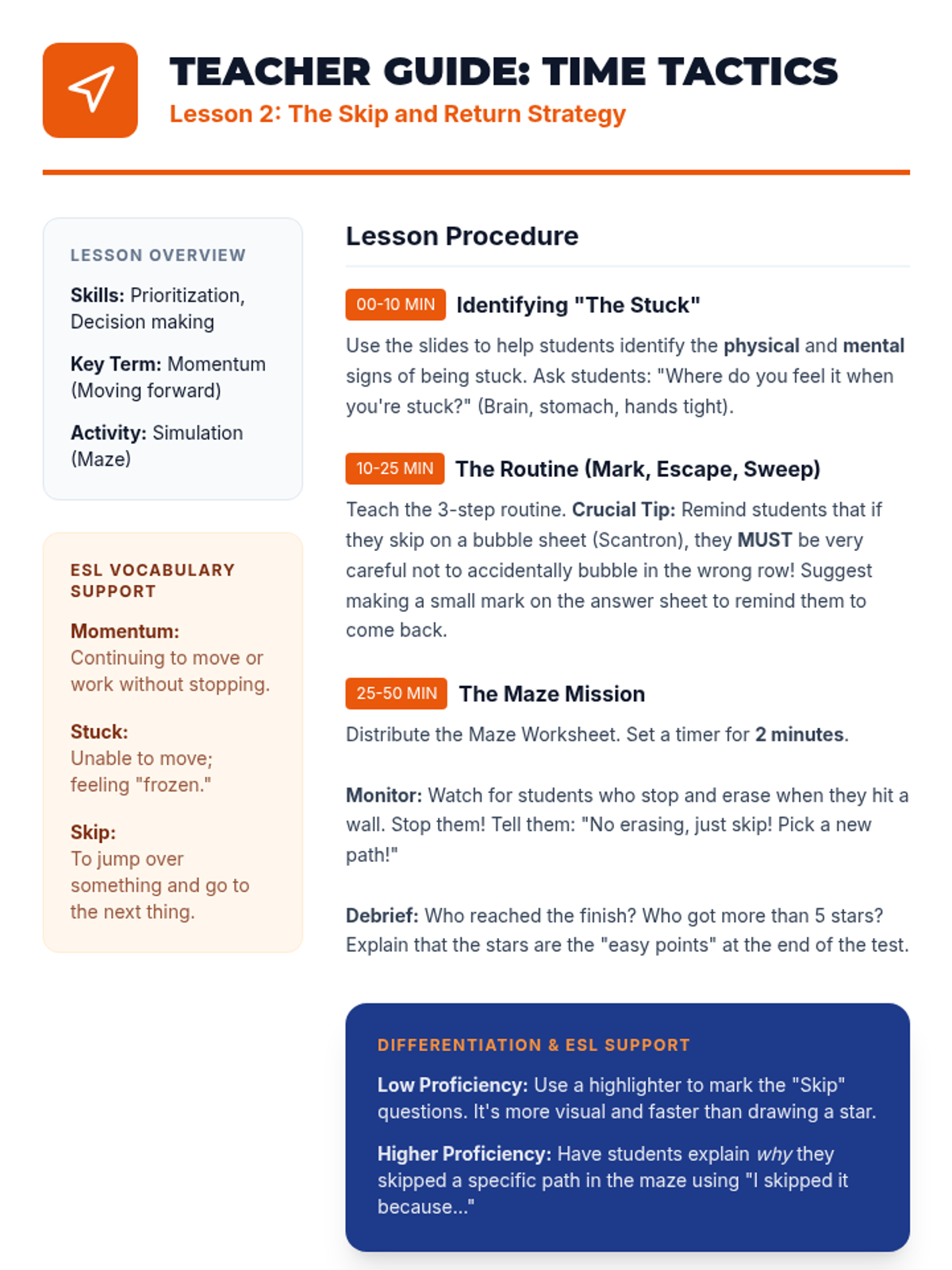
Students practice identifying when they are stuck and learn the 'skip and return' method to maximize their points by answering easy questions first.
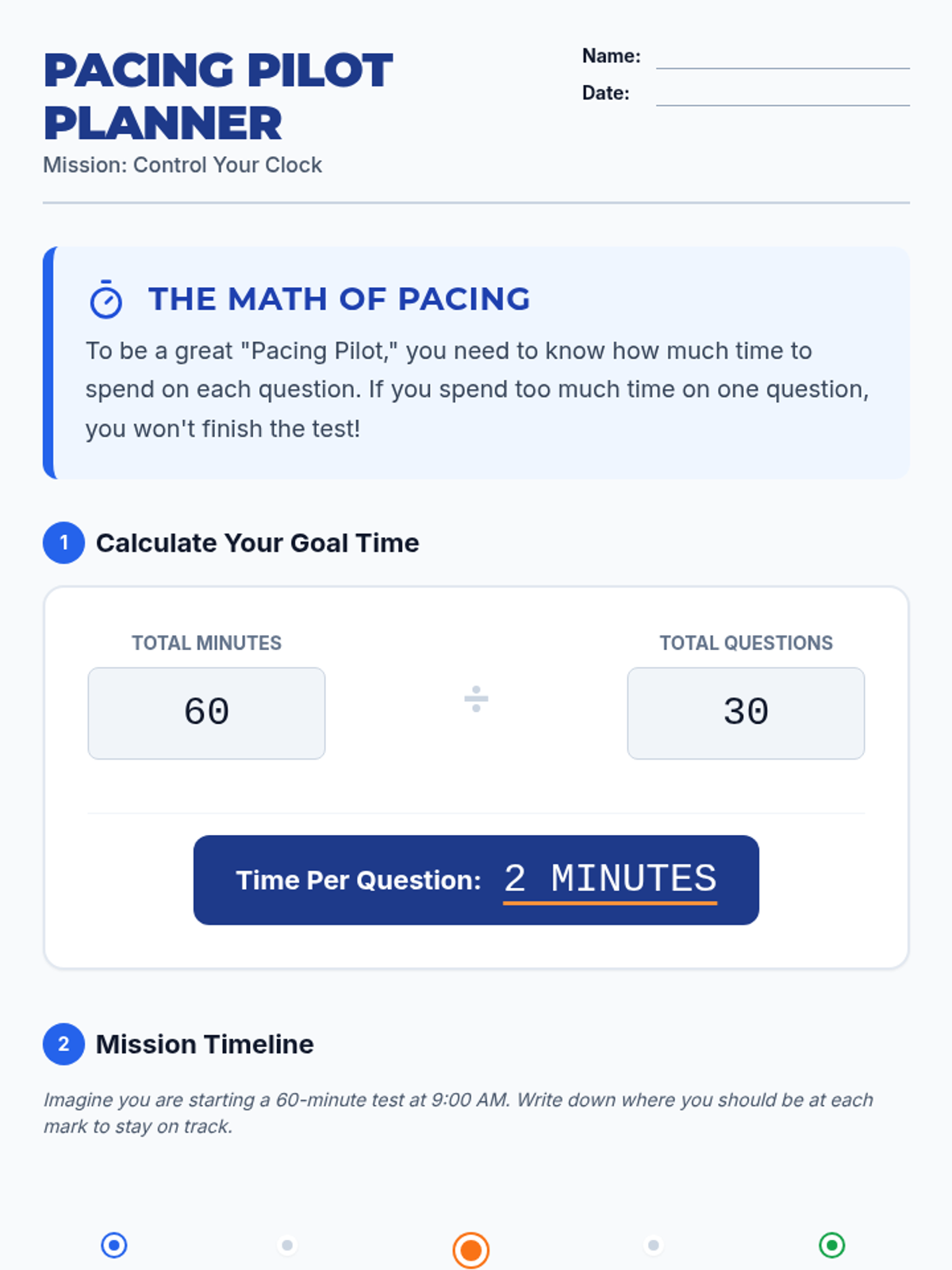
Students learn the basics of pacing by breaking down total test time and creating visual pacing guides to avoid the 'time trap.'
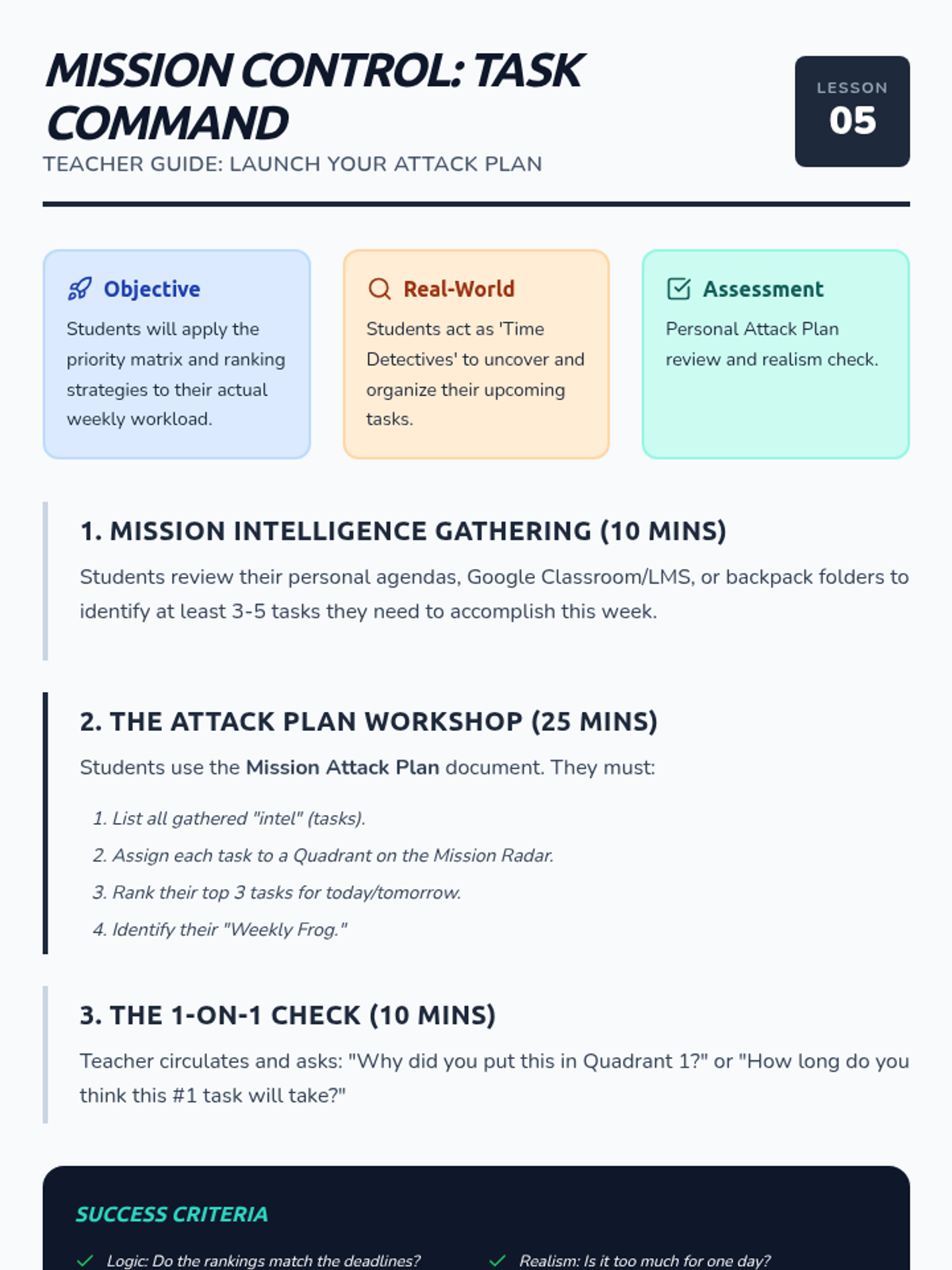
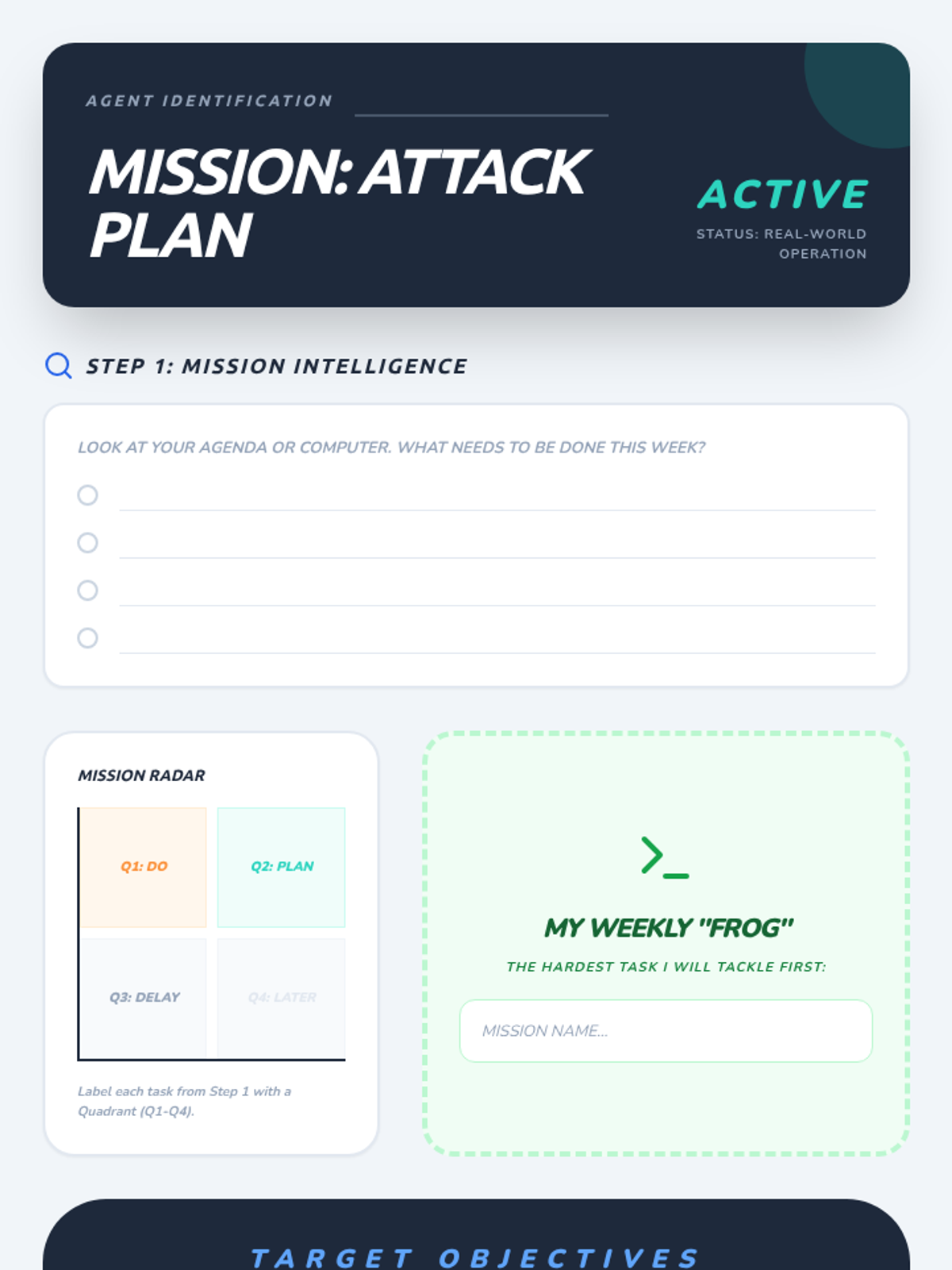
Students apply prioritization strategies to their own upcoming academic tasks to create a personalized weekly 'Attack Plan'.
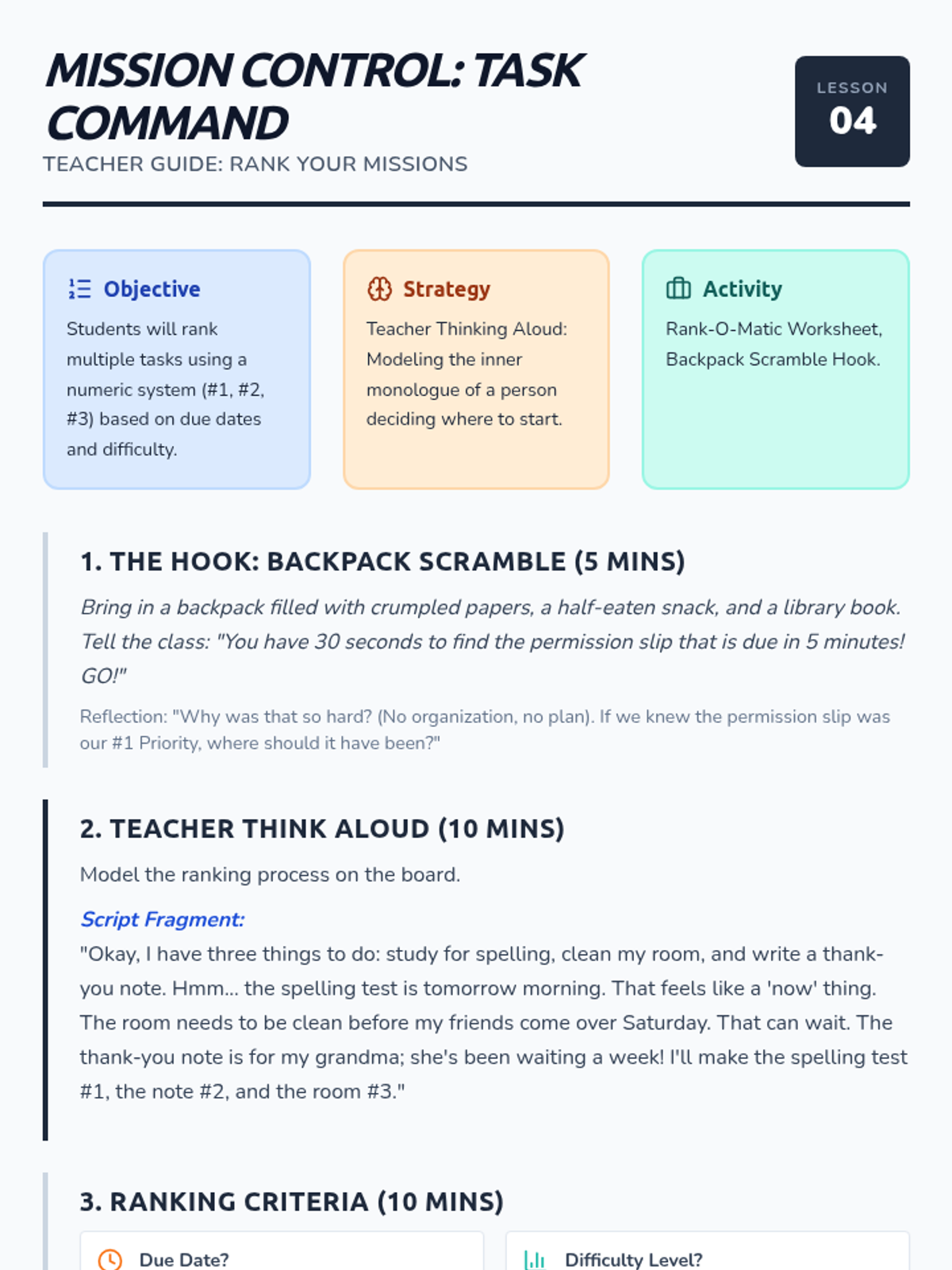
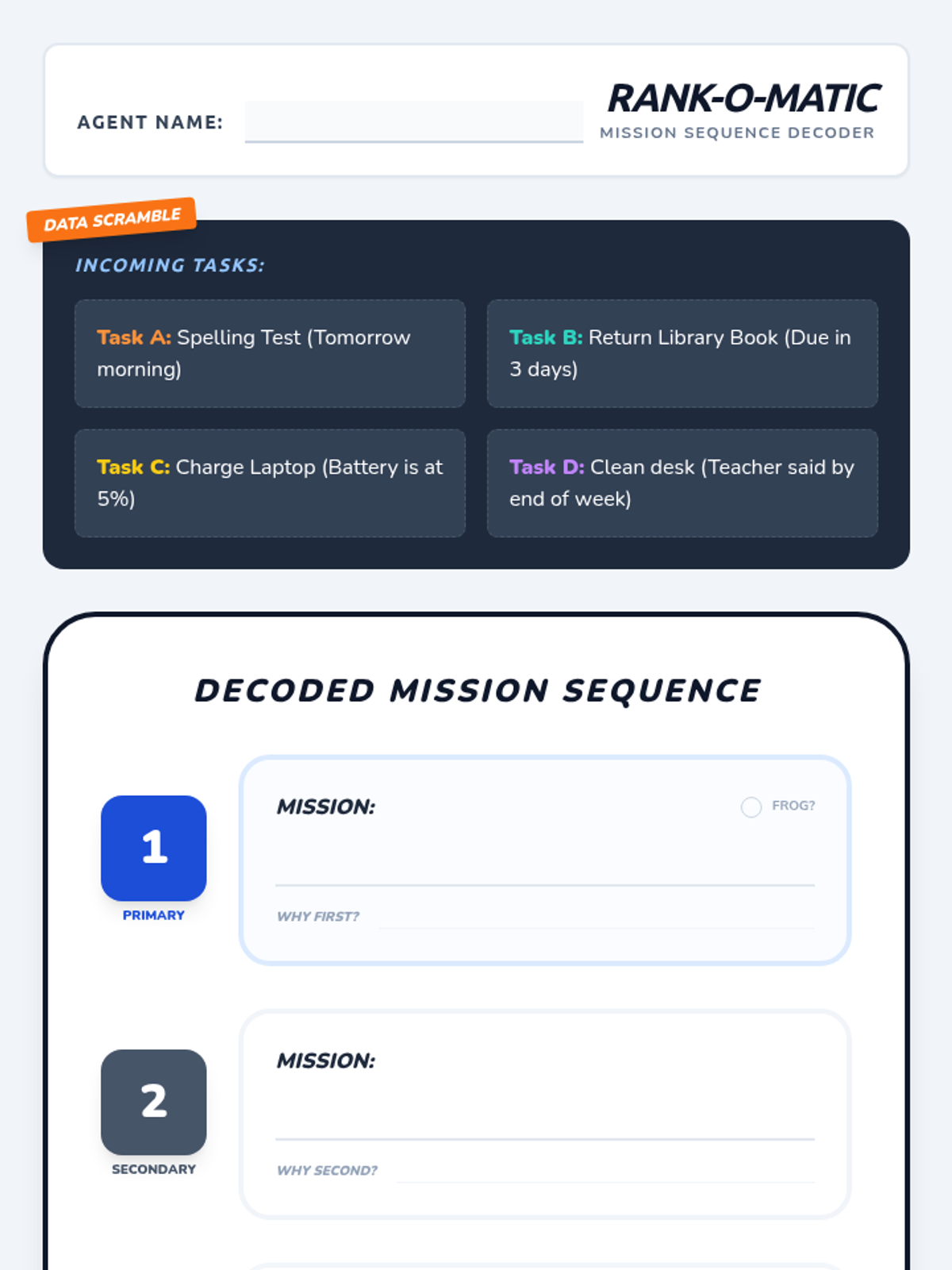
Students practice ranking tasks based on due dates and difficulty using visual ranking templates.
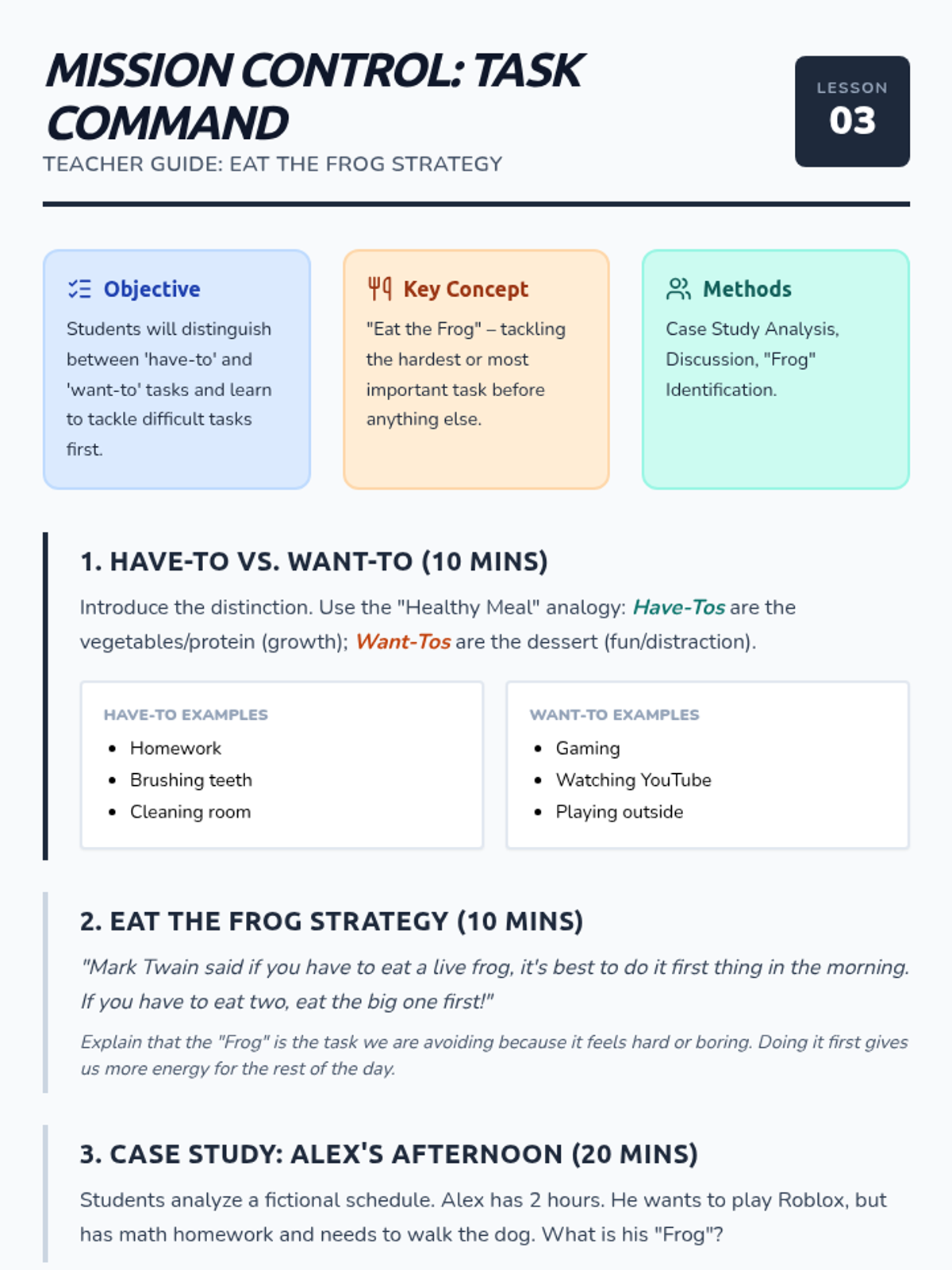
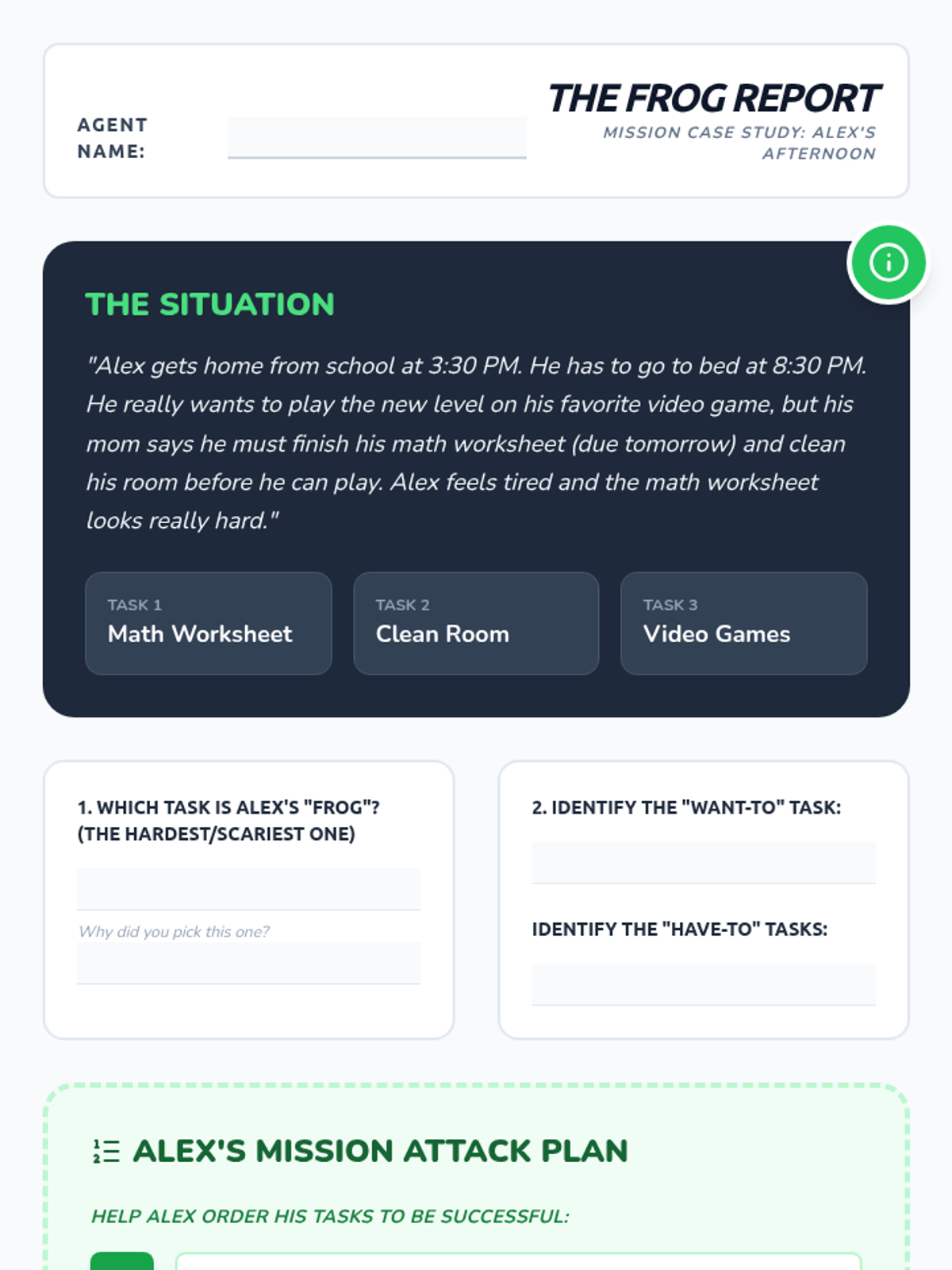
Students distinguish between 'have-to' and 'want-to' tasks, exploring the 'Eat the Frog' strategy to manage time effectively.
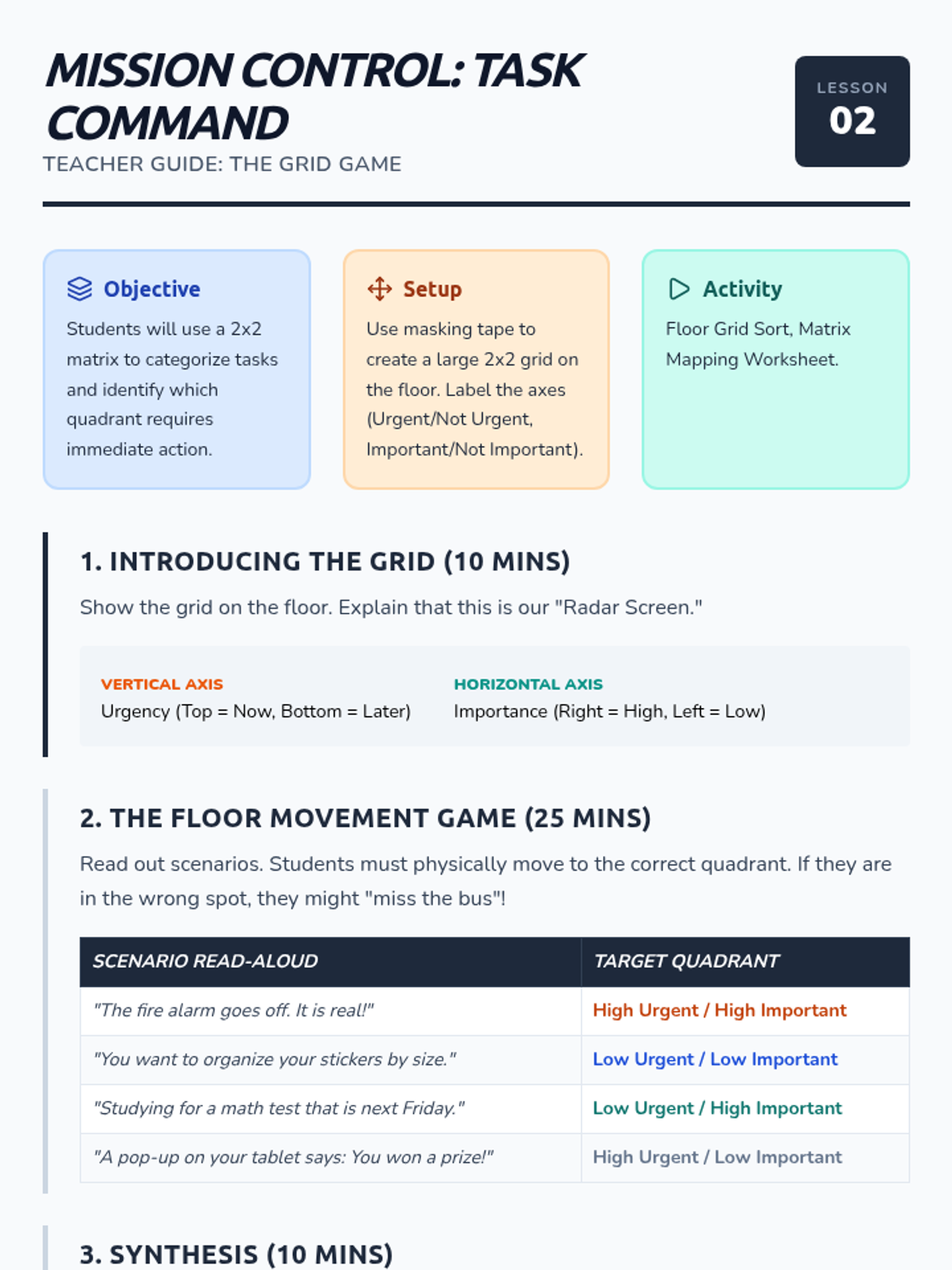
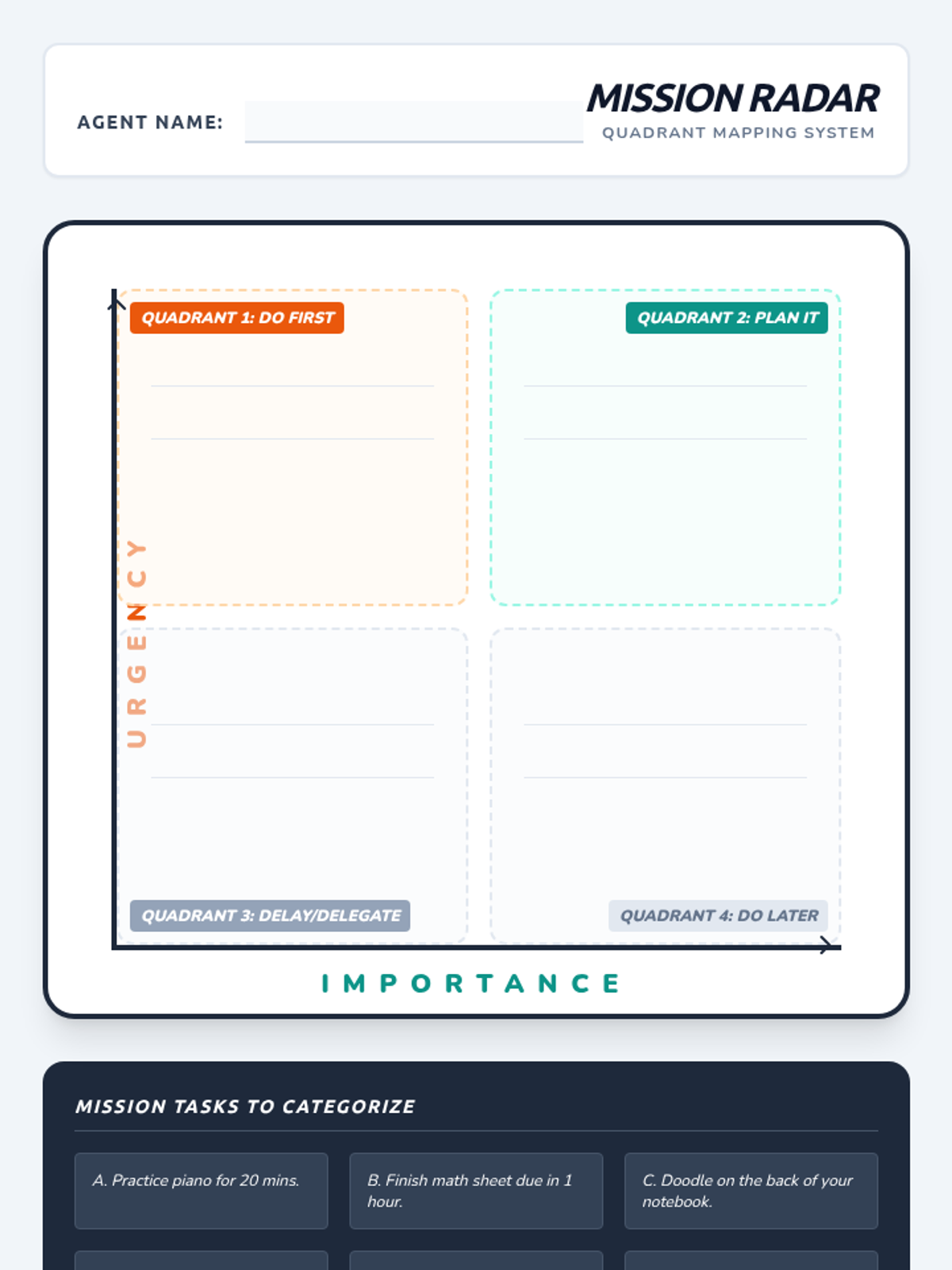
Students use a physical 2x2 grid to categorize tasks by urgency and importance, solidifying the priority matrix concept.
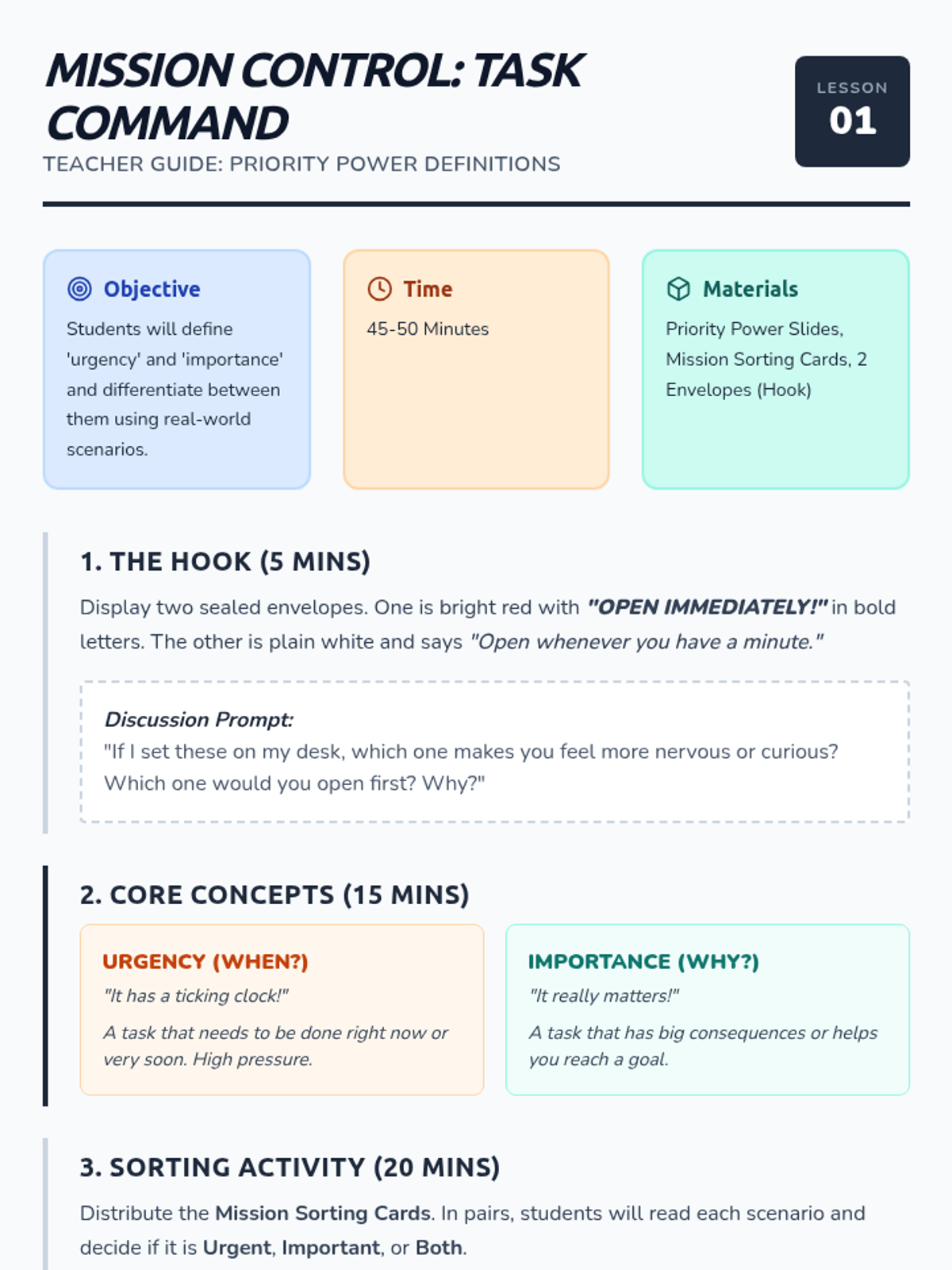
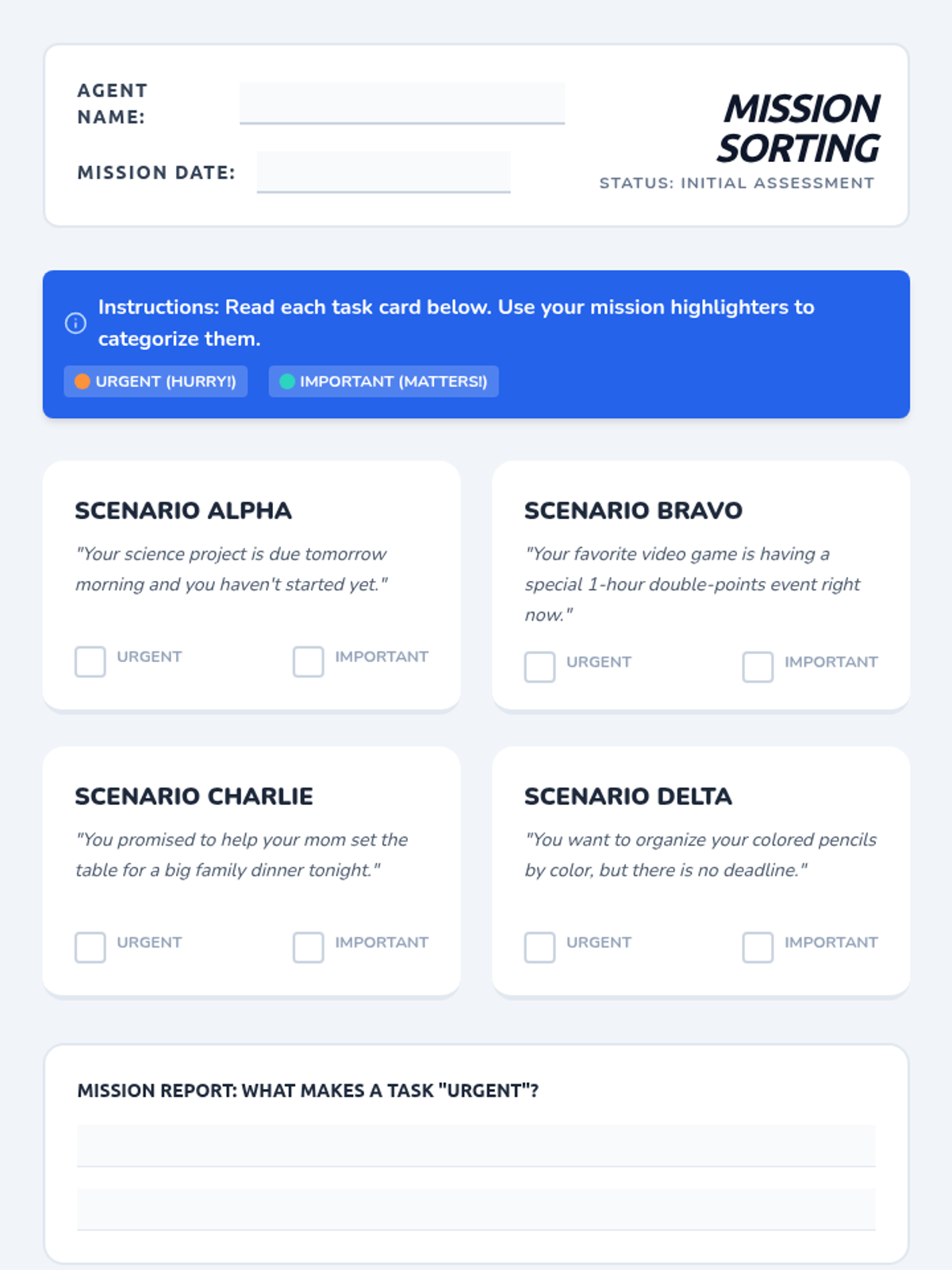
Students define 'urgency' and 'importance' through guided discussion and categorize school and home scenarios.
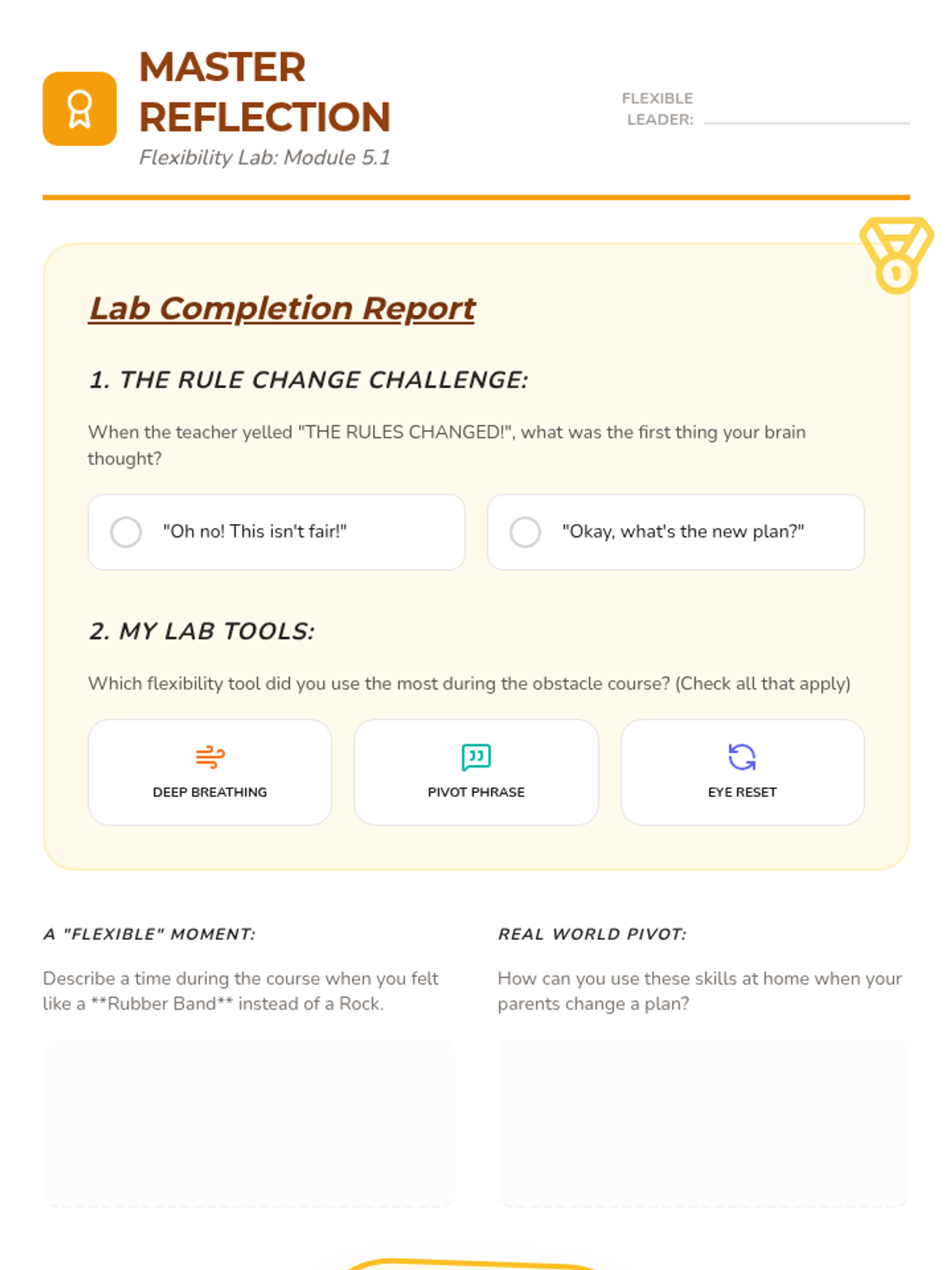
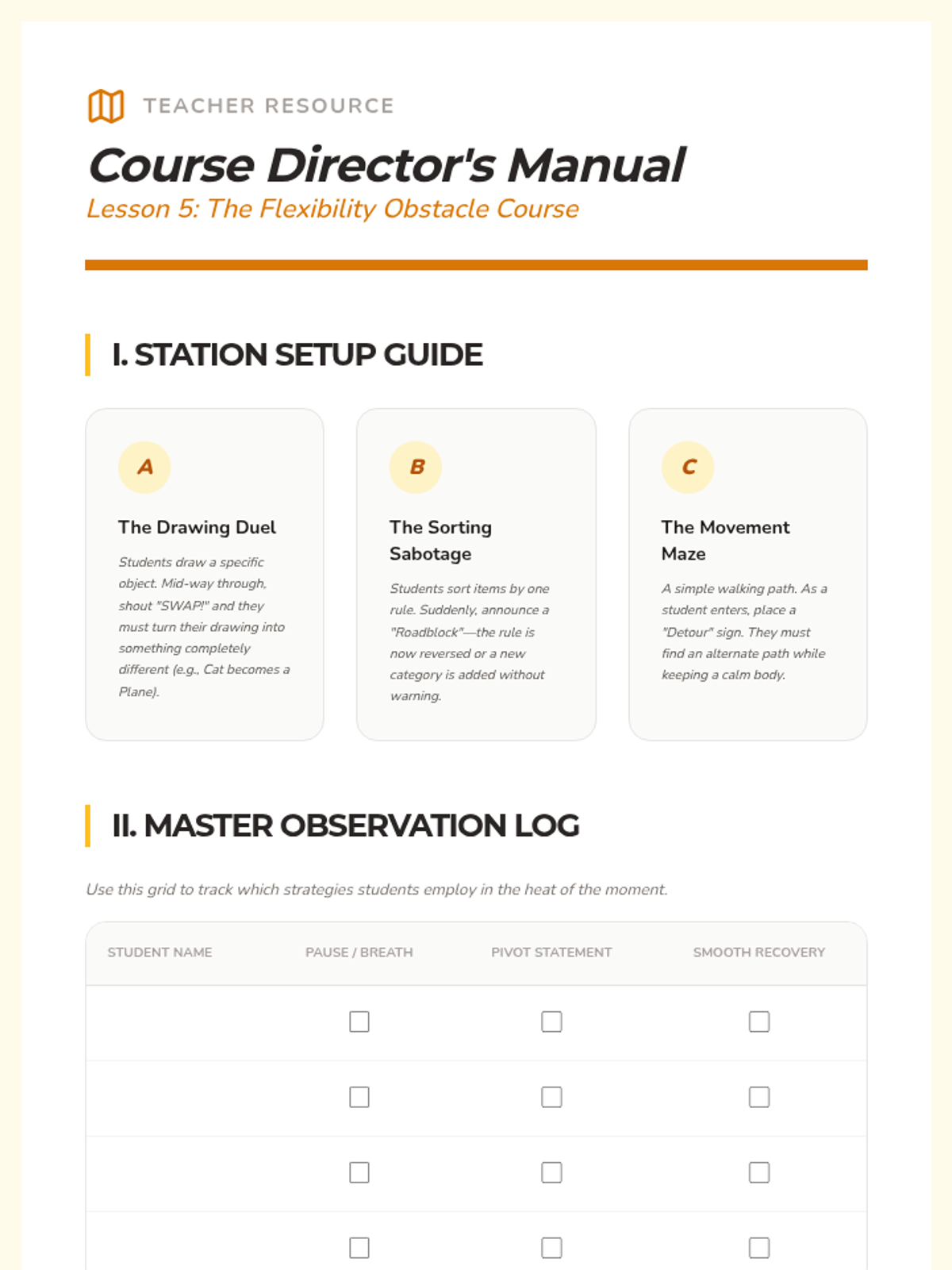
A culminating simulation where students navigate a physical or cognitive path that changes dynamically, requiring them to use all their flexibility tools.
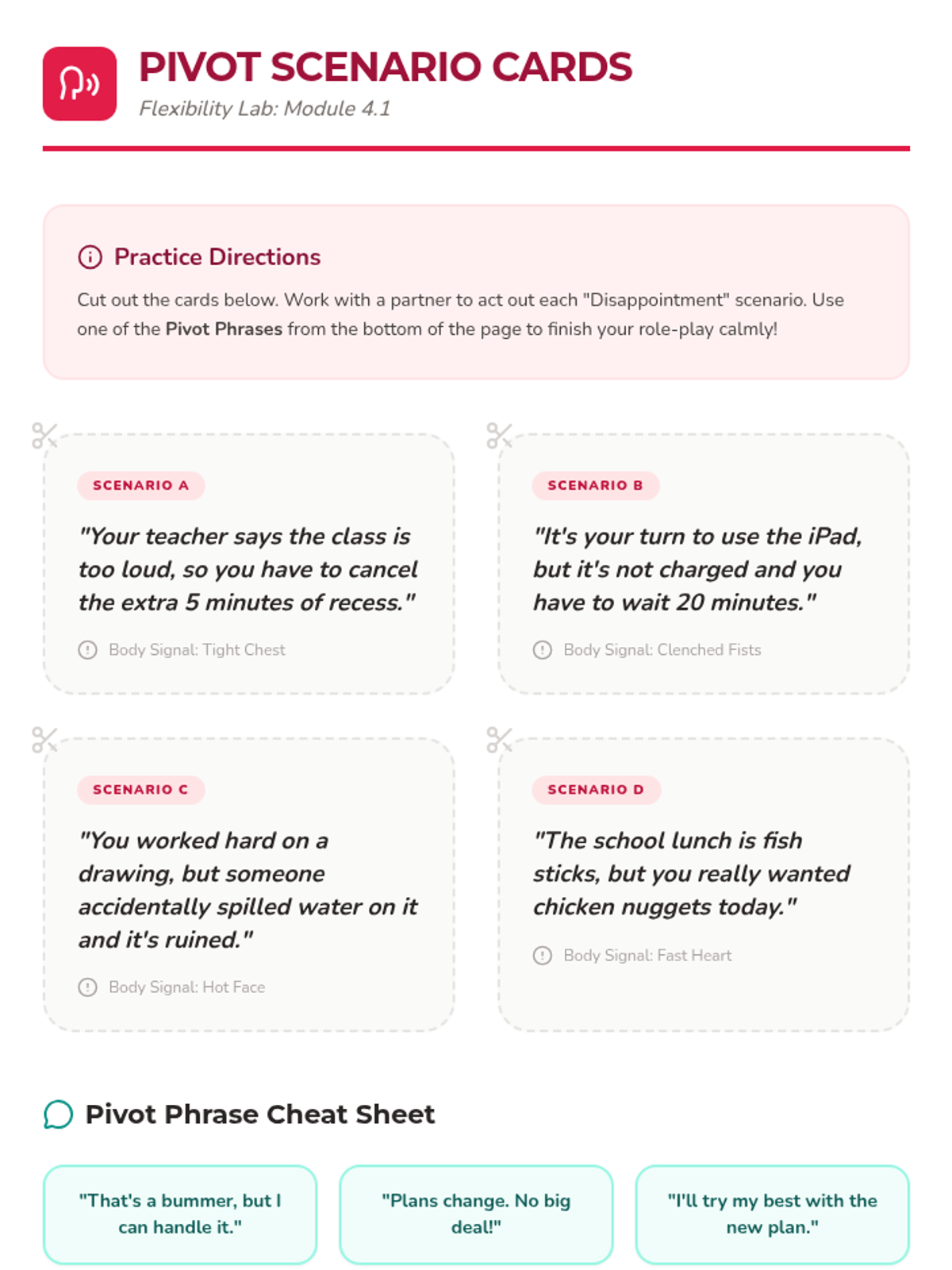
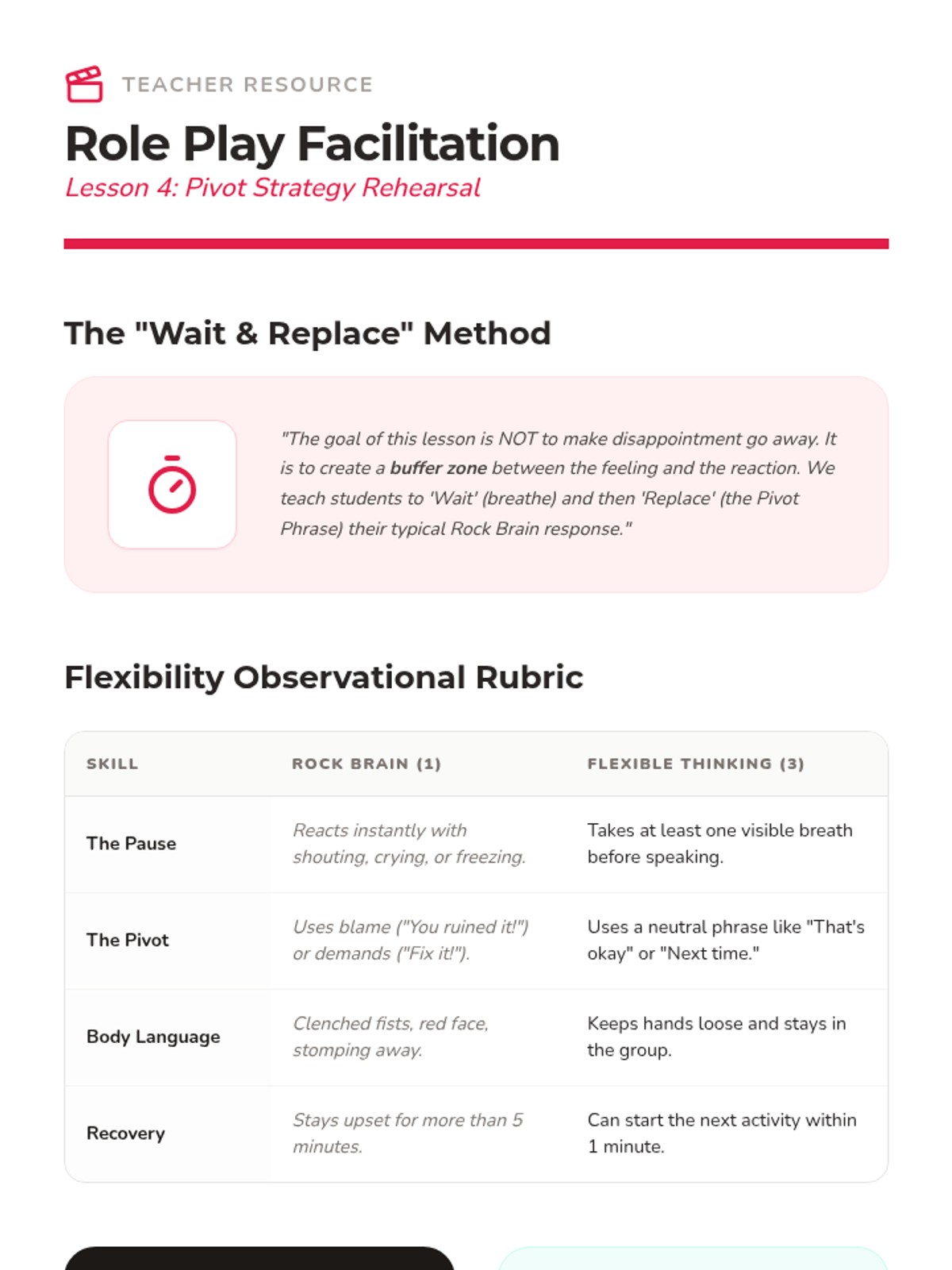
Students use scripts and role-play to practice calm reactions and neutral statements when faced with disappointing plan changes.
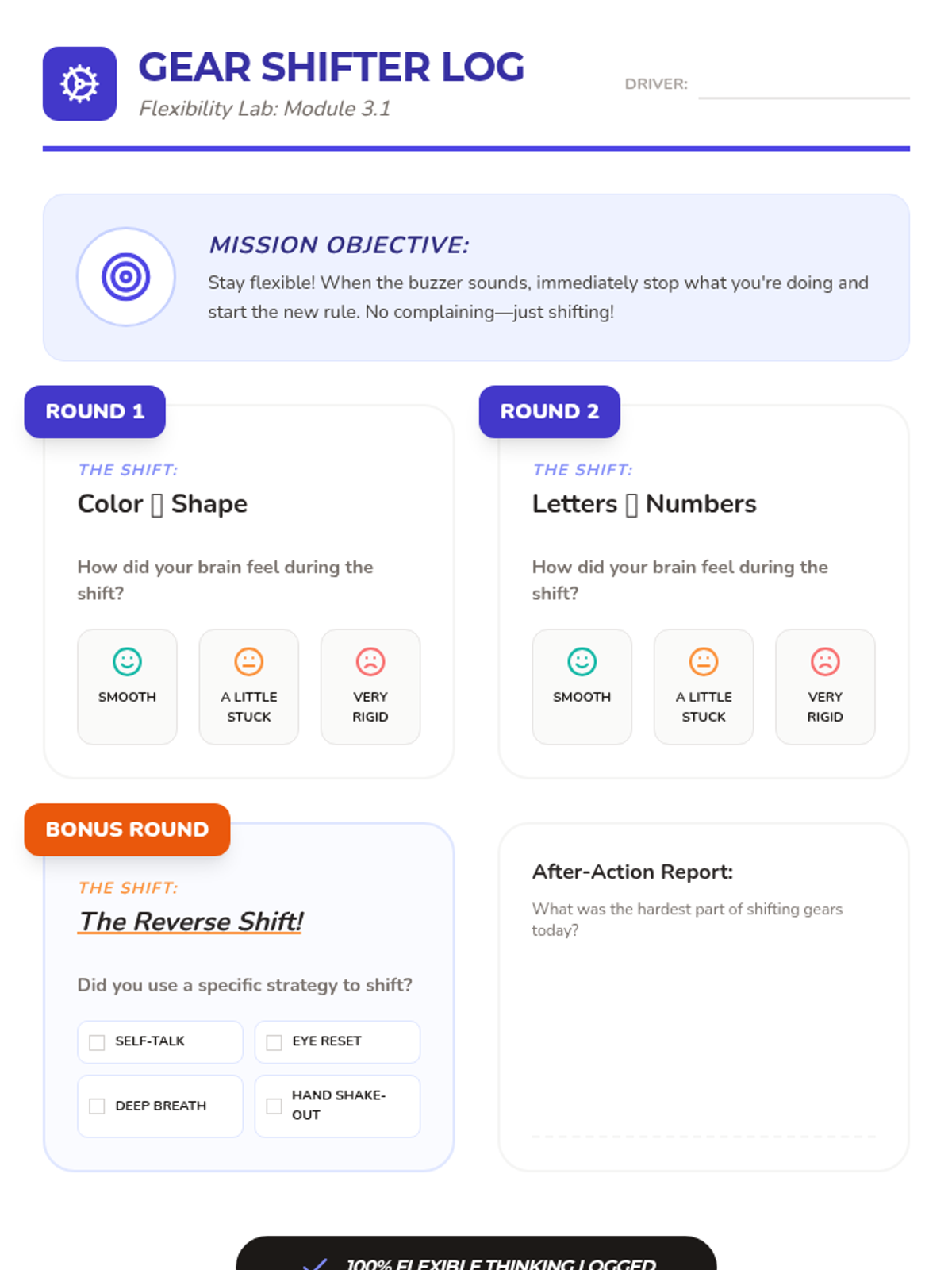
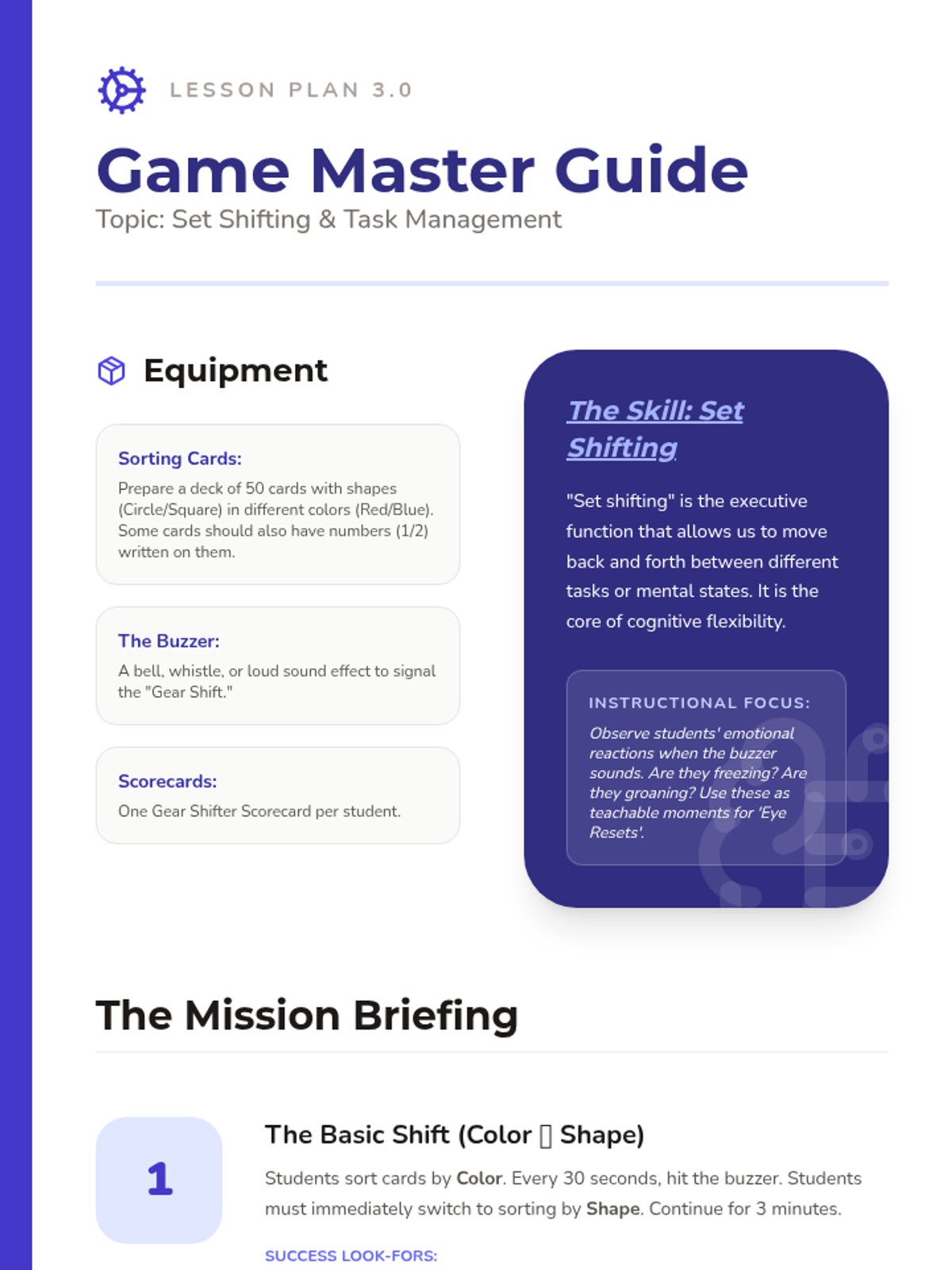
A fast-paced, game-based lesson where students practice 'set shifting' by rapidly switching between different tasks and rules.
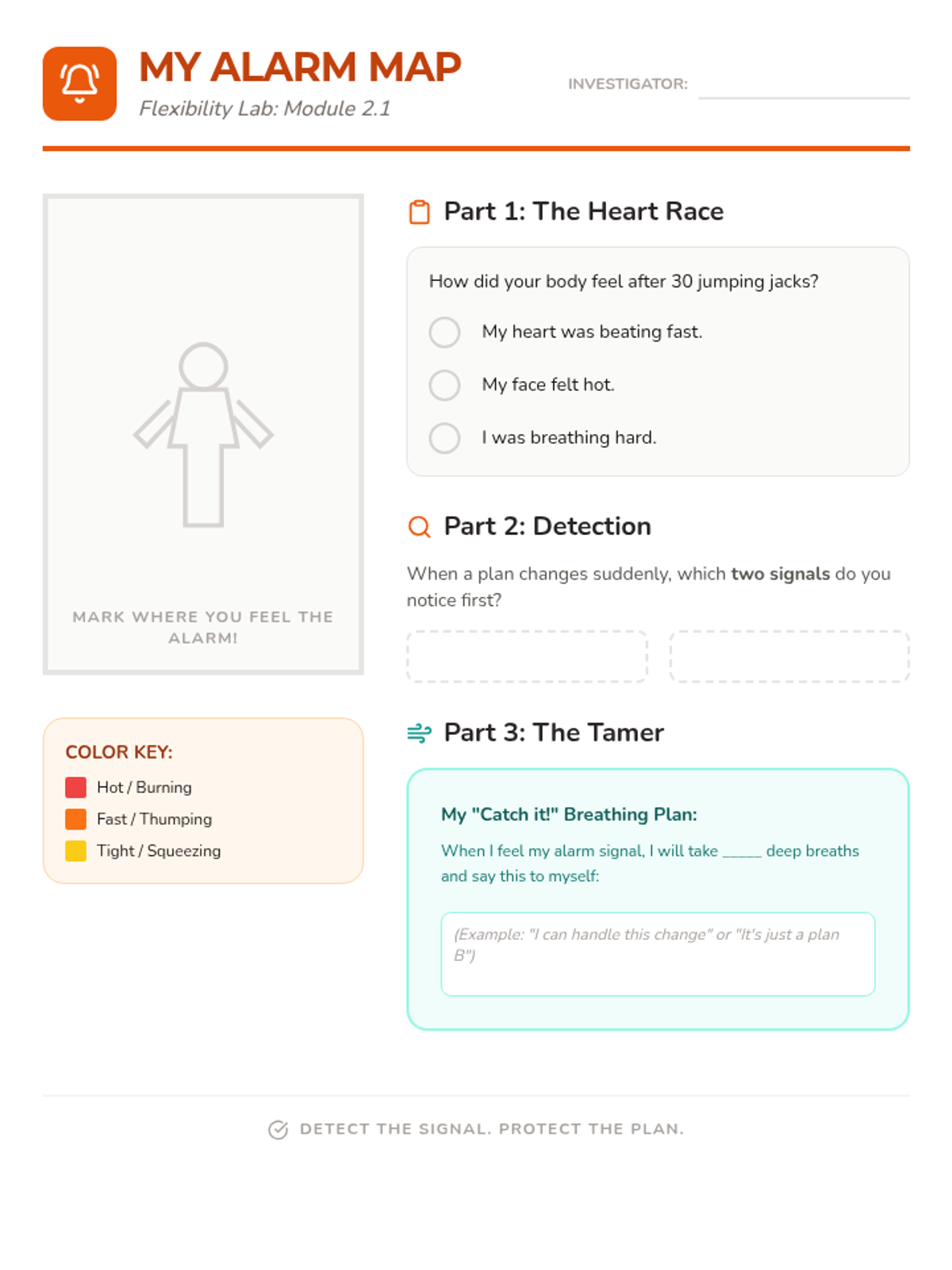
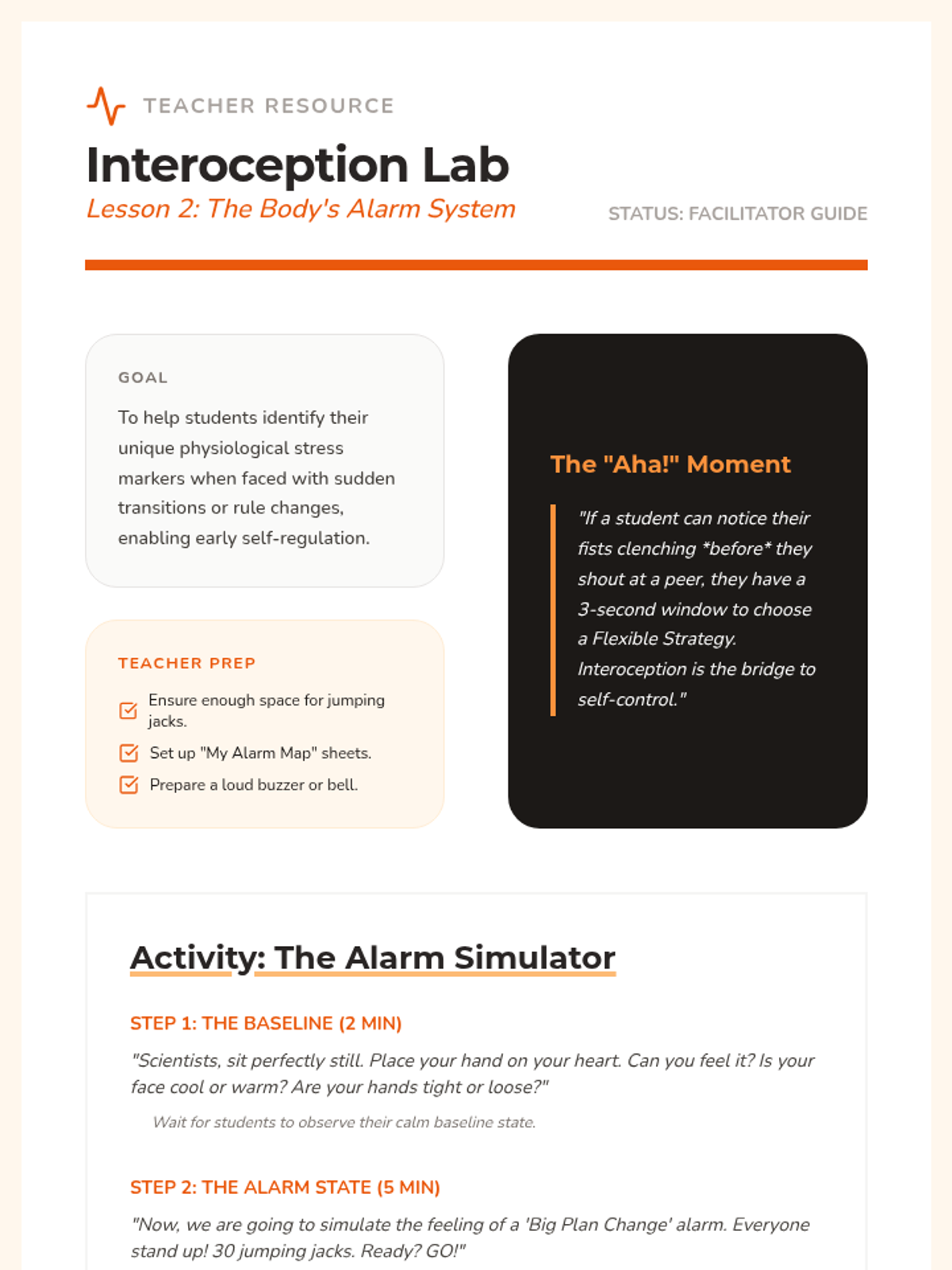
Focuses on interoception and identifying the body's physical warning signs when a routine is disrupted.
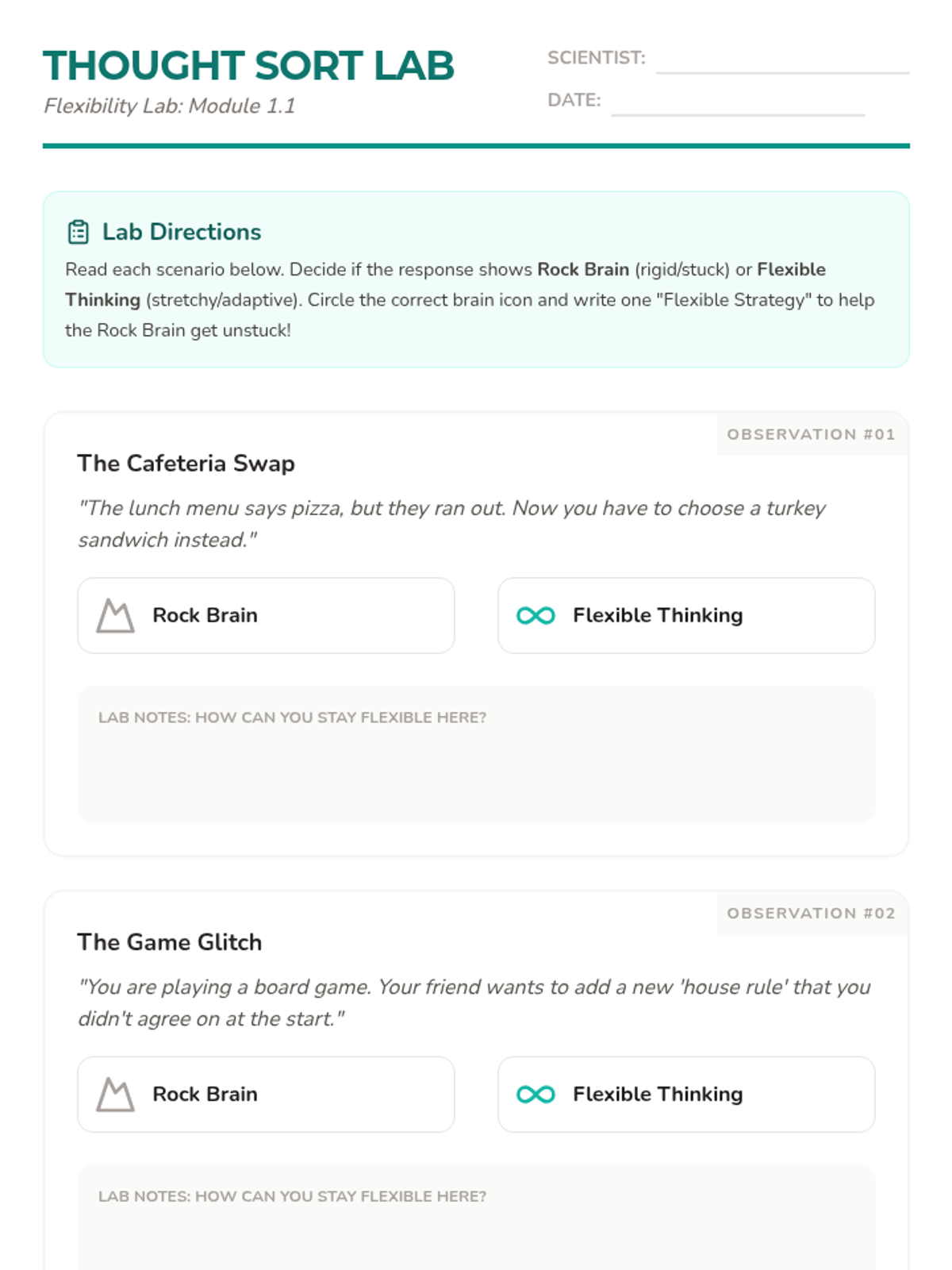
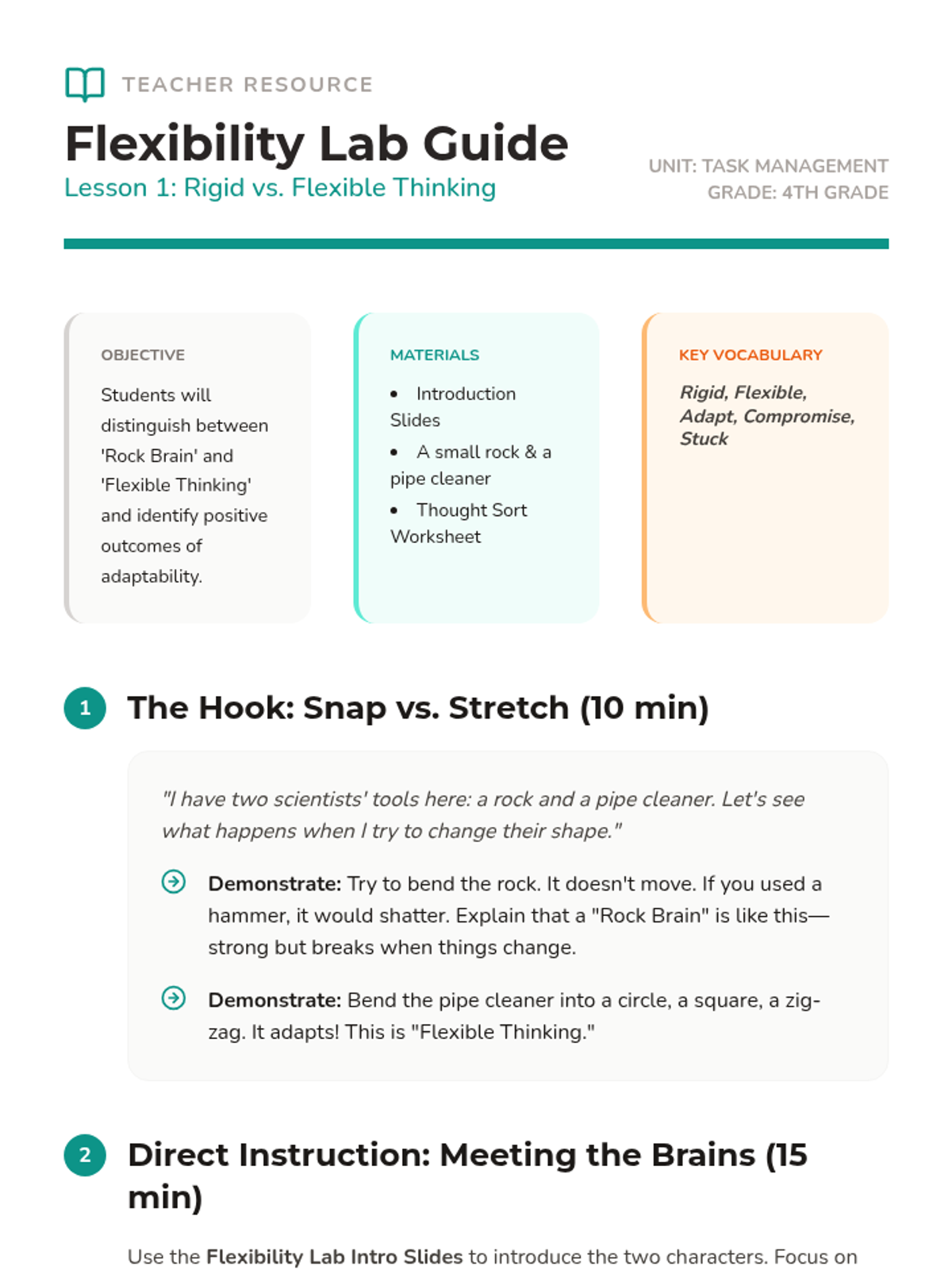
Students learn to distinguish between 'Rock Brain' (rigid thinking) and 'Rubber Band' (flexible thinking) through hands-on metaphors and scenario analysis.
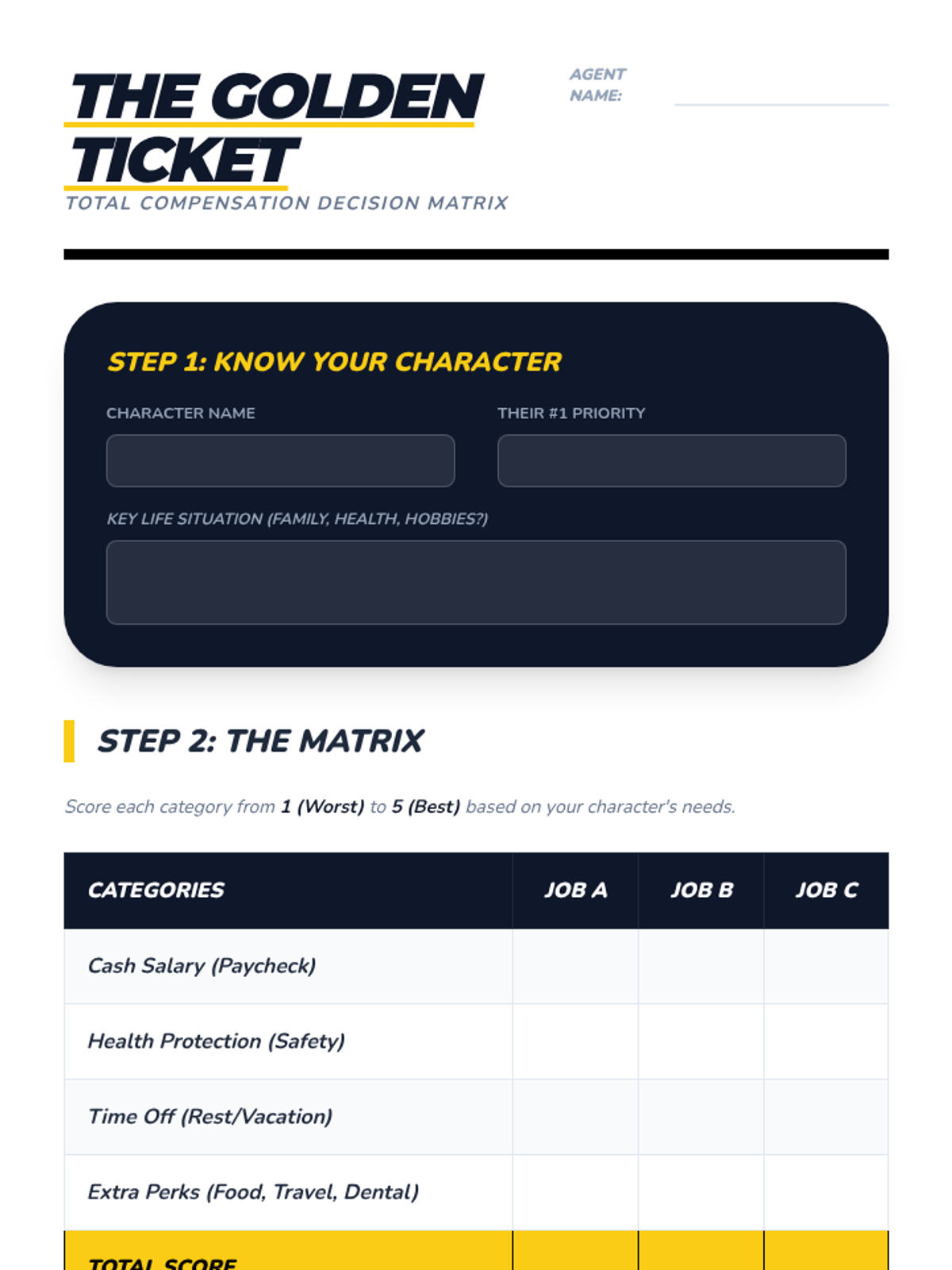
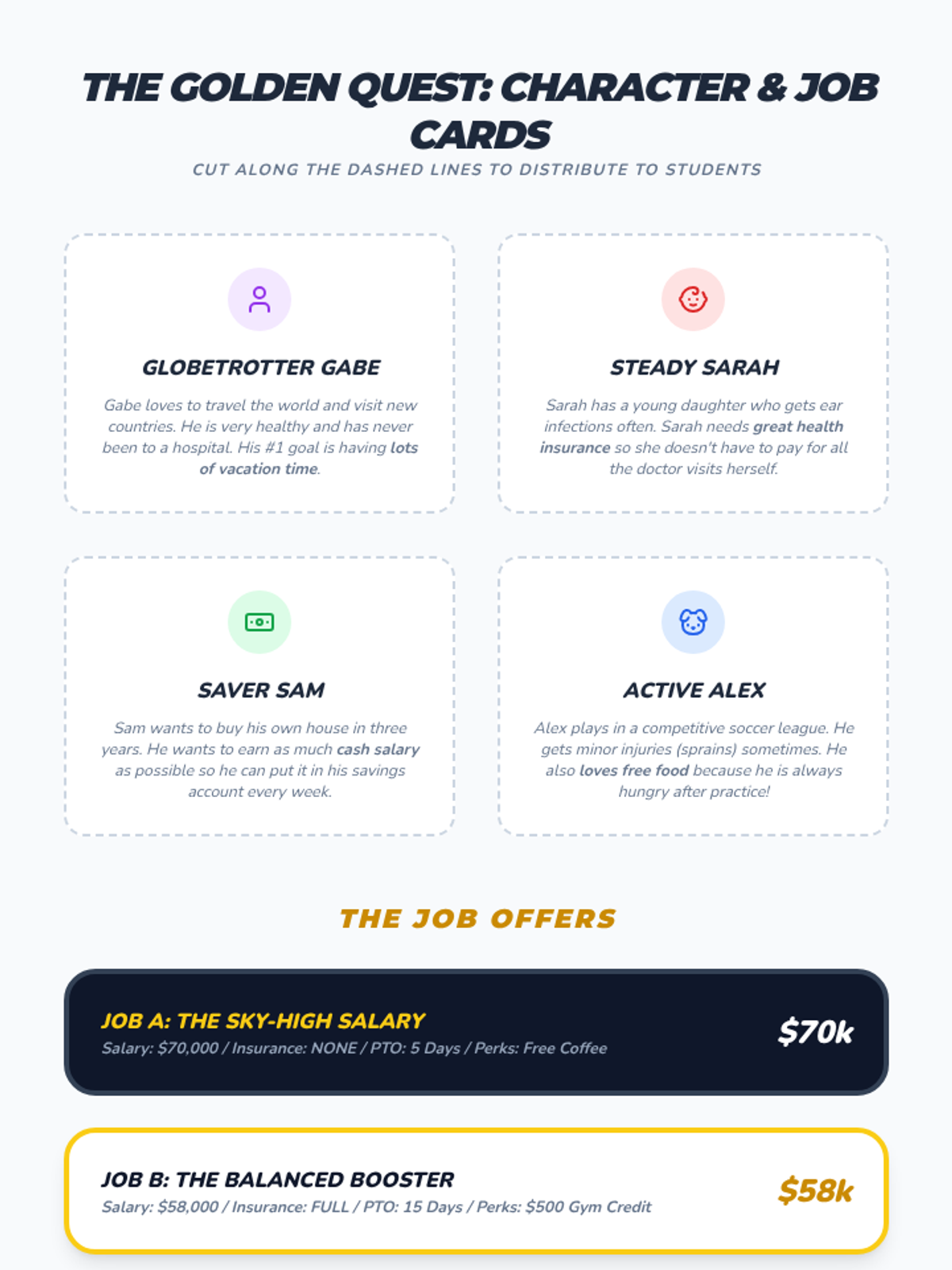
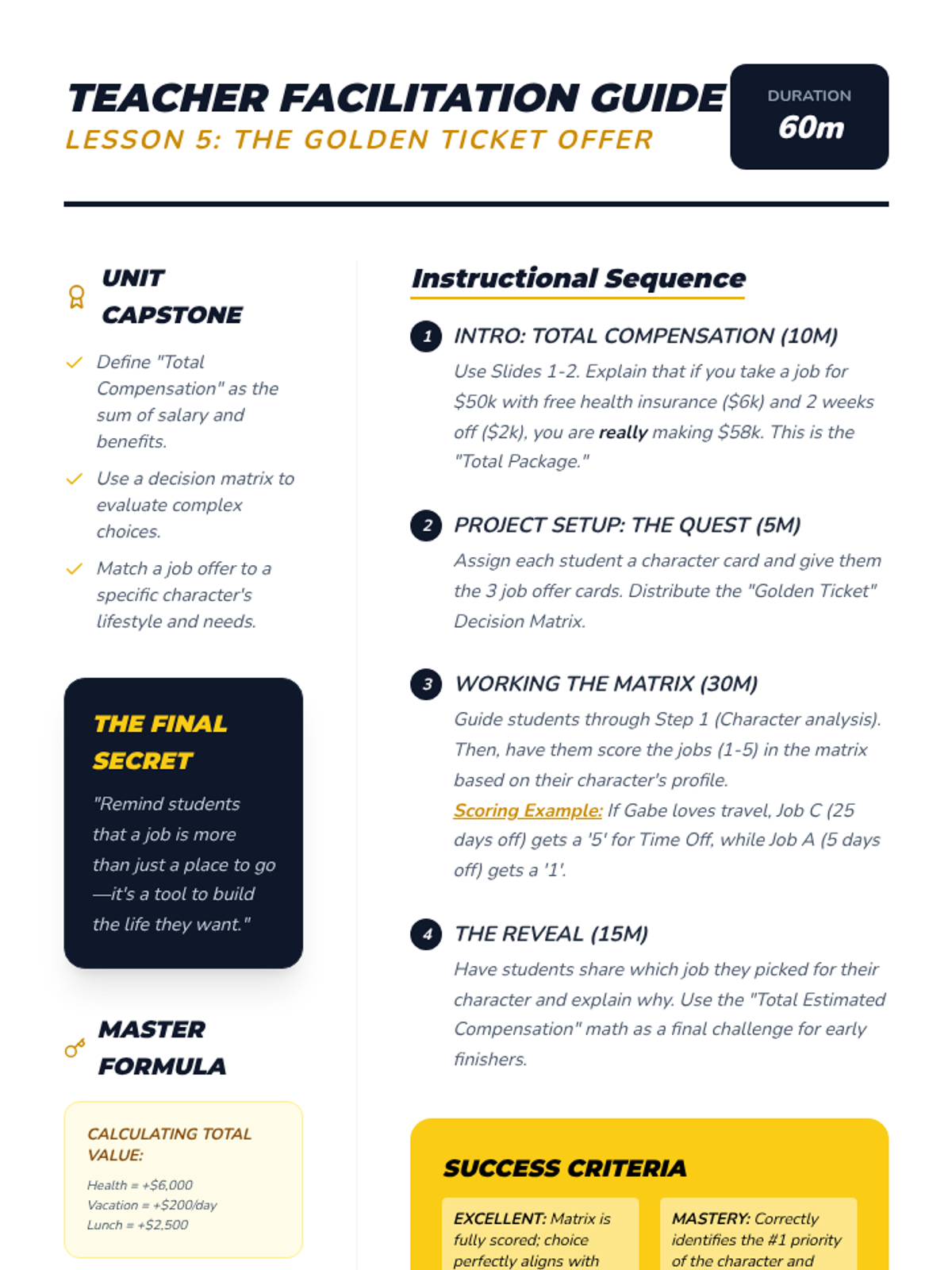
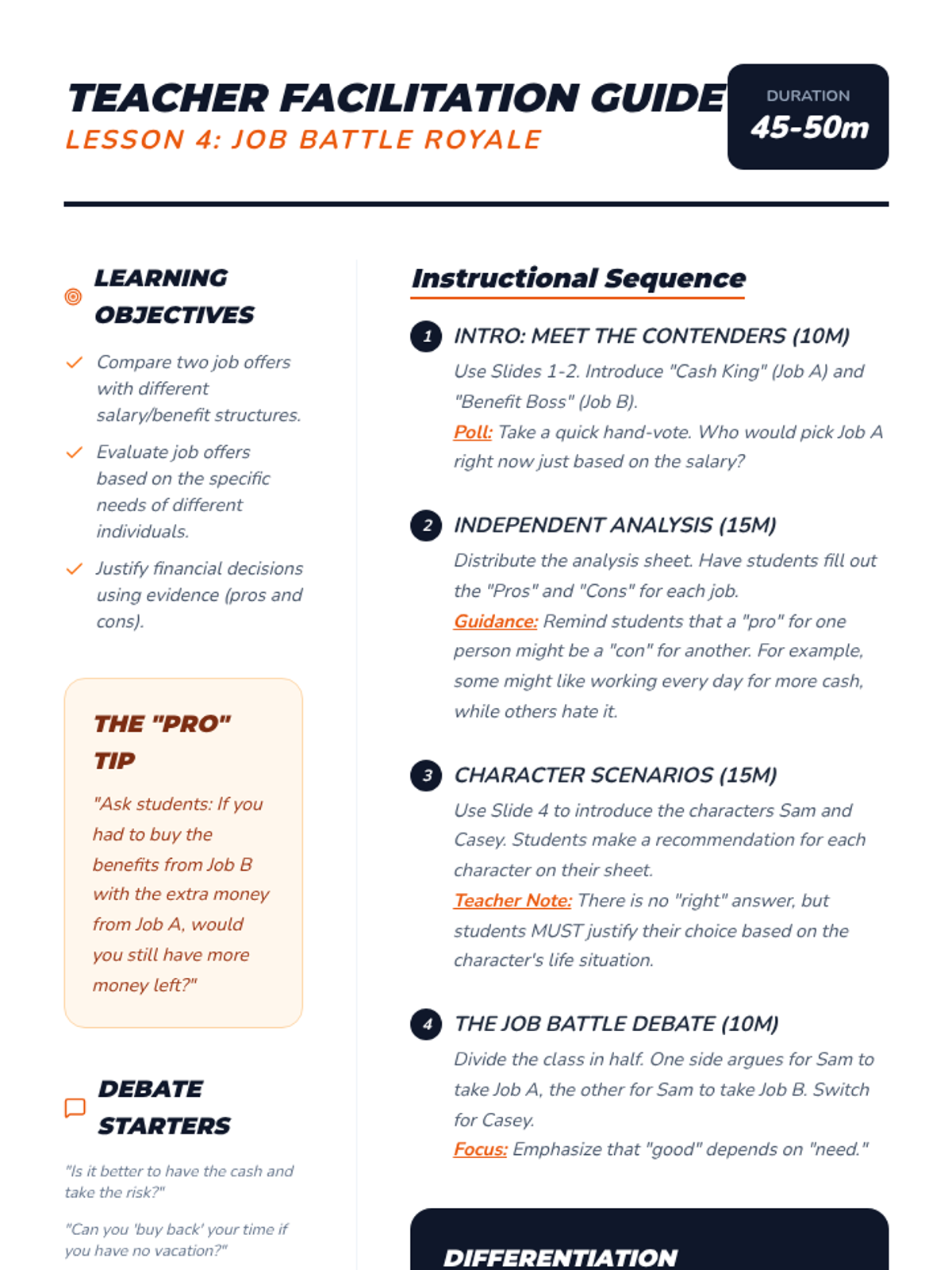
Students use a decision matrix to select a job based on a character profile, calculating total compensation value.
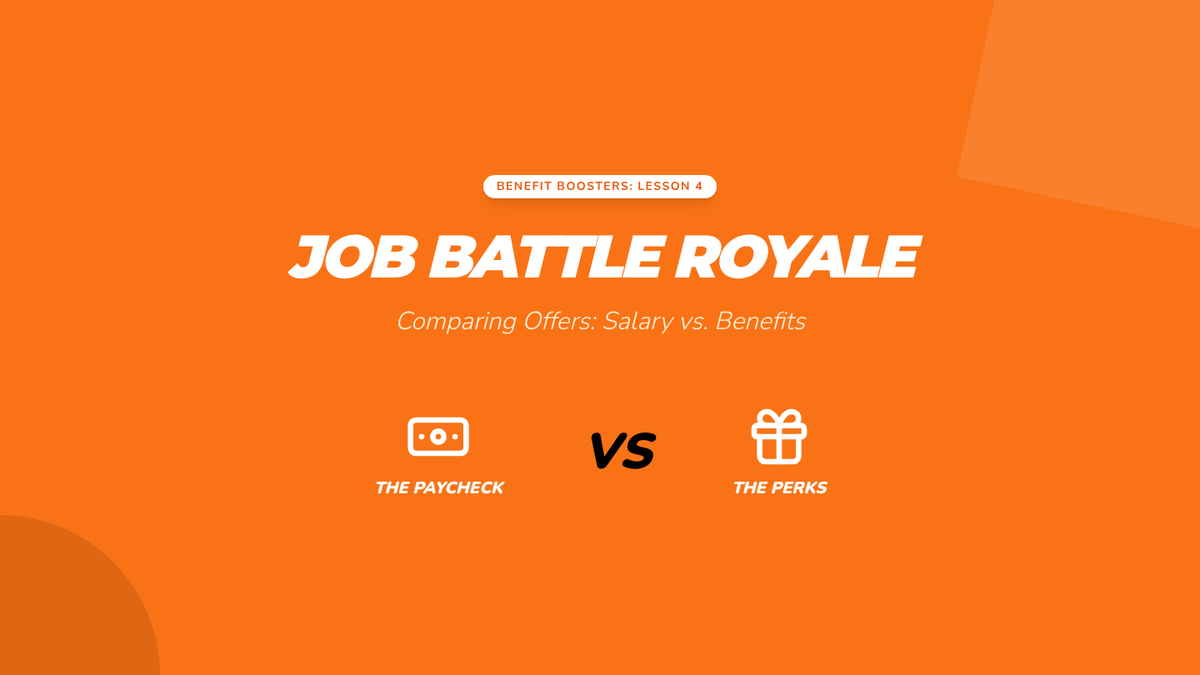
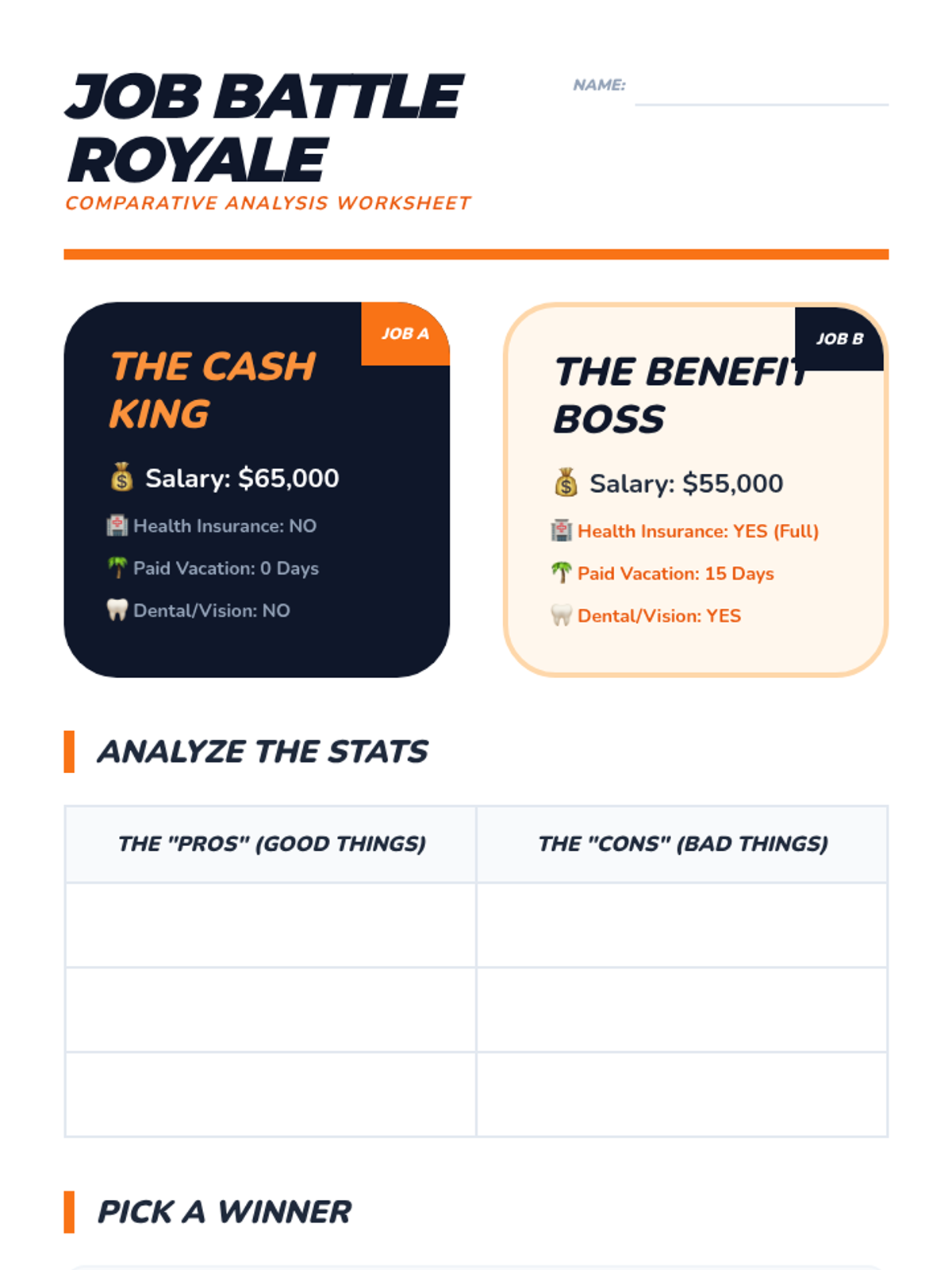
Students compare fictional job offers with different balances of salary and benefits for various life situations.
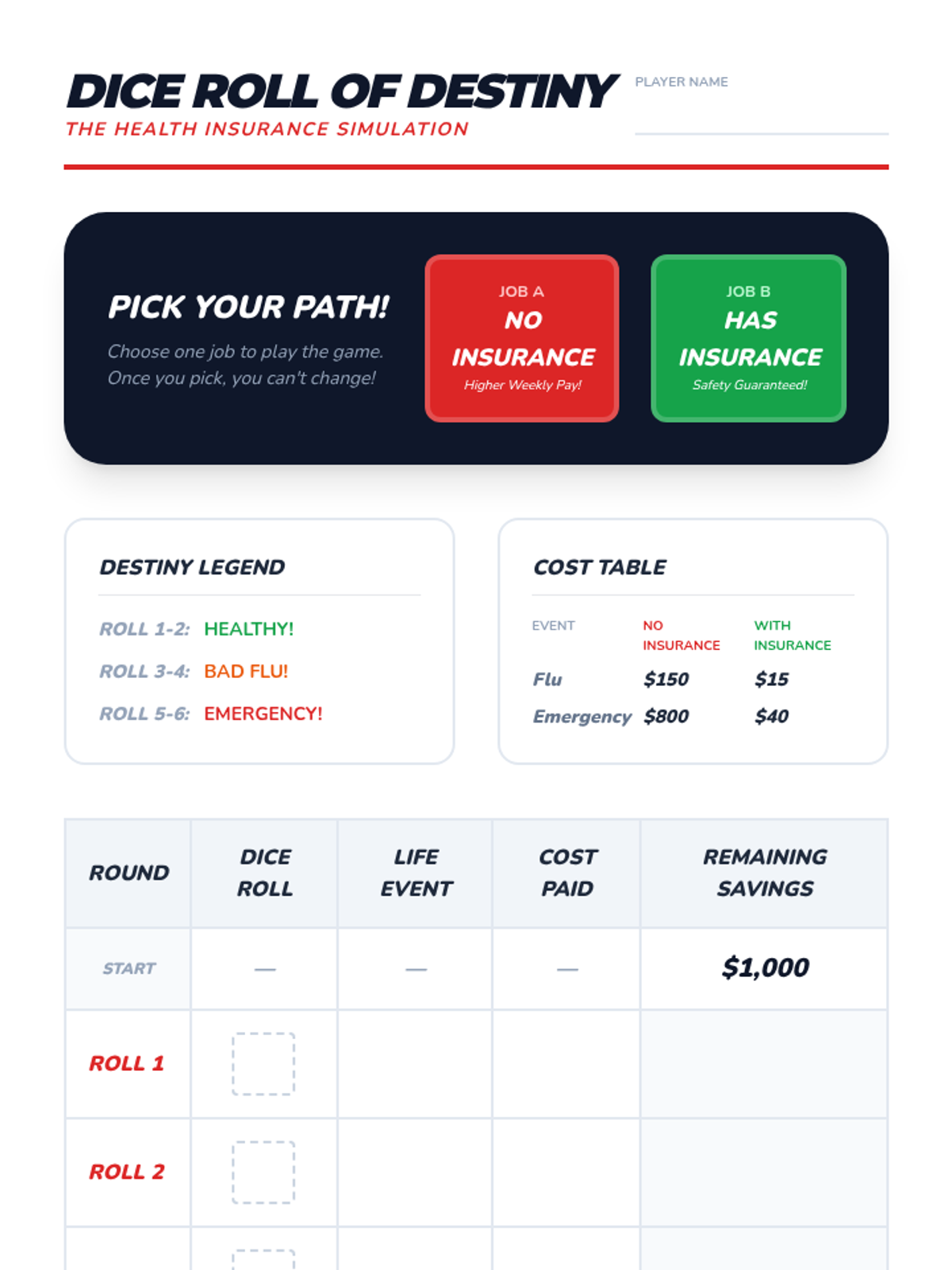
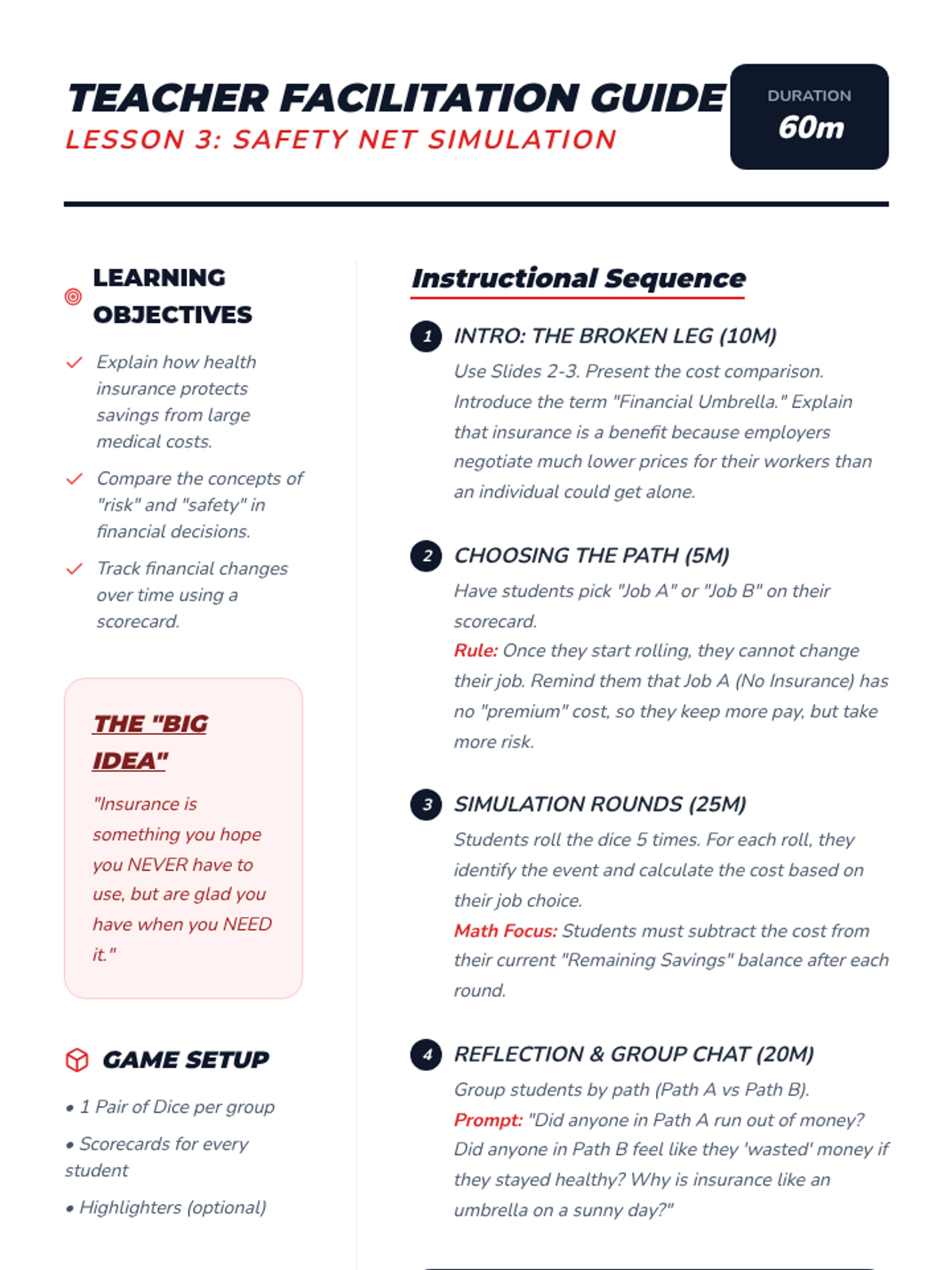
A simulation game where students see how medical costs impact savings and compare being insured vs. uninsured.
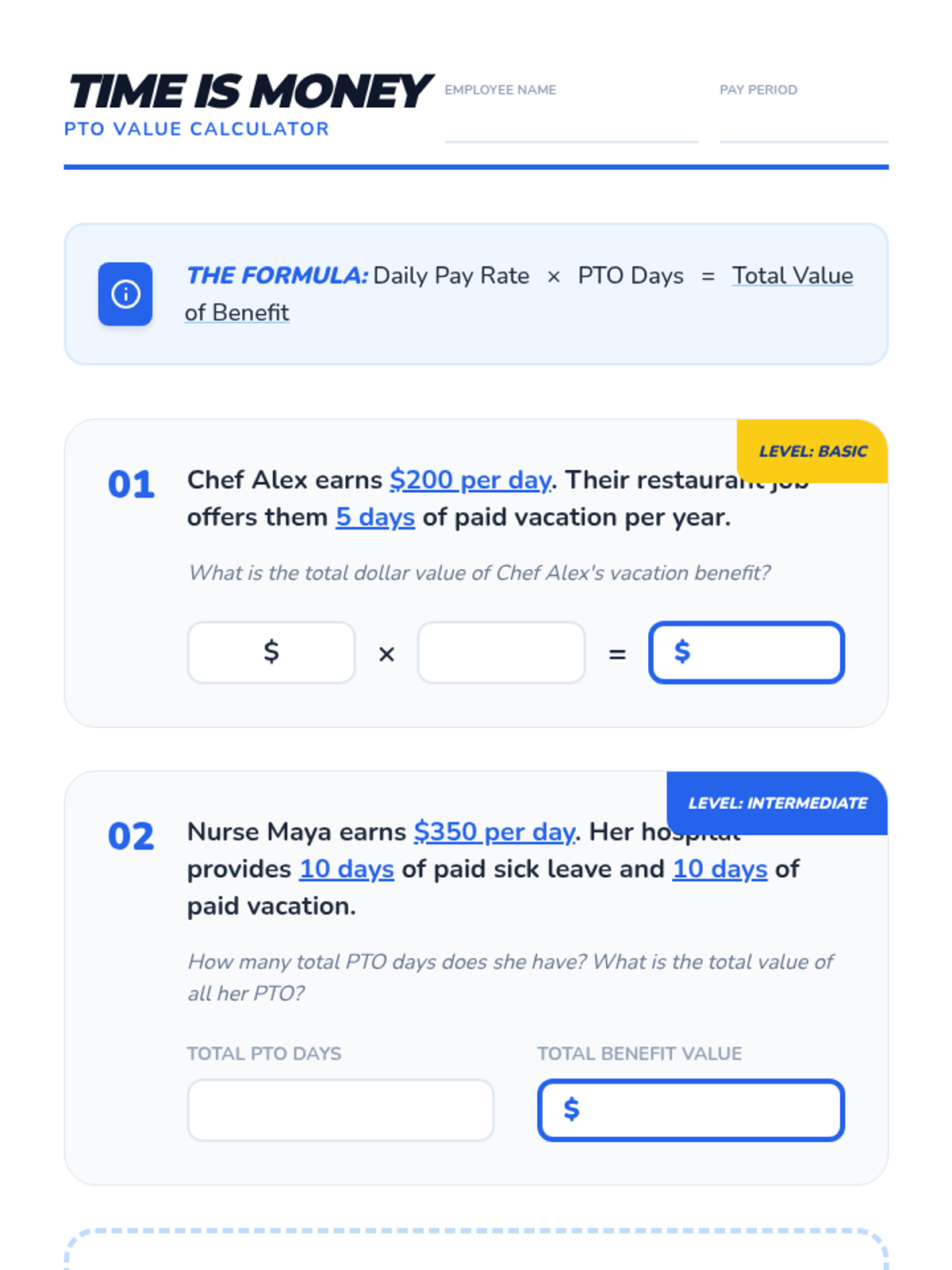
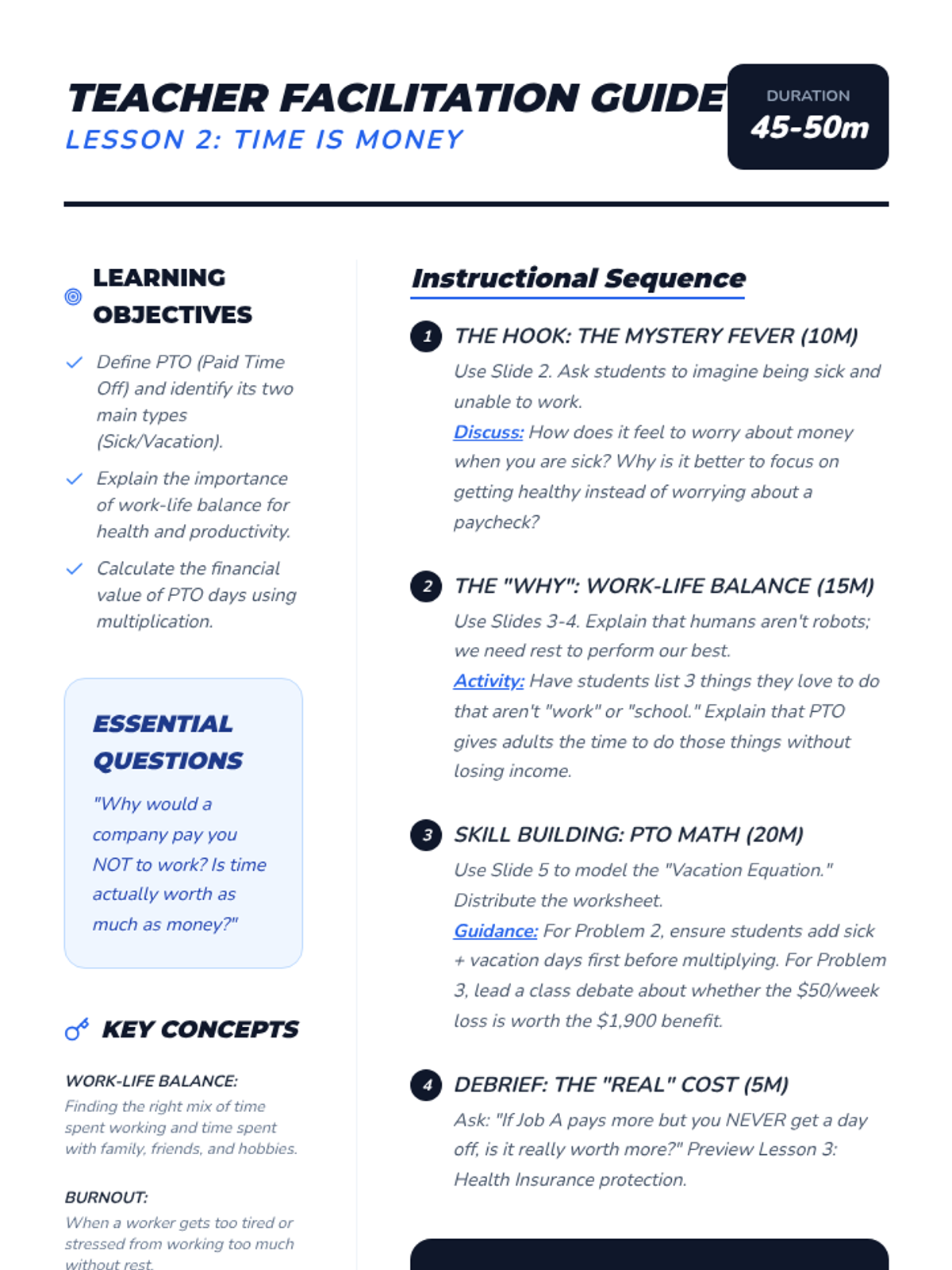
Students discuss work-life balance and the concept of getting paid while not working, calculating the value of PTO through word problems.
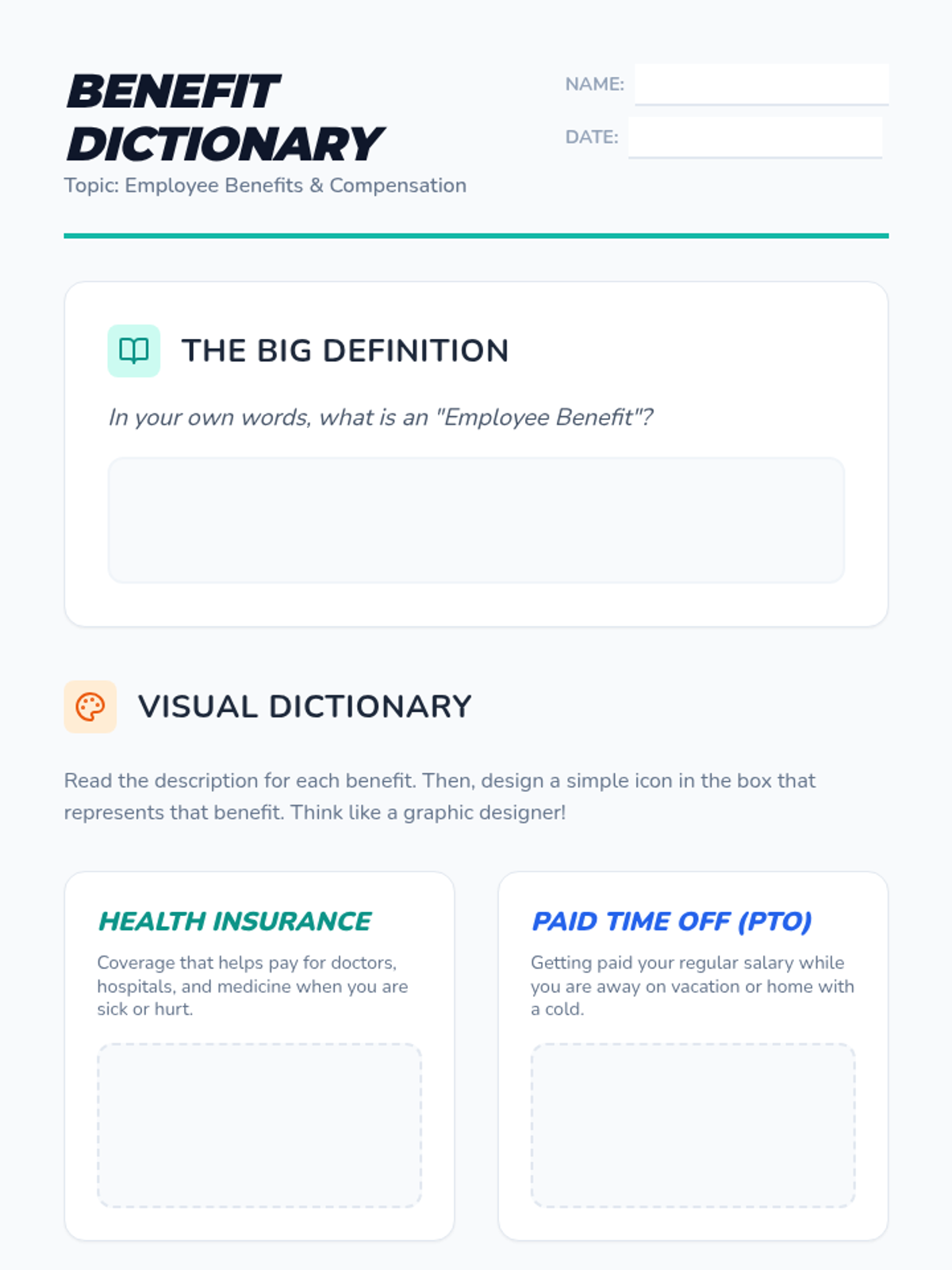
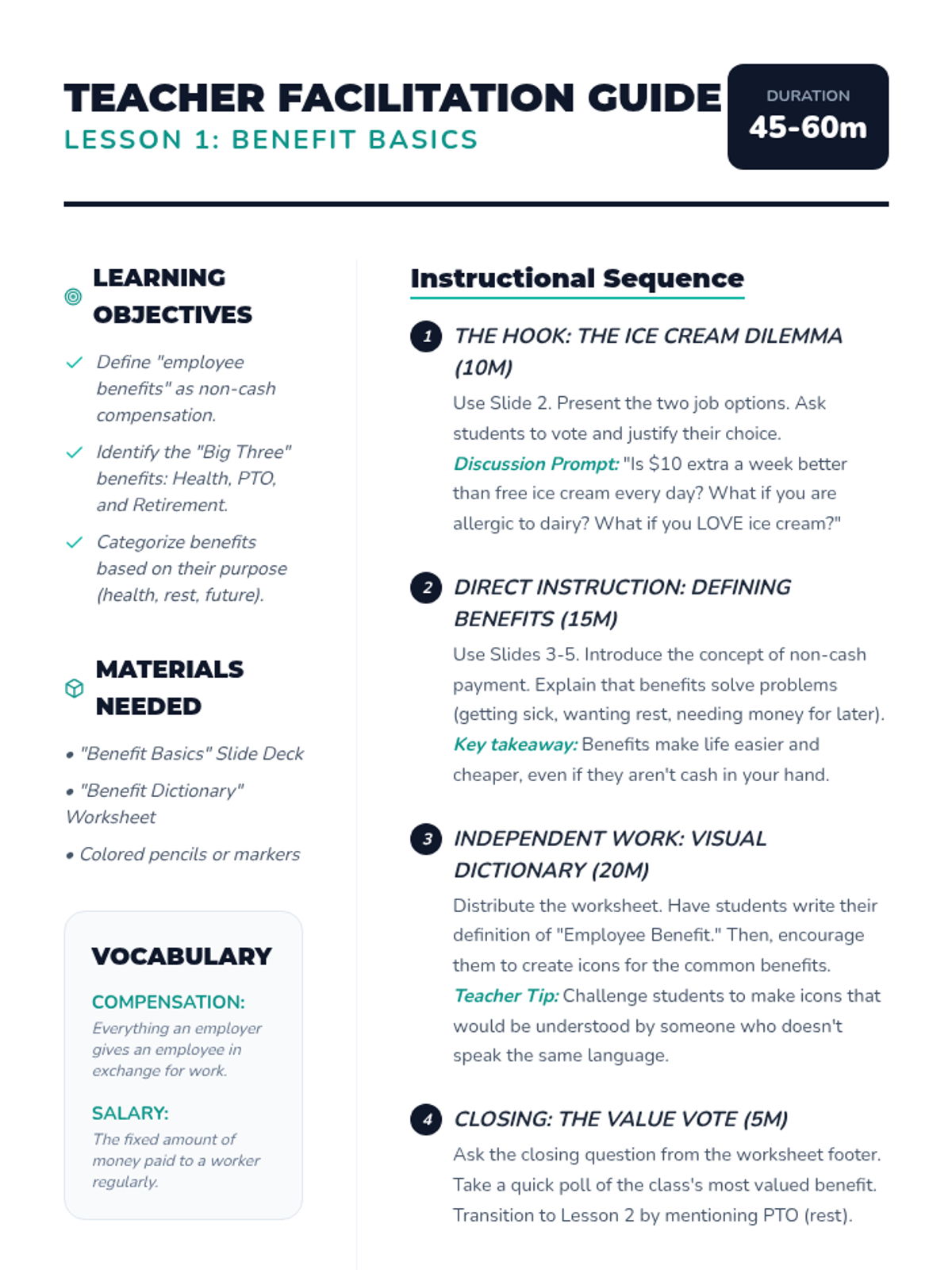
Students define 'benefits' as forms of payment that aren't cash and explore common benefits like health insurance, dental plans, and retirement savings.
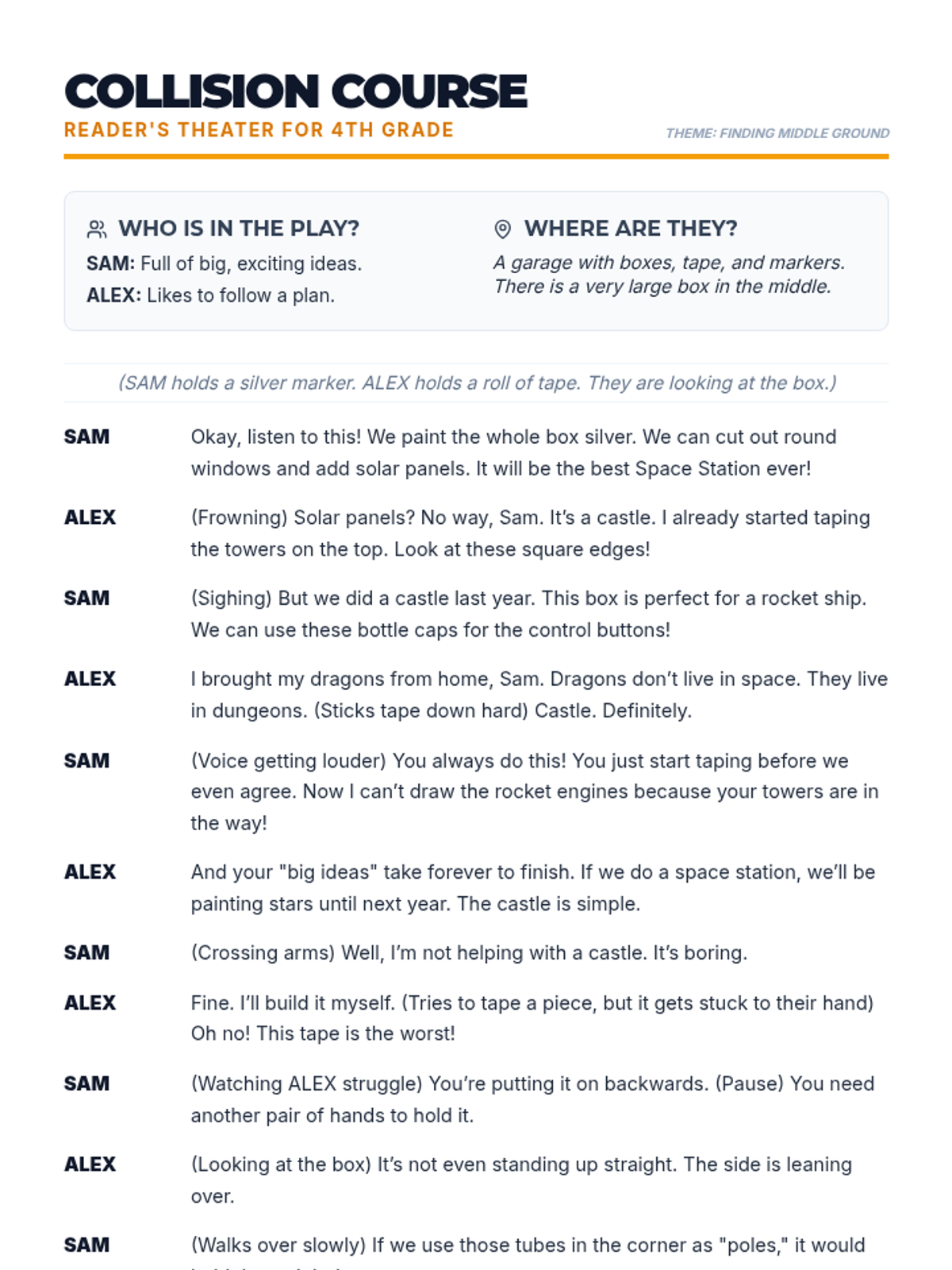
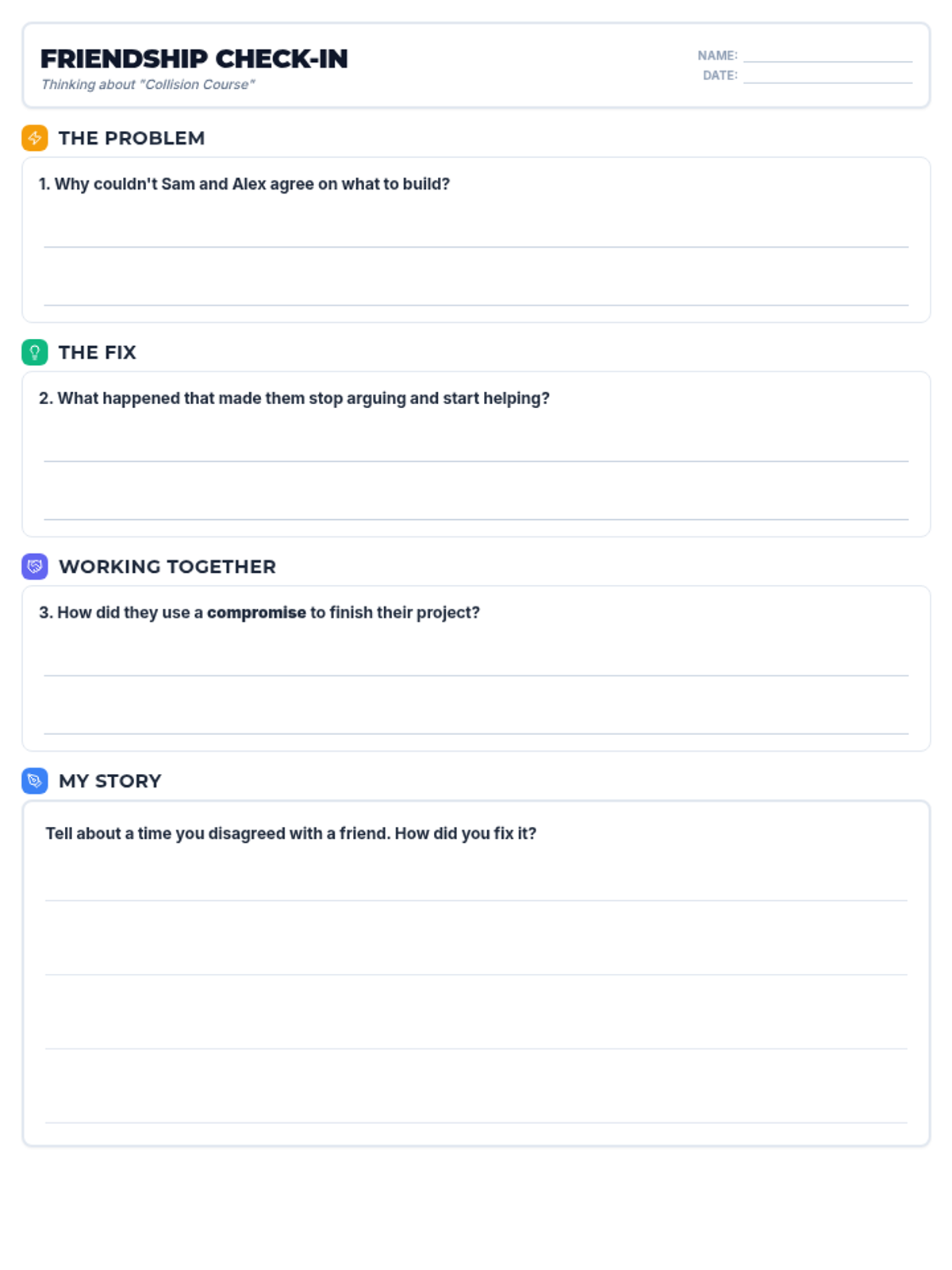
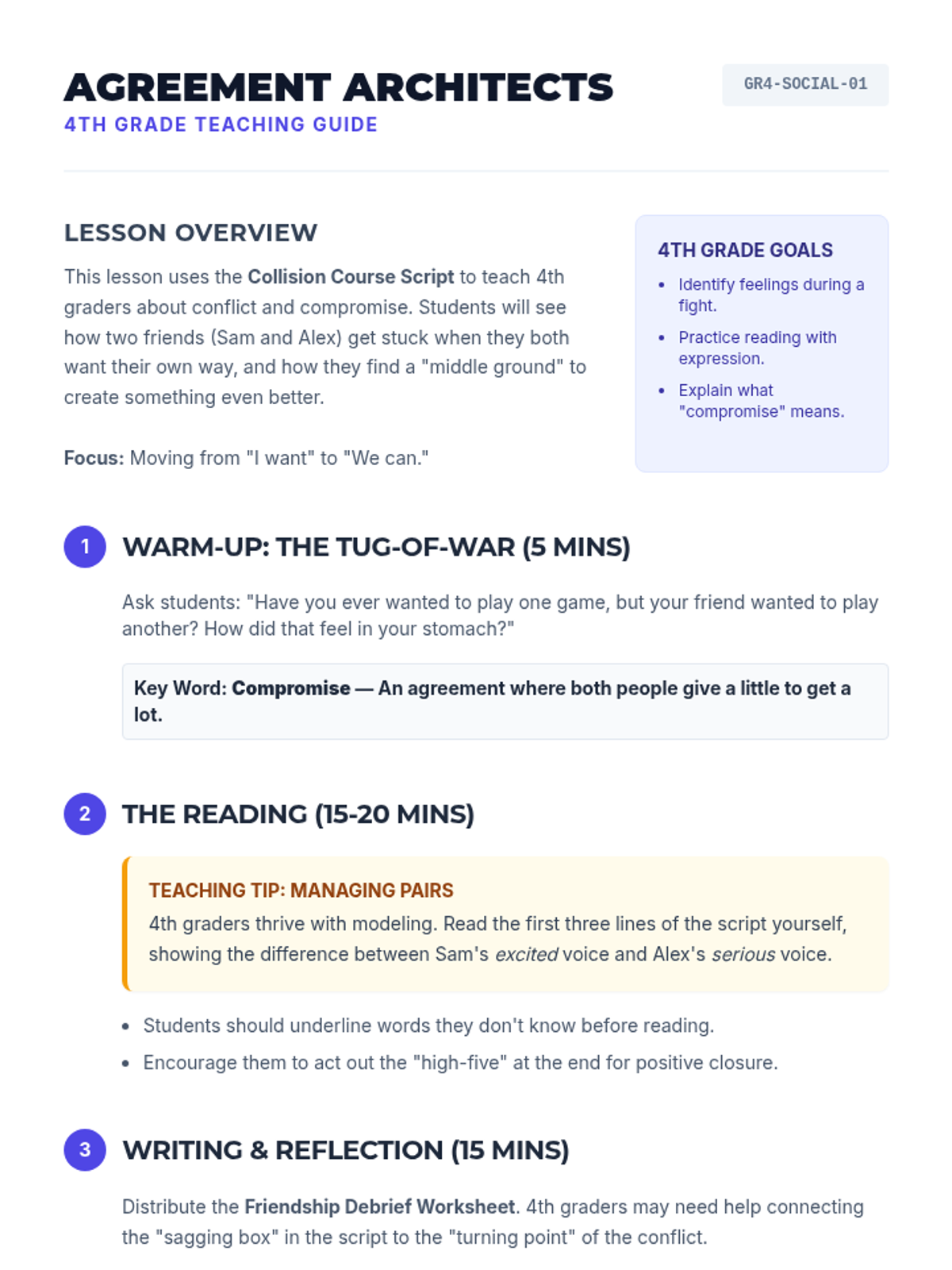
A lesson exploring conflict resolution and compromise through a two-person Reader's Theater script about friends navigating a creative disagreement.
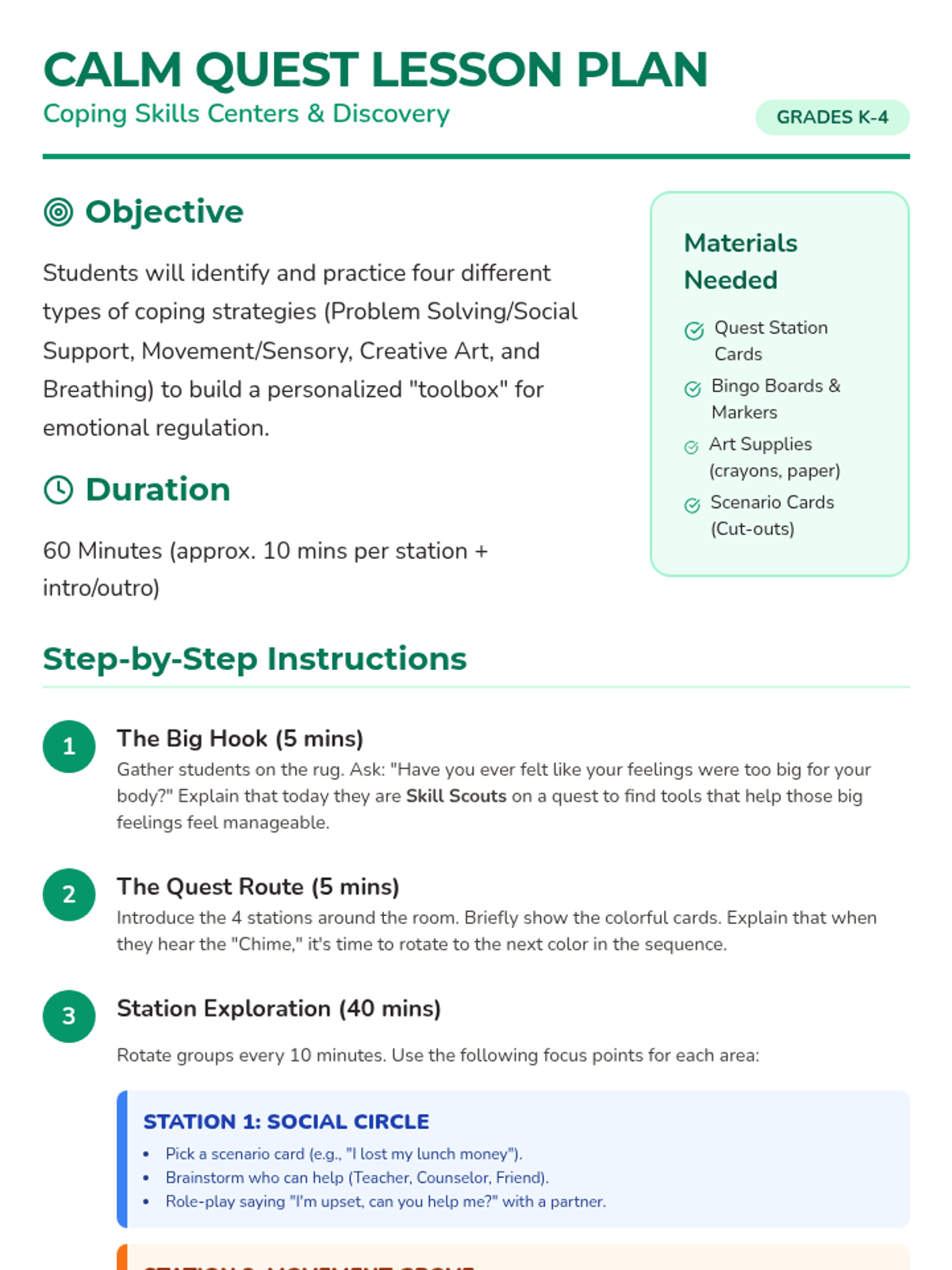
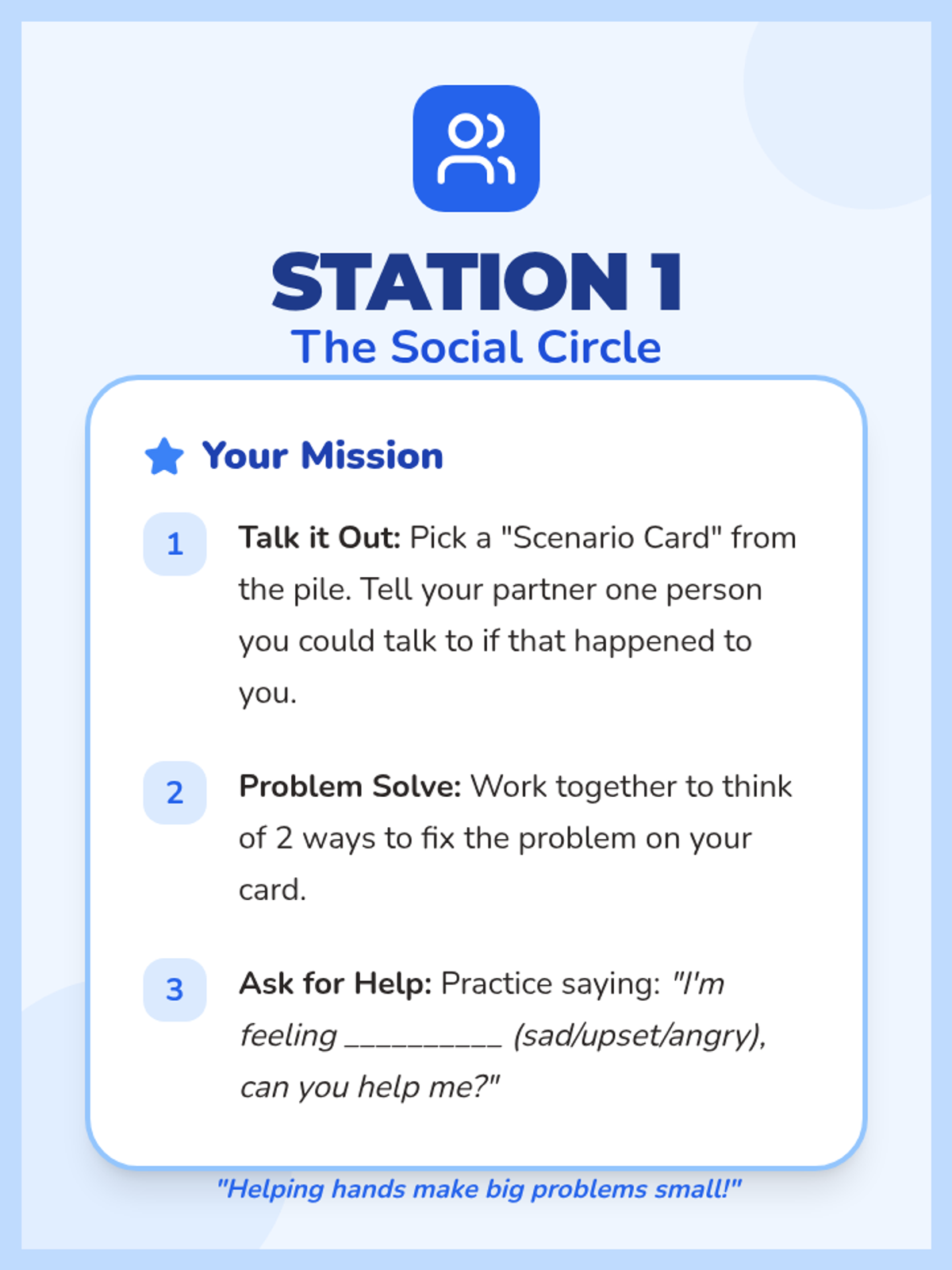
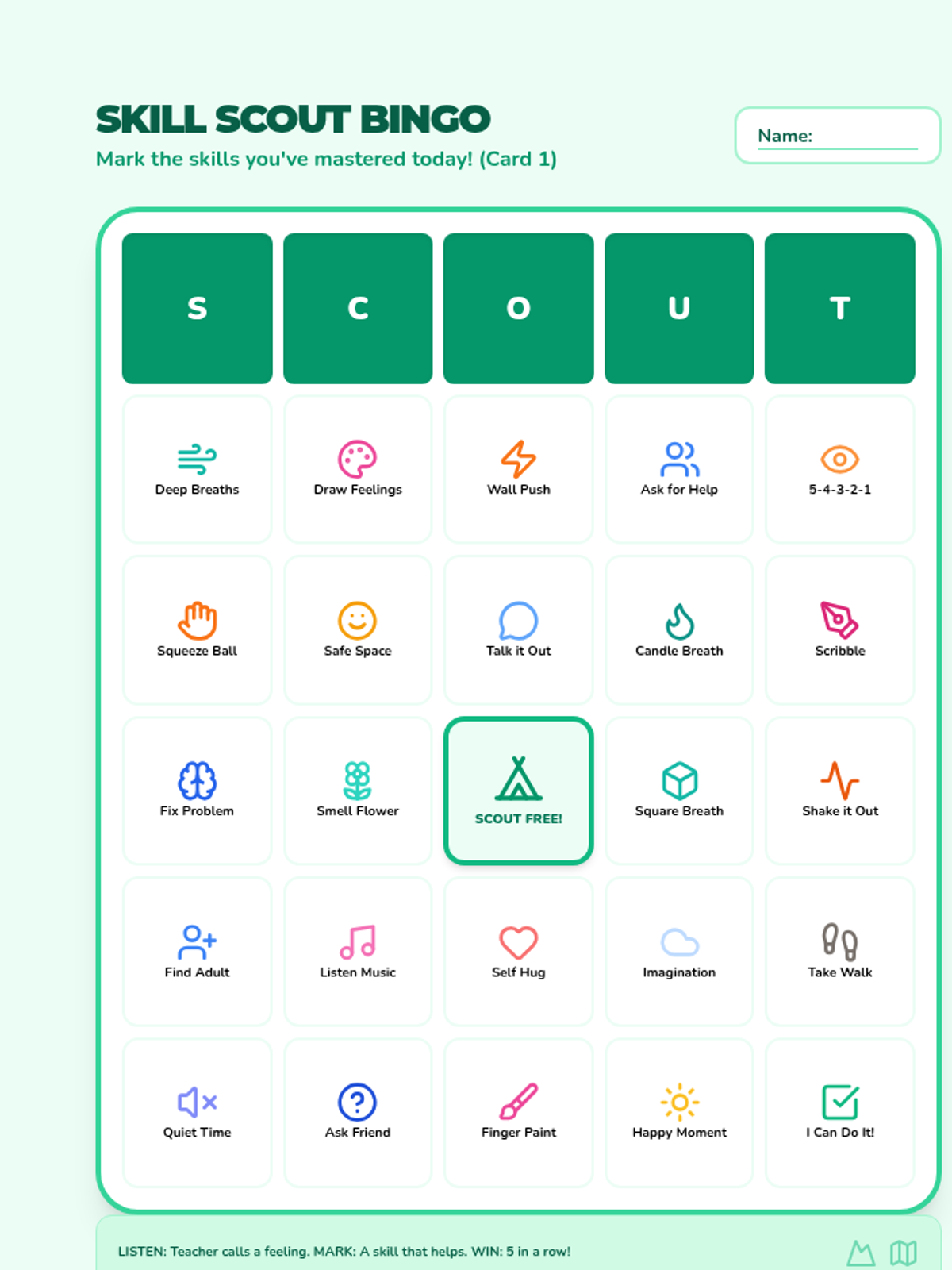
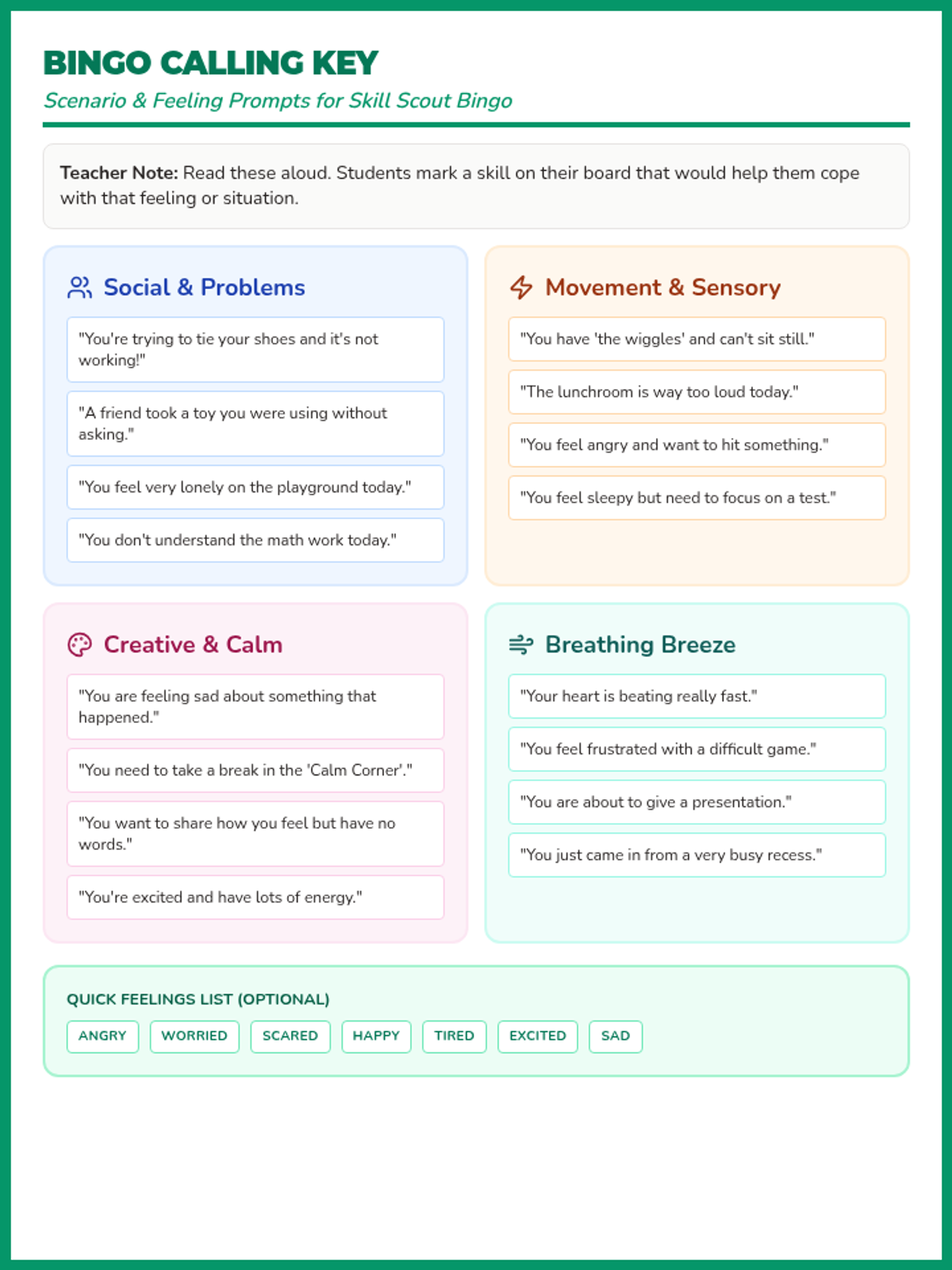
A comprehensive lesson introducing students to various coping strategies through interactive stations and a group bingo game. students will explore problem-solving, movement, art, and breathing techniques to manage their emotions.
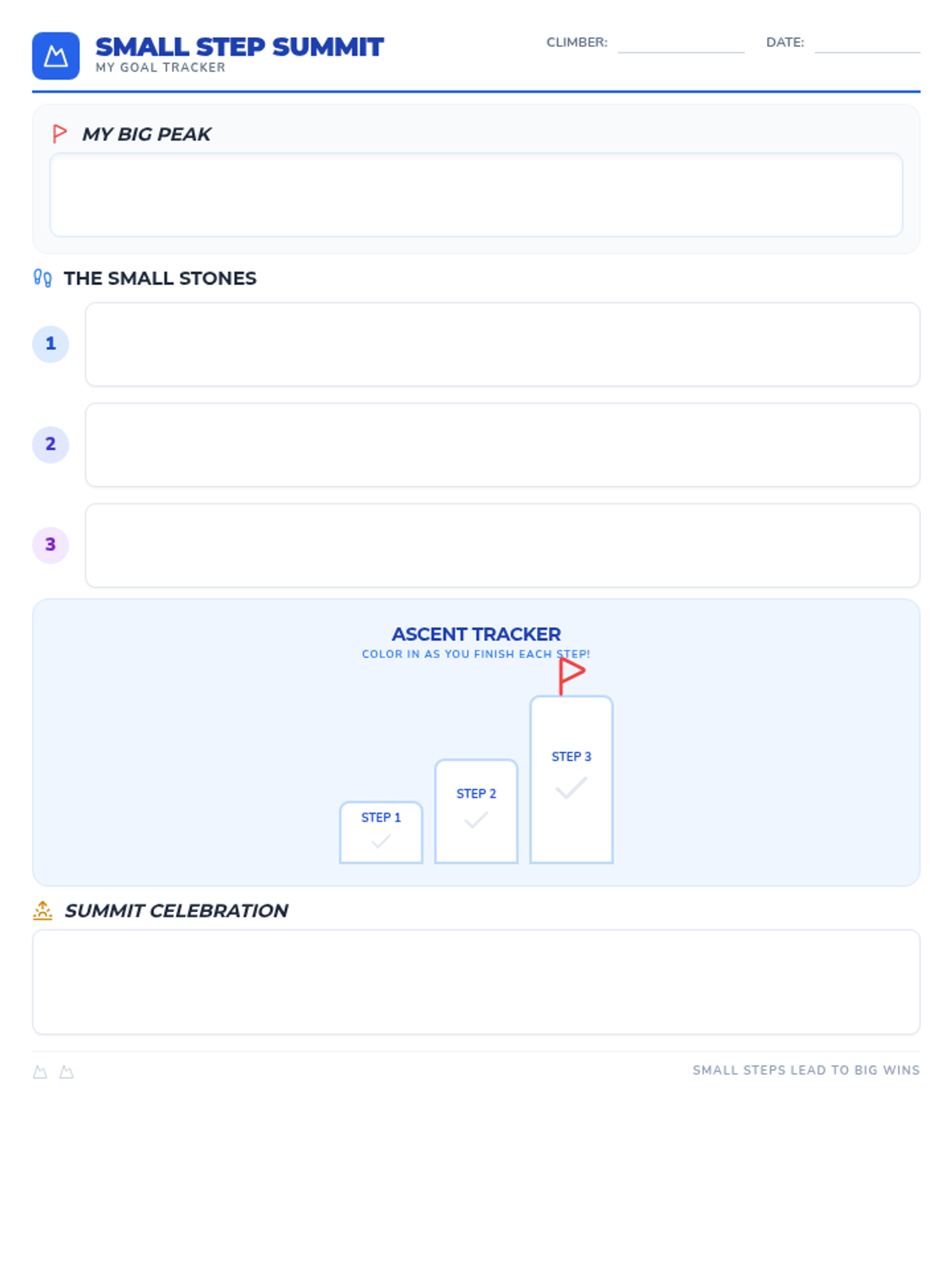
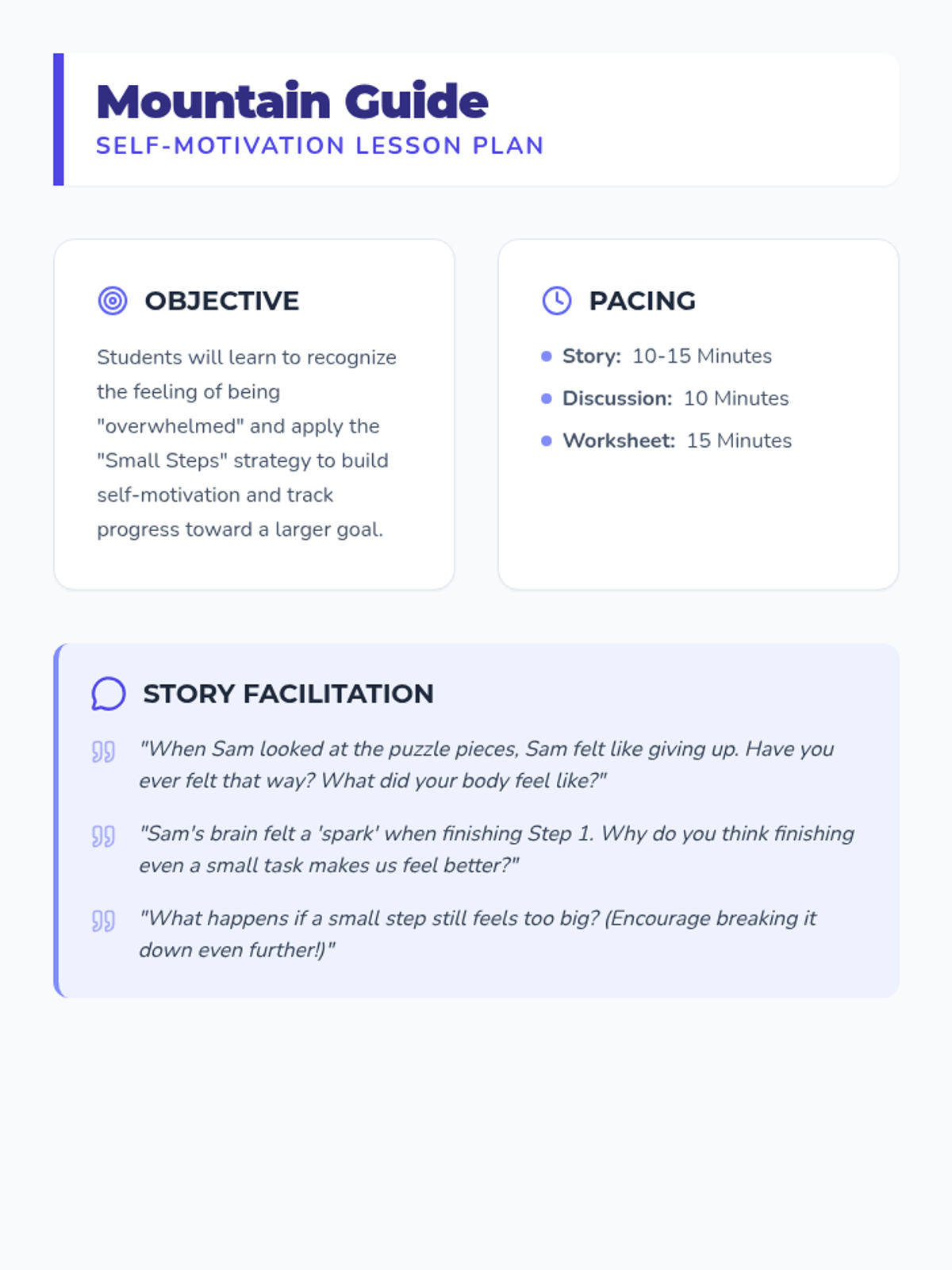
A lesson designed to help students understand self-motivation through the concept of breaking large, overwhelming tasks into small, manageable goals using a 'mountain climber' metaphor.
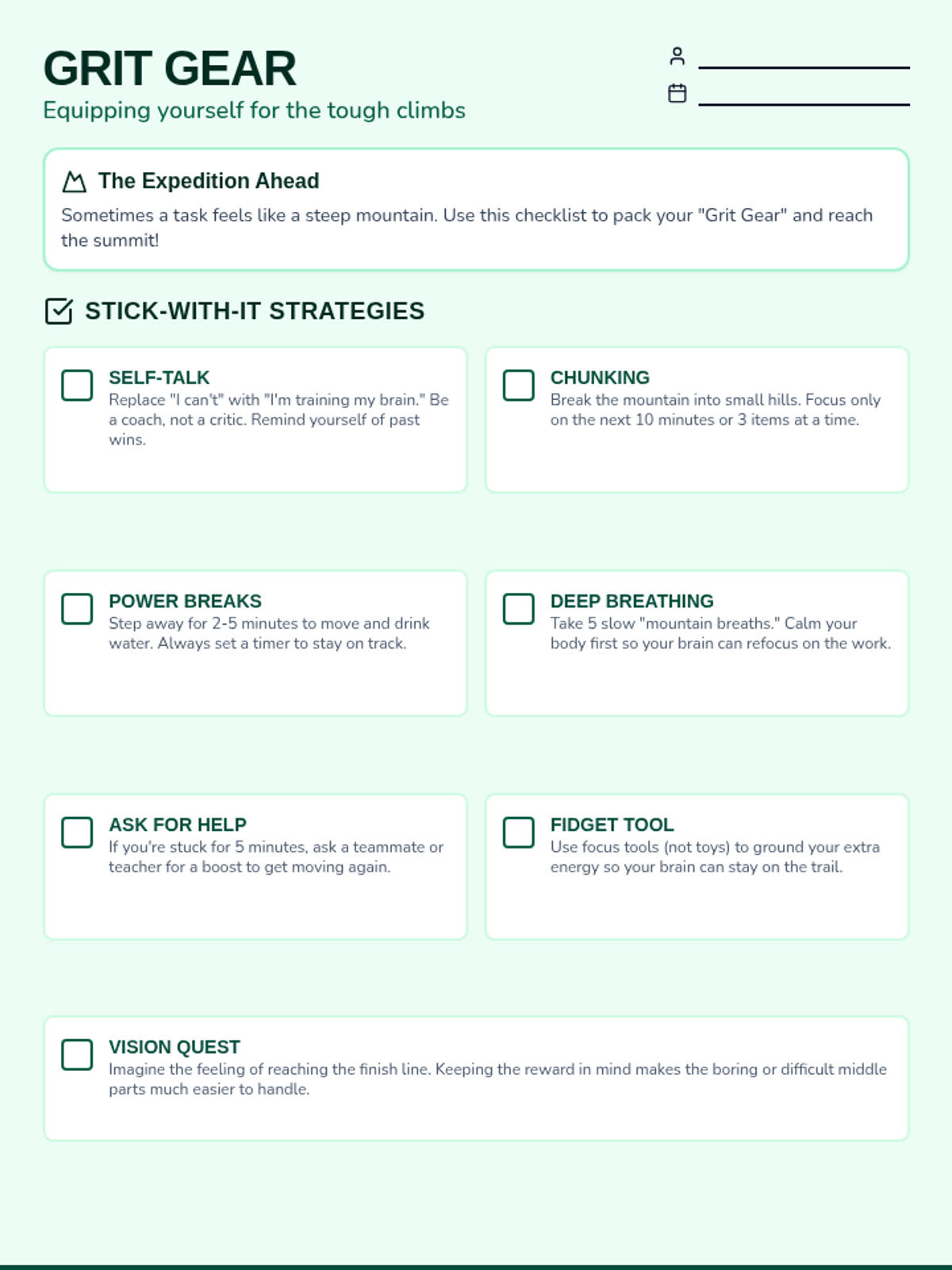
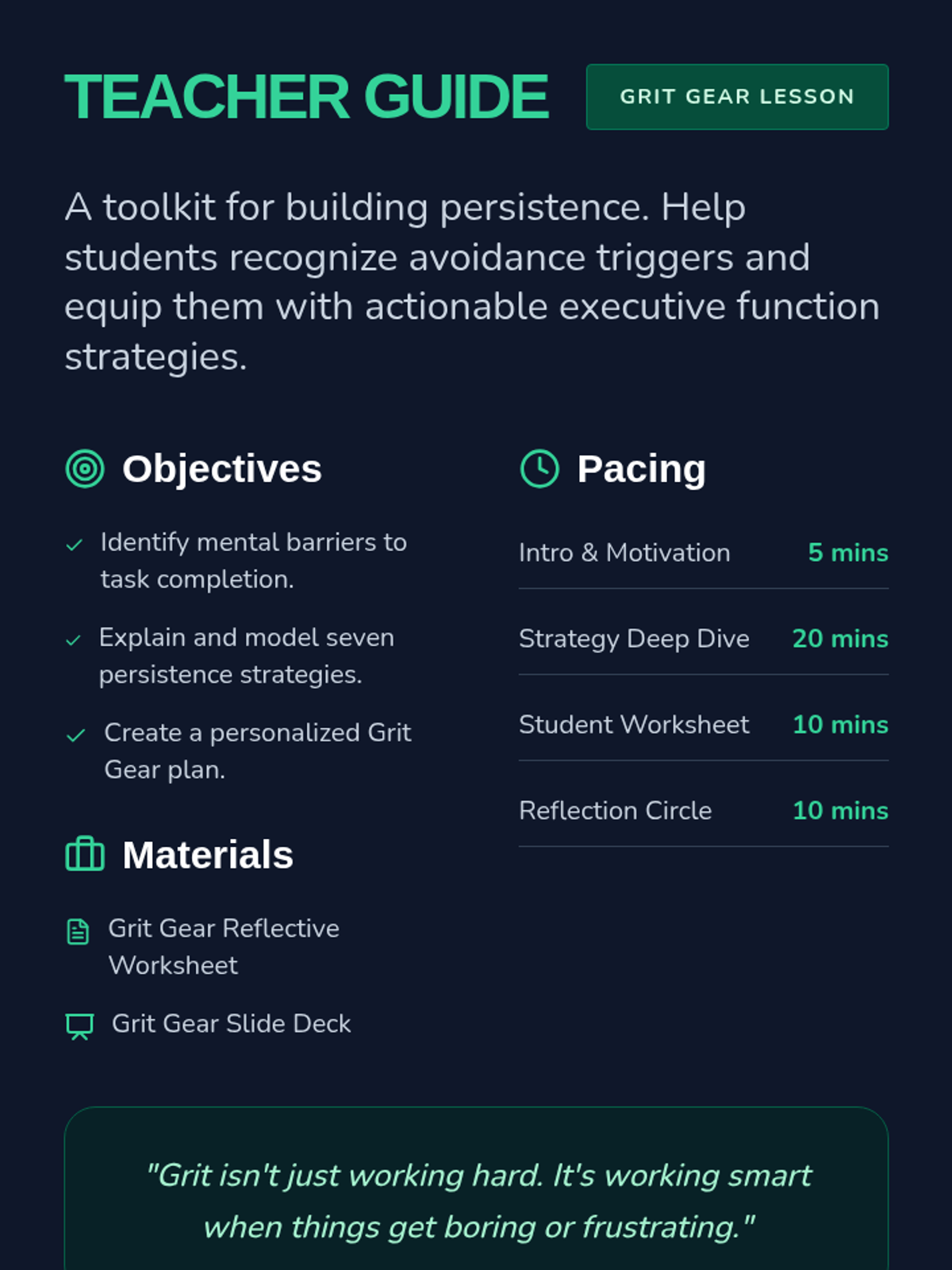
A lesson focused on equipping students with practical strategies to maintain focus and persistence during difficult or monotonous tasks.
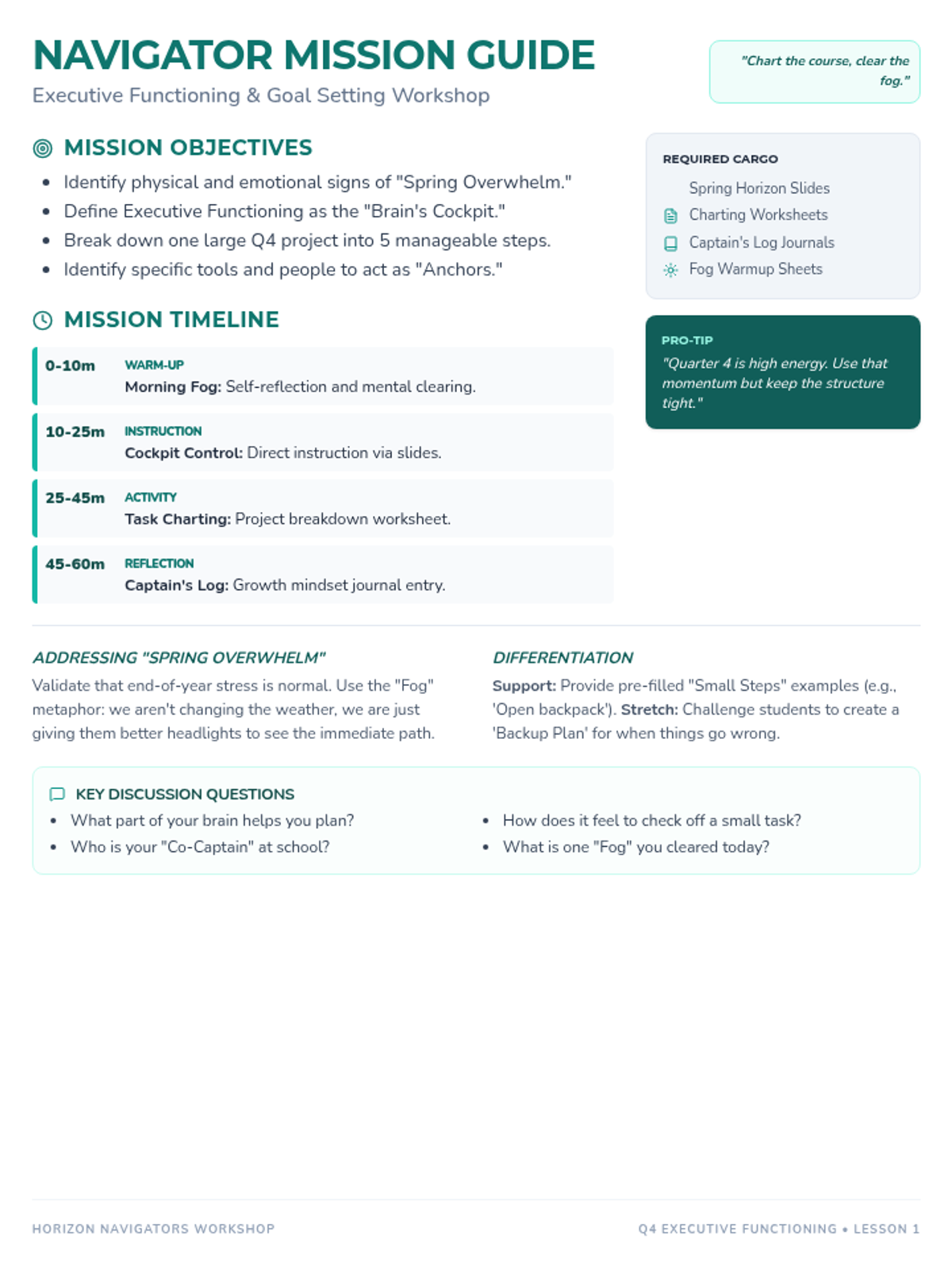
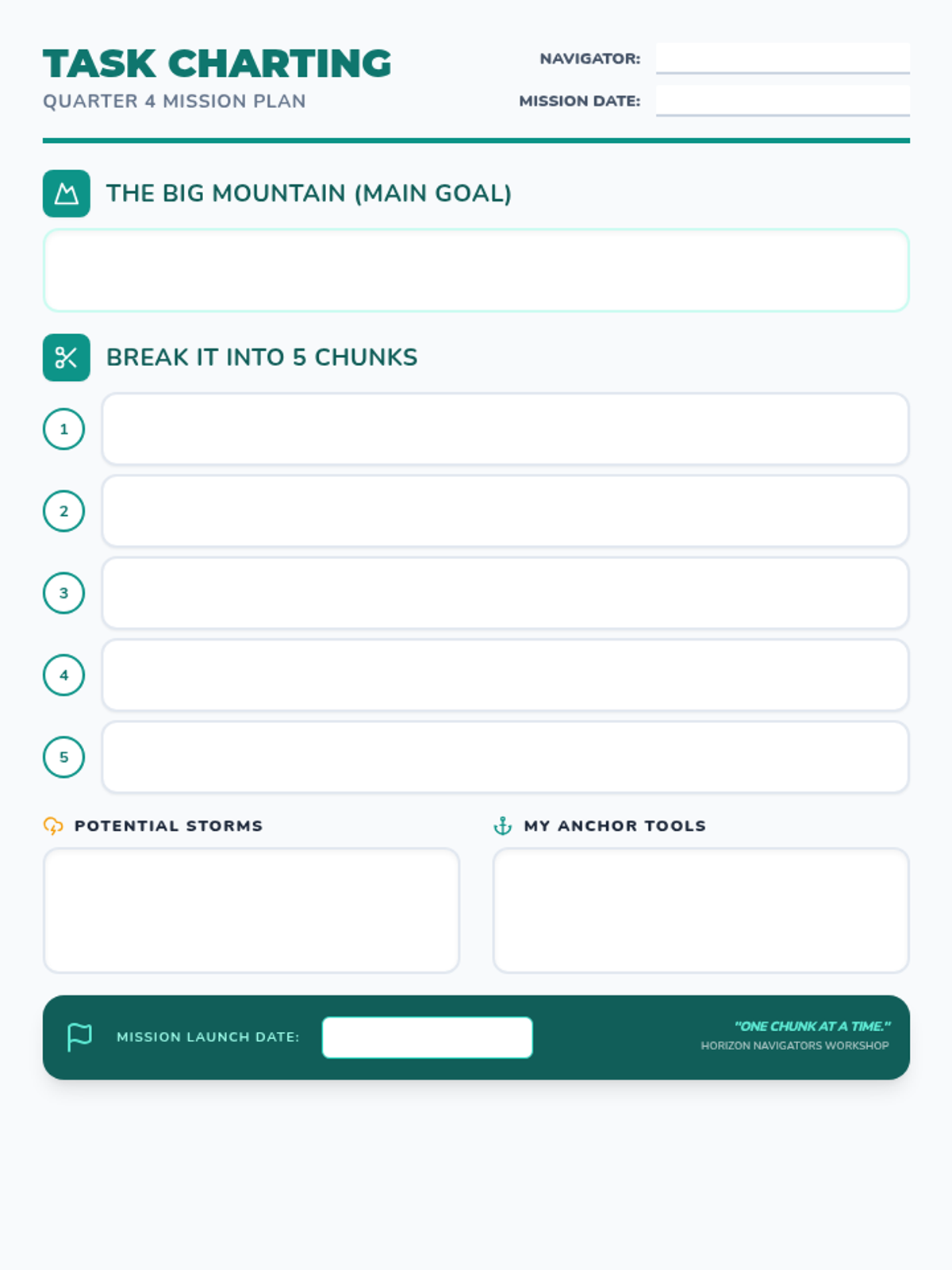
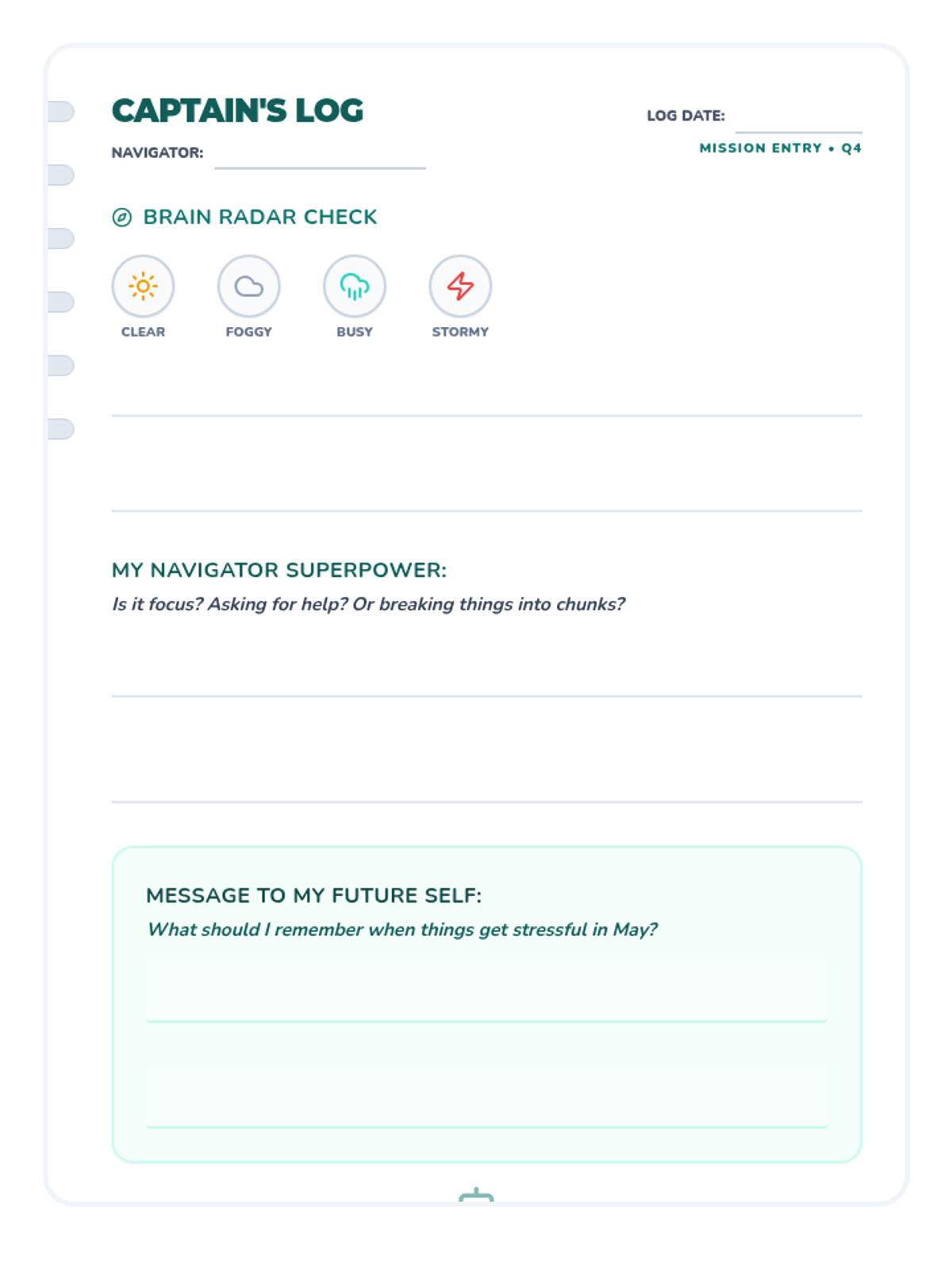
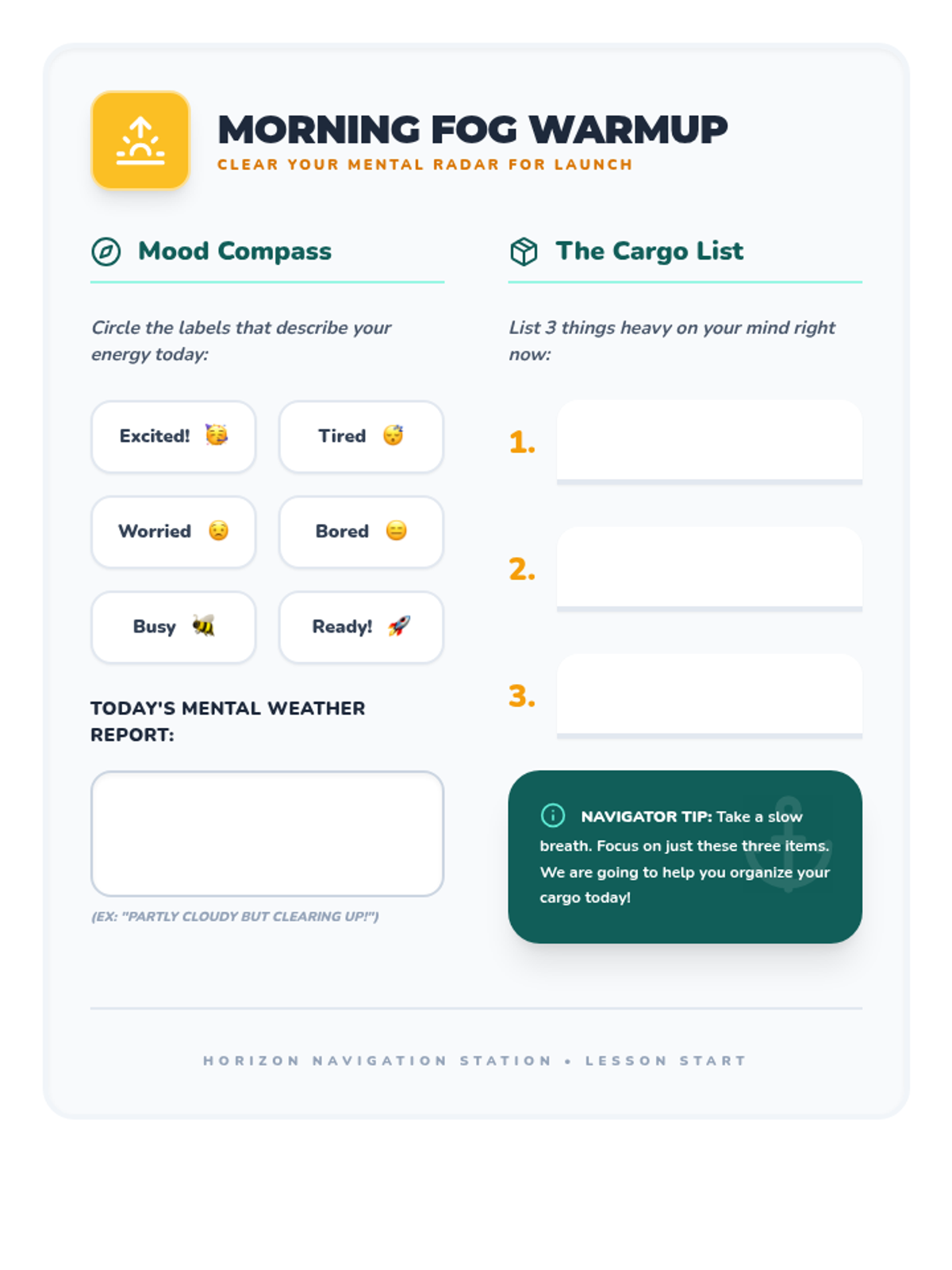
A workshop designed to help 3rd-5th graders navigate the final school quarter using executive functioning and goal-setting skills. Students learn to break down big projects and manage 'spring overwhelm' through actionable planning.
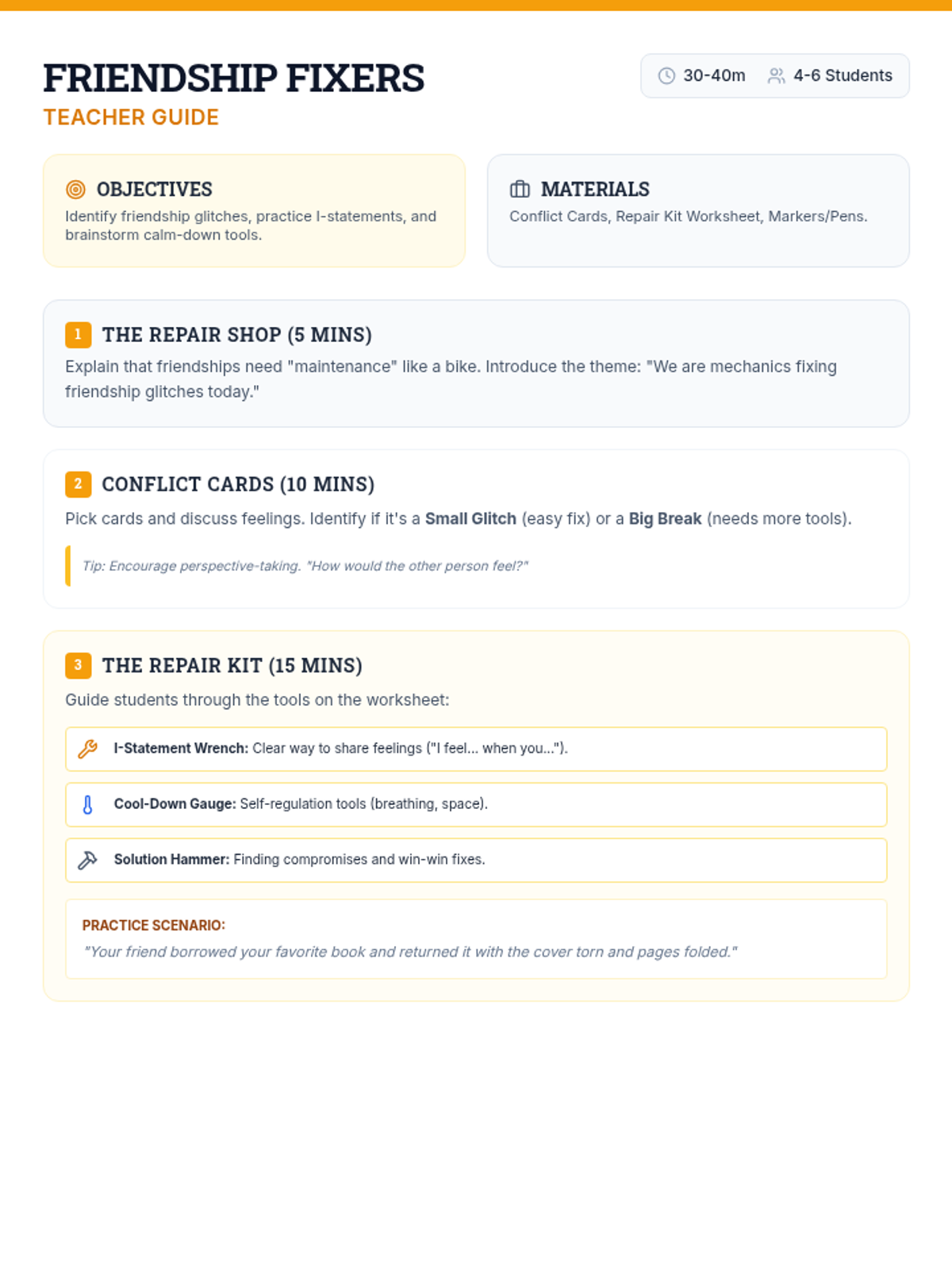
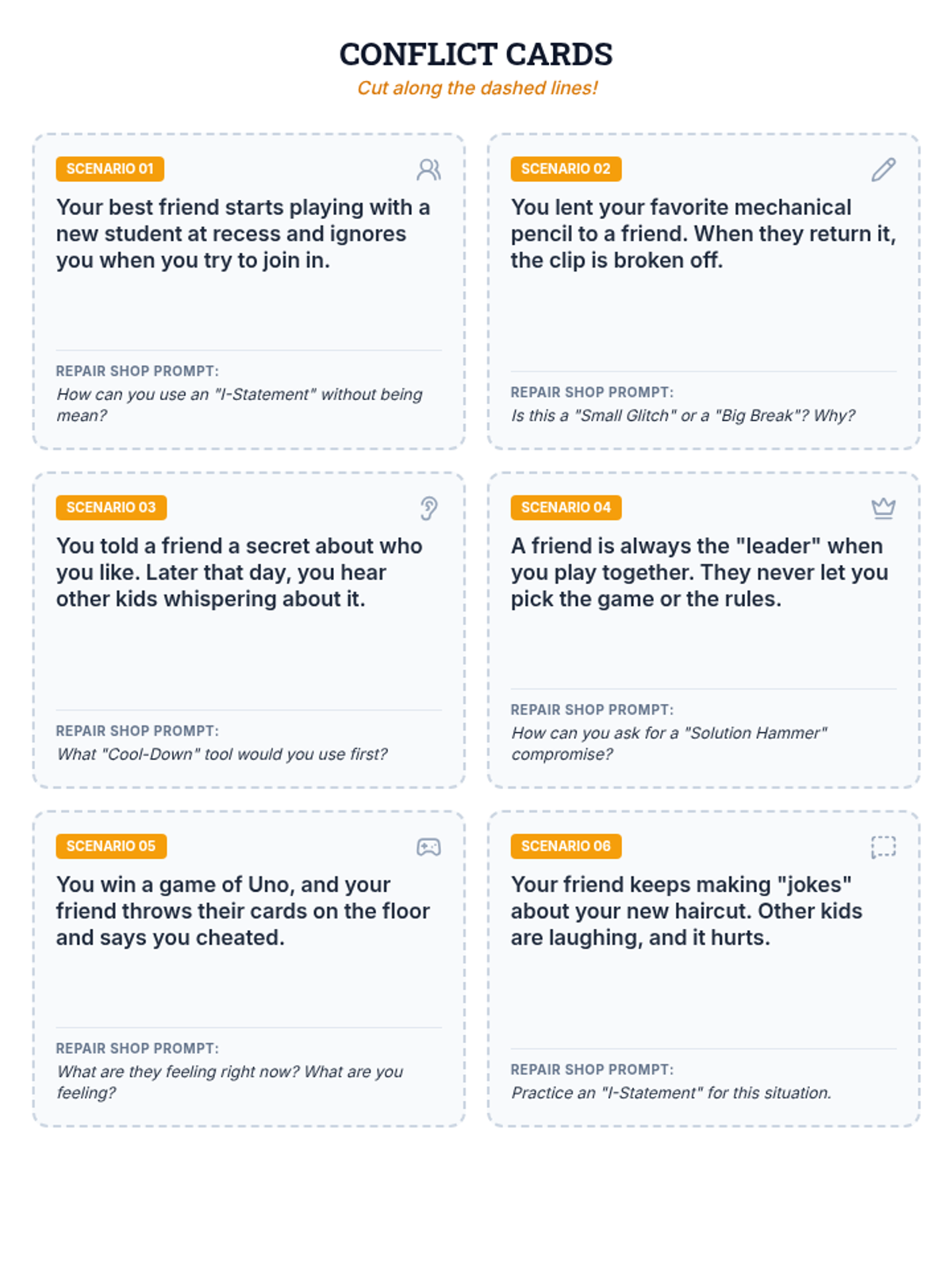
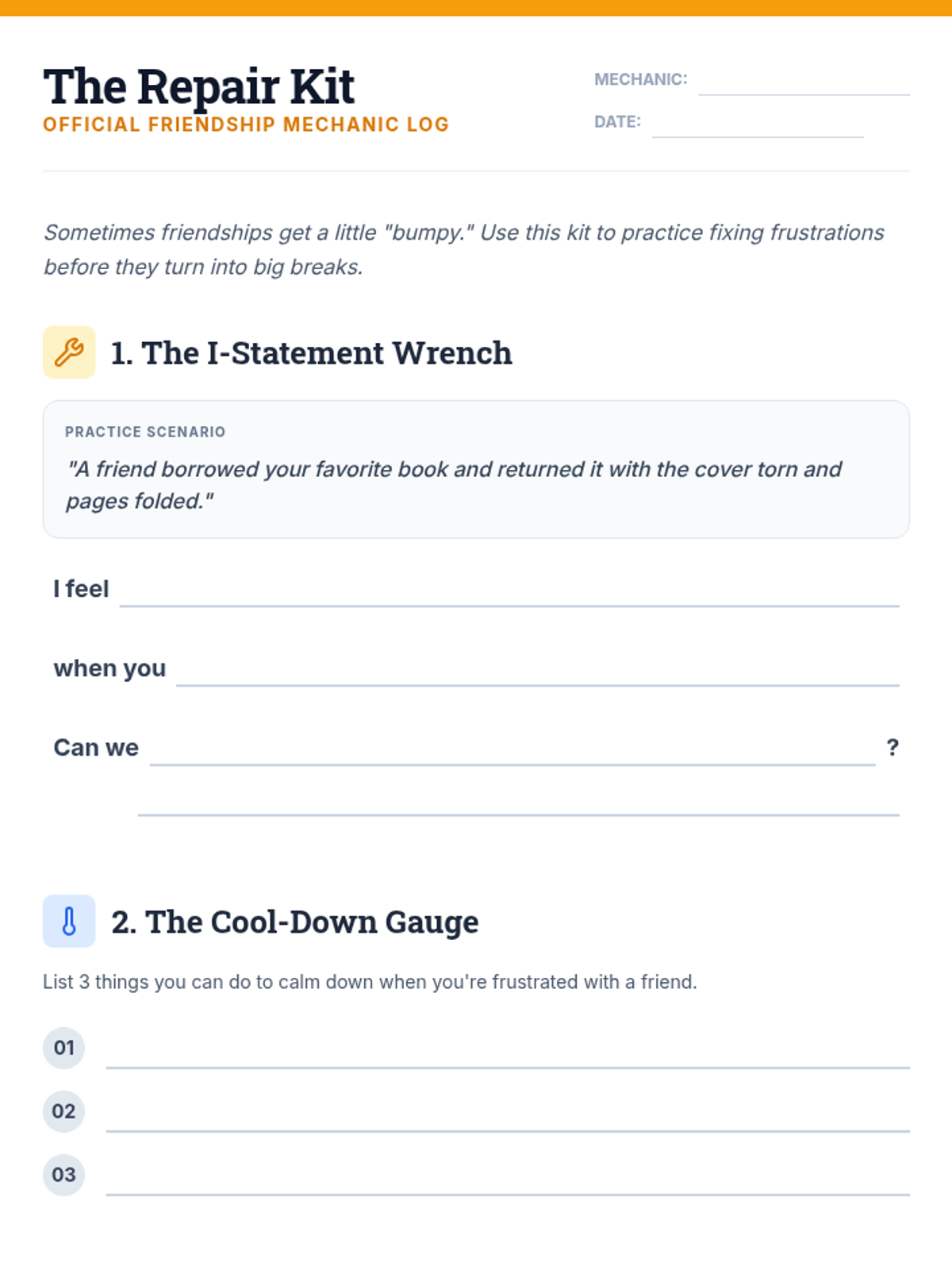
A small-group lesson for 4th graders focused on navigating common friendship conflicts and frustrations using effective communication and problem-solving tools.
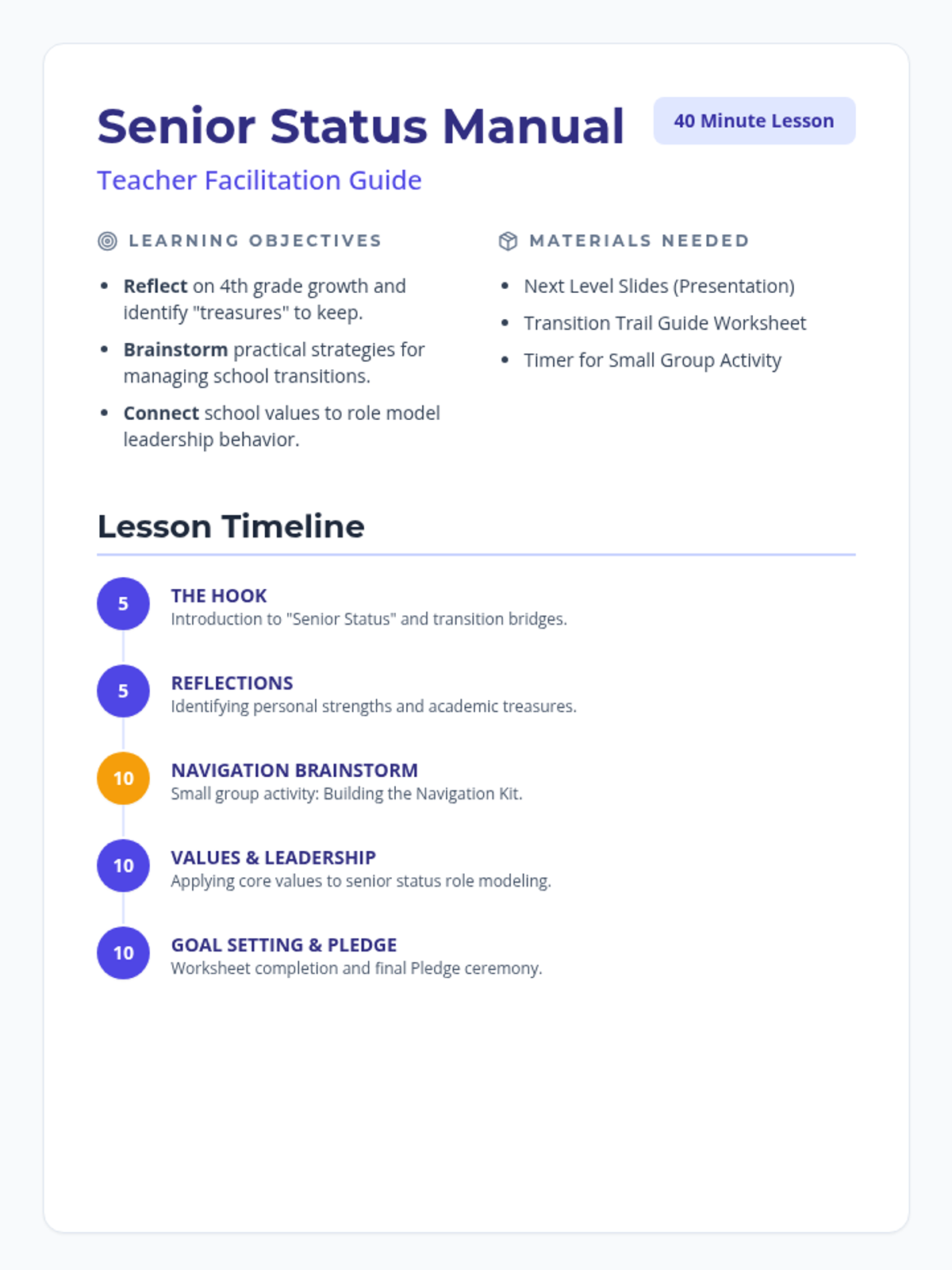
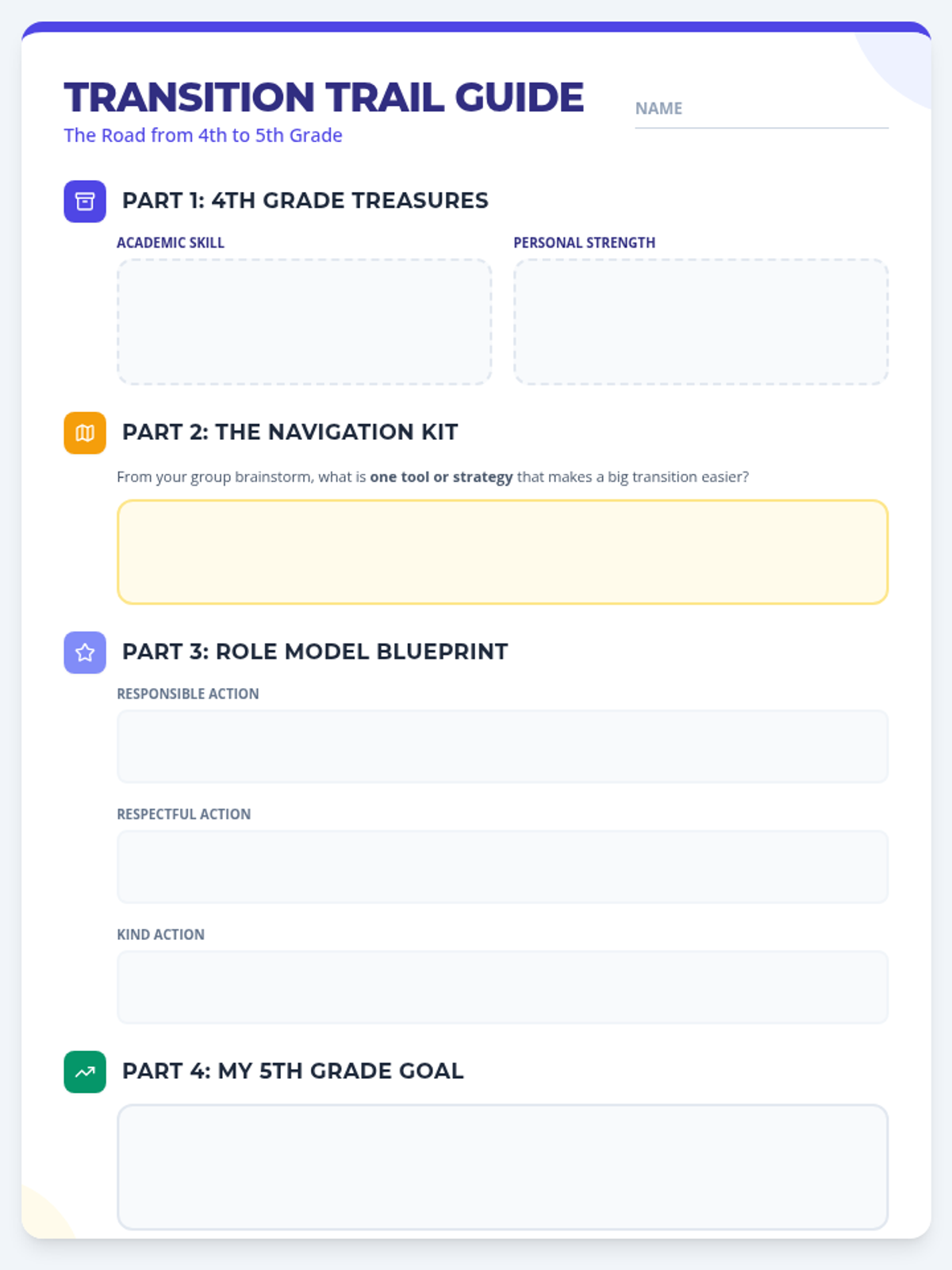
A 40-minute transition lesson for 4th graders moving to 5th grade, focusing on reflection, school values, and leadership as the new 'seniors' of the school.
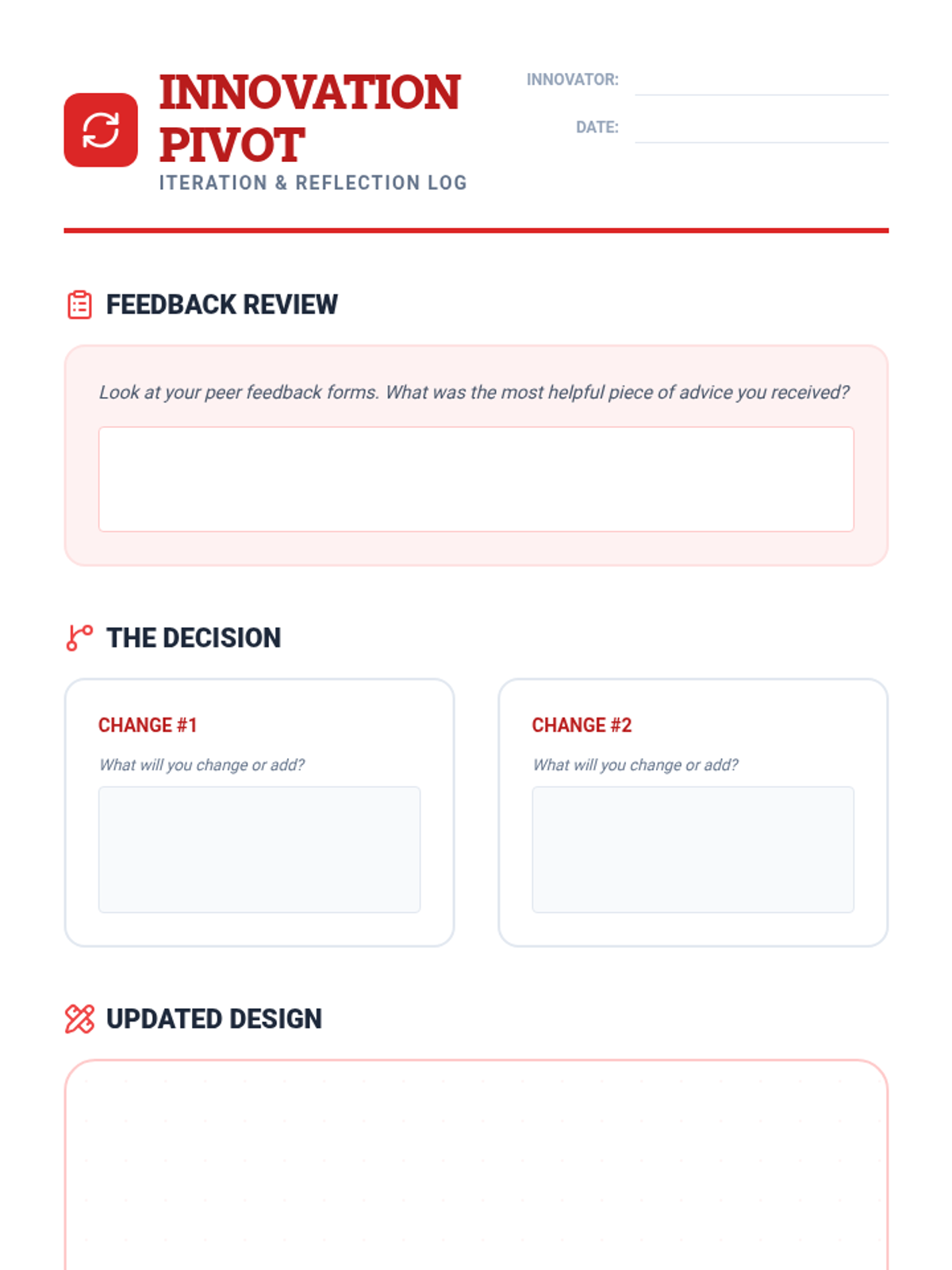
Students use feedback to improve their designs, documenting changes and reflecting on the evolution of their ideas.
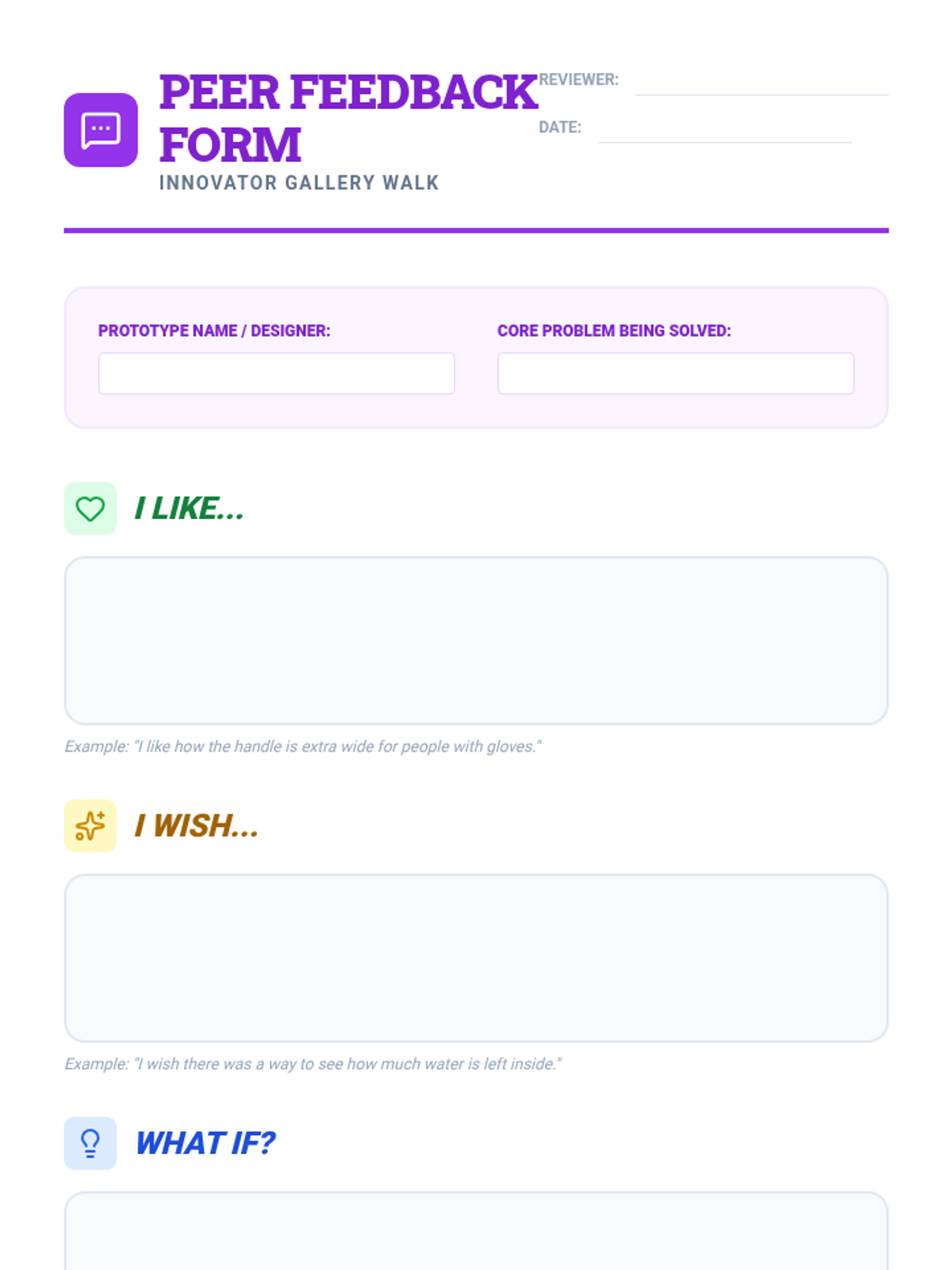
Students present prototypes to peers to gather feedback and learn the value of active listening and market empathy.
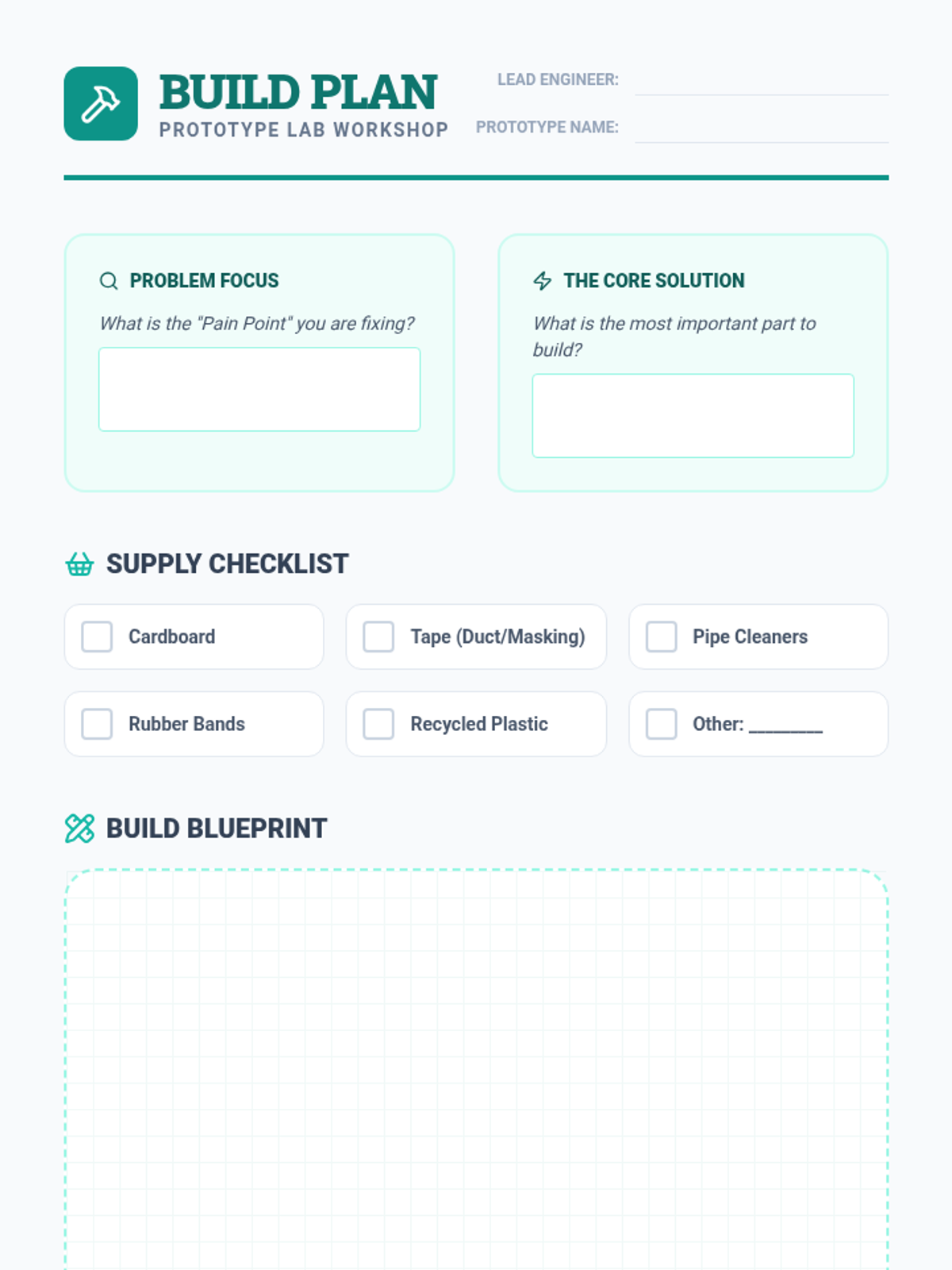
Students build low-fidelity prototypes using recycled materials to translate abstract ideas into physical forms.
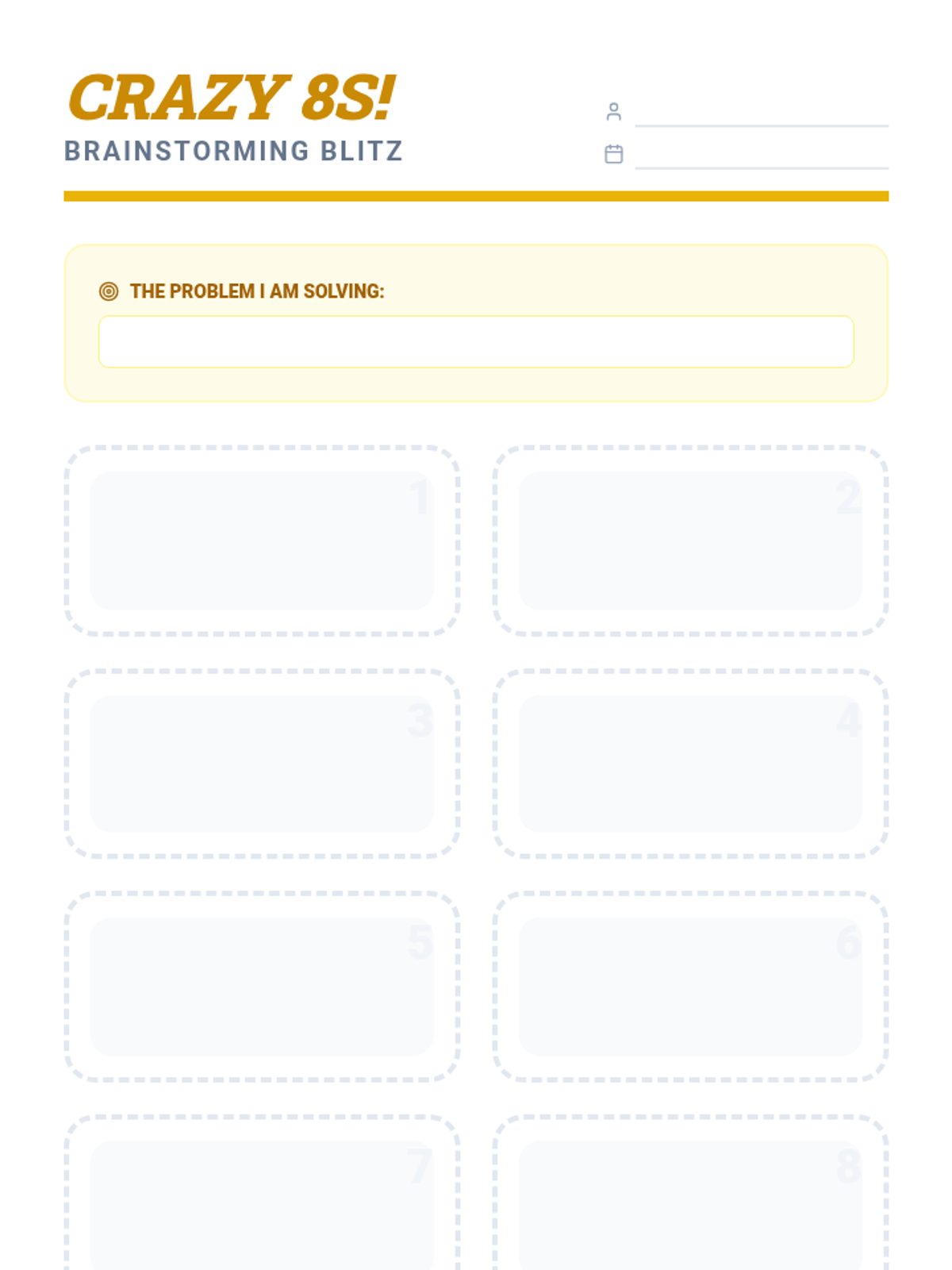
Students learn brainstorming techniques like SCAMPER and Crazy 8s to generate multiple solutions for identified problems.
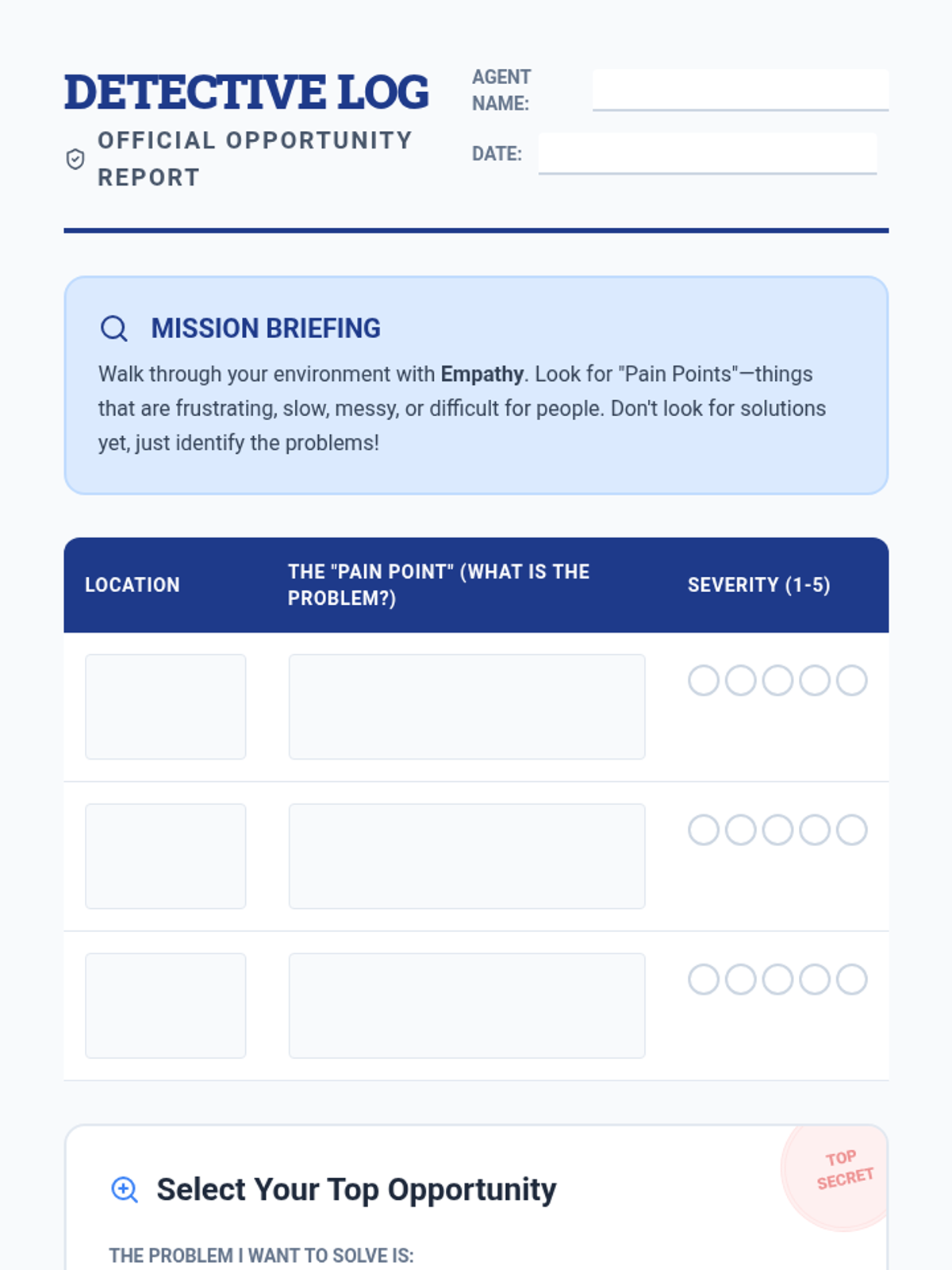
Students practice observational skills to identify 'pain points' or problems in their daily environment and conduct an empathy walk.
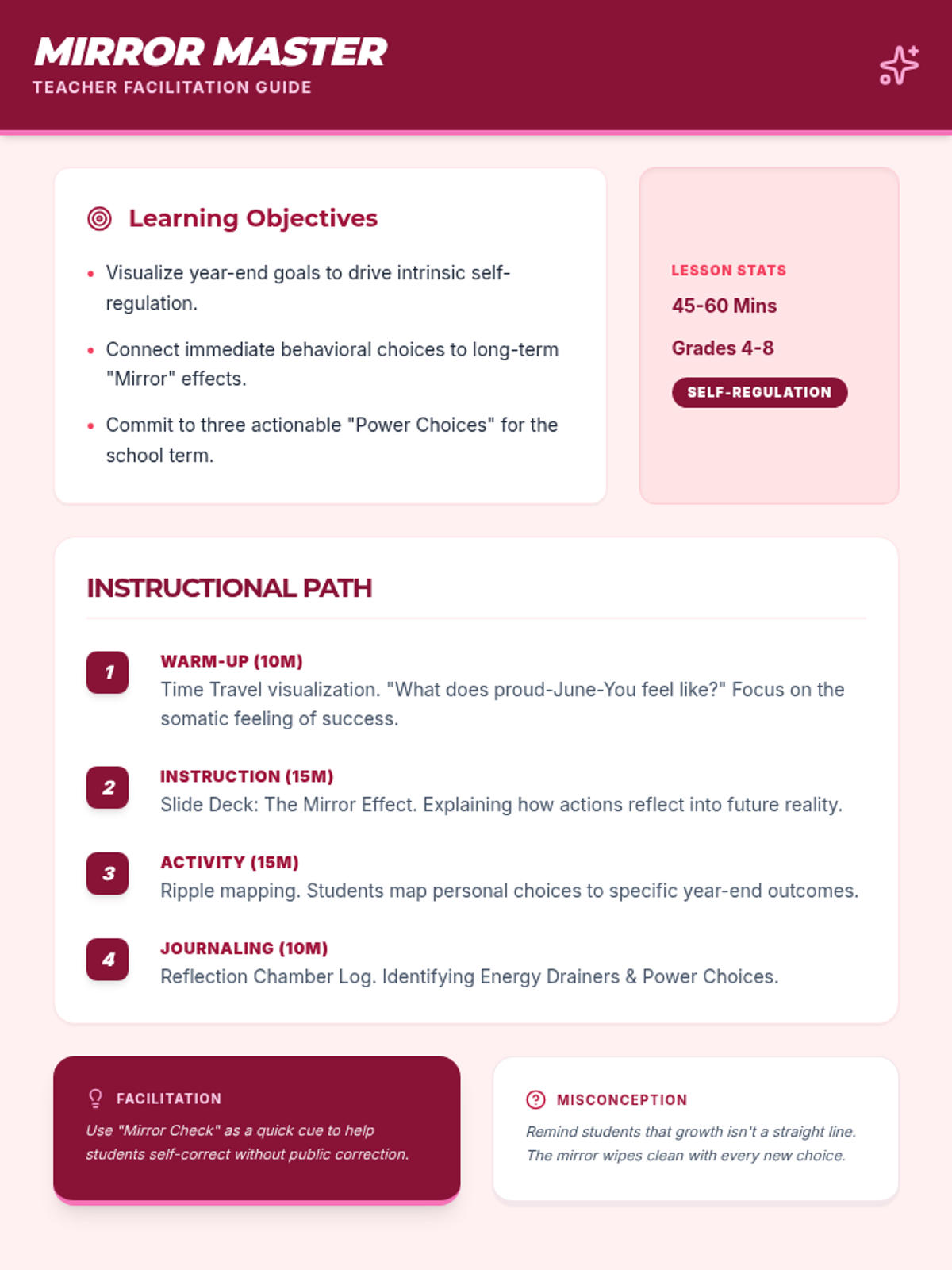
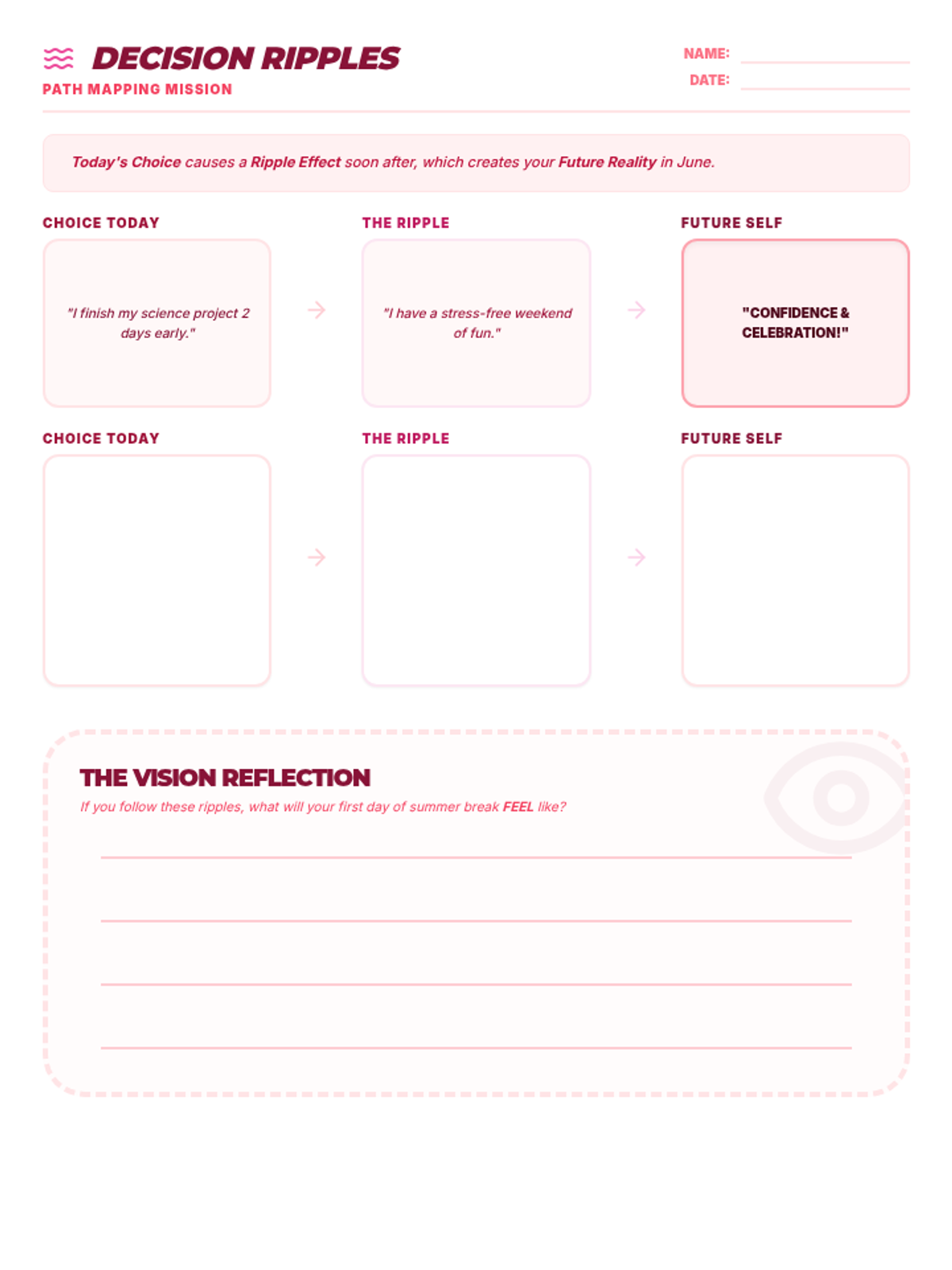
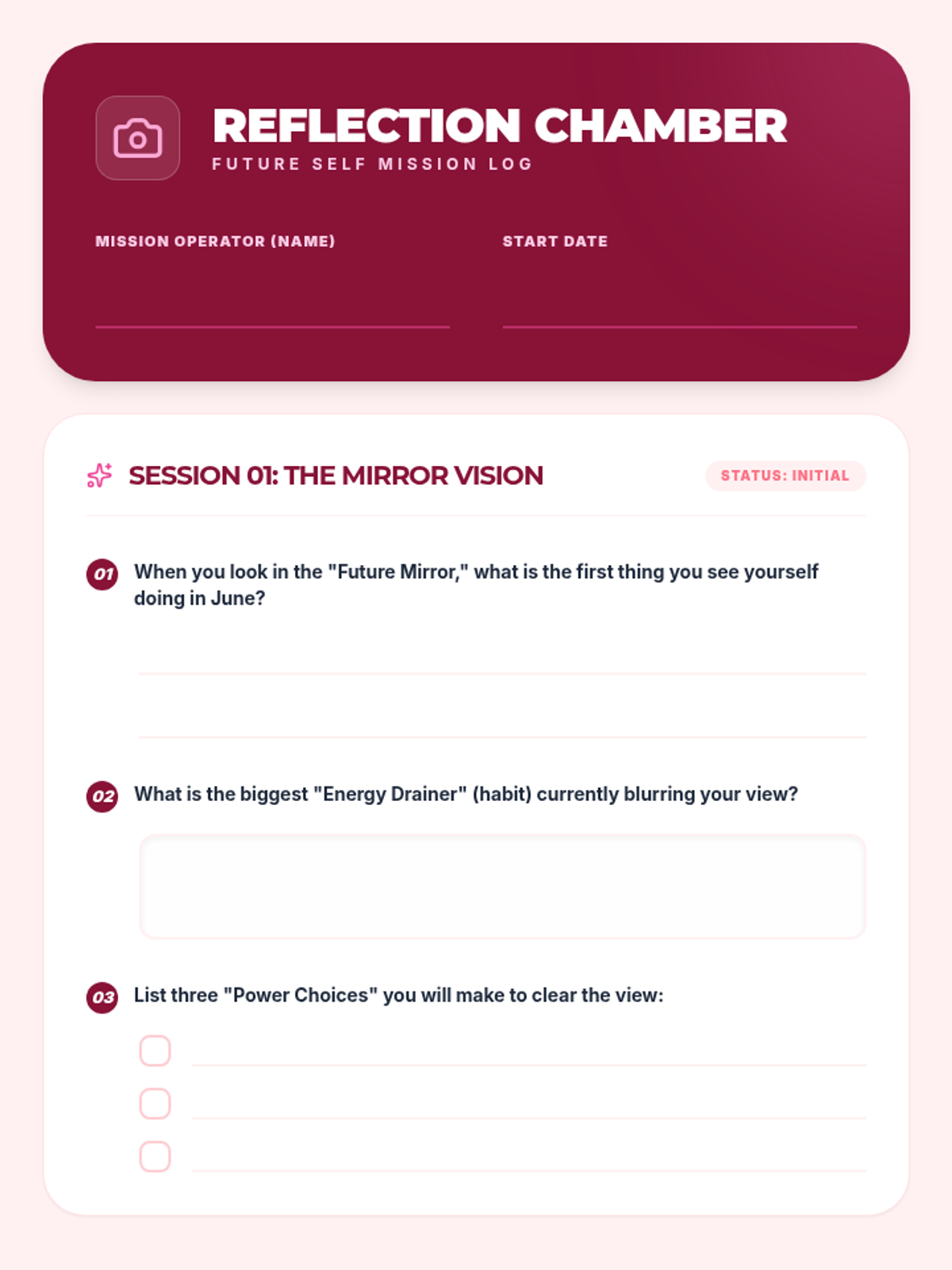
This lesson helps students visualize their future success to motivate self-regulation and goal-oriented decision-making in the present. Students explore the 'Mirror Effect,' connecting daily choices to long-term rewards like grade promotion and year-end celebrations.
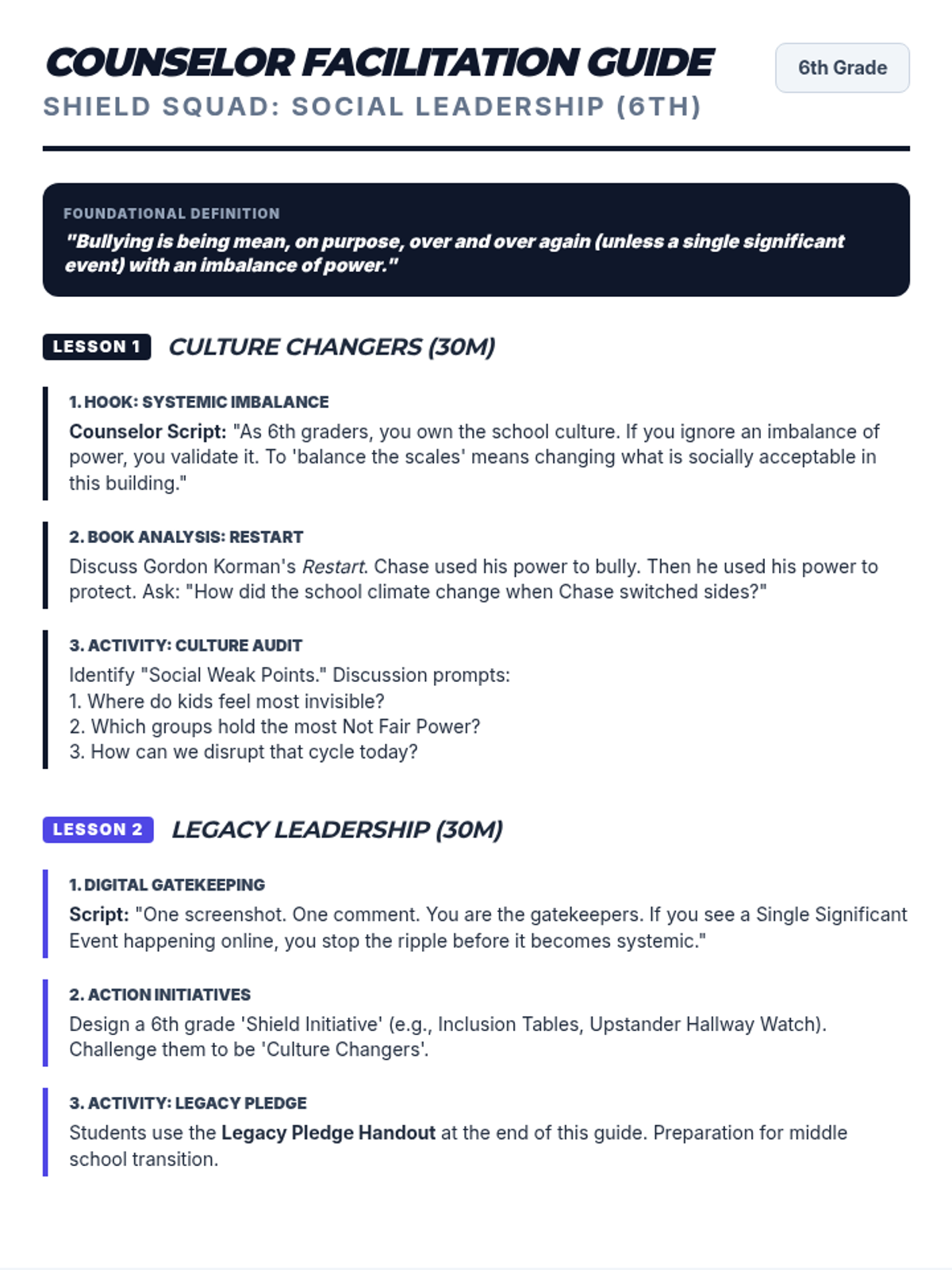
The first of two 30-minute sessions for 6th grade. Using 'Restart' by Gordon Korman, students analyze school culture, social leadership, and the concept of a 'Social Reset'.
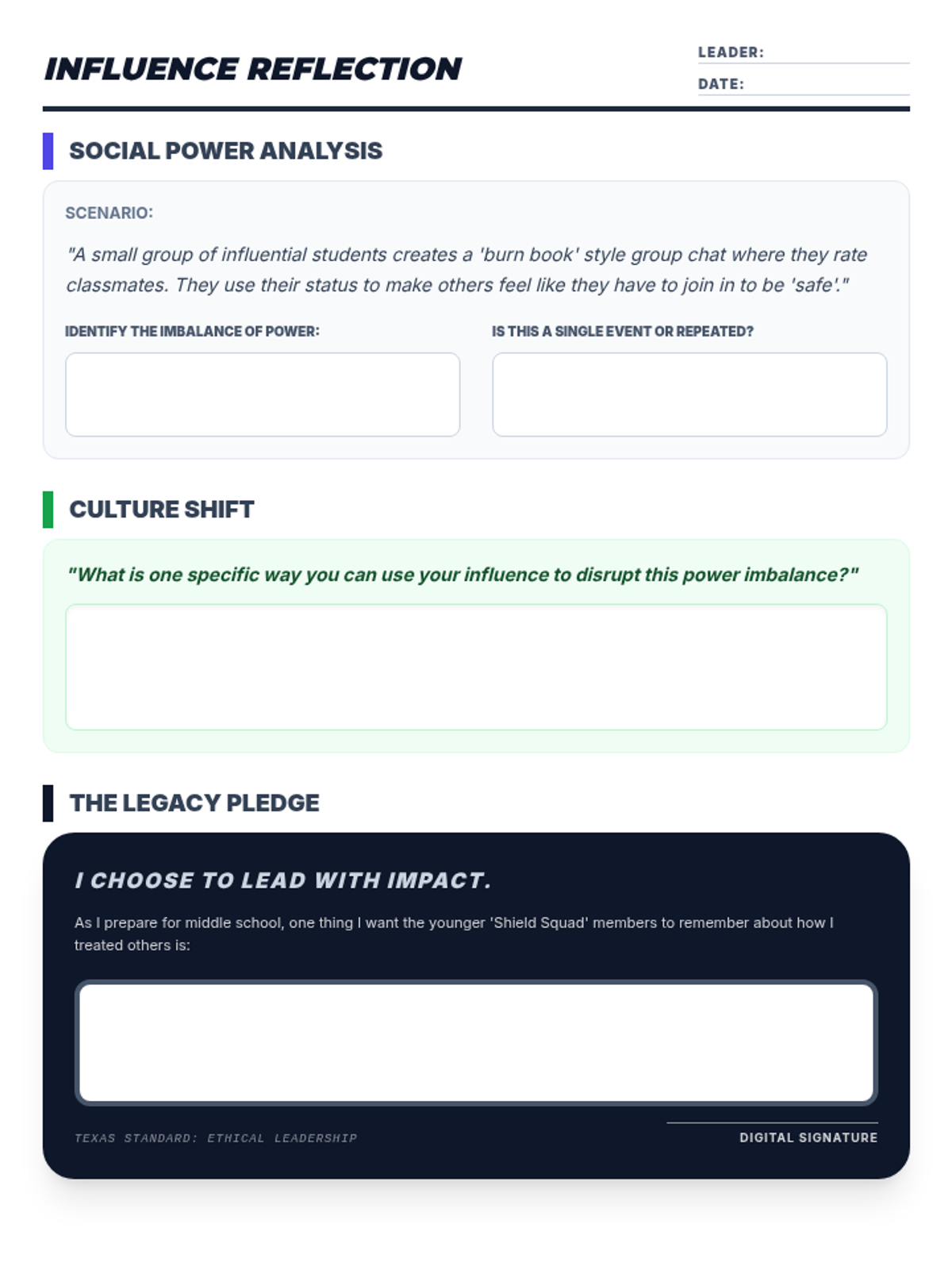
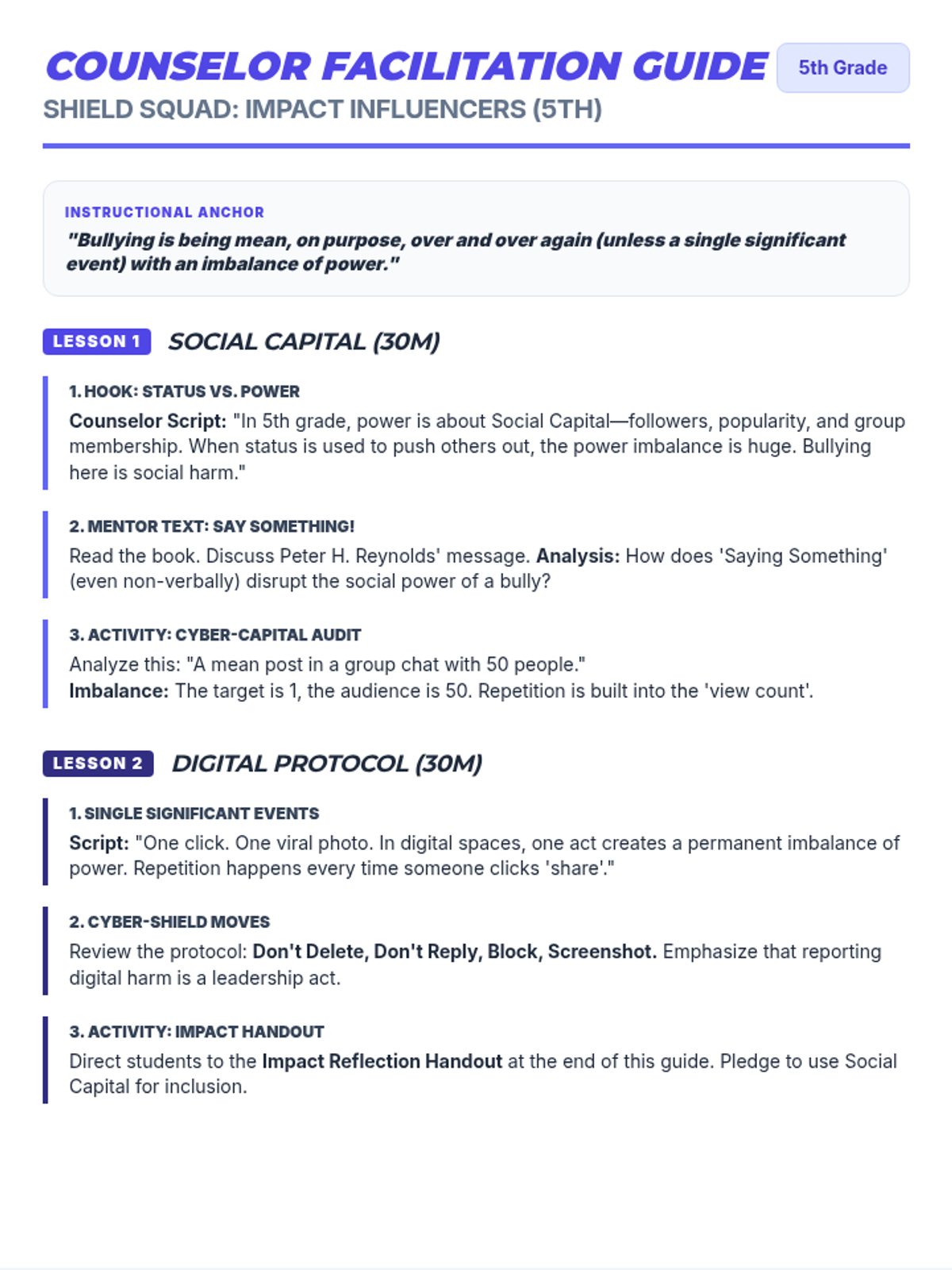
The first of two 30-minute sessions for 5th grade. Using 'Zero' by Kathryn Otoshi, students explore social capital as power and the specific dynamics of cyberbullying.
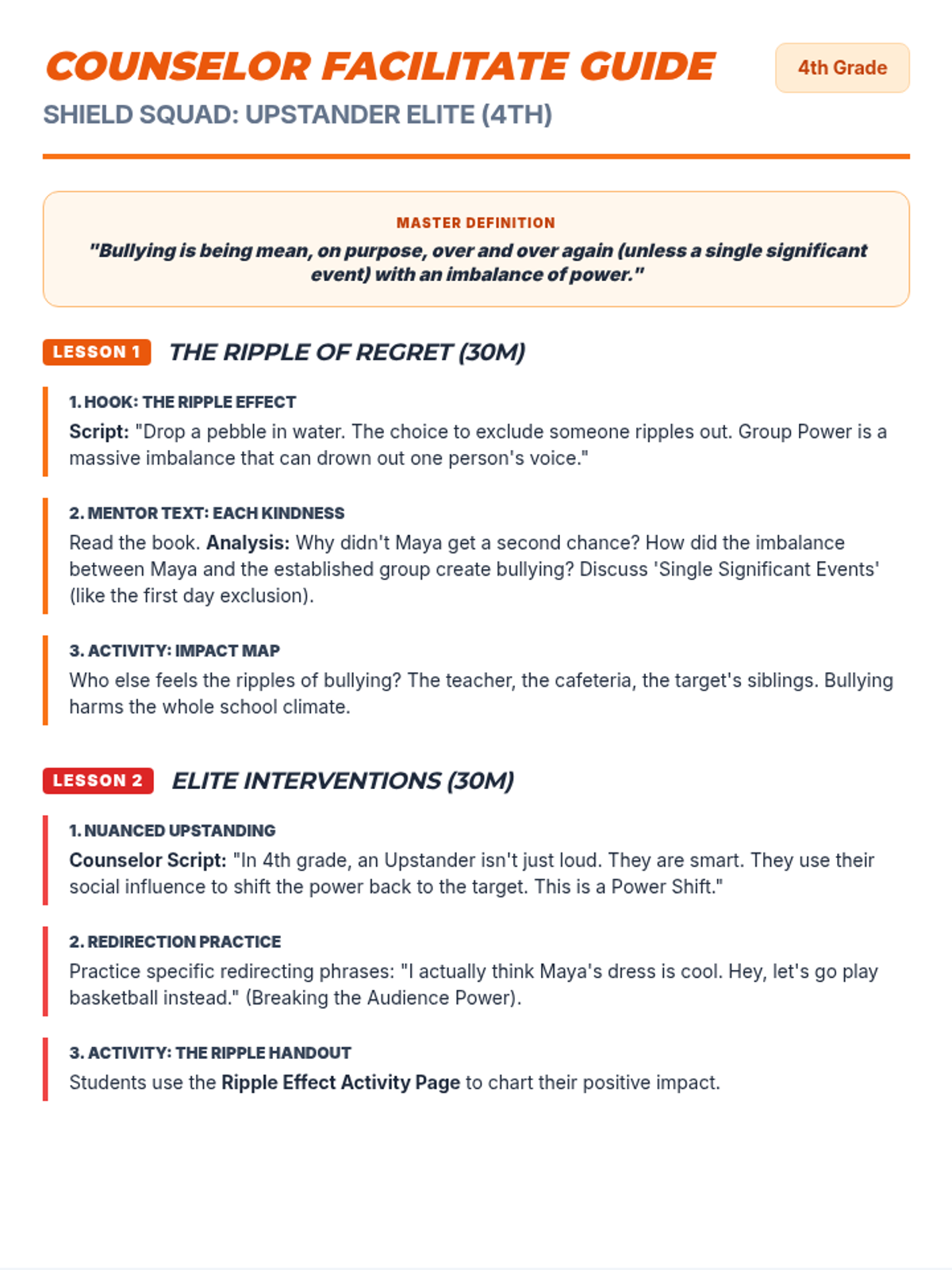
The first of two 30-minute sessions for 4th grade. Using 'Confessions of a Former Bully' by Trudy Ludwig, students understand the bullying circle and the roles people play in social dynamics.
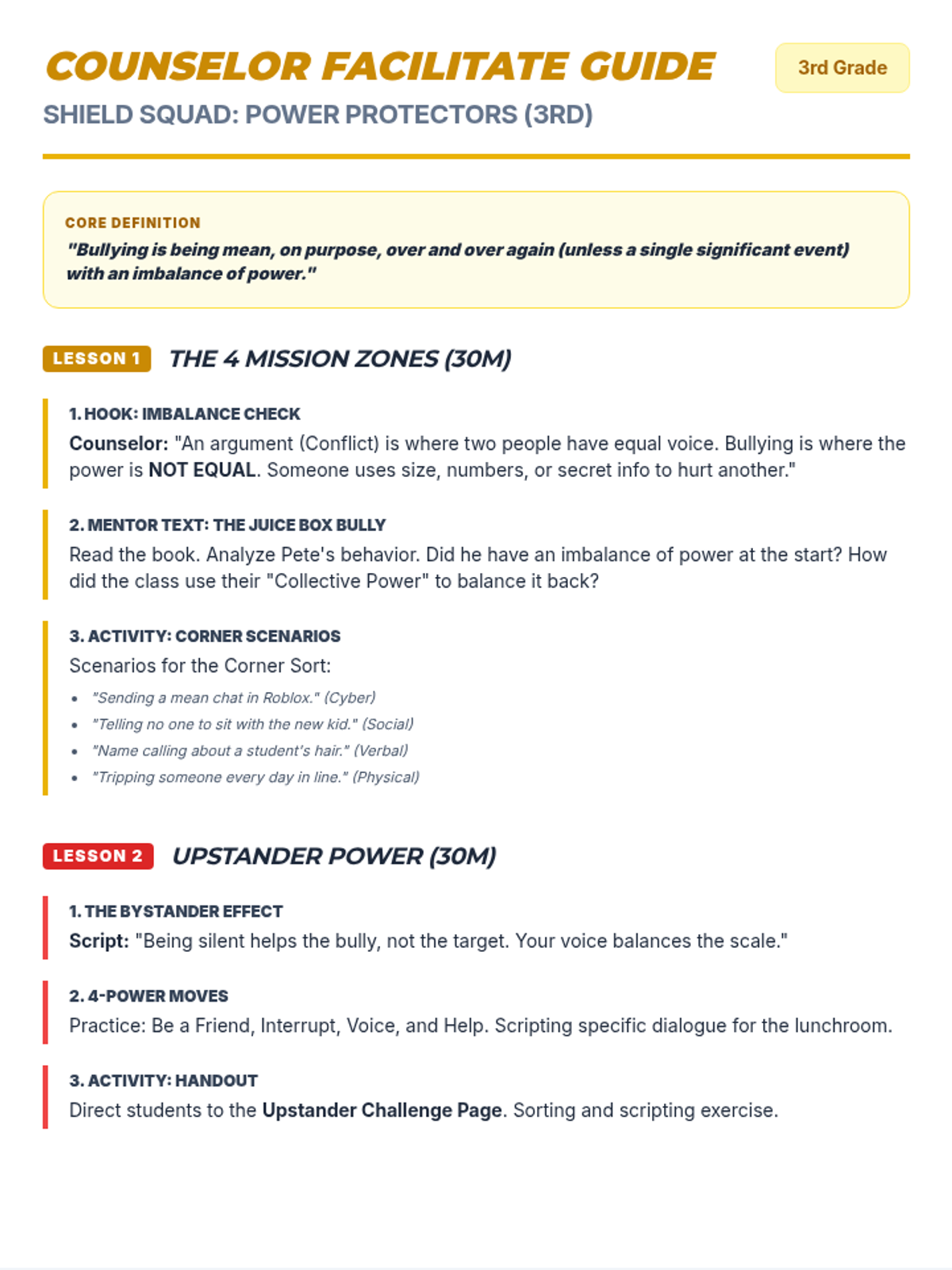
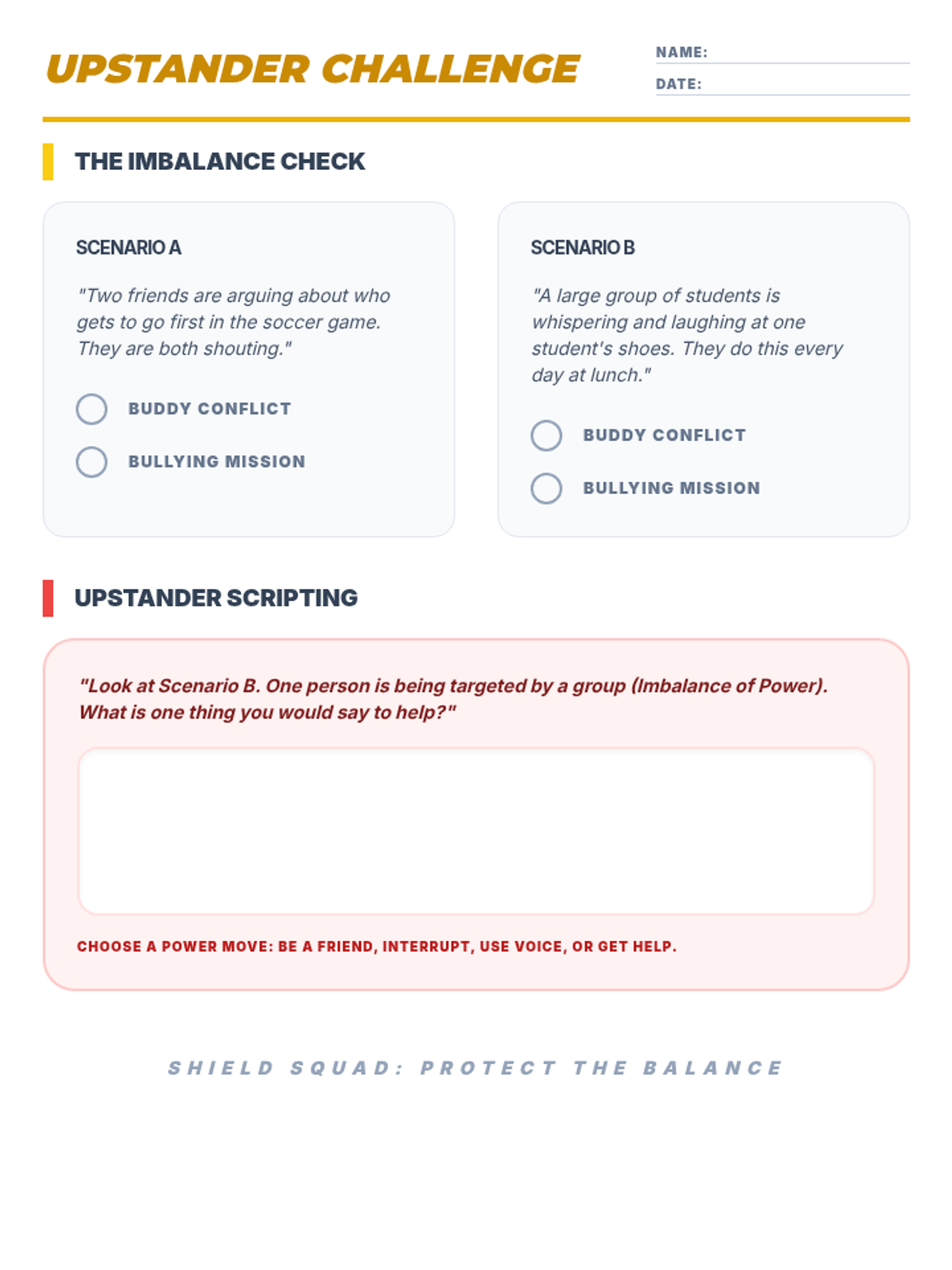
The first of two 30-minute sessions for 3rd grade. Using 'Tease Monster' by Julia Cook, students categorize behavior and analyze the 'Target' vs 'Bully' power gap.
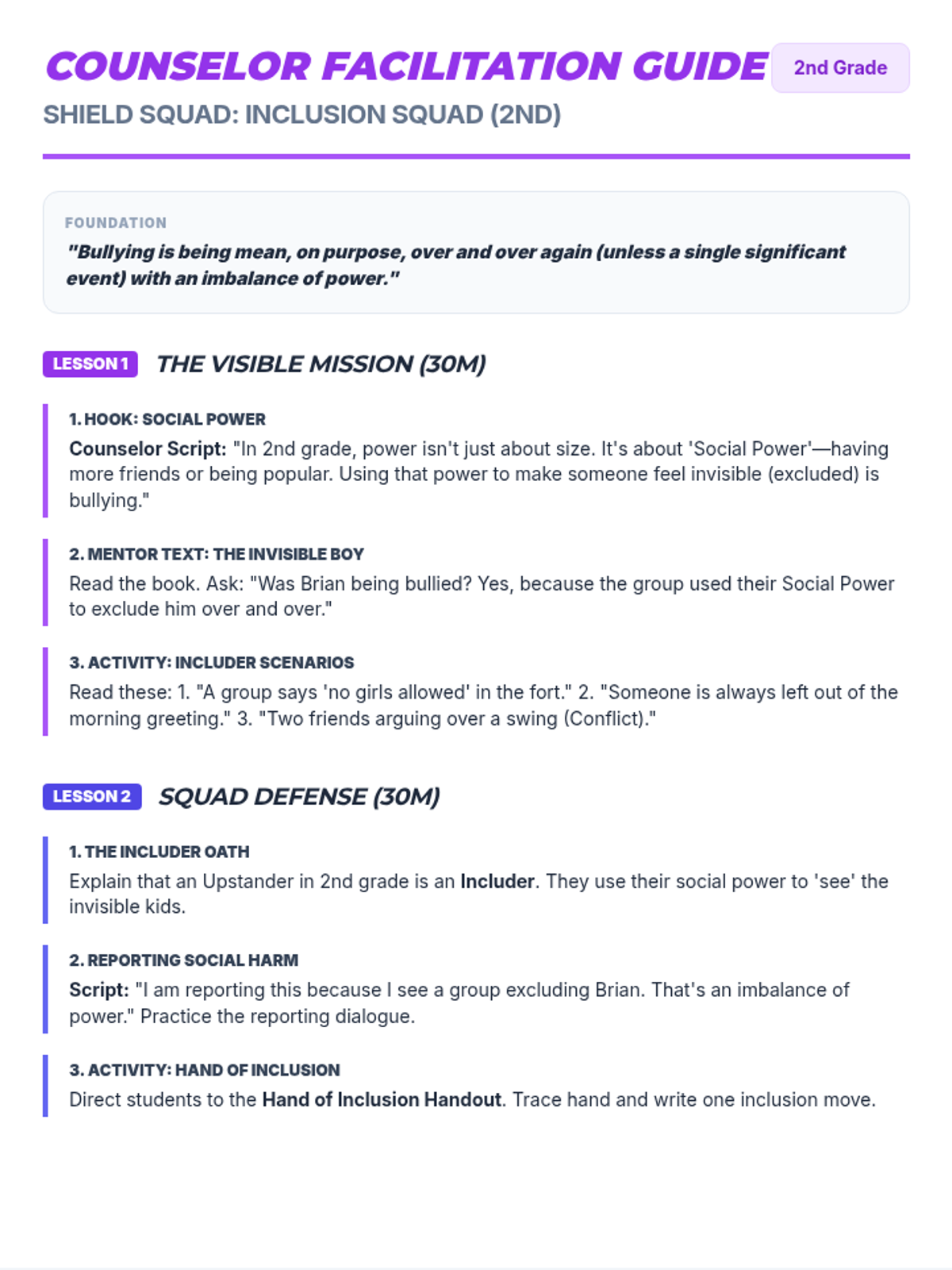
The first of two 30-minute sessions for 2nd grade. Using 'The Invisible Boy' by Trudy Ludwig, students explore social exclusion and the transition from a 'Buddy Conflict' to bullying.
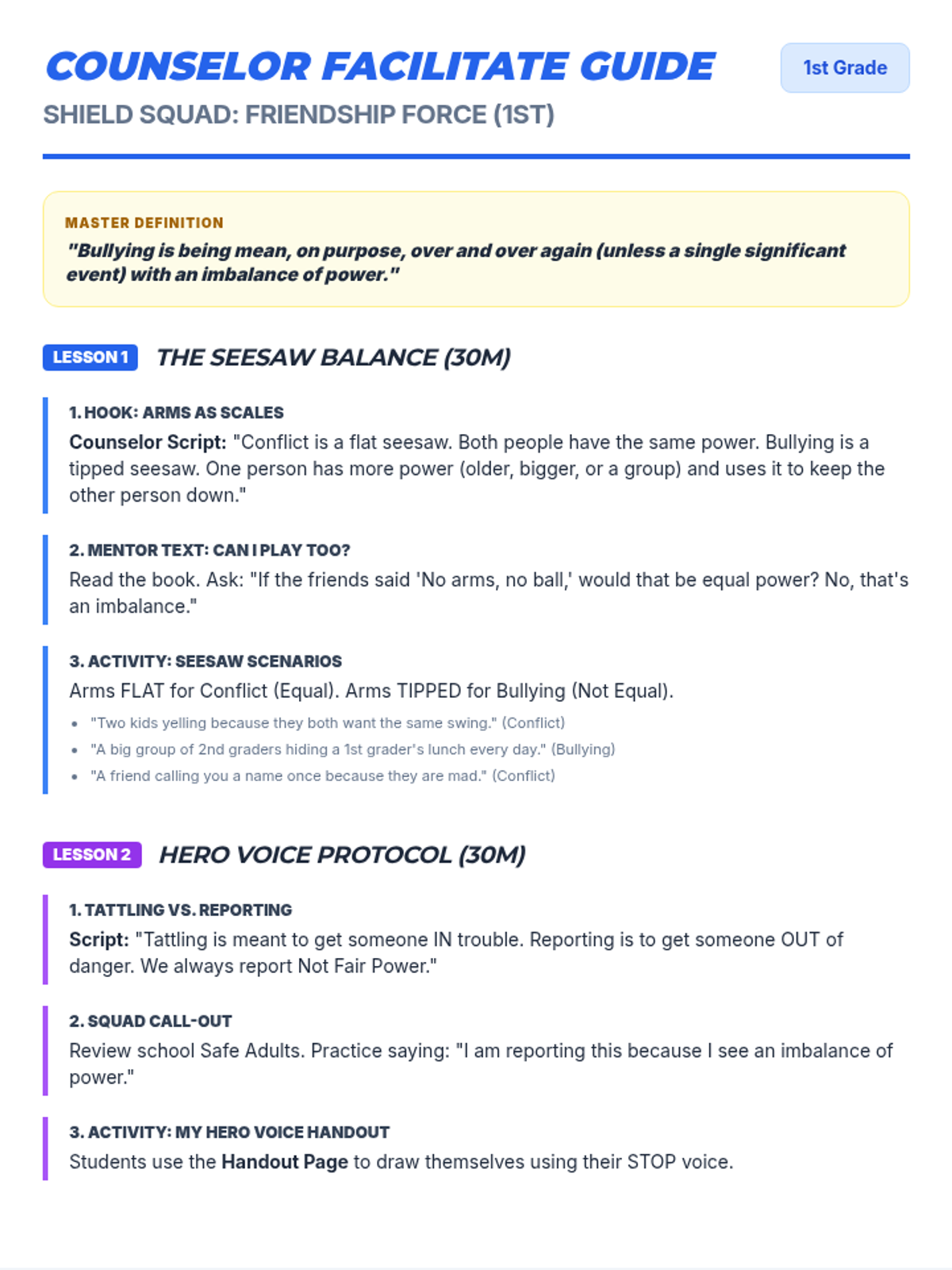
The first of two 30-minute sessions for 1st grade. Using 'Trouble Talk' by Trudy Ludwig, students explore verbal bullying and the 'Seesaw' model of unequal power.
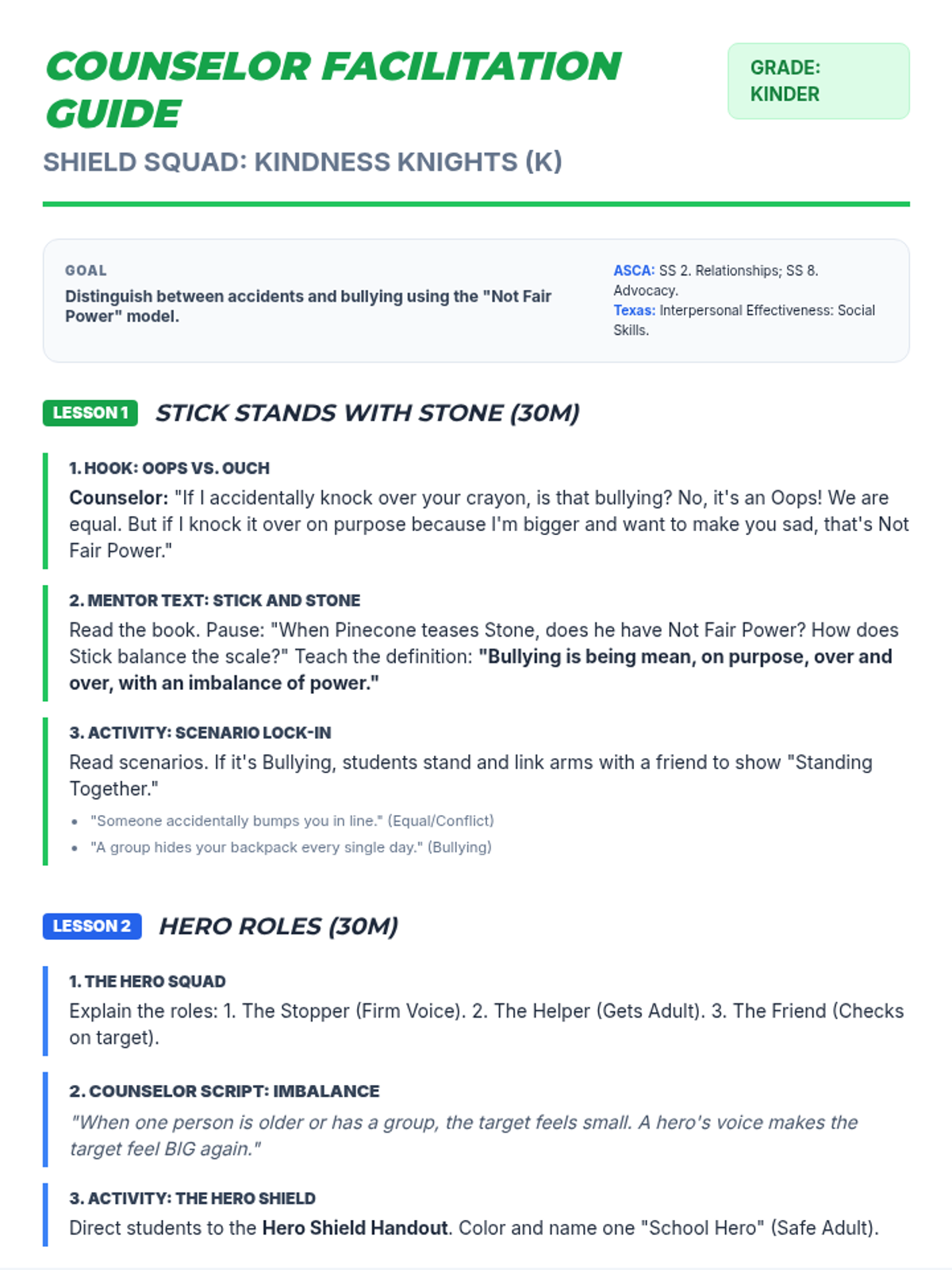
The first of two 30-minute sessions for Kindergarten. Using 'Bully B.E.A.N.S.' by Julia Cook, students learn to distinguish between accidents and bullying using the 'Purposeful' and 'Repeated' criteria.
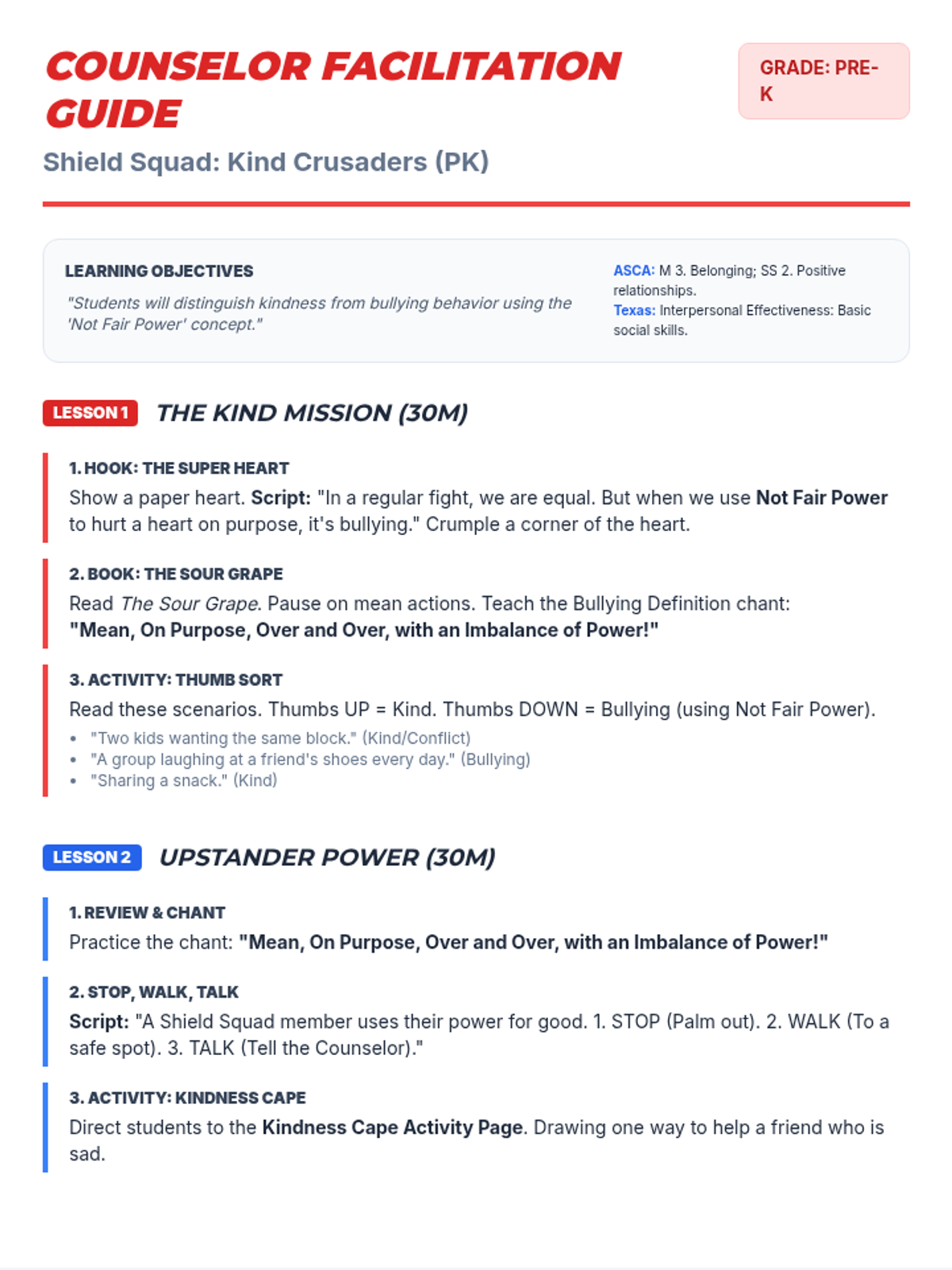
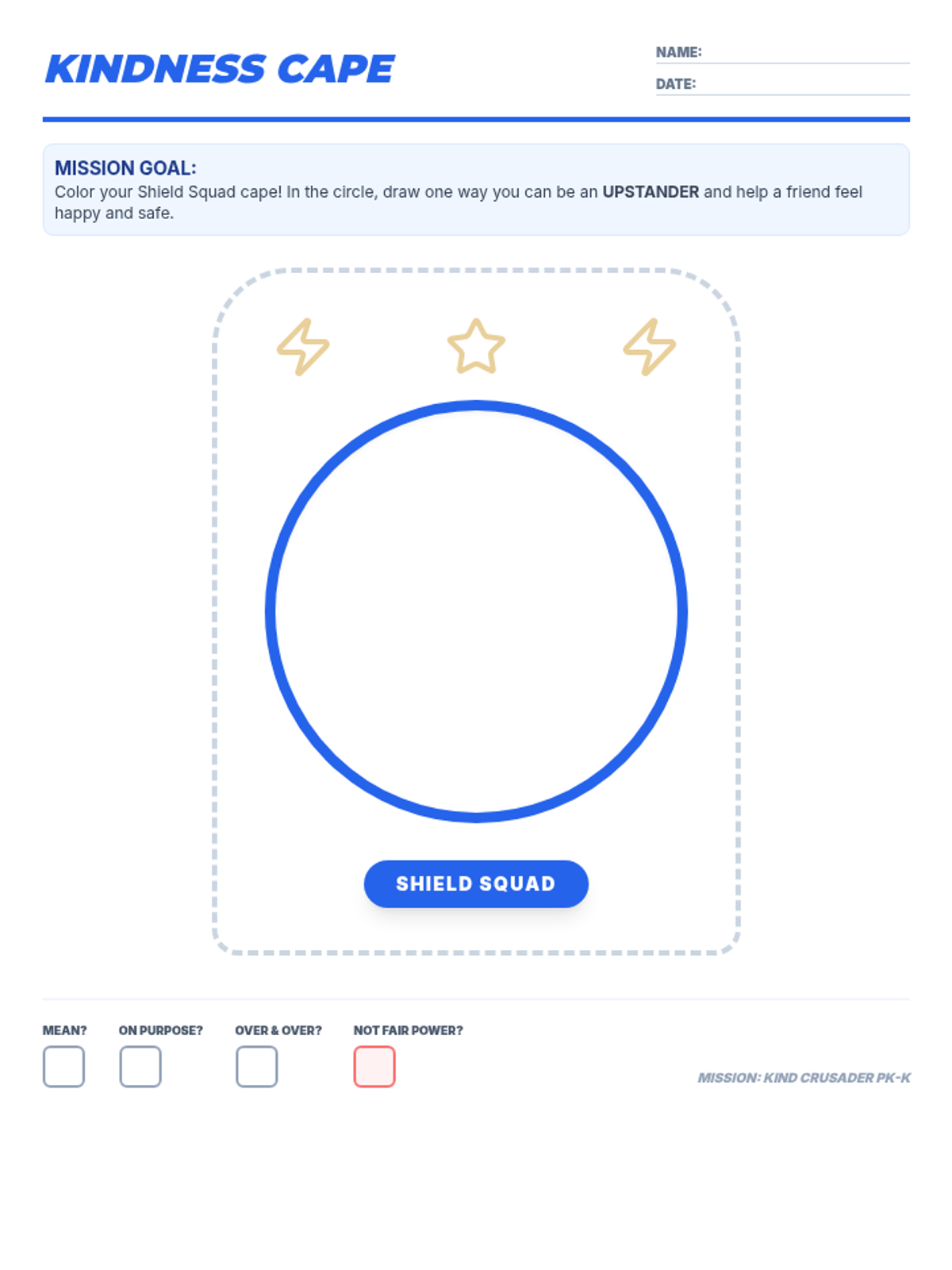
The first of two 30-minute sessions for PK. Using 'One' by Kathryn Otoshi, students are introduced to the 'Shield Squad' definition of bullying and the concept of 'Not Fair Power'.
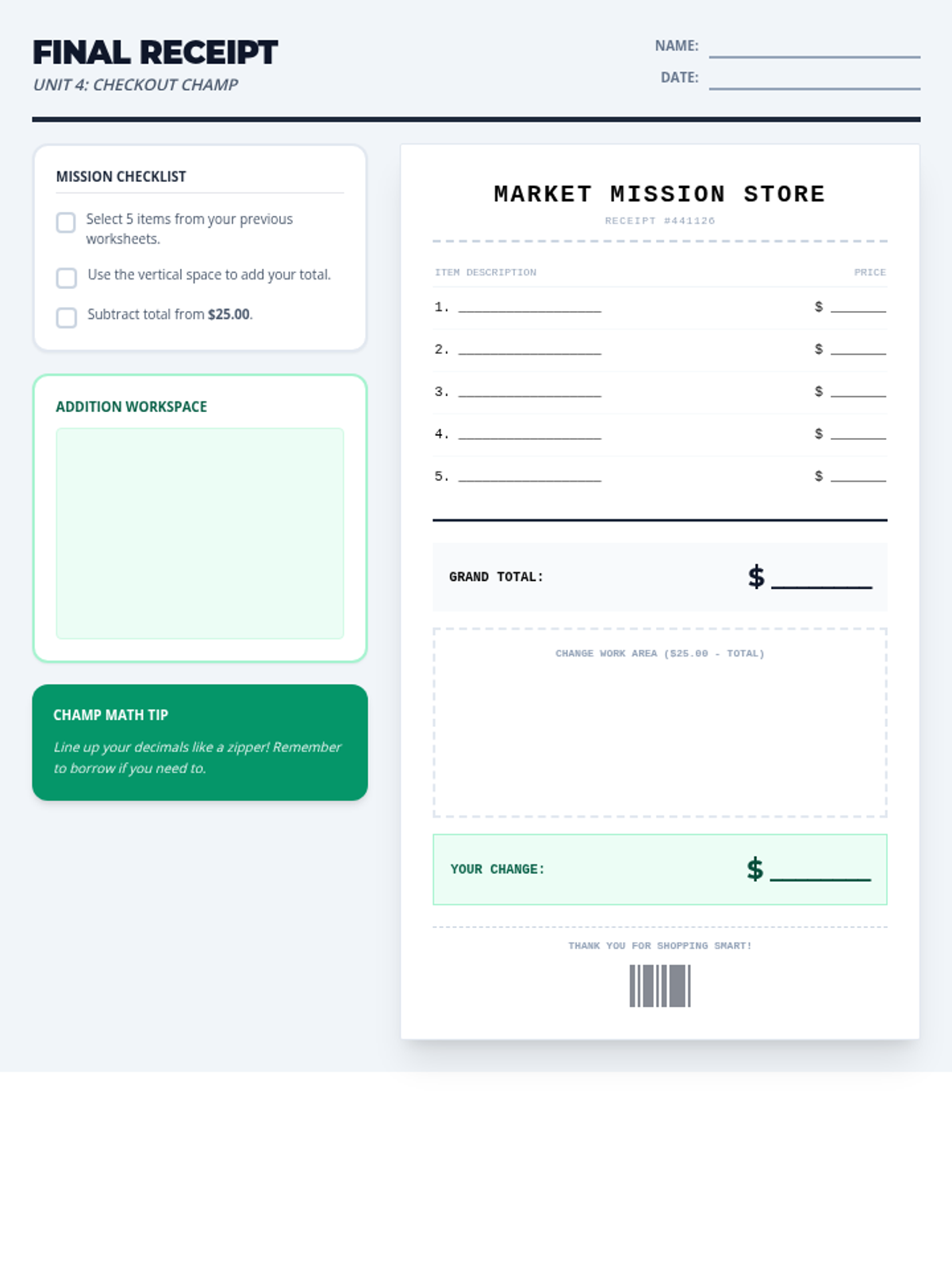
Finalizing a grocery purchase, calculating totals, and determining change while staying under budget.
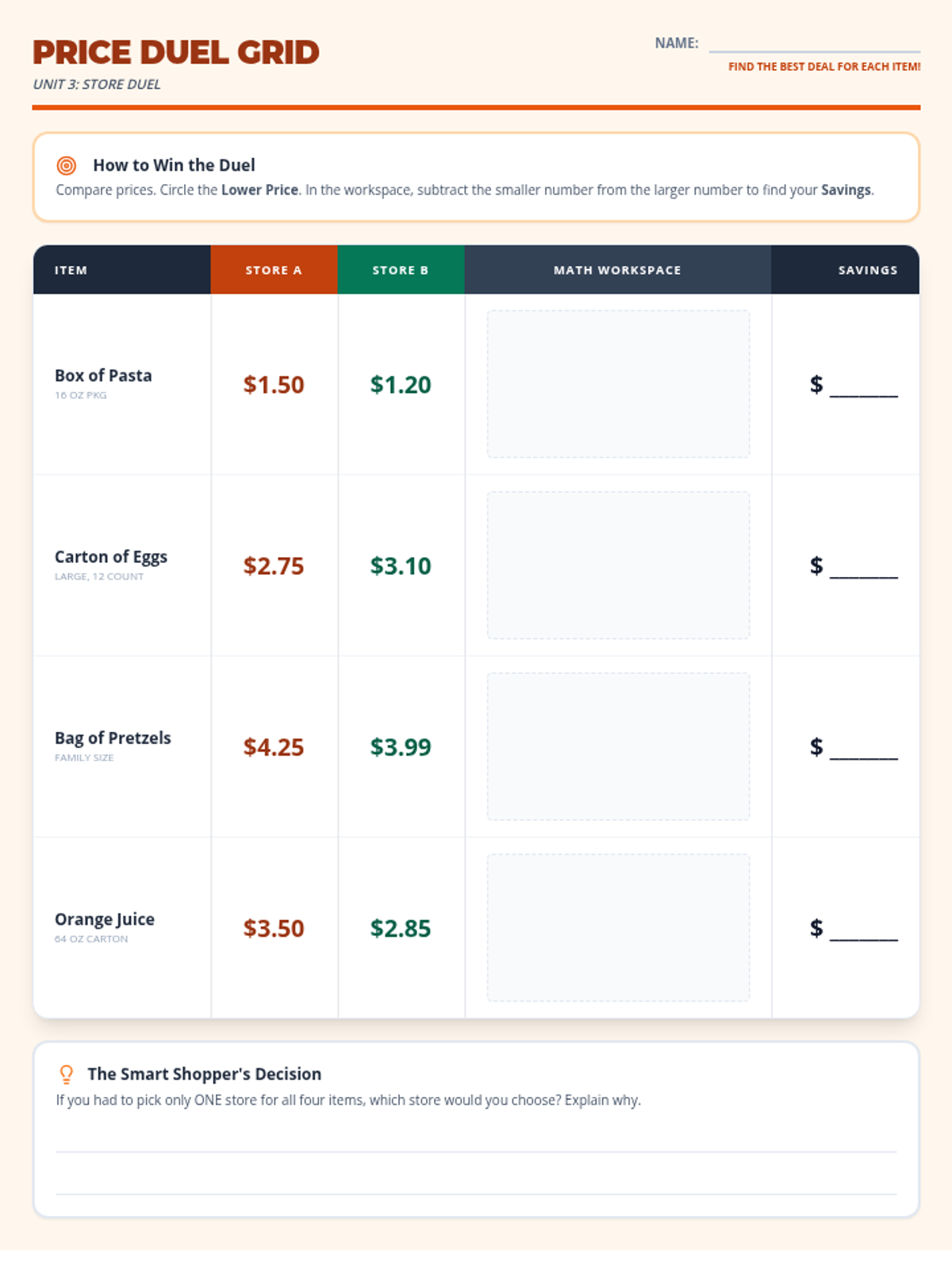
Comparing prices between two different stores to find the best deals on common household items.
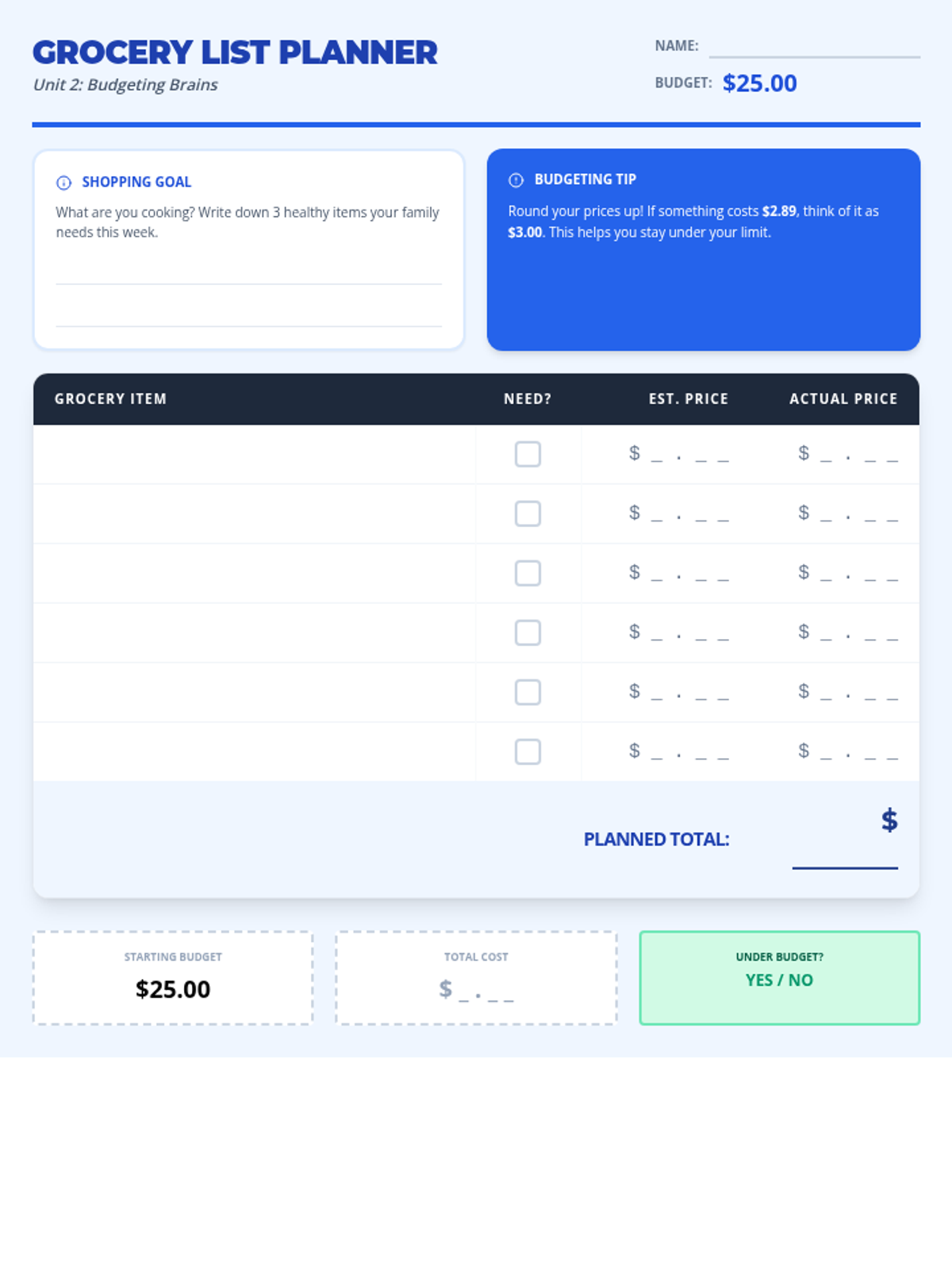
Setting a budget and prioritizing items on a grocery list using estimation and decimal addition.