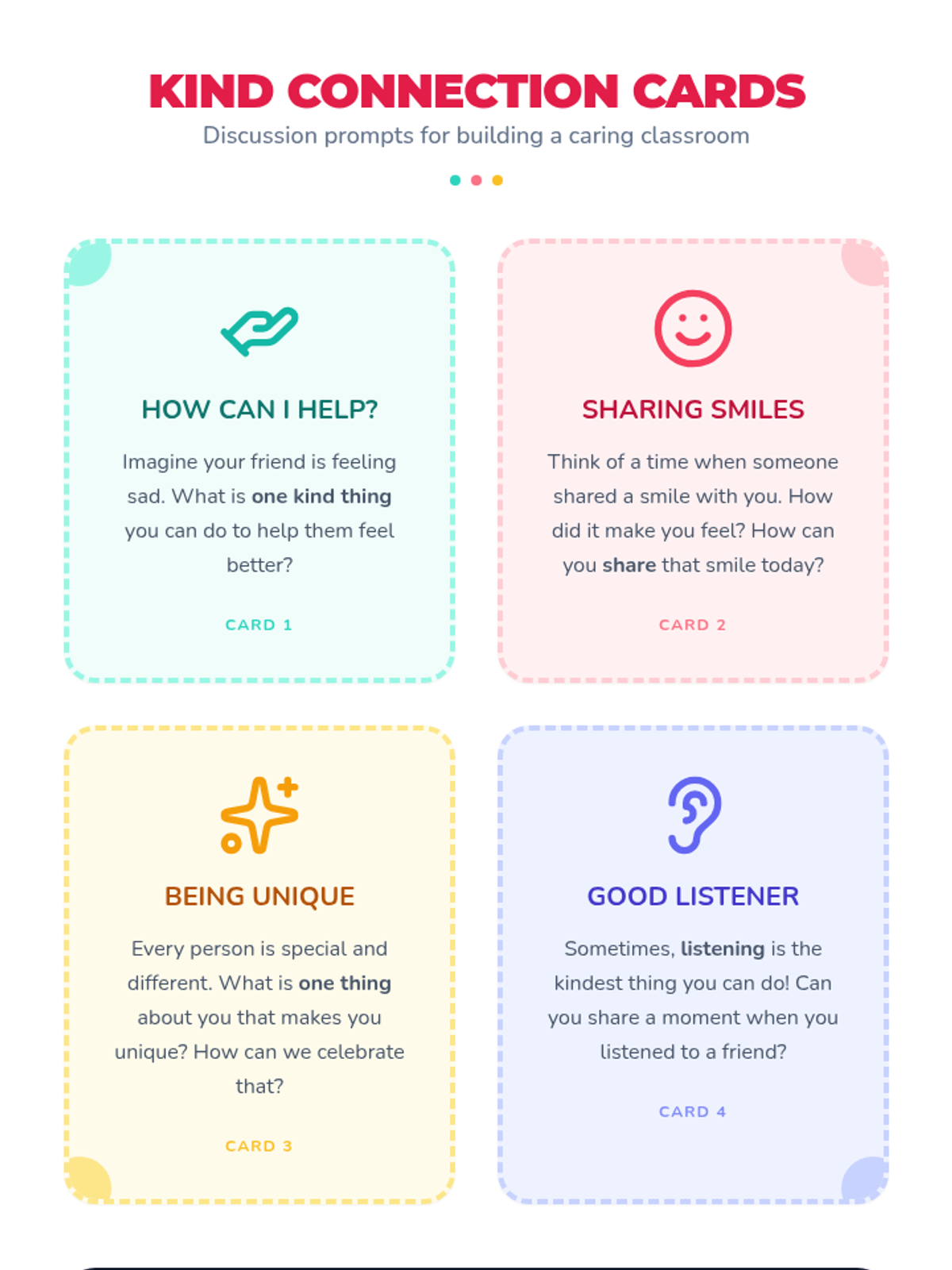
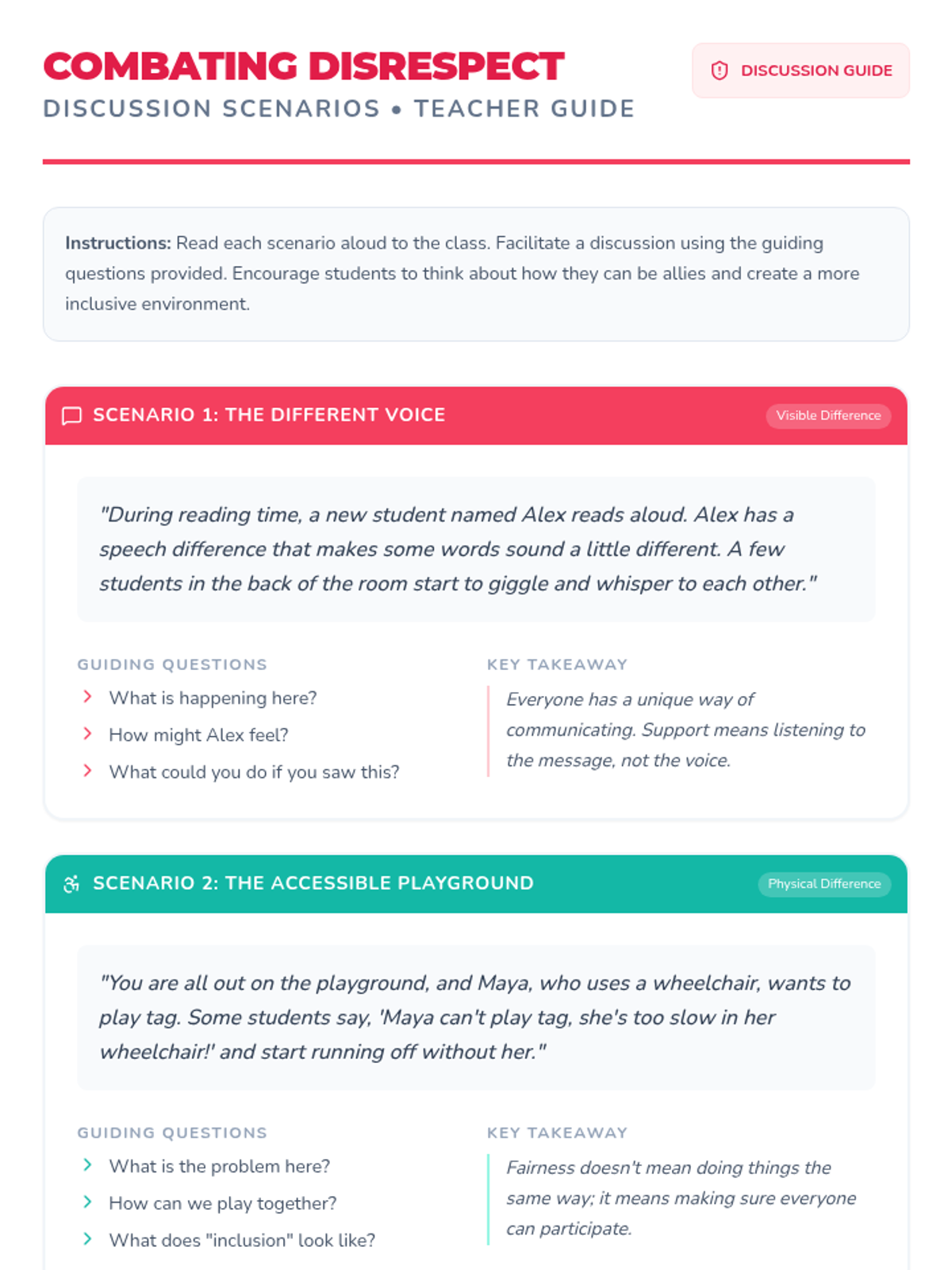
Empathetic skill development through emotion recognition, cultural diversity appreciation, and bias confrontation. Targets multi-perspective analysis to support respectful interactions and complex social responses.
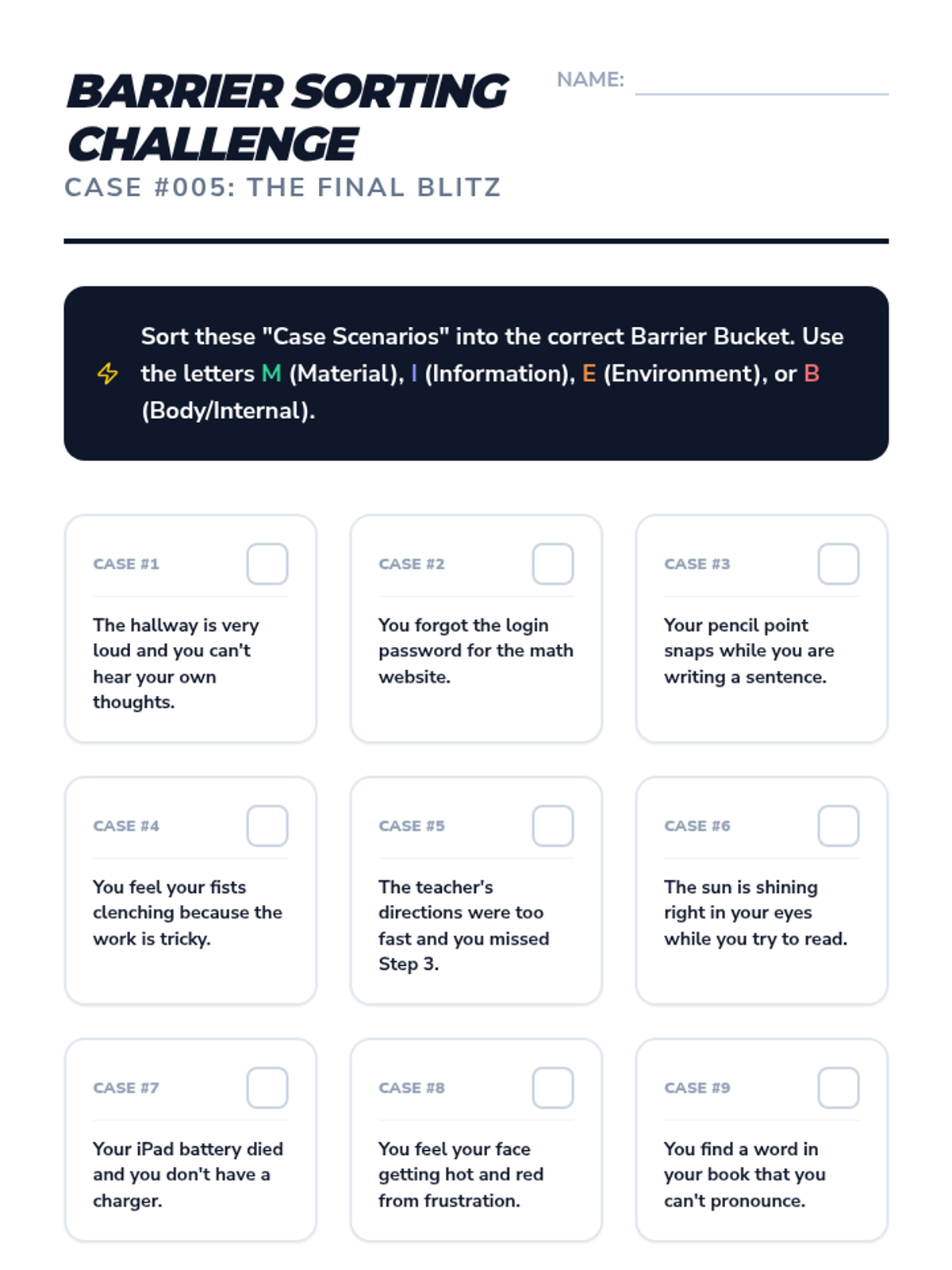
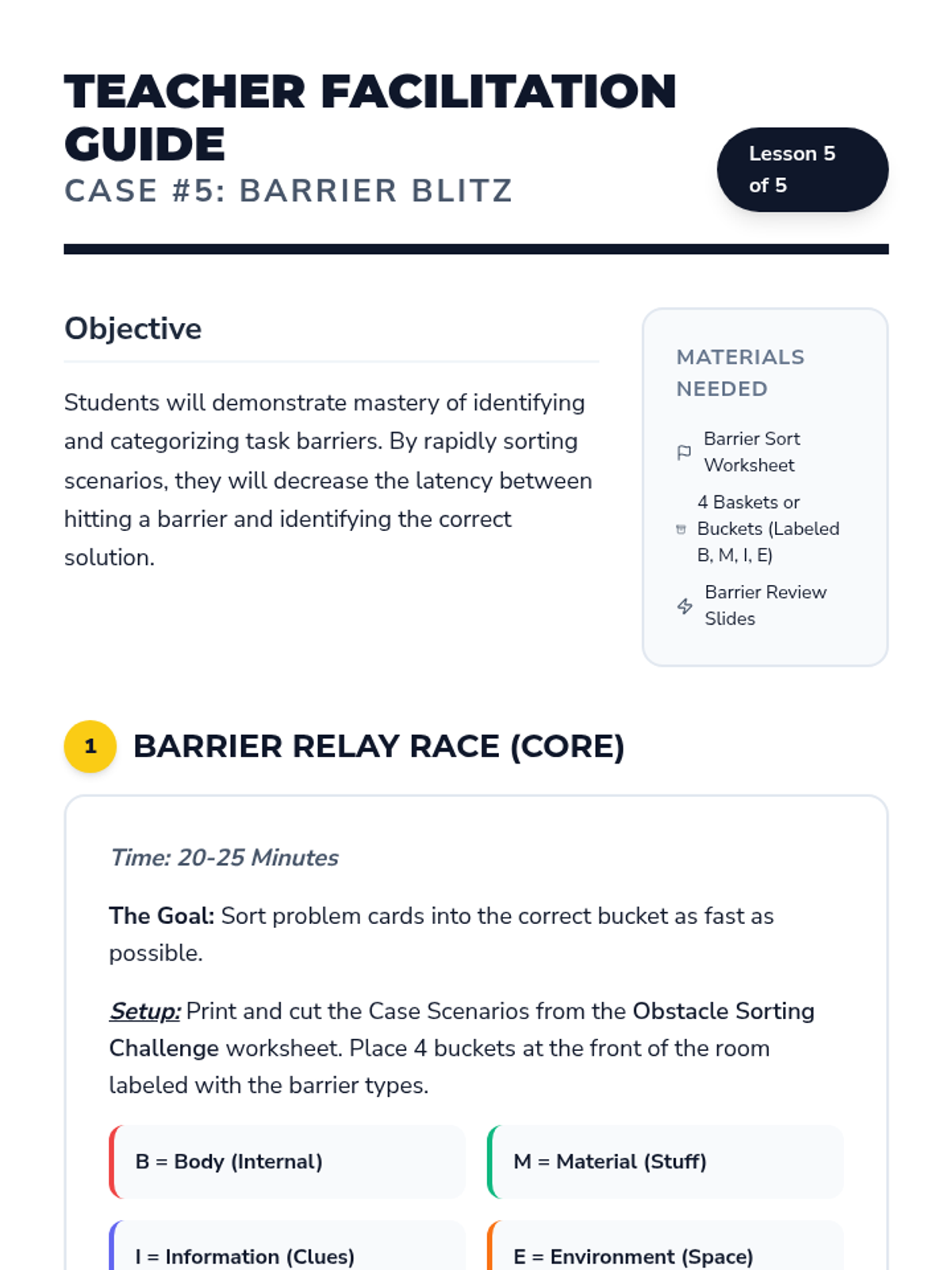
A culminating lesson where students rapidly sort various scenarios into barrier categories to reduce the time between hitting a wall and identifying the solution.
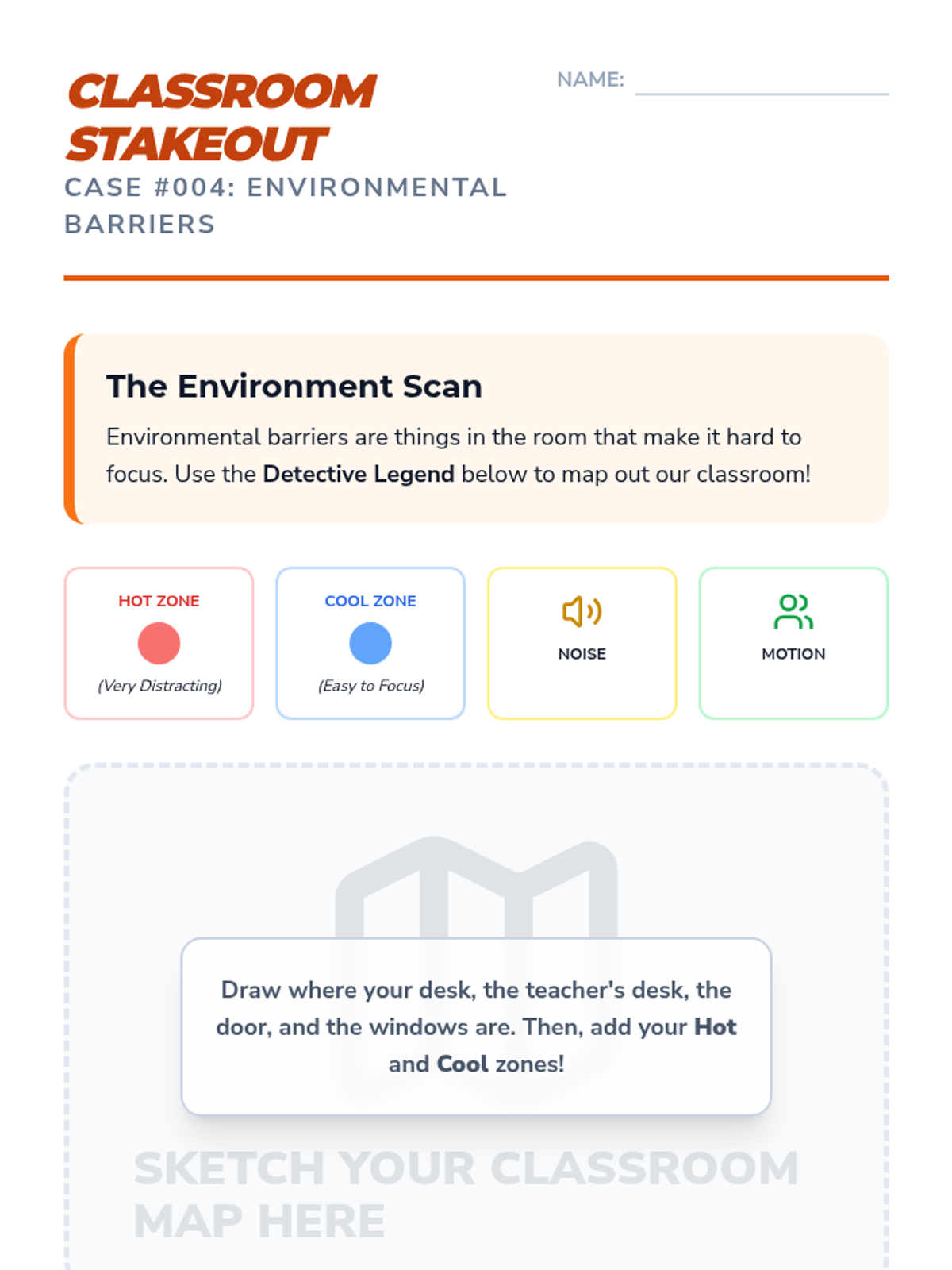
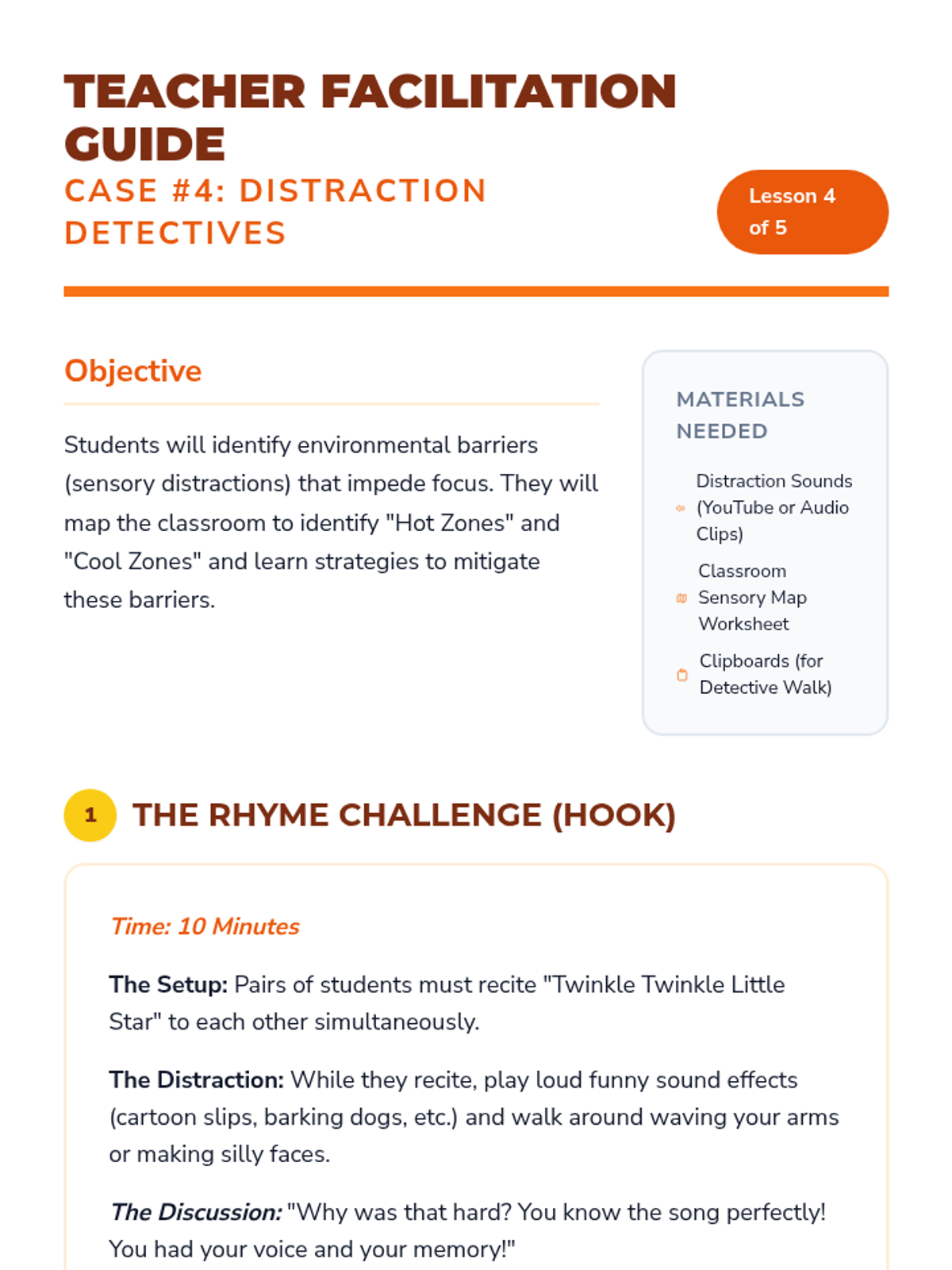
Investigates sensory and environmental barriers like noise or clutter, conducting a 'detective walk' to identify classroom distractions.
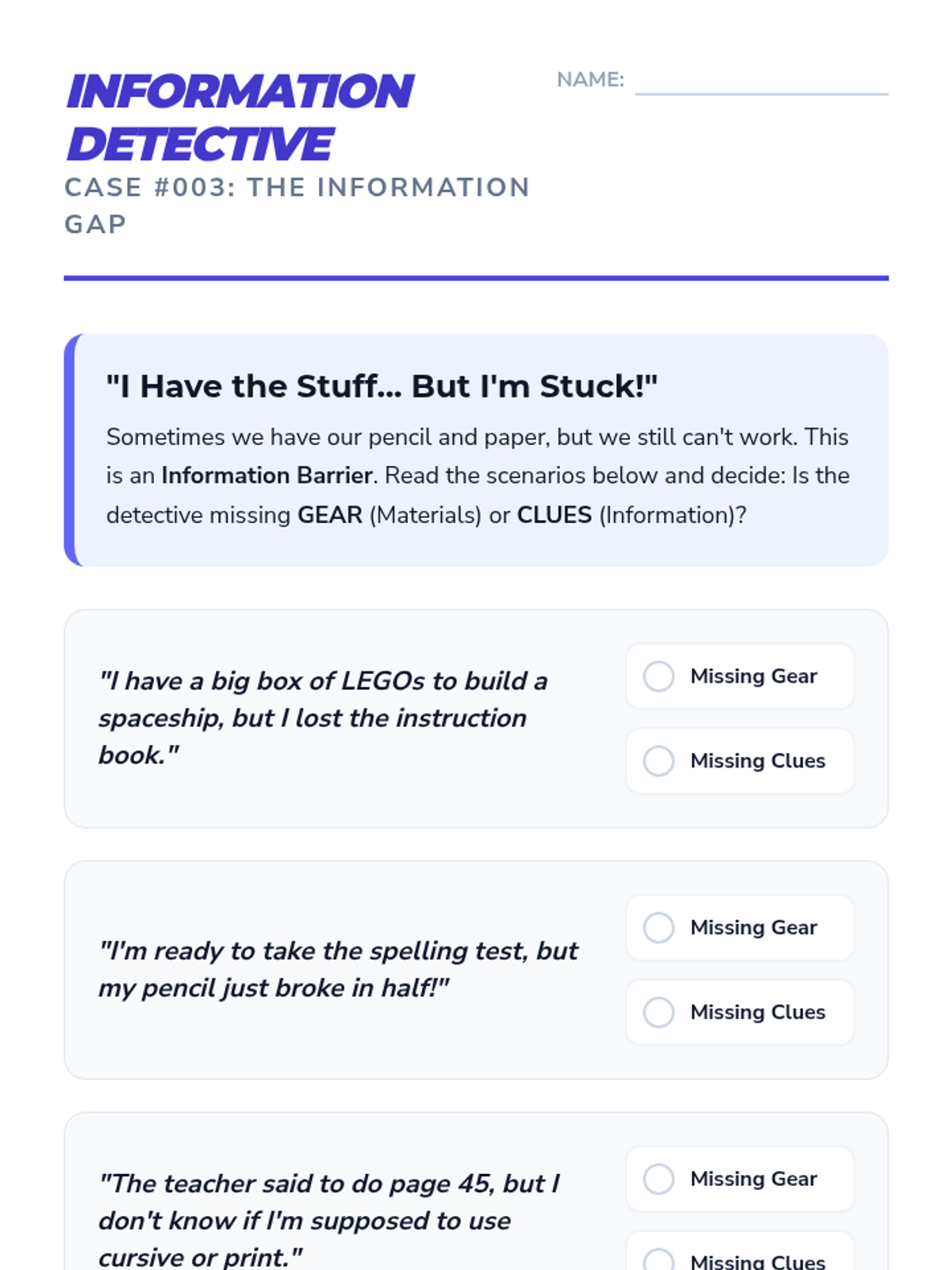
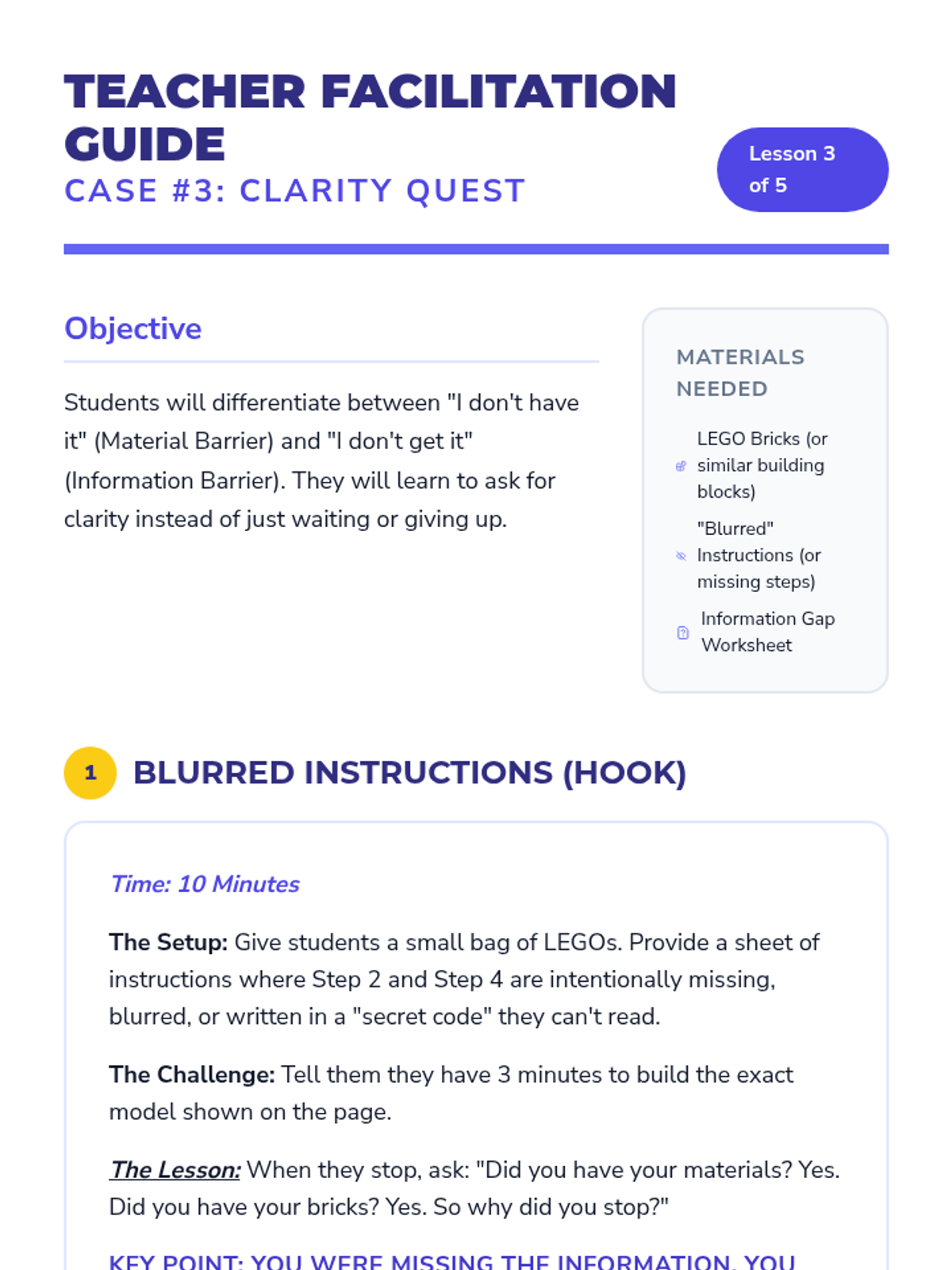
Teaches students to recognize when they are stuck due to a lack of clarity or understanding, differentiating between 'I don't have it' and 'I don't get it.'
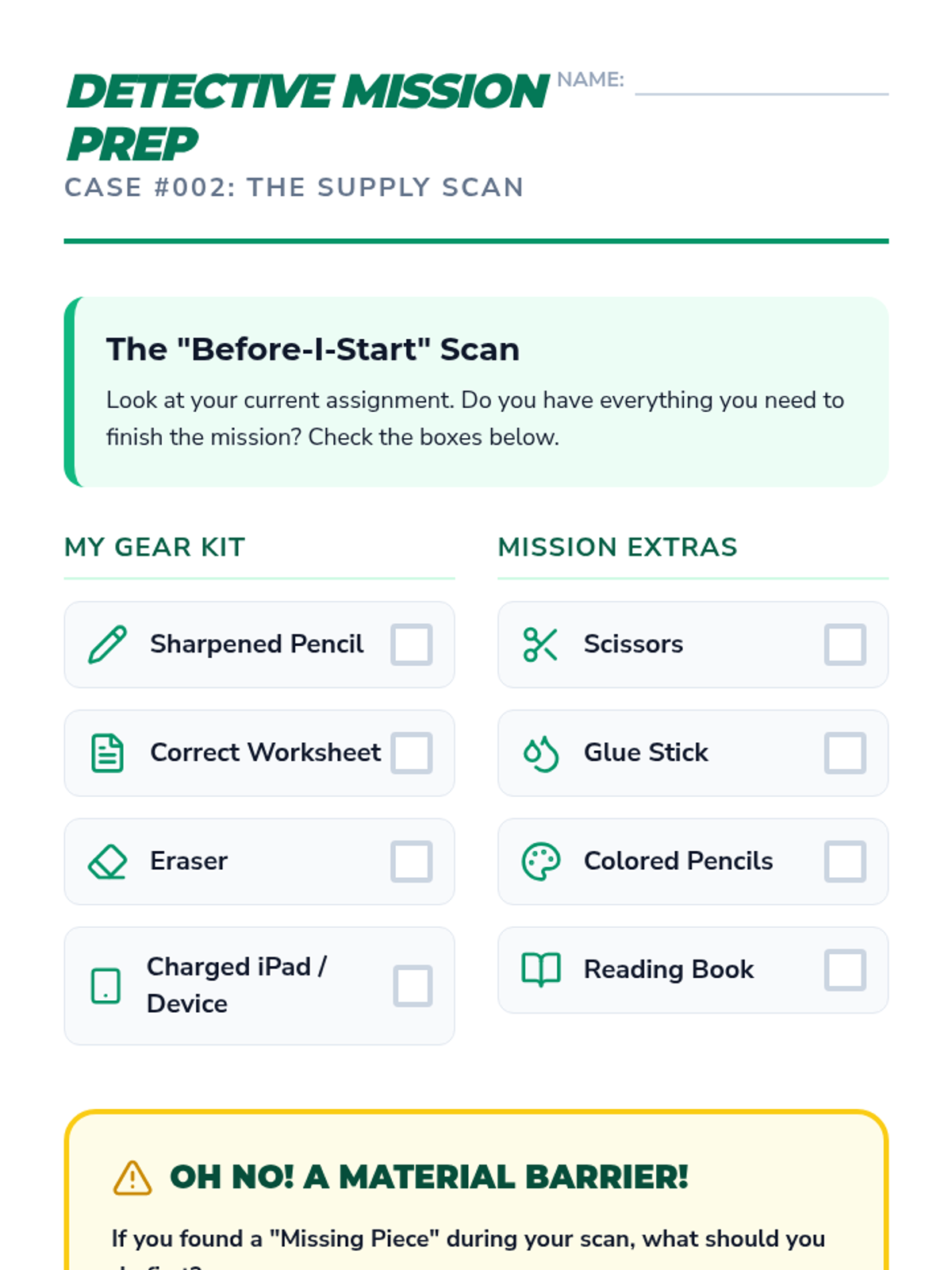
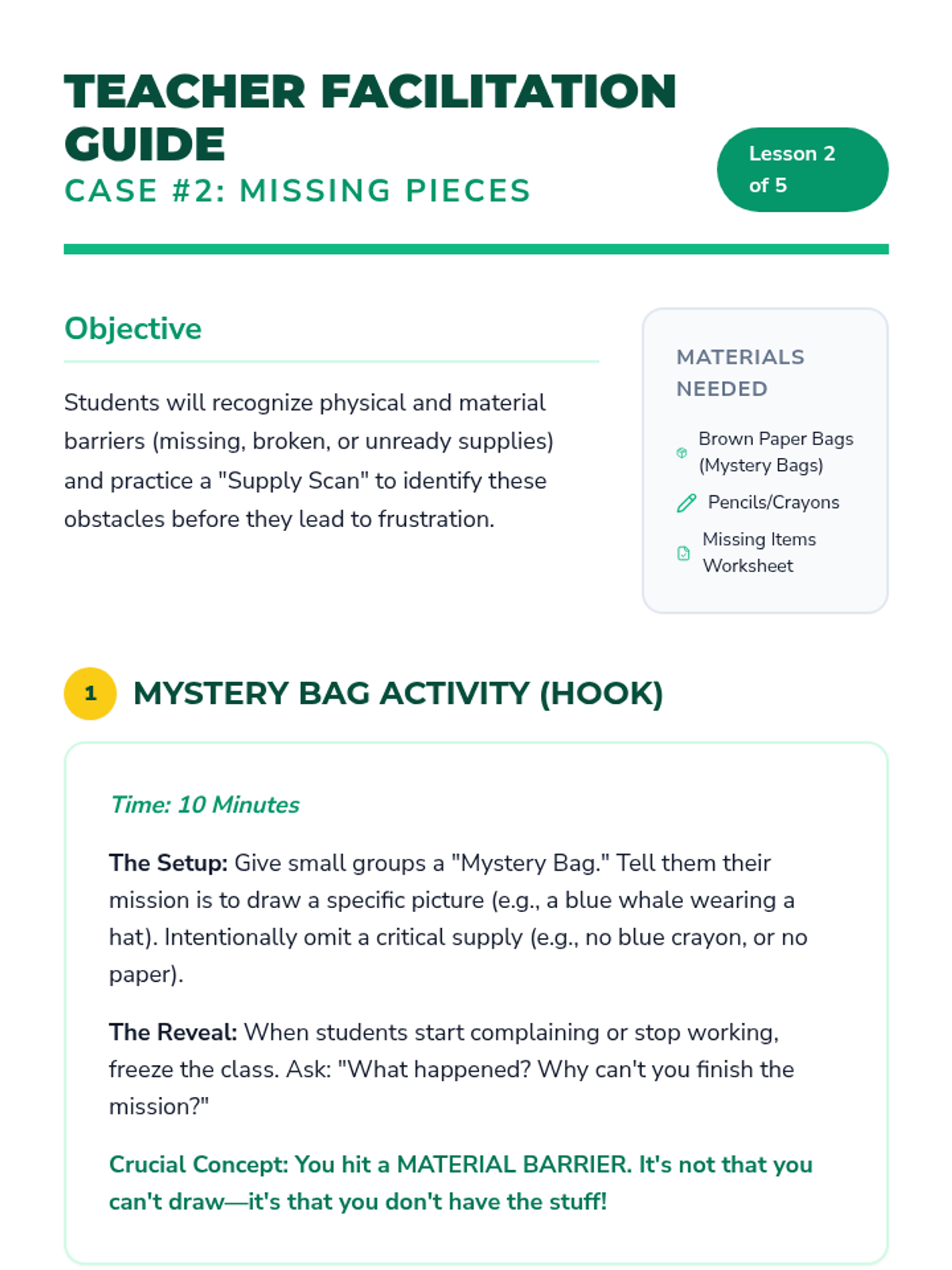
Focuses on tangible obstacles like broken tools or missing materials, teaching students to perform a 'supply scan' to identify what is physically missing.
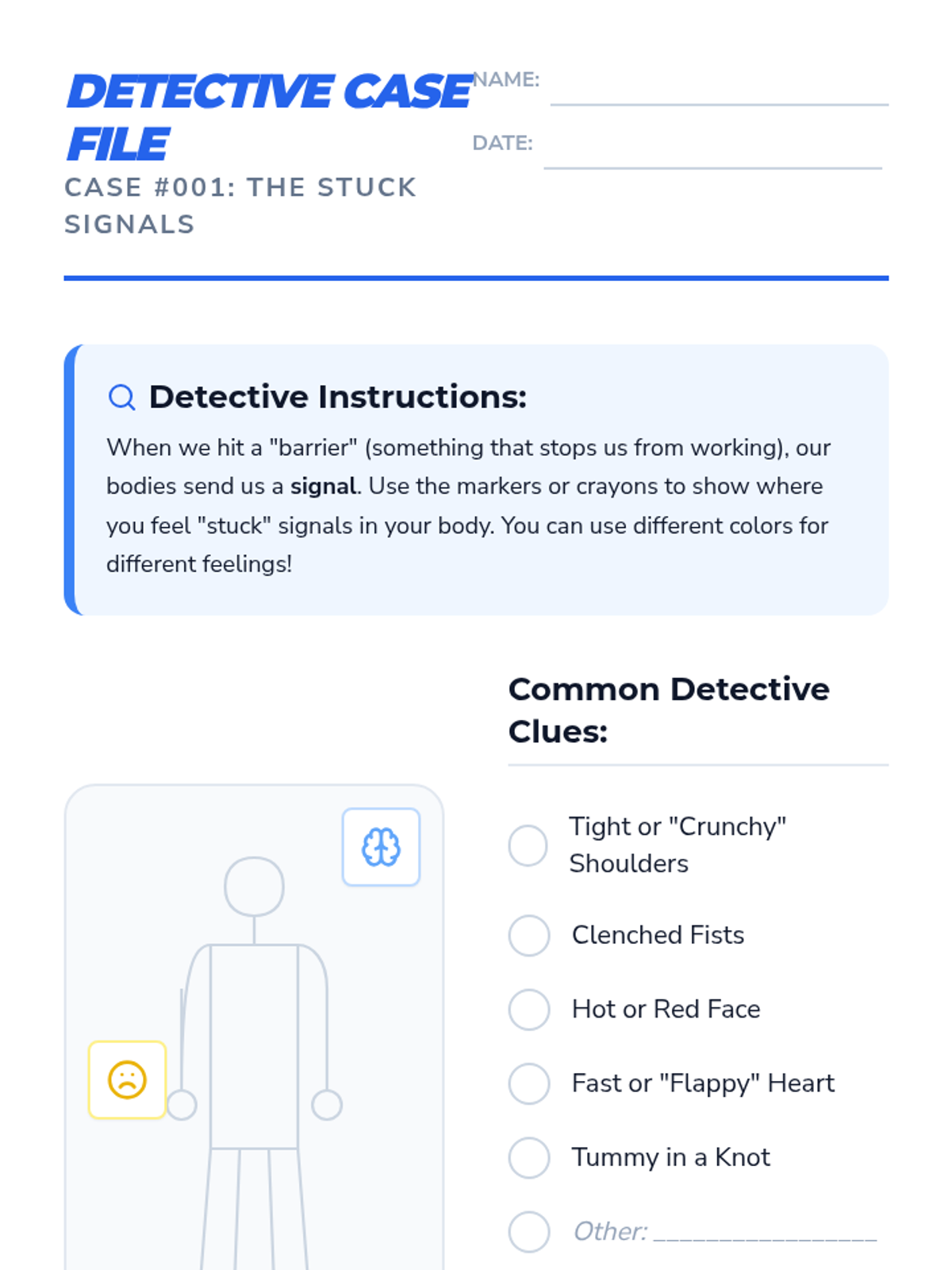
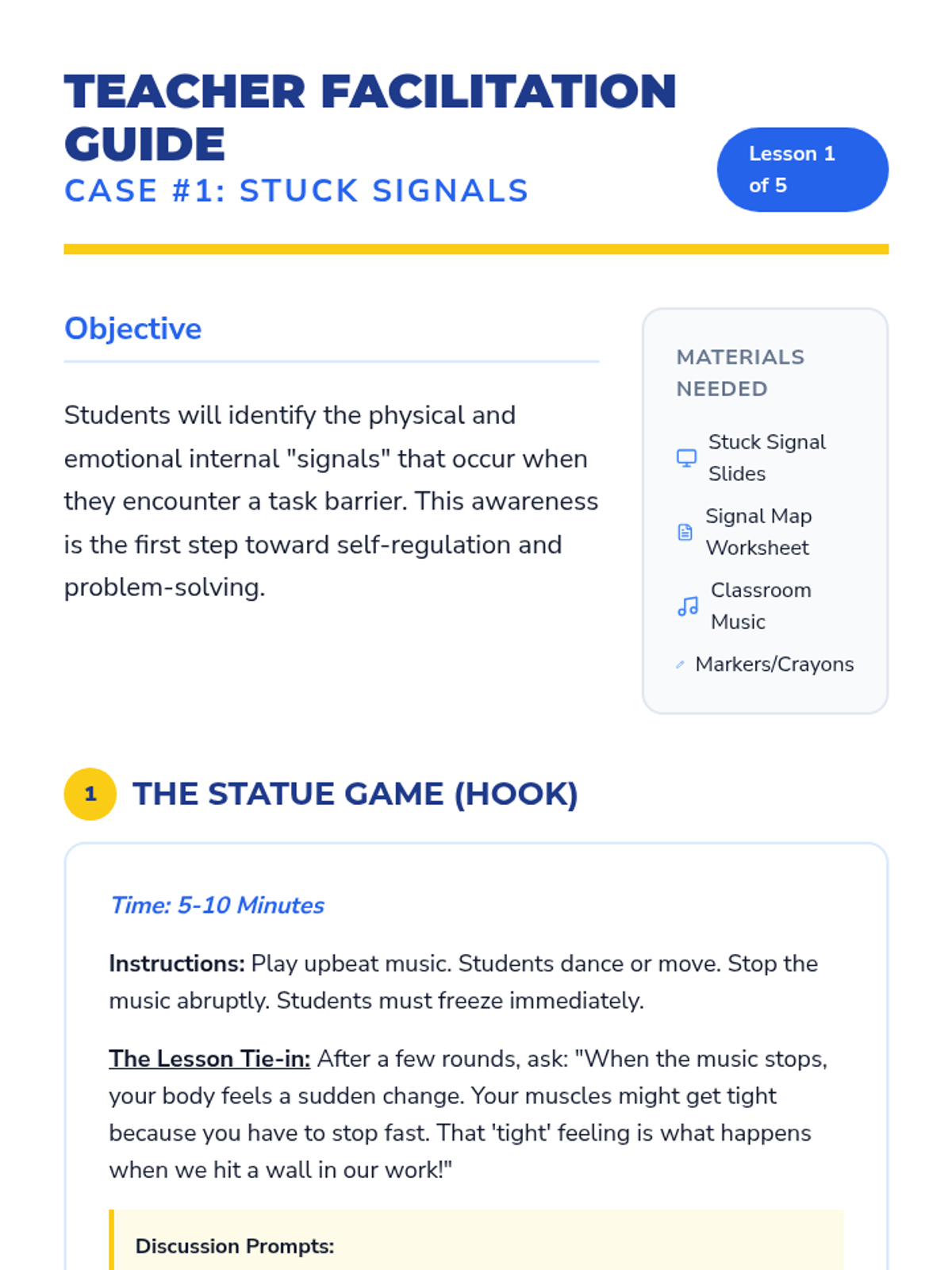
Students explore the physical and emotional sensations associated with hitting a task barrier, identifying what frustration feels like to recognize the moment they need to stop.
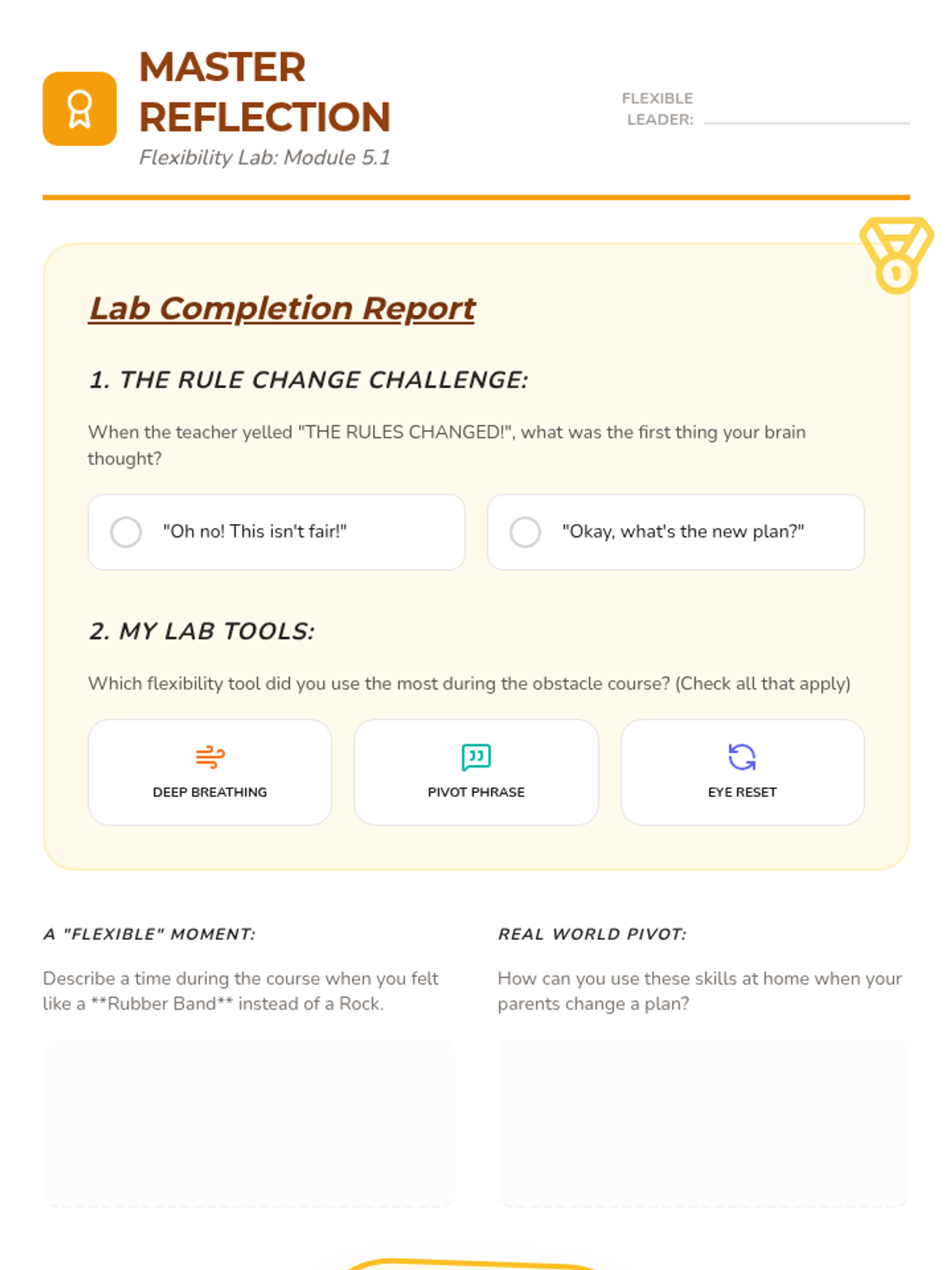
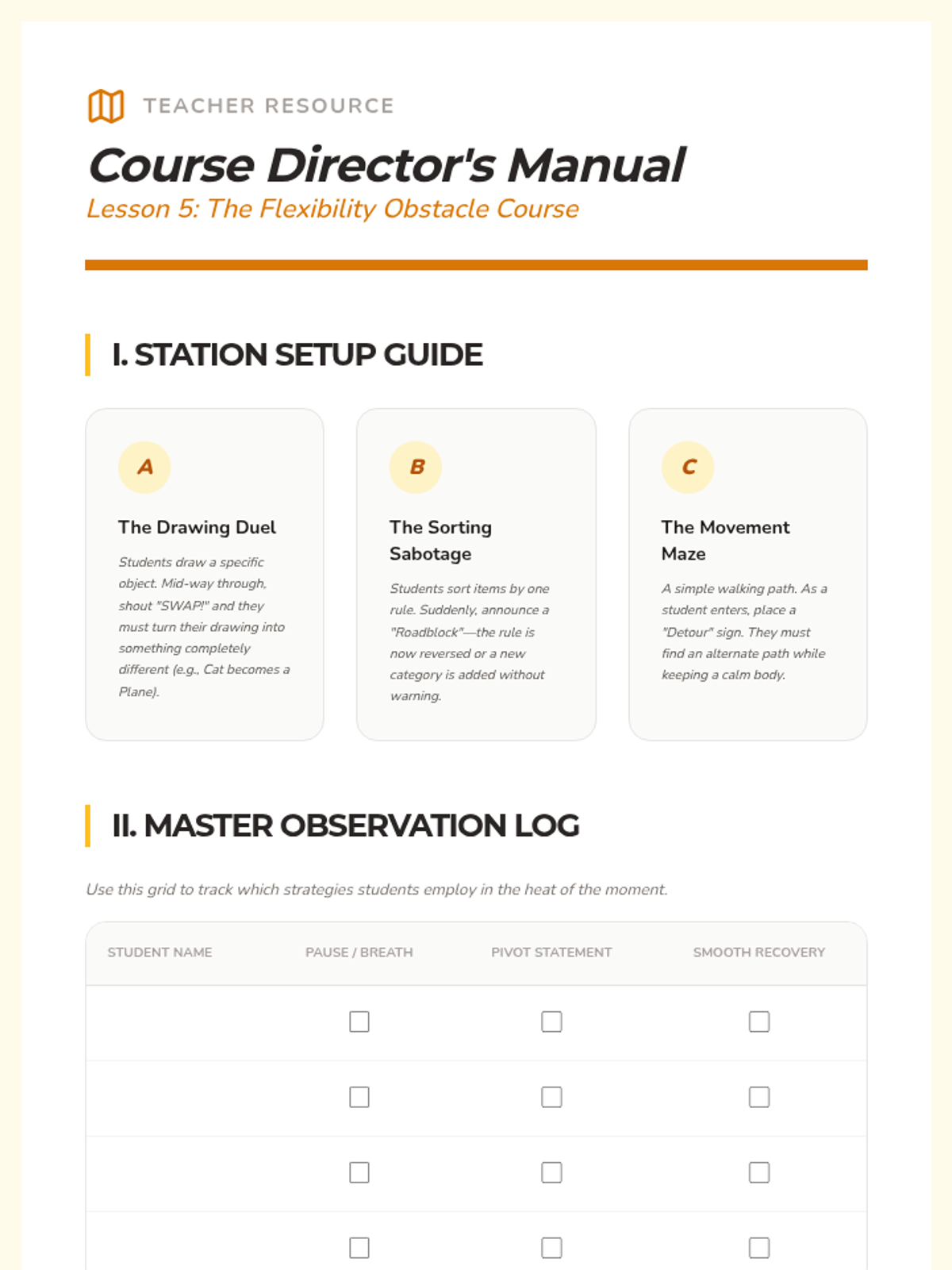
A culminating simulation where students navigate a physical or cognitive path that changes dynamically, requiring them to use all their flexibility tools.
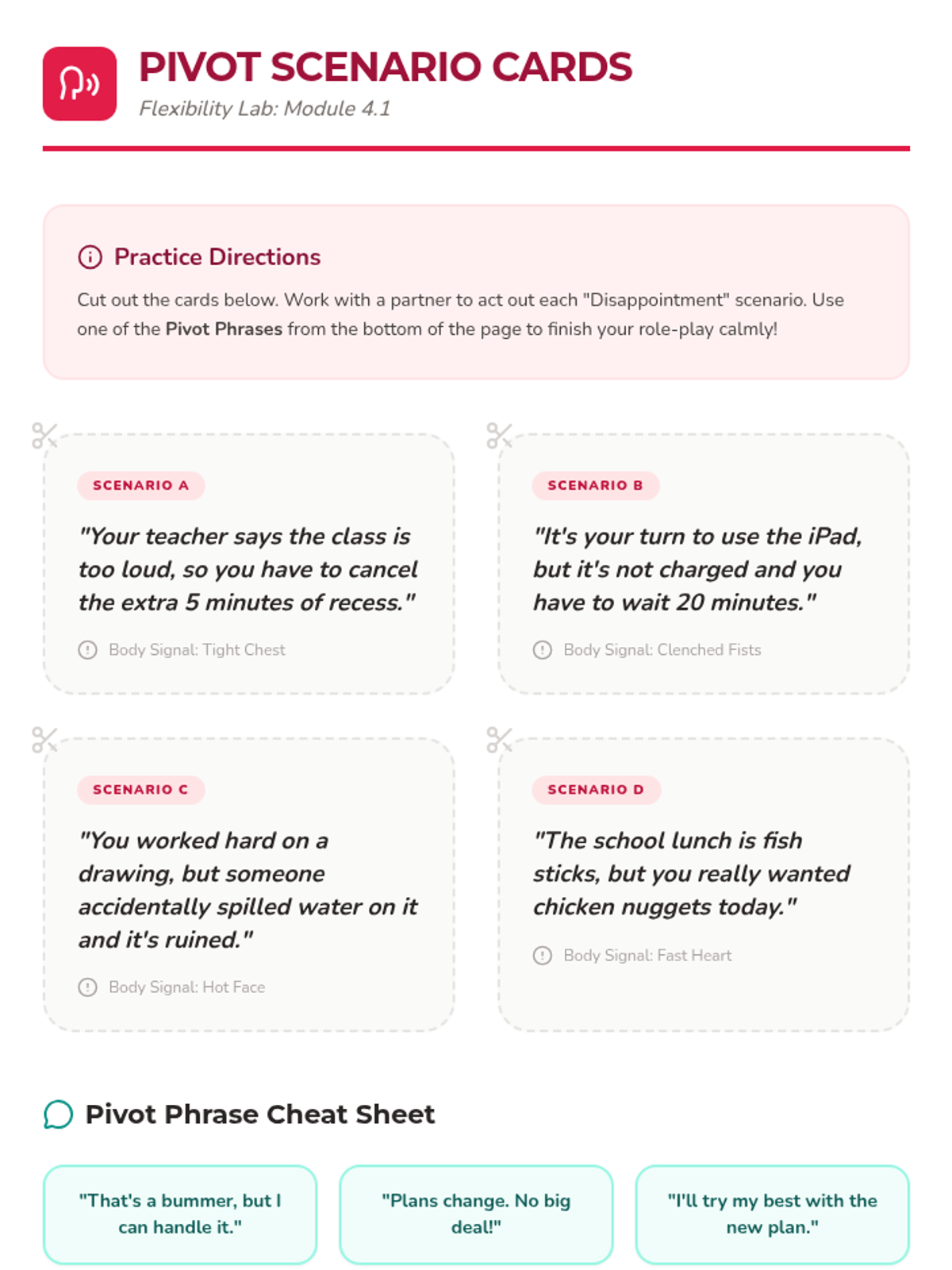
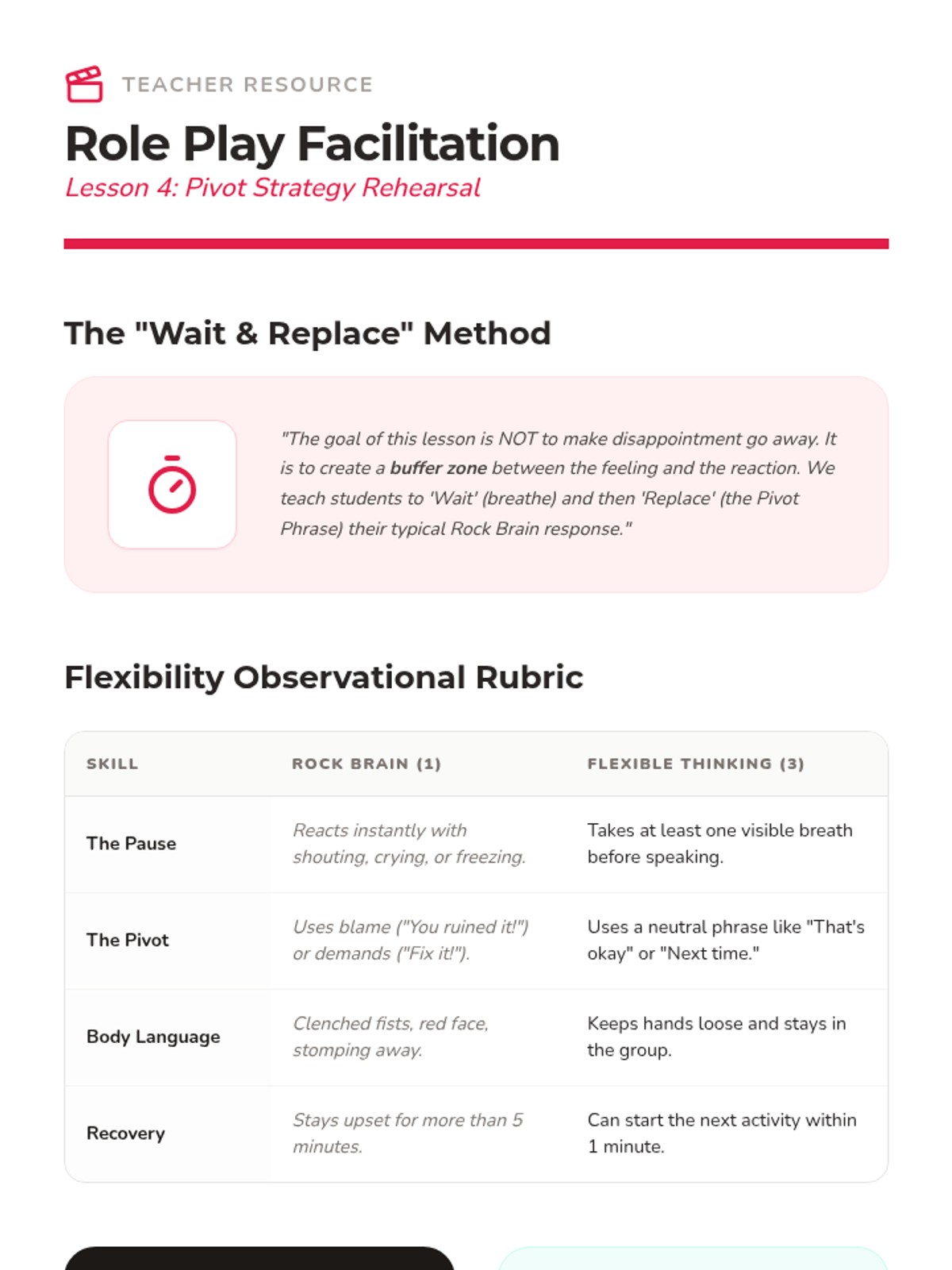
Students use scripts and role-play to practice calm reactions and neutral statements when faced with disappointing plan changes.
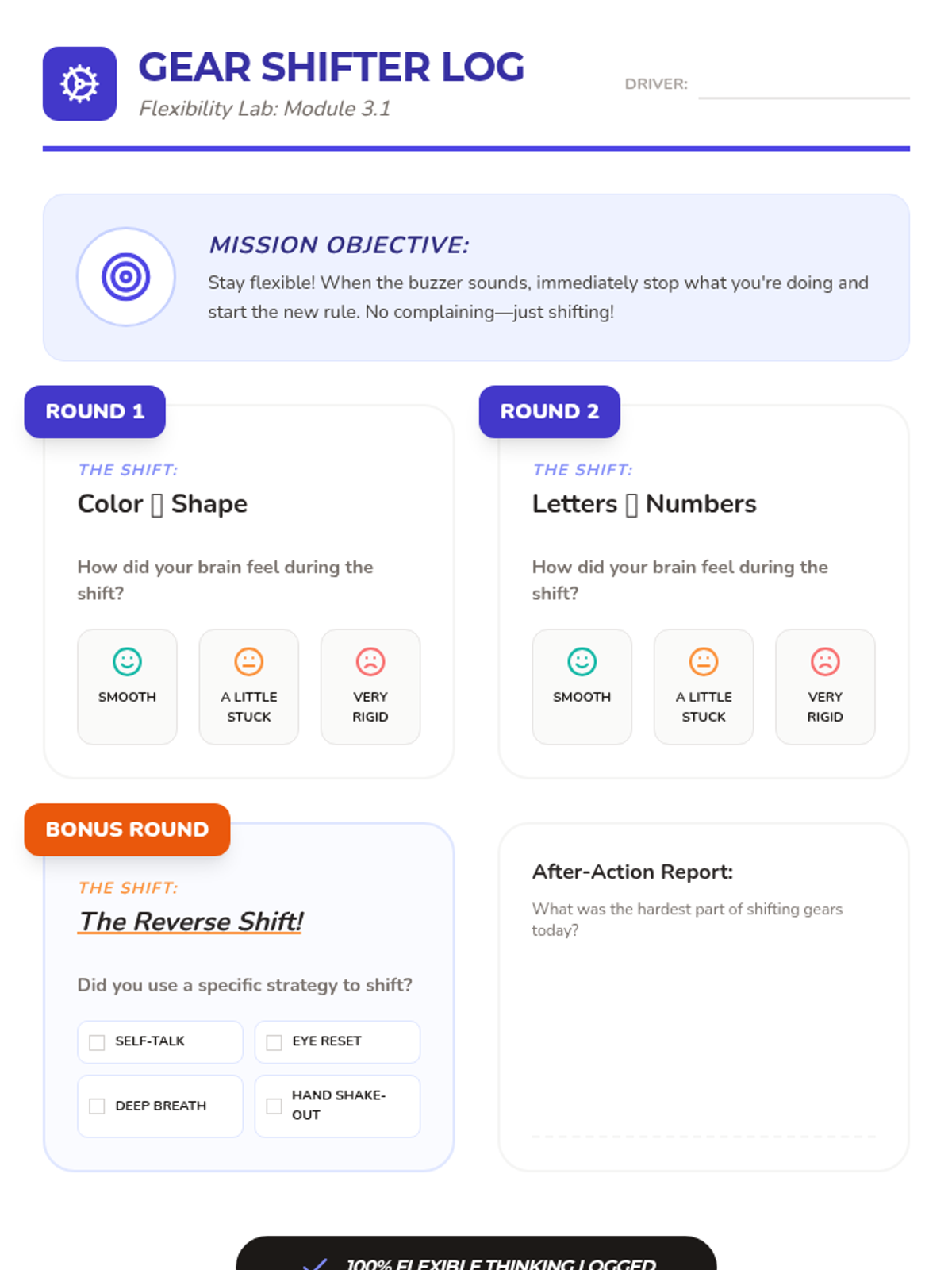
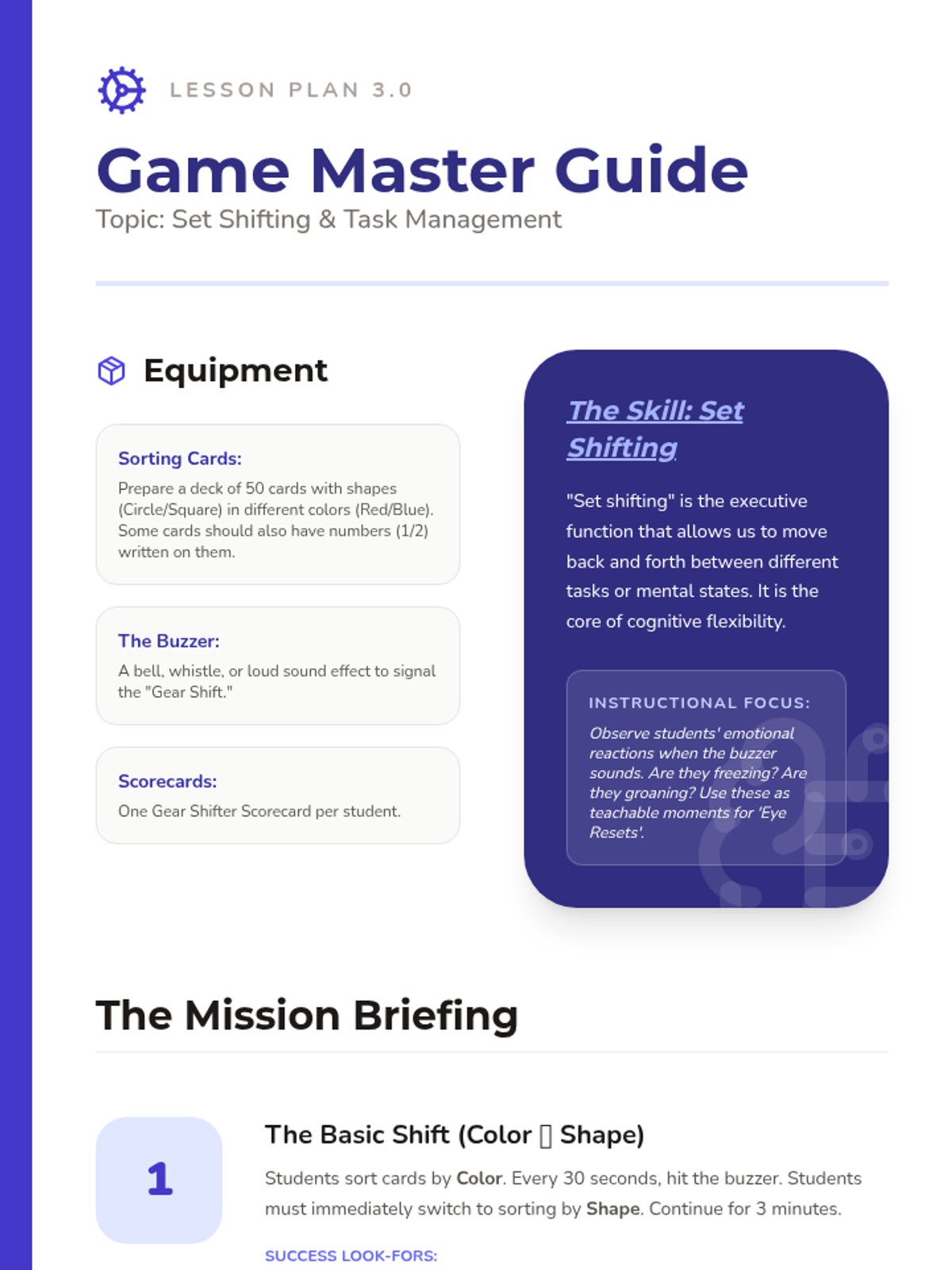
A fast-paced, game-based lesson where students practice 'set shifting' by rapidly switching between different tasks and rules.
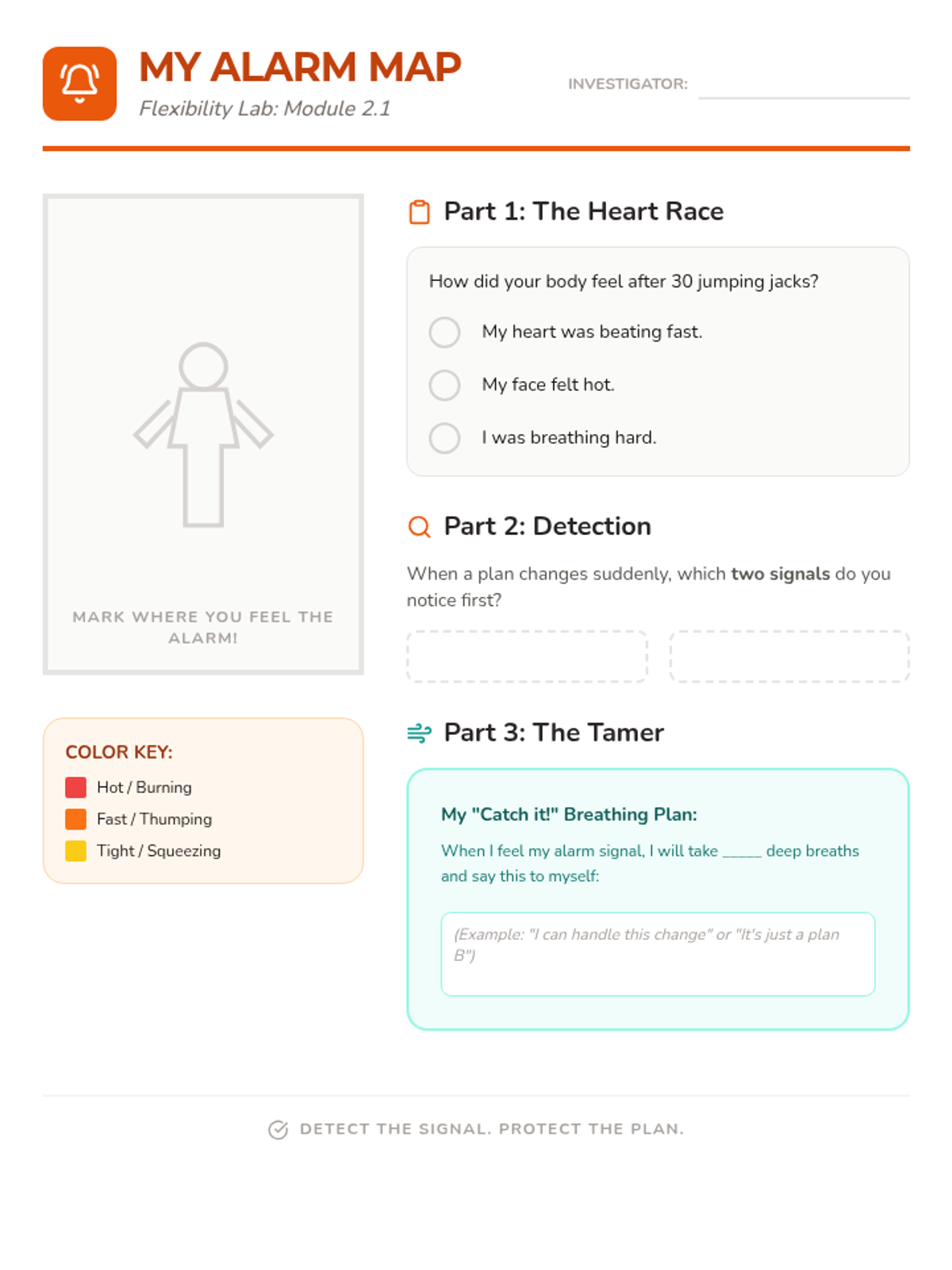
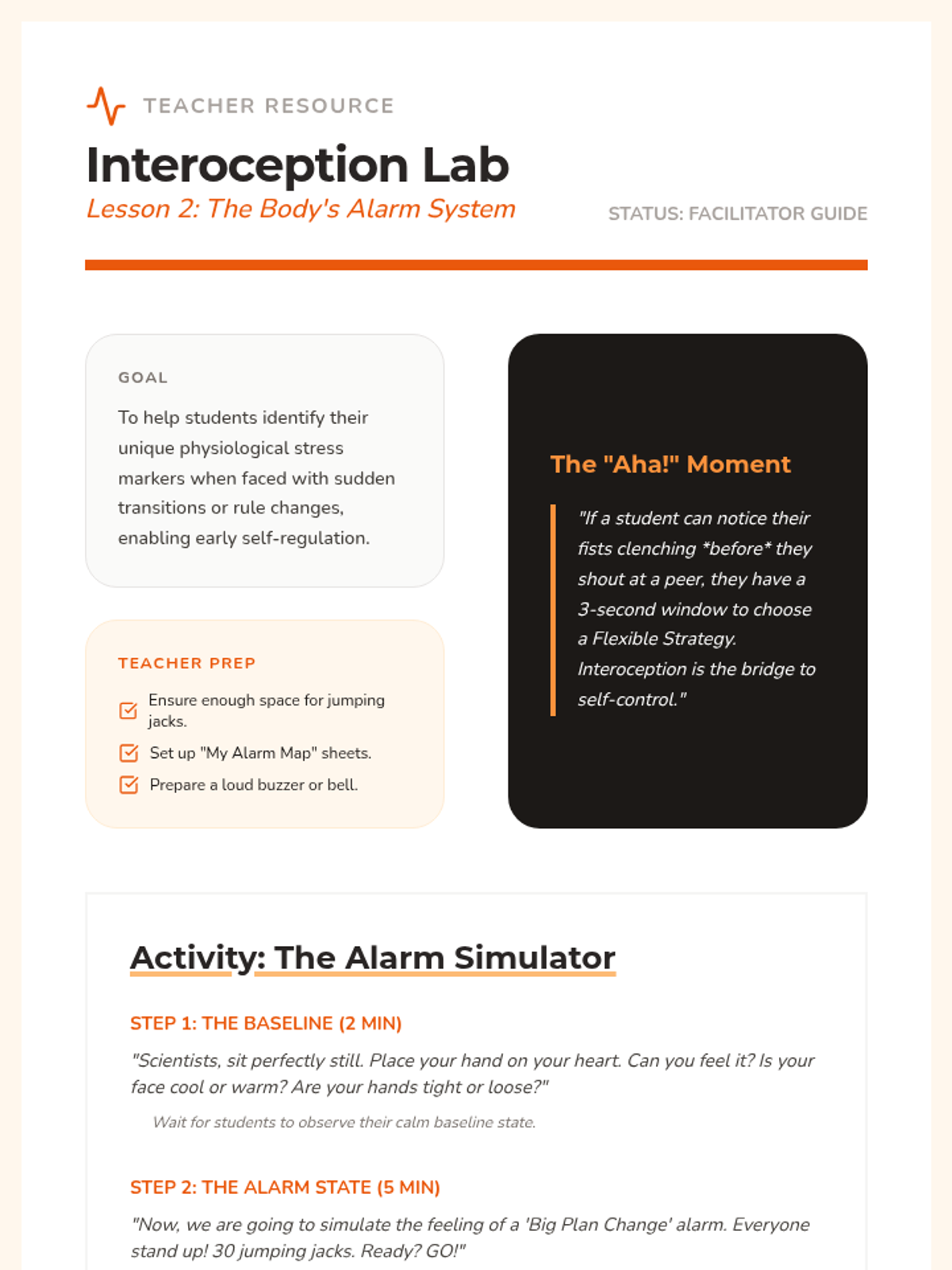
Focuses on interoception and identifying the body's physical warning signs when a routine is disrupted.
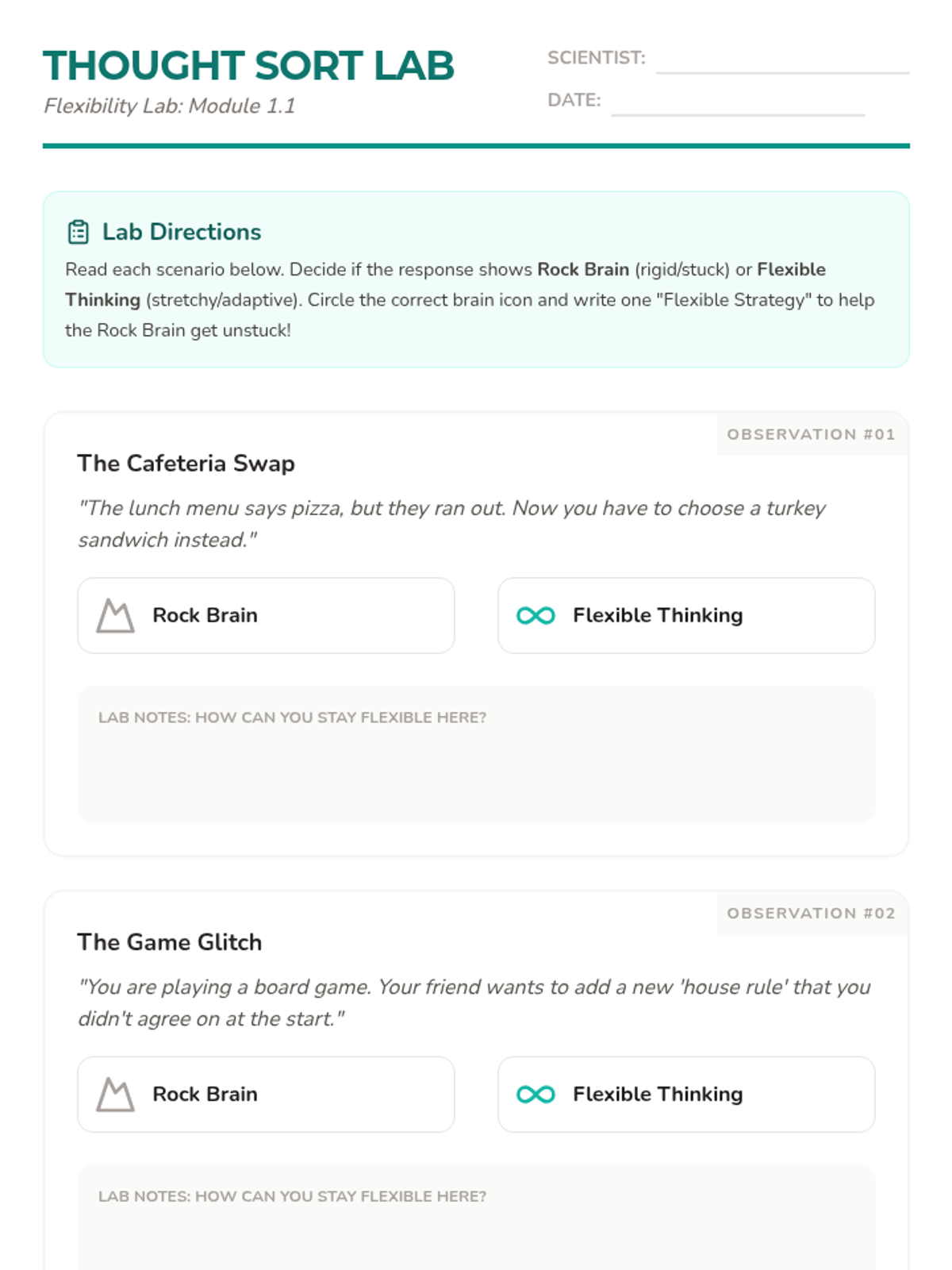
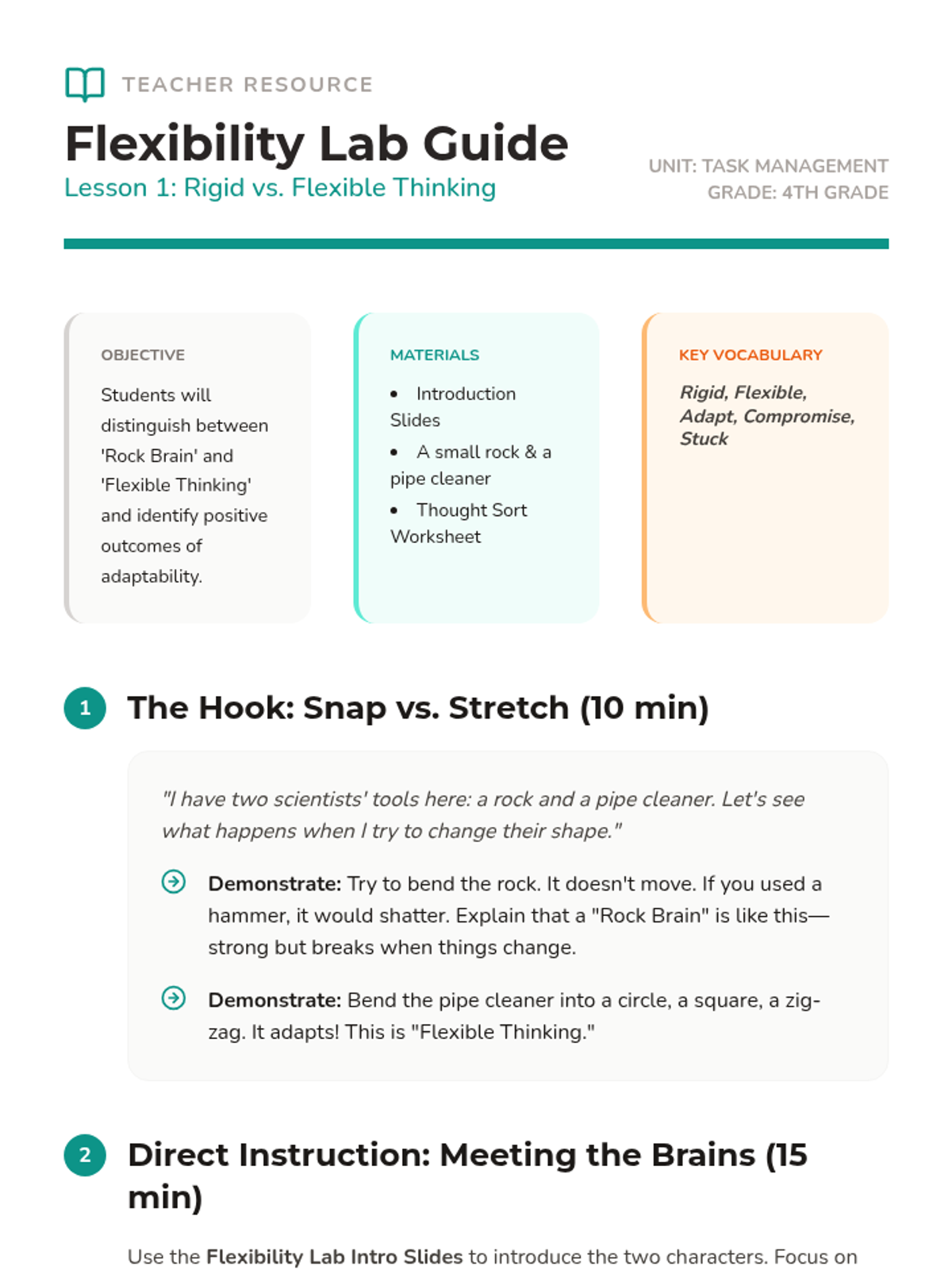
Students learn to distinguish between 'Rock Brain' (rigid thinking) and 'Rubber Band' (flexible thinking) through hands-on metaphors and scenario analysis.
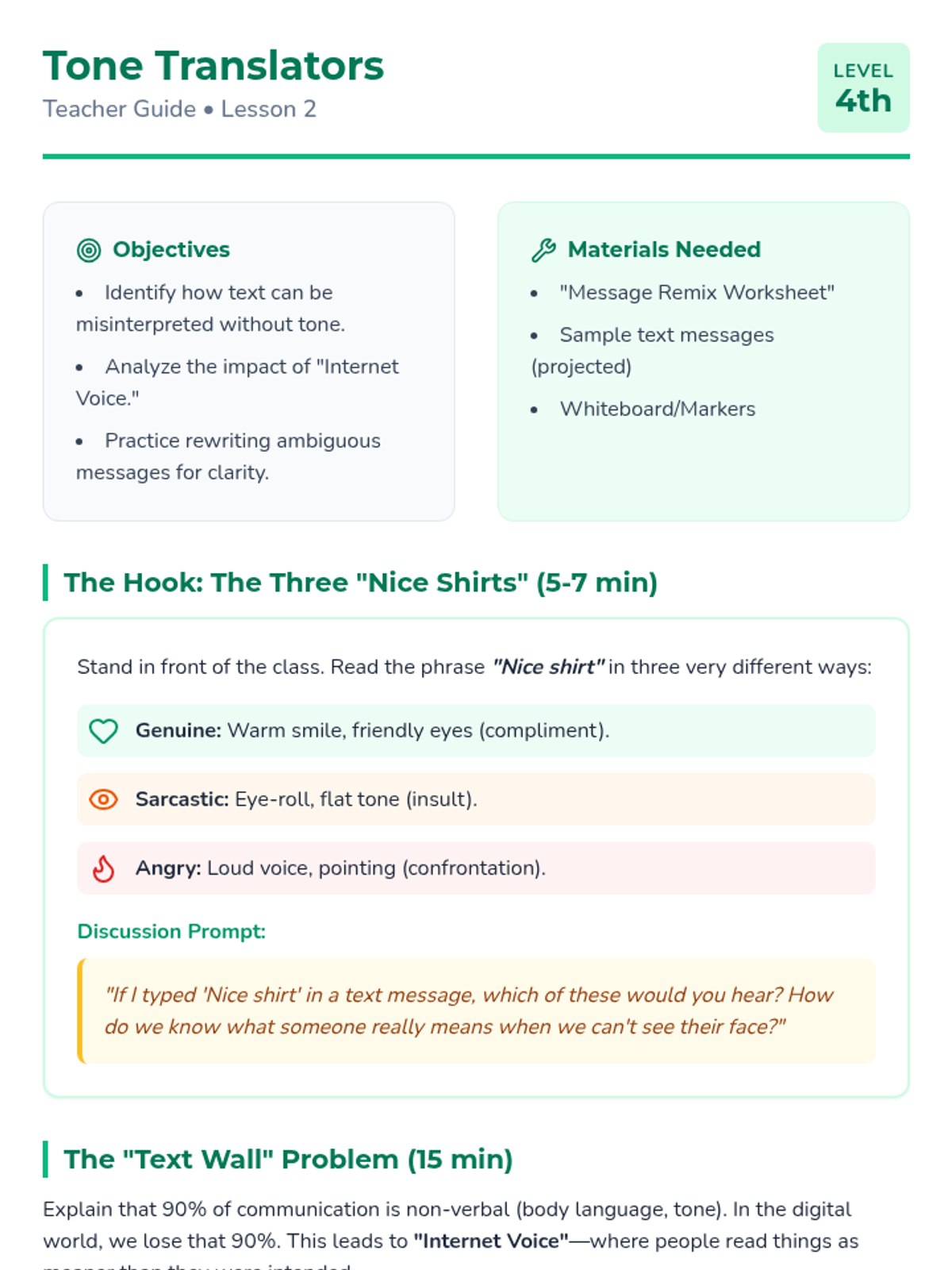
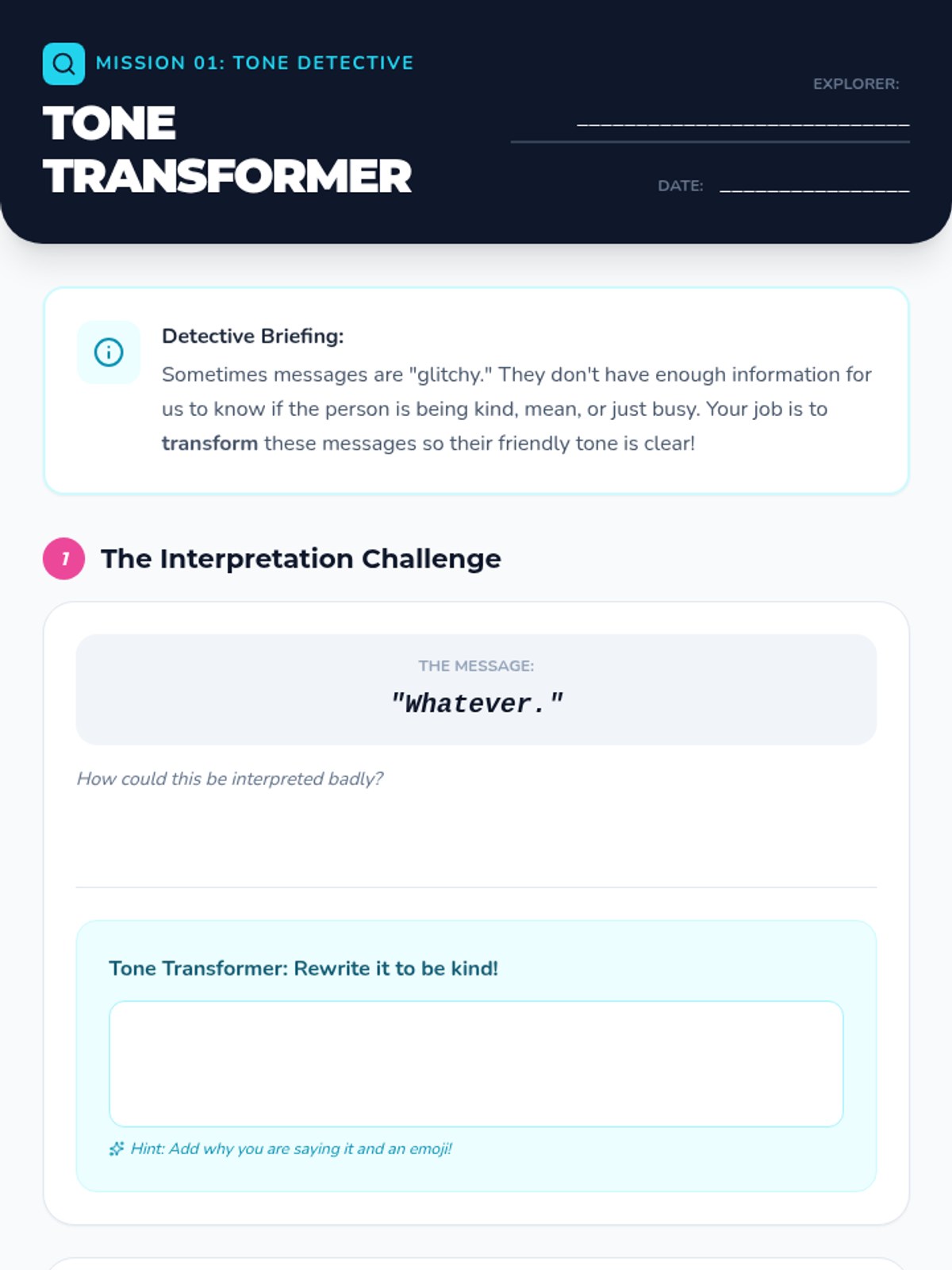
Students analyze how the absence of facial expressions and voice tone can lead to misunderstandings in text messages. They rewrite ambiguous messages to make them clearer and kinder.
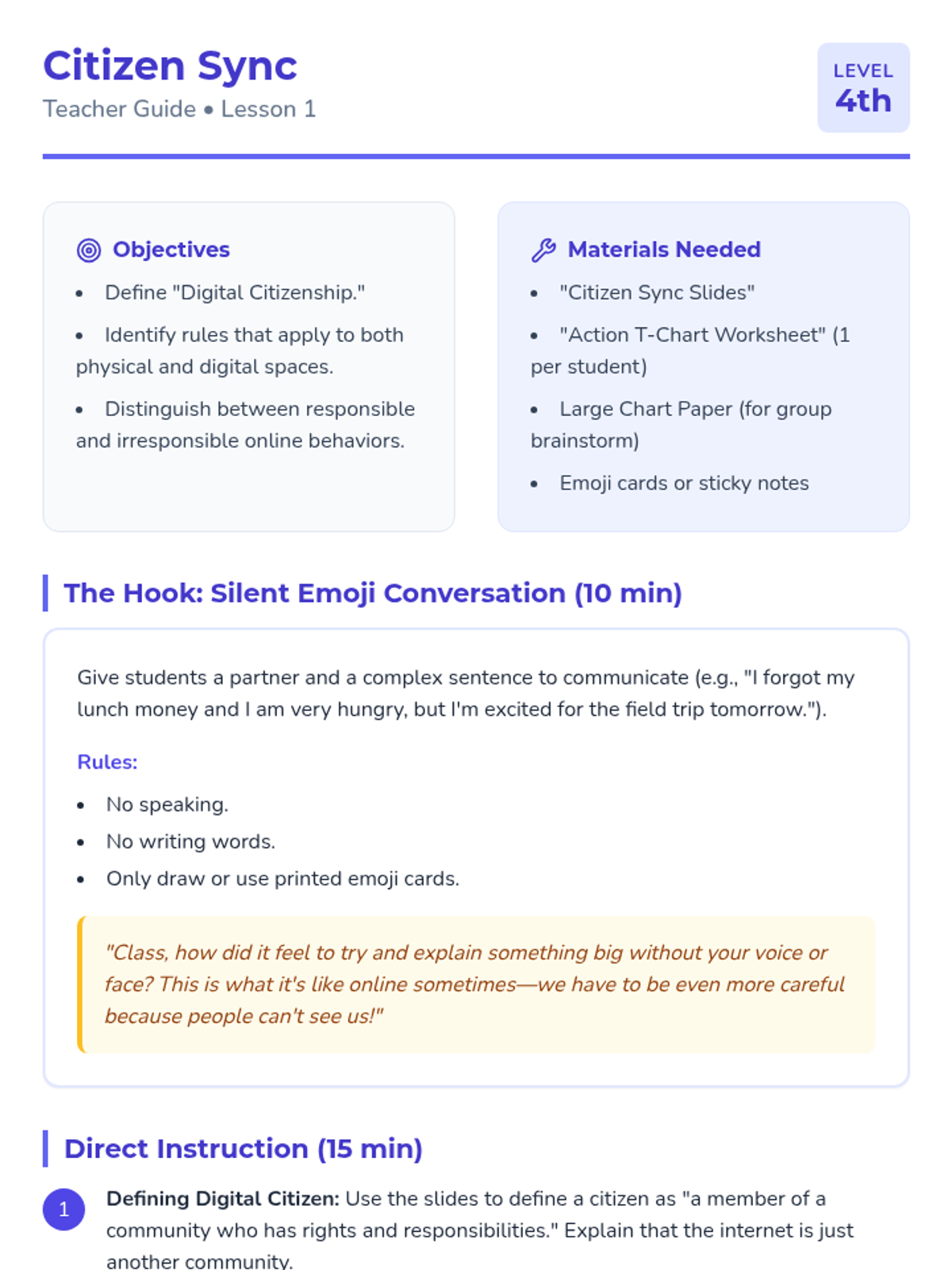
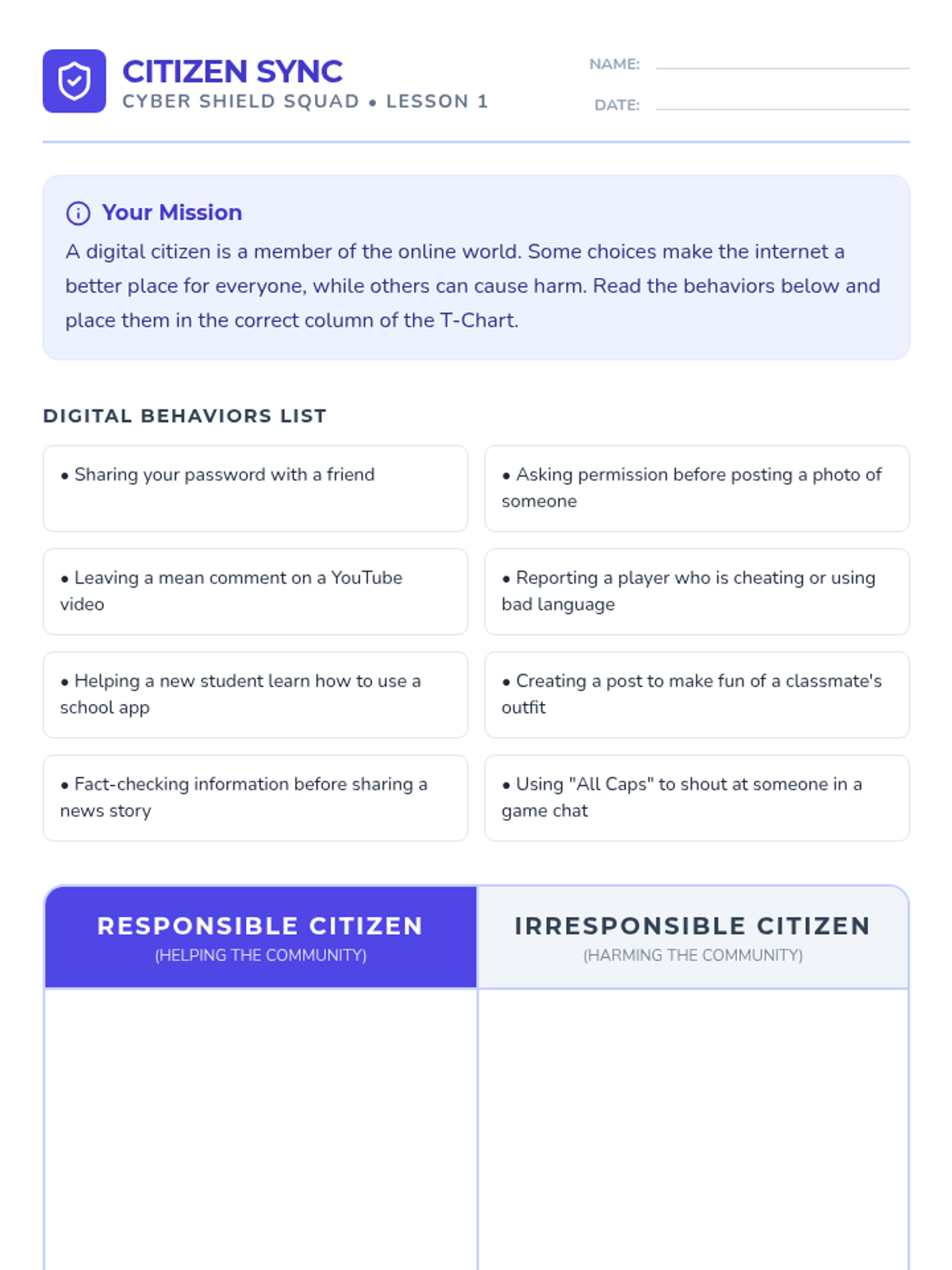
Students explore the concept of a 'digital citizen' and compare rules of the physical classroom to rules of the internet. They collaborate to create a T-chart of responsible vs. irresponsible online behaviors.
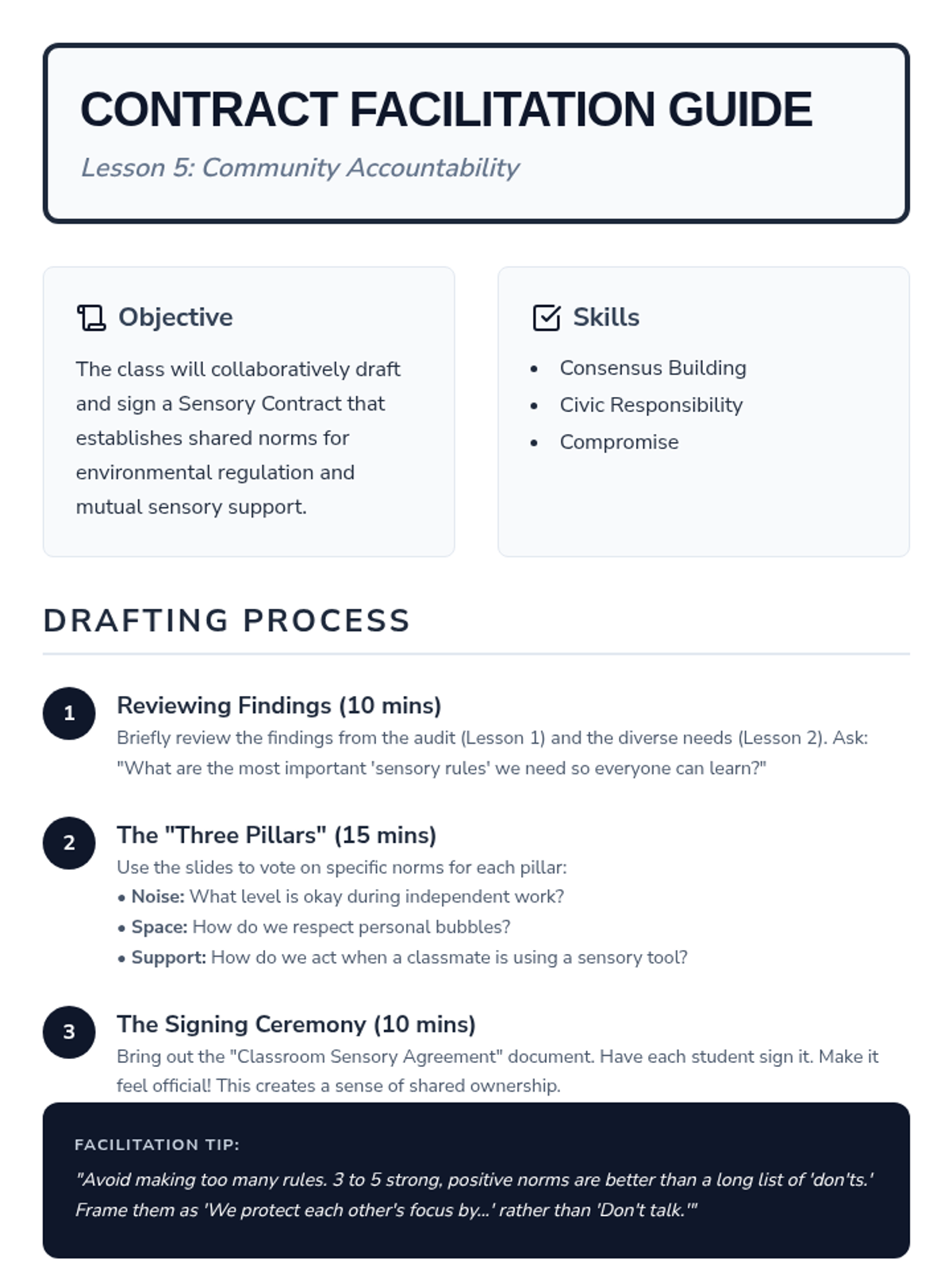
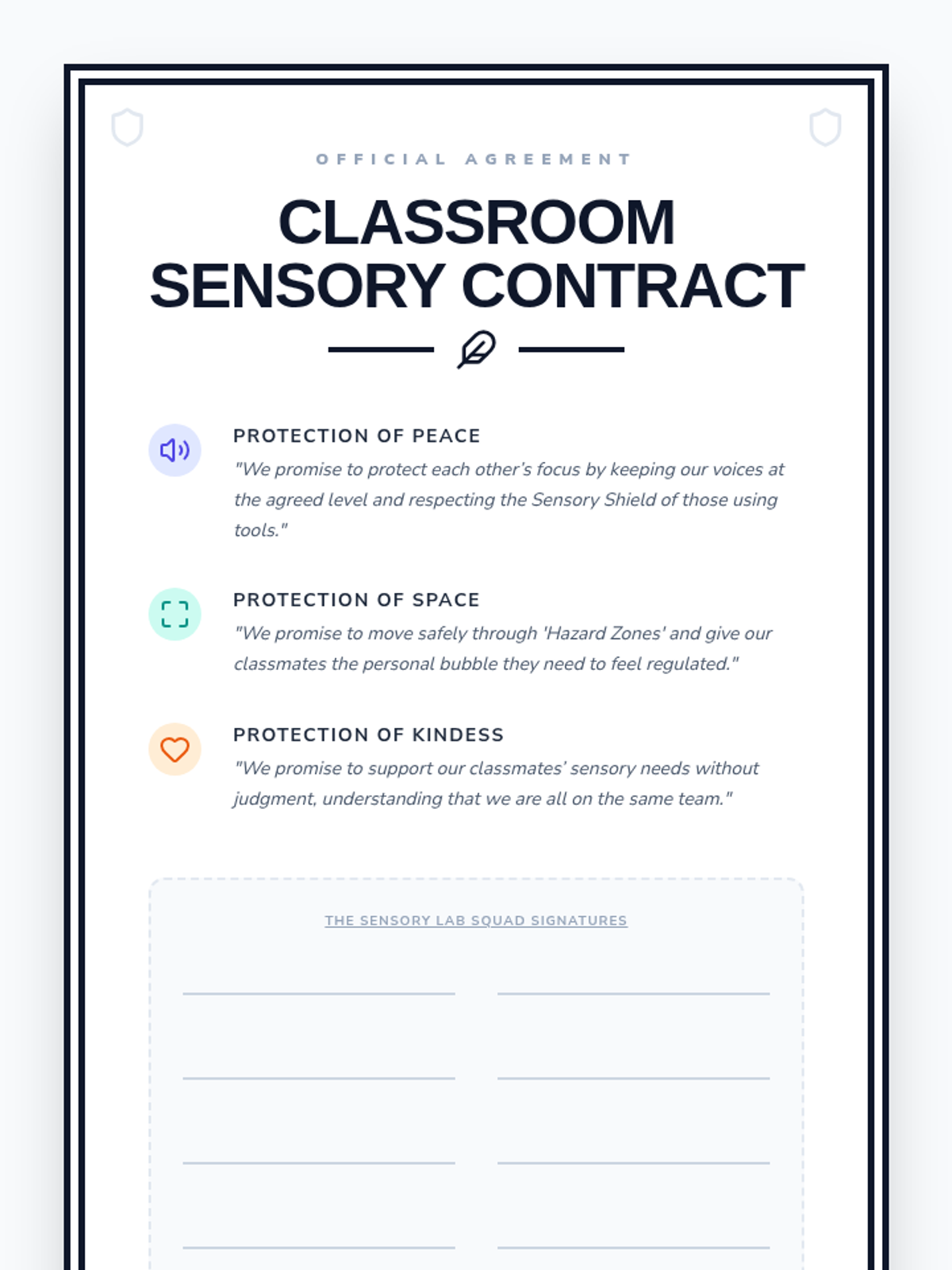
The sequence culminates in the creation of a shared classroom agreement that establishes norms for noise, space, and sensory support.
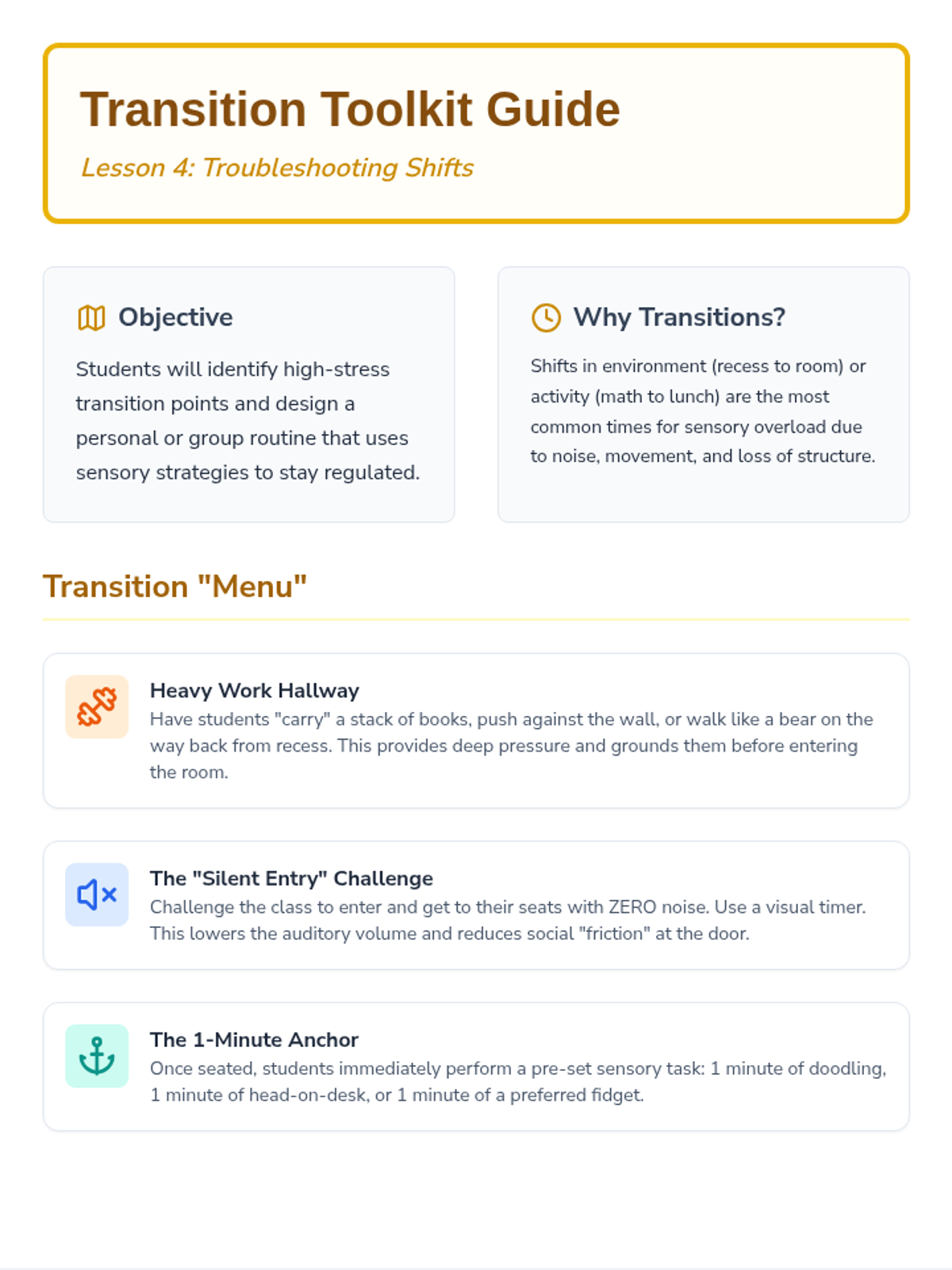
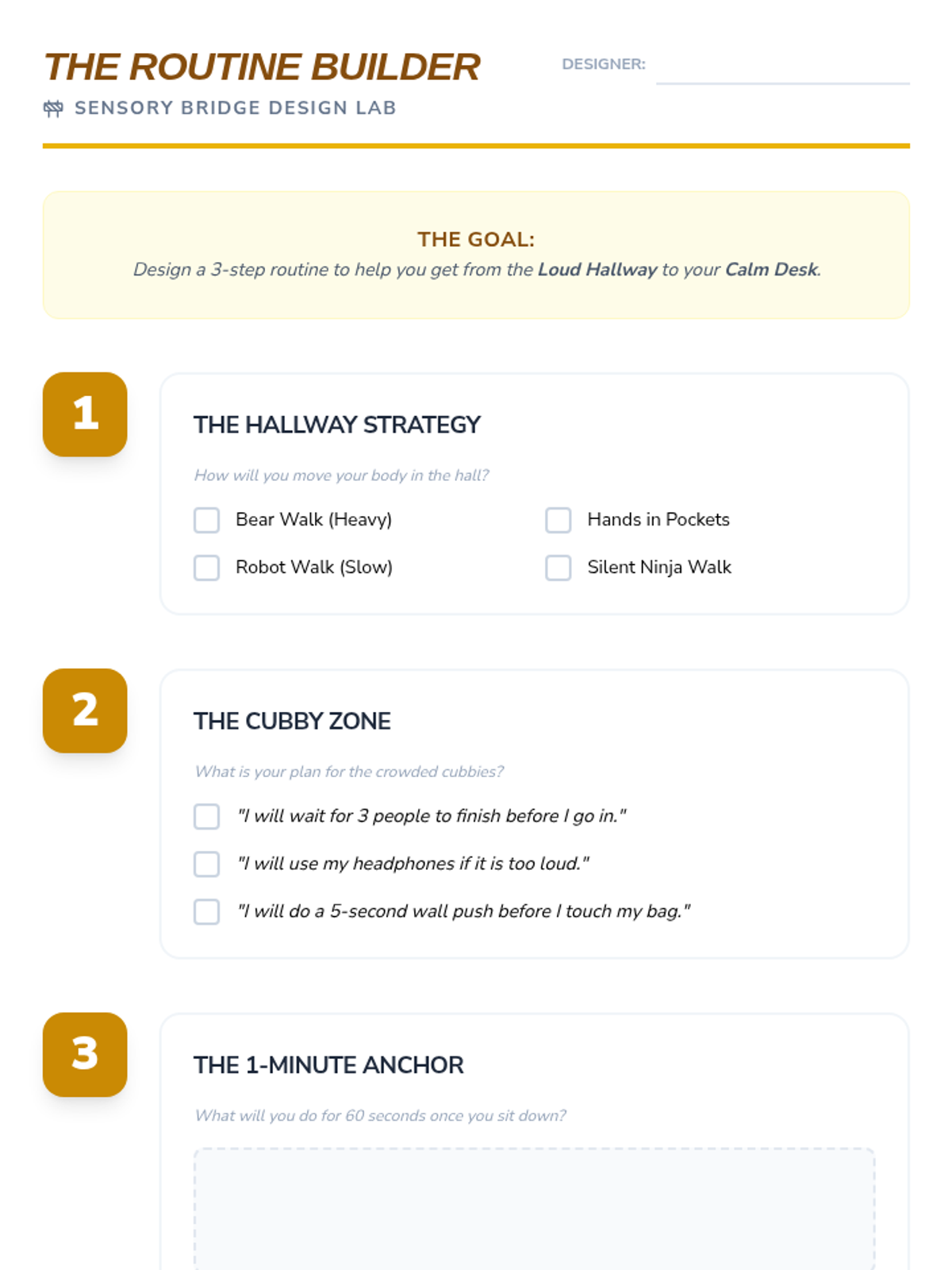
Students identify high-stress transition times and brainstorm proactive routines to maintain sensory regulation when moving between activities.
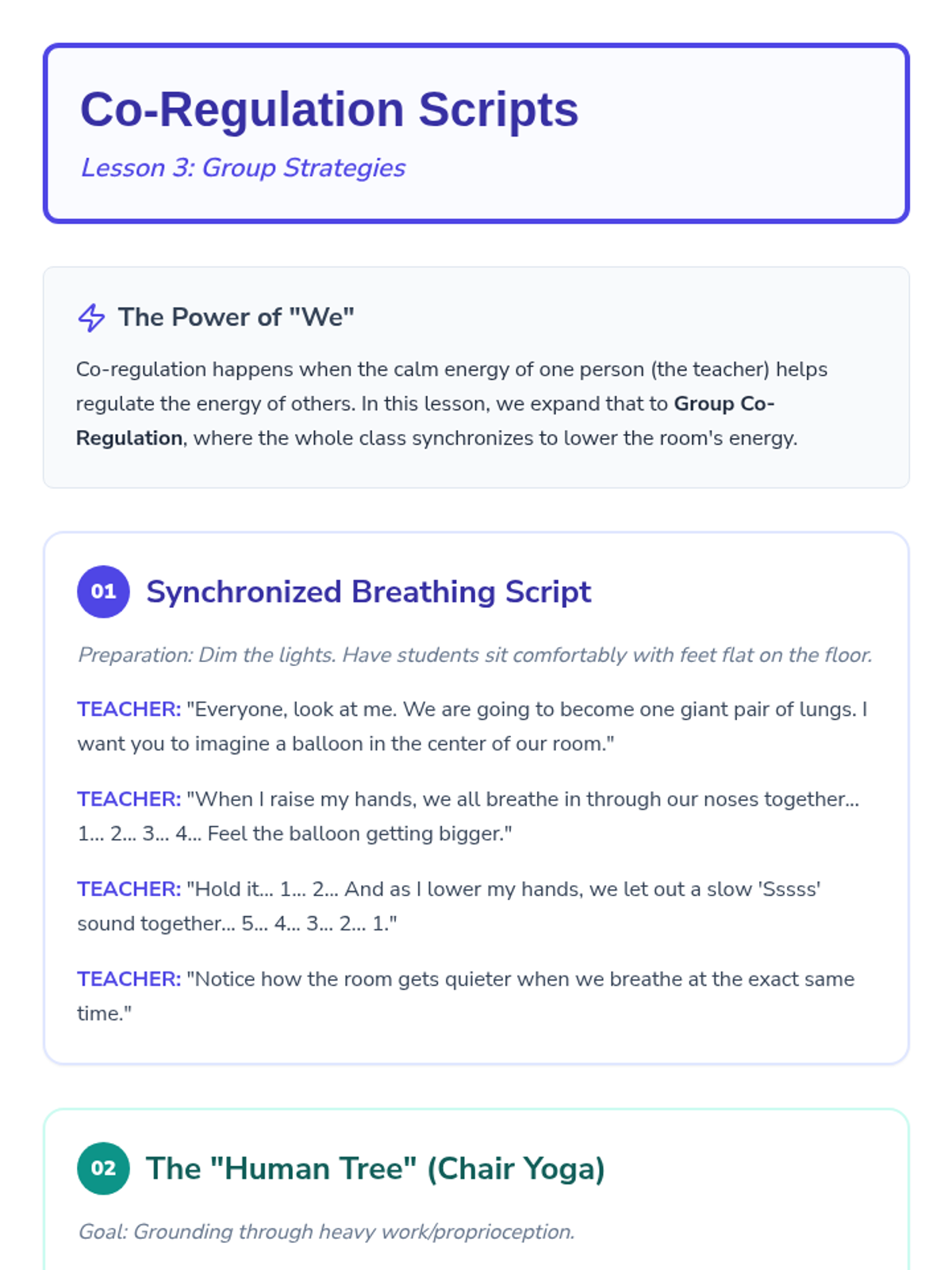
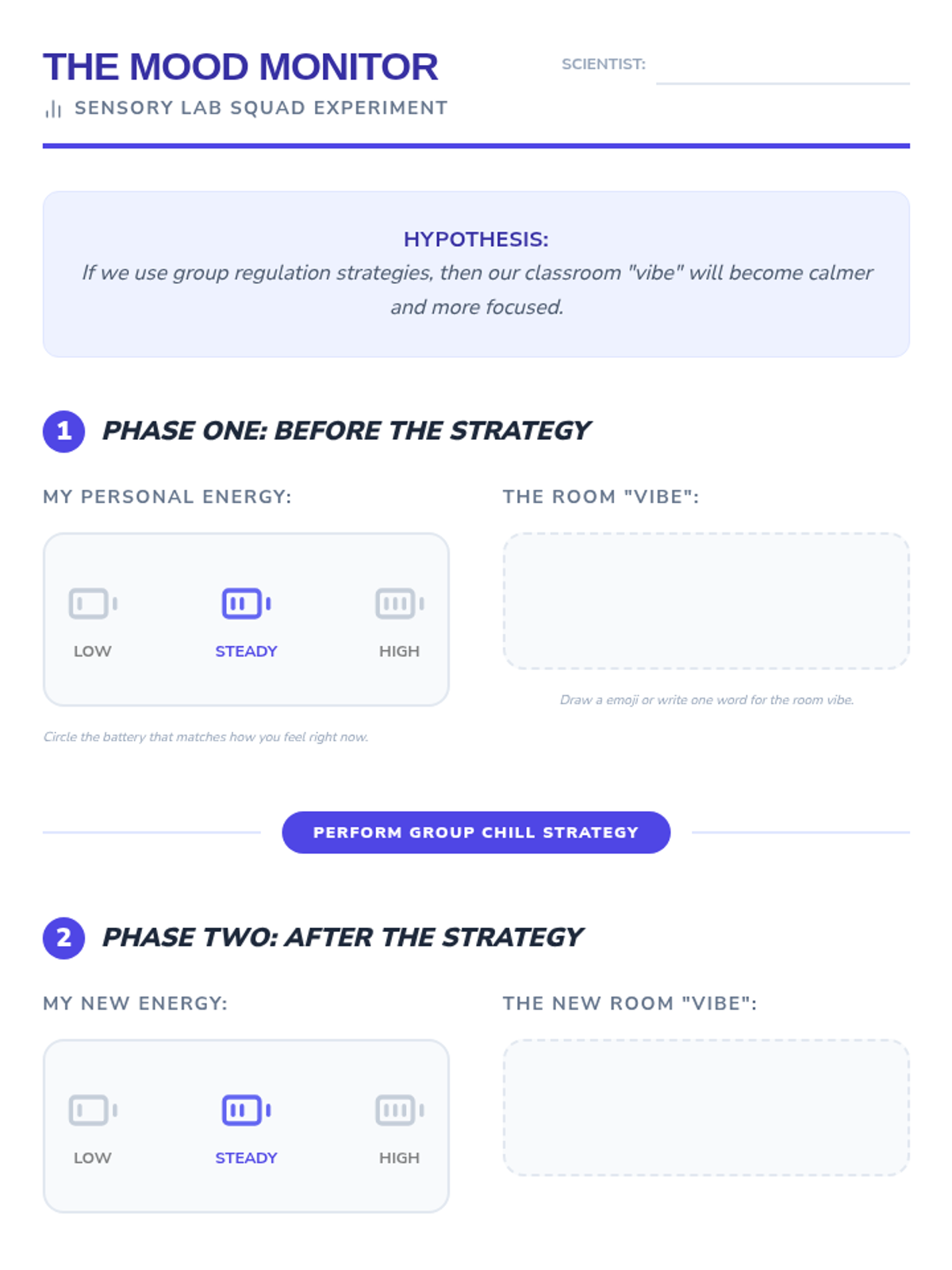
The class practices whole-group regulation techniques like synchronized breathing and chair yoga to understand how collective action affects the energy of the room.
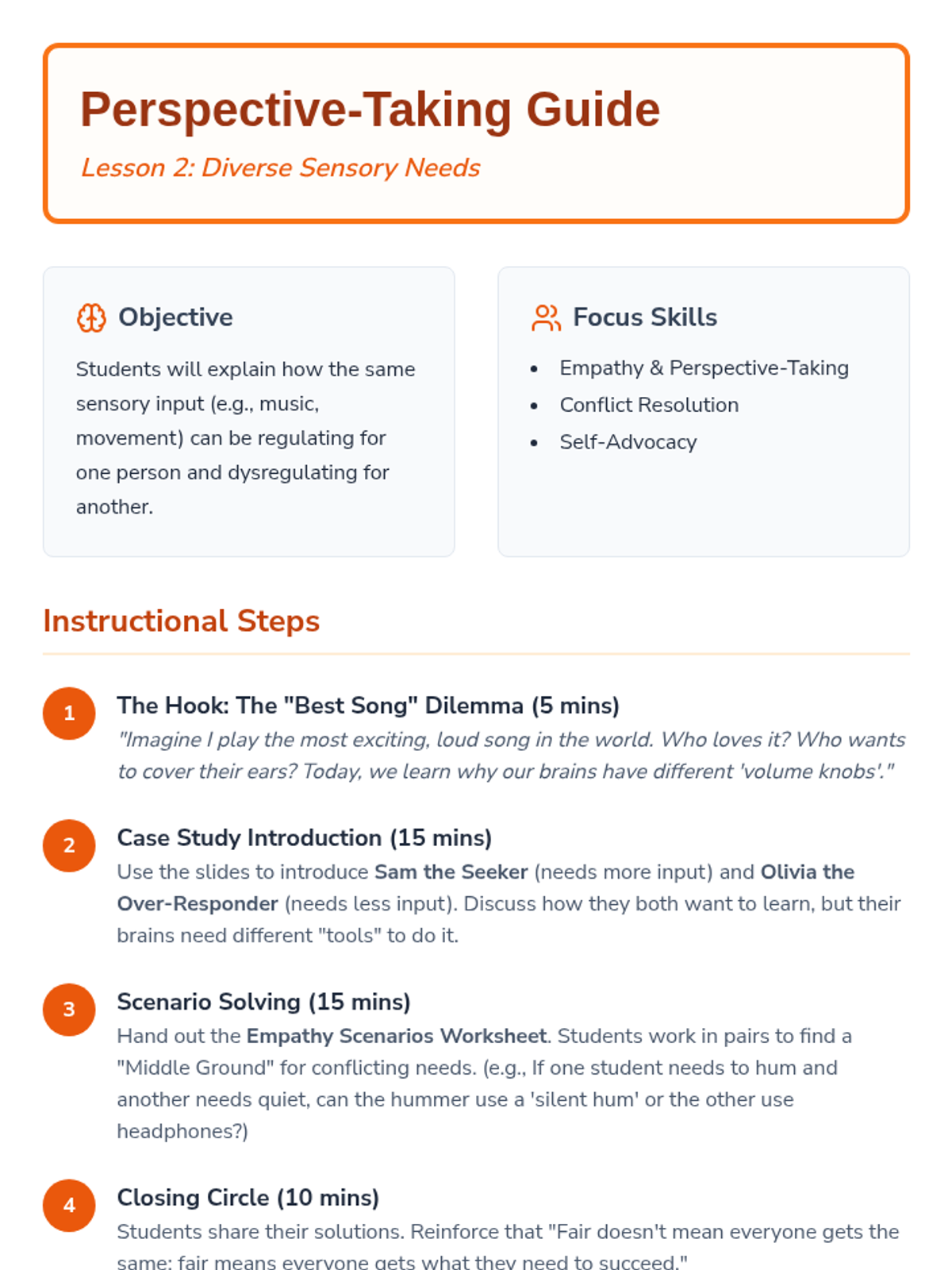
Students explore how sensory preferences vary between individuals and practice perspective-taking to understand and respect classmates' different needs.
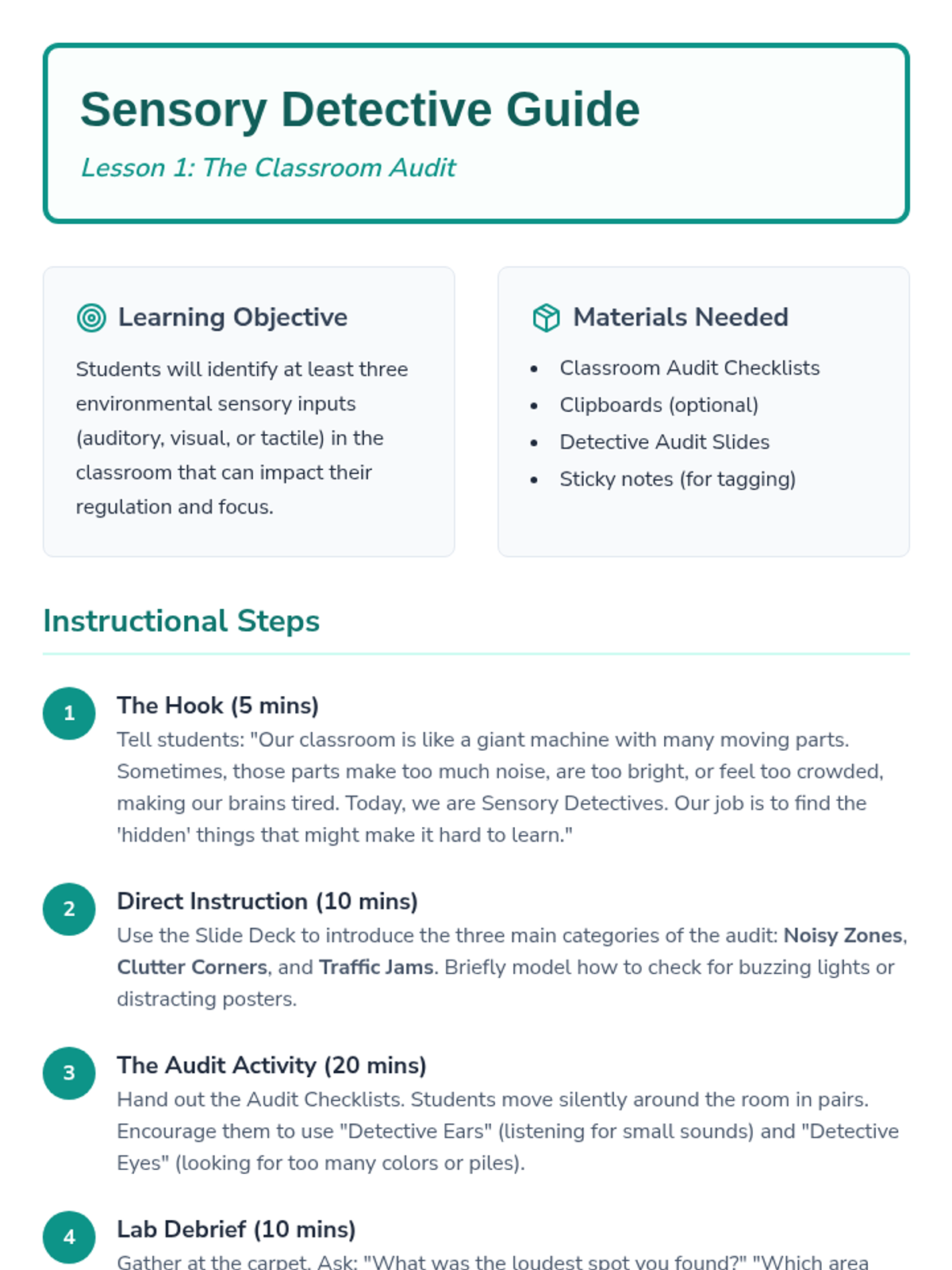
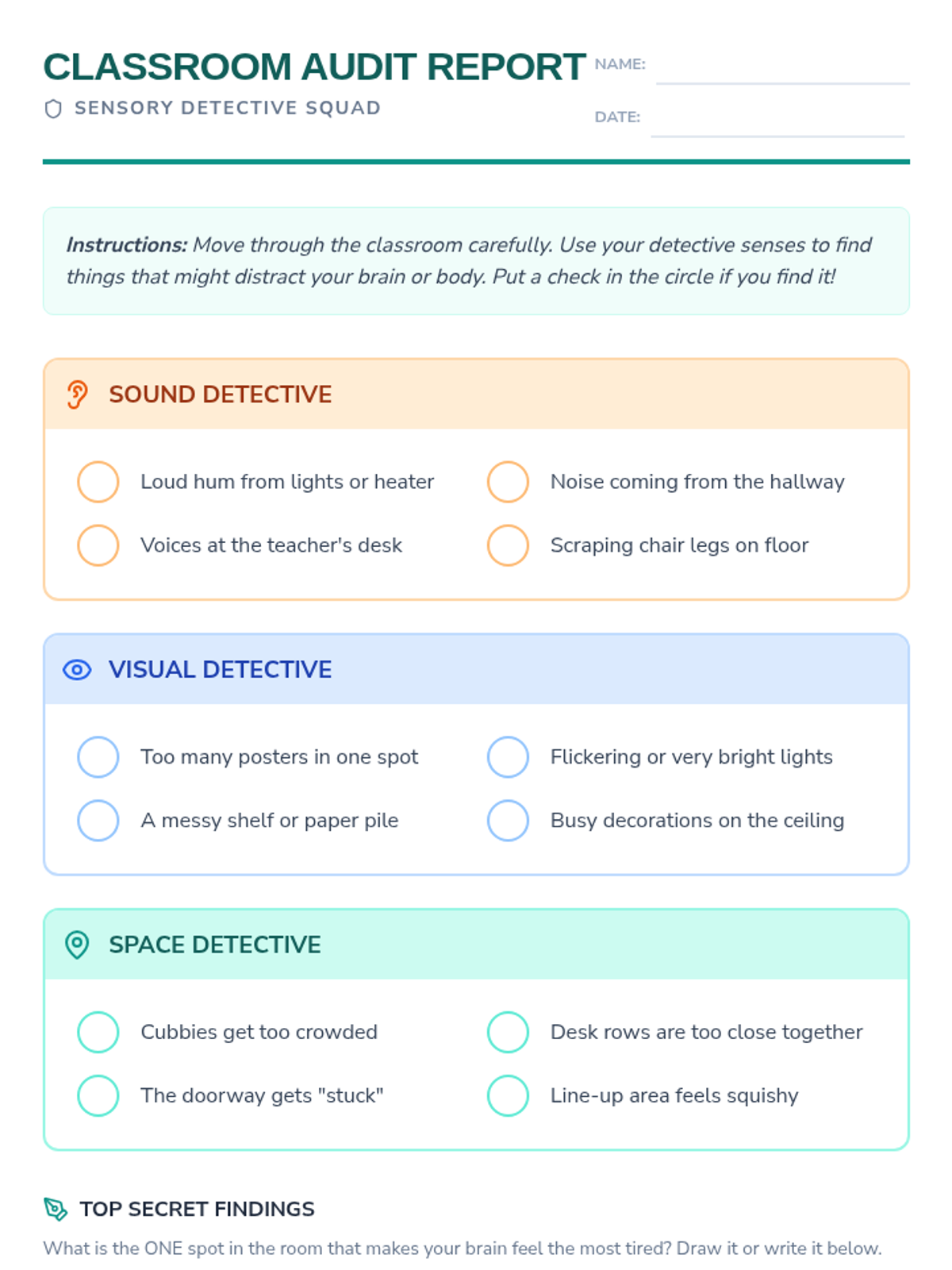
Students conduct a hands-on audit of their classroom to identify environmental sensory triggers and discuss how these factors impact their ability to focus and stay calm.
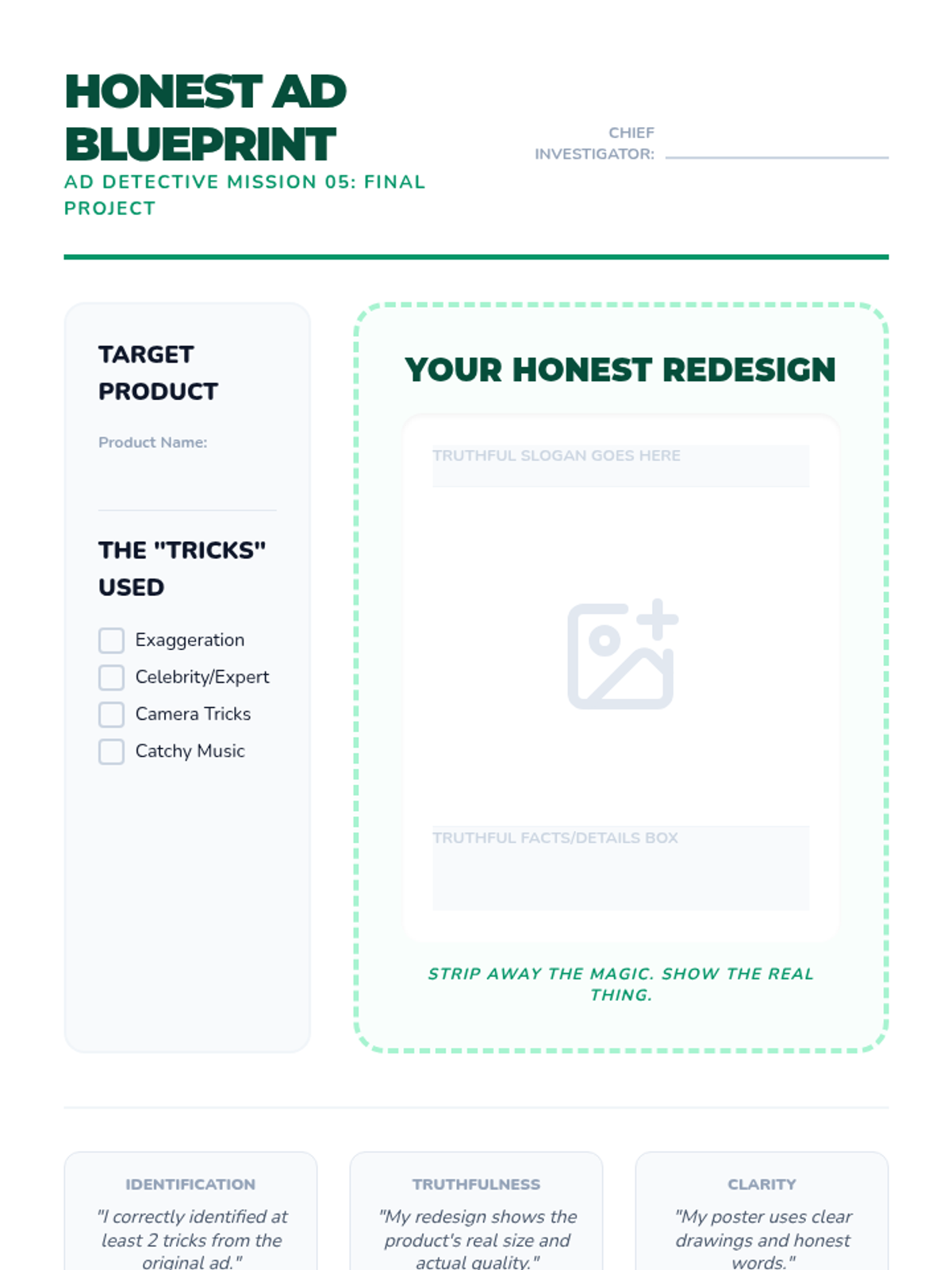
In this culminating project, students redesign misleading advertisements to be truthful, demonstrating their understanding of marketing influence.
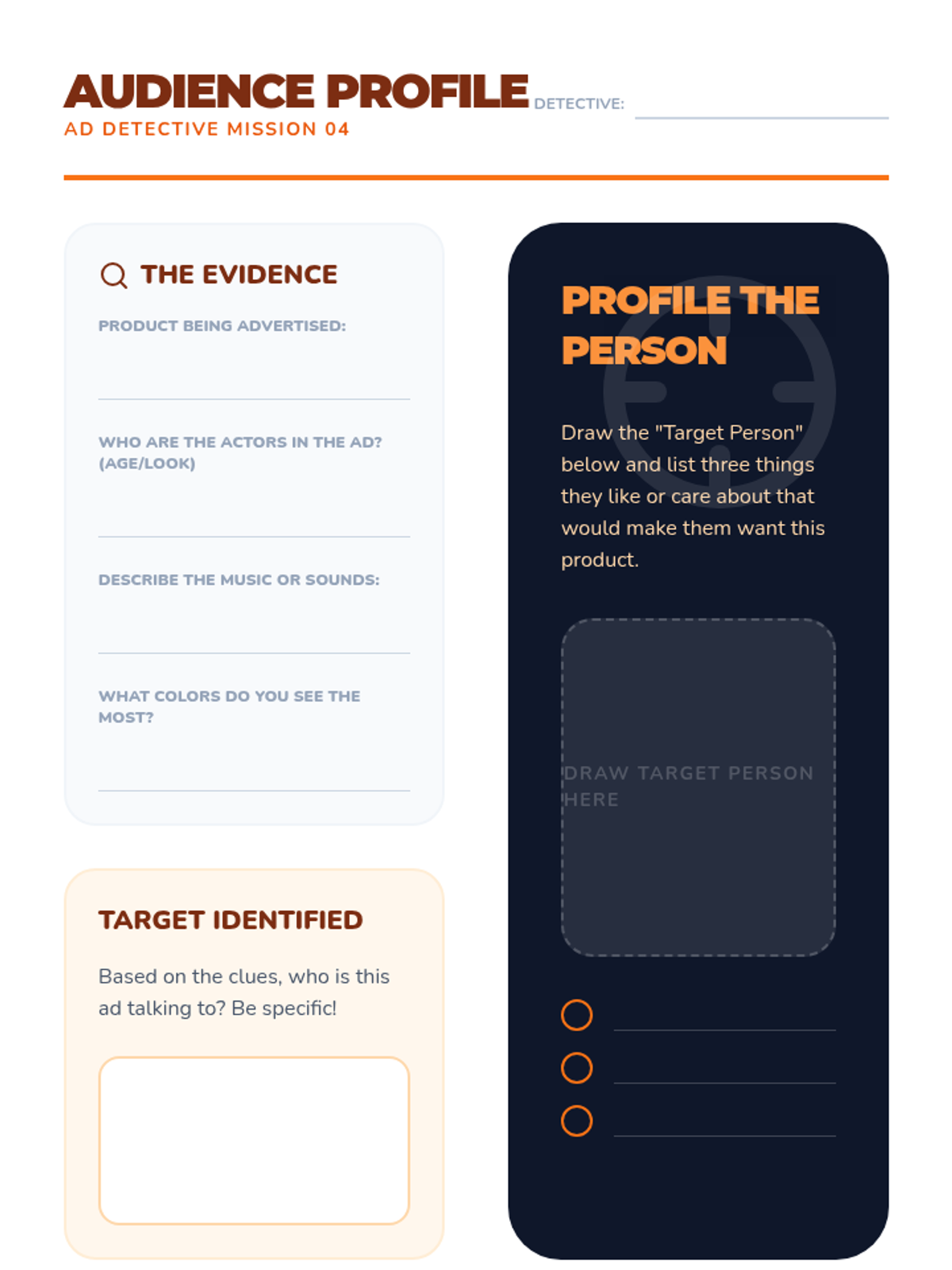
Students identify how advertisements are tailored to specific groups based on age, interests, and needs.
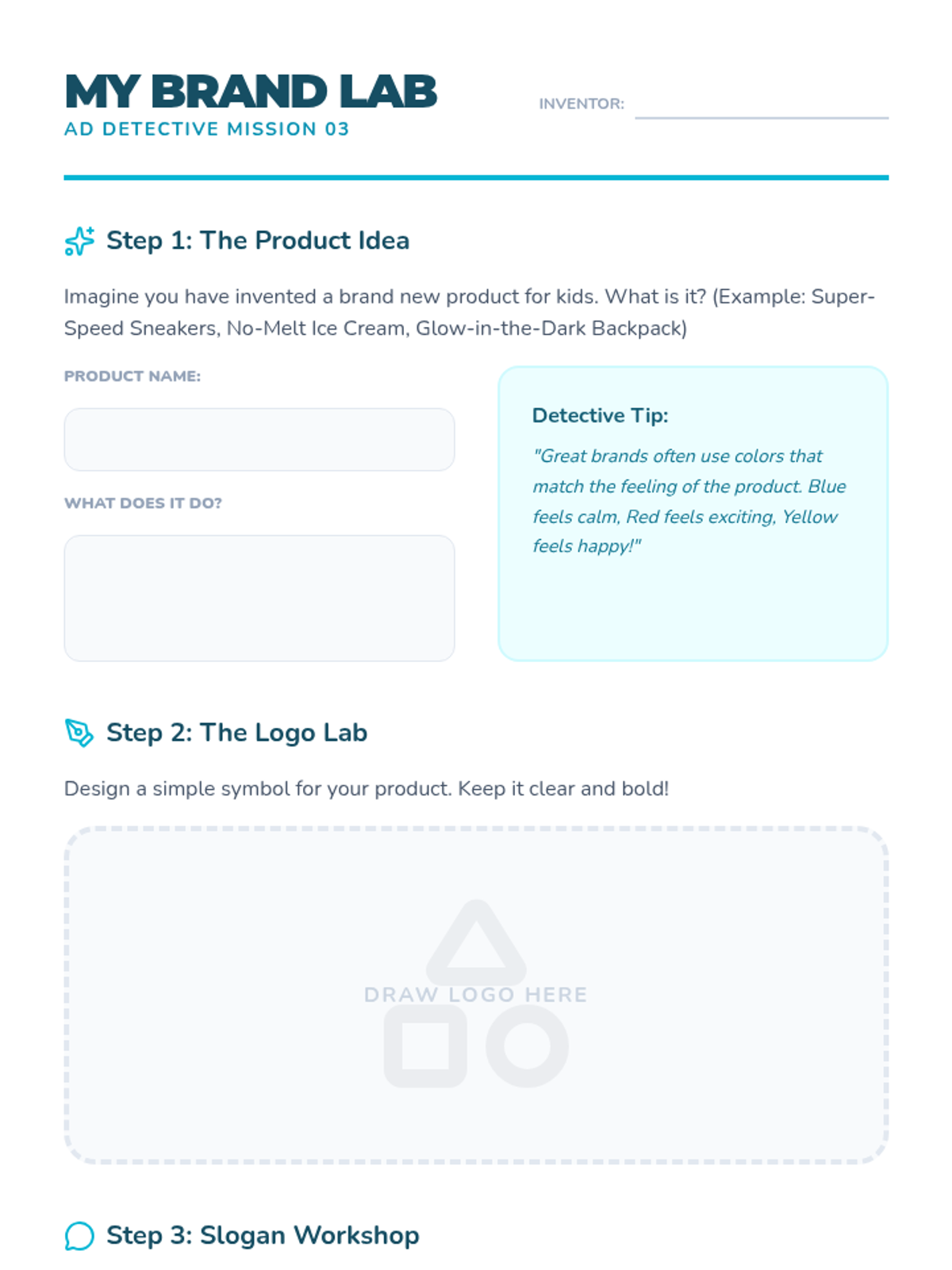
Students explore how brands use catchy slogans and memorable logos to create brand loyalty and recognition.
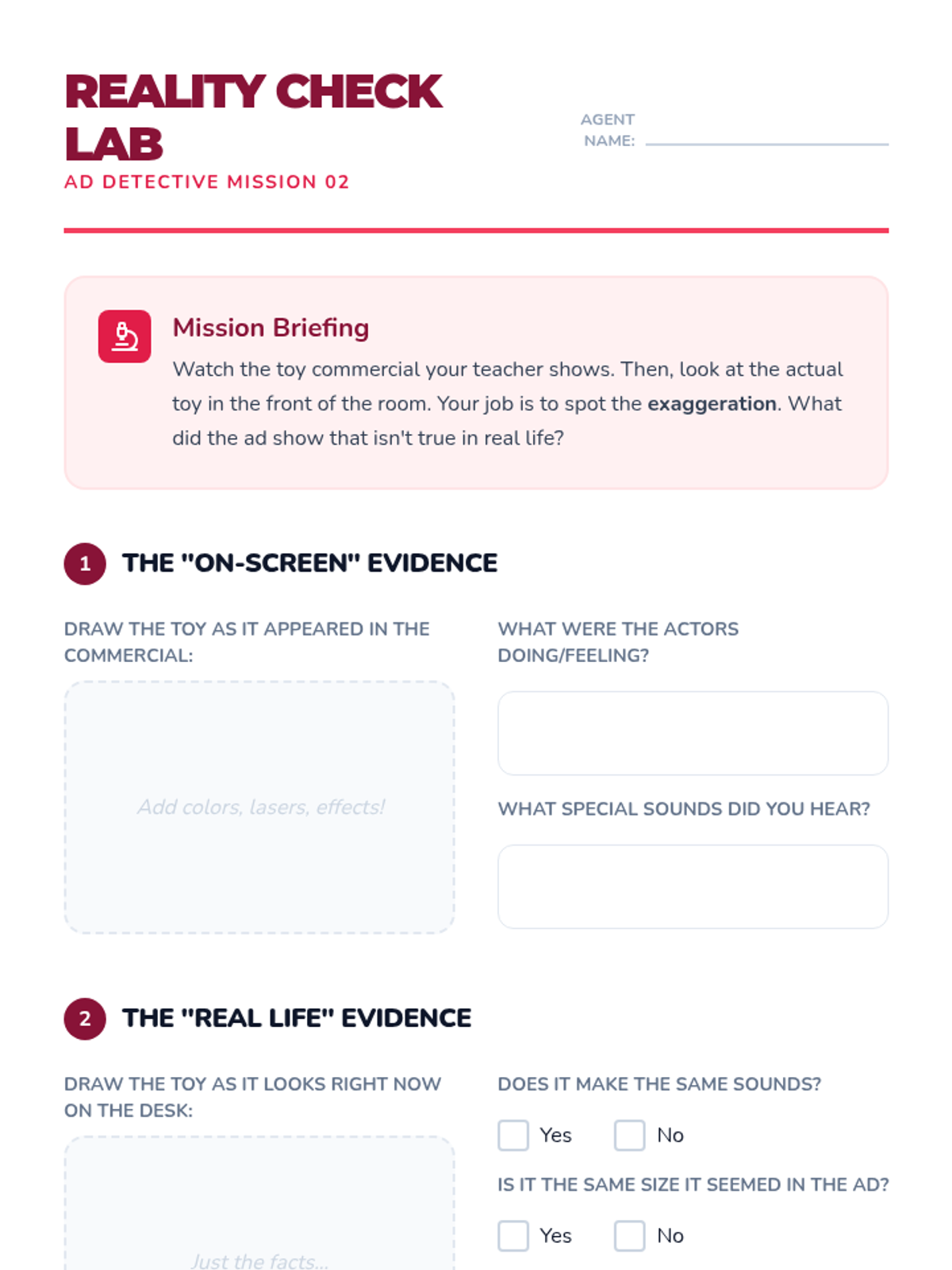
Focusing on exaggeration and production tricks, students analyze how audio and visual elements are used to make products appear more desirable.
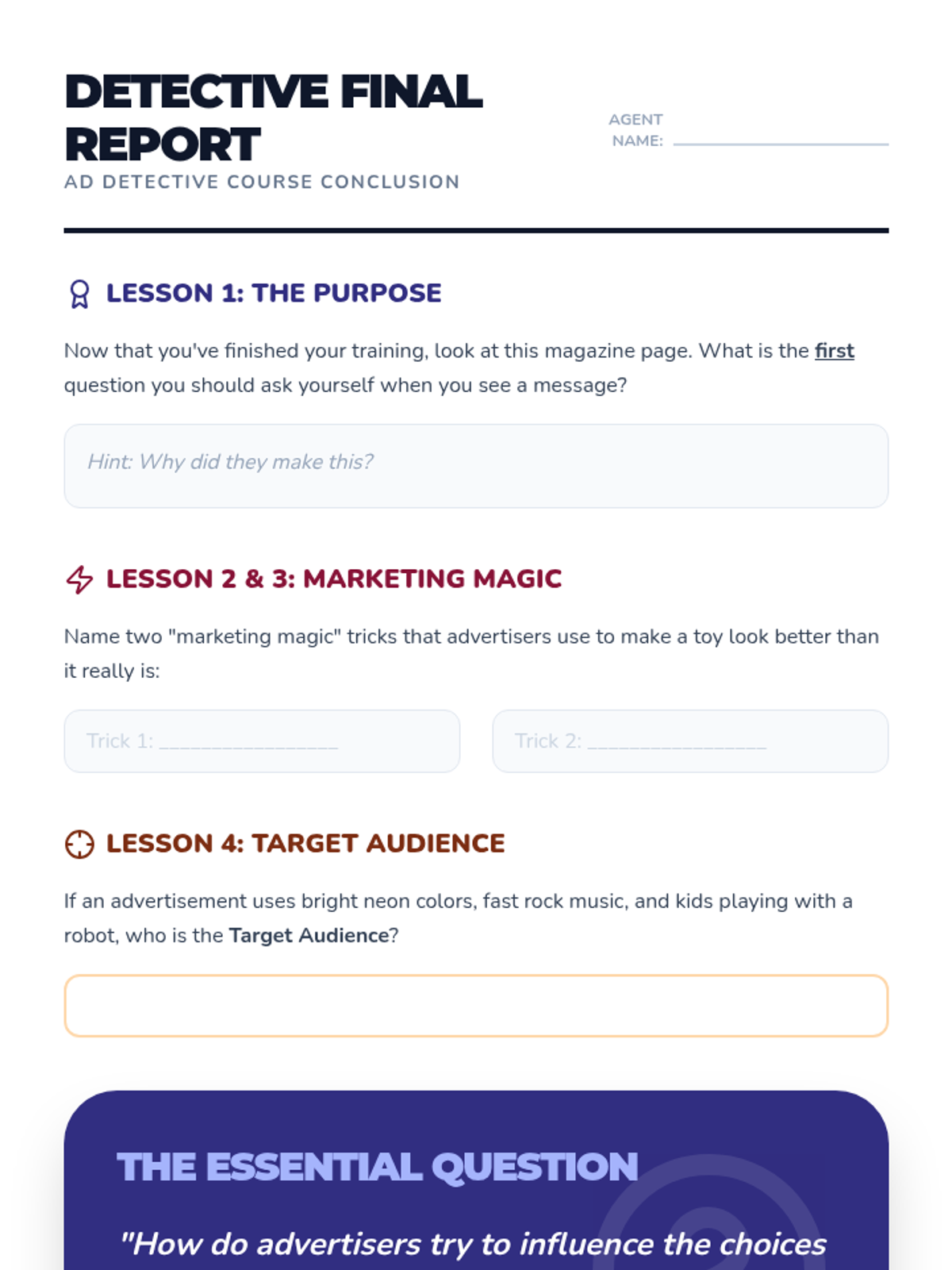
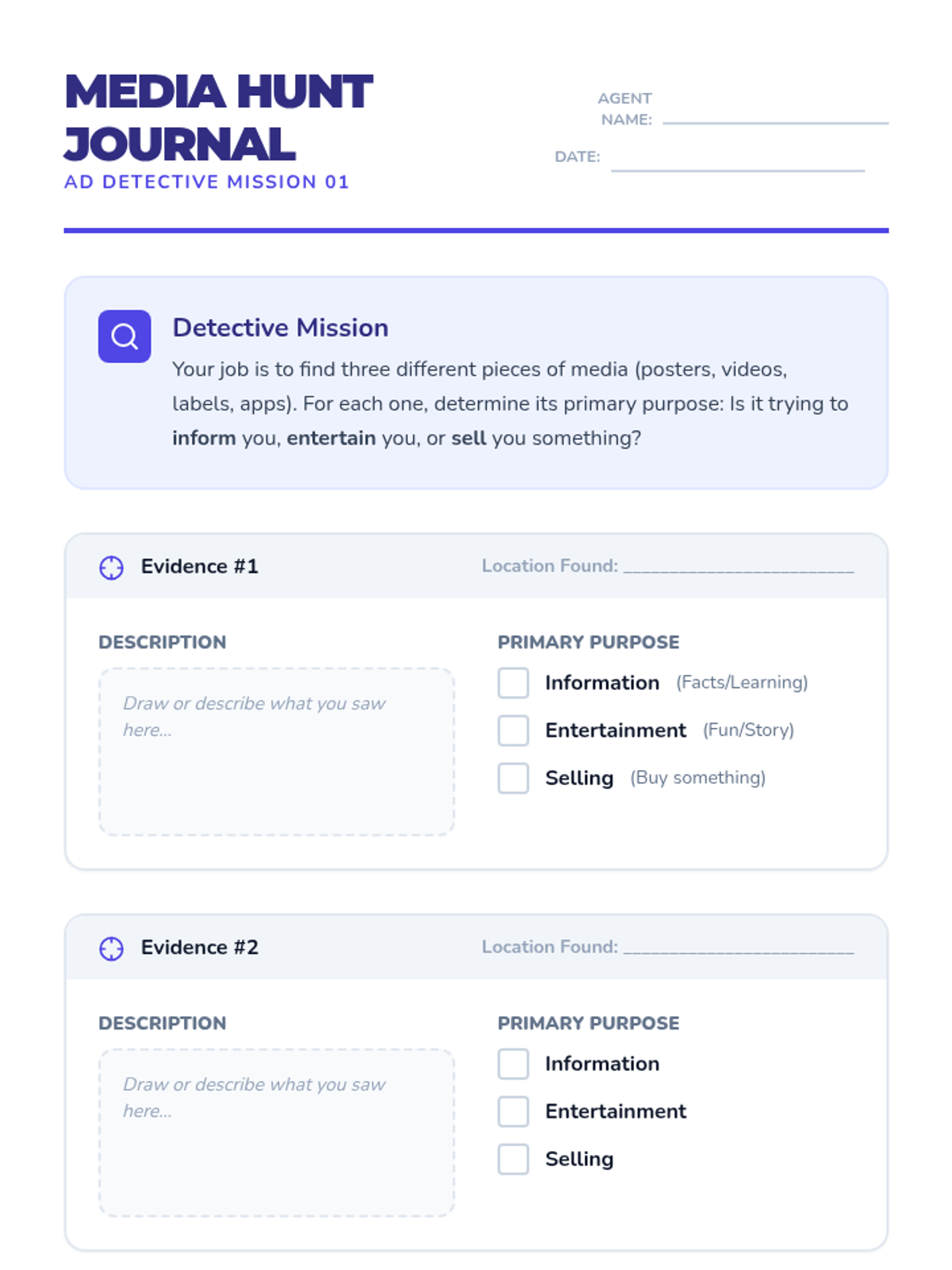
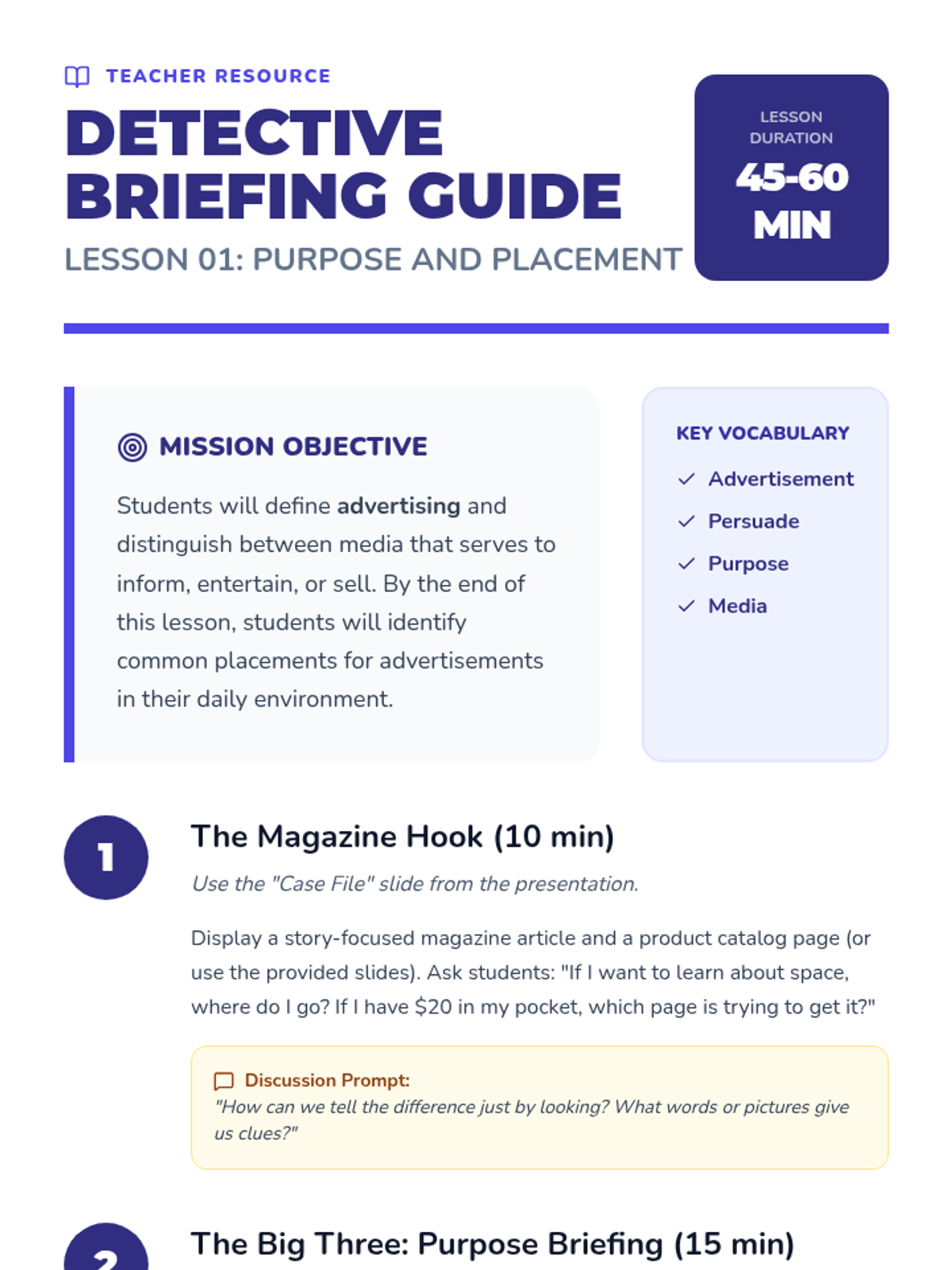
Students learn to distinguish between information, entertainment, and selling to identify the core purpose of advertising in various environments.
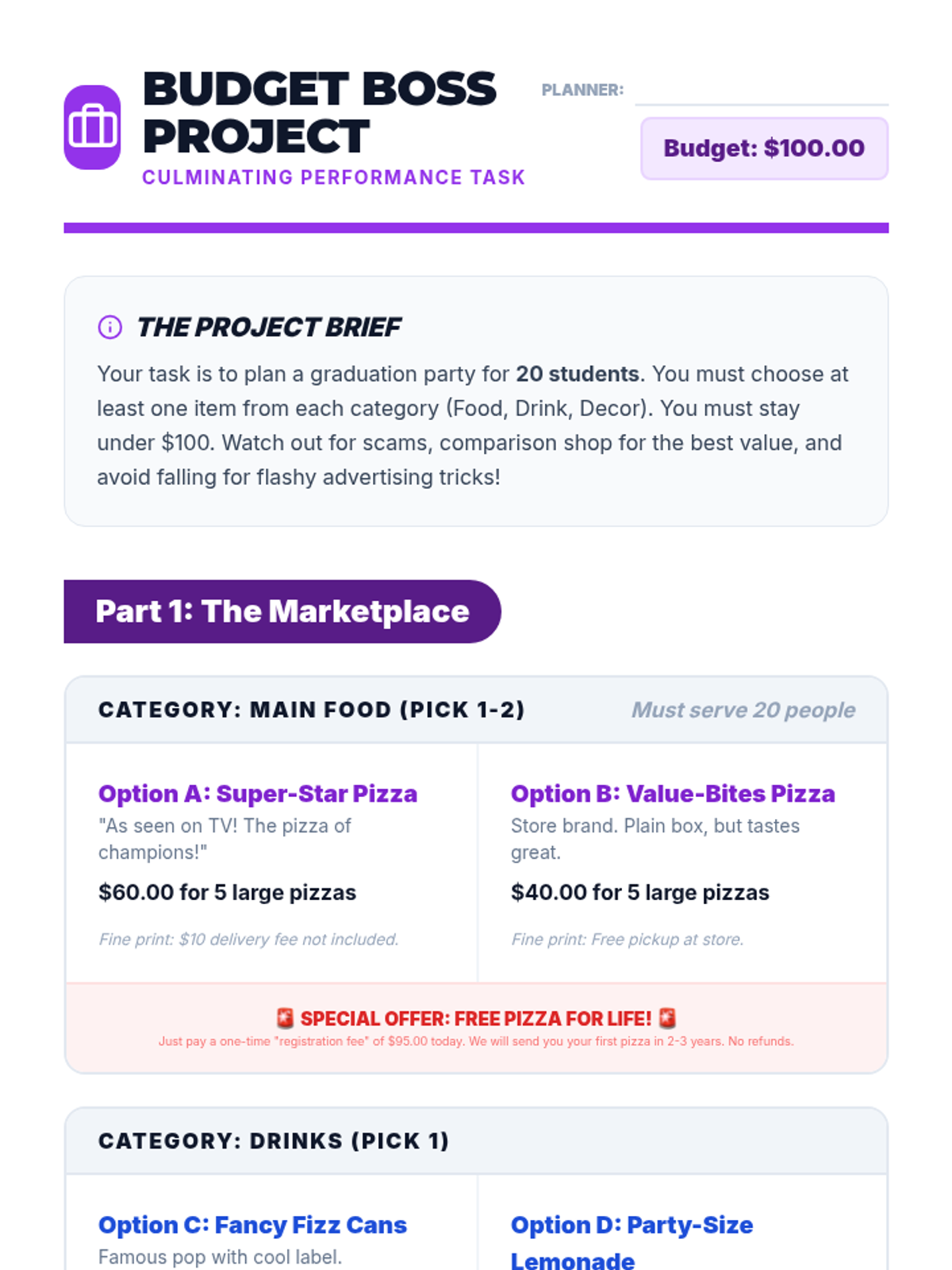
A culminating project where students use their skills to plan a class event within a budget, justifying their financial choices.
Students learn to identify financial scams and read fine print to protect their consumer rights.
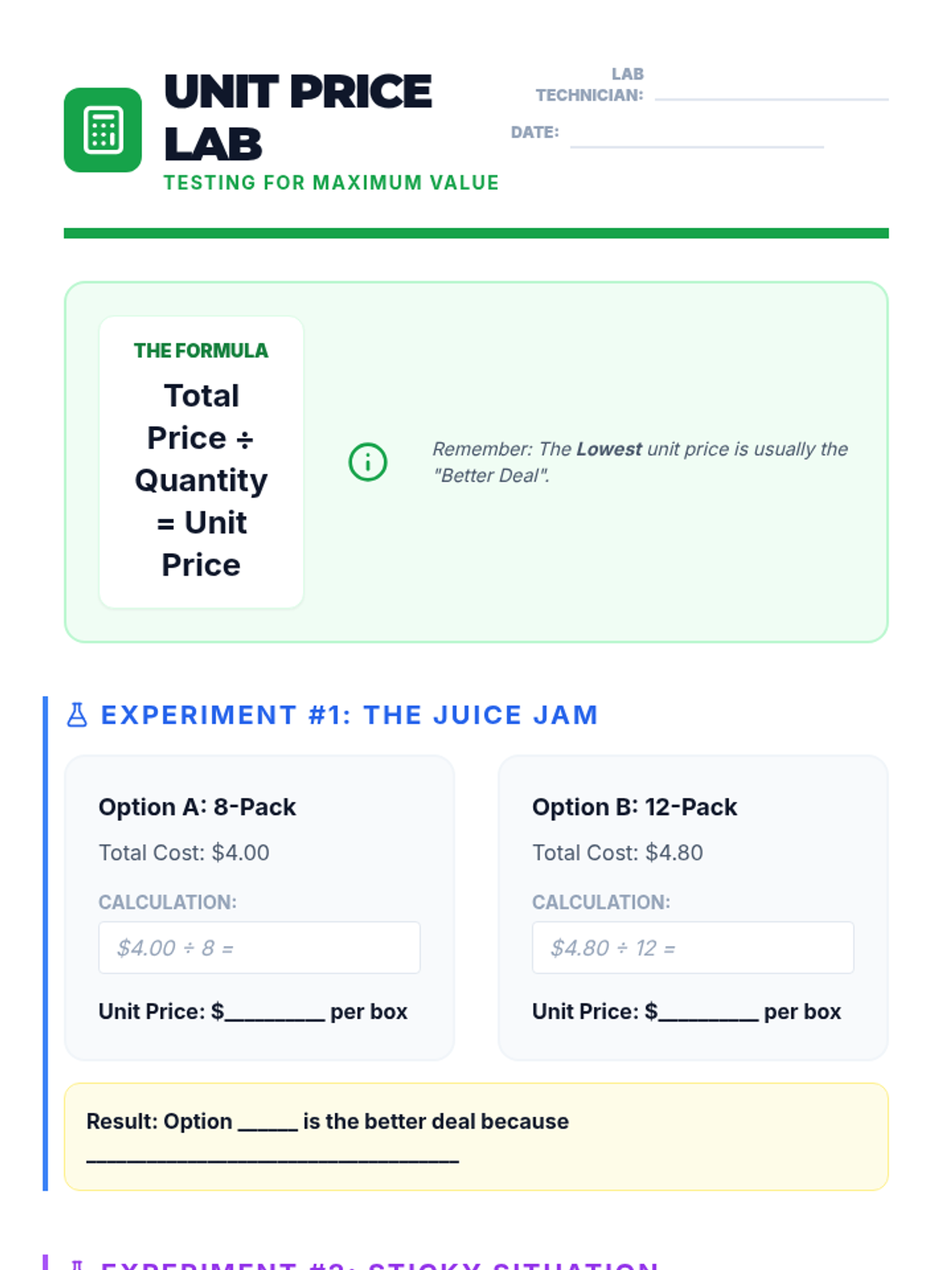
Students apply mathematical reasoning to calculate unit prices and compare products to find the best financial value.
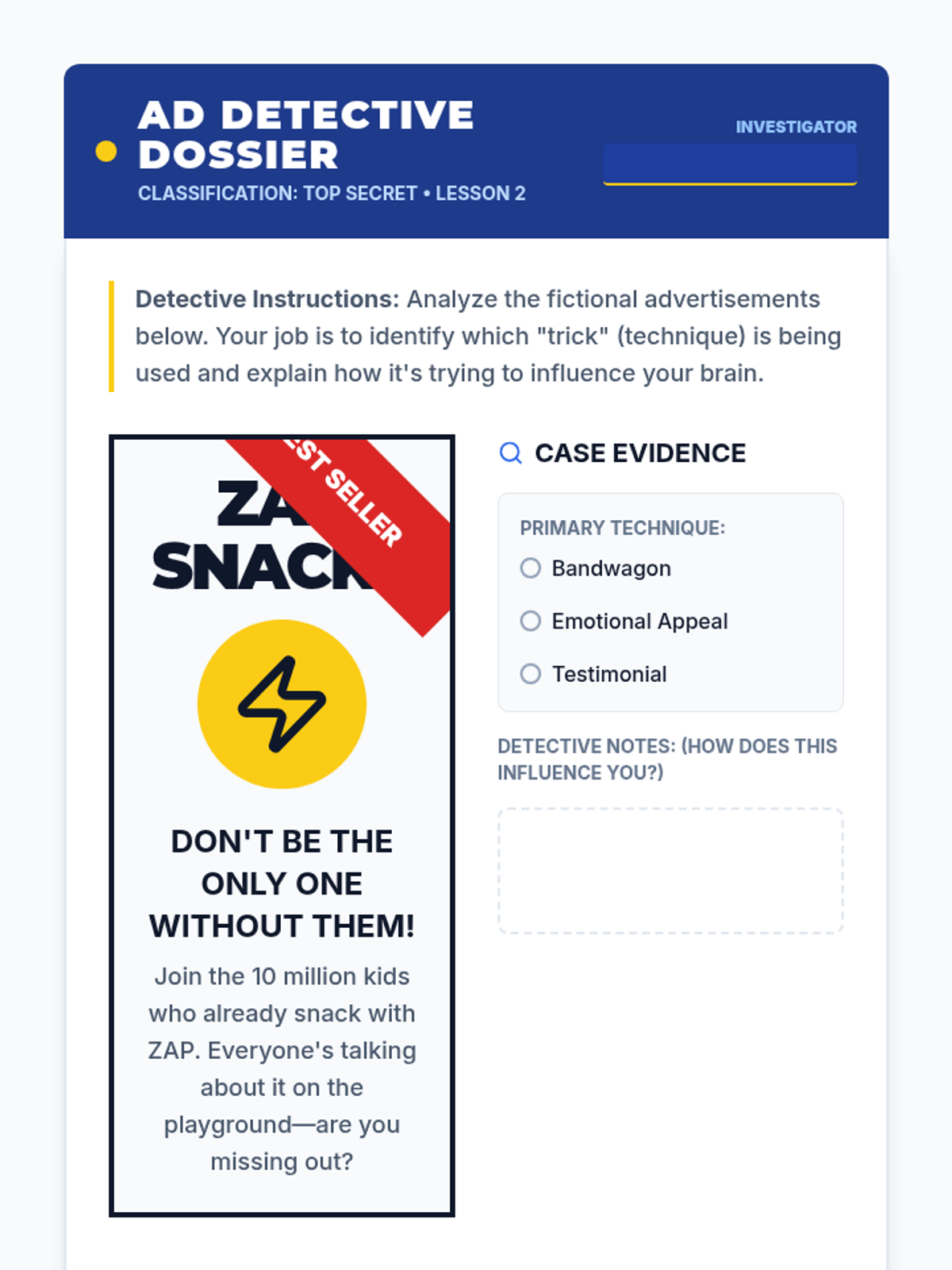
Students analyze common advertising techniques like the bandwagon effect and emotional appeals to understand how they are being targeted.
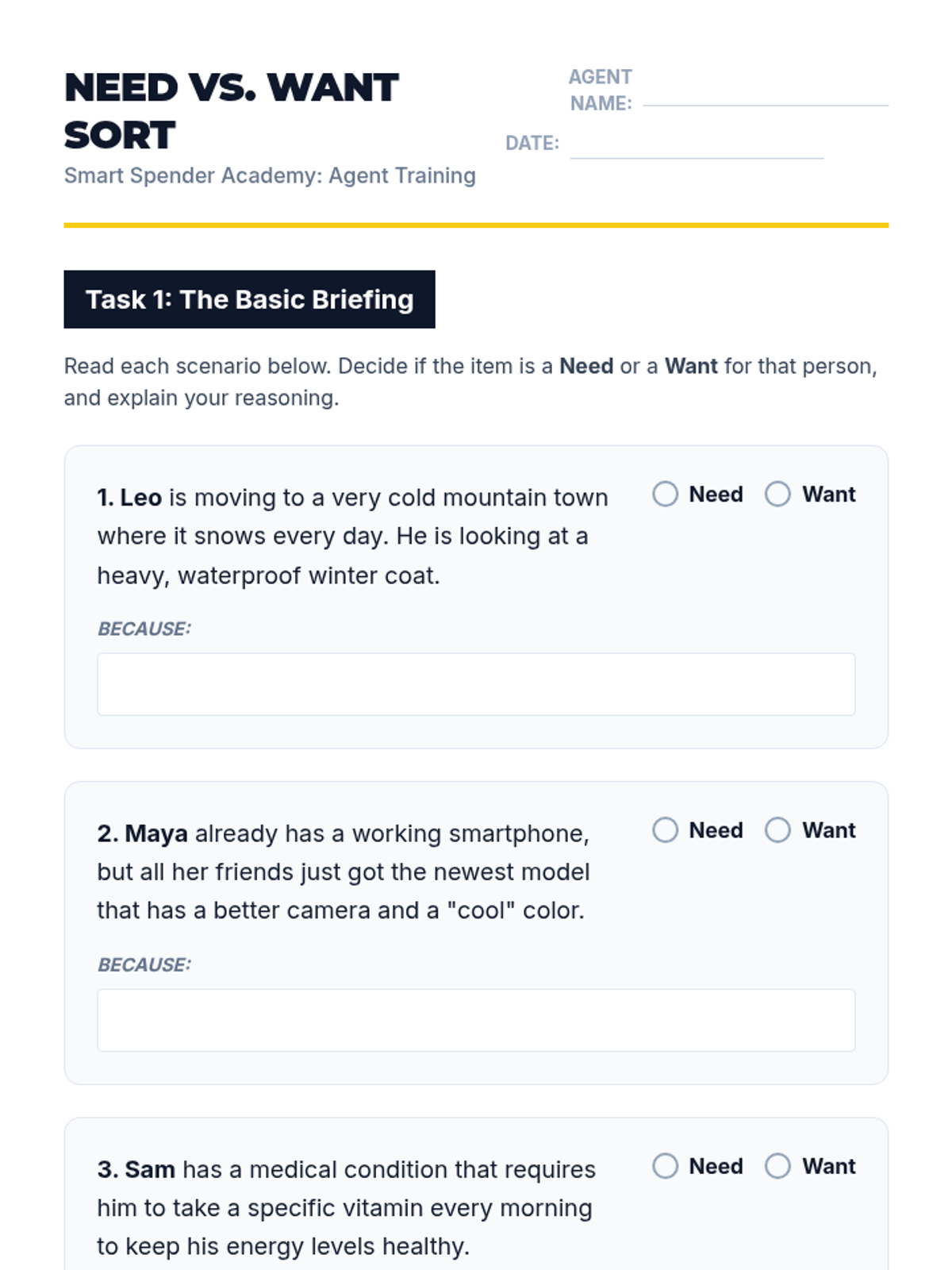
Students differentiate between essential needs and discretionary wants while exploring how media and peers influence their desires.
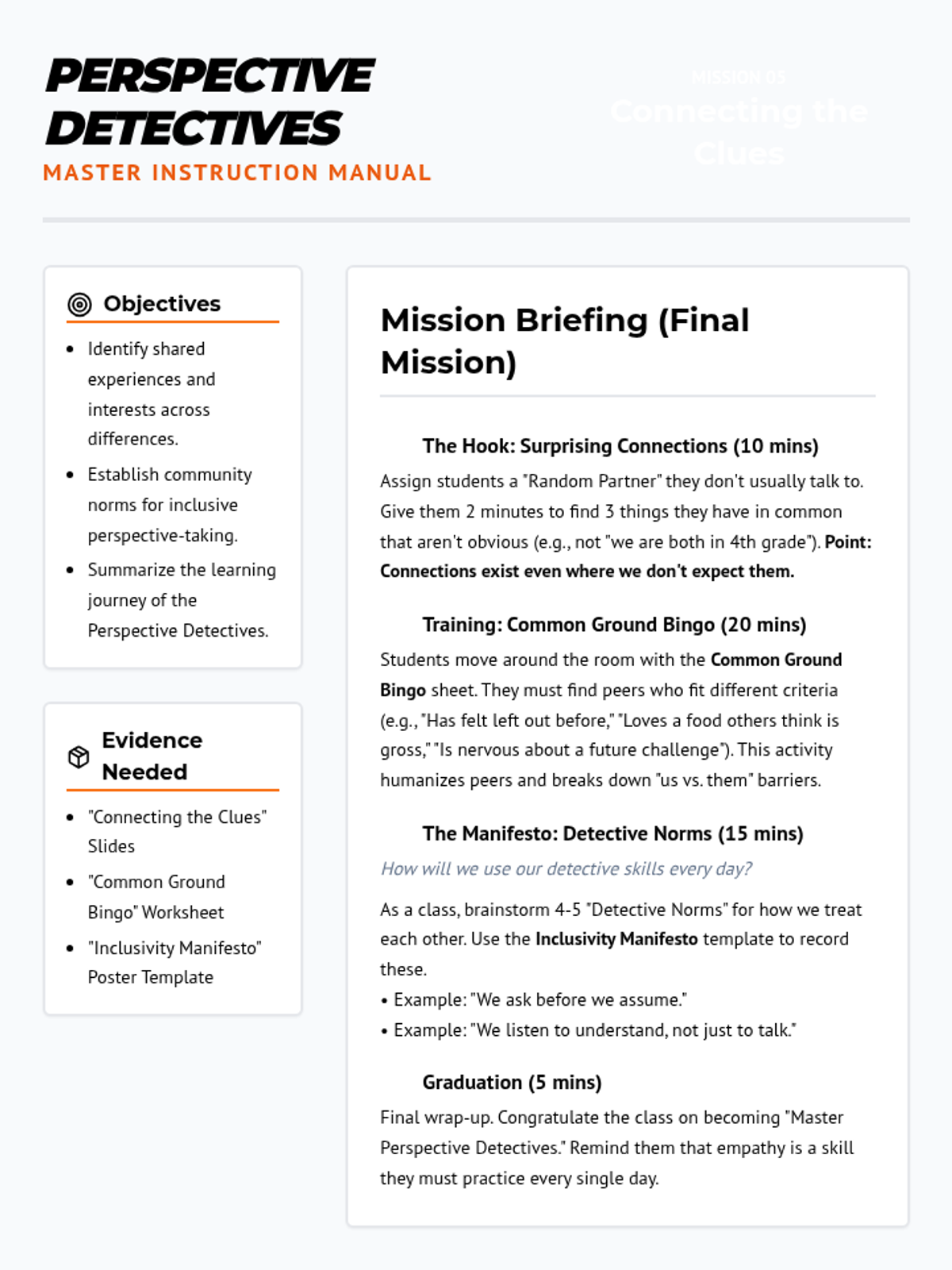
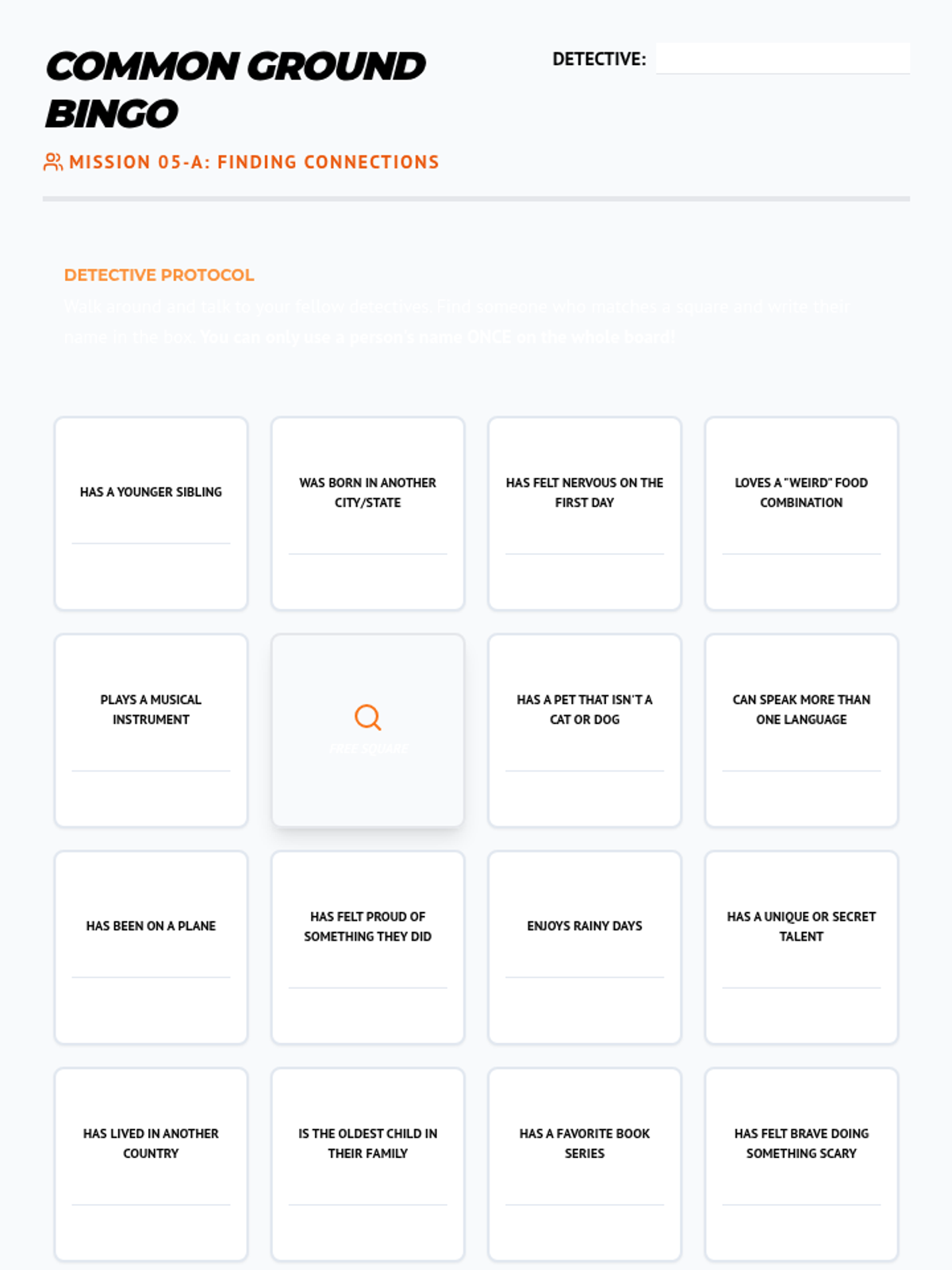
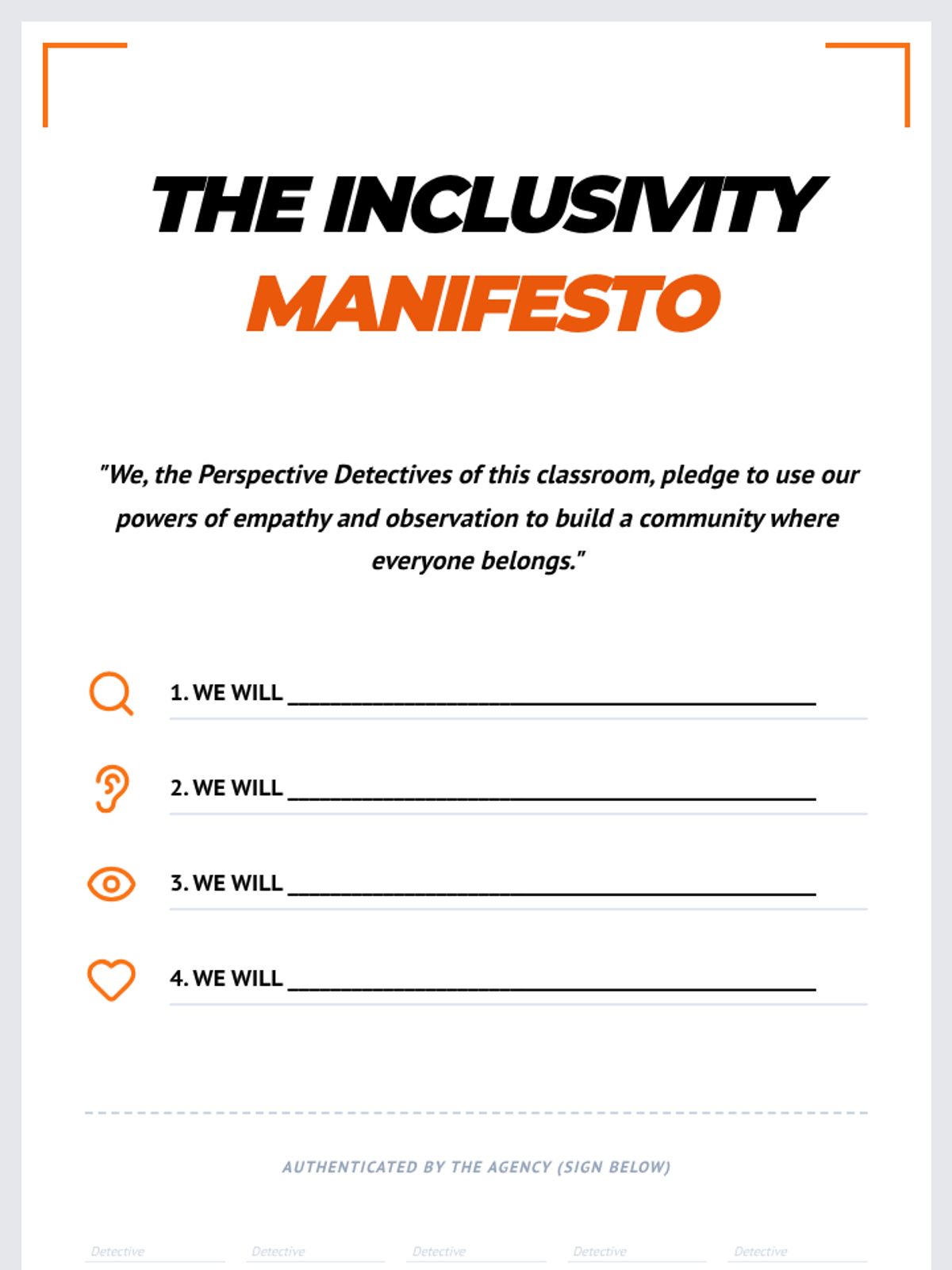
Students discover shared experiences across differences and collaborate to establish inclusive community norms.
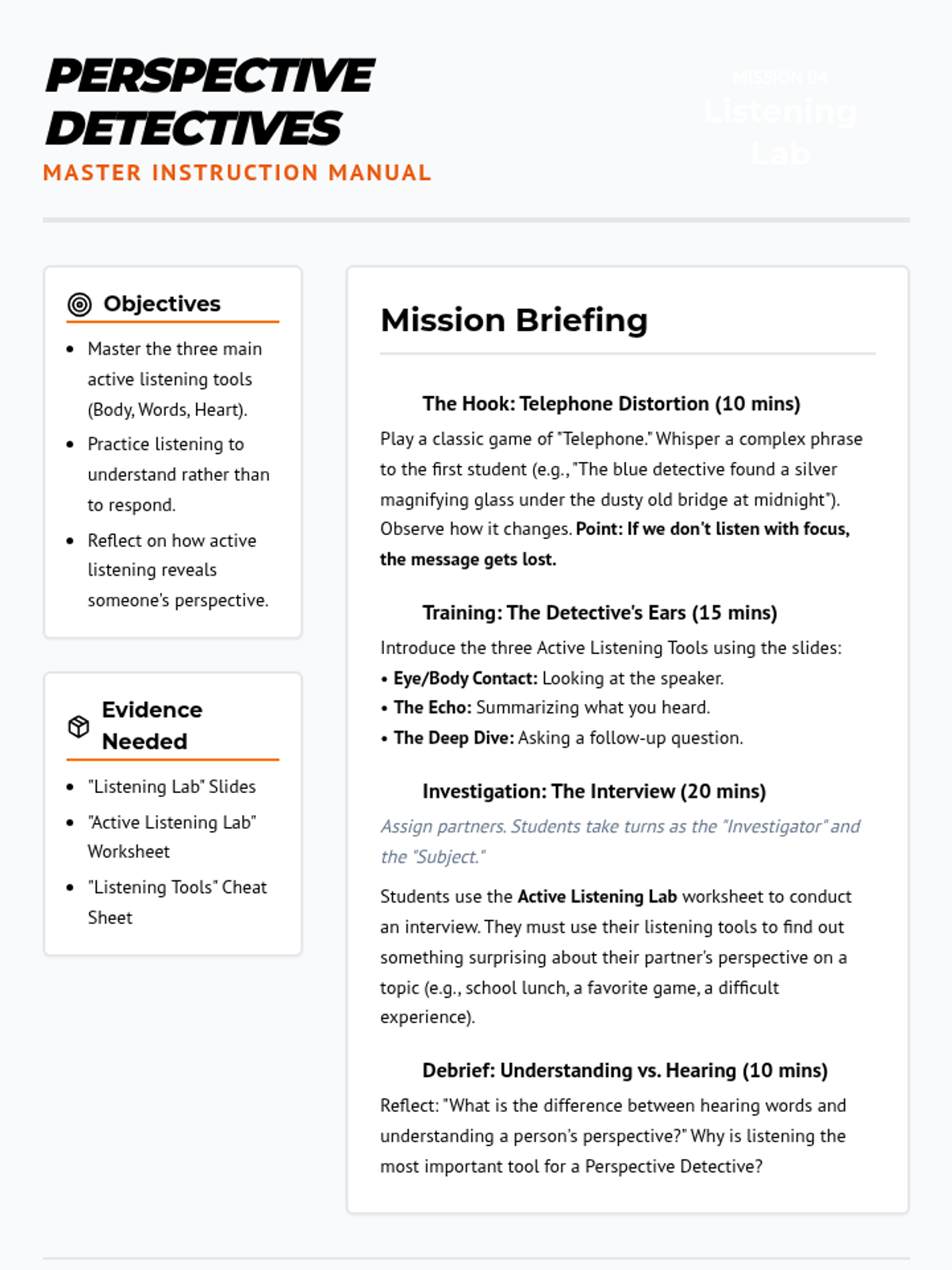
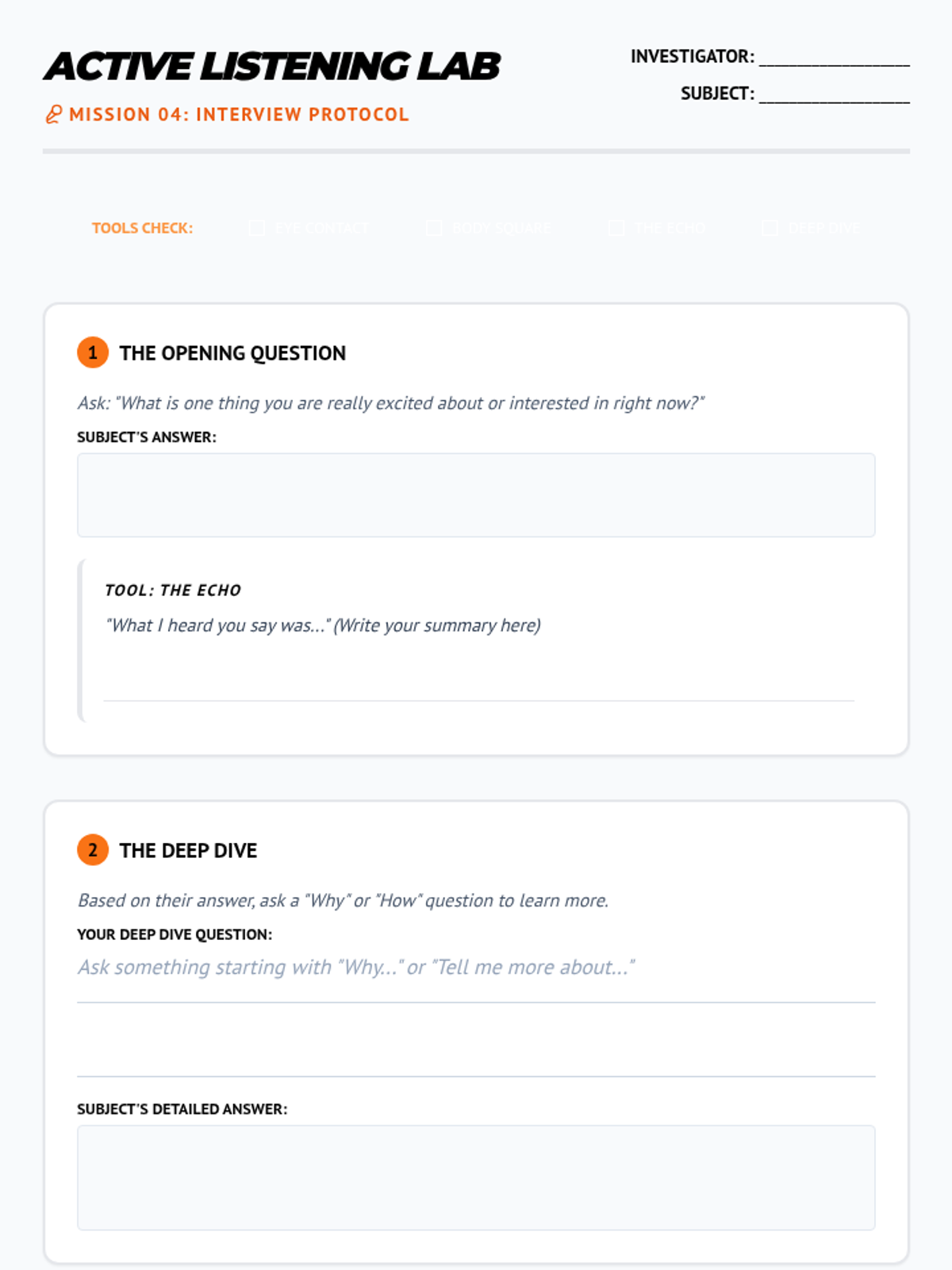
Students master the tools of active listening to truly understand others' viewpoints, practicing through structured interviews.
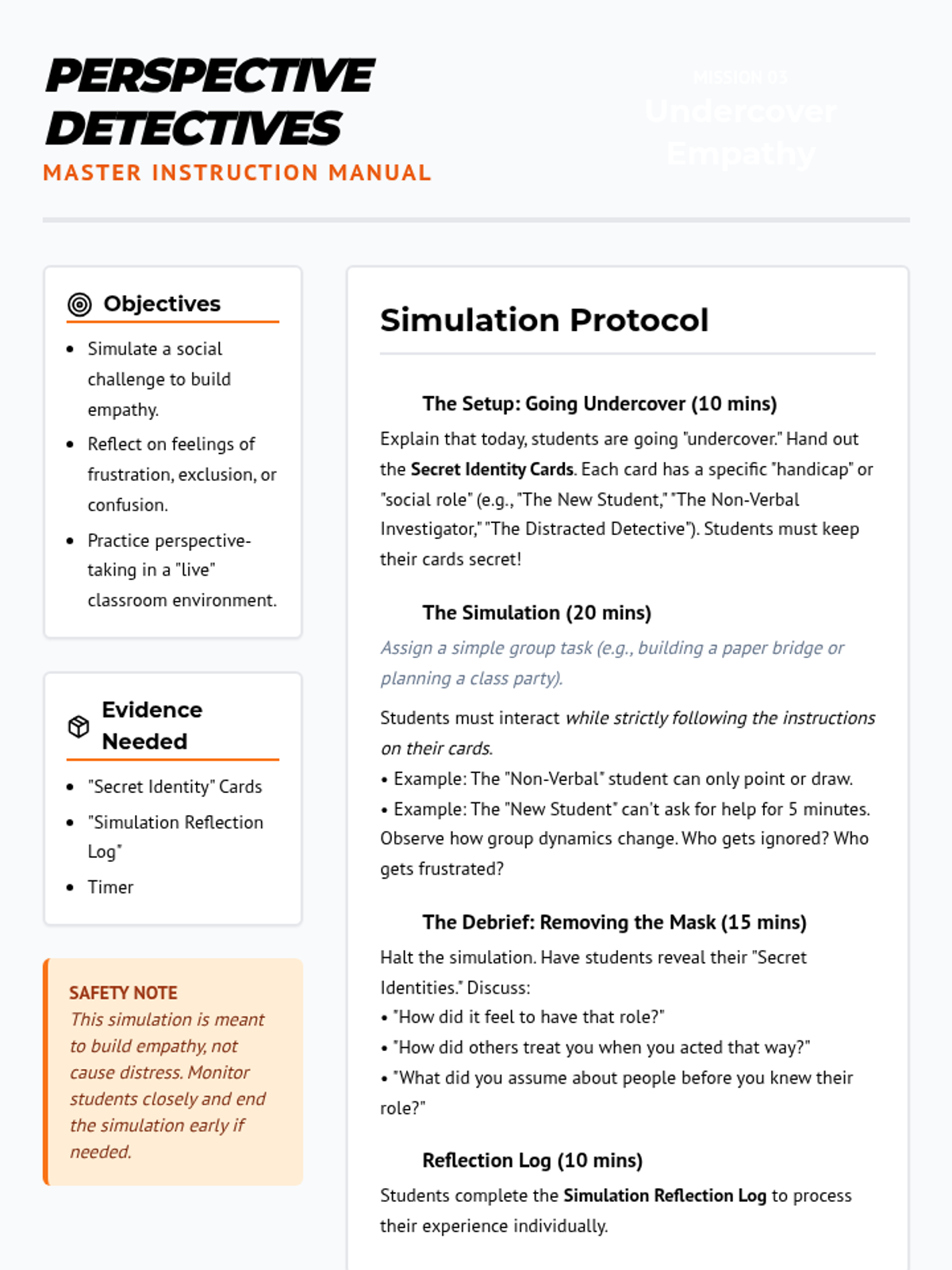
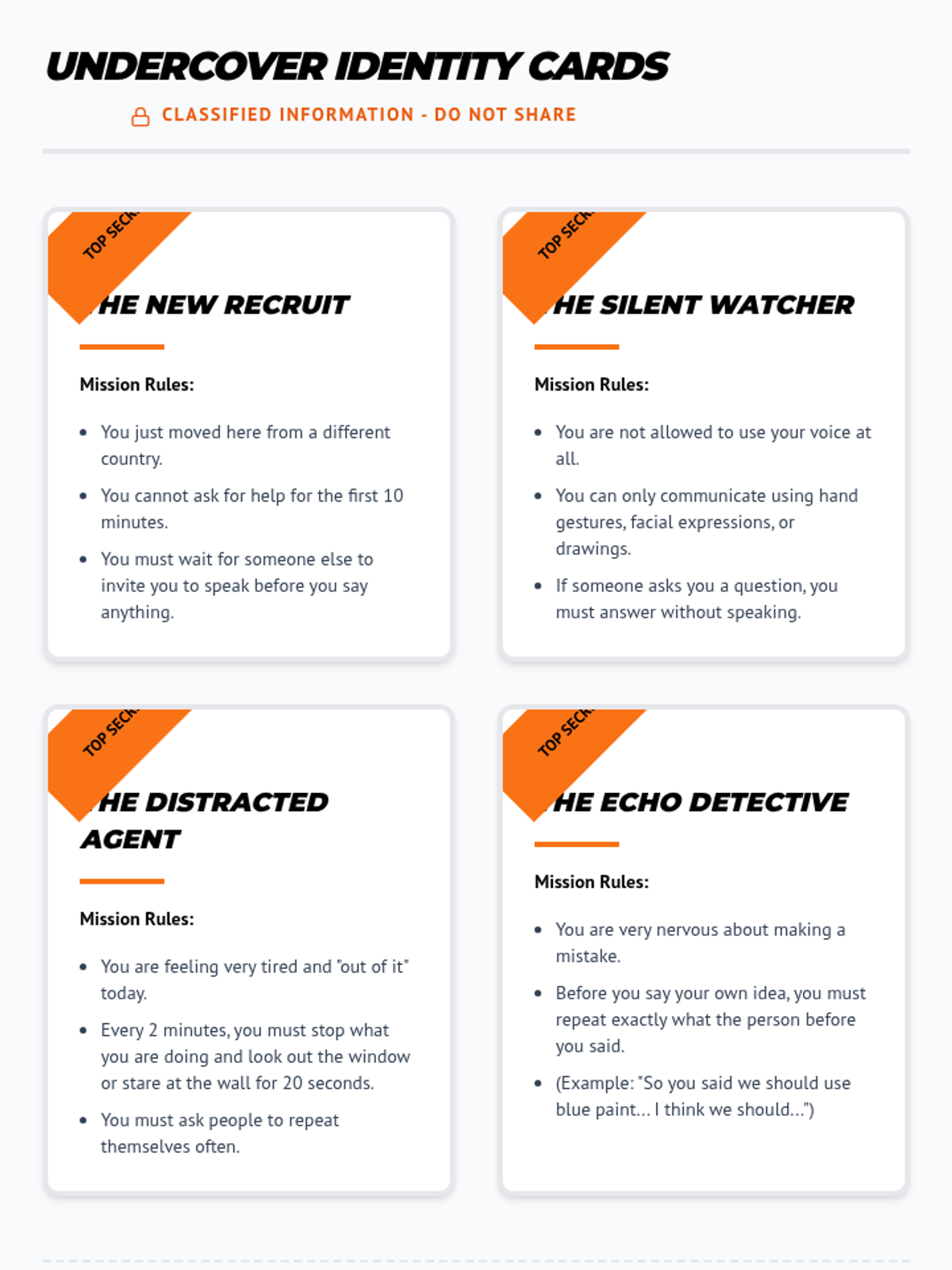
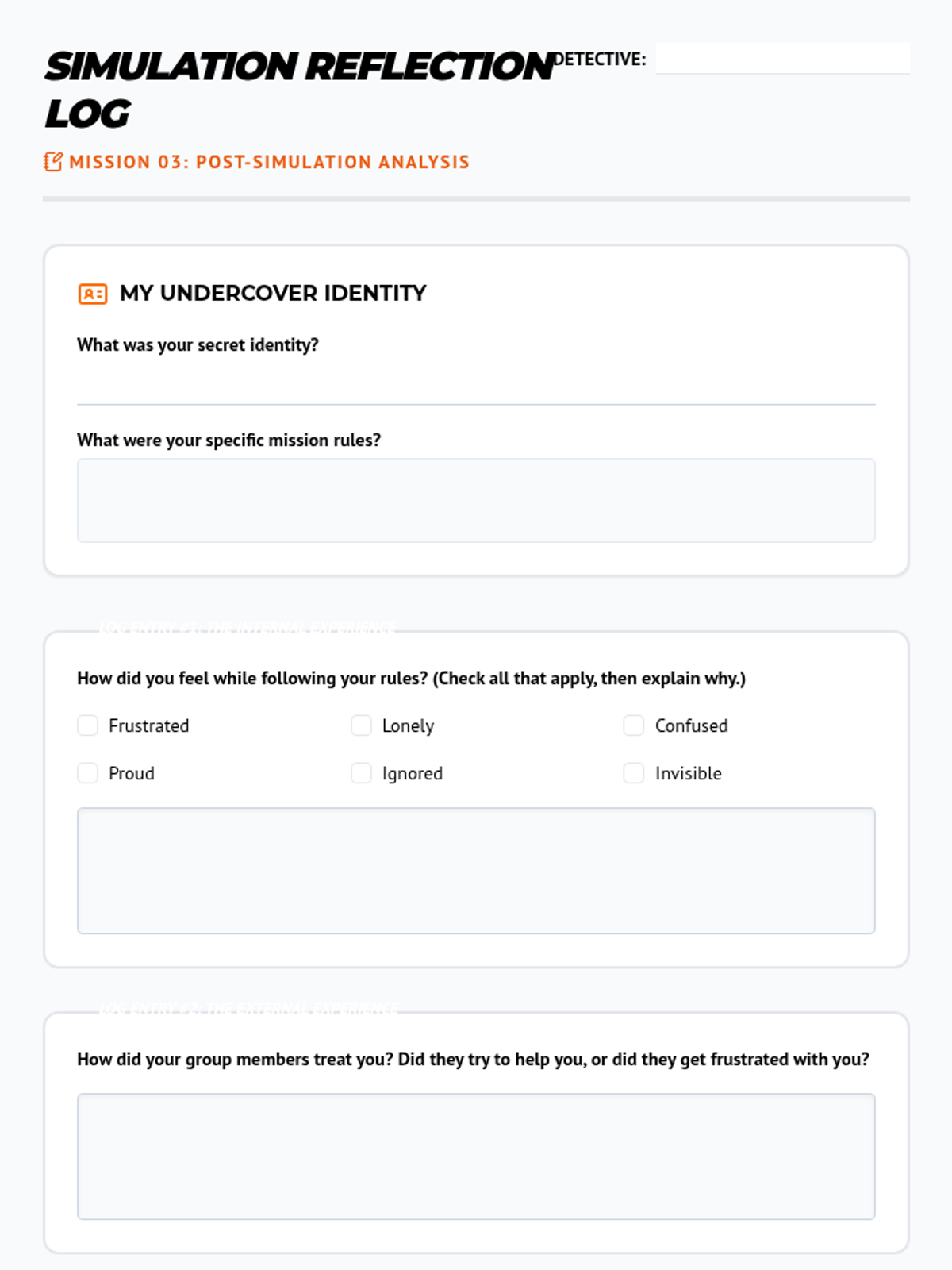
Students navigate a school day with 'secret identities' that present specific challenges, reflecting on the experience to build deep empathy.
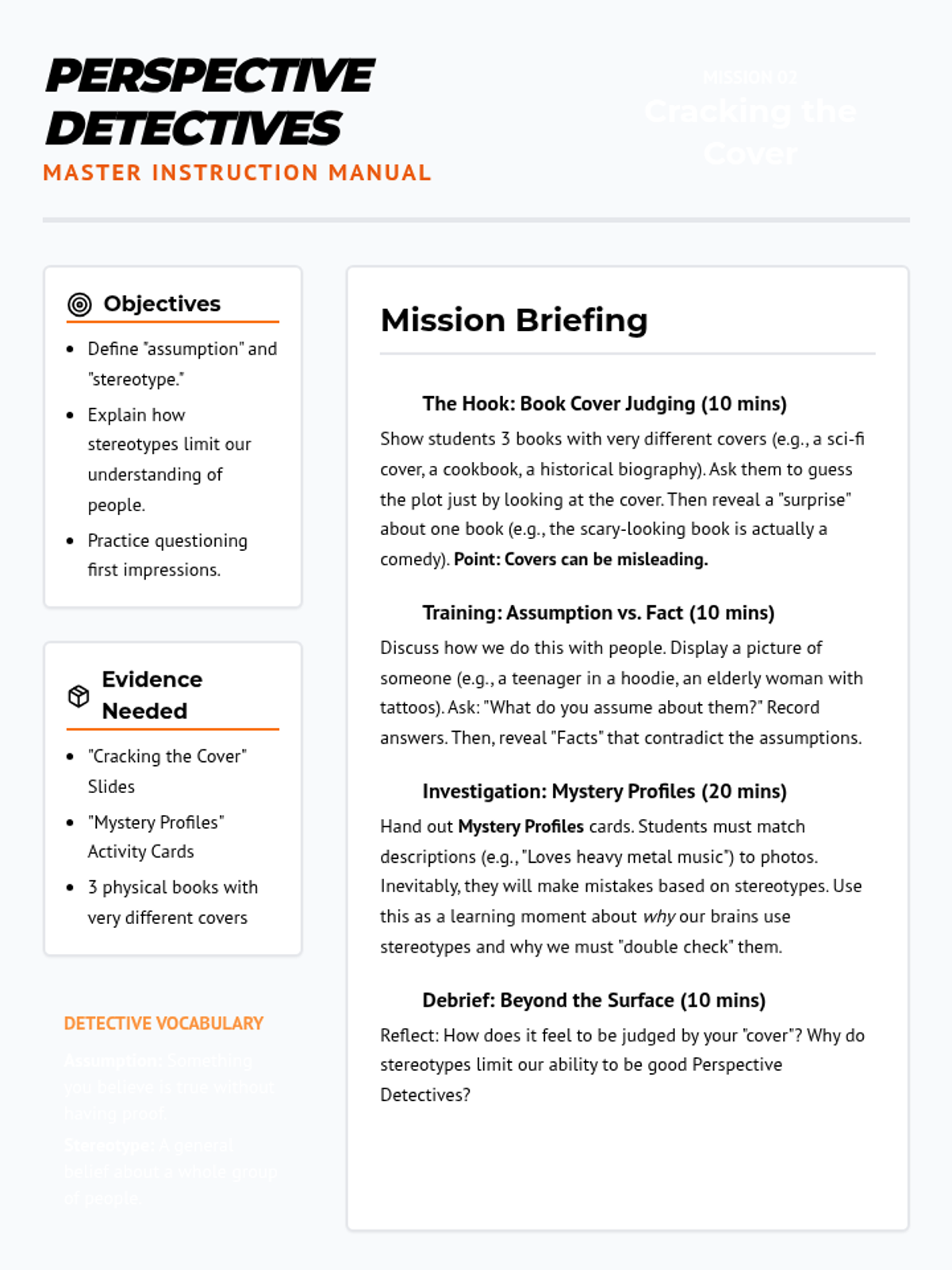
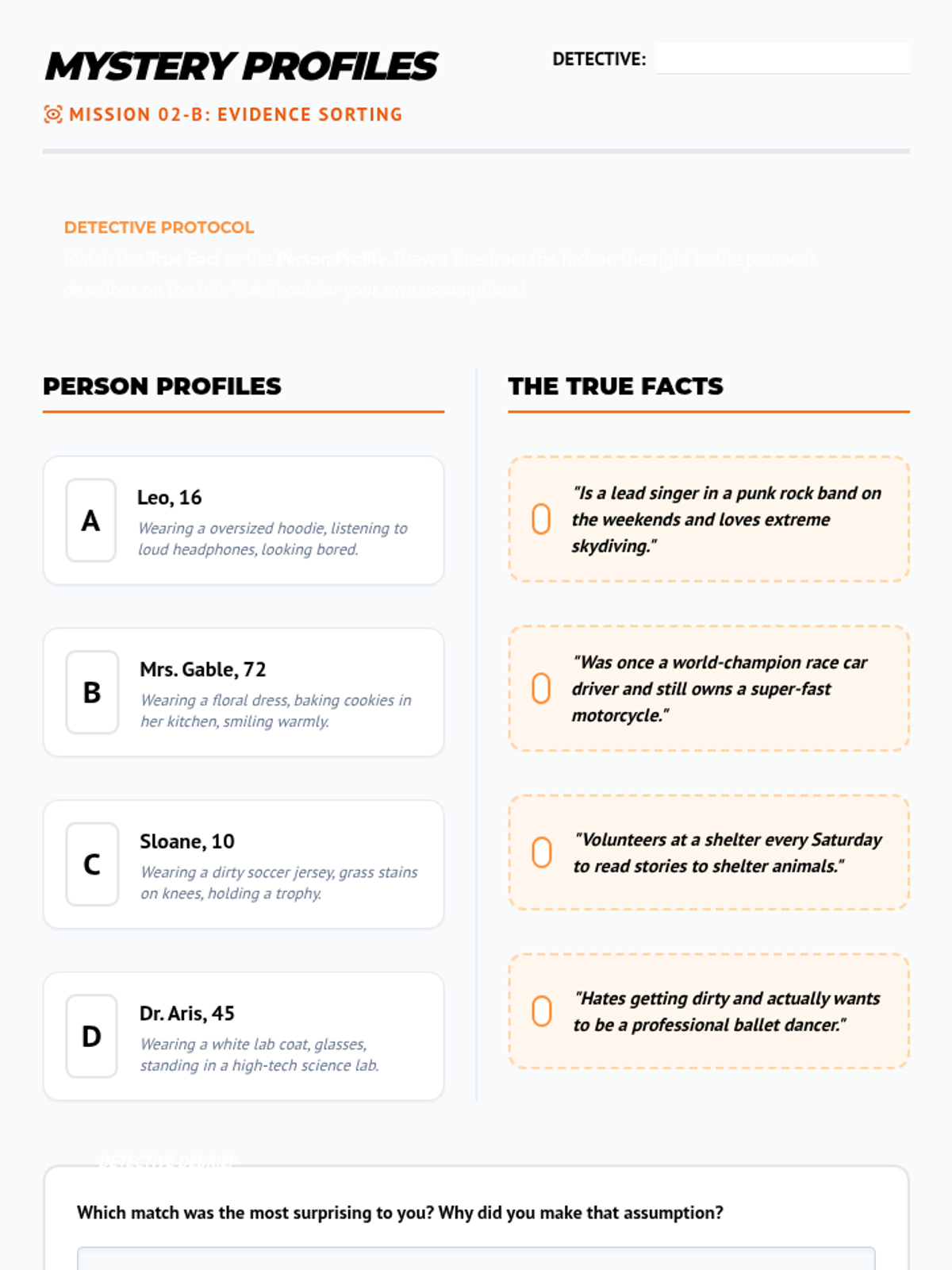
Students investigate how assumptions and stereotypes limit our understanding of others through a sorting game and critical discussion.
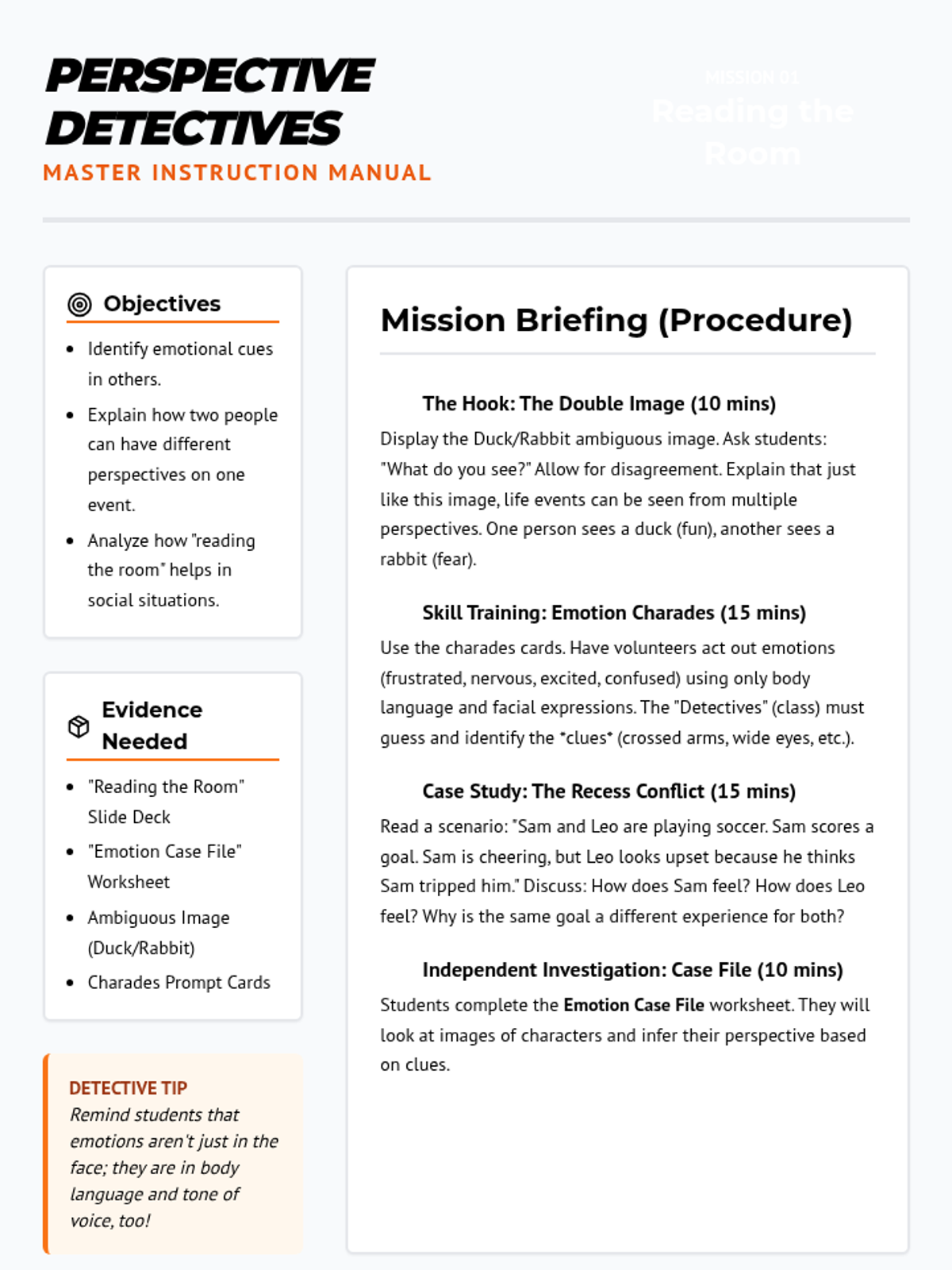
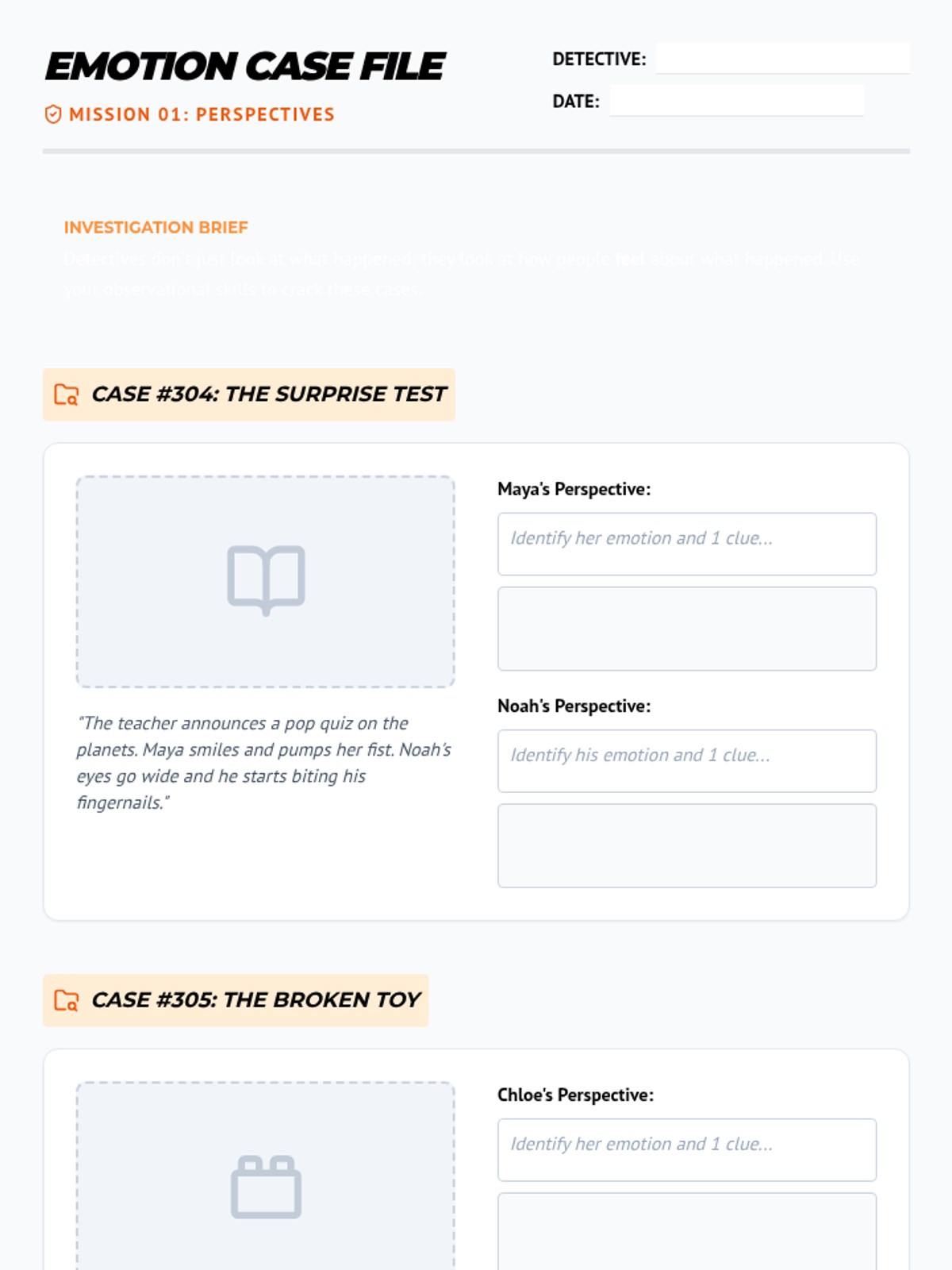
Students practice reading emotional cues and recognize that people can have different perspectives on the same event using ambiguous images and charades.
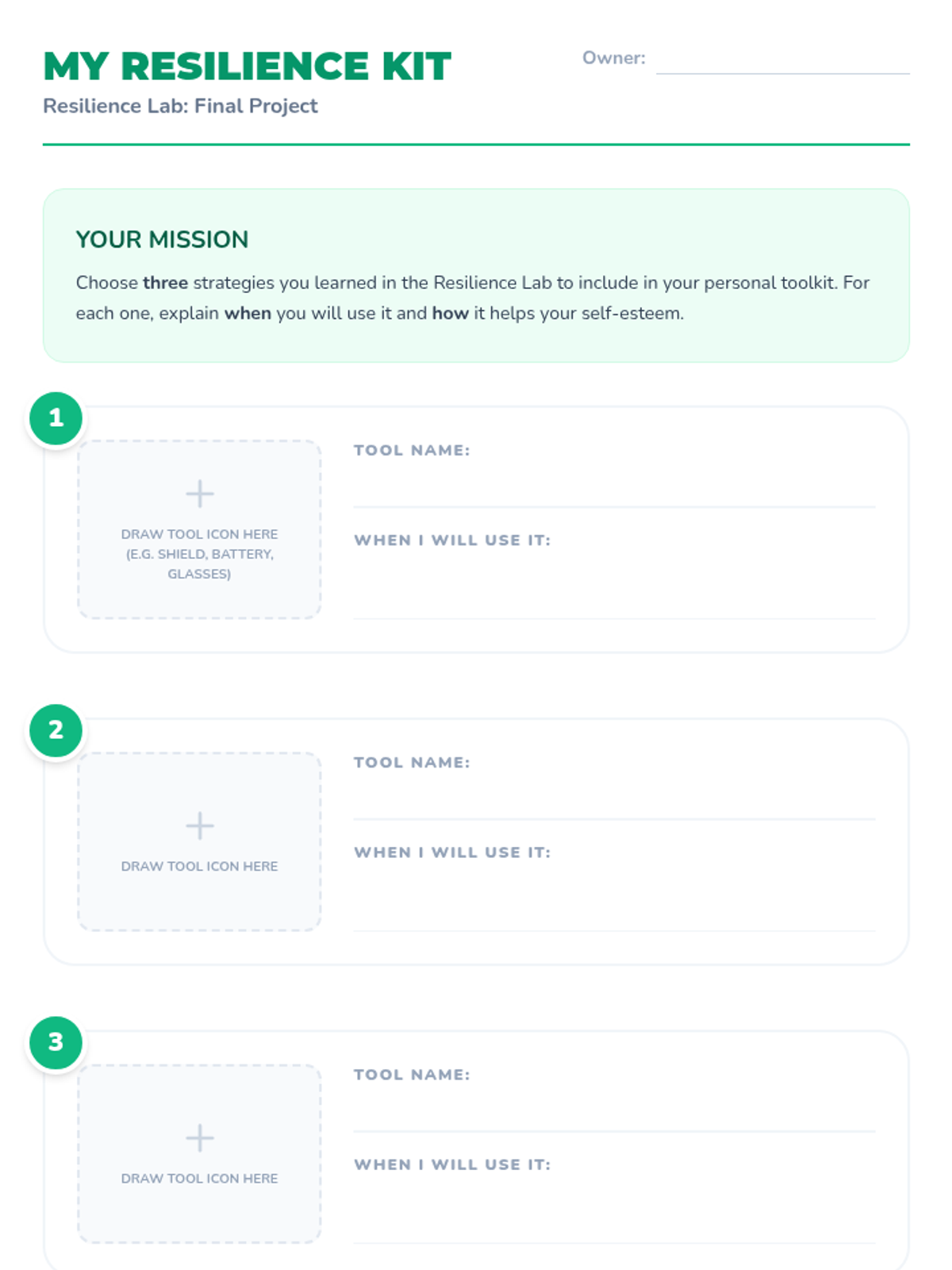
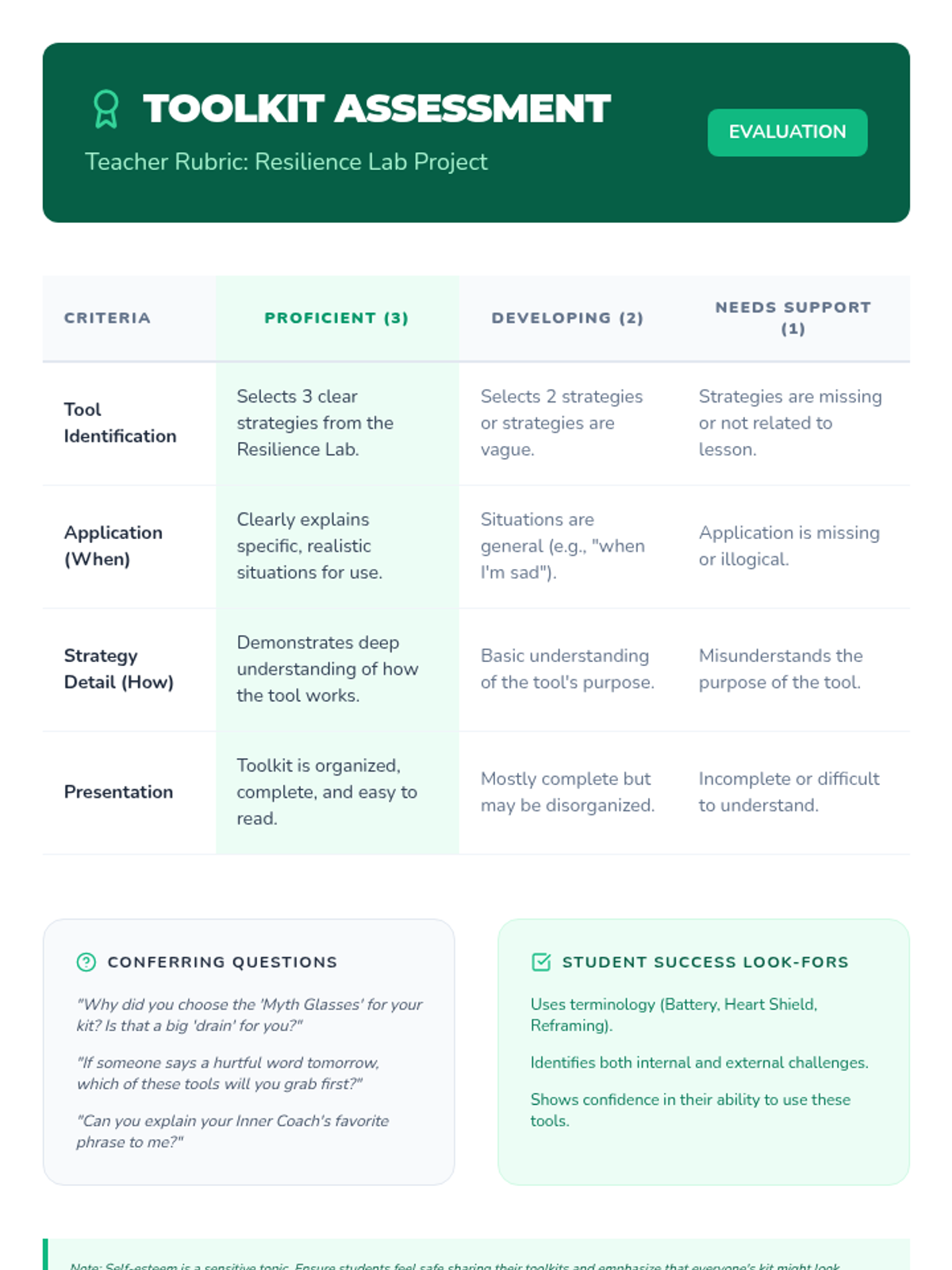
Students compile their learned strategies into a personal 'Resilience Toolkit' designed as a 'First Aid Kit' for their feelings.
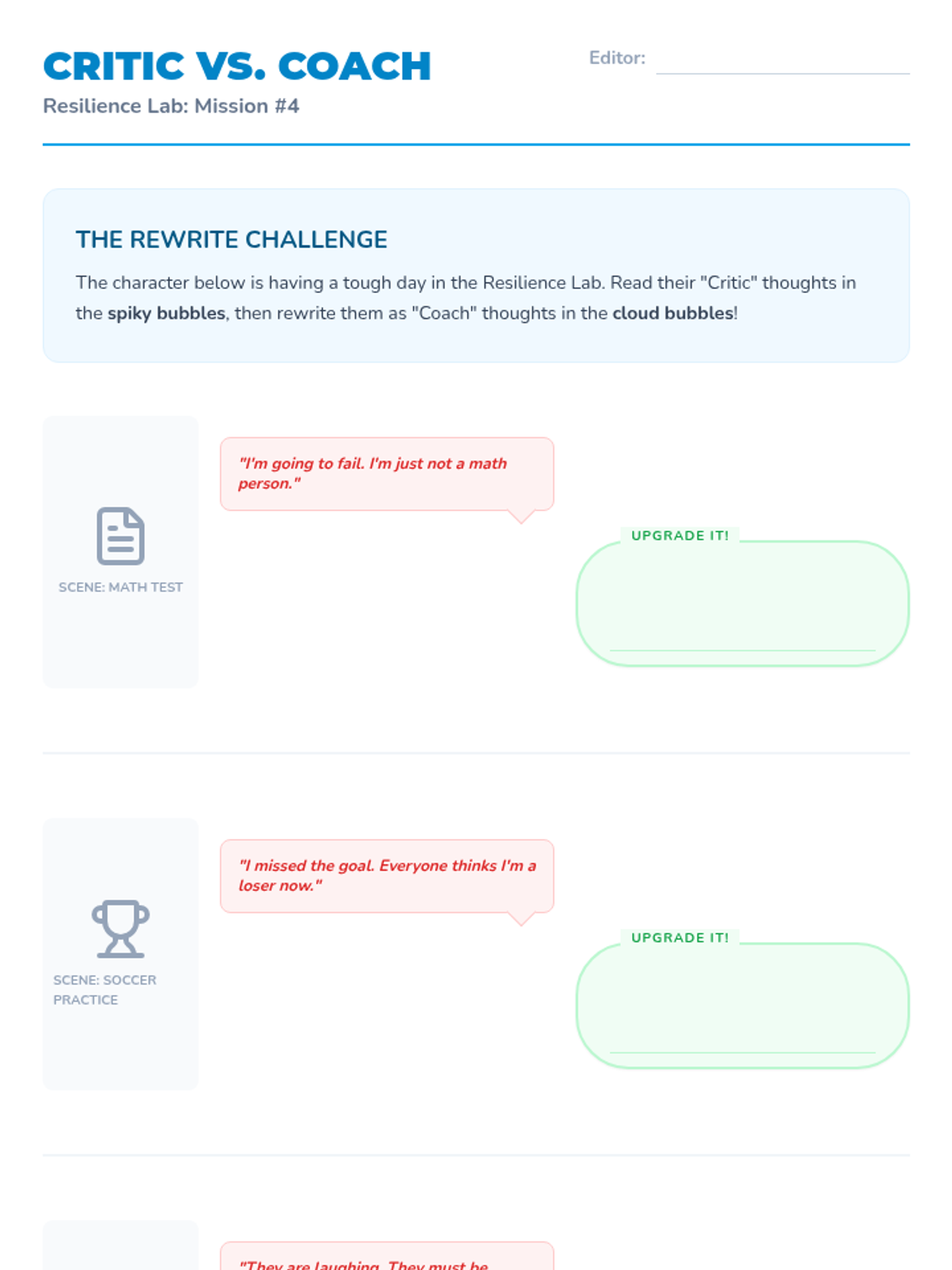
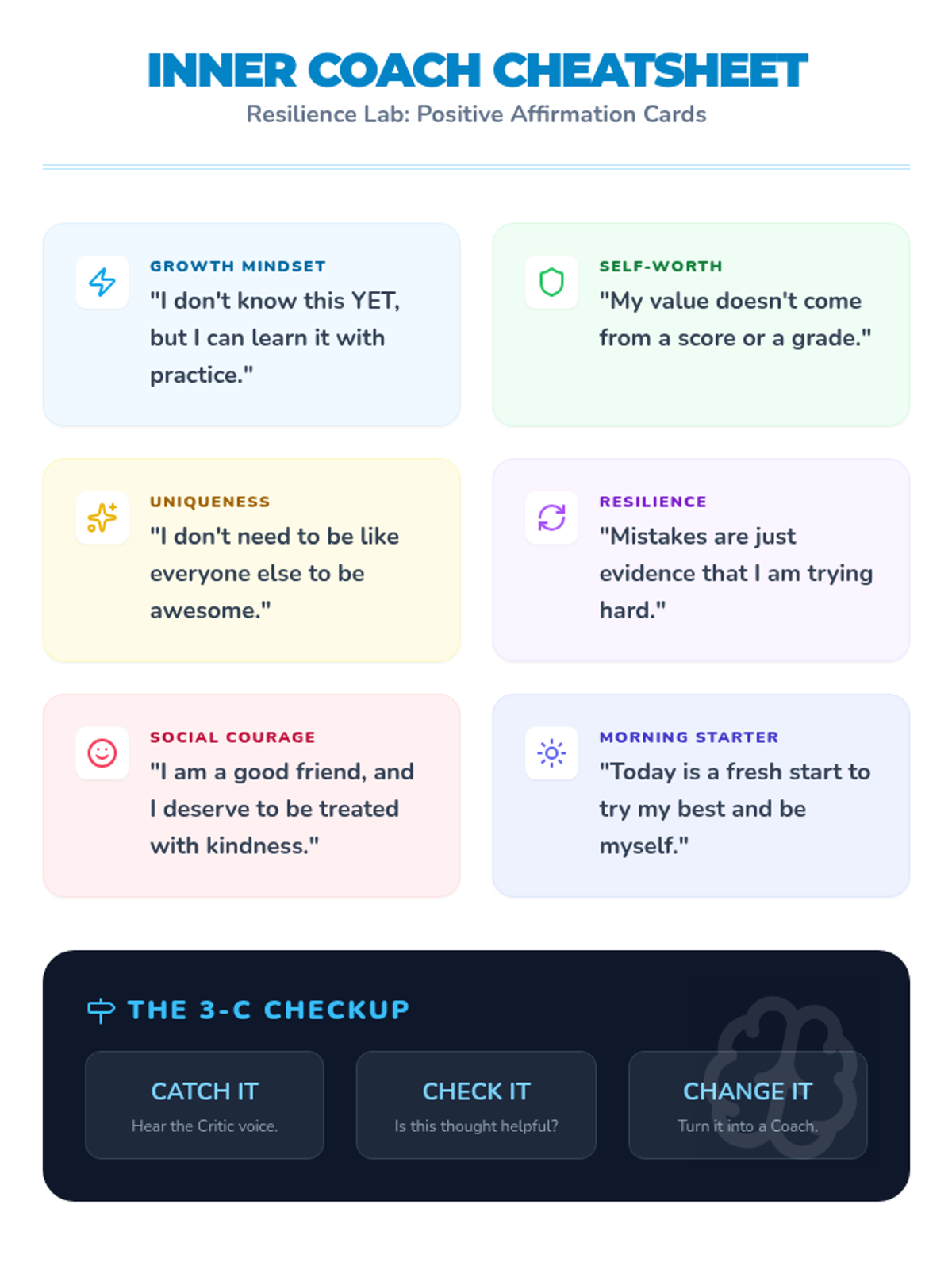
Students learn to identify their 'inner critic' and reframe negative thoughts into positive affirmations using comic-style scripts.
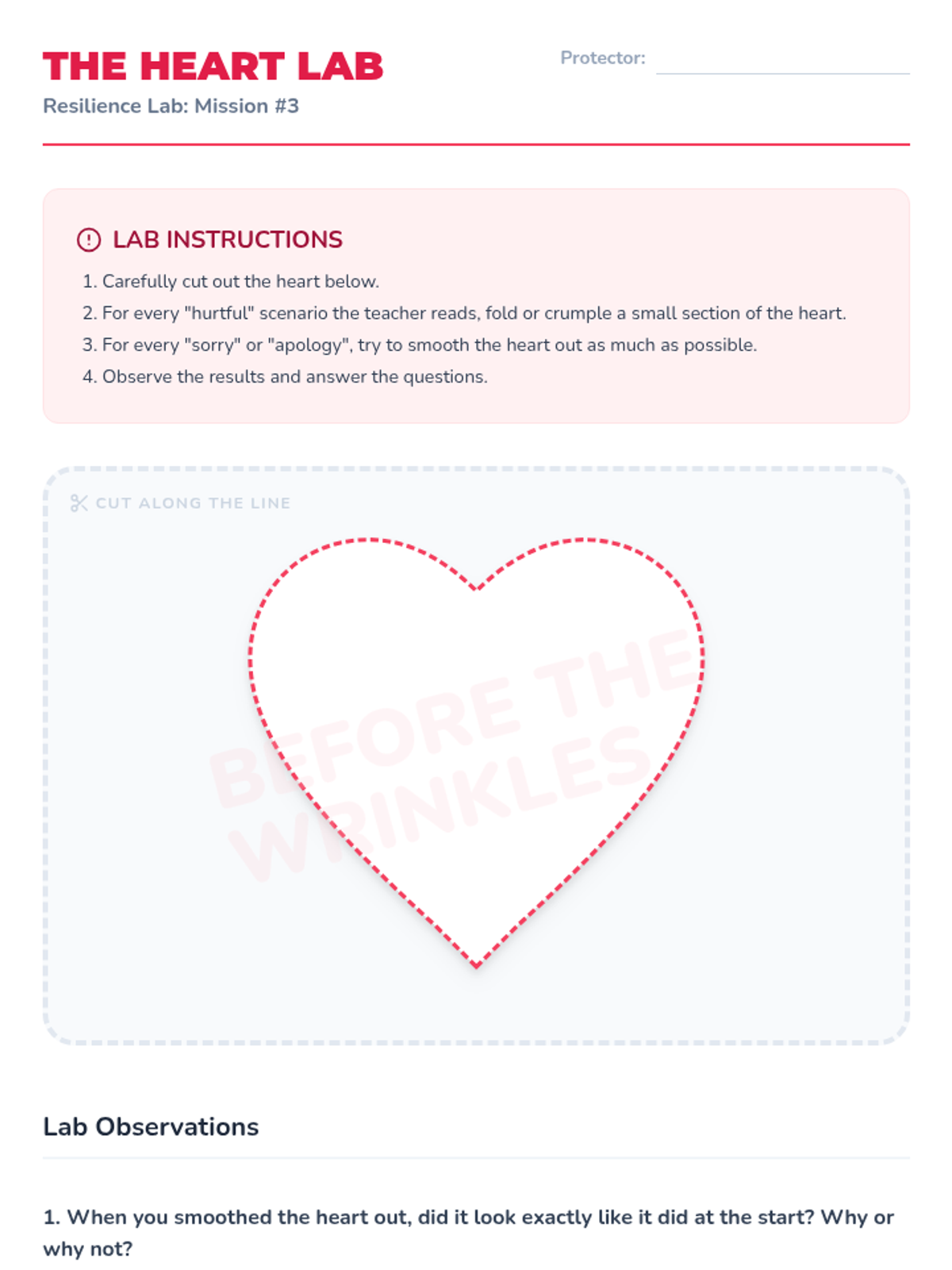
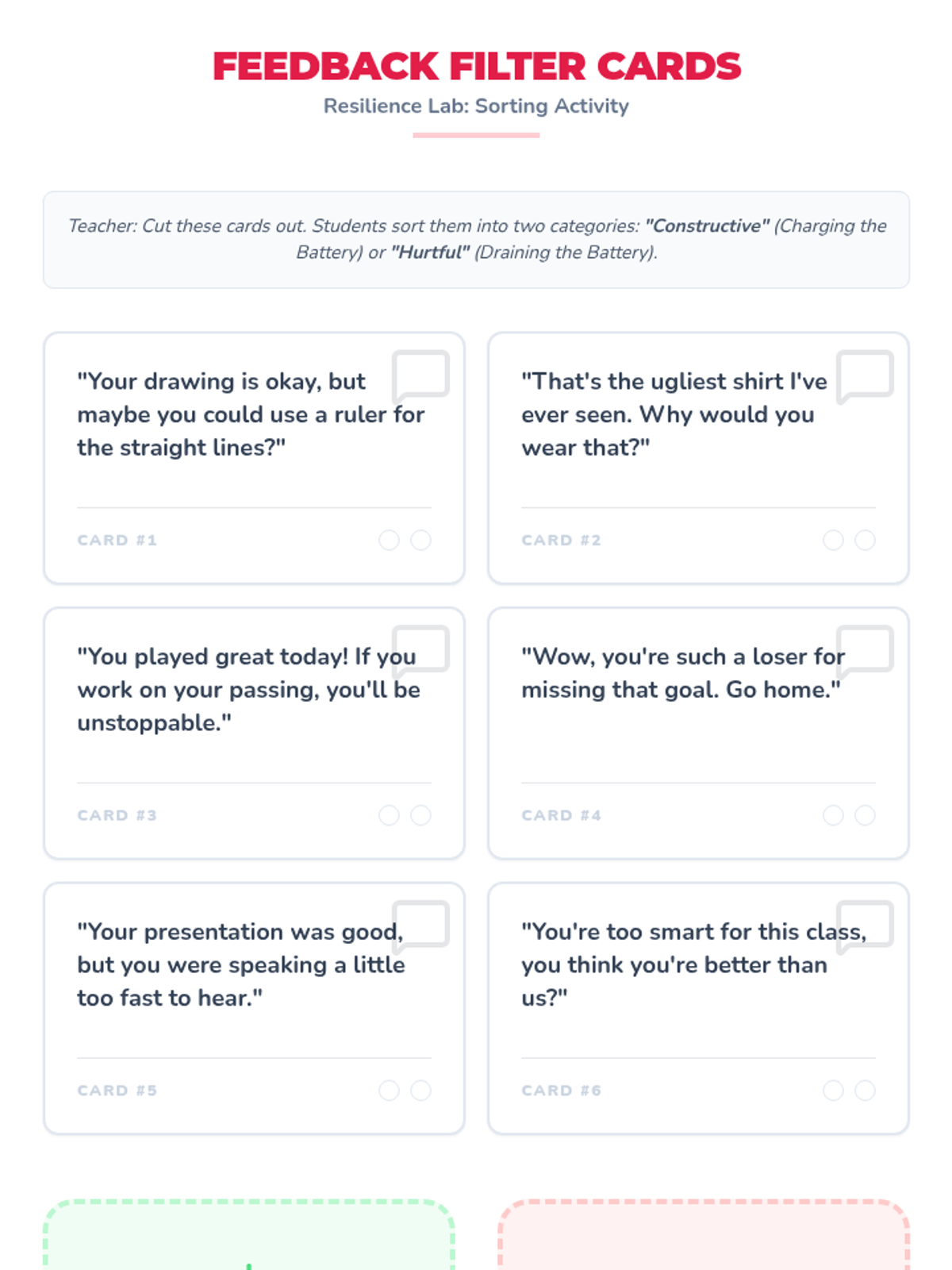
Through scenarios and the 'Wrinkled Heart' activity, students analyze how peer feedback affects self-worth and practice distinguishing constructive feedback.
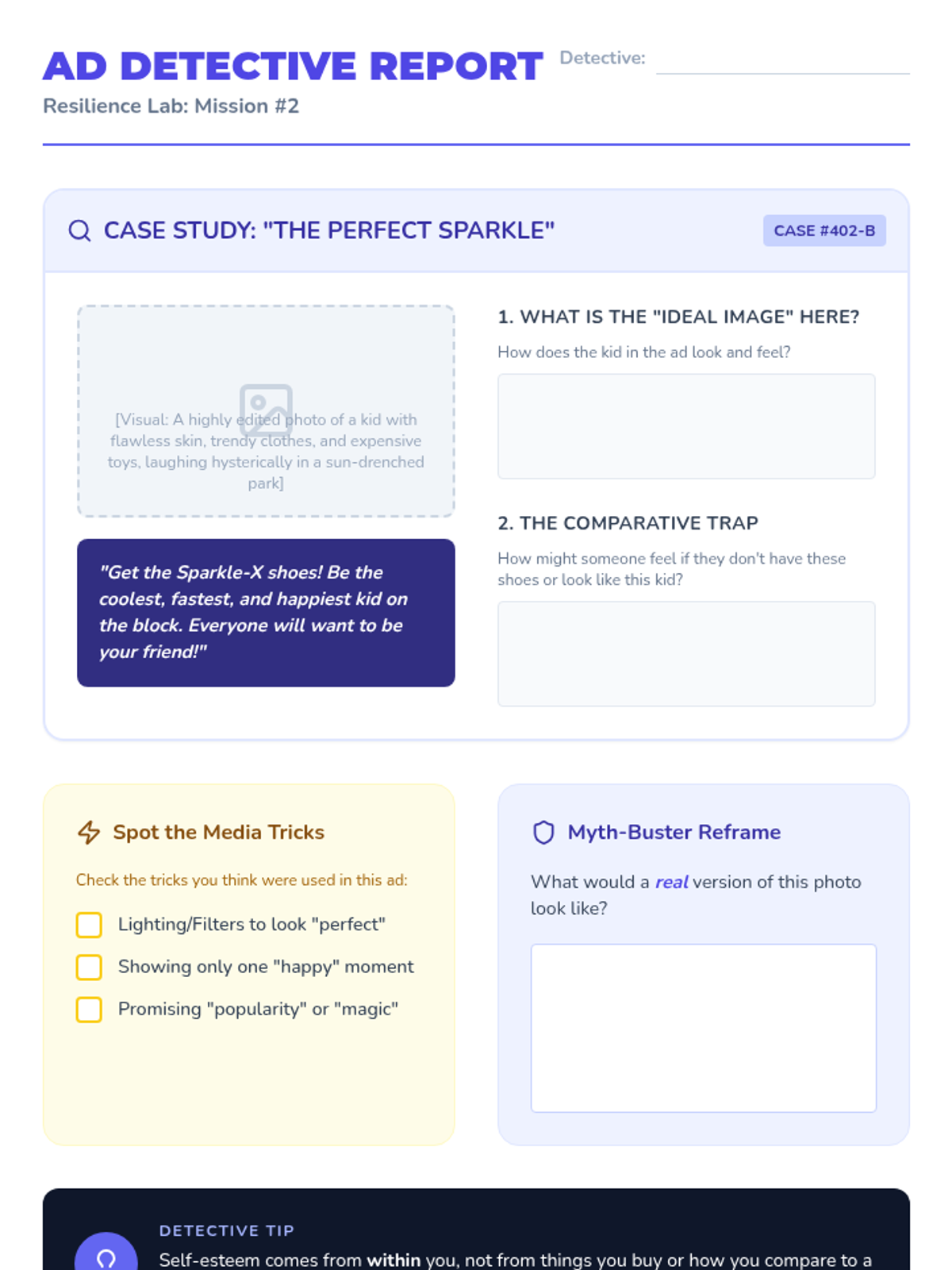
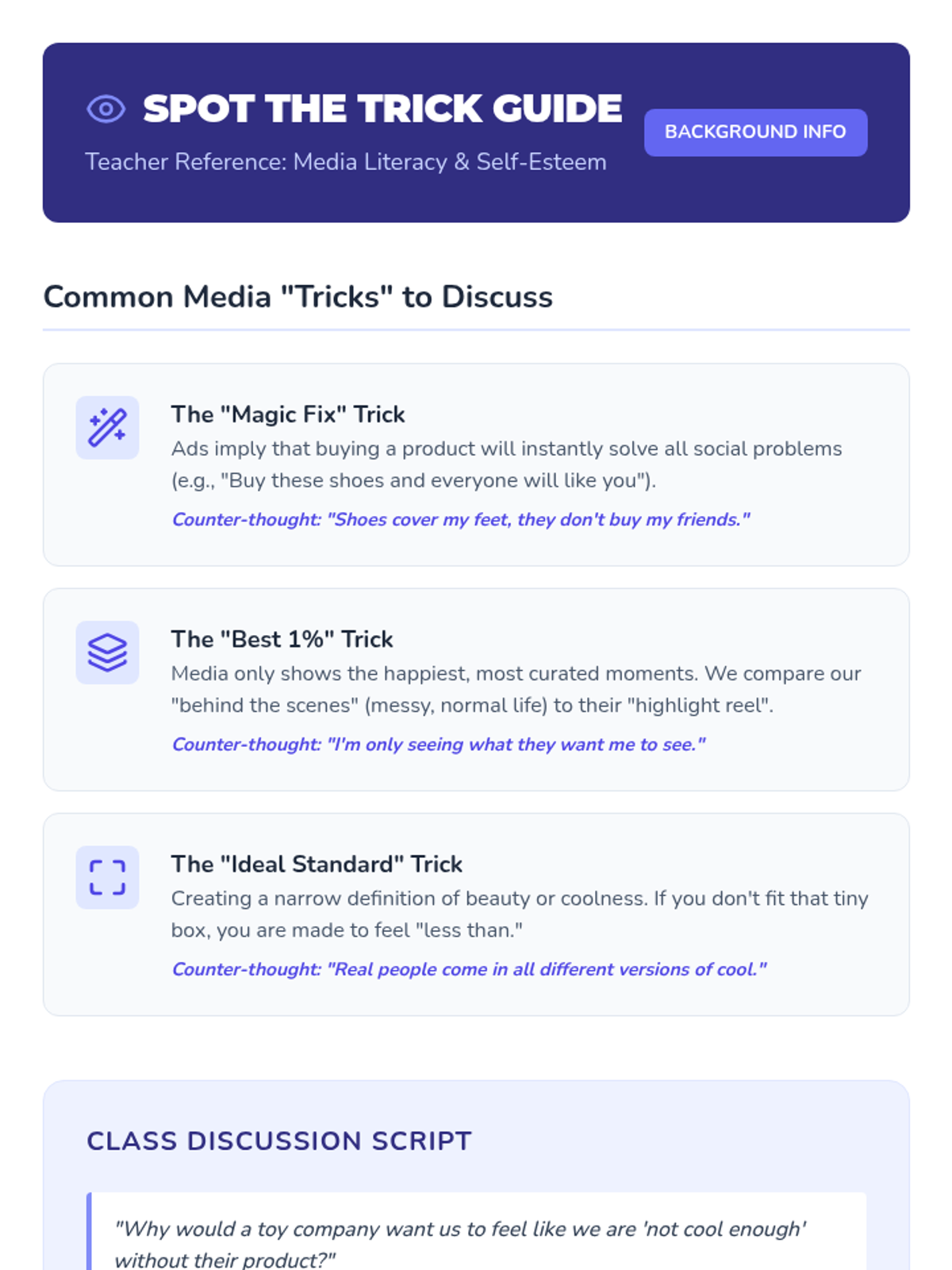
Students critique advertisements and media characters to see how they portray 'ideal' standards and how this impacts self-esteem.
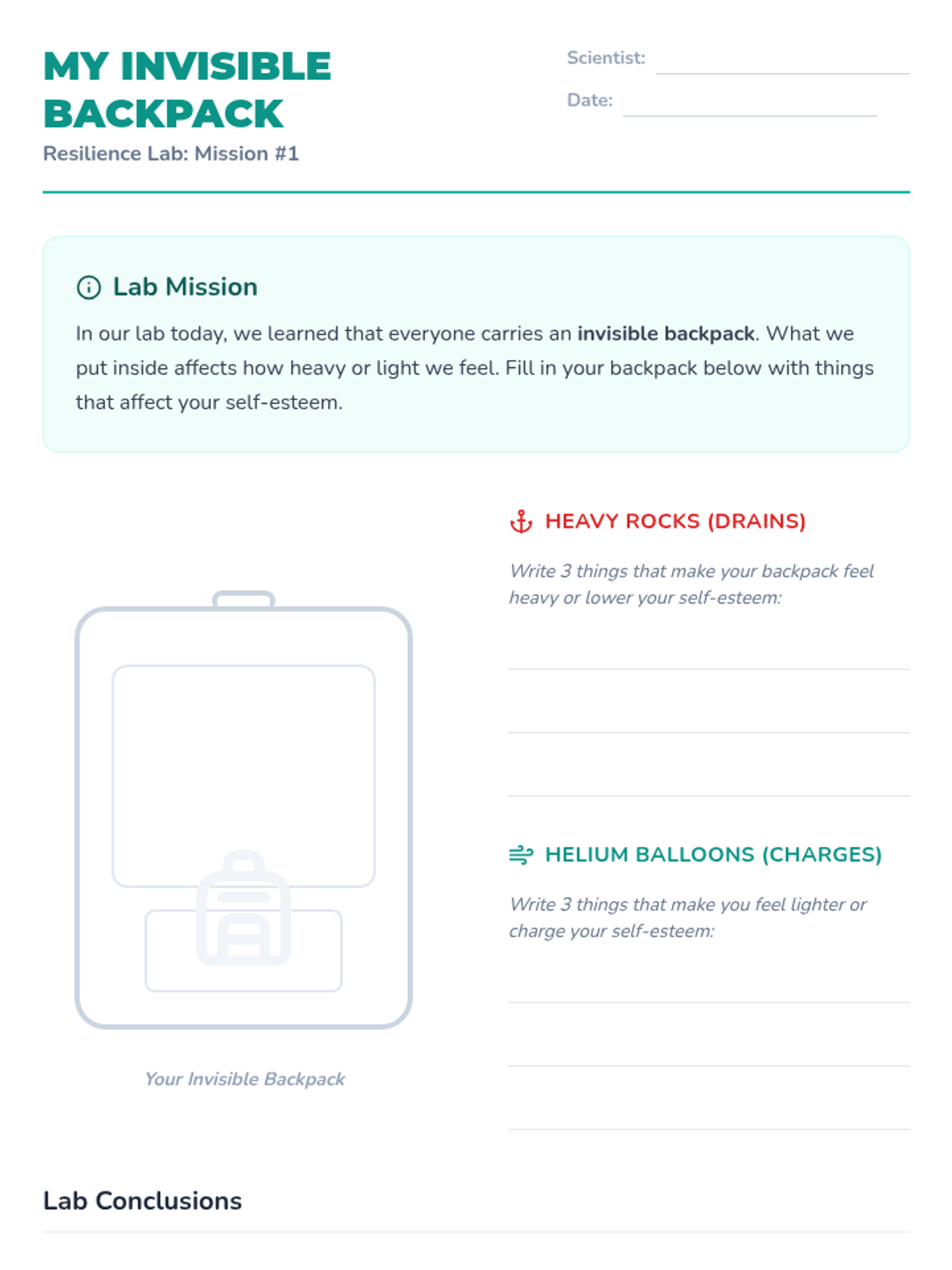
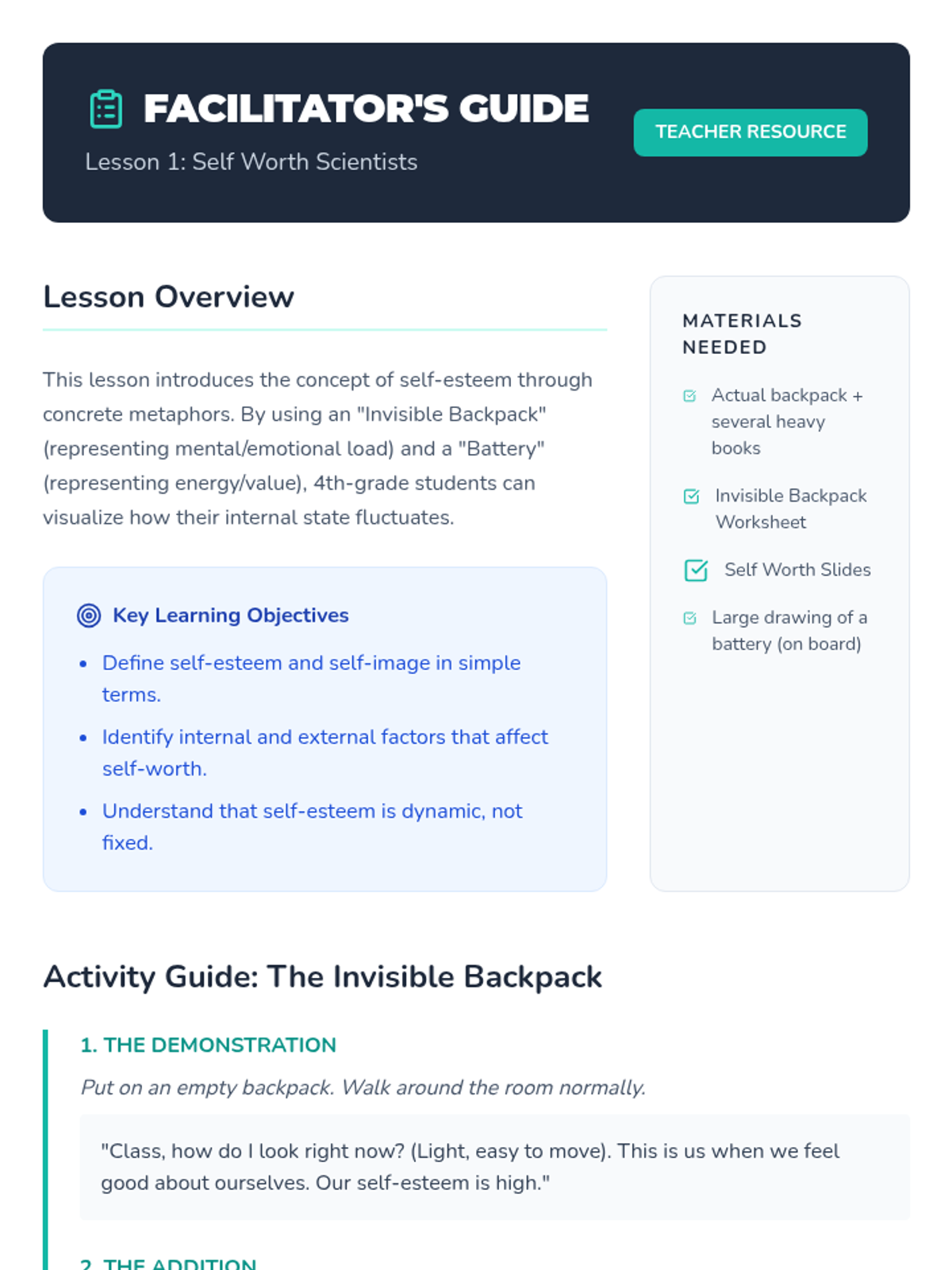
Students engage in a concept-formation lesson to define 'self-esteem' using analogies like a battery and the 'Invisible Backpack' demonstration.
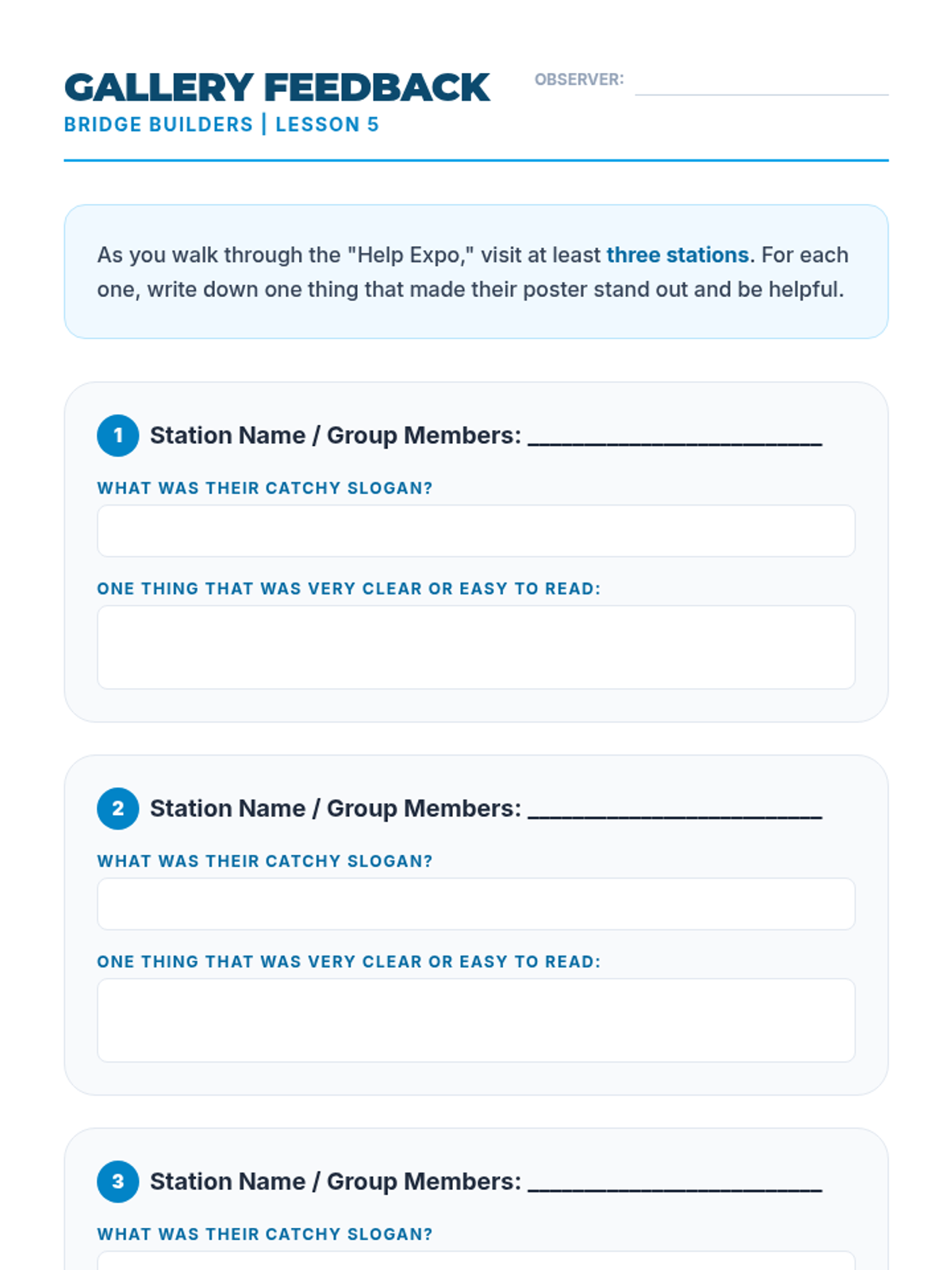
Students present their advocacy projects in a gallery walk format, reinforcing their knowledge by teaching others.
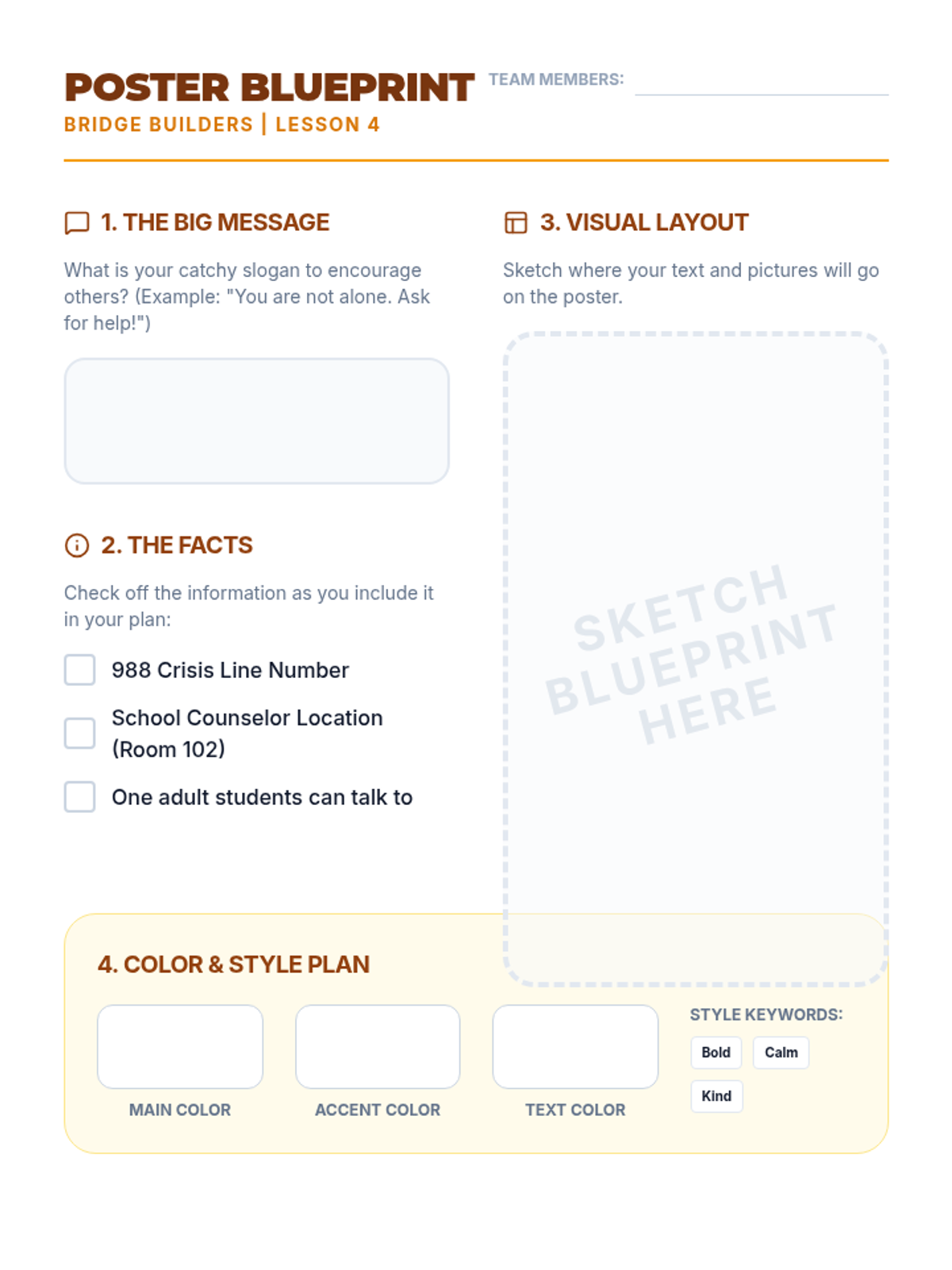
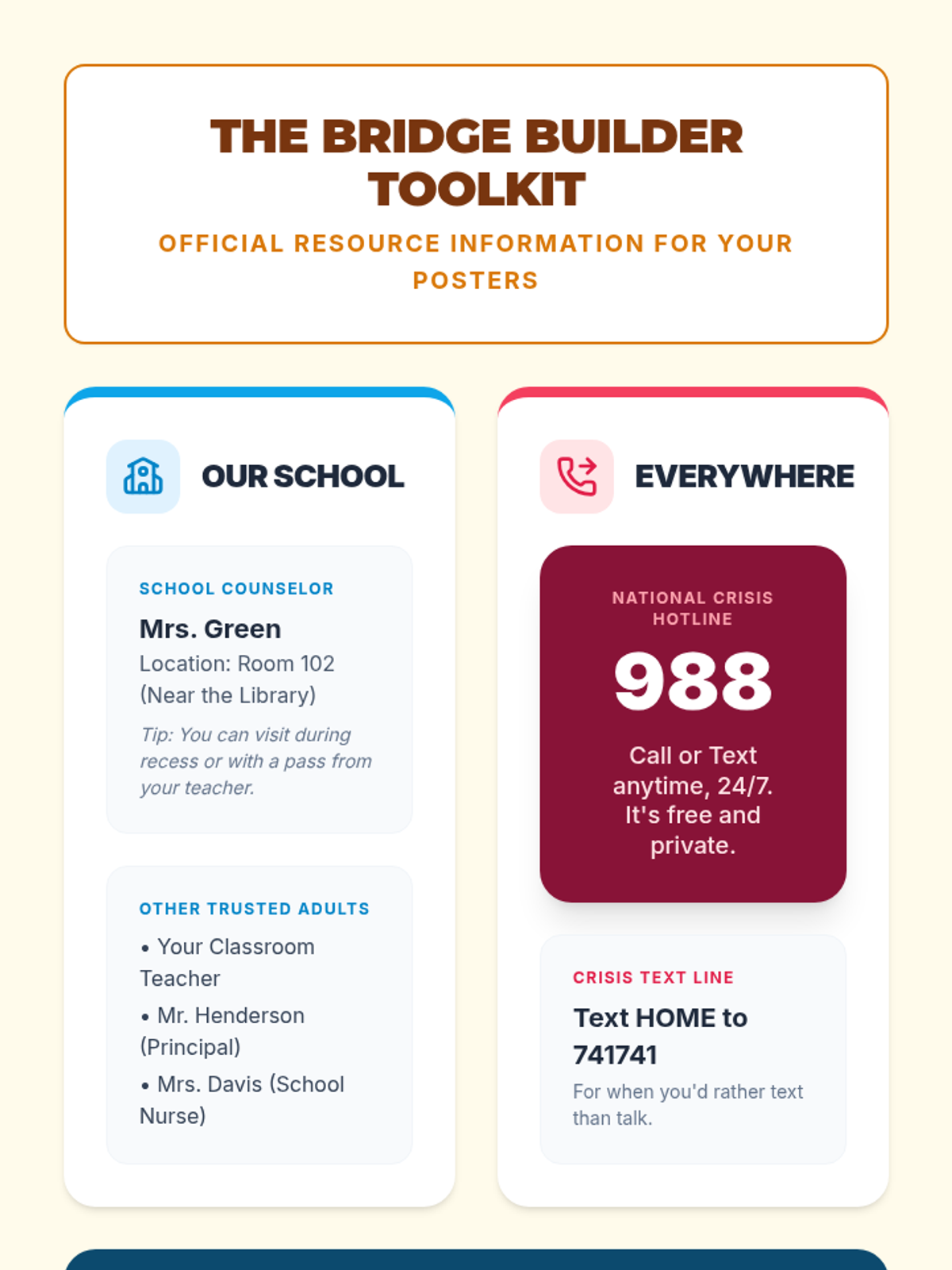
Students collaborate to design informational posters that communicate school and national mental health resources.
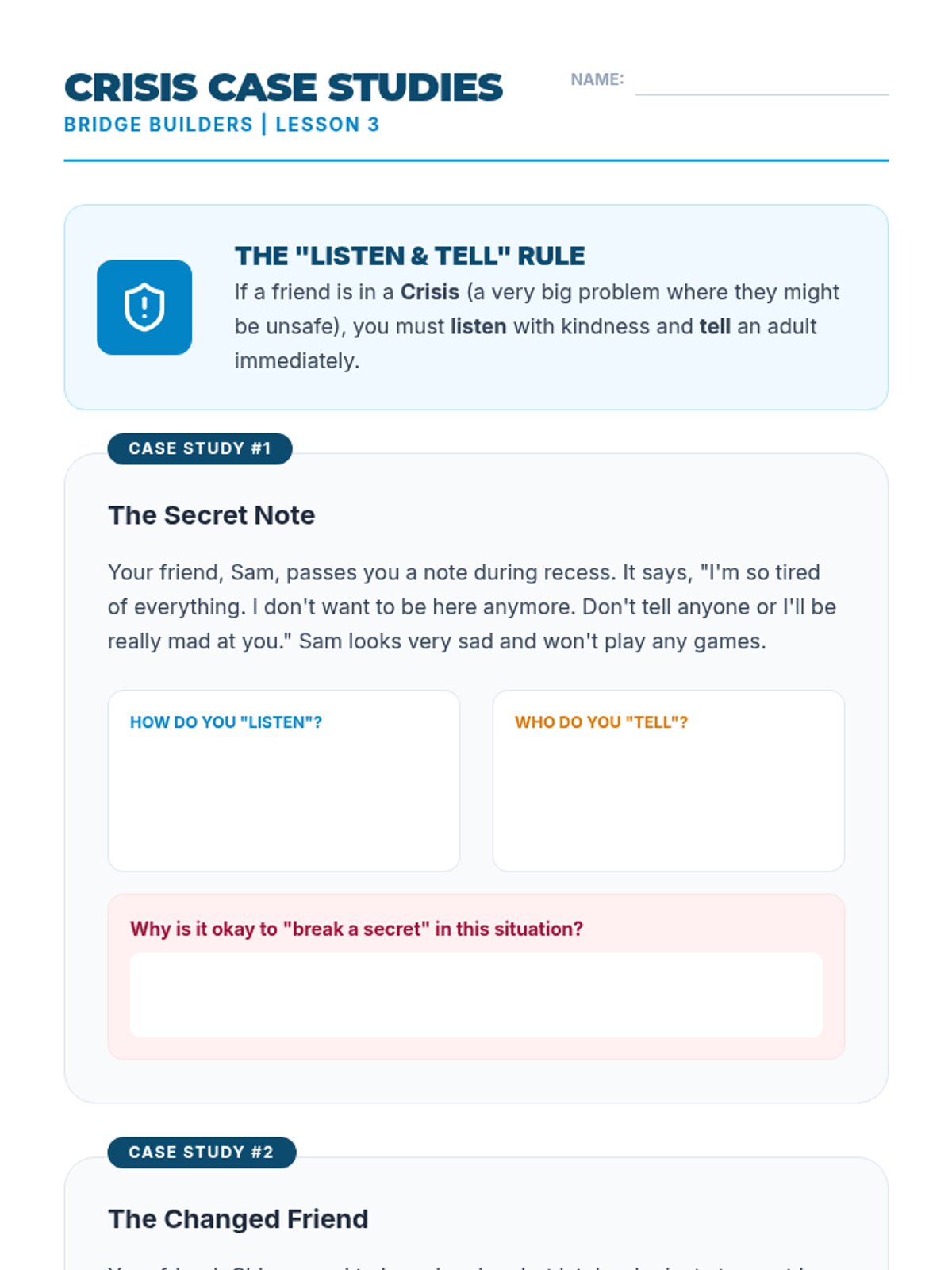
Students explore how to support peers in crisis using the 'Listen and Tell' rule, understanding when a problem is too big to handle alone.
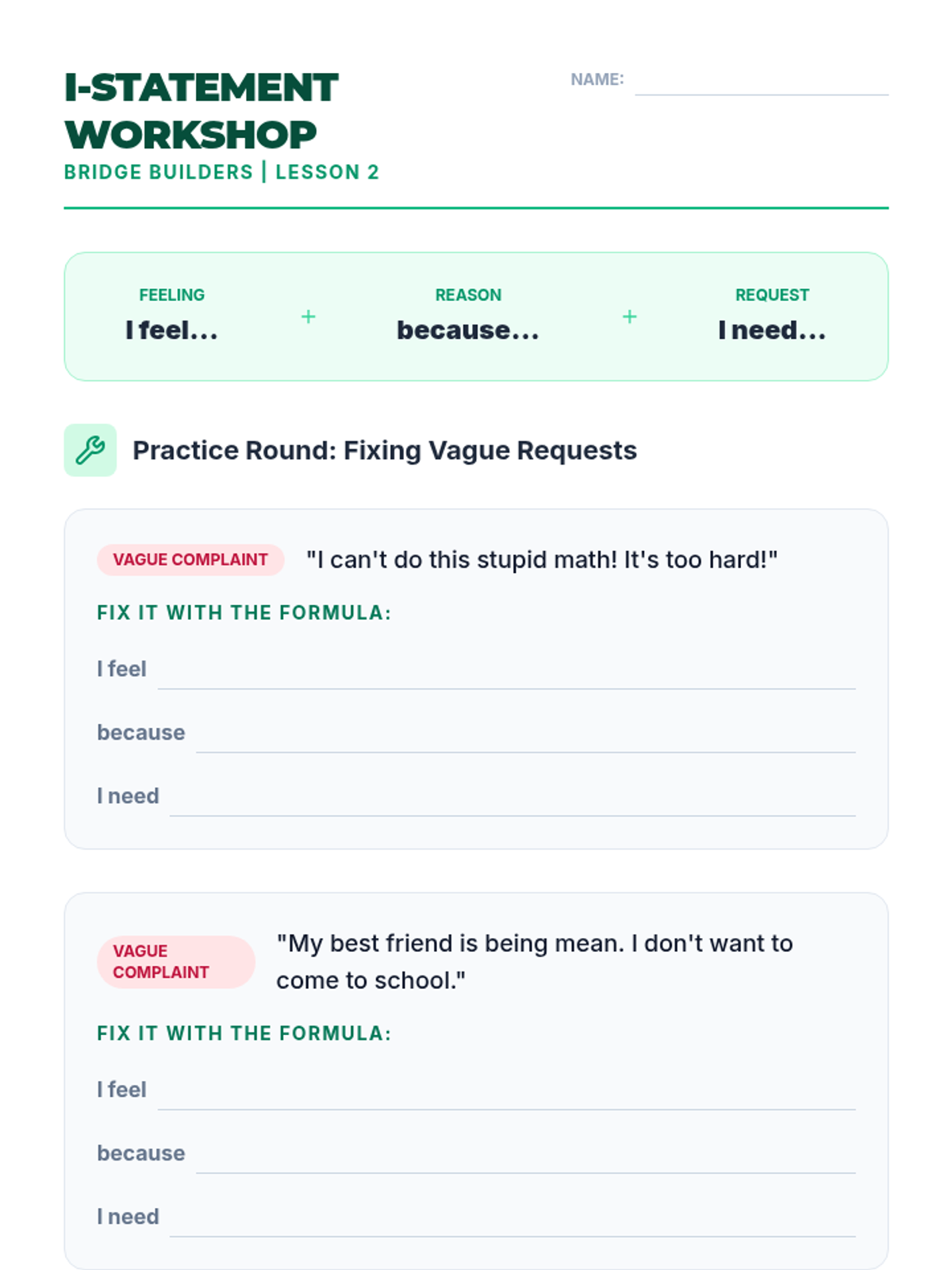
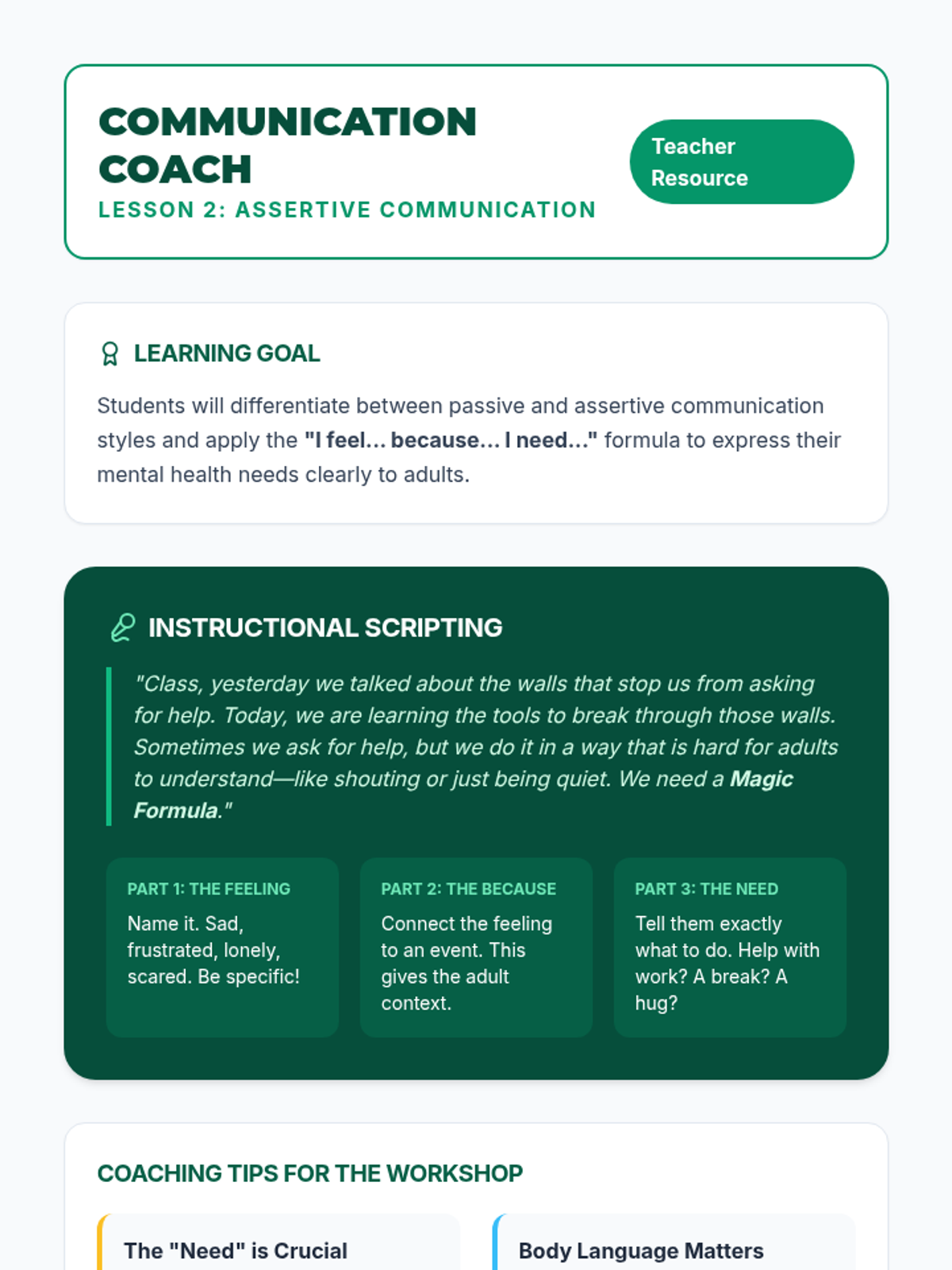
Students learn and practice using 'I-statements' and assertive communication to clearly state their needs to trusted adults.
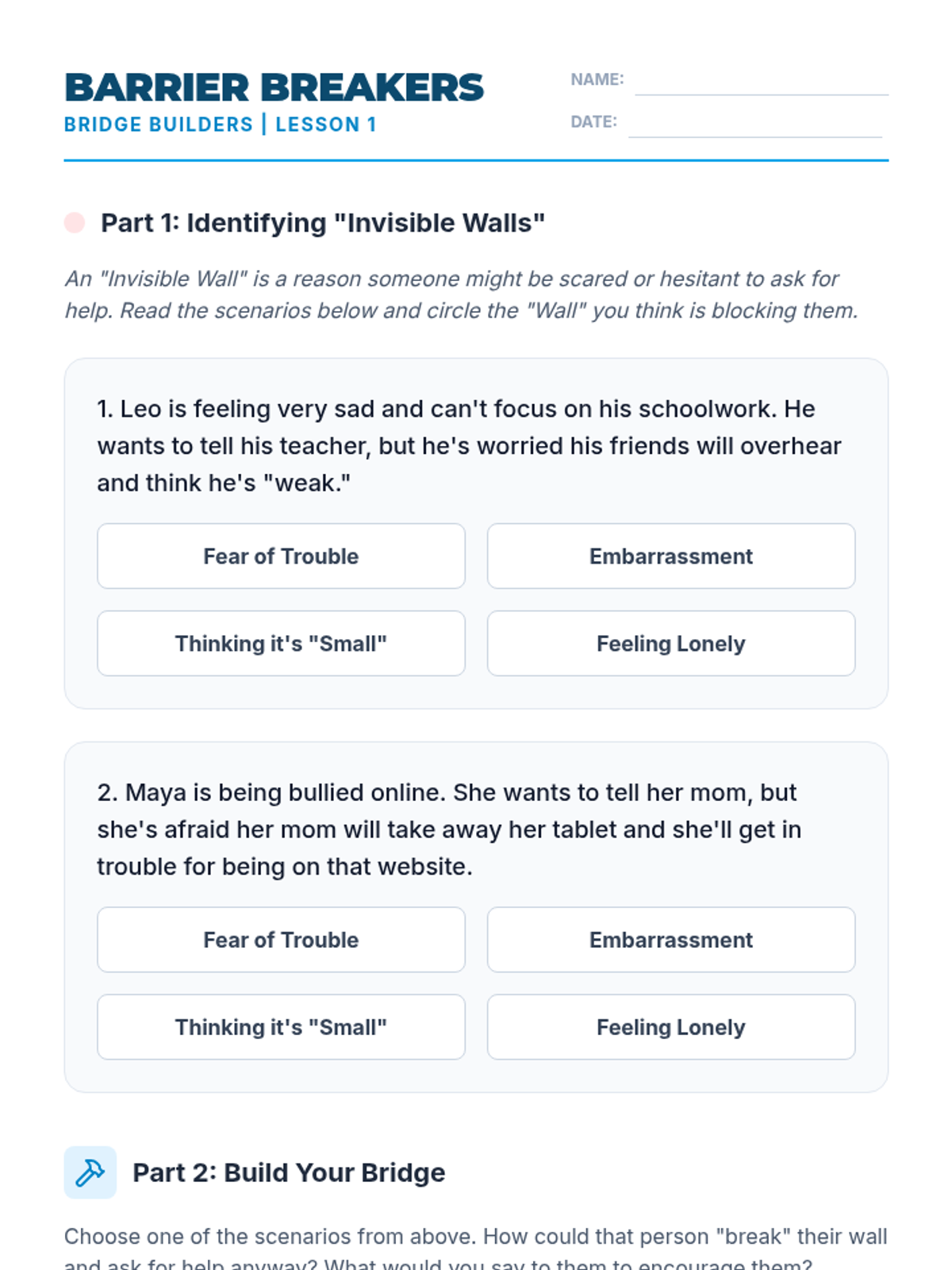
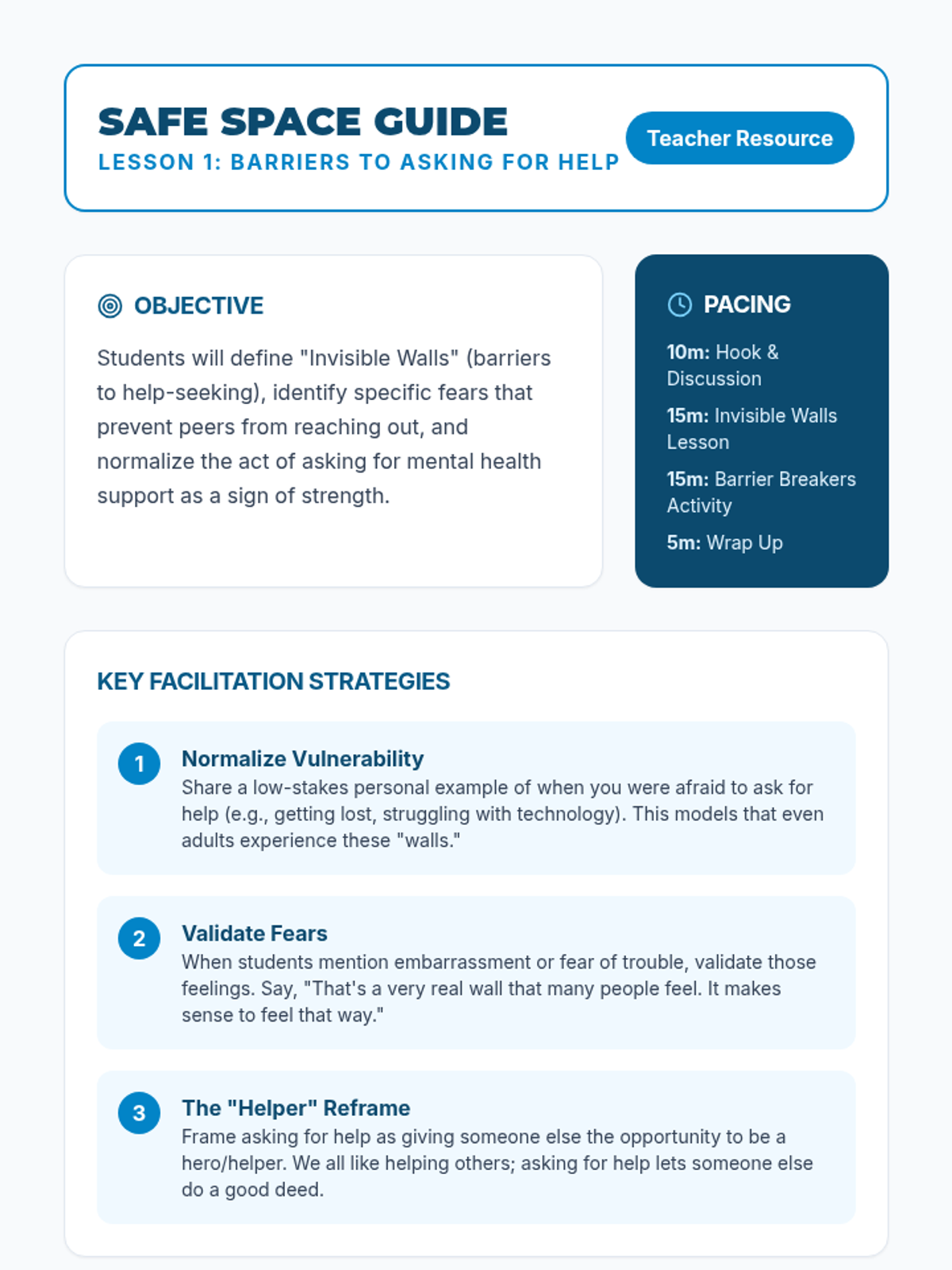
Students identify emotional and social barriers to asking for help and brainstorm strategies to normalize help-seeking behavior.
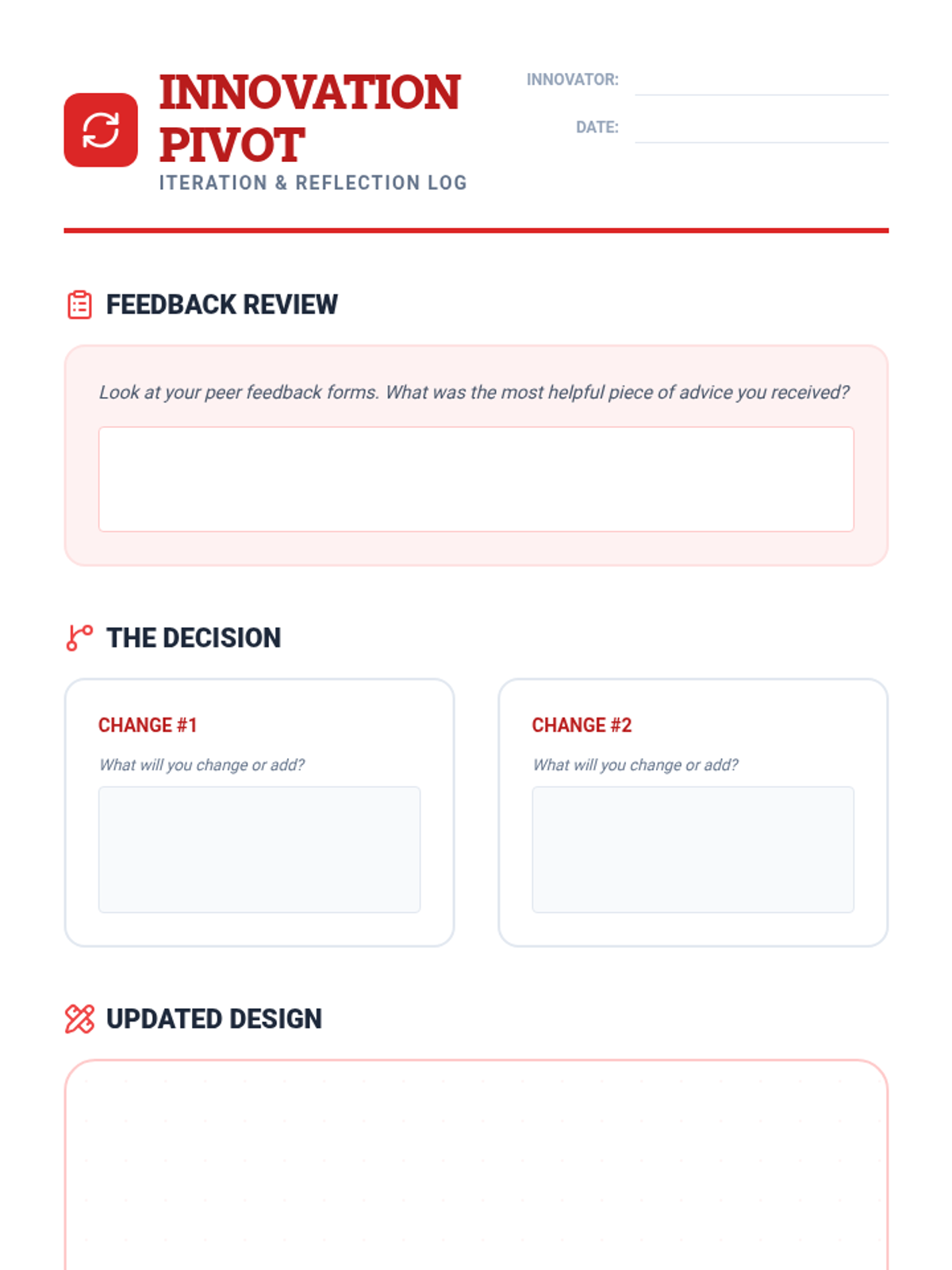
Students use feedback to improve their designs, documenting changes and reflecting on the evolution of their ideas.
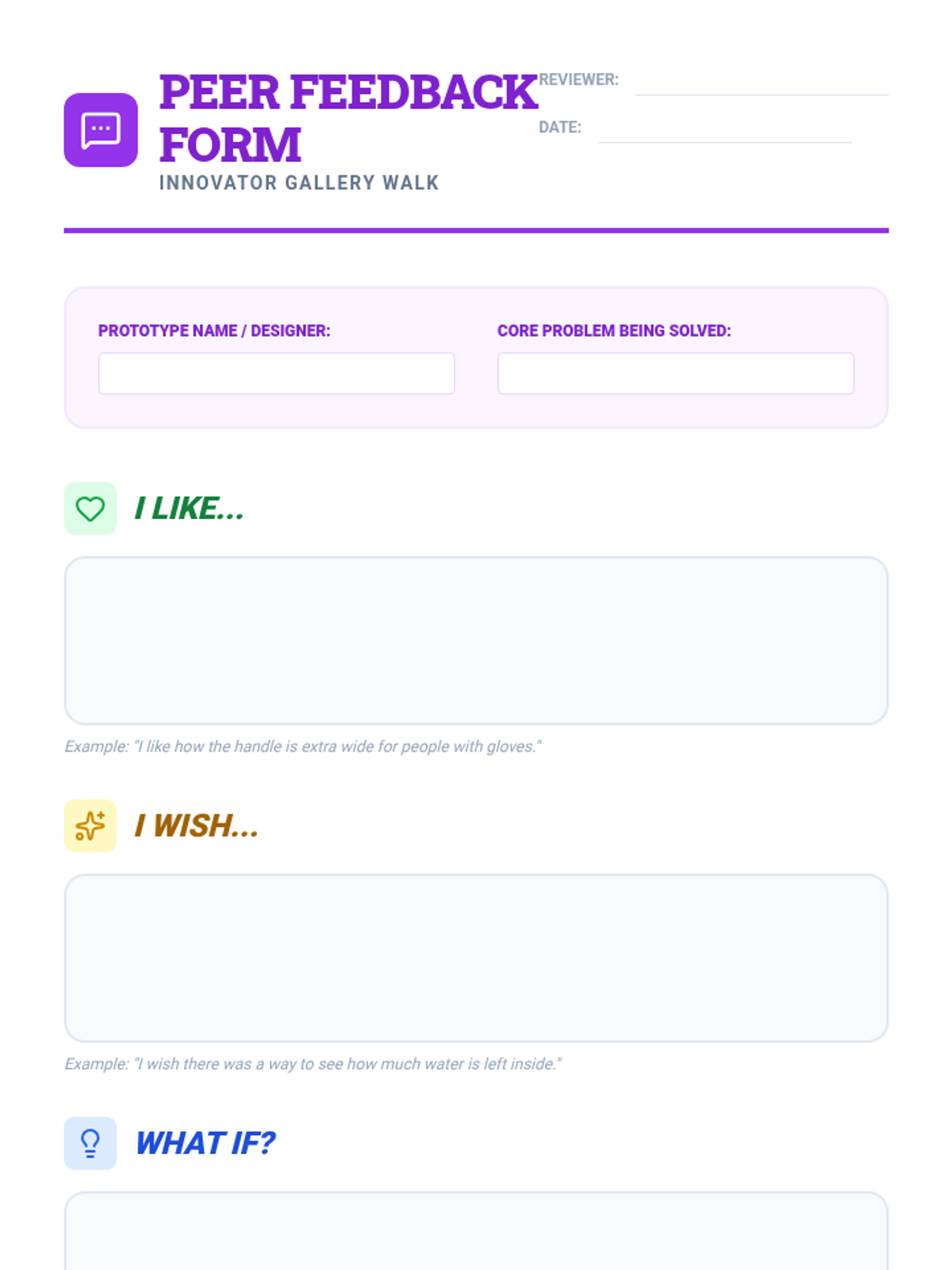
Students present prototypes to peers to gather feedback and learn the value of active listening and market empathy.
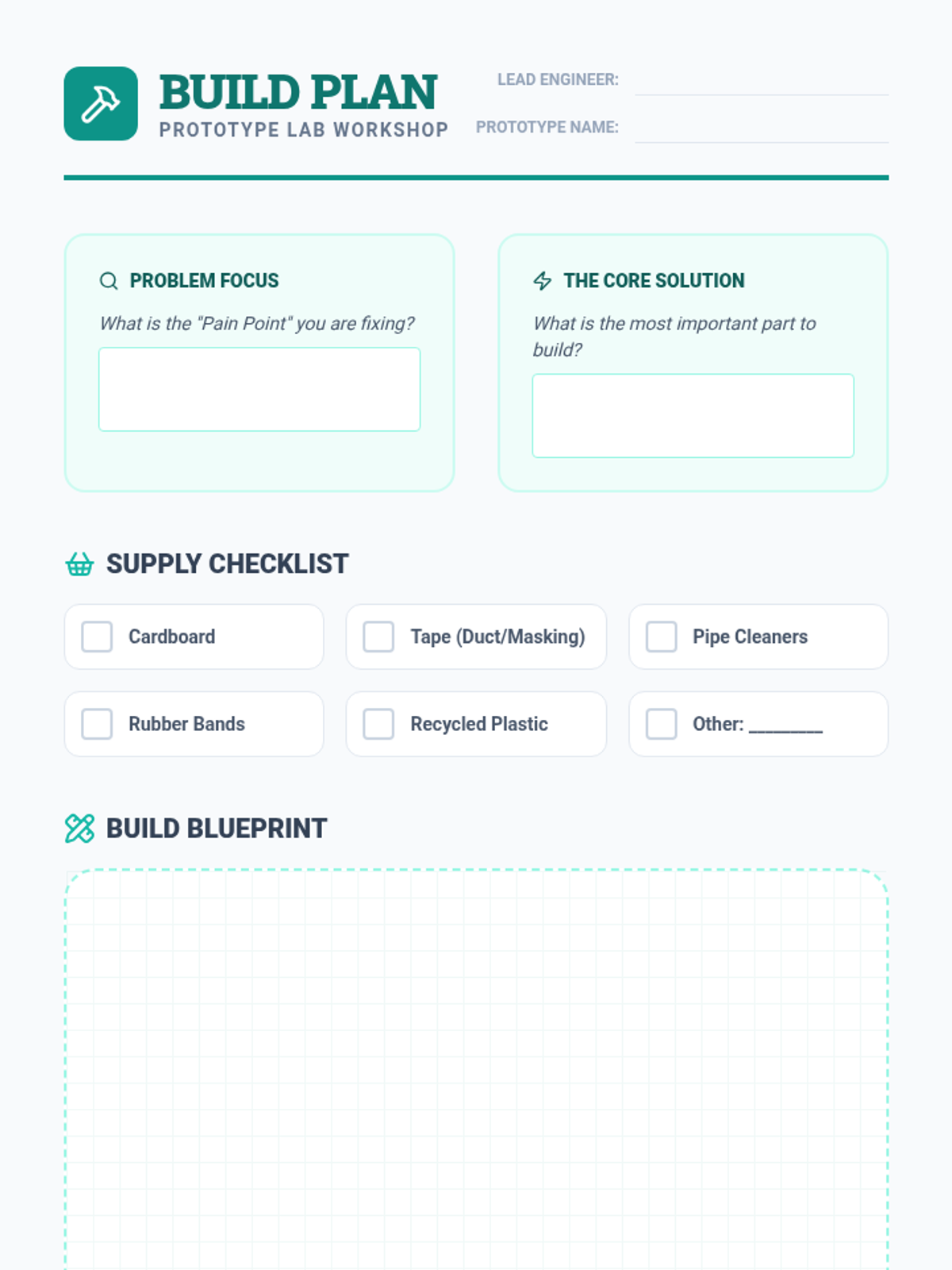
Students build low-fidelity prototypes using recycled materials to translate abstract ideas into physical forms.
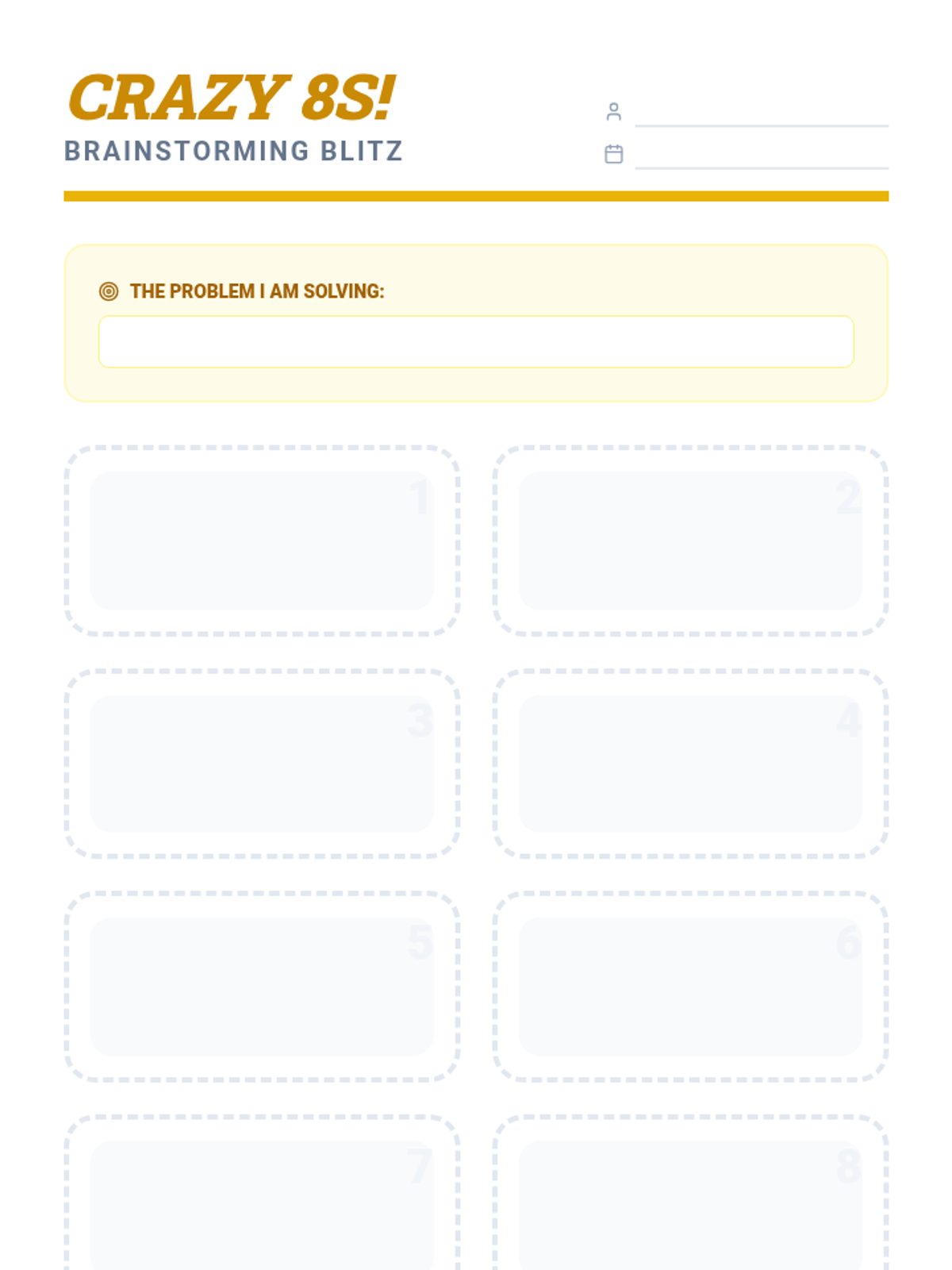
Students learn brainstorming techniques like SCAMPER and Crazy 8s to generate multiple solutions for identified problems.
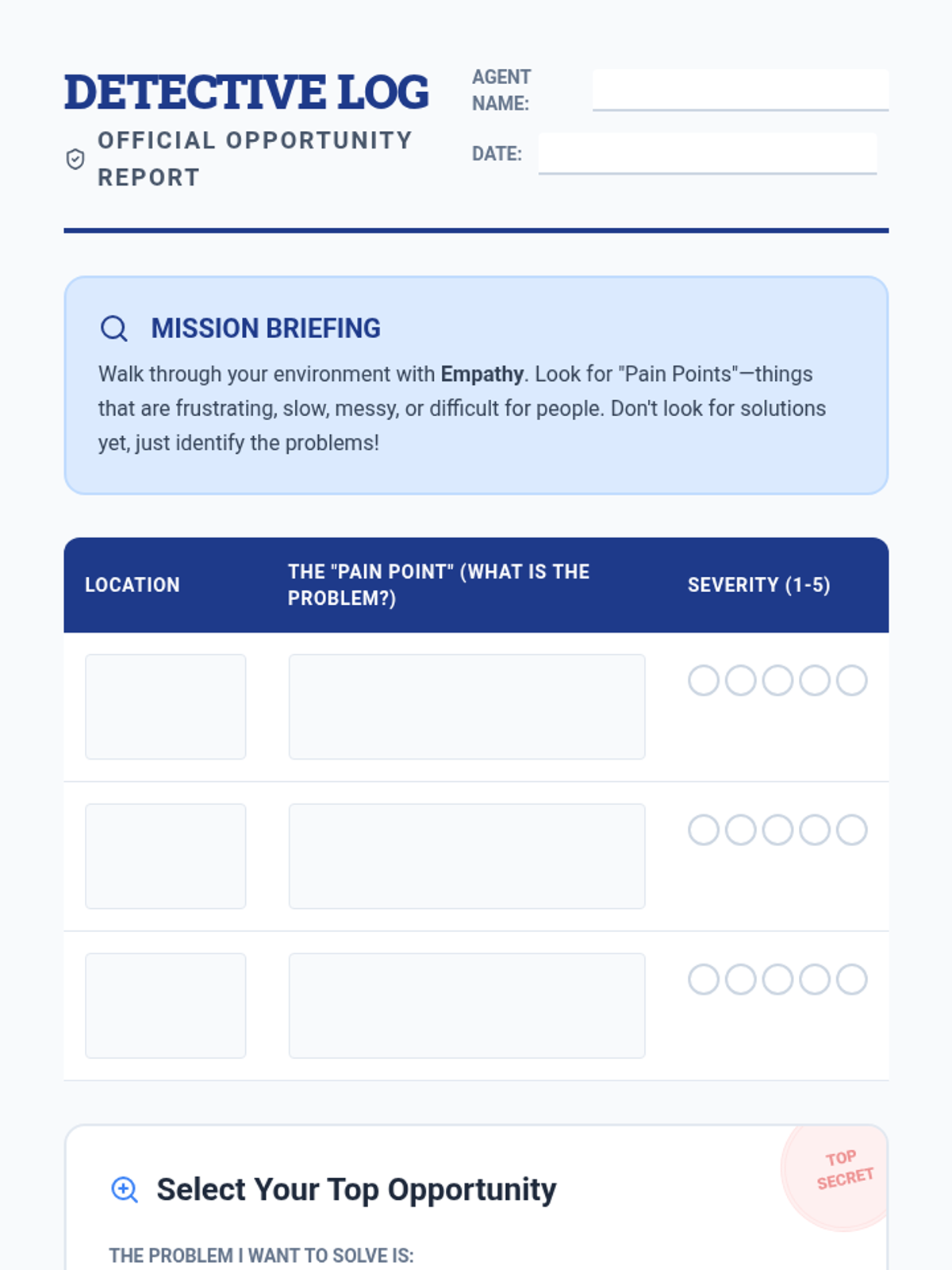
Students practice observational skills to identify 'pain points' or problems in their daily environment and conduct an empathy walk.
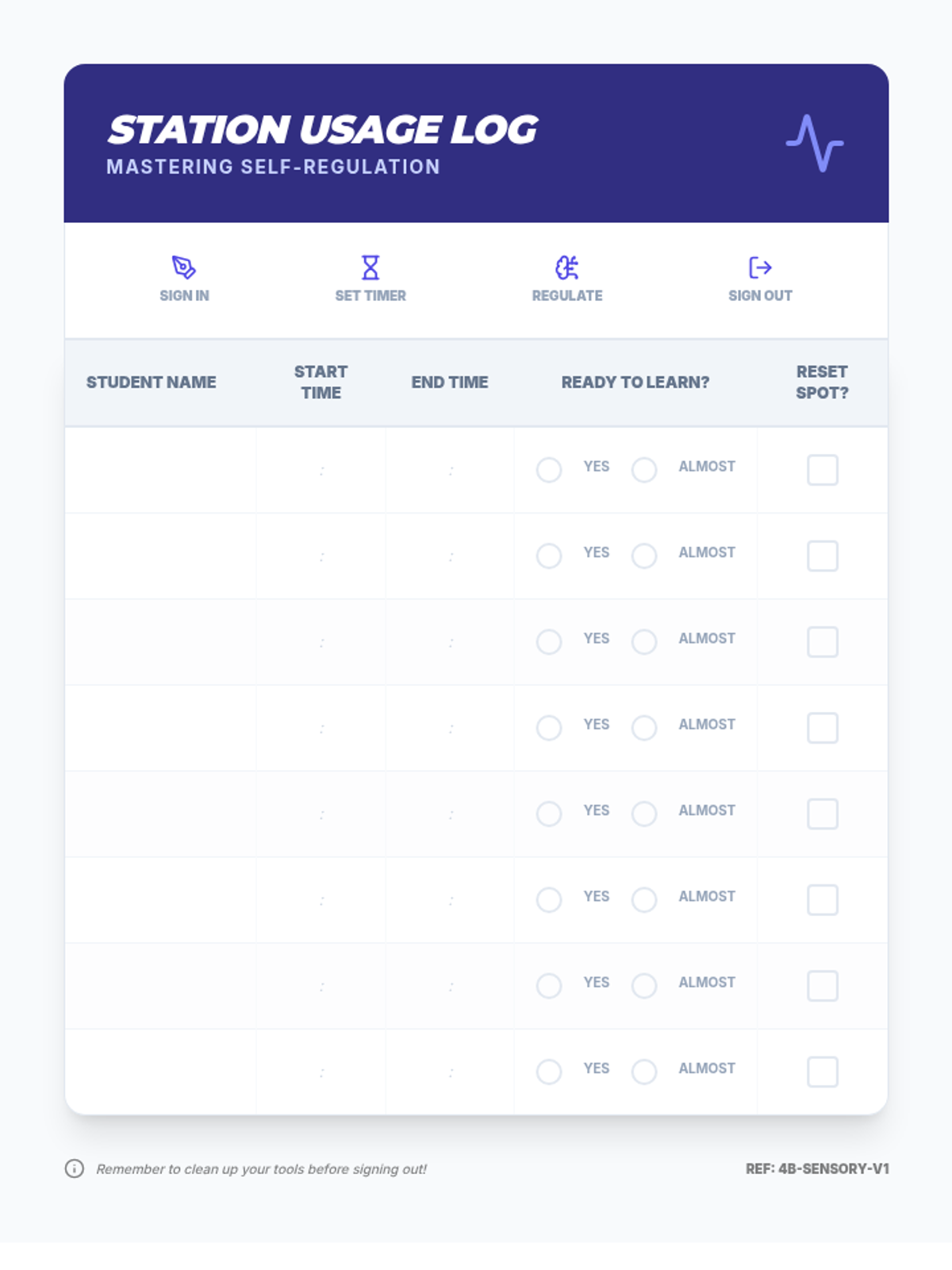
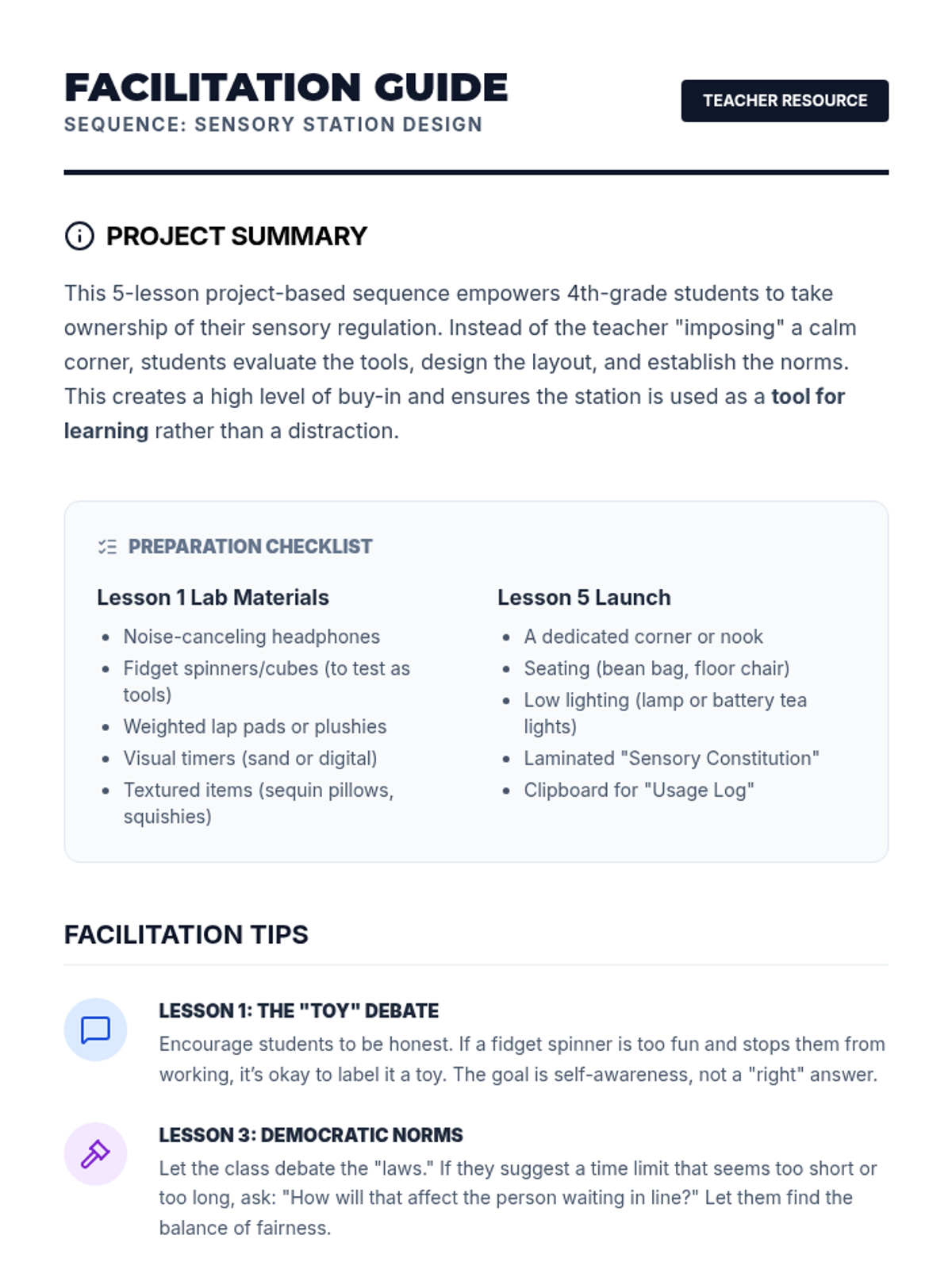
Students finalize the setup of the physical station and the sign-out system. They participate in a 'dry run' where they practice entering, using a tool, and exiting the break seamlessly. The sequence concludes with the official opening of the station.
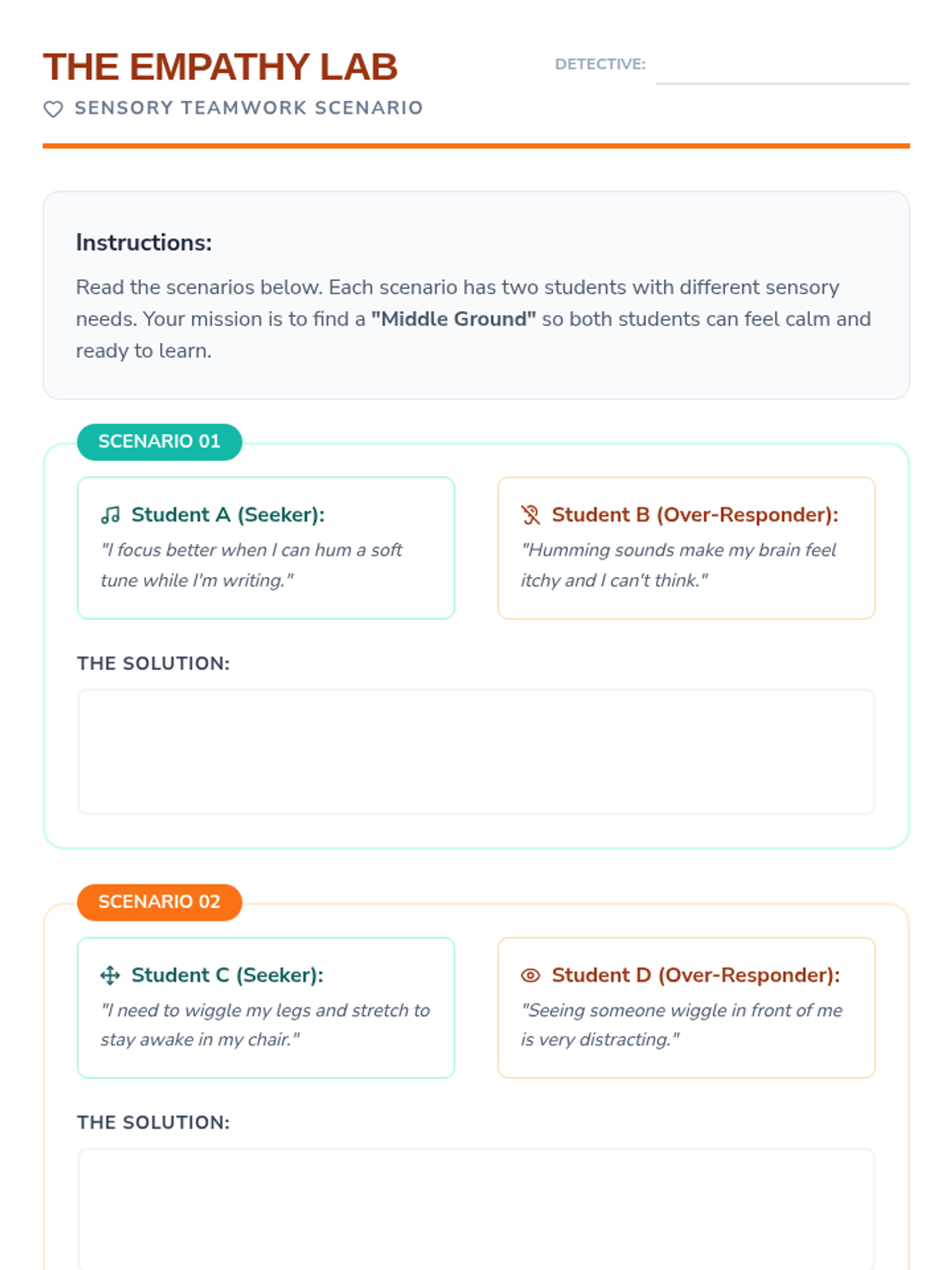
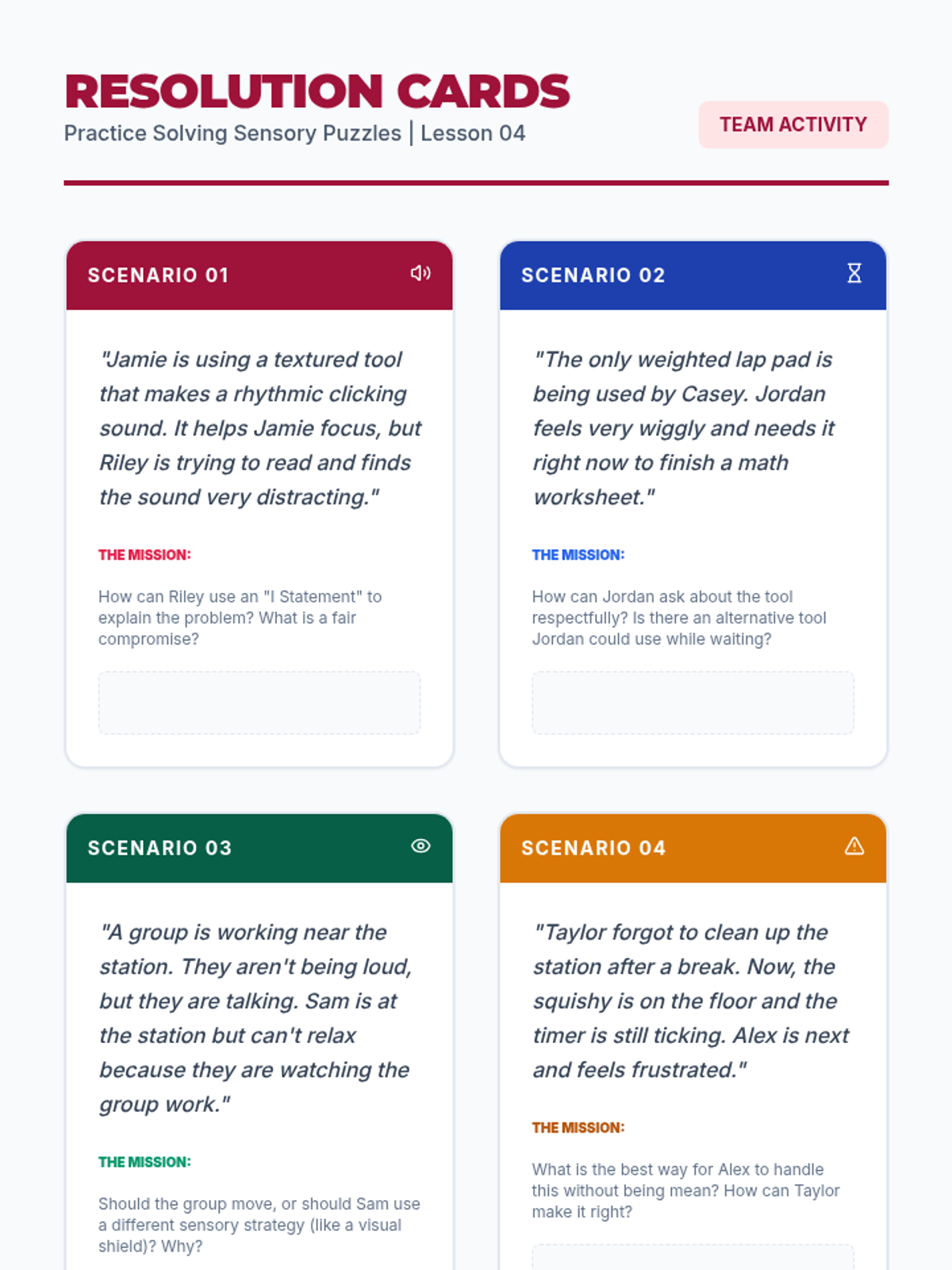
Students engage in discussions about how sensory needs vary from person to person (e.g., some like tapping, others find it annoying). They practice conflict resolution strategies related to sensory tools. The focus is on communal respect.
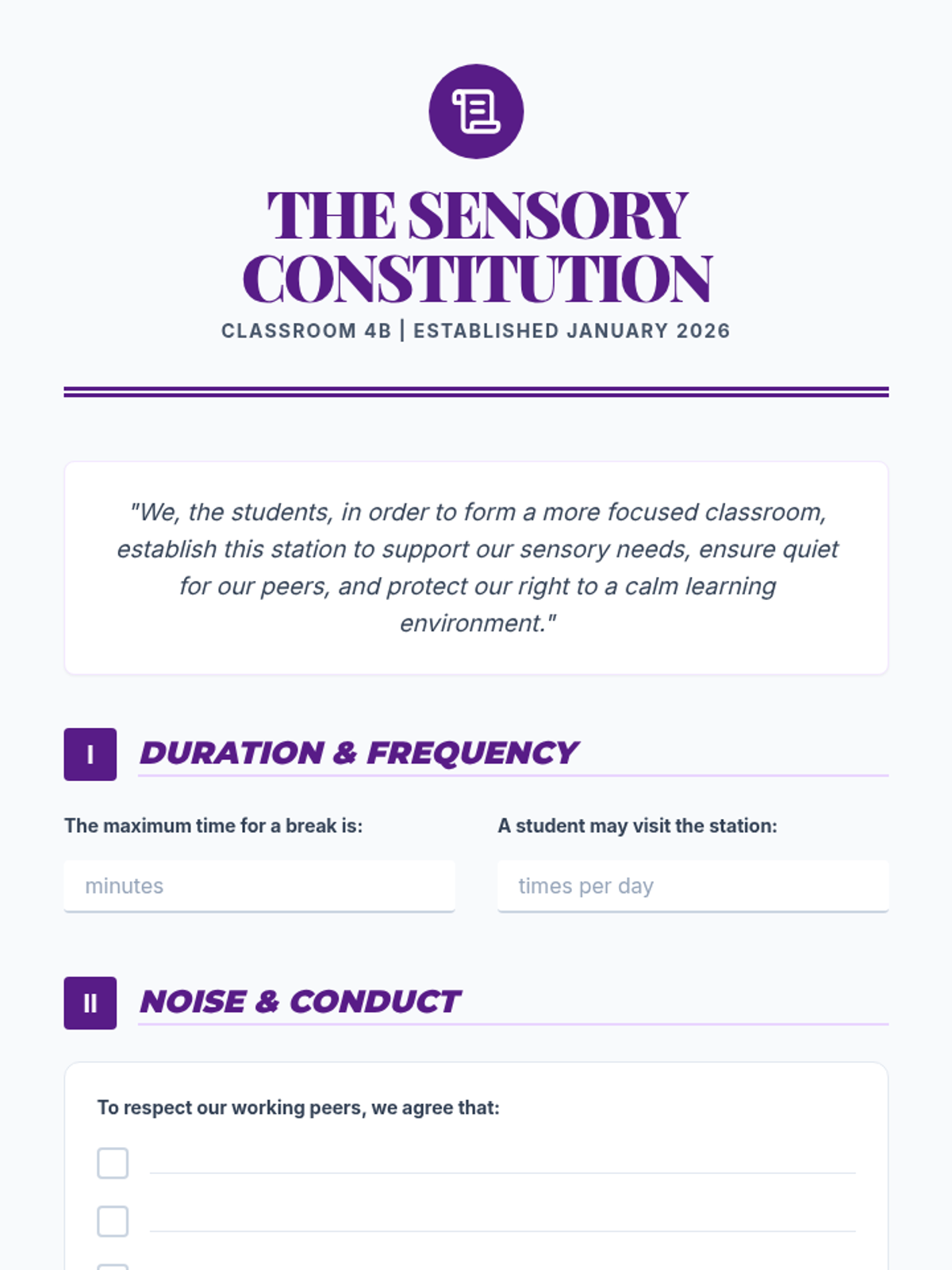
The class collaboratively drafts a constitution for using sensory breaks, focusing on duration, frequency, and waiting turns. They debate hypothetical scenarios to refine the rules. This ensures the system is fair and supports learning rather than avoiding work.
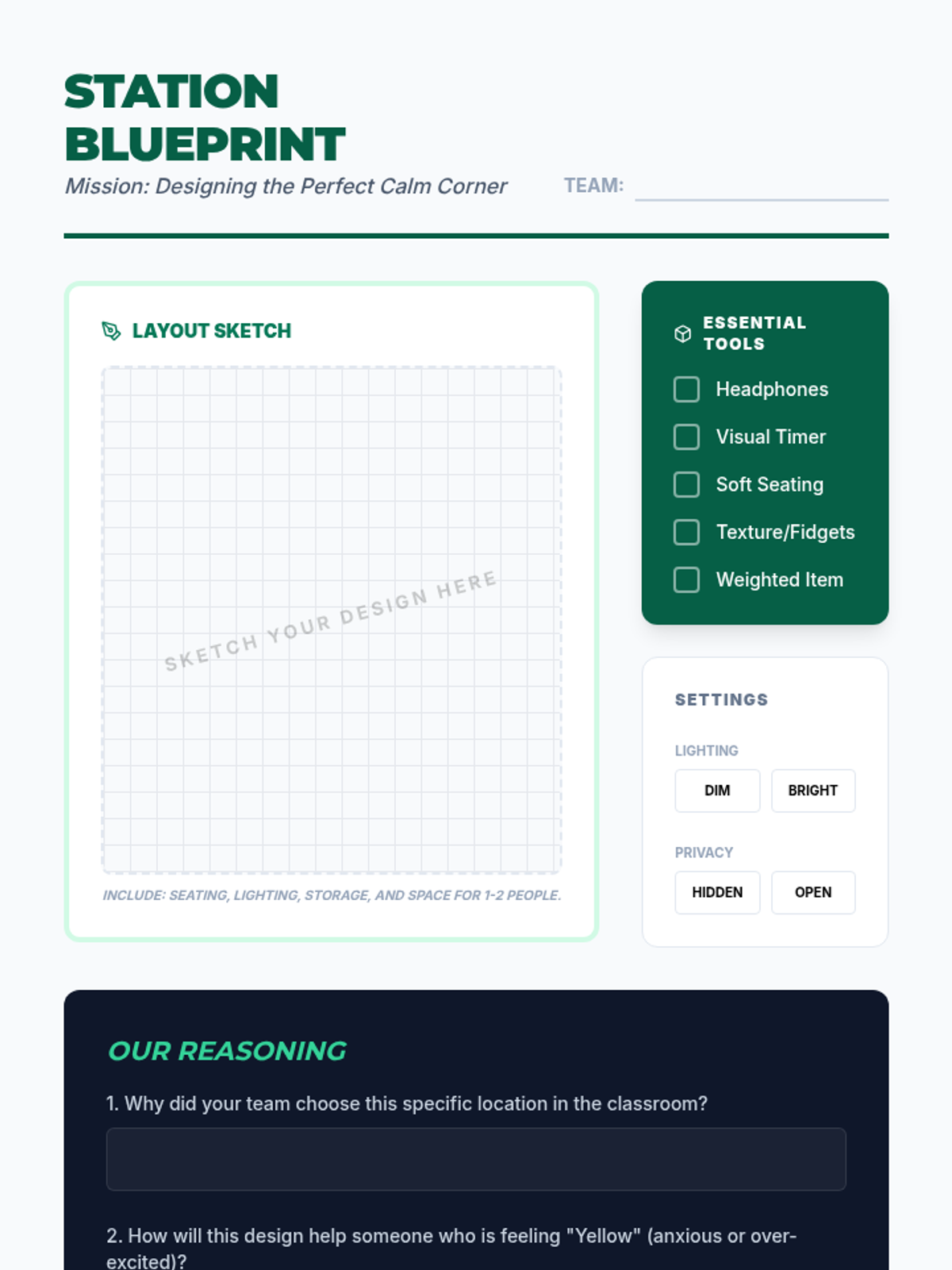
Students work in teams to propose layouts for a 'Calm Corner' or break area within the classroom. They consider factors like lighting, noise reduction, and accessibility. Proposals must include justifications based on sensory needs.
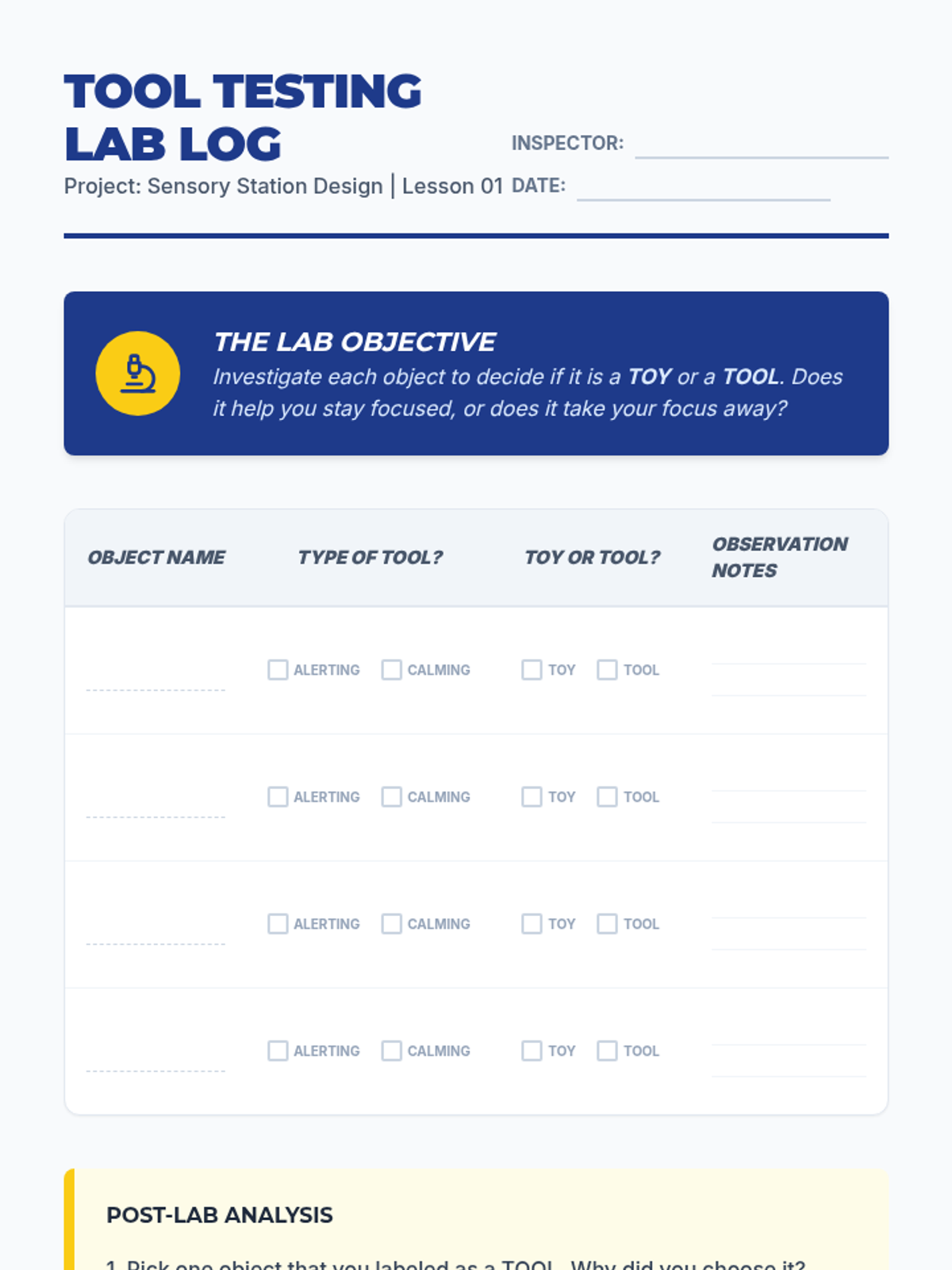
Students explore various sensory objects to determine if they are 'alerting' or 'calming' and practice distinguishing between toys and tools.
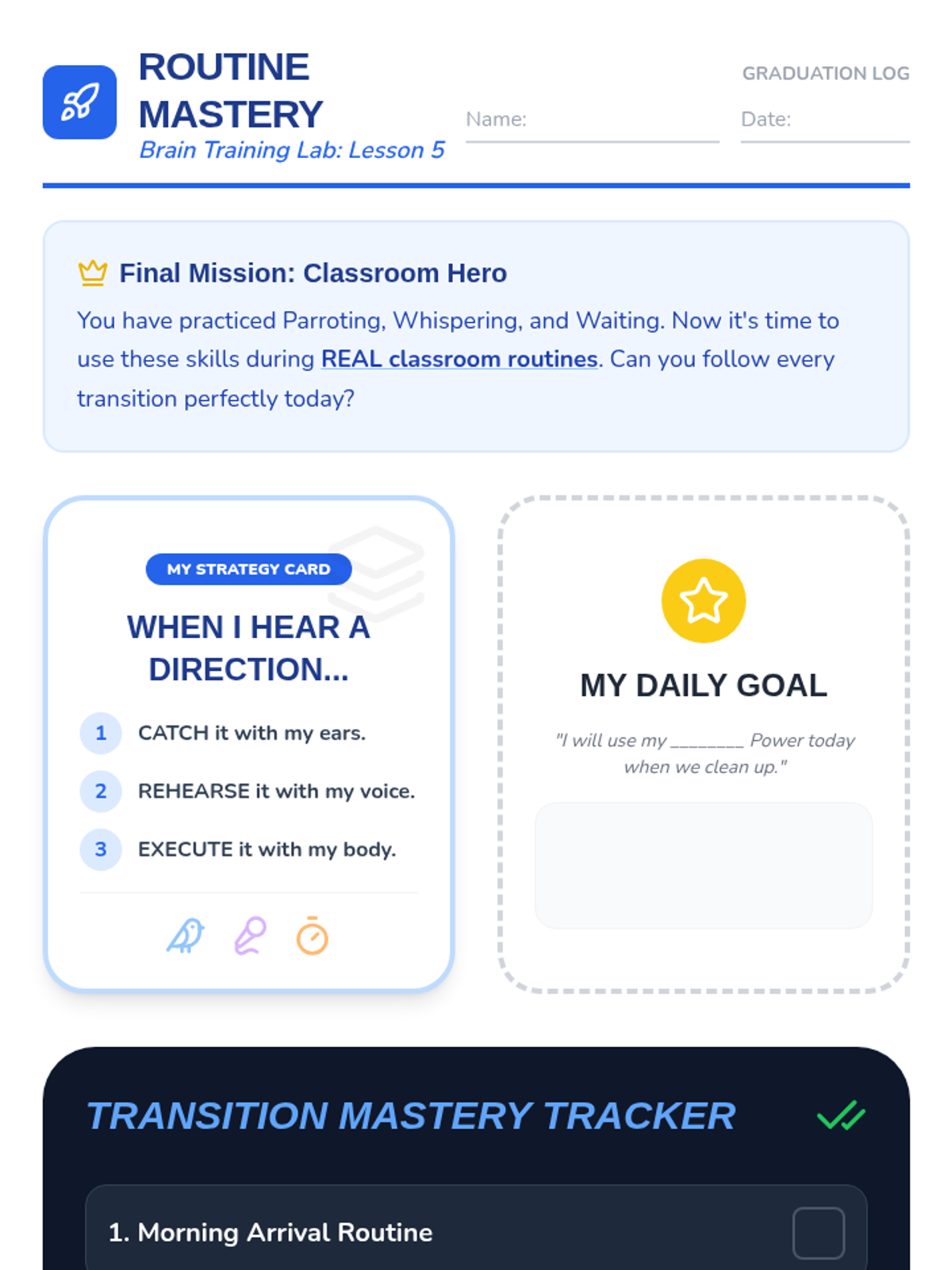
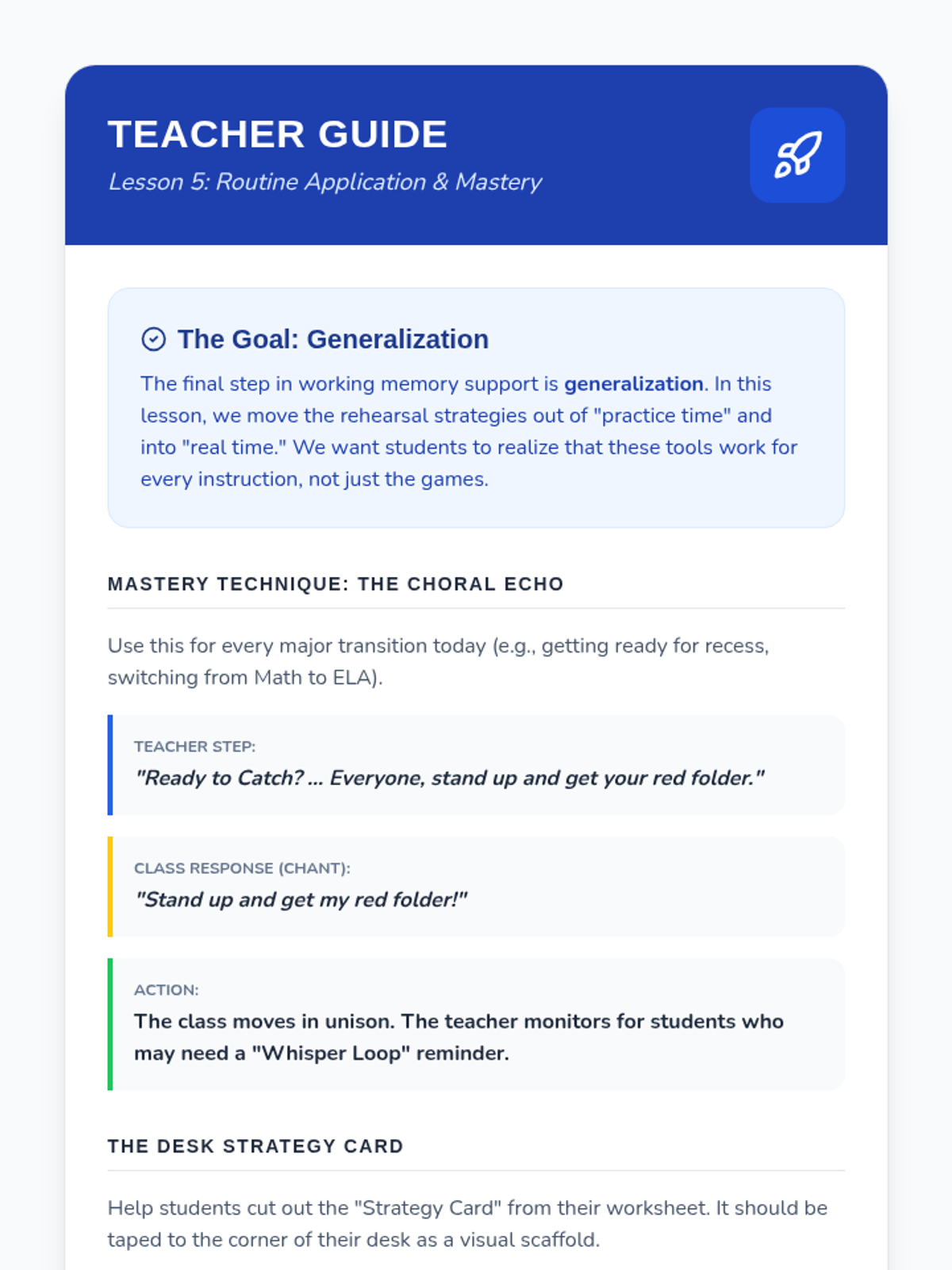
Students apply verbal strategies to actual classroom transition requests using choral responses to confirm steps.
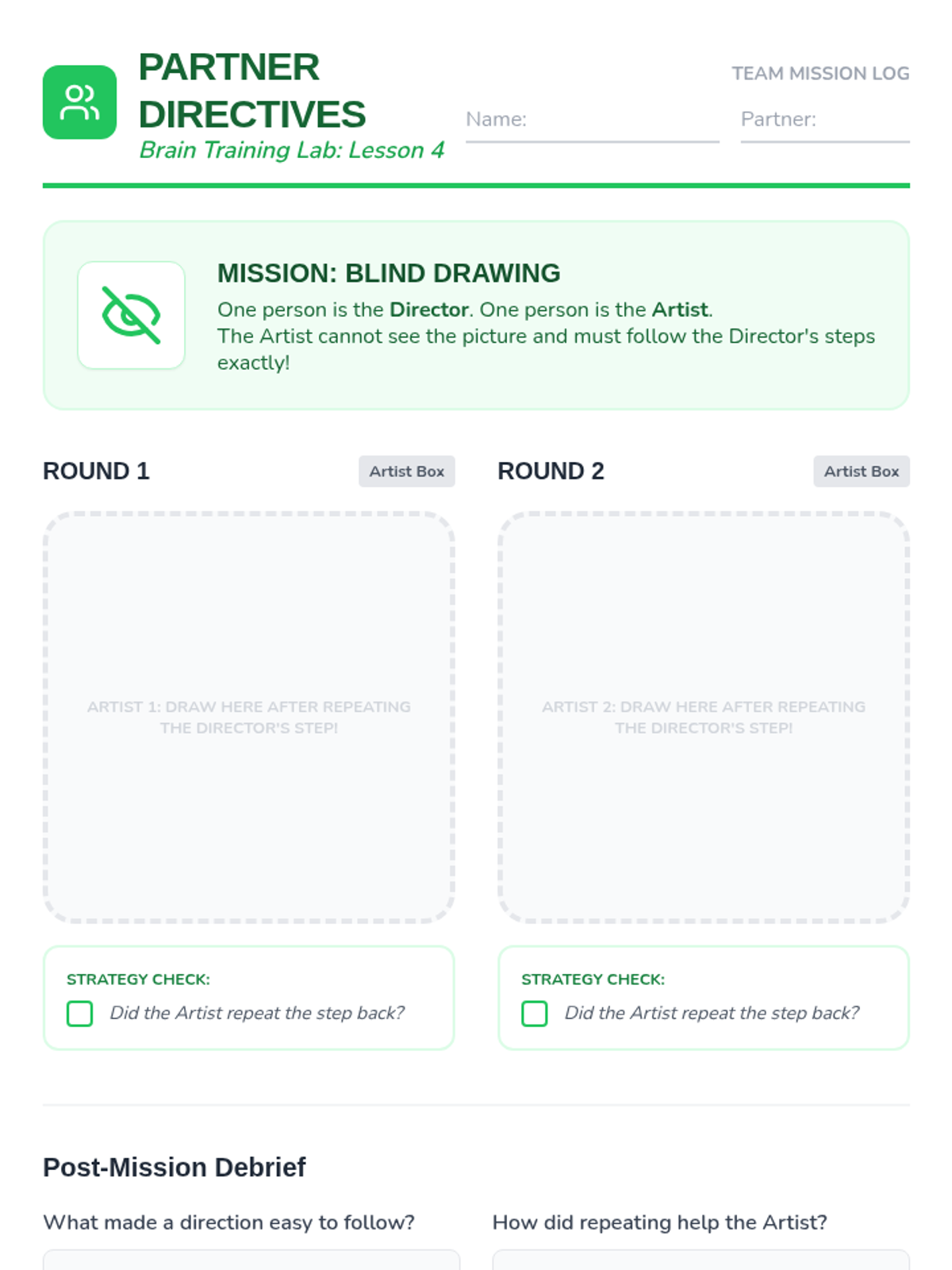
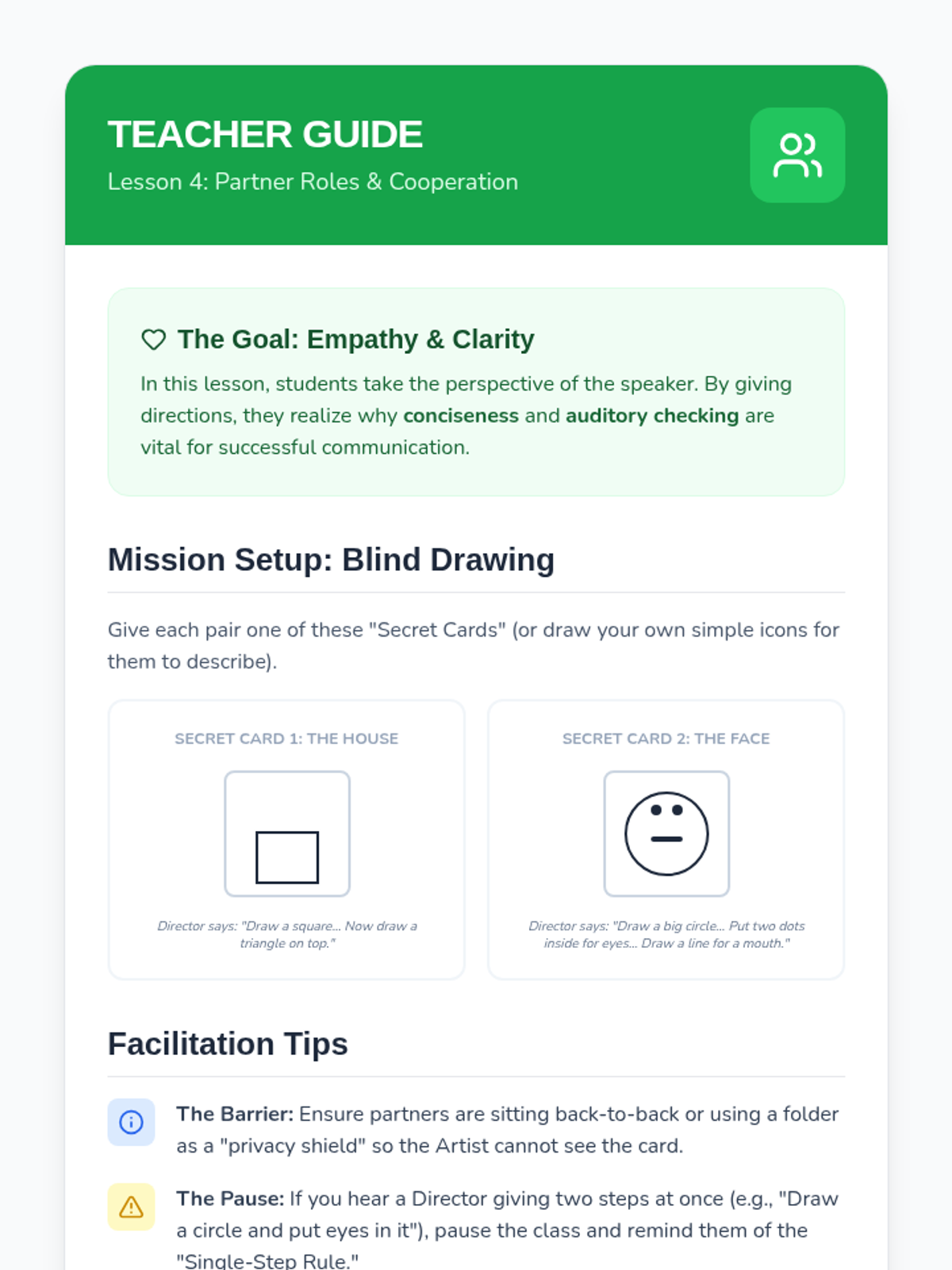
In pairs, students take turns being the 'Teacher' and the 'Student' to practice giving and repeating explicit steps.
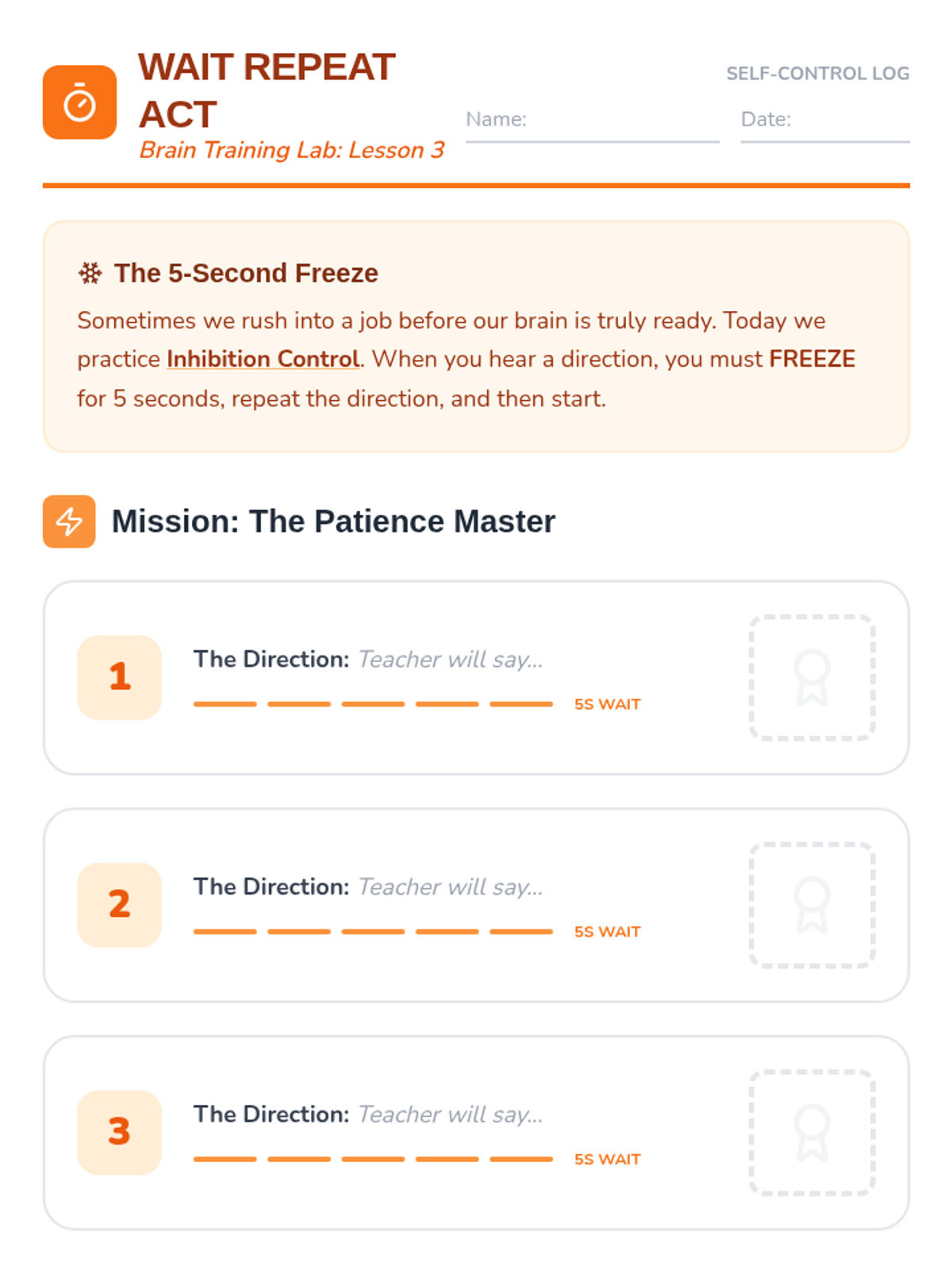
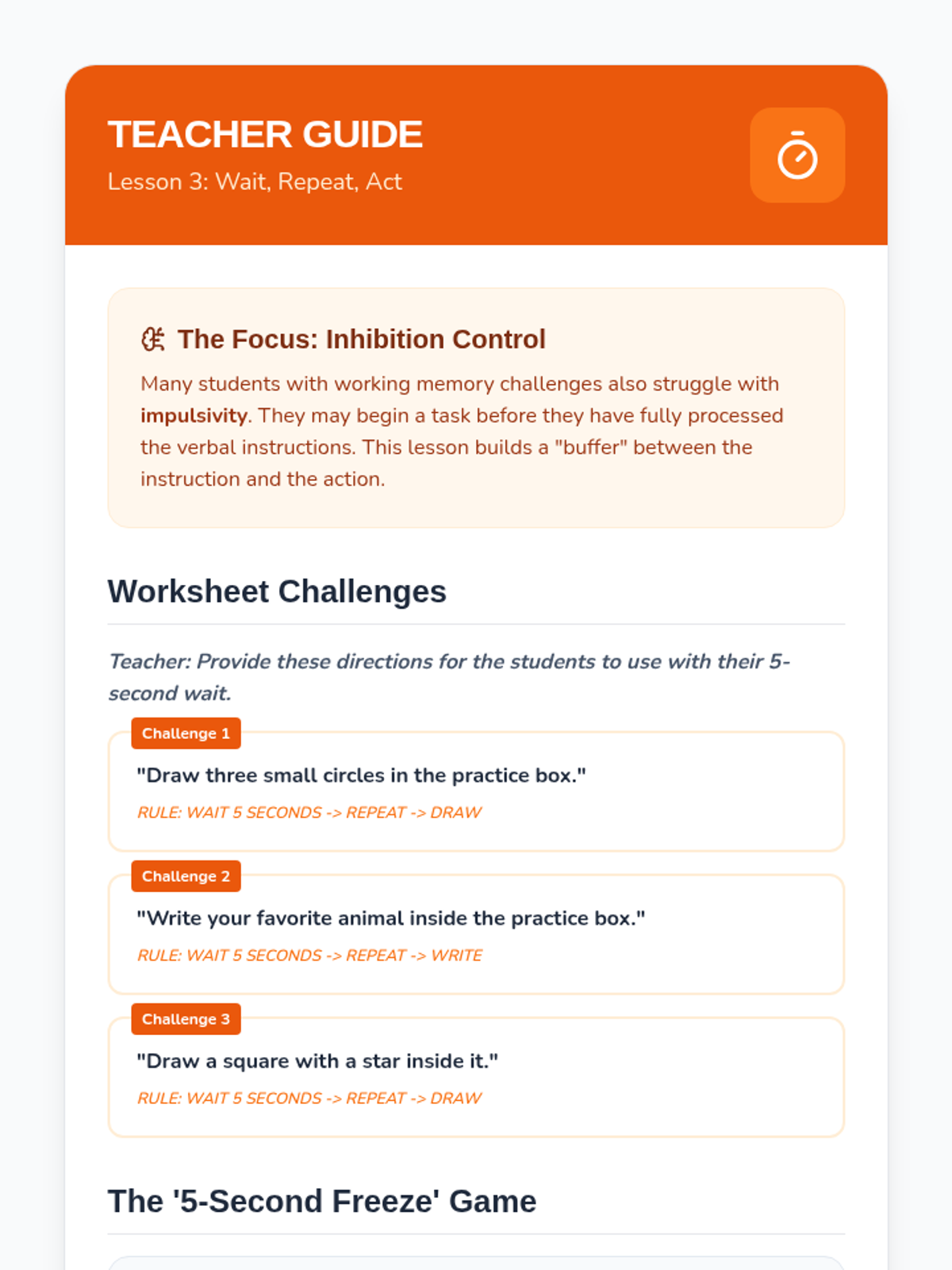
Students engage in inhibition control activities where they must wait 5 seconds after hearing a command, repeat it, and only then act.
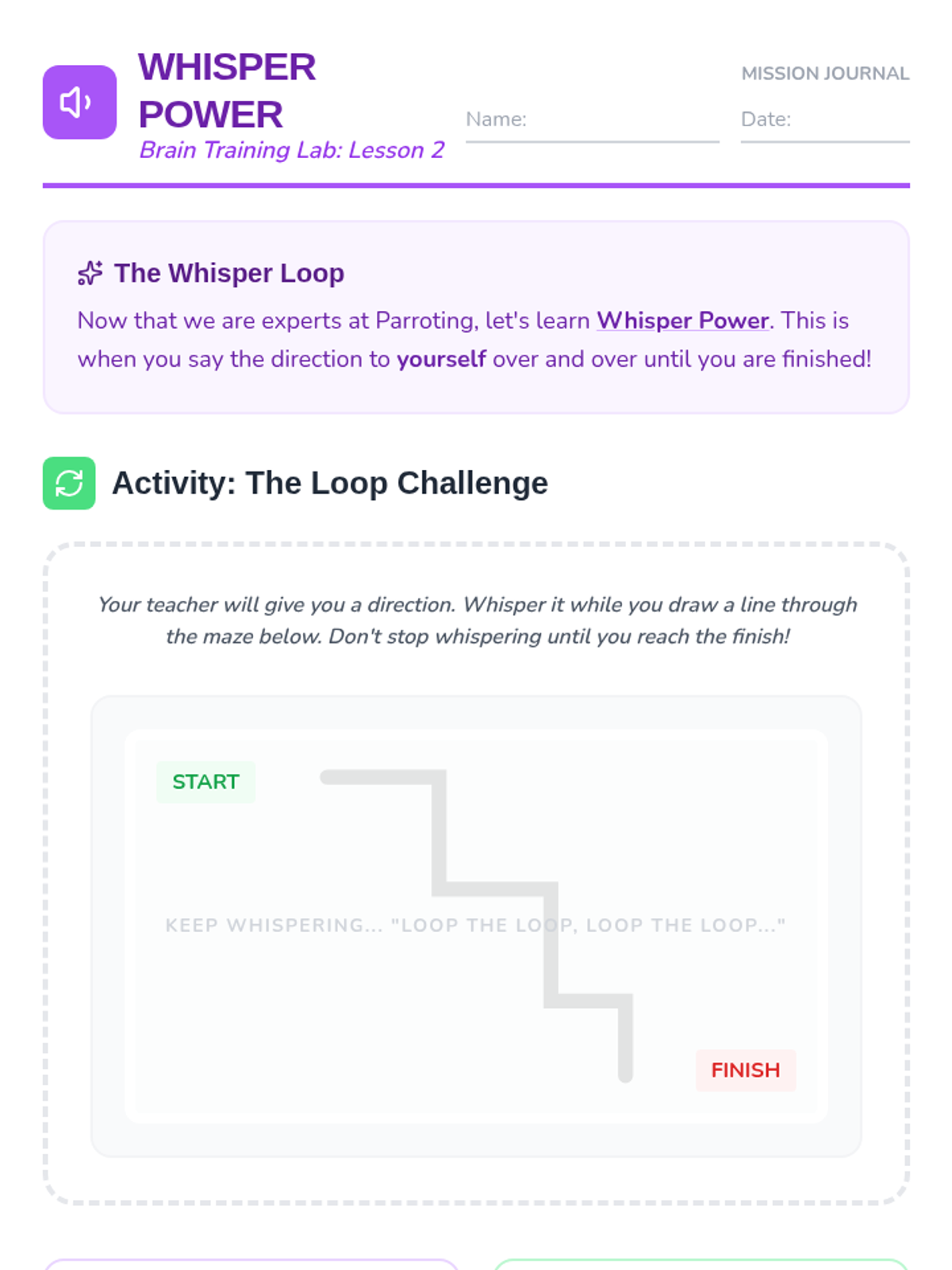
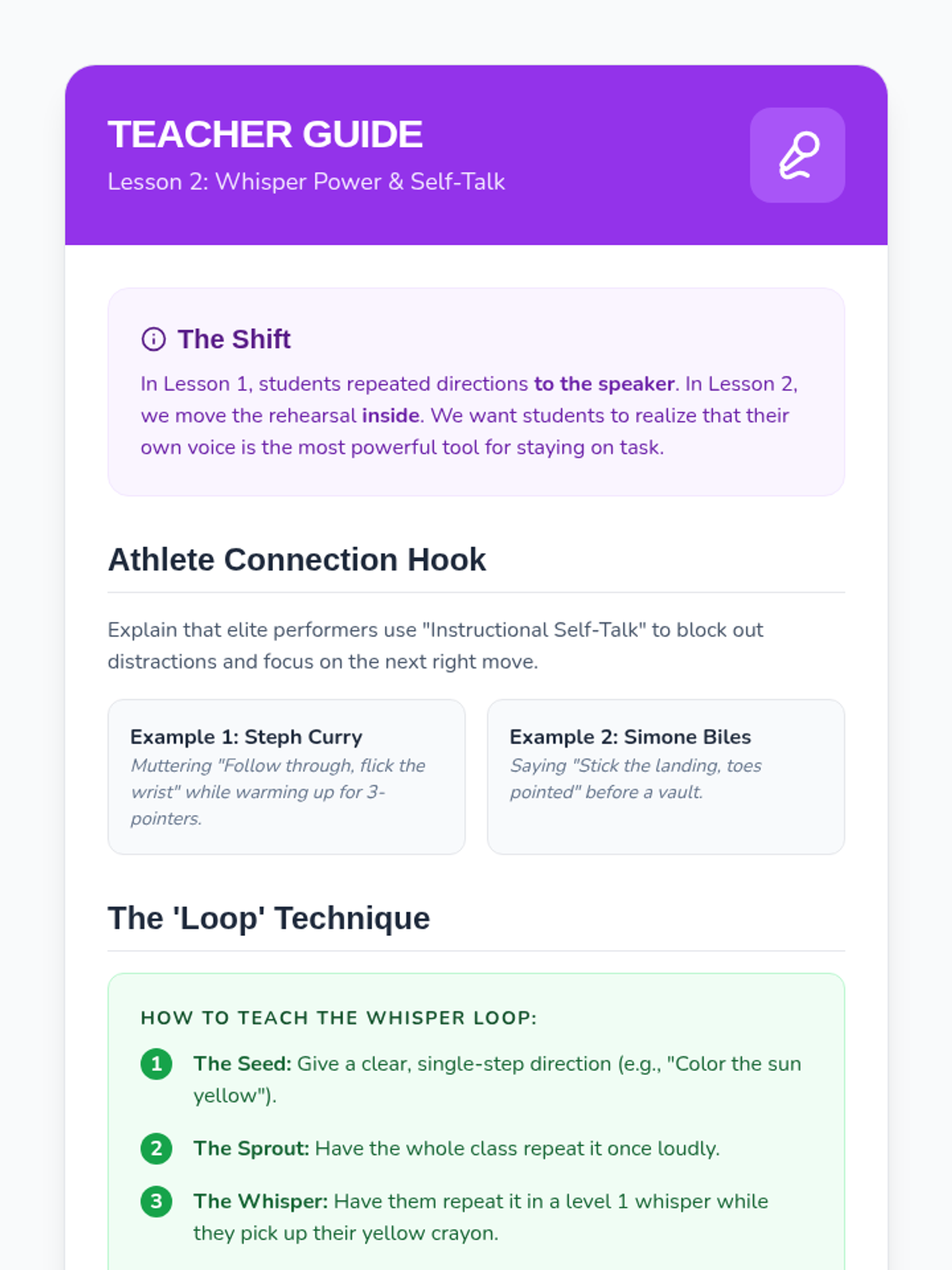
Moving from loud repetition to whispering, students practice 'self-talk.' They are given a single direction and must whisper it on a loop while performing the action.
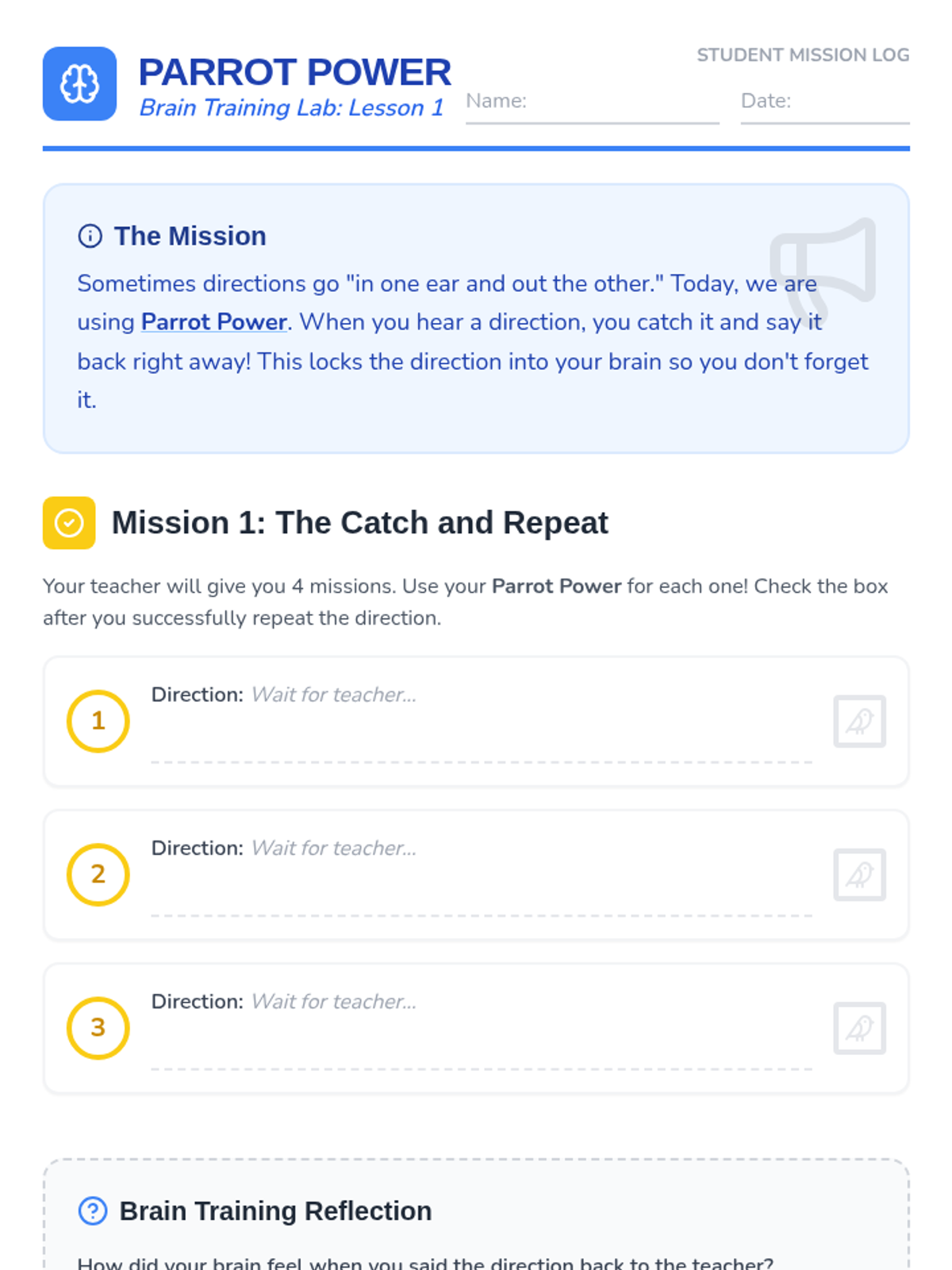
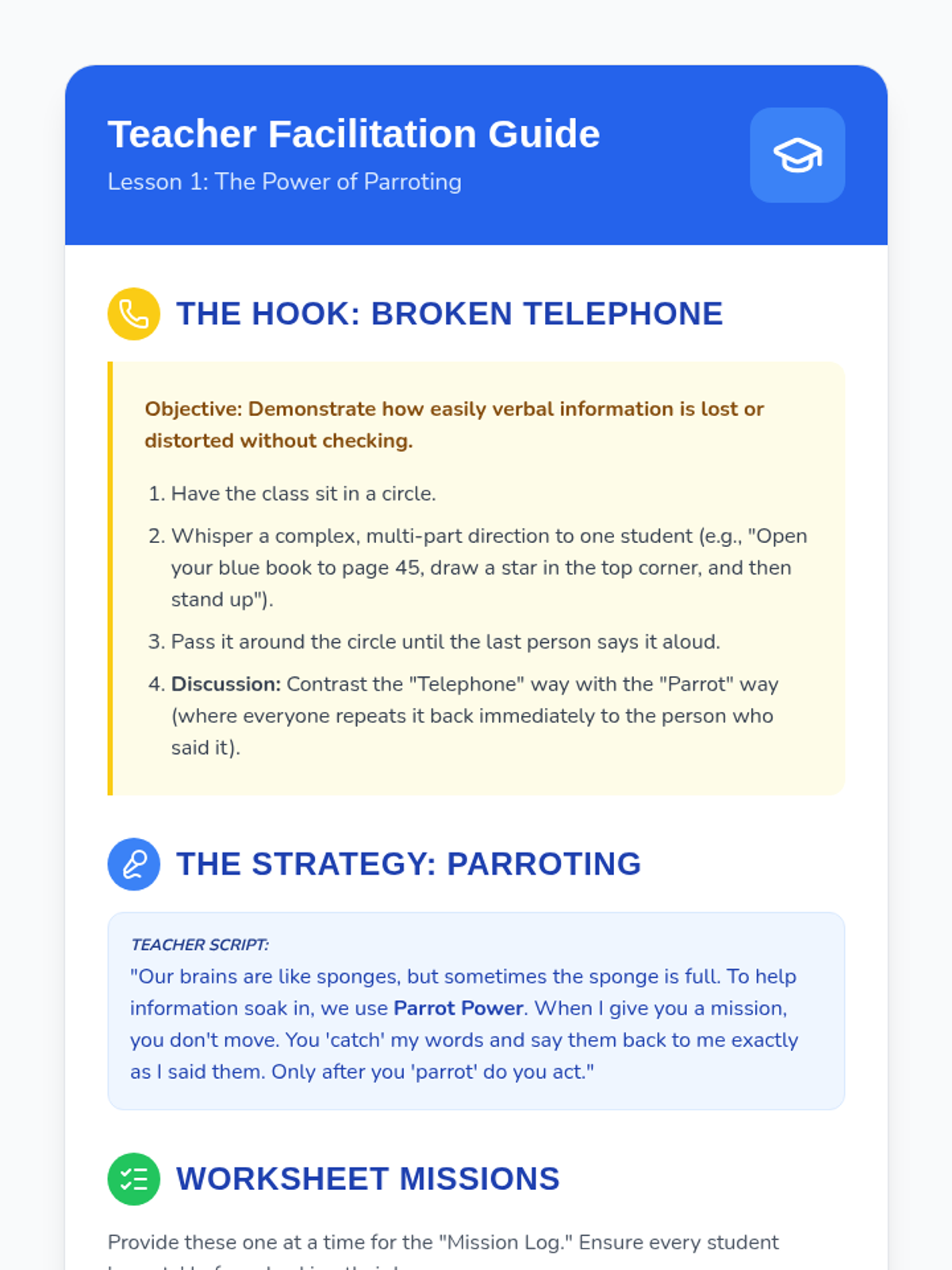
Students practice the 'parrot' technique, where they must immediately repeat a single-step direction back to the speaker before moving. The lesson emphasizes that saying it locks it into the brain.
Explore the concept of diversity in the wider world and community, recognizing different types of identity.
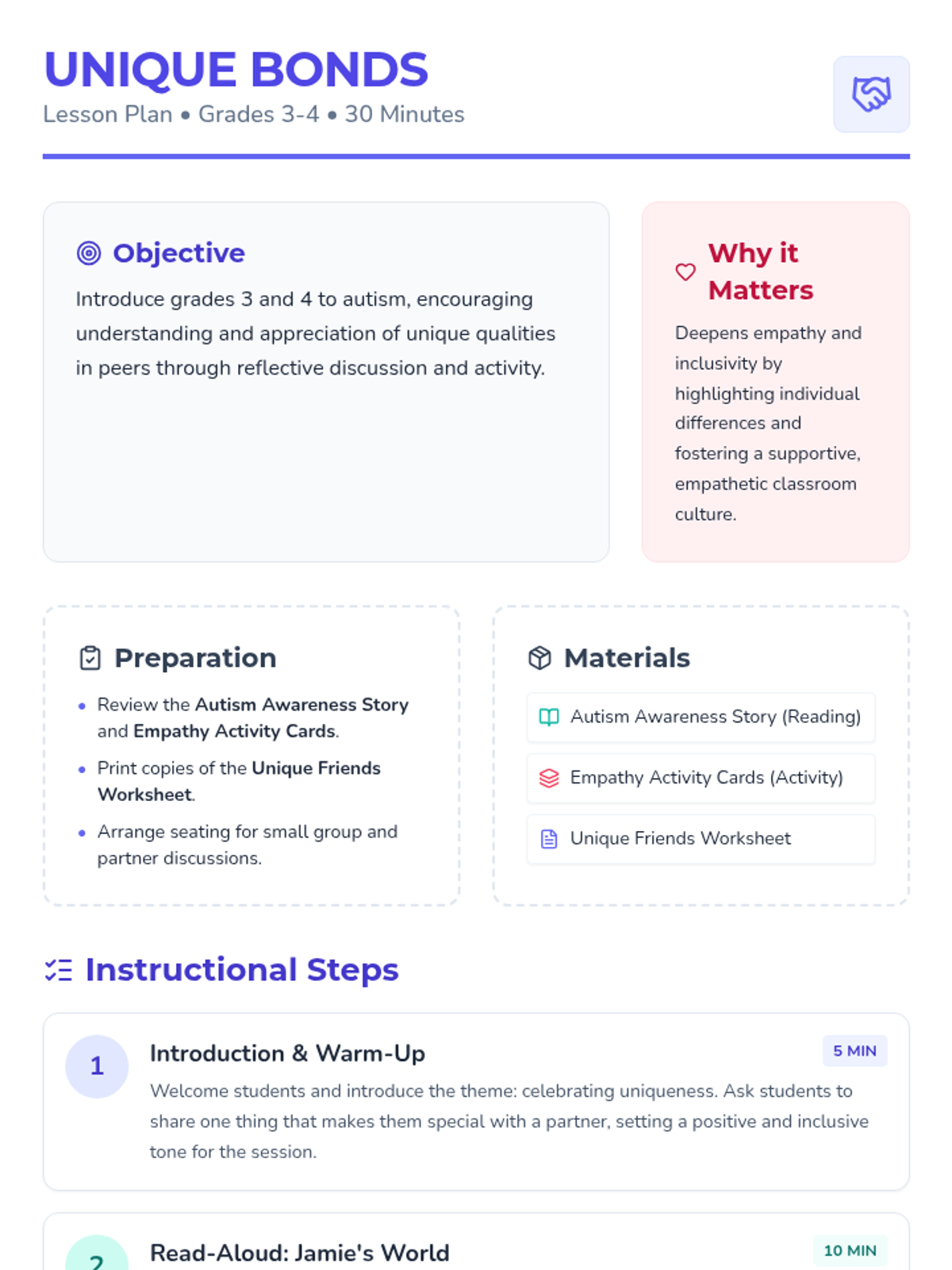
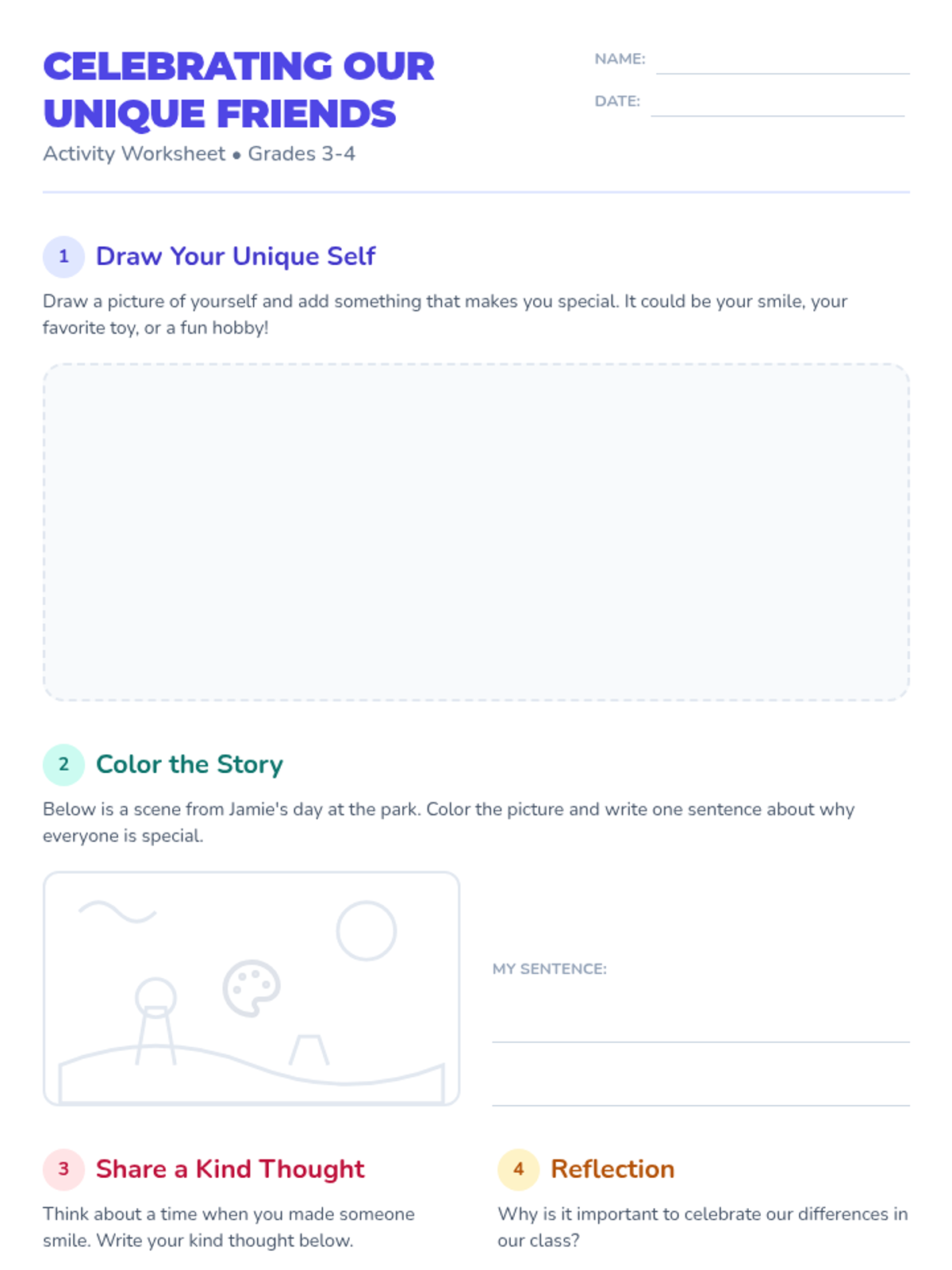
A 30-minute lesson for grades 3 and 4 that deepens understanding of autism through reading, discussion, and reflective activities.
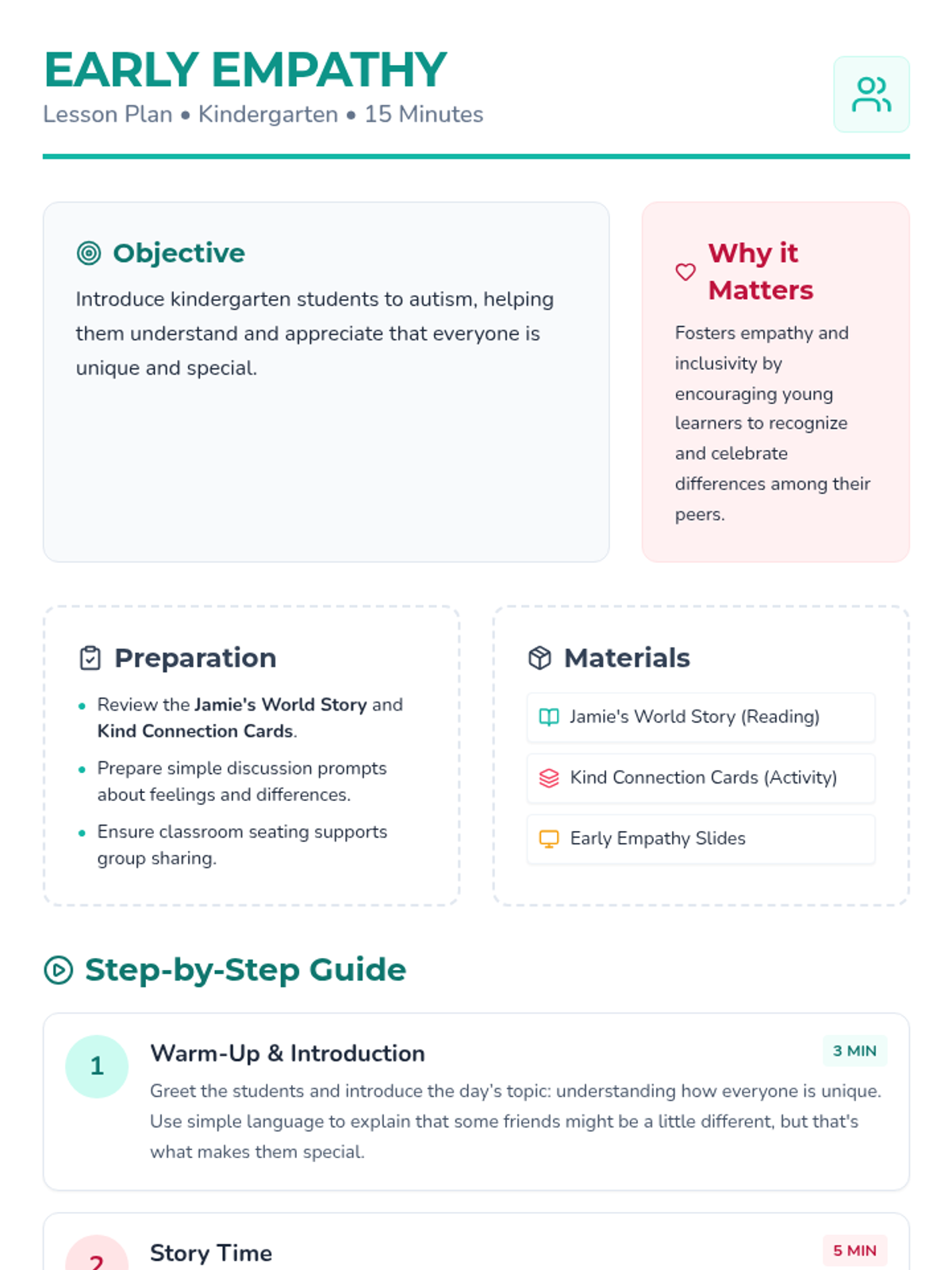
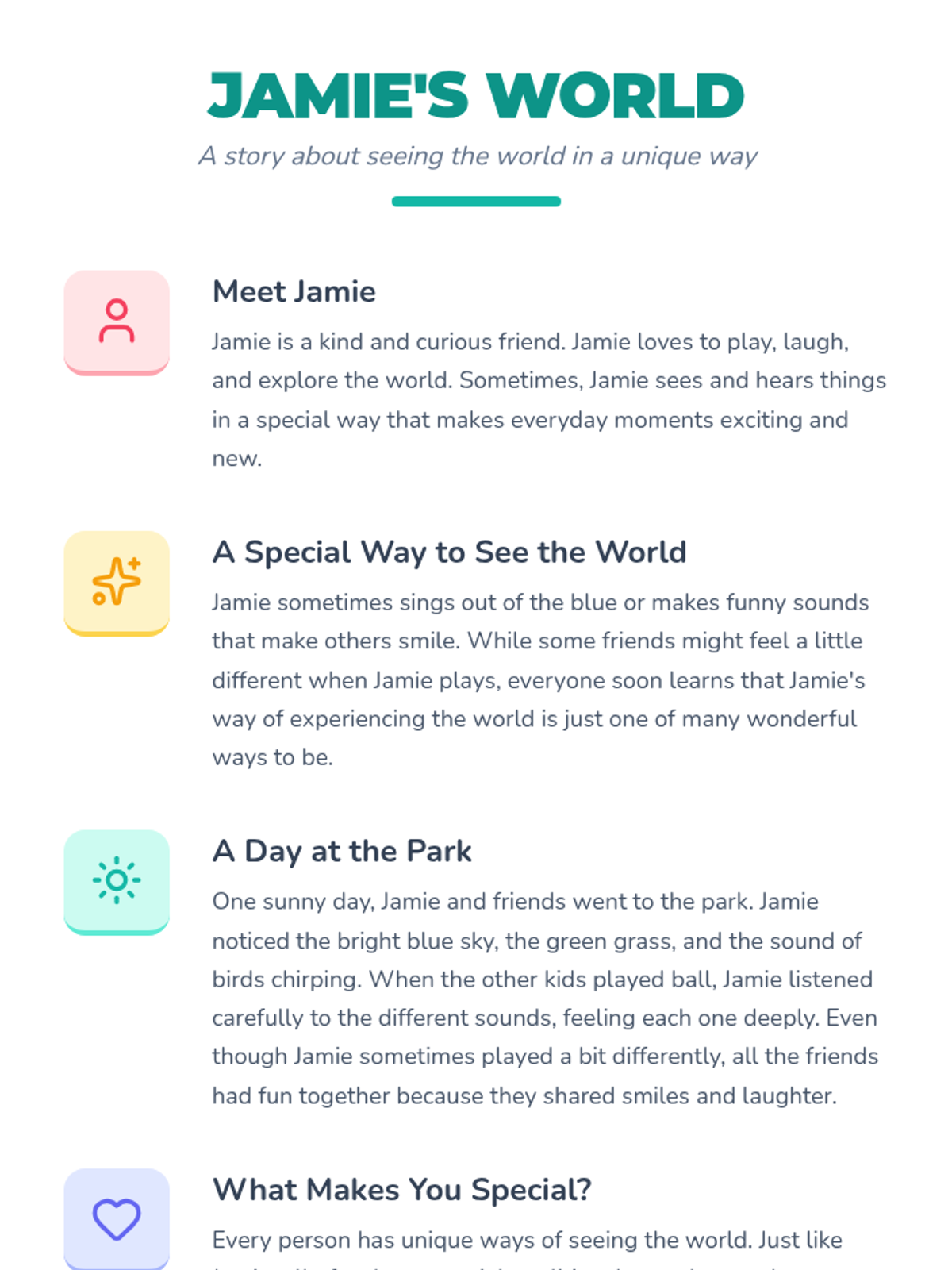
A short, 15-minute introduction to autism awareness for kindergarten students, focusing on the concept that everyone is unique and special.
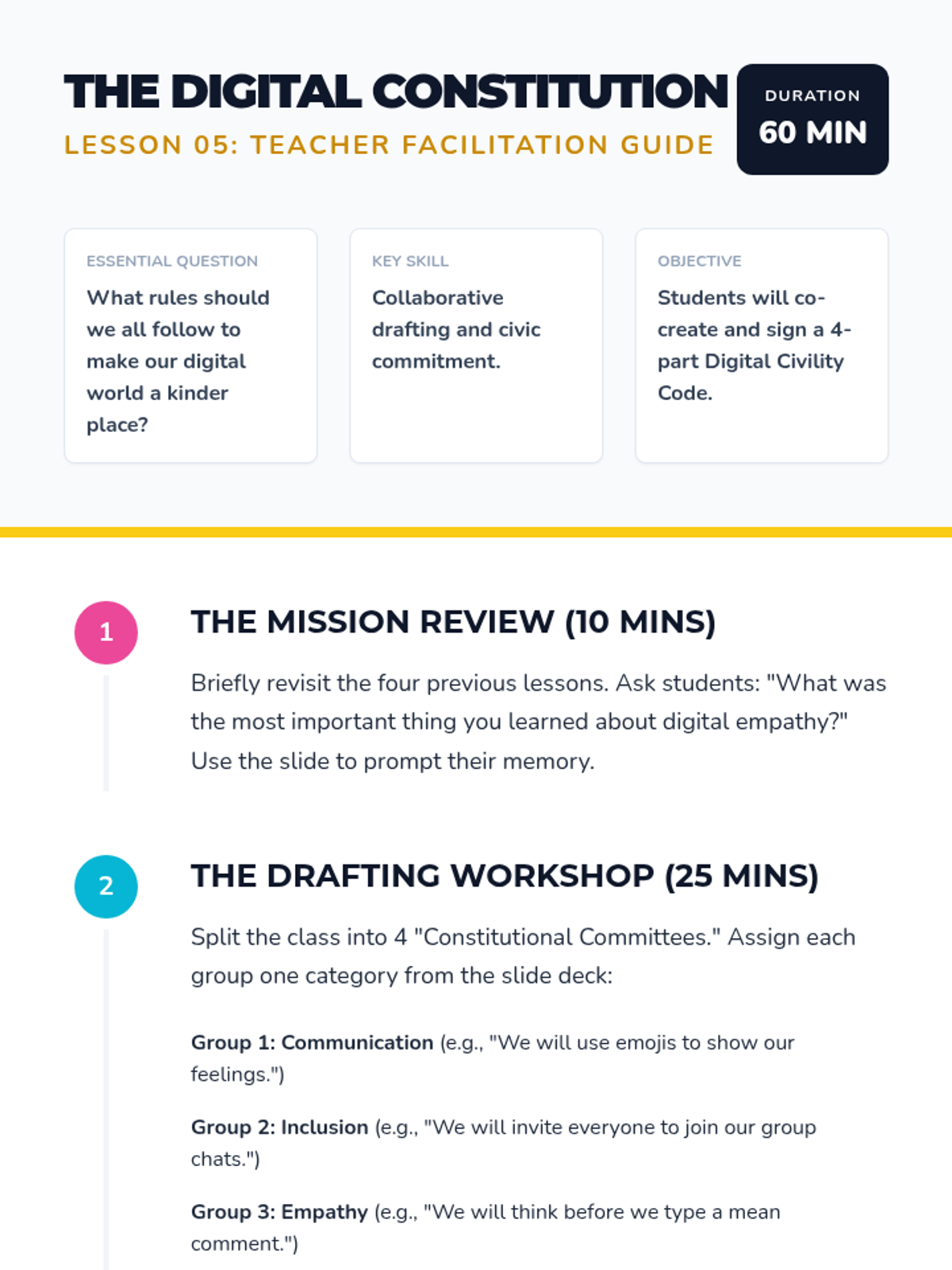
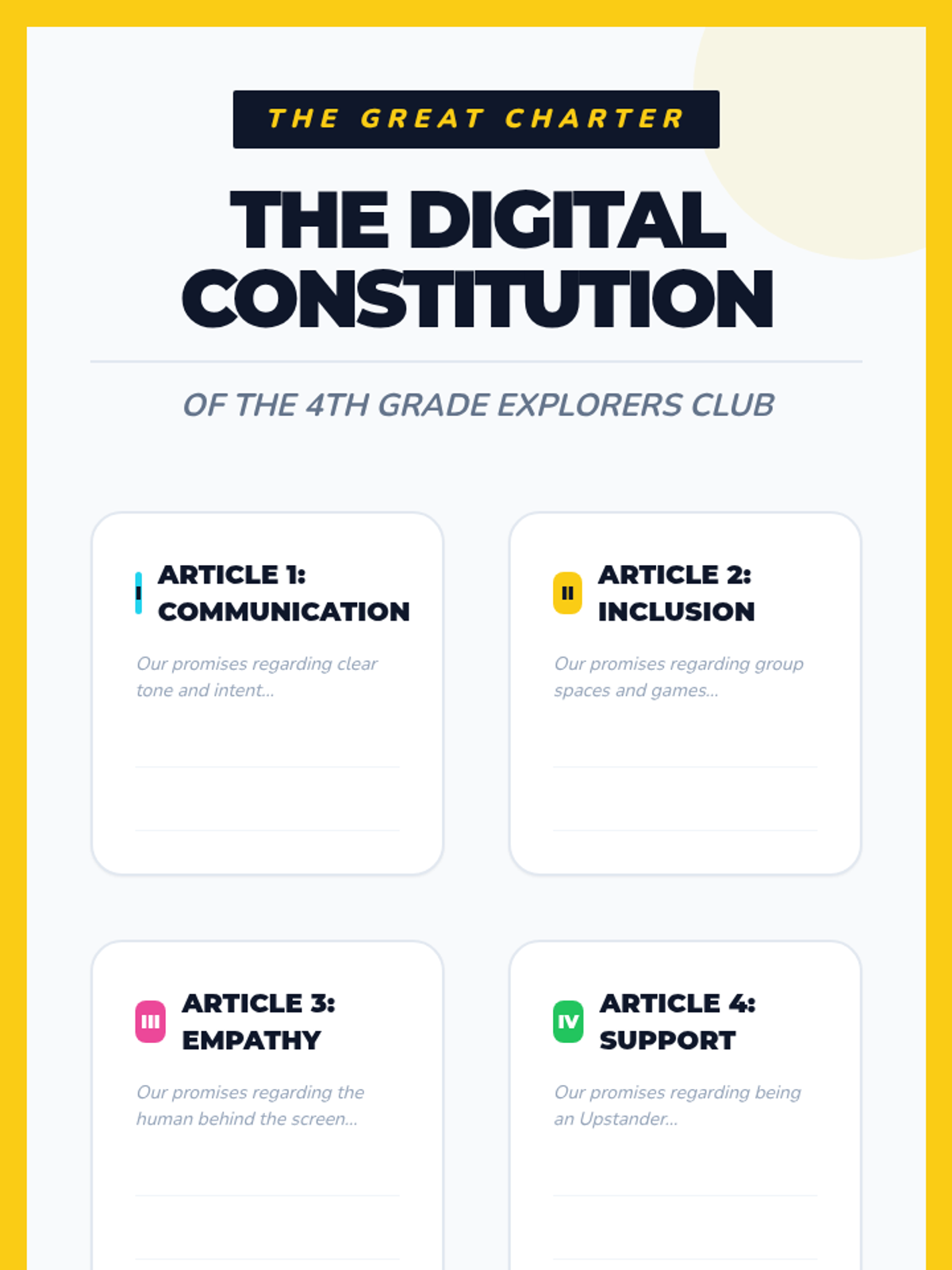
The sequence culminates in students collaborating to draft and sign a class-wide Digital Civility Code, committing to respectful online conduct.
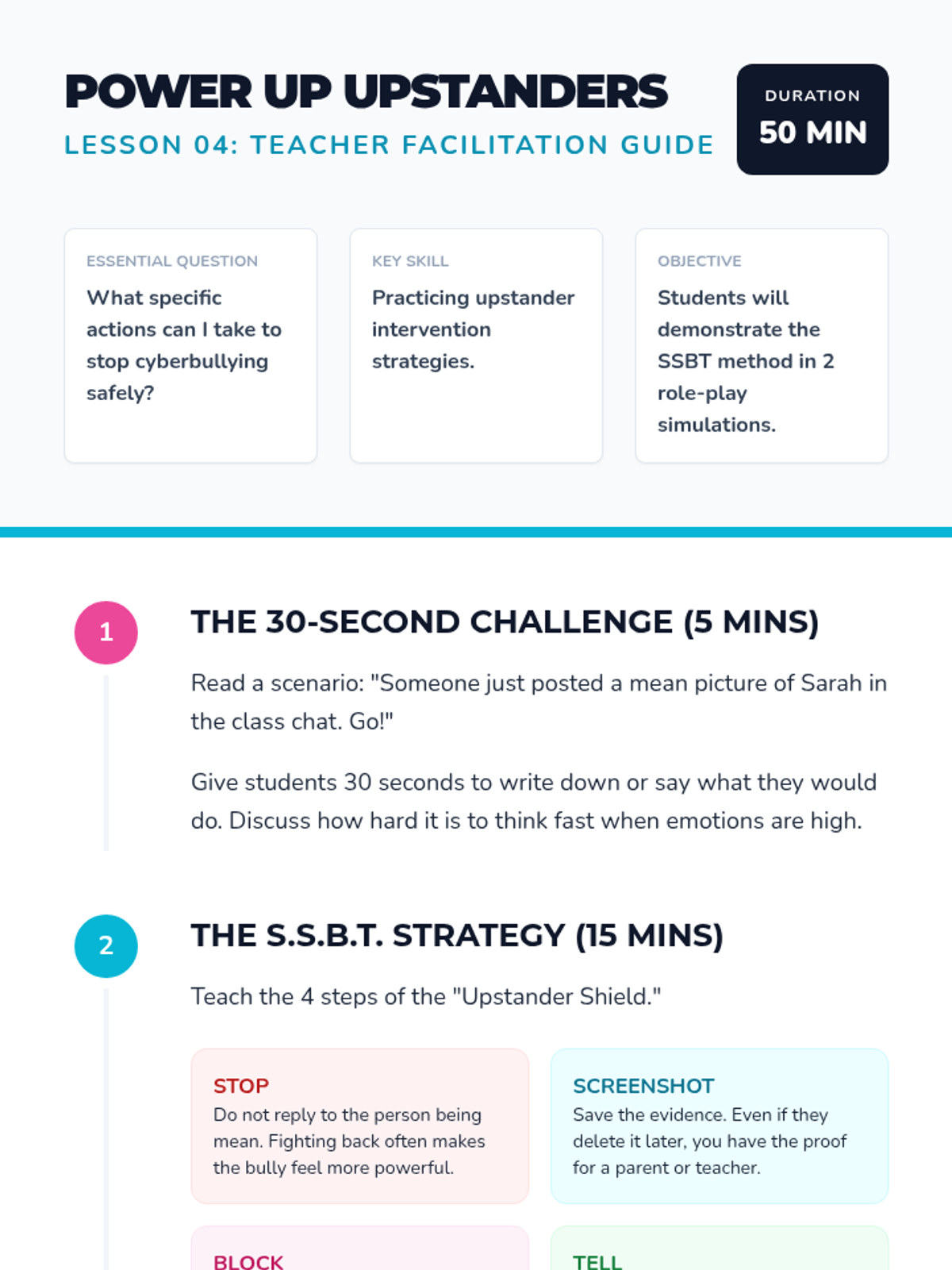
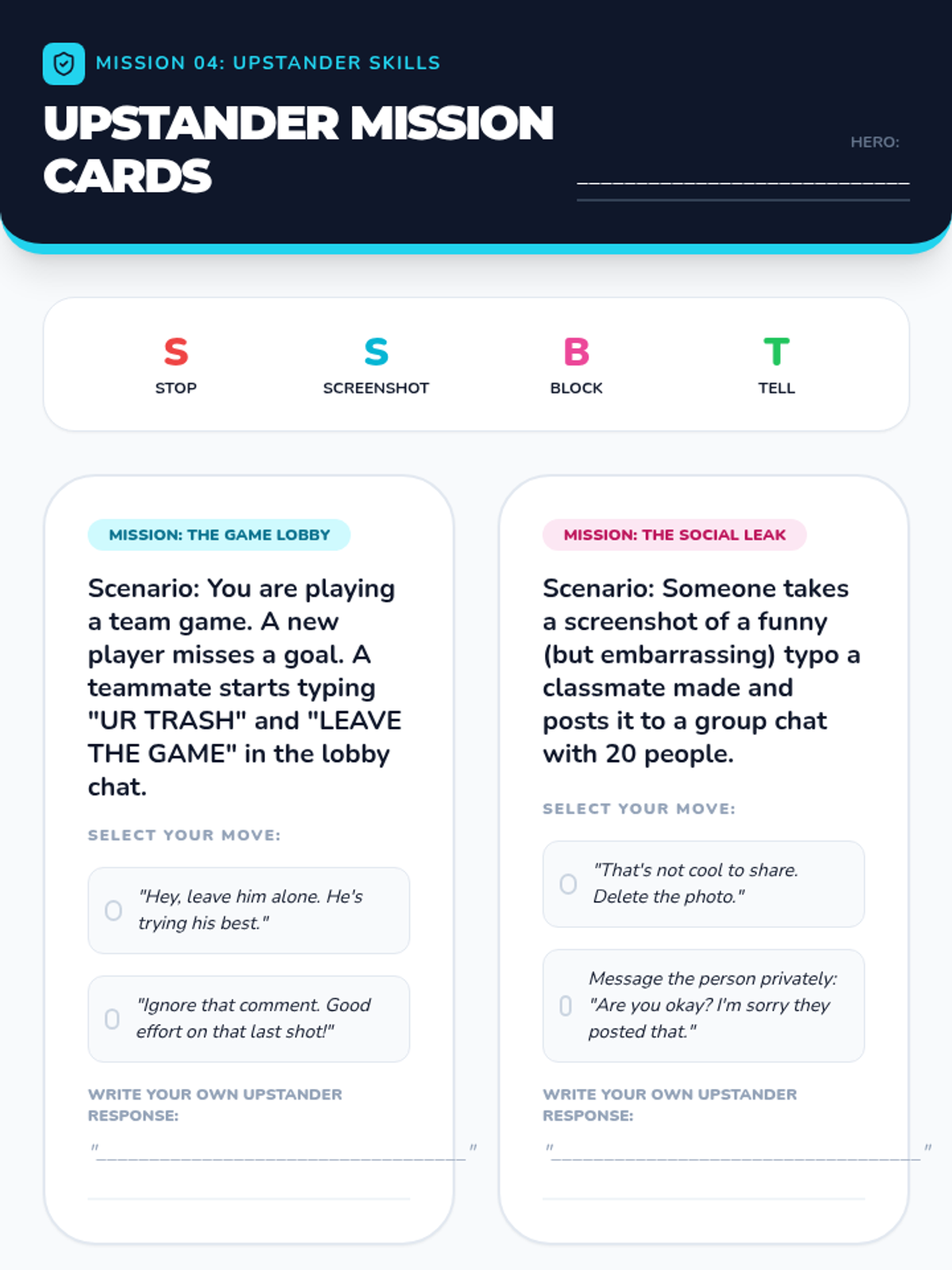
Through simulations and role-play, students practice the 'Stop, Screenshot, Block, Tell' method and other upstander intervention strategies.
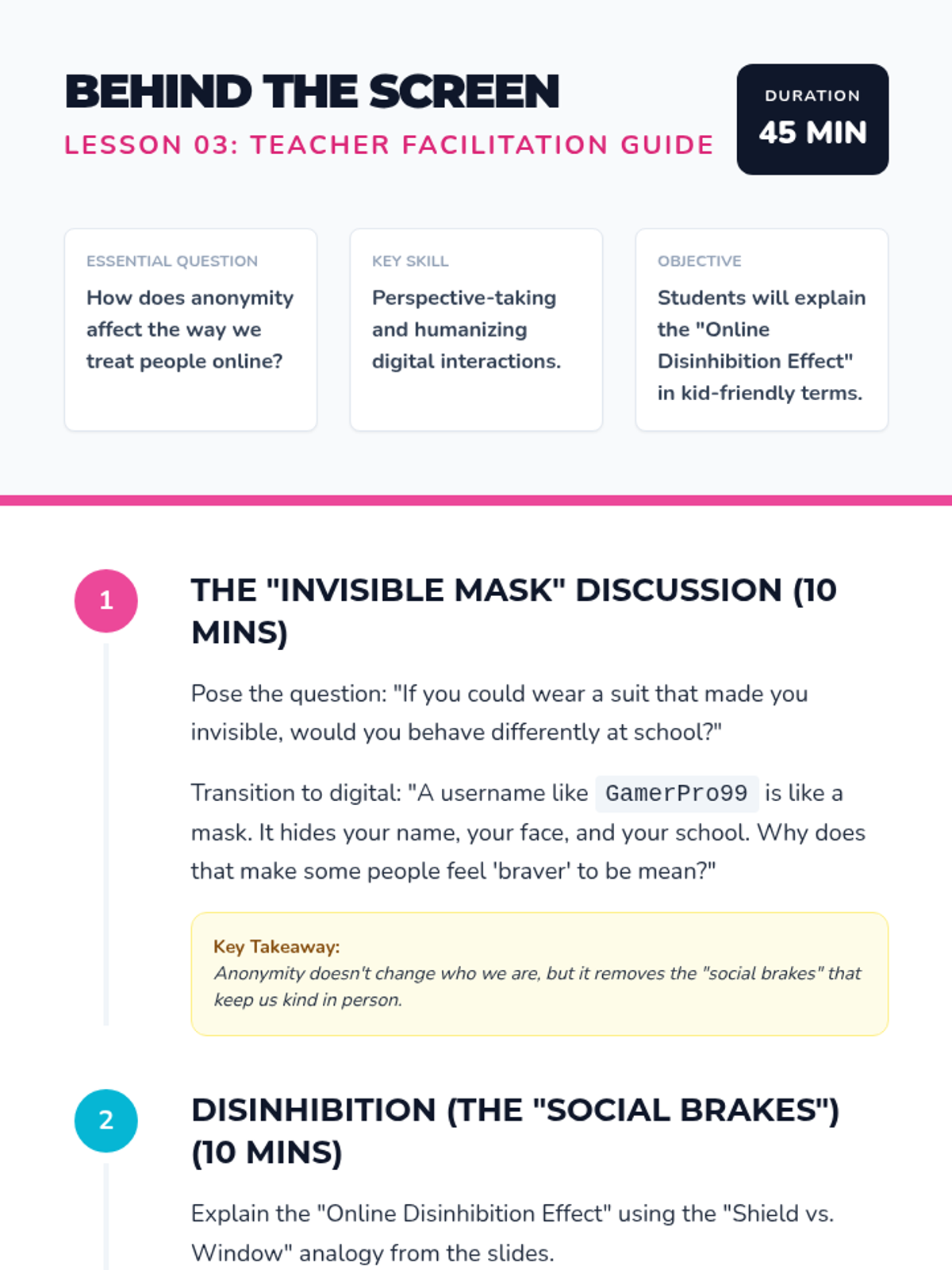
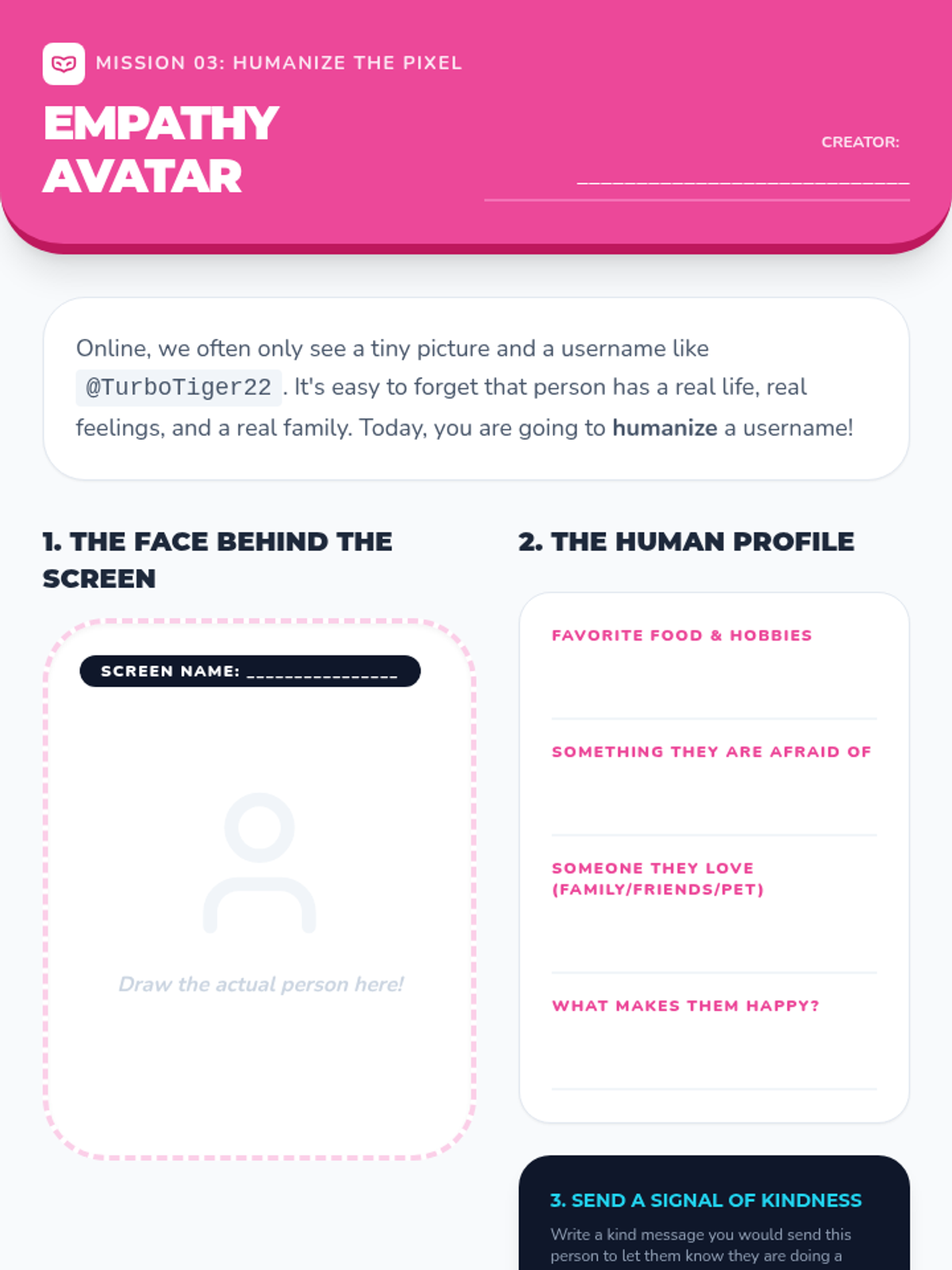
Exploring the 'online disinhibition effect,' students discuss how anonymity affects behavior and create 'empathy avatars' to humanize digital interactions.
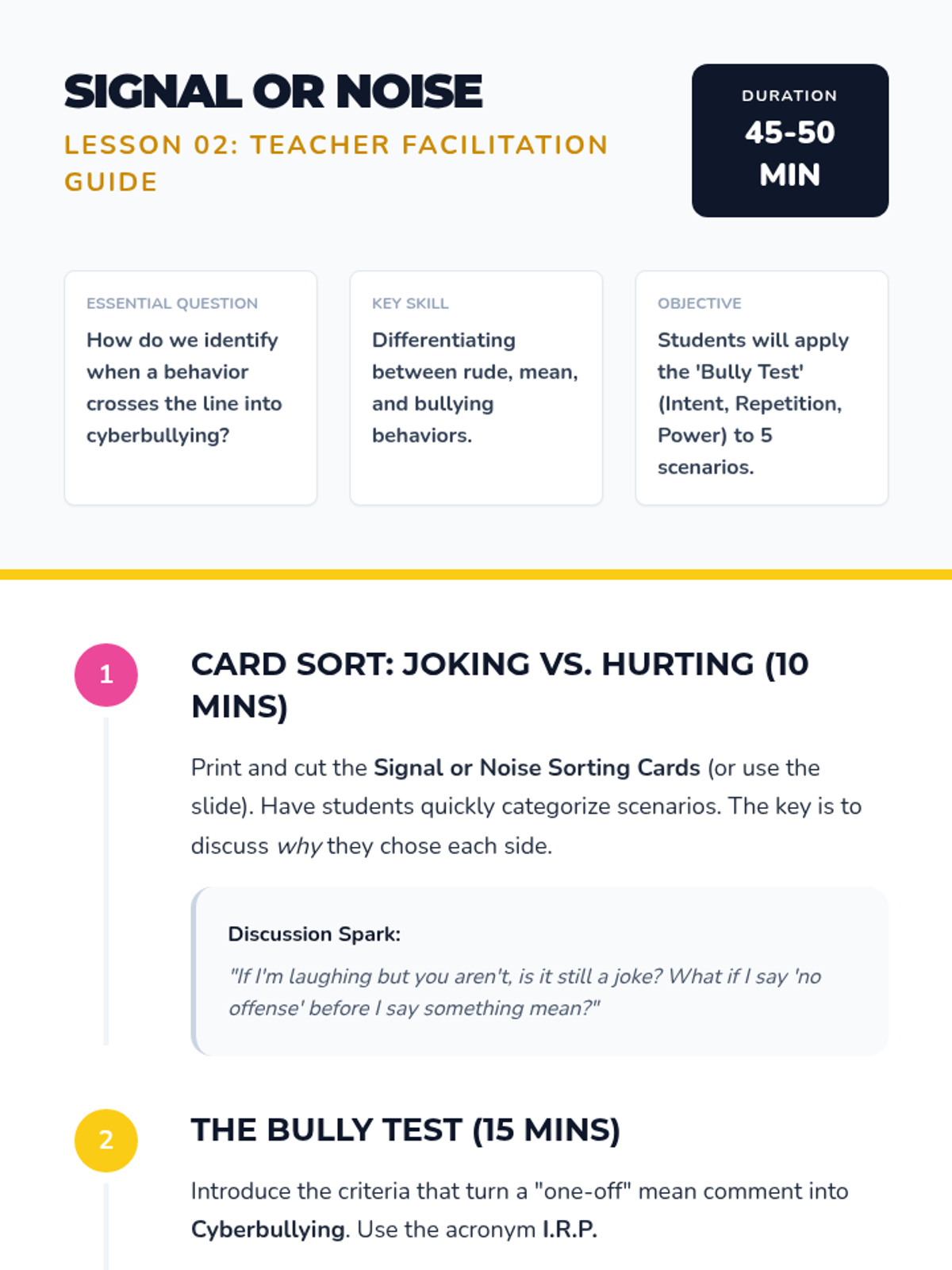
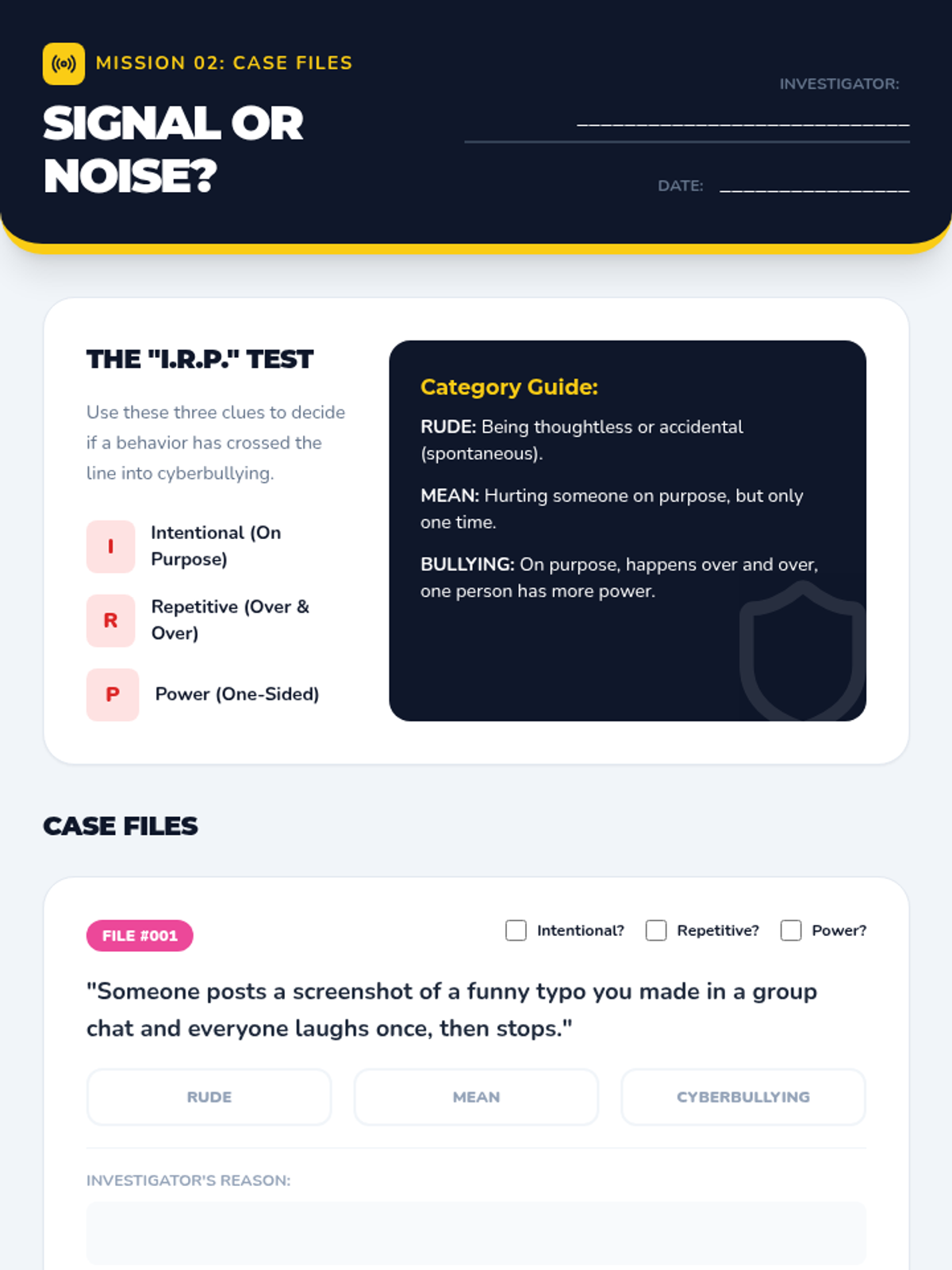
Students learn to distinguish between rude, mean, and bullying behaviors in online contexts using specific criteria like intent and repetition.
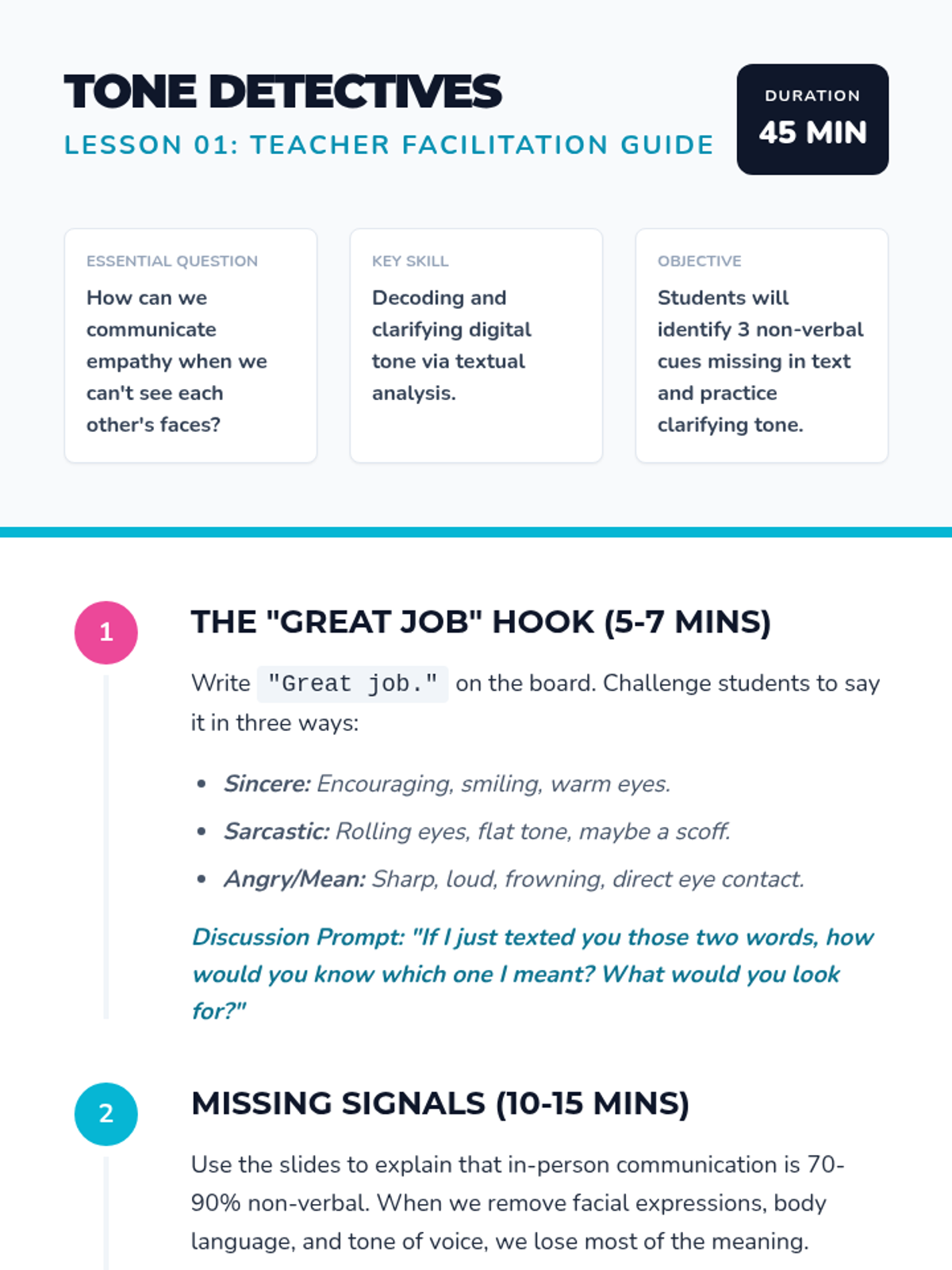
Students explore how text-based communication lacks non-verbal cues and practice interpreting and clarifying the tone of digital messages.
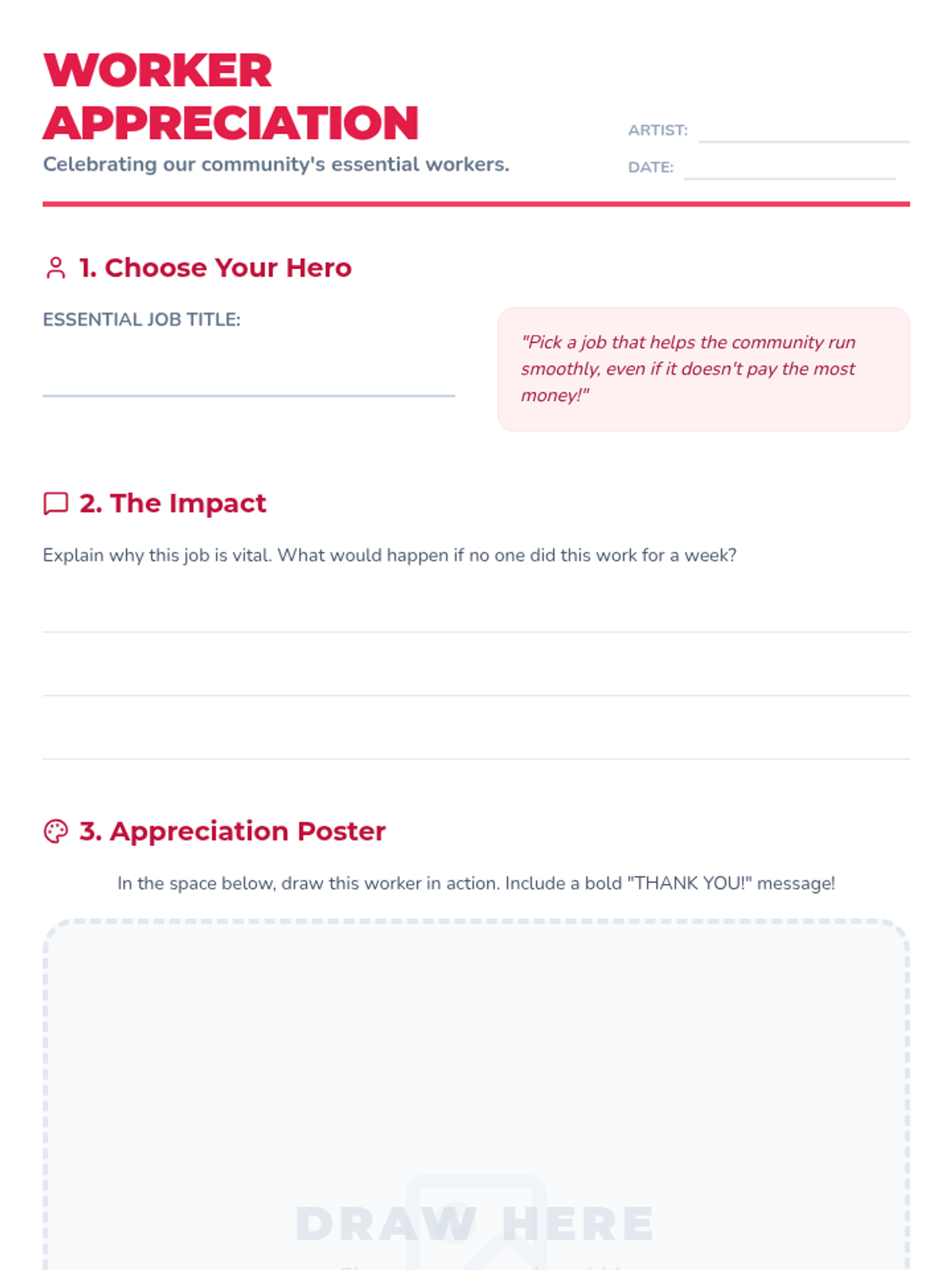
Students discuss the importance of essential workers who may not earn high wages but are vital to the community. They create appreciation projects for various workers.
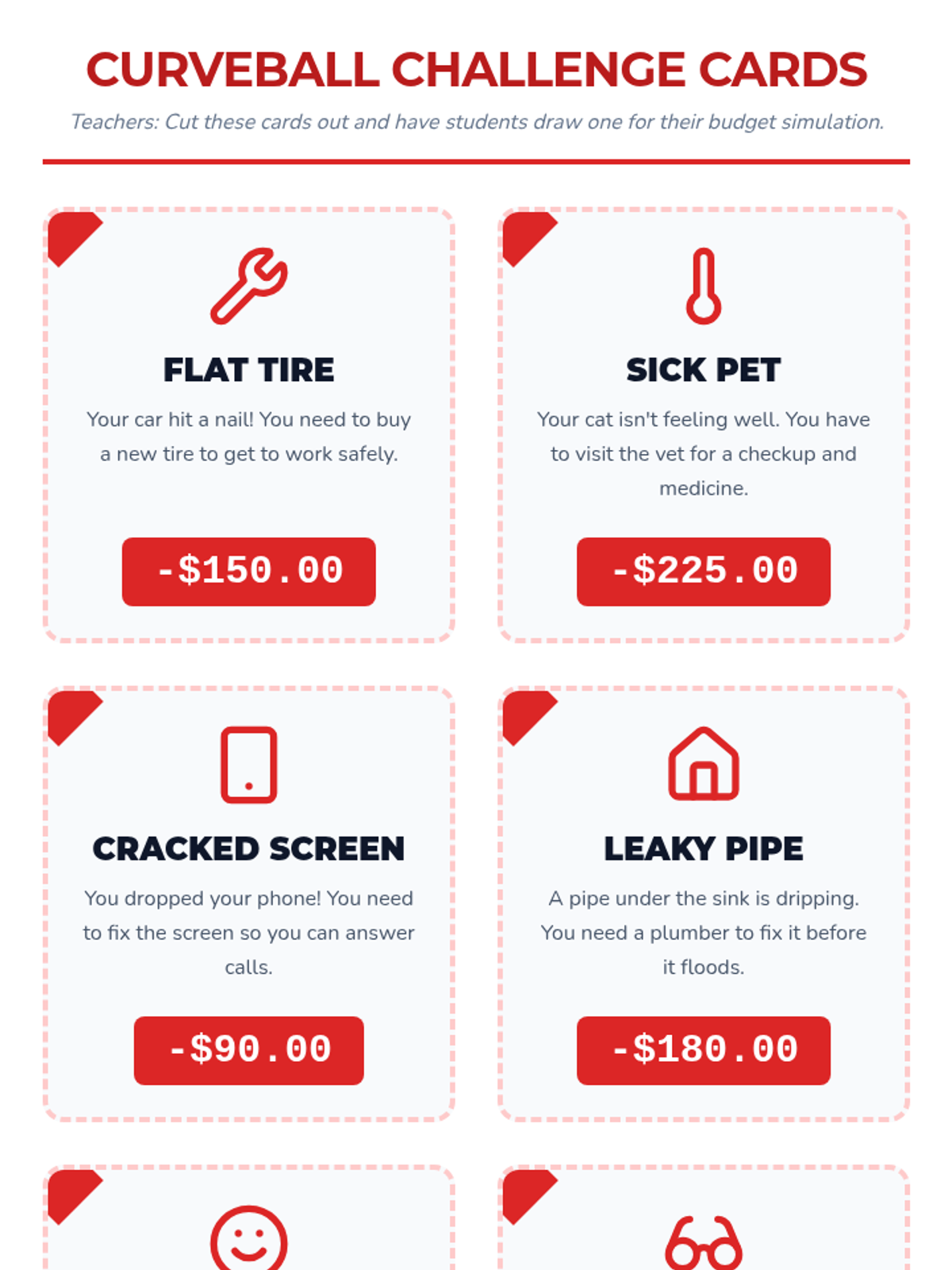
Students face unexpected expenses within their budget simulation. They discuss how having savings or higher income makes solving these problems easier.
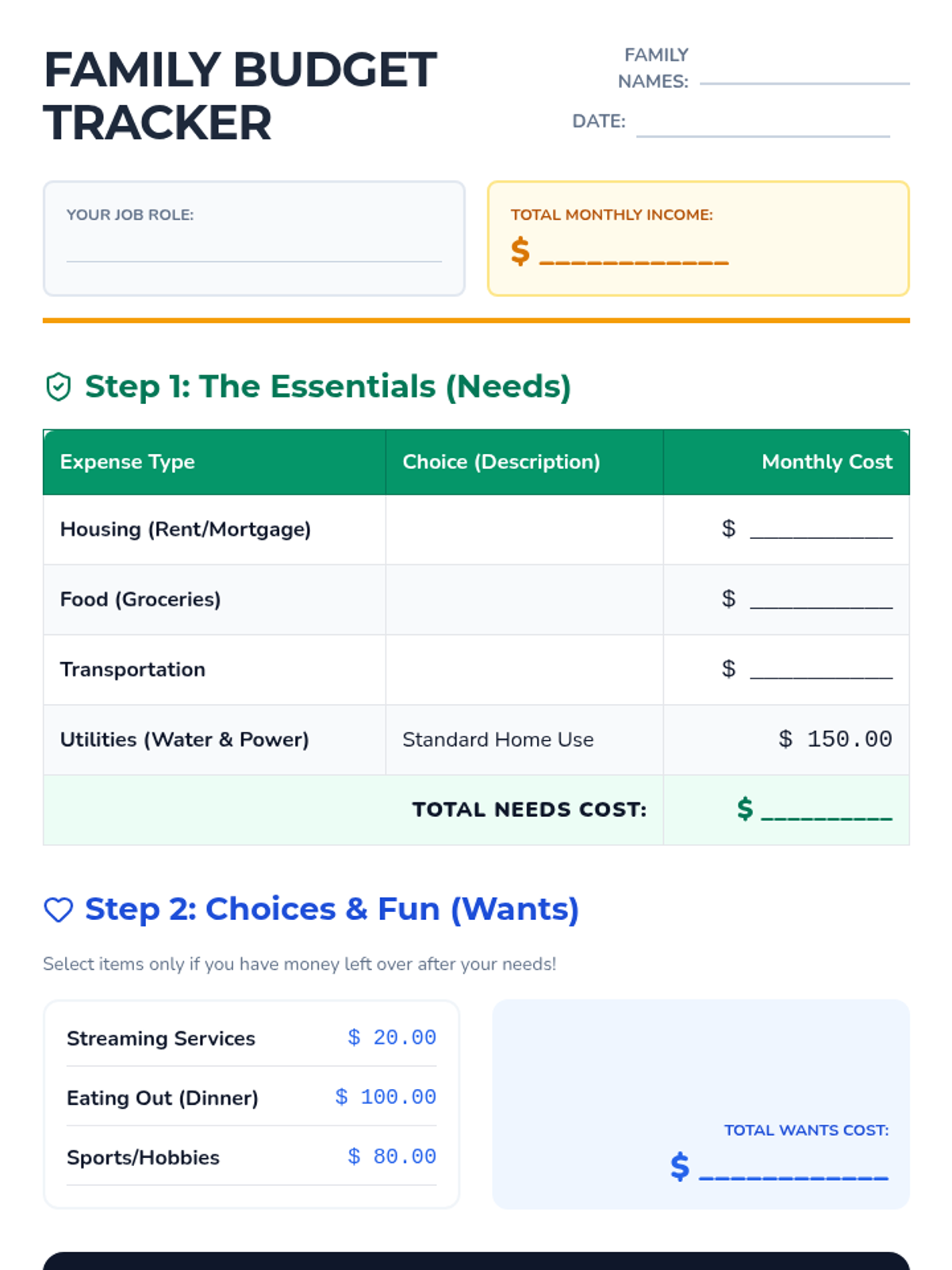
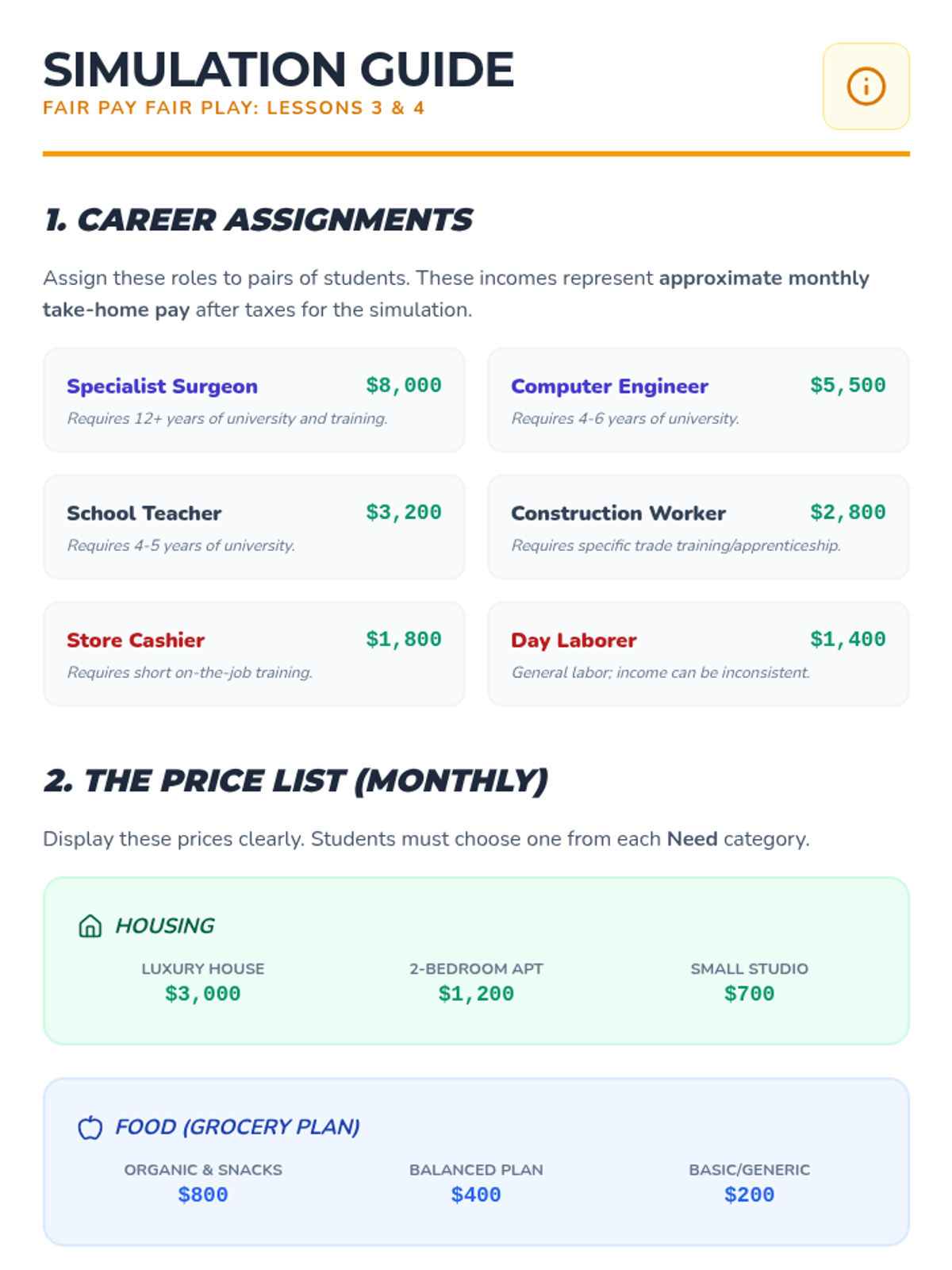
Working in pairs, students are assigned a fictional monthly income based on a specific job. They must allocate funds to cover housing, food, and clothing.
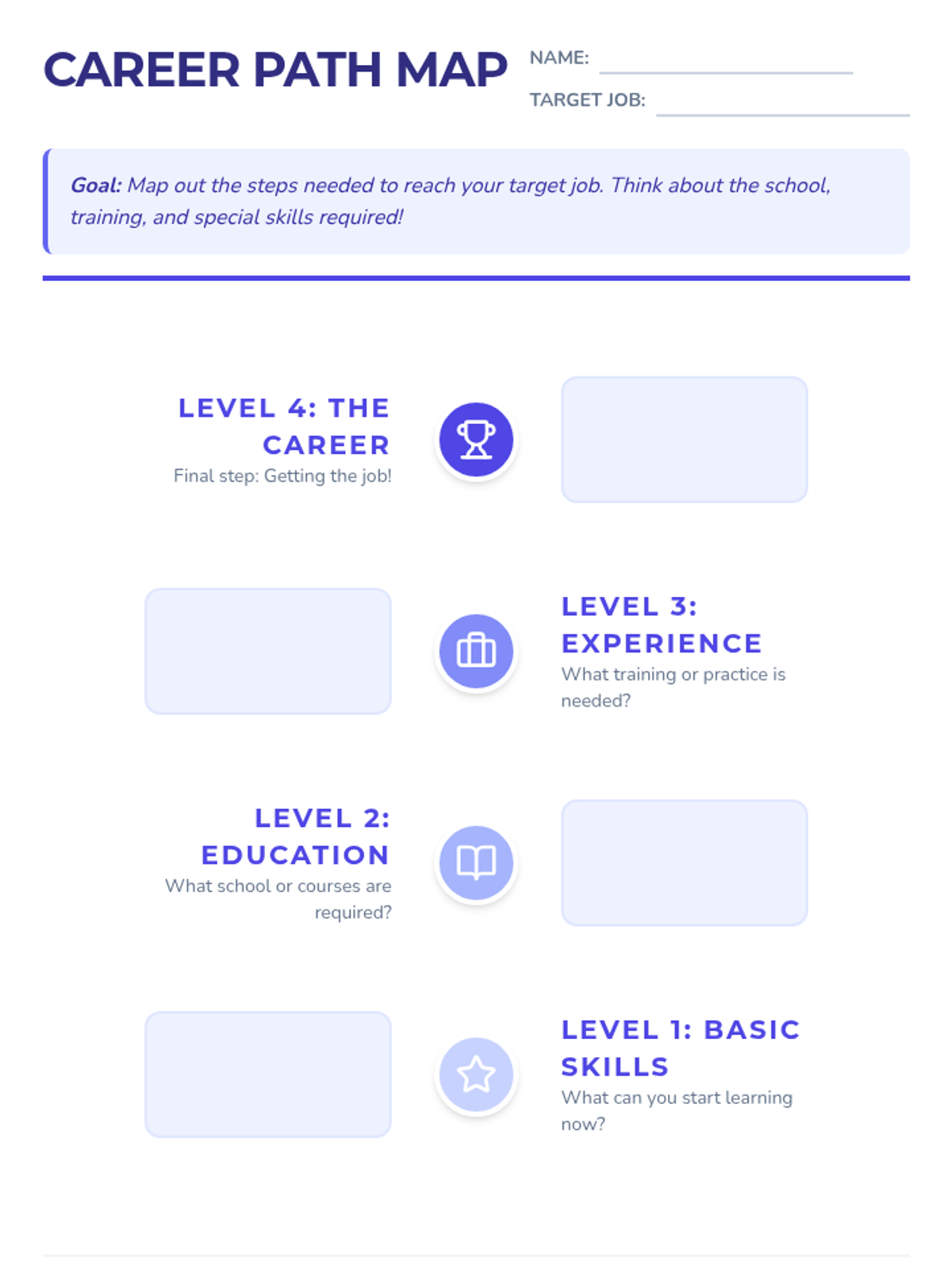
Students investigate the training required for different careers to understand one reason for wage differences. They create a 'career path' map showing the steps needed to acquire specific jobs.
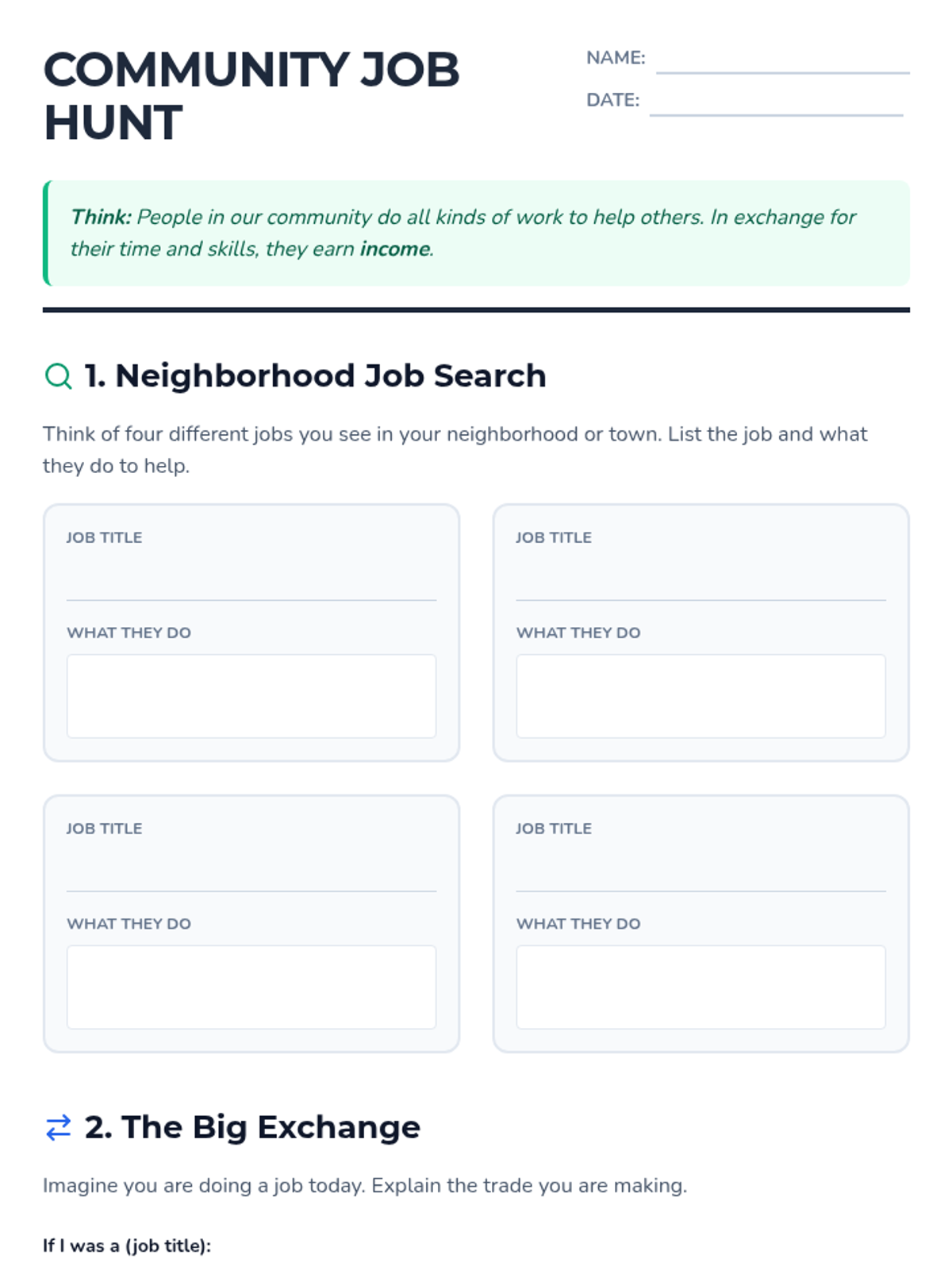
Students explore how people earn money through different jobs and the concept of income as an exchange for labor.
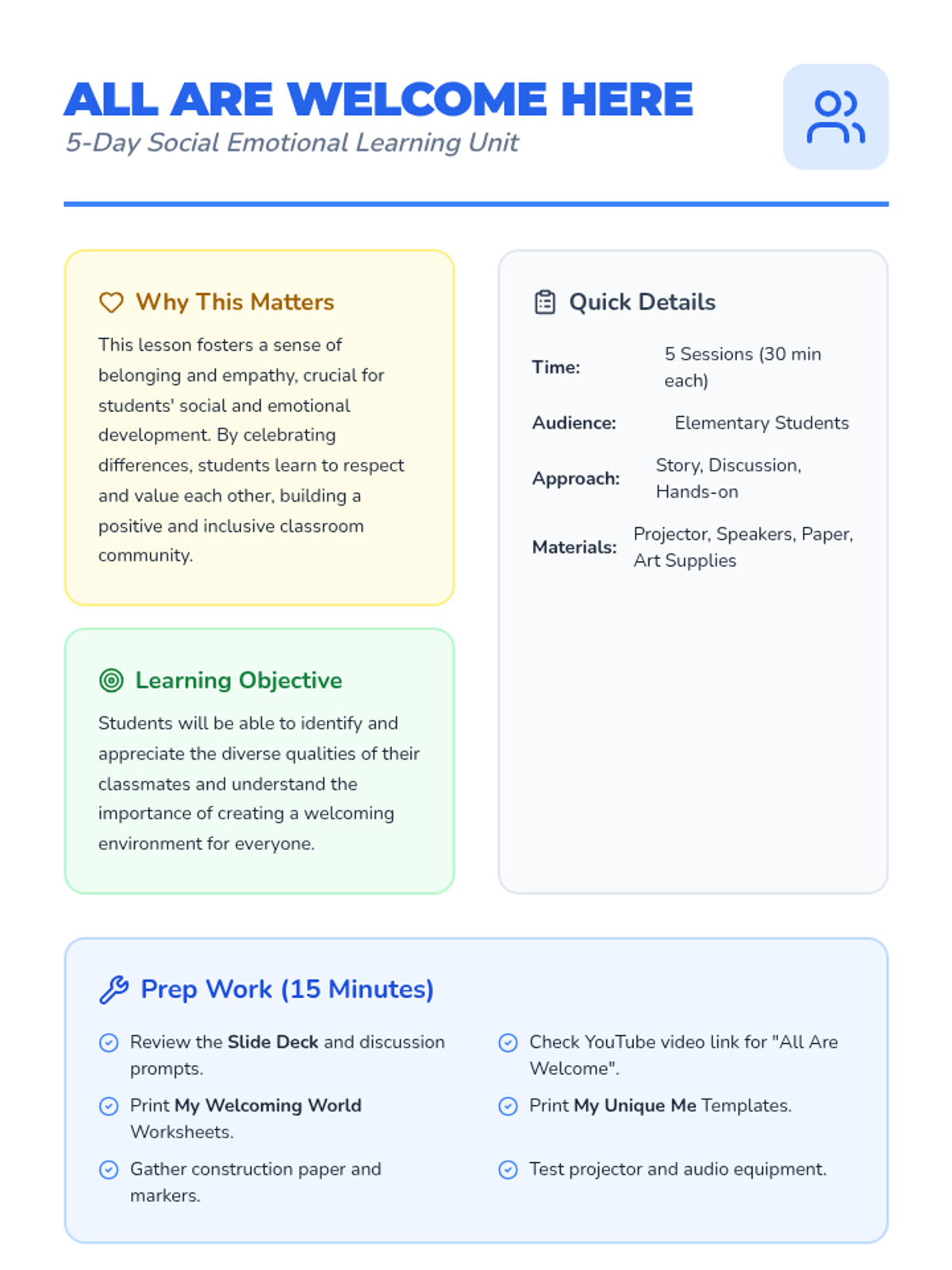
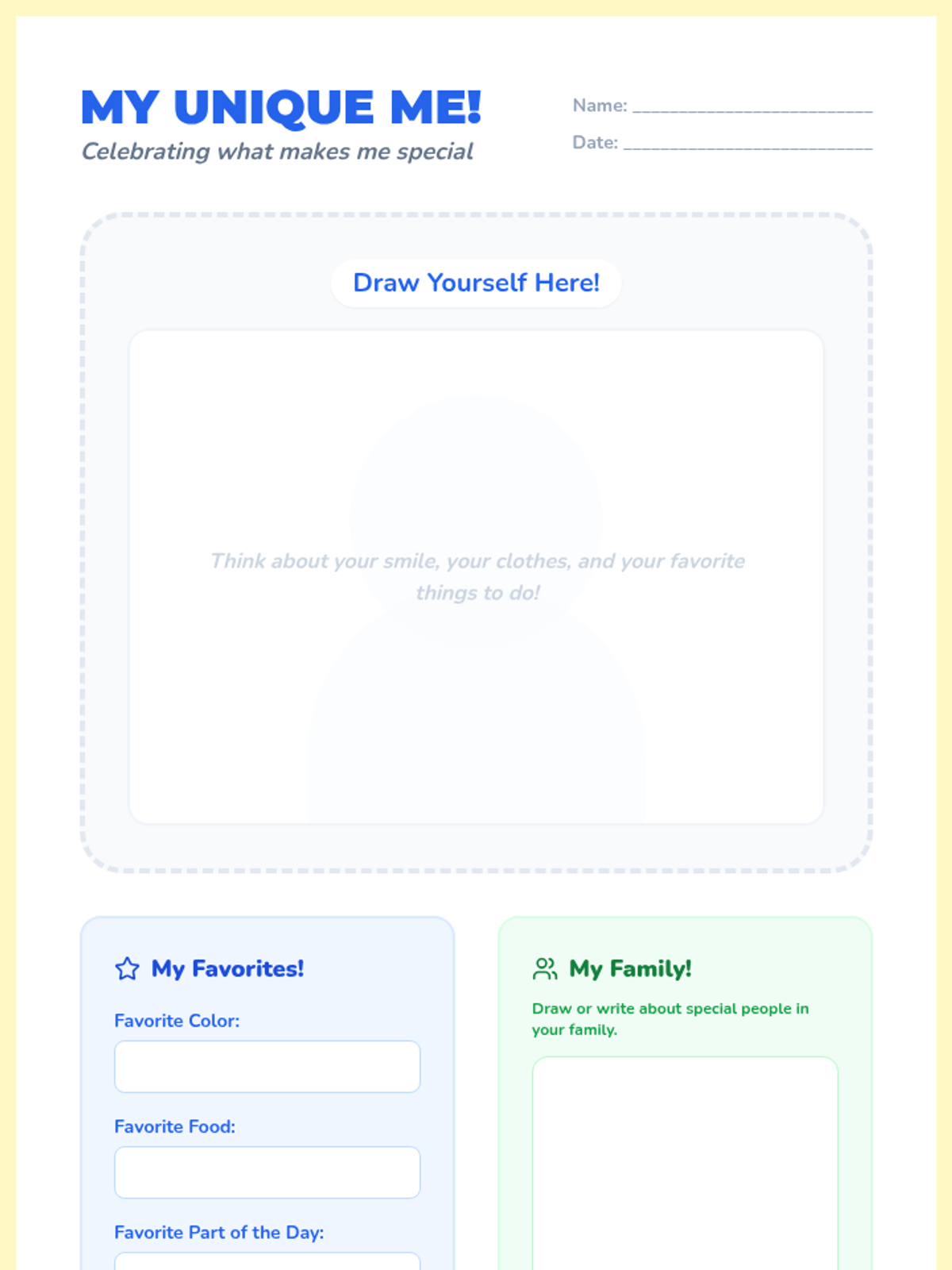
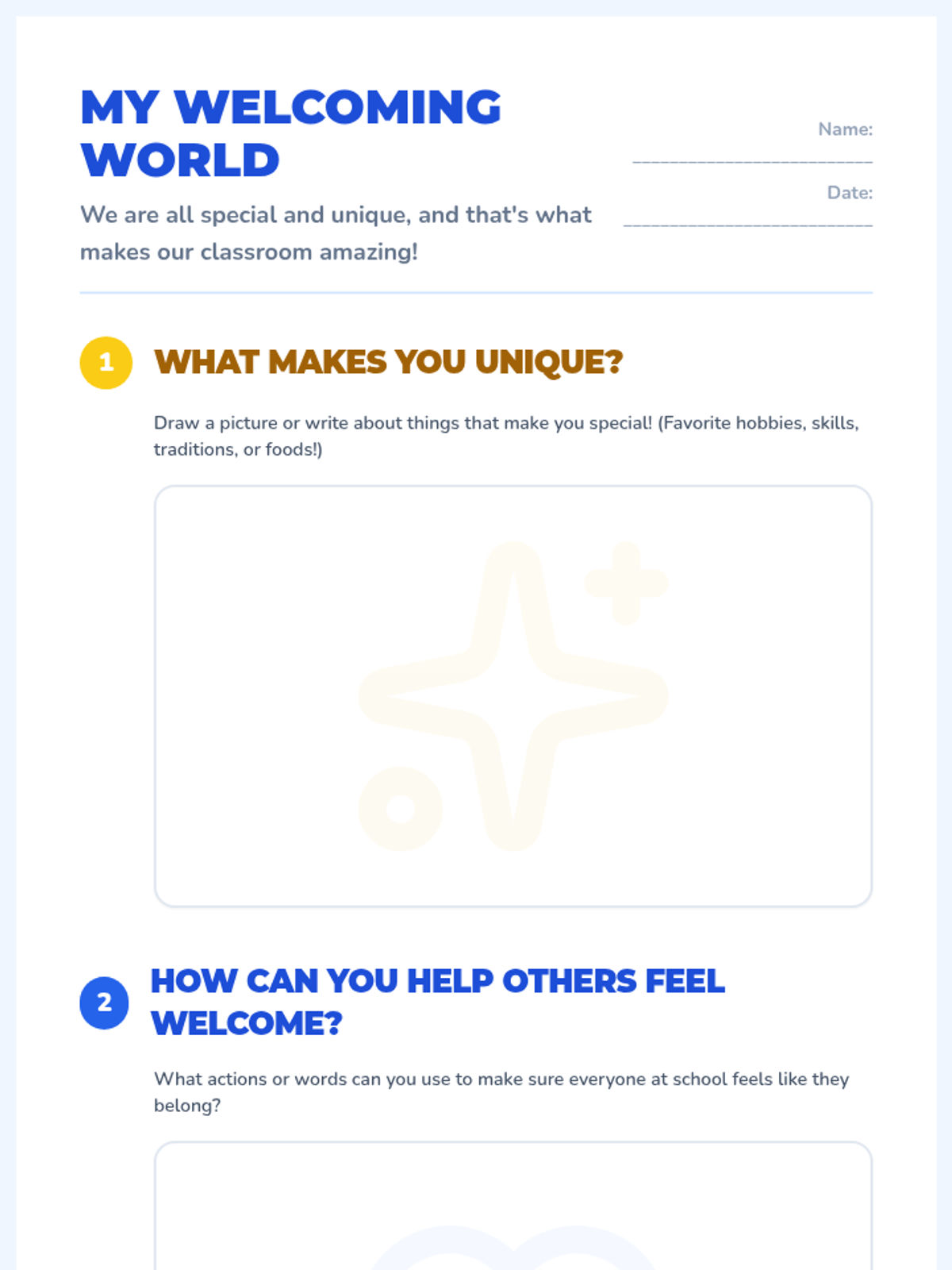
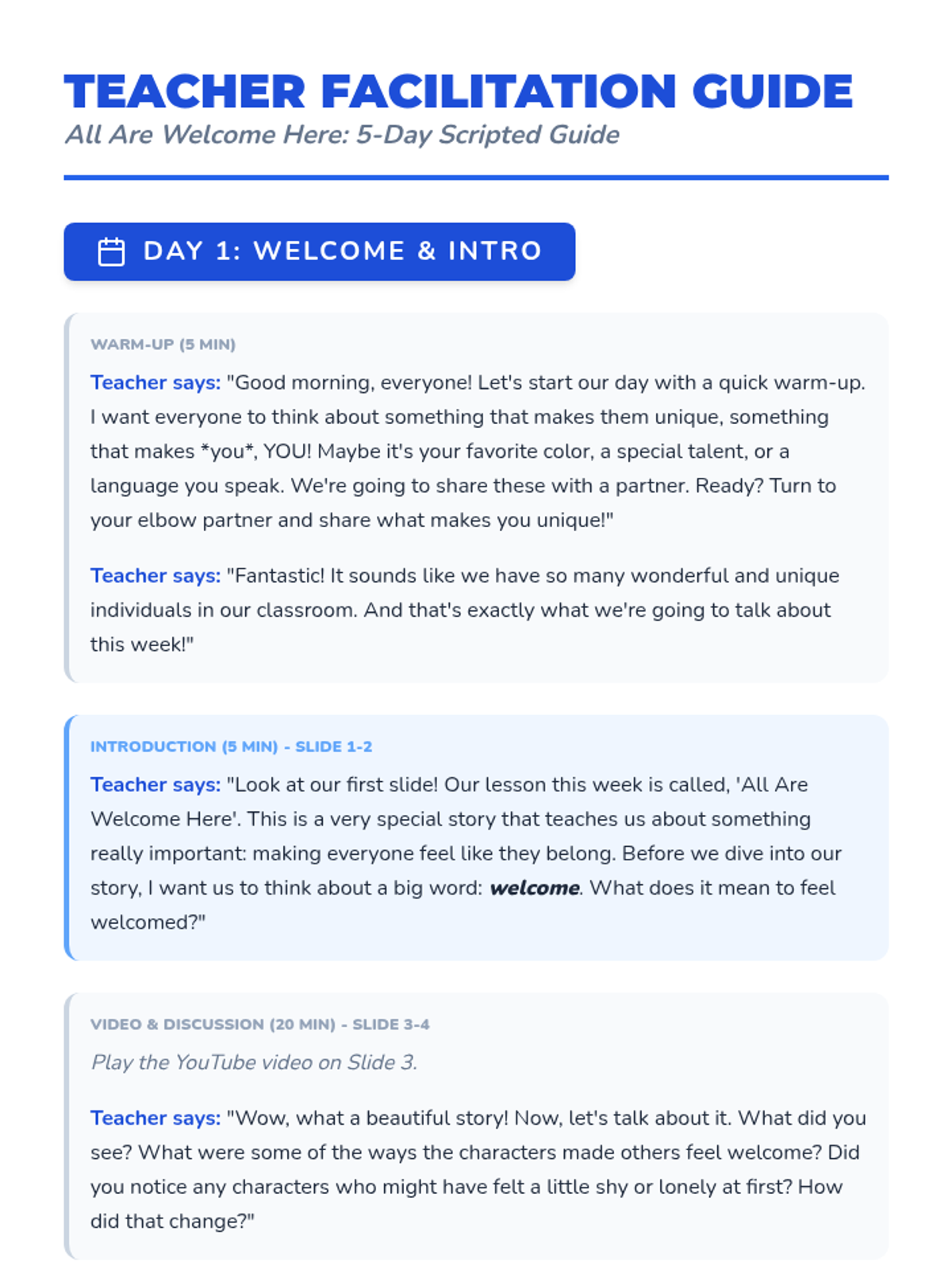
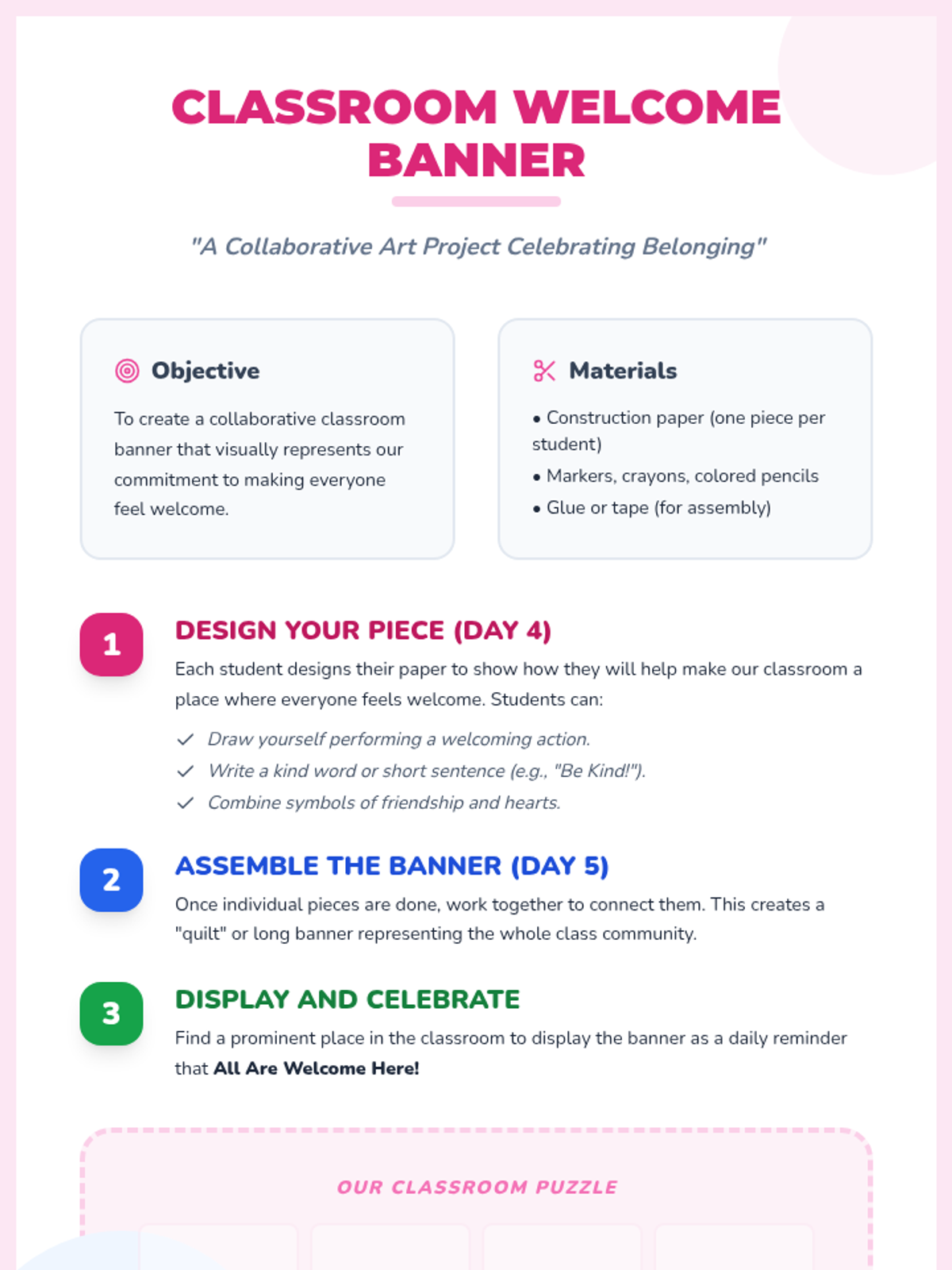
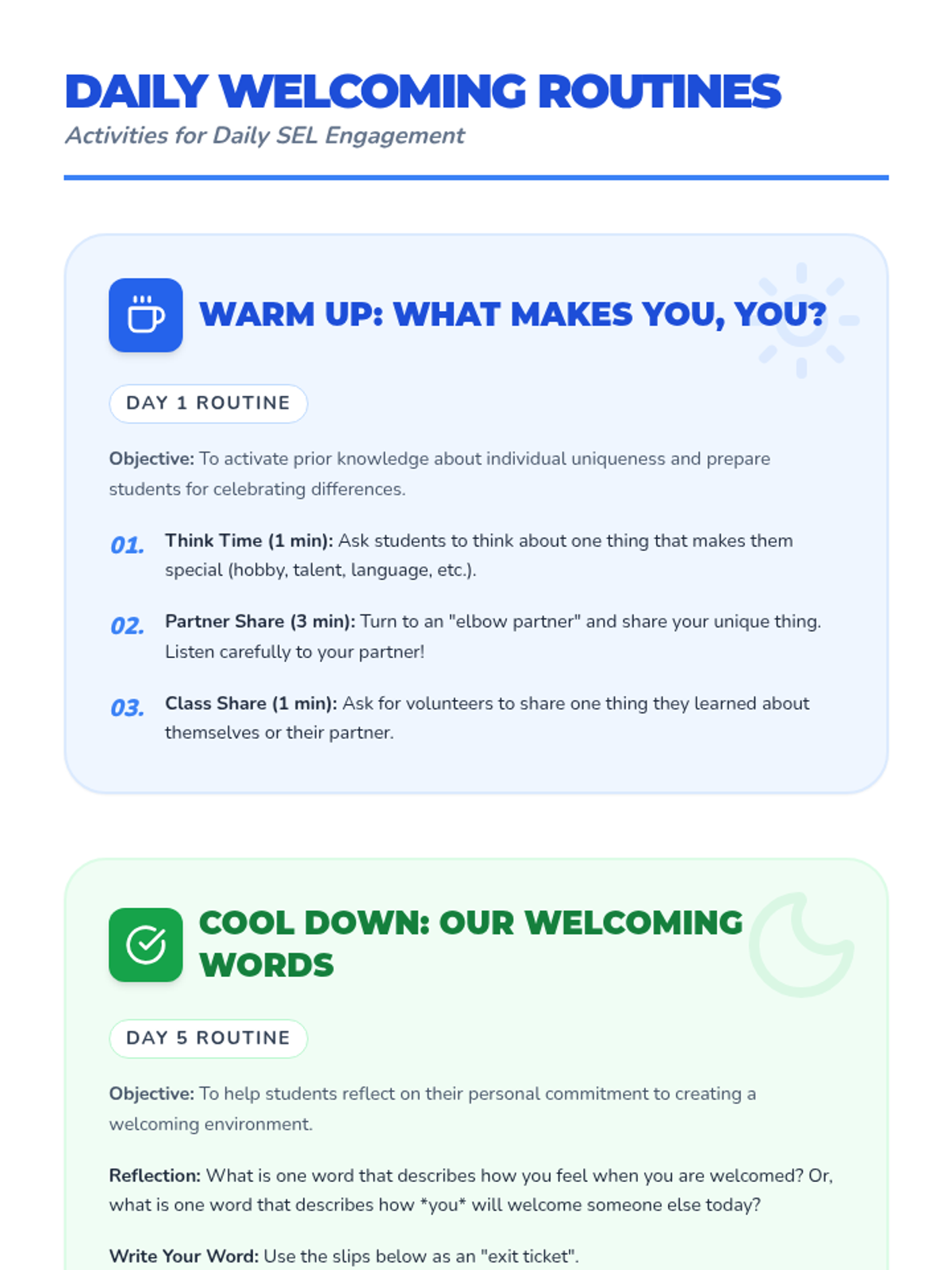
A five-day lesson exploring acceptance, diversity, and belonging through the story 'All Are Welcome'. Students engage in discussions, personal reflections, and a collaborative banner project to foster an inclusive classroom community.
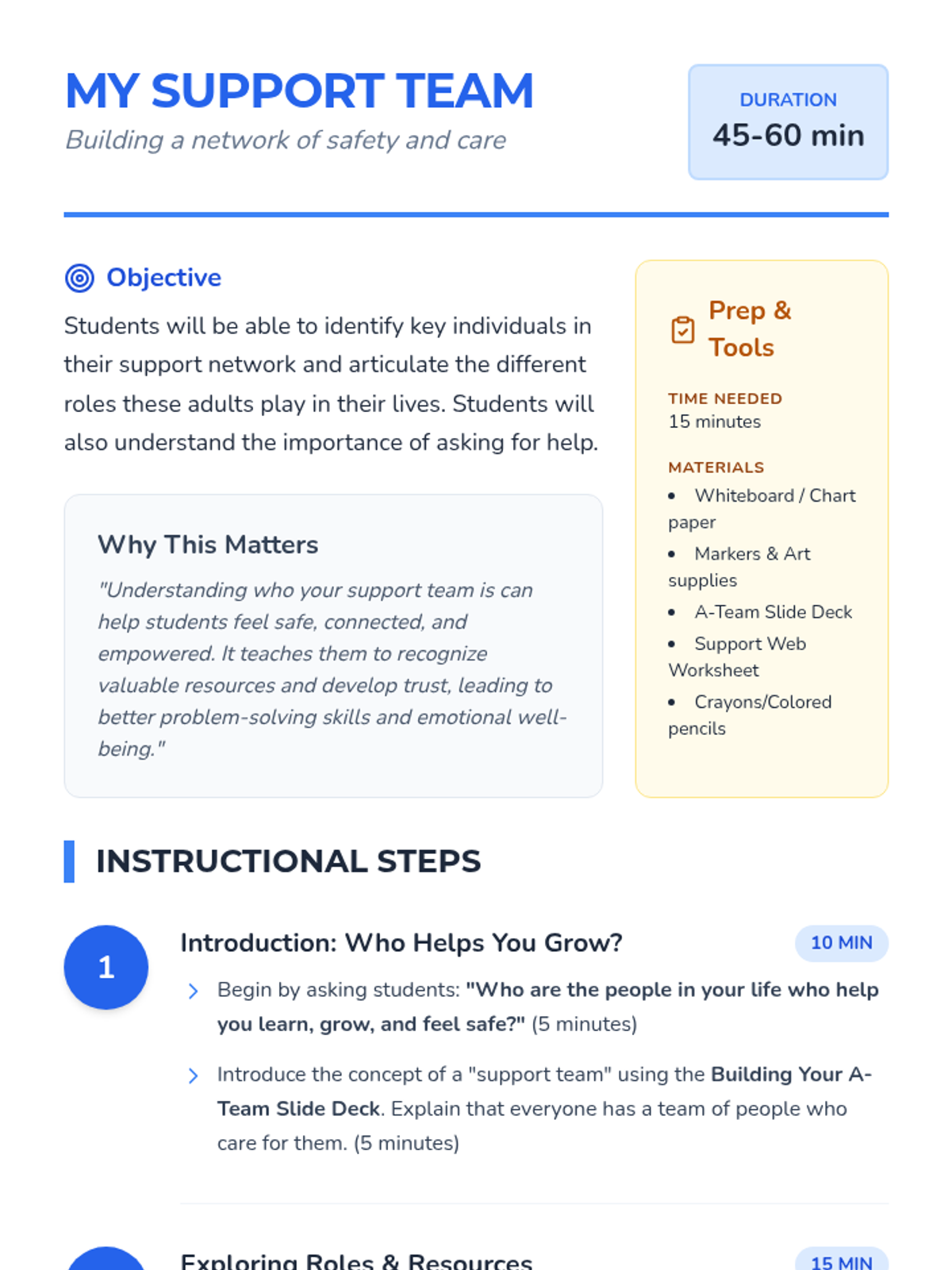
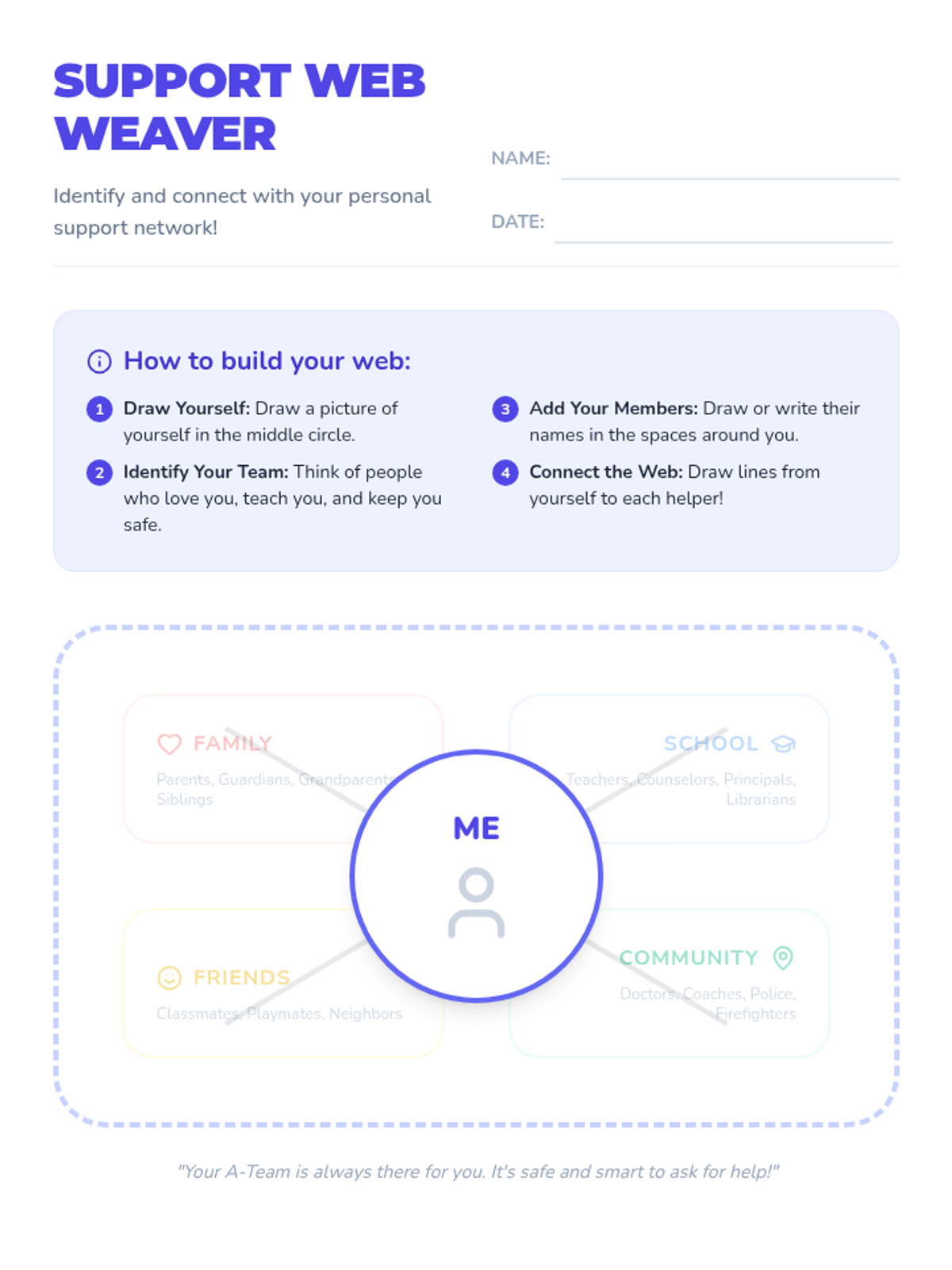
A comprehensive lesson designed to help elementary students identify and visualize their support network, including family, school staff, friends, and community helpers. Students create a 'Support Web' to recognize the people they can turn to for help and guidance.
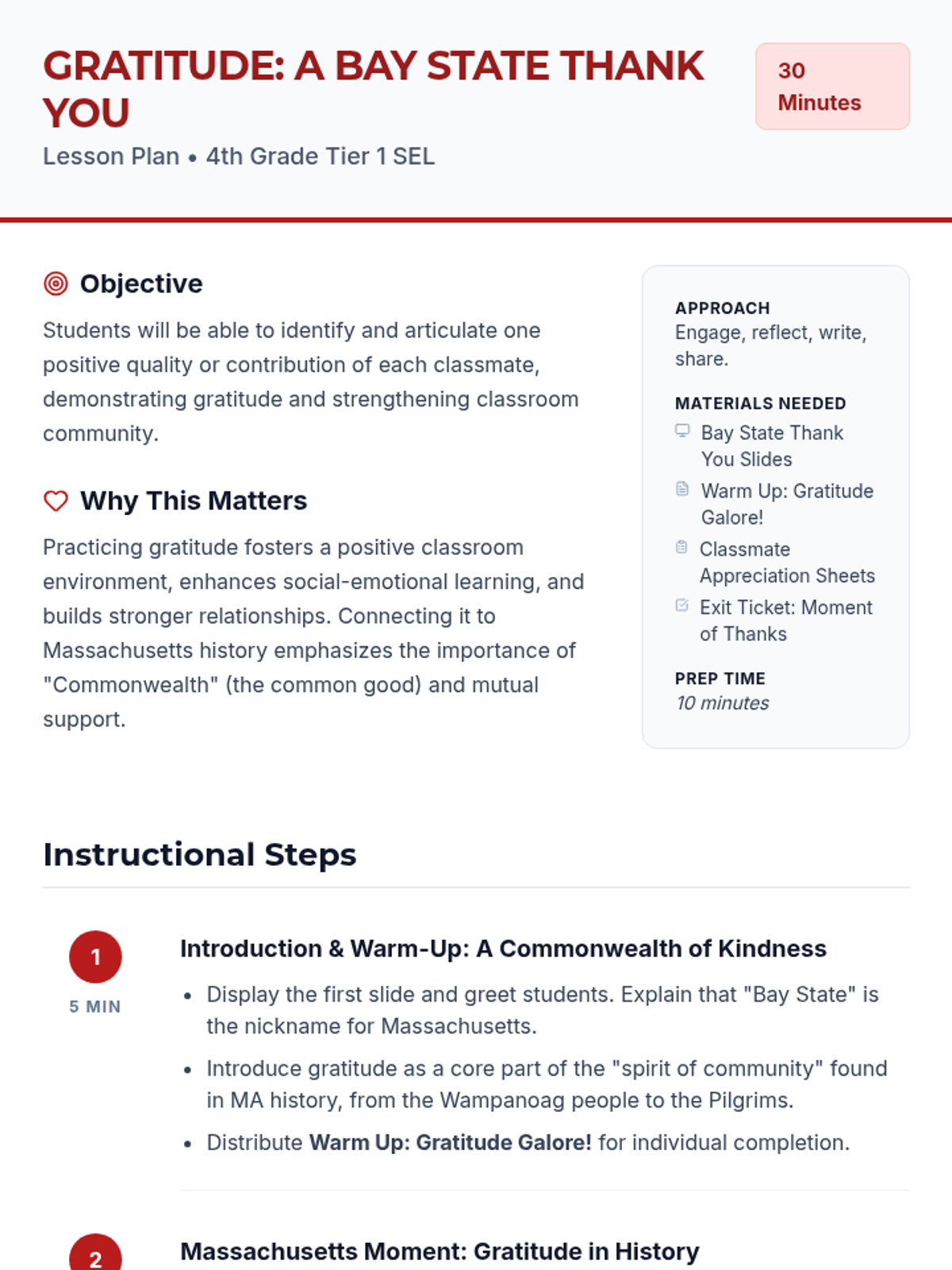
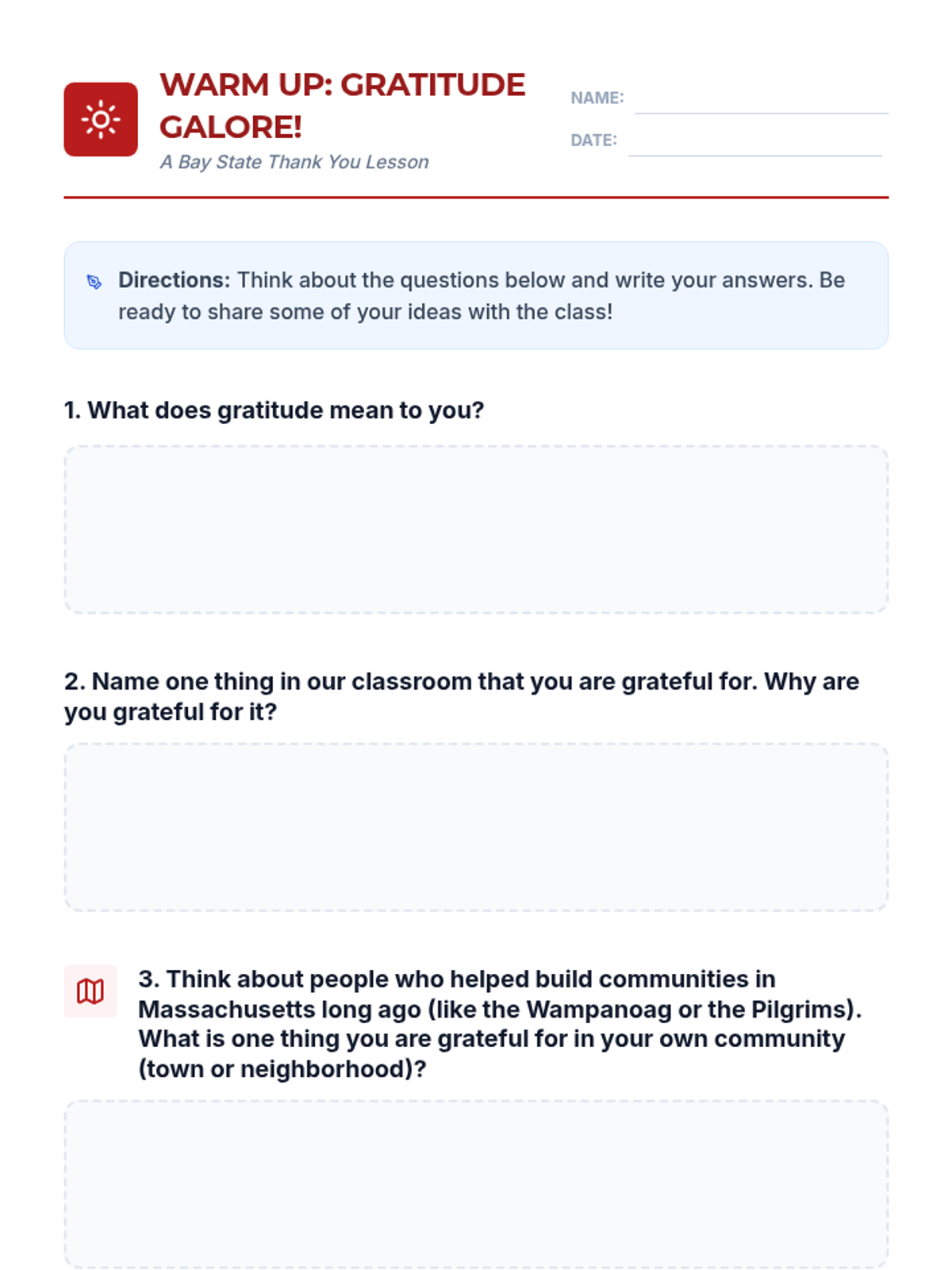
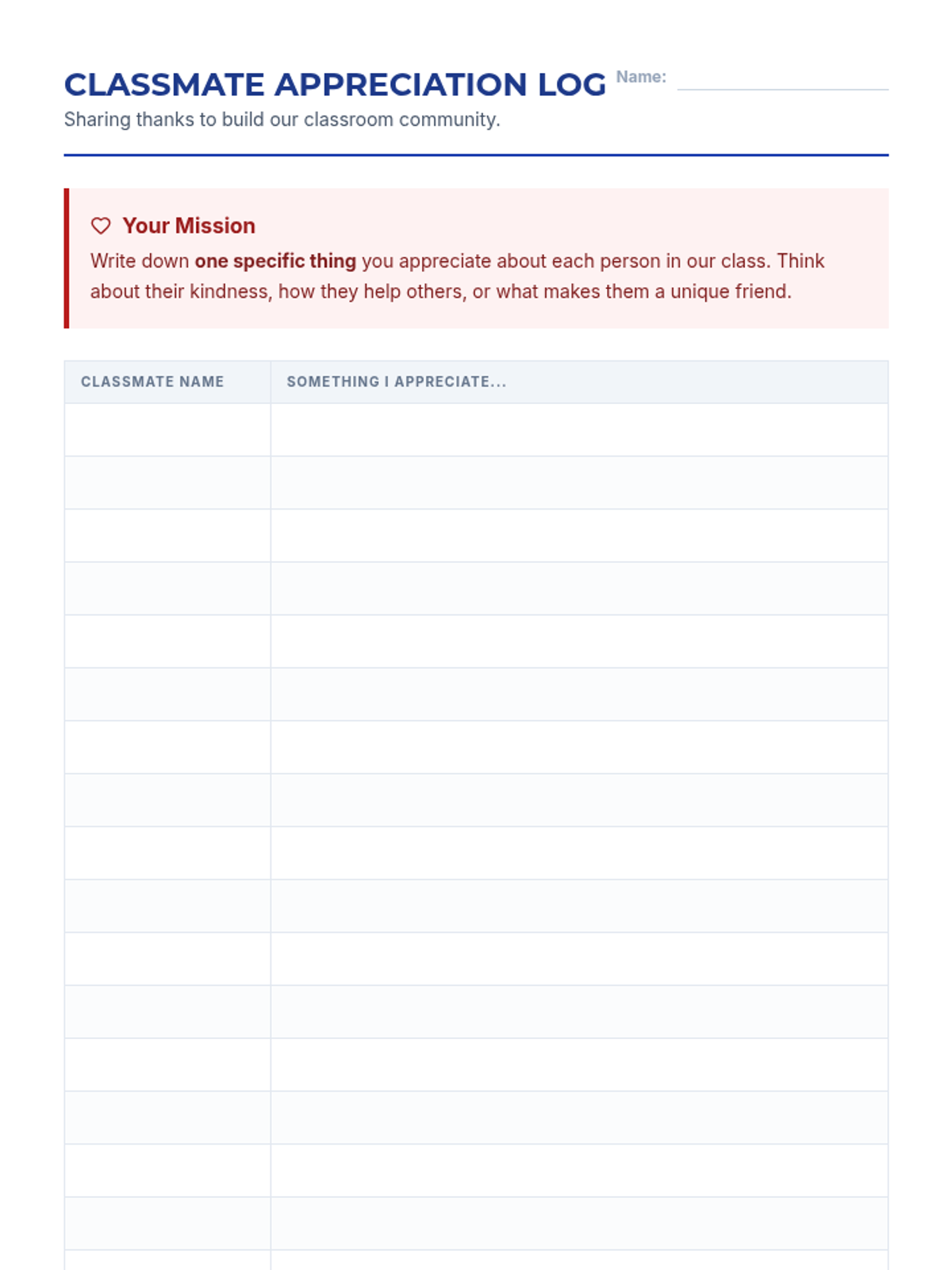
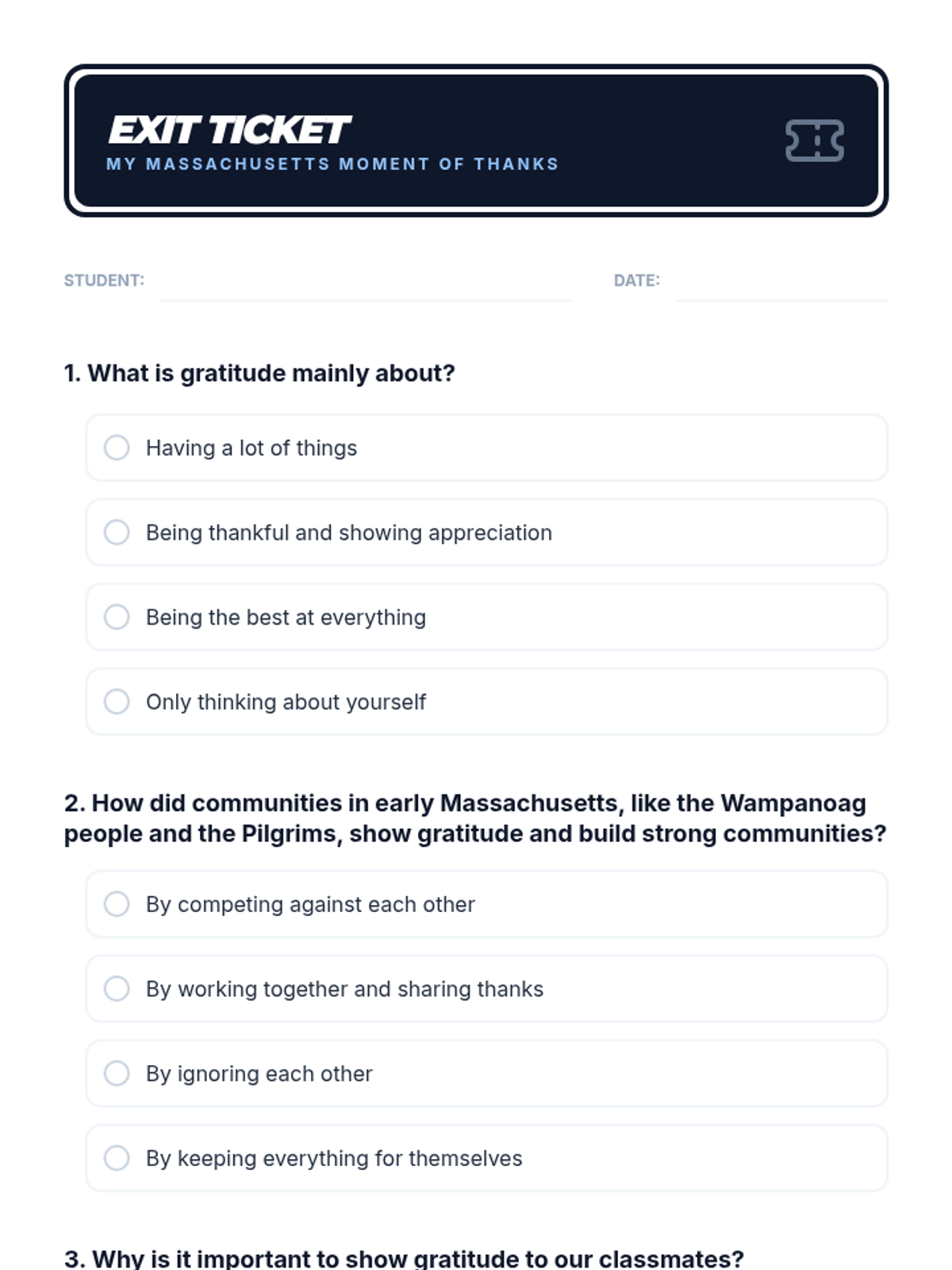
A 4th-grade SEL lesson that teaches gratitude by connecting the Massachusetts spirit of community with classmate appreciation. Students explore historical examples of cooperation before practicing specific gratitude for their peers.
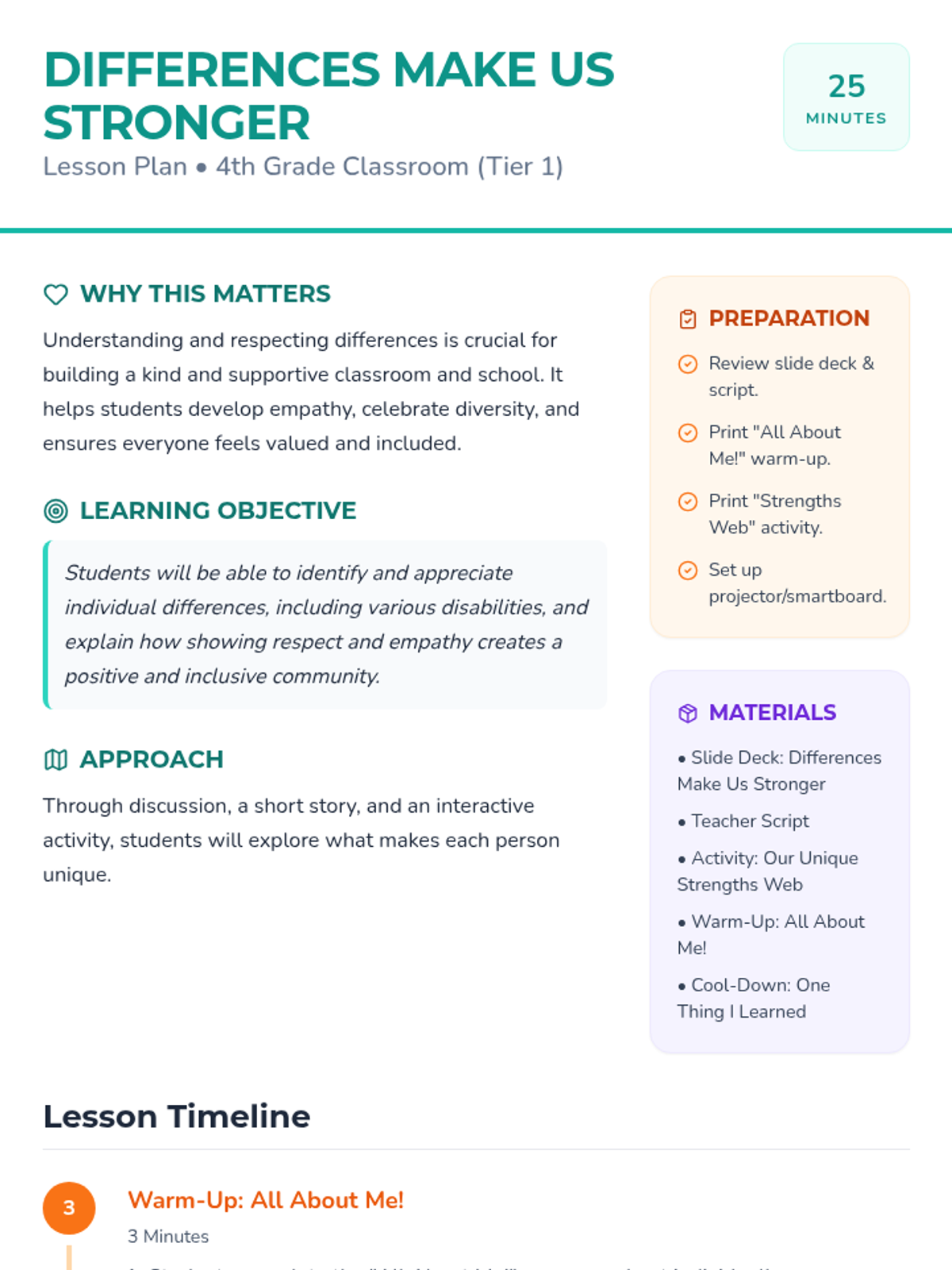
This 25-minute lesson for 4th graders helps students understand and appreciate the diverse abilities and unique qualities of themselves and others, fostering a more inclusive classroom environment. Students will learn the importance of empathy and respect for individuals with different abilities through discussion, a short story, and interactive activities.
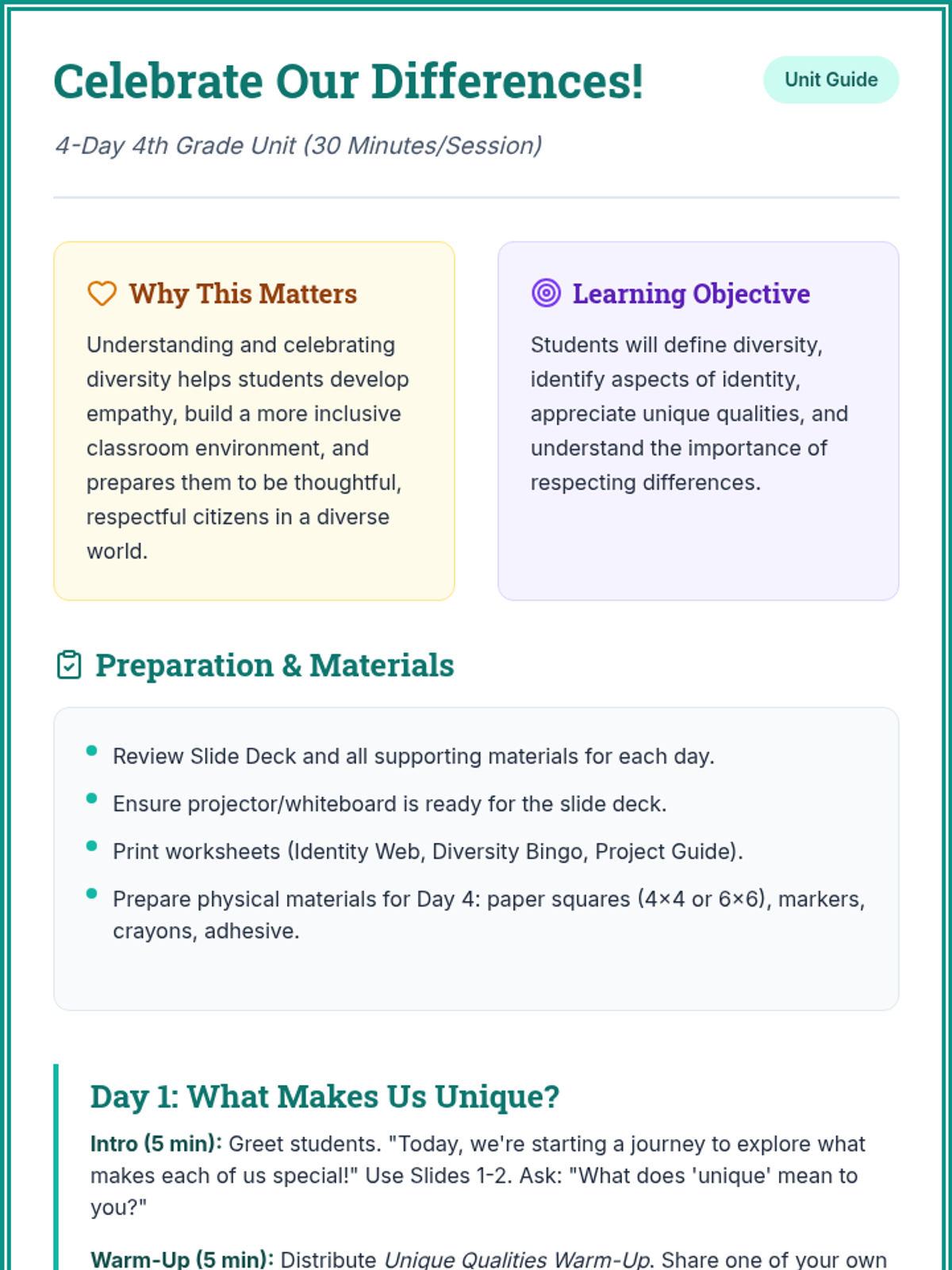
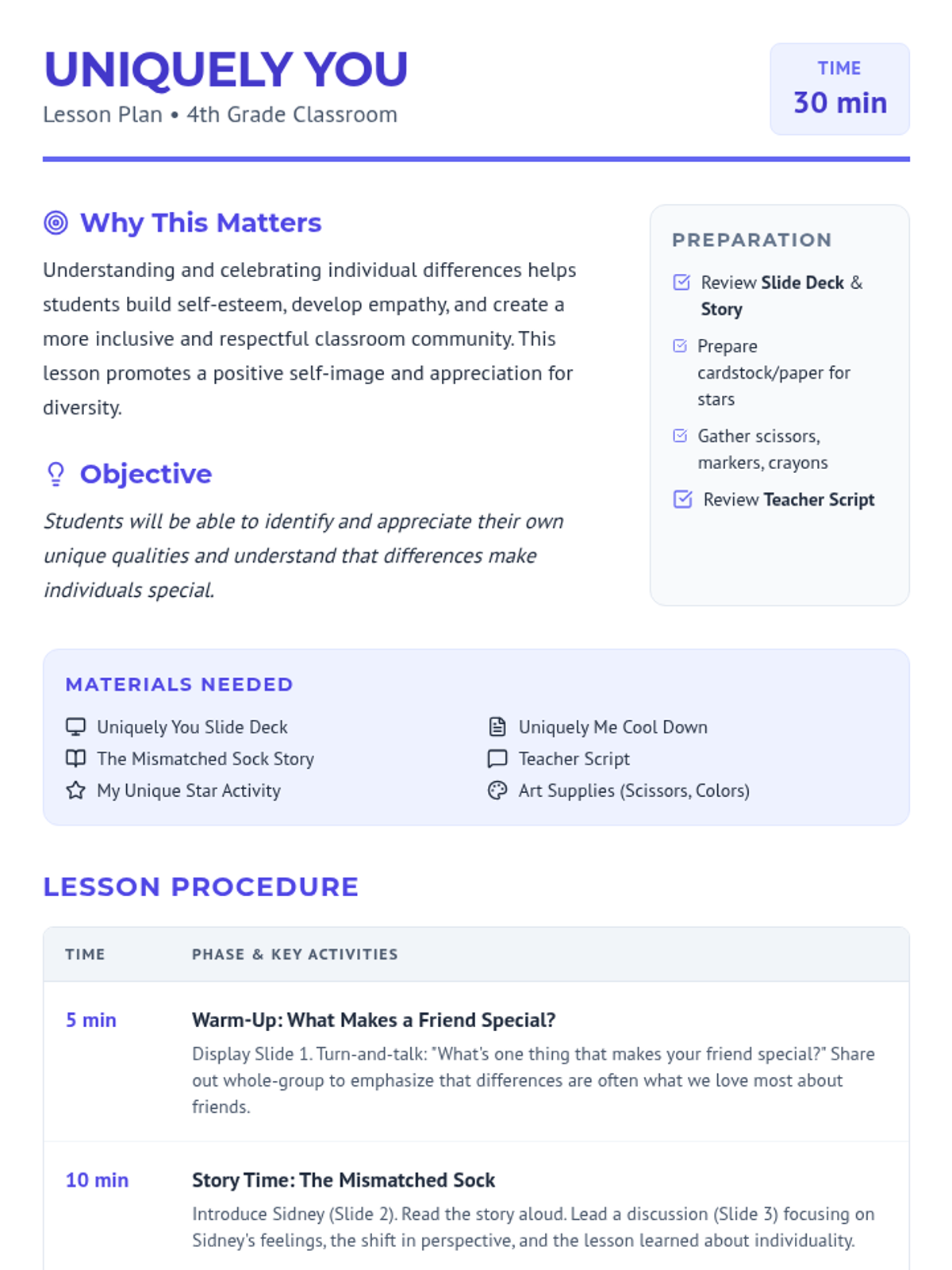
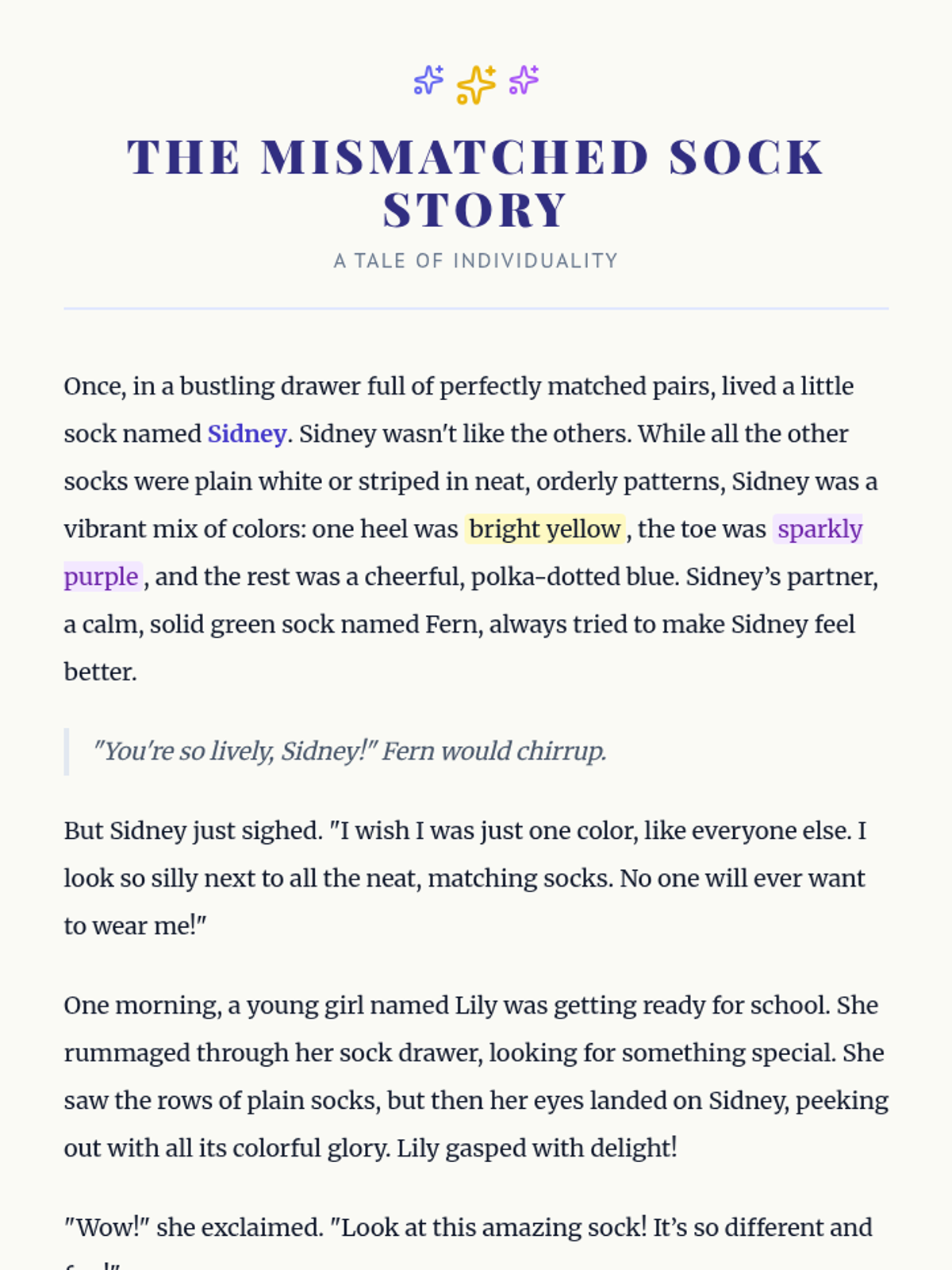
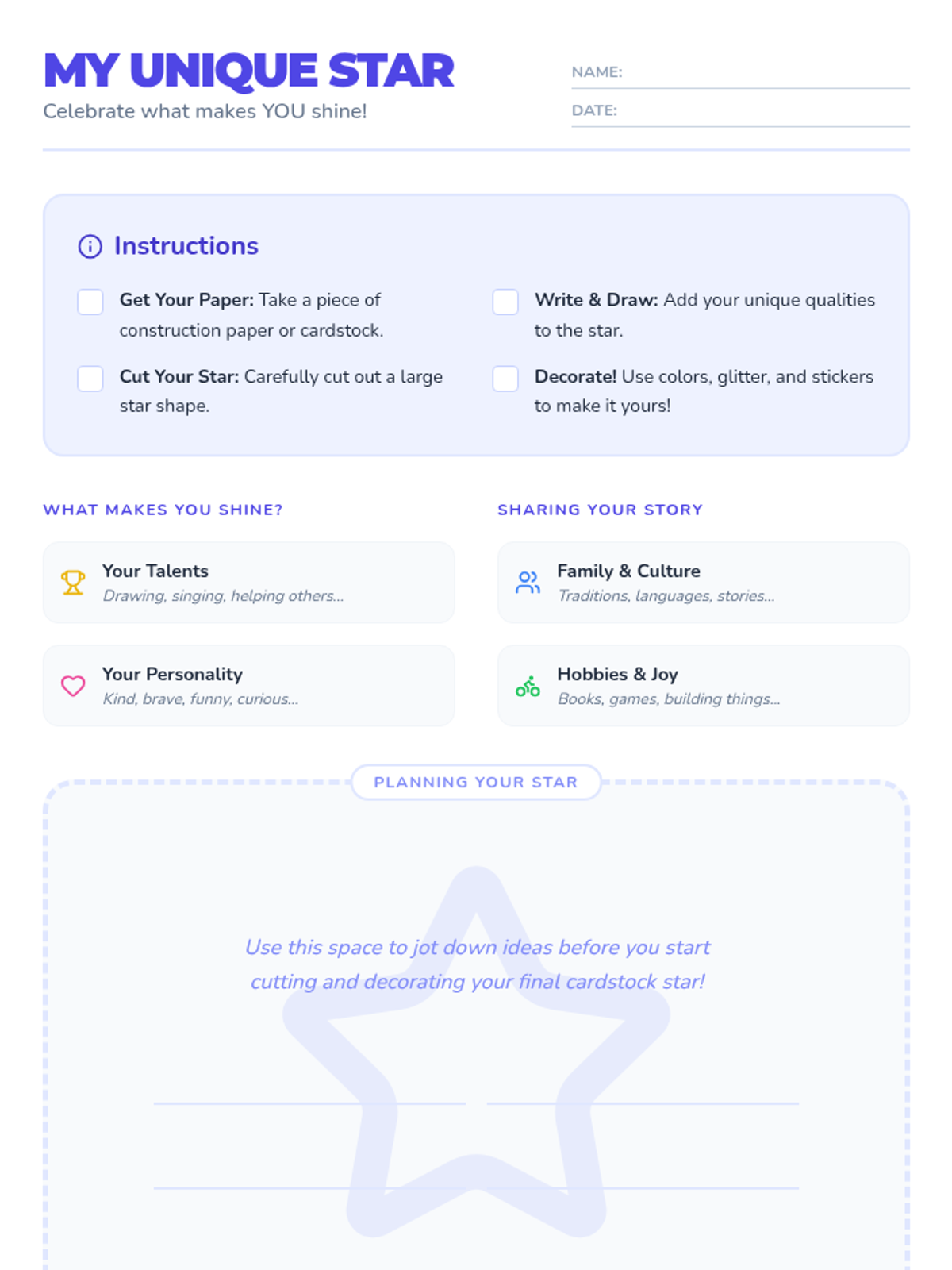
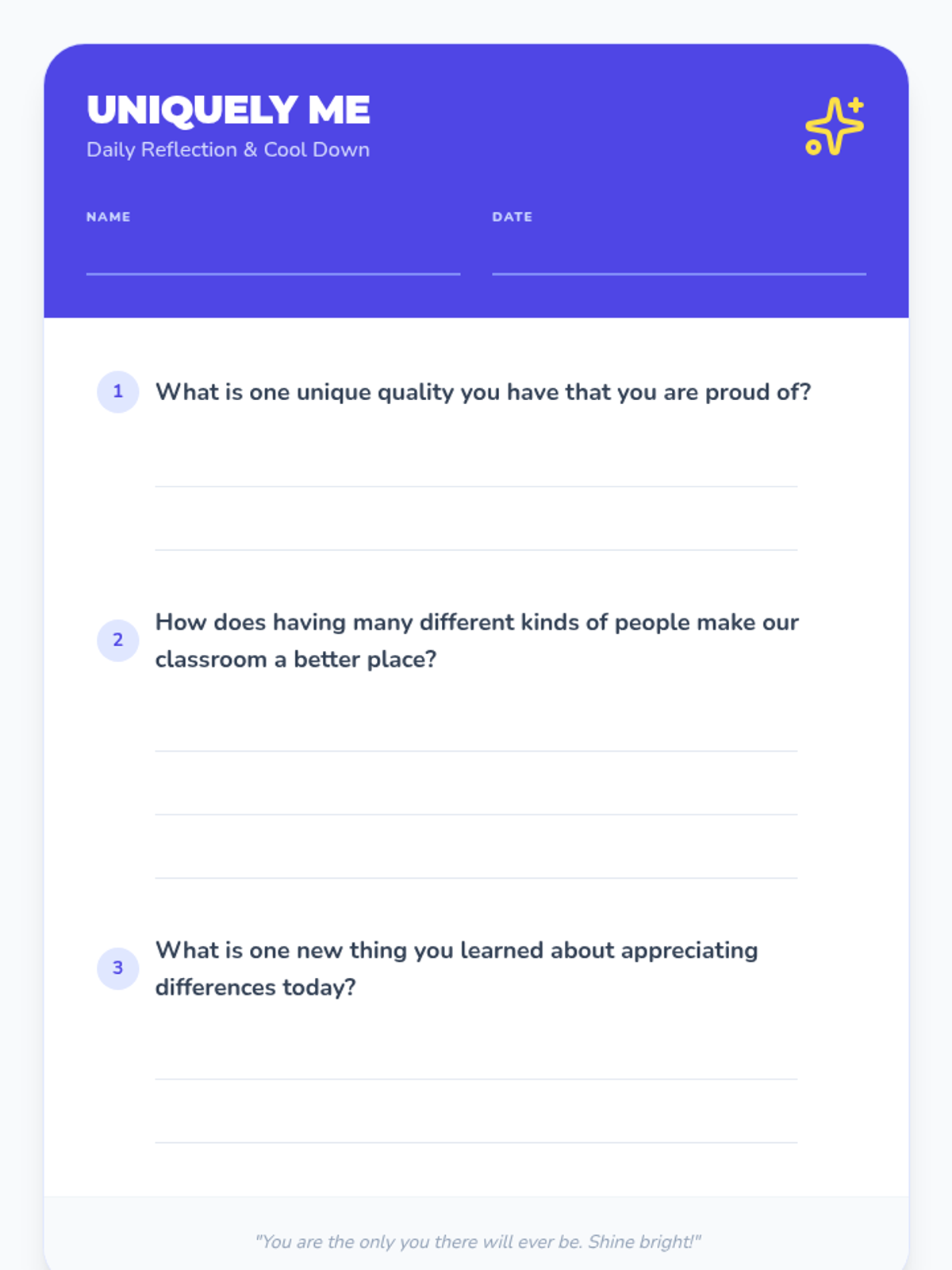
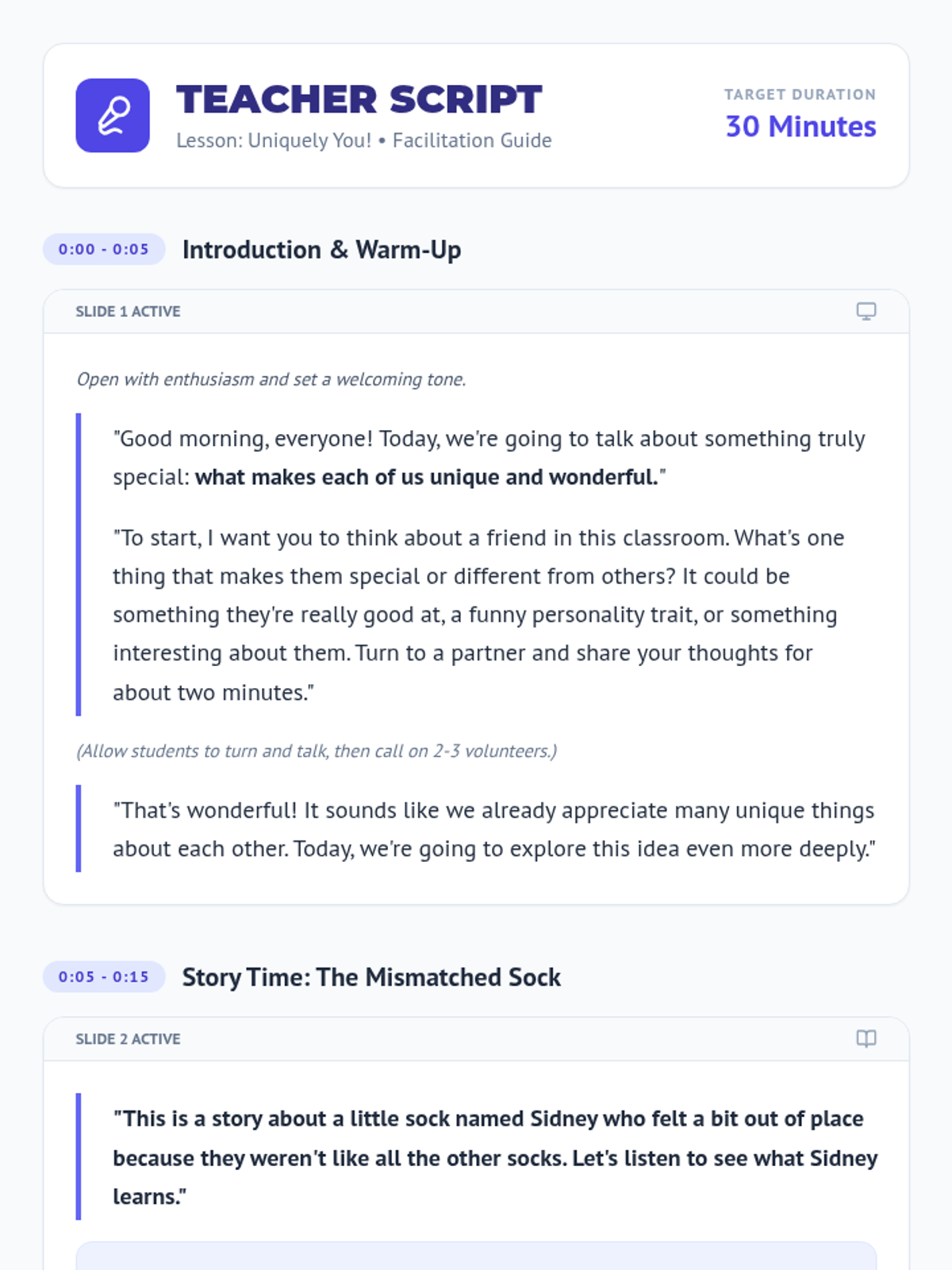
A 30-minute lesson for 4th-grade students that celebrates individuality and promotes a supportive classroom environment through storytelling and a creative star-themed activity.
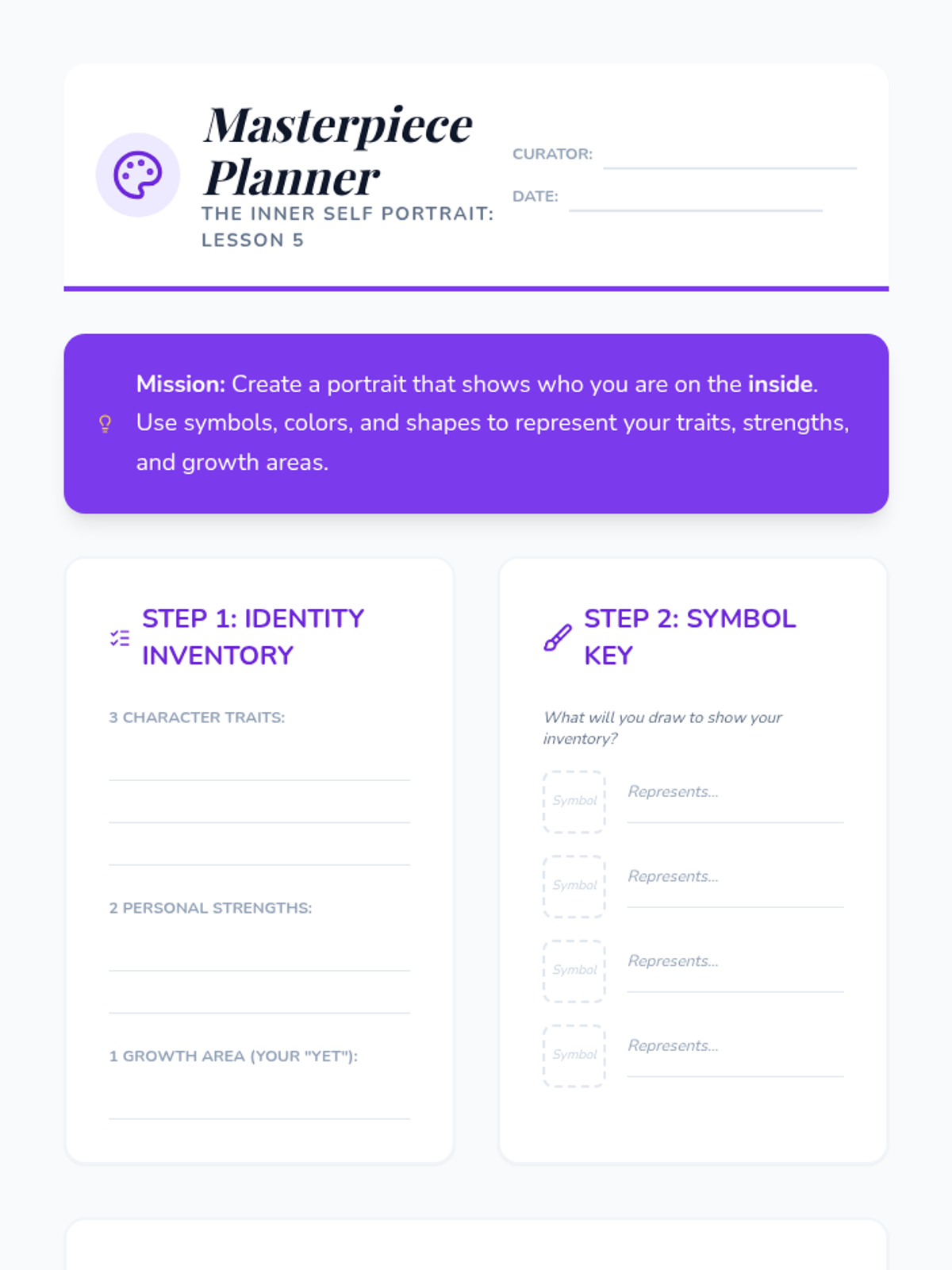
Students synthesize their learning by creating a symbolic self-portrait that represents their internal identity.
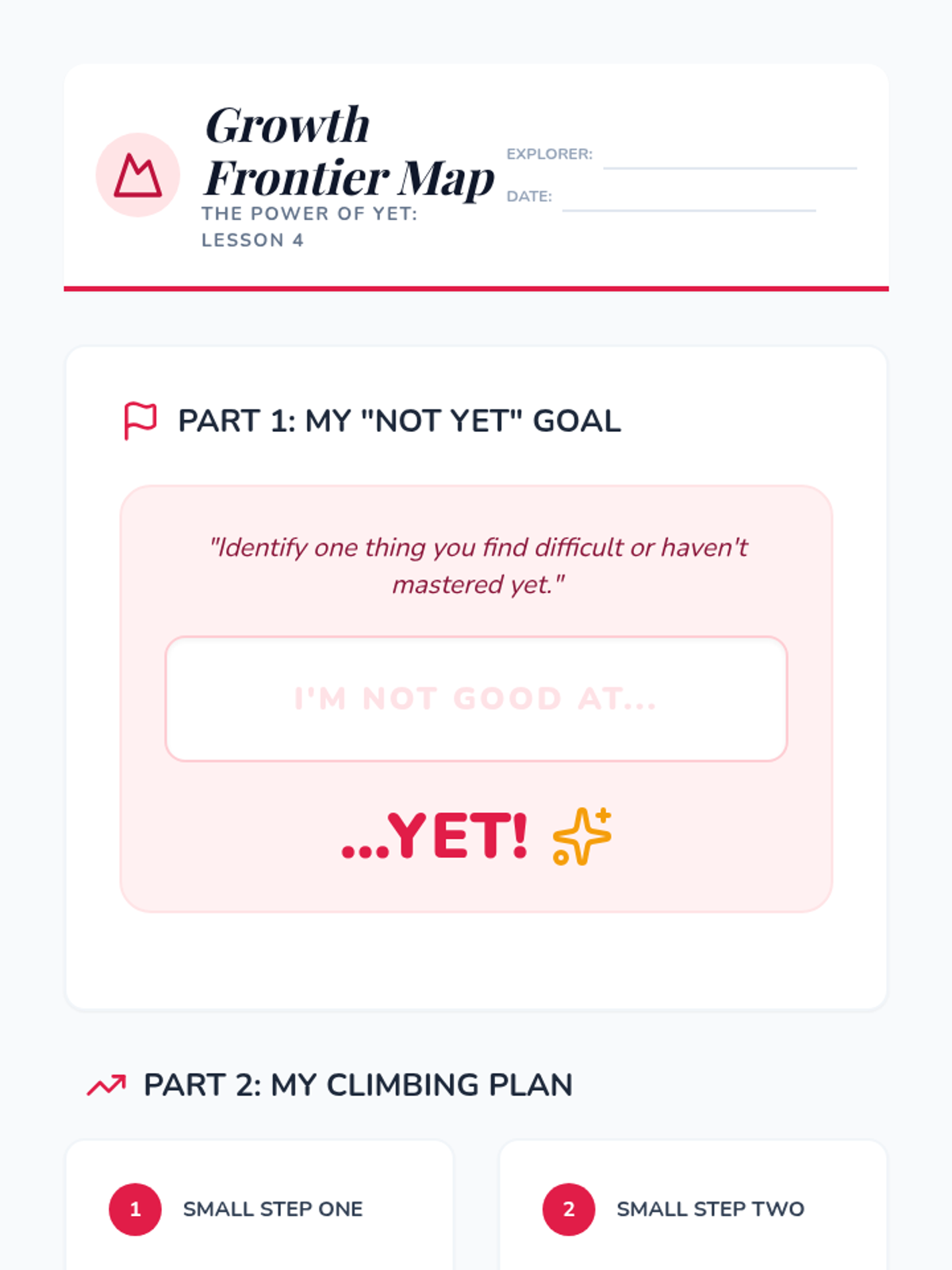
Students learn about the 'Power of Yet' and identify areas for growth, framing challenges as part of their developing identity.
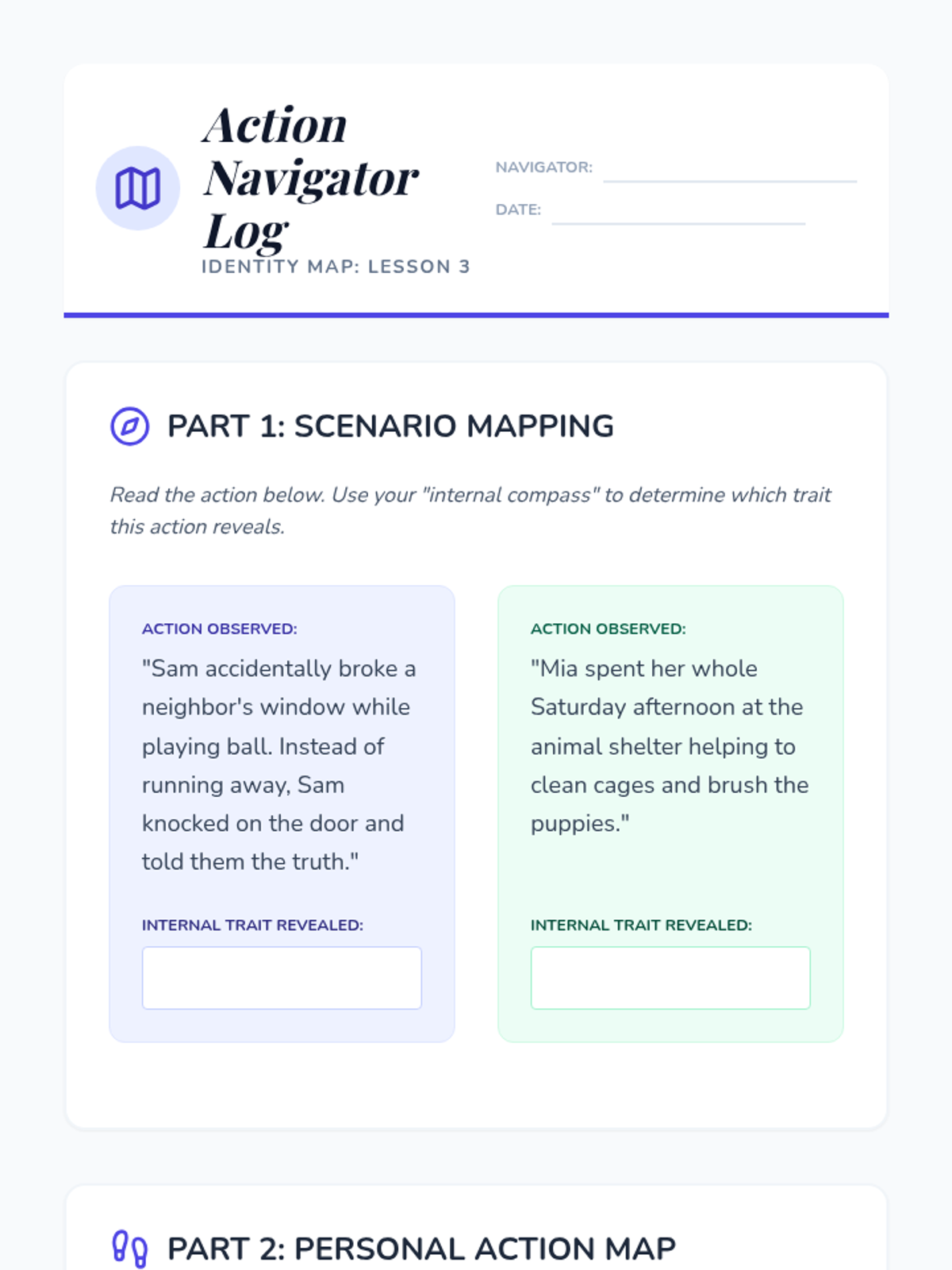
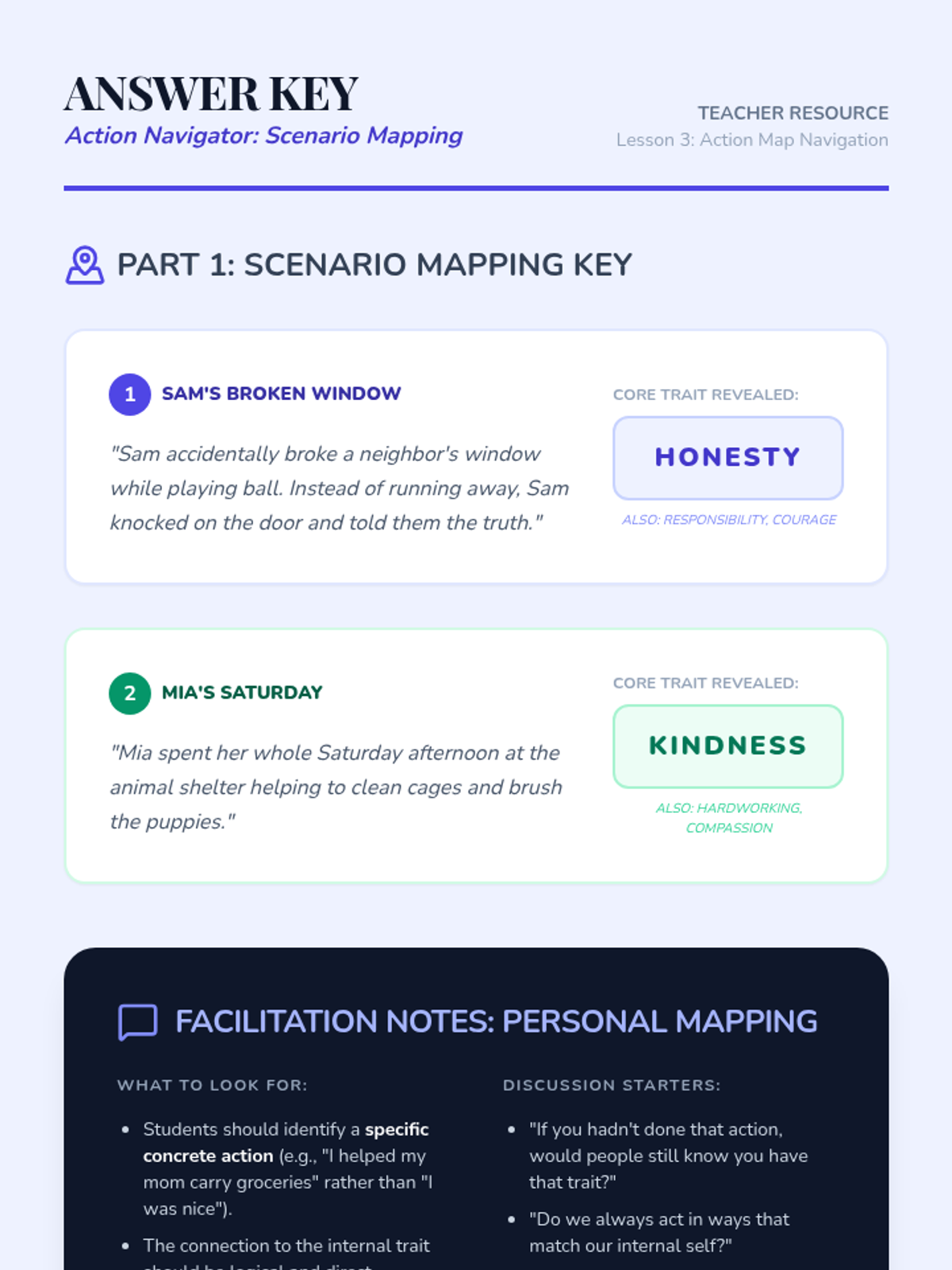
Students explore how behaviors reveal personality traits through role-playing and scenario analysis.
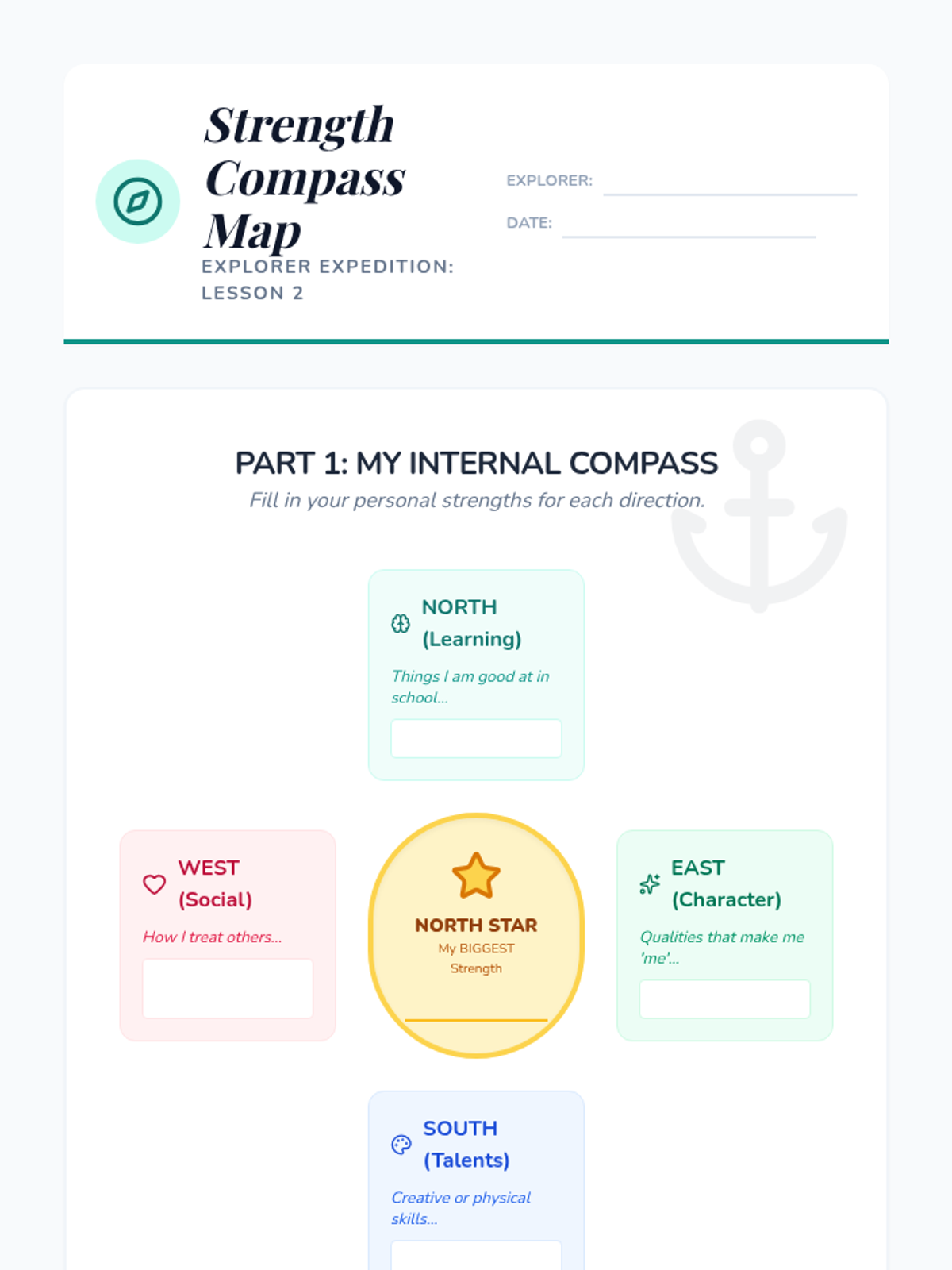
Students identify their personal strengths and talents while practicing 'strength spotting' in their peers.
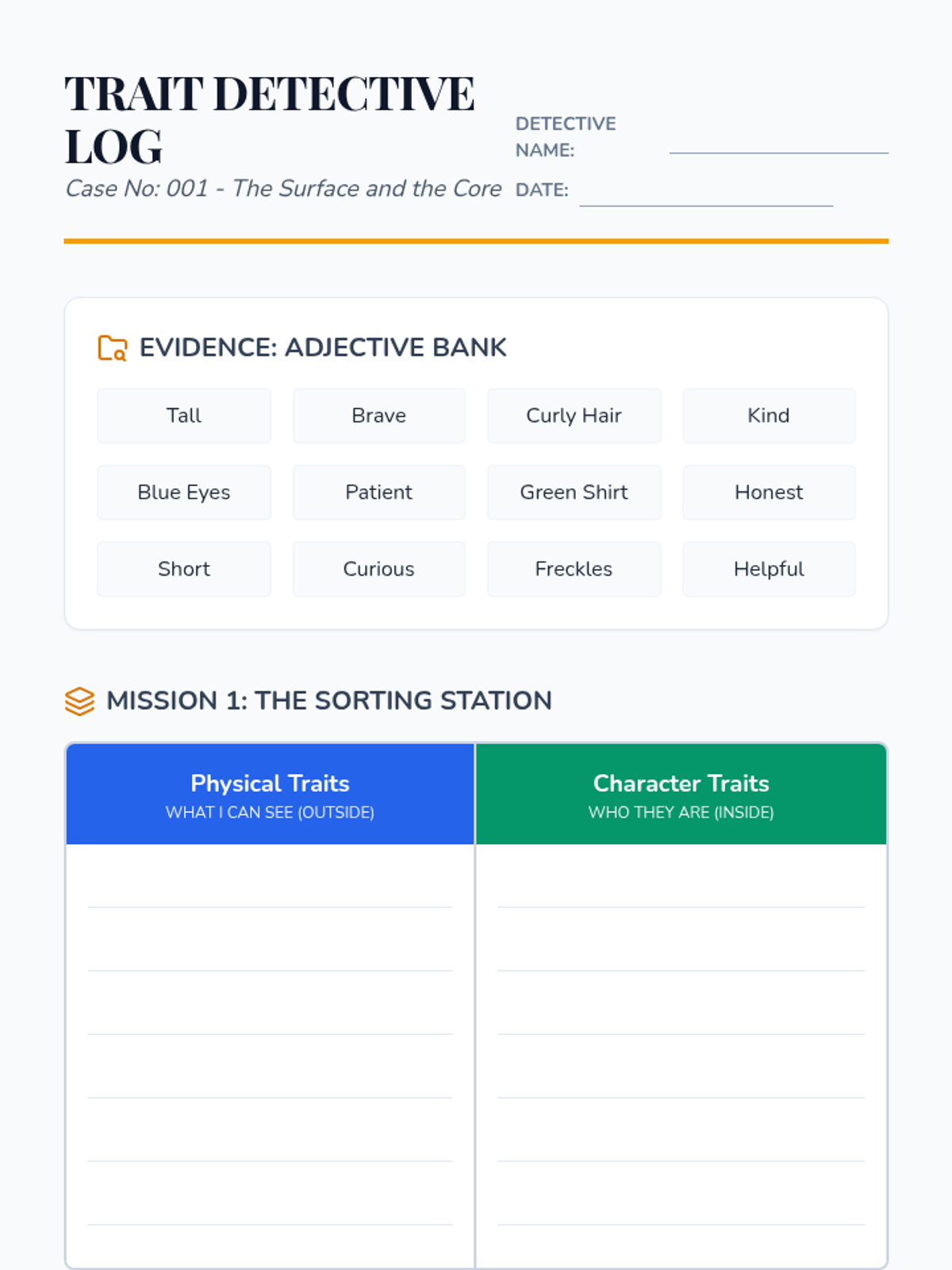
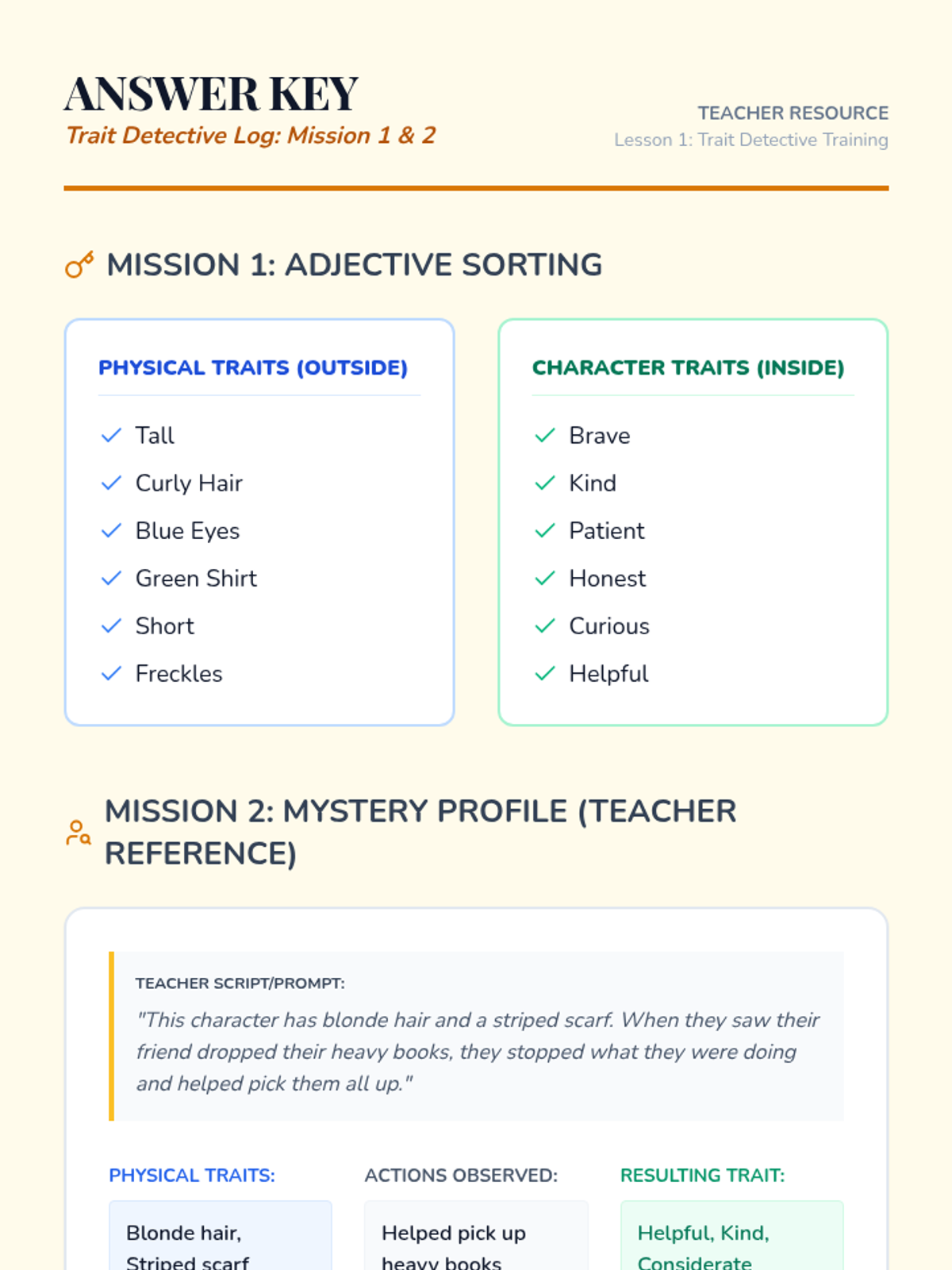
Students analyze fictional characters to differentiate between physical traits (what we see) and character traits (what we infer from actions).