Active listening, assertive expression, and boundary-setting strategies for interpersonal success. Develops proficiency in conflict mediation, cooperative teamwork, and the cultivation of healthy romantic and platonic connections.
Day 5 slides focusing on the transition from awareness to acceptance and the Acceptance Ally pledge. Expanded for a full 15-minute lesson with teacher notes. Revised layout for better PDF rendering of teacher notes. Now with improved spacing and contrast. Now with improved spacing and contrast.
Day 4 slides introducing the 'Inclusion Protocol': Wait, Invite, and Adjust. Now expanded for a full 15-minute lesson with teacher notes. Revised layout for better PDF rendering of teacher notes. Now with improved spacing and contrast.
Day 3 slides focusing on communication diversity, including AAC, body language, and non-traditional listening styles. Expanded for a full 15-minute lesson with teacher notes. Revised layout for better PDF rendering of teacher notes. Now with improved spacing and contrast.
Day 2 slides exploring sensory processing differences and the 'volume knob' analogy for hyper- and hypo-sensitivity. Expanded for a full 15-minute lesson with teacher notes. Revised layout for better PDF rendering of teacher notes.
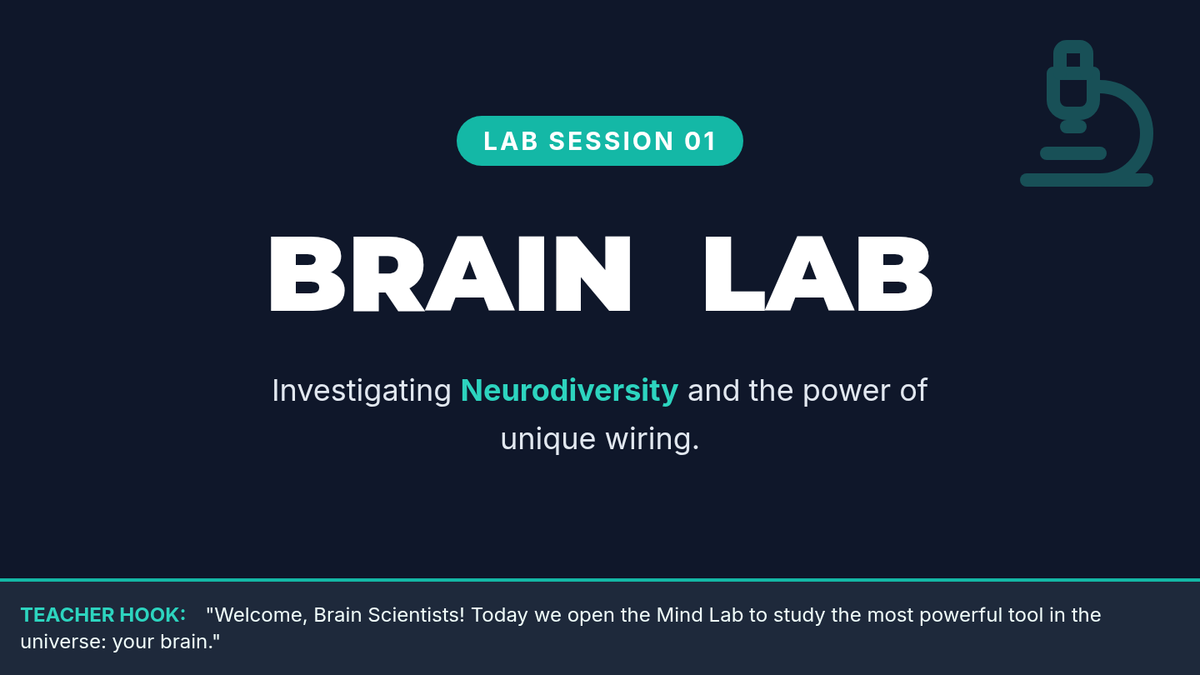
Day 1 slides focused on introducing the 'Mind Lab' and the concept of Neurodiversity using the fingerprint analogy. Now expanded with teacher notes and more slides for a full 15-minute lesson. Revised layout for better PDF rendering of teacher notes. Now with improved spacing and contrast.
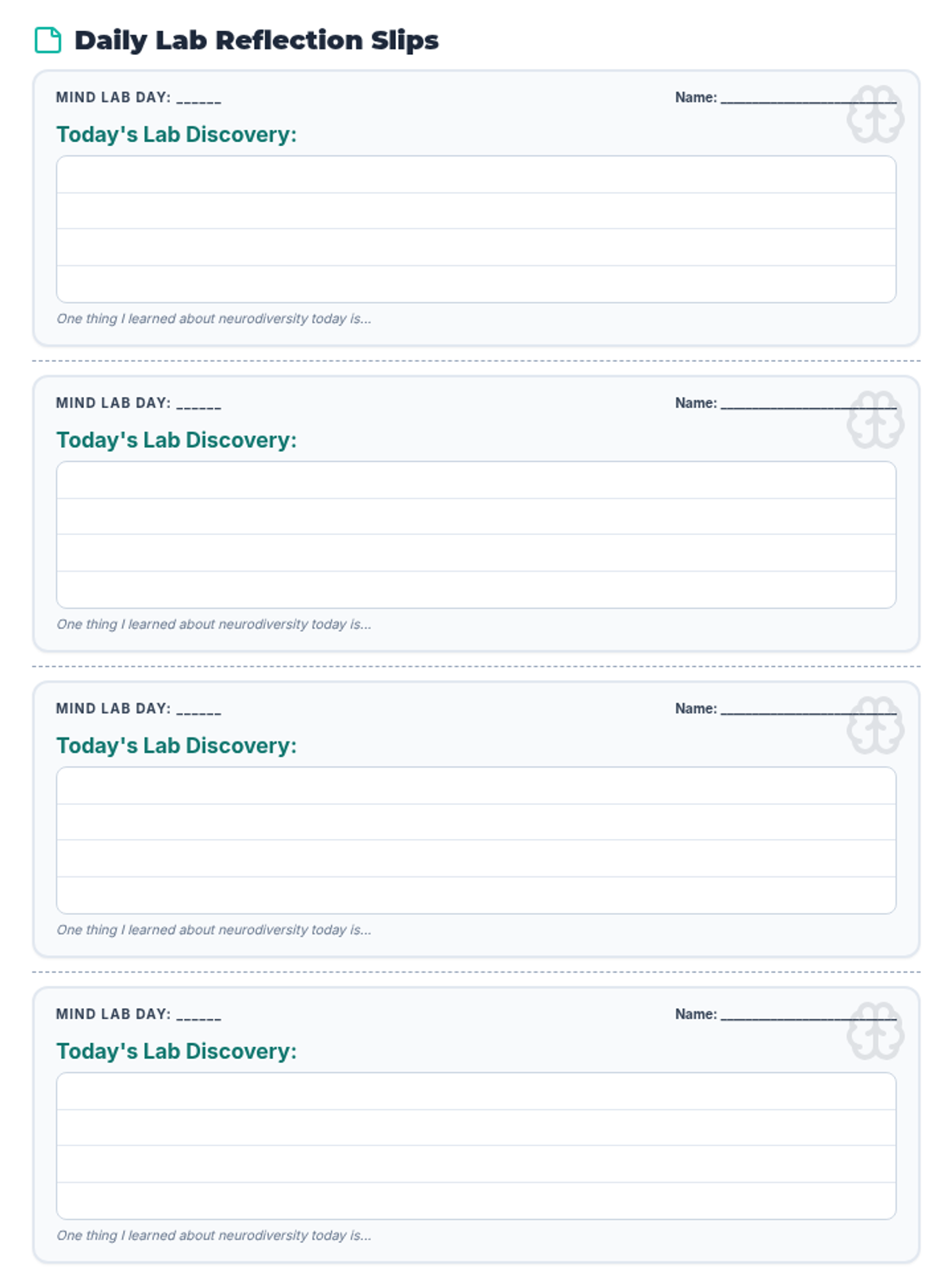
Printable exit tickets for students to record daily 'Lab Discoveries'. Revised for 4 slips per page with improved writing space and contrast.
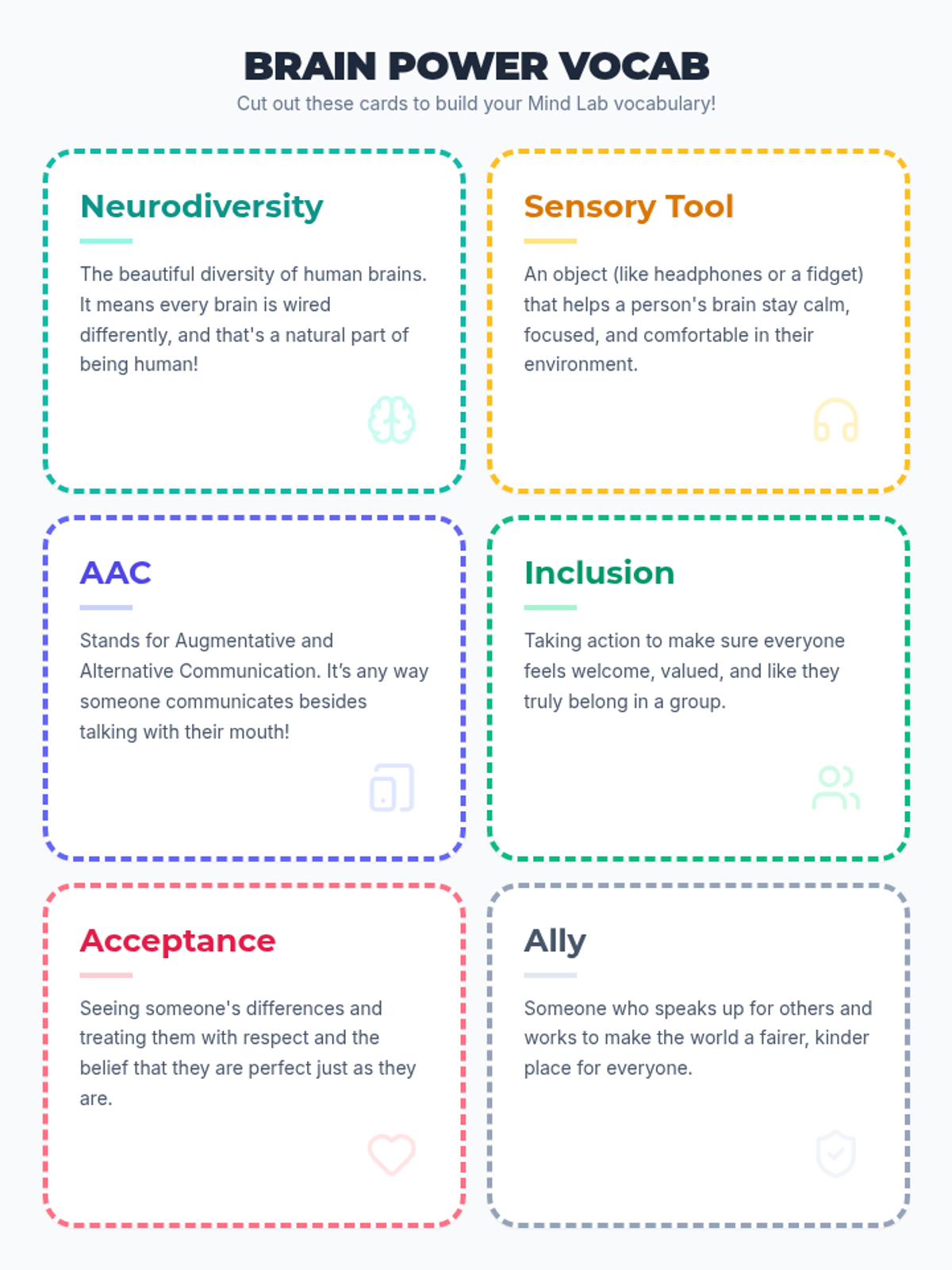
A set of 6 printable vocabulary cards with definitions and icons, designed for 3rd-5th graders to learn key terms related to Autism Acceptance. Revised to fit on a single page.
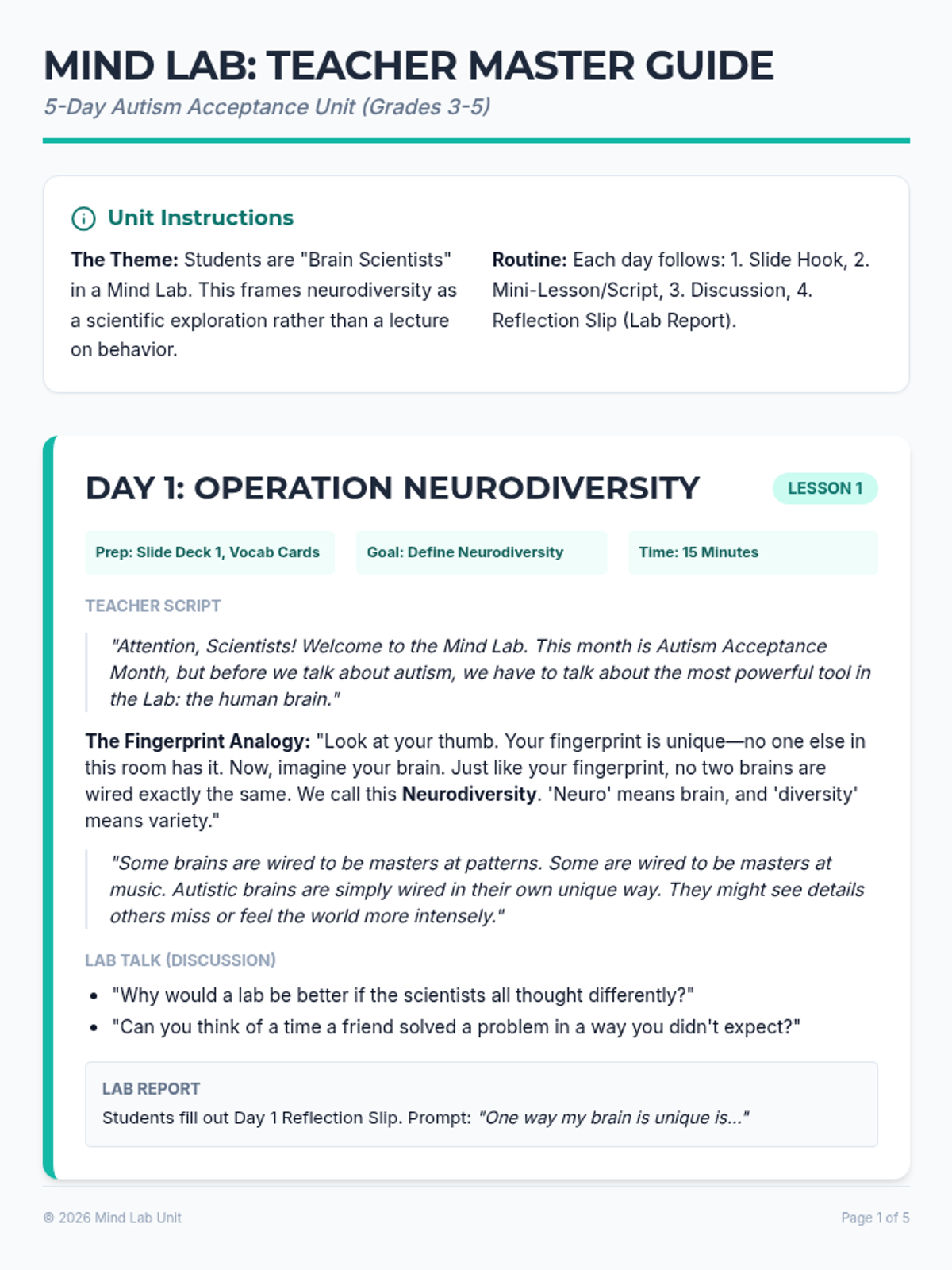
A highly detailed 5-page teacher guide for the Mind Lab unit, featuring day-by-day scripts, discussion prompts, prep checklists, and specific learning objectives for each 15-minute session.
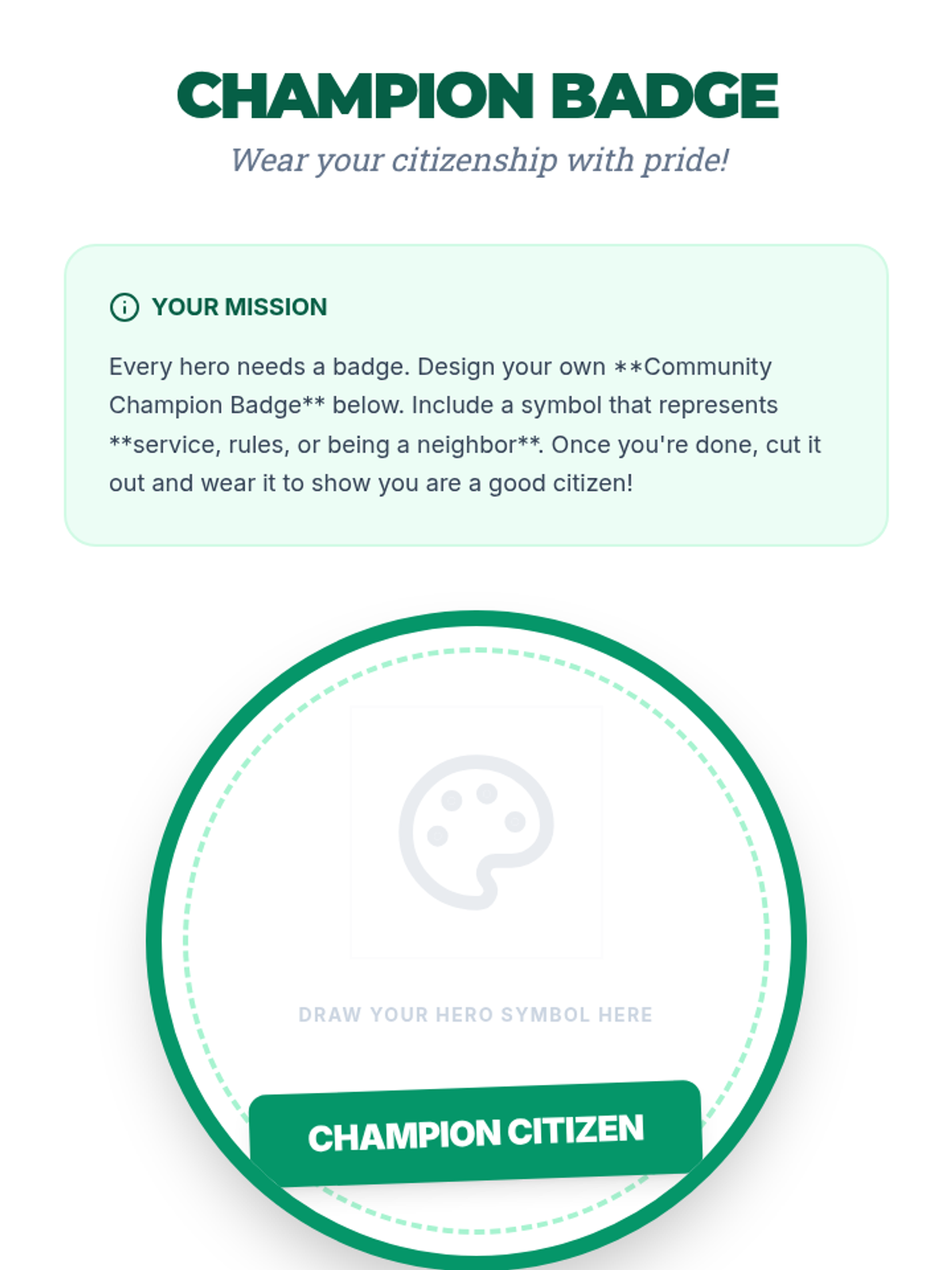
A creative hands-on activity for students to design their own citizenship badge, reinforcing the visual identity of being a "Community Champion."
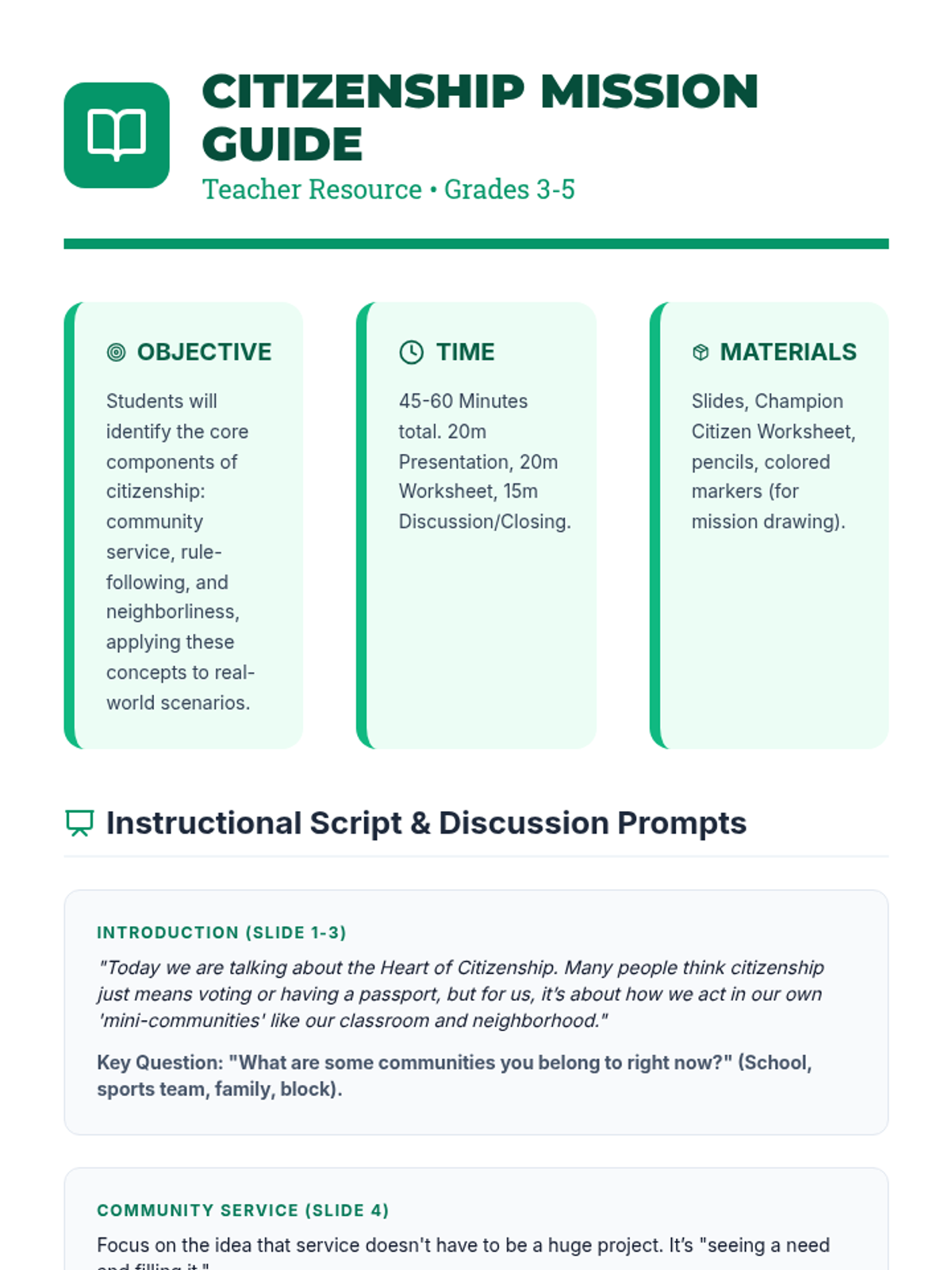
A comprehensive facilitator guide for the Heart of Citizenship lesson, including instructional scripts, discussion prompts, and differentiation strategies.
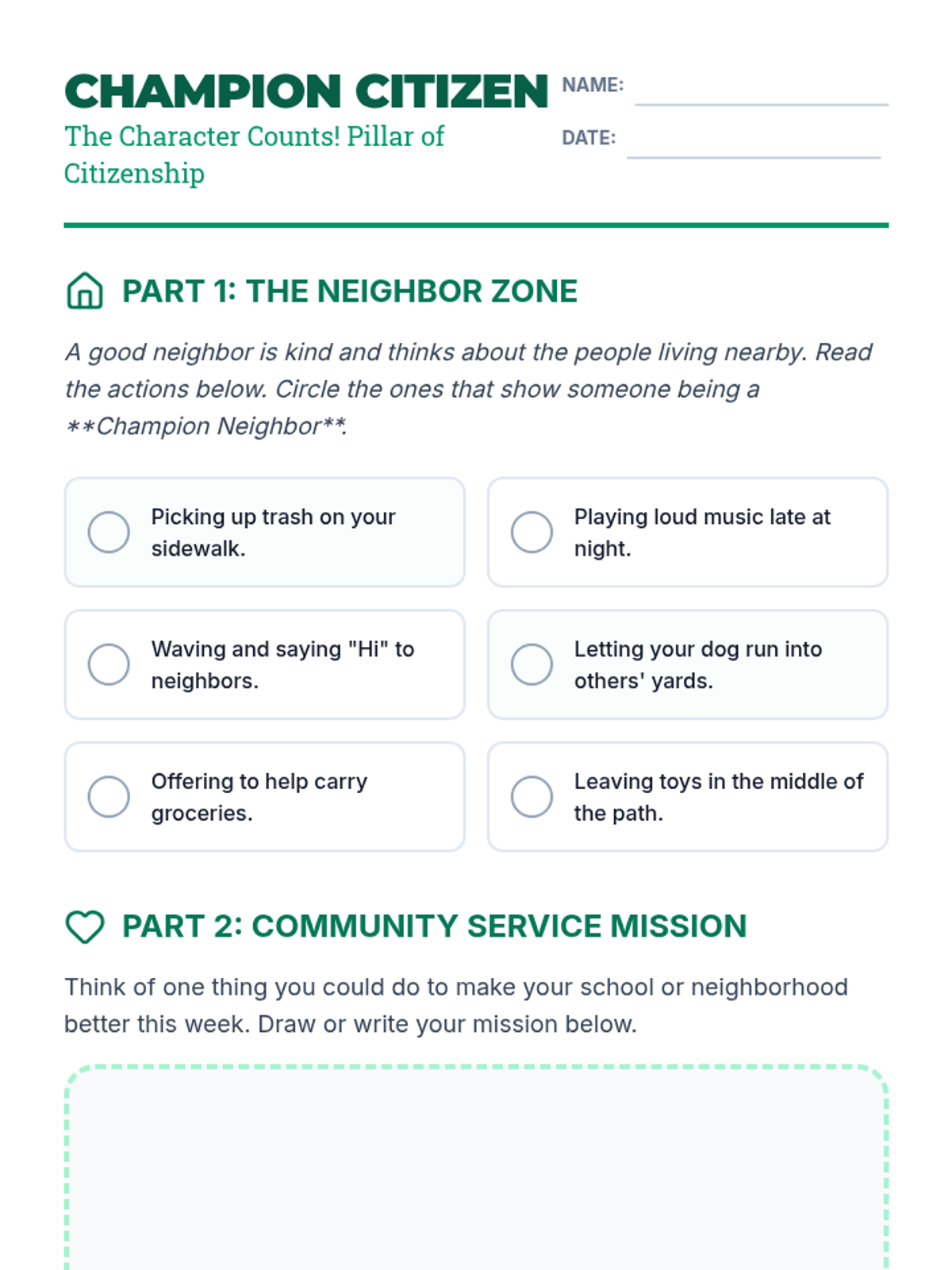
A student worksheet for grades 3-5 that encourages reflection on being a good neighbor, brainstorming community service projects, and understanding the purpose of rules.
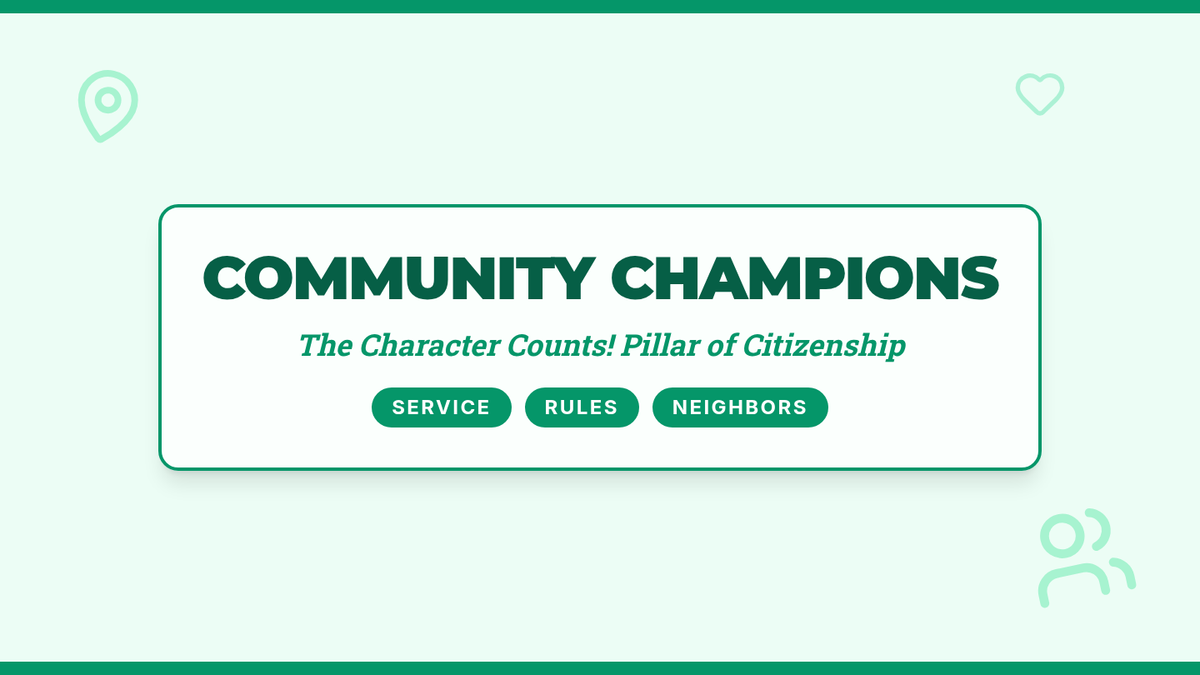
A visually engaging presentation for grades 3-5 introducing the Citizenship pillar of Character Counts, focusing on community service, rules, and being a good neighbor.
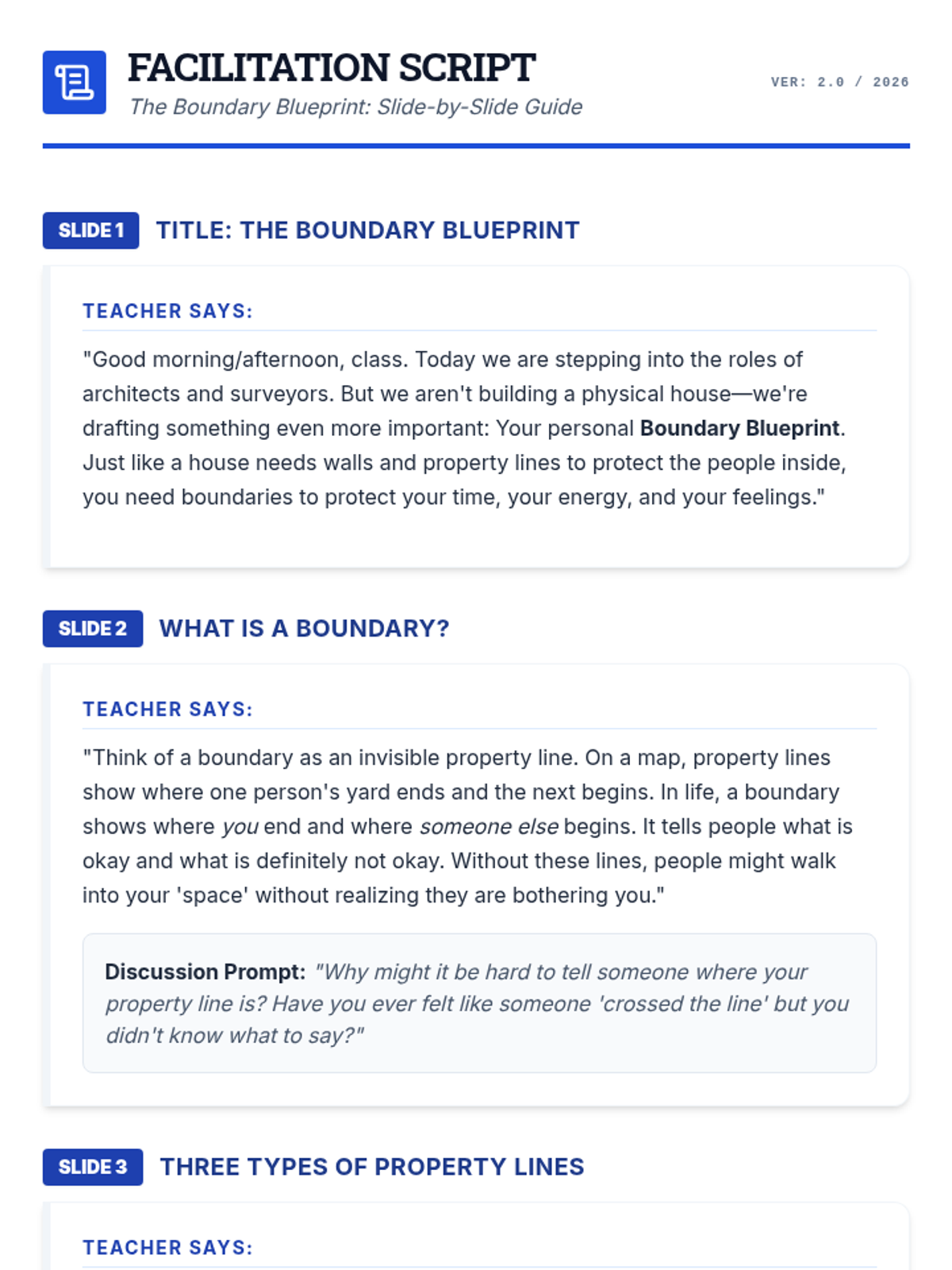
A detailed facilitation script for 'The Boundary Blueprint' slide deck. Revised to fix page breaks, improve label legibility, and add helpful teacher prompts.
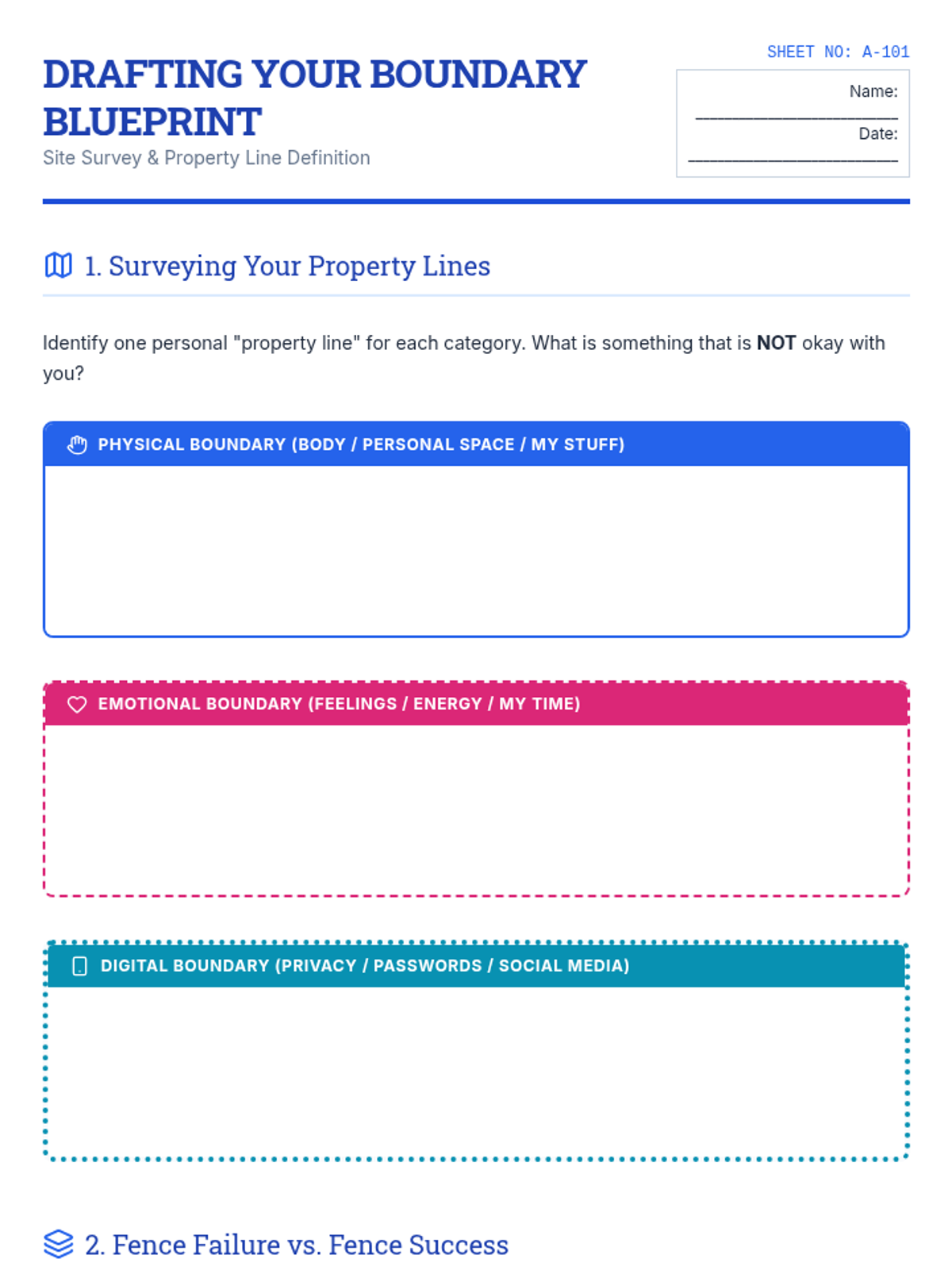
A student drafting worksheet for 'The Boundary Blueprint' lesson. Revised to increase handwriting space, fix page breaks, and improve visual hierarchy for black and white printing.
An architectural-themed slide deck for 'The Boundary Blueprint' lesson, featuring visual metaphors for personal boundaries and assertive communication. Revised for layout fit and readability.
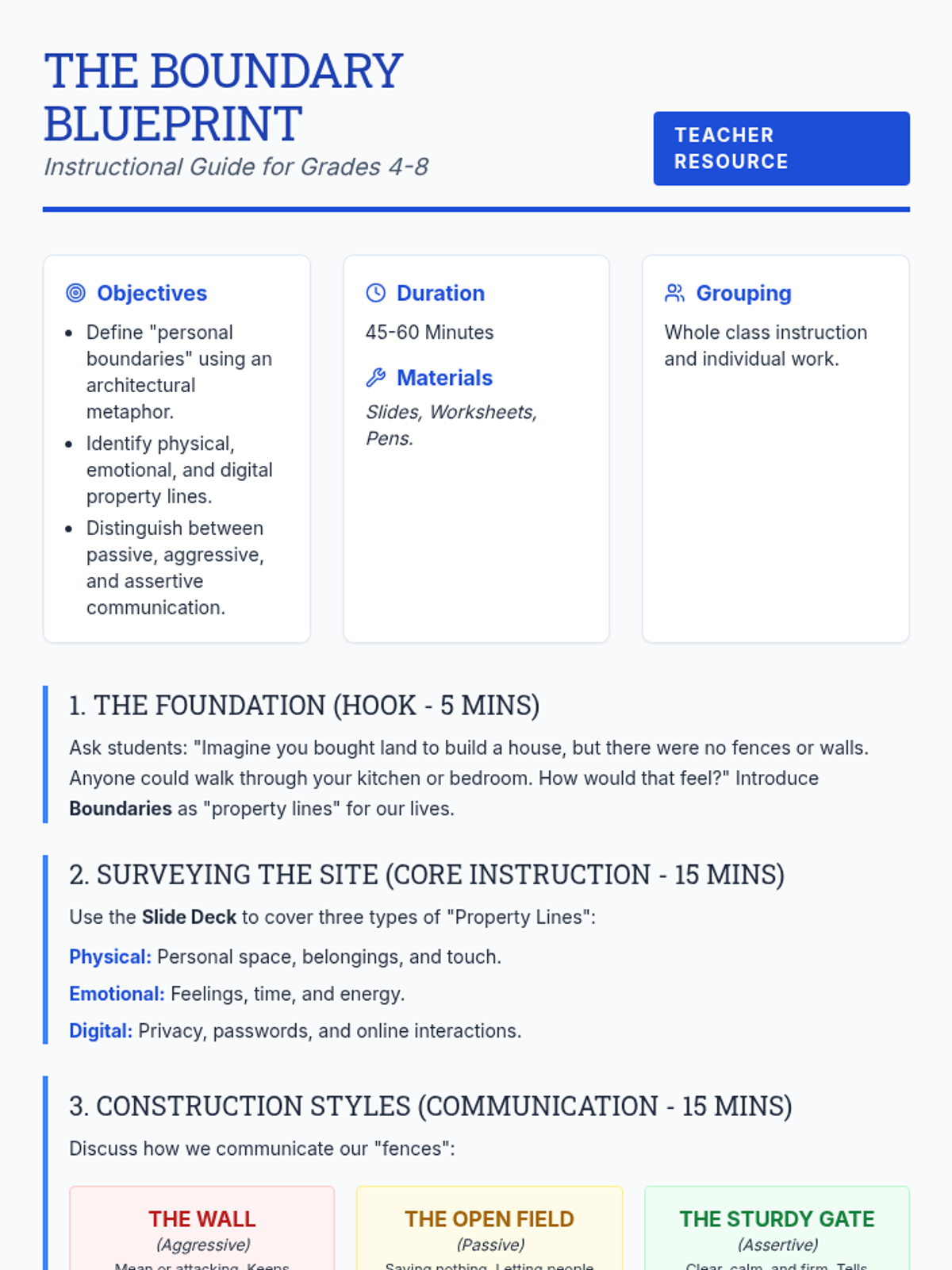
Comprehensive lesson plan for 'The Boundary Blueprint', including objectives, timing, hook, core instruction, activity, and closing for grades 4-8. Revised to fix page breaks and add enrichment.
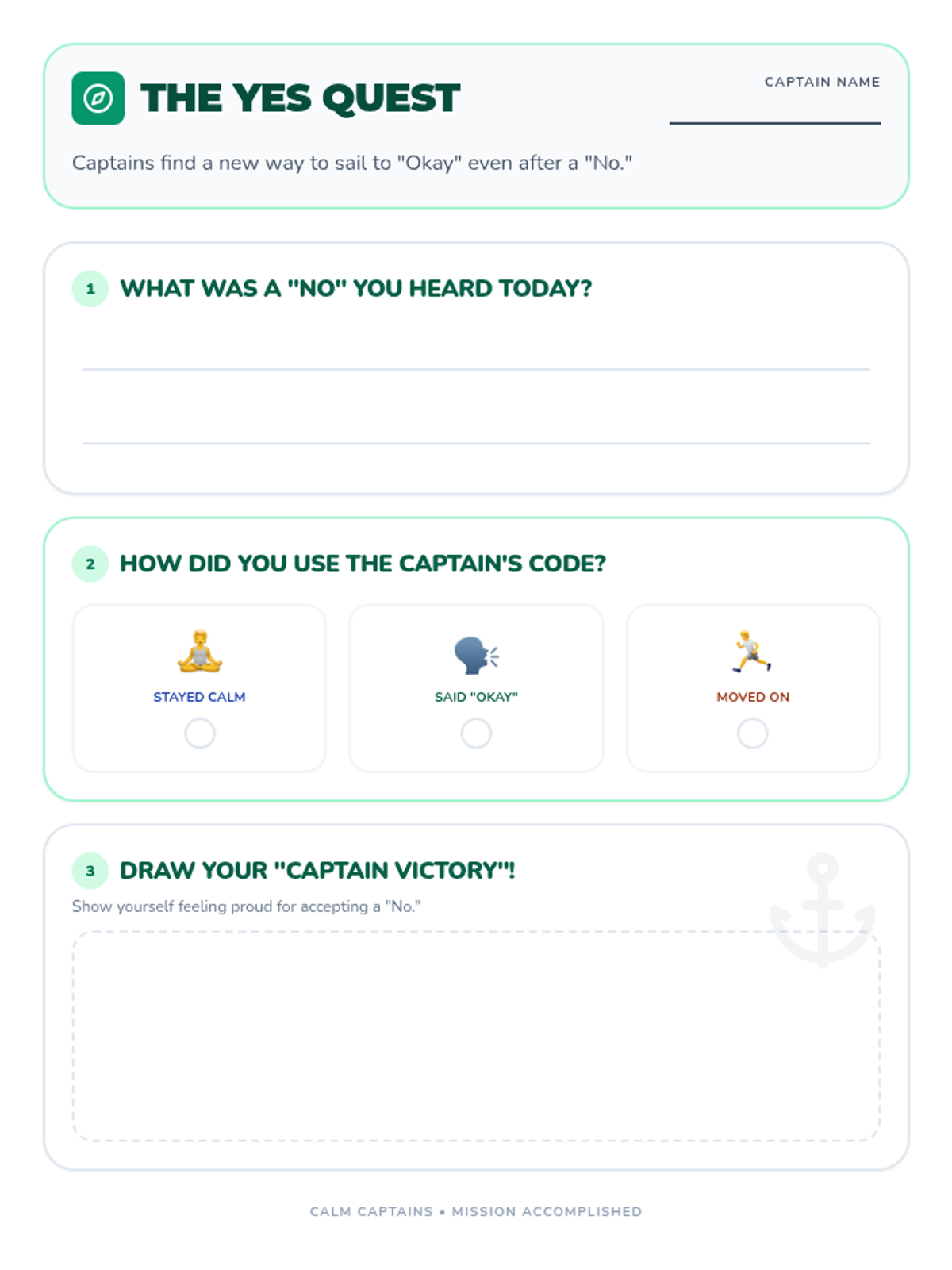
A final reflection worksheet for Day 2. Revised for a single-page layout with larger handwriting lines and a white background for better printability.
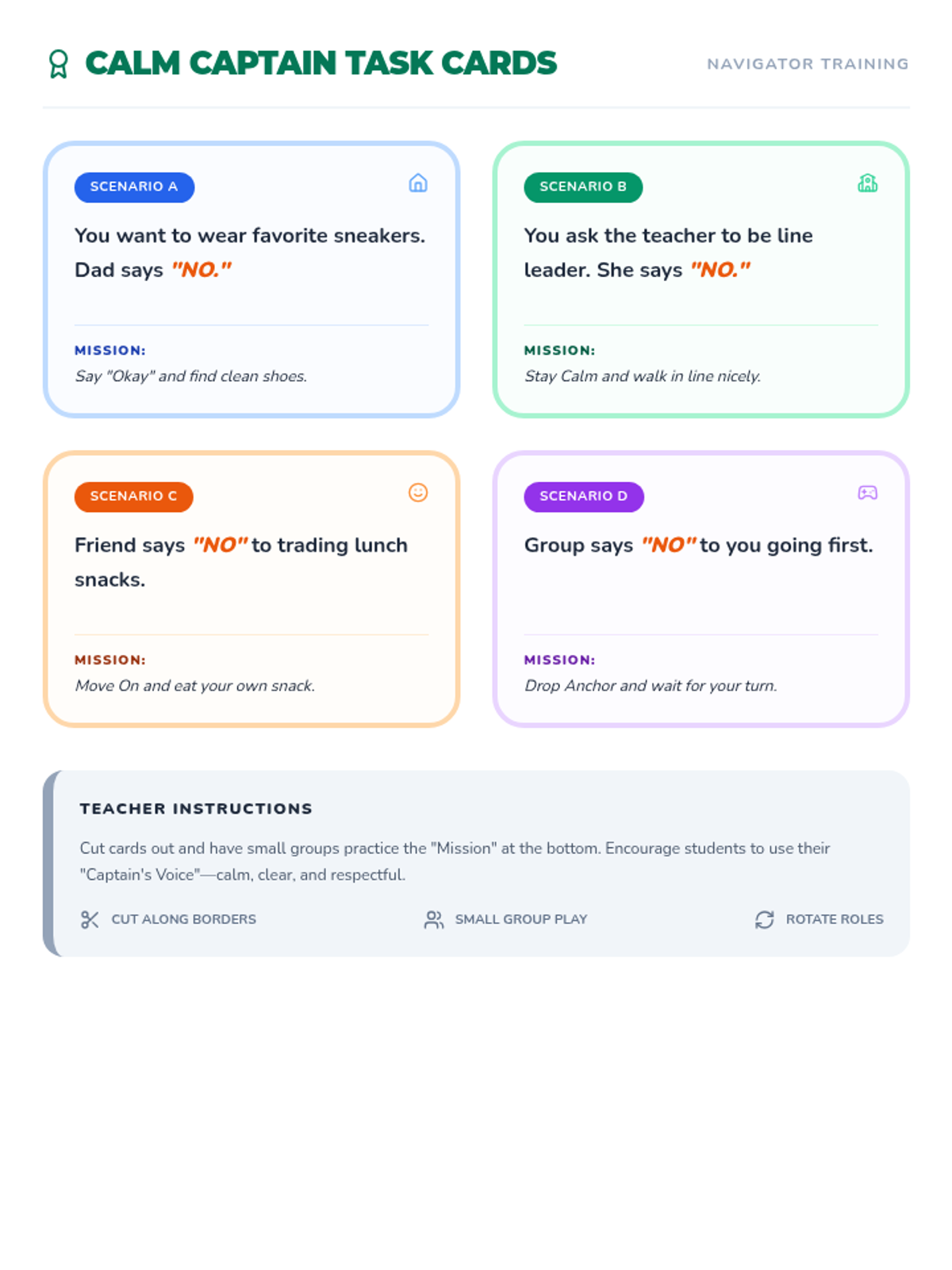
Role-play task cards for students to practice accepting 'no'. Revised to fit all content and instructions on a single page.
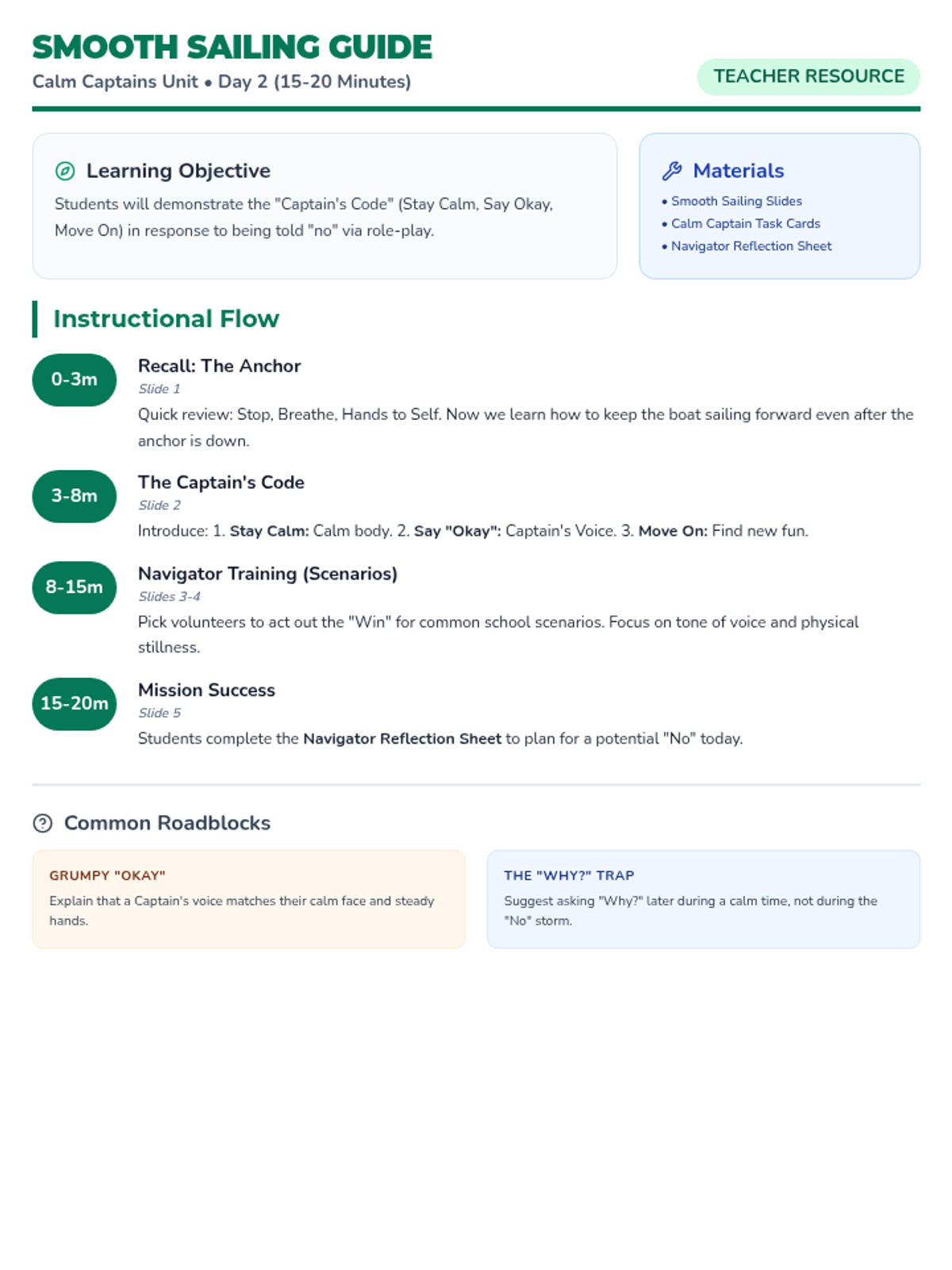
A detailed teacher facilitator guide for Day 2 of the 'Calm Captains' unit. Revised to ensure all instructional content fits comfortably on a single page.
Presentation slides for Day 2 of the 'Calm Captains' SEL unit, introducing the 'Captain's Code' (Stay Calm, Say Okay, Move On) with interactive practice scenarios.
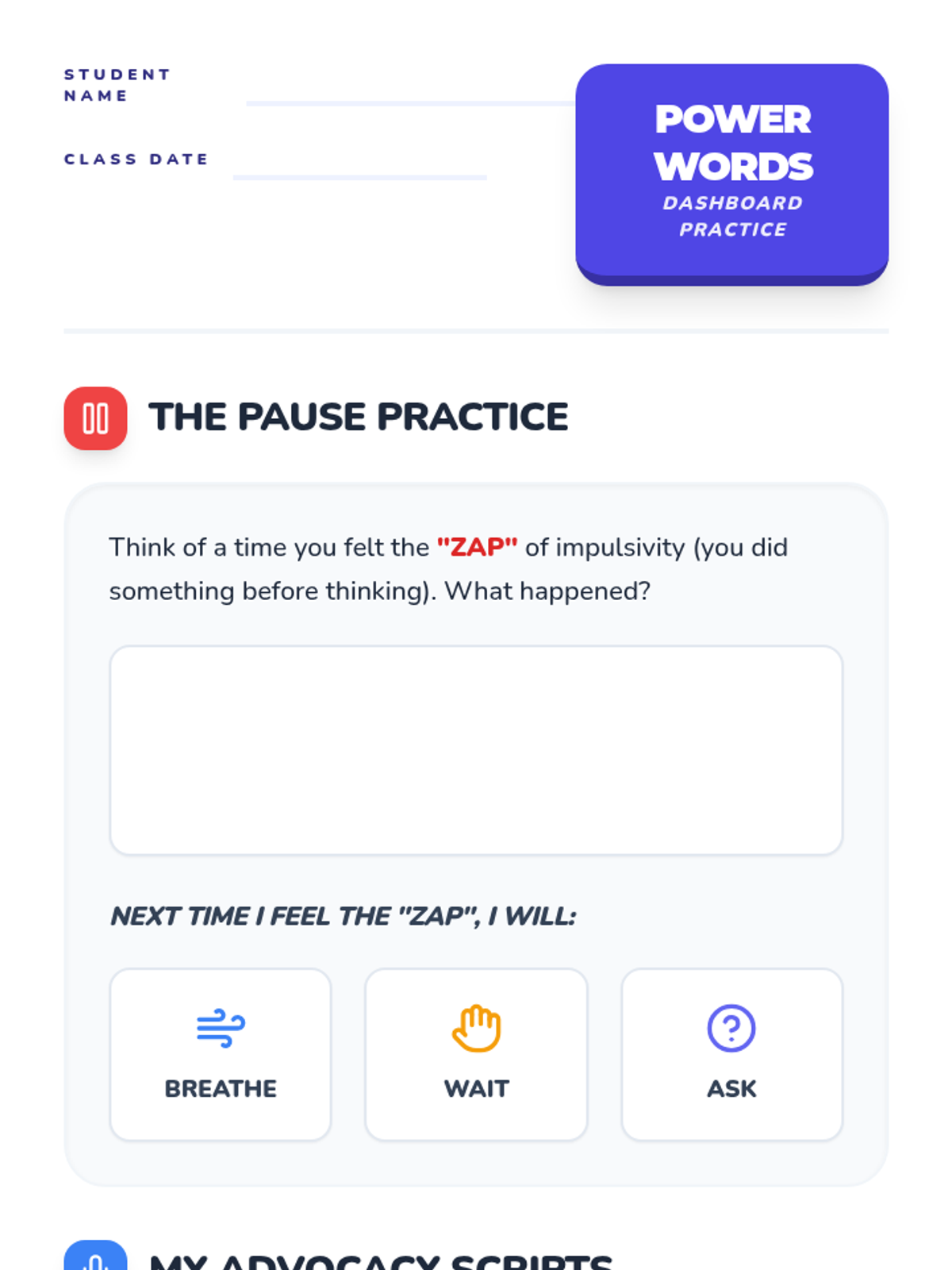
A student-facing worksheet for practicing self-advocacy scripts and reflecting on impulsive behaviors. It includes guided scenarios and creative spaces for students to develop their own 'Power Words'.
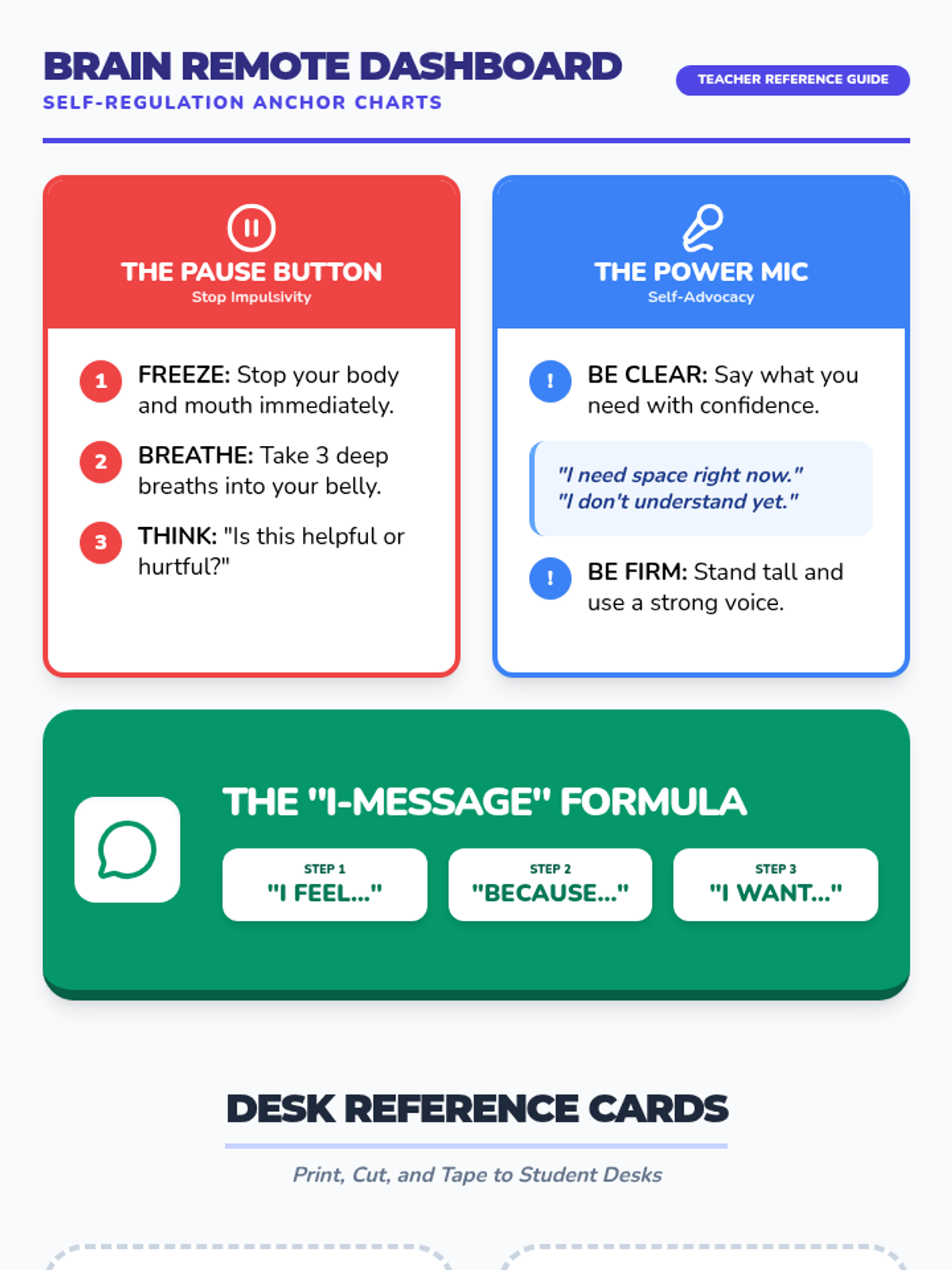
A set of visual anchor charts and desk reference cards featuring the 'Brain Remote' concept. It provides clear, actionable steps for students to manage impulsivity and use self-advocacy language.
A vibrant, interactive slide deck designed for touchscreen displays. It uses the 'Brain Remote' metaphor to teach impulsivity control, conflict resolution, and self-advocacy through engaging visuals and prompts.
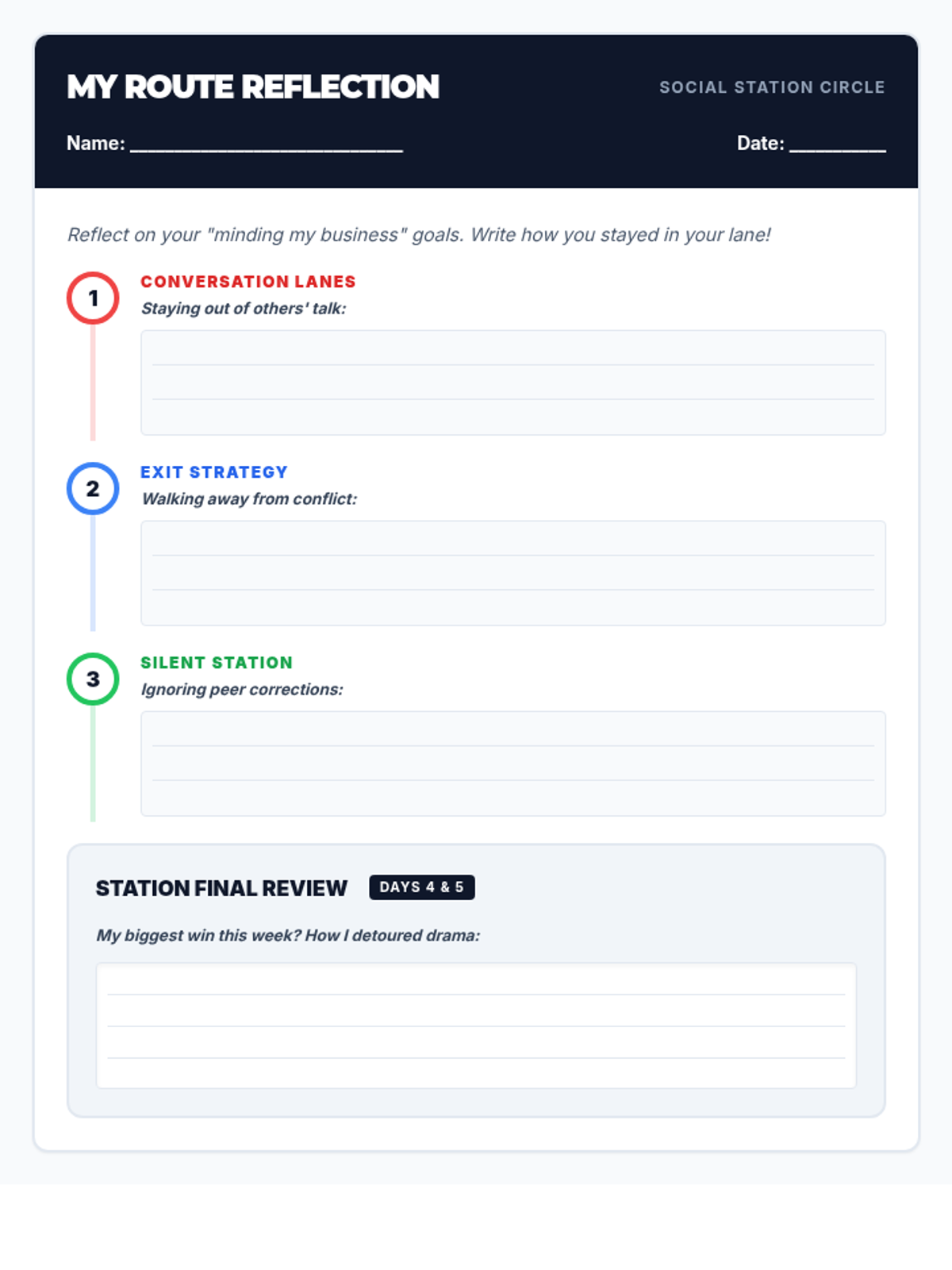
A student-facing reflection log for tracking daily progress on 'minding your business' social skills goals. Features large, readable text and guided writing lines. Fits on a single page.
Slide deck for Day 5 of community circles focusing on 'Focus Force' and avoiding distractions. Includes greeting, shout-outs, scenario practice, and Scattergories.
Slide deck for Day 4 of community circles focusing on 'Drama Detours' and avoiding rumors. Includes greeting, shout-outs, scenario practice, and Scattergories.
Slide deck for Day 3 of community circles focusing on 'The Silent Station' and ignoring peer corrections. Includes greeting, shout-outs, scenario practice, and Scattergories.
Slide deck for Day 2 of community circles focusing on 'The Exit Strategy' and walking away from conflict. Includes greeting, shout-outs, scenario practice, and Scattergories.
Slide deck for Day 1 of community circles focusing on 'Conversation Lanes' and staying out of others' talk. Includes greeting, shout-outs, scenario practice, and Scattergories.
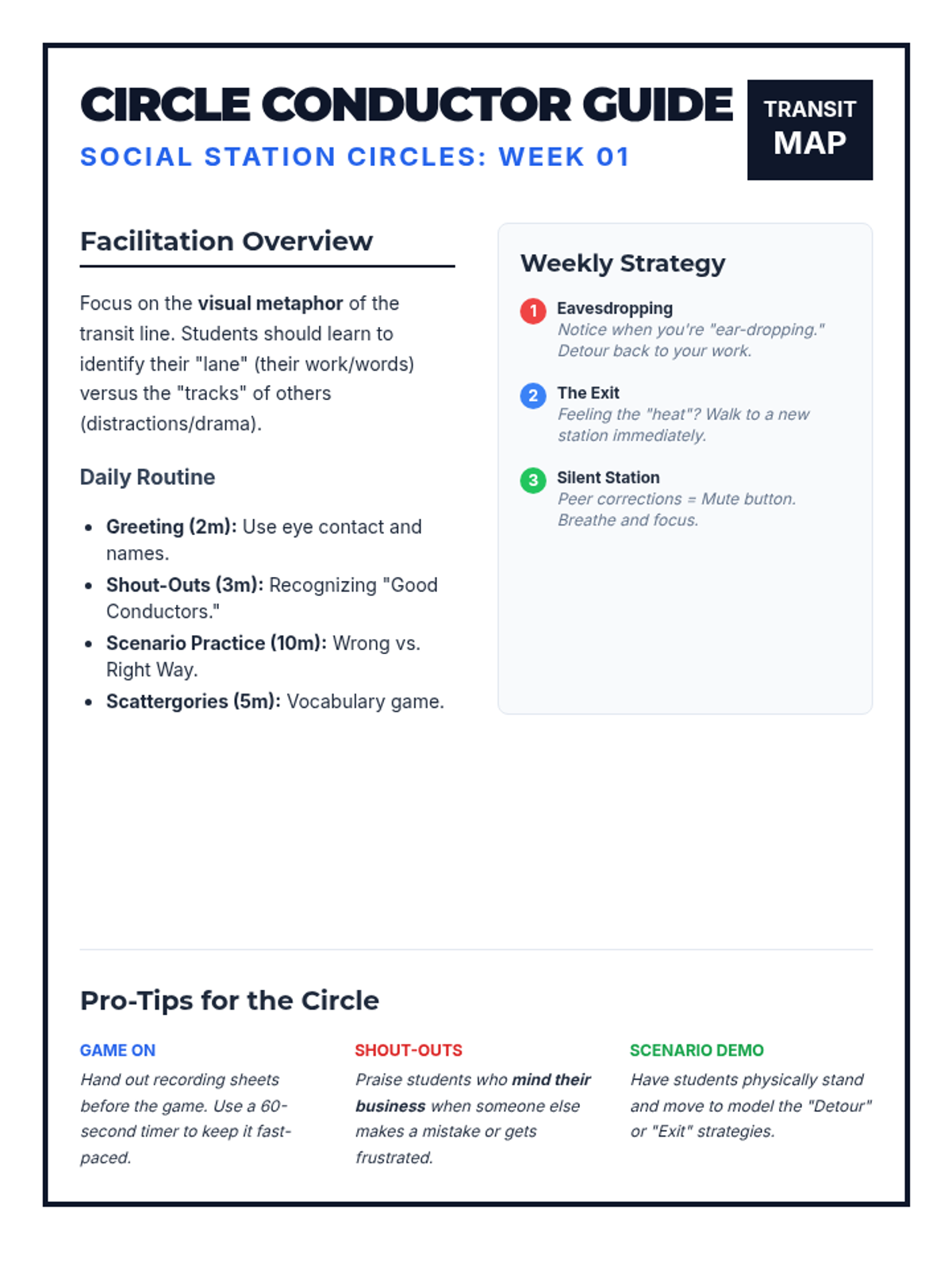
A comprehensive facilitation guide for the week of community circles, featuring instructional notes, scenario scripts for each day, and Scattergories master lists. Includes a student recording sheet.
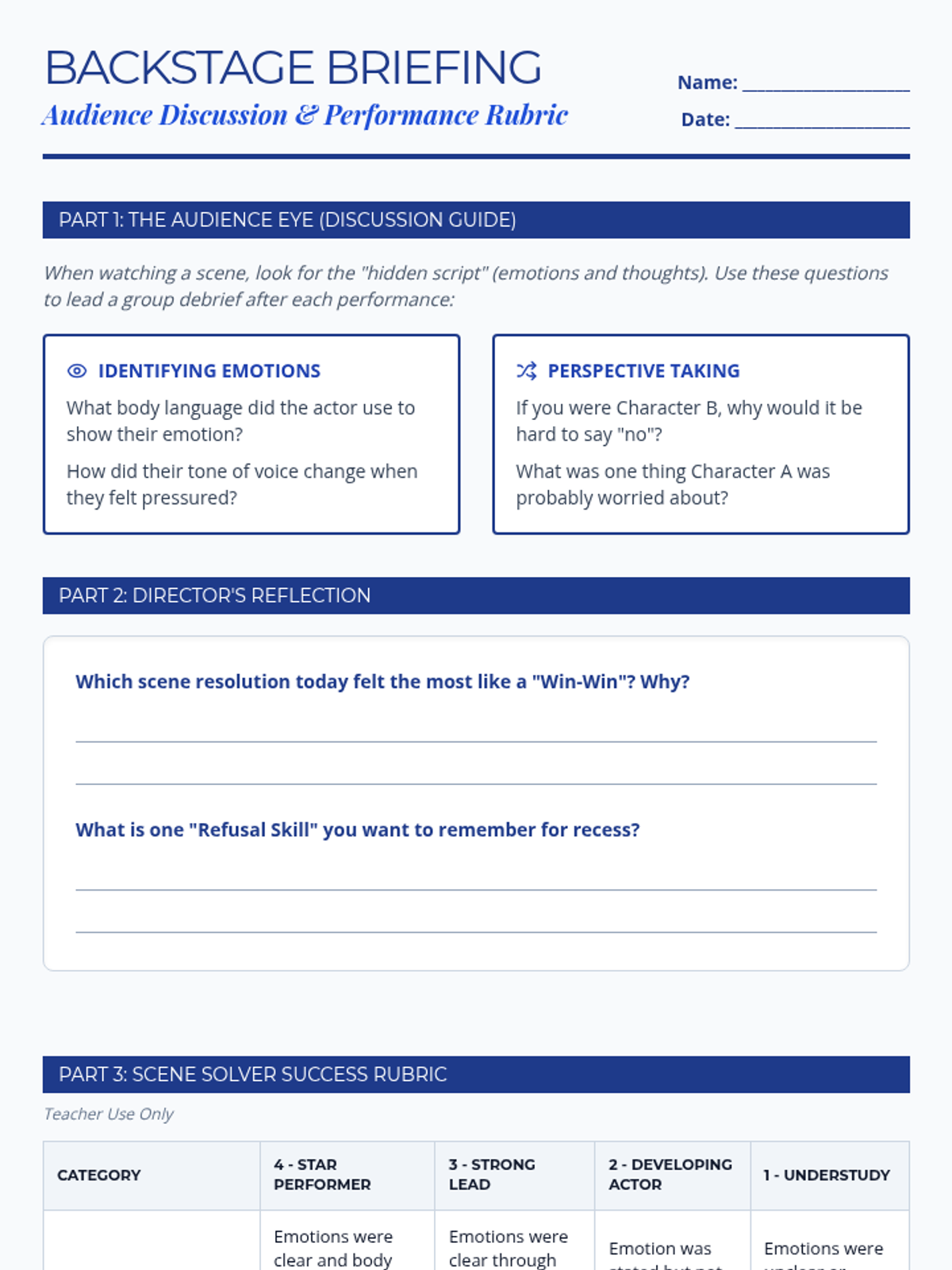
A double-sided student and teacher resource featuring audience discussion prompts, a written reflection area, and a 4-point drama rubric focusing on SEL skills.
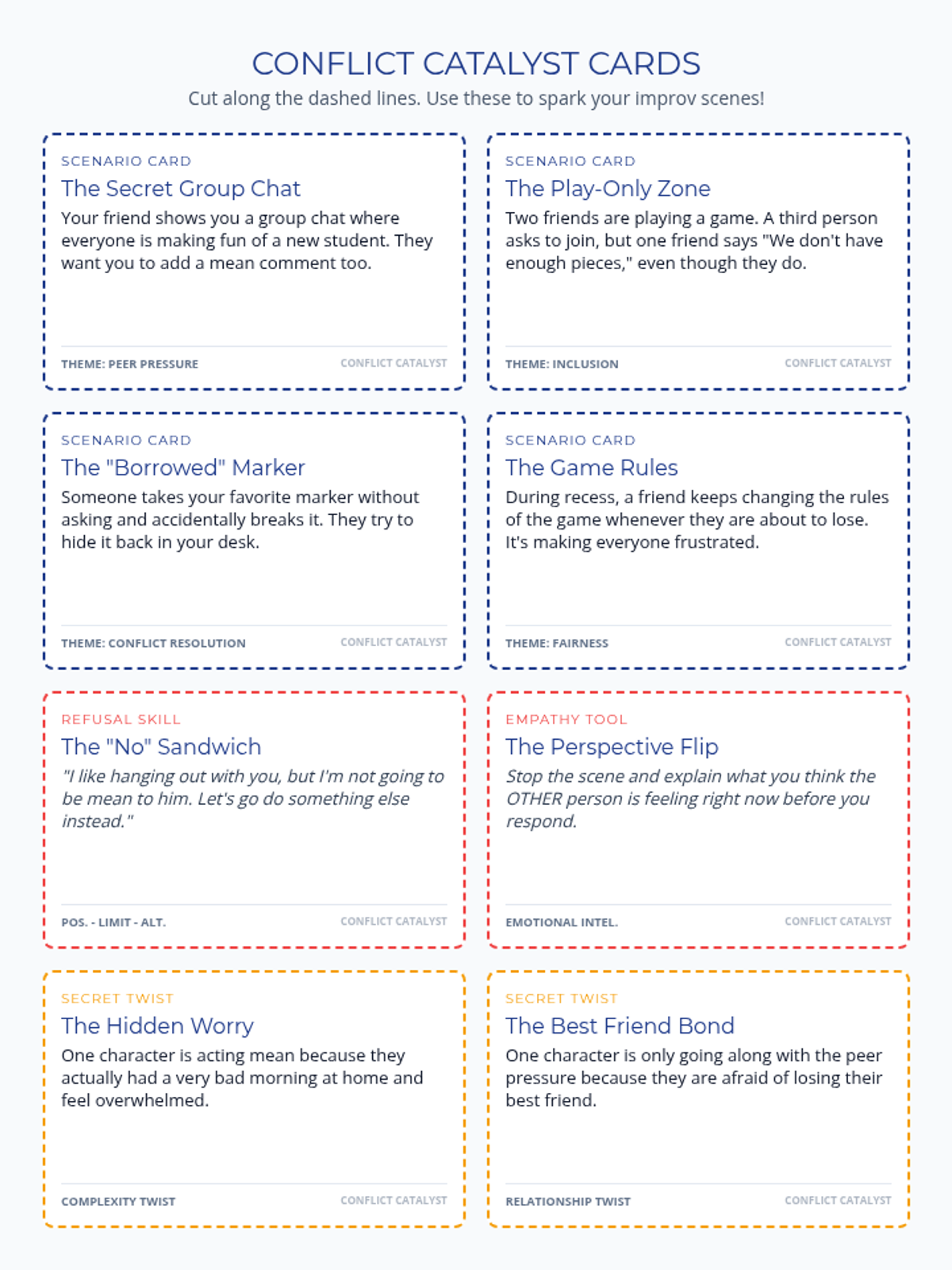
A set of printable prompt cards for drama class, featuring conflict scenarios, refusal skill models, and secret character twists to deepen empathy and perspective-taking.
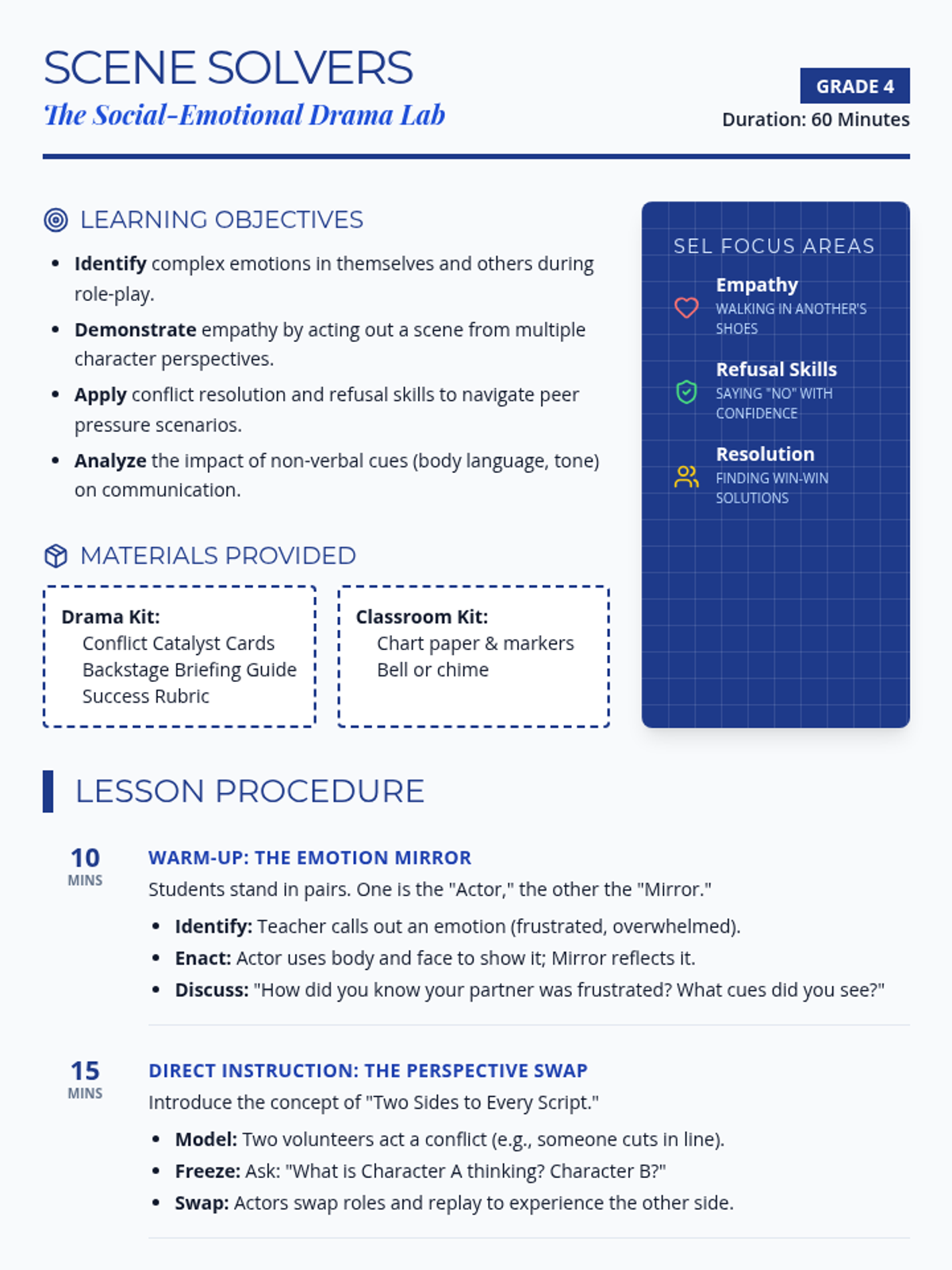
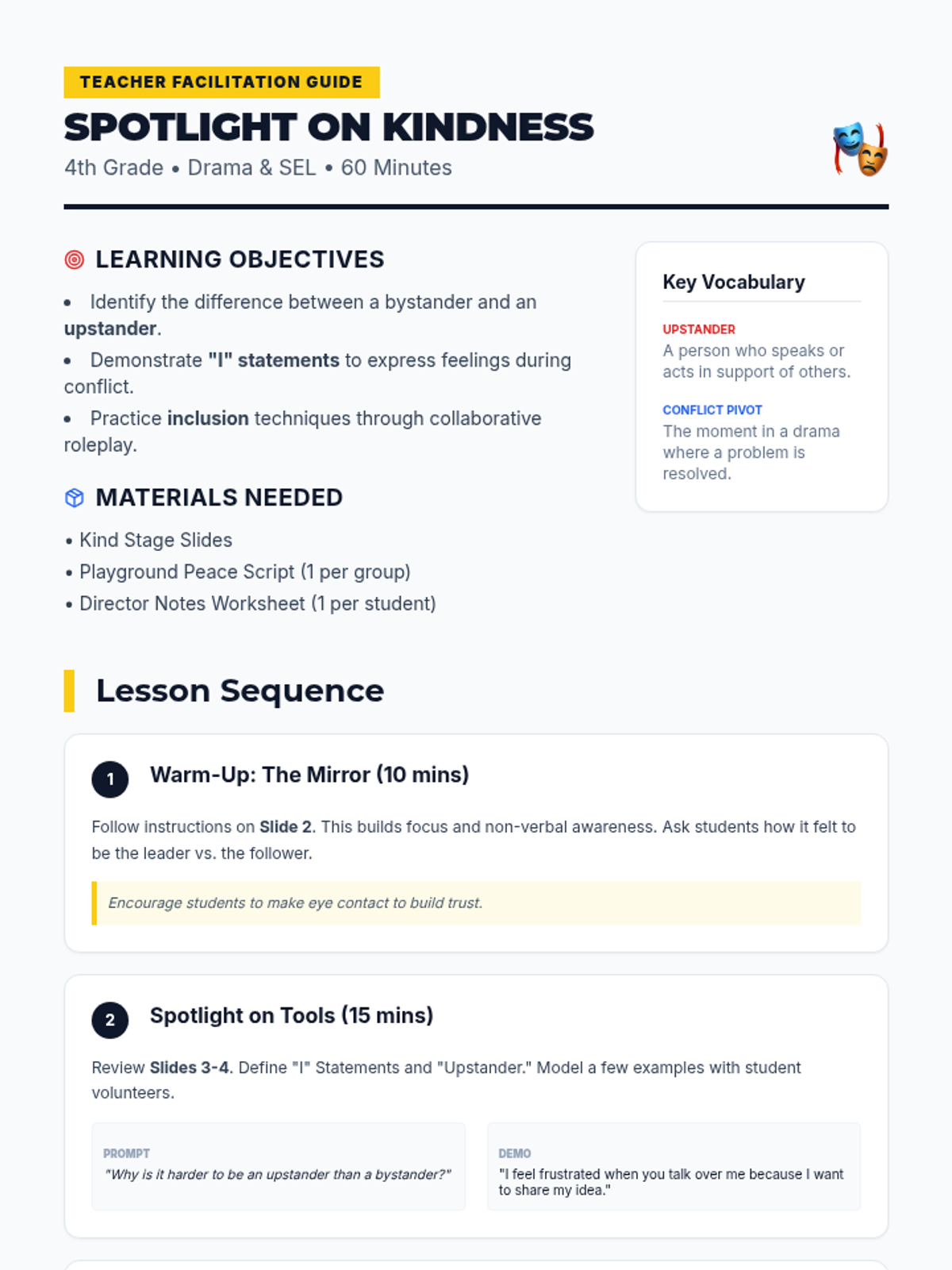
A comprehensive 60-minute lesson plan for 4th-grade drama, integrating SEL concepts like empathy and conflict resolution through warm-ups, direct instruction, and group improv.
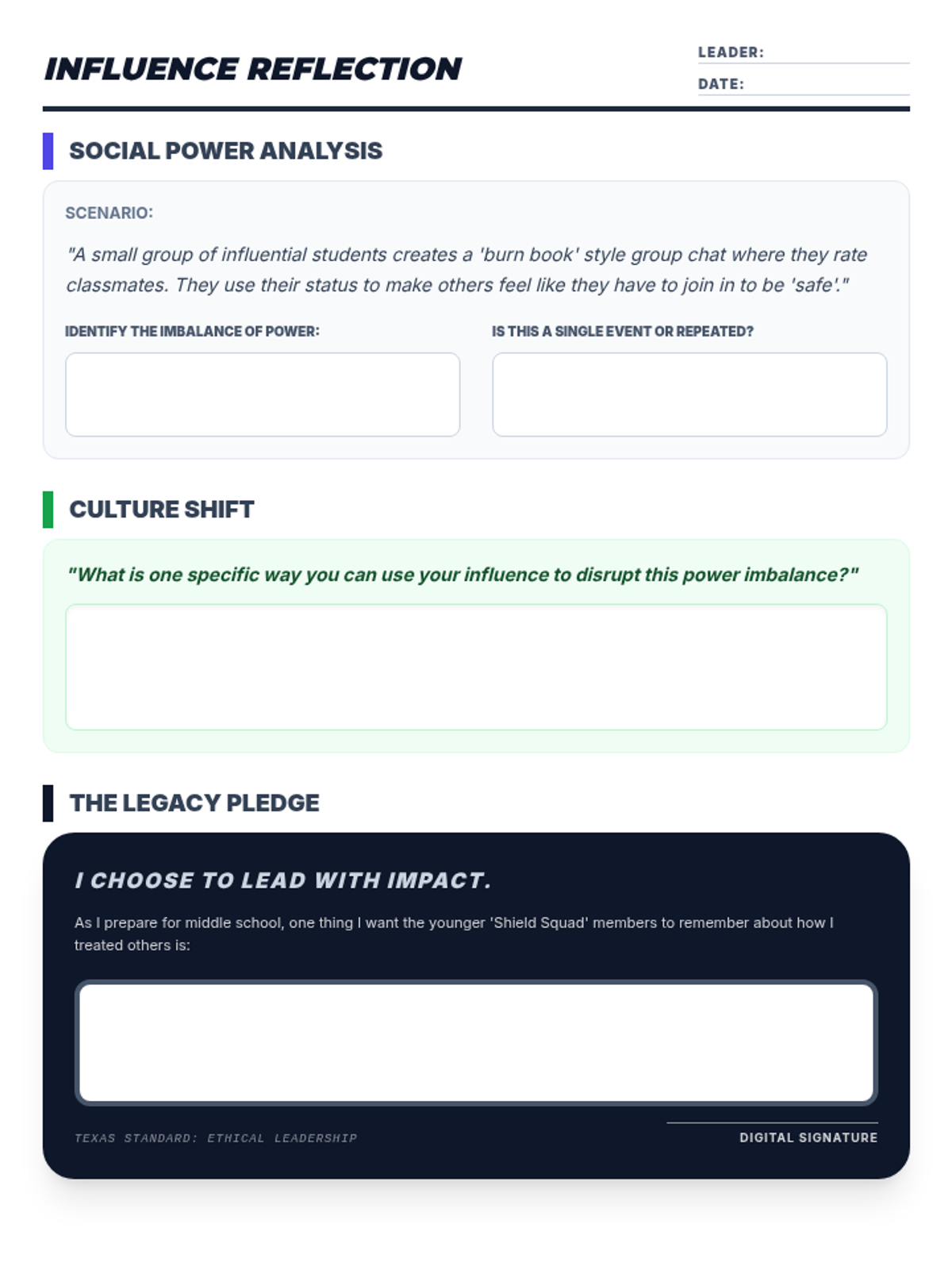
Legacy reflection handout for 5th-6th grade. Features status auditing, a leadership move brainstorm, and a school legacy pledge with high-contrast work areas.
Slide deck for 6th grade Social Leadership, exploring school culture audits, 'Restart' themes, and building a legacy of advocacy. Optimized for high contrast and fixed rendering. Includes conflict vs bullying comparison.
Slide deck for 5th grade Impact Influencers, exploring 'Zero' by Kathryn Otoshi, social capital as power, and single significant events in cyberbullying. Optimized for high contrast and fixed rendering. Includes conflict vs bullying comparison.
Slide deck for 2nd grade Inclusion Squad, featuring 'The Invisible Boy' by Trudy Ludwig, bullying definitions, and specific includer strategies. Optimized for visual engagement.
Slide deck for 1st grade Friendship Force, featuring 'Trouble Talk' by Trudy Ludwig, bullying definitions, and the seesaw model of power. Optimized for high contrast and fixed icon rendering.
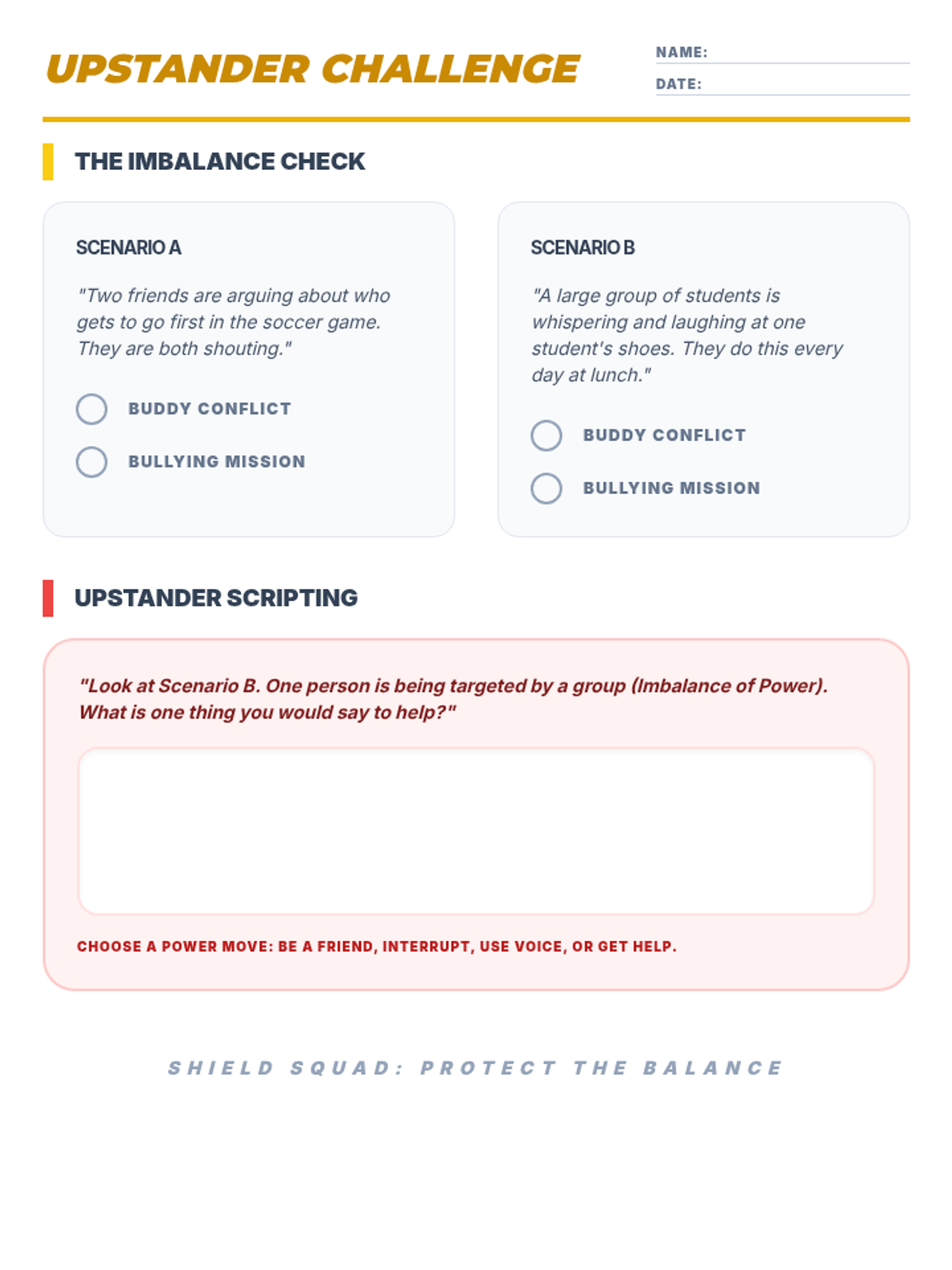
Upstander challenge handout for 3rd-4th grade. Features scenario sorting between conflict and bullying based on imbalance of power, plus a writing area for upstander scripting.
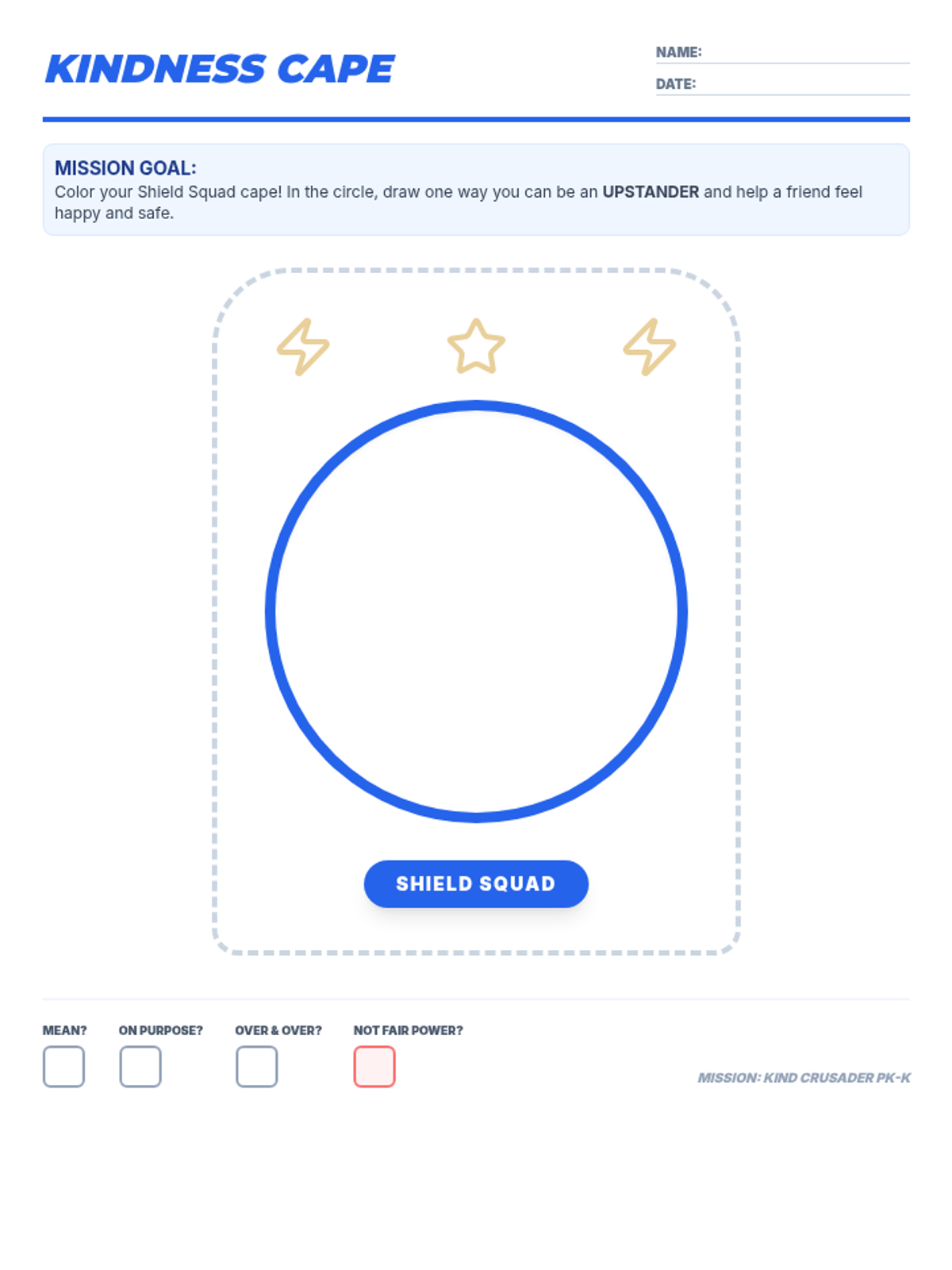
Creative drawing and coloring worksheet for PK-K students. High-contrast printable with a focus on upstander actions and the core bullying definition checkboxes.
A slide deck for introducing Vocabulary Role Play, providing script frames and audience guidelines for practicing emotional vocabulary.
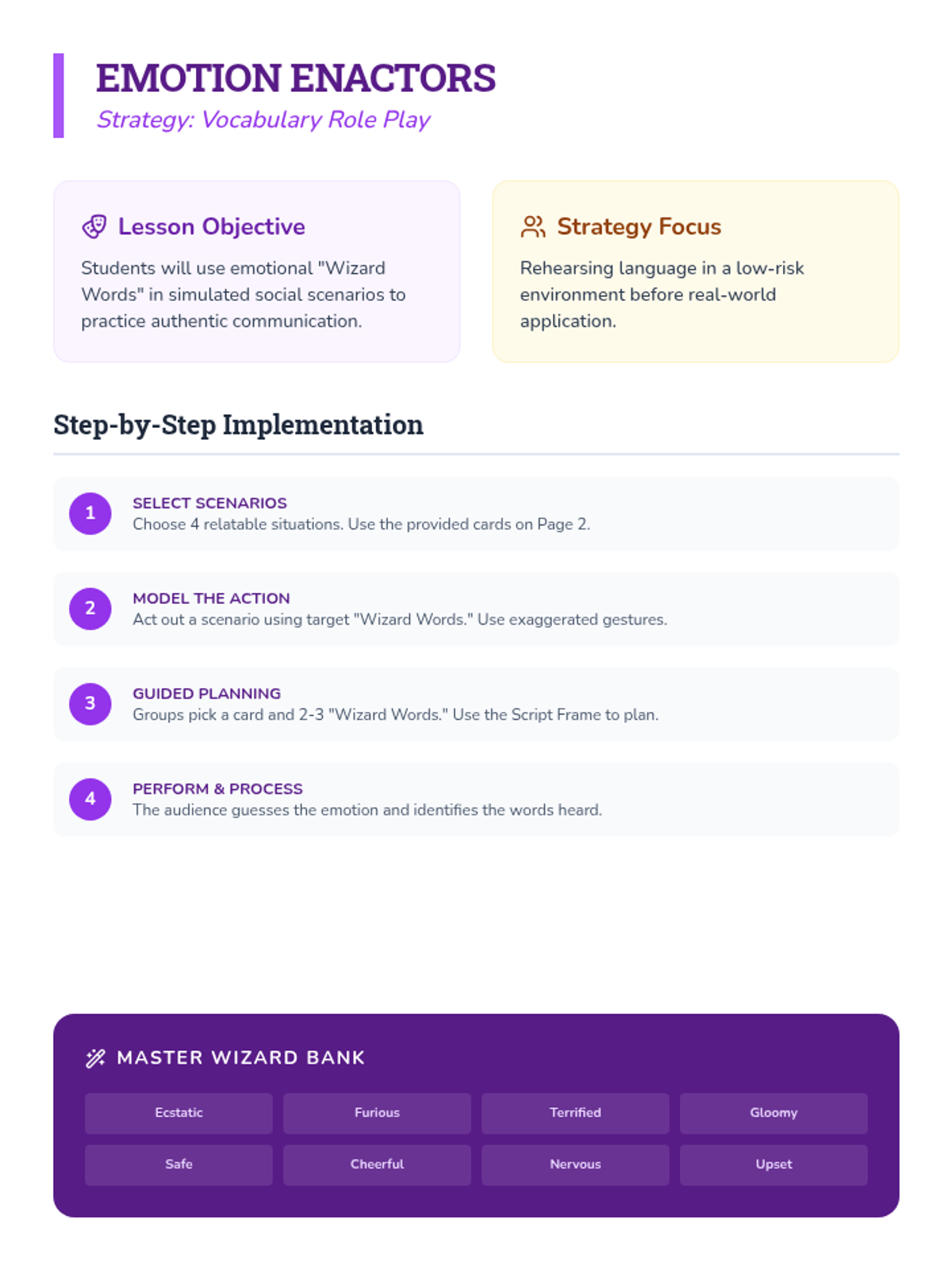
Teacher guide for vocabulary role play and student scenario cards for practicing emotional vocabulary in social contexts.
A slide deck for teaching word intensity and synonyms for emotions, helping students 'level up' their vocabulary from basic to advanced terms.
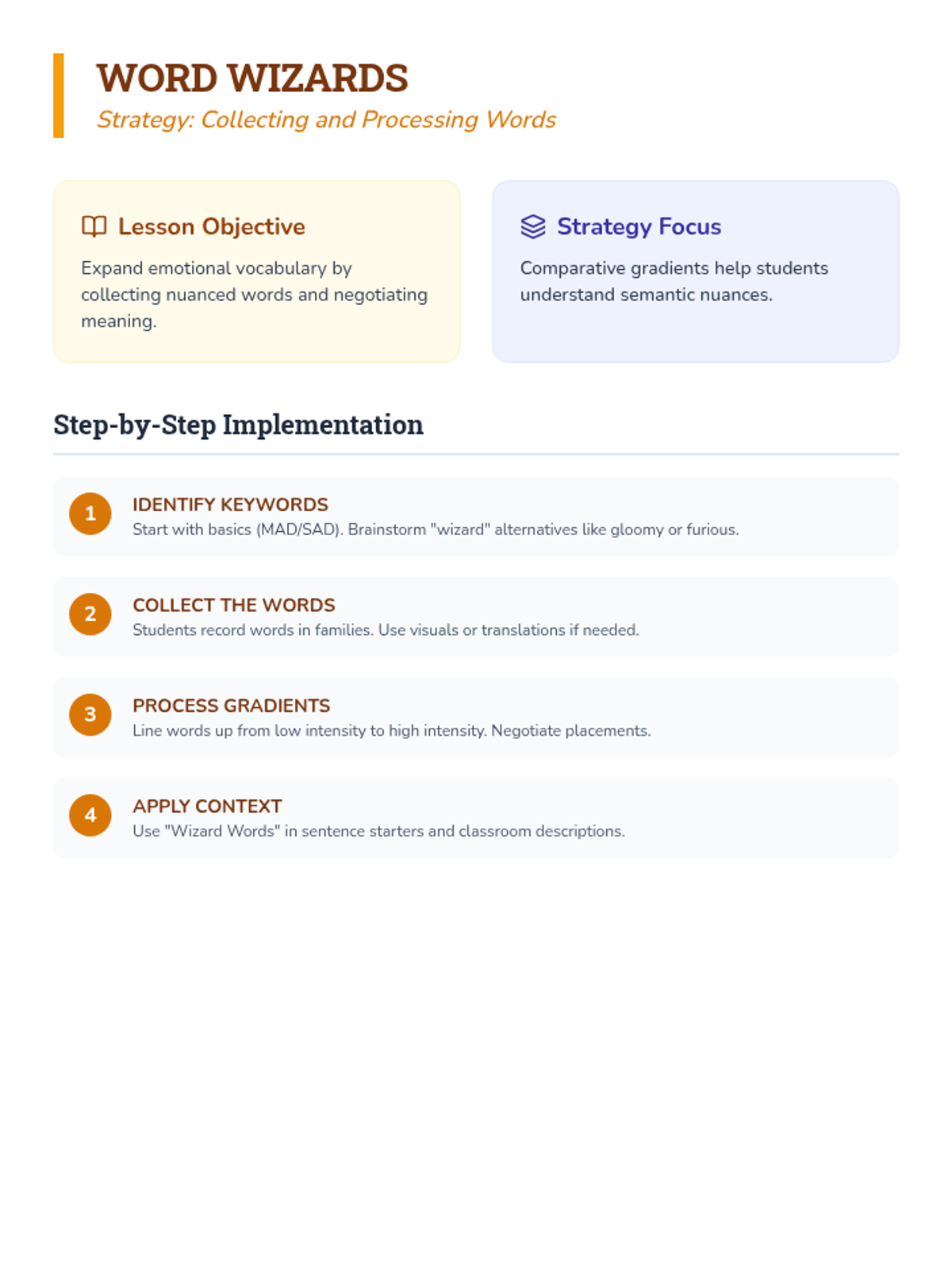
A teacher guide and student vocabulary collection sheet for expanding emotional vocabulary using 'Word Gradients' and word families.
A visual slide deck explaining the Mood Map concept and how color-coded quadrants help students identify their energy and emotional state.
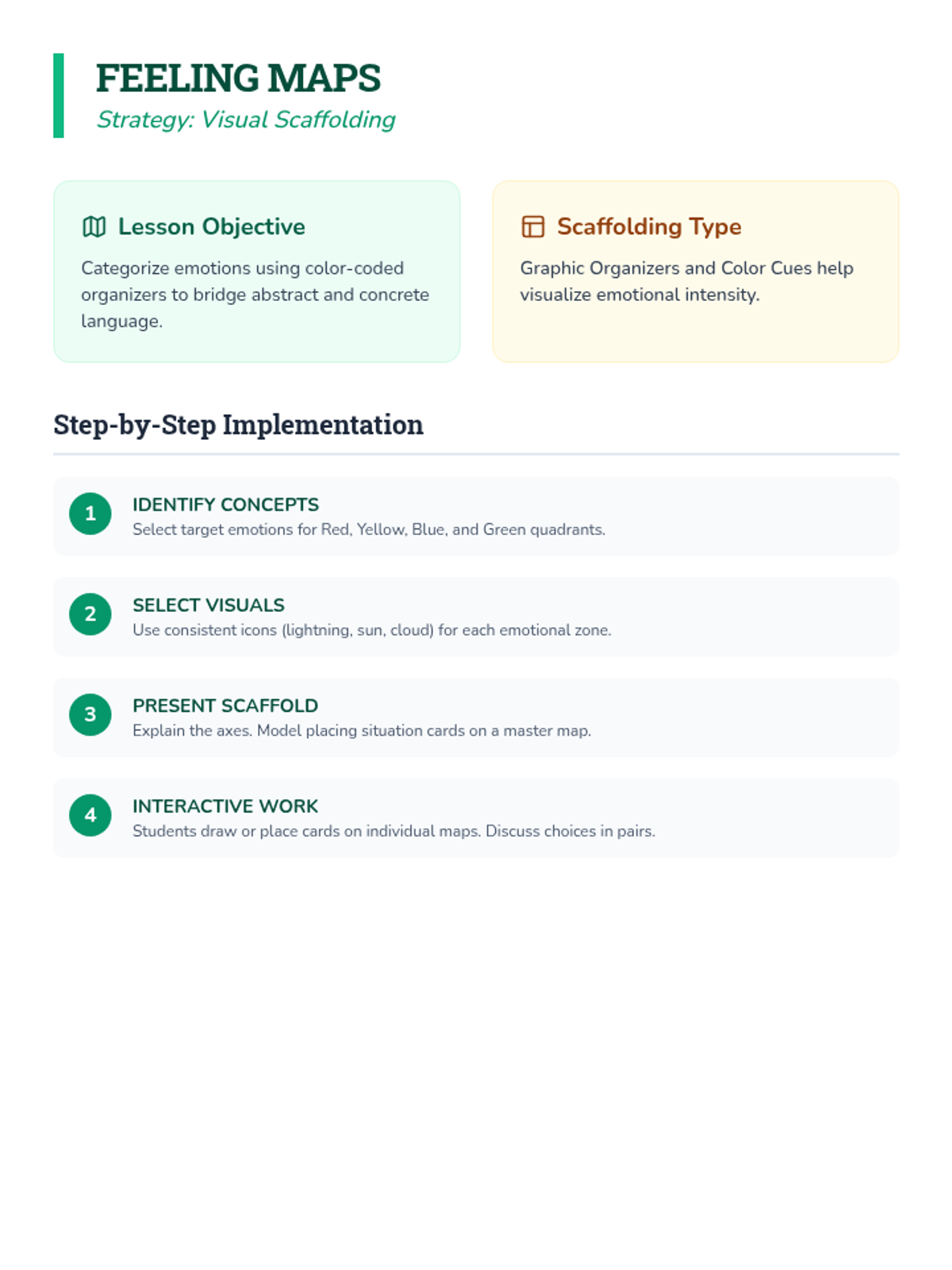
A teacher lesson plan and a student Mood Map organizer using color-coded visual scaffolding to categorize emotions by energy and pleasantness.
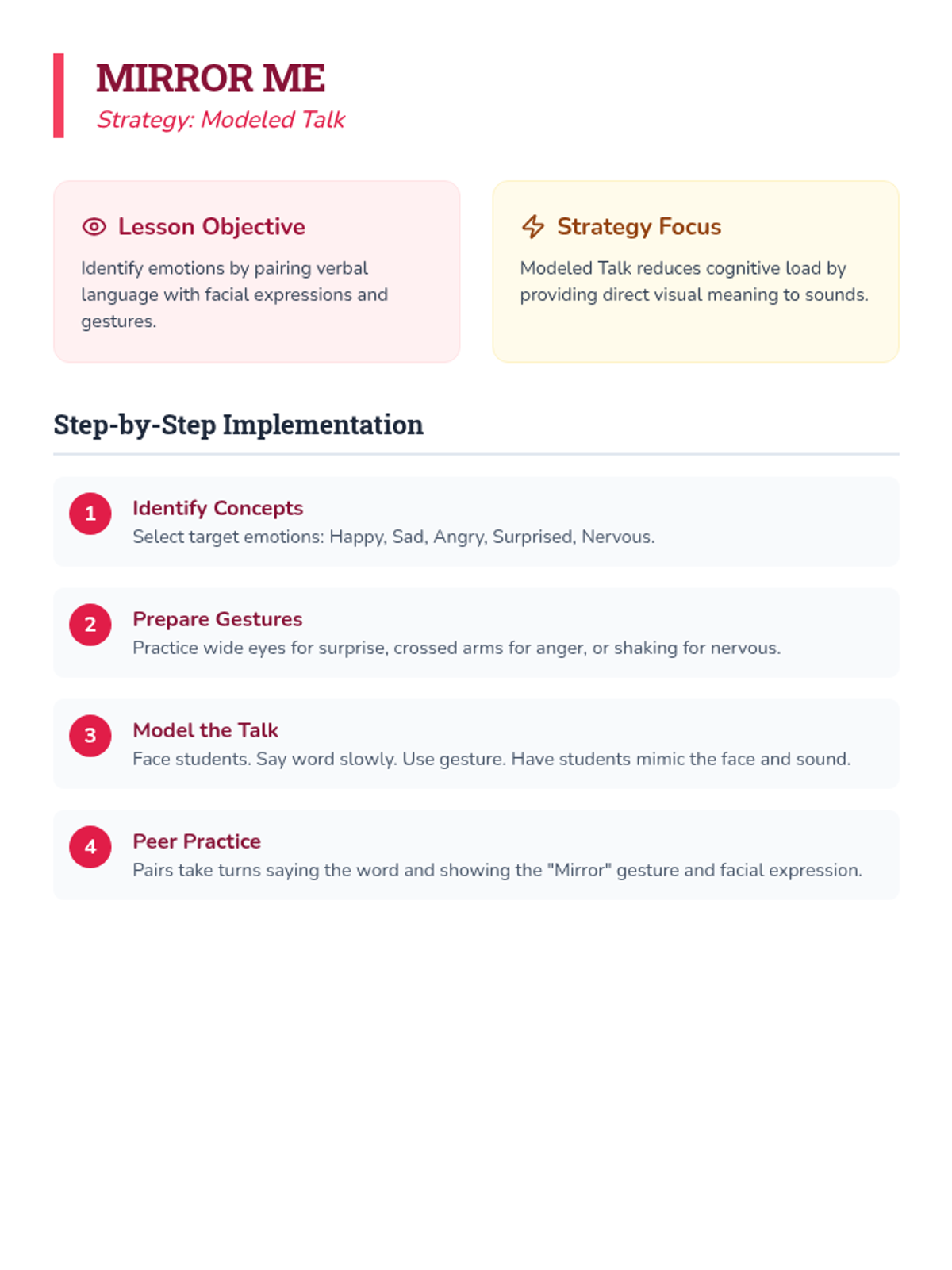
A slide deck that guides students through the 'Mirror Me' activity, demonstrating how to use modeled talk to understand and express emotions.
Teacher guide for modeled talk and a student drawing worksheet for matching emotions to physical gestures and expressions.
A visual presentation slide deck introducing the 'Heart Weather' daily routine and non-verbal signals for emotional check-ins.
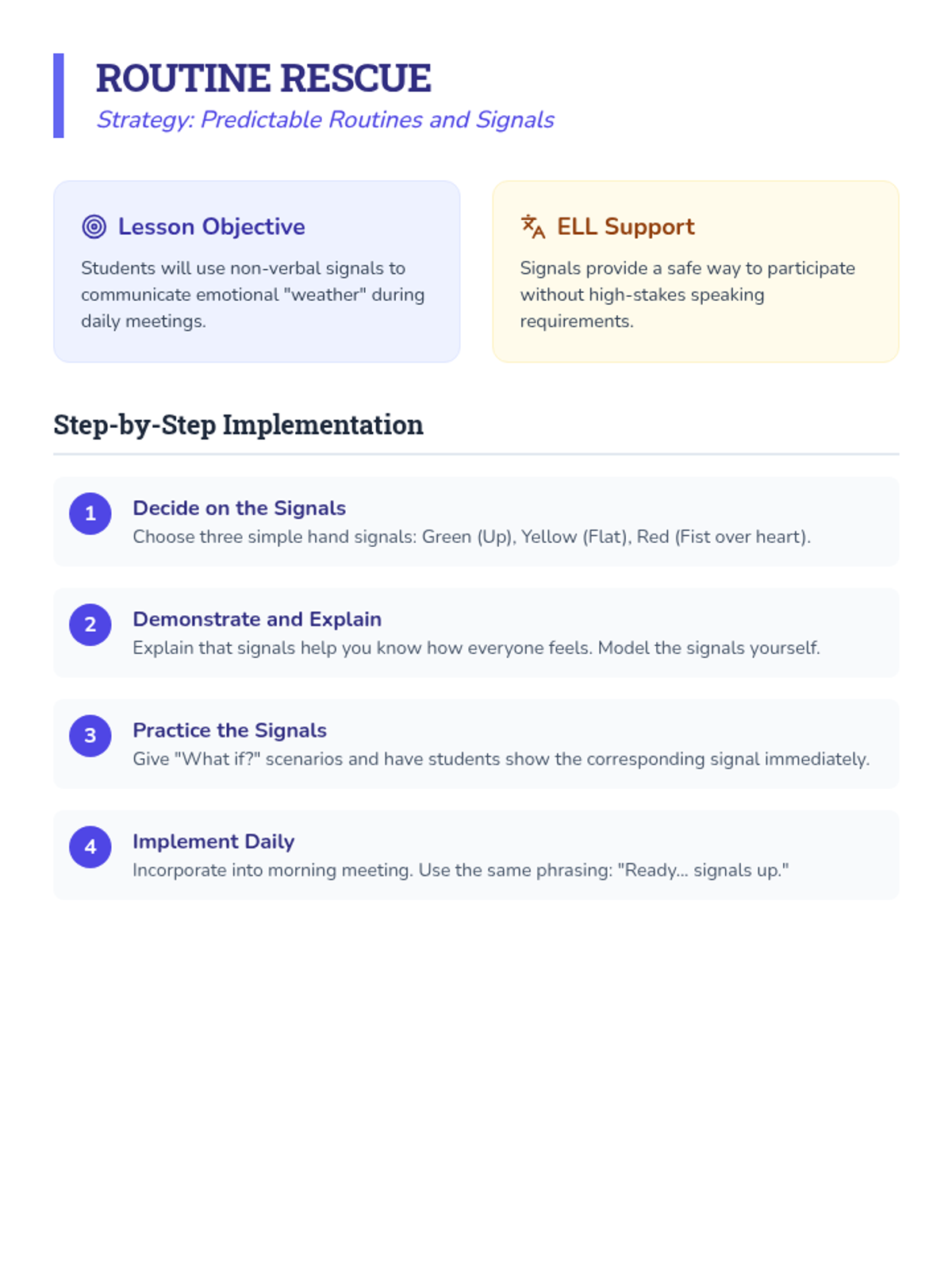
A teacher instructional guide and student reference sheet for implementing daily non-verbal signals to check student emotional readiness, based on the 'Predictable Routines and Signals' strategy.
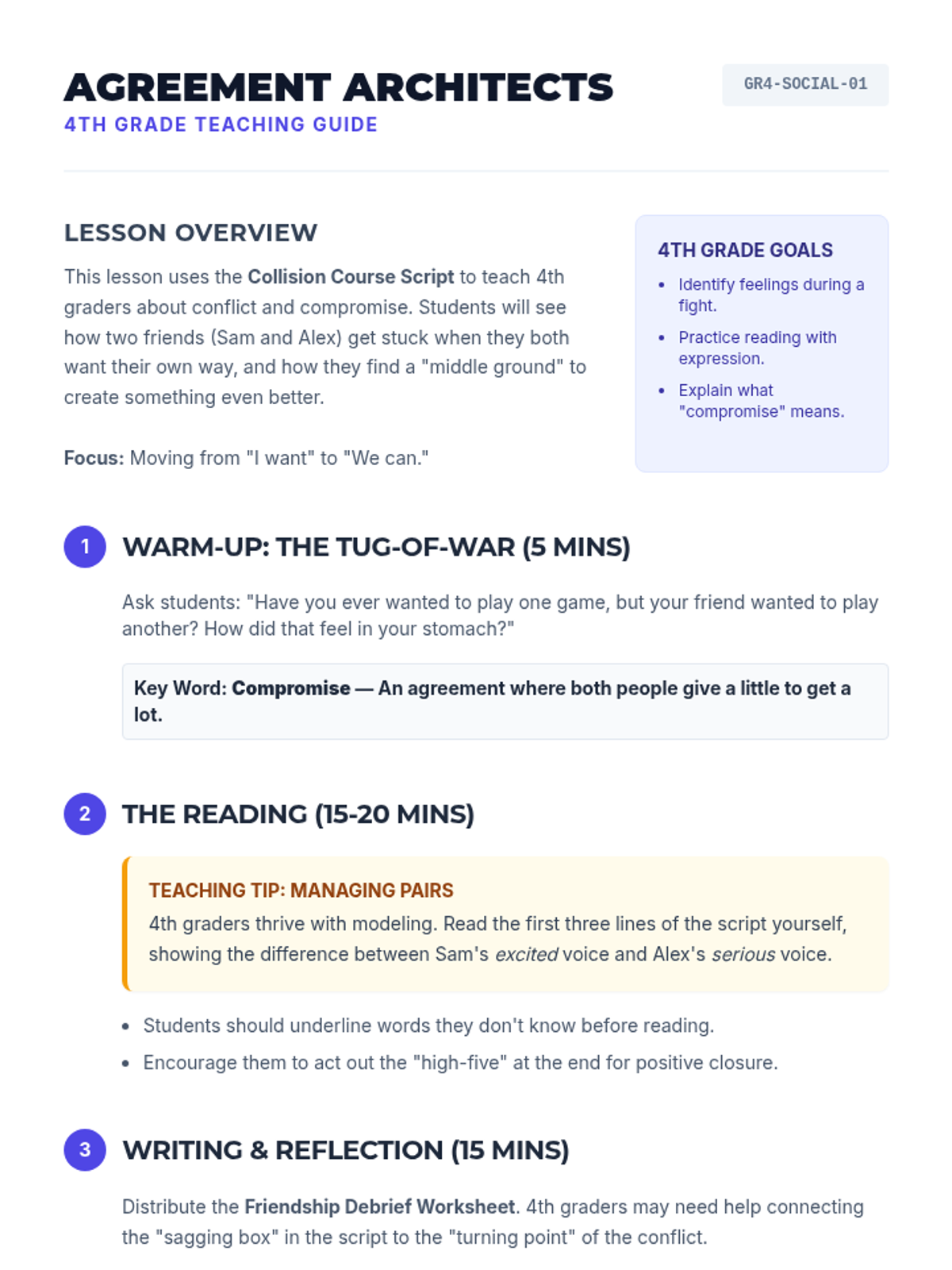
A comprehensive teacher guide for 4th grade, providing specific instructional strategies for social-emotional learning, reading fluency, and conflict resolution facilitation.
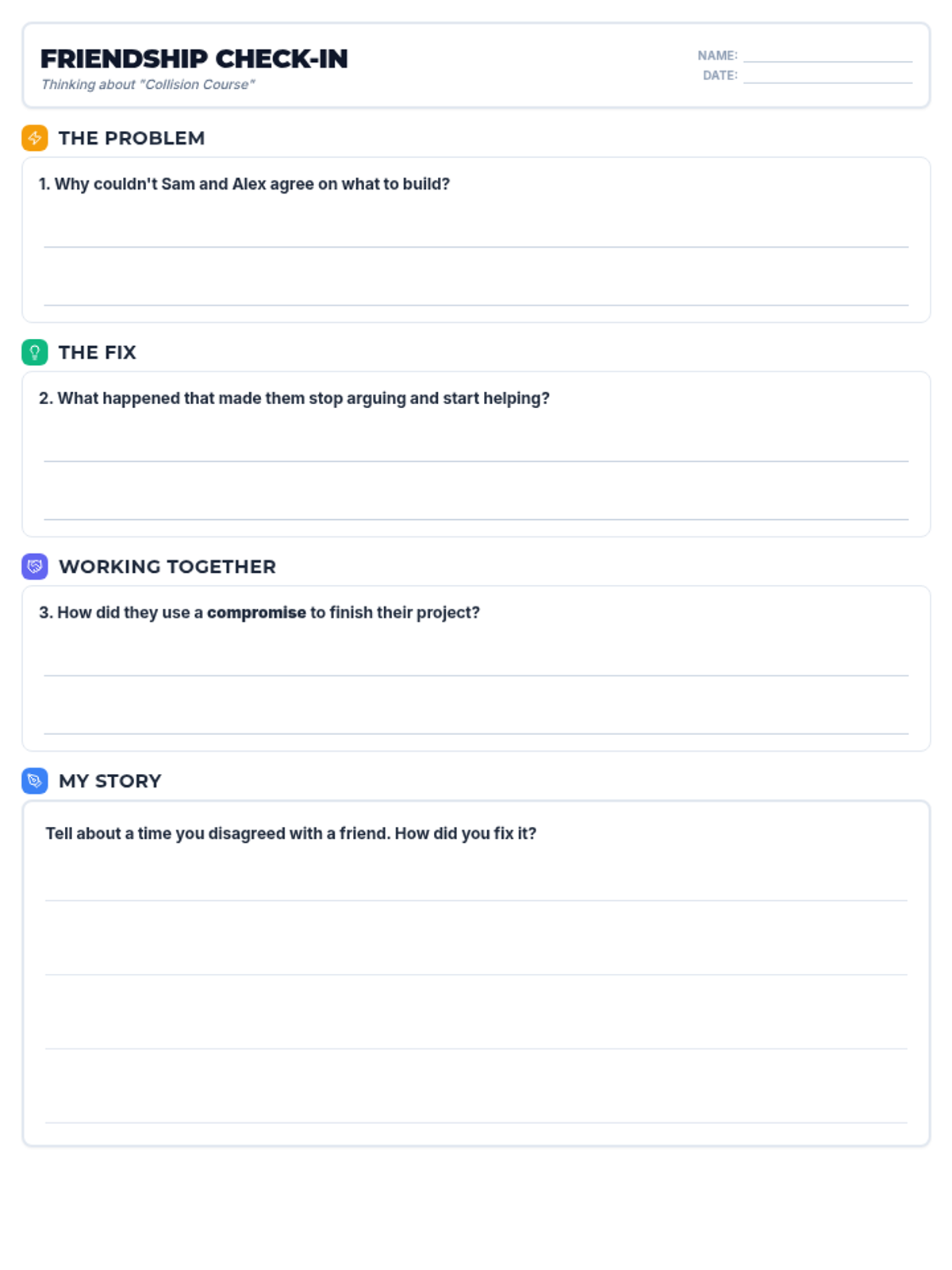
A reflection worksheet redesigned for 4th grade students to analyze conflict and compromise. Features larger writing spaces (taller lines) and simplified language. Consolidated to a single page for better usability.
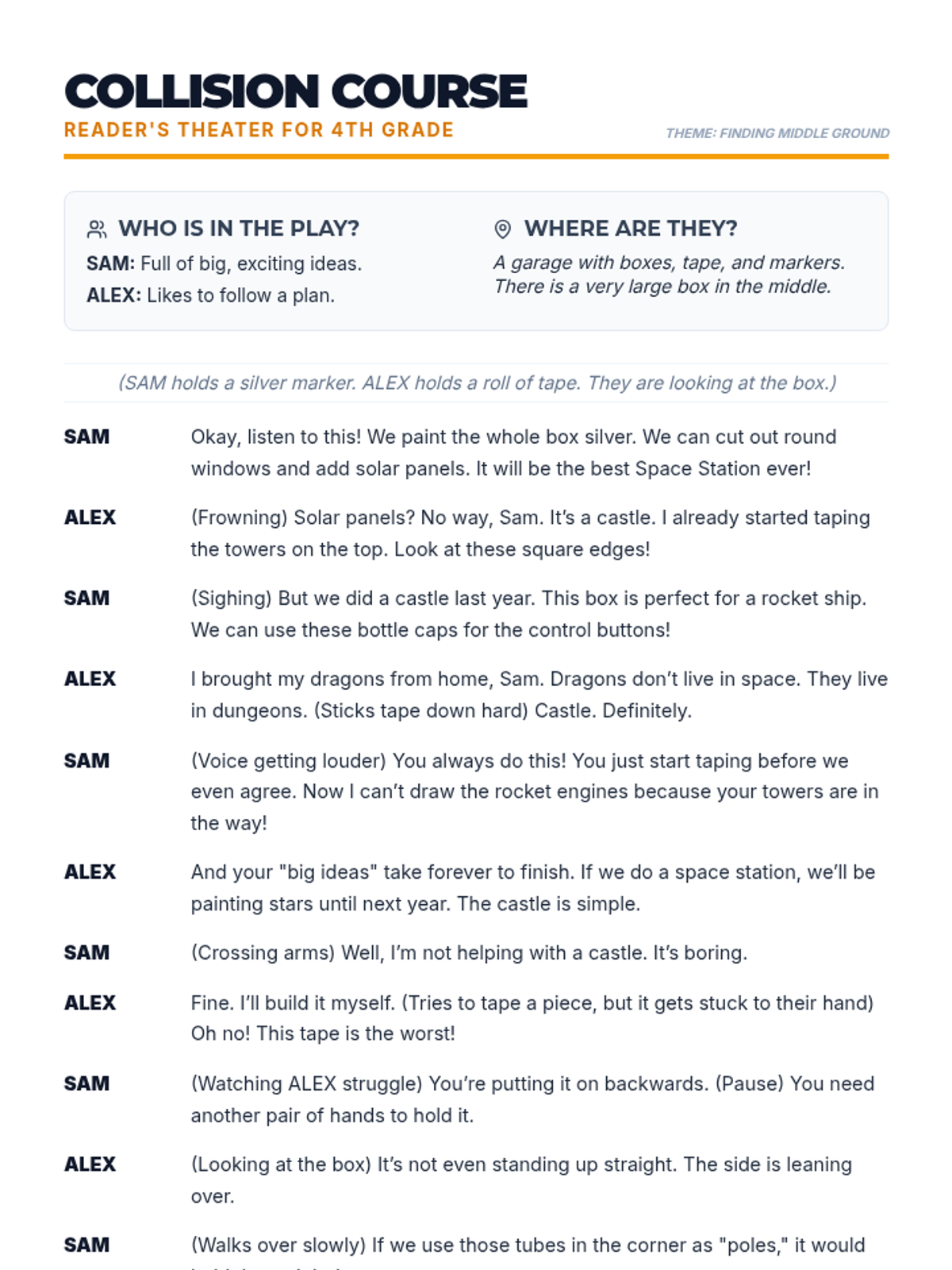
A two-person Reader's Theater script redesigned for 4th grade, focusing on a creative disagreement and the power of compromise between friends. Includes an integrated reflection section with simplified language. Layout optimized to fit on two pages.
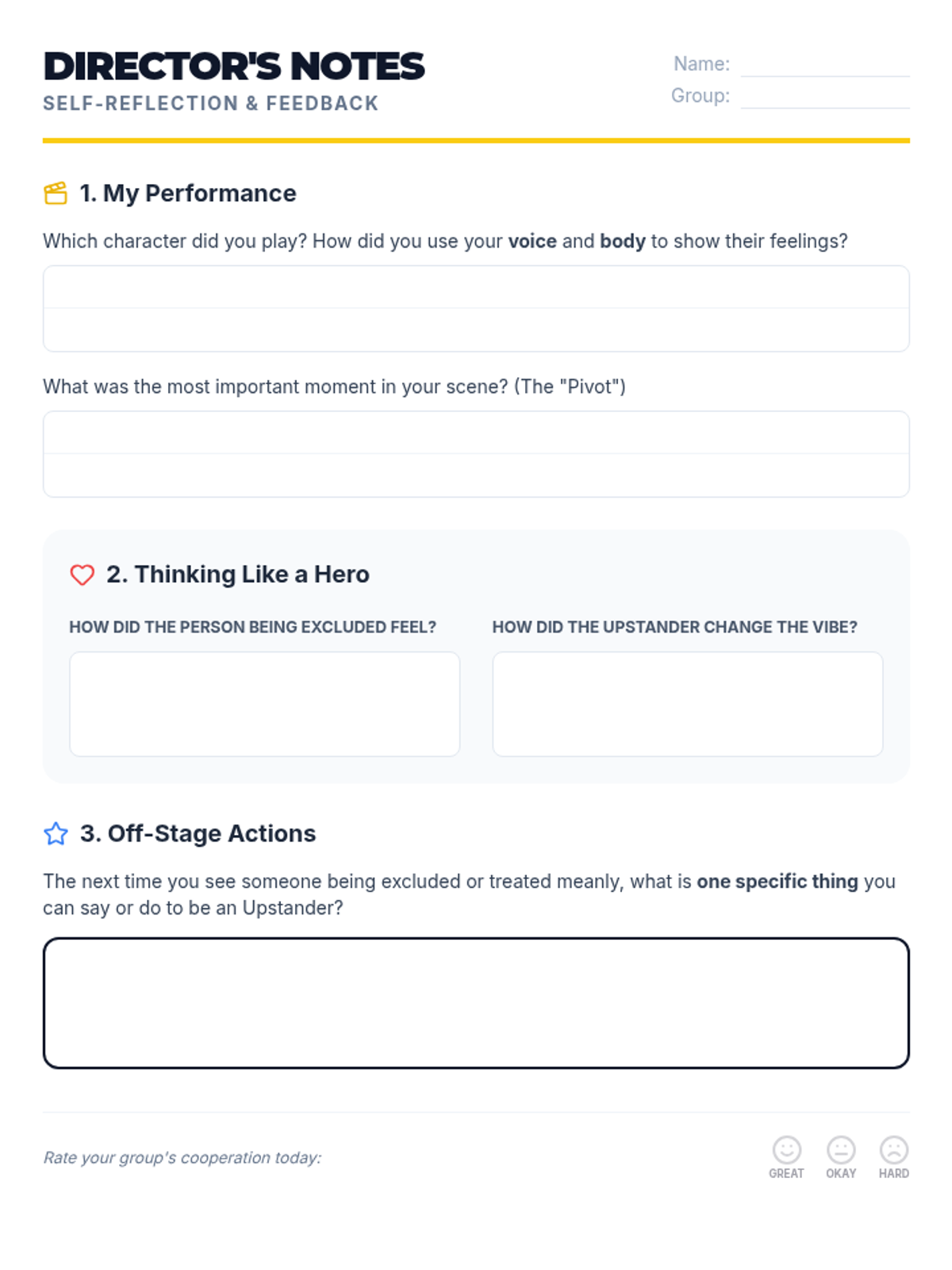
A reflection worksheet for students to process their roleplay experience, practice character empathy, and commit to upstander actions in real life. Features a clean 'Director's Notes' aesthetic.
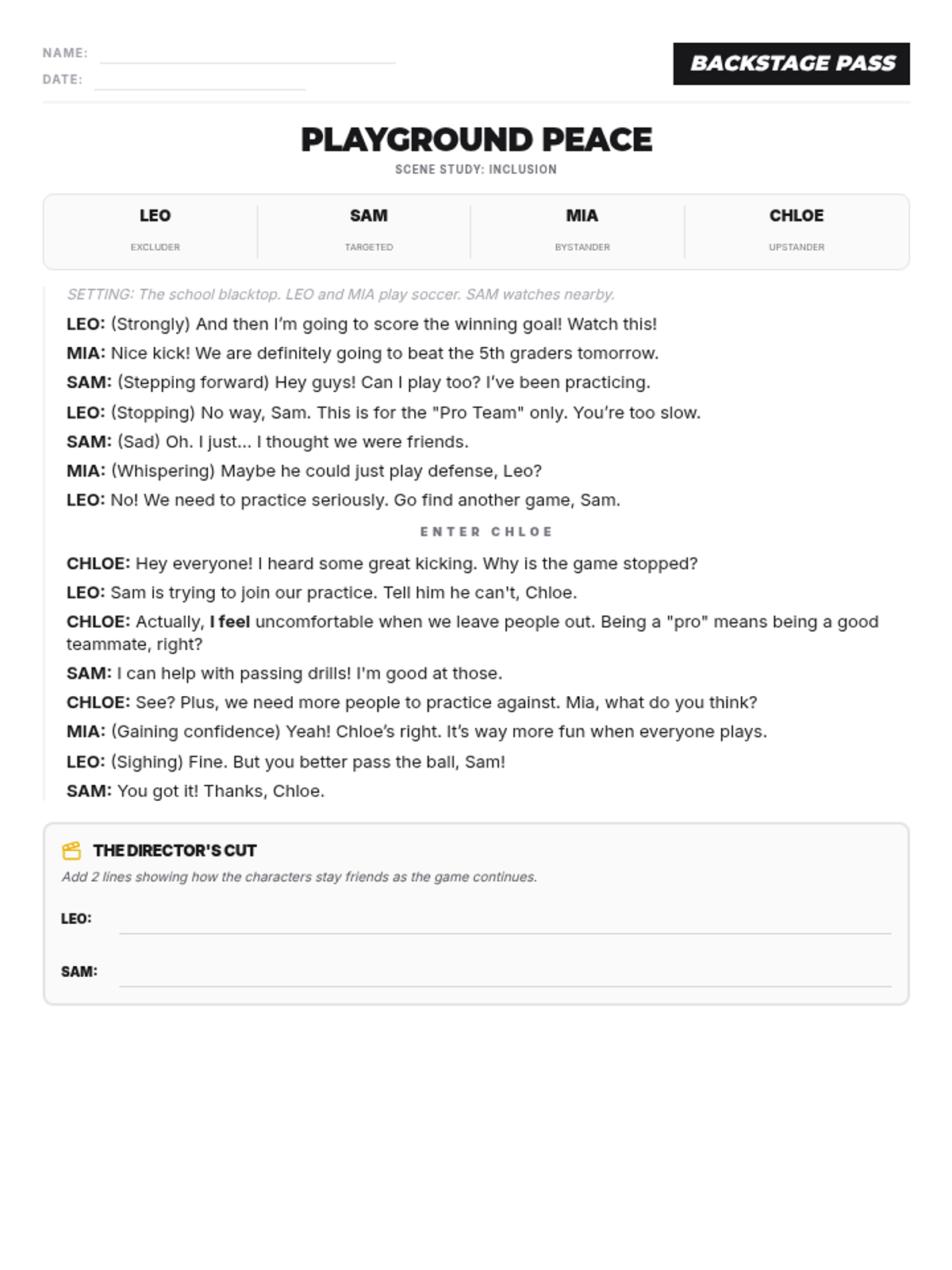
A student-facing script for a 4-person roleplay scene. Features clear character descriptions, stage directions, and a creative 'Director's Cut' challenge to encourage student writing and resolution thinking.
A comprehensive guide for teachers to lead a 60-minute drama and SEL lesson. Includes learning objectives, vocabulary, step-by-step facilitation instructions, and discussion prompts.
A vibrant, high-energy presentation using a theater theme to teach 4th graders about friendship, conflict resolution, and being an upstander. Includes clear action steps and performance etiquette.
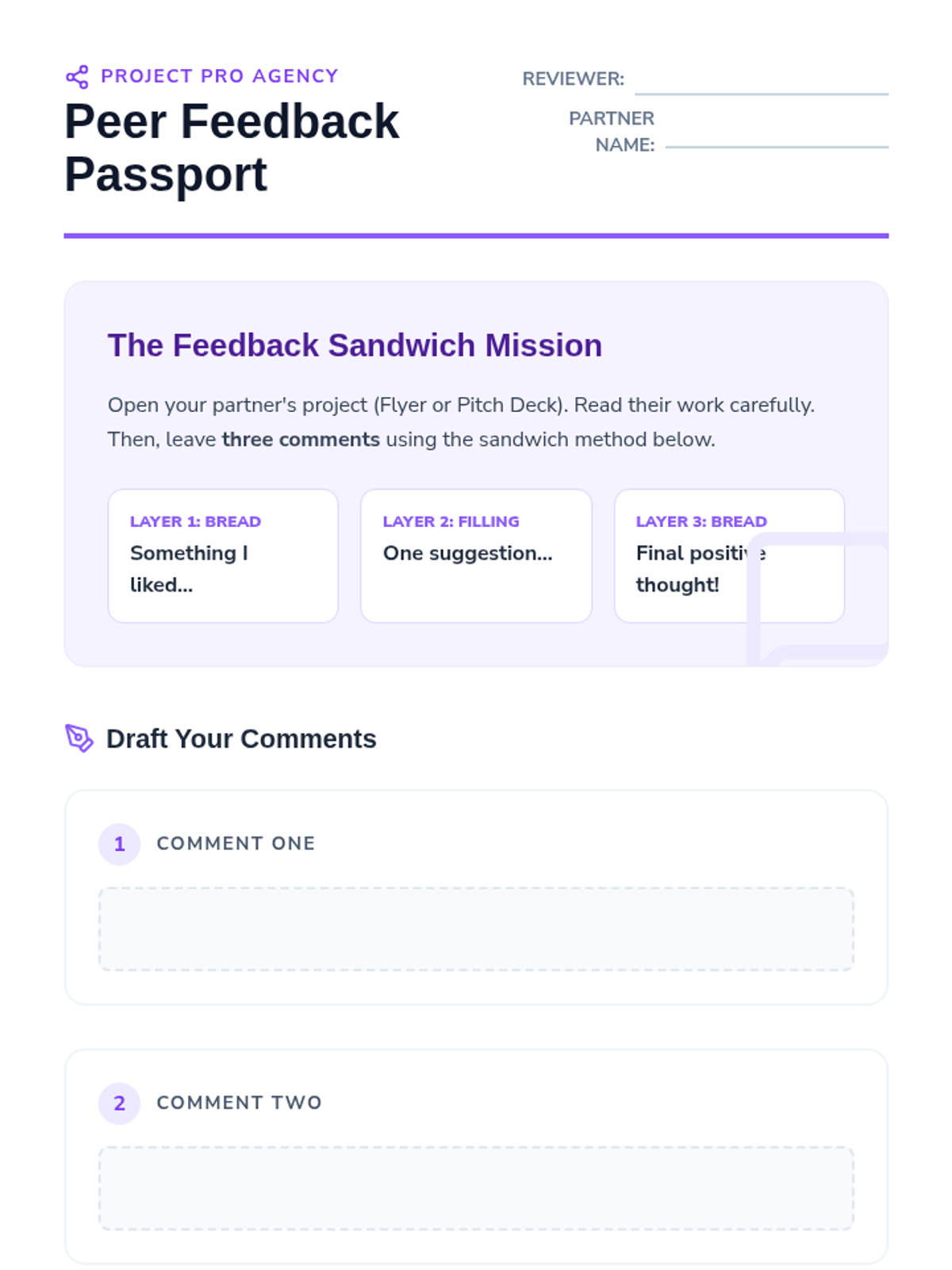
A guide for students to draft and leave constructive digital comments on their peers' event planning materials.
Slides for the cloud collaboration lesson, focusing on digital citizenship, etiquette, and the "Feedback Sandwich" method for peer review.
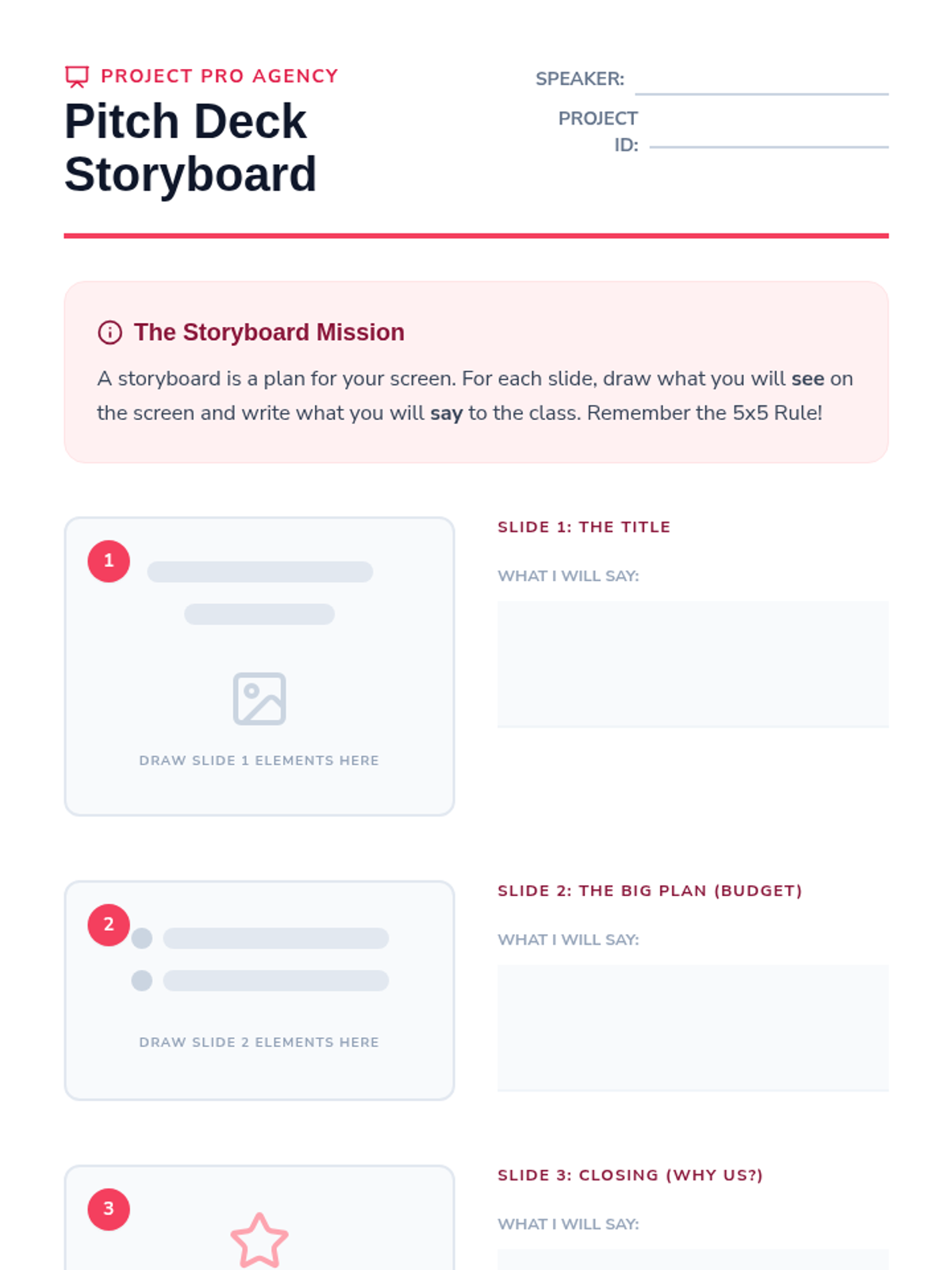
A storyboard planning sheet for students to sketch out their slide content and write their presentation script.
Introductory slides for the presentation lesson, distinguishing between reading-focused documents and speaker-focused presentation visuals.
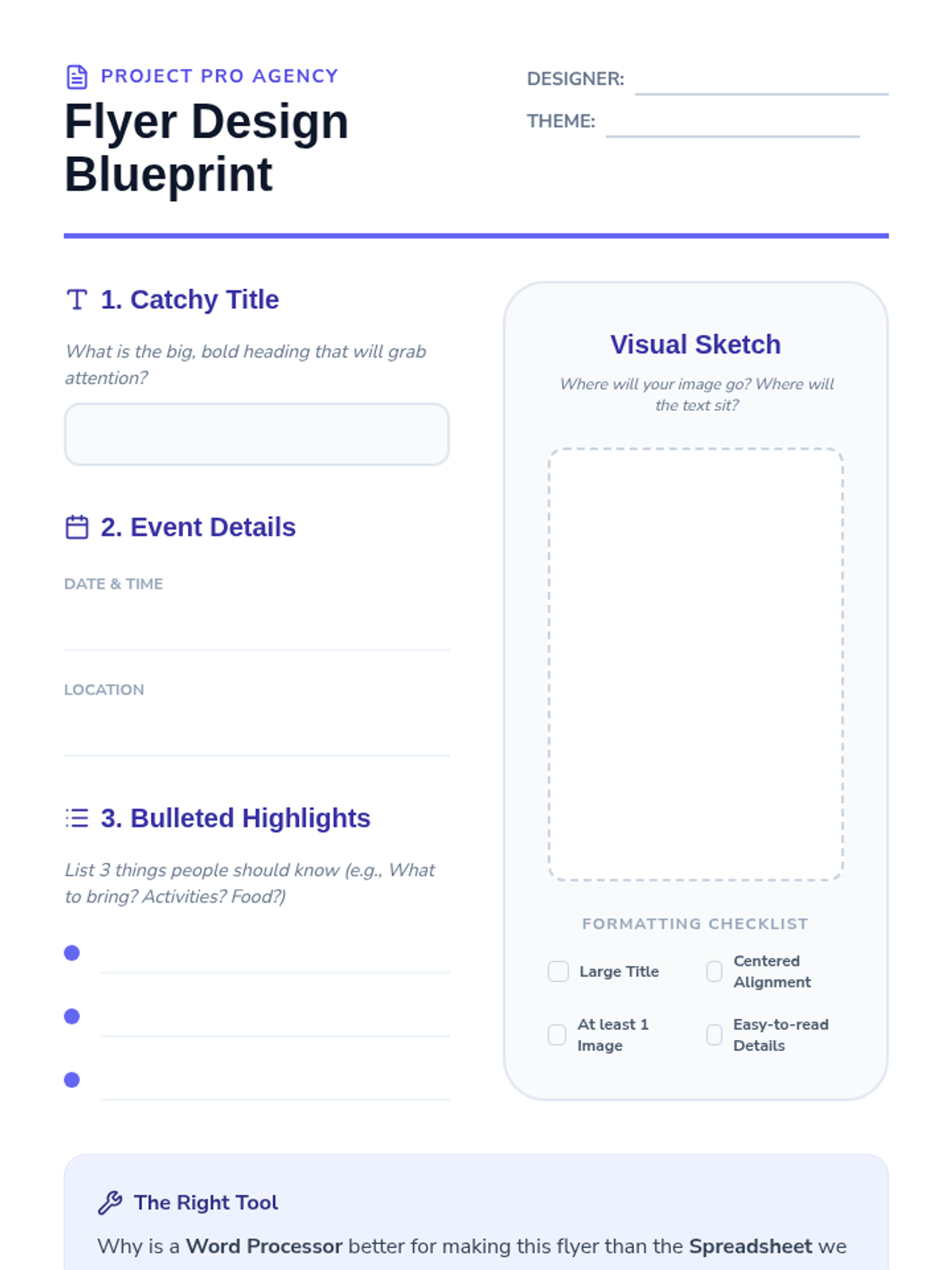
A planning sheet for students to sketch and organize their flyer design before moving to word processing software.
Slides for the document design lesson, focusing on typography, alignment, visual hierarchy, and using bulleted lists in word processing software.
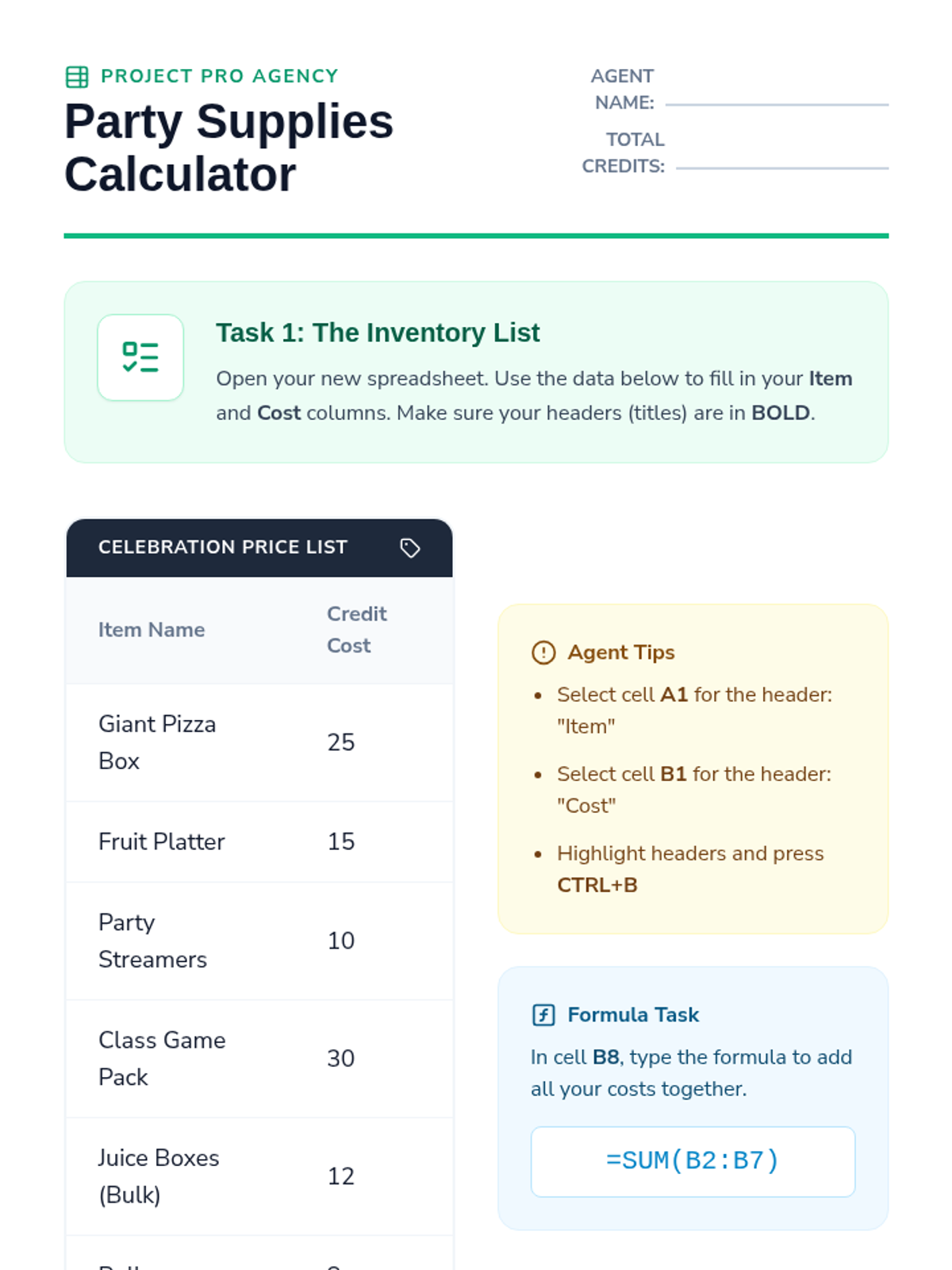
An activity sheet guiding students to input data and formulas into a spreadsheet to manage a party budget.
Introductory slides for the spreadsheet lesson, covering the anatomy of a grid (rows, columns, cells) and basic SUM formulas for budgeting.
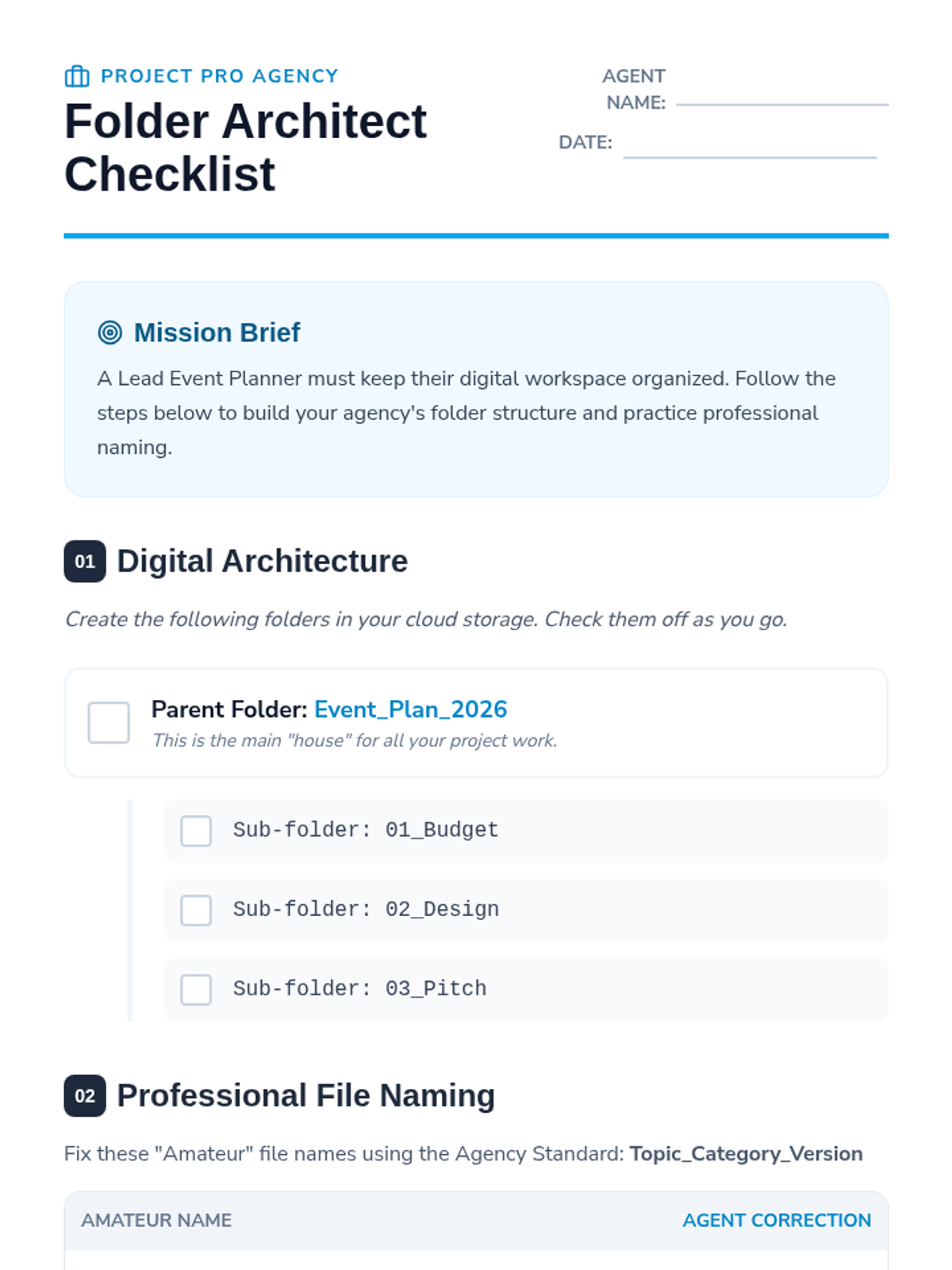
A worksheet for students to practice creating folder structures and professional file naming conventions within their cloud storage.
Introductory slides for the digital organization lesson, featuring the "Project Pro Agency" theme, cloud storage concepts, and folder naming conventions. Updated with larger text for accessibility.
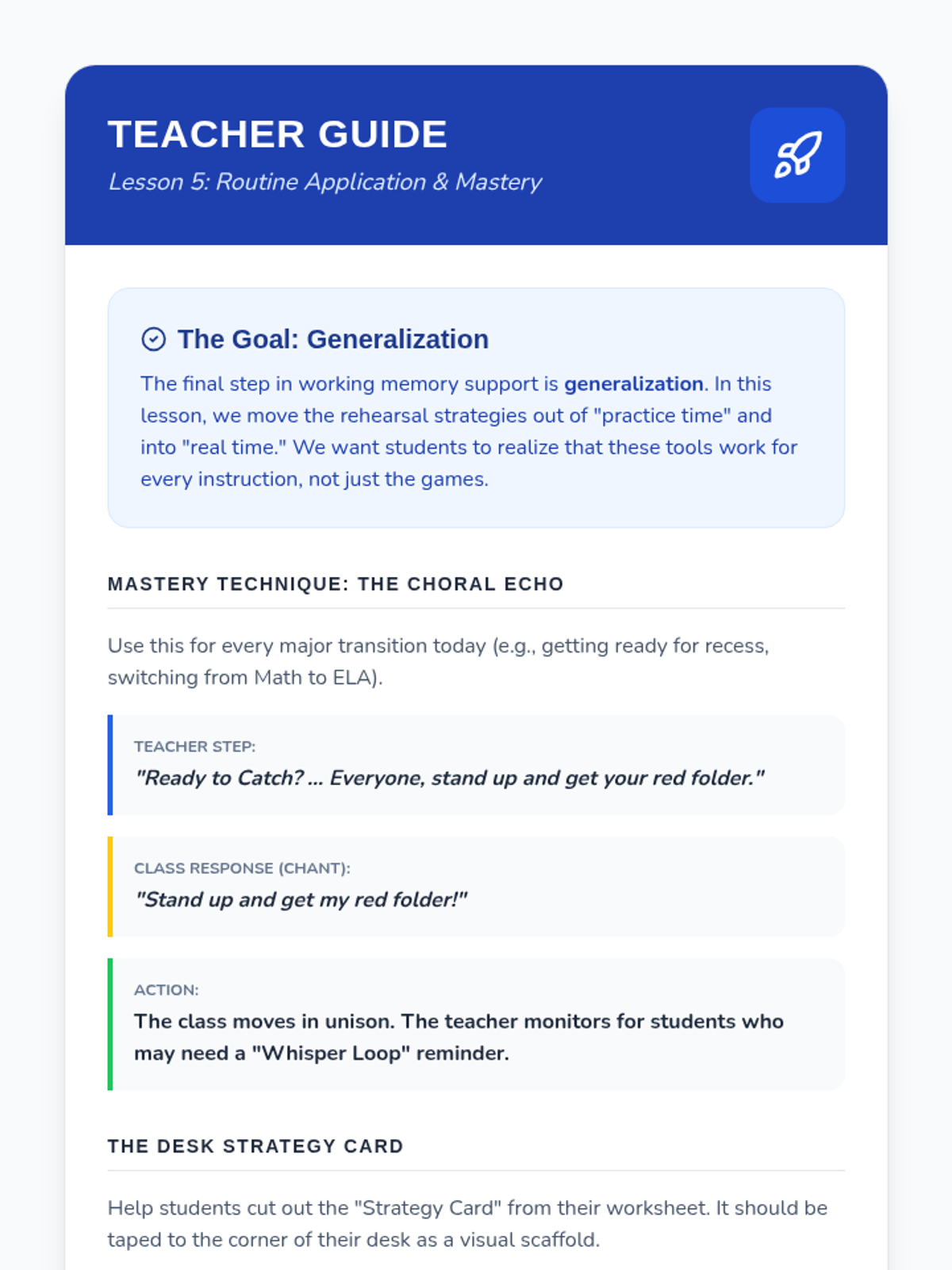
Final teacher guide for the sequence, focusing on choral response techniques, the use of desk-based strategy cards, and informal mastery assessment.
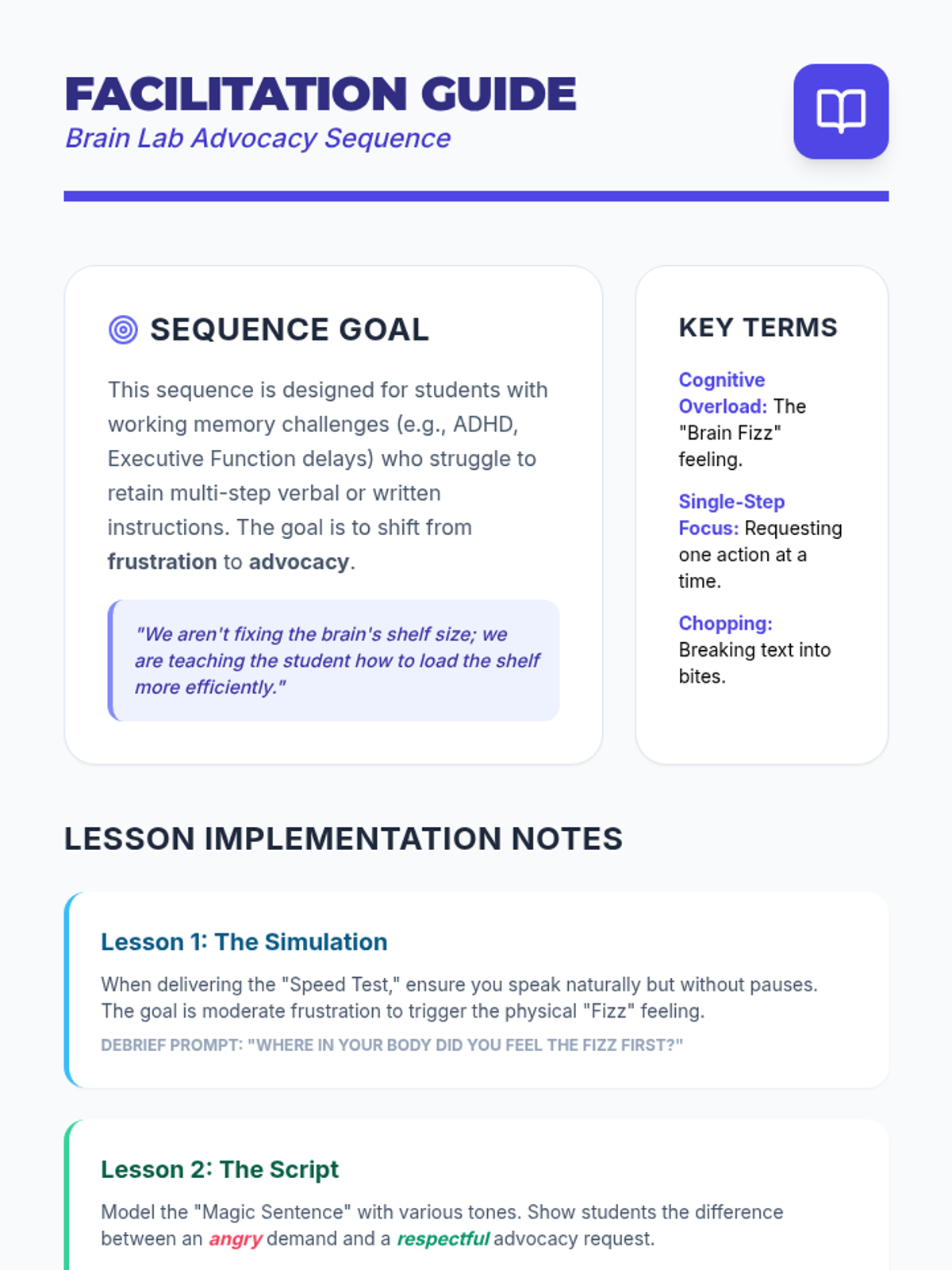
A comprehensive teacher facilitation guide for the Brain Lab Advocacy sequence, providing implementation tips for simulations, role-plays, and long-term support strategies.
Final slides for the sequence, focusing on graduating the 'Brain Training' skills into everyday classroom routines like cleaning up and transitions.
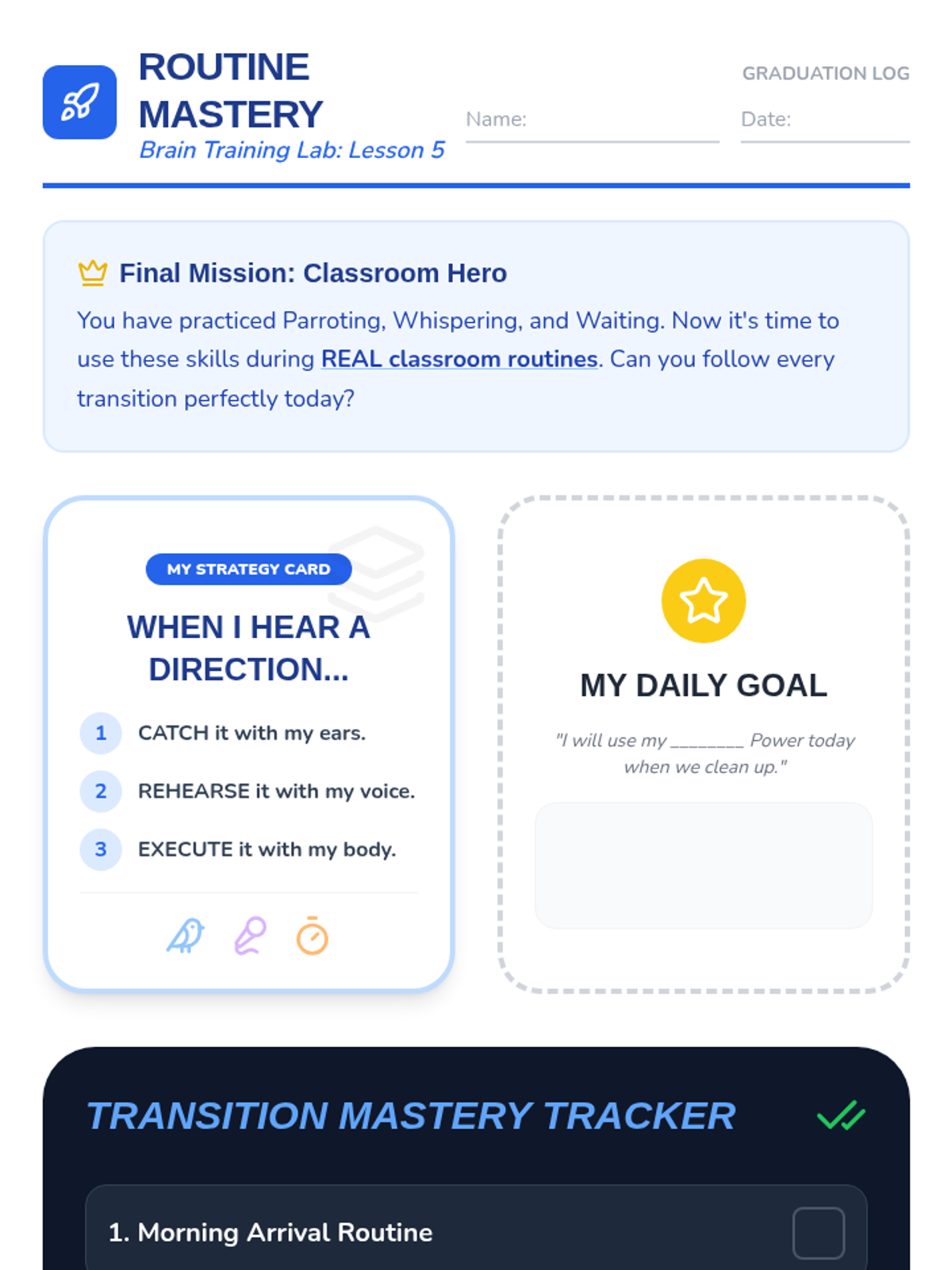
A cumulative resource for Lesson 5 including a strategy desk card and a transition mastery tracker to help students apply verbal rehearsal to real classroom routines.
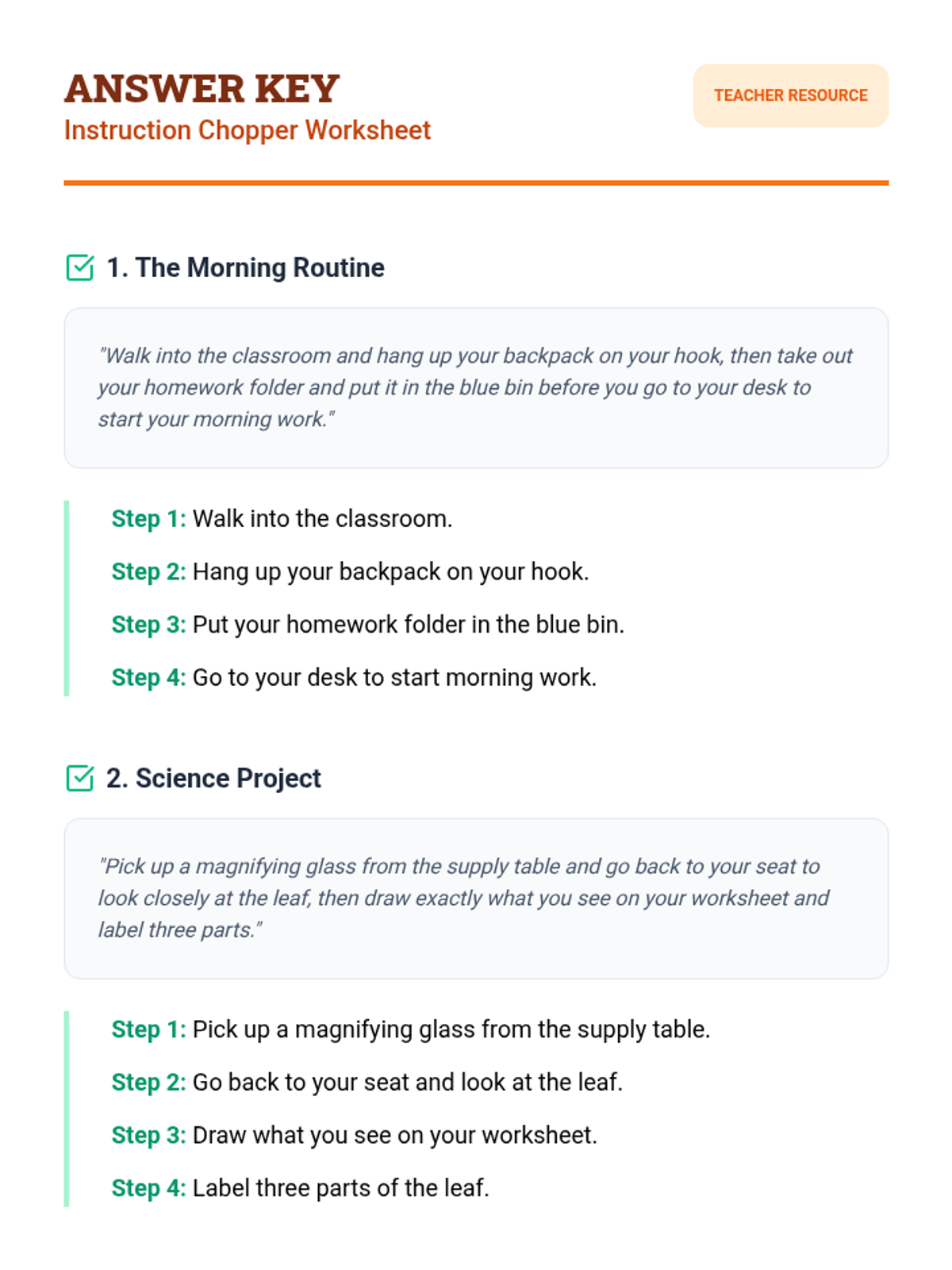
An answer key for the Lesson 3 Instruction Chopper Worksheet, providing clear breakdowns of the practice scenarios.
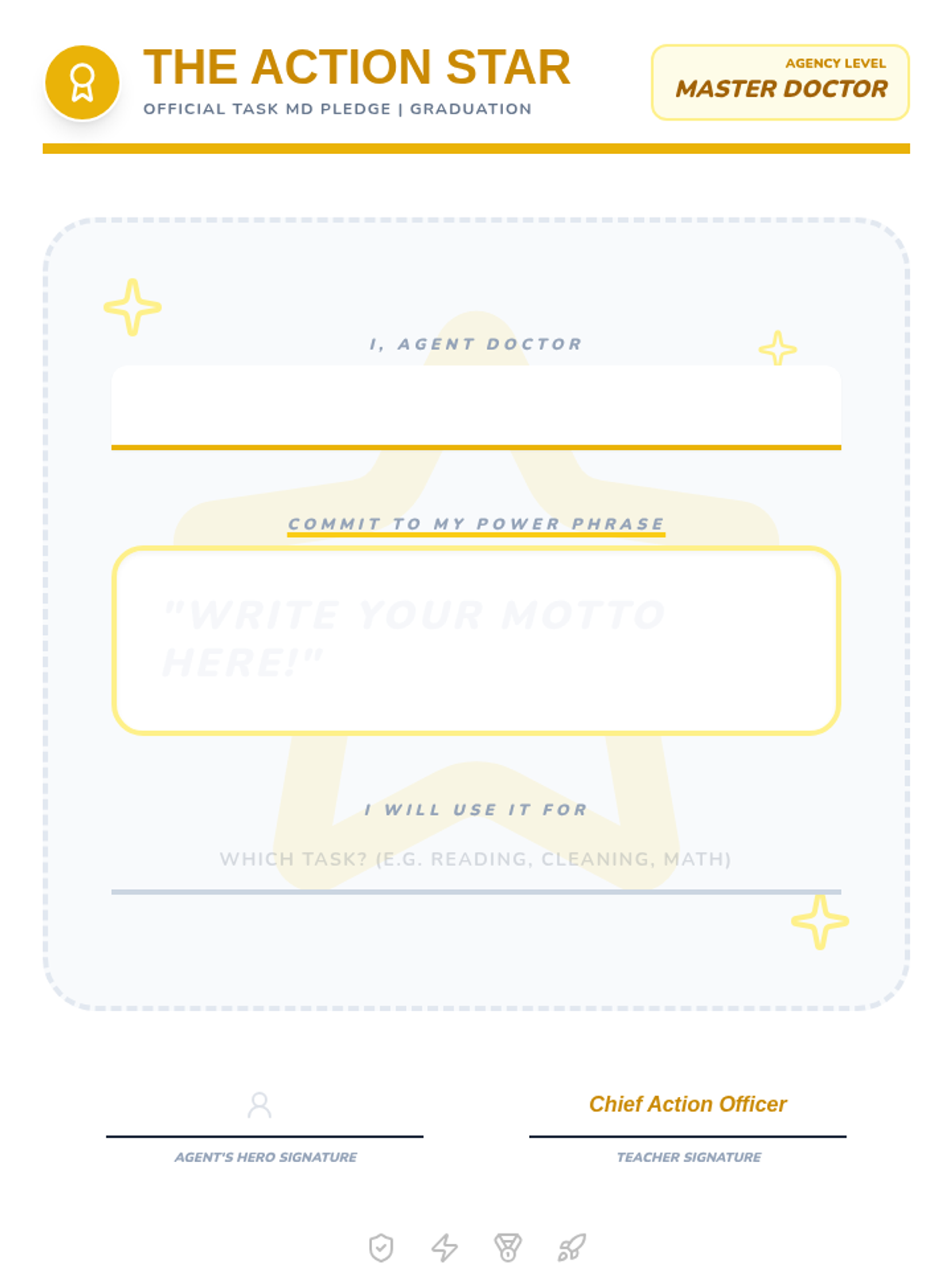
A student worksheet for the final lesson, where students write their personal 'Power Phrase' motto on a star-themed pledge sheet to be displayed on the 'Wall of Action'.
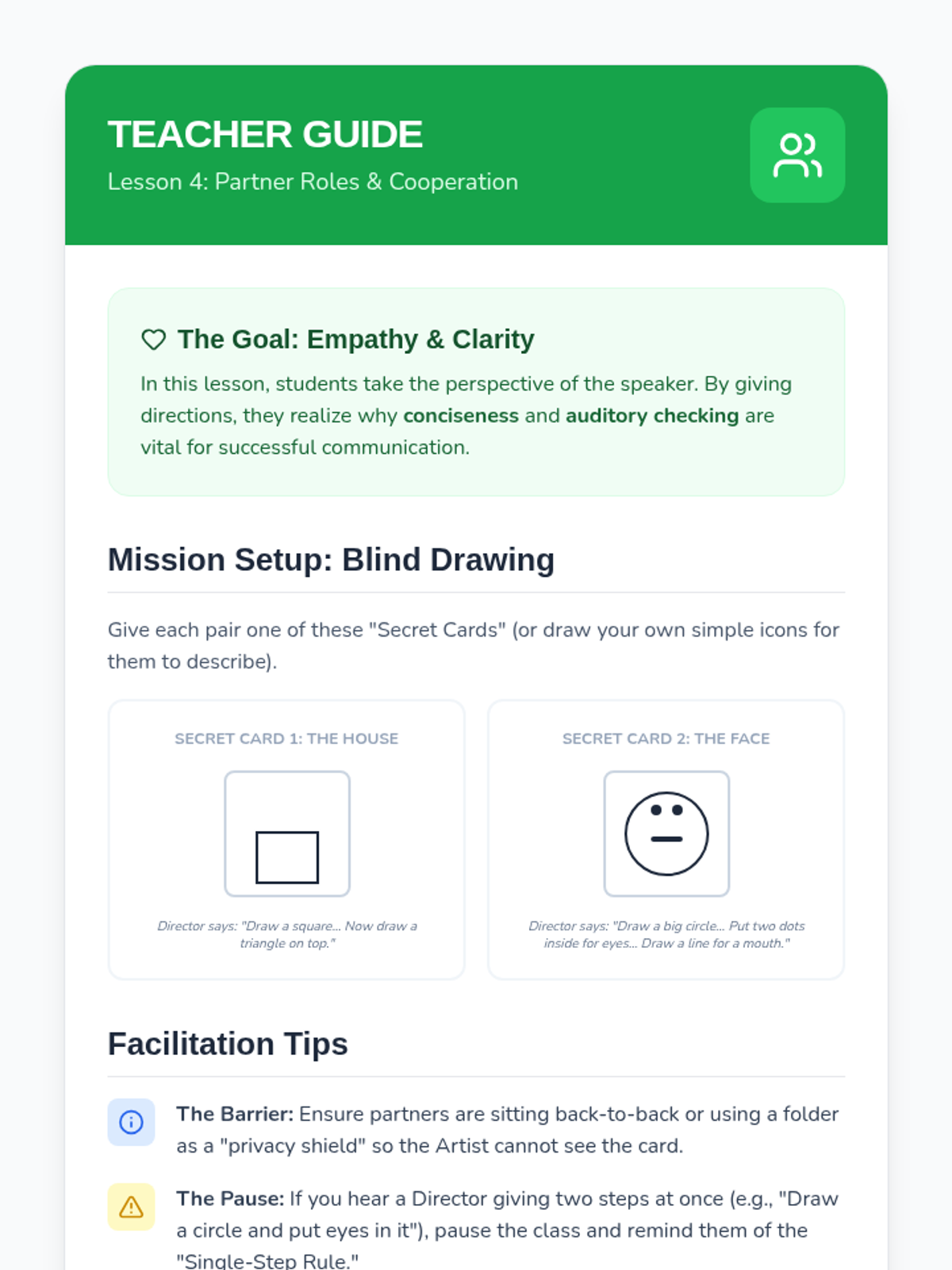
A teacher guide for Lesson 4 including secret cards for the blind drawing activity, facilitation scripts, and peer feedback prompts.
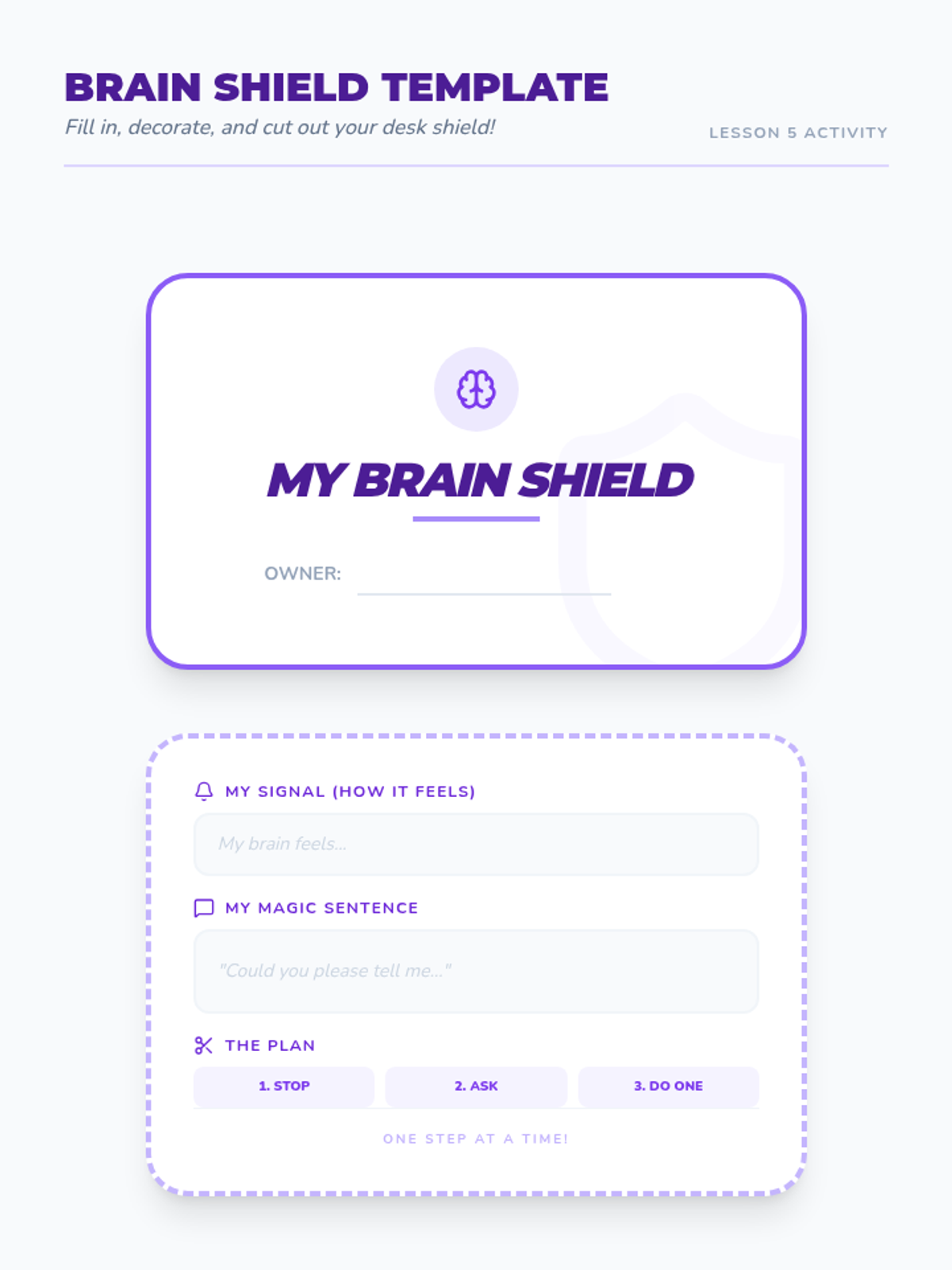
A printable template for students to create their personalized 'Brain Shield' desk reference card, with prompts for their signal, magic sentence, and action plan.
Engaging slides for Lesson 5 that guide the student self-reflection process and introduce the 'Wall of Action' graduation ceremony.
Slides for Lesson 4 facilitating a peer-to-peer communication activity. Introduces the roles of 'Director' and 'Artist' for a collaborative drawing challenge.
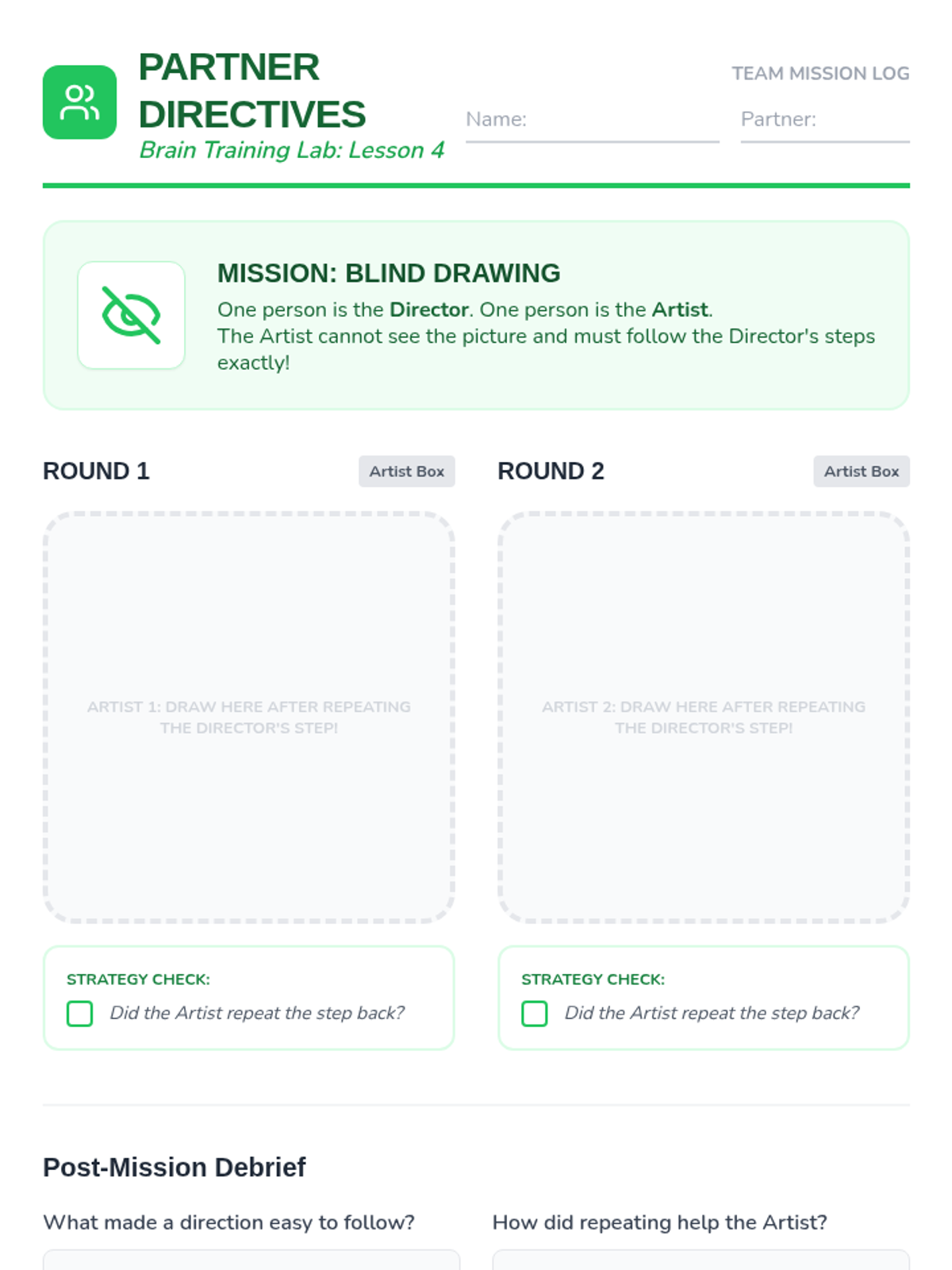
A collaborative worksheet for Lesson 4 where students work in pairs to practice giving and repeating directions through a 'Blind Drawing' activity.
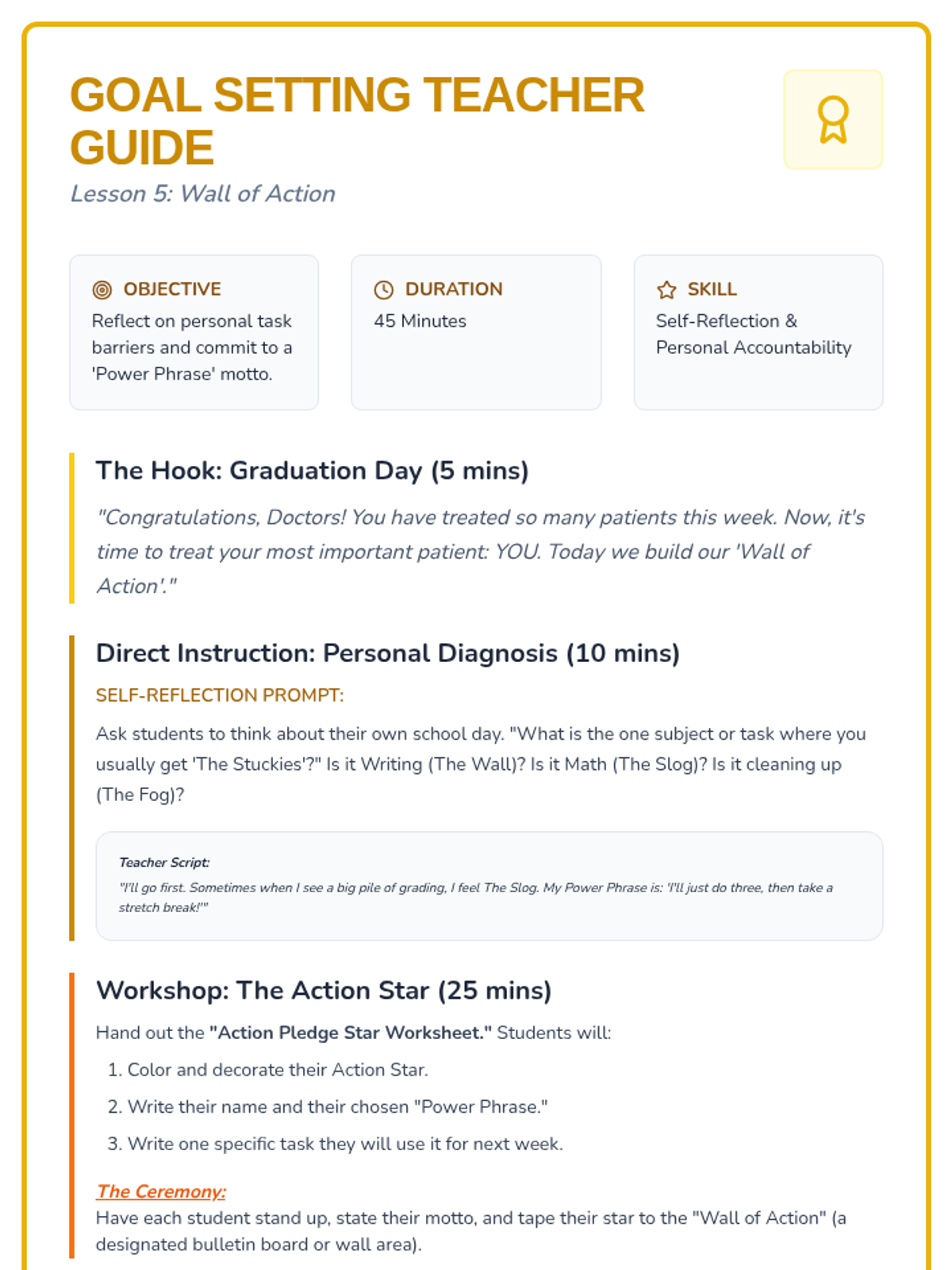
A comprehensive teacher's guide for the fifth lesson, focused on student self-reflection and creating a 'Wall of Action' with personal self-talk mottos.
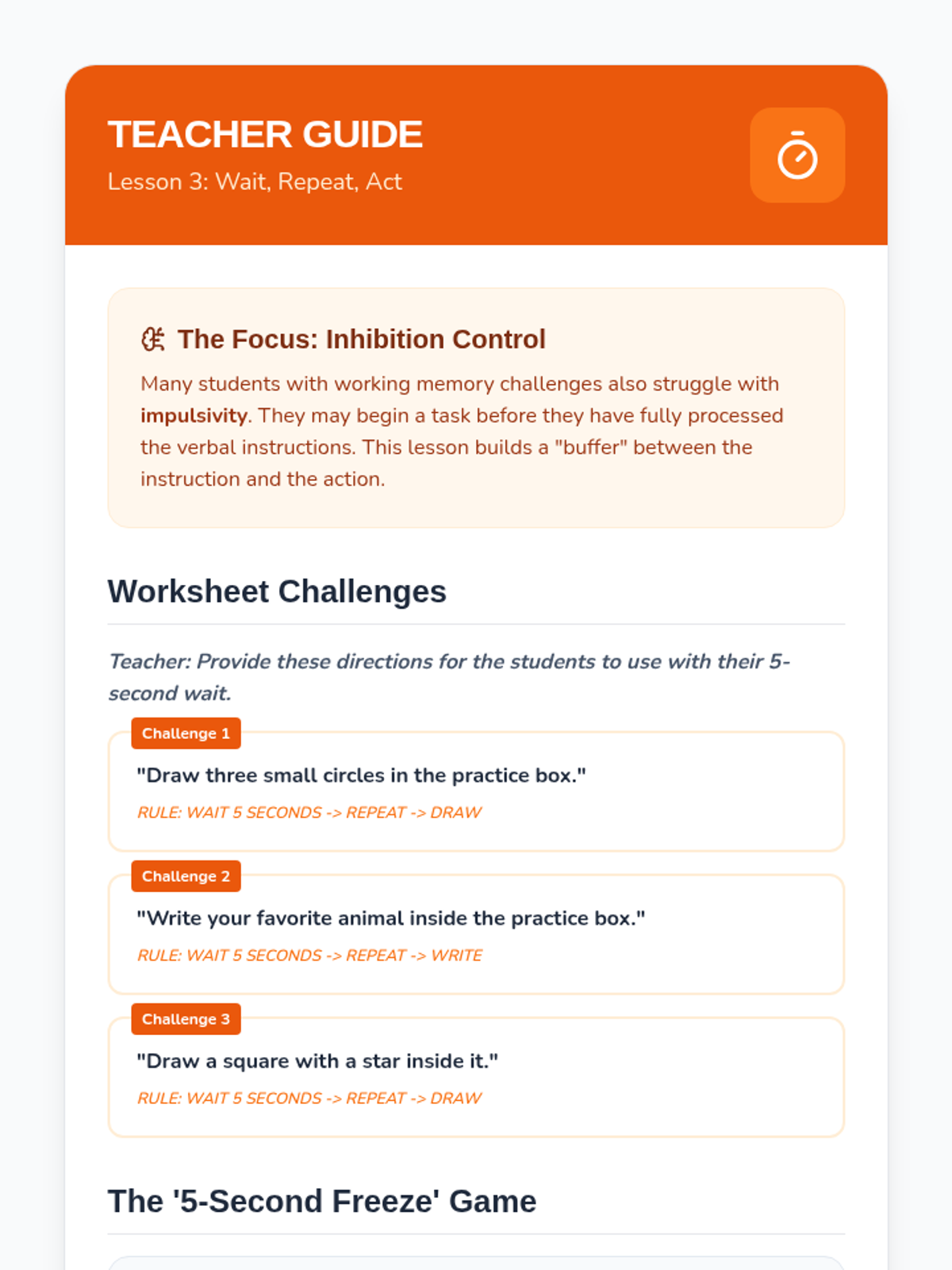
Teacher guide for Lesson 3 focusing on inhibition control strategies. Includes worksheet directions, a whole-class game, and instructional rationales for the 5-second wait period.
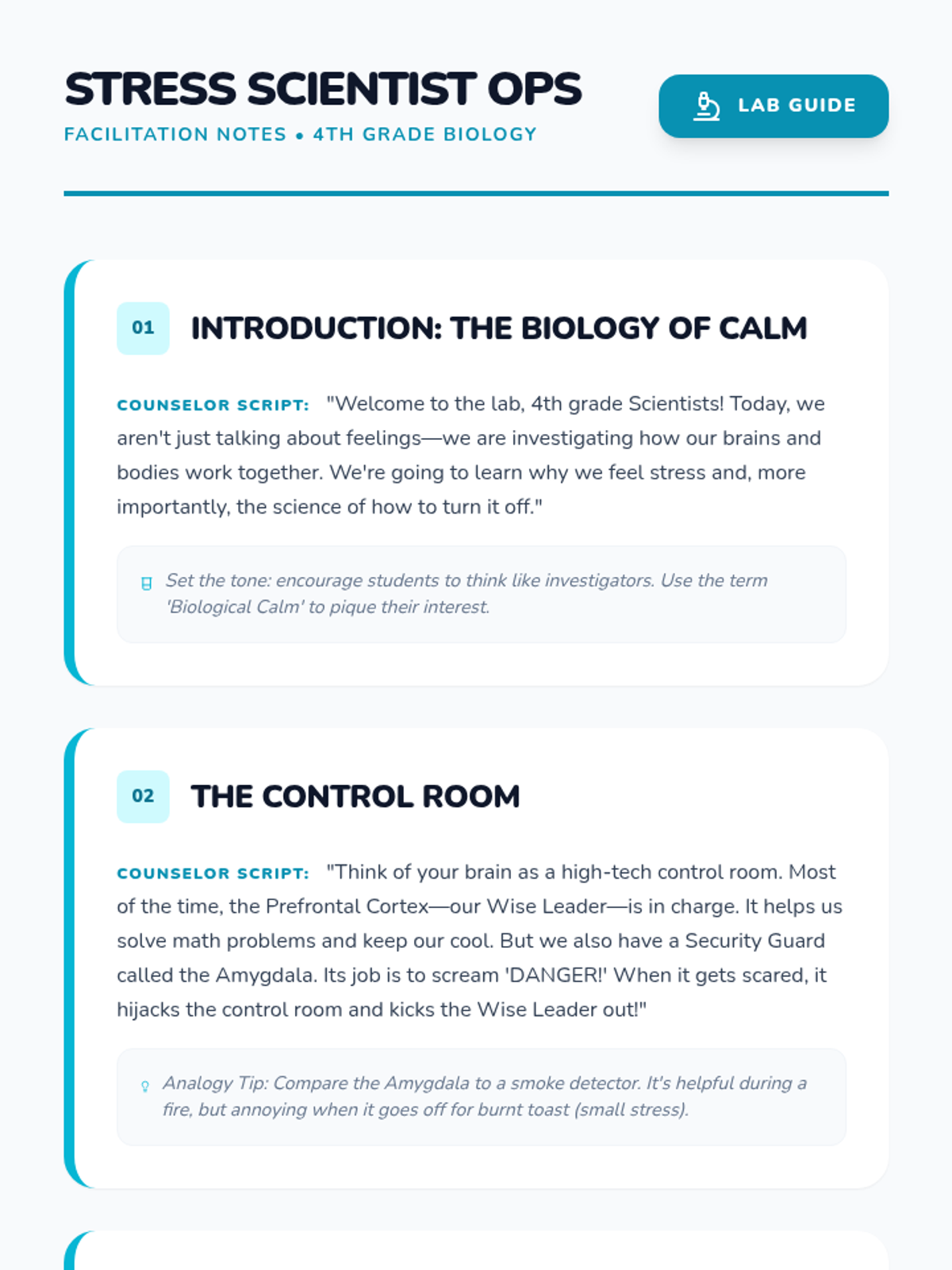
A detailed facilitation guide for the 4th grade 'Stress Scientists' lesson. Includes counselor scripts, biology-themed analogies for brain function, and interactive prompts for the 'Scientific Method' practice.
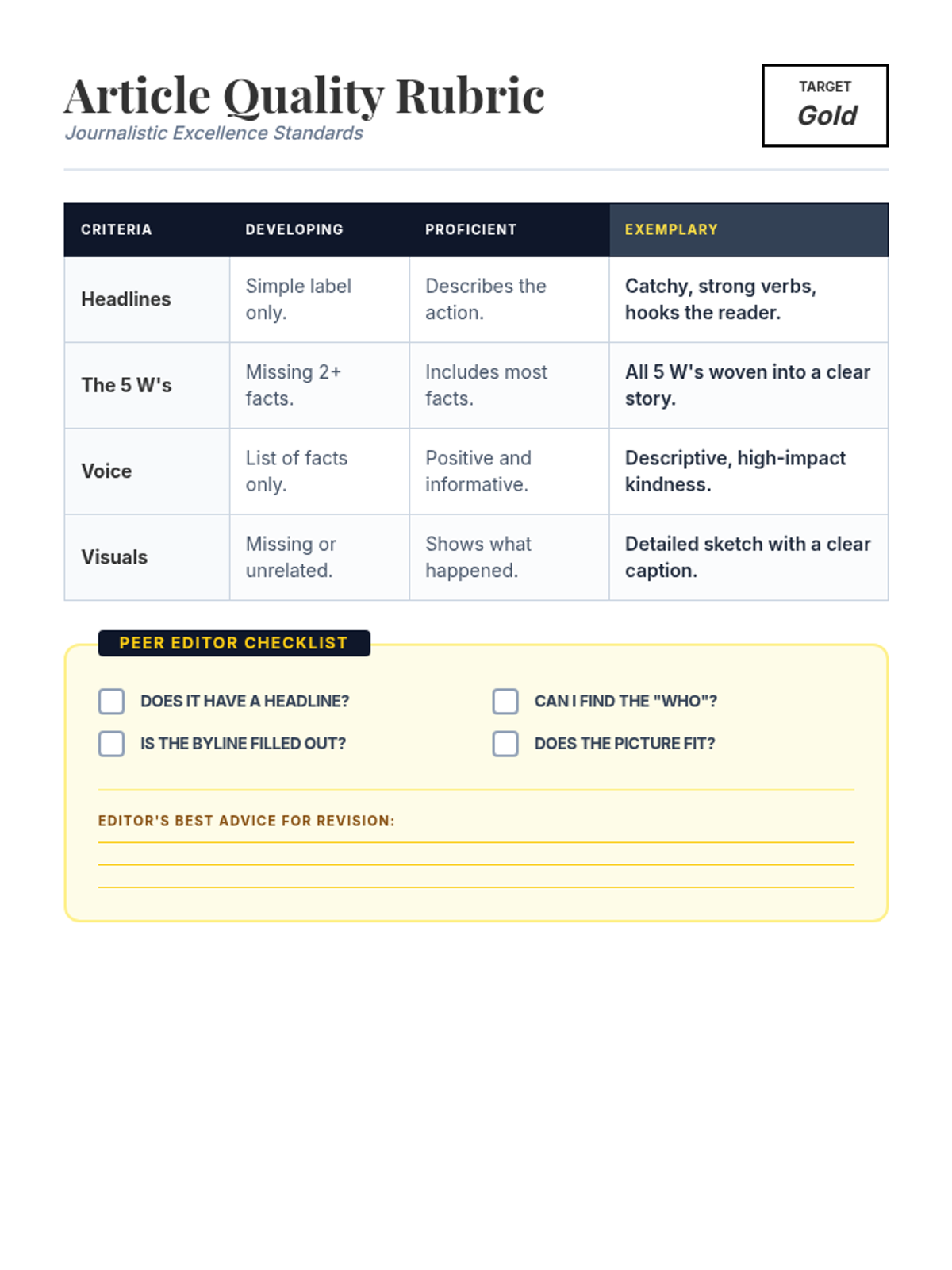
An assessment rubric and peer-editing checklist focusing on headline creativity, the 5 W's, journalistic tone, and visual storytelling.
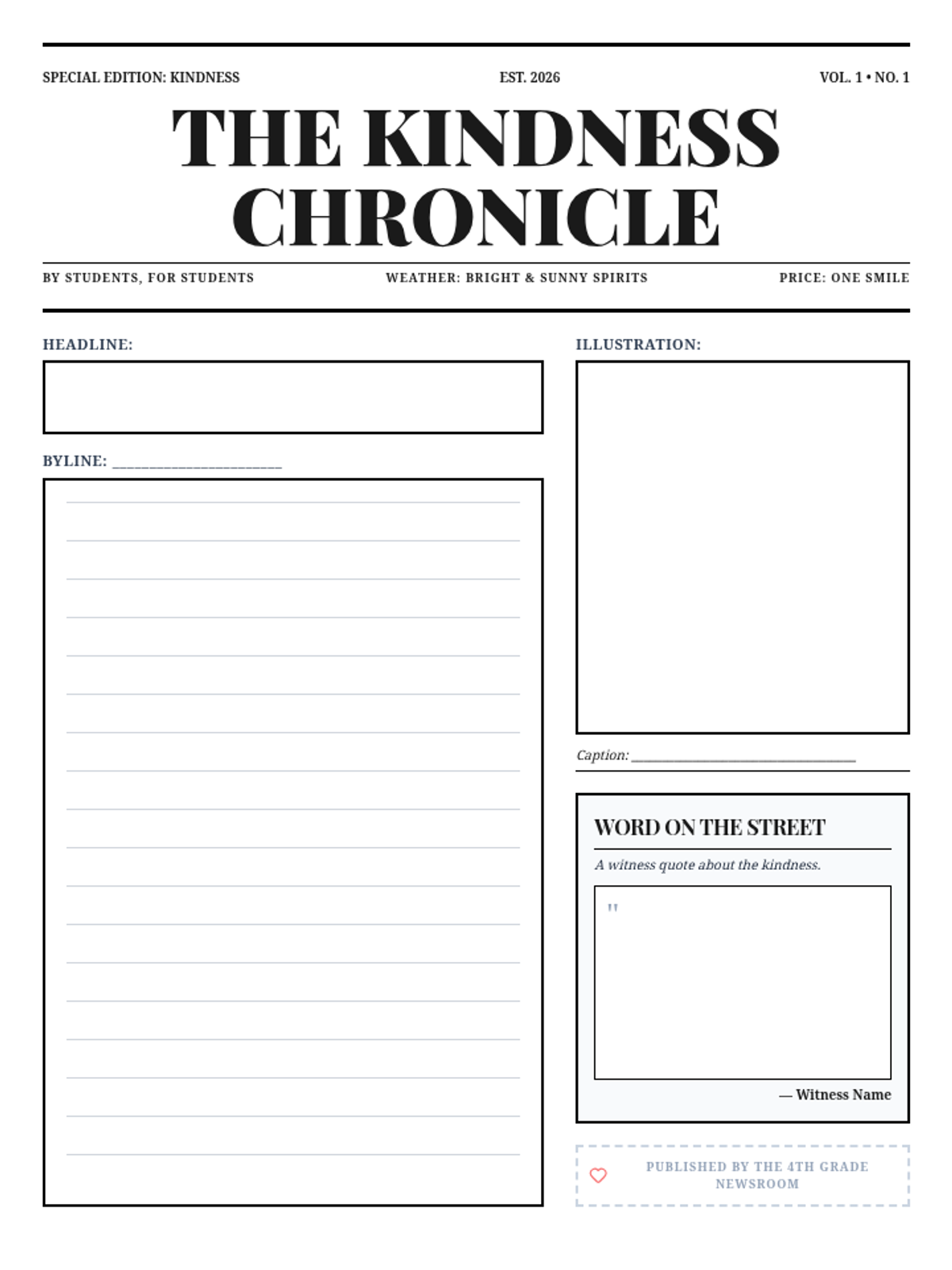
A vintage-style newspaper page template with sections for a headline, lead story, byline, illustration, and a witness quote sidebar.
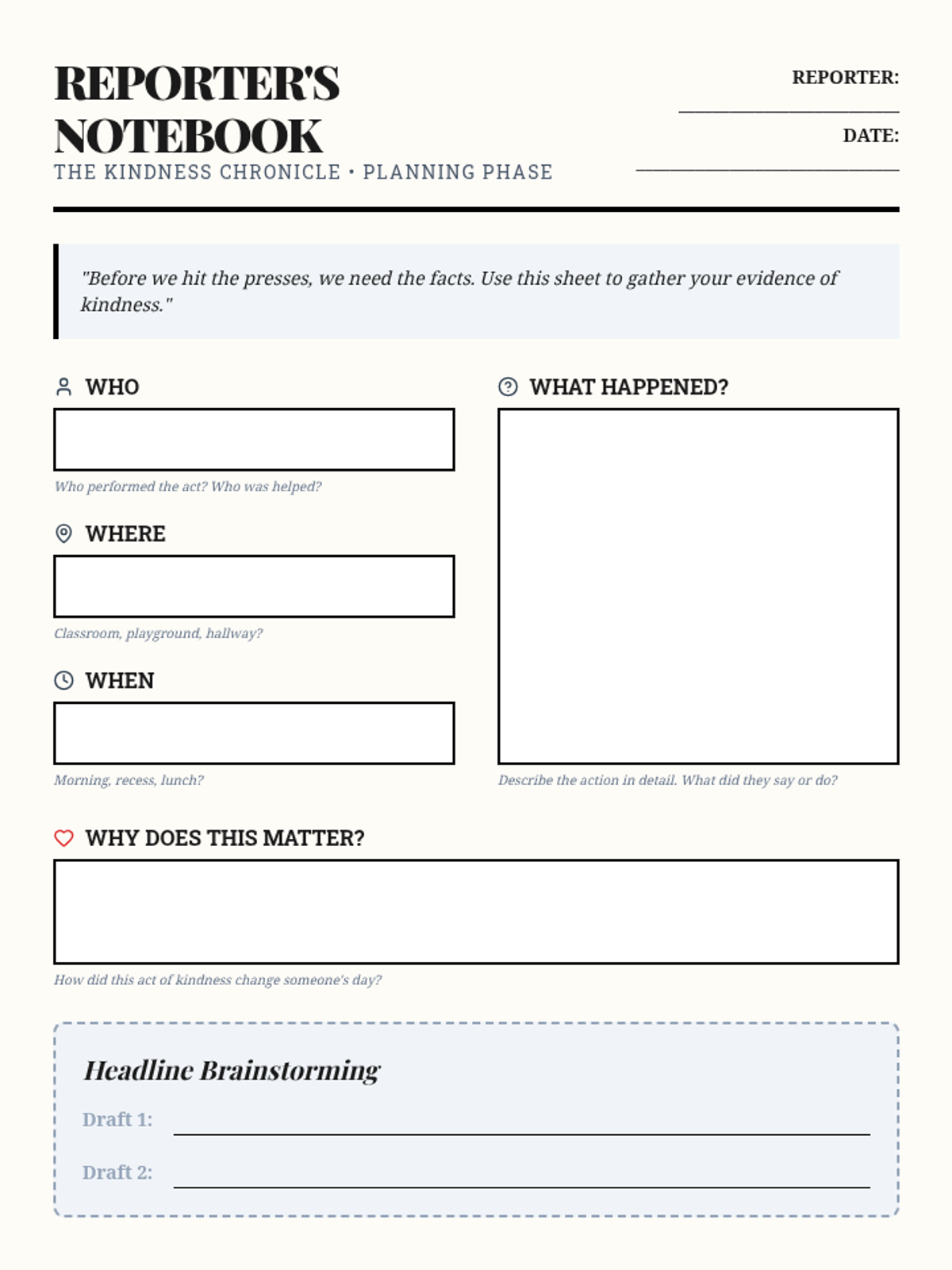
A planning worksheet designed to help student reporters gather the 5 W's of their kindness story and brainstorm catchy headlines before drafting.
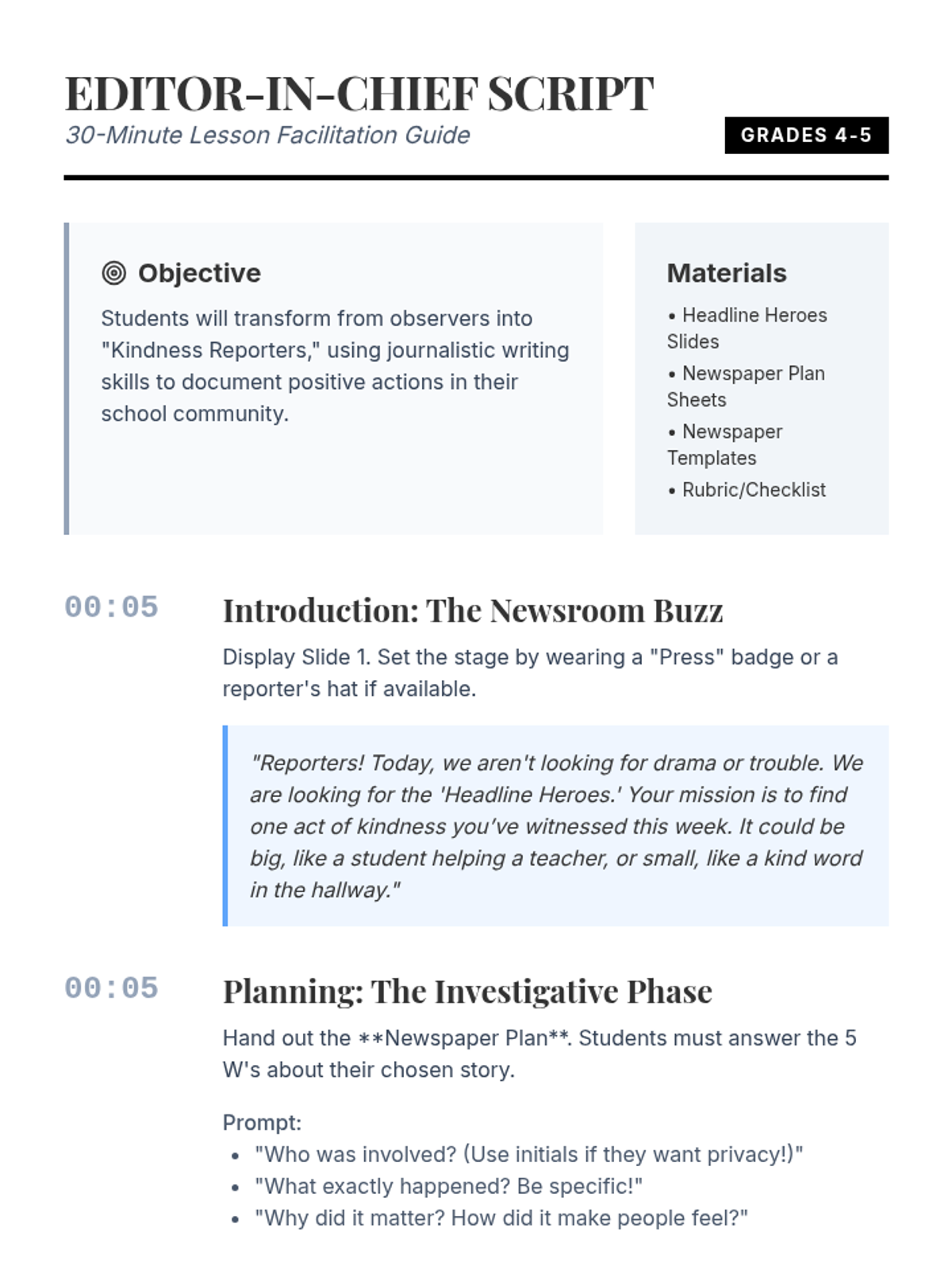
A comprehensive teacher guide with a timed instructional script, pacing suggestions, and pedagogical prompts for leading the 30-minute newsroom lesson.
A visual presentation introducing student newsroom roles, the anatomy of a headline, and examples of kindness reporting to inspire classroom journalists.
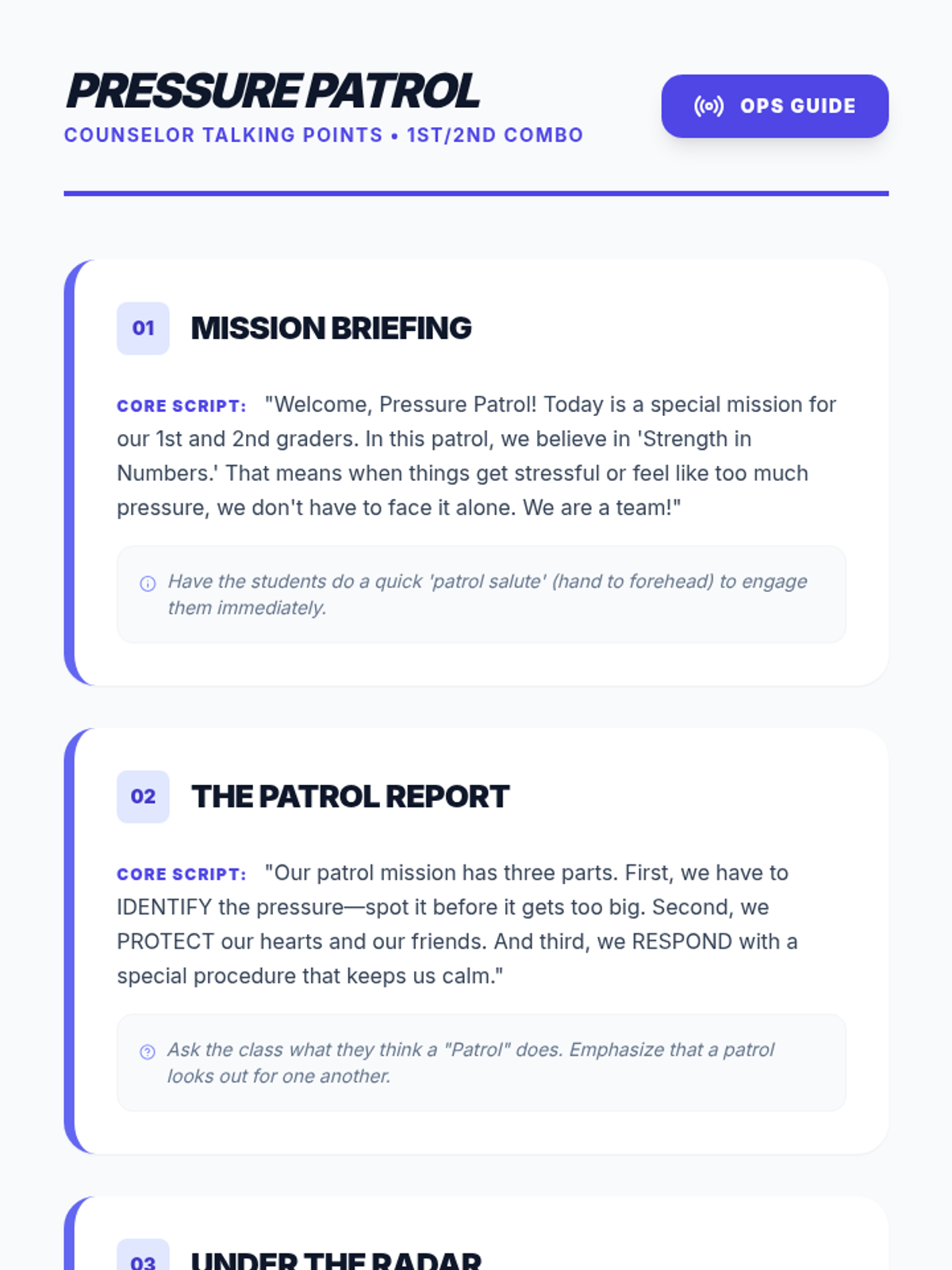
A detailed slide-by-slide facilitation guide for the 1st/2nd grade combo lesson 'Pressure Patrol'. Provides specific counselor scripts, interactive activity prompts, and pedagogical tips for each slide.
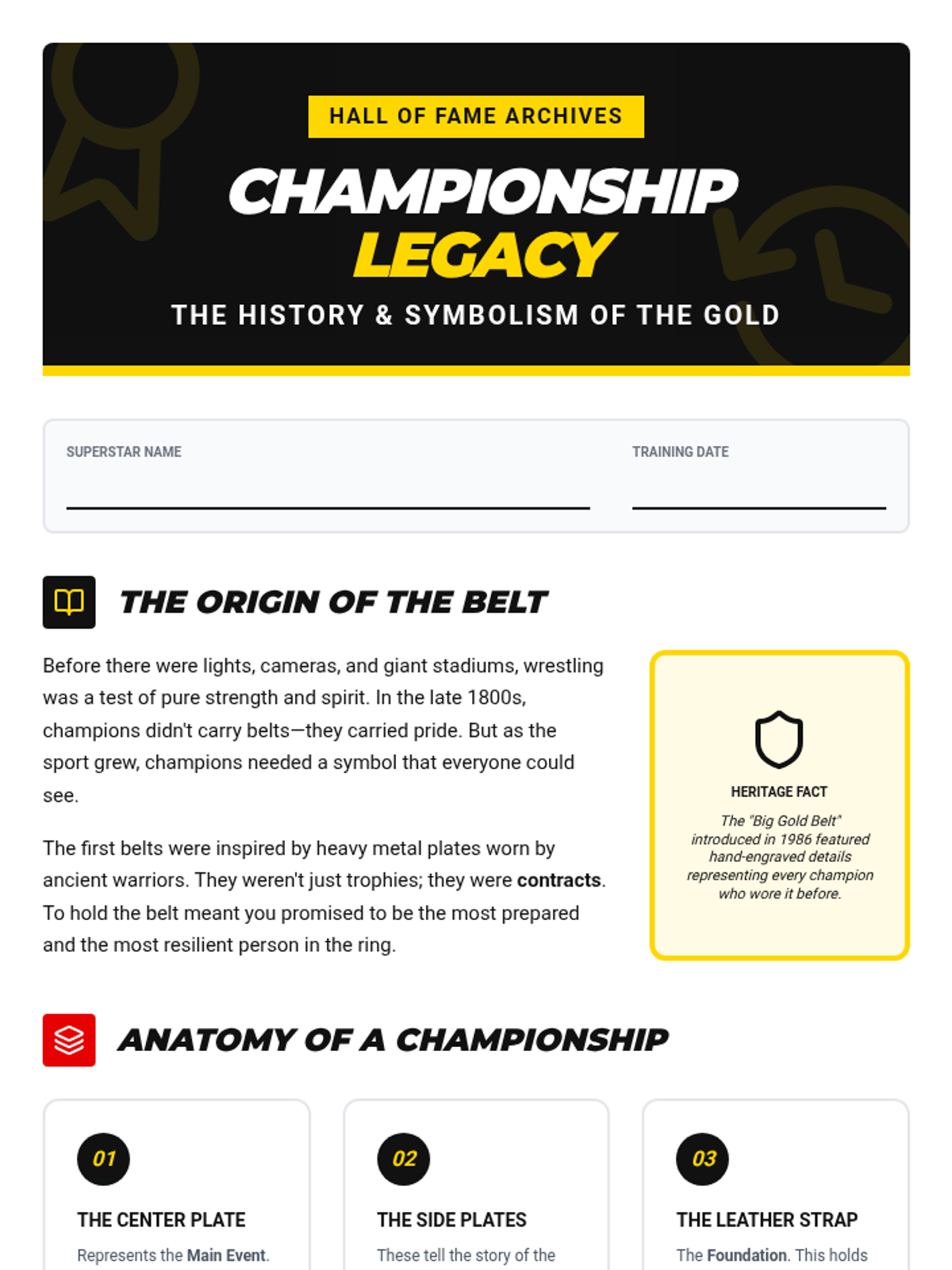
A student-facing reading and activity sheet exploring the history of wrestling championship belts, their symbolism, and how students can build their own academic legacy.
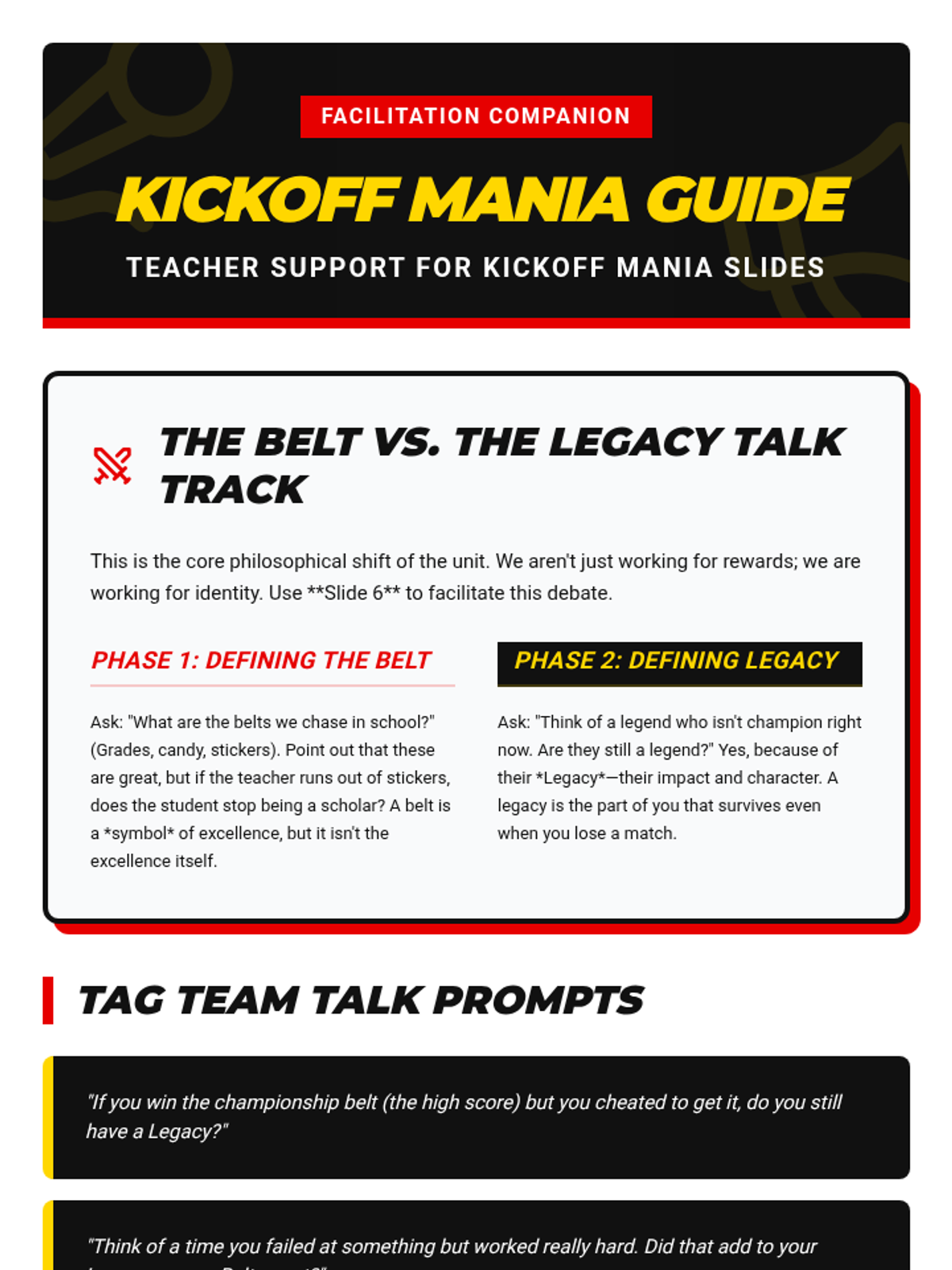
A detailed teacher facilitation companion for the Kickoff Mania slides, providing talk tracks for the 'Belt vs. Legacy' discussion, discussion prompts, and implementation steps for the Ubuntu mission.
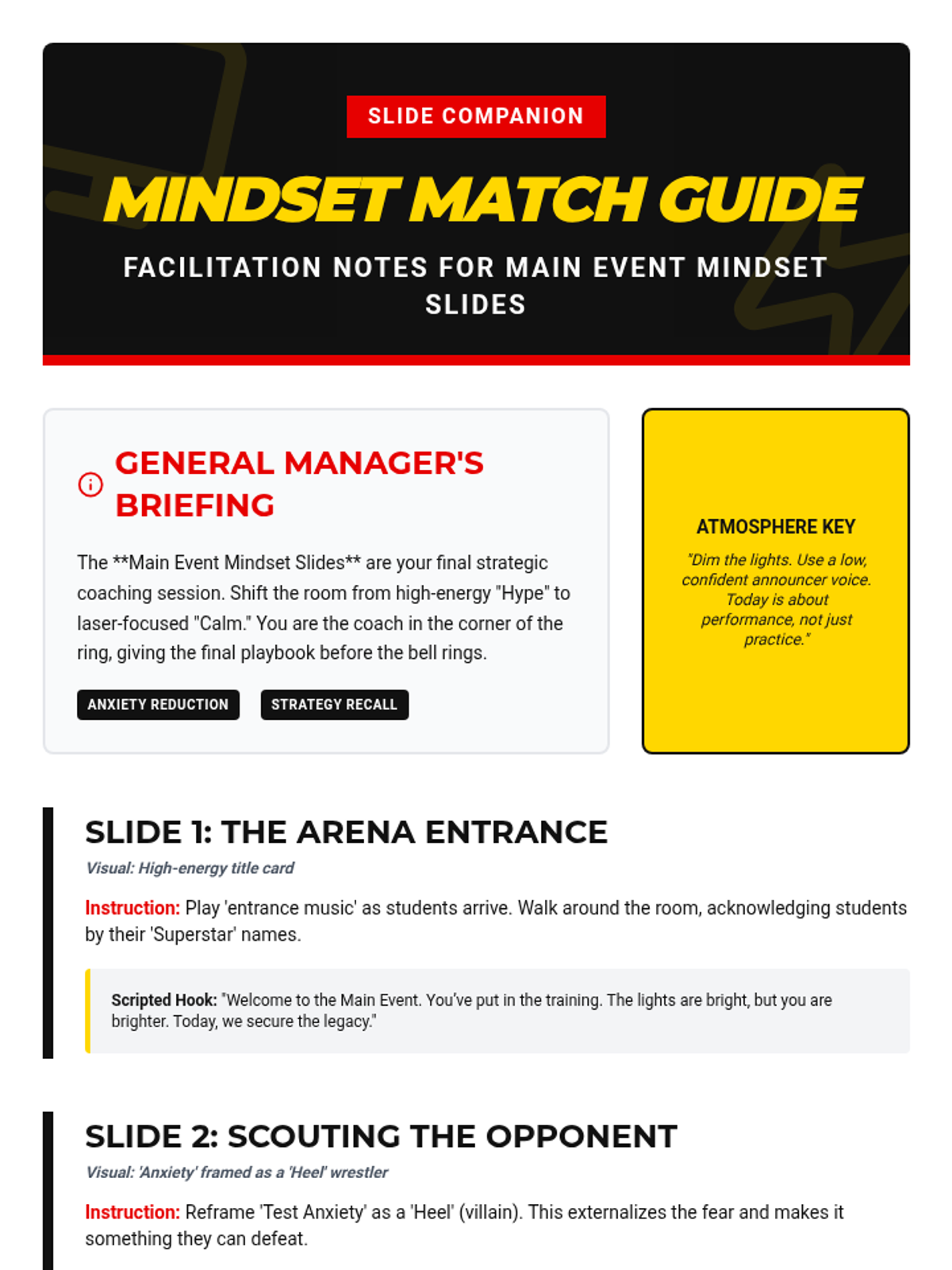
A teacher-facing companion guide for the 'Main Event Mindset' slides, providing slide-by-slide scripts, instructional instructions for managing test anxiety, and post-test decompression strategies.
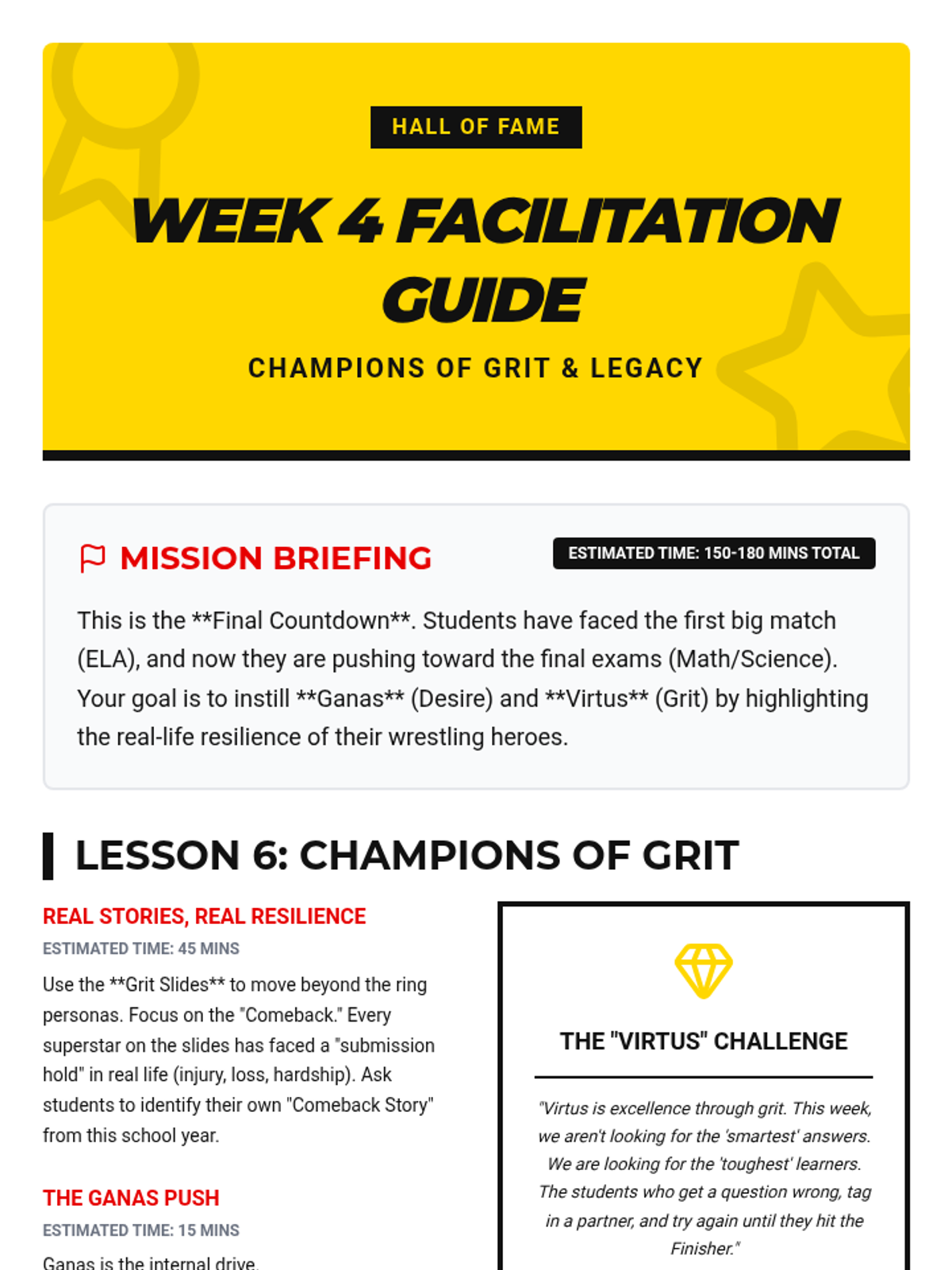
A detailed teacher facilitation guide for Week 4 of the 'Road to State Exam Mania' sequence, focusing on Ganas (drive) and Virtus (grit) for the final exam push and the 'Mania Gala' unit wrap-up.
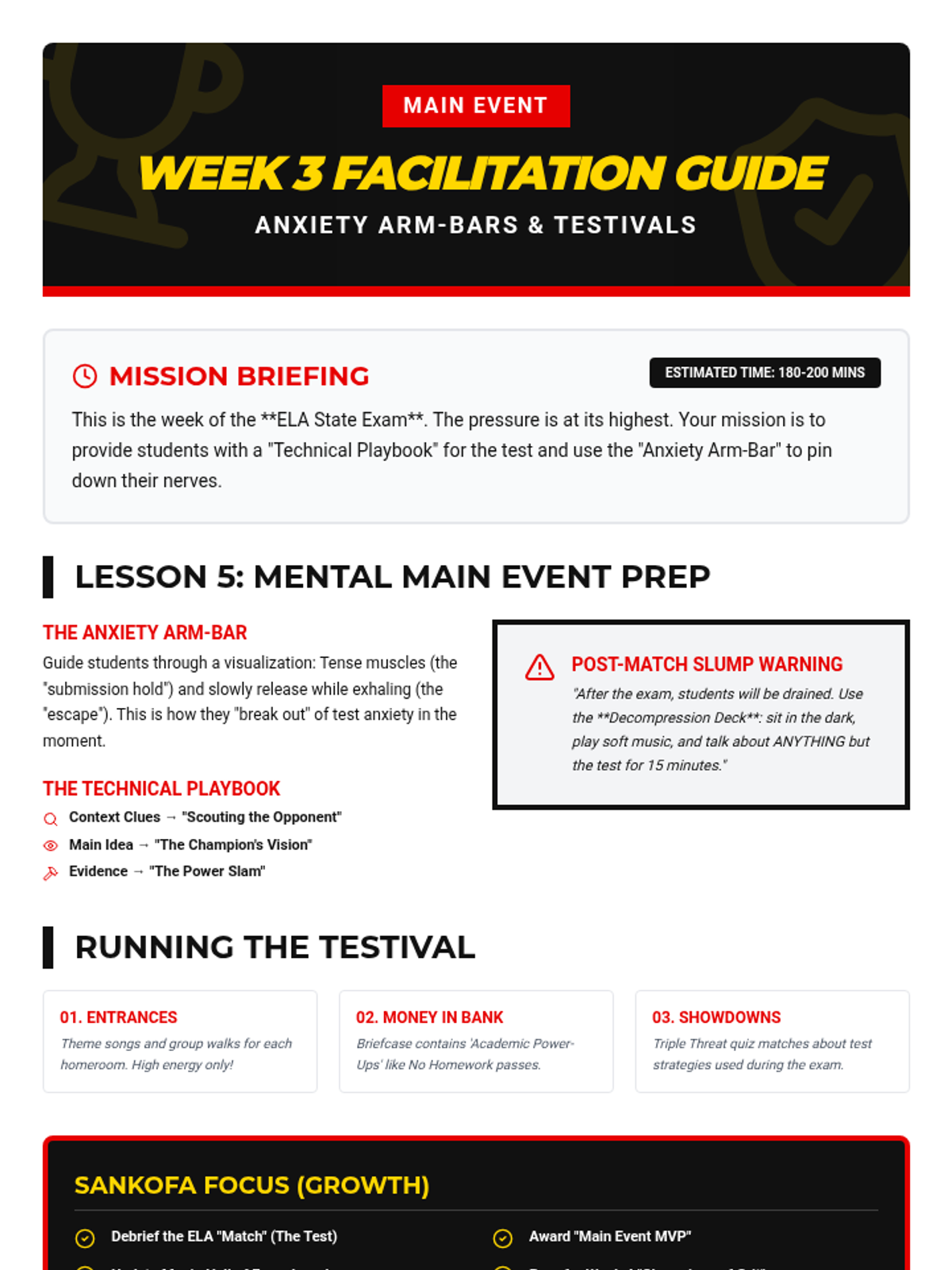
A detailed teacher facilitation guide for Week 3 of the 'Road to State Exam Mania' sequence, focusing on ELA state exam preparation and the 'Testival' pep rally.
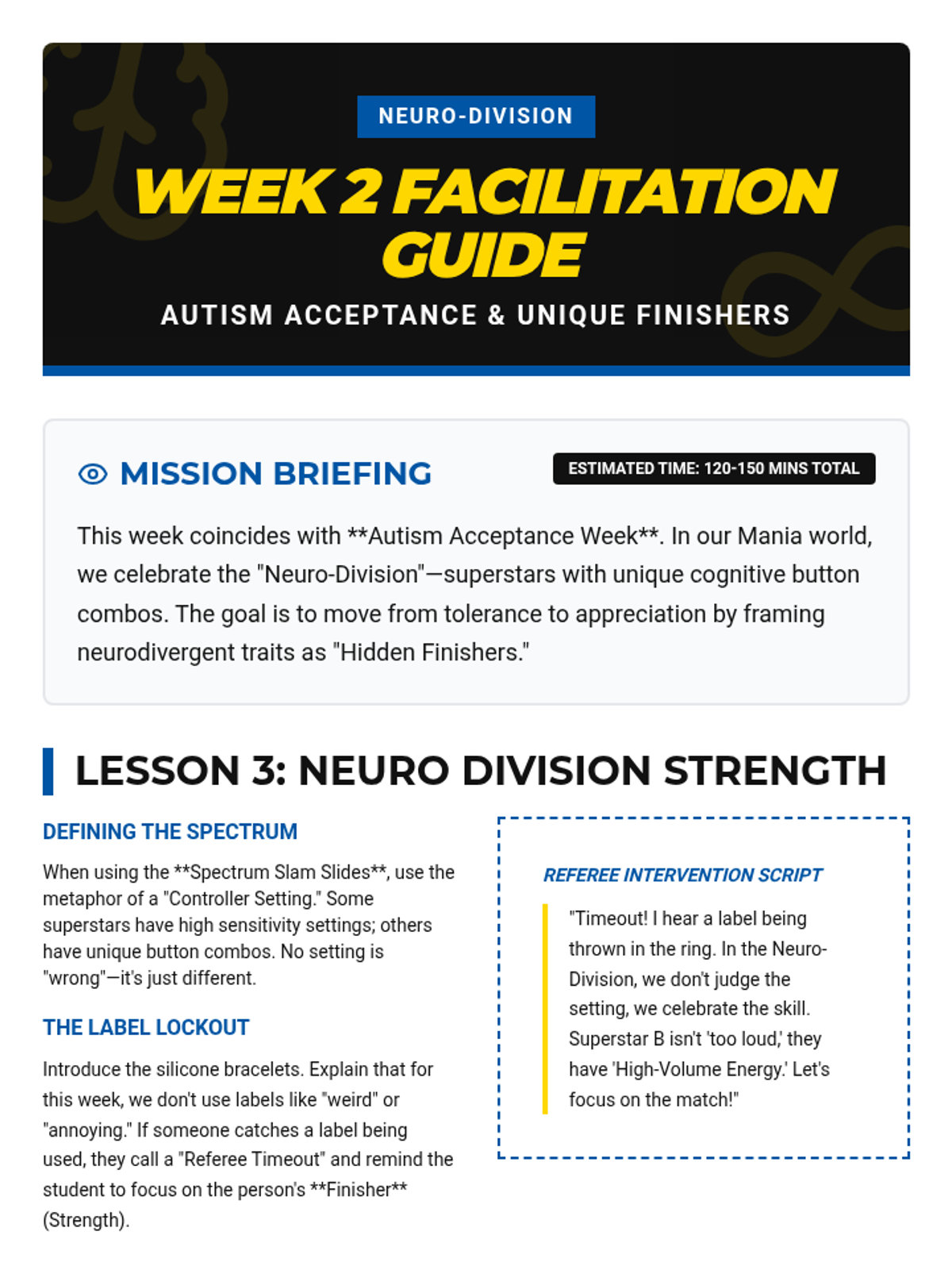
A detailed teacher facilitation guide for Week 2 of the 'Road to State Exam Mania' sequence, focusing on Autism Acceptance Week and celebrating neurodiversity.
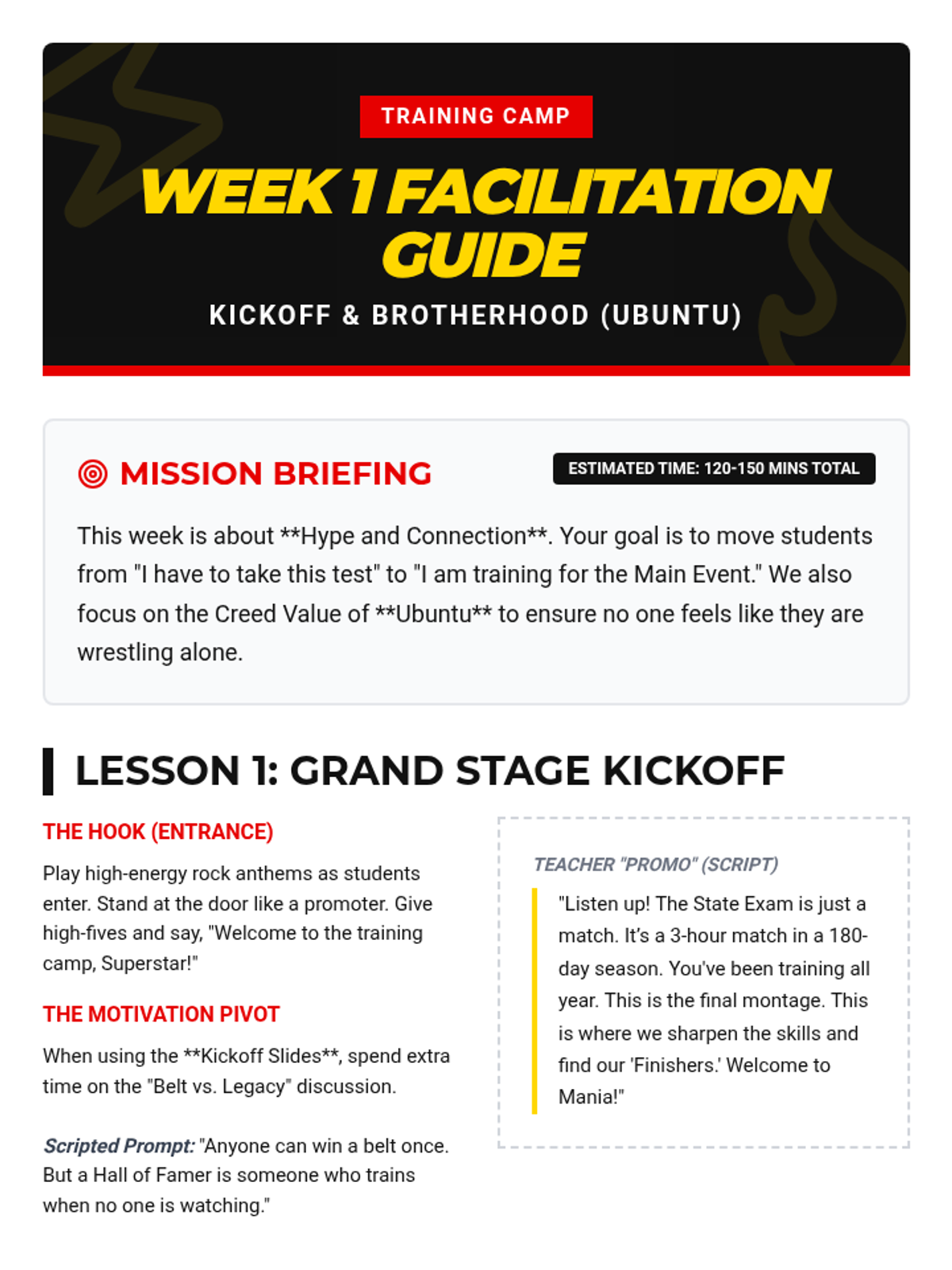
A detailed teacher facilitation guide for Week 1 of the 'Road to State Exam Mania' sequence, focusing on kickoff motivation and the Creed Value of Ubuntu.
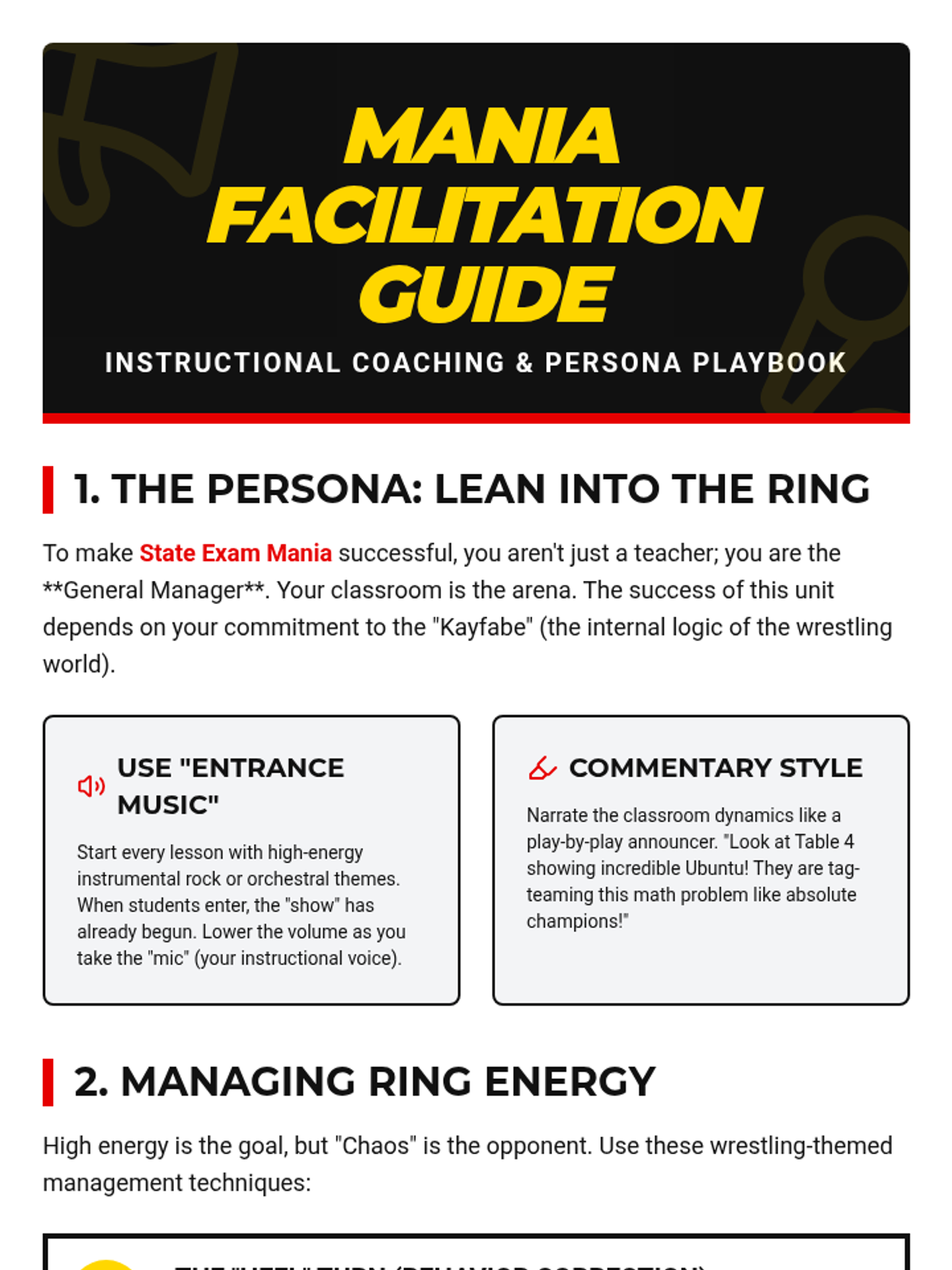
A comprehensive teacher facilitation guide for the 'Road to State Exam Mania' sequence, featuring persona coaching, behavior management strategies (using wrestling metaphors), lesson-specific tips, and a bank of discussion questions.
A visual presentation for the 4th-to-5th grade transition lesson. Features high-impact slides on reflection, school values, and a group brainstorm for "The Navigation Kit." Revised for better balance and visibility.
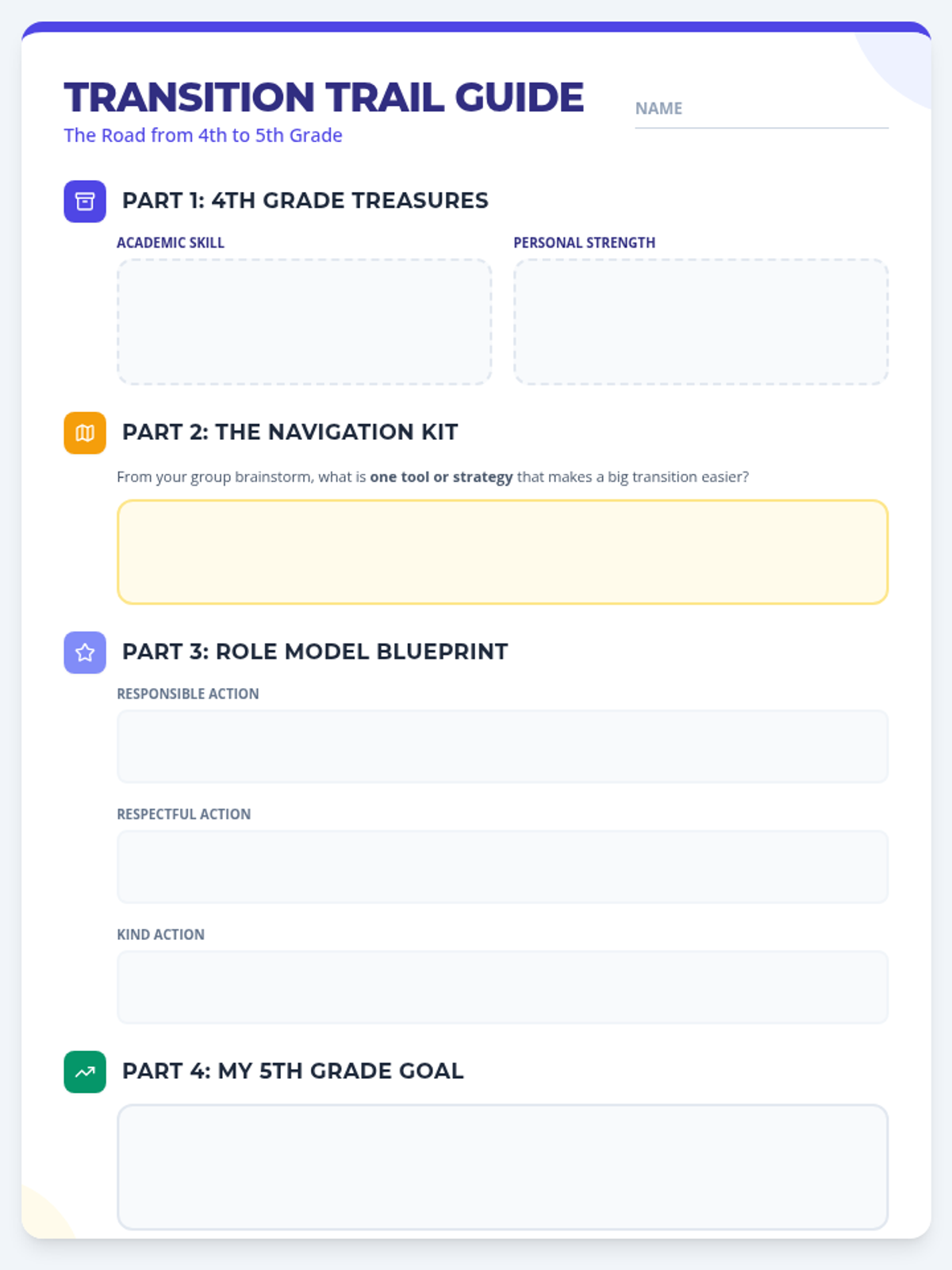
A reflection and goal-setting worksheet for 4th graders. Includes sections for the Navigation Kit, school values, and academic goals. Revised for more writing space.
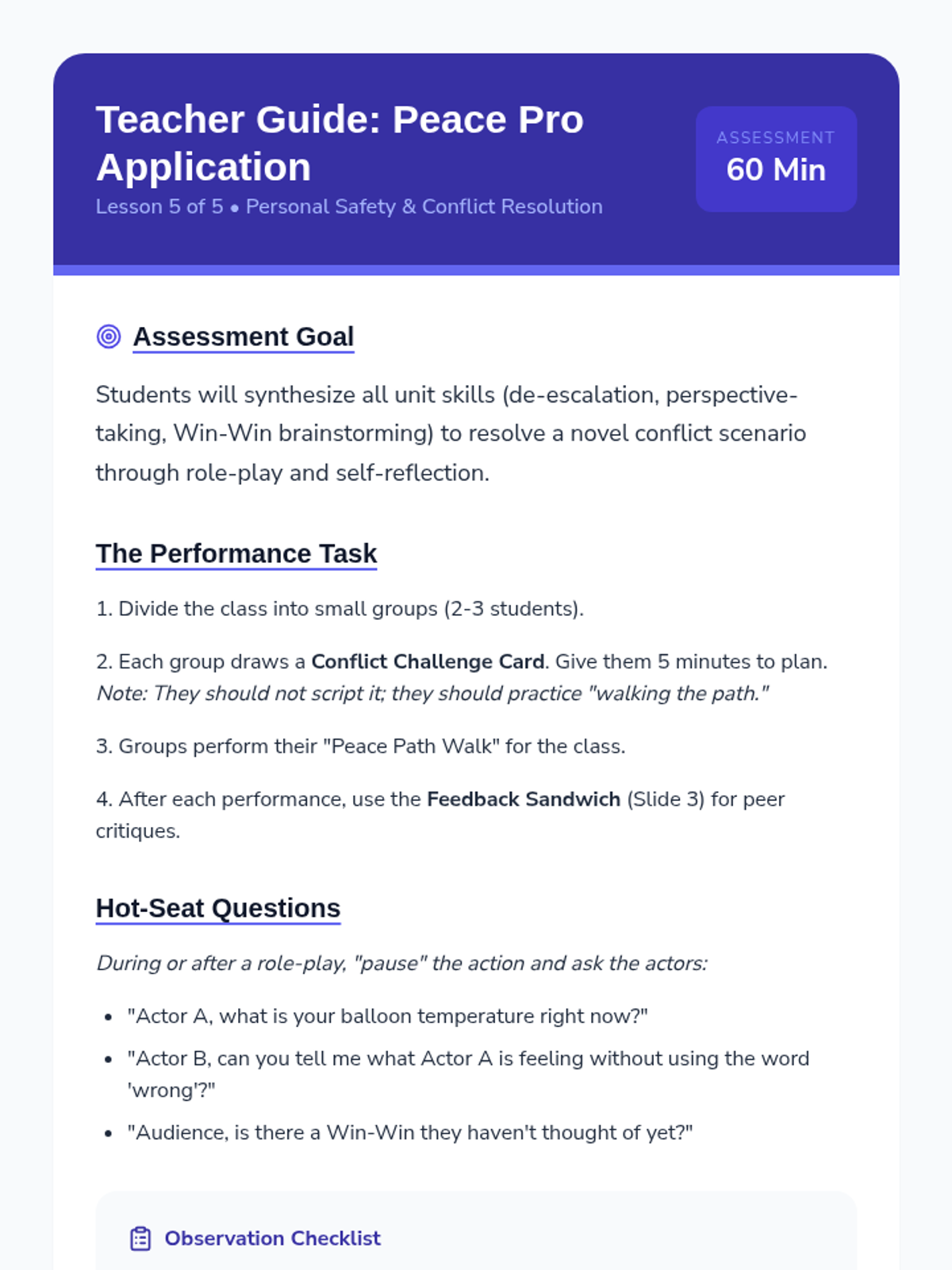
Final teacher facilitation guide for Lesson 5, focusing on assessing student performance during role-play and managing peer feedback sessions.
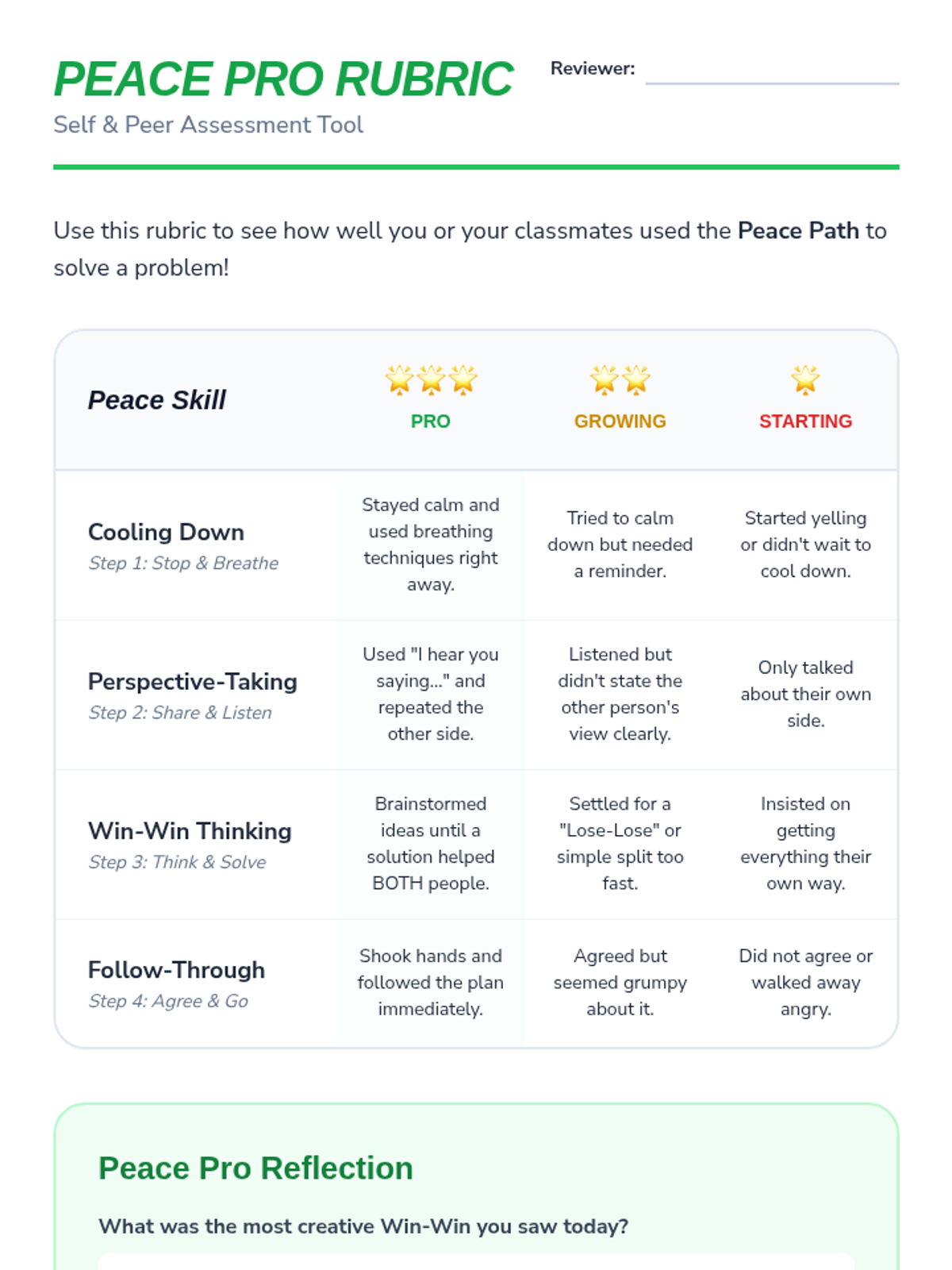
A student-friendly assessment rubric for the role-play activities, focusing on the four steps of the Peace Path and effective negotiation behaviors.
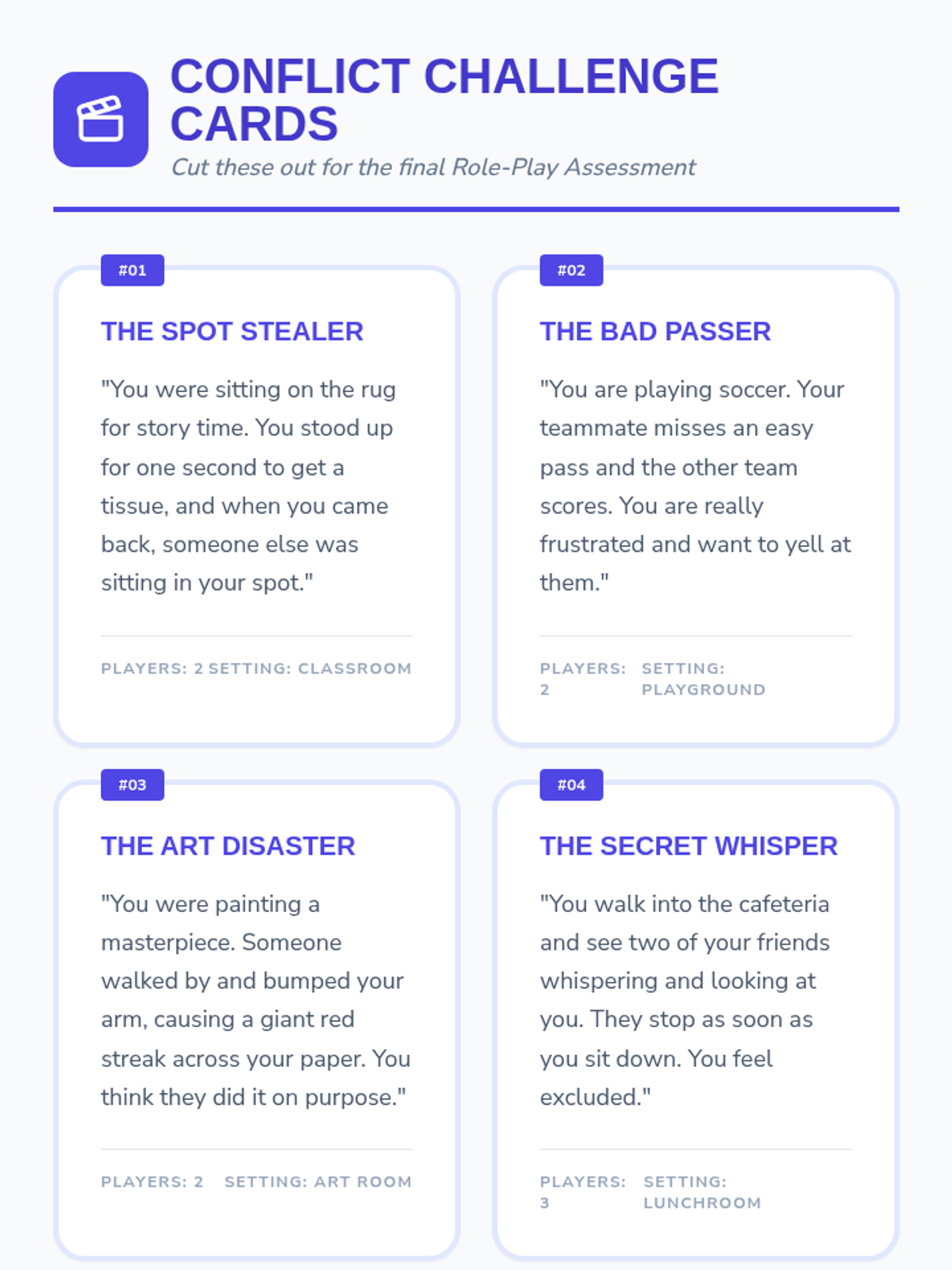
Scenarios for the final role-play assessment, covering common school-based conflicts like playground disputes and classroom property issues.
Visual aids for the final lesson, covering role-play etiquette, the 'Feedback Sandwich' method, and celebrating the completion of the conflict resolution sequence.
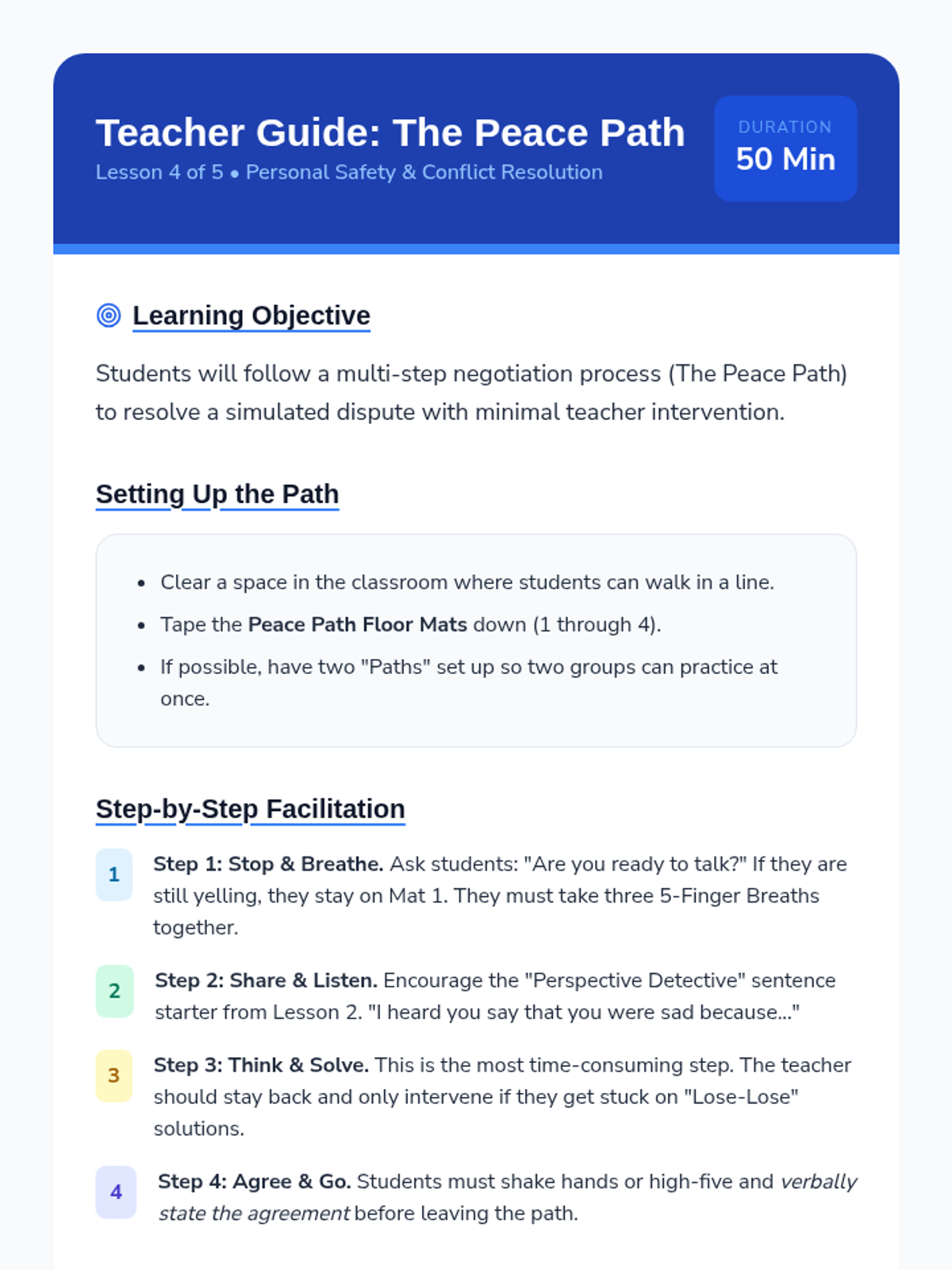
Facilitation guide for Lesson 4, detailing how to manage the 'Peace Path' simulation and use the floor mats effectively.
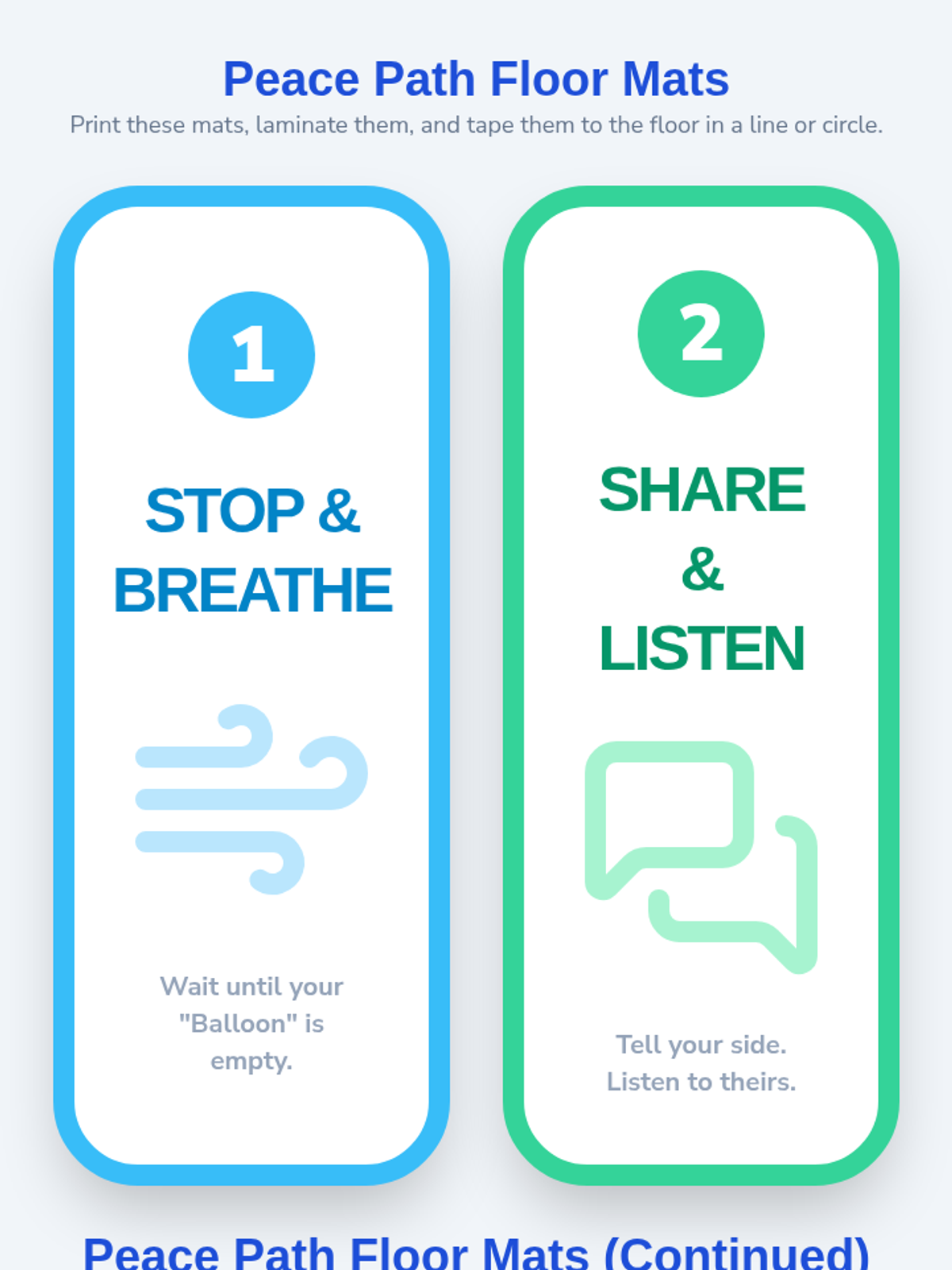
Large-format printable floor mats for the 'Peace Path' activity, allowing students to physically move through the conflict resolution steps.
Slide presentation for Lesson 4, introducing the 4-step 'Peace Path' model for conflict resolution: Stop & Breathe, Share & Listen, Think & Solve, and Agree & Go.
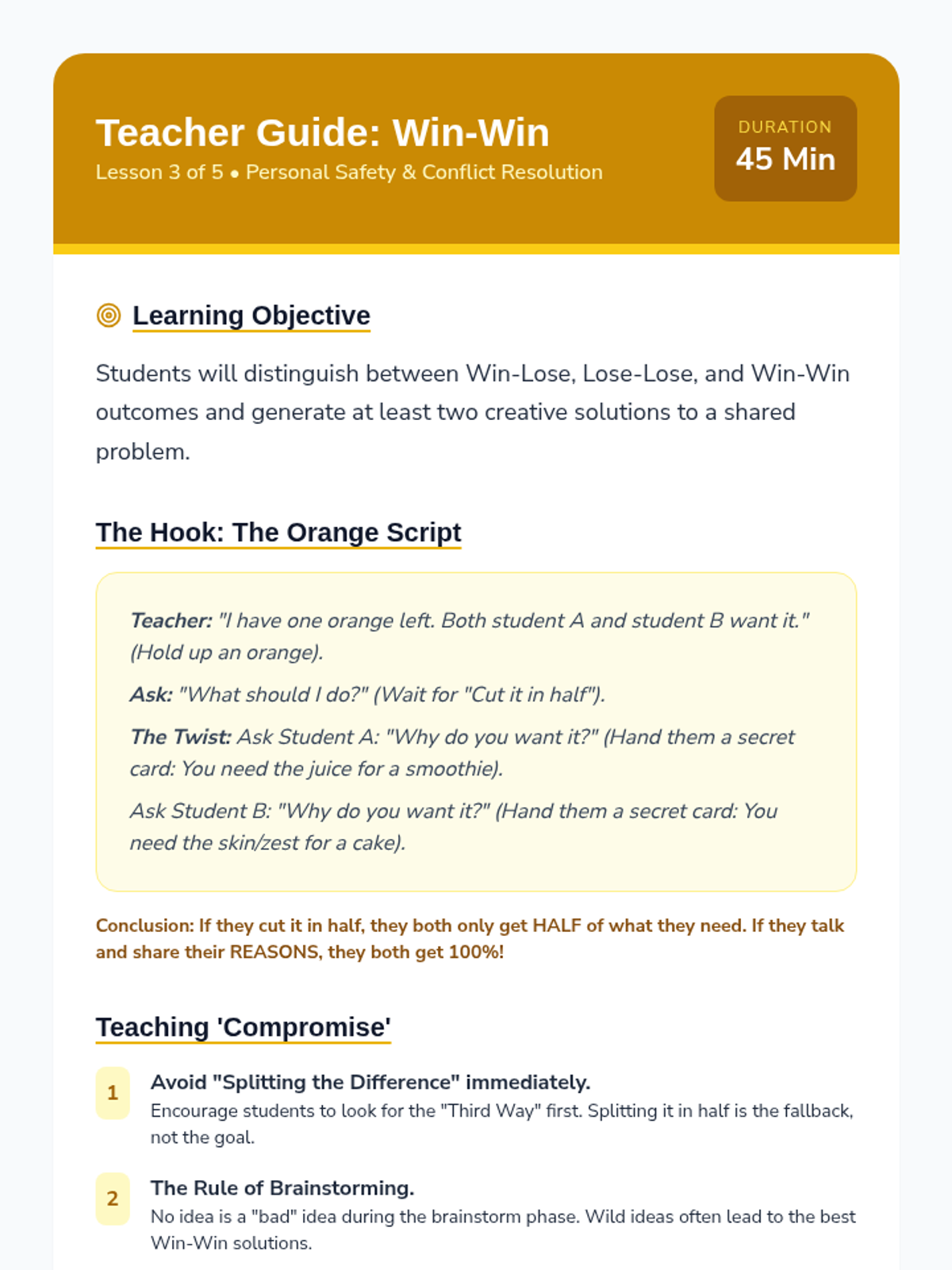
Facilitation guide for Lesson 3, featuring the 'Orange Problem' script and tips for teaching the art of brainstorming creative compromises.
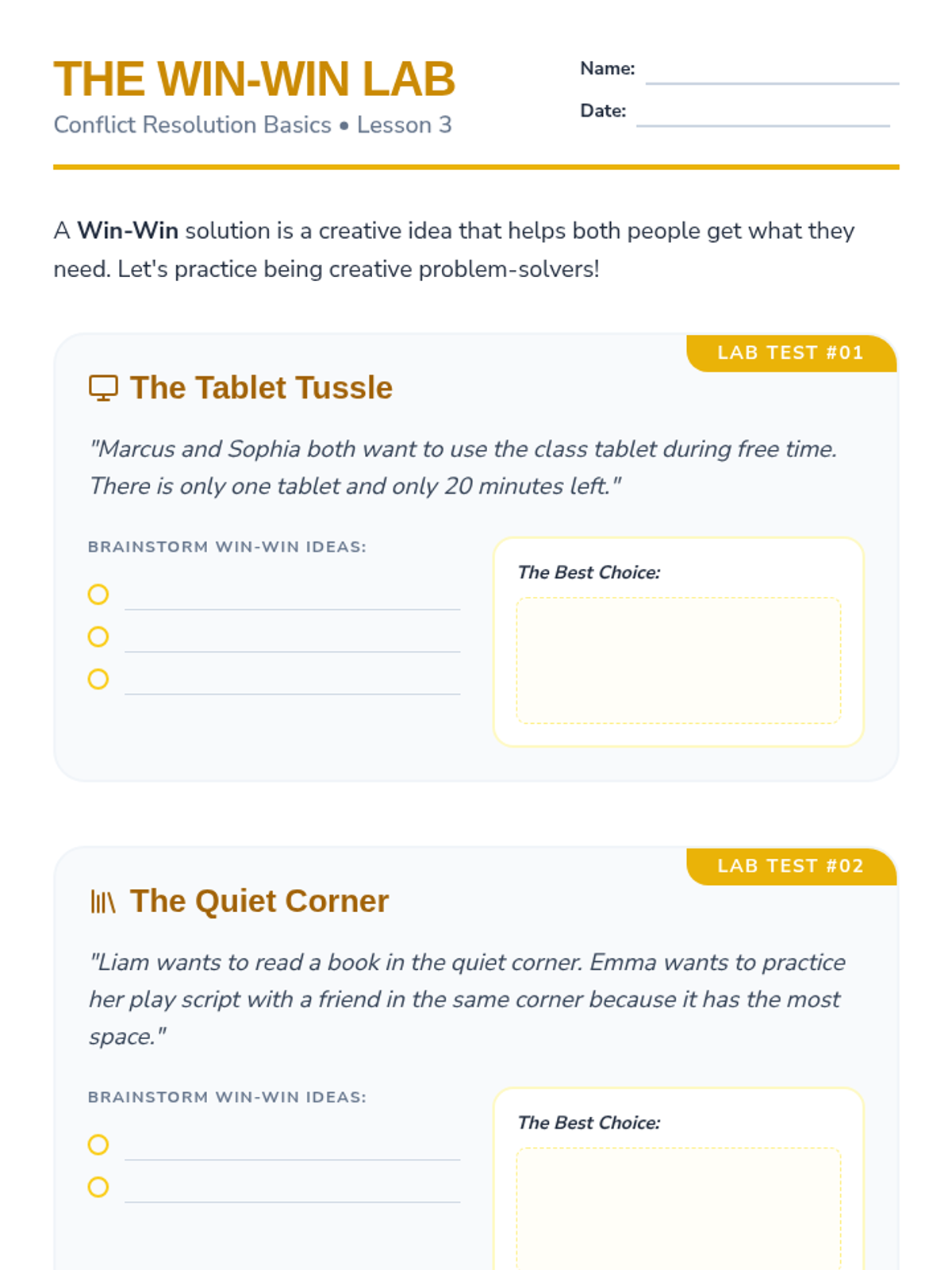
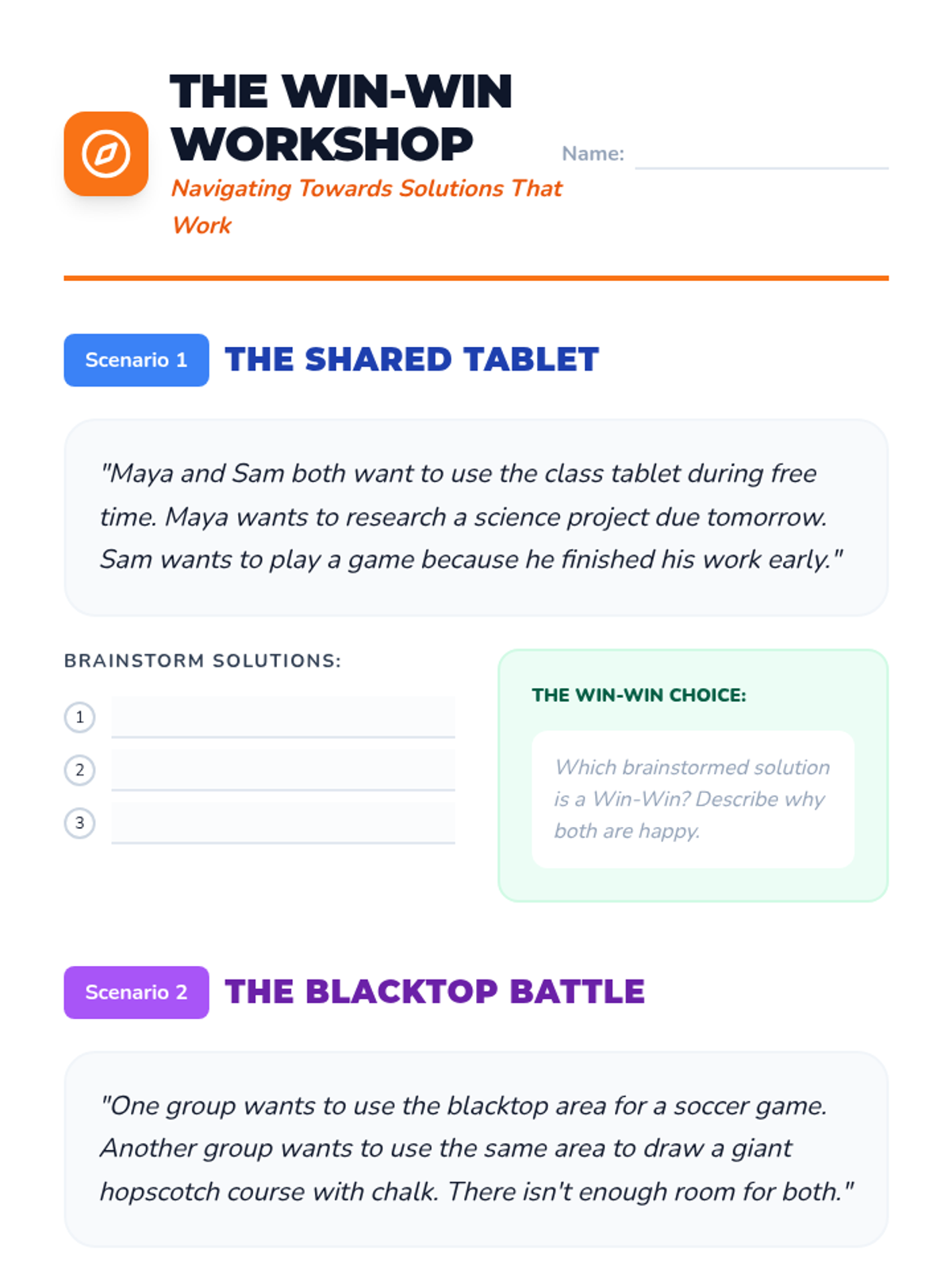
Brainstorming worksheet for Lesson 3, featuring two conflict scenarios where students must practice generating creative 'Win-Win' solutions.
Visual aids for Lesson 3, introducing the concepts of Win-Win, Win-Lose, and Lose-Lose outcomes, featuring the classic 'Orange Problem' case study.
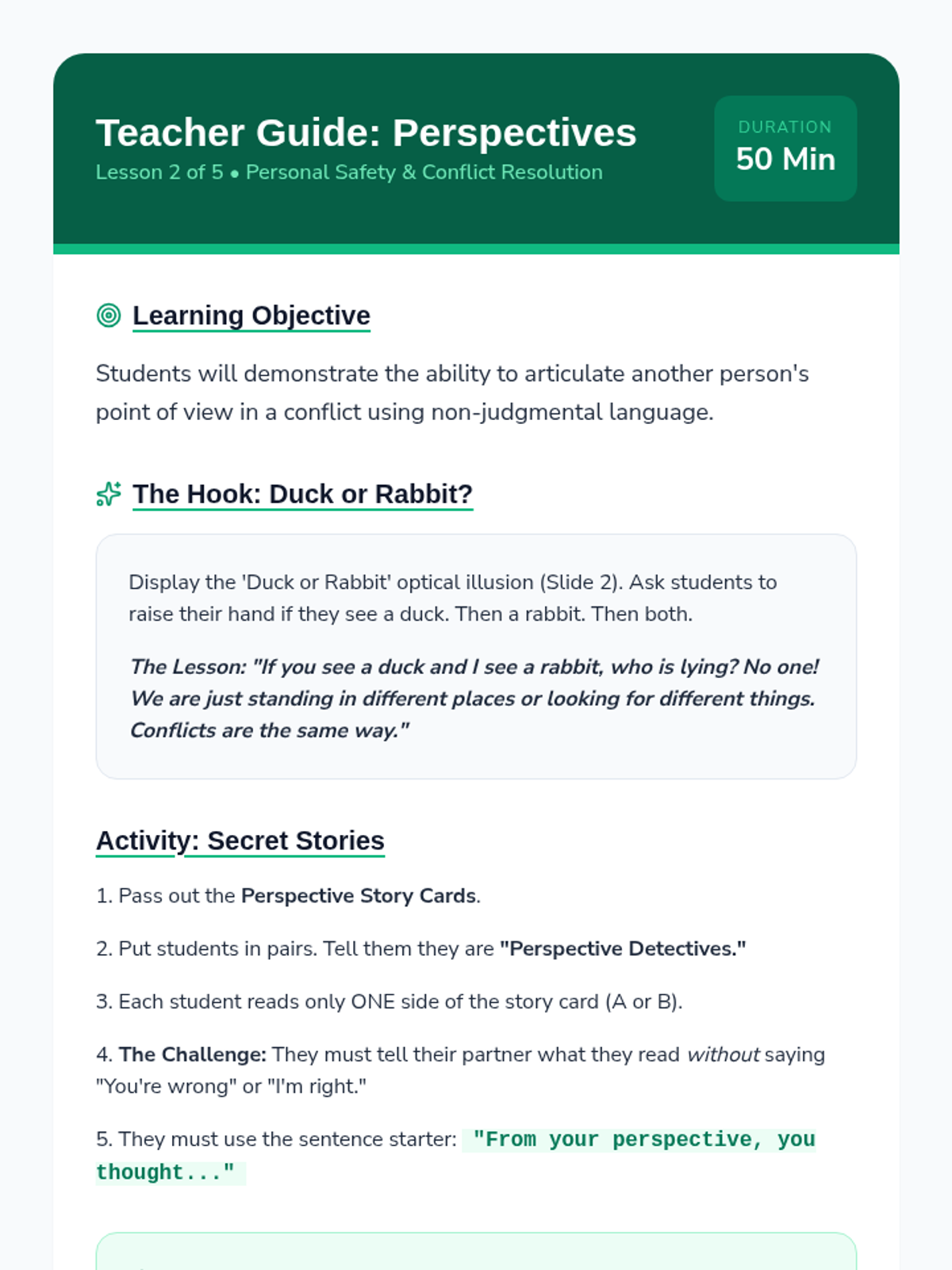
Facilitation guide for Lesson 2, emphasizing how to teach perspective-taking and lead the 'Perspective Detective' activity.
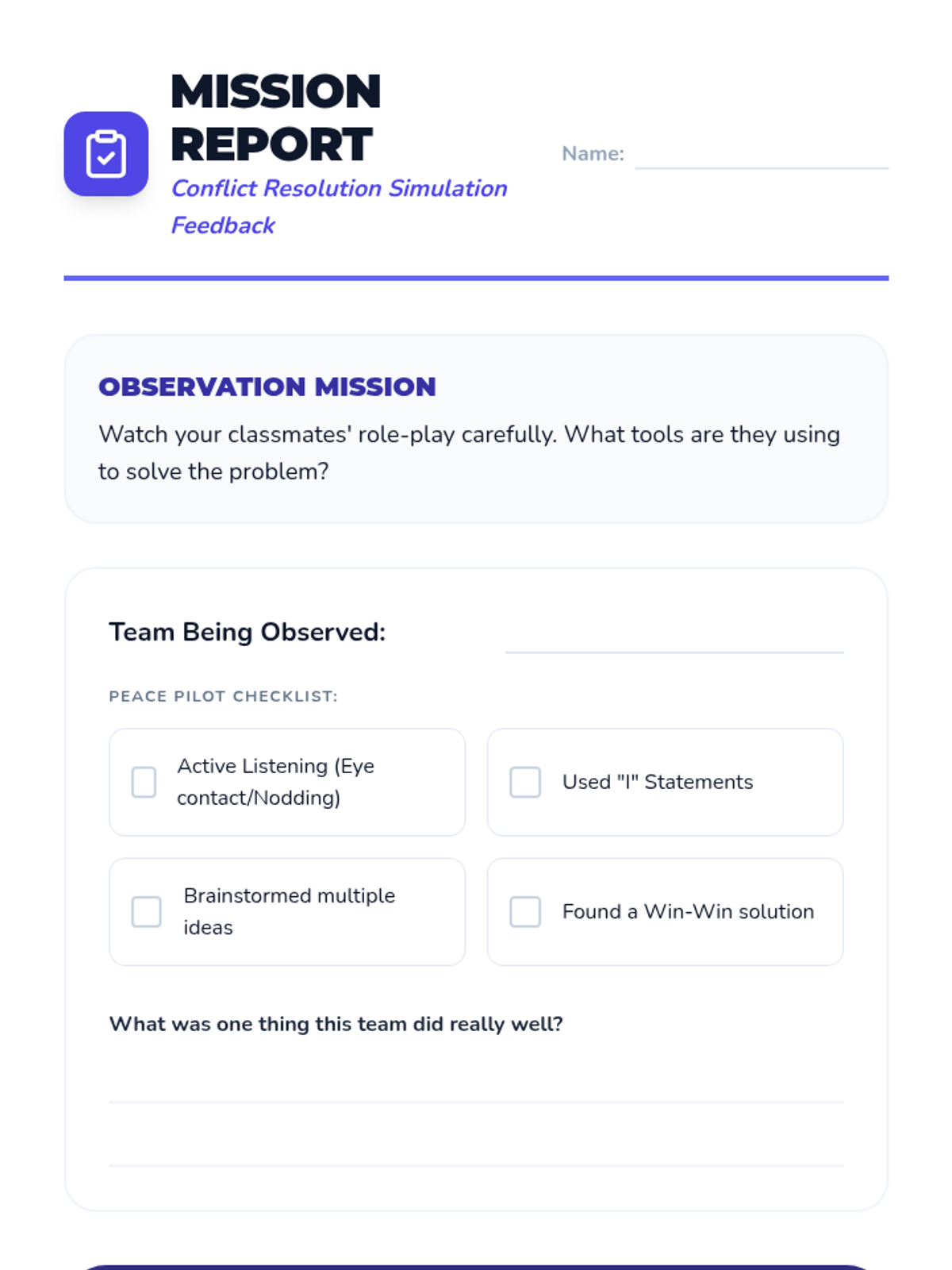
Observation and reflection worksheet for students to use during conflict resolution role-play simulations.
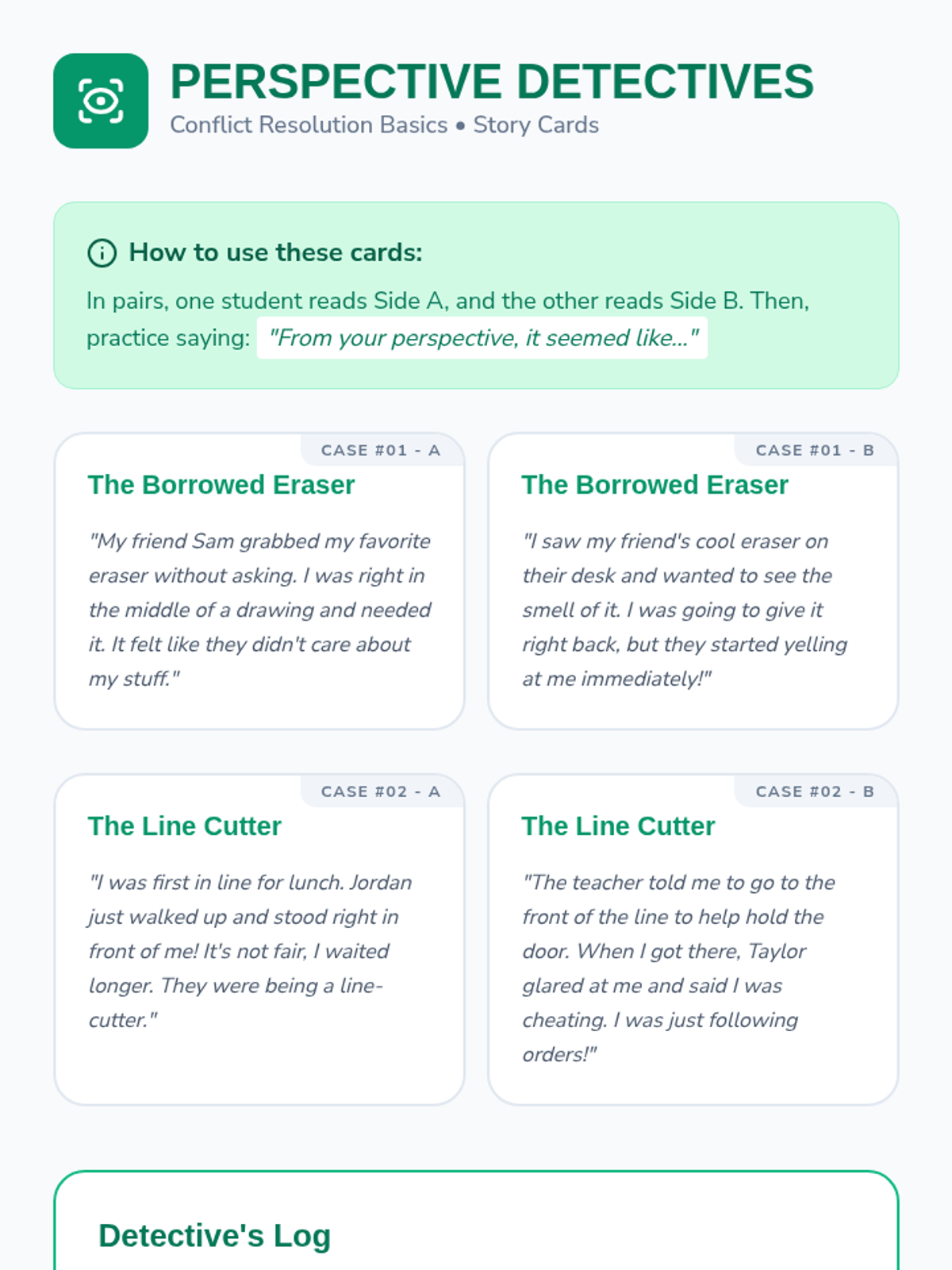
Scenario-based activity cards for Lesson 2, designed for pair work where students read different sides of a conflict to practice perspective-taking.
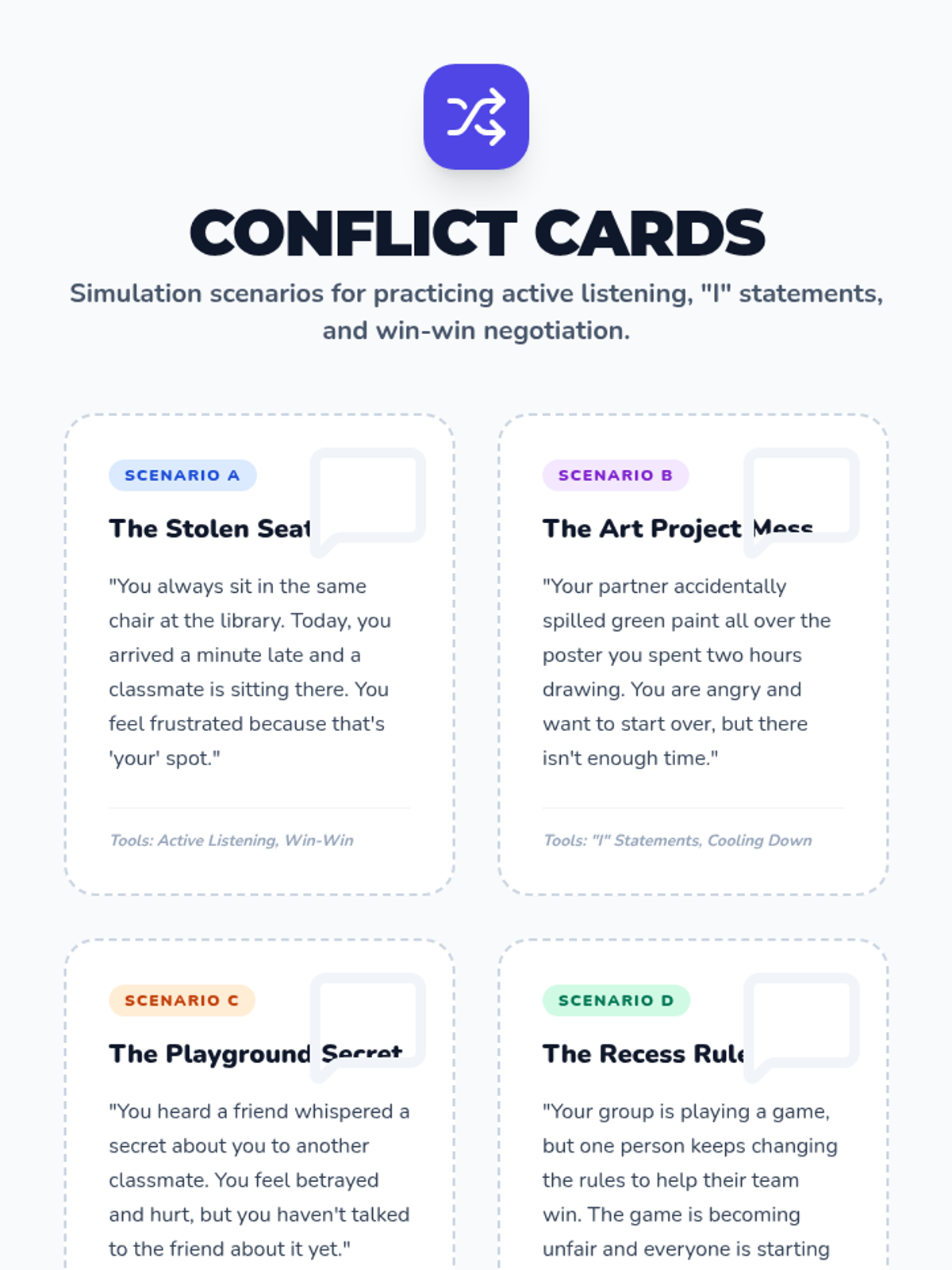
Role-play scenario cards for practicing conflict resolution skills in 4th-grade peer situations.
Visual aids for Lesson 2, exploring perspective-taking through optical illusions and dual-narrative scenarios.
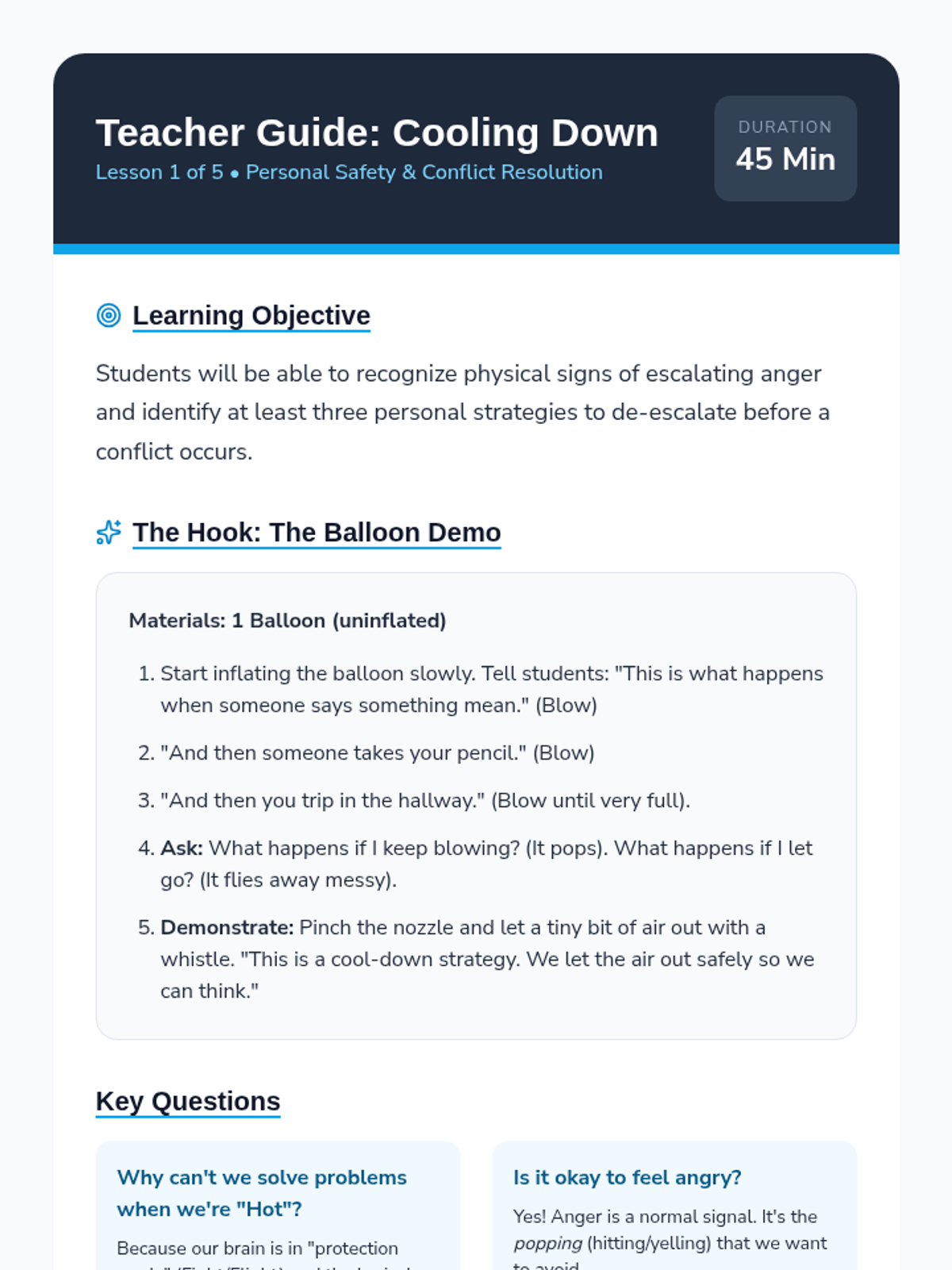
Facilitation guide for Lesson 1, including the balloon demonstration instructions, key discussion questions, and implementation tips.
Scenario analysis worksheet where students brainstorm multiple solutions to common peer conflicts and identify "win-win" outcomes.
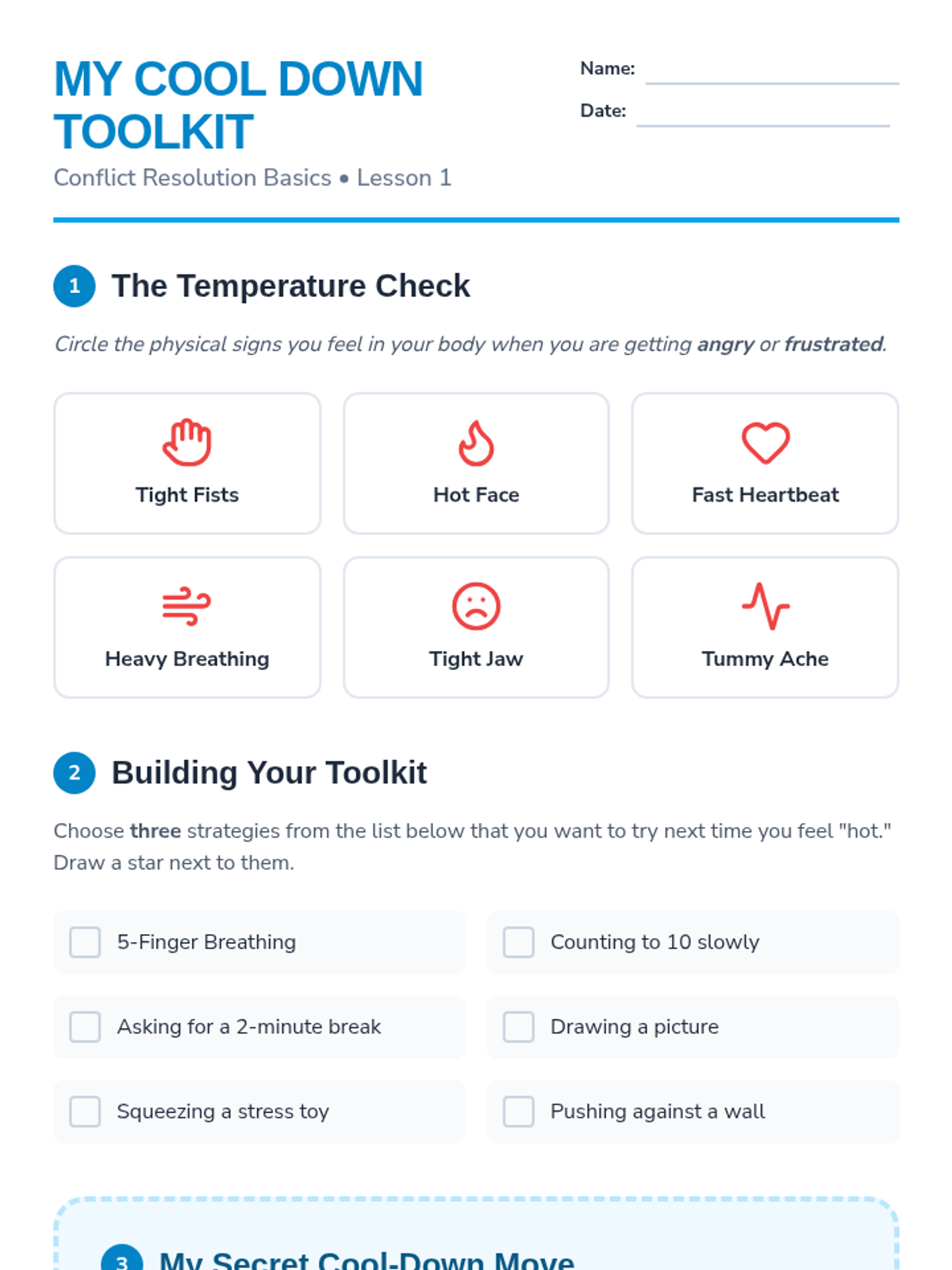
A personal reflection worksheet for students to identify their physical anger triggers and select de-escalation strategies for their toolkit.
Visual presentation for 4th-grade students on negotiating win-win solutions, using the orange problem as a core metaphor.
Visual aids for Lesson 1, introducing the balloon analogy for anger, physical signs of high 'emotional temperature', and de-escalation strategies.
A commemorative award for students who have completed the Bridge Builders sequence, celebrating their advocacy and communication skills.
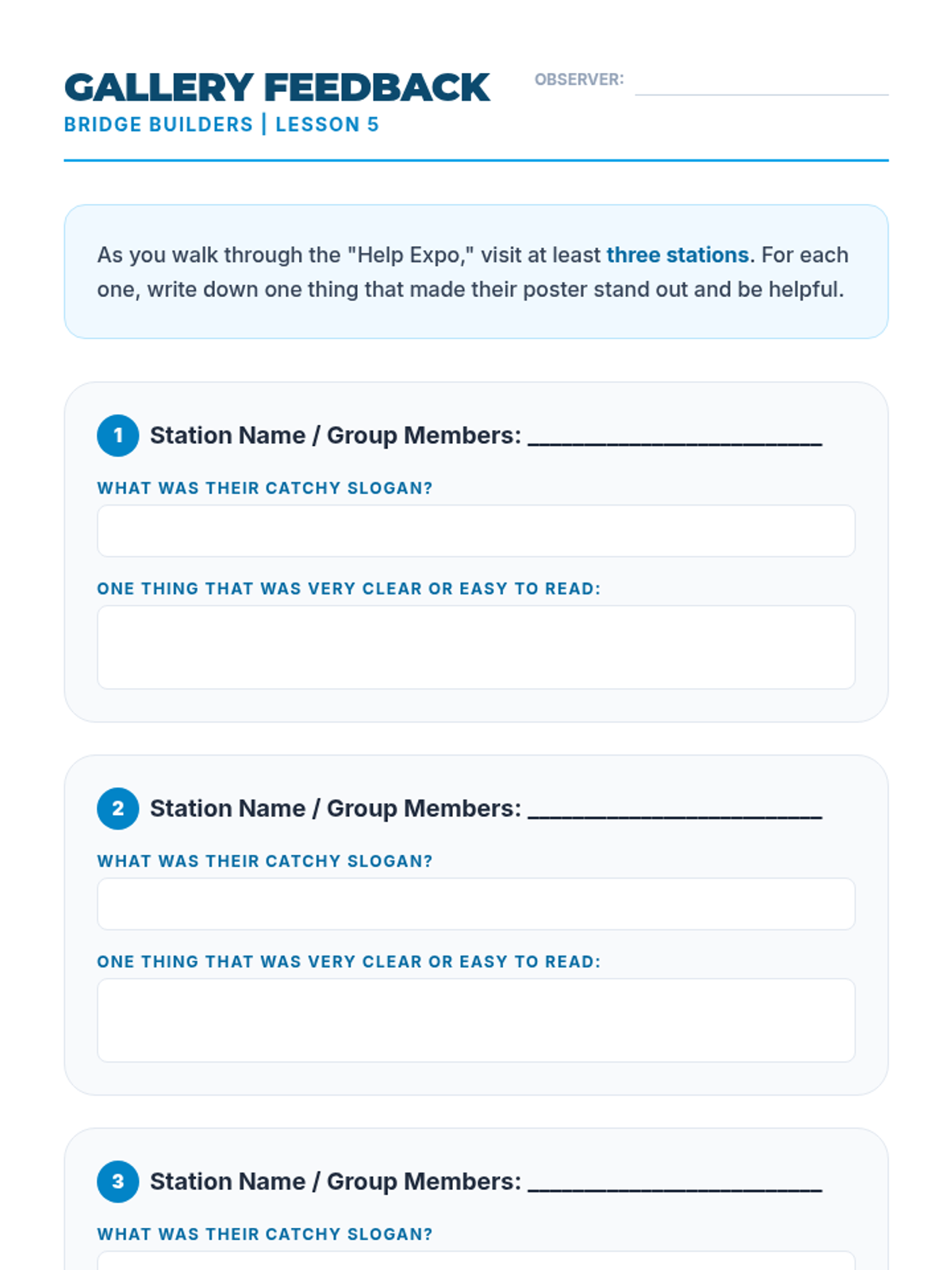
Peer feedback worksheet for the gallery walk in Lesson 5, helping students reflect on their classmates' advocacy projects.
Slides for Lesson 5, teaching presentation tips and station rules for the "Help Expo" gallery walk.
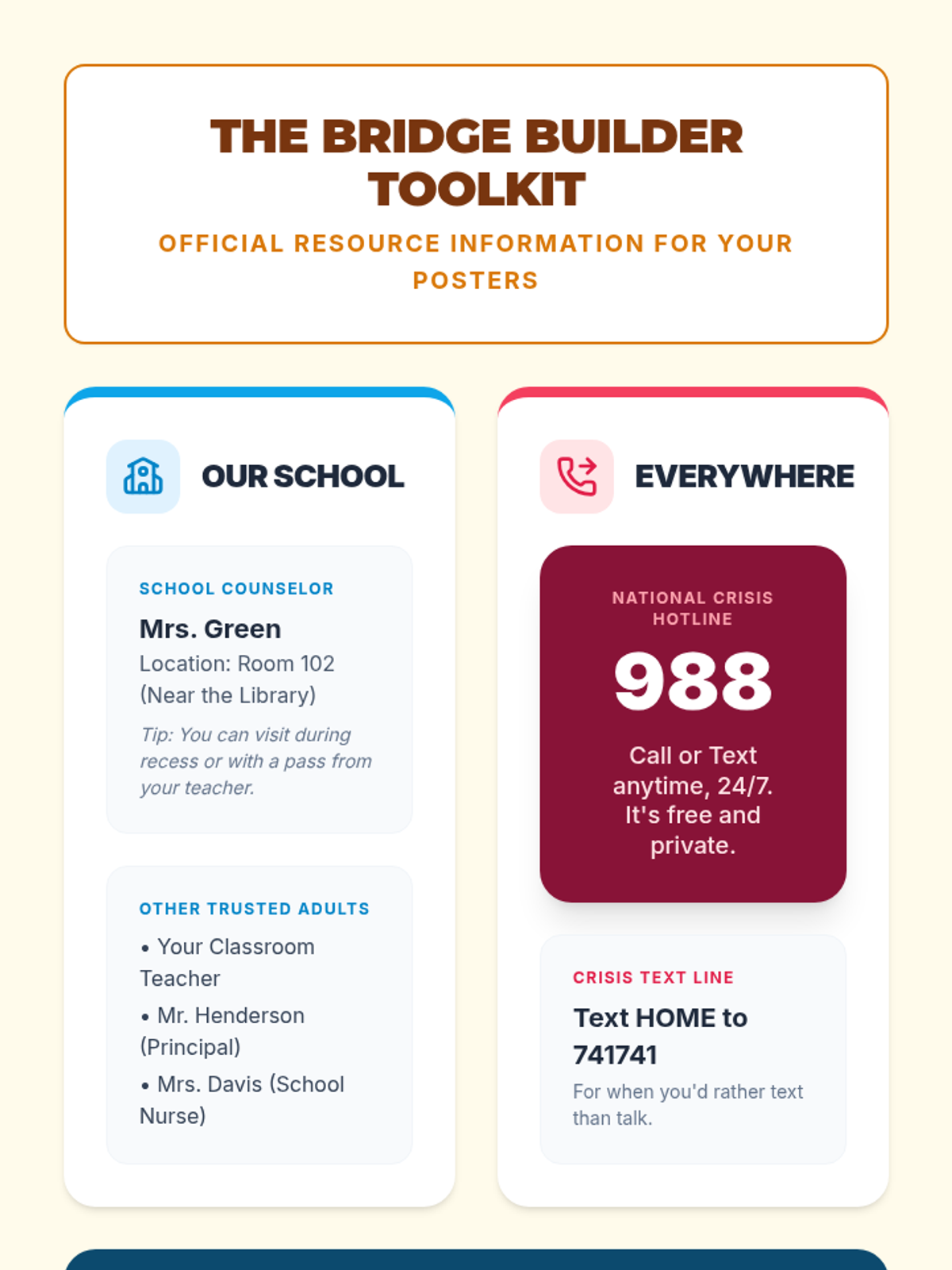
Reference sheet for Lesson 4, providing school and national mental health resource information for students to include on their advocacy posters.
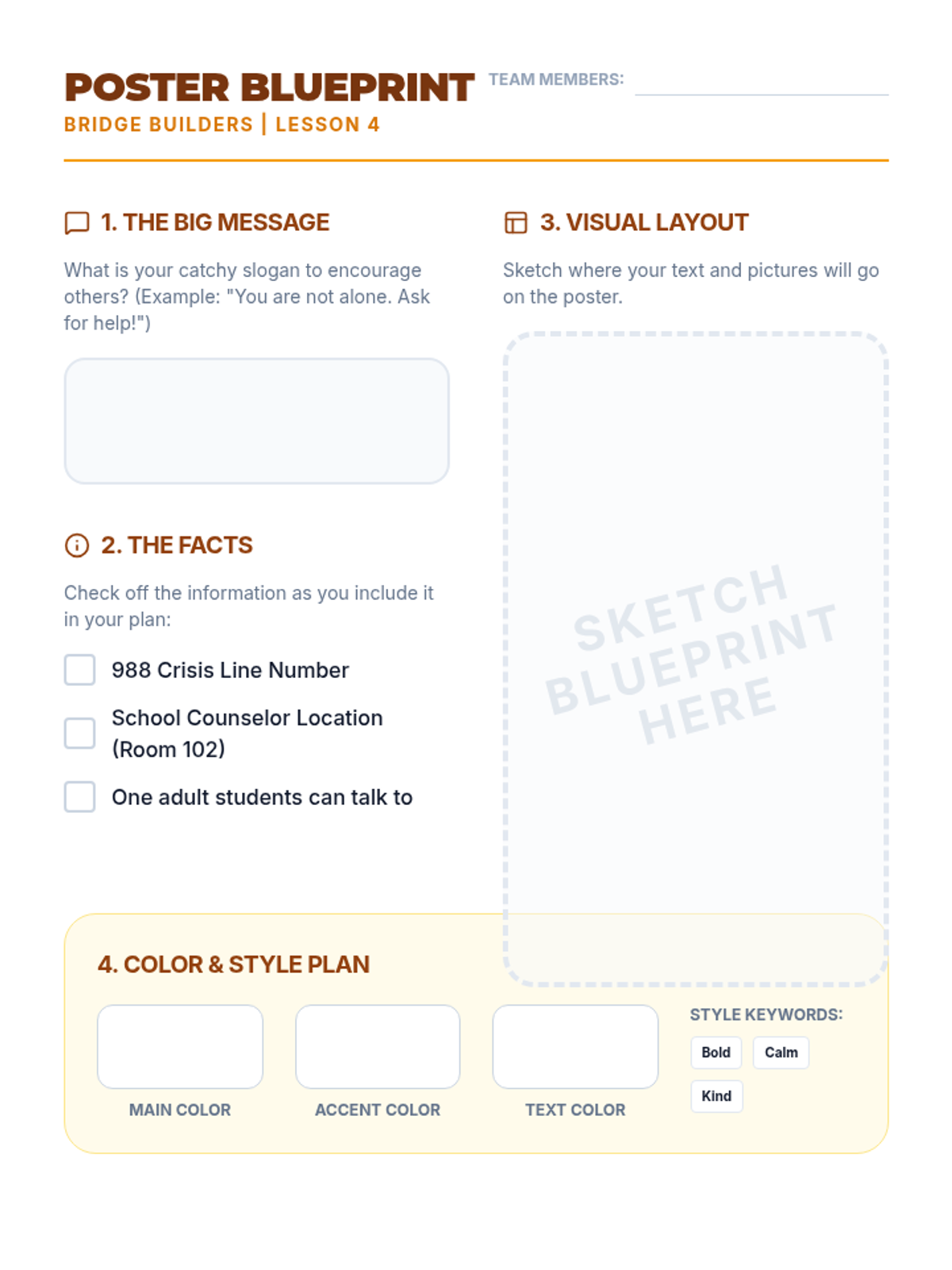
Planning document for Lesson 4, helping student teams brainstorm and sketch their advocacy posters.
Slides for Lesson 4, teaching poster design principles and content requirements for mental health advocacy.
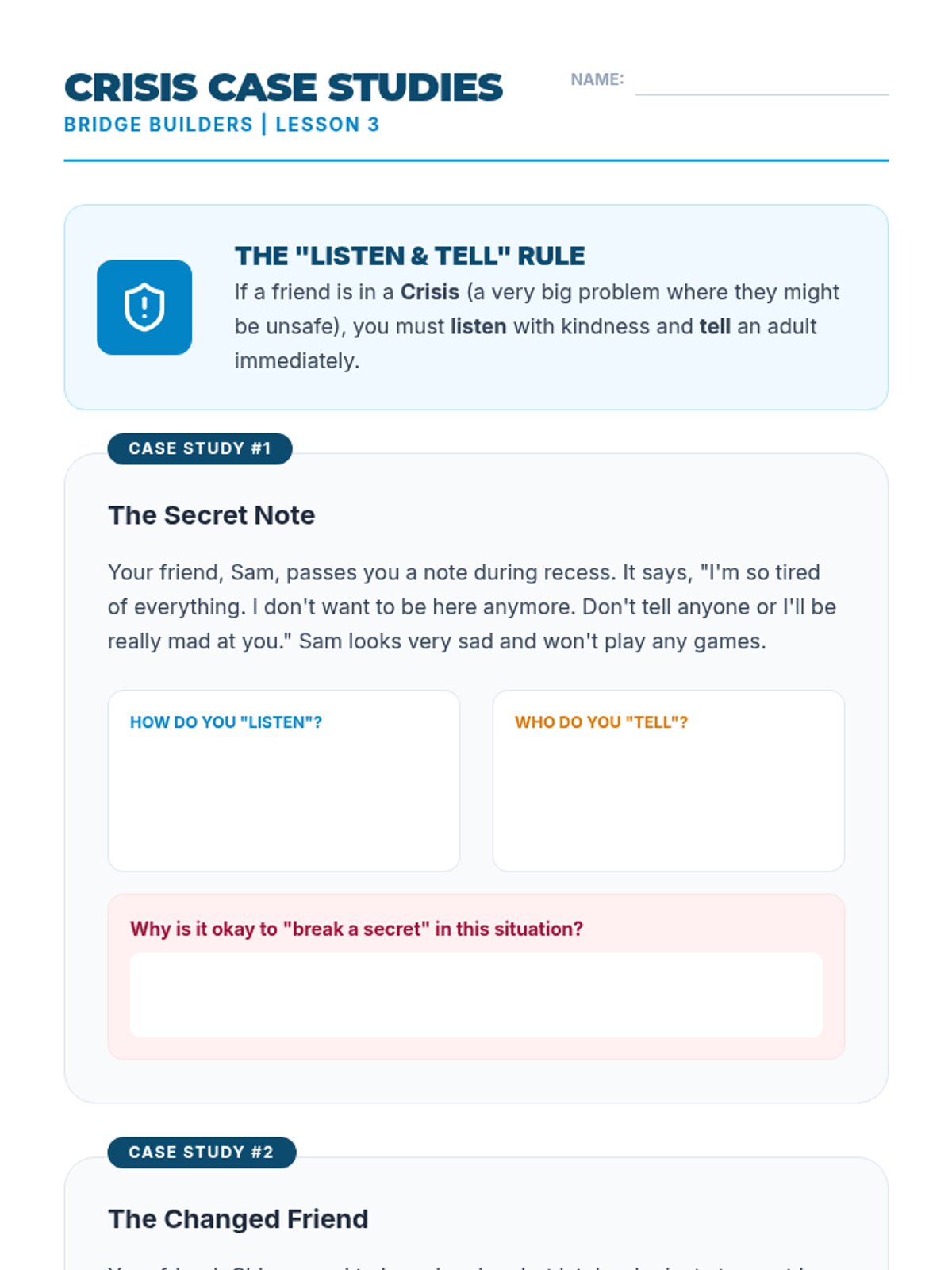
Worksheet for Lesson 3, using case studies to practice the 'Listen and Tell' rule for peers in mental health situations.
Slides for Lesson 3, teaching the 'Listen and Tell' rule for supporting friends in mental health situations.
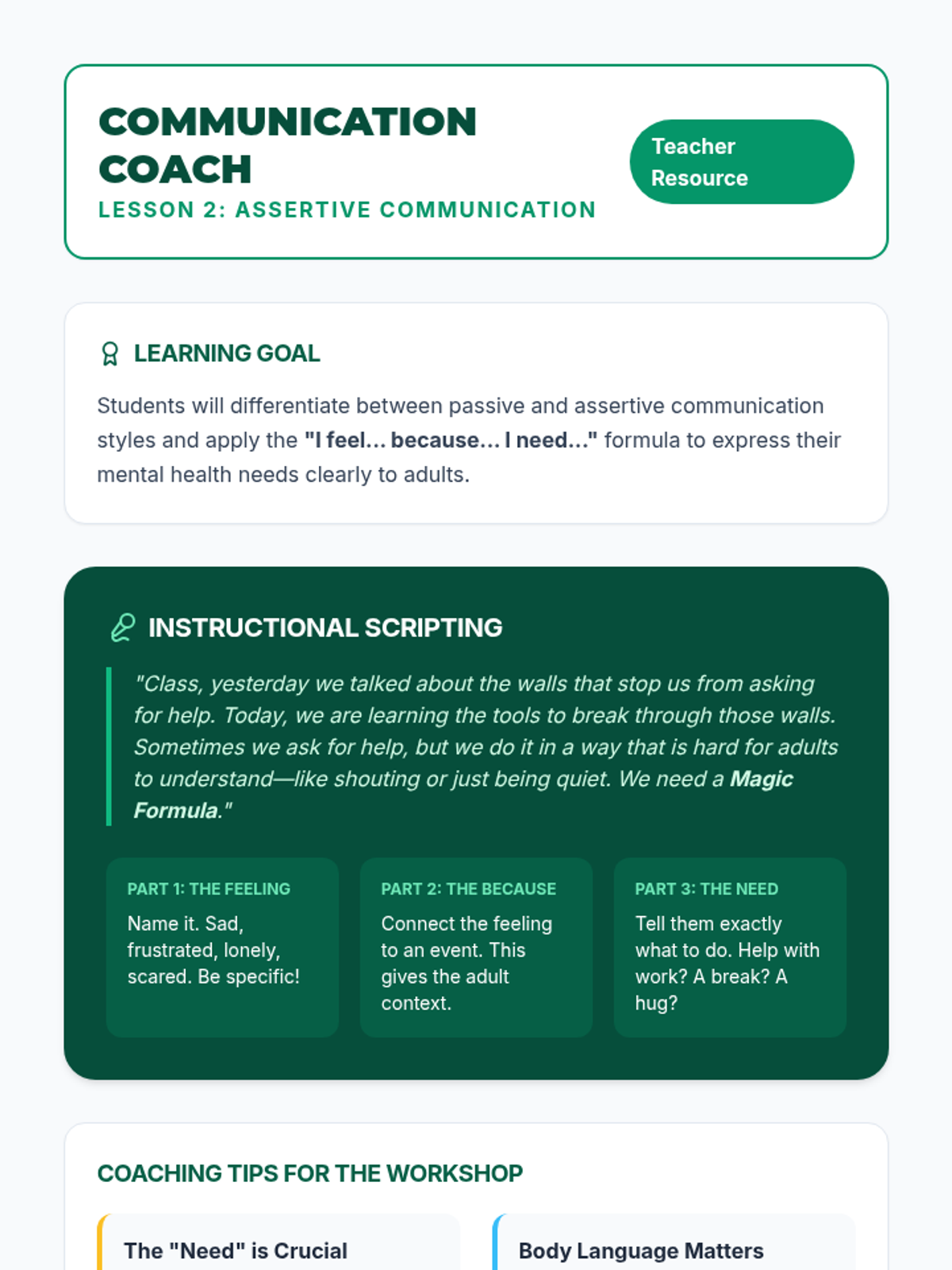
Teacher facilitation guide for Lesson 2, focusing on coaching students through assertive communication and I-statements.
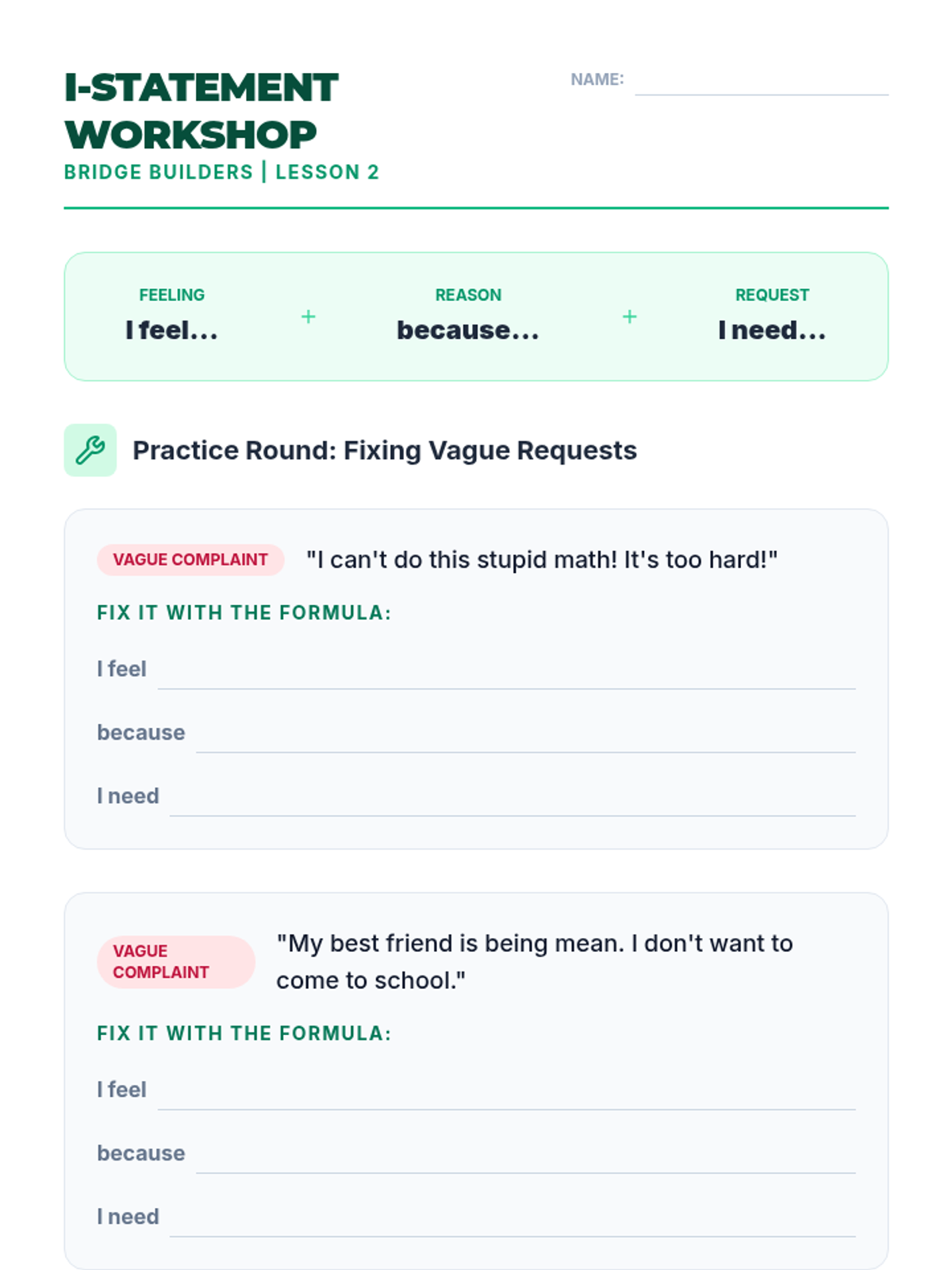
Workshop activity sheet for Lesson 2, practicing the "I-statement" formula and assertive communication.
Slides for Lesson 2, teaching the "I-statement" formula and assertive communication techniques.
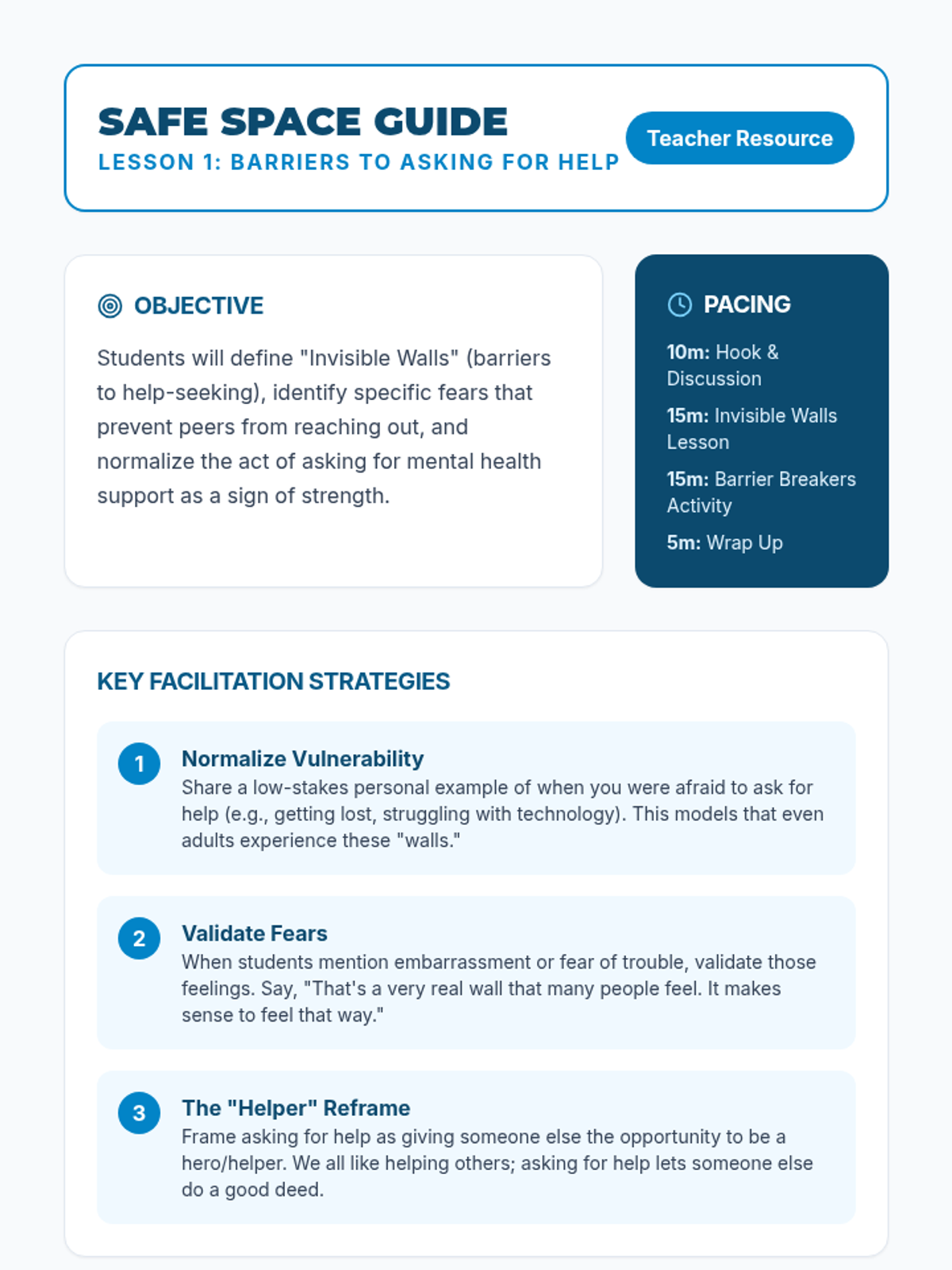
Teacher facilitation guide for Lesson 1, focusing on normalizing help-seeking and addressing common student fears.
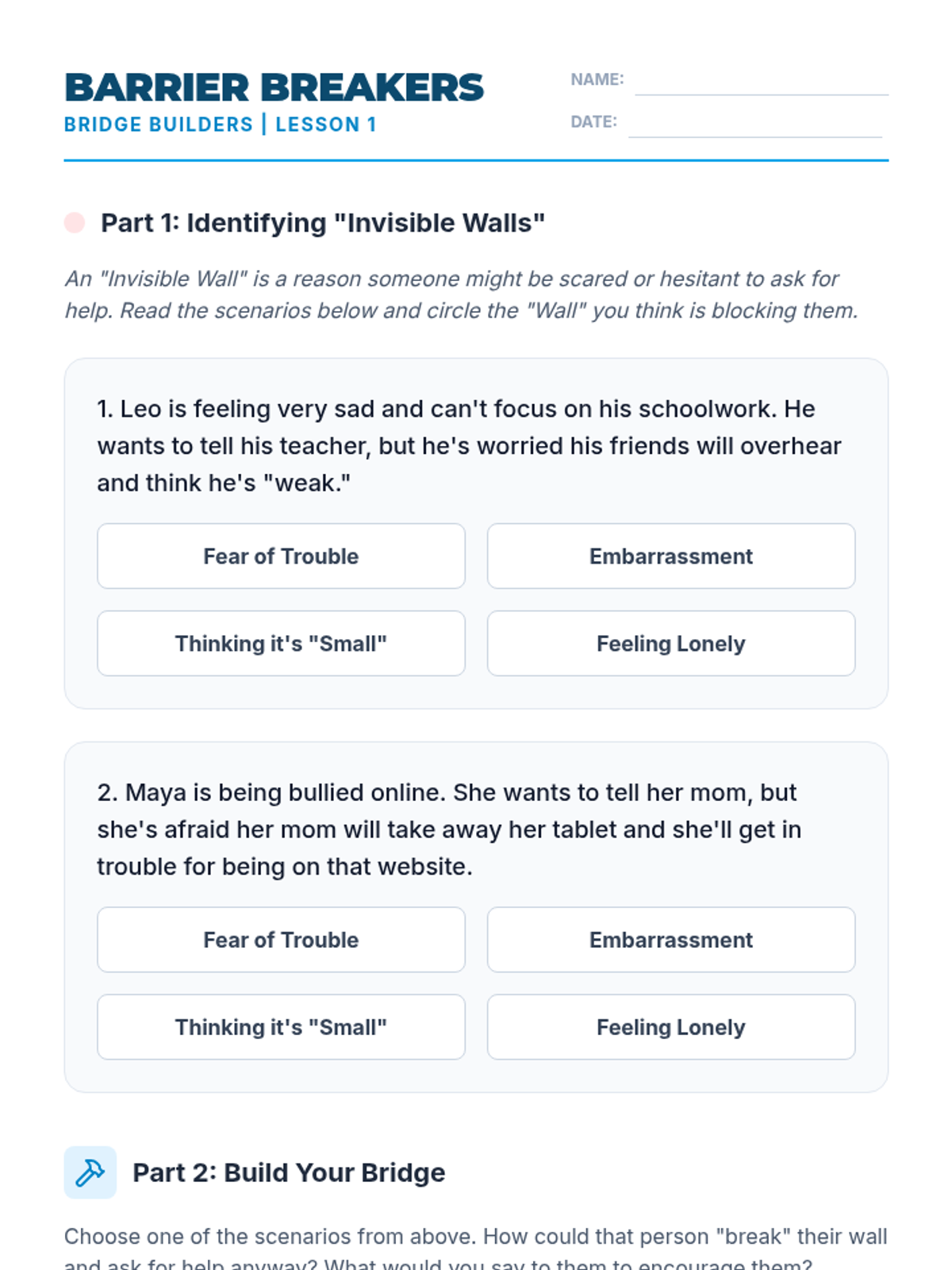
Worksheet for Lesson 1, helping students identify barriers in scenarios and identify their own "Support Squad" of trusted adults.
Introductory slides for Lesson 1, defining "Invisible Walls" (barriers to help-seeking) and normalizing the need for support.
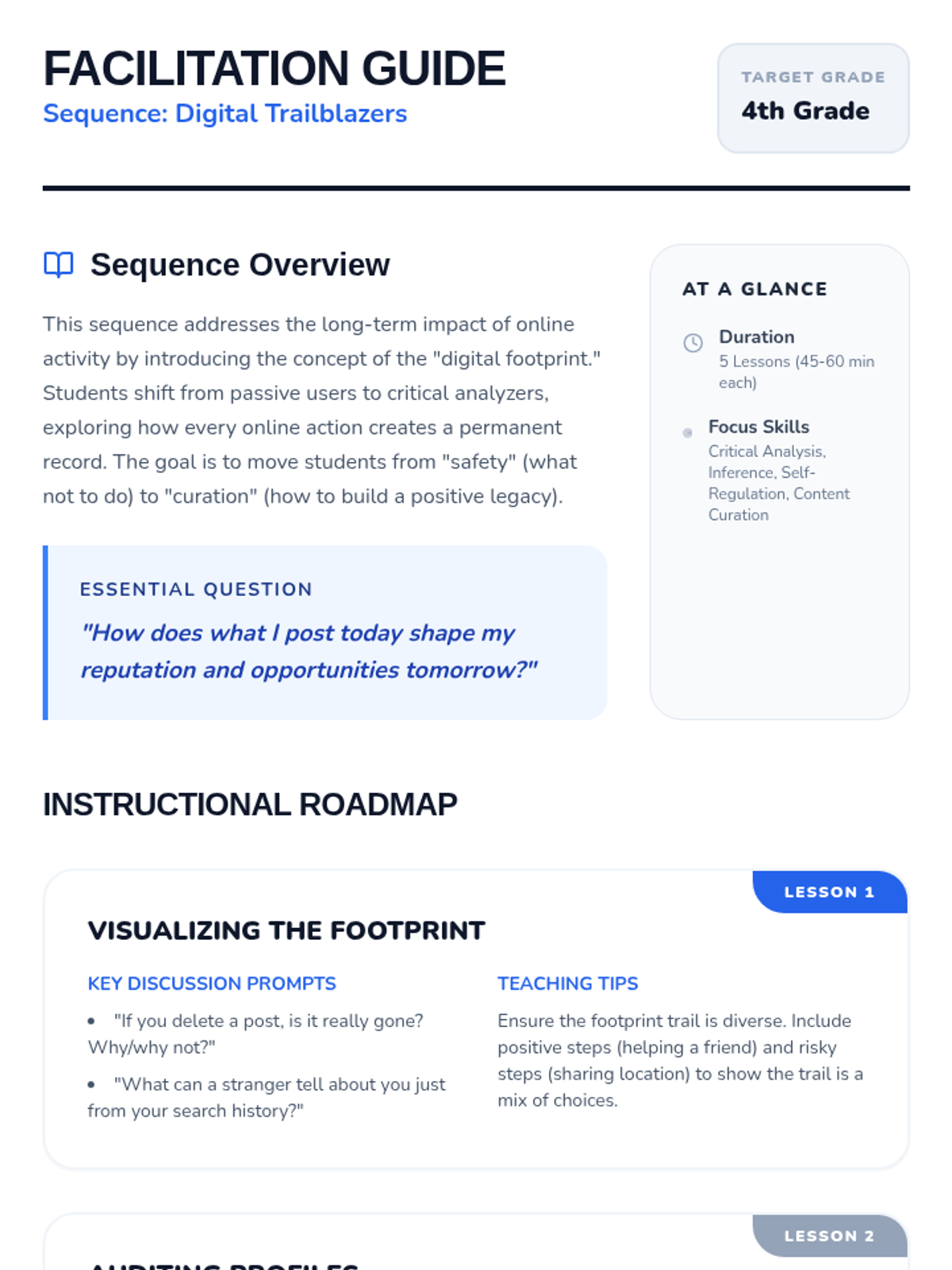
A comprehensive teacher facilitation guide for the Digital Trailblazers sequence, including lesson objectives, discussion prompts, teaching tips, and differentiation strategies.
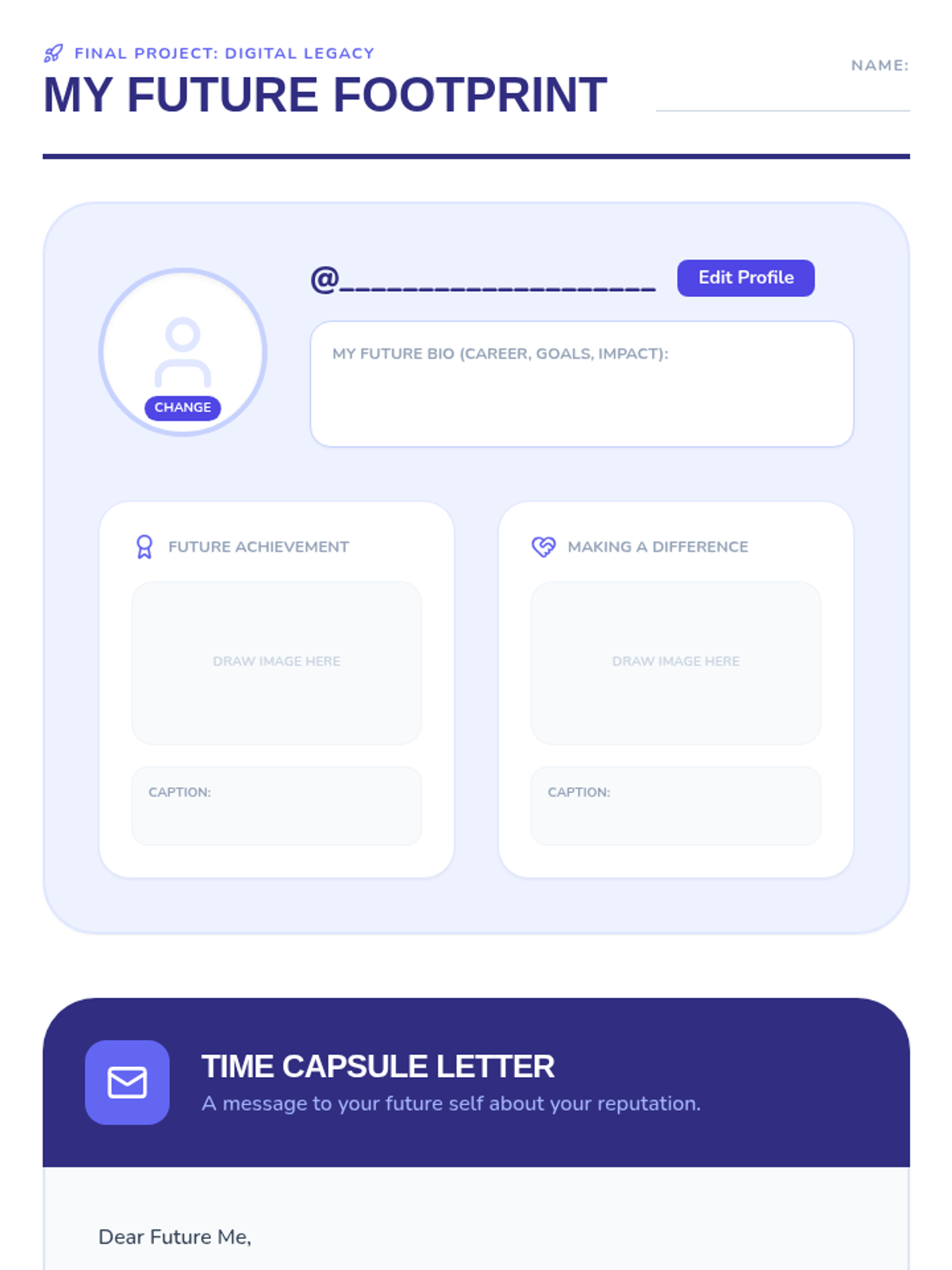
A culminating project document where students design a mock social media profile for their future selves and write a time capsule letter promising to protect their digital reputation.
A slide deck introducing the final project: designing a future digital profile and writing a time capsule letter to ensure a positive digital legacy.
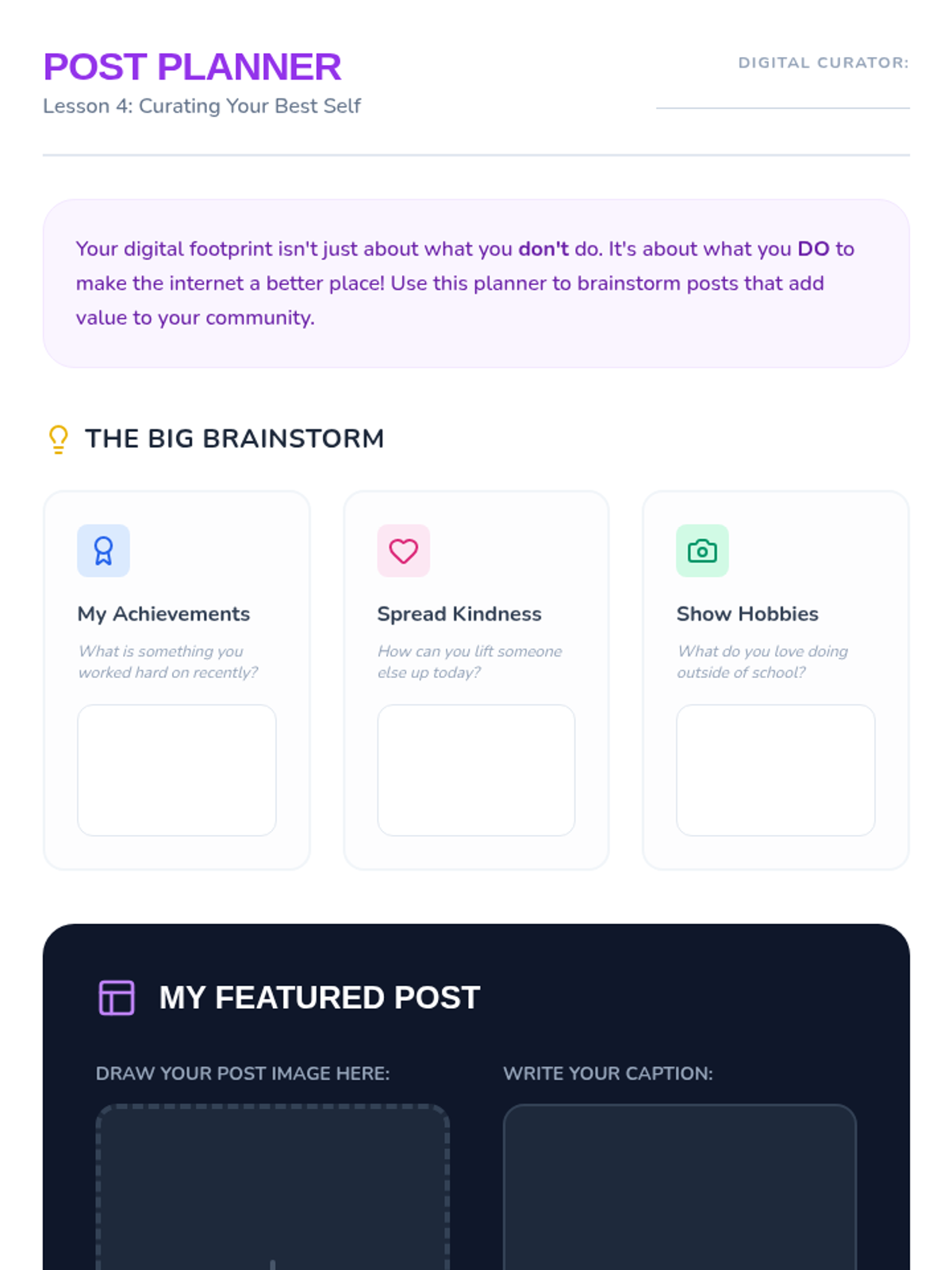
A brainstorming worksheet where students plan three different types of positive social media posts and design a featured post including an image and caption.
A slide deck focusing on proactive content creation, defining "value-add" posts and showcasing positive digital role models.
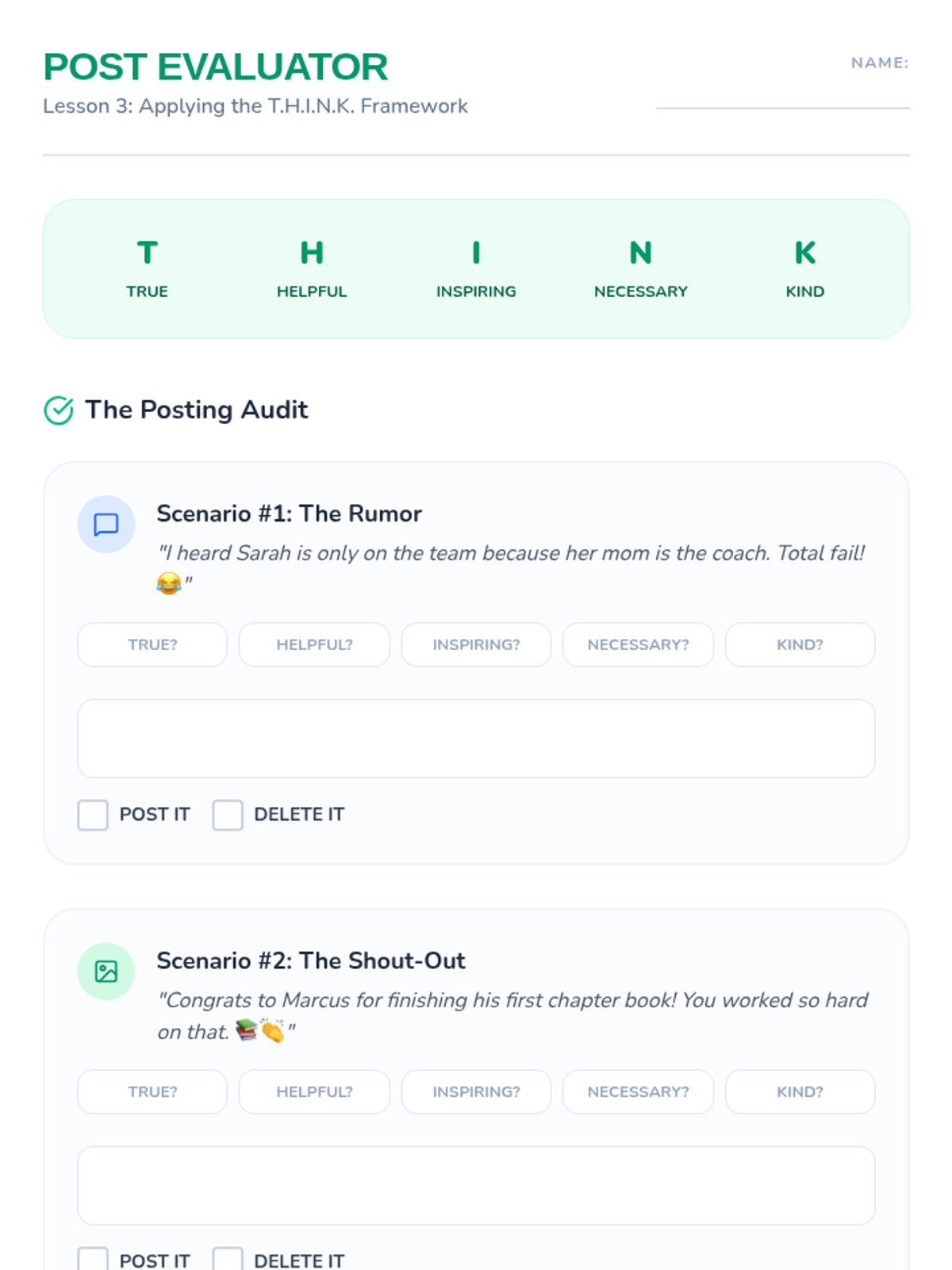
A worksheet where students apply the T.H.I.N.K. framework to evaluate three different social media scenarios, deciding whether to post or delete based on their analysis.