Identifies mental health crises and suicide warning signs while developing personal safety plans and grounding techniques. Equips users with peer gatekeeper skills and direct pathways to professional crisis resources and hotlines.
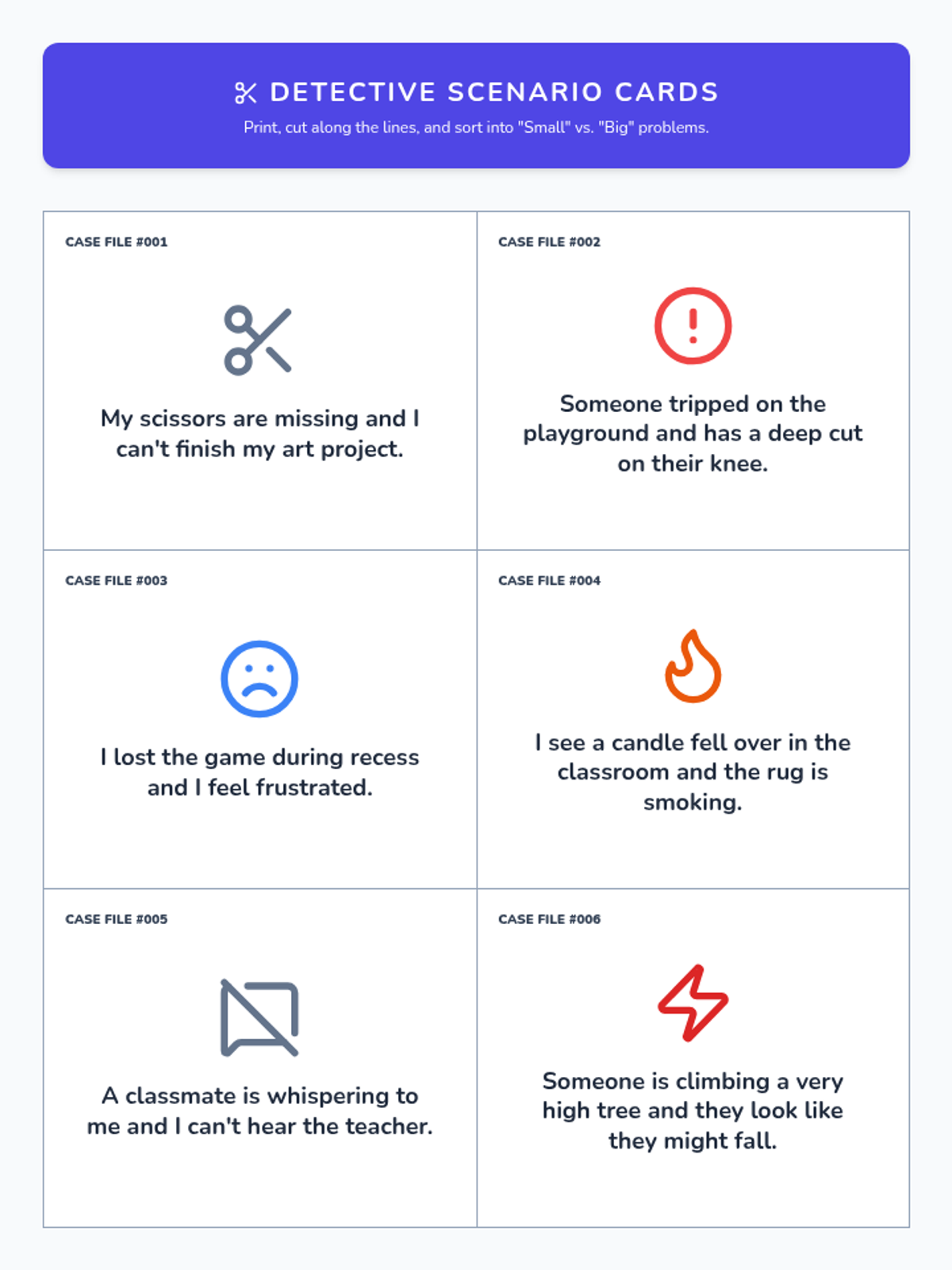
A set of 18 printable scenario cards (3 pages) for a hands-on sorting activity, featuring situations for students to categorize as small or big problems. Layout standardized for easy printing and cutting.
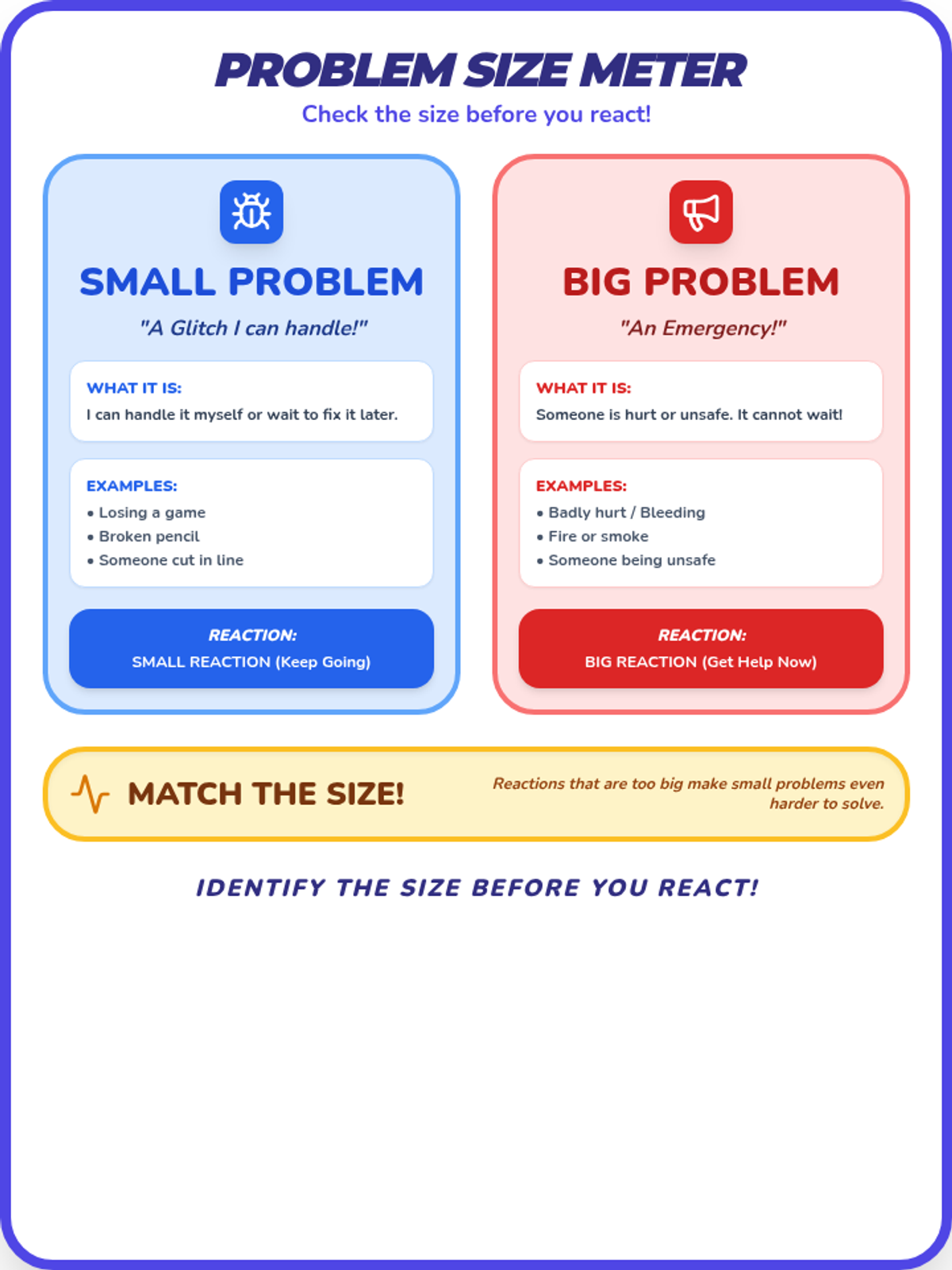
Updated visual anchor chart including a new section on matching "Reaction Size" to "Problem Size" for improved emotional regulation. Layout fixed to fit on a single page.
Updated 3-page worksheet for 2nd-4th grade students featuring a total of 12 "find the mismatches" scenarios across social and school situations, and a coping strategy reflection area. Revised for better contrast, standardized header heights, and improved page flow.
Updated slideshow including new slides for the "Reaction Size" concept for 2nd-4th grade students, focusing on matching emotional reactions to problem sizes and avoiding mismatches.
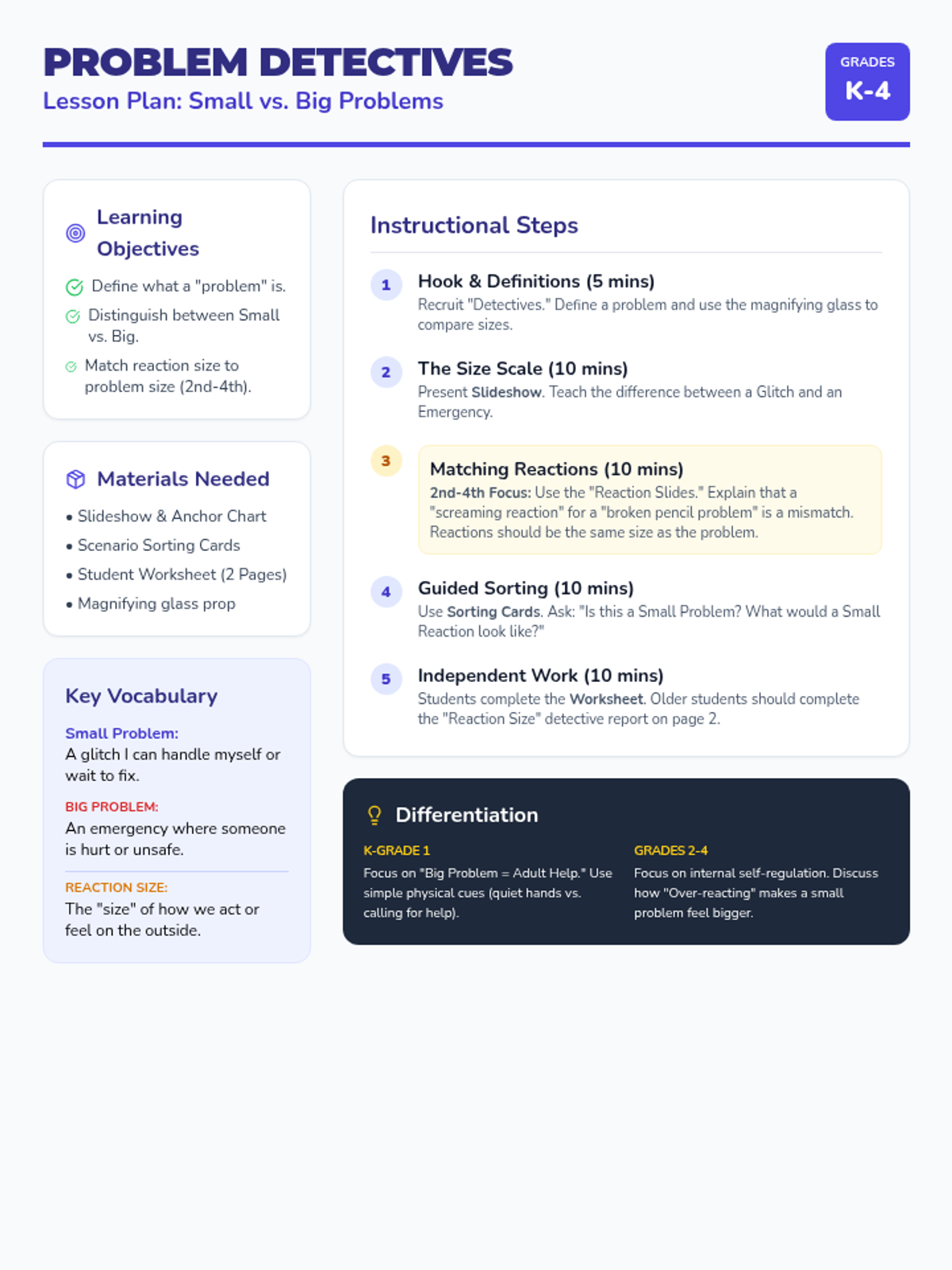
Updated lesson plan with a specific focus on "Reaction Size" matching for 2nd-4th grade students, including updated vocabulary and procedures.
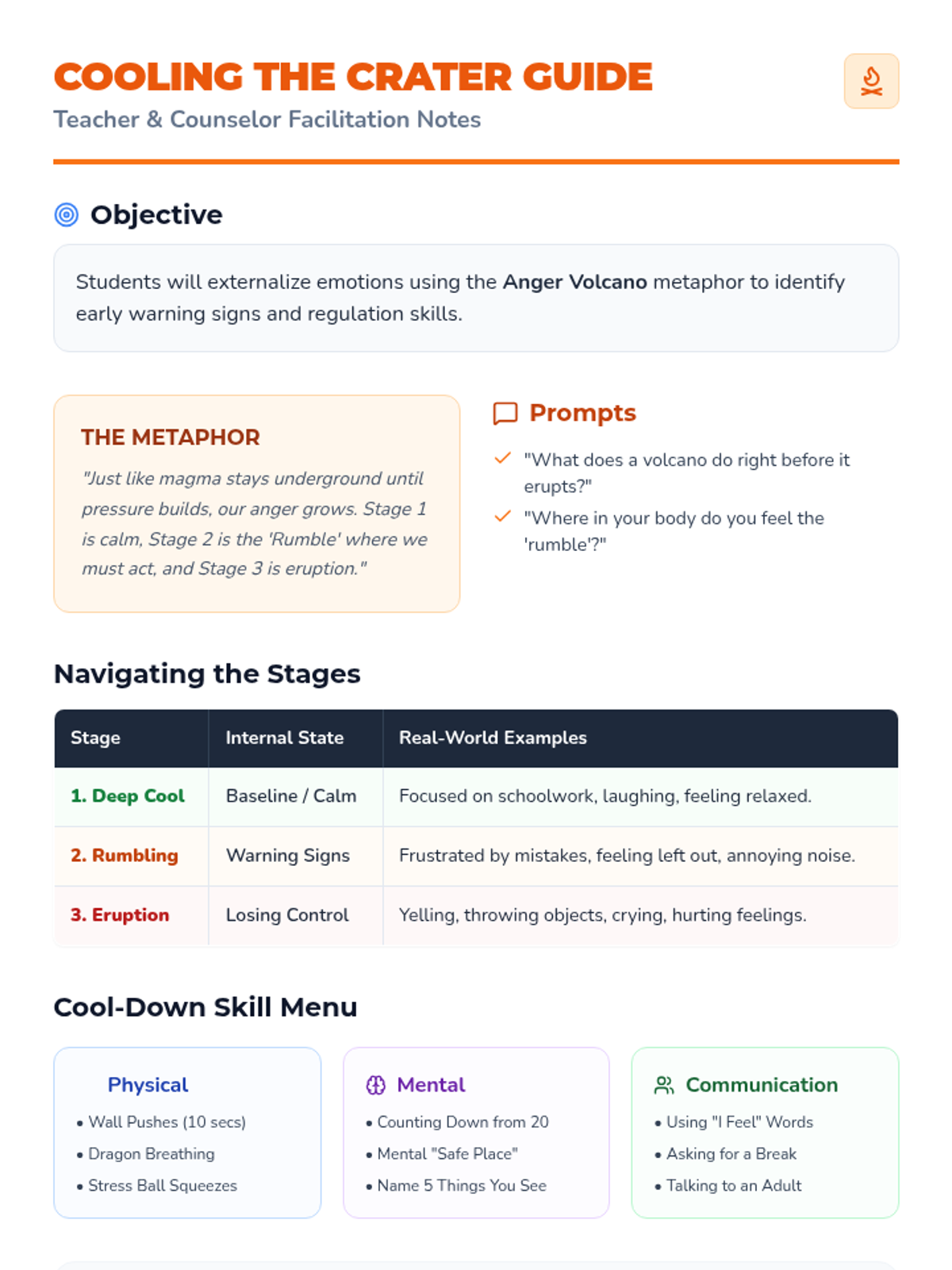
A facilitation guide for teachers and counselors to accompany the Anger Volcano worksheet, featuring discussion prompts, stage definitions, and suggested calming skills.
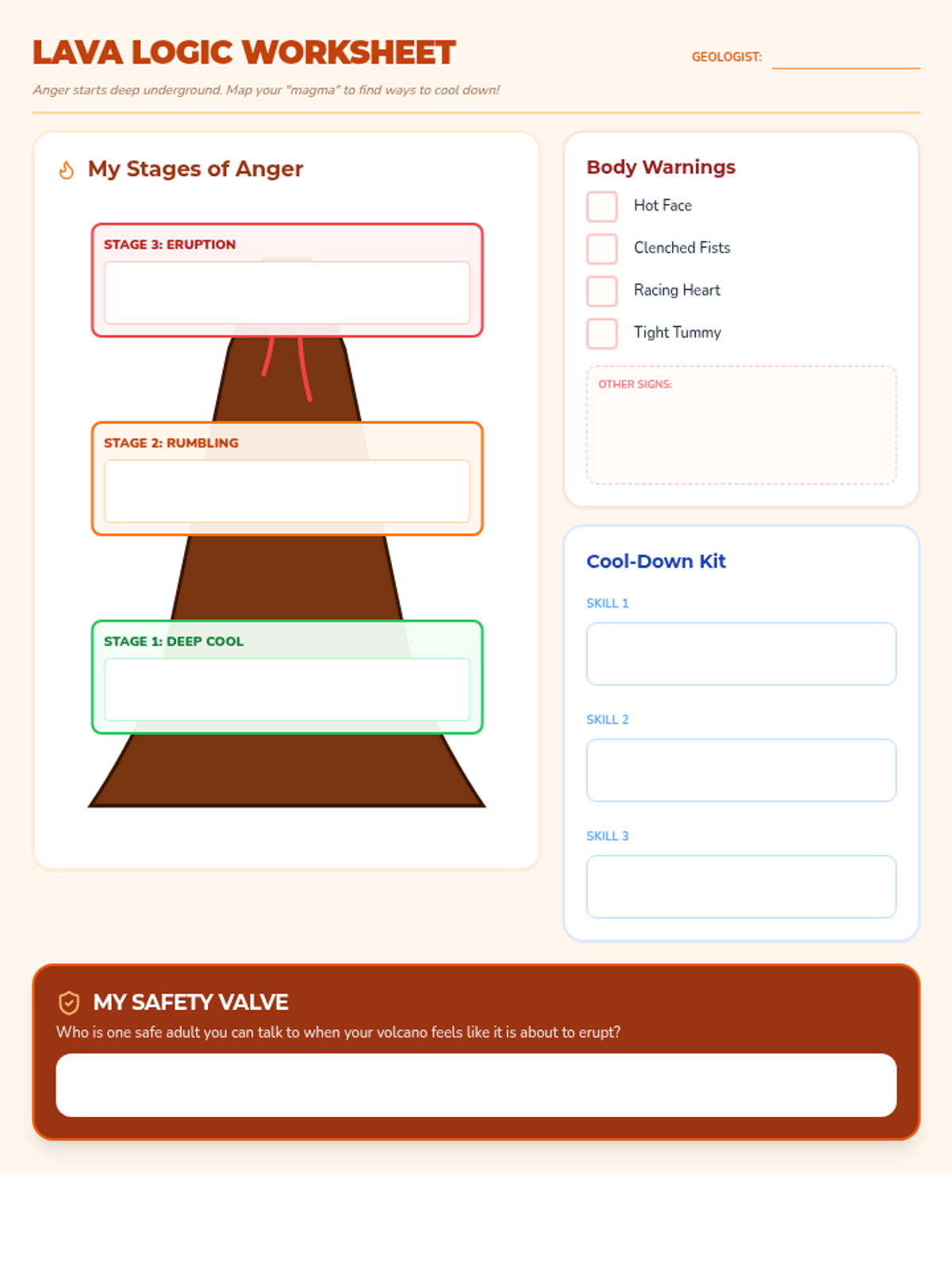
A creative volcano-themed worksheet for 3rd-4th grade students to track their stages of anger, physical warning signs, and calming skills. includes visual prompts and dedicated writing spaces.
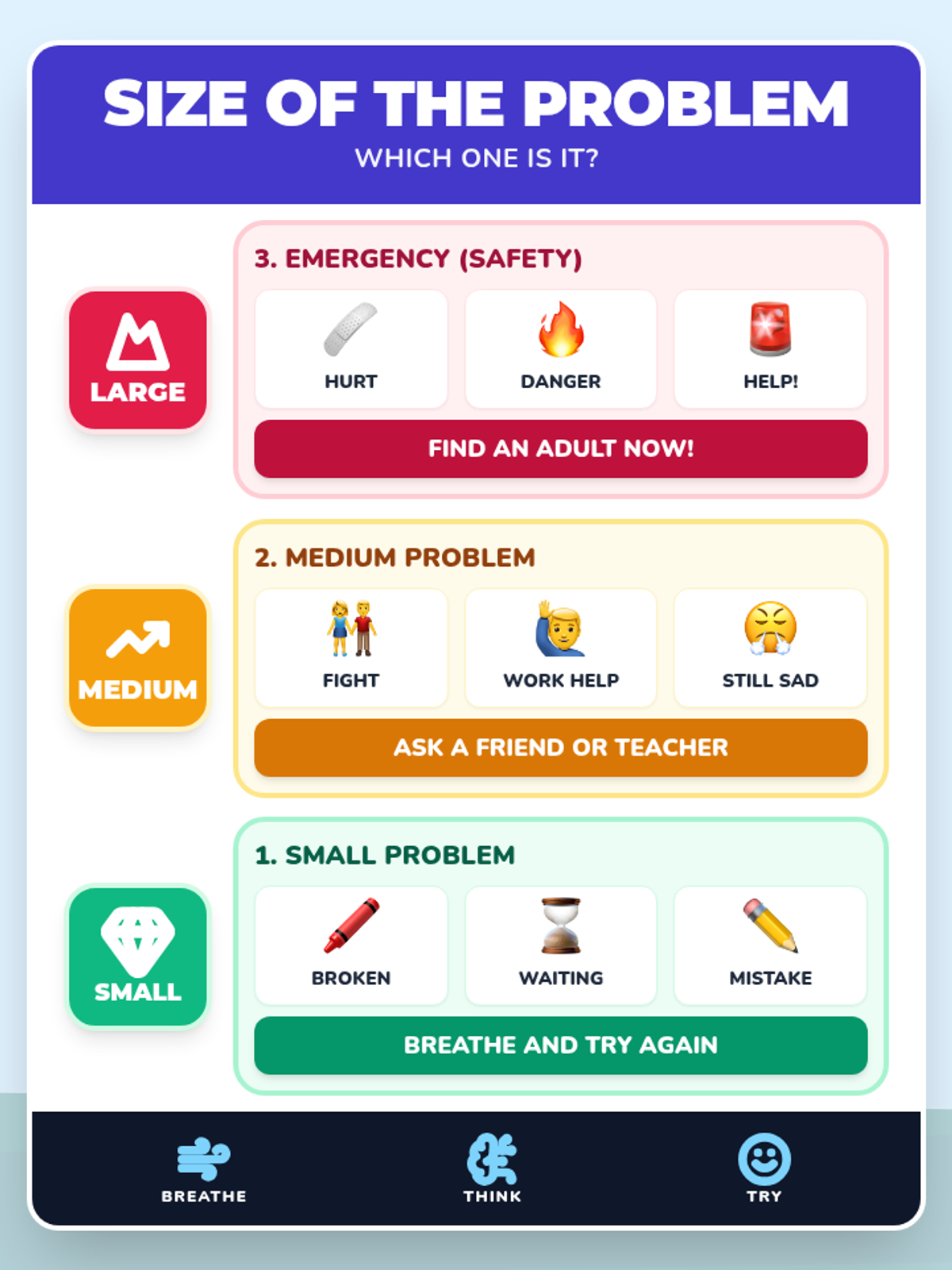
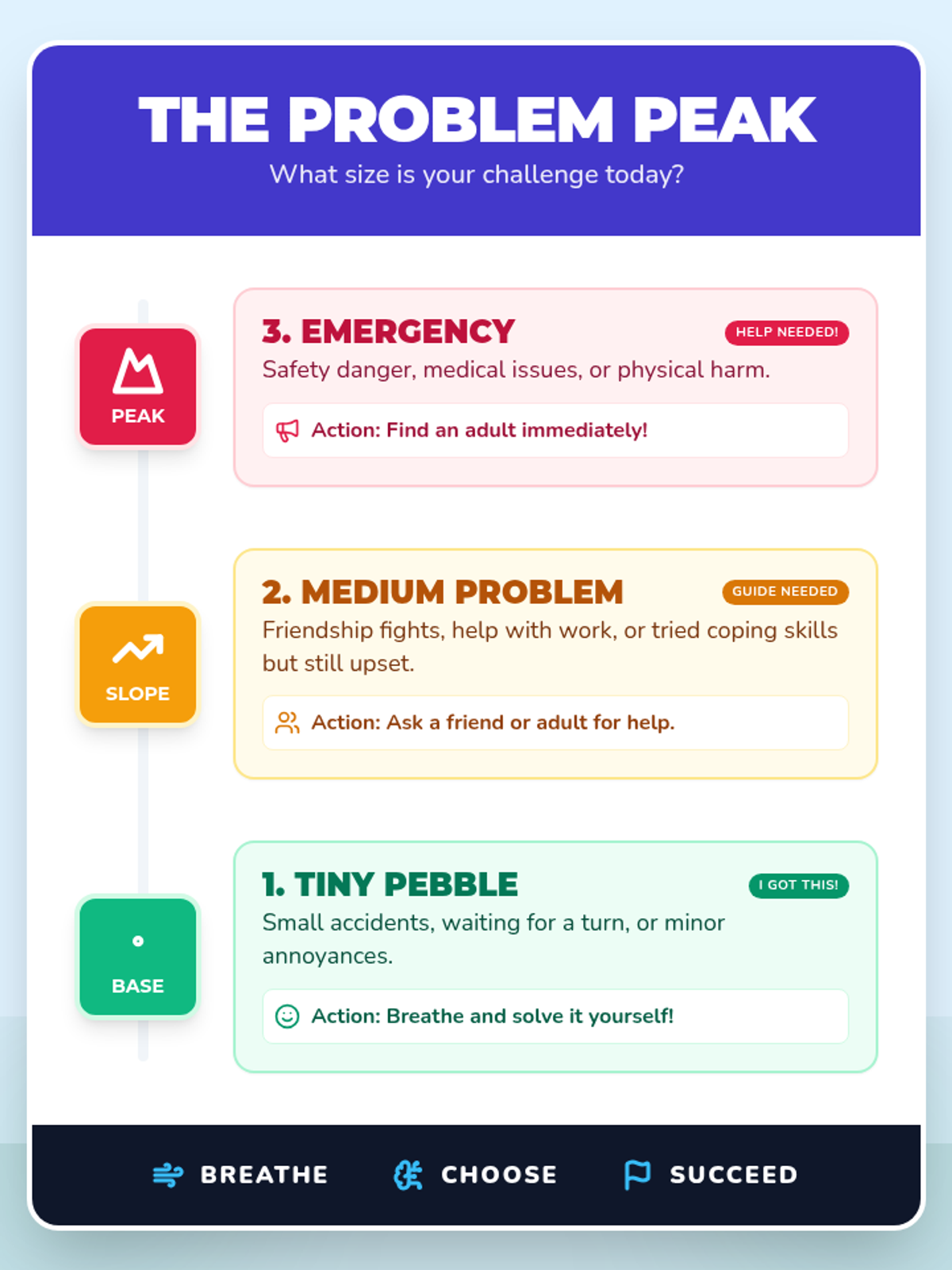
A simplified, visual-heavy version of the Size of the Problem poster designed for Kindergarten students, using icons and emojis to illustrate examples for each problem size. Updated to "Size of the Problem" terminology and improved label sizing. Now with distinct icons for all examples.
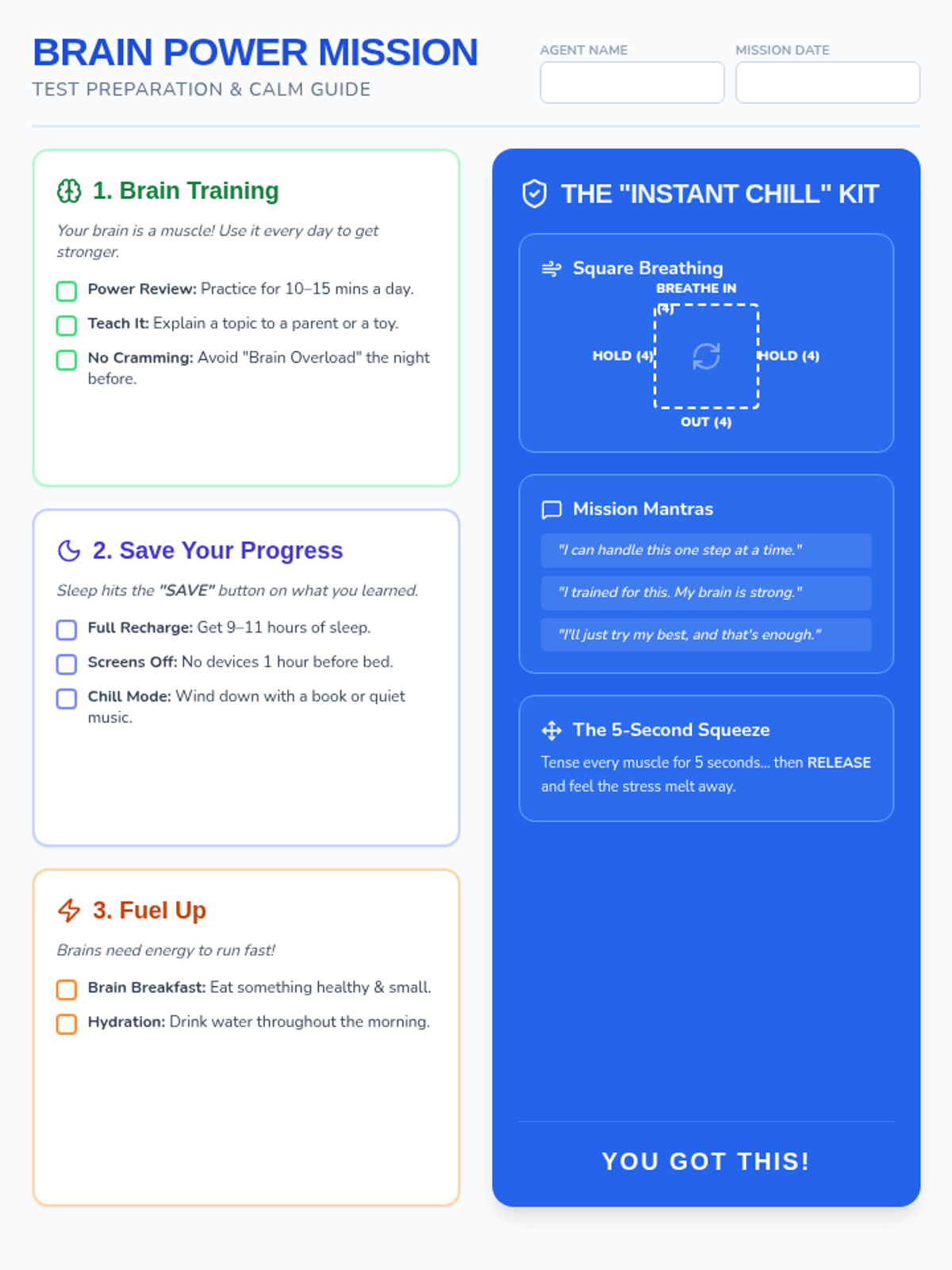
A one-page student handout for grades 3-6 featuring a test prep checklist and "in-the-moment" coping strategies for test anxiety. Revised for better layout and contrast.
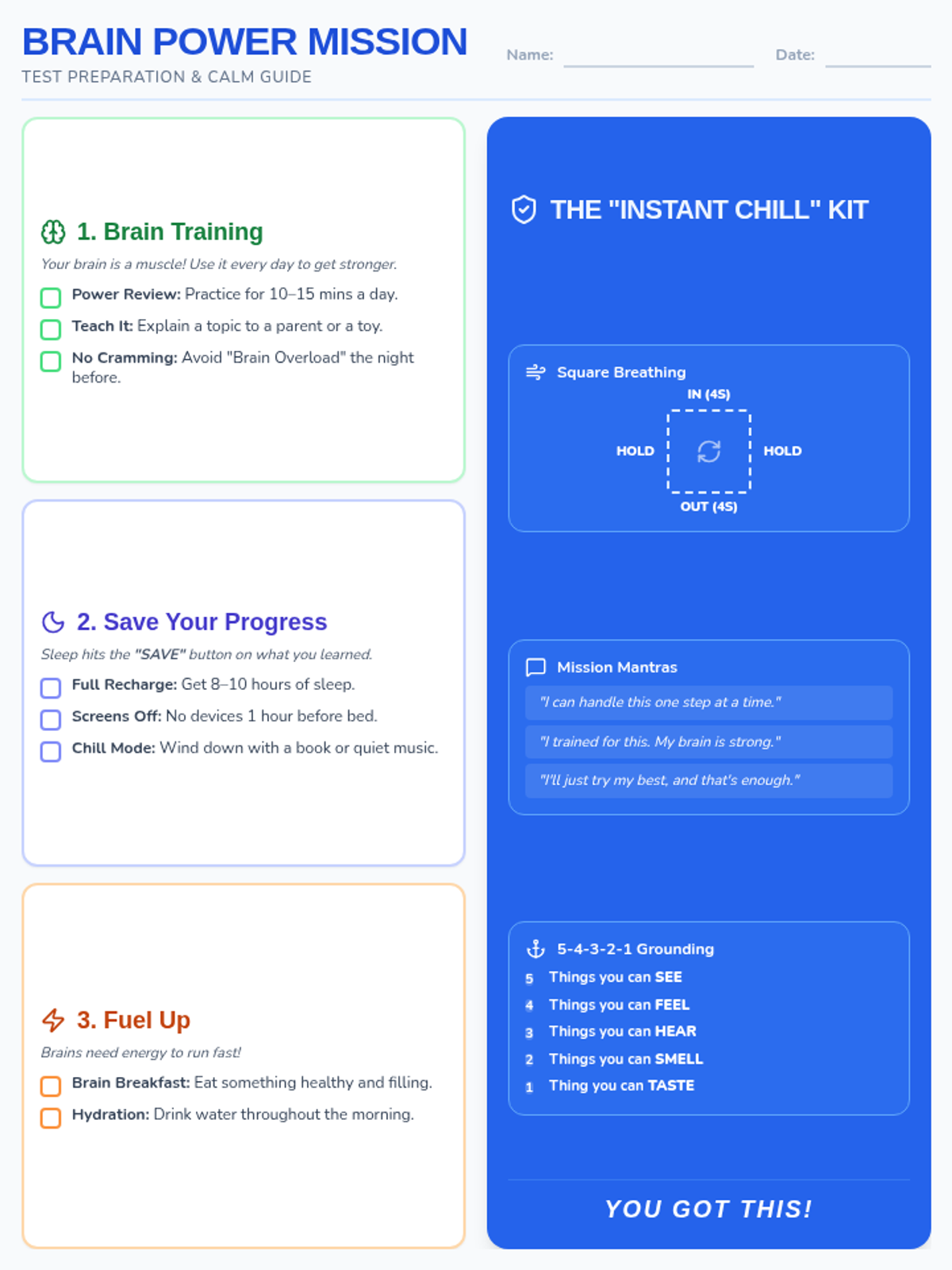
A one-page student handout for grades 3-6 featuring a test prep checklist and "in-the-moment" coping strategies. Simplified name and date fields for a cleaner look. Revised with tighter vertical spacing and fixed contrast to guarantee a 1-page fit.
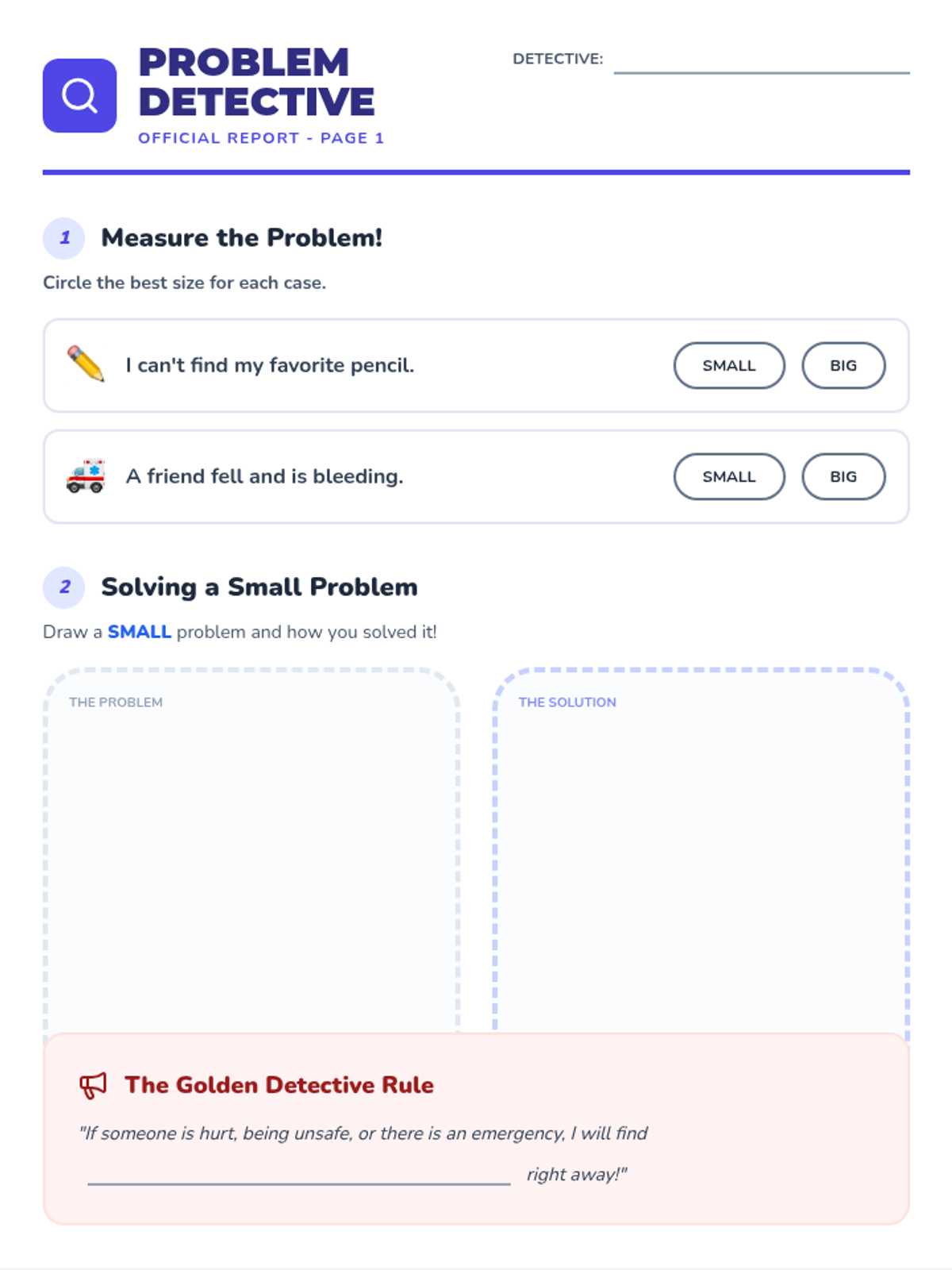
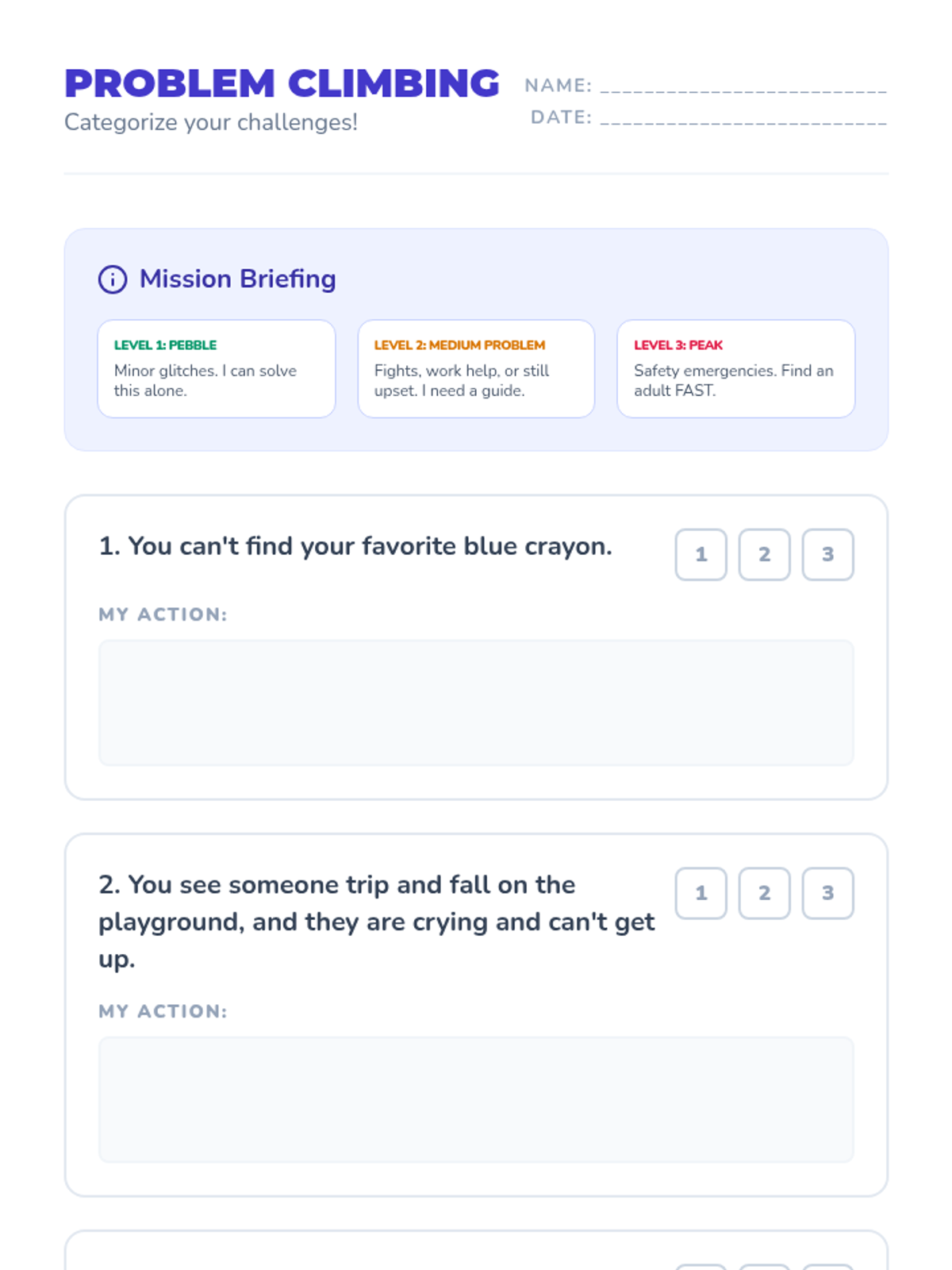
A student worksheet for identifying problem sizes and determining appropriate actions for various school-based scenarios. Updated to include "Size of the Problem" terminology and primary handwriting lines for younger students. Now includes visuals in the mission briefing.
A visual presentation for the Size of the Problem lesson, defining the three problem sizes with vibrant colors and clear strategies. Updated to "Size of the Problem" terminology and metaphor-matching icons.
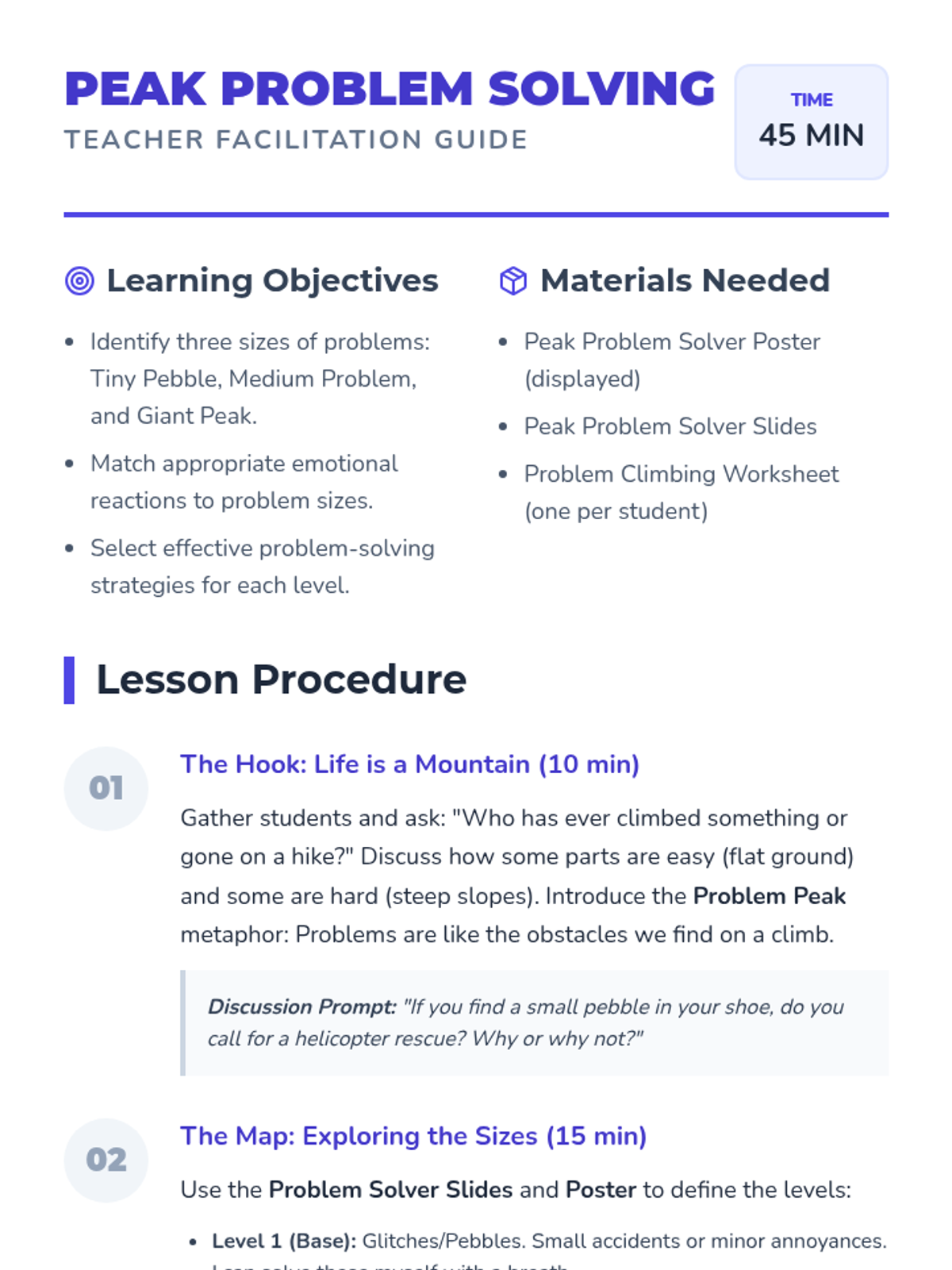
A comprehensive teacher facilitation guide for the Size of the Problem lesson, including objectives, materials, timed procedures, and differentiation strategies. Updated with "Size of the Problem" terminology.
A vibrant classroom poster using a mountain theme to help students categorize problems into three sizes (Small, Medium, Large) with updated Level 2 definitions and titles. Now updated to use "Size of the Problem" as the primary title and improved metaphor icons.
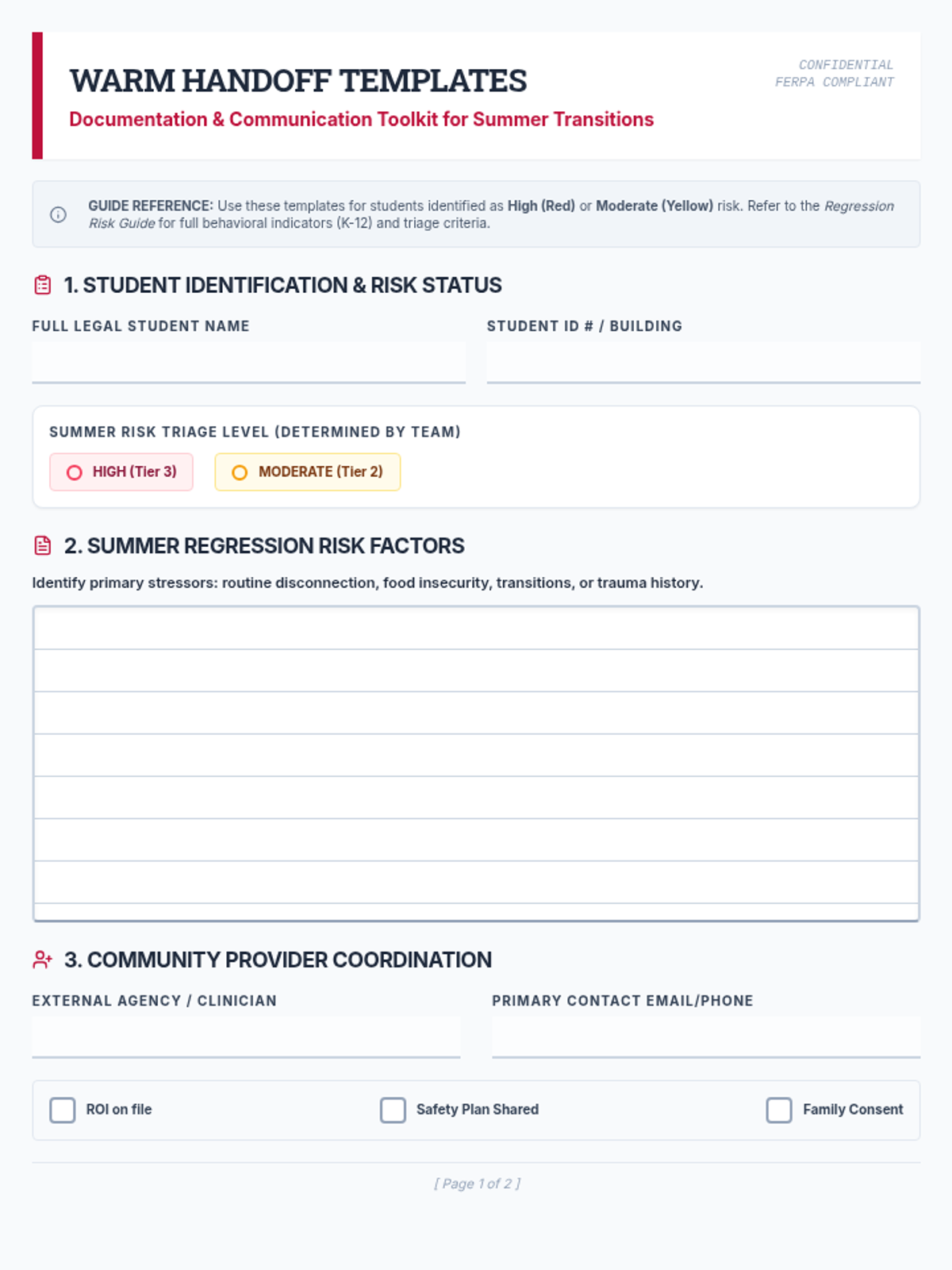
A collection of documentation templates and communication scripts for school counselors to facilitate warm handoffs to community providers and families during summer break.
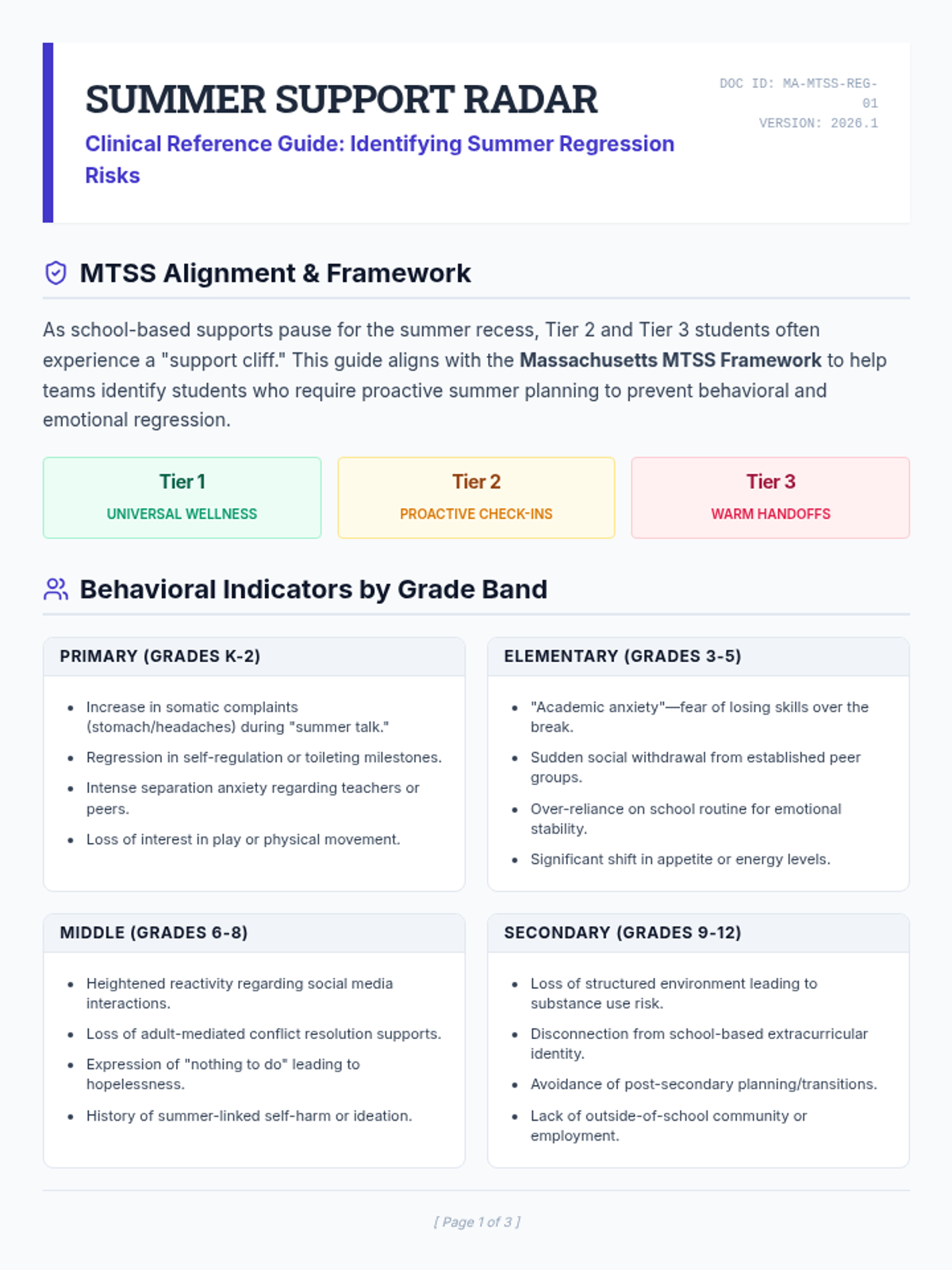
A comprehensive clinical reference guide for educators to identify mental health regression risks in students during summer break, organized by grade bands and risk levels.
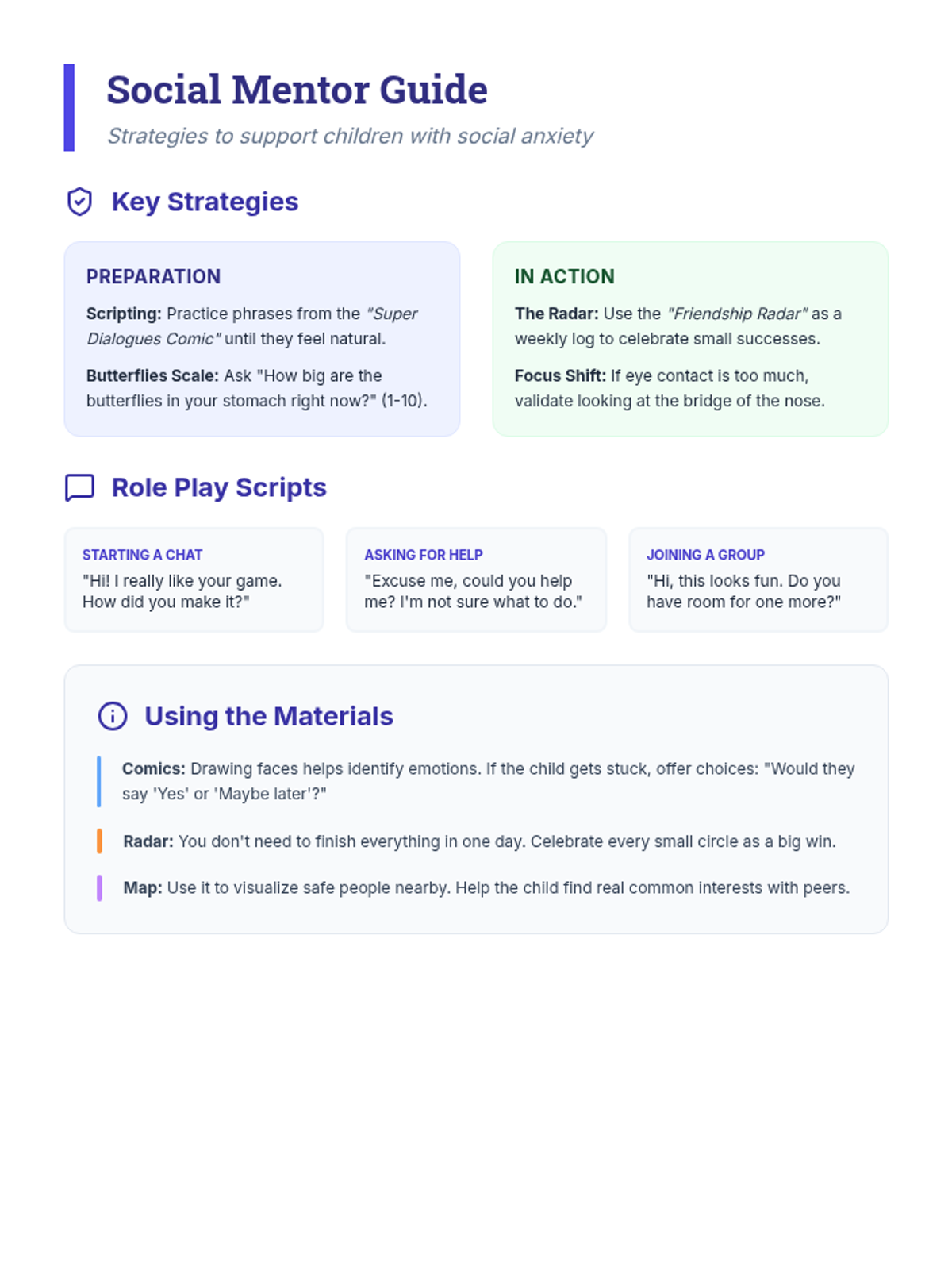
A guide for teachers and parents in English with anxiety-management strategies, role-play scripts, and tips for using the student worksheets. Optimized single-page format.
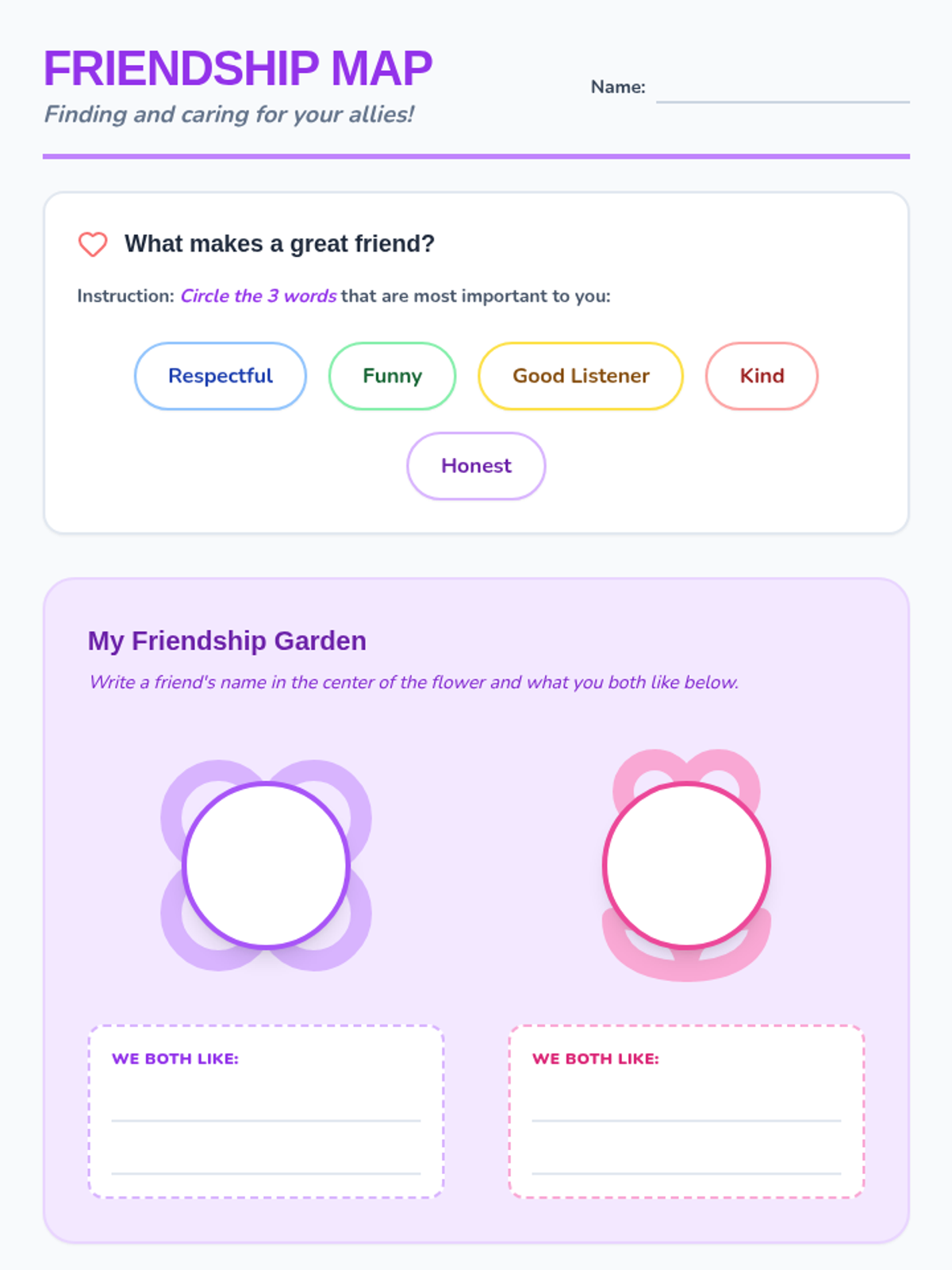
A worksheet in English to identify friendship qualities, common interests, and support networks for 10-year-olds. Corrected layout for a single-page format with adequate writing spaces.
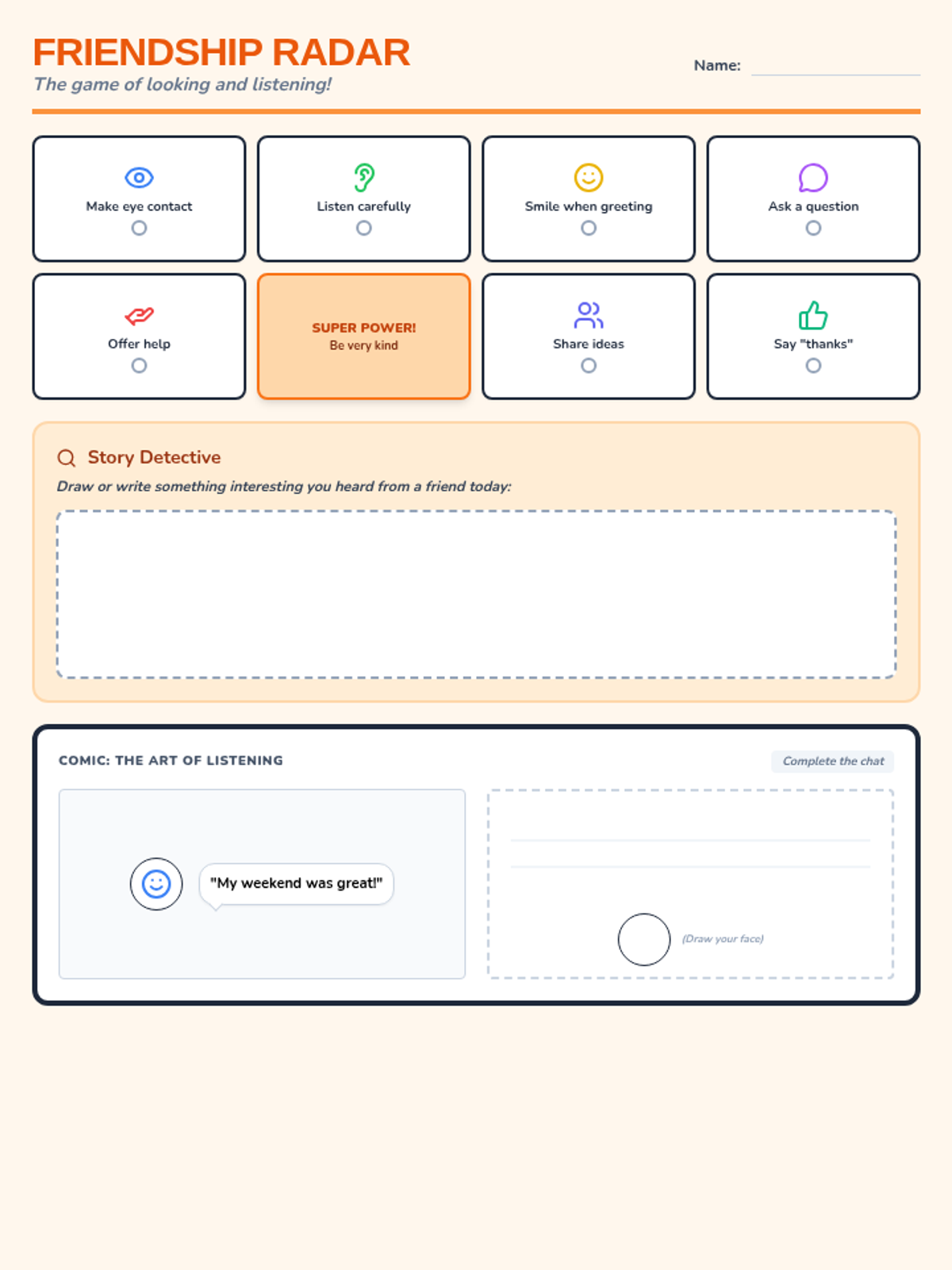
A board game style activity sheet in English teaching eye contact, active listening, and kindness for kids with anxiety. Corrected layout for a single-page format.
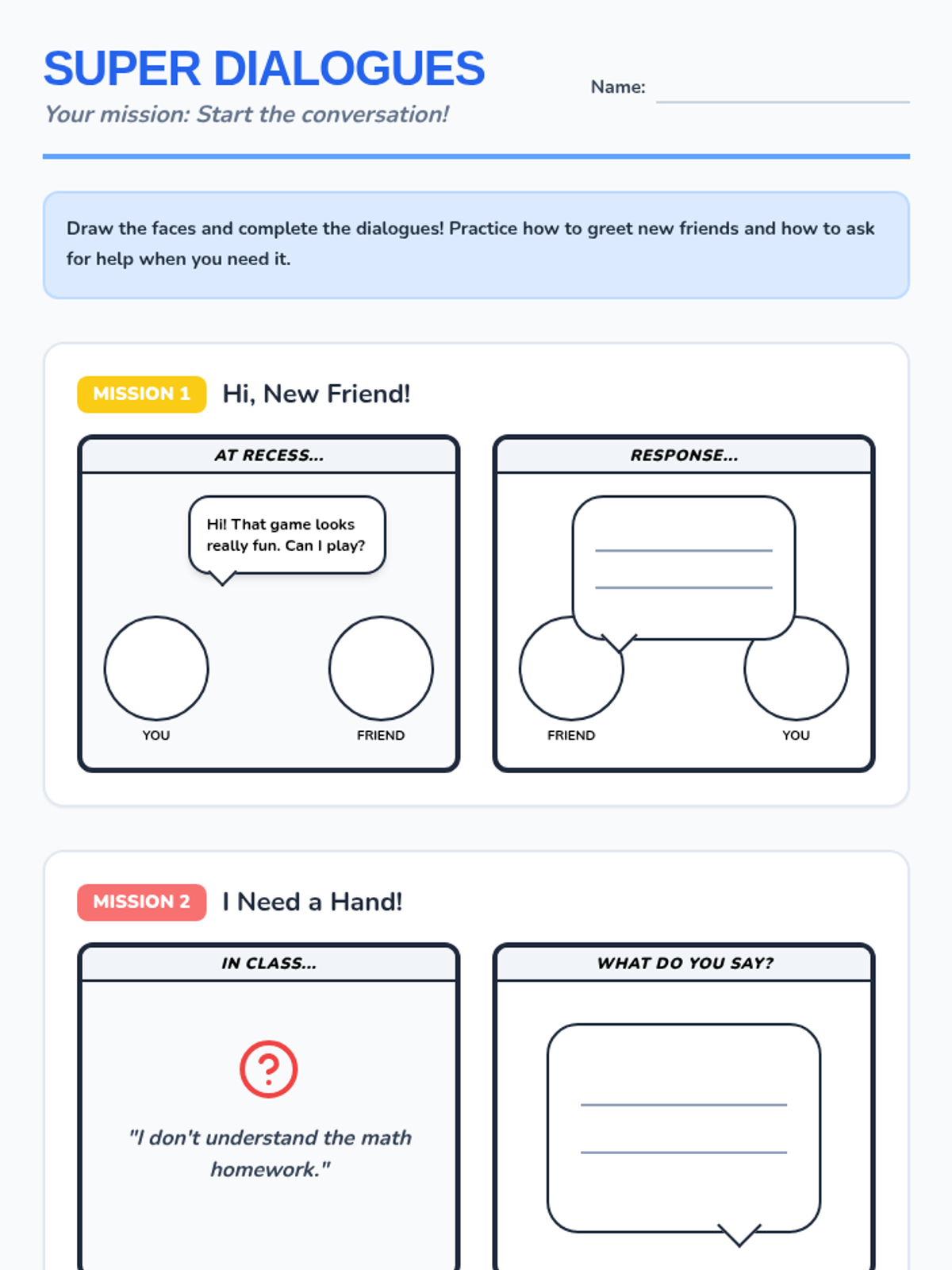
An interactive comic worksheet in English for practicing starting conversations and asking for help, designed for 10-year-olds with social anxiety. Corrected for single-page layout and better workspace.
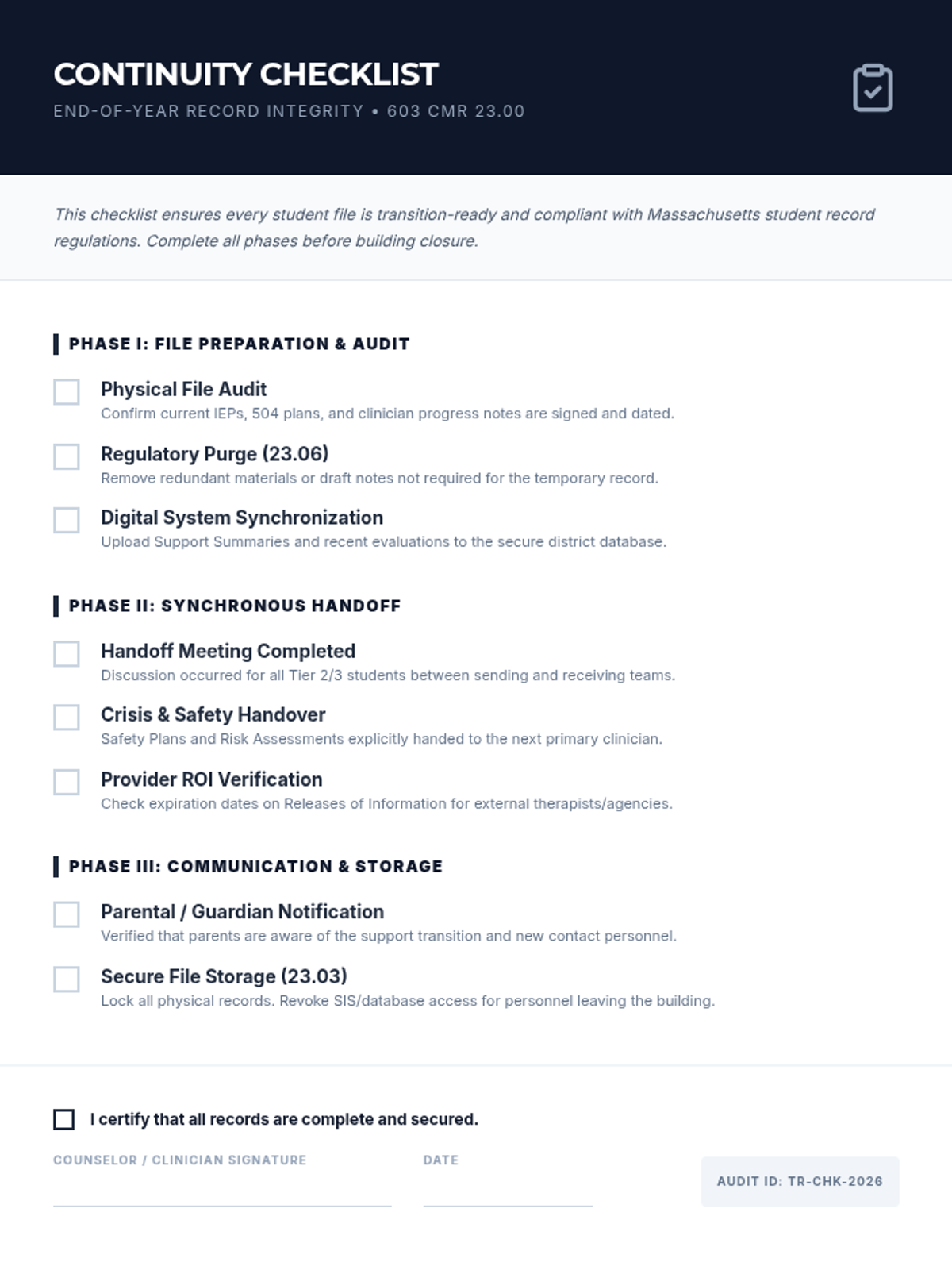
A streamlined documentation checklist optimized for single-page printing, ensuring all regulatory and clinical transition steps are completed and verified.
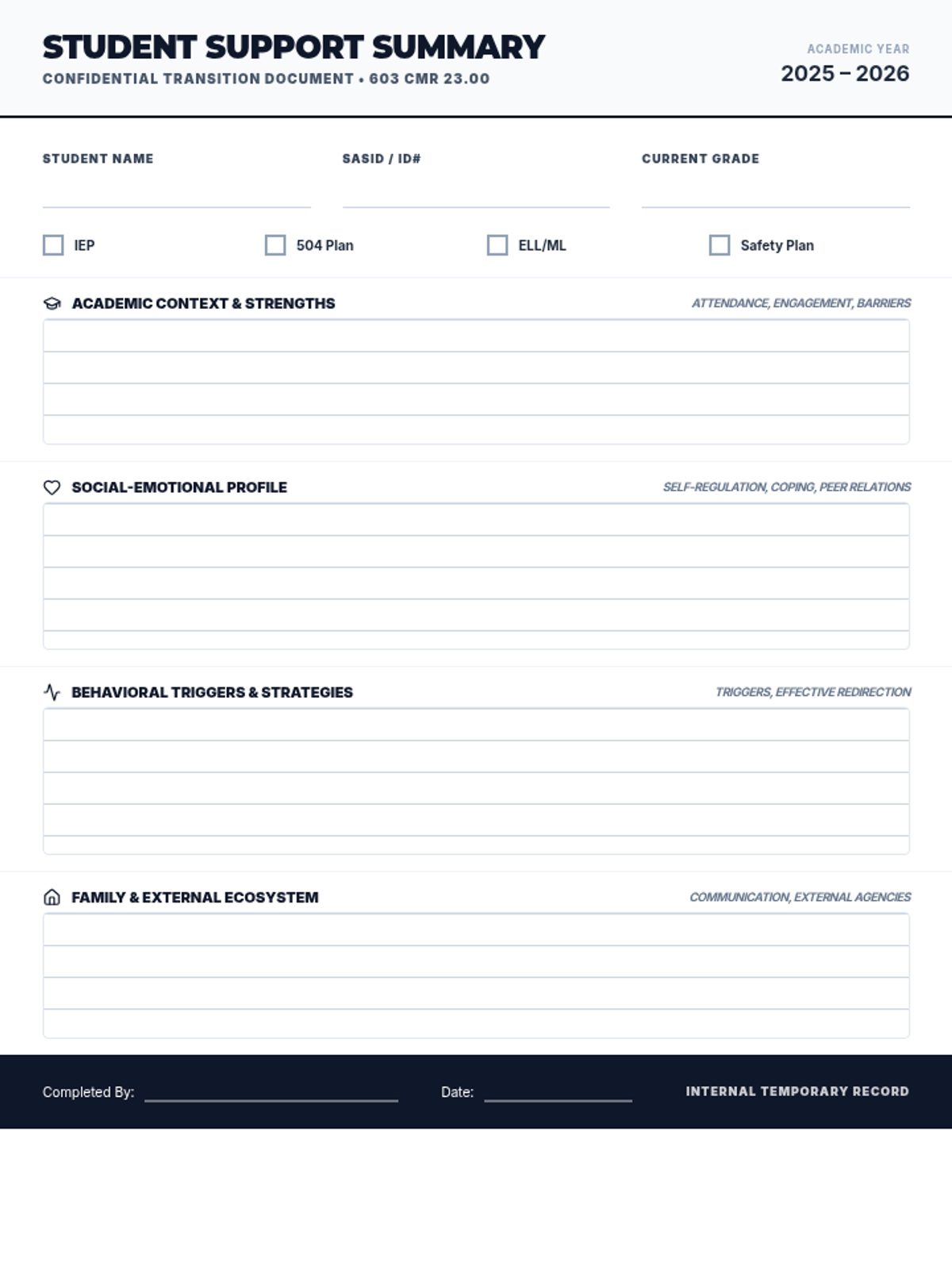
A redesigned student summary form optimized for single-page printing, featuring expanded handwriting areas and a clean professional layout for sensitive student data.
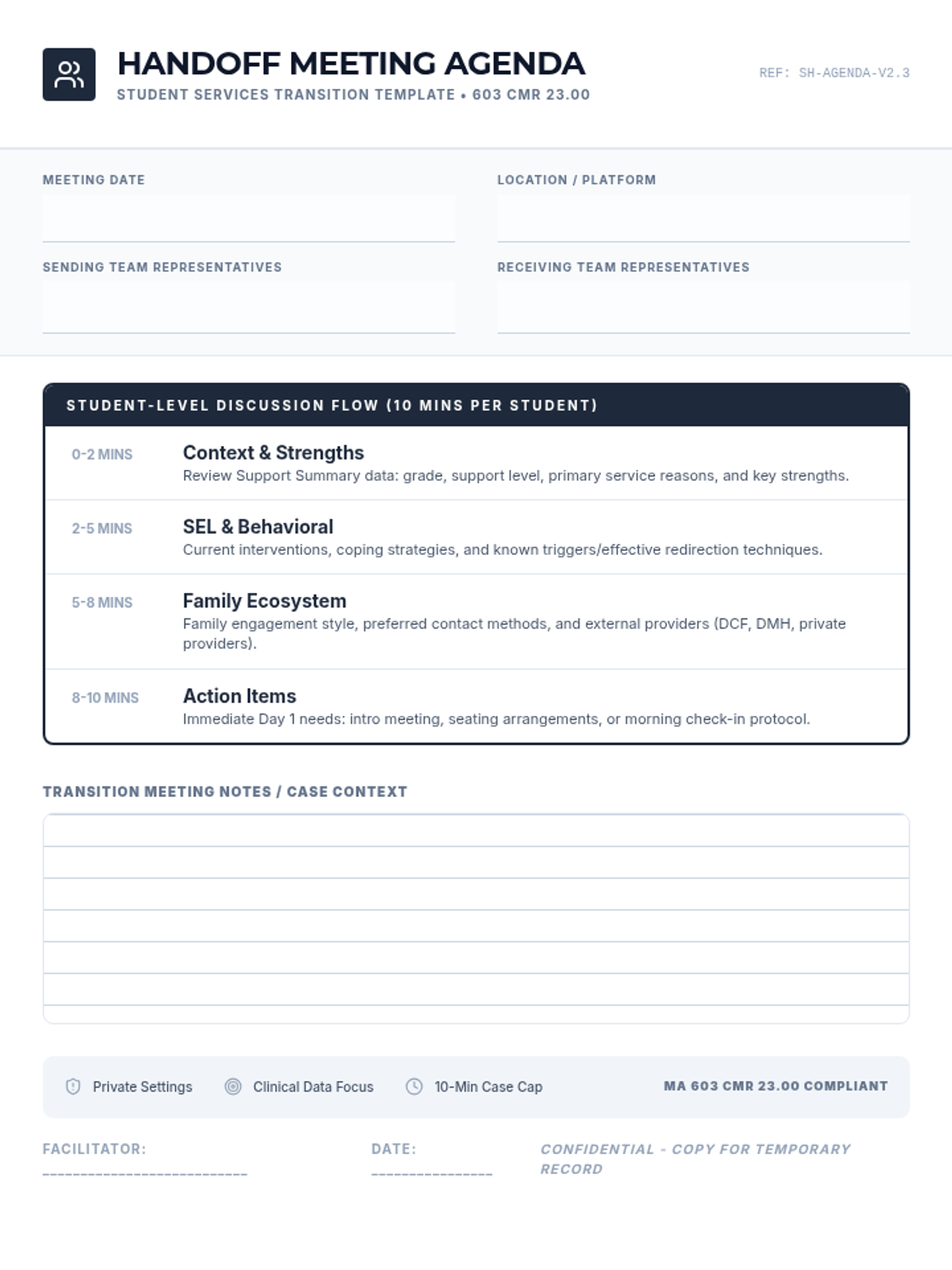
A structured agenda template for transition meetings, now refined for single-page printing with expanded handwriting areas and improved structural integrity.
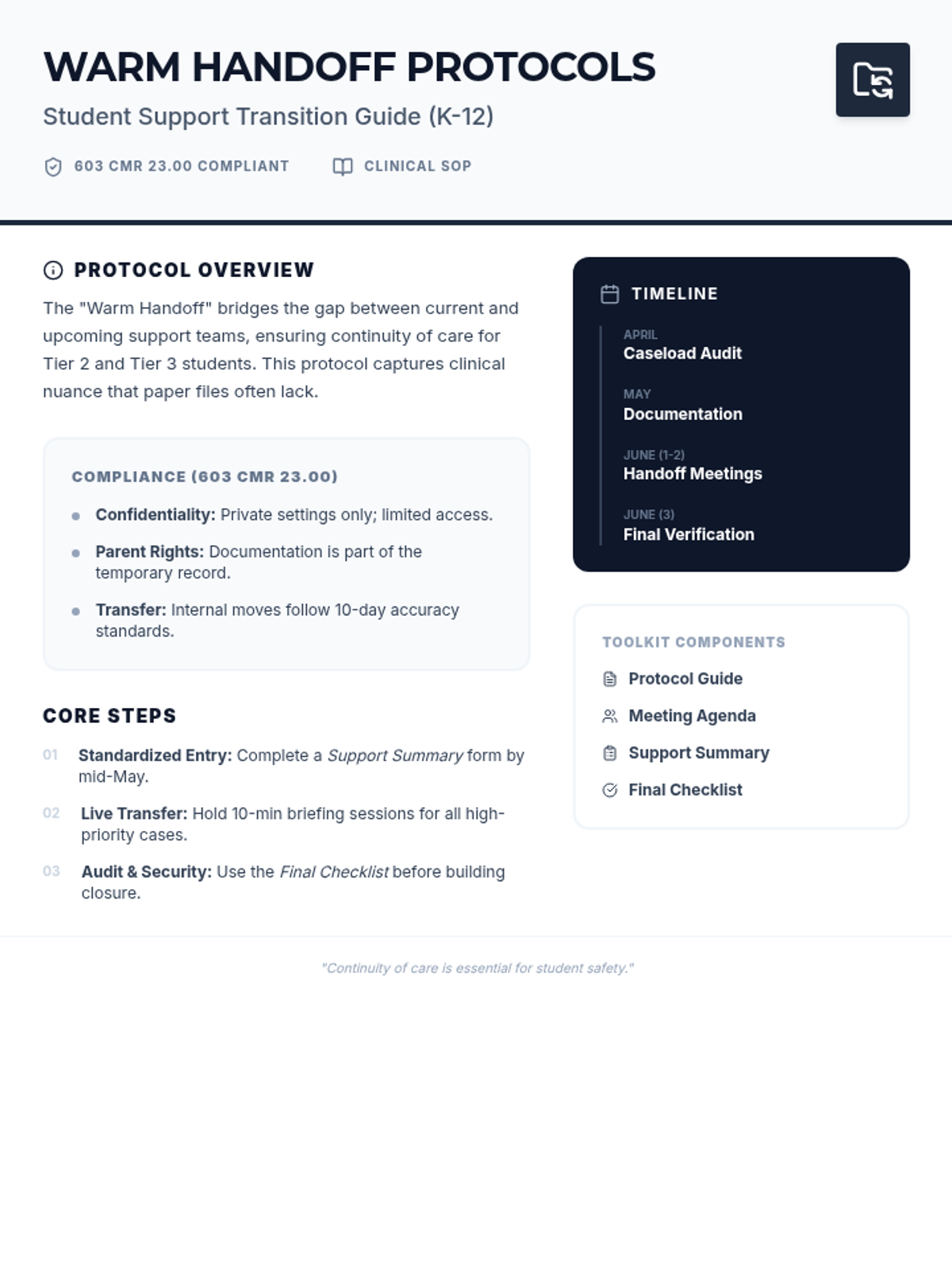
The foundational guide for the Warm Handoff protocol, detailing purpose, a detailed end-of-year timeline, and alignment with Massachusetts student record regulations (603 CMR 23.00). Now optimized for single-page printing.
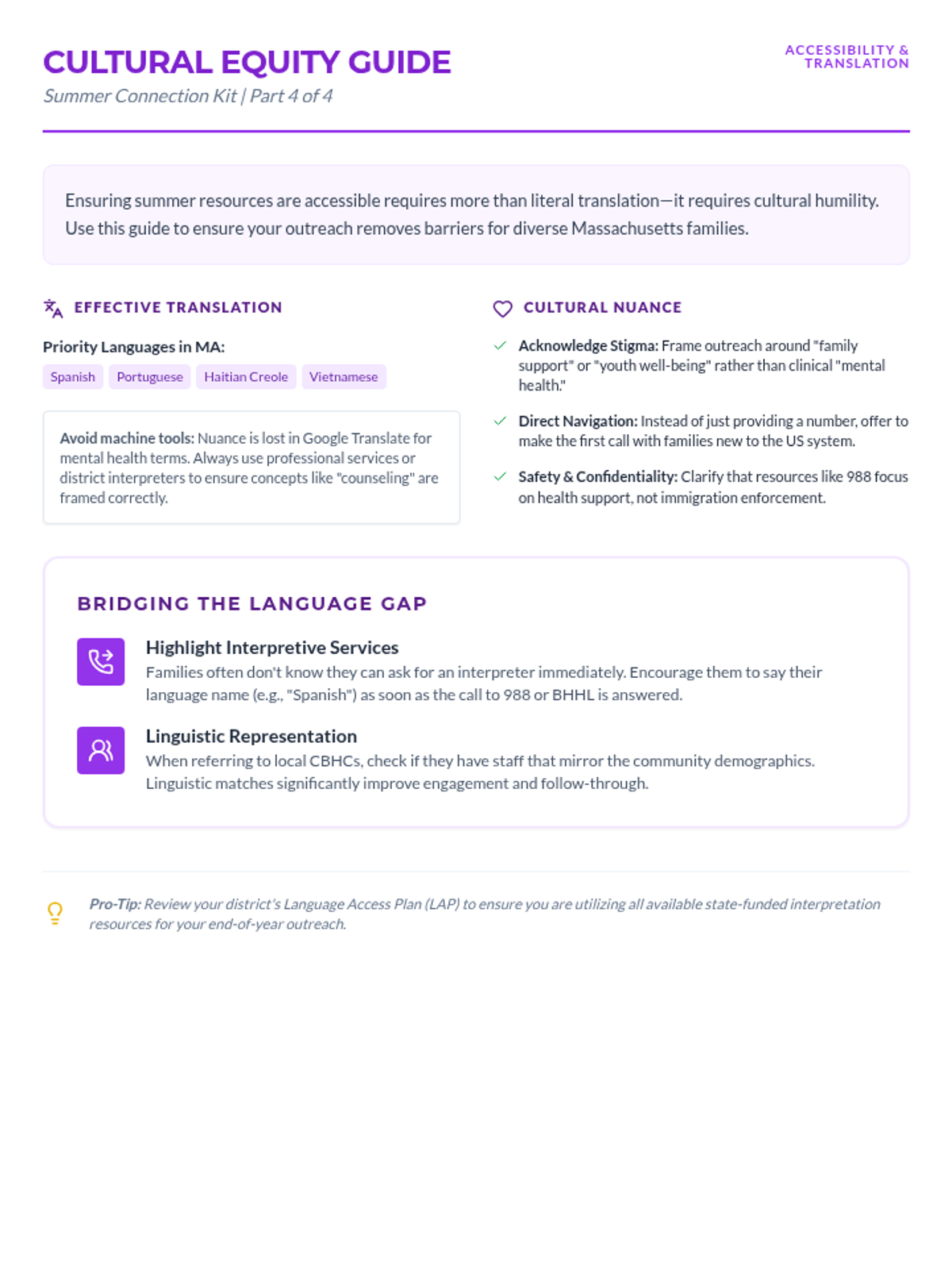
A guide for school counselors on cultural responsiveness, translation best practices, and ensuring equitable access to summer resources for diverse Massachusetts families.
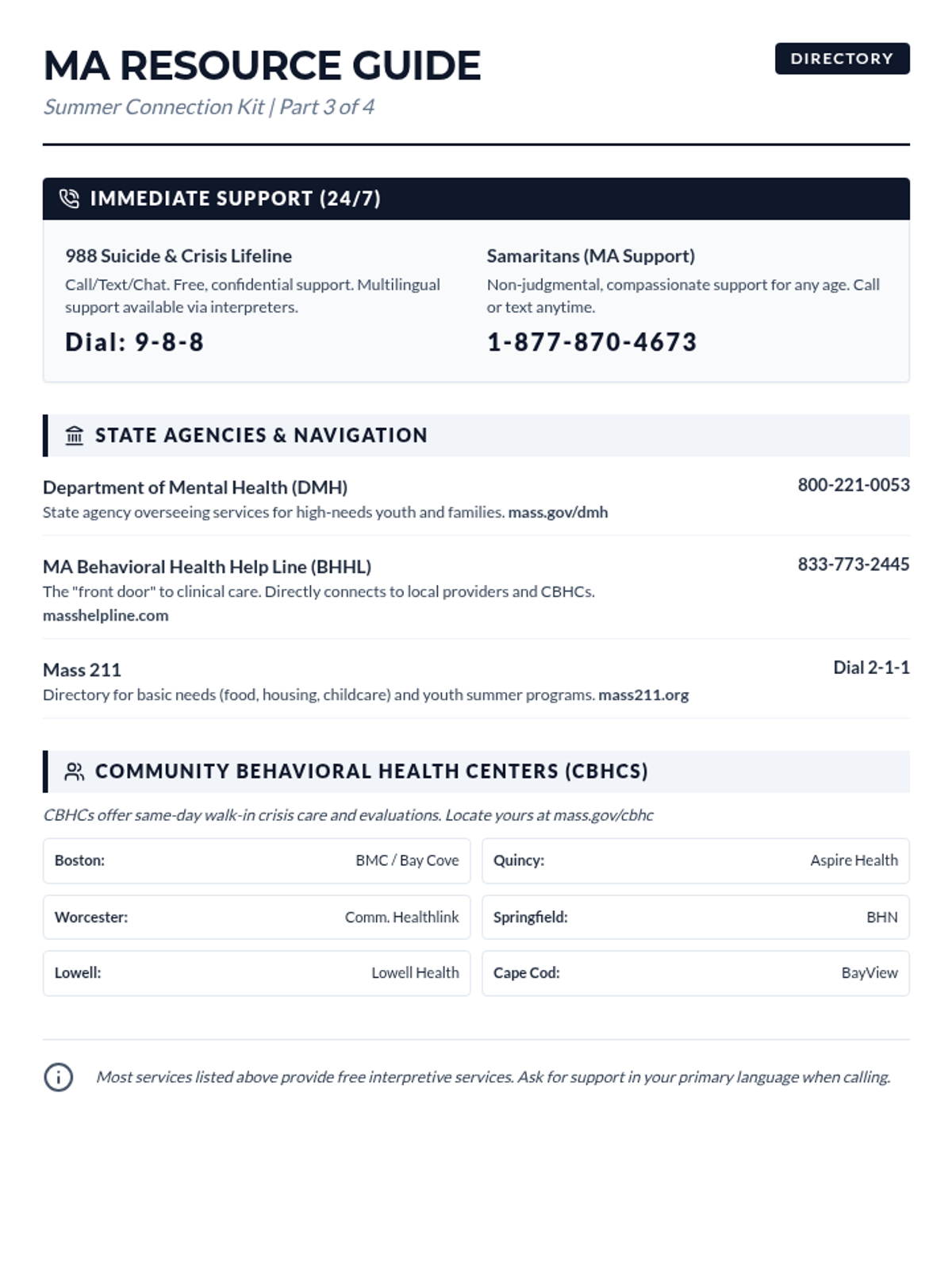
A comprehensive directory of Massachusetts-specific mental health and community resources, including crisis lines, navigation services, and summer programs.
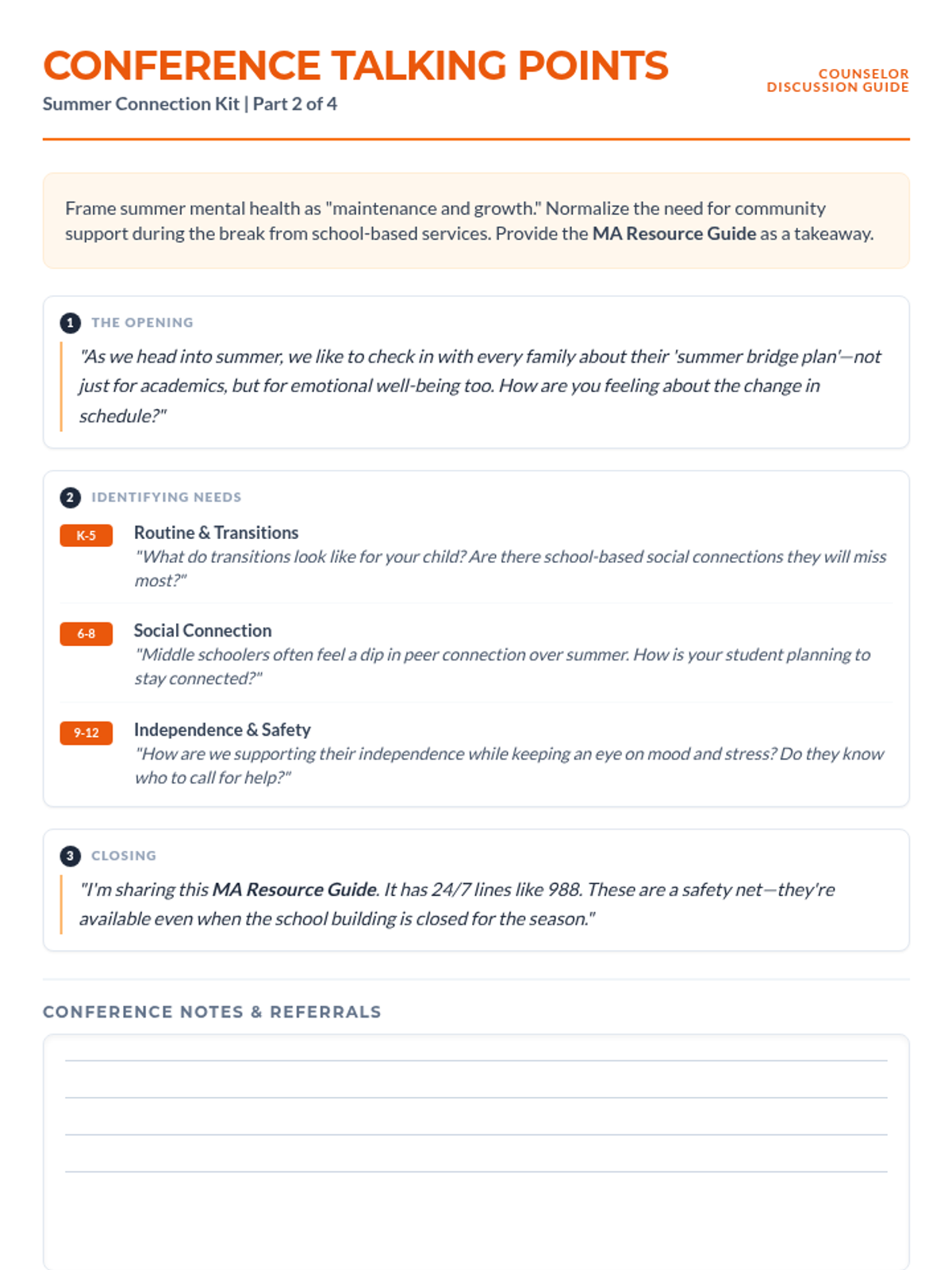
A discussion guide for school counselors featuring grade-specific prompts and framing strategies for end-of-year family conferences.
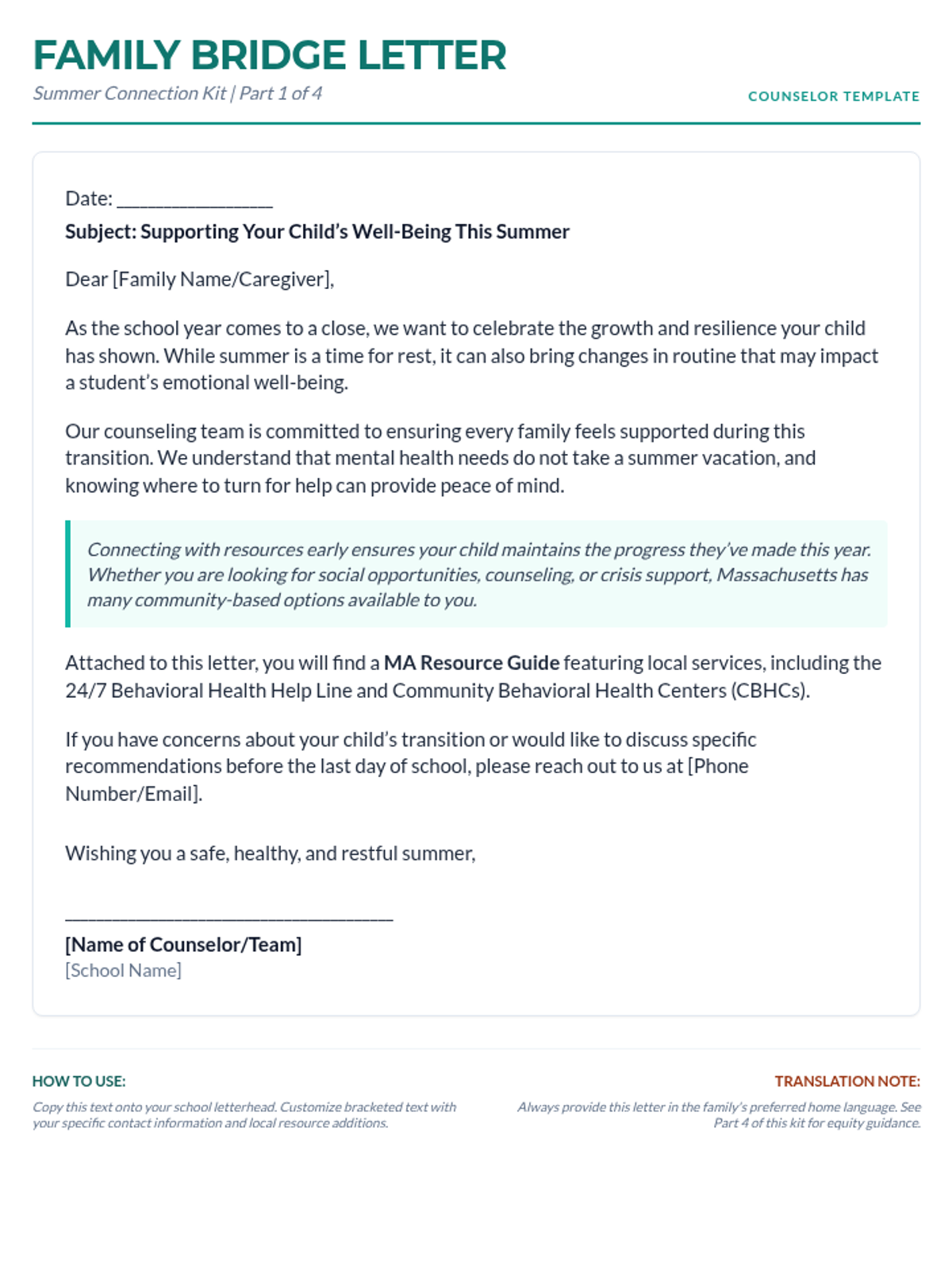
A customizable template letter for school counselors to send to families, outlining the importance of summer mental health and introducing the resource directory.
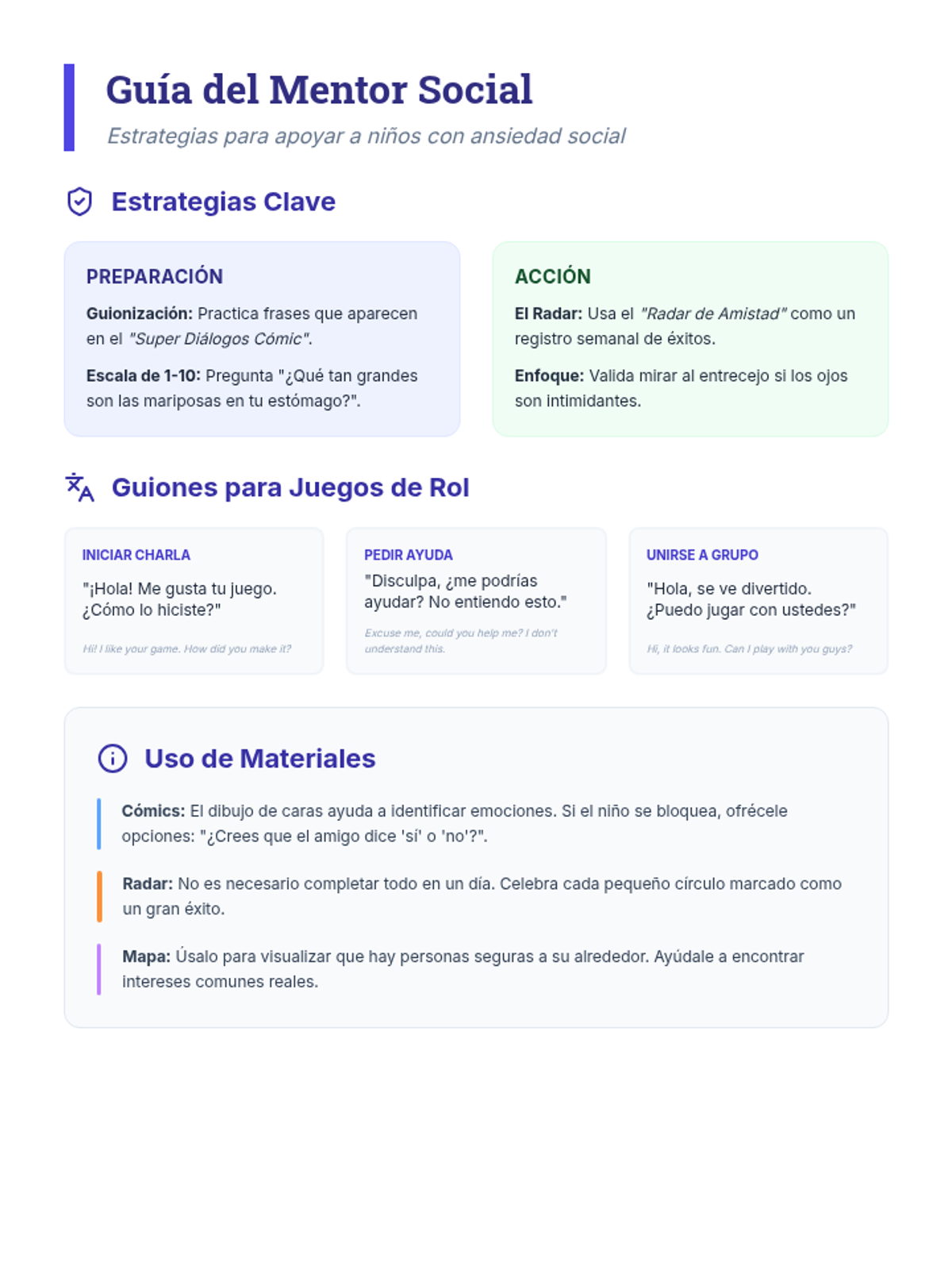
Una guía para maestros y padres con estrategias para la ansiedad, guiones de práctica en español y sugerencias para usar las hojas de actividades.
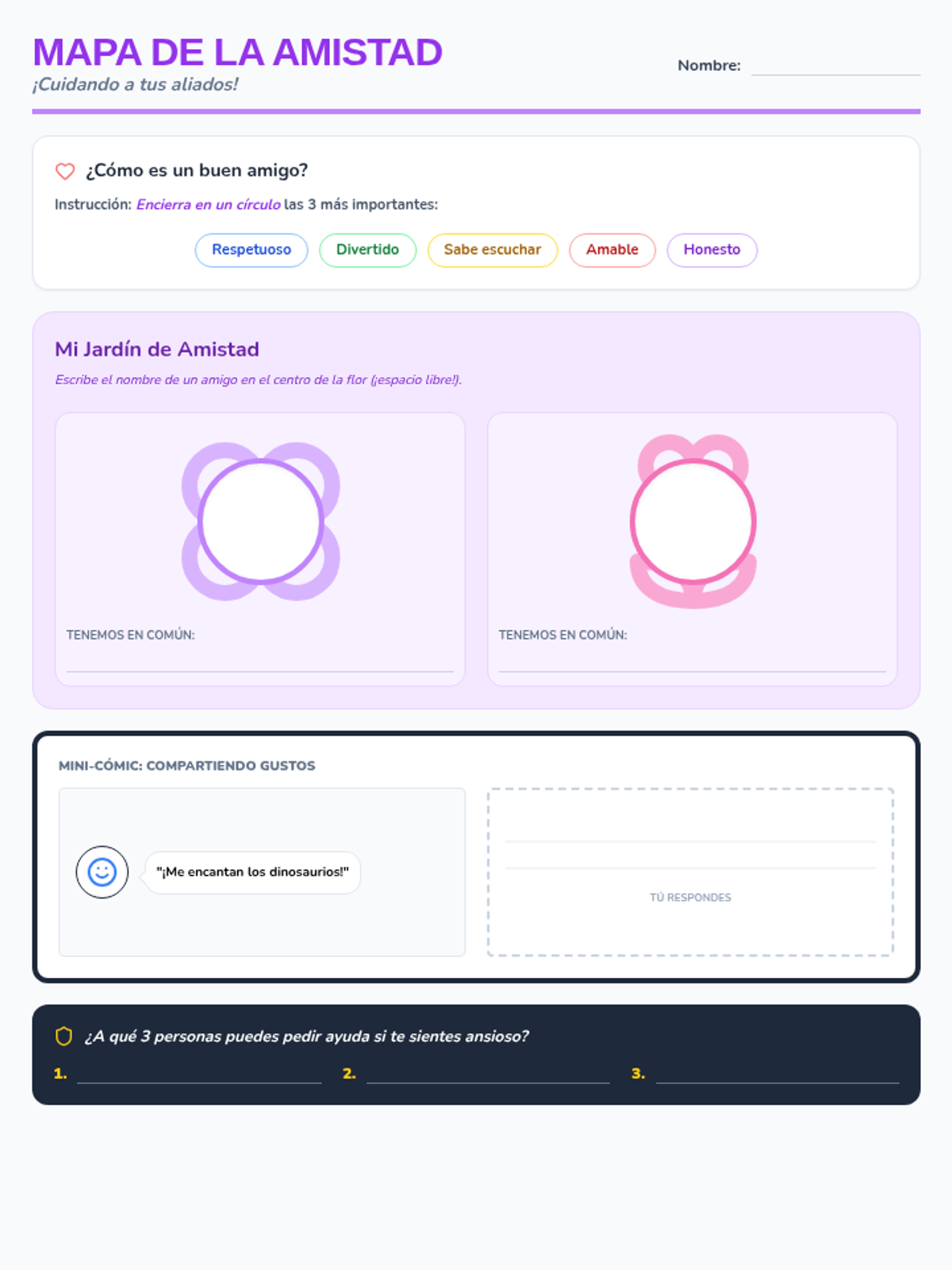
Una hoja de trabajo para identificar cualidades de la amistad, intereses comunes y redes de apoyo para niños de 10 años en español.
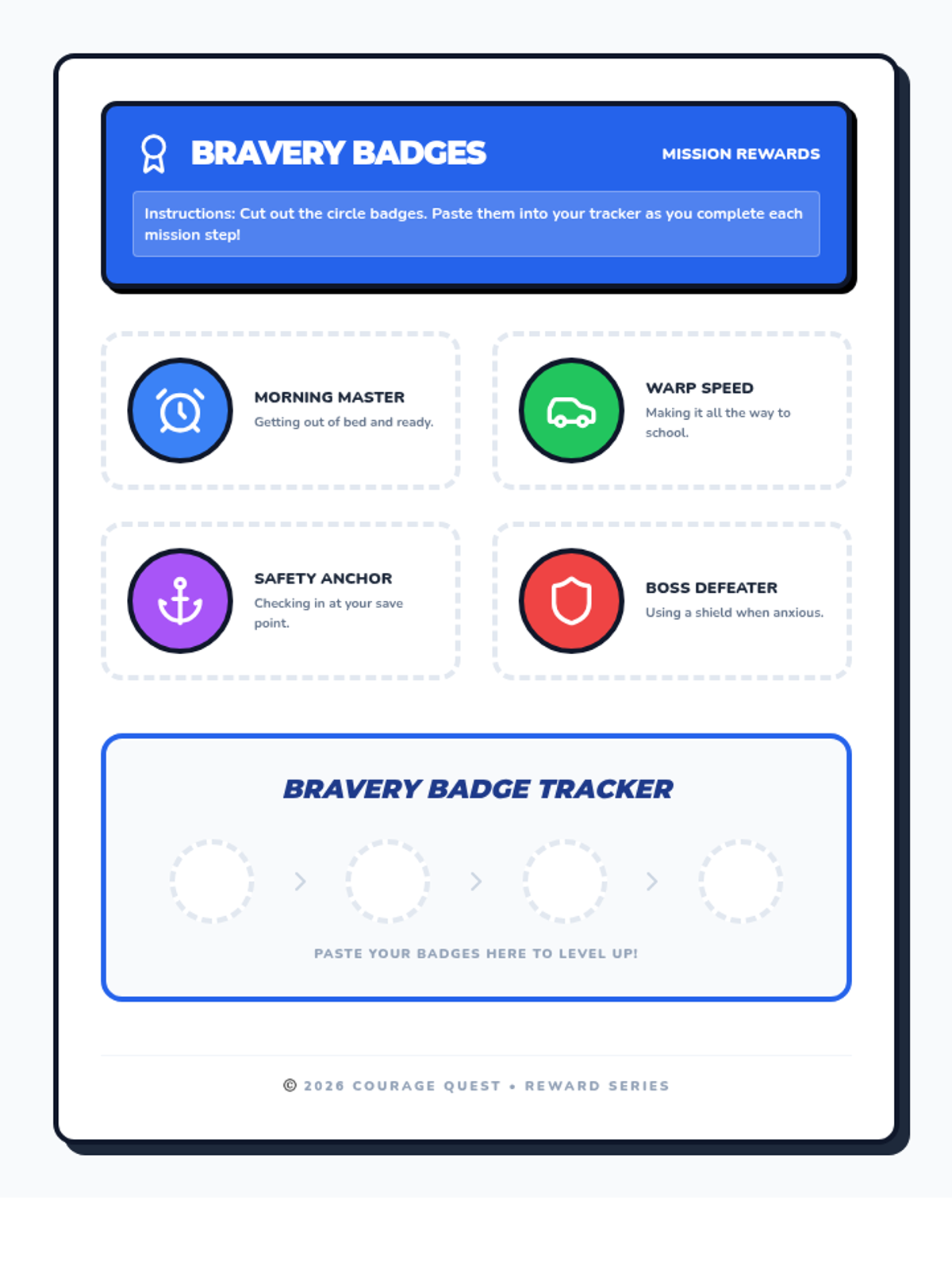
An RPG-themed reward system for 10-year-olds facing school refusal. It includes four printable 'Bravery Badges' and a tracker sheet that allows students to visualize and celebrate small successful steps toward school attendance and anxiety management. Revised for printer-friendliness.
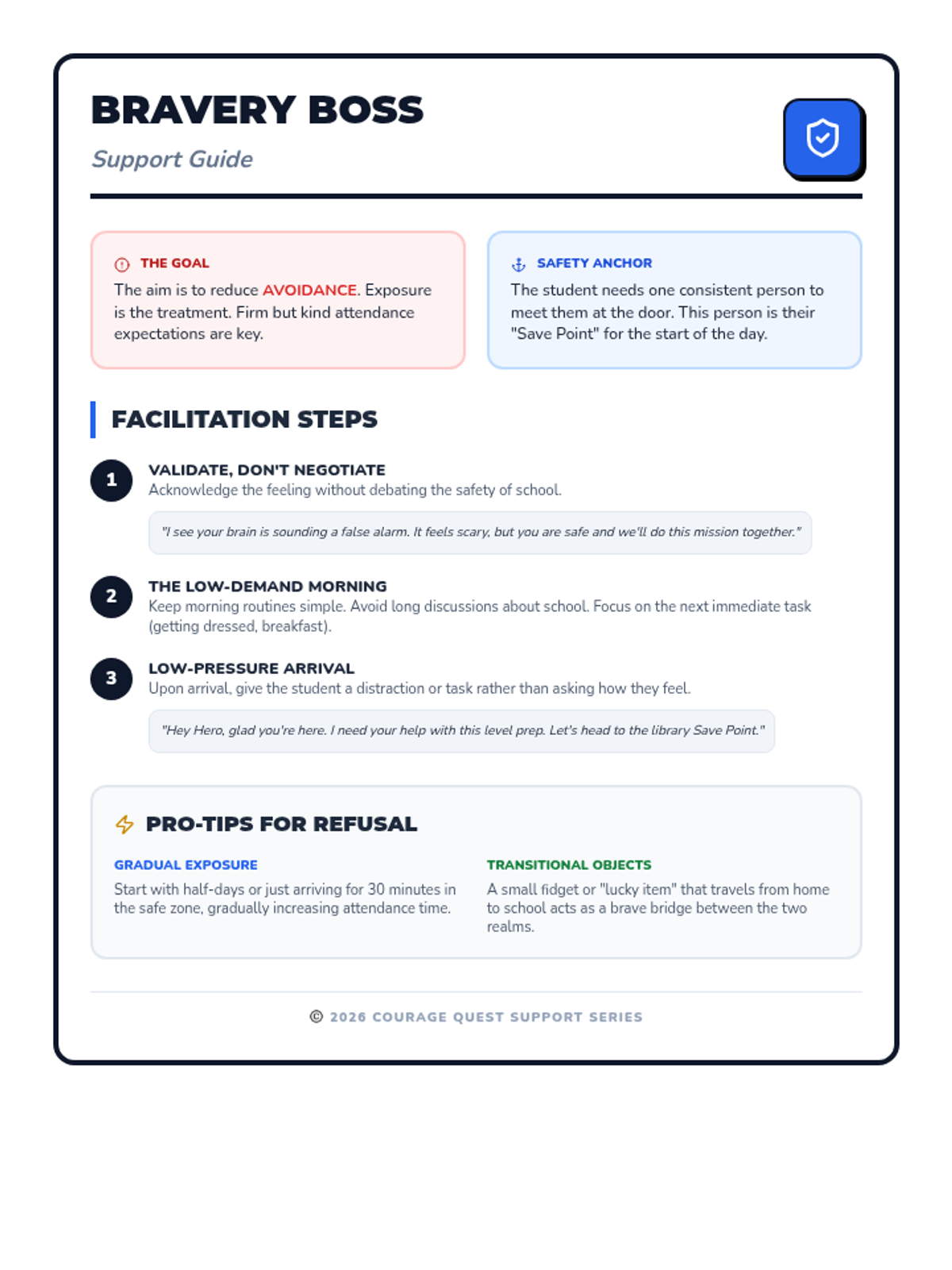
A facilitation guide for teachers and parents to support 10-year-olds experiencing school refusal. It provides evidence-based strategies for reducing avoidance, creating 'Safety Anchors' at school, and using a 'Low-Demand' morning routine to facilitate a successful return to the classroom. Revised for better page layout.
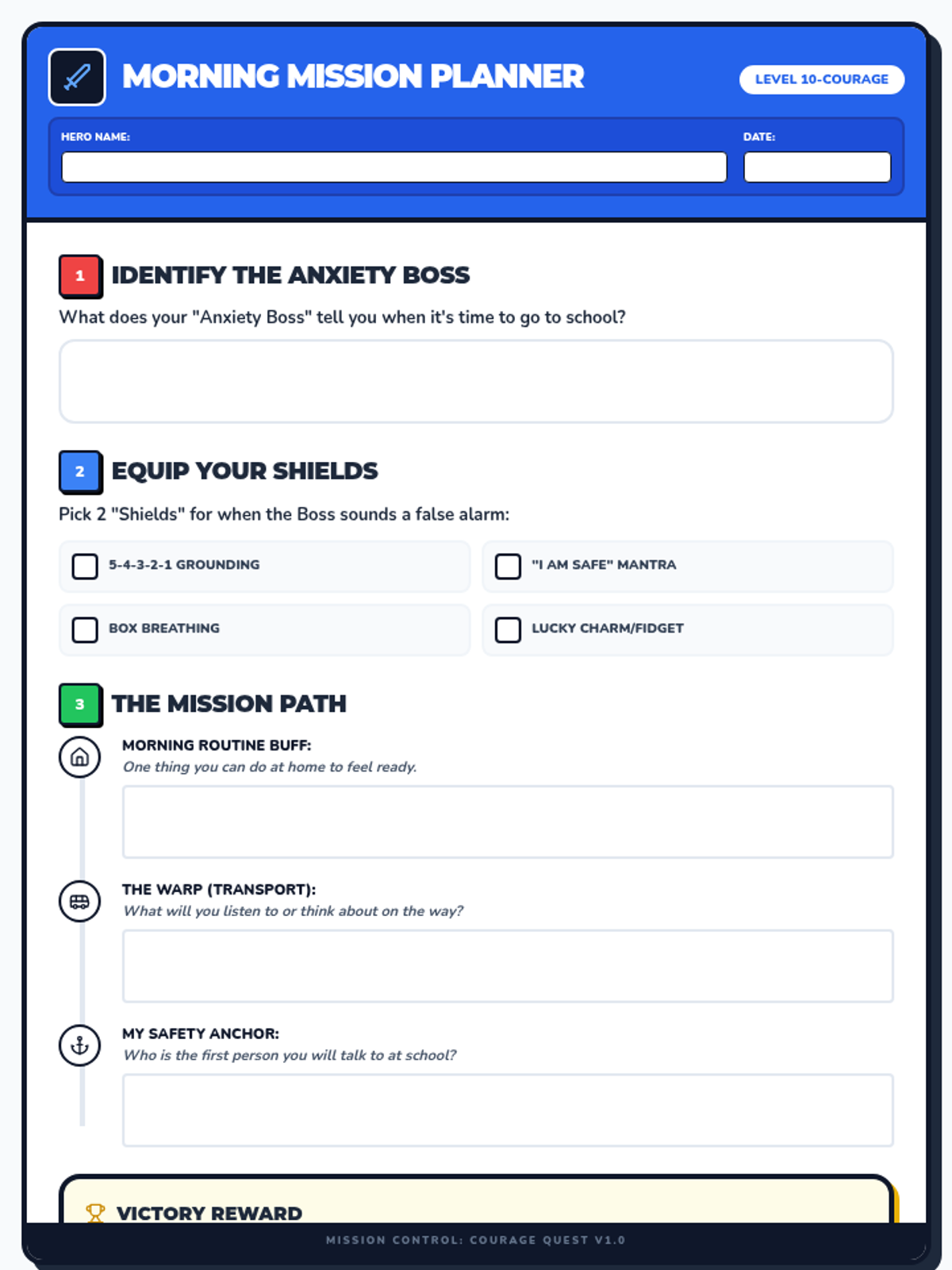
An RPG-themed 'Morning Mission Planner' for 10-year-olds experiencing school anxiety and refusal. It helps students identify anxious thoughts (the 'Boss'), select coping strategies ('Shields'), plan their morning transition, and identify a 'Safety Anchor' at school to facilitate a successful return to the classroom. Revised for better layout and handwriting space.
A set of 6 instructional slides for 10-year-olds facing school anxiety. Using an RPG/Gaming theme, the slides explain anxiety as a 'False Alarm Boss', the cycle of avoidance, and provides specific 'Shields' (coping strategies) and 'Morning Mission' steps to help students return to school with confidence.
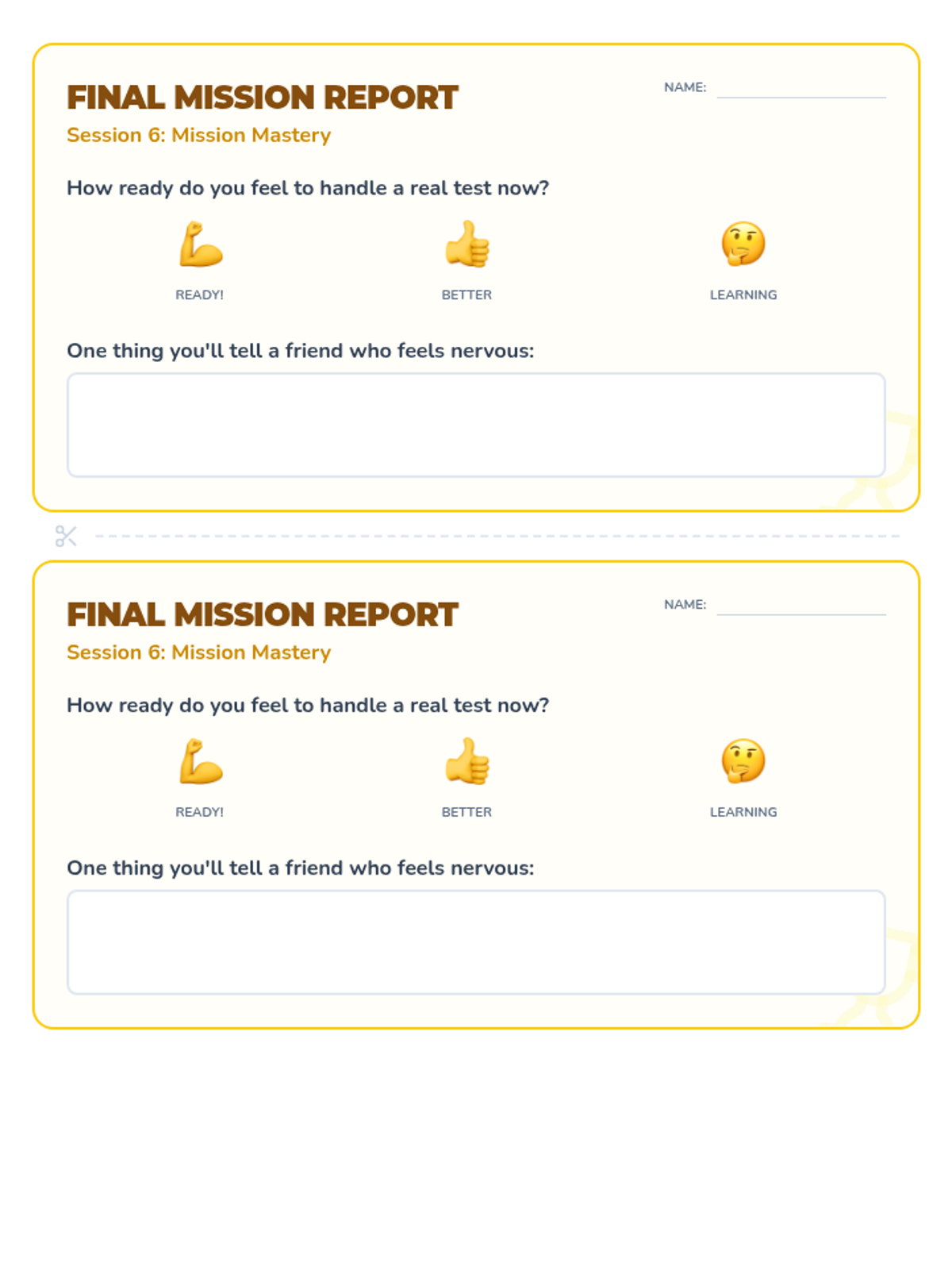
The final exit ticket for the curriculum. Fixed page overflow, increased handwriting space, and improved field alignment.
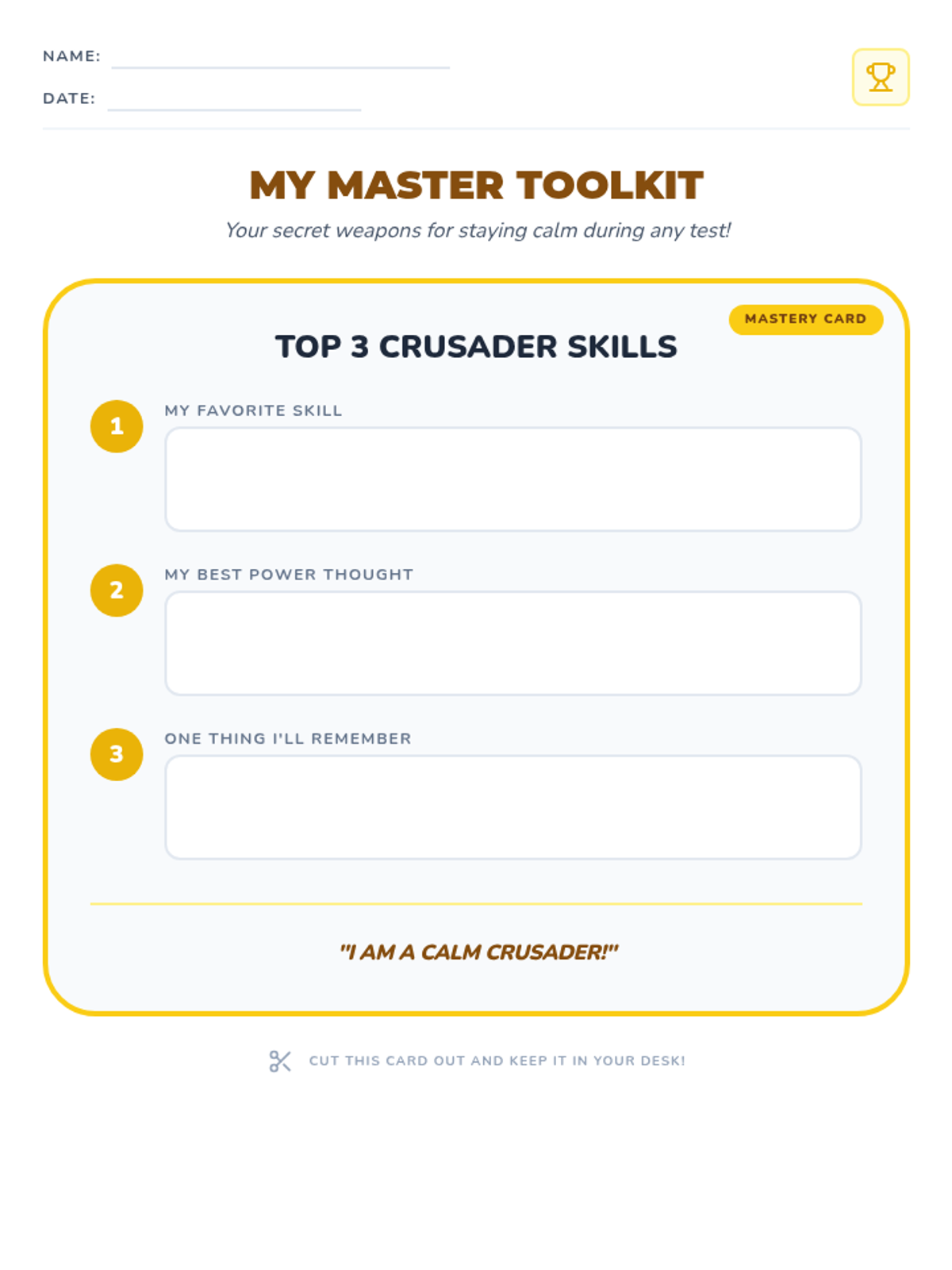
A summary reference card for students. Increased handwriting box heights and integrated the mastery badge into the card design for better preservation.
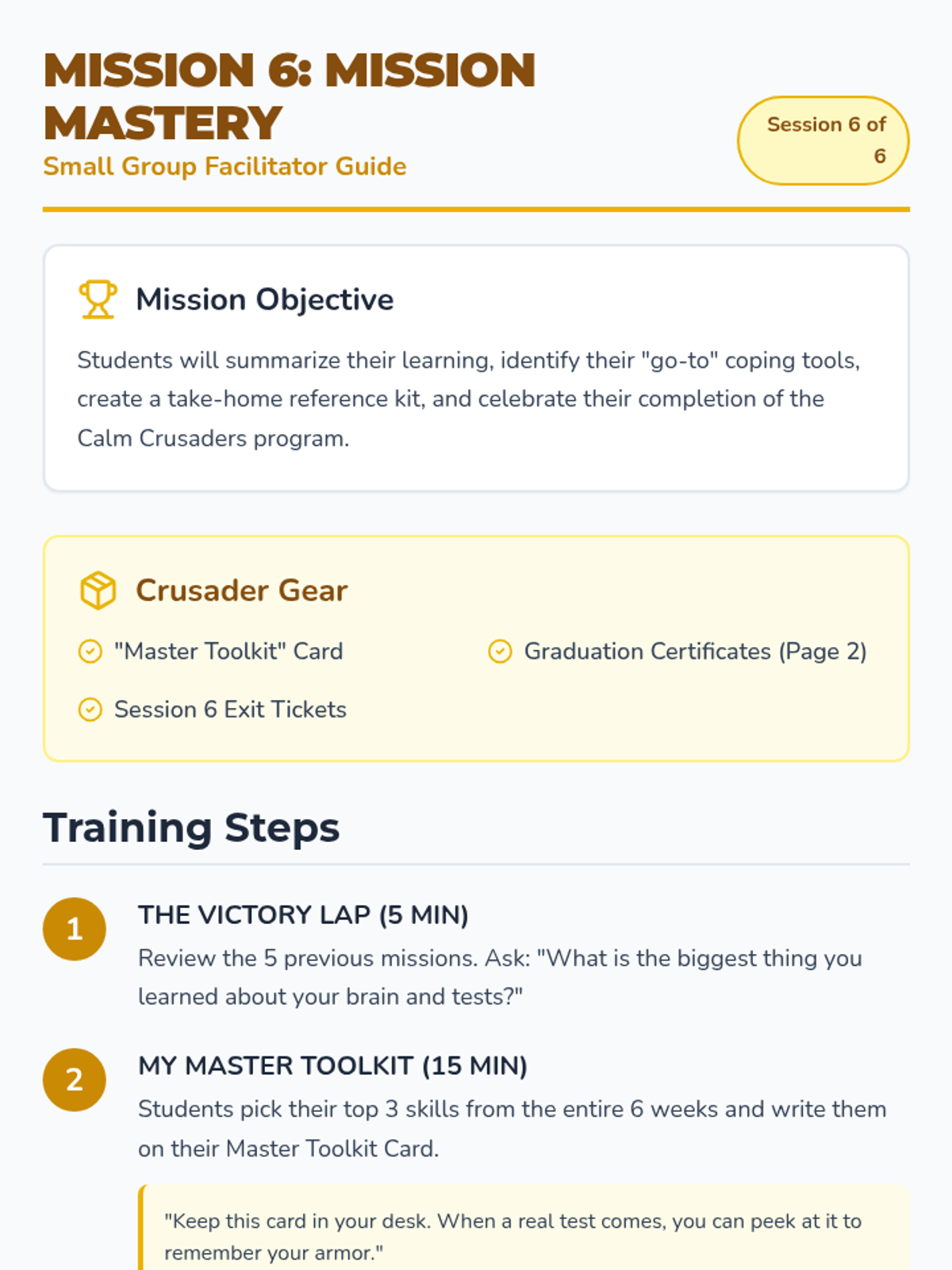
Facilitator guide for Session 6. Added a professional Calm Crusader completion certificate template and fixed page break issues.
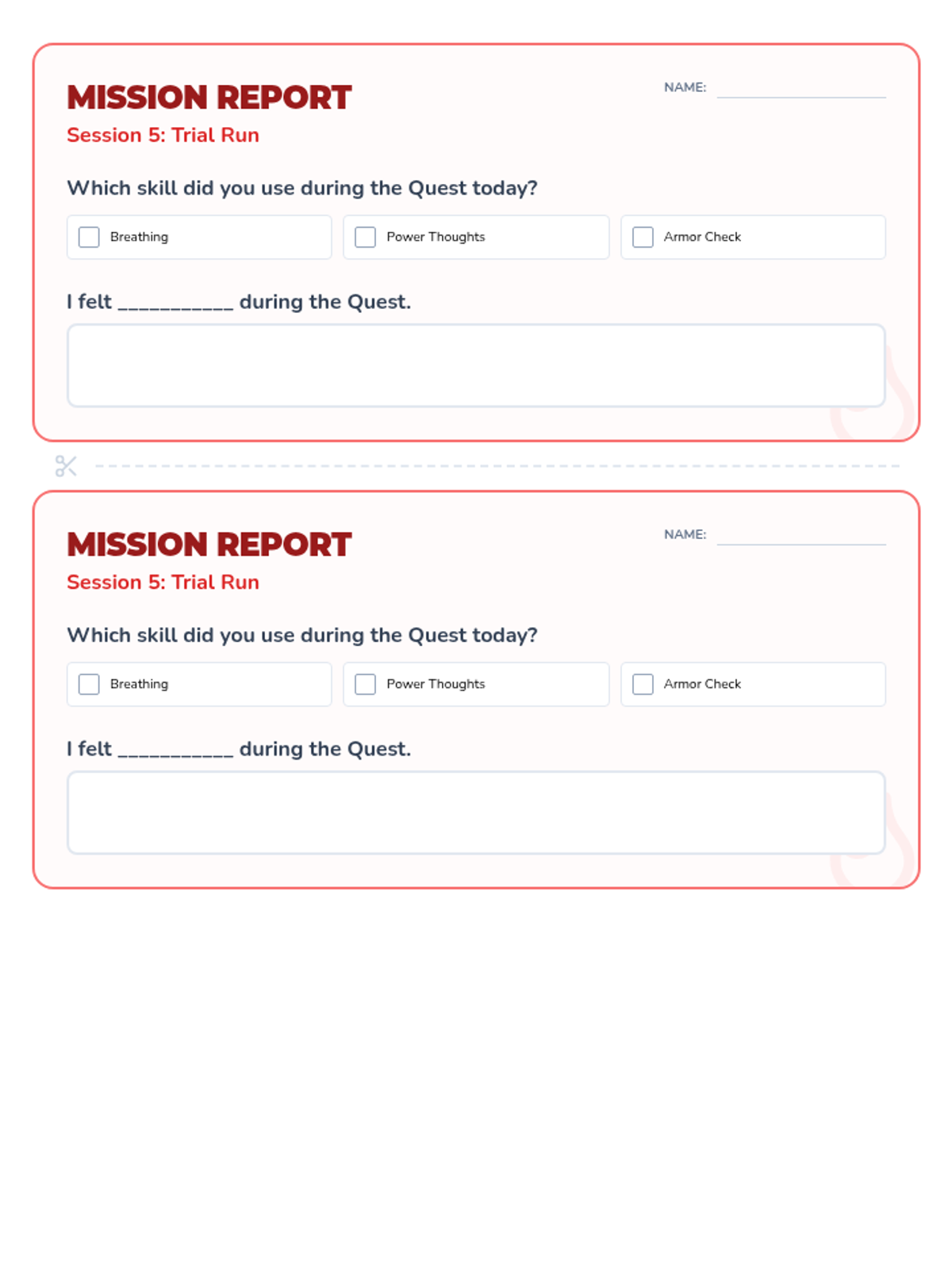
Session 5 exit ticket. Fixed page overflow, increased handwriting space, and improved name field positioning.
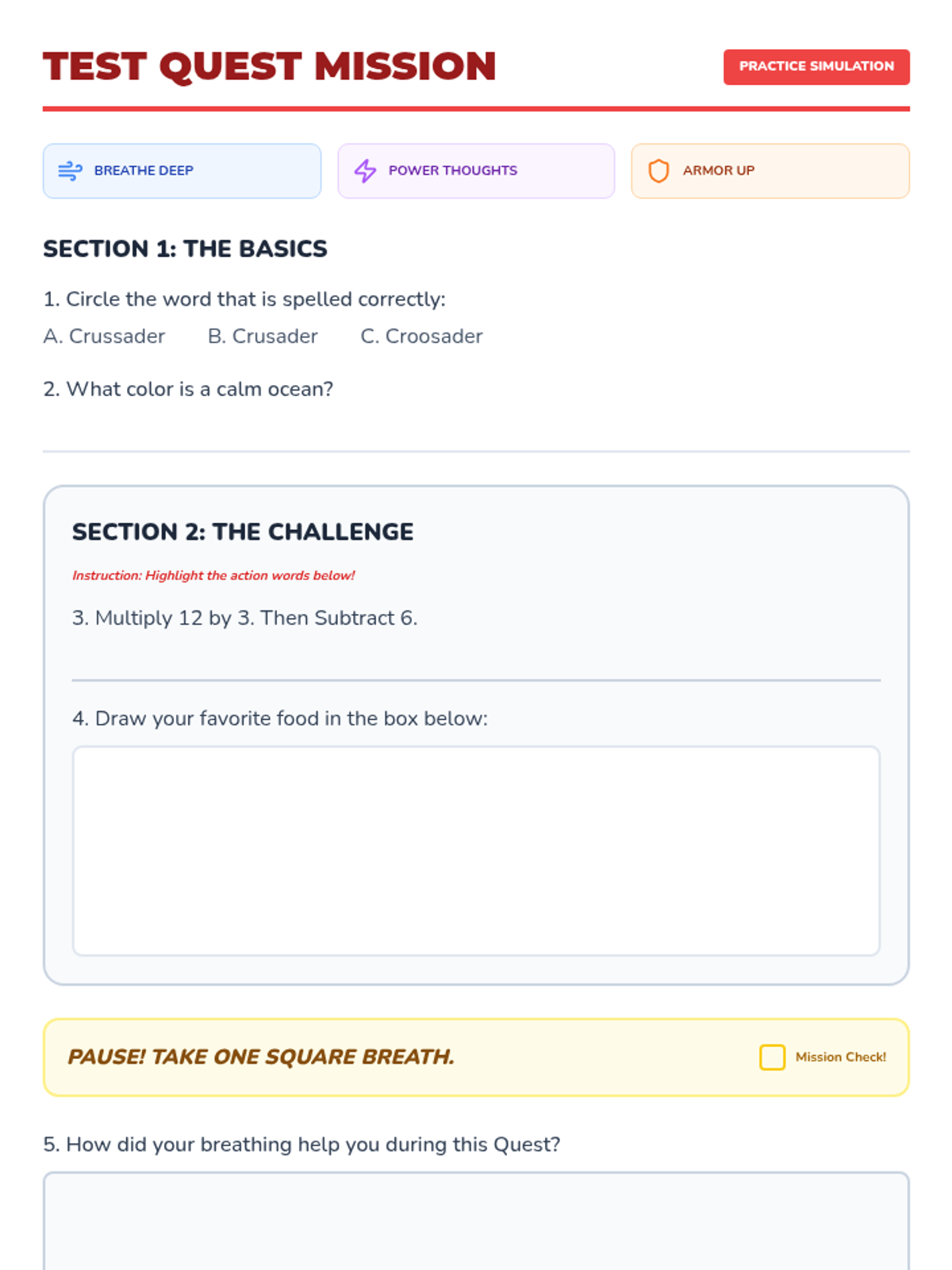
A low-stakes mock test simulation. Updated with math word problems and specific triggers to practice coping strategies. Fixed layout to fit on one page and added a work space for calculation.
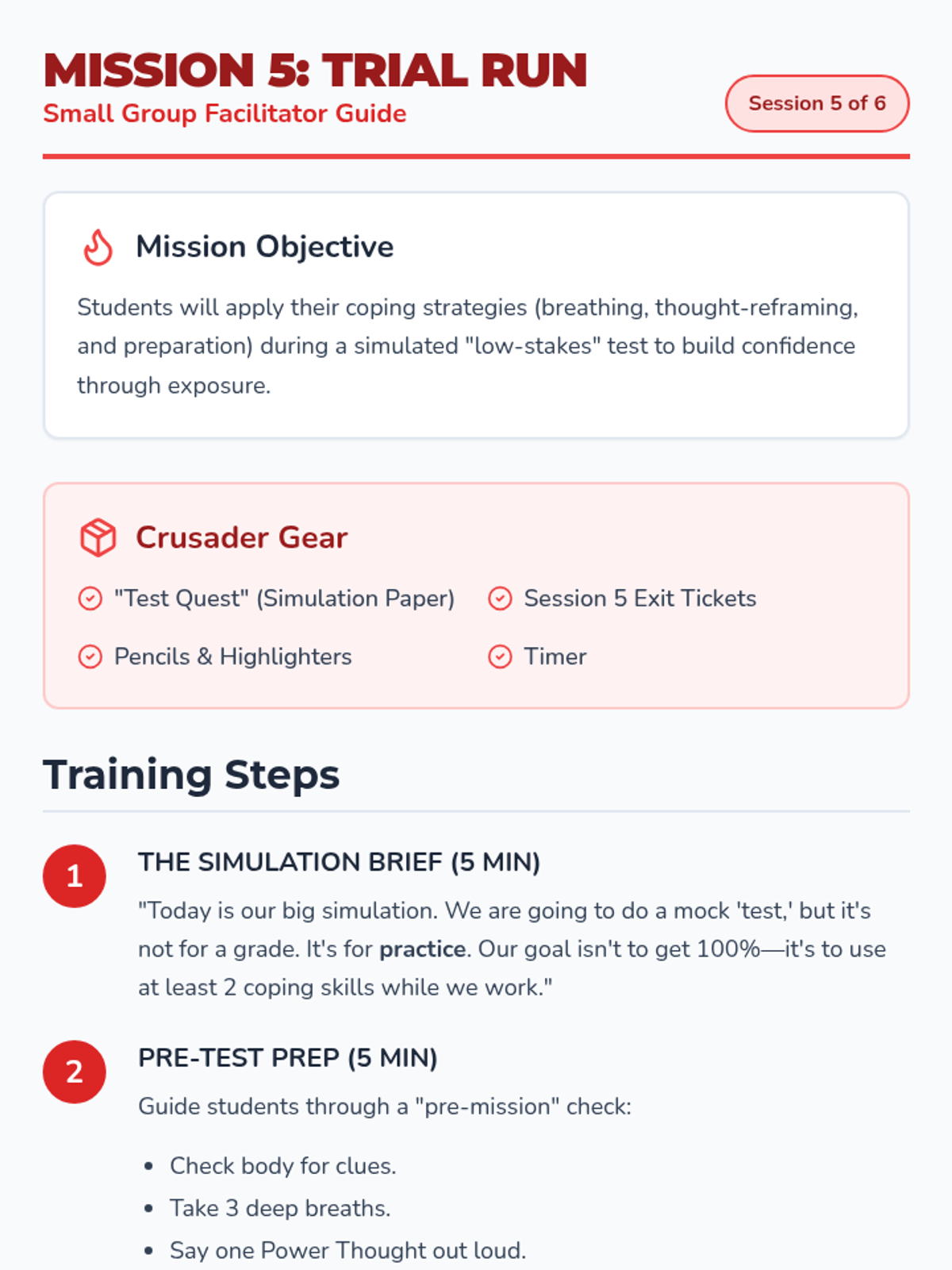
Facilitator guide for Session 5. Fixed page break issues.
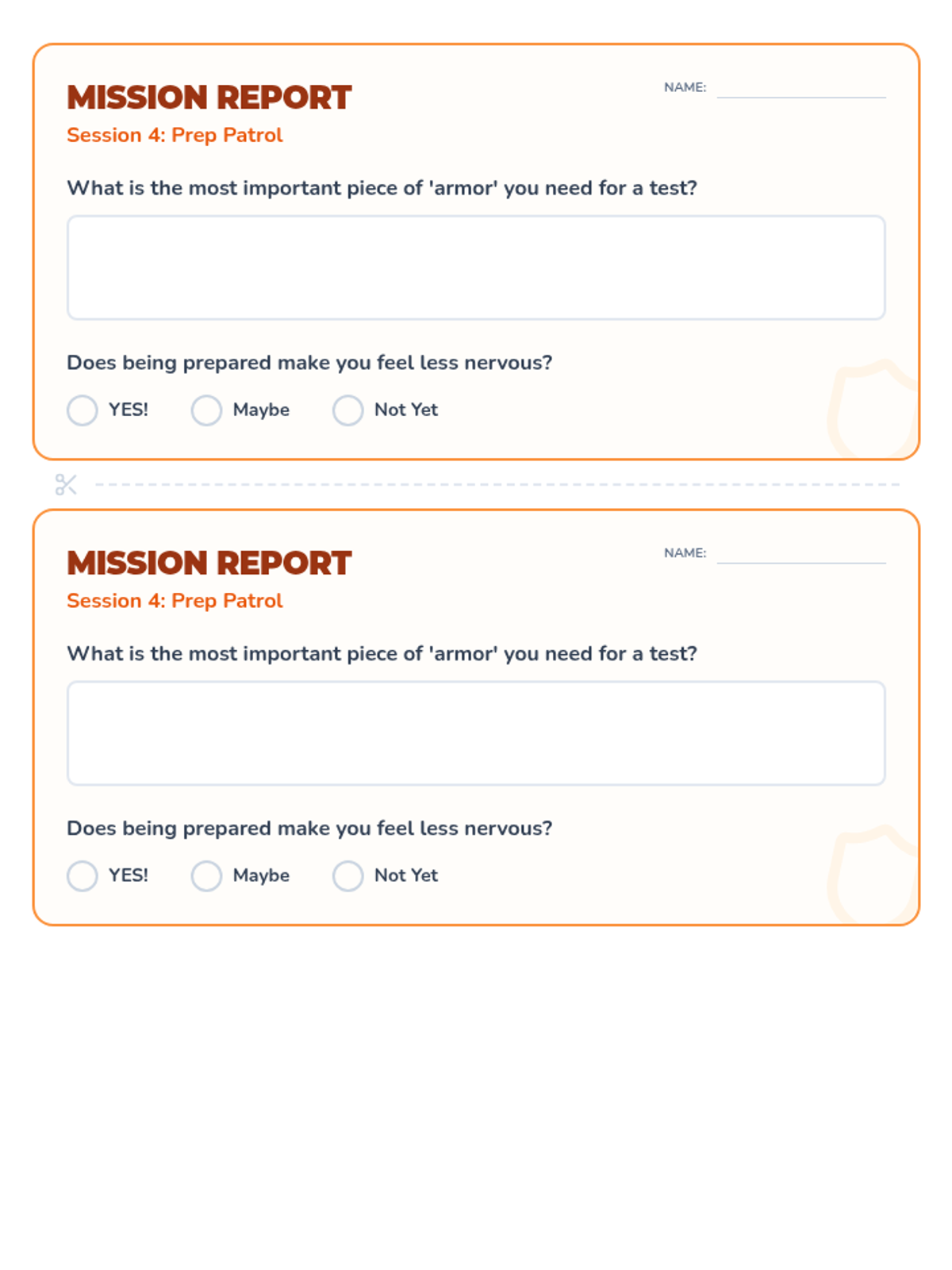
Session 4 exit ticket. Fixed page overflow, standardized radio button styling, and increased handwriting space.
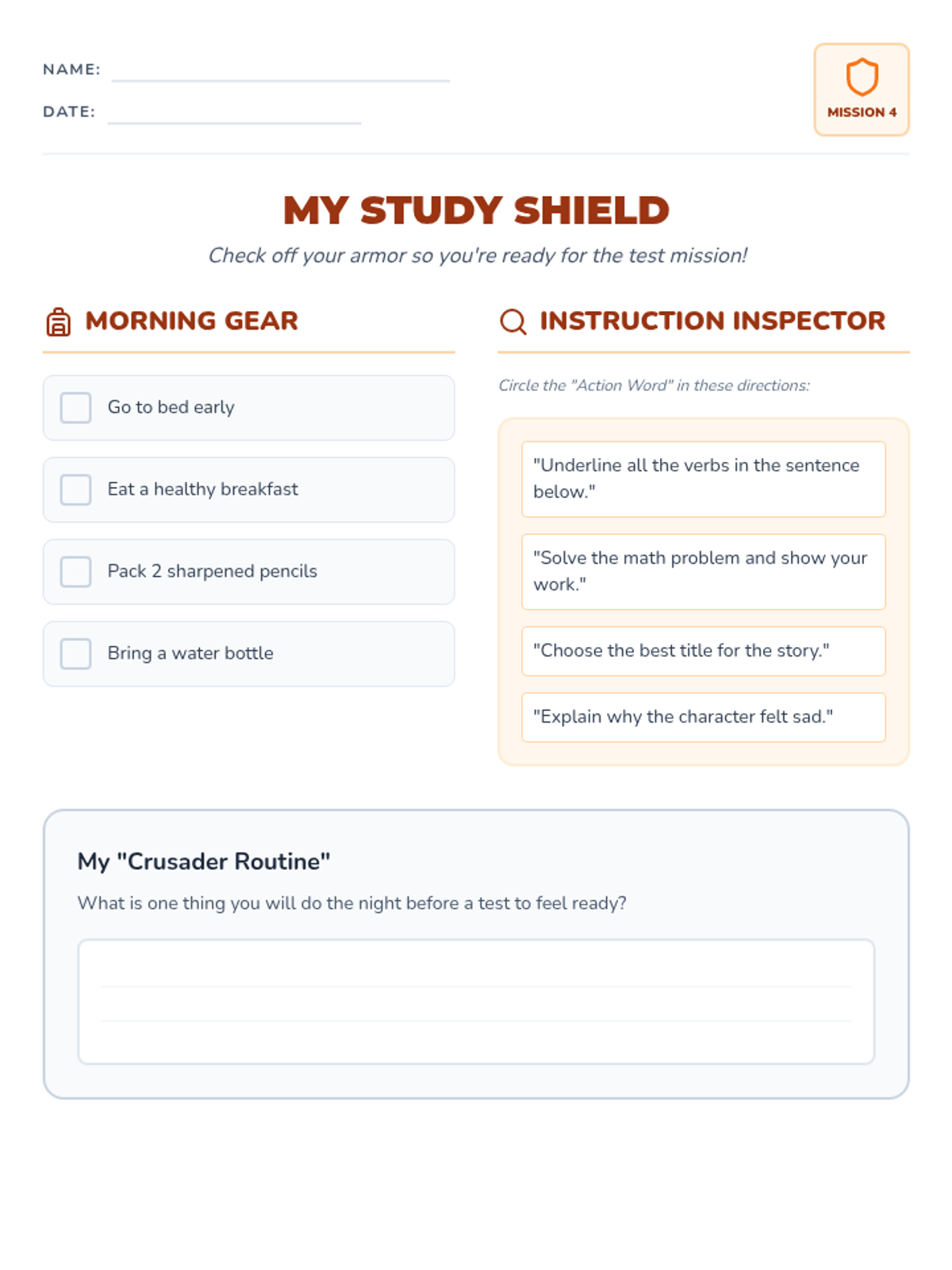
A preparation checklist and instructional skill-building worksheet. Updated with math-specific action verbs and corrected activity formatting. Fixed spacing and header alignment.
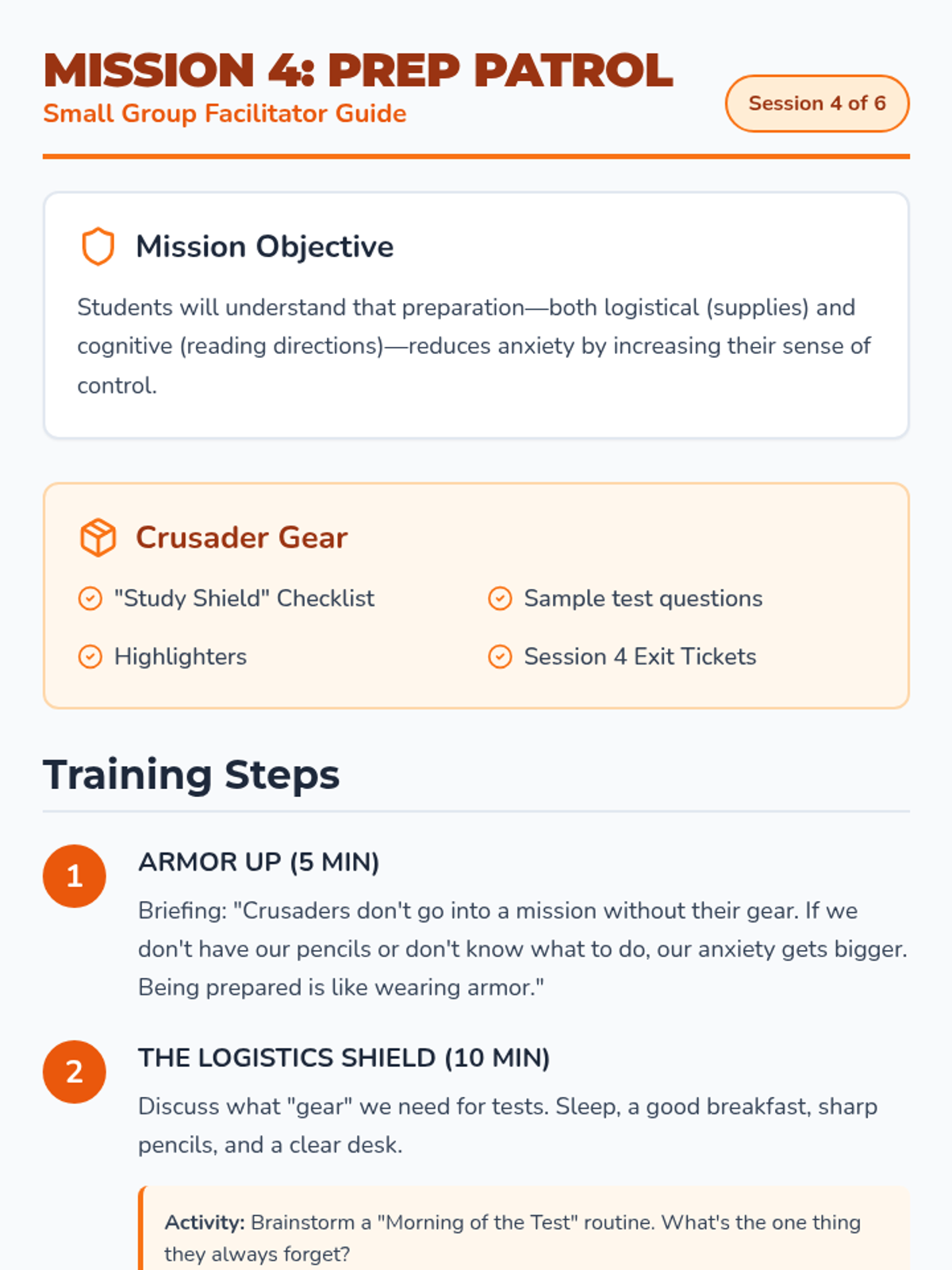
Facilitator guide for Session 4. Fixed page break issues and improved material list alignment.
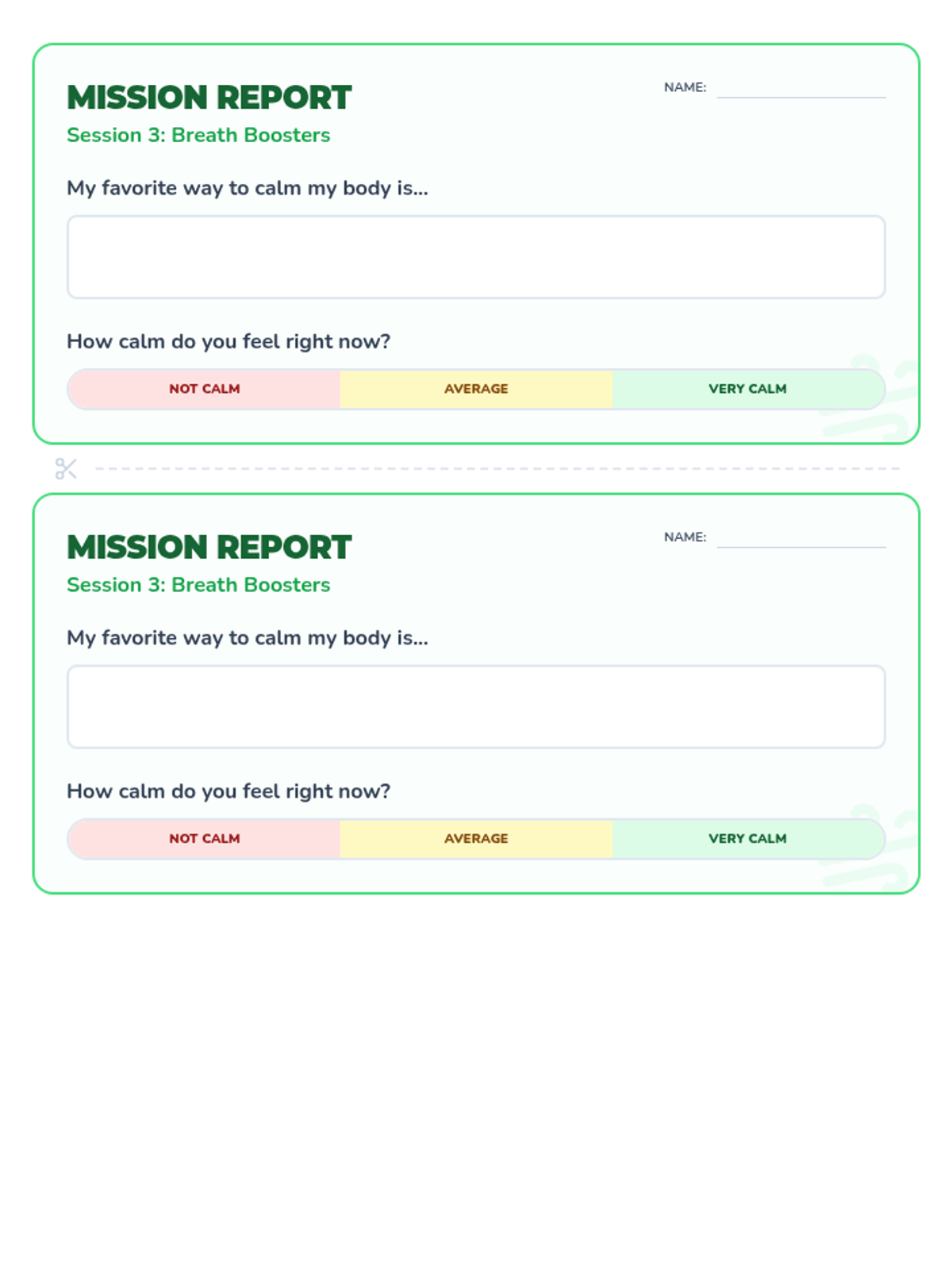
Session 3 exit ticket. Fixed page break issue, increased text contrast, and expanded handwriting area.
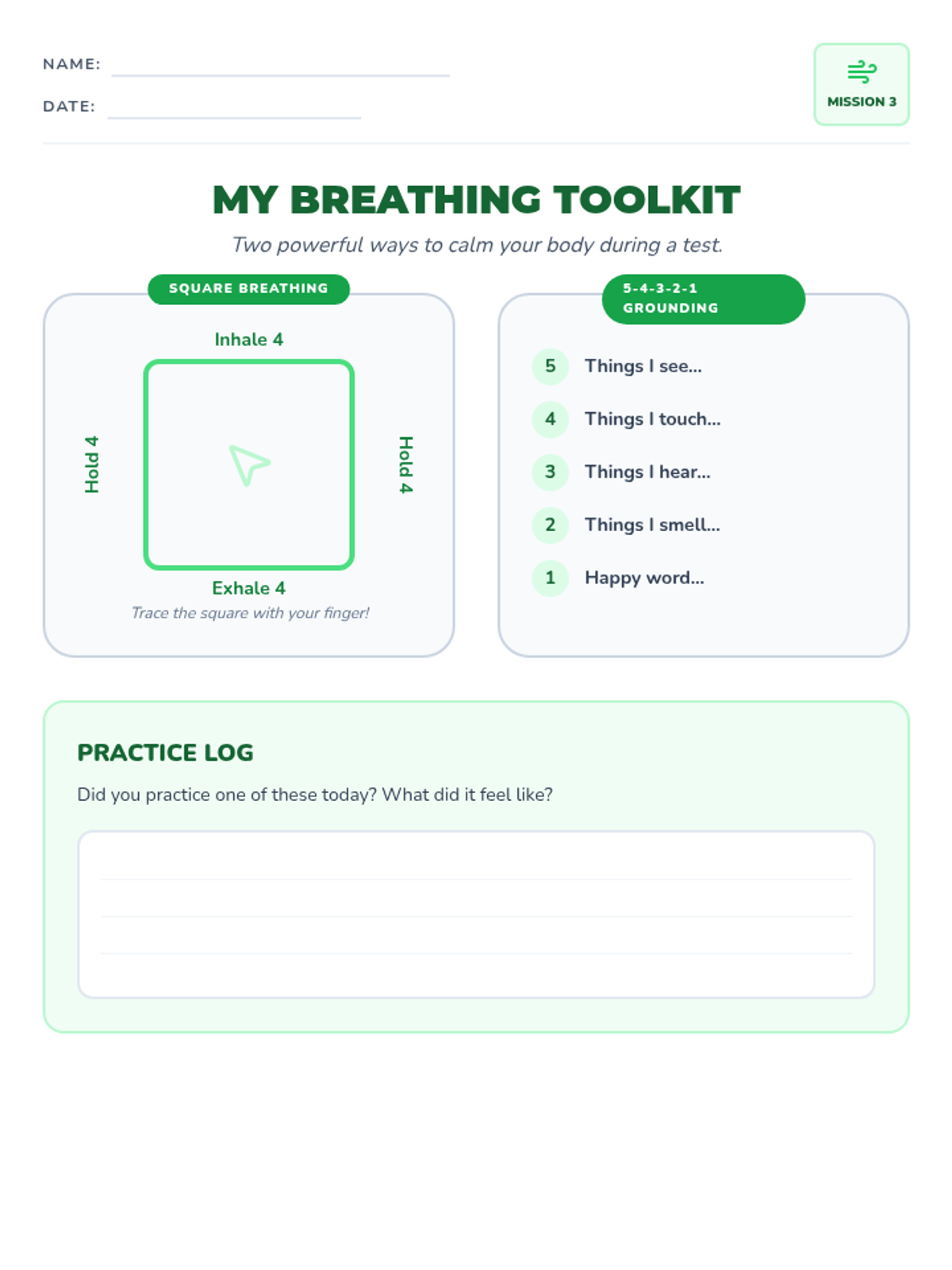
A student reference sheet and practice log. Fixed page overflow, corrected label rotation, and added handwriting lines to the log.
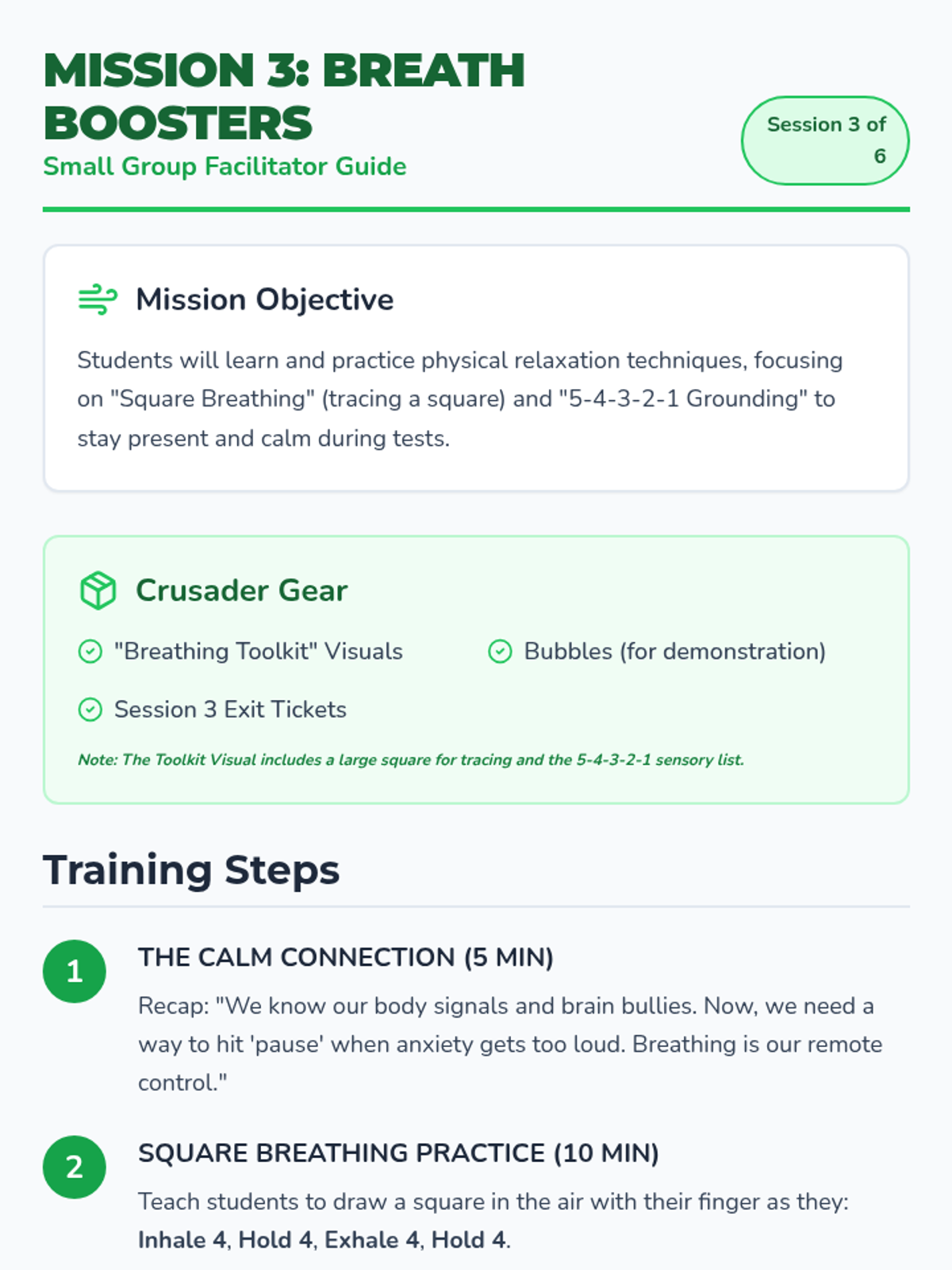
Facilitator guide for Session 3. Fixed page breaks and clarified material descriptions.
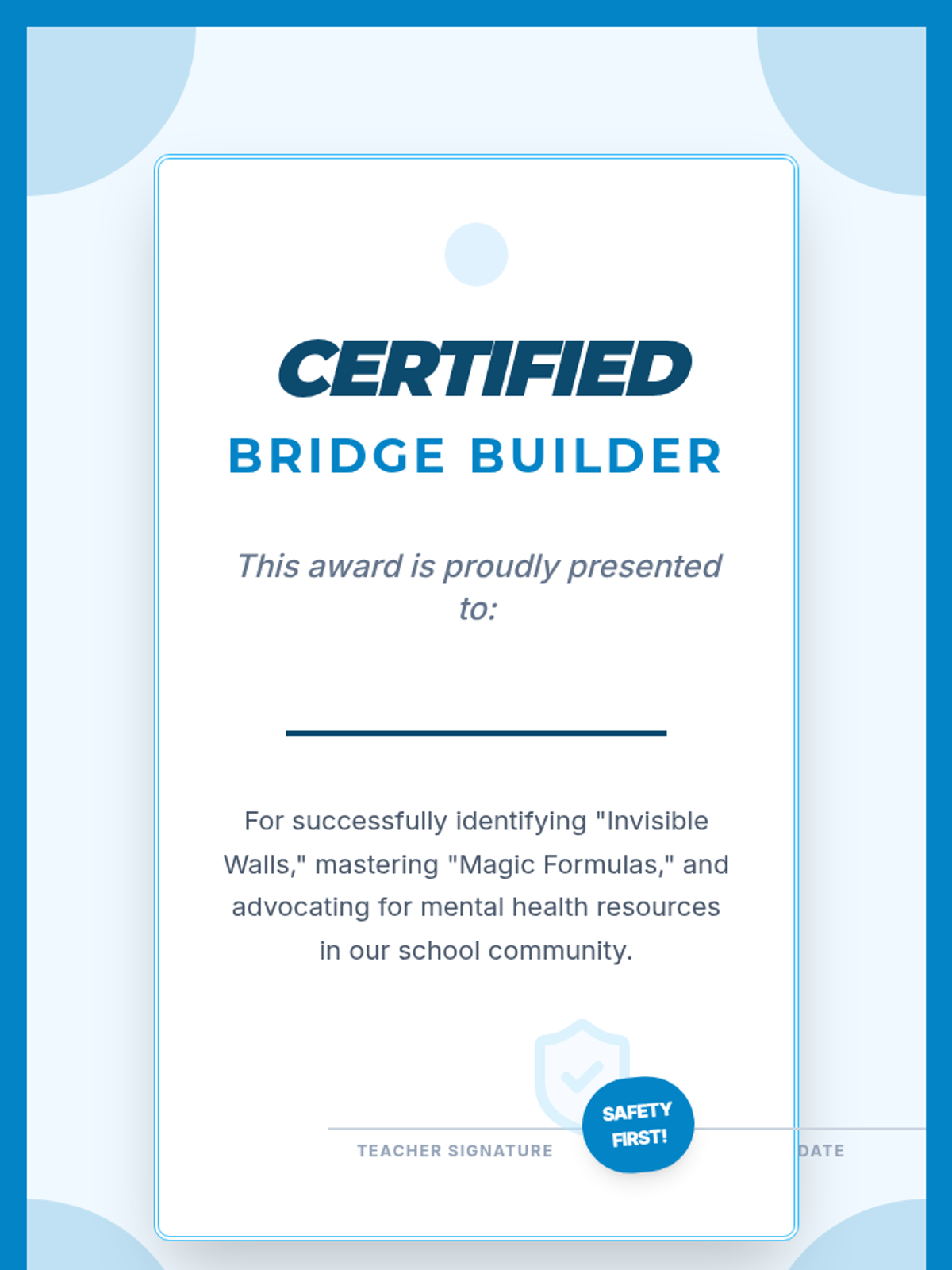
A commemorative award for students who have completed the Bridge Builders sequence, celebrating their advocacy and communication skills.
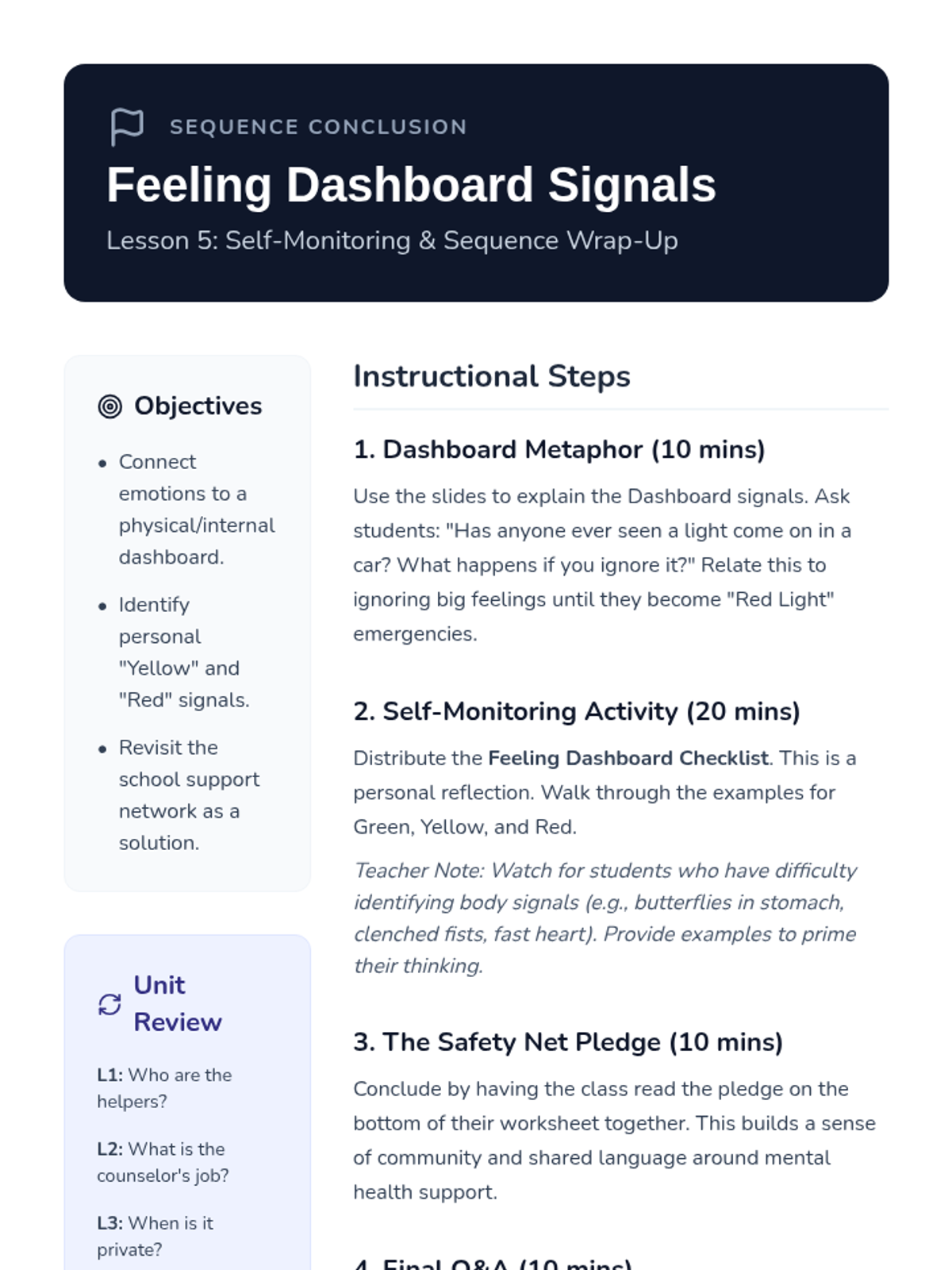
A teacher facilitation guide for Lesson 5, including objectives, instructional steps, and tips for maintaining the "Feeling Dashboard" concept throughout the school year.
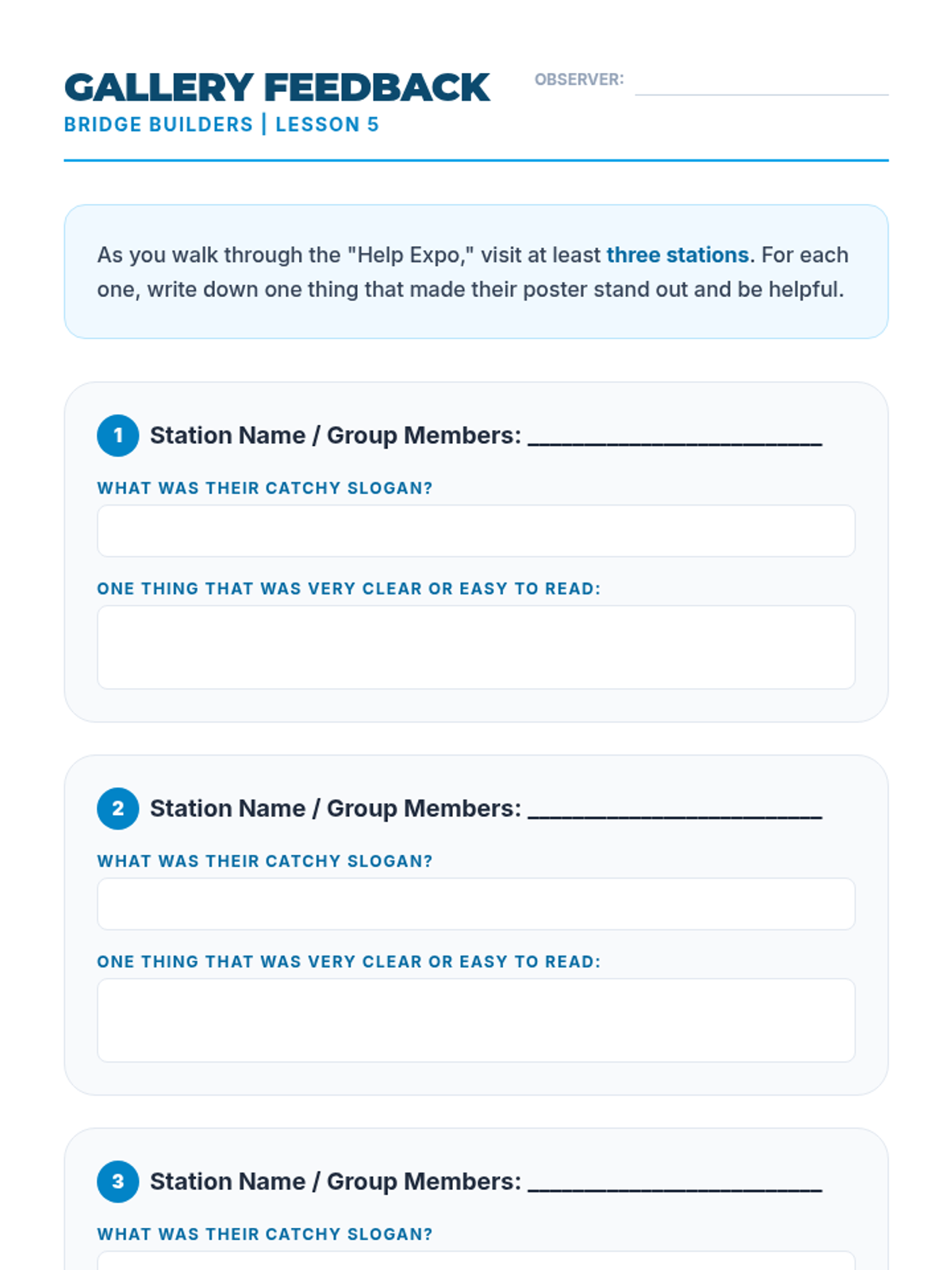
Peer feedback worksheet for the gallery walk in Lesson 5, helping students reflect on their classmates' advocacy projects.
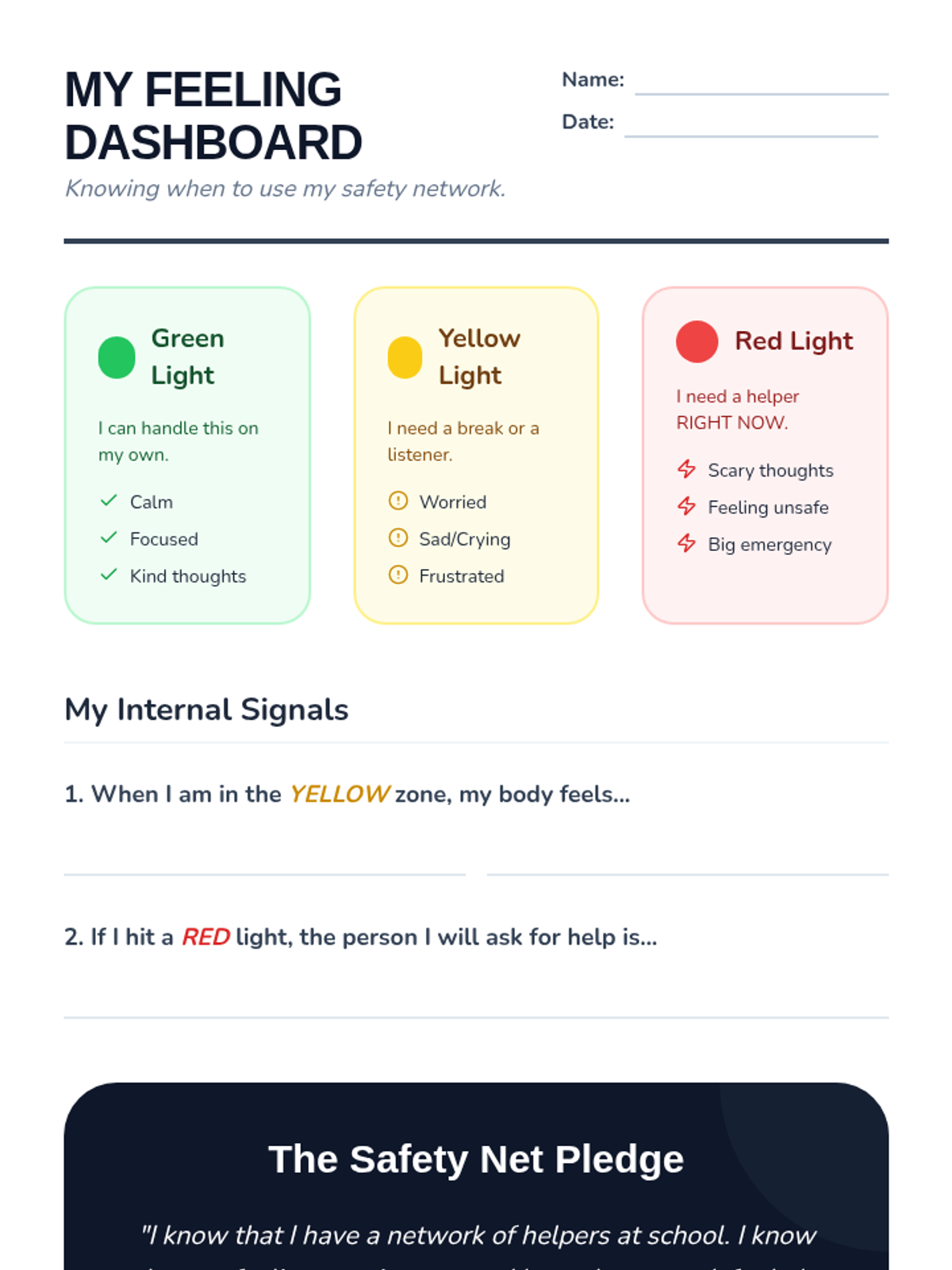
A student self-monitoring worksheet for recognizing emotional signals and identifying appropriate support actions.
Slides for Lesson 5, teaching presentation tips and station rules for the "Help Expo" gallery walk.
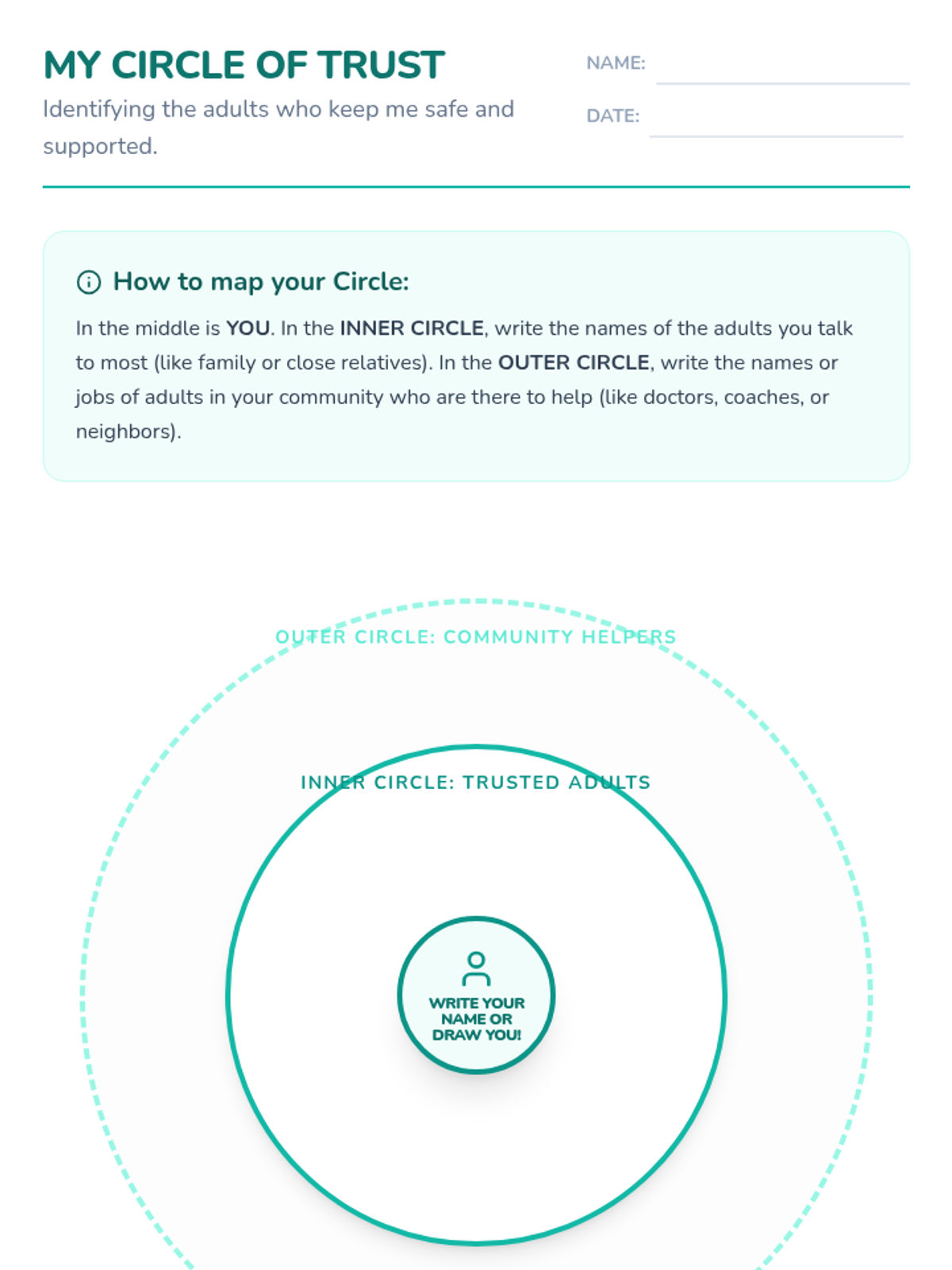
A worksheet for students to map out their trusted adults and community helpers in a 'Circle of Trust' diagram with a dedicated space for their own name/drawing.
Slides for Lesson 5 that teach students to recognize internal emotional signals (Green, Yellow, and Red lights) that indicate when it is time to seek support.
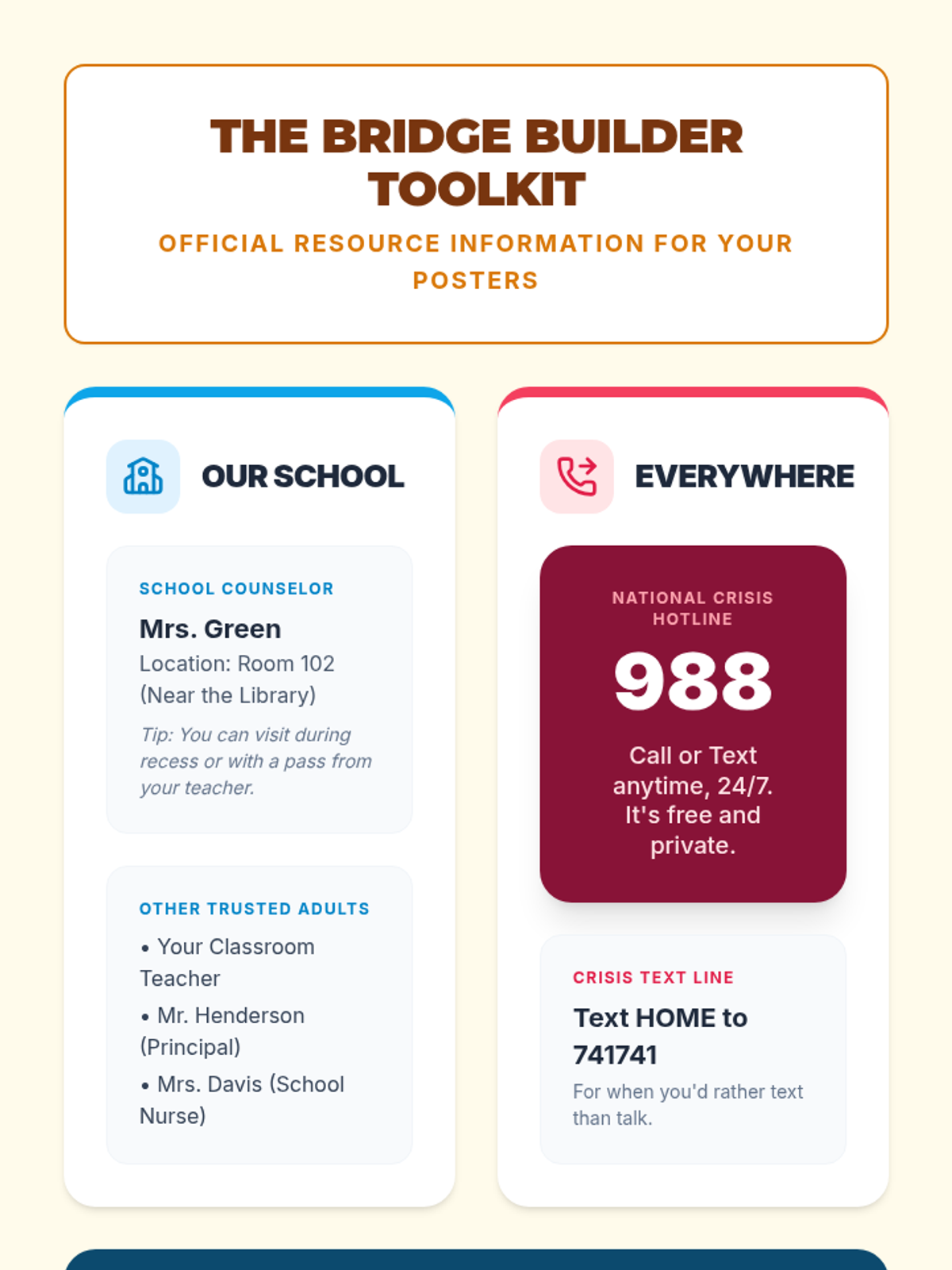
Reference sheet for Lesson 4, providing school and national mental health resource information for students to include on their advocacy posters.
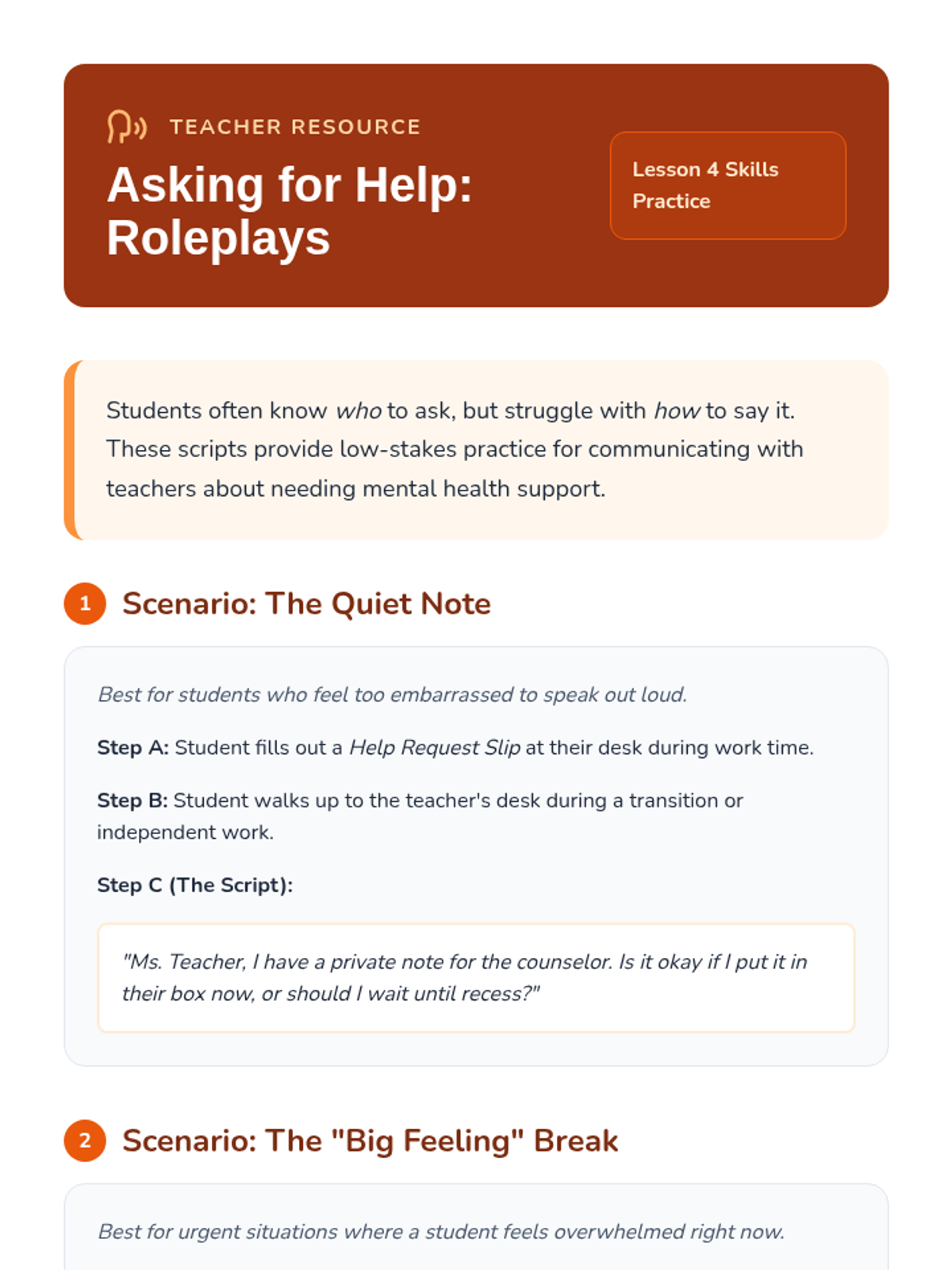
A teacher resource providing scenarios and scripts for role-playing how to request mental health support from school staff.
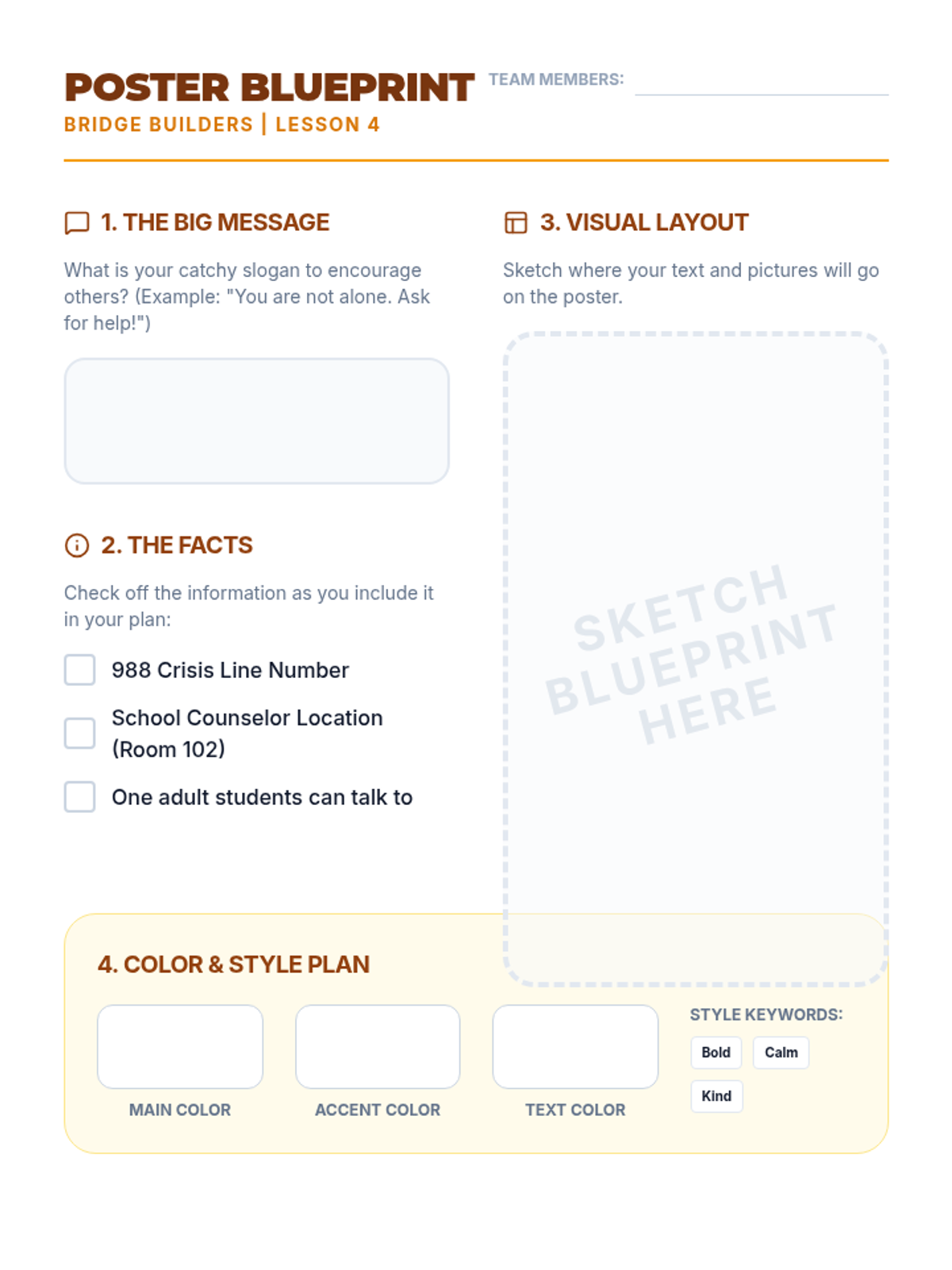
Planning document for Lesson 4, helping student teams brainstorm and sketch their advocacy posters.
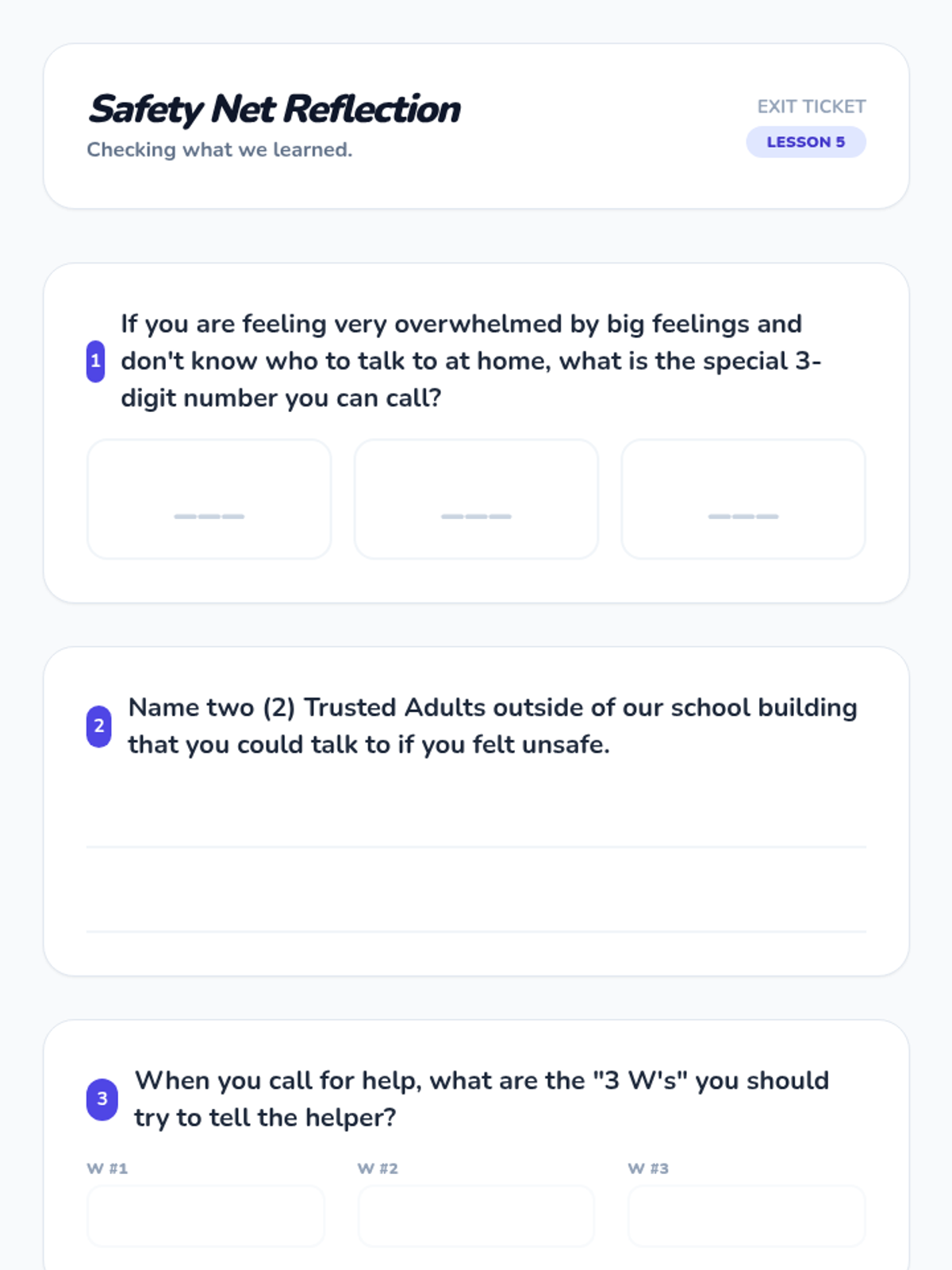
A final assessment and exit ticket for the sequence, checking students' knowledge of the 988 number, trusted adults, and communication protocols.
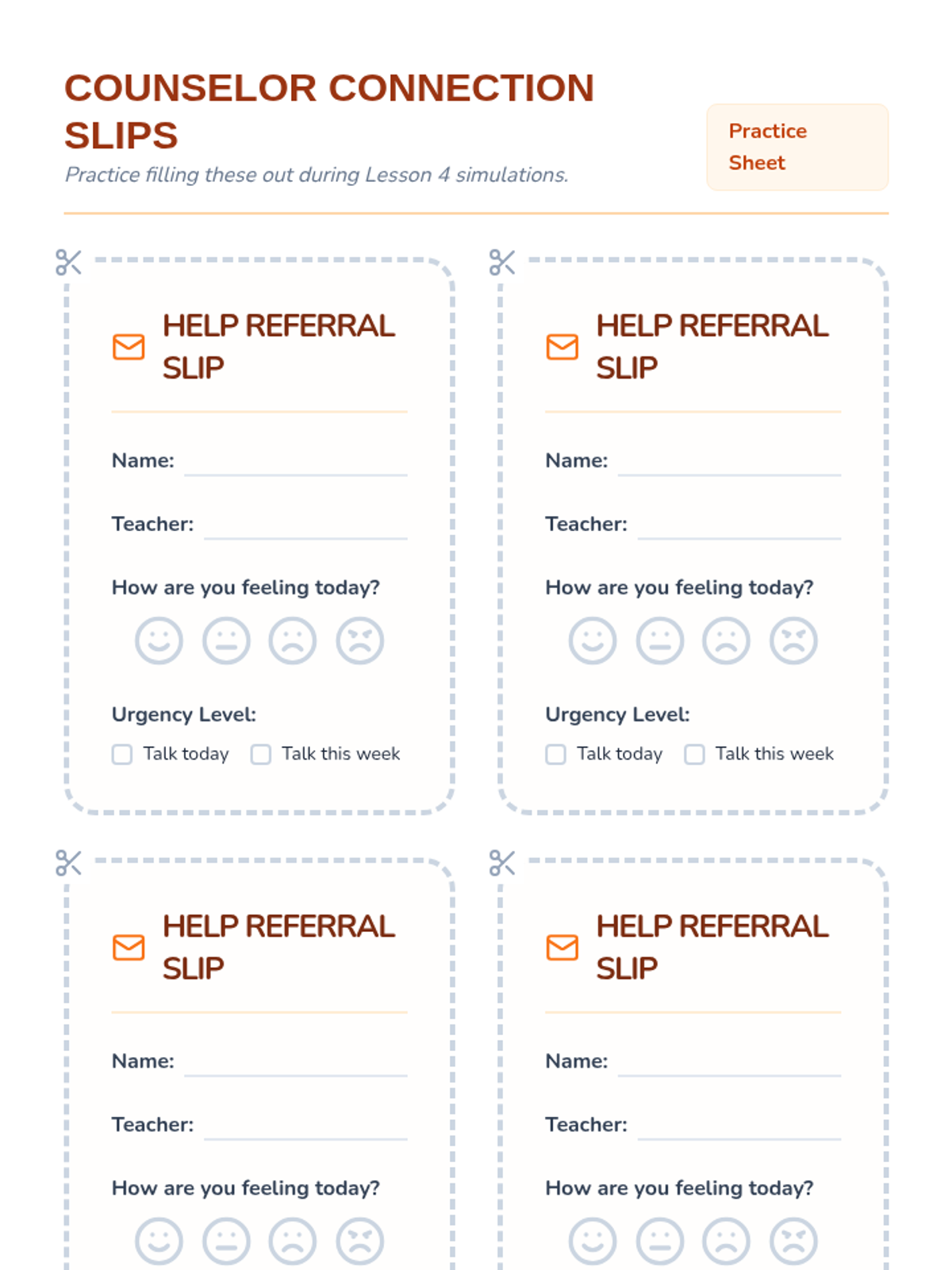
A printable sheet of mock counselor referral slips for students to practice requesting mental health support.
Slides for Lesson 4, teaching poster design principles and content requirements for mental health advocacy.
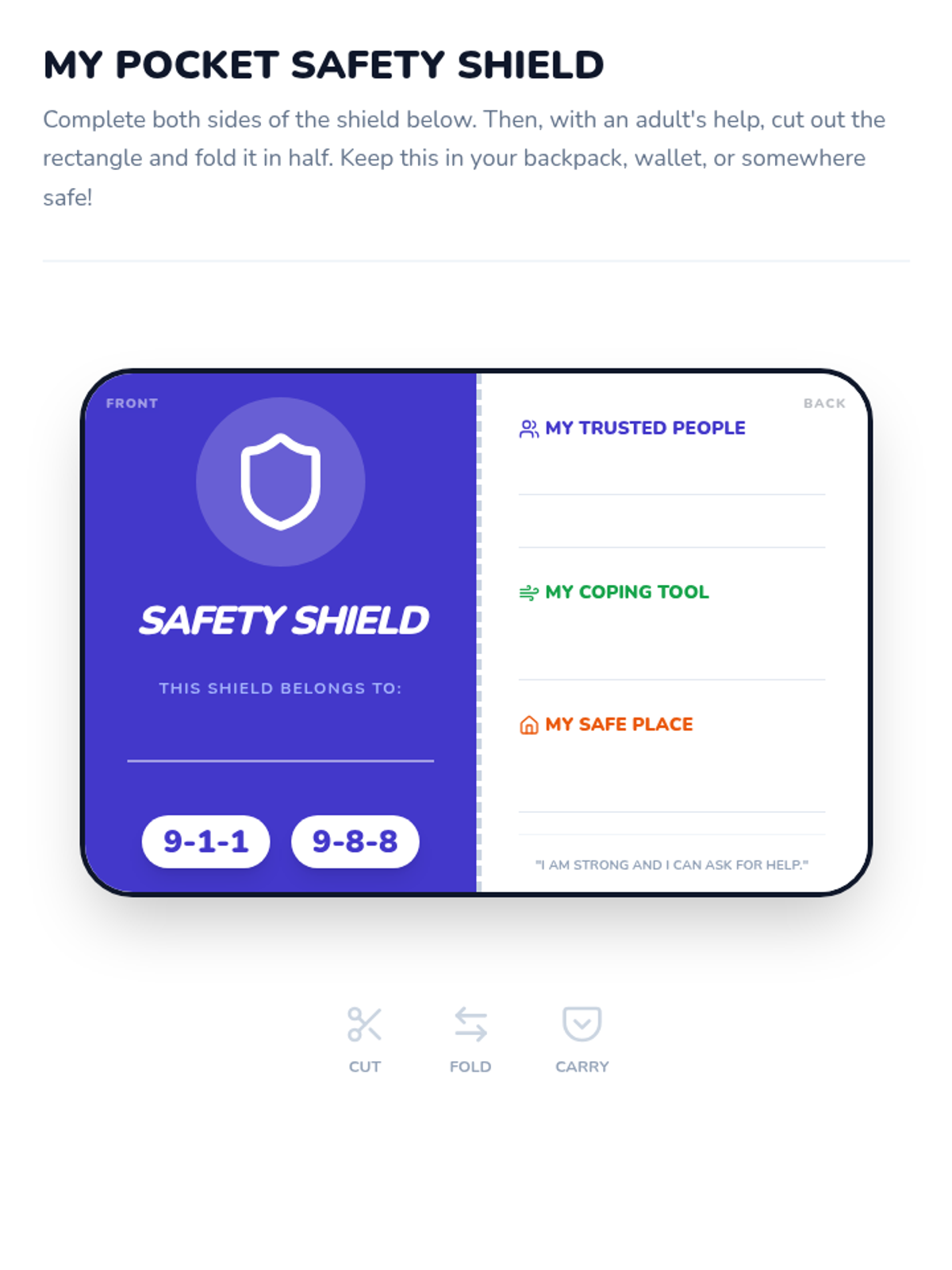
A foldable pocket-sized card for students to record their trusted adults, coping strategies, and emergency numbers.
Final slide presentation for Lesson 5, guiding students through the creation of their Personal Safety Shield card.
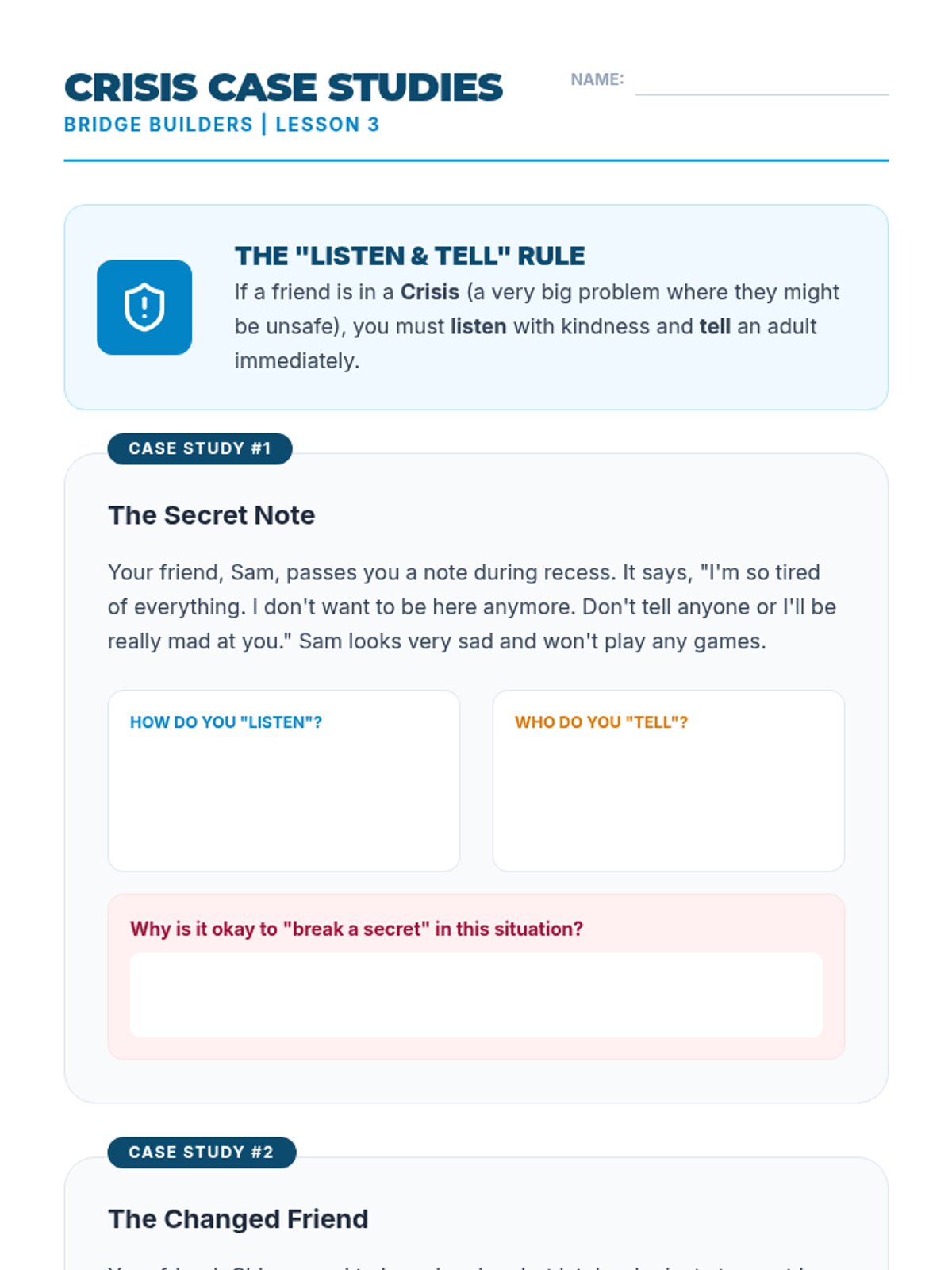
Worksheet for Lesson 3, using case studies to practice the 'Listen and Tell' rule for peers in mental health situations.
Slides for Lesson 4 that teach students the logistics of requesting help, including the timing and language to use with teachers.
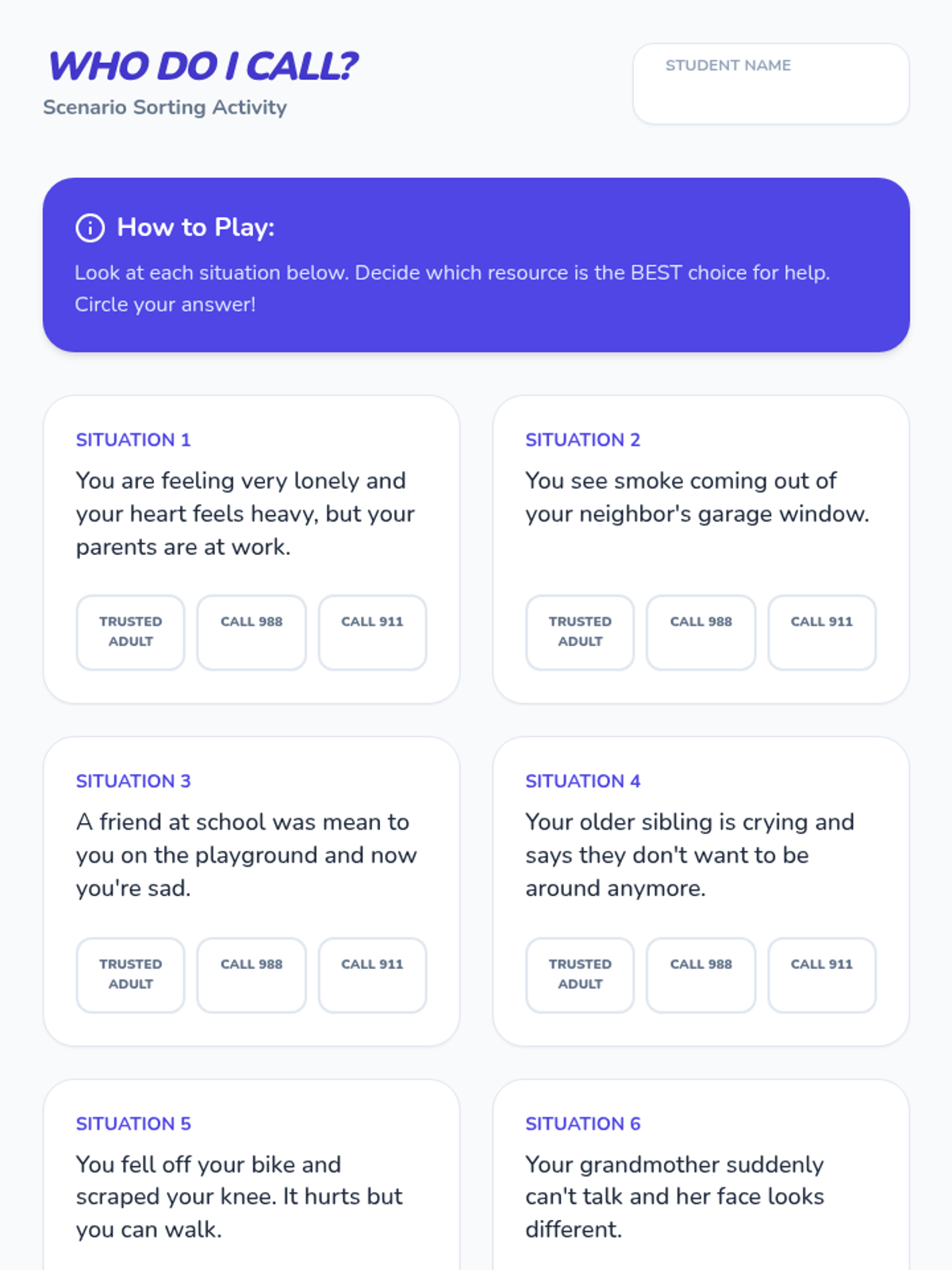
A sorting activity for students to identify which emergency resource (Trusted Adult, 988, or 911) is appropriate for different scenarios. All options share identical styling.
Slides for Lesson 3, teaching the 'Listen and Tell' rule for supporting friends in mental health situations.
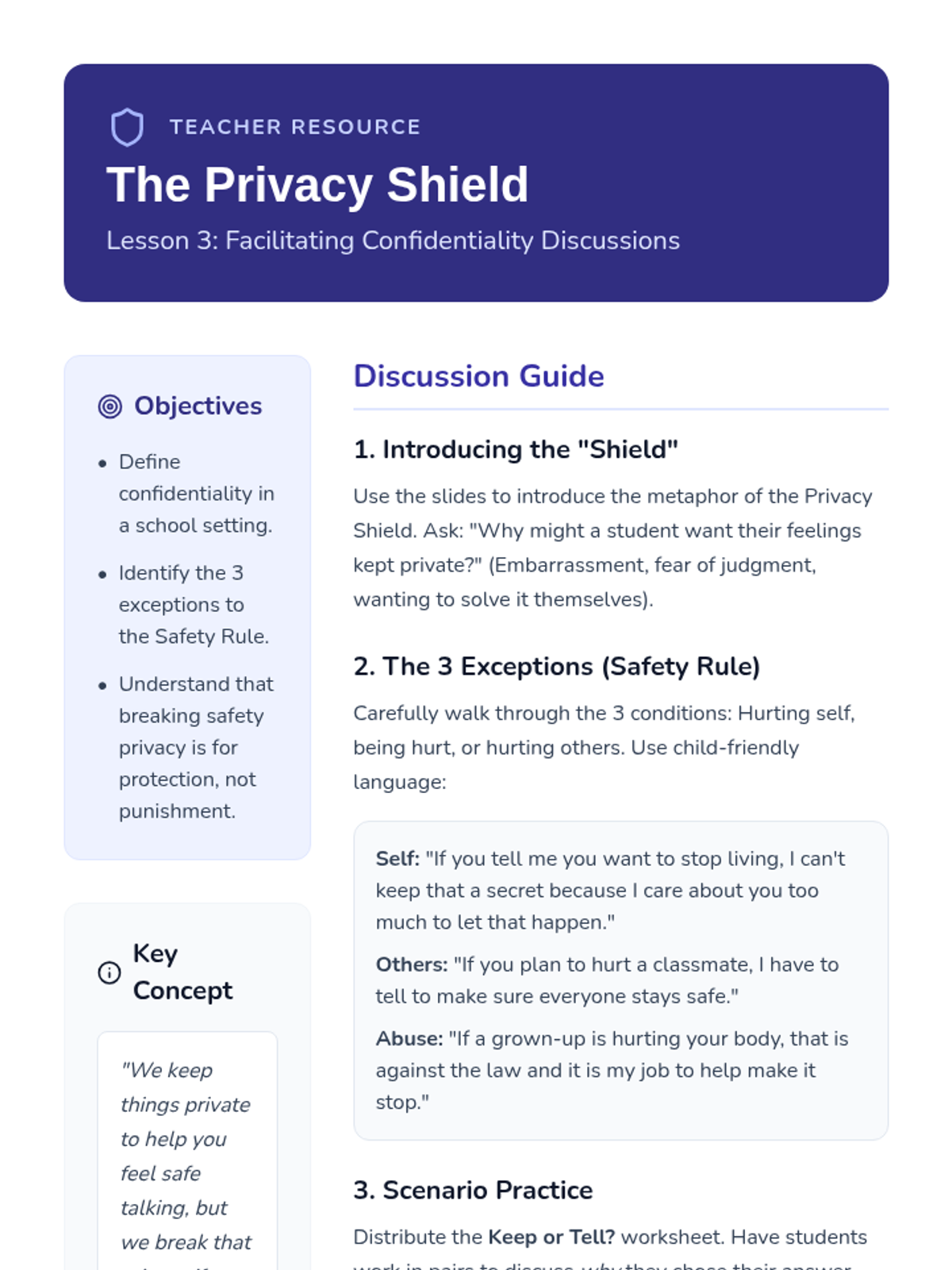
A teacher facilitation guide for Lesson 3, providing strategies for explaining confidentiality and the three exceptions of the Safety Rule.