Students explore the process of photosynthesis by narrating the journey of a water molecule named Wally through a plant's anatomy, from root absorption to chloroplast synthesis.
Students master custom shape creation using polyline and curve tools, exploring line weights and the importance of vector scalability for professional branding.
Students move from curating to creating, using Google Drawing to build complex objects with simple geometric shapes while learning the fundamentals of vector design and layering.
Students learn how font choices communicate a brand's tone of voice, distinguishing between serif, sans serif, and display fonts to select a pair that fits their business identity.
Students explore the emotional impact of color in branding, learning to use Hex codes and curated imagery to build a brand mood board that reflects their product's personality.
Students perform quality control on their business proposals through peer review, grammar tools, and text-to-speech auditing before exporting their final work as professional PDFs.
Students learn about intellectual property, source reliability, and technical citation skills like hyperlinking and footnotes to perform ethical competitor research.
Students integrate market research data and customer testimonials into their formal proposals, using evidence to validate their product concepts and finalizing the Solution section.
Students learn to distinguish between product features and customer benefits, drafting the Executive Summary and Problem sections of their business proposal using persuasive formatting.
Students learn the importance of professional document formatting and hierarchy, setting up a formal business proposal template with structured headings and standardized typography.
Students conduct a market research sprint, interviewing classmates to validate their product ideas and learning to 'pivot' based on real user feedback and data synthesis.
Students learn the difference between leading and open-ended questions, developing a research table and interview script to gather unbiased feedback from potential customers.
Students explore the concepts of target markets and customer empathy, moving from personal preferences to identifying specific user needs and mapping out a "Day in the Life" for their ideal customer.
Students explore the fundamental economic concepts of scarcity and opportunity cost, applying them to product development by making difficult trade-offs between competing features within a limited resource budget.
Students learn to identify consumer "pain points" as opportunities for innovation, moving from recognizing everyday frustrations to conceptualizing business solutions.
Students learn to identify 'pain points'—frustrations in daily life—as the foundation for entrepreneurial opportunities and business solutions.
A creative project where students design and build a 3D biome model in a box, then document their scientific findings.
A simplified introduction to electrostatics vocabulary, specifically designed for students requiring symbol support and modified text. The lesson focuses on six key terms through visual matching and clear, concise definitions.
Students explore the essential methods of purifying water through hands-on experimentation. They will learn the roles of physical filtration and phase changes (evaporation) in removing contaminants from water samples.
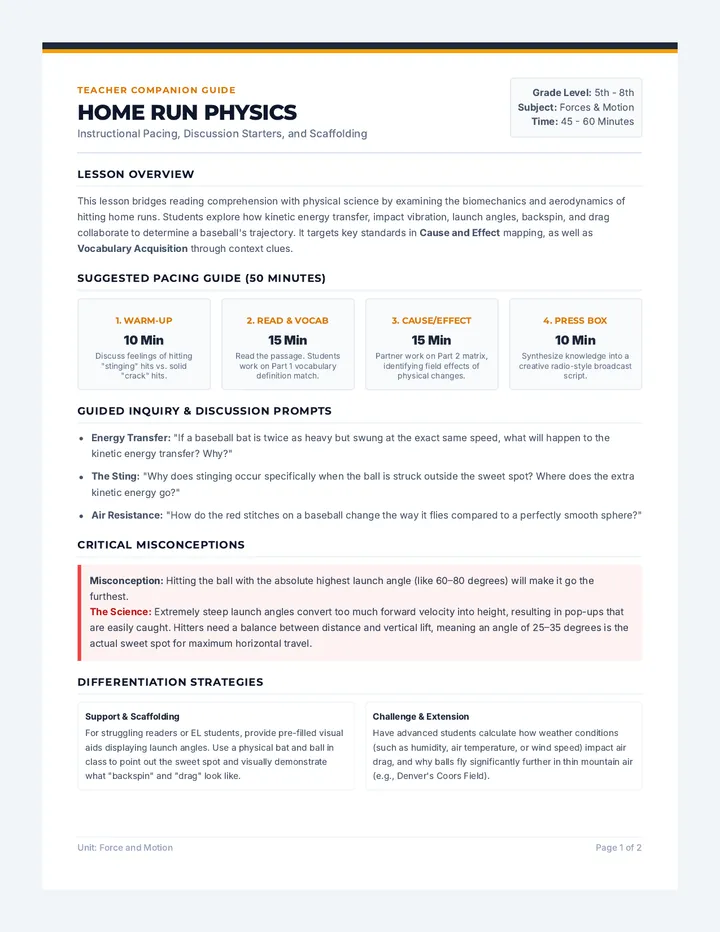
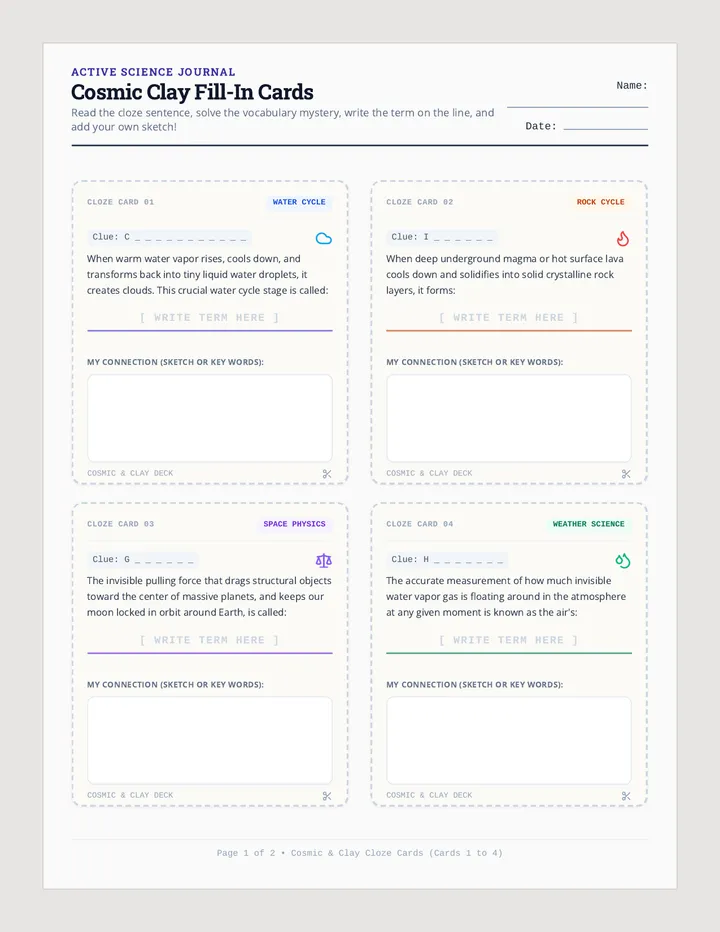
A lesson exploring the continuous movement of water on Earth through a detailed diagram of the water cycle, focusing on the roles of energy and gravity.
A high-engagement, post-testing biology project focusing on environmental science and ecological impact through choice-based research and collaborative synthesis.
An introductory lesson on waste management and recycling where students practice sorting materials and learning key environmental vocabulary.
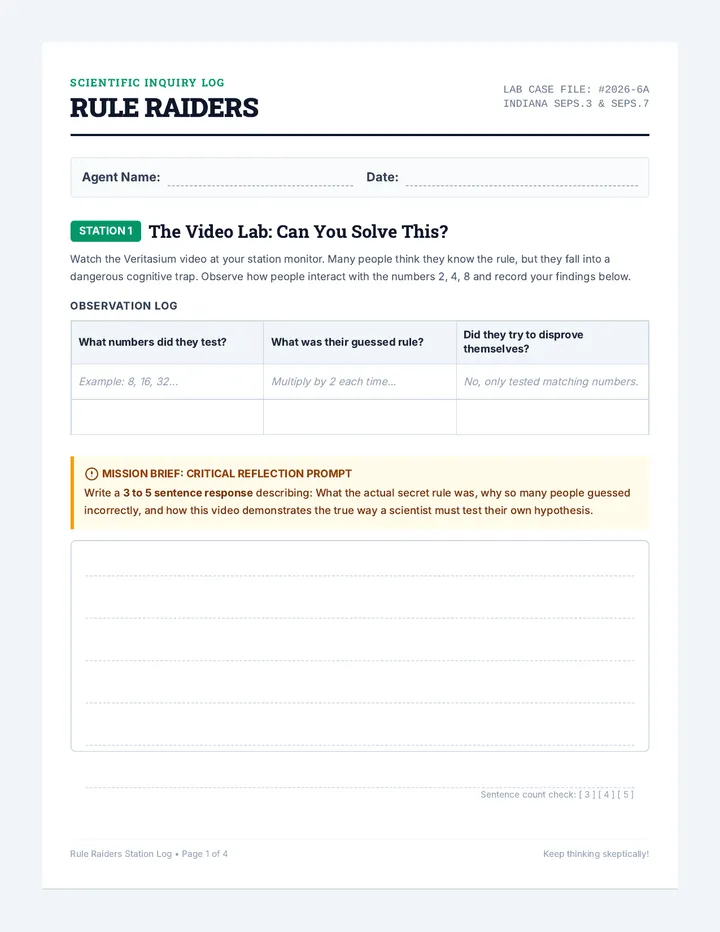
A foundational lesson on the Scientific Method, covering definitions, steps, variables, and data collection methods.
Explores global circulation patterns in the atmosphere and oceans driven by unequal heating and Earth's rotation, culminating in a modified unit assessment.
Focuses on how air masses and pressure changes create weather patterns, featuring hands-on observation of cloud formation.
Students explore how the sun's energy and gravity drive the movement of water through the Earth's systems using a field-journal style approach.
A collaborative jigsaw activity where students become experts on different renewable energy sources before teaching their peers and synthesising their knowledge.
A fun, differentiated Earth Day celebration for 2nd-4th graders and life skills students, featuring hands-on missions to protect the planet after a week of testing.