A deep dive into musical volume, covering Italian dynamic markings from pianissimo to fortissimo, plus gradual and sudden changes like crescendo and sforzando.
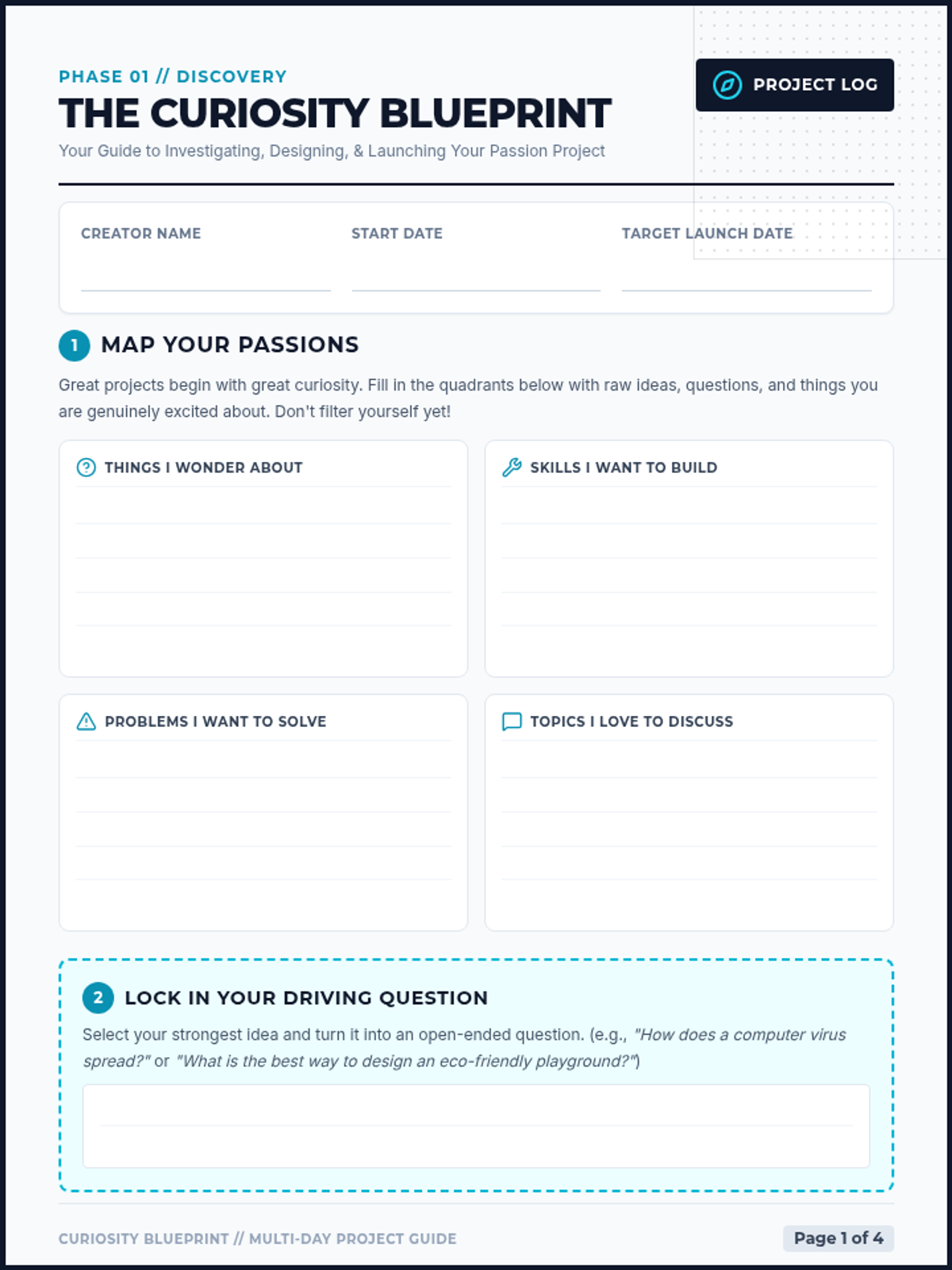
A comprehensive lesson launcher for a multi-day independent or group Creative Passion Project, providing the framework for students to research and build their own projects.
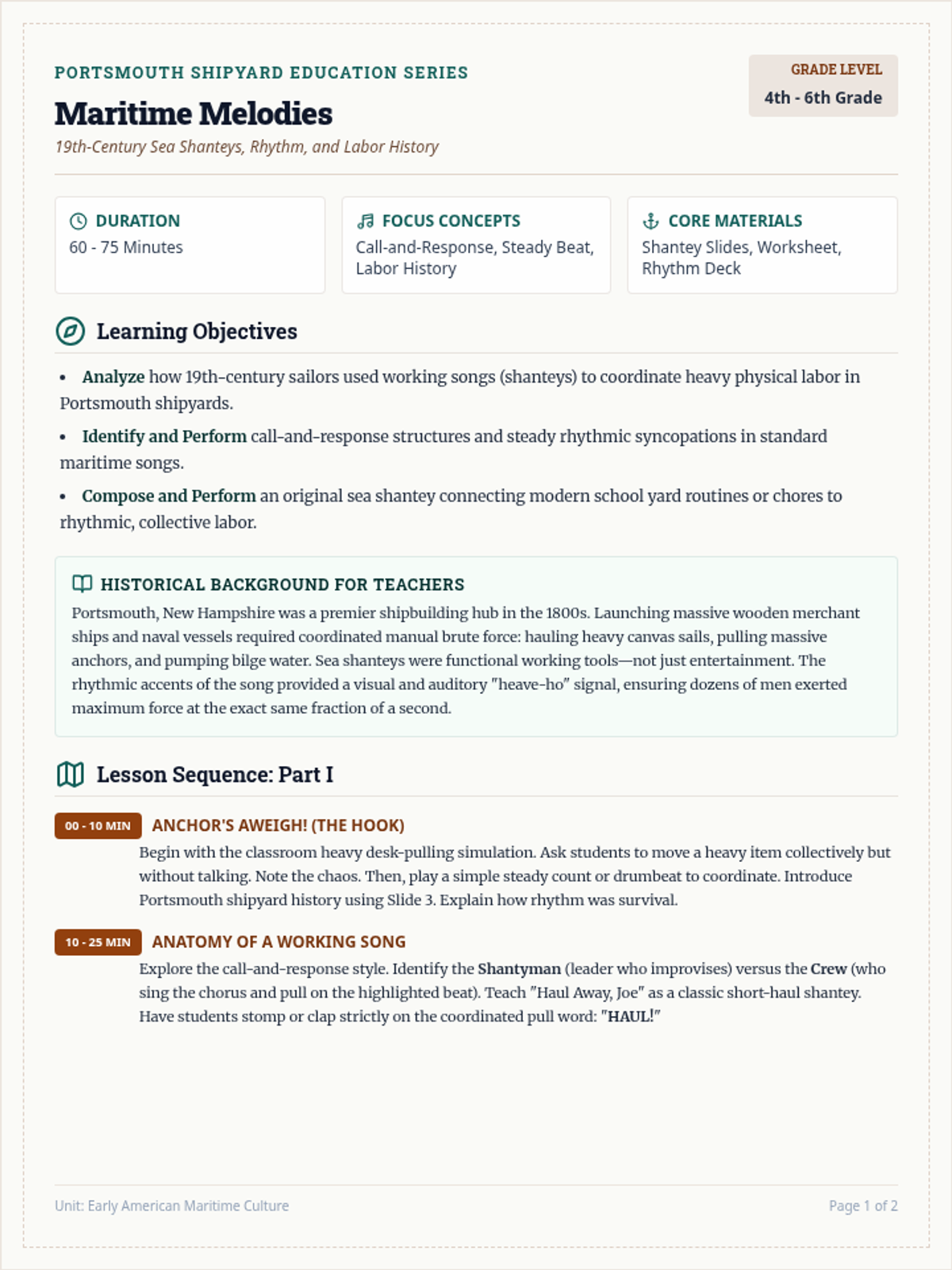
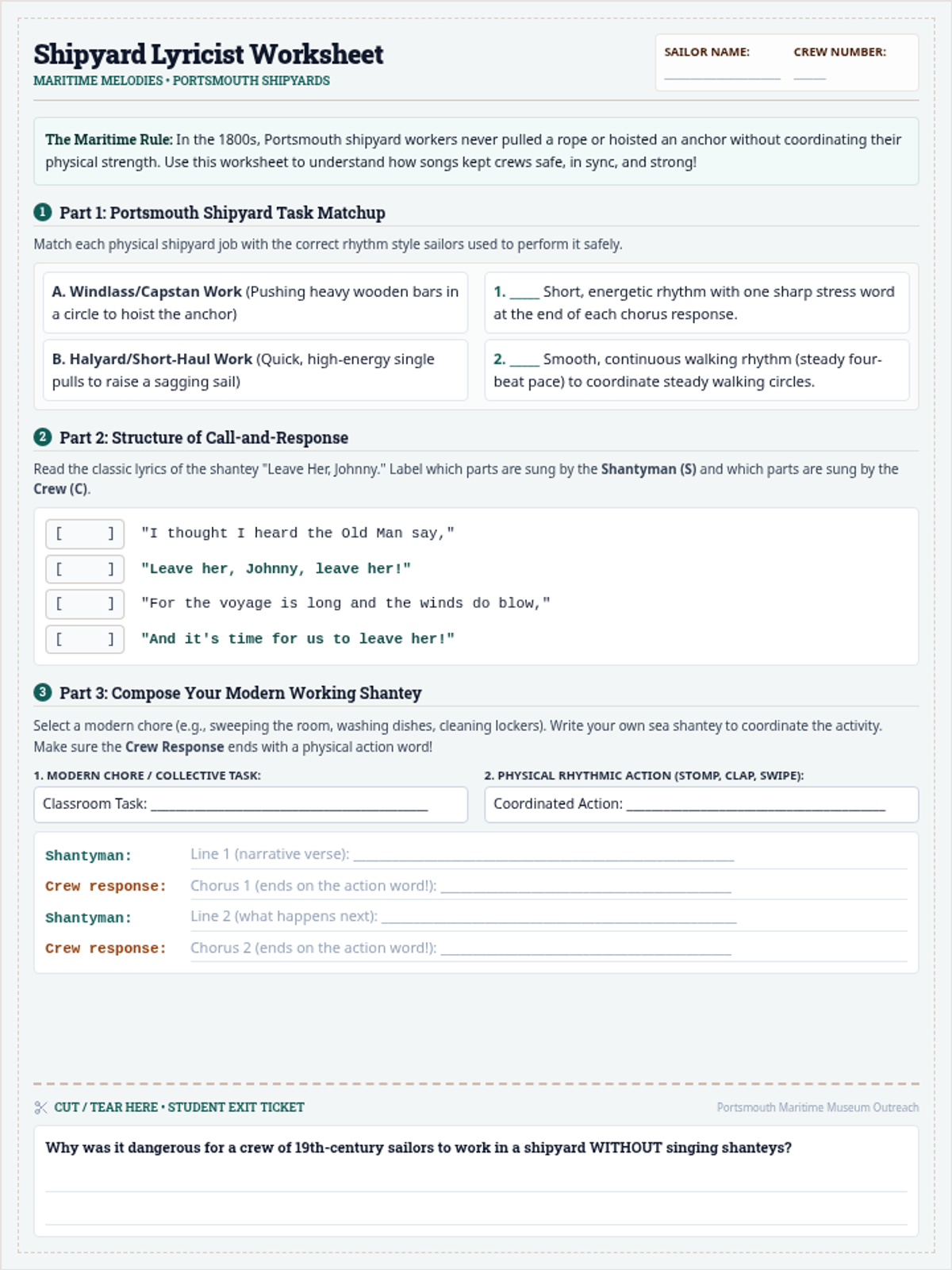
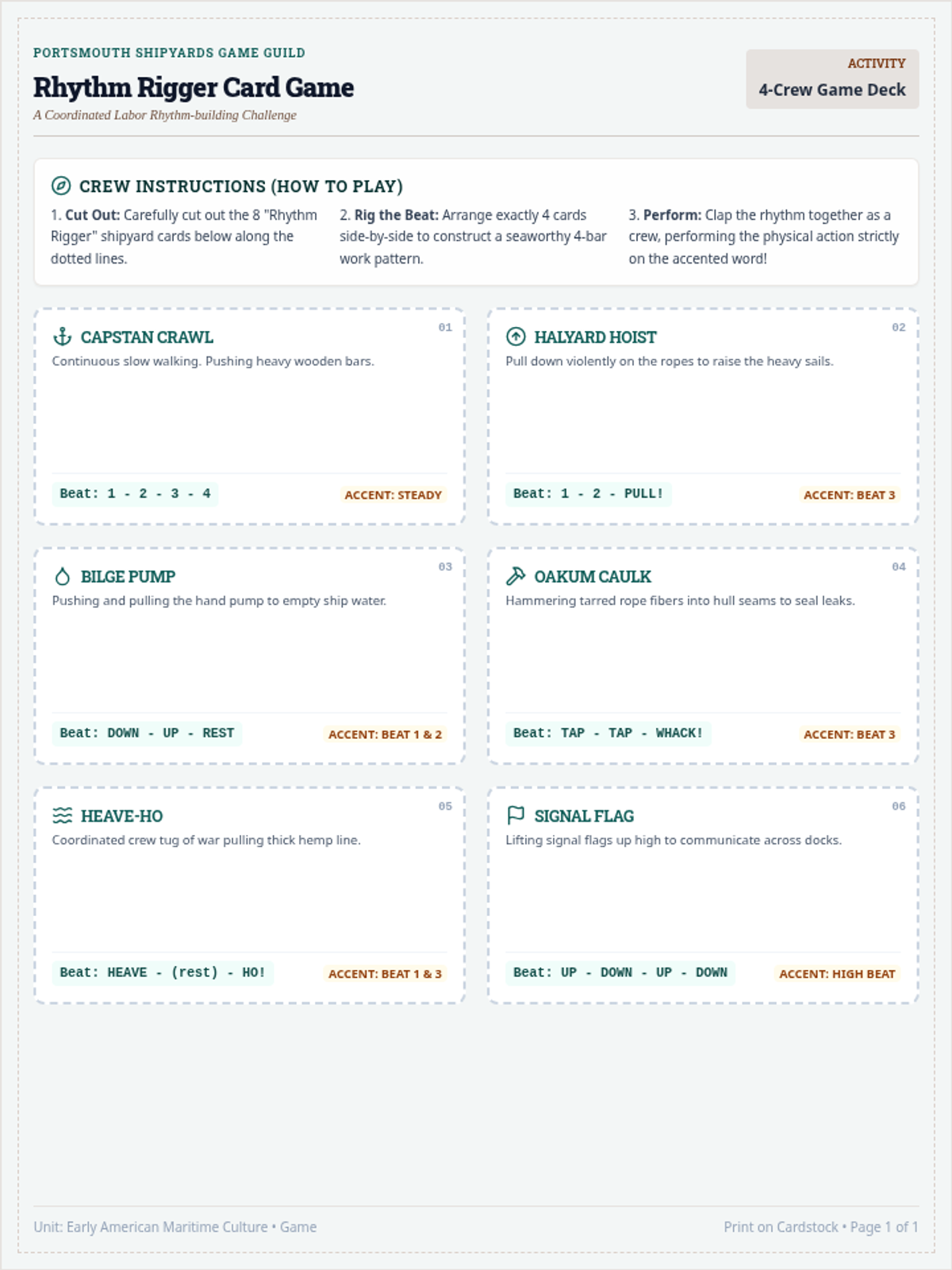
An exploration of nineteenth-century Portsmouth shipyards through historical sea shanteys, teaching upper elementary students about rhythm, labor history, and call-and-response song structures.
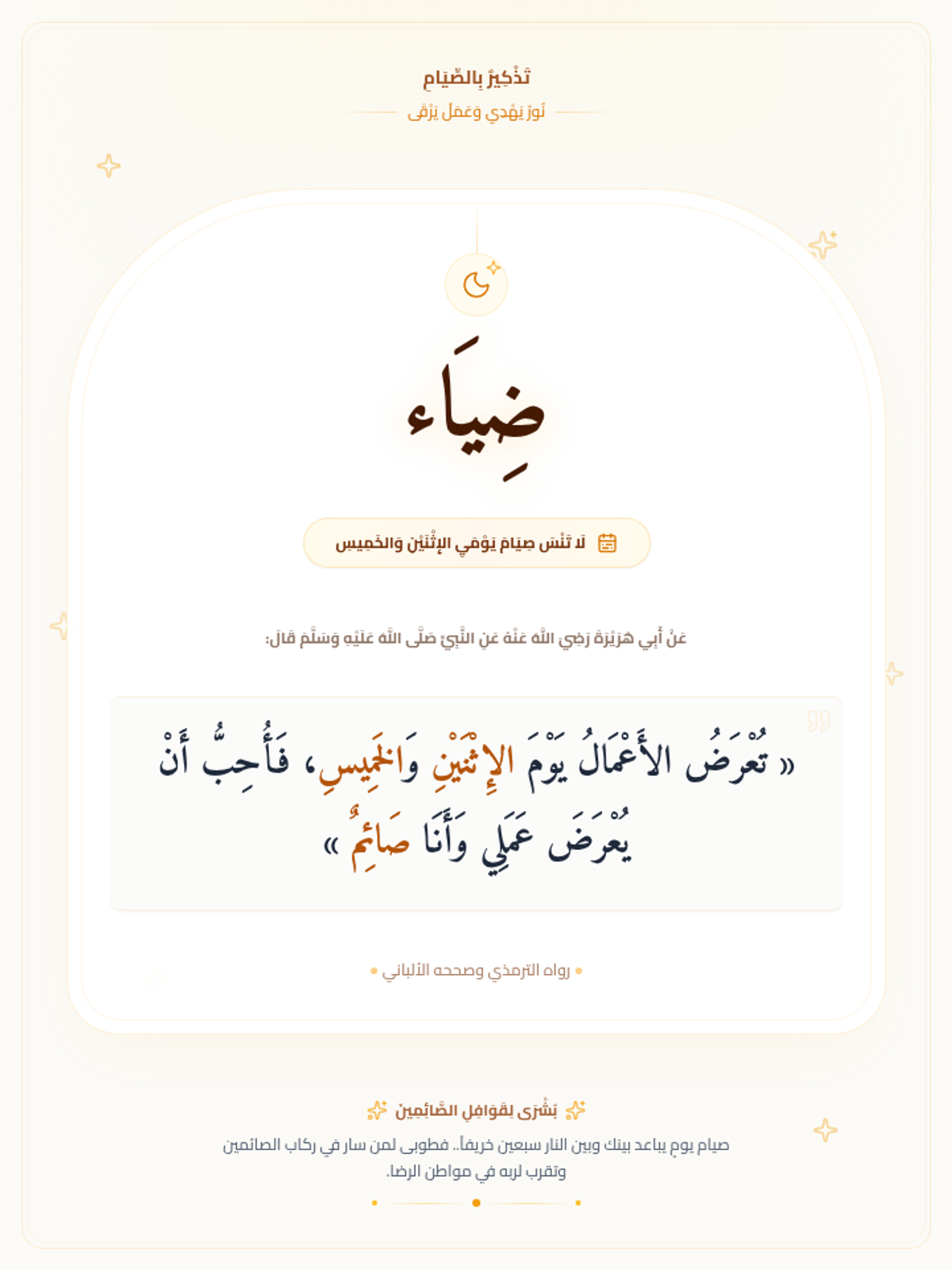
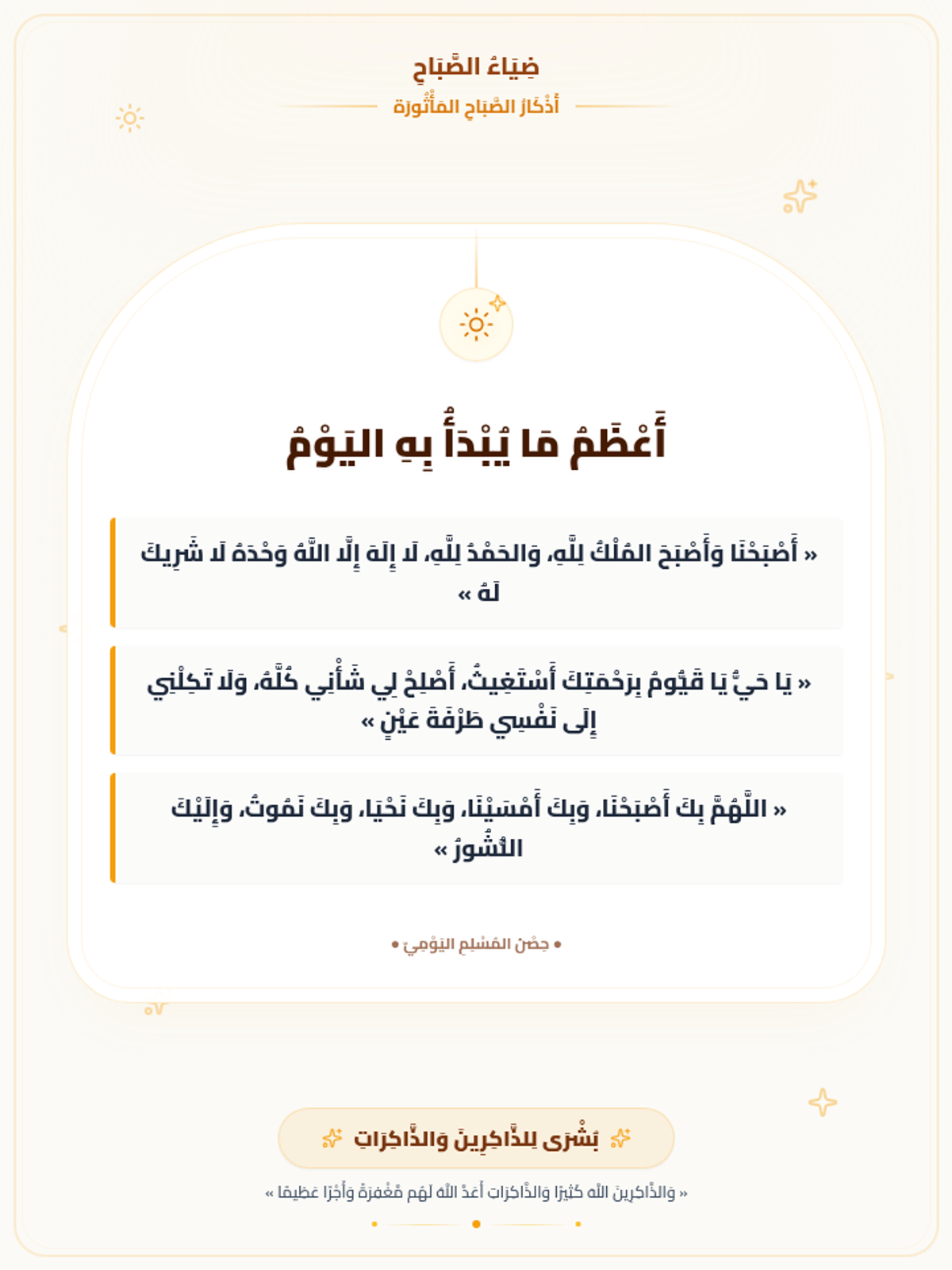
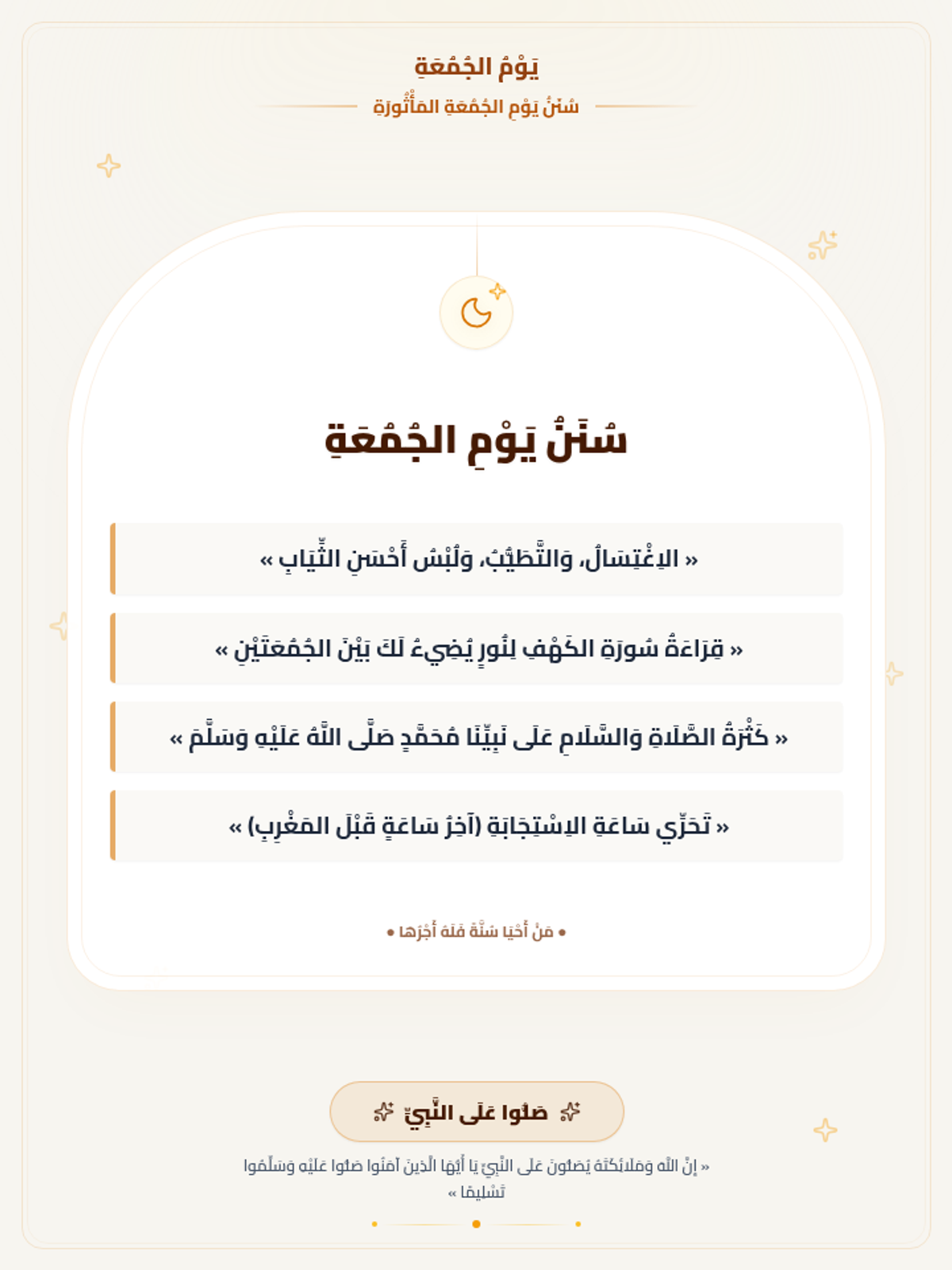
A premium, cohesive collection of beautifully designed spiritual and religious reminders for daily, weekly, and seasonal practices, featuring high-contrast connected Arabic typography, elegant arches, and glowing celestial themes.
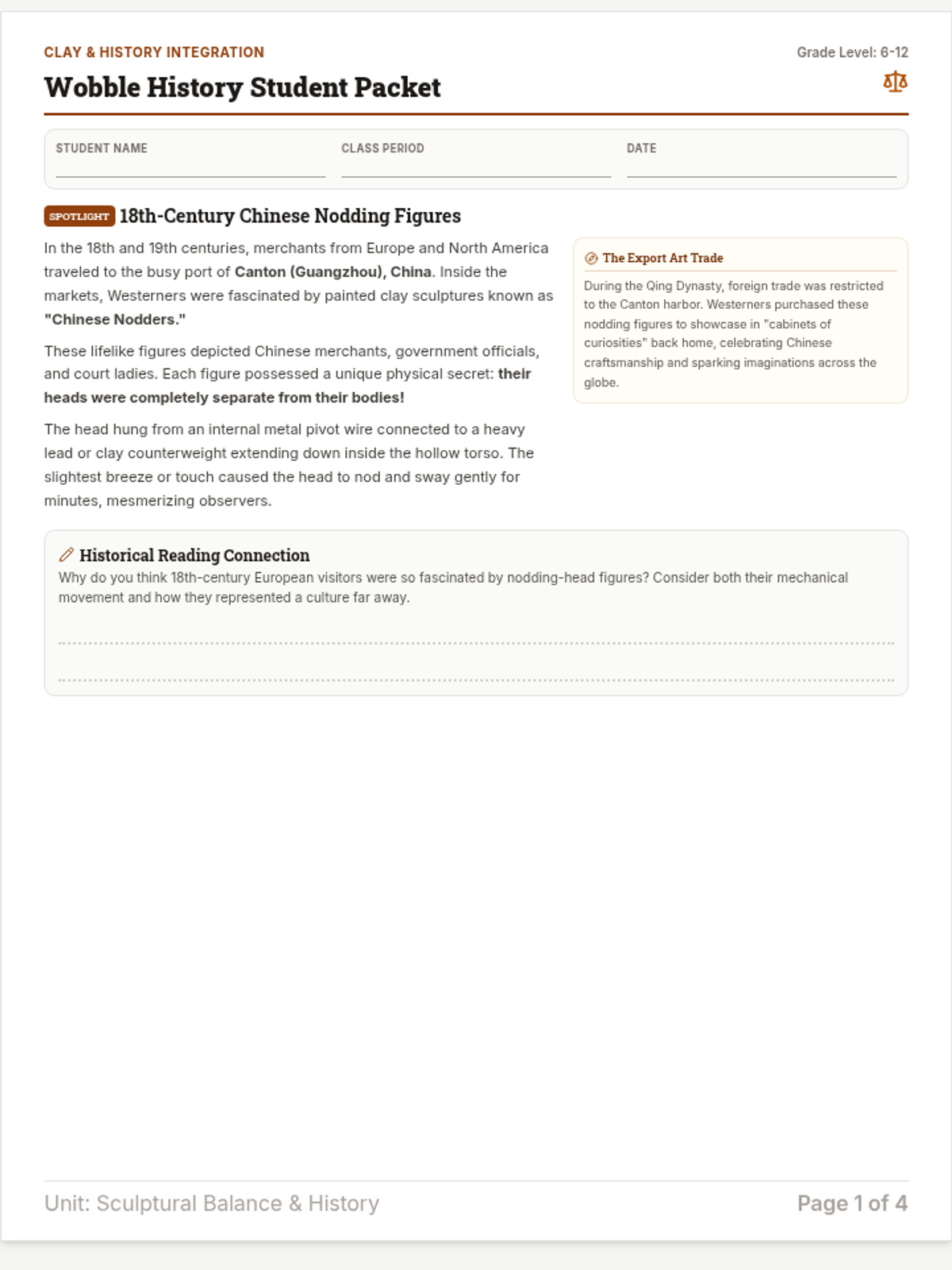
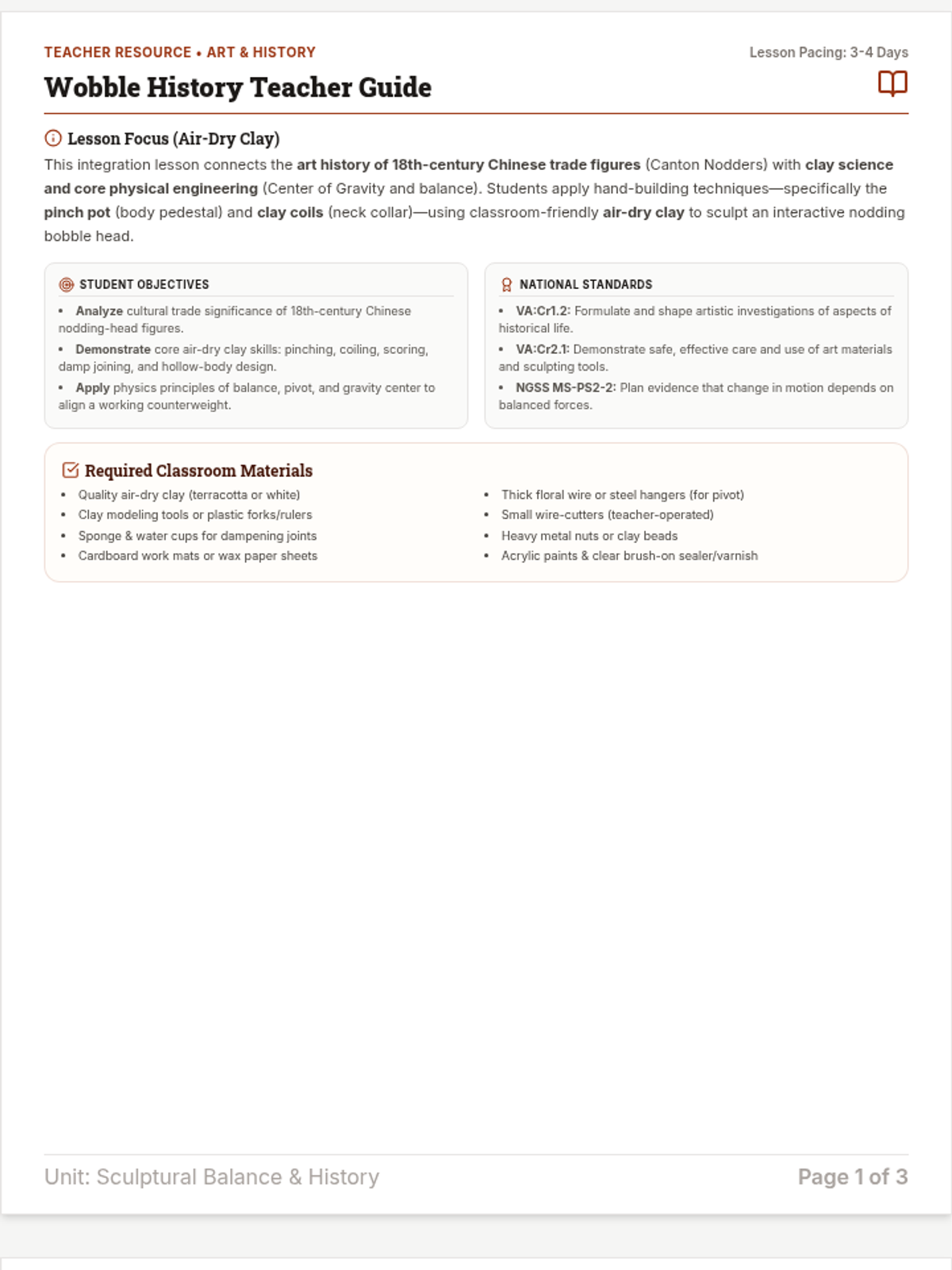
An art and history integration lesson focusing on 18th-century Chinese nodding-head figures. Students explore clay science, learn pinch pot and coil techniques, and sculpt their own clay bobble heads using balanced counterweights.
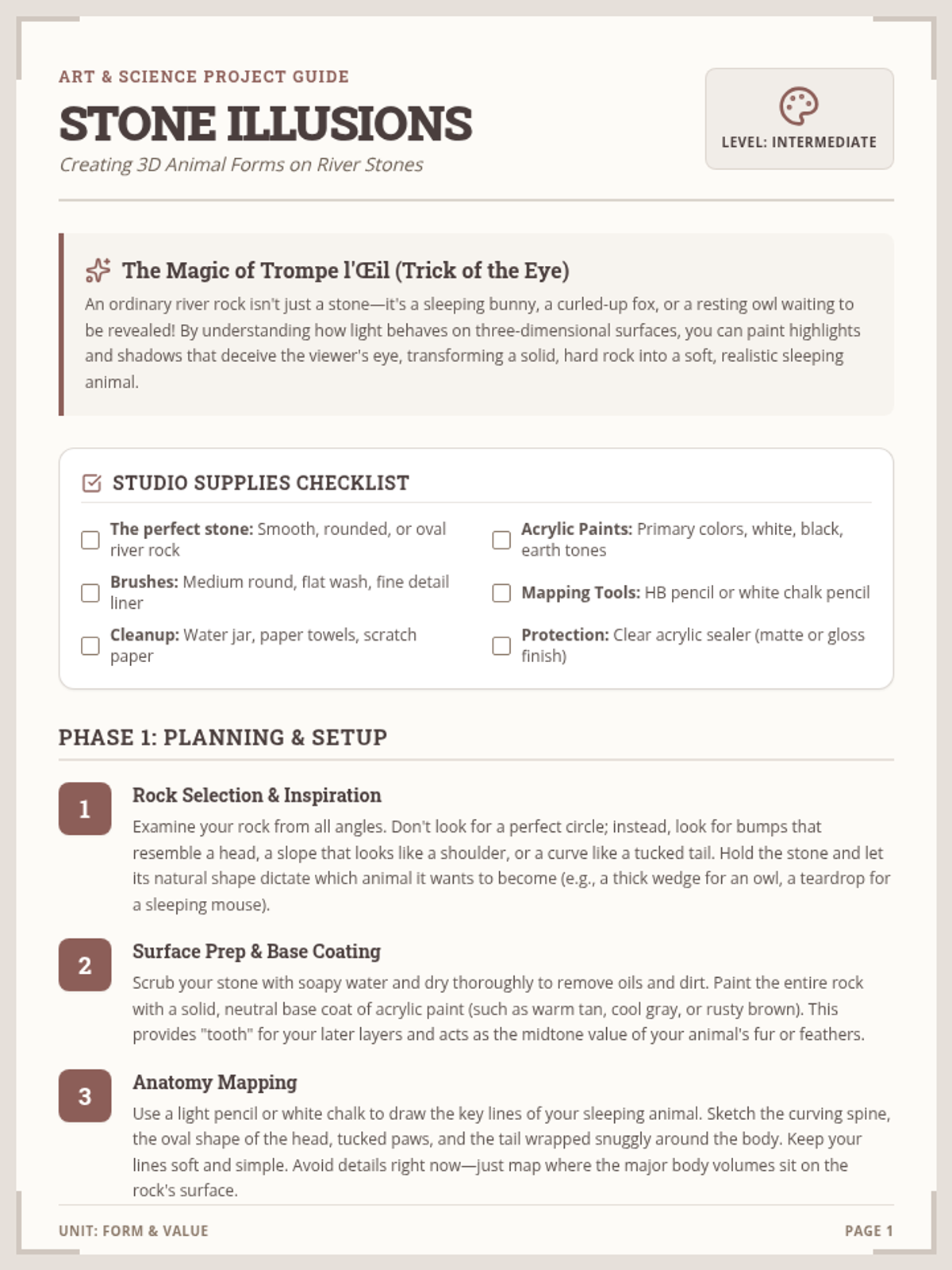
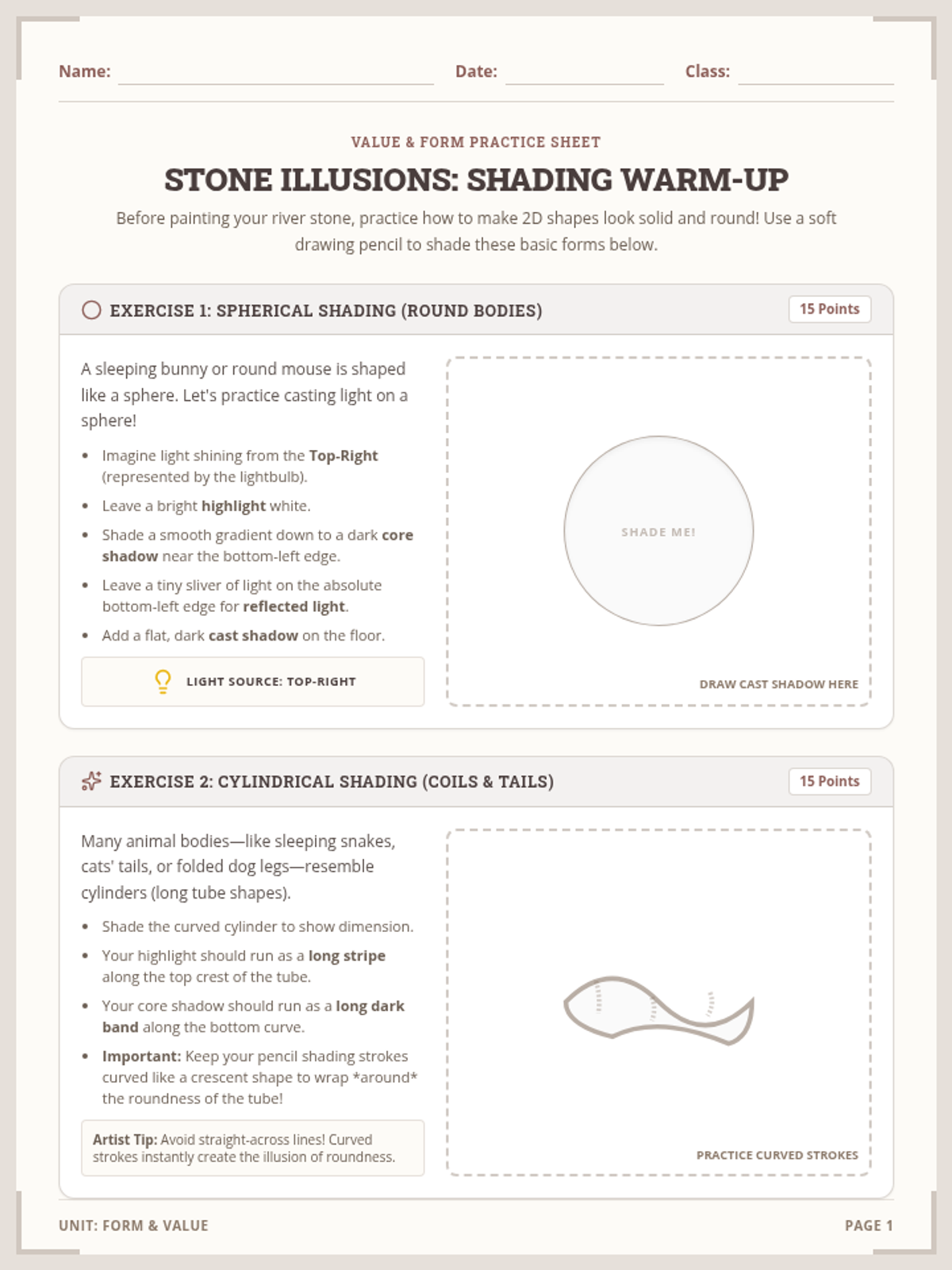
An art and science lesson exploring how to transform ordinary, irregular river rocks into convincing 3D animal illusions. Students learn the principles of light, shadow, value, and form placement to turn flat or rounded stone surfaces into realistic sleeping animals.
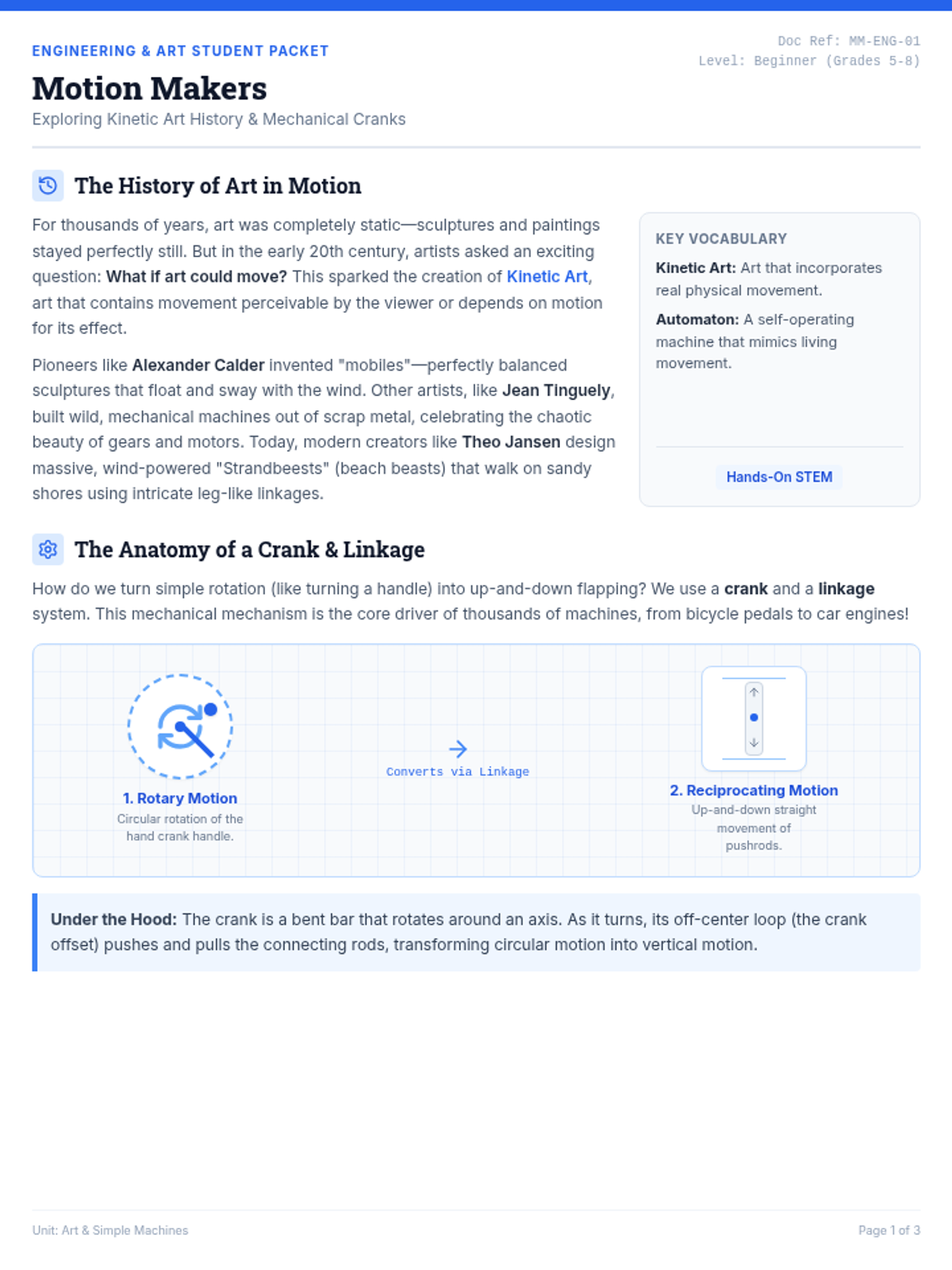
An introductory lesson on kinetic art and mechanics where students build their own flapping butterfly automaton. Using simple classroom materials like paperclips, bottle caps, and paper, students learn about cranks, linkages, and the history of art in motion without needing hot glue.
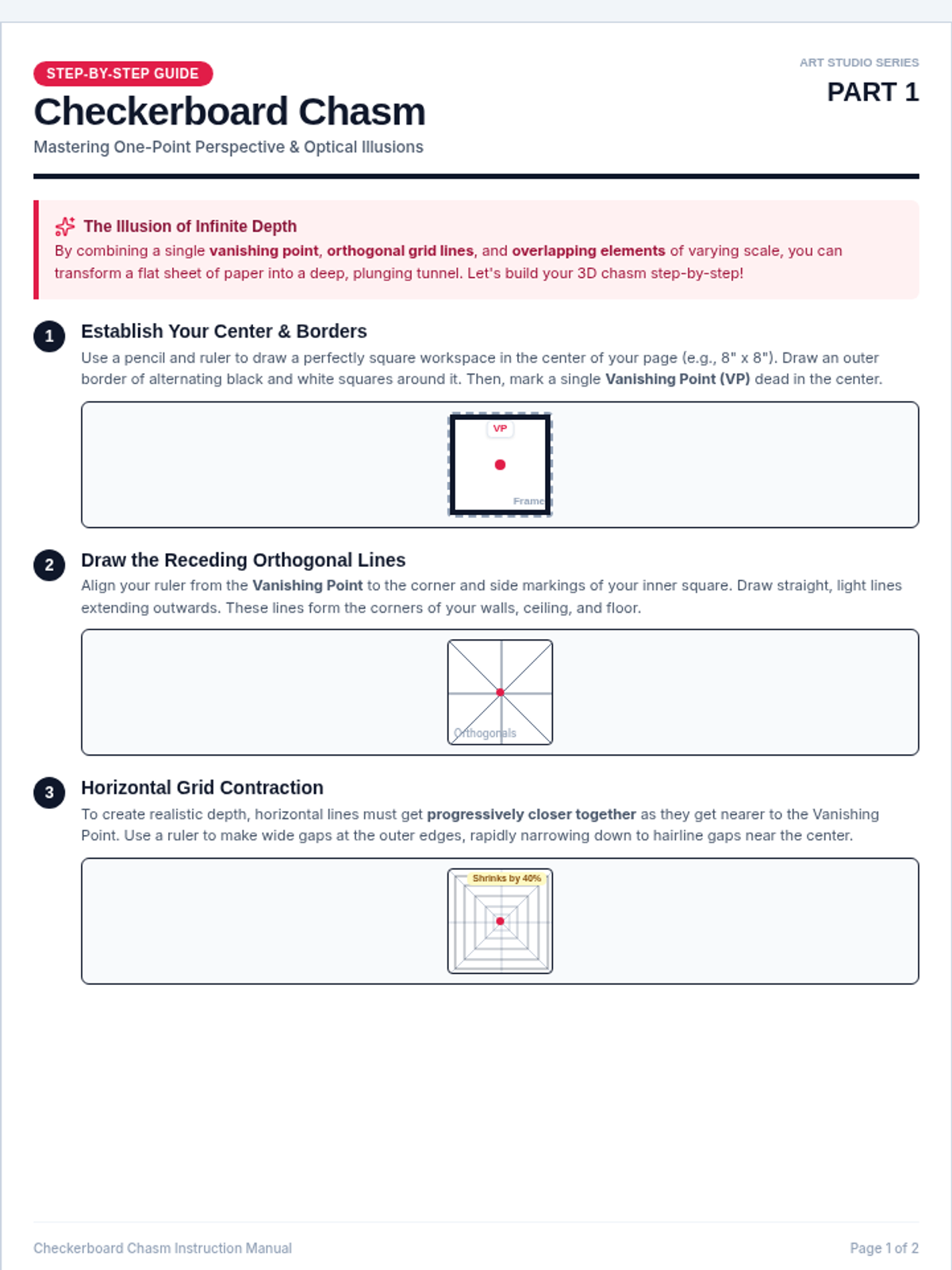
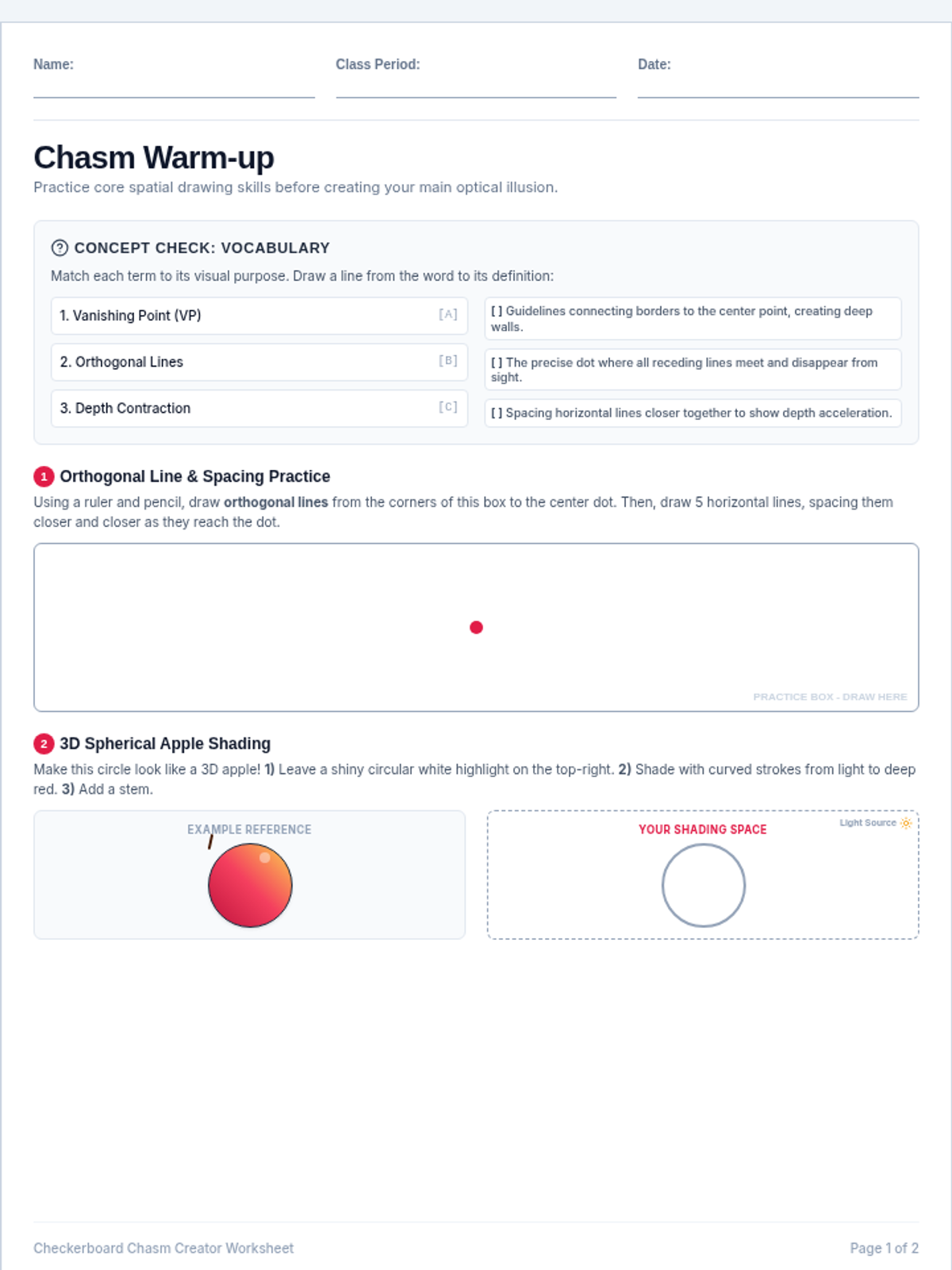
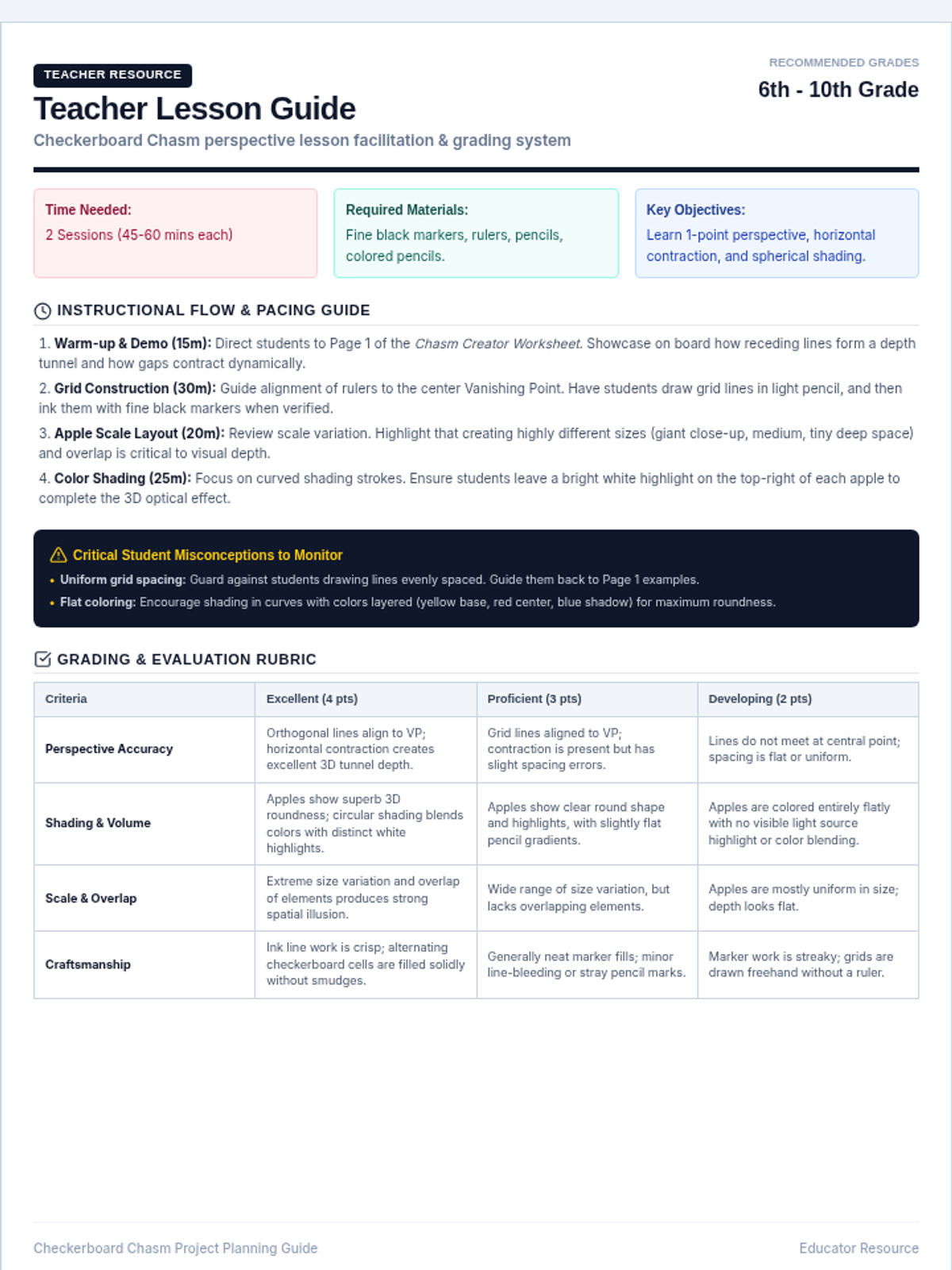
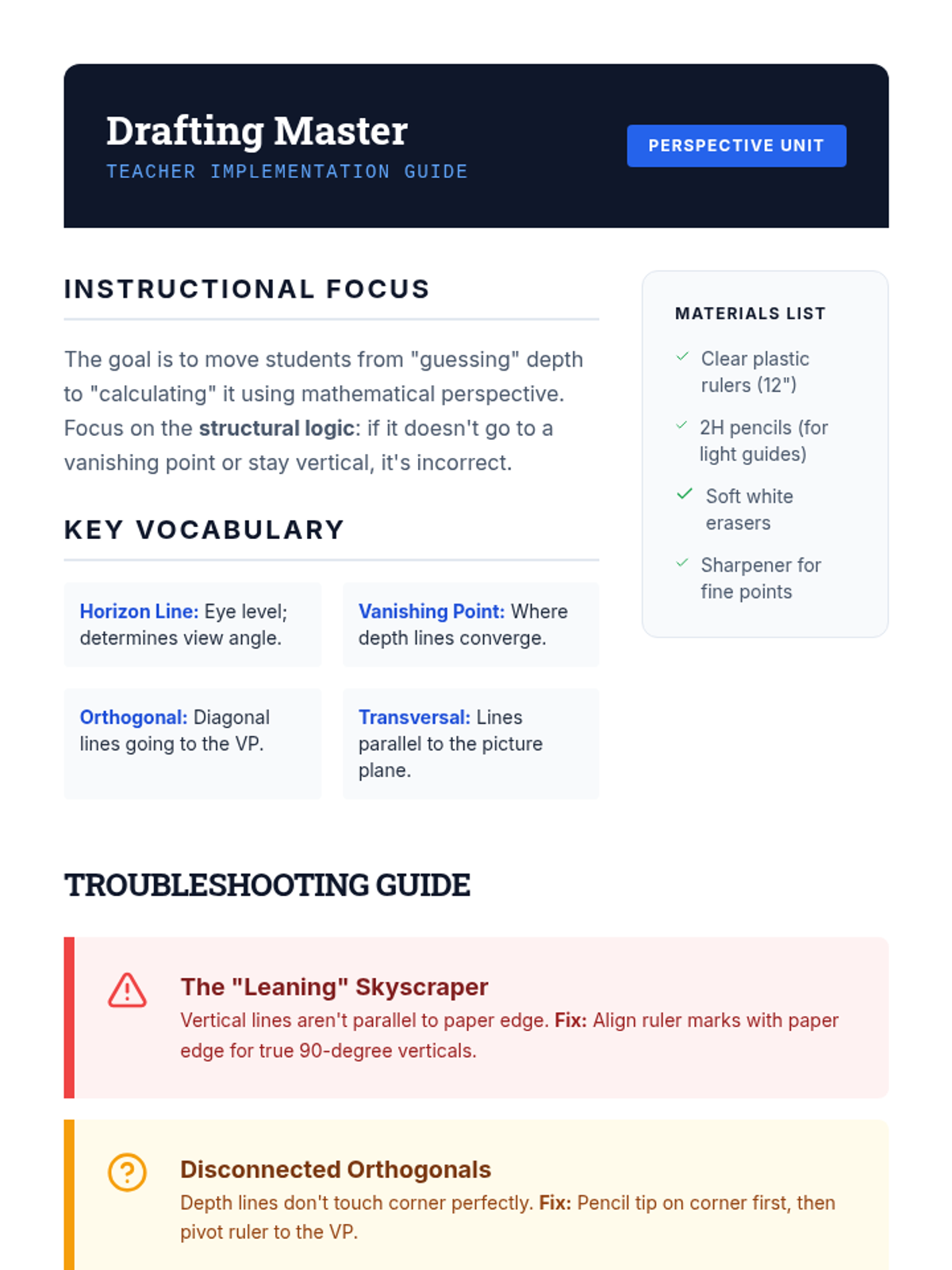
Master the illusion of deep space using one-point perspective, horizontal grid contraction, and overlapping spheres. Students create a striking optical illusion of a checkerboard tunnel with falling 3D apples using black markers and colored pencils.
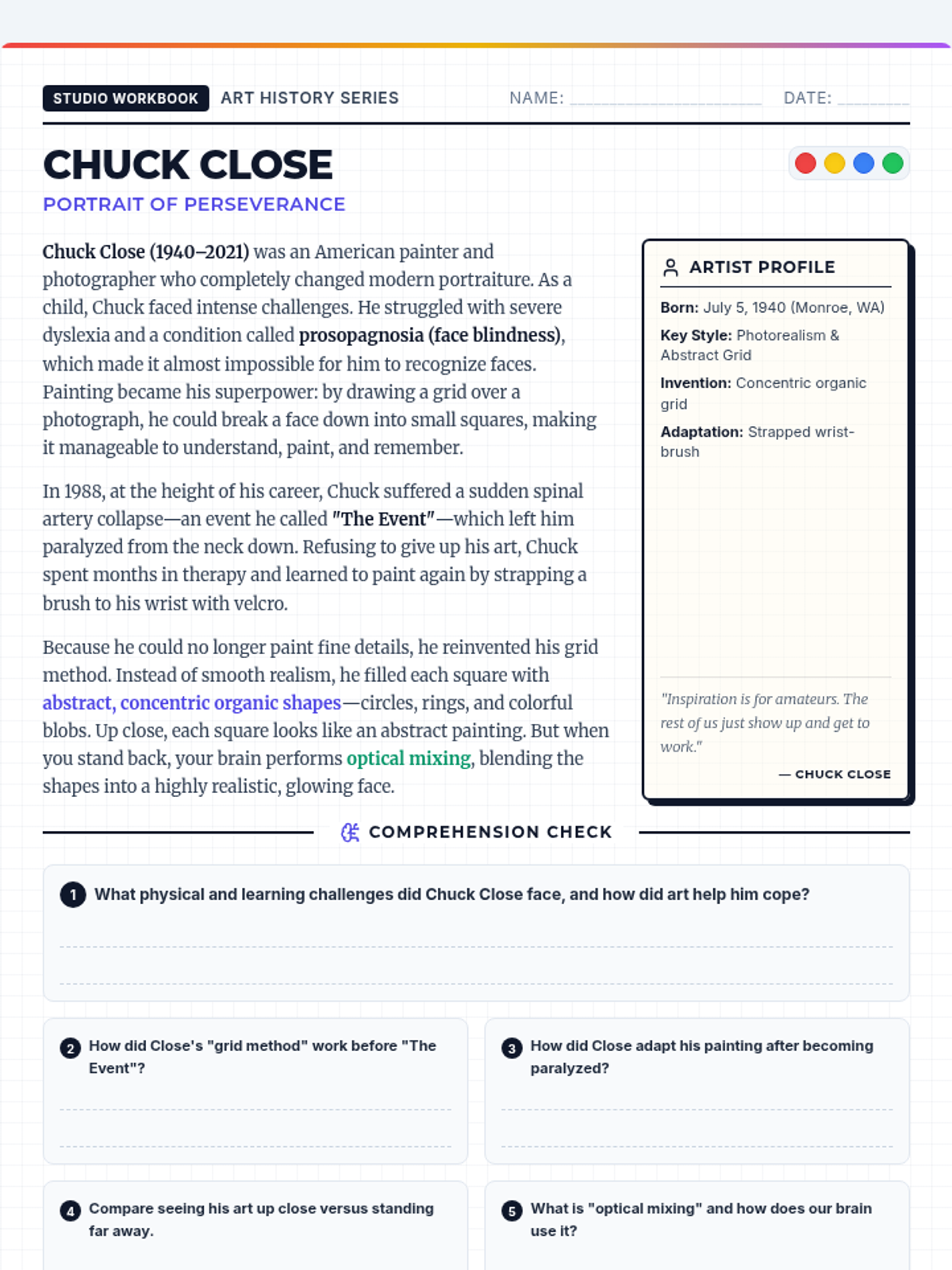
A deep dive into the photorealistic and abstract grid style of Chuck Close. Students explore his life story, master his concentric organic shape grid technique, and discover how to build optical illusion portraits.
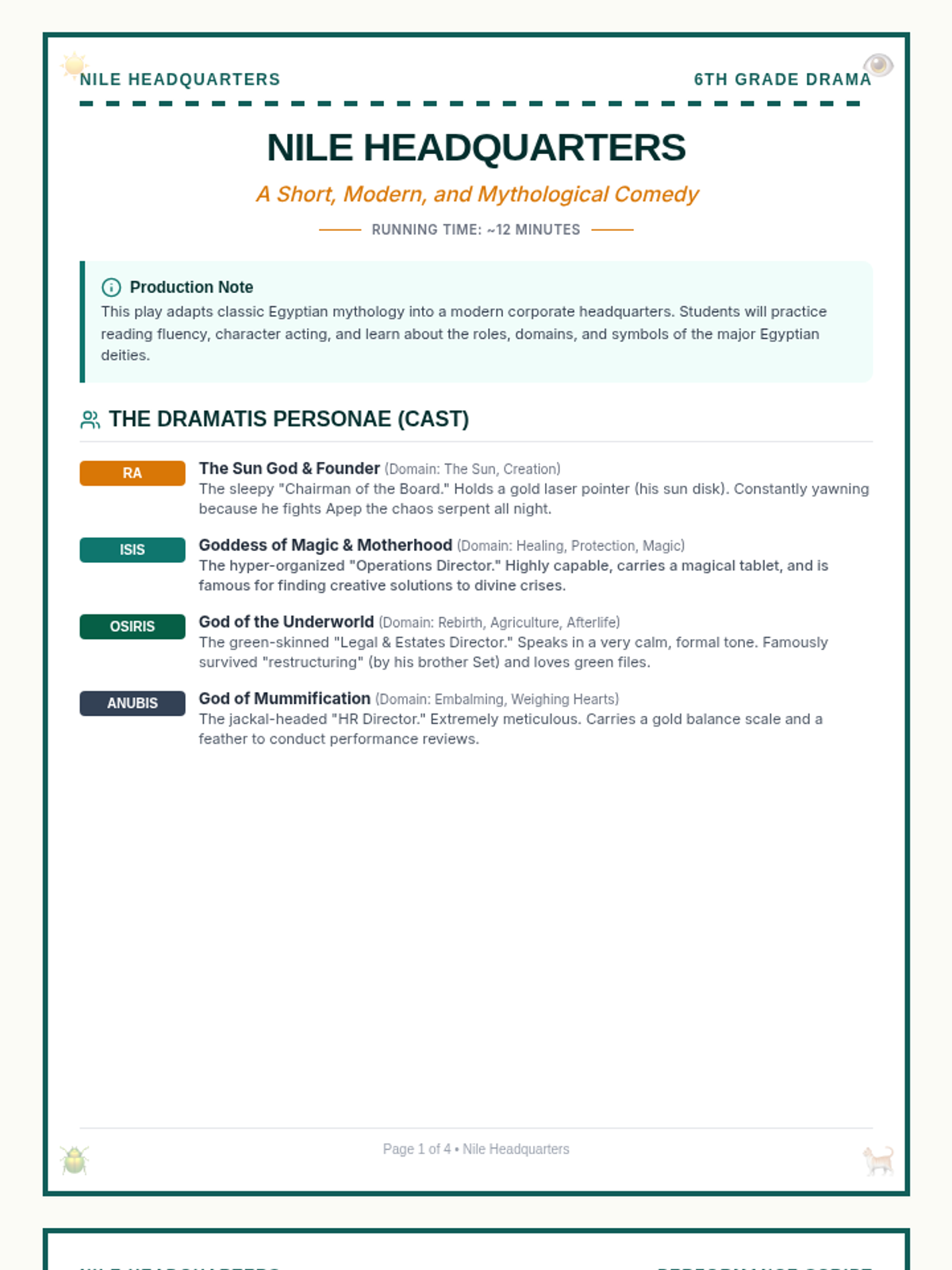
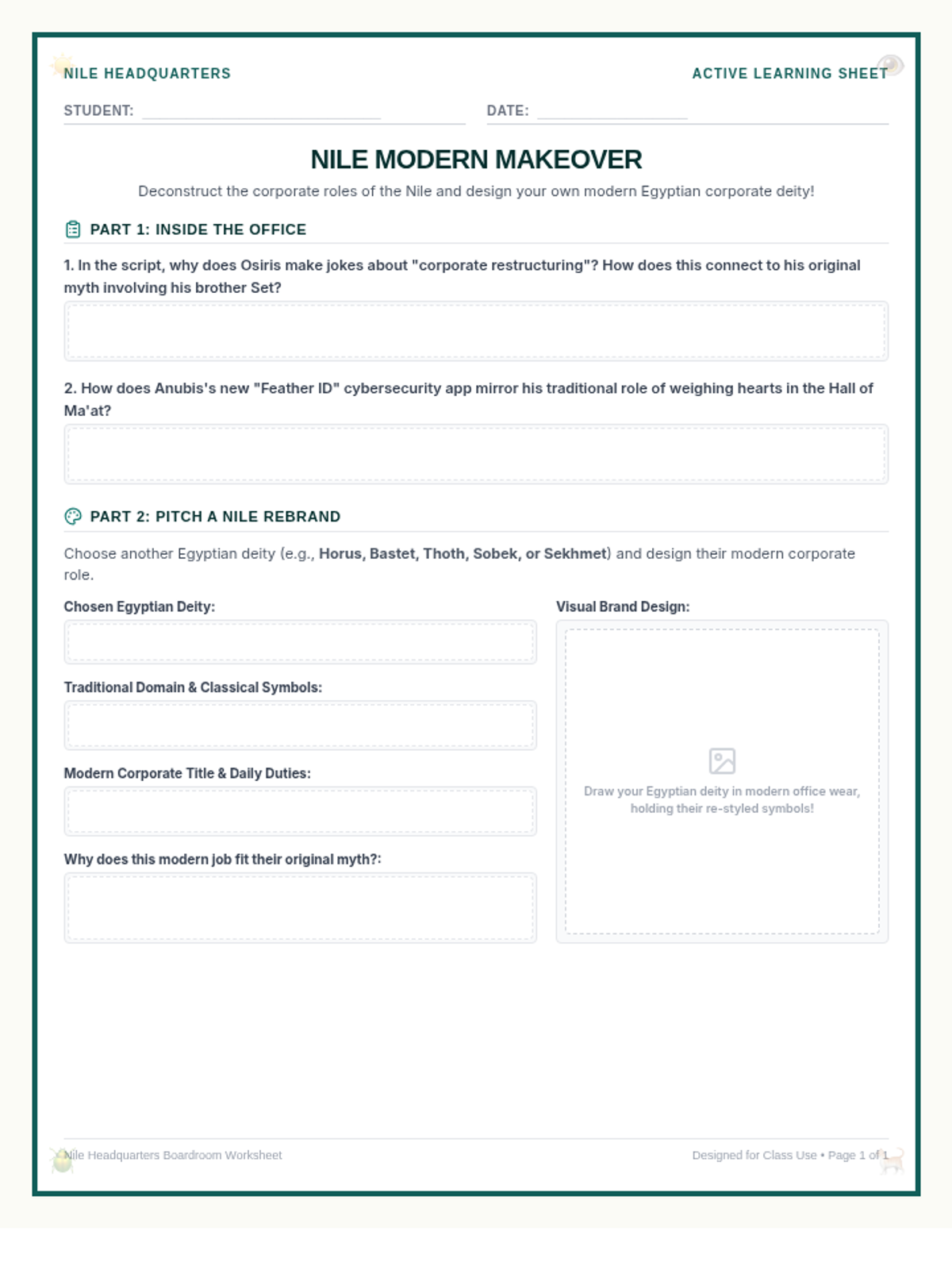
A short, comedic lesson featuring a modern play about Egyptian gods managing their cosmic duties. Includes a complete script with Ra, Isis, Osiris, and Anubis, character introduction slides, and a creative design worksheet.
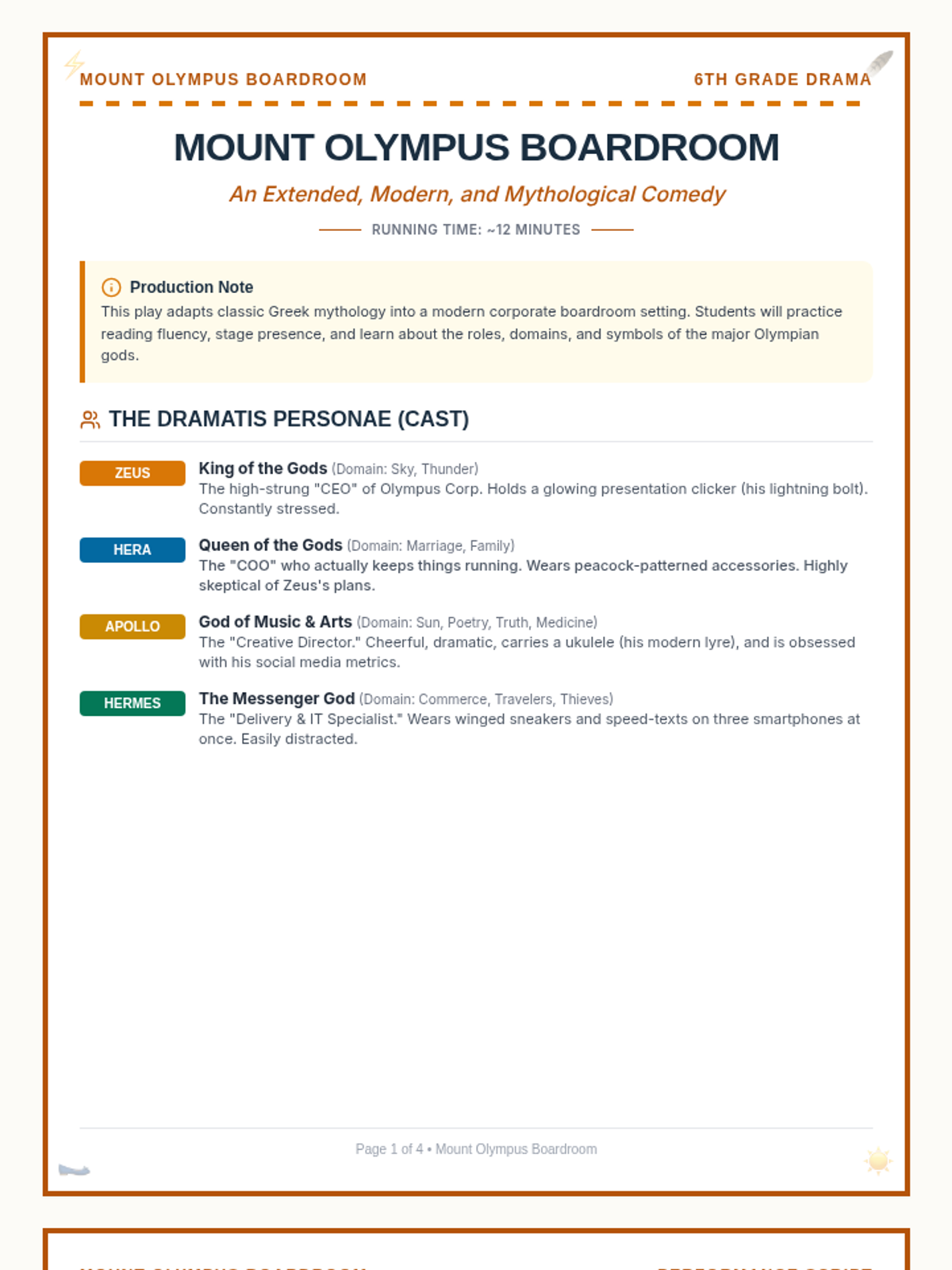
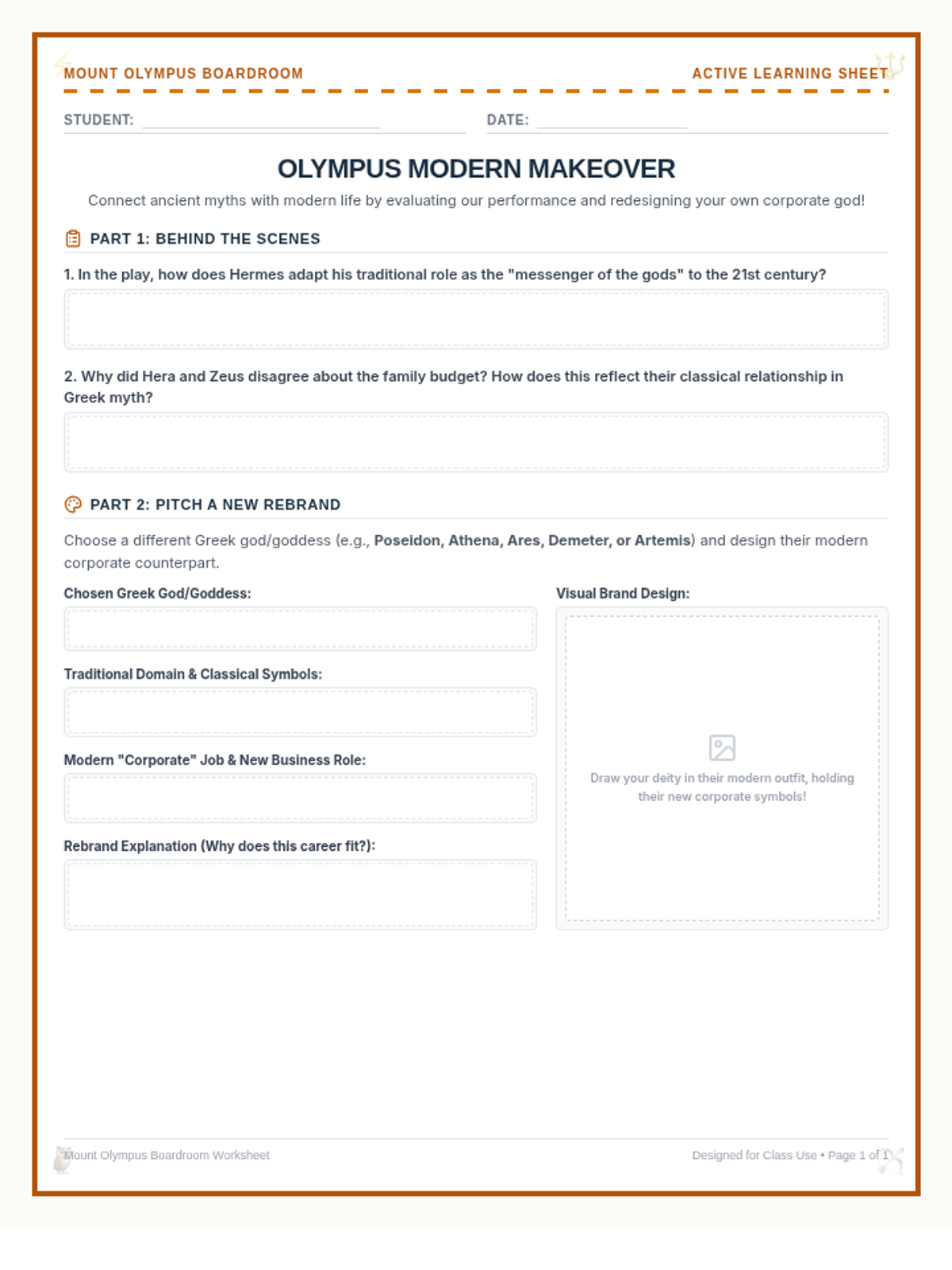
A short, humorous, and educational lesson featuring a 10-minute modern play about the Greek gods adapting to modern life. Includes a complete performance script, character introduction slides, and an interactive student worksheet to design modern adaptations of other mythological figures.
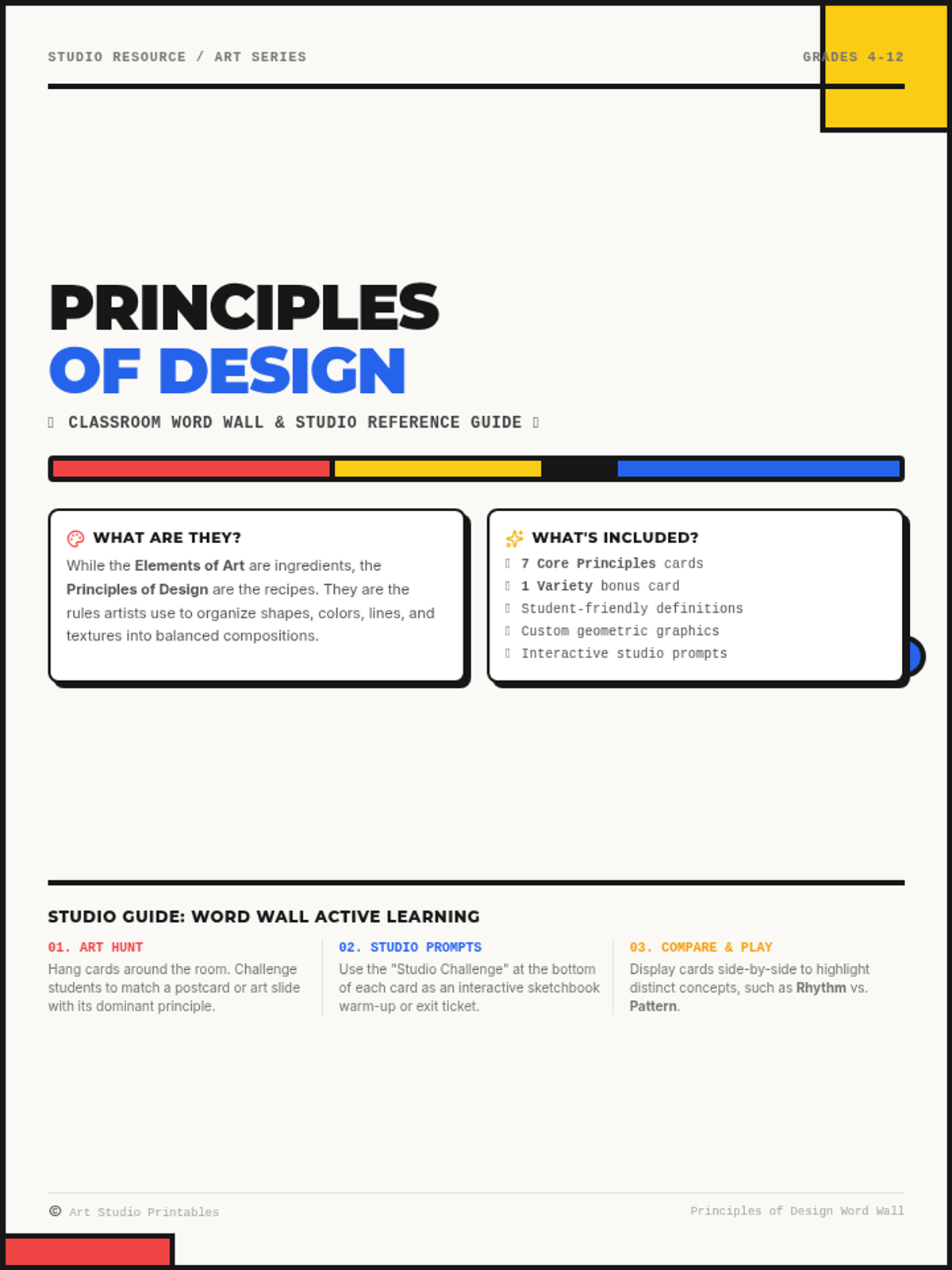
A foundational art lesson exploring the seven core principles of design—Balance, Contrast, Emphasis, Movement, Pattern, Rhythm, and Unity—through visual vocabulary and printable word wall cards.
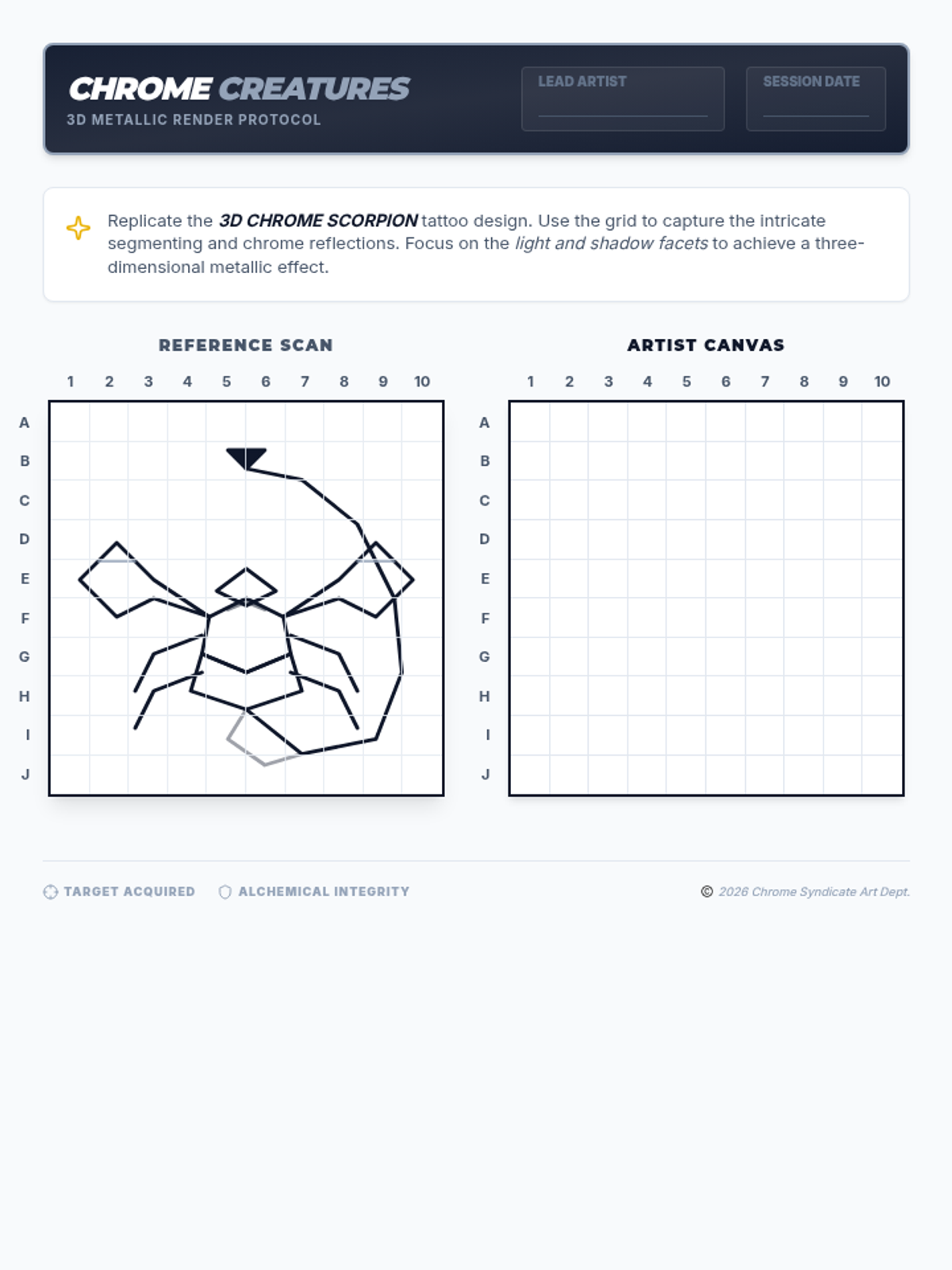
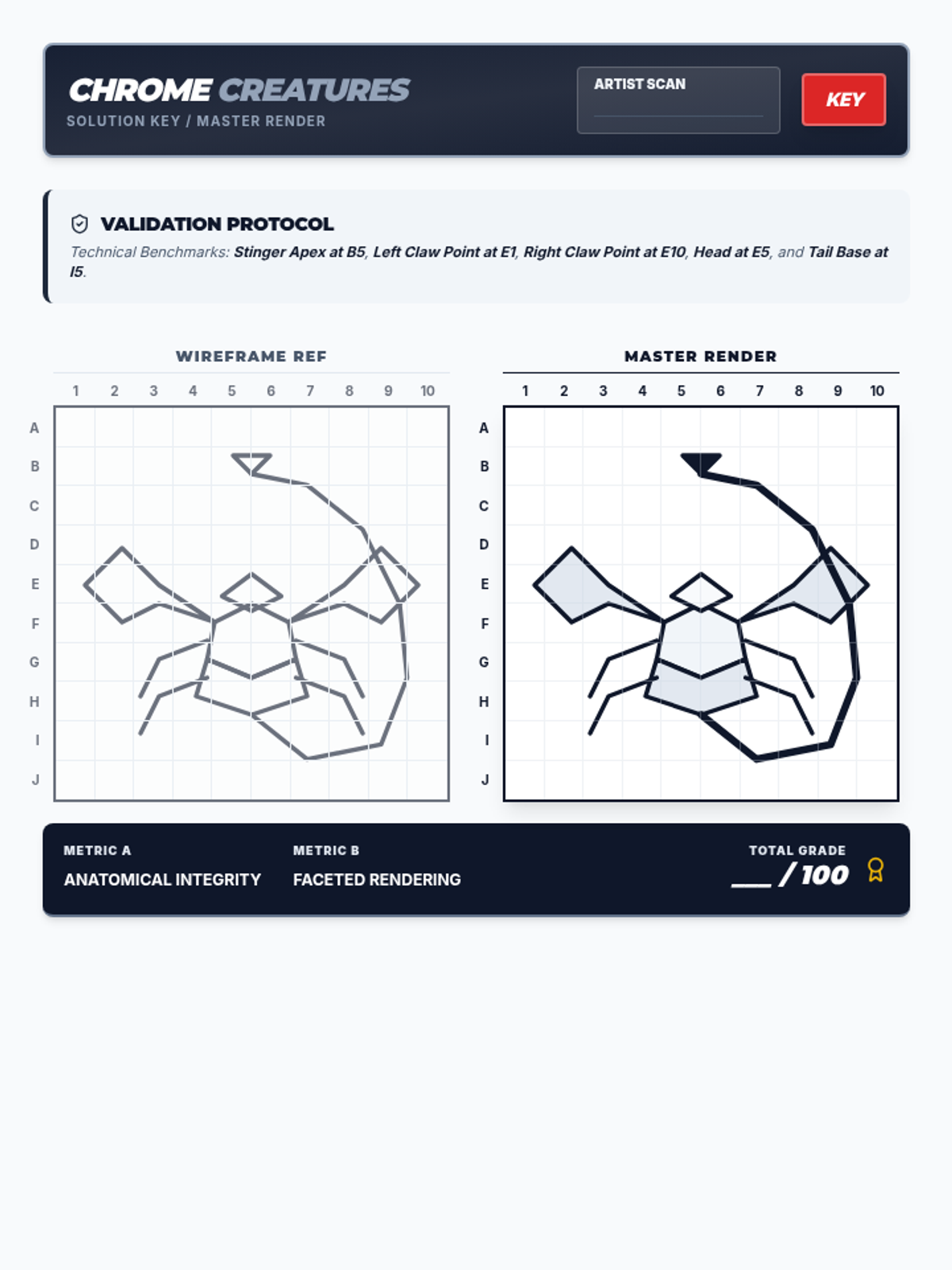
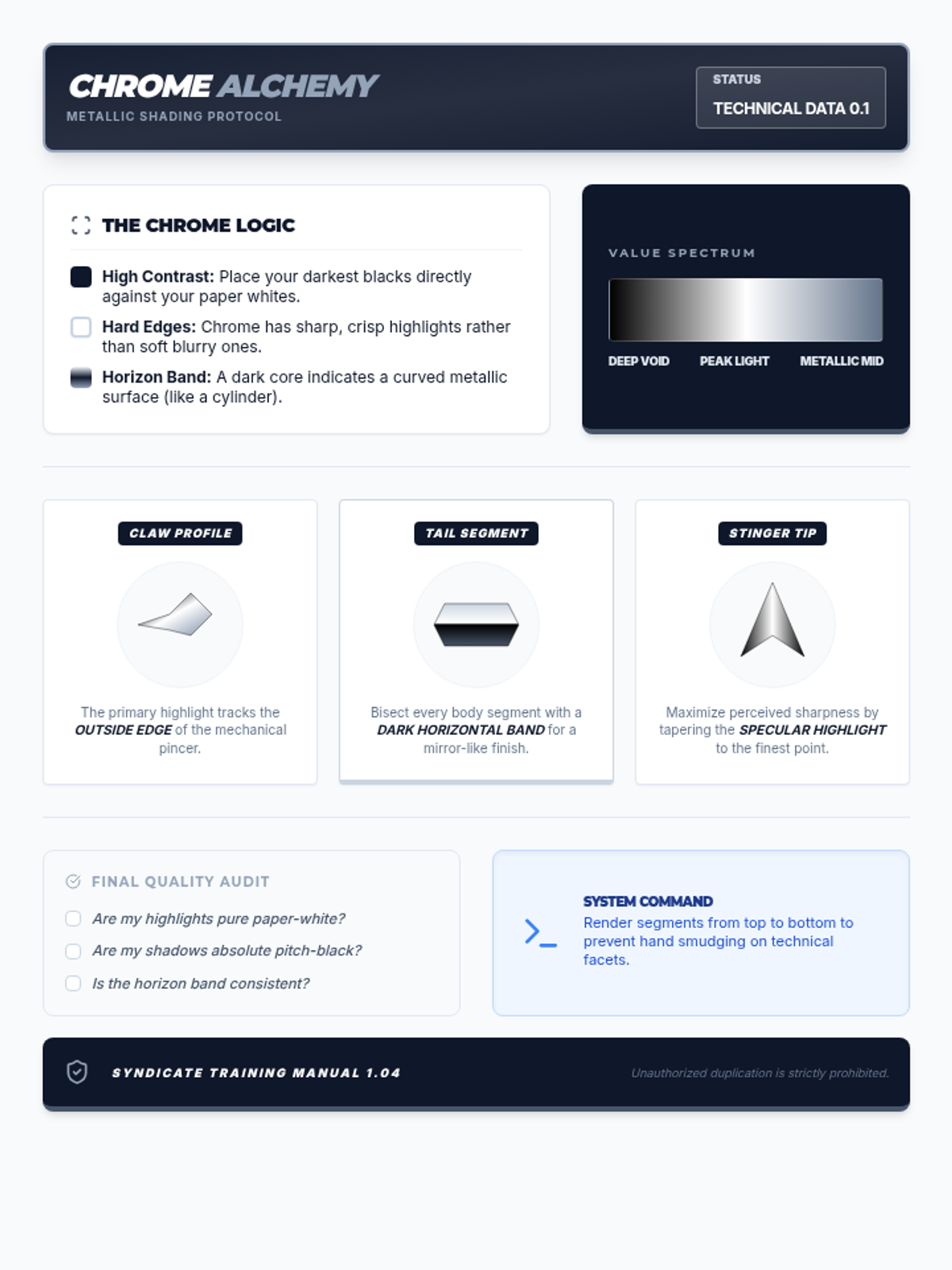
A lesson on precision drawing and proportion using grid techniques, themed around futuristic chrome animal tattoo designs. Students learn to translate complex shapes square by square to achieve technical accuracy.
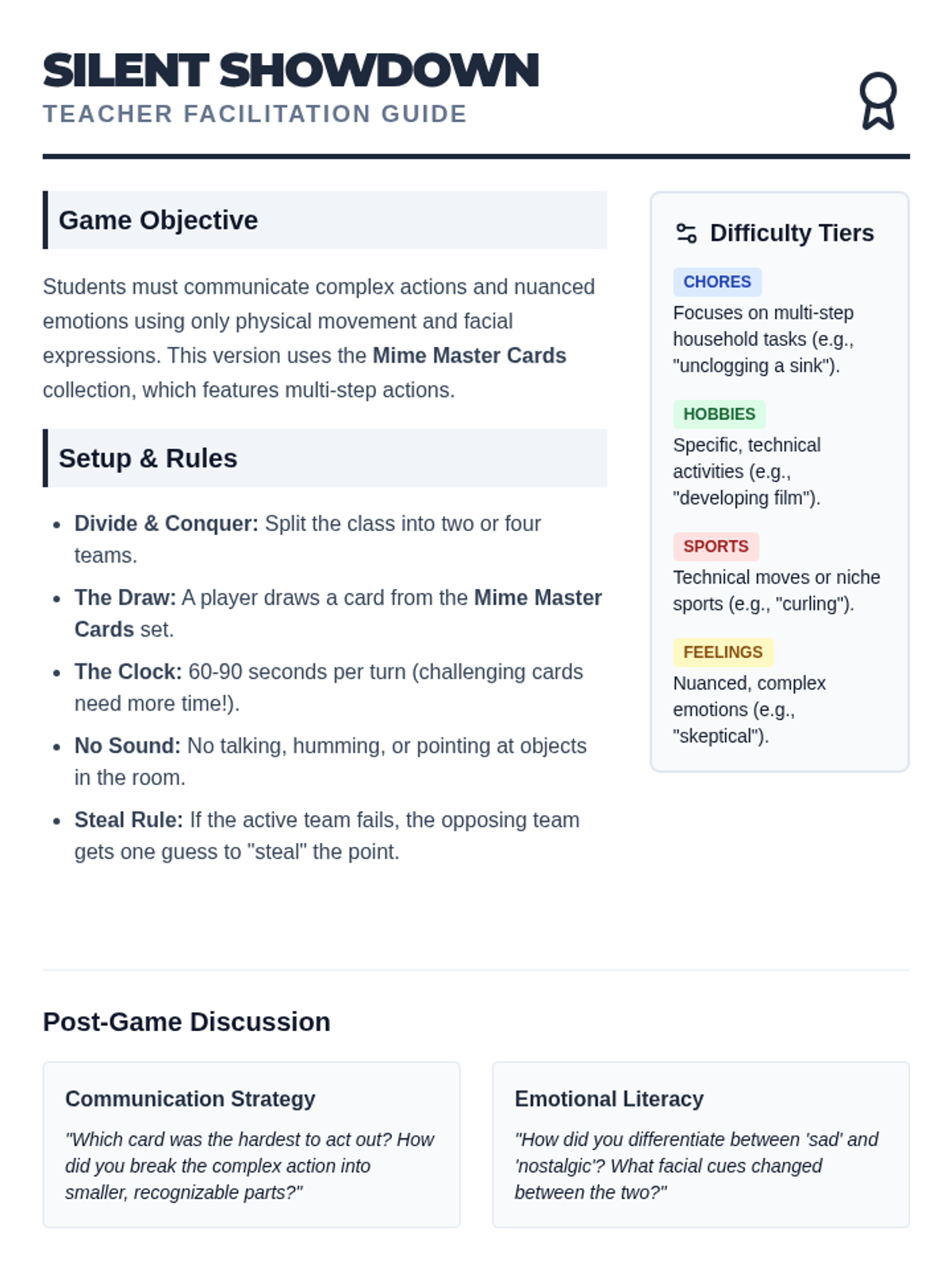
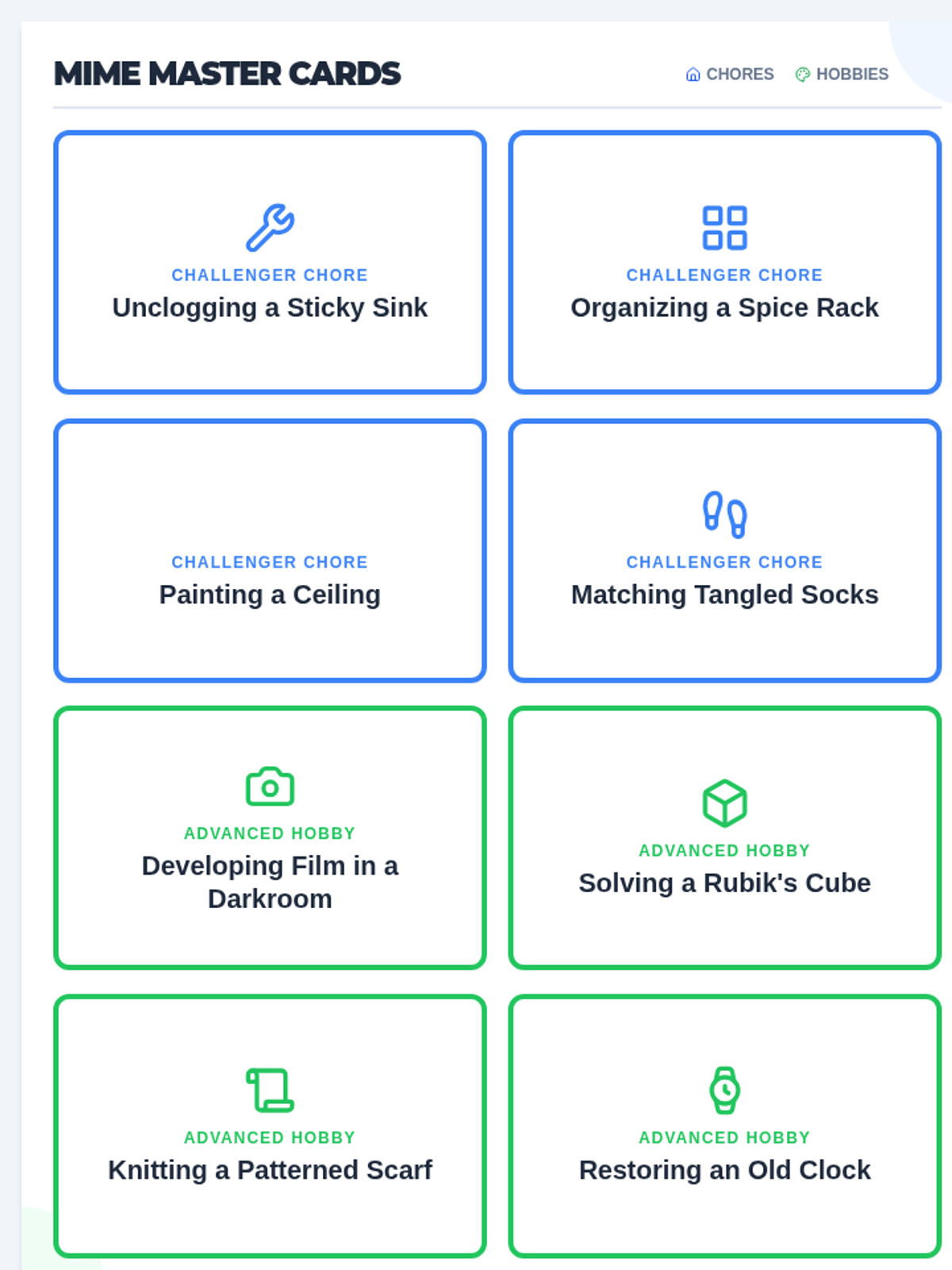
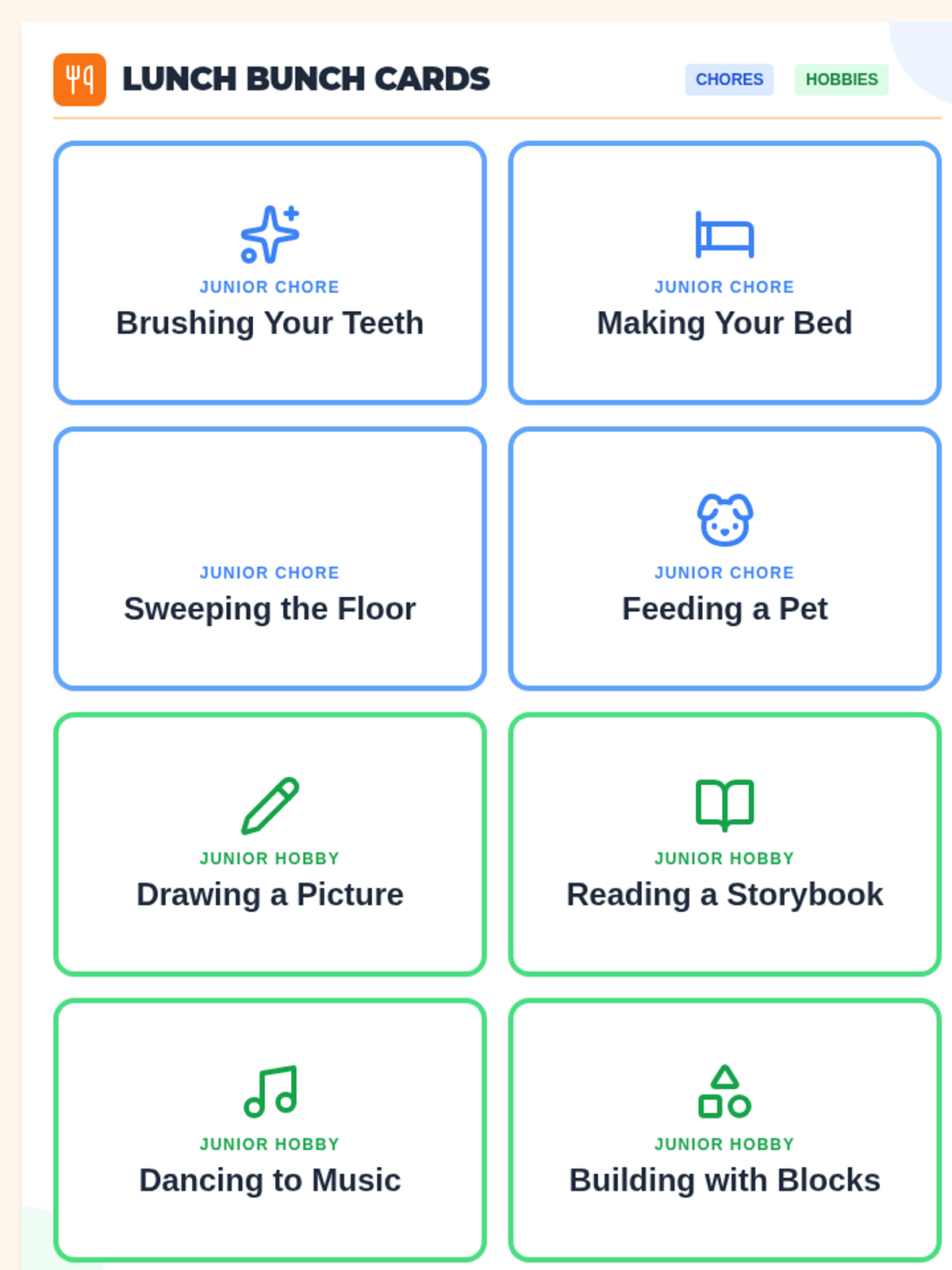
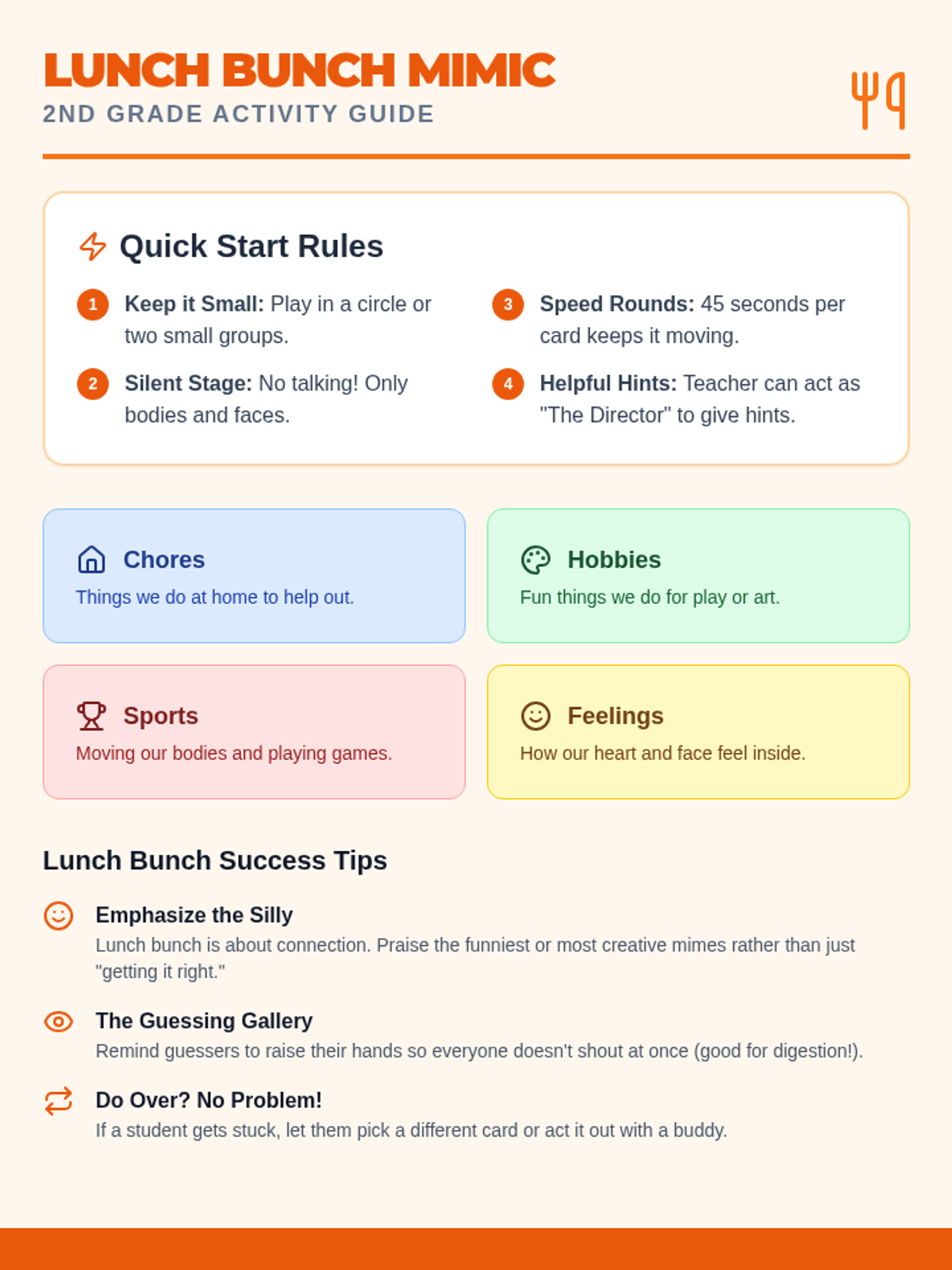
A dynamic lesson on non-verbal communication with two paths: a challenging 'Mime Master' level for older students and a simplified 'Lunch Bunch' version designed for 2nd grade social-emotional learning and casual play.
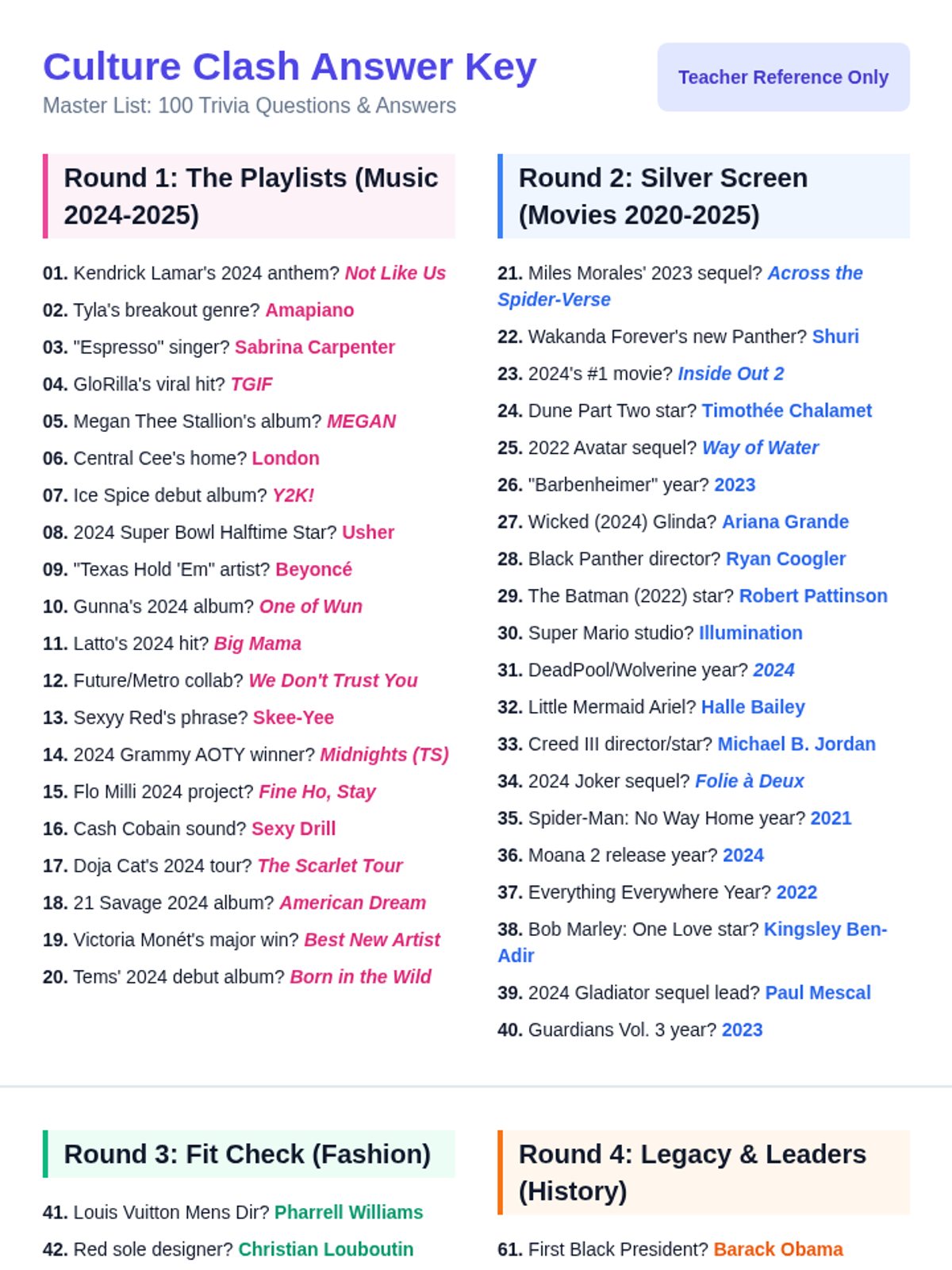
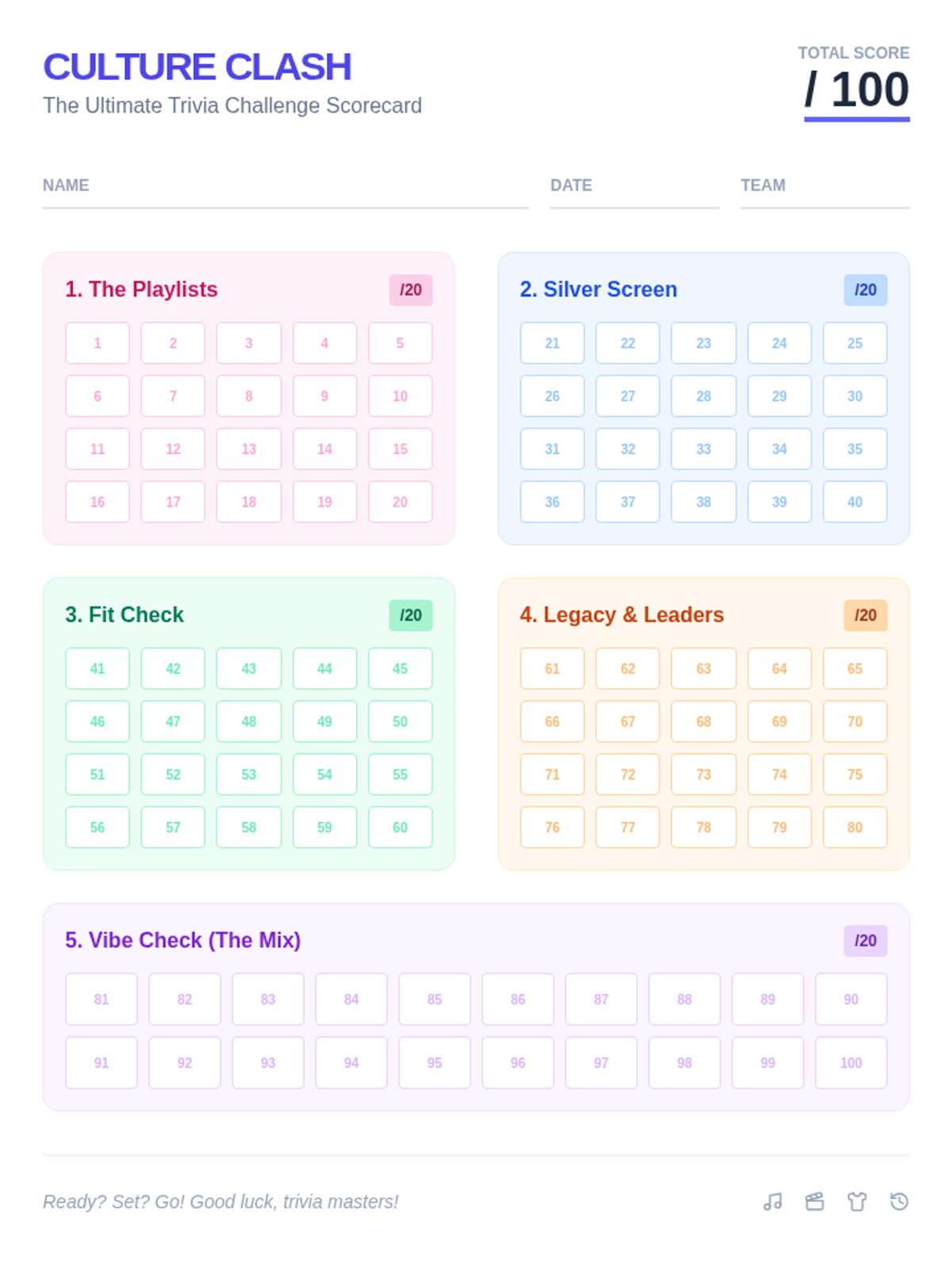
A high-energy, 100-question trivia game designed for middle school students, covering modern music, movies, fashion, and black history. The lesson promotes cultural literacy and engagement through a competitive game format.
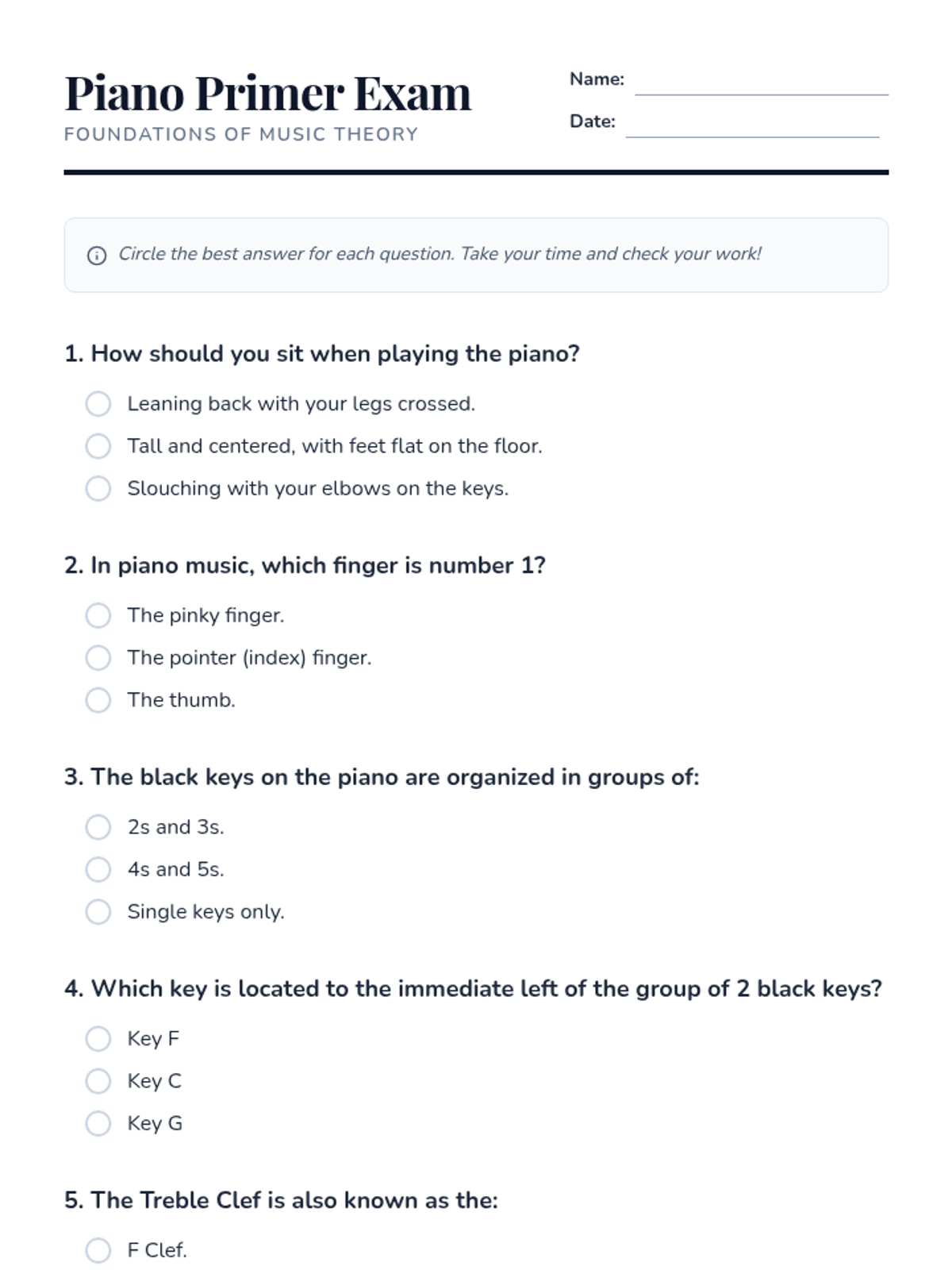
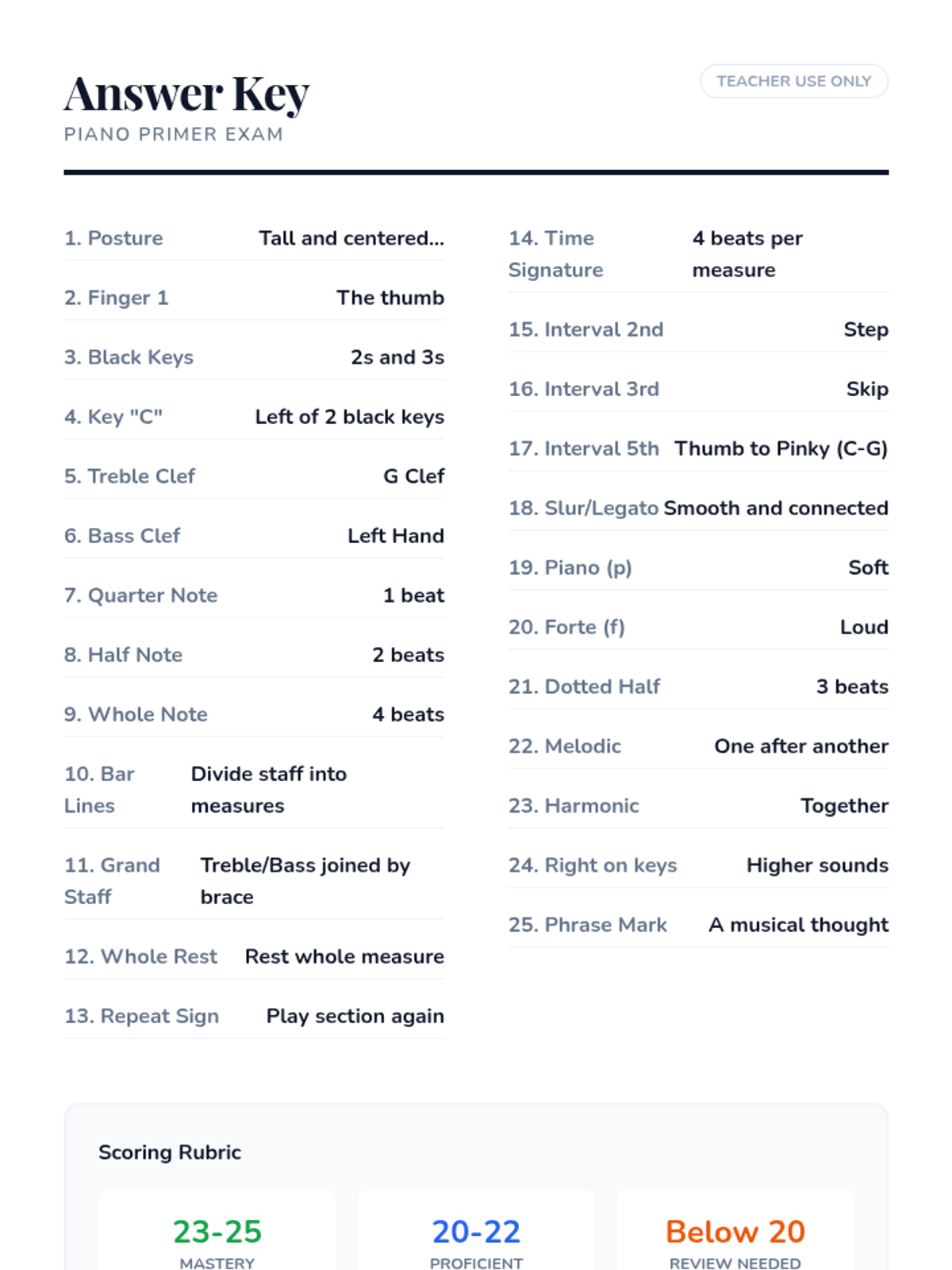
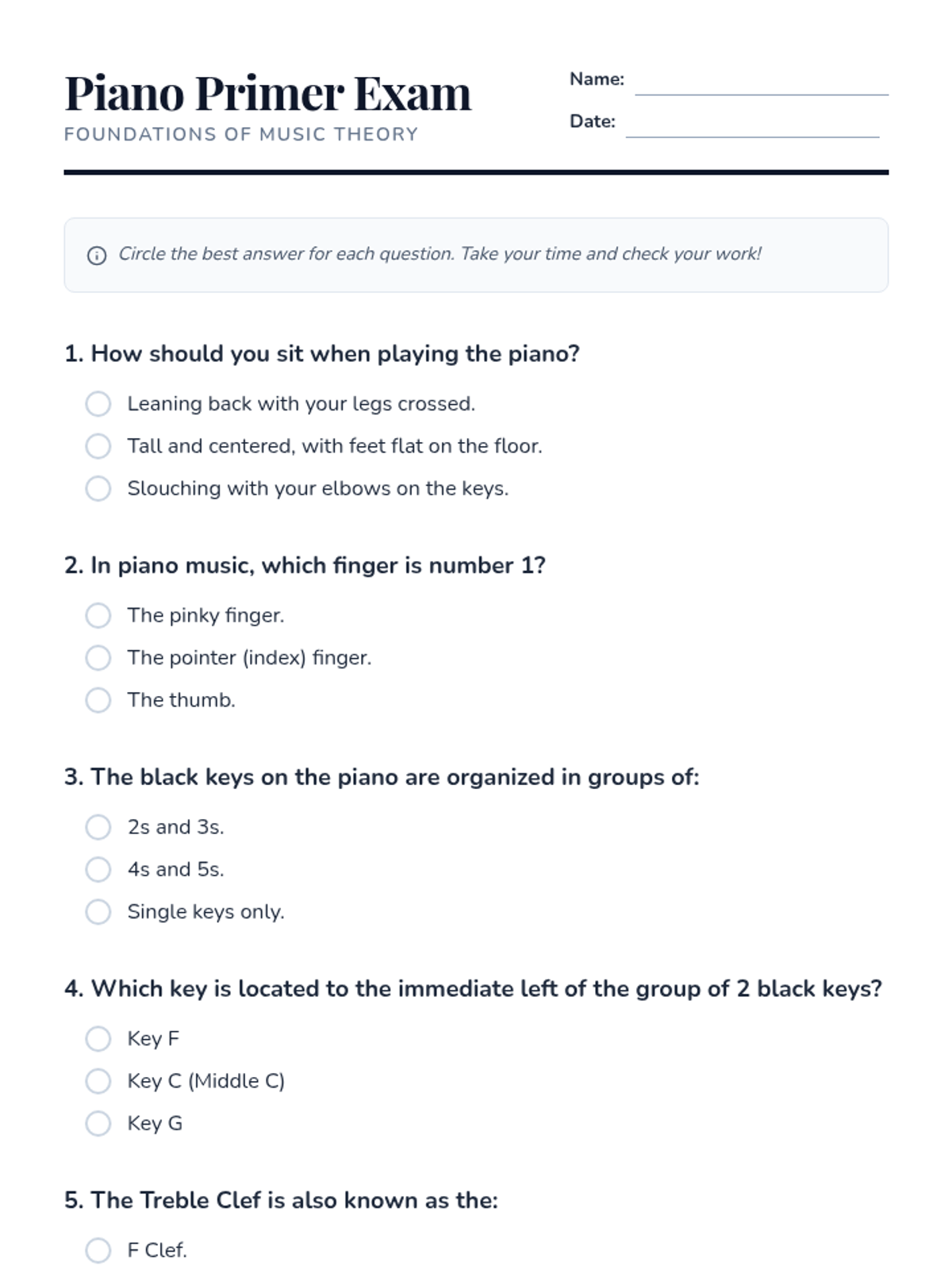
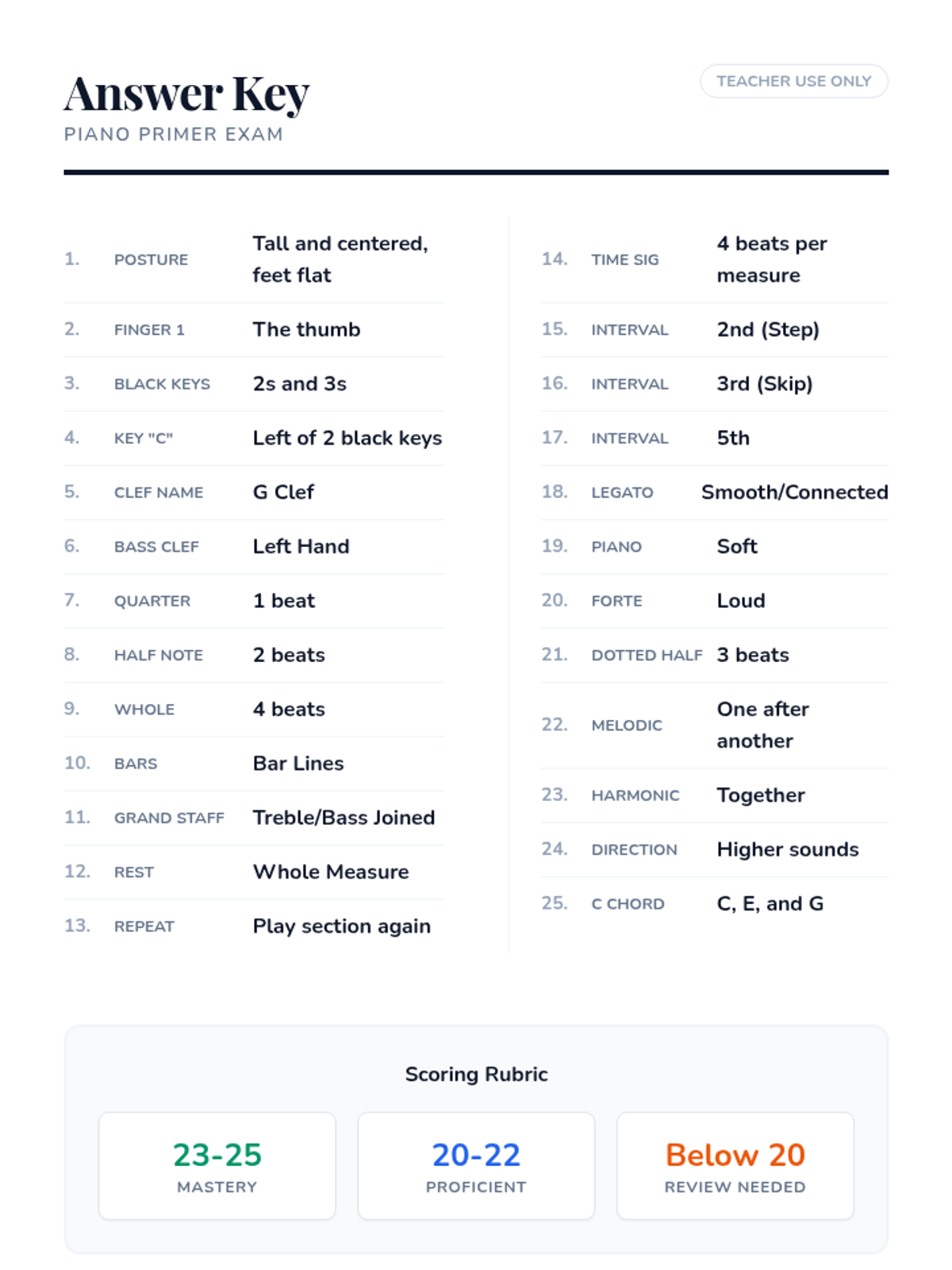
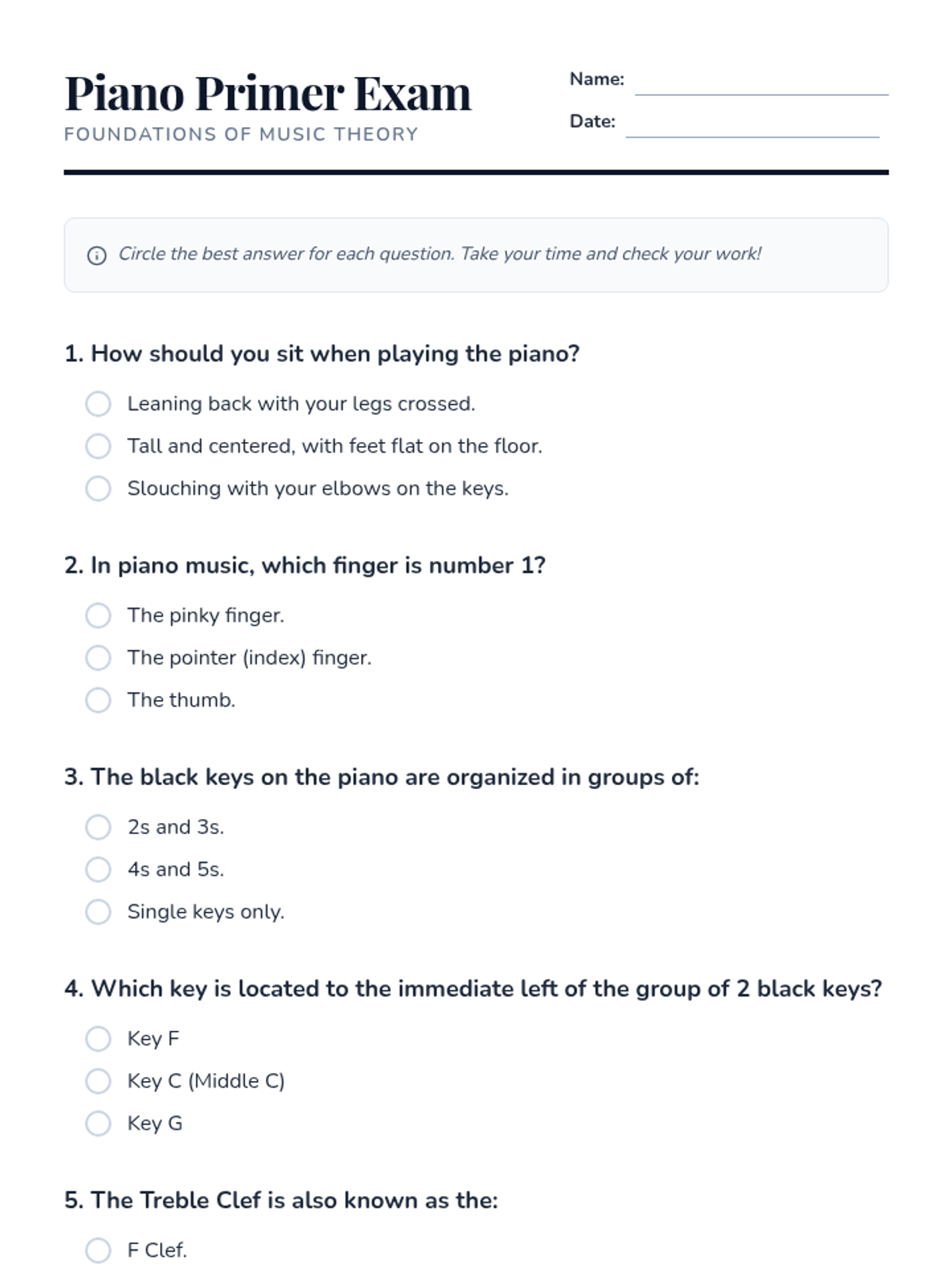
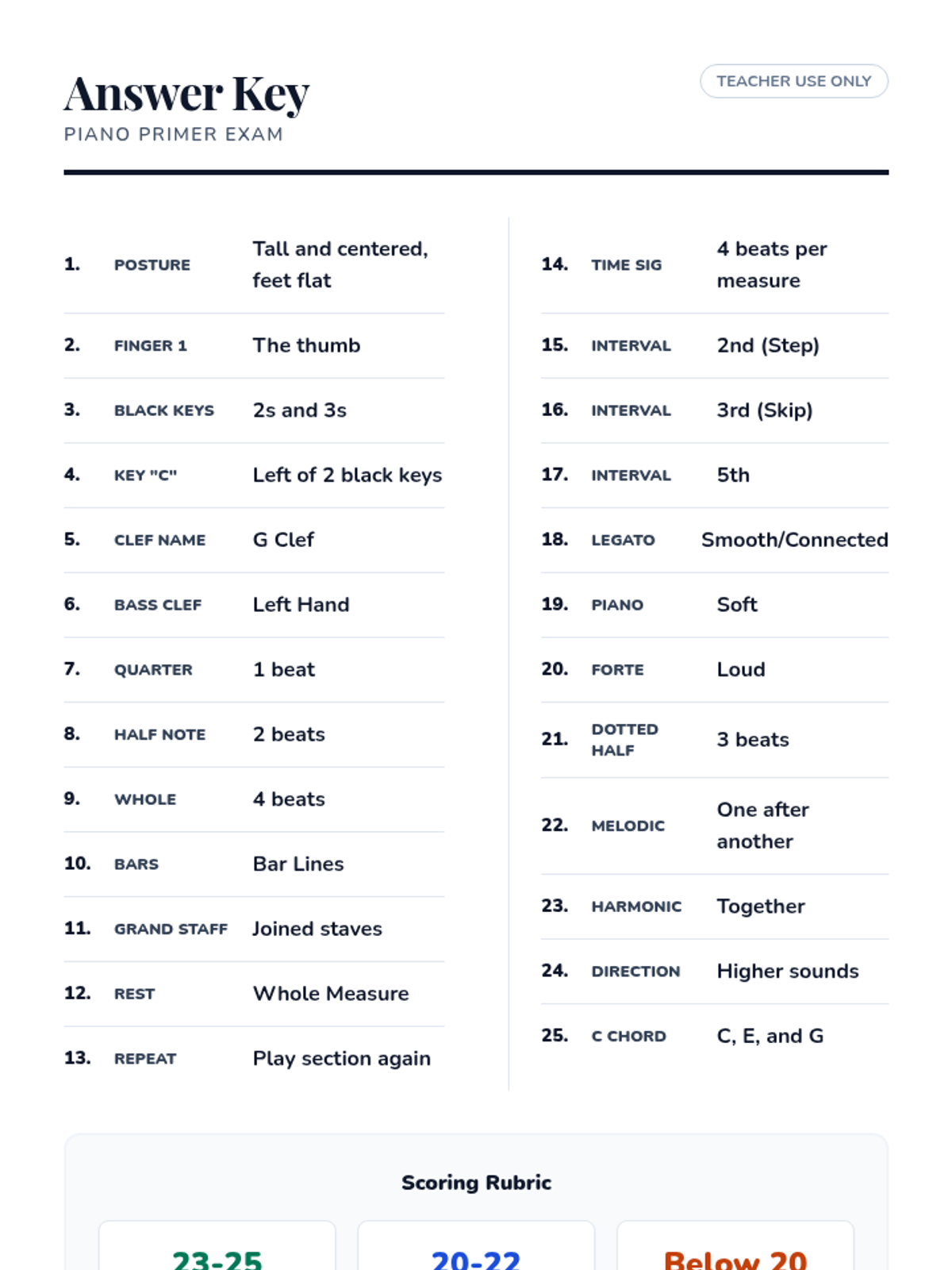
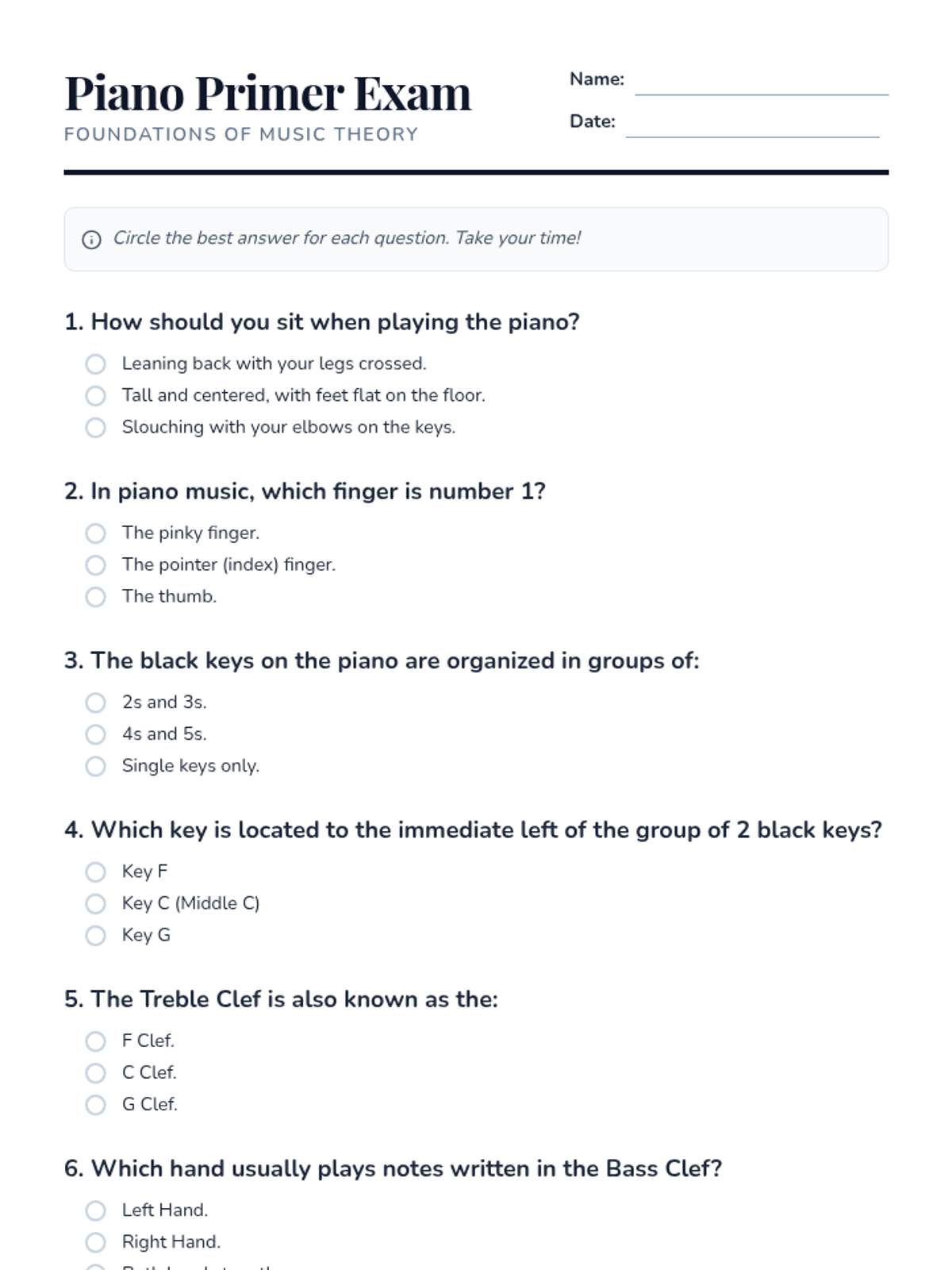
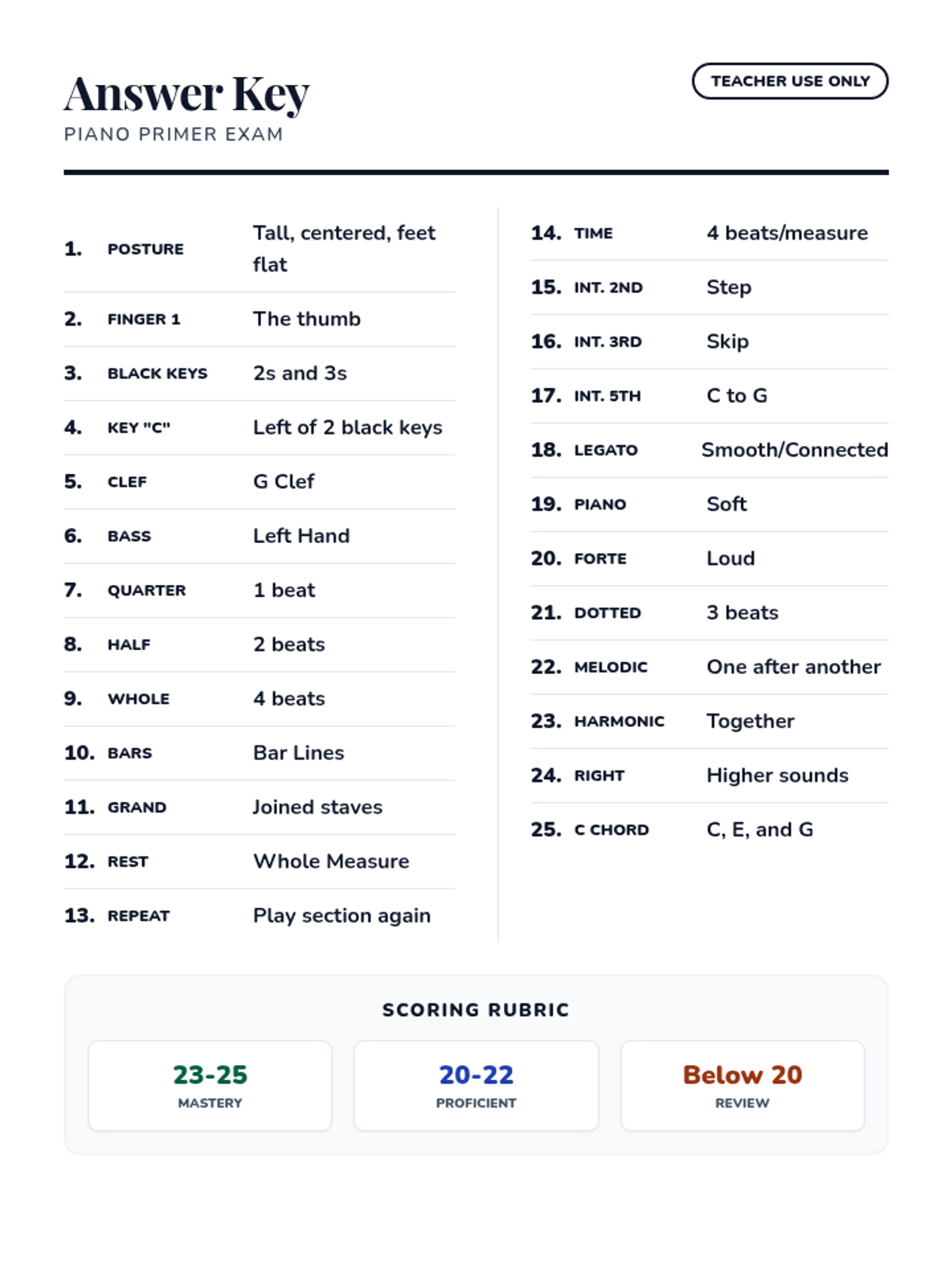
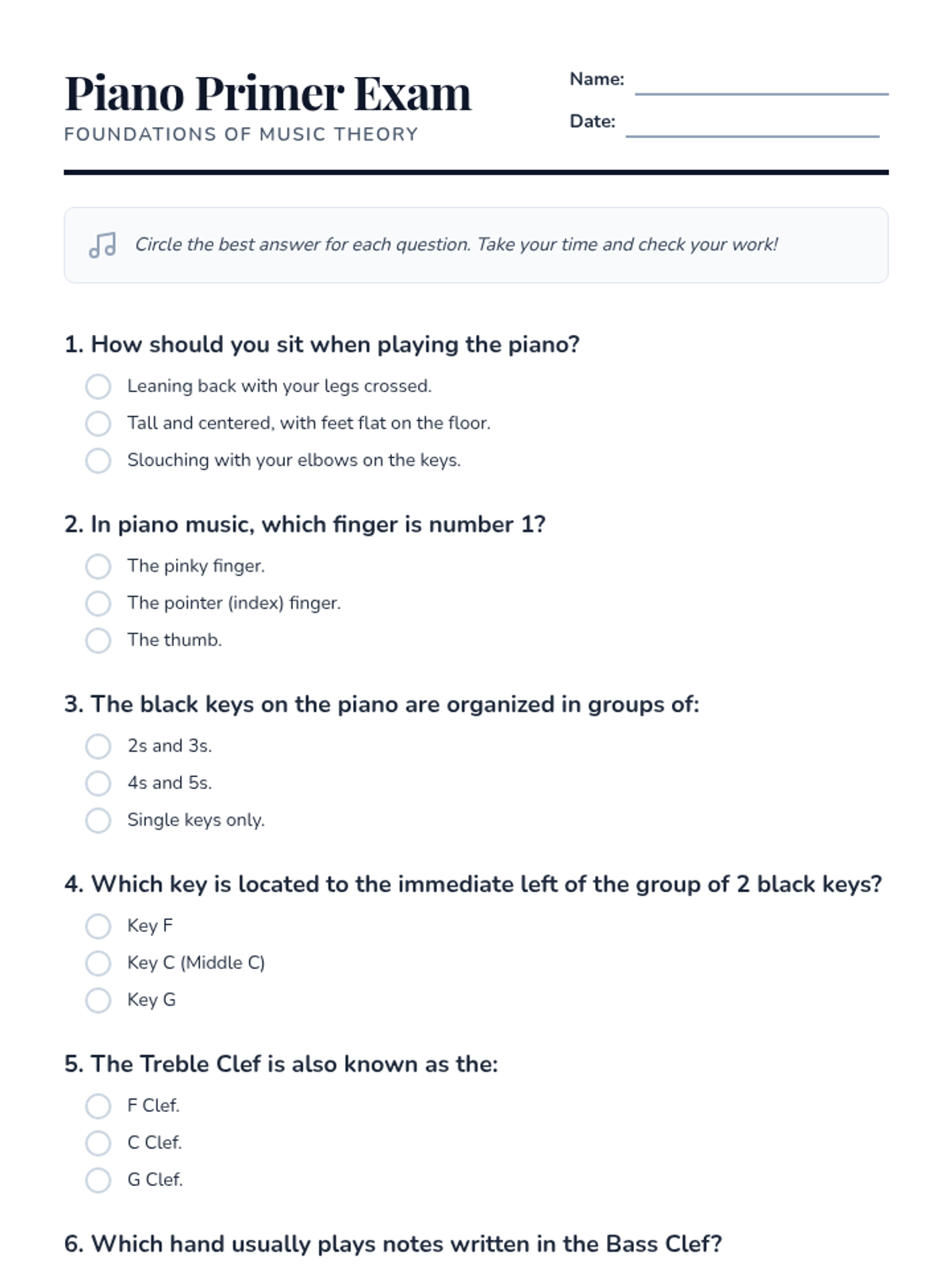
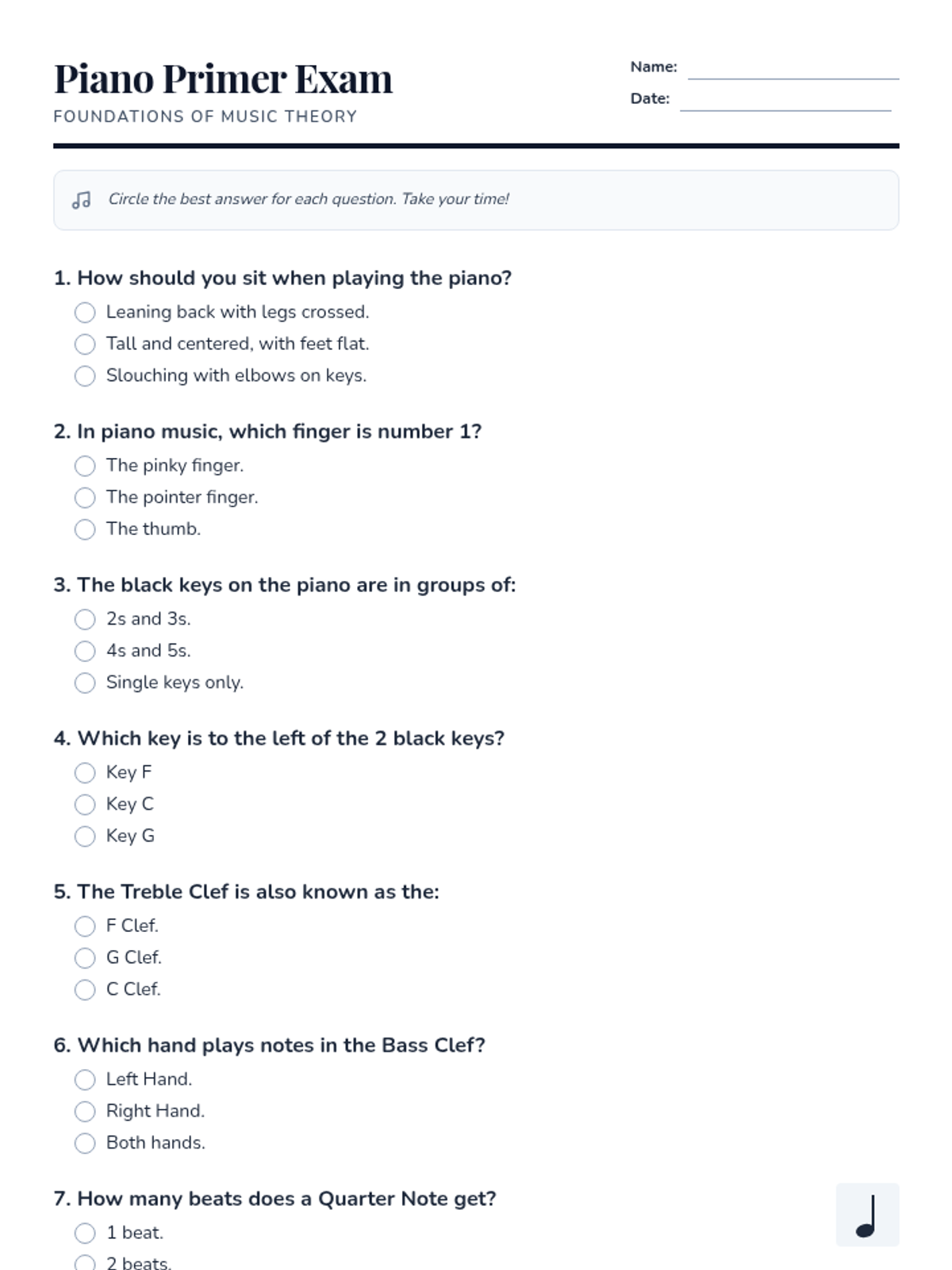
A comprehensive assessment covering foundational piano concepts for beginner students, including posture, notation, rhythms, and basic theory.
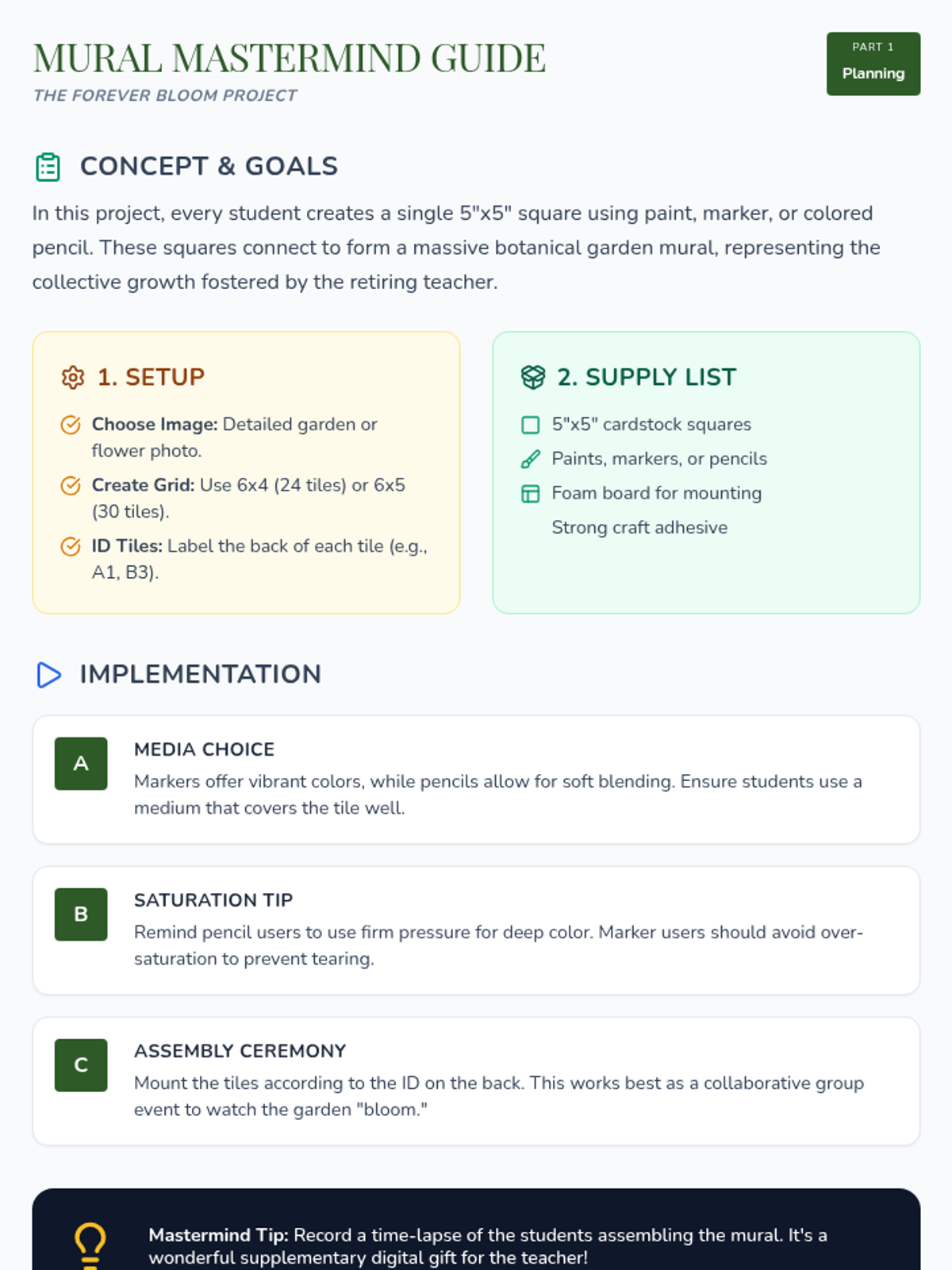
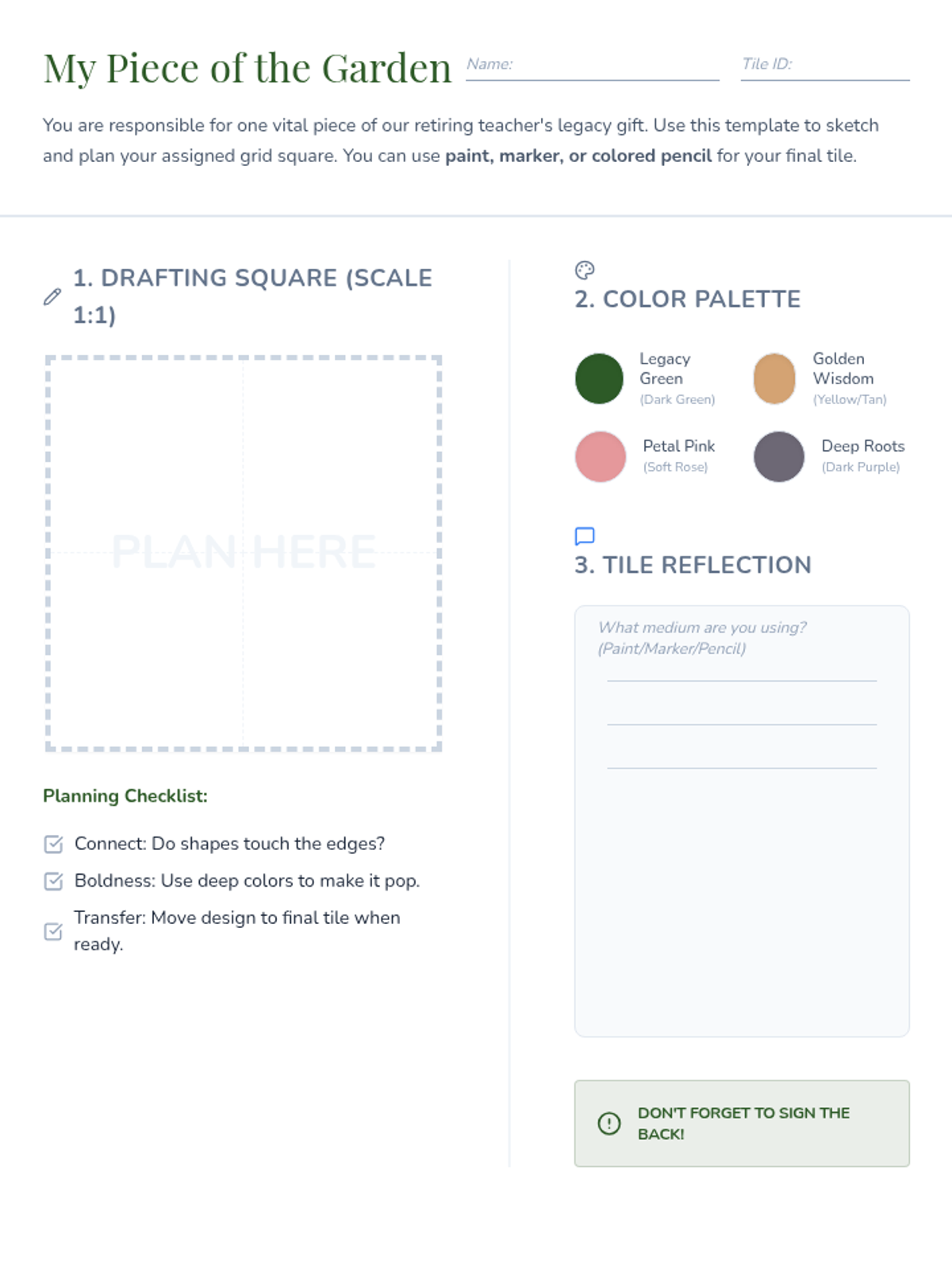
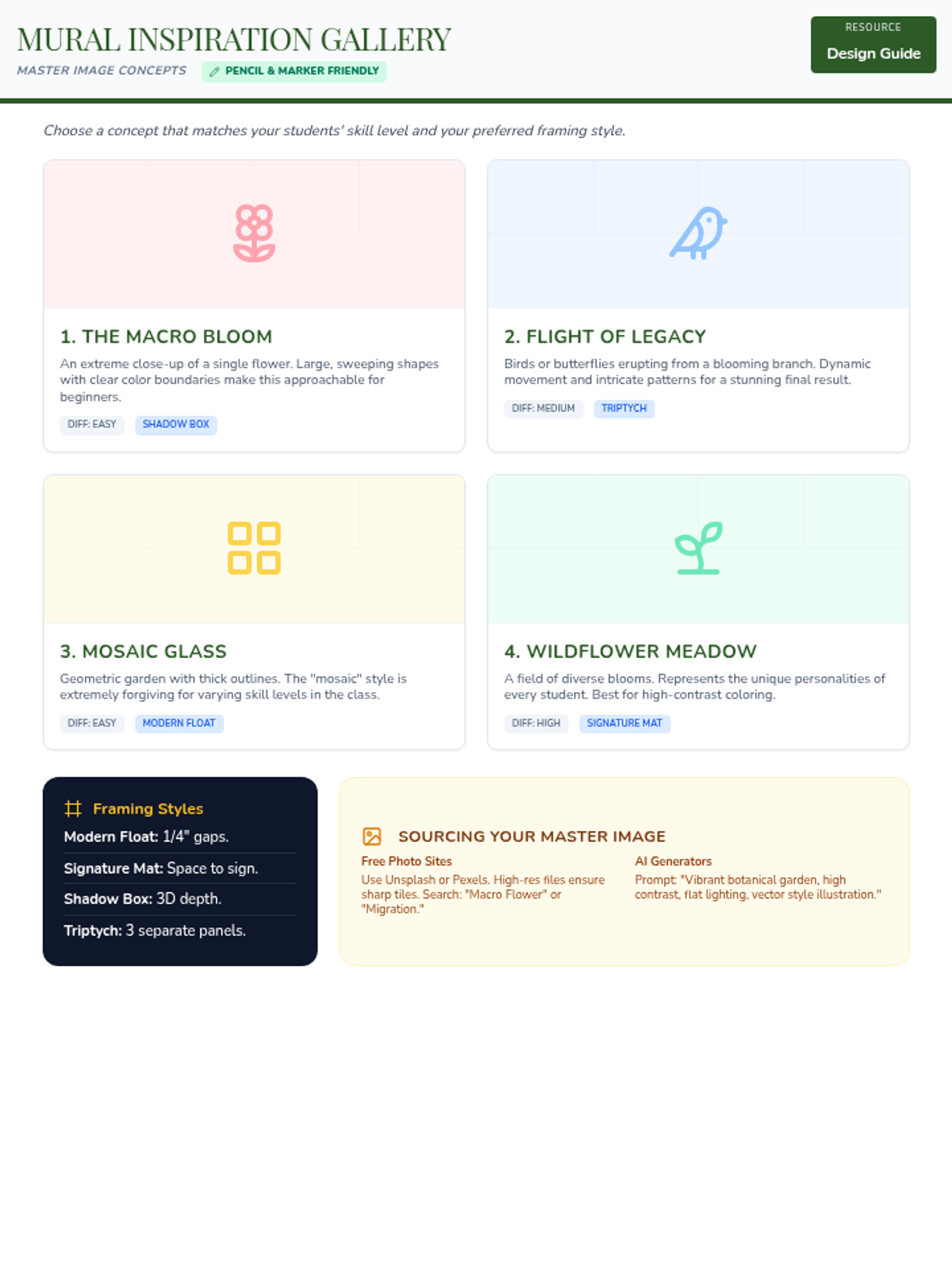
Students explore the theme of 'Blooming' through a collaborative grid mural project, where each individual piece contributes to a larger-than-life garden masterpiece for a retiring teacher.
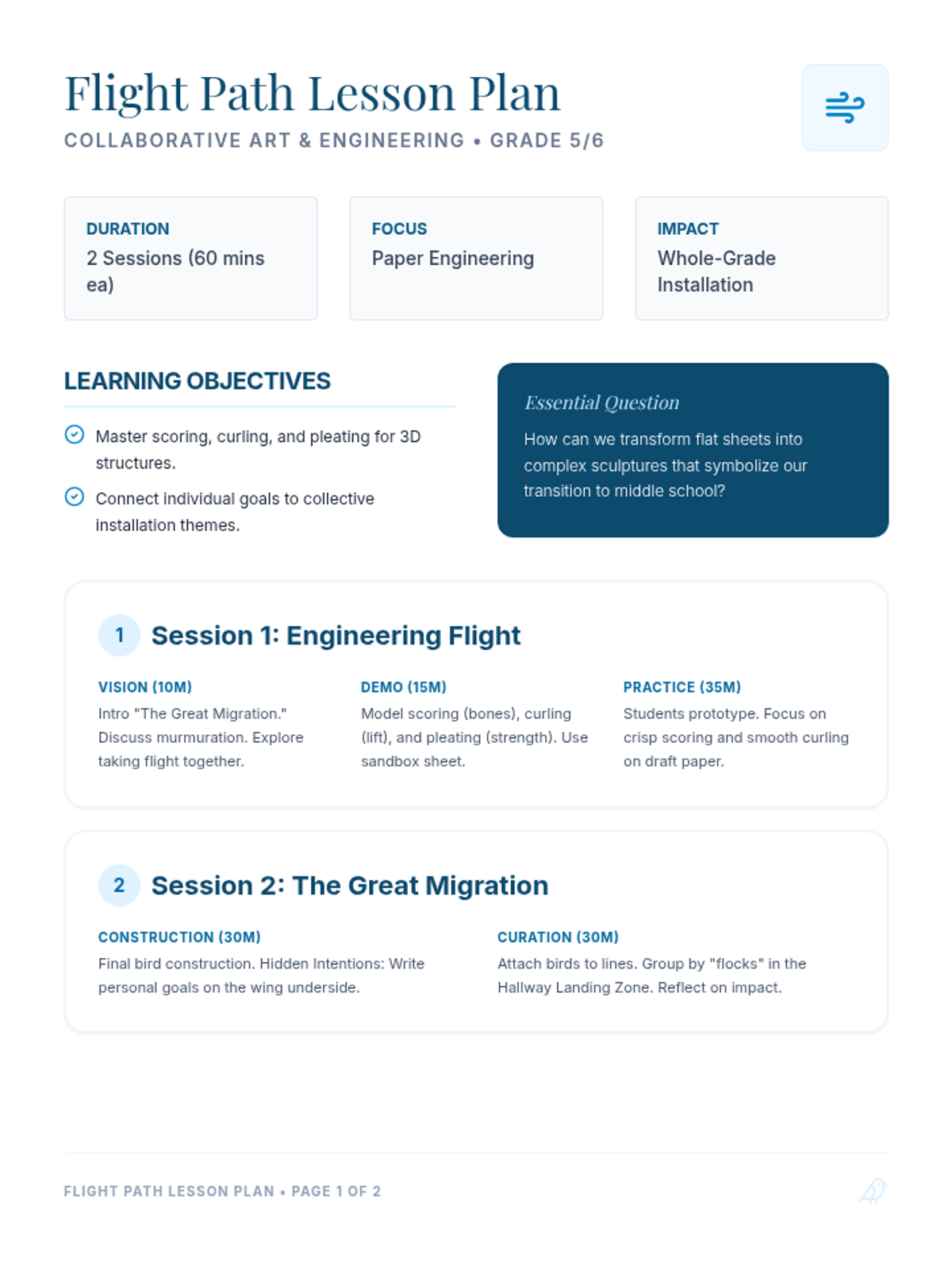
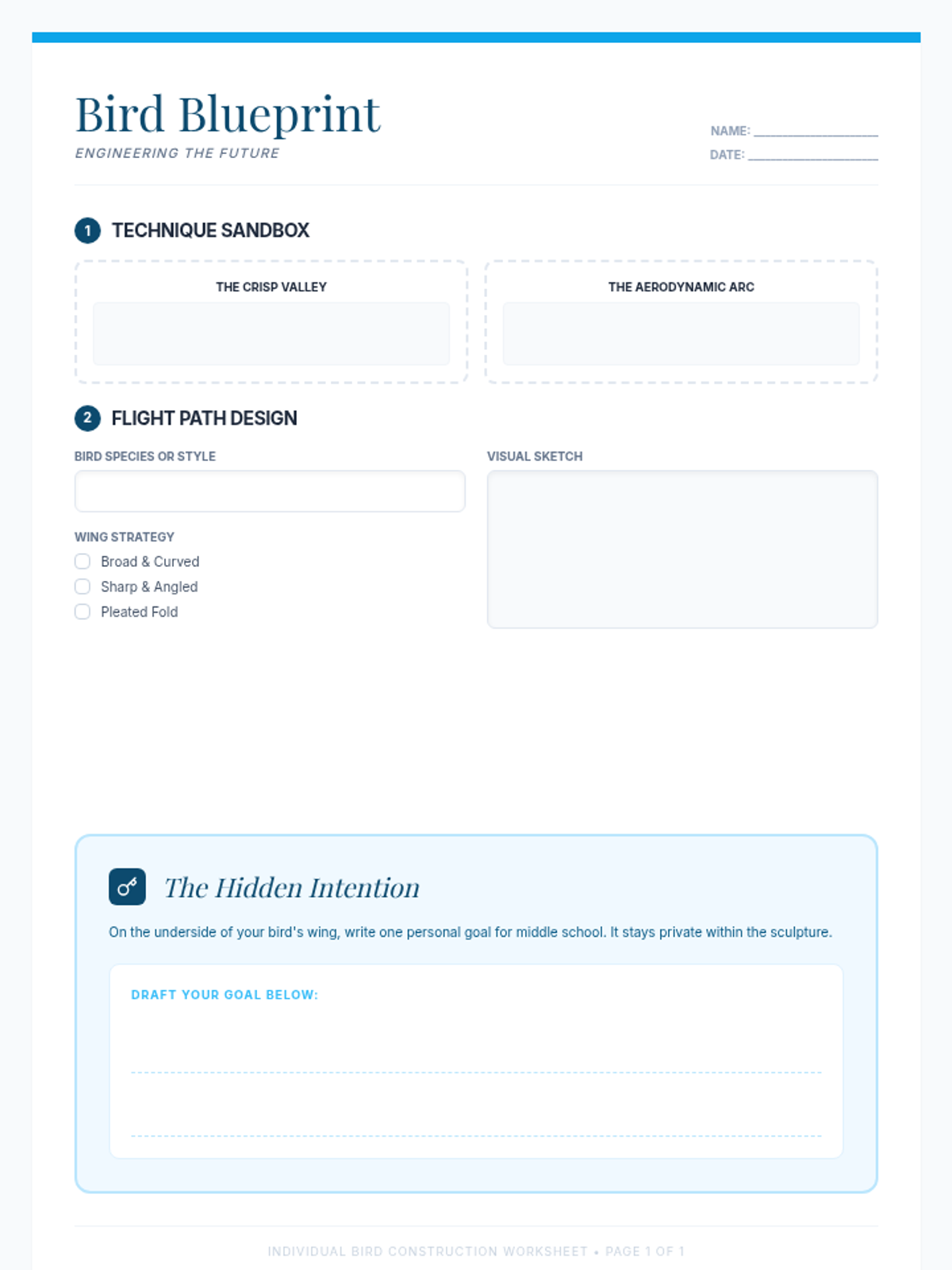
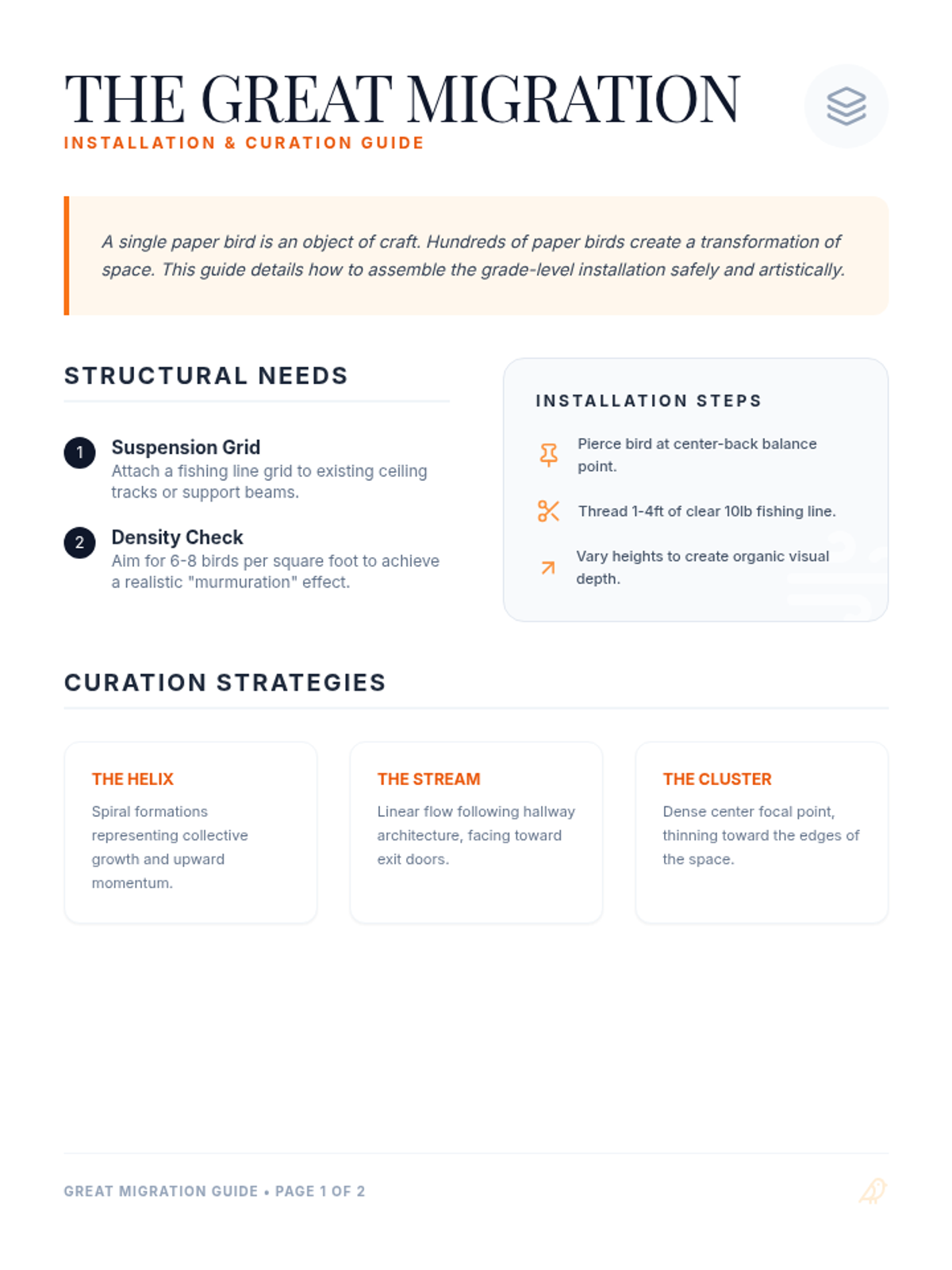
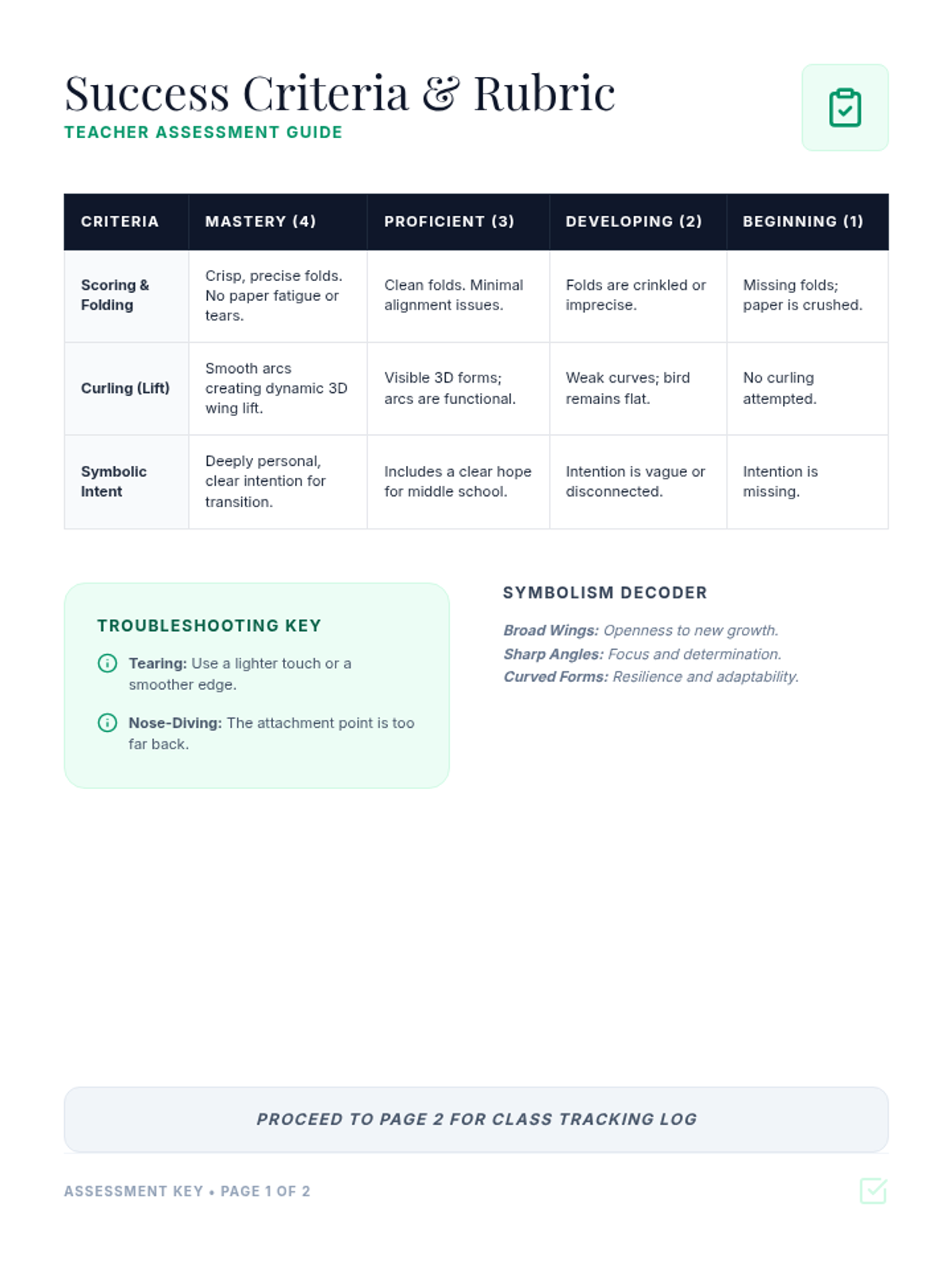
A collaborative art and engineering lesson where students design individual paper birds to form a massive grade-level installation, symbolizing their collective transition to middle school.
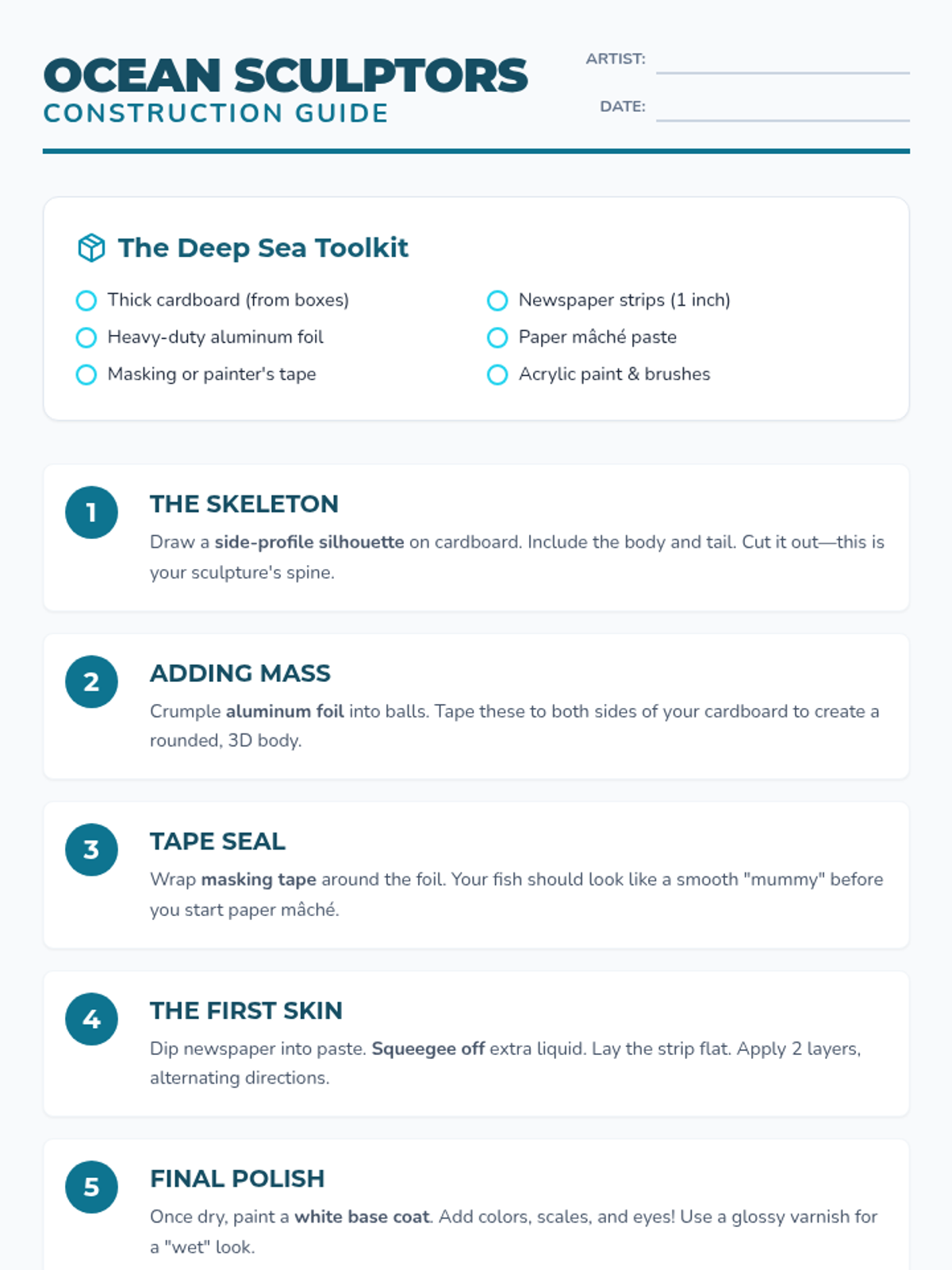
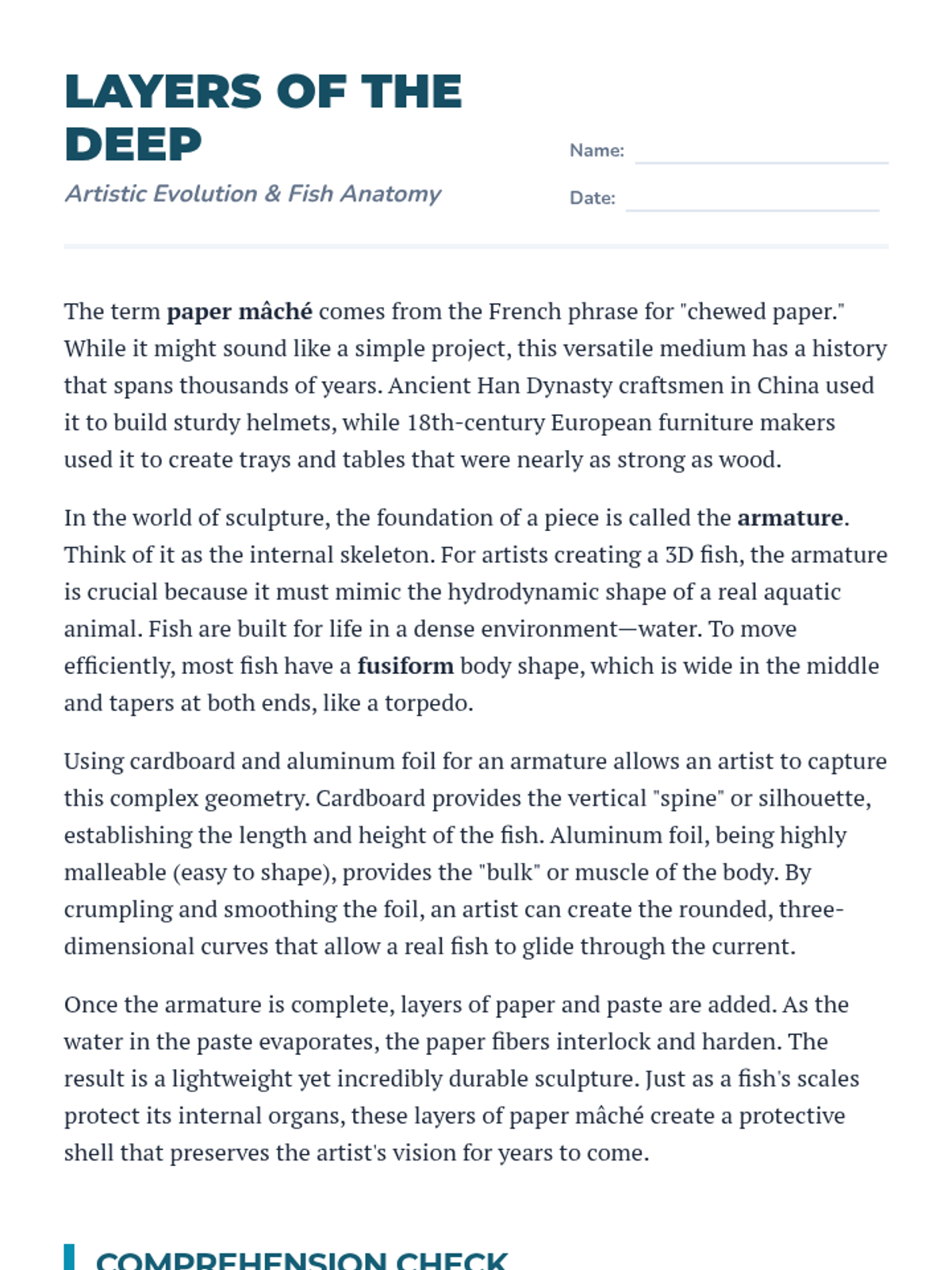
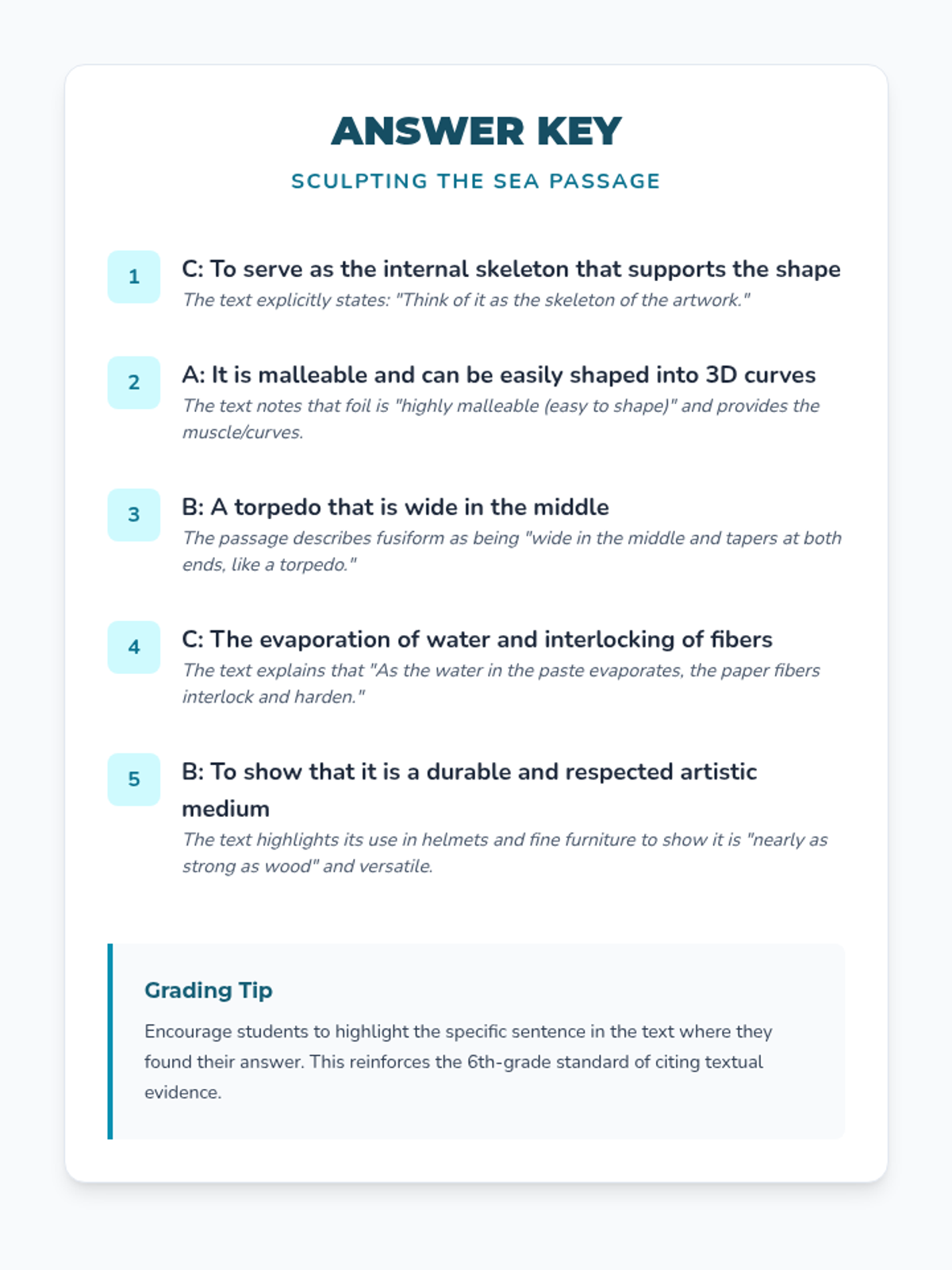
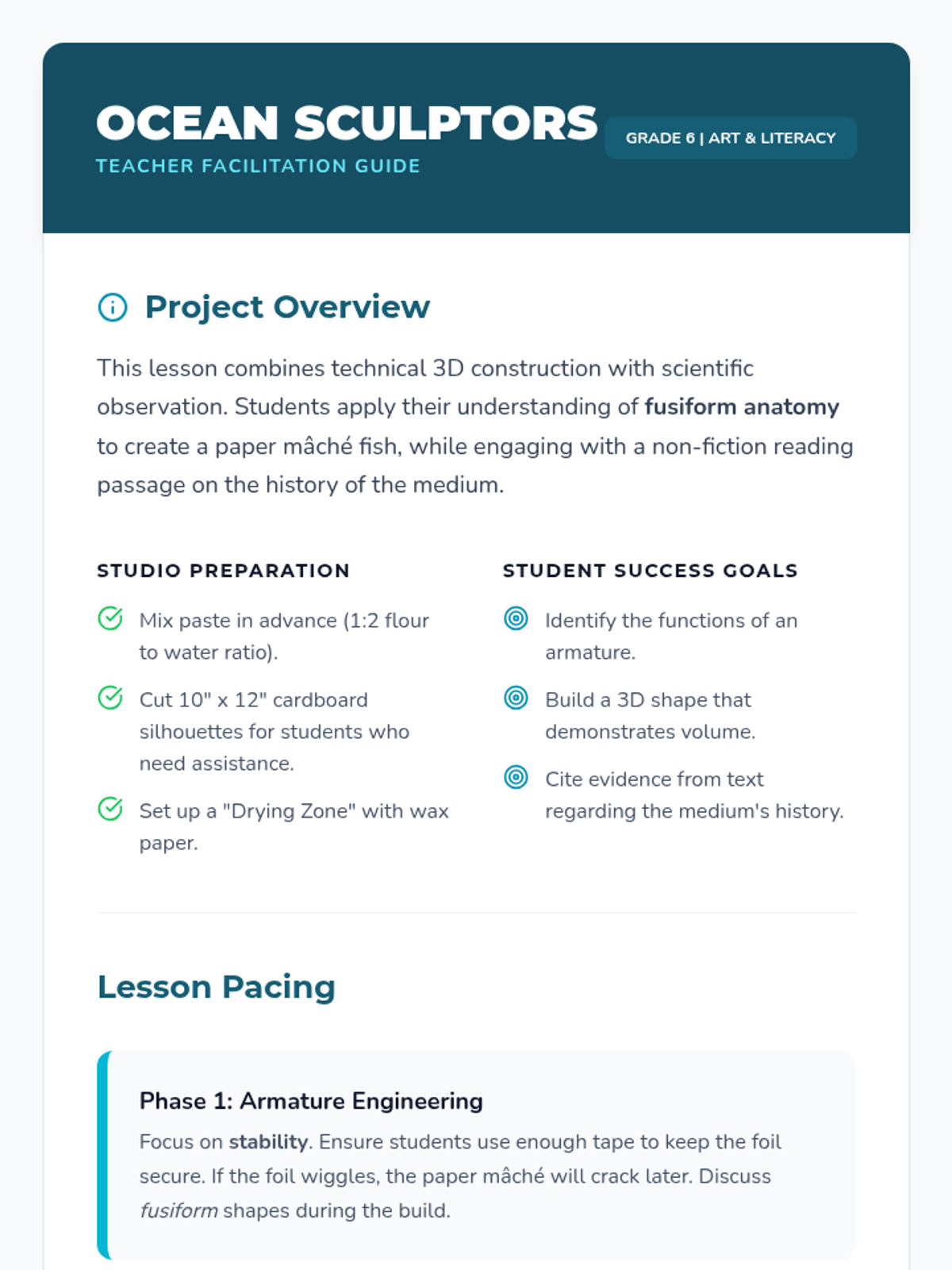
A hands-on art and literacy lesson where 6th-grade students create 3D fish sculptures using paper mâché techniques while exploring the history of the medium and fish anatomy.
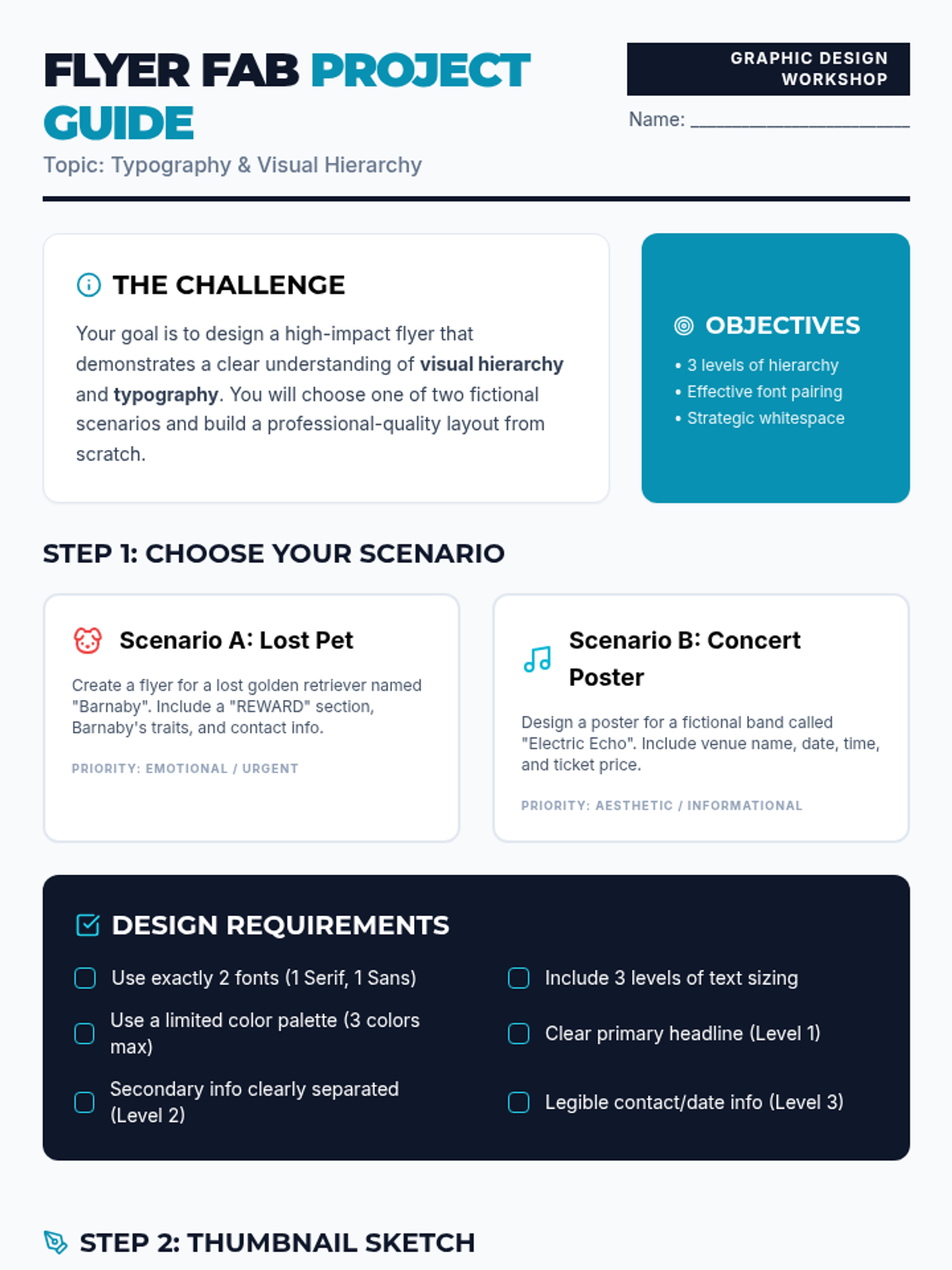
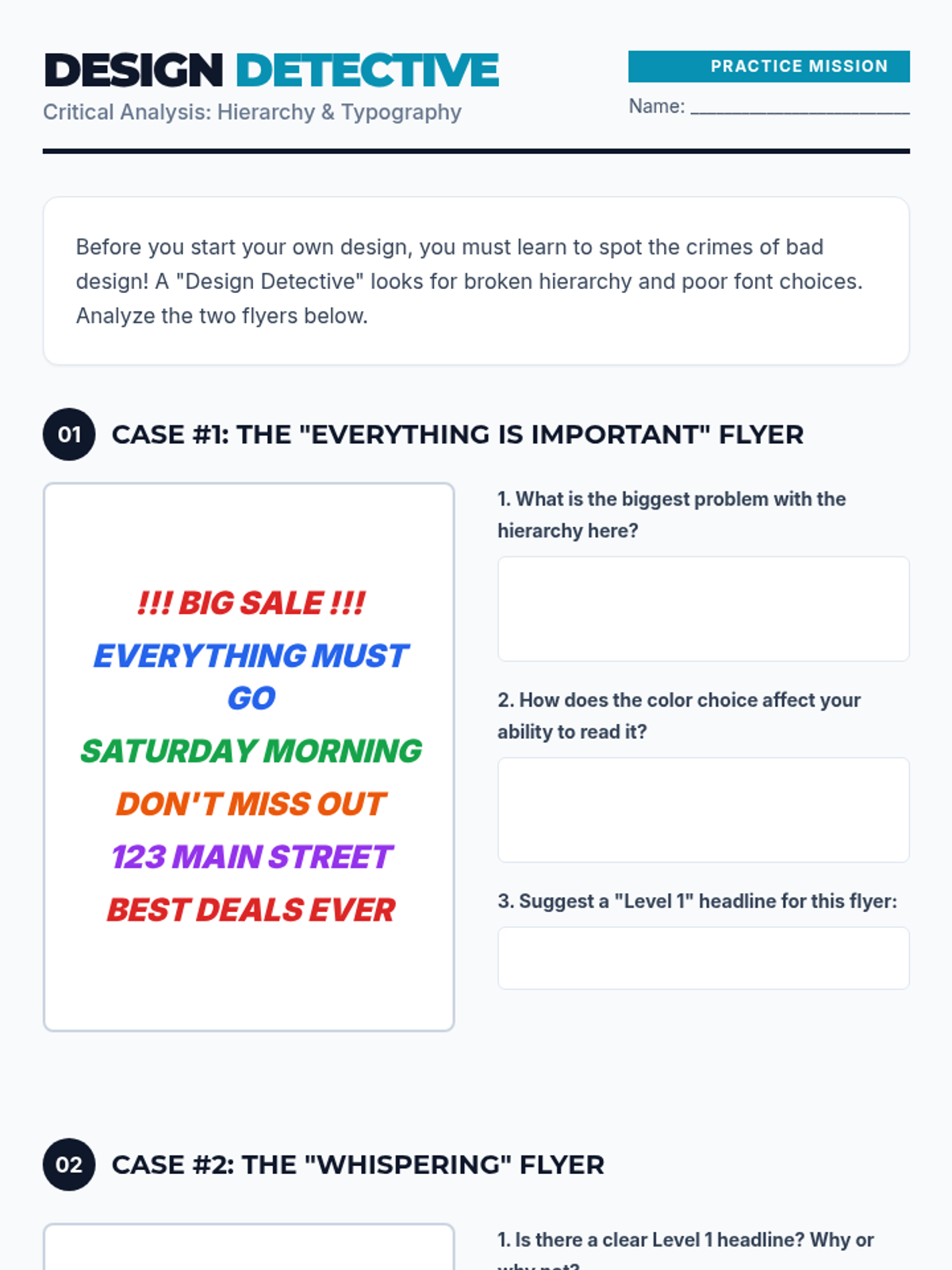
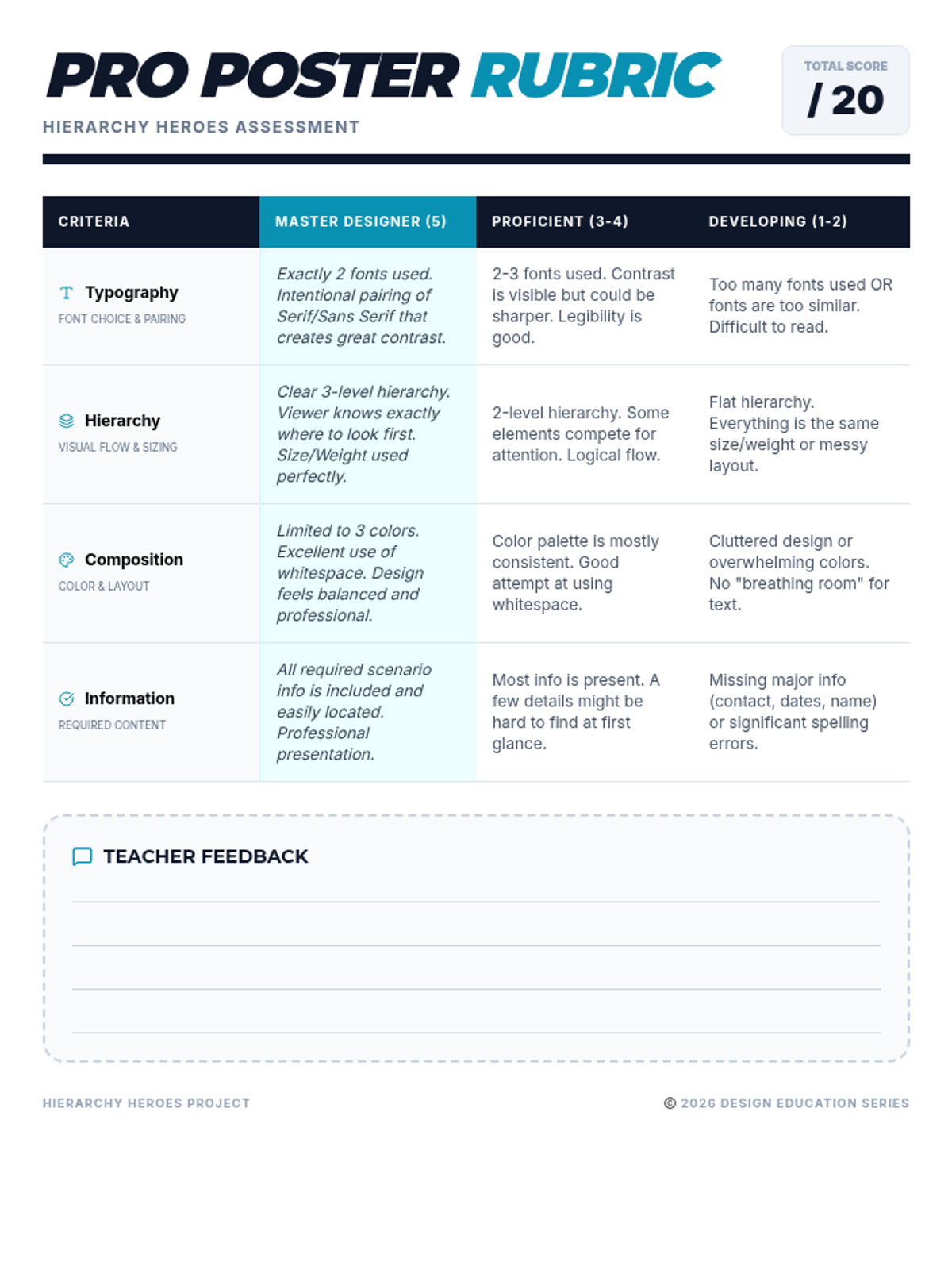
A graphic design project focused on visual hierarchy and typography. Students will choose between creating a lost pet flyer or a concert poster to demonstrate their understanding of design principles.
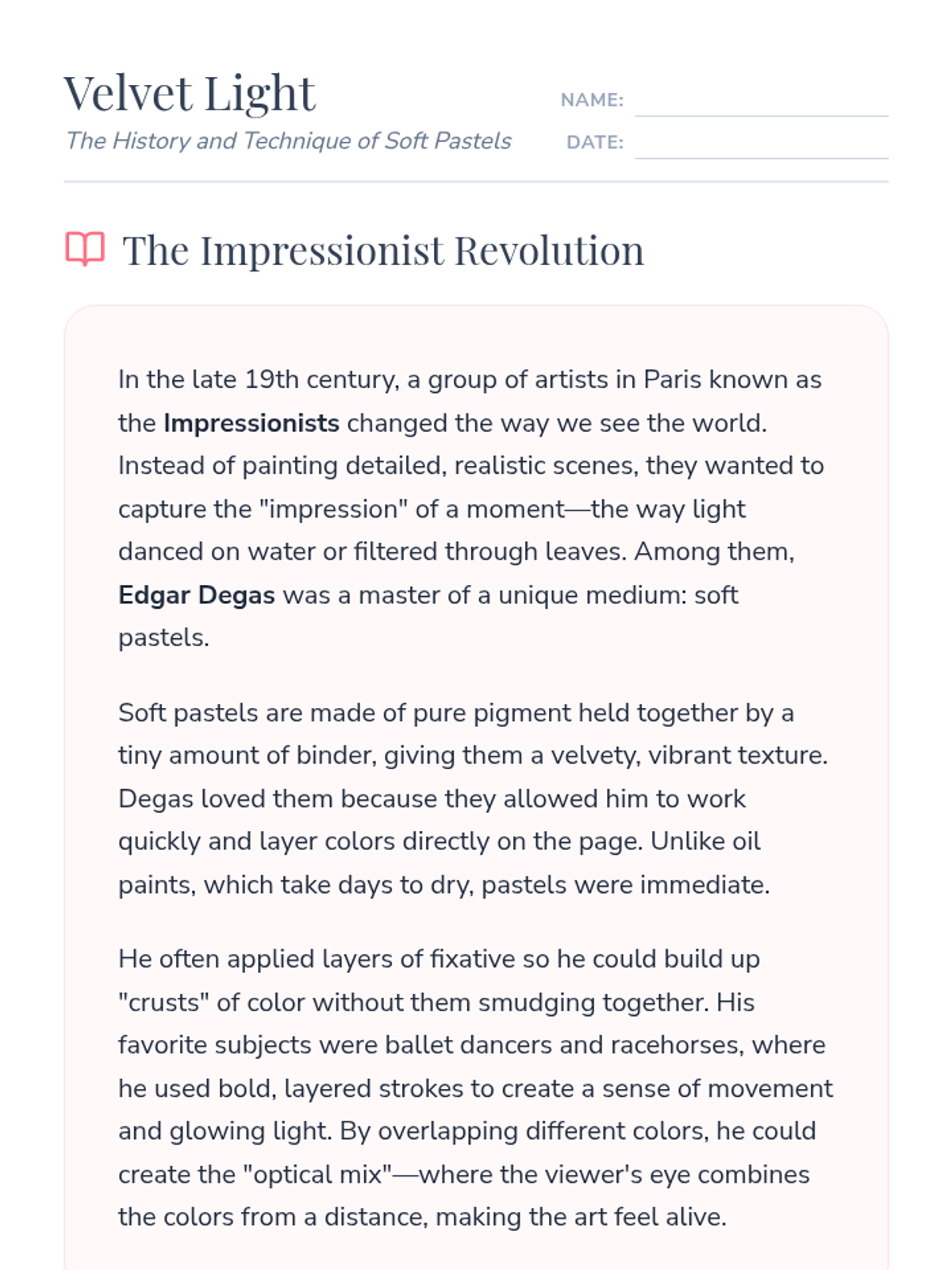
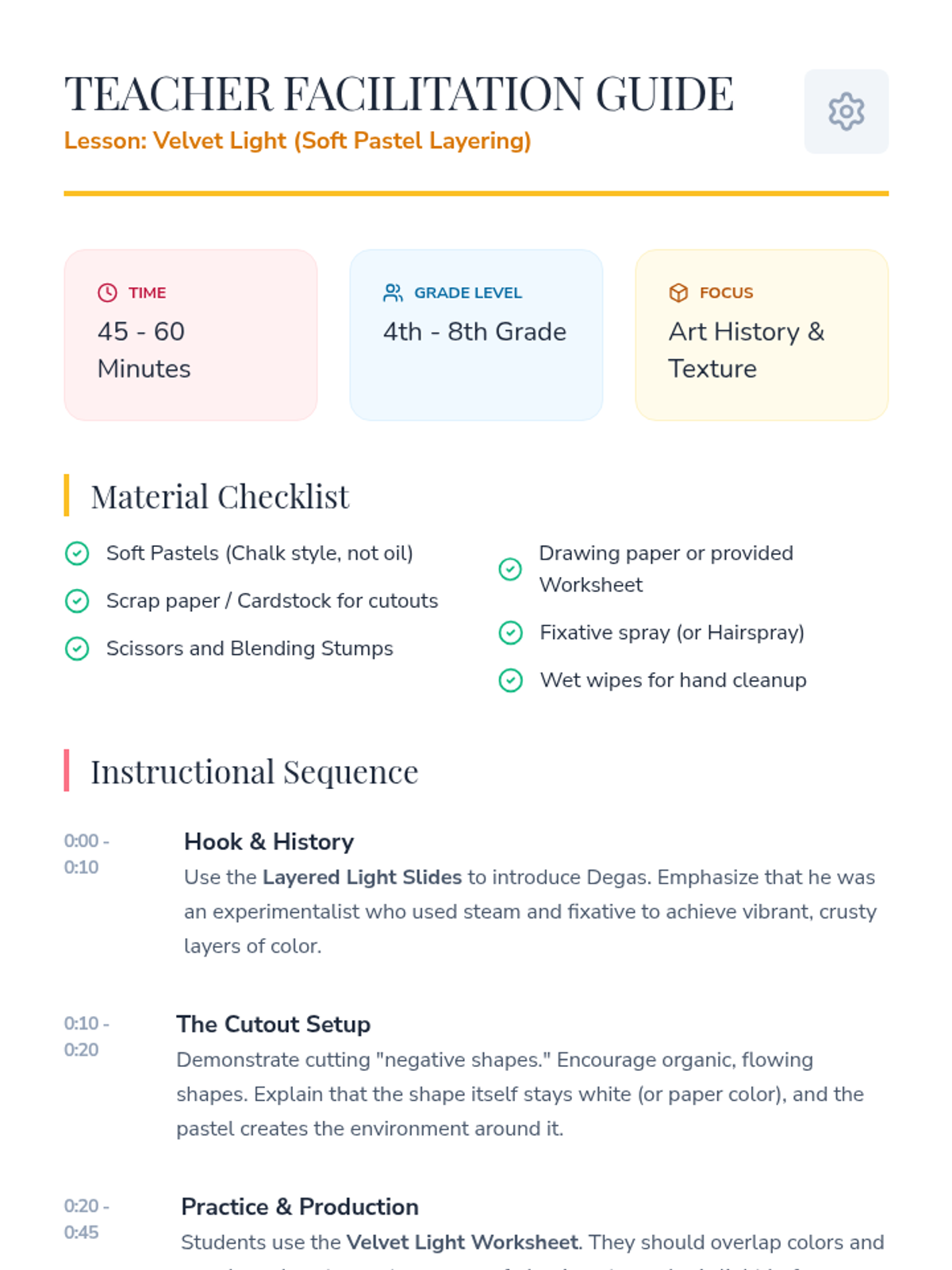
Explore the history and technique of soft pastels through the lens of Edgar Degas and the Impressionists, featuring a hands-on layering activity using paper cutouts.
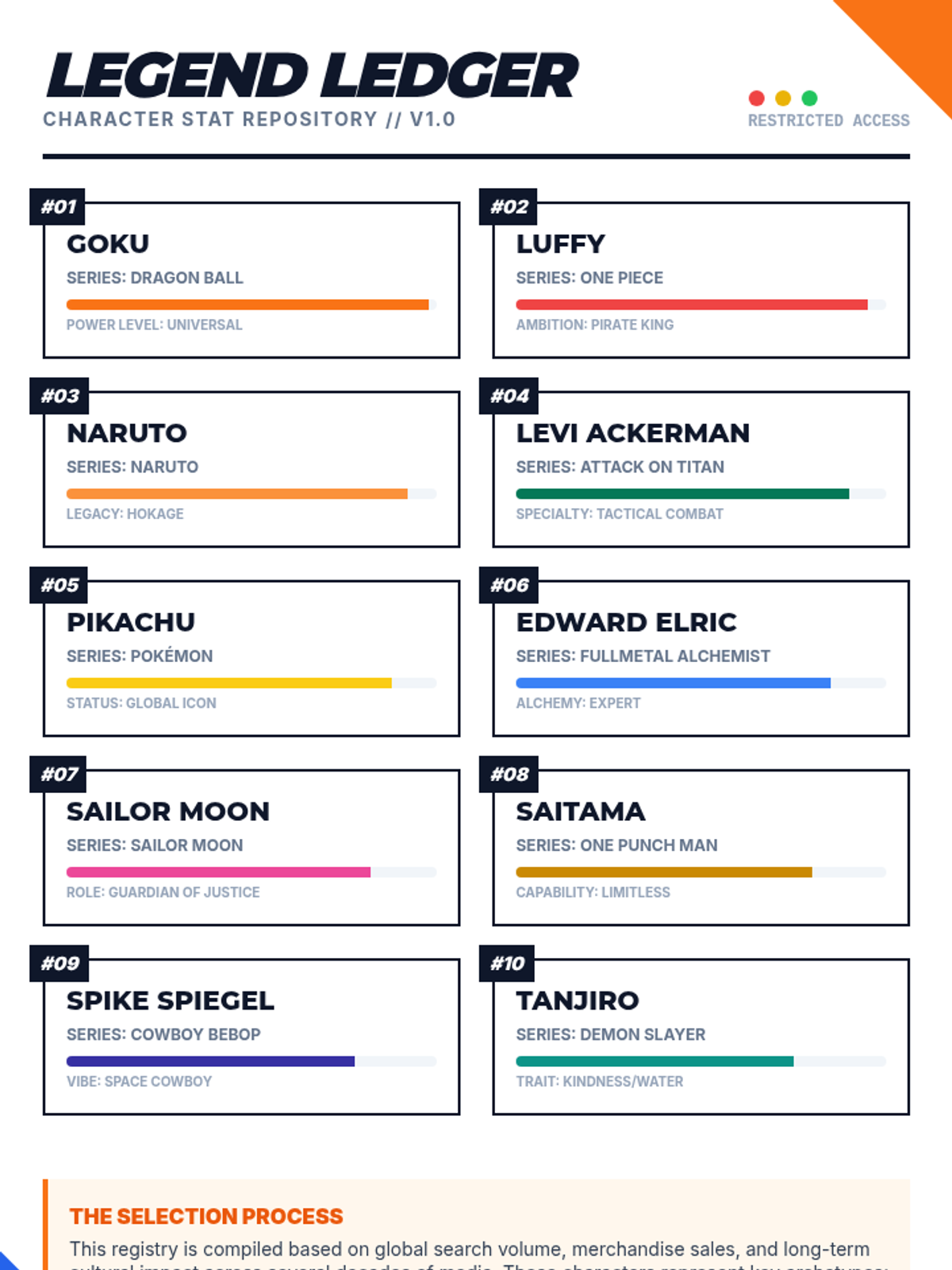
Explore the cultural impact and character archetypes of the world's most iconic anime characters. This lesson analyzes why these characters resonate globally and how their designs and stories influence modern media.
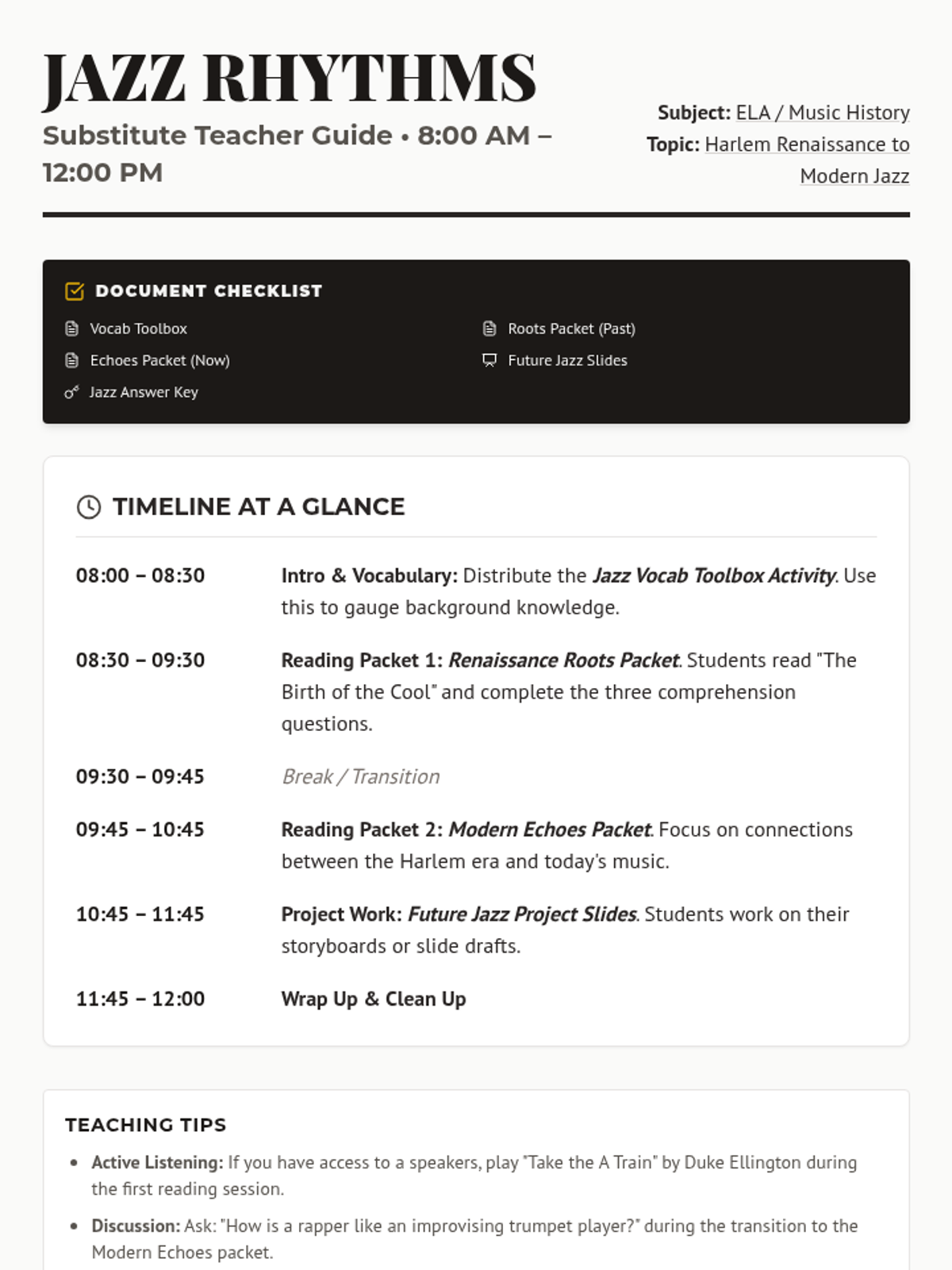
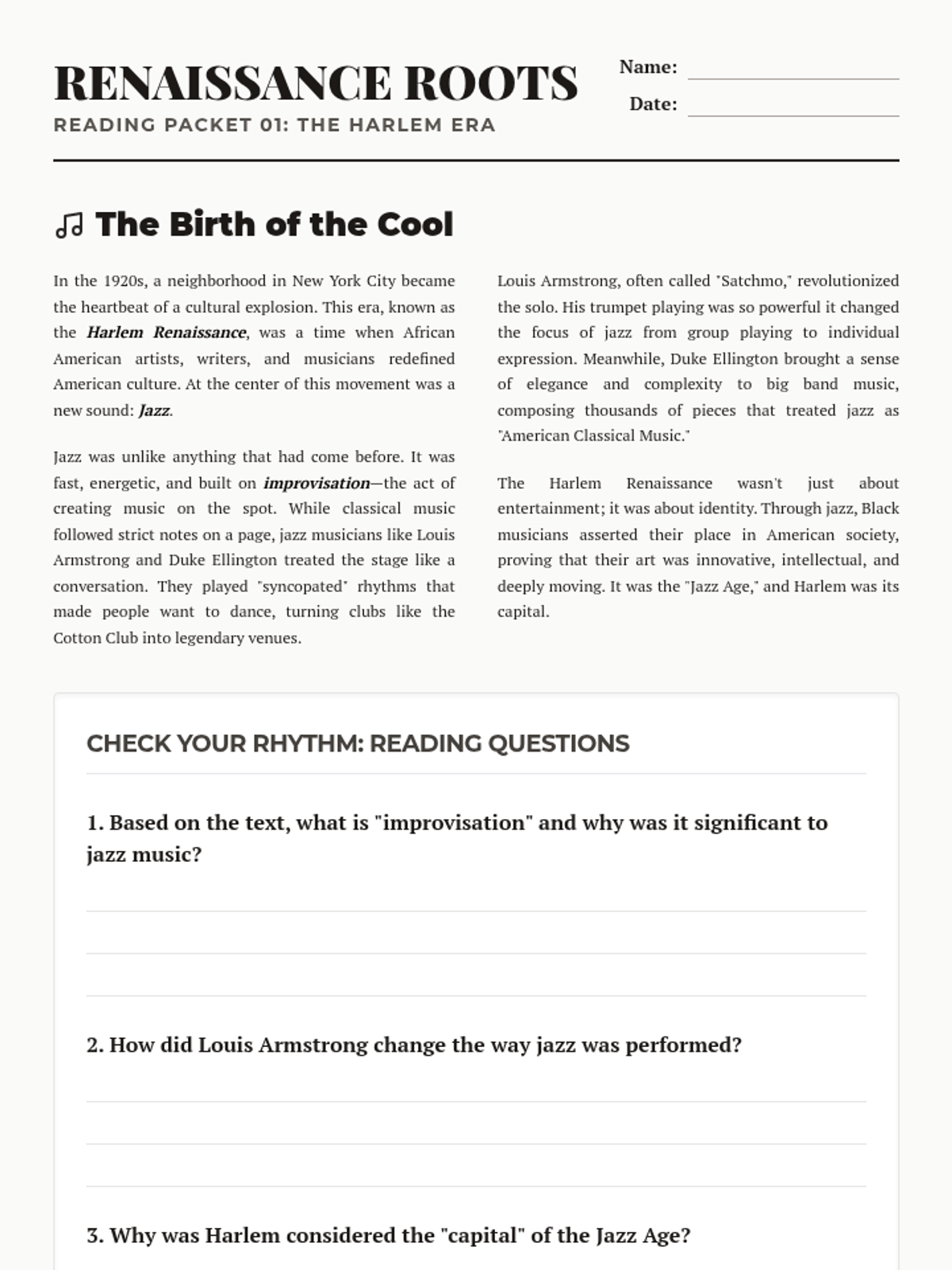
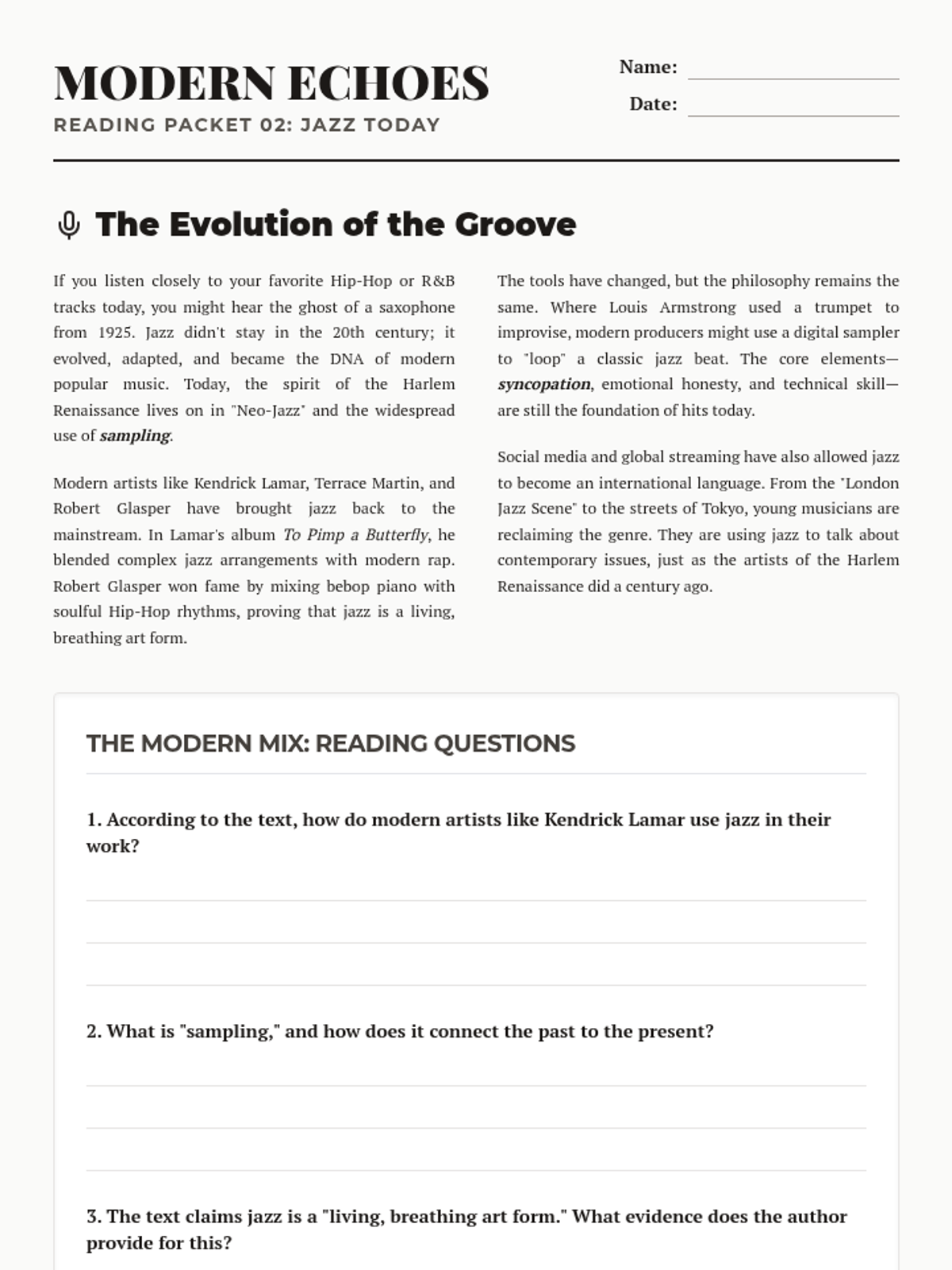
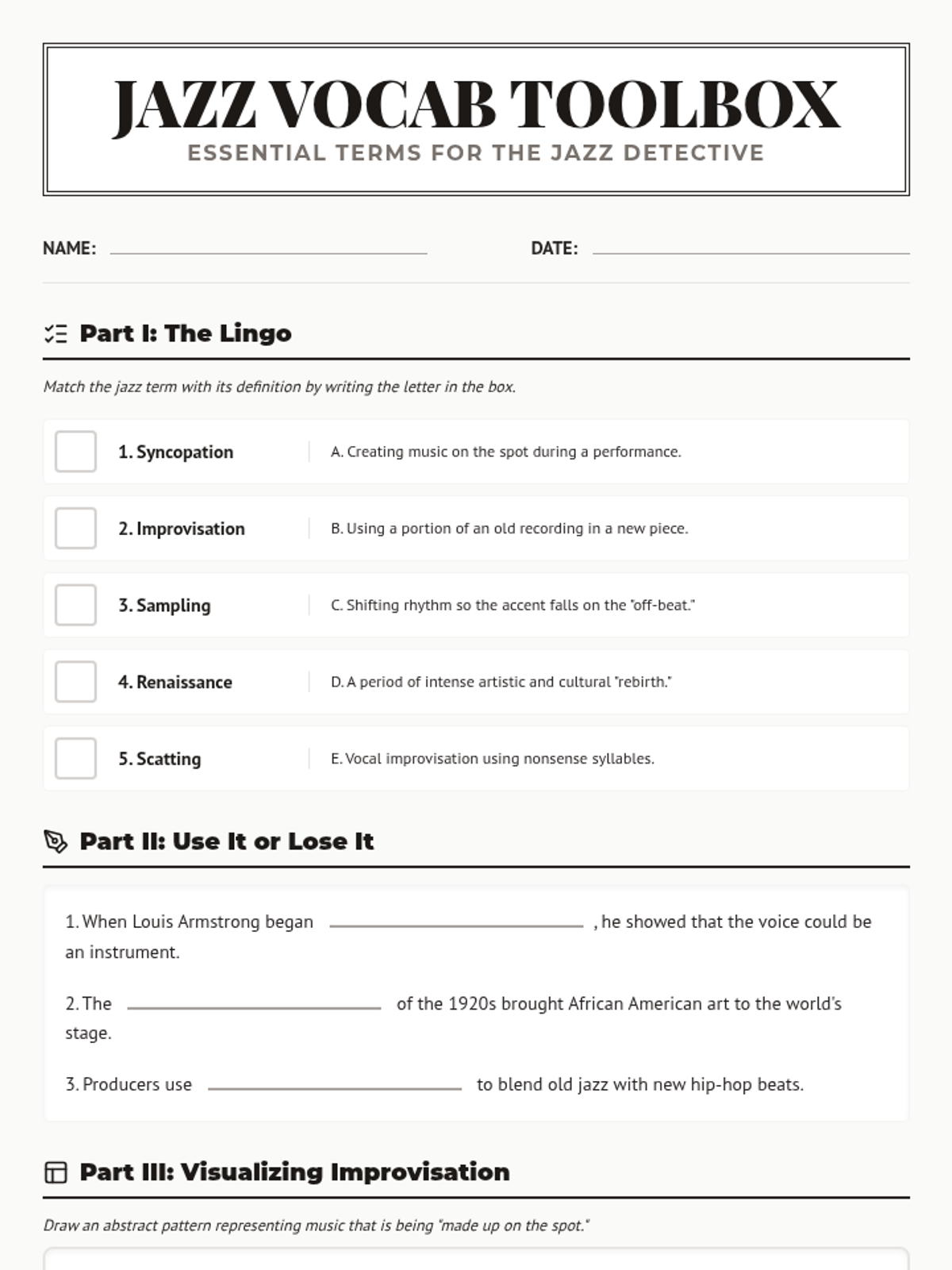
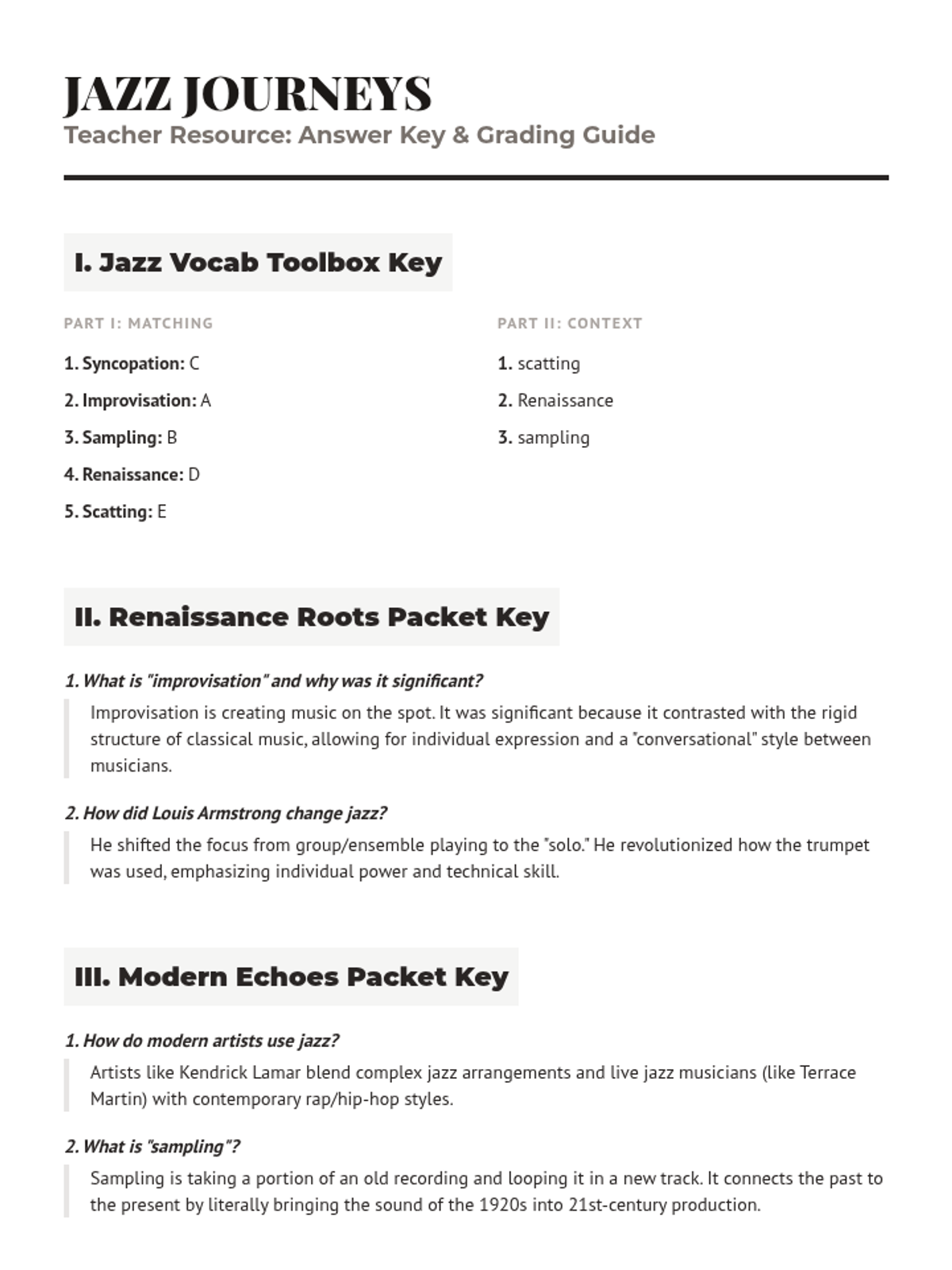
A complete 4-hour substitute teacher plan exploring the history of the Harlem Renaissance and its modern influence on jazz music and culture.
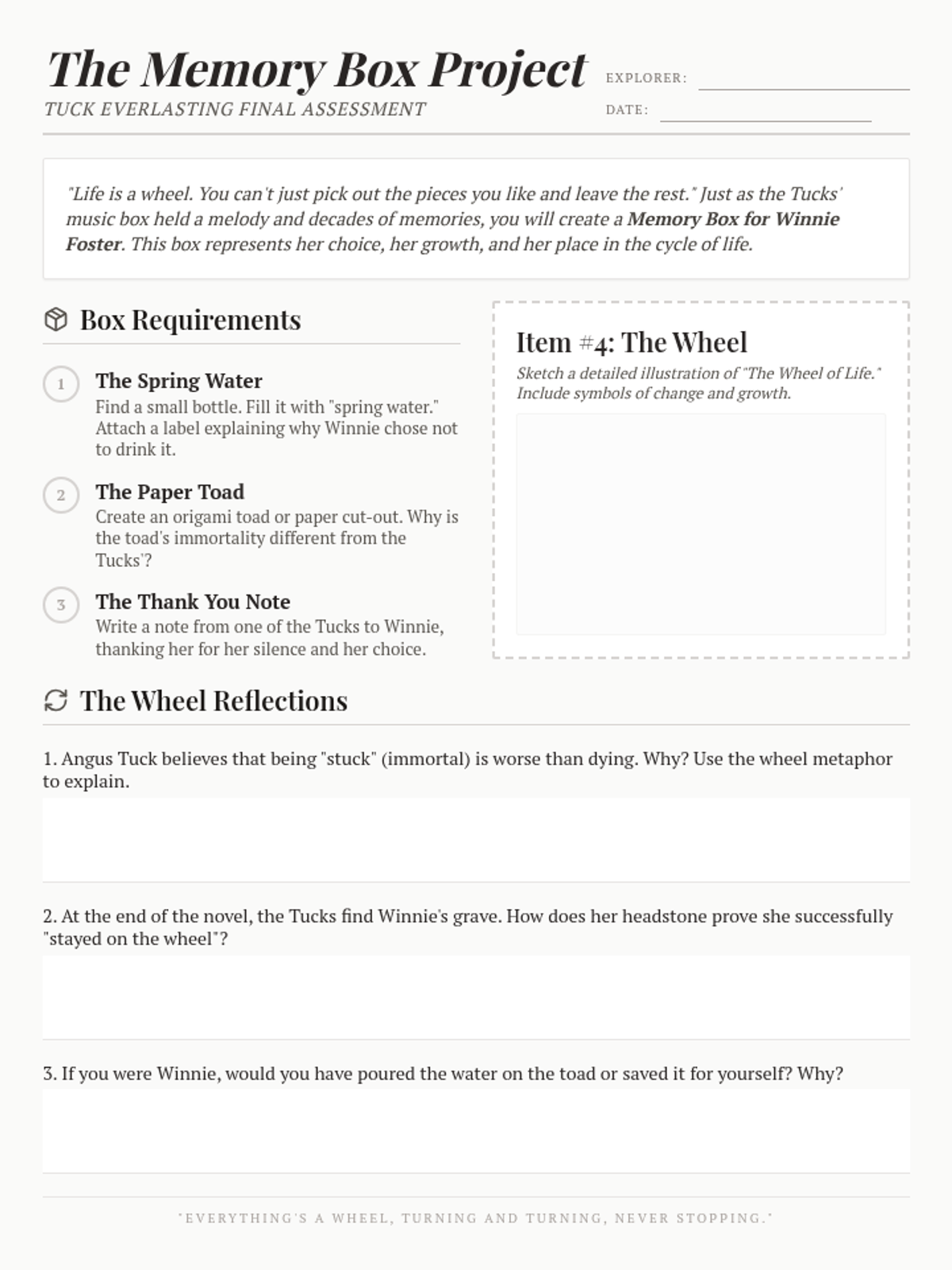
A final creative project for Tuck Everlasting where students build a physical or symbolic memory box to explore themes of immortality and the cycle of life.
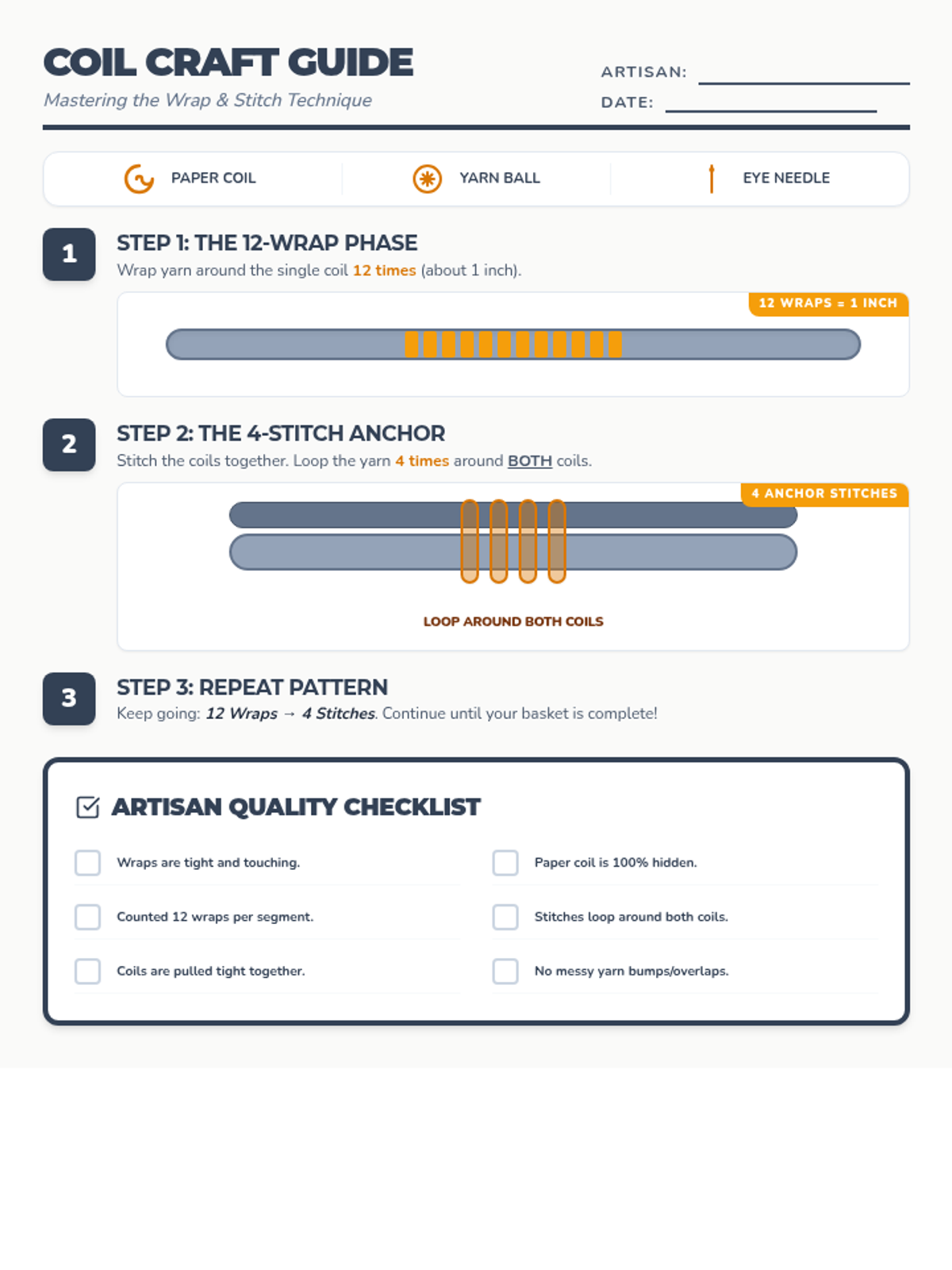
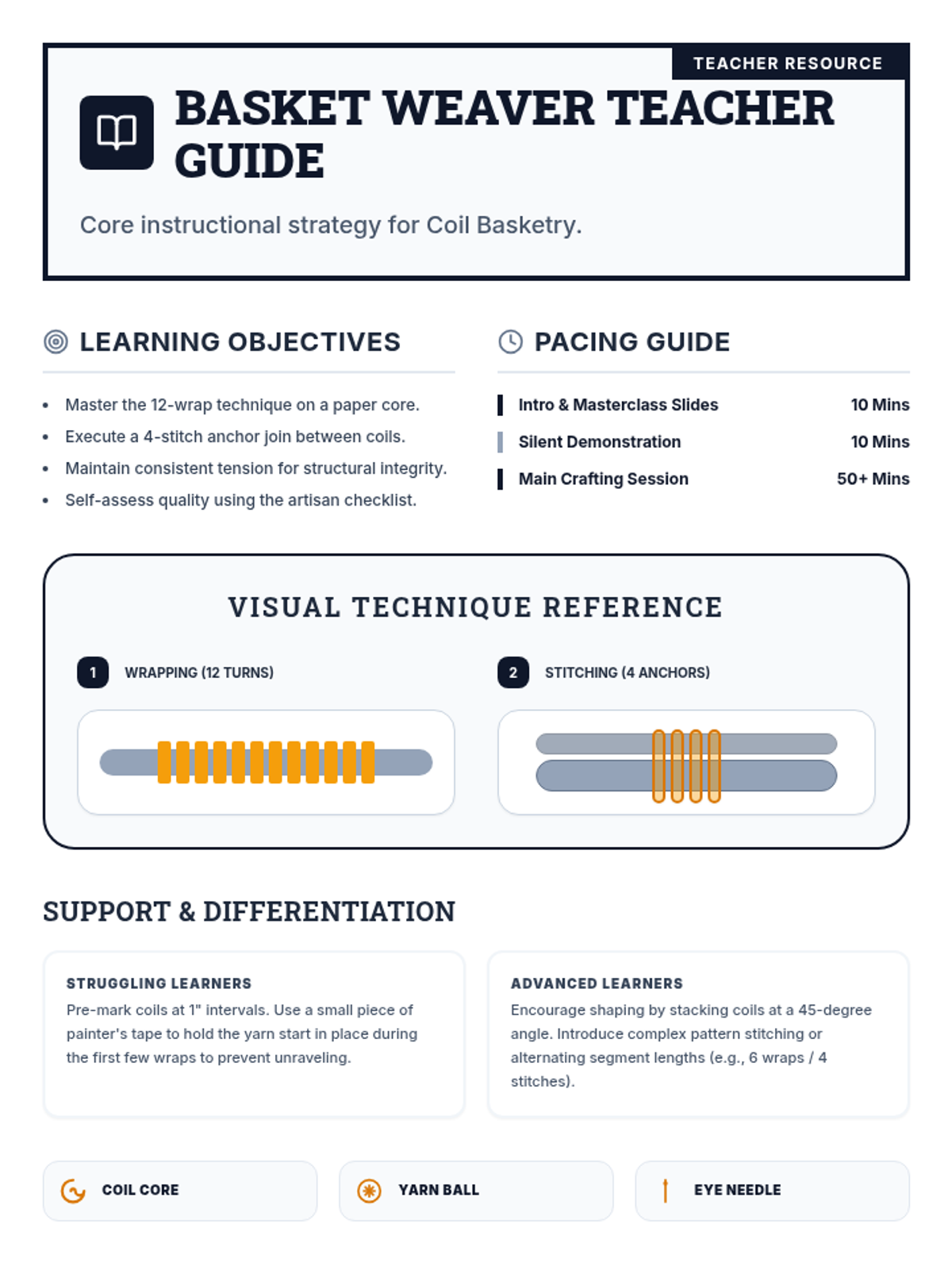
A hands-on introductory lesson to the traditional art of coil basketry using paper coils and yarn. Students master the rhythmic technique of wrapping and stitching to create a functional, decorative vessel.
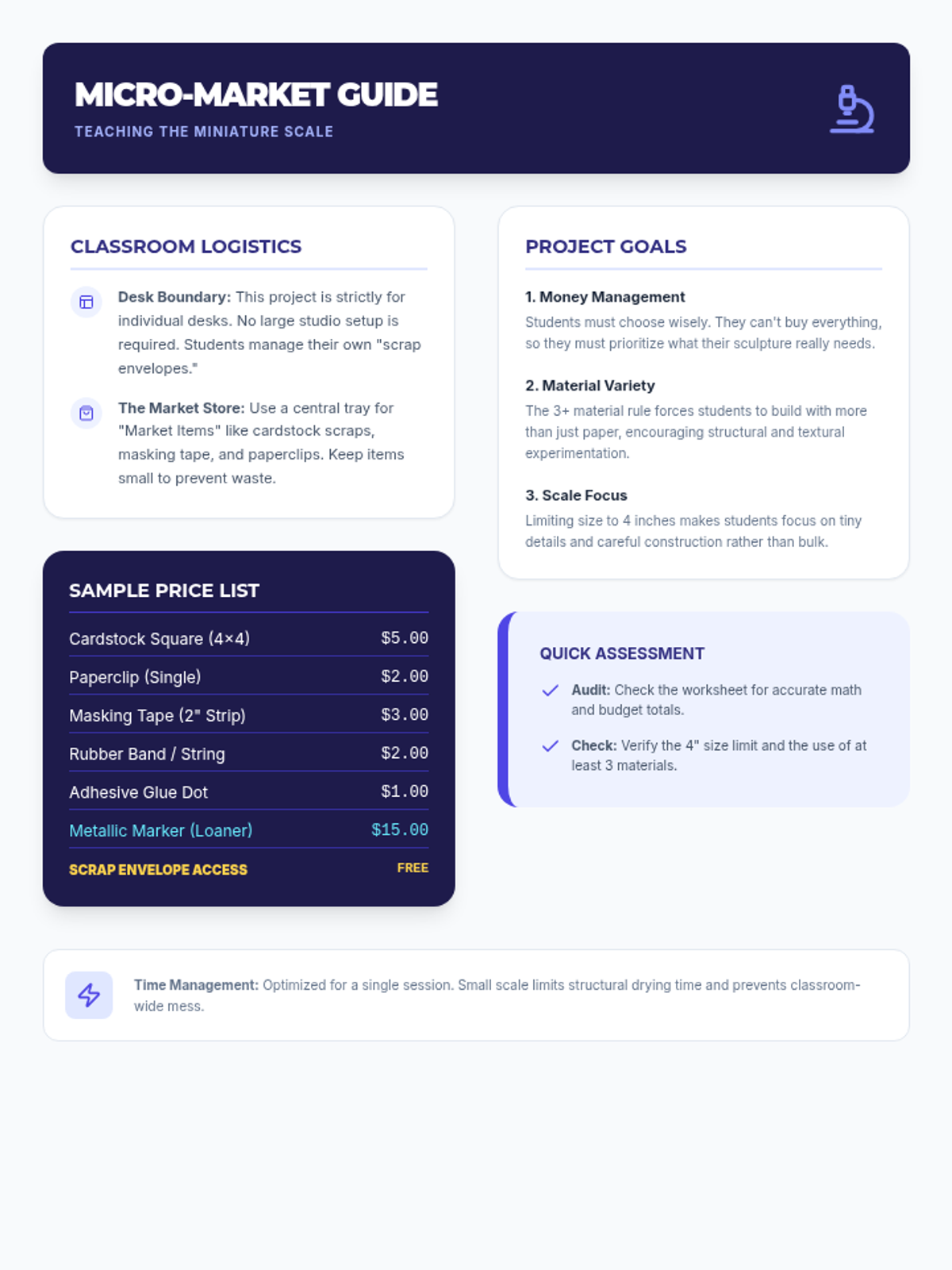
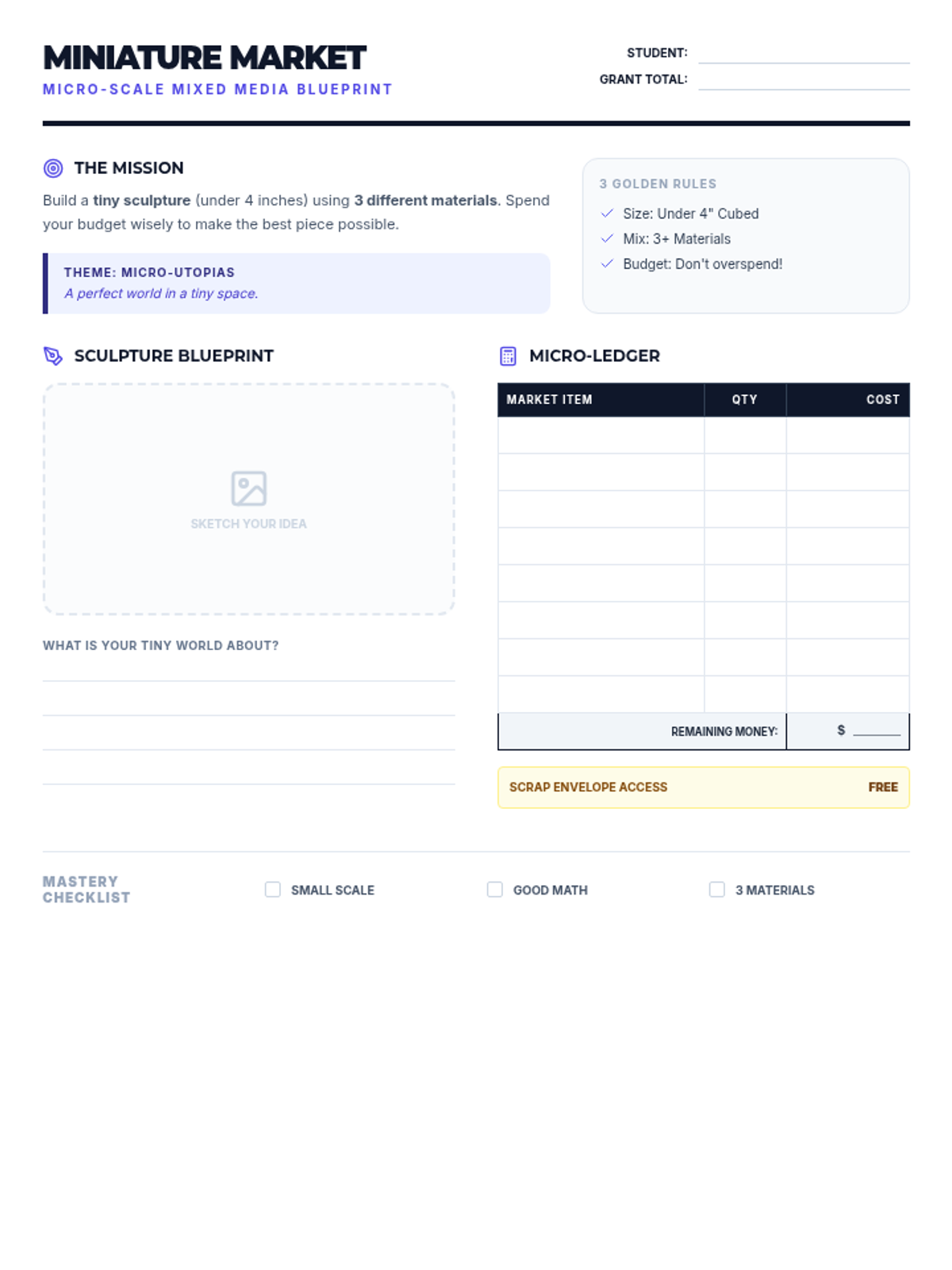
A collaborative art project where students navigate financial constraints to create high-quality mixed media sculptures, mimicking real-world commission and grant structures.
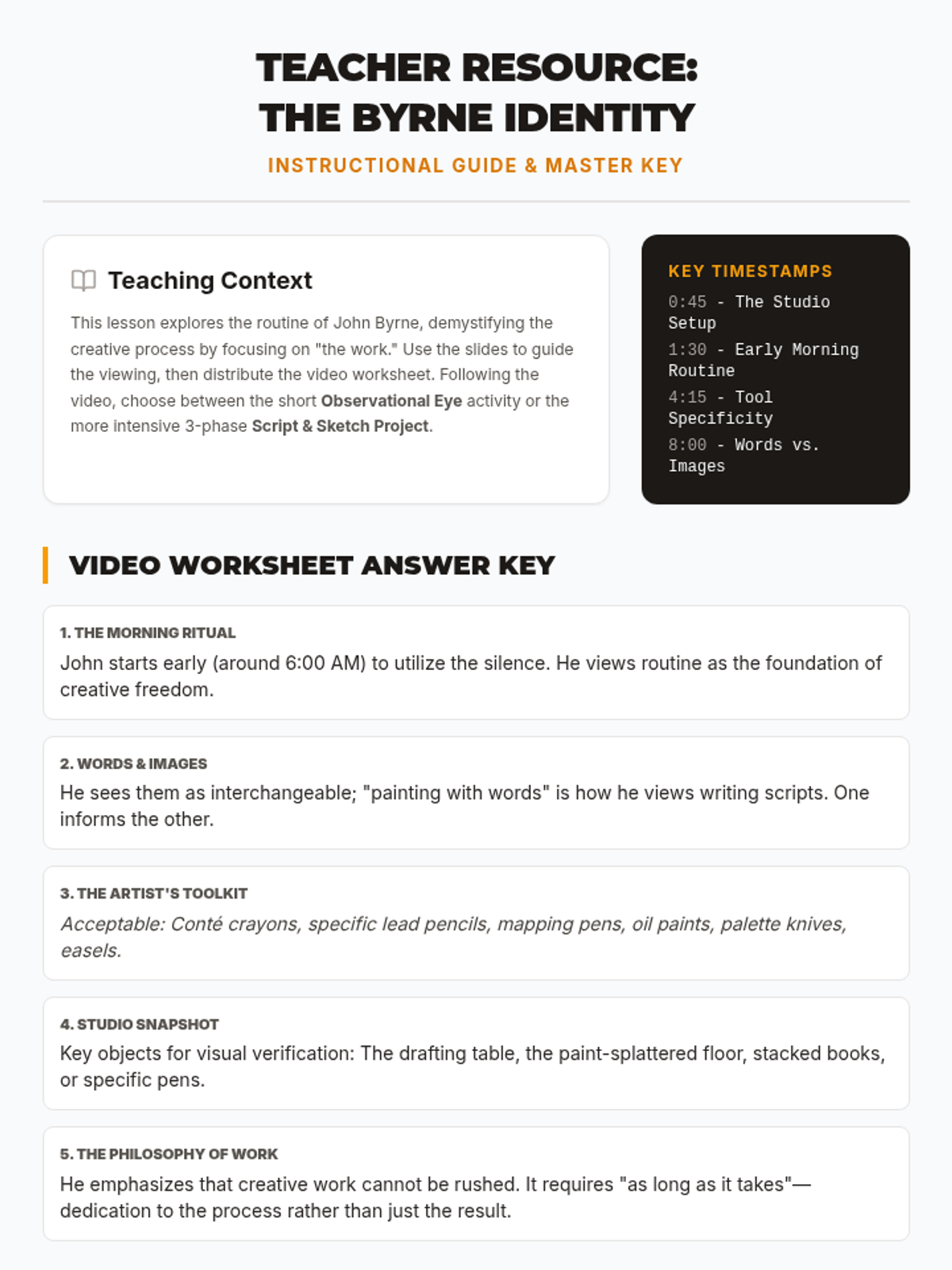
An in-depth look at John Byrne's daily life as a painter and playwright, focusing on his studio habits, materials, and the intersection of visual art and storytelling.
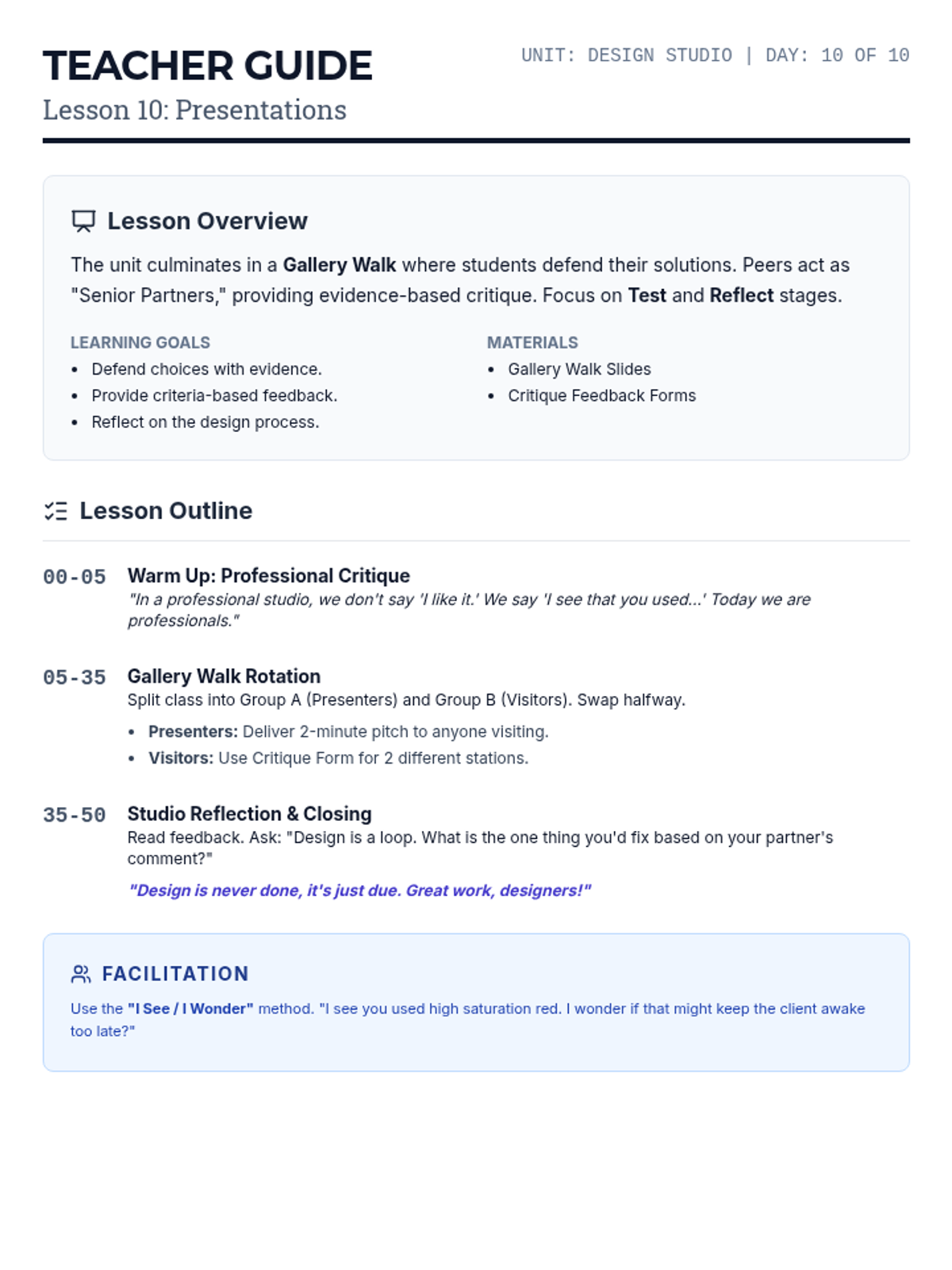
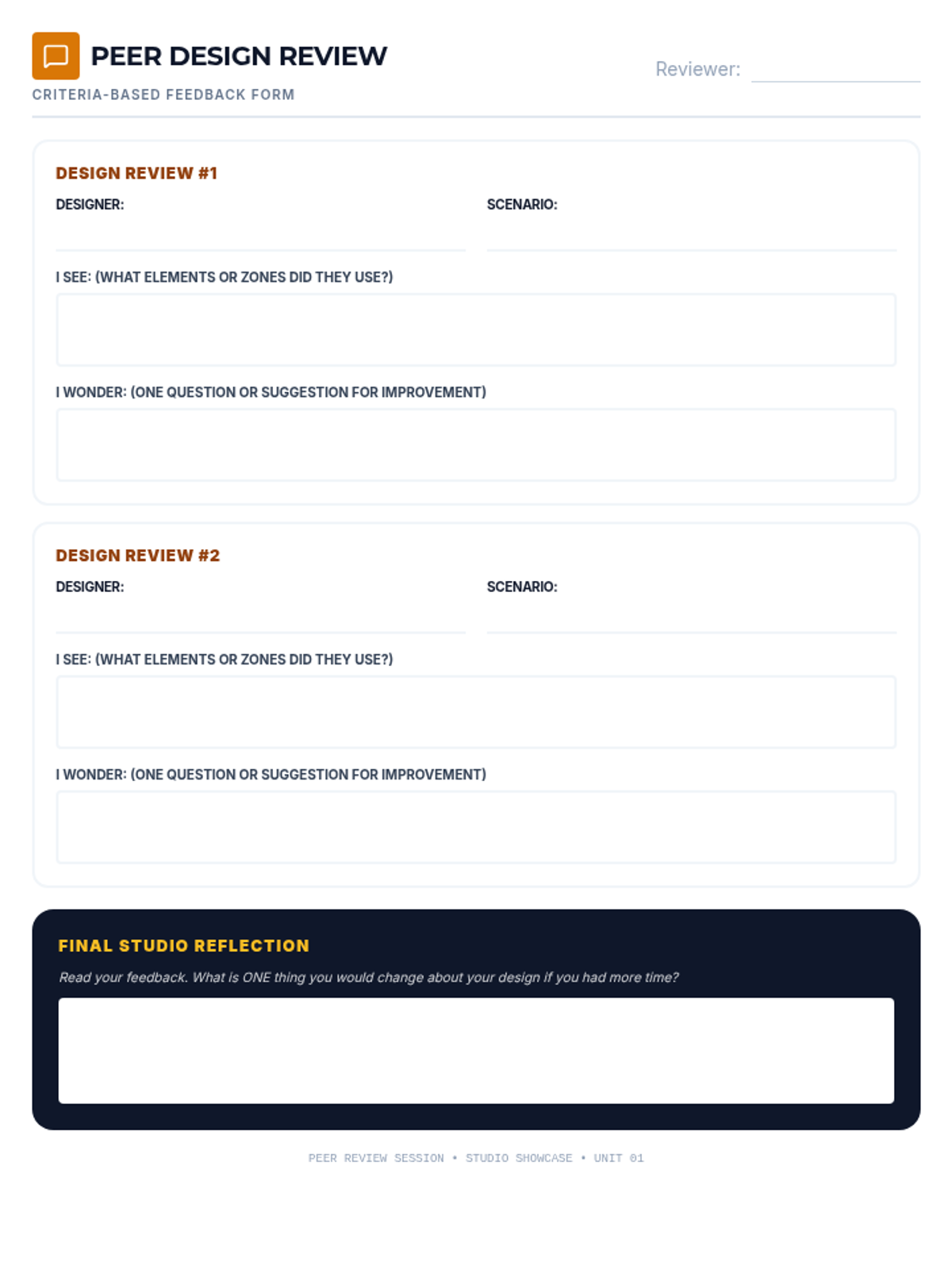
The unit culminates in a gallery walk and formal presentation where students defend their design choices using evidence from their clients' briefs. Peer critique focuses on how well the design meets the user's emotional and functional needs.
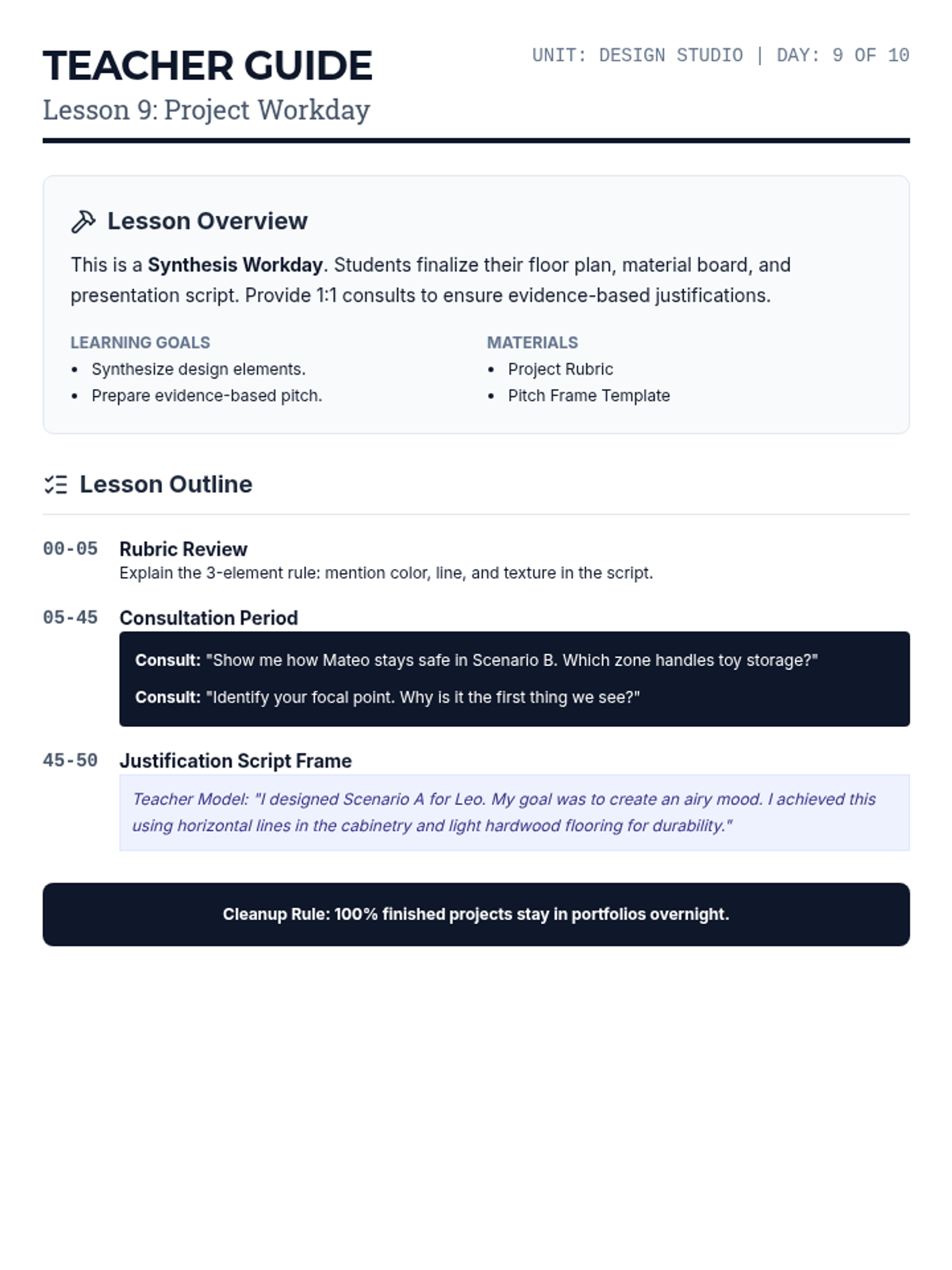
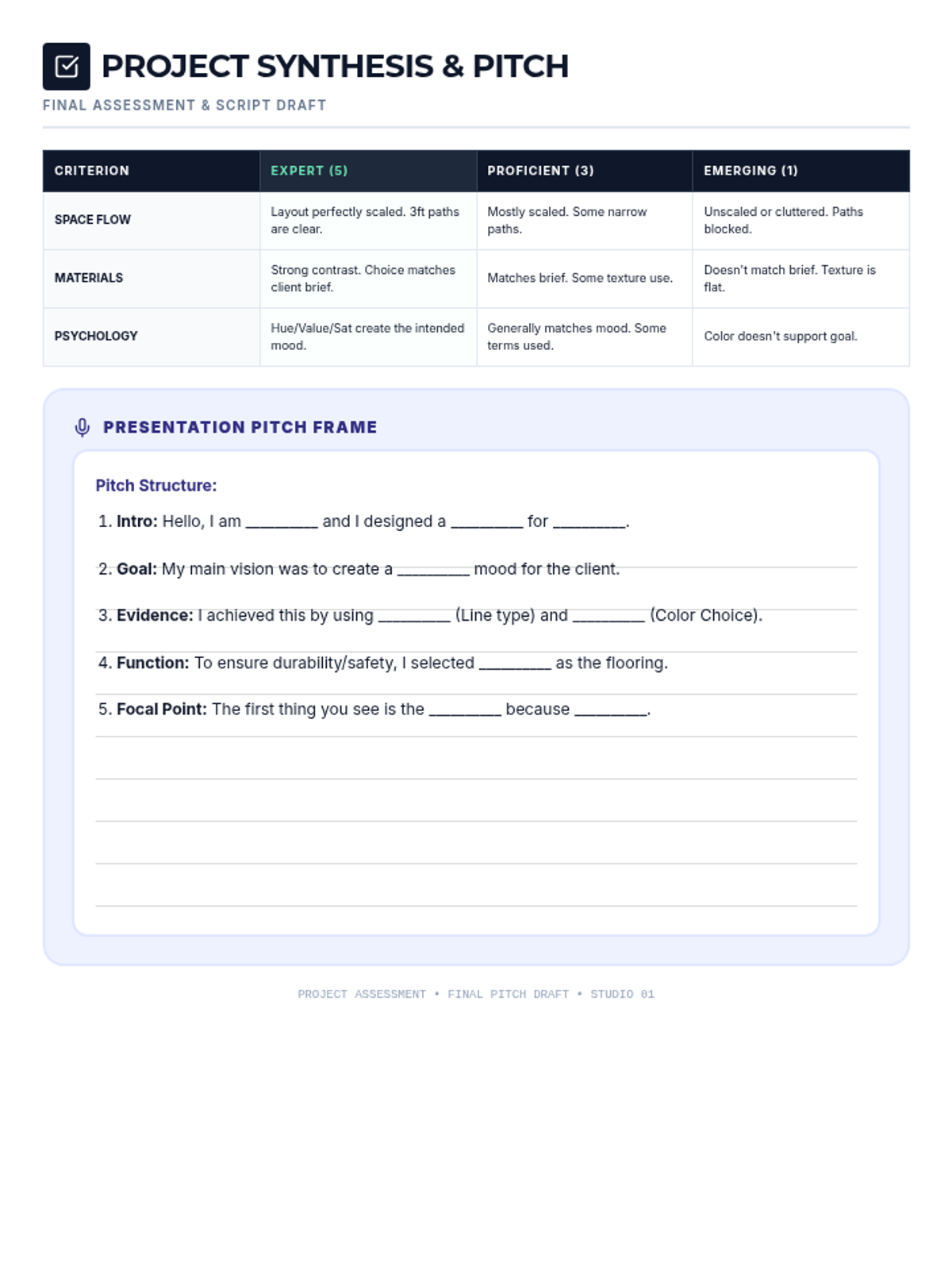
A focused studio workday where students synthesize all elements and principles of design into a final visual presentation. They complete their floor plans, material boards, and write a verbal justification for their design choices.
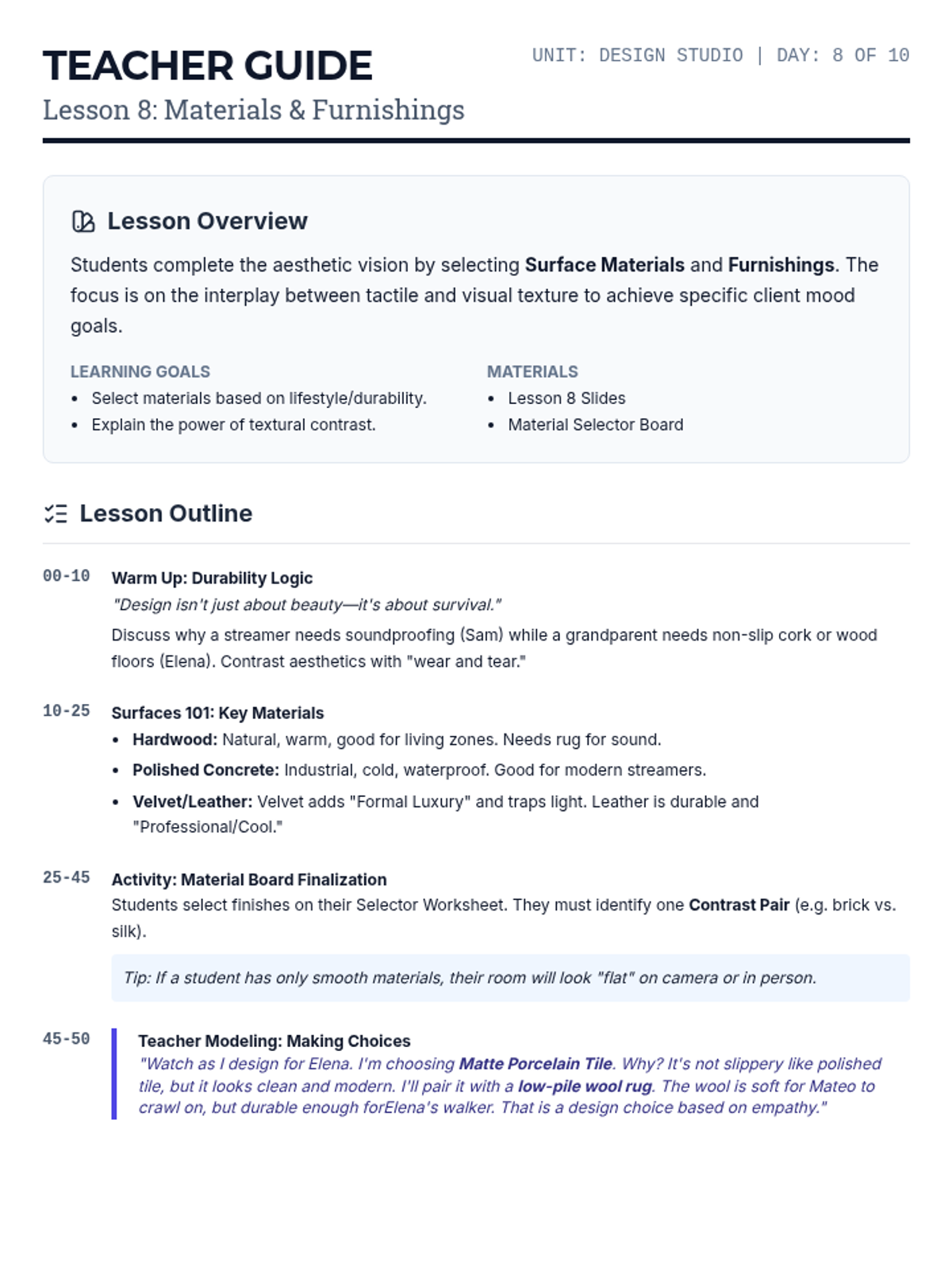
Students select textiles, finishes, and furniture styles that complement their client's needs and desired mood. They explore the durability and aesthetic of various surface materials to complete the sensory profile of their room.
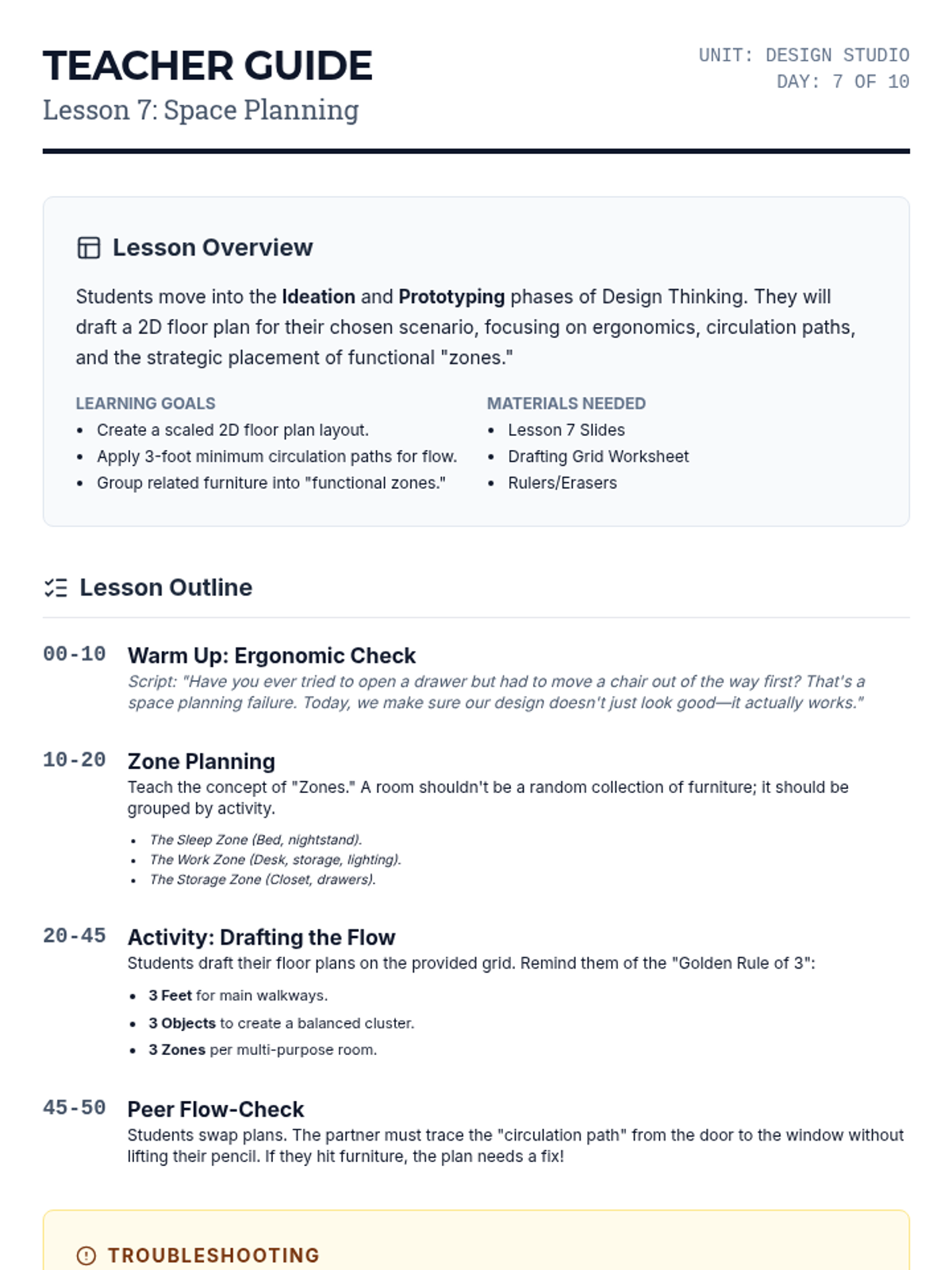
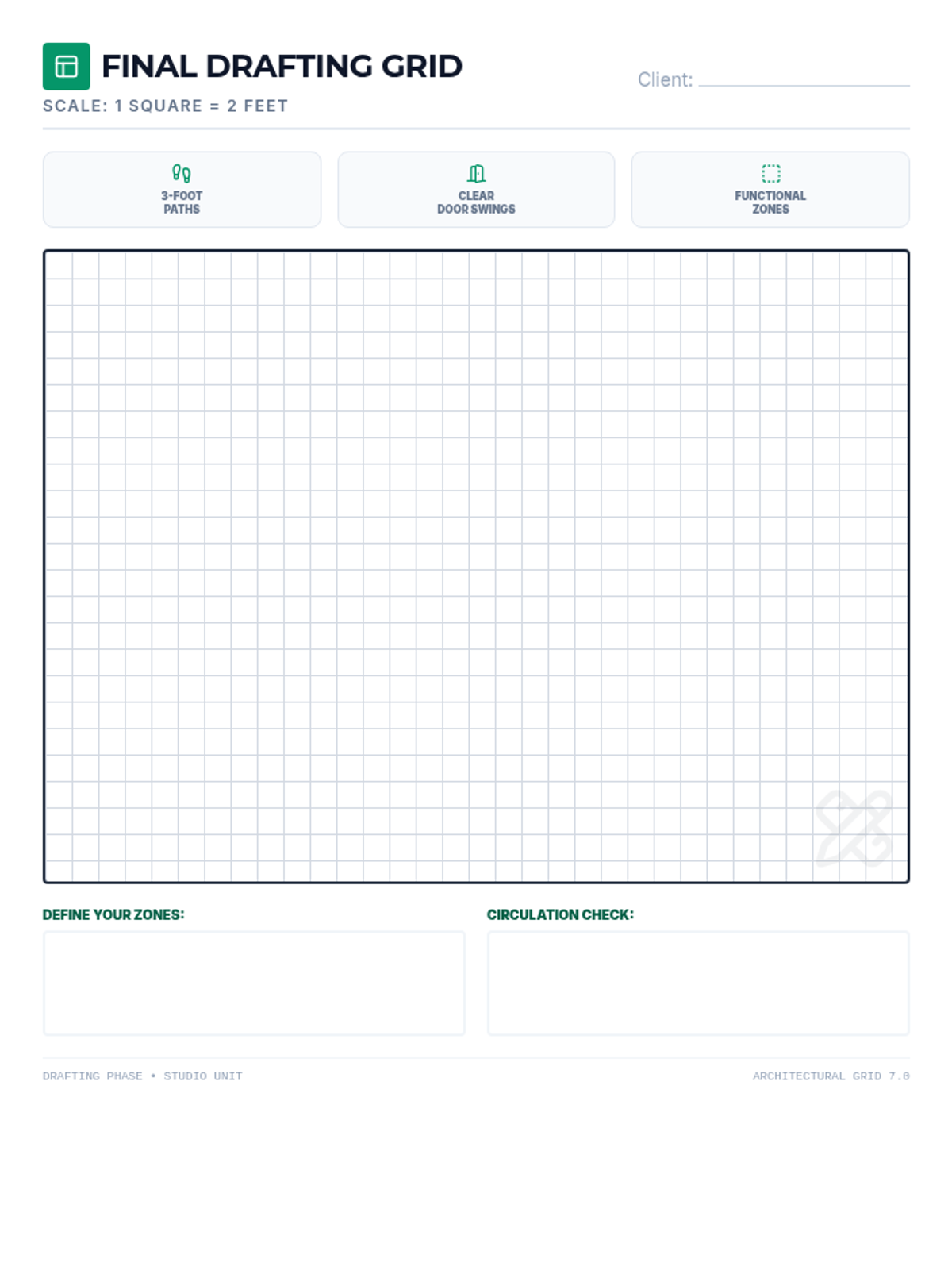
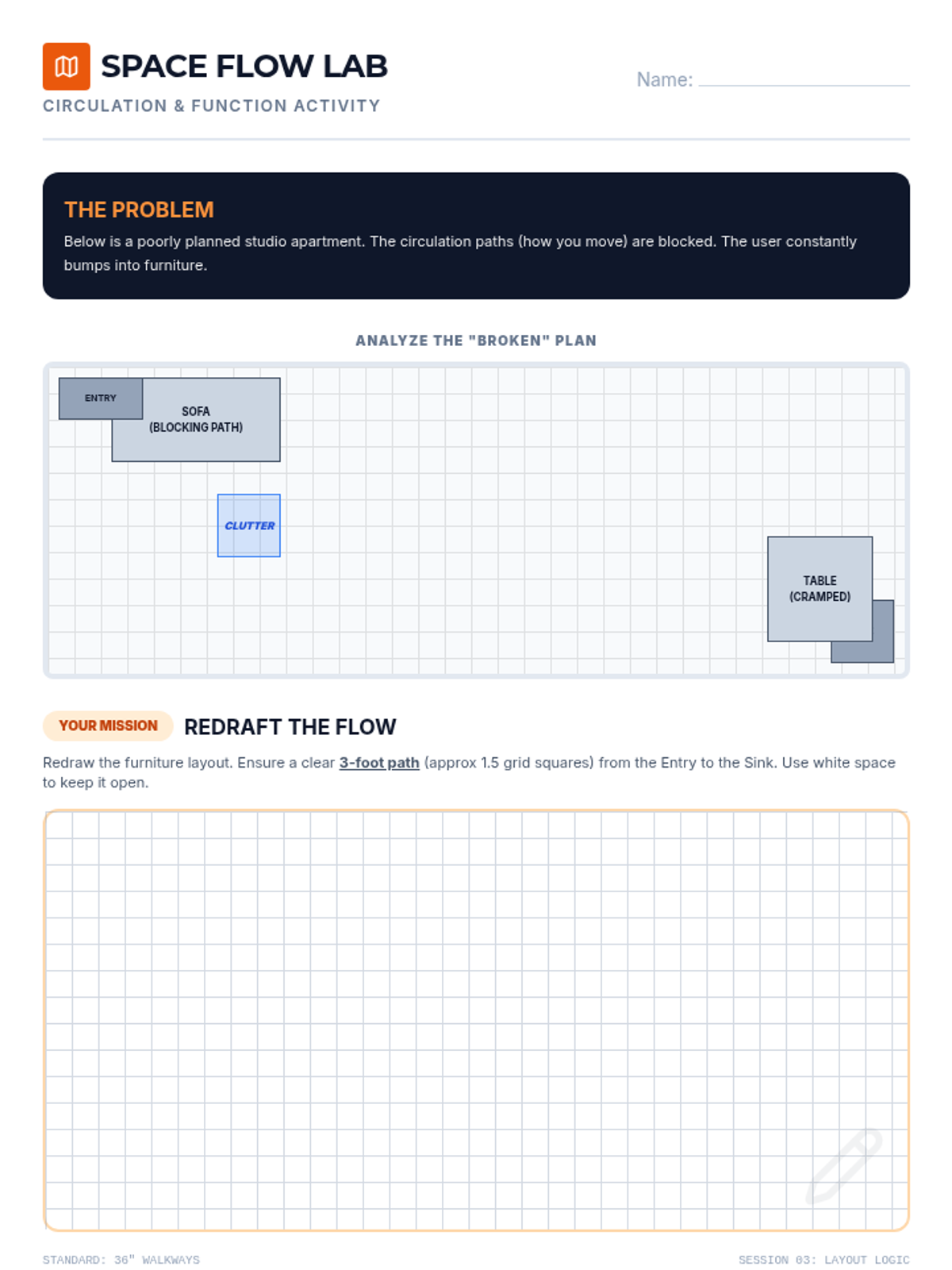
Applying ergonomics and circulation paths, students draft a functional floor plan for their assigned scenario. The focus is on maximizing flow, ensuring accessibility, and balancing positive and negative space.
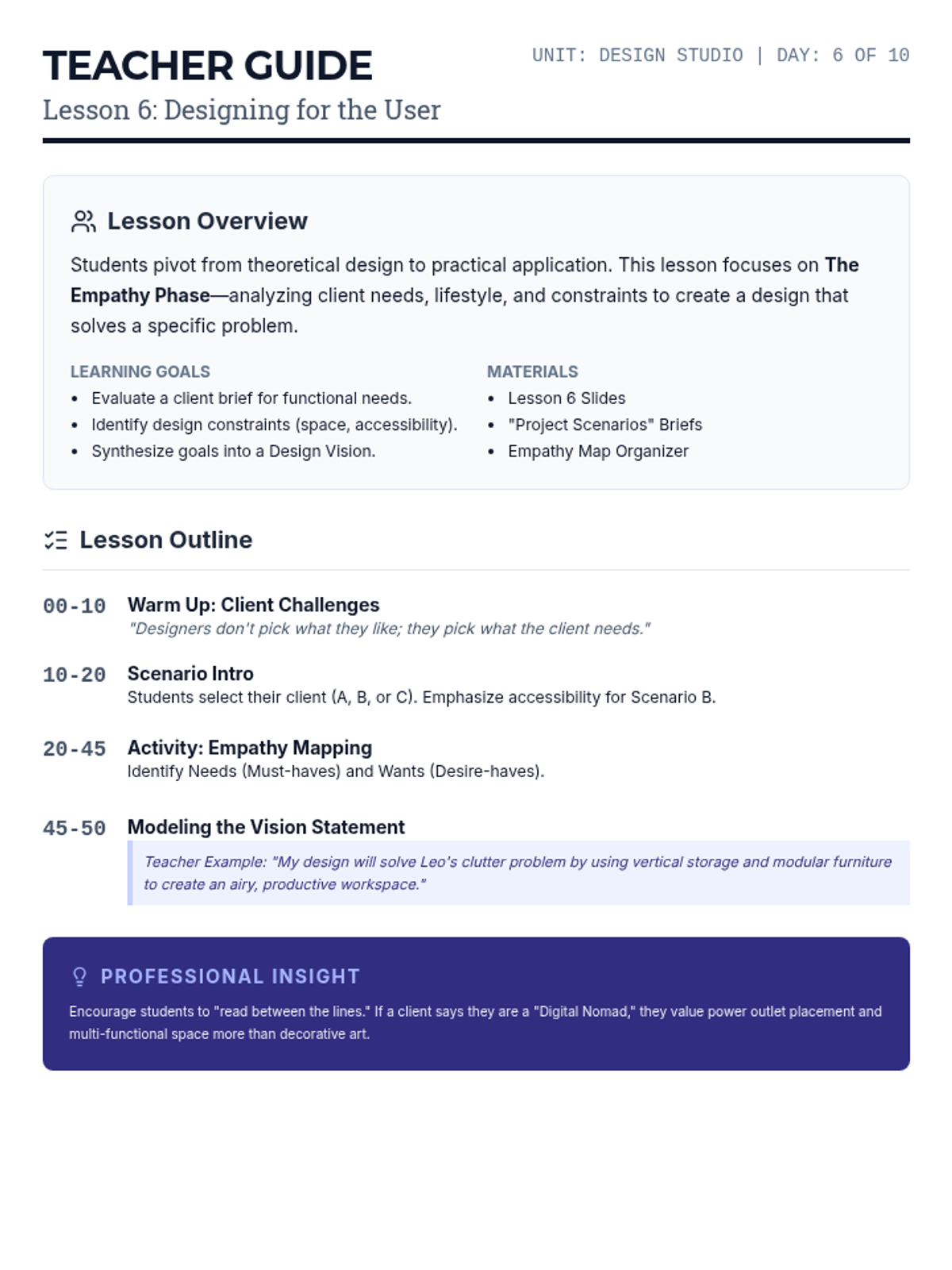
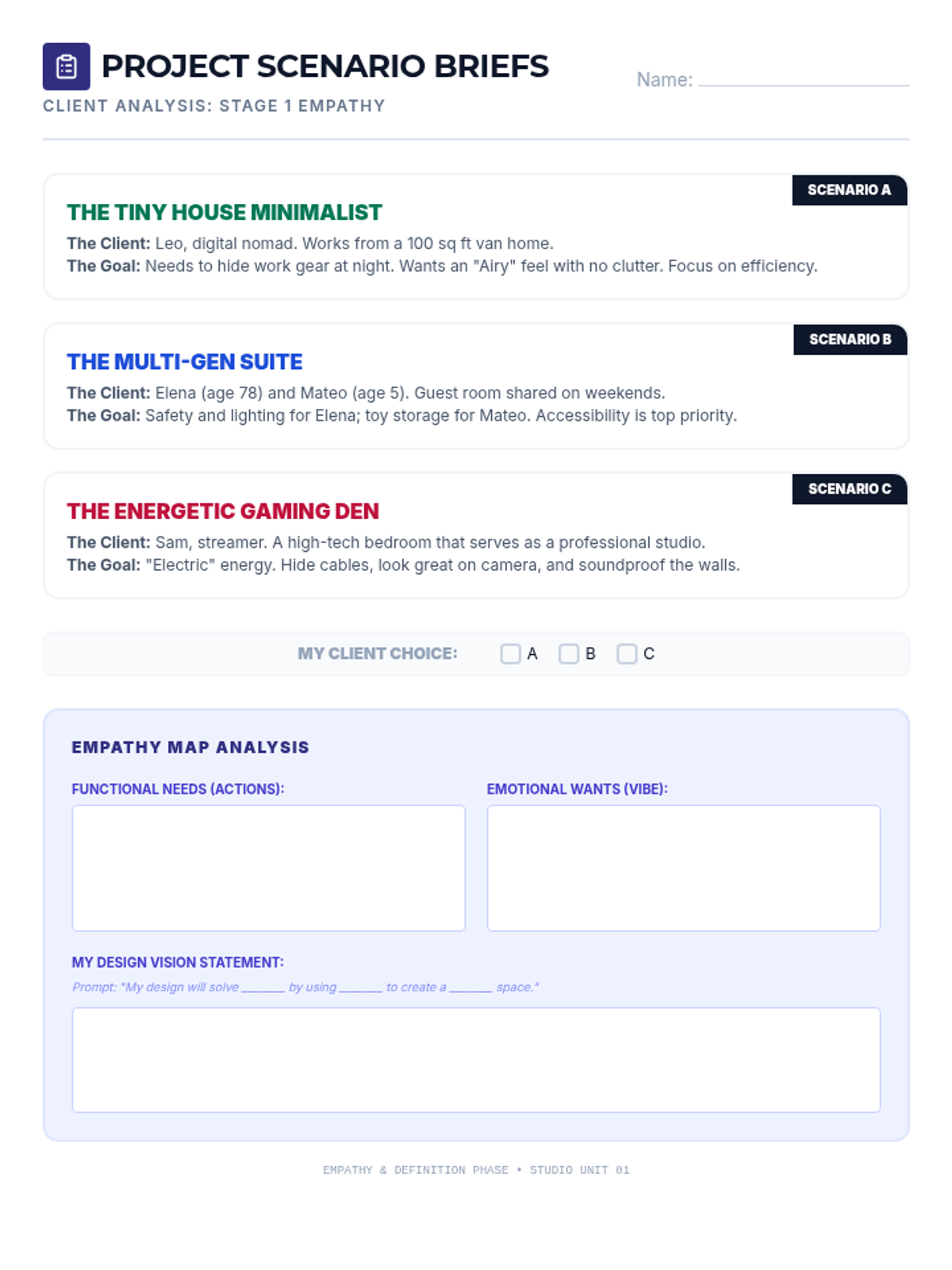
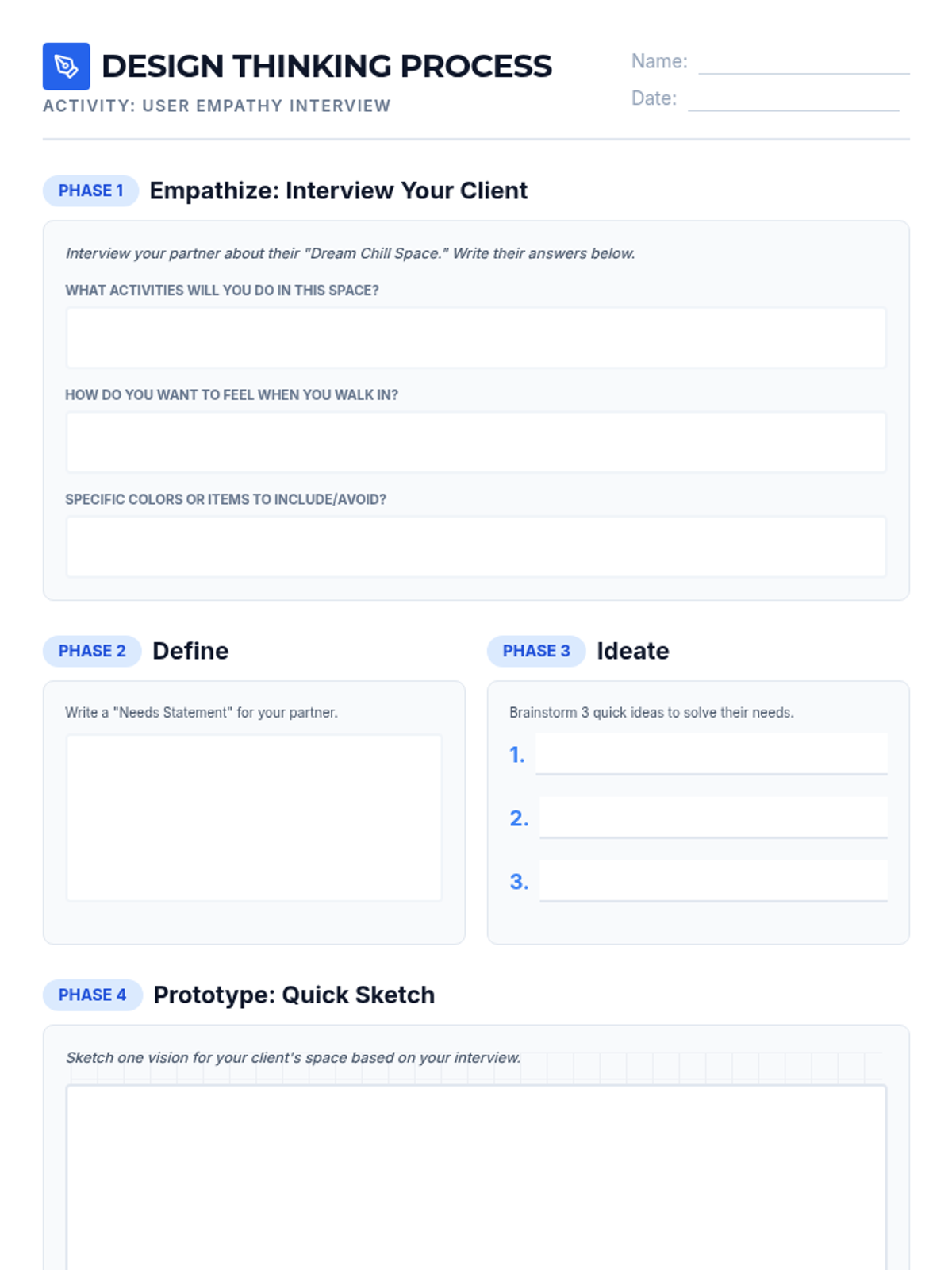
Students transition to the culminating project by receiving and analyzing their "Project Scenarios." This lesson focuses on the first stage of Design Thinking: Empathy. Students evaluate client needs, constraints, and lifestyle goals to inform their design choices.
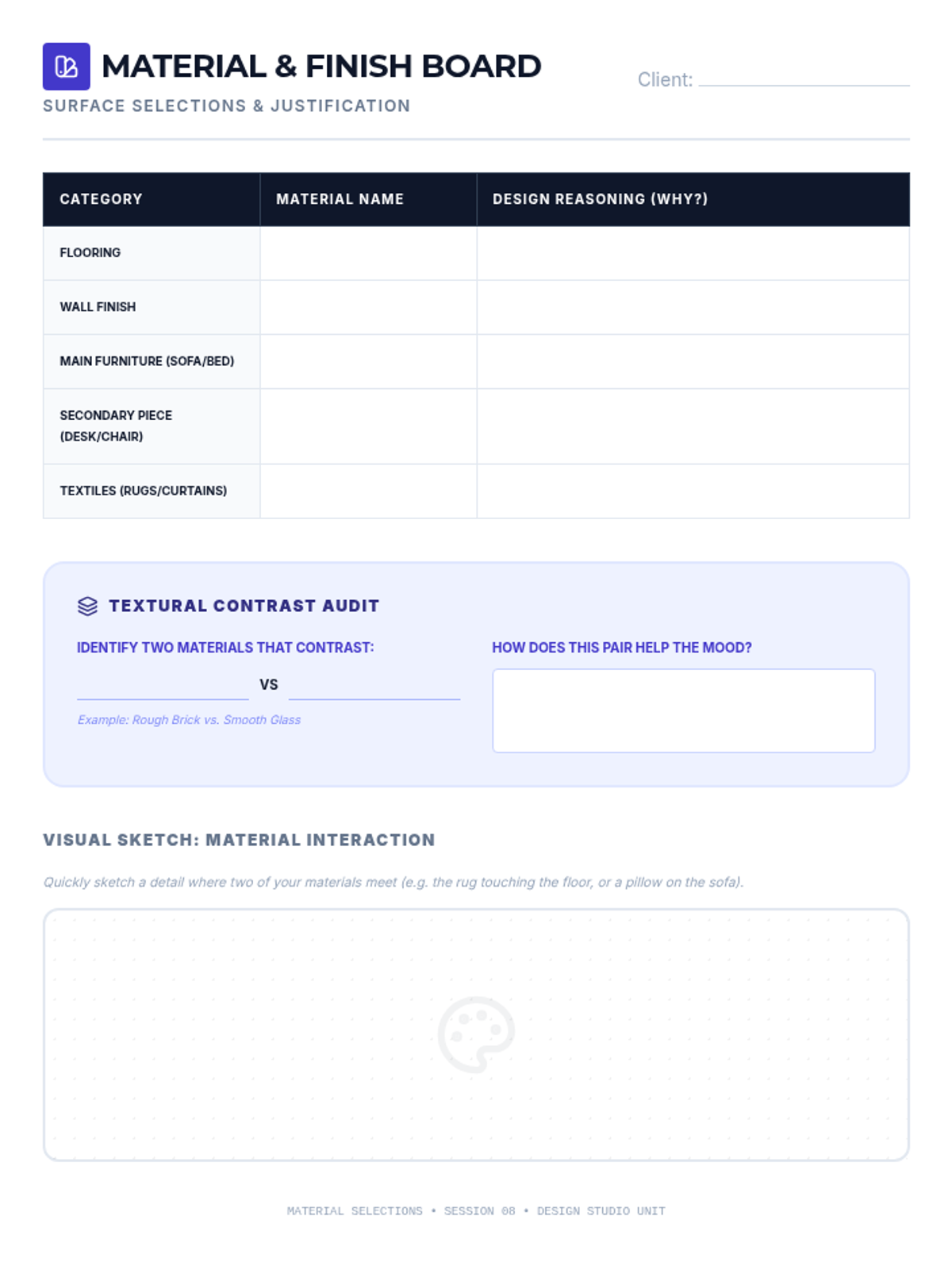
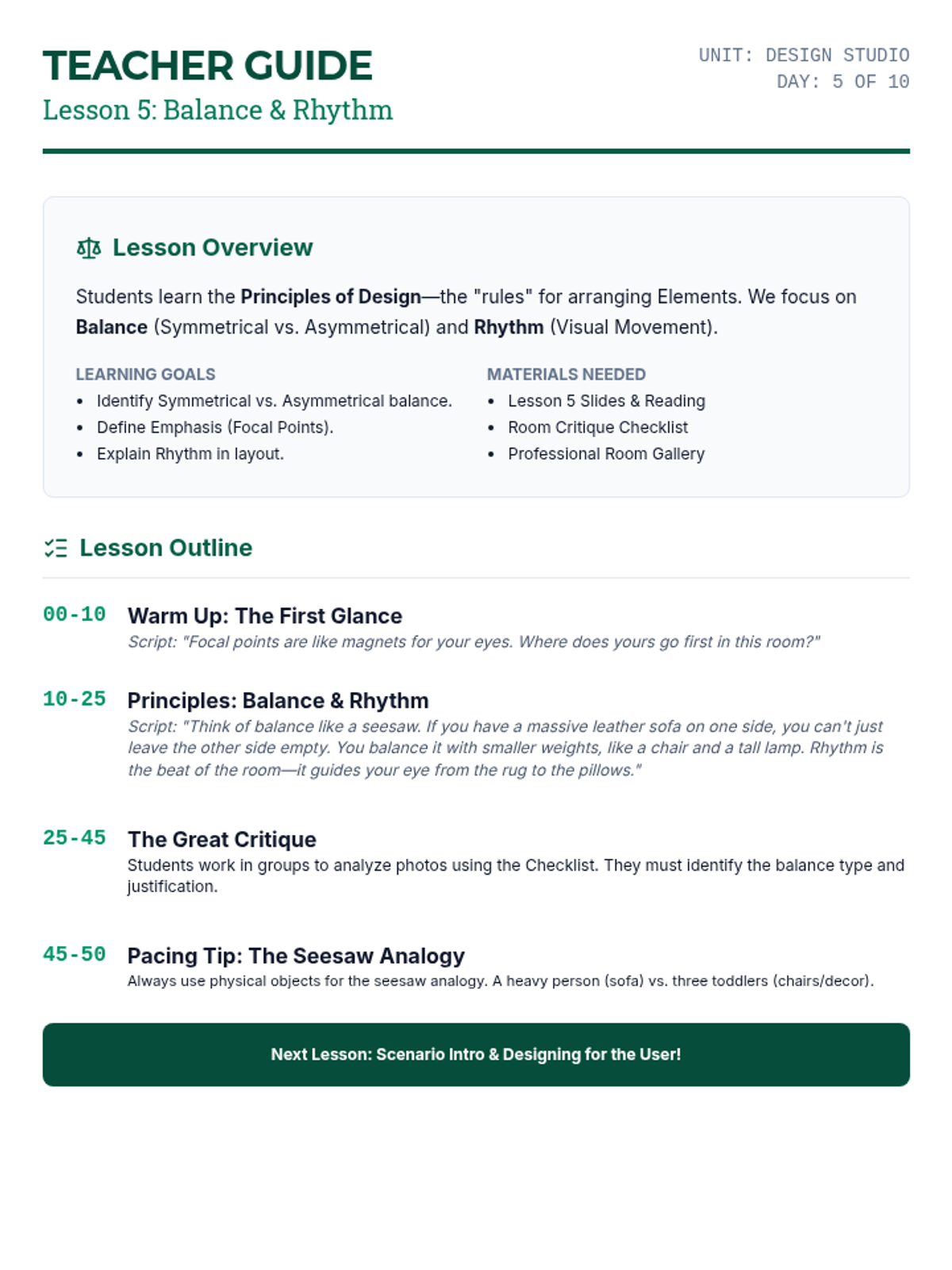
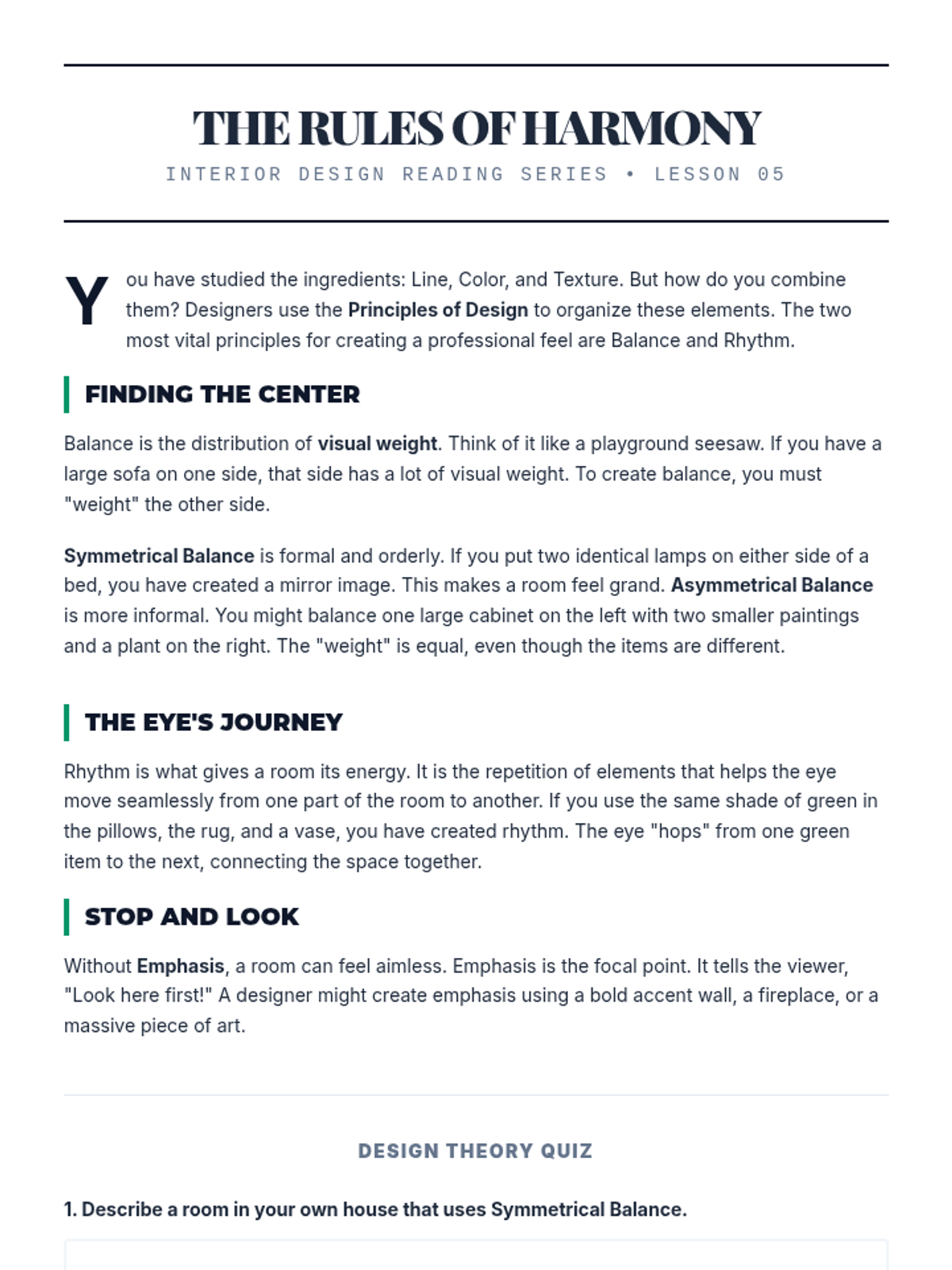
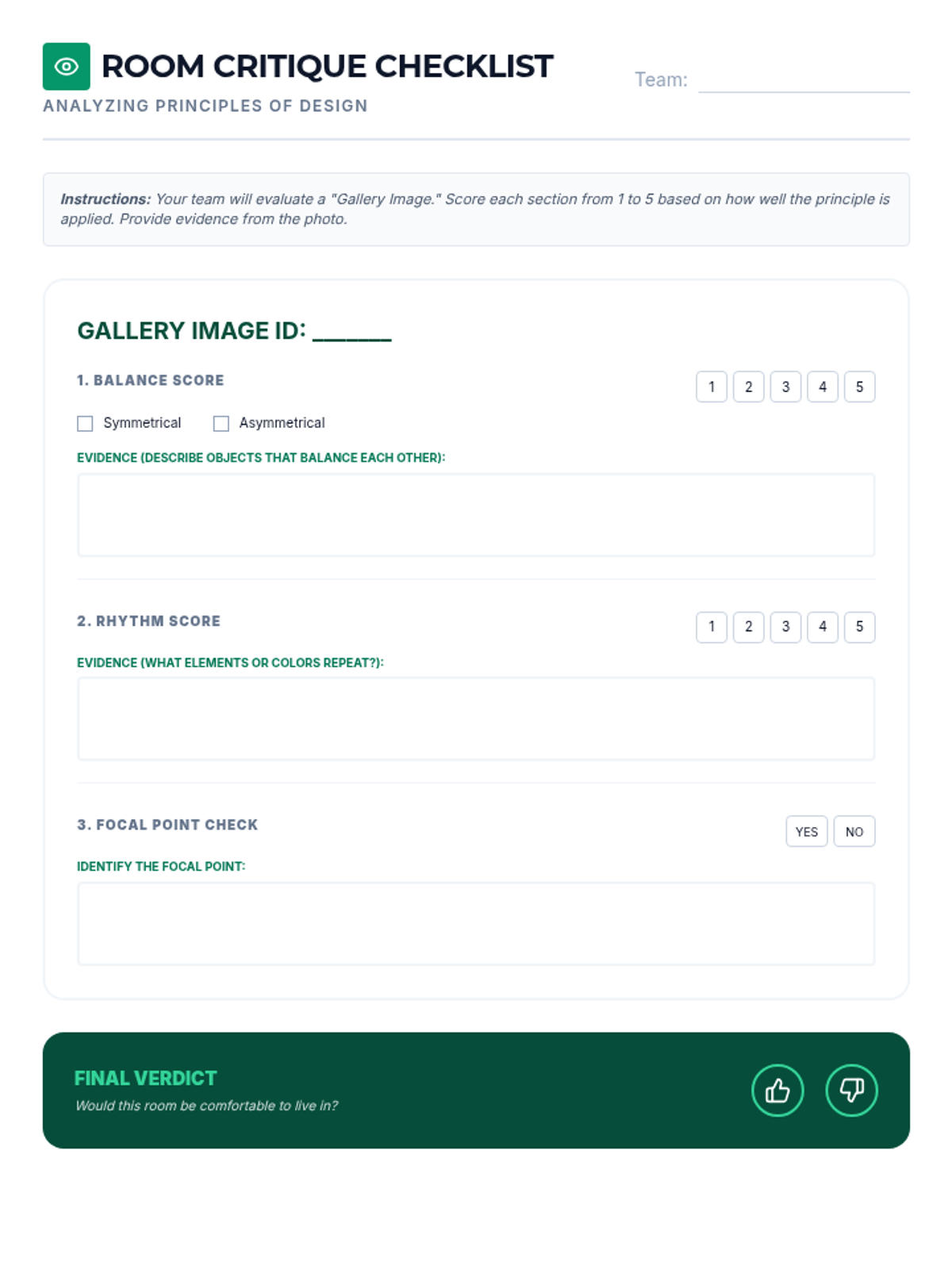
Applying the principles of balance, rhythm, and emphasis to create unified and harmonious room layouts, featuring a critical analysis of professional interior designs.
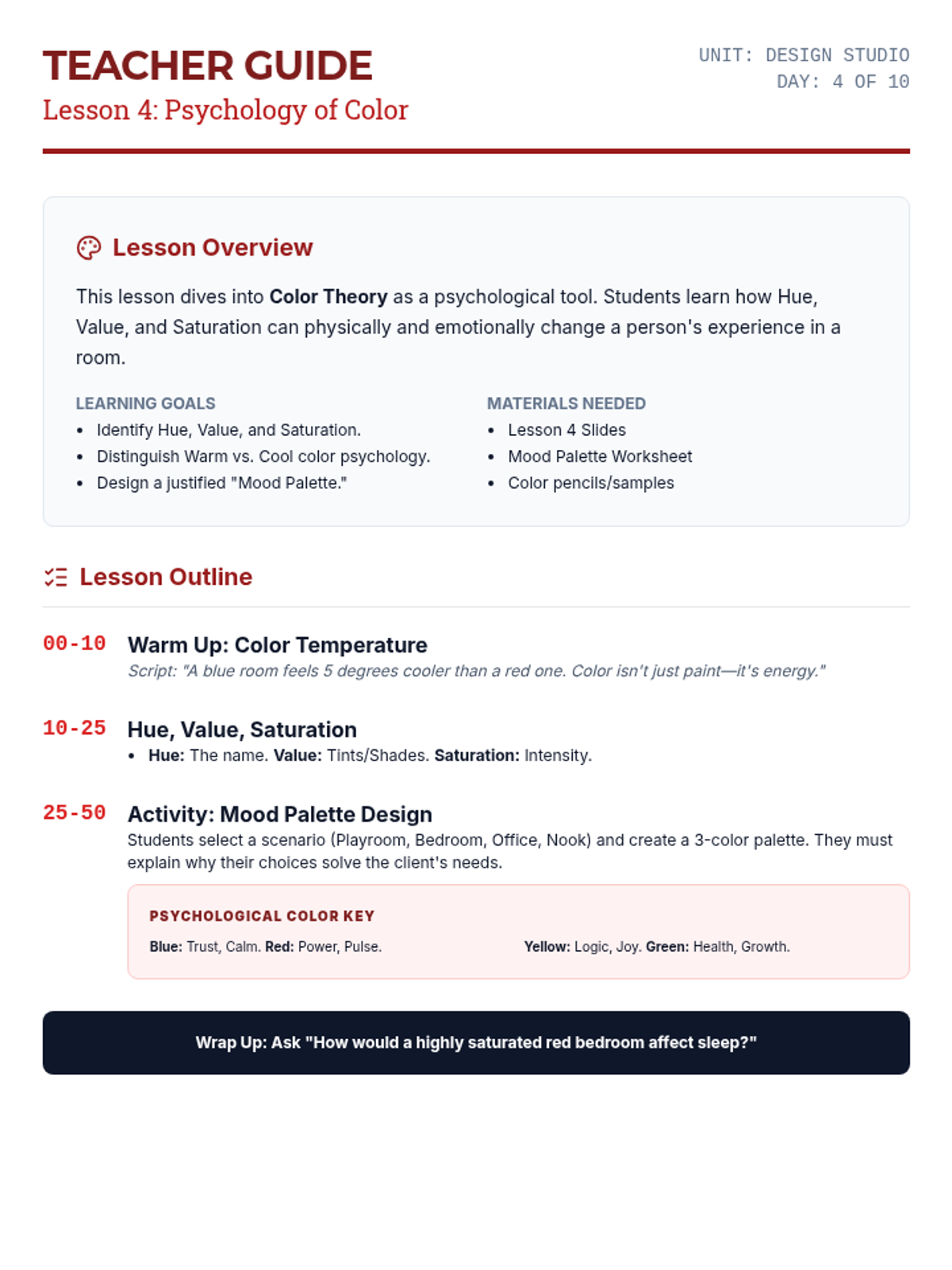
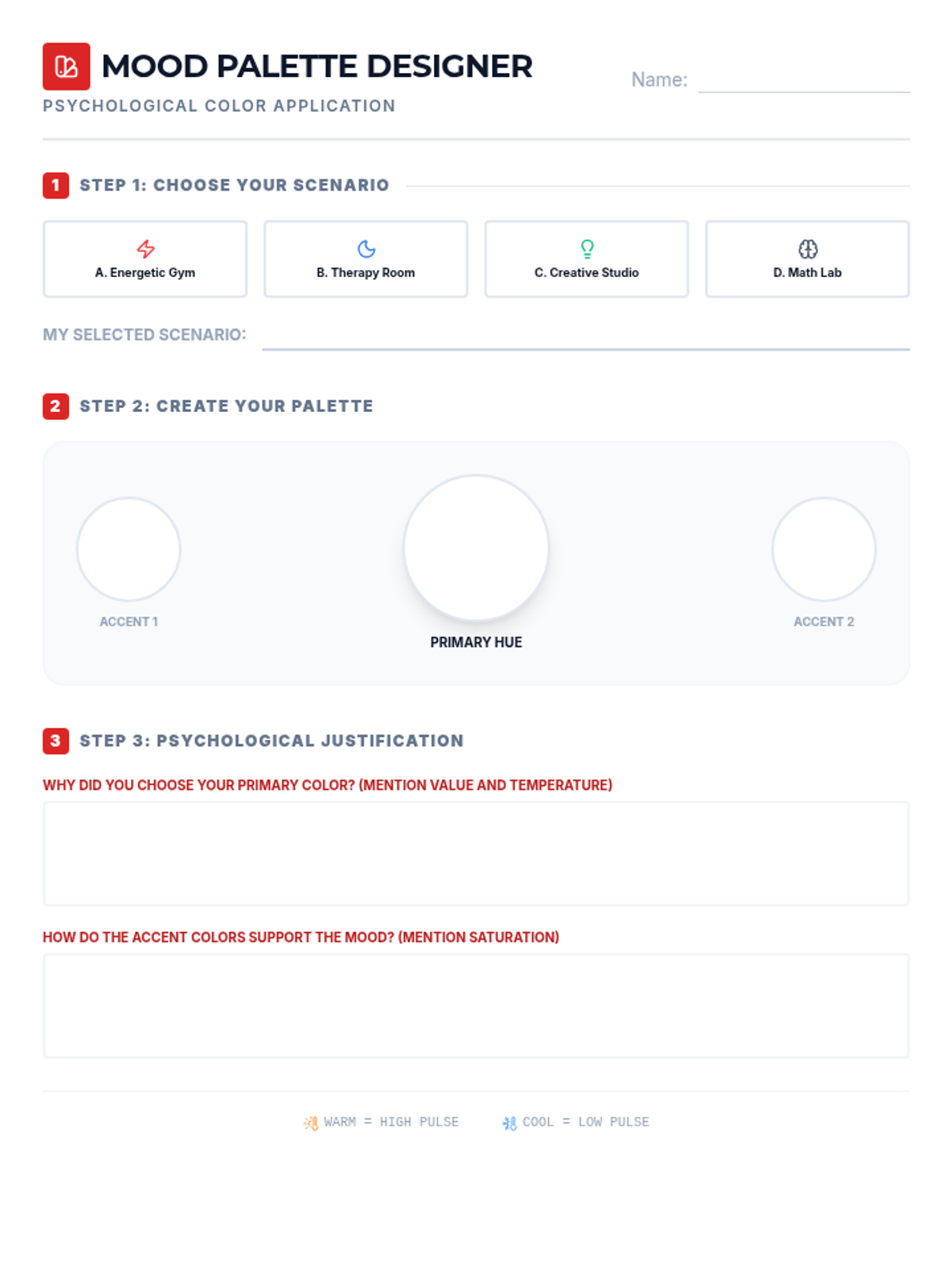
An investigation into color theory, focusing on how hue, value, and saturation are used to evoke specific psychological responses and emotions in interior spaces.
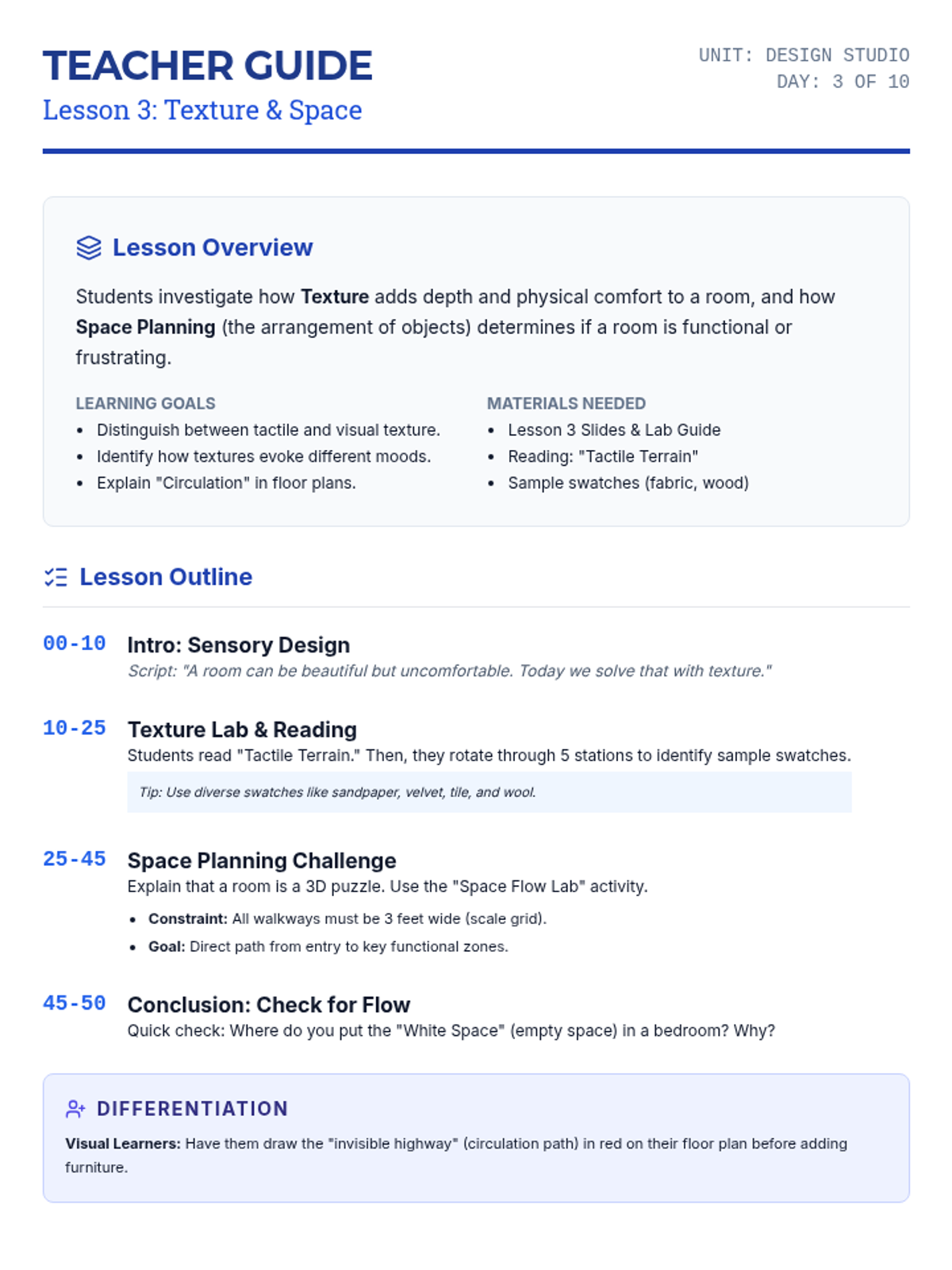
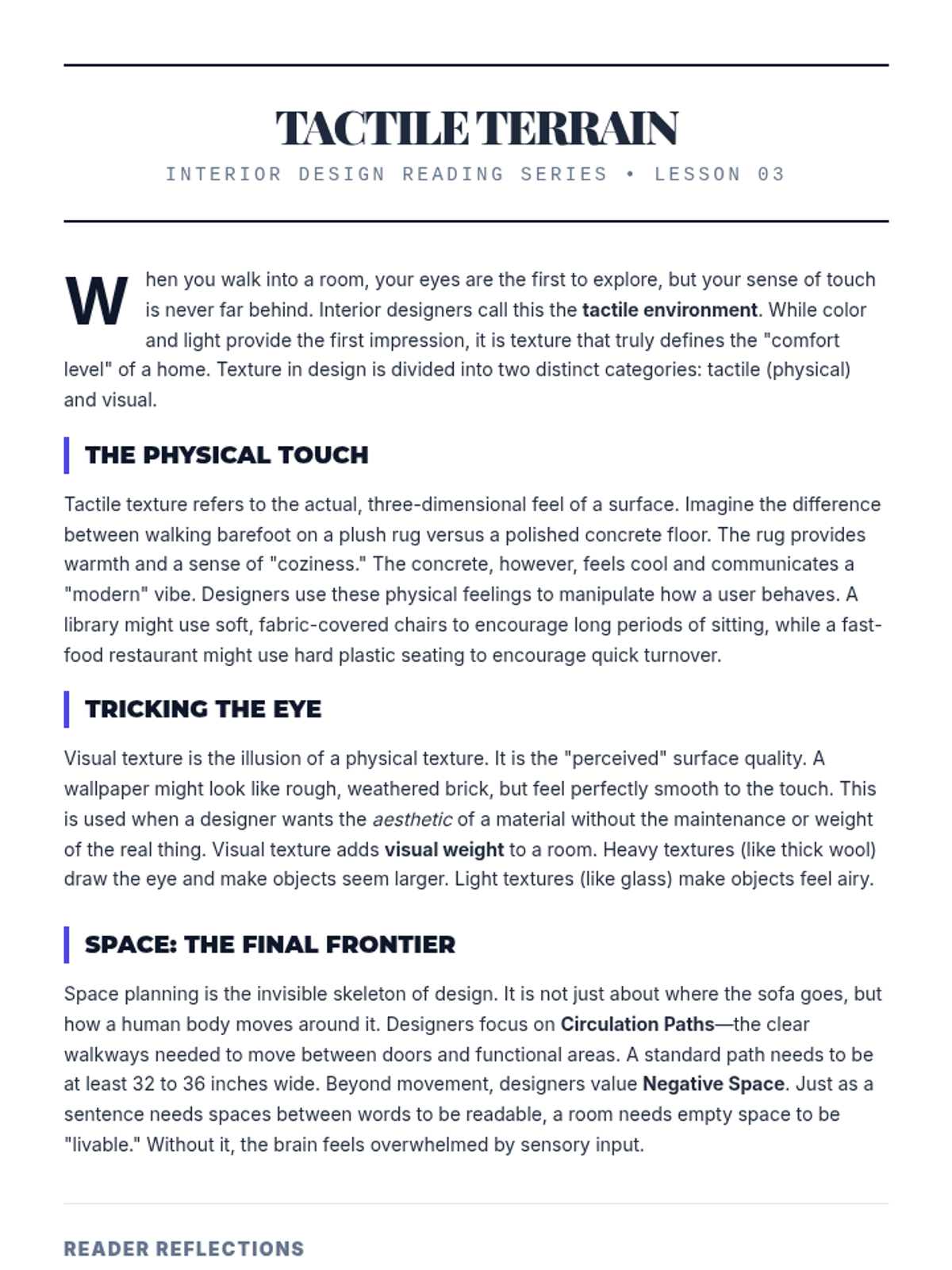
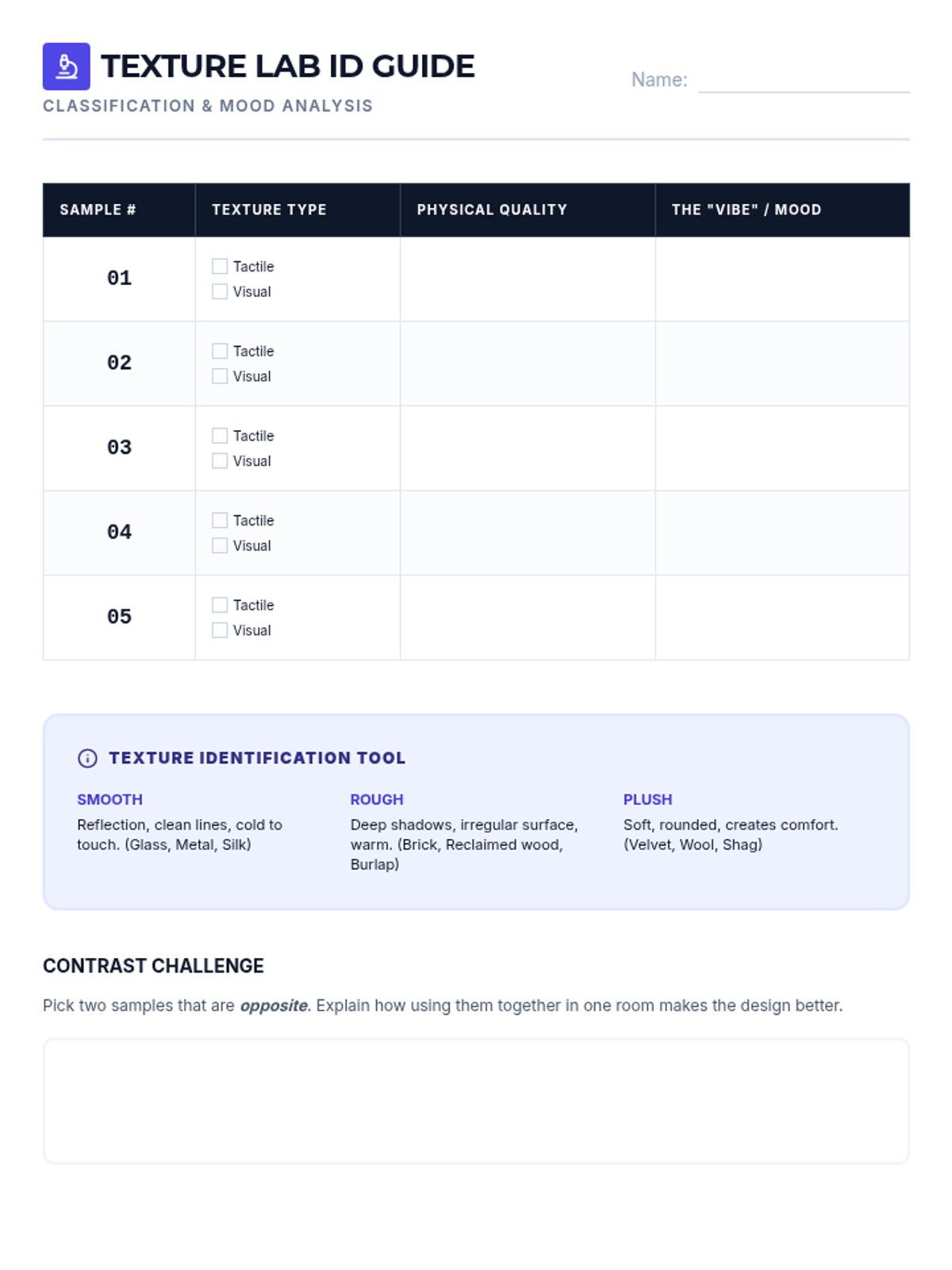
A hands-on exploration of how tactile and visual textures impact comfort, paired with an investigation into how space planning affects room functionality.
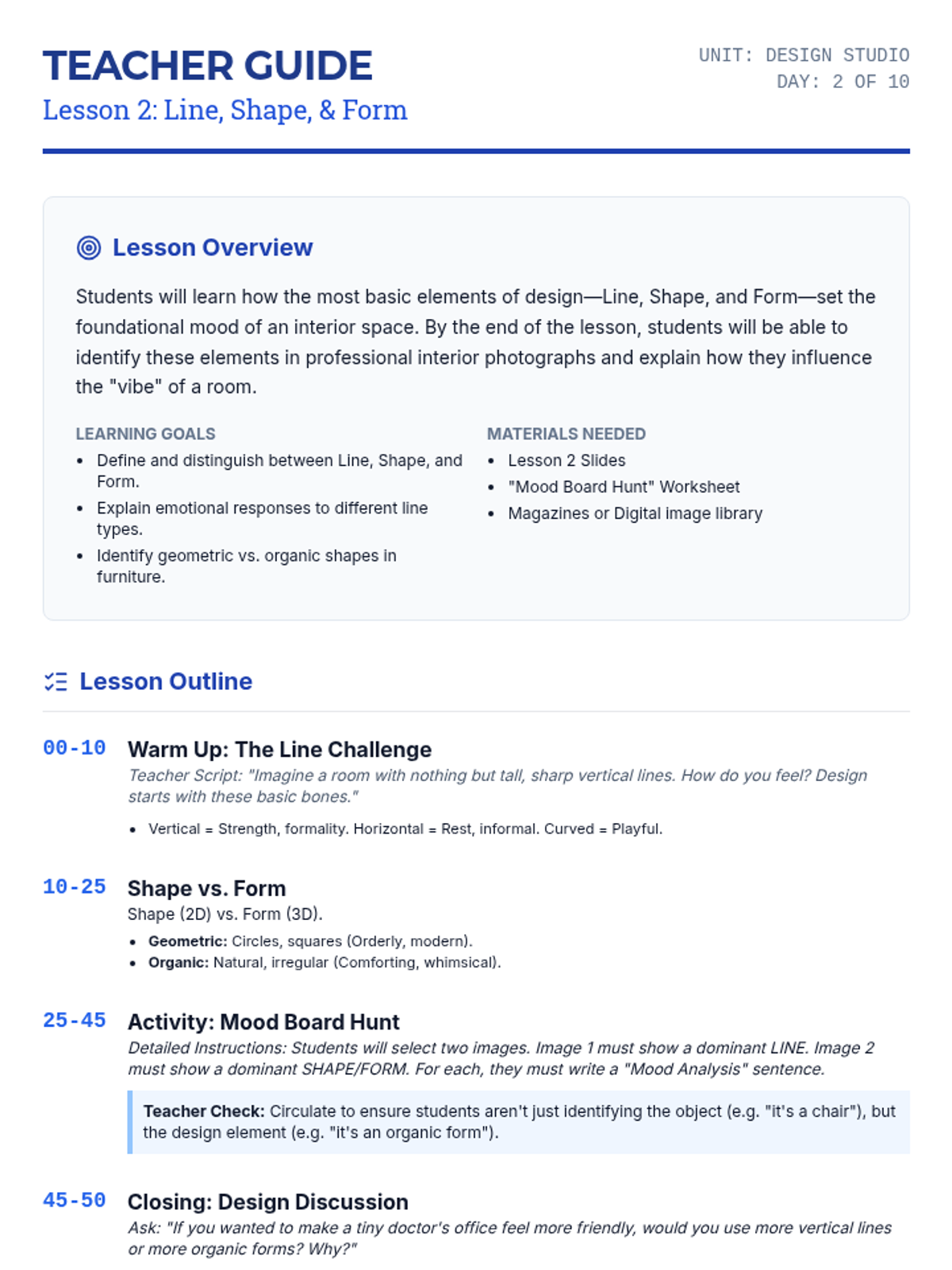
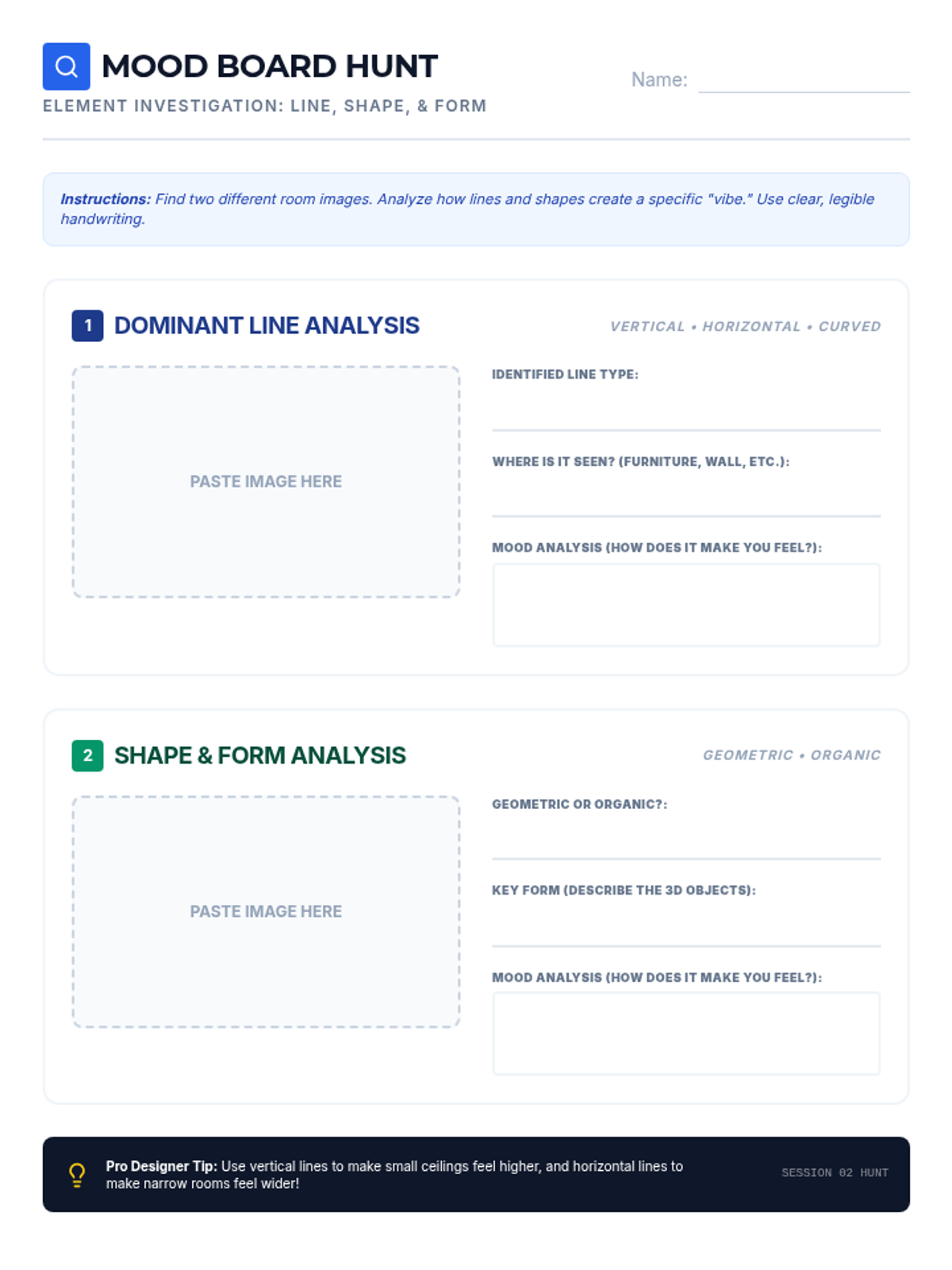
Students explore how different types of lines, shapes, and forms influence the mood and feeling of a room through a visual mood board scavenger hunt.
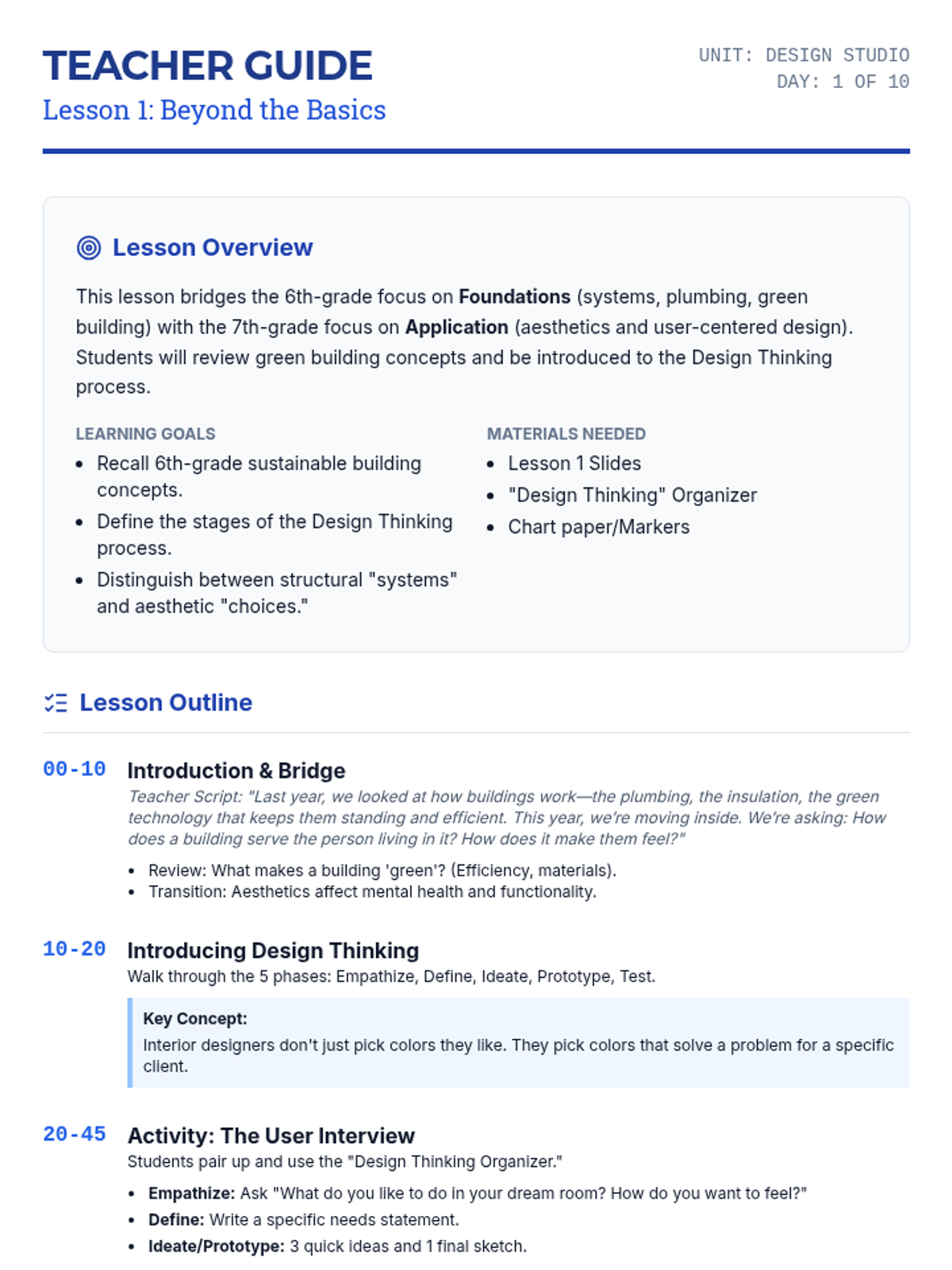
Bridging the gap between 6th-grade structural systems and 7th-grade aesthetic design, this lesson introduces the Design Thinking process in the context of sustainable housing.
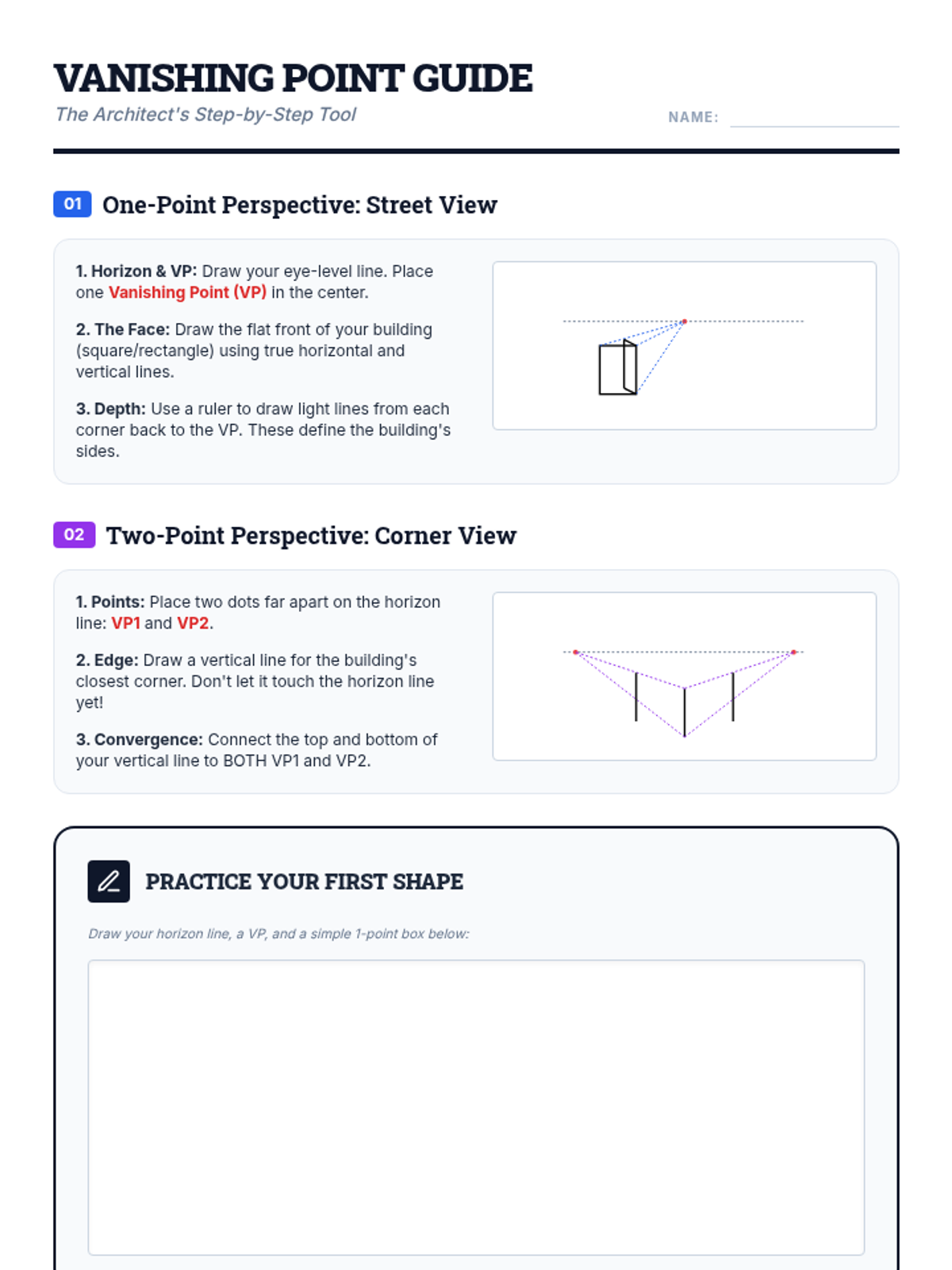
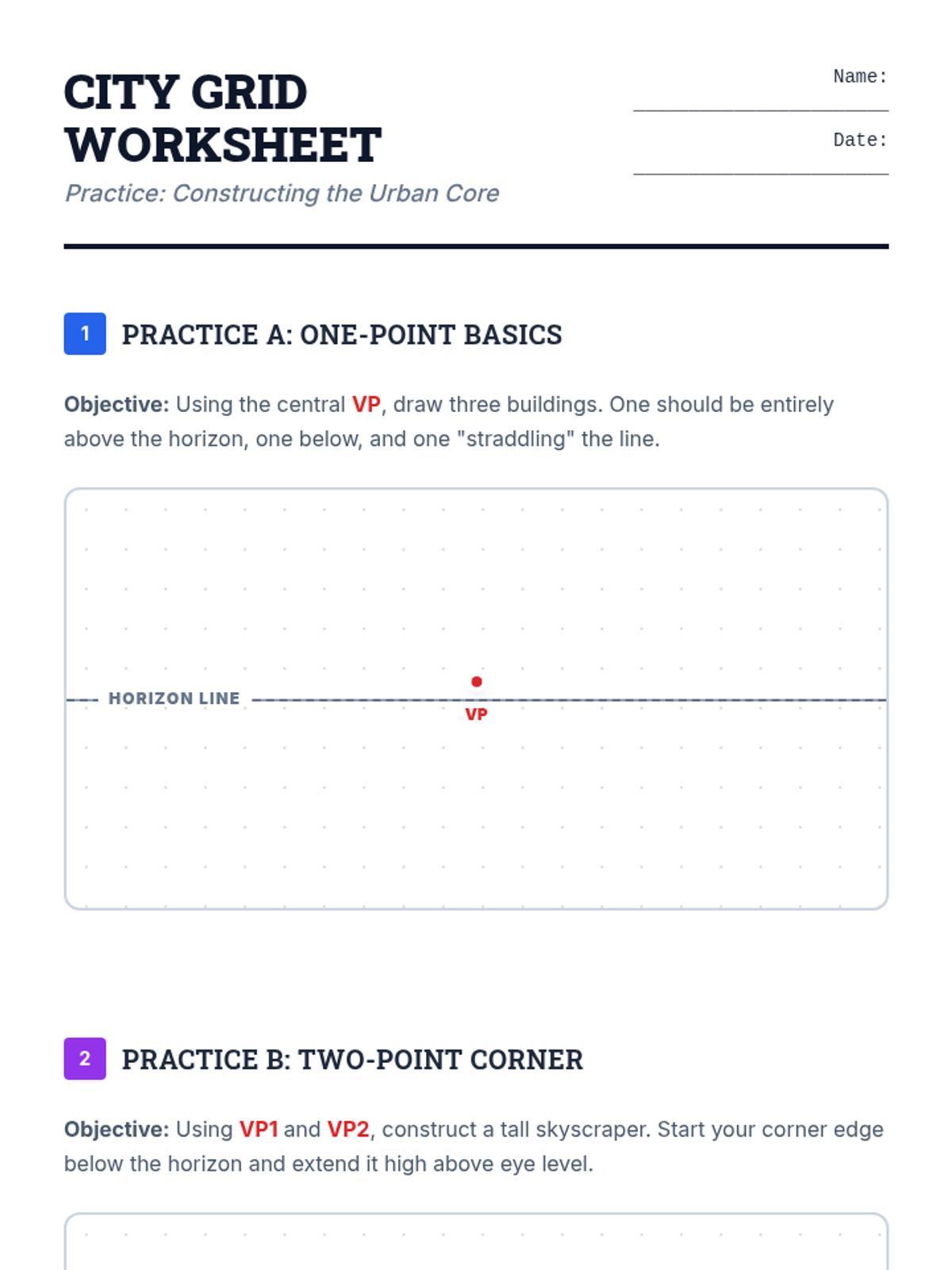
A comprehensive introduction to 1-point and 2-point perspective drawing through the lens of urban architecture. Students learn the fundamentals of vanishing points and horizon lines to create realistic 3D cityscapes.
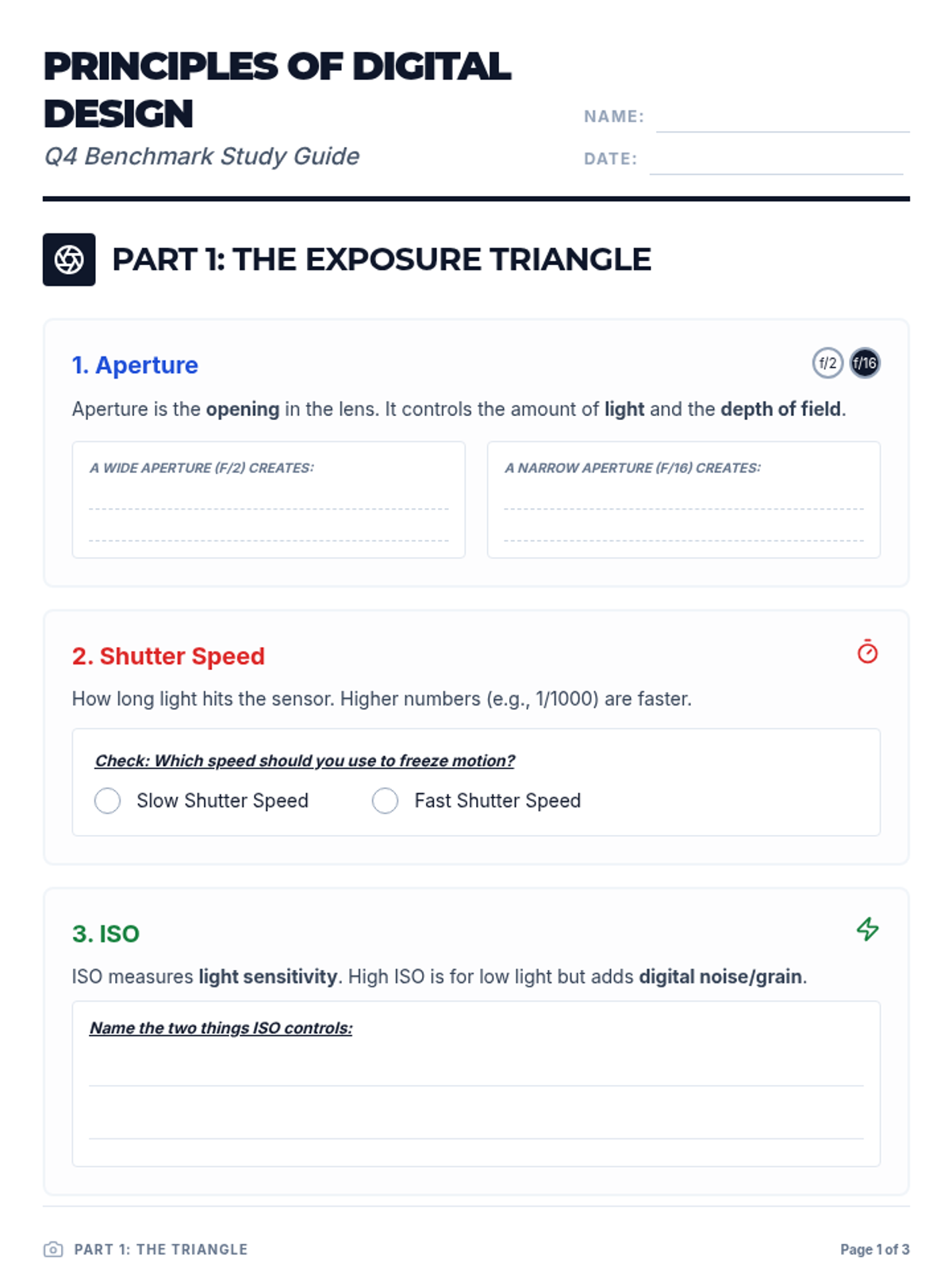
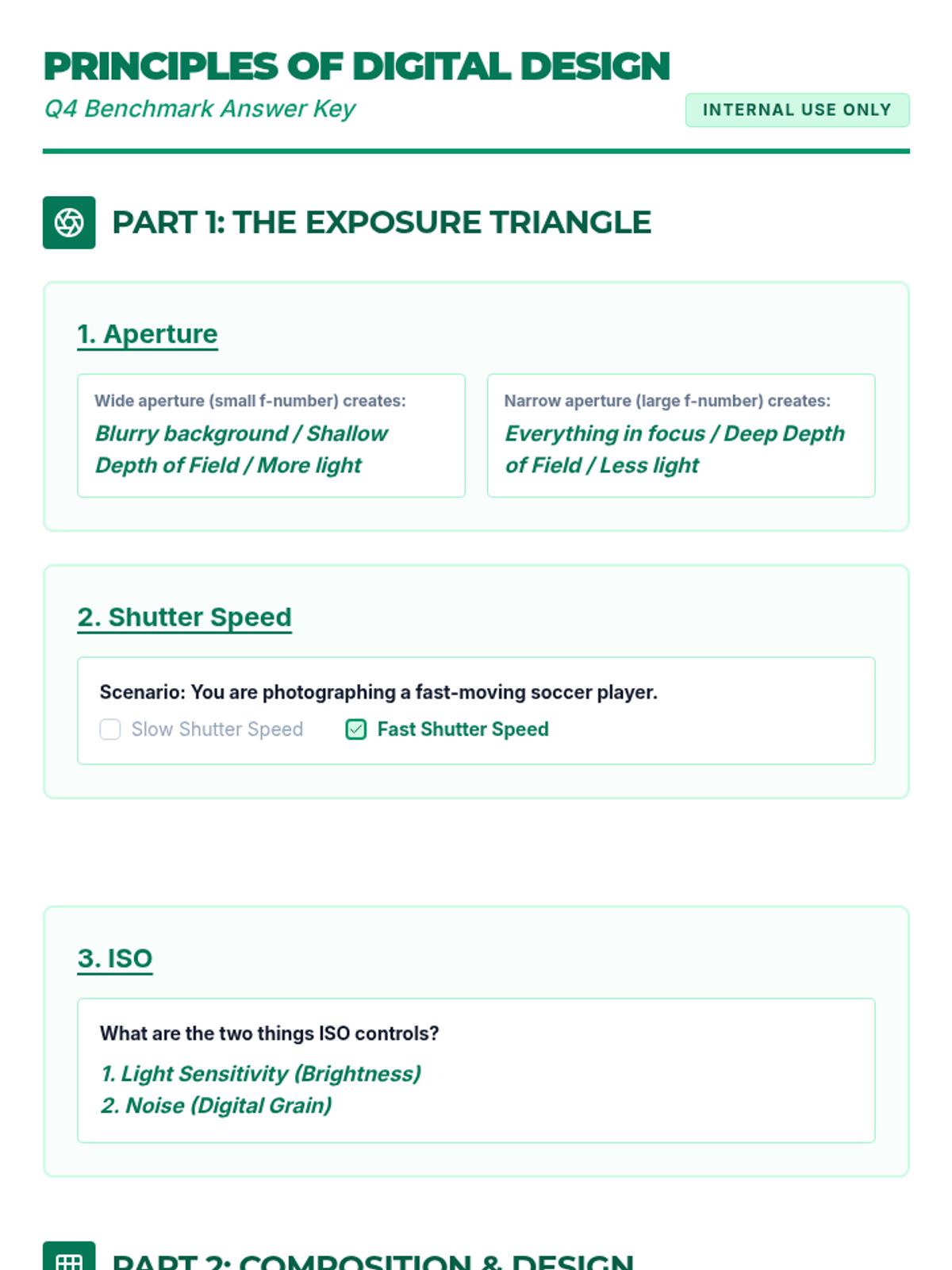
A comprehensive lesson preparing students for their photography benchmark, covering technical camera settings, compositional principles, and the philosophy of artistic intention.
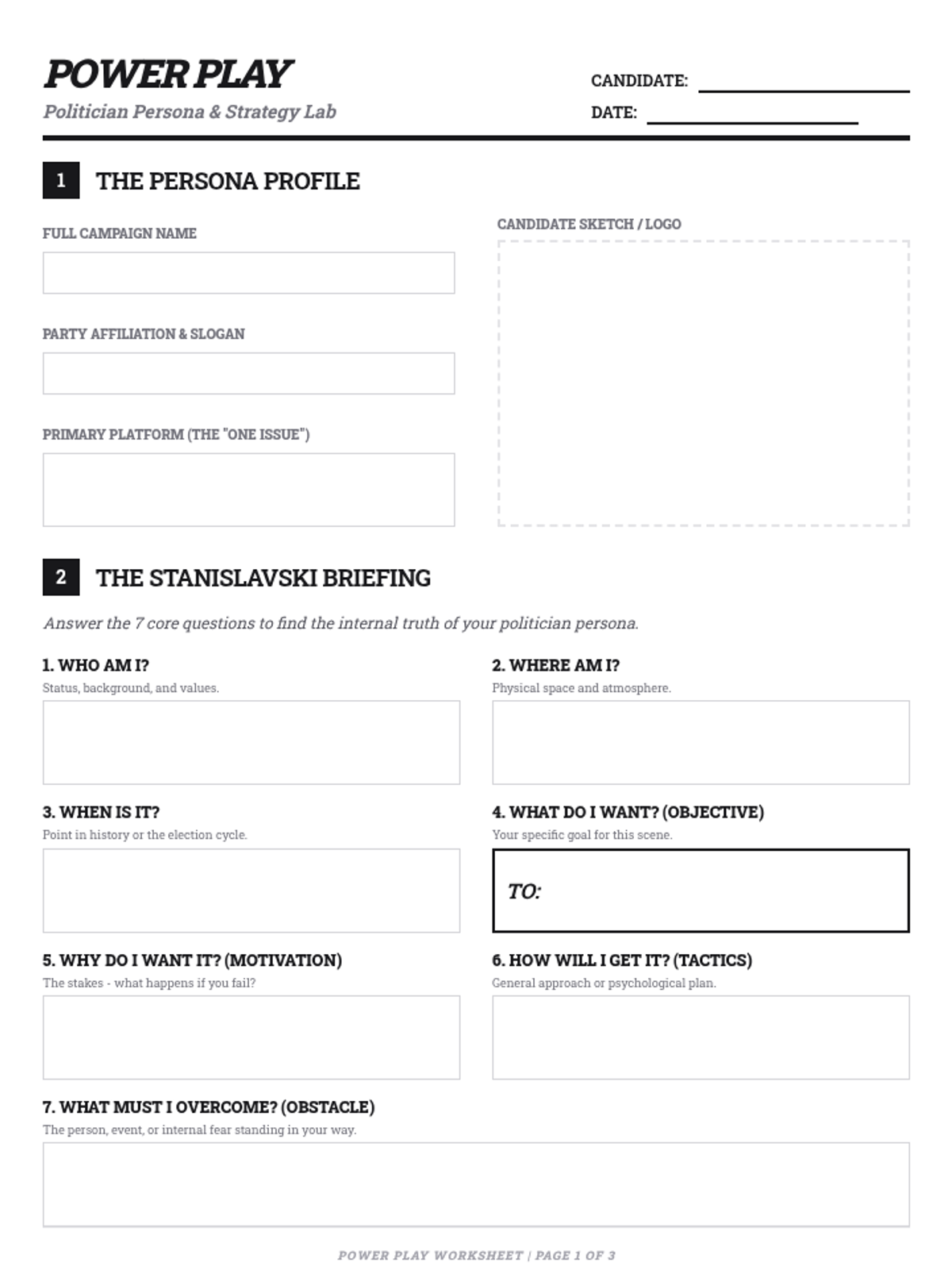
A deep dive into Stanislavski's 'System', focusing on using real-world experiences to inform character work through peer interviews.
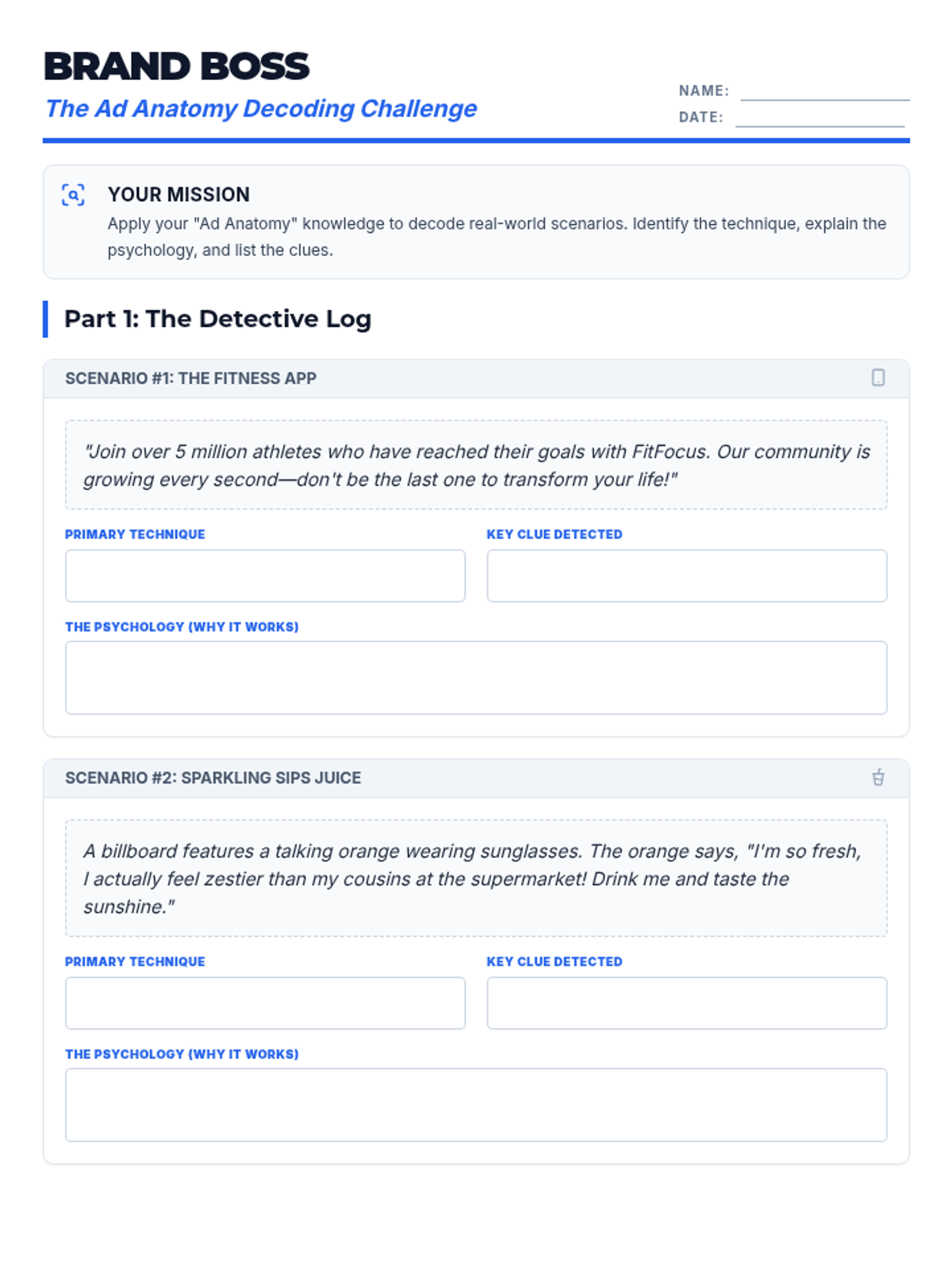
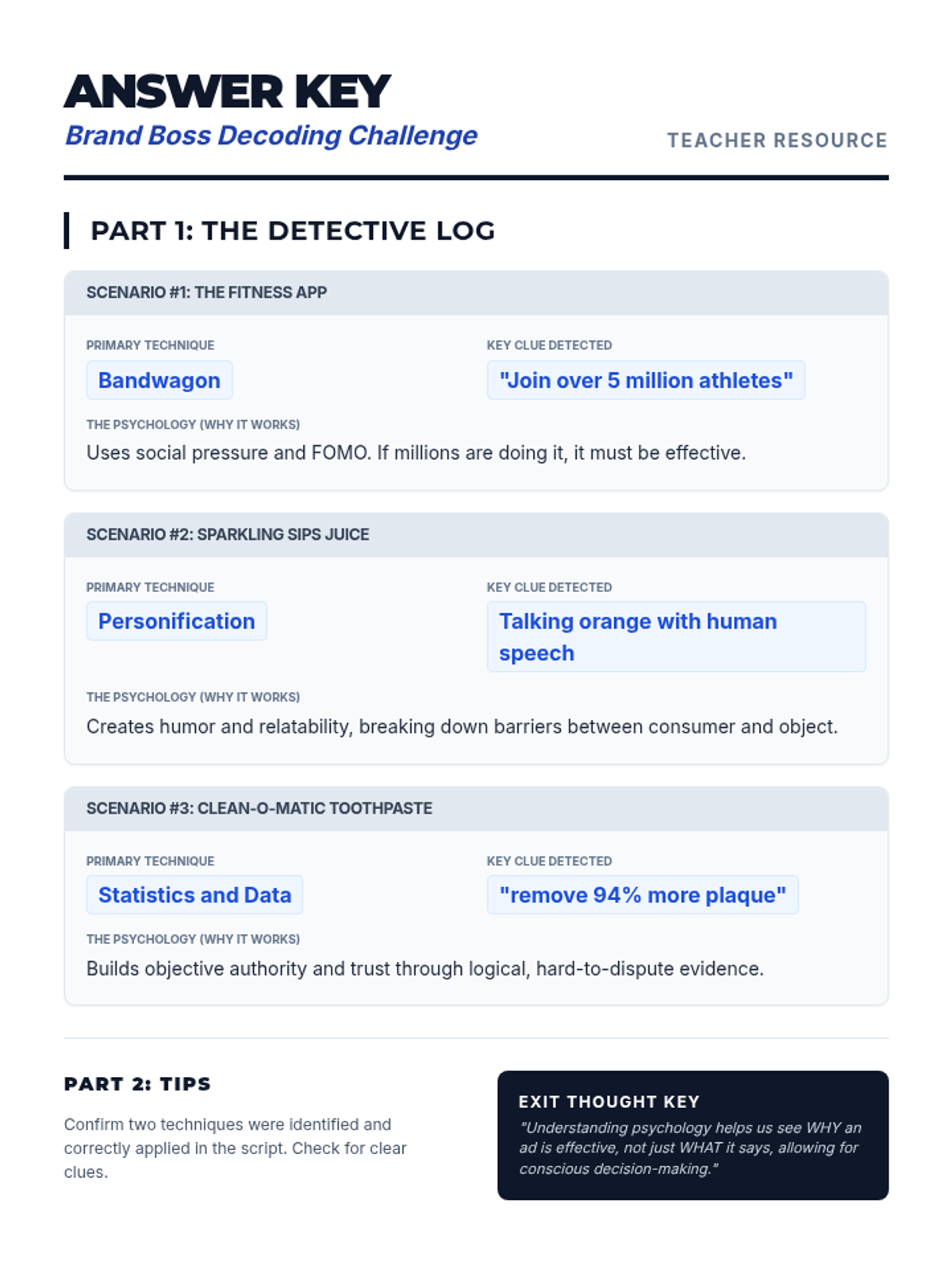
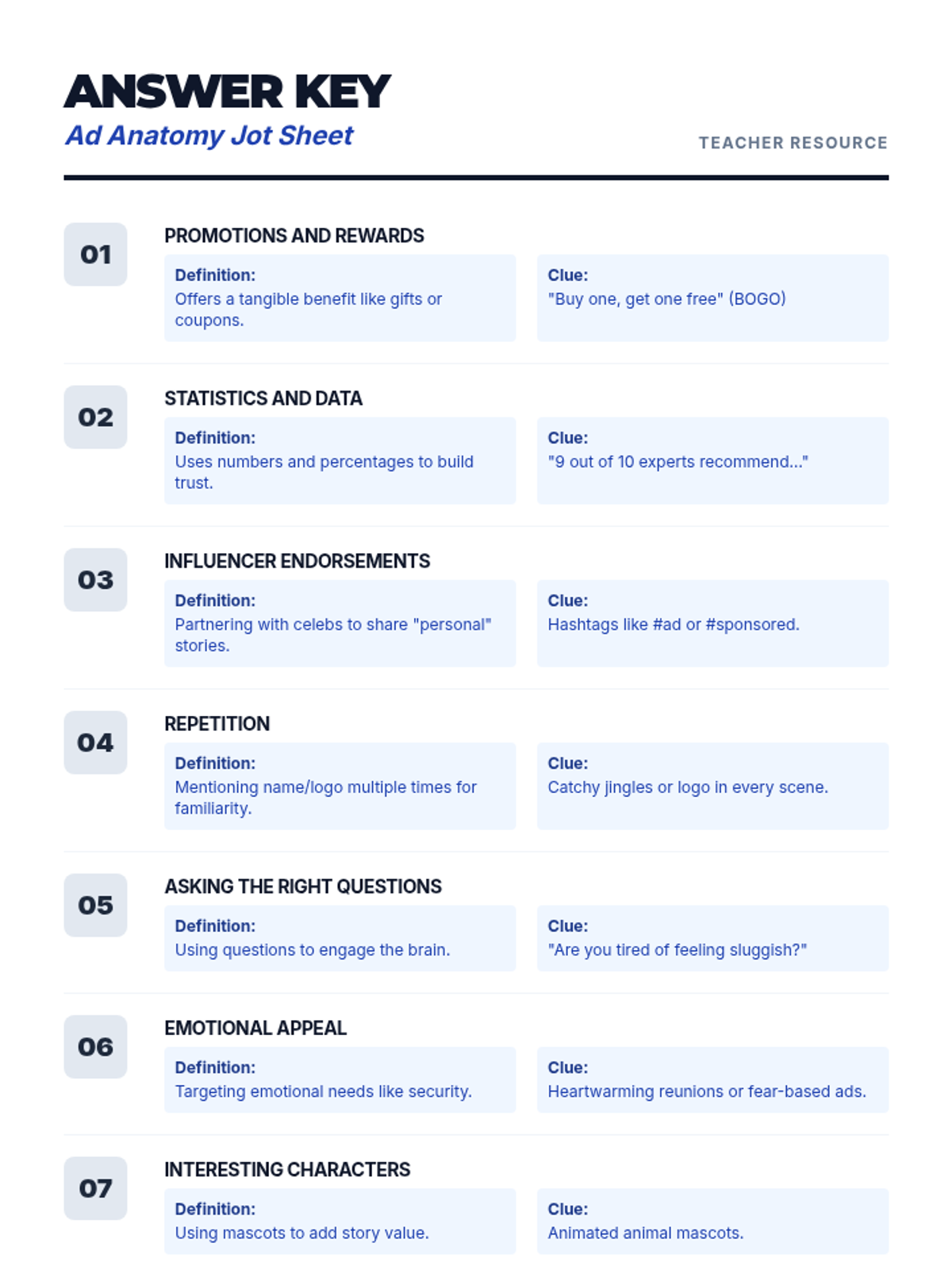
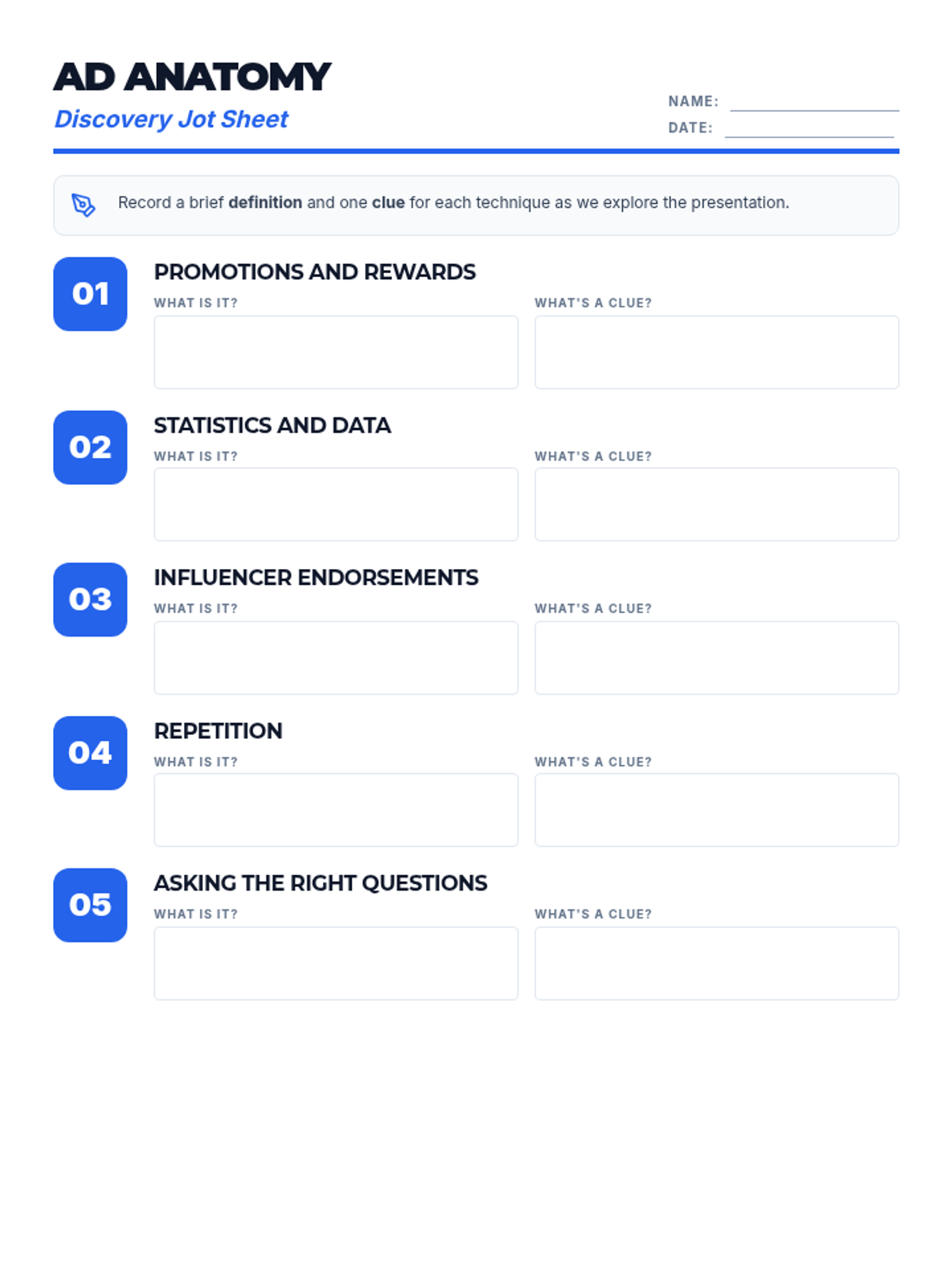
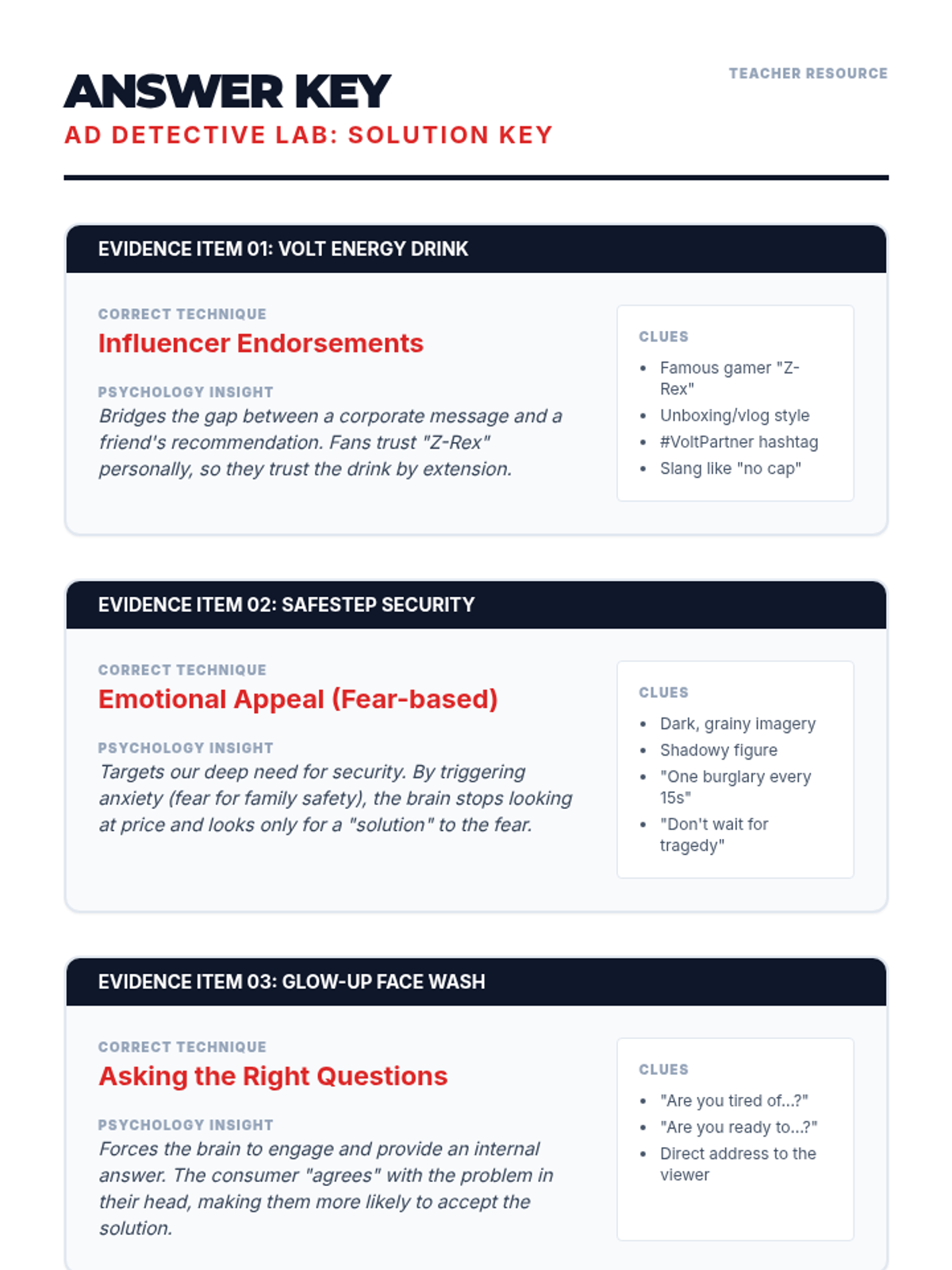
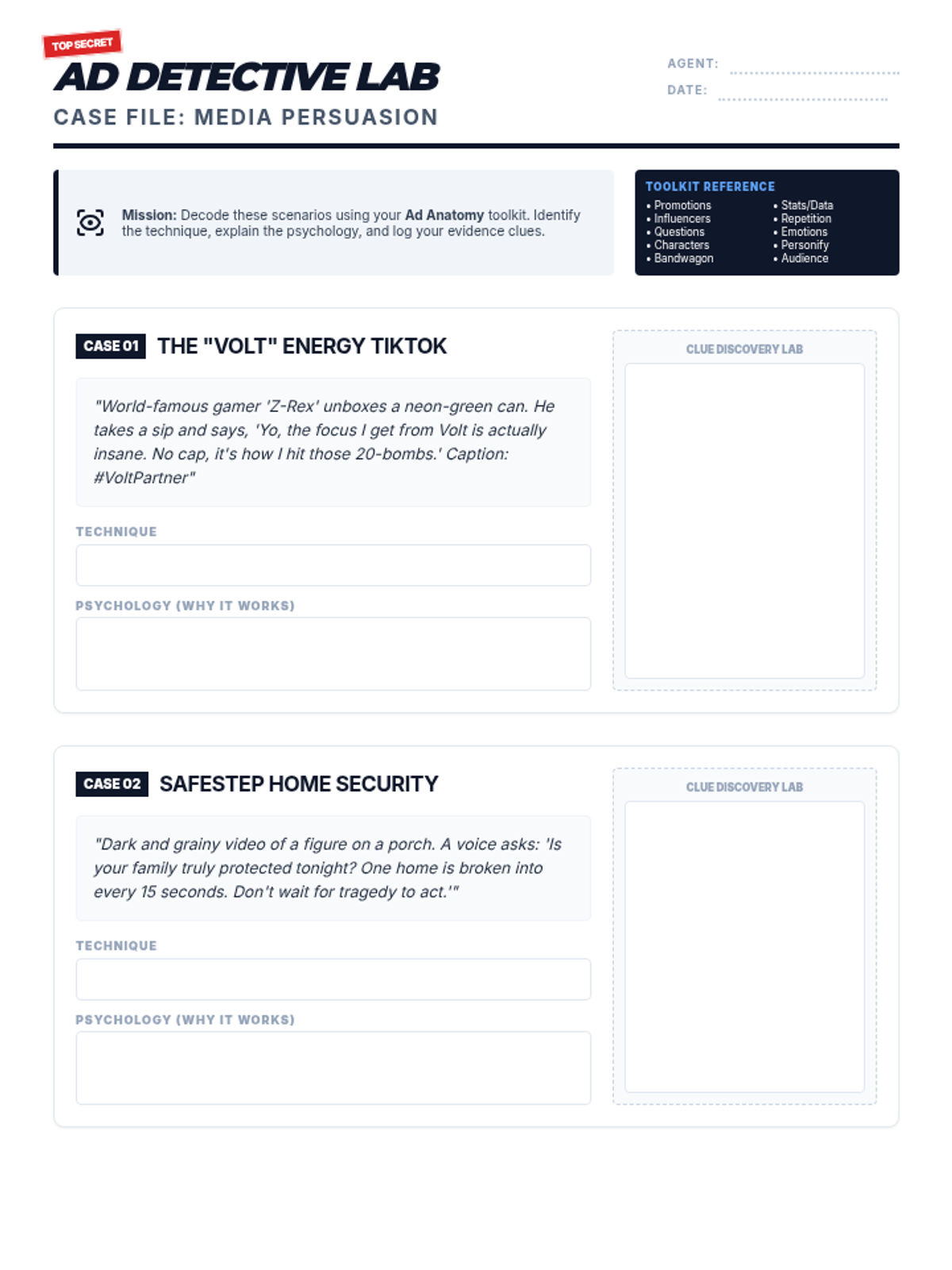
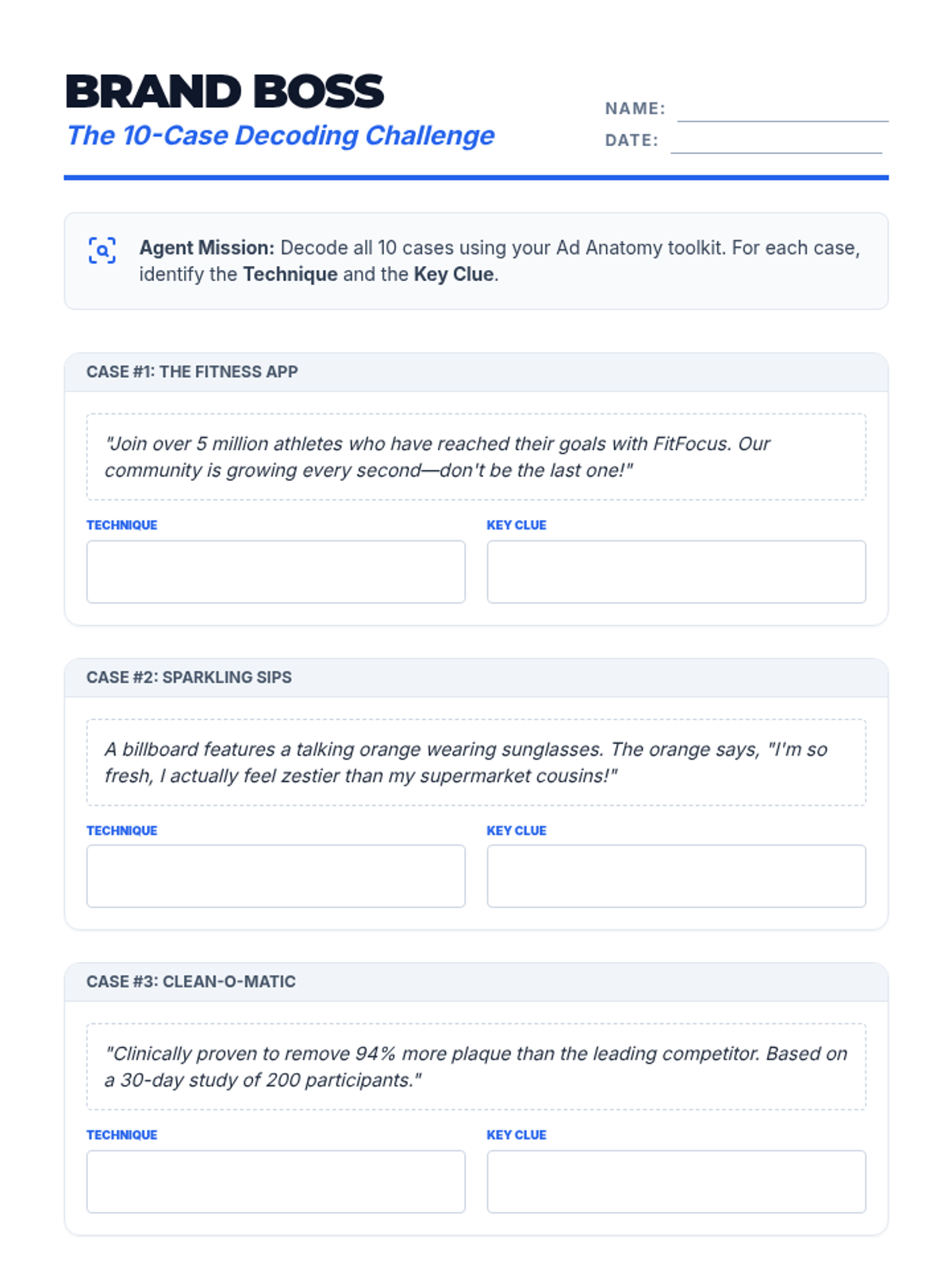
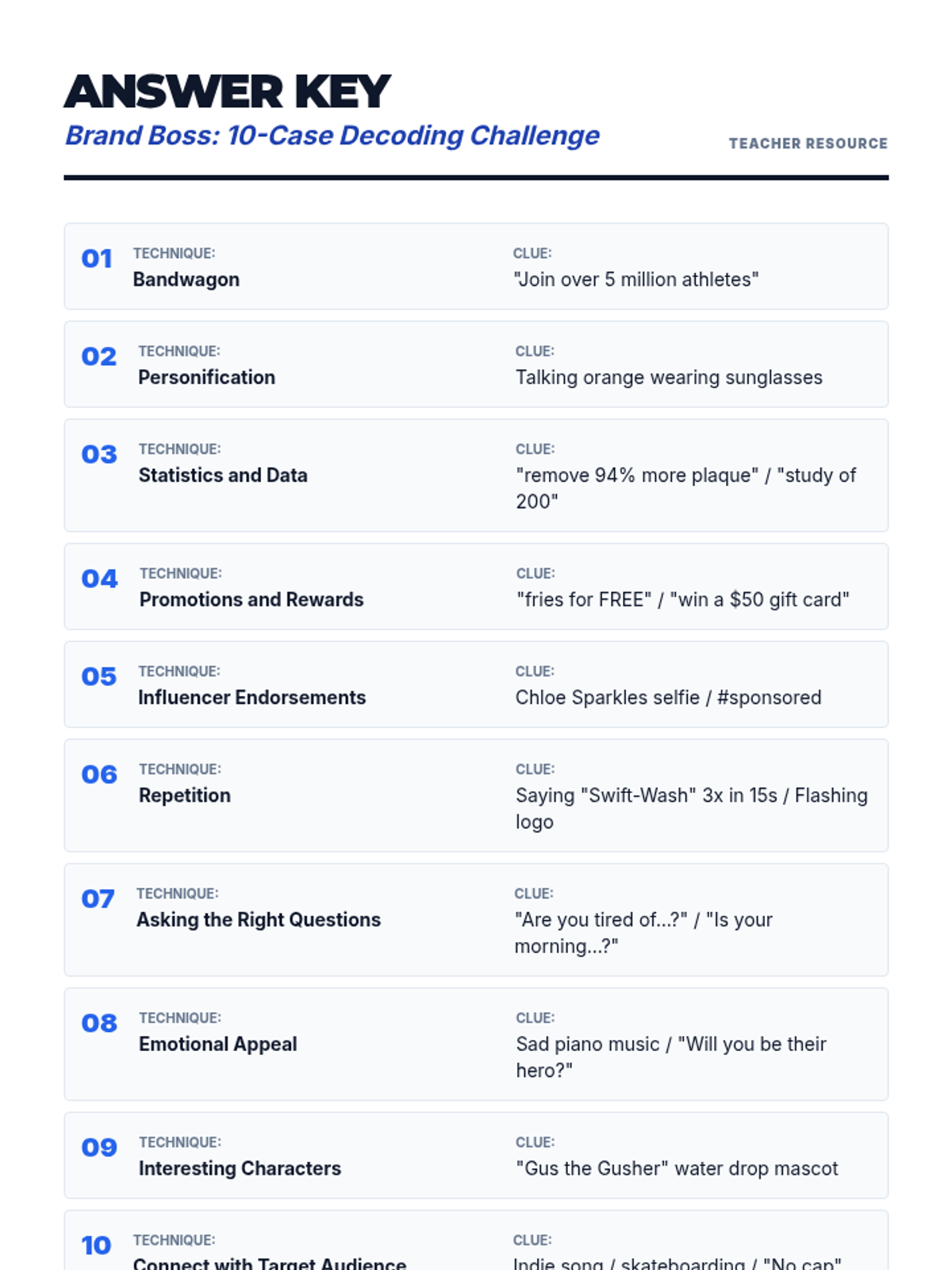
A lesson exploring 10 key advertising techniques used to influence consumer behavior, based on the Ad Anatomy Field Guide.
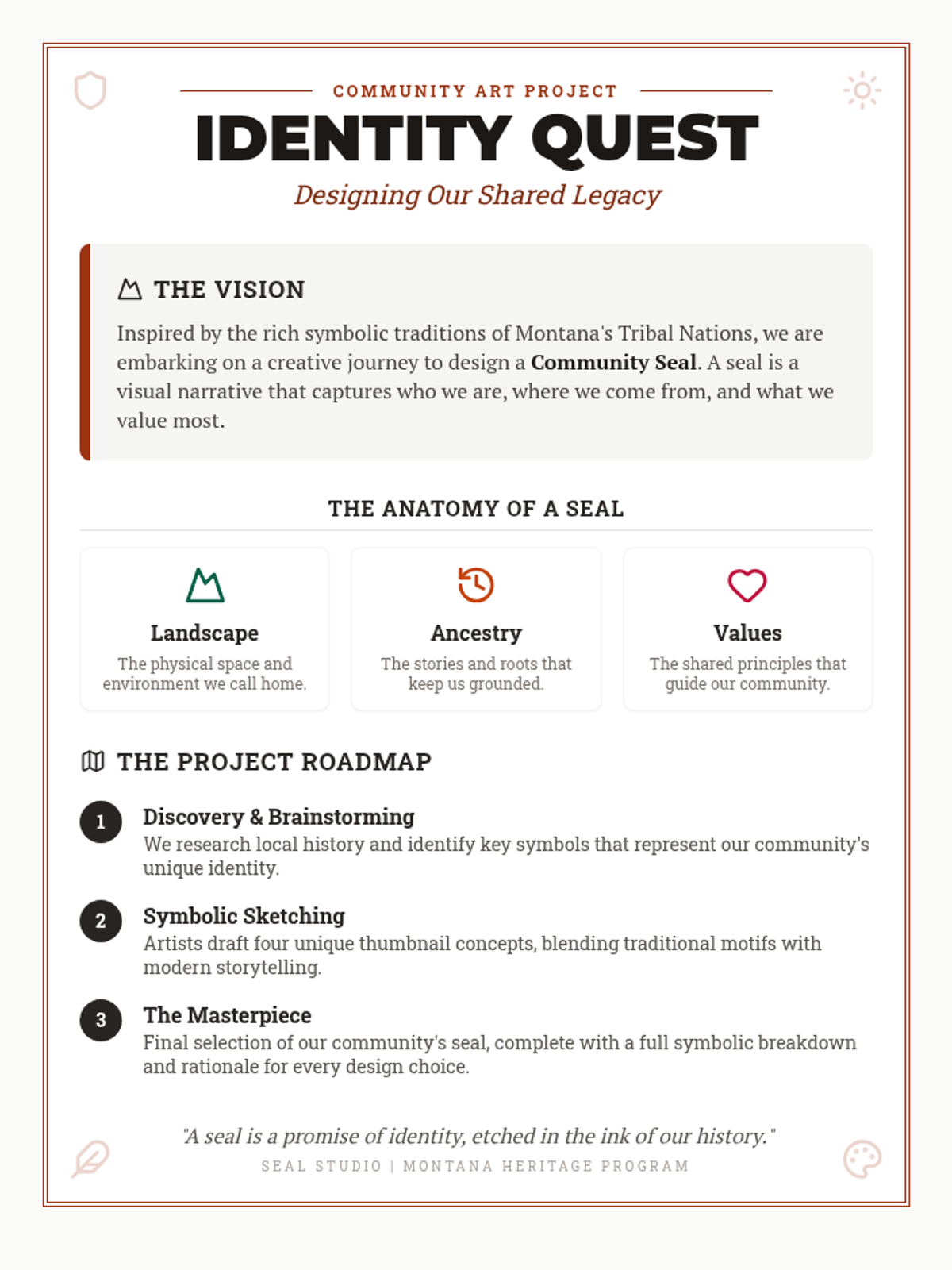
A project-based lesson where students design a community seal inspired by Montana's tribal traditions, focusing on visual identity and symbolic storytelling.
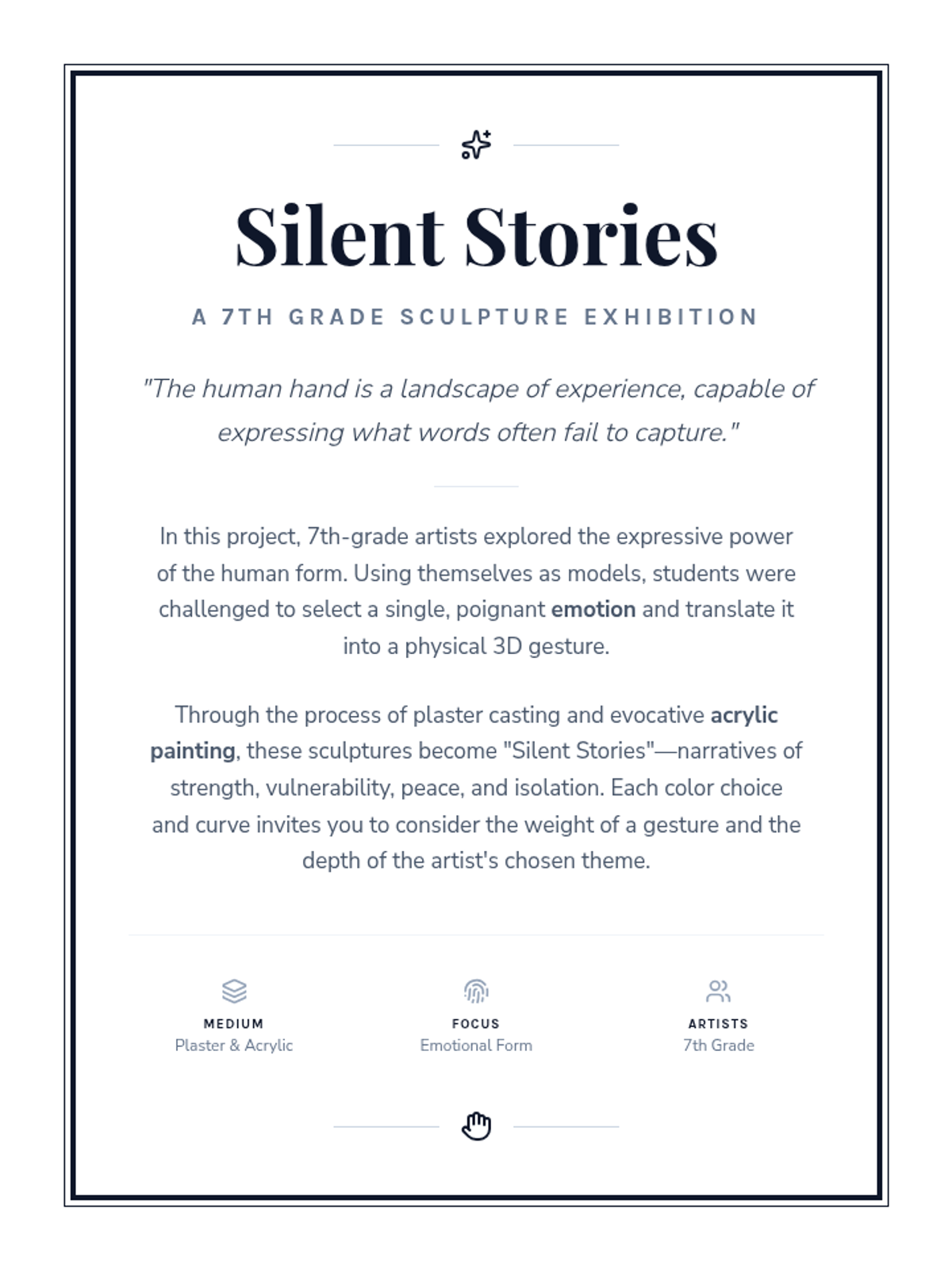
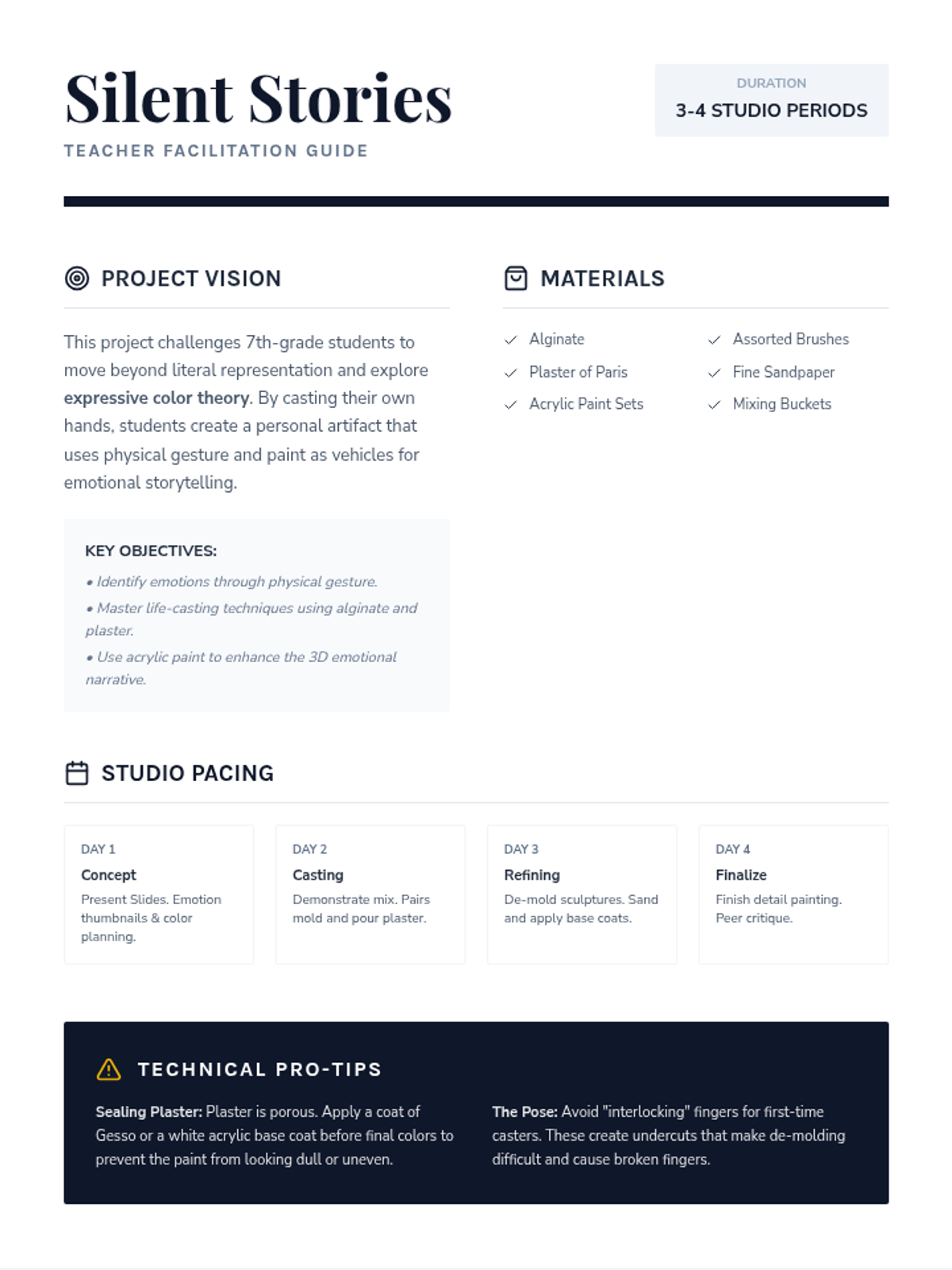
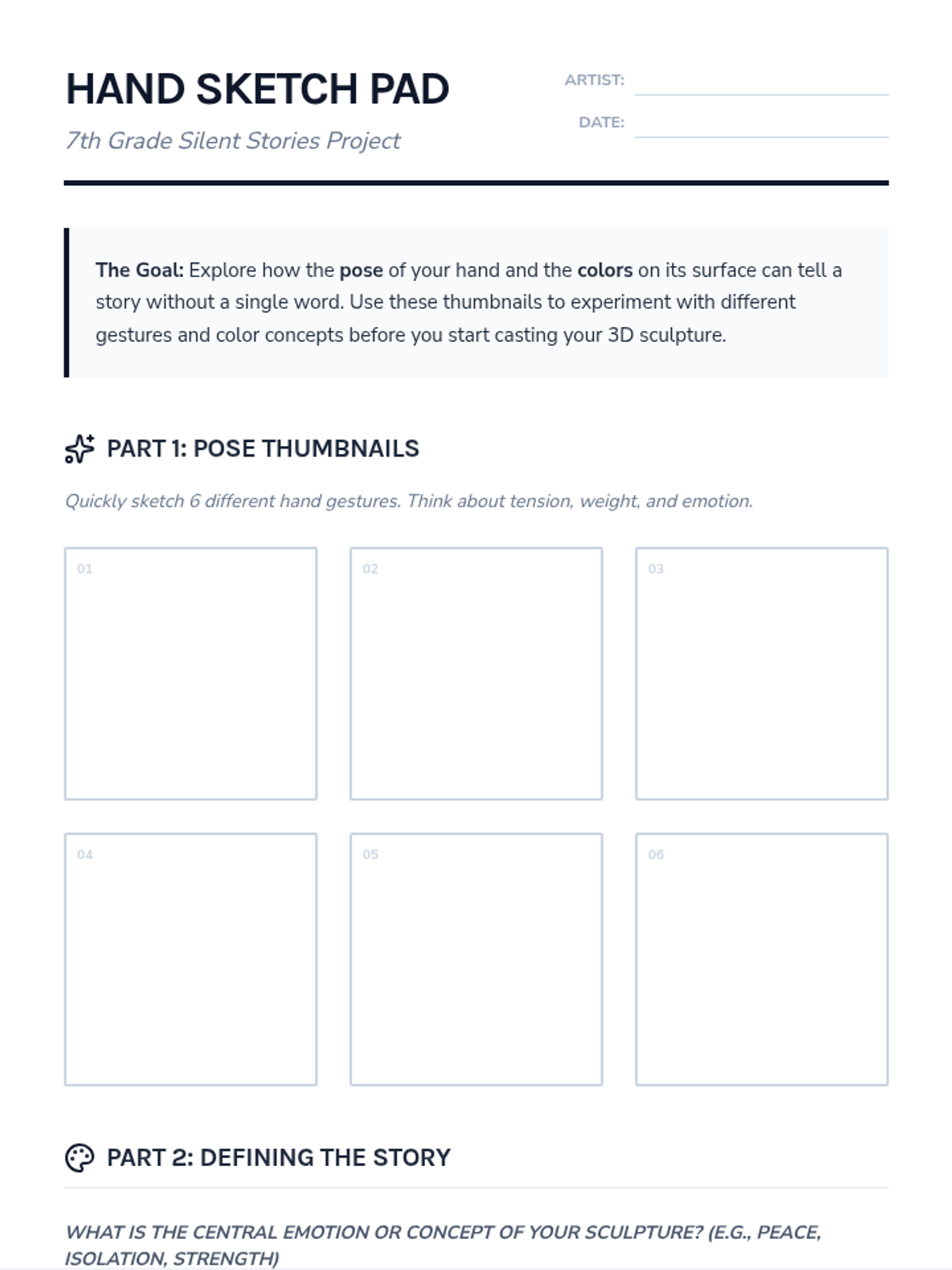
Students explore the power of hands as tools for emotional storytelling in art history, then create their own expressive 3D plaster hands that communicate a specific narrative or emotion through form and surface drawing.