Students analyze the concept of the 'False Self' using Nietzschean philosophy and apply it to literary characters to explore themes of authenticity and societal pressure.
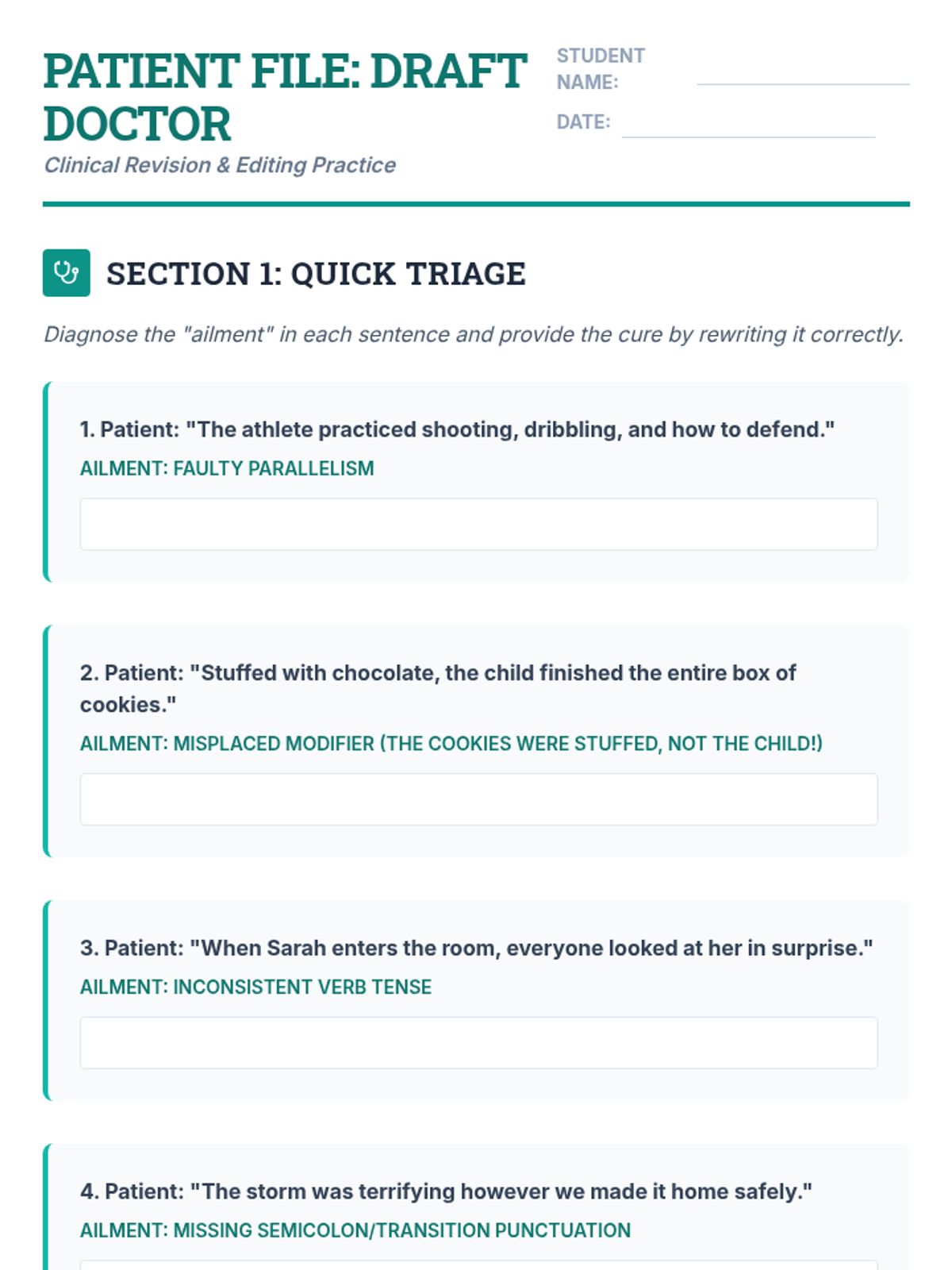
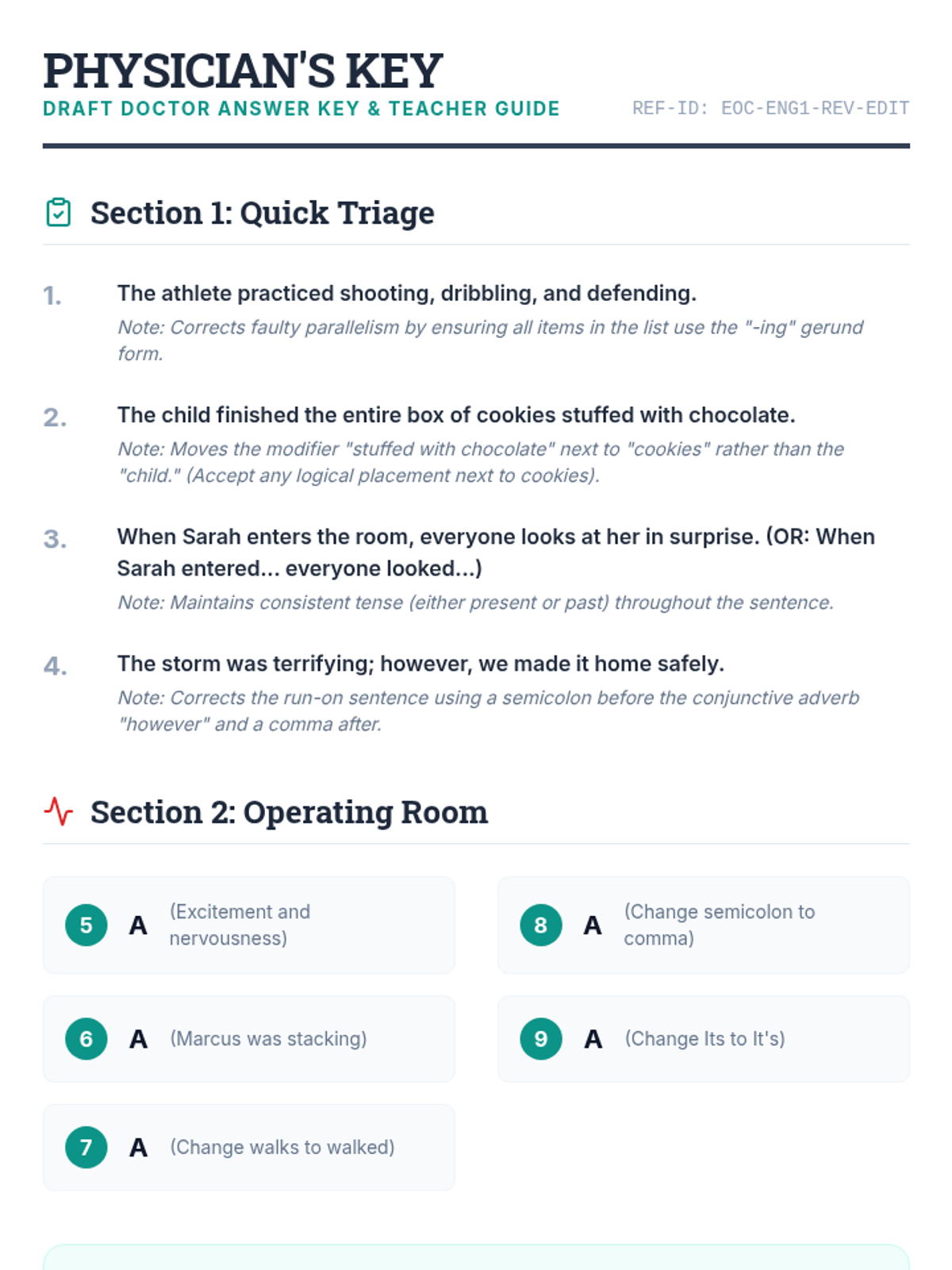
A comprehensive practice session for English 1 EOC revising and editing, featuring a medical-themed approach to 'curing' common writing ailments like poor sentence structure, tense issues, and punctuation errors.
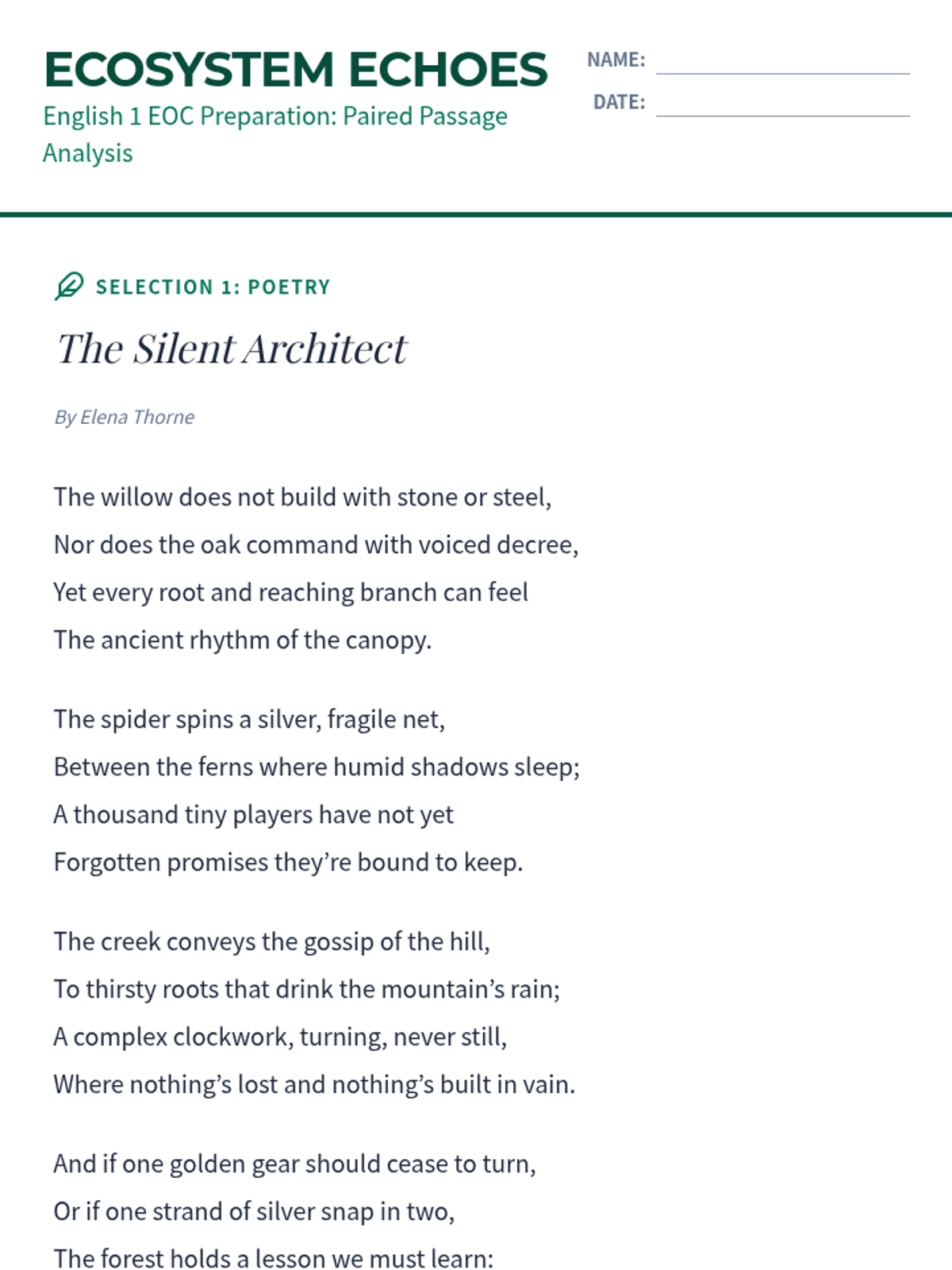
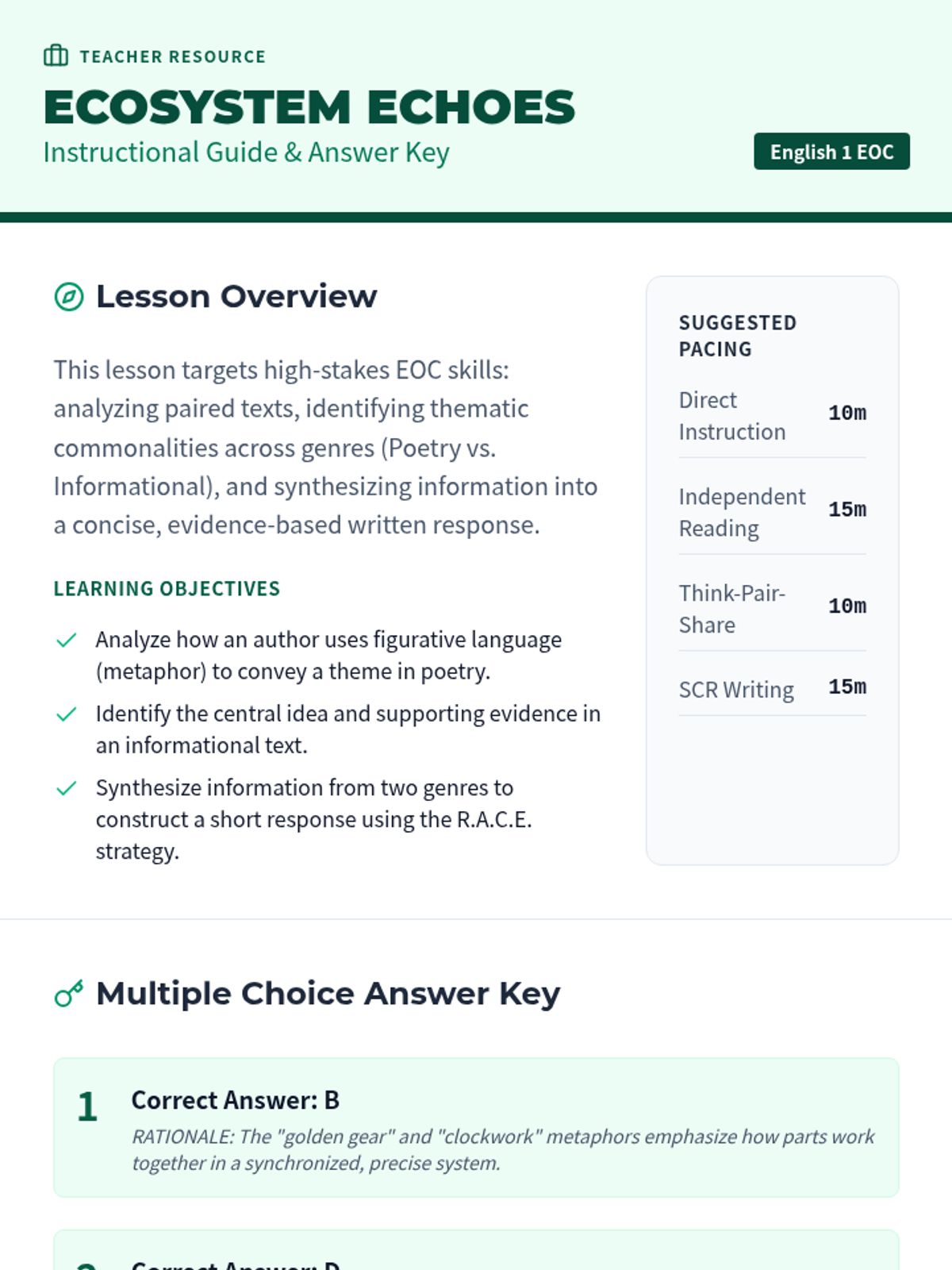
This lesson prepares students for the English 1 EOC exam by analyzing a poem and an informational text about nature and ecosystems. It includes test-style questions, a short constructed response, and a collaborative speaking activity.
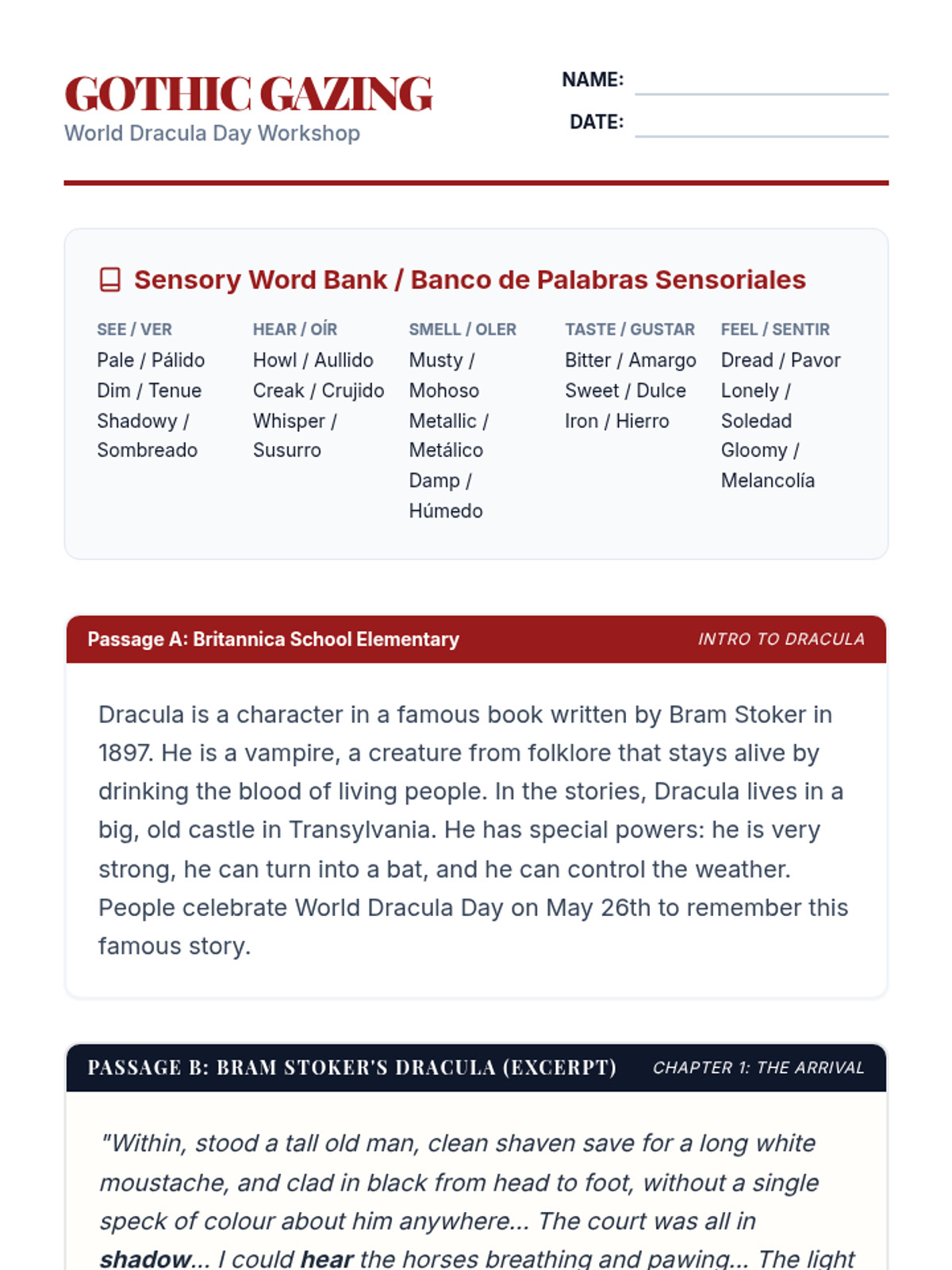
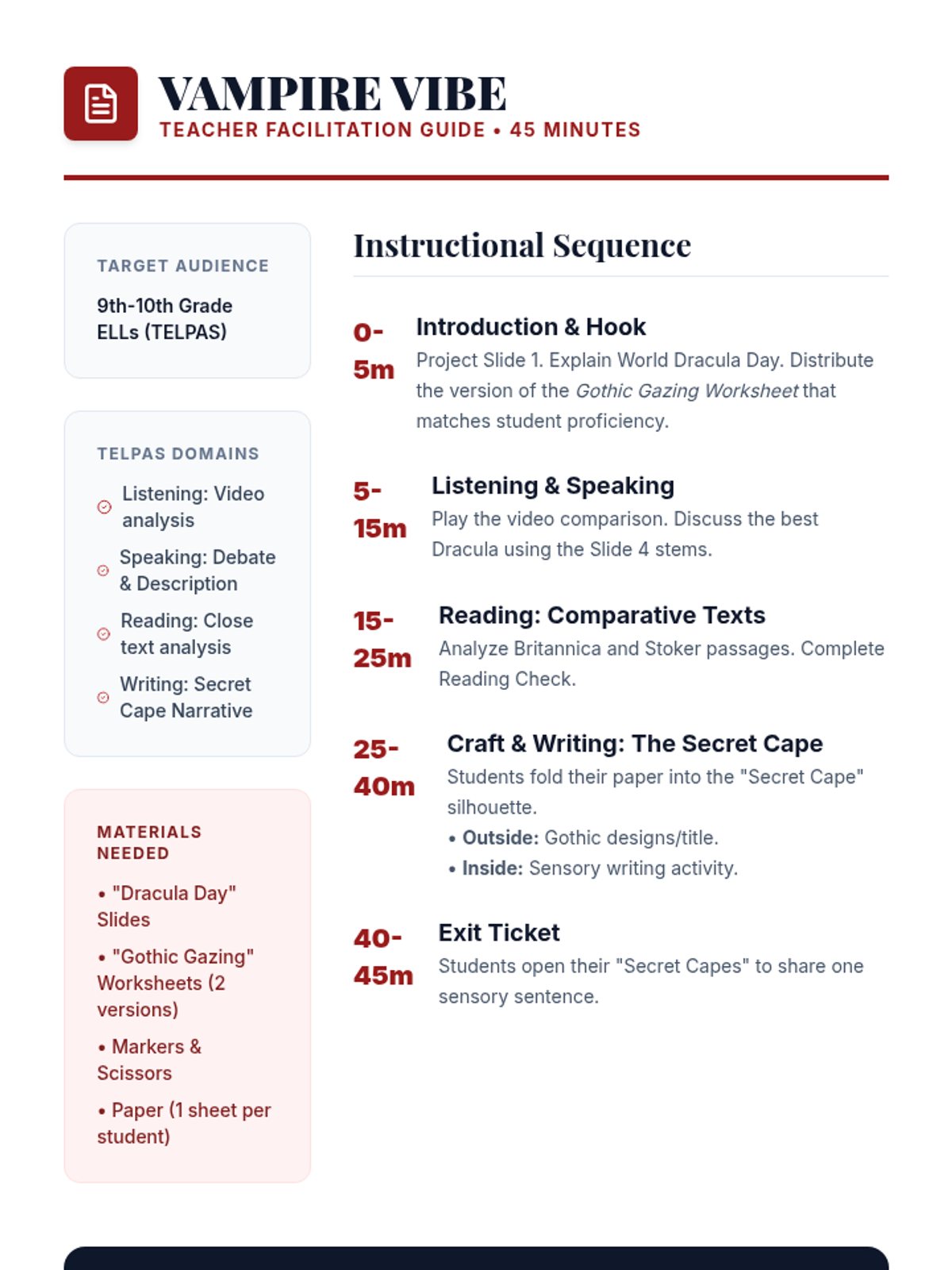
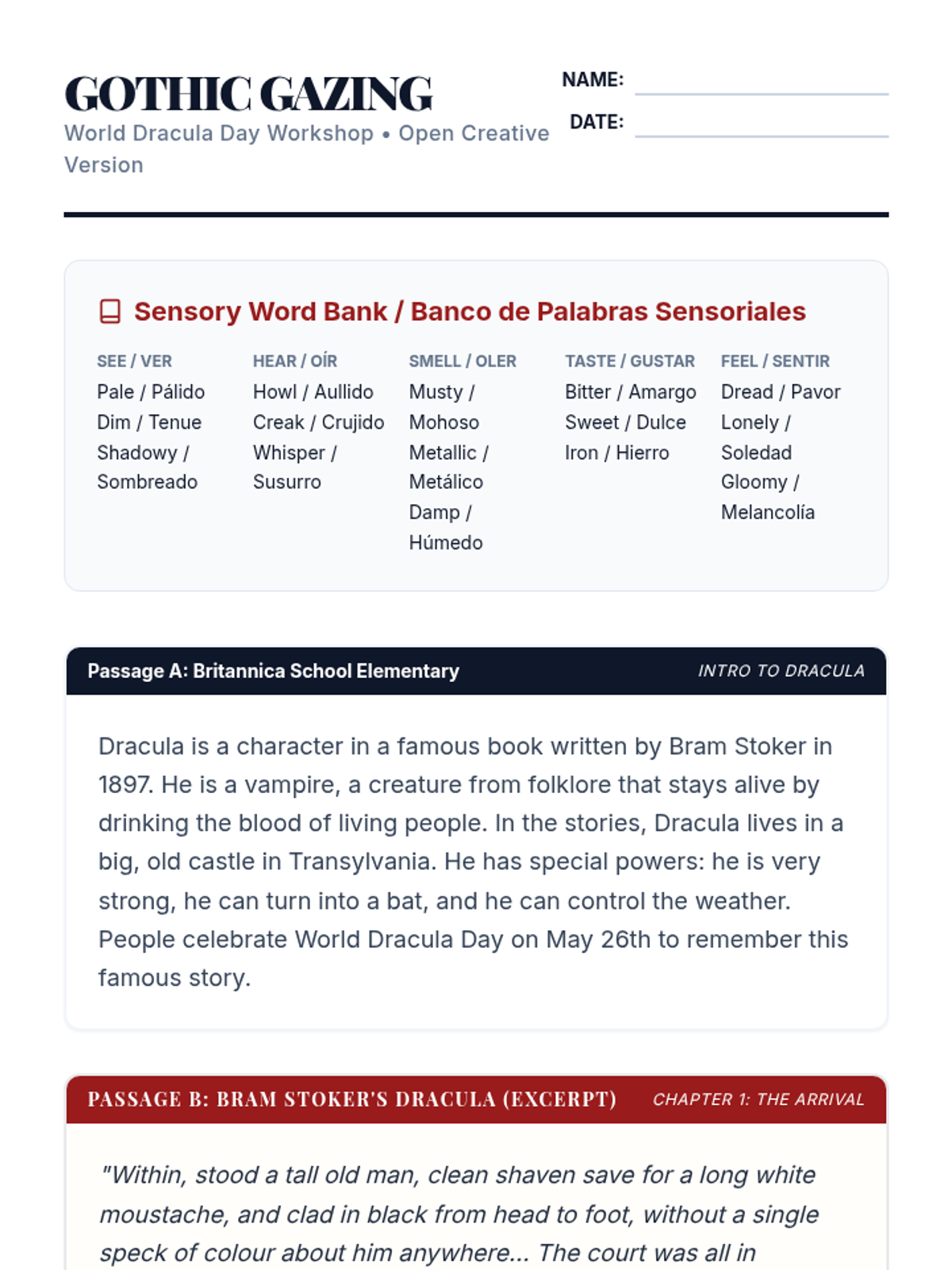
A 45-minute TELPAS-aligned lesson for 9th-10th grade ELLs exploring the legend of Dracula through sensory language, classic literature, and creative craft. Students will compare cinematic portrayals, analyze text, and build their own 'shadow bat' while practicing speaking and writing skills.
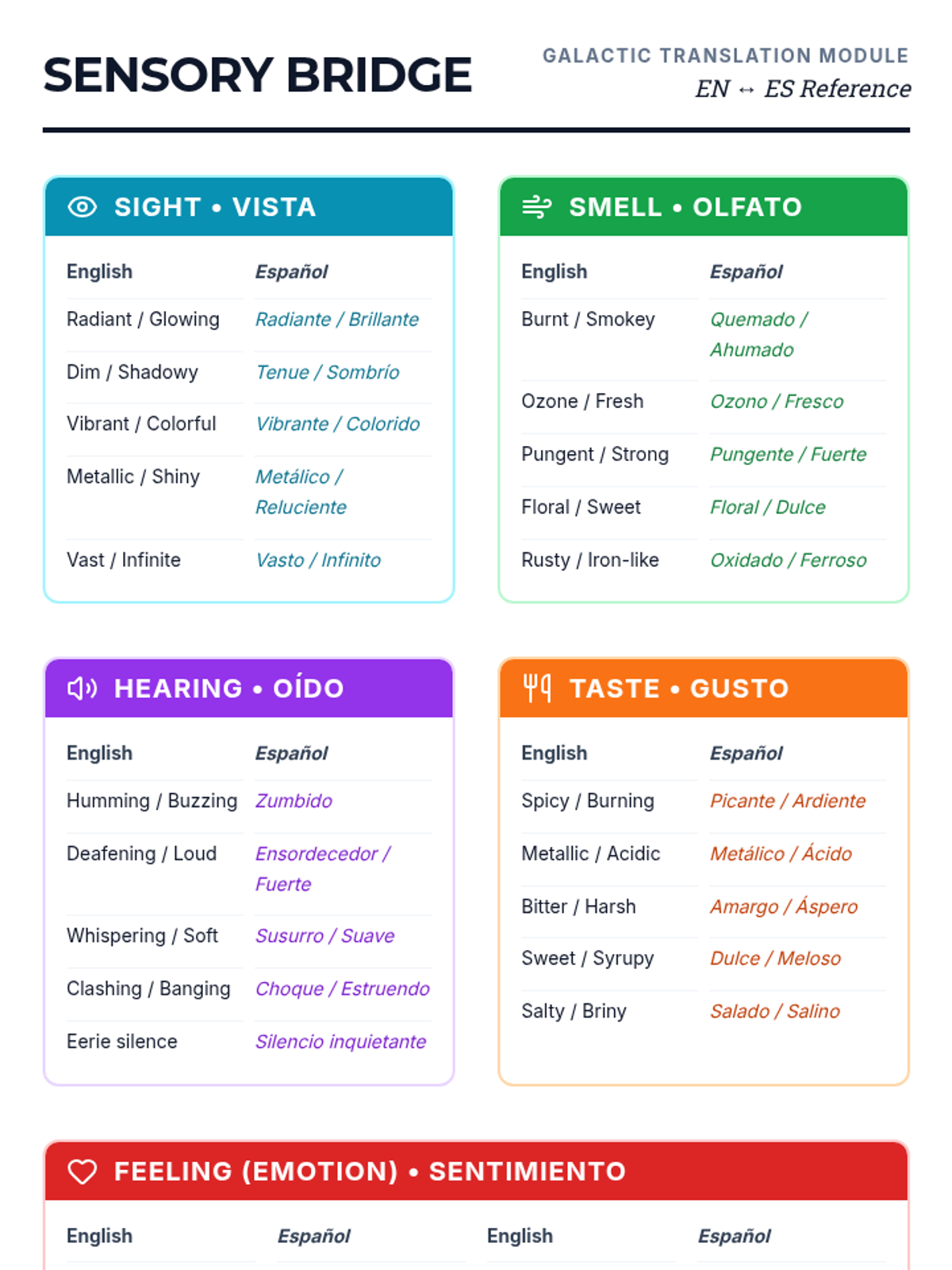
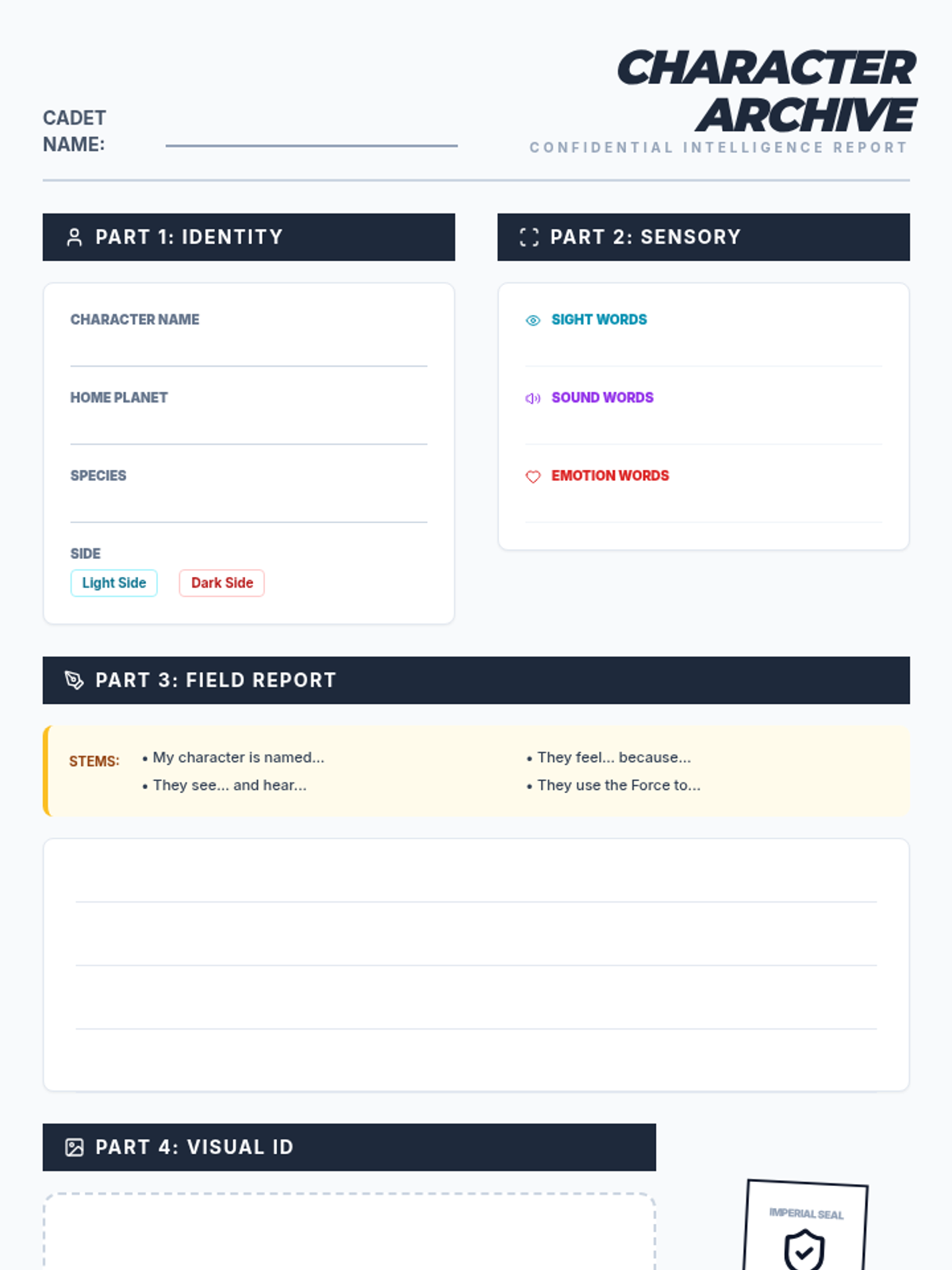
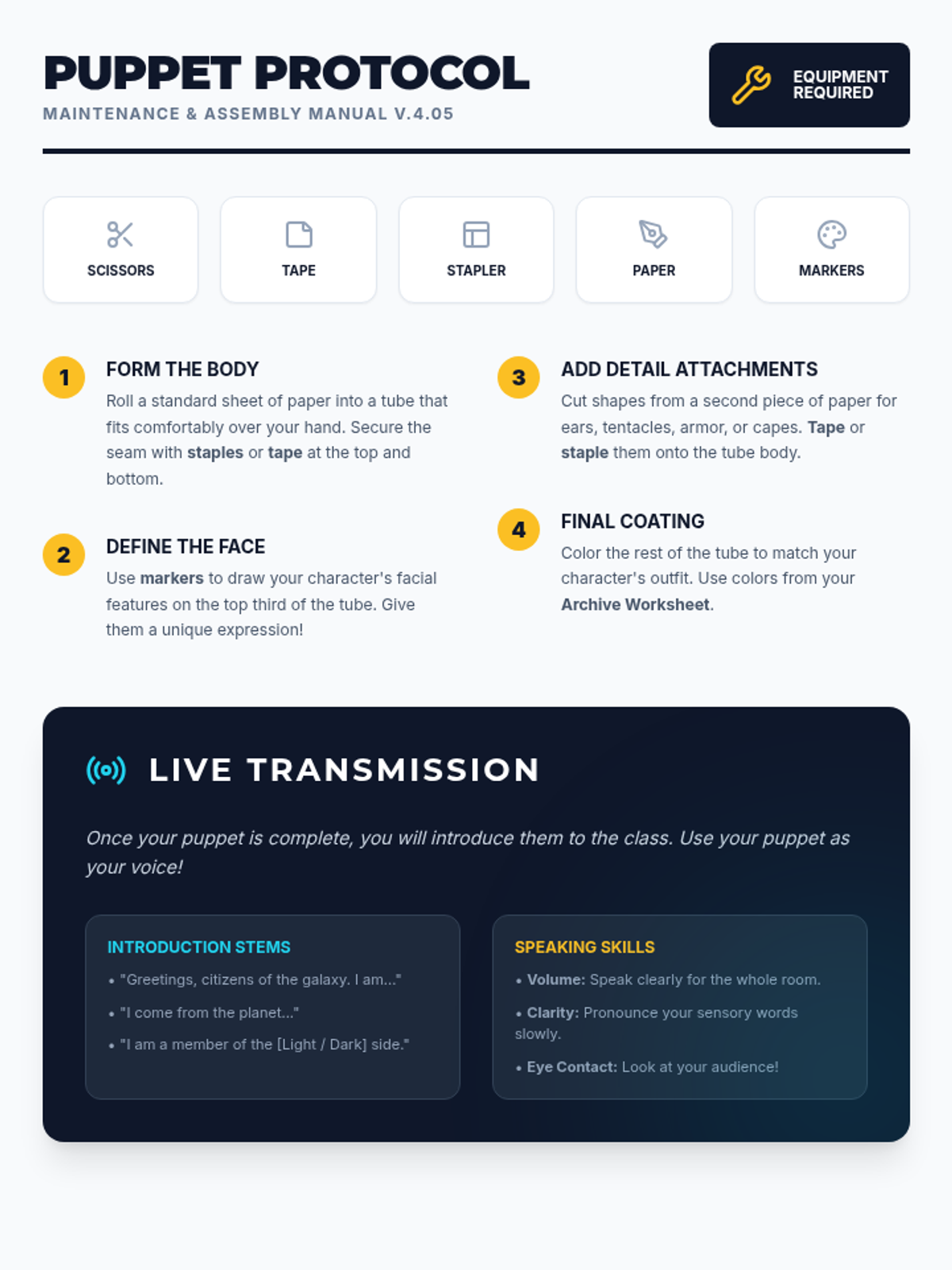
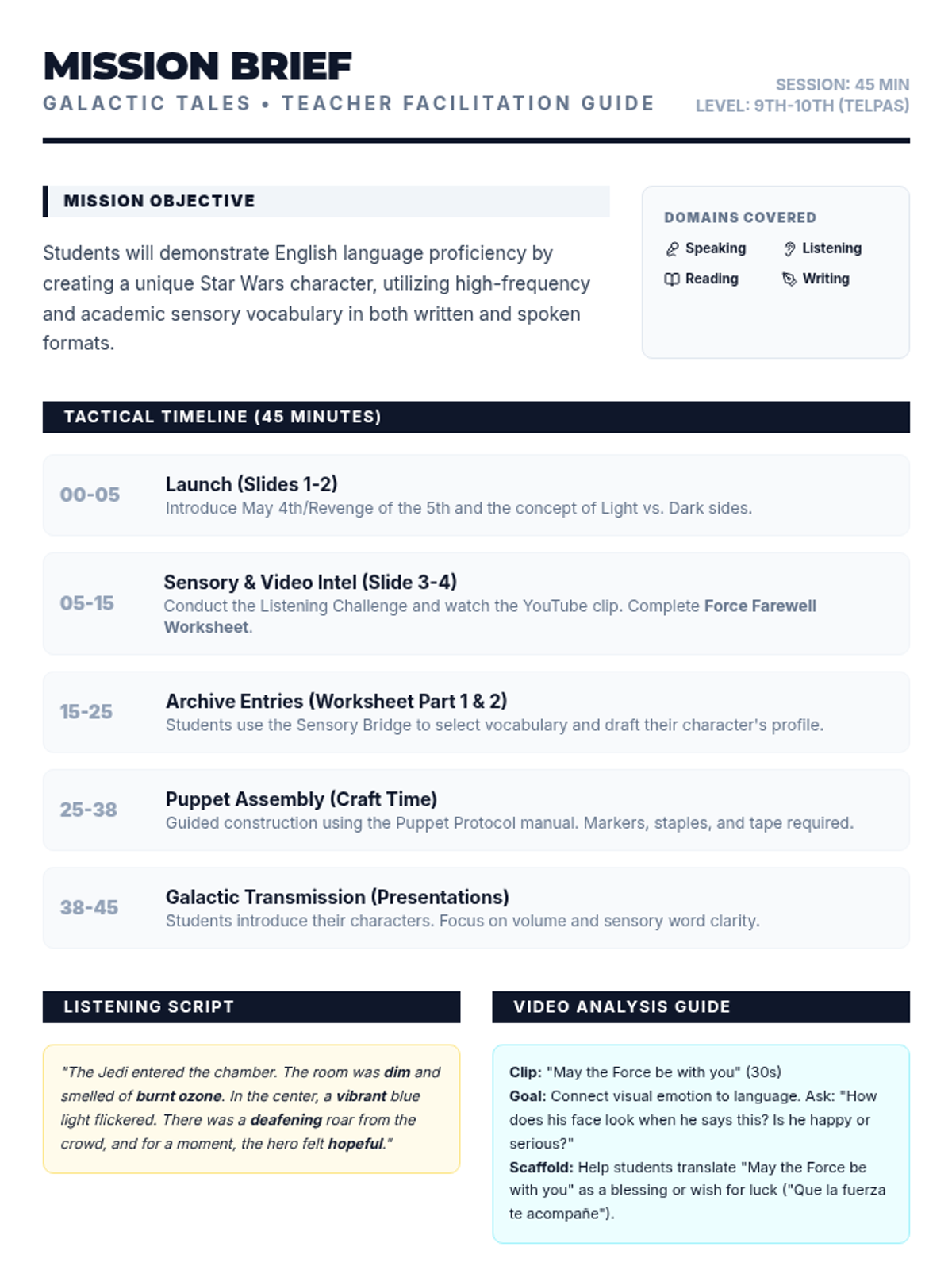
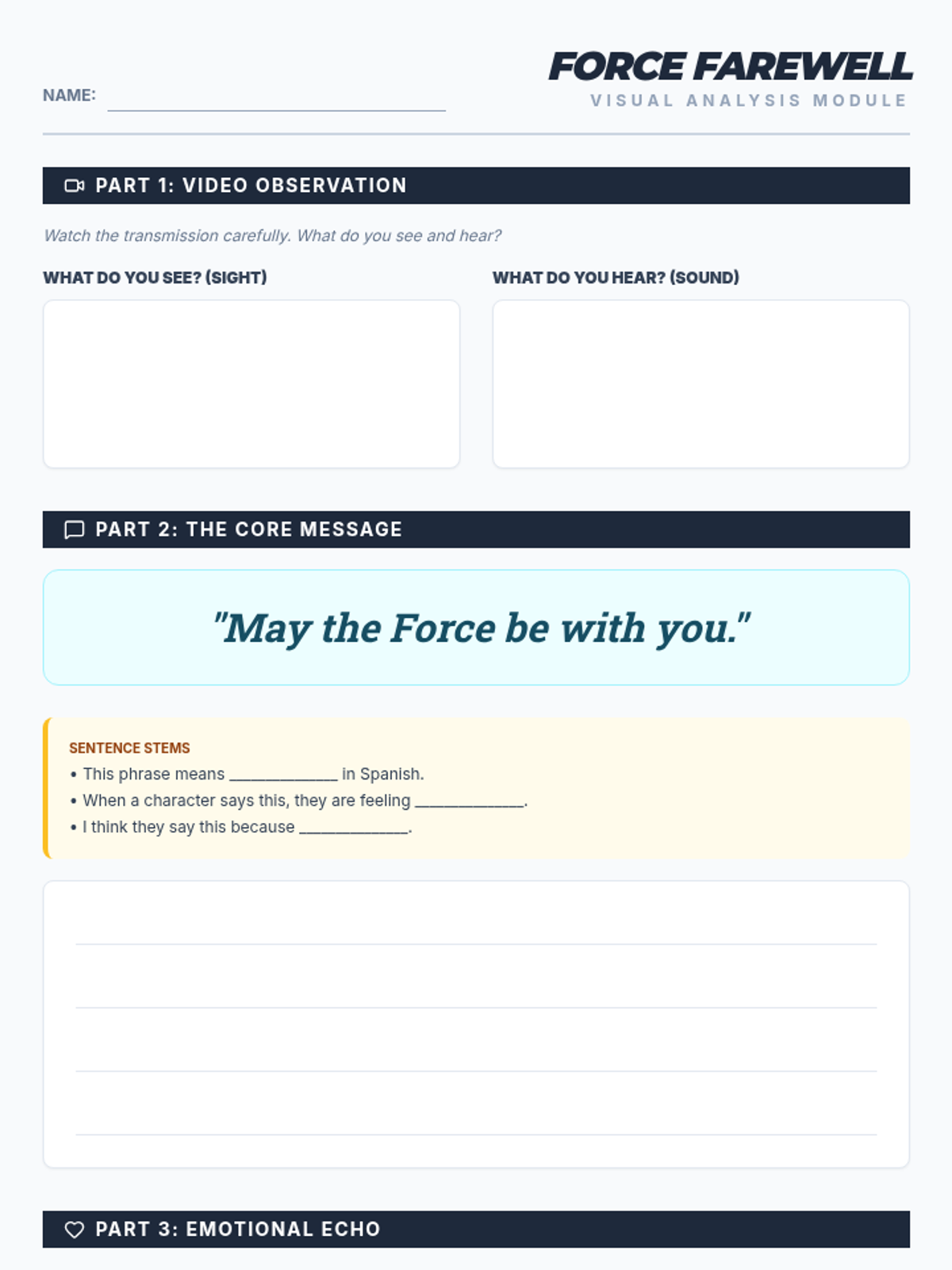
A 45-minute TELPAS-aligned lesson for 9th and 10th graders that explores the Star Wars universe through sensory language, character creation, and a hands-on puppet craft. Students practice all four language domains while navigating the light and dark sides of the Force.
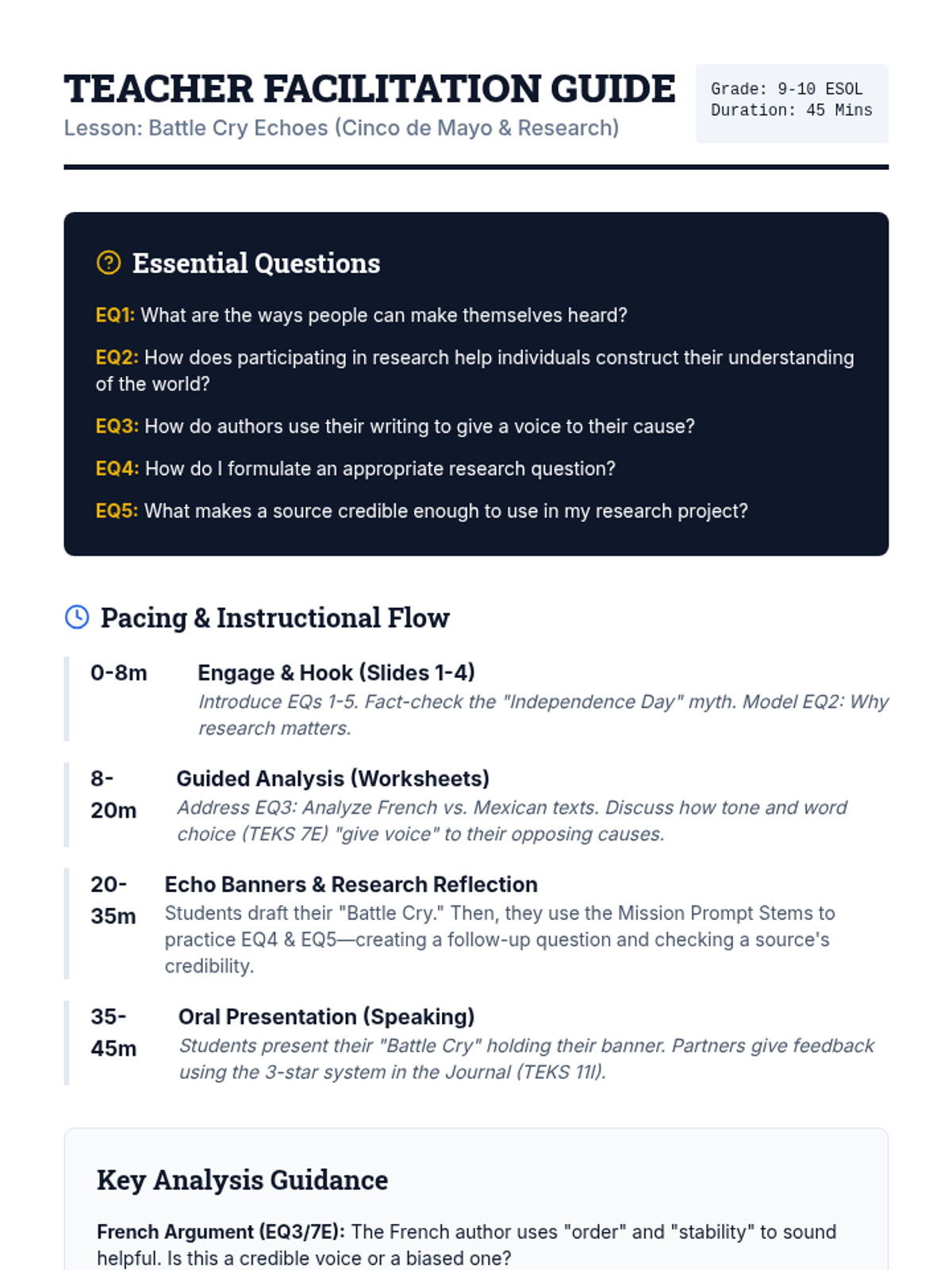
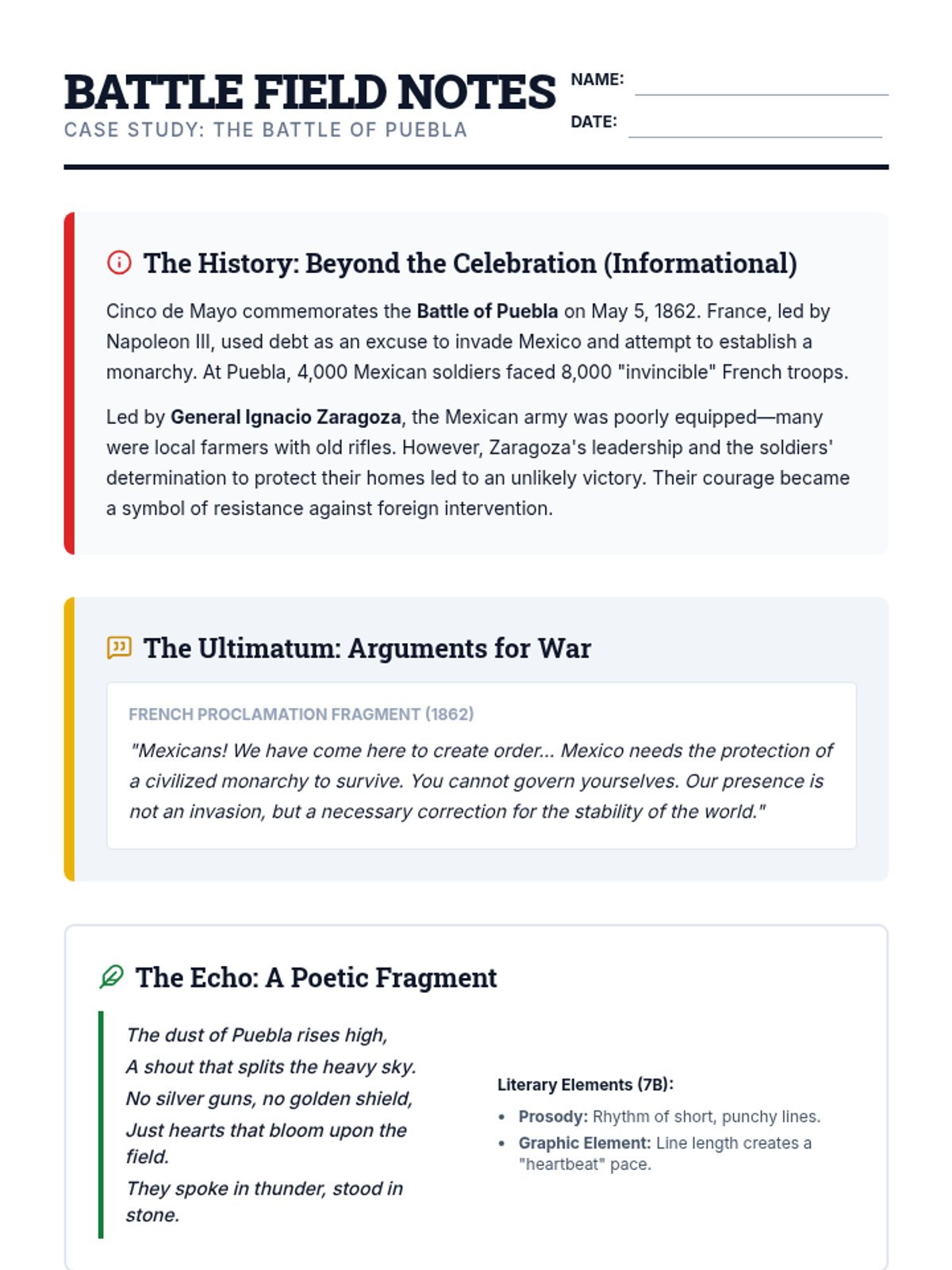
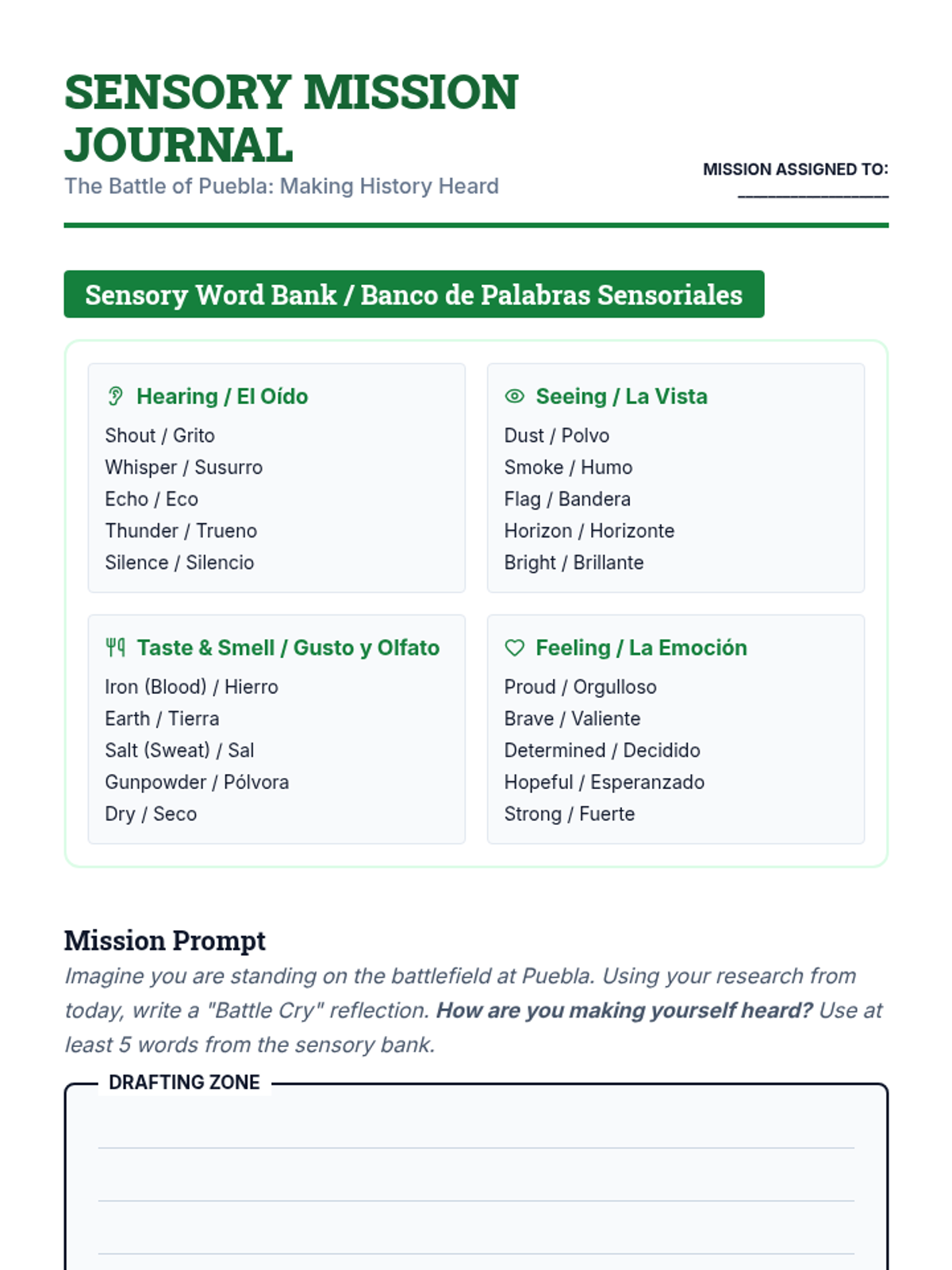
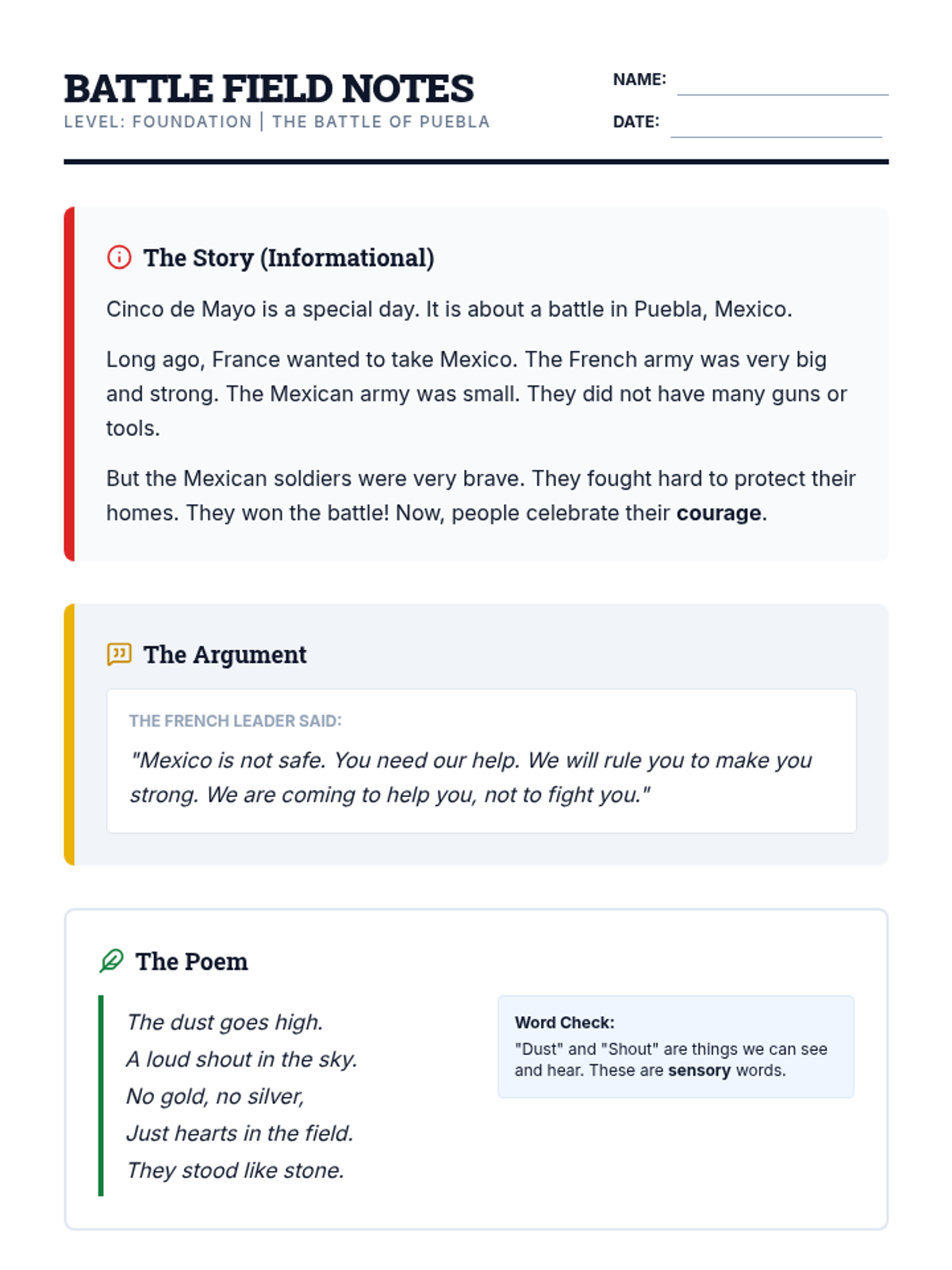
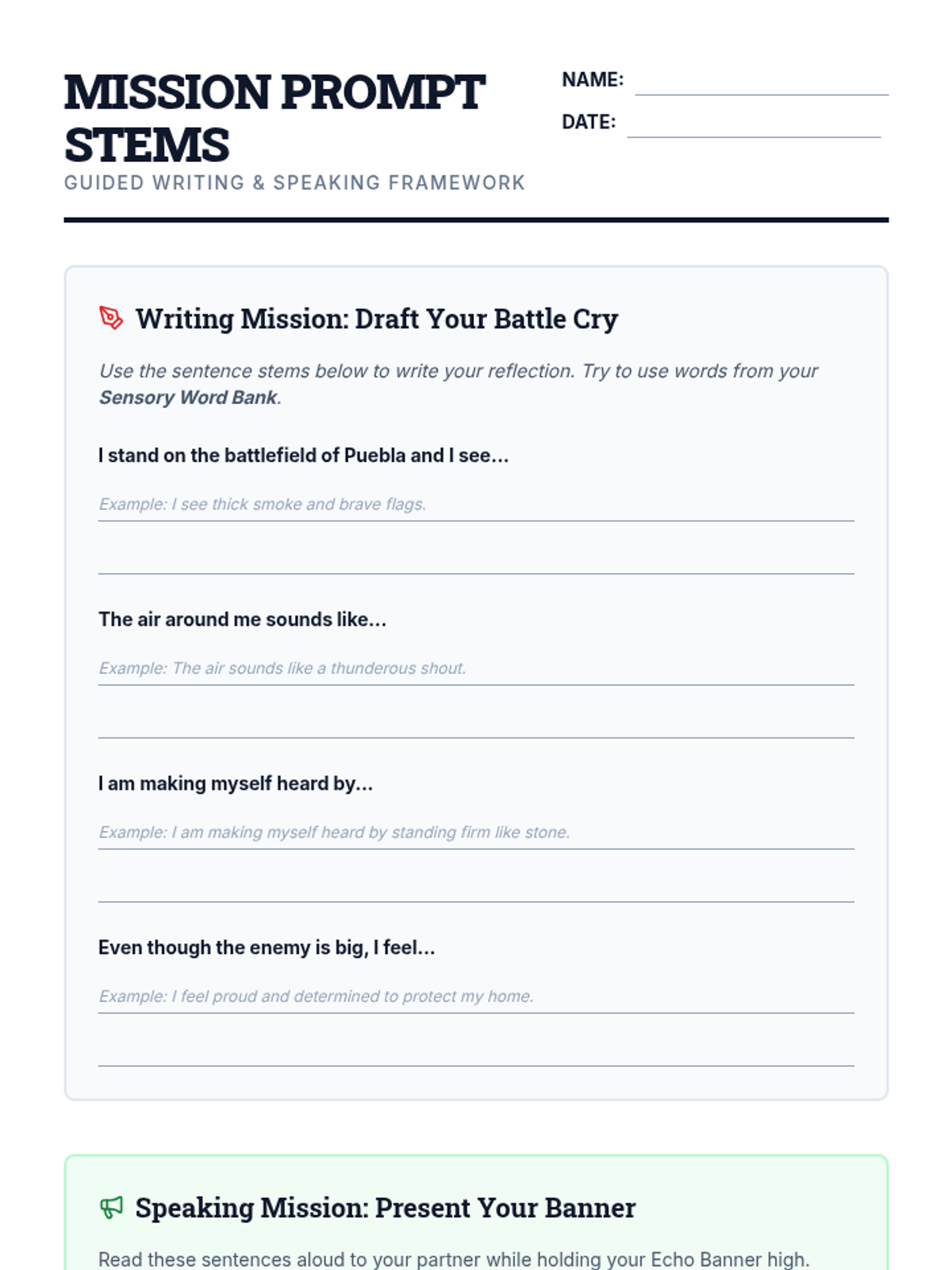
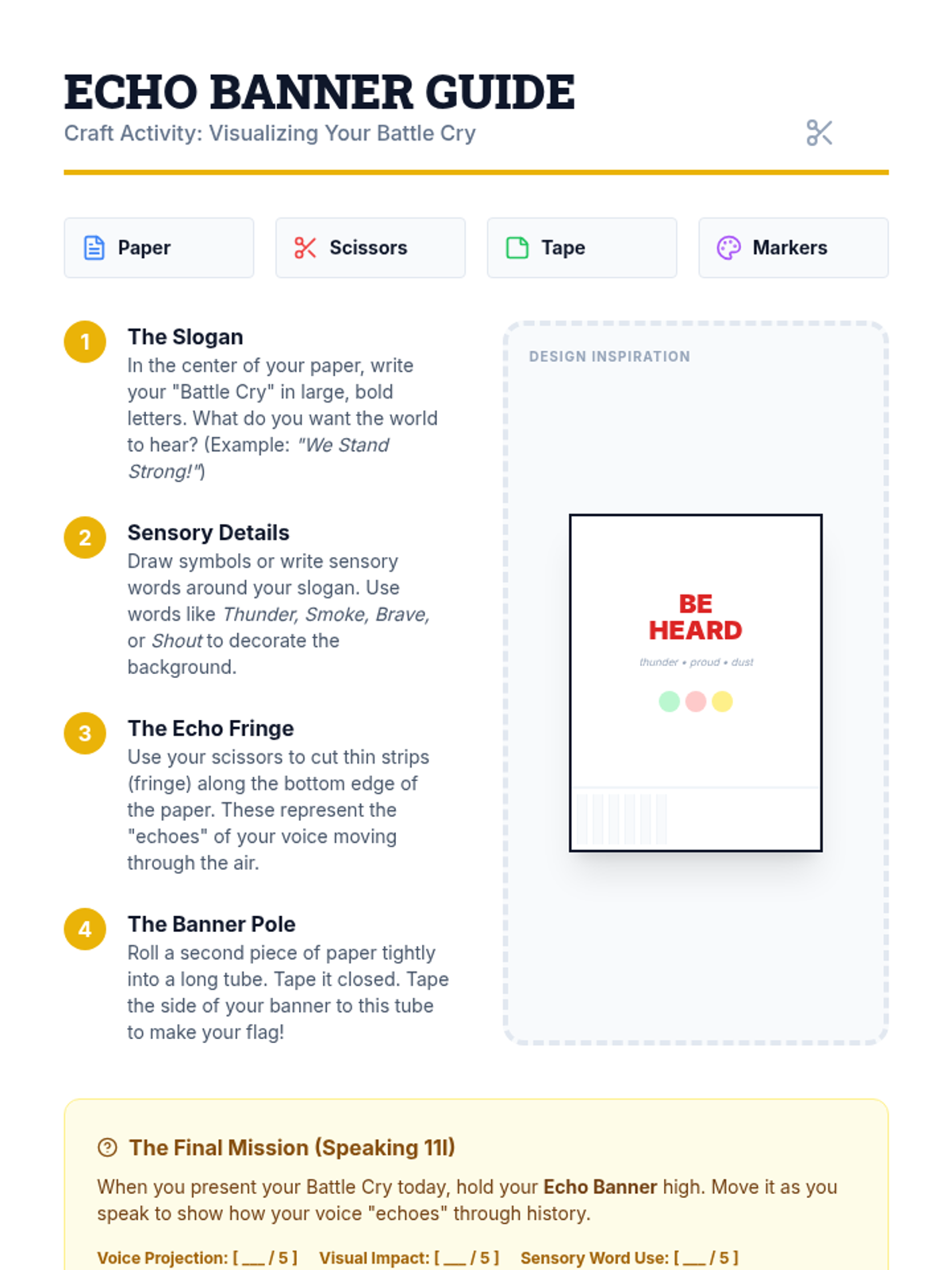
A 45-minute ESOL lesson exploring the Battle of Puebla and Cinco de Mayo. Students analyze informational texts and poetry to answer essential questions about making oneself heard and the value of research, culminating in a sensory writing and speaking activity.
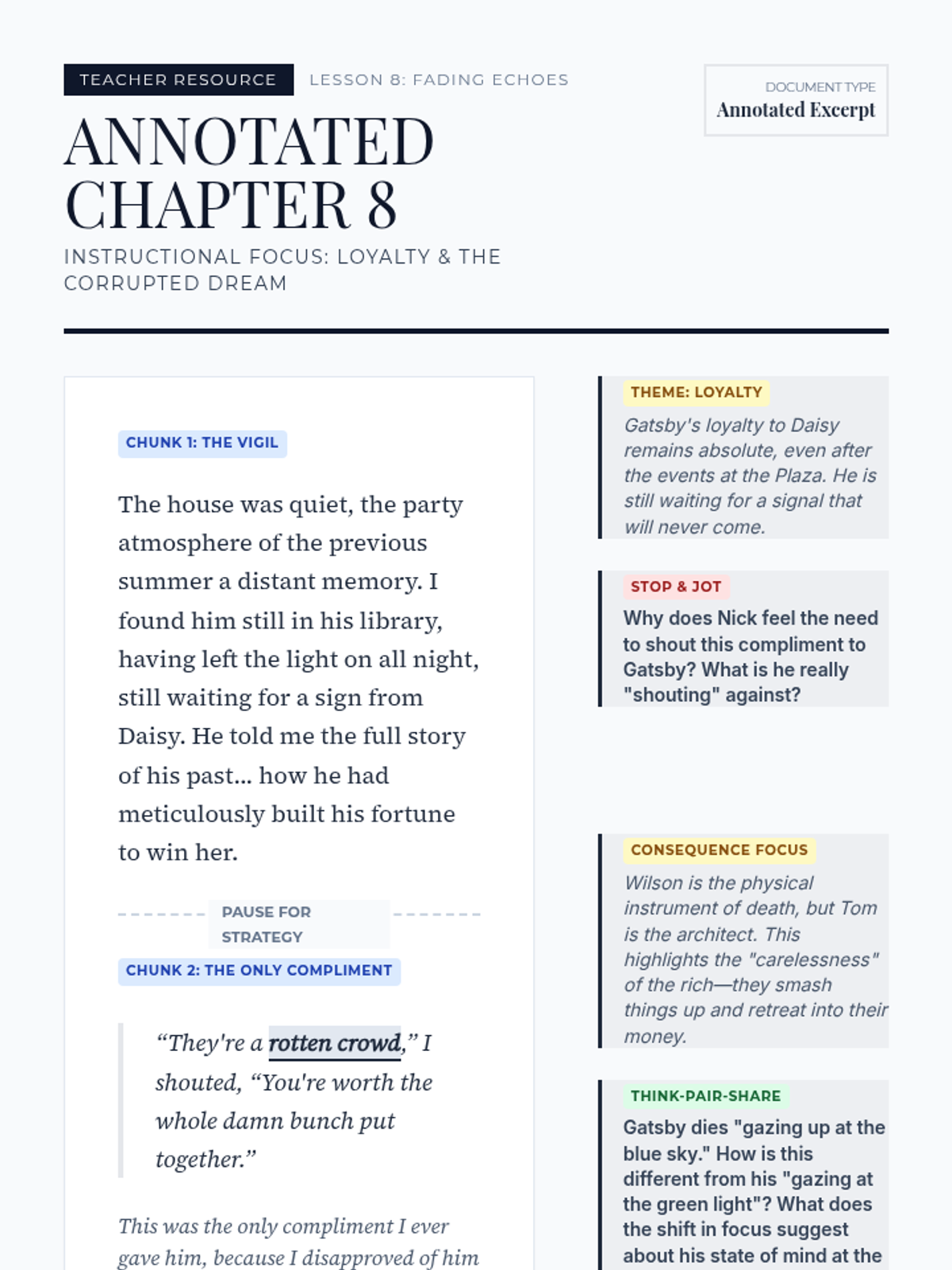
A conclusion to the unit exploring the tragic resolution in Chapter 8. Students analyze themes of loyalty, consequence, and the ultimate failure of a corrupted American Dream.
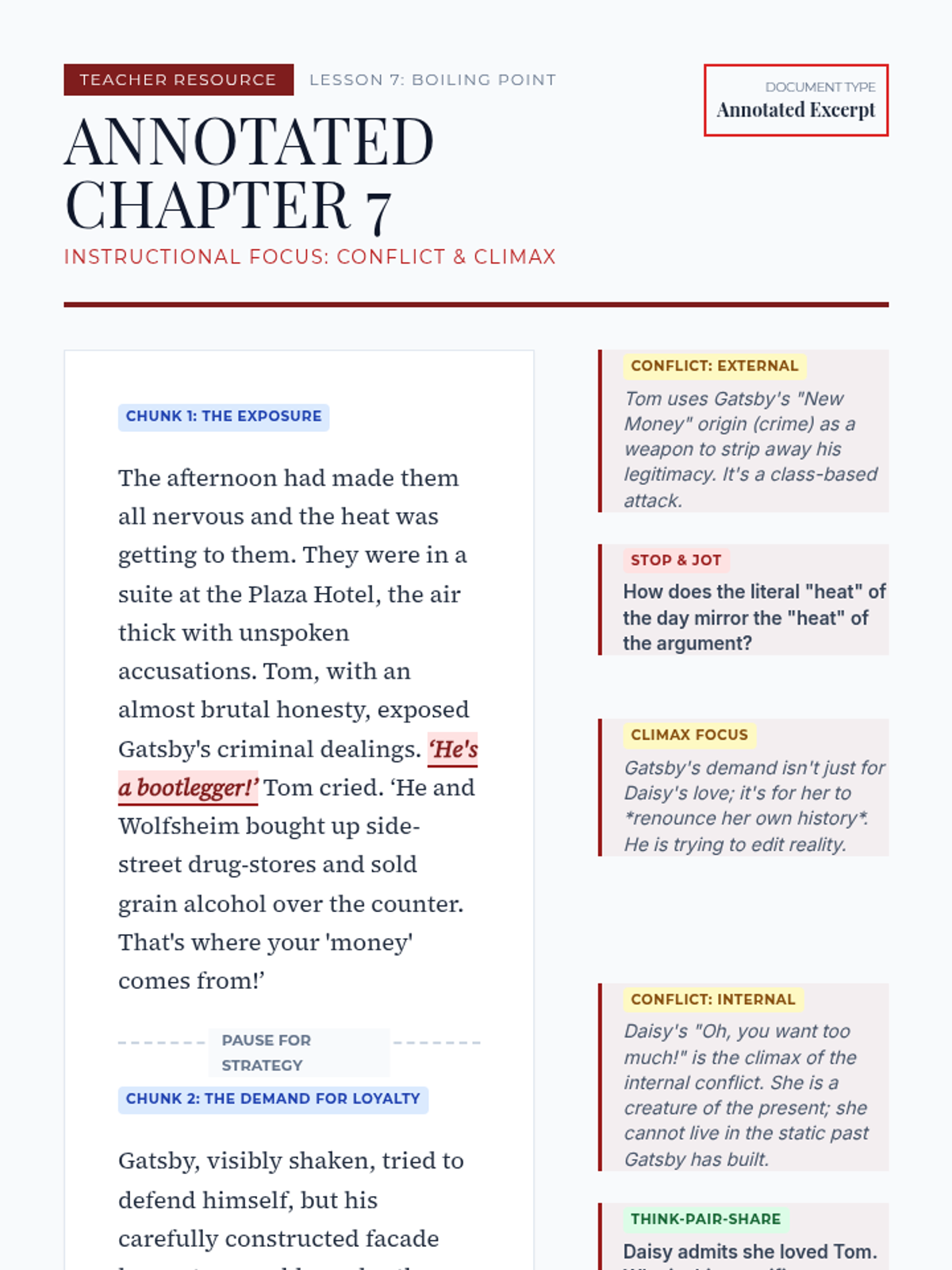
An analysis of the narrative climax in Chapter 7, focusing on the various types of conflict that erupt during the confrontation at the Plaza Hotel. Students identify the turning points for the main characters.
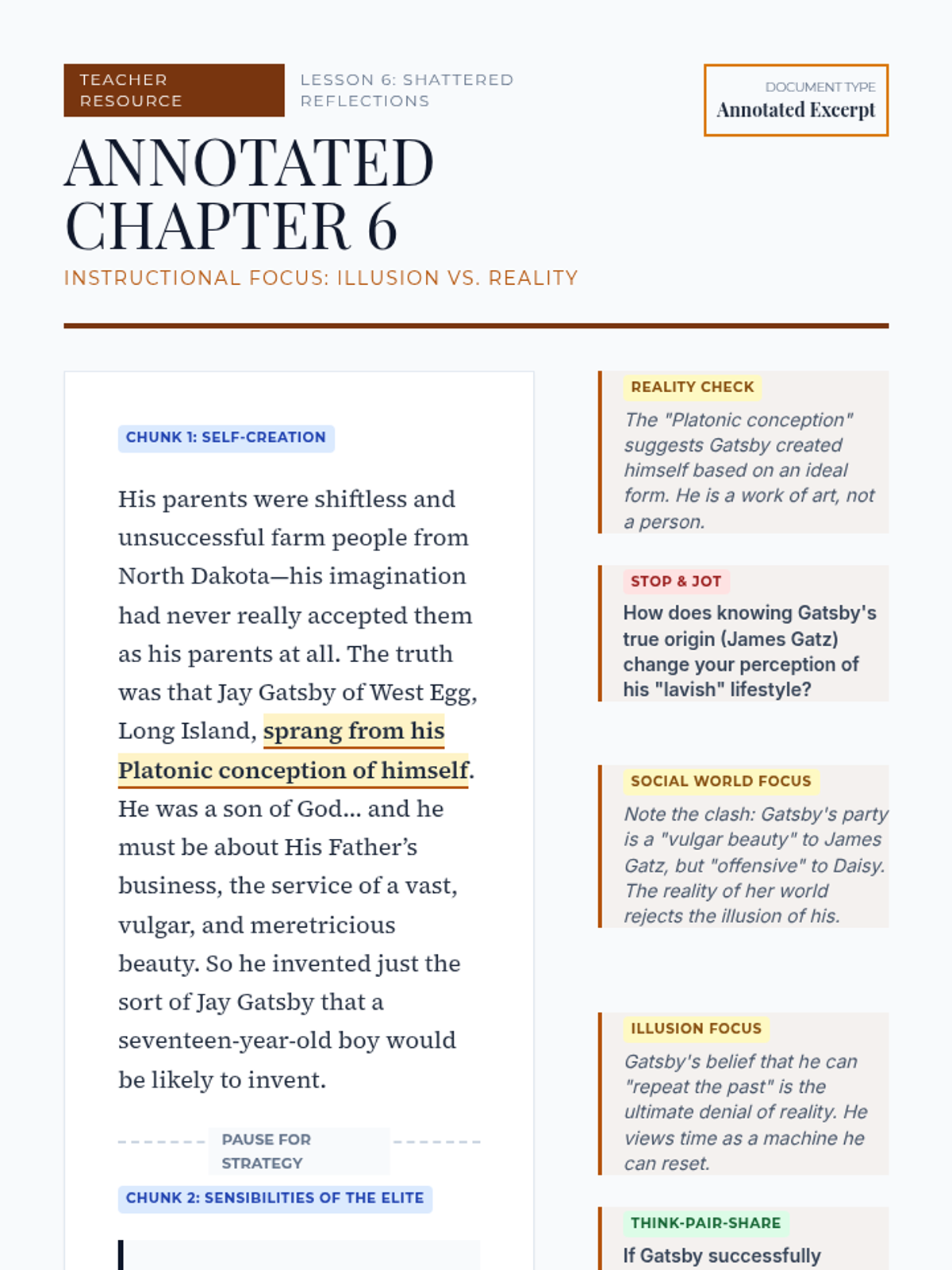
An exploration of Gatsby's true origins revealed in Chapter 6. Students analyze the theme of illusion versus reality and the clash between 'old money' and 'new money' social worlds.
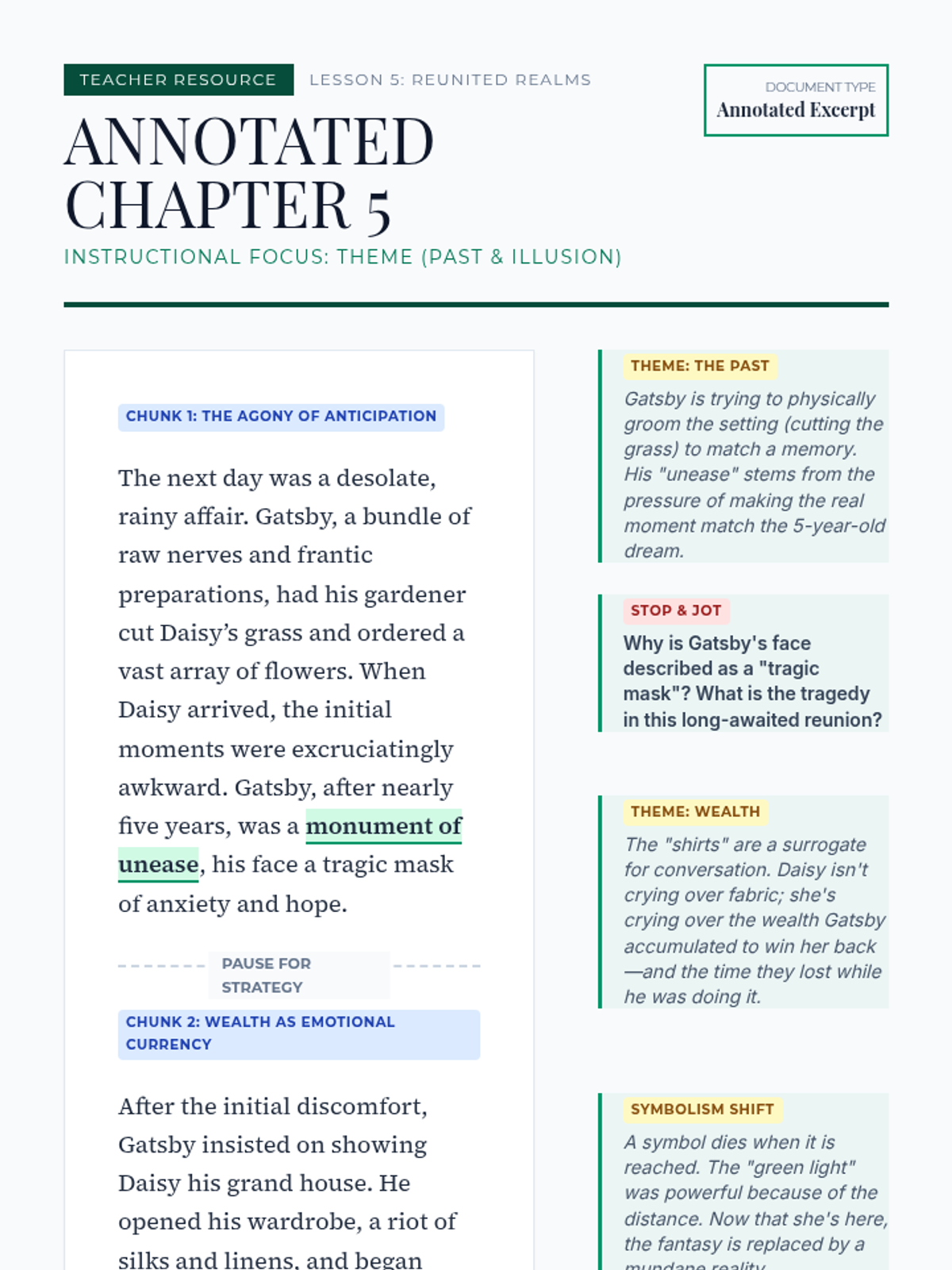
A thematic analysis of Chapter 5, centered on the reunion of Gatsby and Daisy. Students explore themes of the past, hope, and the fine line between dreams and illusions.
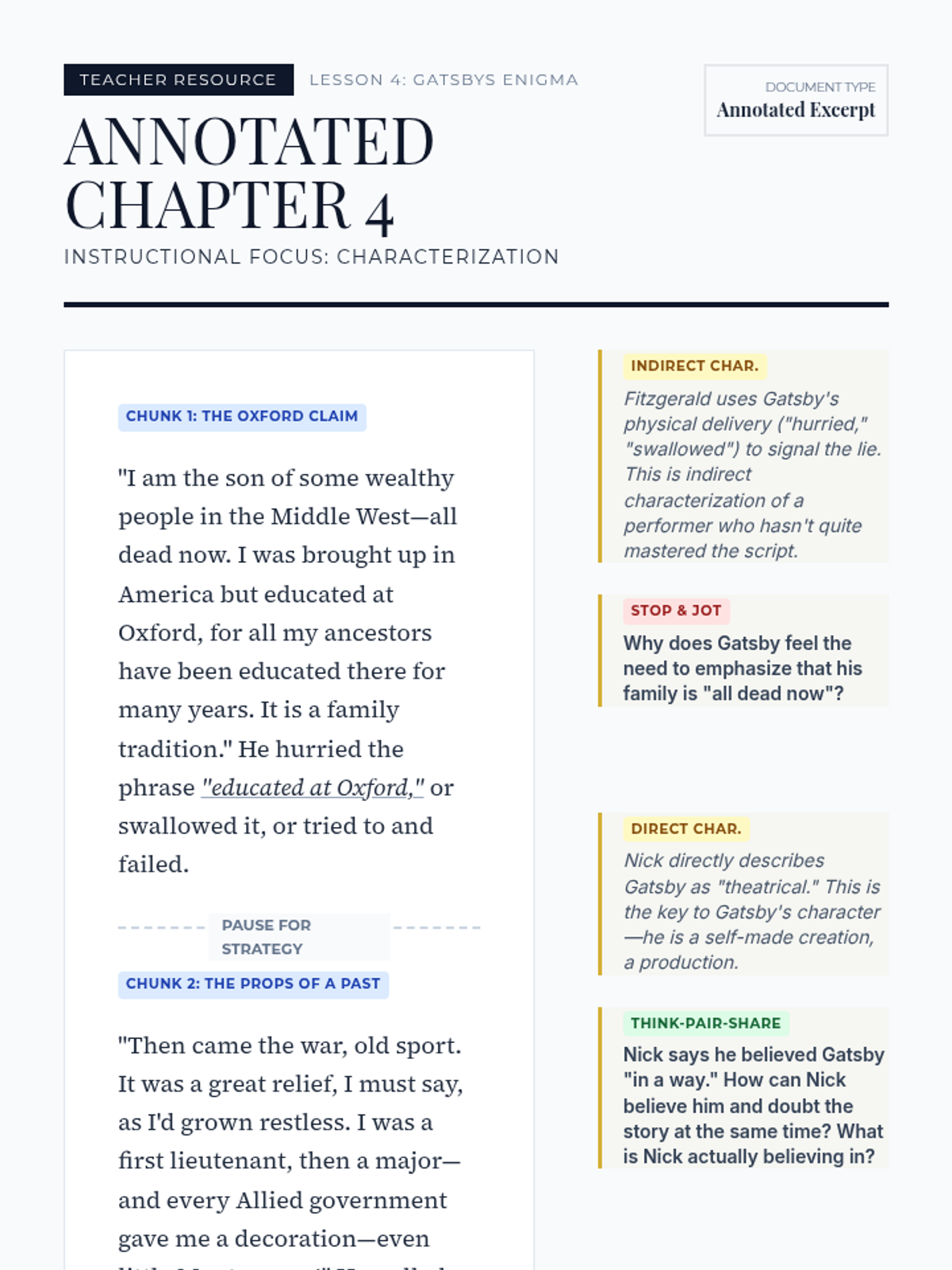
An analysis of Jay Gatsby's character development in Chapter 4, focusing on the tension between his self-presentation and Nick's perception. Students explore direct and indirect characterization techniques.
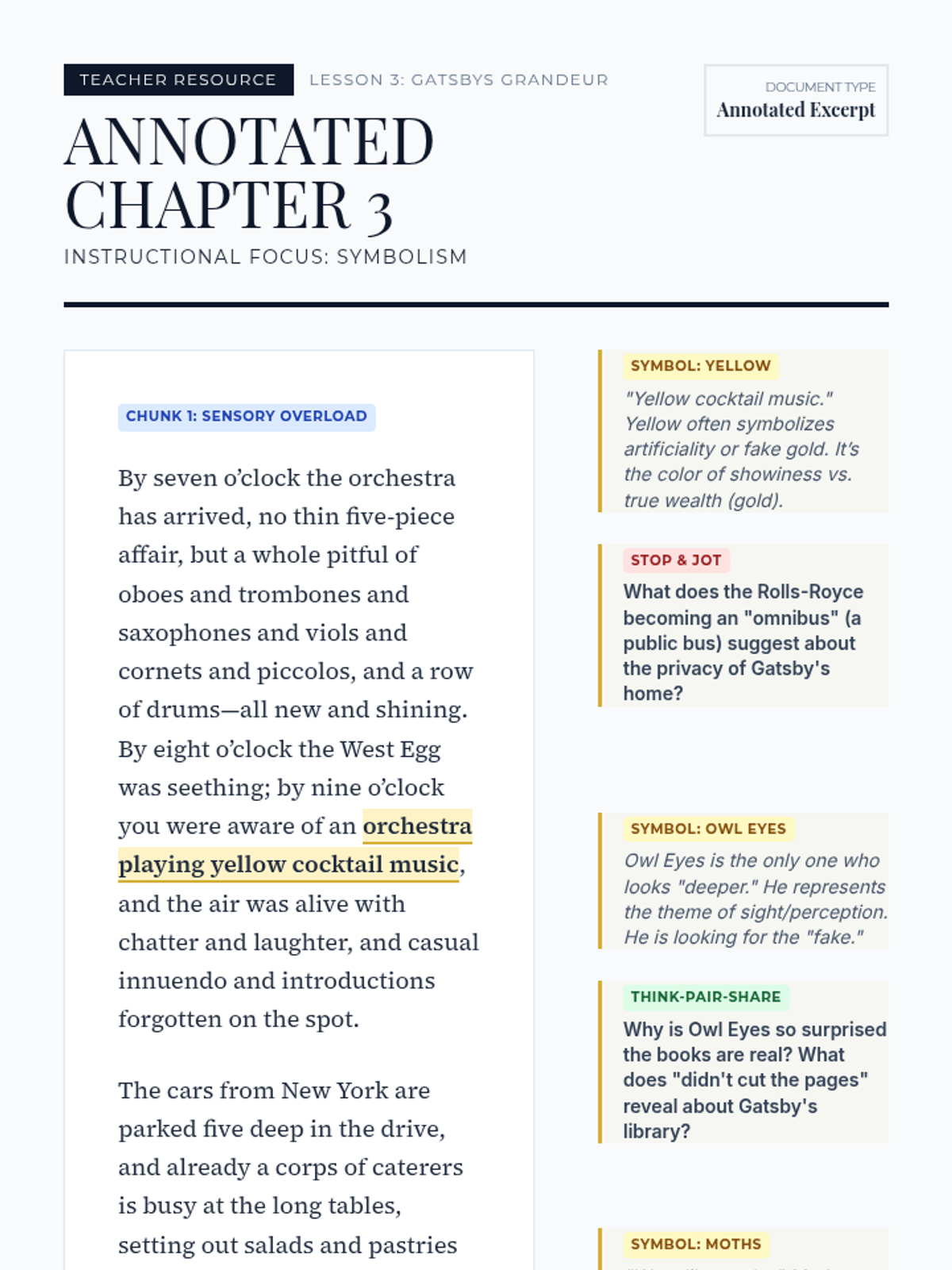
An investigation into the rich symbolism present in Chapter 3 during one of Gatsby's lavish parties. Students decode the meaning behind objects like the library books and the yellow car to understand the era's superficiality.