A targeted Tier 2 intervention lesson focusing on K.G.B.6, where students use pattern blocks to compose larger shapes through scaffolded construction activities.

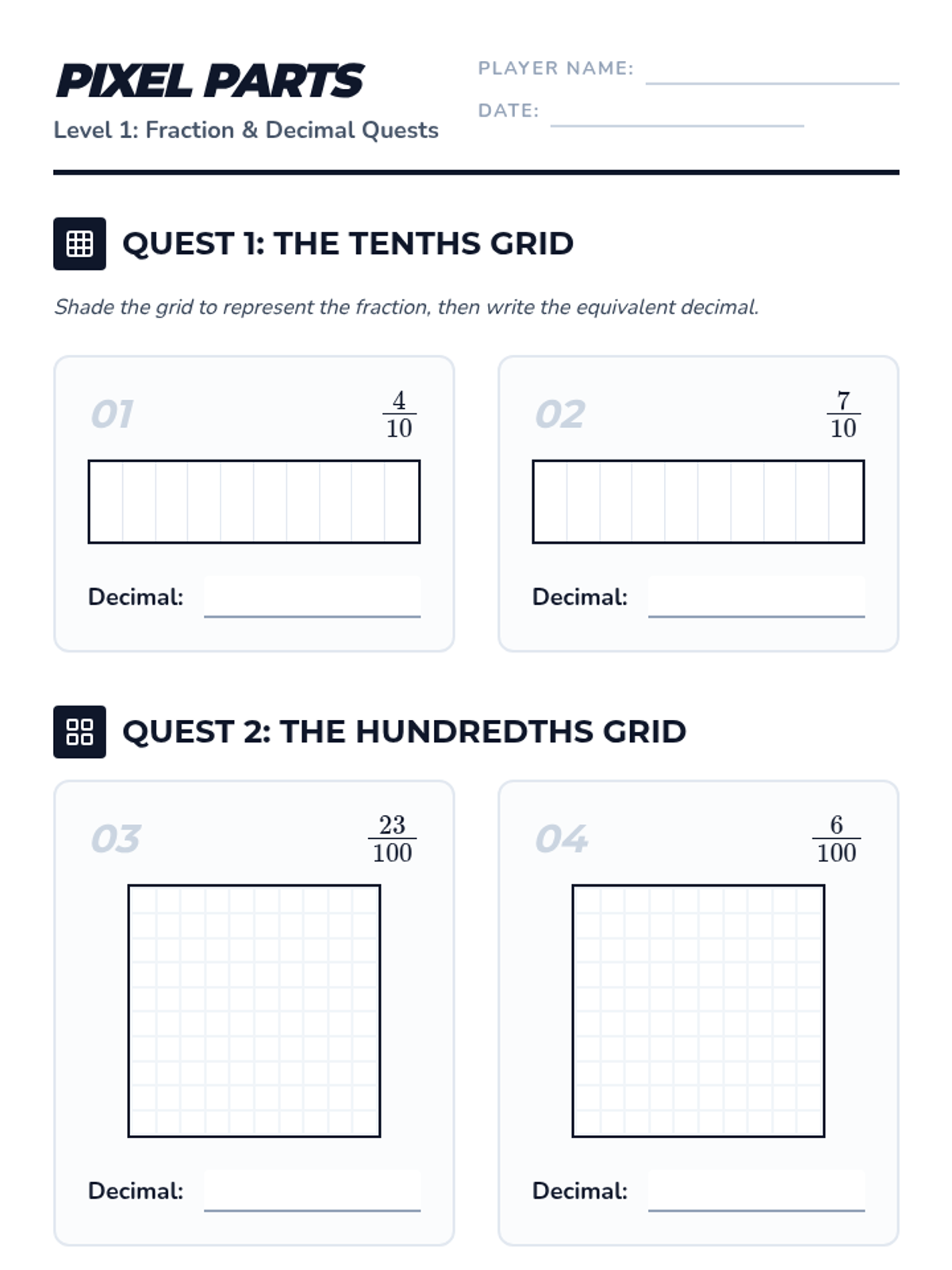
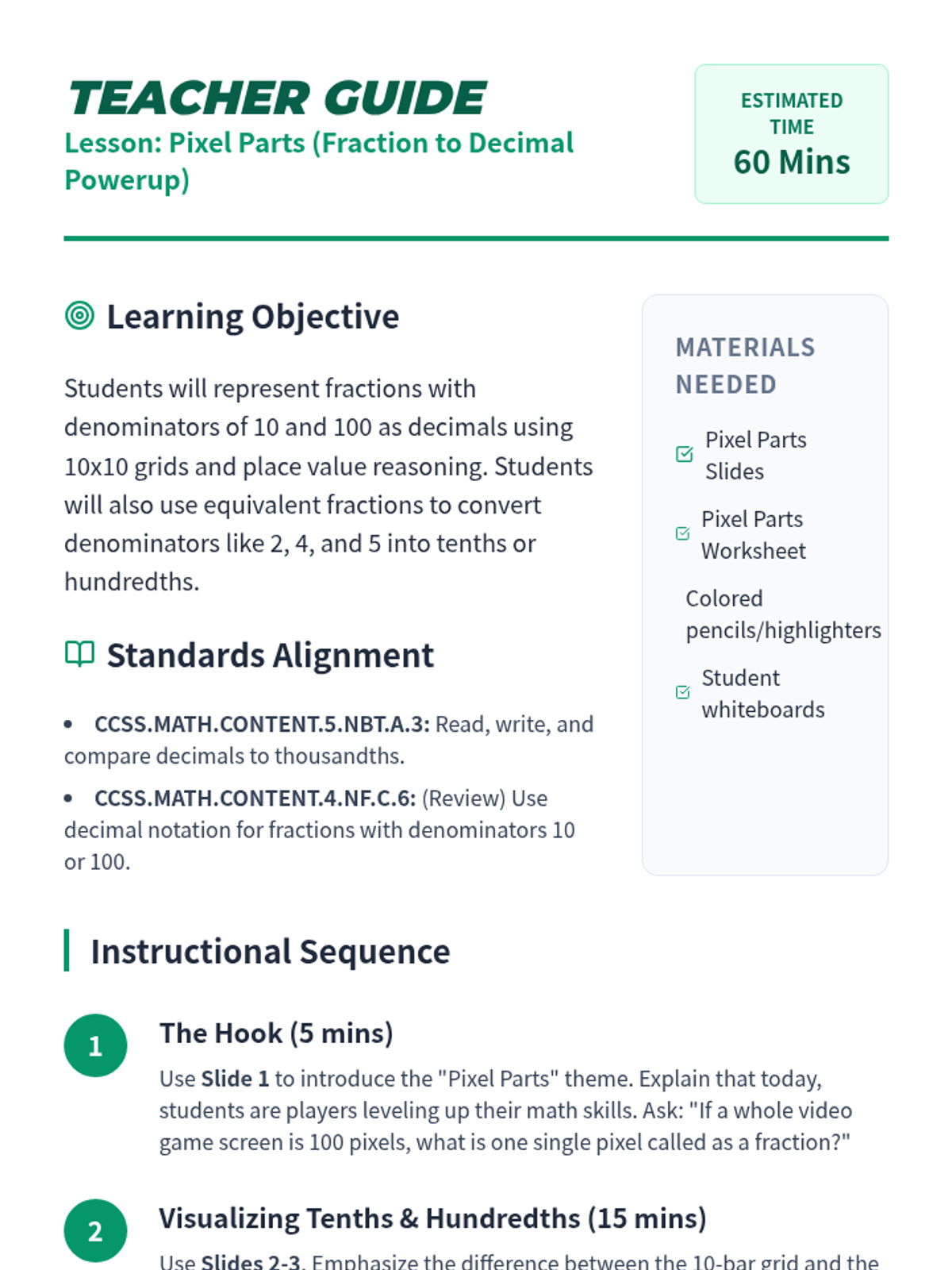
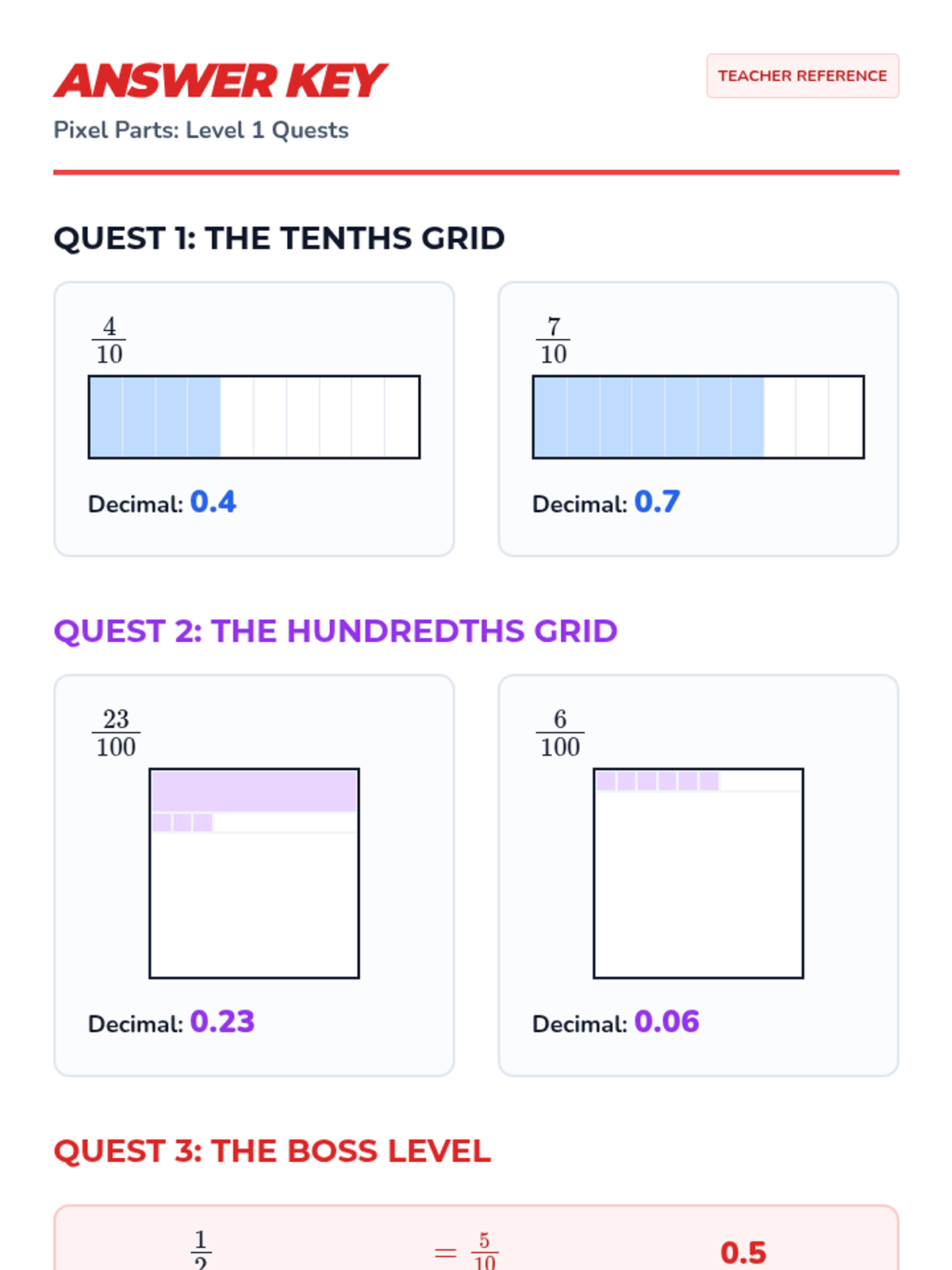
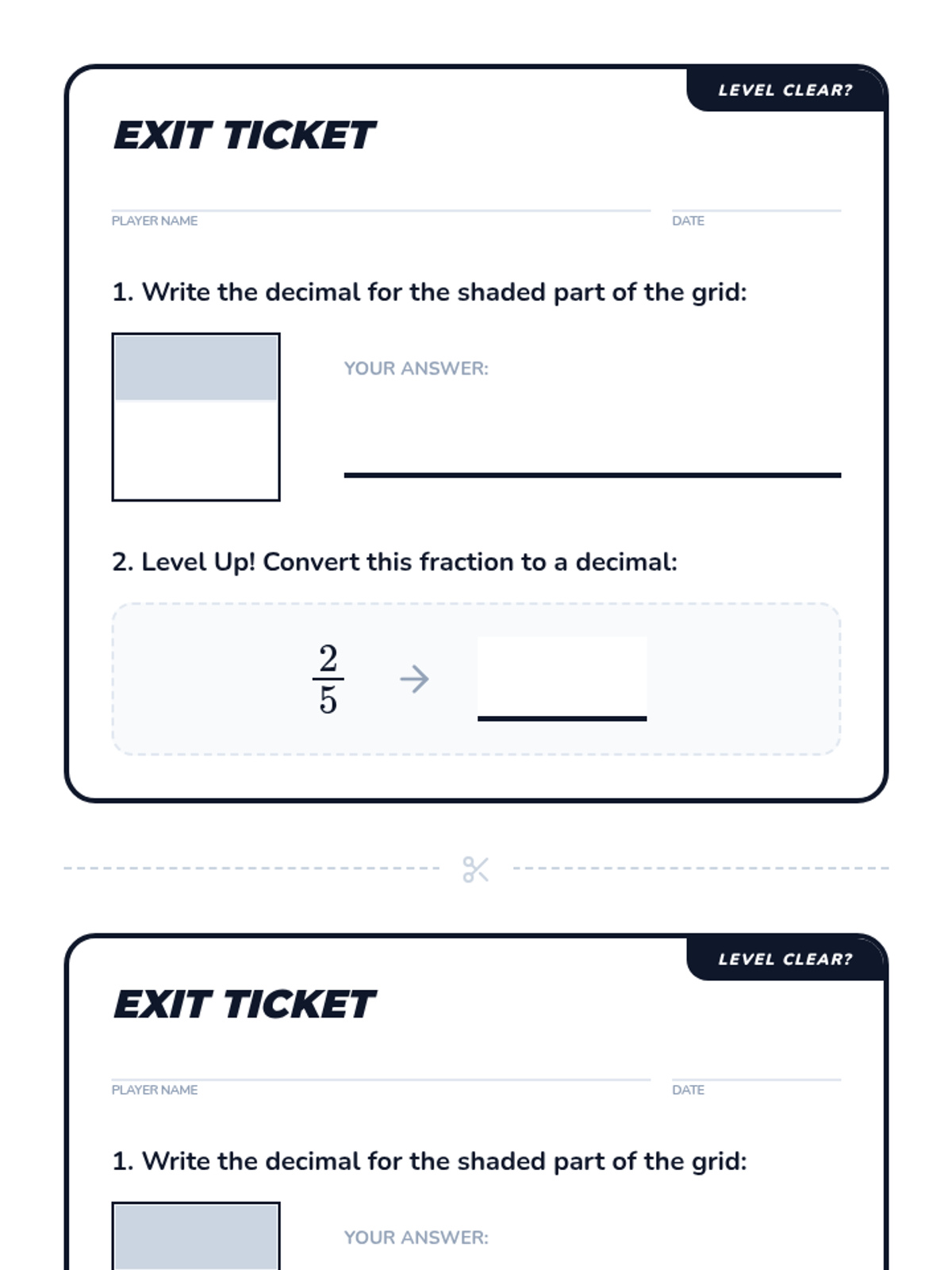
A visual-heavy lesson using a pixel-art theme to help students master converting fractions with denominators of 10 and 100 into decimals using grids and place value charts.
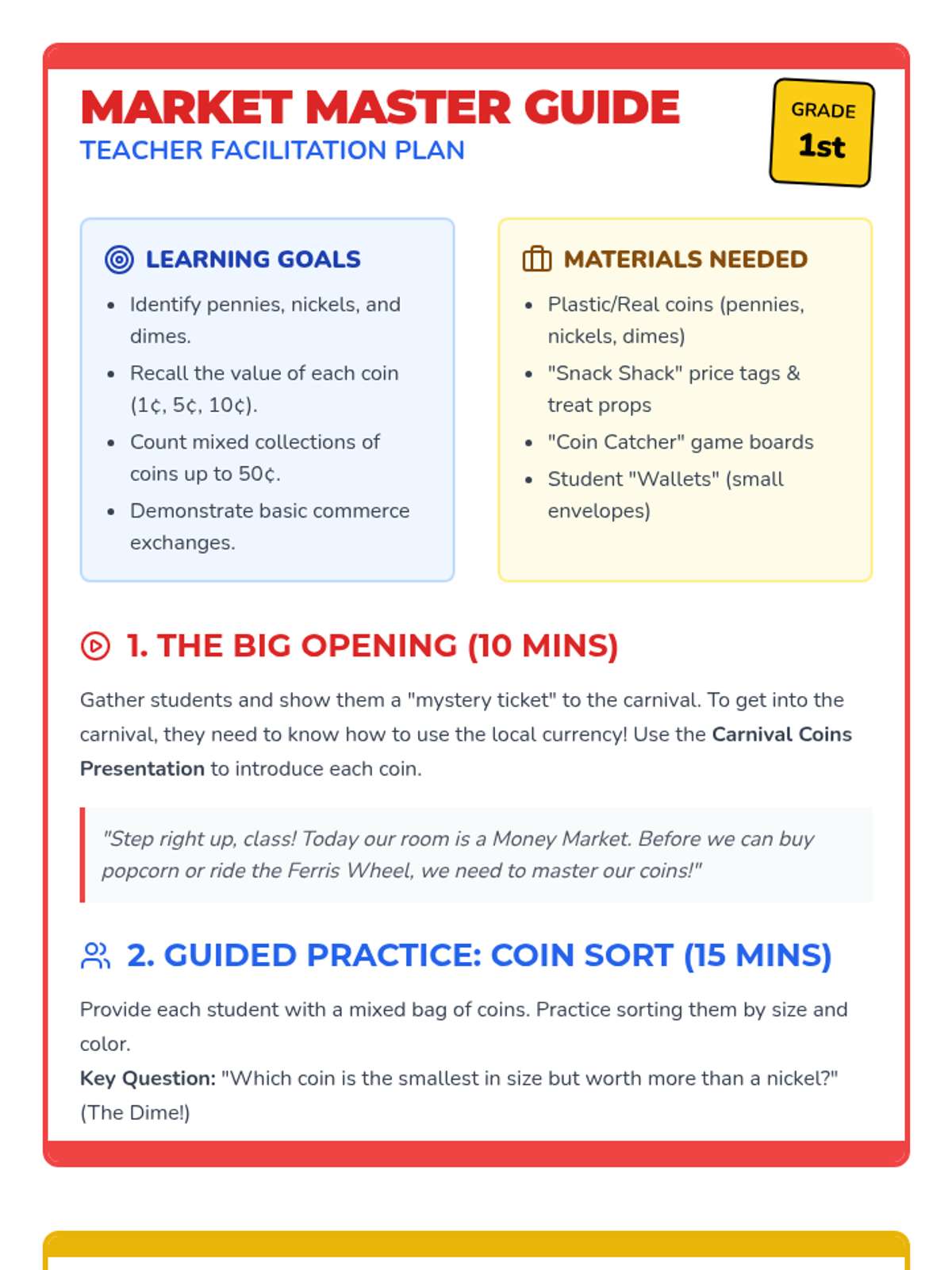
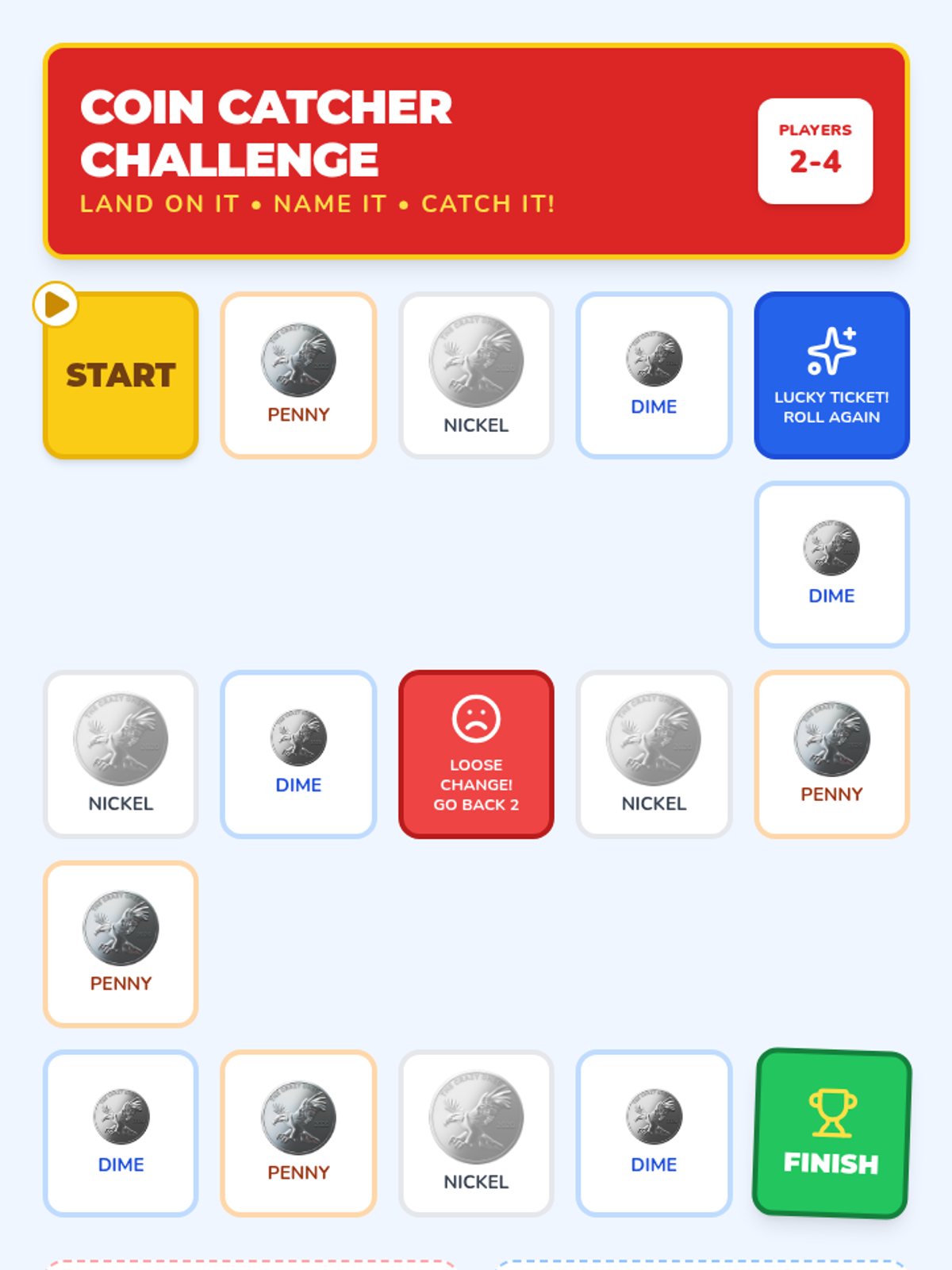
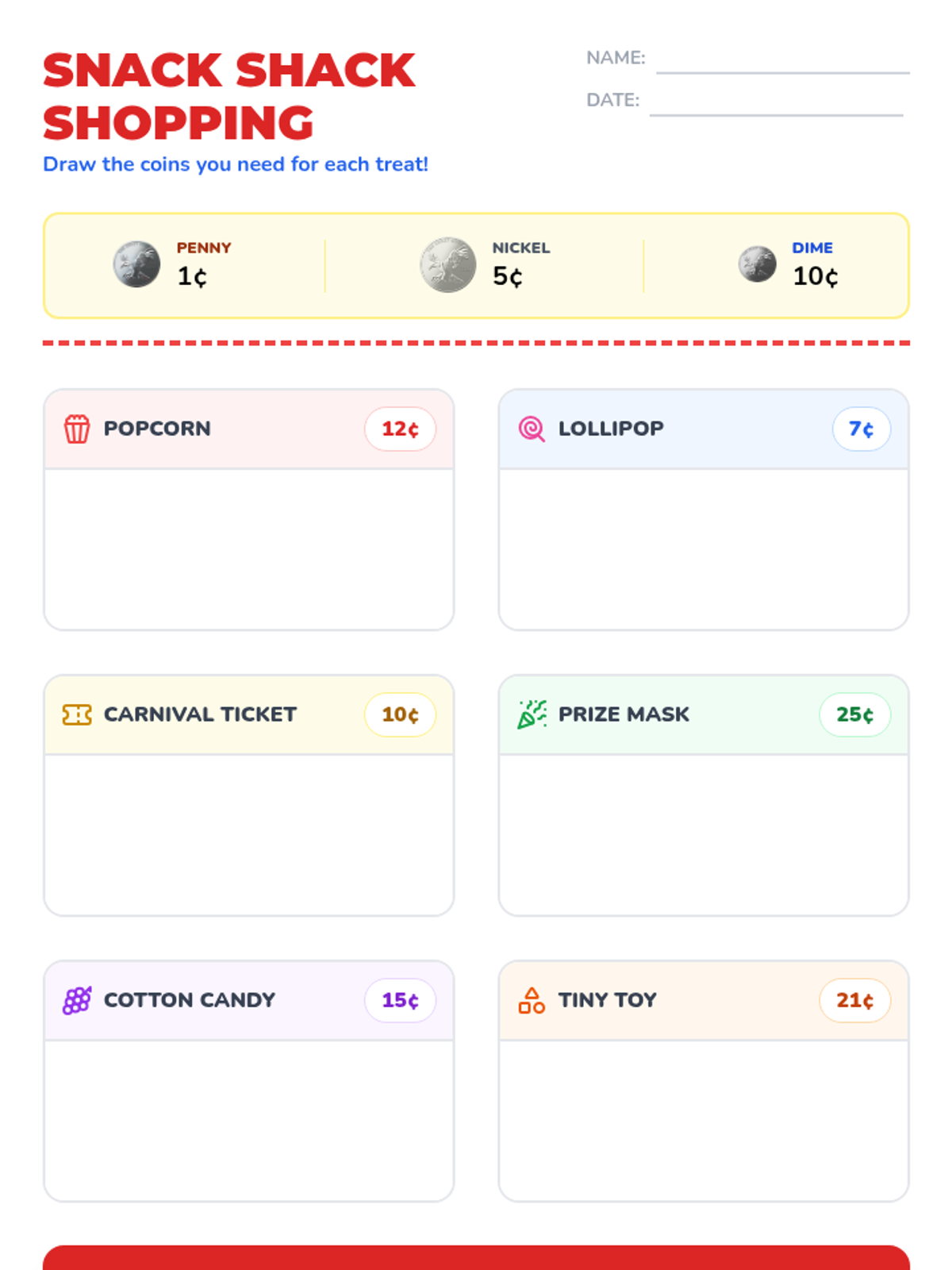
A high-energy 1st-grade lesson introducing pennies, nickels, and dimes through a carnival-themed market simulation. Students identify coins and practice counting mixed groups to 'buy' carnival treats.
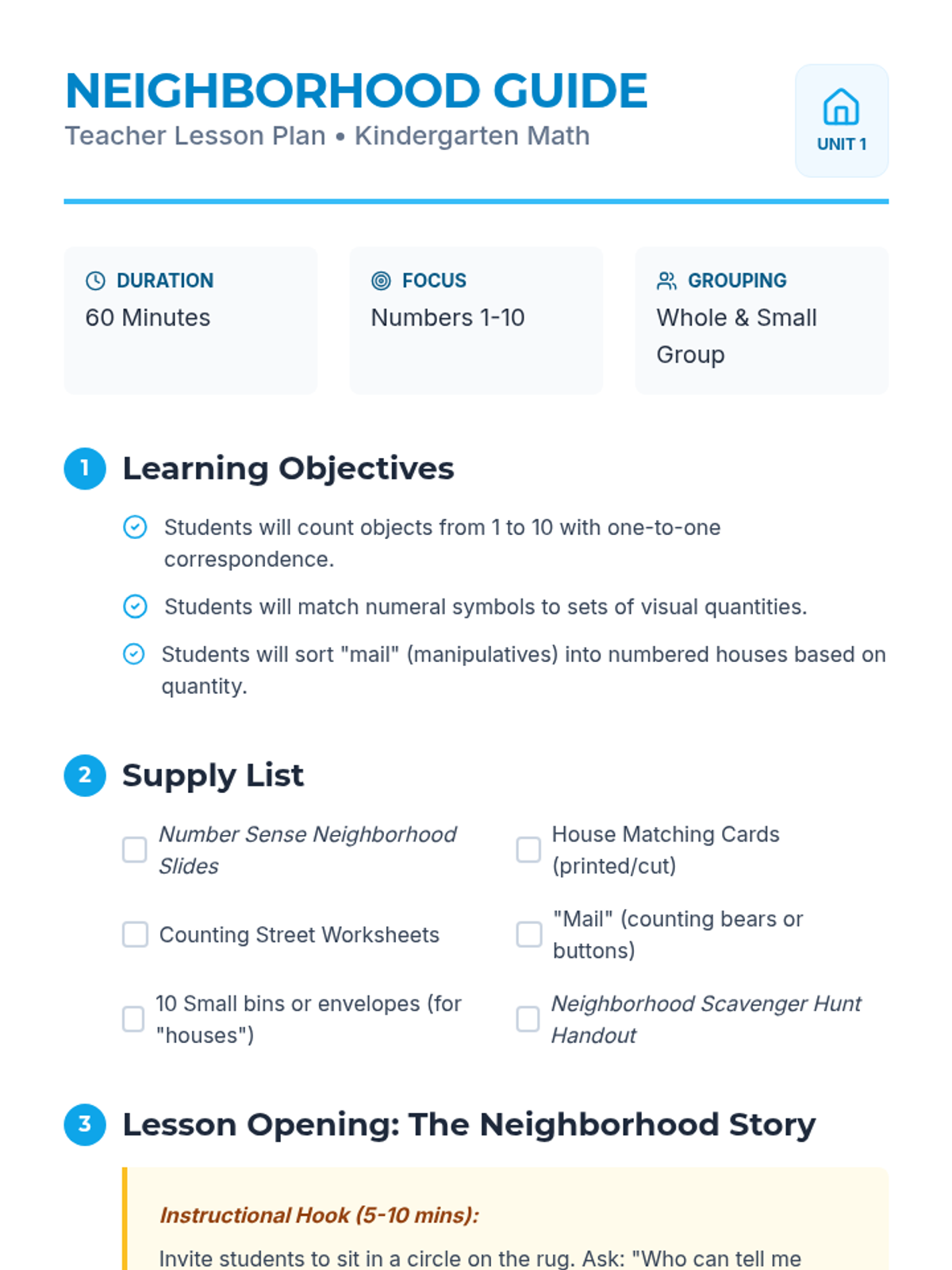
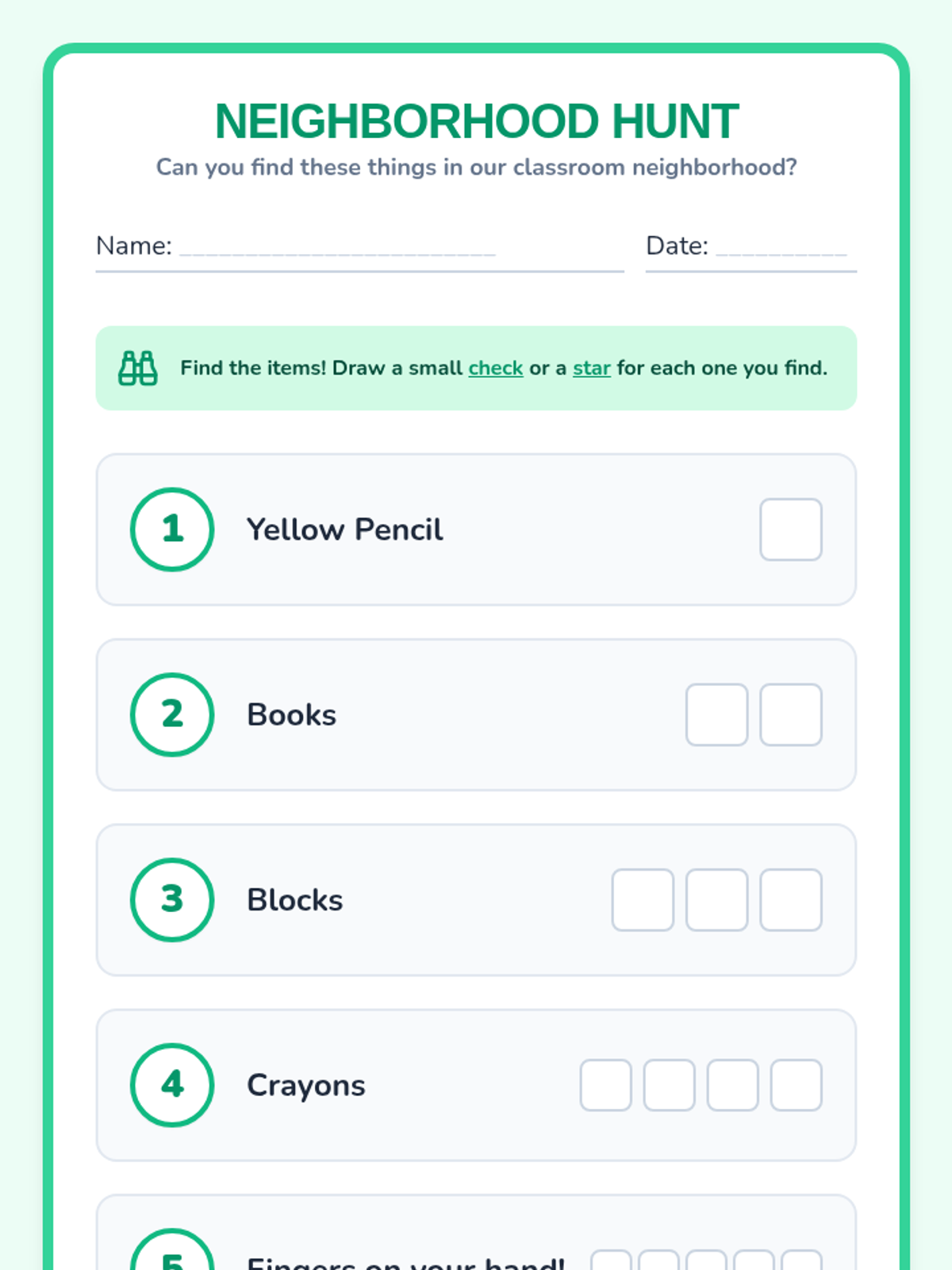
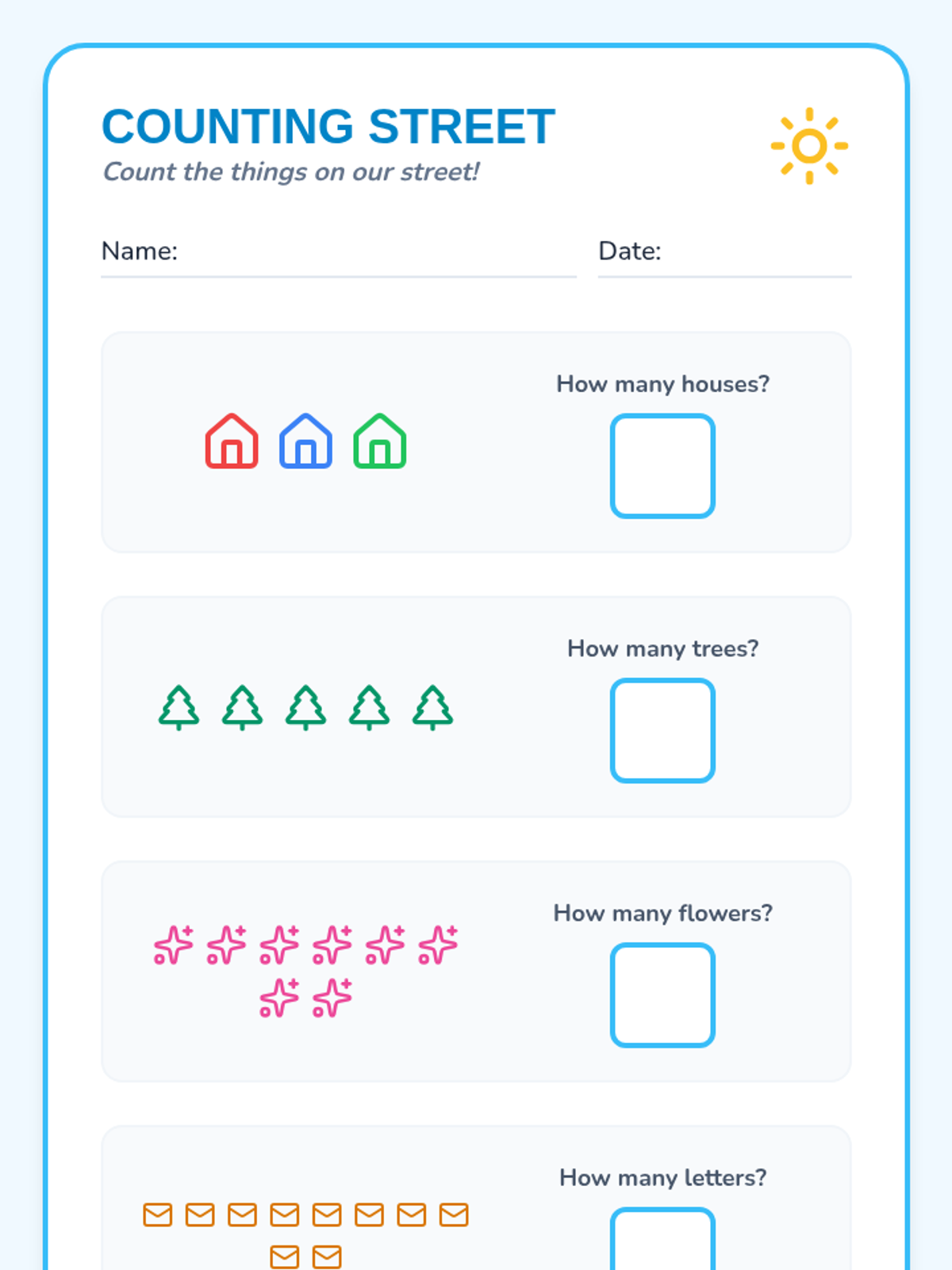
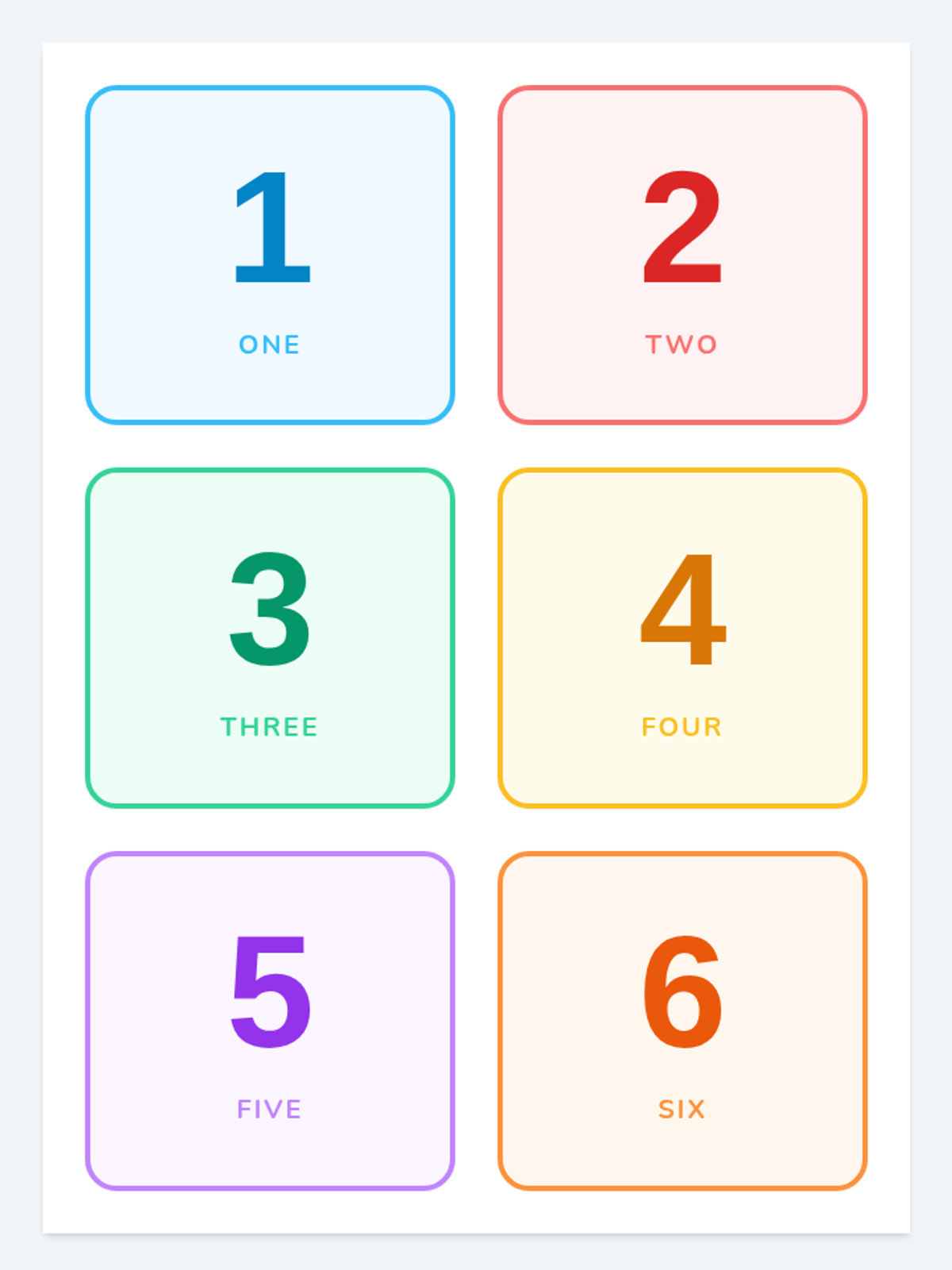
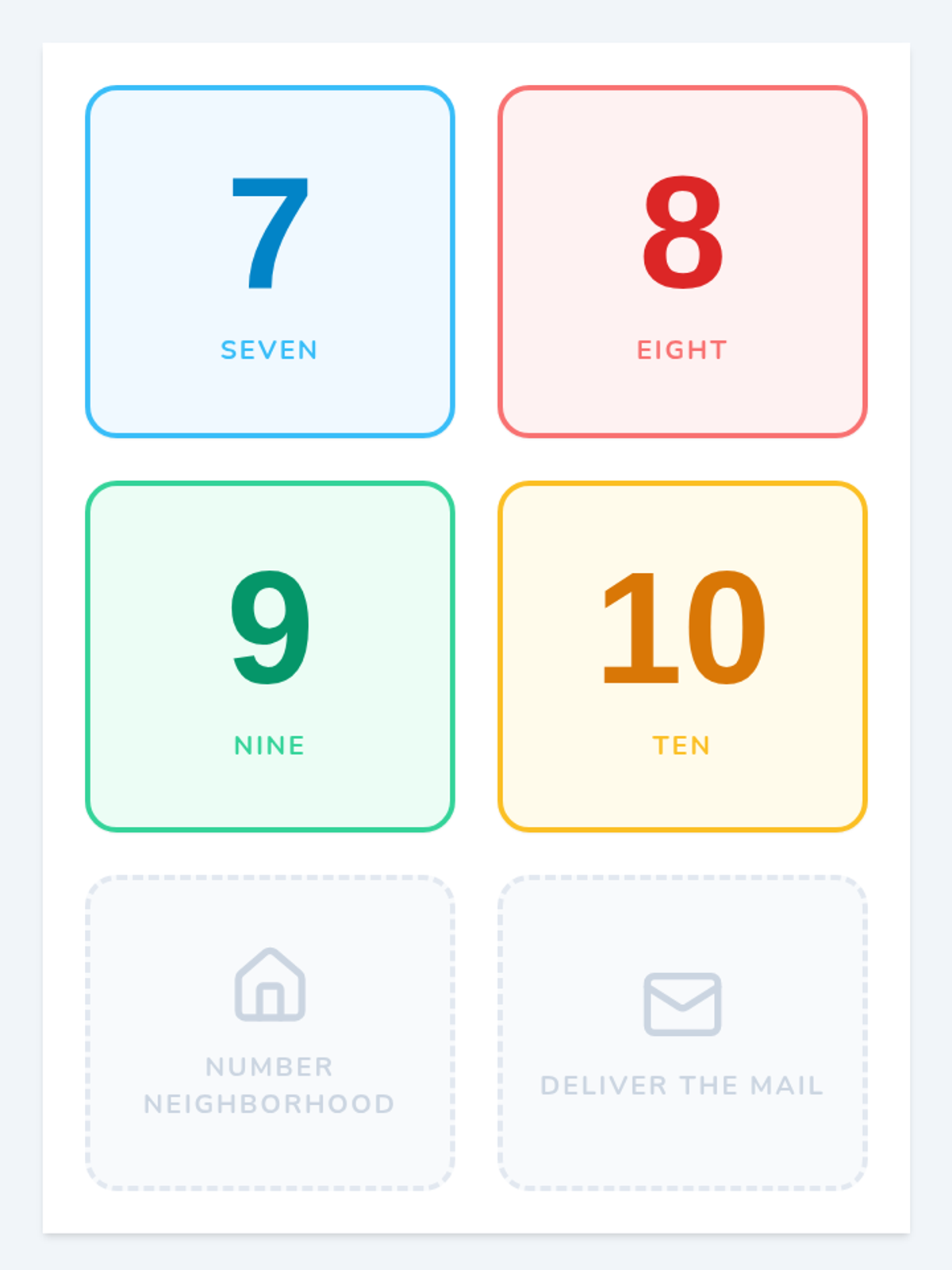
A multi-sensory Kindergarten lesson that transforms counting into a neighborhood adventure. Students develop one-to-one correspondence and number recognition through hands-on sorting, classroom 'neighborhood' exploration, and interactive visual aids.
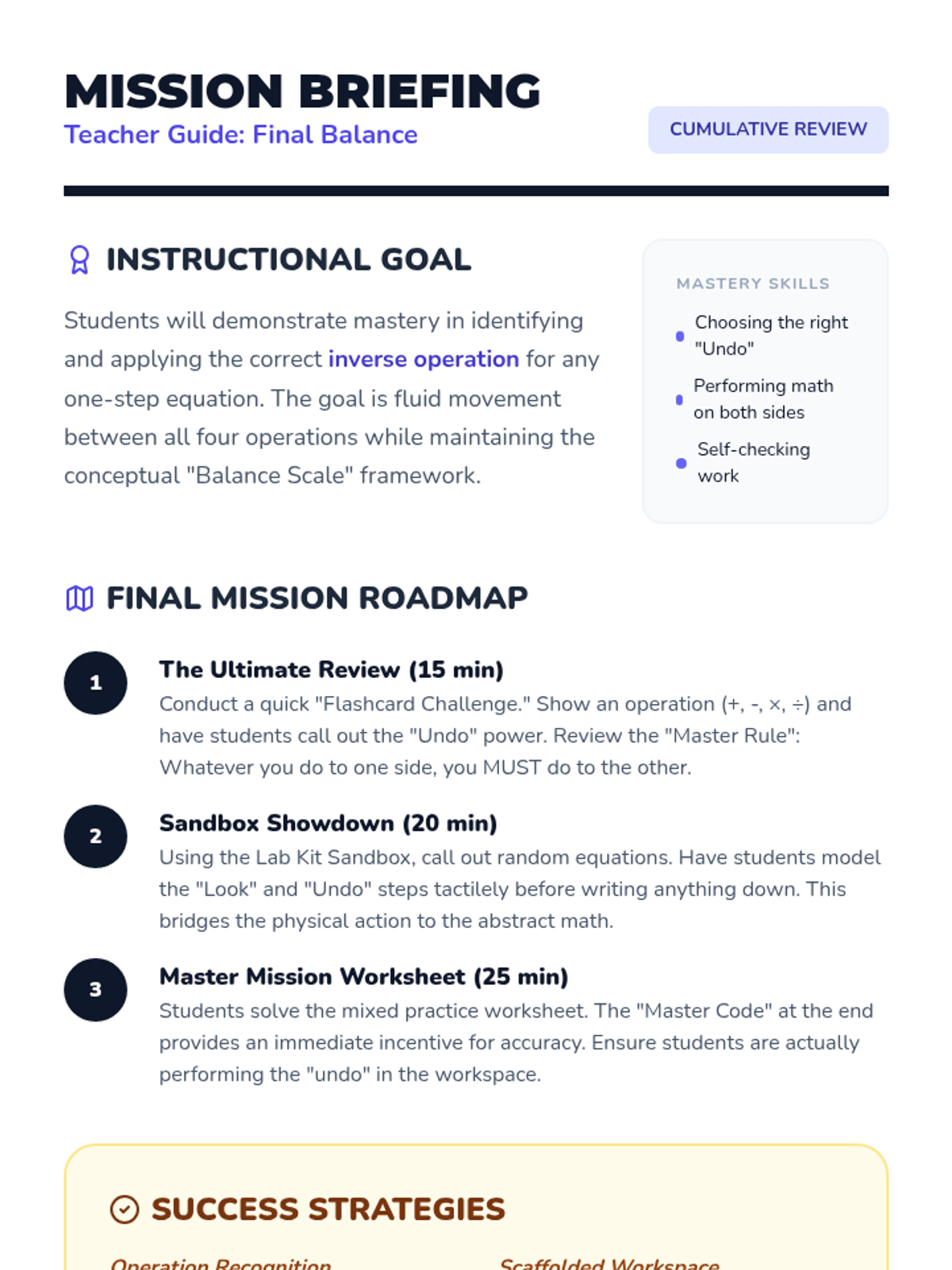
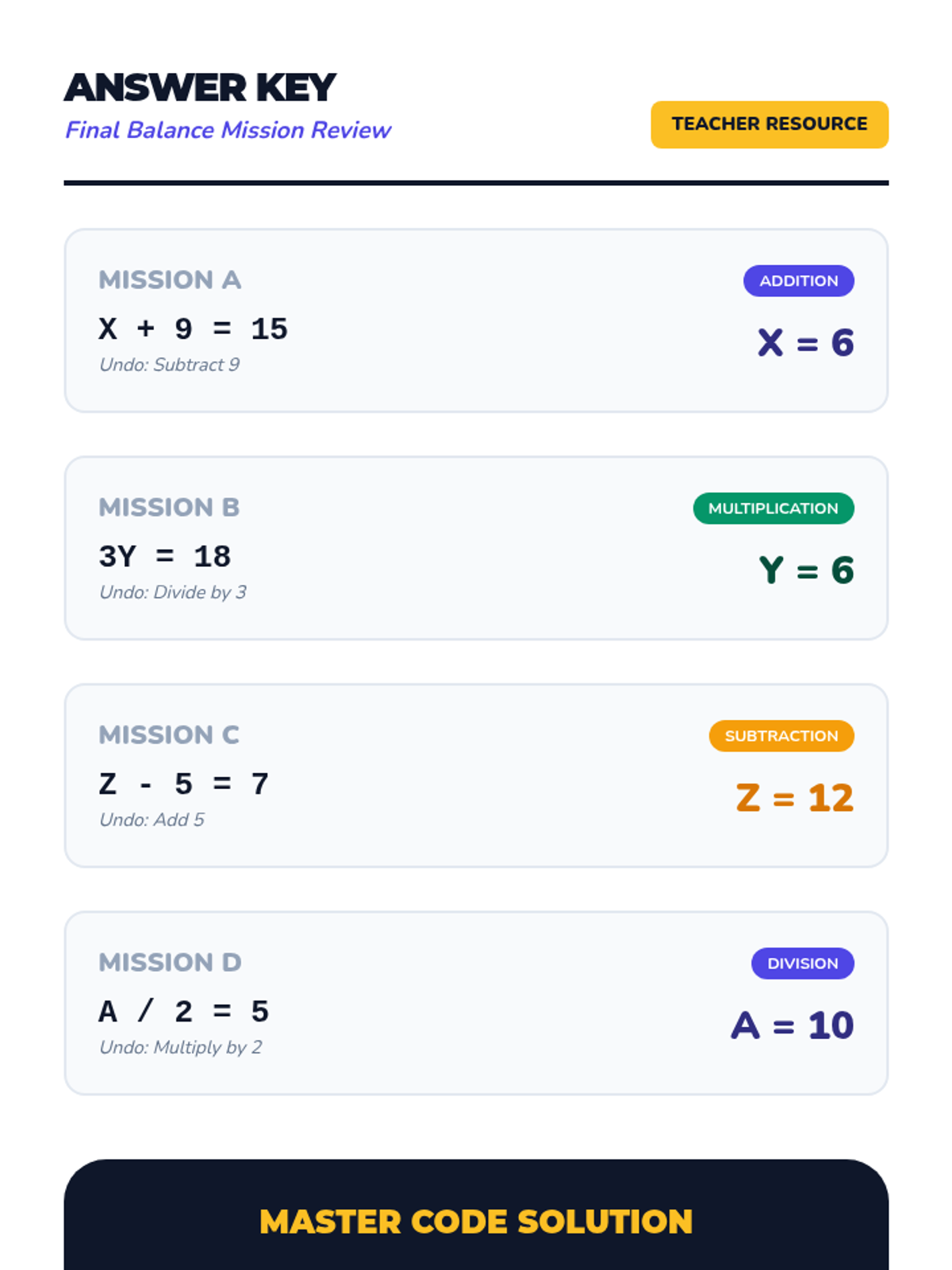
A cumulative review lesson where students apply their knowledge of inverse operations to solve mixed one-step equations involving addition, subtraction, multiplication, and division.
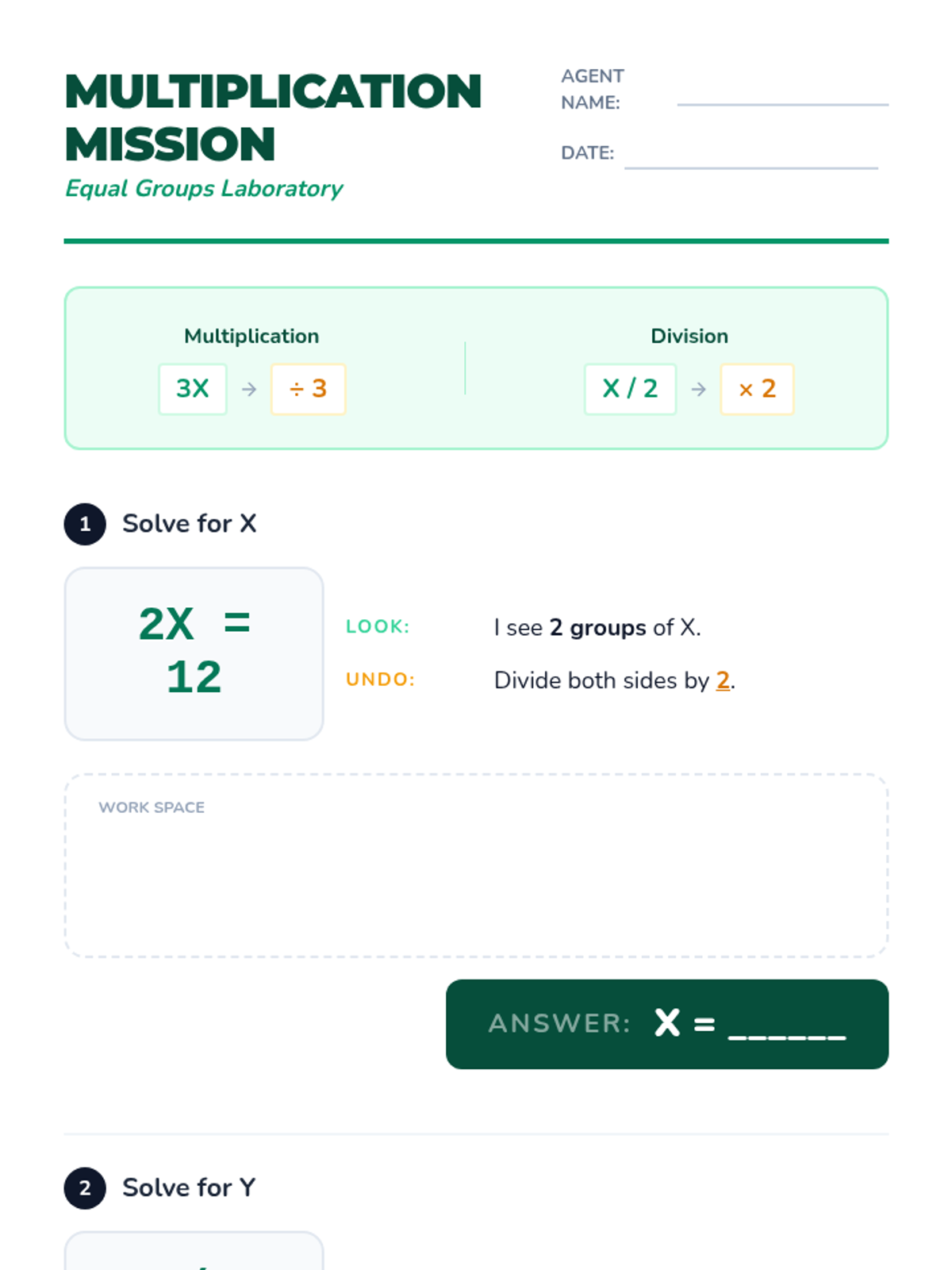
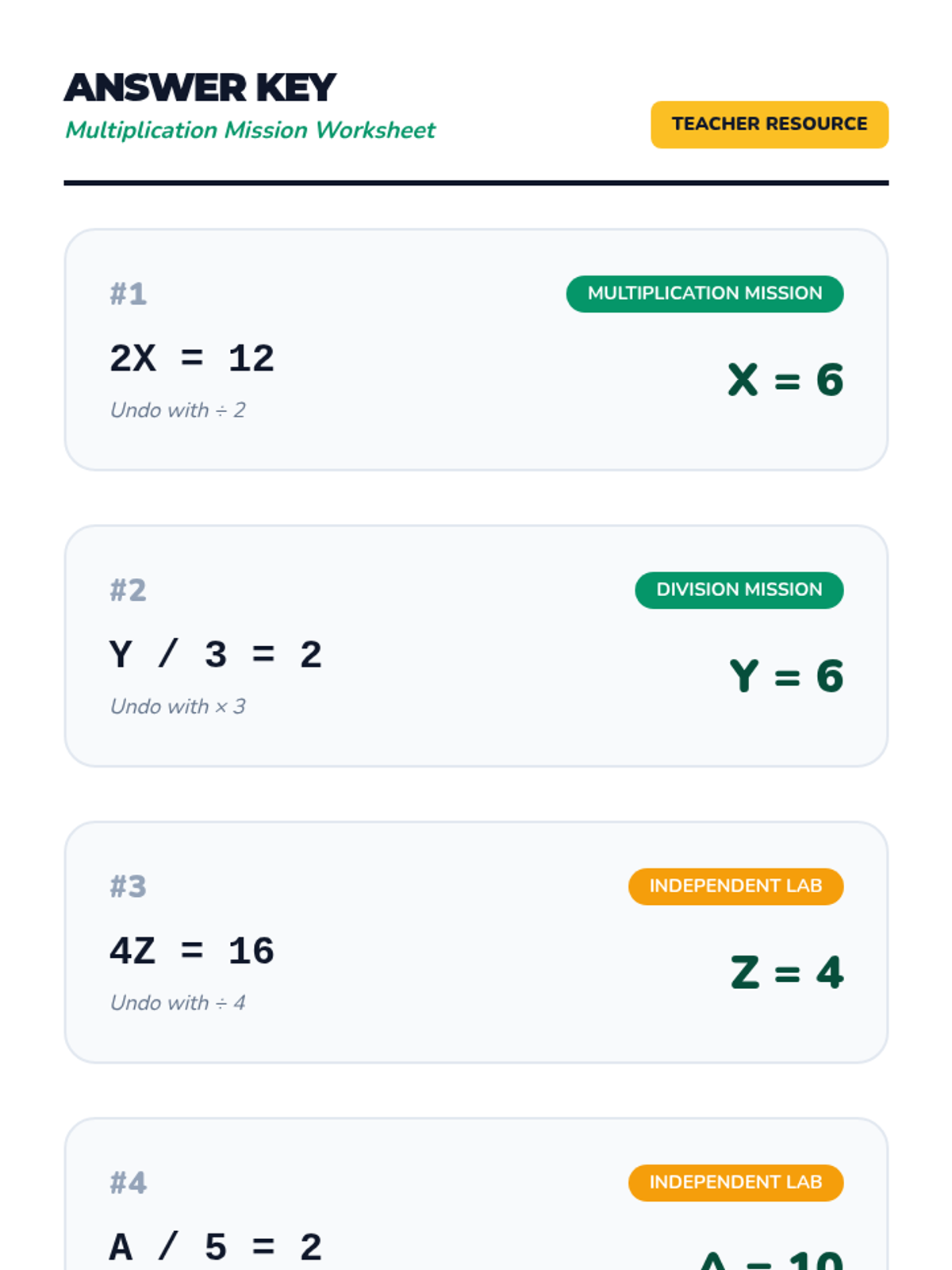
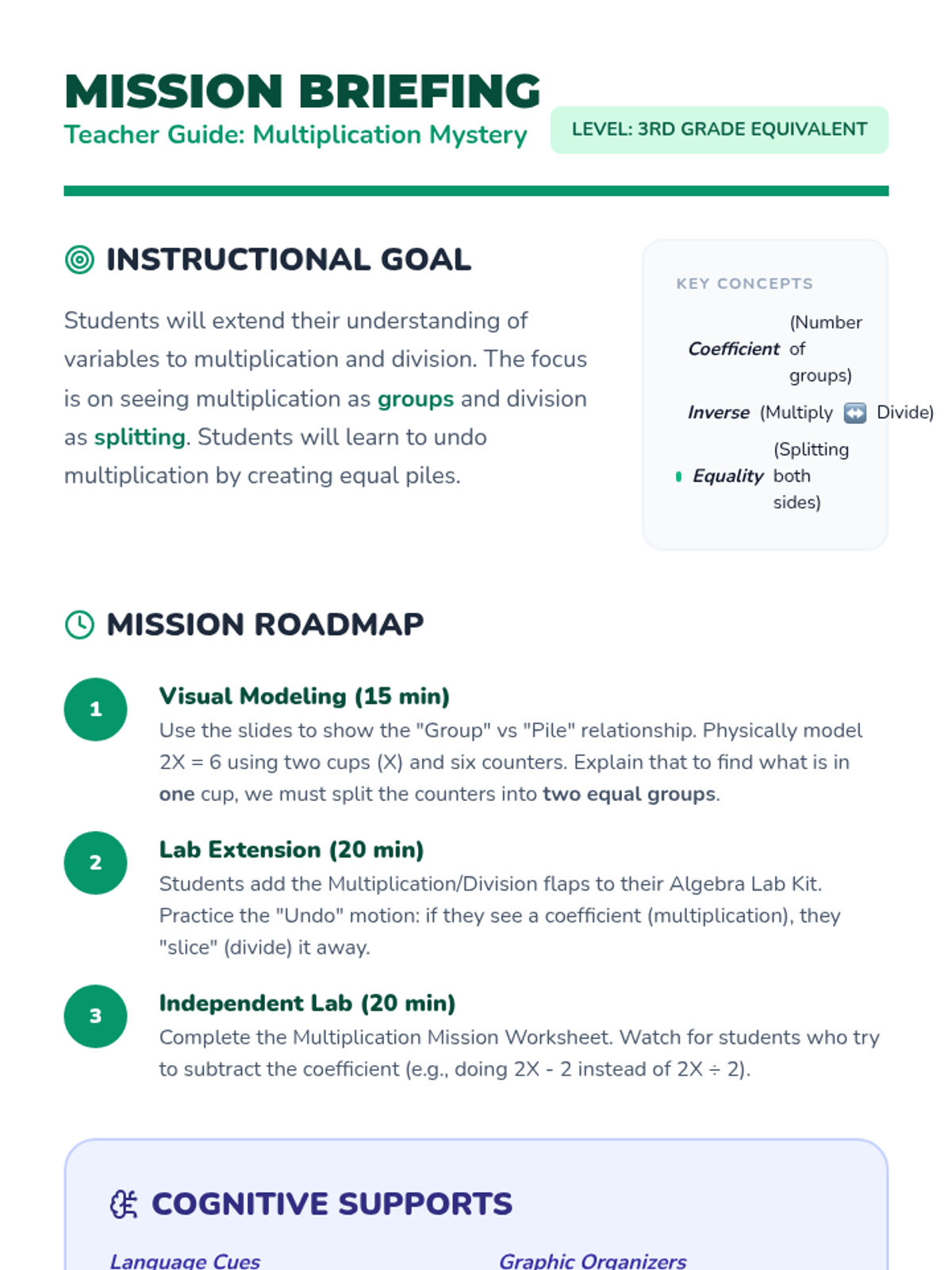
Expanding algebraic thinking to multiplication and division. Students will learn how to 'undo' multiplication by splitting into equal groups (division) and 'undo' division through multiplication, maintaining the balance of the scale.
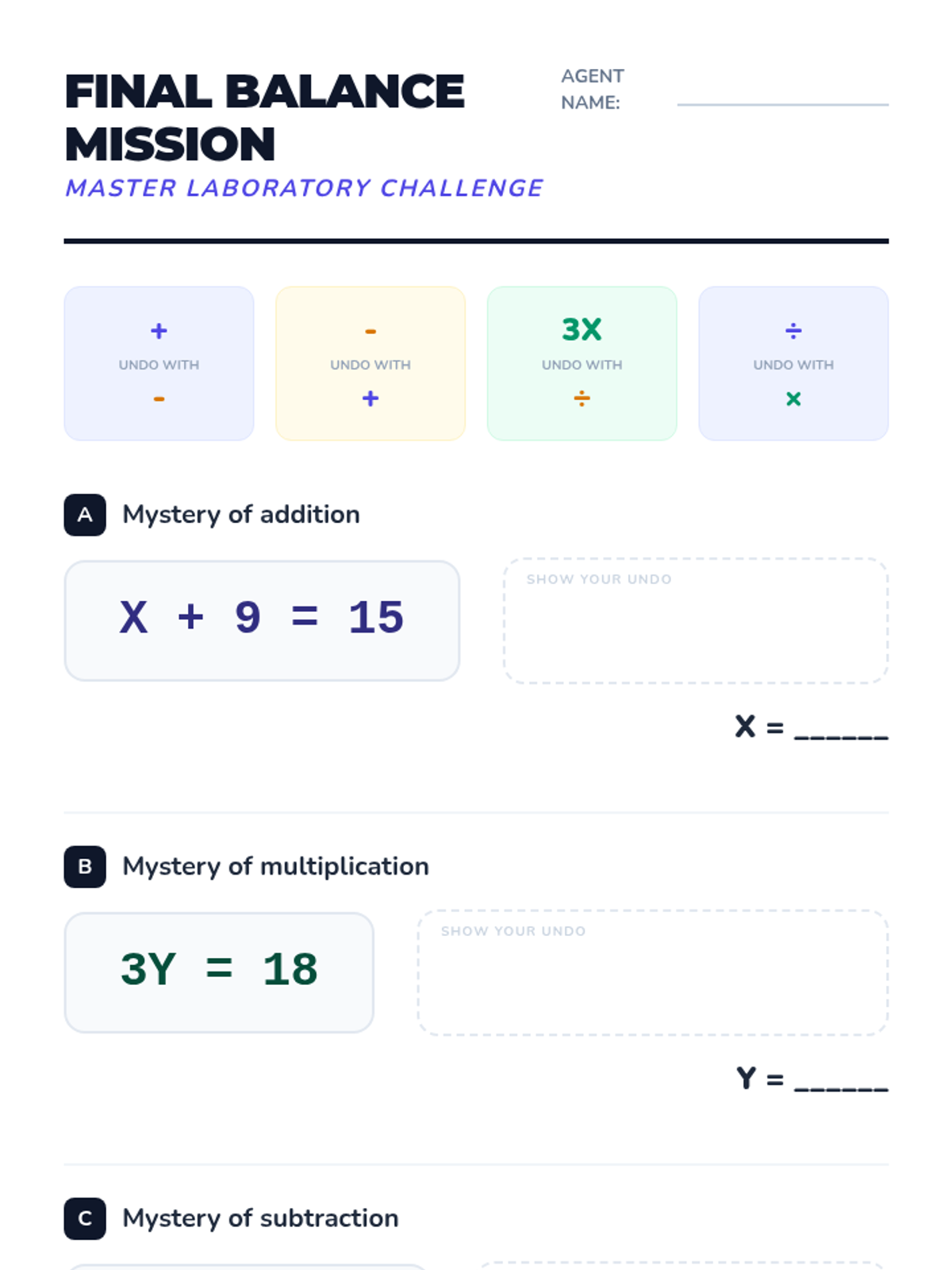
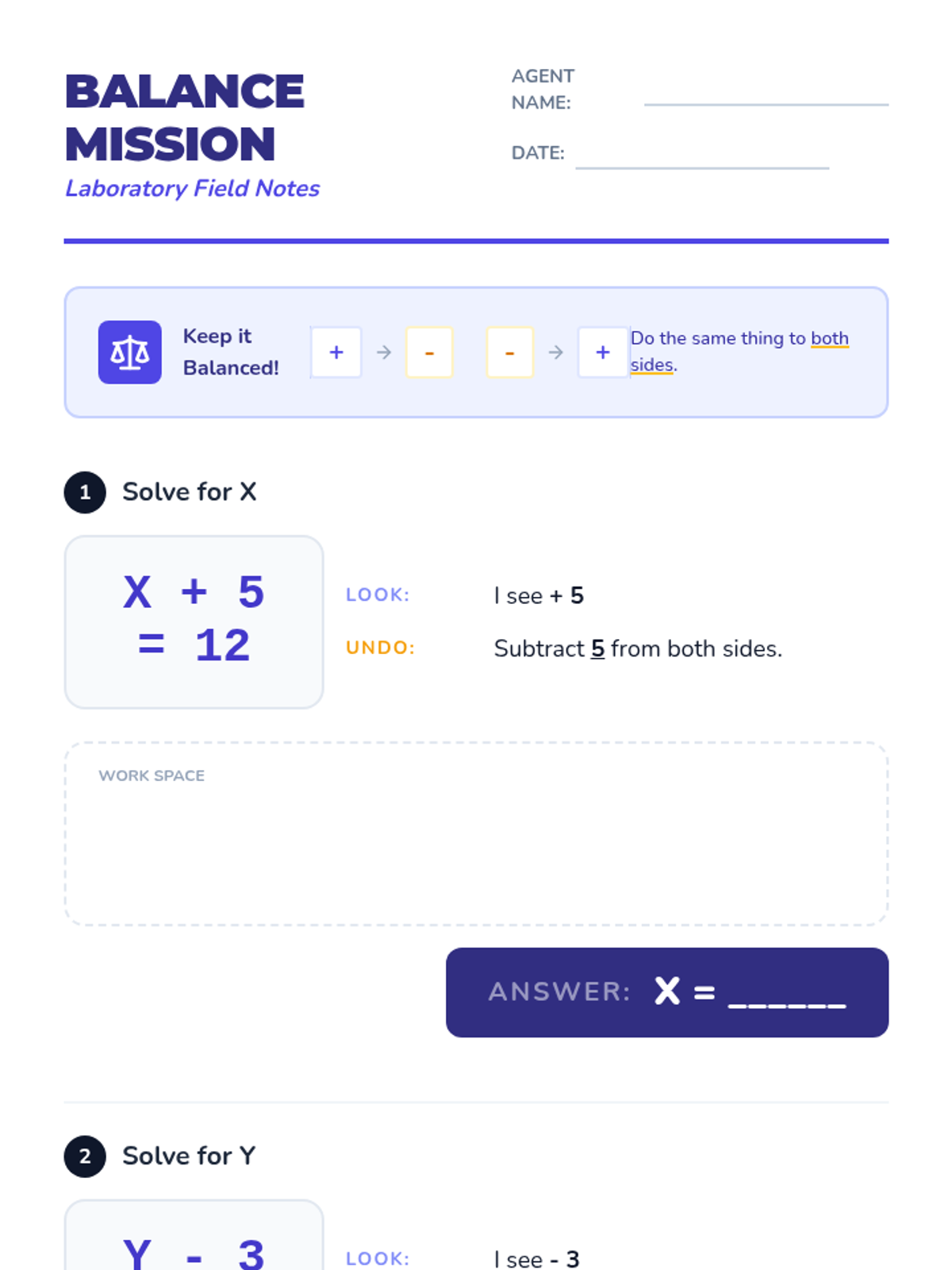
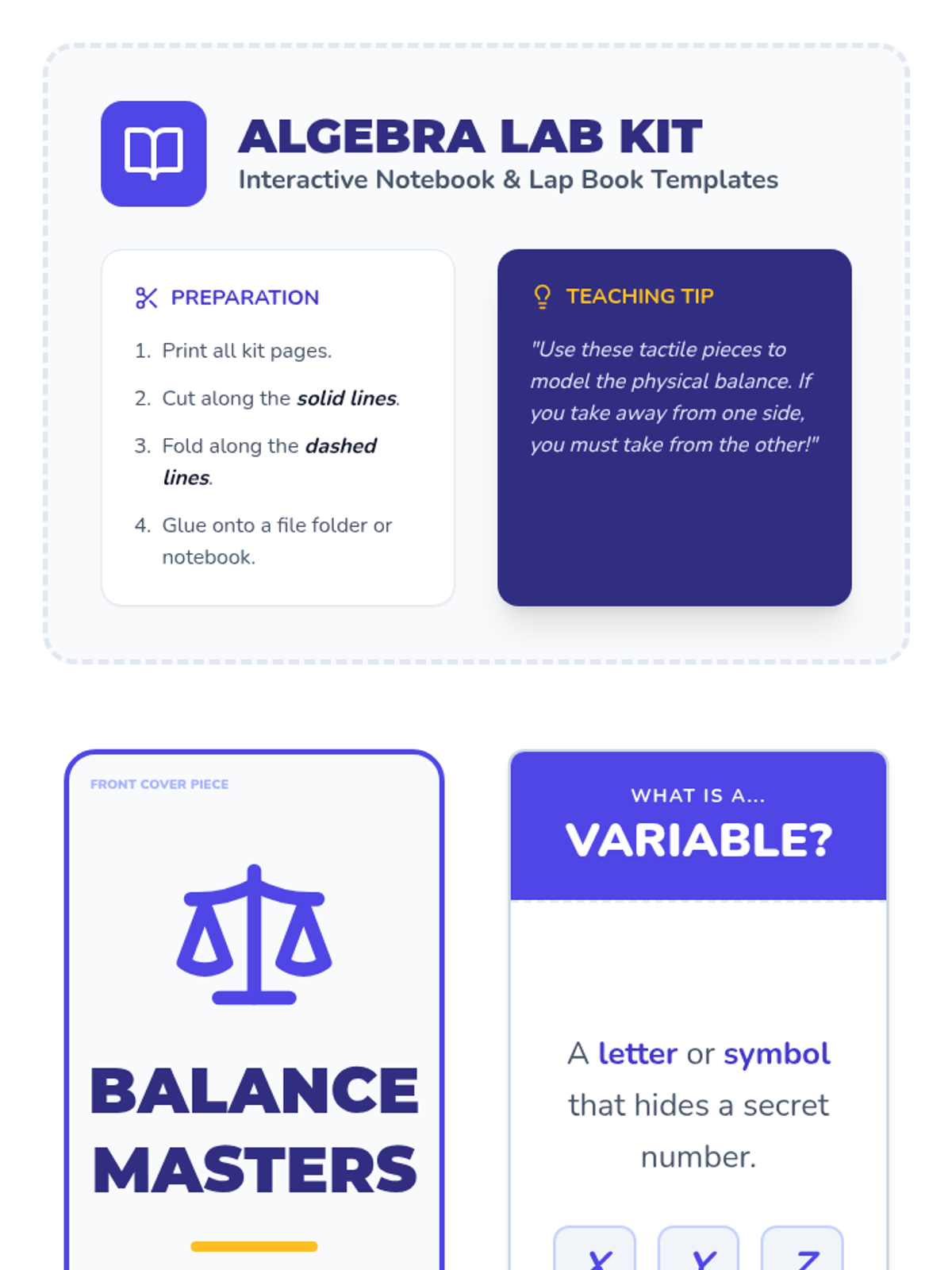
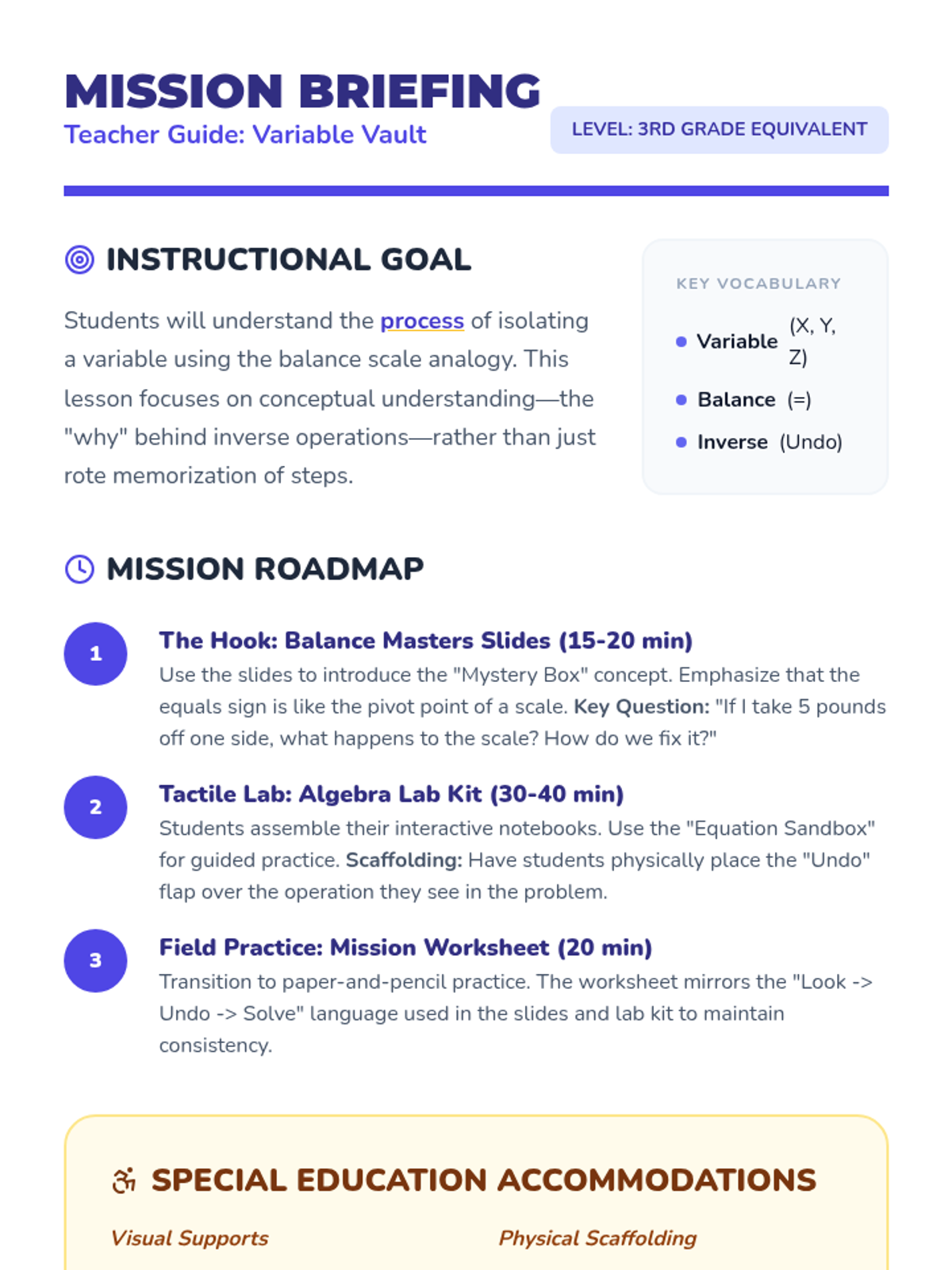
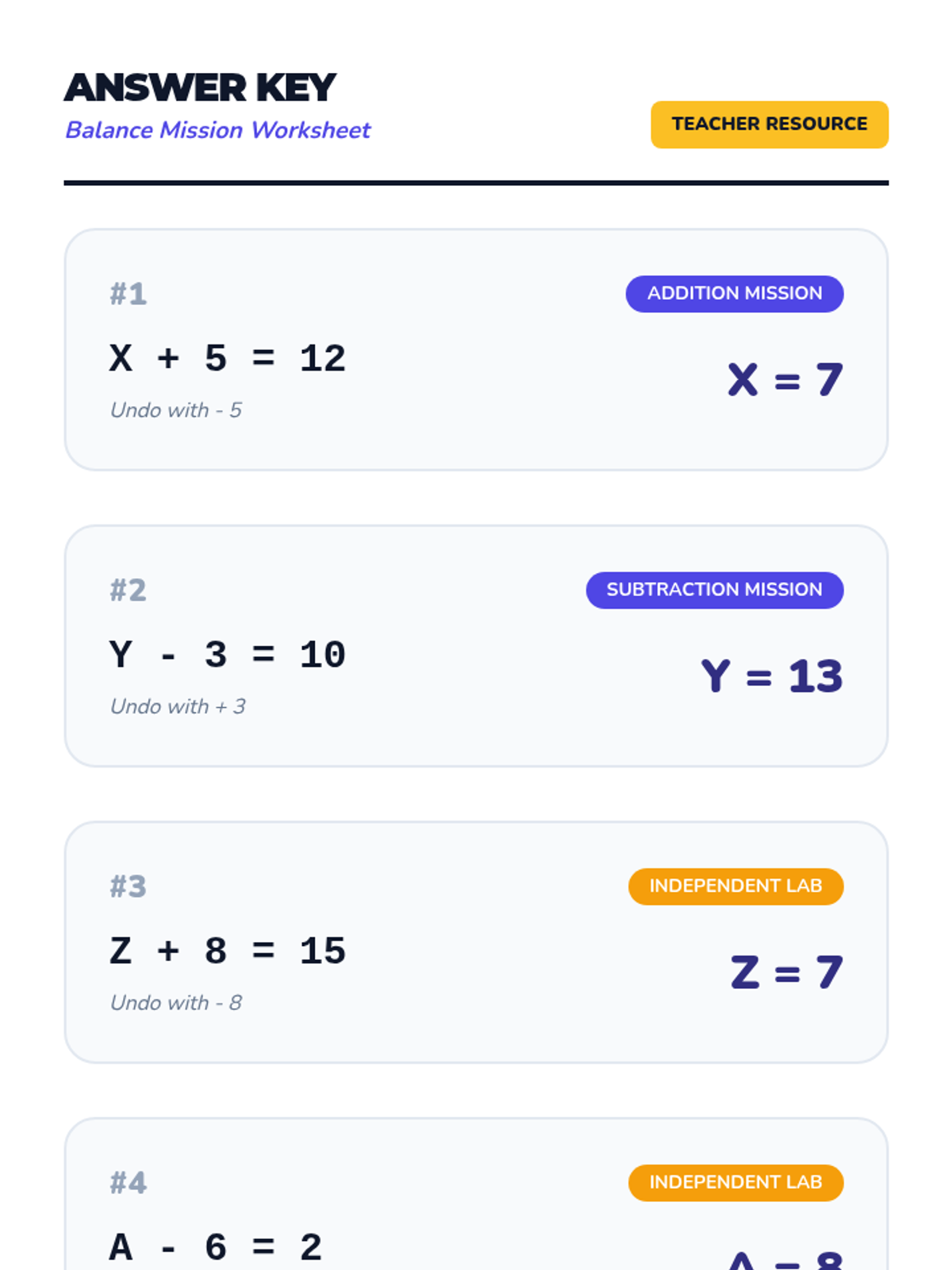
A foundational introduction to basic algebra using the balance scale analogy, specifically designed for students working at a 3rd-grade level. Students will learn about variables and the concept of inverse operations to 'undo' addition and subtraction.
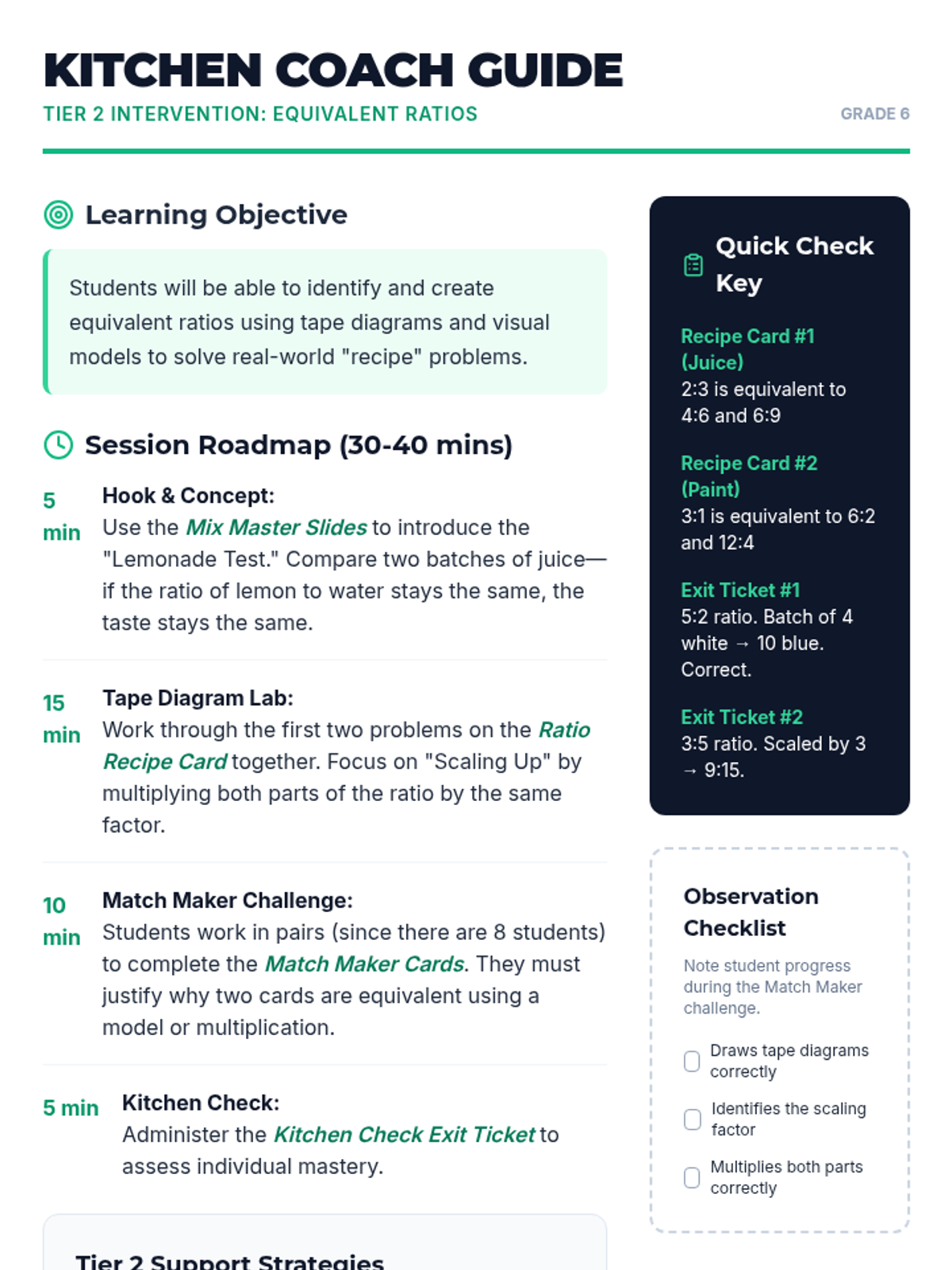
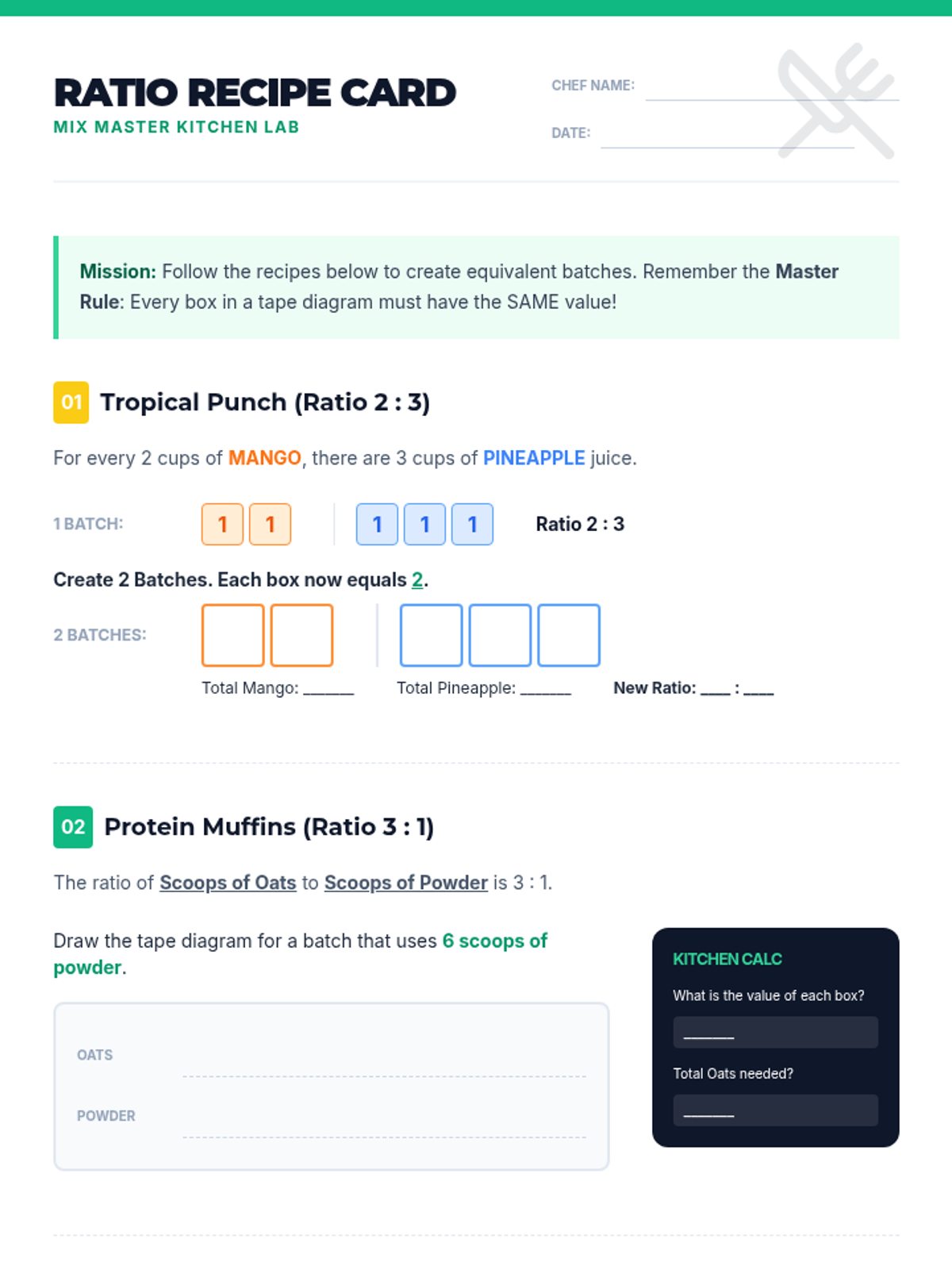
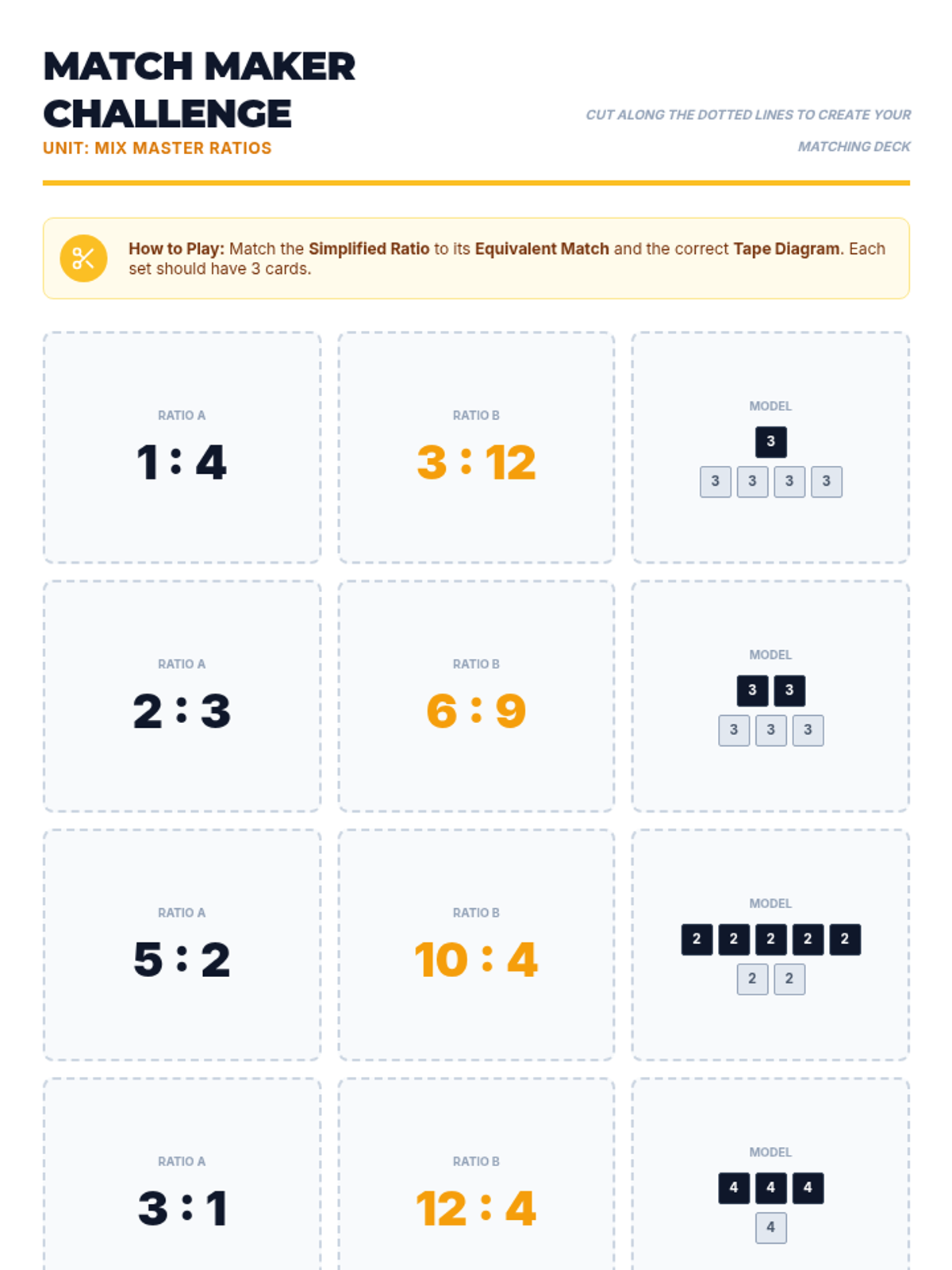
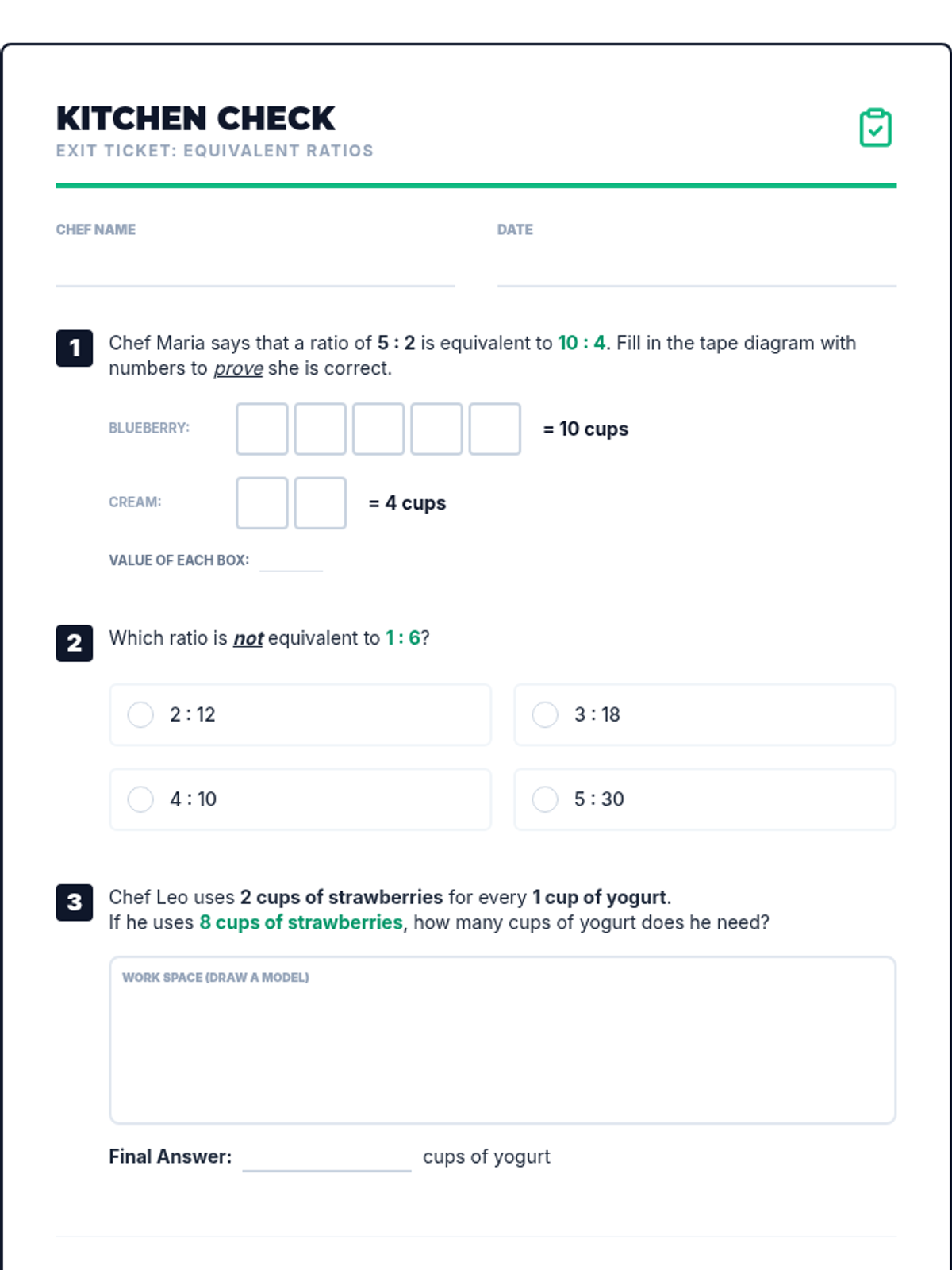
A Tier 2 intervention lesson for 6th grade focused on equivalent ratios using tape diagrams and visual models. Students practice through guided 'recipes' and matching activities to build conceptual understanding.
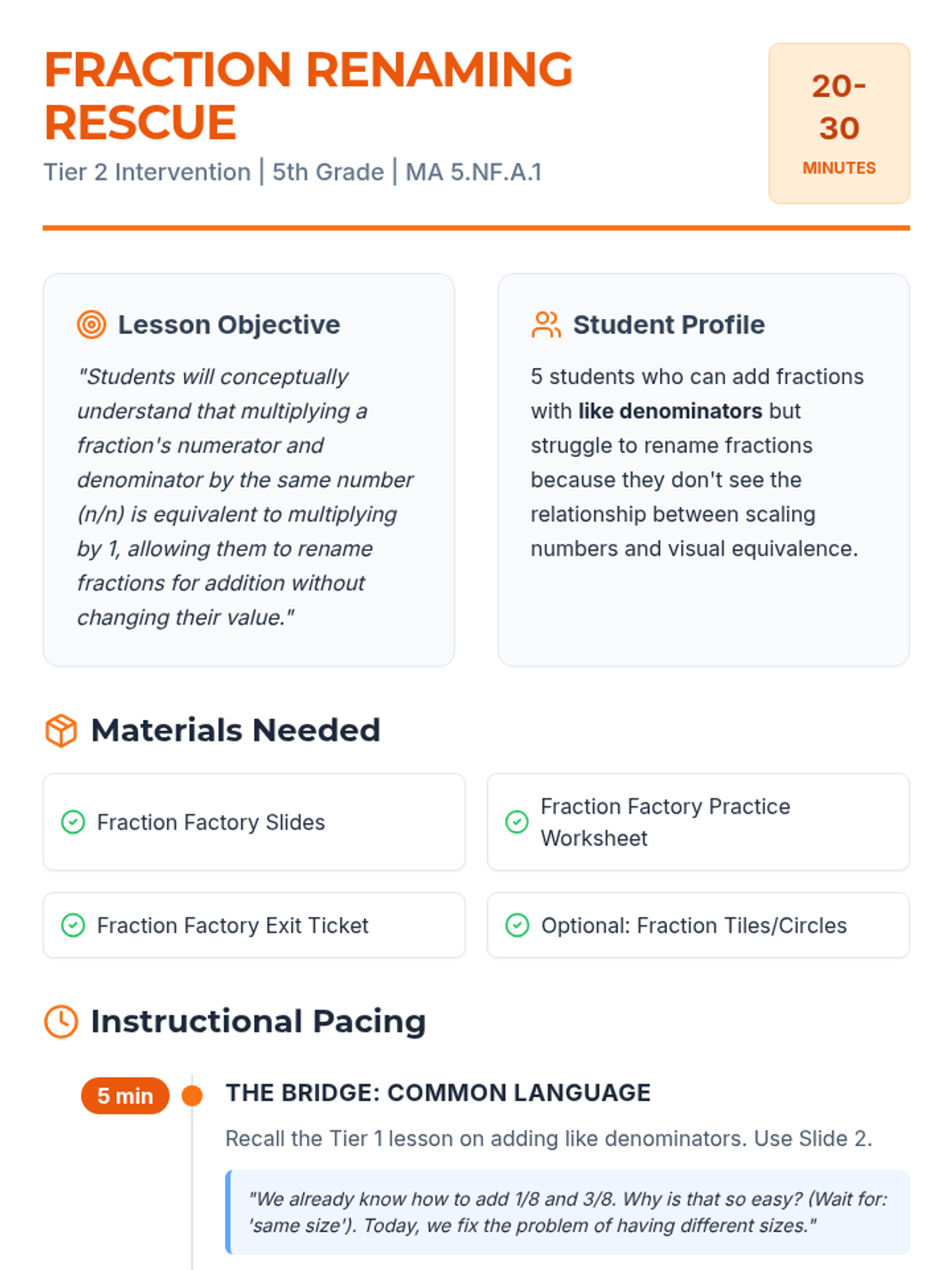
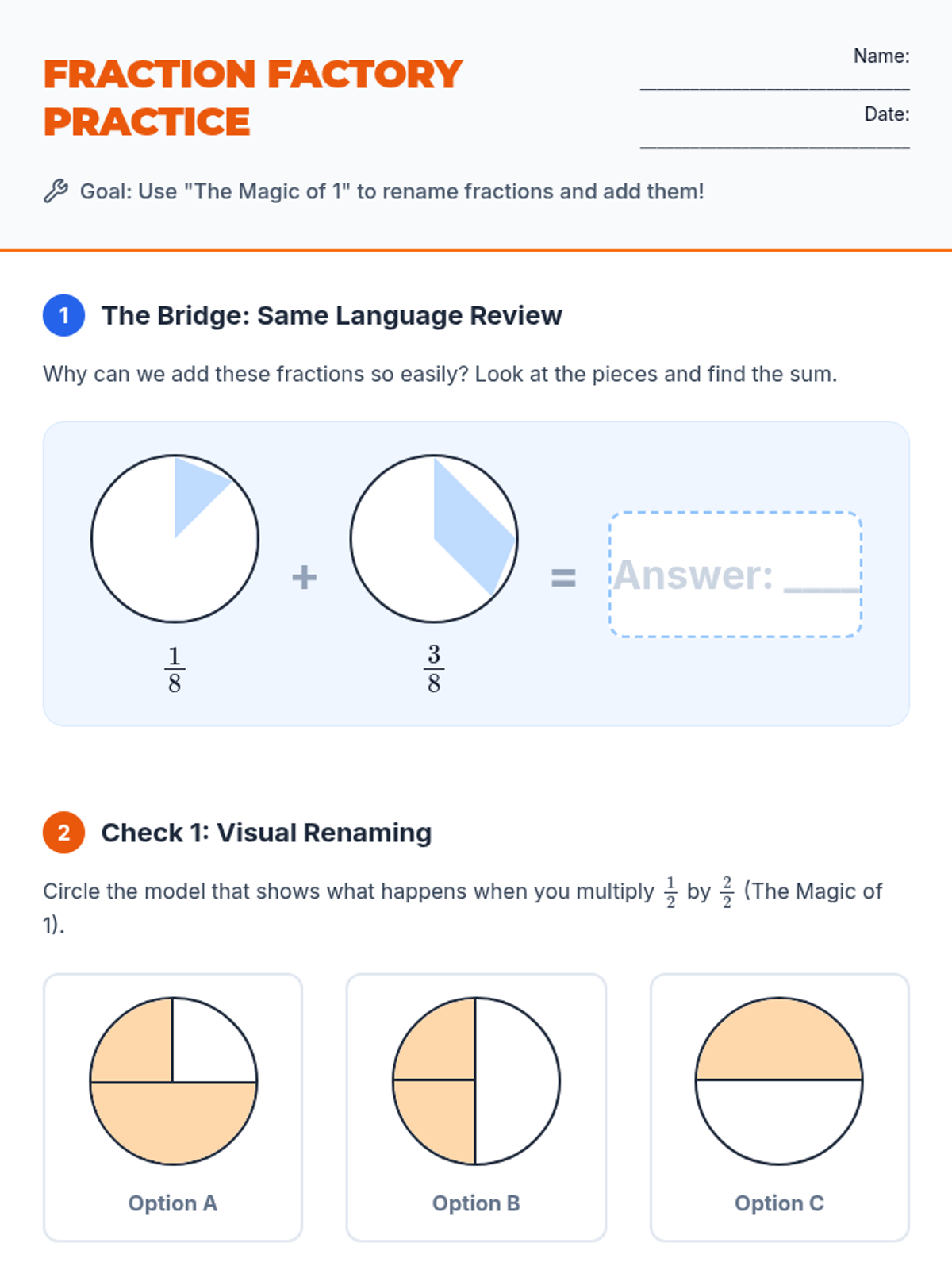
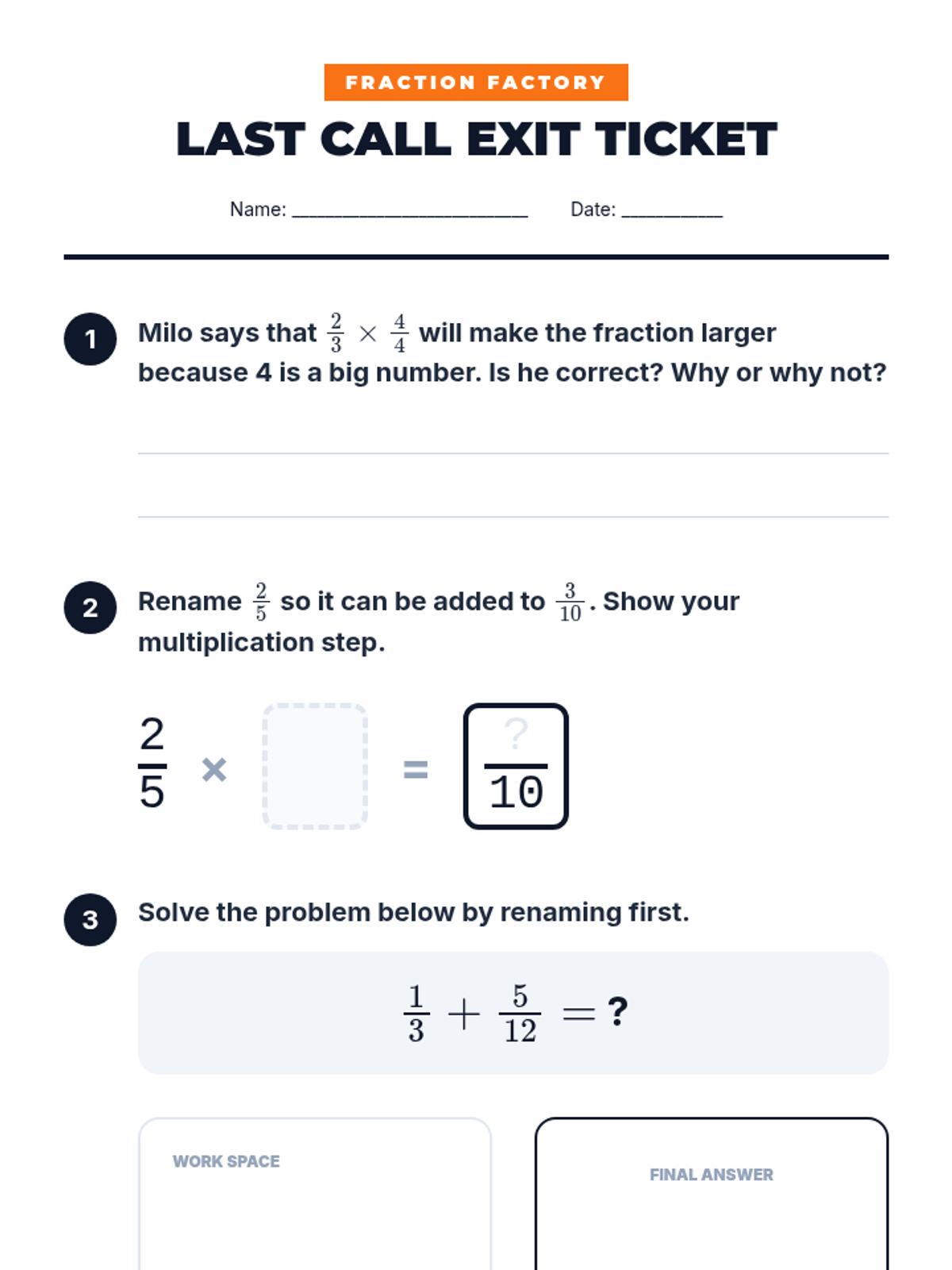
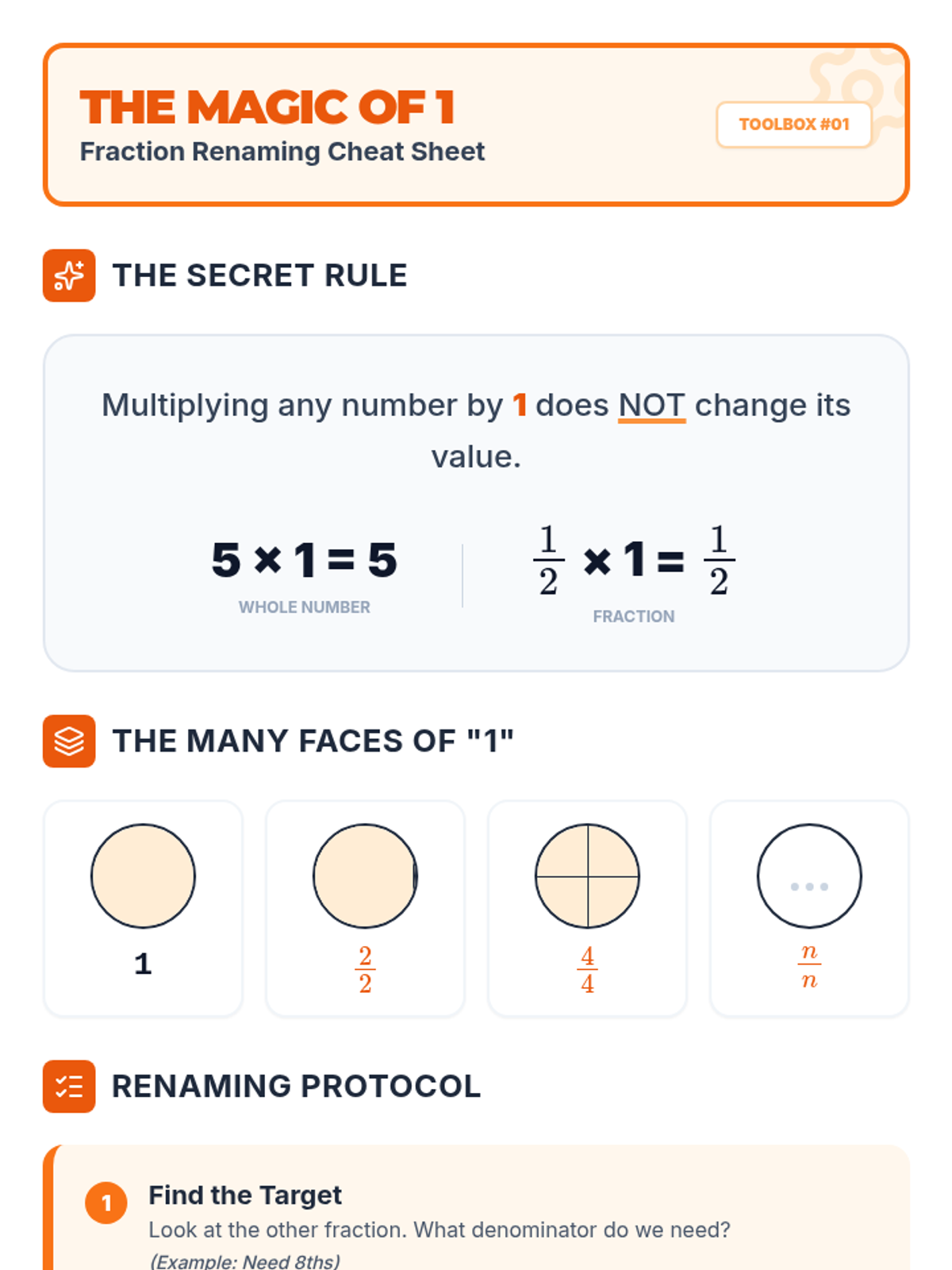
A Tier 2 intervention lesson for 5th grade students focused on conceptually understanding equivalent fractions and renaming them to add fractions with unlike denominators. Students will explore the 'Identity Property of 1' through visual models to see why multiplying the numerator and denominator by the same number creates an equivalent fraction.
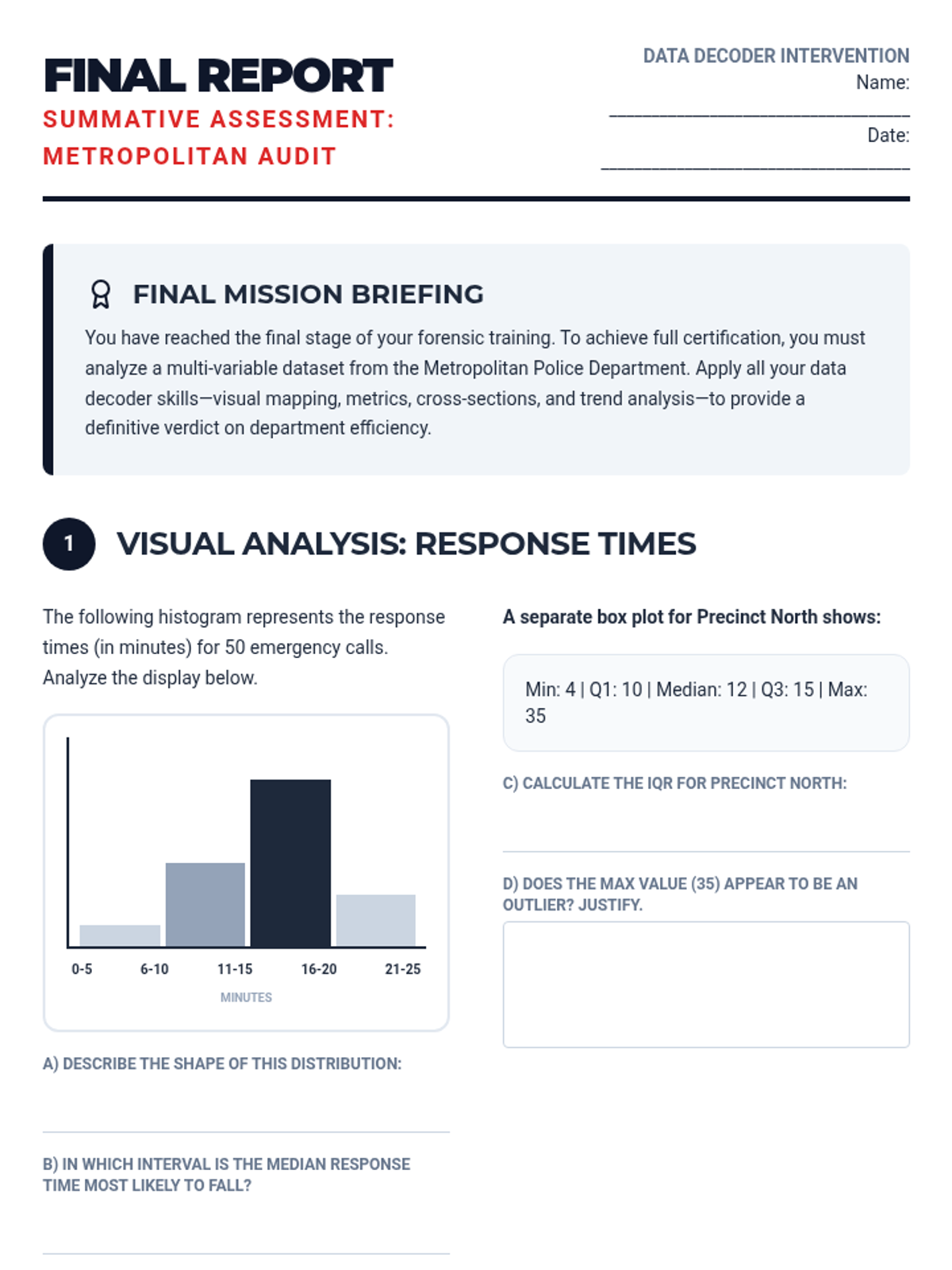
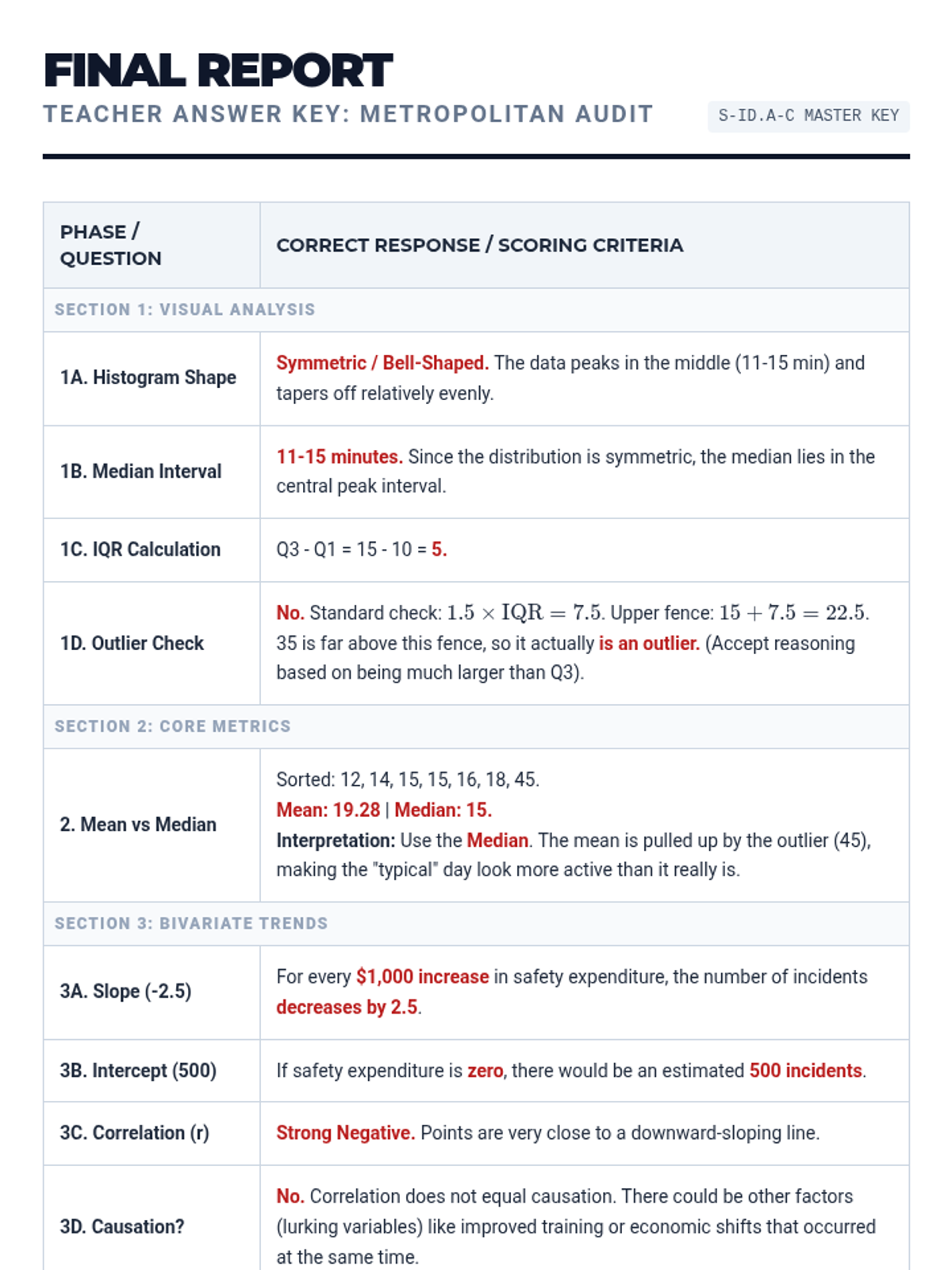
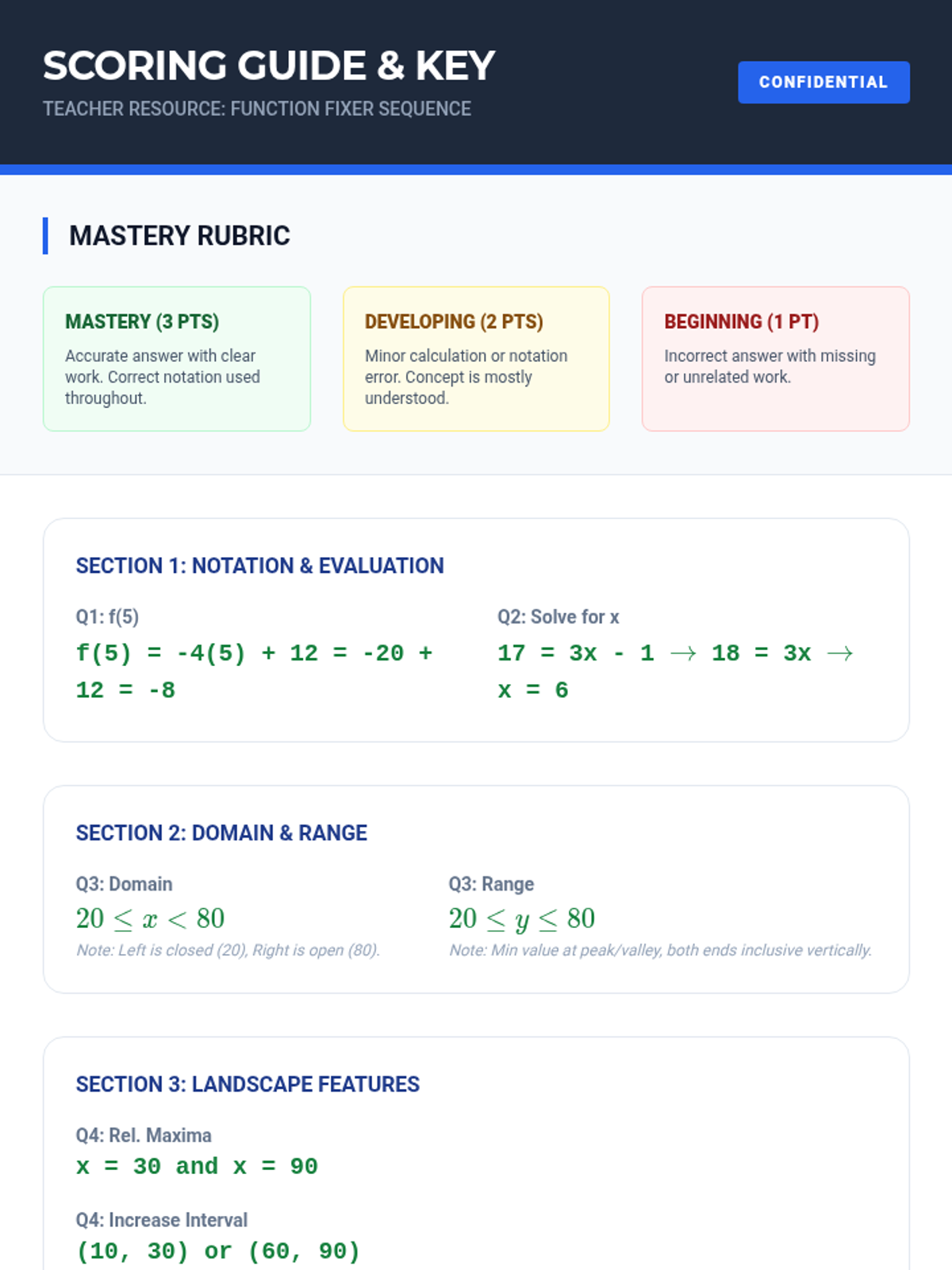
A summative assessment evaluating mastery of the Data Decoder sequence. Students apply their skills to a final case study involving complex data analysis and interpretation.
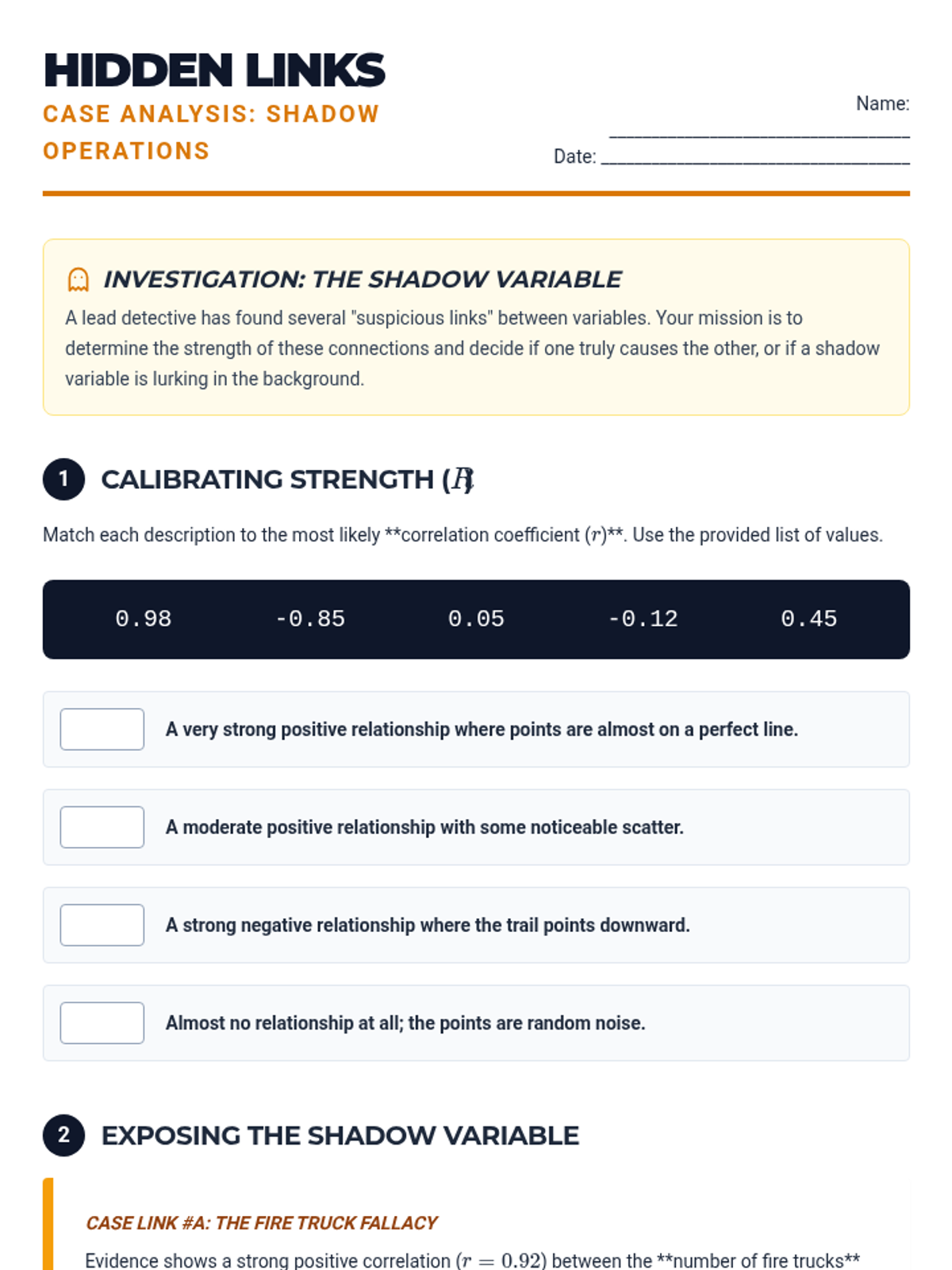
A deep dive into distinguishing between correlation and causation. Students analyze the correlation coefficient (r) and explore how external factors can influence perceived relationships between variables.
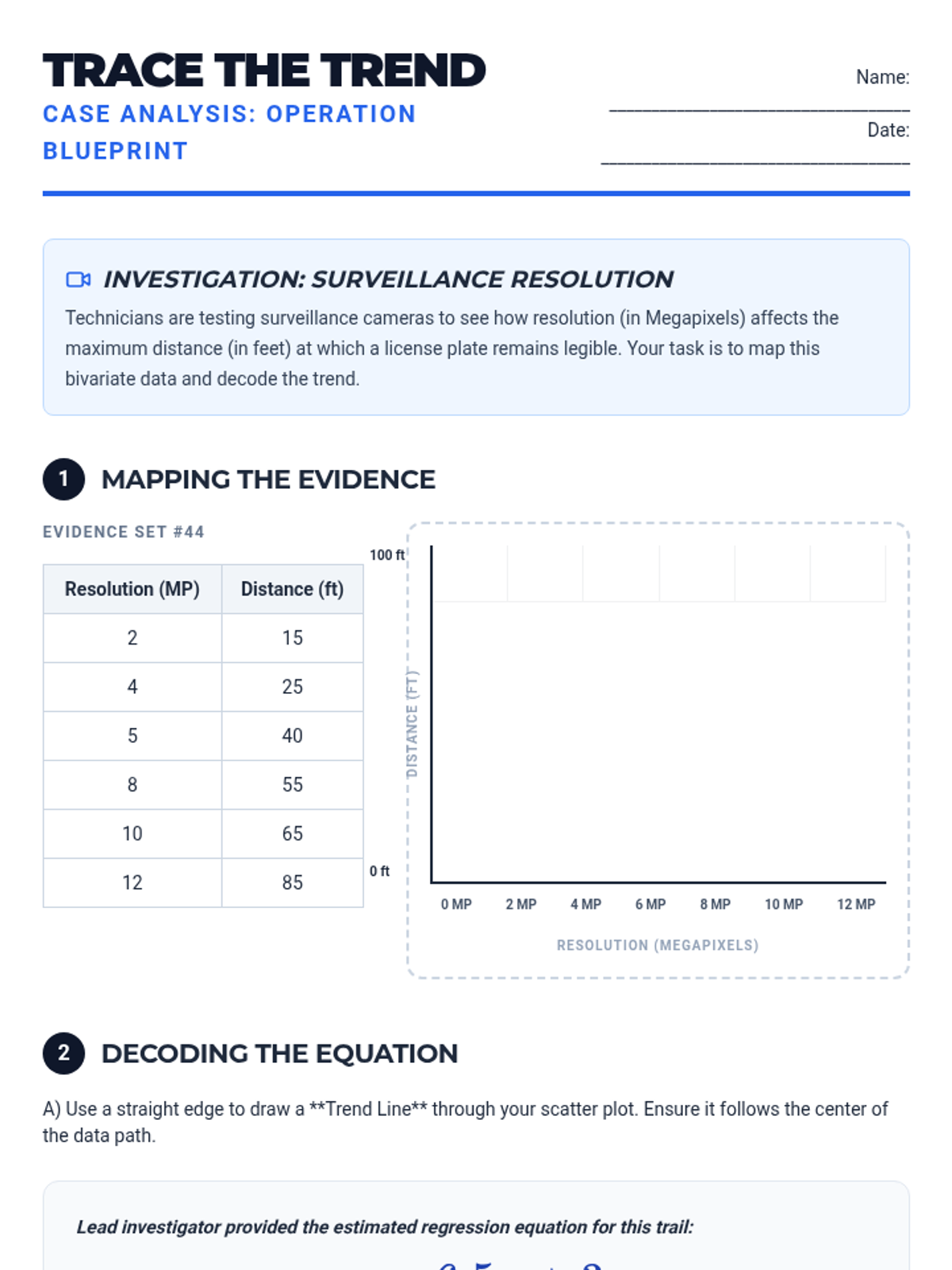
Explores bivariate data through scatter plots, trend lines, and the basics of linear regression. Students learn to use technology or manual methods to find the line of best fit and interpret the slope and intercept.
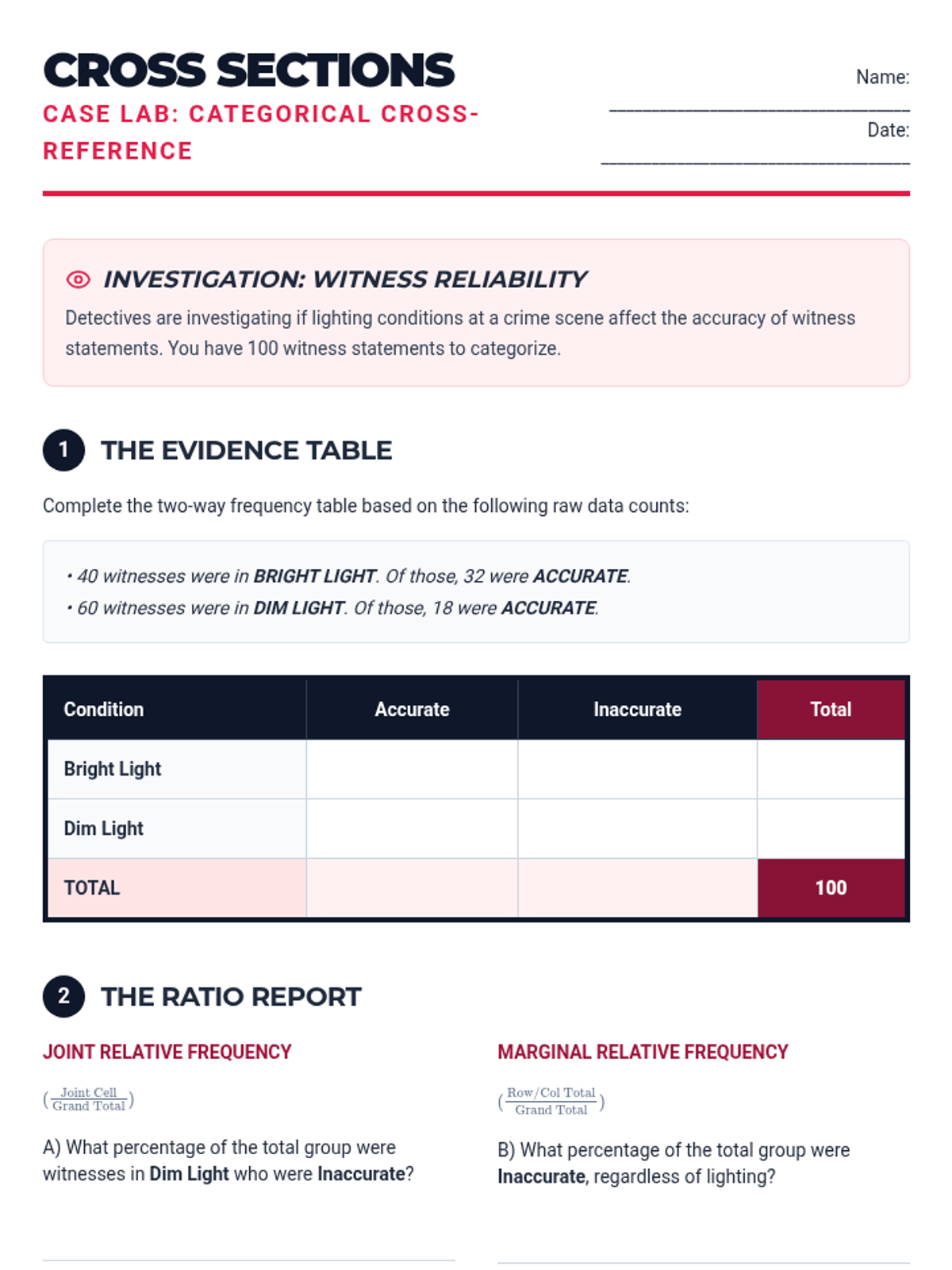
Instruction on organizing and interpreting categorical data using two-way frequency tables. Students calculate joint, marginal, and conditional relative frequencies to find associations between variables.
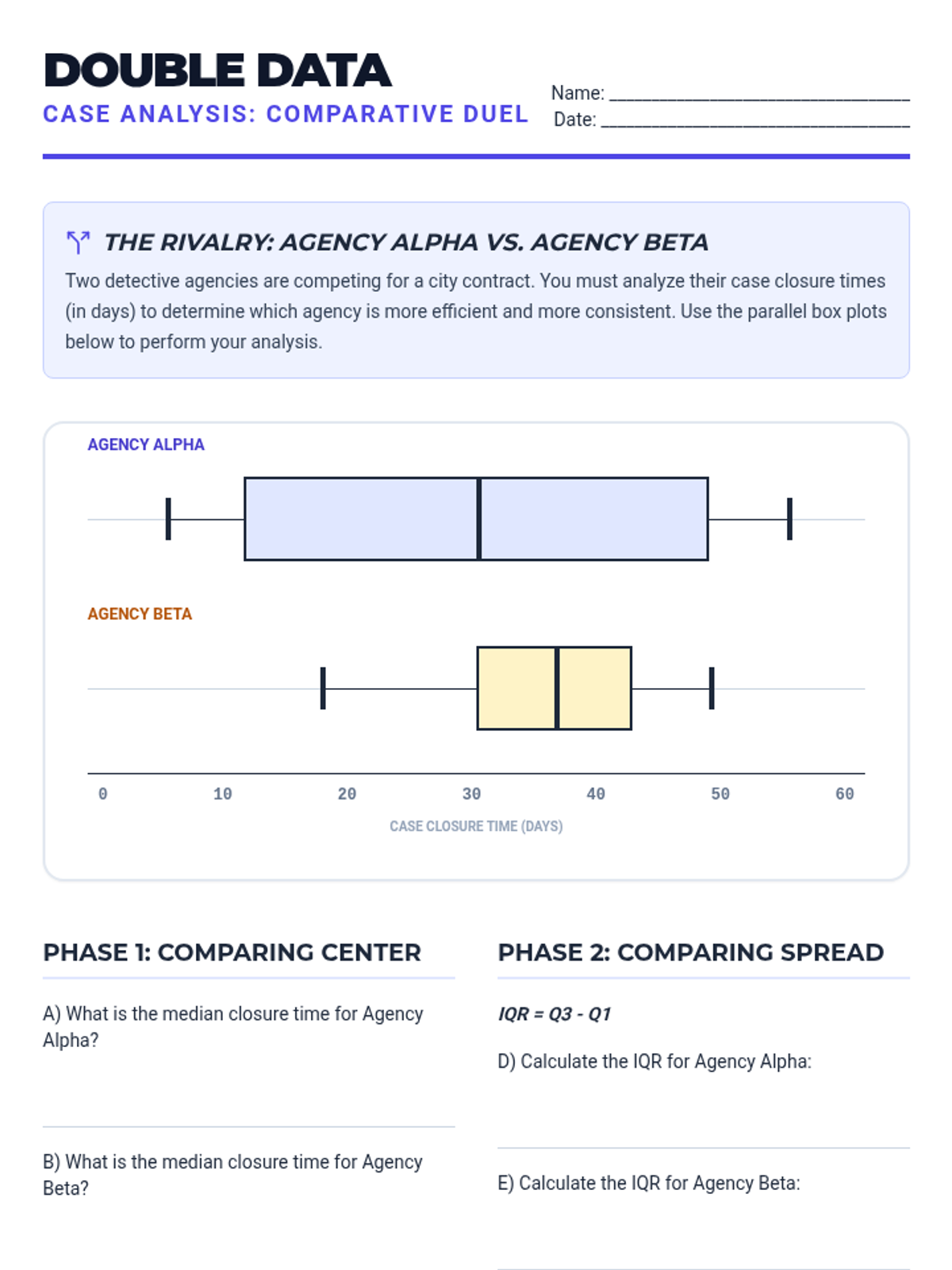
Guided practice in comparing two or more datasets using visual displays and summary statistics. Students analyze differences in shape, center, and spread to draw meaningful conclusions.
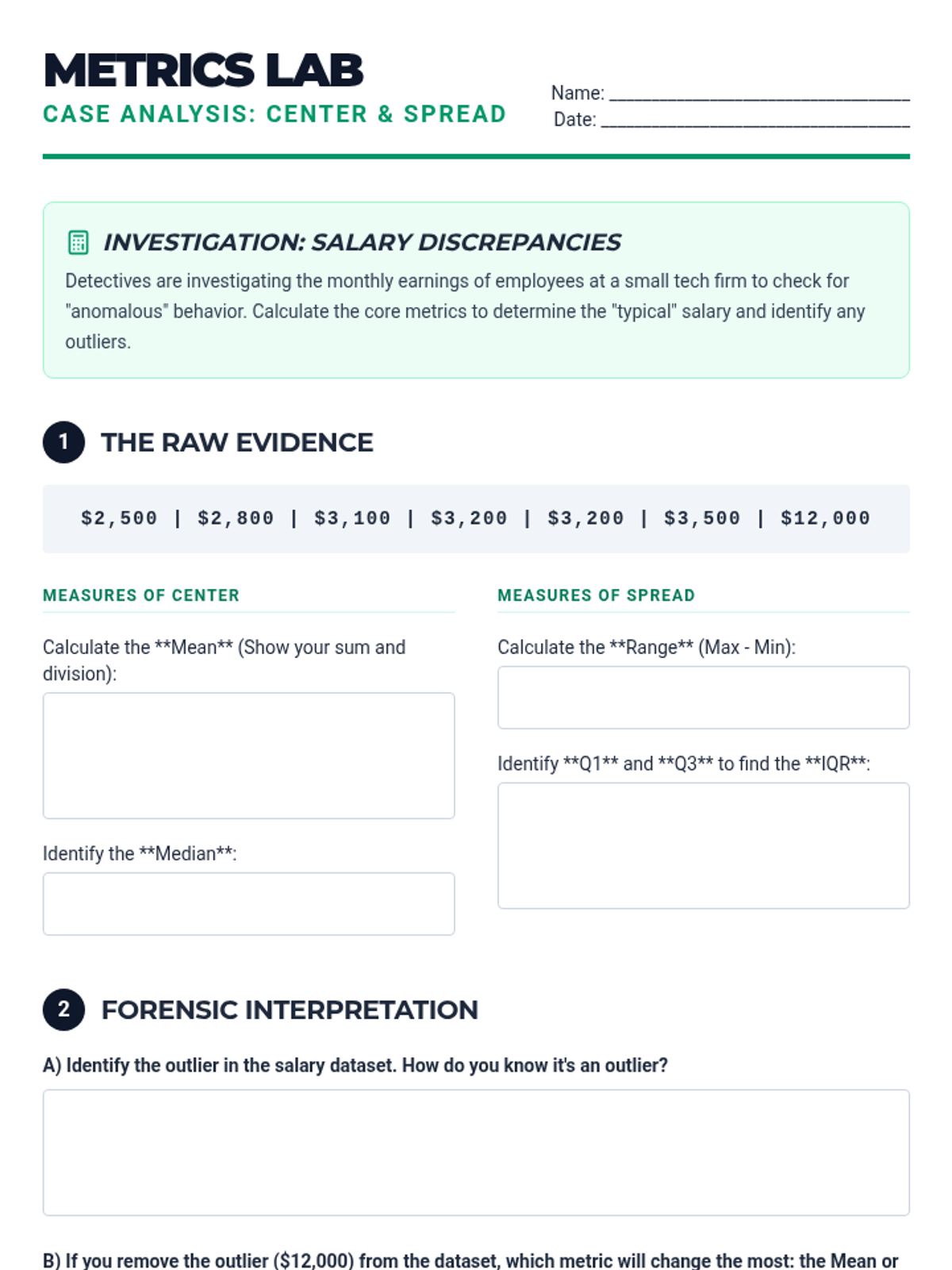
Introduces measures of center (mean, median) and spread (range, interquartile range, standard deviation basics). Students learn how to calculate these values and understand what they represent in the context of a dataset.
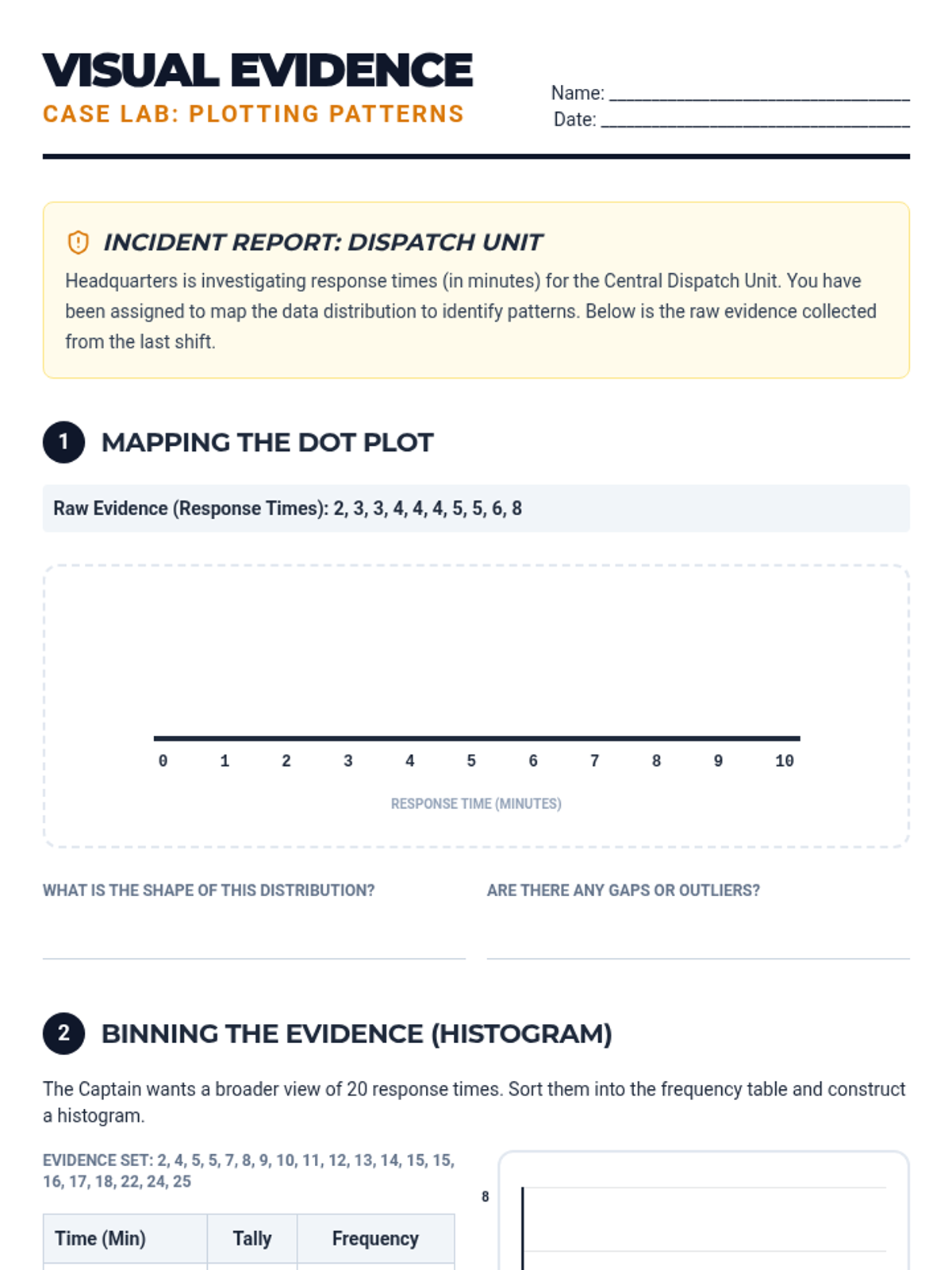
Focuses on constructing and interpreting visual data displays including histograms, box plots, and dot plots. Students learn to identify the most appropriate display for different data types and describe the shape of distributions.
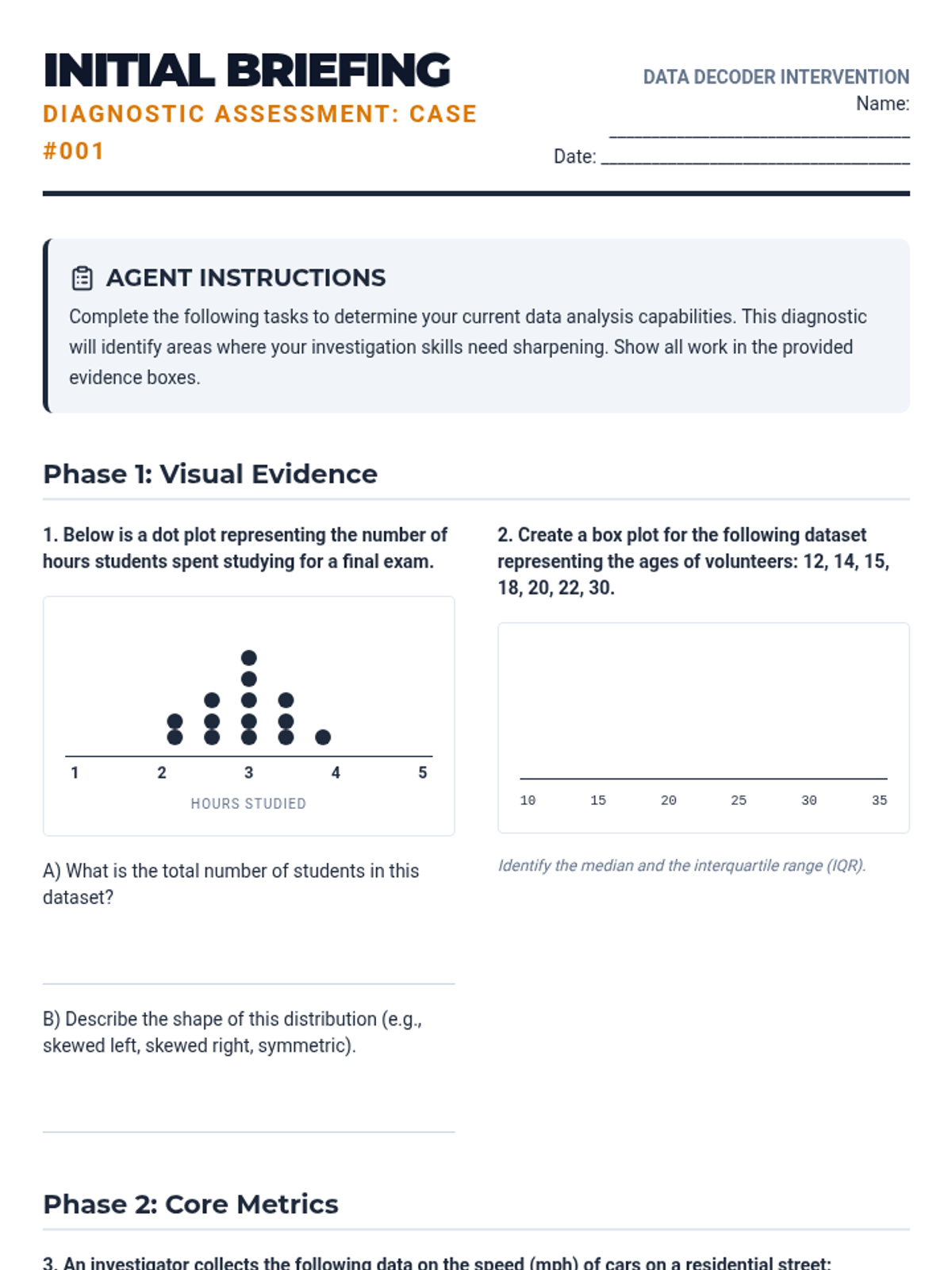
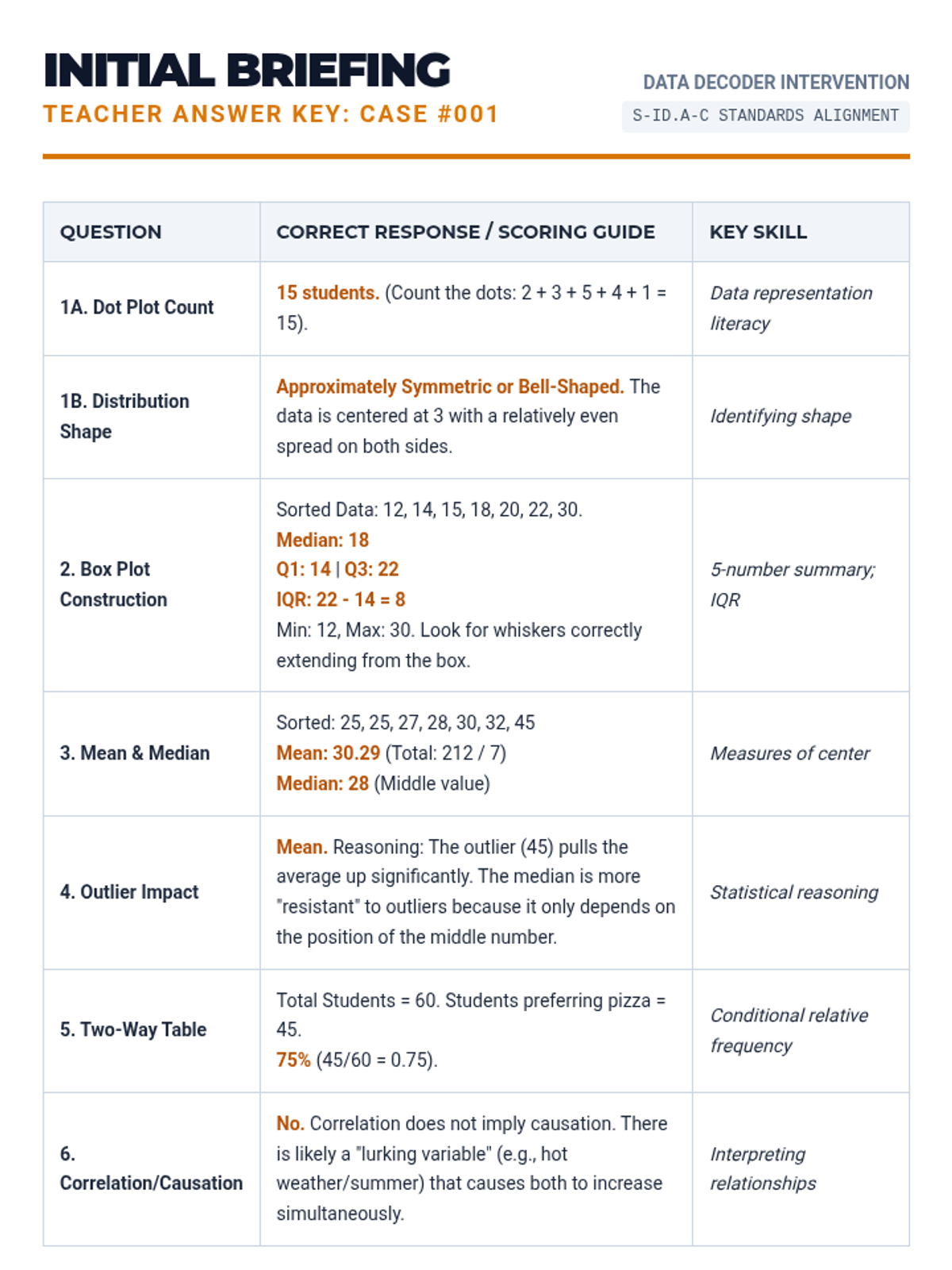
A baseline assessment designed to identify student gaps in data interpretation, display construction, and statistical reasoning. Includes a variety of item types to gauge prior knowledge of histograms, box plots, and measures of center.
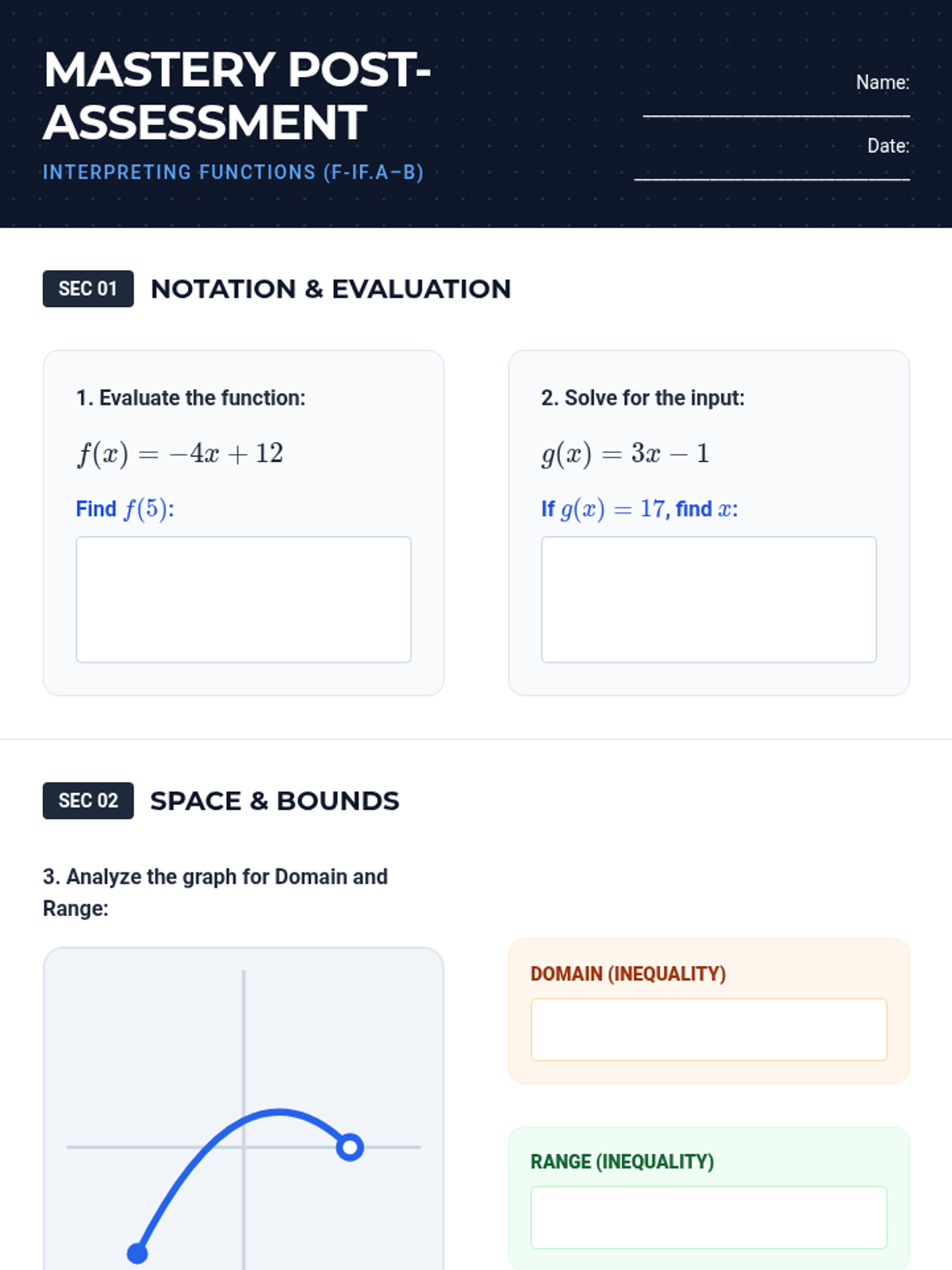
Final evaluation of student mastery across all function interpretation standards (F-IF.A–B).
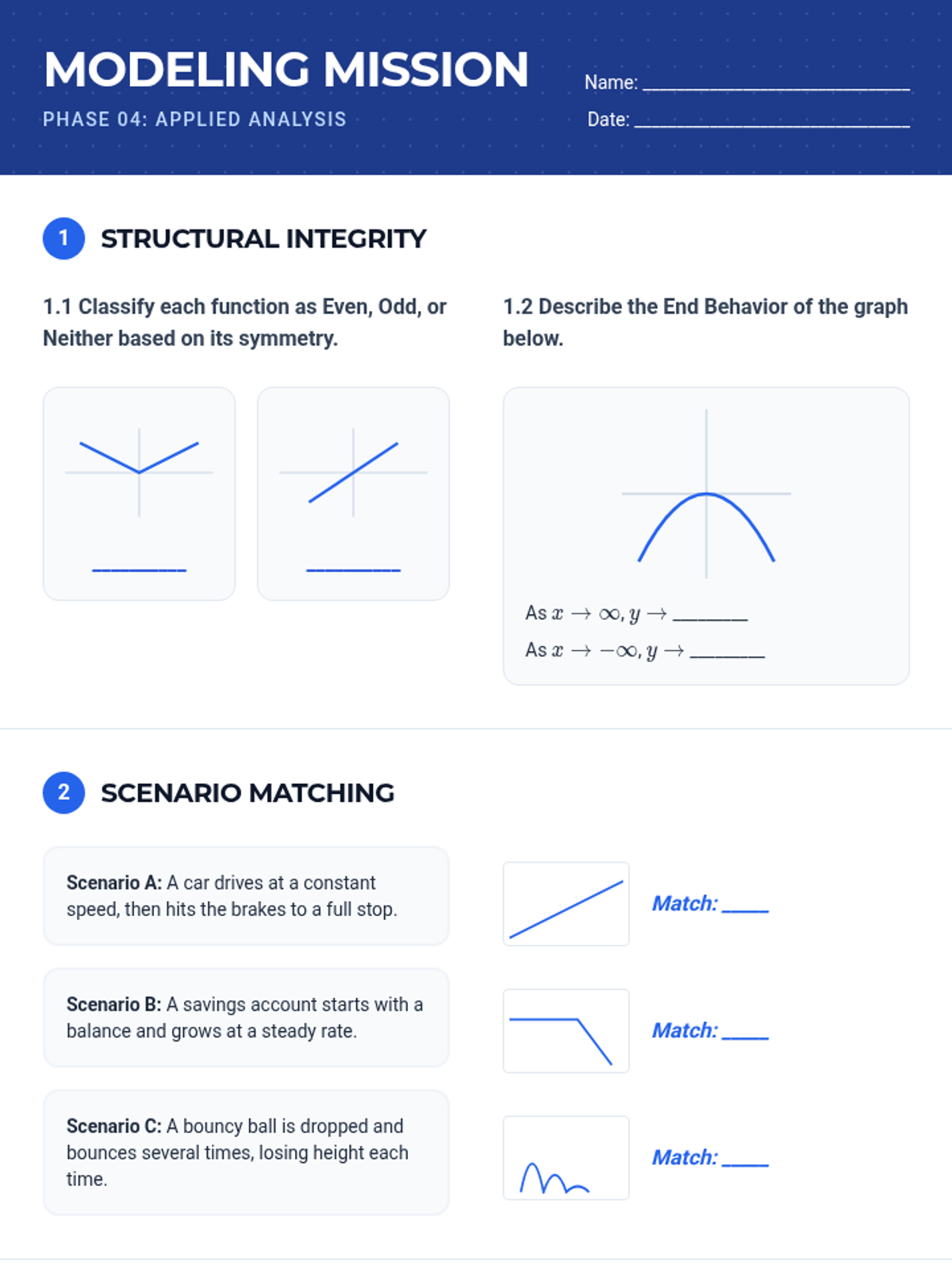
Analyze symmetry, end behavior, and apply function interpretation to real-world scenarios to build mathematical modeling skills.
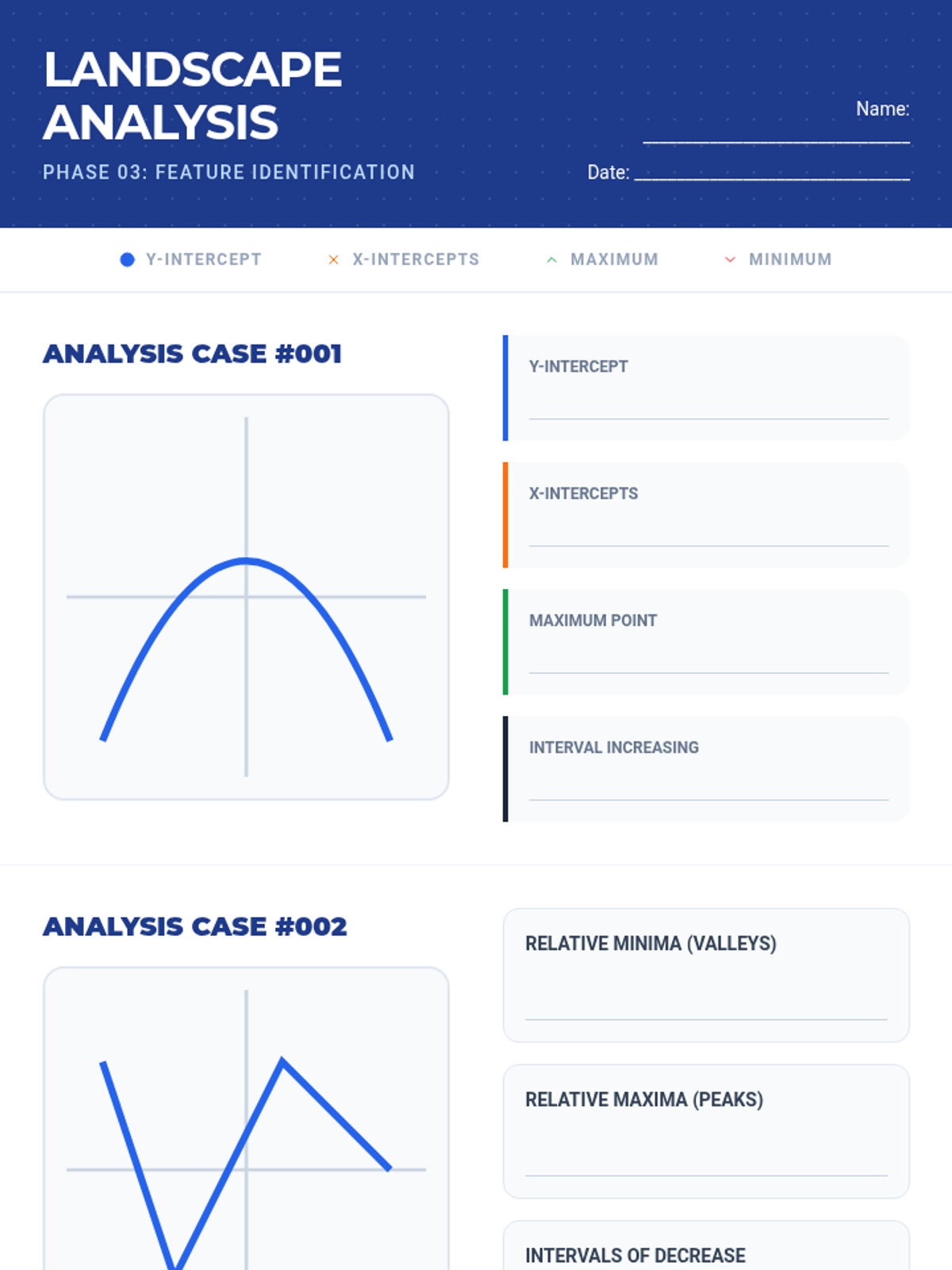
Identify and interpret key features of functions including intercepts, relative maxima and minima, and intervals where the function is increasing or decreasing.
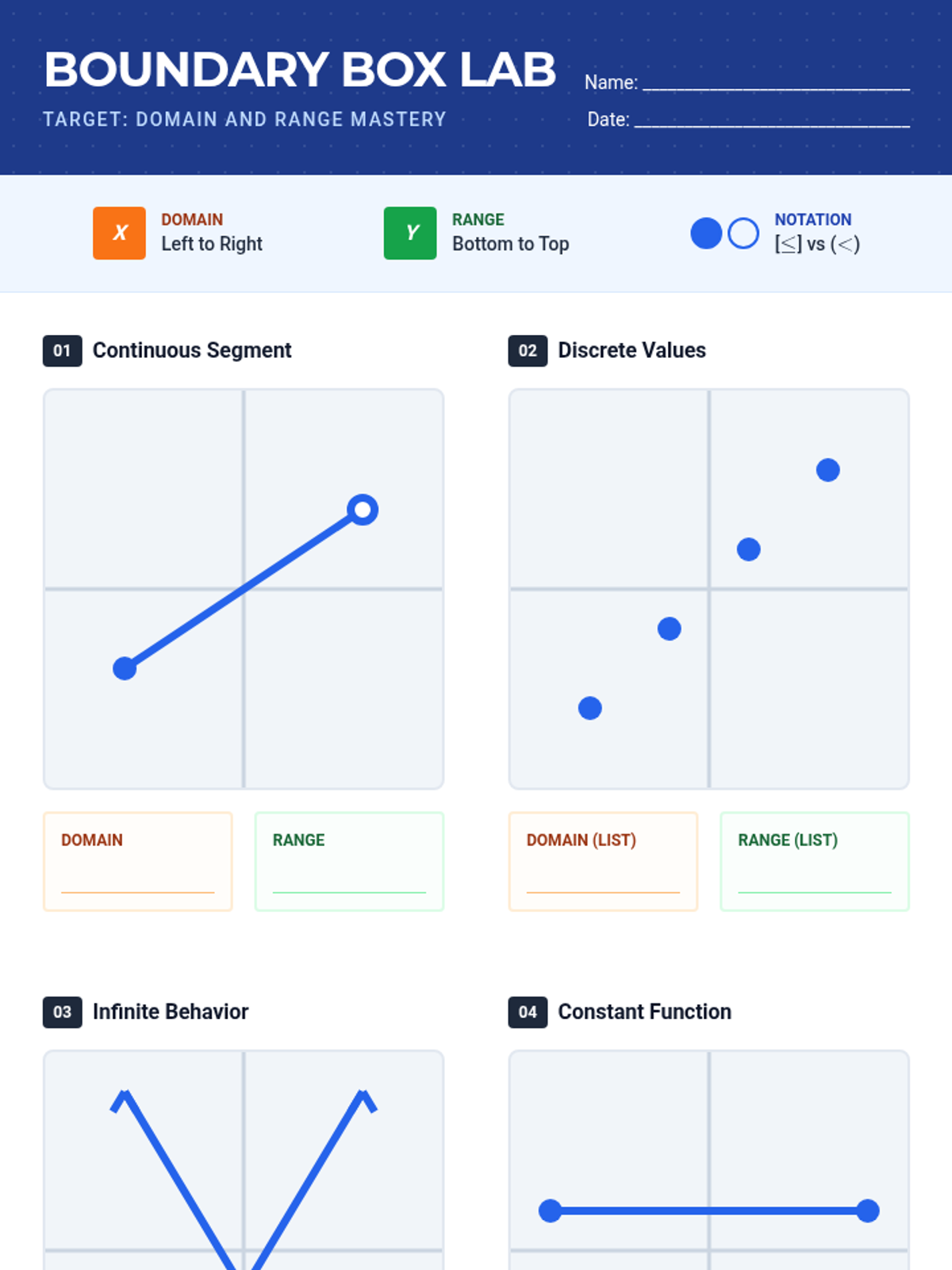
Master the concepts of domain and range across graphs, tables, and equations using visual 'boundary box' techniques.
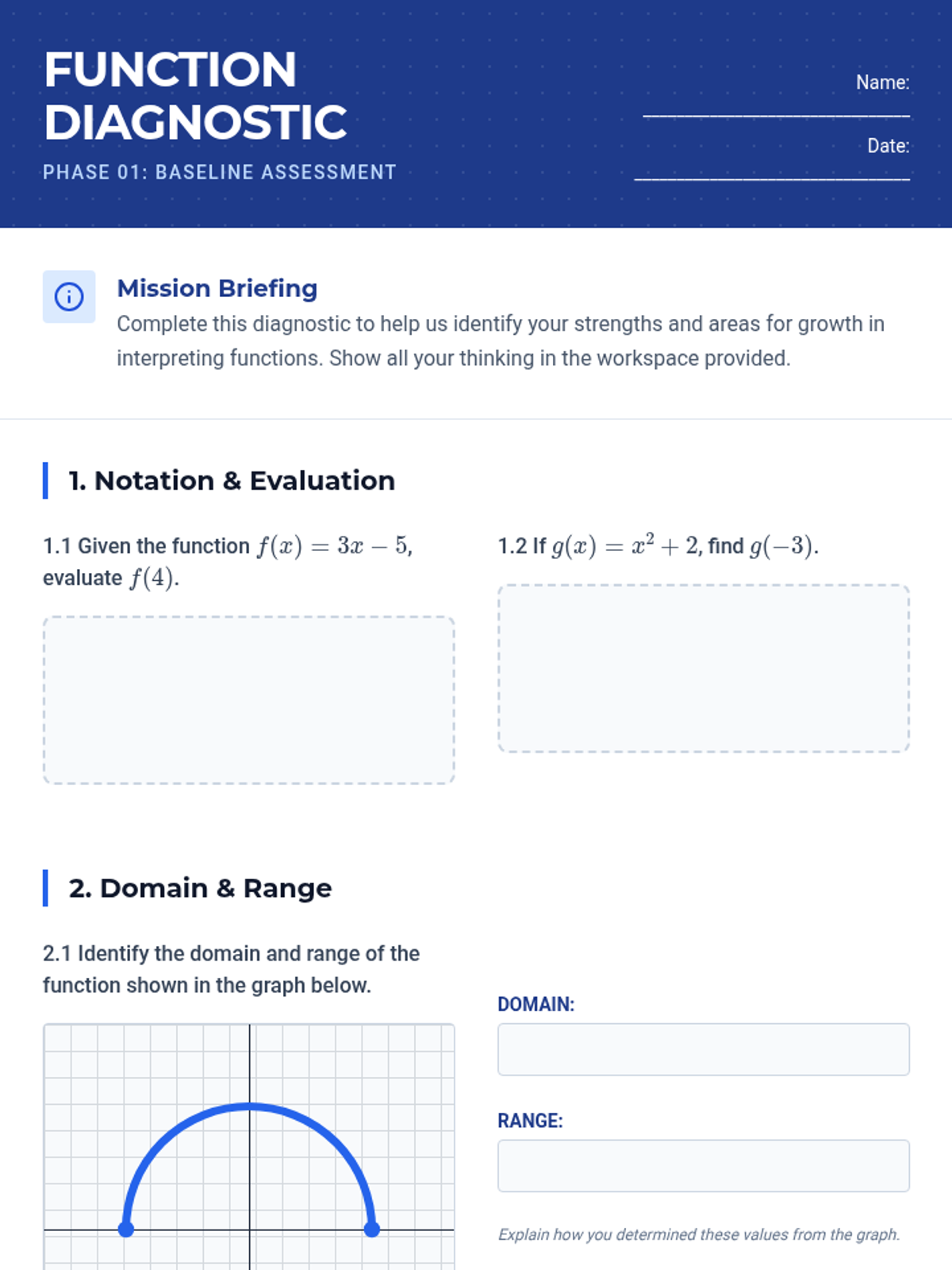
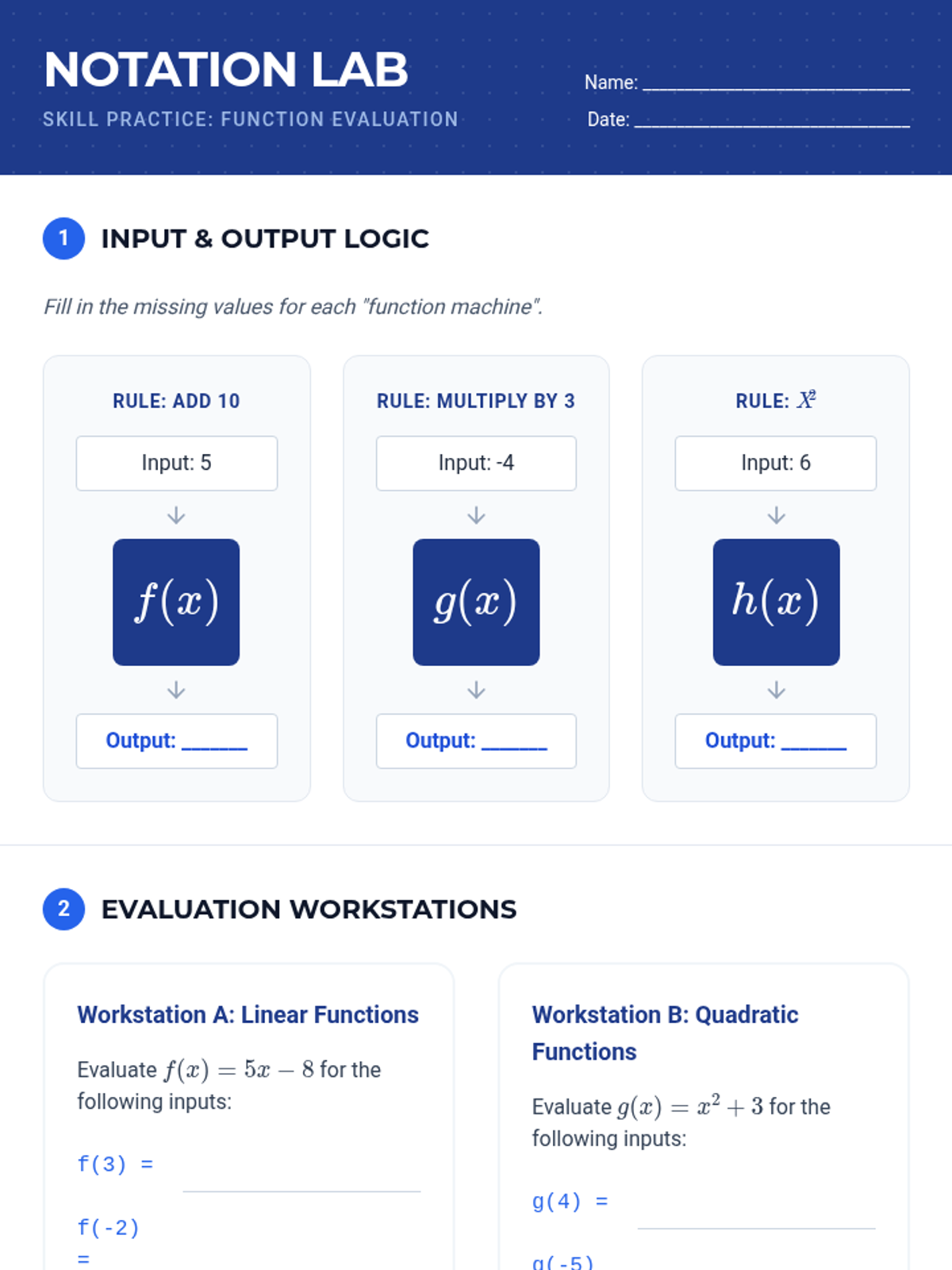
Identify baseline student knowledge of functions and establish a solid understanding of function notation and evaluation through the 'function machine' concept.
A comprehensive final assessment and review session to measure student mastery of multi-step equations and real-world problem solving.
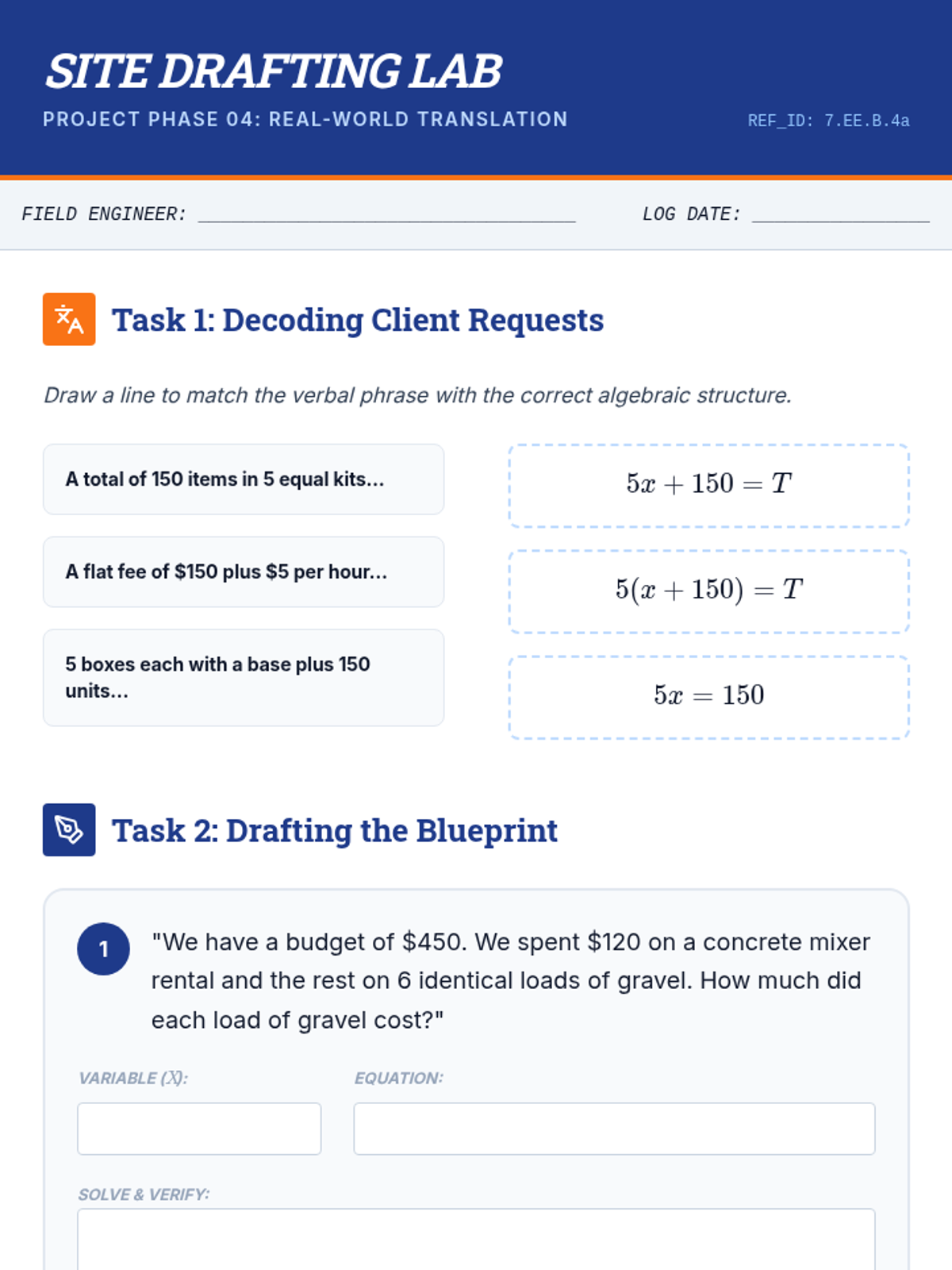
Students learn to translate real-world scenarios into algebraic equations and solve them, focusing on rational numbers and variable definitions.
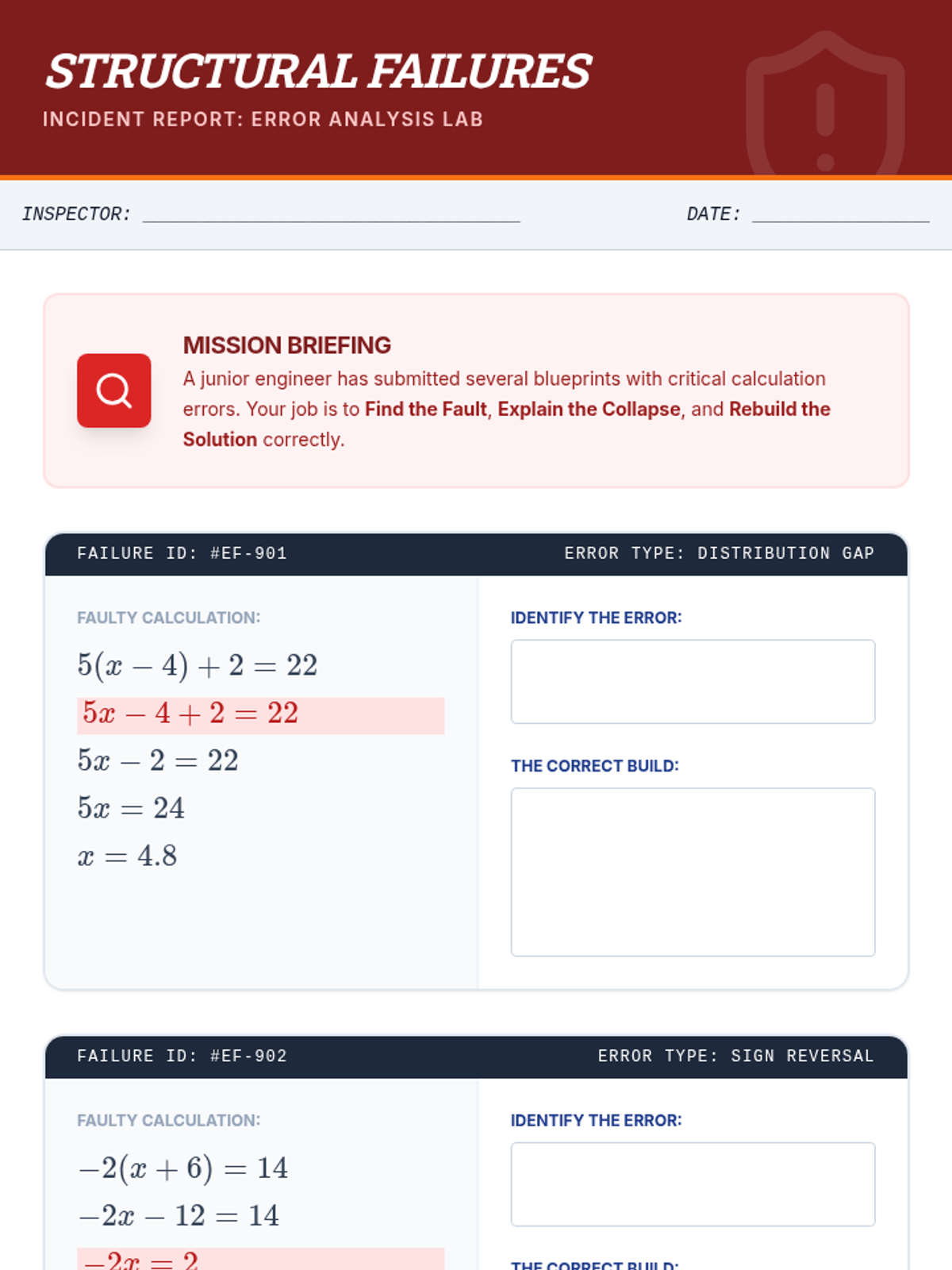
Focuses on multi-step equations involving the distributive property and combining like terms, including error analysis activities to solidify conceptual understanding.
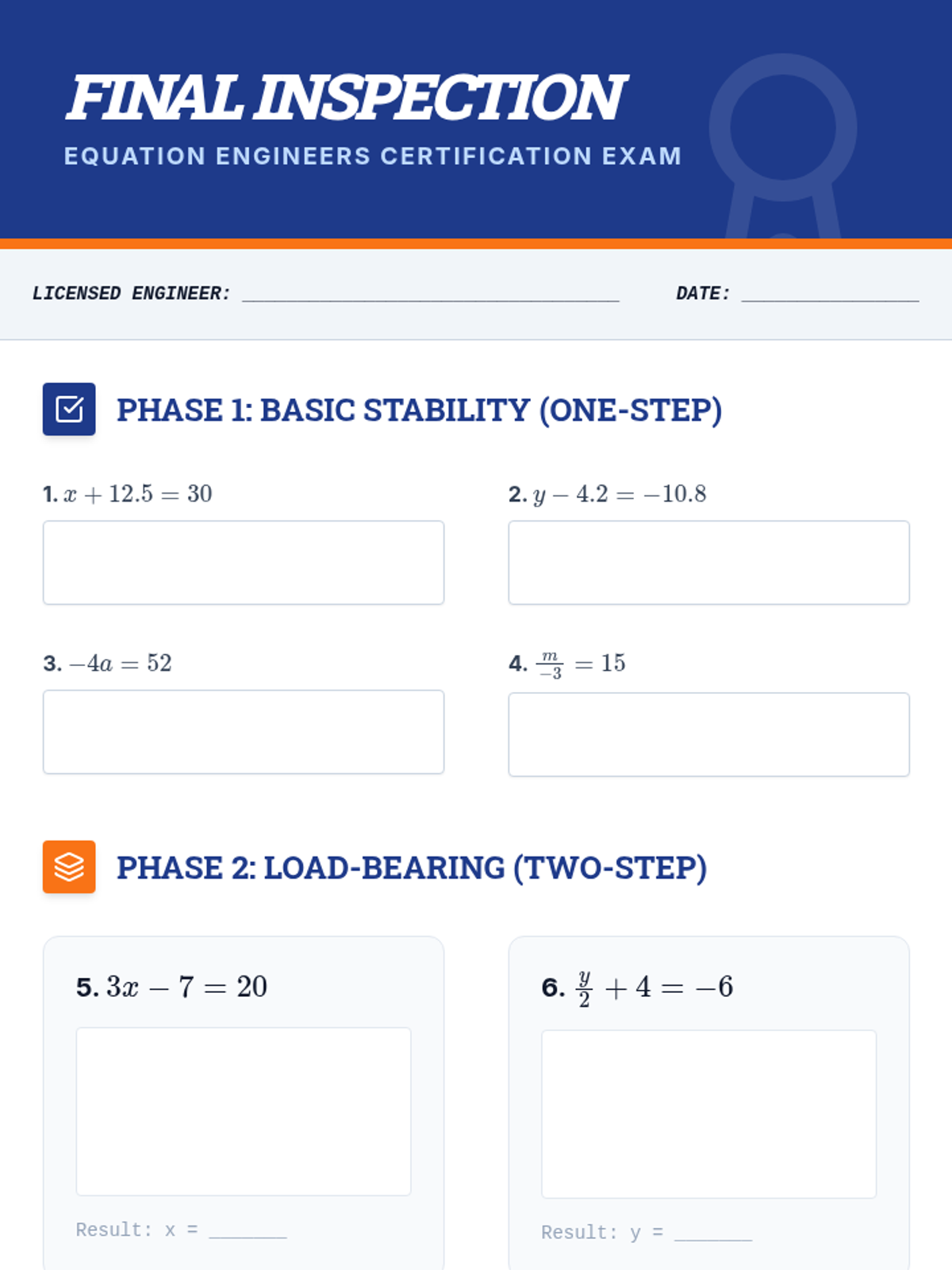
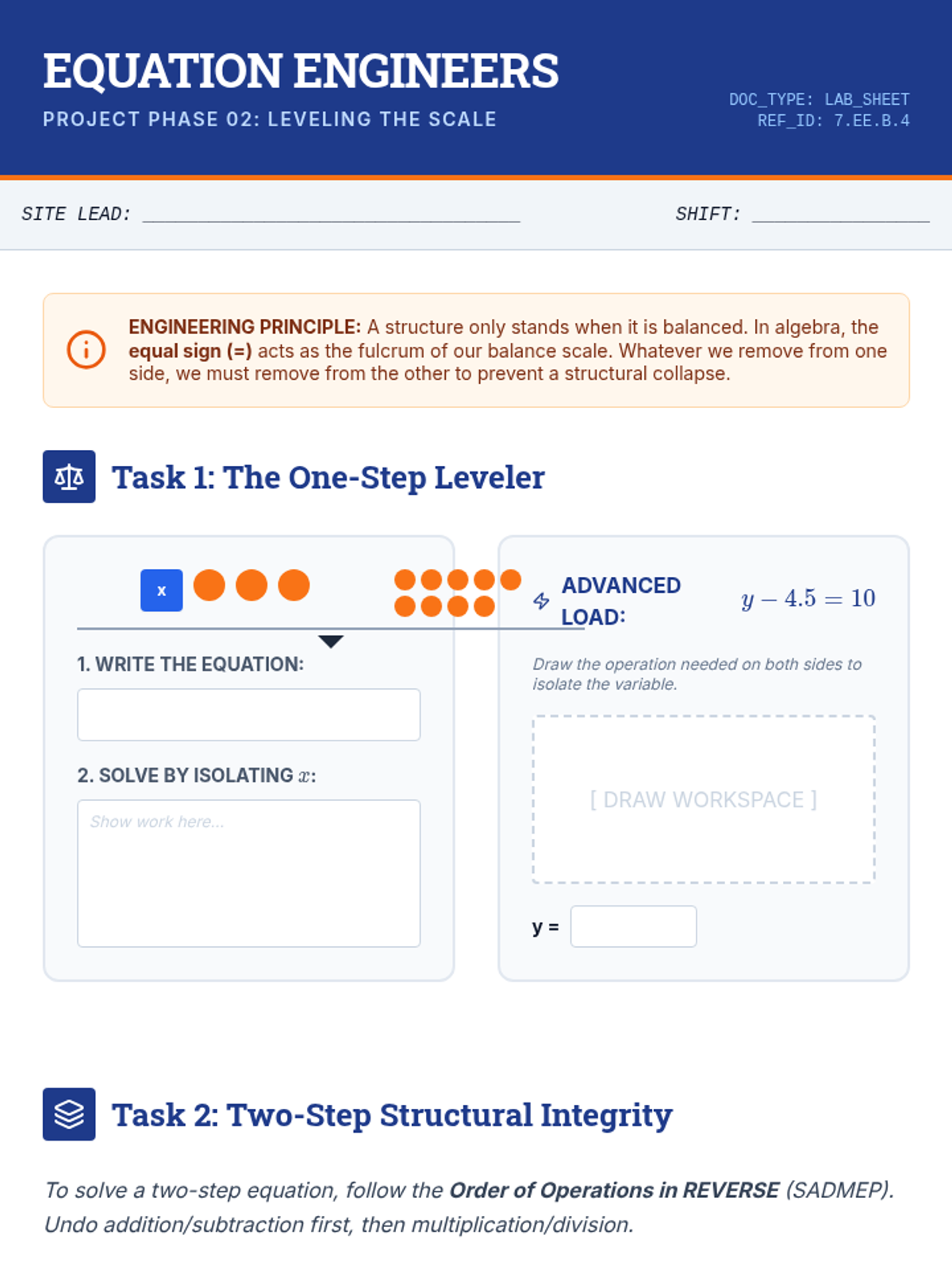
Students master one and two-step equations by utilizing balance models and algebraic methods to maintain equality while isolating the variable.
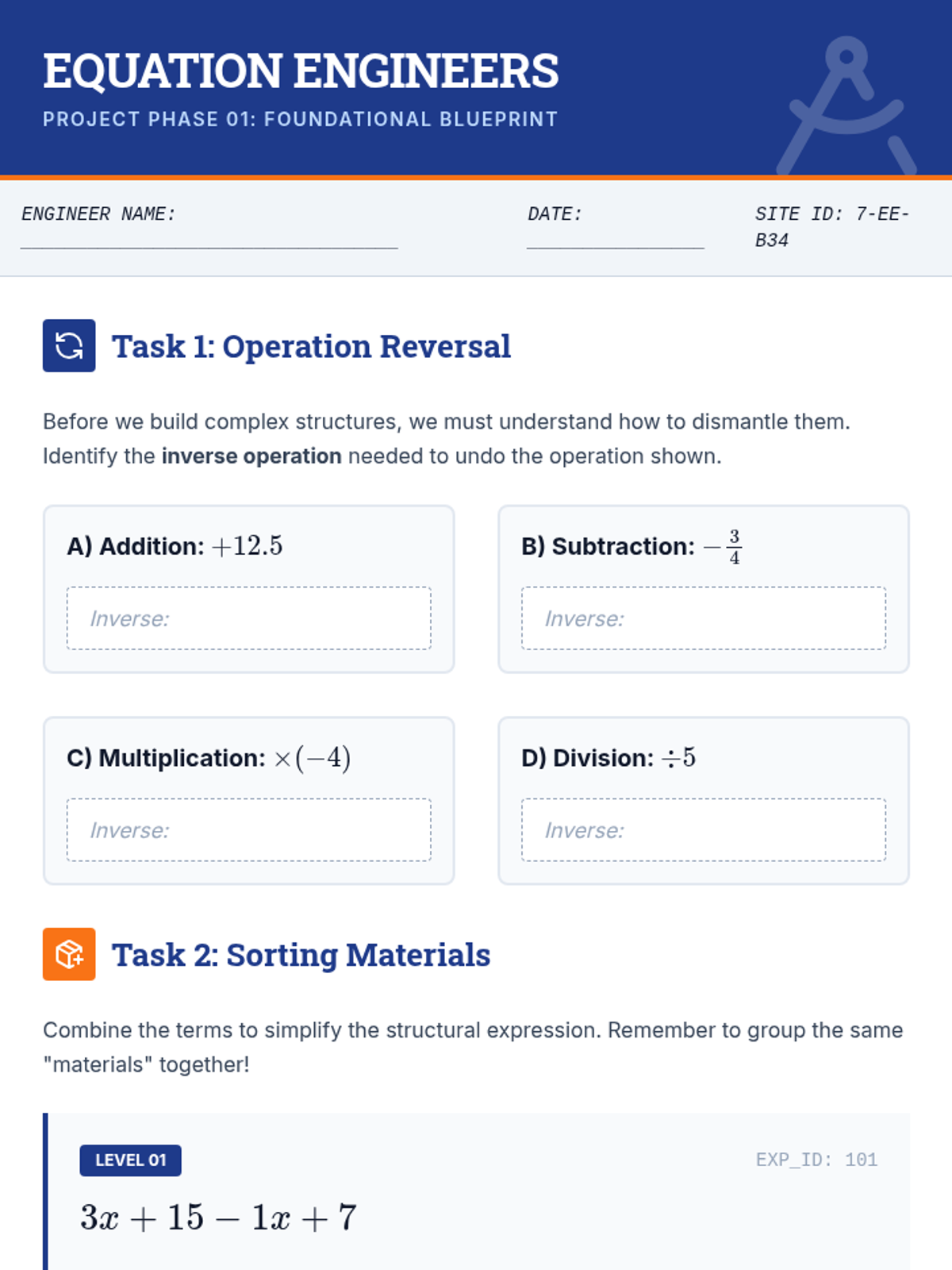
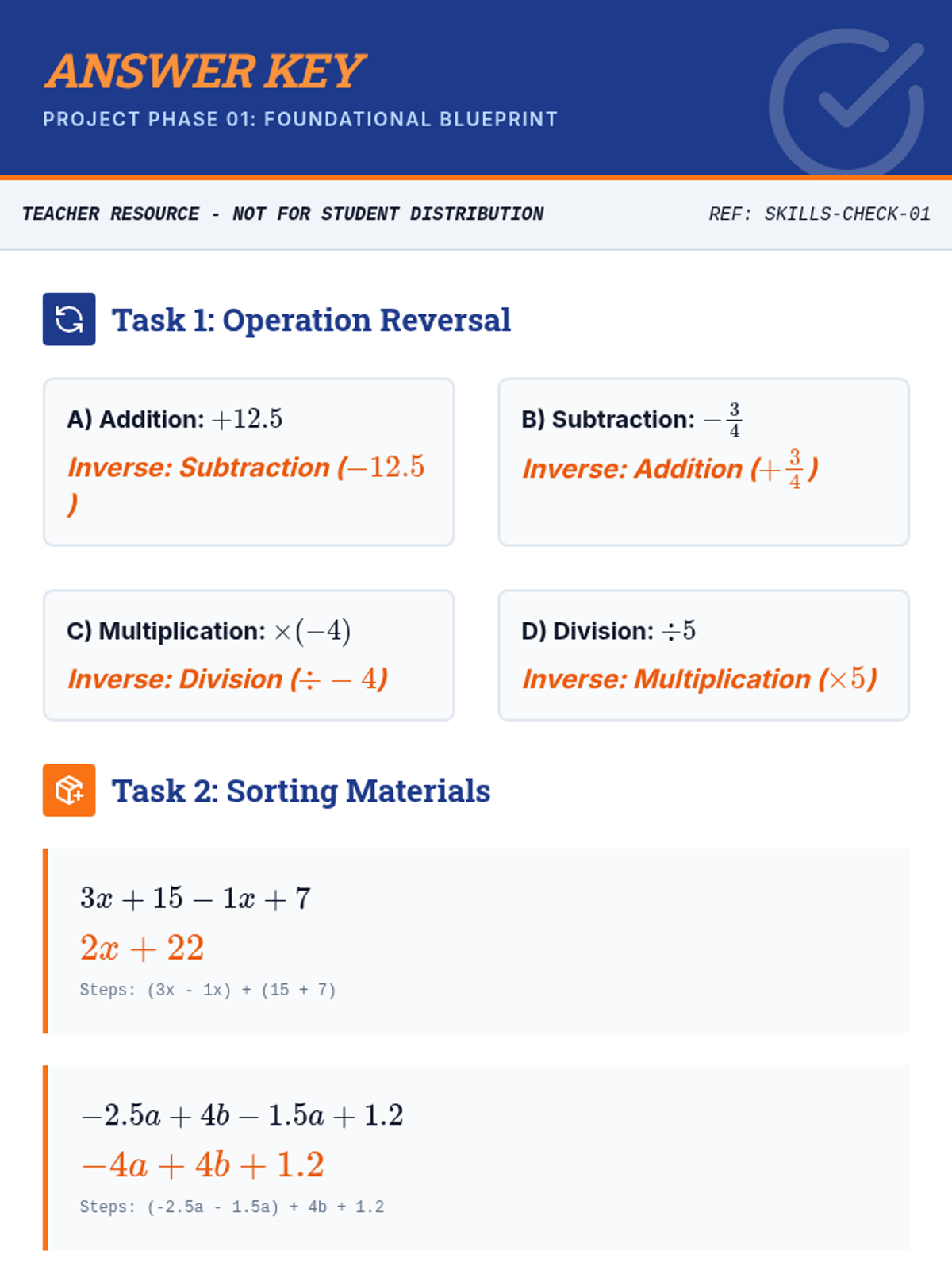
This introductory lesson focuses on identifying gaps in prerequisite skills such as inverse operations and combining like terms, providing targeted review to prepare students for multi-step equations.
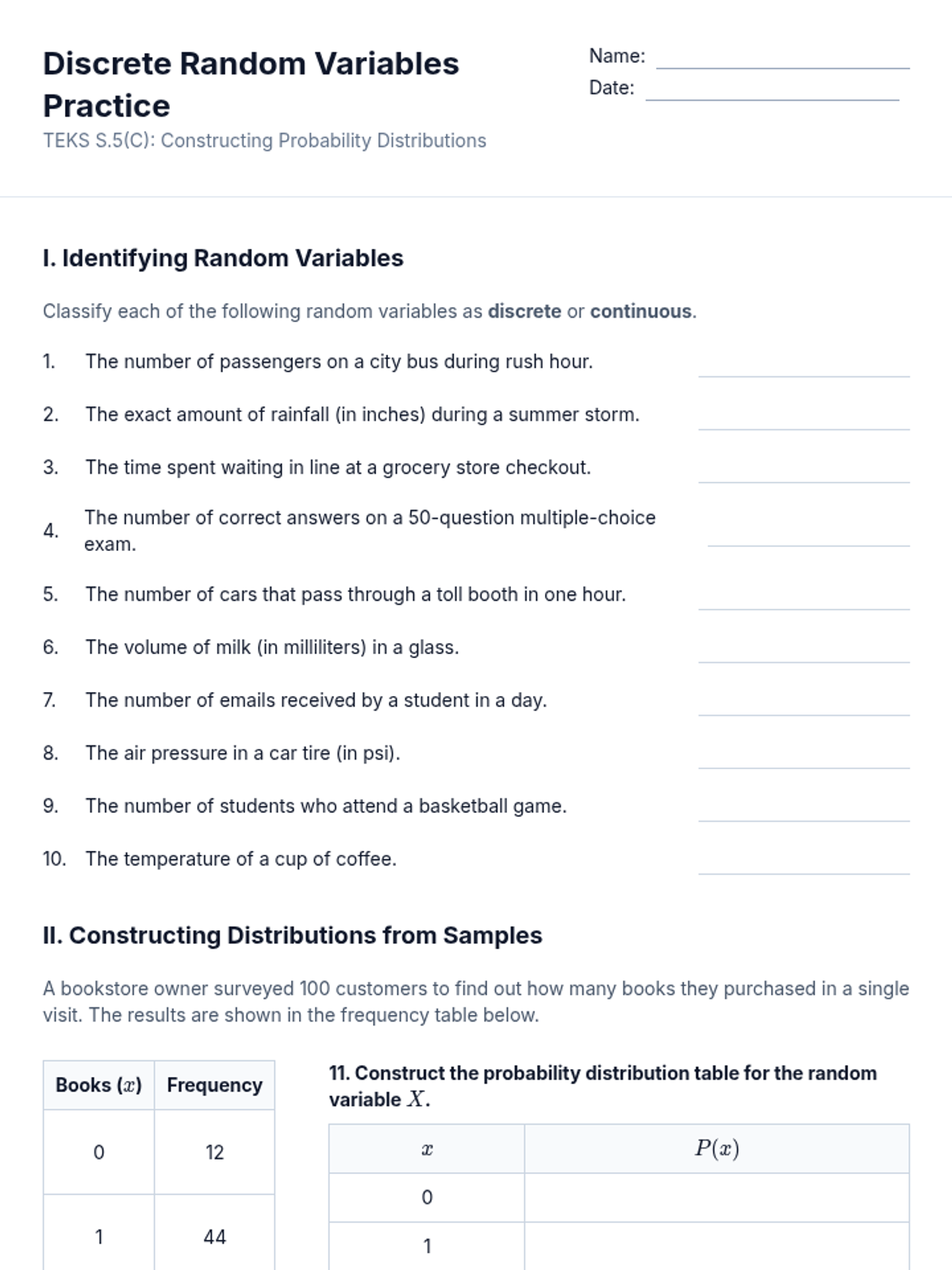
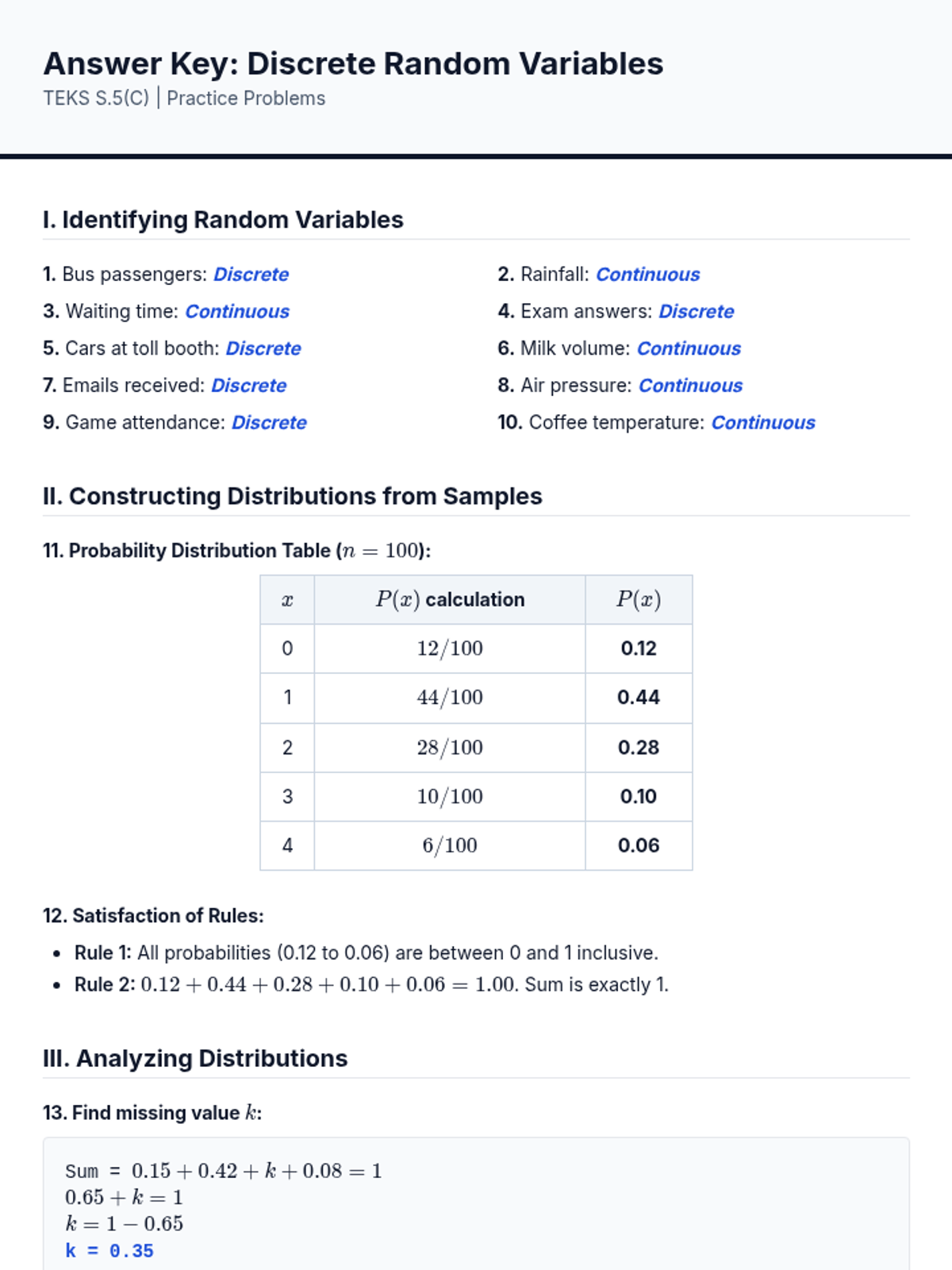
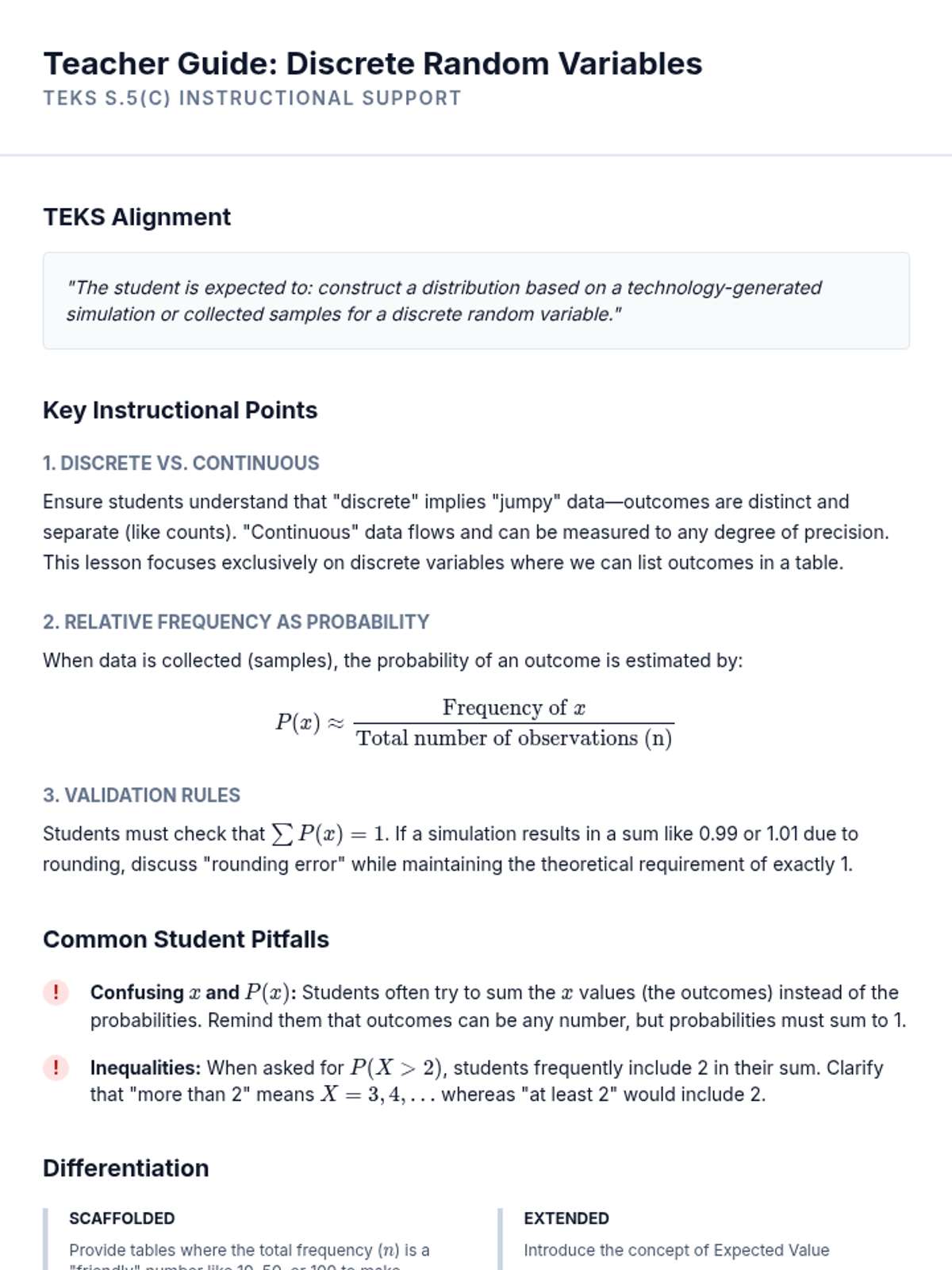
A lesson on constructing and analyzing probability distributions for discrete random variables based on collected samples or simulations, aligned with TEKS S.5(C).
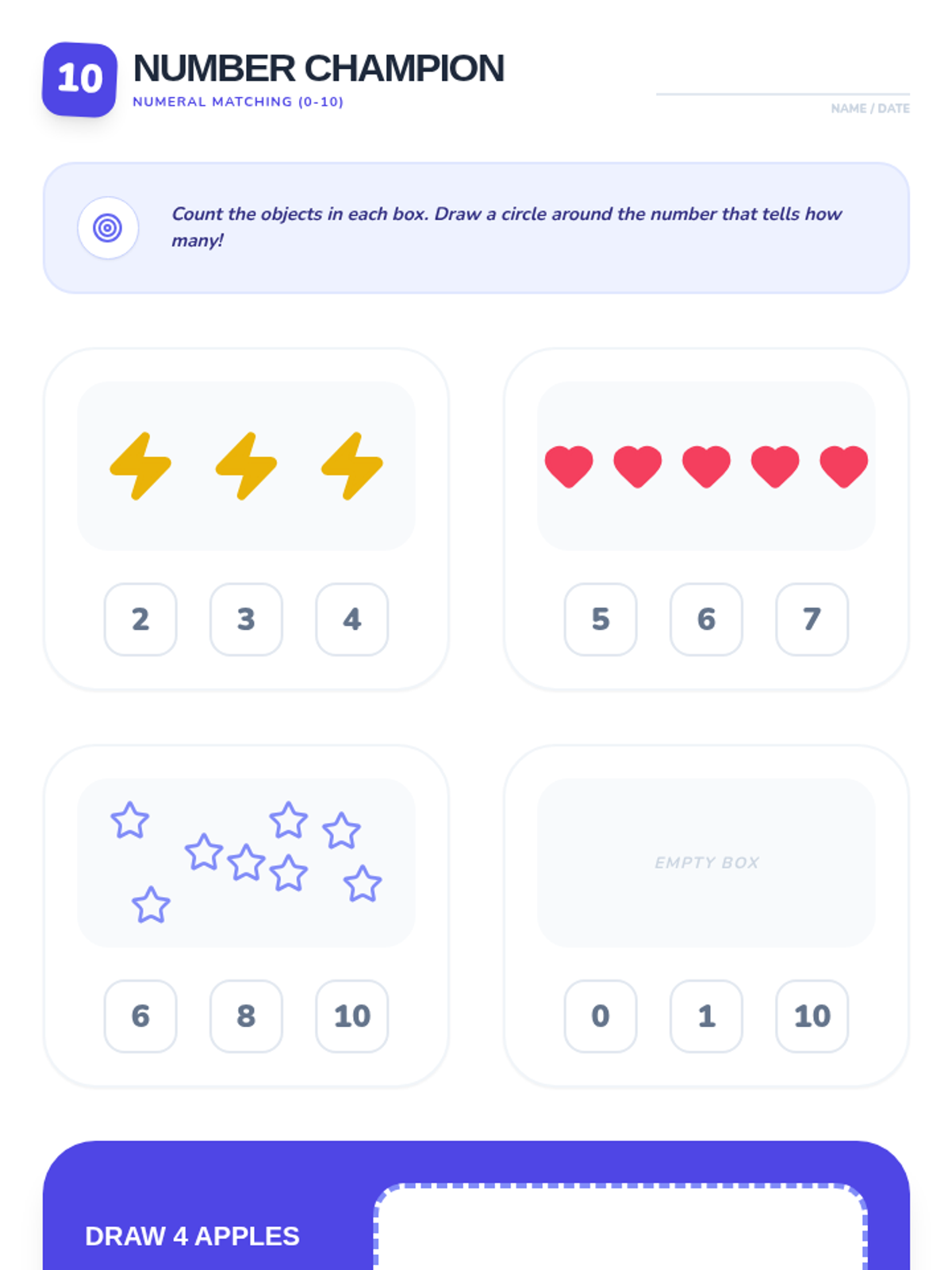
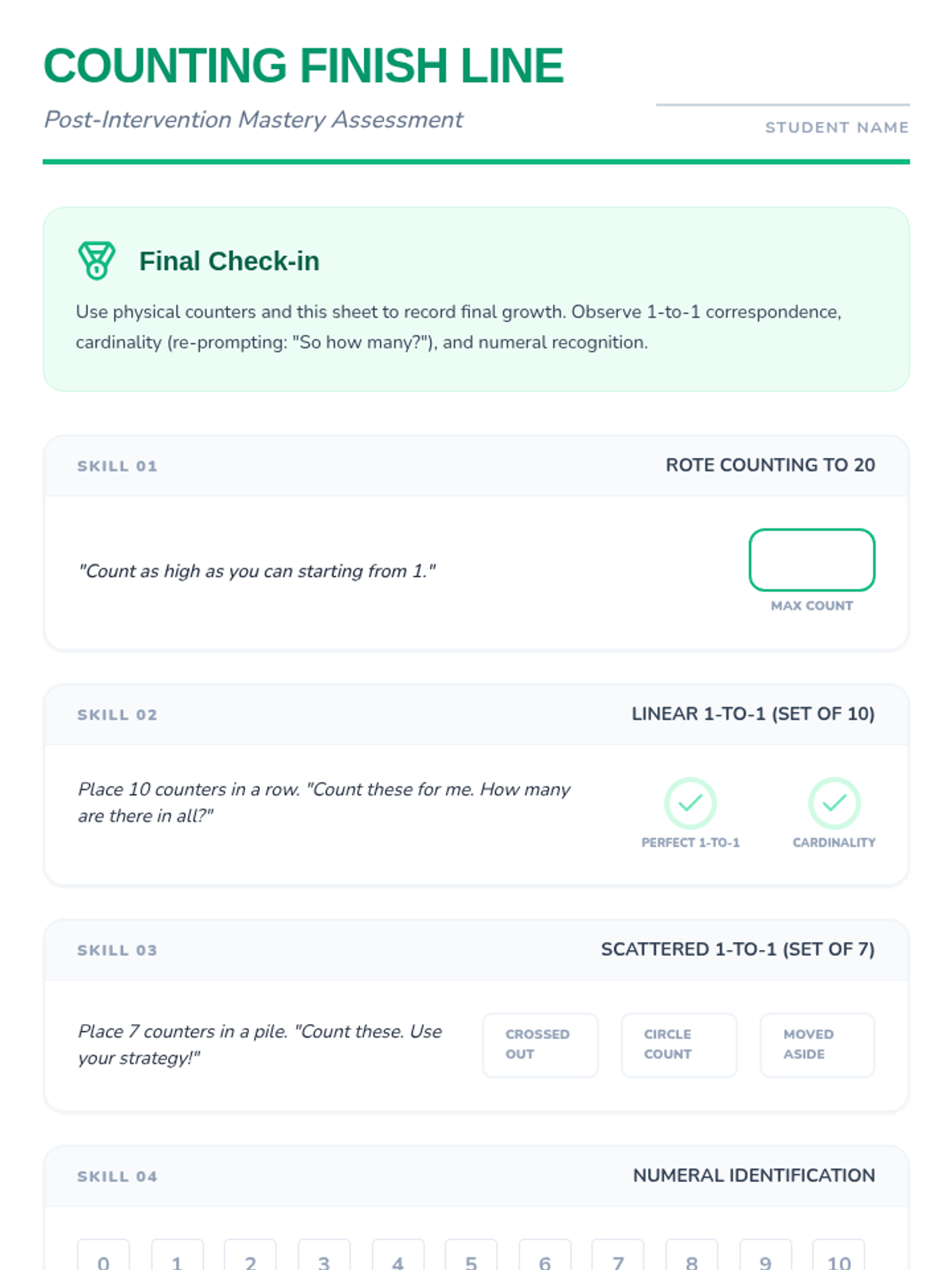
The final lesson in the sequence focusing on matching sets to numerals and a post-intervention assessment to measure student growth in counting mastery.
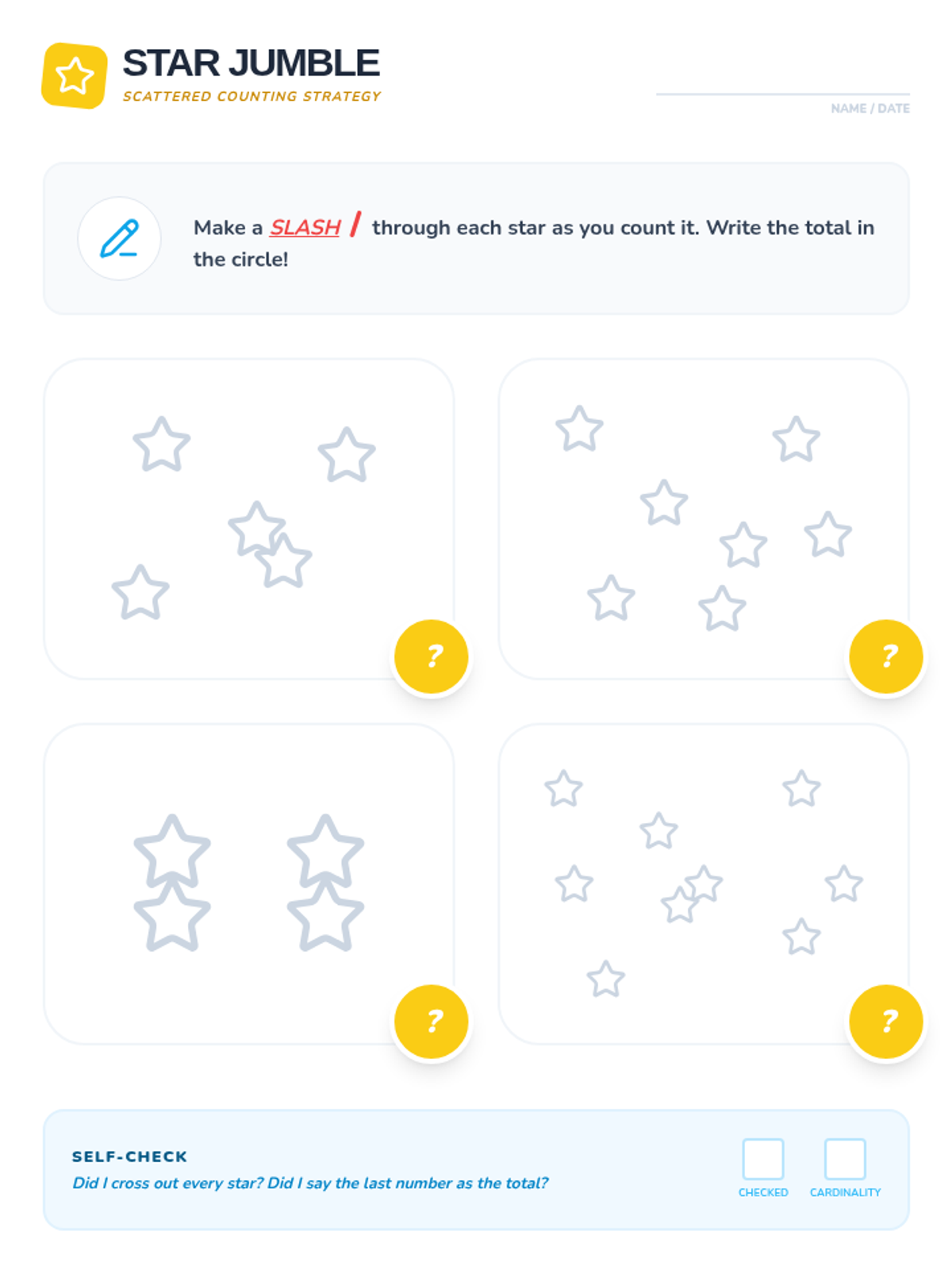
A pictorial lesson tackling the challenge of counting objects in scattered configurations using marking strategies to ensure each object is counted once and only once.
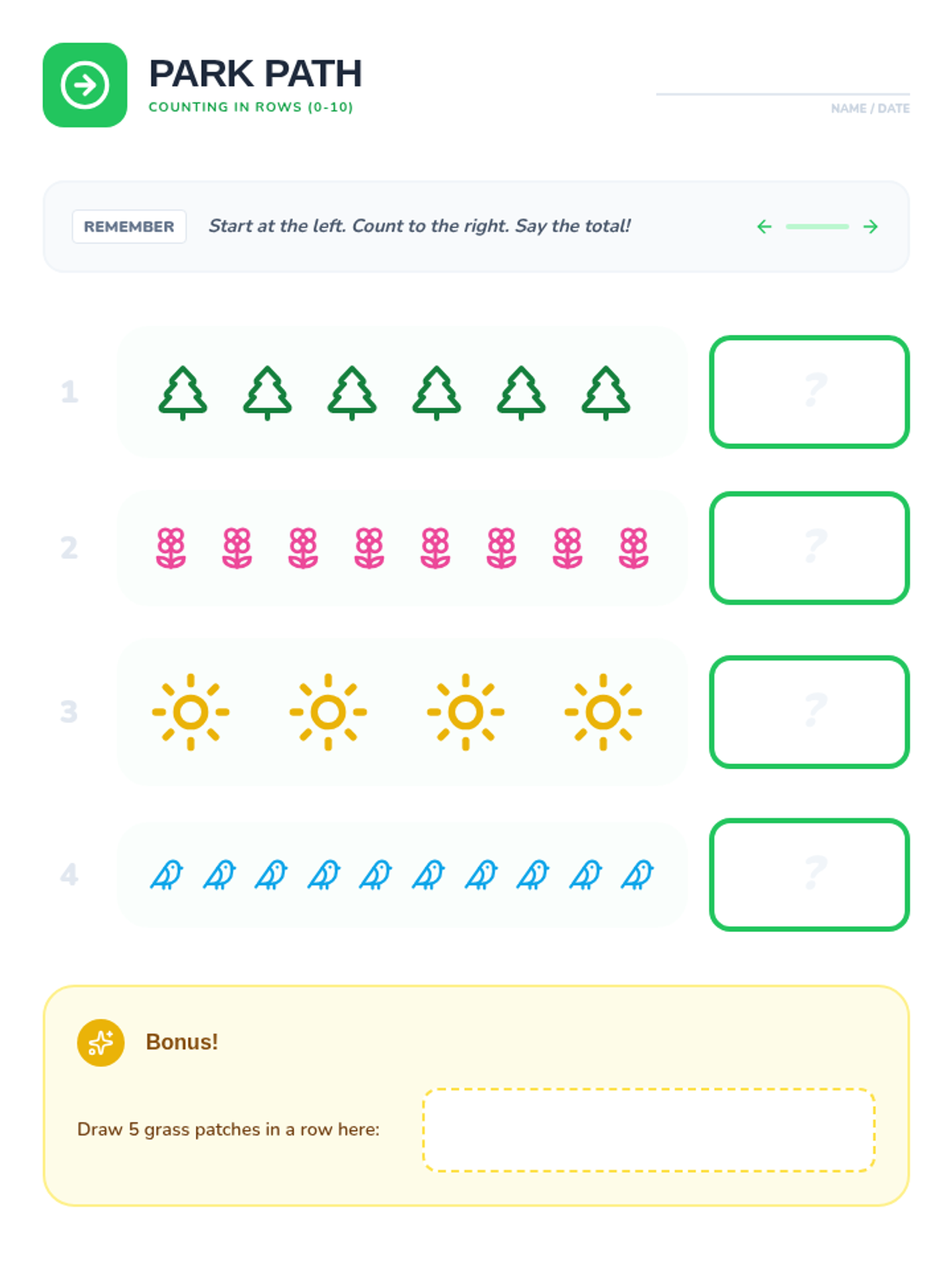
A pictorial lesson focusing on counting objects arranged in a structured linear path, helping students maintain their place while counting.
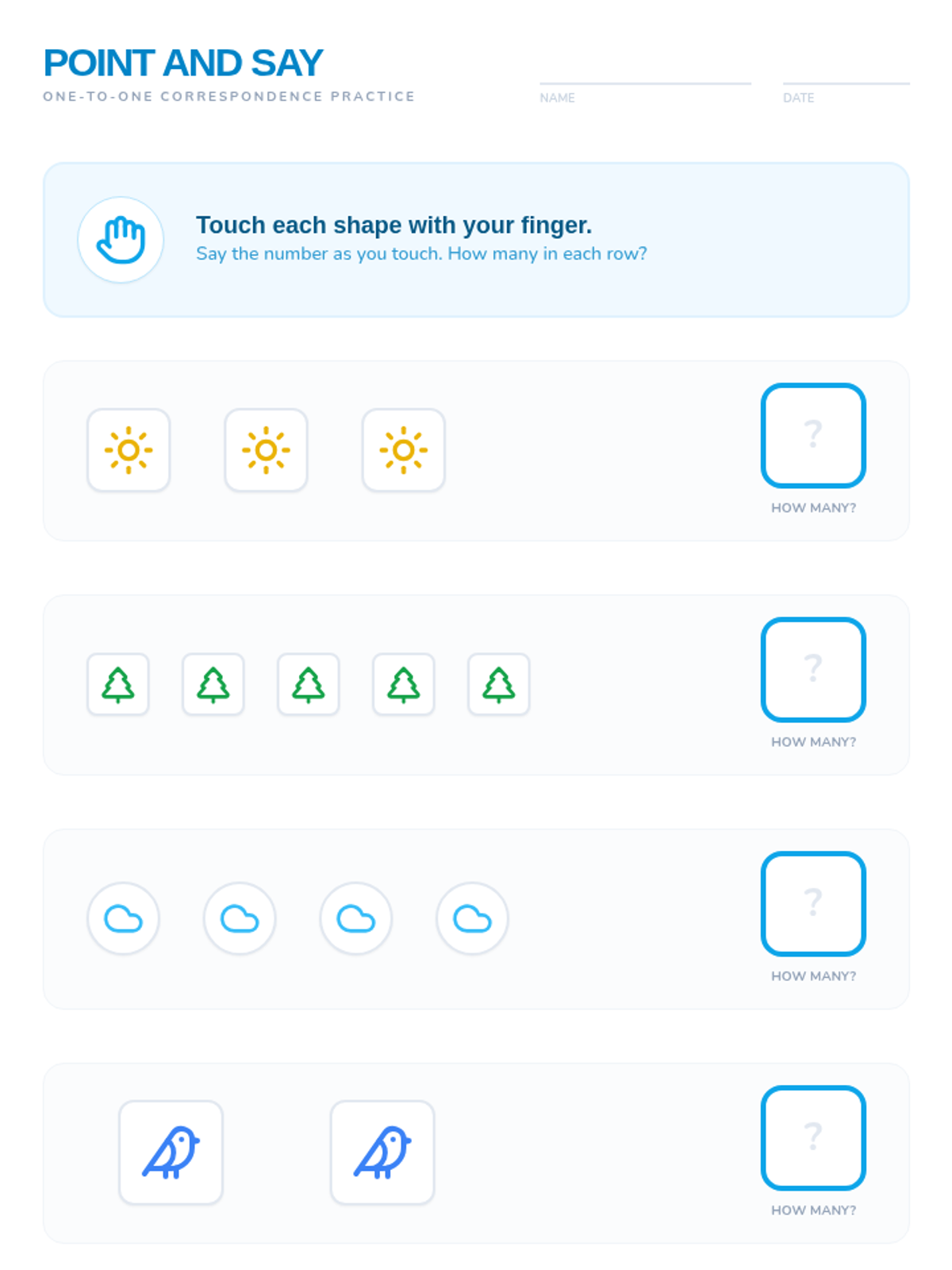
A concrete-focused lesson where students practice touching one object for every number said, using physical manipulatives and high-contrast visuals.
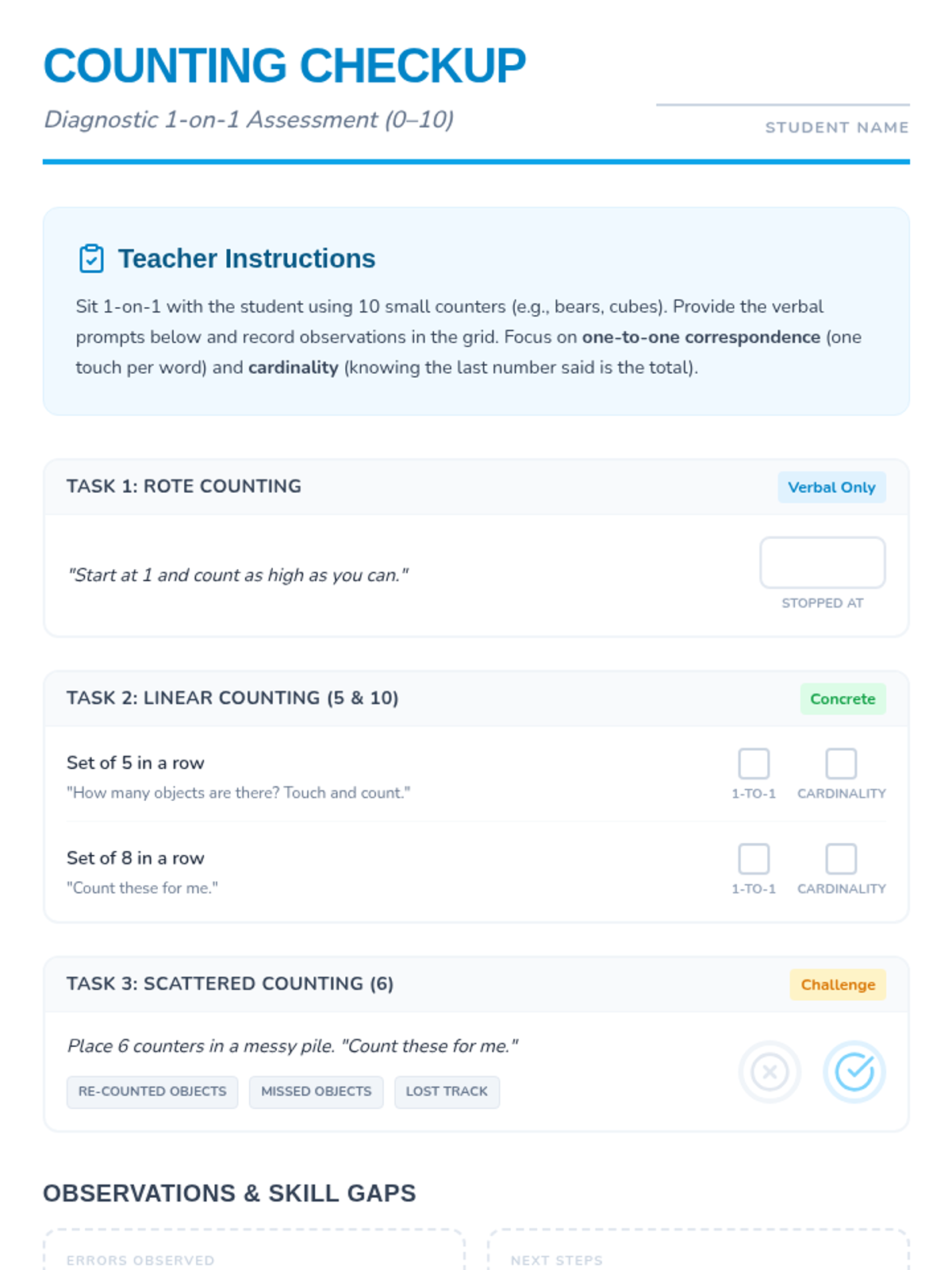
A diagnostic lesson designed to identify specific gaps in one-to-one correspondence and cardinality for numbers 0-10. Includes a teacher-led 1-on-1 assessment tool.
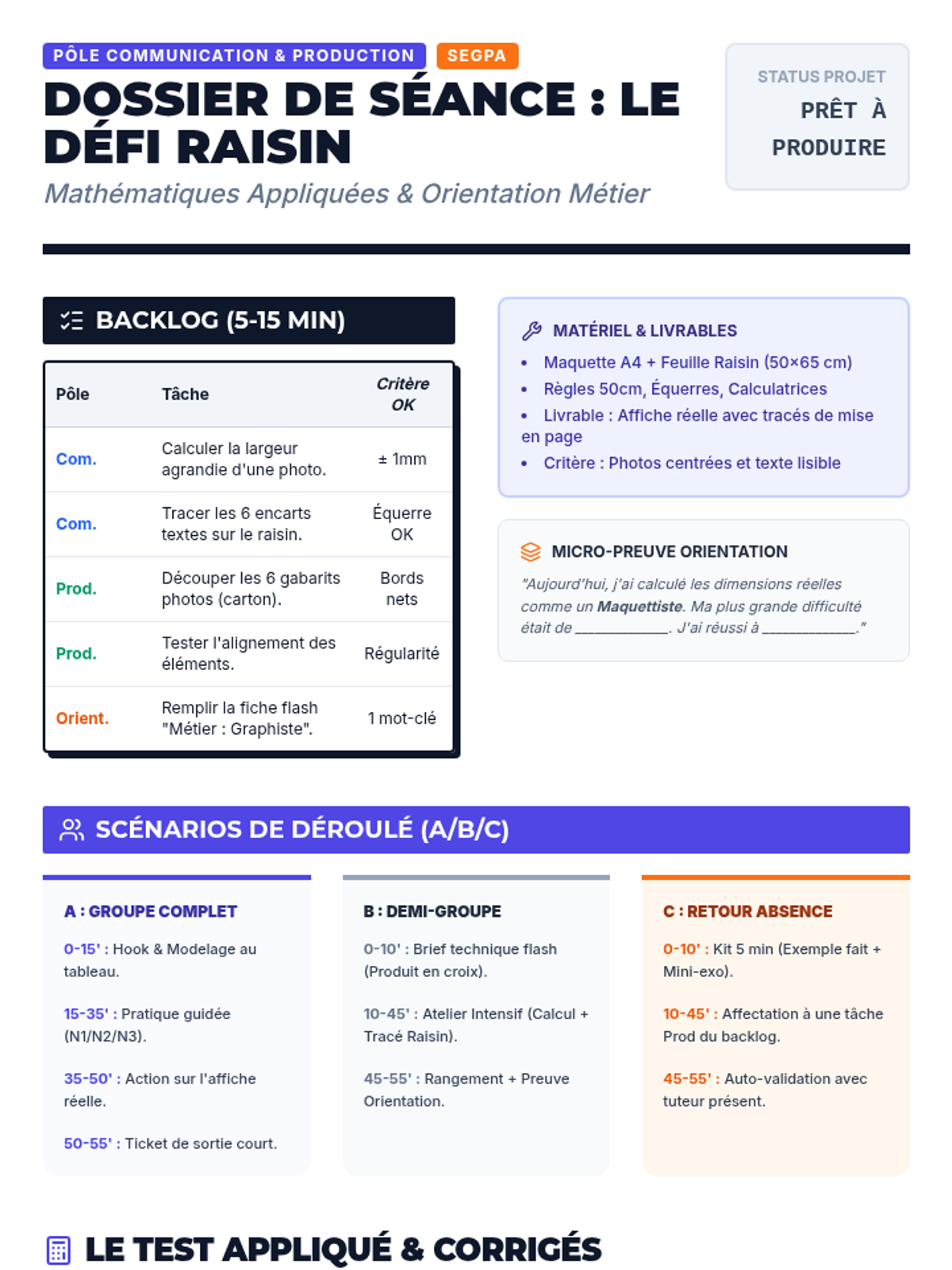
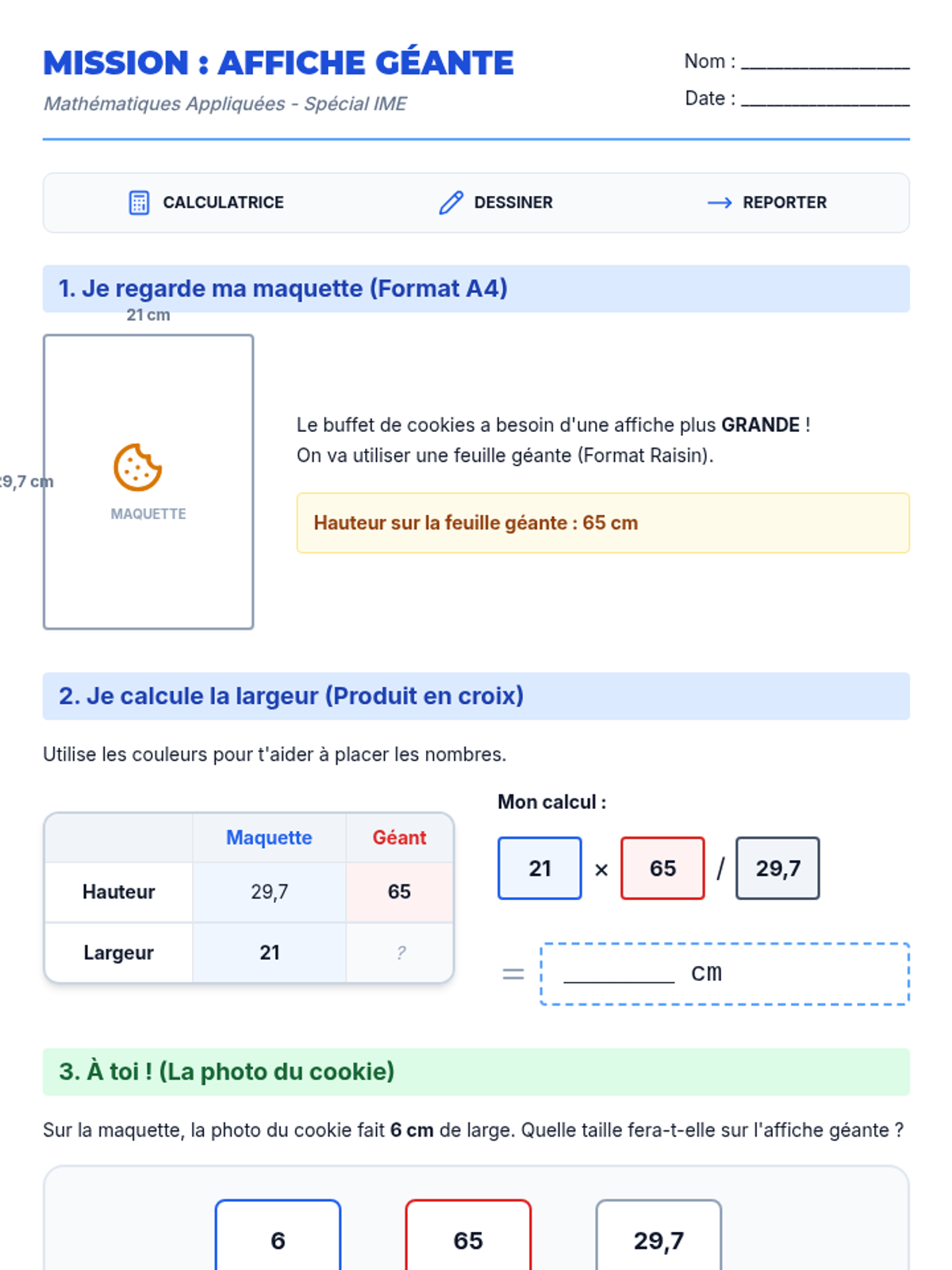
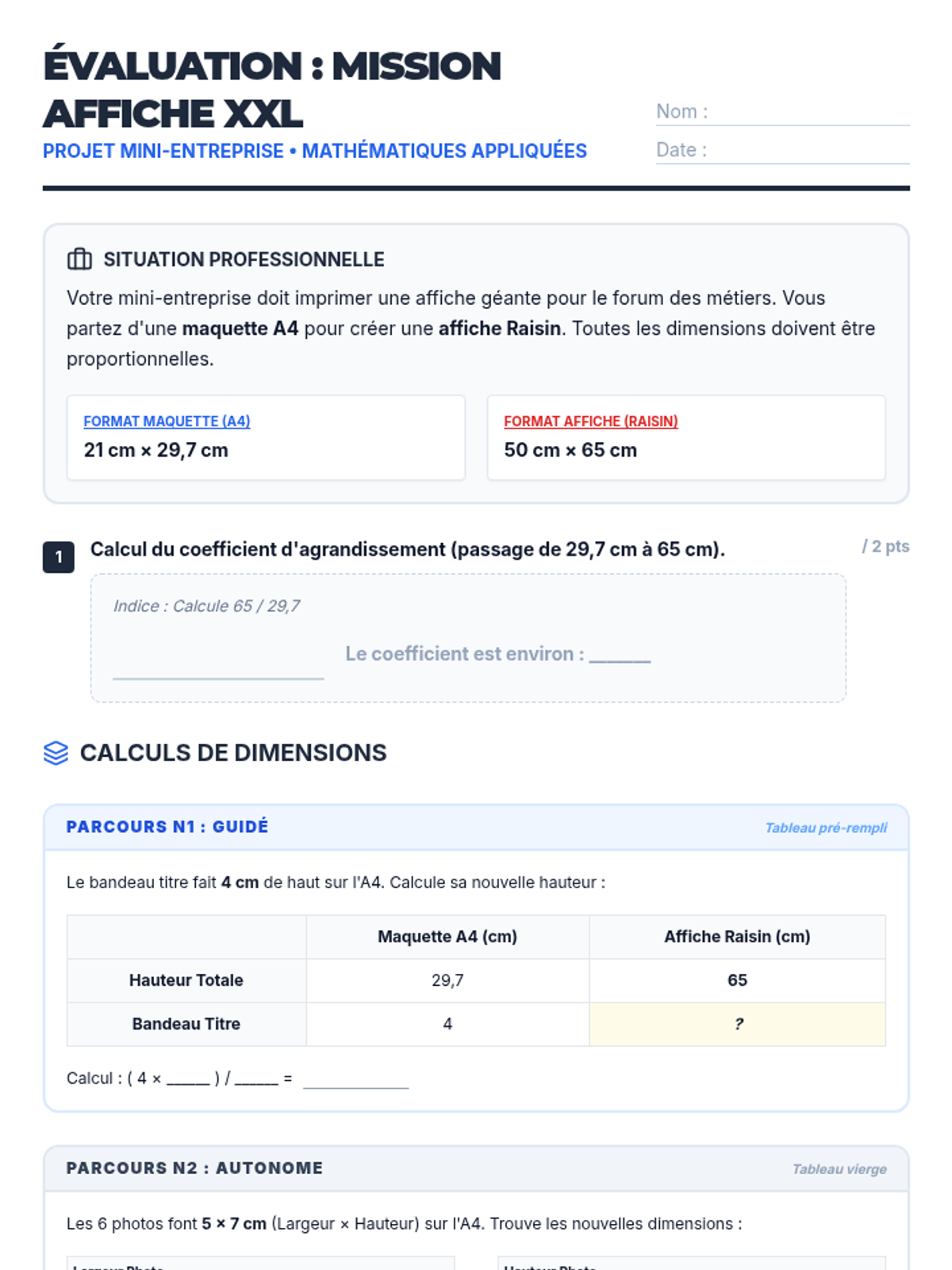
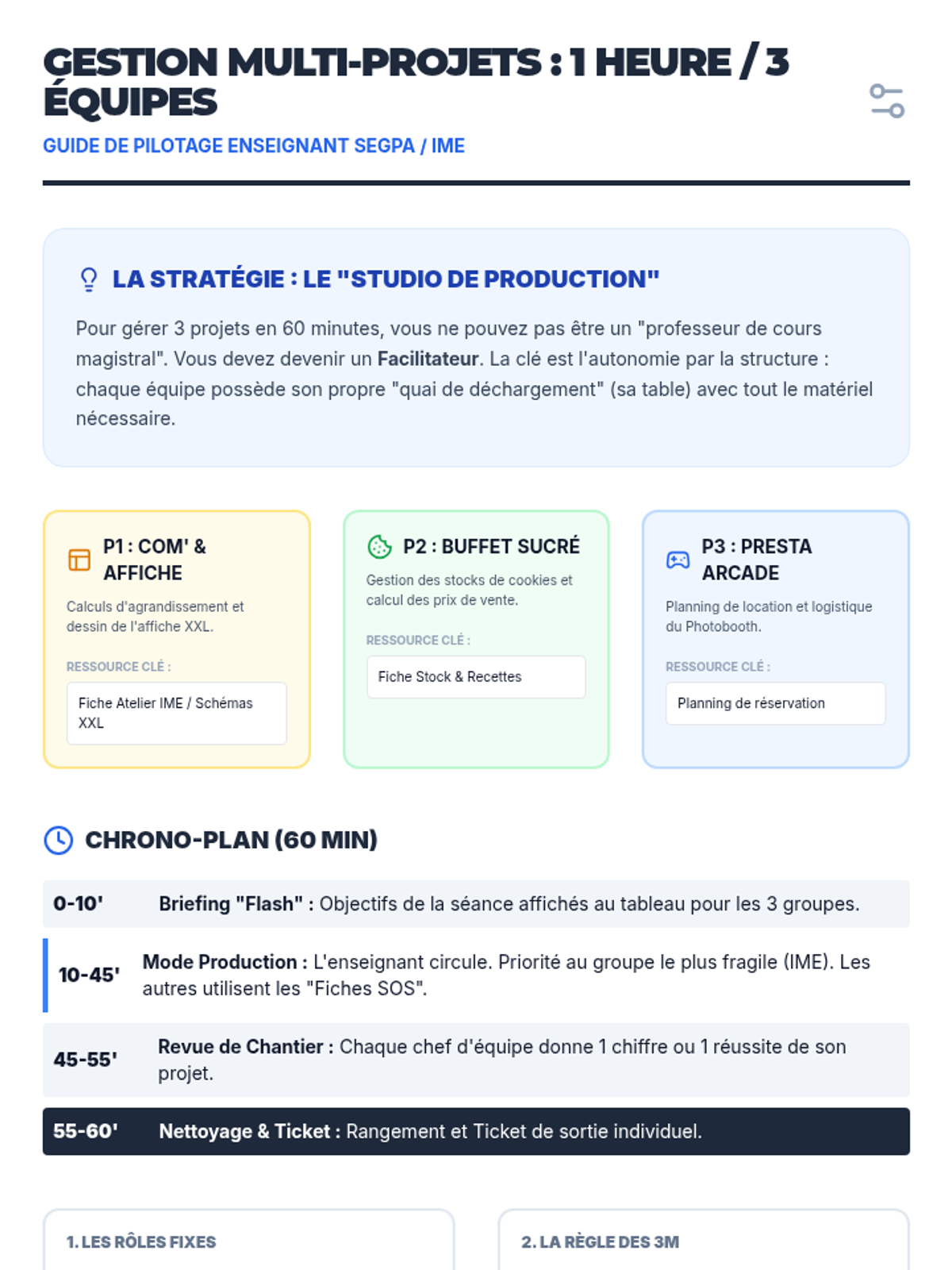
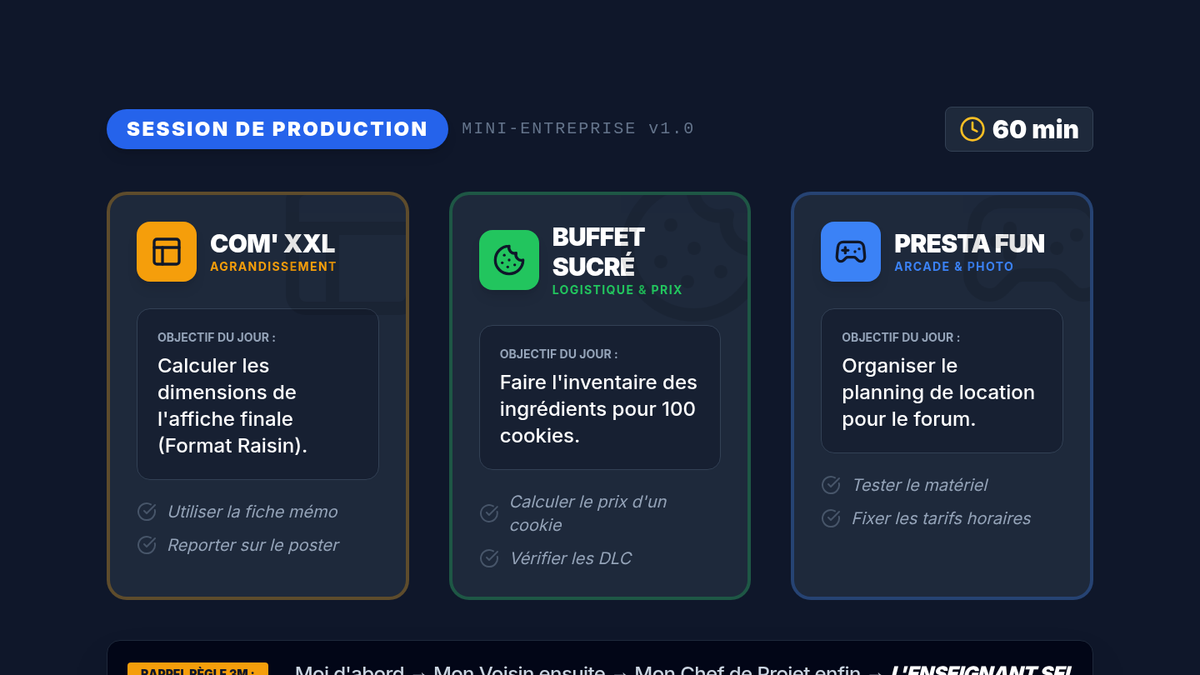
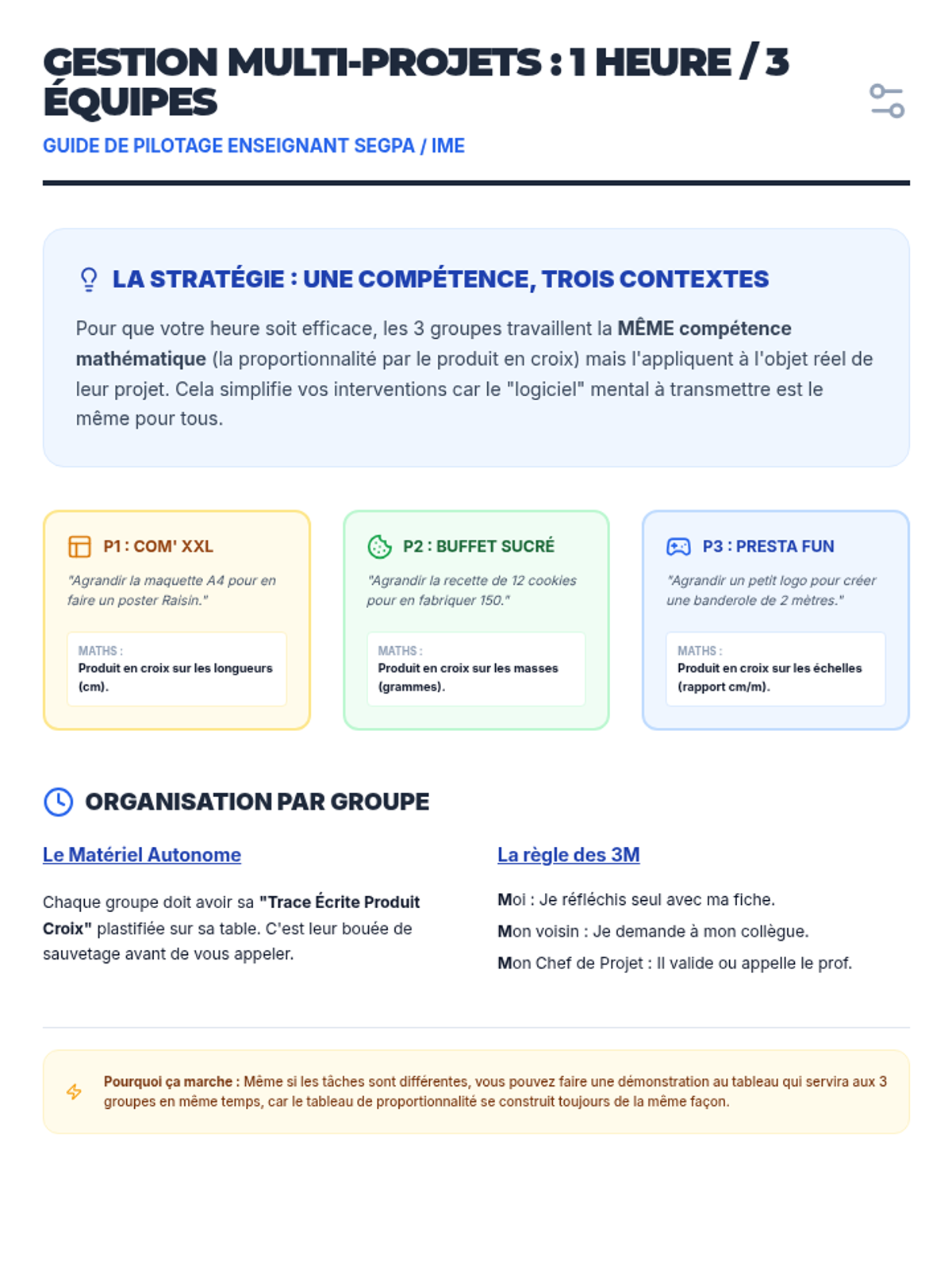
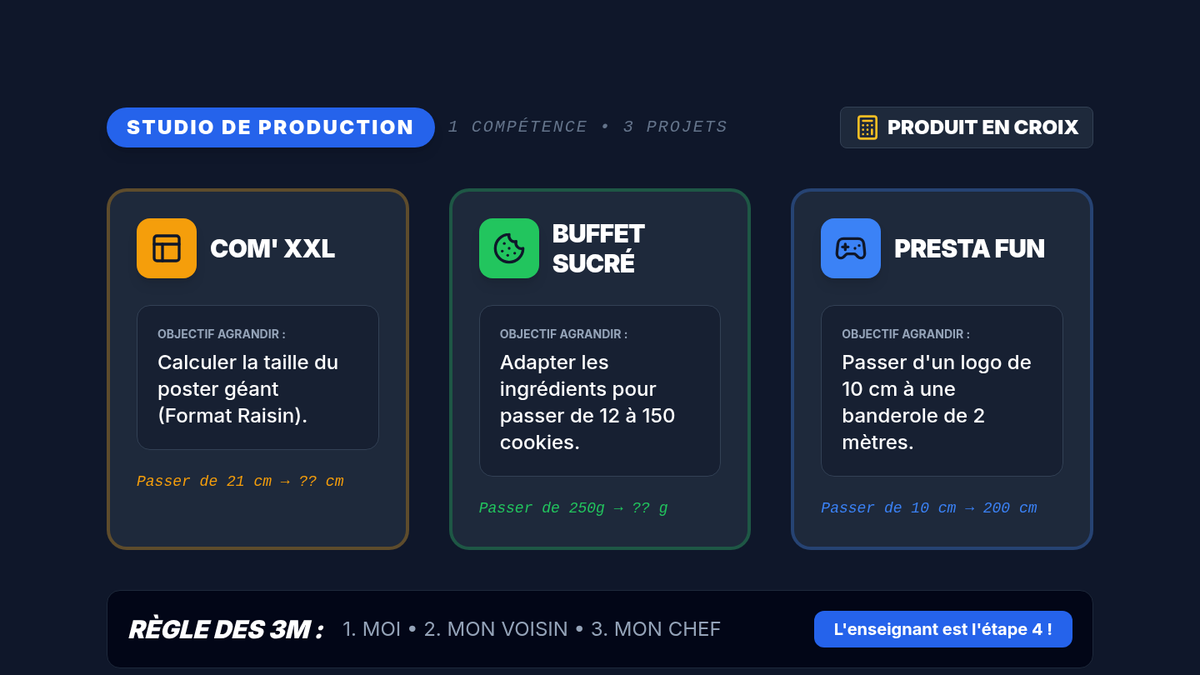
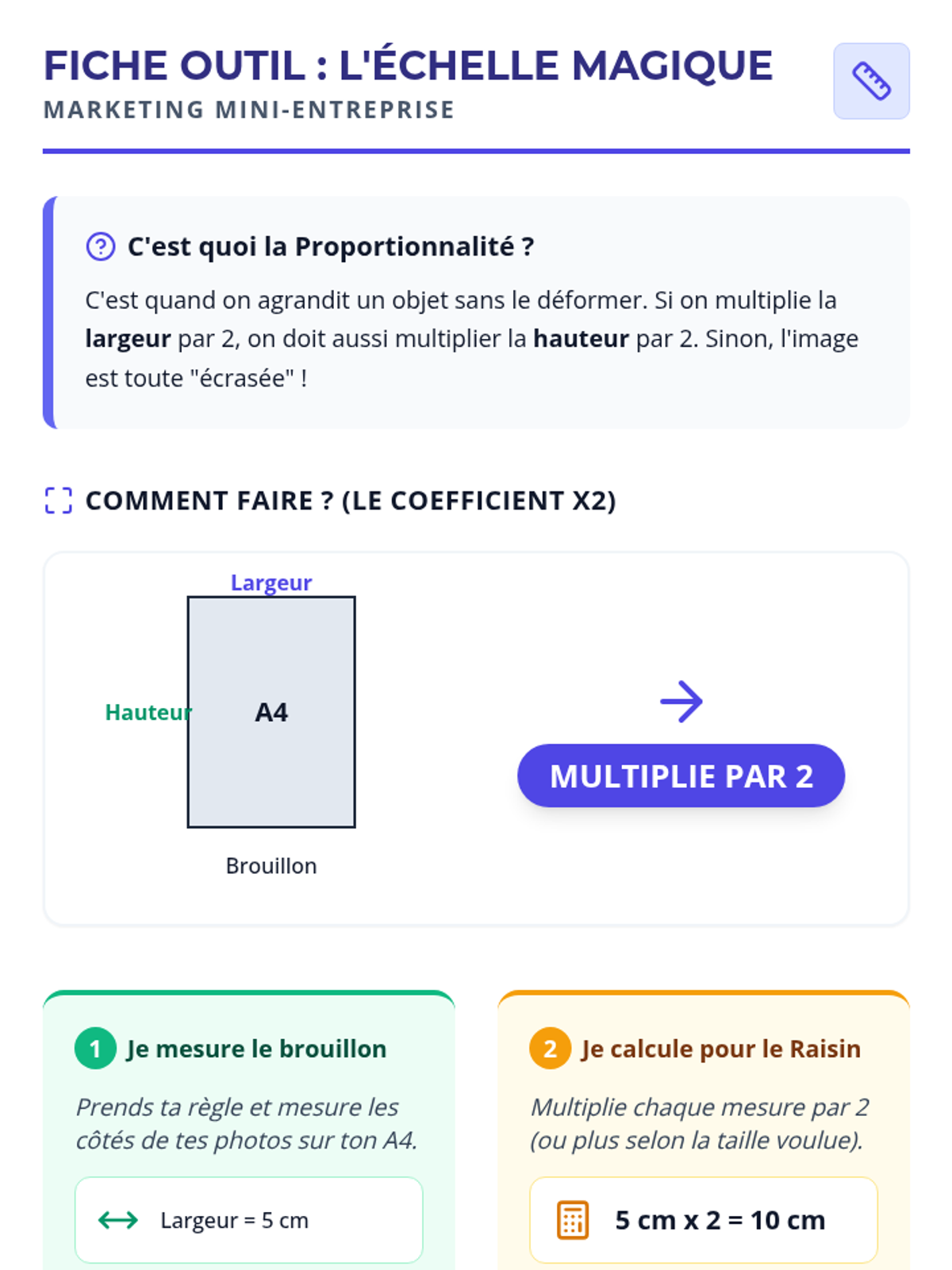
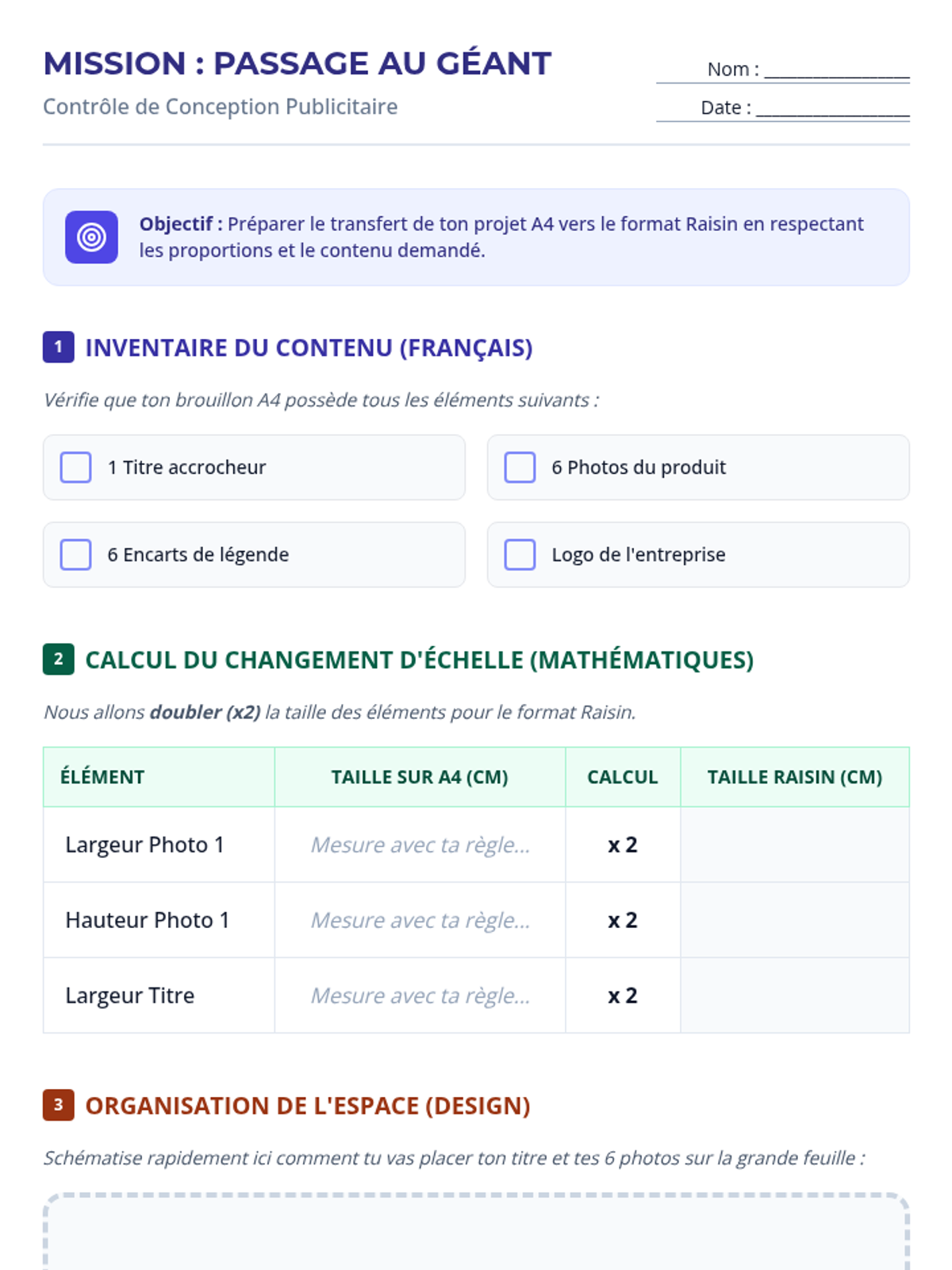
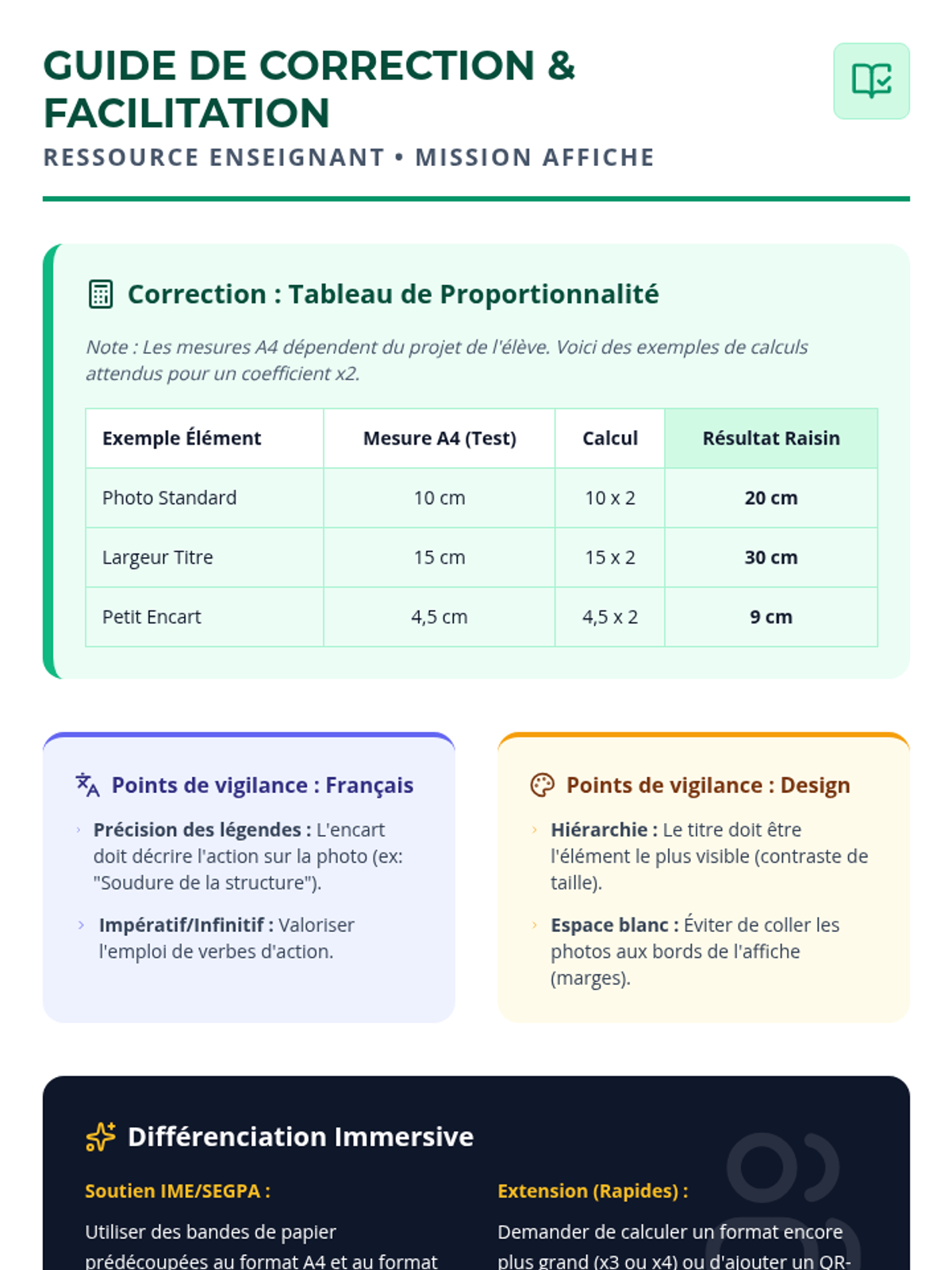
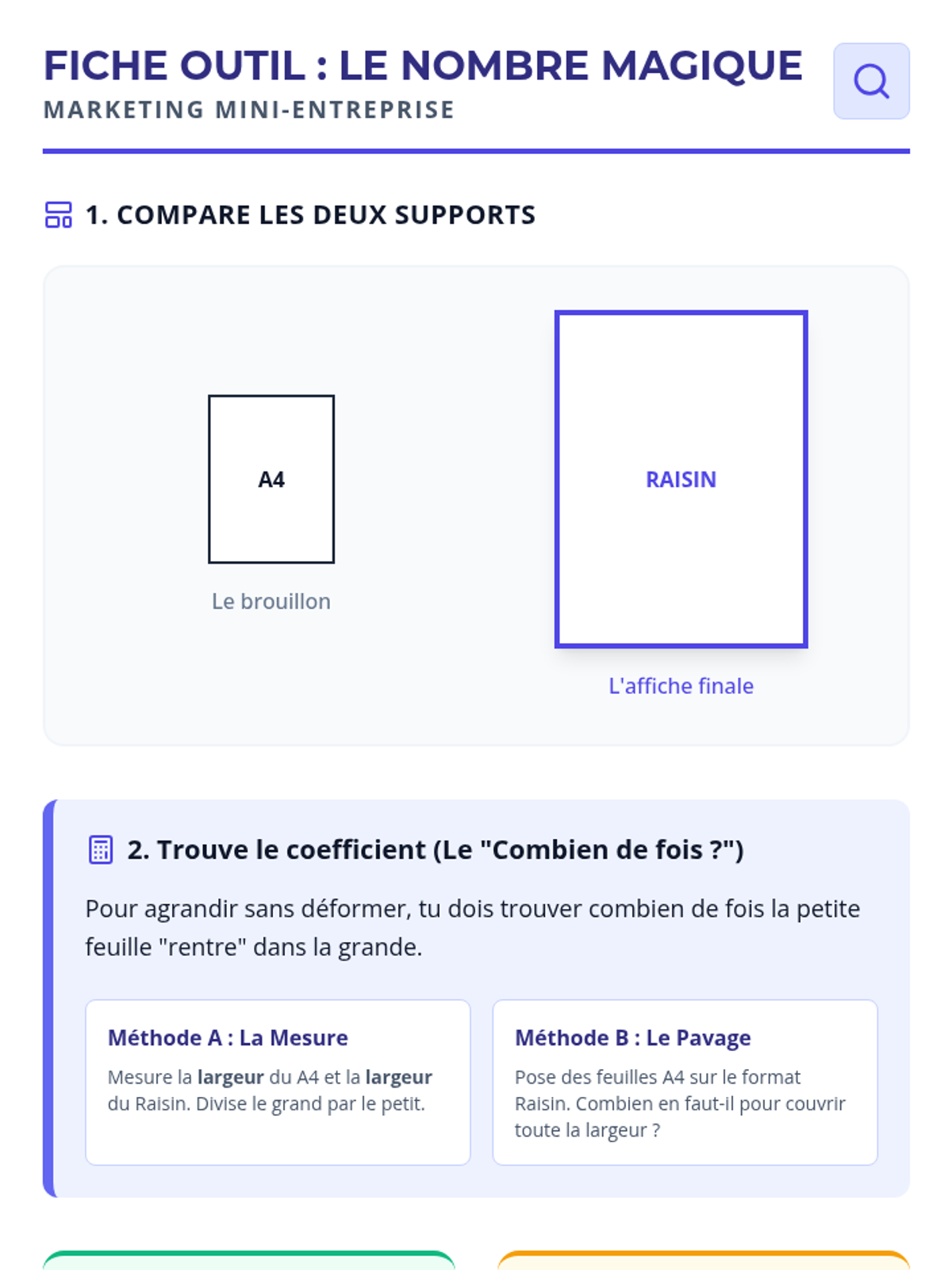
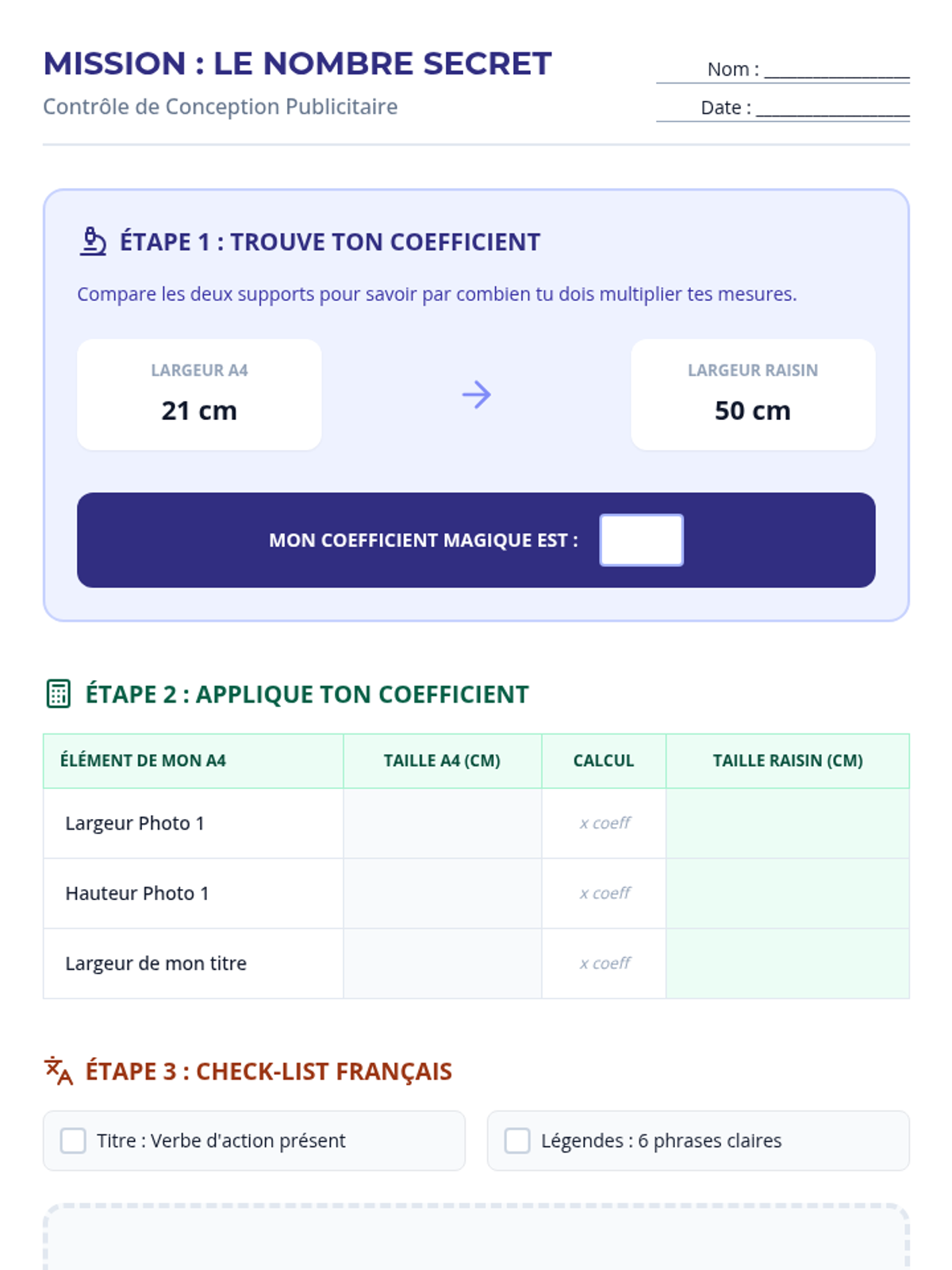
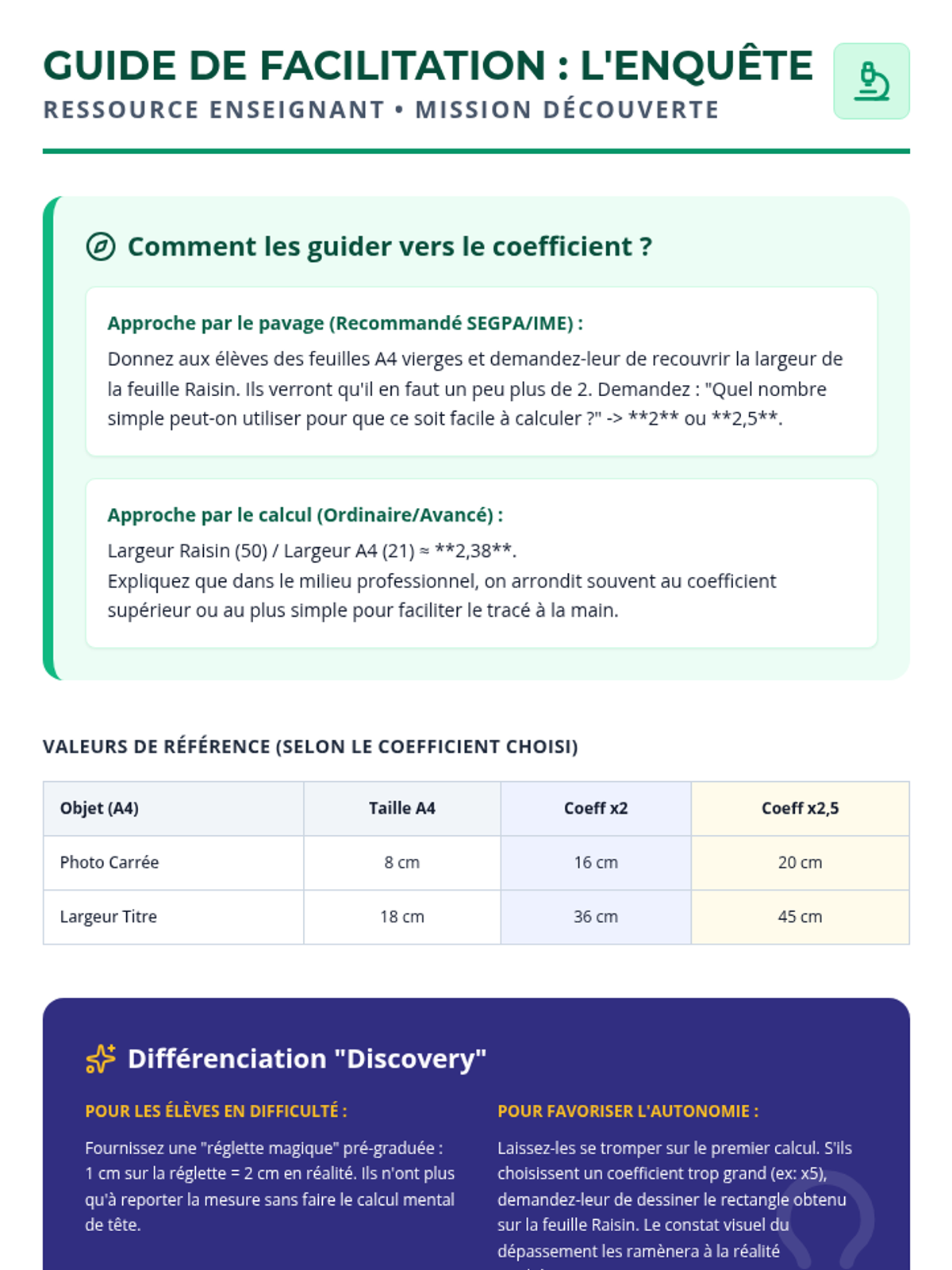
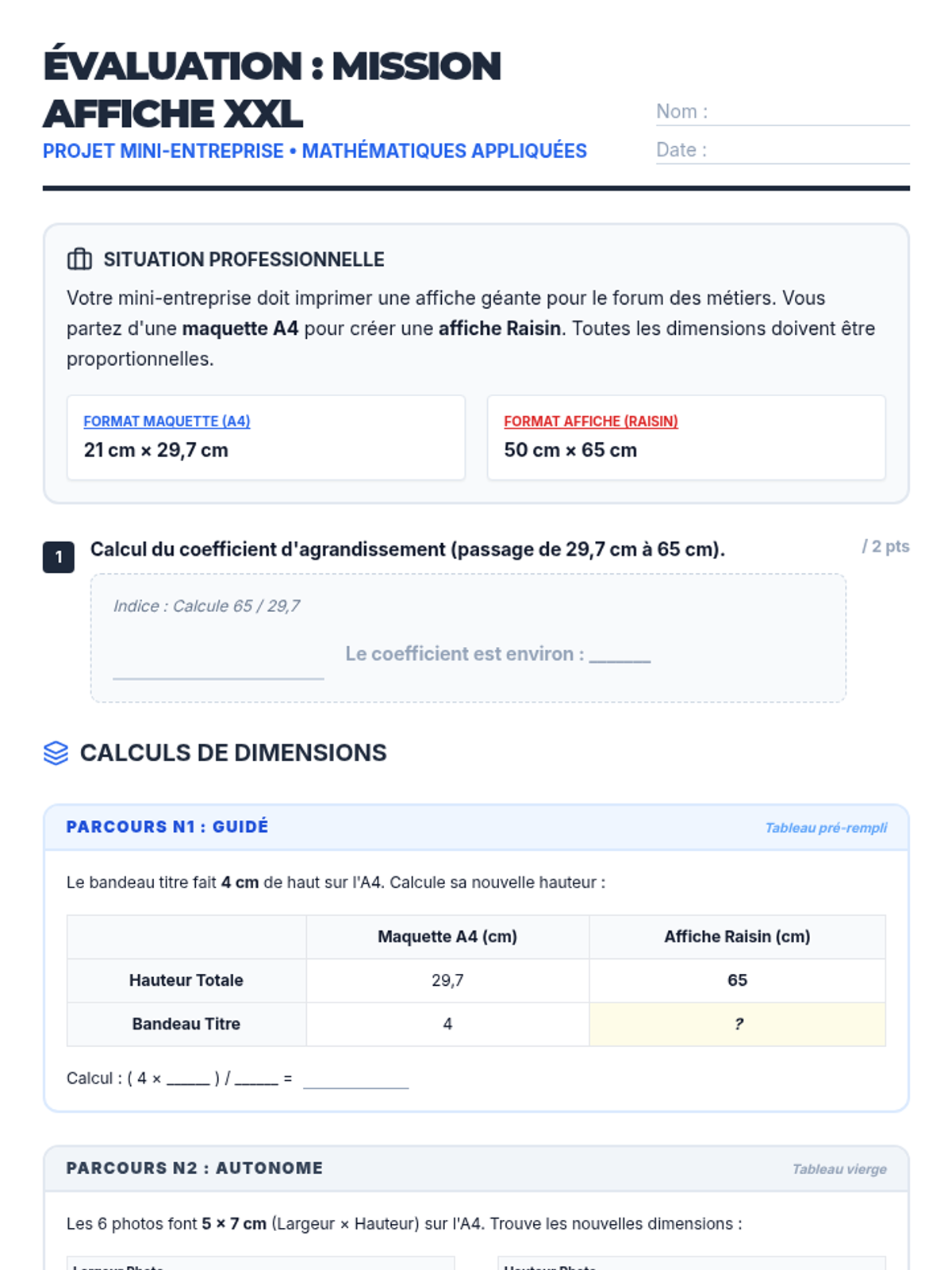
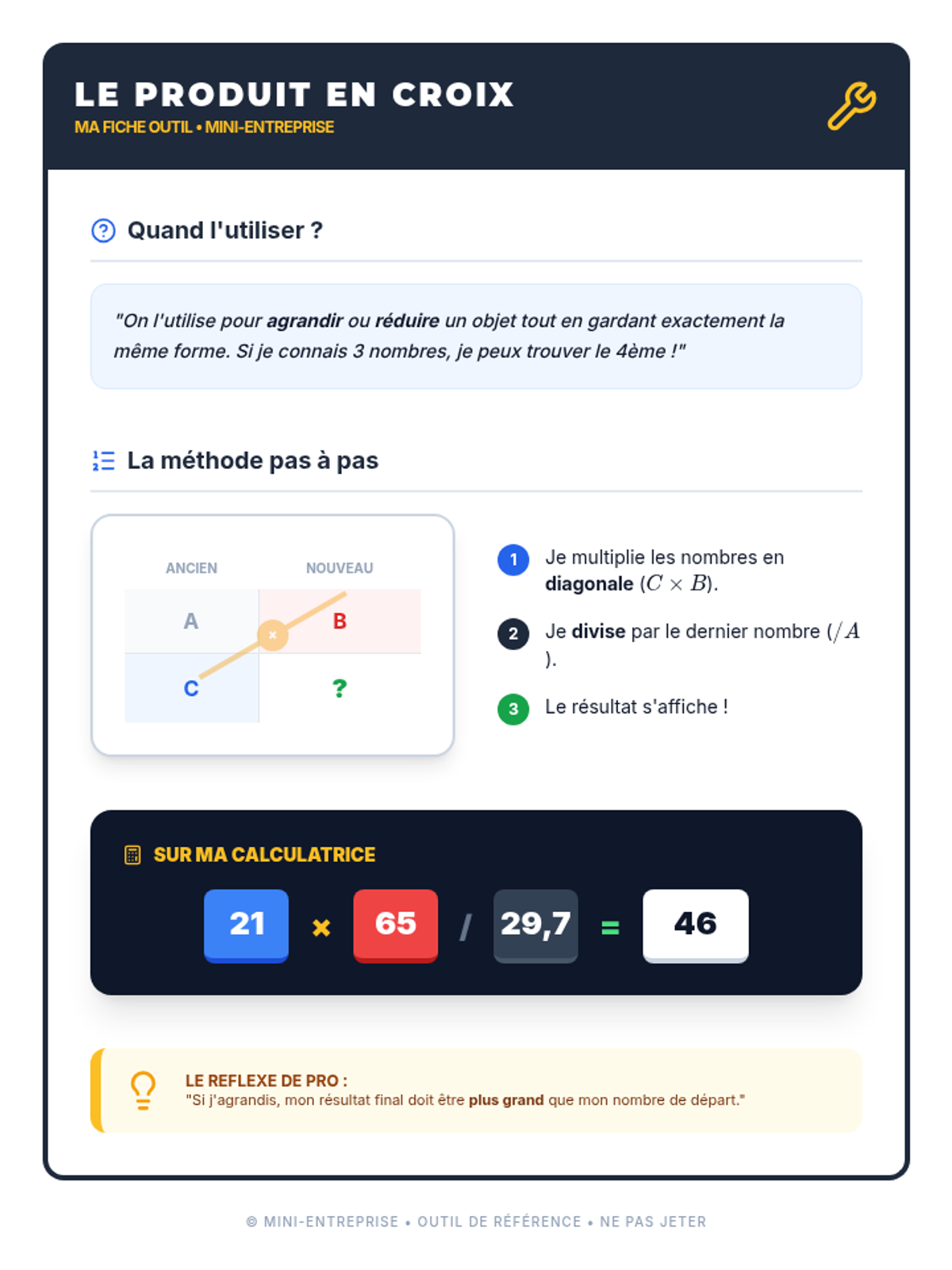
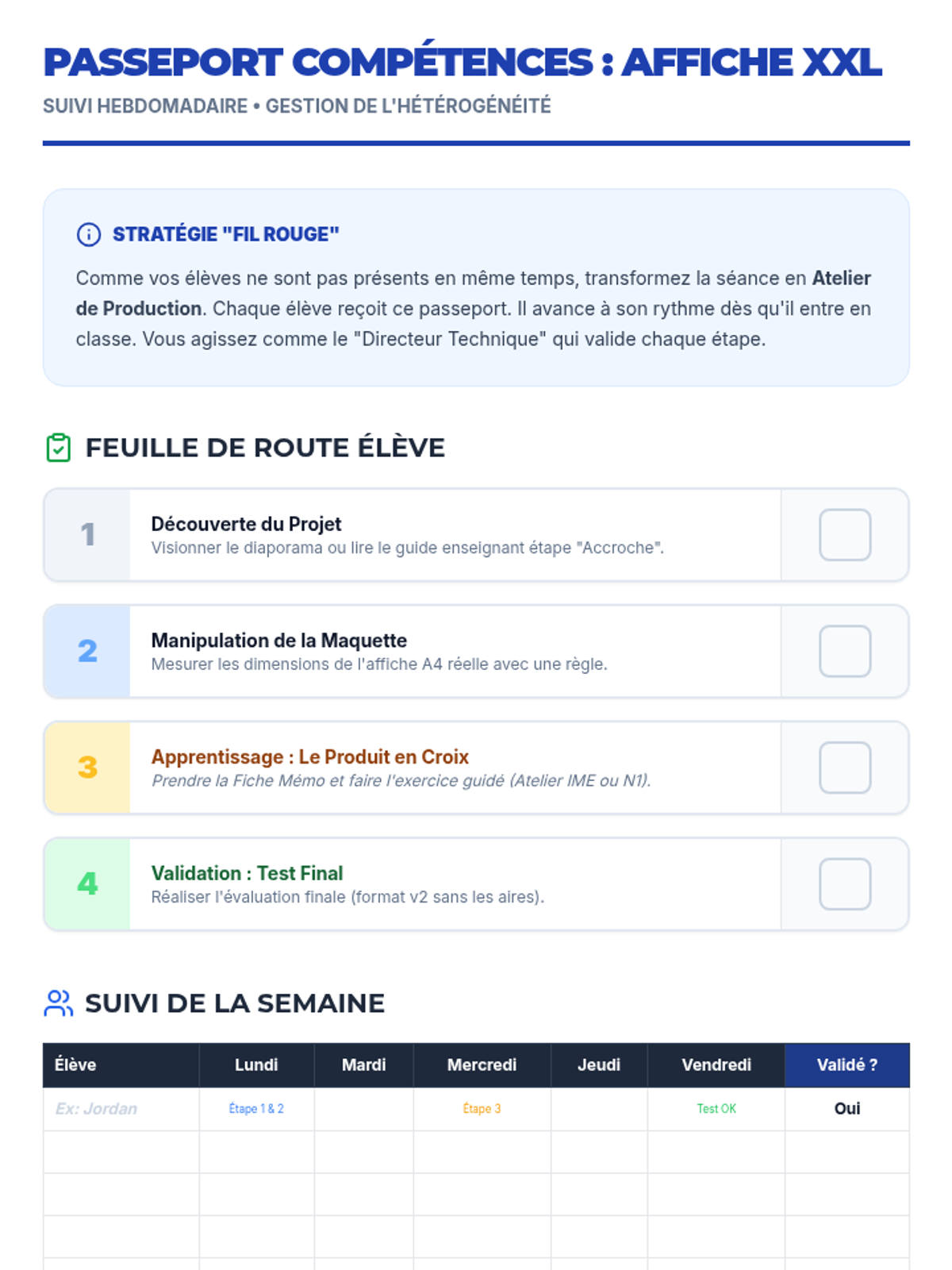
Cette séance de mathématiques appliquées permet aux élèves de SEGPA d'apprendre à agrandir une maquette d'affiche A4 au format Raisin en utilisant la proportionnalité et le produit en croix, dans le cadre réel de leur mini-entreprise scolaire. Elle intègre une gestion de classe flexible (groupes hétérogènes, présence fluctuante) et des micro-tâches orientées métier.
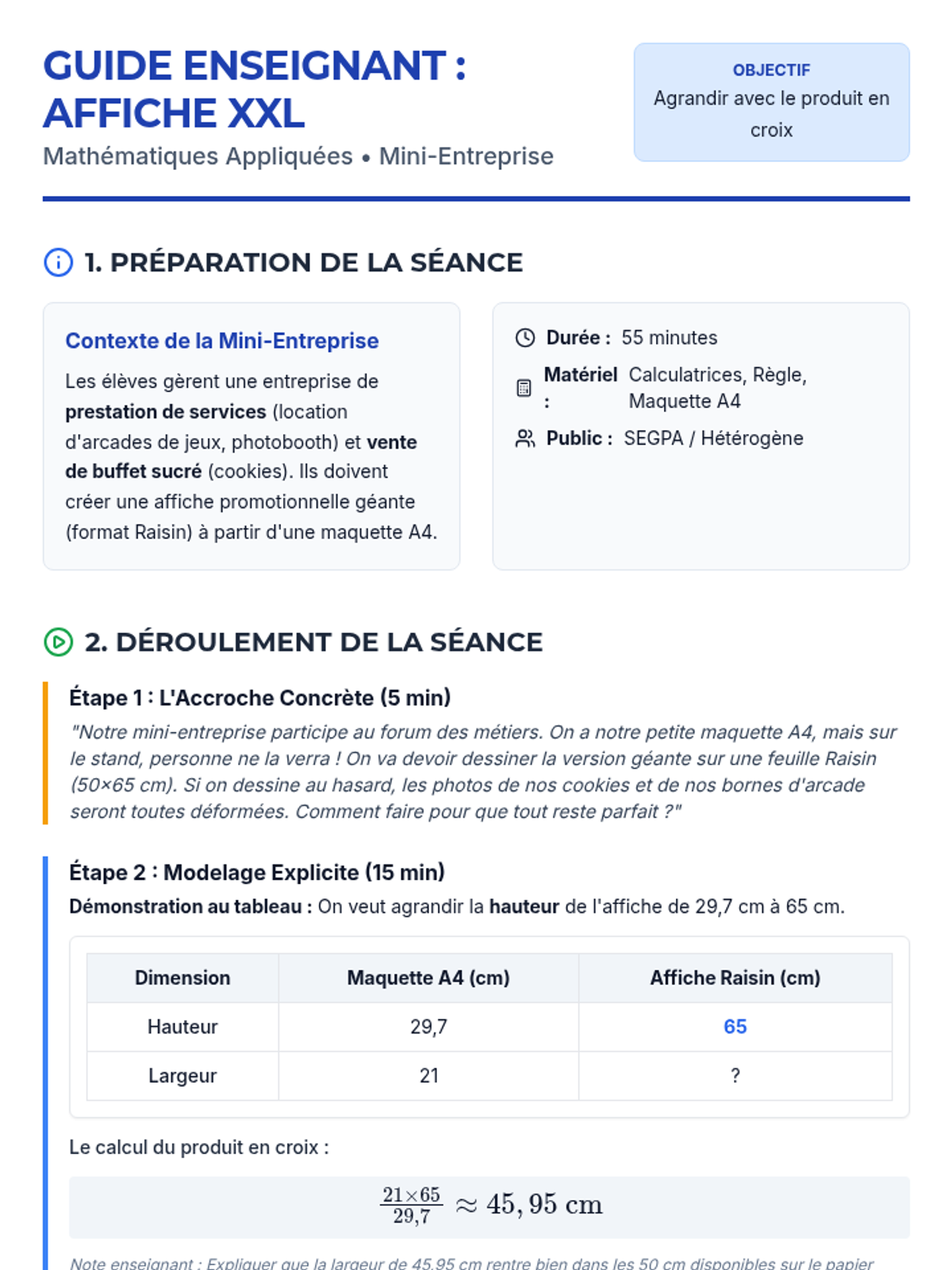
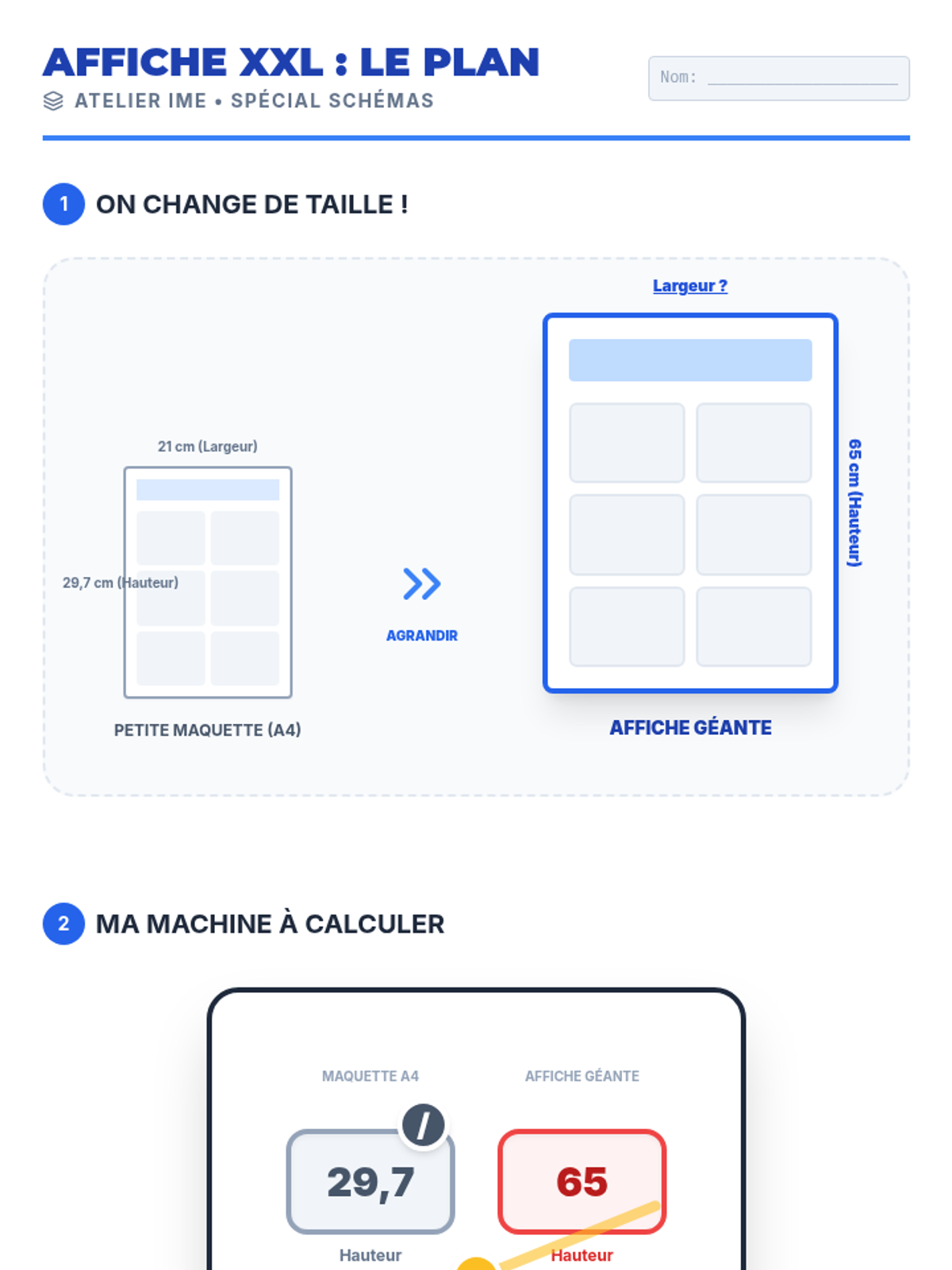
Cette séance de mathématiques appliquées guide les élèves de SEGPA dans l'agrandissement d'une affiche promotionnelle pour leur mini-entreprise, en utilisant la proportionnalité et le produit en croix pour passer du format A4 au format raisin.
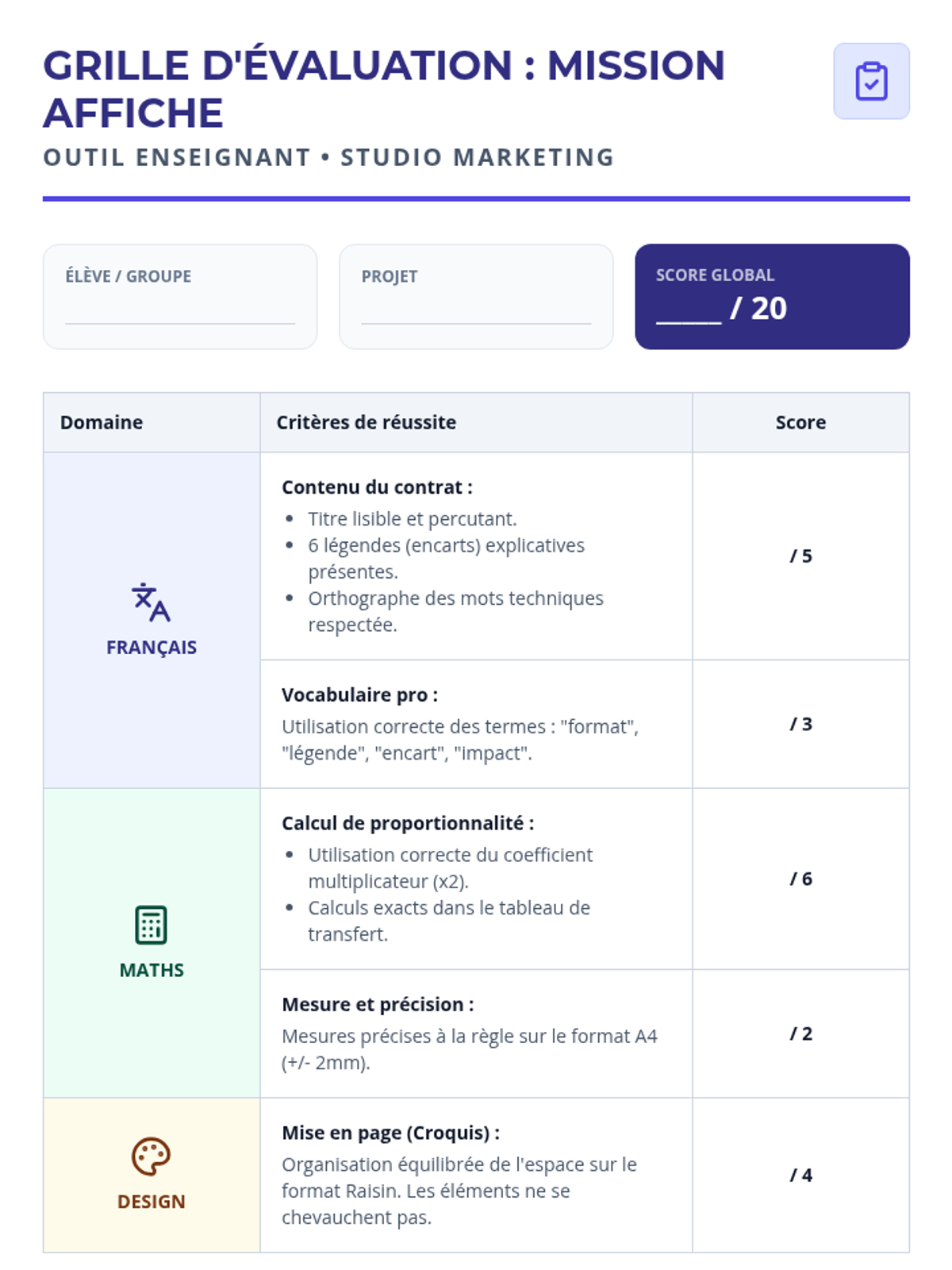
Cette leçon guide les élèves dans la conception d'une affiche publicitaire pour leur mini-entreprise, en se concentrant sur le passage du format A4 au format Raisin. Elle intègre des notions de français (titre, légendes) et de mathématiques (proportionnalité) dans un cadre professionnel immersif.
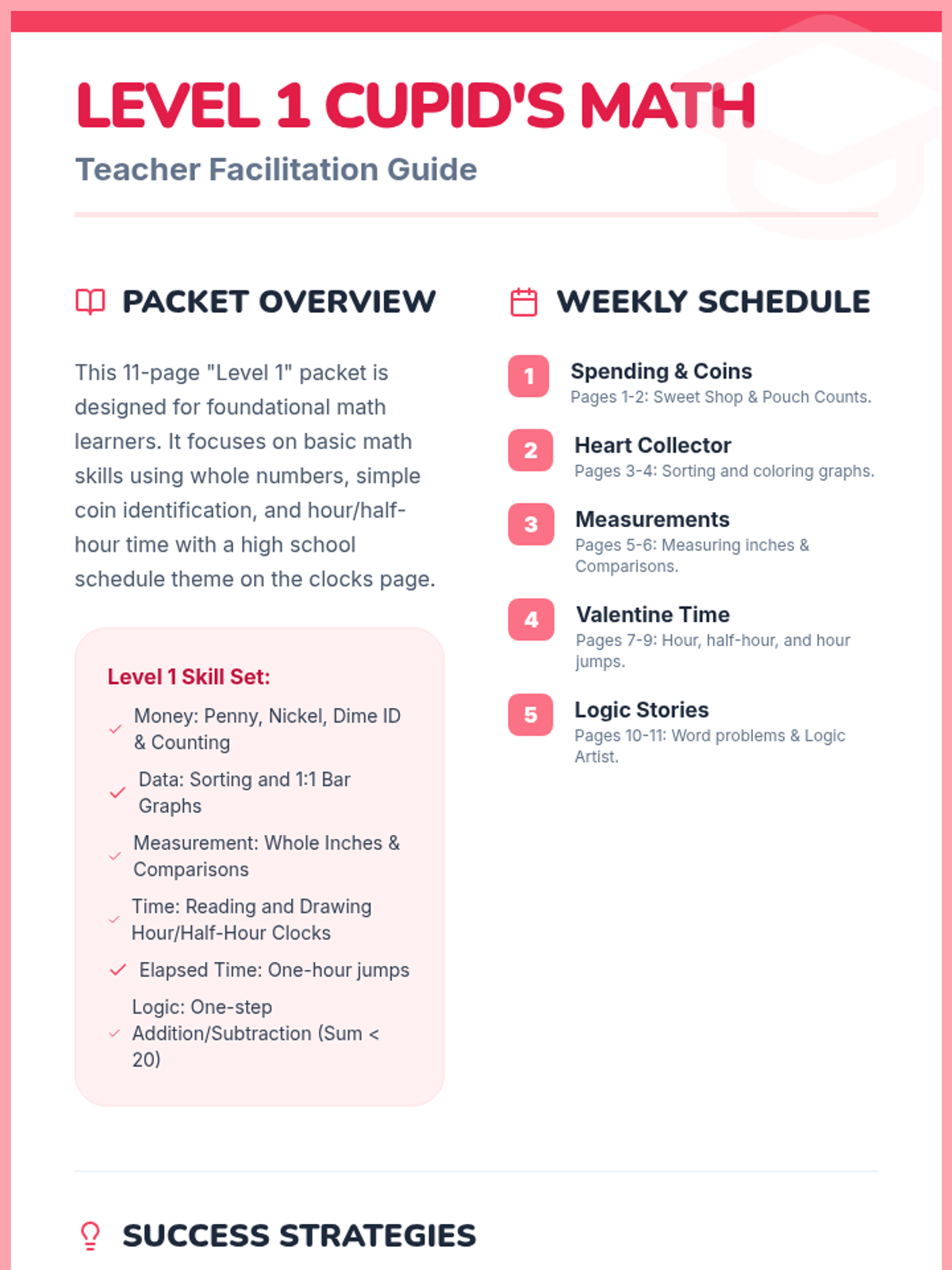
Teacher overview and answer keys for the Level 1 Valentine's Day math packet.
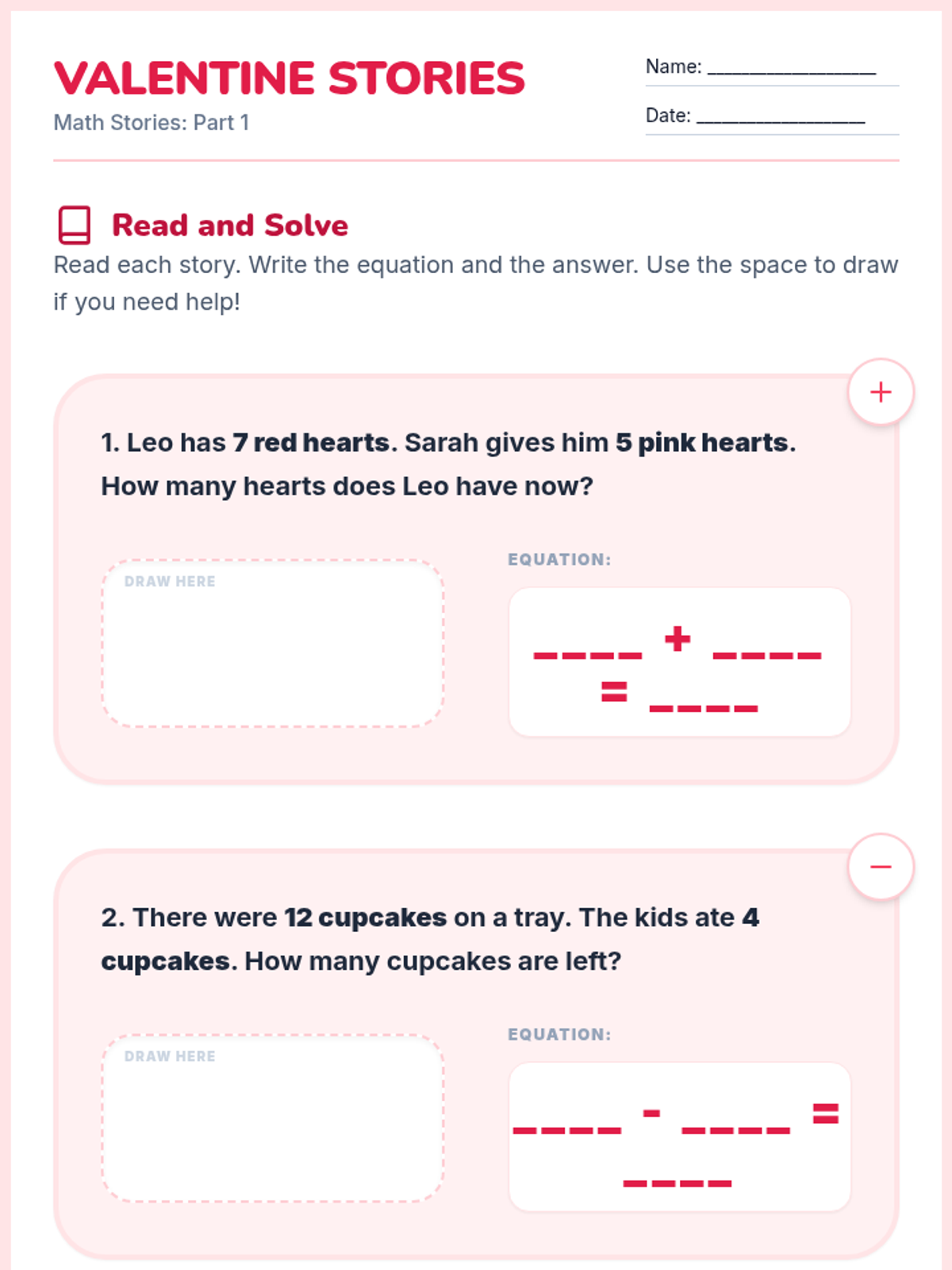
Students will solve one-step addition and subtraction word problems within 20 with a Valentine's Day theme.
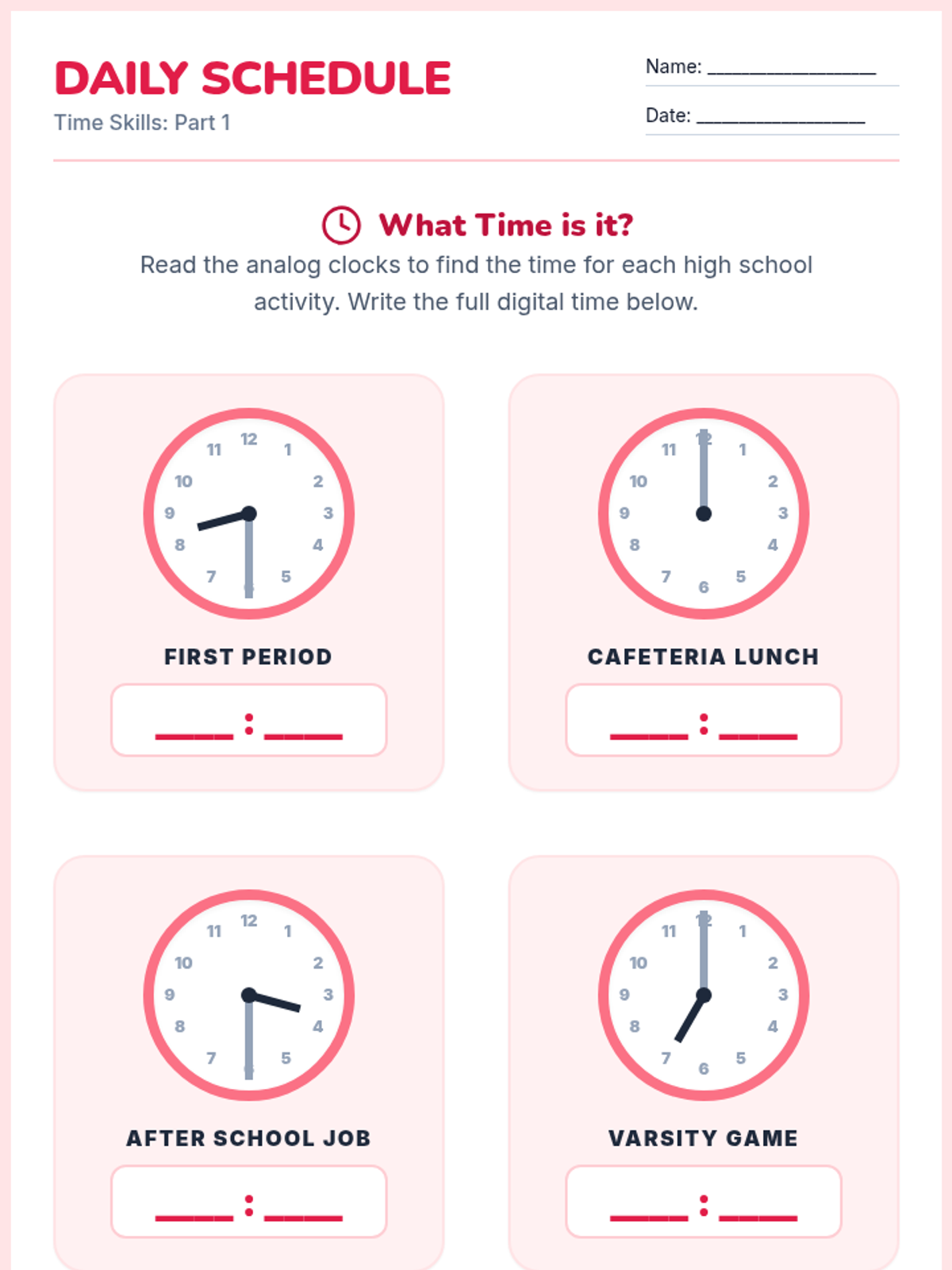
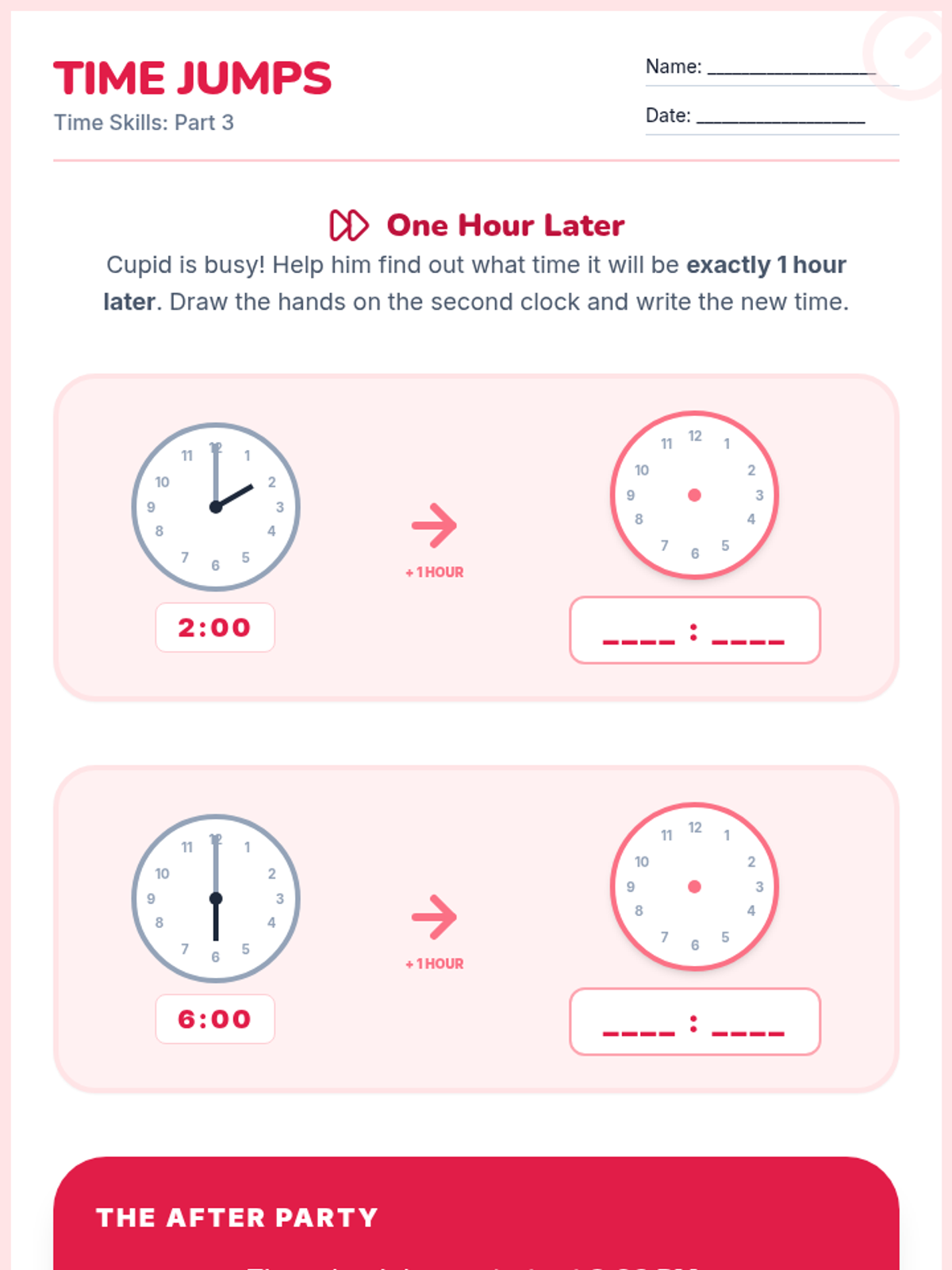
Students will practice reading and drawing analog clocks to the nearest hour and half-hour with a high school schedule theme.
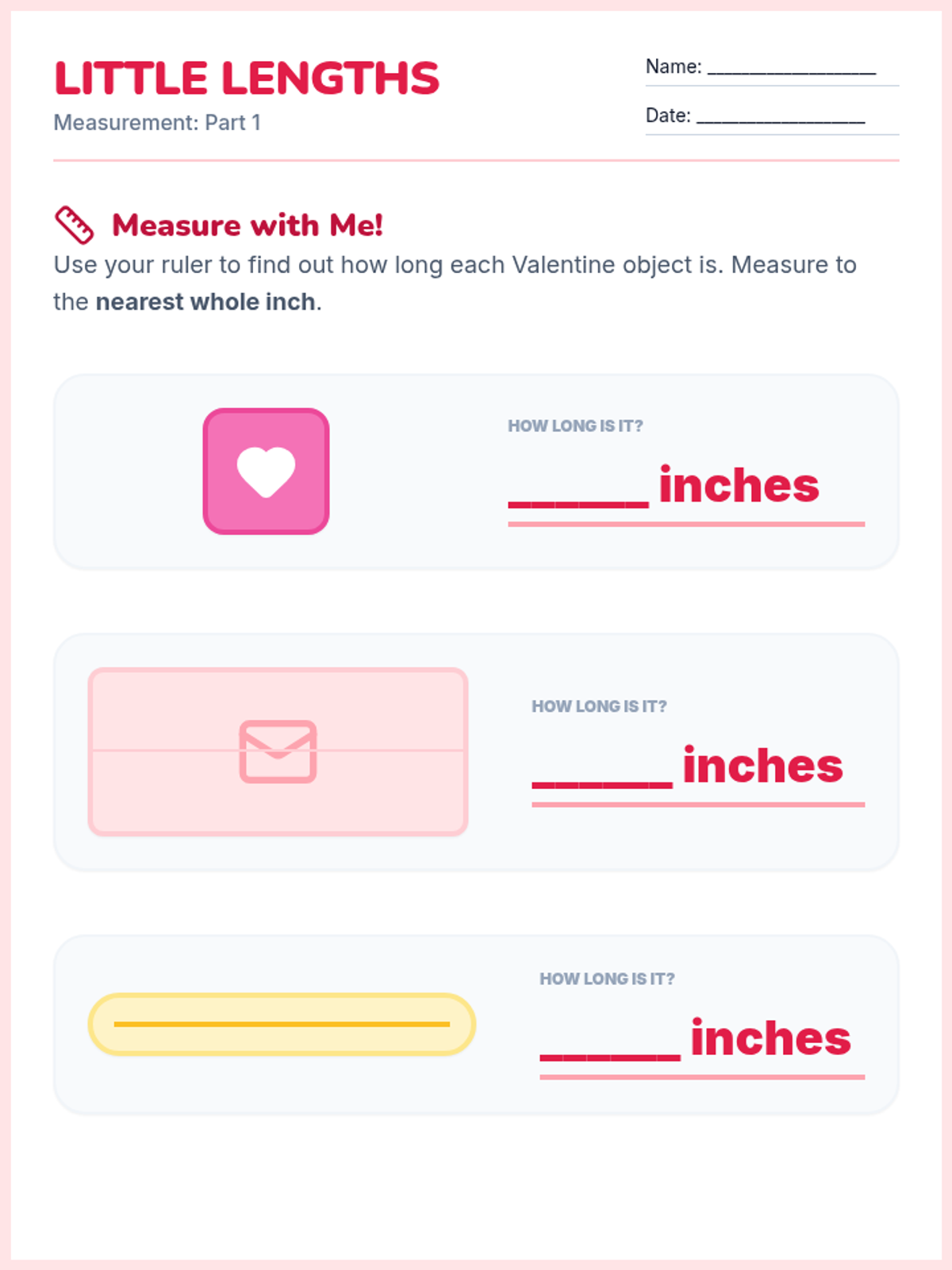
Students will measure Valentine-themed objects to the nearest whole inch and compare lengths using terms like longer and shorter.
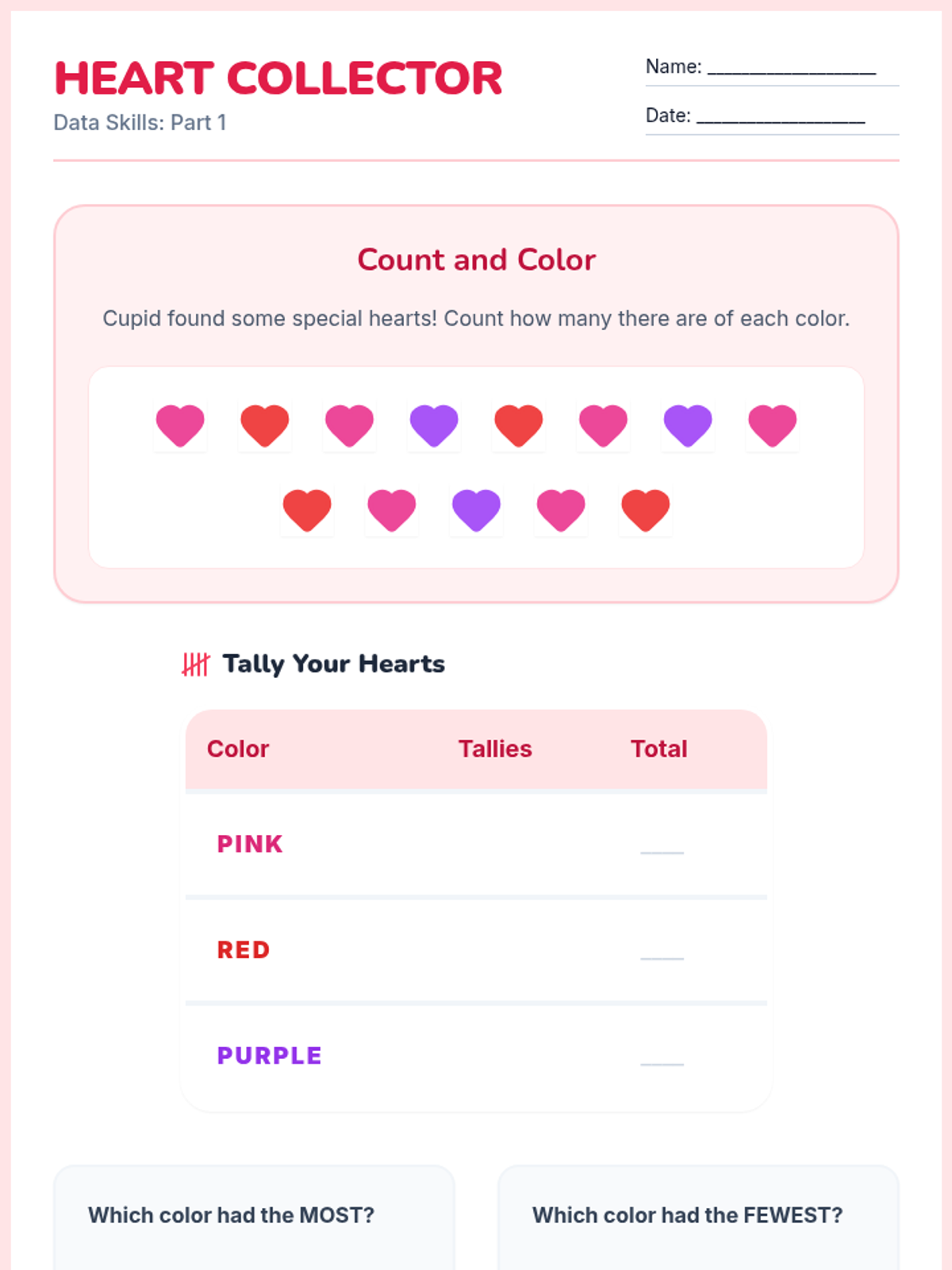
Students will sort candy heart colors, create simple tally charts, and build basic bar graphs with a 1:1 scale.
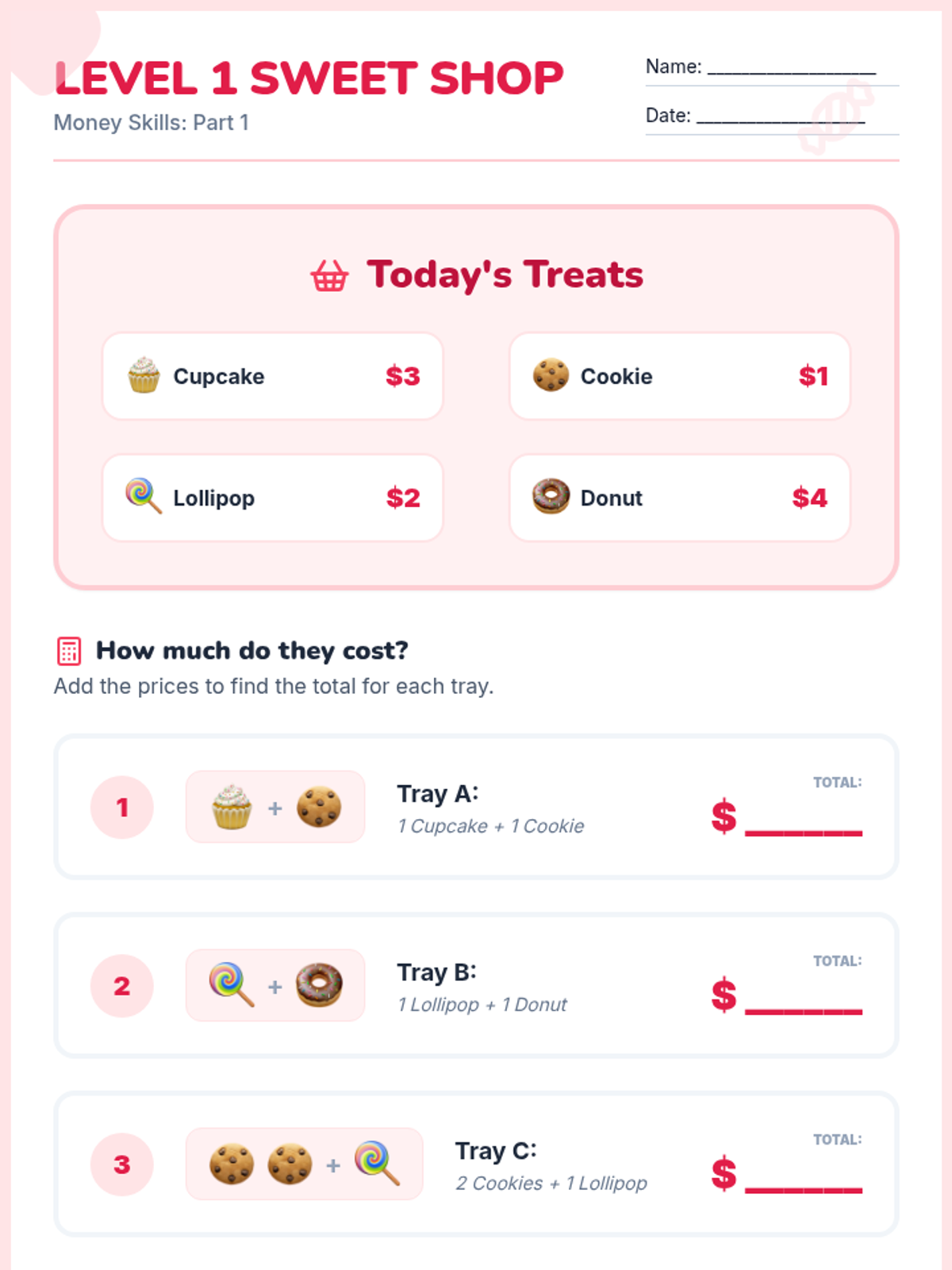
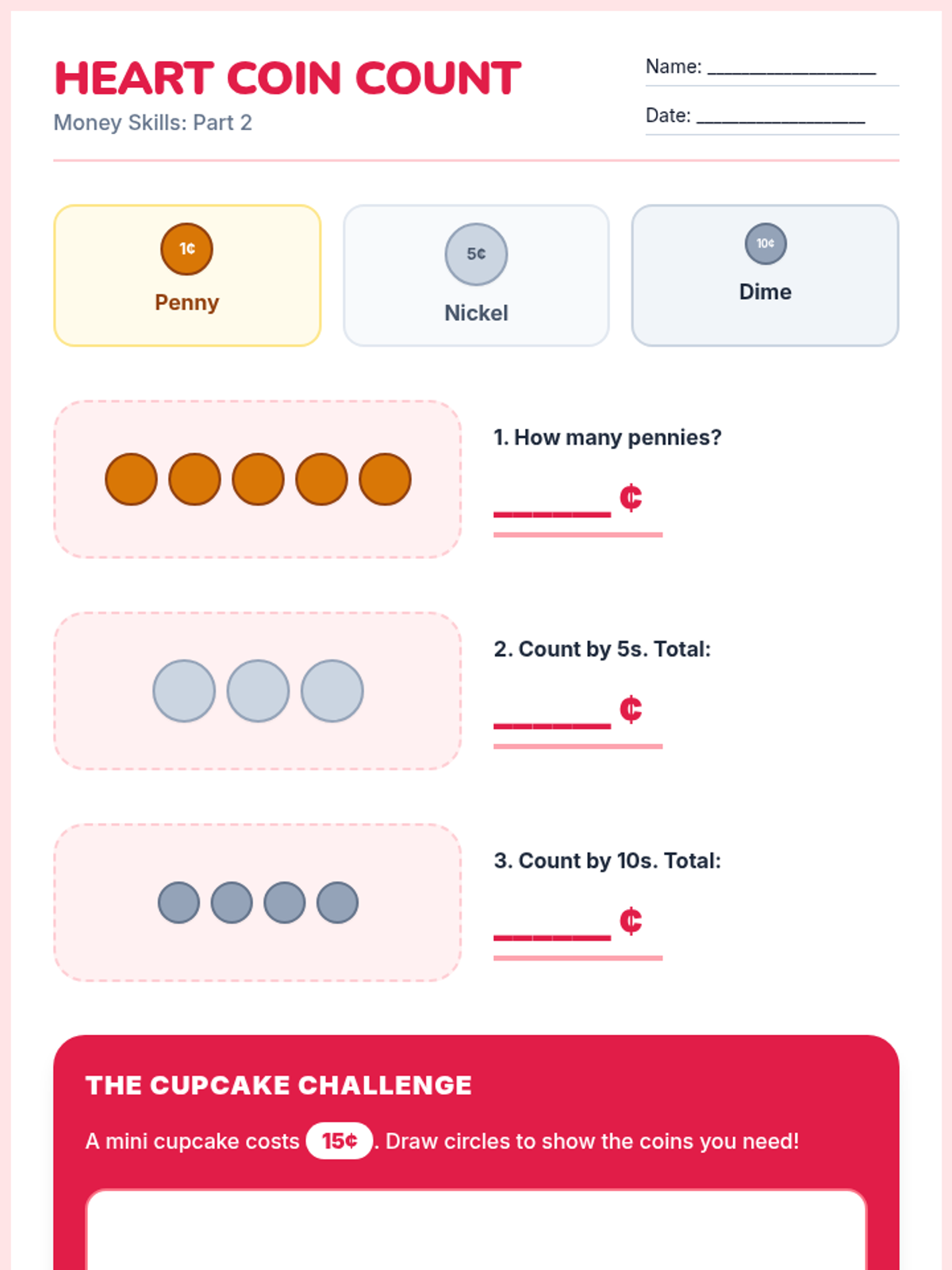
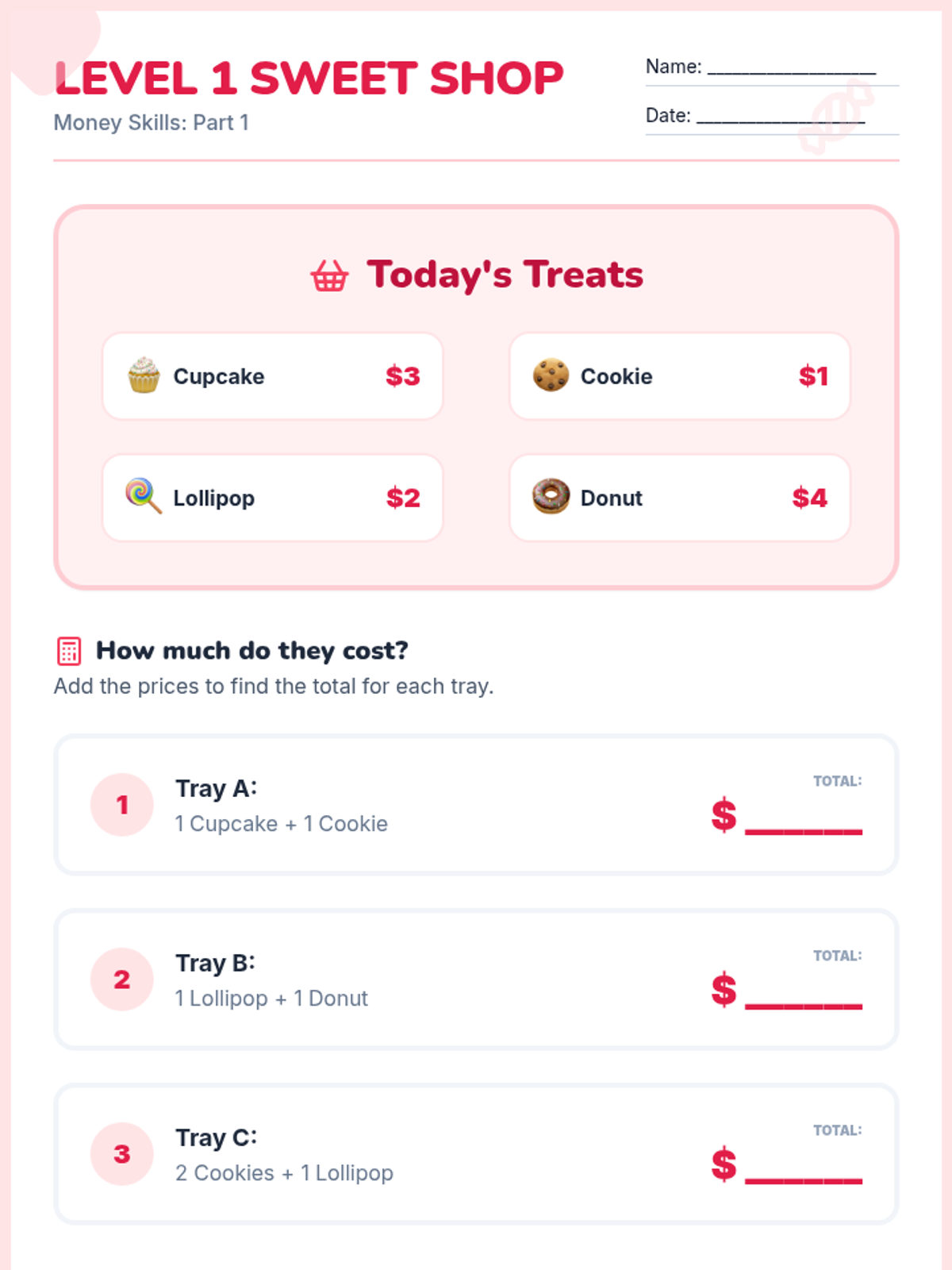
Students will practice identifying single coins, calculating costs with whole numbers, and buying items from a Level 1 sweet shop menu.
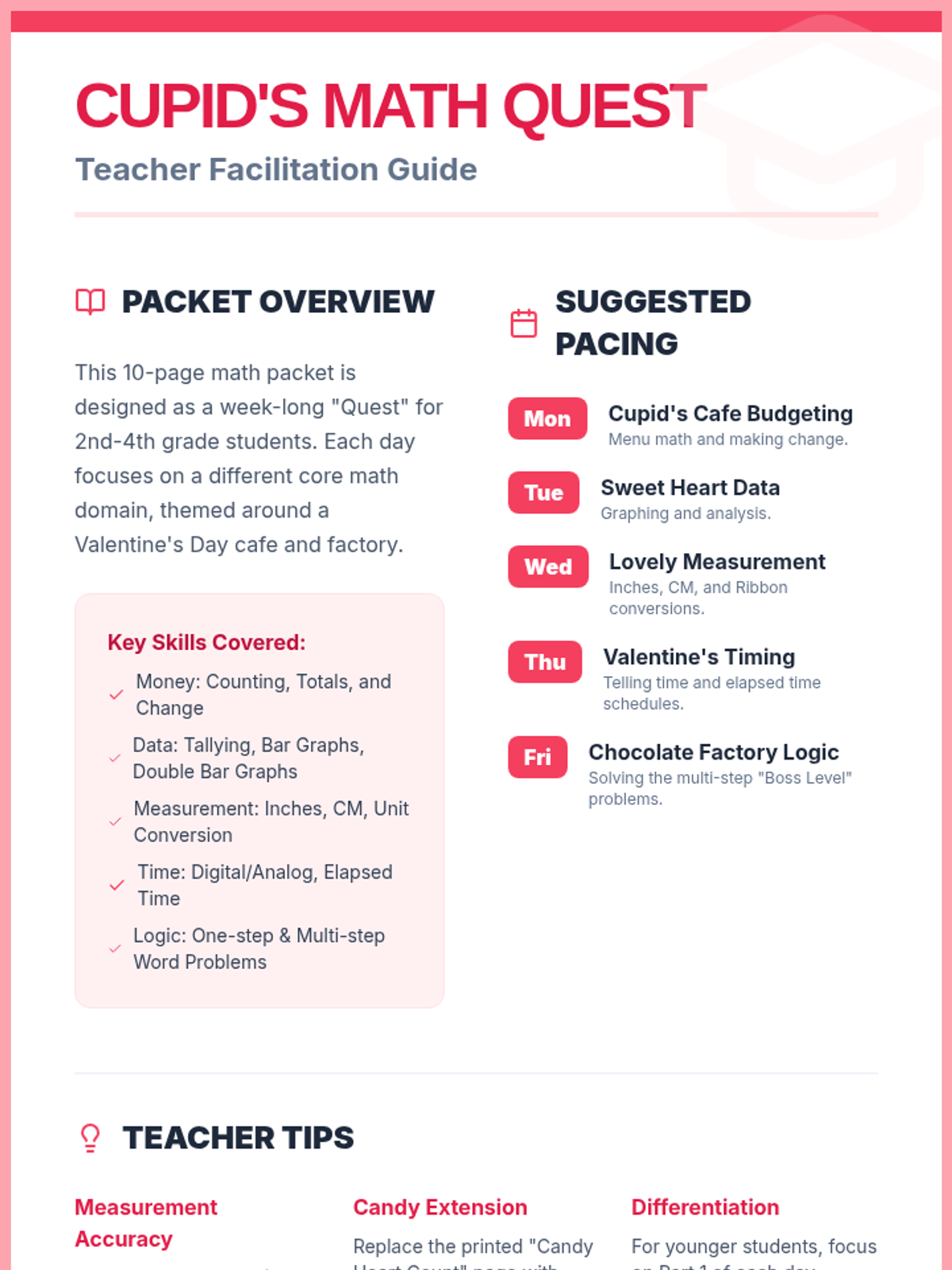
Teacher overview and answer keys for the Quest Valentine's Day math packet.
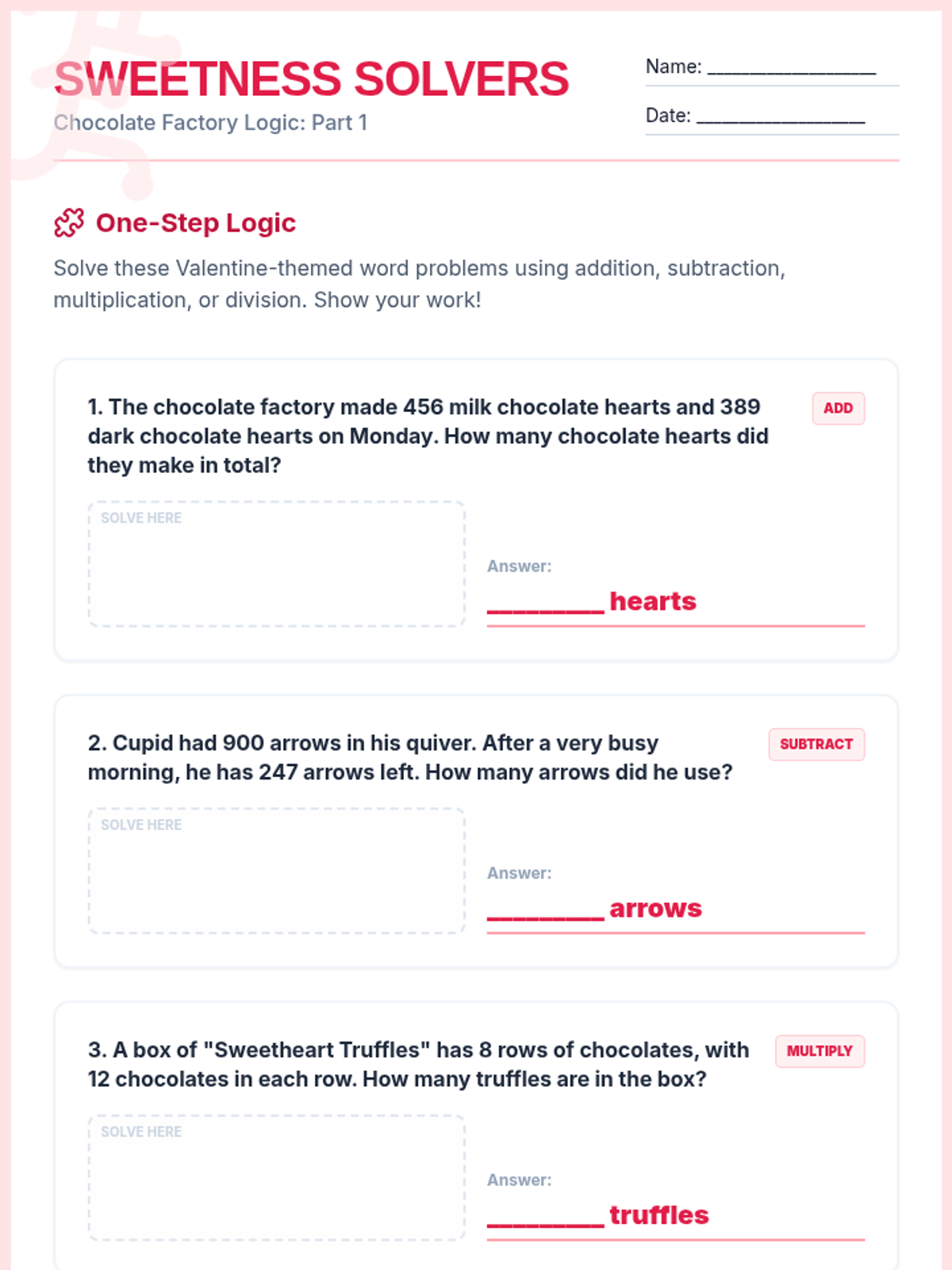
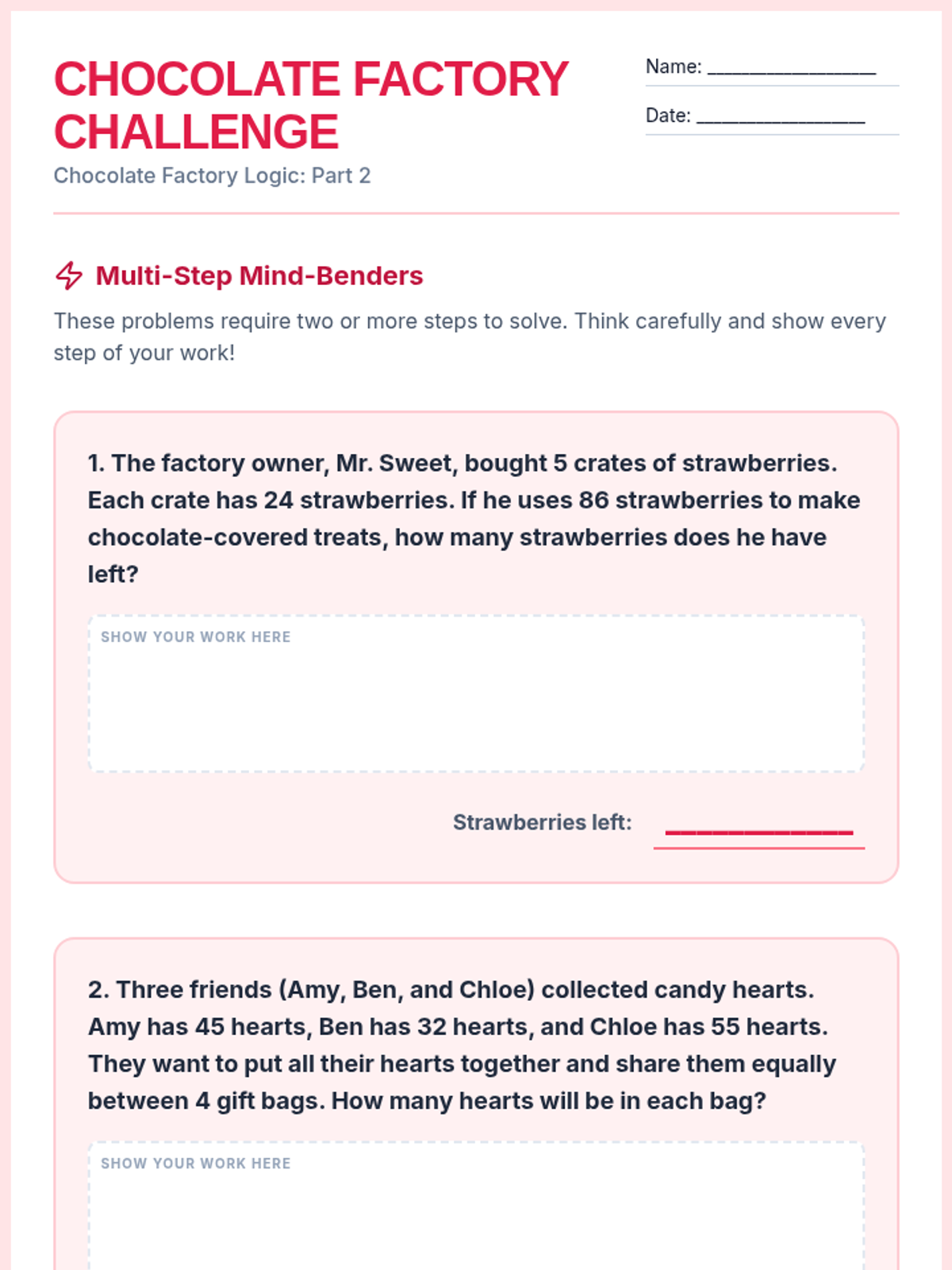
Students will solve a variety of one-step and multi-step math word problems involving all four operations with a Valentine's Day theme.
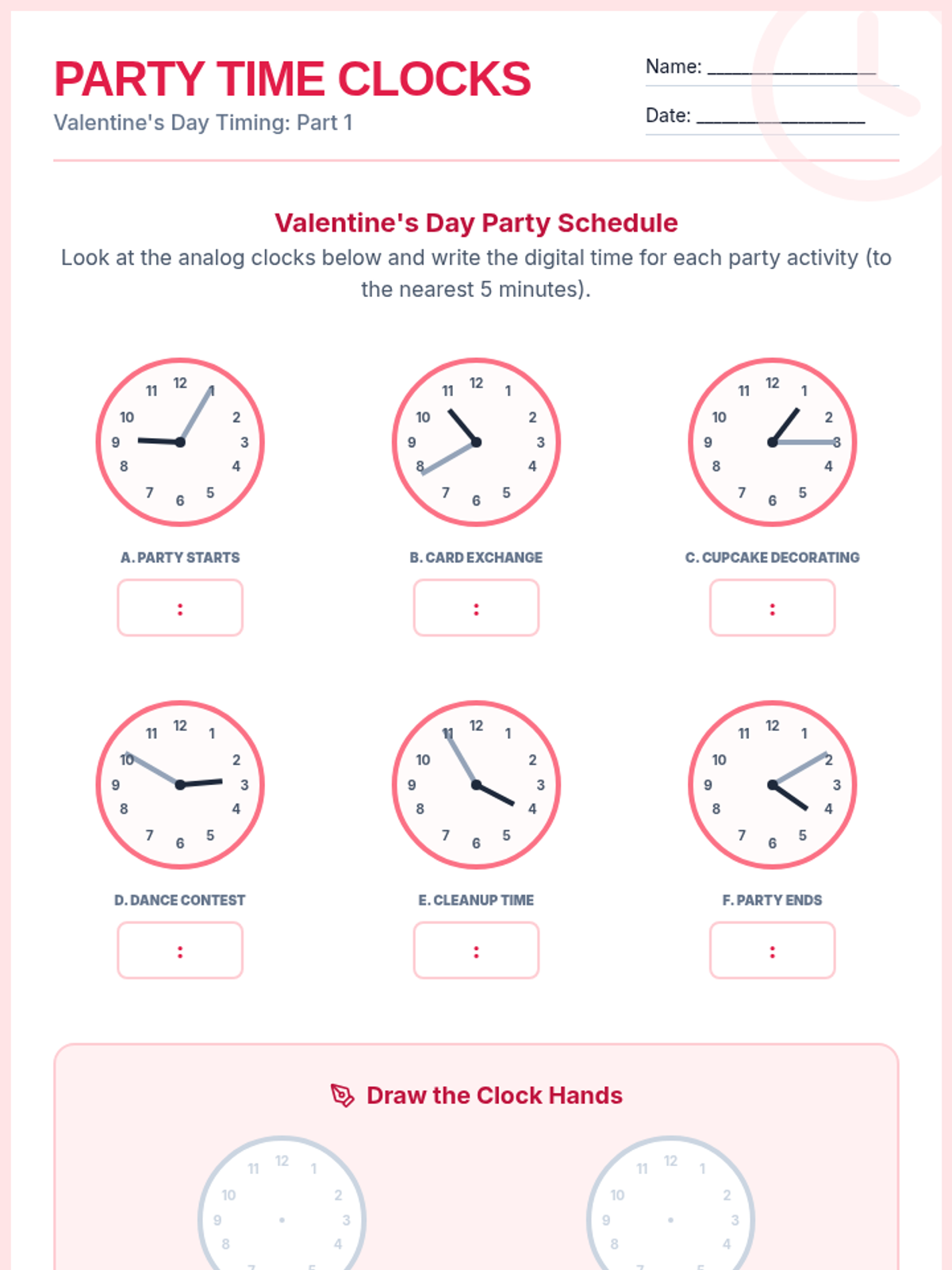
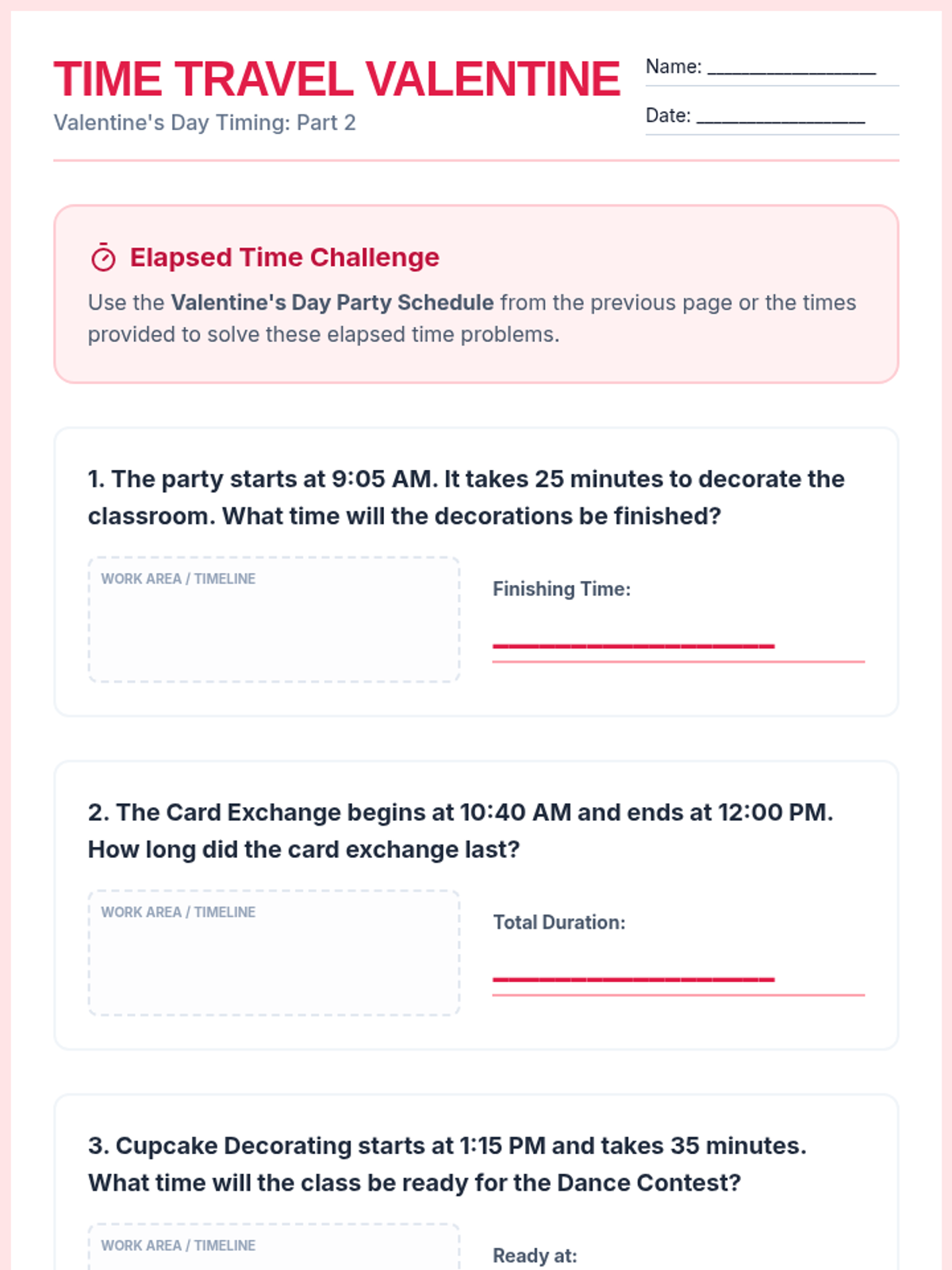
Students will read analog clocks with full numbers to the hour, half-hour, and nearest 5 minutes based on a Valentine's Day party schedule.
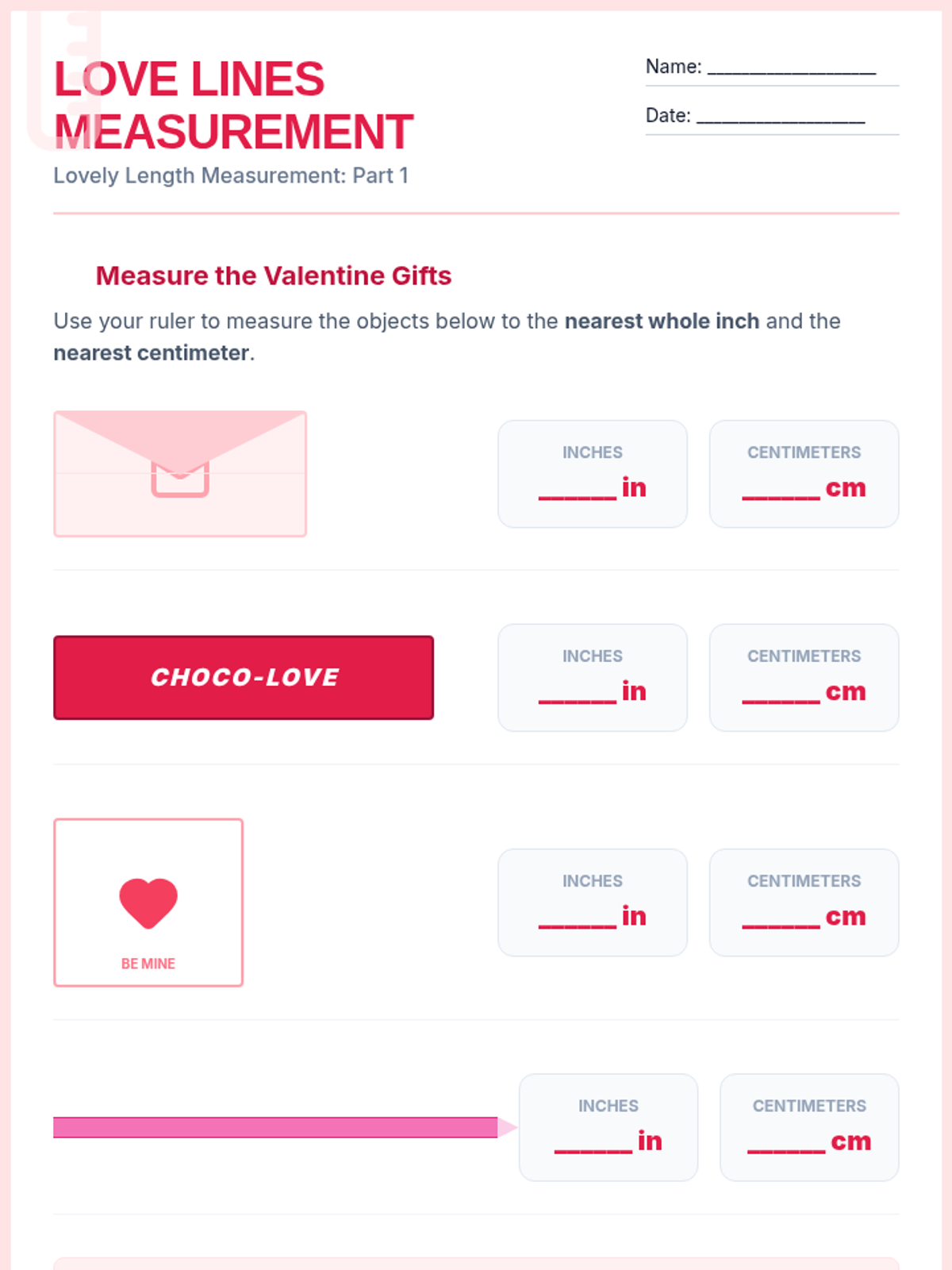
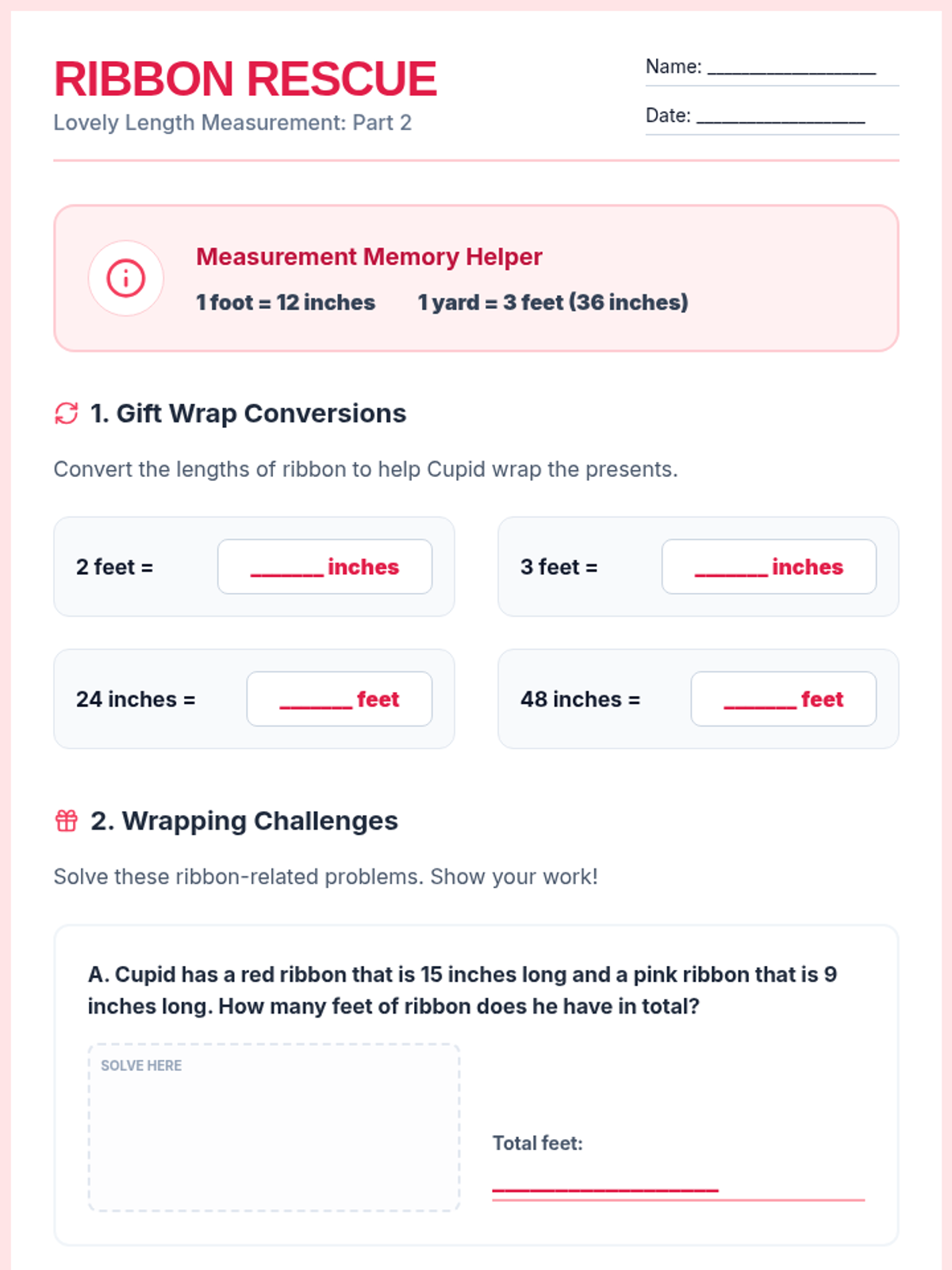
Students will measure Valentine-themed objects to the nearest inch and centimeter and practice converting basic units of length for gift wrapping.
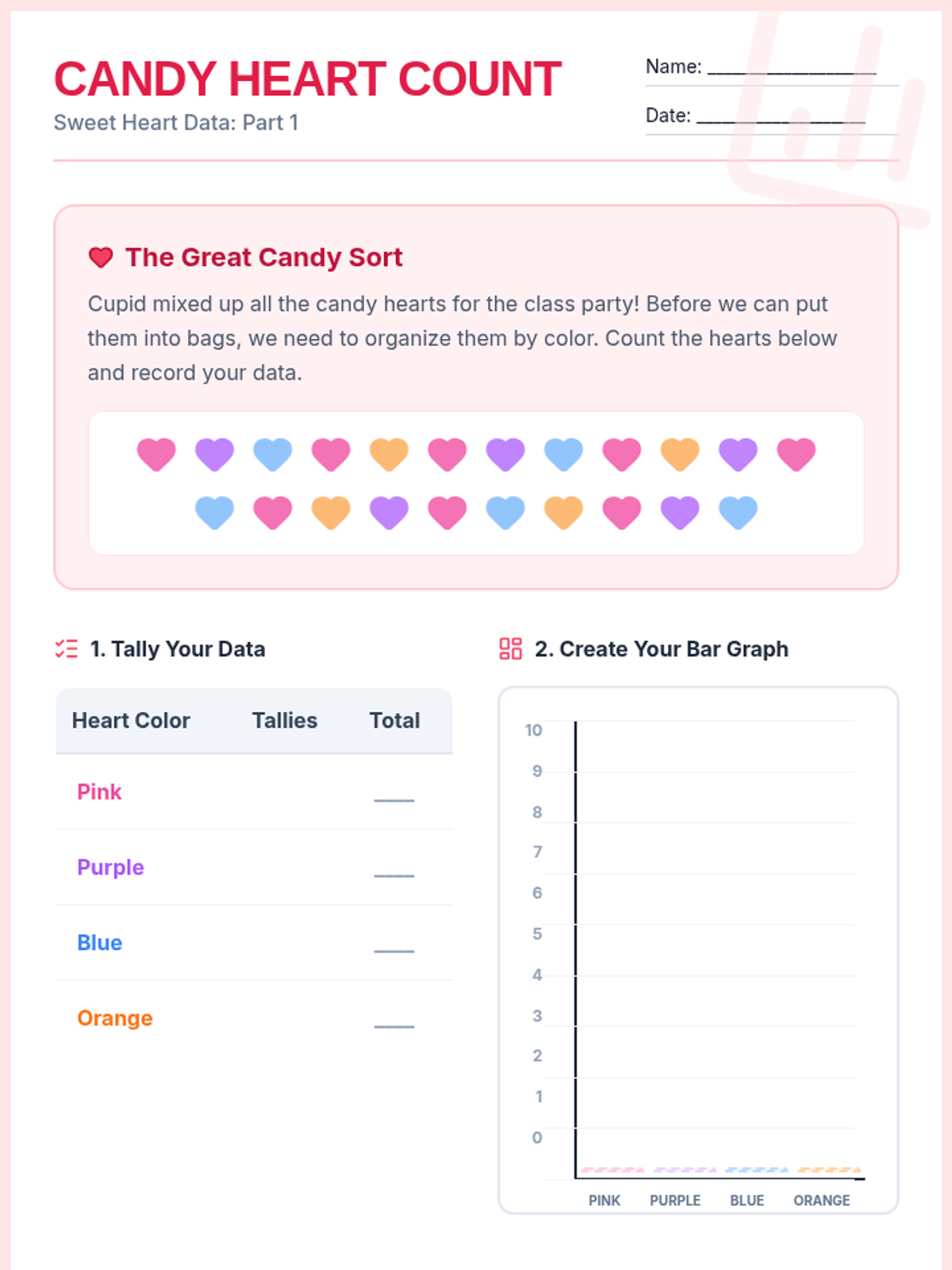
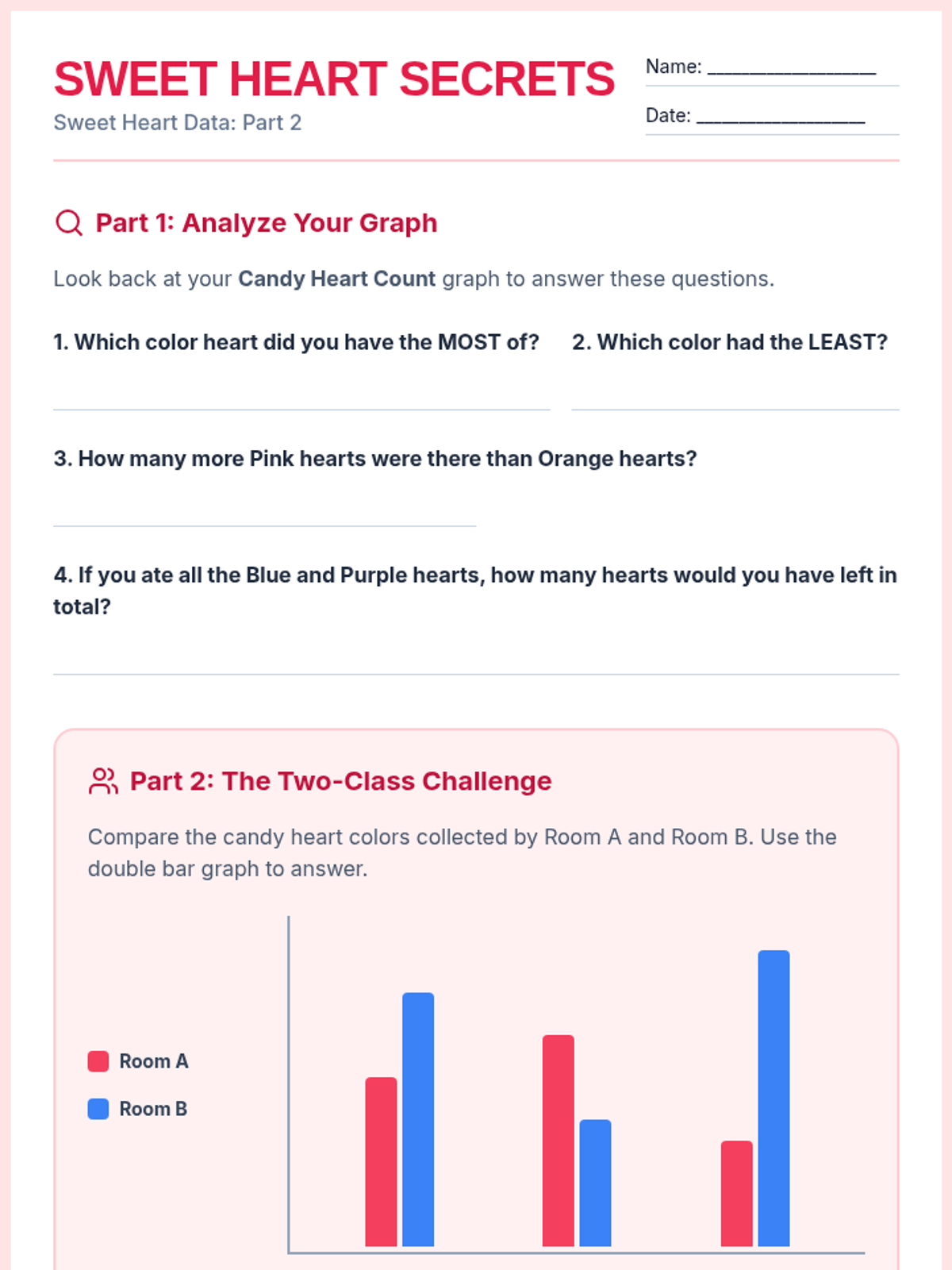
Students will collect data from candy heart assortments, create bar graphs with multiple data sets, and interpret the results to solve comparison problems.
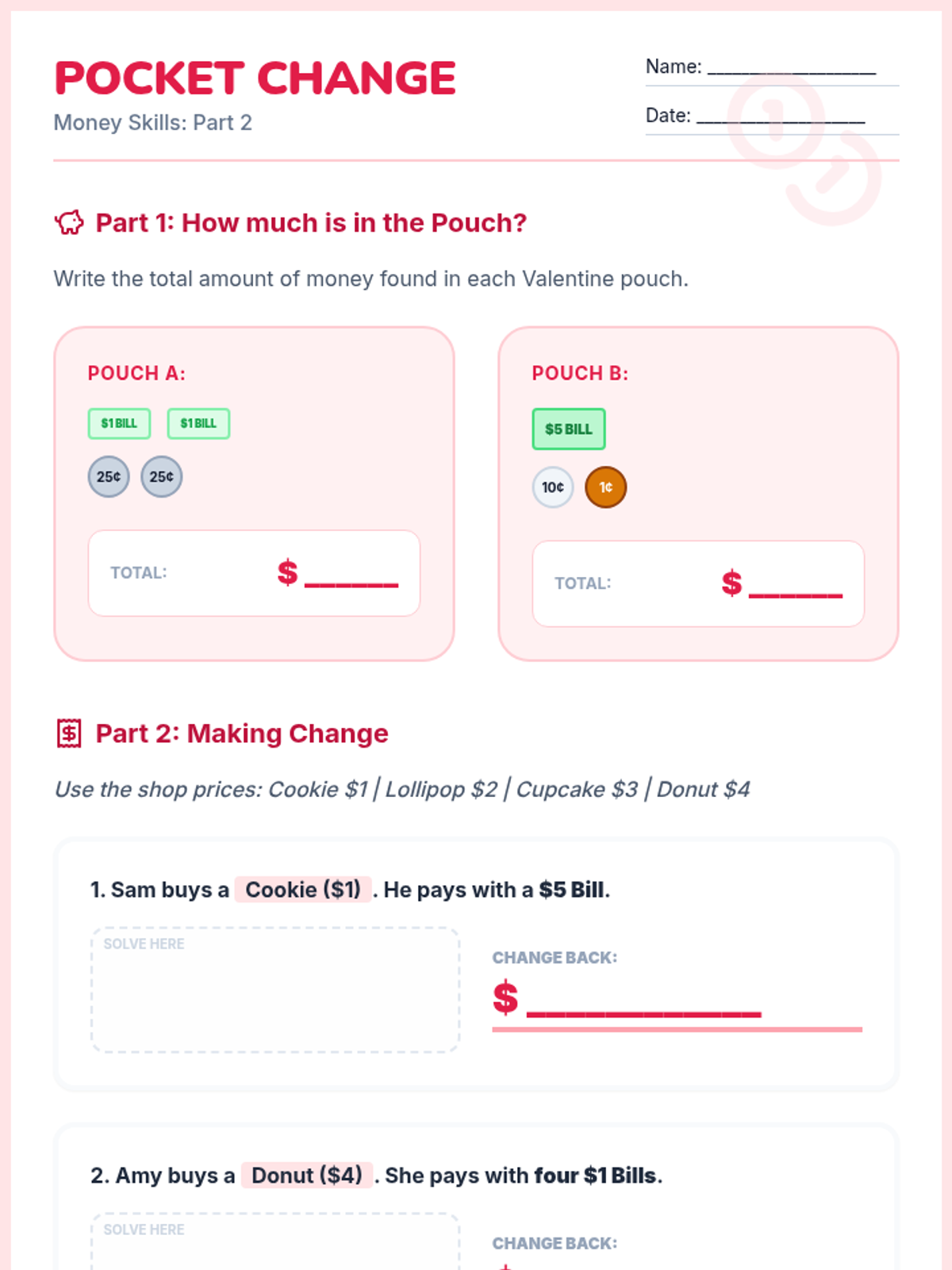
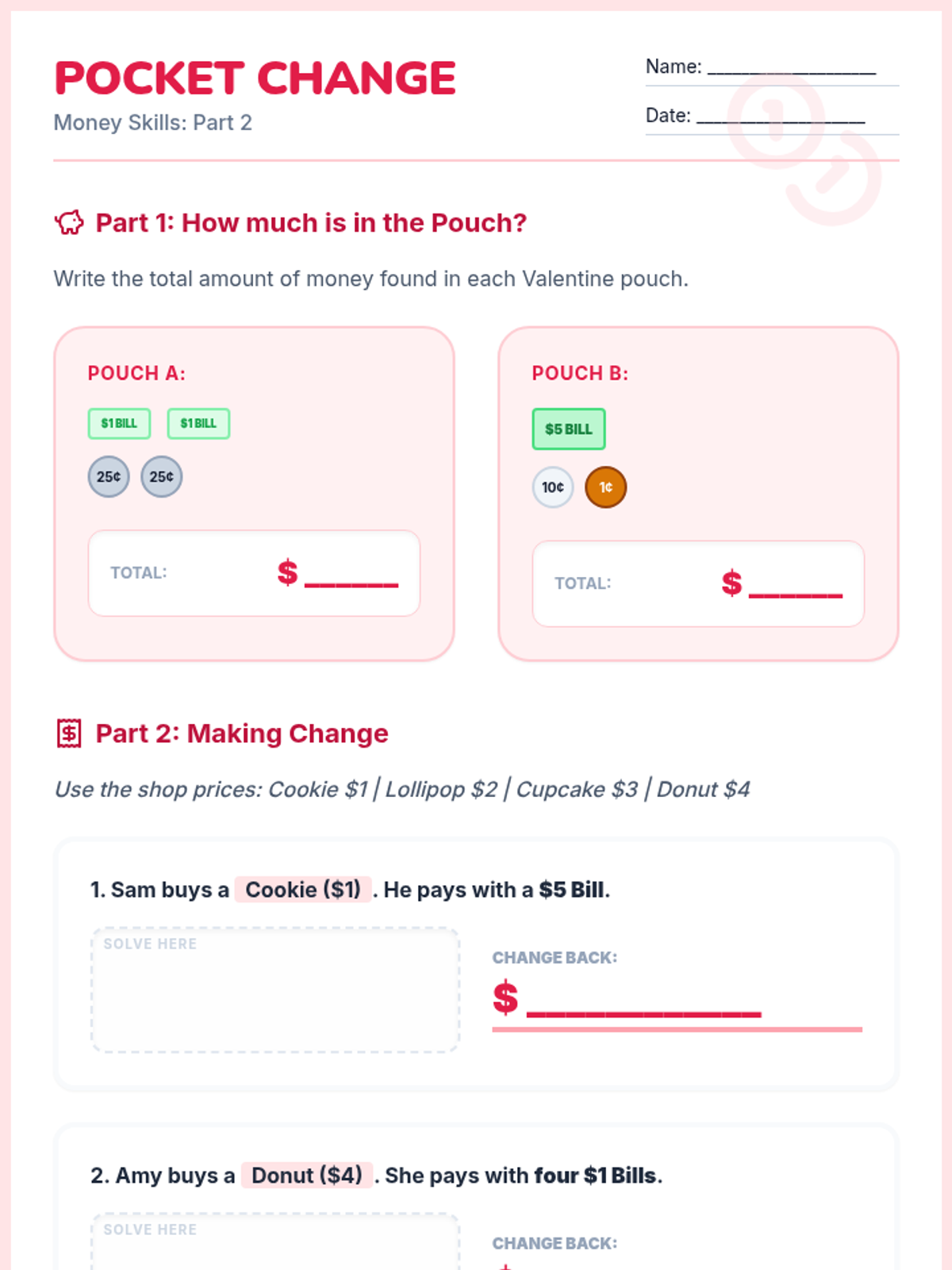
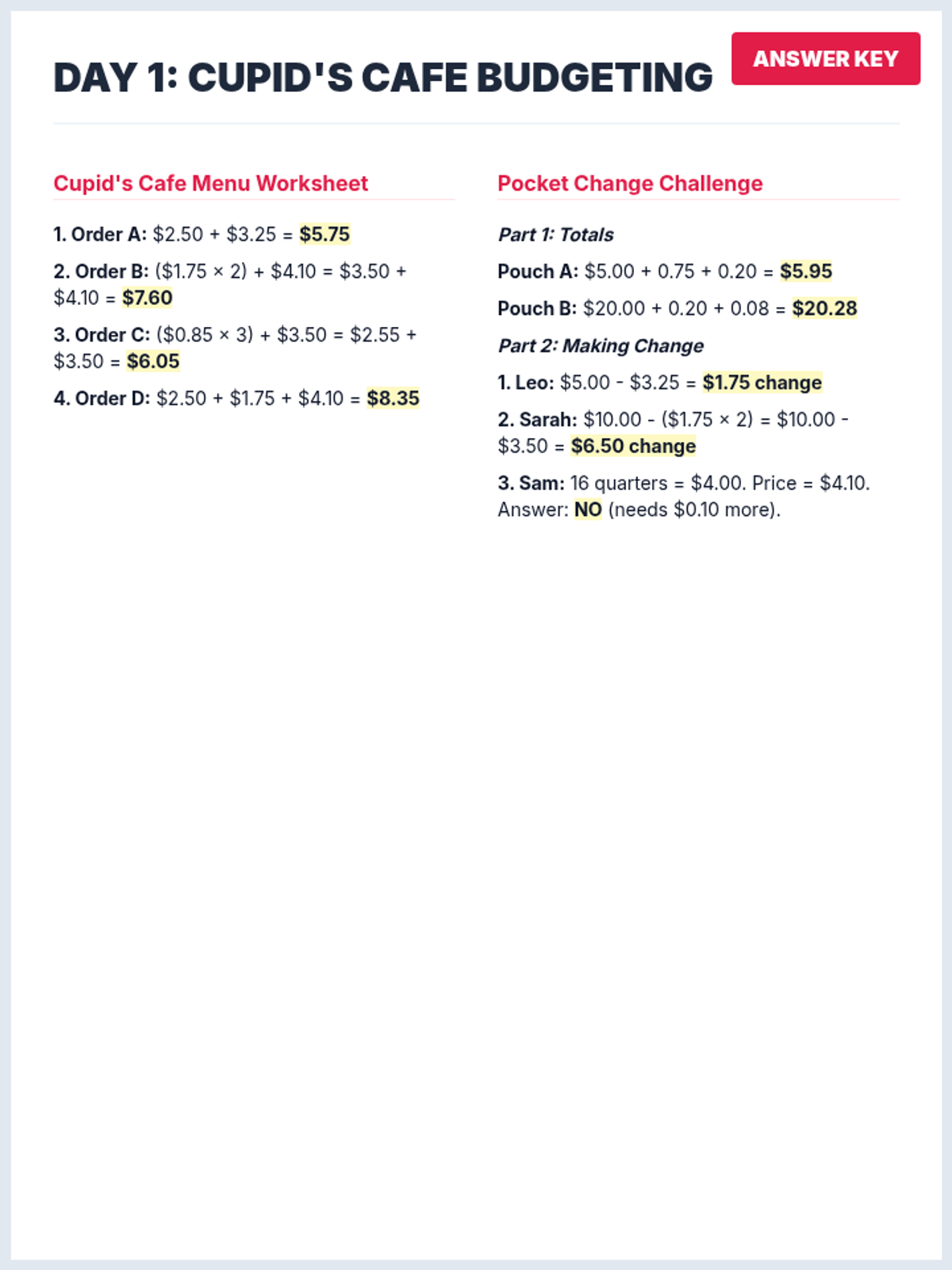
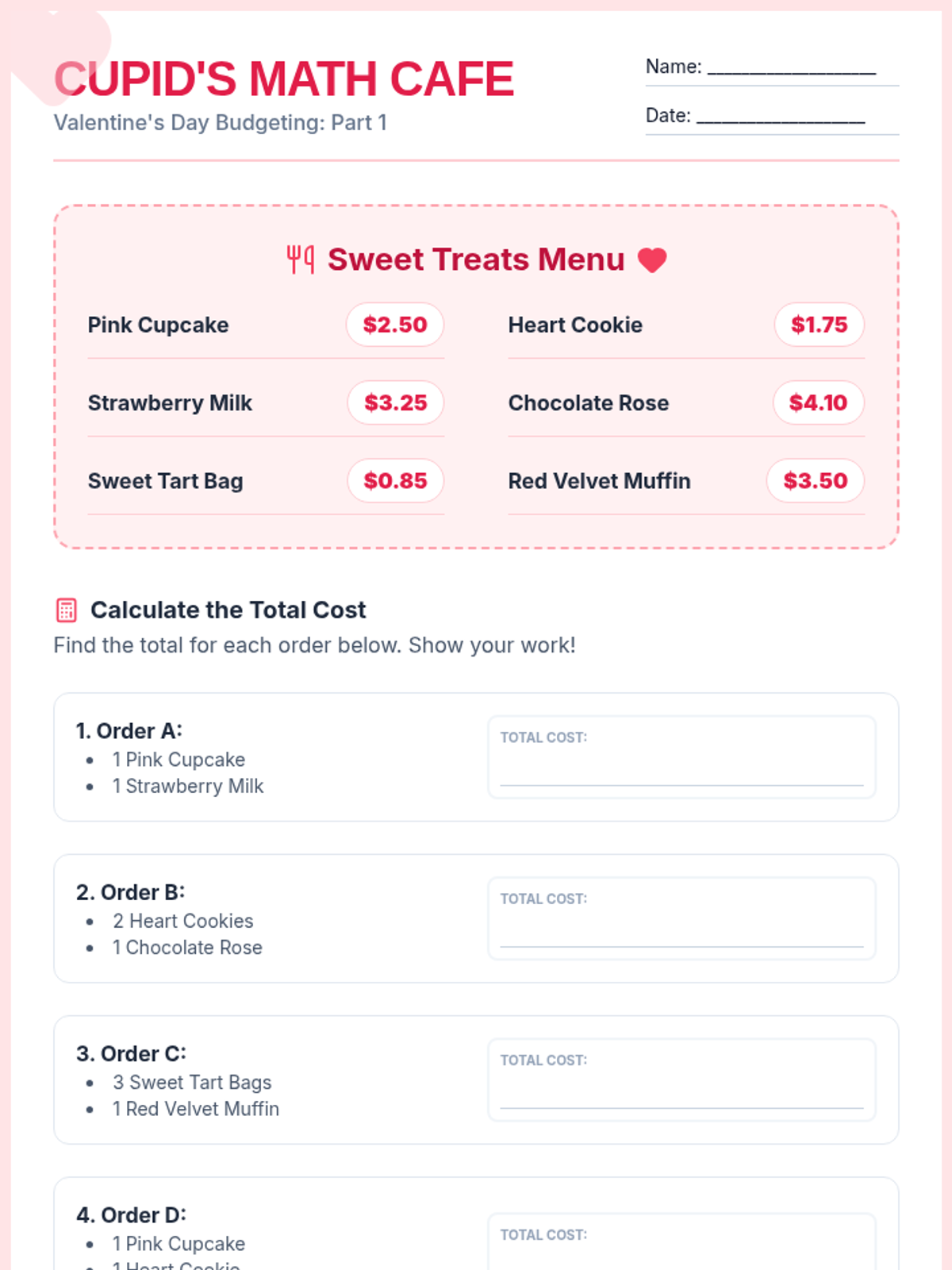
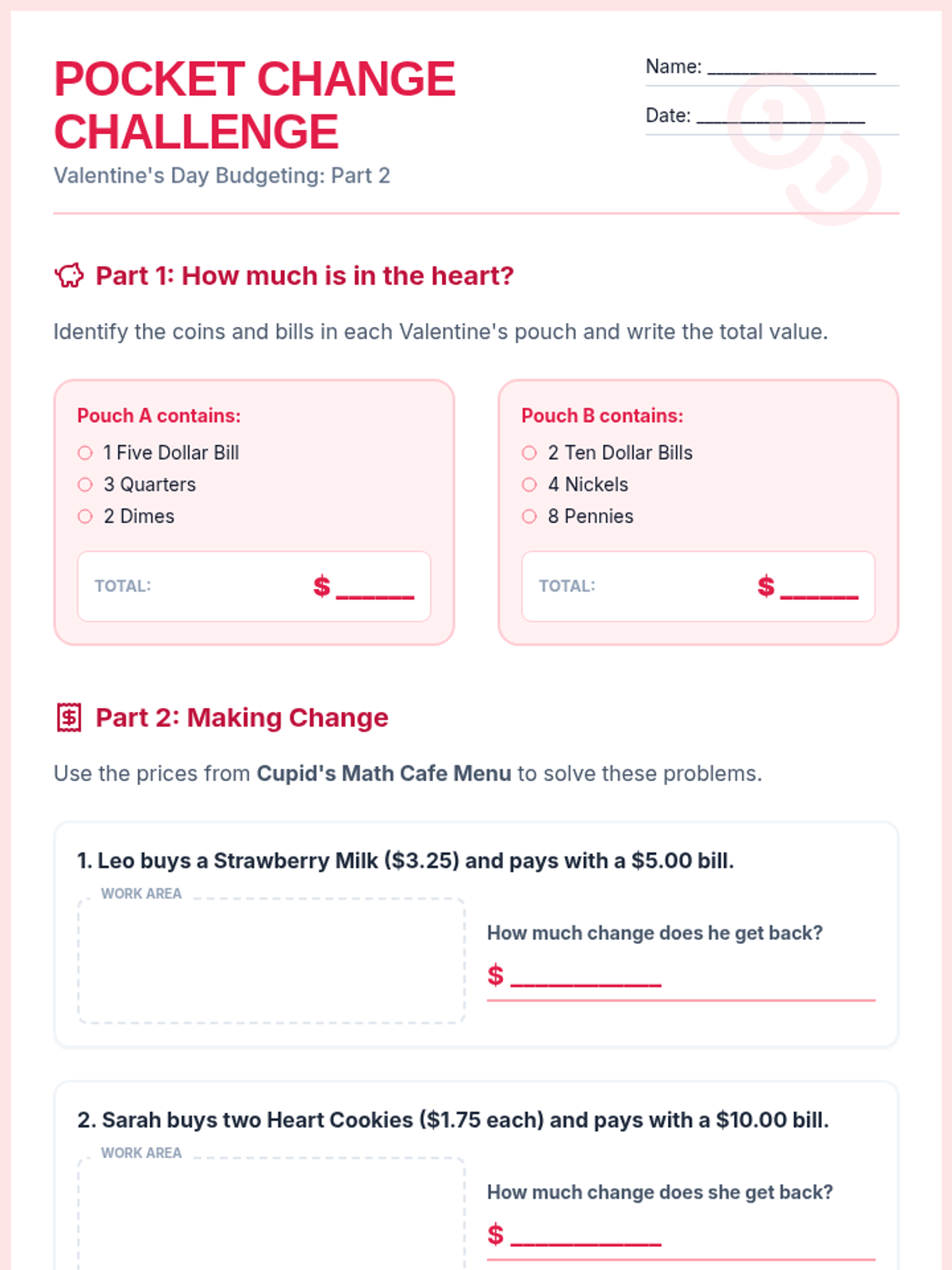
Students will practice identifying coins and bills, calculating the total cost of items from a cafe menu, and determining change for various purchases.
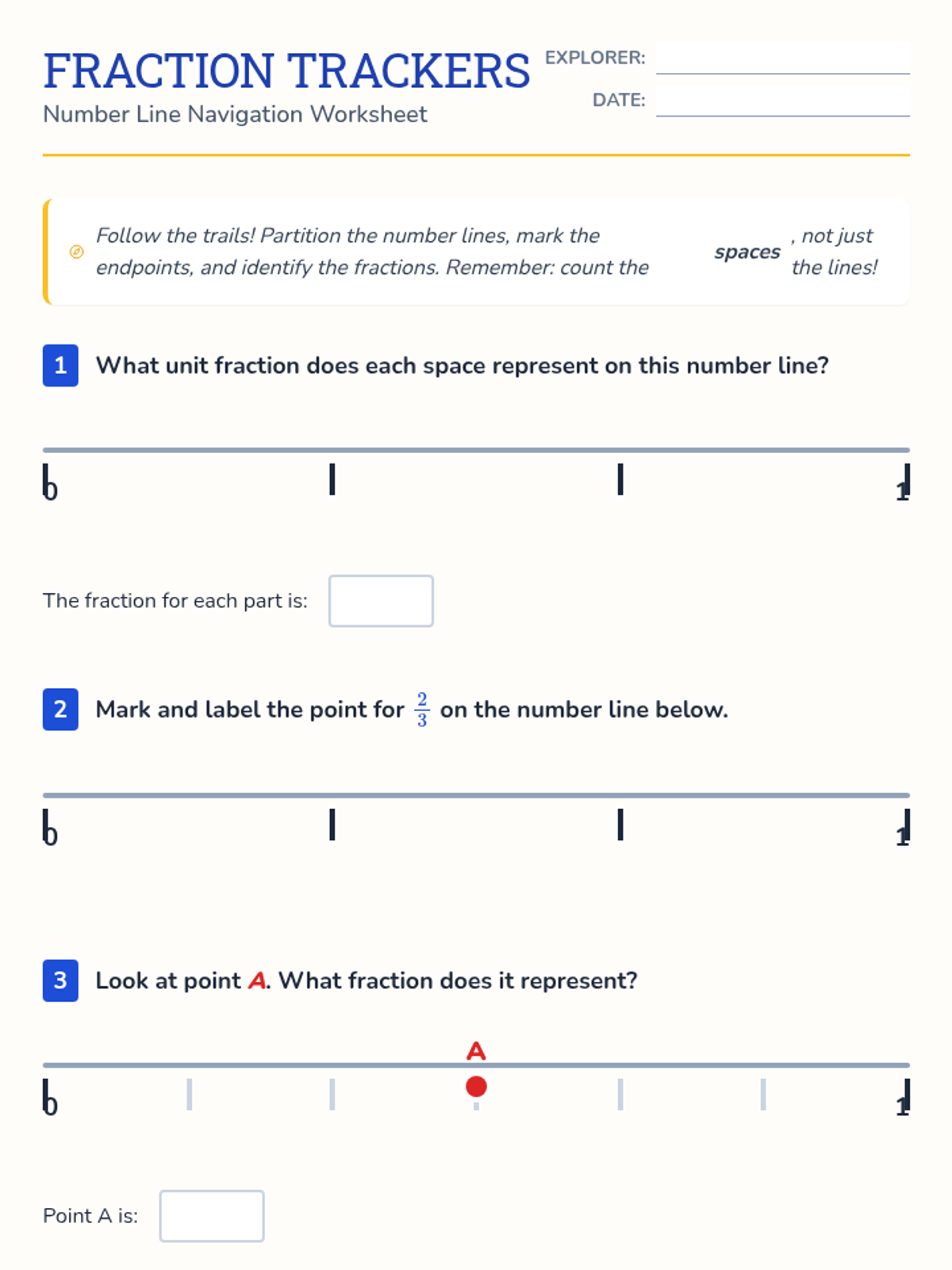
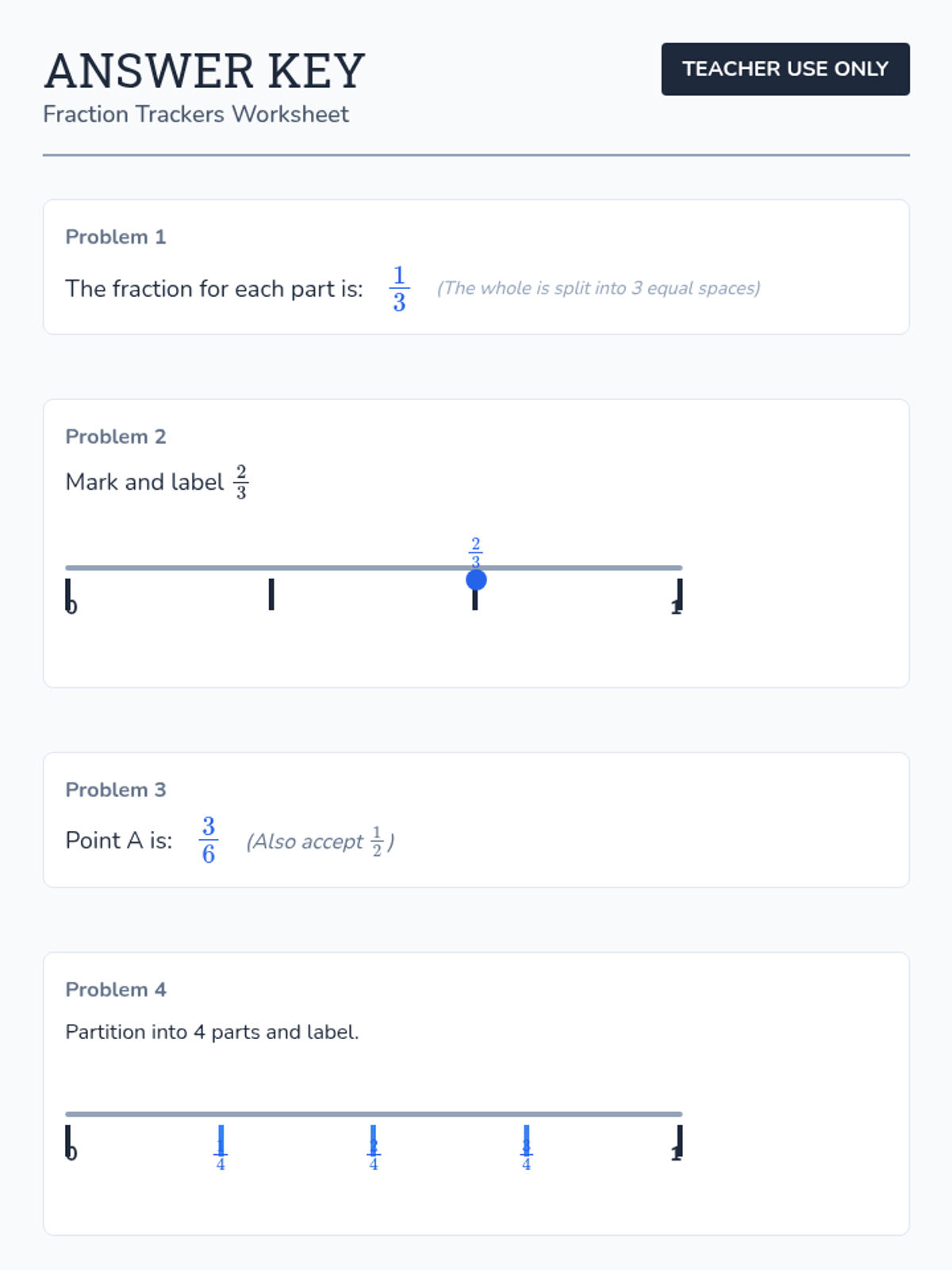
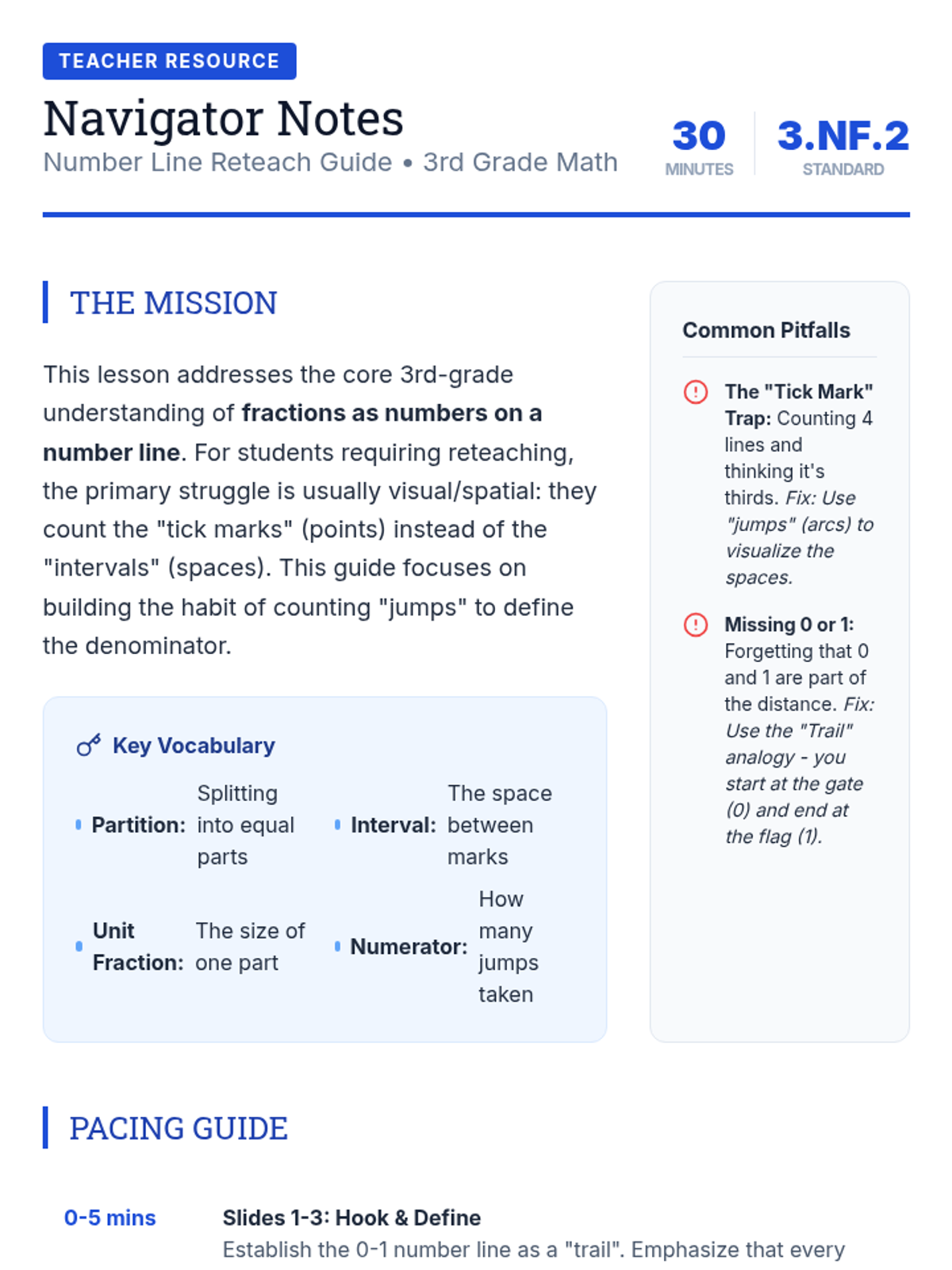
A support-focused lesson on partitioning number lines into equal parts and locating unit and non-unit fractions between 0 and 1. Includes visual guides for counting intervals and avoiding common misconceptions.
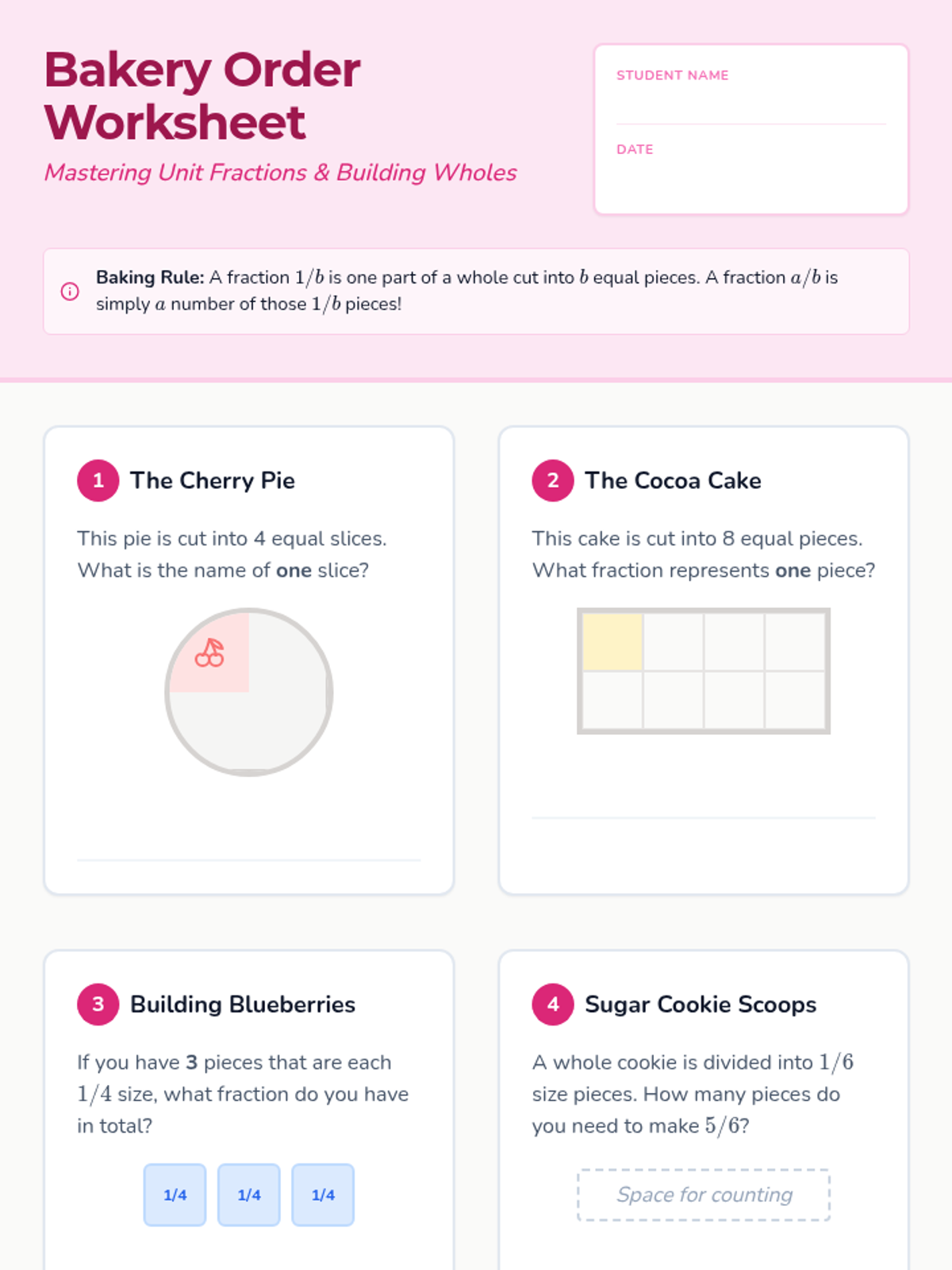
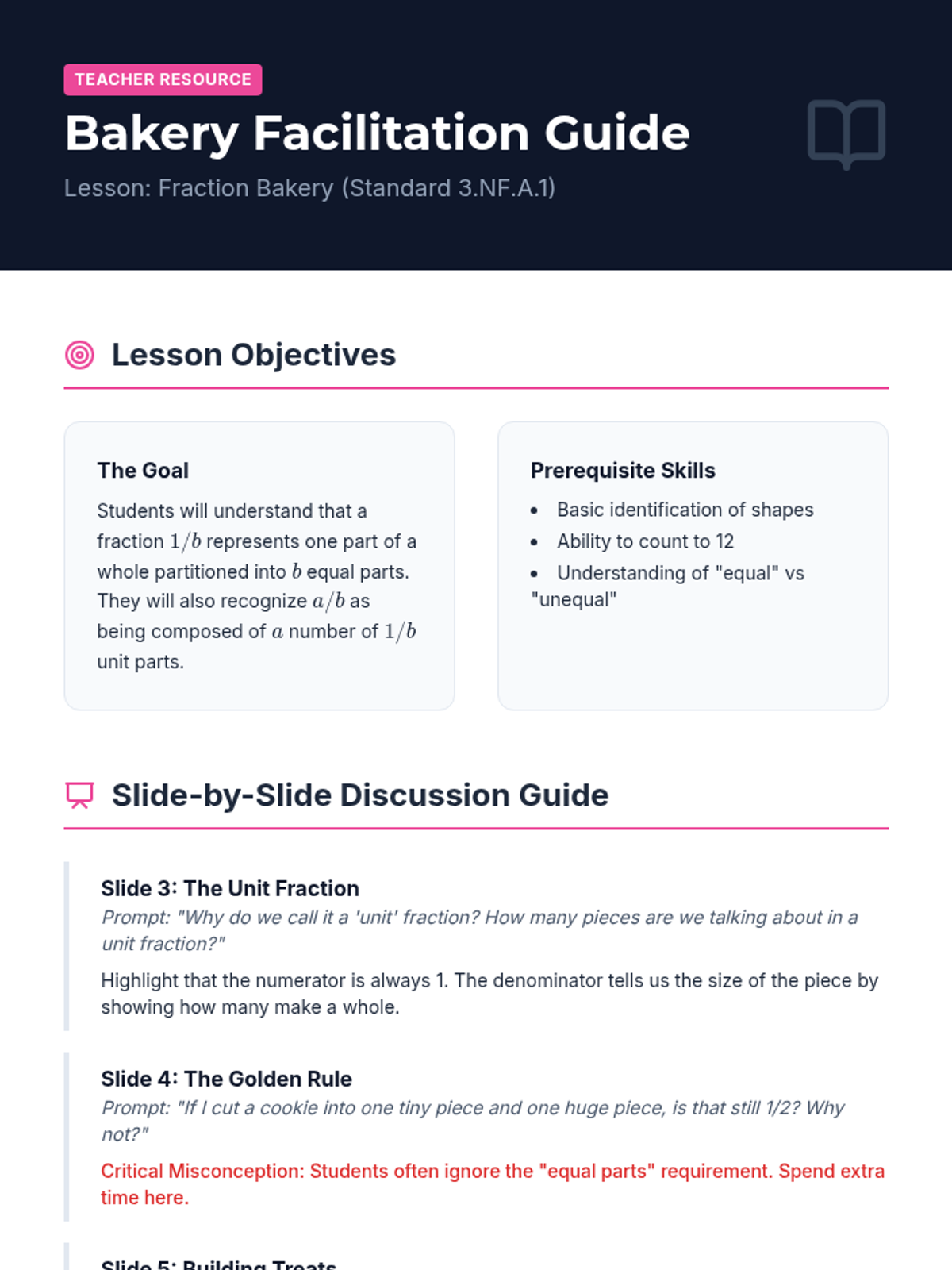
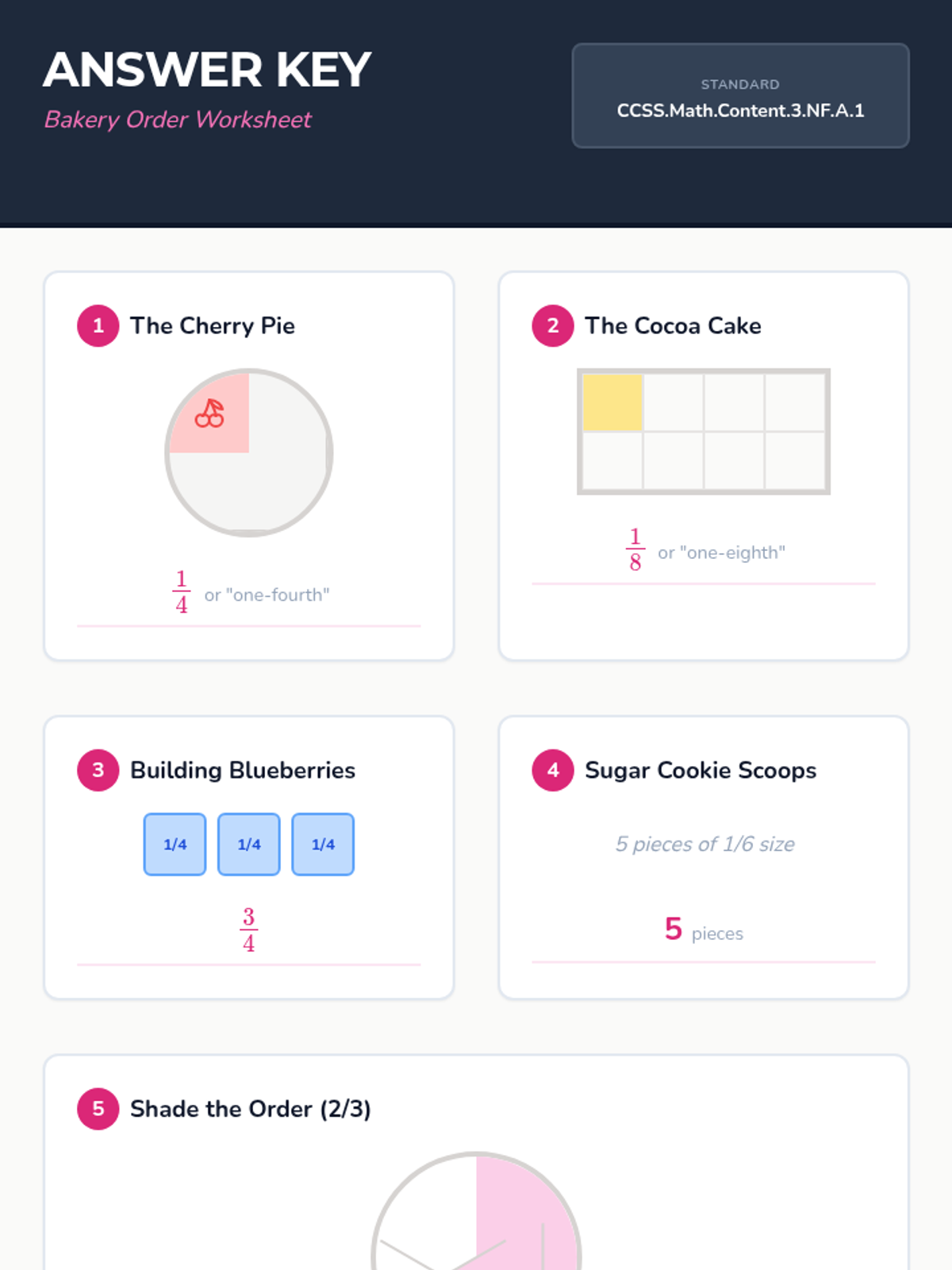
A remedial lesson focused on understanding unit fractions and building fractions from unit parts using bakery-themed visual models.