Students will master the extremely rare rule of using apostrophes for pluralizing lowercase letters to ensure clarity in their writing, while debunking common misconceptions about acronyms and uppercase letters.
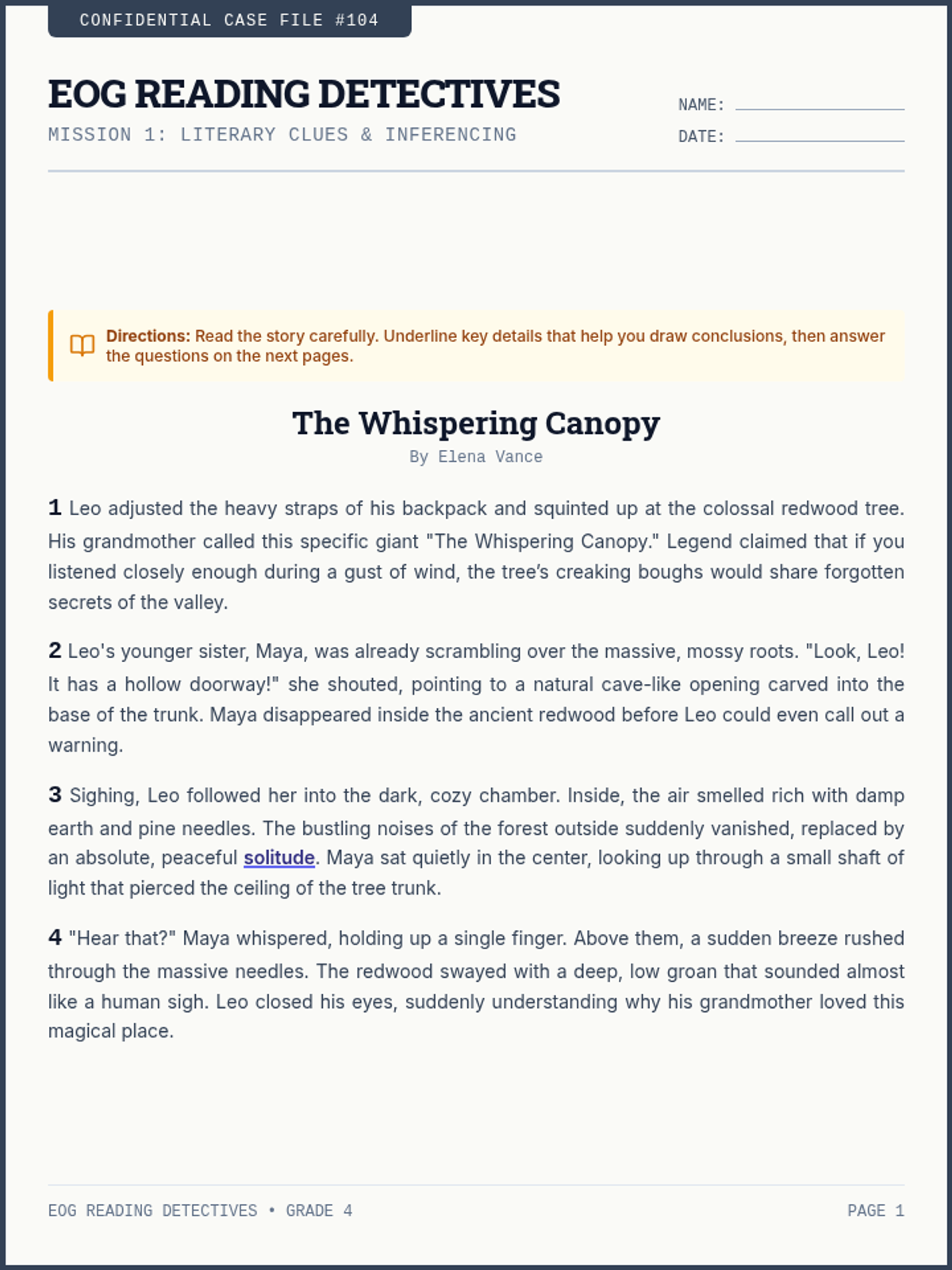
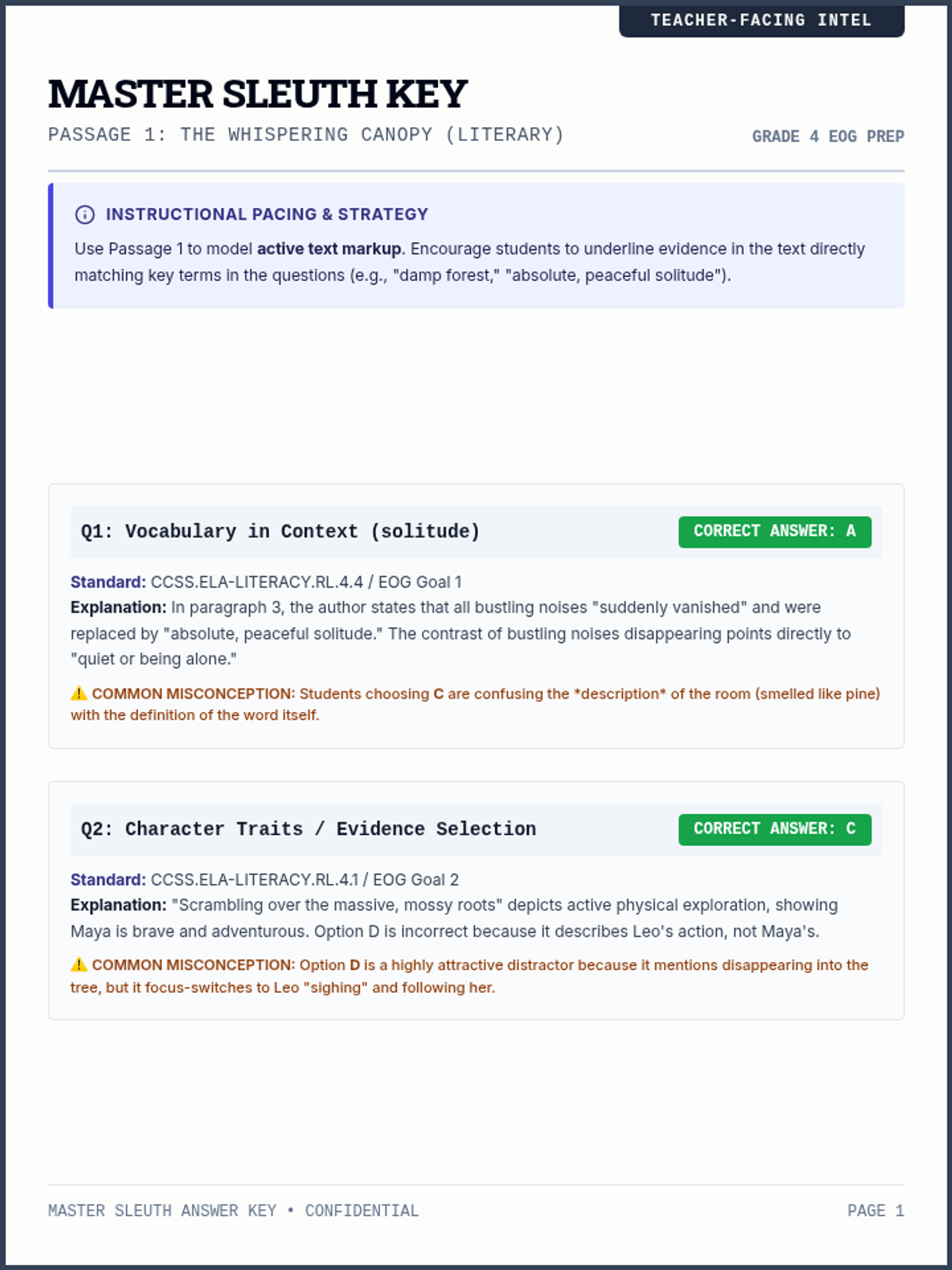
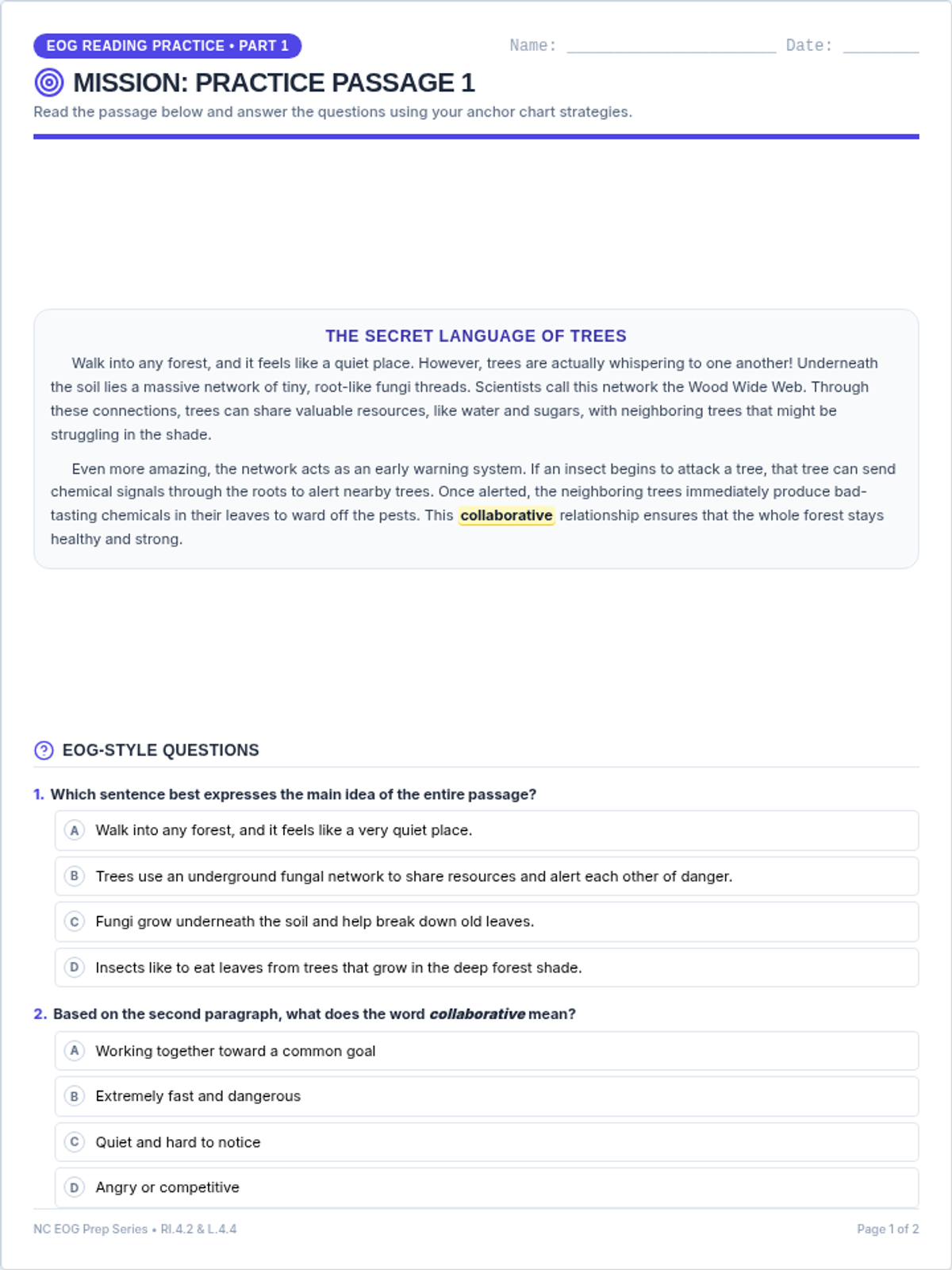
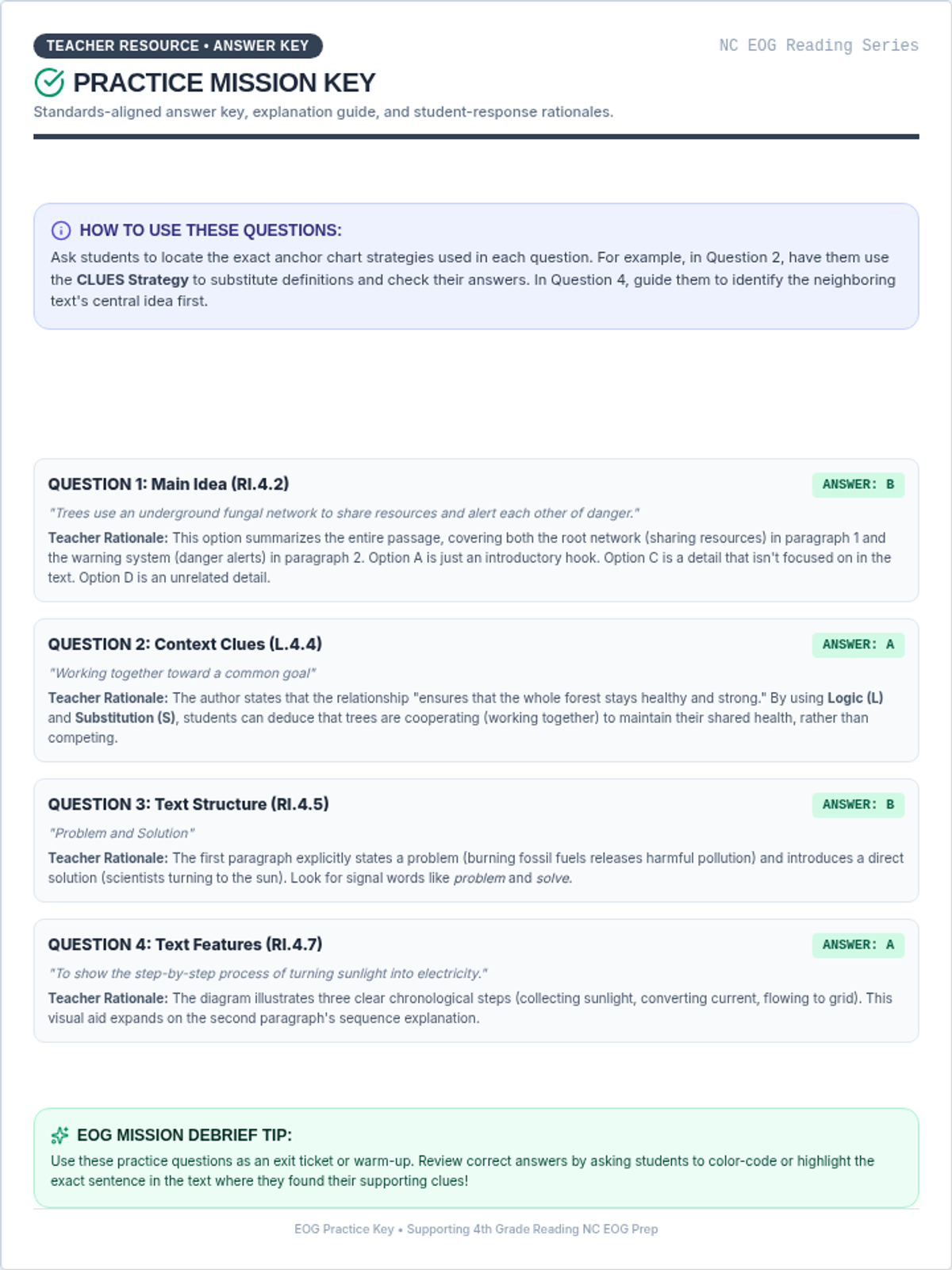
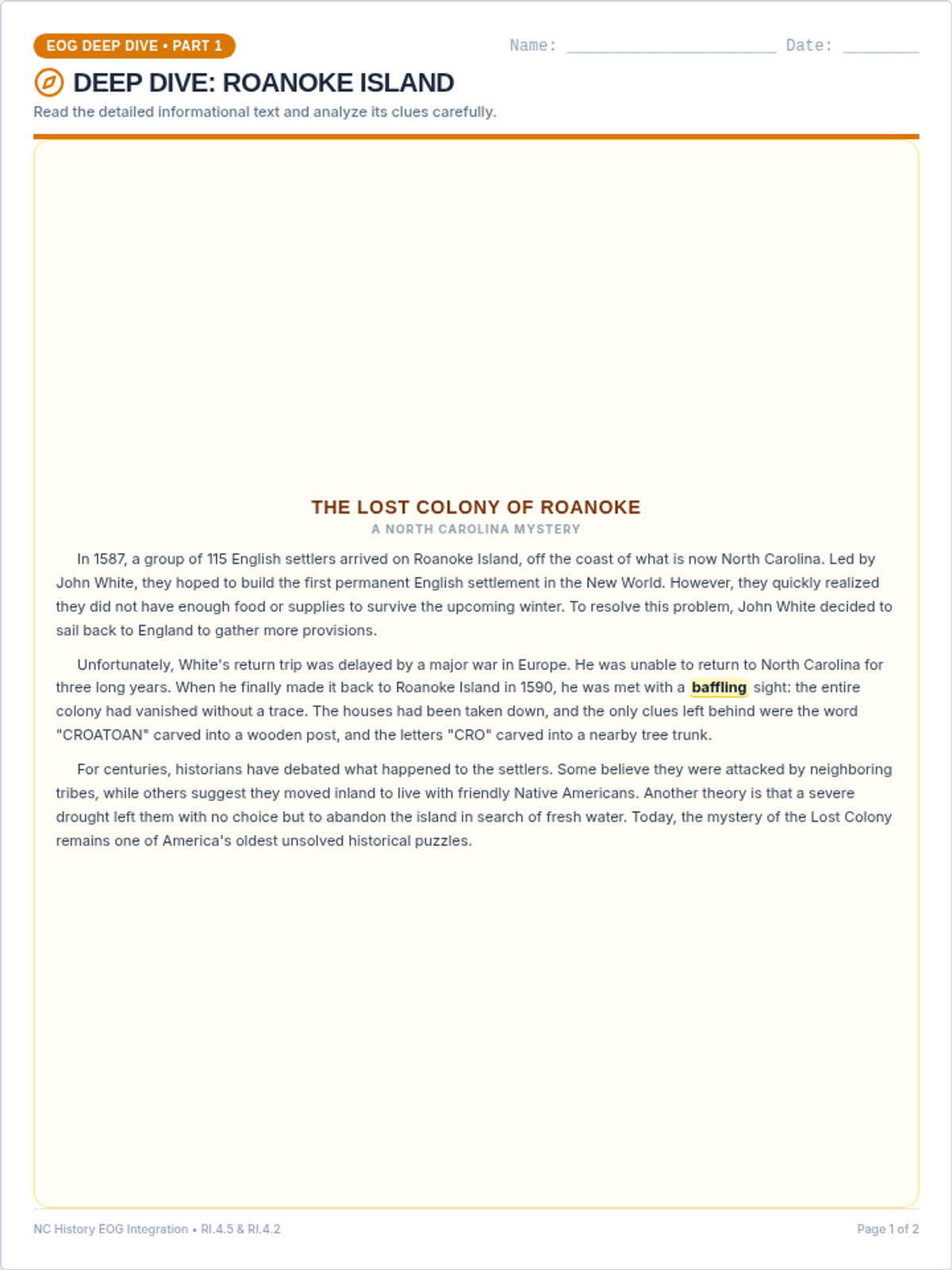
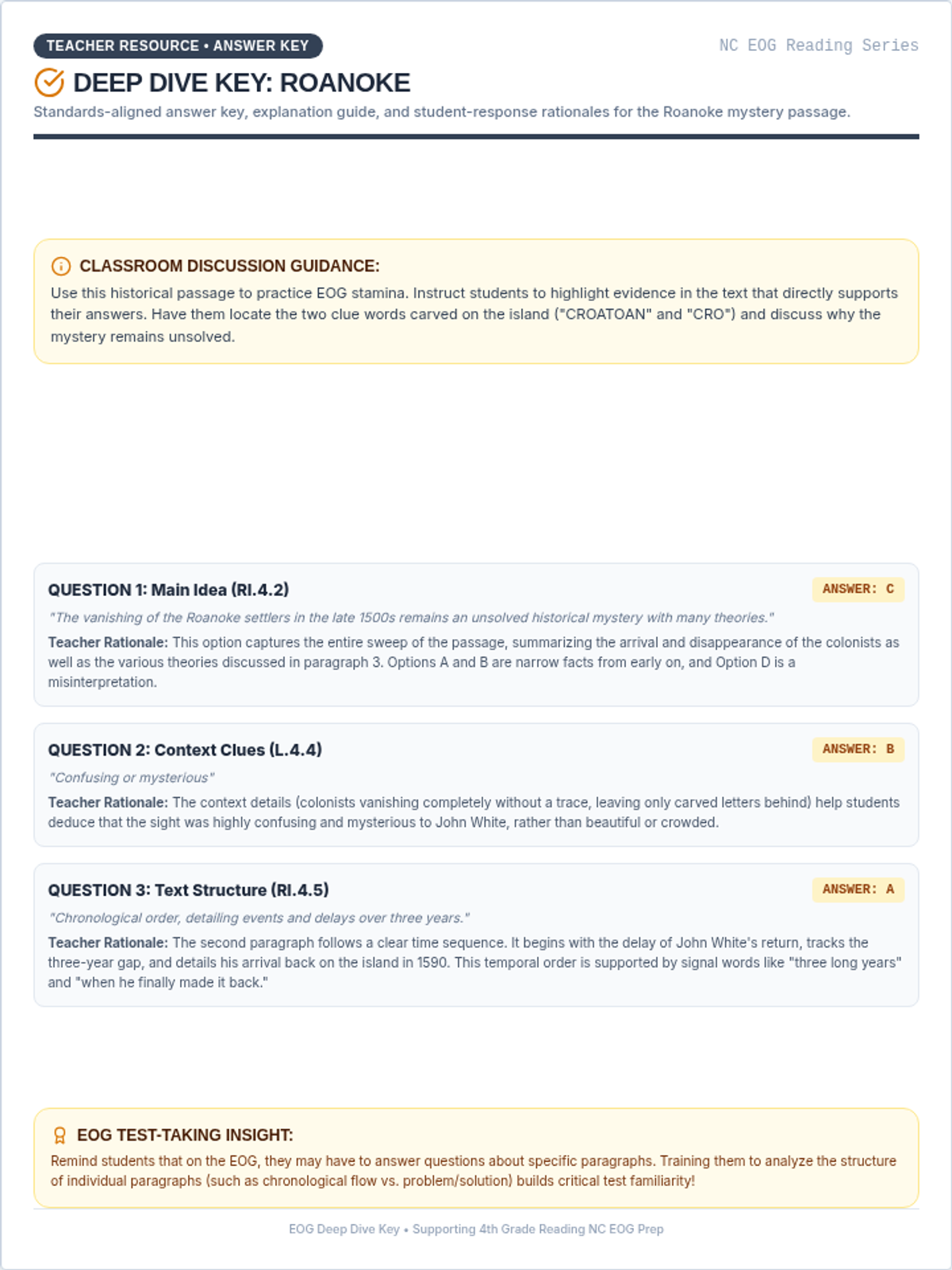
A comprehensive test-preparation unit for 4th-grade EOG reading. It includes a daily warm-up slide deck, a printable student practice passage book, and a detailed teacher answer key with standards alignment and pedagogical guidance.
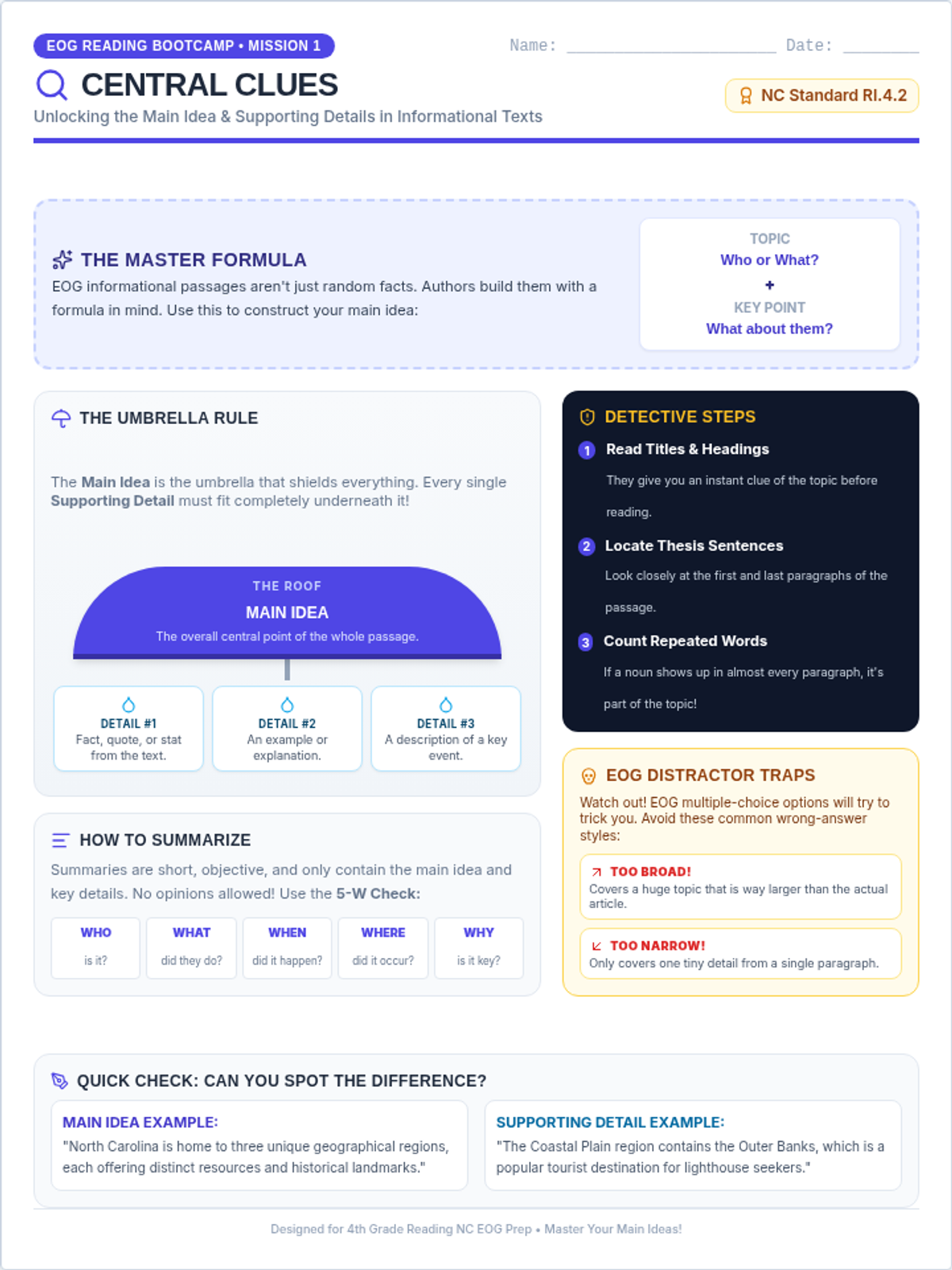
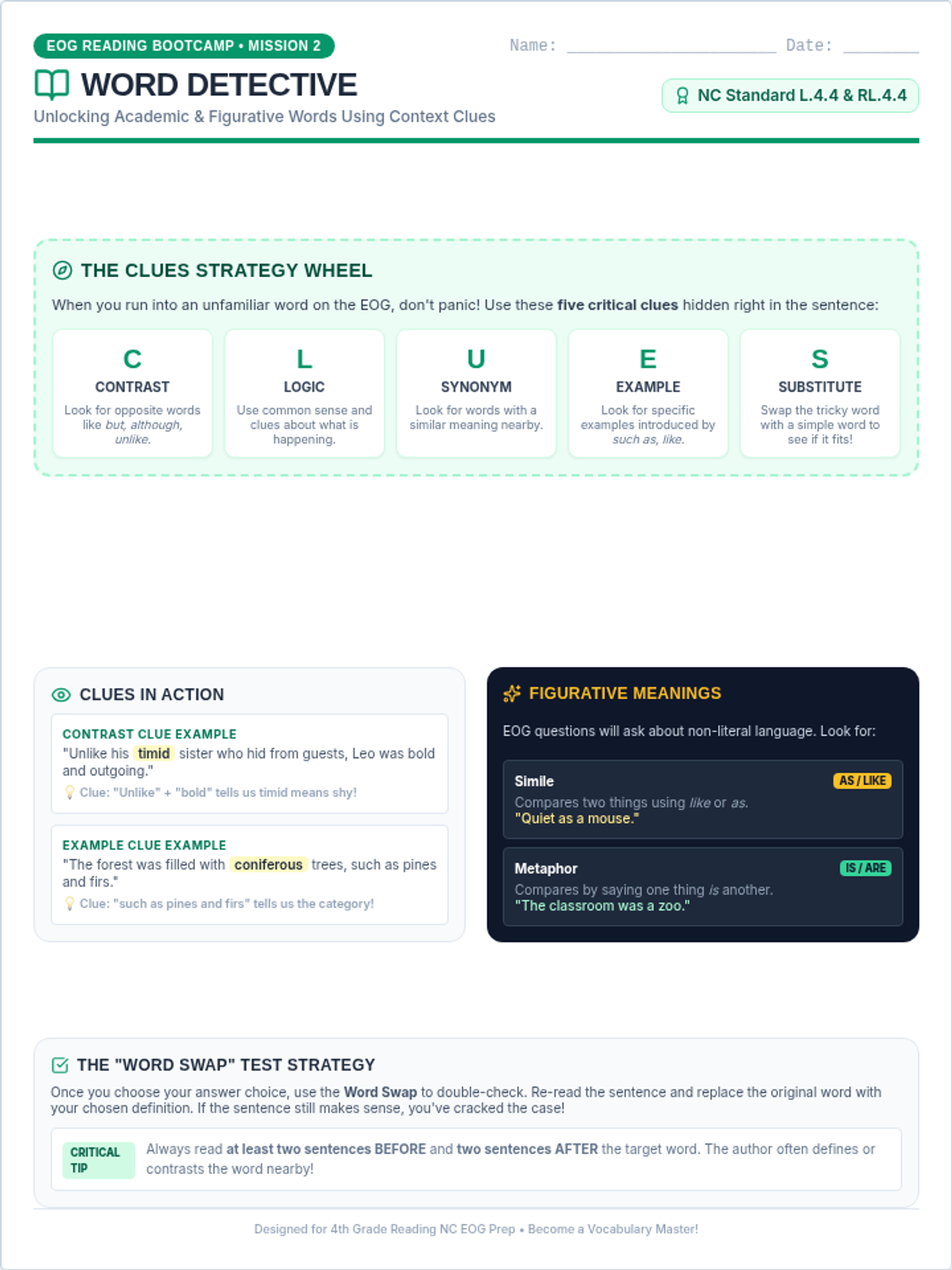
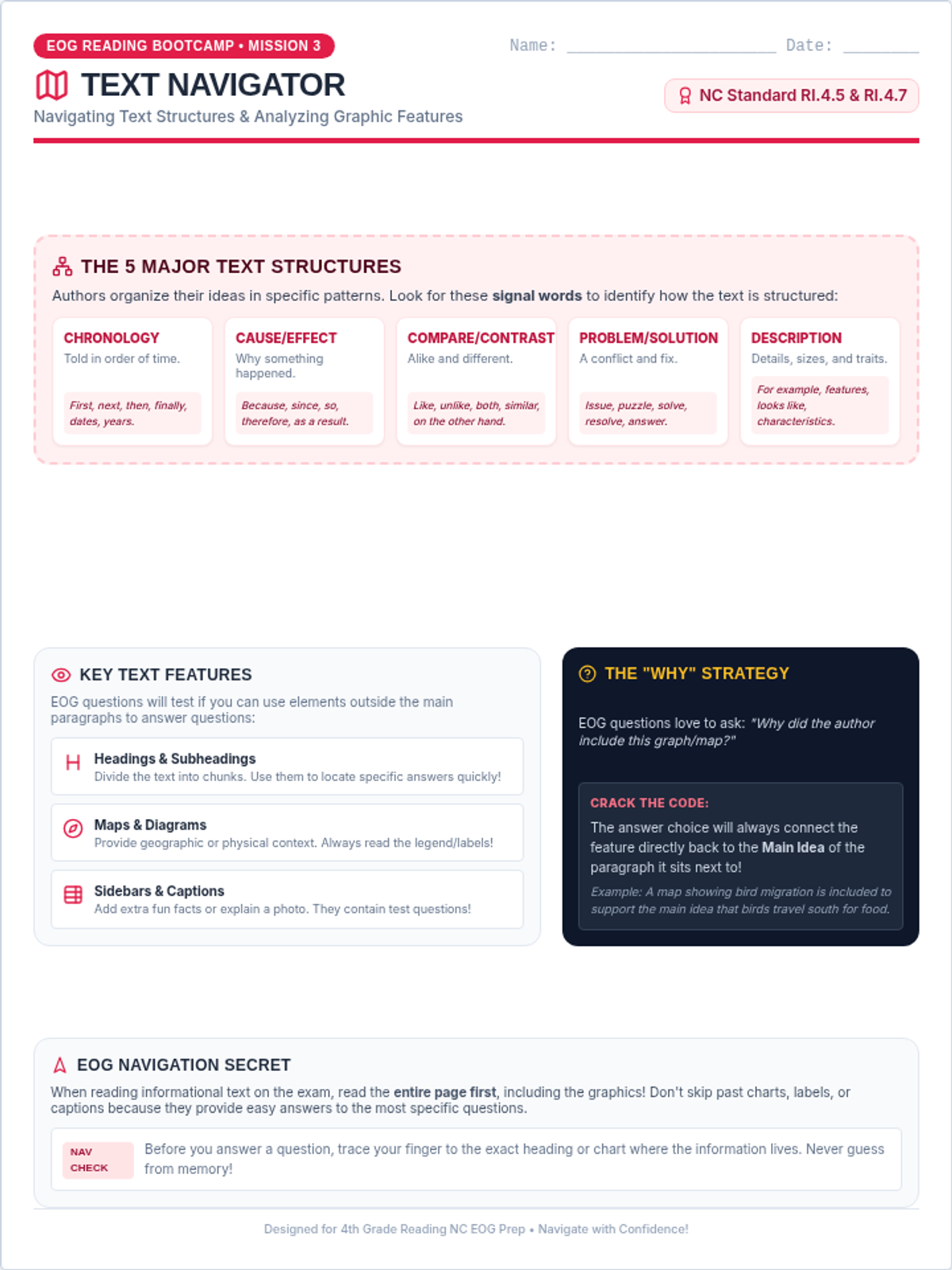
A comprehensive 4th-grade reading EOG study guide bundle designed as high-impact anchor charts. Covers main idea, context clues, and text structures with student-friendly strategies and visual organizers.
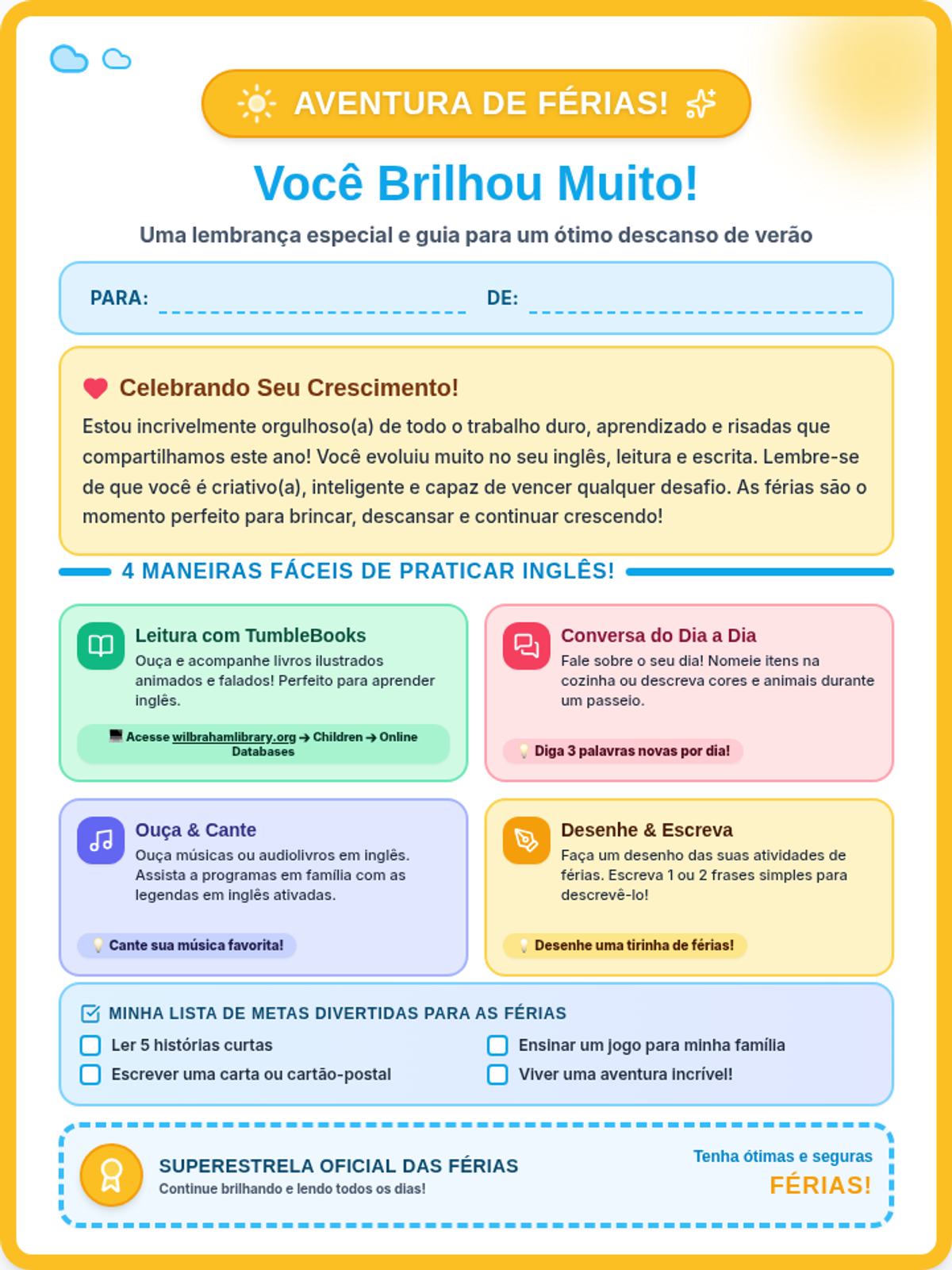
A lesson designed to celebrate student growth and guide families with actionable, low-stress English practice tips over the summer break.
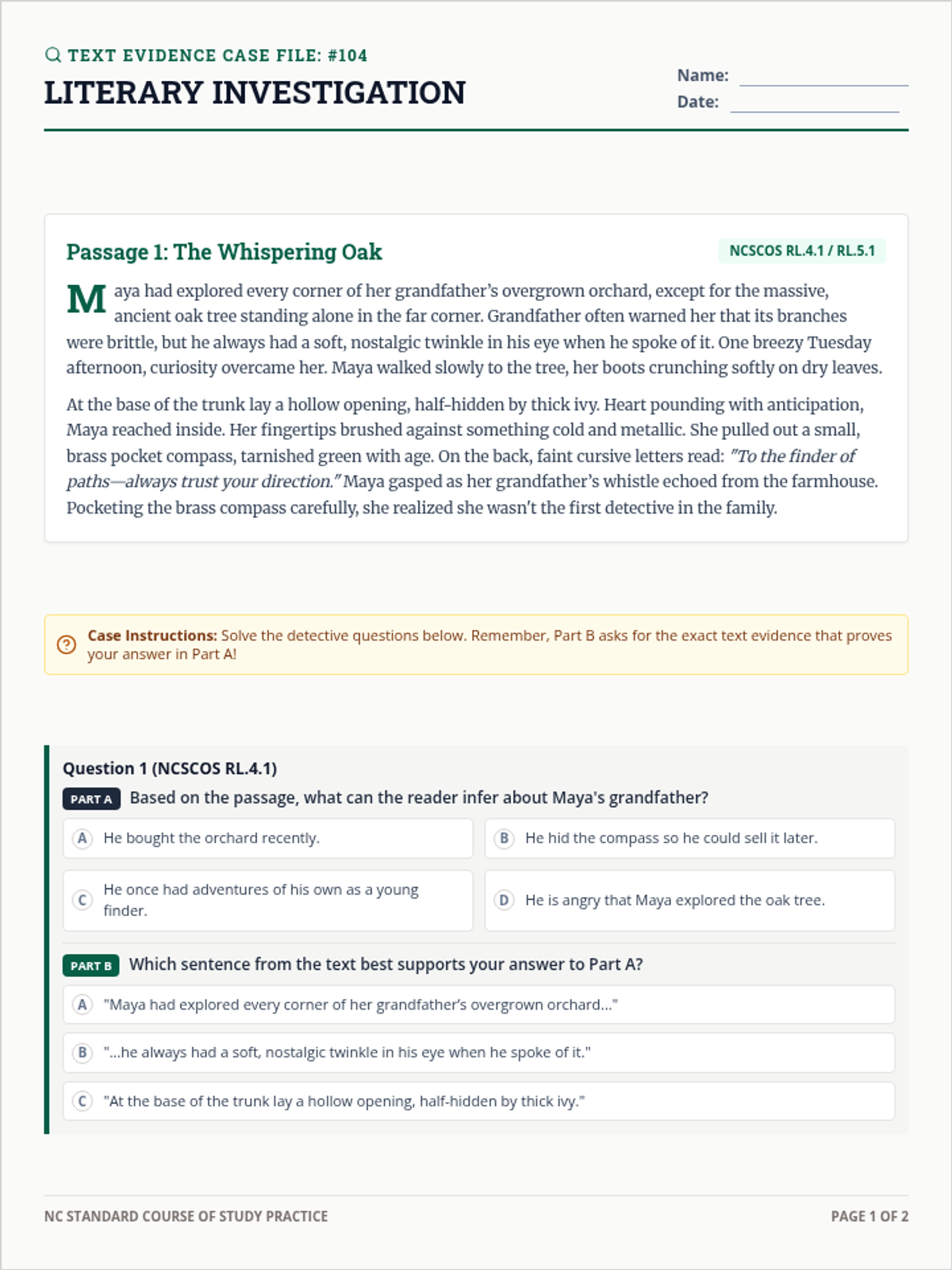
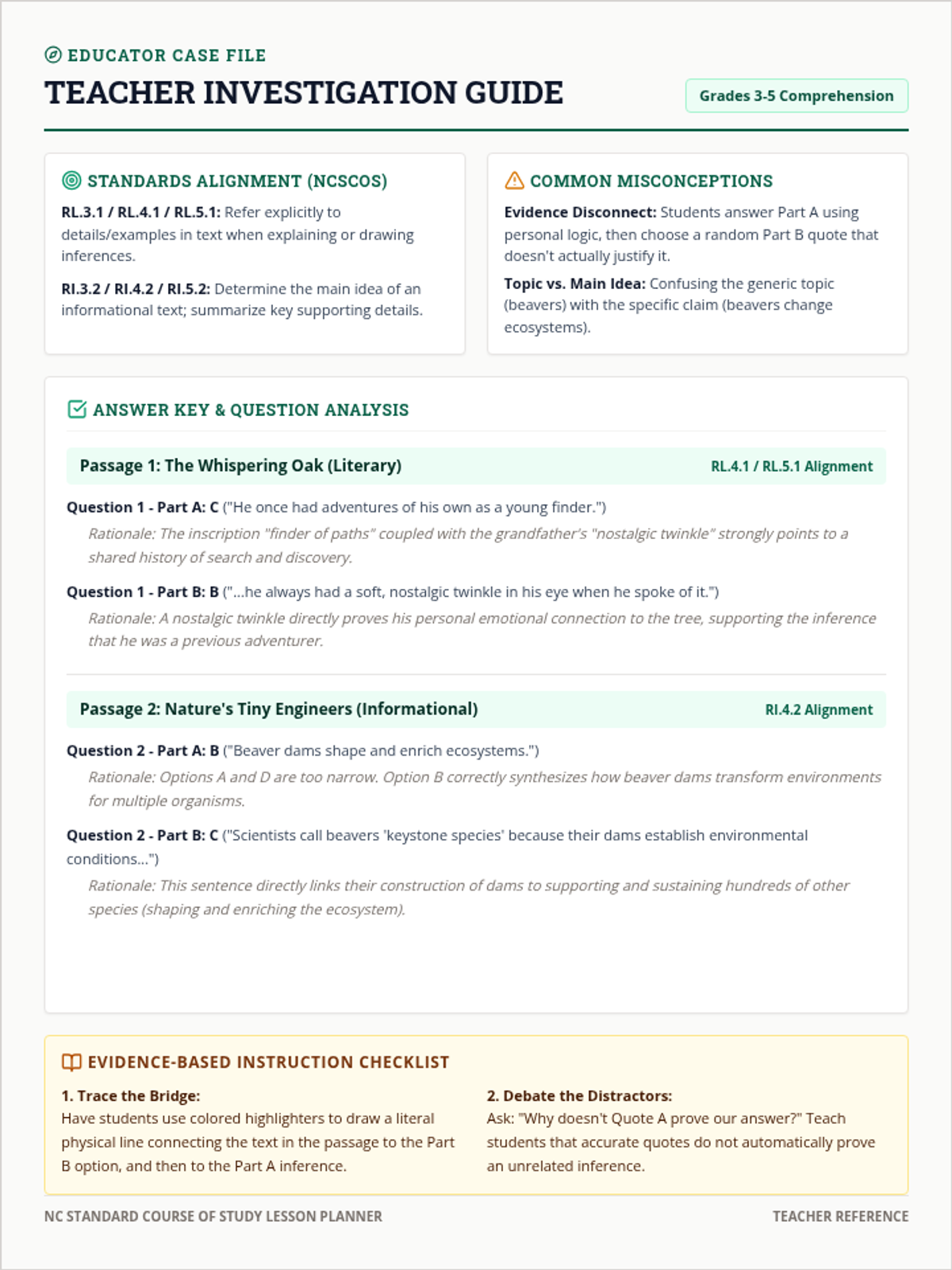
A reading comprehension lesson focused on standard-aligned Part A/Part B questioning strategies for Grades 3-5, aligned to the North Carolina Standard Course of Study (NCSCOS) for literal and inferential comprehension.
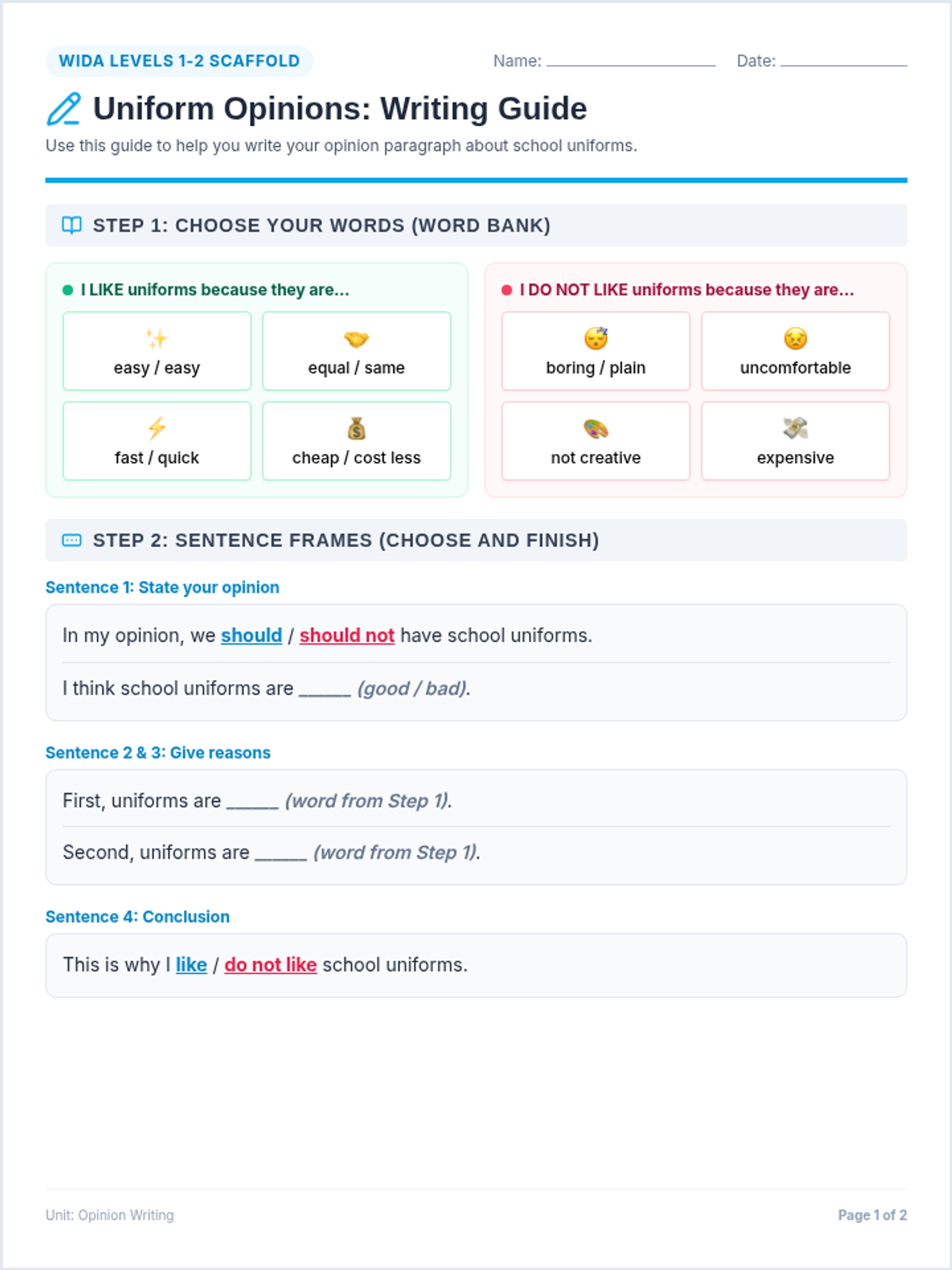
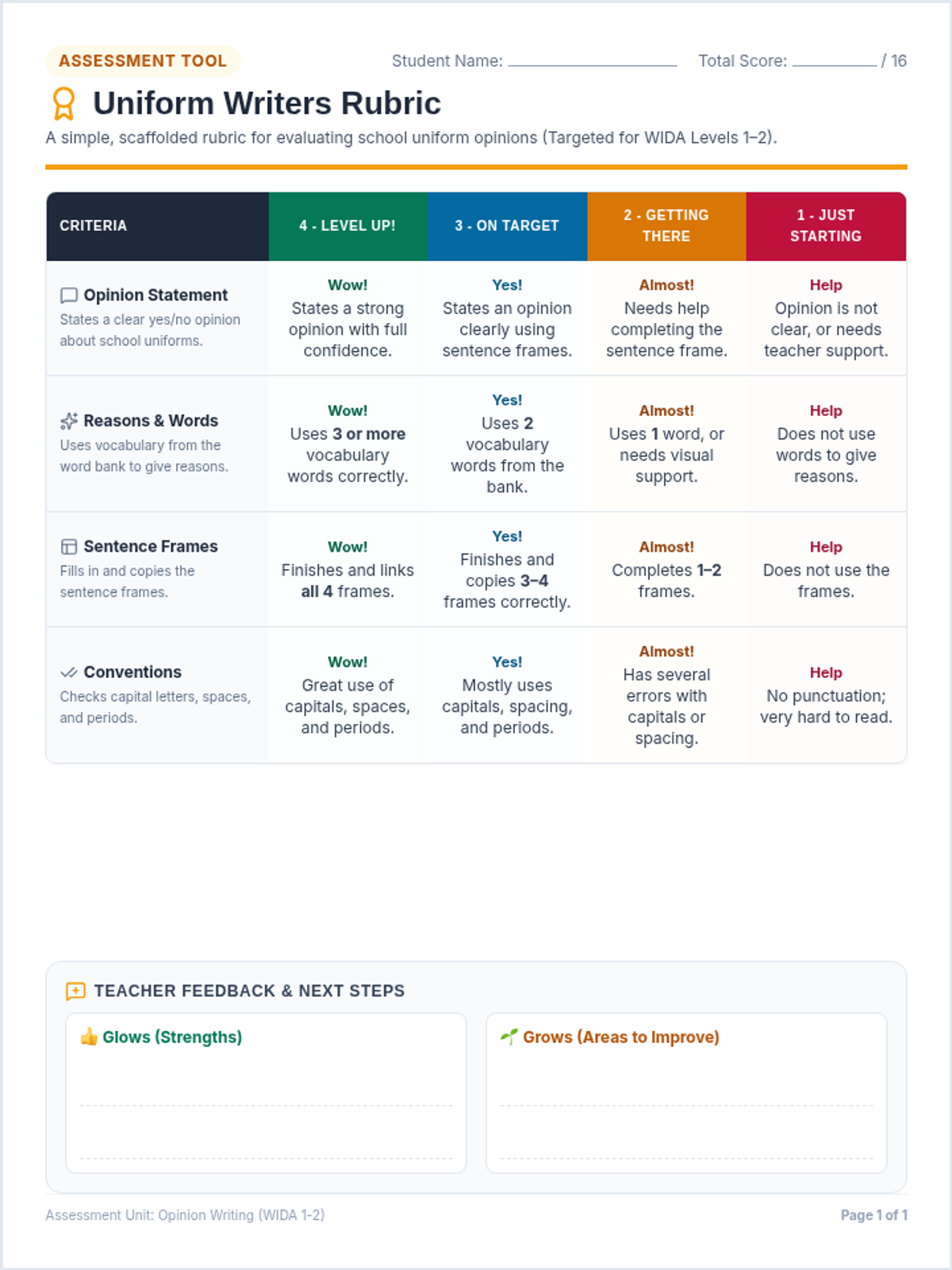
A structured writing lesson for 4th-grade English learners (WIDA Levels 1-2) to express their opinions about school uniforms. It provides scaffolded vocabulary, sentence frames, and a simplified rubric to guide and assess their progress.
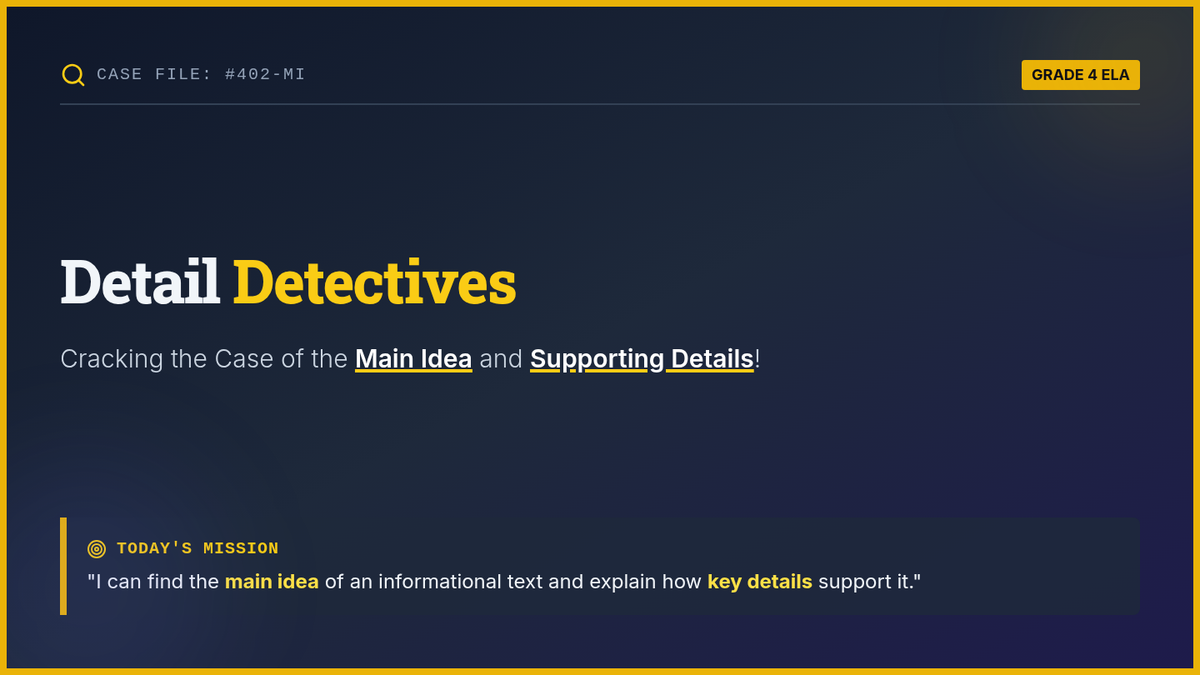
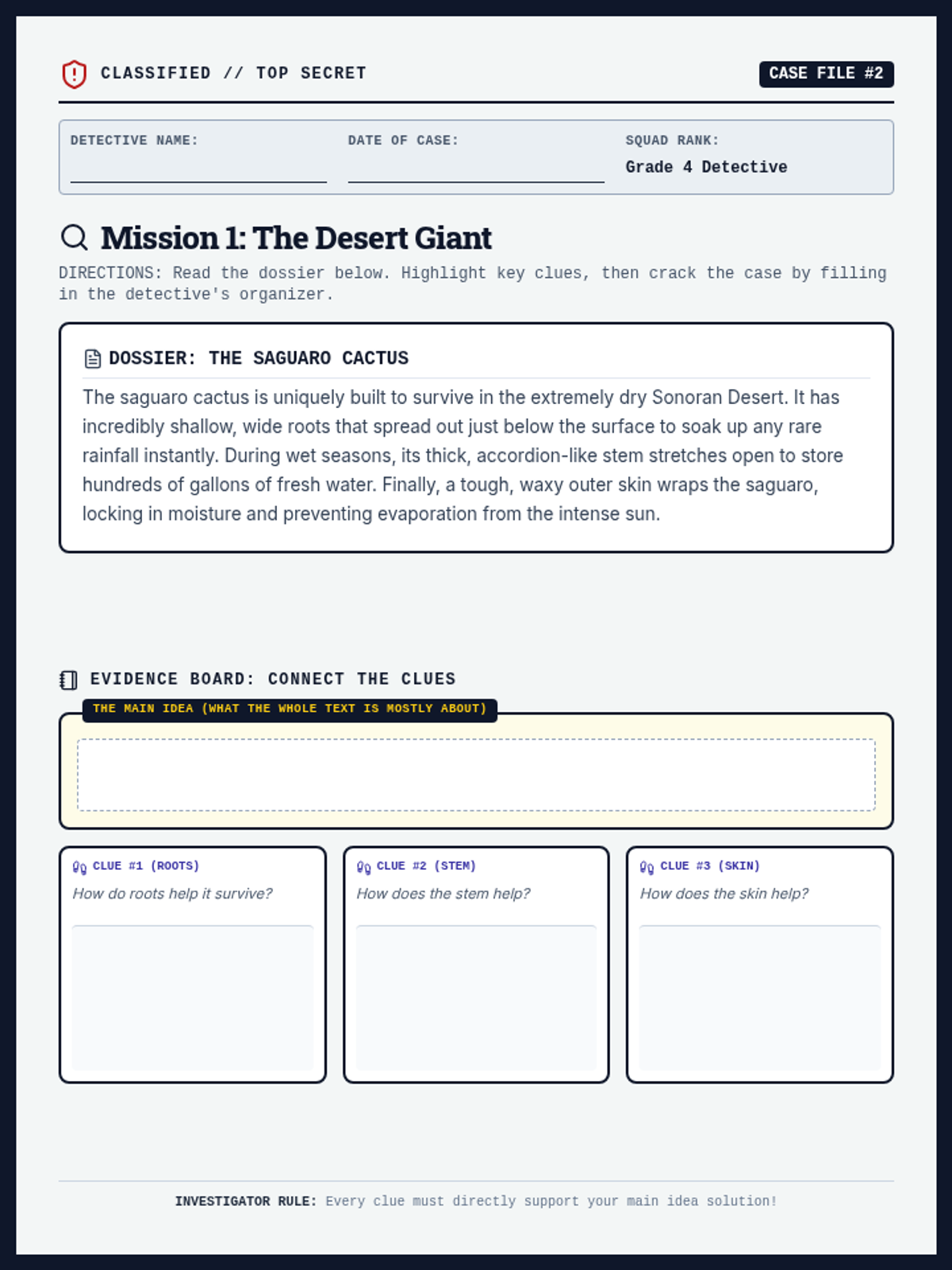
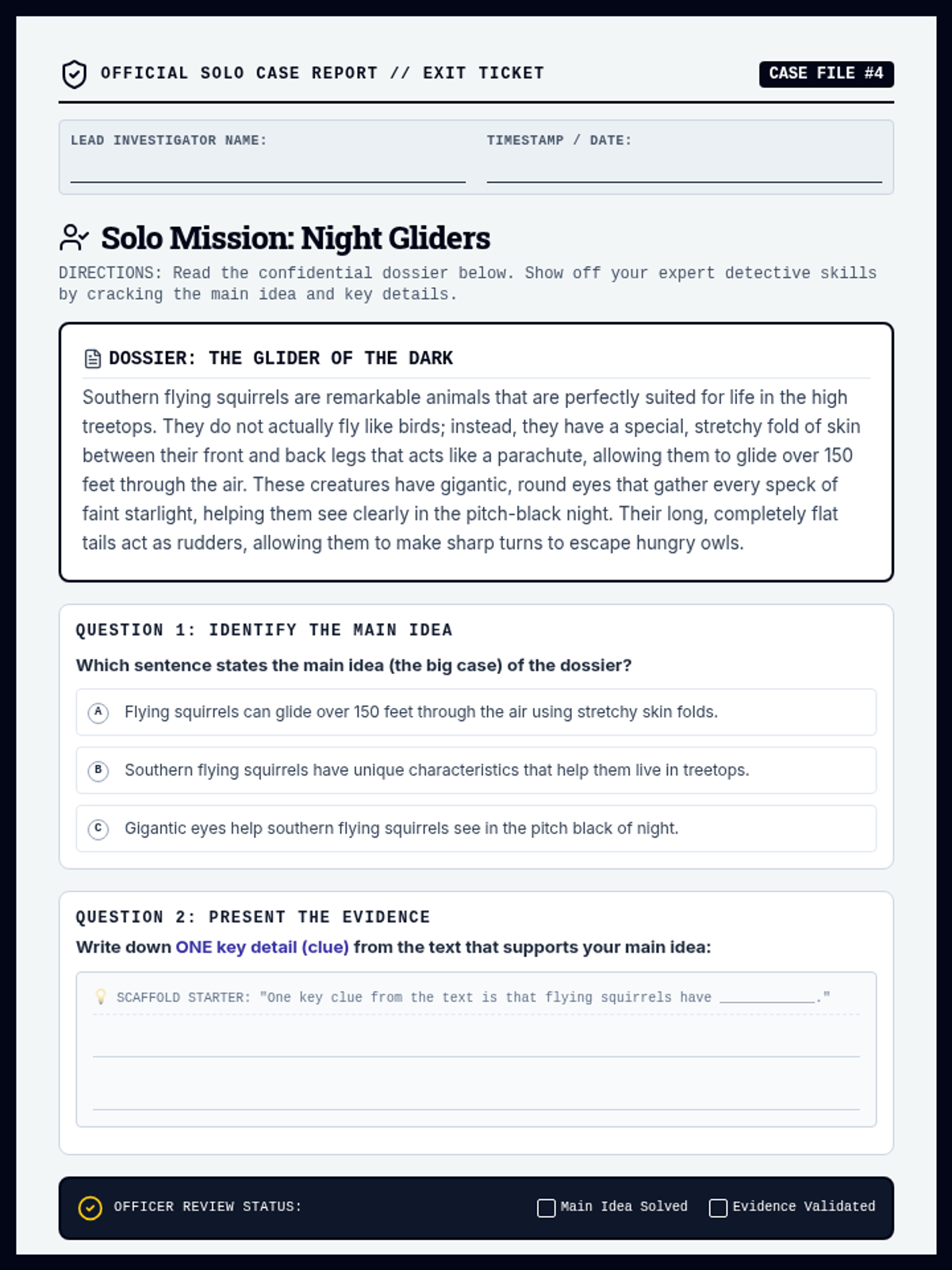
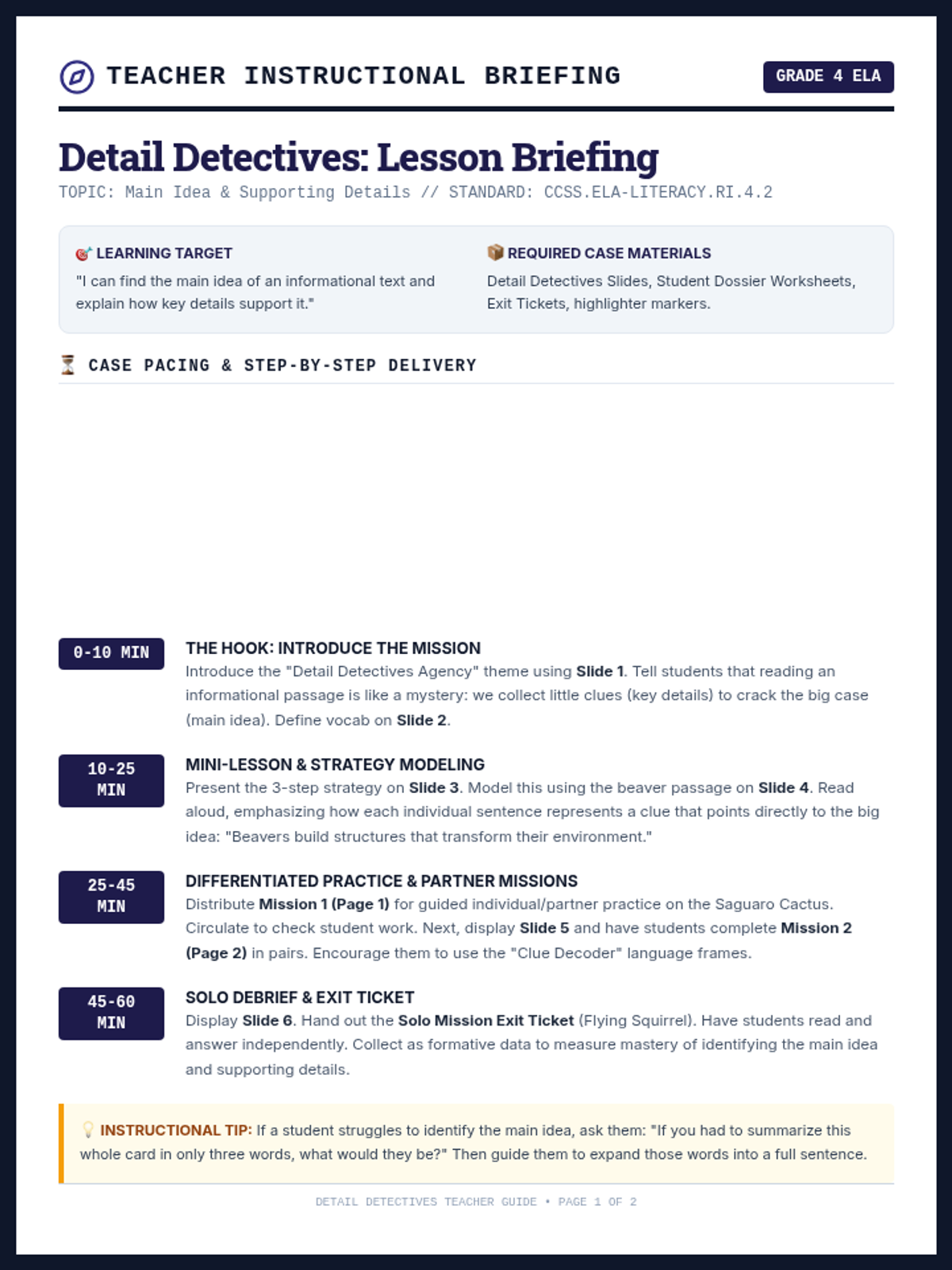
A mystery-themed 4th-grade ELA lesson on identifying the main idea and supporting details. Students act as detectives, gathering key clues (details) to uncover the big case (main idea), complete with robust visual slides, differentiated worksheets, an exit ticket, and a comprehensive teacher guide with WIDA scaffolding.
A vocabulary and morphology lesson focusing on the academic and STEM suffix -cian, representing highly skilled occupational roles. Students explore word roots, spelling transformations, and professional definitions.
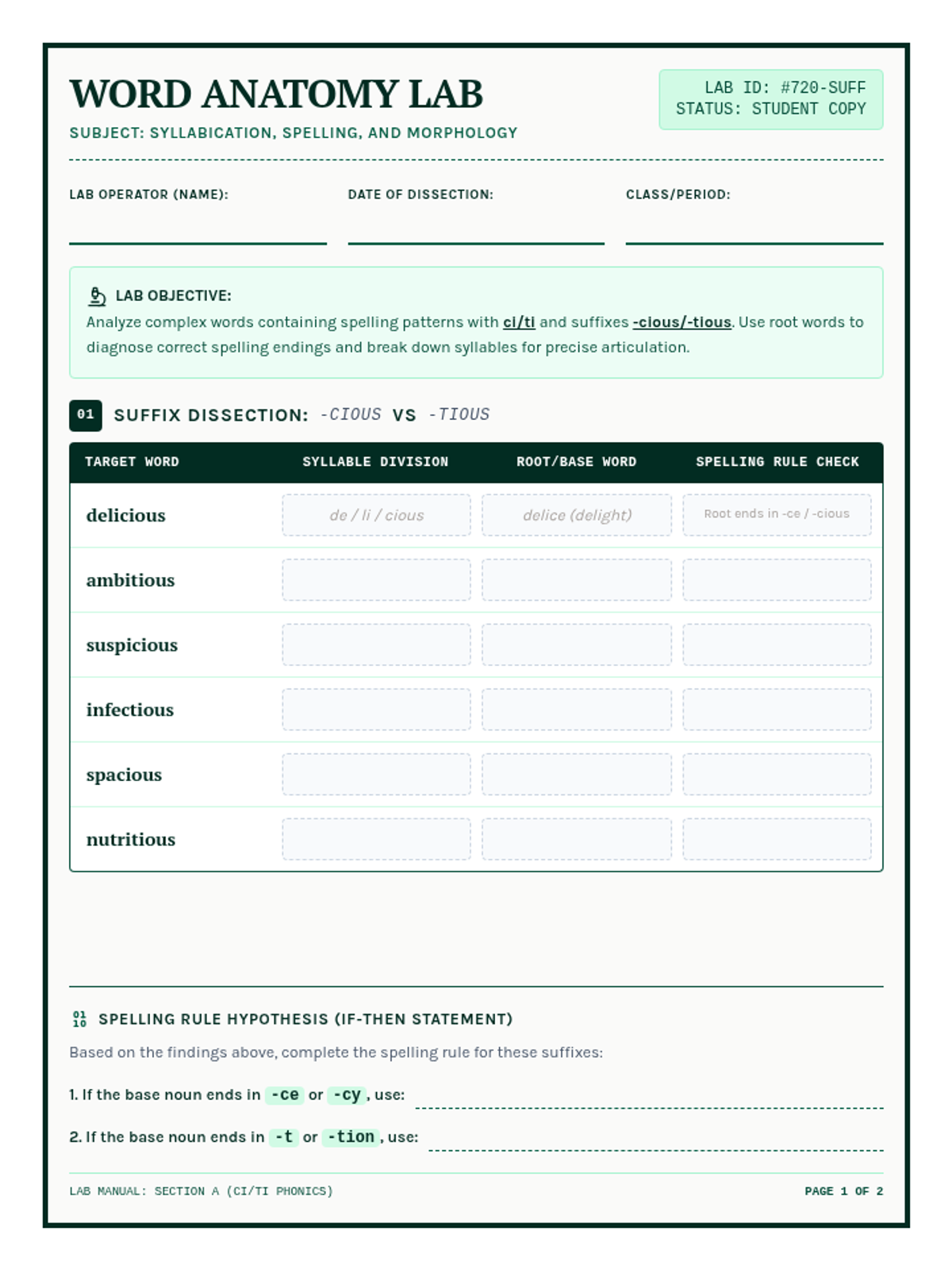
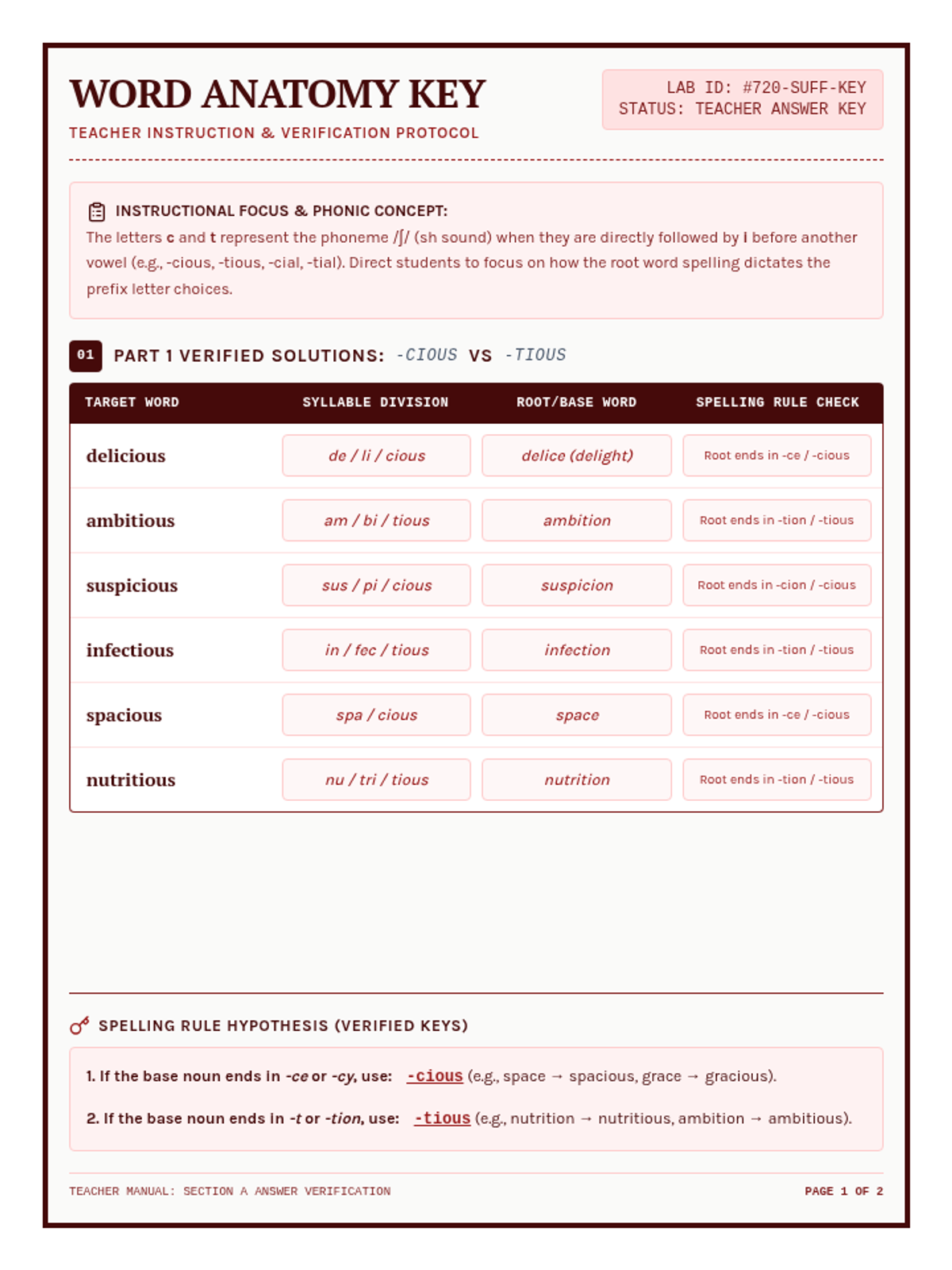
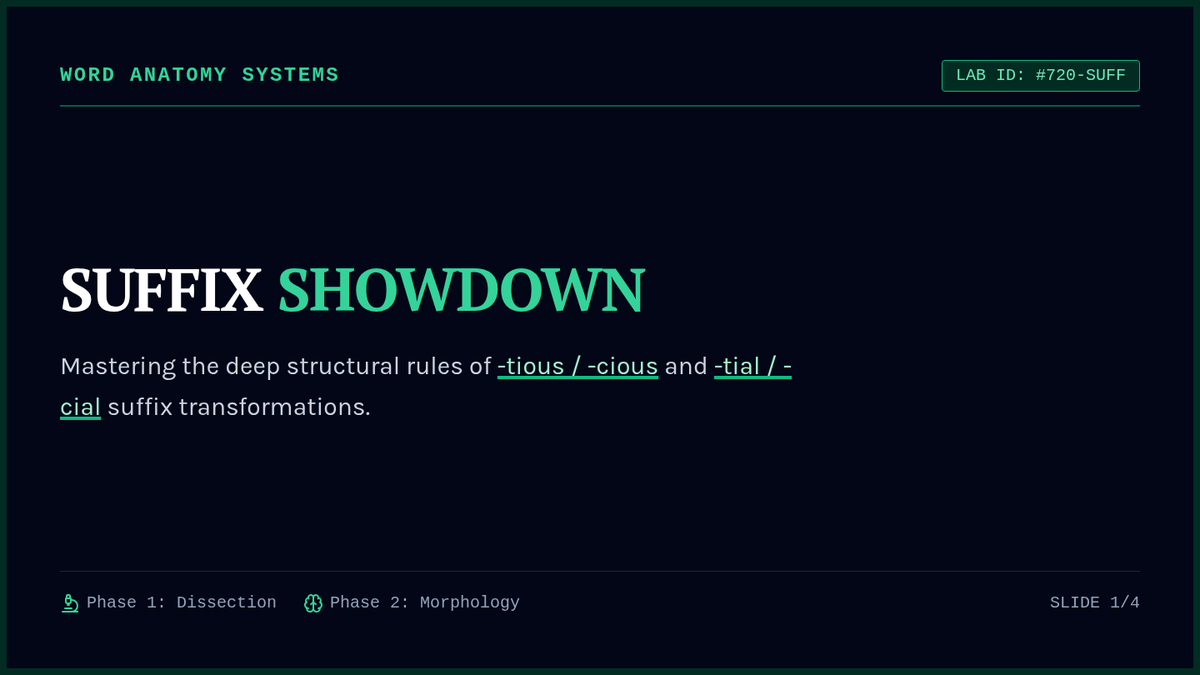
A masterclass in decoding, spelling, and analyzing 3- and 4-syllable words containing ti, ci, tious, cious, tial, and cial. Students explore phonics, spelling rules, and morphology through structured word breakdown.
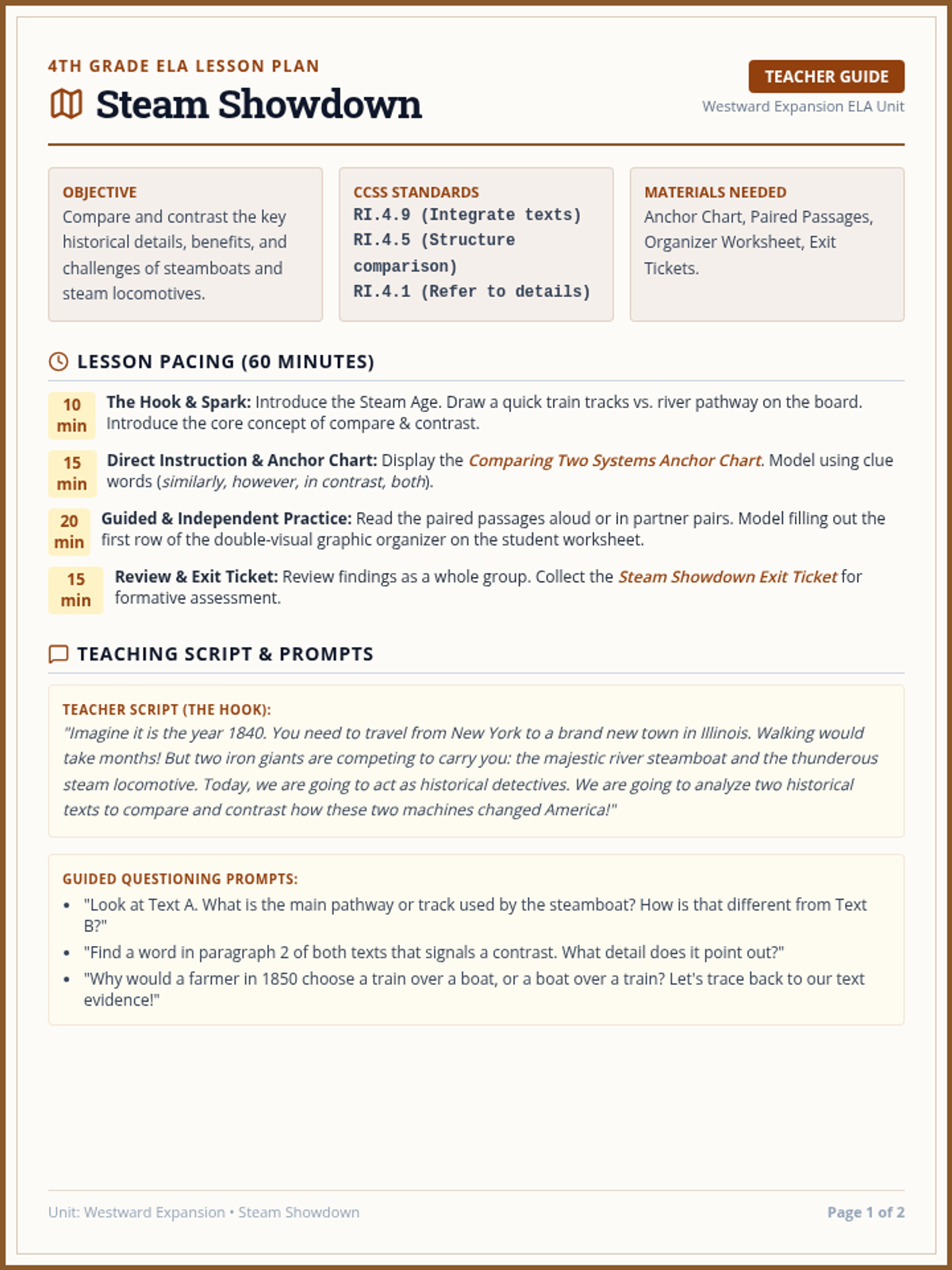
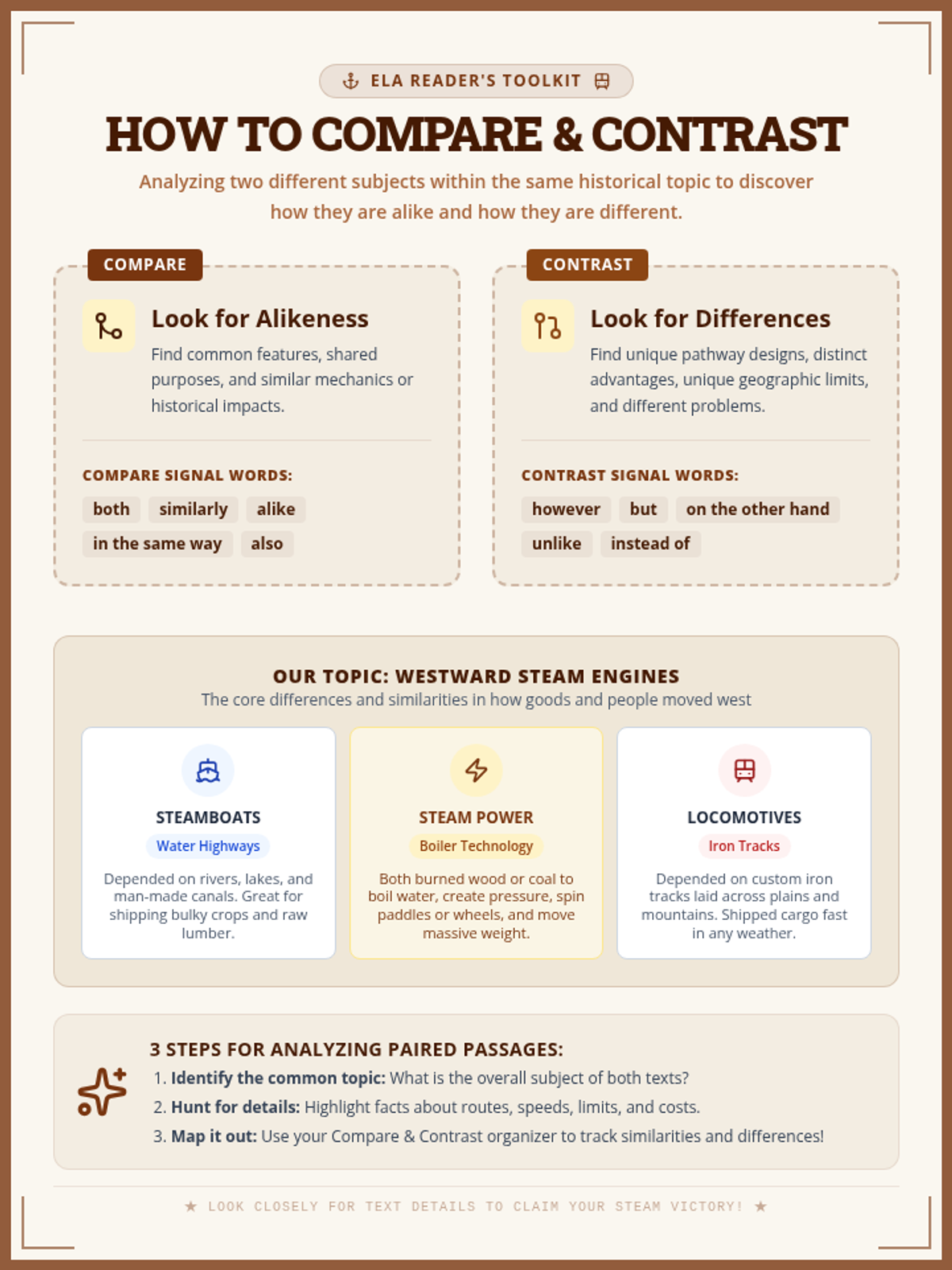
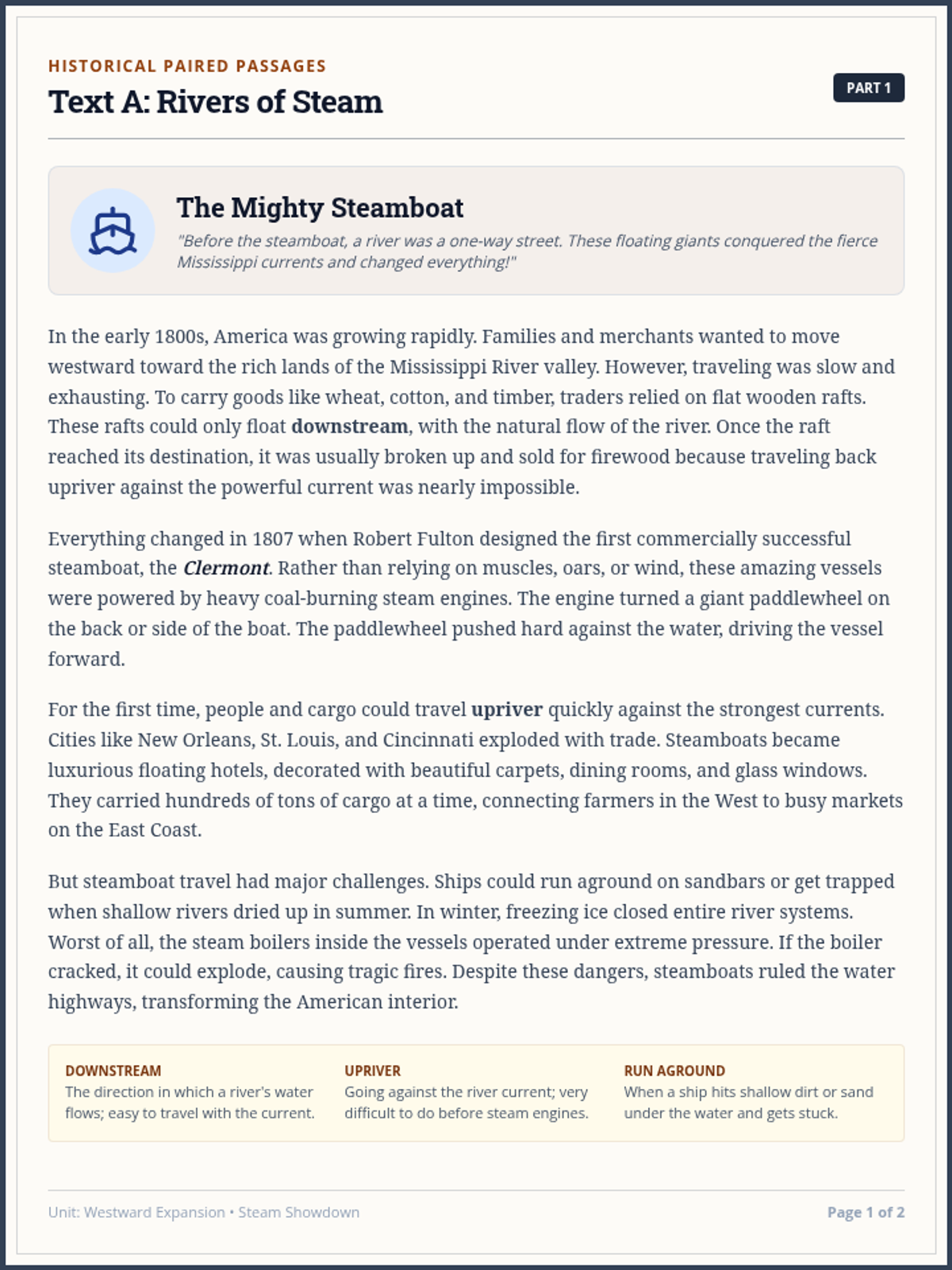
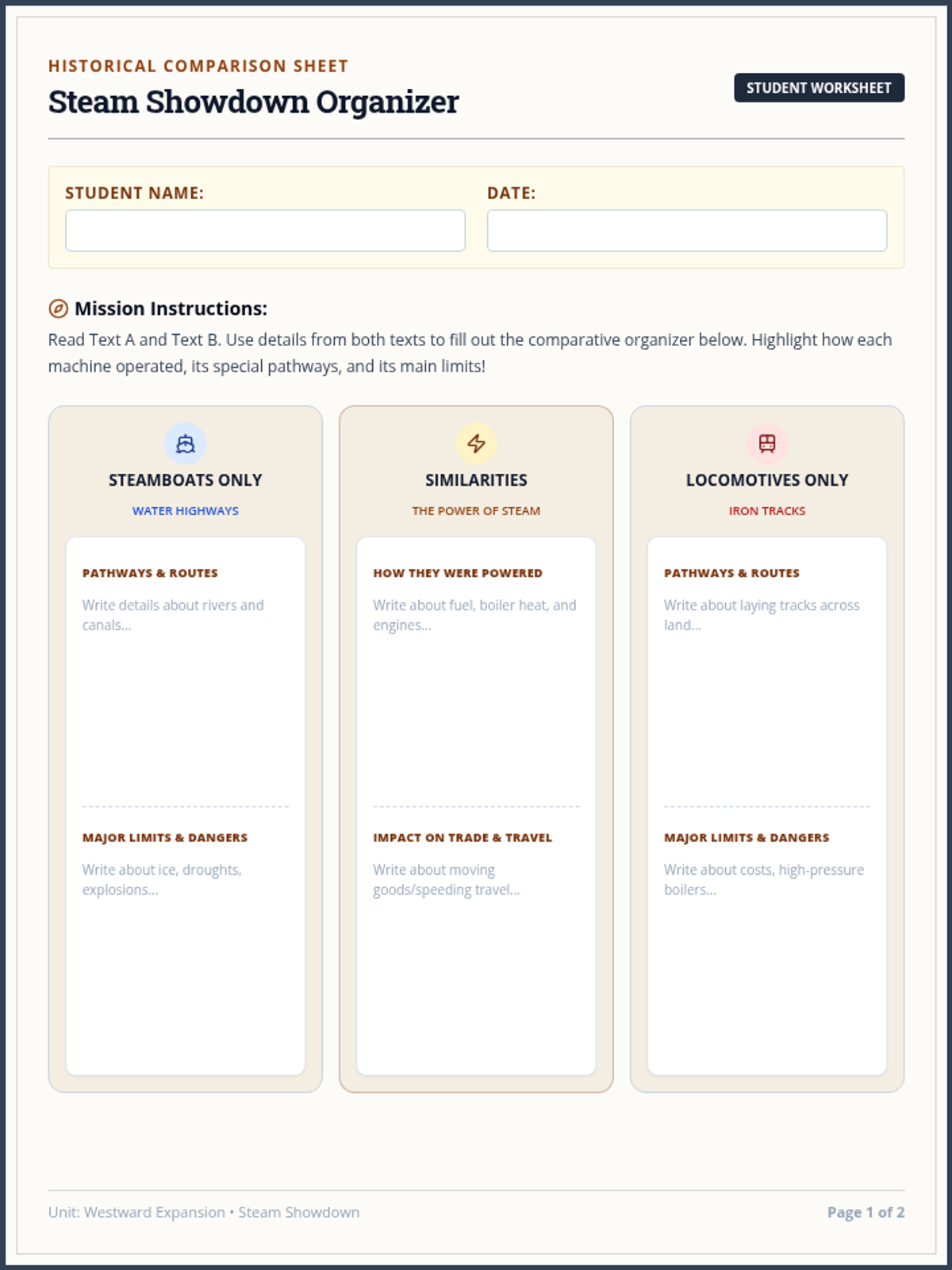
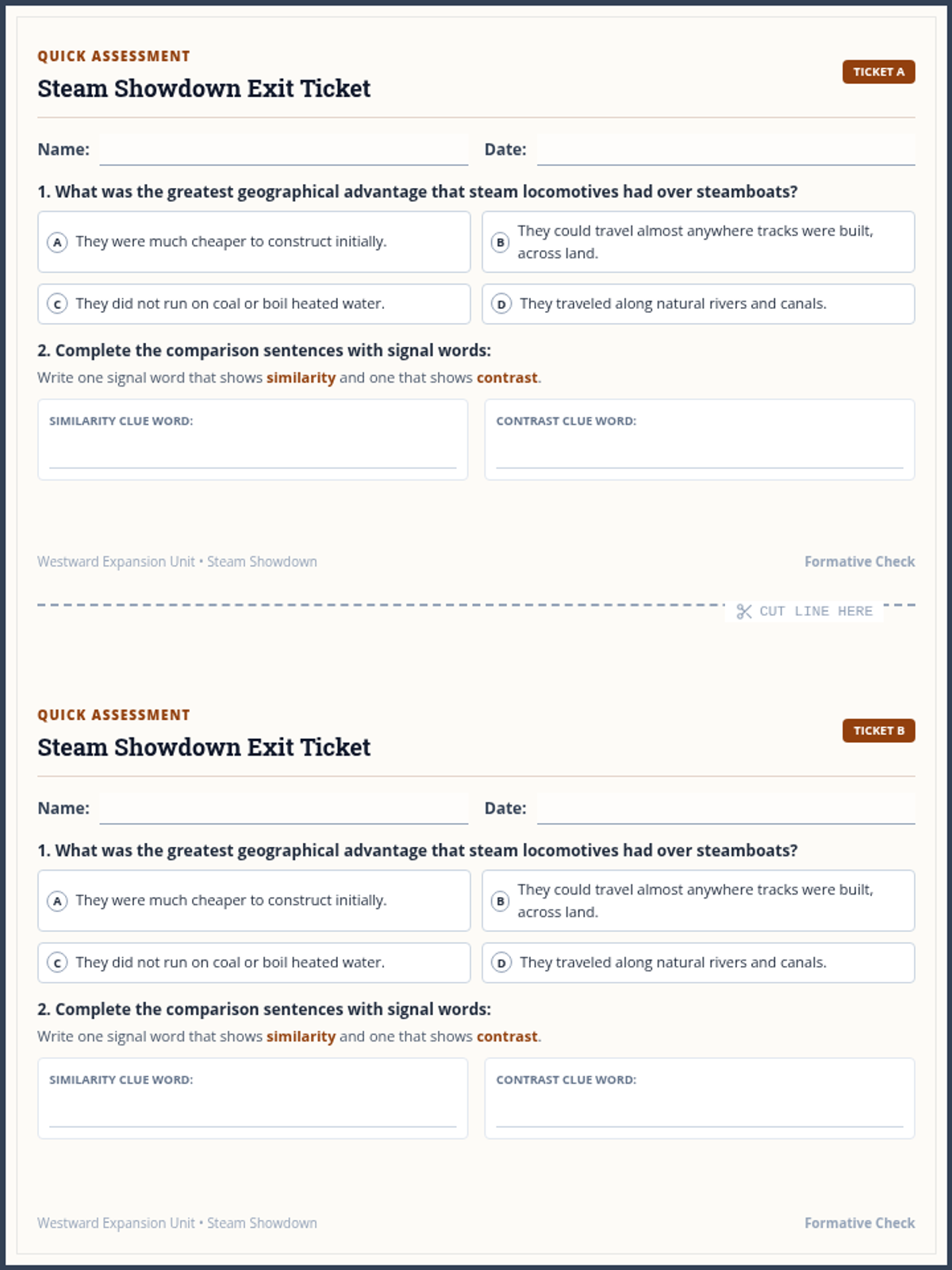
A comprehensive 4th-grade ELA lesson comparing and contrasting steam locomotives and steamboats during American westward expansion. Students analyze two paired historical texts using a custom graphic organizer, text evidence, and structured comparison.
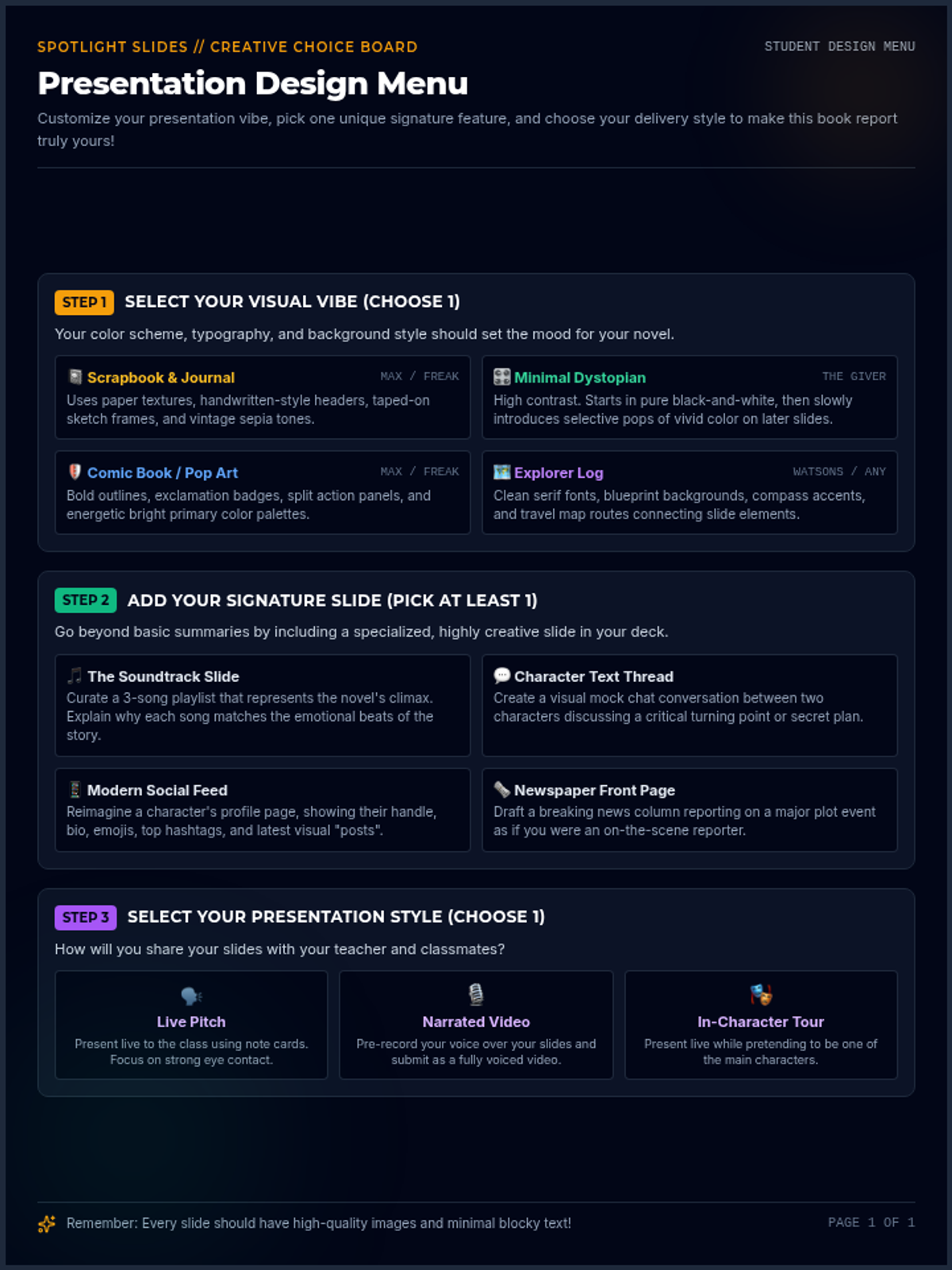
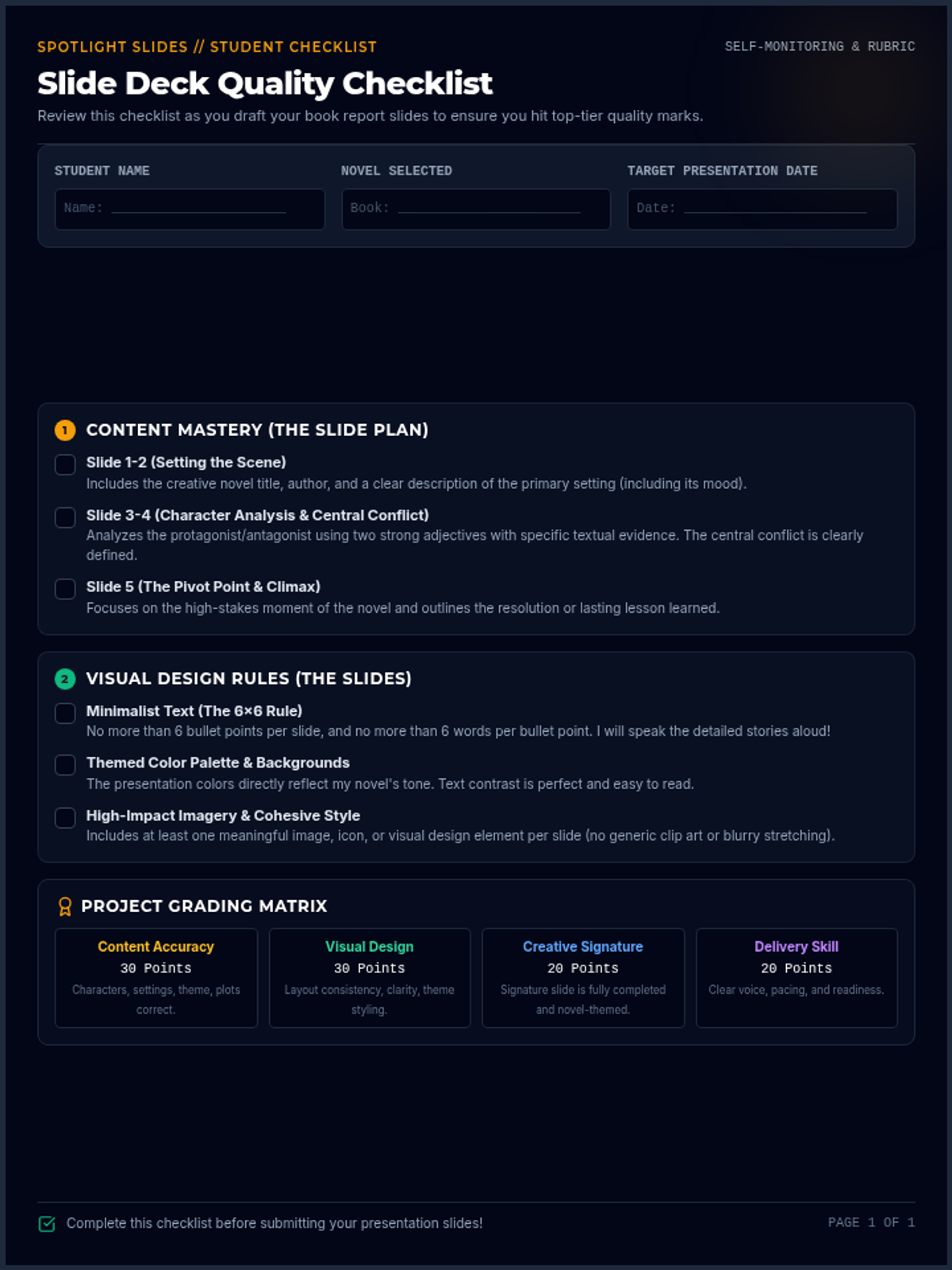
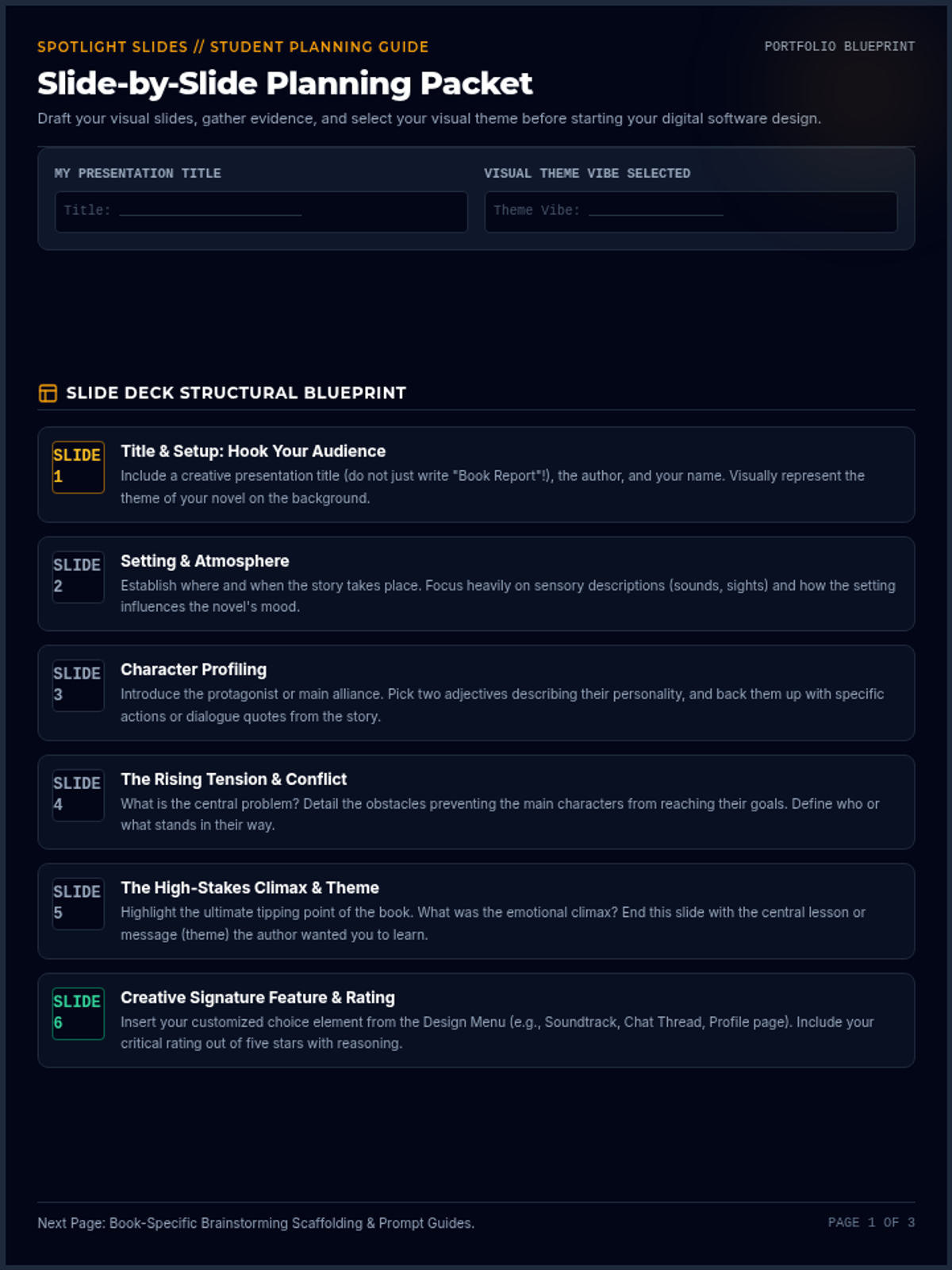
A comprehensive toolkit for guiding students through designing, planning, and executing a highly creative digital book report presentation on one of four shared class novels.
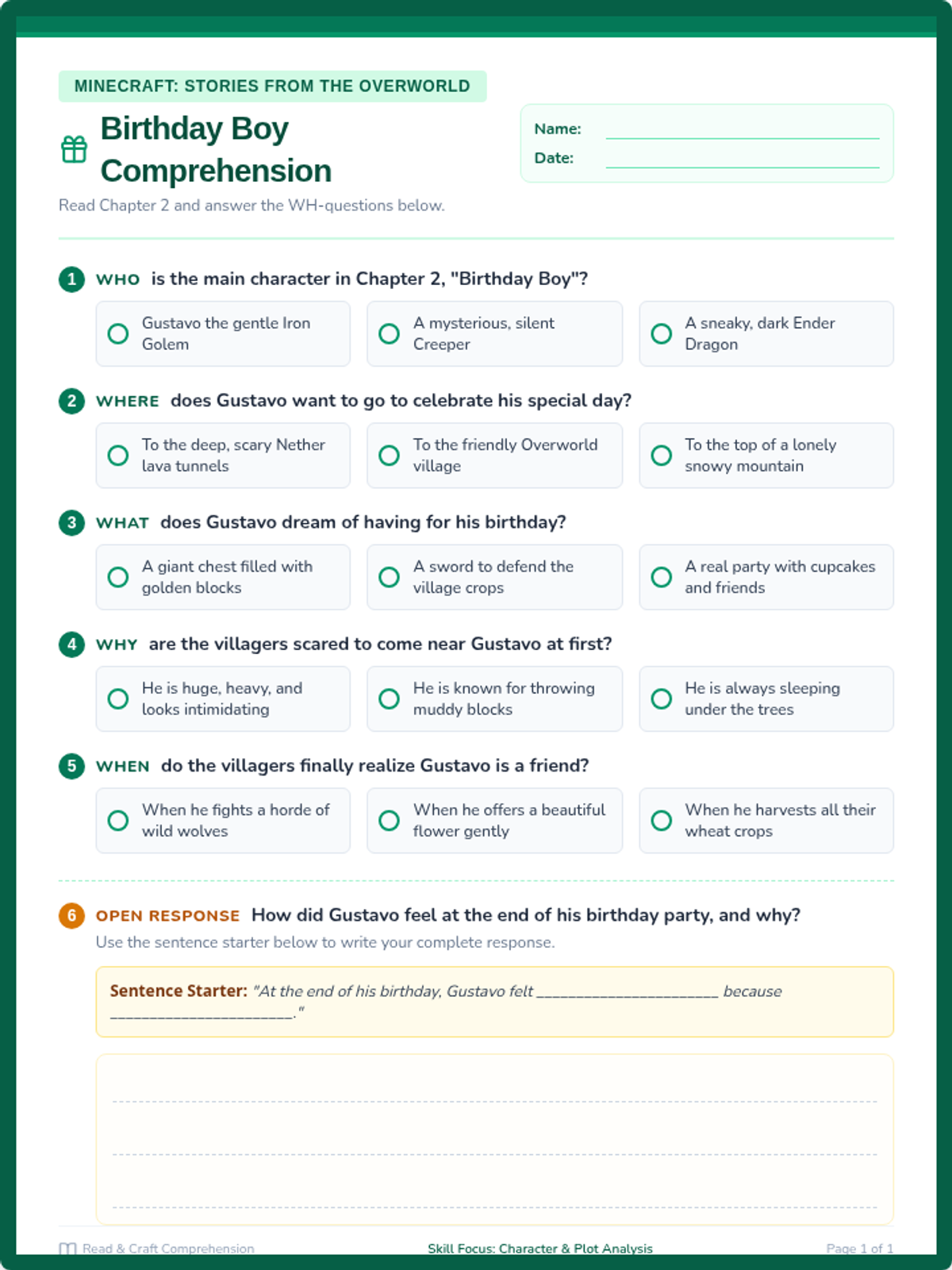
A reading comprehension lesson focusing on Chapter 2, 'Birthday Boy,' from the graphic novel Minecraft: Stories from the Overworld. Students analyze characters, settings, and key events using WH-questions.
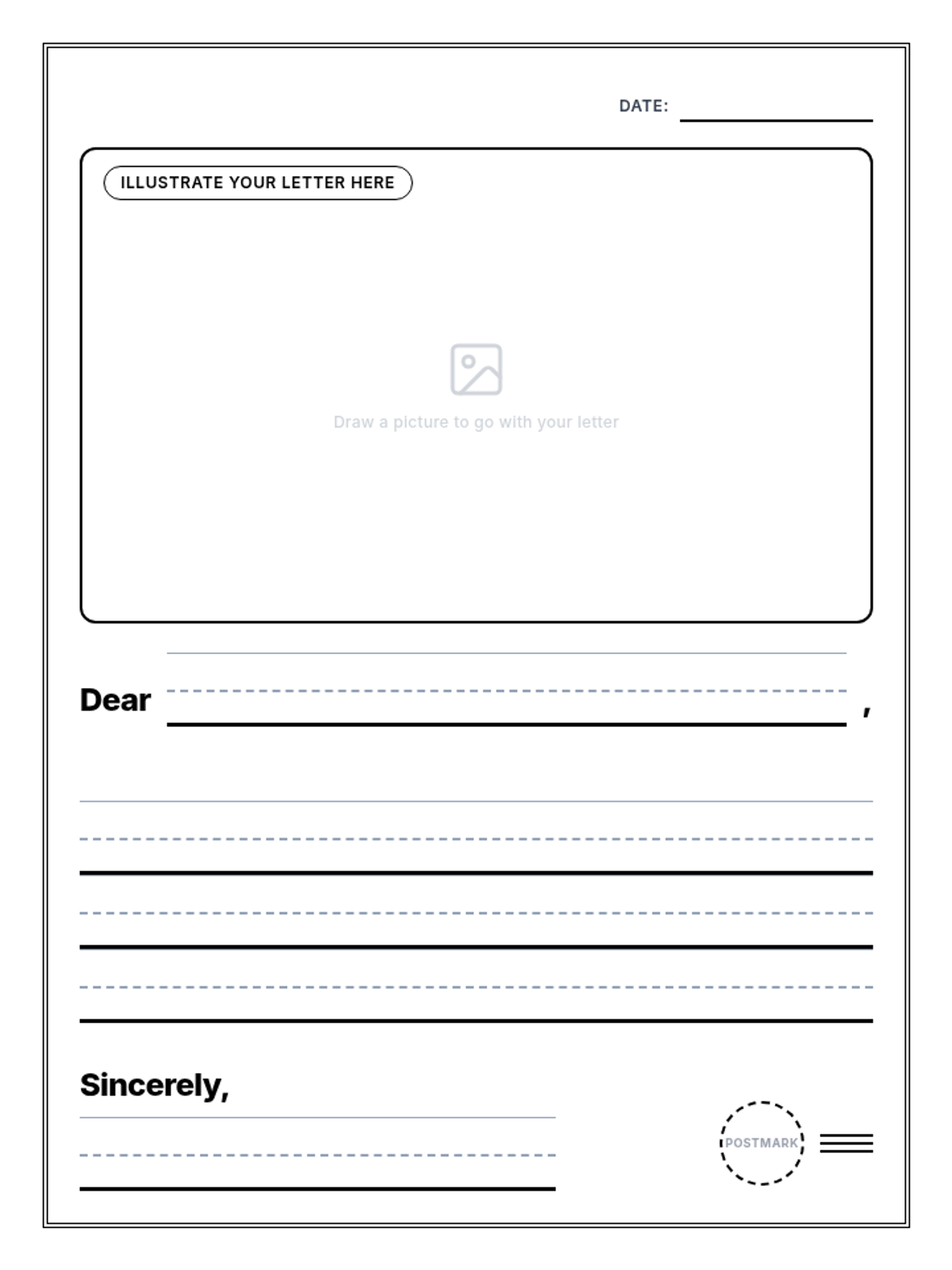
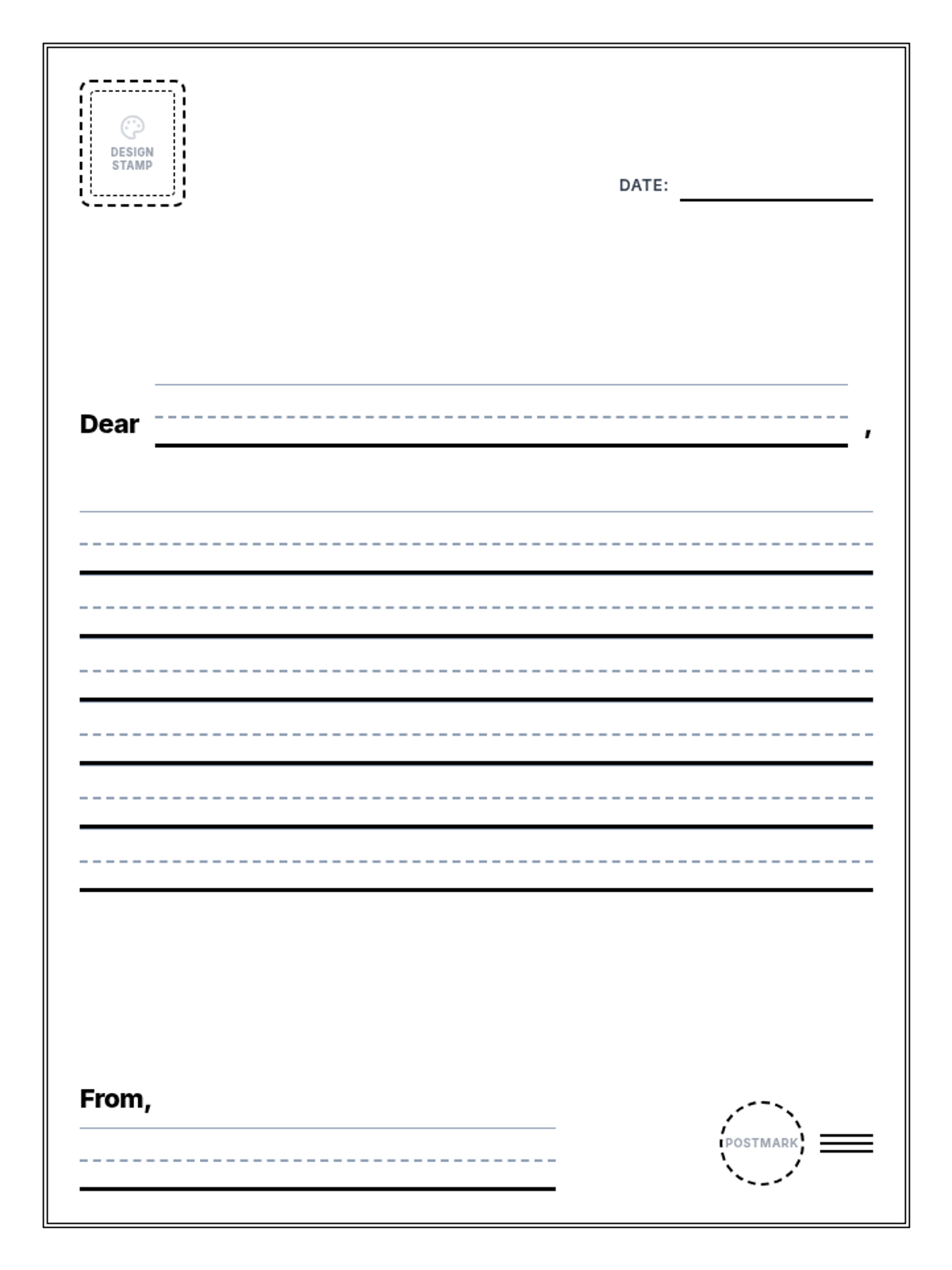
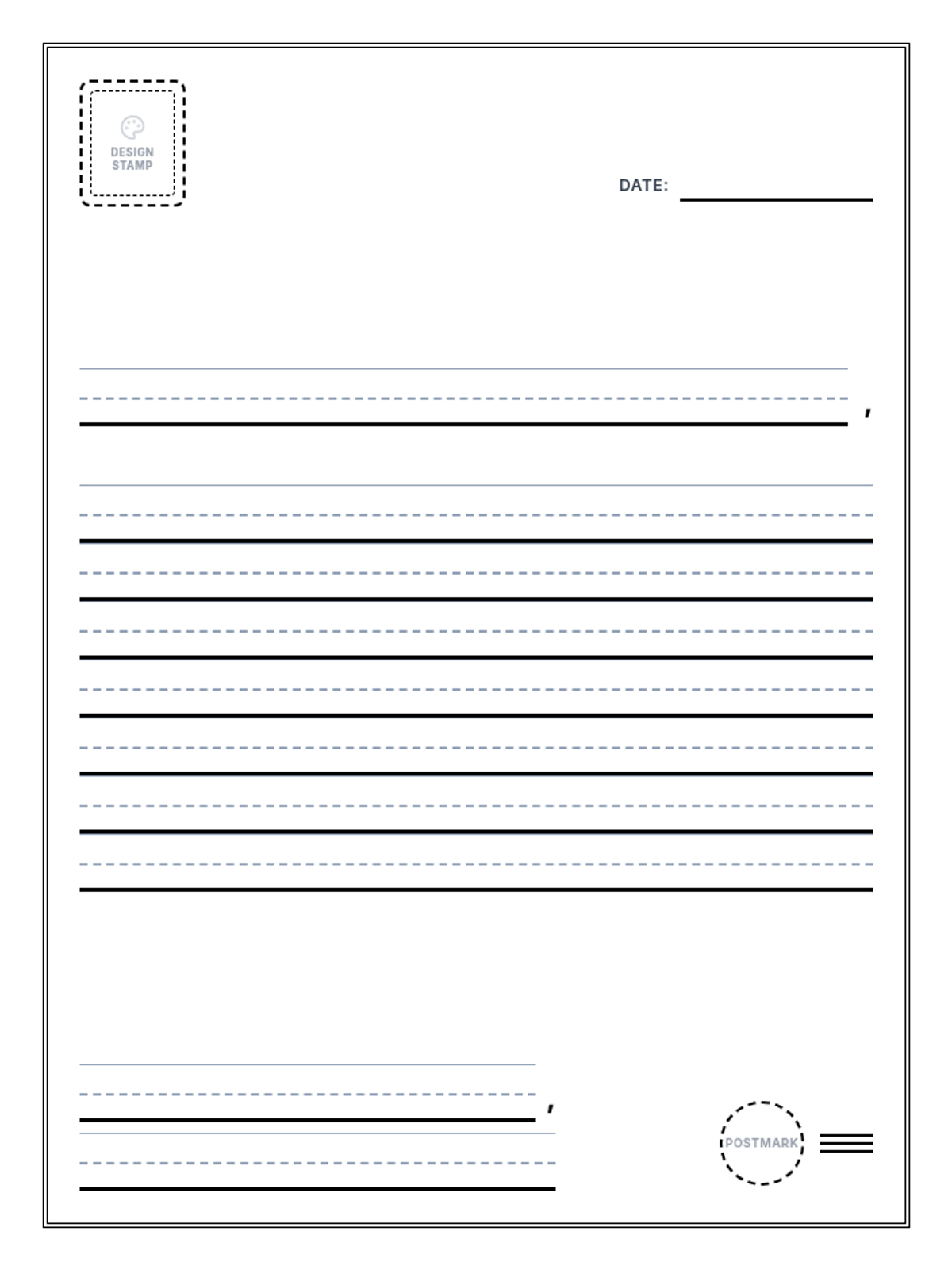
A collection of modern, black-and-white letter writing templates with Fundations-style writing lines, designed to differentiate for primary and elementary classrooms.
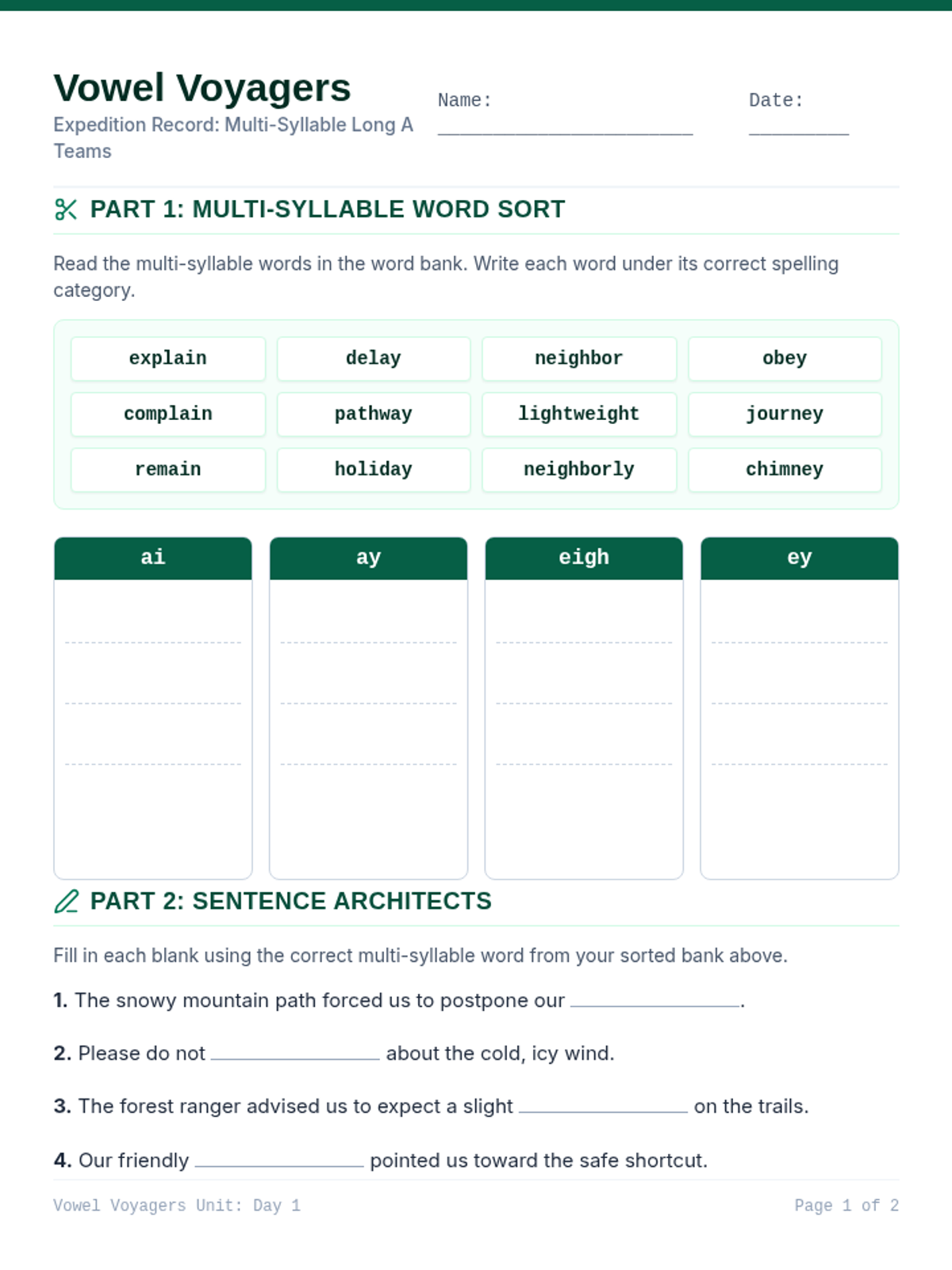
An interactive slide presentation exploring Long A vowel teams (ai, ay, eigh, and ey). Students learn spelling patterns, sort target words, read a loaded passage, and write their own creative responses to apply their new spelling knowledge.
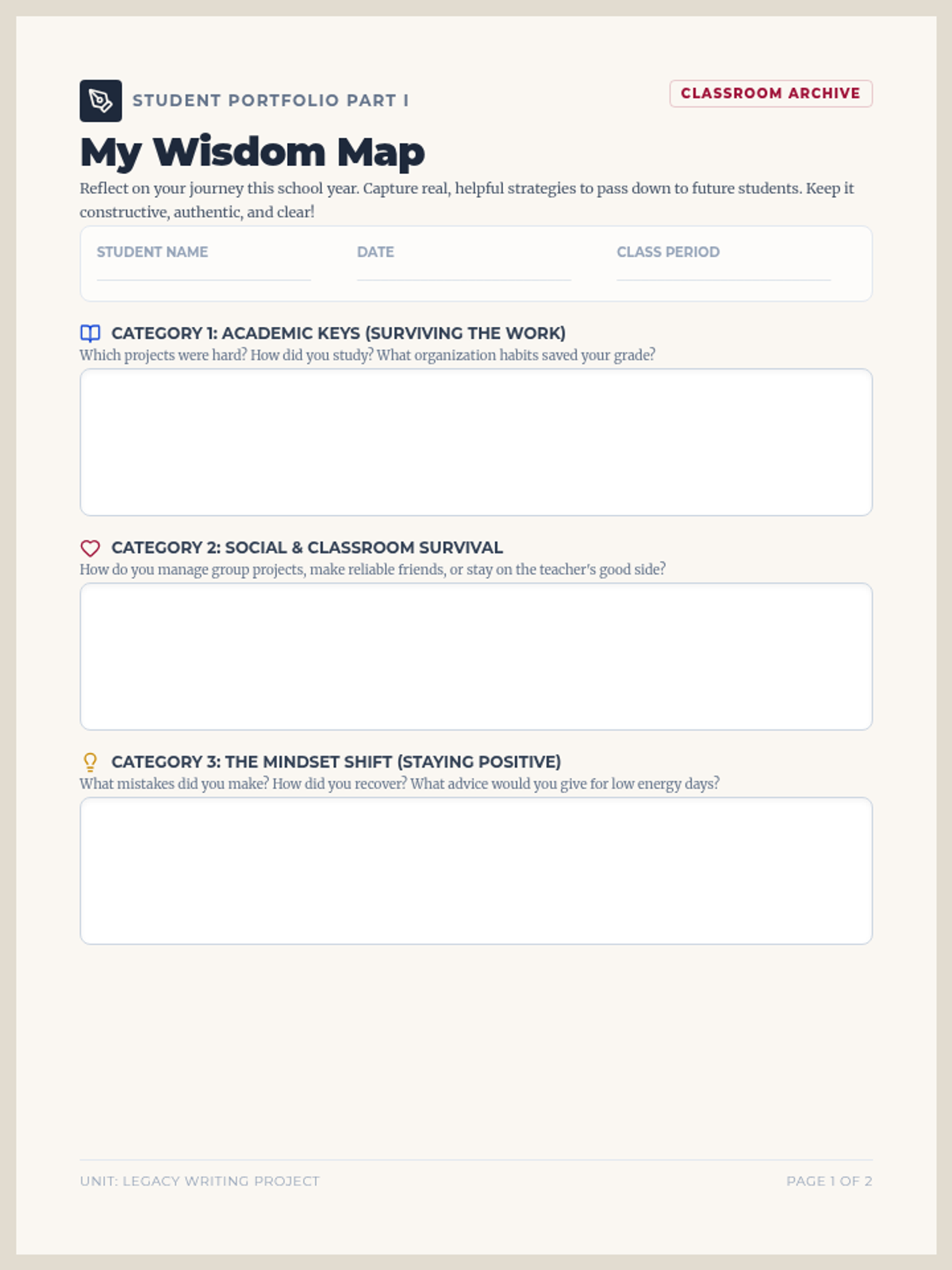
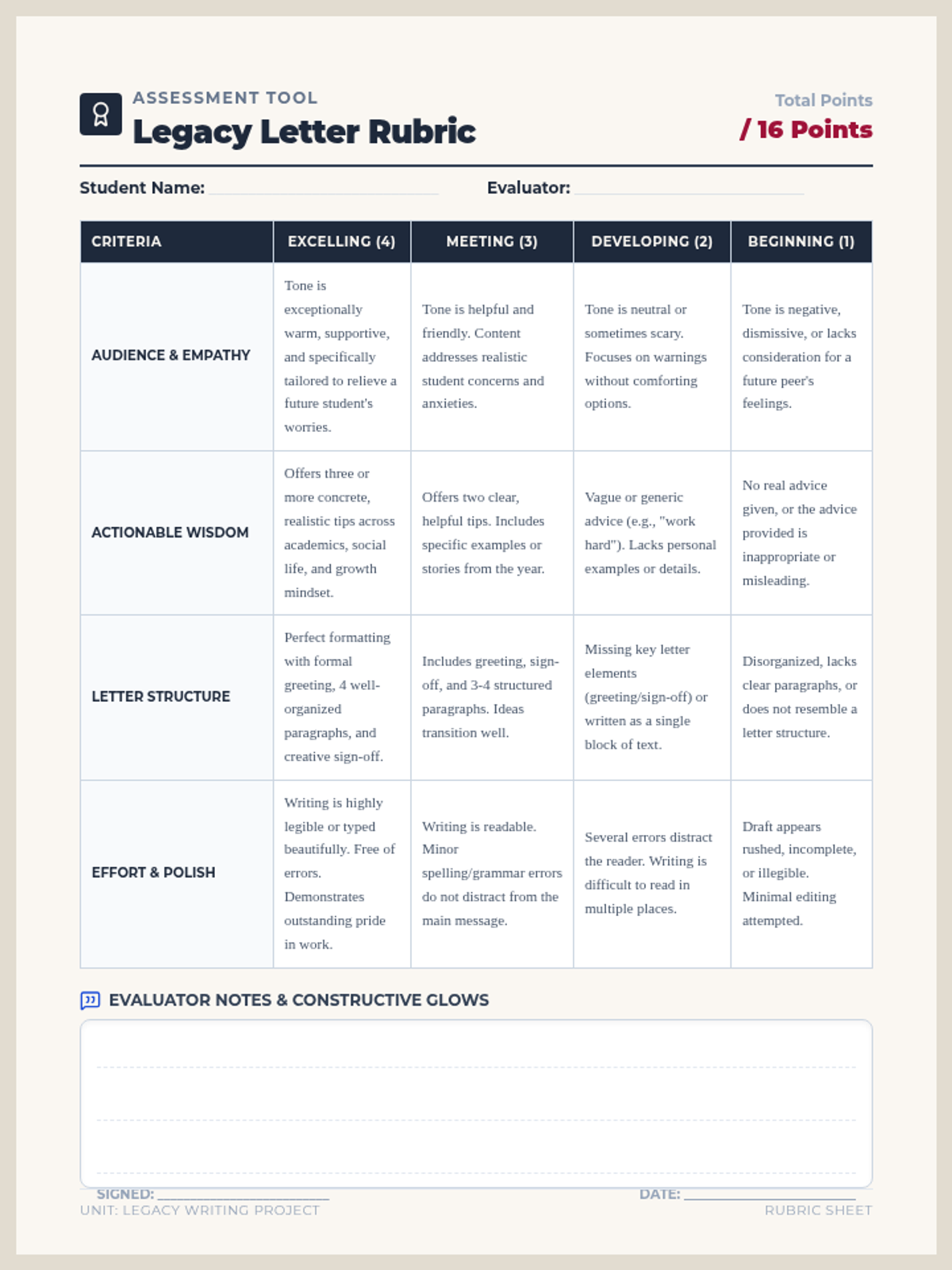
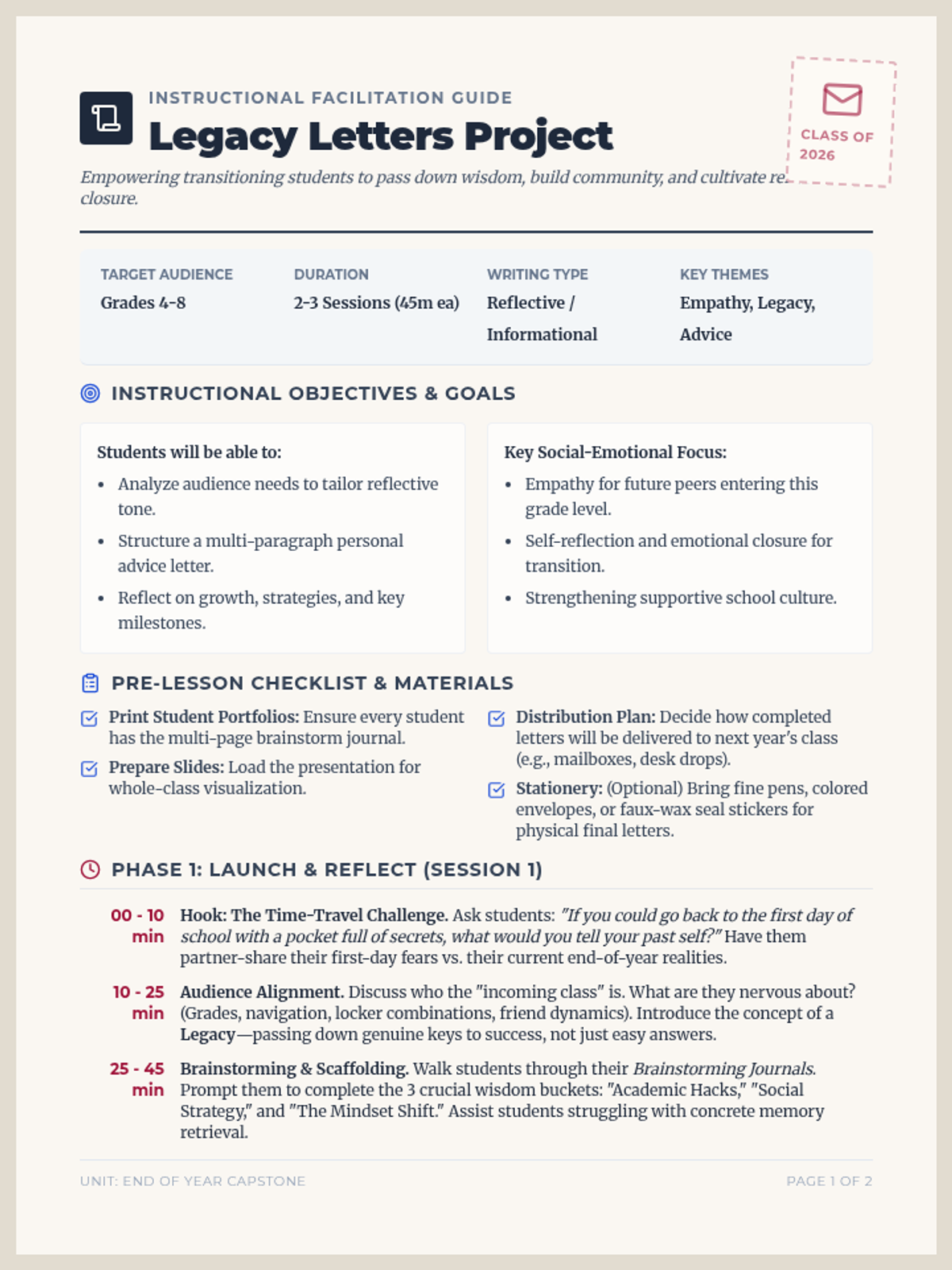
A reflective end-of-year writing project where graduating or transitioning students write letters of wisdom, strategies, and encouragement to the incoming class.
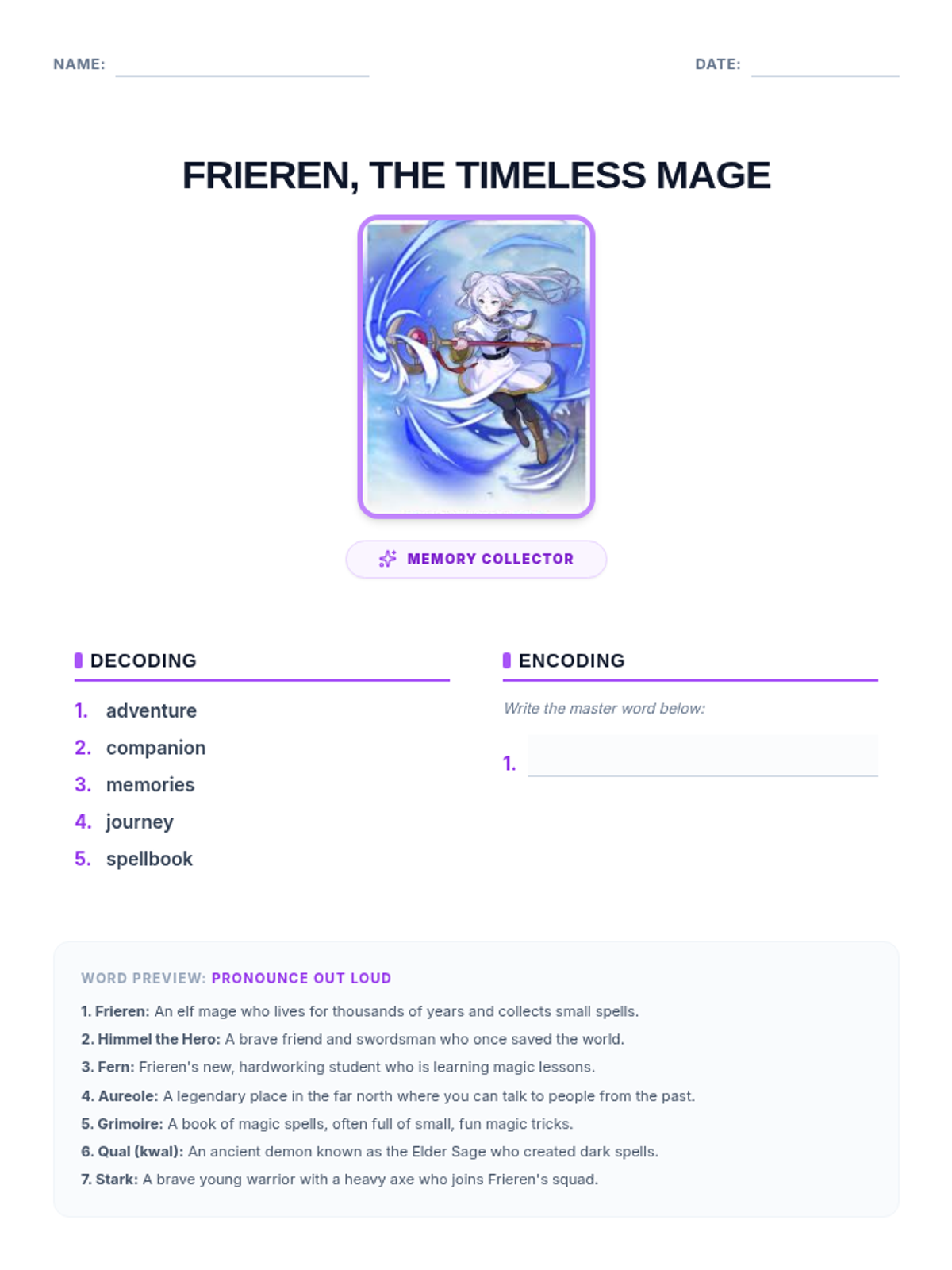
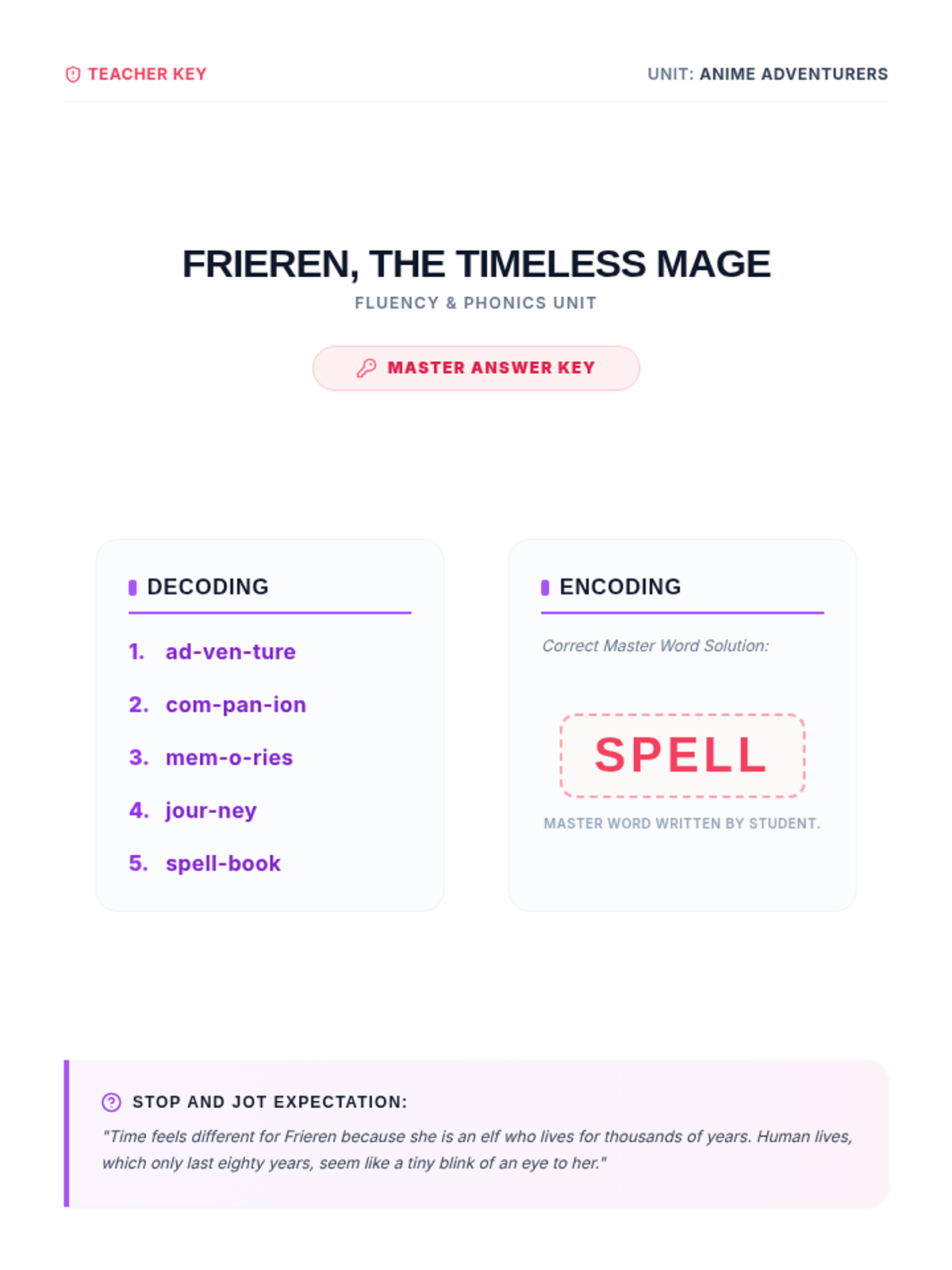
A reading fluency and decoding/encoding lesson set inspired by Frieren, designed to build 3rd-4th grade literacy skills using action-oriented passages about Frieren's magic.
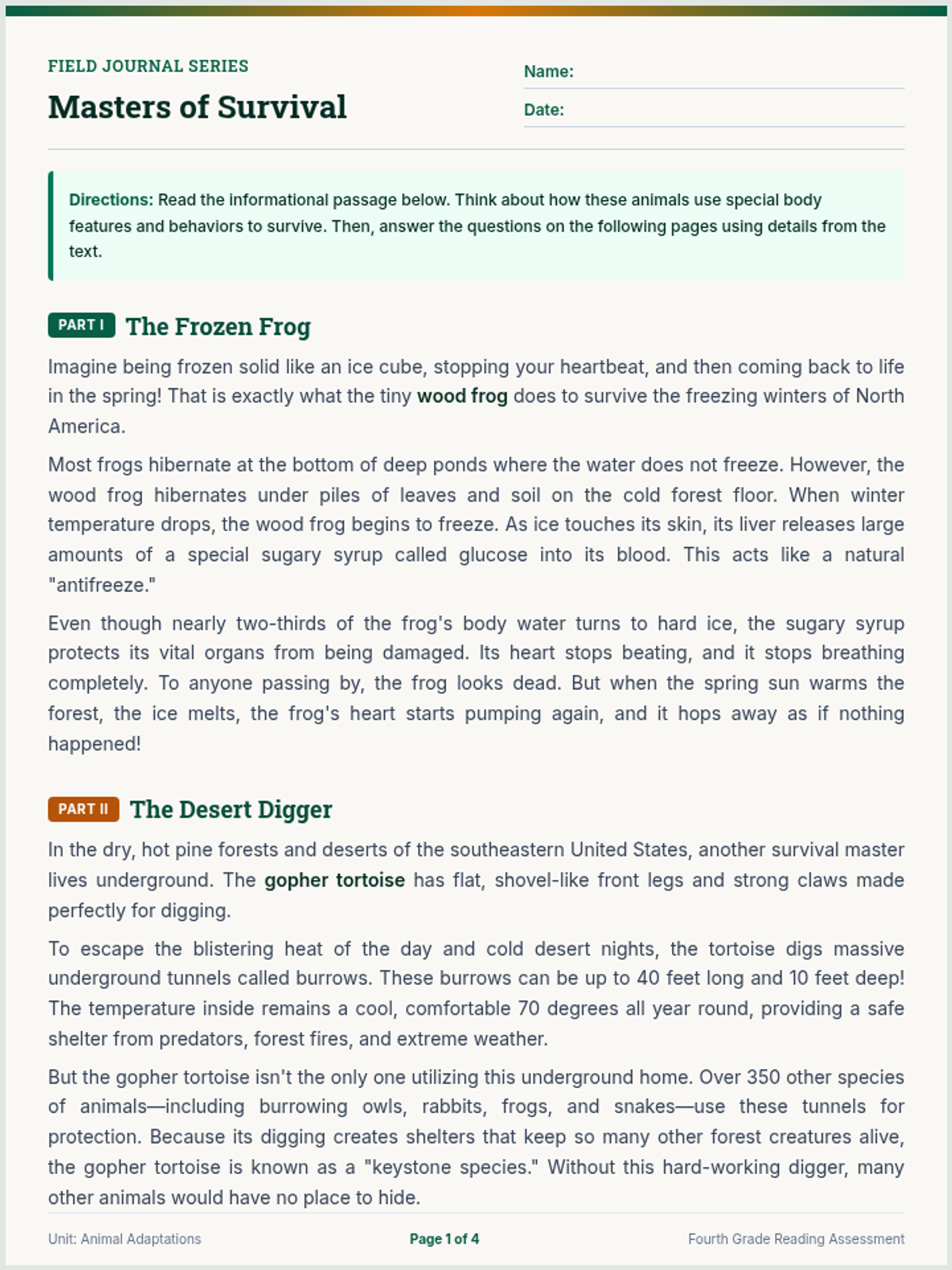
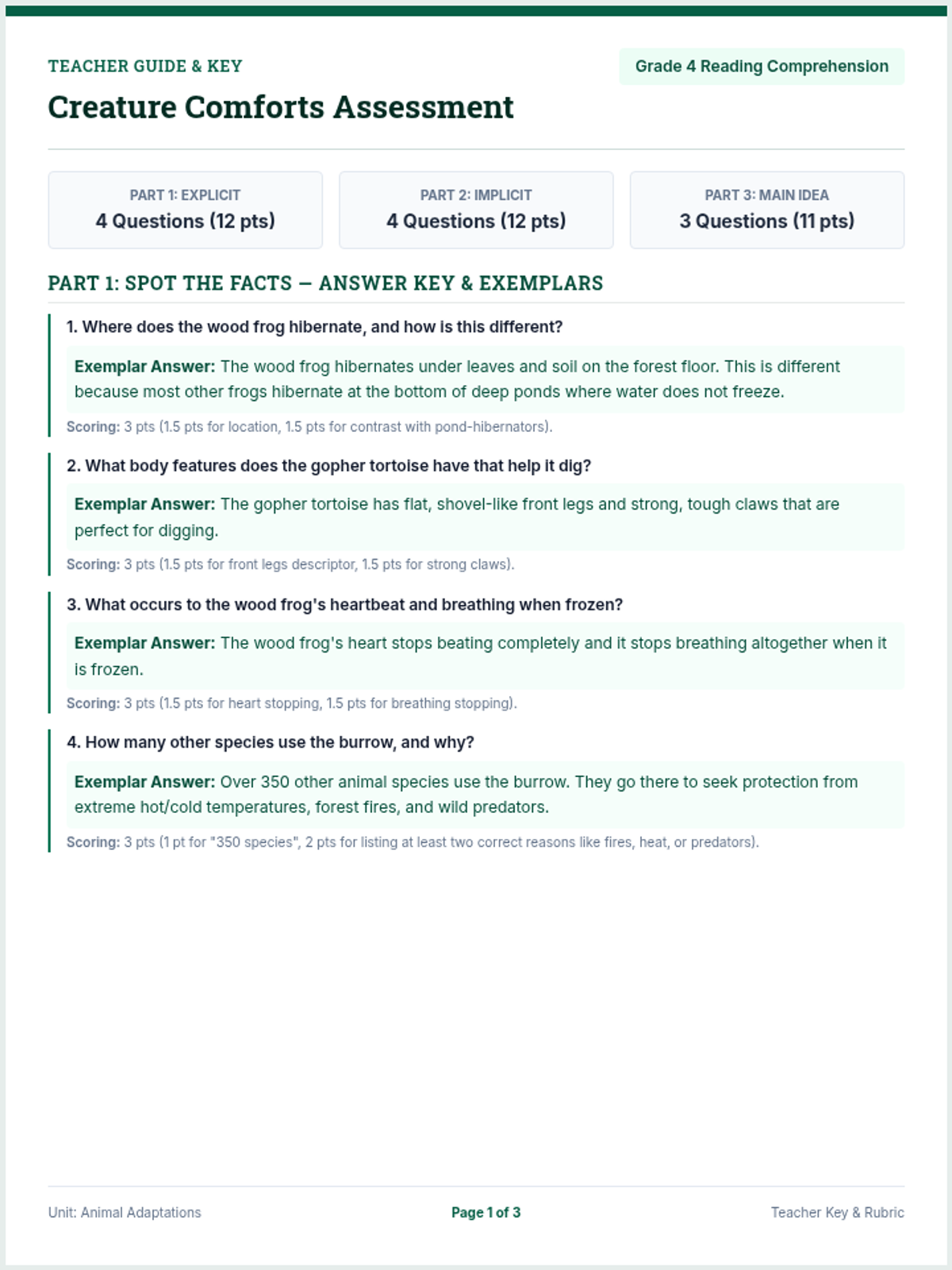
A comprehensive fourth-grade reading comprehension assessment focused on animal adaptations. It evaluates explicit, implicit, and main idea comprehension through an engaging nature-journal themed passage and structured, lined question sets.
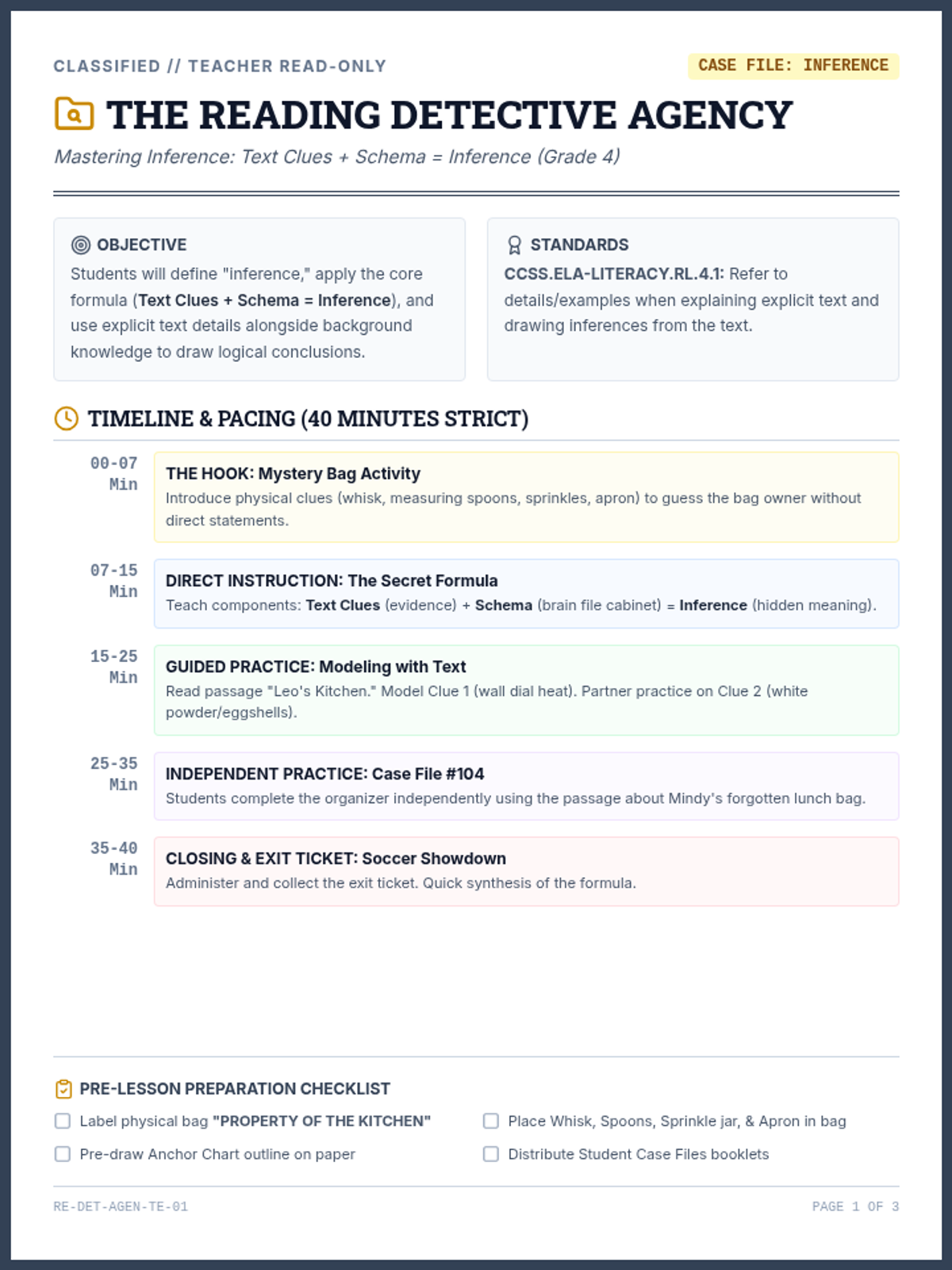
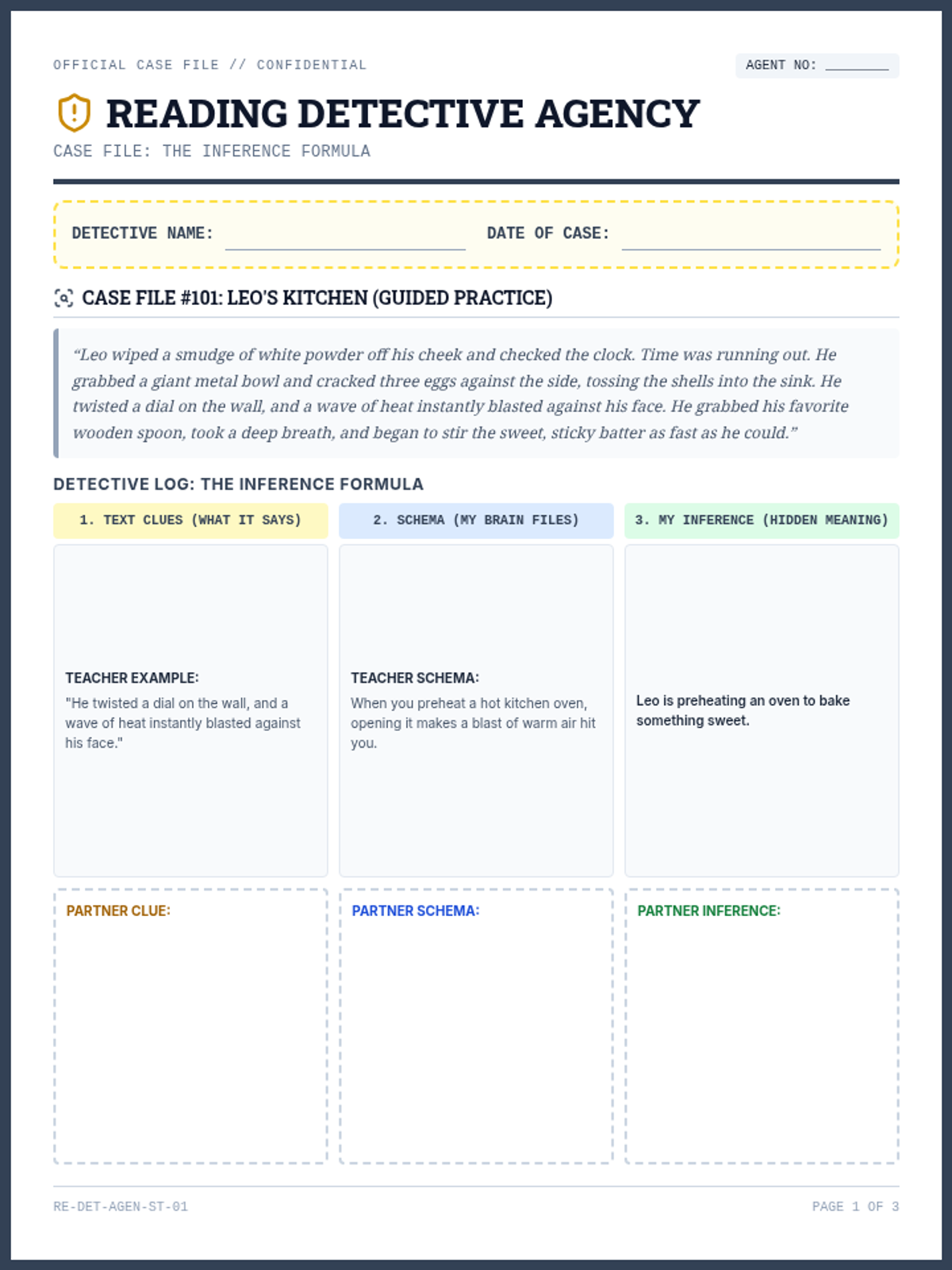
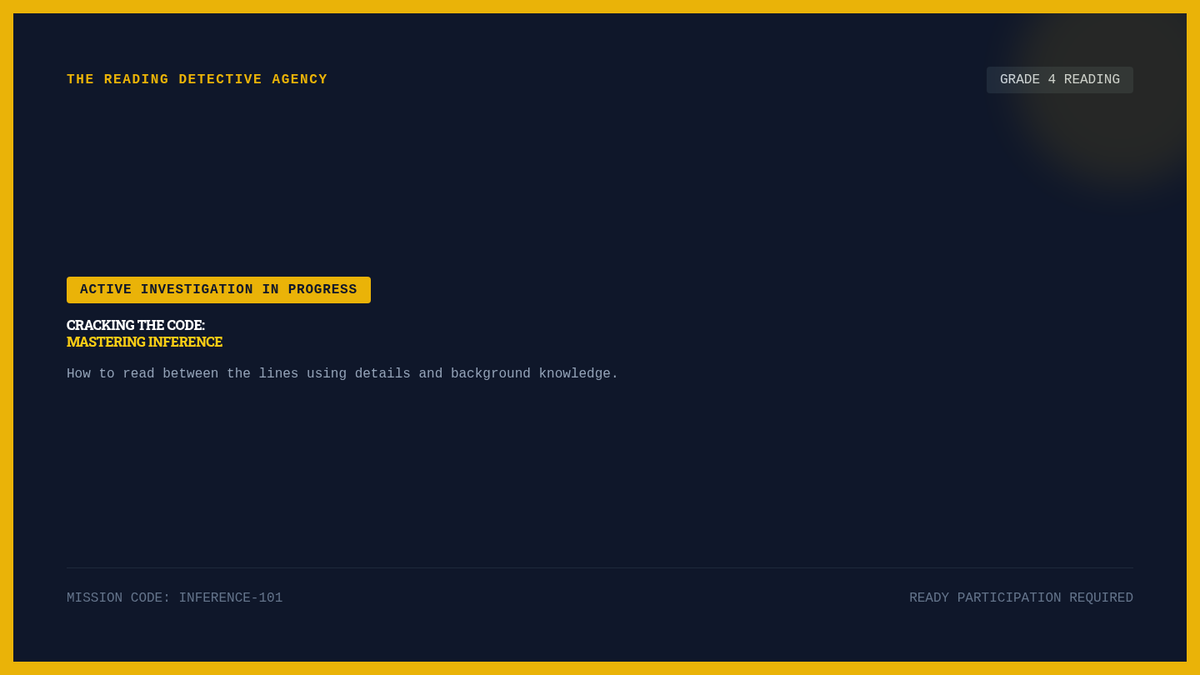
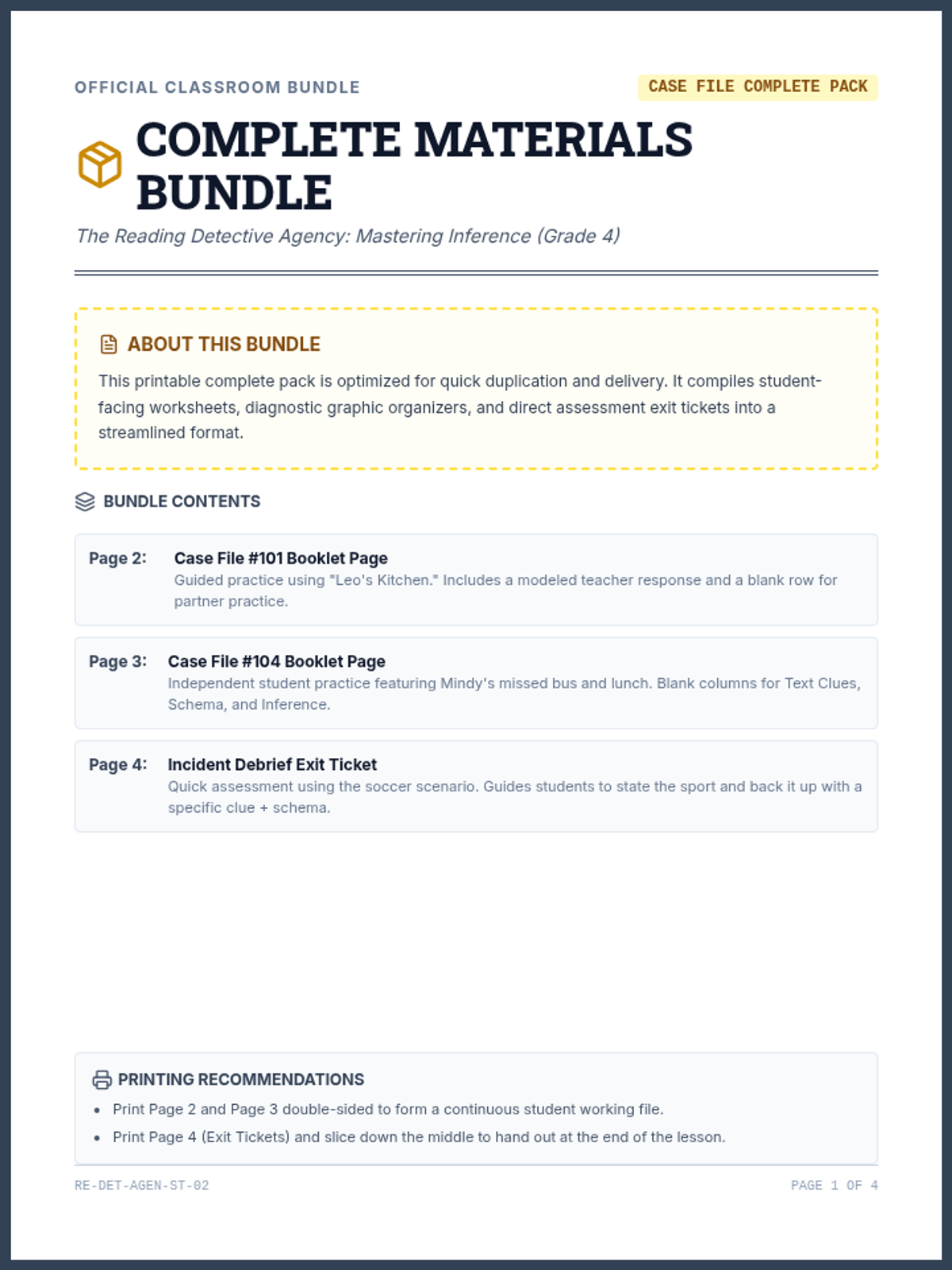
A 4th-grade reading comprehension lesson focused on making inferences using the formula Text Clues + Schema = Inference, styled with a fun detective theme.
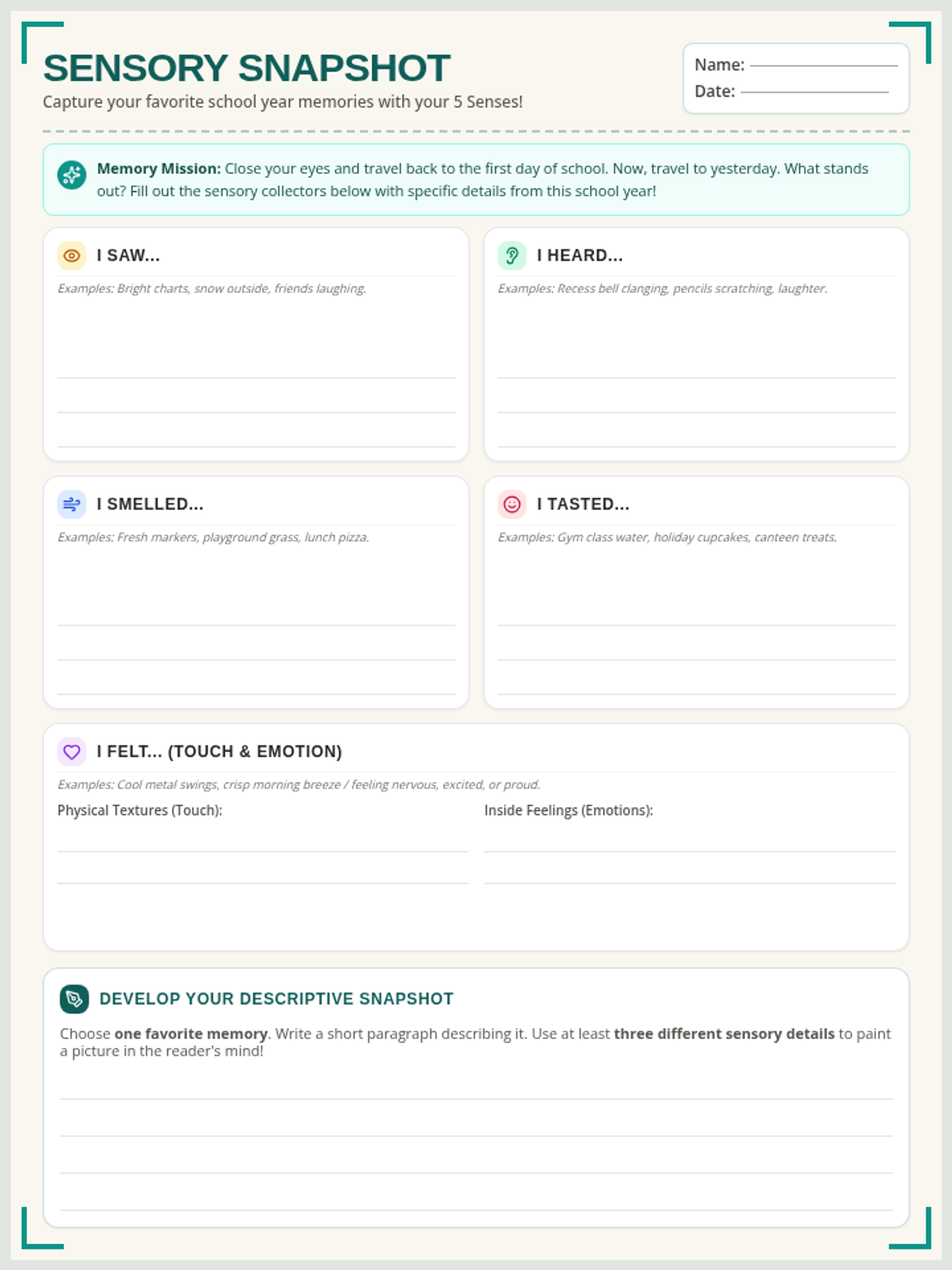
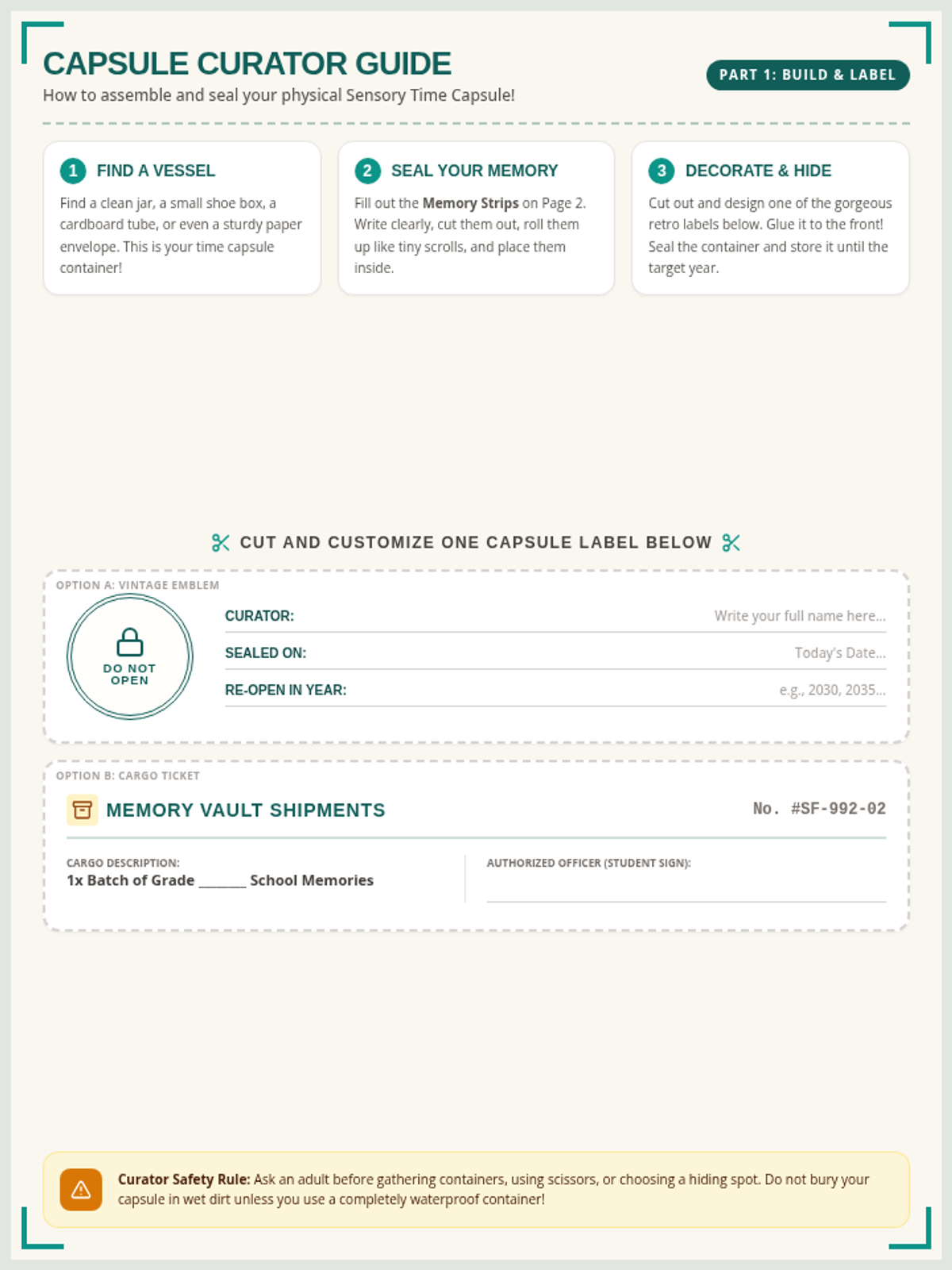
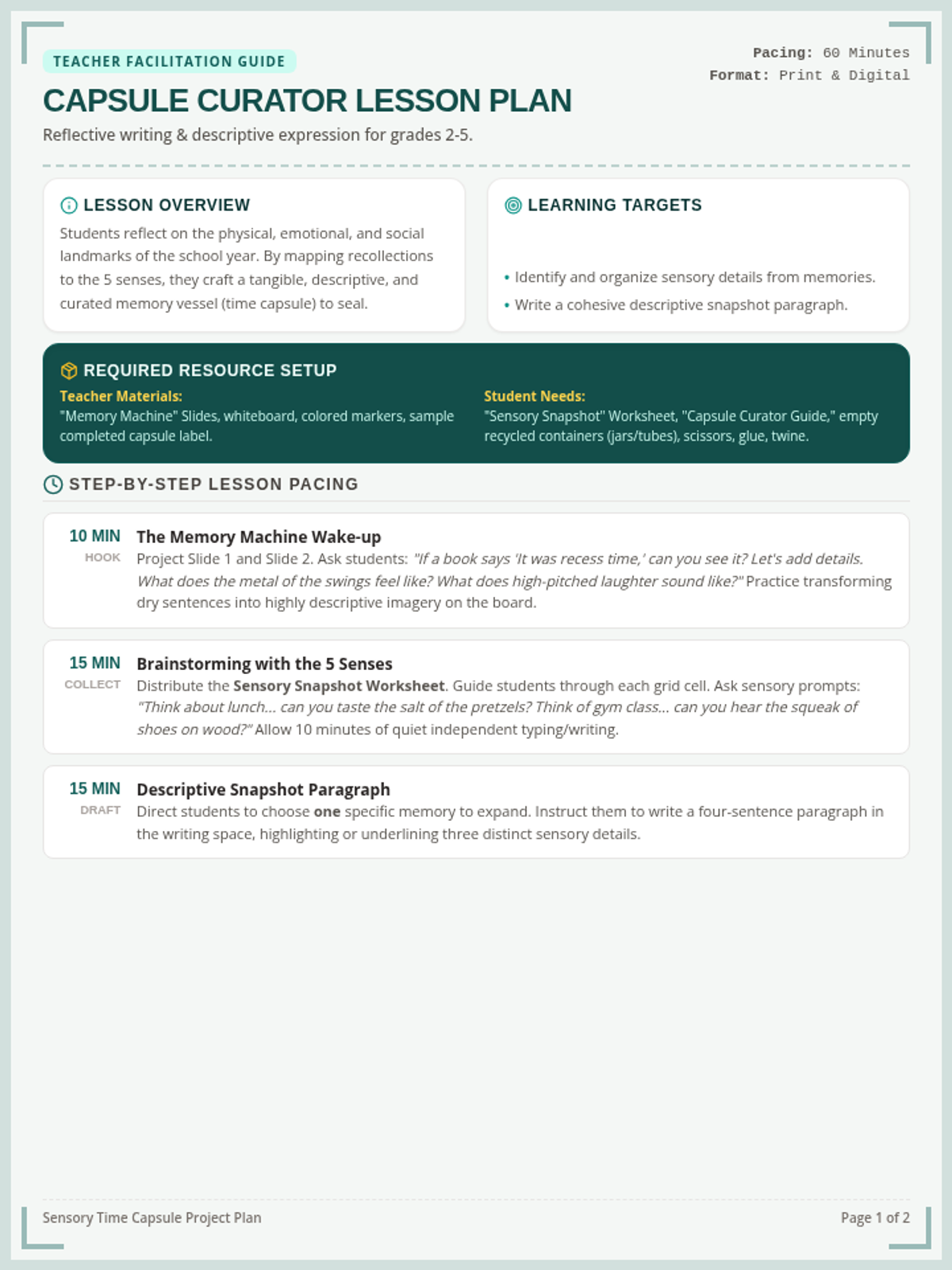
A reflective writing and crafting lesson where students in grades 2-5 use sensory details to capture their favorite school year memories, creating a physical or digital time capsule to celebrate their growth and transition to summer.
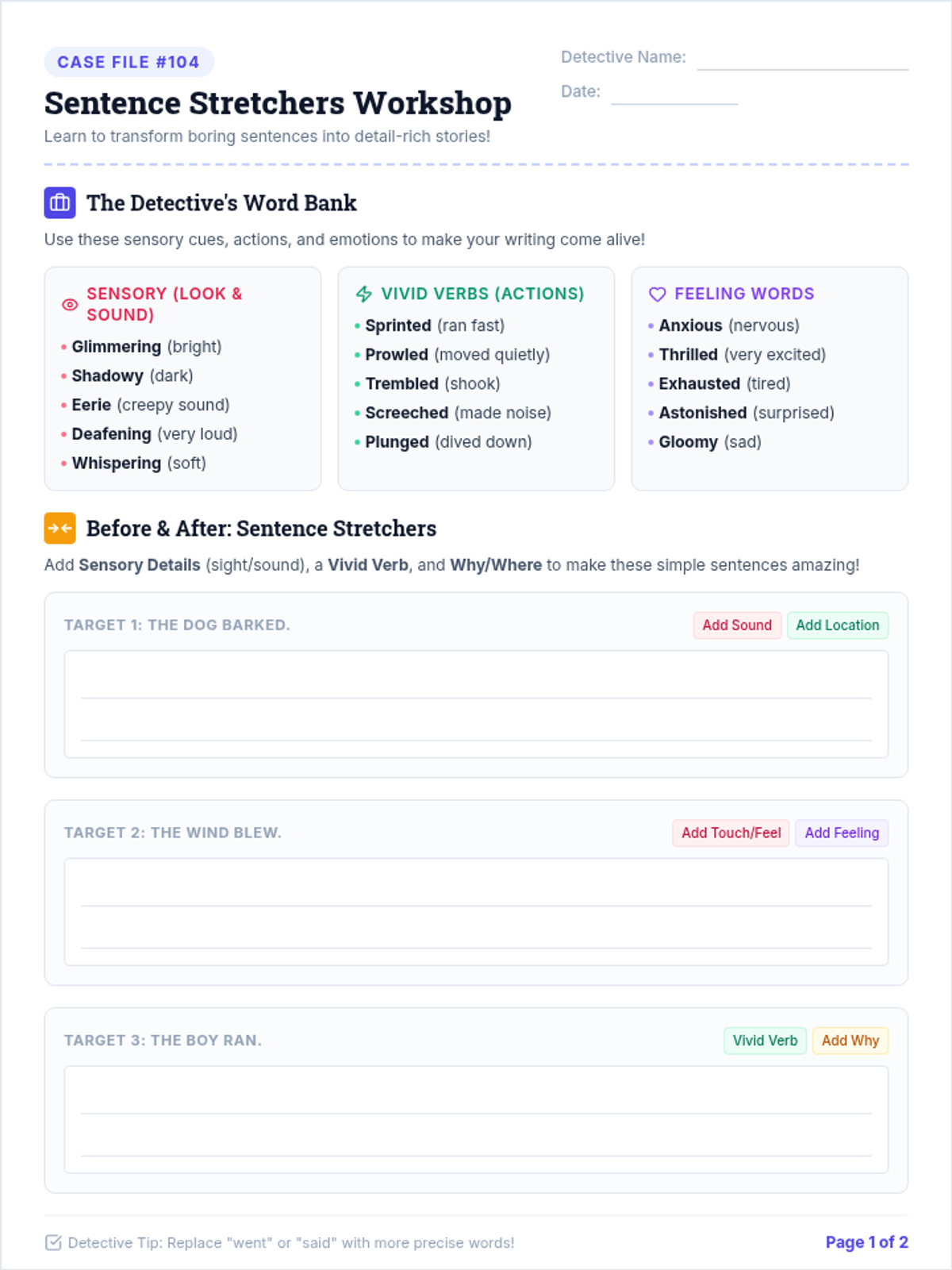
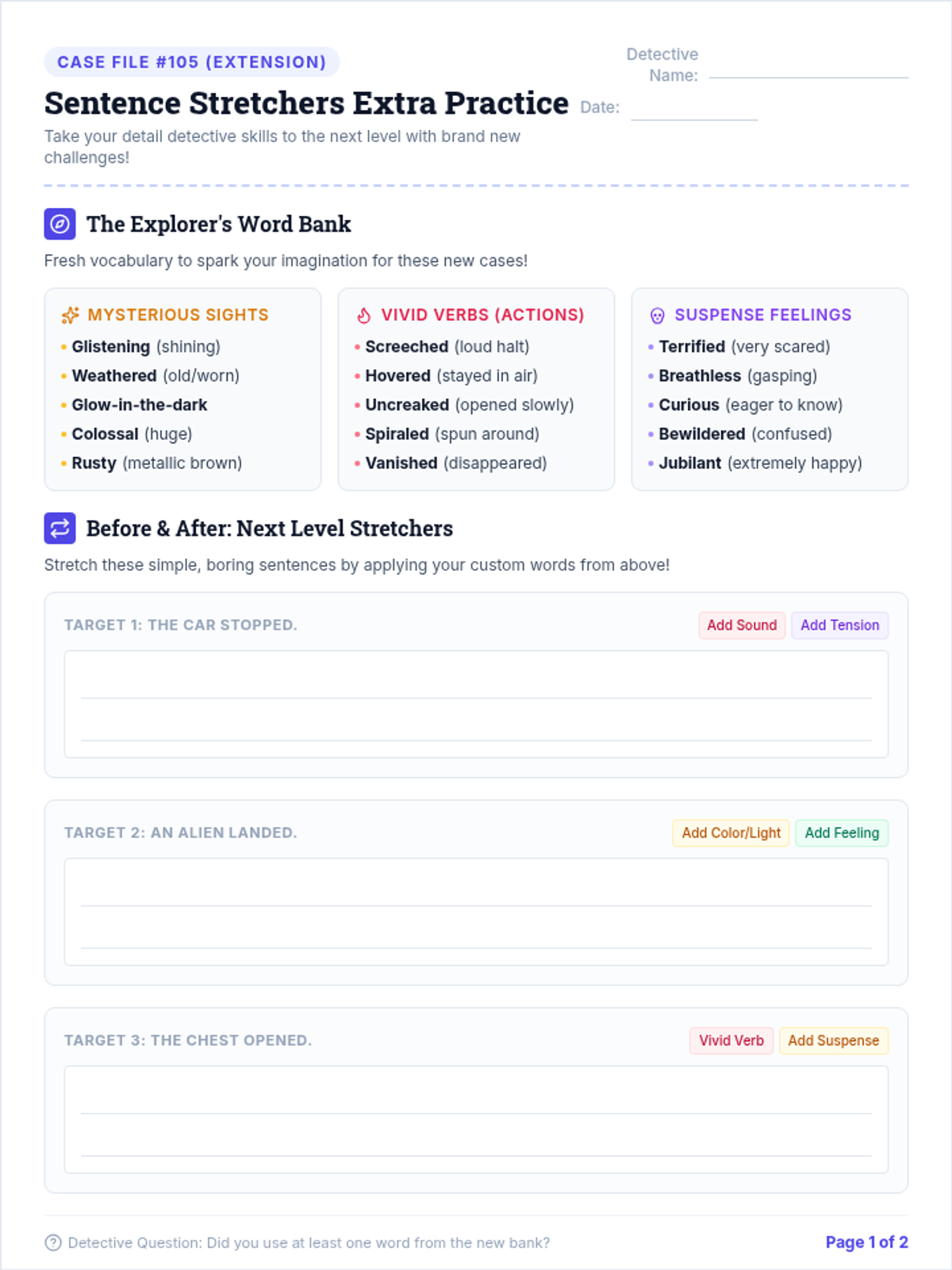
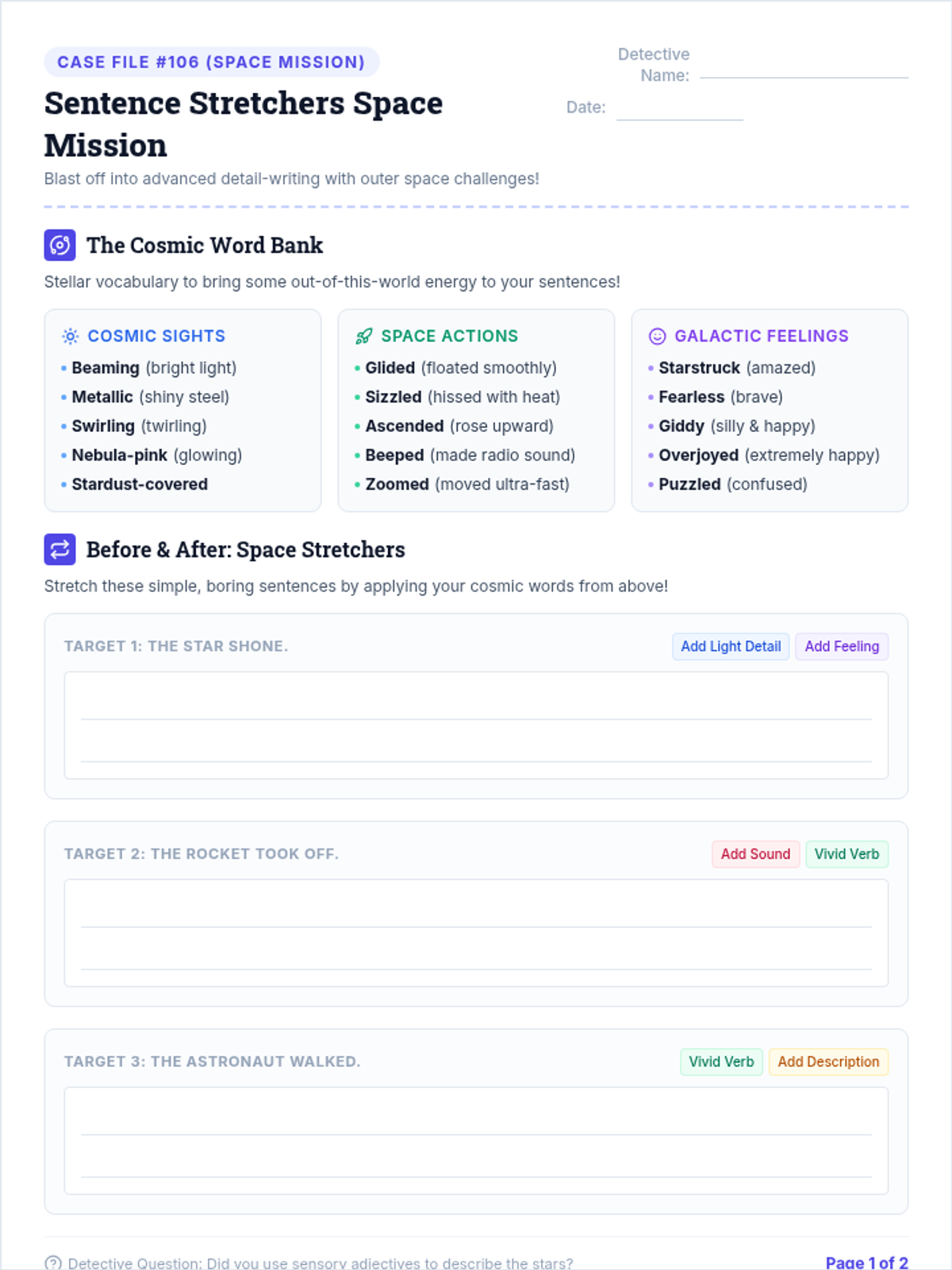
A writing workshop lesson for fourth graders focused on expanding simple sentences into detail-rich paragraphs using sensory words, vivid verbs, and emotional details.
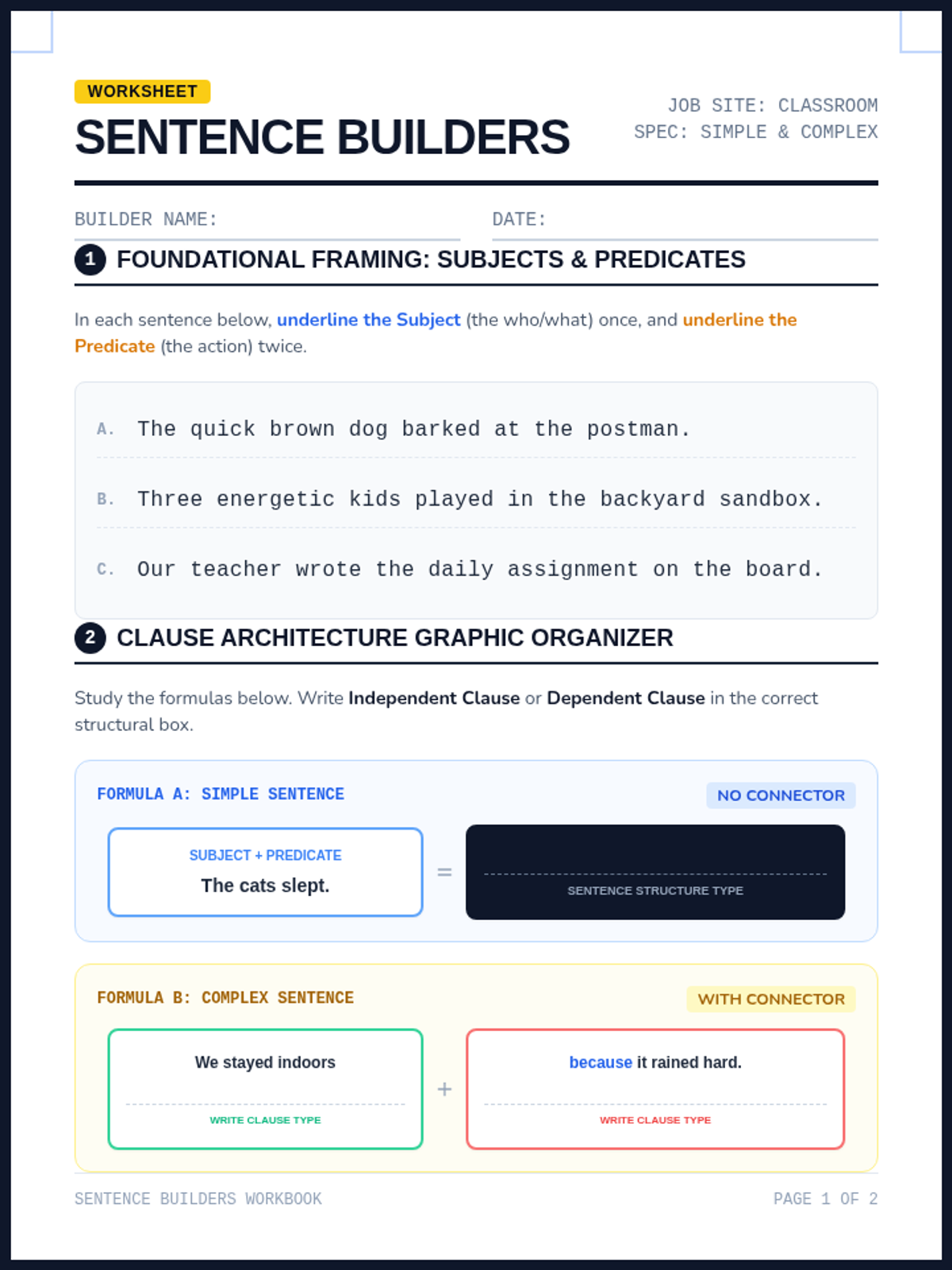
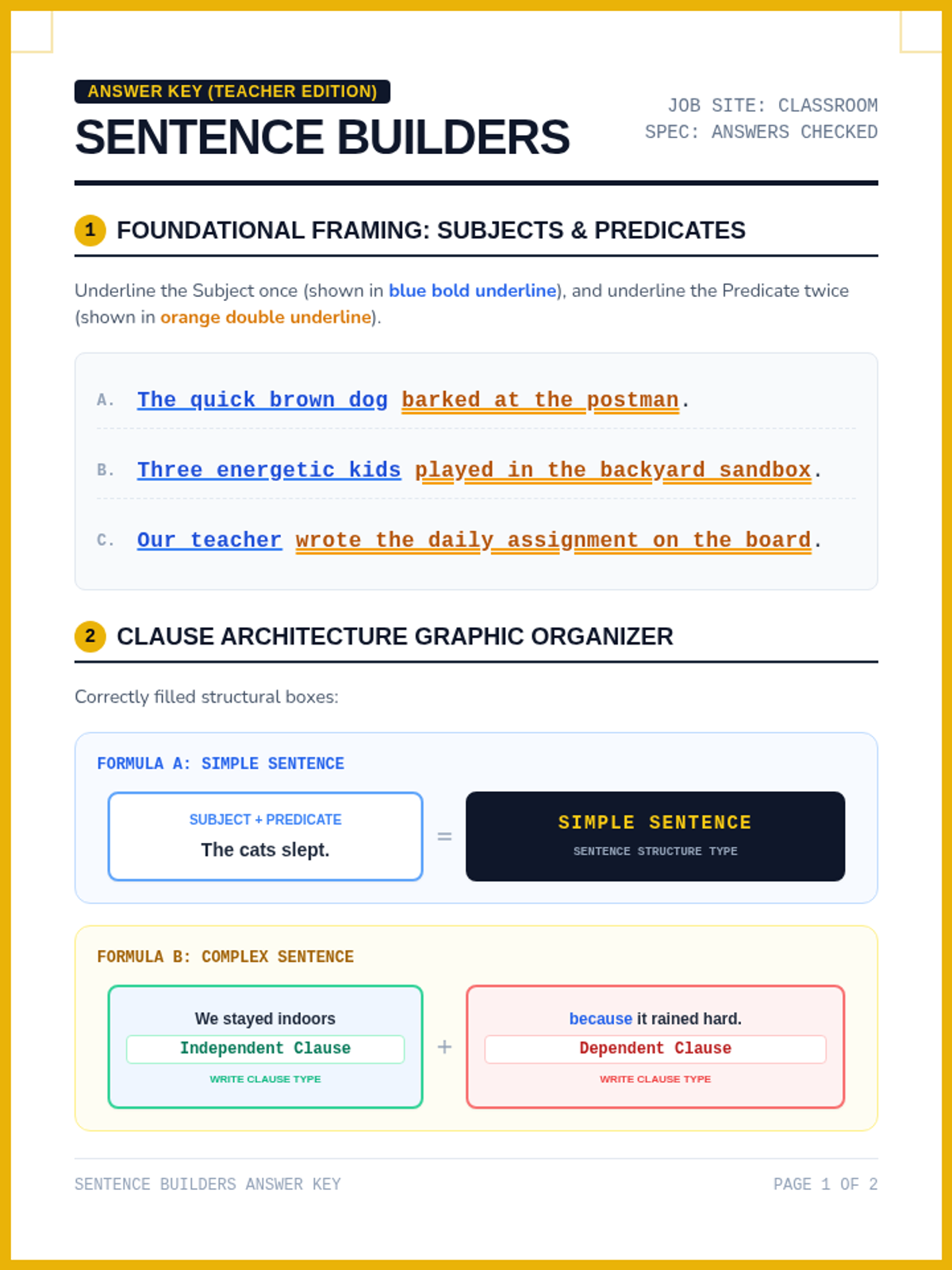
A foundational grammar lesson focusing on identifying subjects and predicates, and distinguishing between simple and complex sentences using visual construction-themed formulas and graphics.
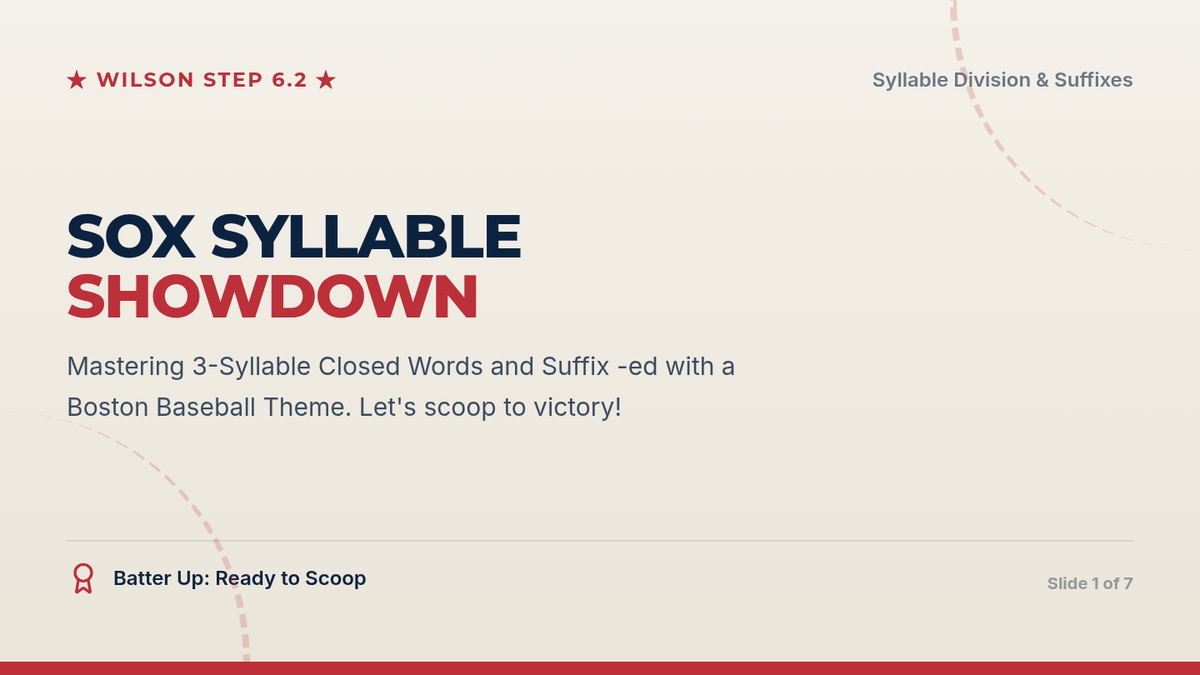
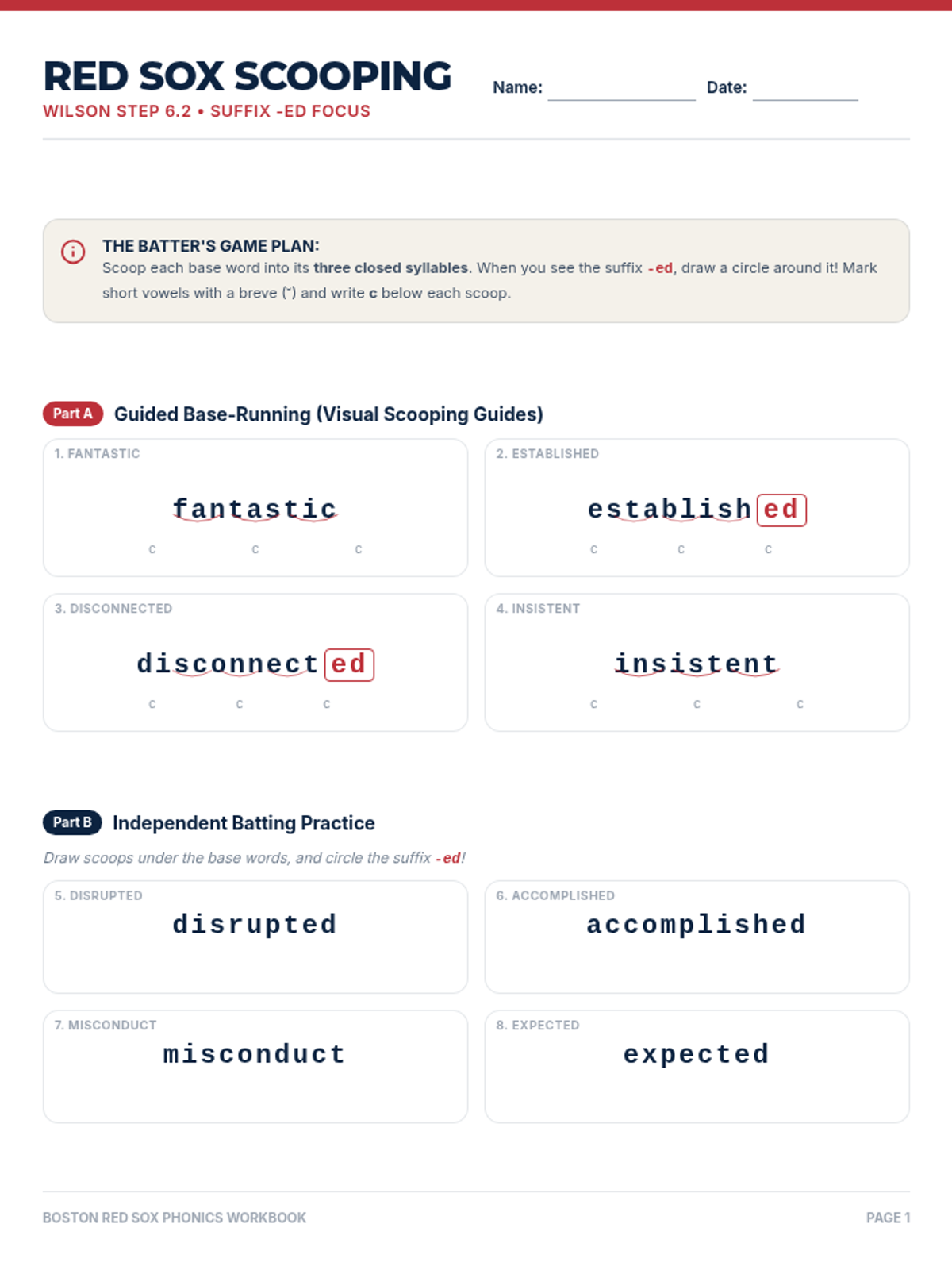
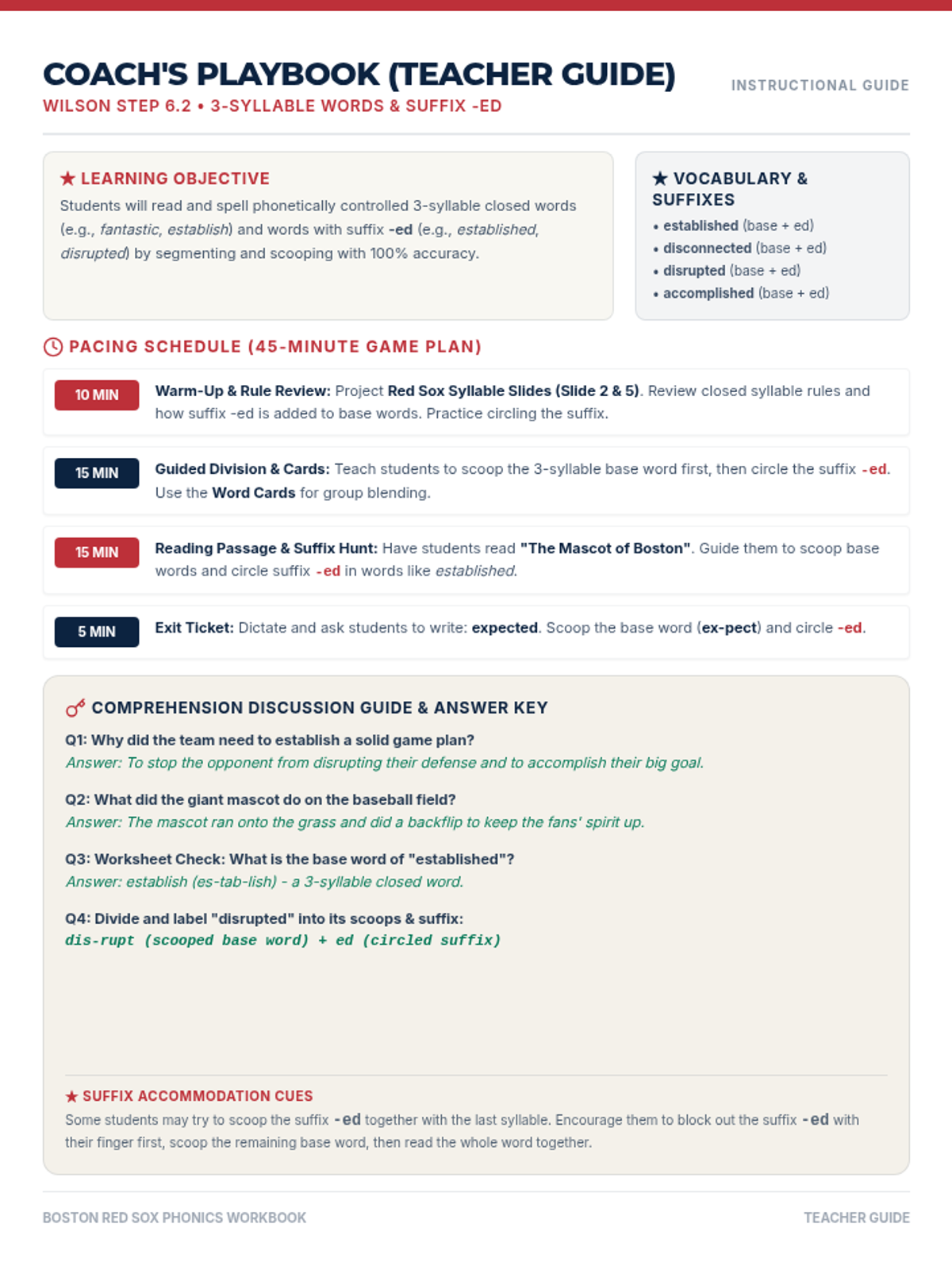
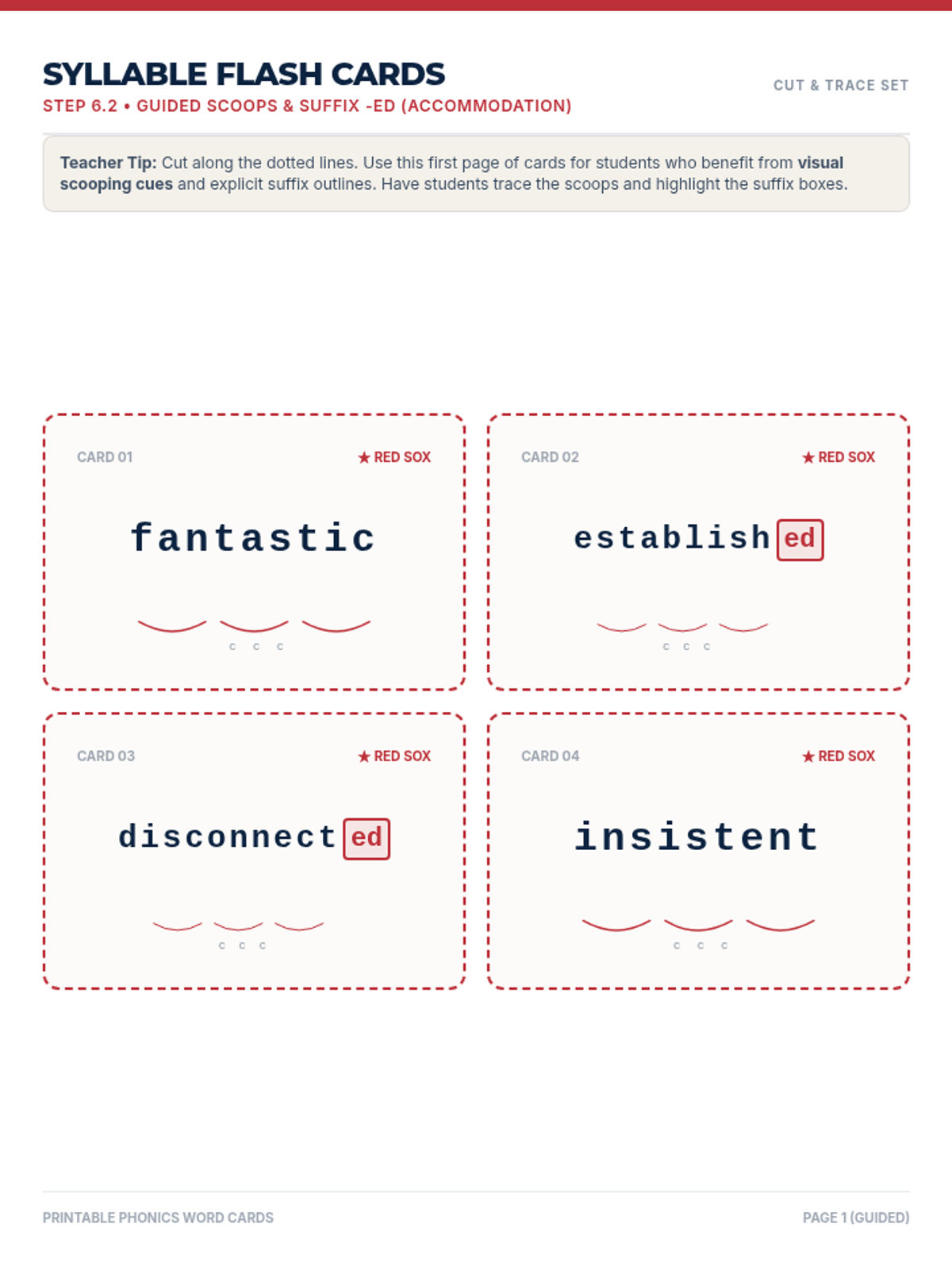
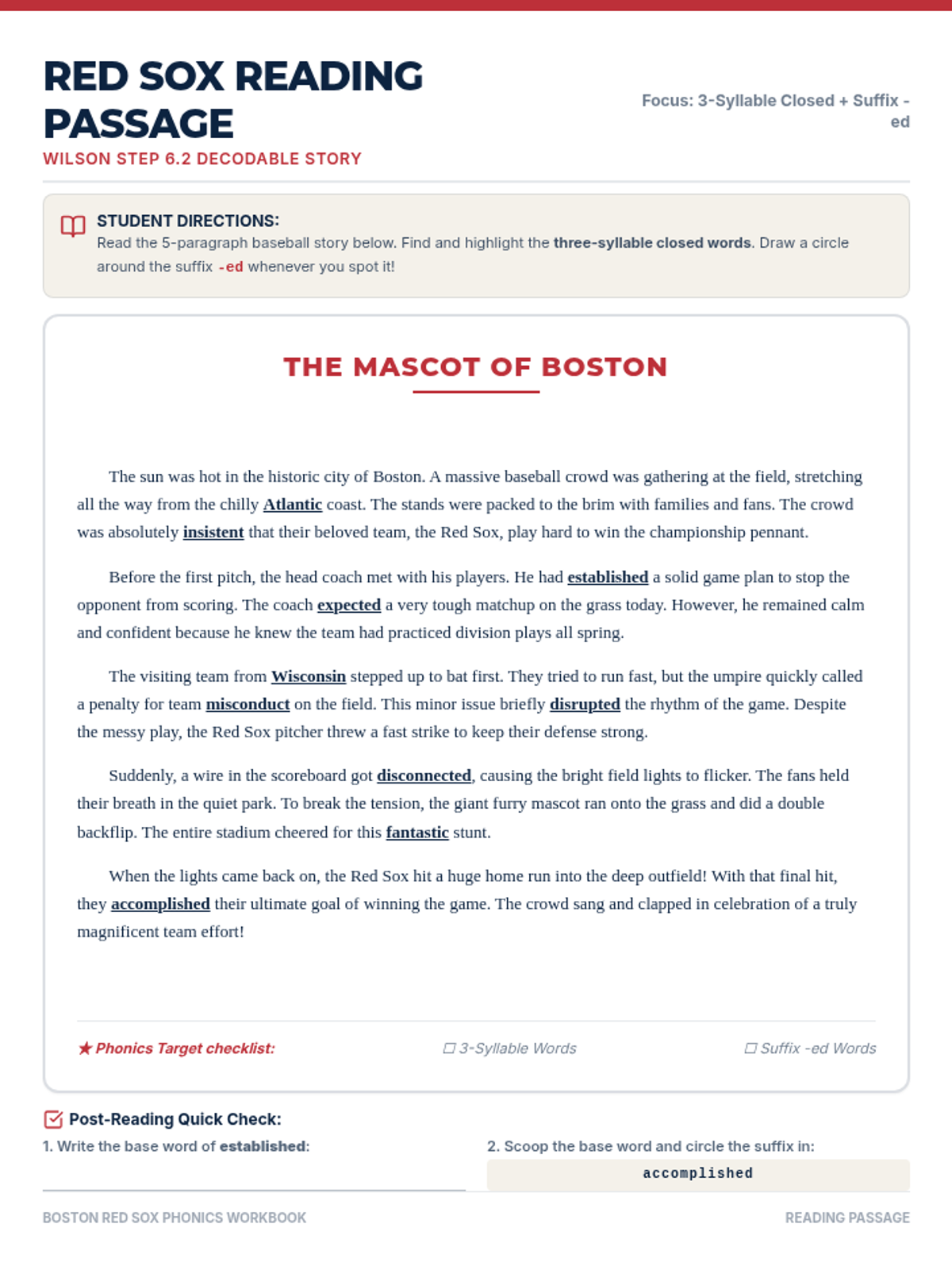
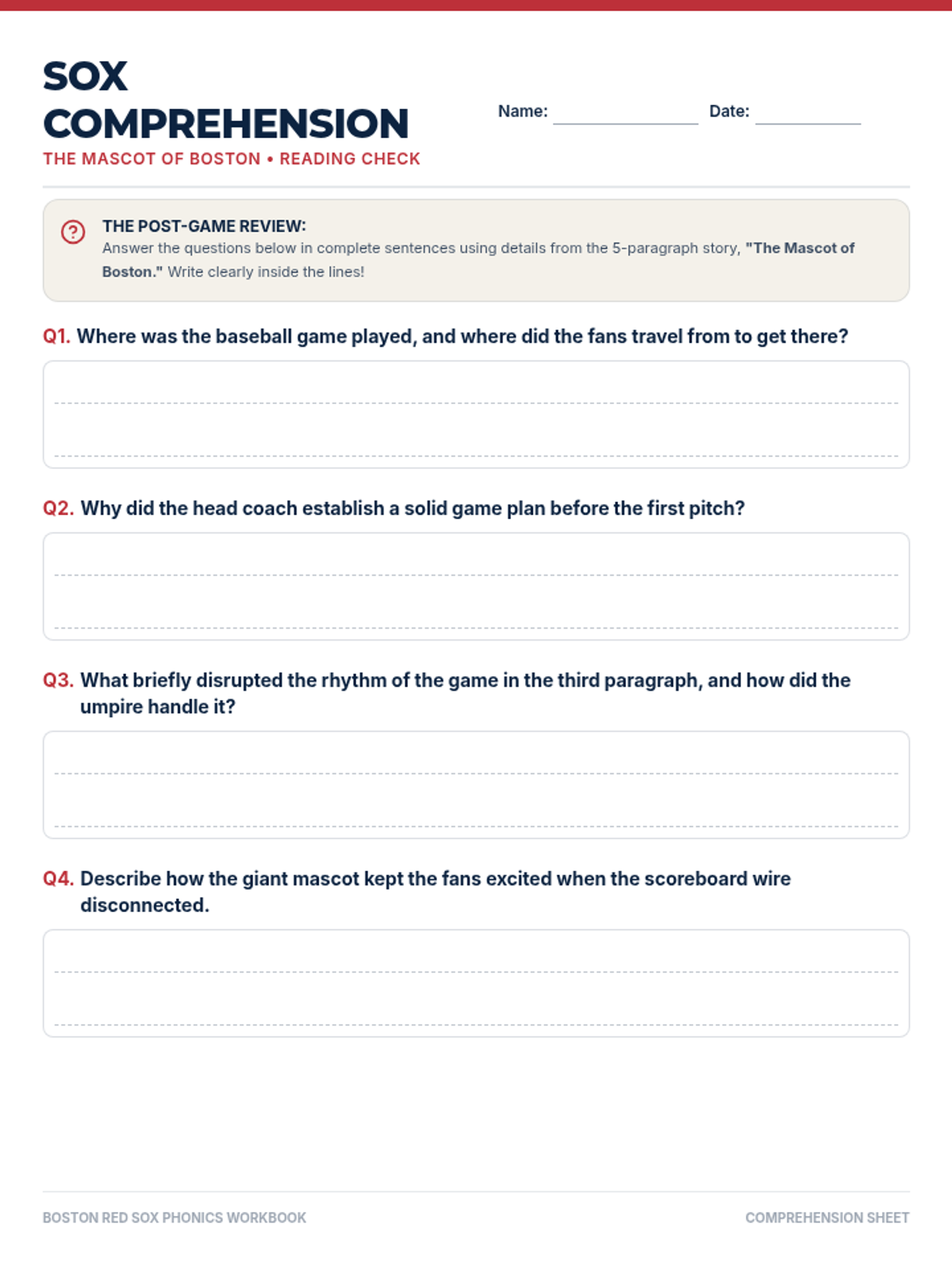
A comprehensive Wilson Step 6.2 lesson focusing on 3-syllable closed words, themed around the Boston Red Sox. Includes a slide deck, scooping worksheets, word cards, and a teacher guide with comprehension questions.
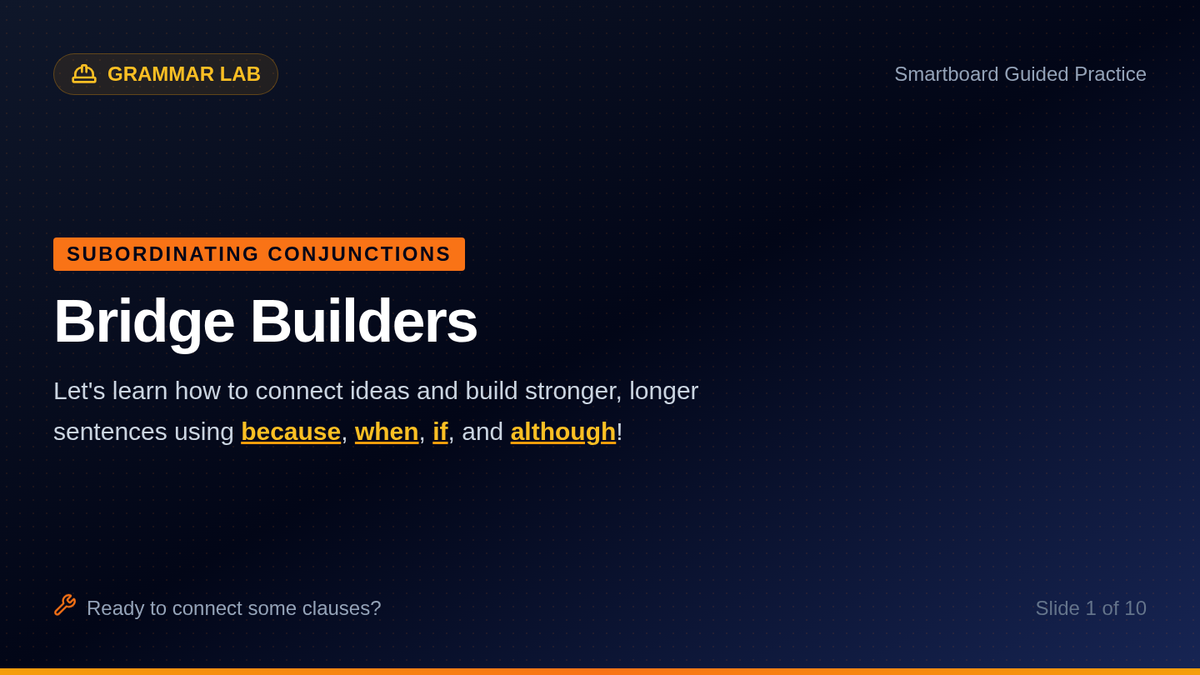
An interactive lesson where students learn to use key subordinating conjunctions (because, when, if, although) to connect clauses, using a highly visual bridge-building theme suitable for smartboard delivery.
An architectural blueprint-themed lesson introducing relative adverbs (where, when, why) as 'bridge builders' that connect clauses and sentences. Includes interactive instruction slides, hands-on task cards for stations, and a blueprint-style recording sheet.
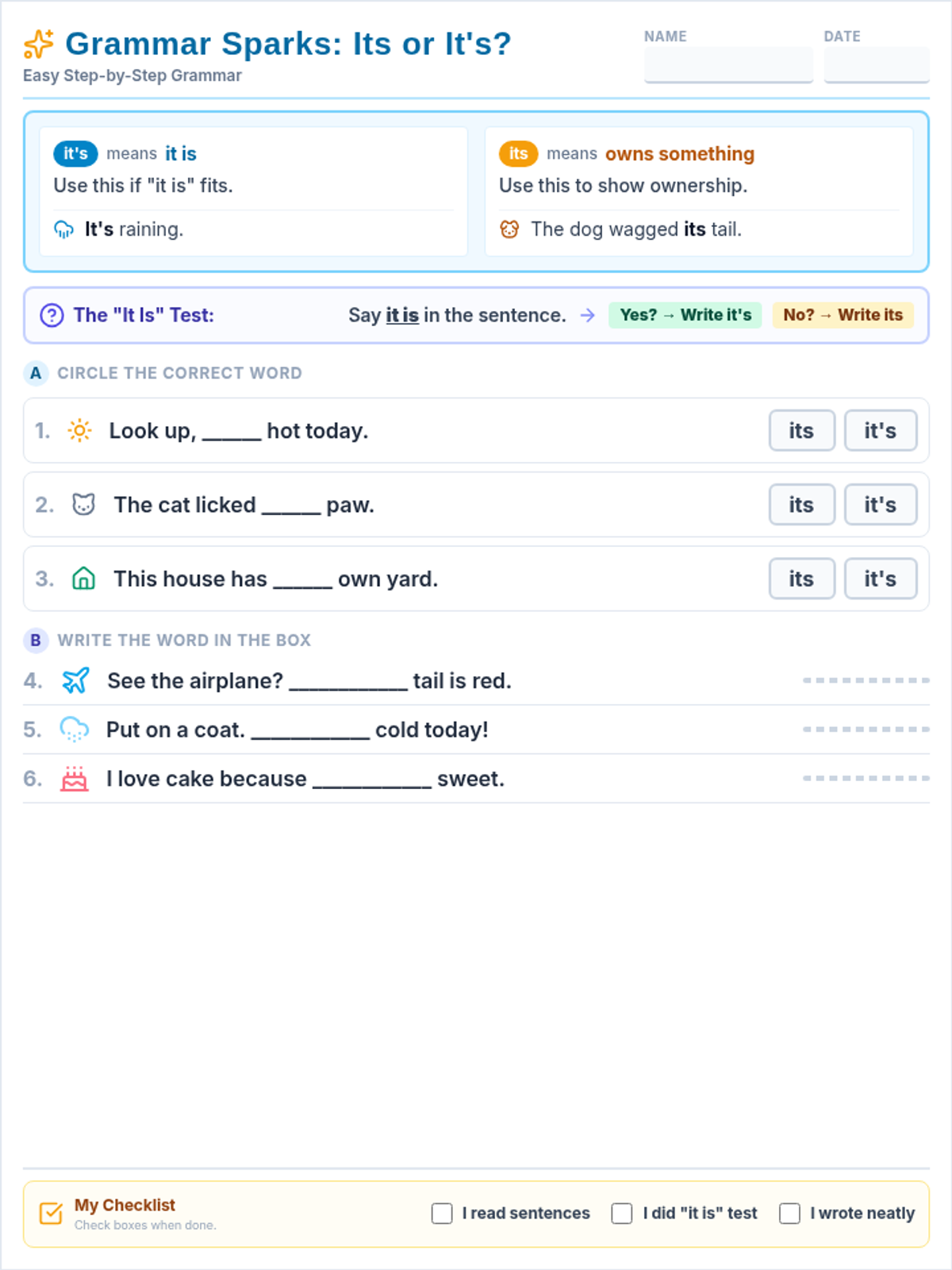
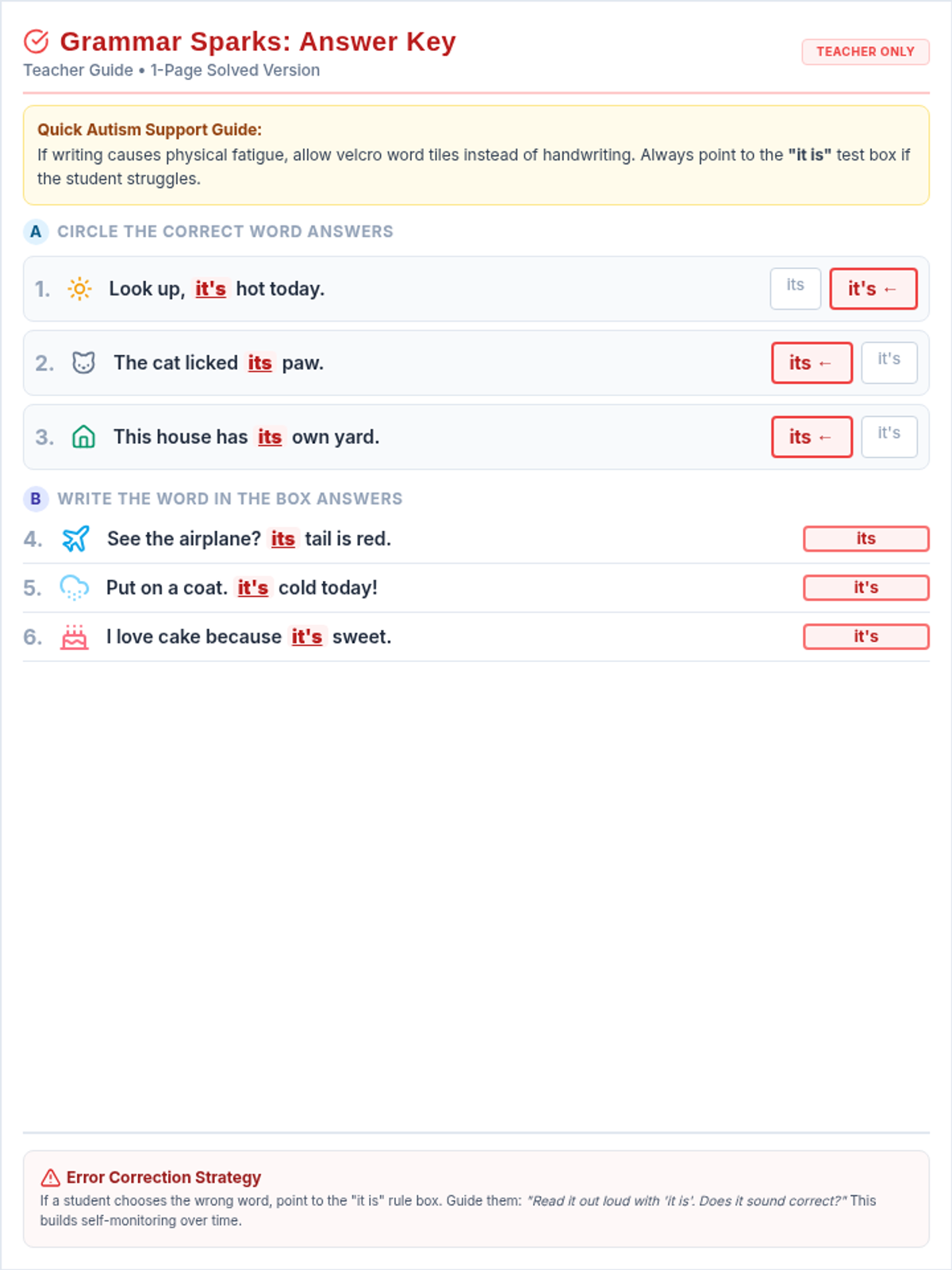
A highly structured grammar lesson focusing on the distinction between 'its' and 'it's', customized with visual icon supports, step-by-step rule scaffolding, and self-monitoring checklists for students who benefit from predictable layouts.
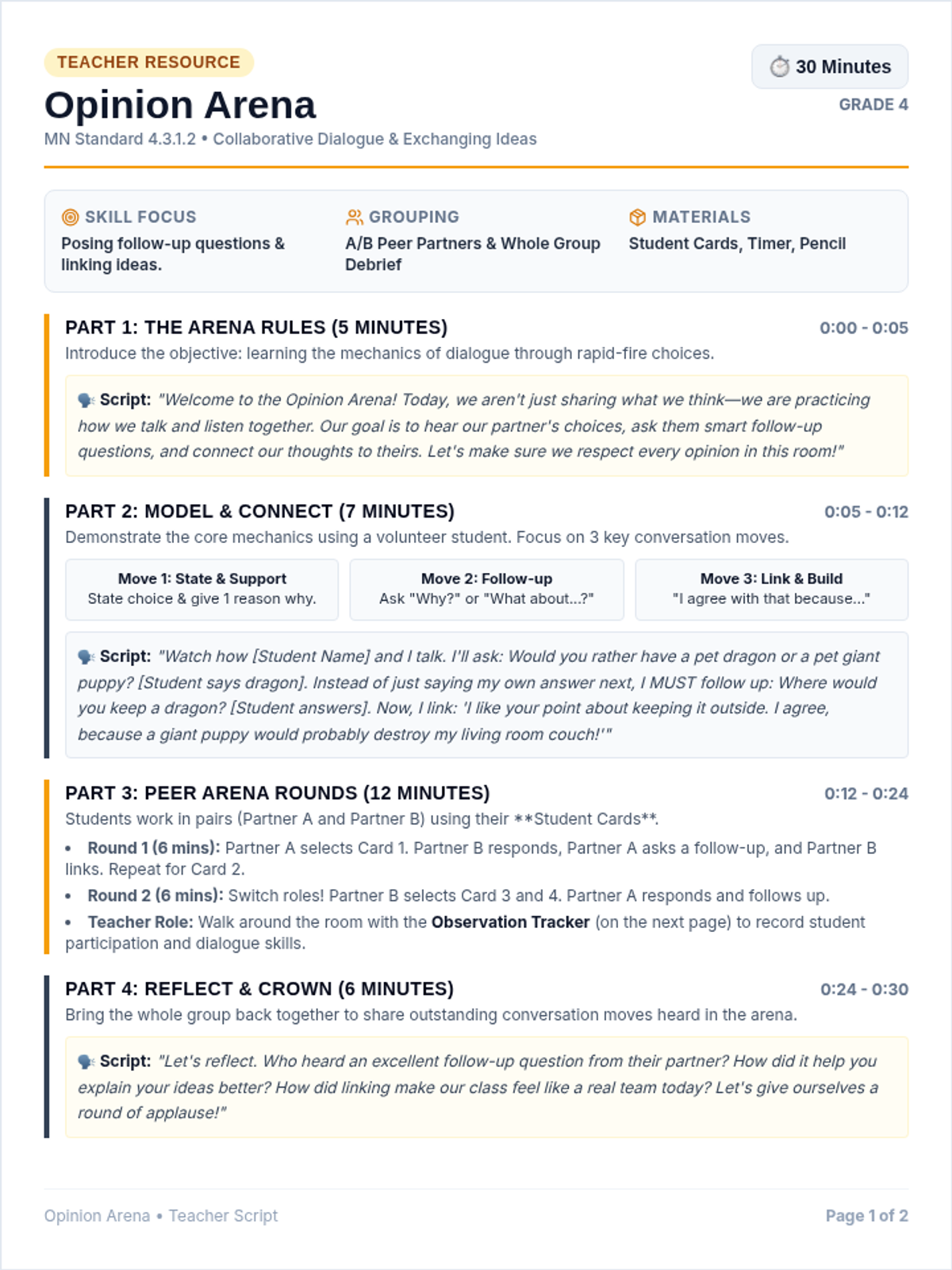
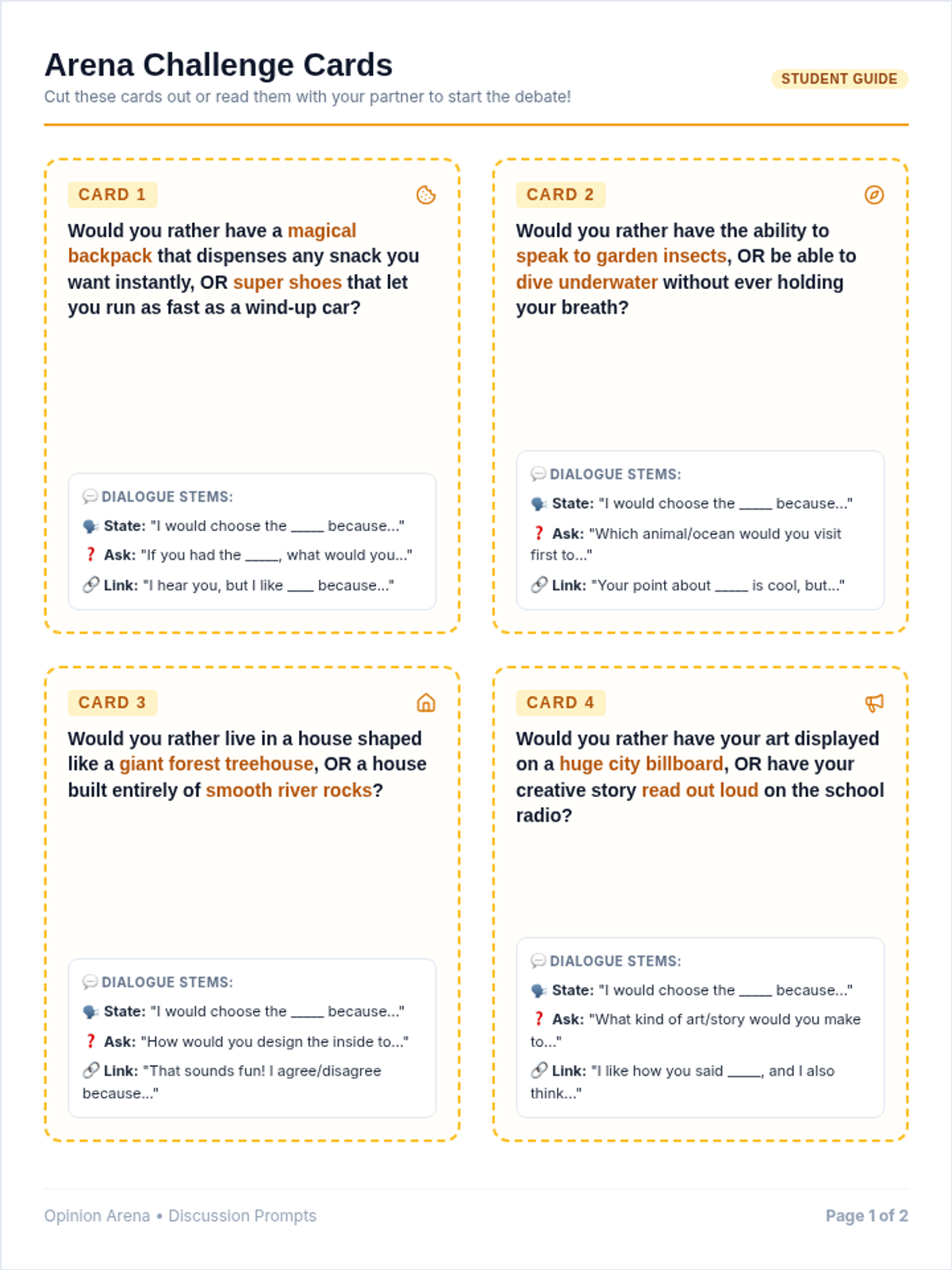
A high-energy, 30-minute lesson designed to teach 4th-grade students the mechanics of collaborative dialogue. Using creative 'Would You Rather' prompts, students practice active listening, responding to follow-up questions, and building on peer ideas.
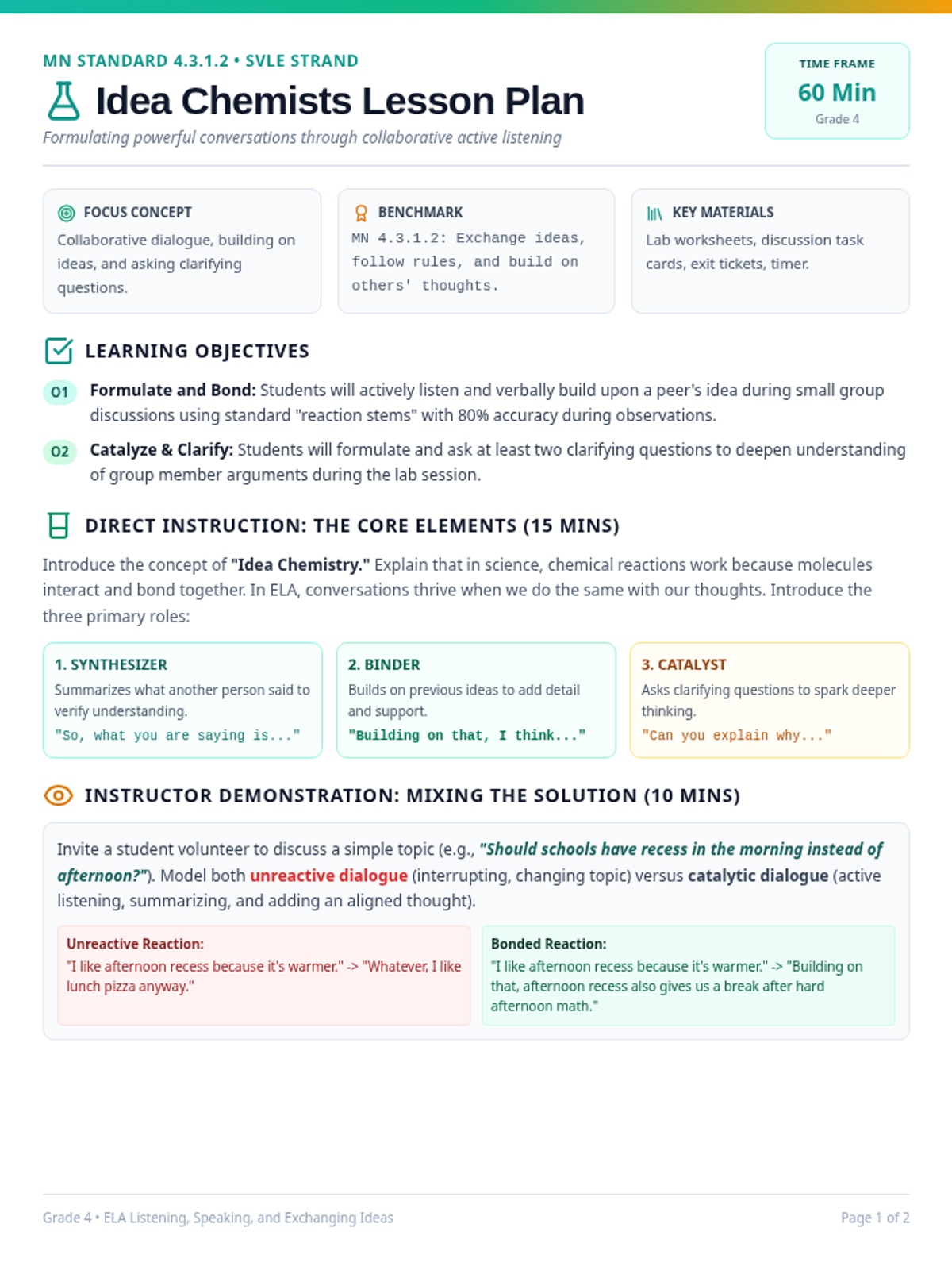
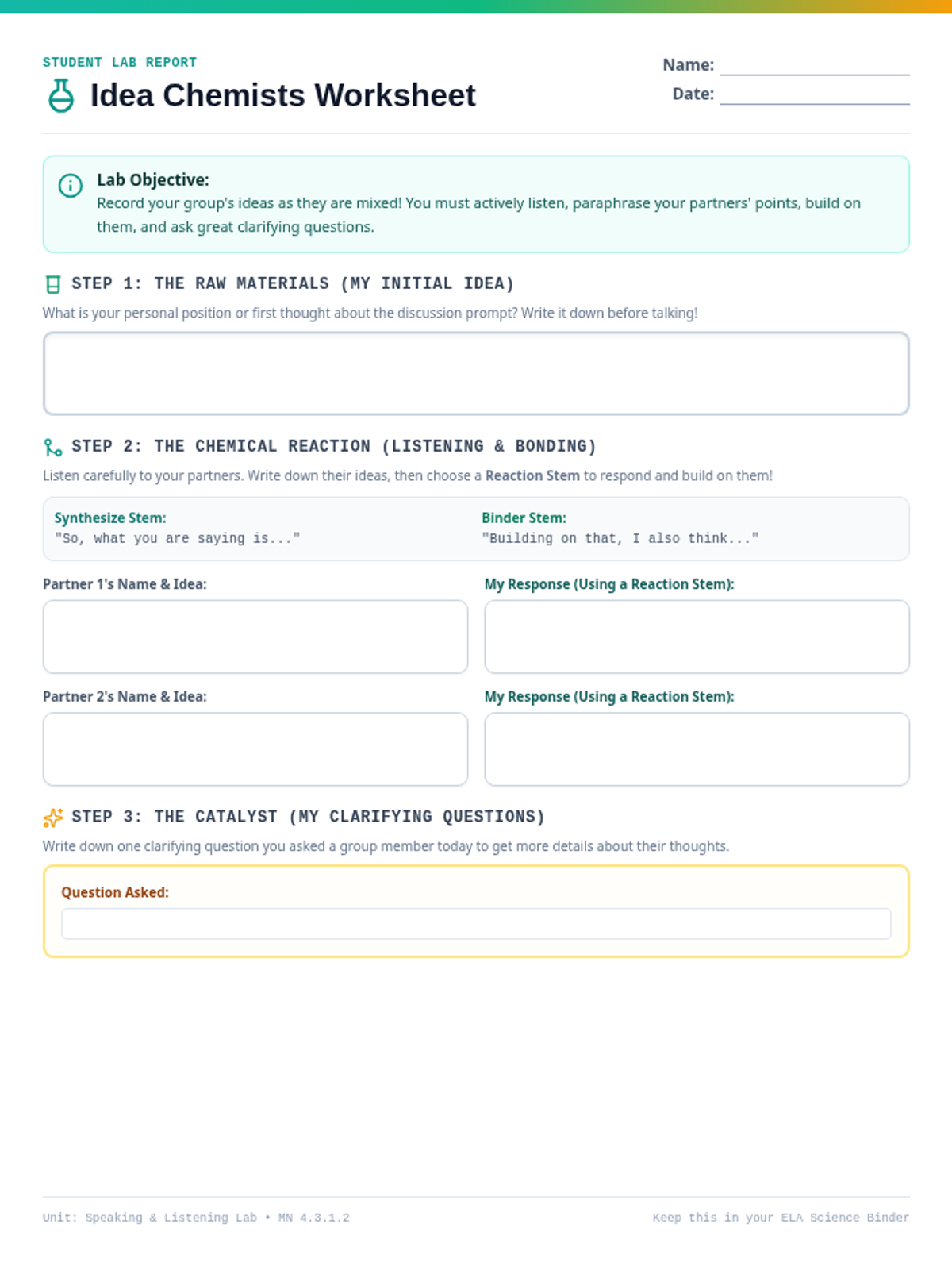
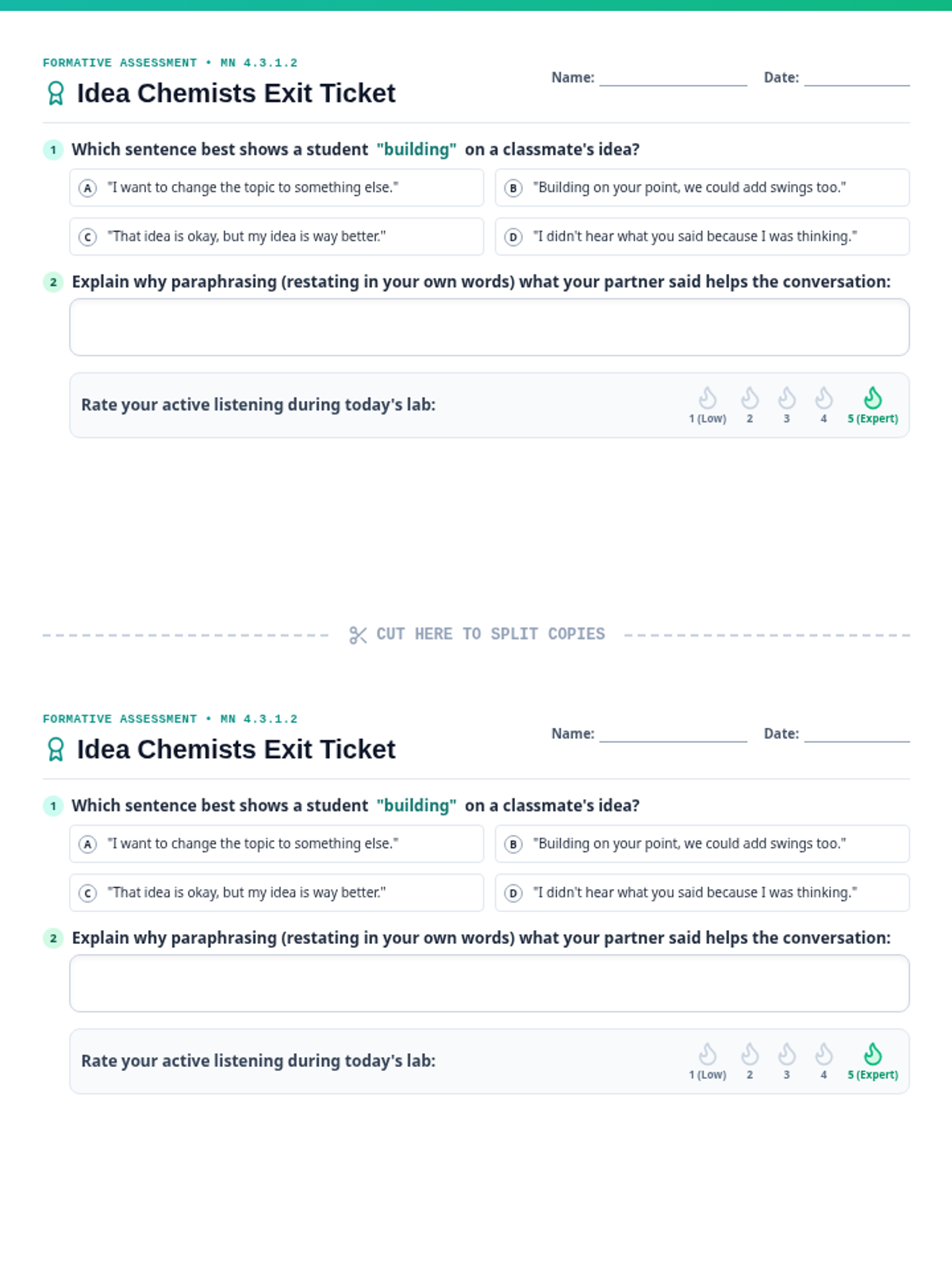
An interactive ELA lesson focused on collaborative discussion and active listening, aligned with MN State Standard 4.3.1.2. Students learn to build on others' ideas and ask clarifying questions using a fun chemistry lab theme.
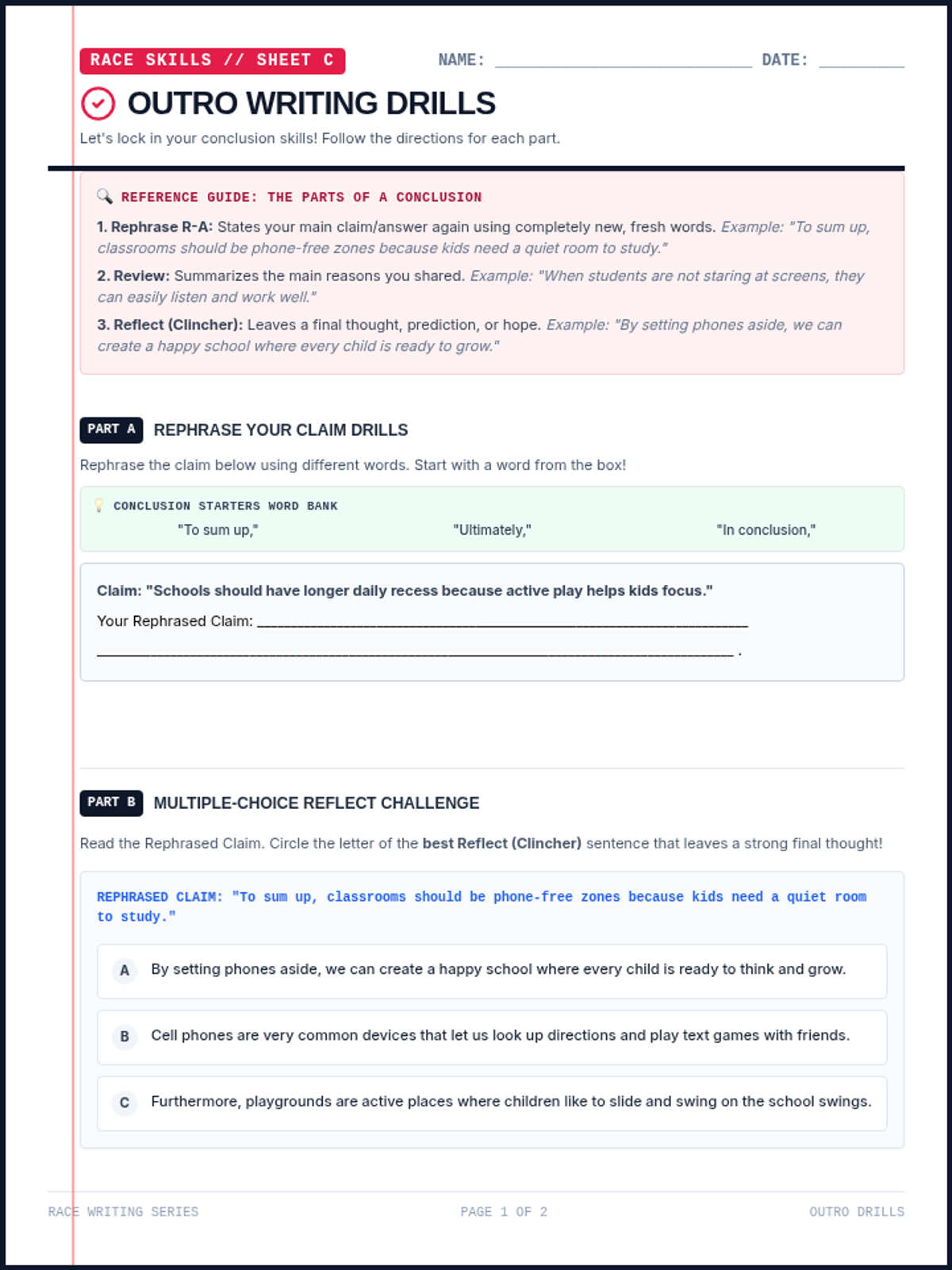
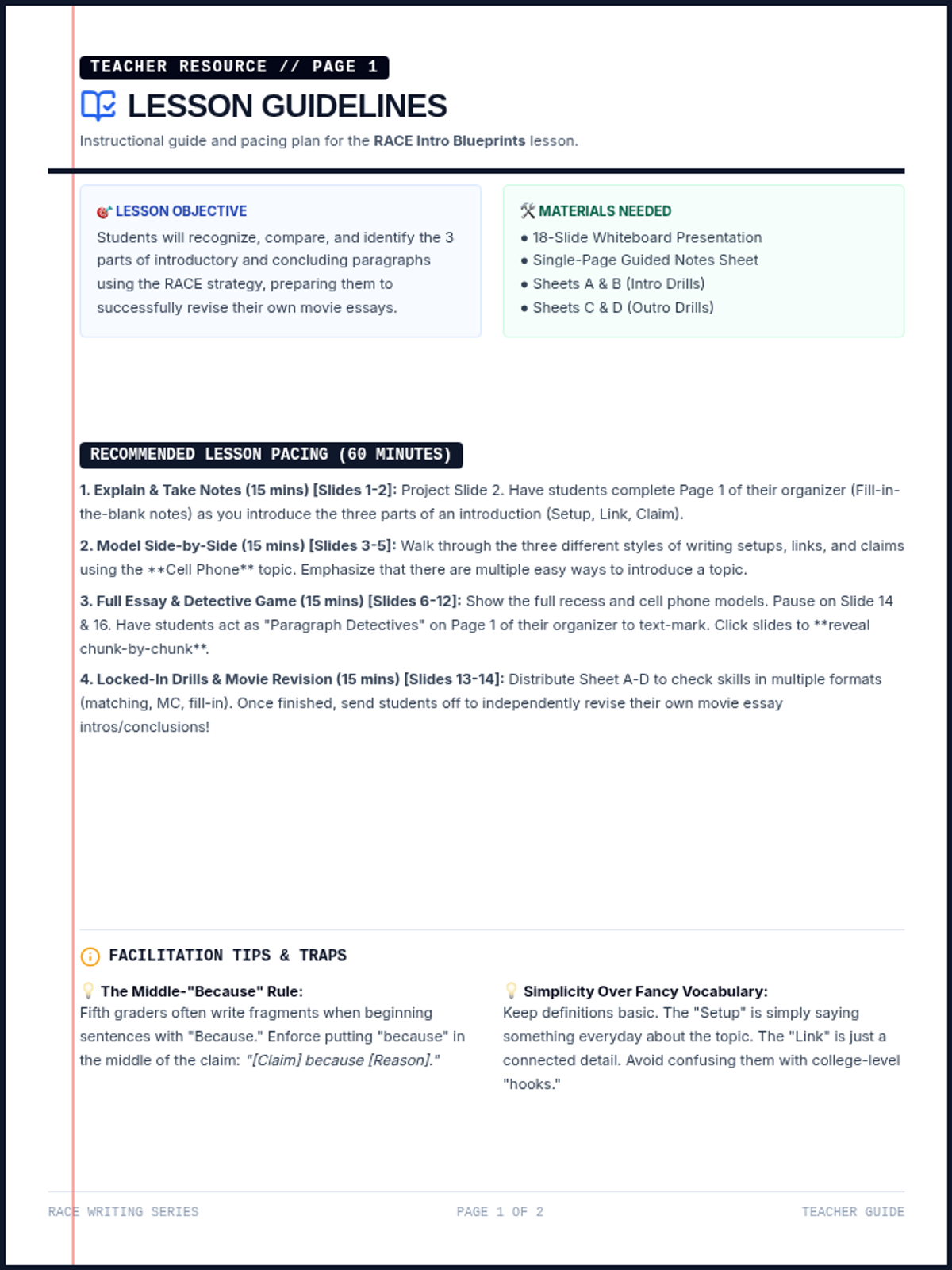
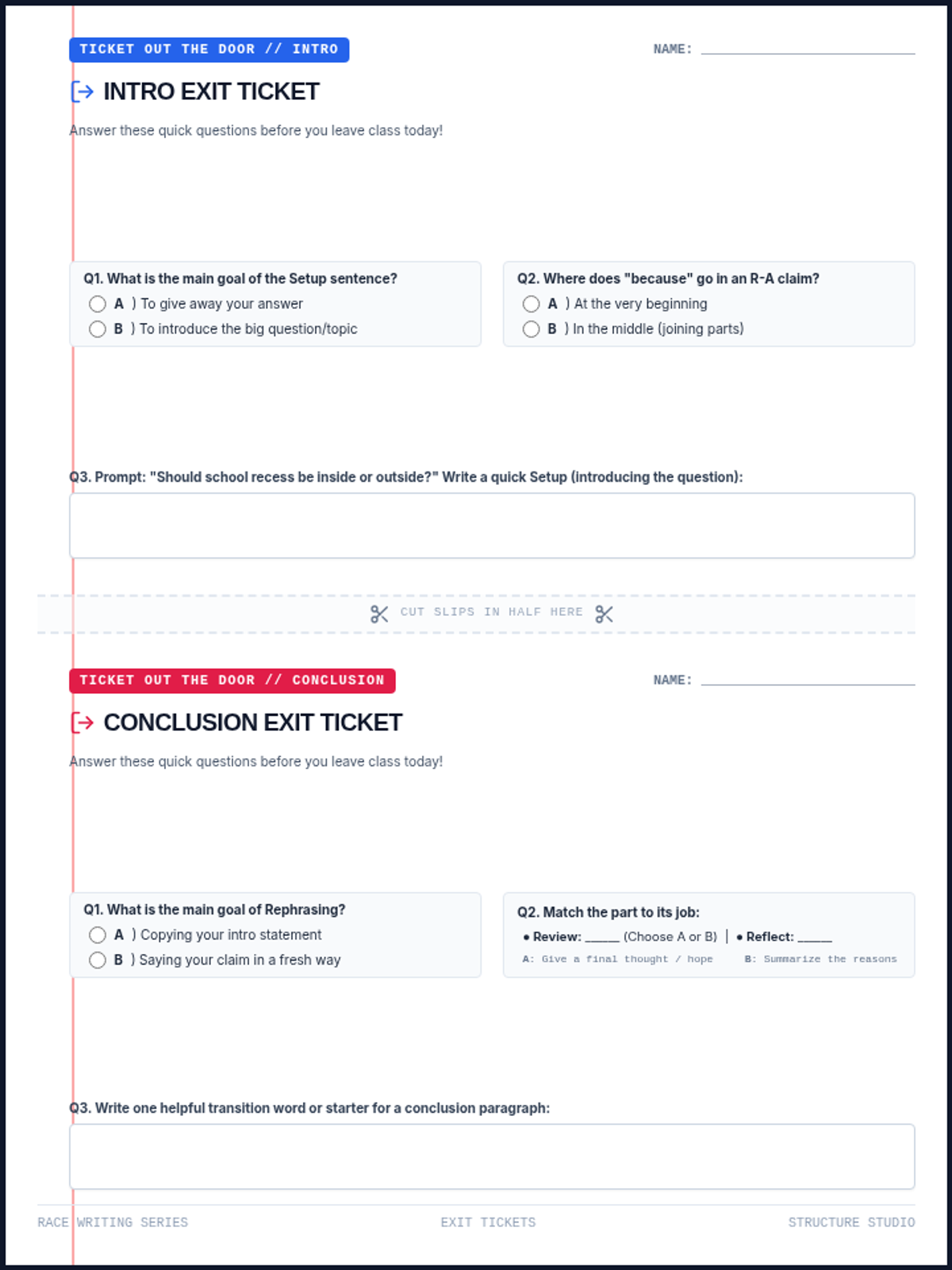
A structured writing lesson focused on drafting cohesive introductory paragraphs using the RACE strategy. Features a clear gradual release model (I Do, We Do, You Do) to guide students through introducing the question, linking context, and drafting a solid Restate & Answer claim.
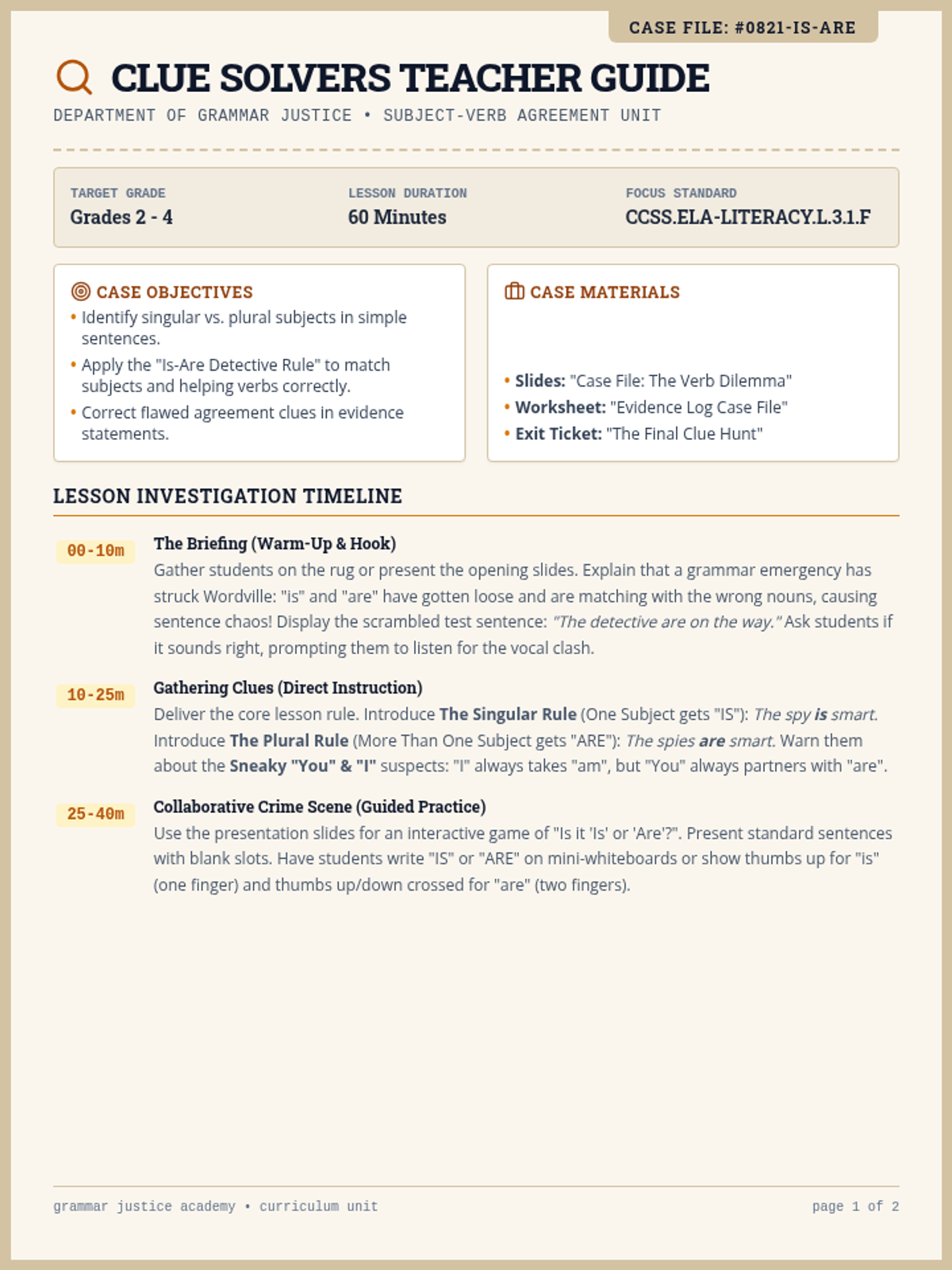
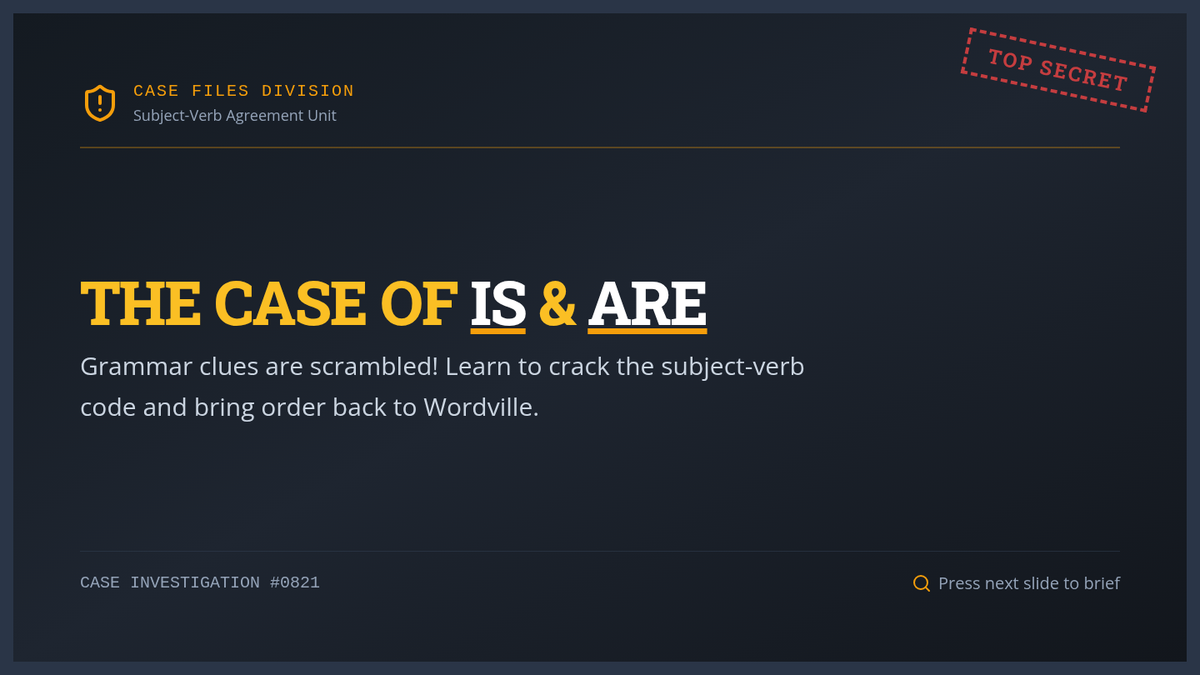
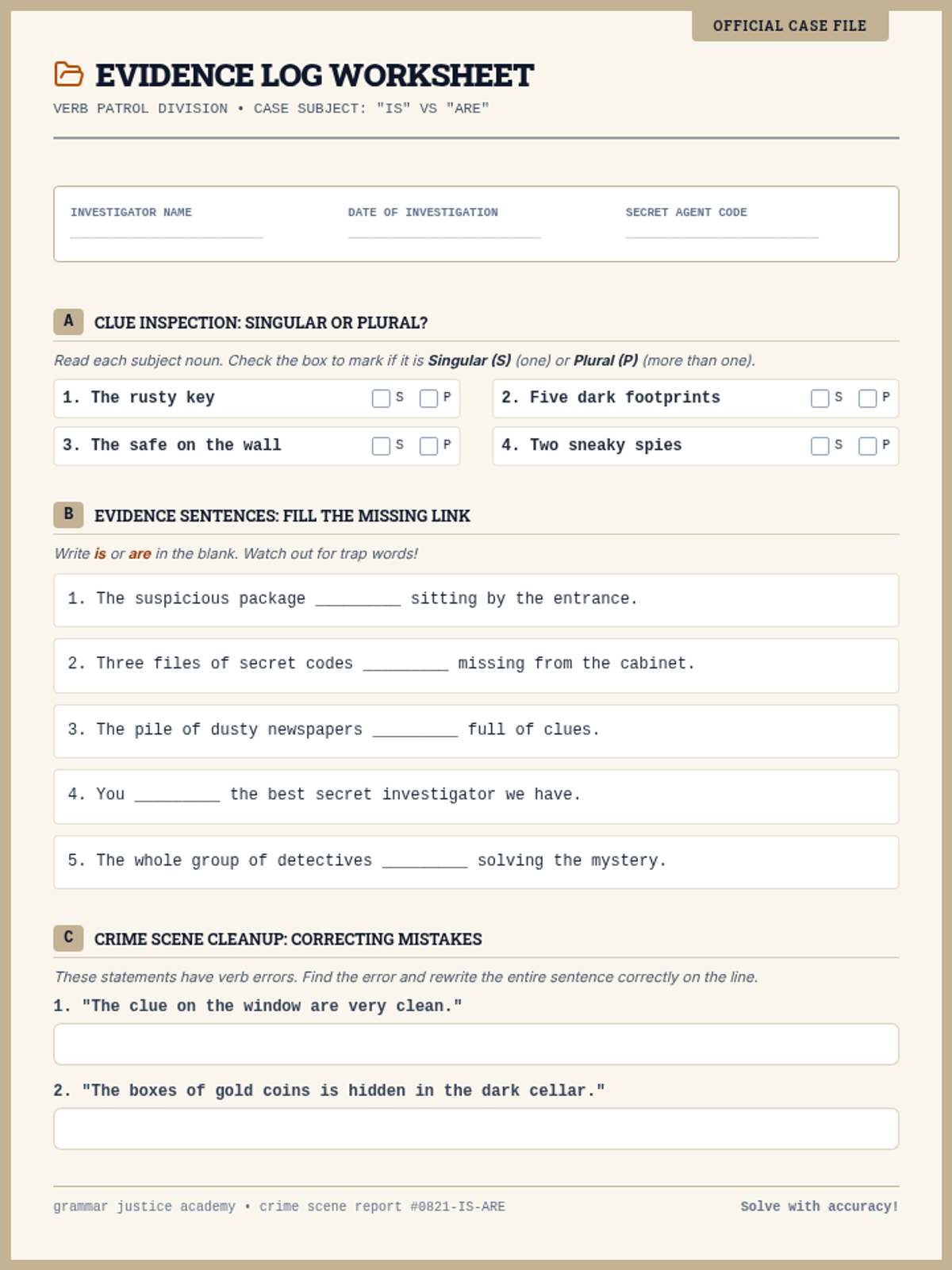
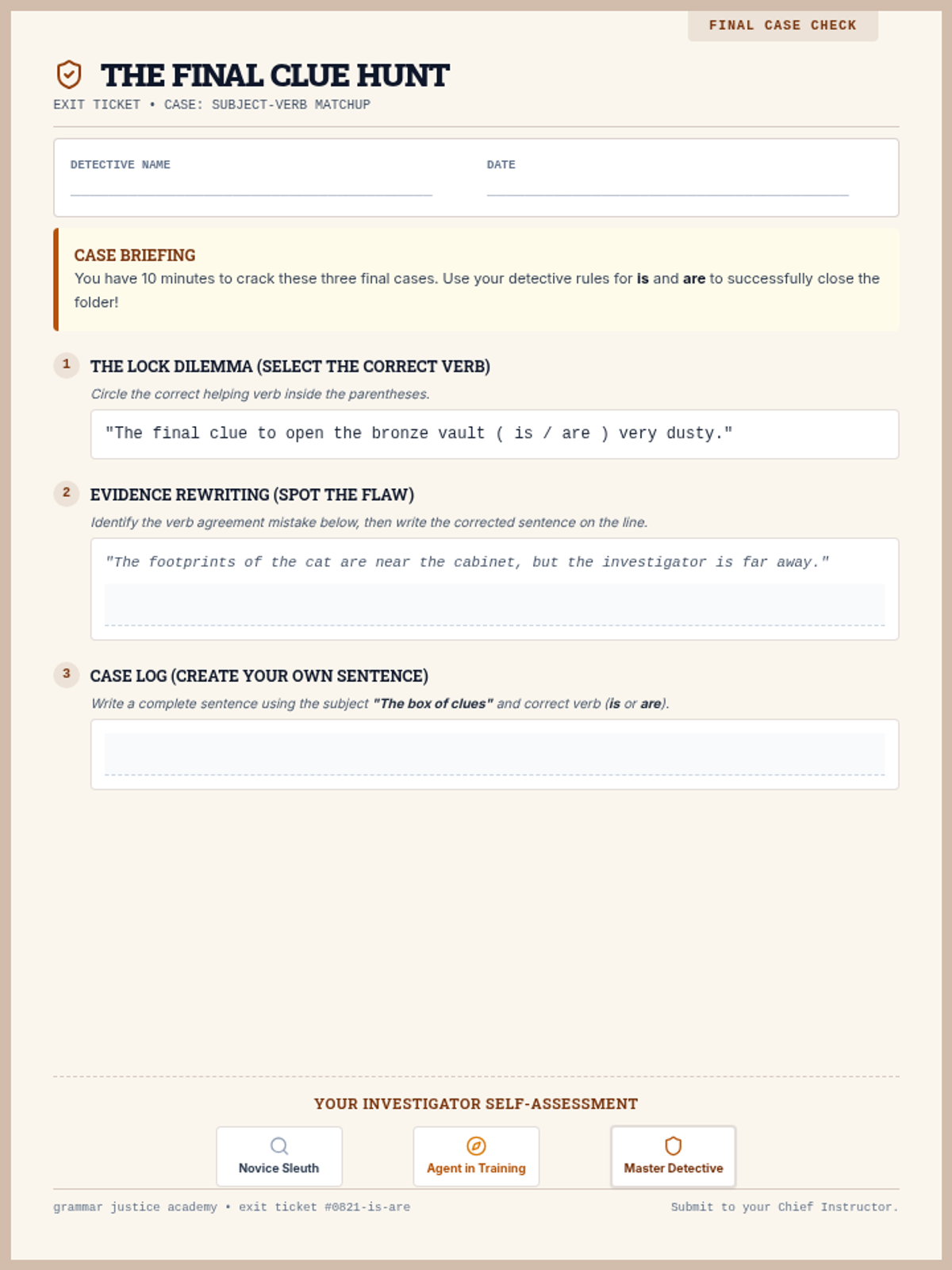
An immersive, detective-themed lesson guiding students to master subject-verb agreement for 'is' vs 'are'. Includes a detailed teacher guide, presentation slides, student case file worksheet, and a final clue hunt exit ticket.
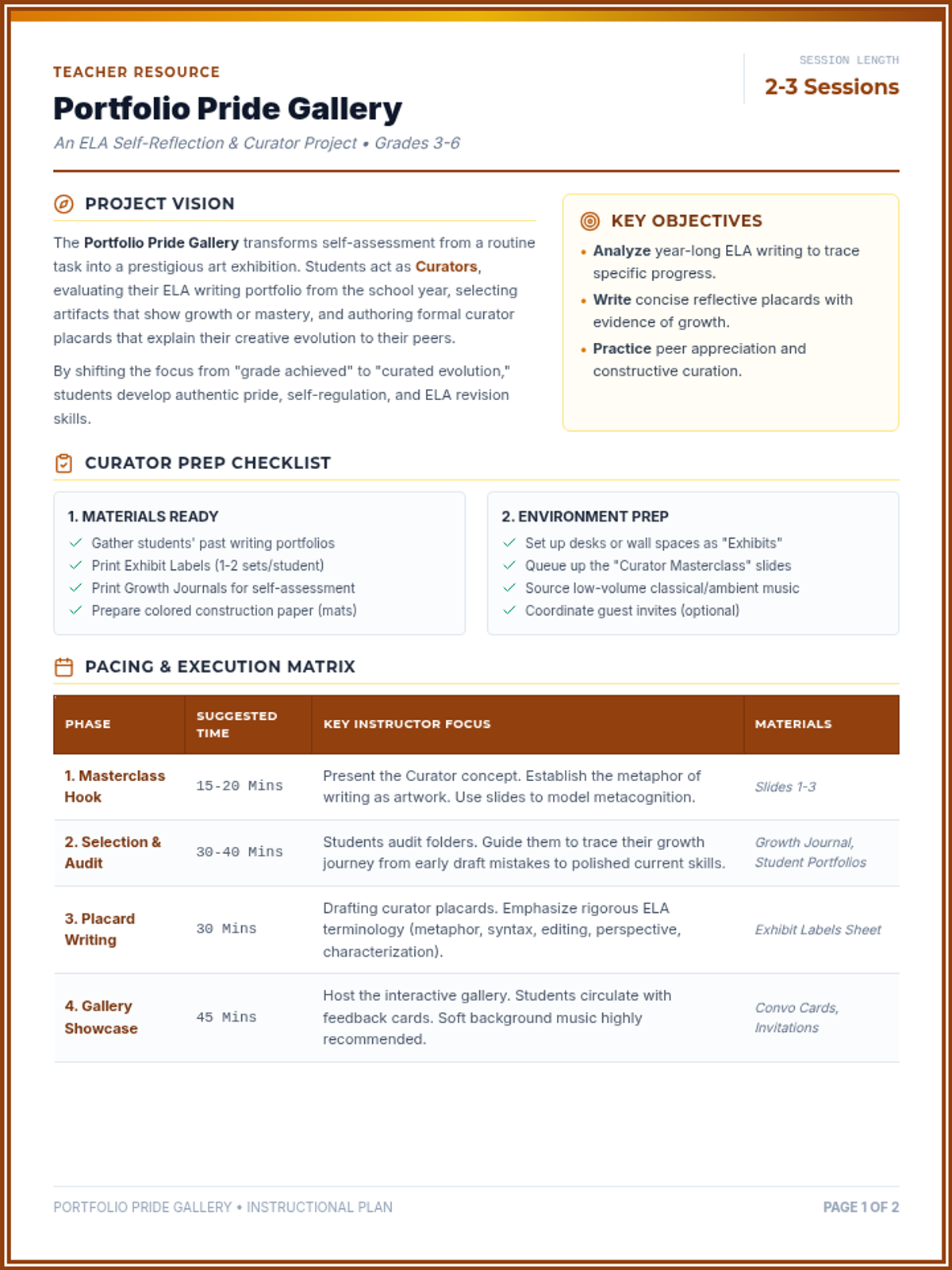
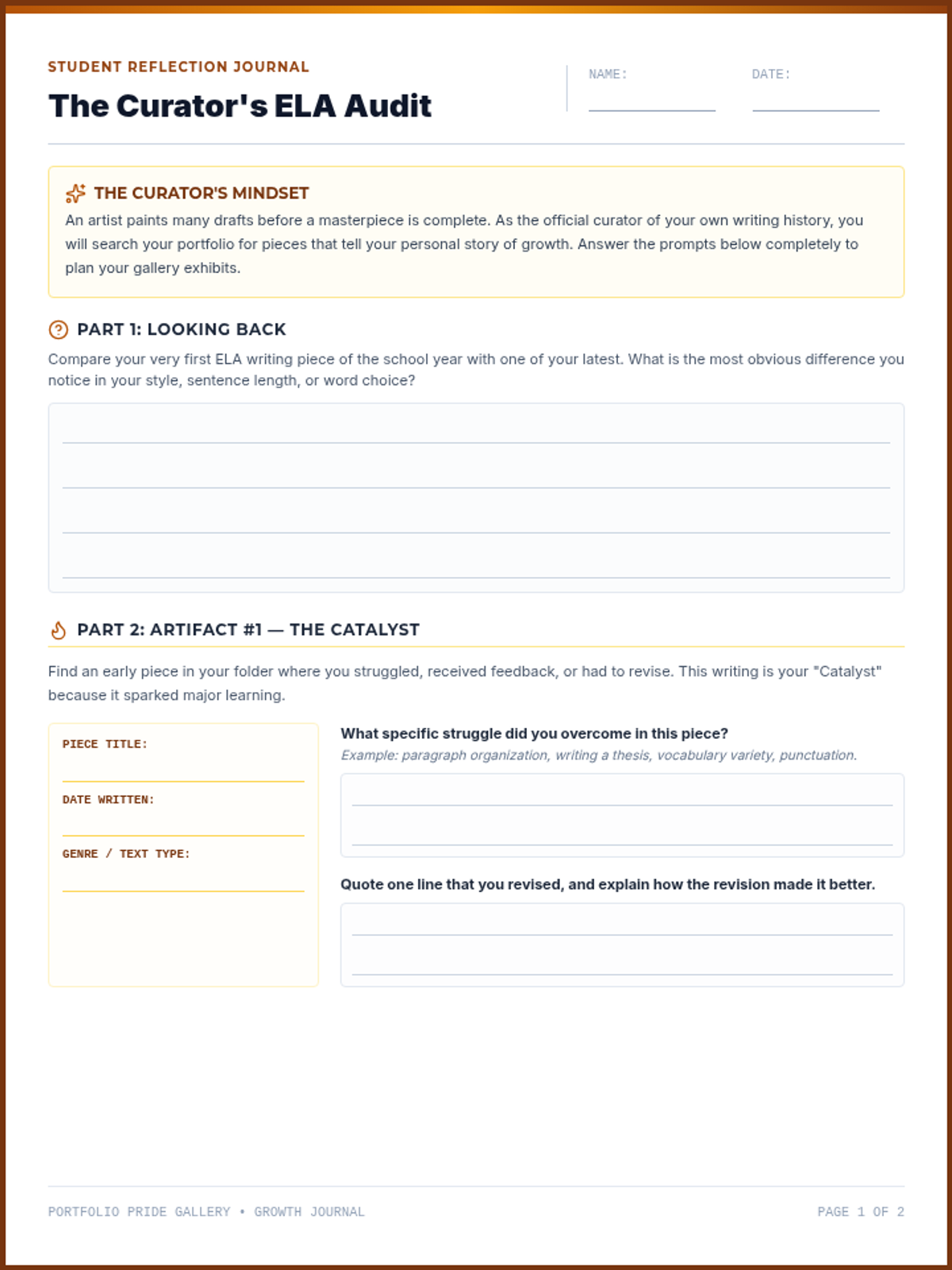
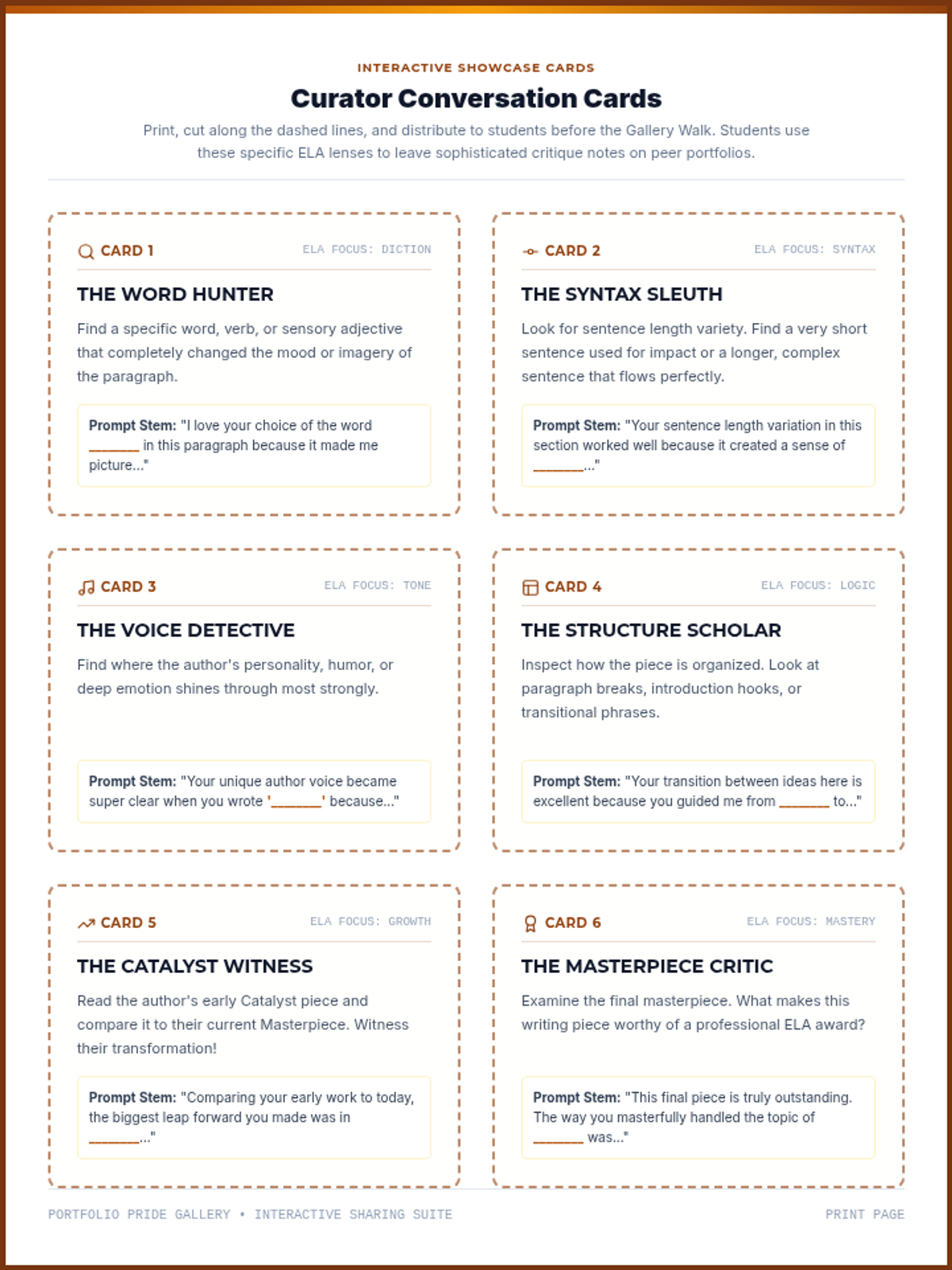
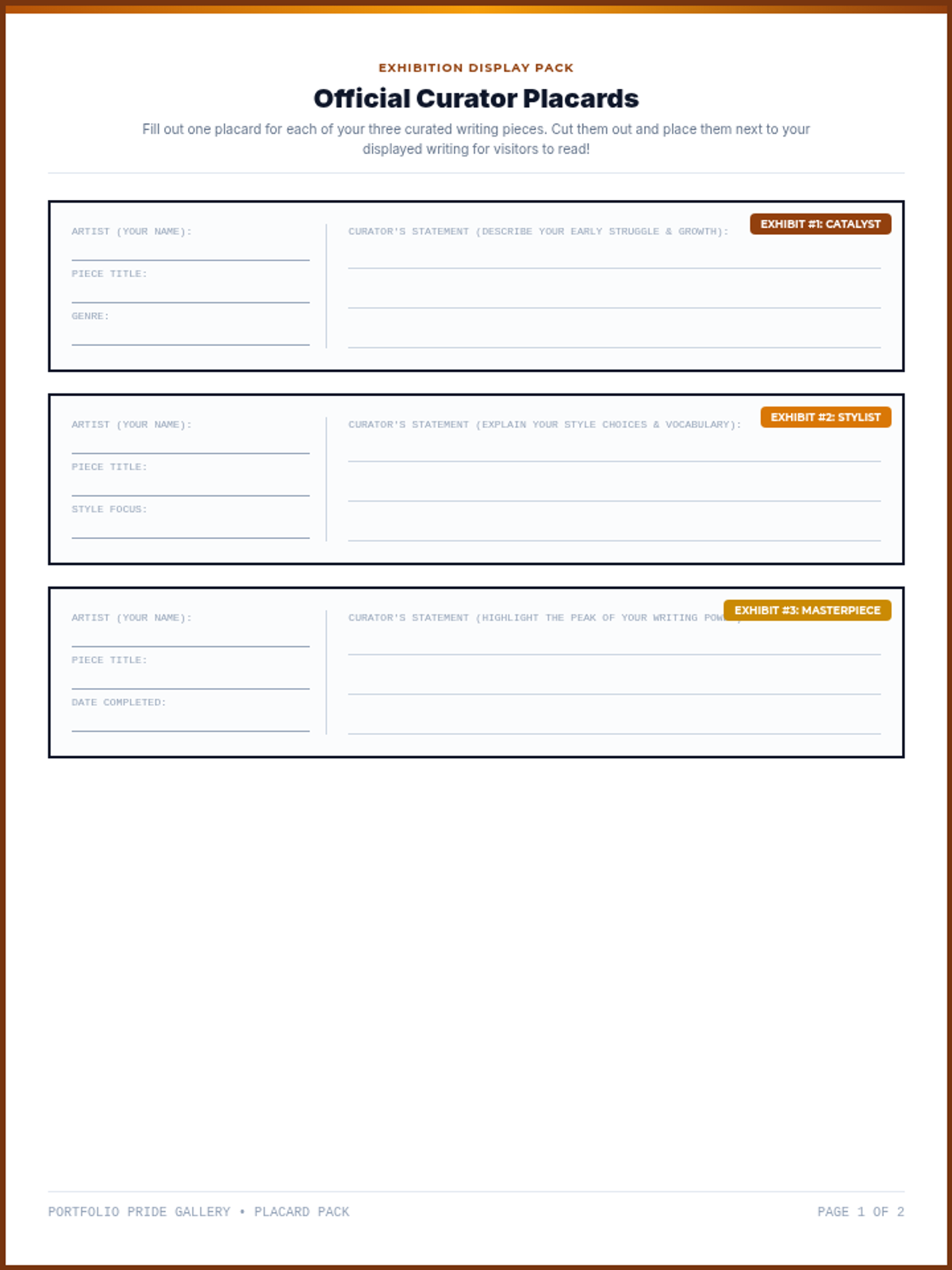
An ELA and self-reflection project where 3rd-6th grade students curate their year-long academic growth, select their best writing, and design an interactive art-gallery-style showcase of their progress.
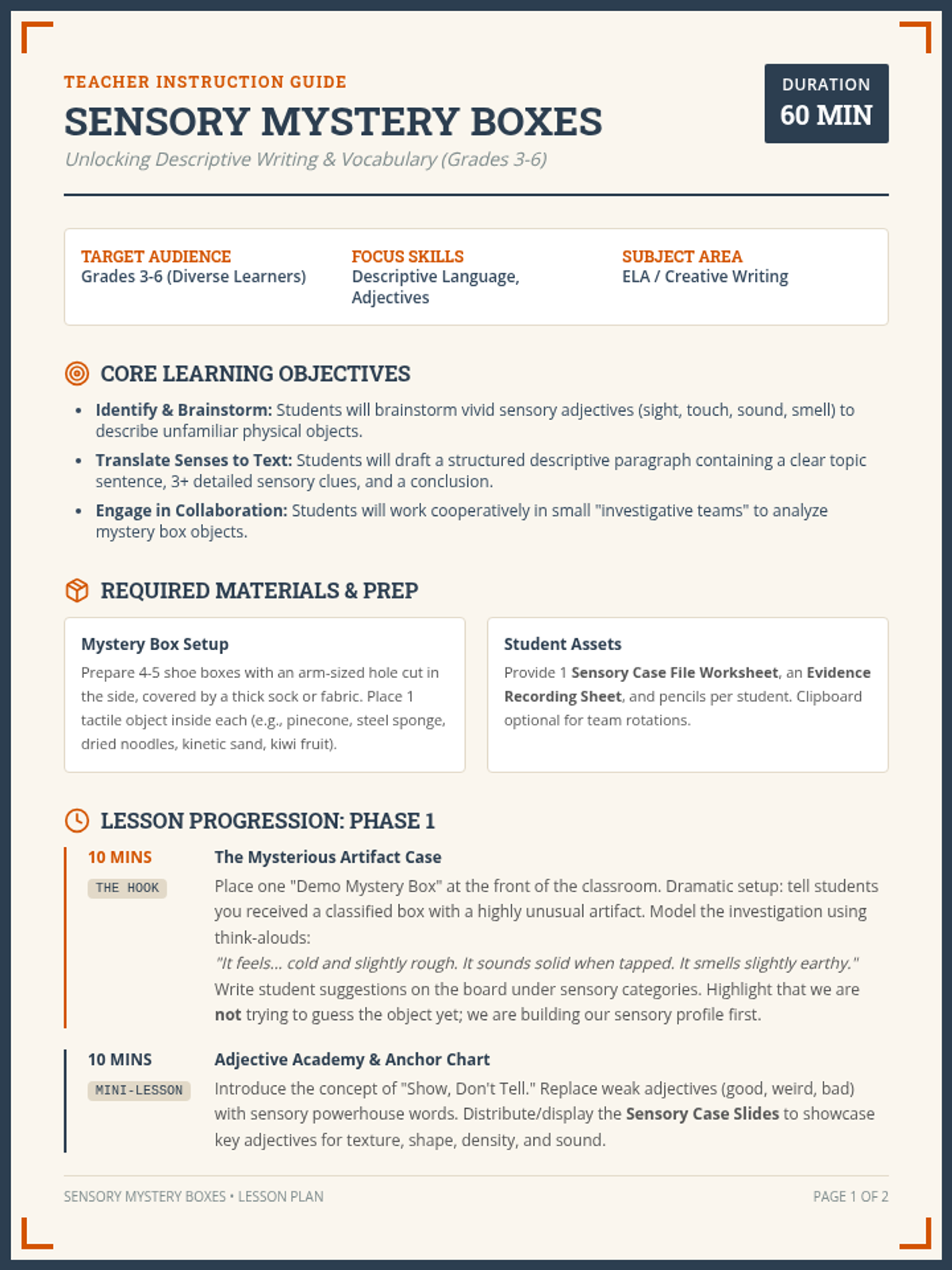
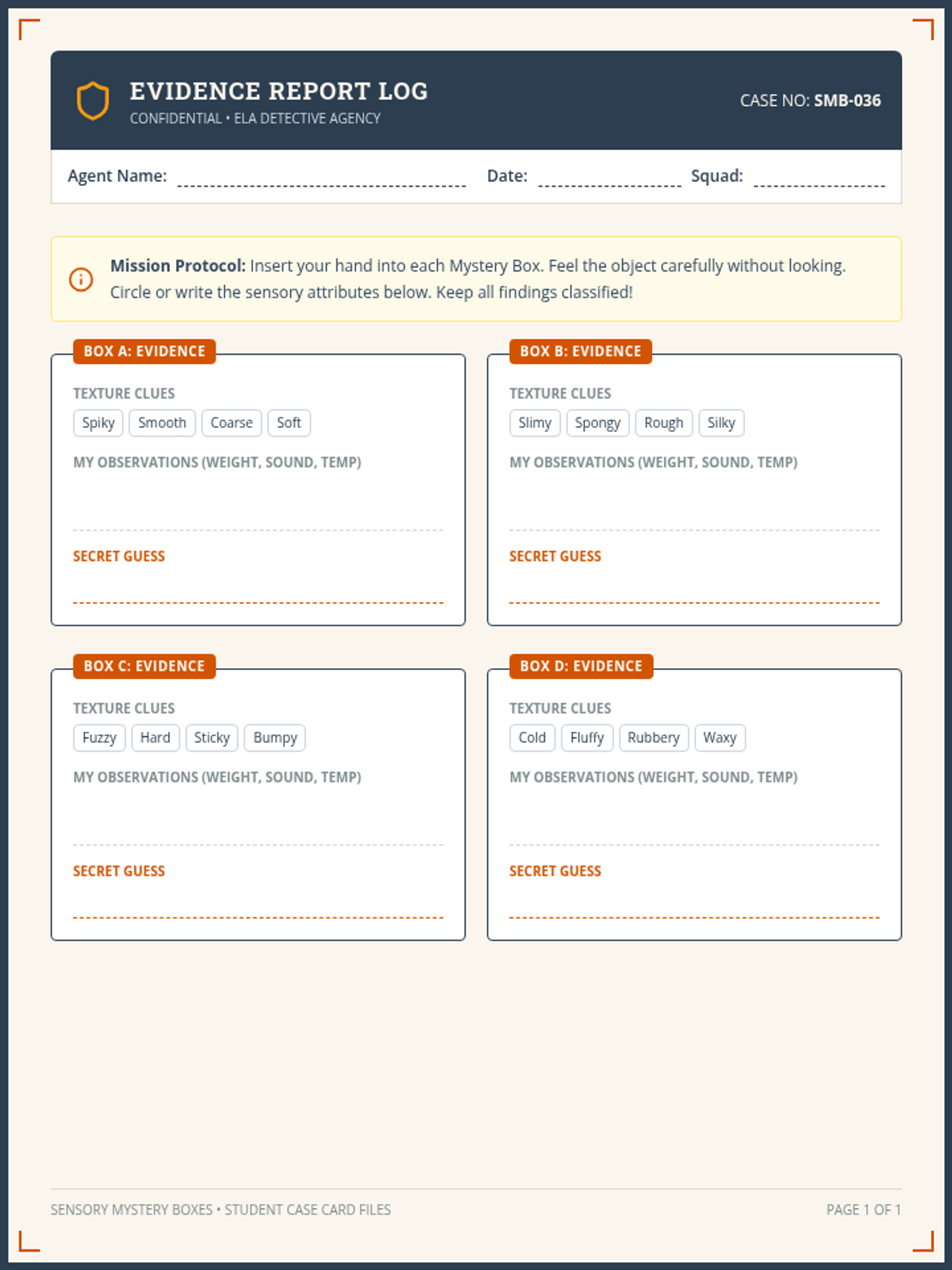
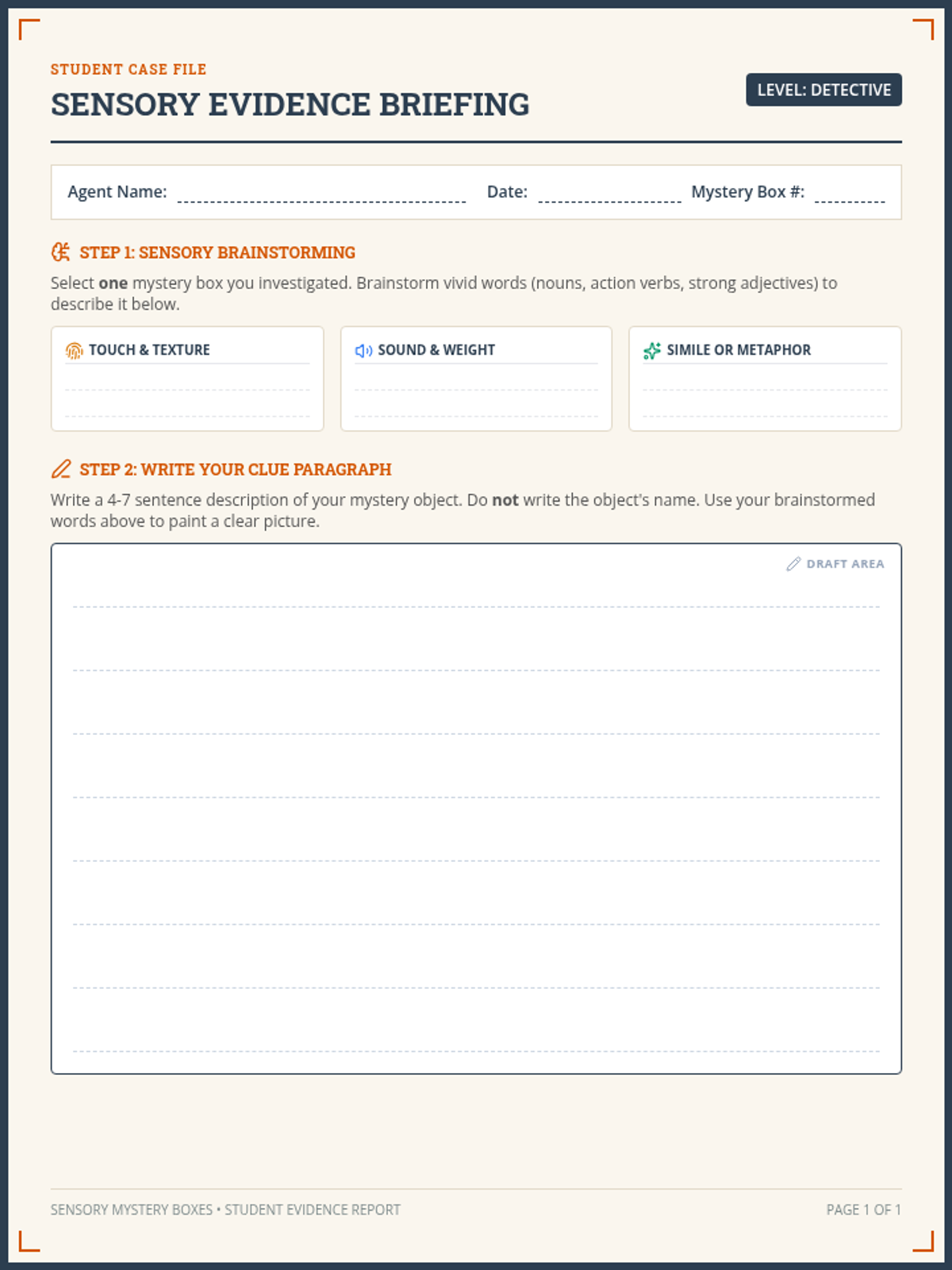
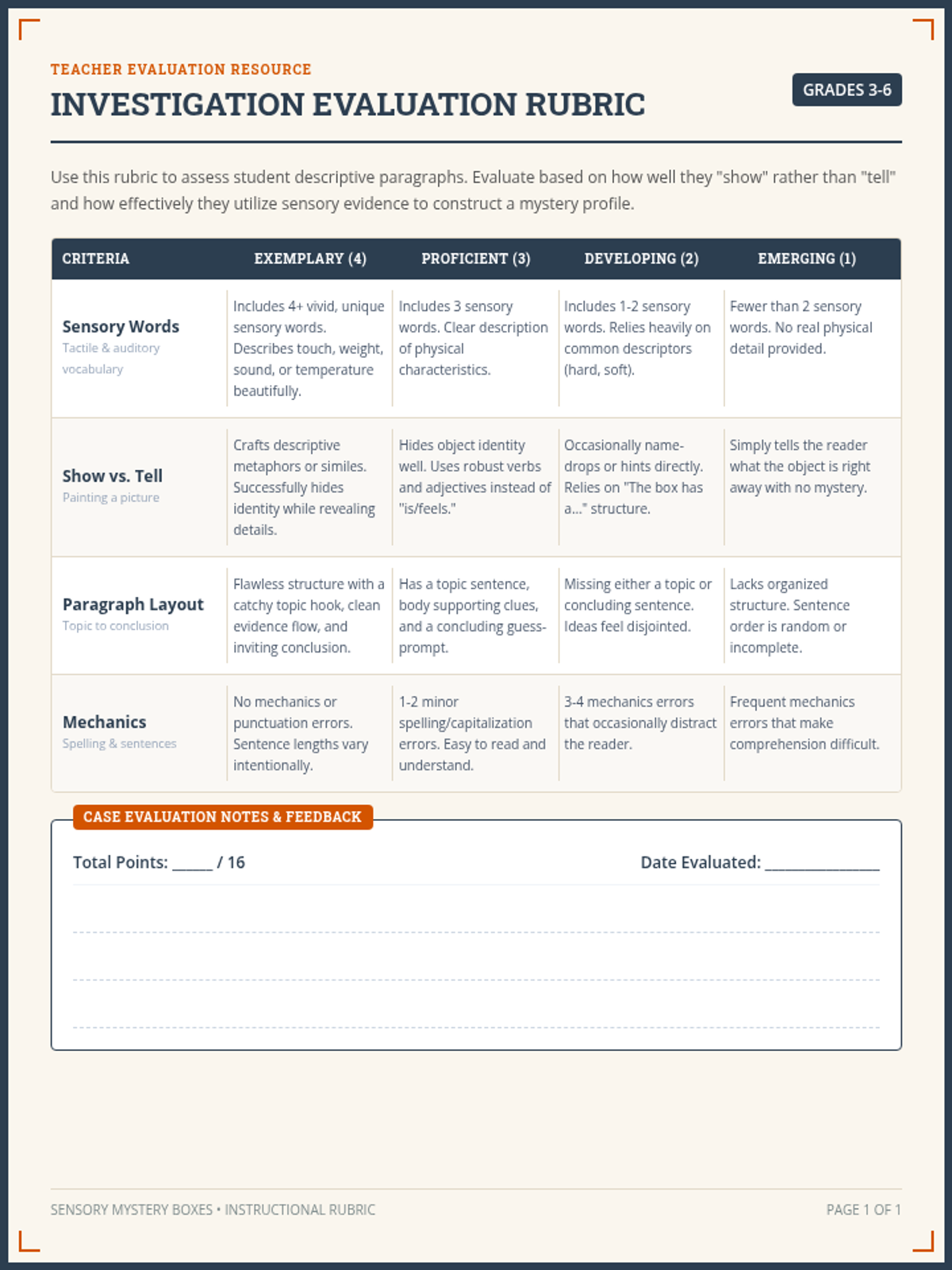
An immersive, multi-sensory ELA lesson designed for grades 3-6 to unlock descriptive writing. Students explore mystery tactile objects, build sensory vocabulary, and compose descriptive paragraphs.
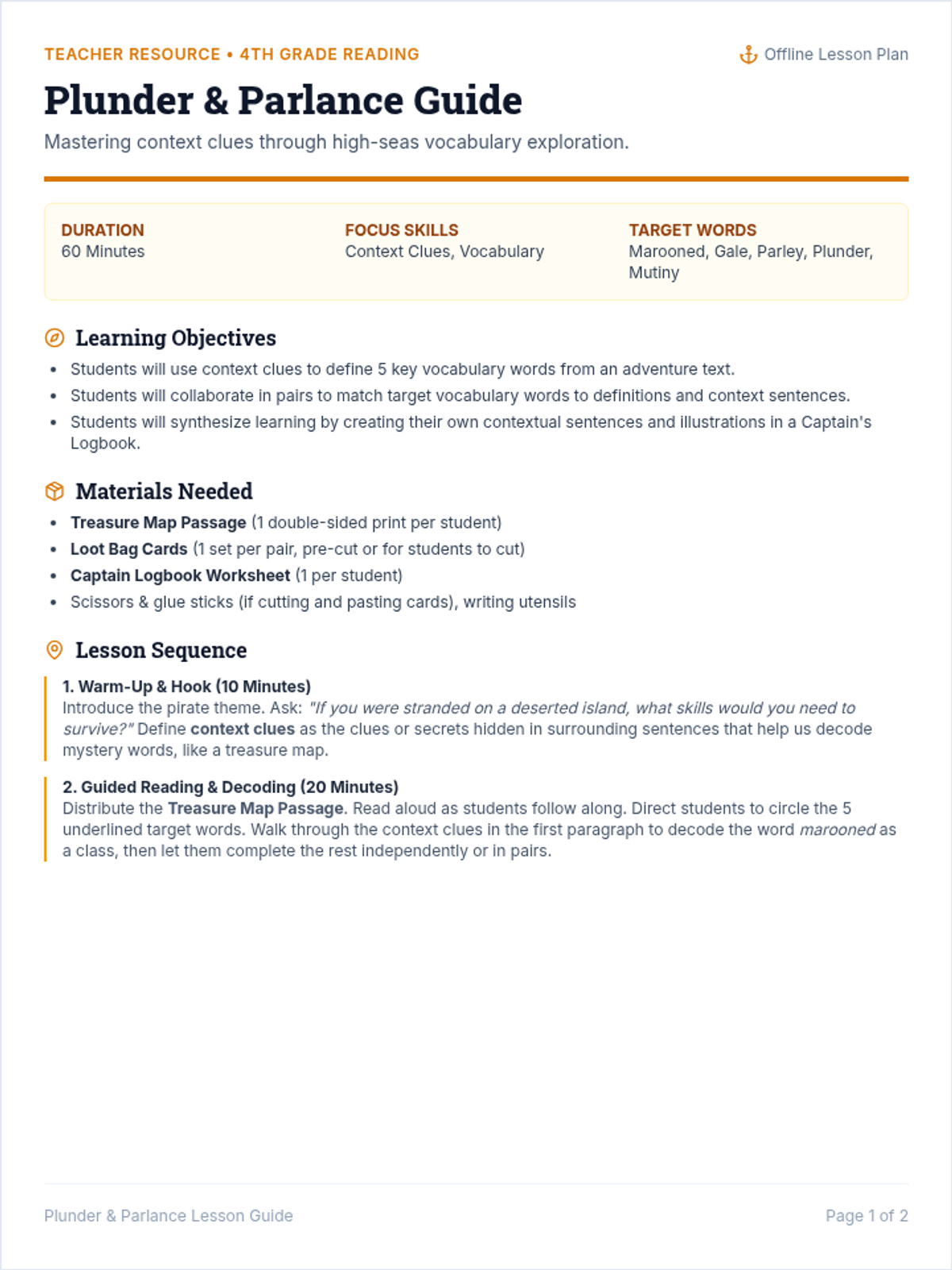
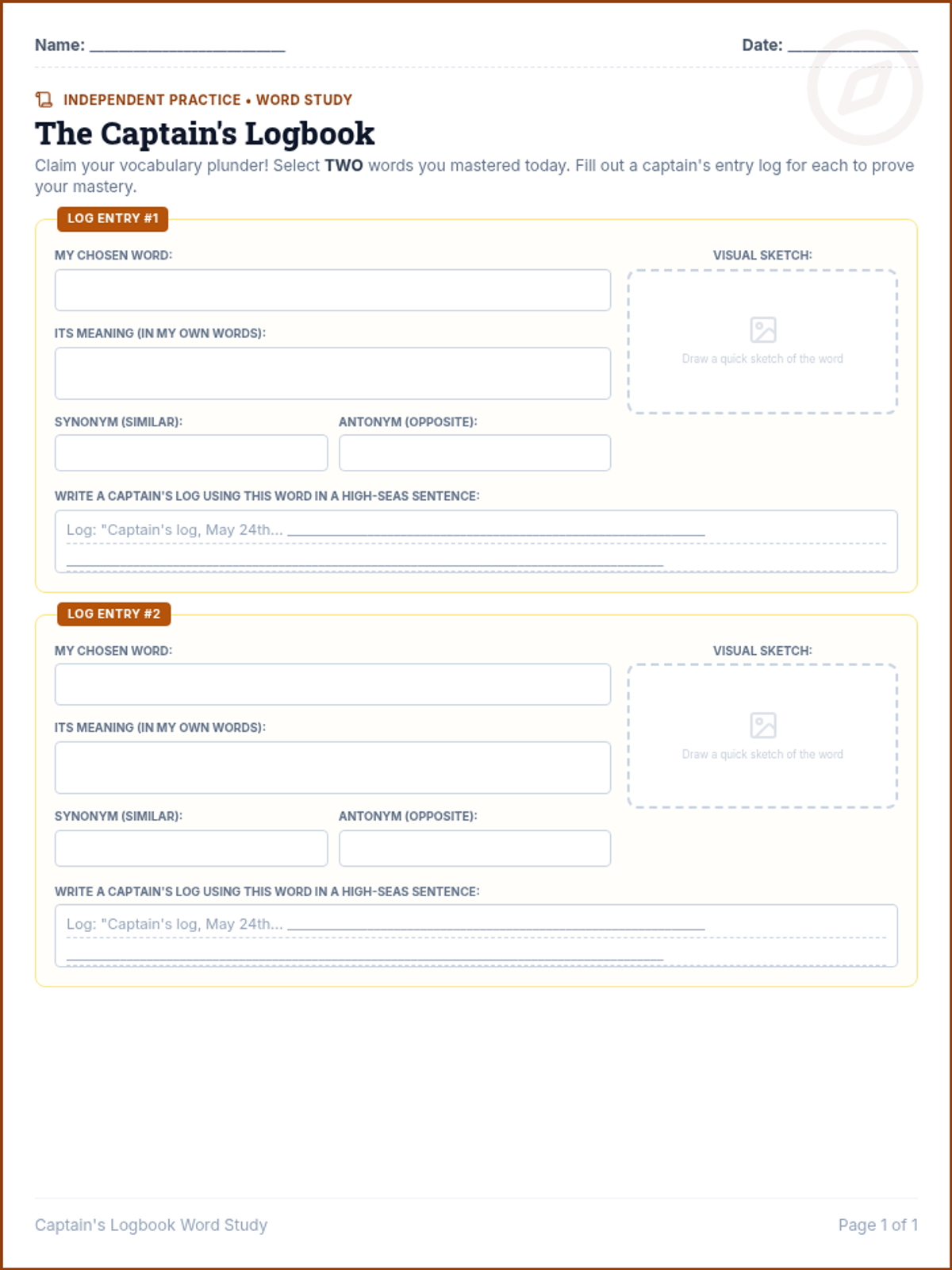
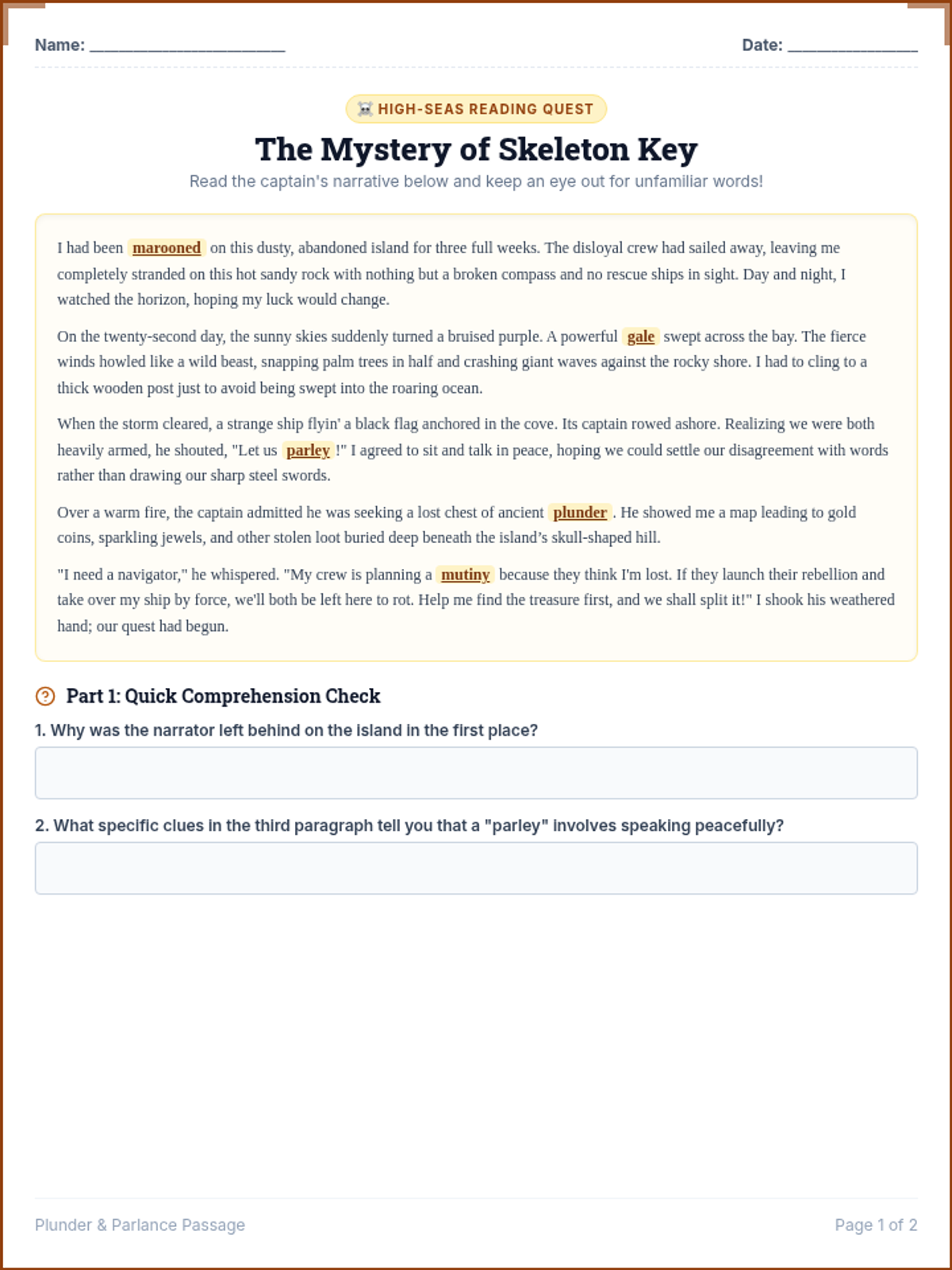
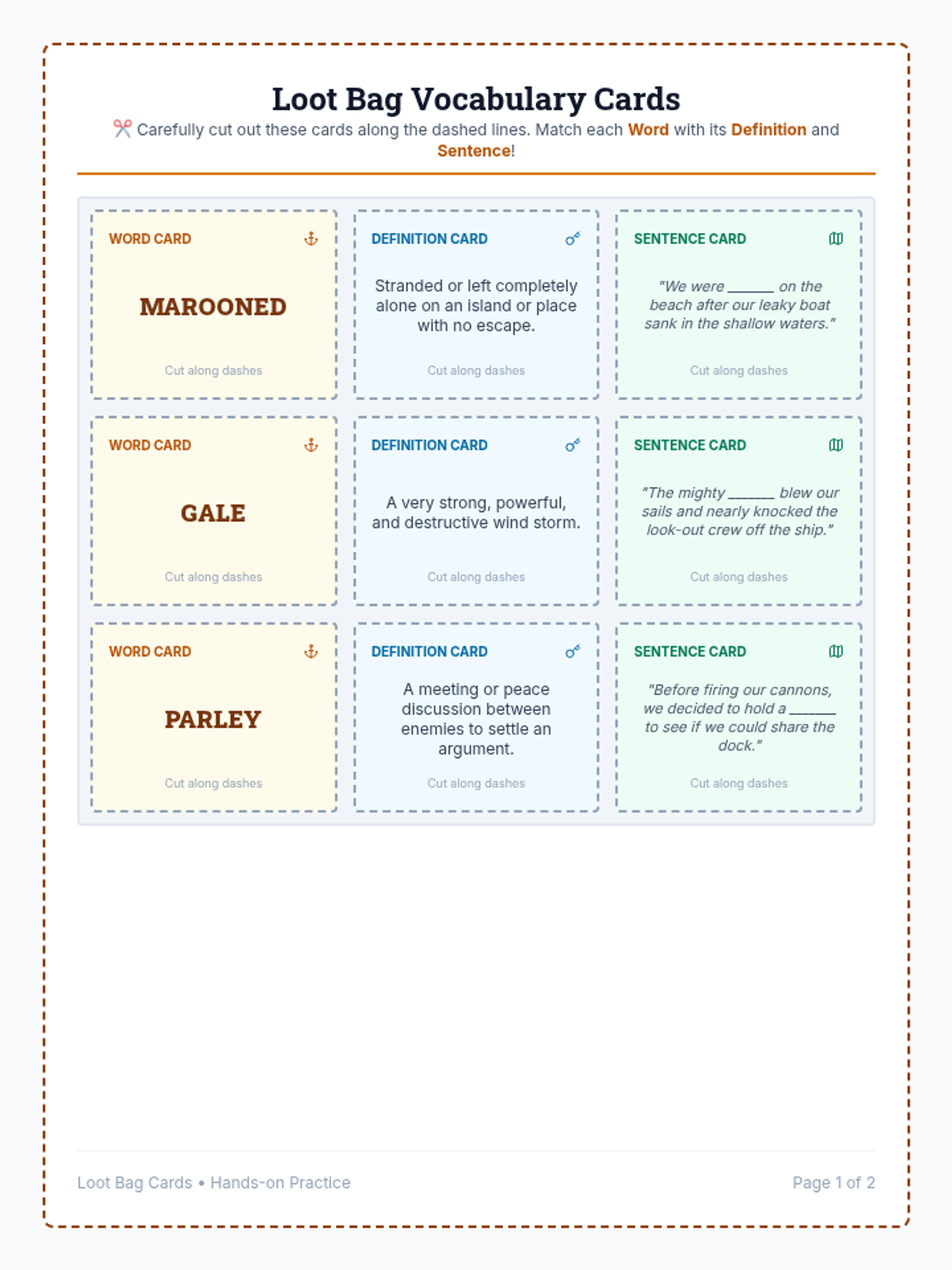
An interactive, high-seas 4th-grade vocabulary and reading lesson. Students use context clues to decode pirate-themed vocabulary, practice using interactive vocabulary-matching cards, and apply their learning in a creative captain's logbook worksheet, entirely offline.
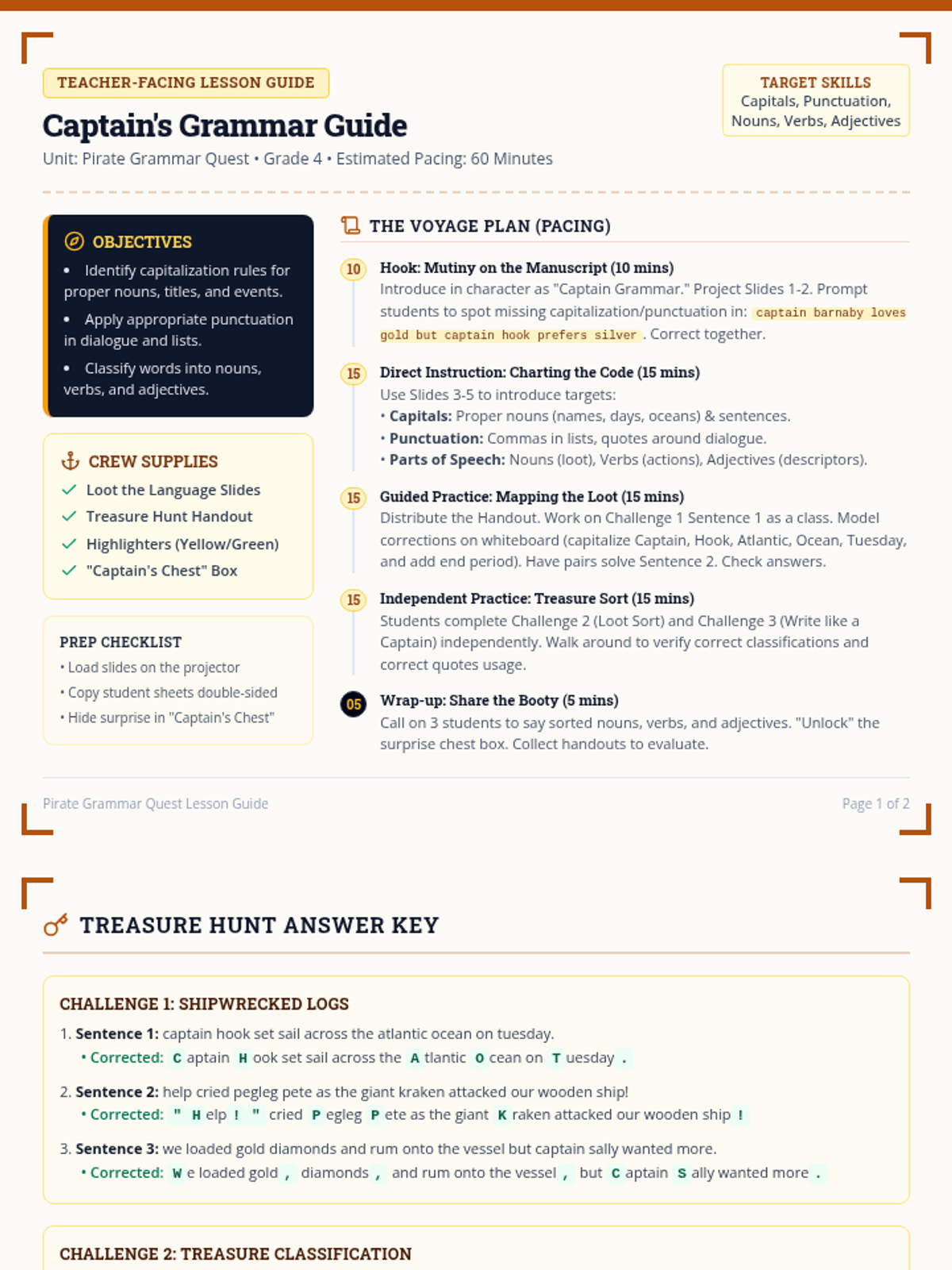
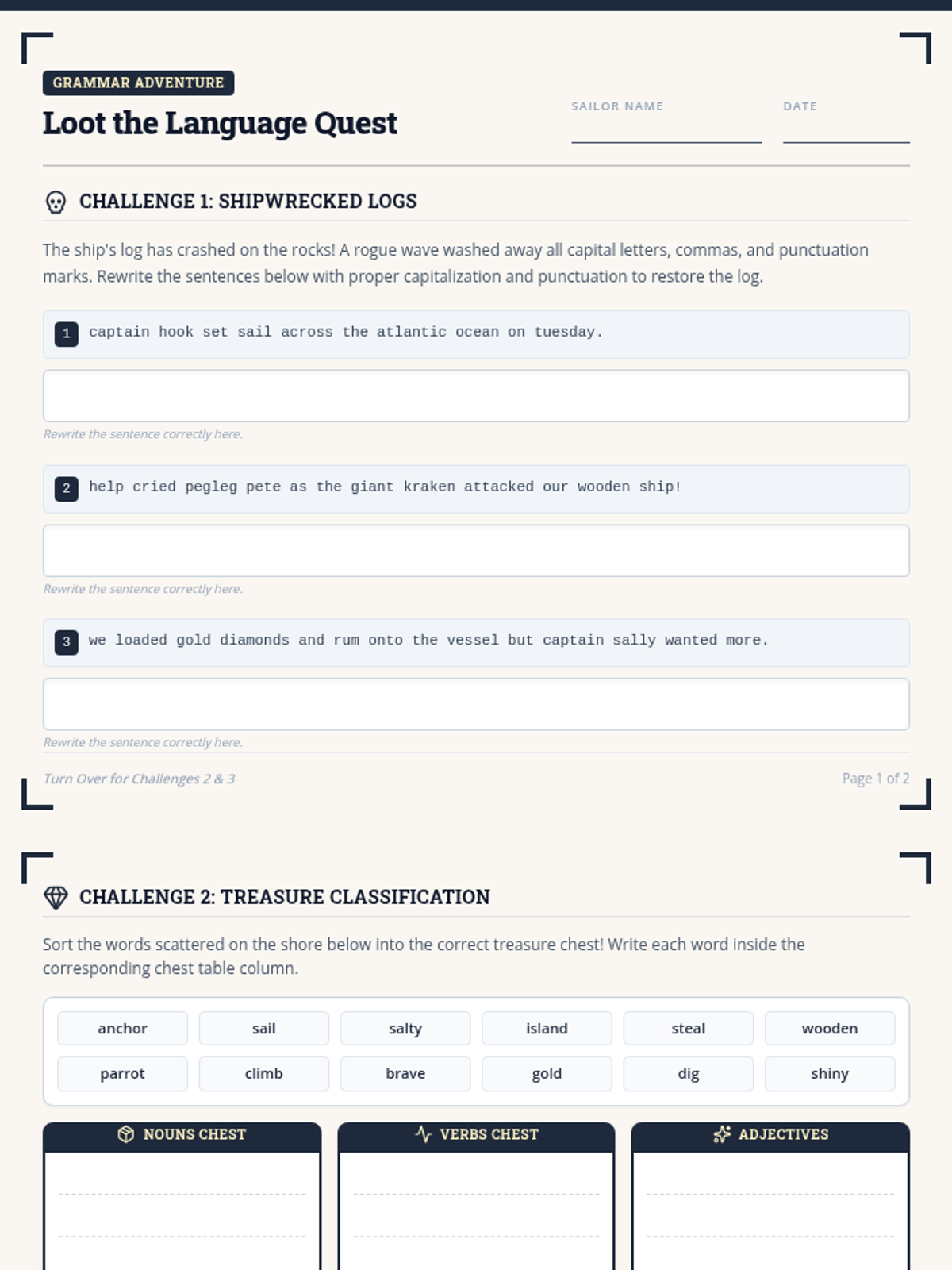
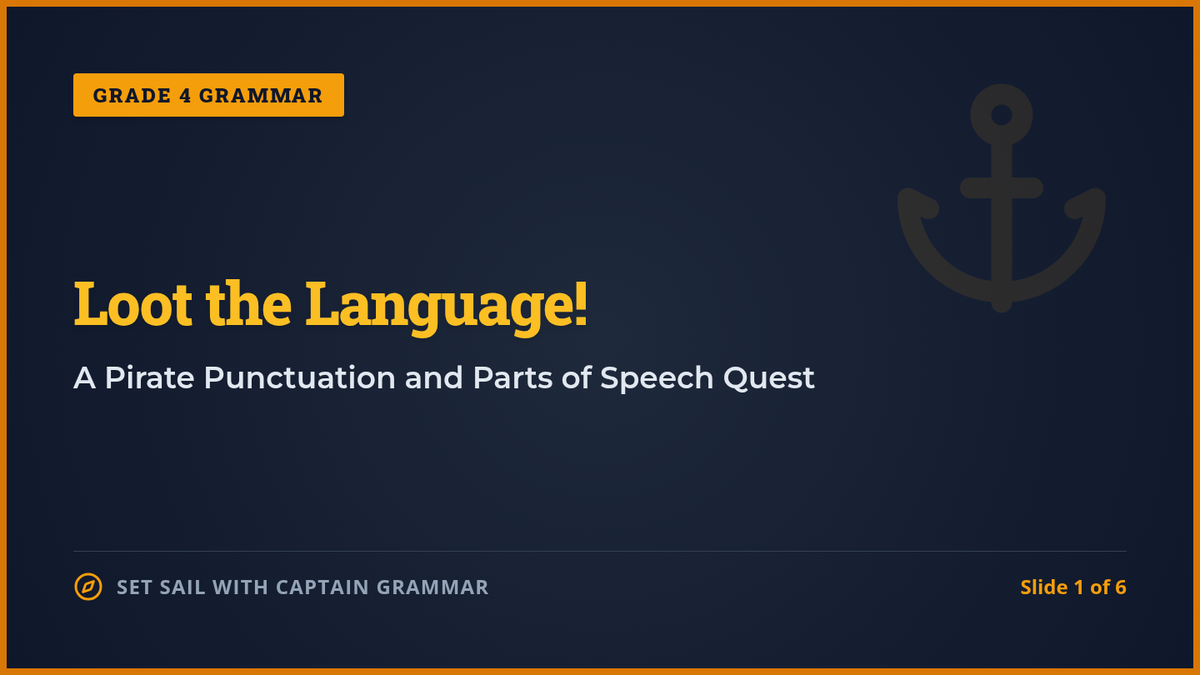
A pirate-themed grammar adventure for fourth graders focusing on punctuation, capitalization, and identifying parts of speech. Students decode captain's logs, correct shipwrecked sentences, and classify linguistic treasures.
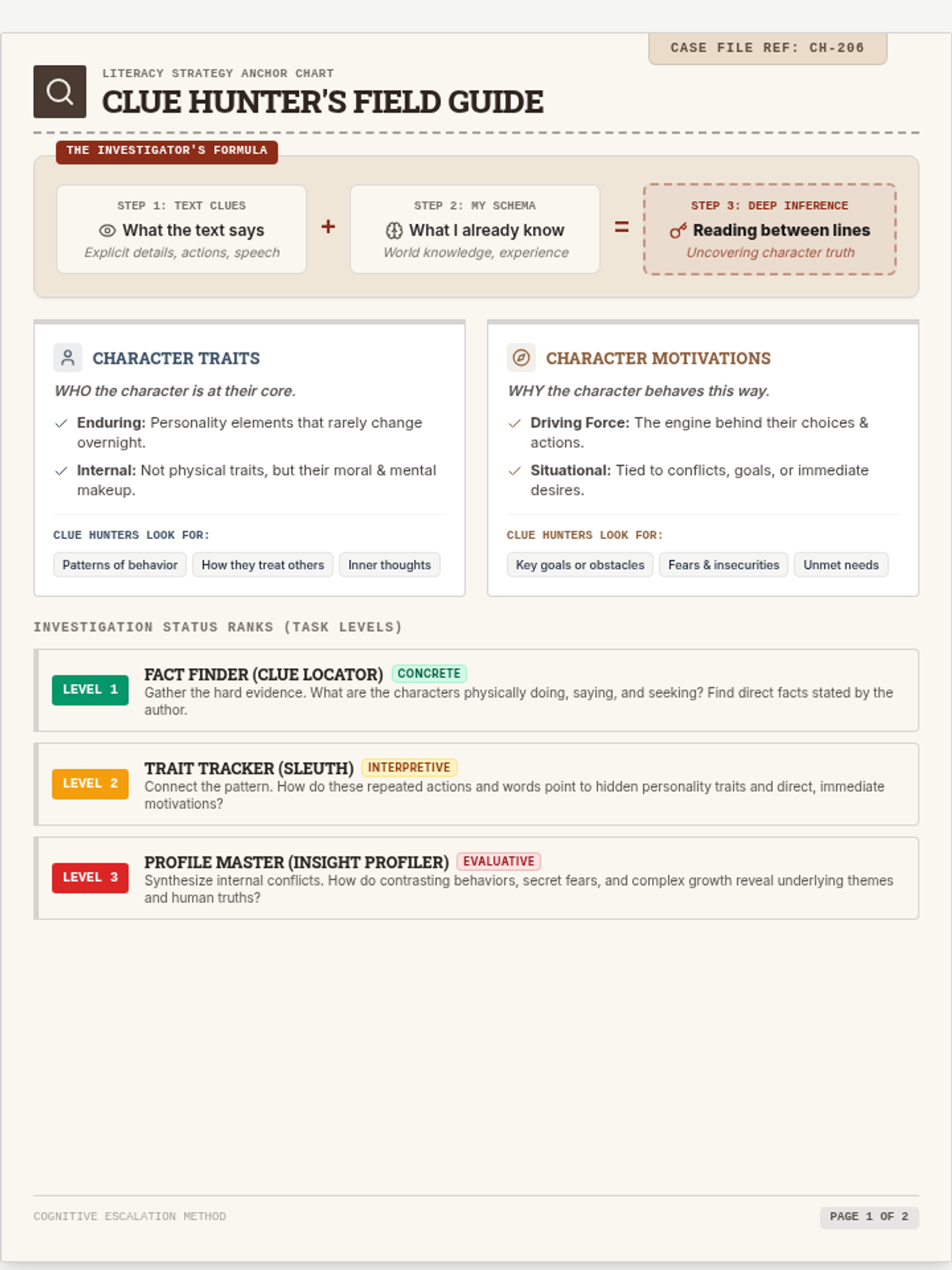
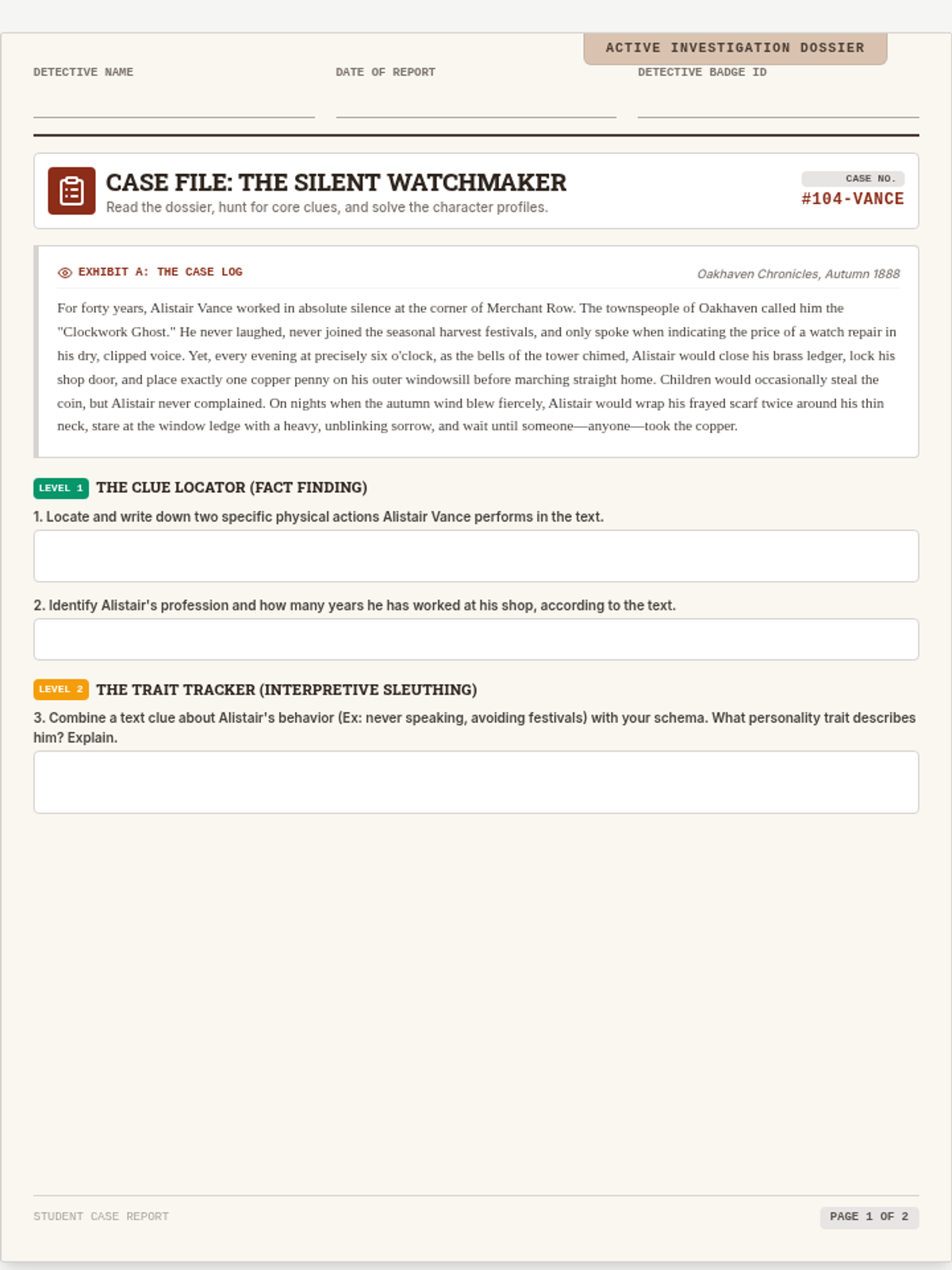
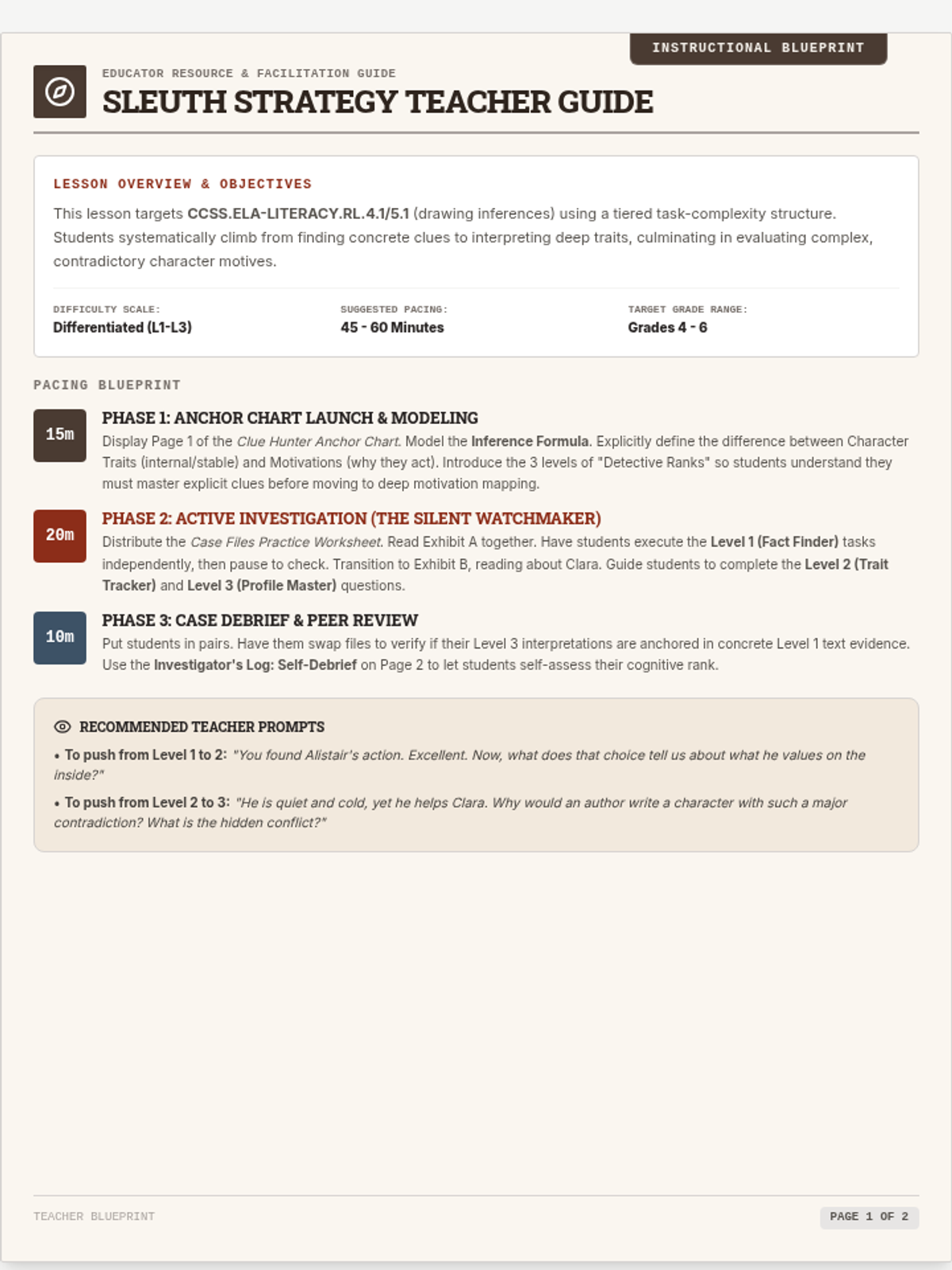
A differentiated lesson focused on character analysis. Students learn to hunt for textual clues and combine them with personal schema to uncover character traits and deep-seated motivations, structured across three escalating levels of task complexity (Fact Finding, Trait Tracking, and Motive Mapping).
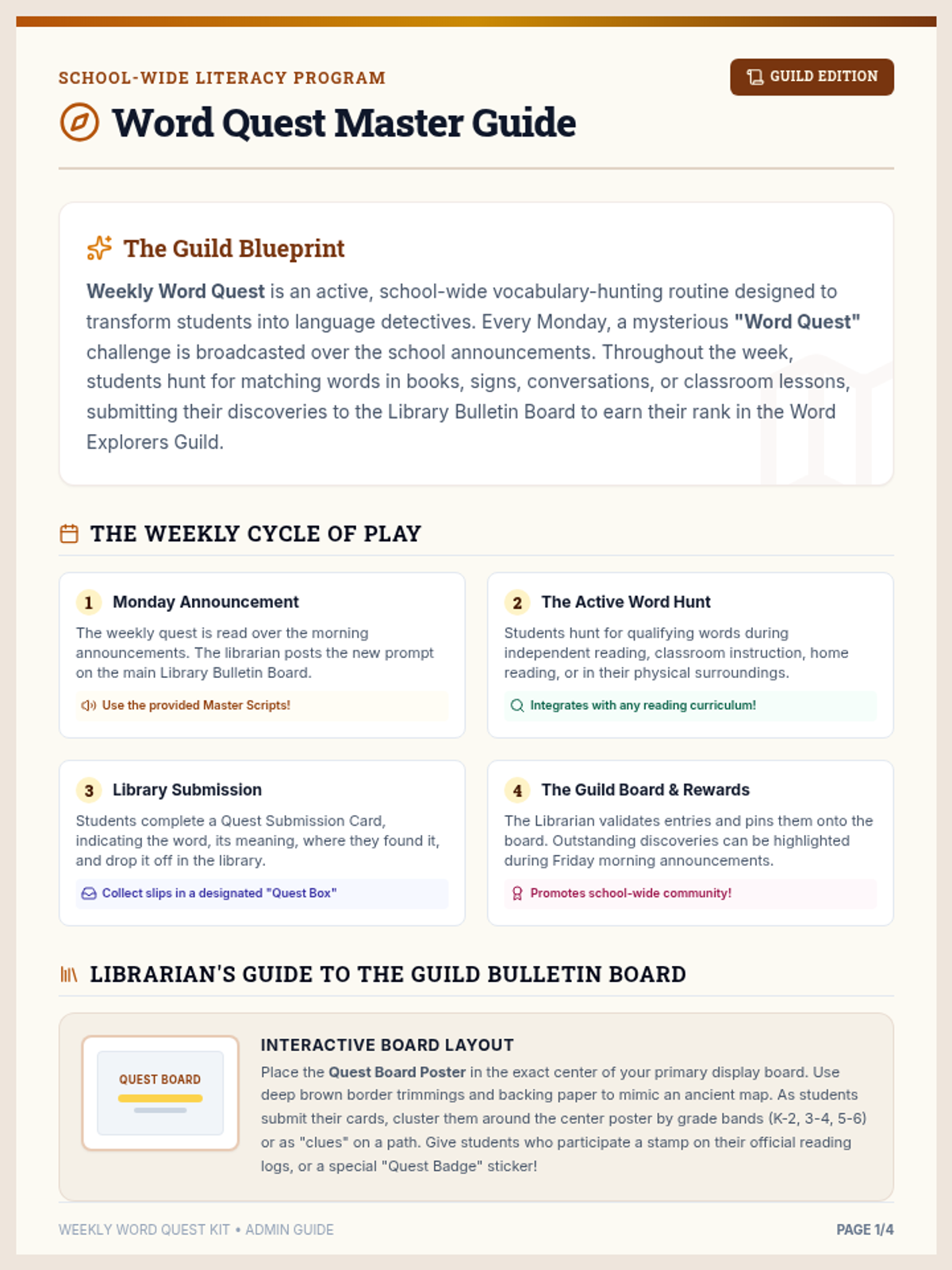
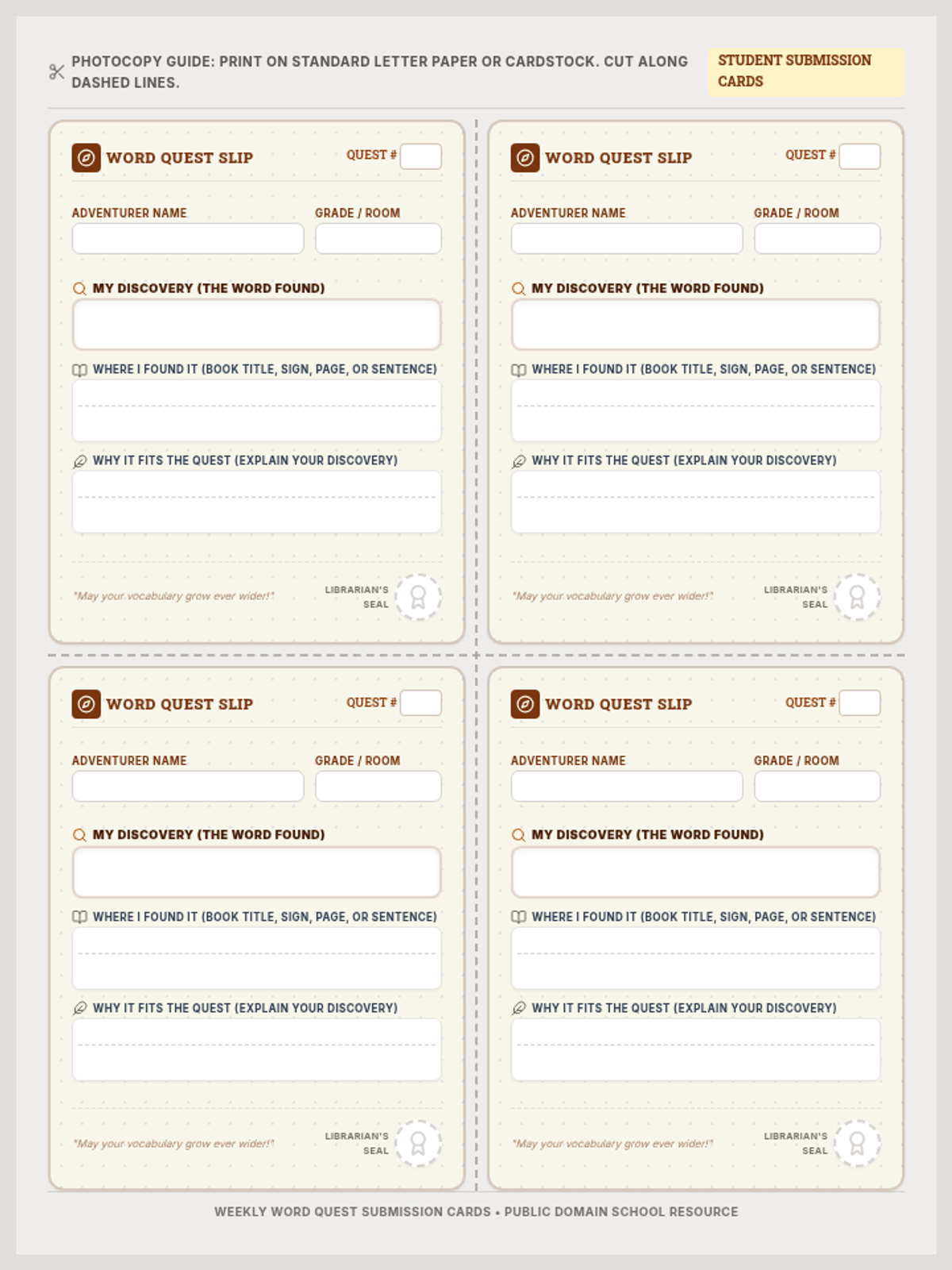
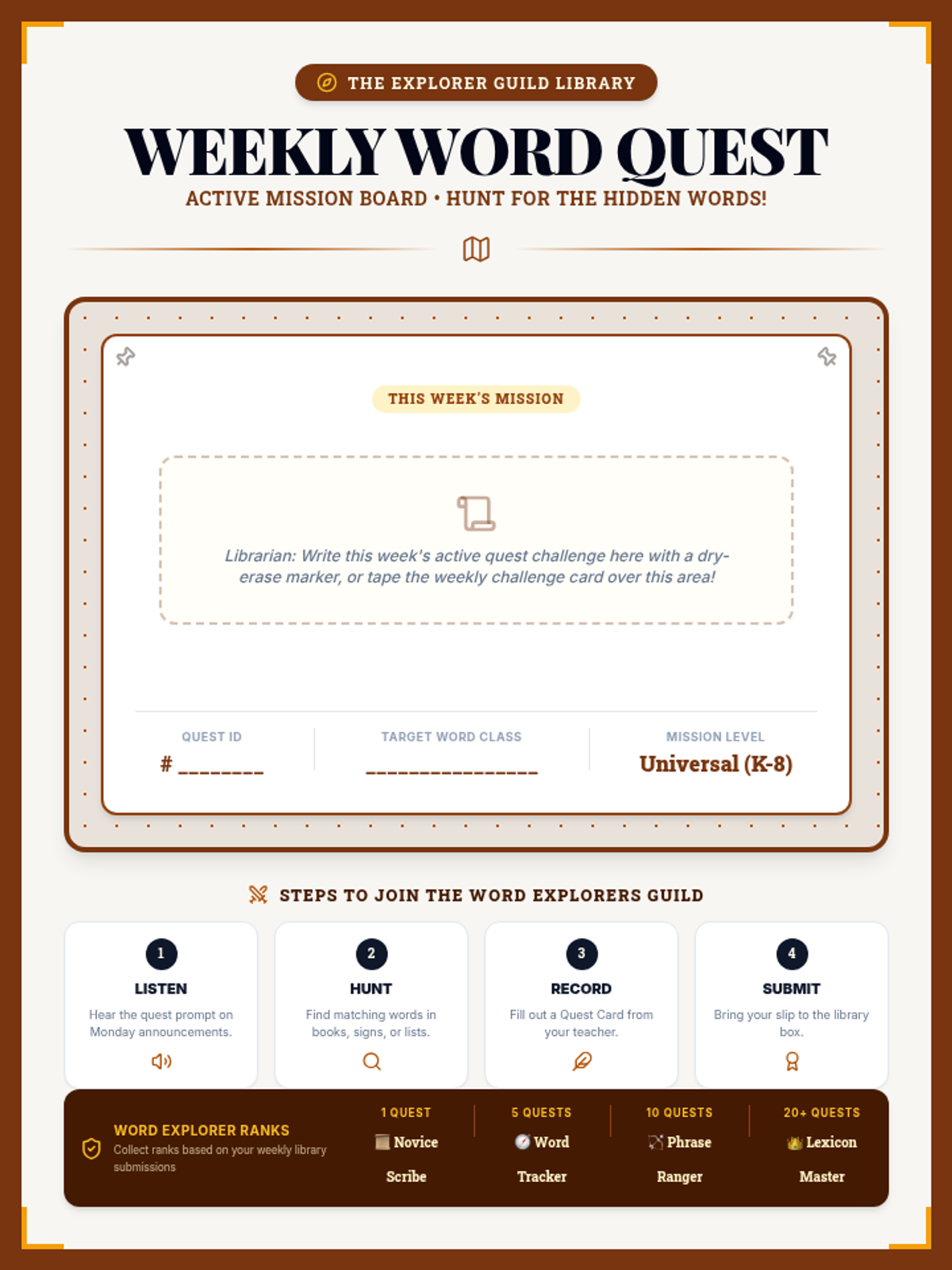
A comprehensive school-wide literacy program and implementation toolkit. Includes a 40-week master quest index, printable student submission slips, and a high-impact library bulletin board poster.
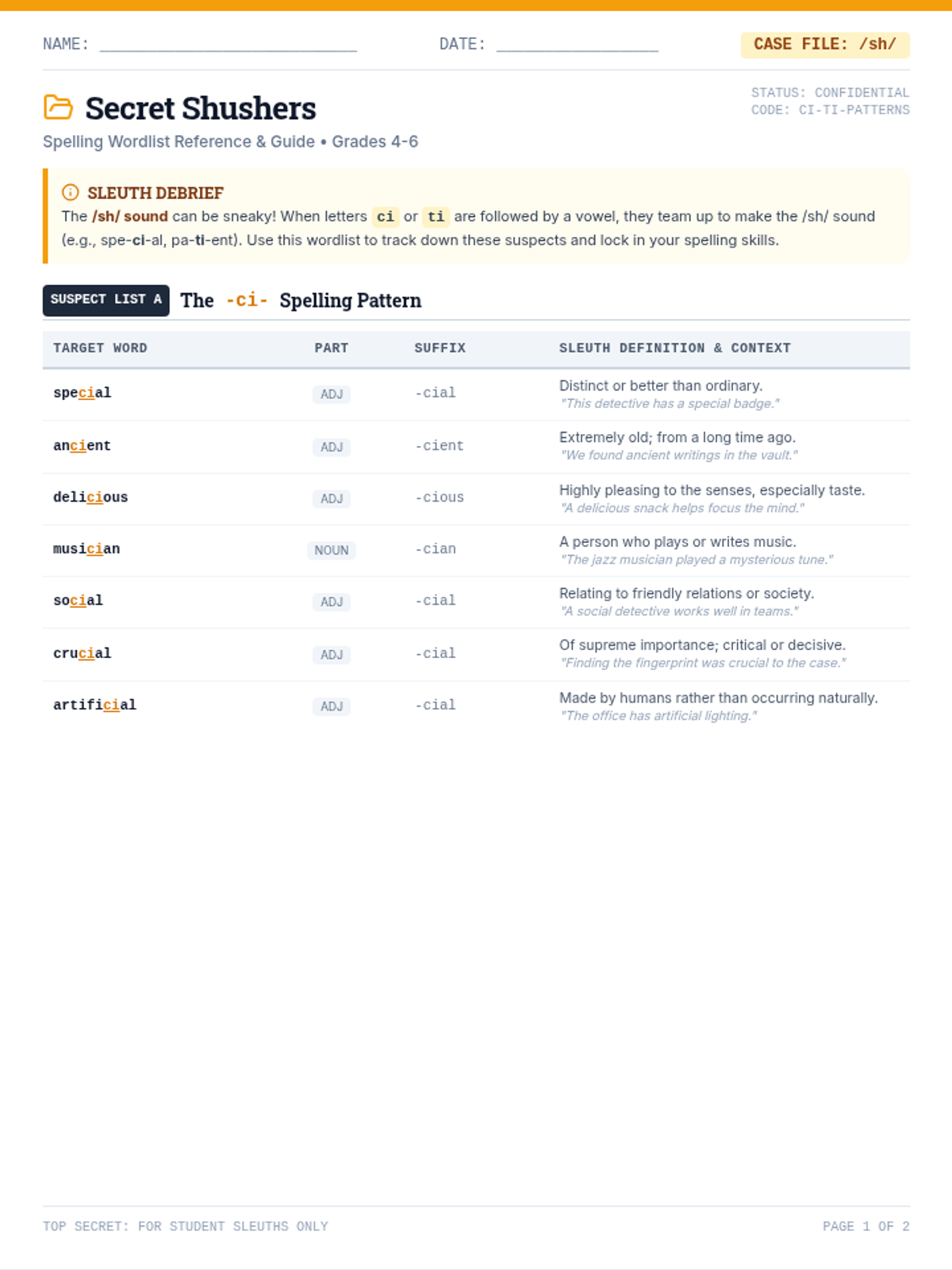
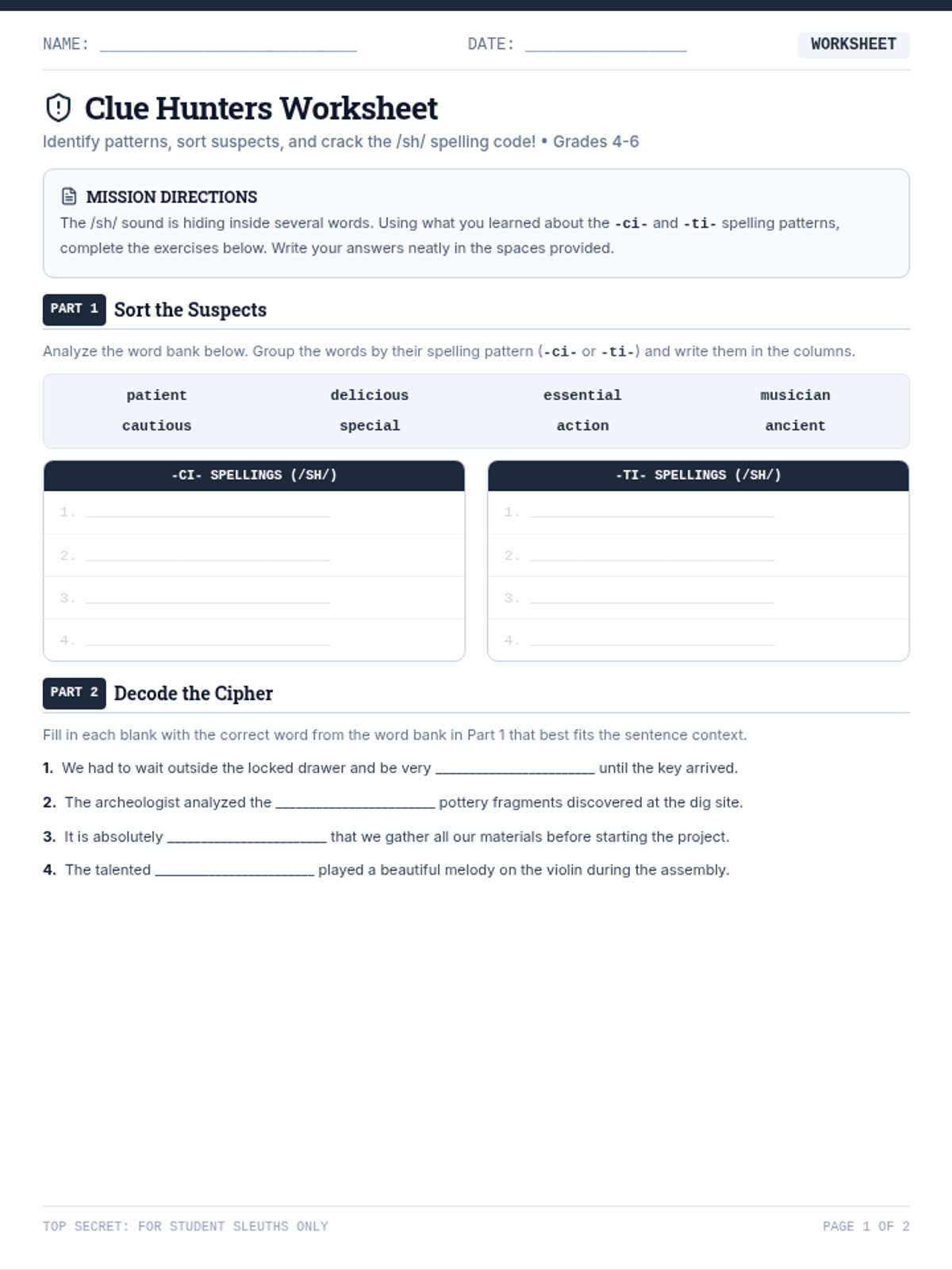
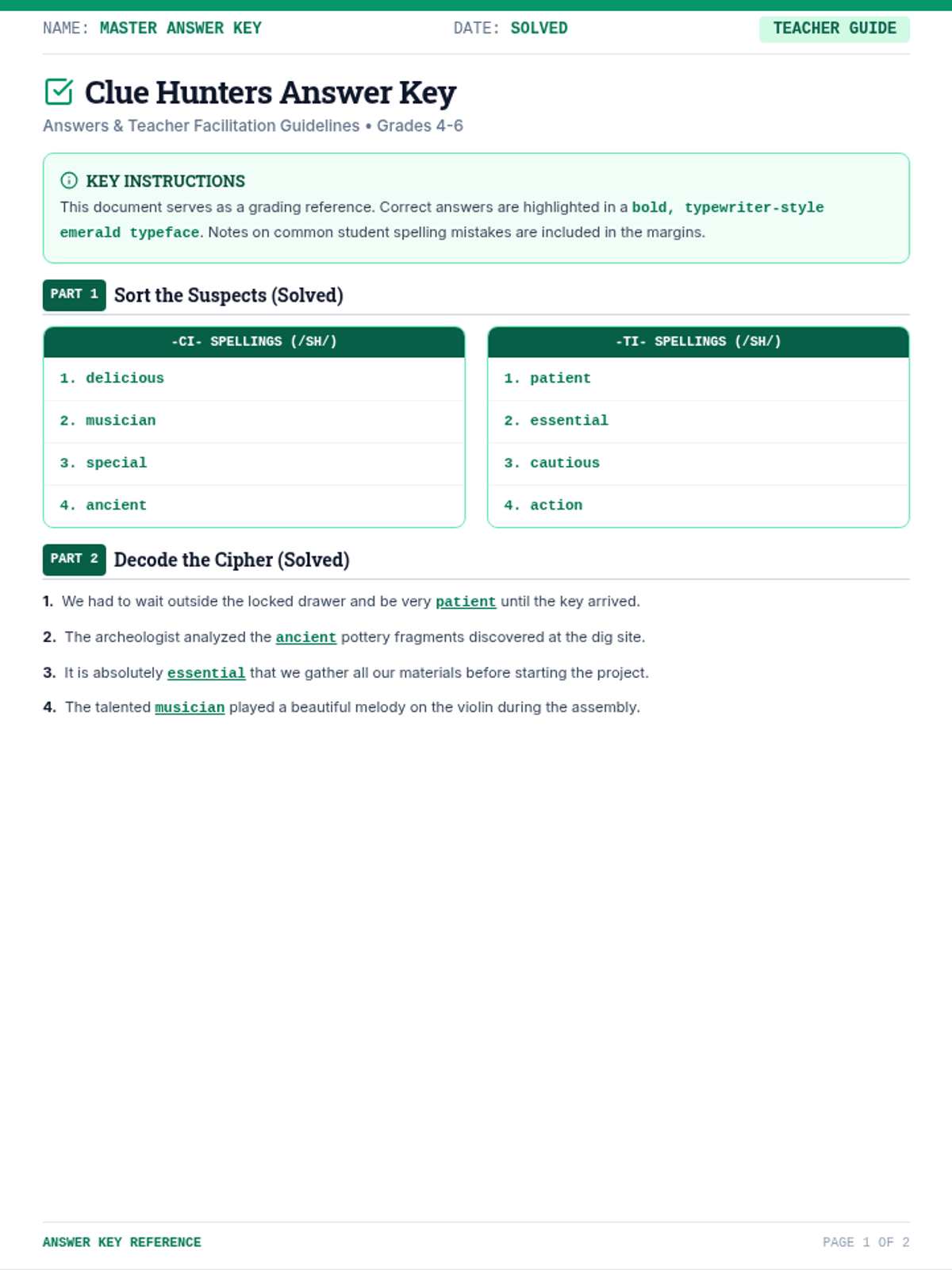
A spelling and phonics lesson for grades 4-6 focusing on the /sh/ sound spelled with 'ci' (as in special) and 'ti' (as in patient). Students explore patterns, organize words in detective-style case files, and apply their knowledge through interactive word hunts and spelling activities.
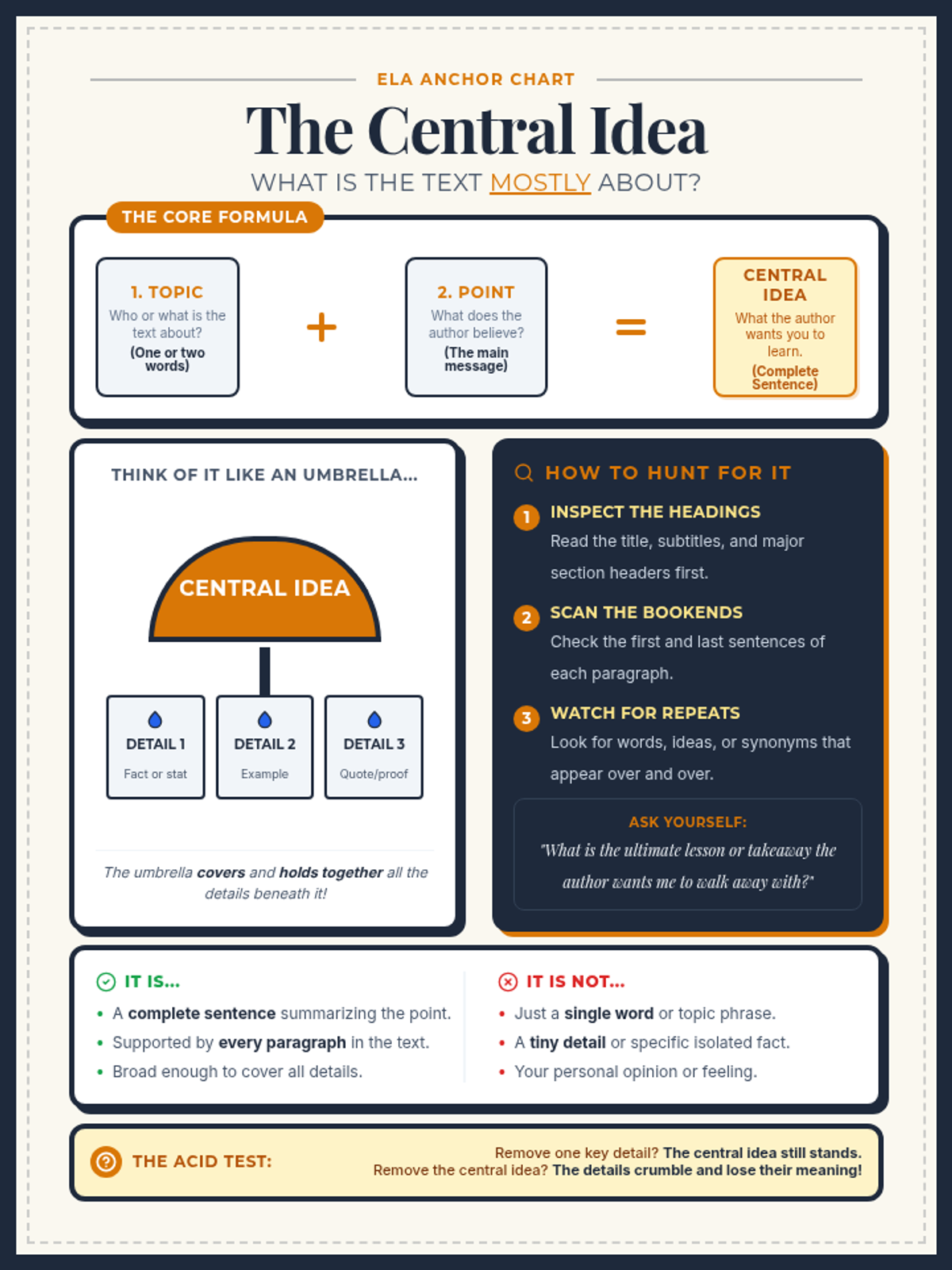
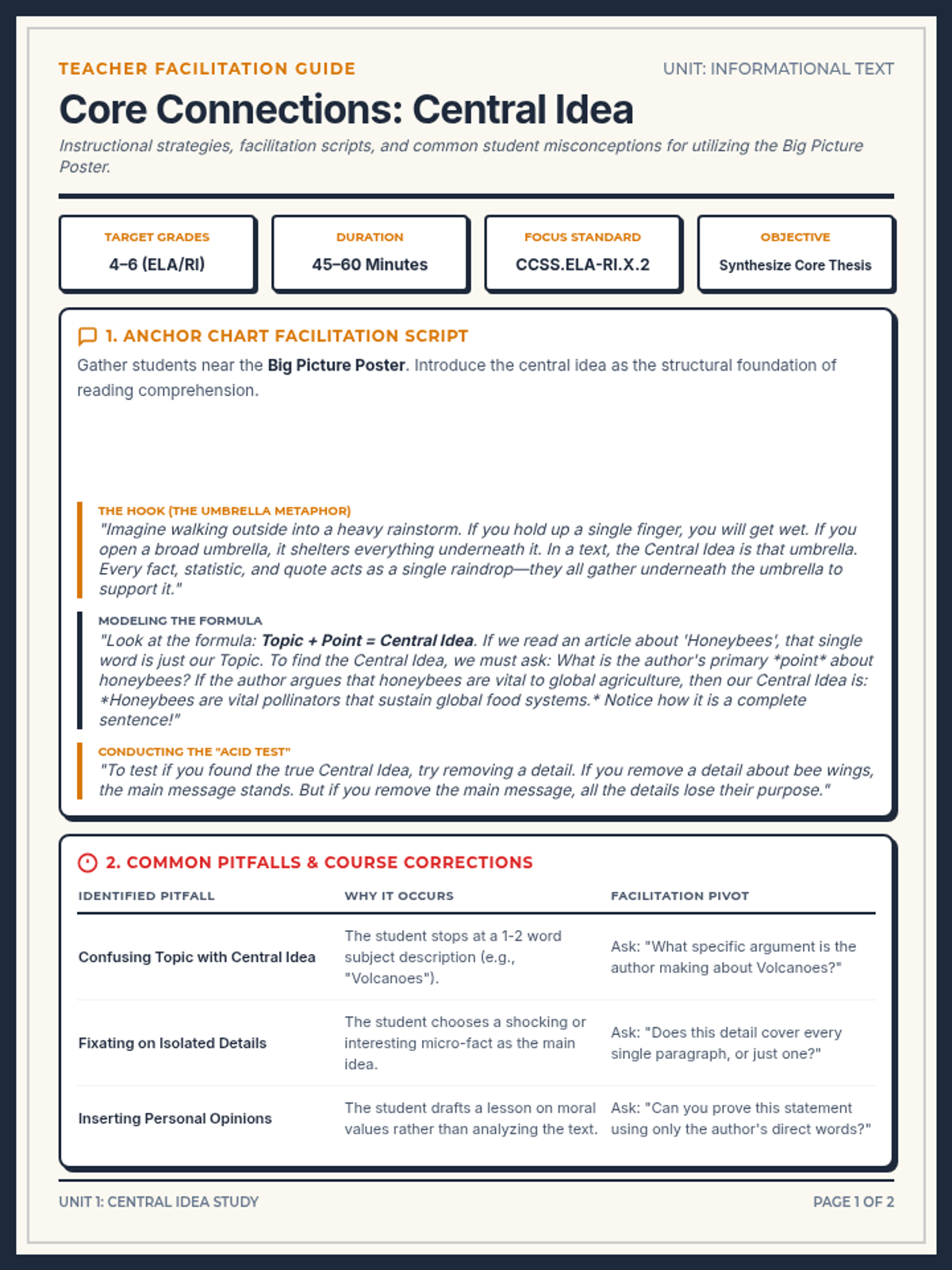
A lesson designed to guide students in identifying, analyzing, and synthesizing the central idea of informational texts. Features a visual anchor chart and a supporting teacher facilitation guide.
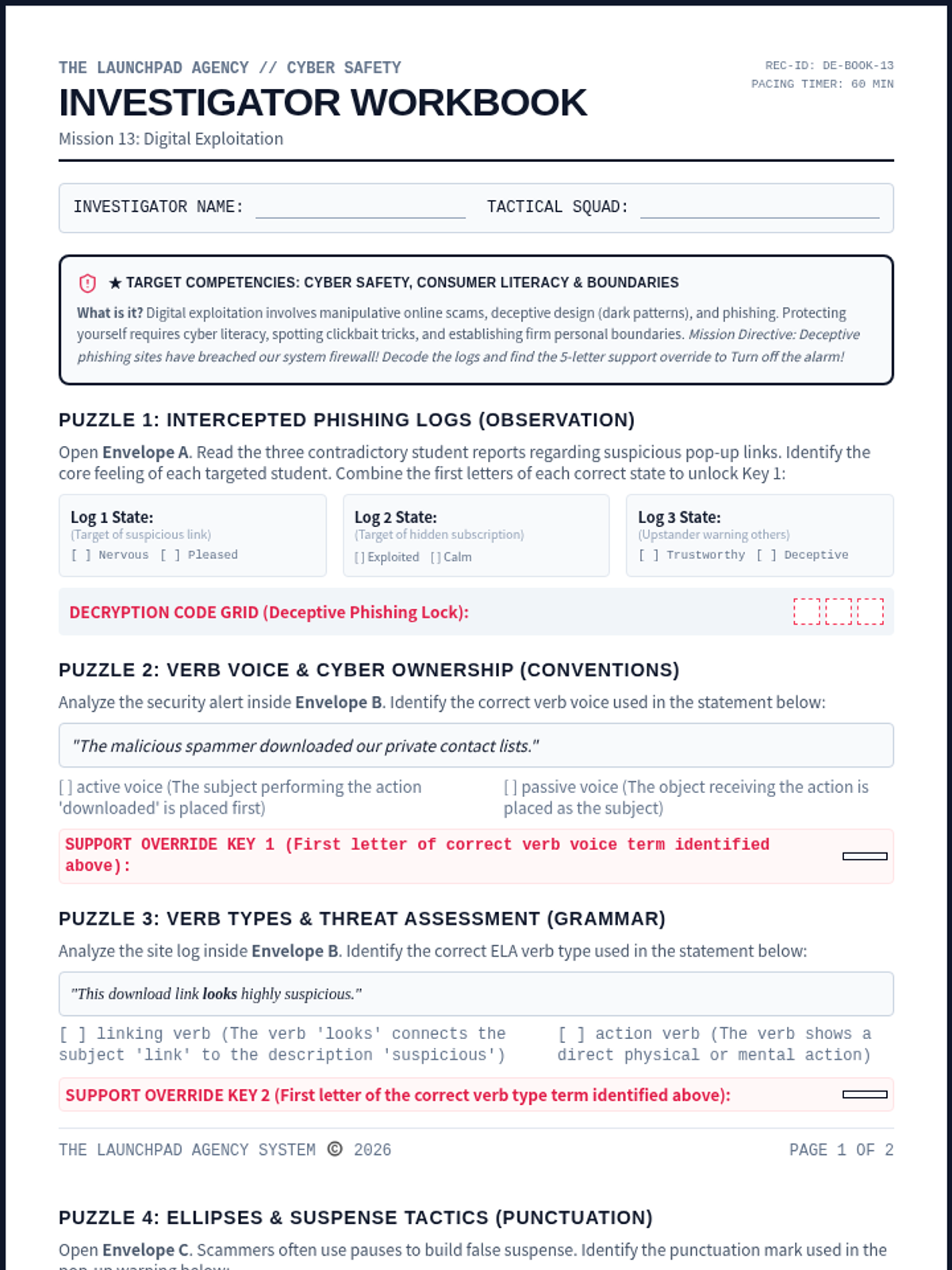
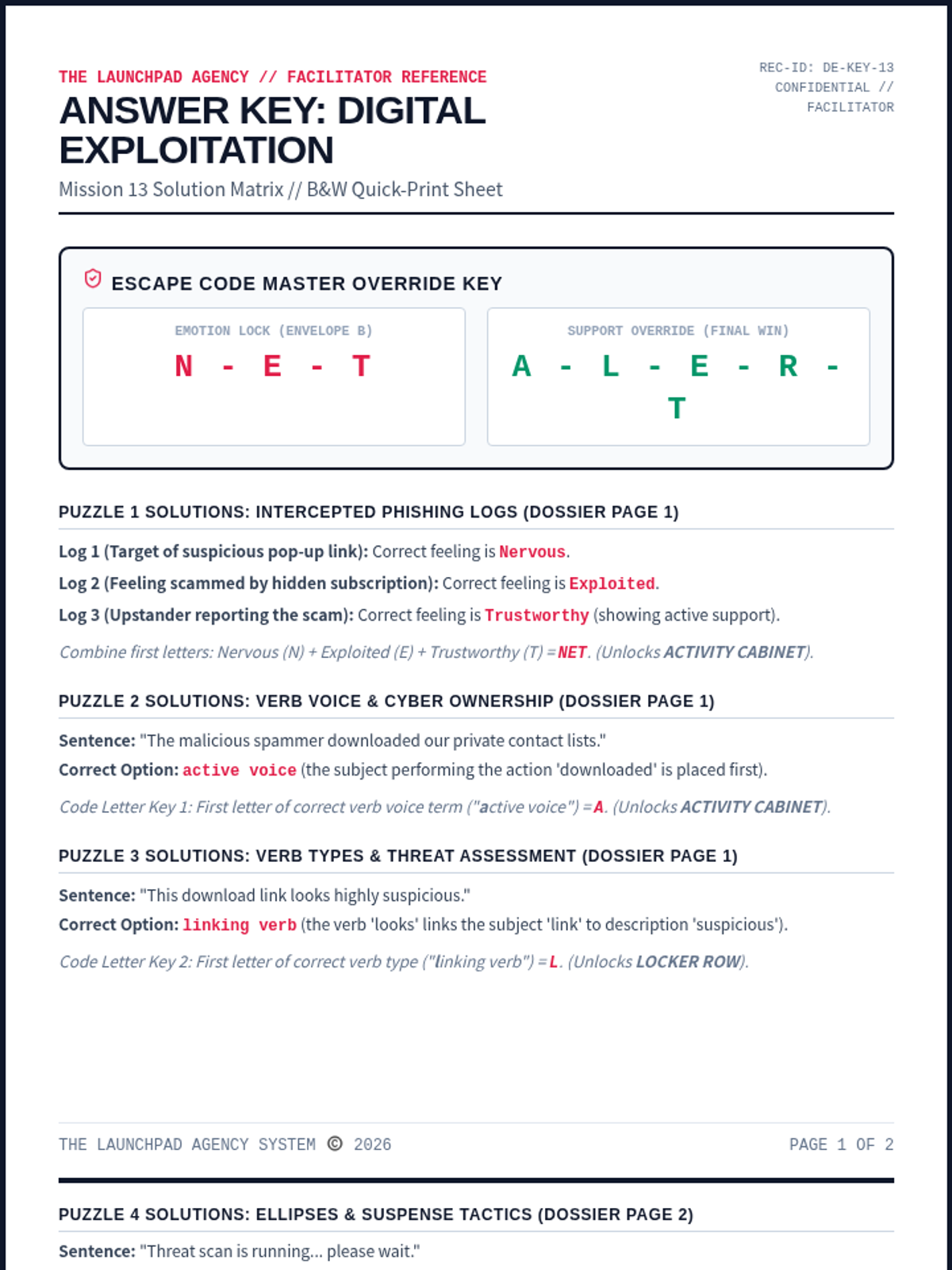
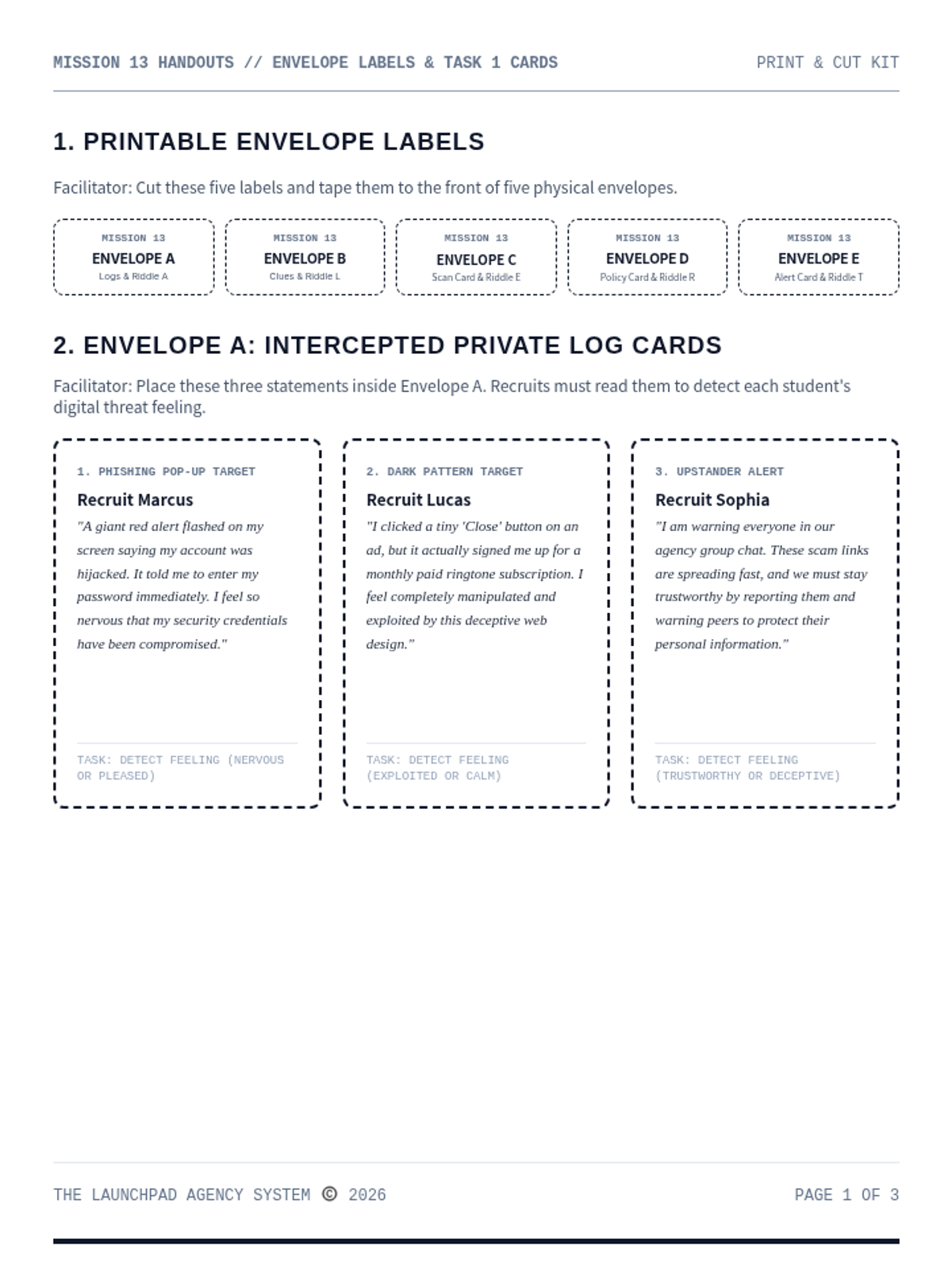
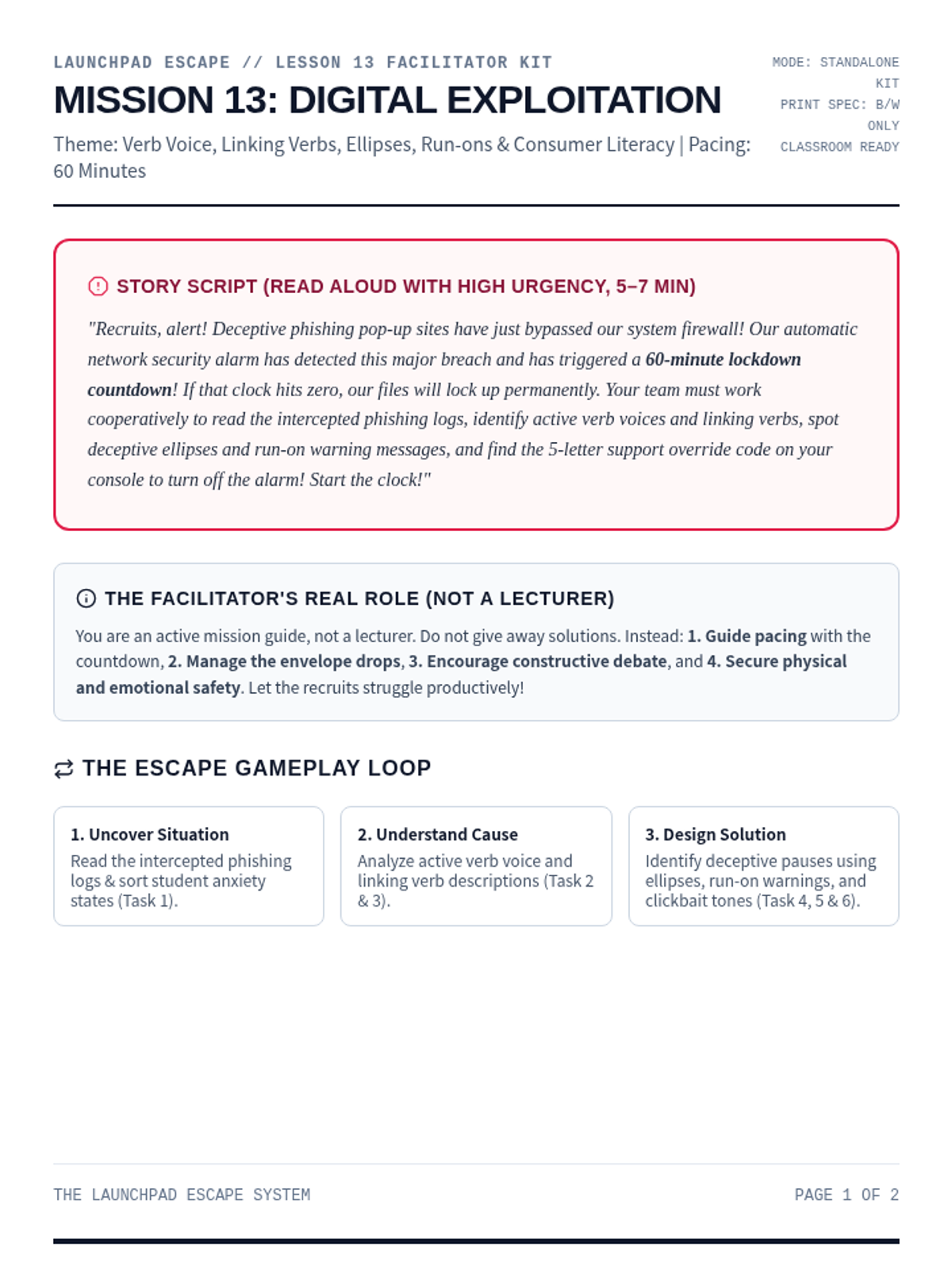
A high-stakes digital safety escape room focused on identifying online scams, recognizing manipulative dark patterns, and protecting personal data. Recruits analyze active verb voices, linking verbs, ellipses punctuation, and deceptive tones to decode the final alert.