A comprehensive exploration of the history, science, and therapeutic potential of psychedelic substances.
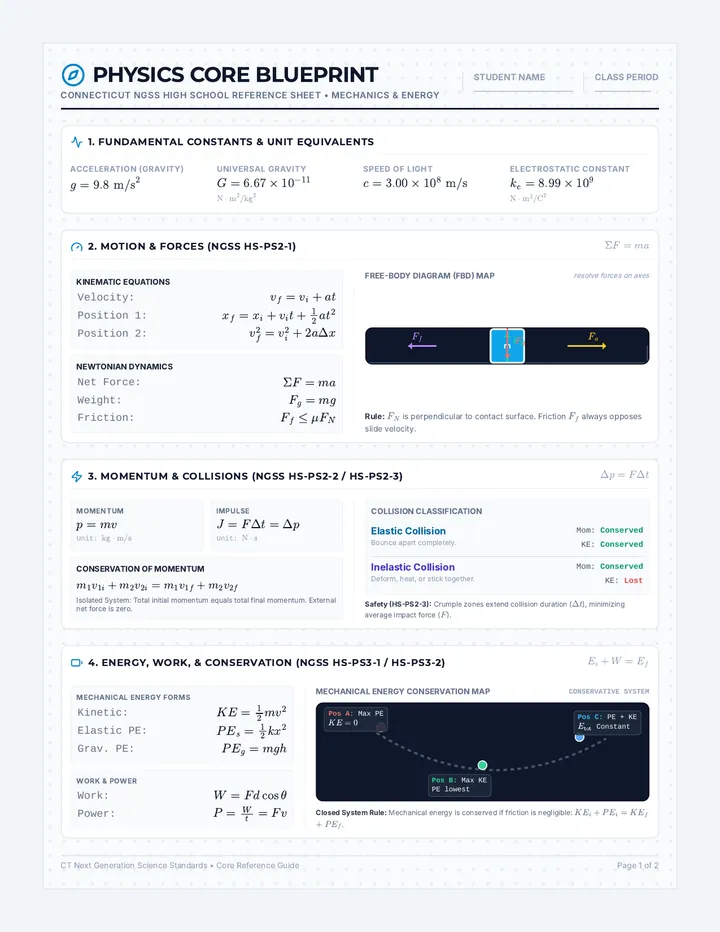
A collection of foundational reference sheets, formula grids, and problem-solving templates designed to support Connecticut high school physics students across all NGSS units.
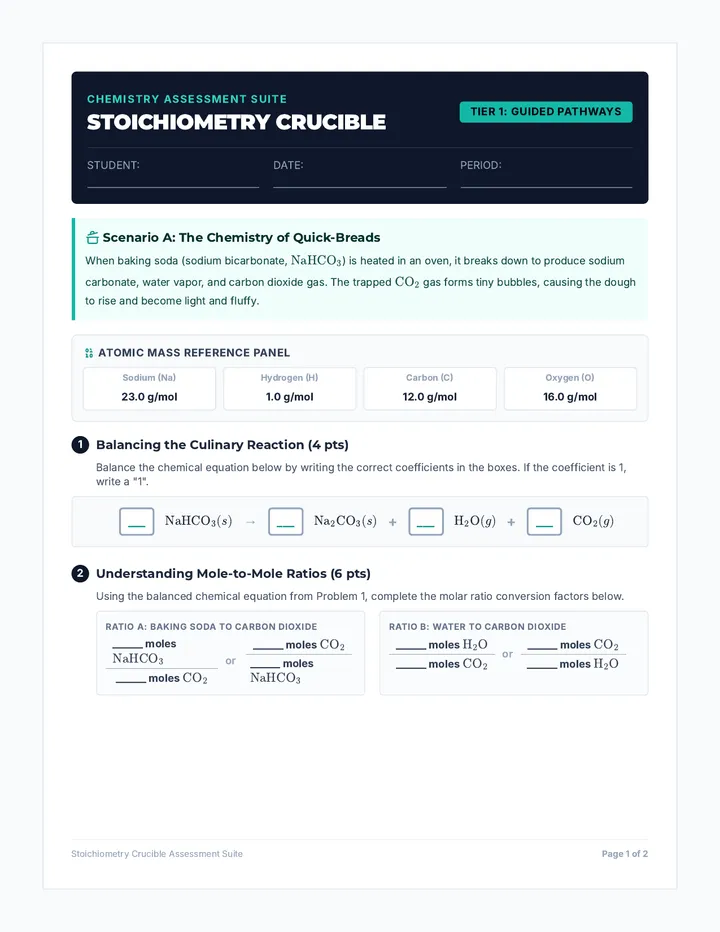
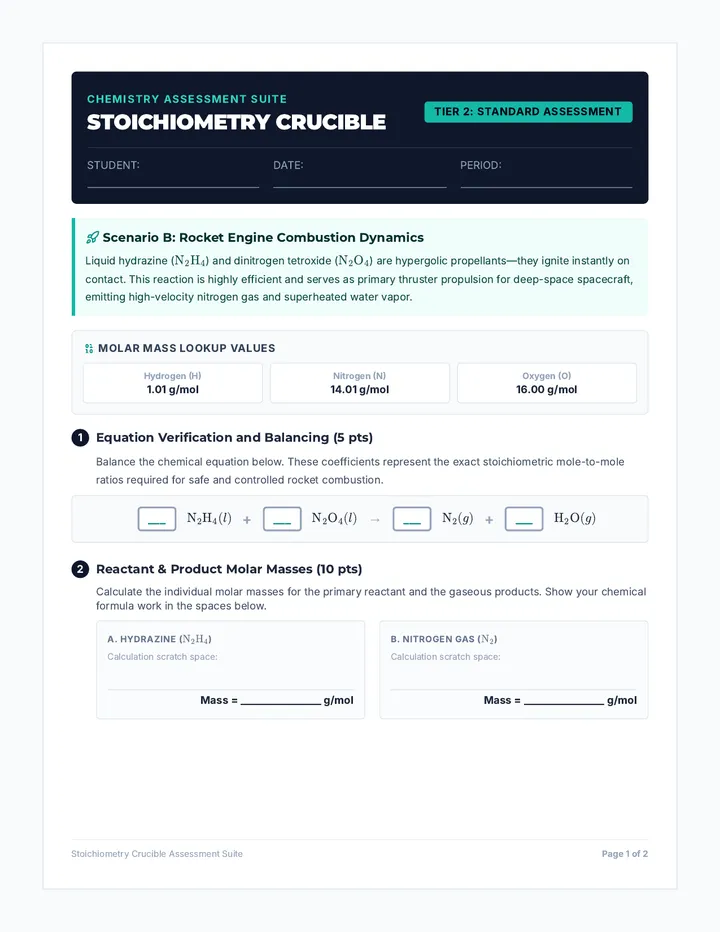
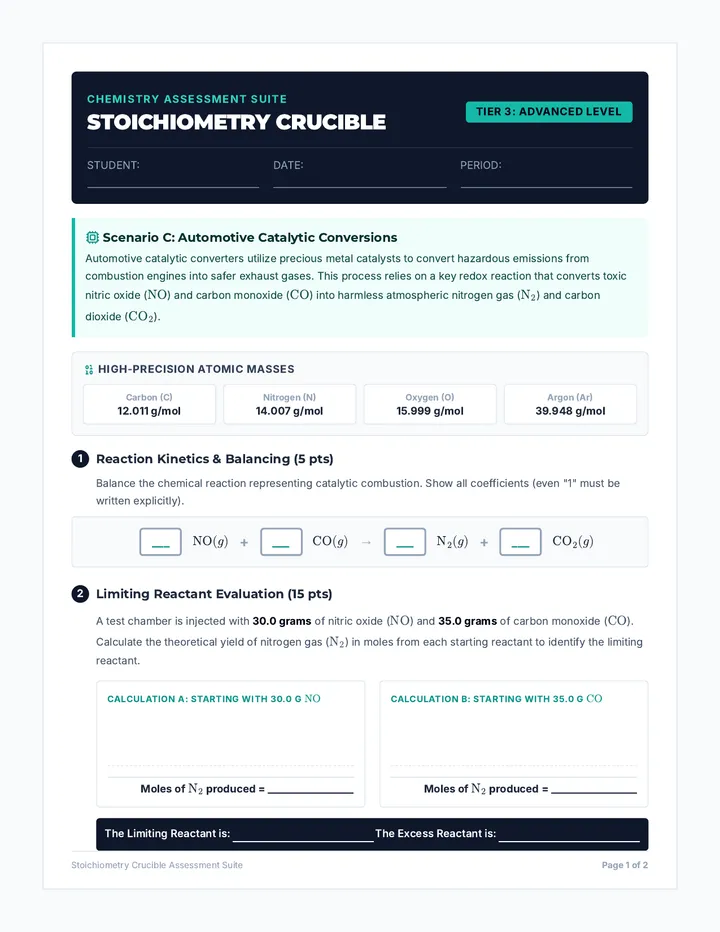
A differentiated stoichiometry assessment suite tiered by mathematical complexity, visual scaffolding, and conceptual depth. Features three distinct, parallel versions of a 2-page quiz centered around unique real-world chemistry applications.
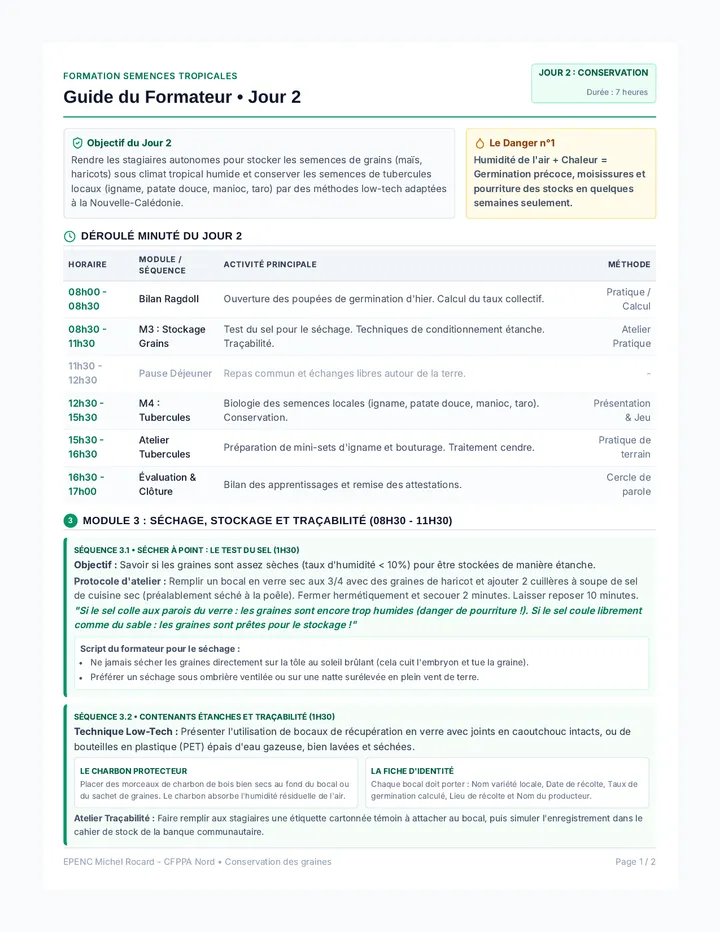
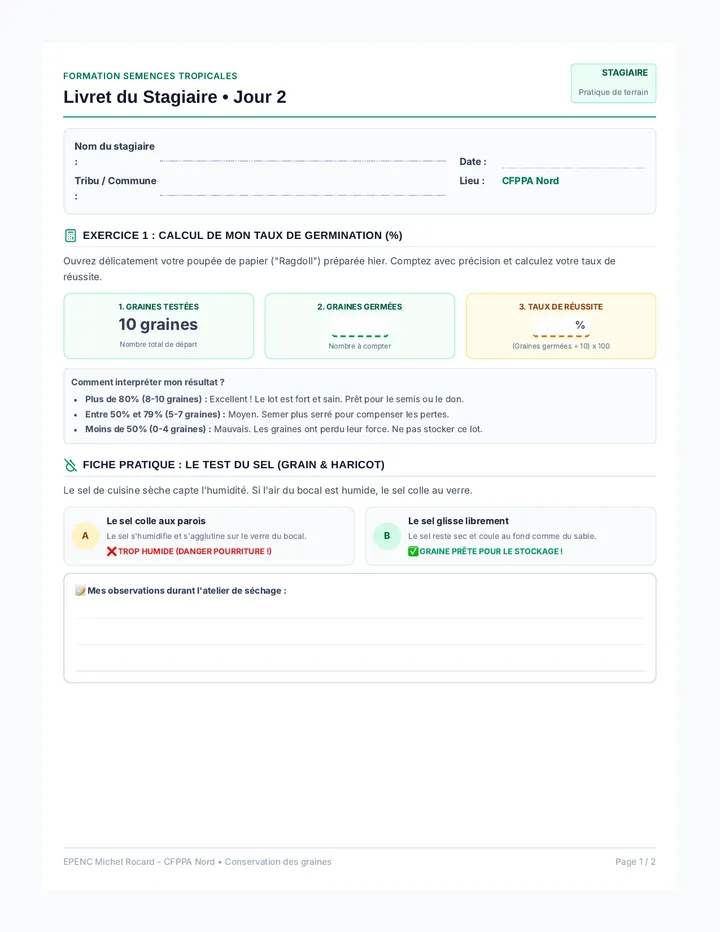
Jour 2 de la formation de 7 heures, couvrant la conservation des graines (traitement, séchage, conditionnement), la mise en place de banques de semences locales, la traçabilité et un module spécifique de 3 heures sur la conservation des semences de tubercules (igname, patate douce, manioc, taro).
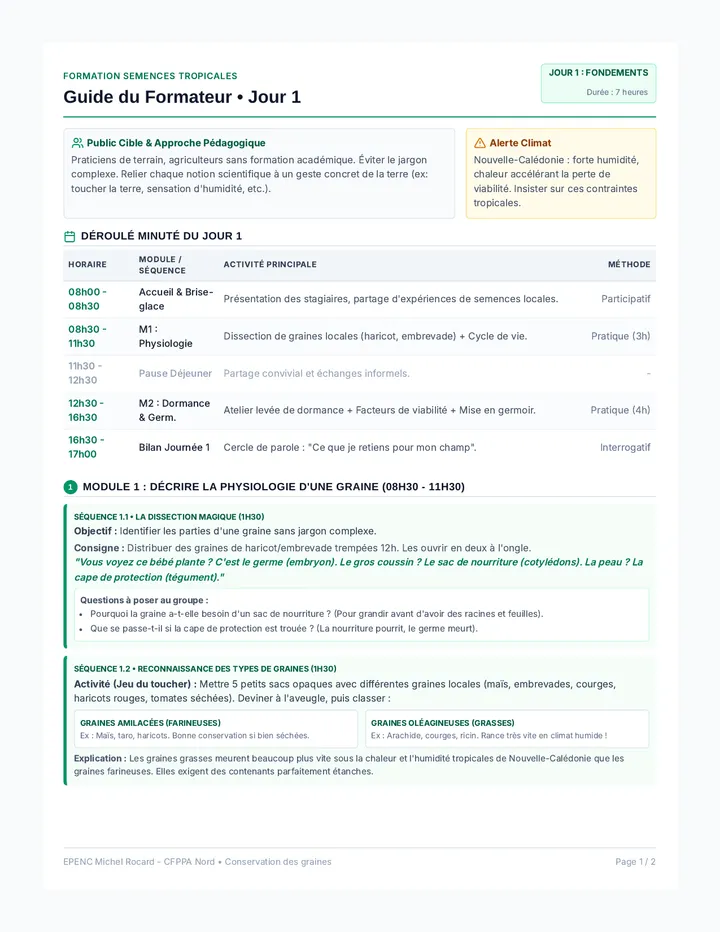
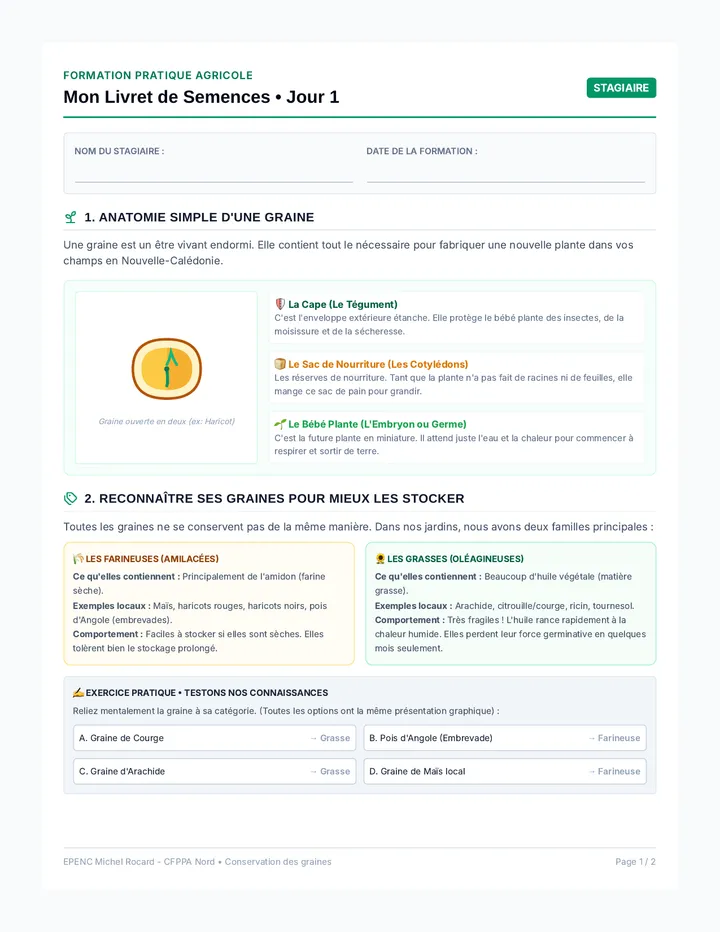
Jour 1 de la formation de 7 heures, couvrant la physiologie des graines, la reconnaissance des types de semences, le cycle de vie, les mécanismes de dormance et les conditions optimales de germination. Ce module pose les bases théoriques et pratiques nécessaires pour comprendre la vie de la graine.
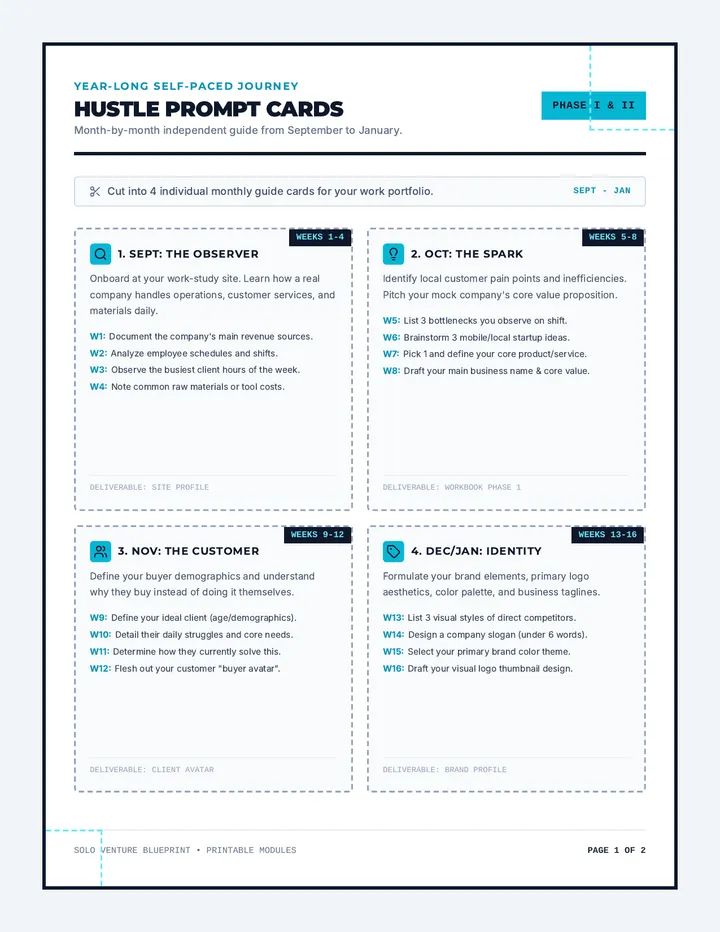
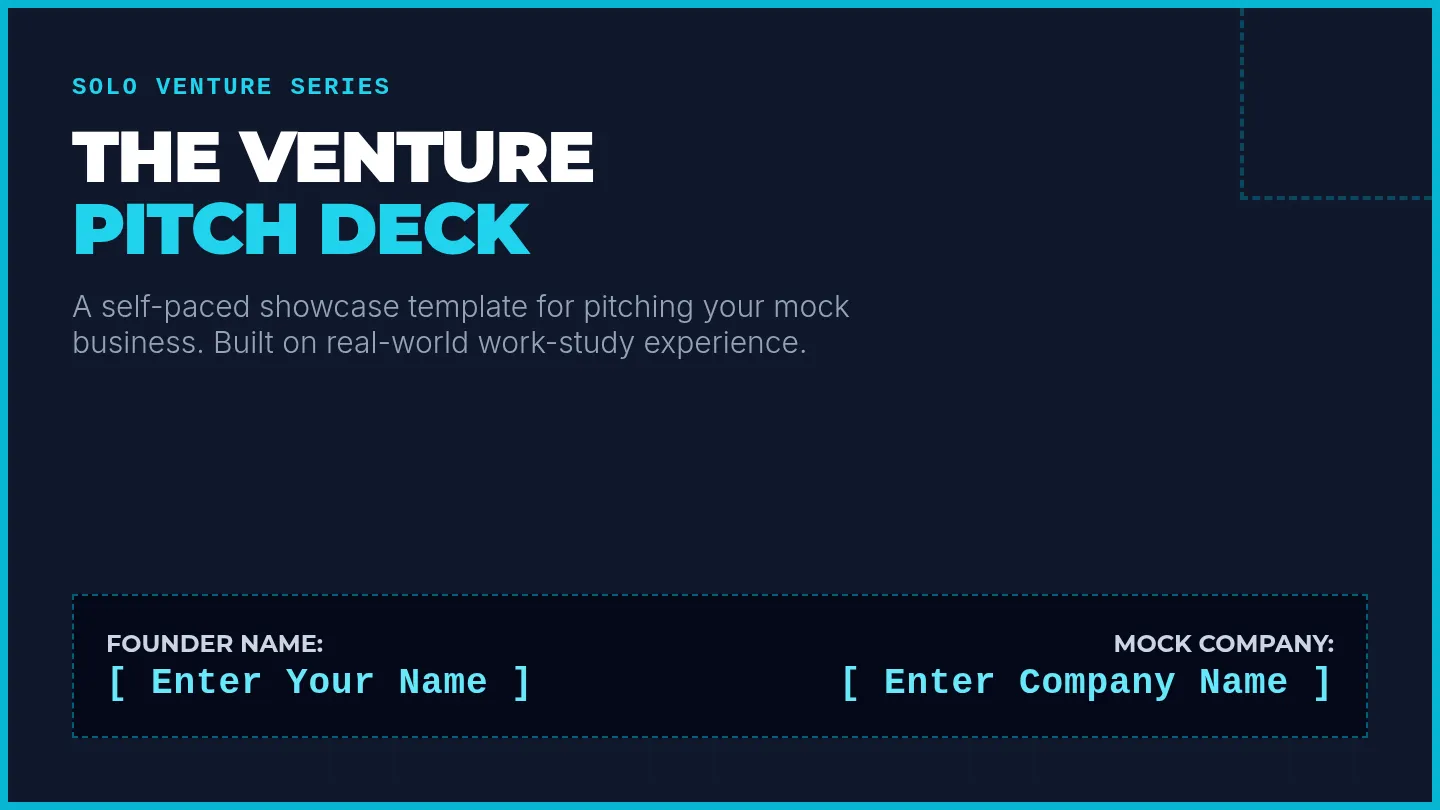
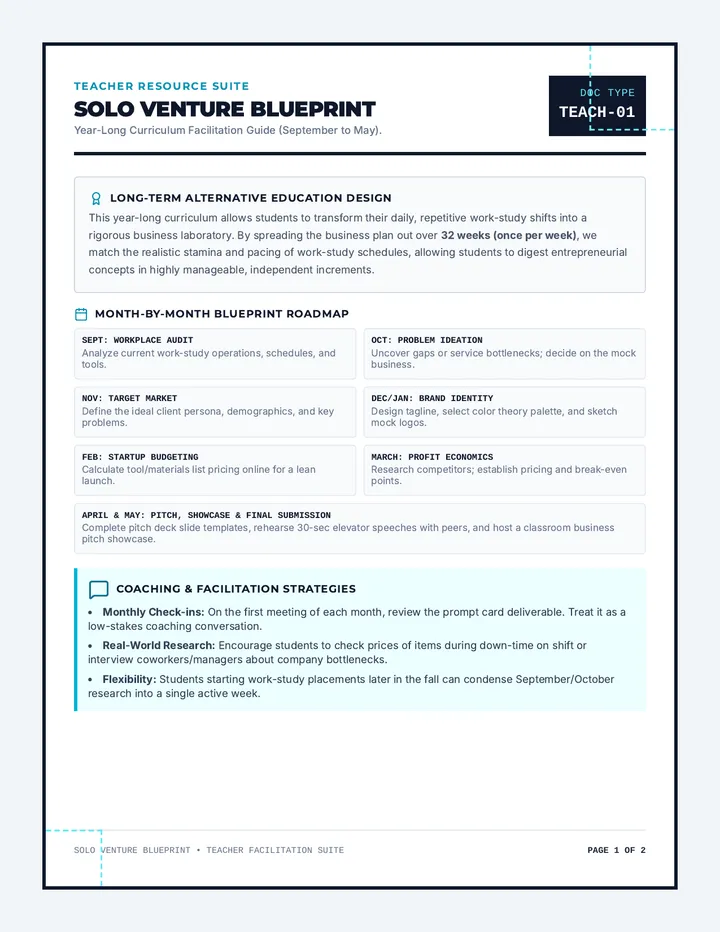
A modular, self-paced entrepreneurship project designed for alternative education students in work-study programs. It bridges real-world work experience with business planning, allowing students to design and pitch their own mock business.
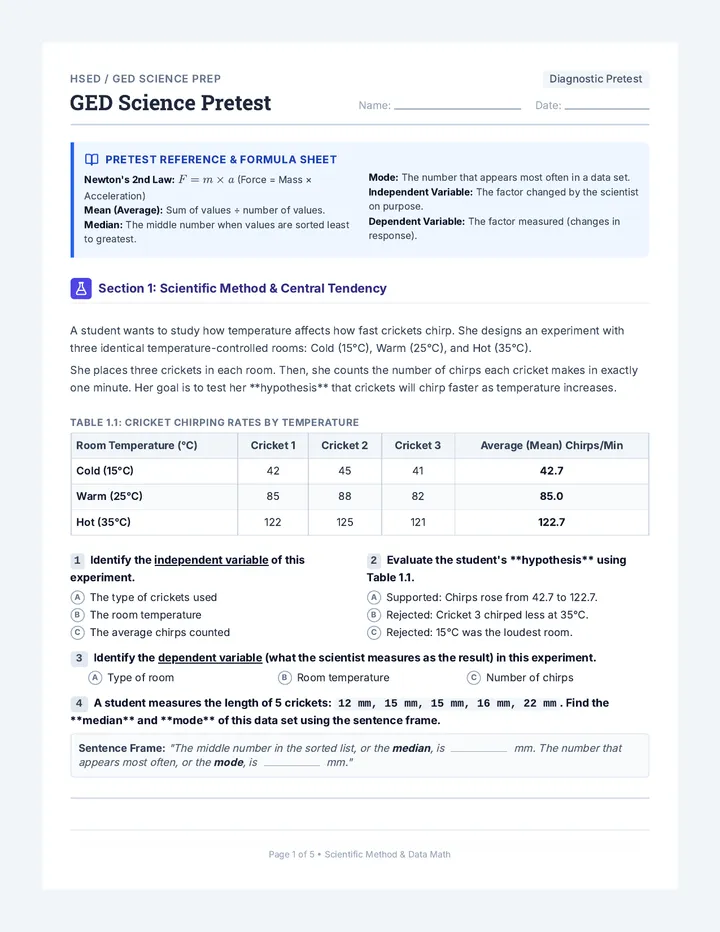
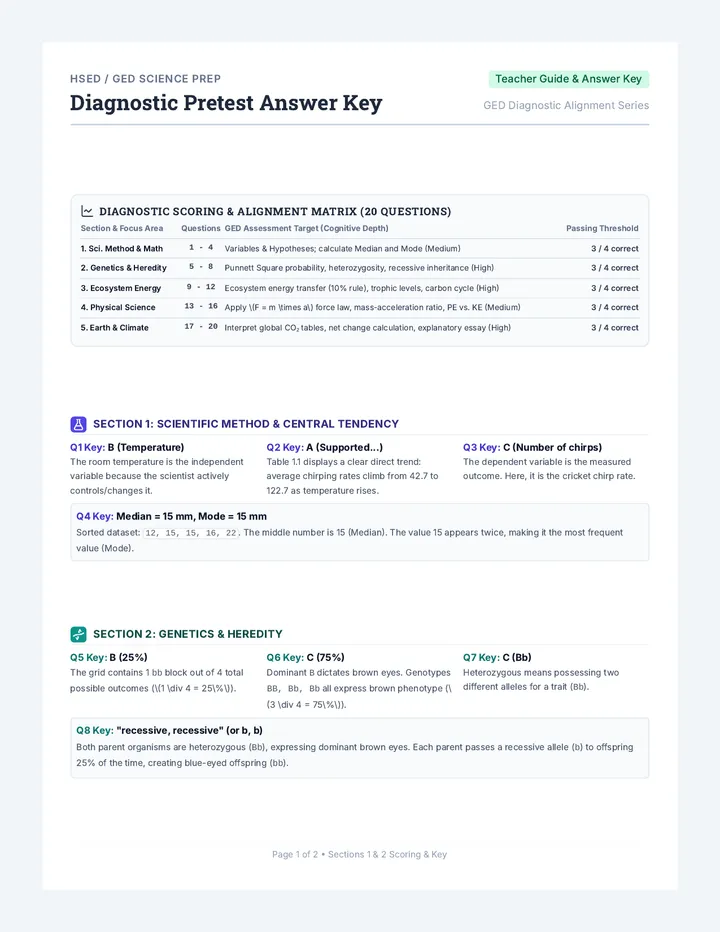
A comprehensive, scaffolded pretest aligned to the GED Science test. It includes student-facing diagnostics for life, physical, earth, and space sciences, alongside a detailed teacher answer key with explanatory feedback.
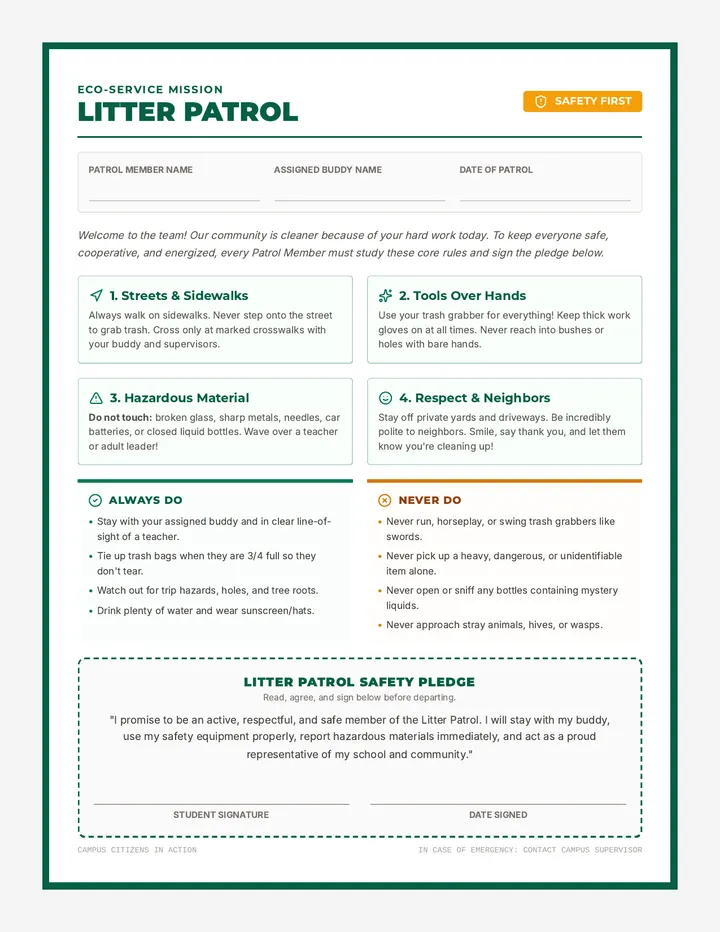
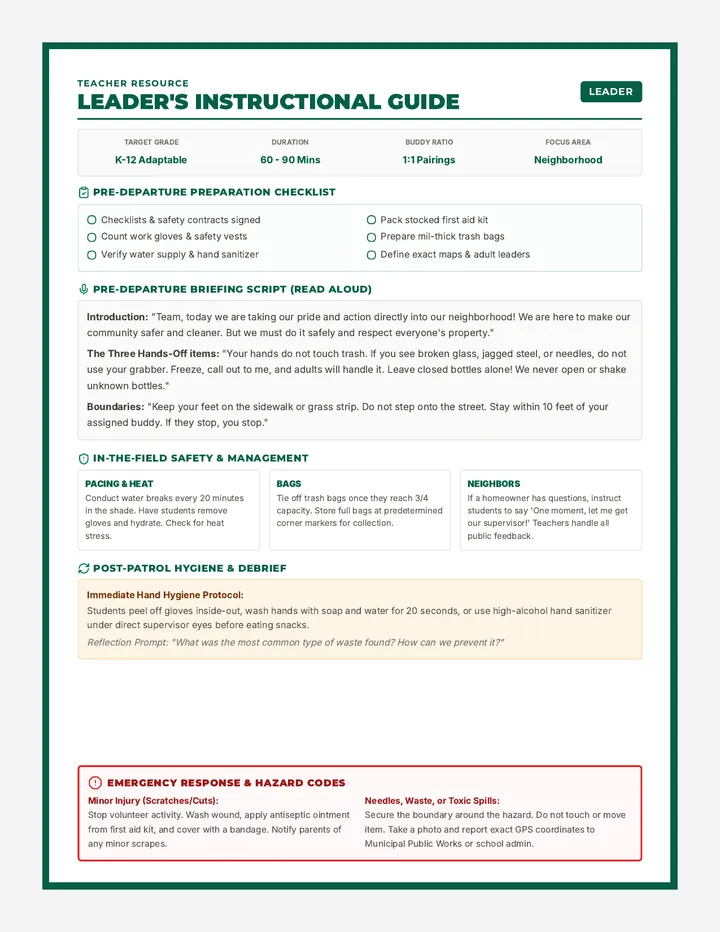
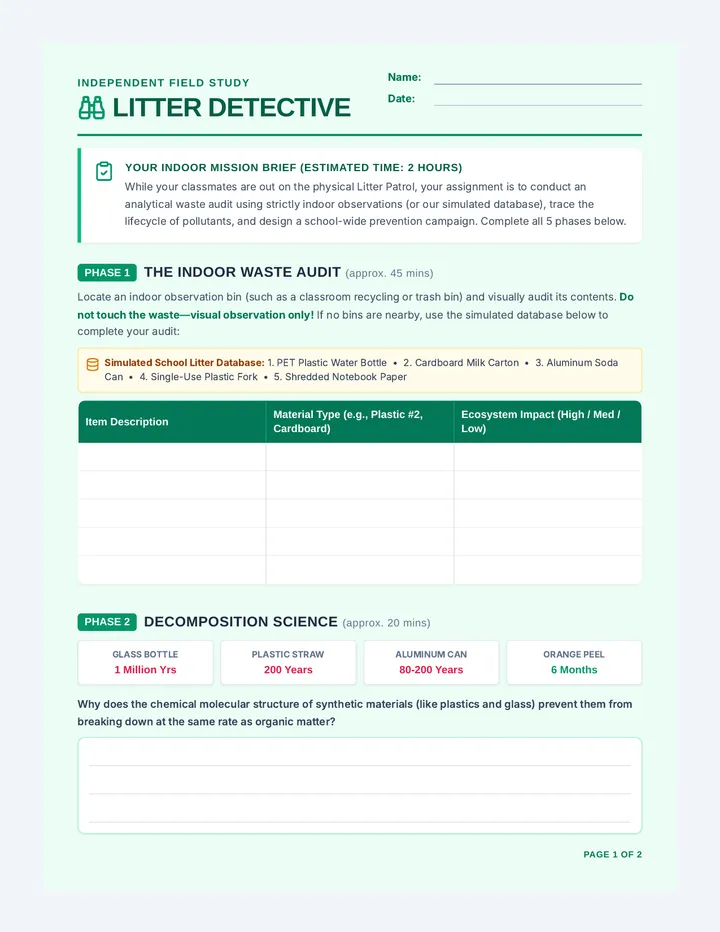
A comprehensive safety and preparation kit for students and teachers participating in a neighborhood trash pick-up community service project. It includes safety slides, a student contract and checklist, and a detailed teacher instruction guide.
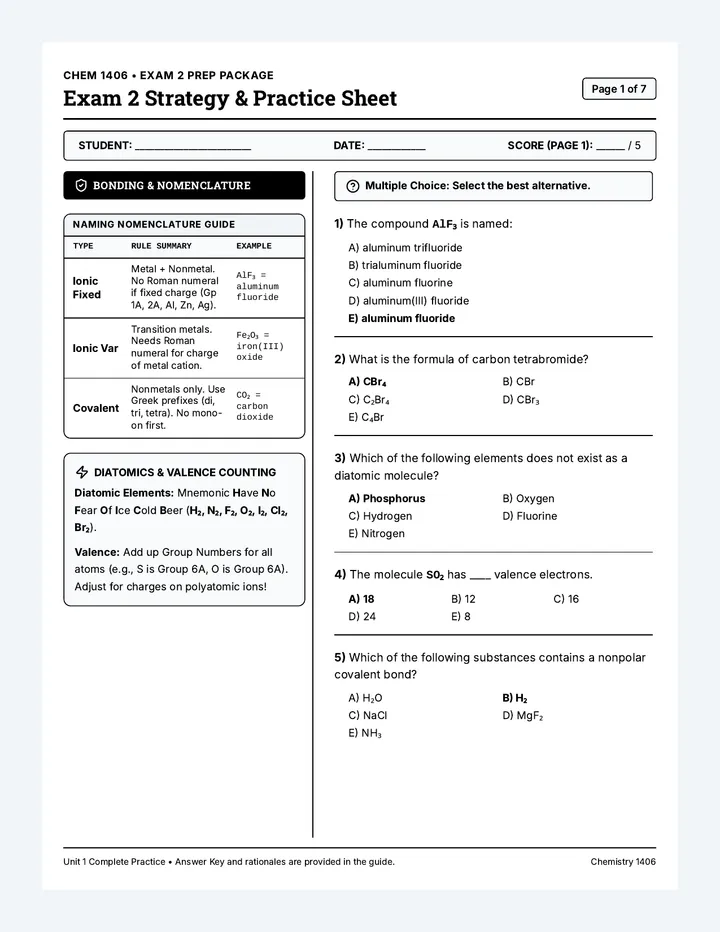
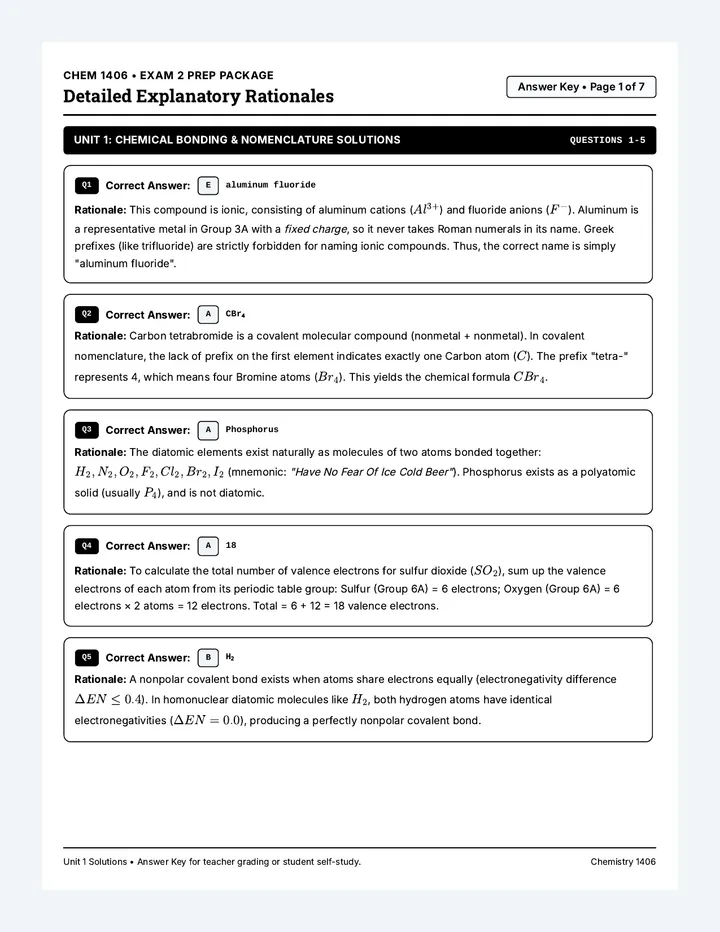
A comprehensive study and practice package for Chemistry 1406 Exam 2. It contains a highly structured, side-by-side strategy guide paired with a 30-question practice exam, and a matching detailed answer key with step-by-step rationales.
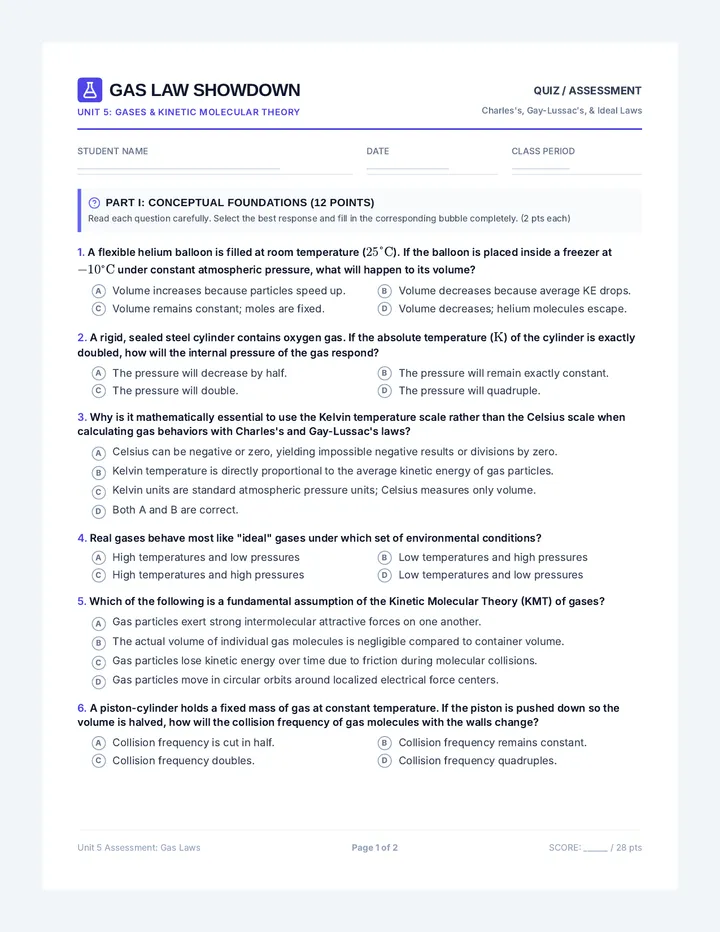
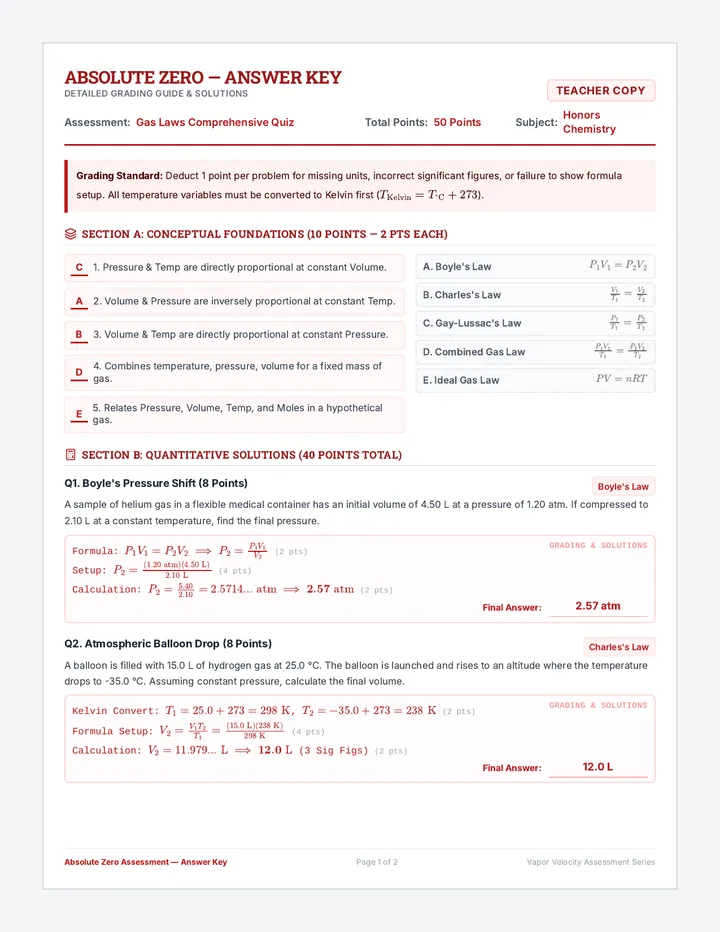
A rigorous assessment lesson covering Charles's Law, Gay-Lussac's Law, and the Ideal Gas Law. Students demonstrate understanding through conceptual multiple-choice questions and solve multi-step algebraic calculations with gas behavior formulas.
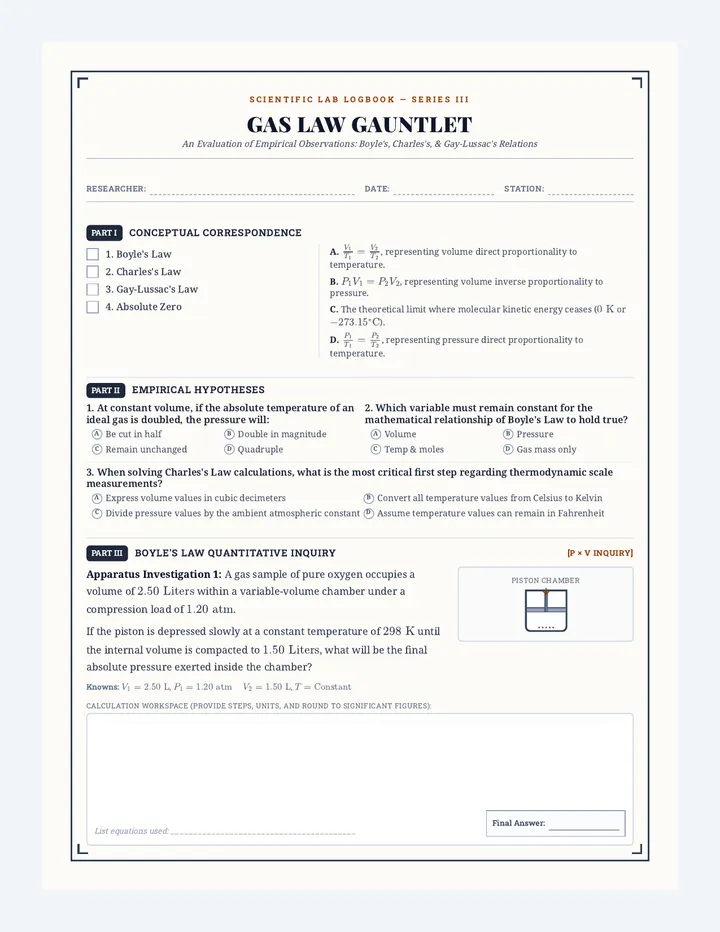
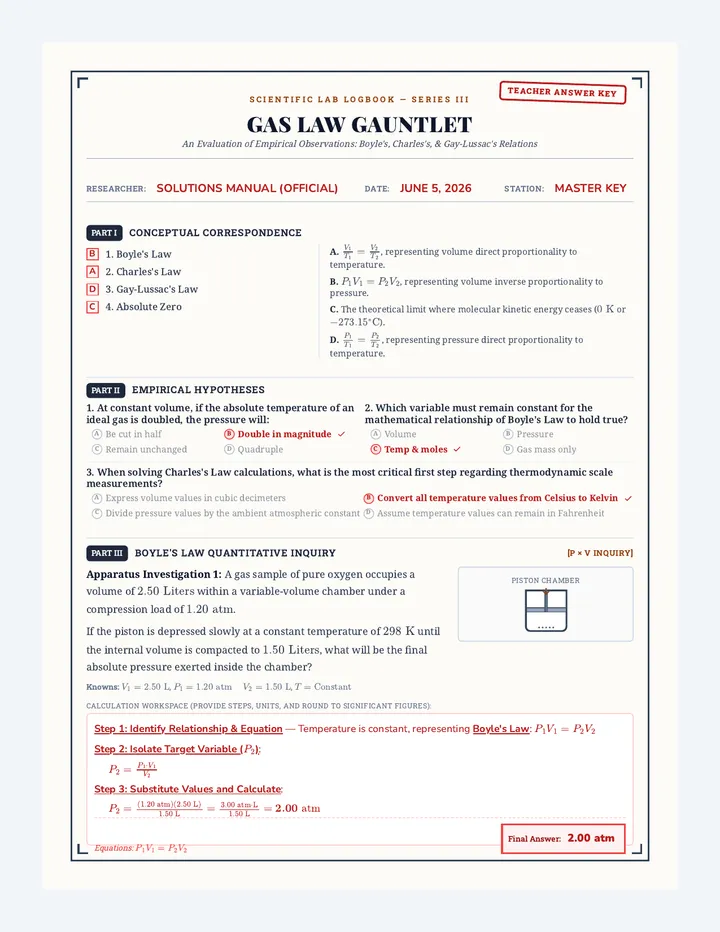
A comprehensive assessment package focused on the individual empirical gas laws (Boyle's, Charles's, and Gay-Lussac's laws). It includes a beautifully formatted printable student quiz and a highly detailed step-by-step teacher answer key, both themed around a vintage 19th-century scientific research log.
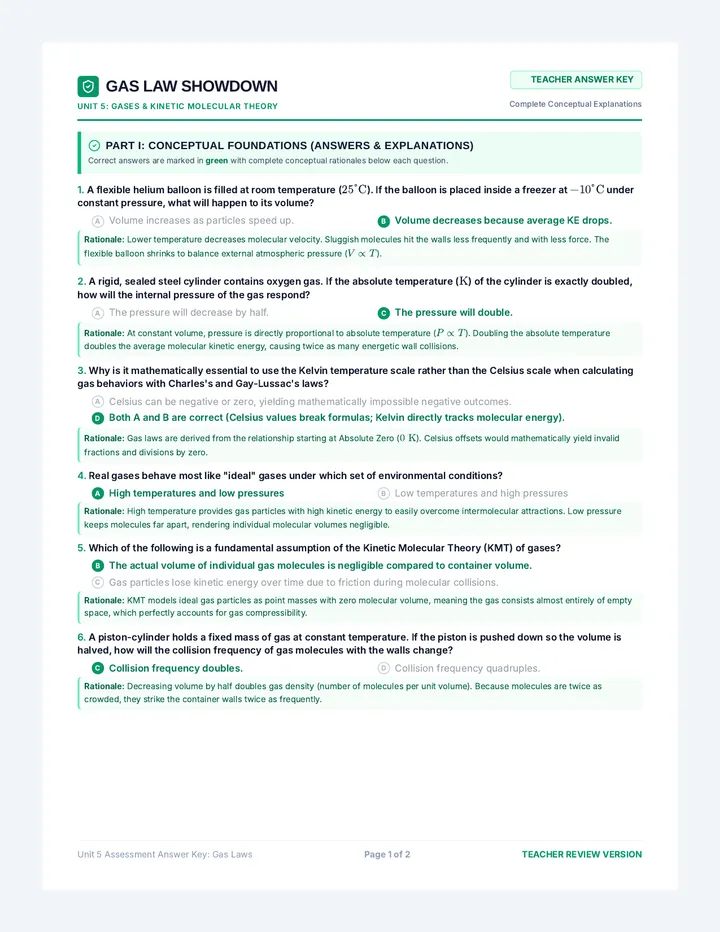
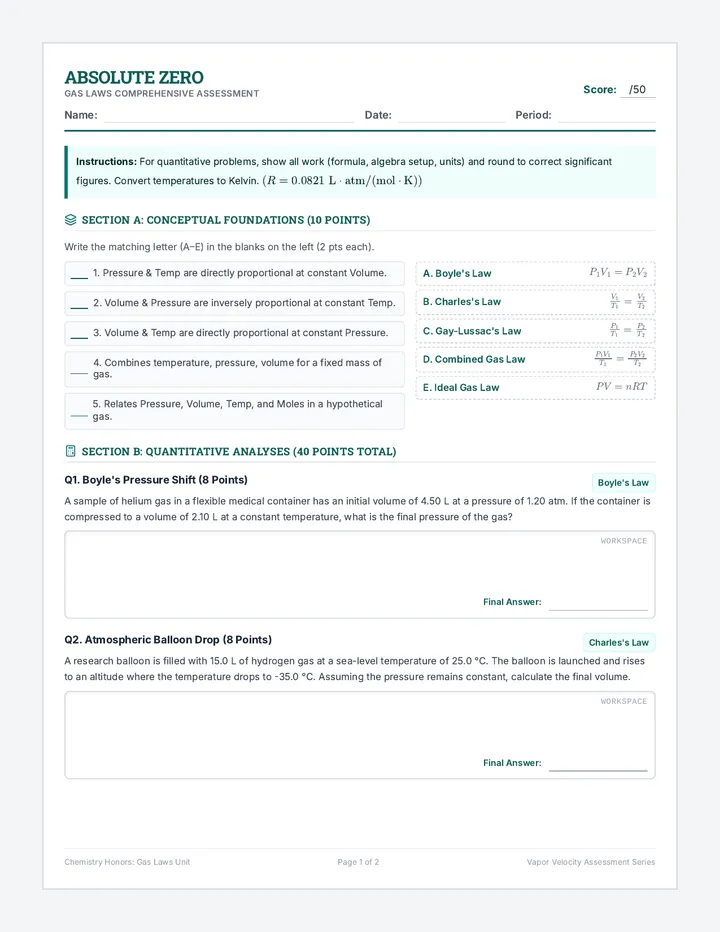
A comprehensive assessment lesson on the behavior of gases. Students demonstrate their understanding of Boyle's, Charles's, Gay-Lussac's, Combined, and Ideal gas laws through theoretical and quantitative problem-solving.
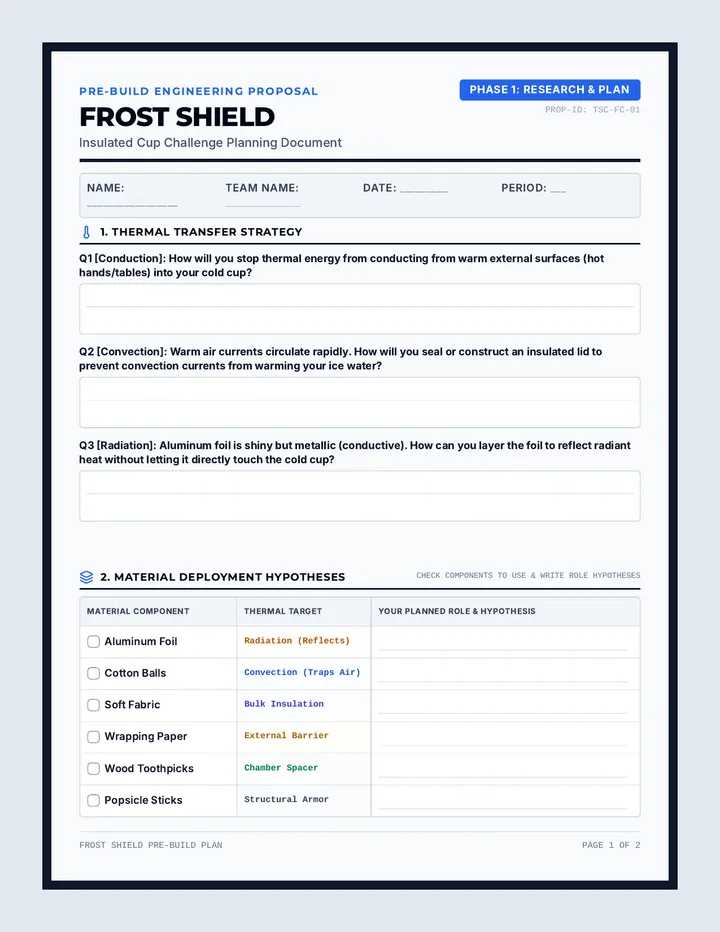
An engineering design challenge where students design, prototype, and test an insulated cup to keep water cold. Emphasizes thermal energy transfer, materials science properties, the engineering process, and data analysis.
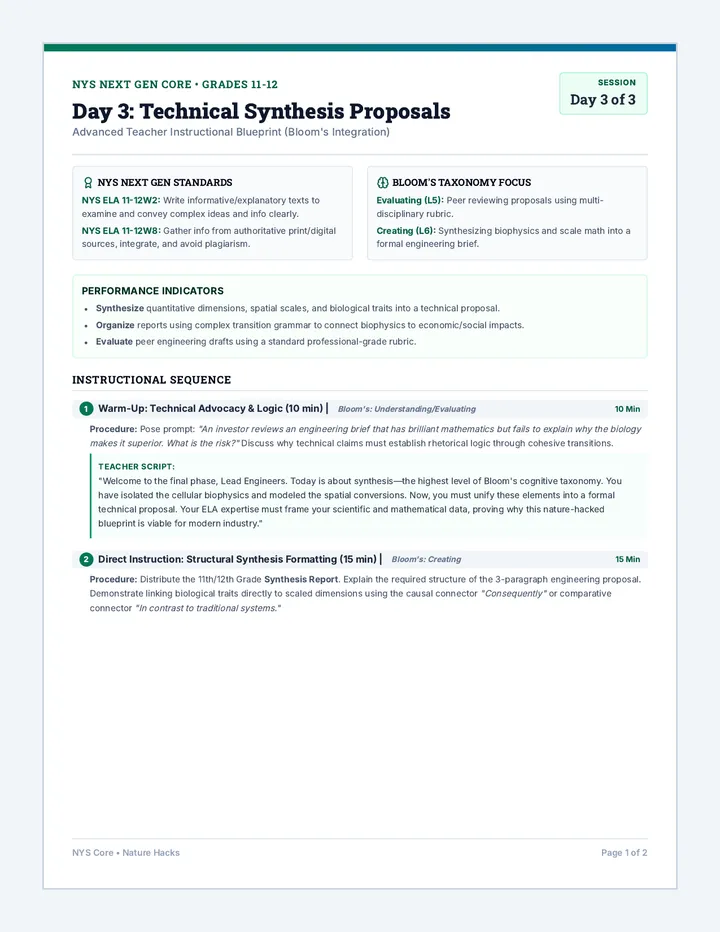
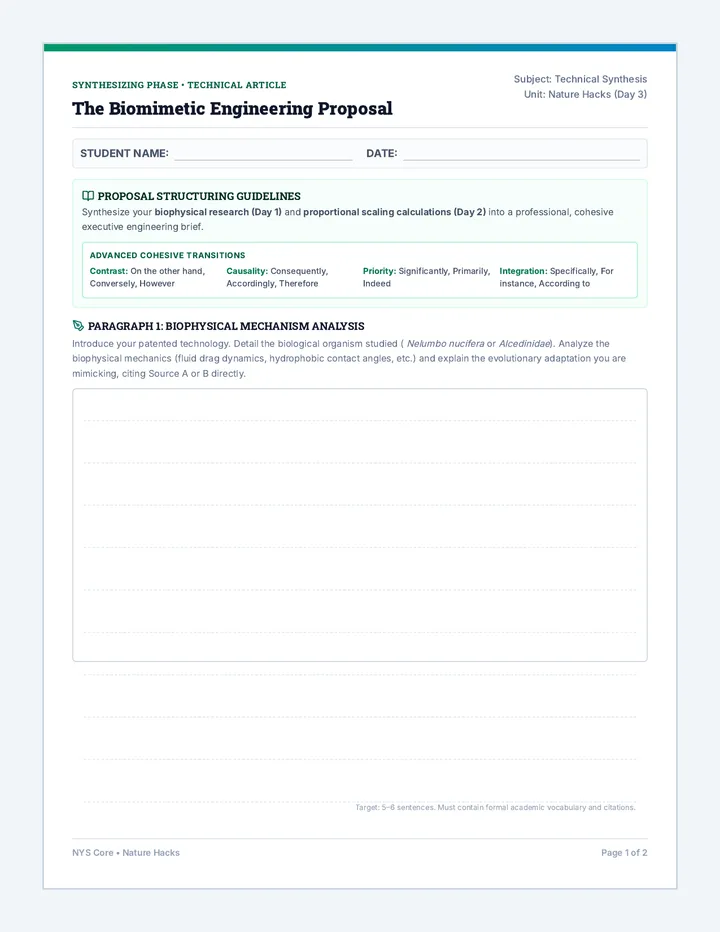
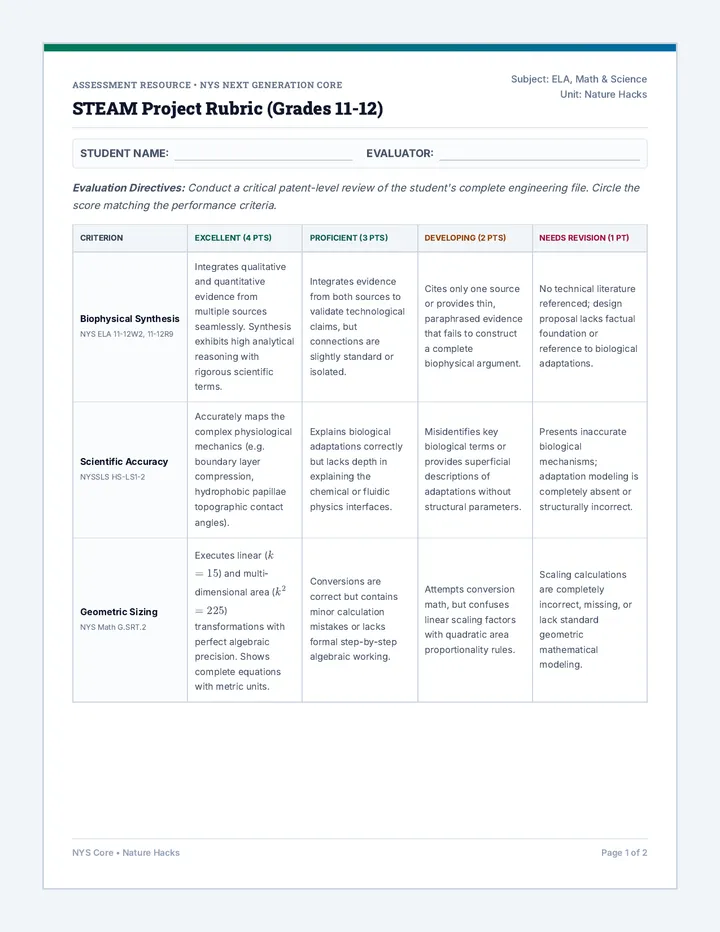
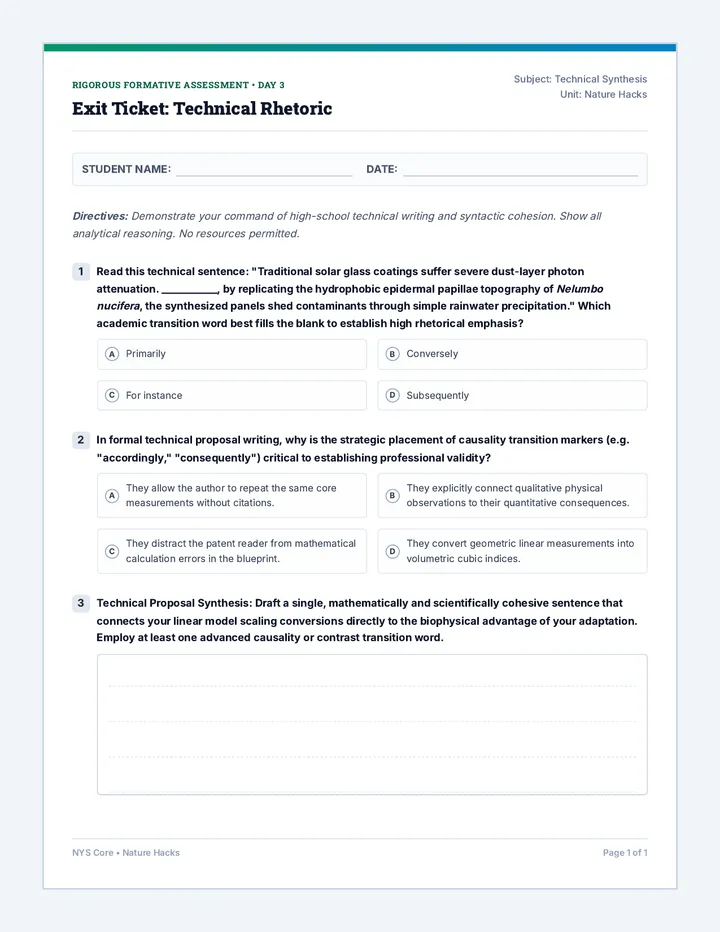
Day 3 of the Nature Hacks unit. Students synthesize their research and engineering blueprints to write a cohesive informational synthesis article, and complete a multi-disciplinary rubrics-based self-assessment.
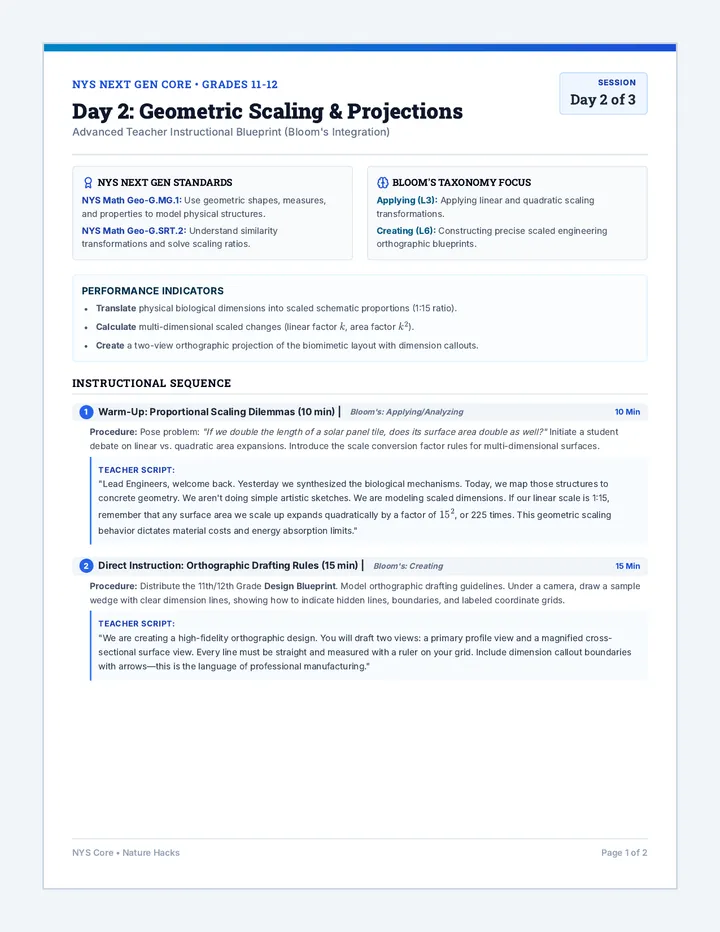
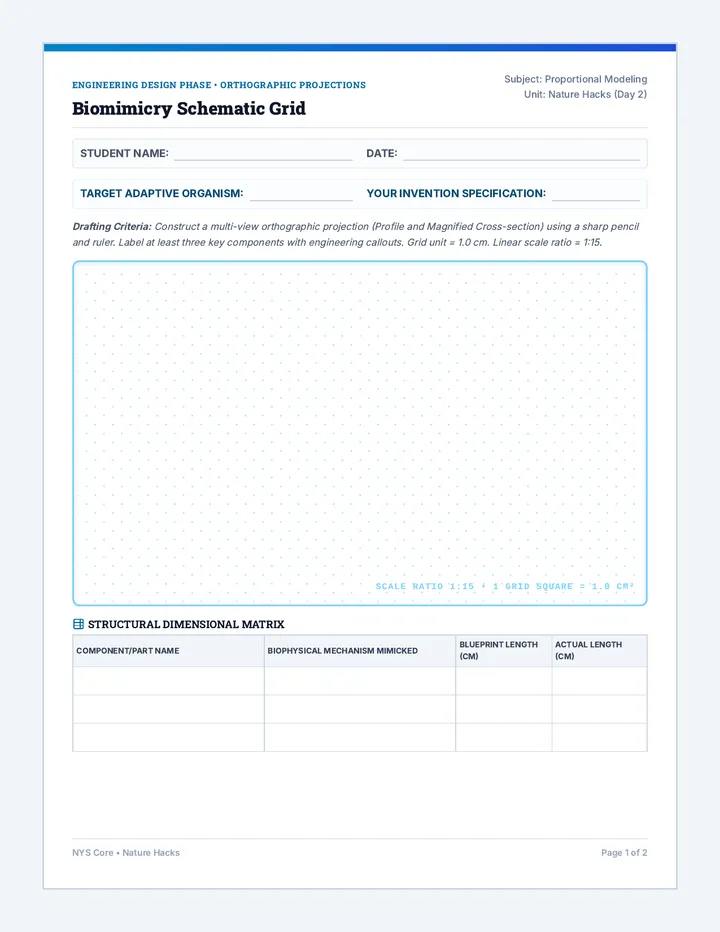
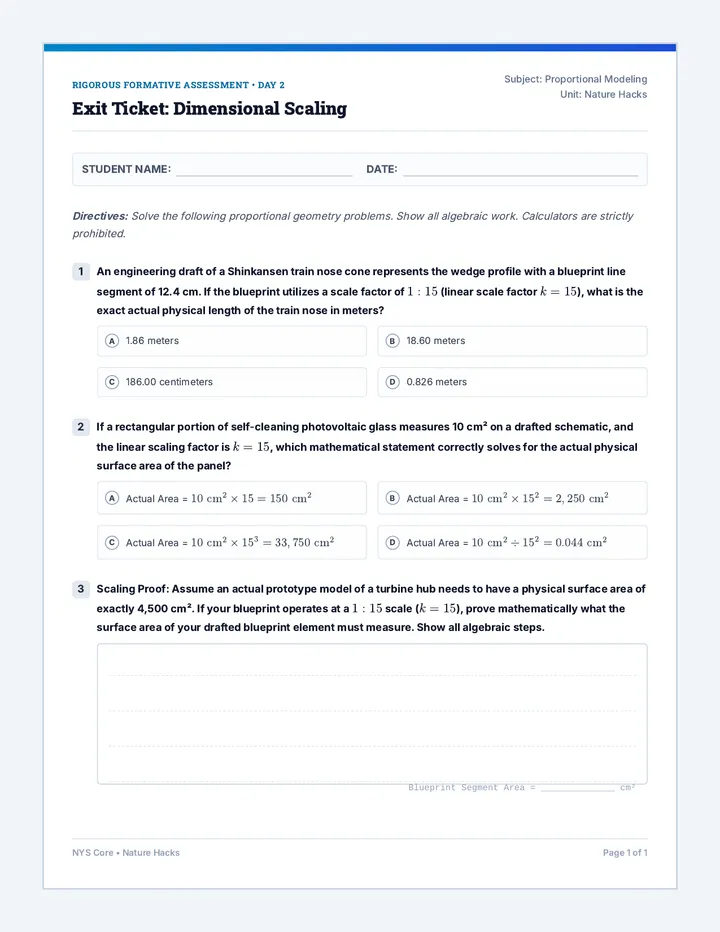
Day 2 of the Nature Hacks unit. Students draft schematic drawings of their biomimetic solutions, apply scale factor mathematics to size their designs, and write technical specifications.
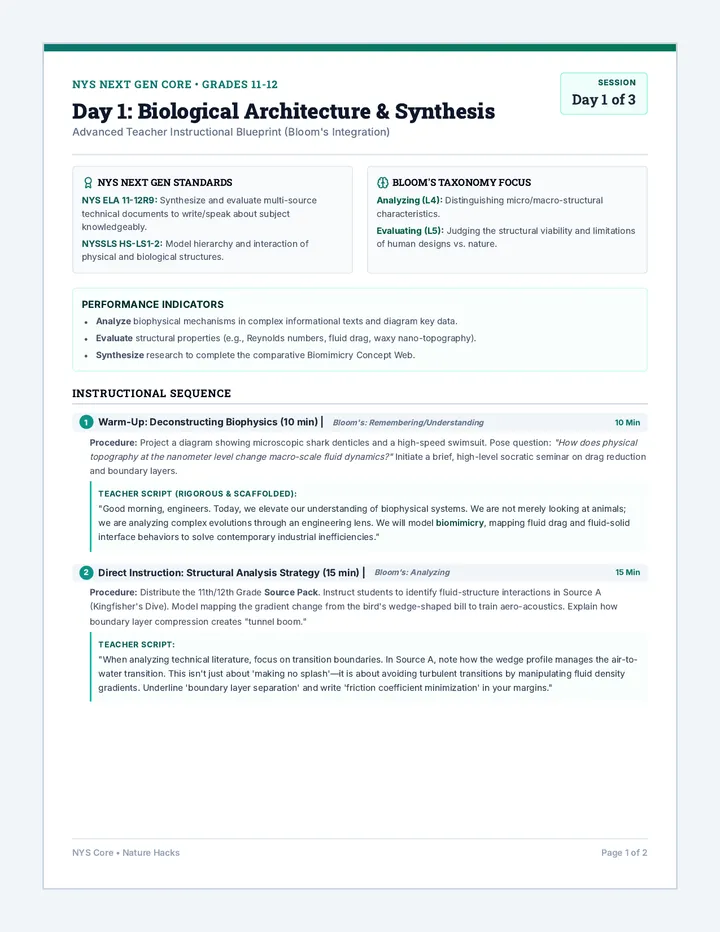
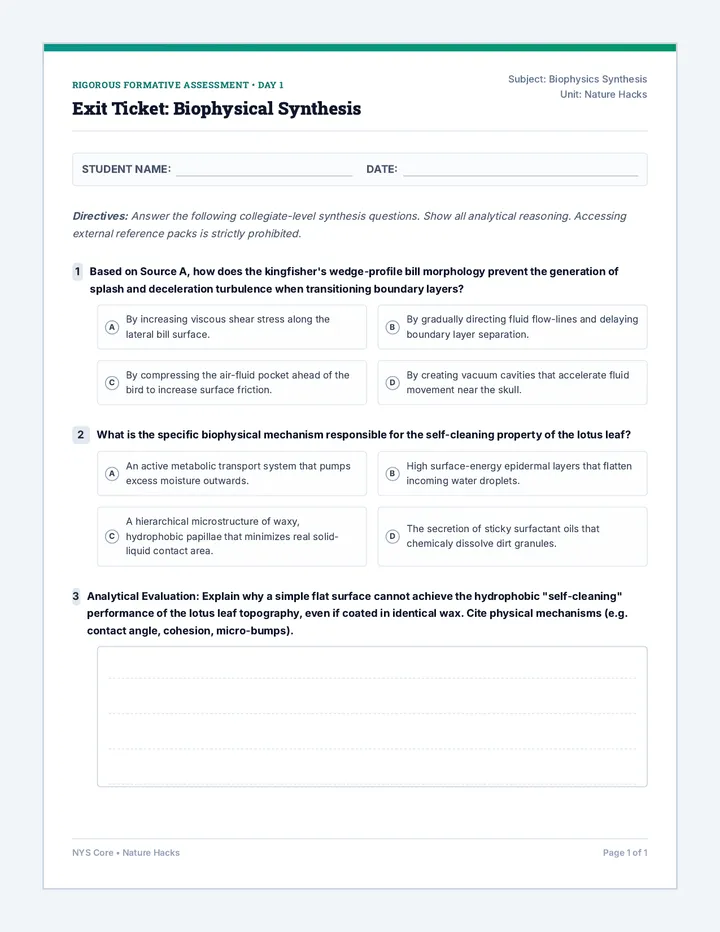
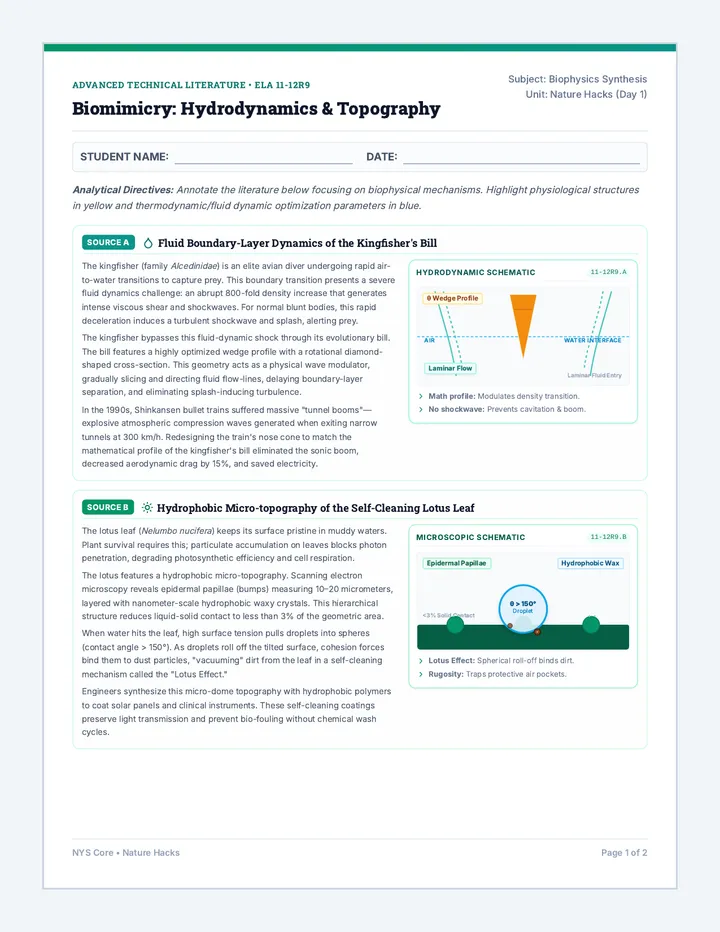
Day 1 of the Nature Hacks unit. Students explore the concept of biomimicry, read informational sources about animal/plant adaptations, and extract key data for their engineering designs.
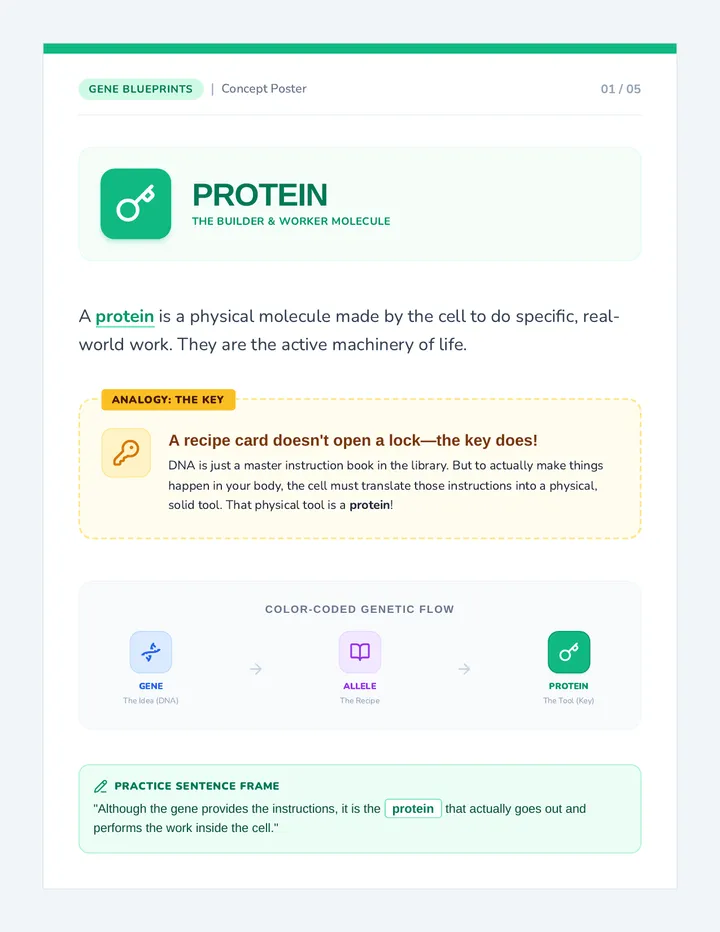
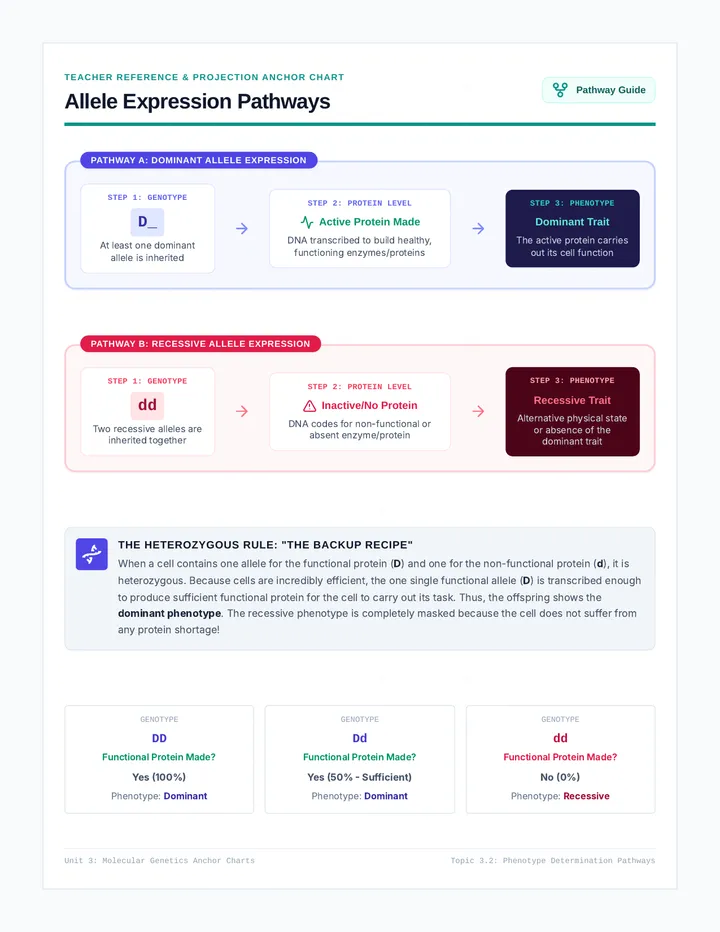
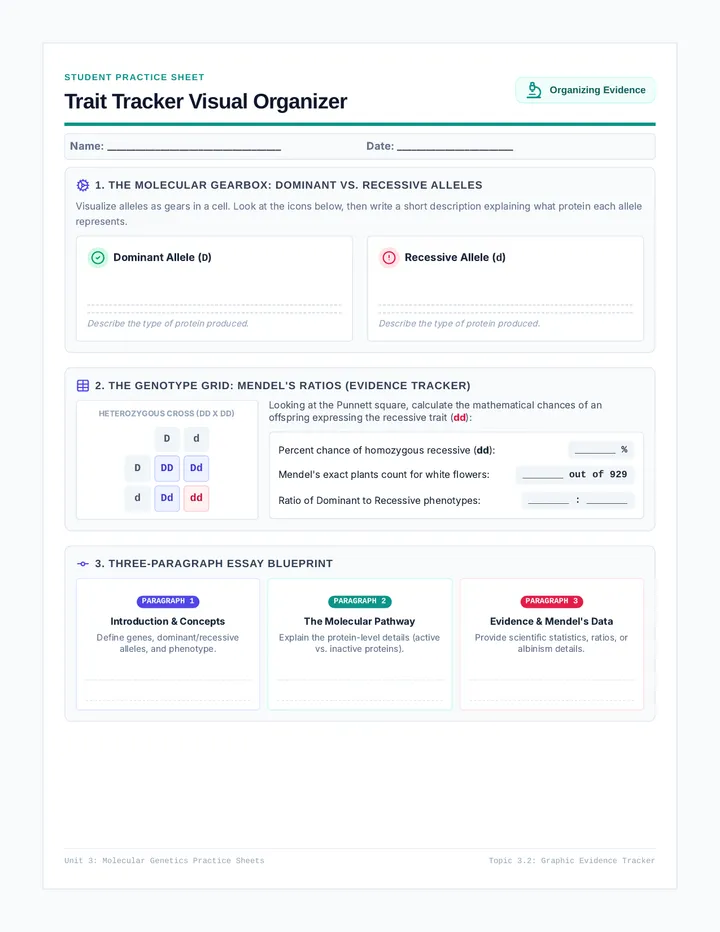
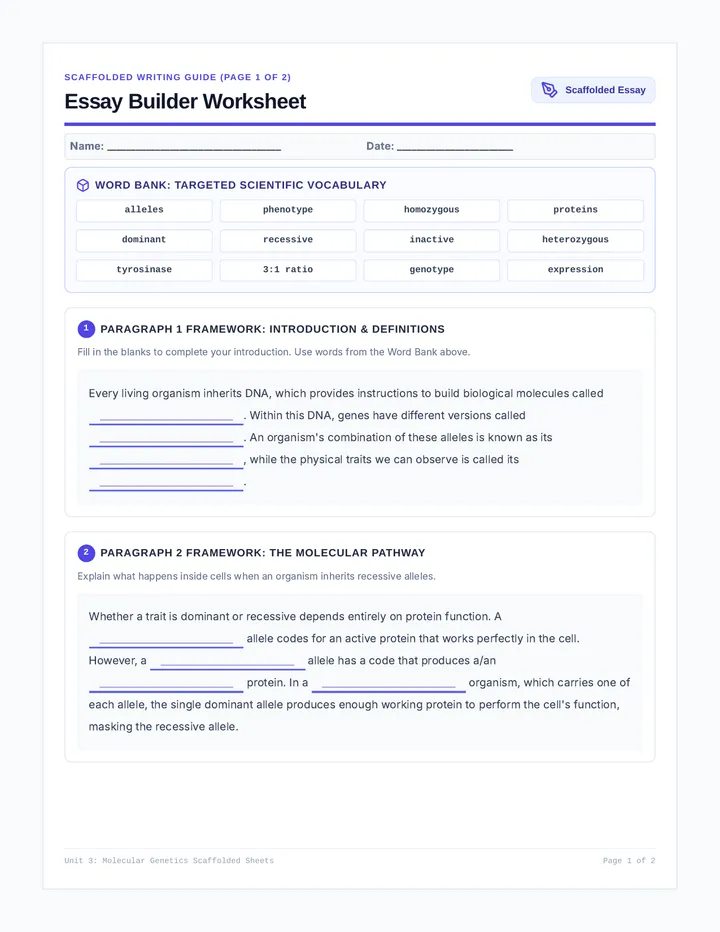
A visual-heavy biology lesson focused on clarifying the relationships between genes, alleles, proteins, and heterozygous states using concrete analogies, color-coding, and structured sentence frames.
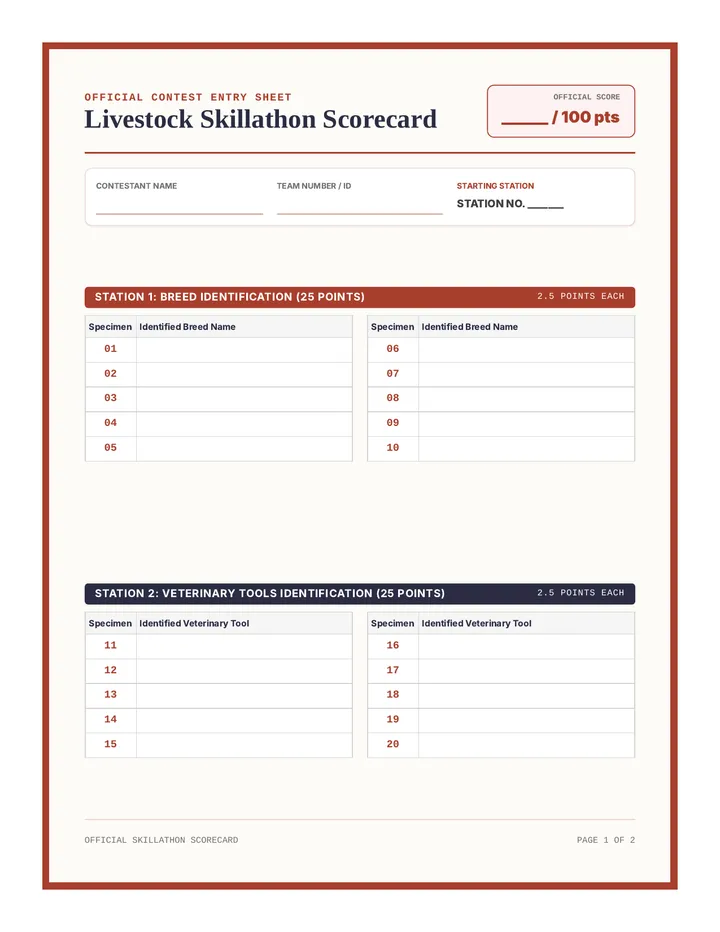
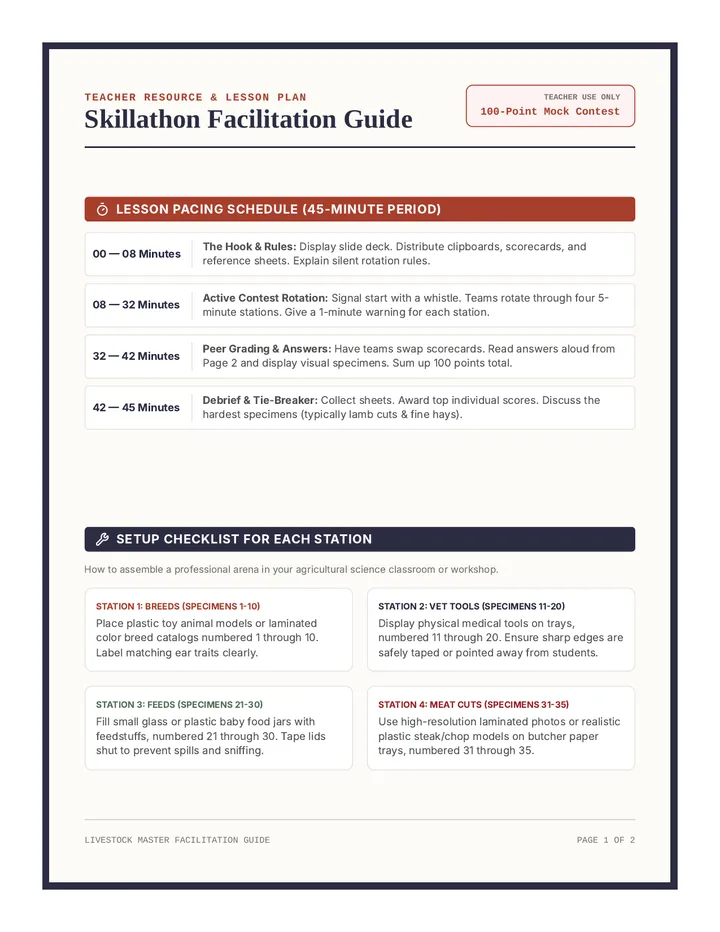
Students participate in a high-stakes, realistic mock Livestock Skillathon, rotating through four hands-on stations to test their knowledge and earn points.
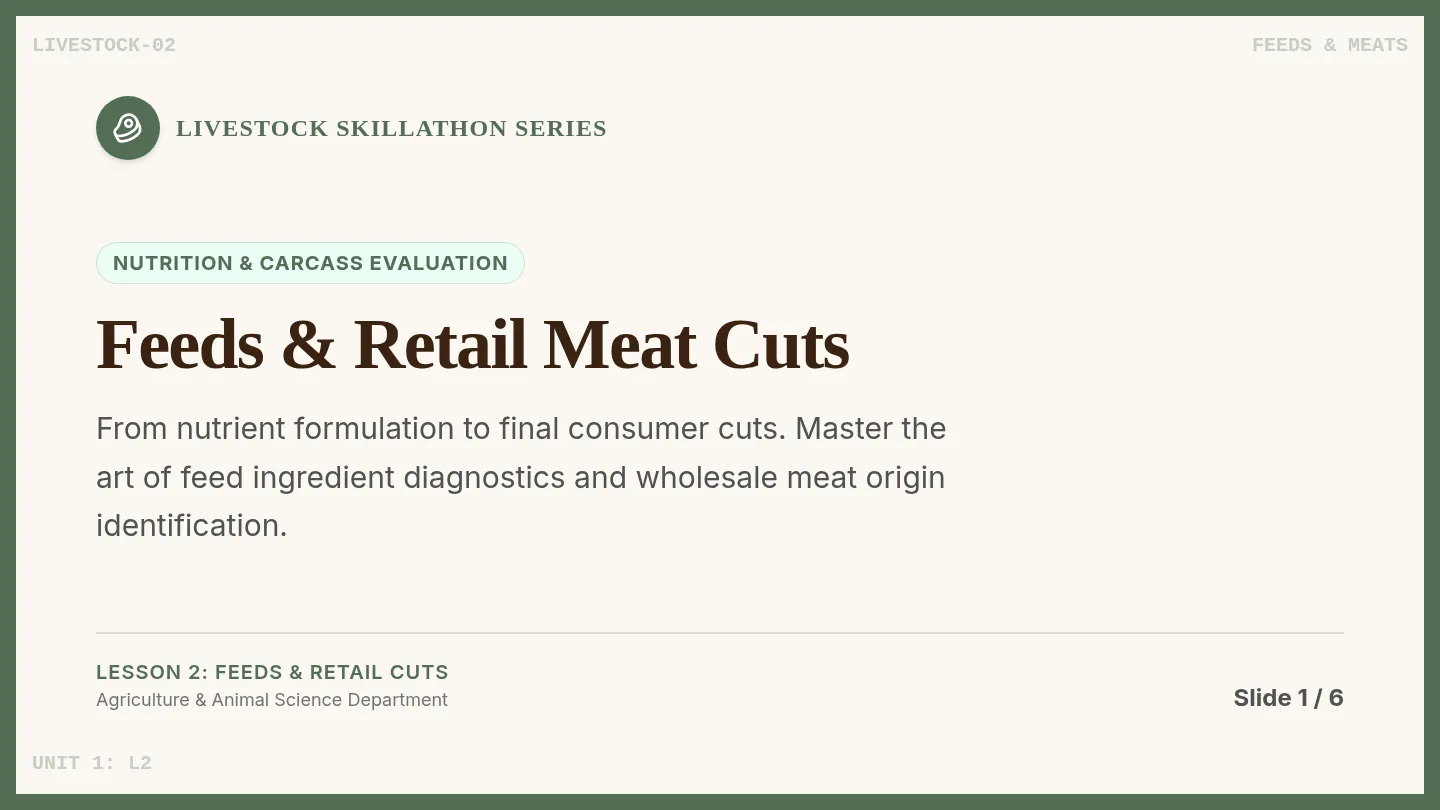
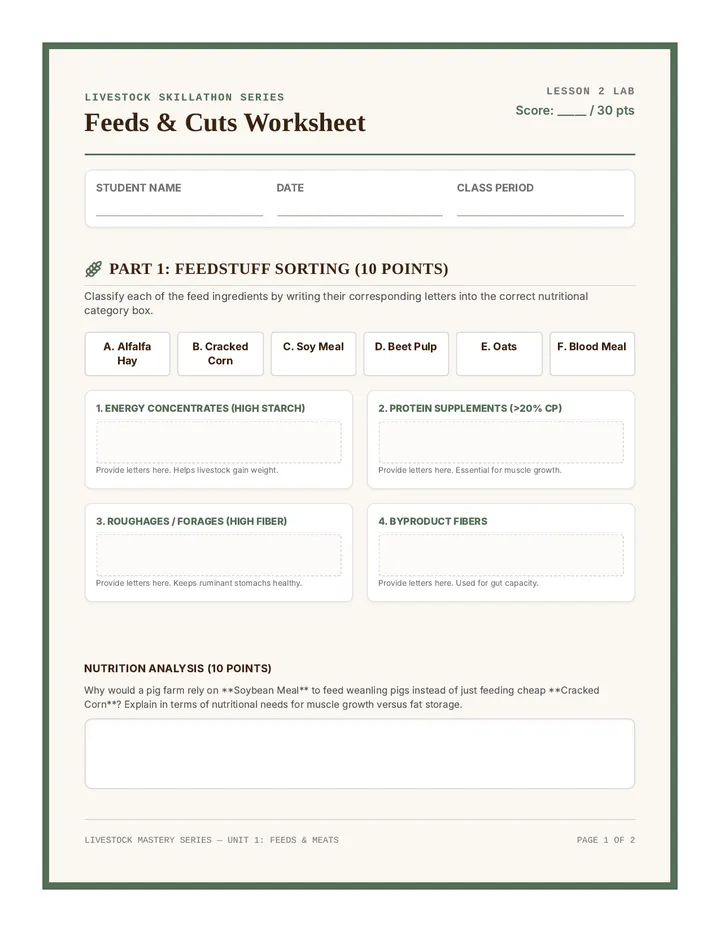
Students learn to identify common feed ingredients and forages, and practice identifying retail cuts of beef, pork, and lamb by wholesale origin and cooking style.
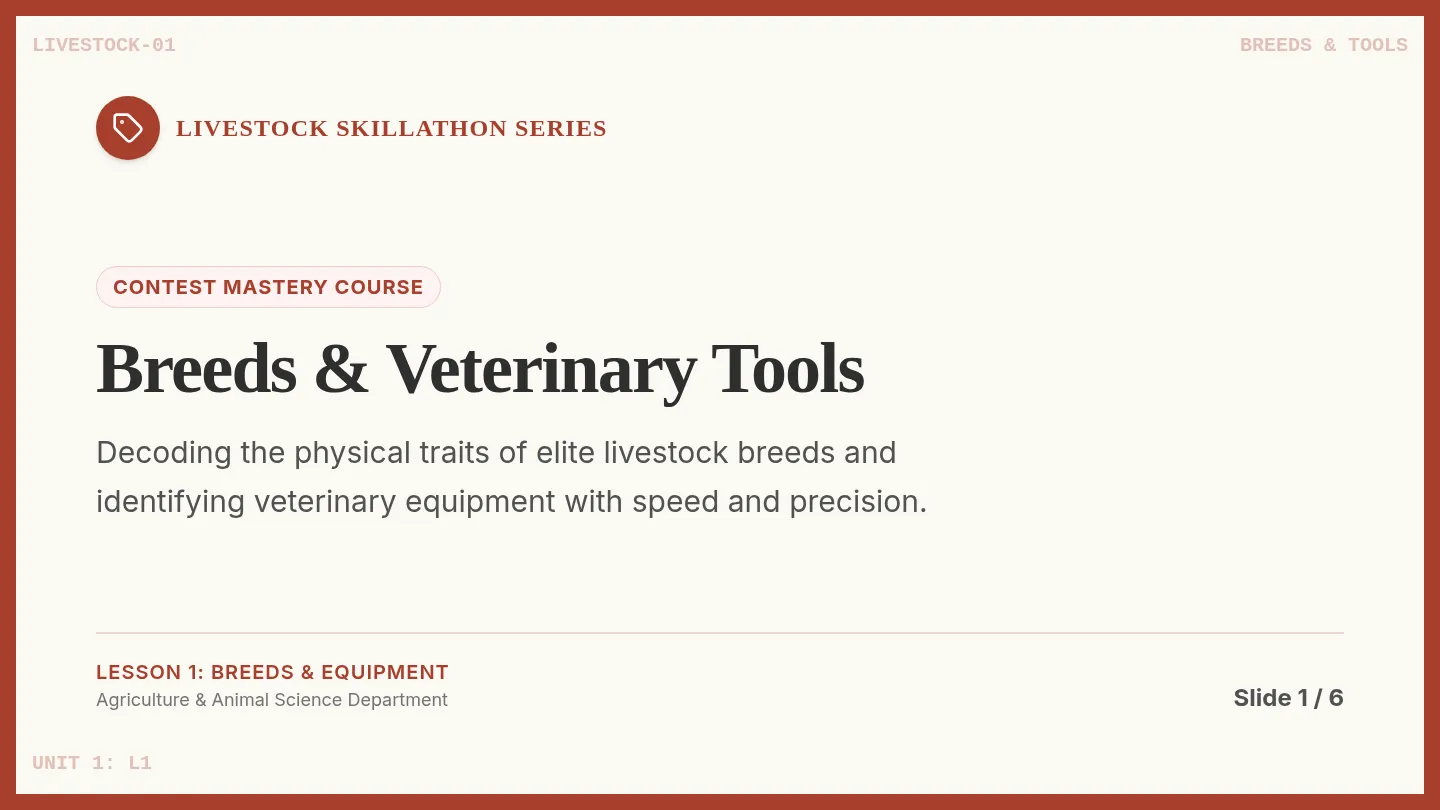
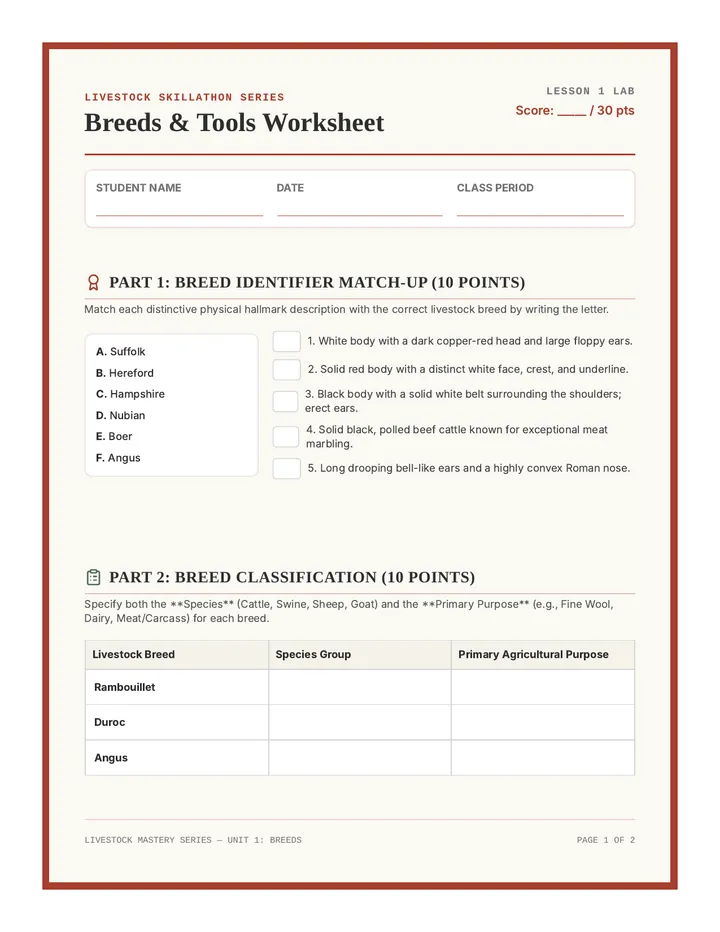
Students learn to identify major breeds of beef cattle, swine, sheep, and goats, along with essential veterinary, handling, and breeding equipment.
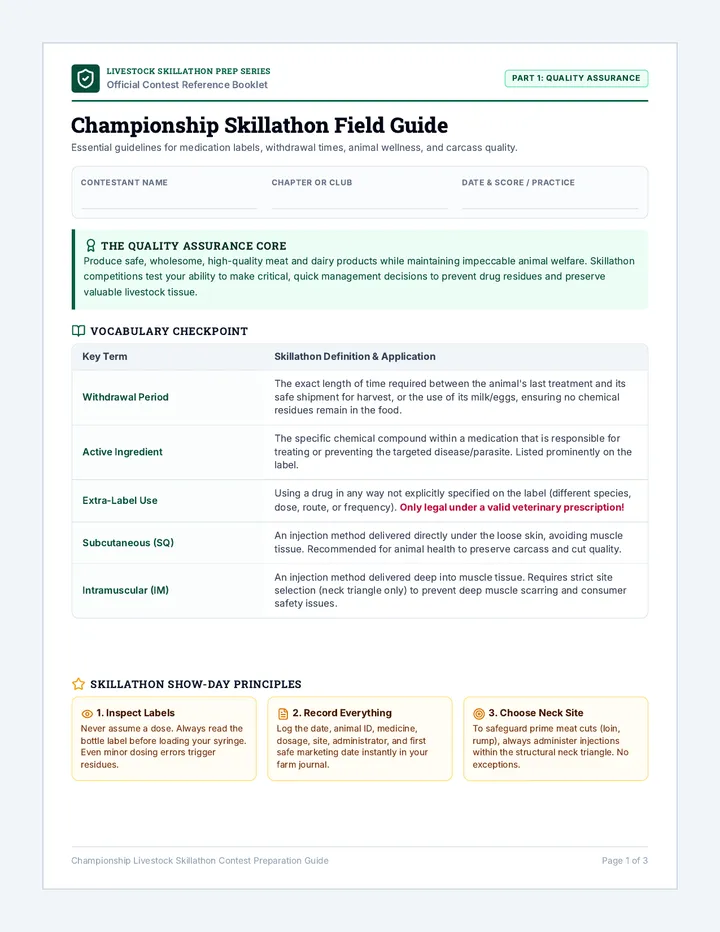
A comprehensive preparation lesson for youth competing in livestock skillathon contests. Covers crucial quality assurance principles, reading medication labels, calculating withdrawal times, and executing proper injection practices to ensure animal health and food safety.
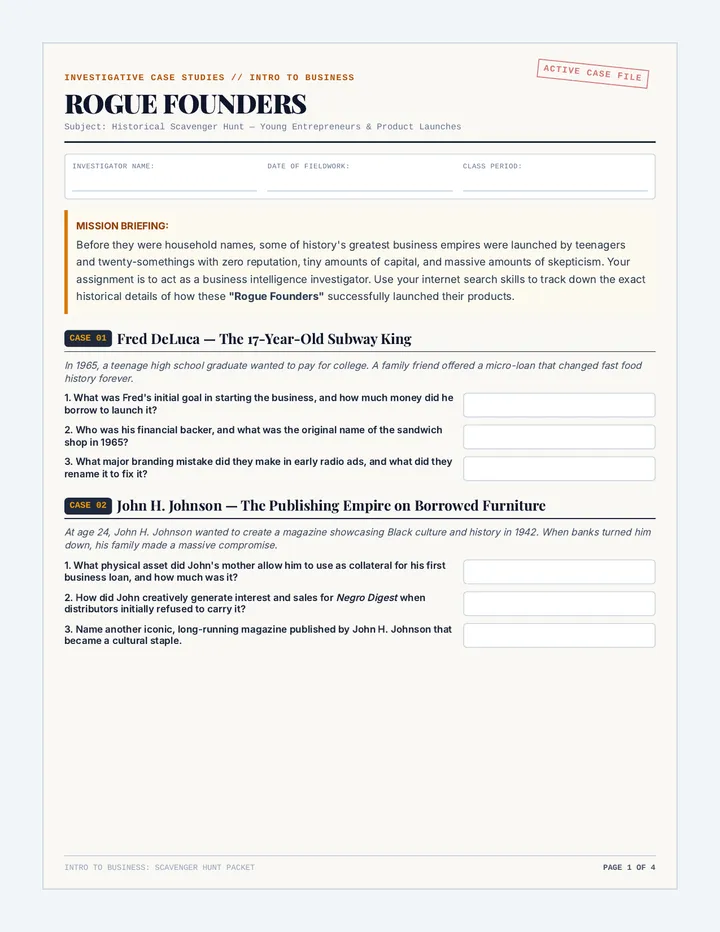
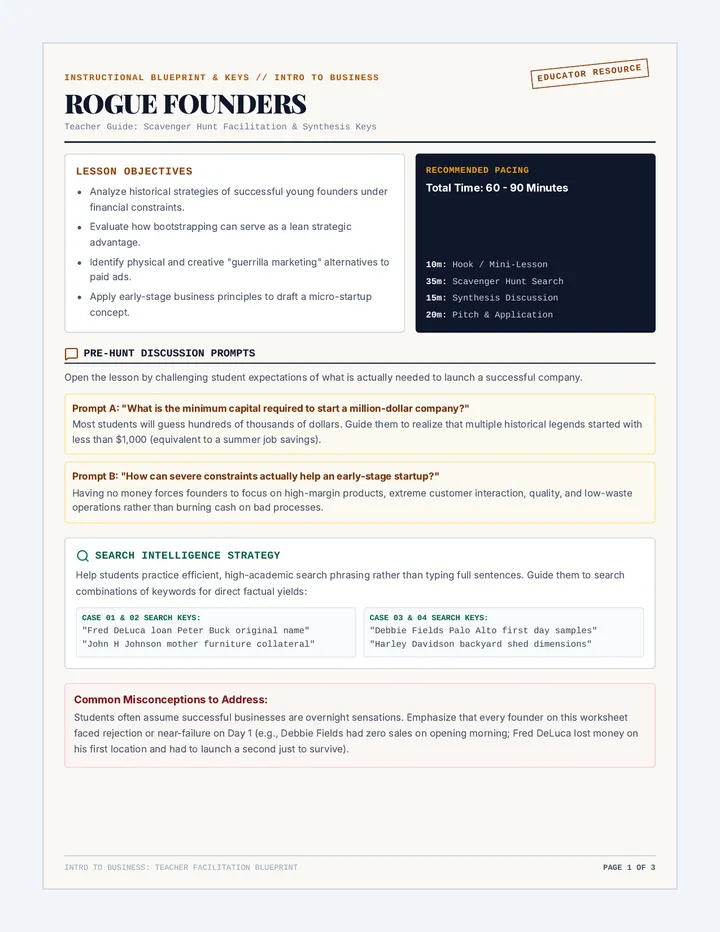
A high school introduction to business lesson exploring the journeys of historical young entrepreneurs who defied the odds. Students conduct an internet scavenger hunt to investigate their startup strategies, financial hurdles, and marketing breakthroughs.
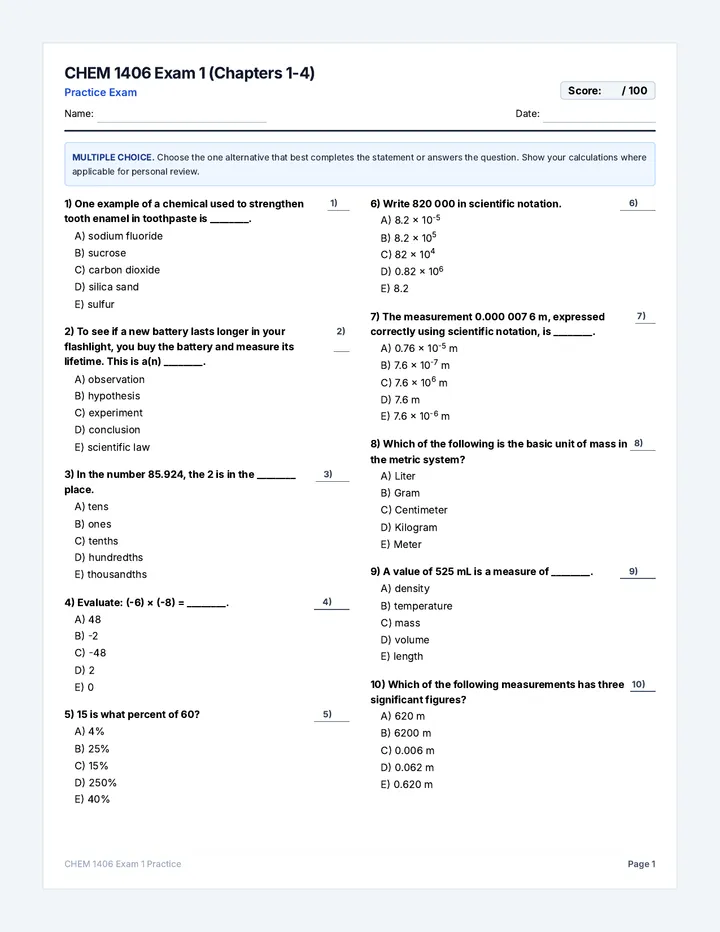
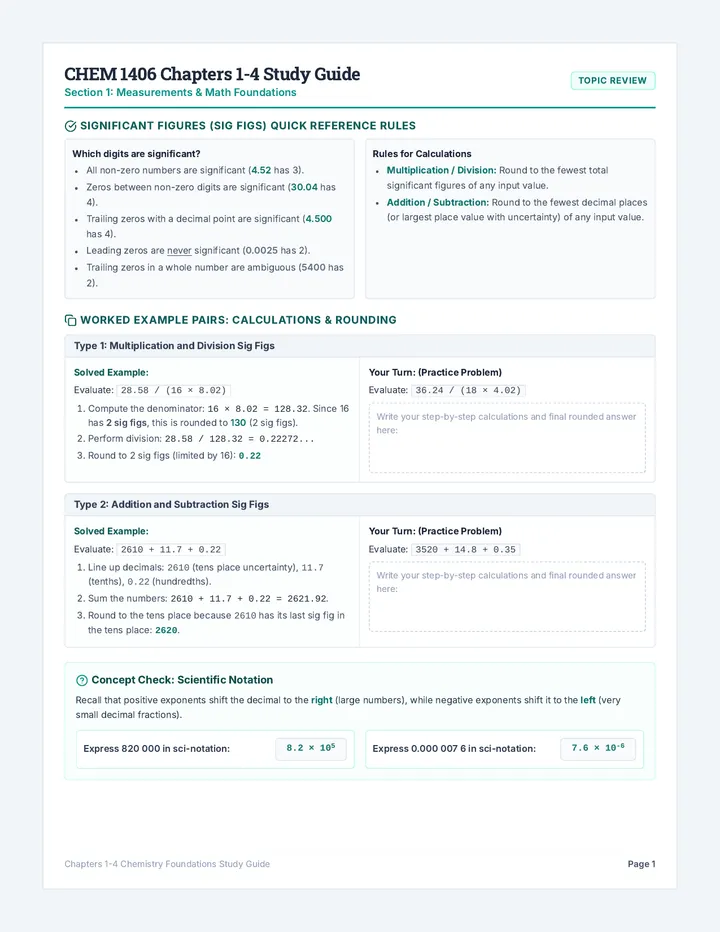
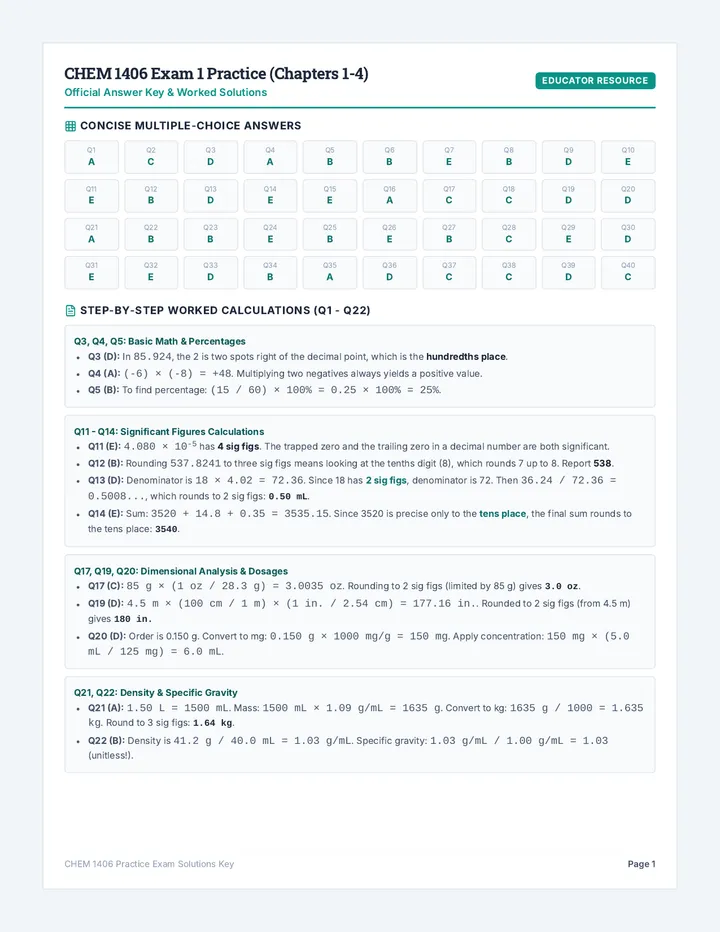
Comprehensive preparation unit covering chemistry fundamentals from Chapters 1 to 4, including scientific measurements, matter, energy, and atomic structure. Contains a parallel practice exam, a detailed study guide, and an answer key with worked solutions.
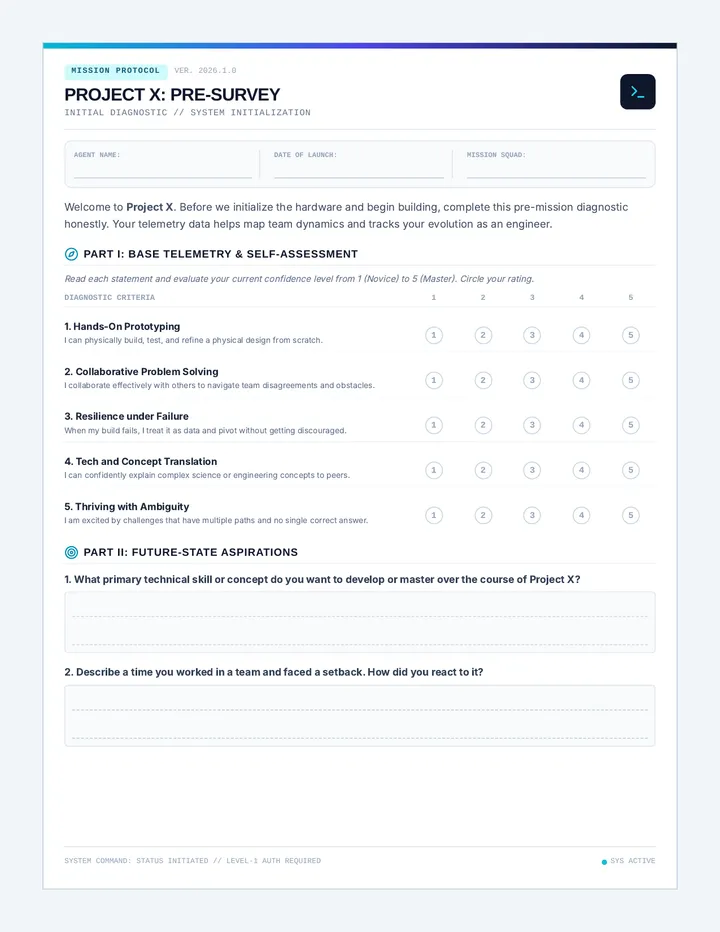
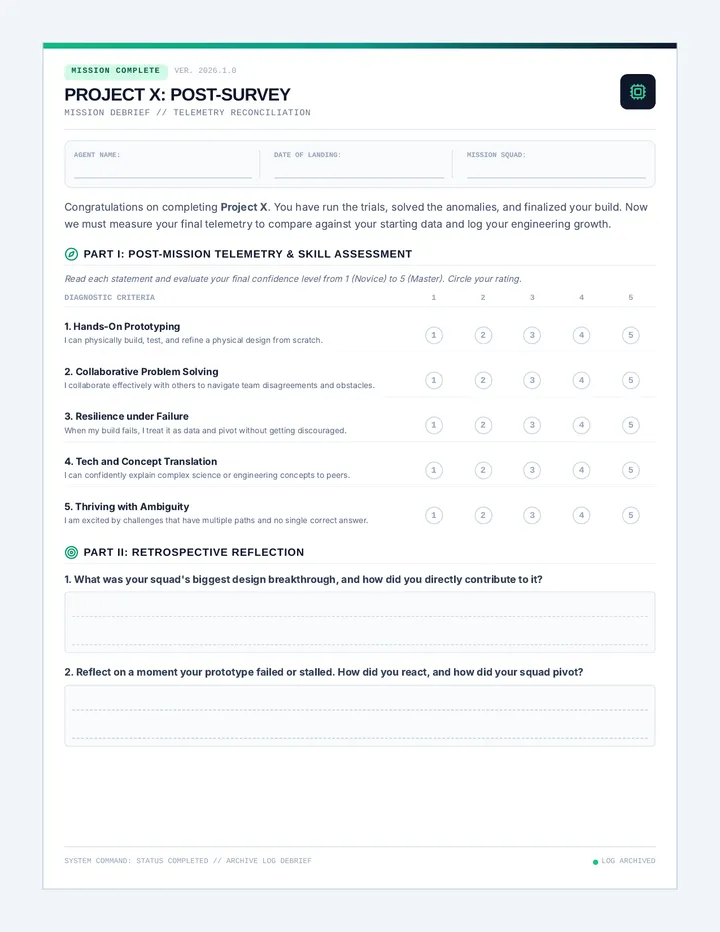
A student-centered engineering and design initiative where students engage in hands-on science and technology challenges. This lesson contains the pre- and post-surveys to measure students' growth in confidence, teamwork, and technical skills.
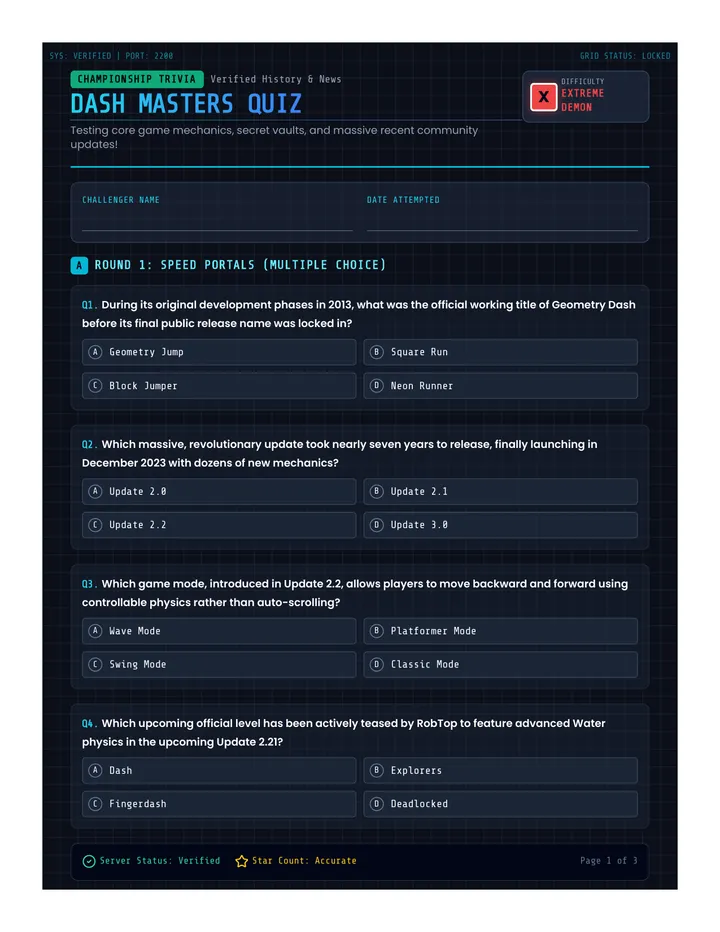
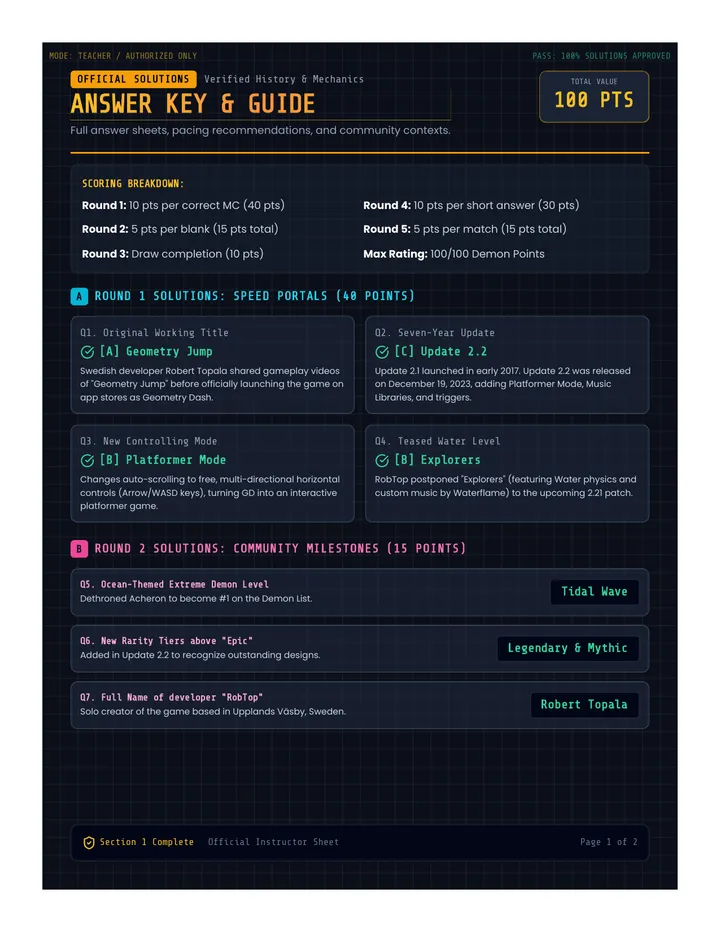
A fun-filled, competitive trivia challenge centered around the history, mechanics, and recent community updates of the sensation Geometry Dash. Perfect for gaming clubs, brain breaks, or student-led activities.
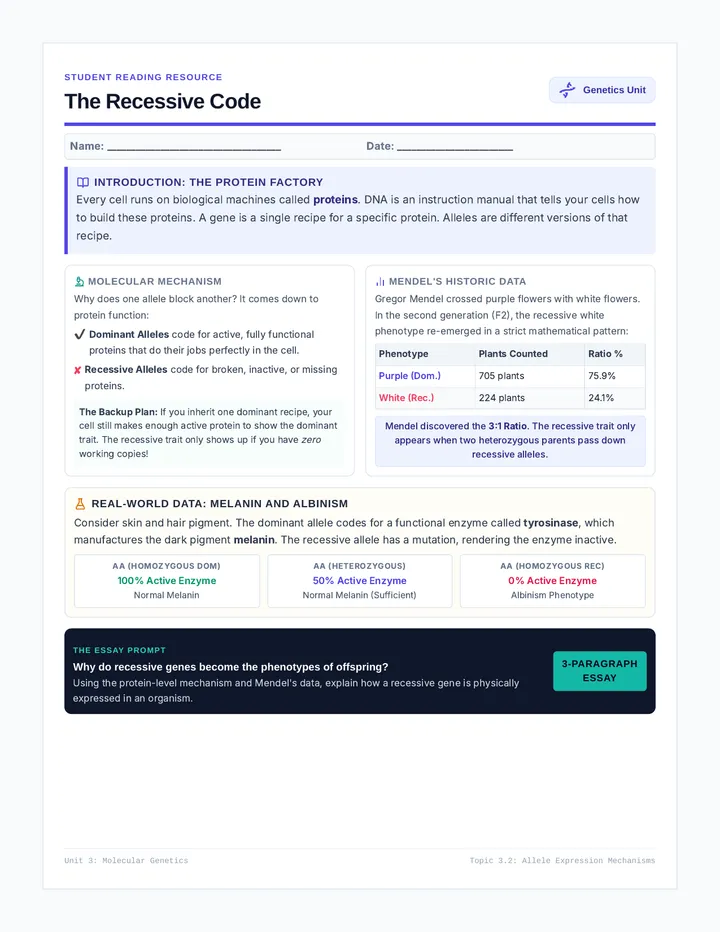
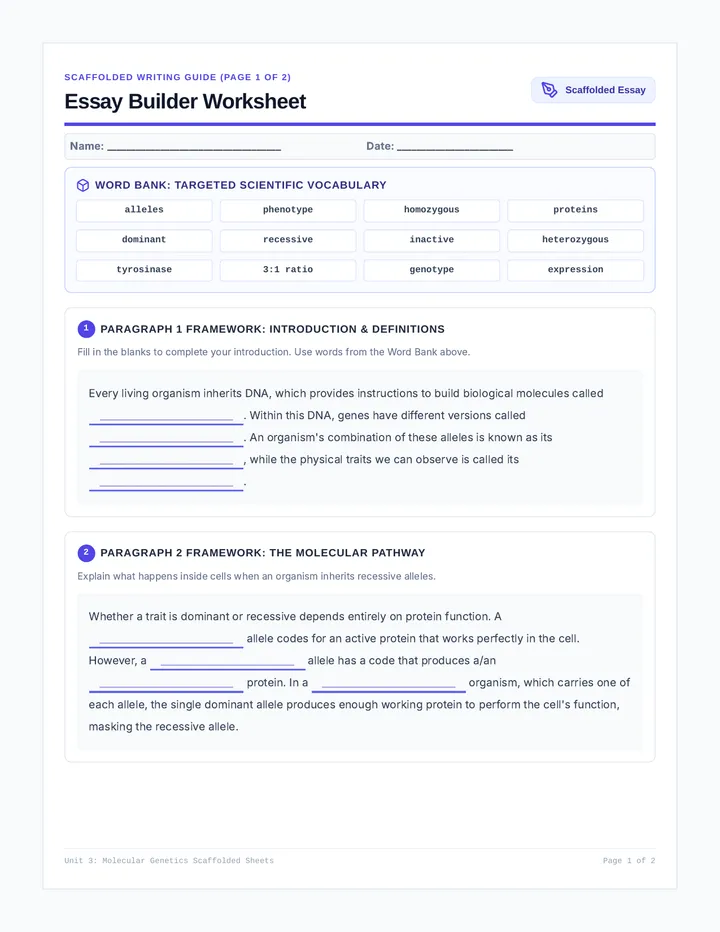
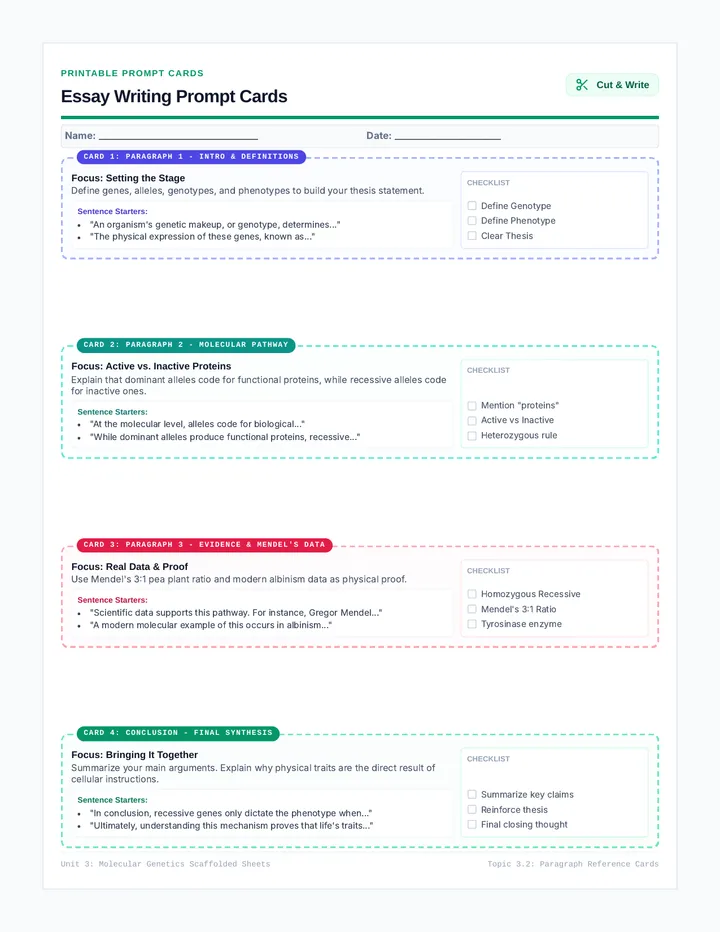
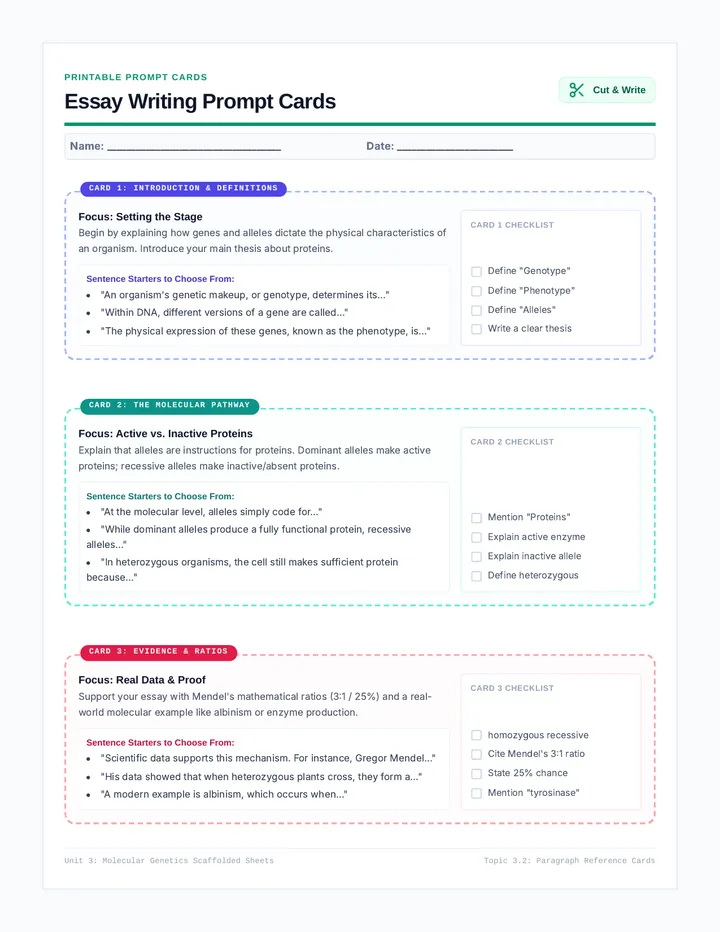
A comprehensive genetics lesson scaffolding the science of recessive gene expression. Students analyze molecular pathways, Mendel's data, and complete a structured three-paragraph essay using visual guides and sentence starters.
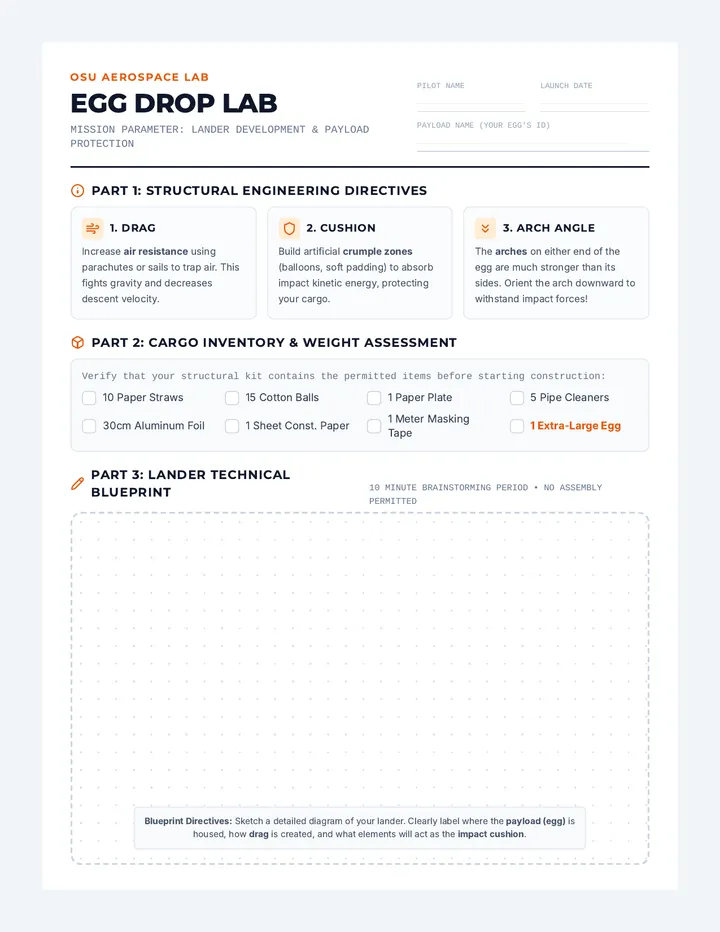
An engaging, hands-on physics and engineering lesson where students design, build, and test protective landing craft for fragile payloads (eggs), exploring forces, deceleration, and structural integrity.
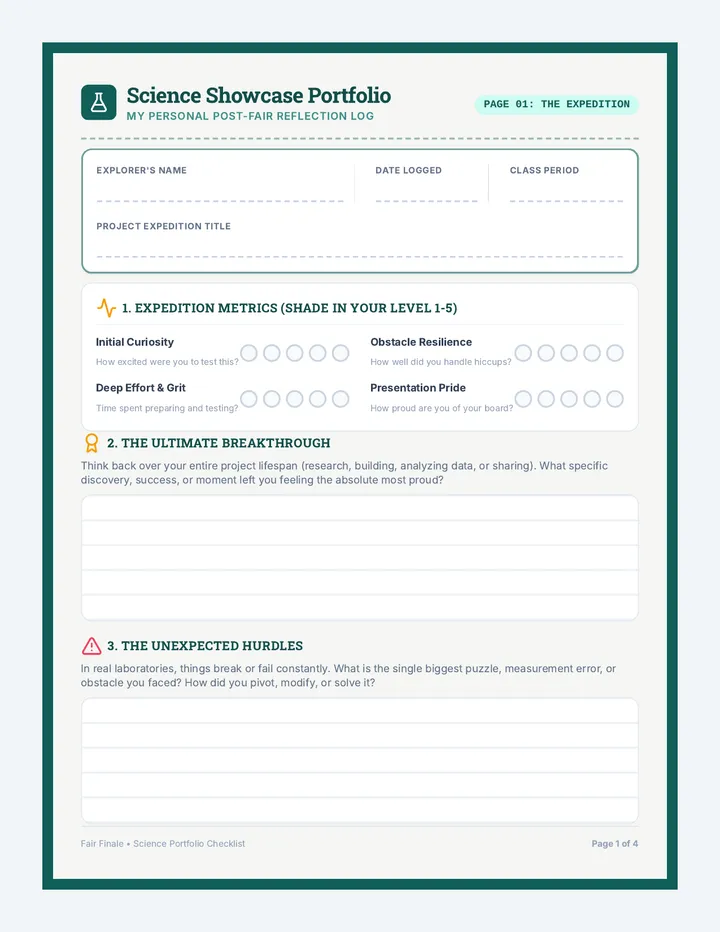
A reflection-focused lesson designed to guide students through evaluating their own science fair projects, reviewing their peers' work, and outlining future experimental improvements.
A comprehensive NYS Biology Regents preparation lesson focused on mastering the Claim-Evidence-Reasoning (CER) framework through the lens of Homeostasis and Feedback Mechanisms (specifically blood glucose regulation). Designed with heavy scaffolding, visual organizers, and multiple-choice matching for struggling learners.