Day 3 of the Nature Hacks unit. Students synthesize their research and engineering blueprints to write a cohesive informational synthesis article, and complete a multi-disciplinary rubrics-based self-assessment.
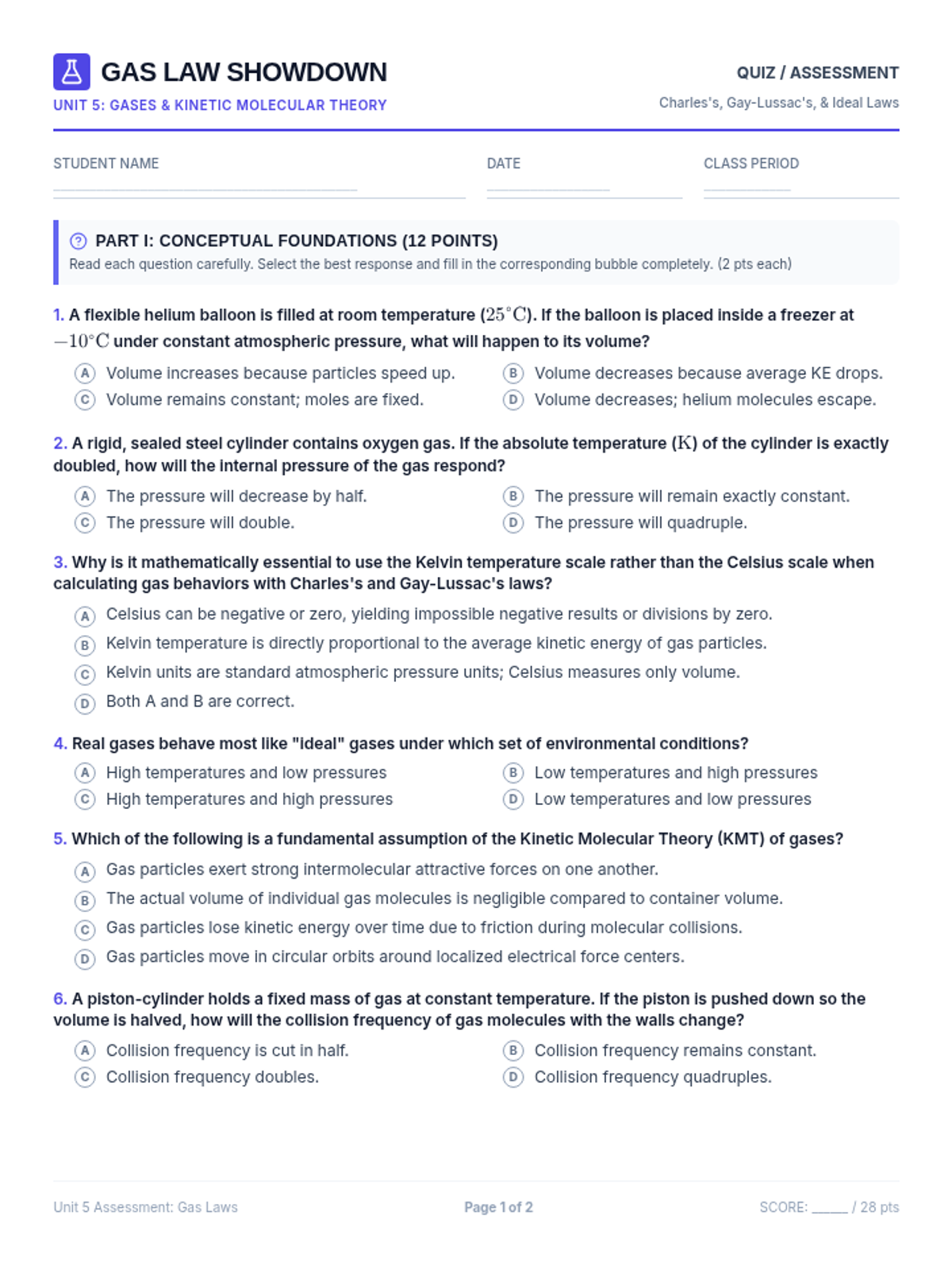
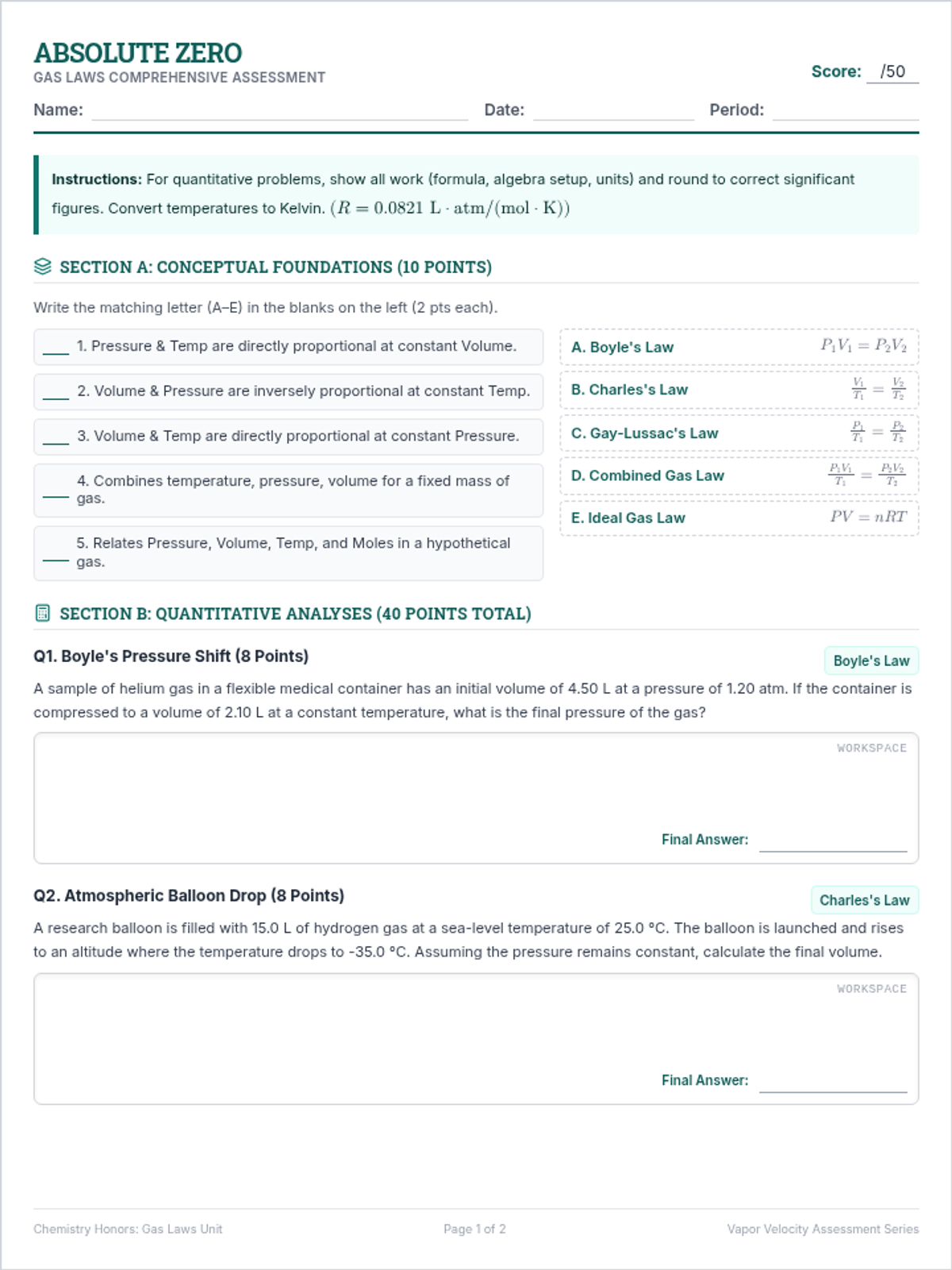
A rigorous assessment lesson covering Charles's Law, Gay-Lussac's Law, and the Ideal Gas Law. Students demonstrate understanding through conceptual multiple-choice questions and solve multi-step algebraic calculations with gas behavior formulas.
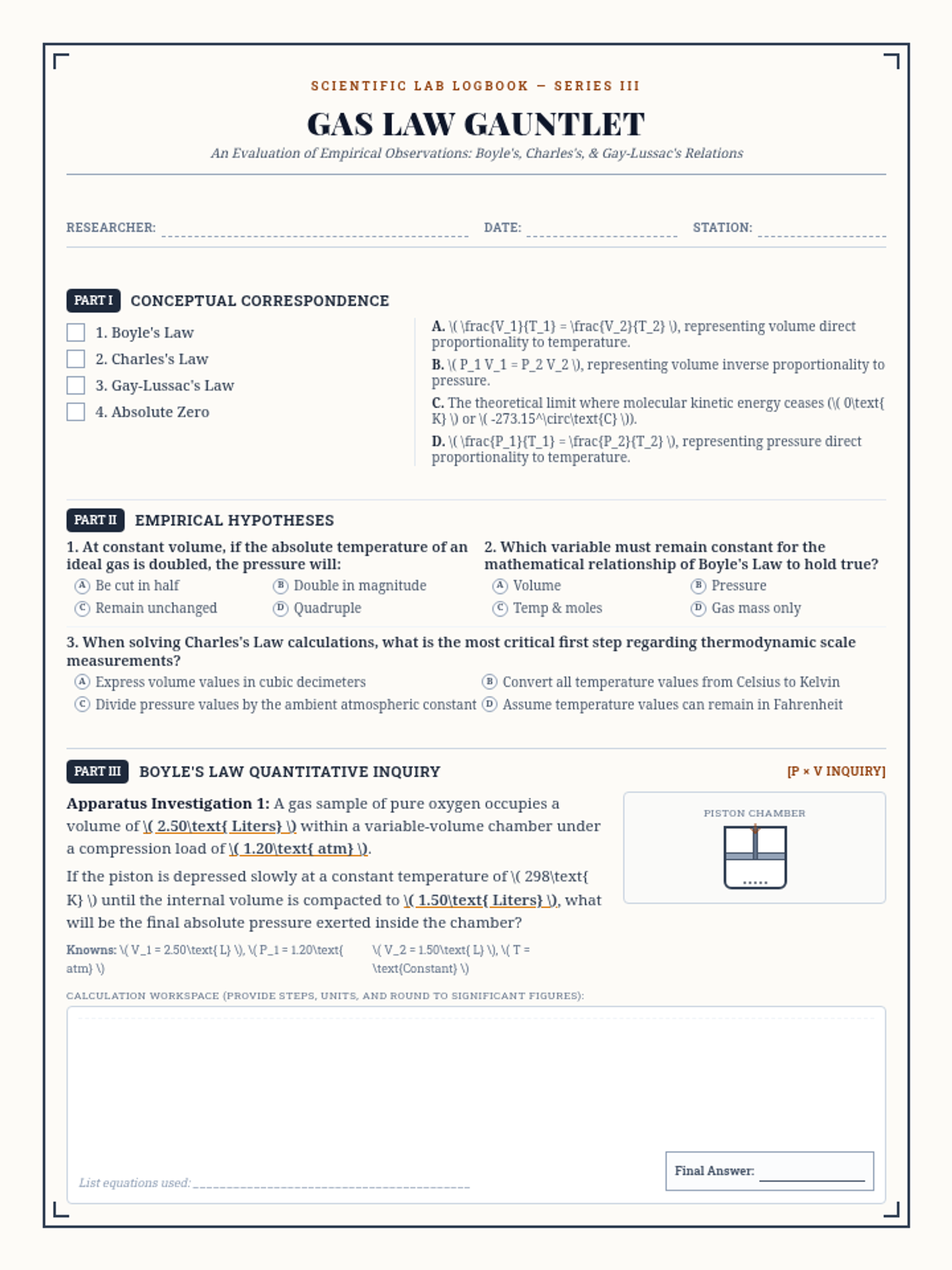
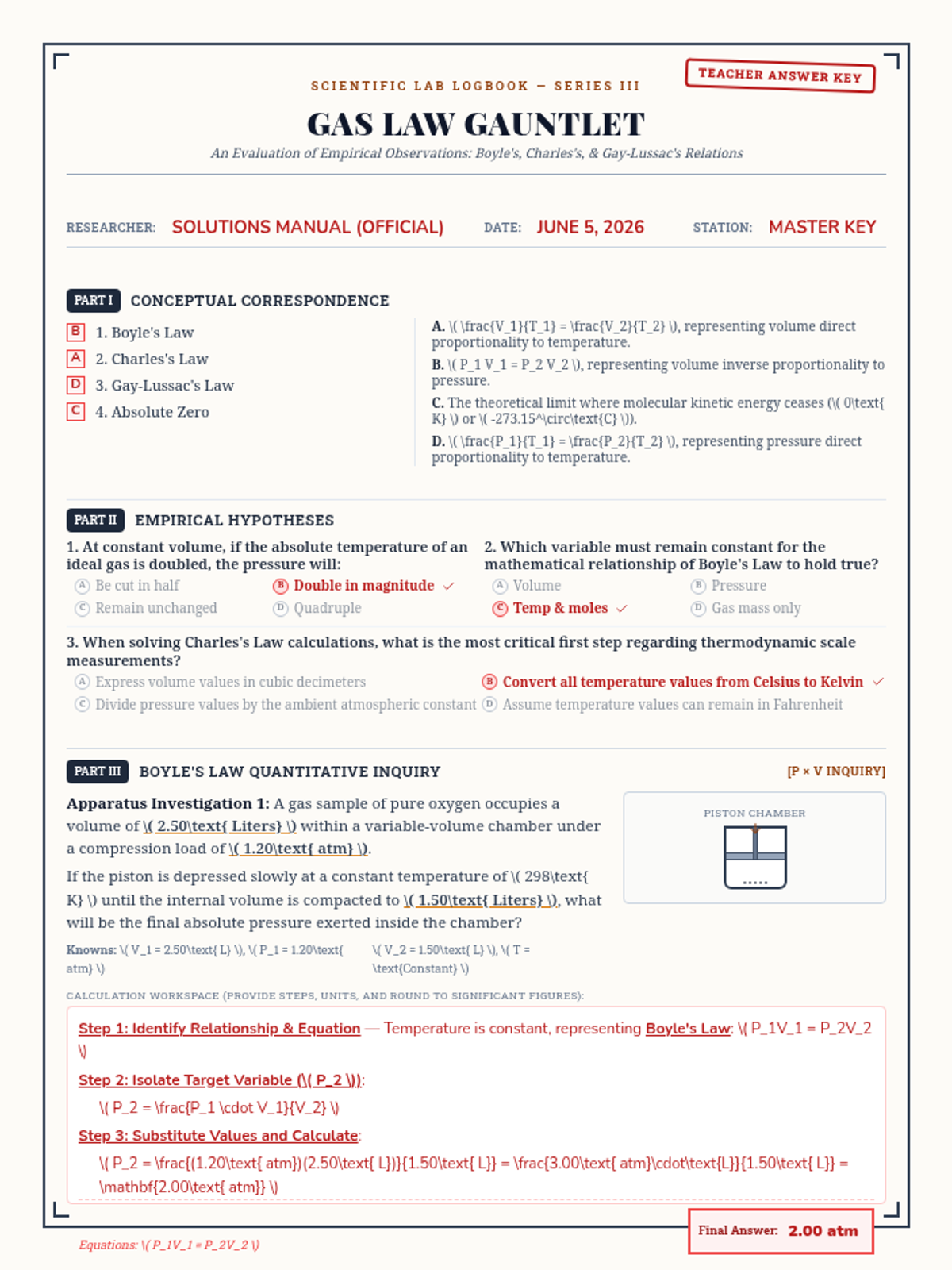
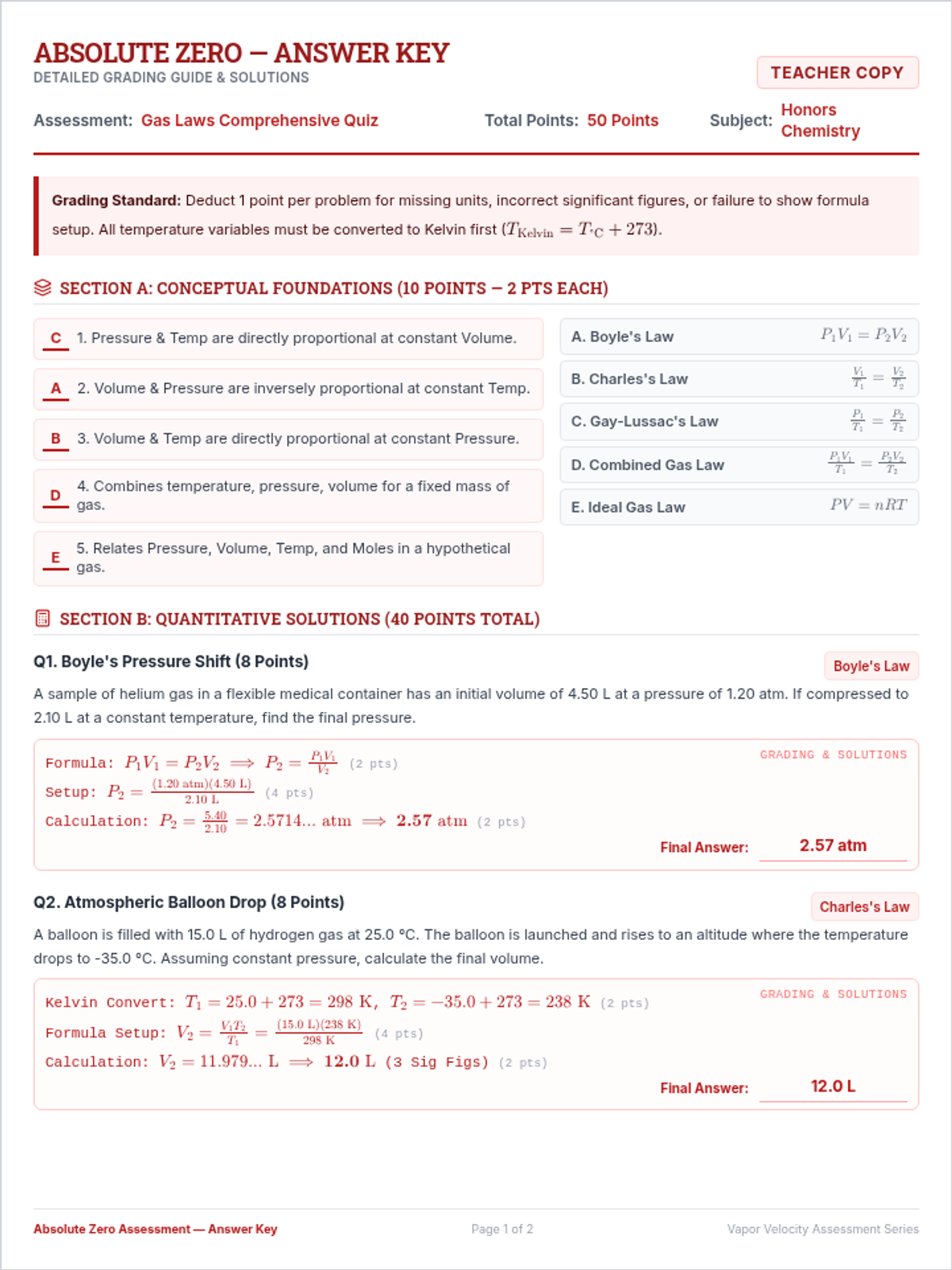
A comprehensive assessment package focused on the individual empirical gas laws (Boyle's, Charles's, and Gay-Lussac's laws). It includes a beautifully formatted printable student quiz and a highly detailed step-by-step teacher answer key, both themed around a vintage 19th-century scientific research log.
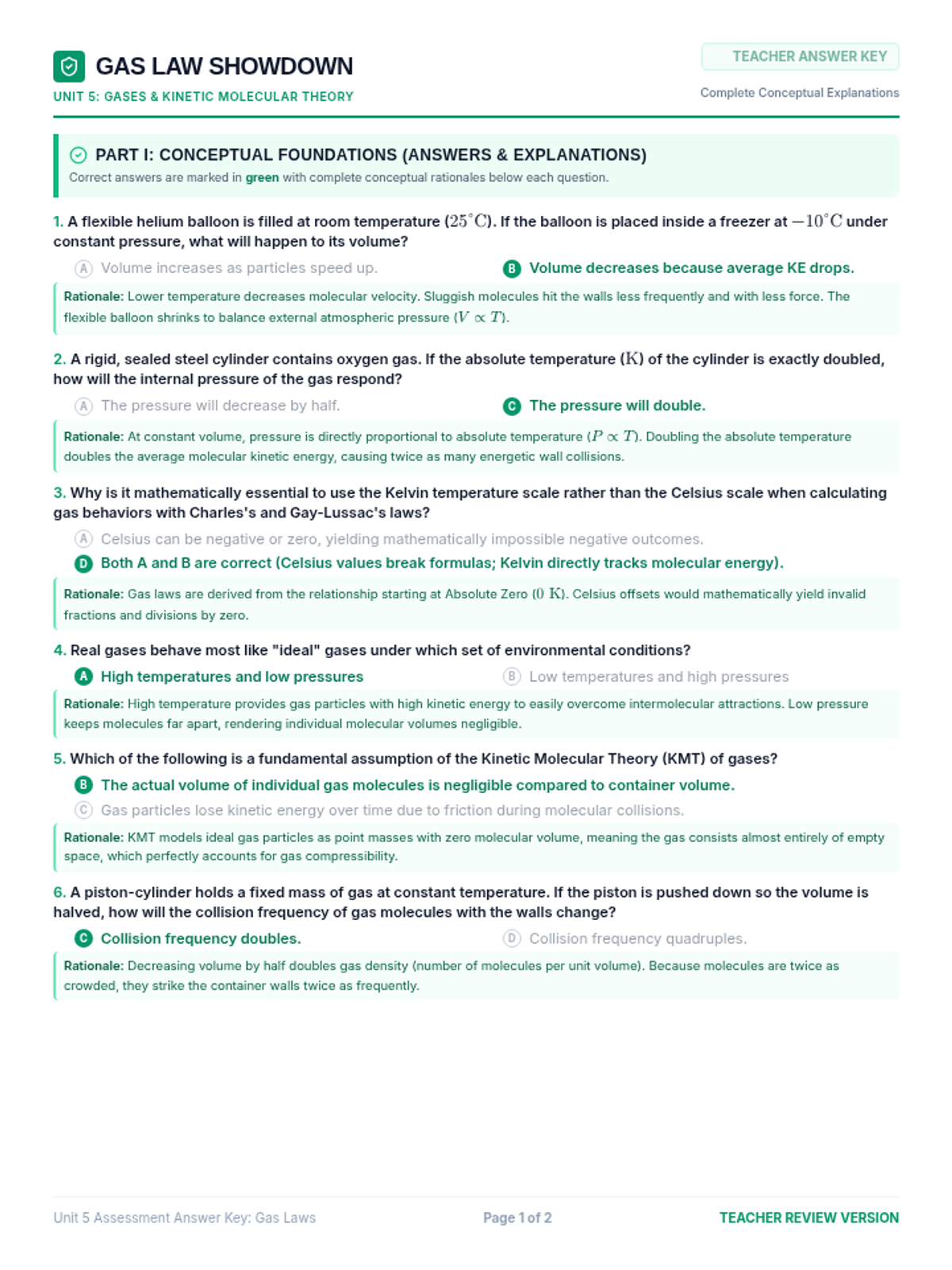
A comprehensive assessment lesson on the behavior of gases. Students demonstrate their understanding of Boyle's, Charles's, Gay-Lussac's, Combined, and Ideal gas laws through theoretical and quantitative problem-solving.
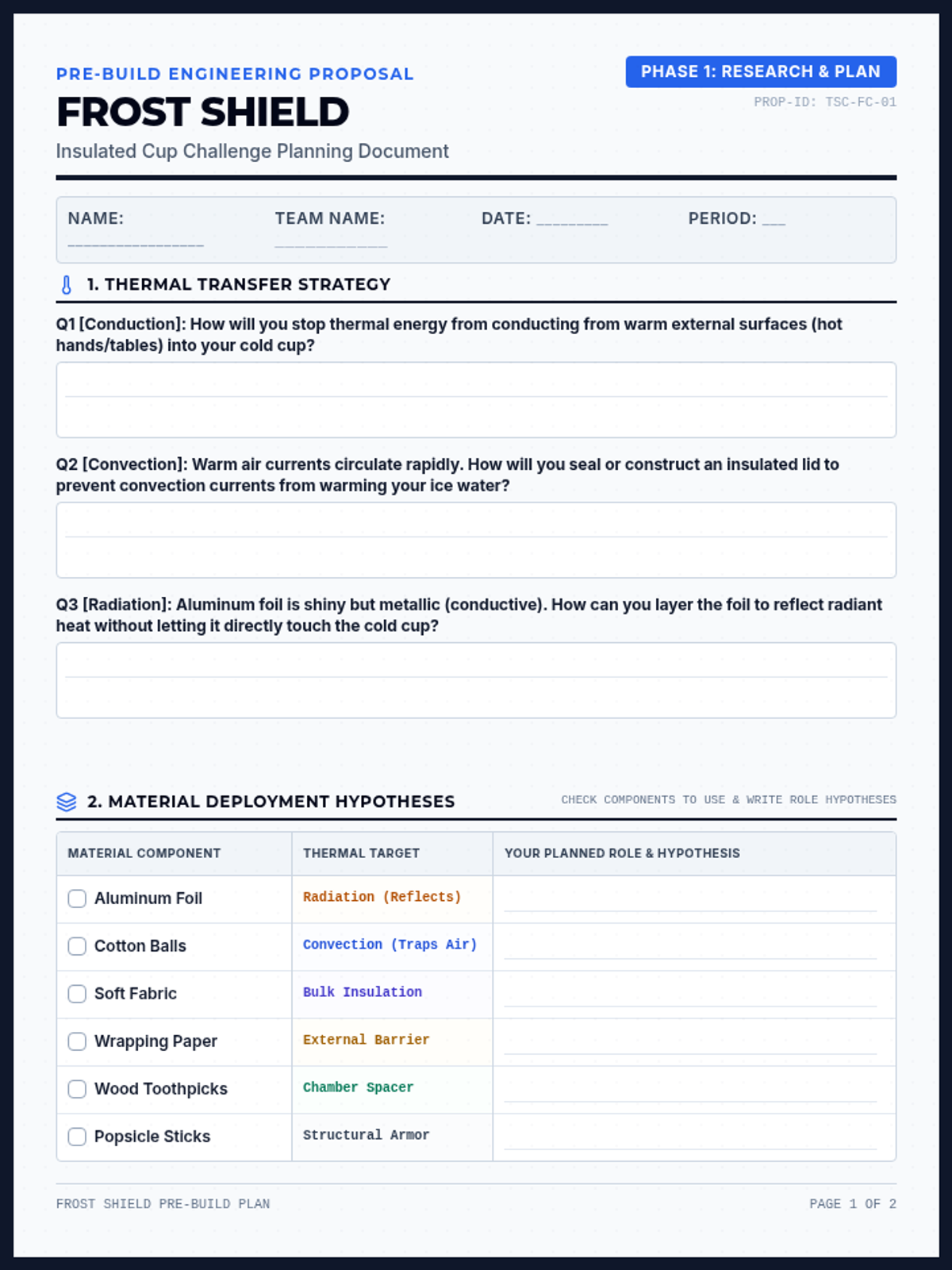
An engineering design challenge where students design, prototype, and test an insulated cup to keep water cold. Emphasizes thermal energy transfer, materials science properties, the engineering process, and data analysis.
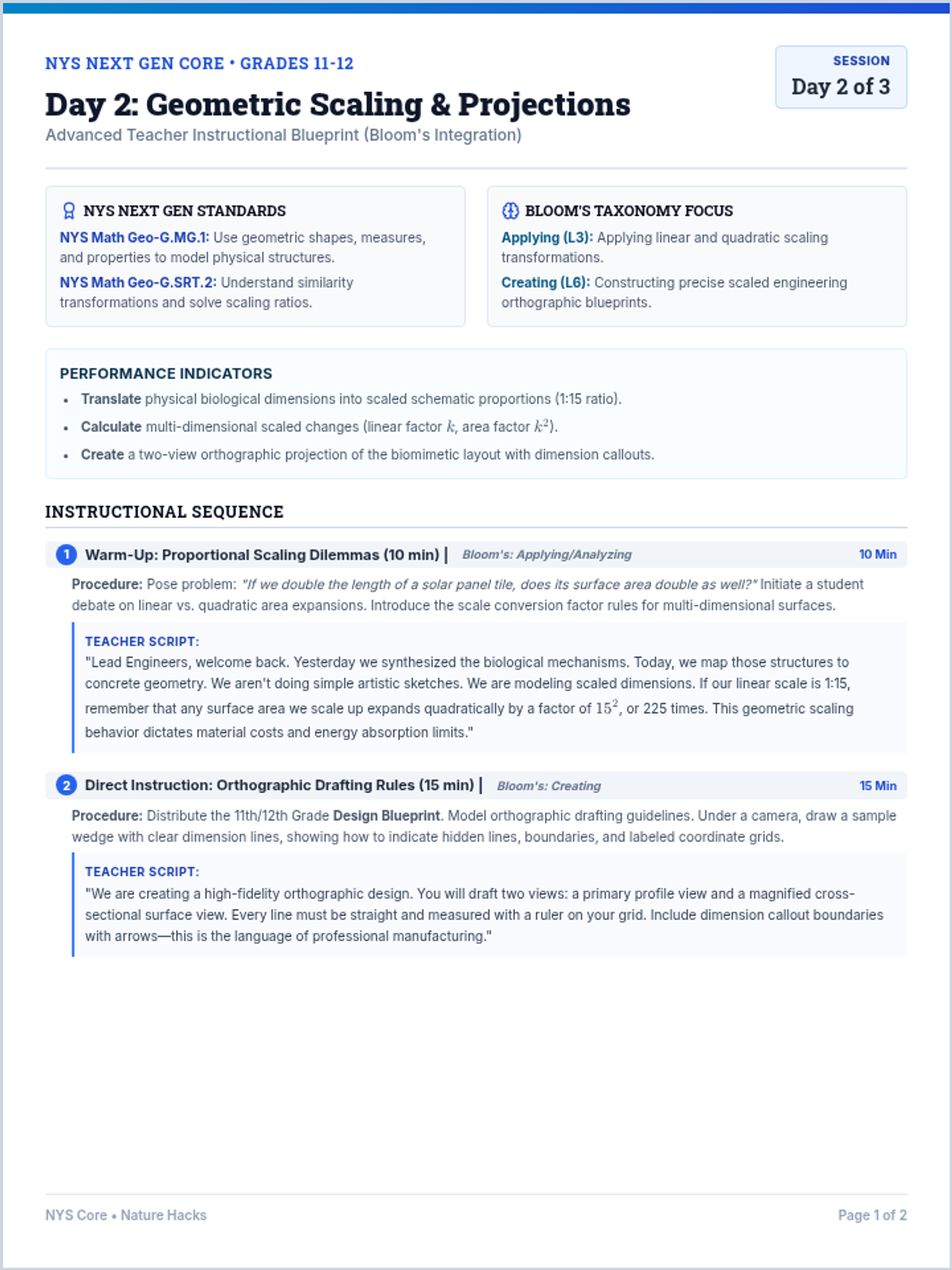
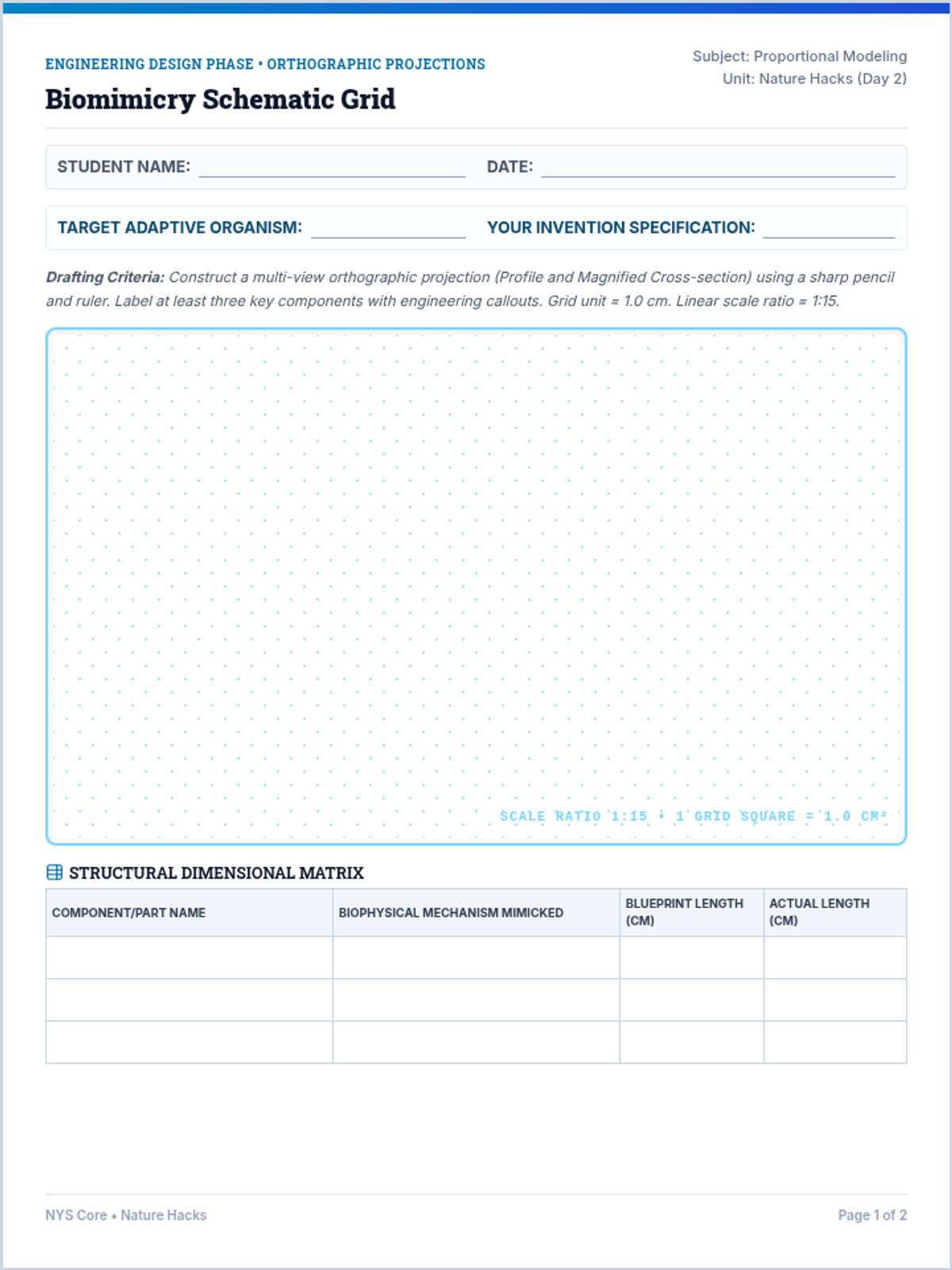
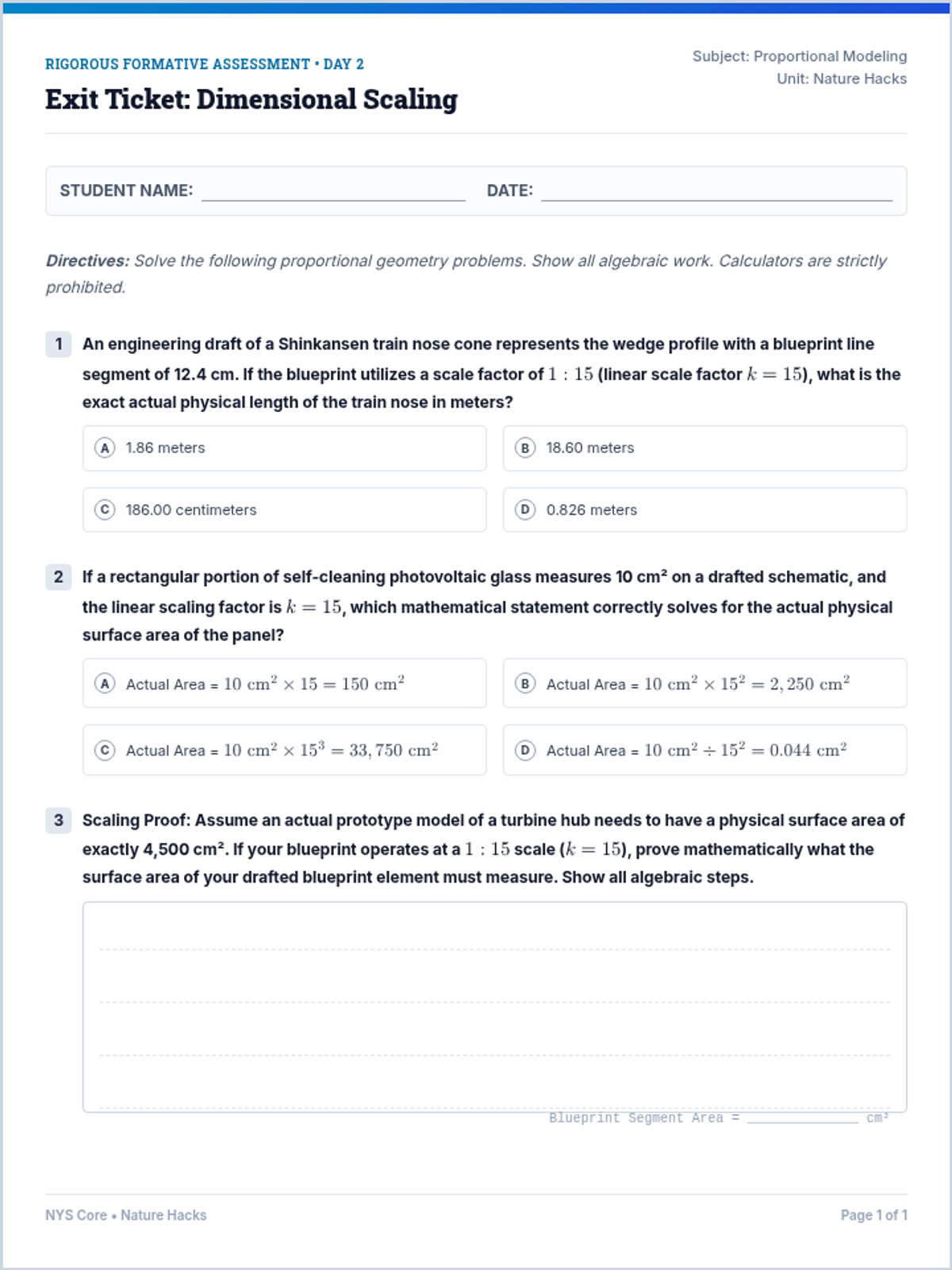
Day 2 of the Nature Hacks unit. Students draft schematic drawings of their biomimetic solutions, apply scale factor mathematics to size their designs, and write technical specifications.
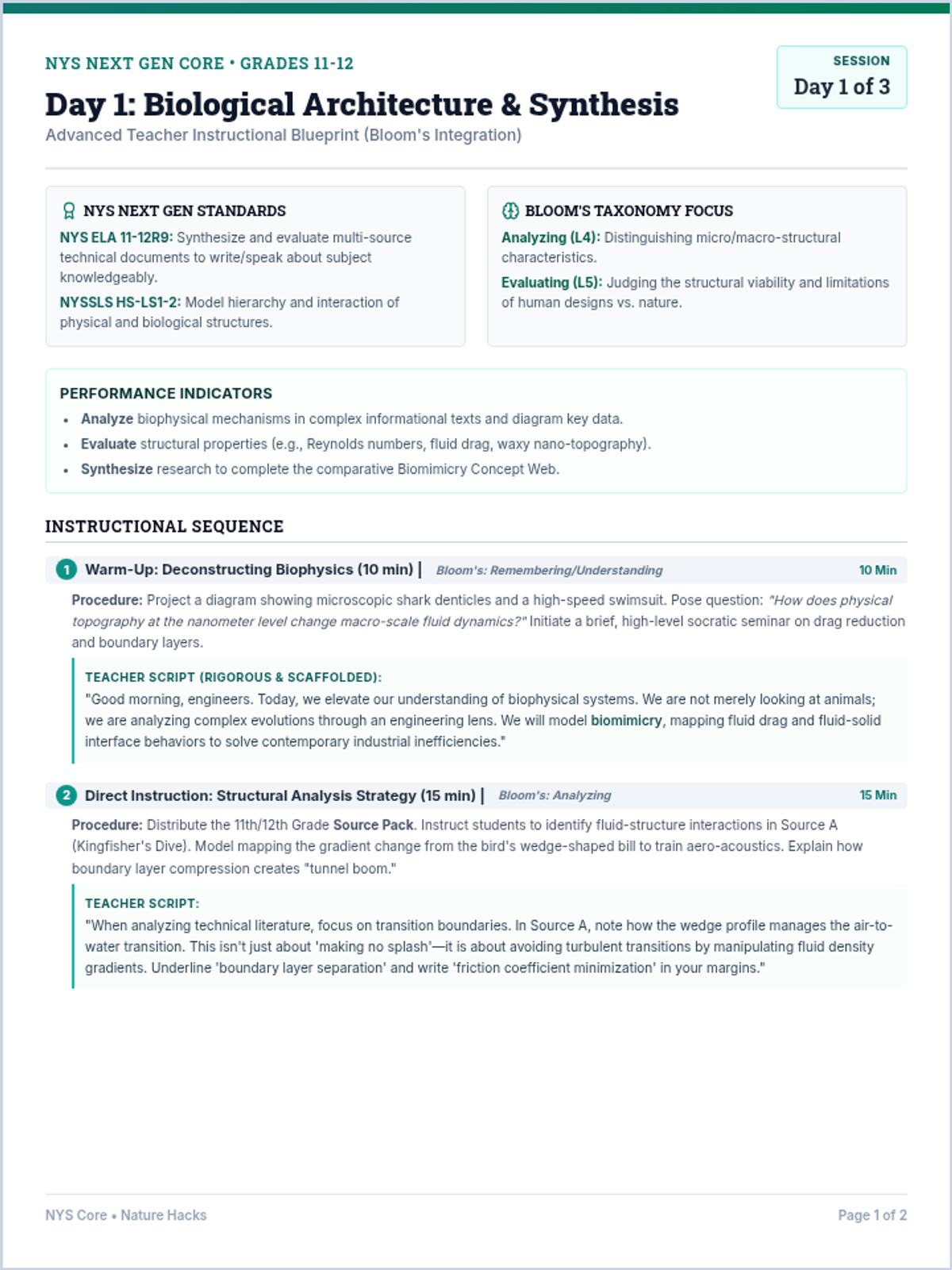
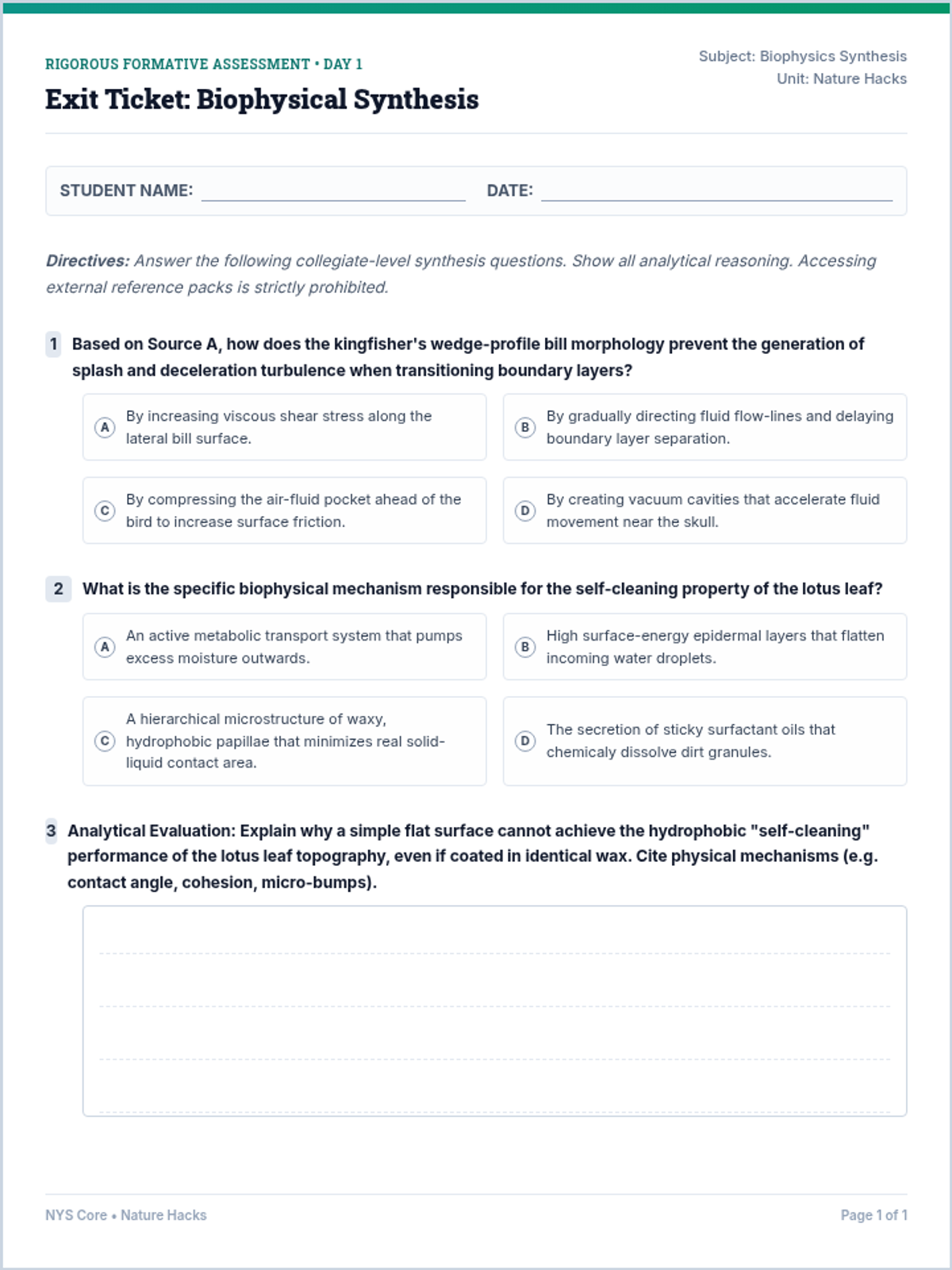
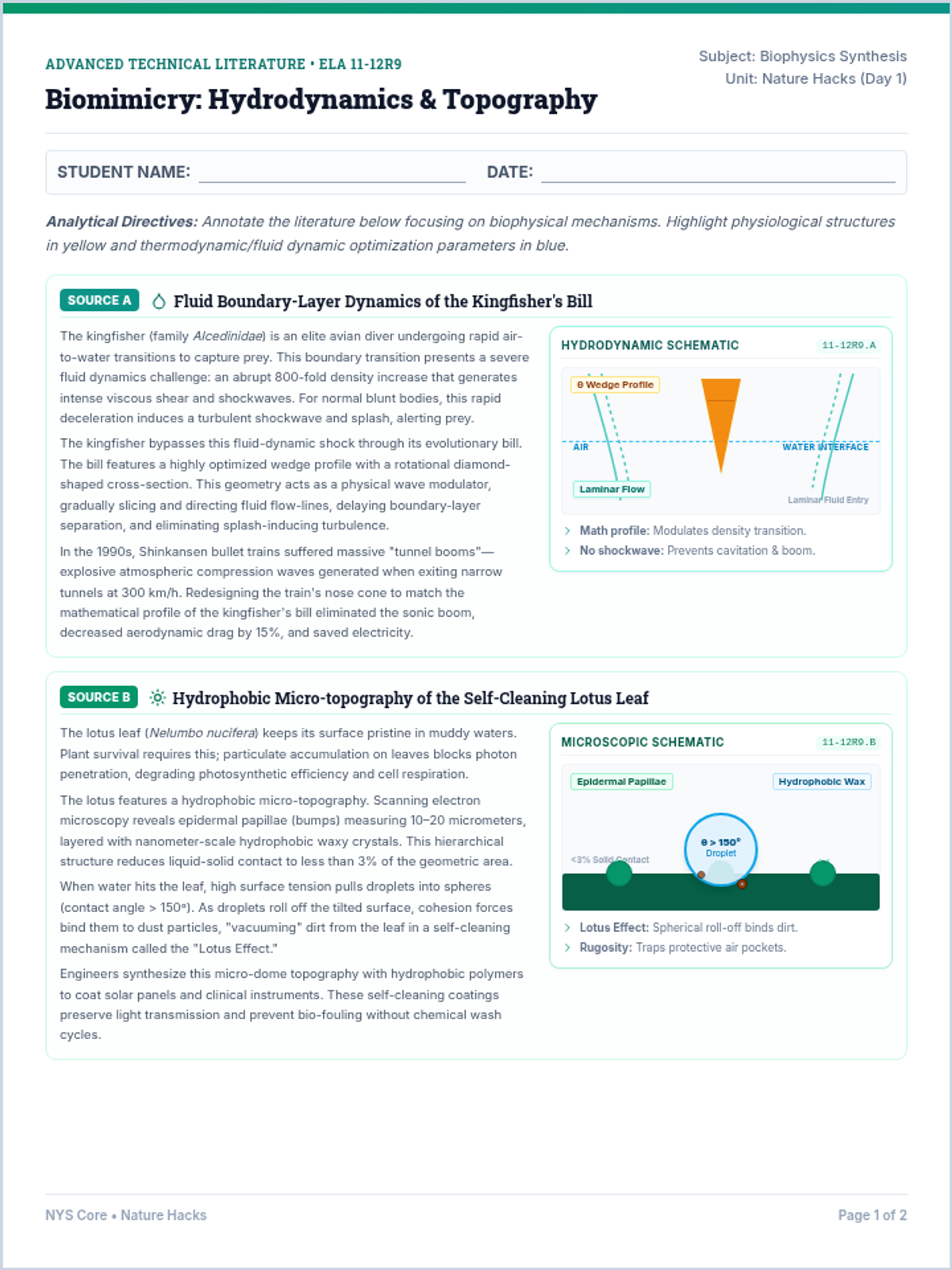
Day 1 of the Nature Hacks unit. Students explore the concept of biomimicry, read informational sources about animal/plant adaptations, and extract key data for their engineering designs.
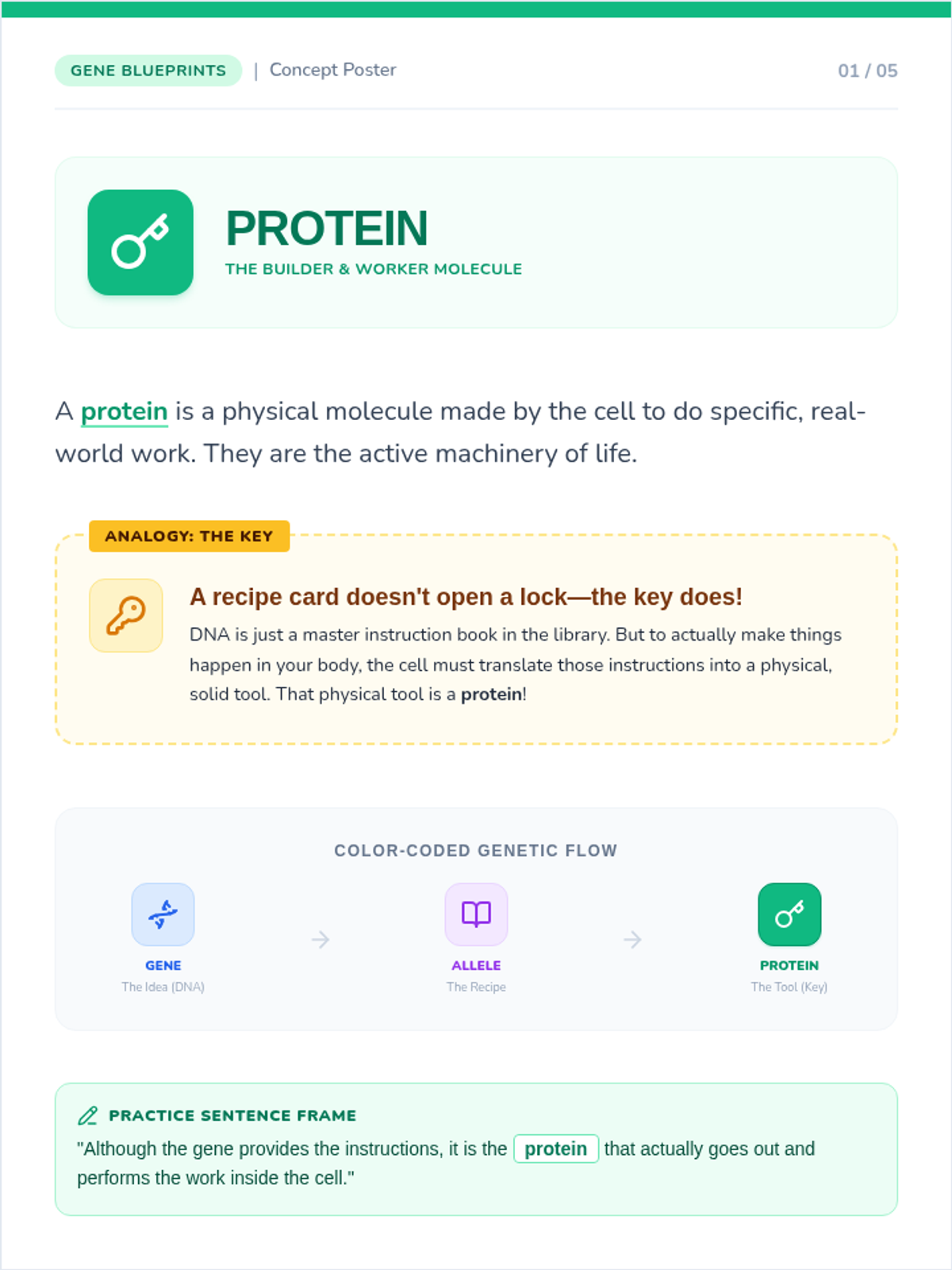
A visual-heavy biology lesson focused on clarifying the relationships between genes, alleles, proteins, and heterozygous states using concrete analogies, color-coding, and structured sentence frames.
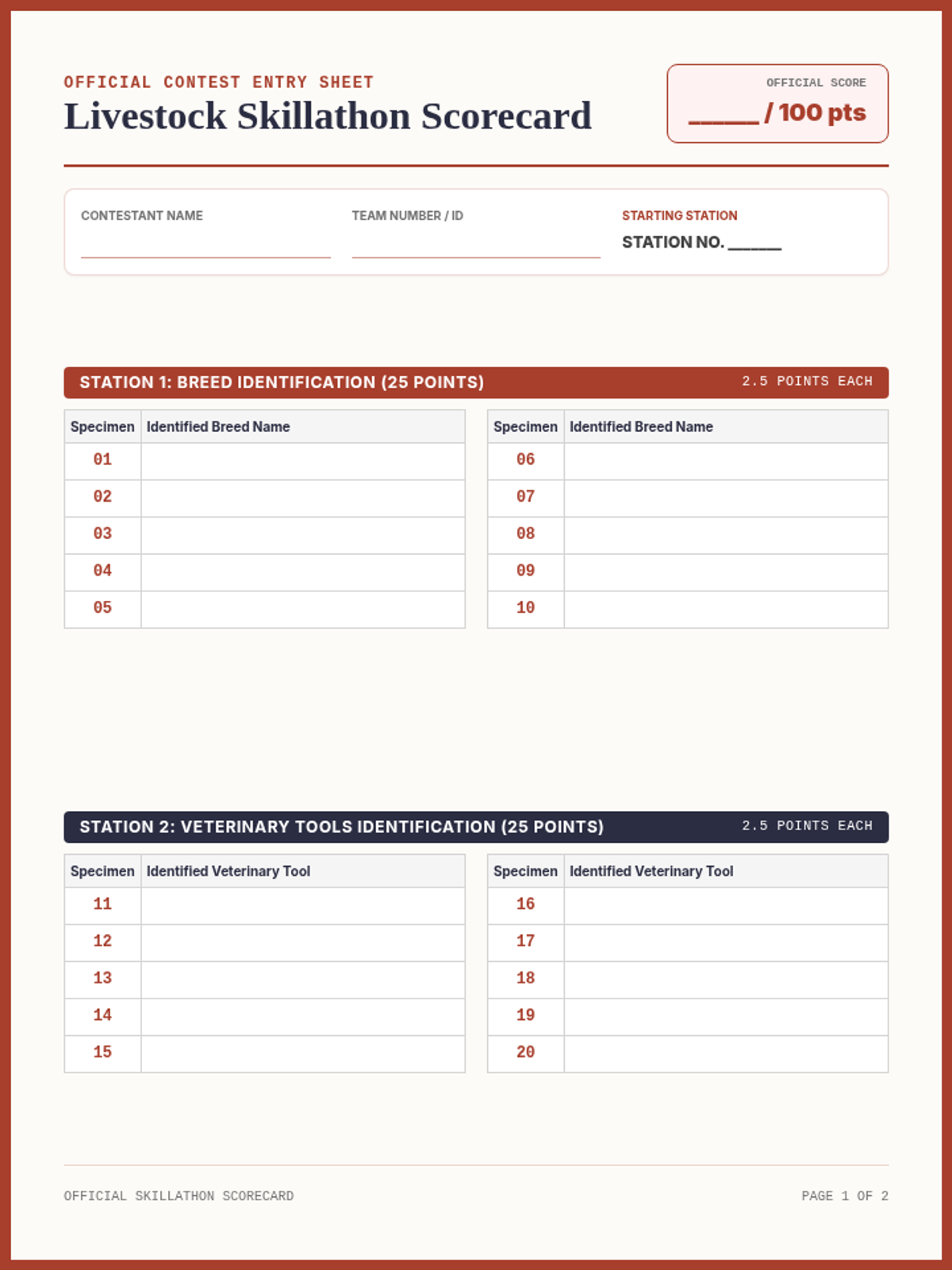
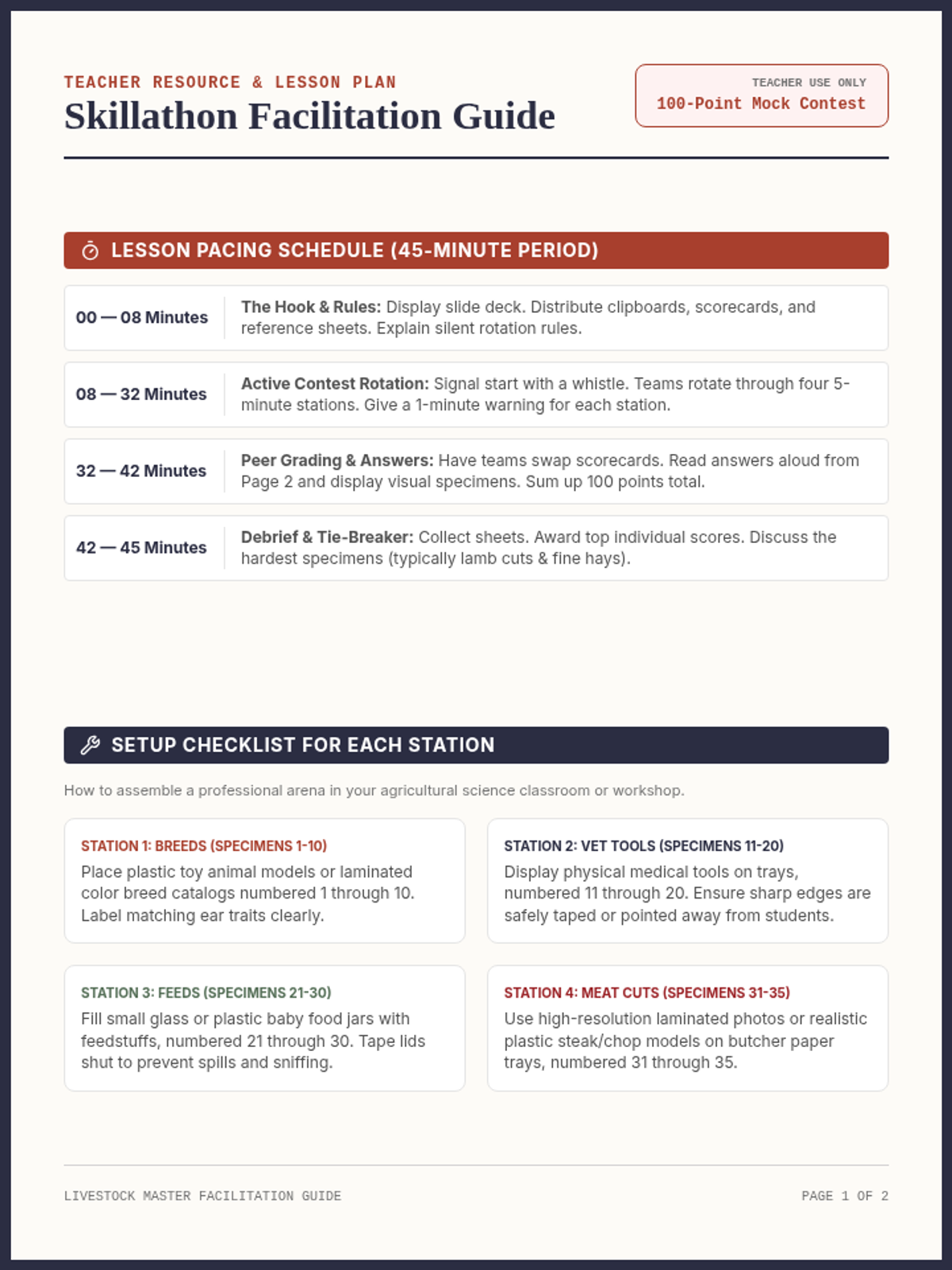
Students participate in a high-stakes, realistic mock Livestock Skillathon, rotating through four hands-on stations to test their knowledge and earn points.
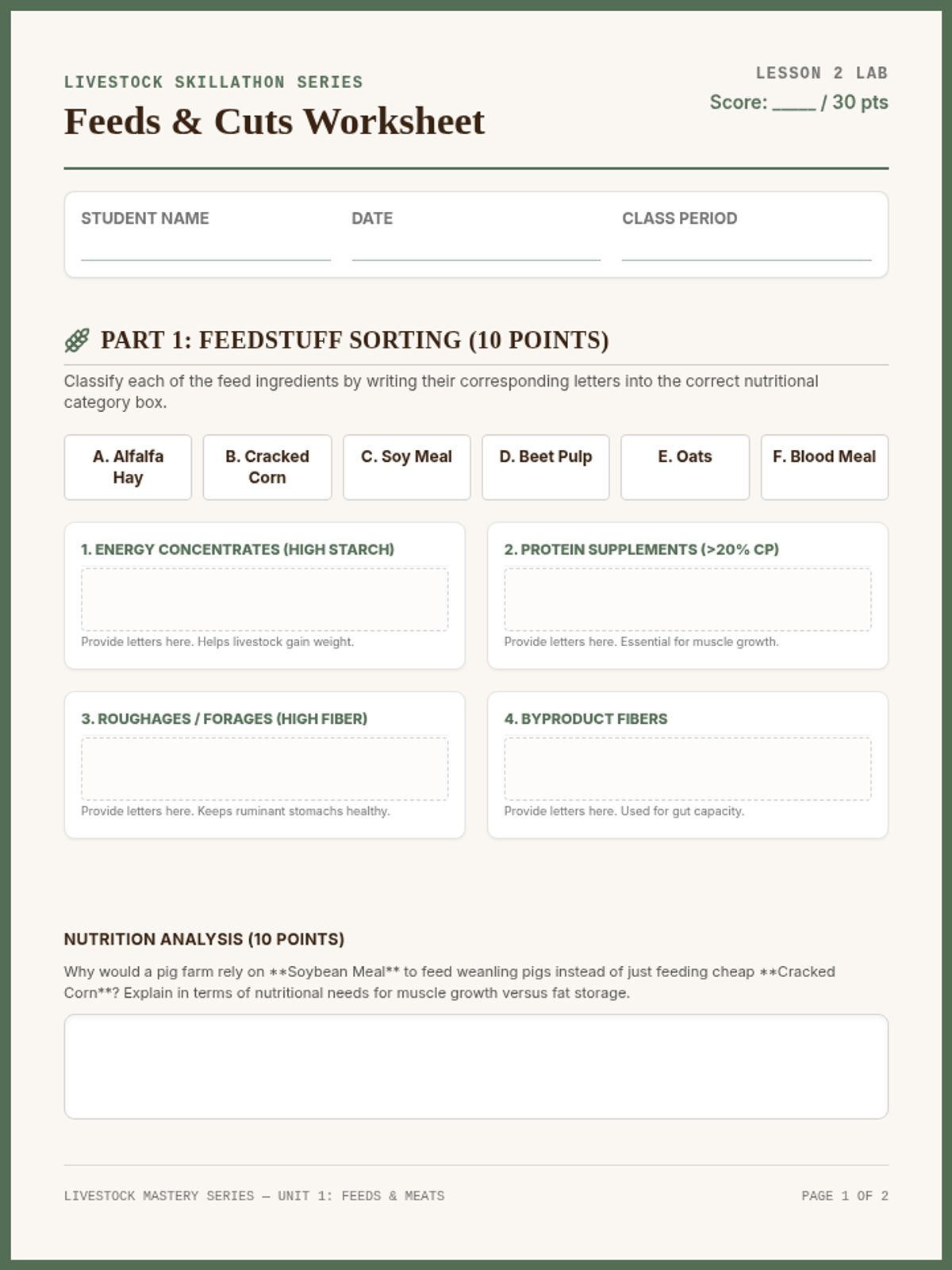
Students learn to identify common feed ingredients and forages, and practice identifying retail cuts of beef, pork, and lamb by wholesale origin and cooking style.
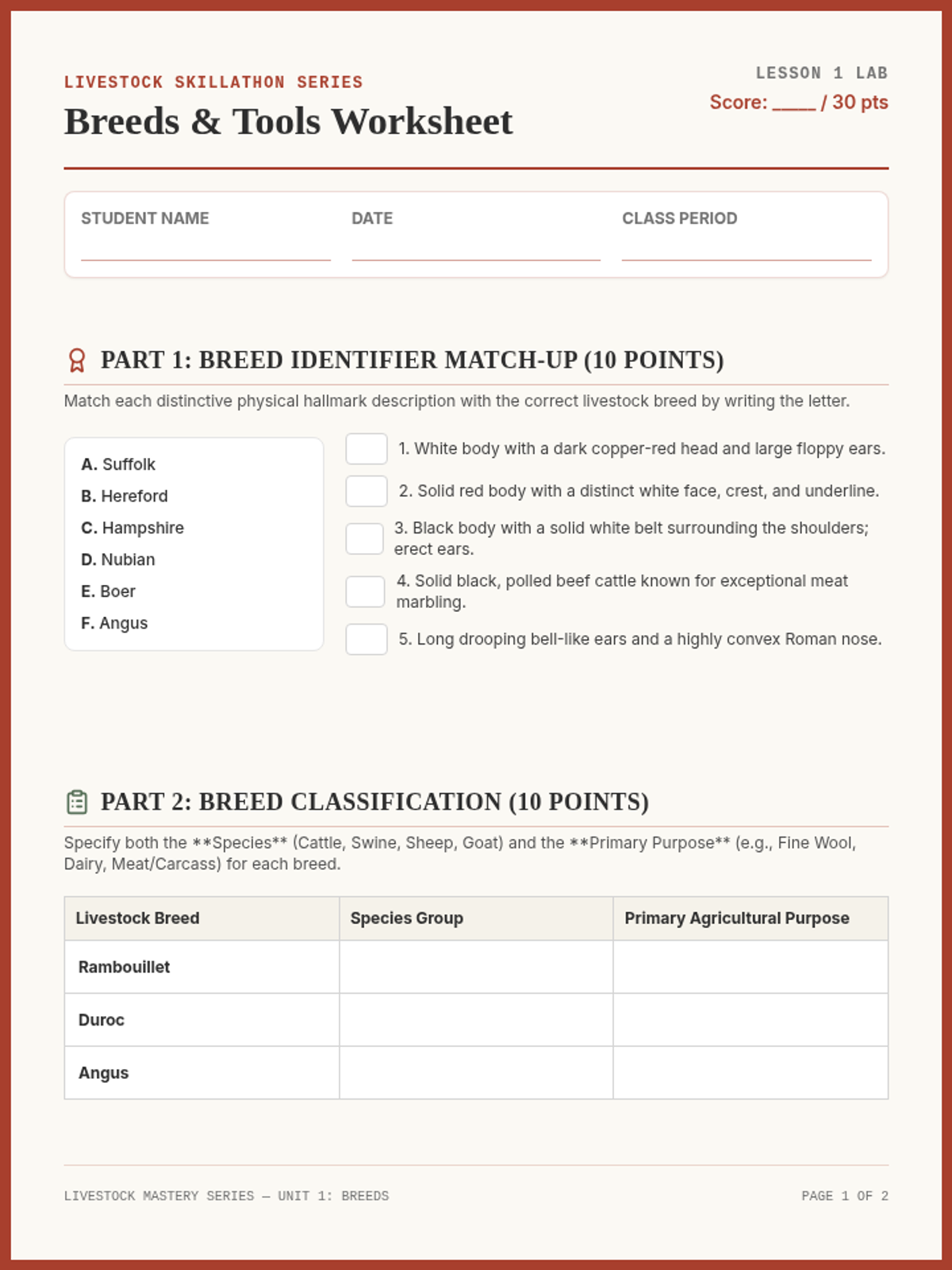
Students learn to identify major breeds of beef cattle, swine, sheep, and goats, along with essential veterinary, handling, and breeding equipment.