A lesson focused on the scientific debate surrounding Pluto's planetary status, designed with scaffolding for high school special education students.
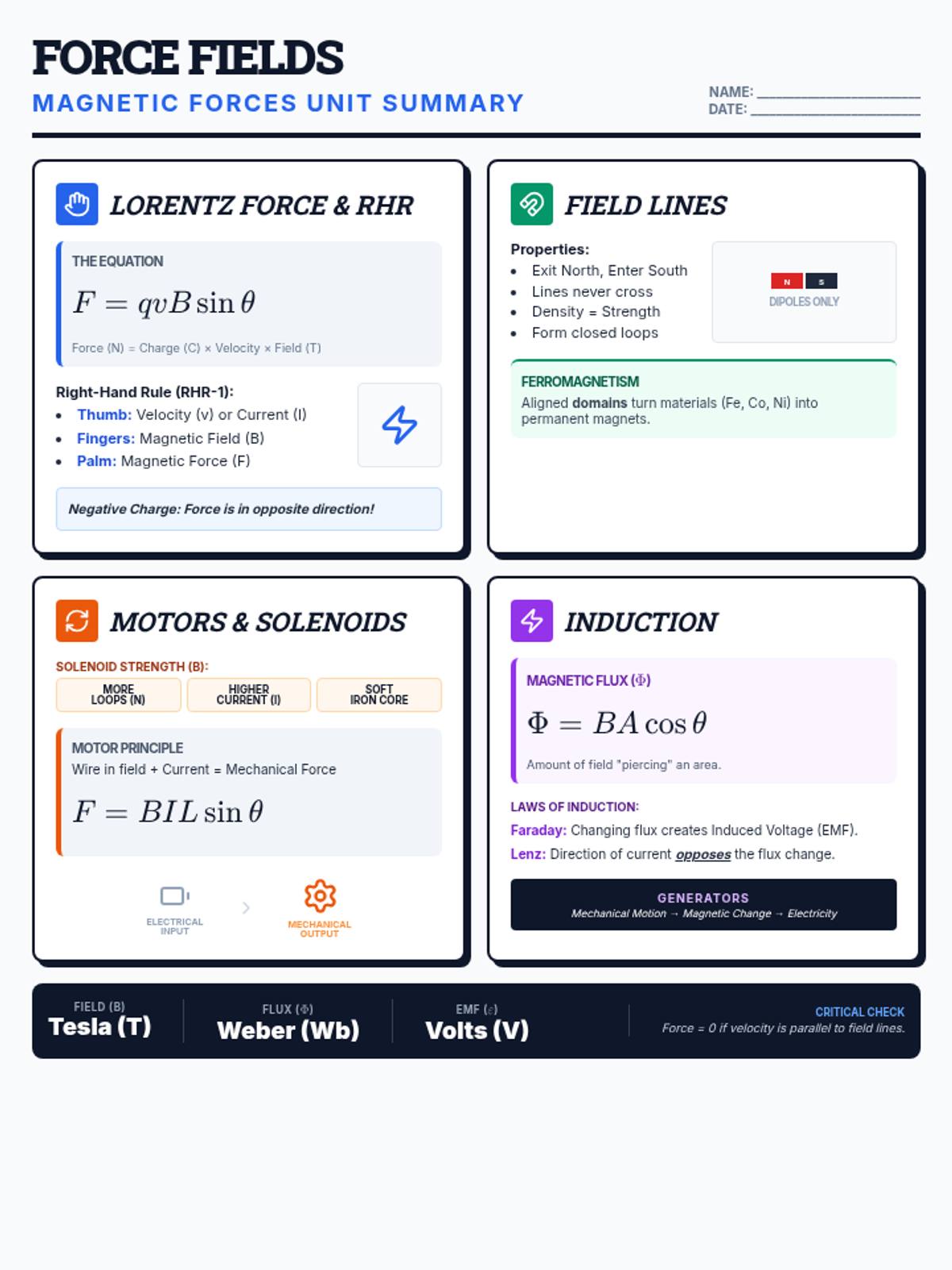
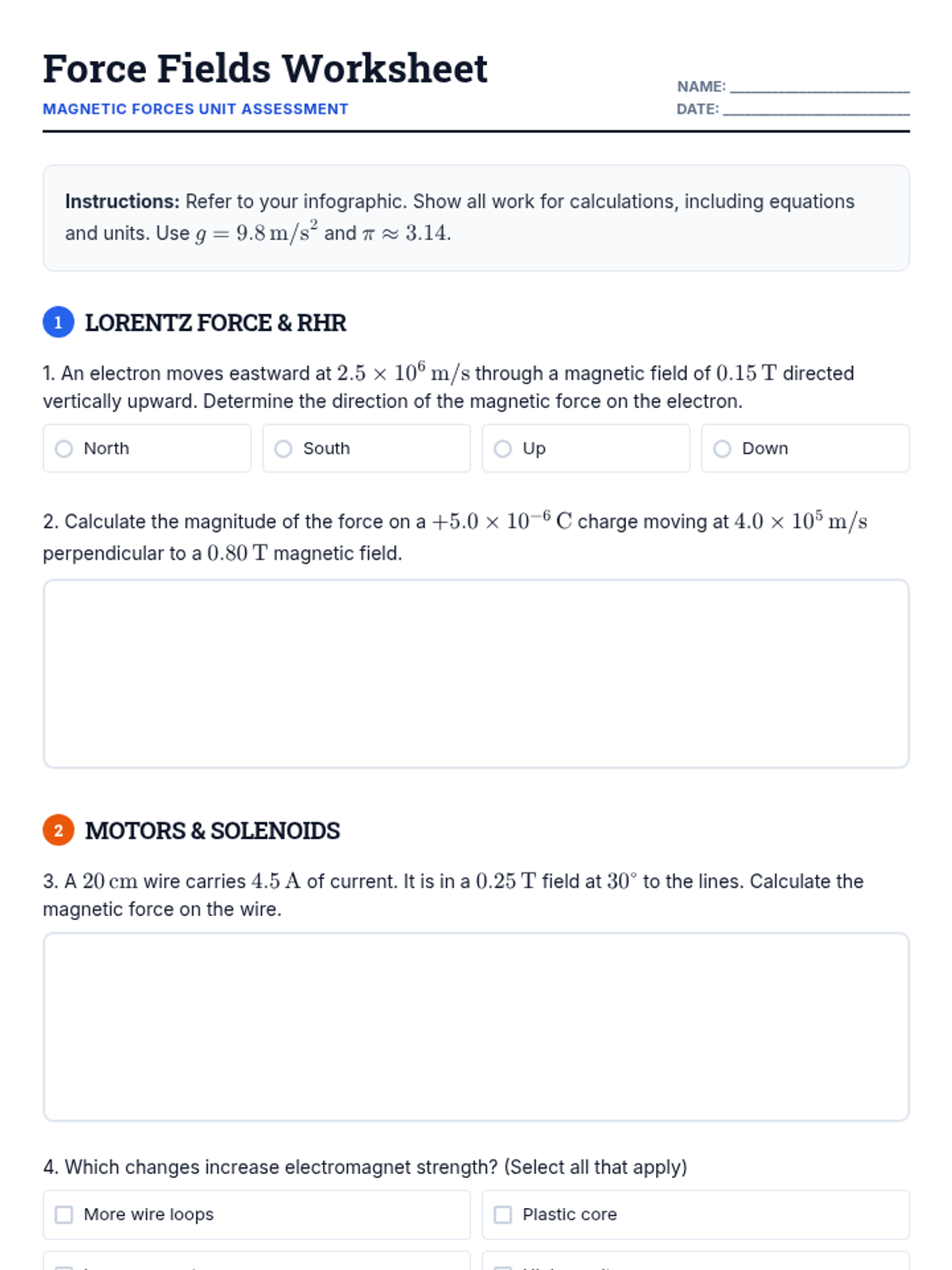
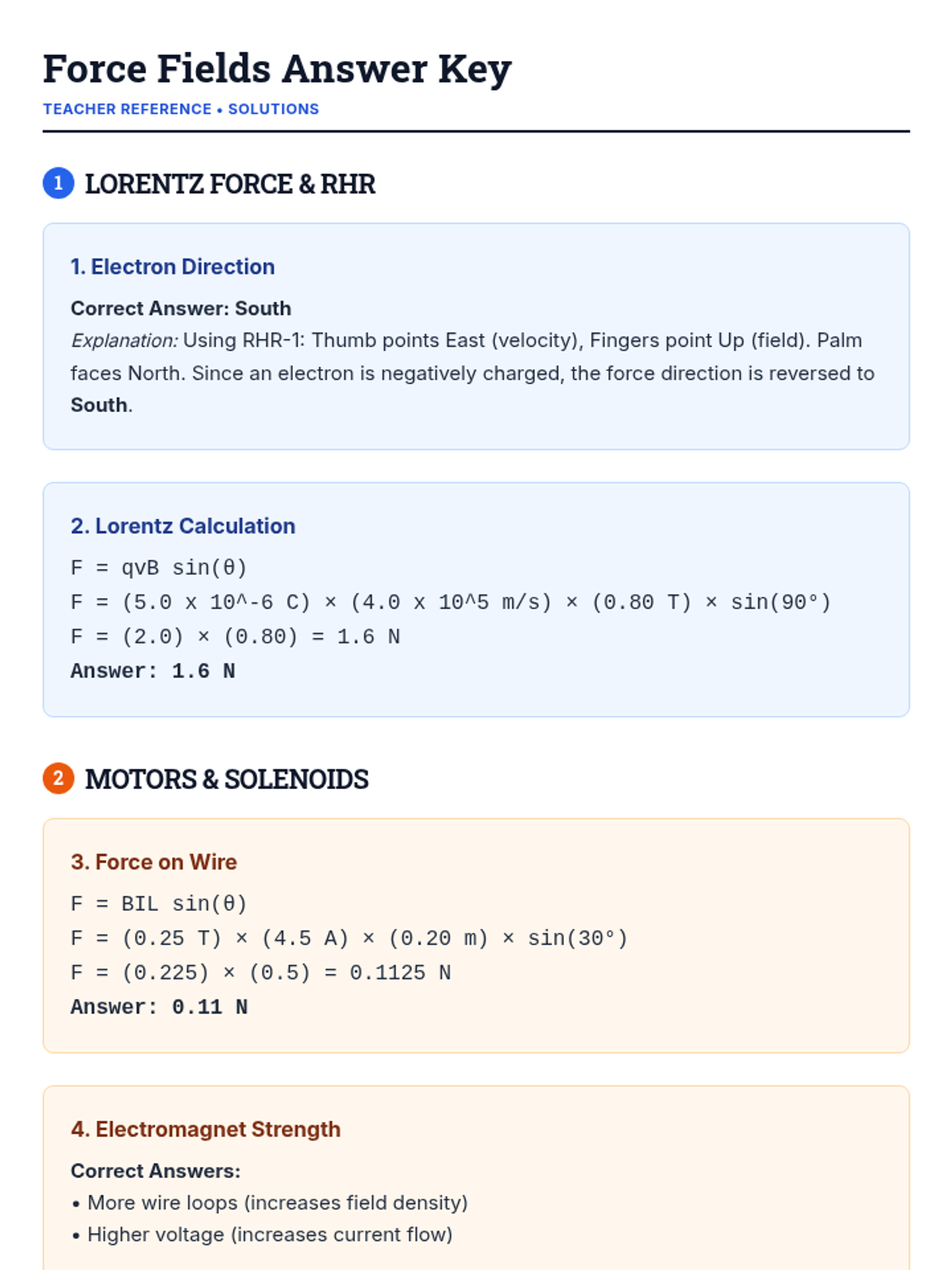
A comprehensive lesson on magnetic forces, including a high-impact infographic summary and a practice worksheet covering Lorentz force, motors, and electromagnetic induction.
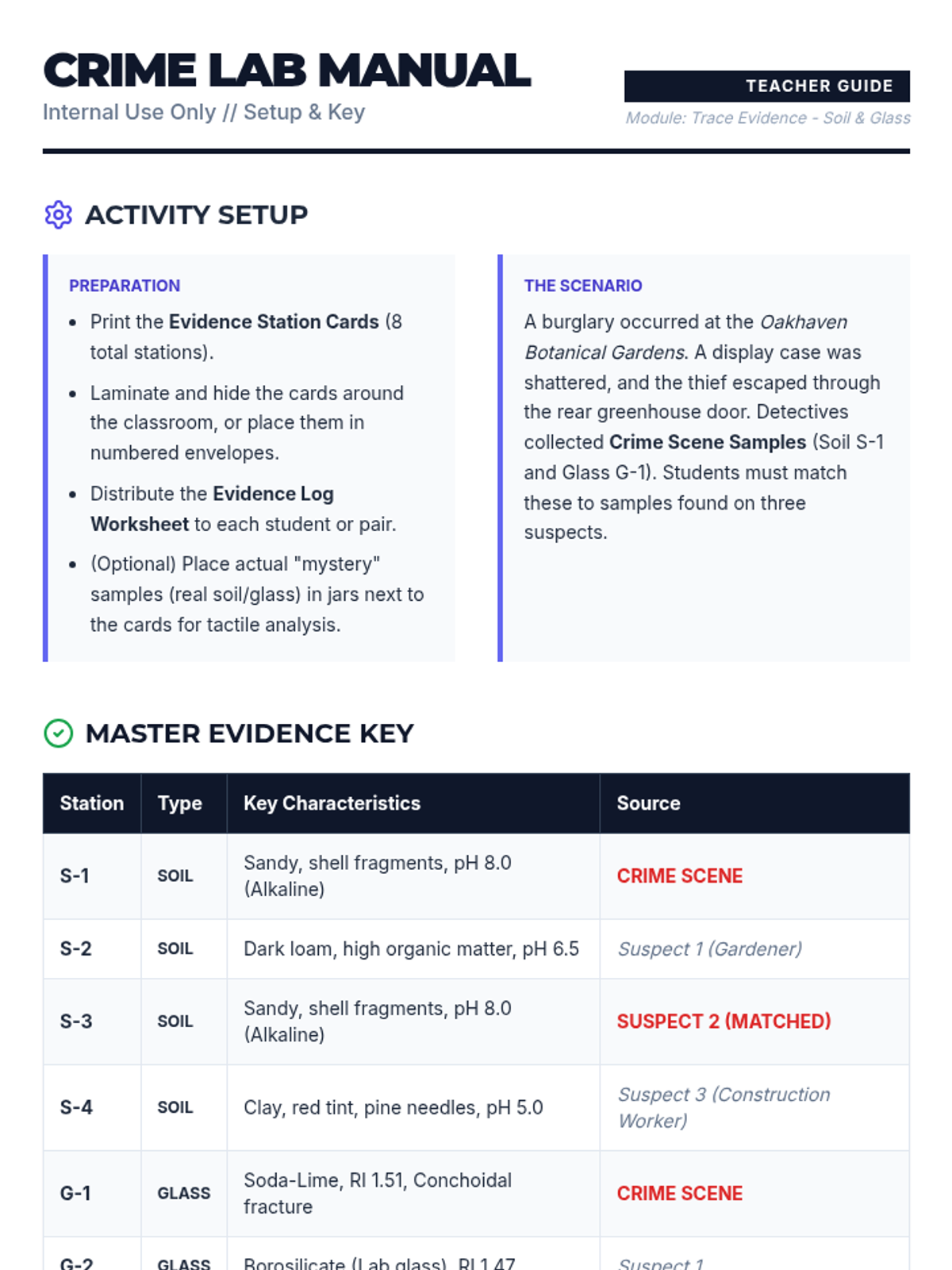
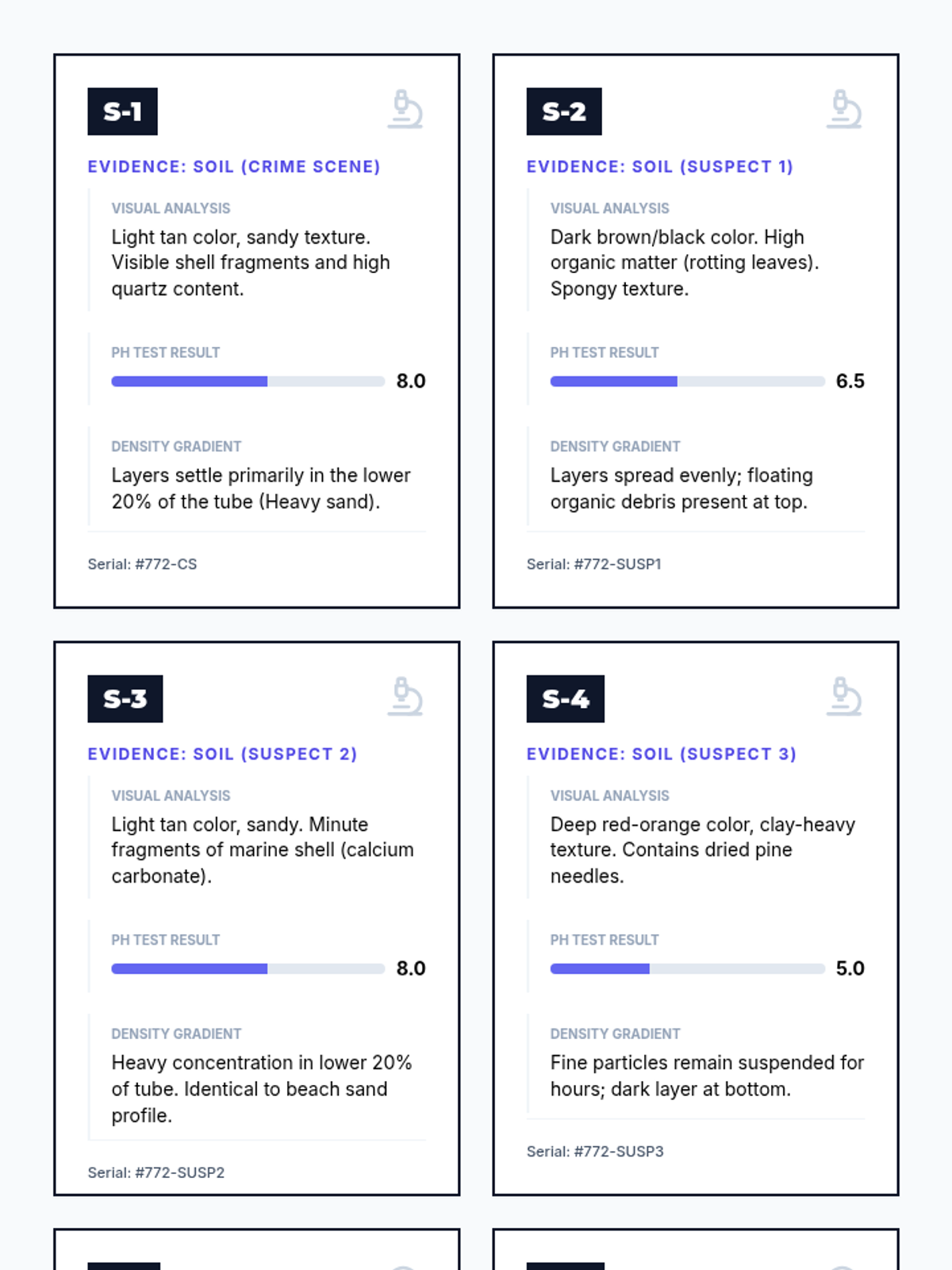
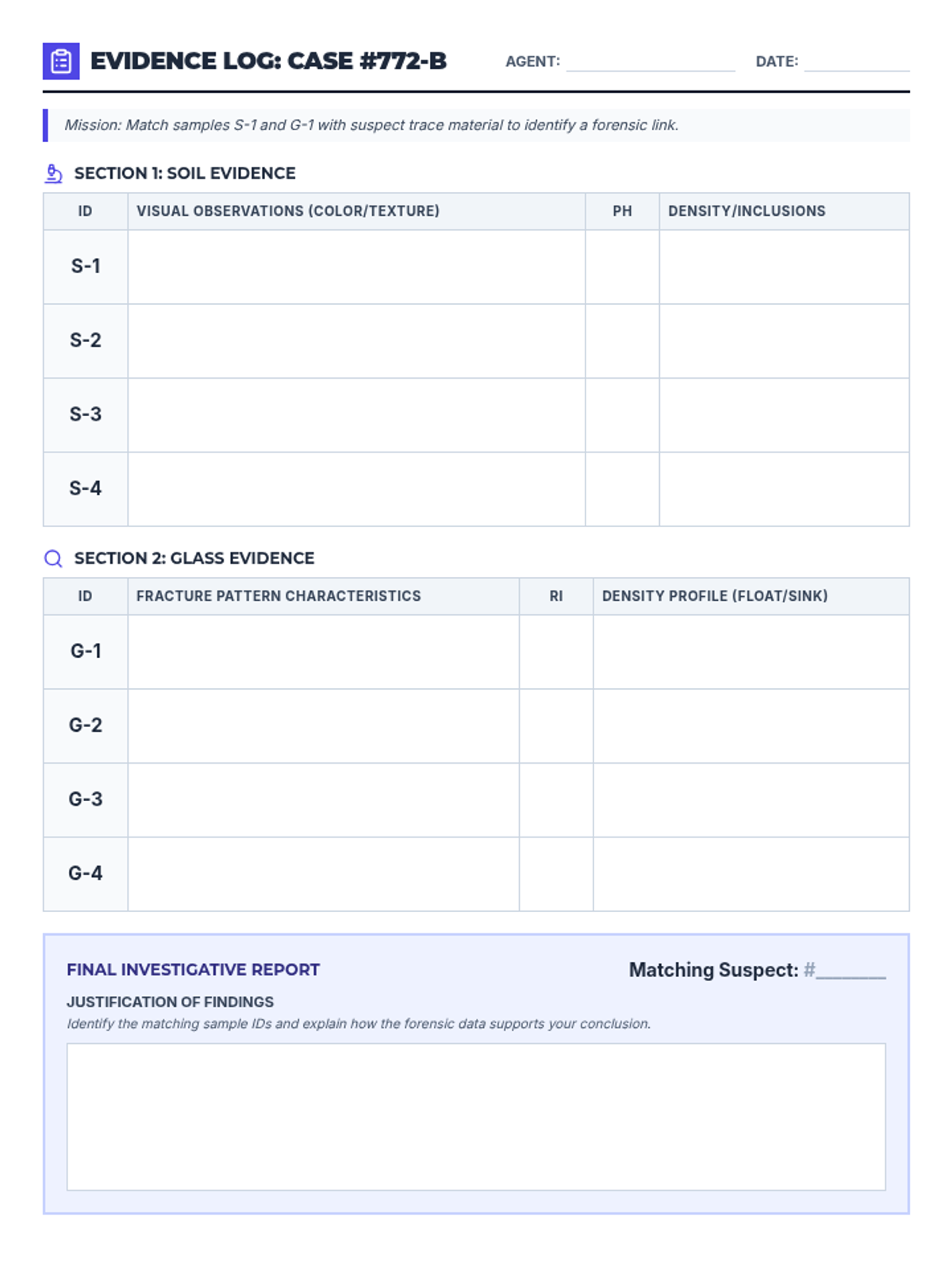
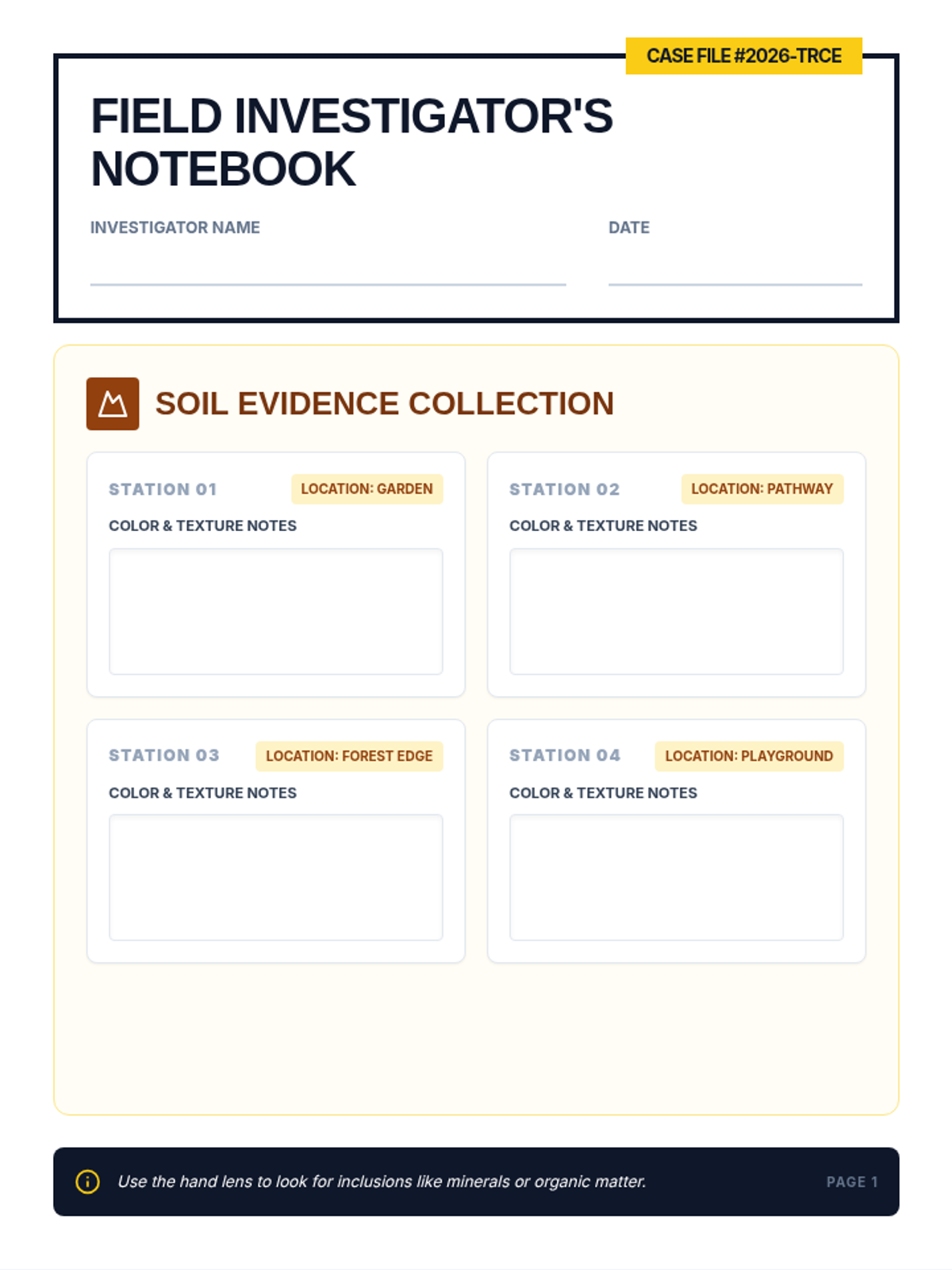
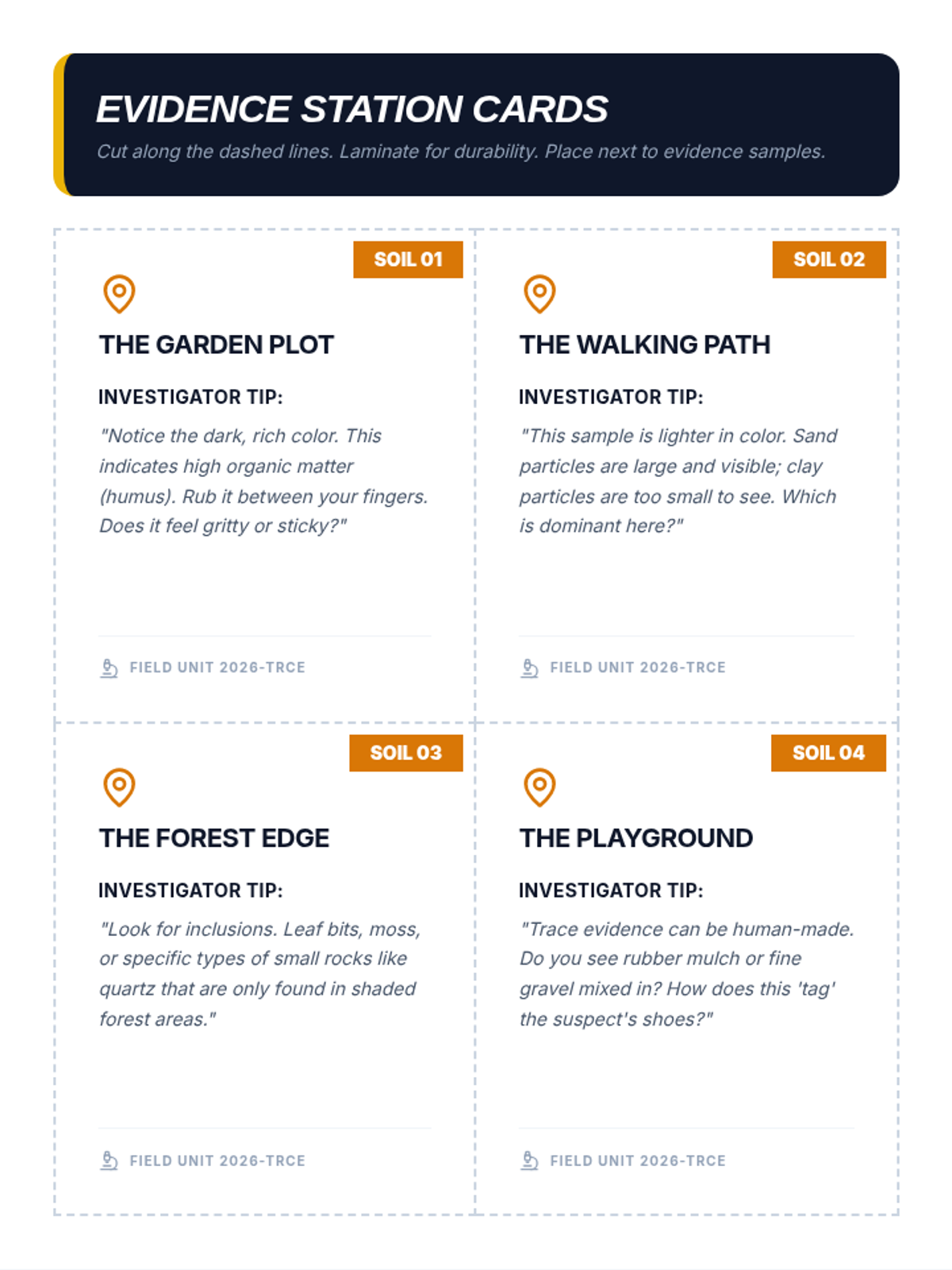
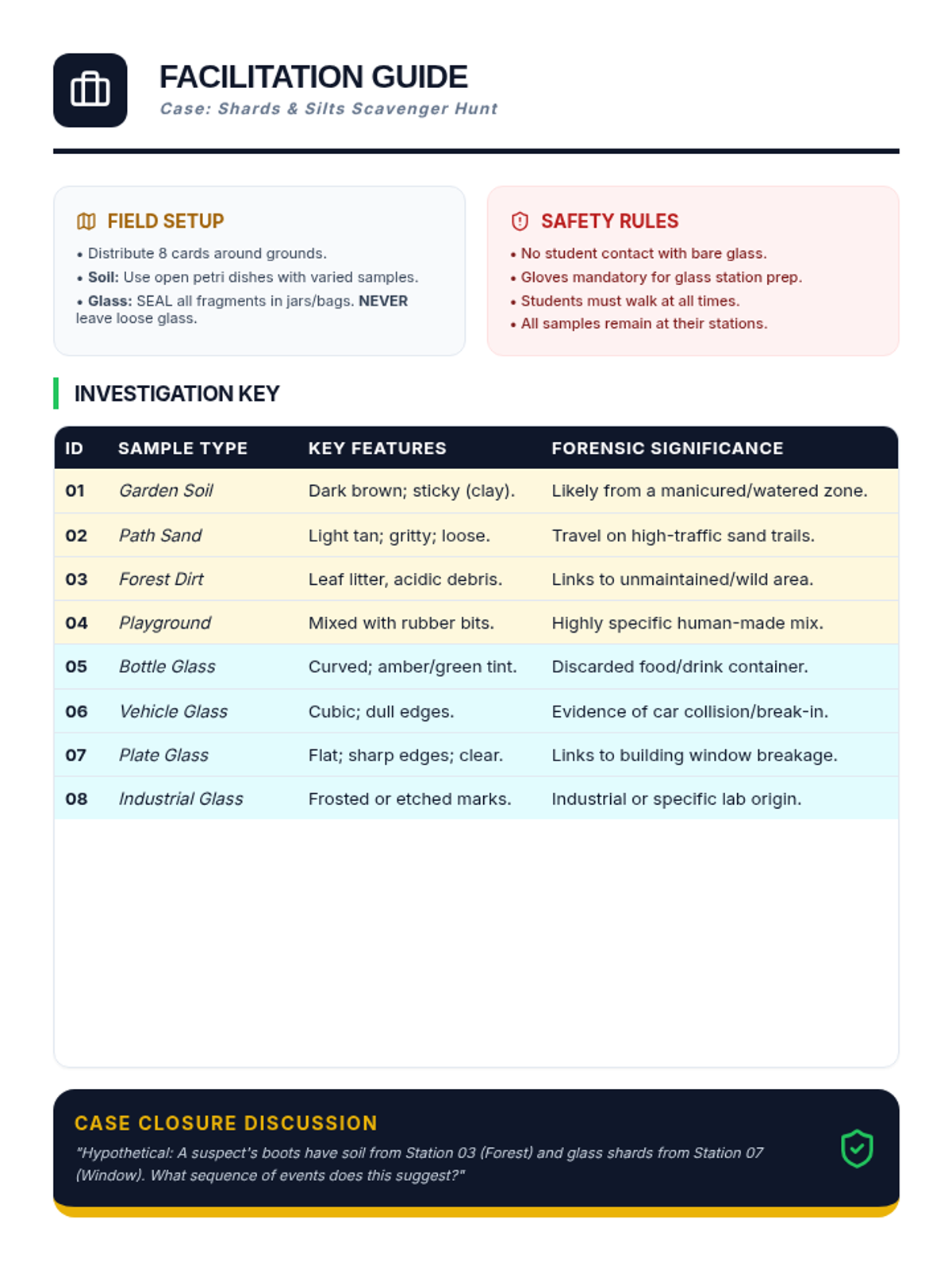
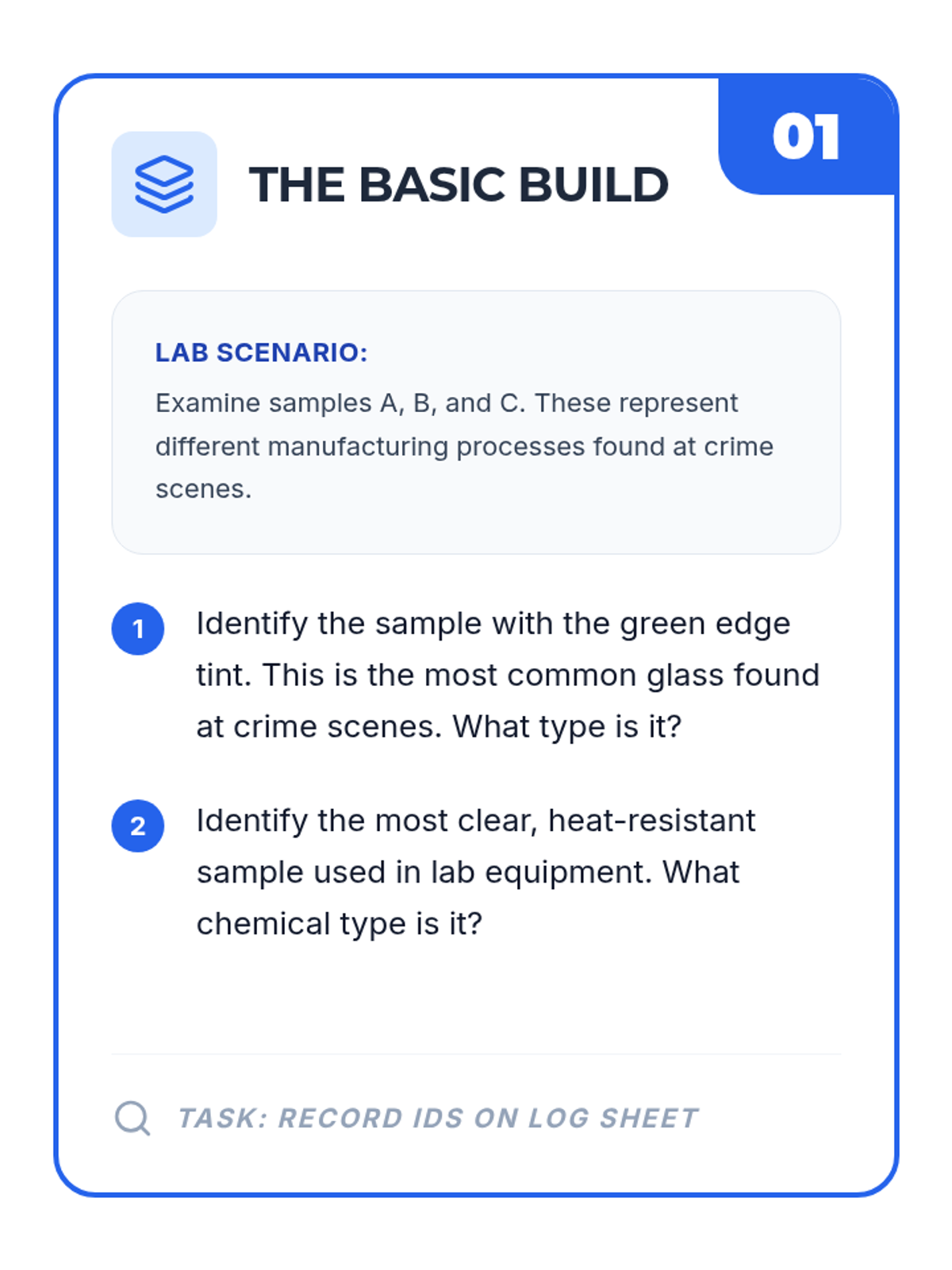
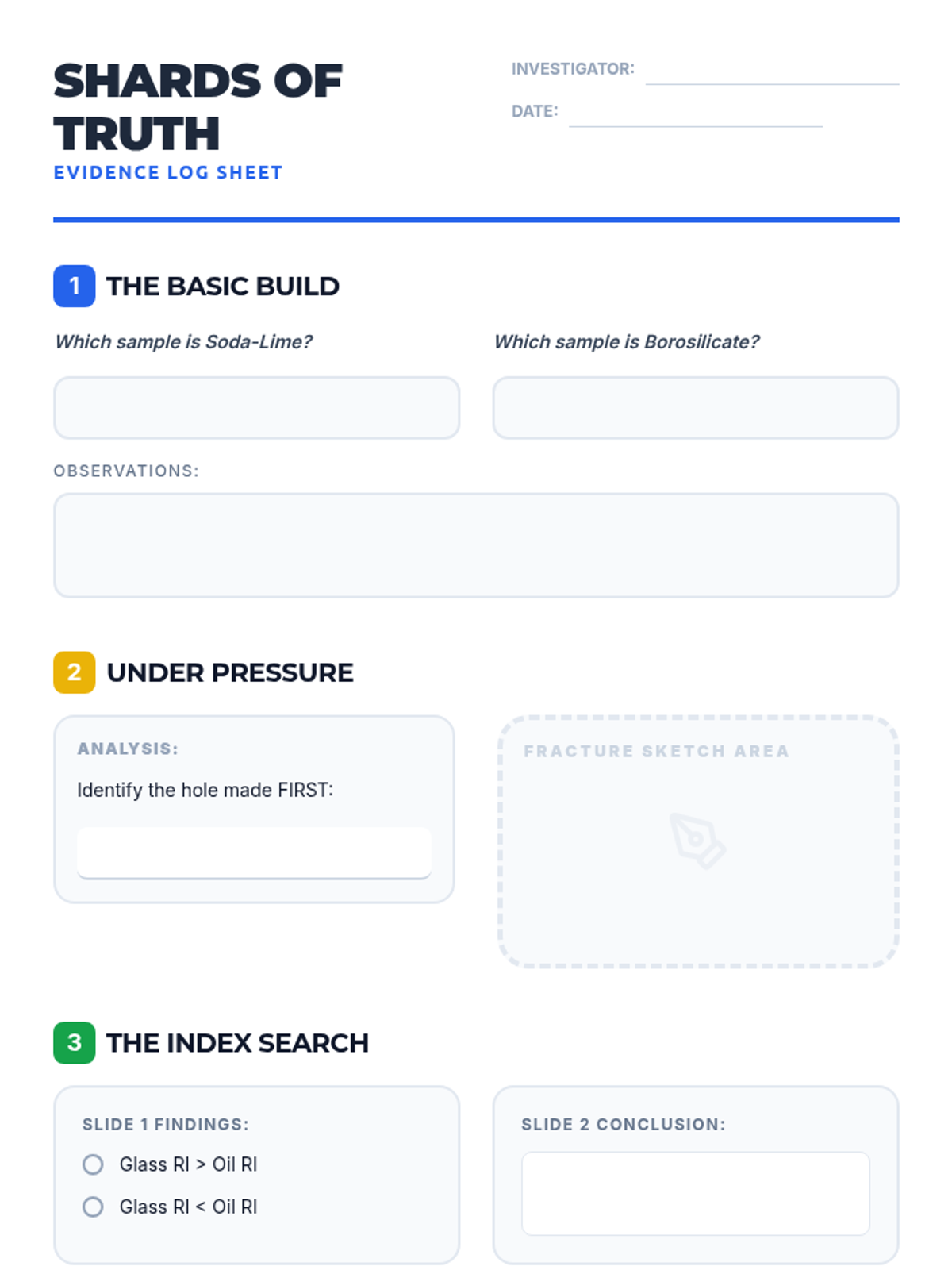
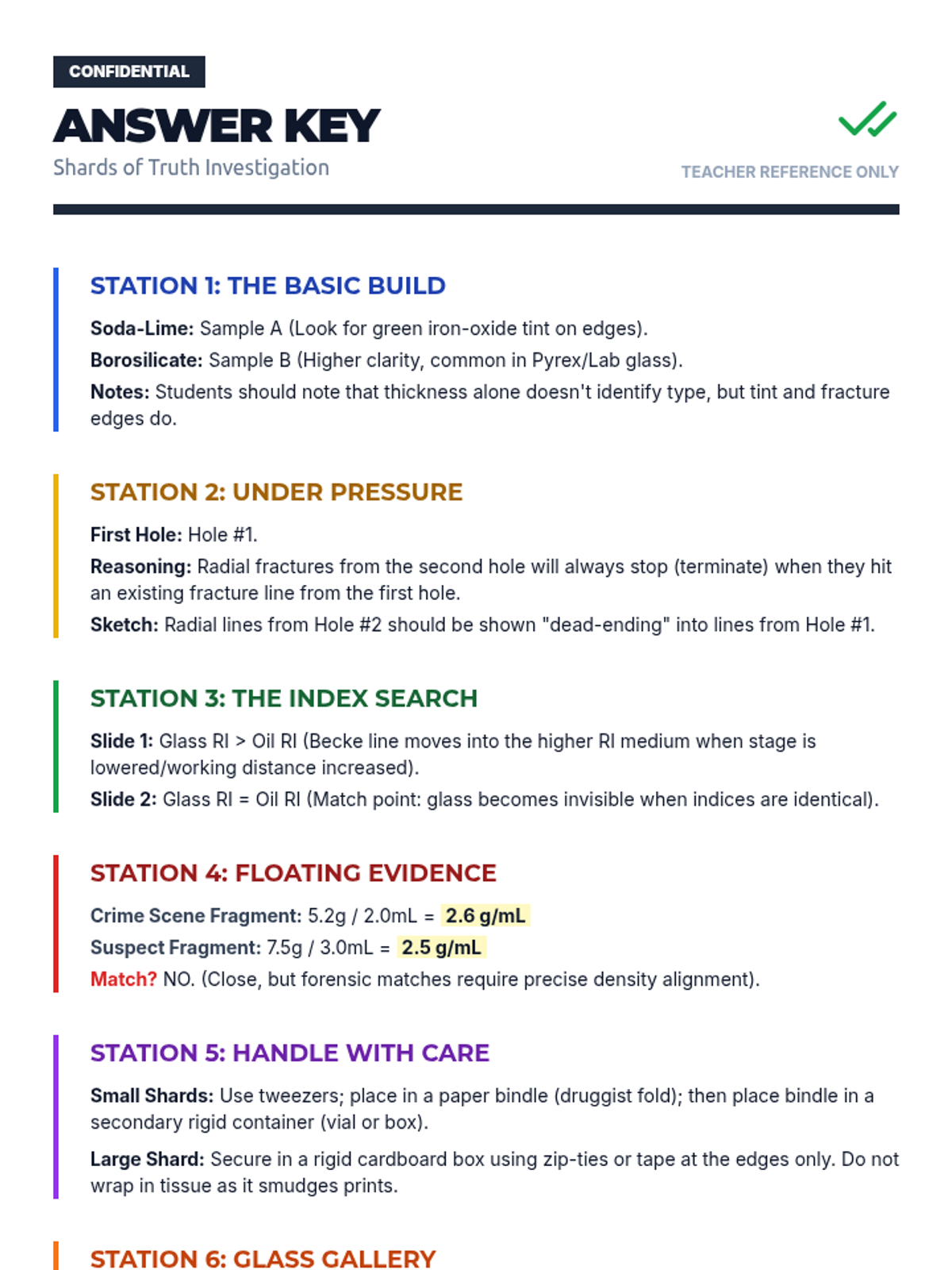
A hands-on indoor scavenger hunt where students analyze soil and glass evidence to solve a forensic mystery. Students identify unique characteristics like pH, texture, refractive index, and fracture patterns.
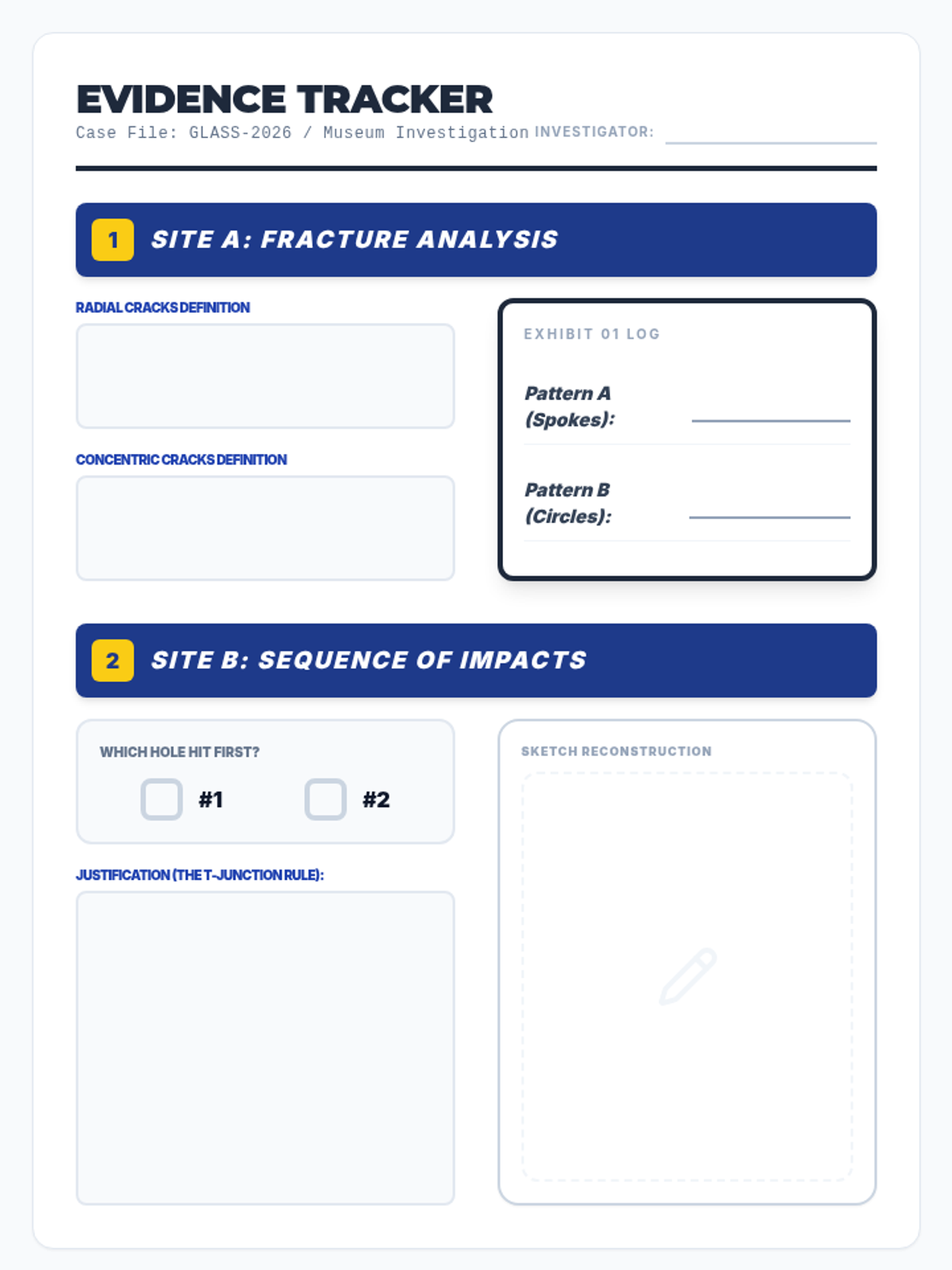
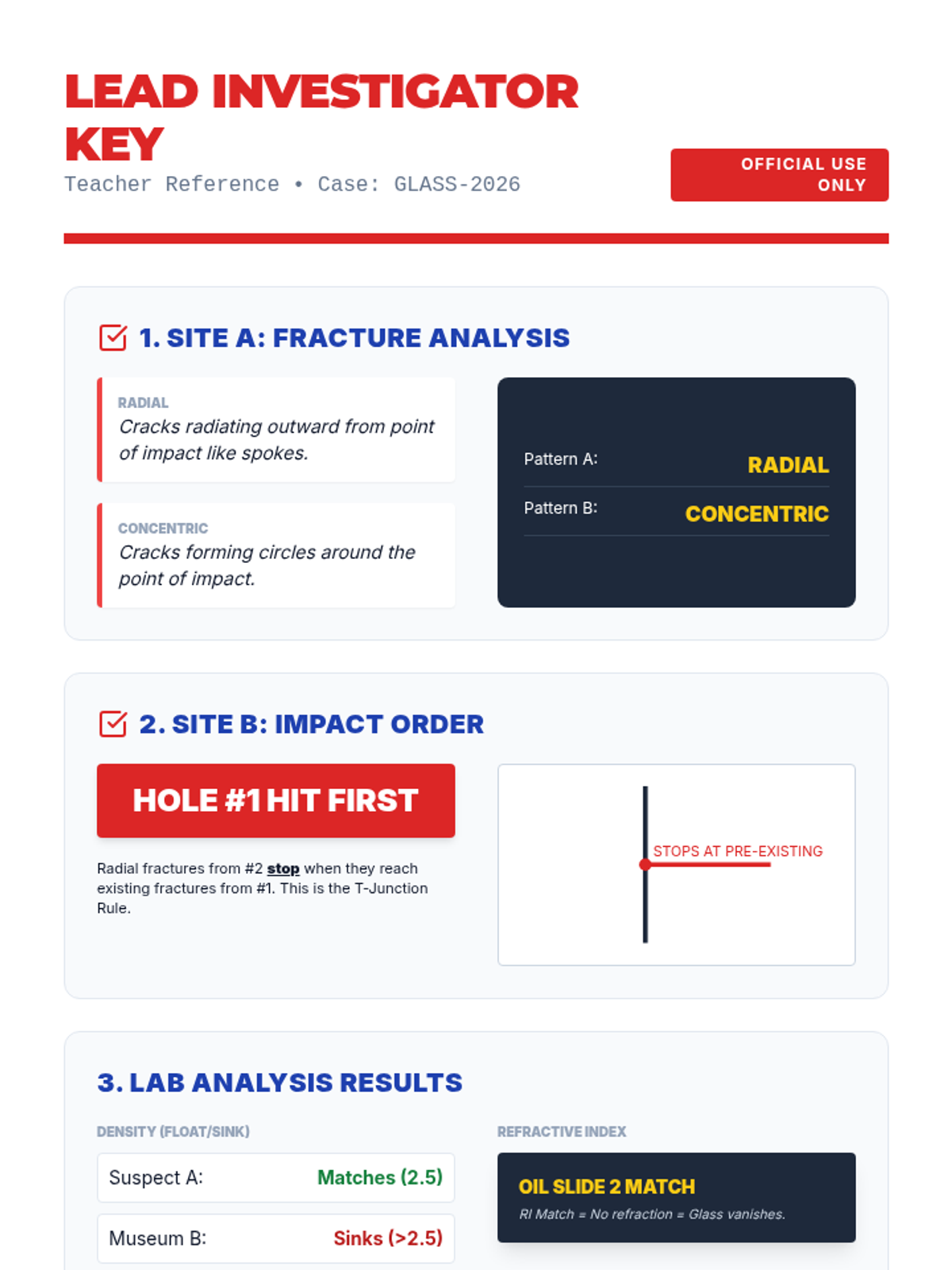
An engaging, image-based digital scavenger hunt where students solve a forensic mystery using glass evidence concepts like fracture patterns, density, and refractive index.
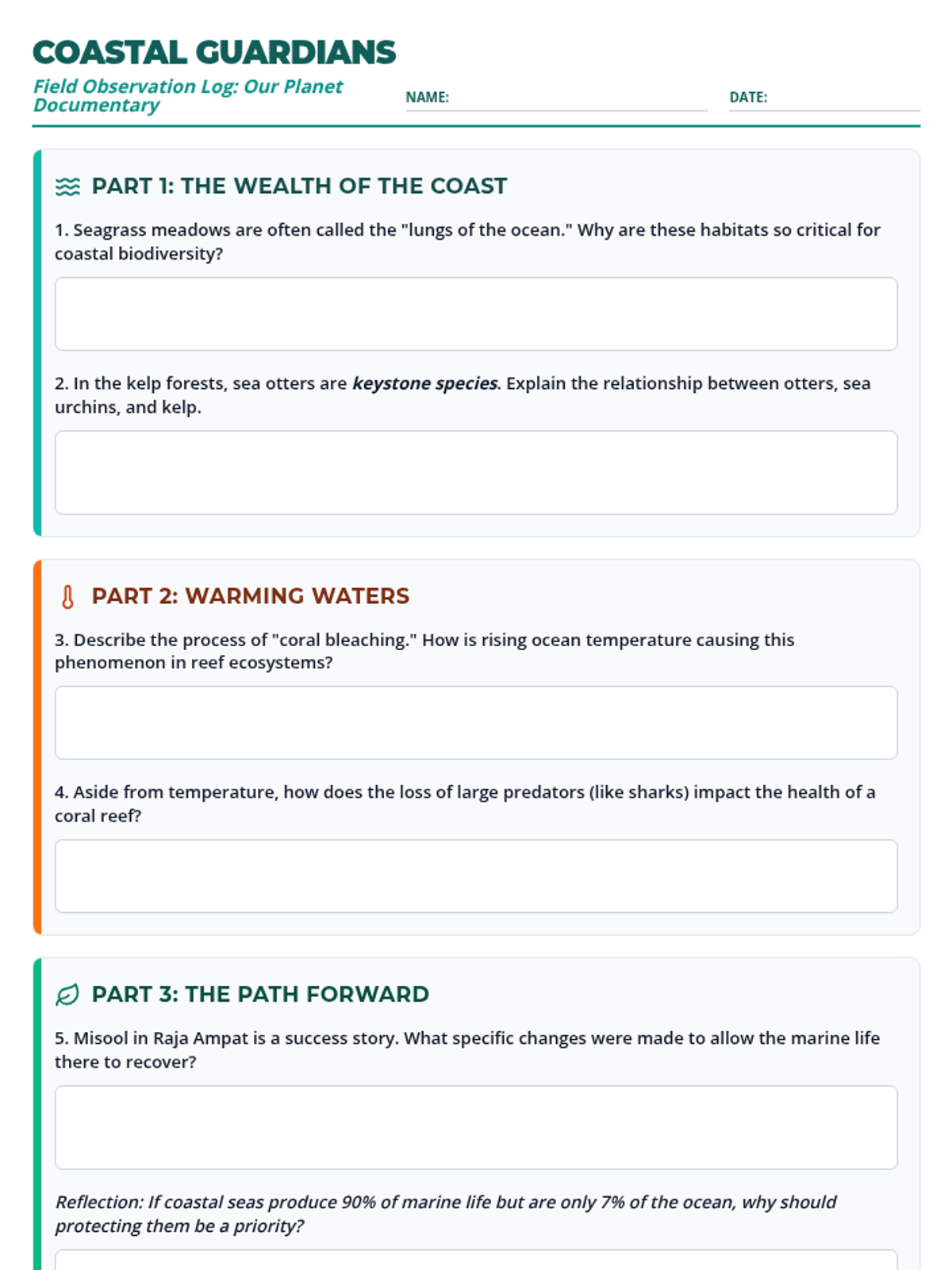
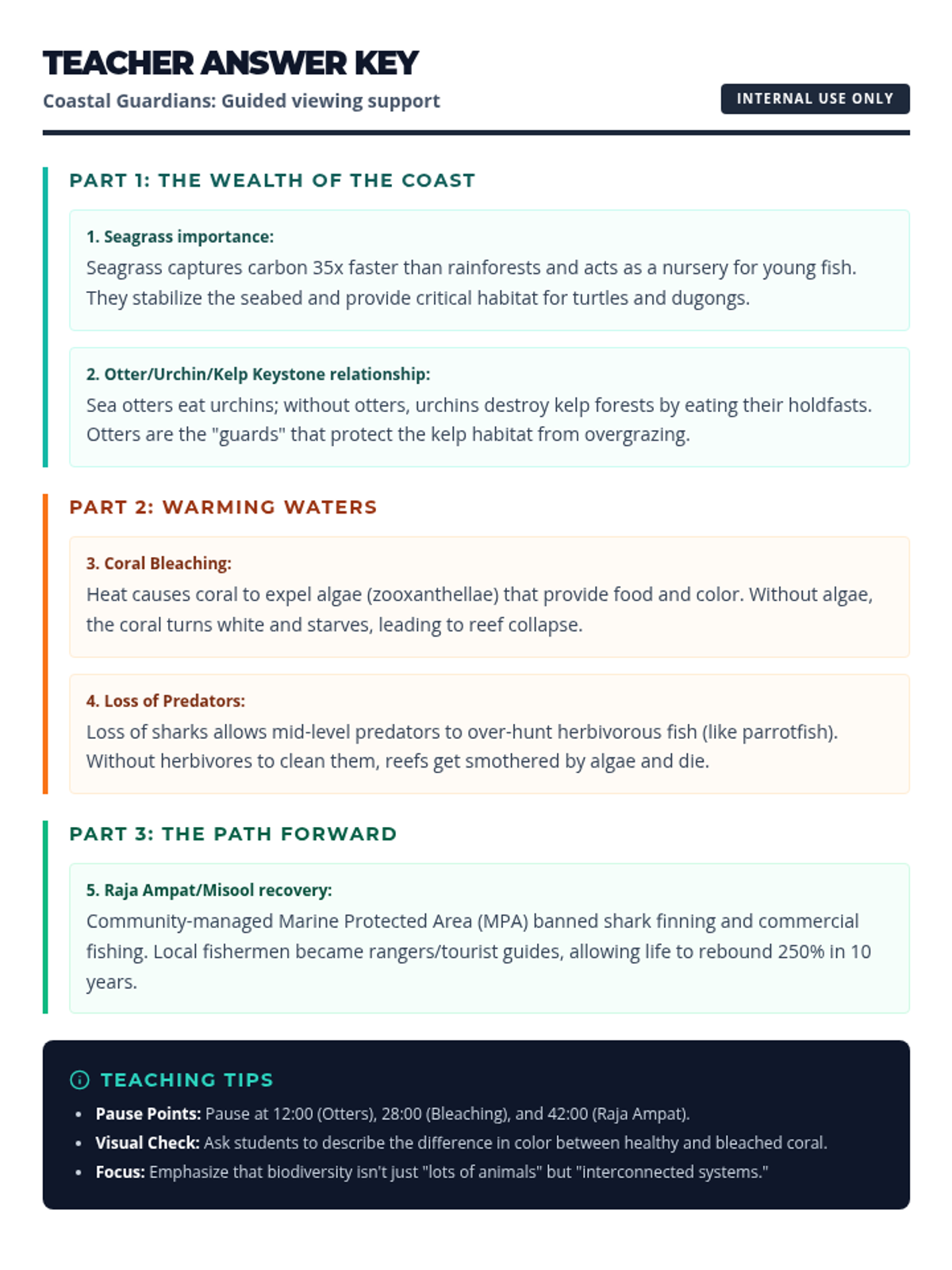
A lesson exploring the delicate balance of coastal ecosystems, focusing on how biodiversity sustains life and how climate change threatens these vital habitats based on the Our Planet documentary.
A lesson covering the properties of soil and glass as forensic evidence, culminating in an outdoor scavenger hunt where students collect and identify samples.
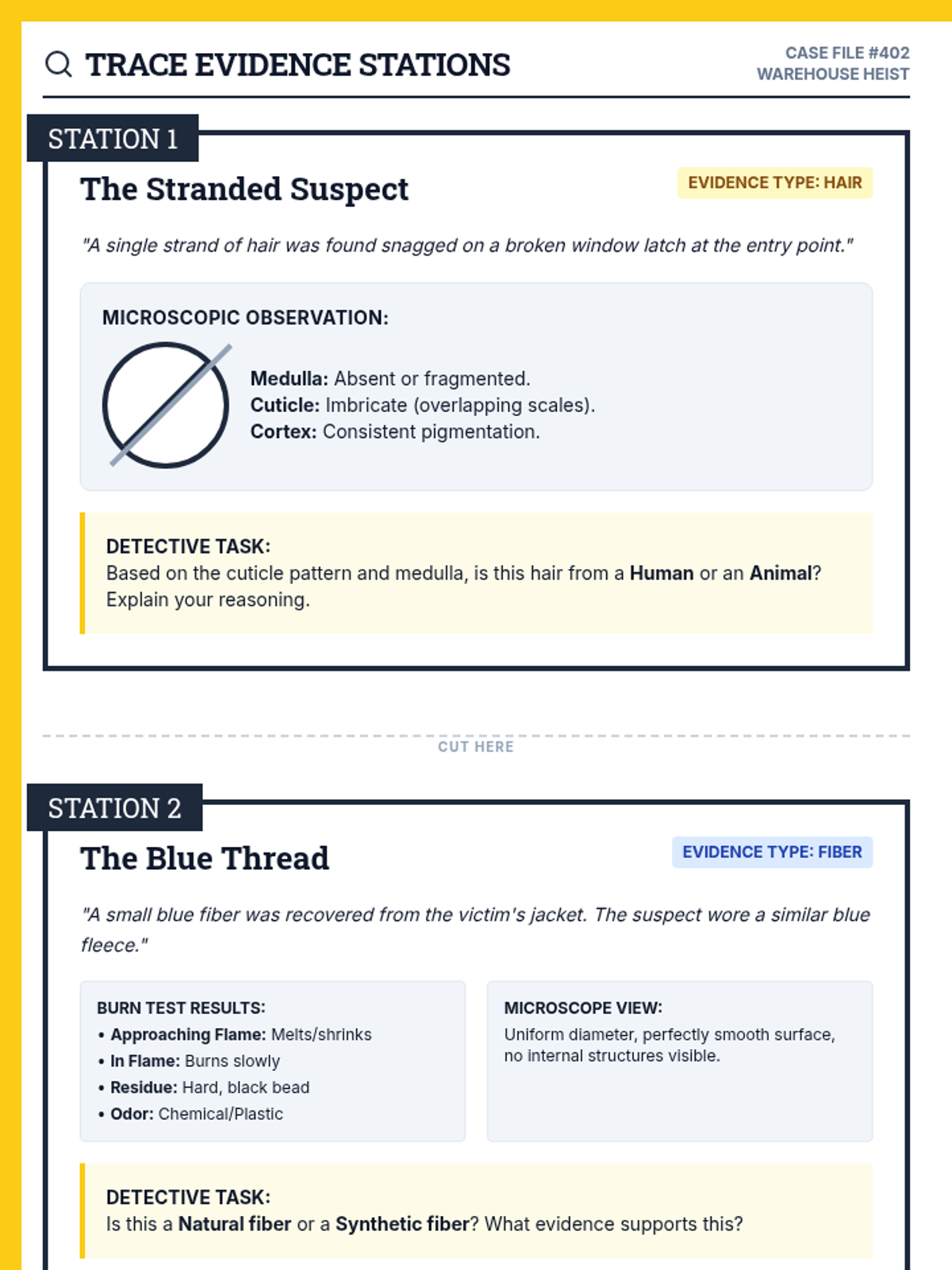
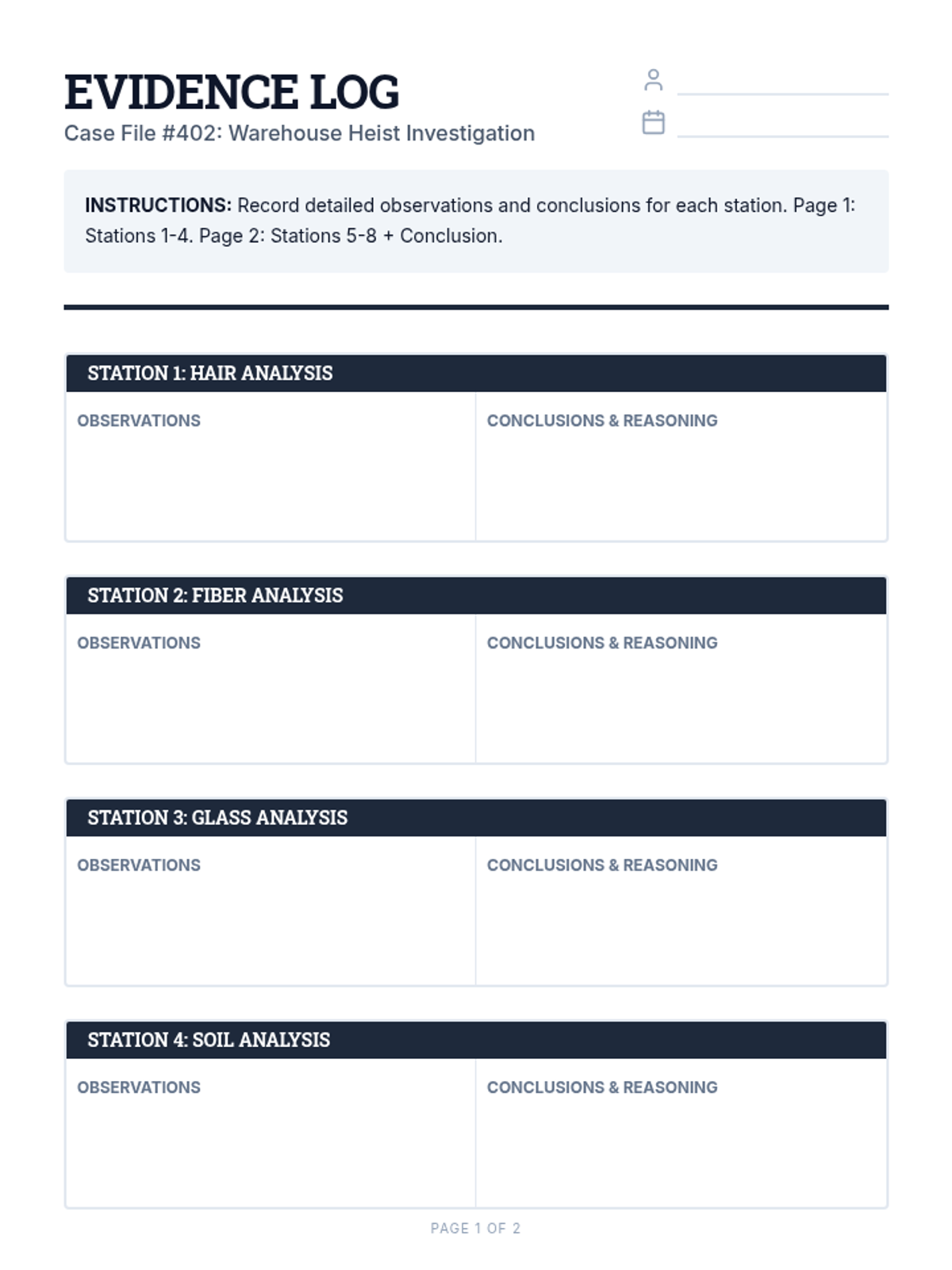
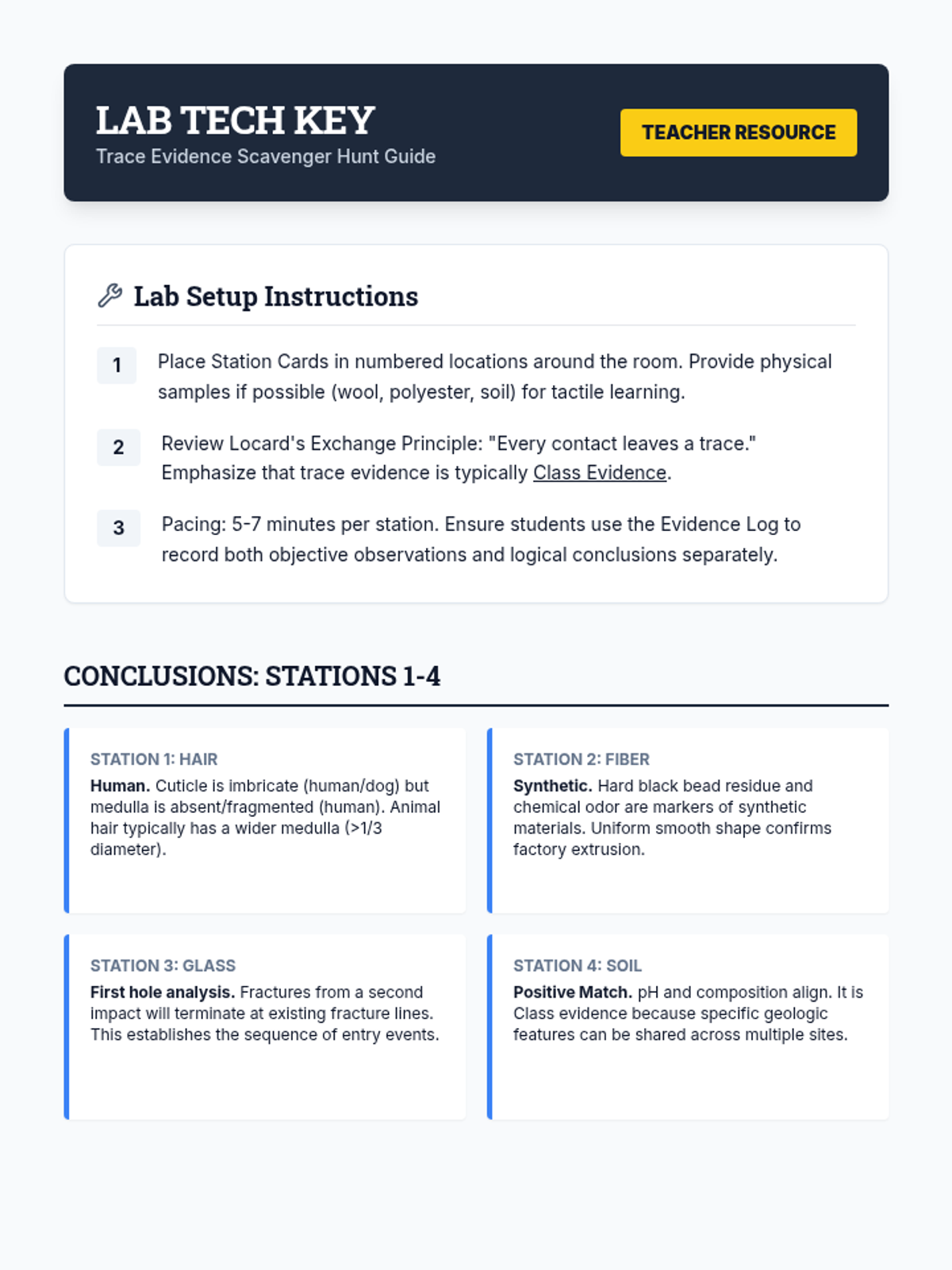
A hands-on forensic science lesson where students rotate through stations to analyze various types of trace evidence (hair, fiber, glass, soil, etc.) to solve a warehouse heist.
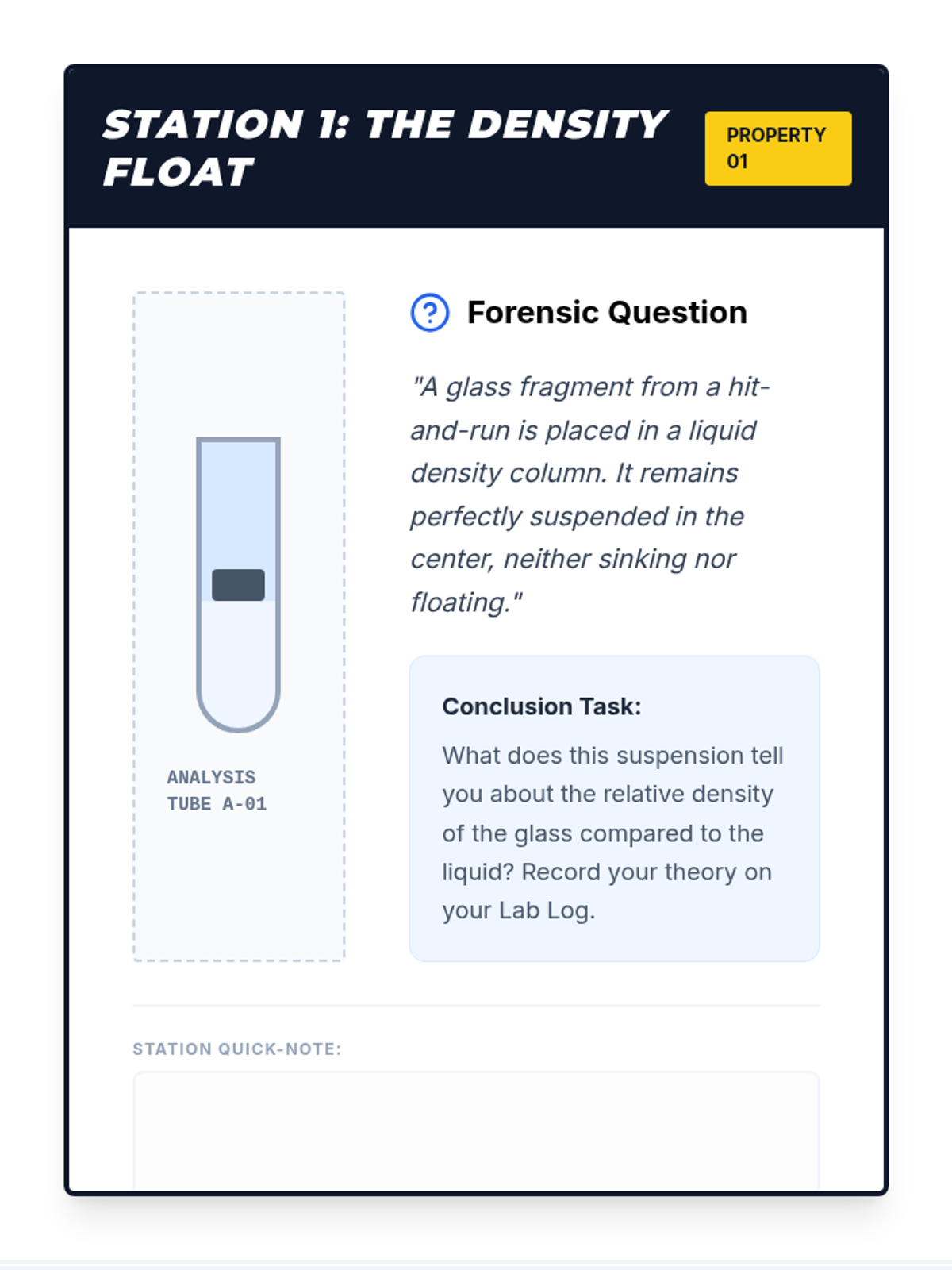
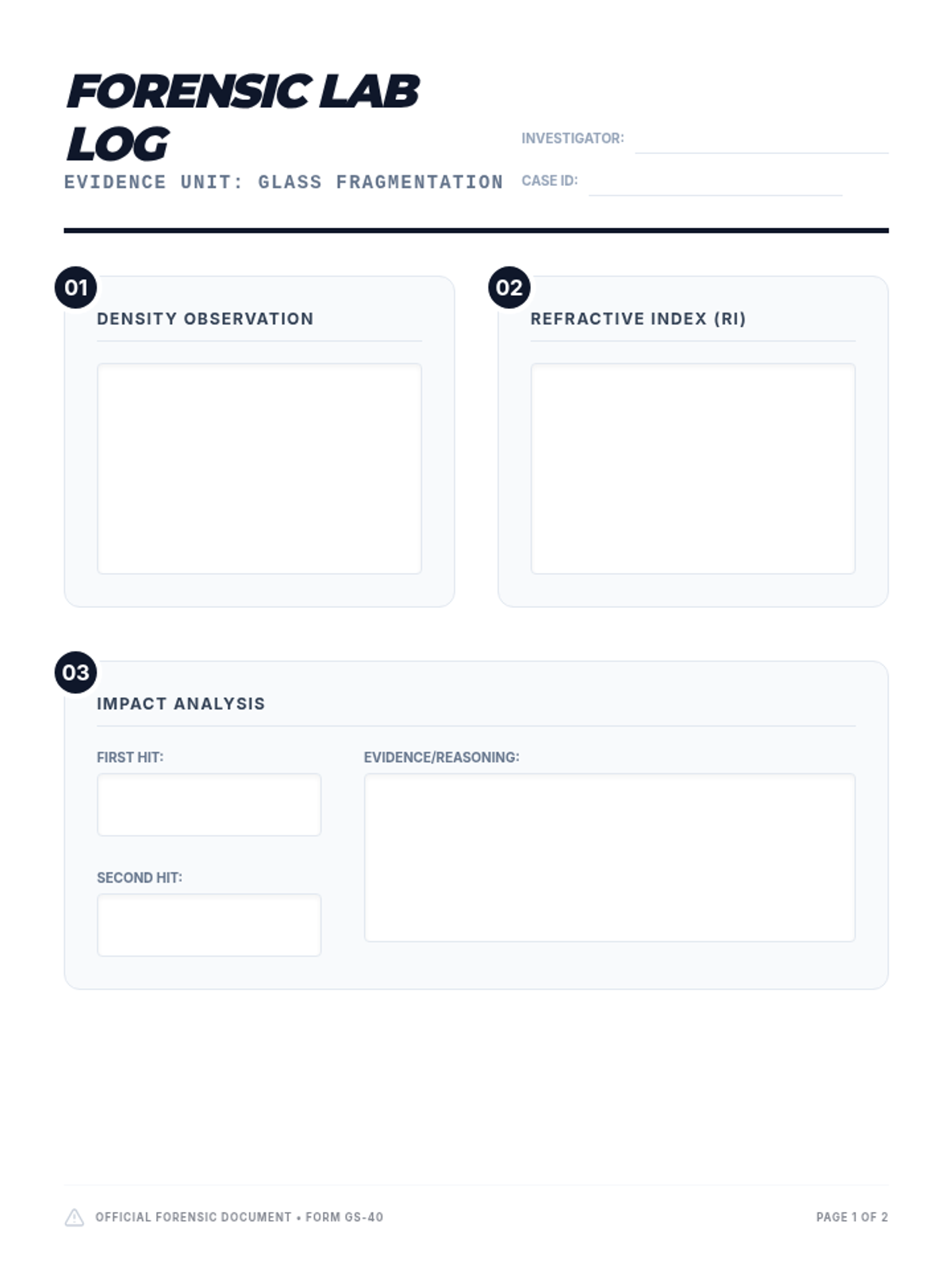
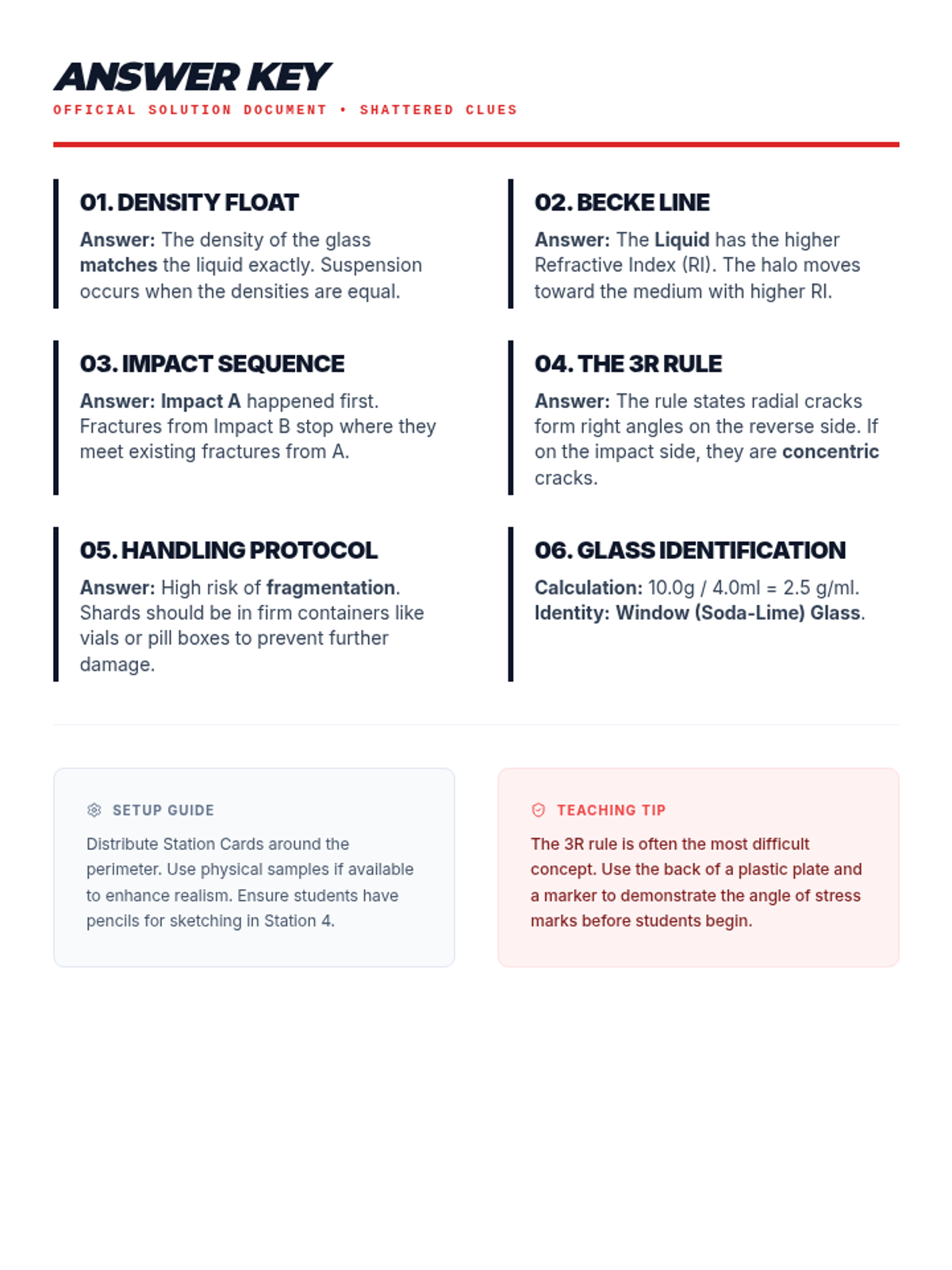
A hands-on forensic investigation into the physical properties and fracture patterns of glass evidence. Students rotate through stations to master density, refractive index, and crime scene collection techniques.
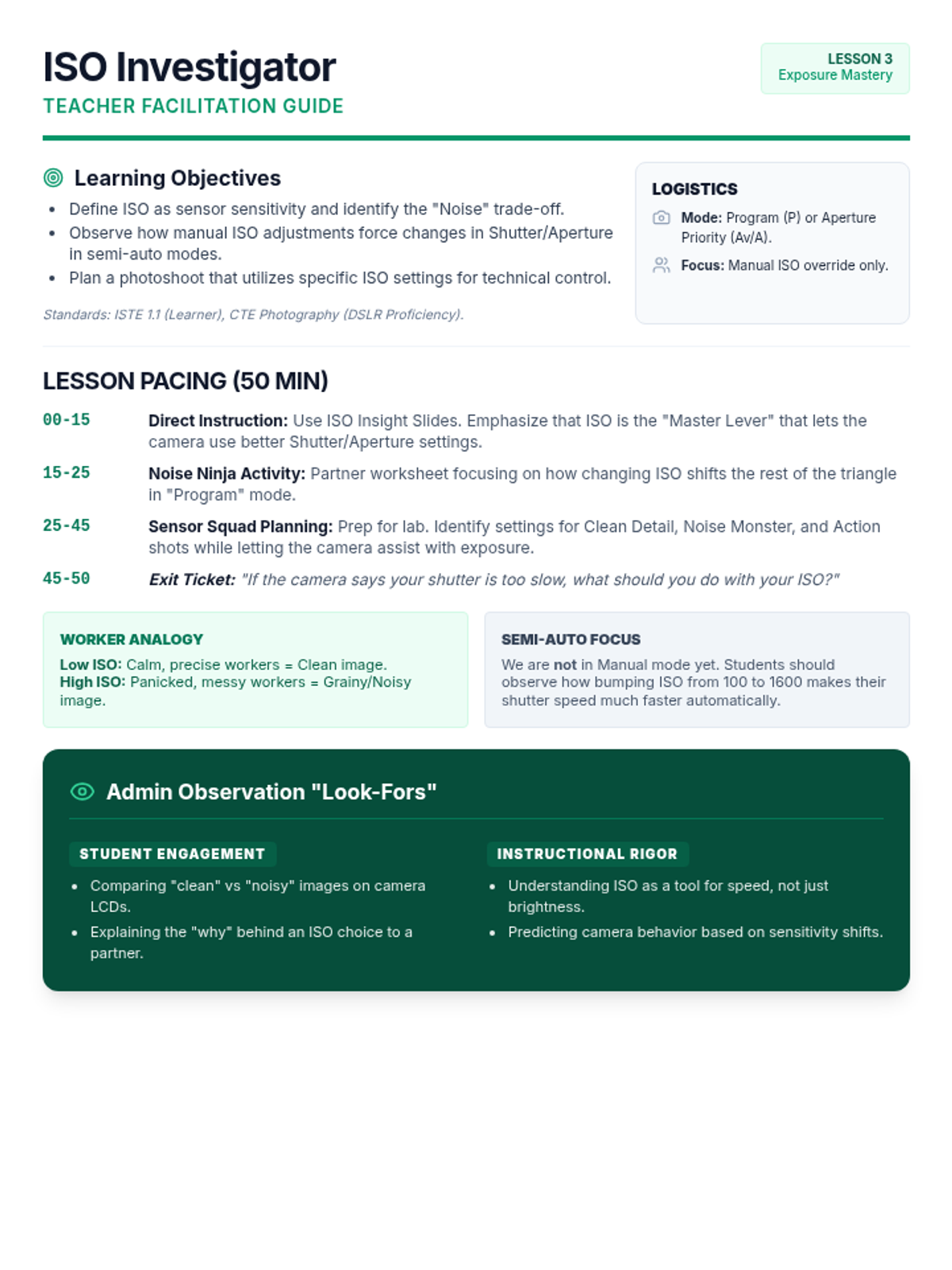
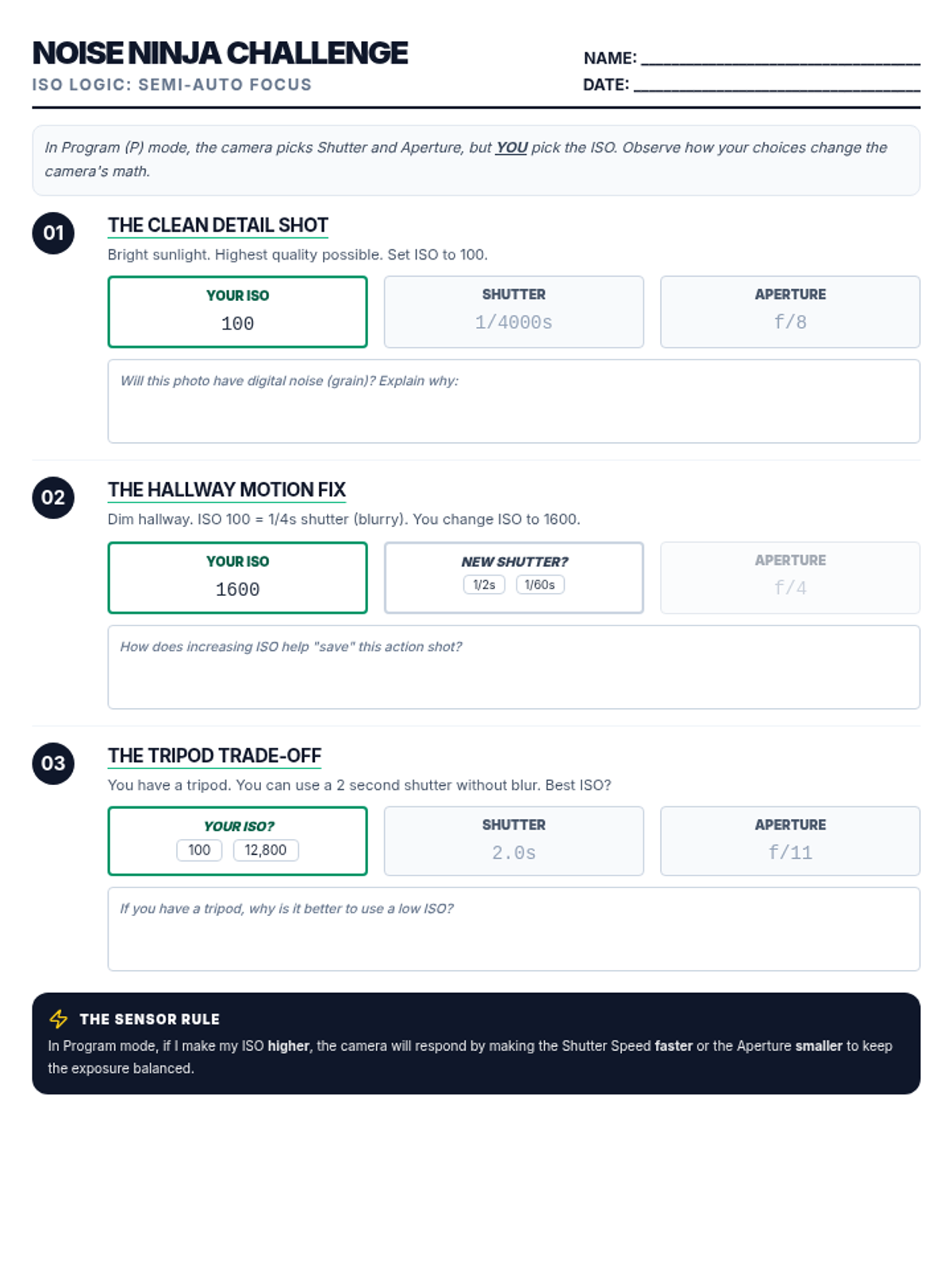
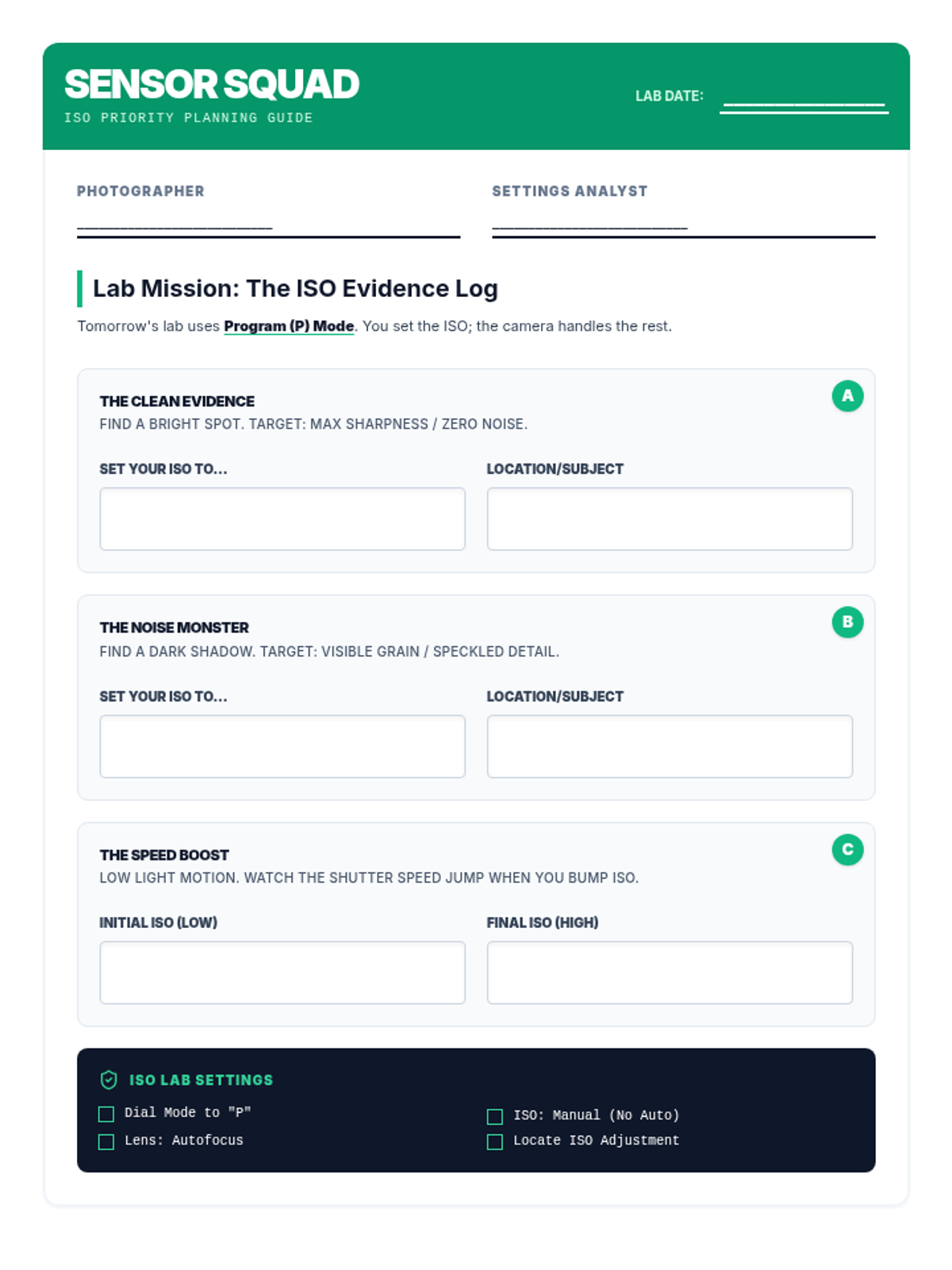
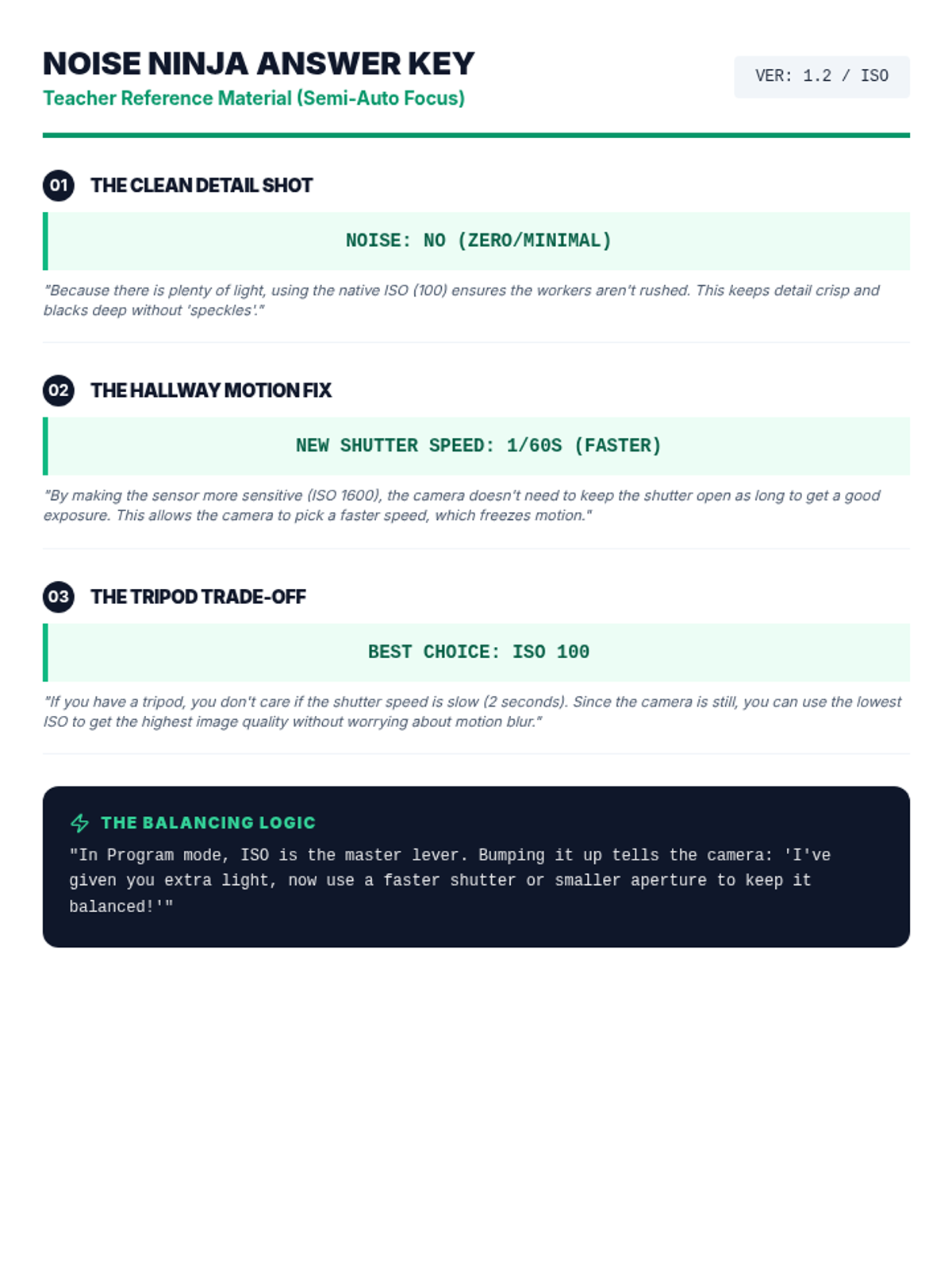
The final component of the Exposure Triangle: ISO. Students learn how digital sensors process light and the trade-offs between sensitivity and image quality.
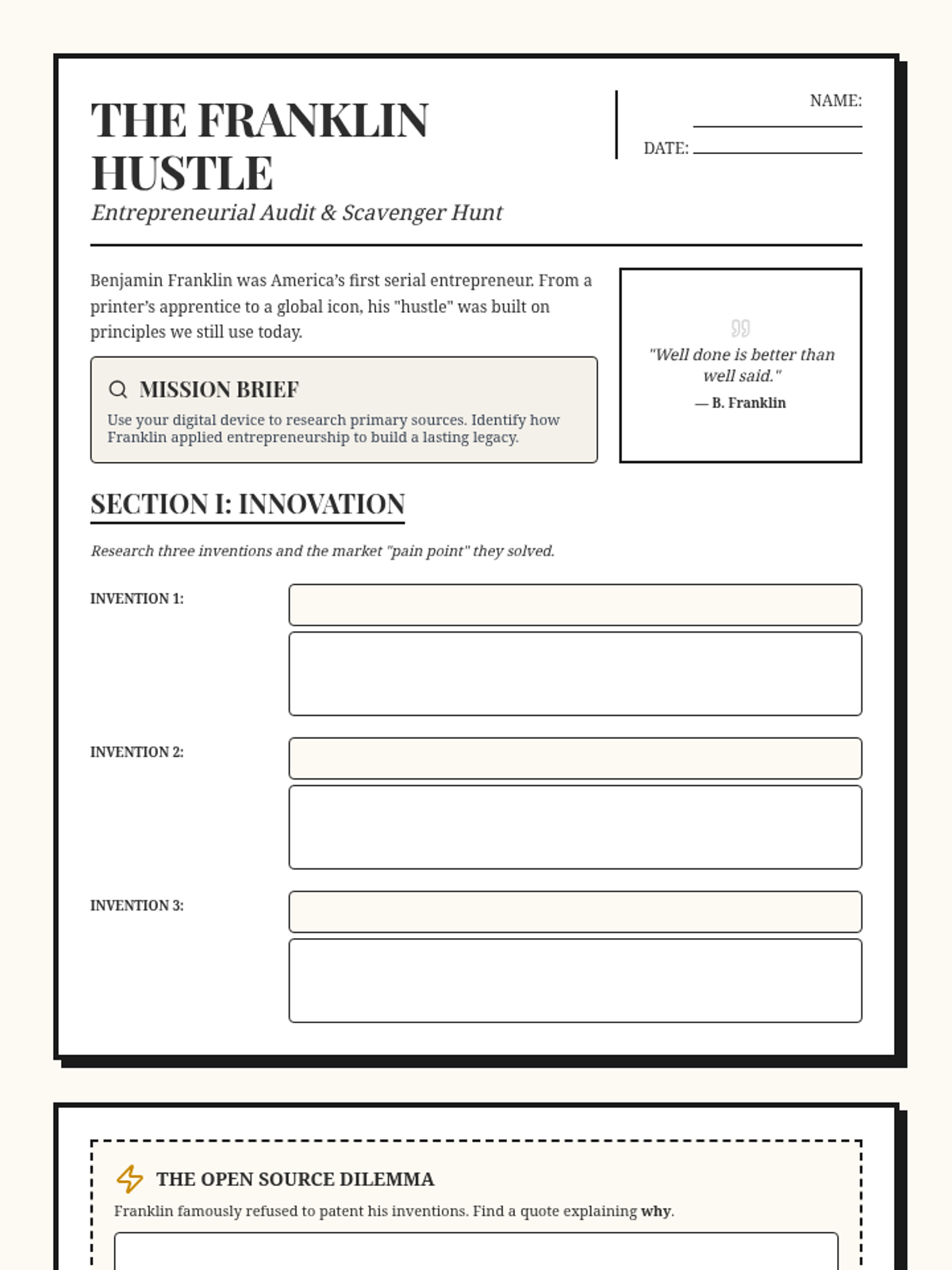
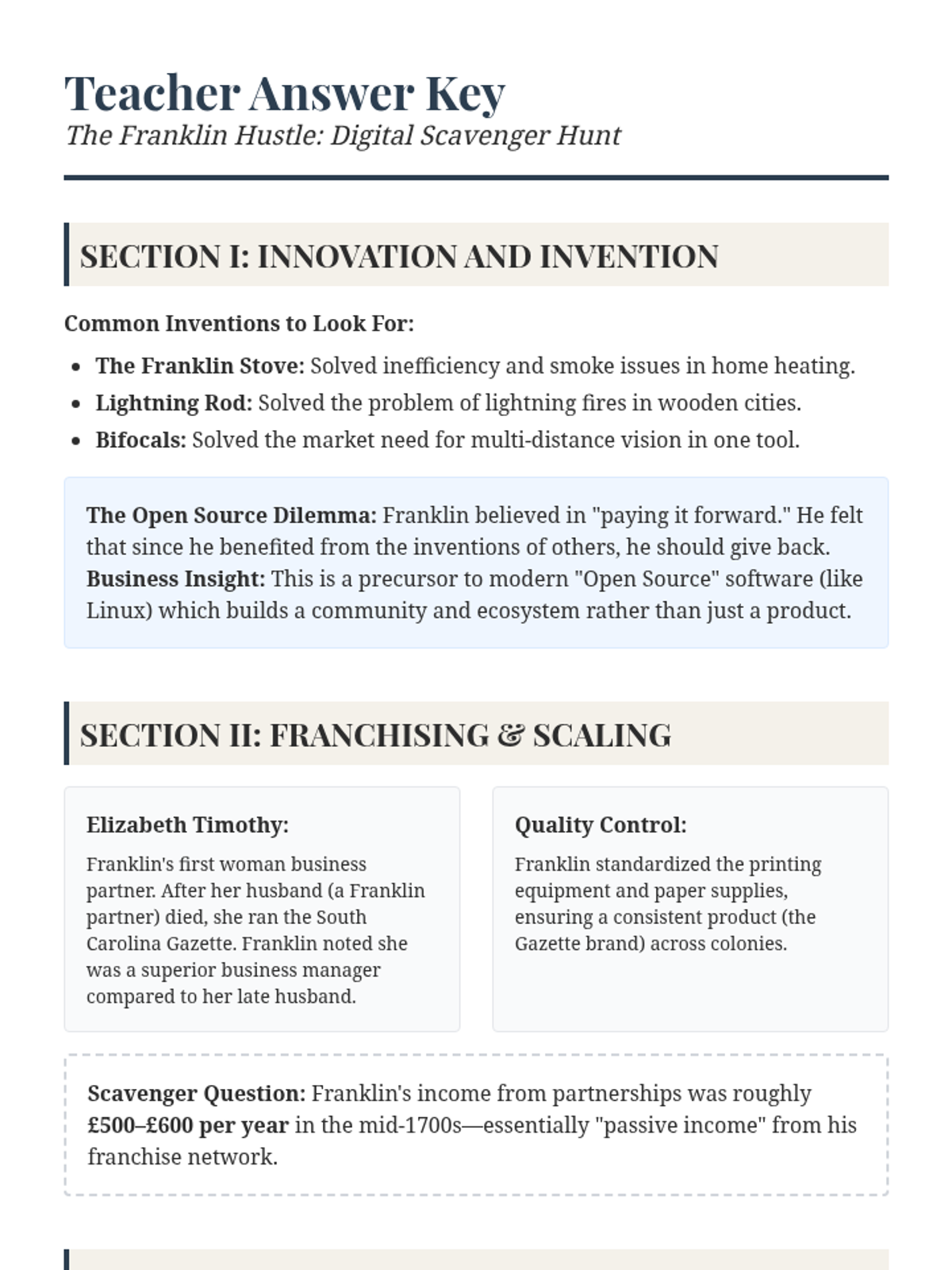
A deep dive into Benjamin Franklin's entrepreneurial legacy, focusing on his innovations, pioneering franchise models, civic leadership, and branding genius. Students explore how the 'First American' set the blueprint for modern business success through a digital scavenger hunt.
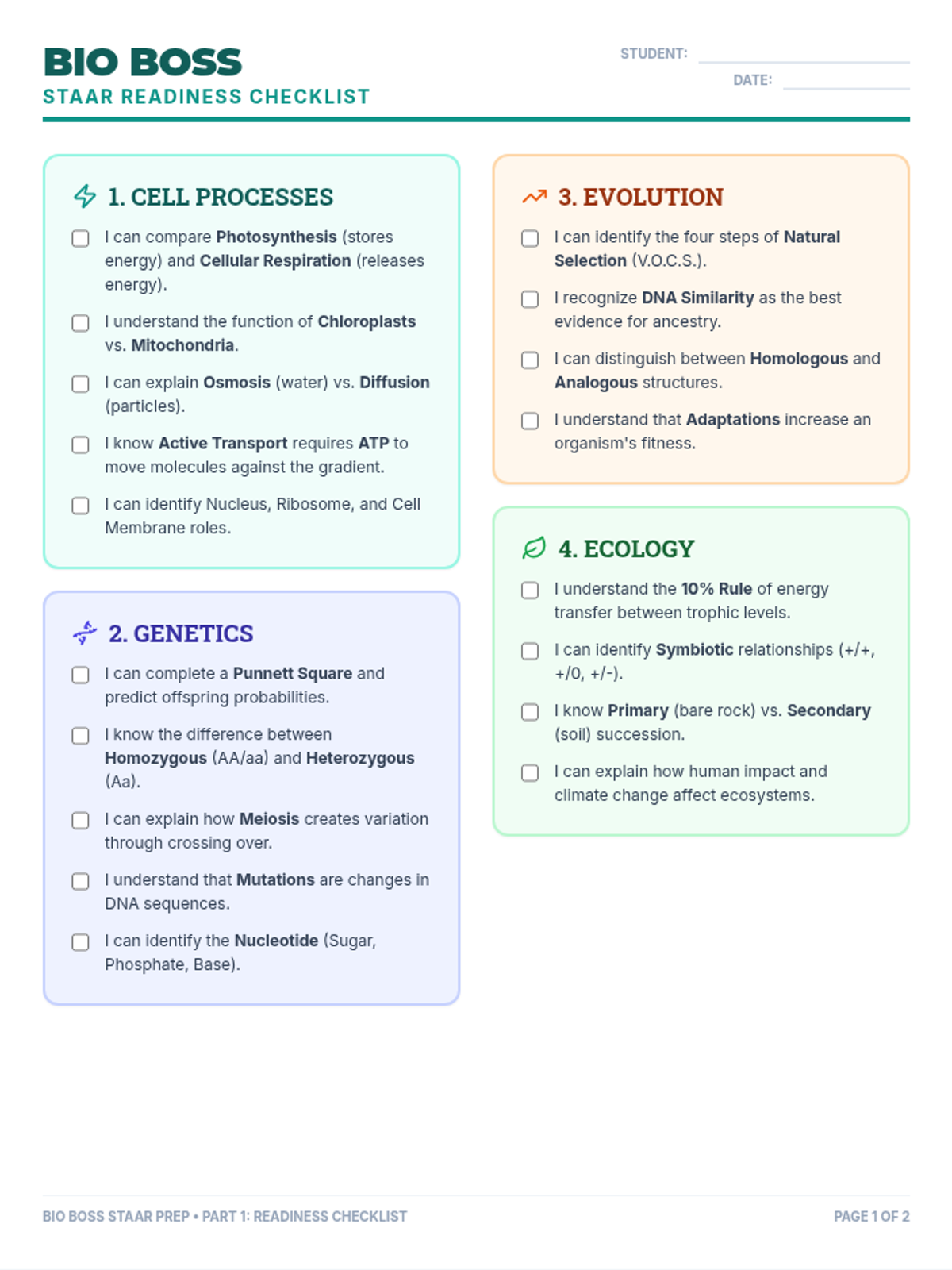
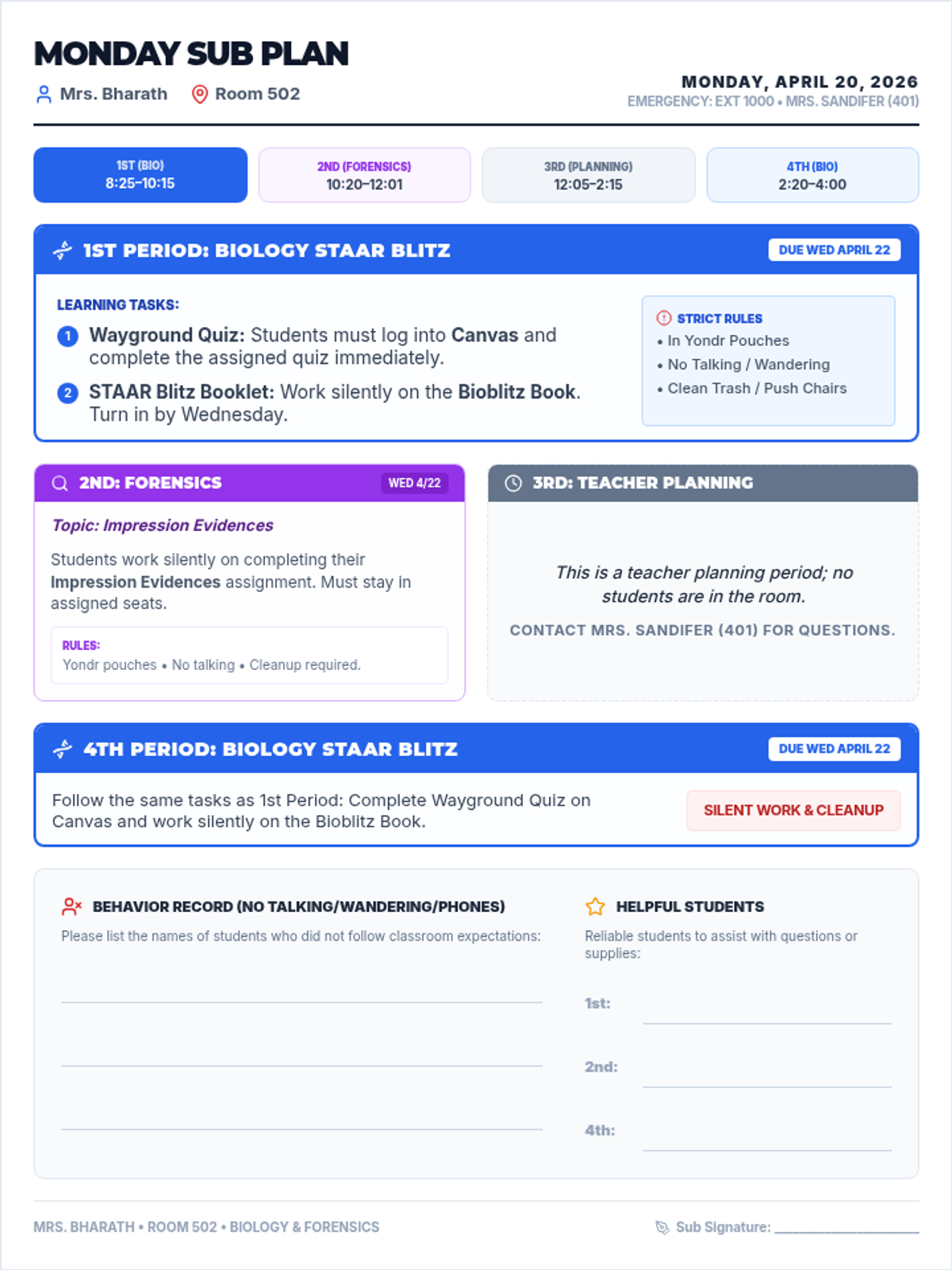
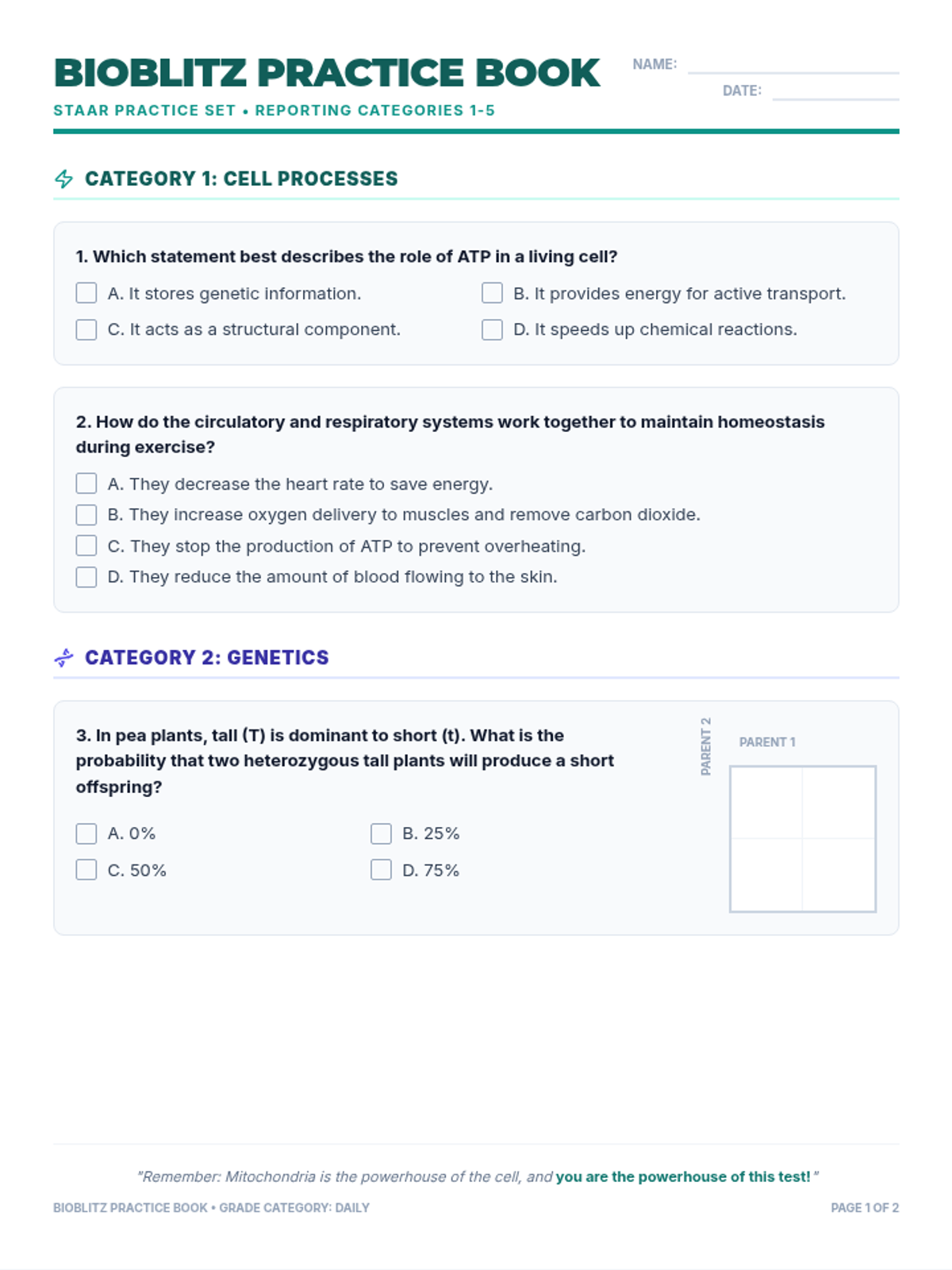
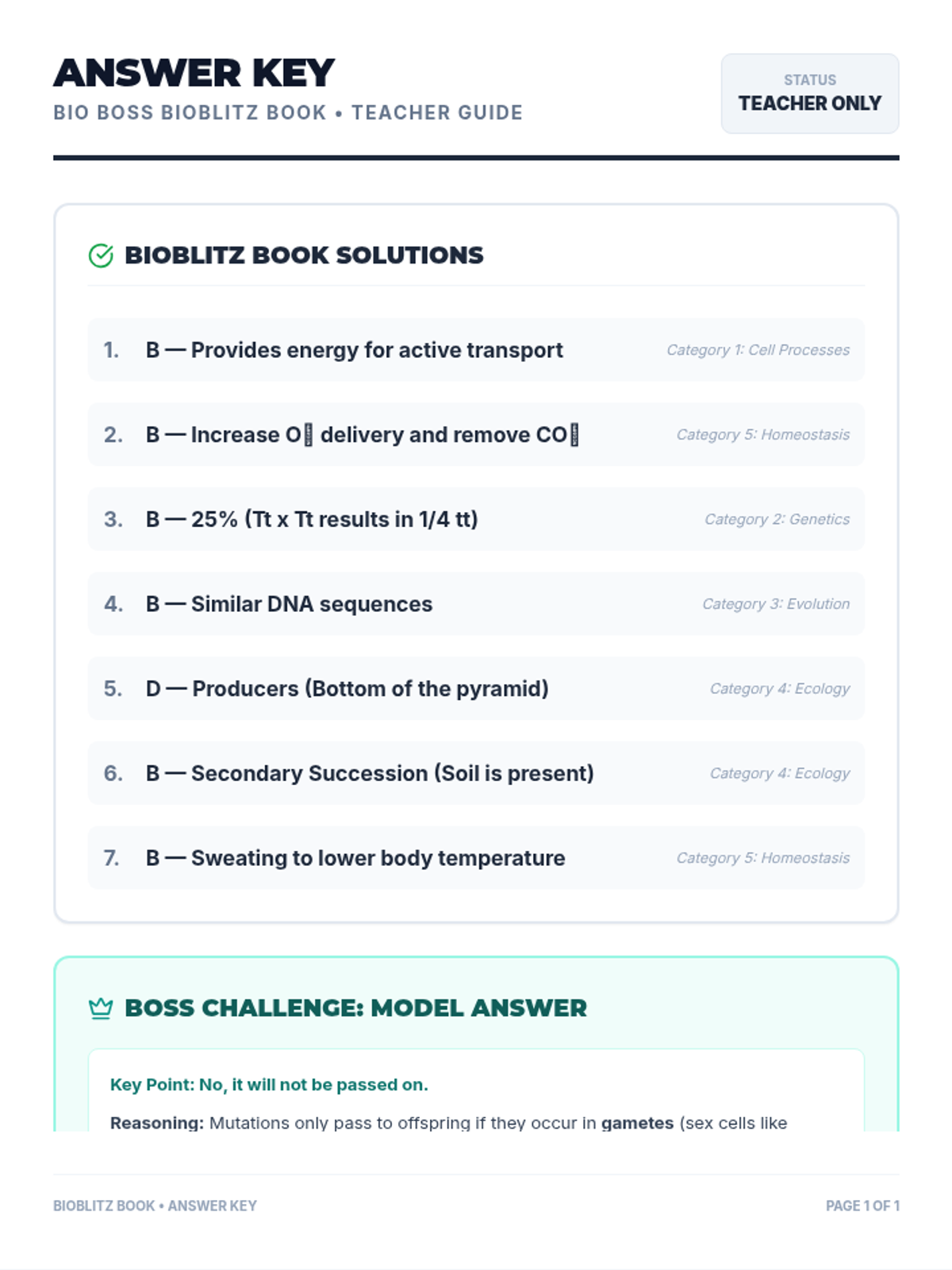
A focused review session for the Biology STAAR exam, centering on the five most-tested reporting categories through visual concept maps and question-stem alignment.
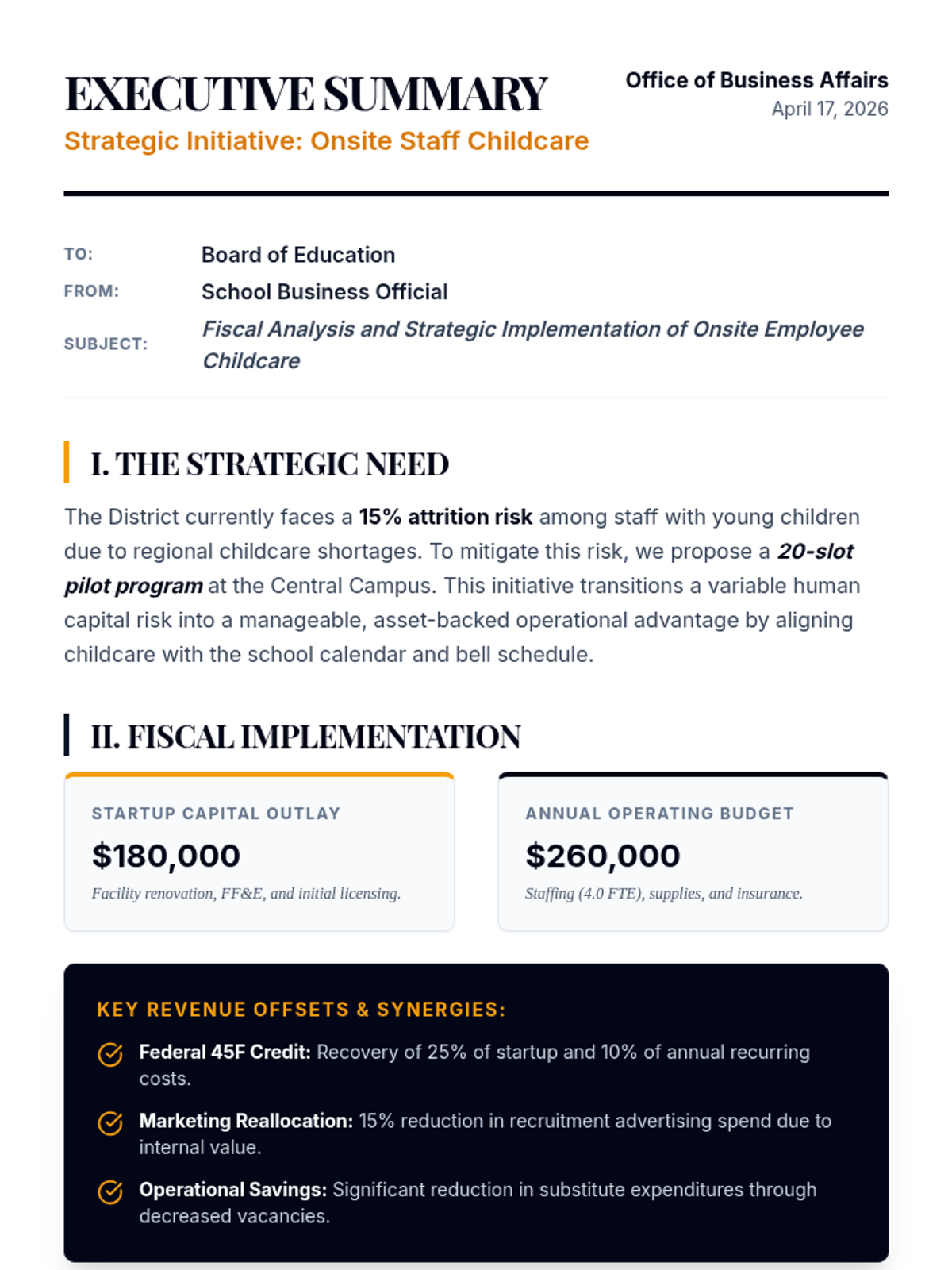
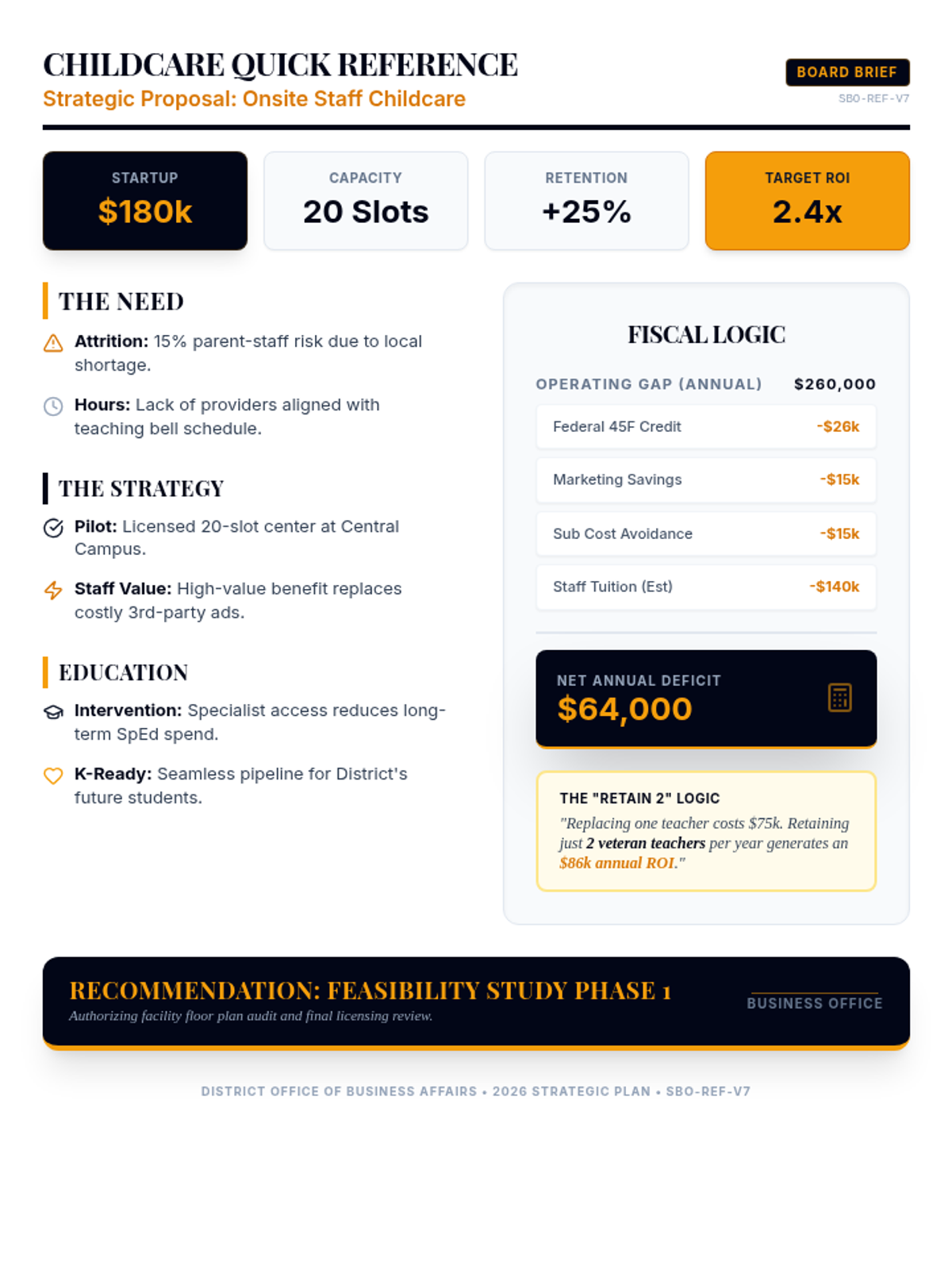
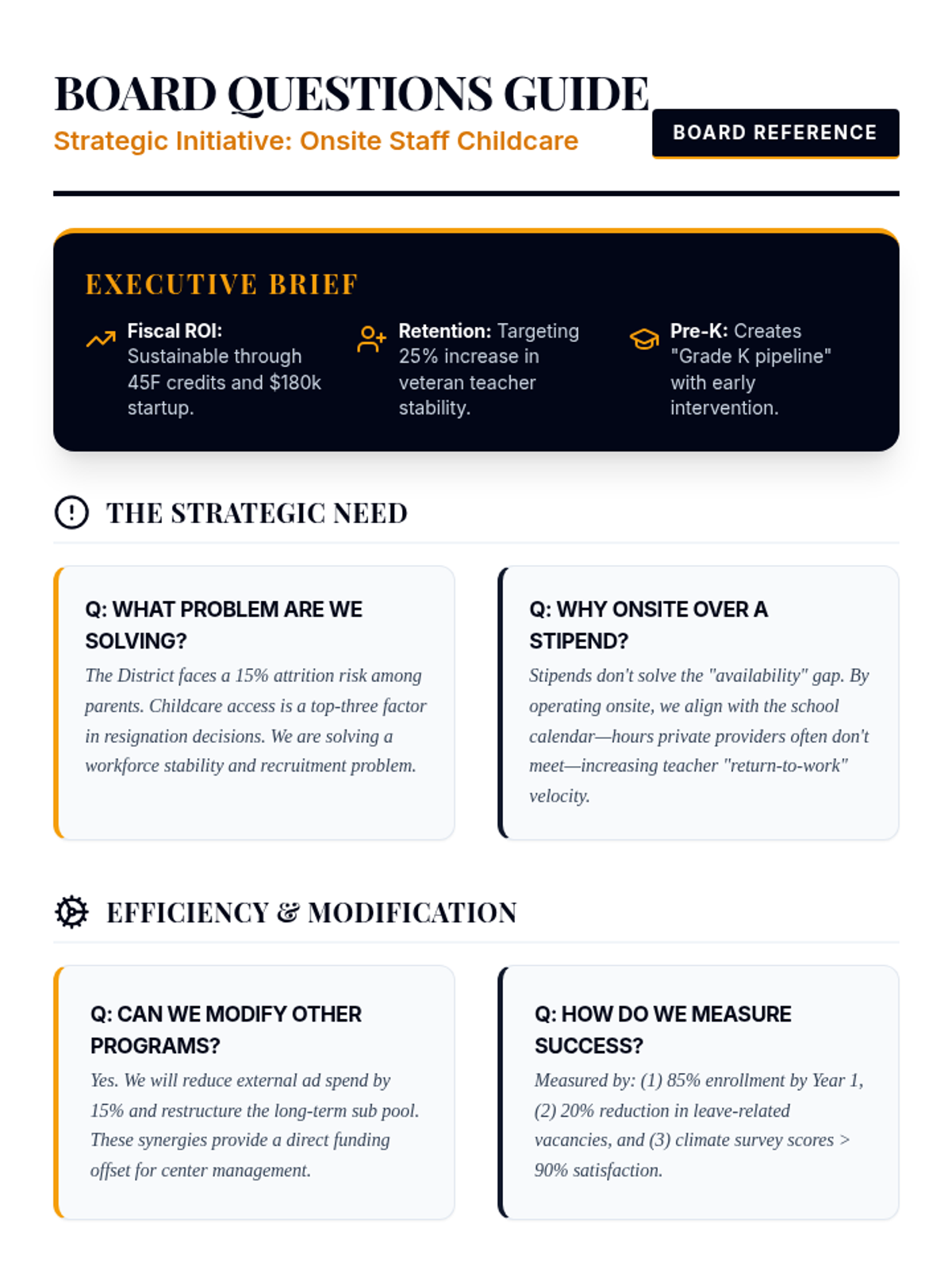
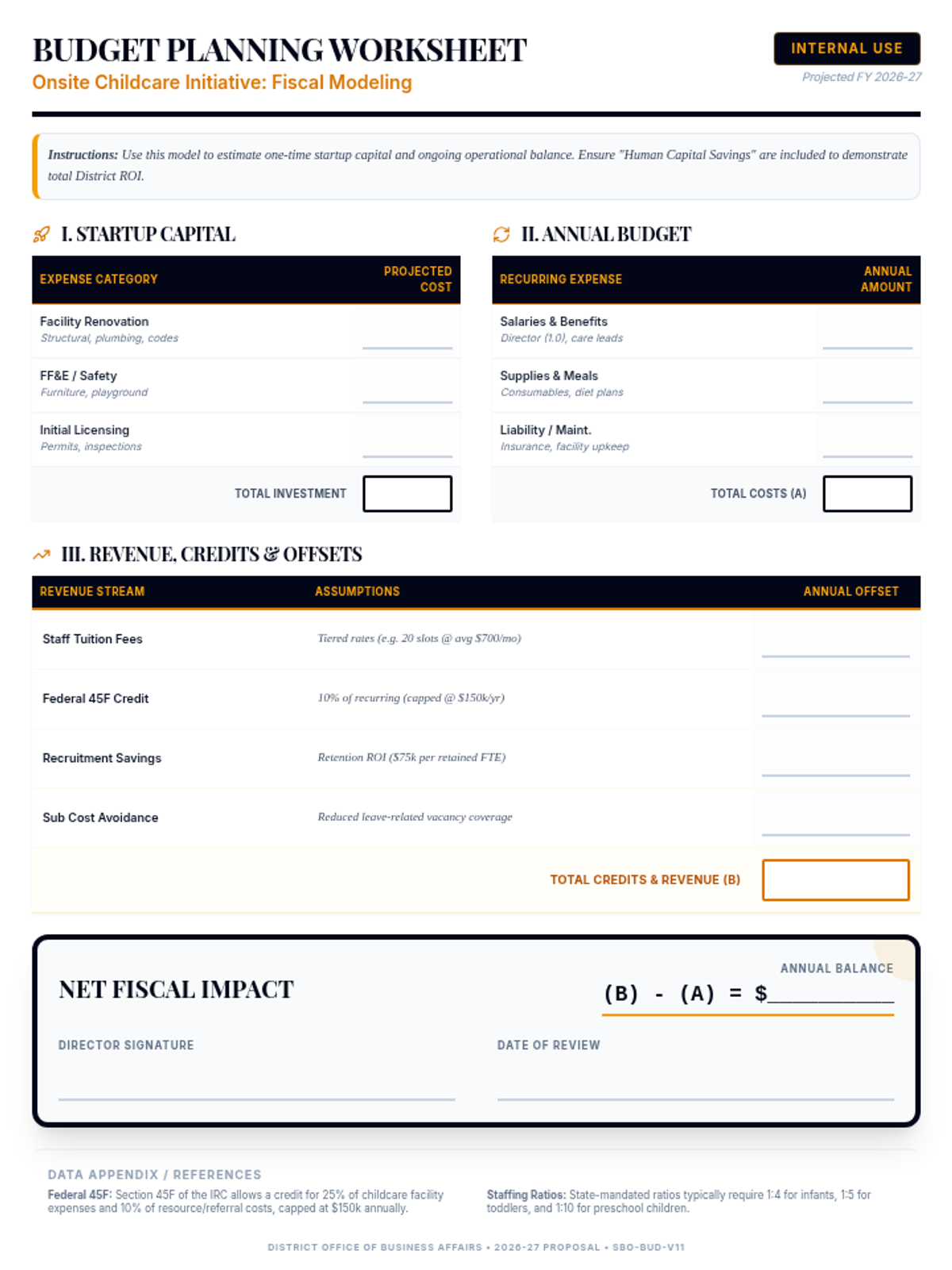
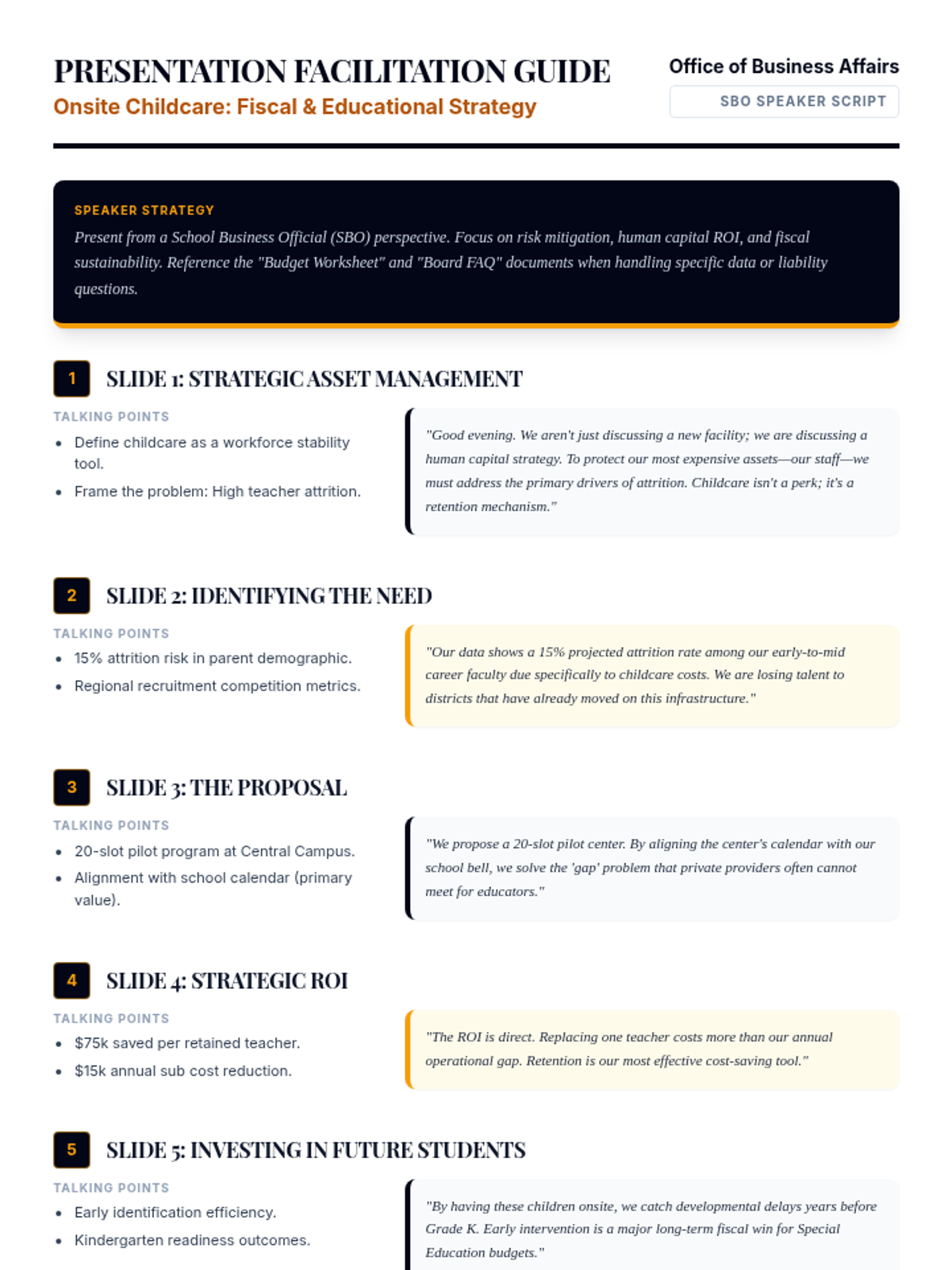
A comprehensive proposal for the Board of Education evaluating the fiscal and educational impact of implementing onsite childcare for district staff.
An immersive forensic science lesson where students analyze glass evidence across multiple stations, focusing on physical properties, fracture patterns, and laboratory analysis techniques.
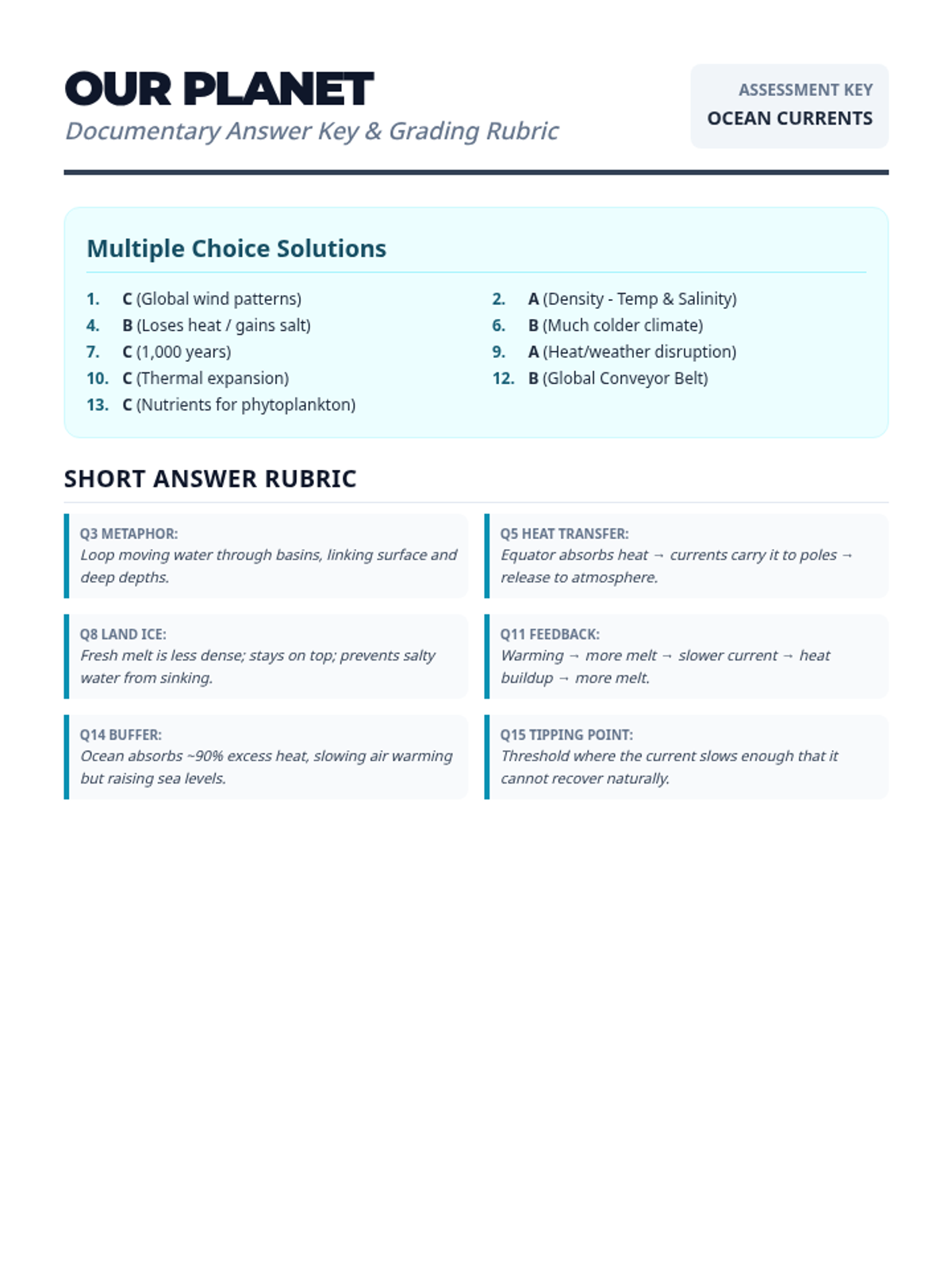
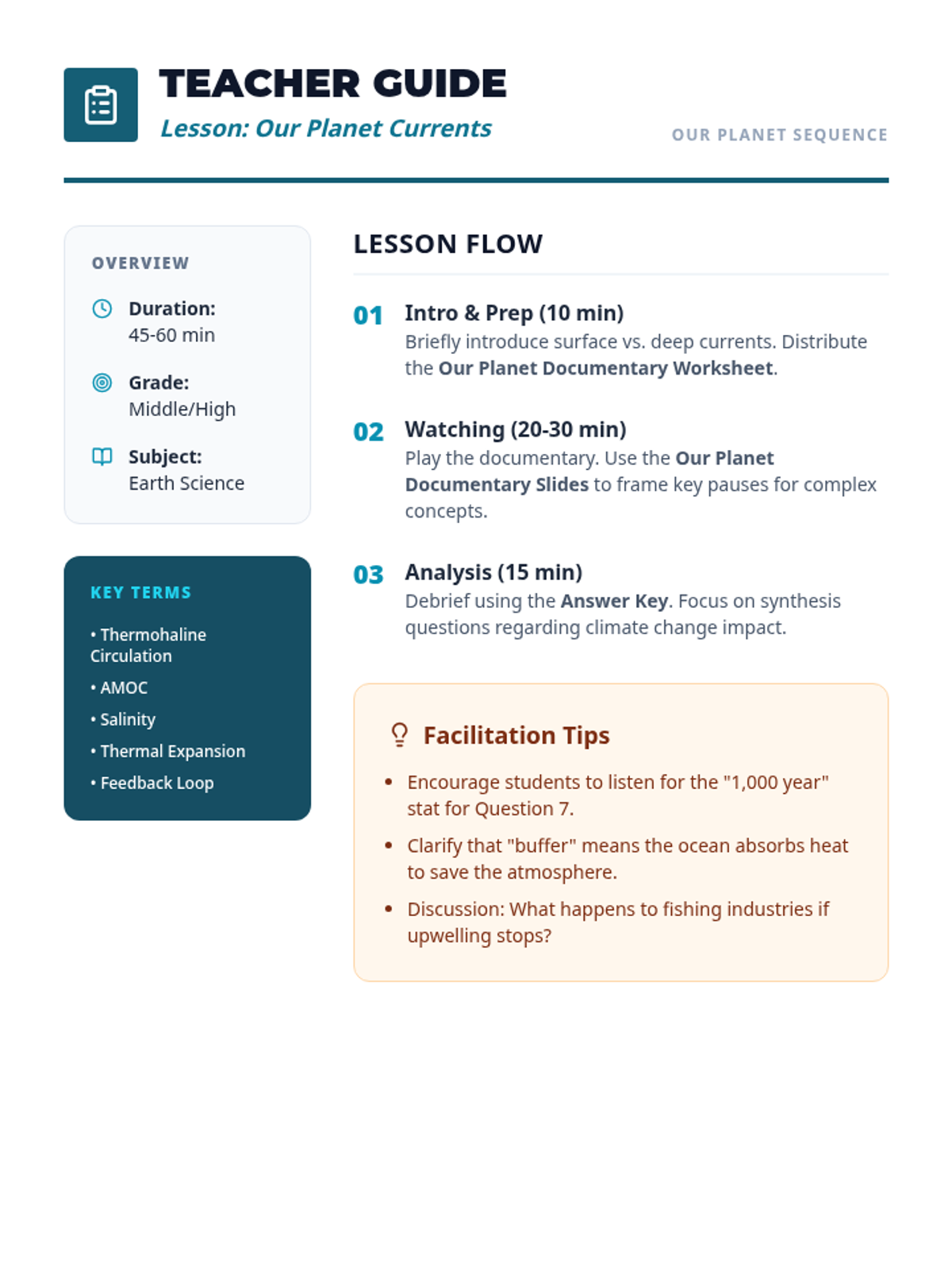
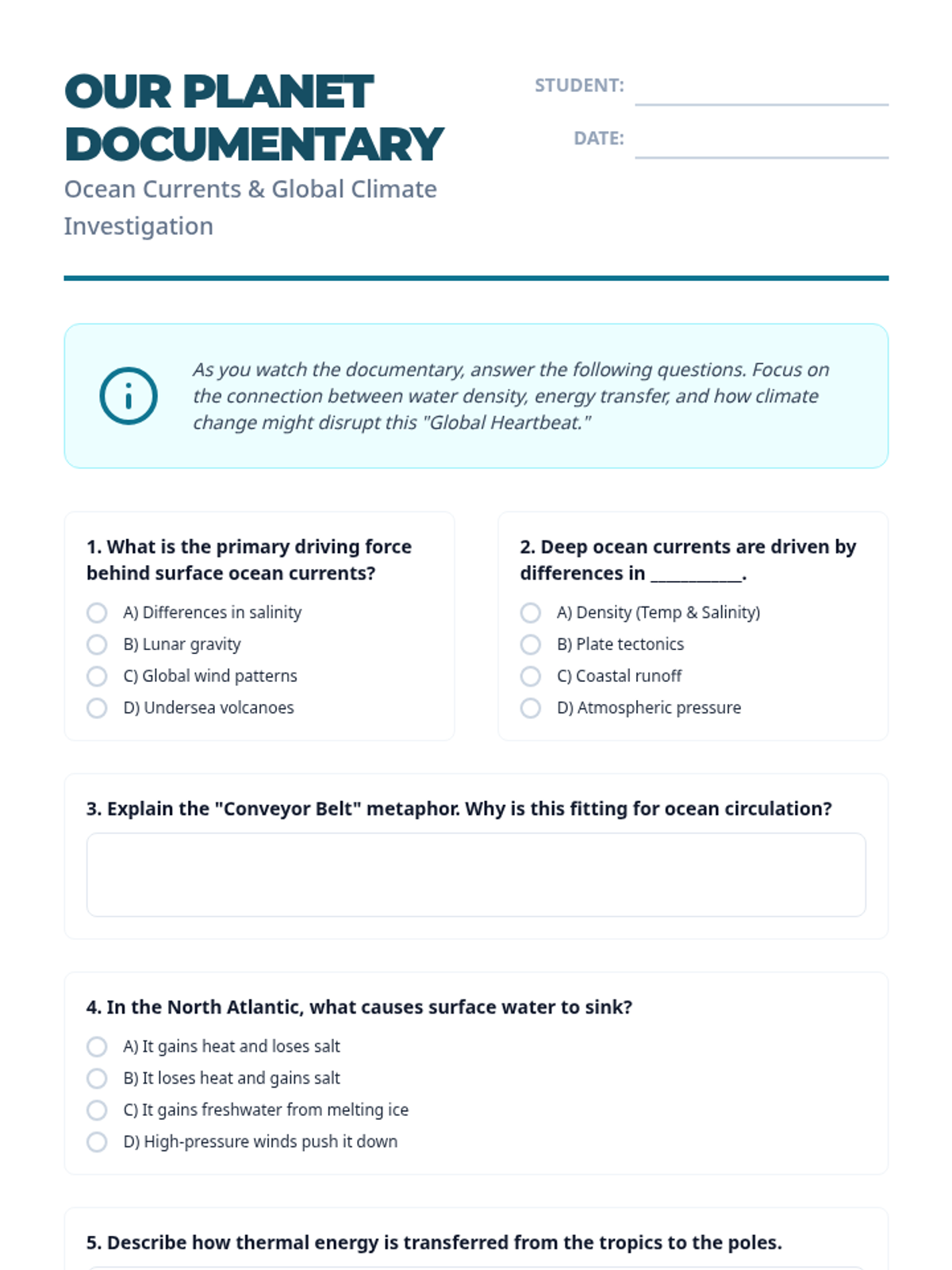
An investigation into how ocean currents distribute heat and regulate the climate of our planet.
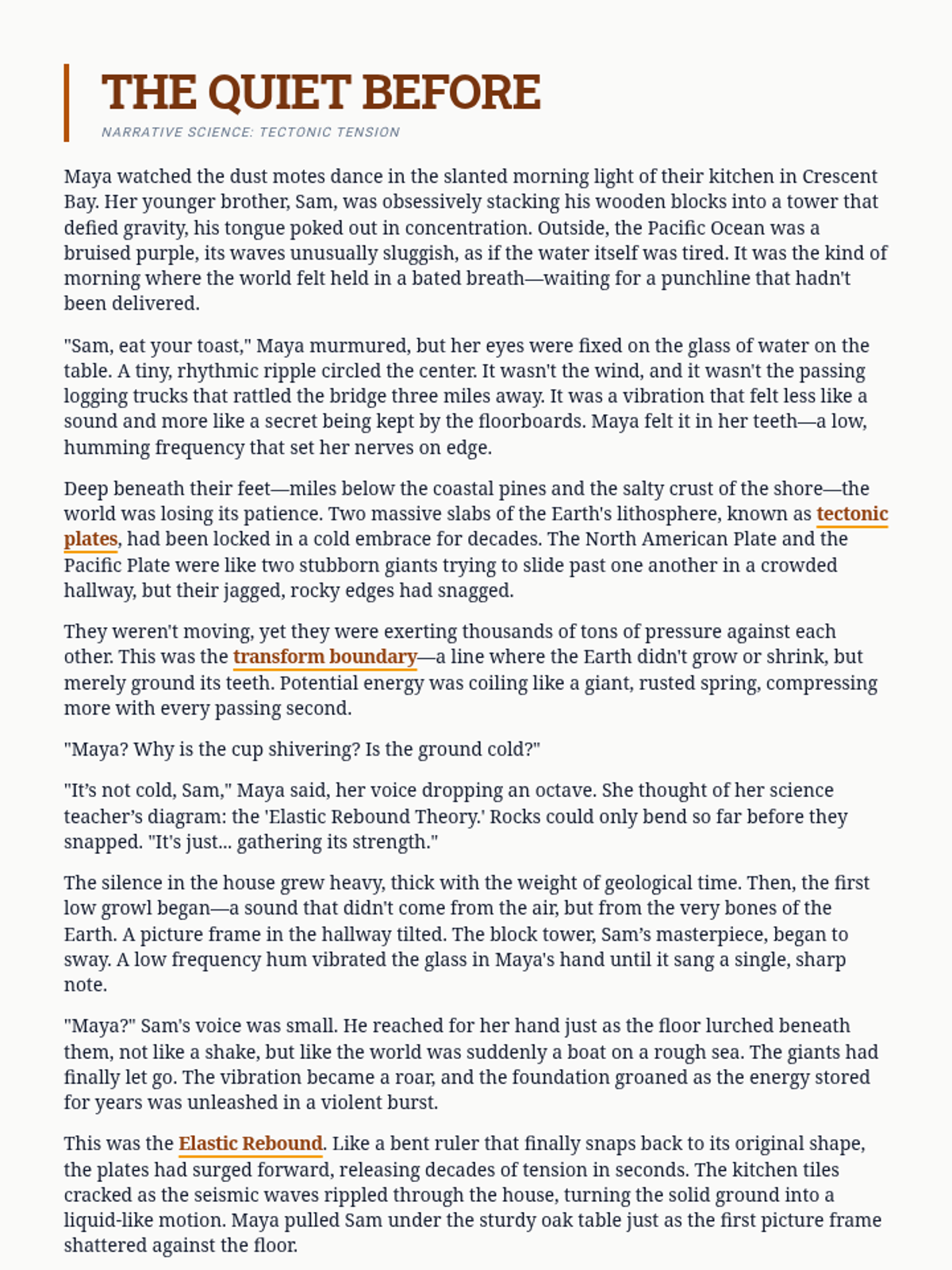
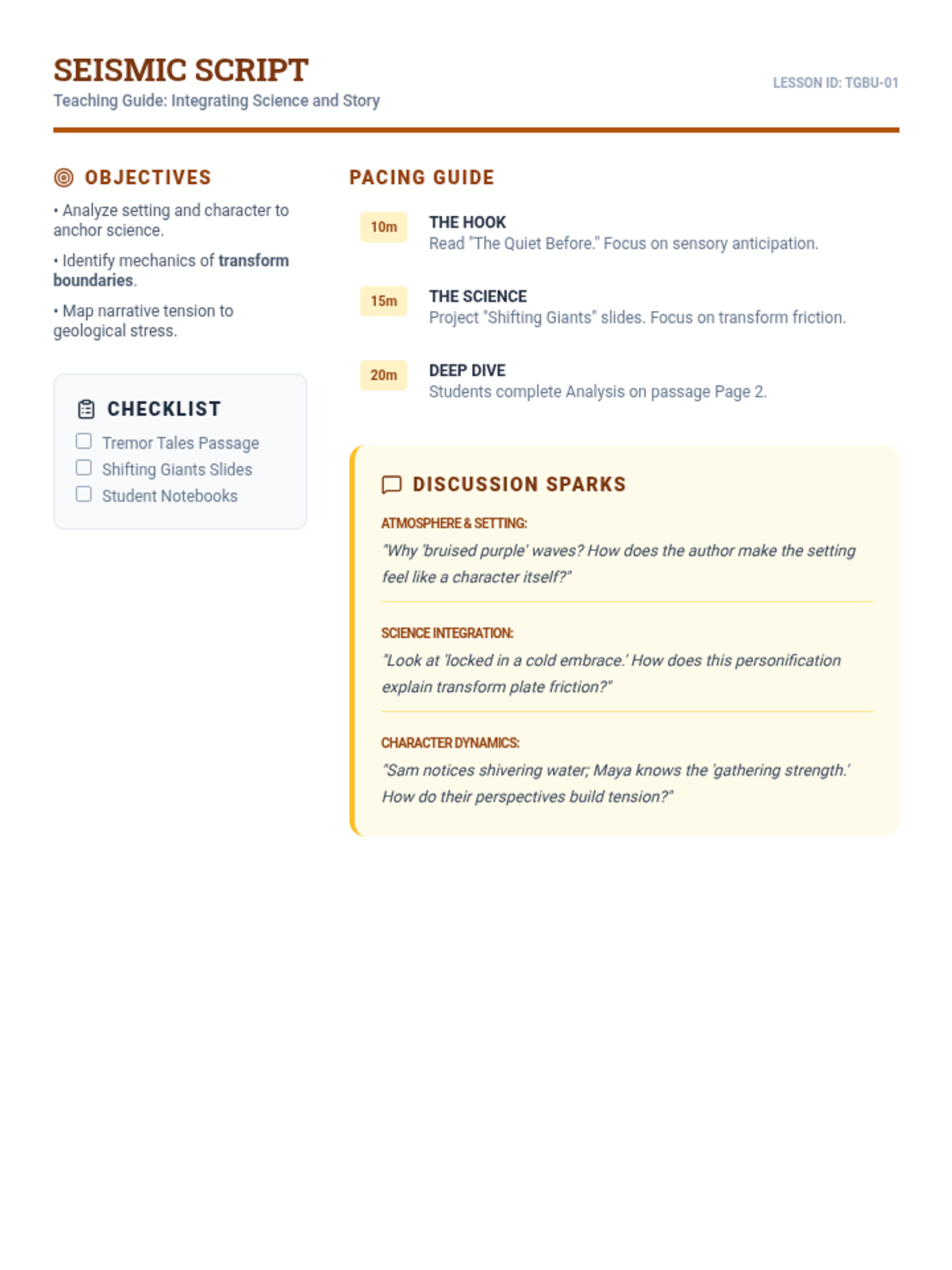
An introductory lesson focused on the narrative 'hook' that blends character development with the scientific reality of tectonic movement.
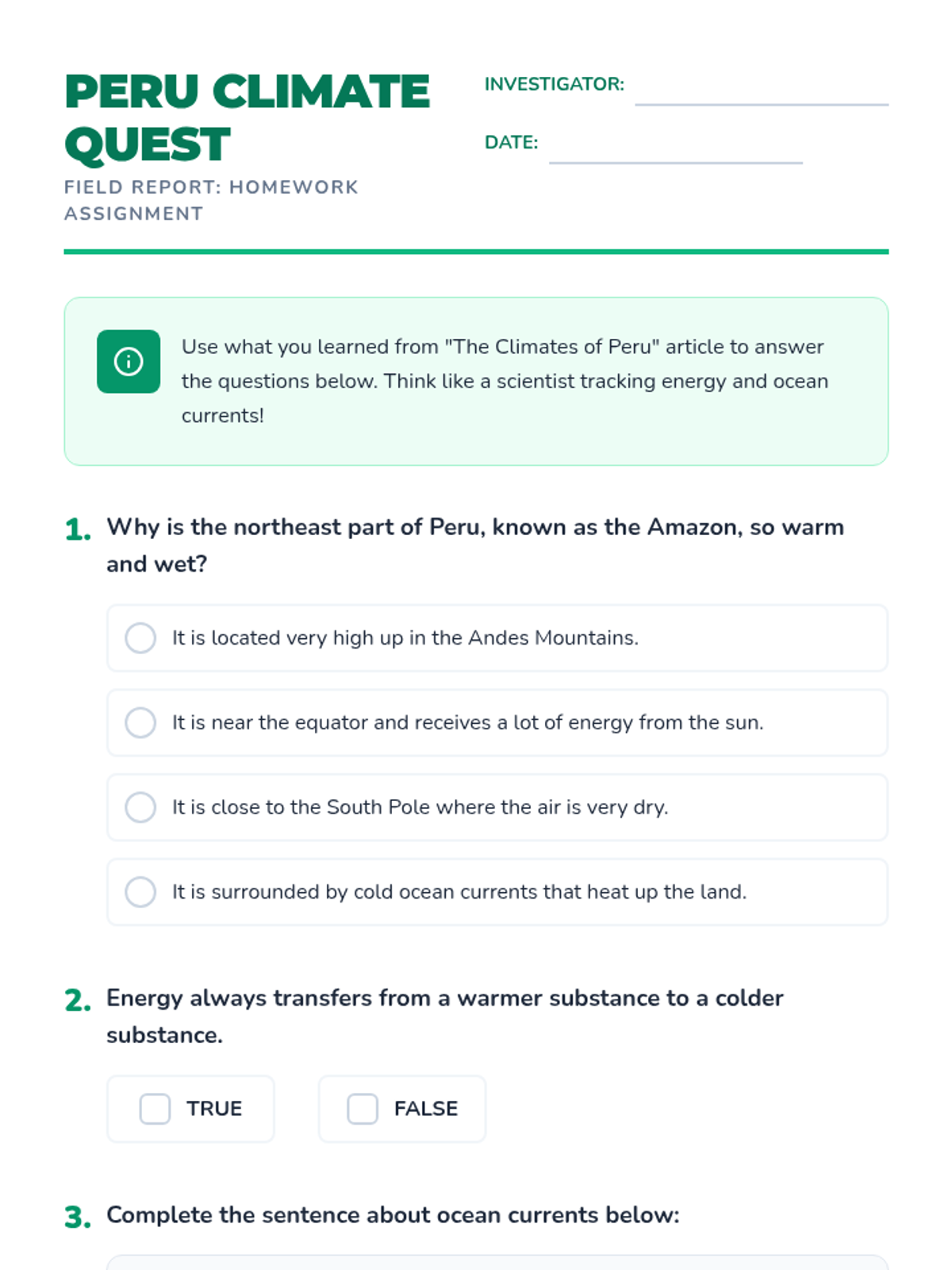
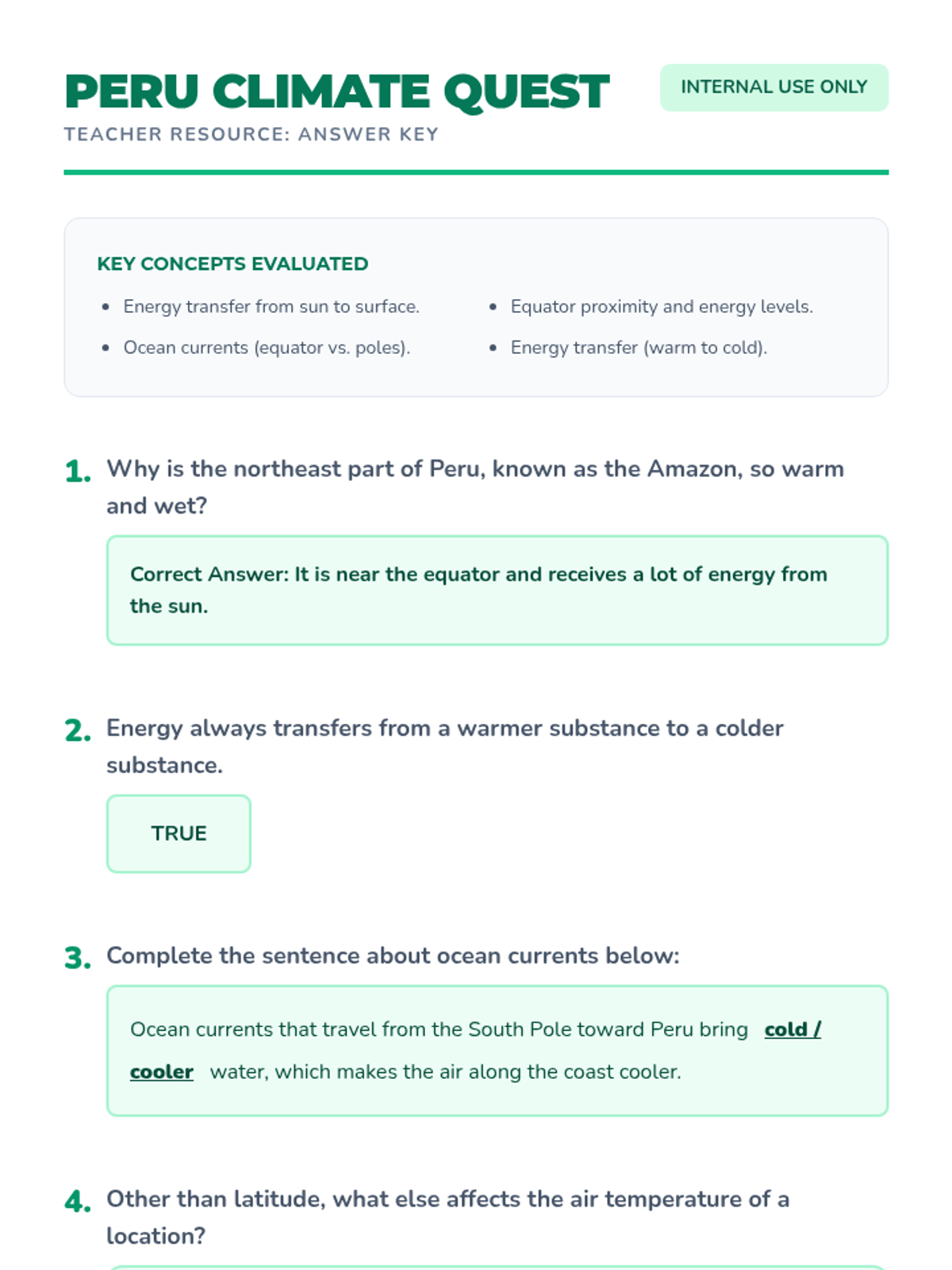
A lesson exploring how latitude and ocean currents influence the diverse climates of Peru, based on energy transfer principles.
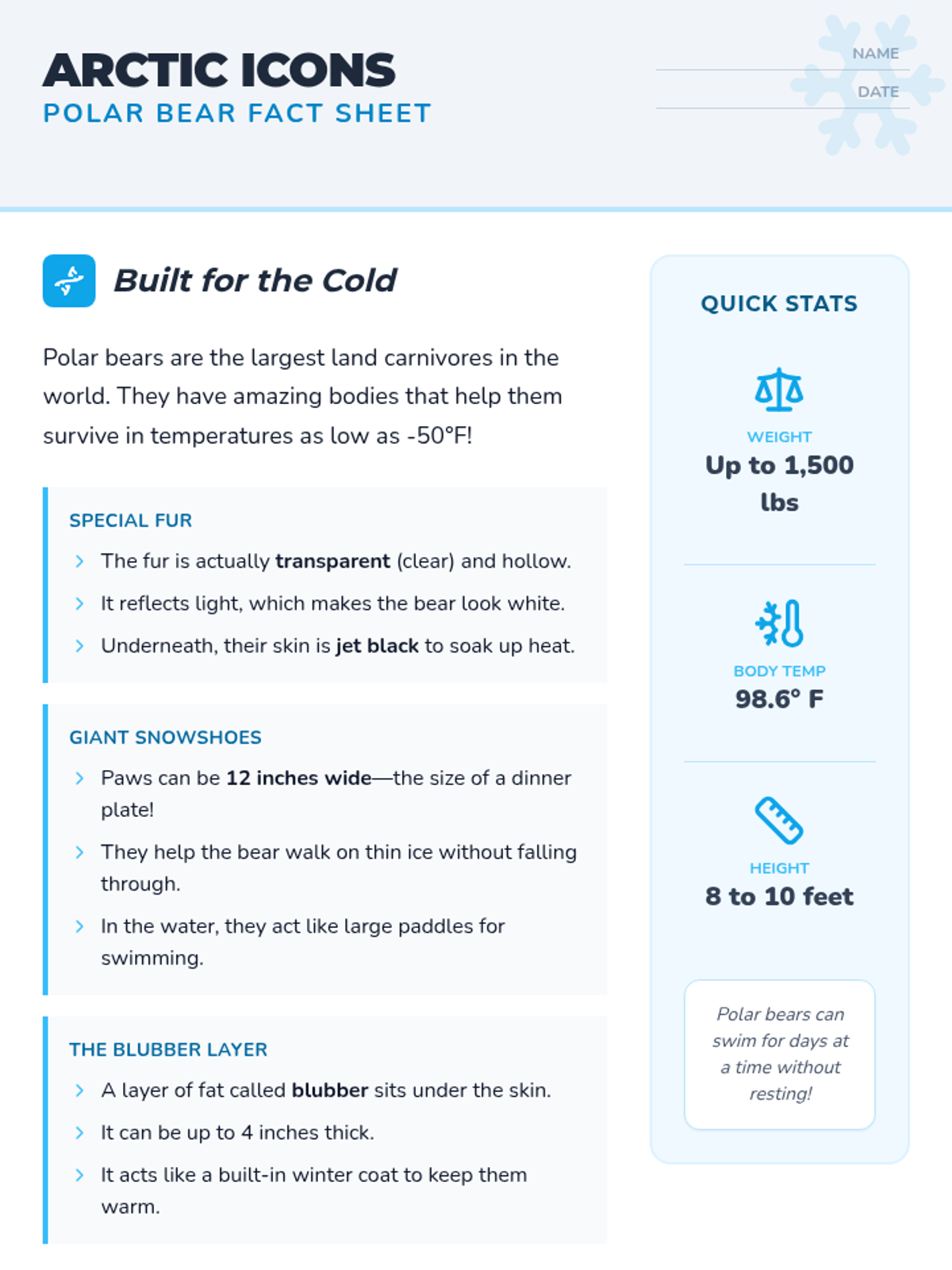
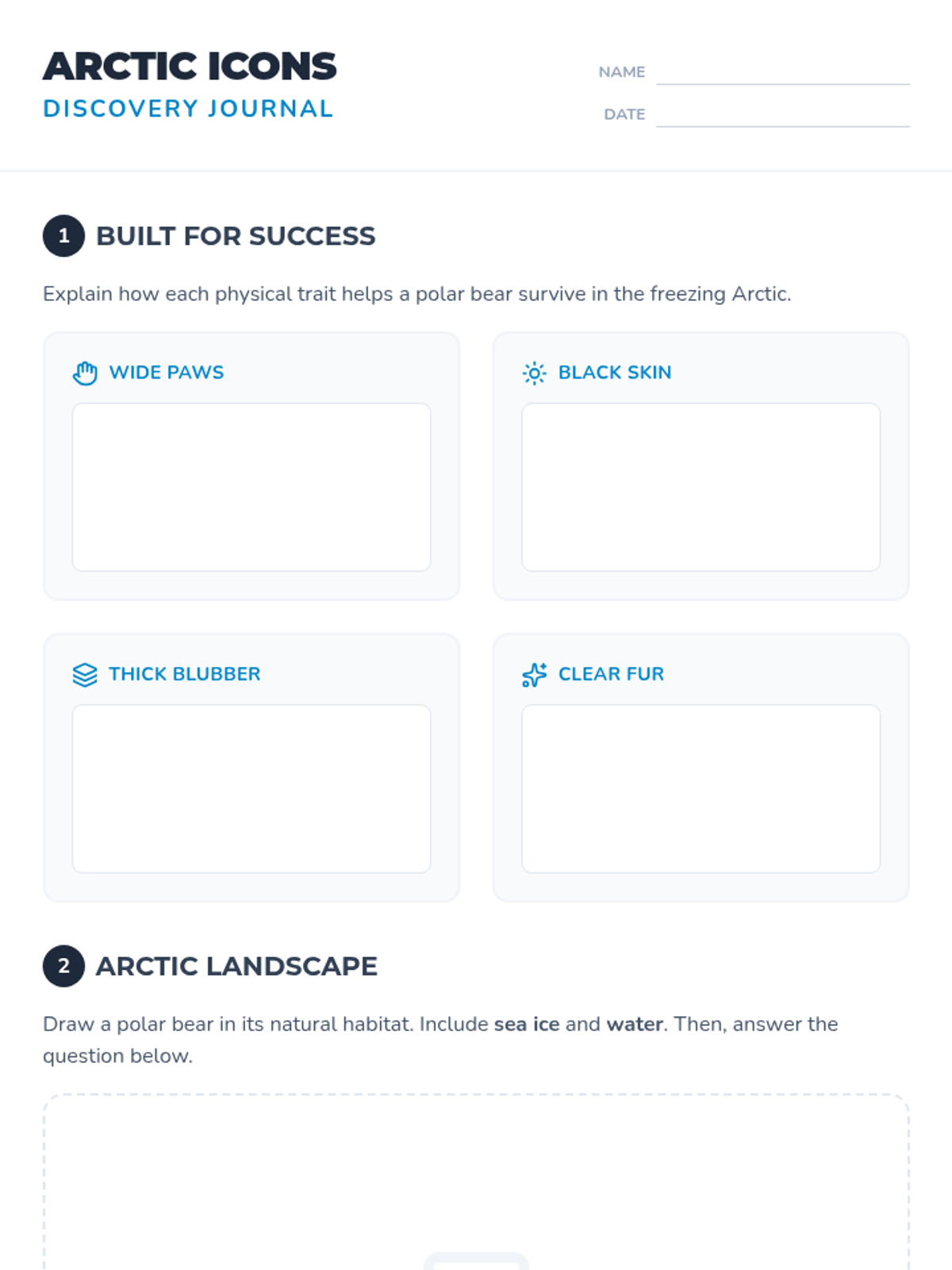
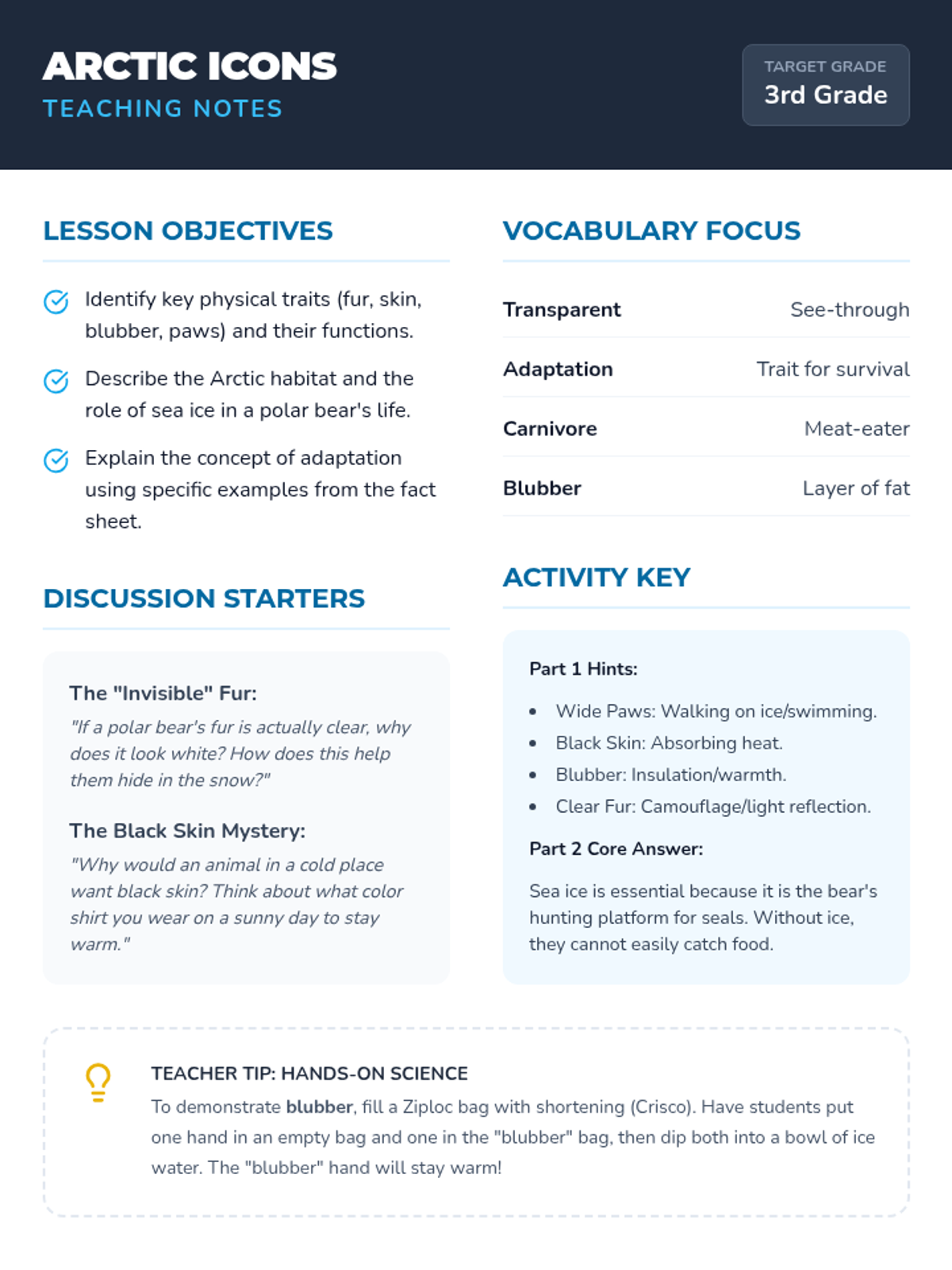
A foundational lesson on polar bear anatomy and environment, focusing on how physical adaptations allow survival in the harsh Arctic habitat.
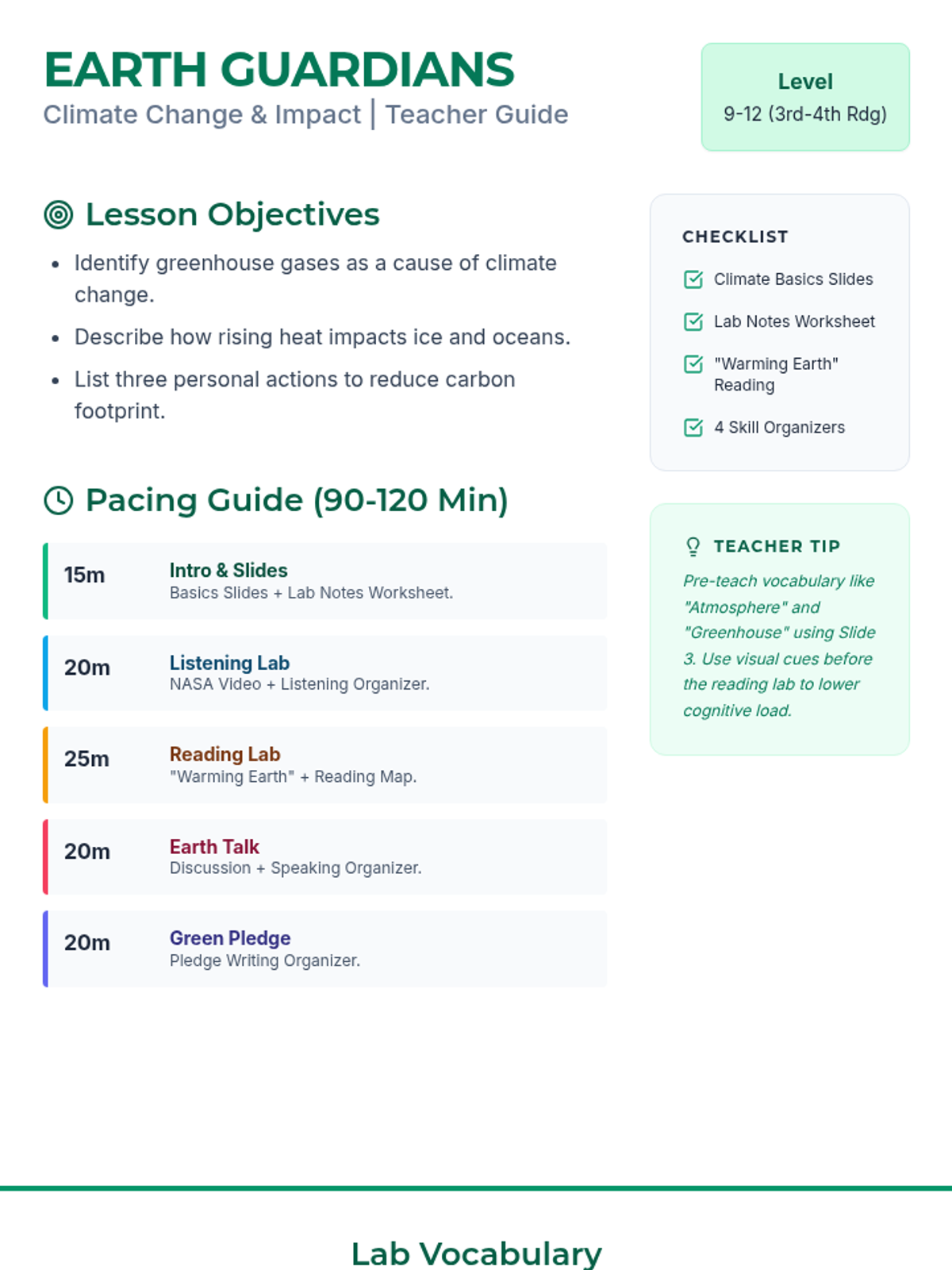
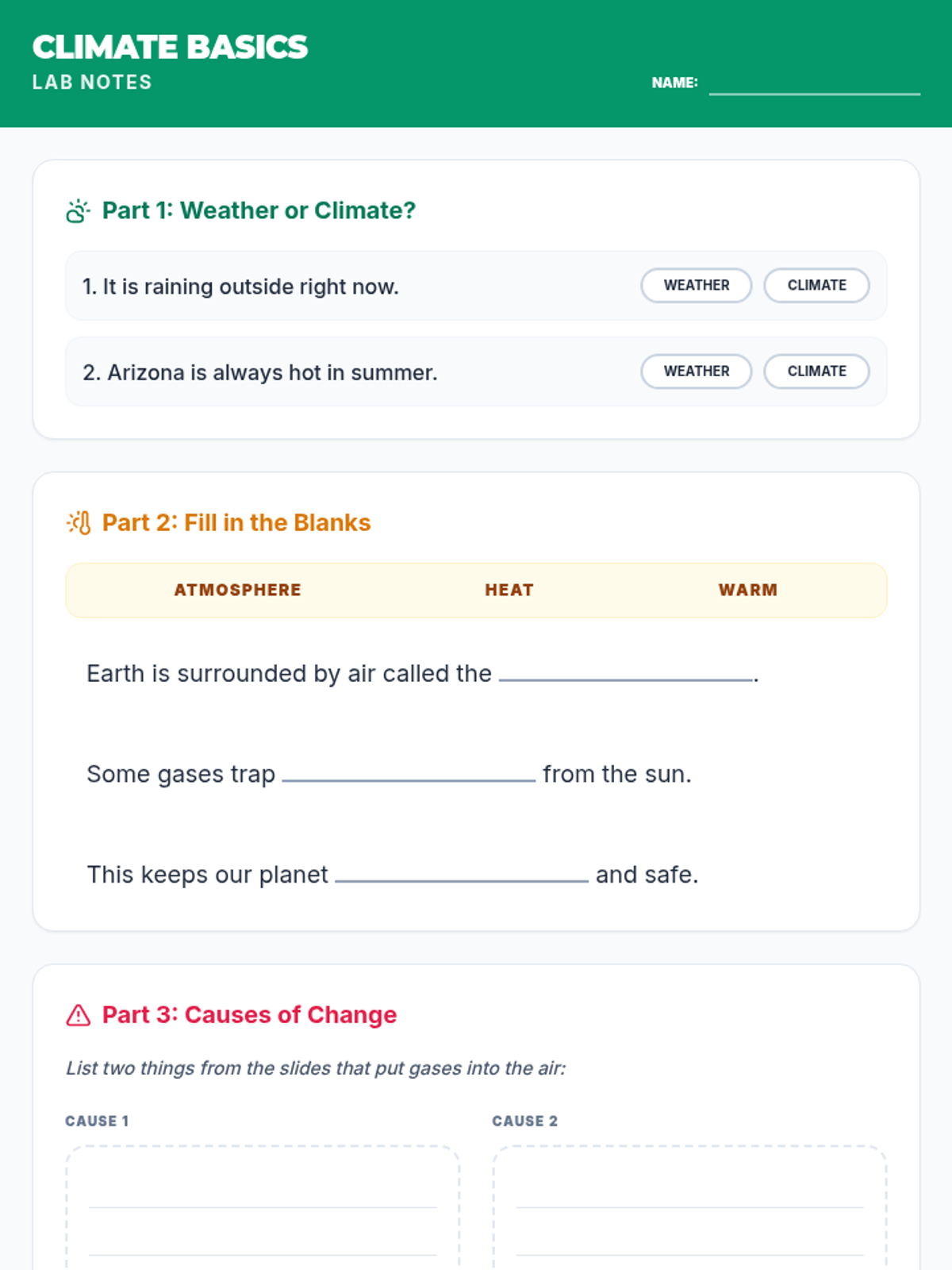
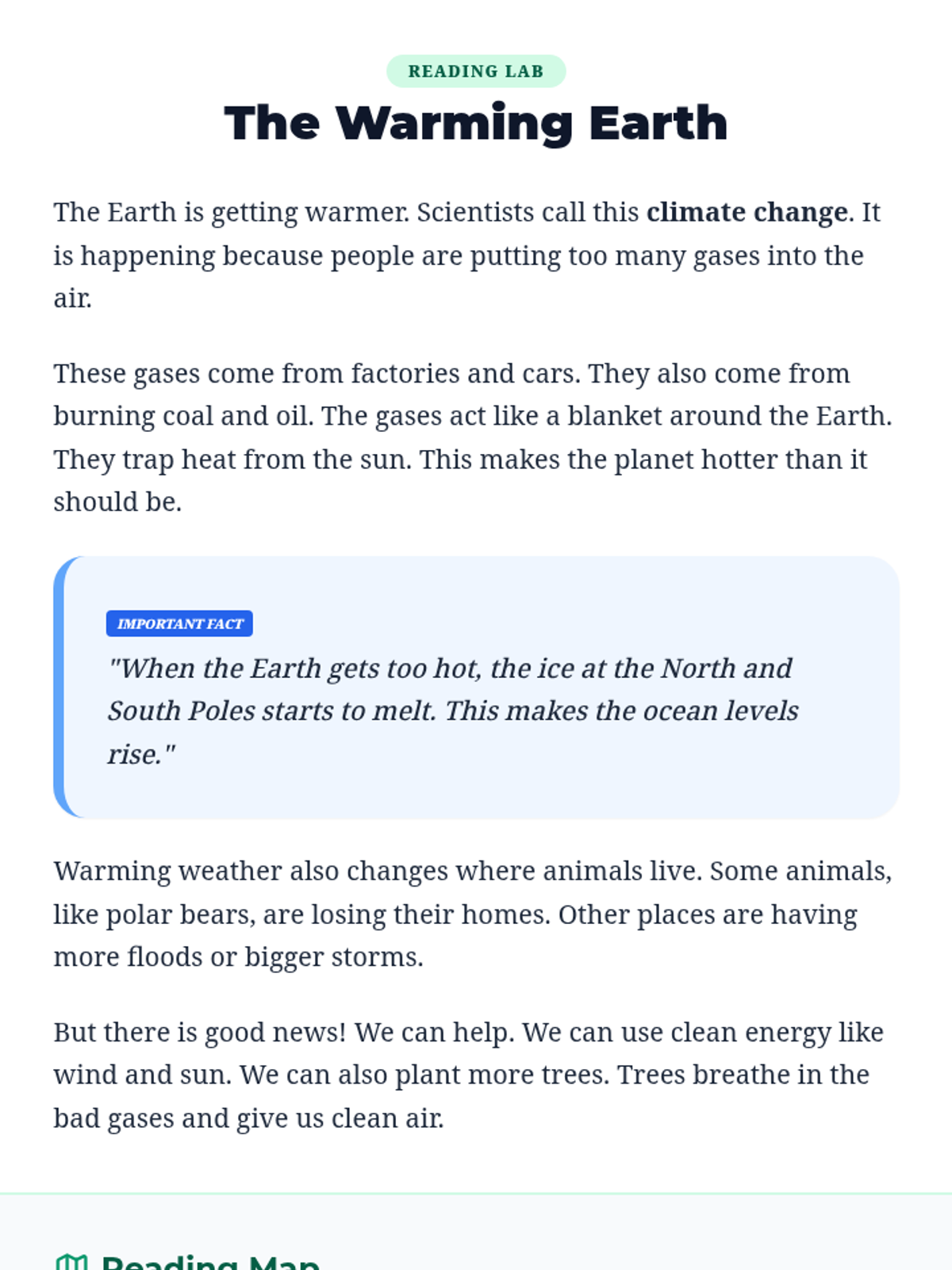
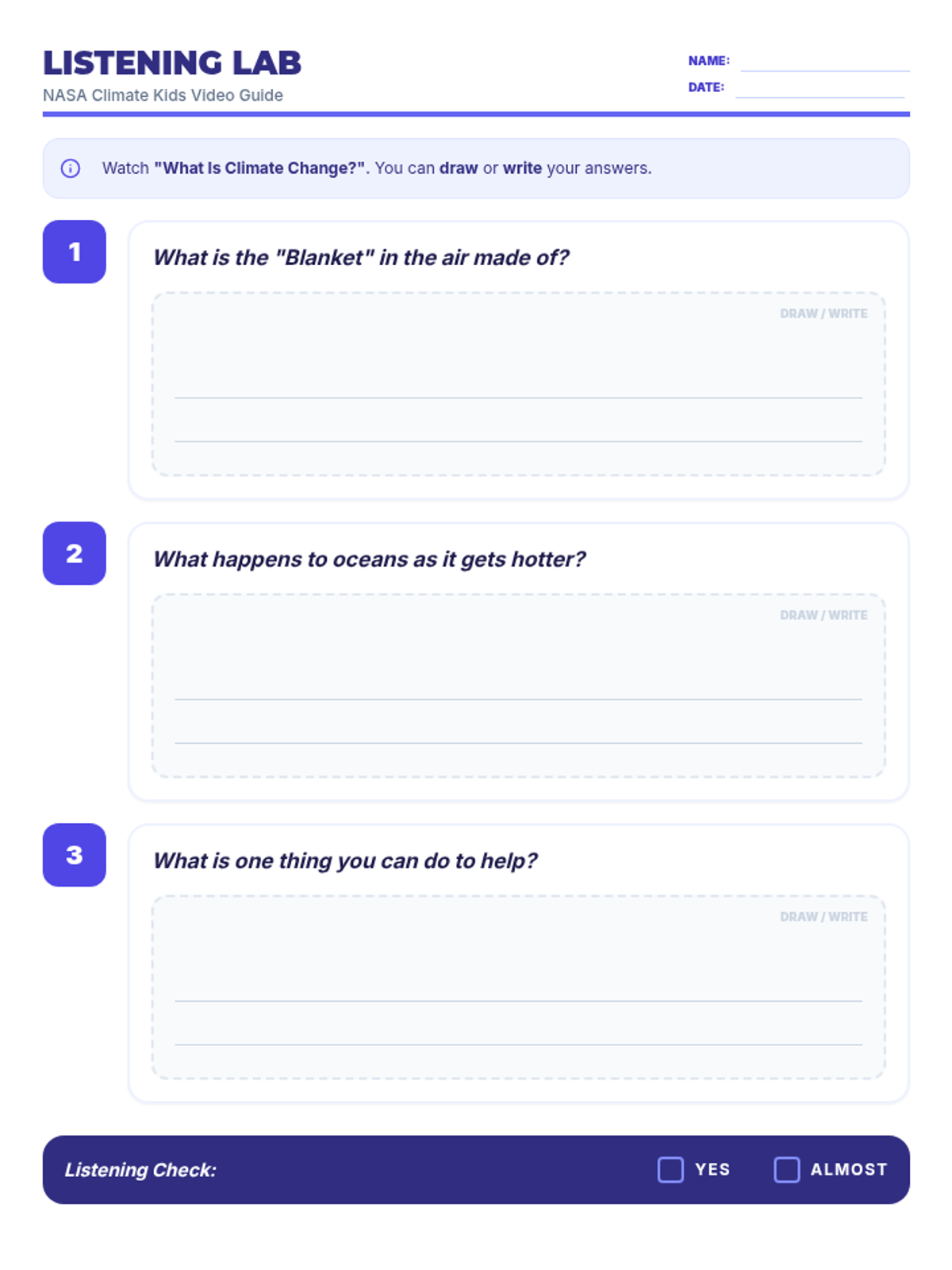
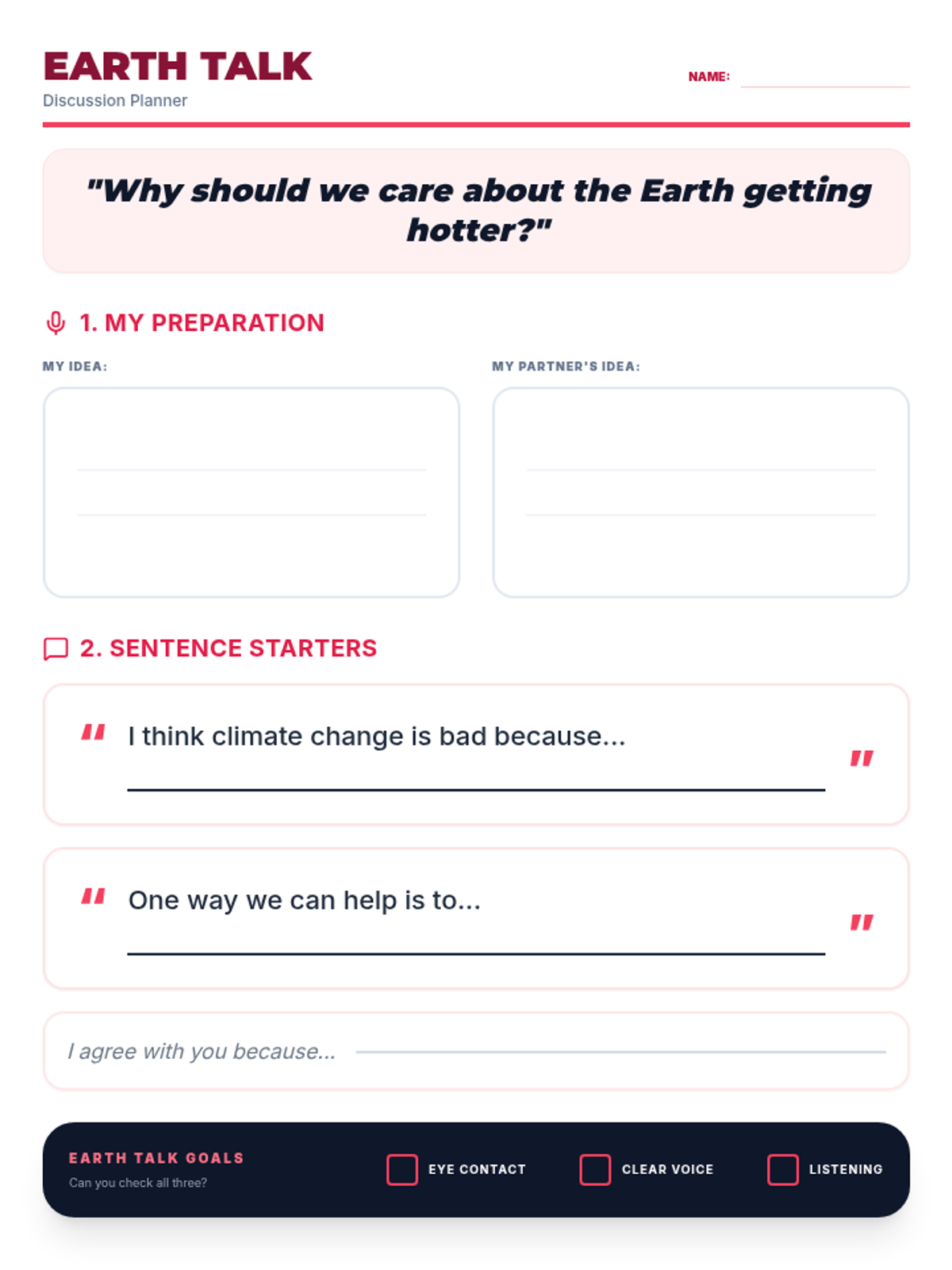
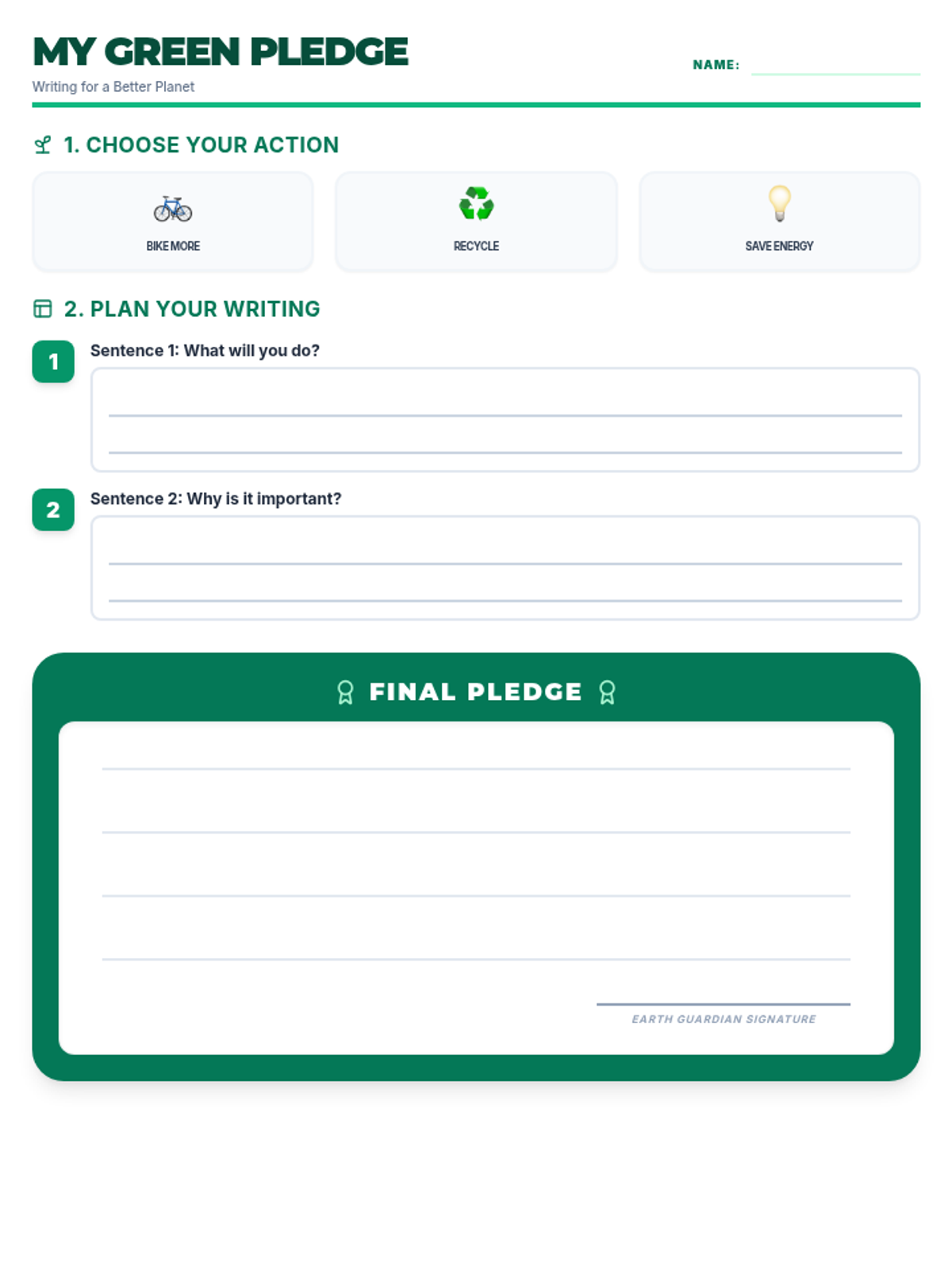
Students will explore the basics of climate change, the greenhouse effect, and how personal choices affect the planet. The lesson includes a presentation, guided notes, and specialized activities for reading, writing, listening, and speaking.
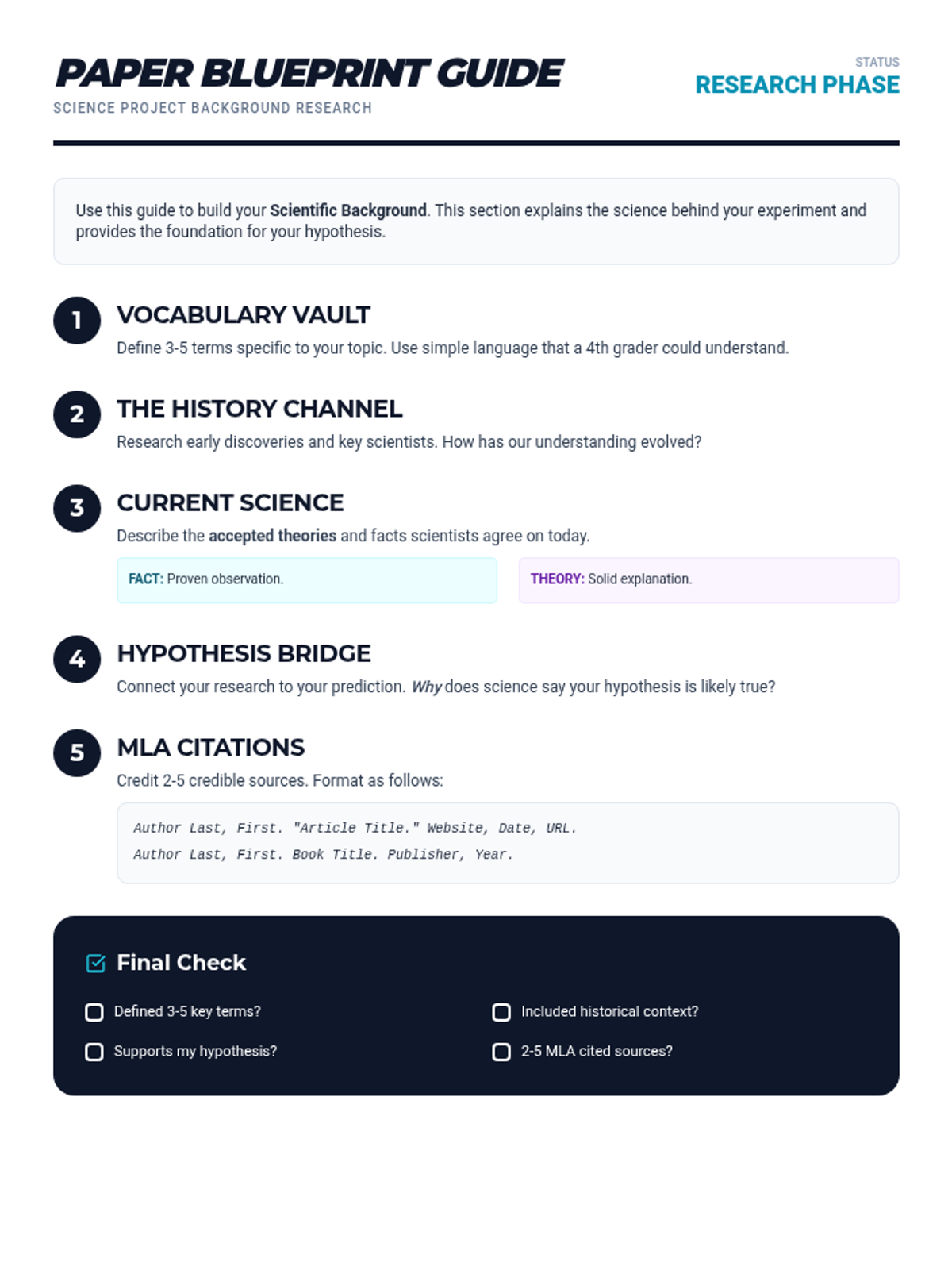
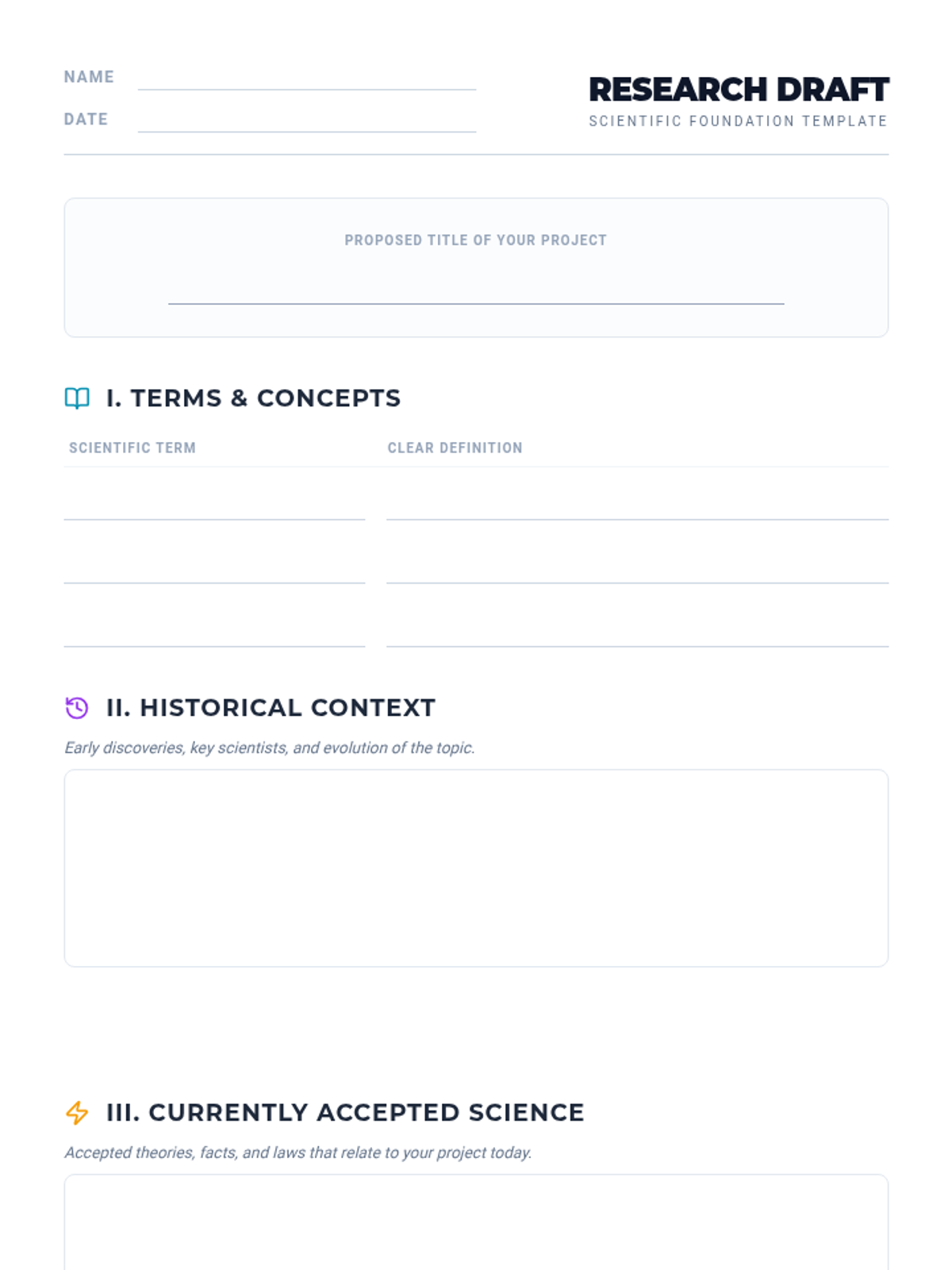
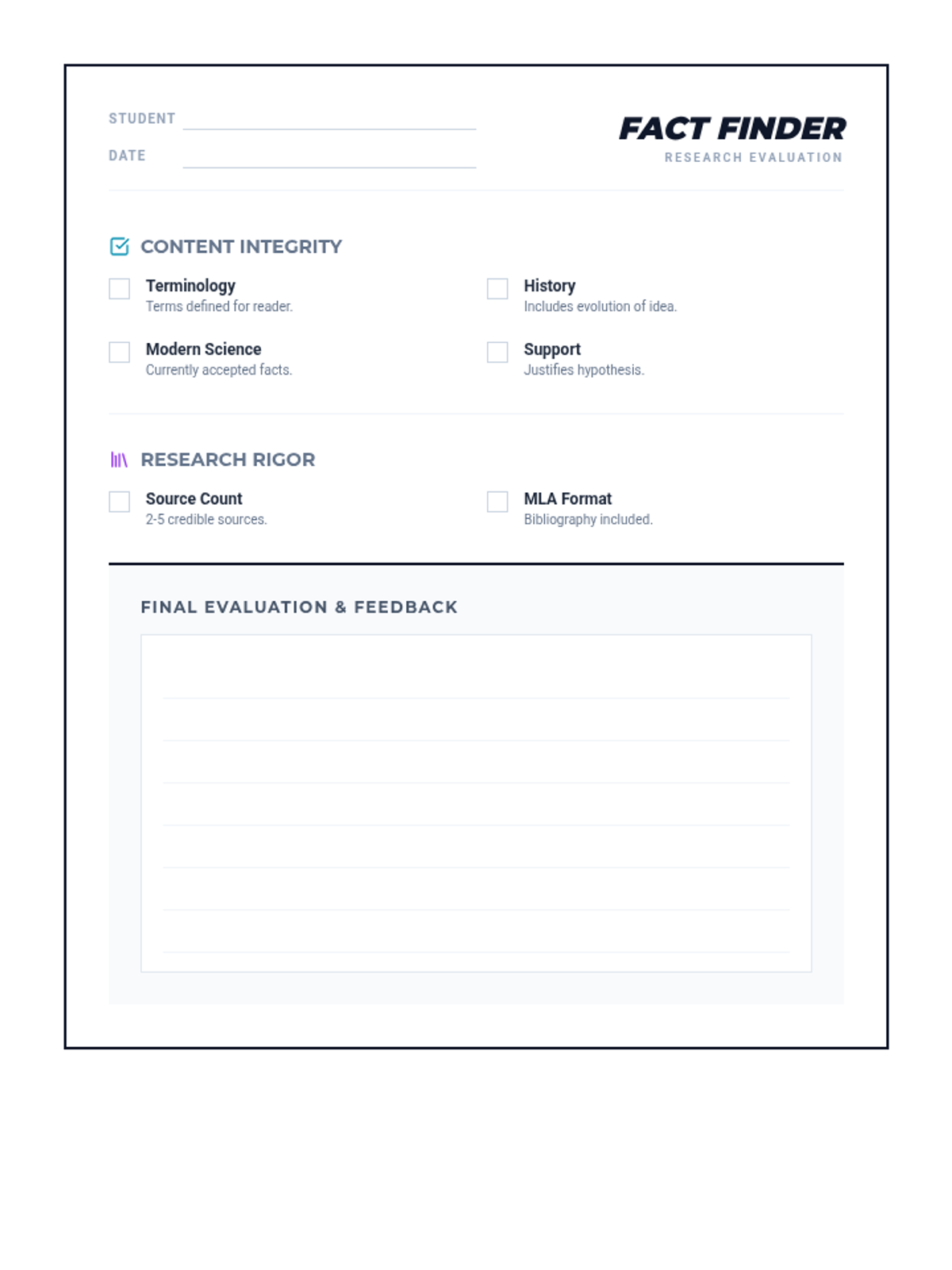
A comprehensive guide and template to help students research and write the background section for their independent science projects, covering terminology, history, and modern theories.
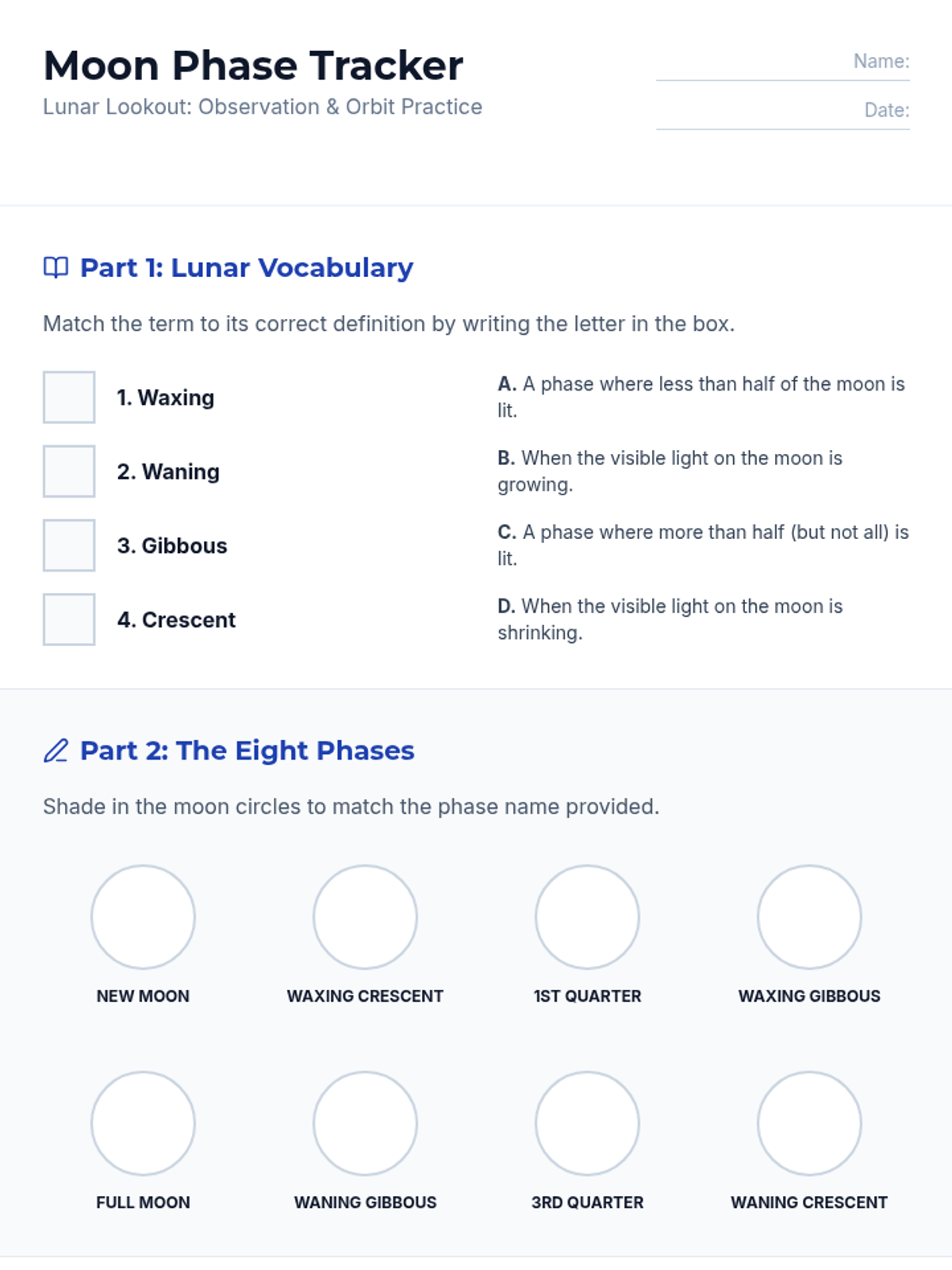
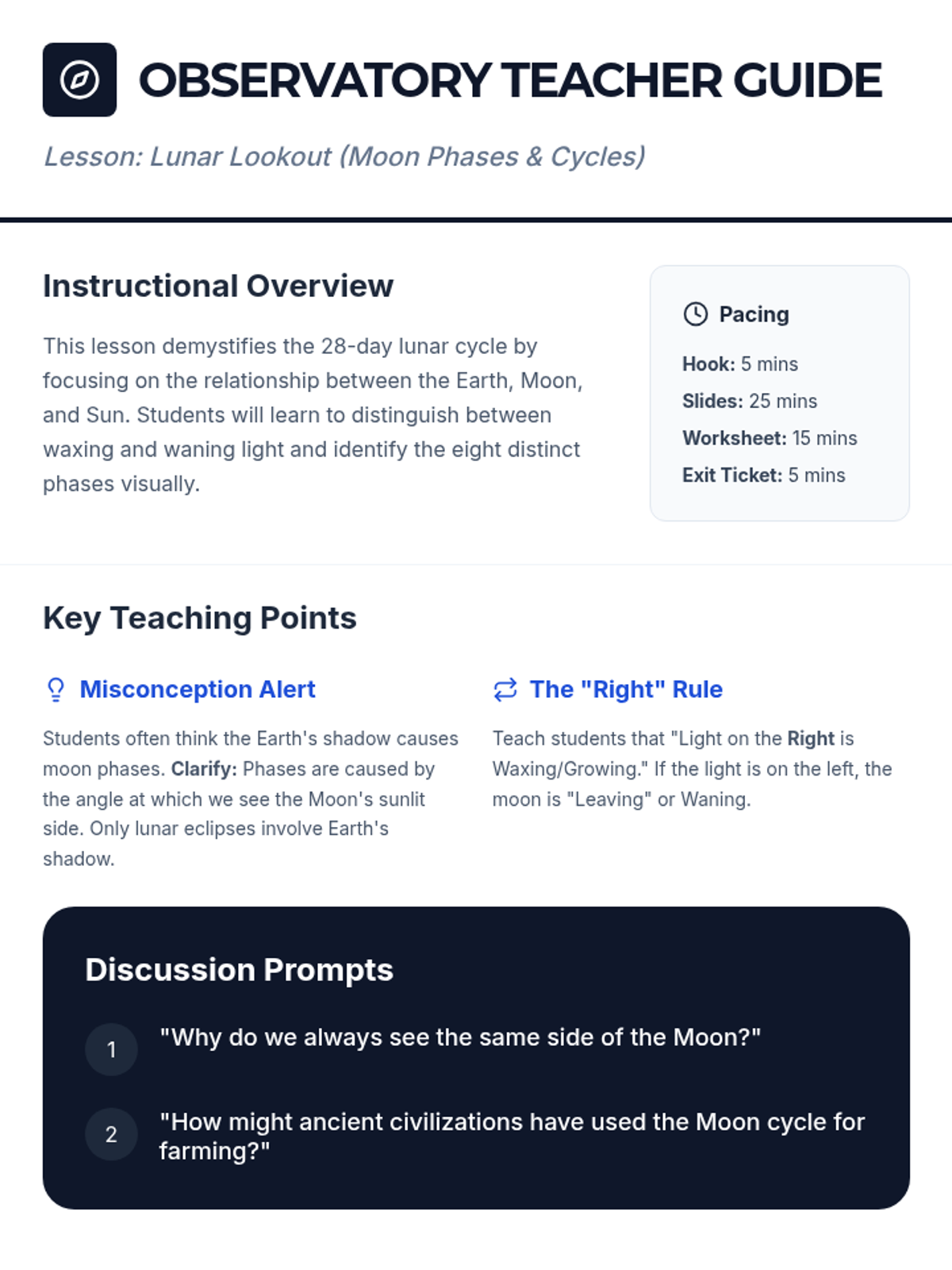
An interactive exploration of the Moon's 28-day cycle, terminology, and the eight distinct lunar phases through visual diagrams and observation exercises.
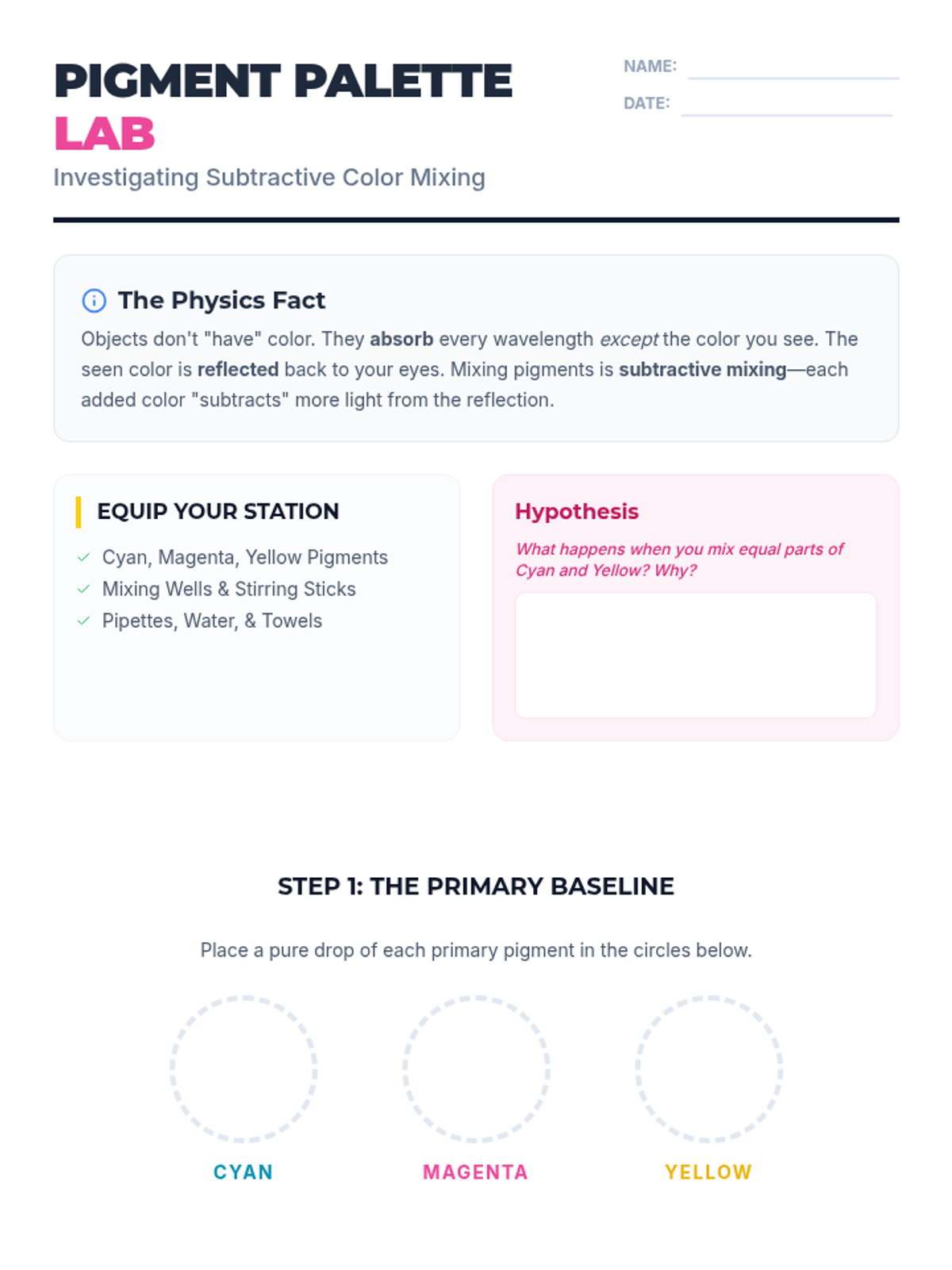
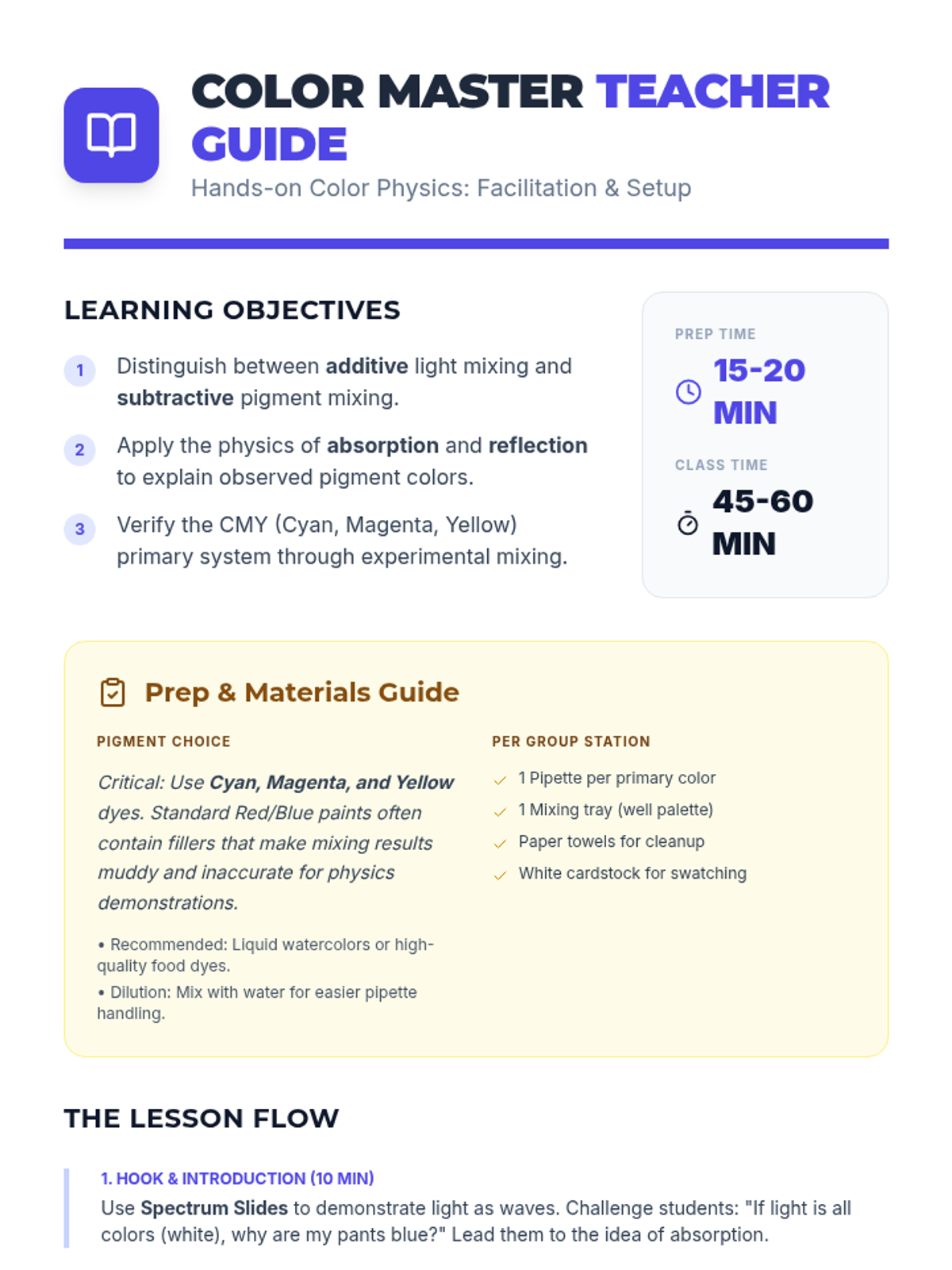
A hands-on exploration of the physics of color, focusing on additive light mixing and subtractive pigment mixing through experimentation.
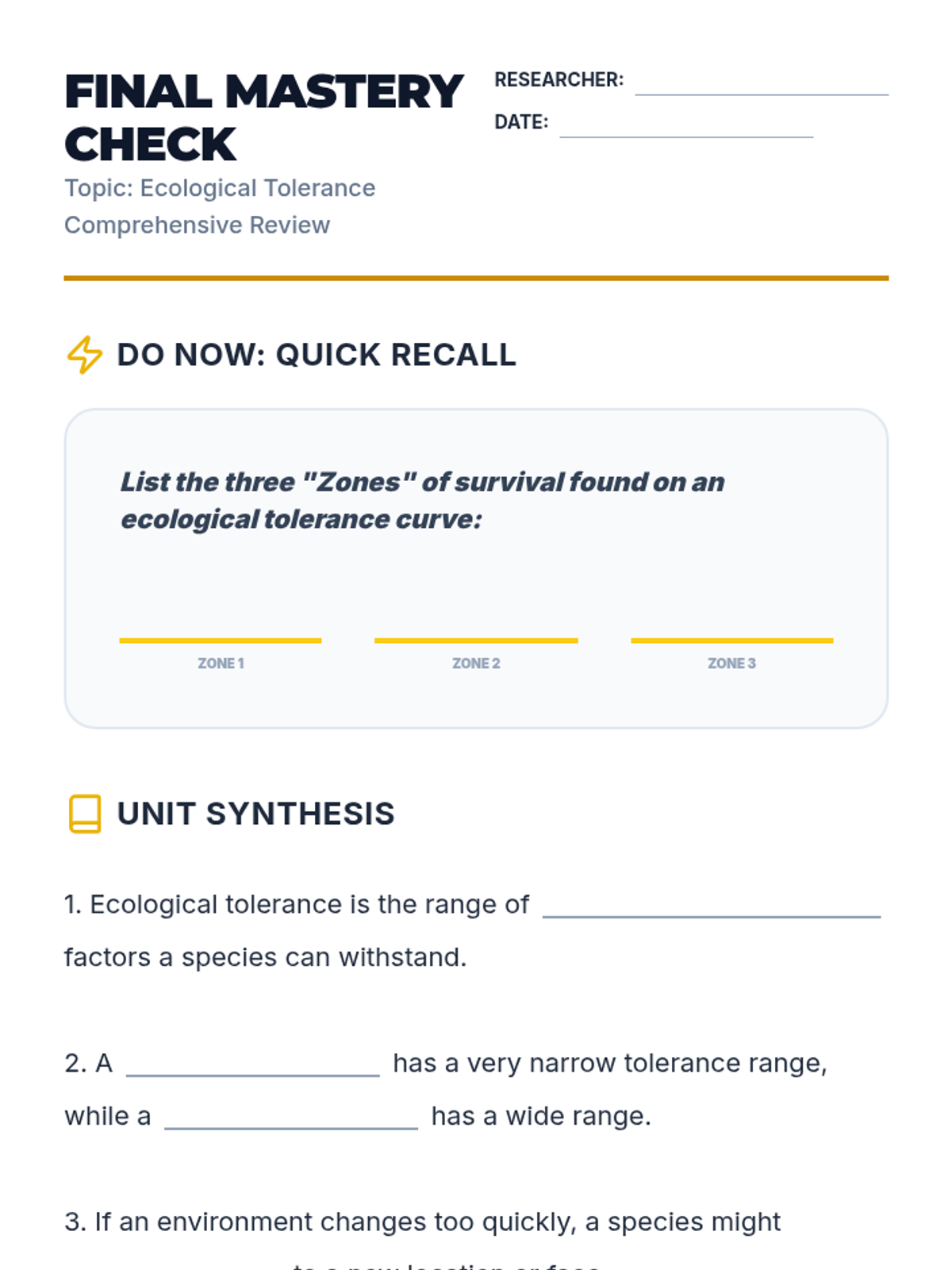
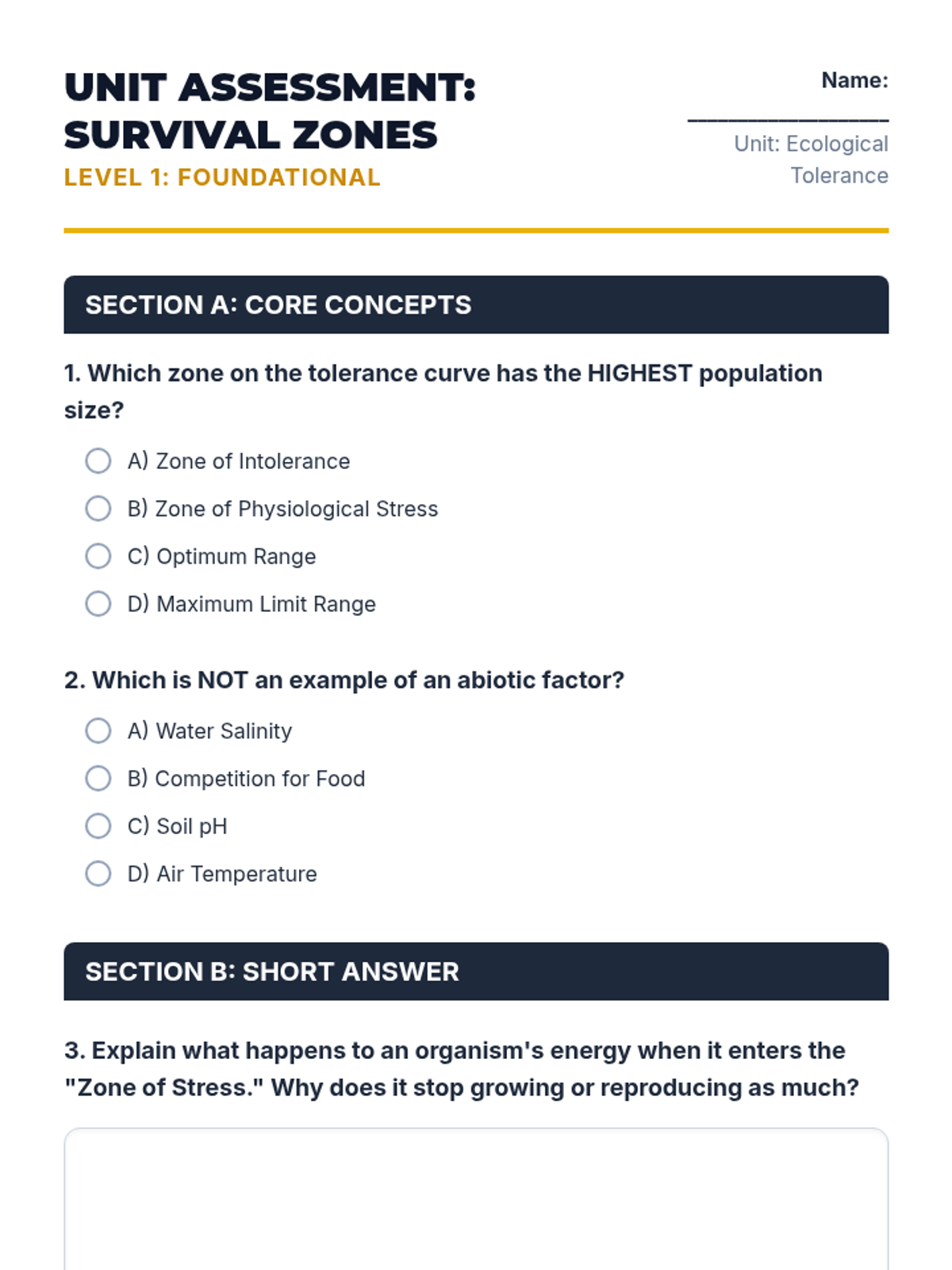
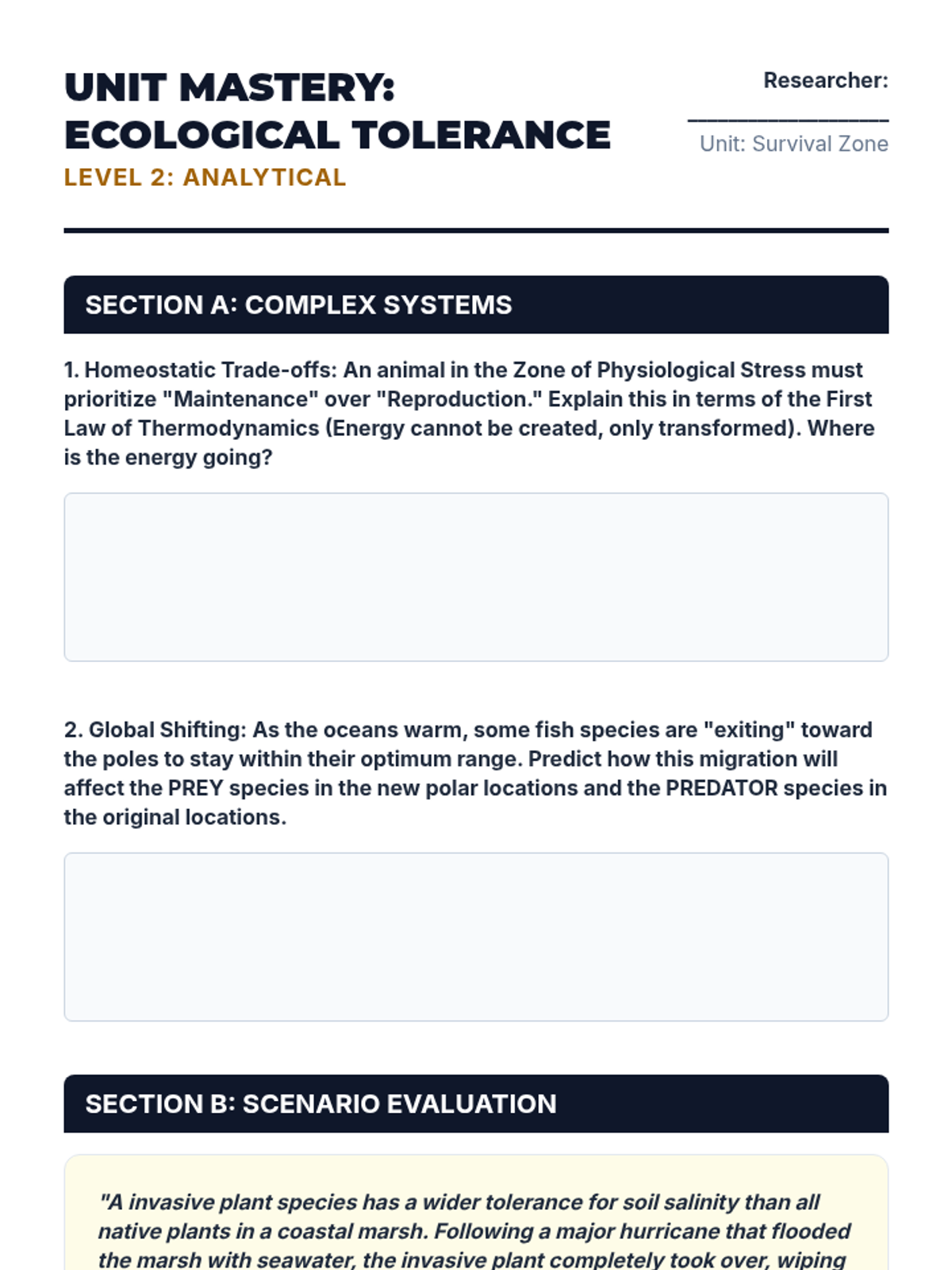
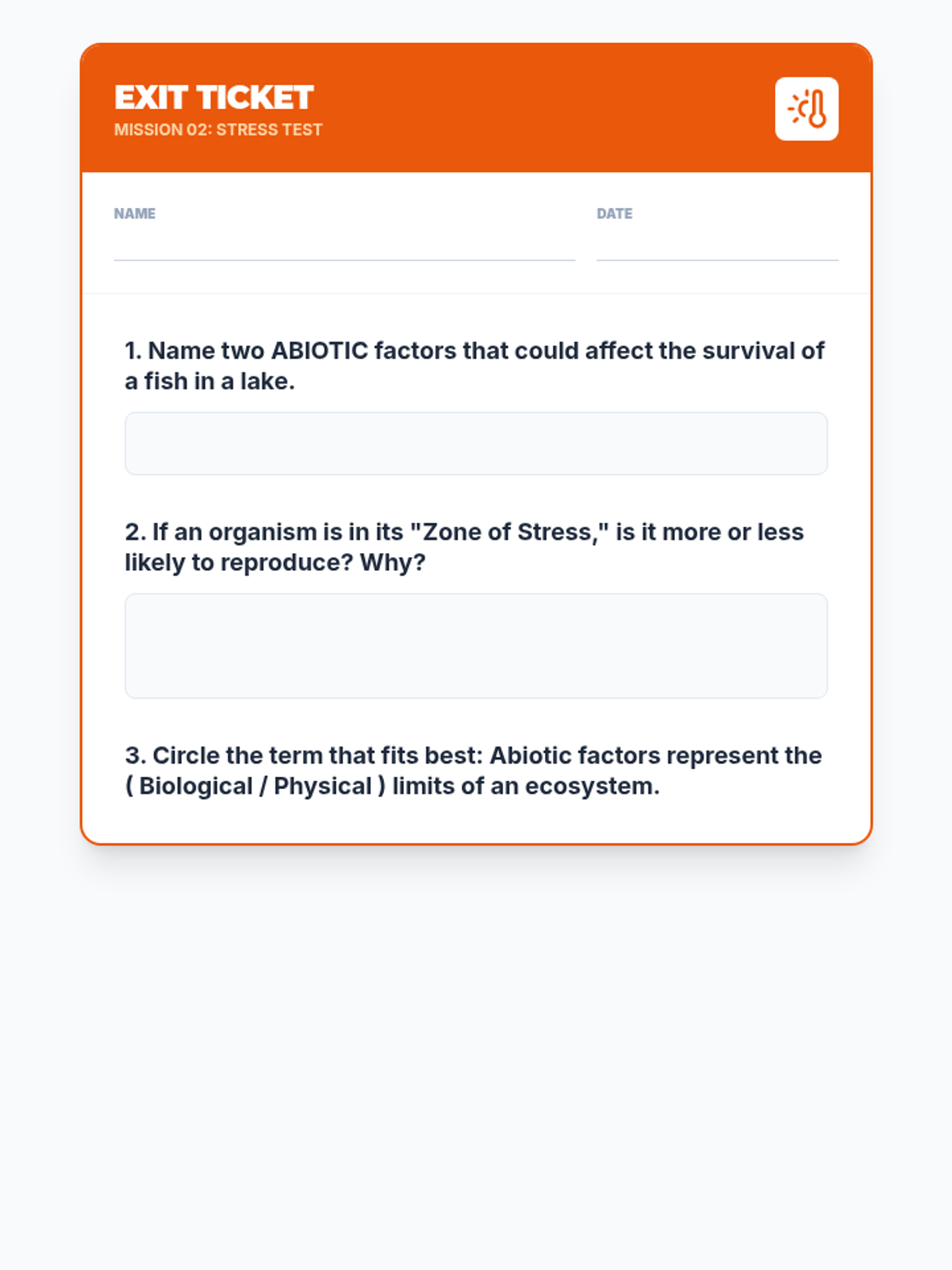
A comprehensive review and assessment of the week's learning through differentiated practice and synthesis.
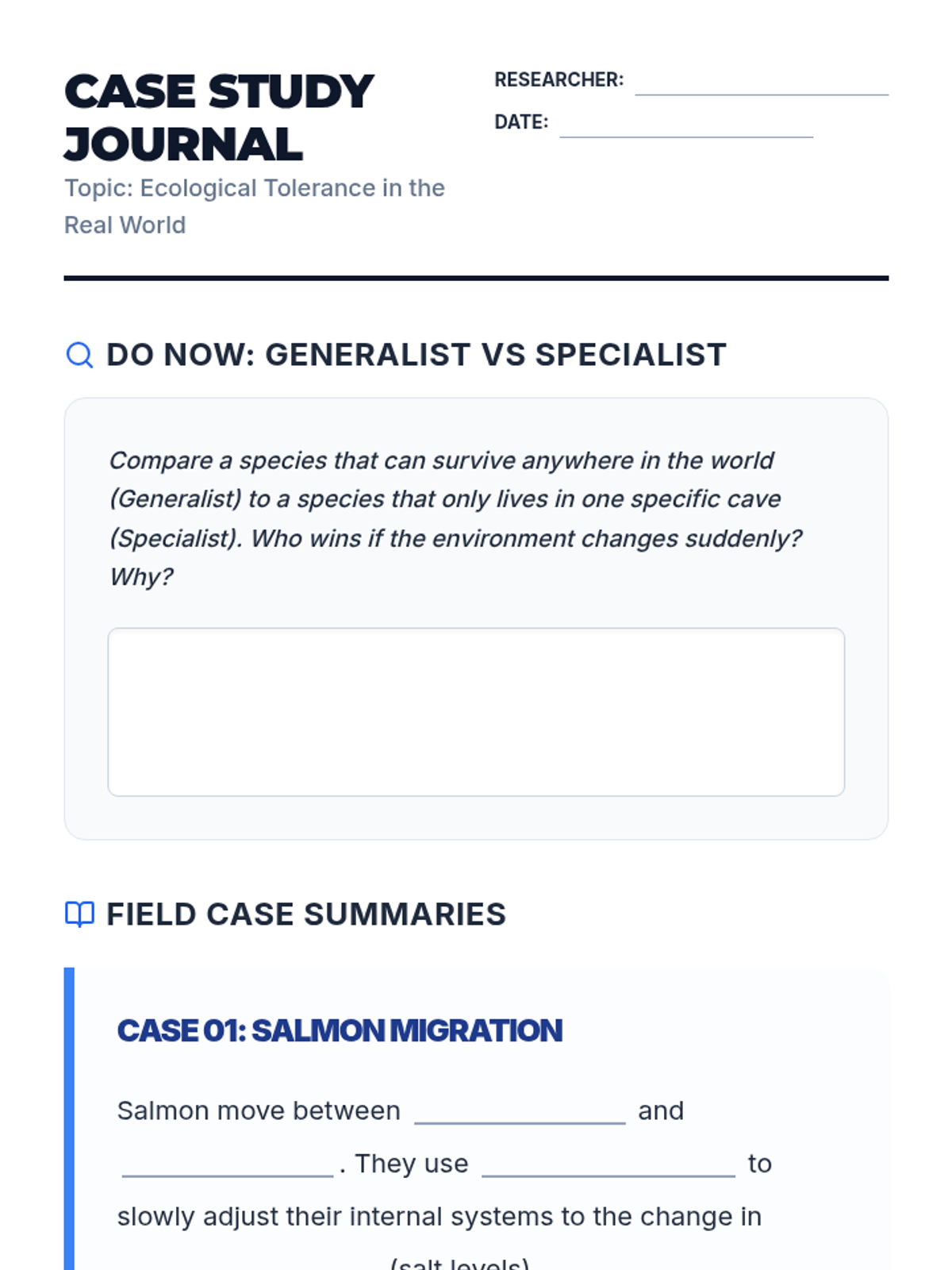
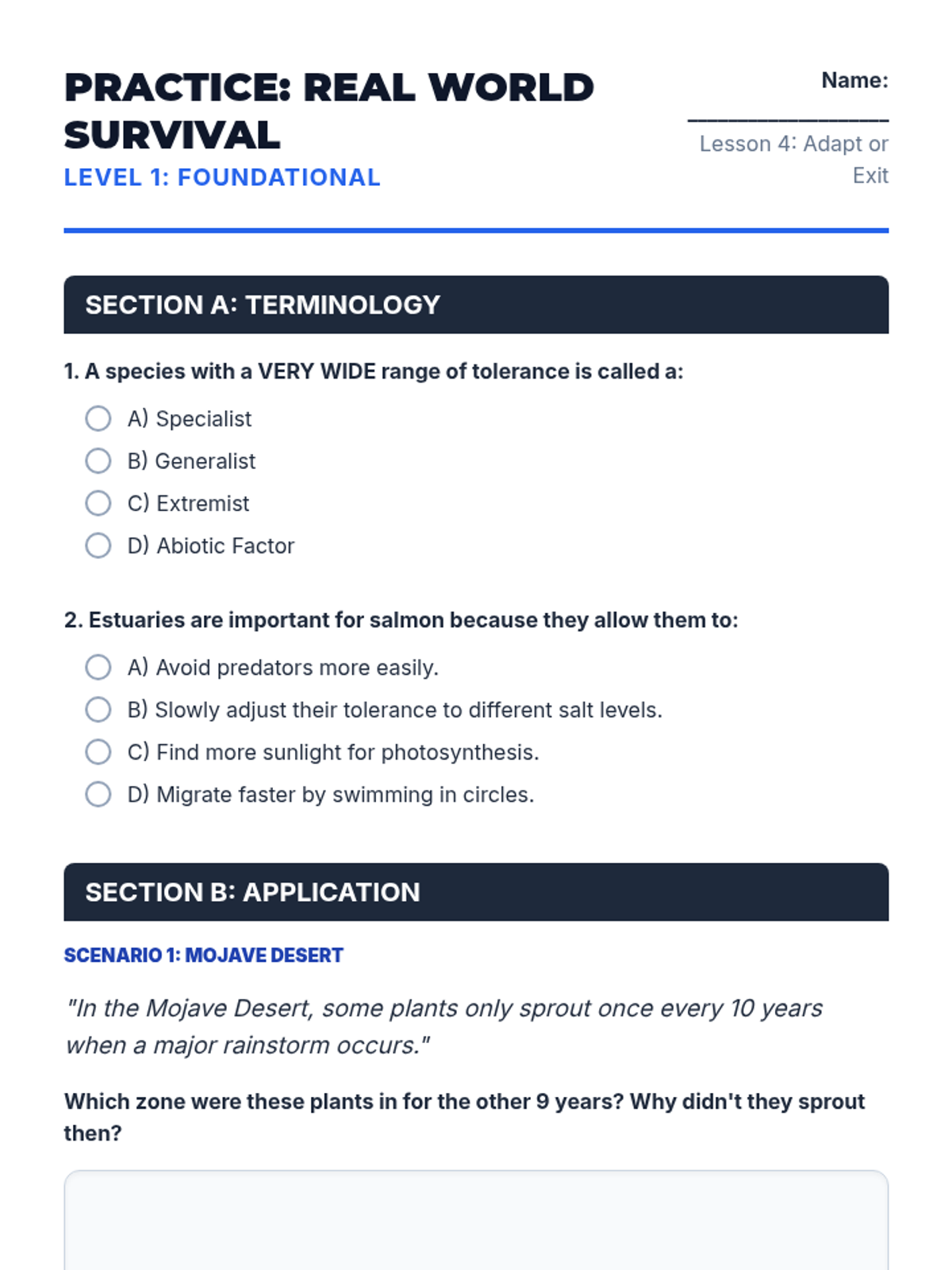
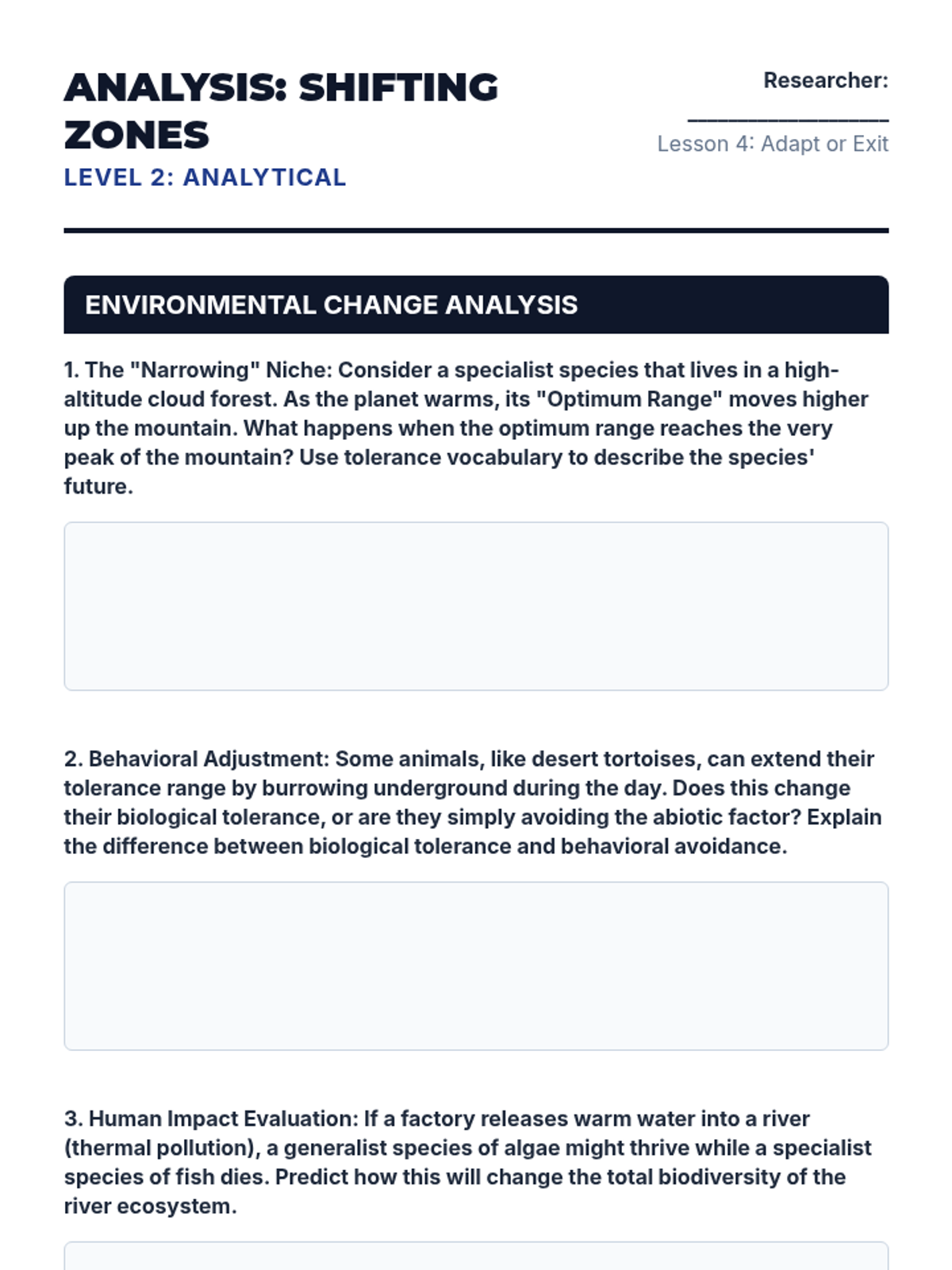
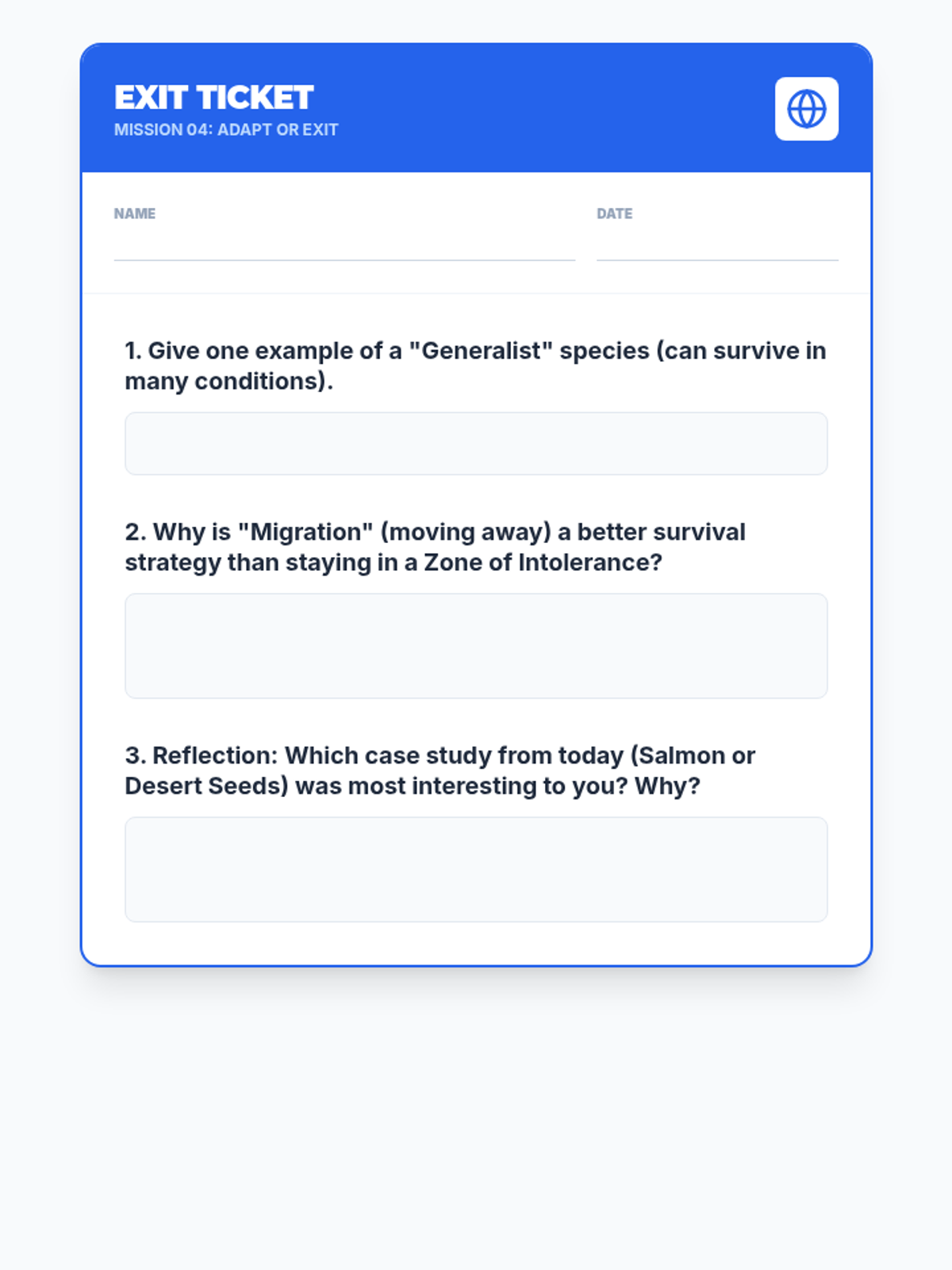
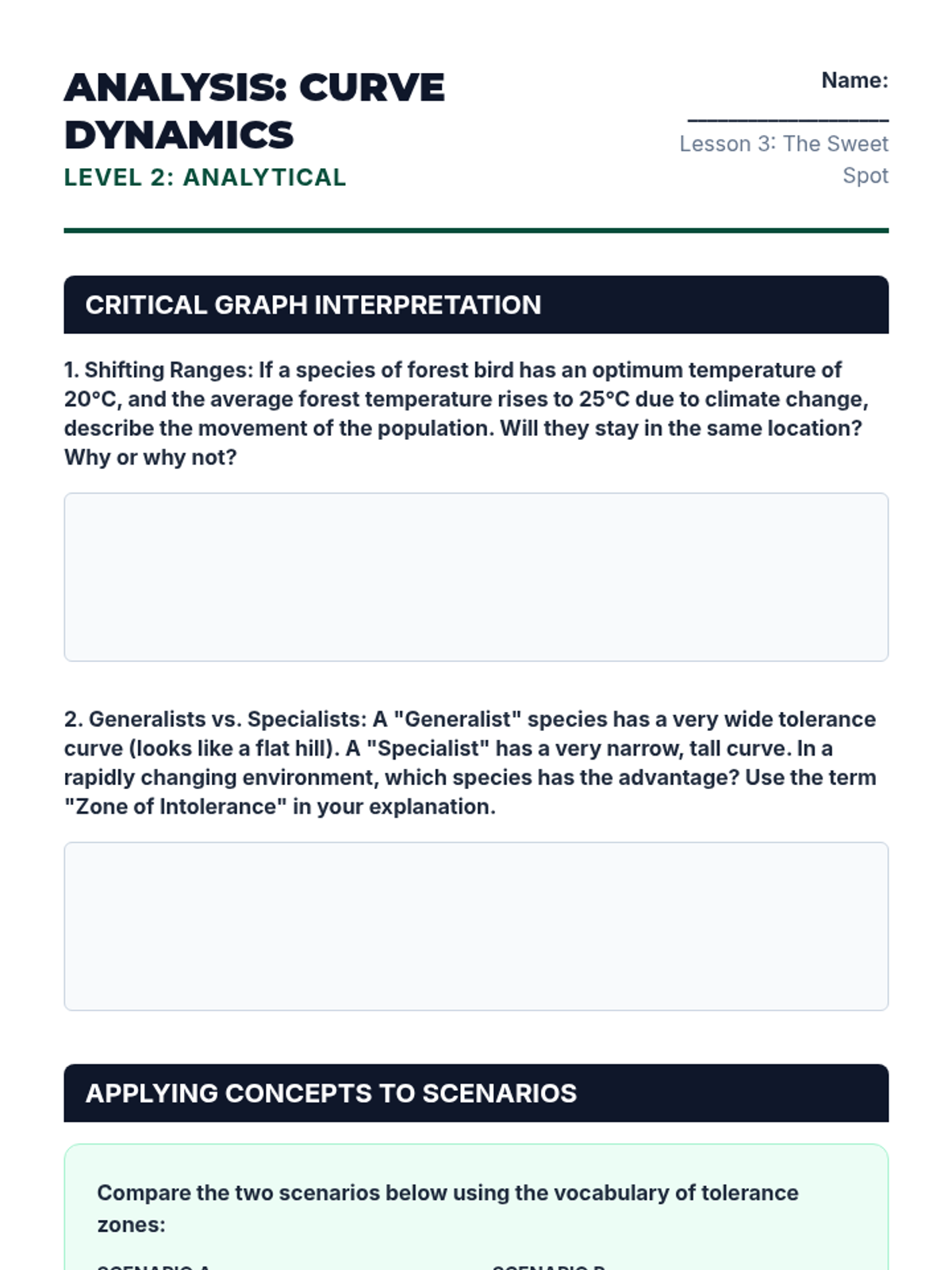
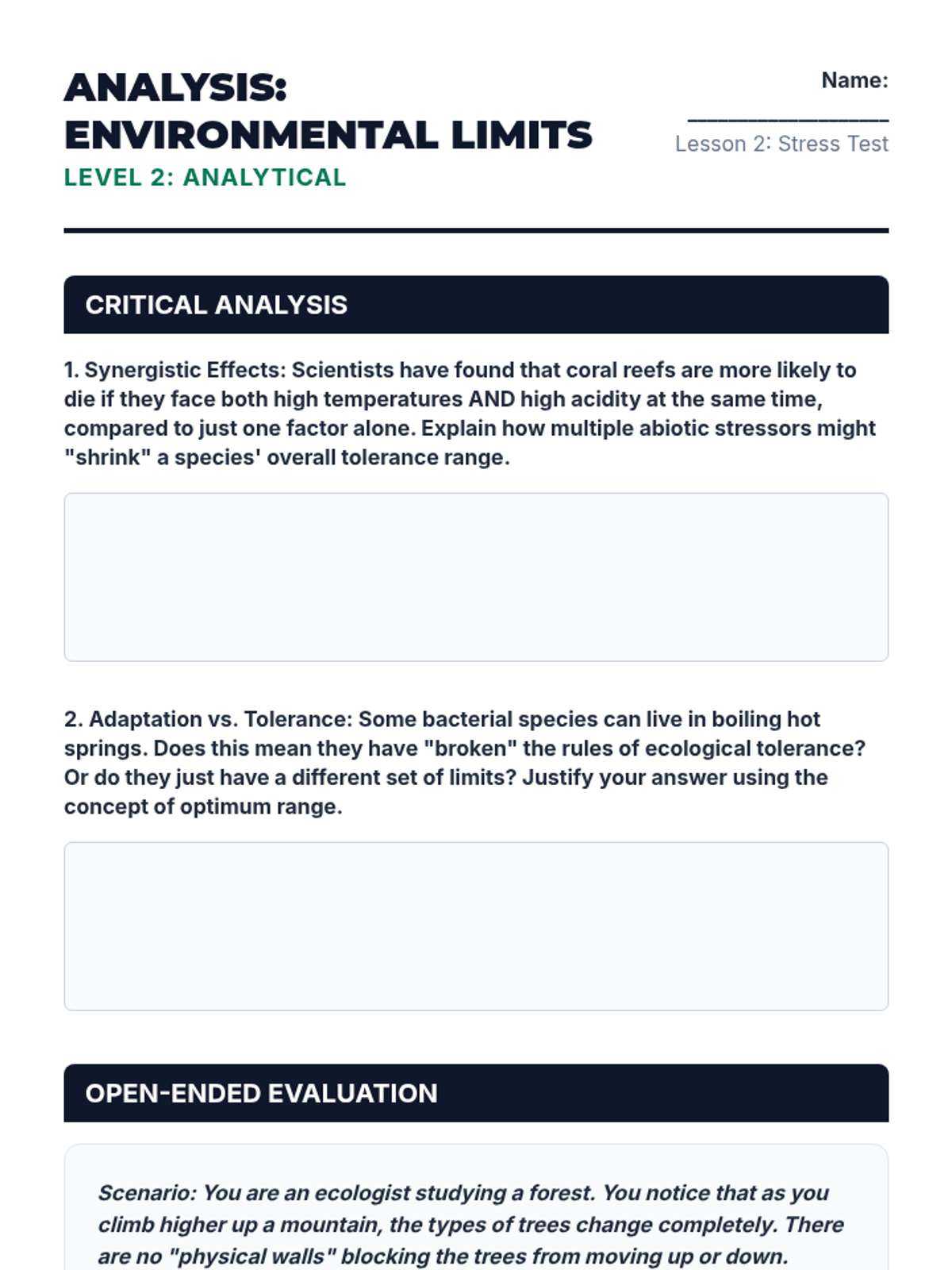
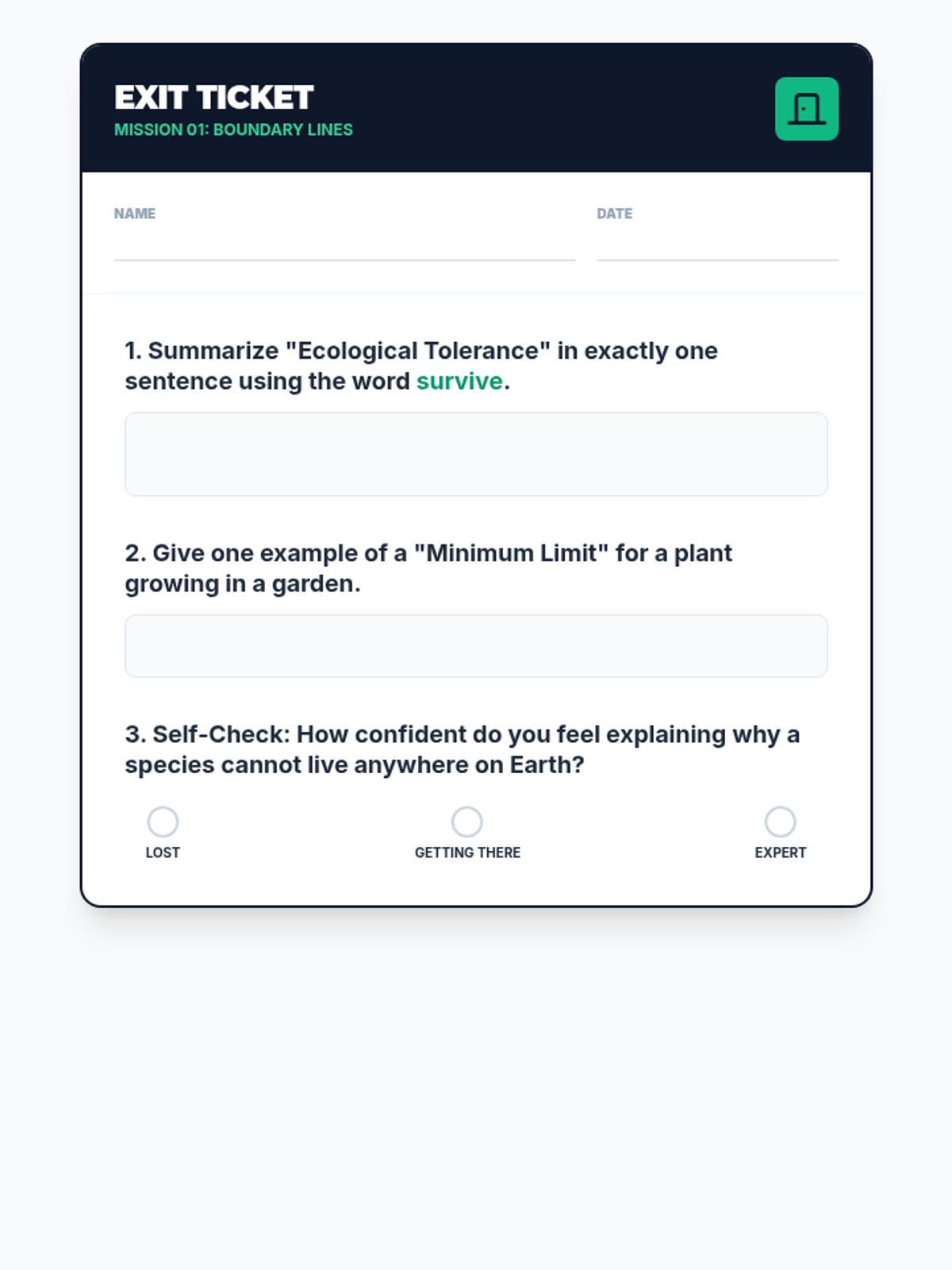
Apply tolerance concepts to real-world scenarios such as coral bleaching, invasive species, and climate-driven migration.
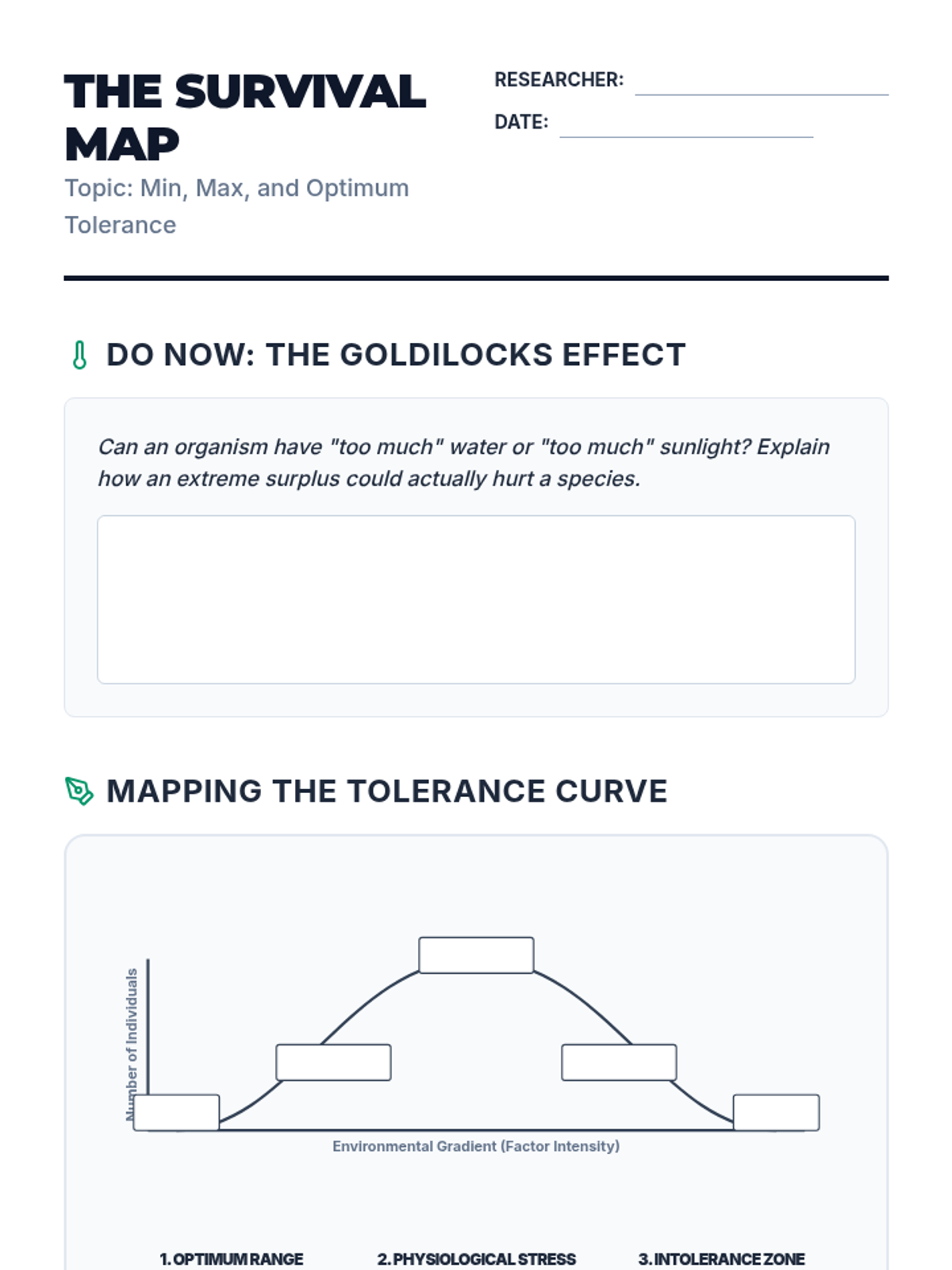
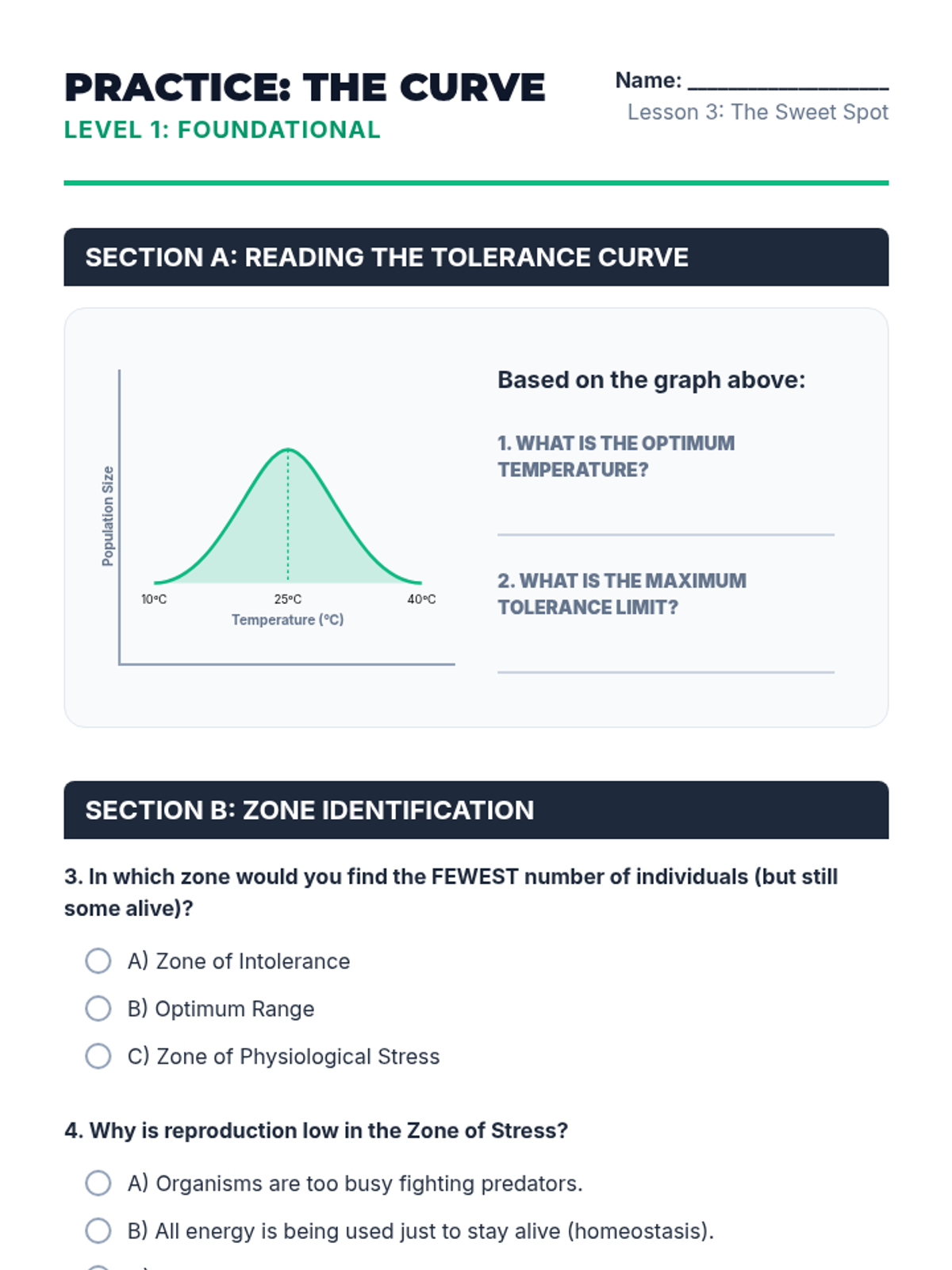
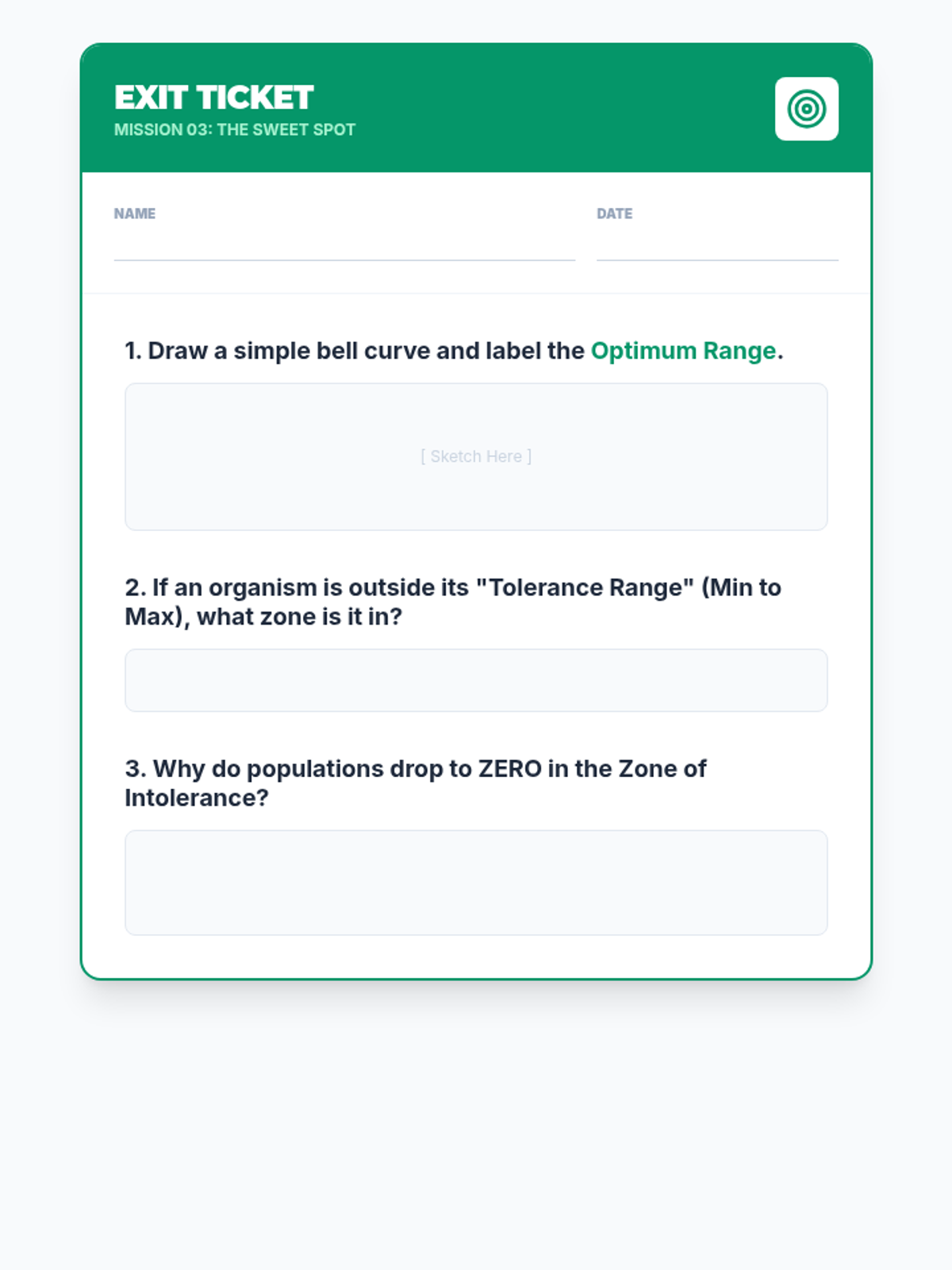
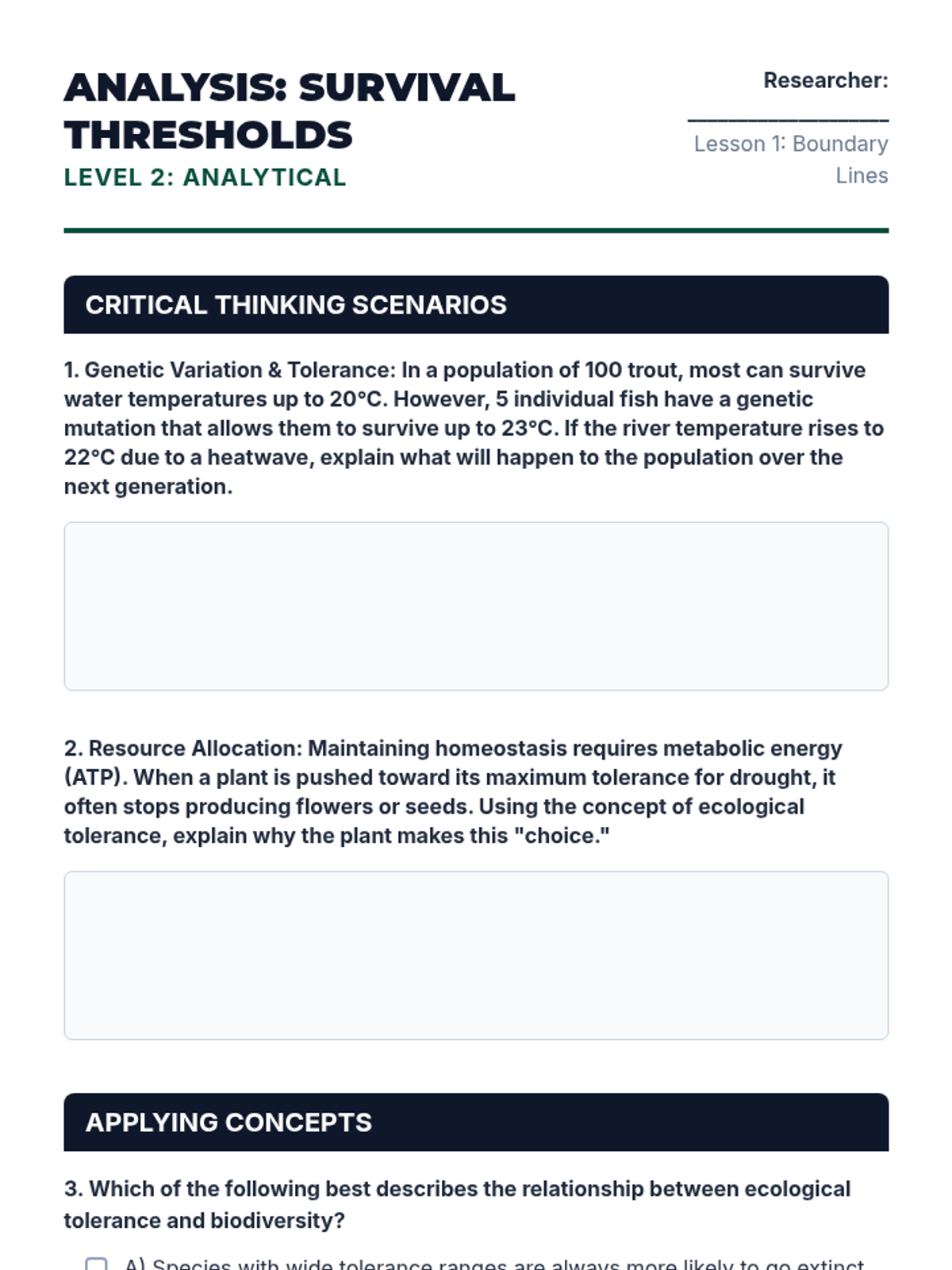
Master the ecological tolerance curve by defining and identifying the optimum range, zone of physiological stress, and zone of intolerance.
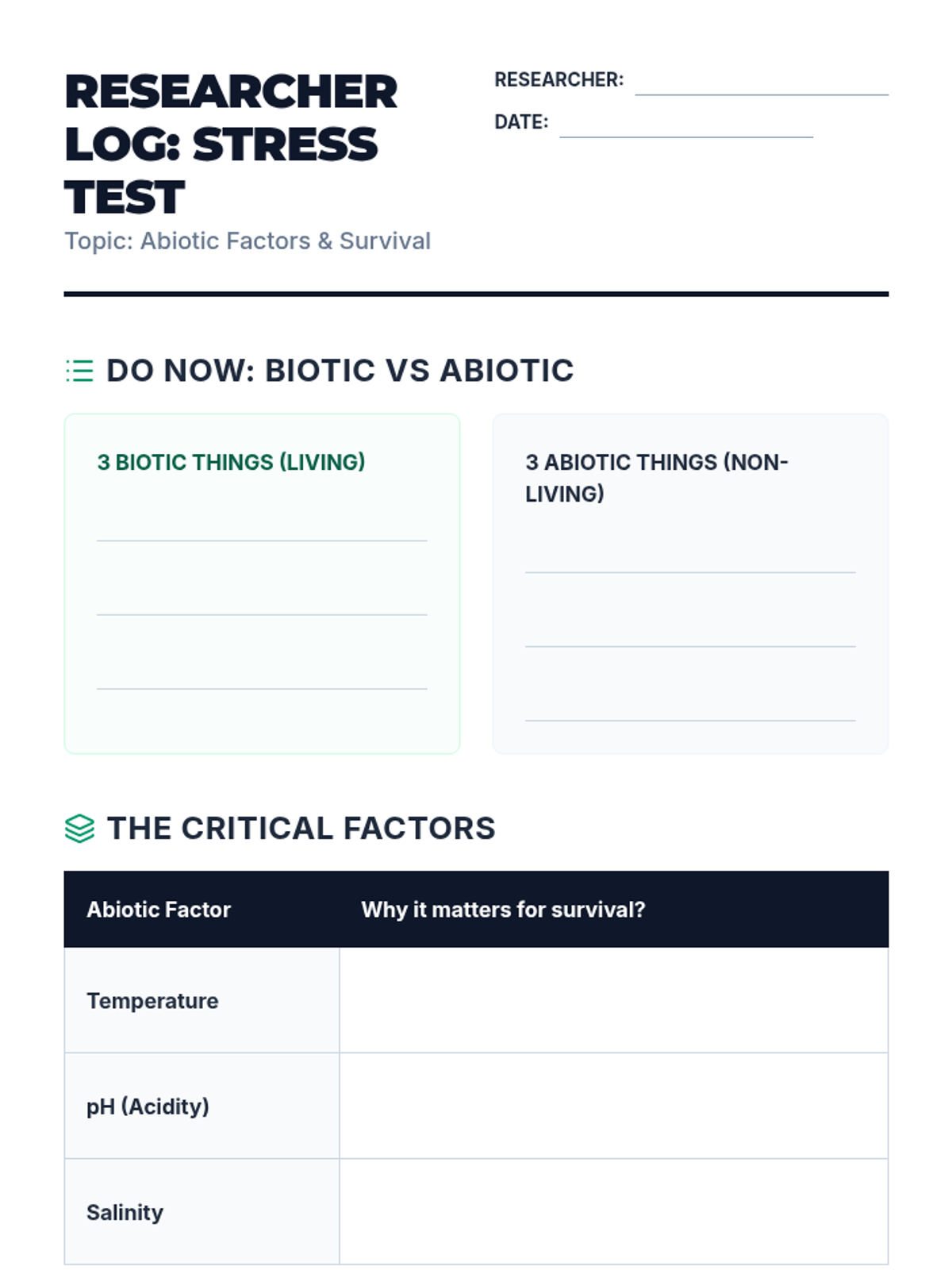
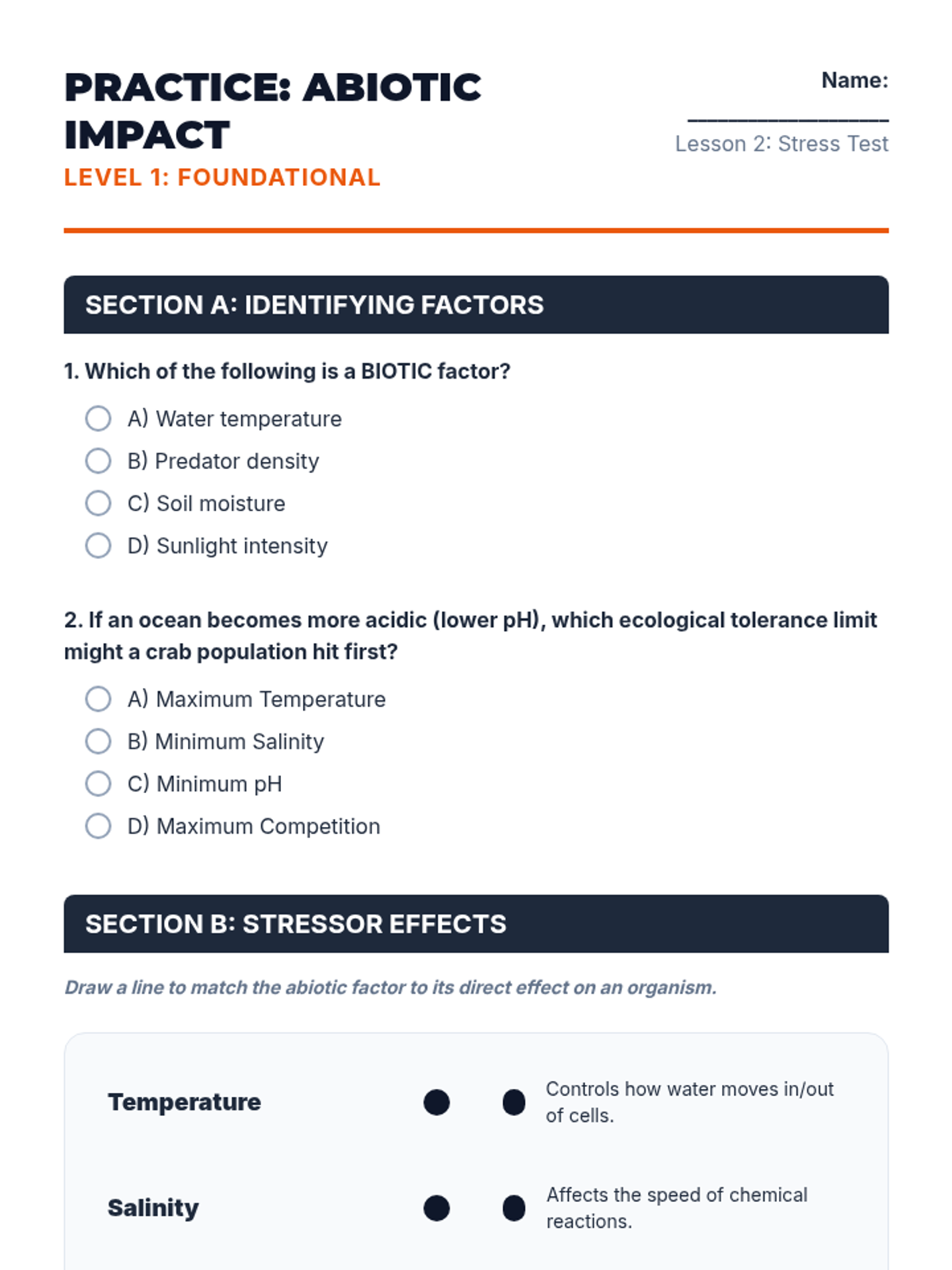
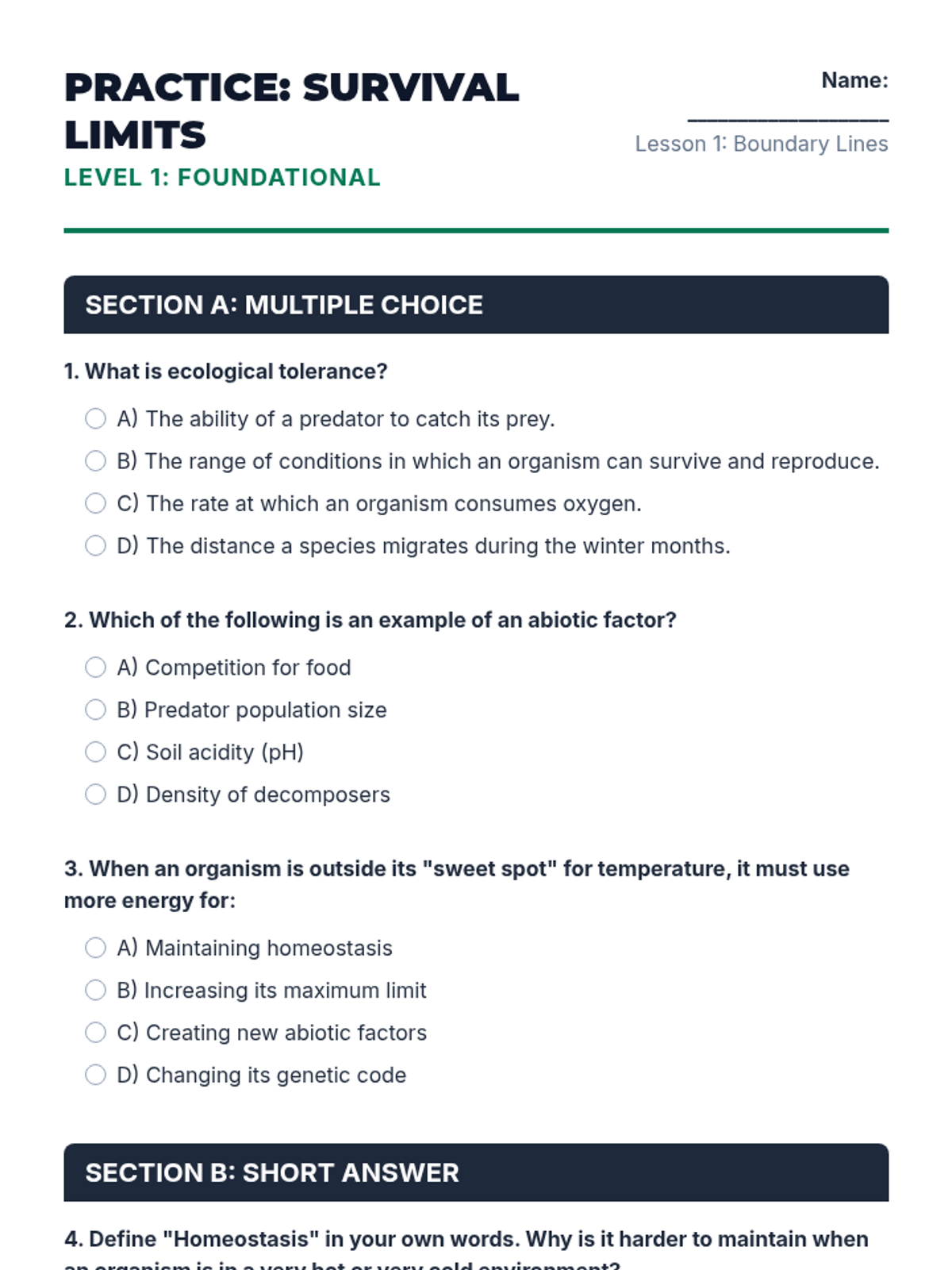
Identify and analyze specific abiotic factors like temperature, pH, and salinity that dictate whether a species thrives or perishes.
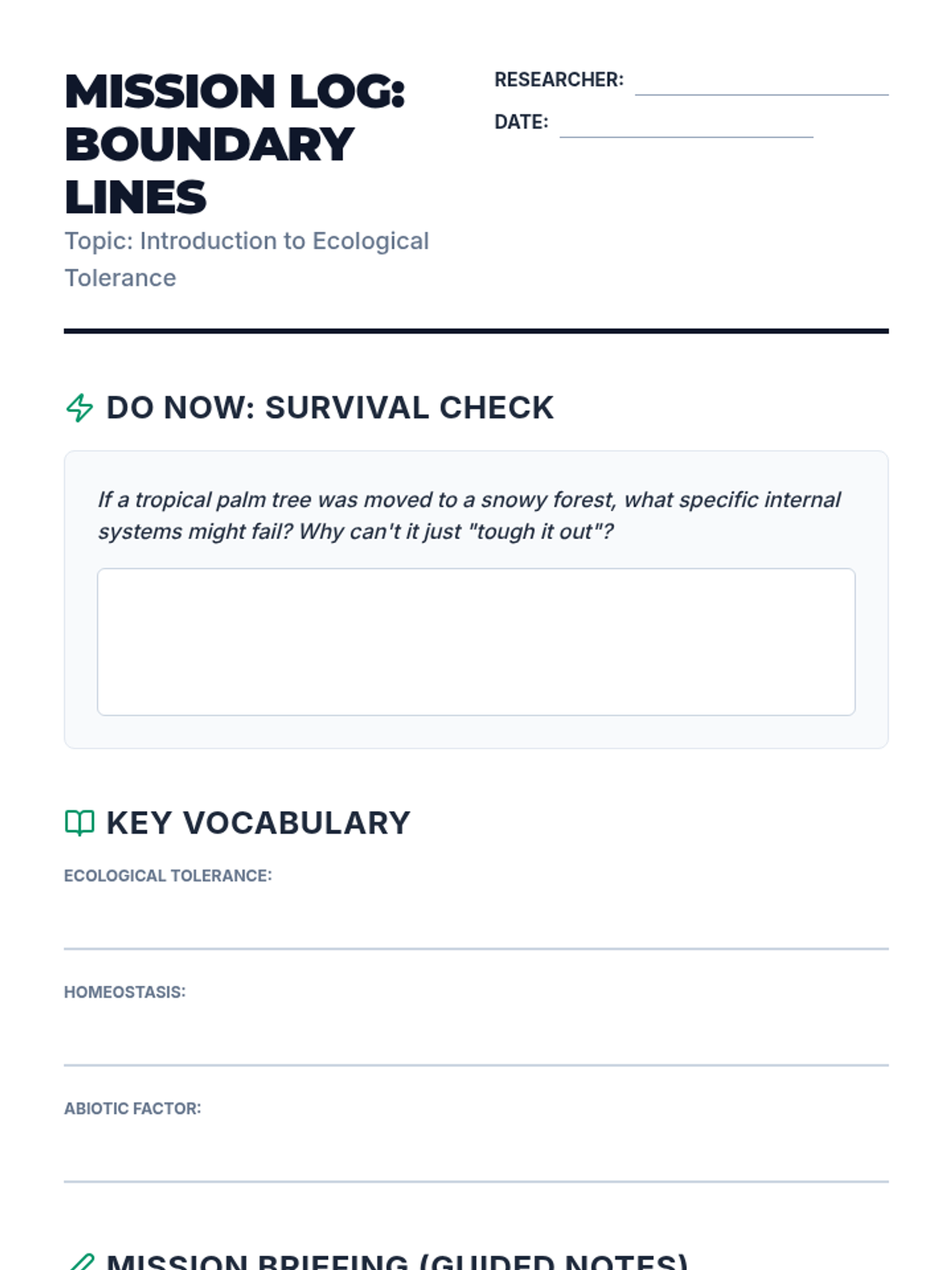
Introduce the concept of ecological tolerance and the basic biological necessity for staying within specific environmental ranges.
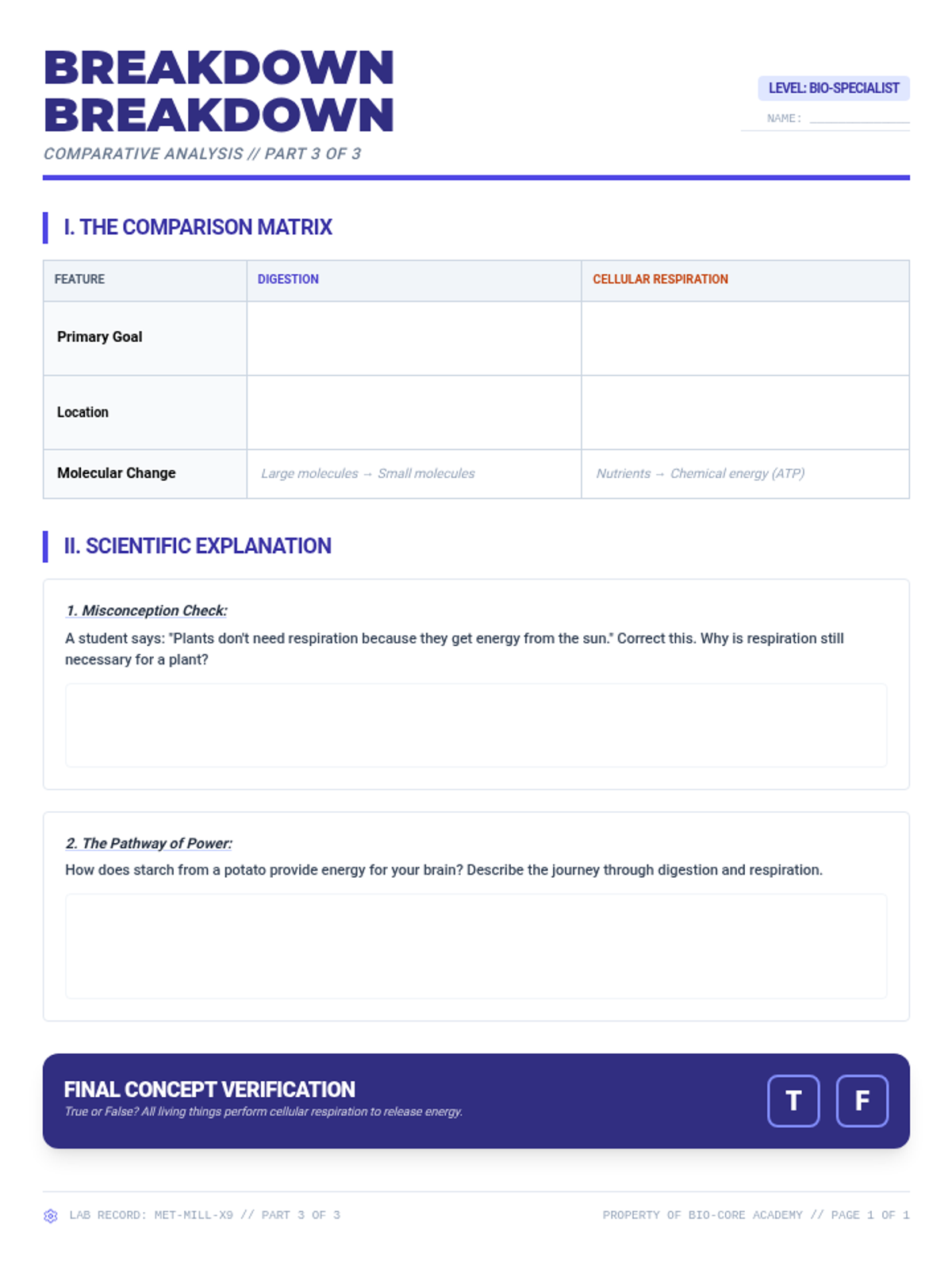
Differentiate between digestion and cellular respiration, and explain how all organisms use respiration to release energy.
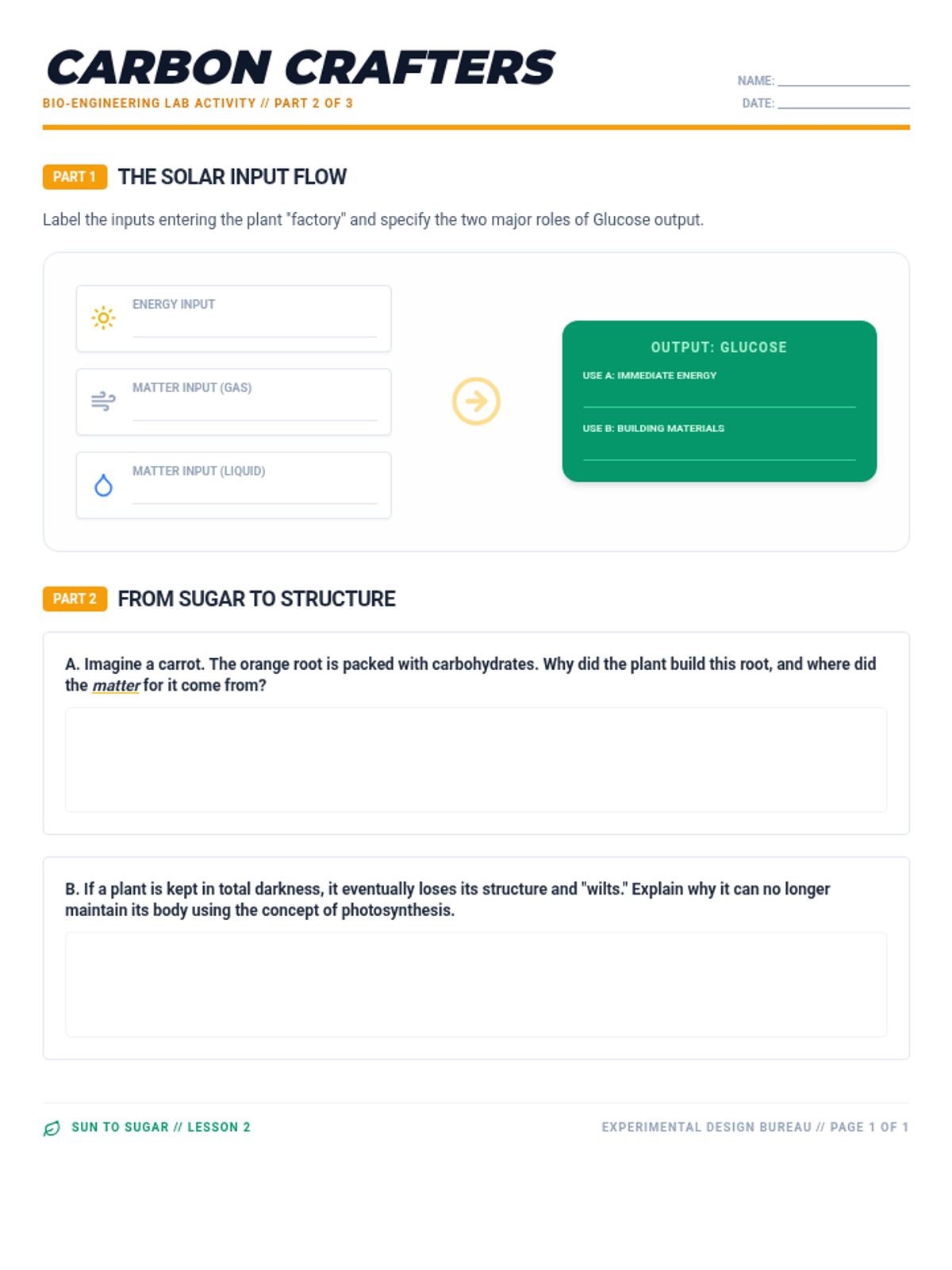
Explain how autotrophs use photosynthesis to create carbohydrates for food and structural materials.
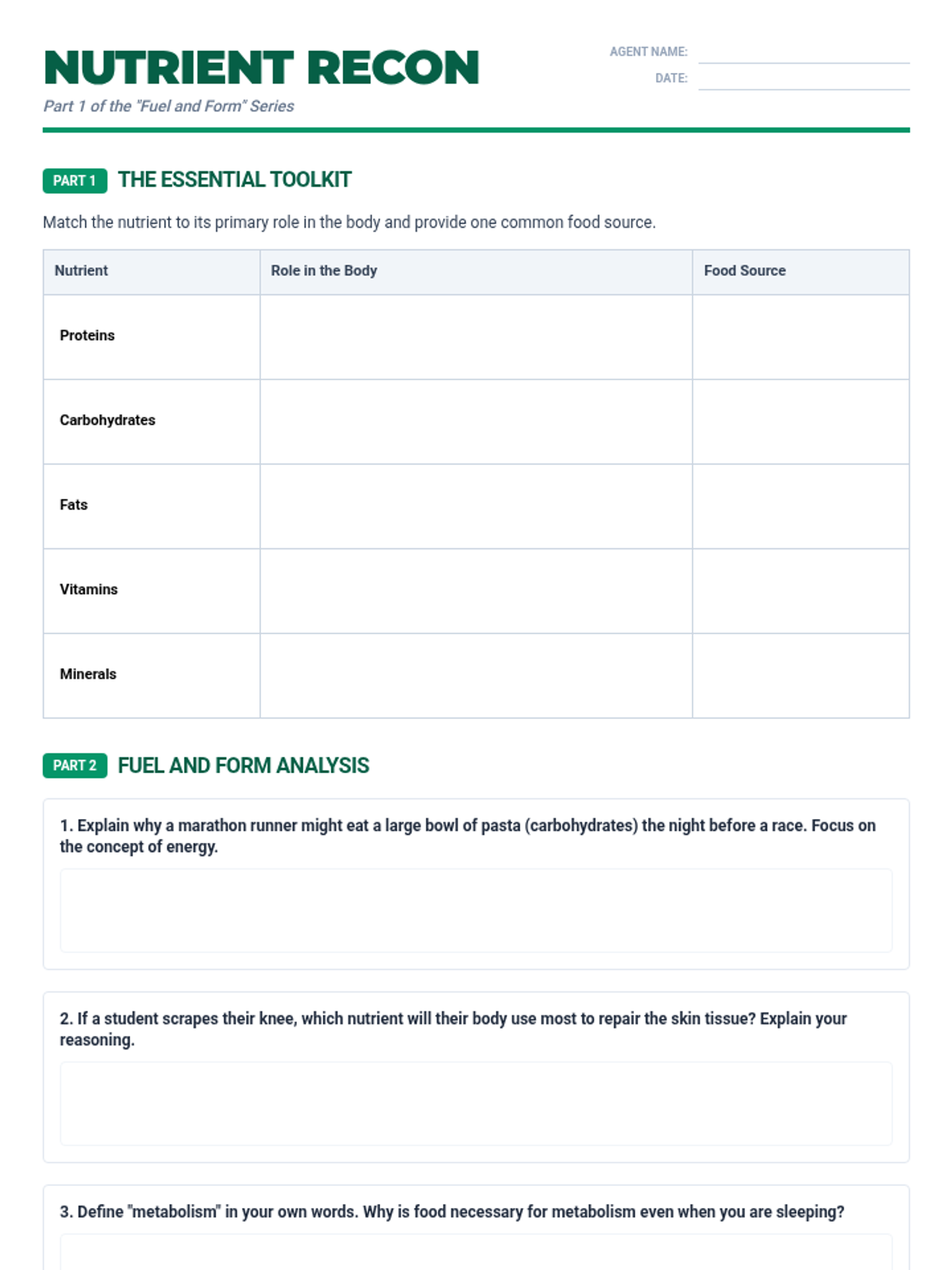
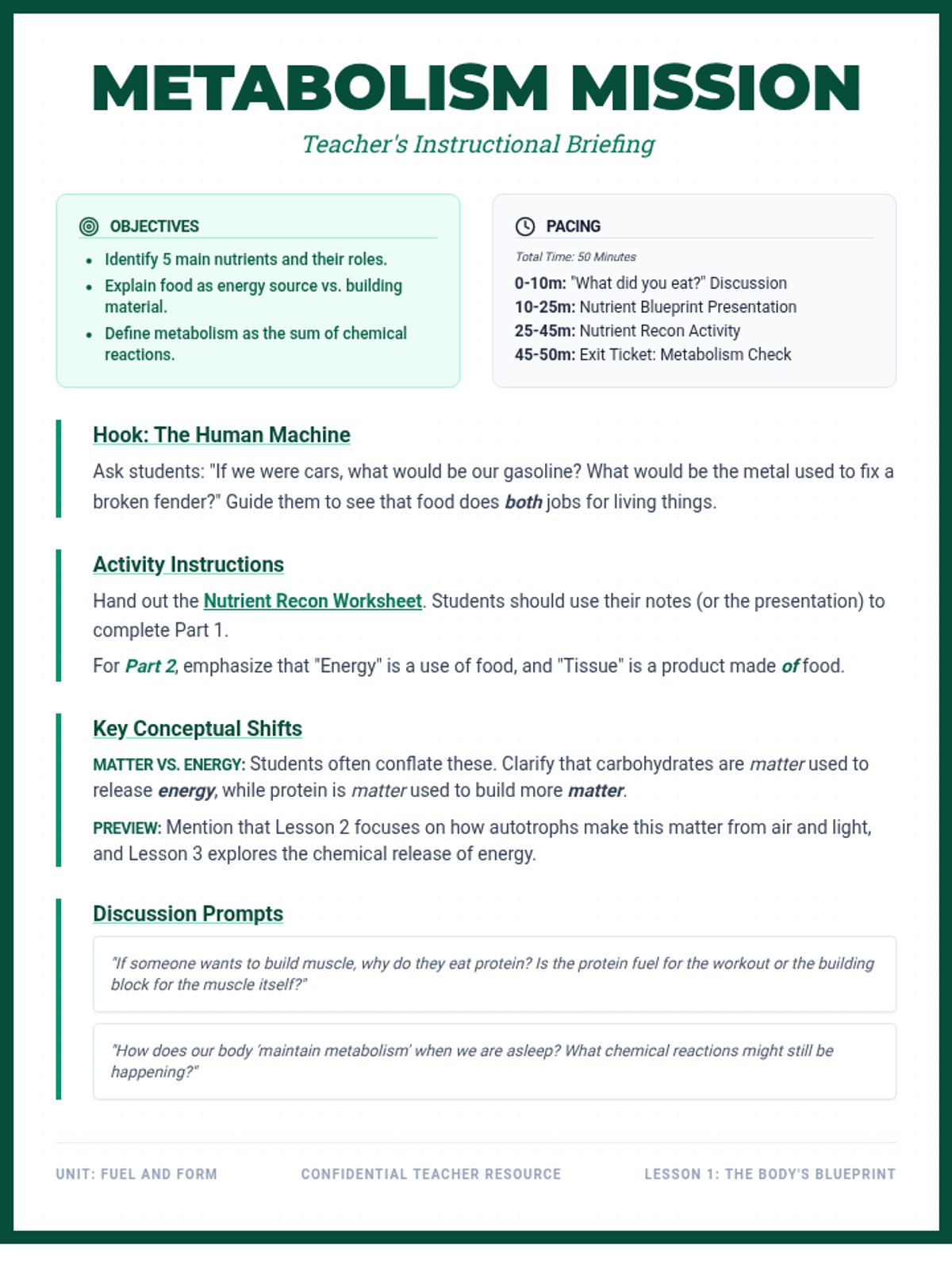
Identify the roles and sources of the five main nutrients and explain why organisms require food for energy and metabolic building materials.
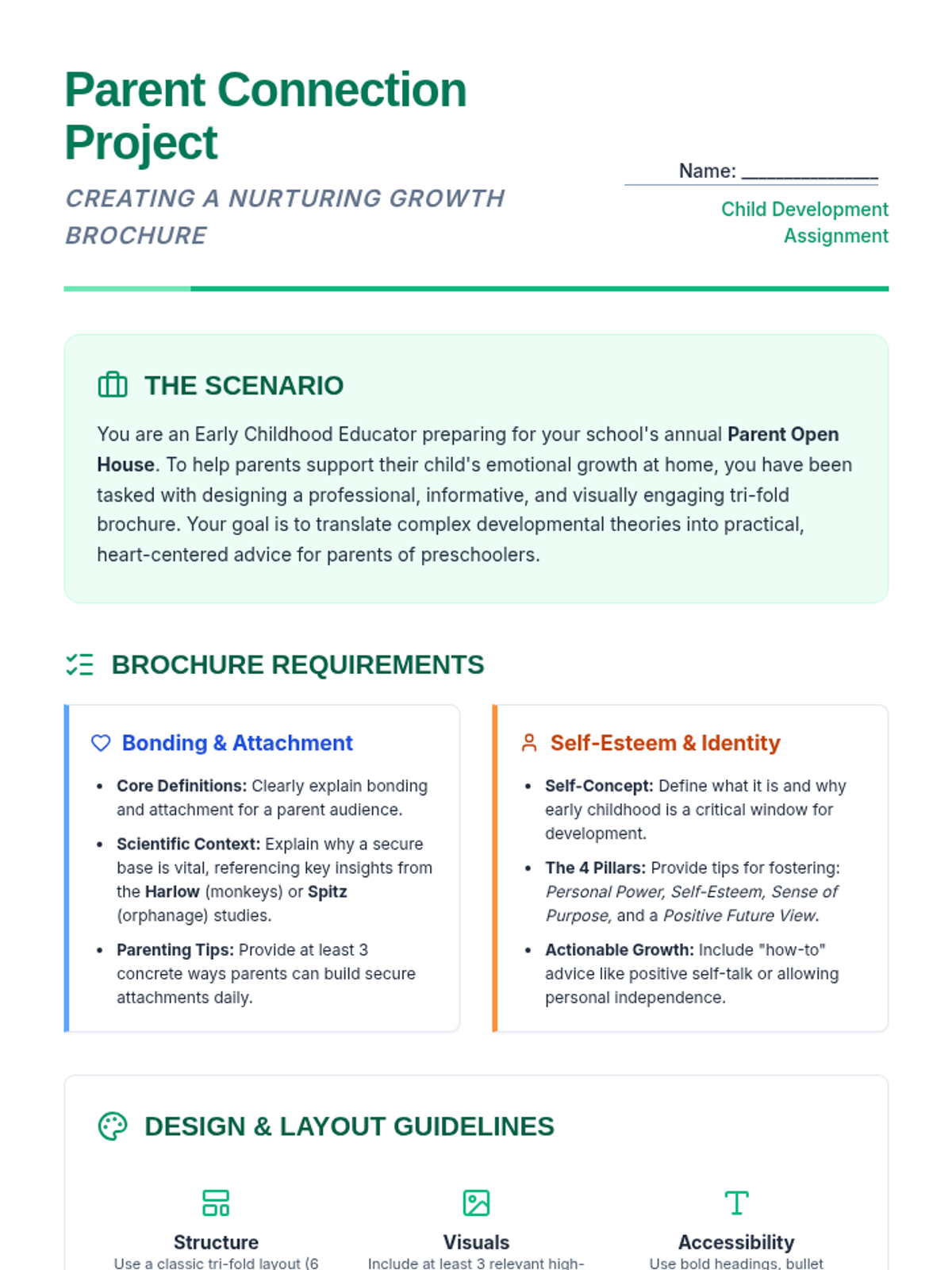
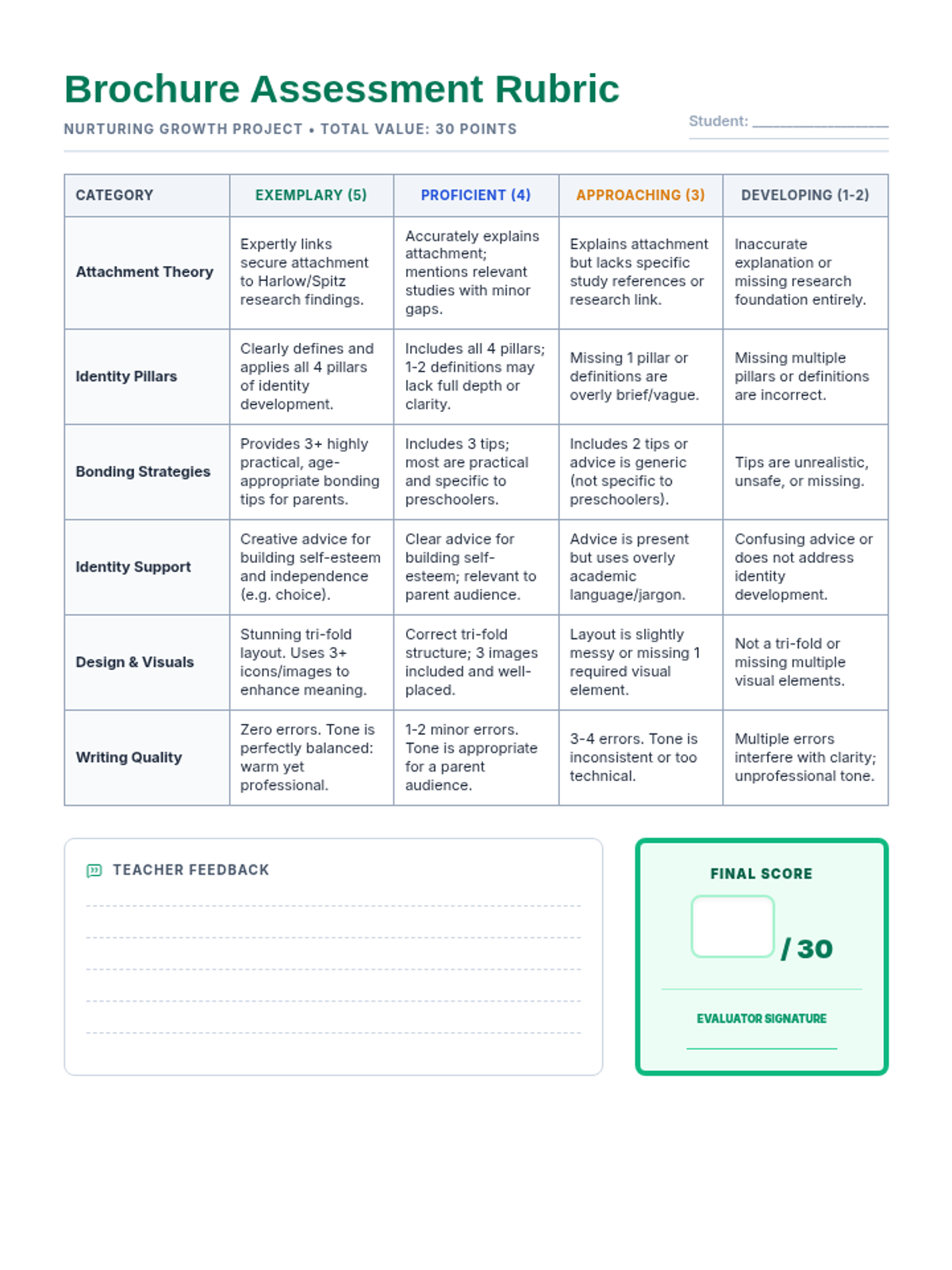
Students will apply their knowledge of bonding, attachment, and child development to create an informative brochure for parents of preschoolers.
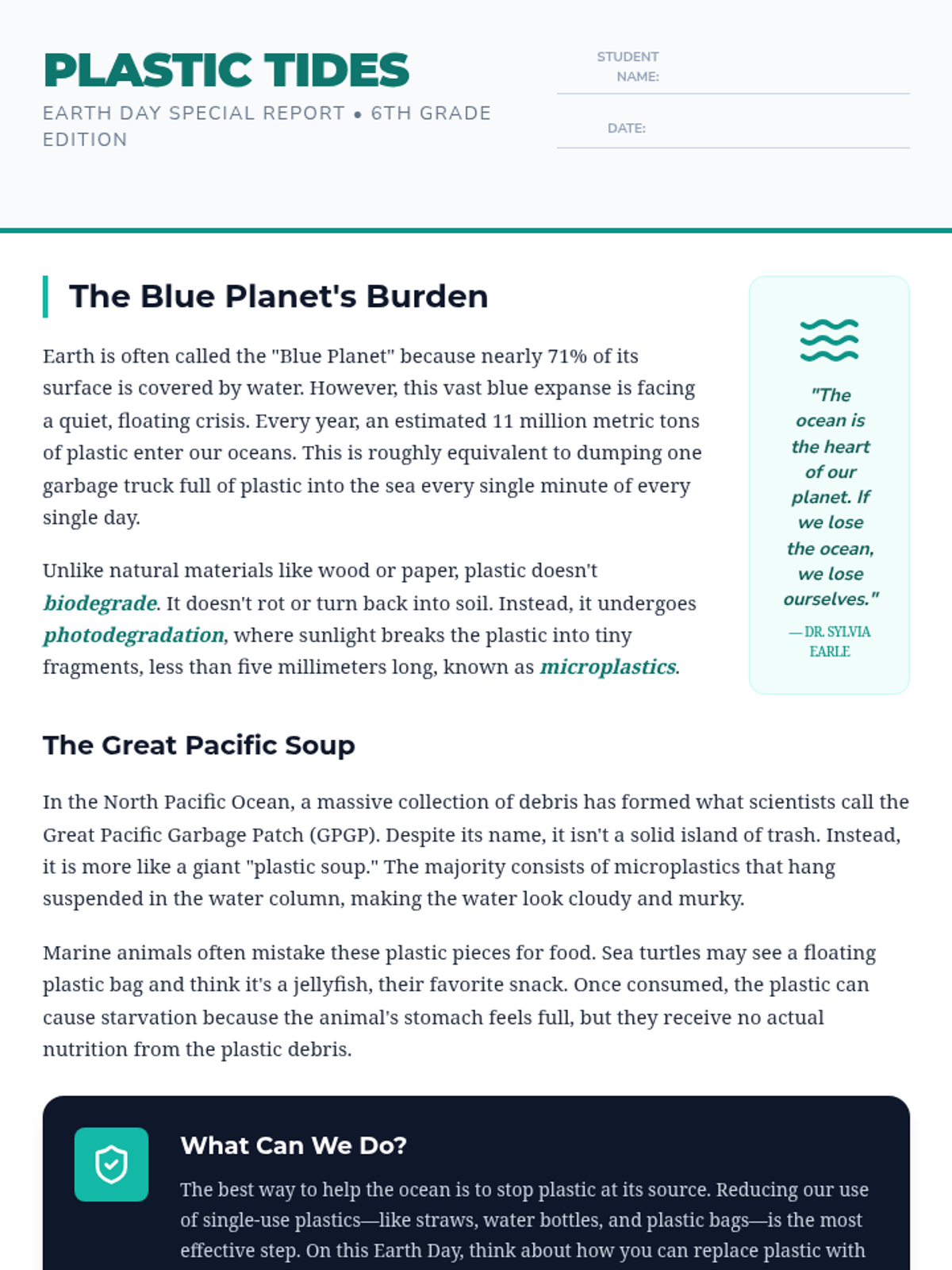
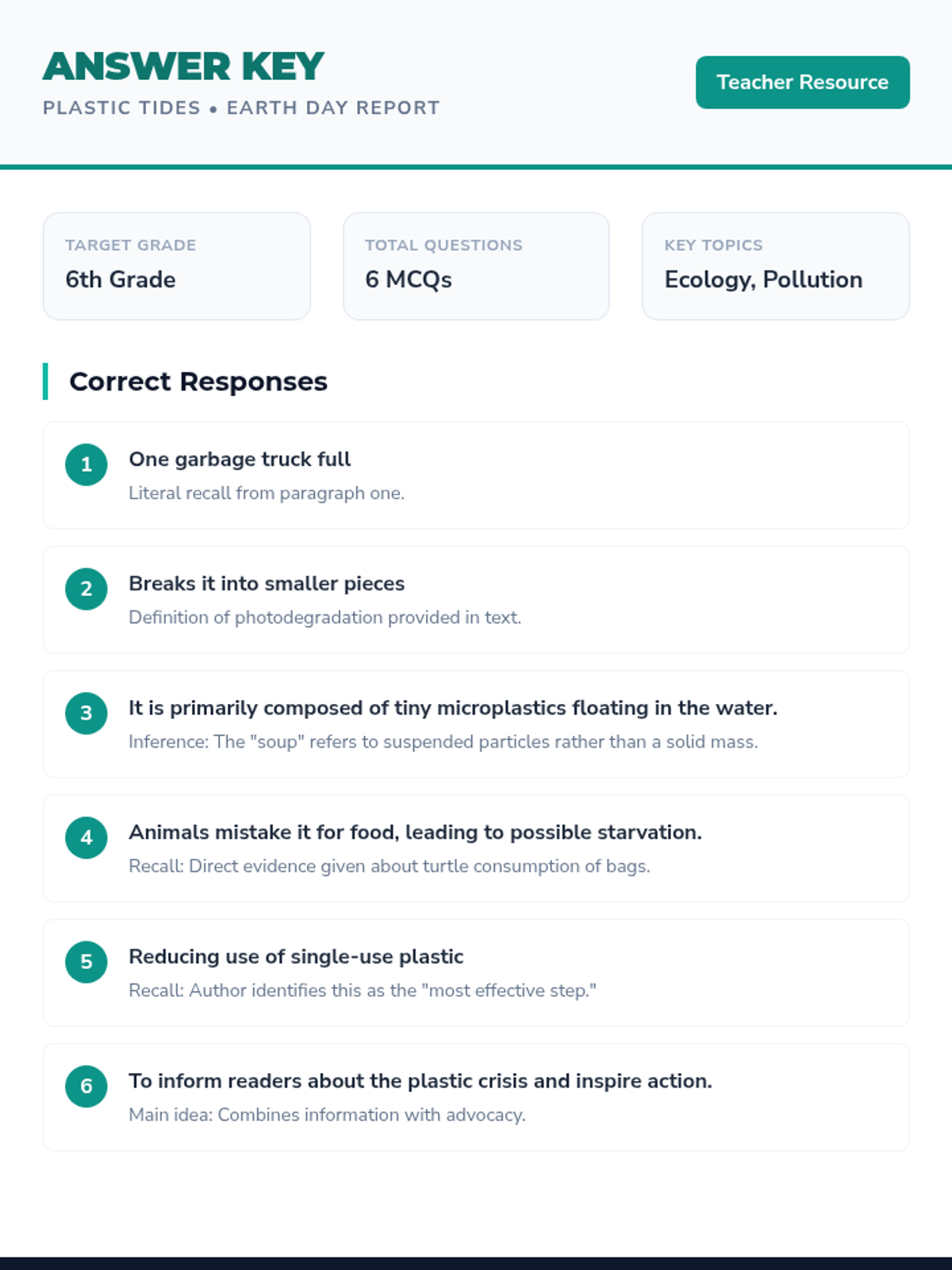
This lesson explores the impact of plastic pollution on marine ecosystems, focusing on the Great Pacific Garbage Patch and microplastics, while encouraging students to take action for Earth Day.
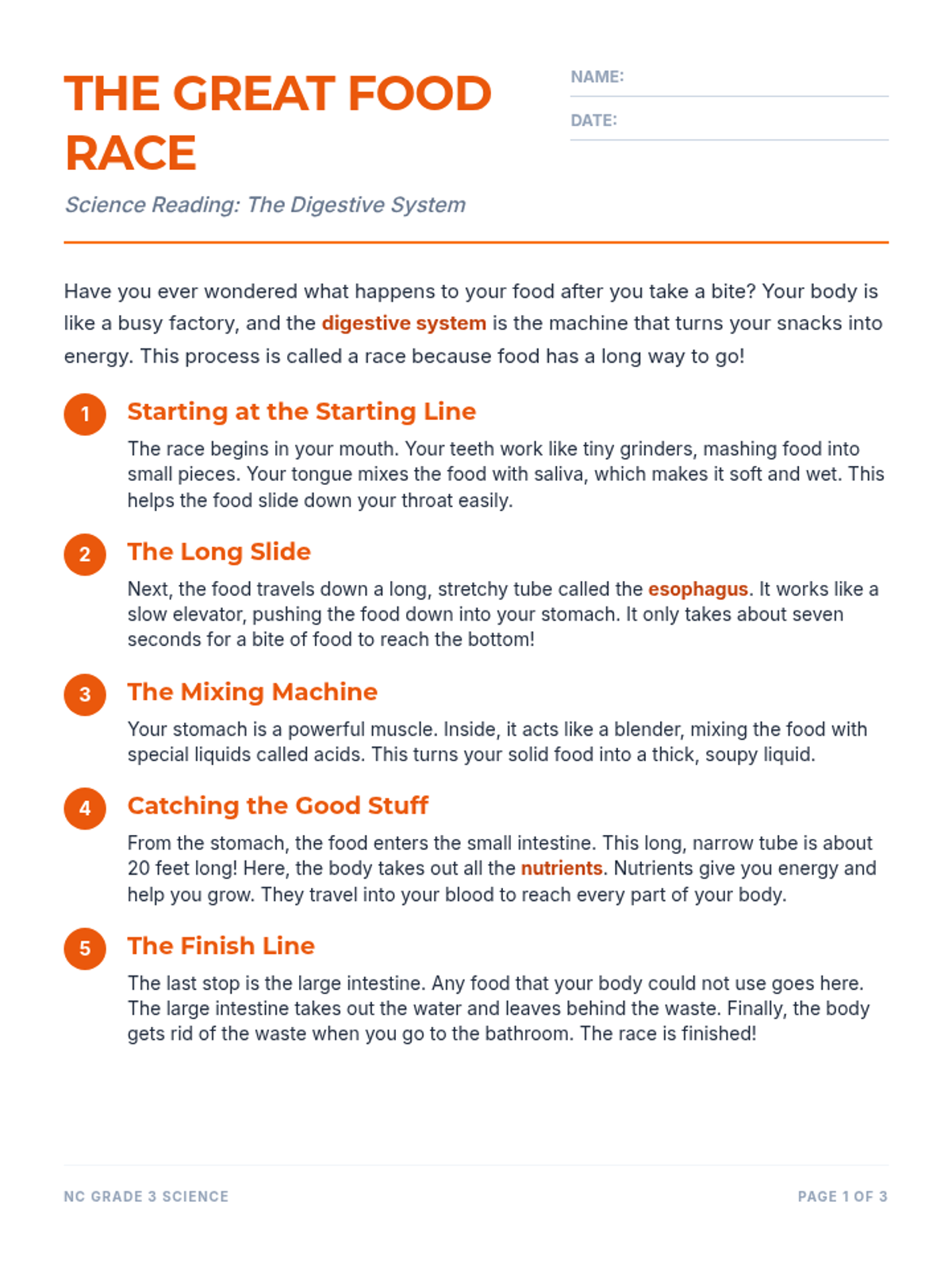
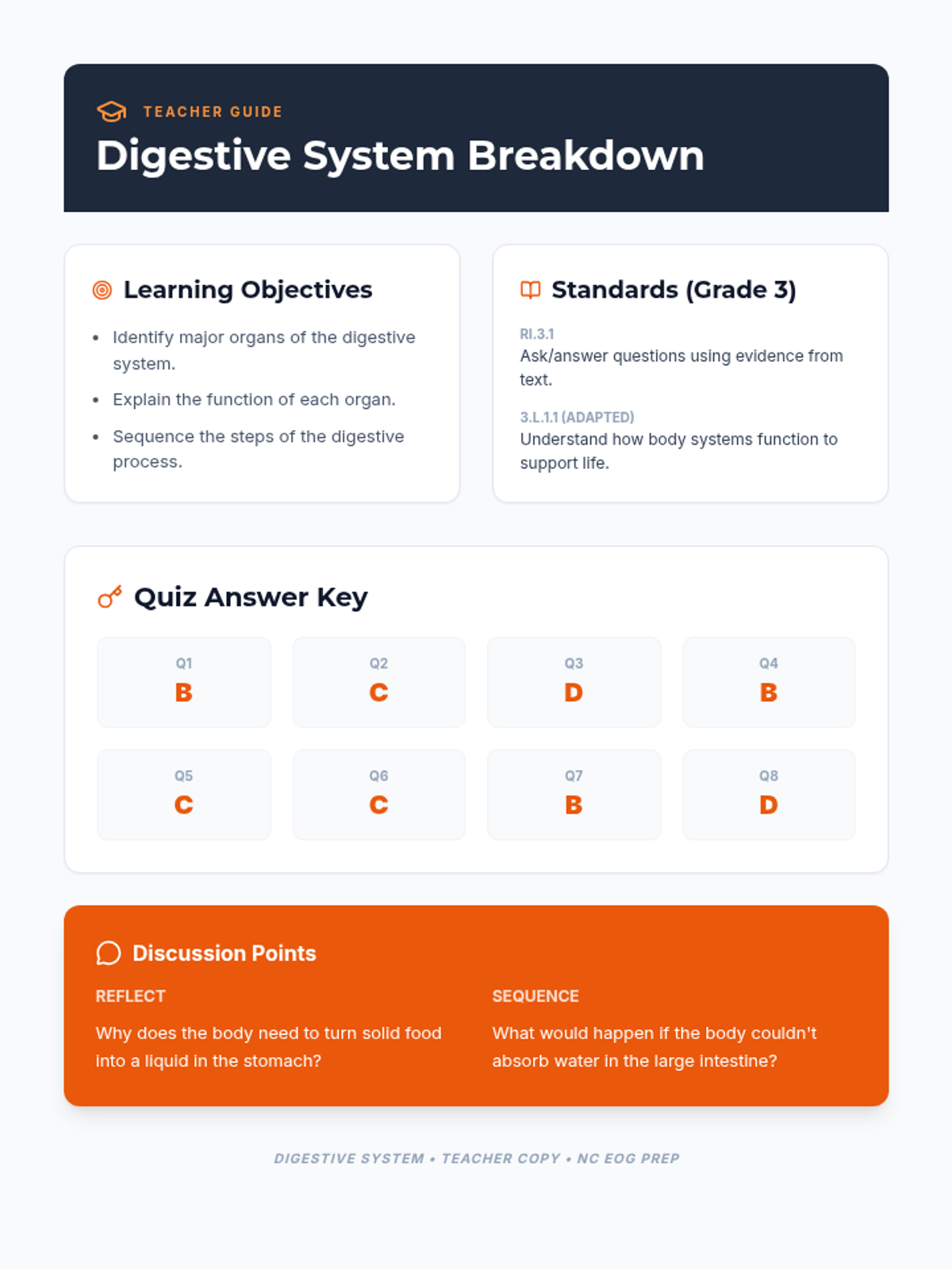
A comprehensive reading and assessment lesson focusing on the human digestive system, designed to meet NC 3rd grade reading levels and science concepts. Students will follow a piece of food through the 'Great Food Race' and demonstrate comprehension through EOG-style questioning.
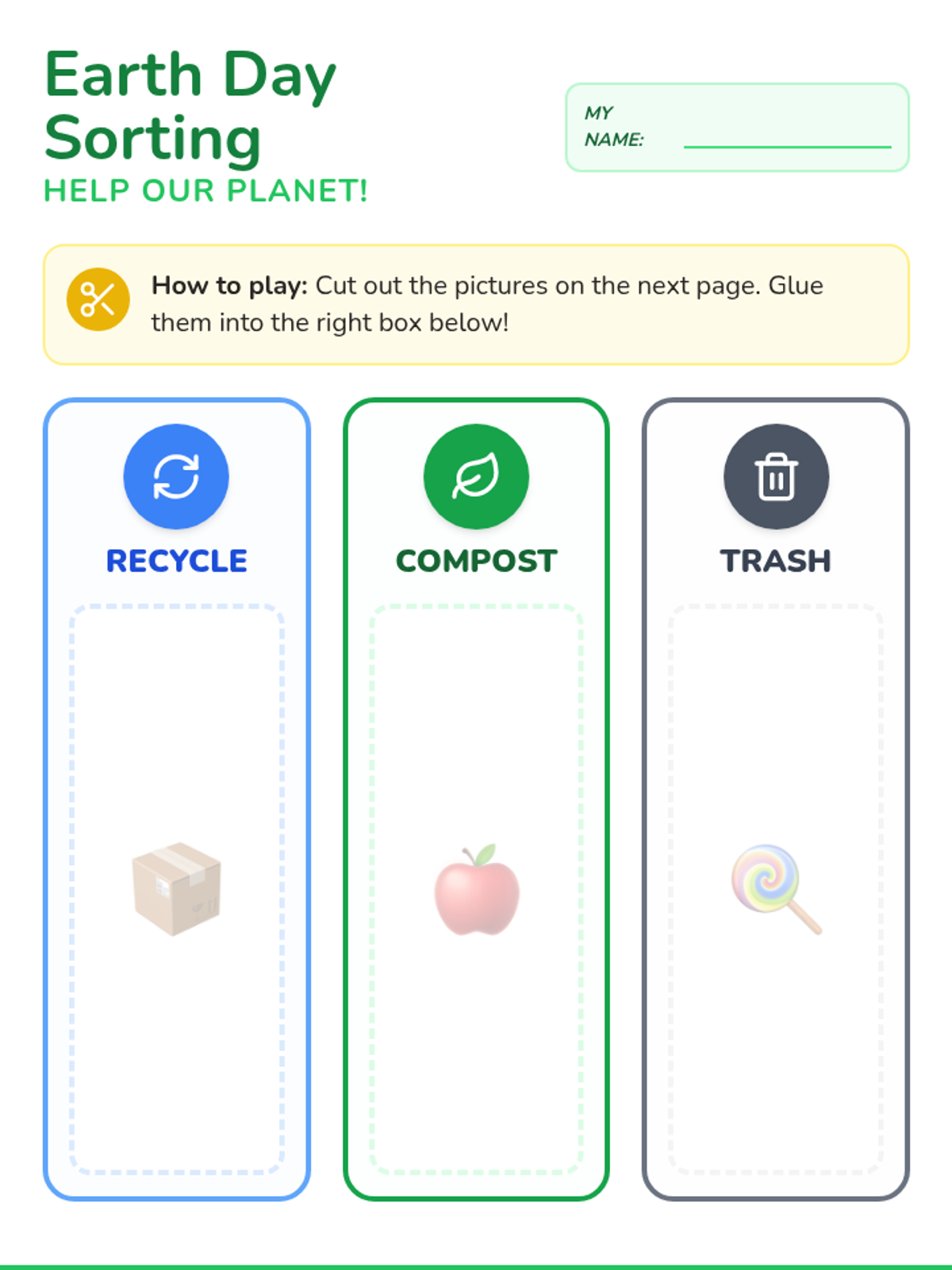
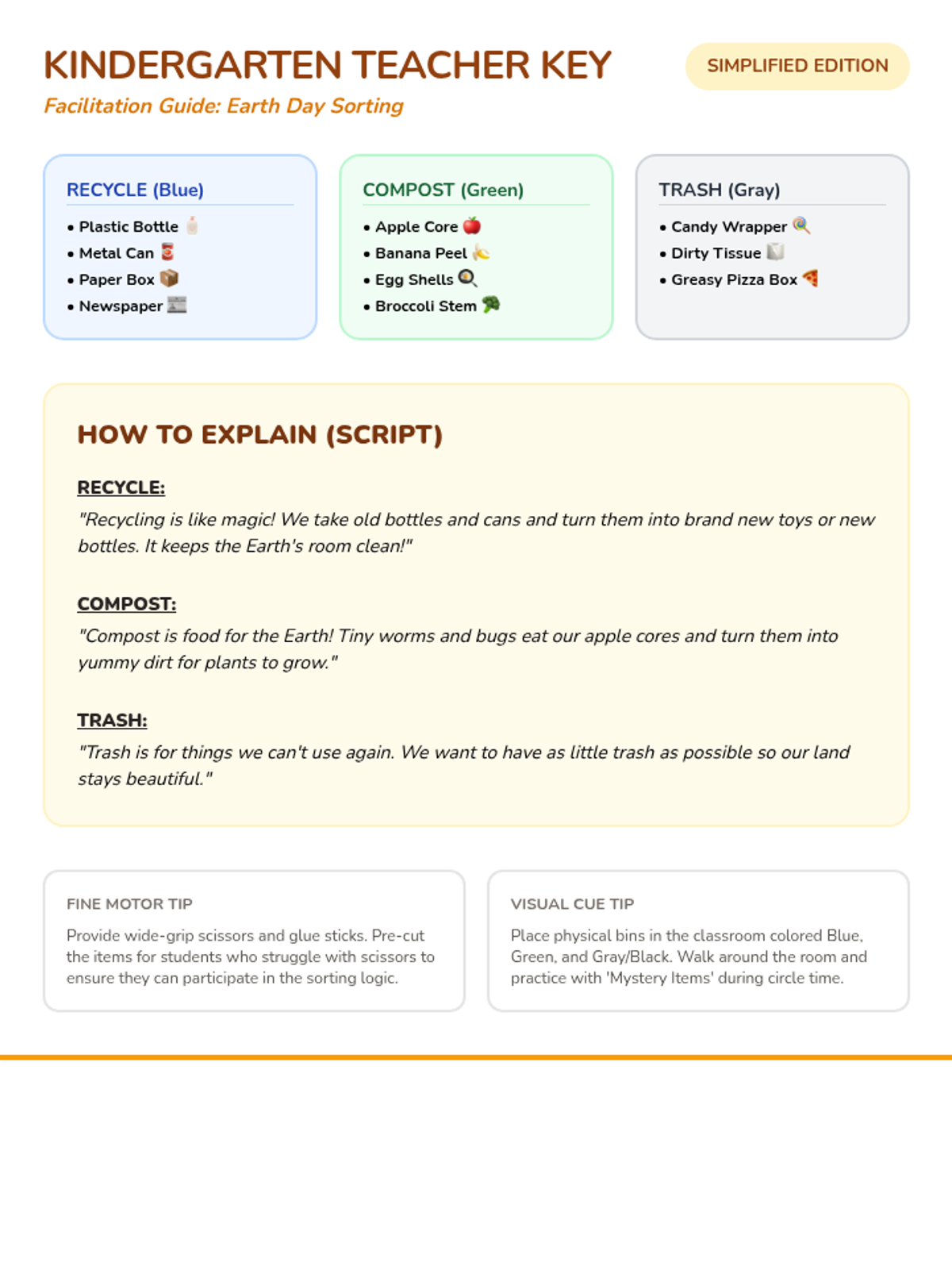
A hands-on lesson teaching students how to identify and sort different types of waste into recycling, compost, and landfill categories through visual activities.
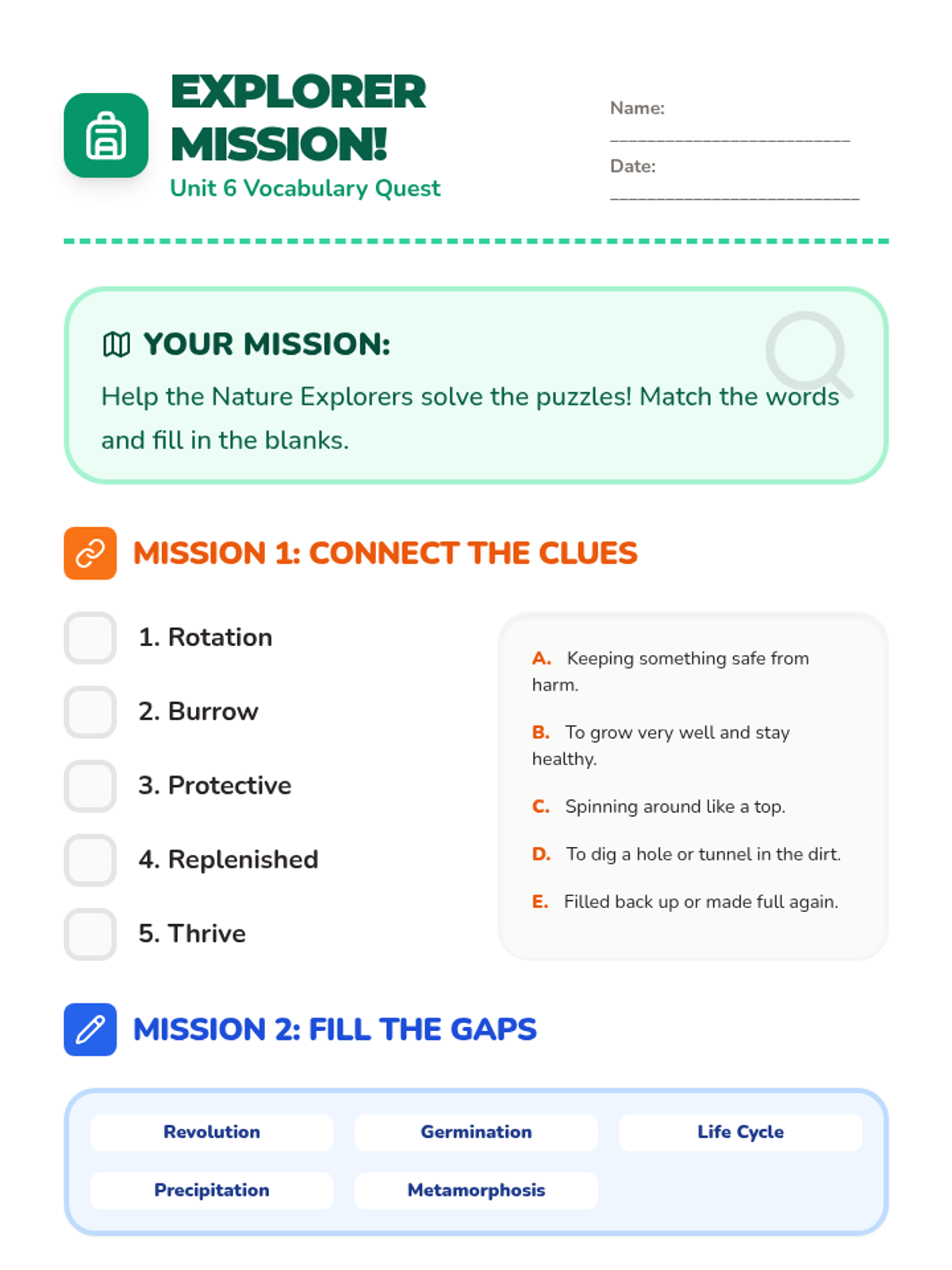
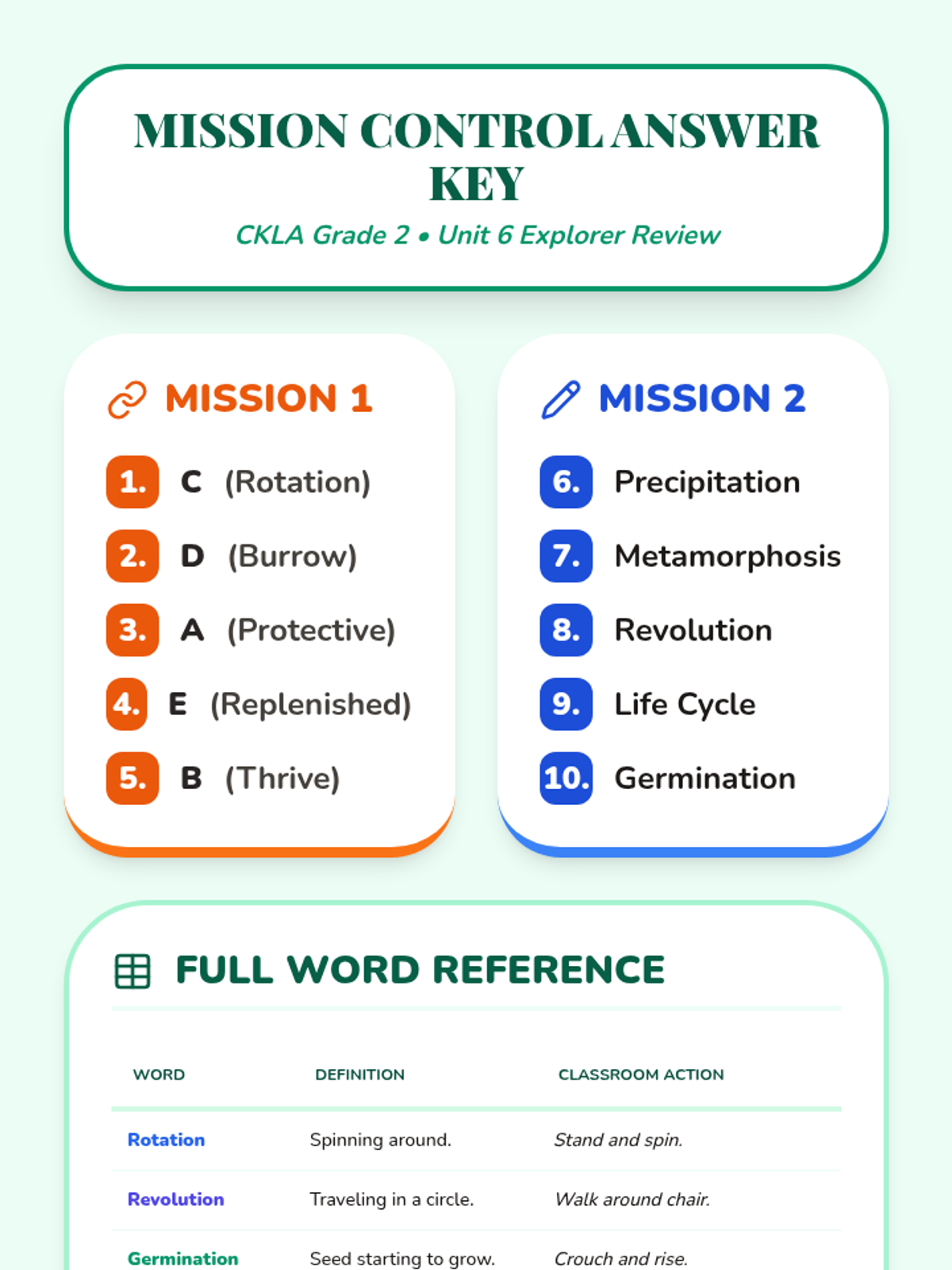
A comprehensive review of key vocabulary for the CKLA Grade 2 Unit 6 "Cycles in Nature" unit, preparing students for their vocabulary assessment.
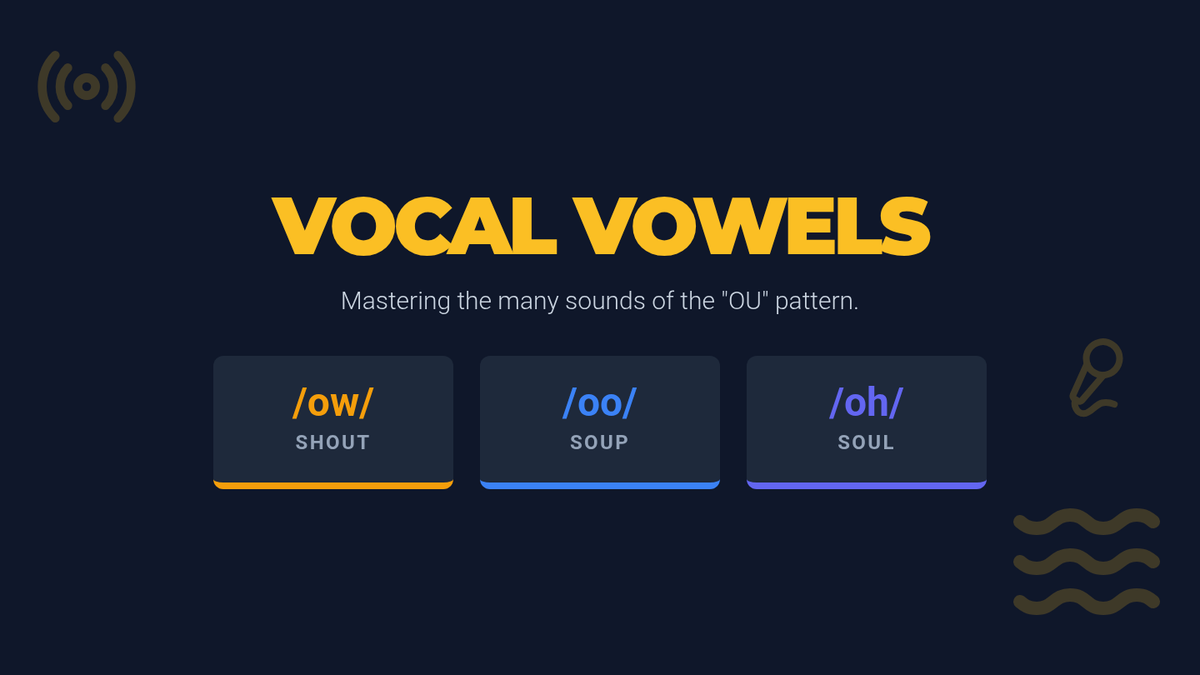
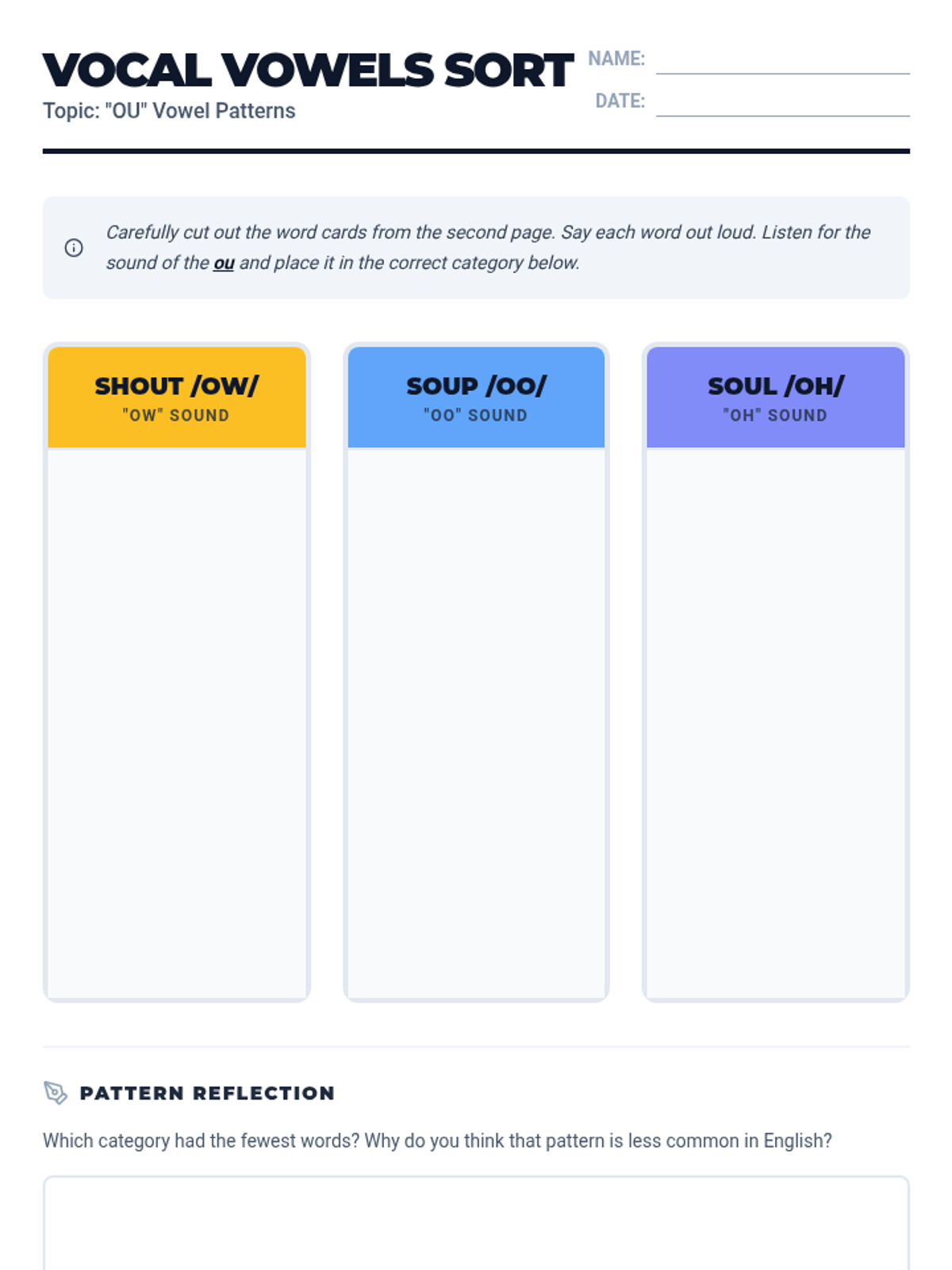
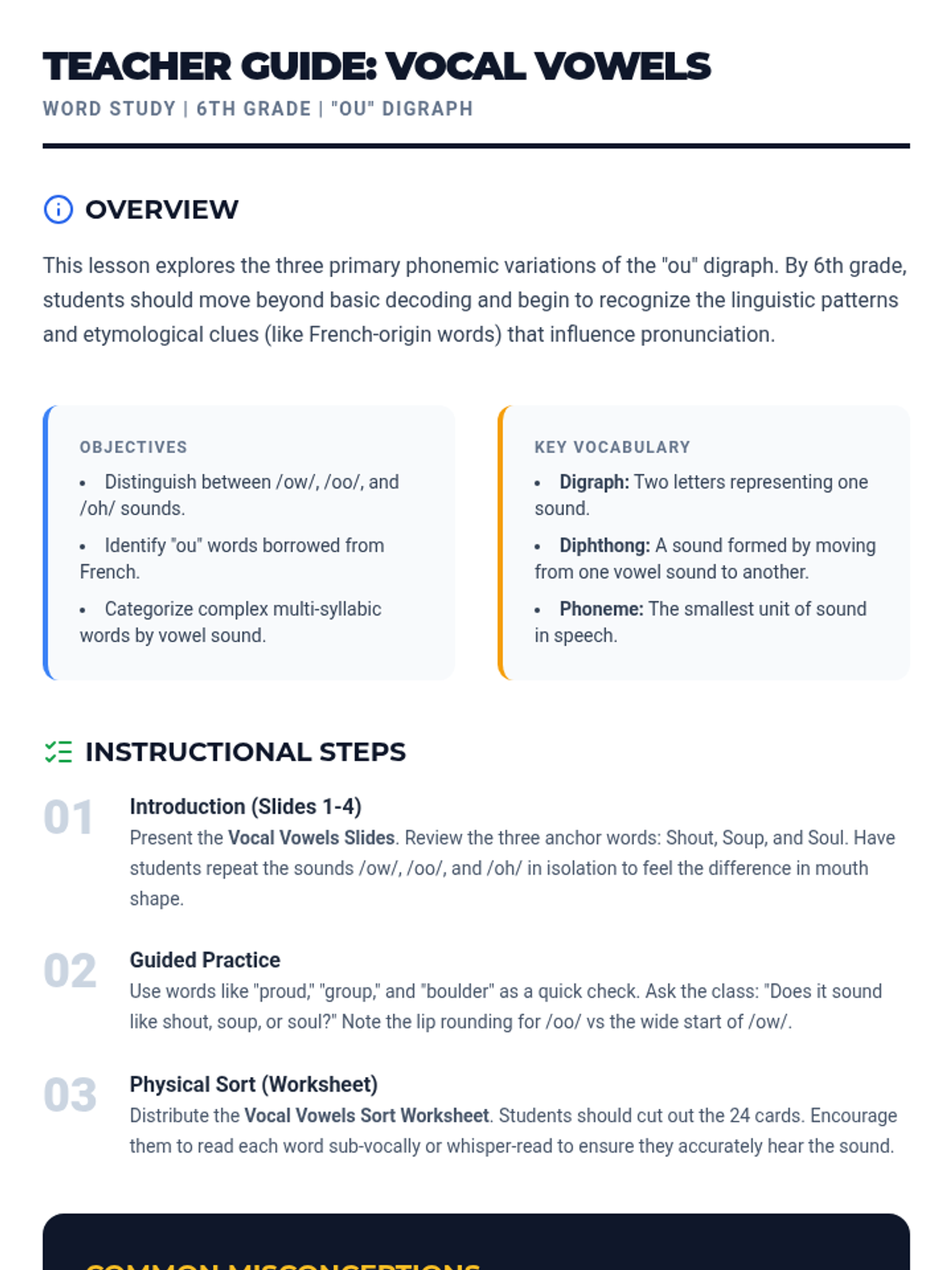
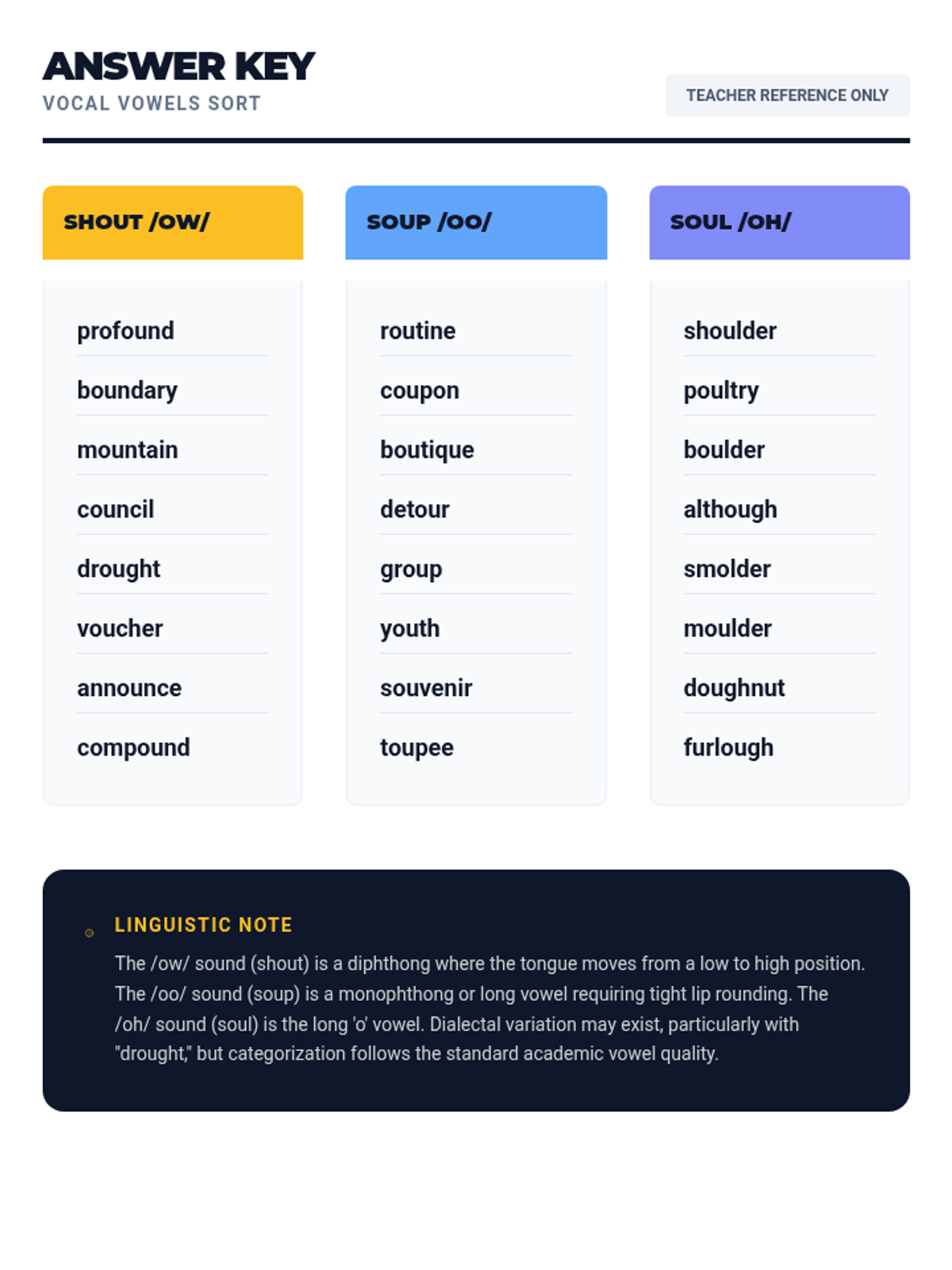
A word study lesson for 6th graders focusing on the three distinct sounds of the 'ou' vowel digraph: /aʊ/ as in shout, /uː/ as in soup, and /oʊ/ as in soul. Students will categorize words and identify patterns through a physical sorting activity.
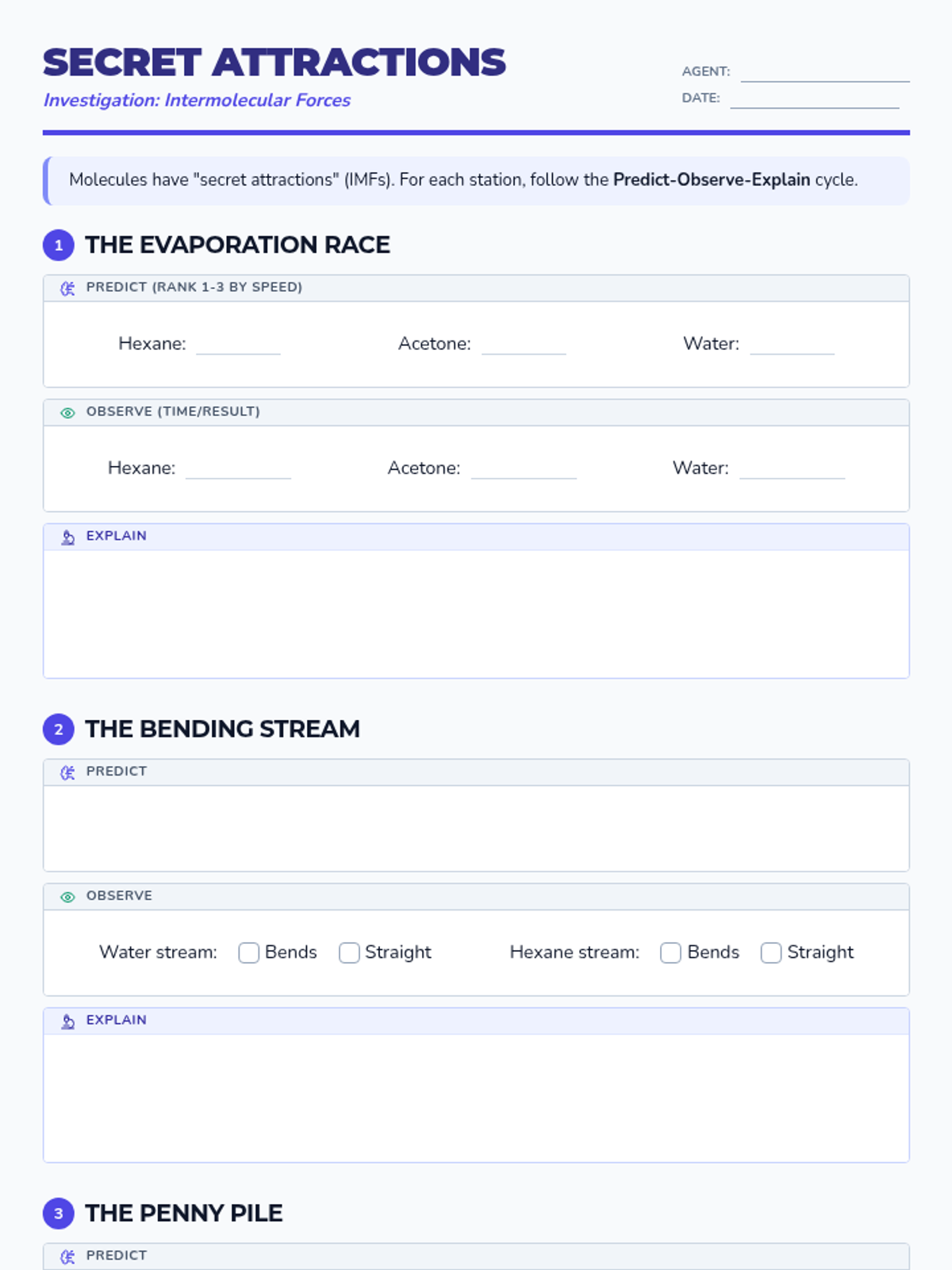
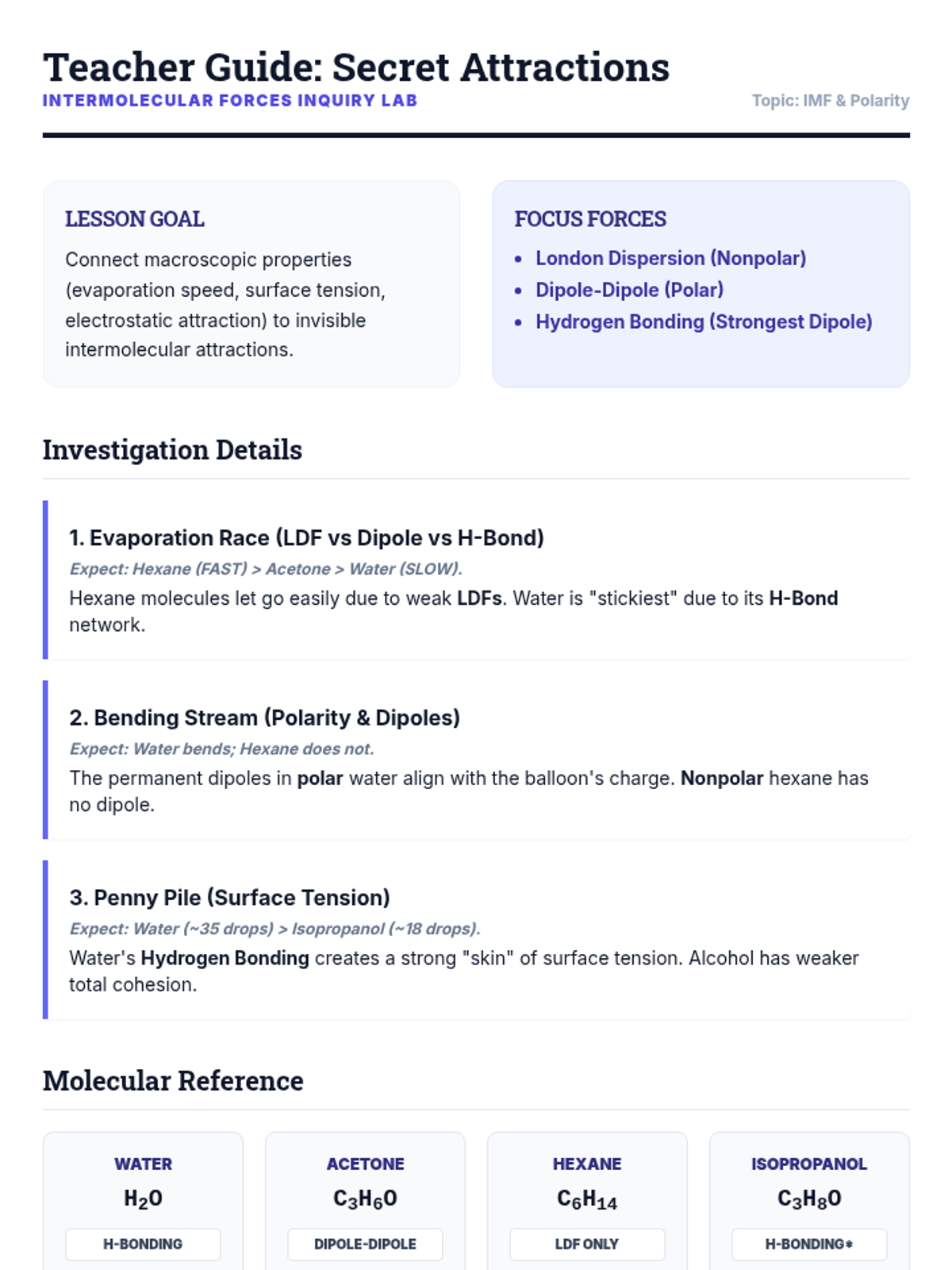
An inquiry-based lesson where students use the Predict-Observe-Explain (POE) cycle to discover and distinguish between London dispersion, dipole-dipole, and hydrogen bonding.
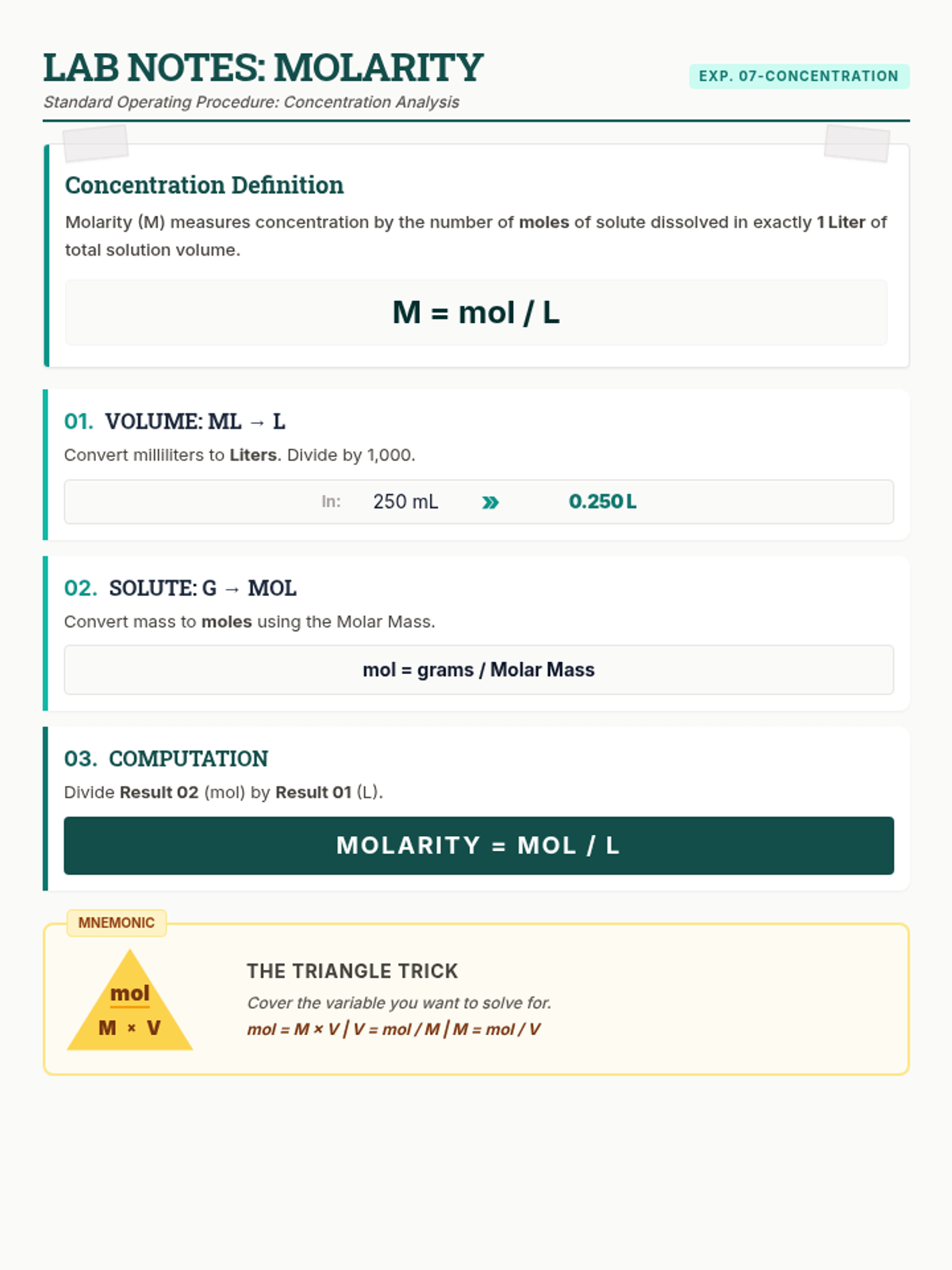
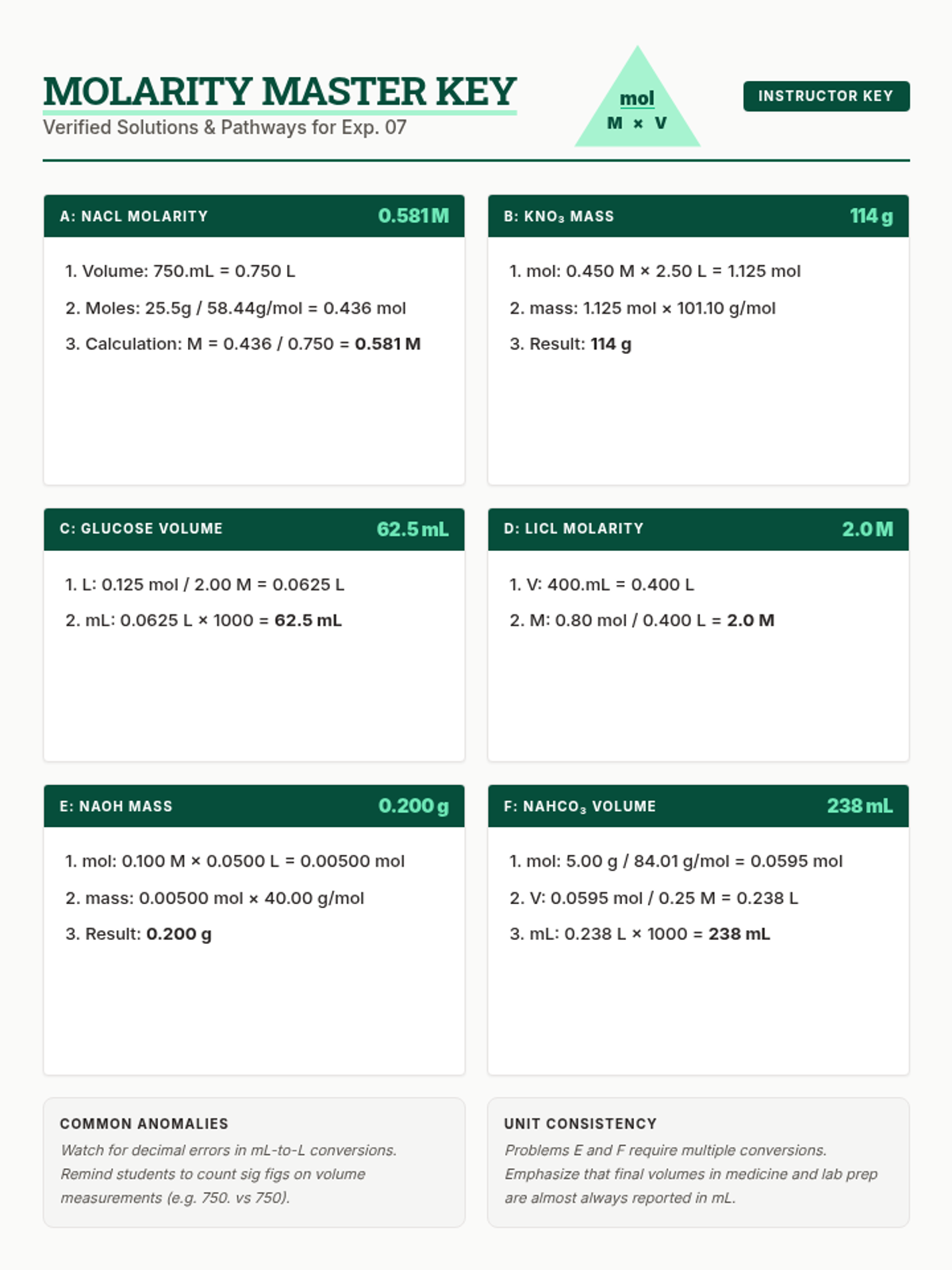
A lesson focused on calculating solution concentration using molarity, including necessary unit conversions for mass and volume.