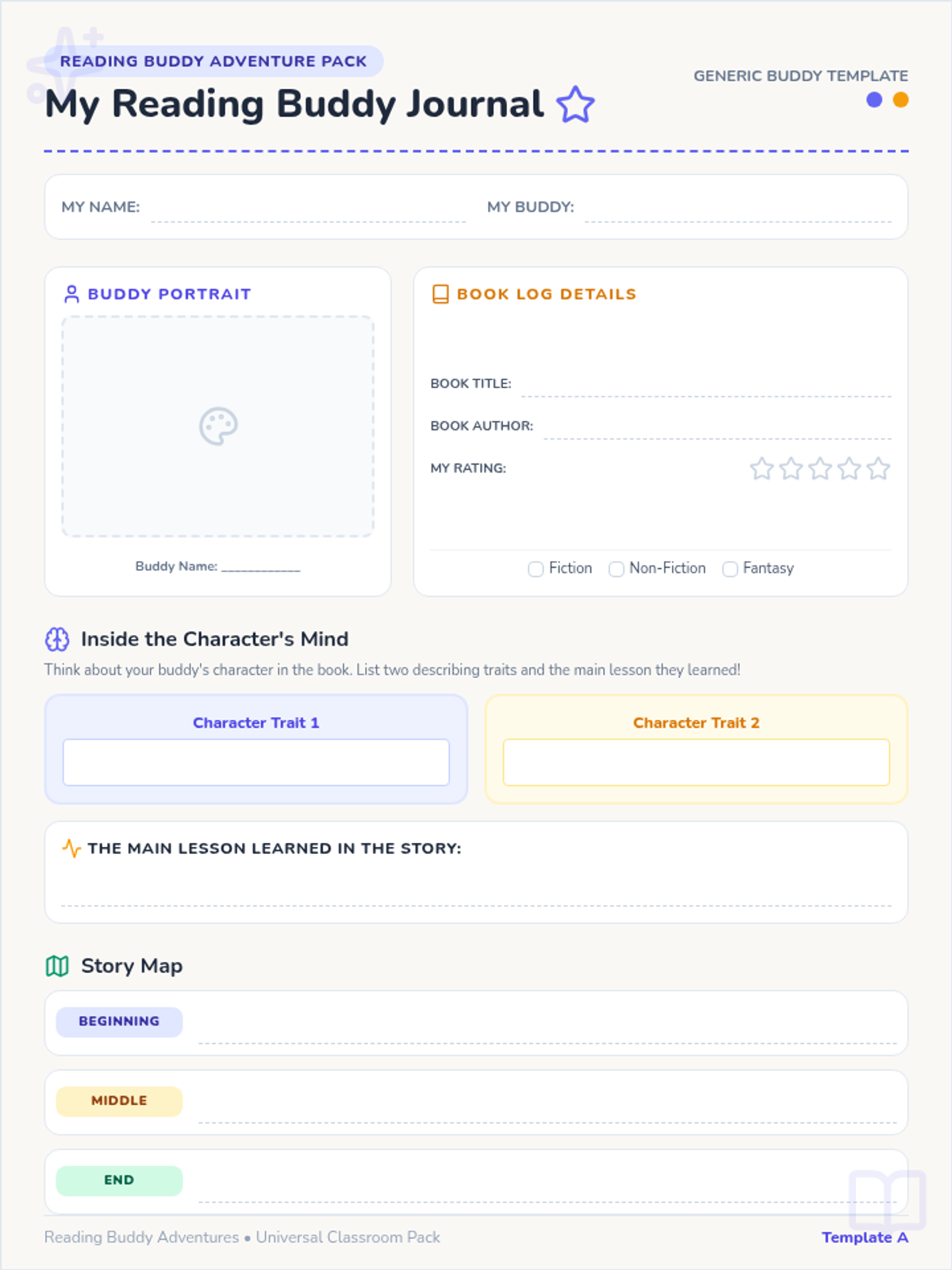
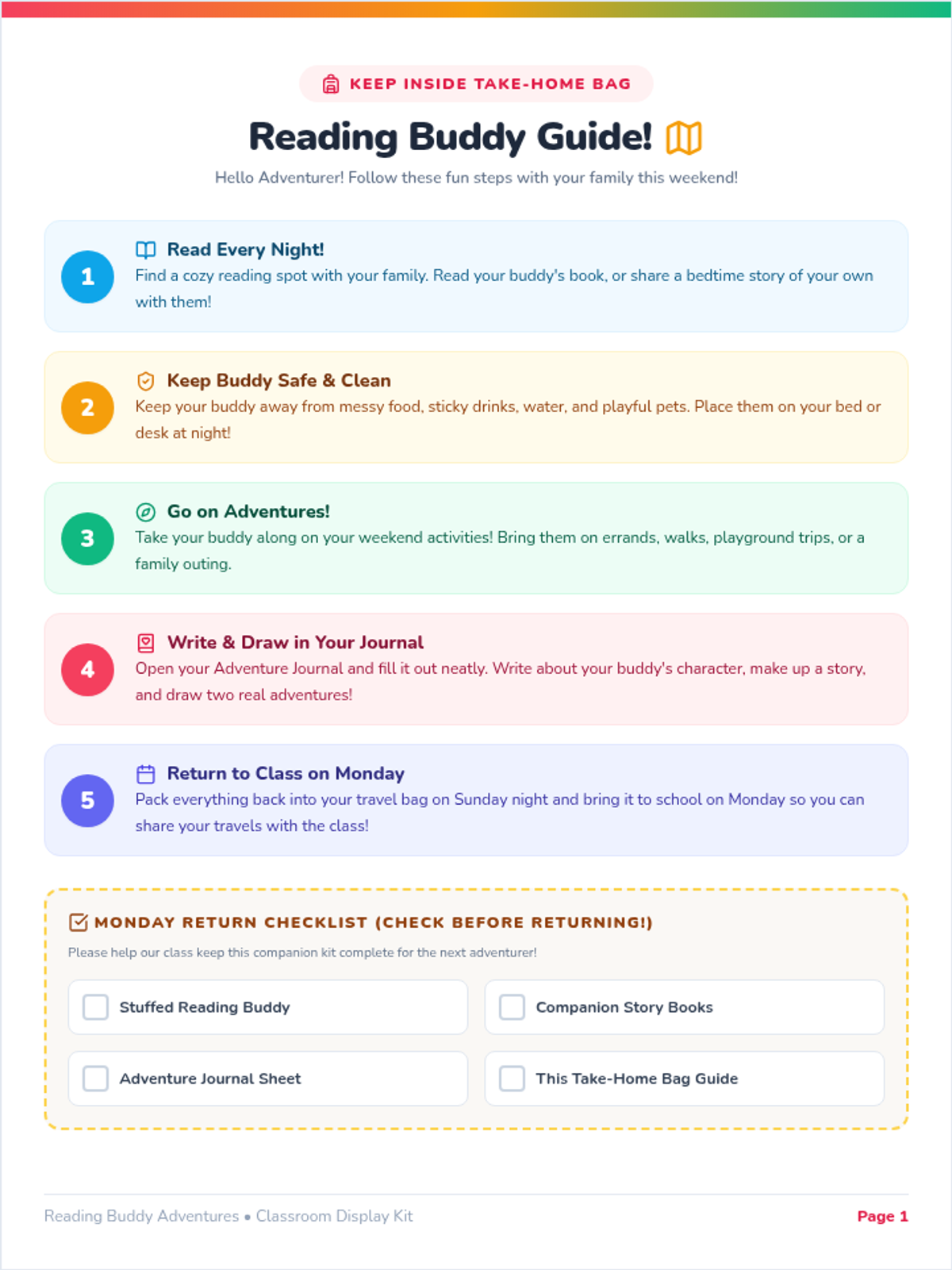
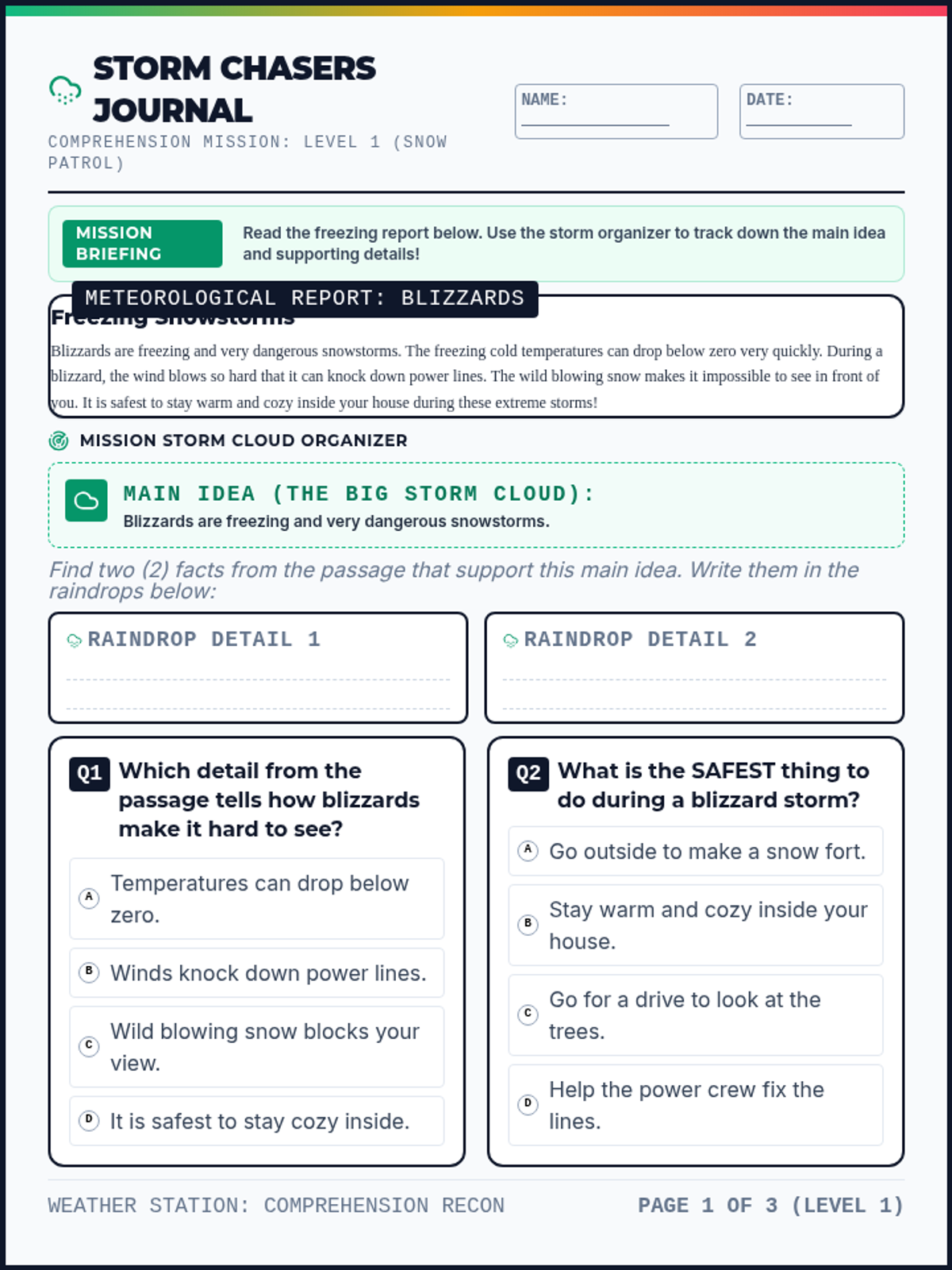
A collection of resources to help 3rd graders craft personal narratives, including a structured graphic organizer, visual writing prompts, and instructional support for teachers.
The resolution of Jackson's journey and the culminating creative project. Reading chapters 41-52.
Tensions rise and truths are revealed in chapters 31-40.
Deepening mysteries and family secrets in chapters 21-30.
Jackson struggles with his family's financial situation as he reads chapters 11-20.
Introduction to Jackson and the return of Crenshaw. Reading chapters 1-10.
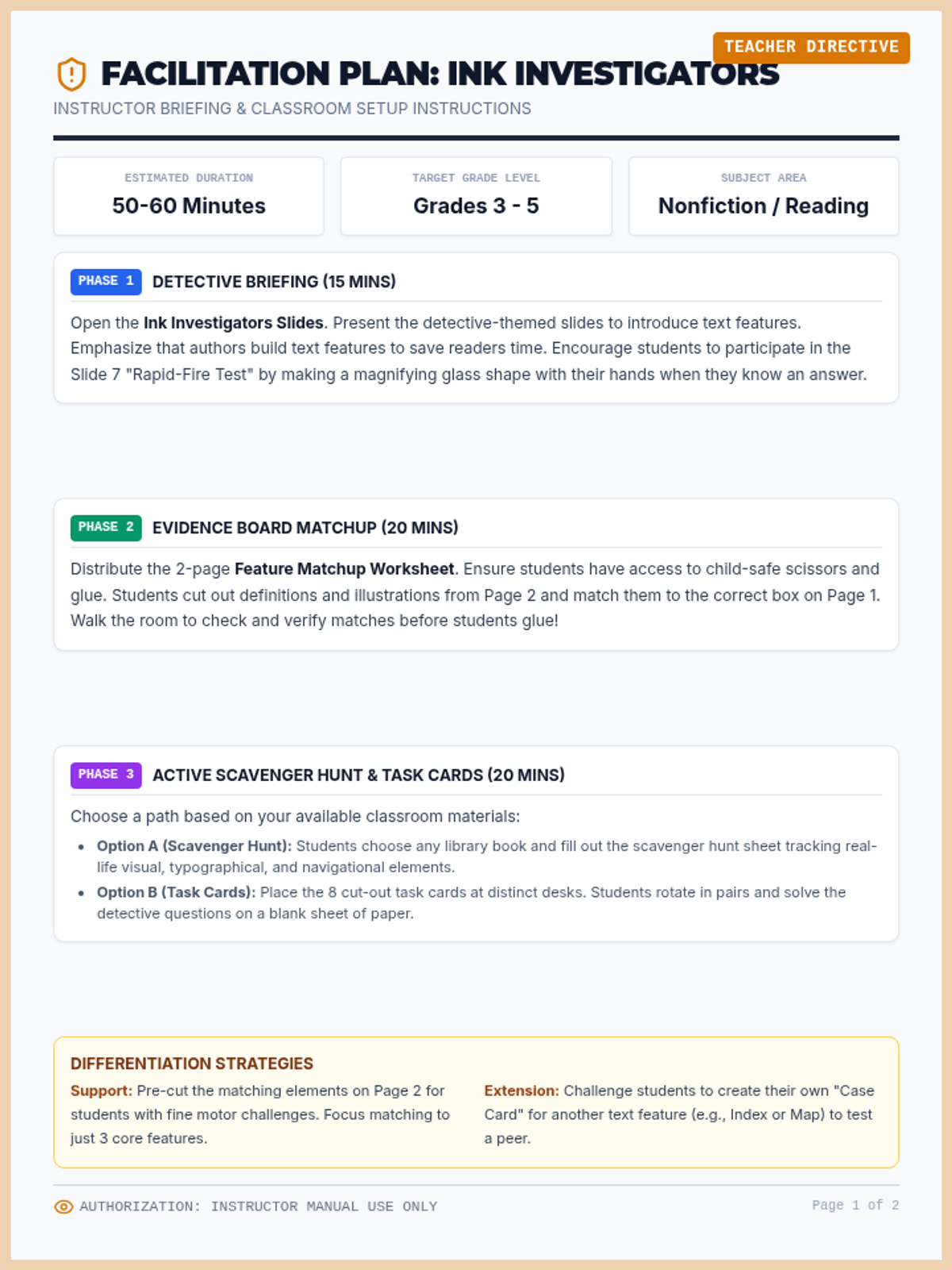
A comprehensive lesson on distinguishing between facts and opinions using relatable topics like daily routines, sports, and animals. Includes interactive slides, differentiated practice, and formative assessments.
A comprehensive introduction to identifying logical fallacies—ad hominem, straw man, and red herring—using historical and scientific contexts to prepare English I students for STAAR-level rhetorical analysis.
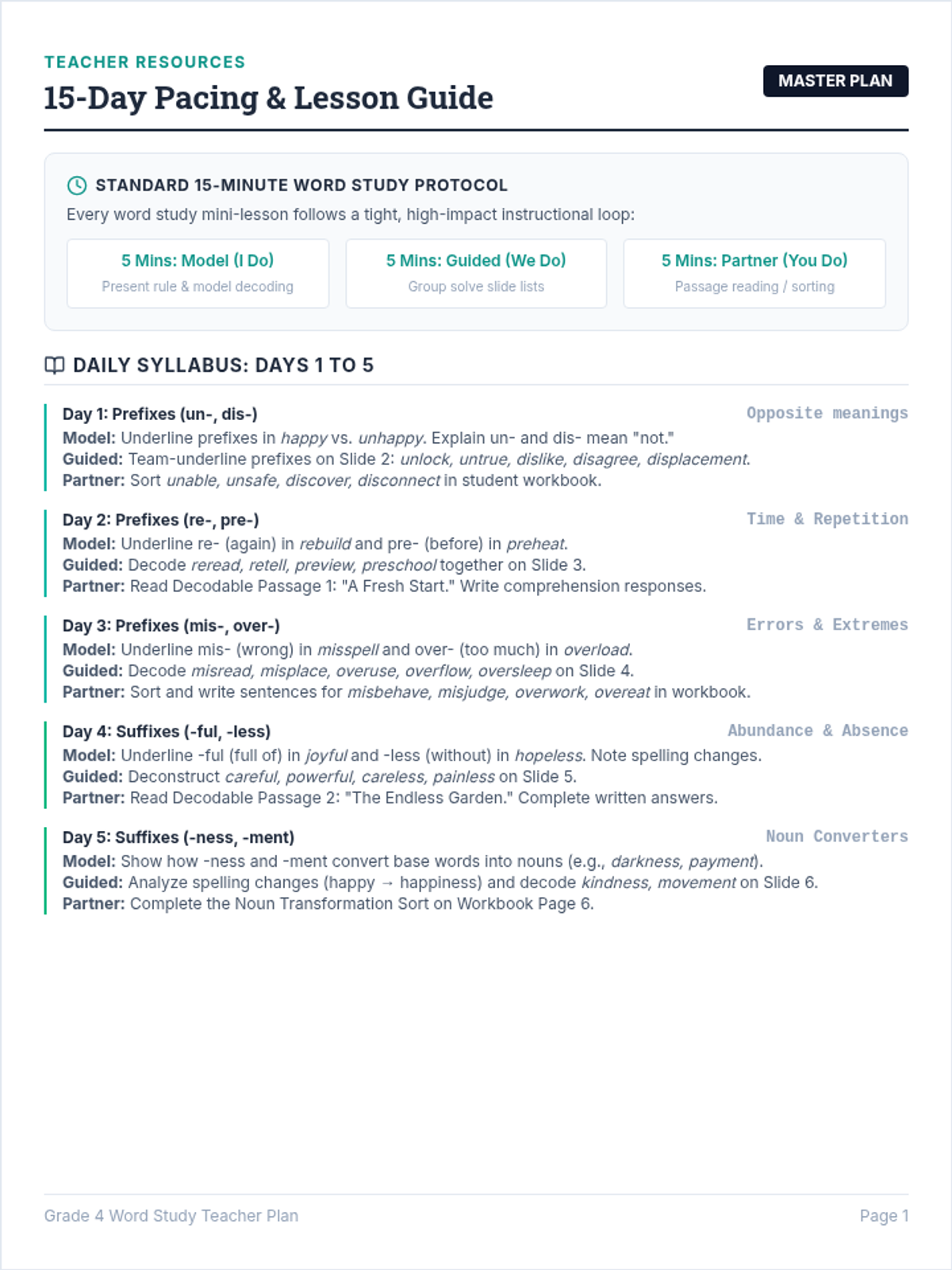
A lesson focusing on consonant-le syllables (Wilson 6.4), including mixed review and the silent-t -stle pattern. Students will practice syllable division and reading fluency.
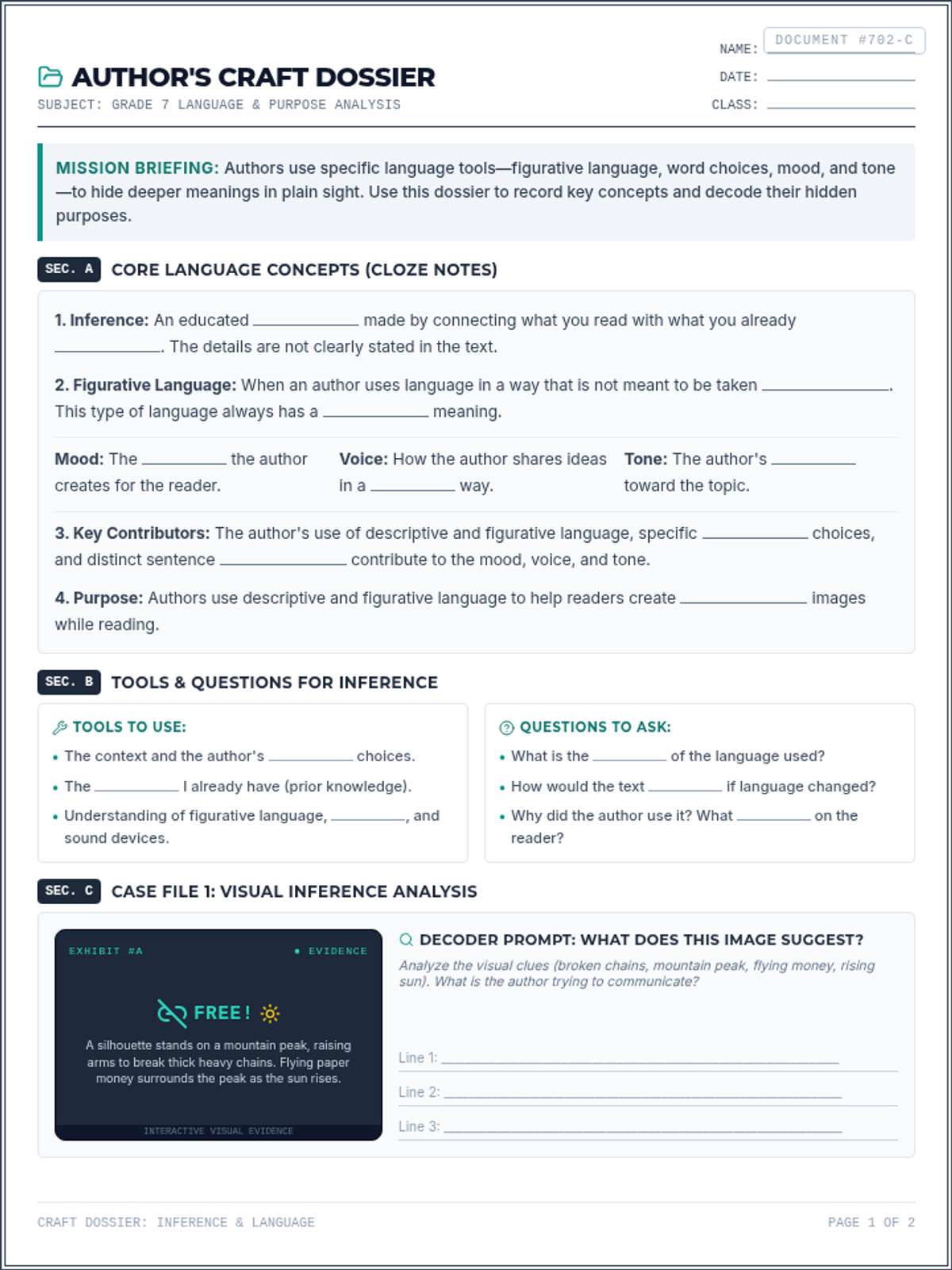
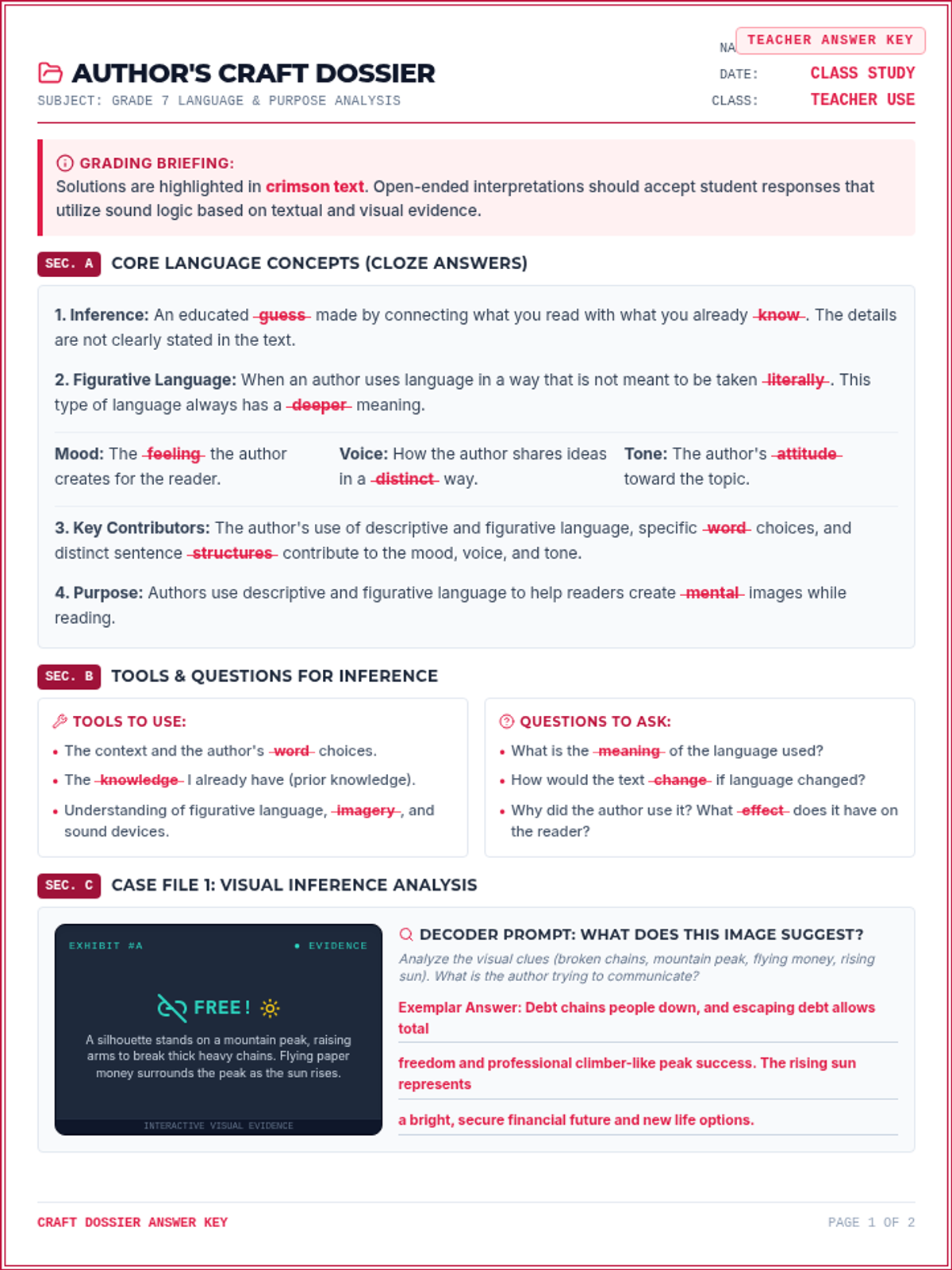
Students explore Edgar Allan Poe's 'The Raven' through a side-by-side comparison of the original text and an 8th-grade adapted version. The lesson focuses on mood, vocabulary, and how language choices impact the reader's experience.
A summative assessment package focused on middle school ELA standards (RL.6/RI.6) through the lens of a persuasive text regarding NASA funding and its historical impact.
In this activity, students will evaluate the different ways to handle money—spending, saving, and investing—by matching persuasive arguments with supporting evidence. Students will practice identifying claims and the reasoning that backs them up within a financial literacy context.
An introductory lesson on Jamaica Kincaid's 'Girl' focusing on the unique structural choice of a single-sentence narrative, its rhythmic style, and the complex characterization of the mother-daughter relationship.
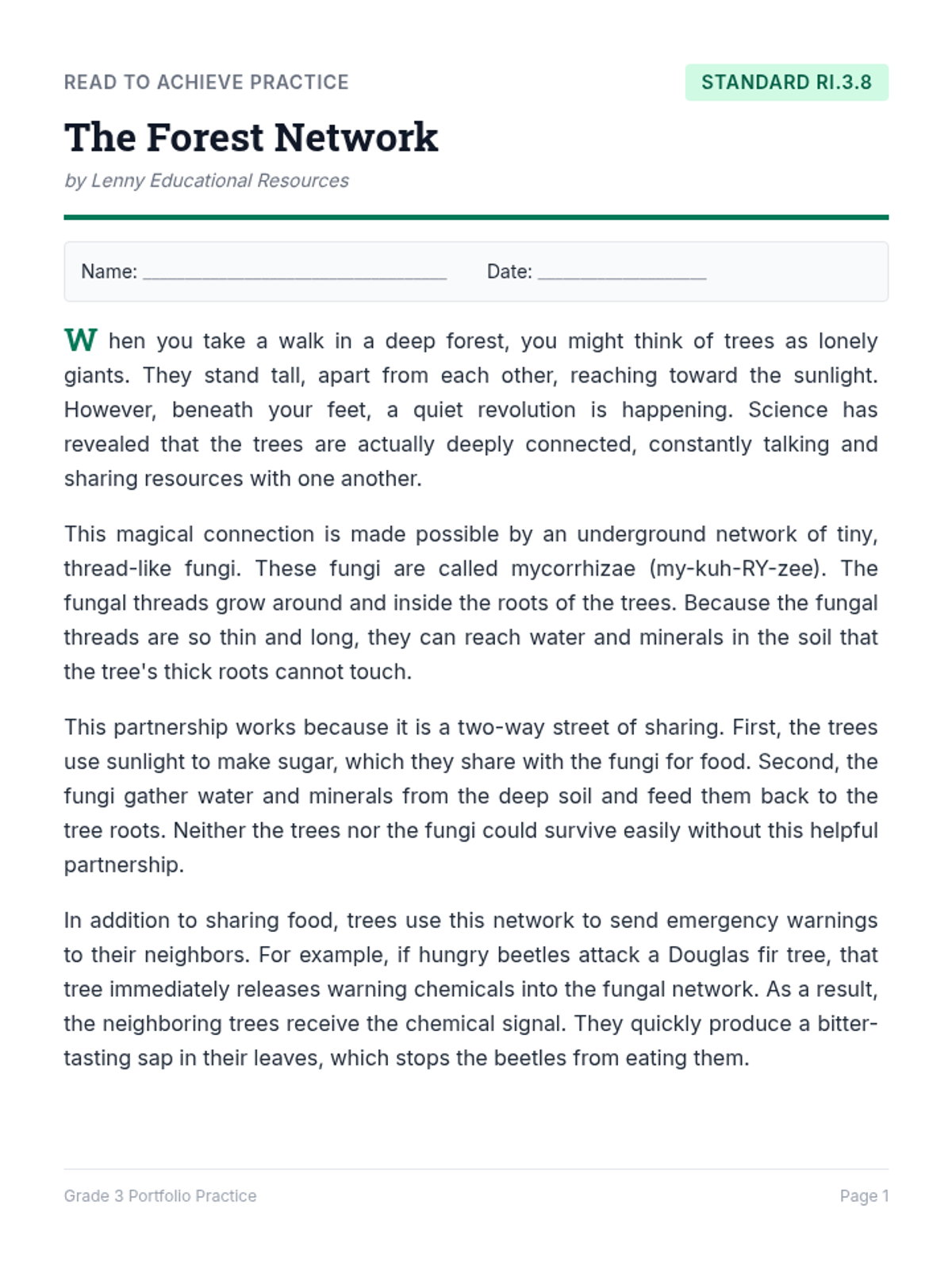
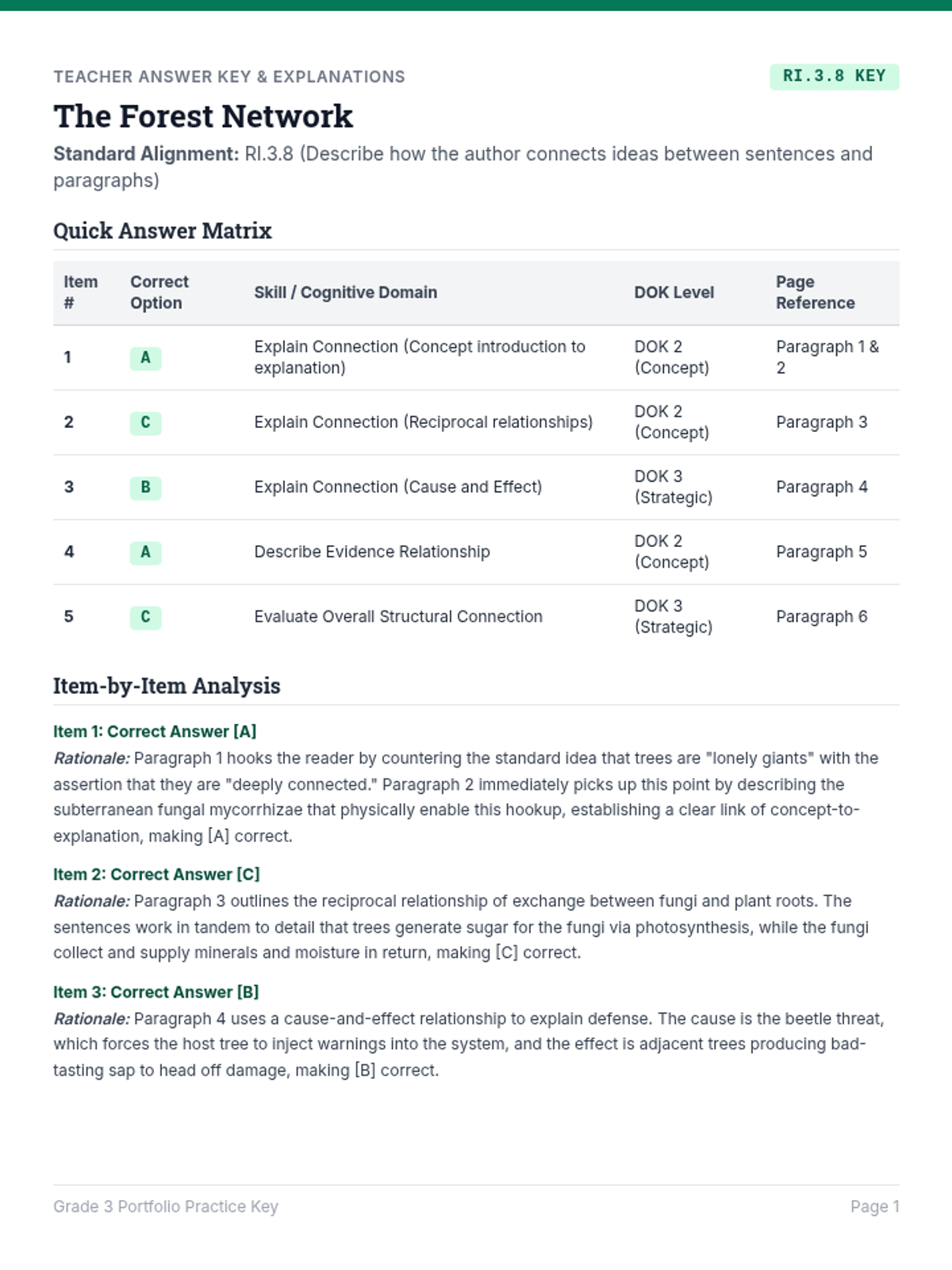
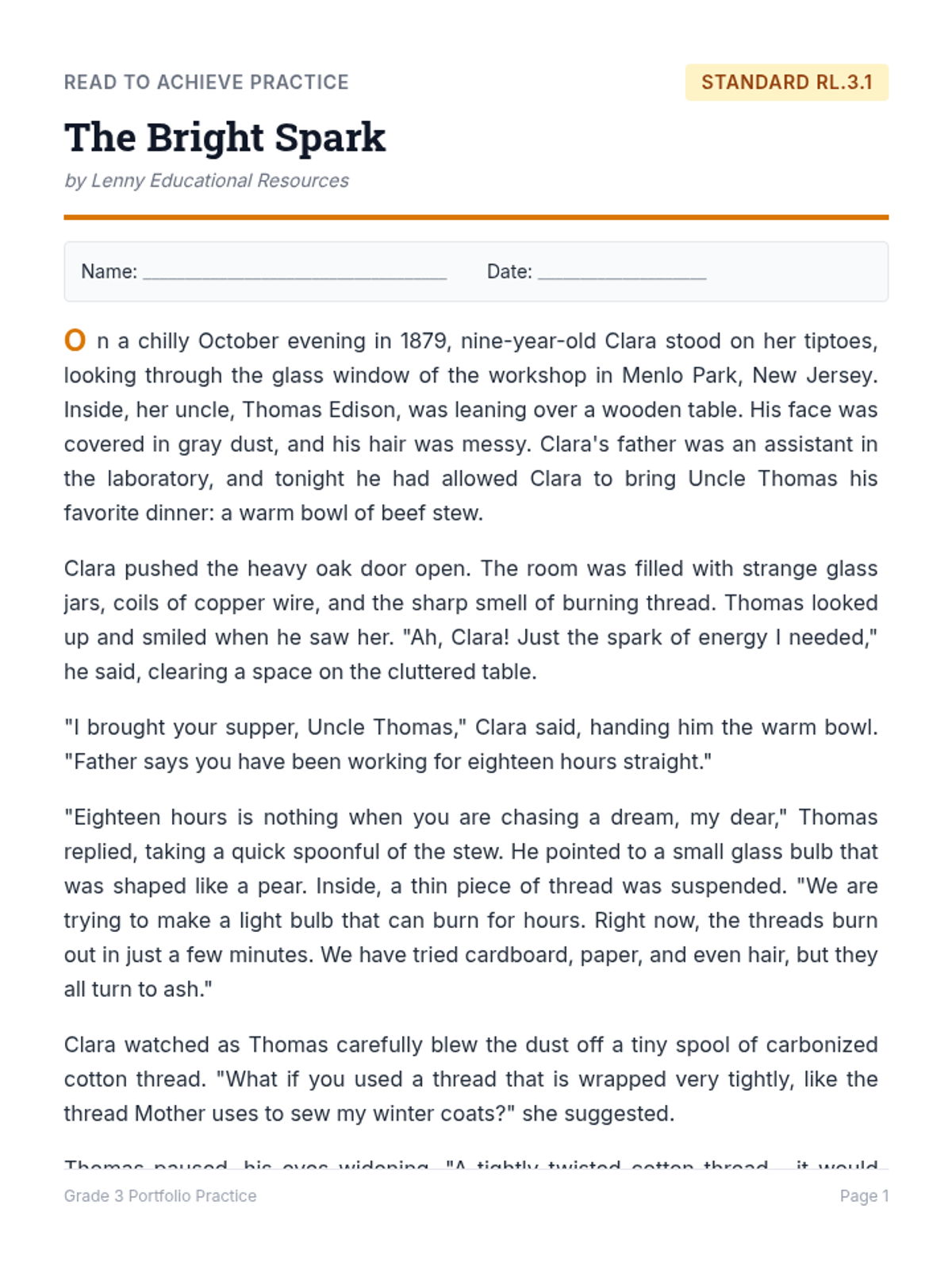
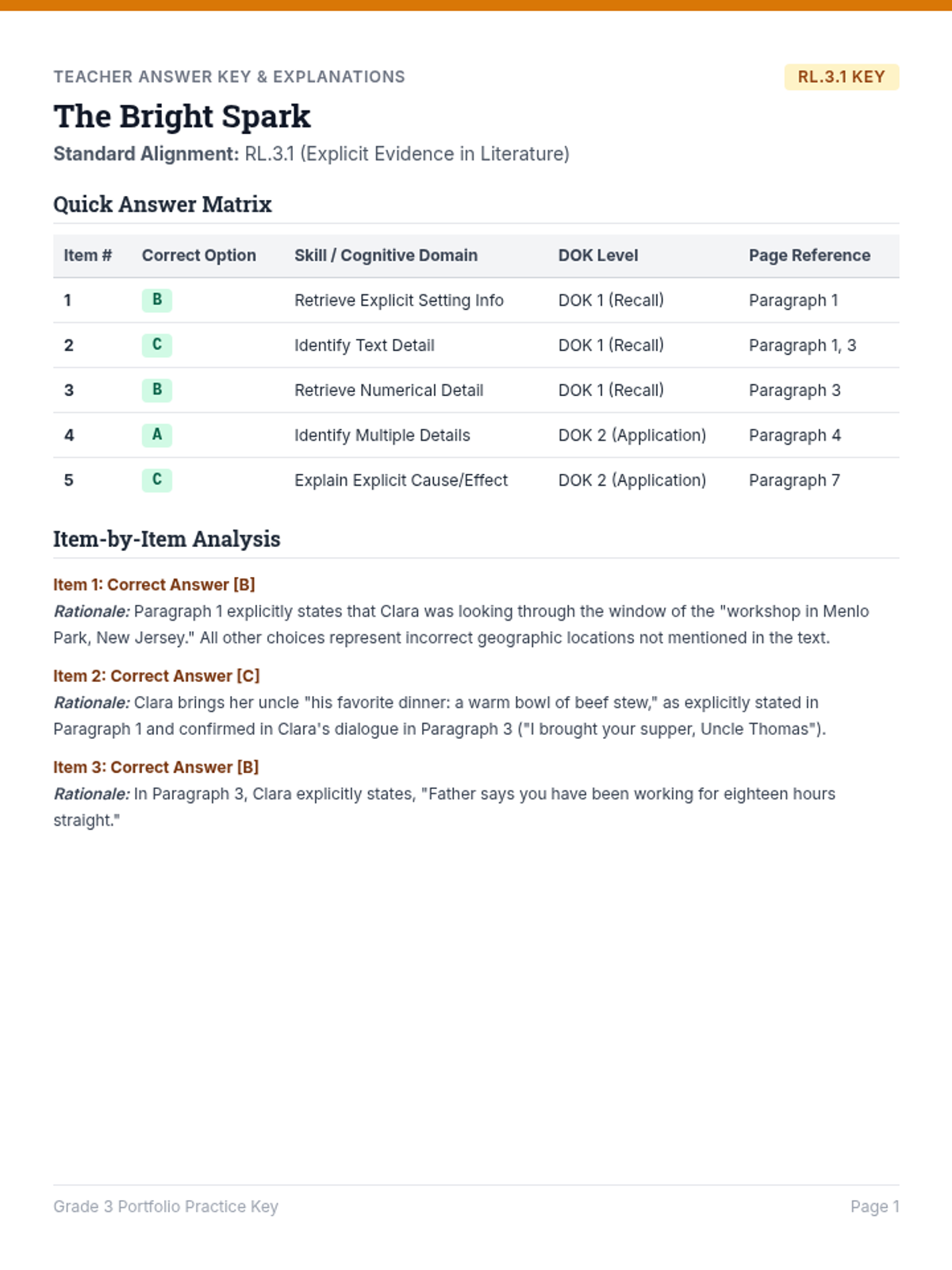
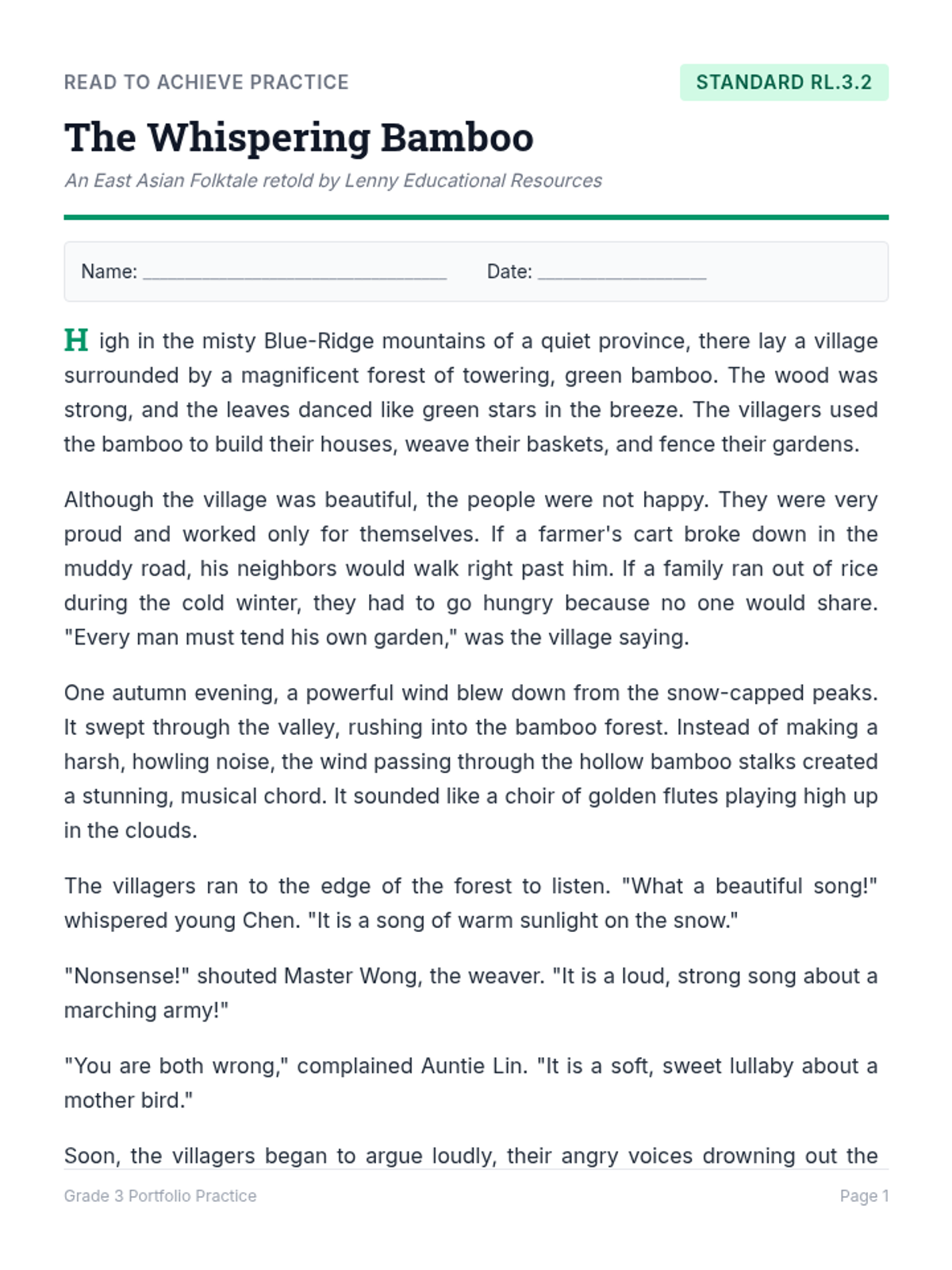
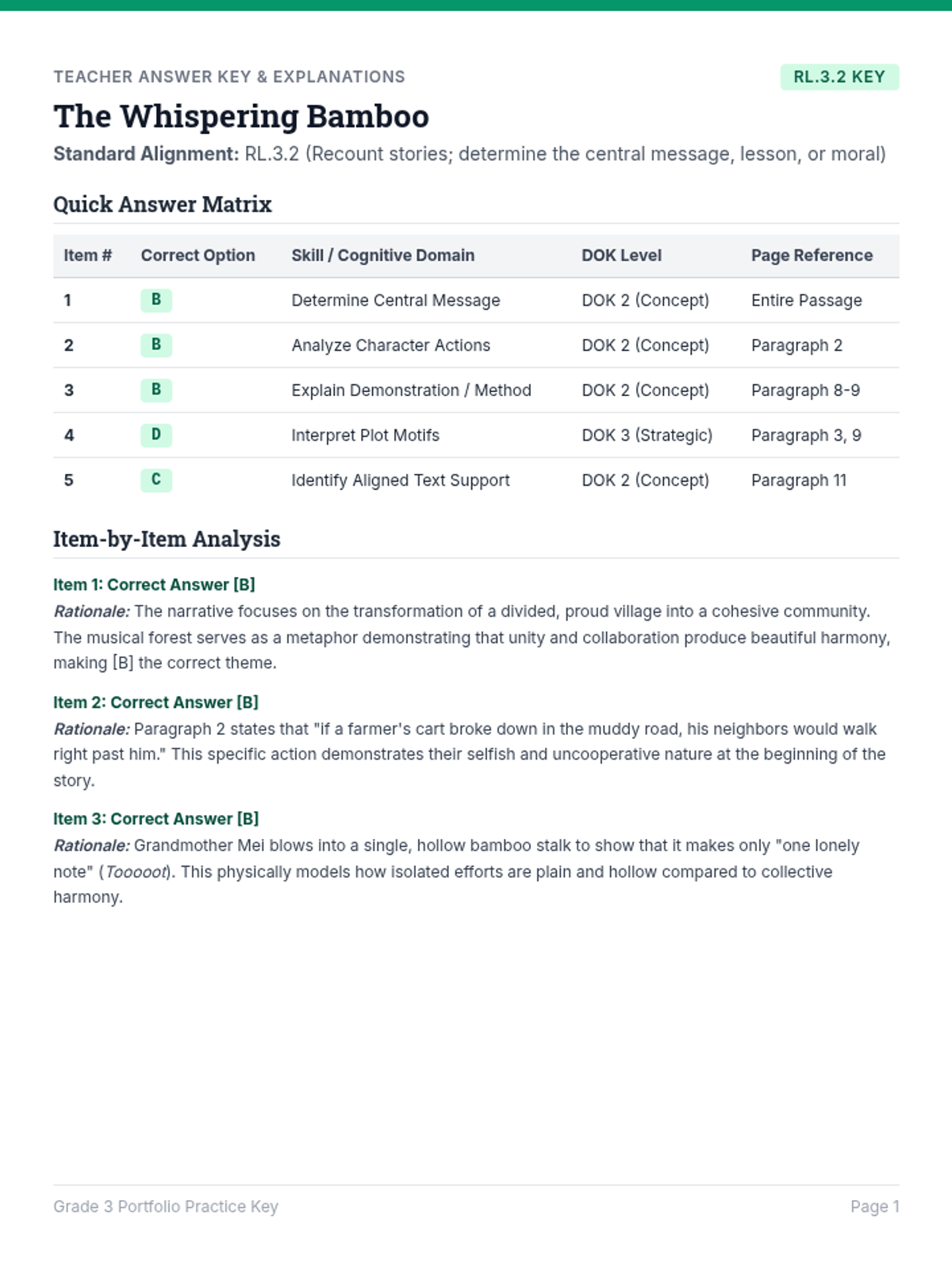
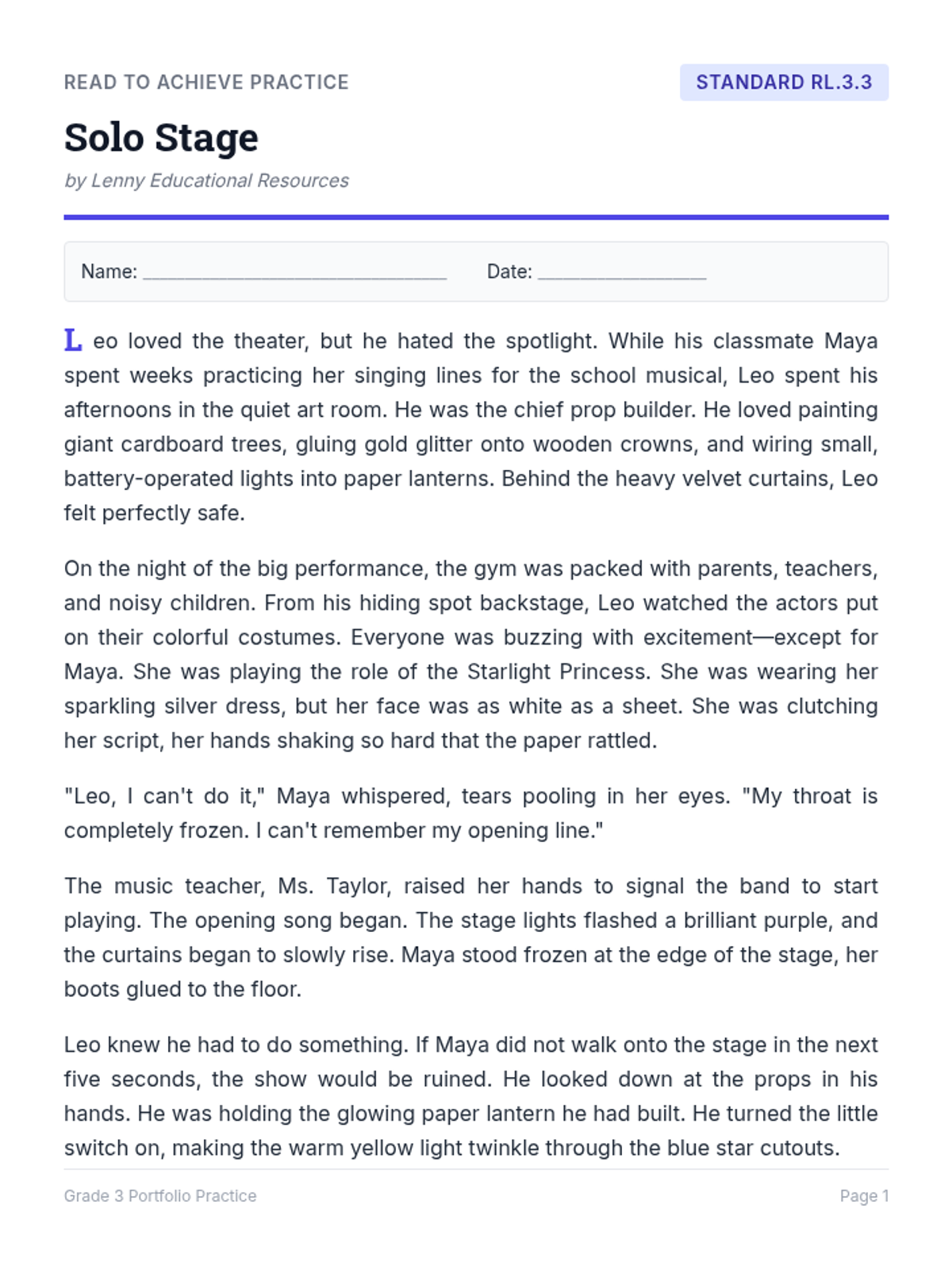
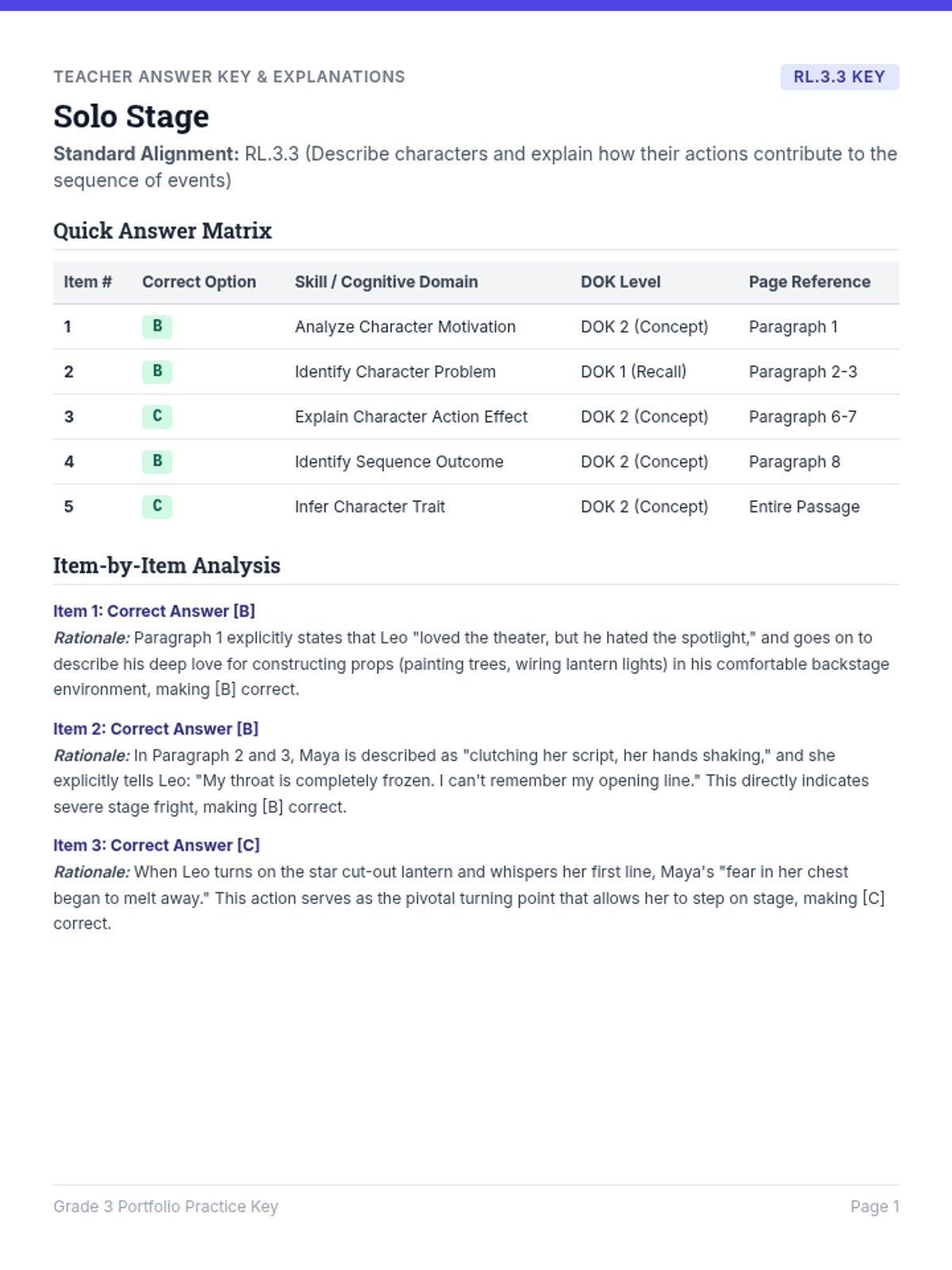
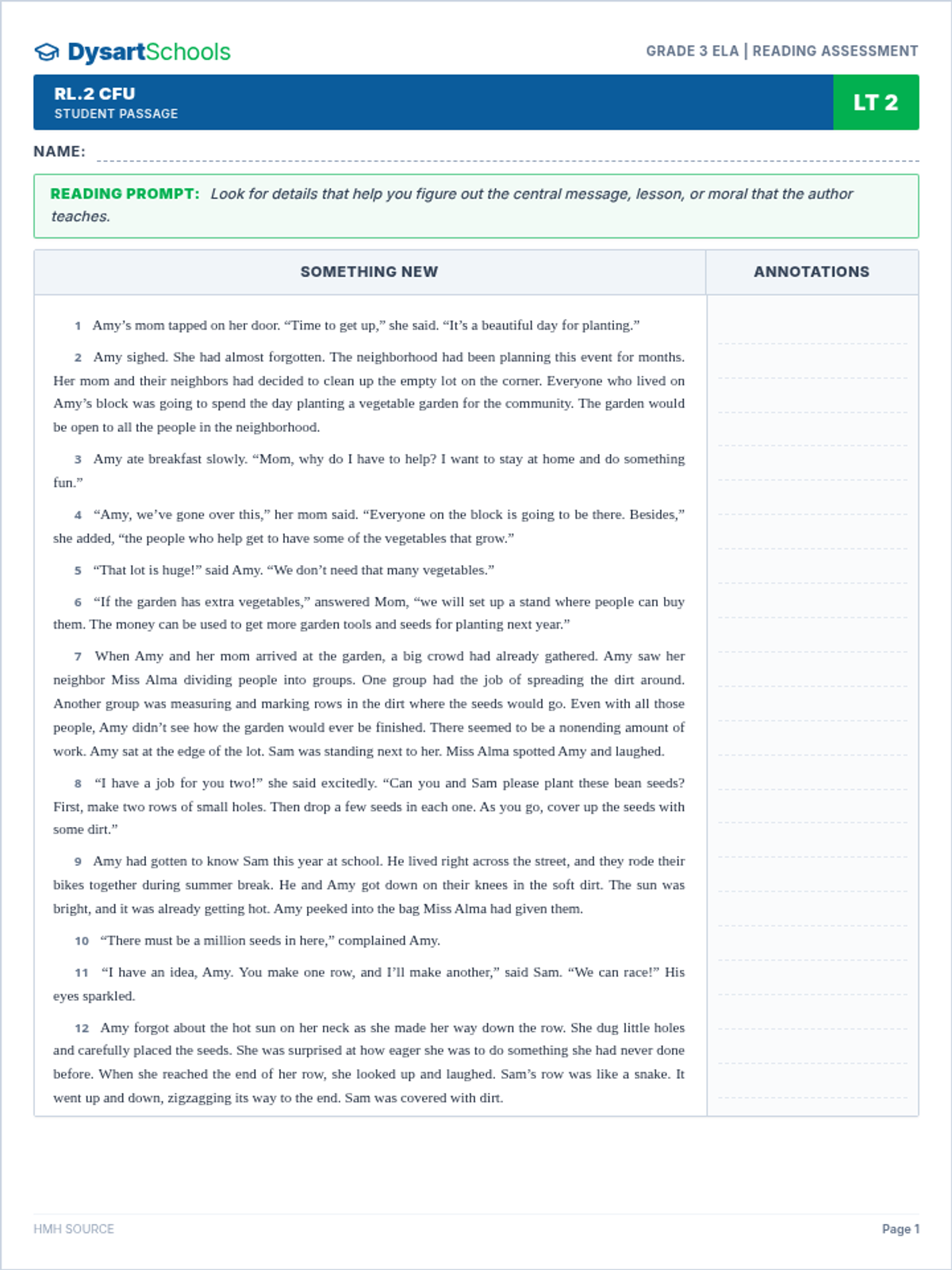
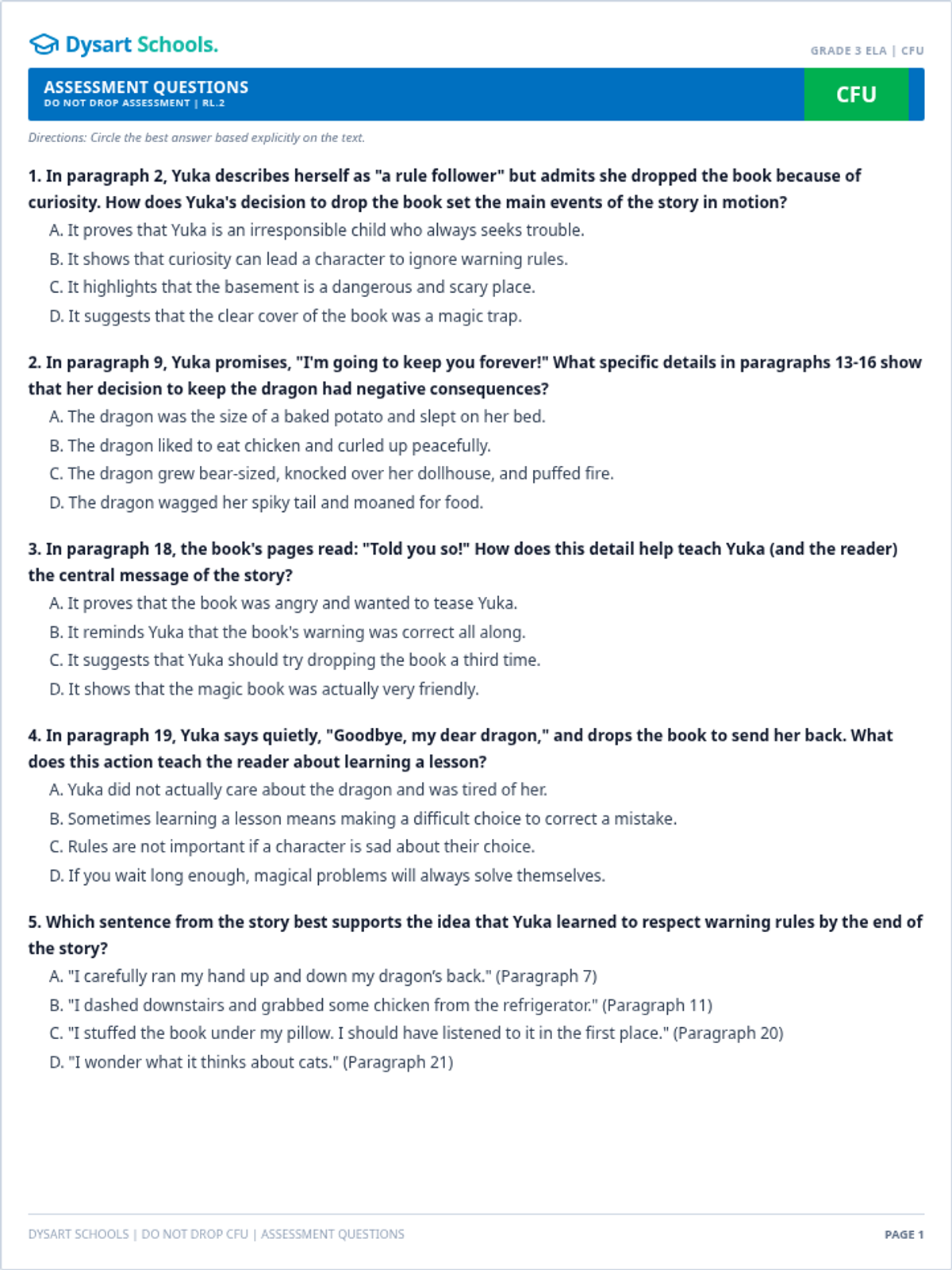
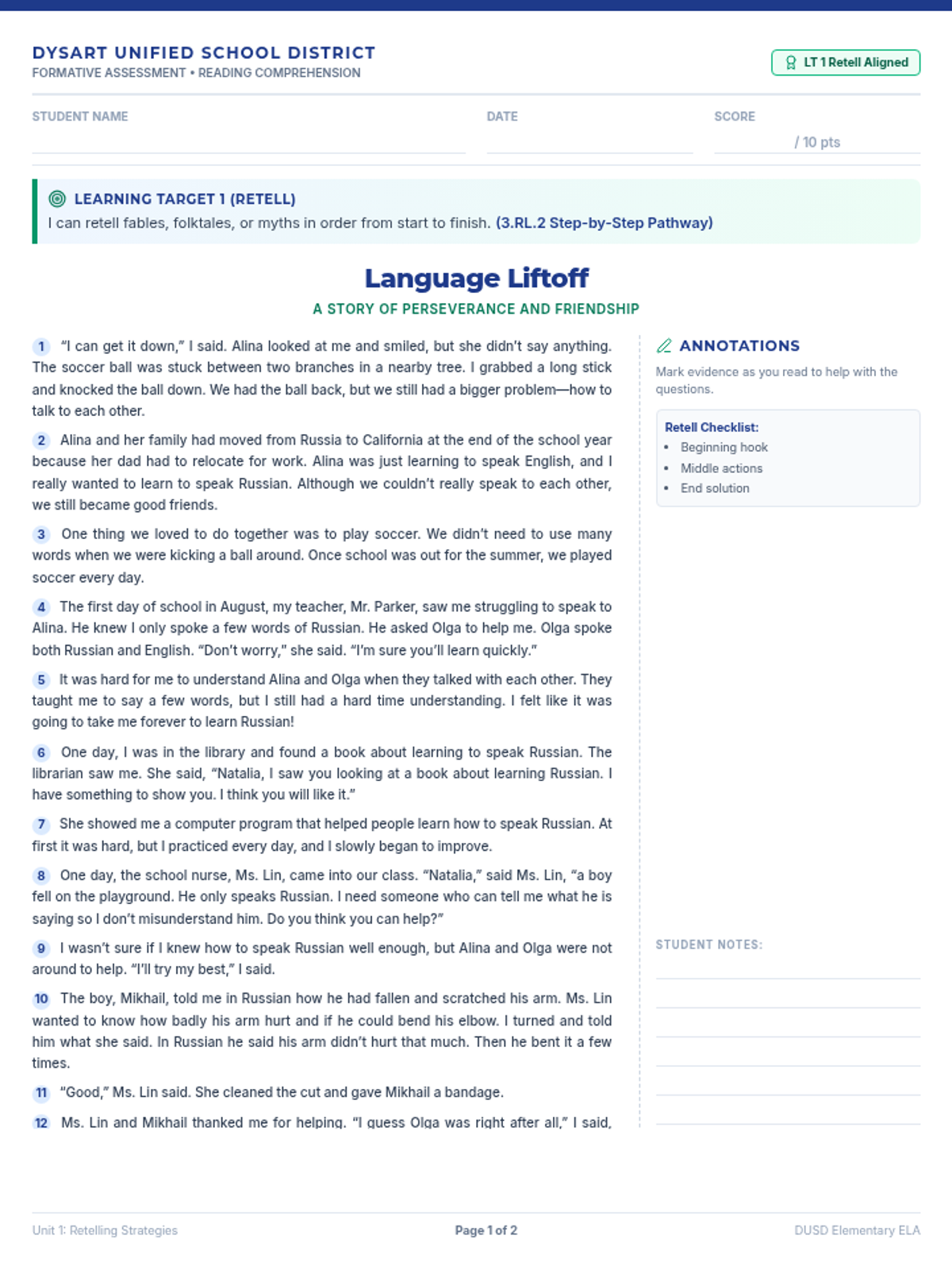
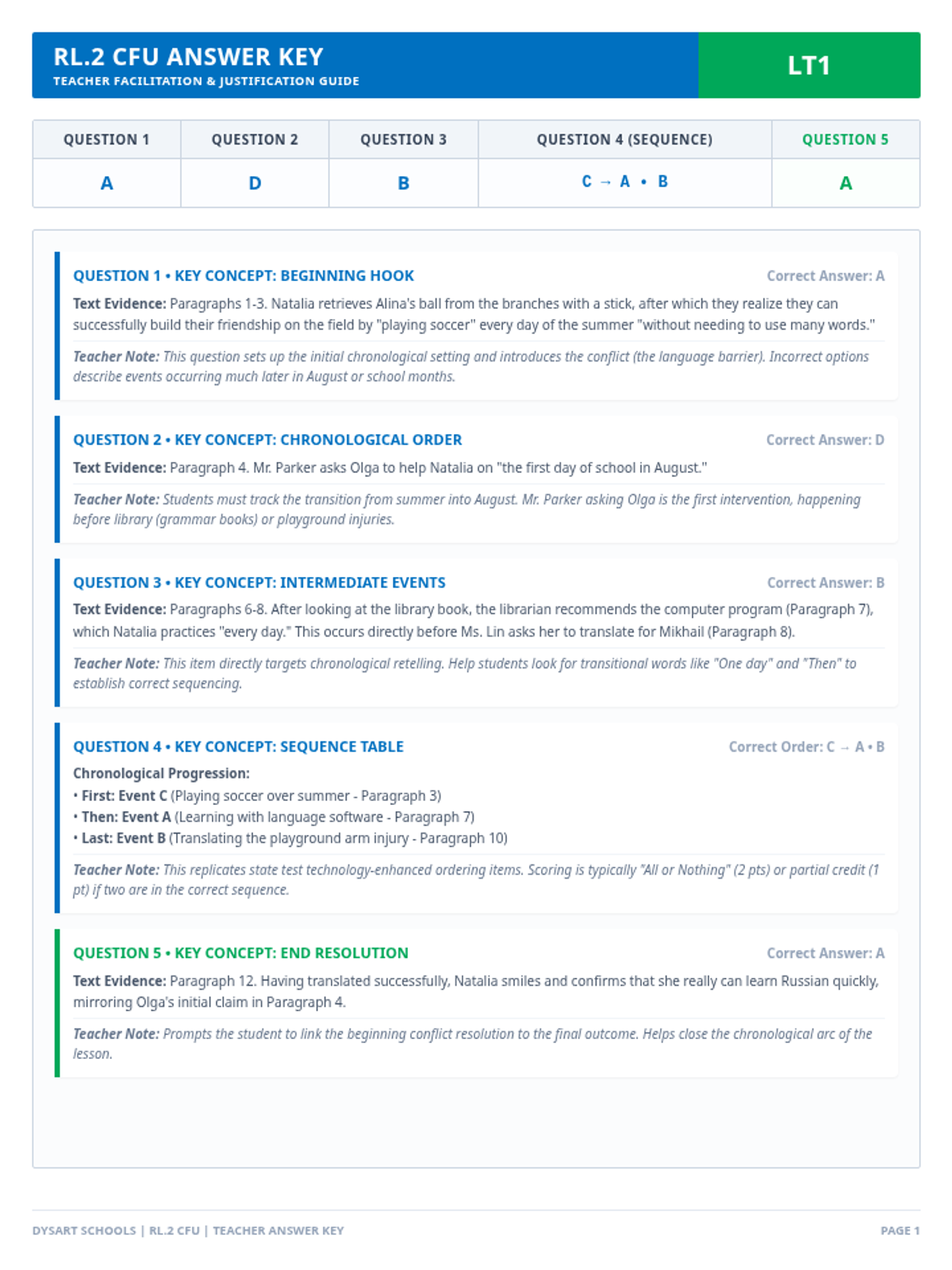
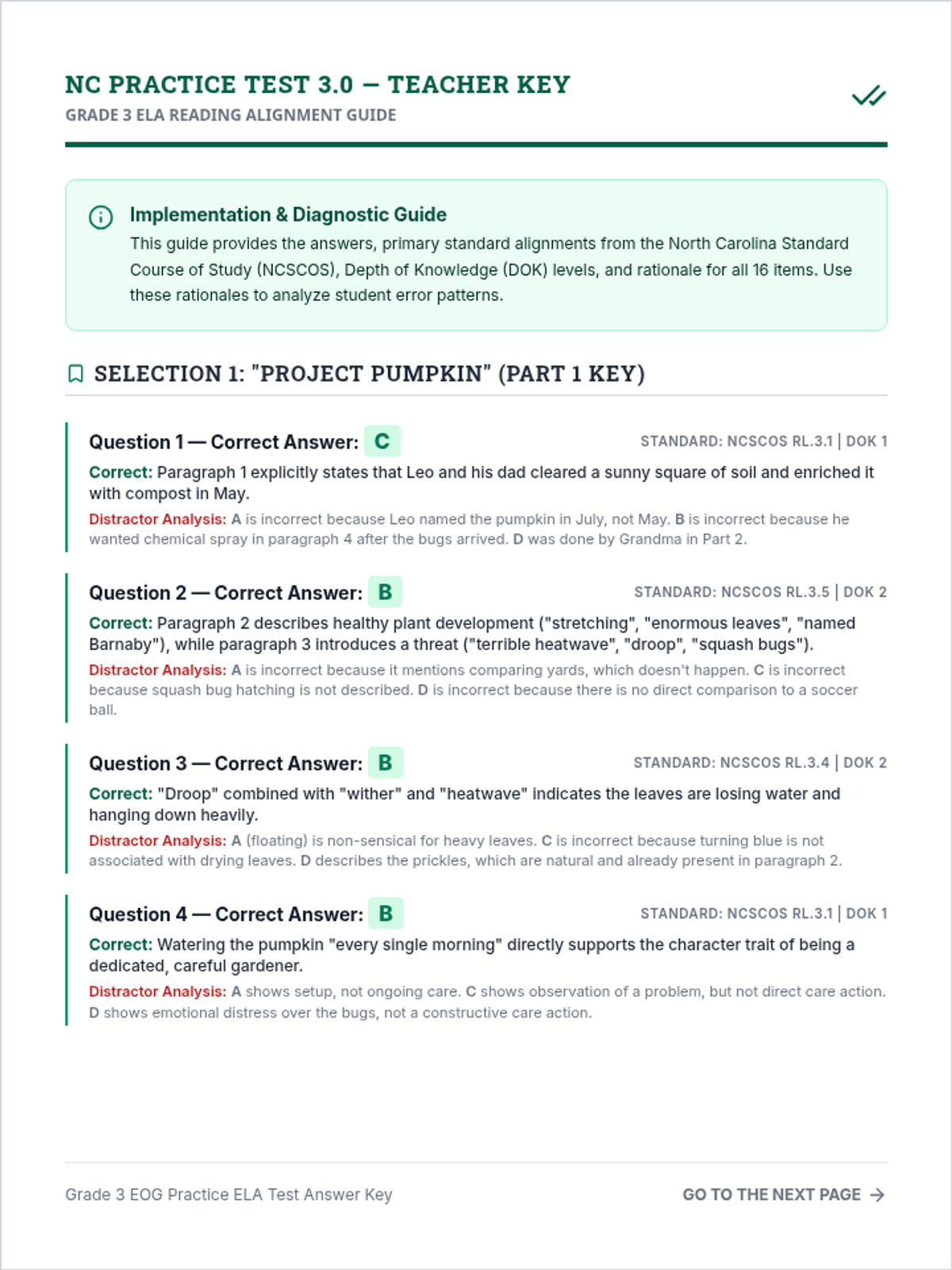
A collection of 10 engaging reading passages for 3rd-grade students, featuring a mix of fiction and nonfiction topics with comprehension and inferencing questions.
A detective-themed lesson focusing on three tricky homophone pairs: witch/which, led/lead, and break/brake. Students will identify meanings through context and practice using them correctly in sentences.
A lesson exploring the biography of NFL player Dion Lewis, focusing on character traits, resilience, and identifying words with suffixes.
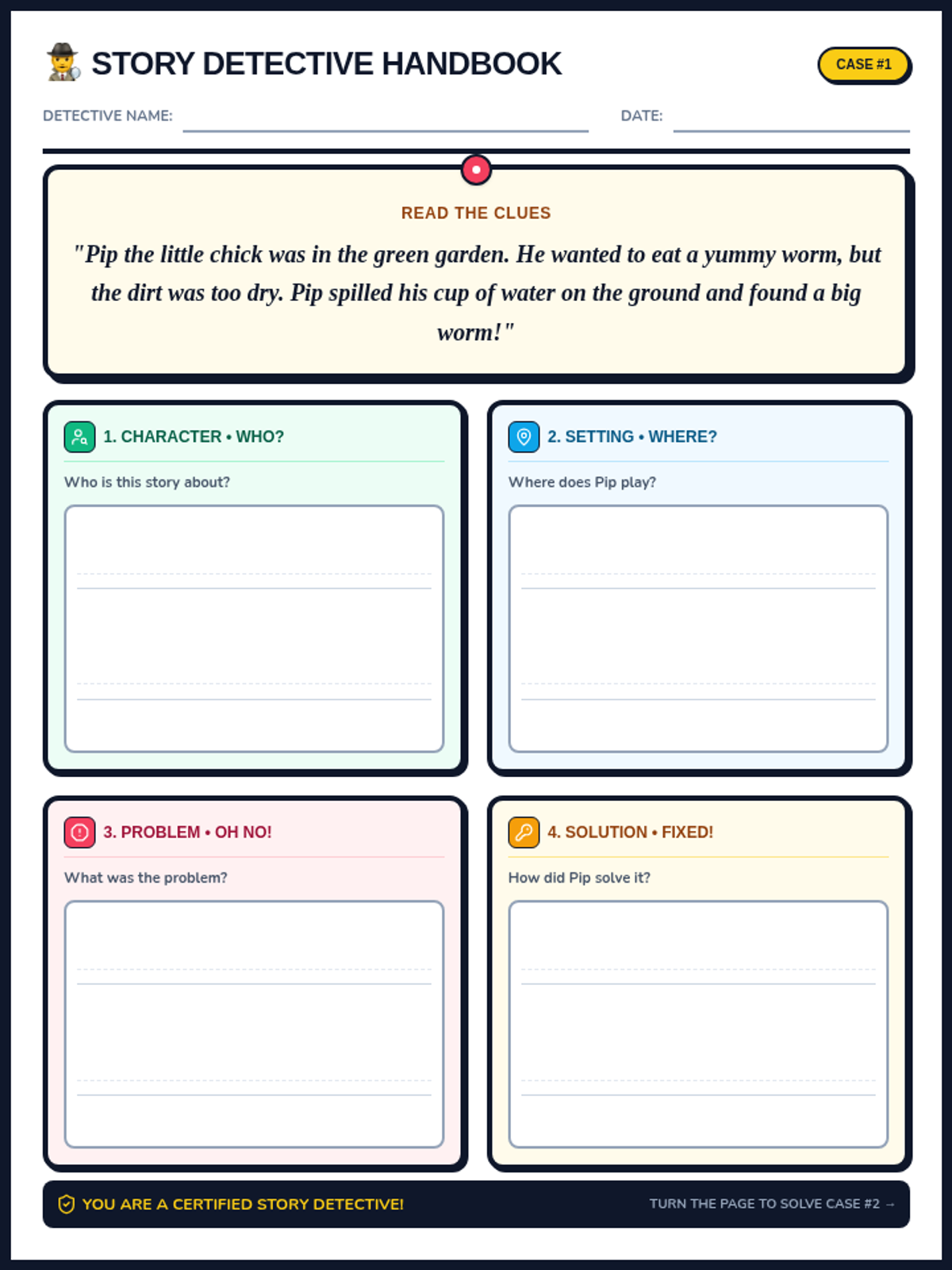
A lesson focused on helping third graders identify the meaning of unknown words using context clues in fictional short stories. Students act as 'Word Detectives' to highlight evidence and define mystery words.
A cooperative storytelling lesson where students use mystery bags and 'traveler' prompts to build collective narratives, enhancing vocabulary and sequencing skills.
A lesson using a detective analogy to teach students how to analyze evidence. Students learn that clues (evidence) mean nothing without a detective's logic (analysis) to solve the case (argument).
A comprehensive final assessment for William Shakespeare's Macbeth, focusing on imagery, symbolism, fate, and the corrupting nature of ambition.