A lesson focused on identifying the difference between questions and comments using dialogue from familiar characters. Students practice punctuation and sentence purpose recognition.
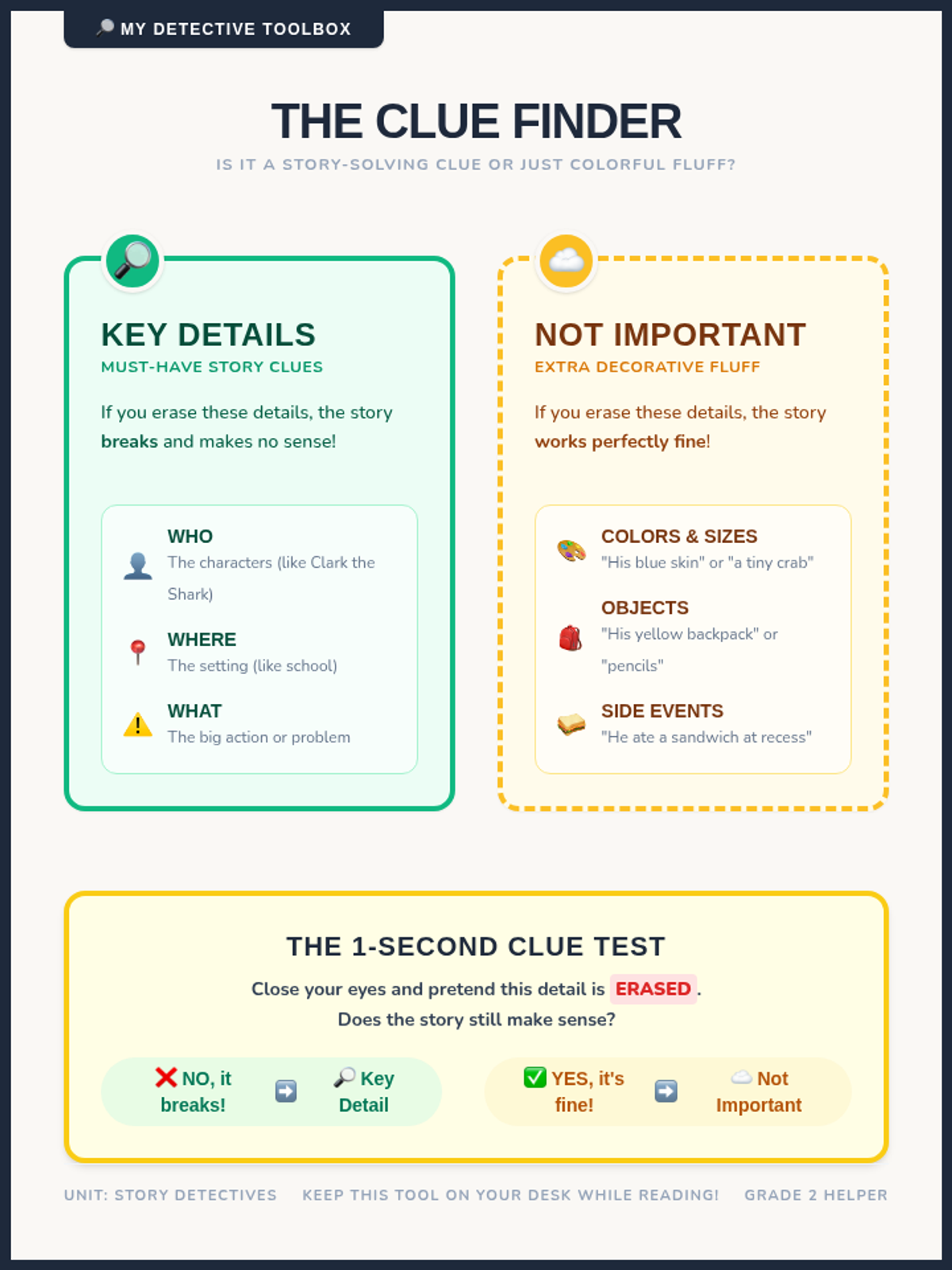
A lesson designed for second graders to distinguish between key details (character, setting, key plot points) and unimportant extra details (fluff) using a fun mystery detective theme.
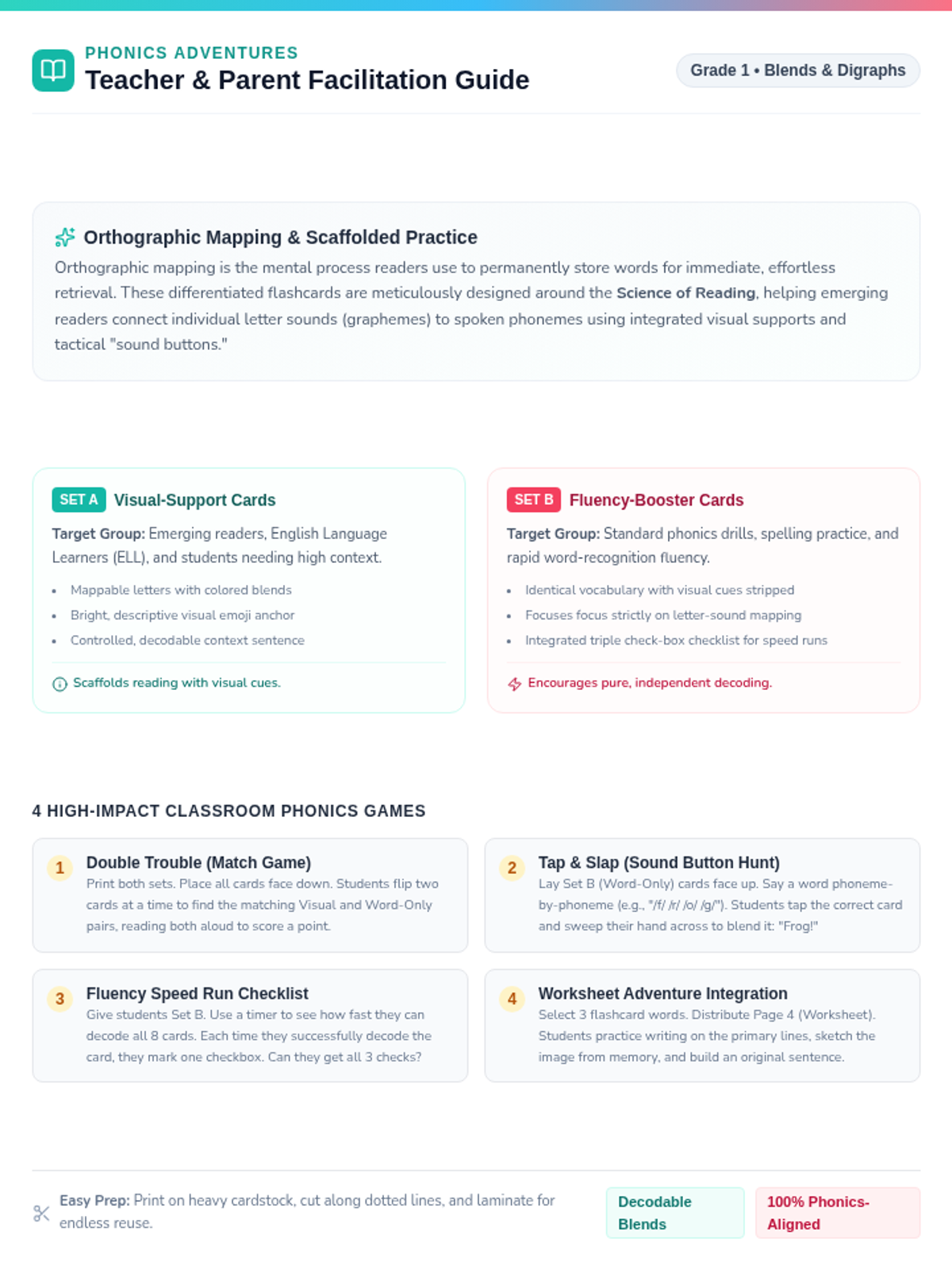
A foundational phonics lesson focusing on reading words with consonant blends and digraphs. This lesson includes differentiated flashcards designed for emerging readers, ELLs, and fluency practice.
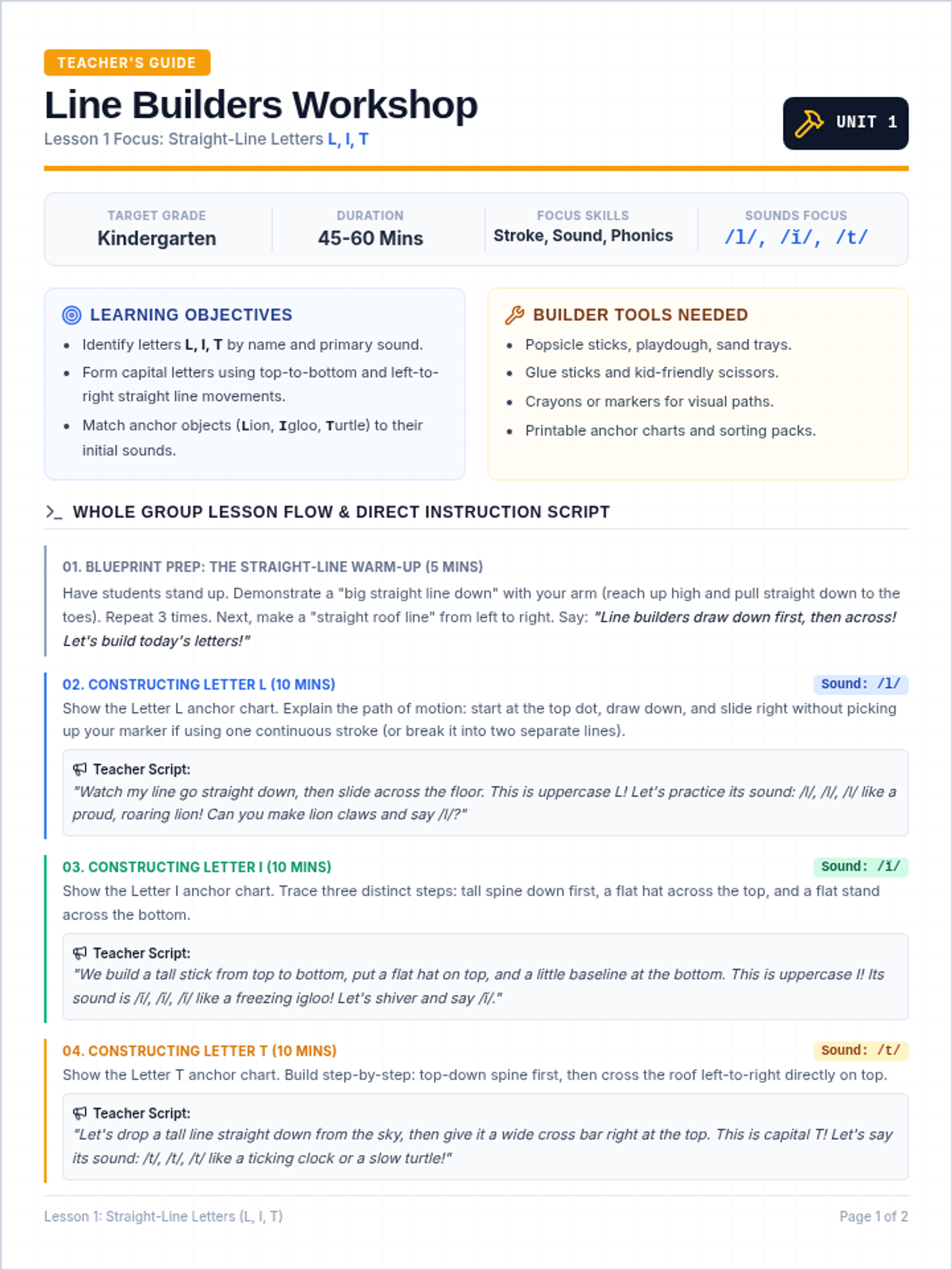
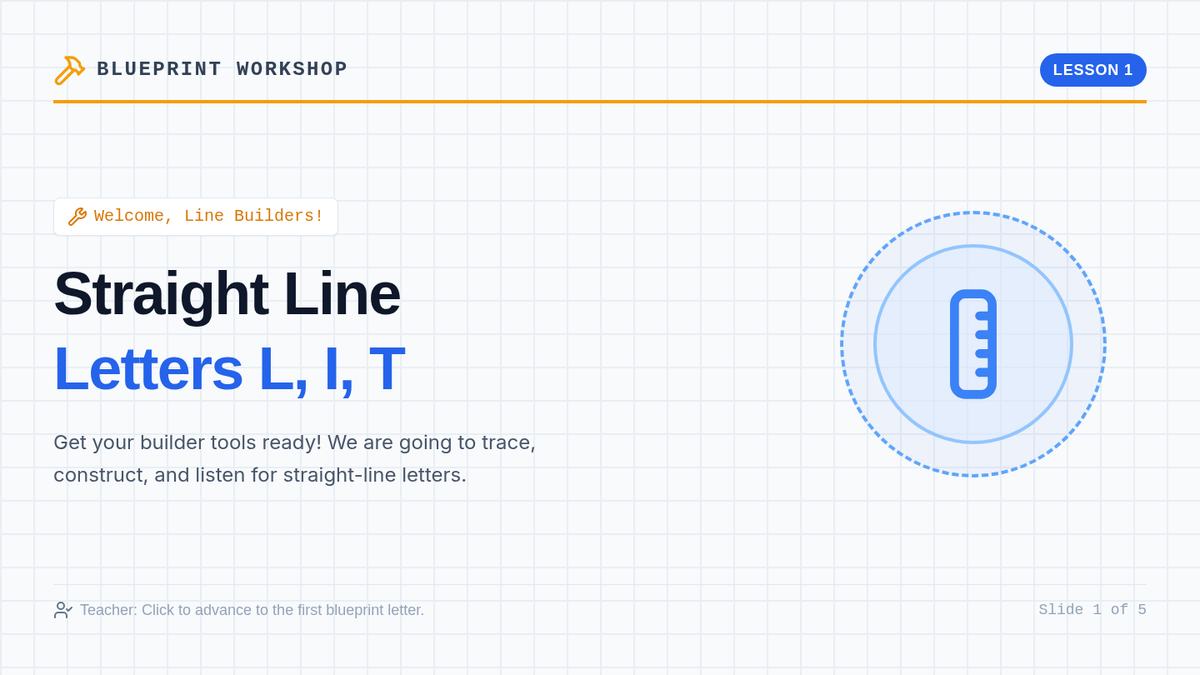
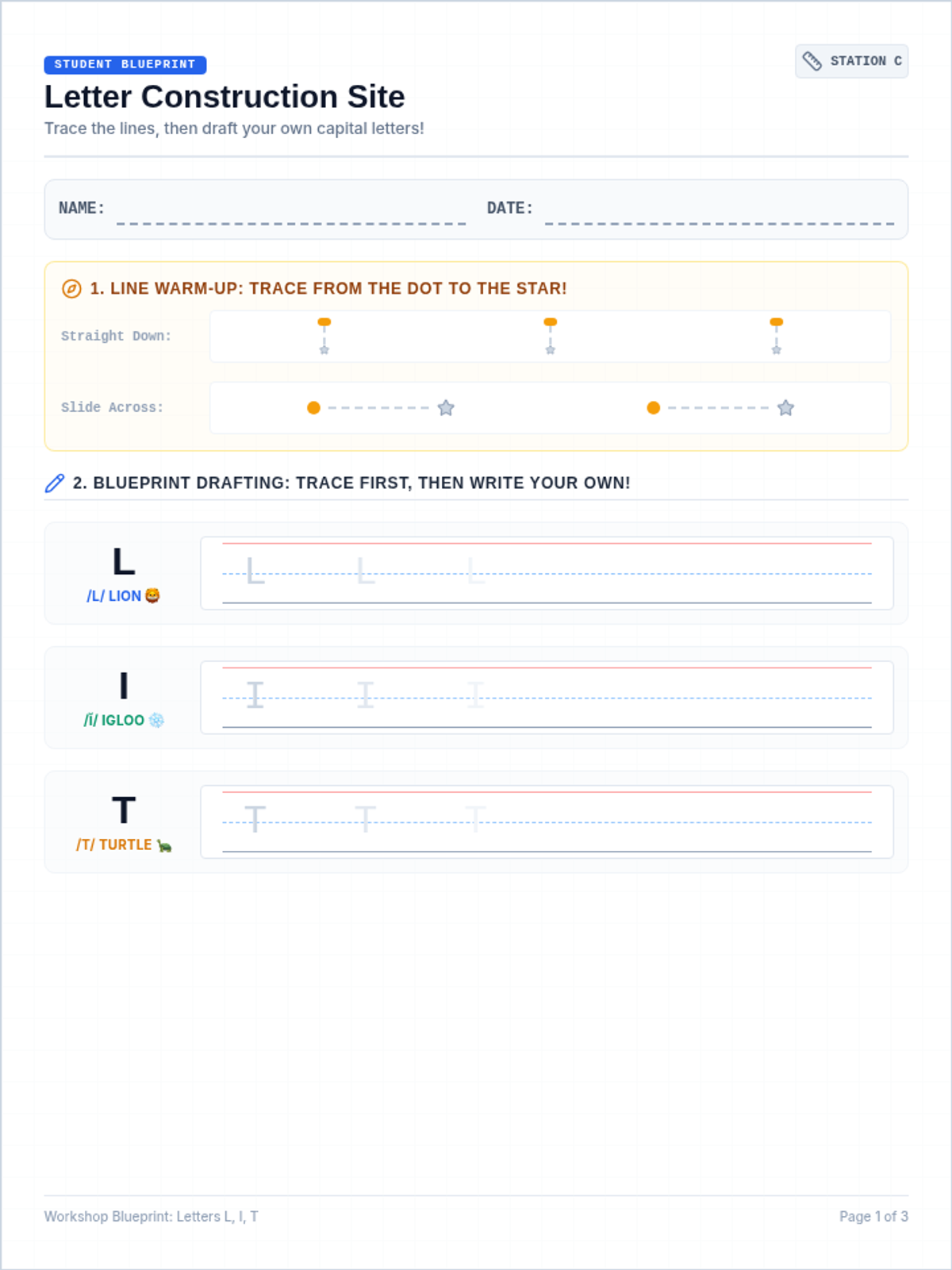
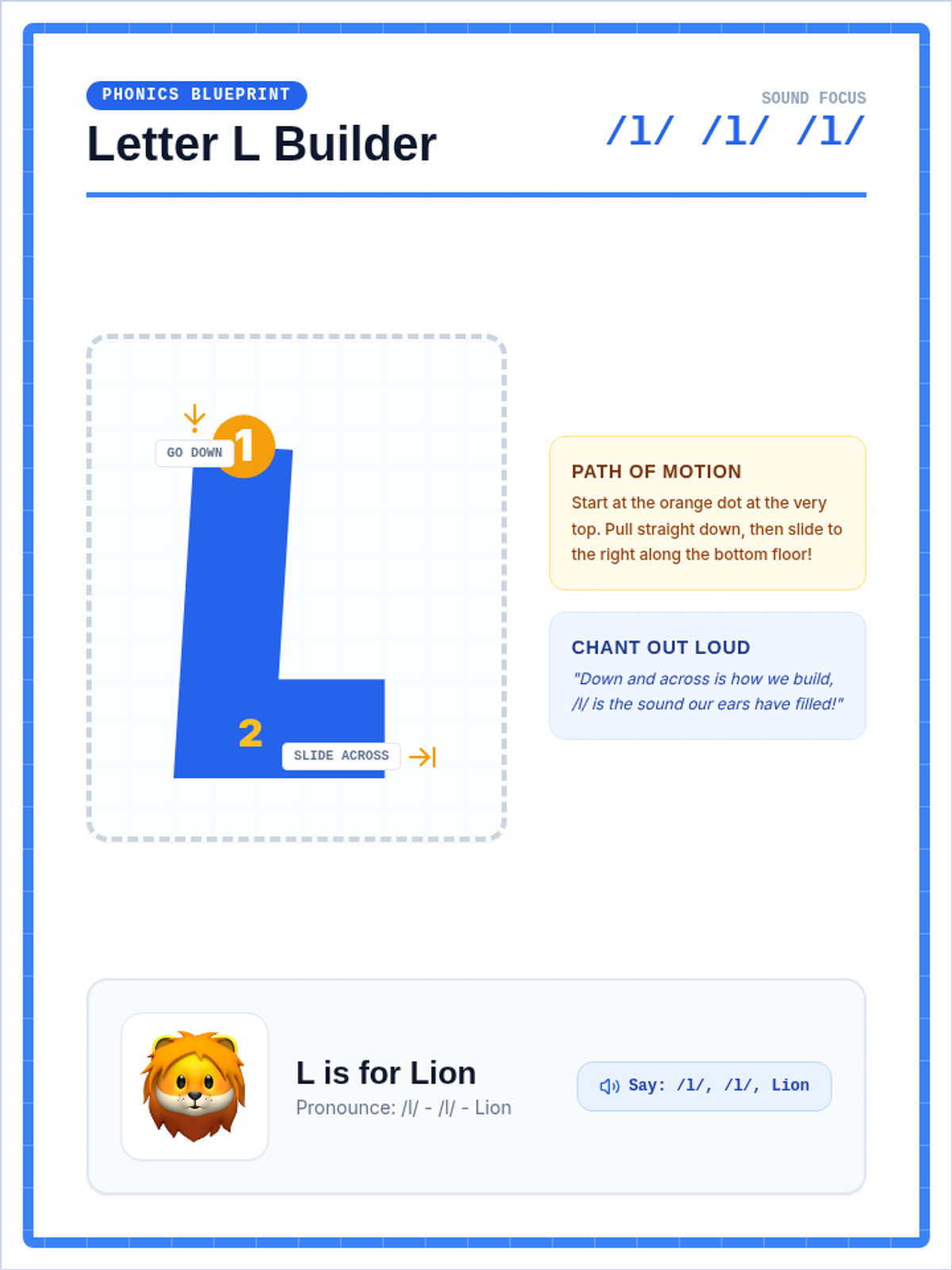
A foundational phonics lesson focusing on constructing straight-line letters L, I, and T through multisensory building, sound-sorting, and fine motor handwriting practice.
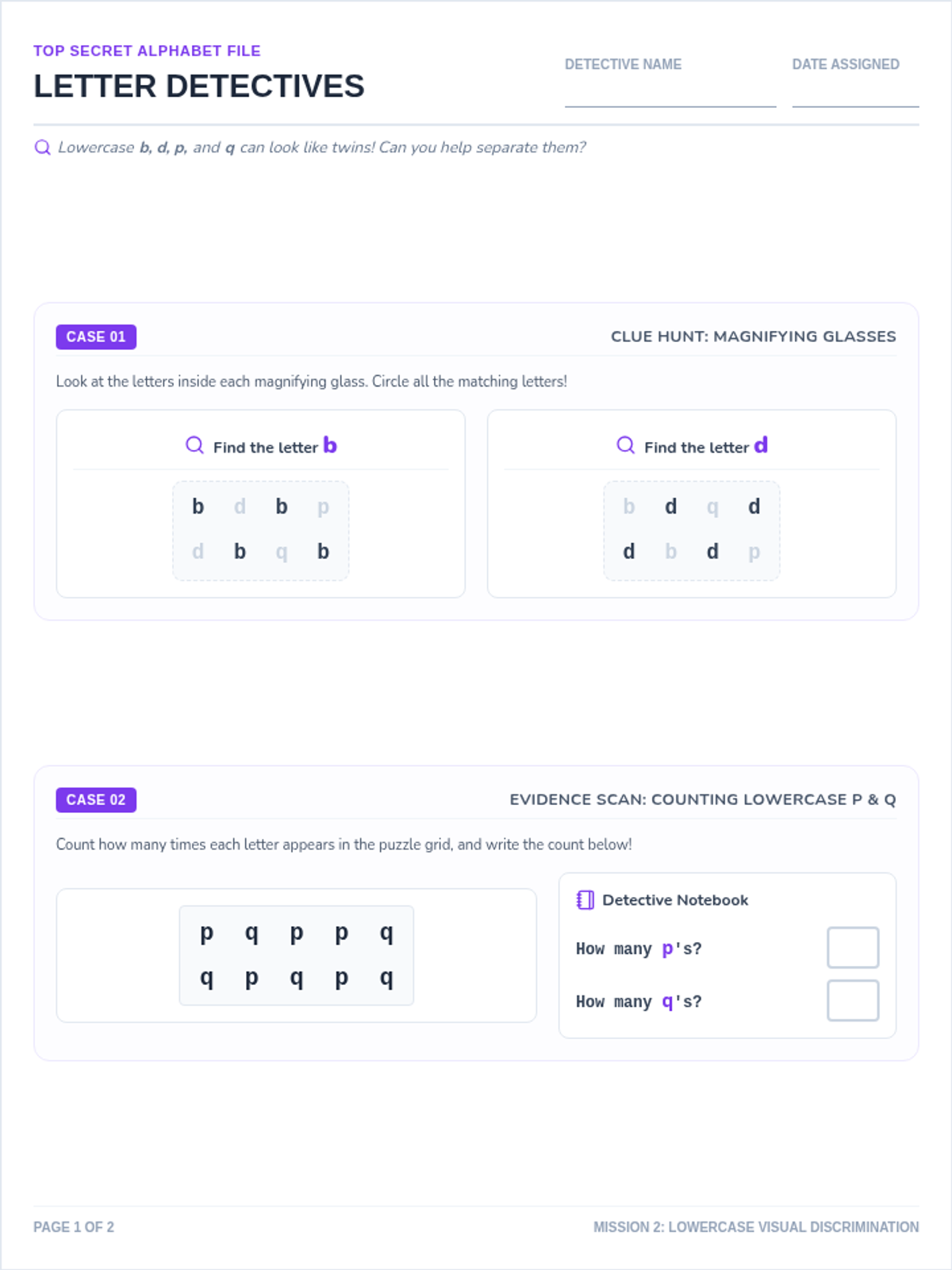
A first-grade letter recognition and formation lesson focusing on identifying uppercase and lowercase letter pairs, distinguishing visually similar letters (like b, d, p, q), and practicing correct stroke pathways.
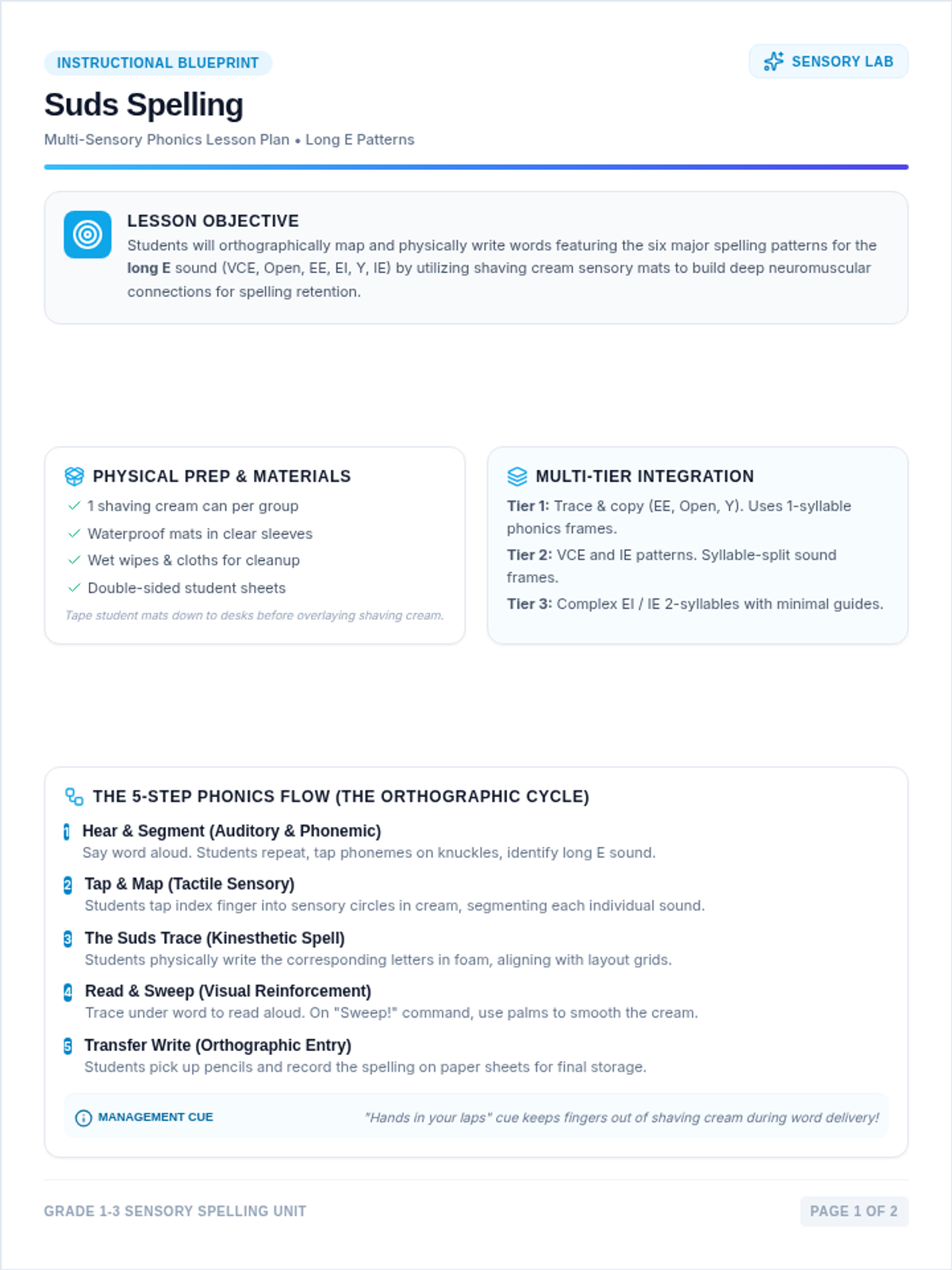
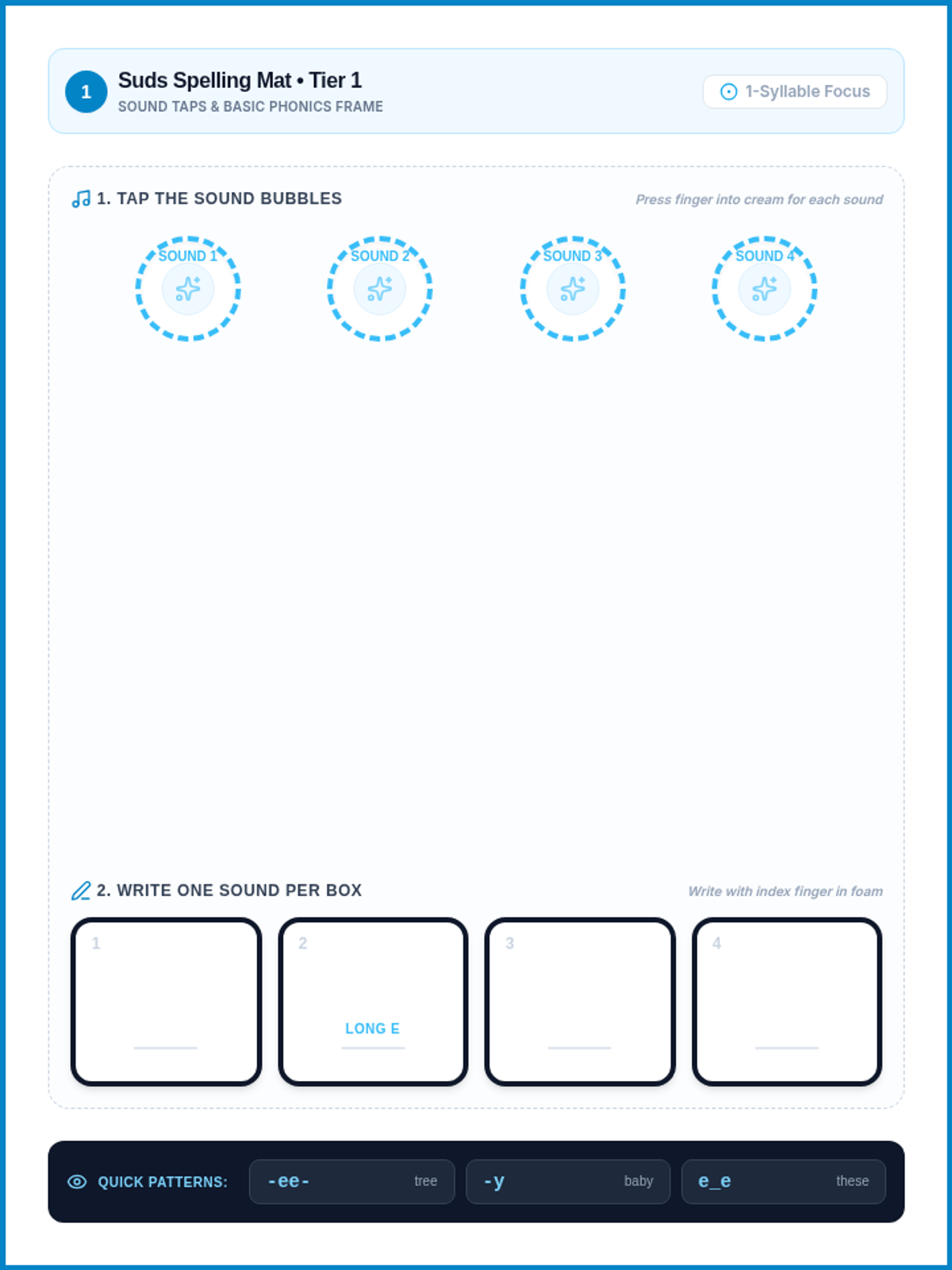
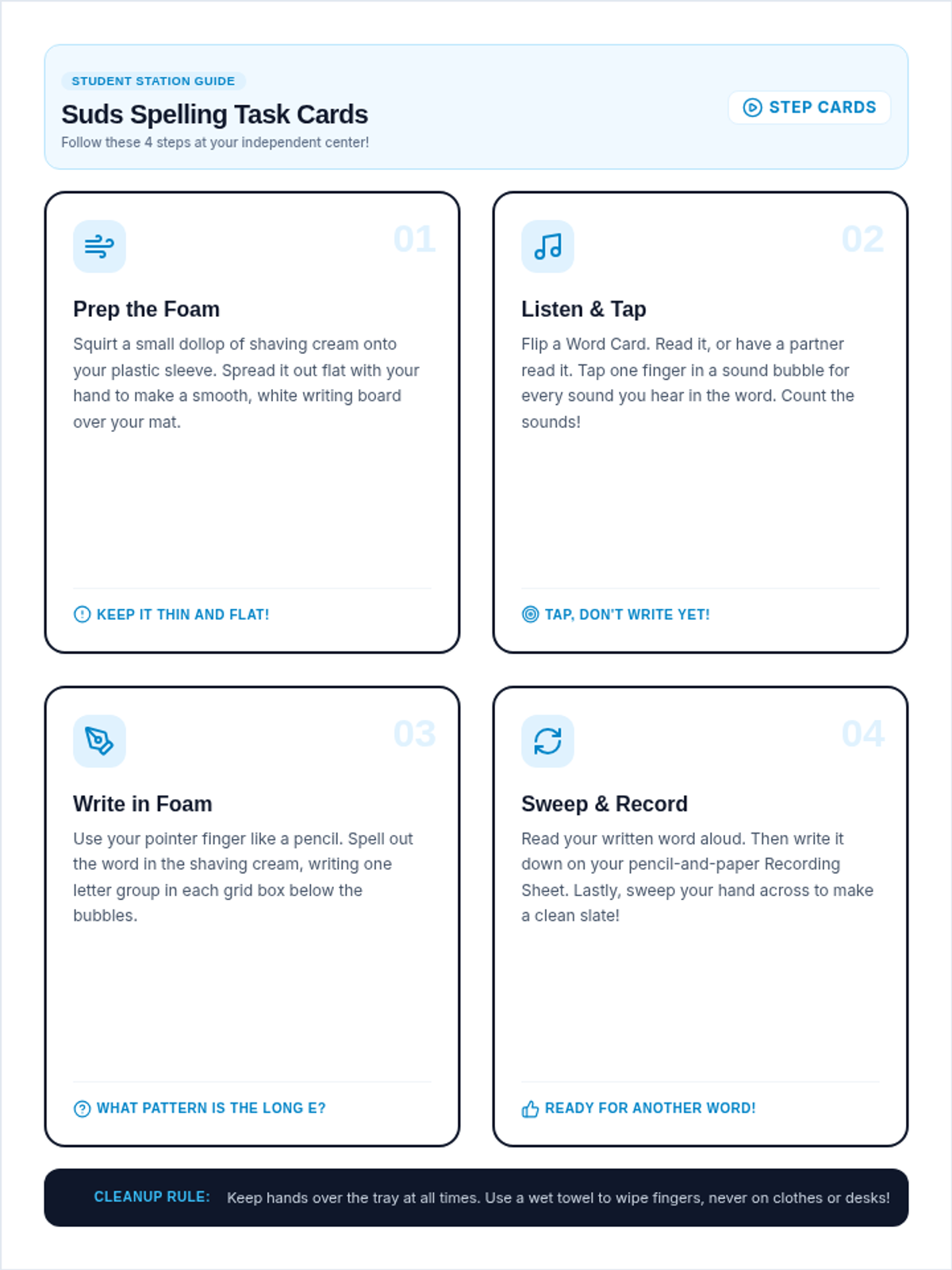
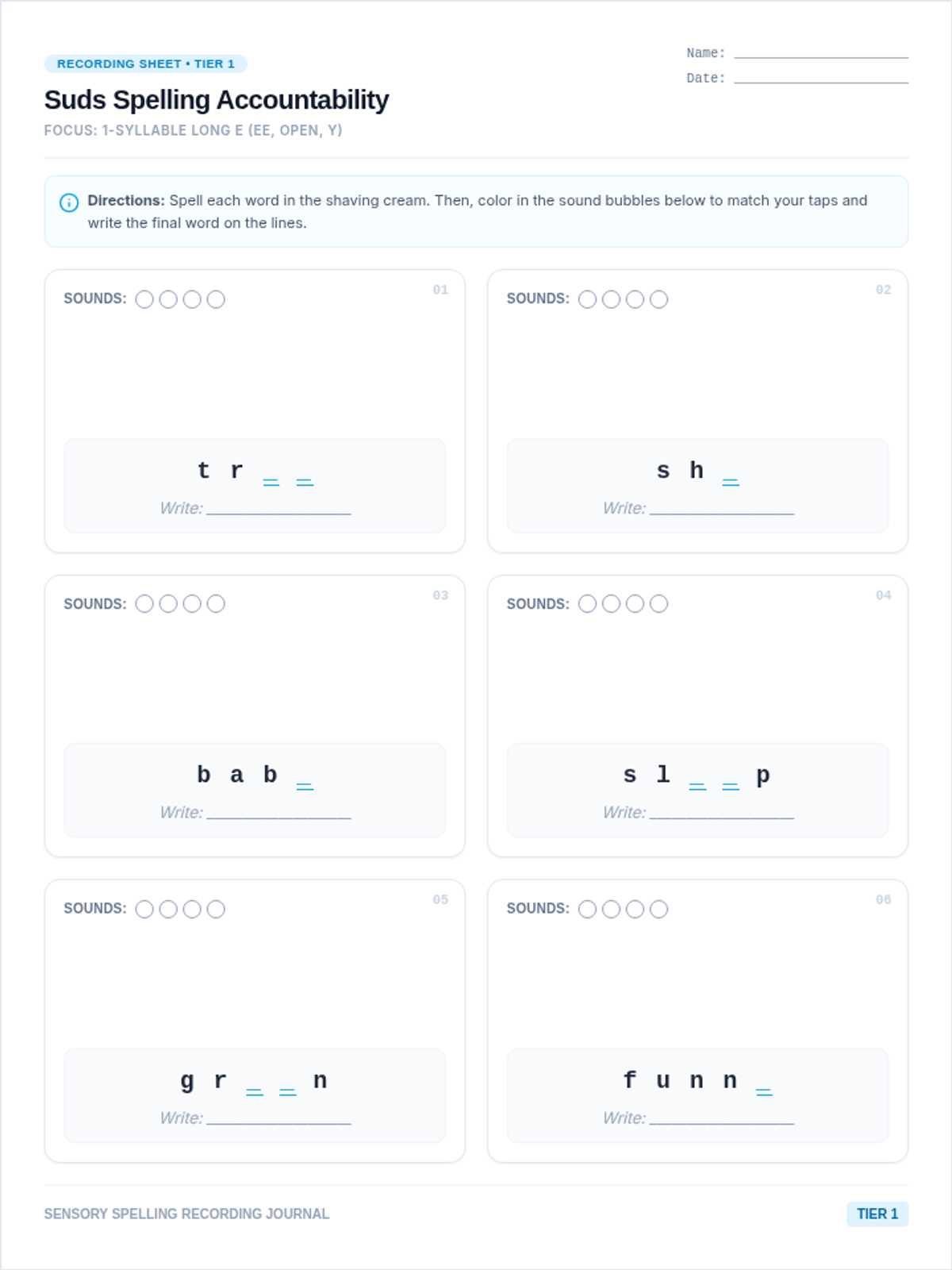
A sensory-rich spelling experience targeting the six primary spelling patterns for the long E sound. Students use shaving cream mats to segment and write words, transitioning tactile memory into written form.
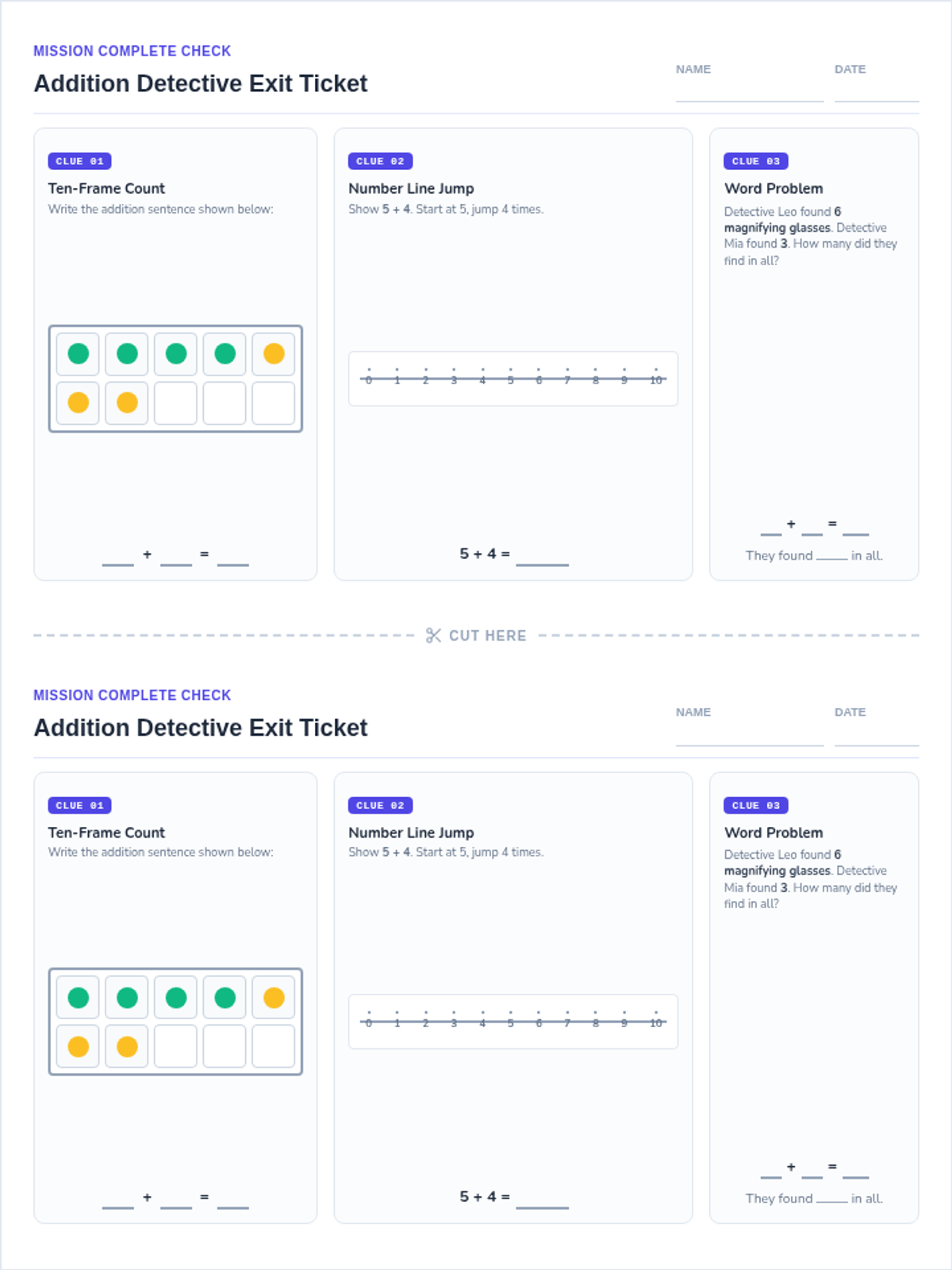
A first-grade addition lesson focusing on visual strategies, concrete models, and counting on to solve addition facts up to 10. Includes student worksheets and formative exit tickets.
Students publish and share their completed 'What I Did This Summer' stories with their classmates, celebrating their growth as narrative writers.
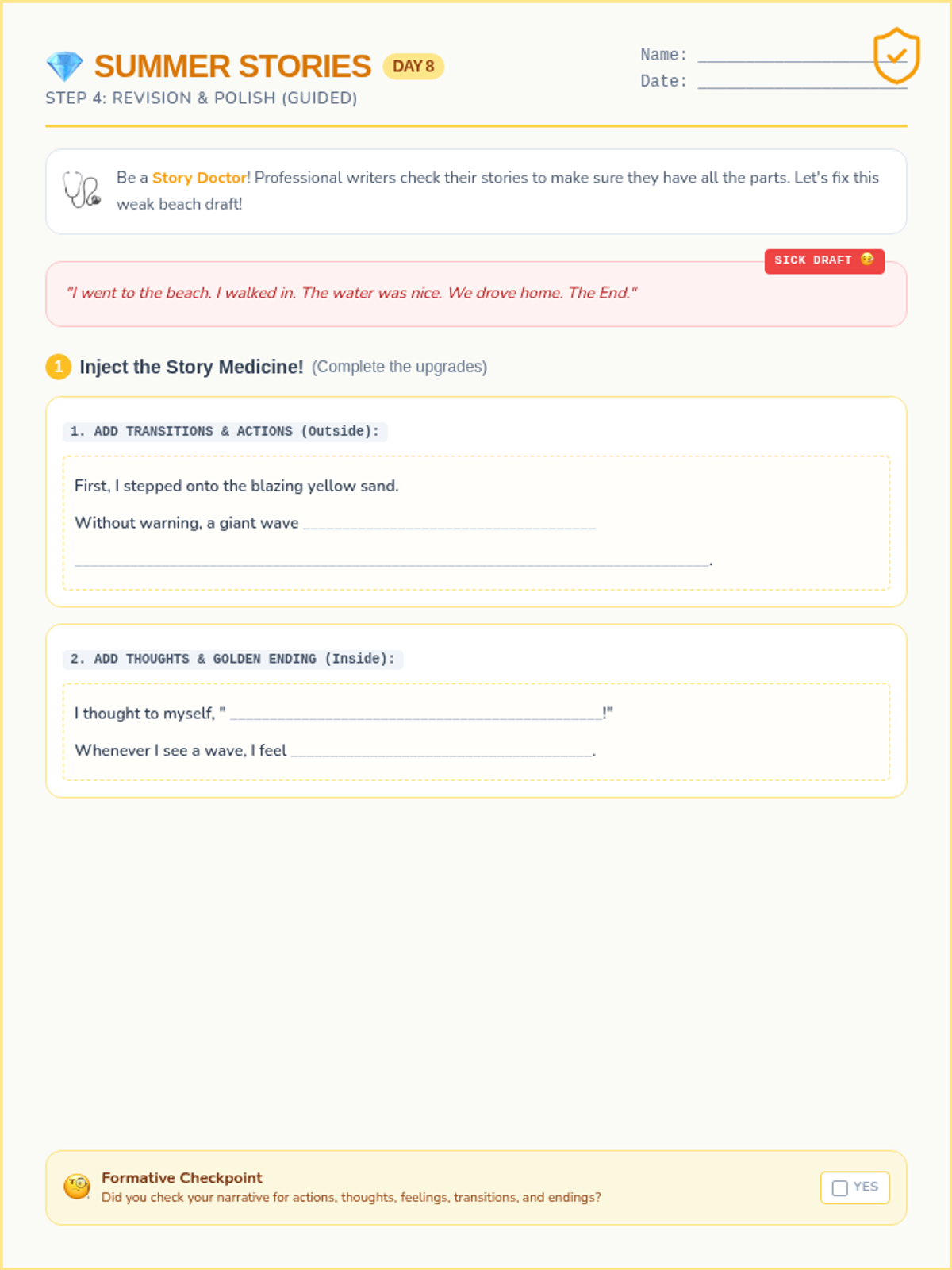
Students review their completed narrative drafts with a checklist, checking for actions, thoughts, feelings, transition words, and a strong conclusion, then writing their final polished draft.
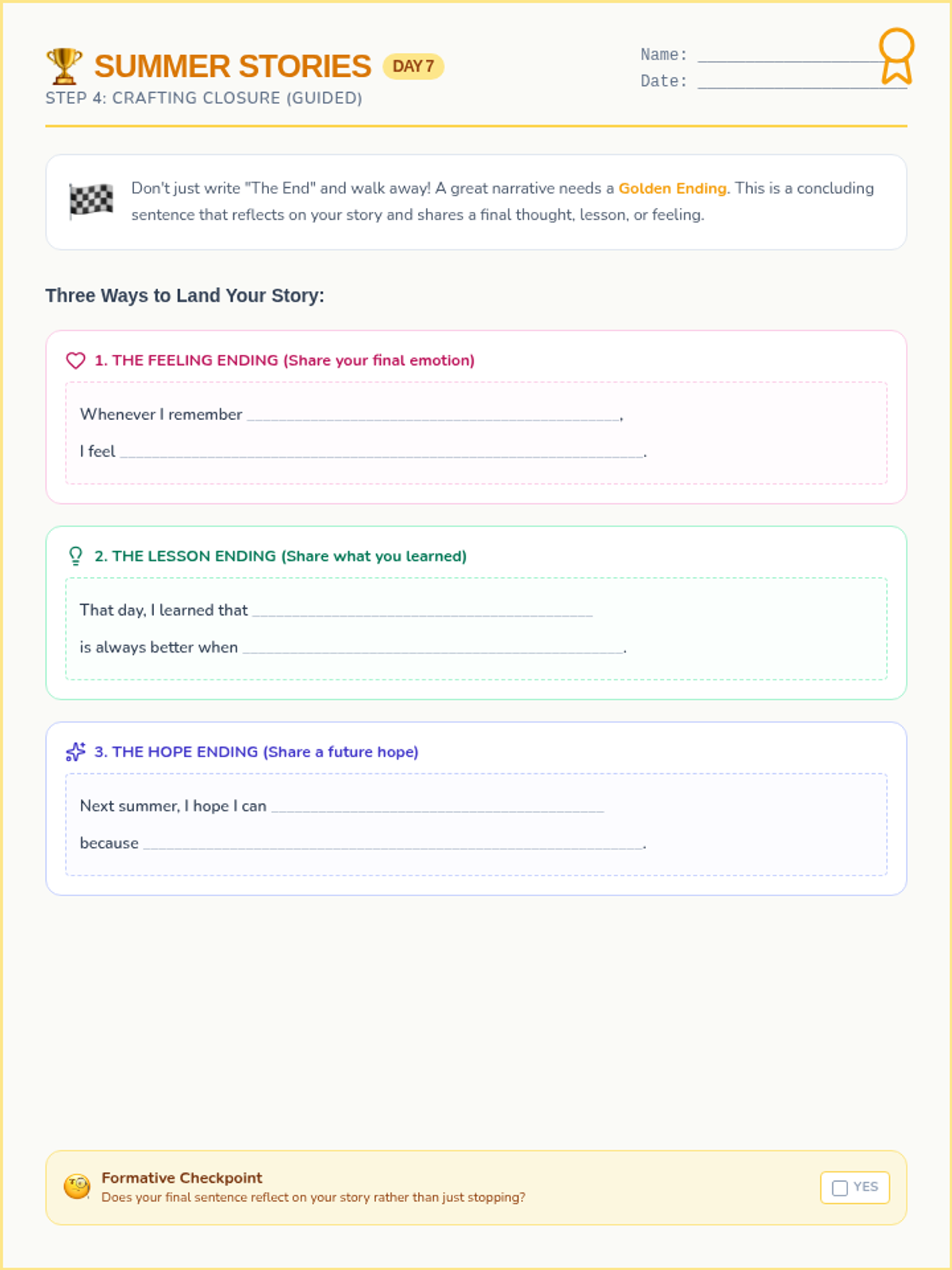
Students learn how to write a satisfying concluding sentence that reflects on their summer story and leaves the reader with a final thought, lesson, or feeling.
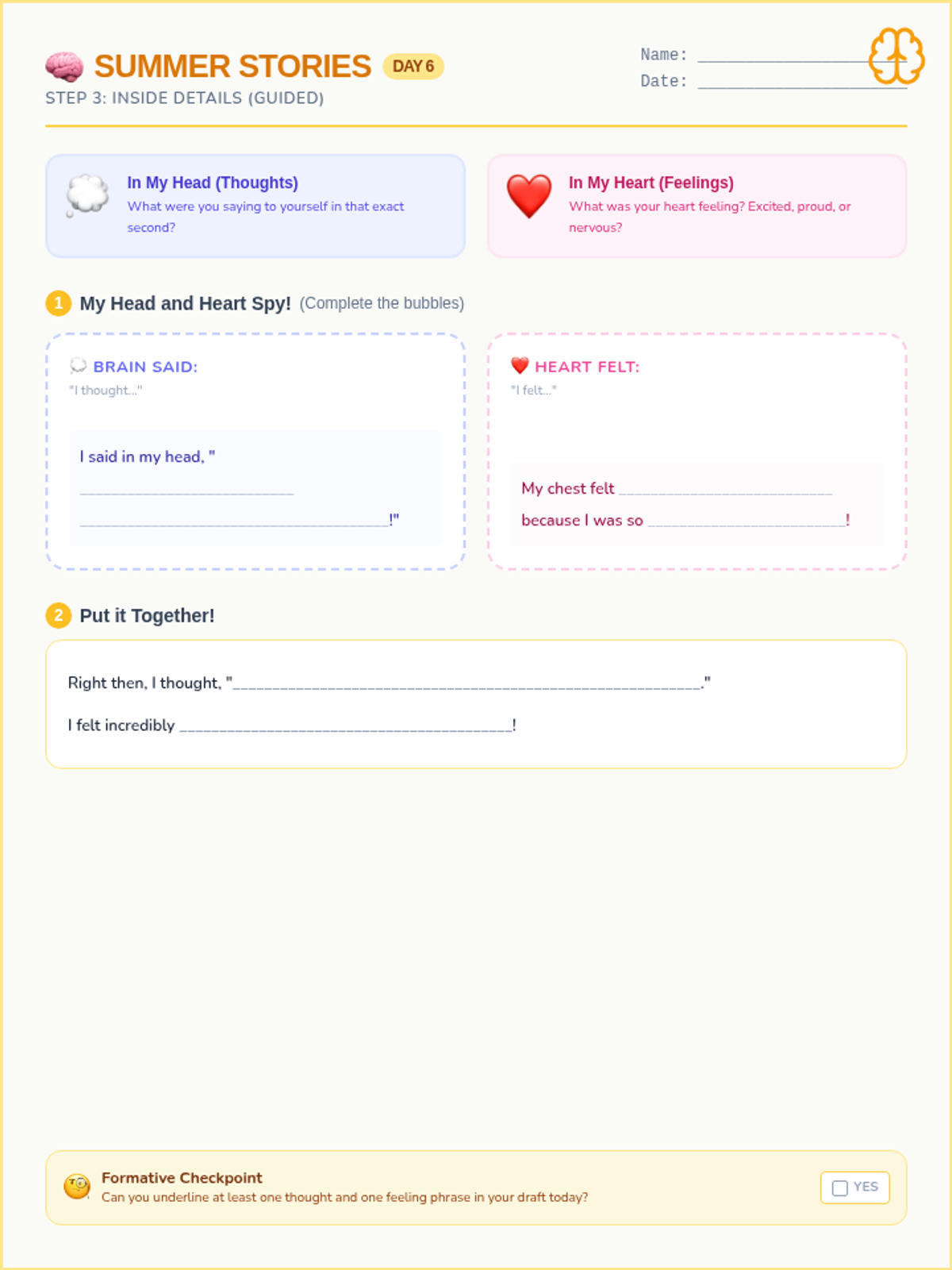
Students elaborate their narratives by adding internal thoughts and feelings, ensuring their emotional response to the summer event is clear.
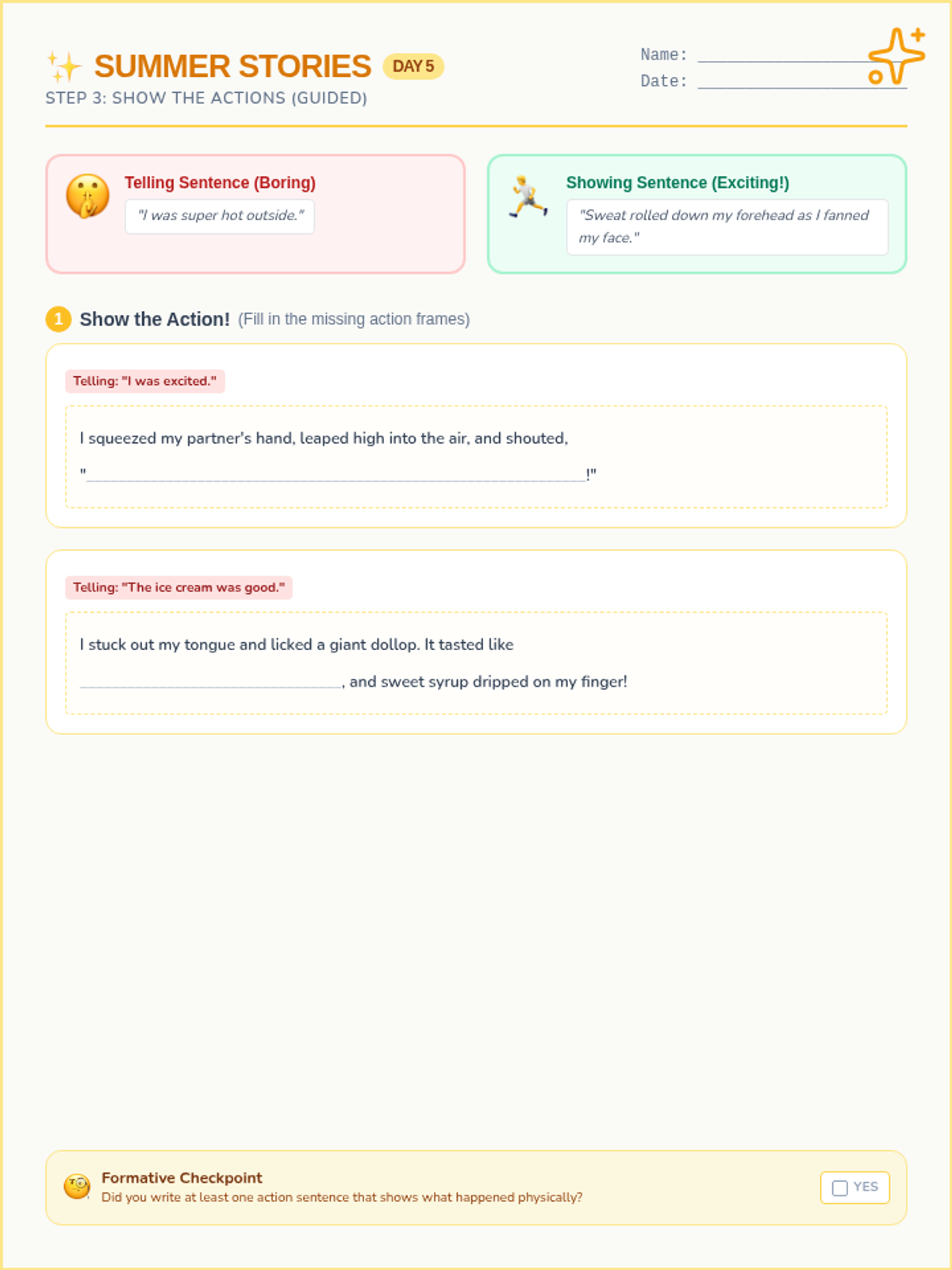
Students go back into their narrative draft to add external actions (Show, Don't Tell) that bring their summer moments to life.
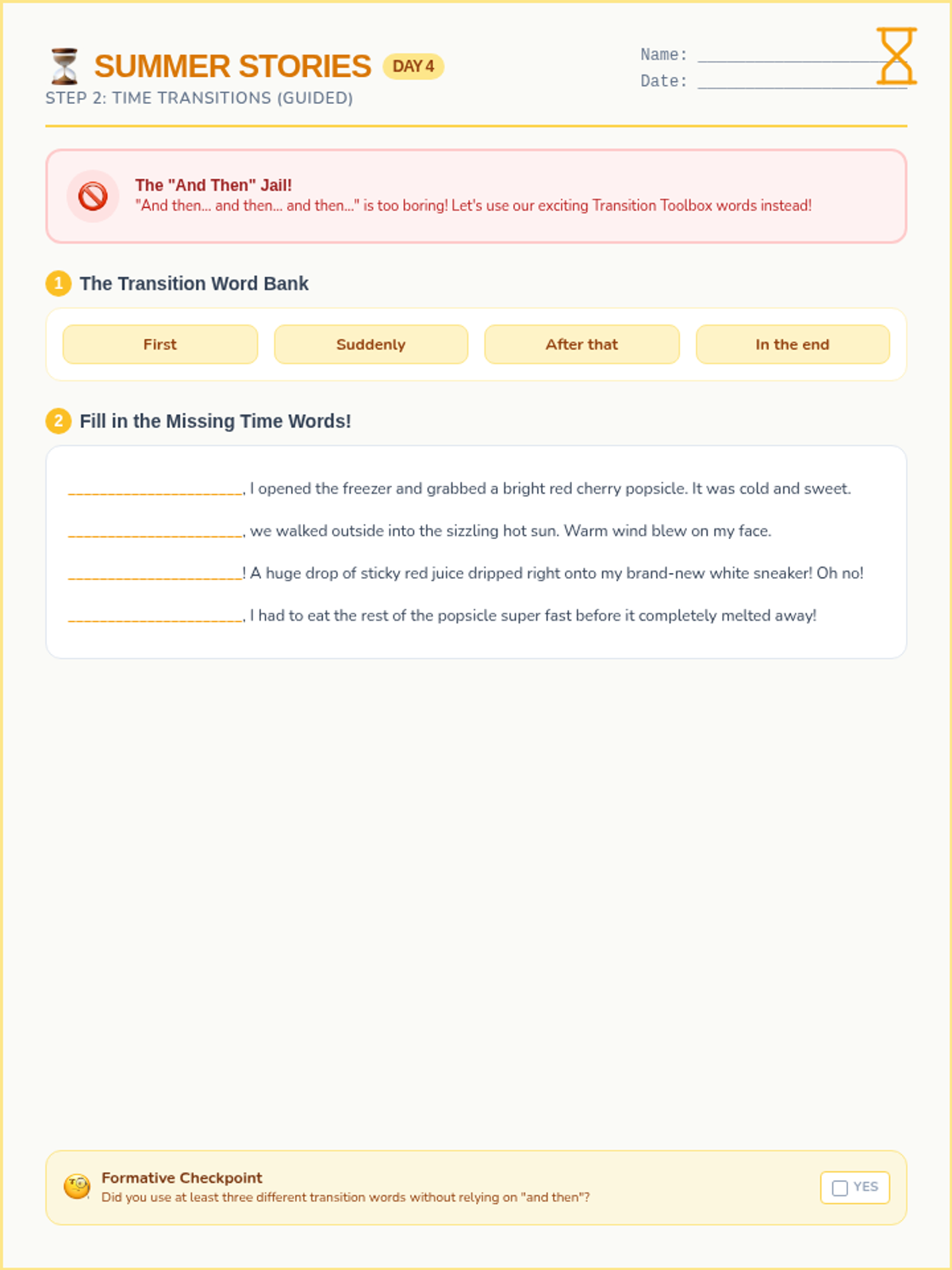
Students learn to use a variety of temporal words (First, Later, Suddenly, After that) to build a smooth, chronological flow.
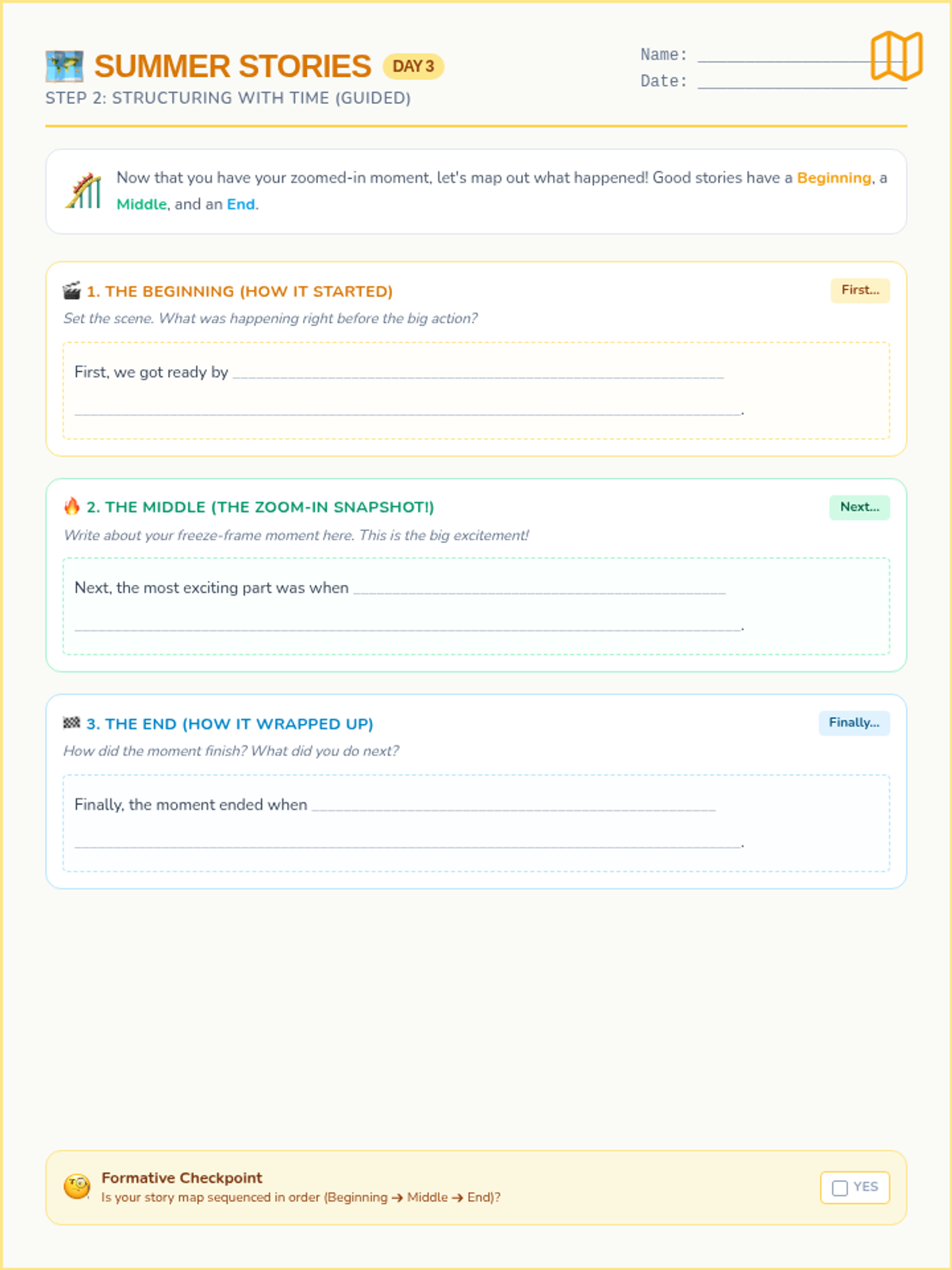
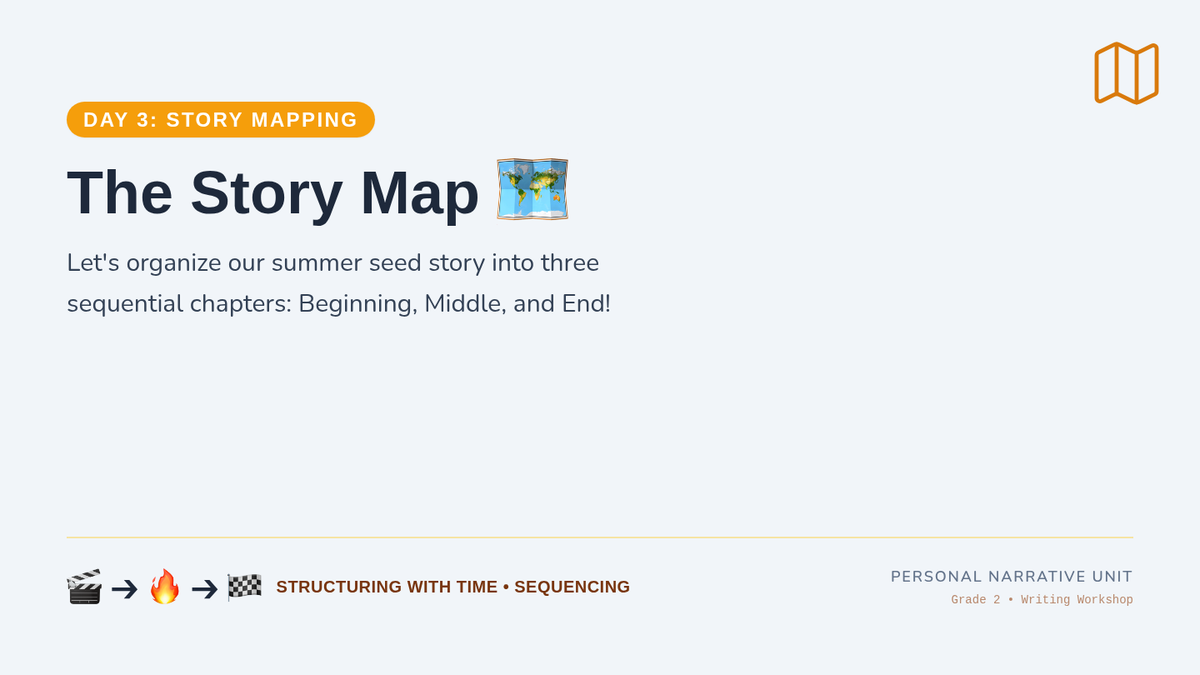
Students sequence their single seed story into a logical 3-part narrative map (beginning, middle, and end) to prepare for drafting.
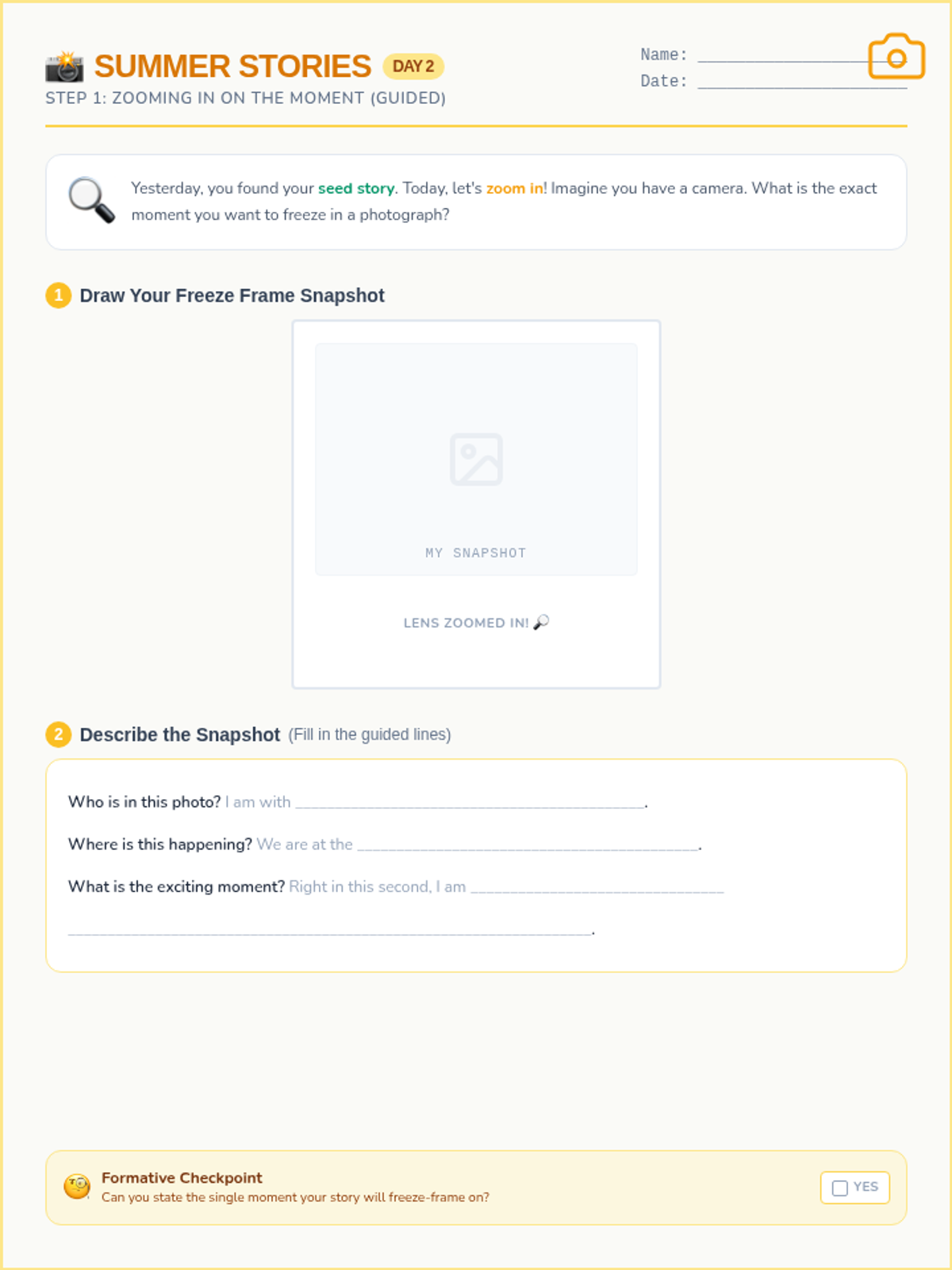
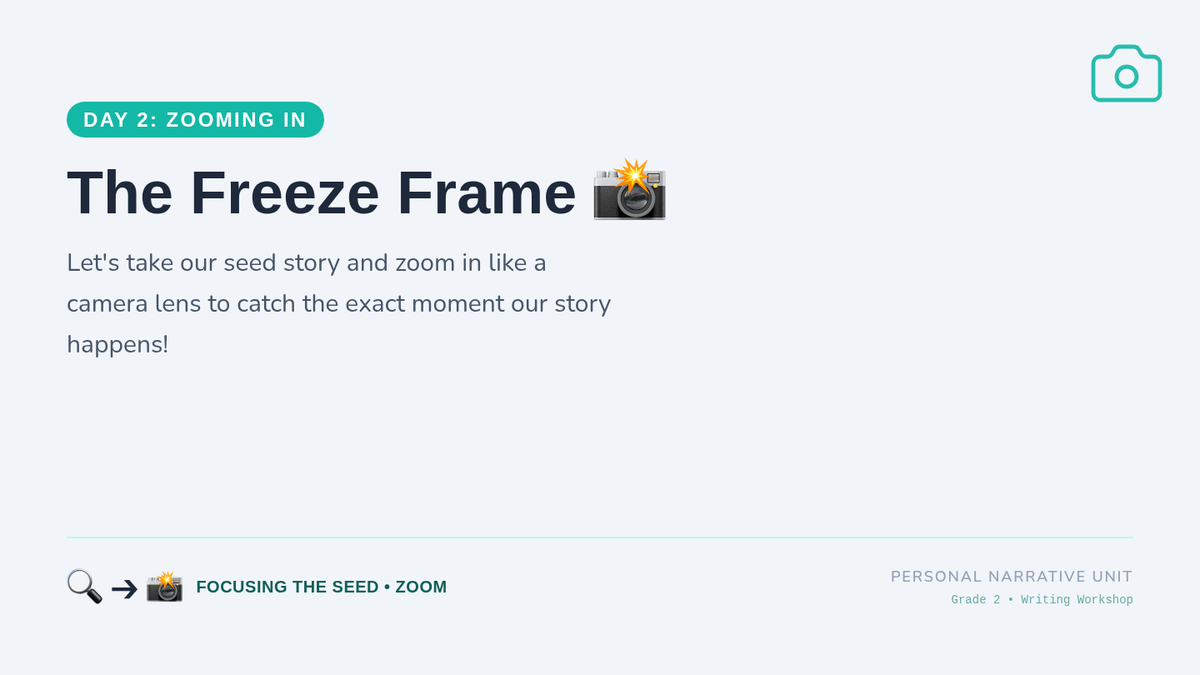
Students zoom in on their selected seed story, identifying the main moment and sketching it out to freeze the frame of their narrative.
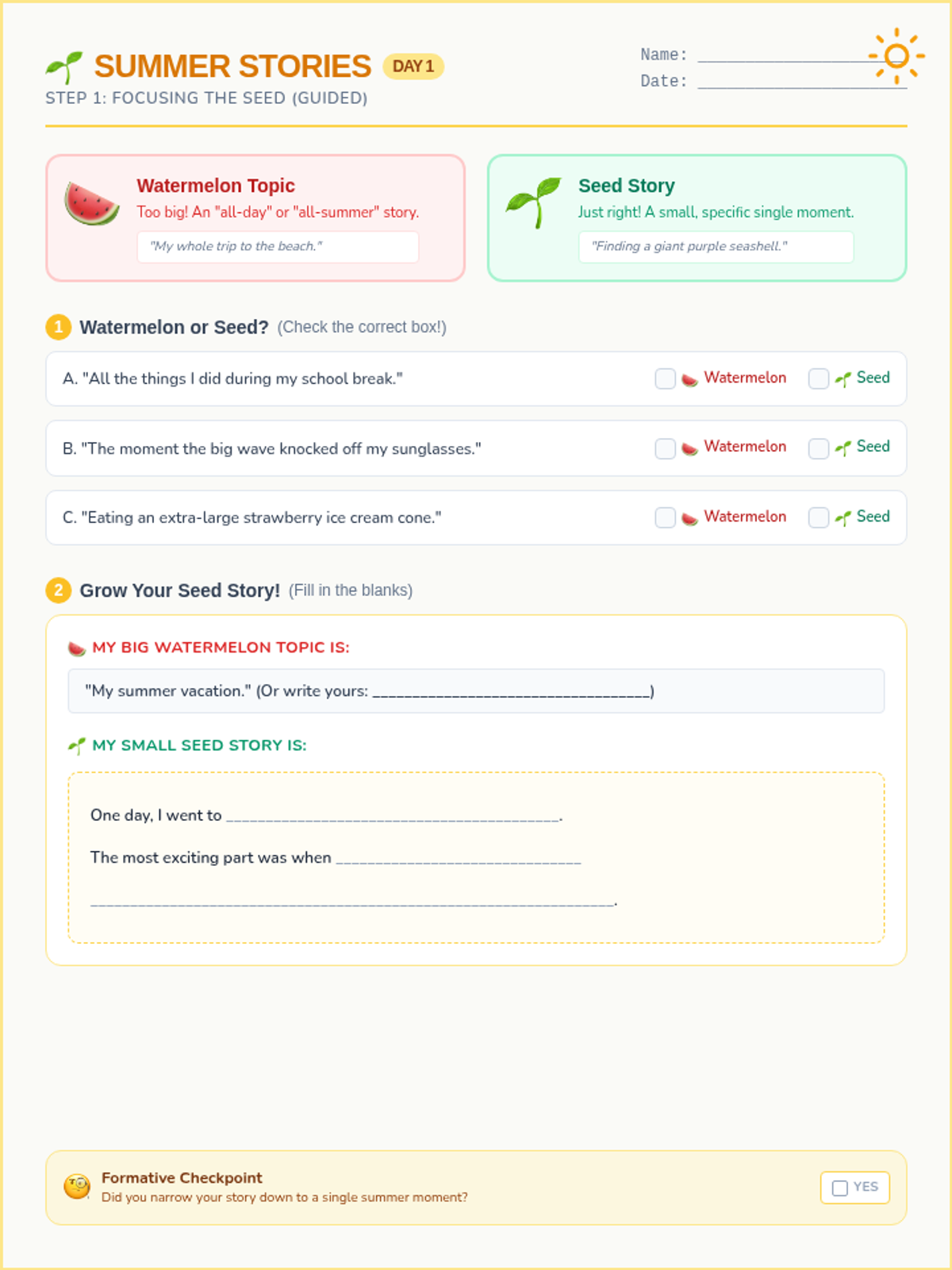
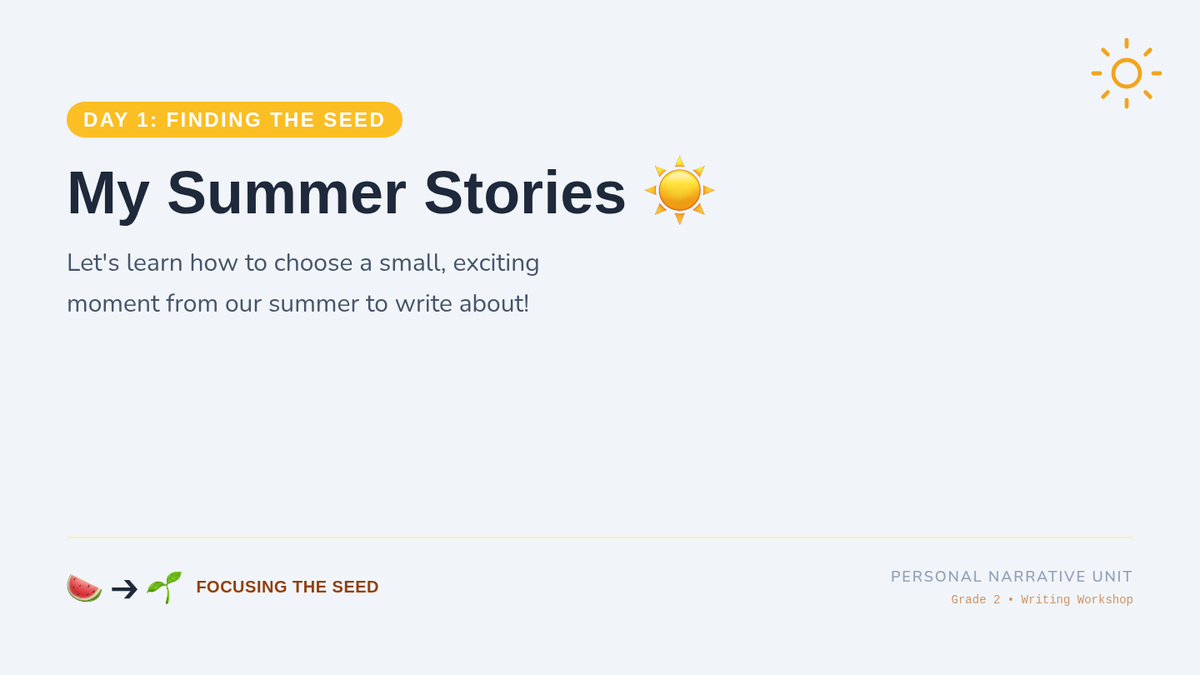
Students learn to distinguish between broad, 'watermelon' topics and focused, 'seed' stories, helping them select a single, specific summer event to write about.
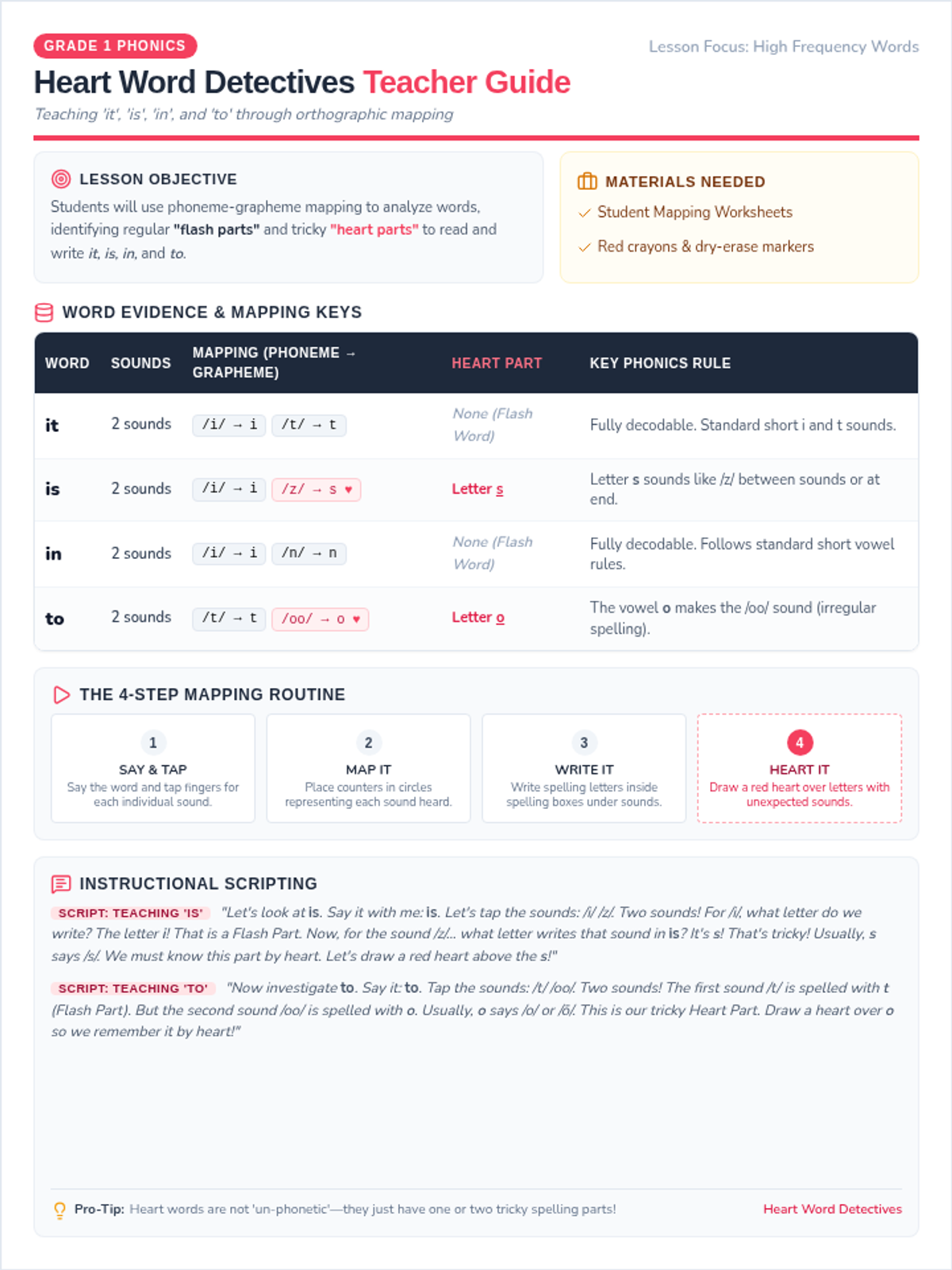
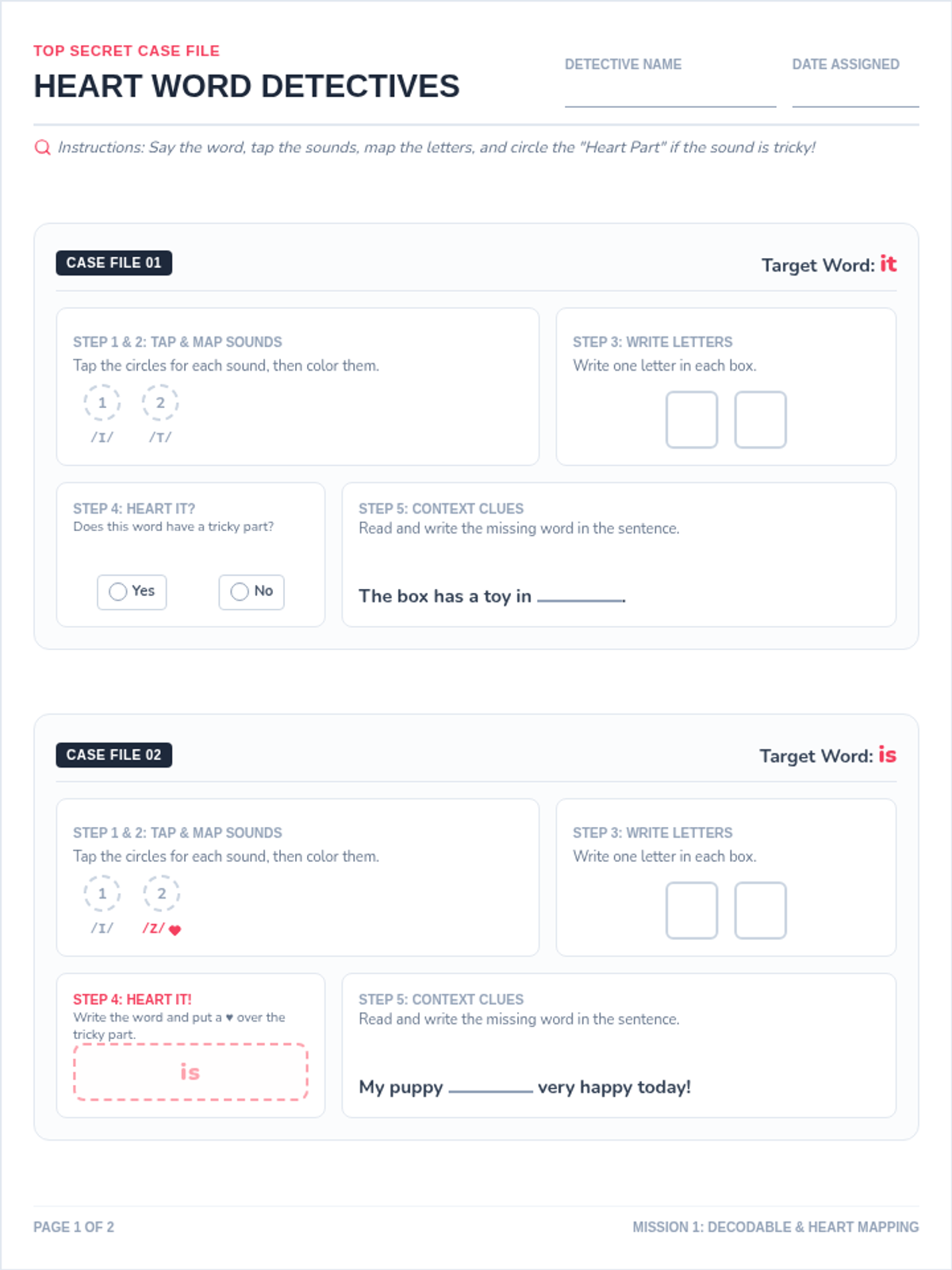
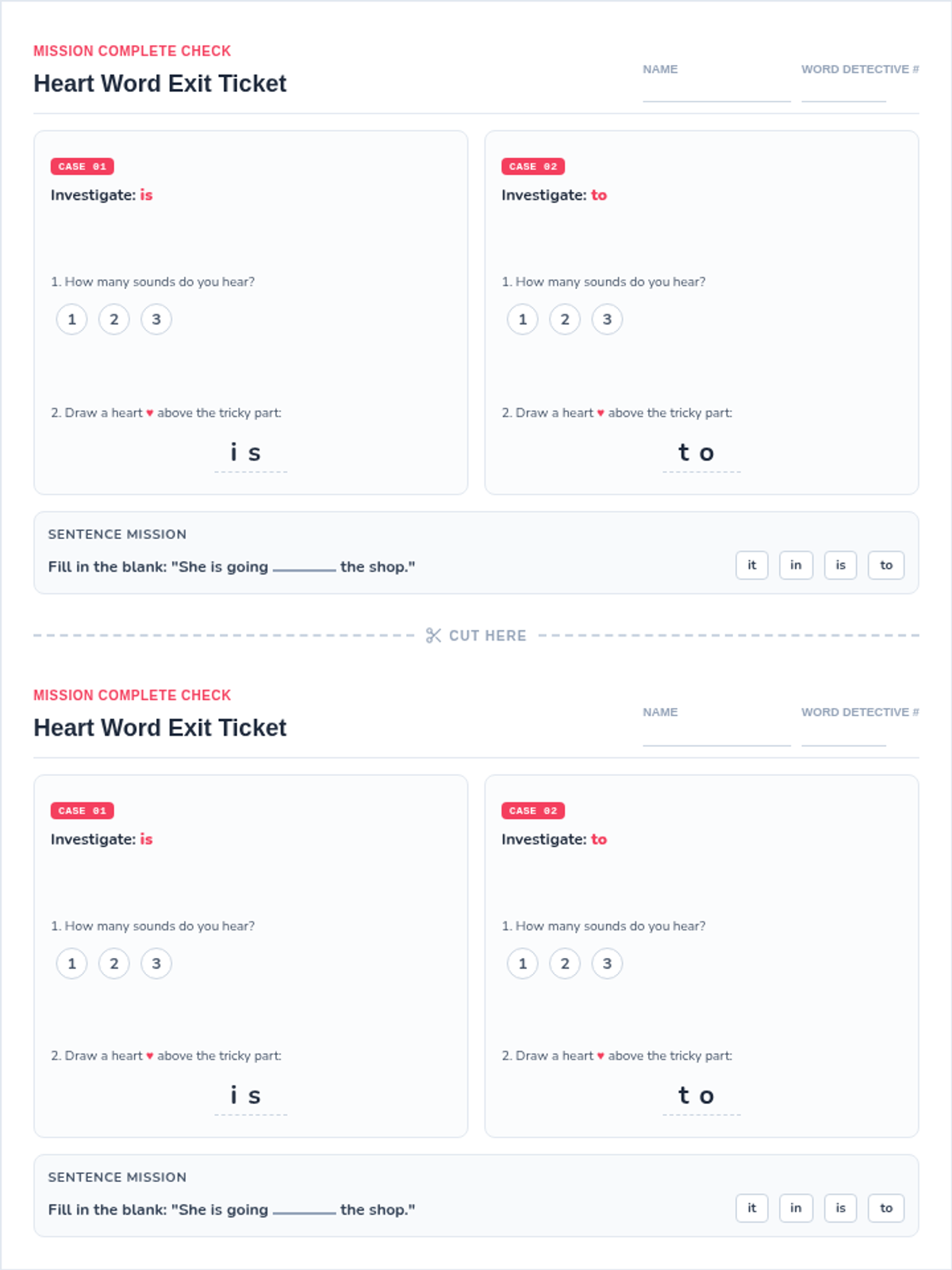
A phonics-based high-frequency word lesson focusing on orthographic mapping and heart-word strategies for 'it', 'is', 'in', and 'to'. Students map phonemes to graphemes and learn to identify regular vs. 'by heart' spelling parts.
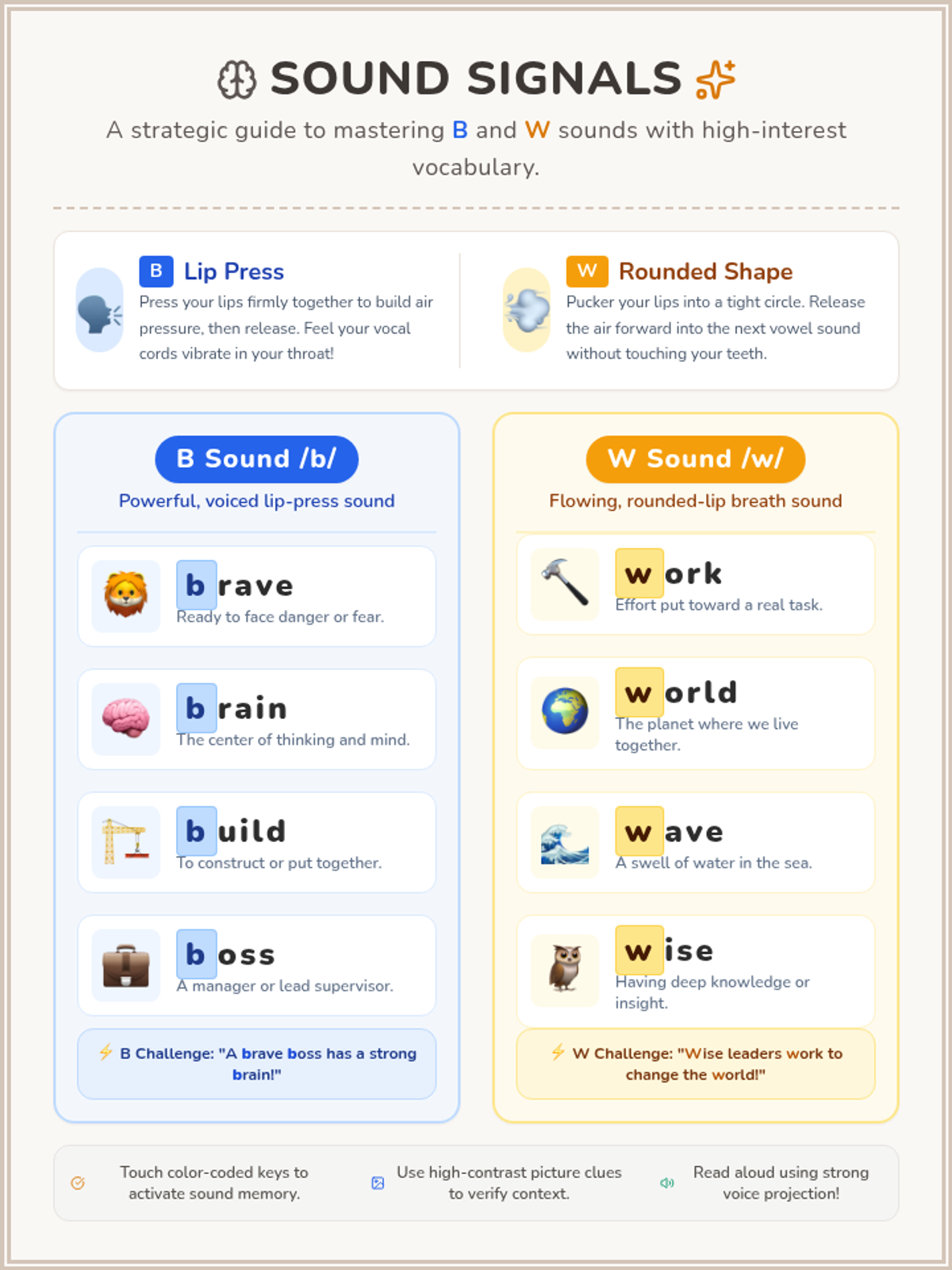
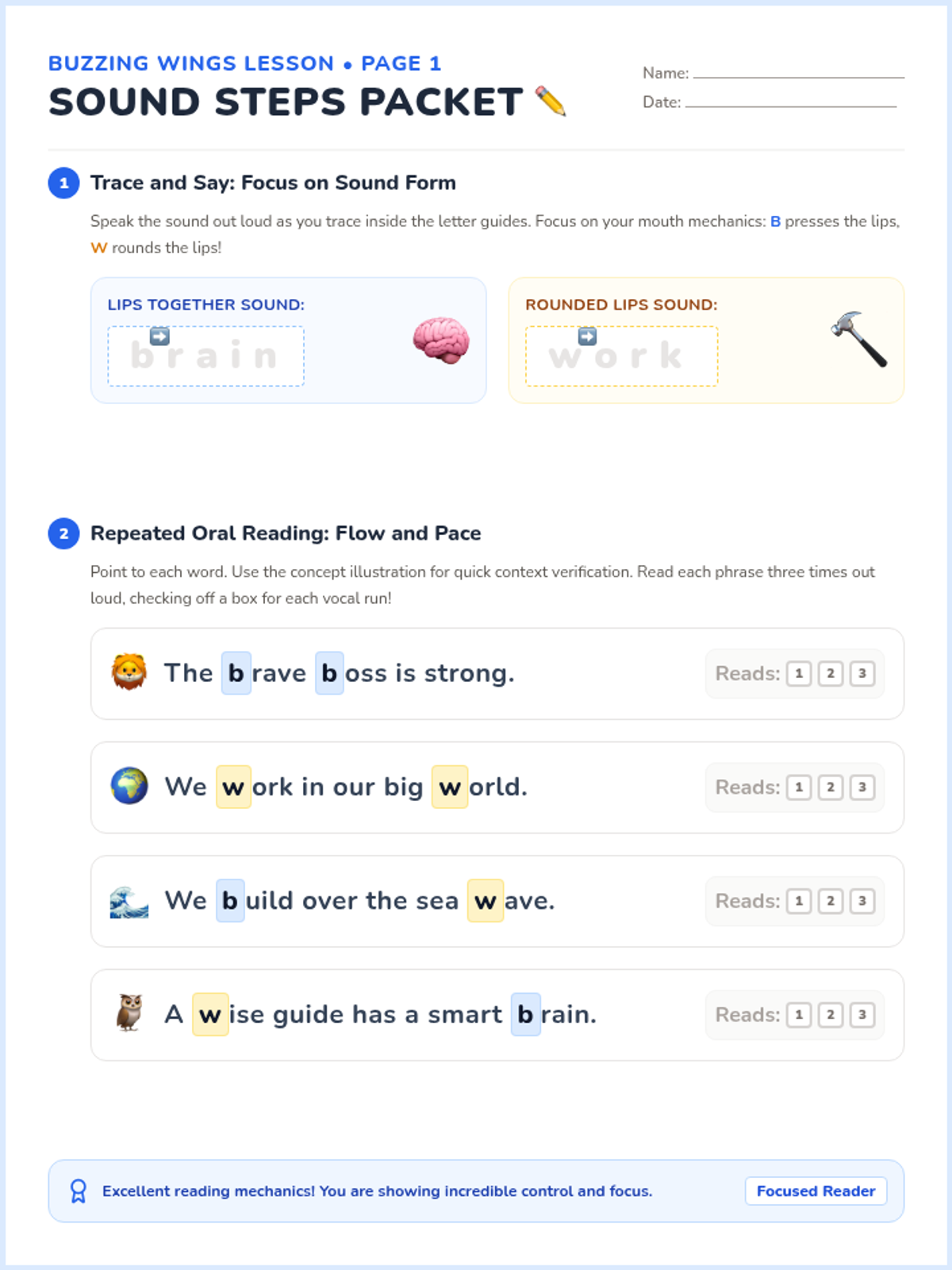
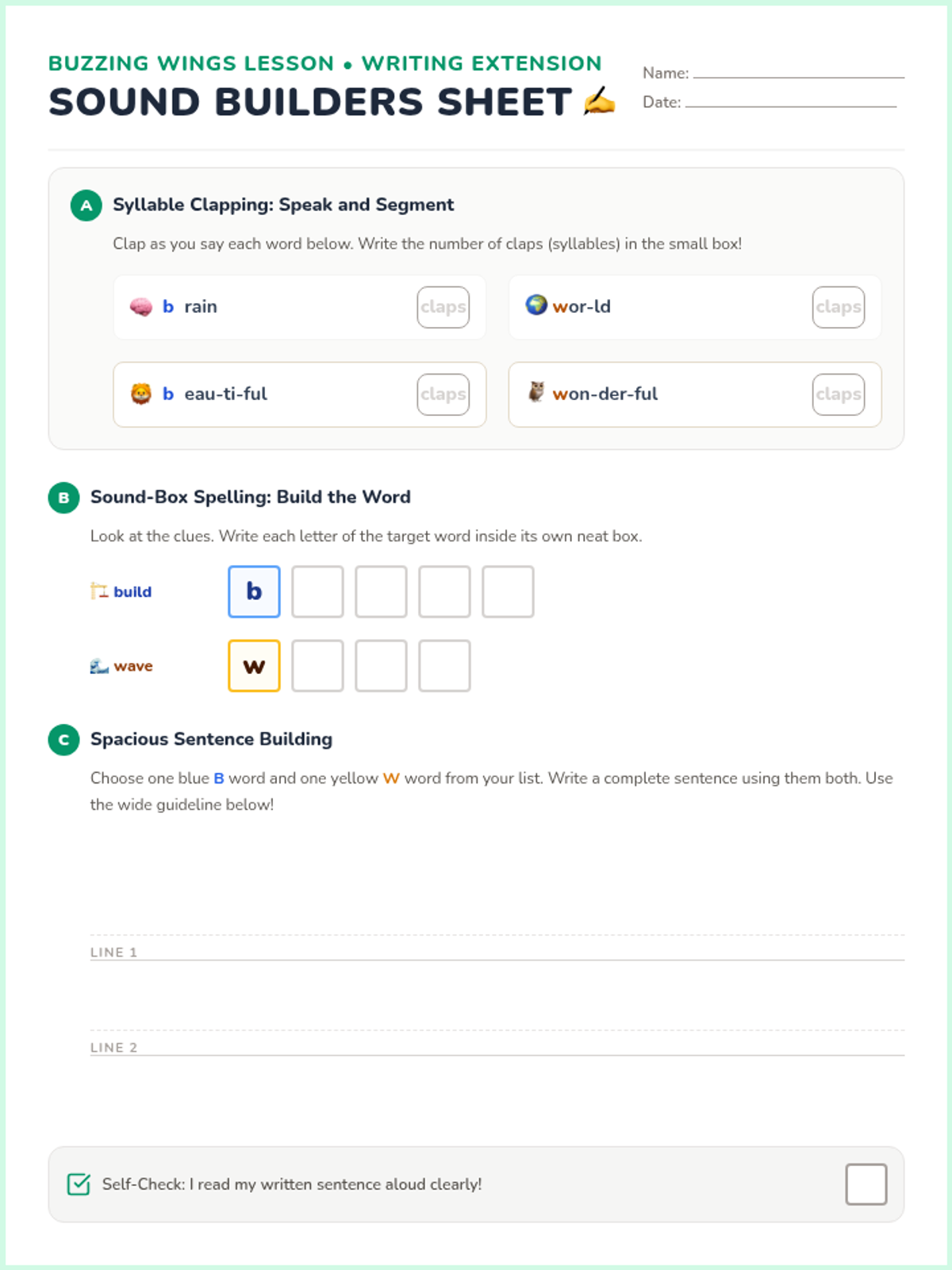
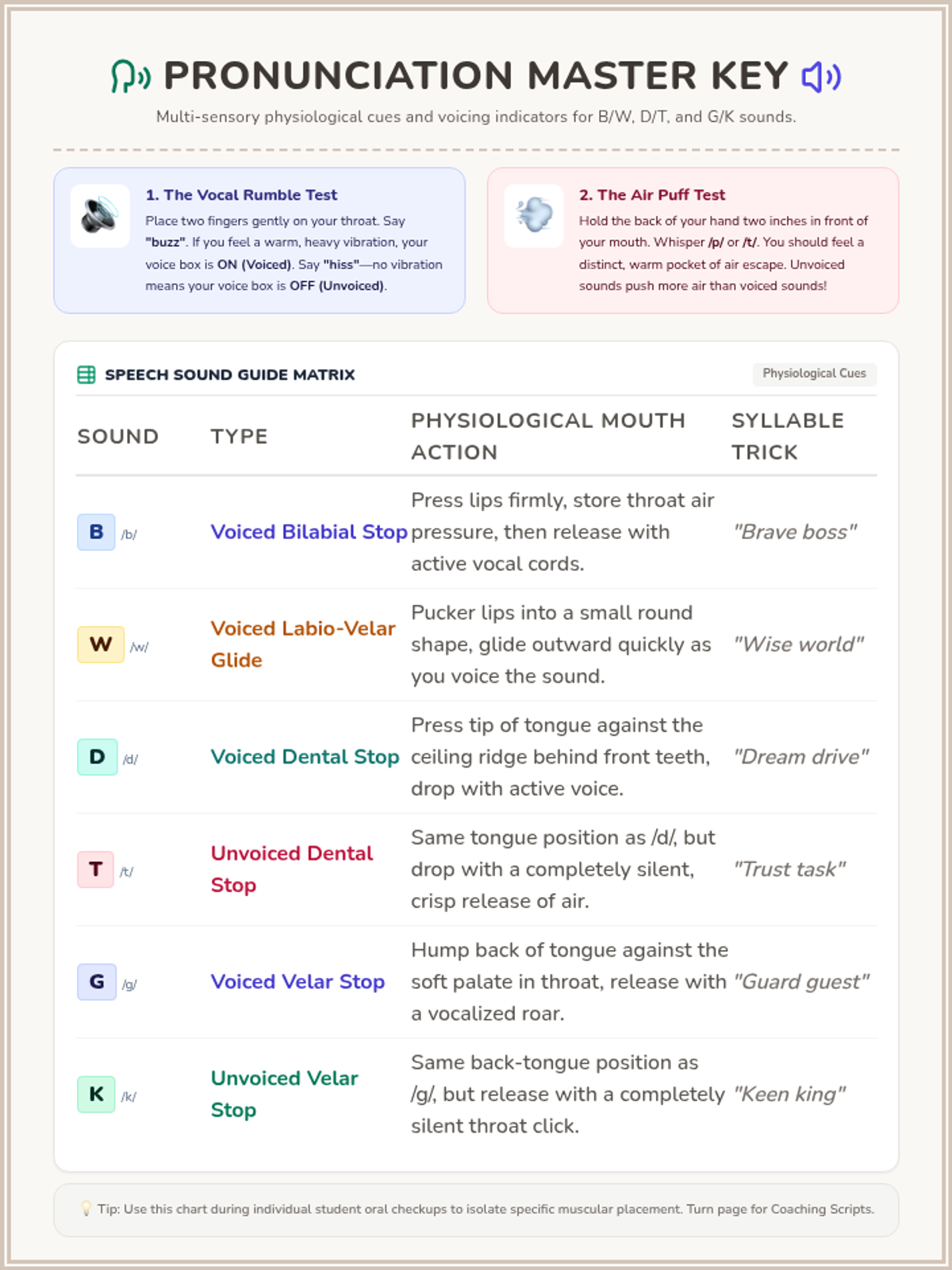
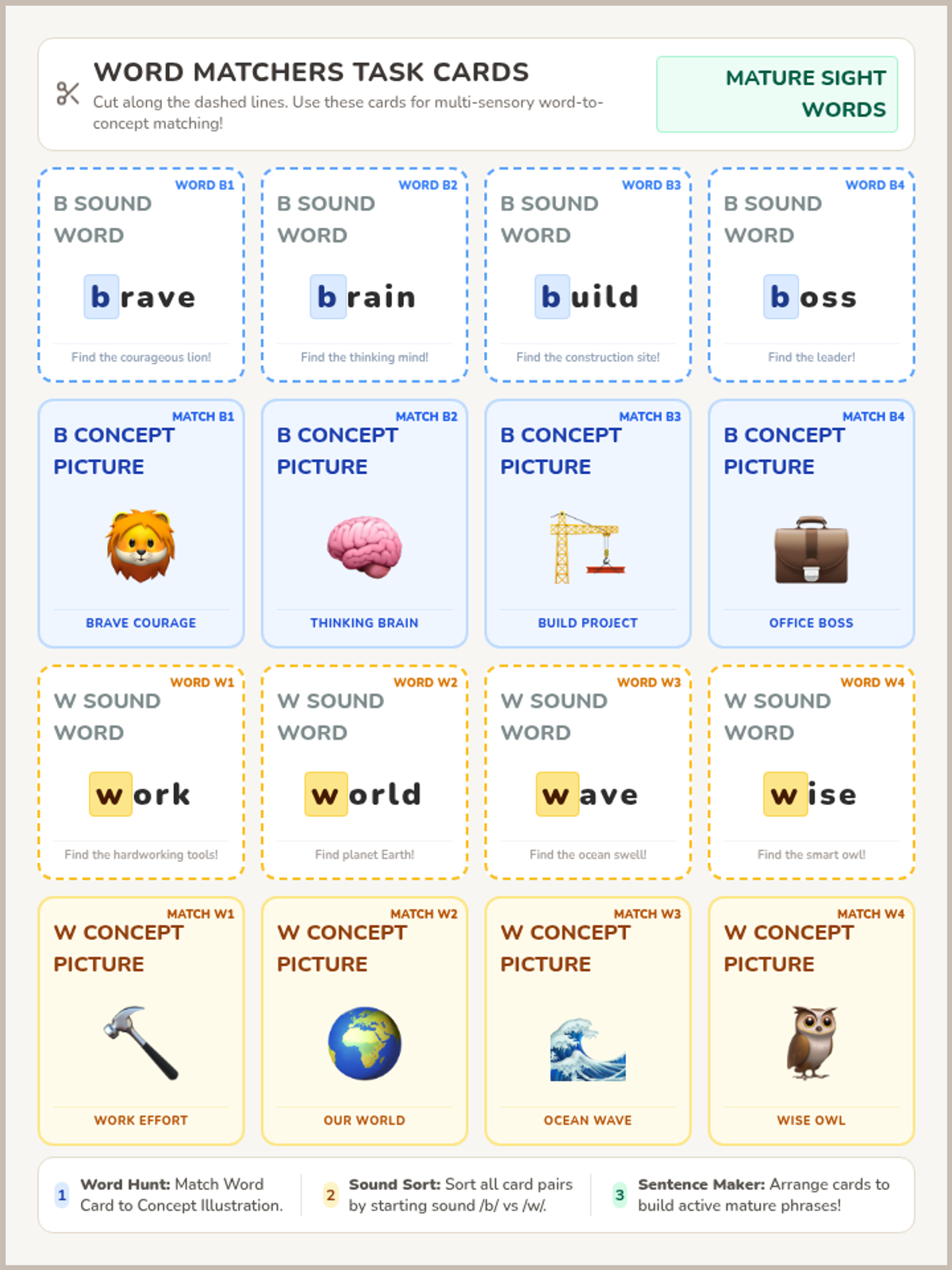
An hour-long structured reading lesson focusing on B and W letter-sound association and common sight words. Designed with dyslexia-friendly spacing, color-coded highlights, and picture scaffolding to support struggling oral readers.
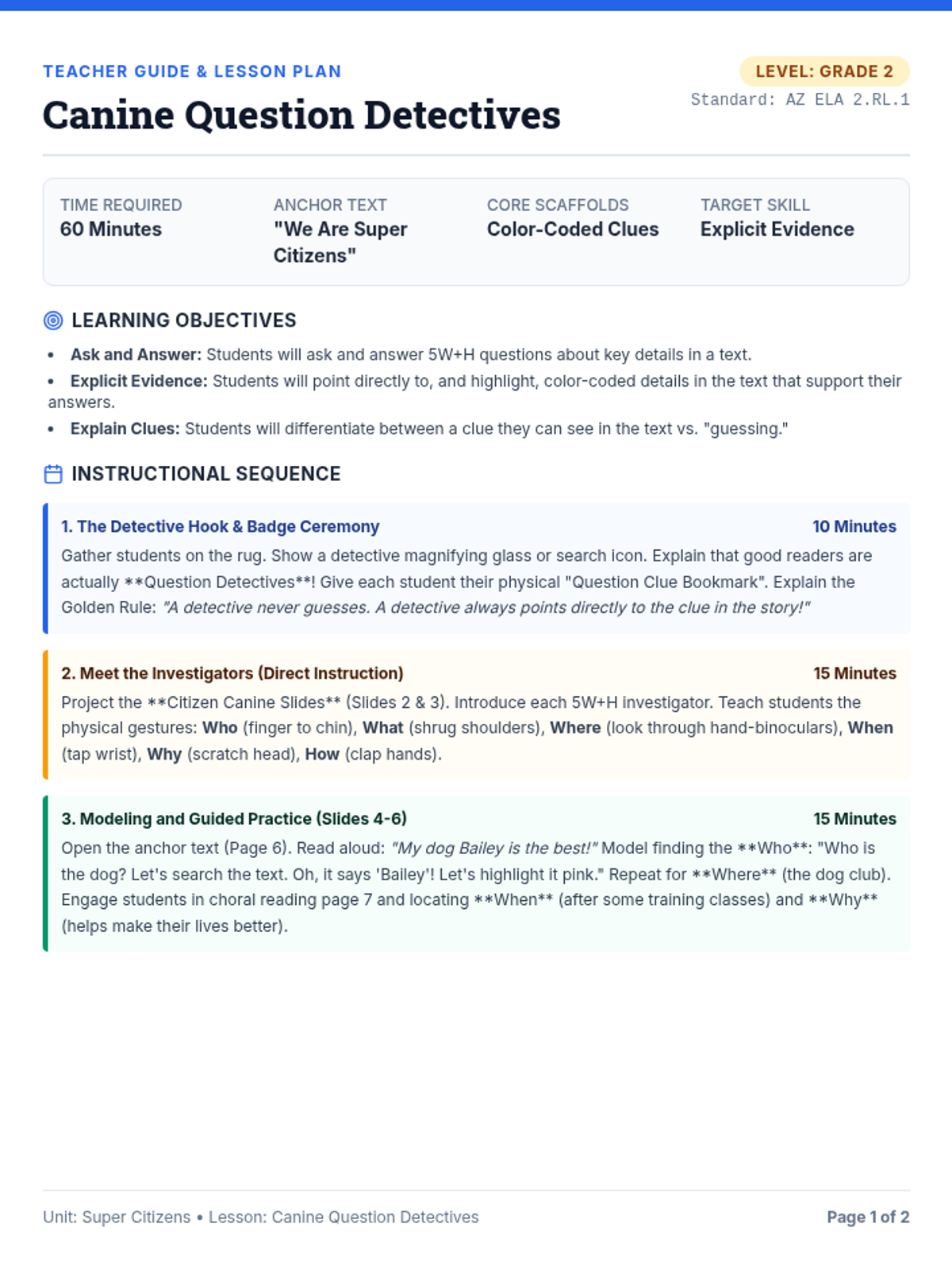
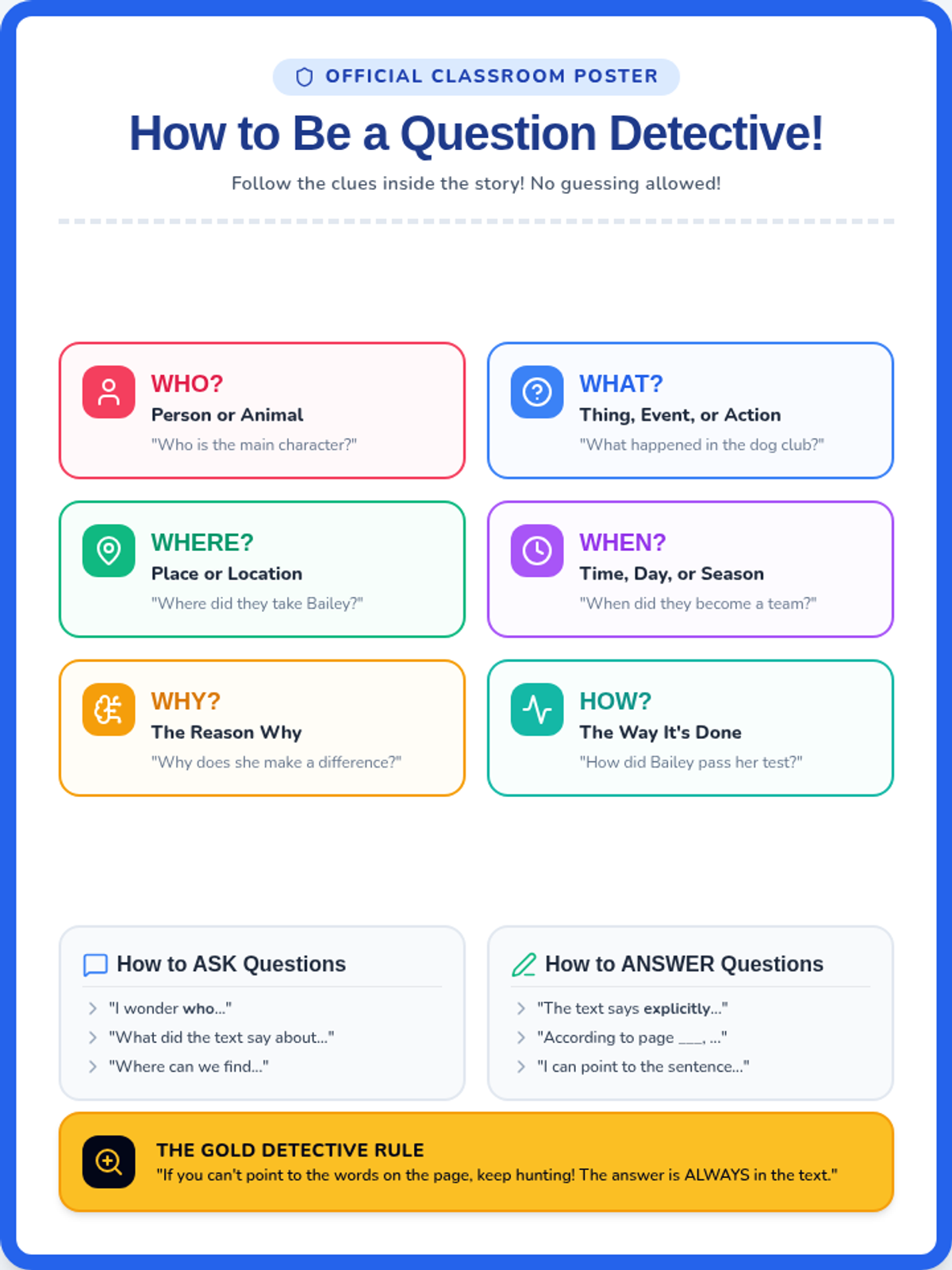
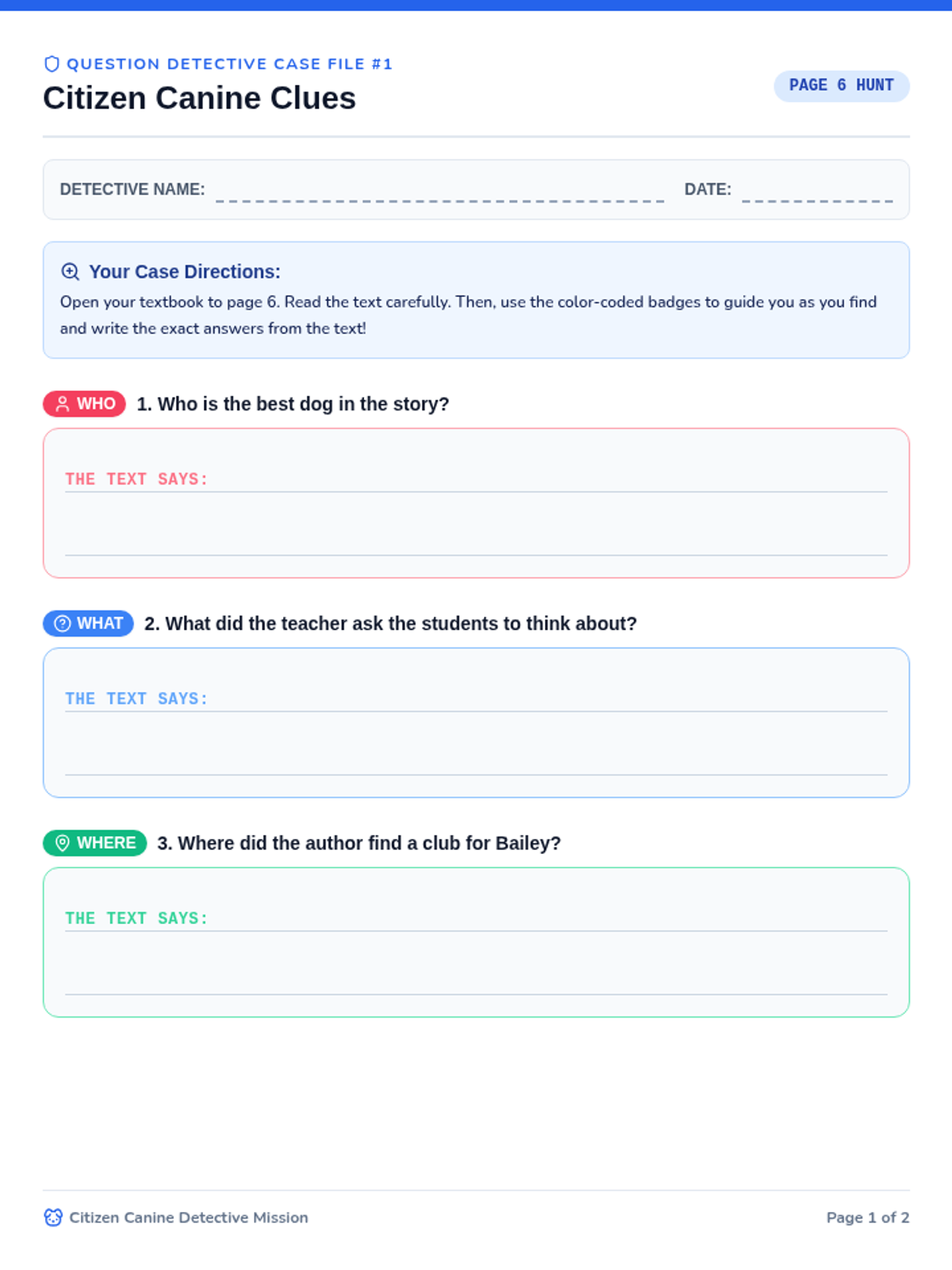
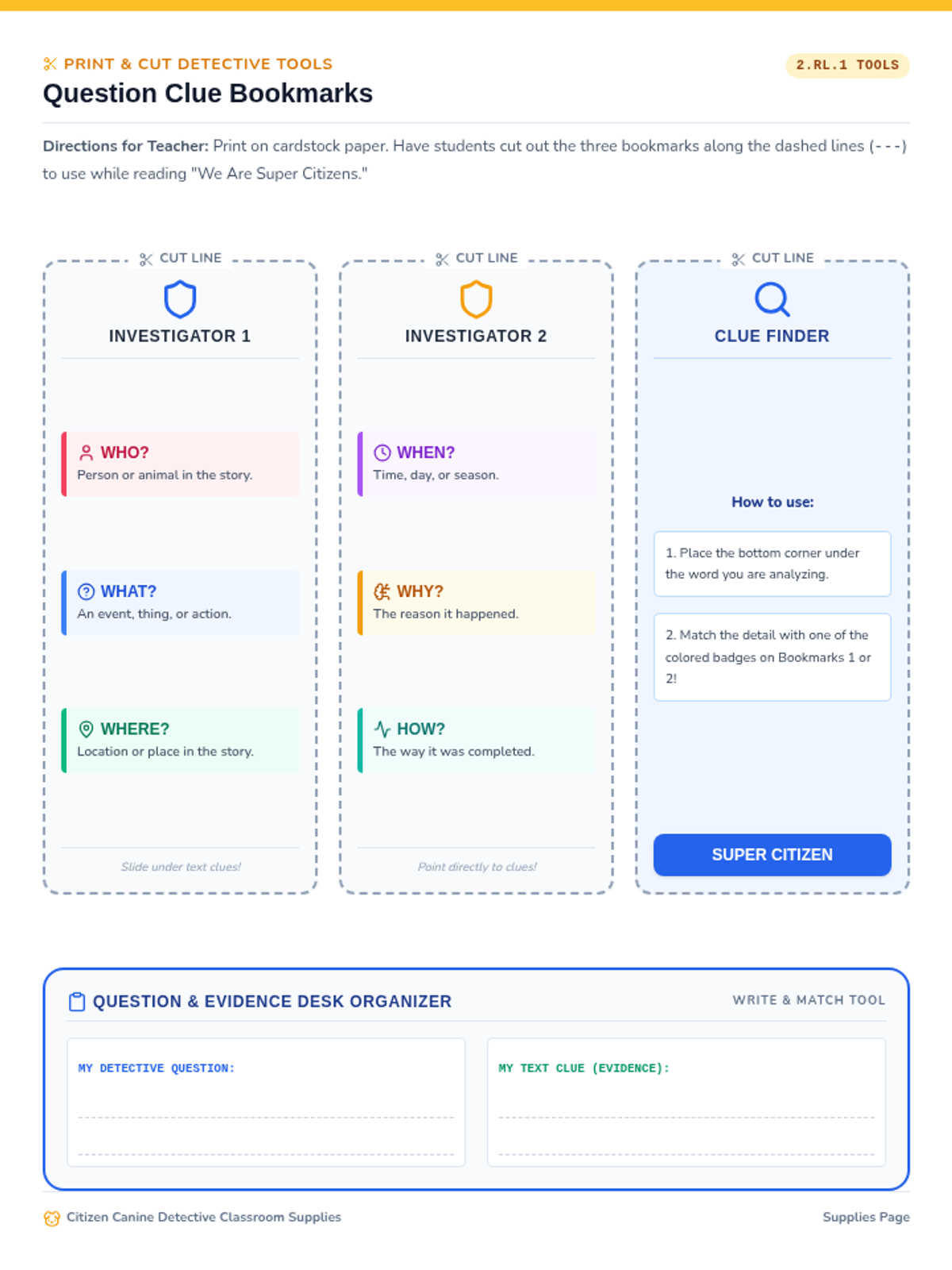
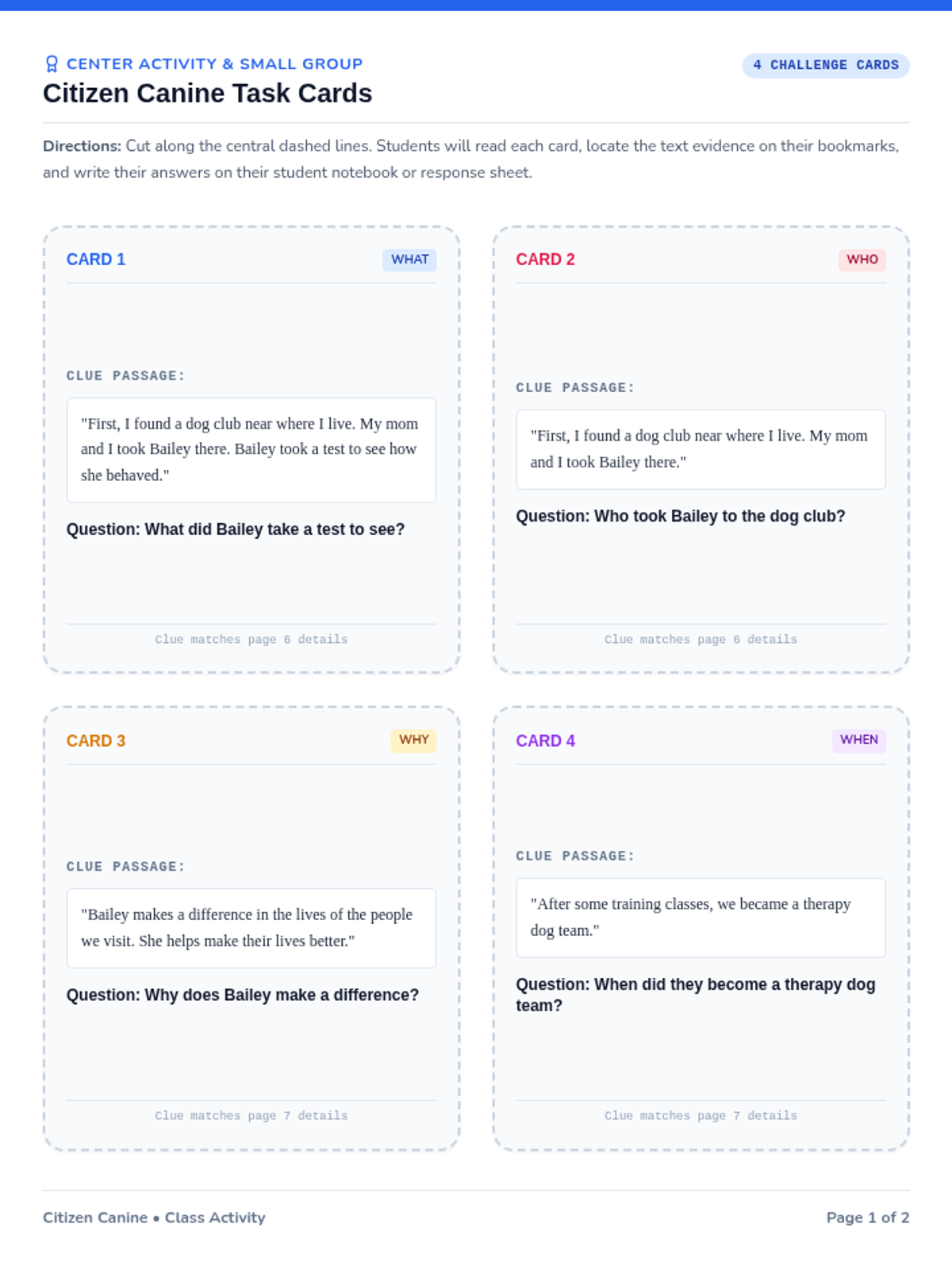
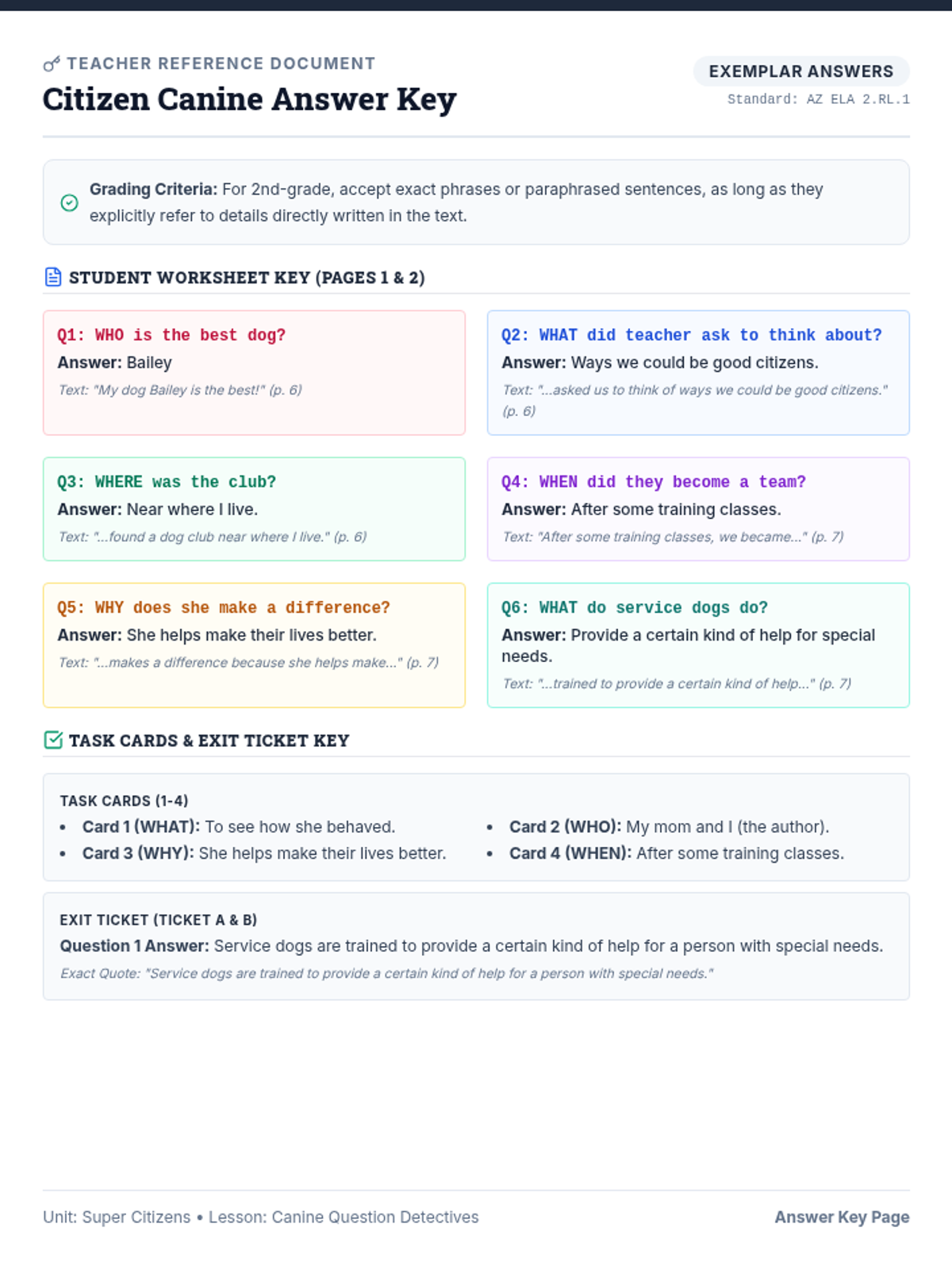
An introductory lesson teaching 2nd-grade students how to ask and answer Who, What, Where, When, Why, and How questions using the text 'We Are Super Citizens'. Students learn to find explicit clues in the story using a fun canine detective theme.
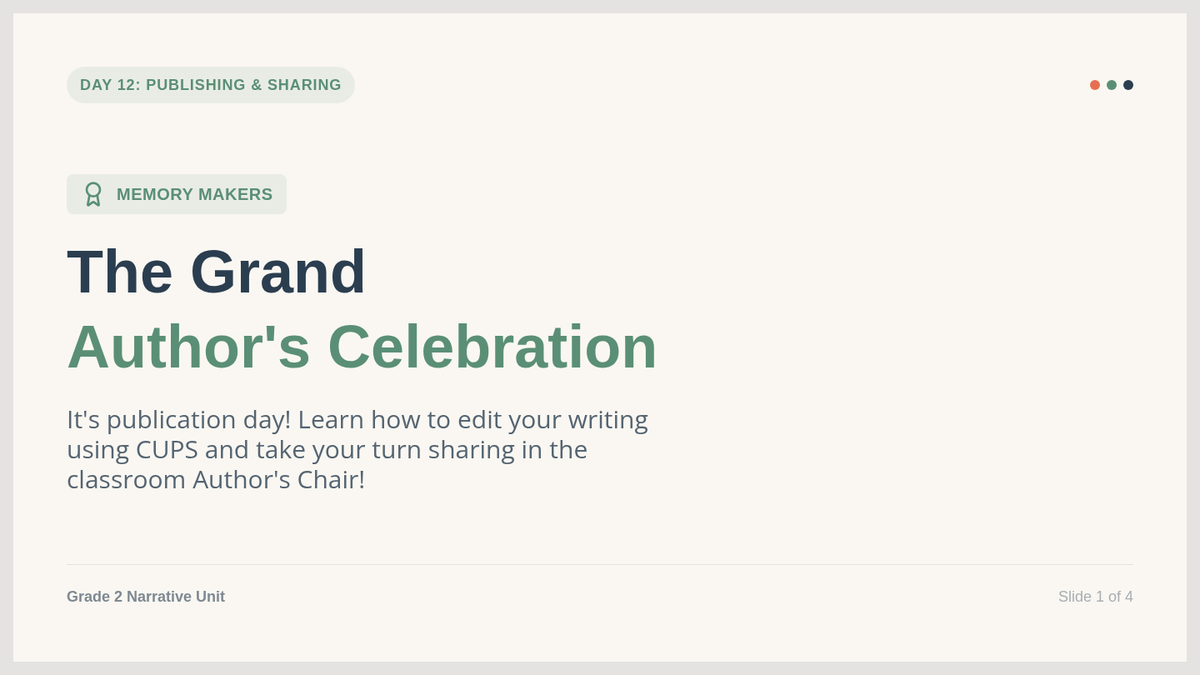
Day 12. Students use their published writer's checklist to peer-edit, polish their stories, and share them in the classroom Author's Chair celebration.
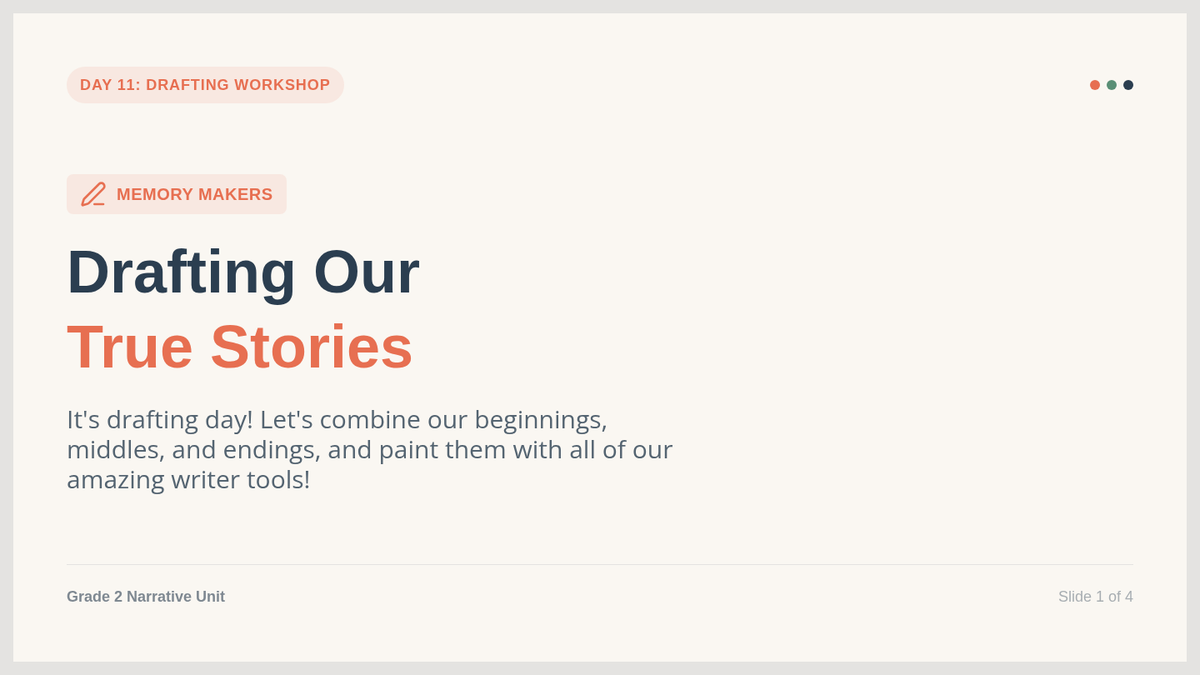
Day 11. Students draft their complete narrative booklet, incorporating their exciting hook, transitions, senses, dialogue, and satisfying endings.
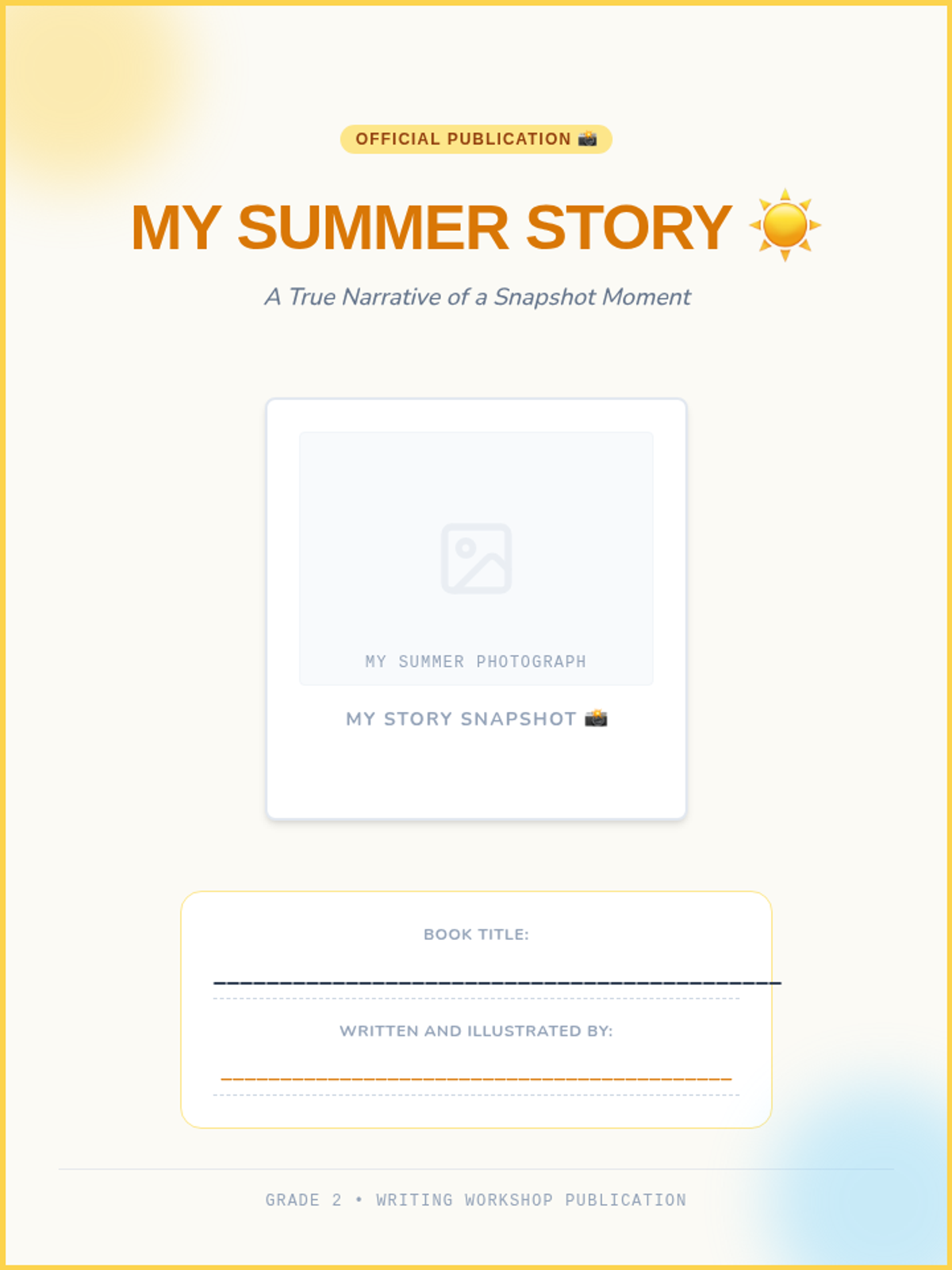
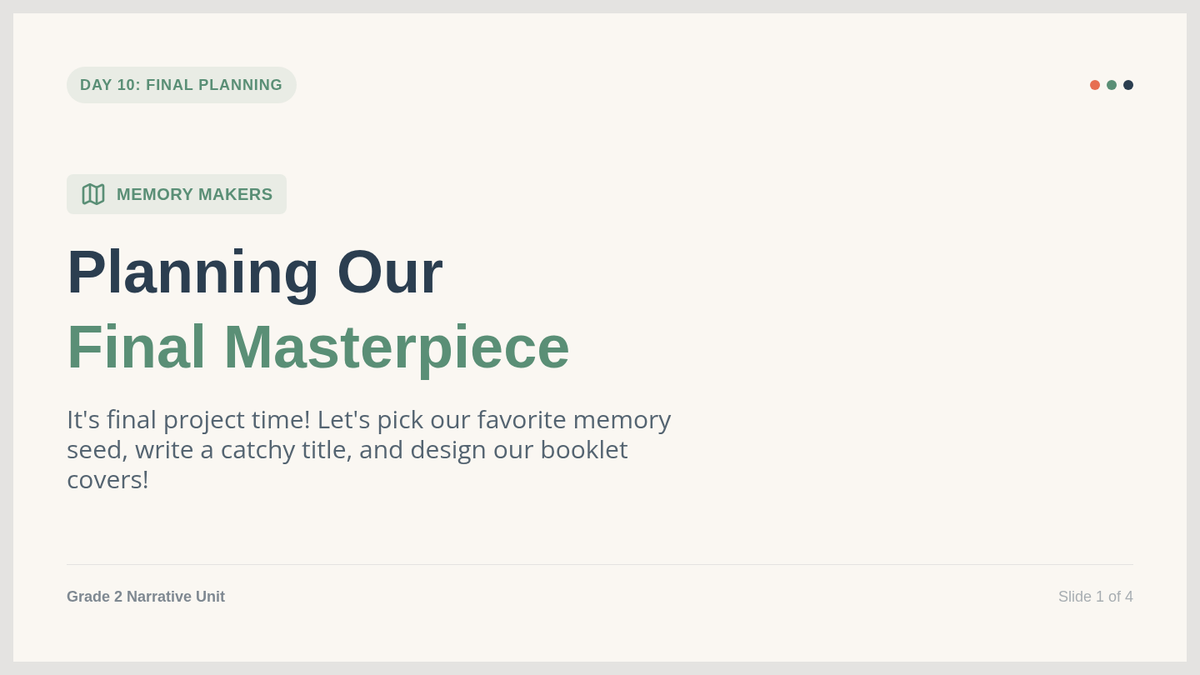
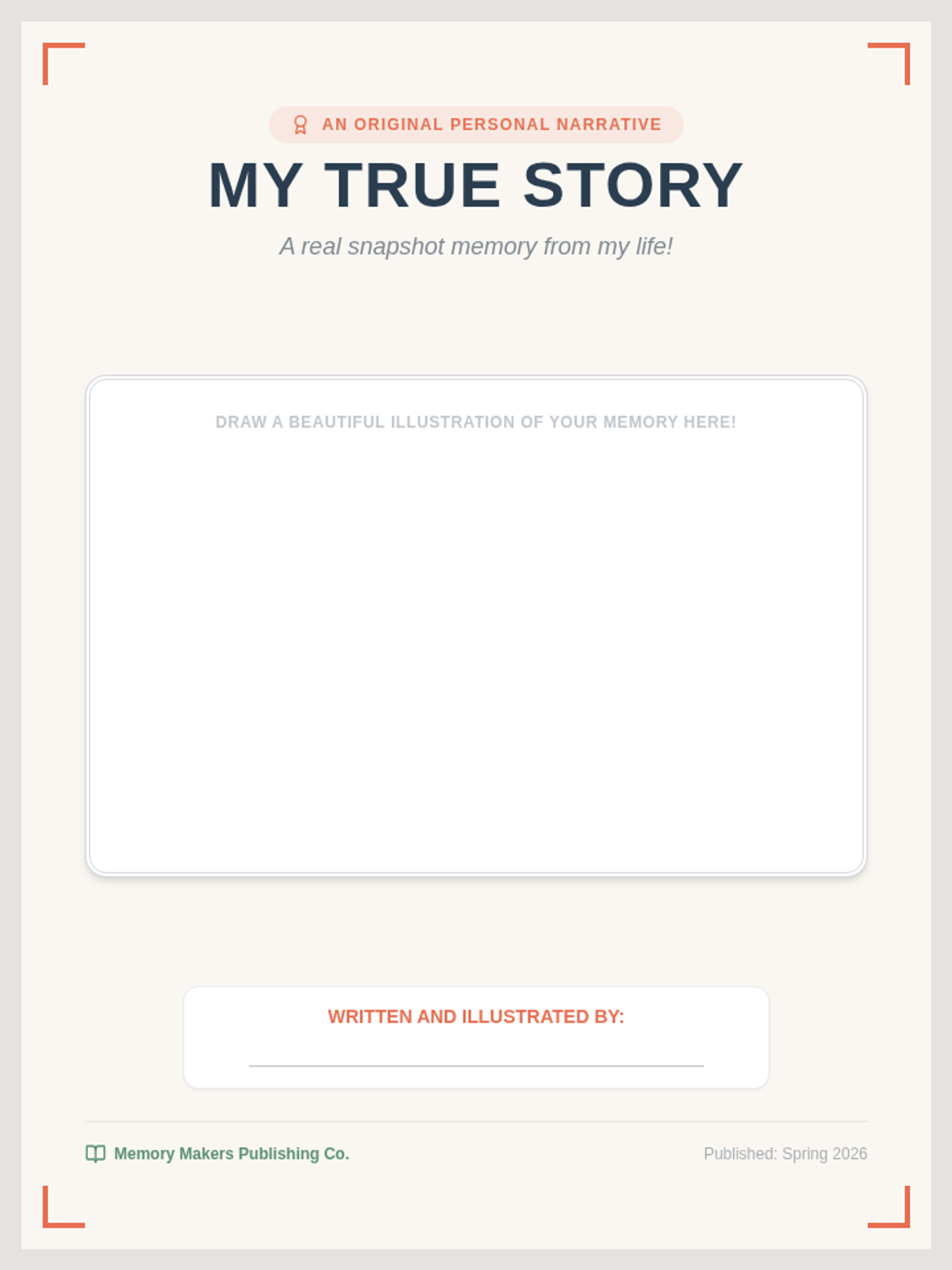
Day 10. Students select their absolute favorite seed story, brainstorm details, and design their final cover page.