Students go back into their narrative draft to add external actions (Show, Don't Tell) that bring their summer moments to life.
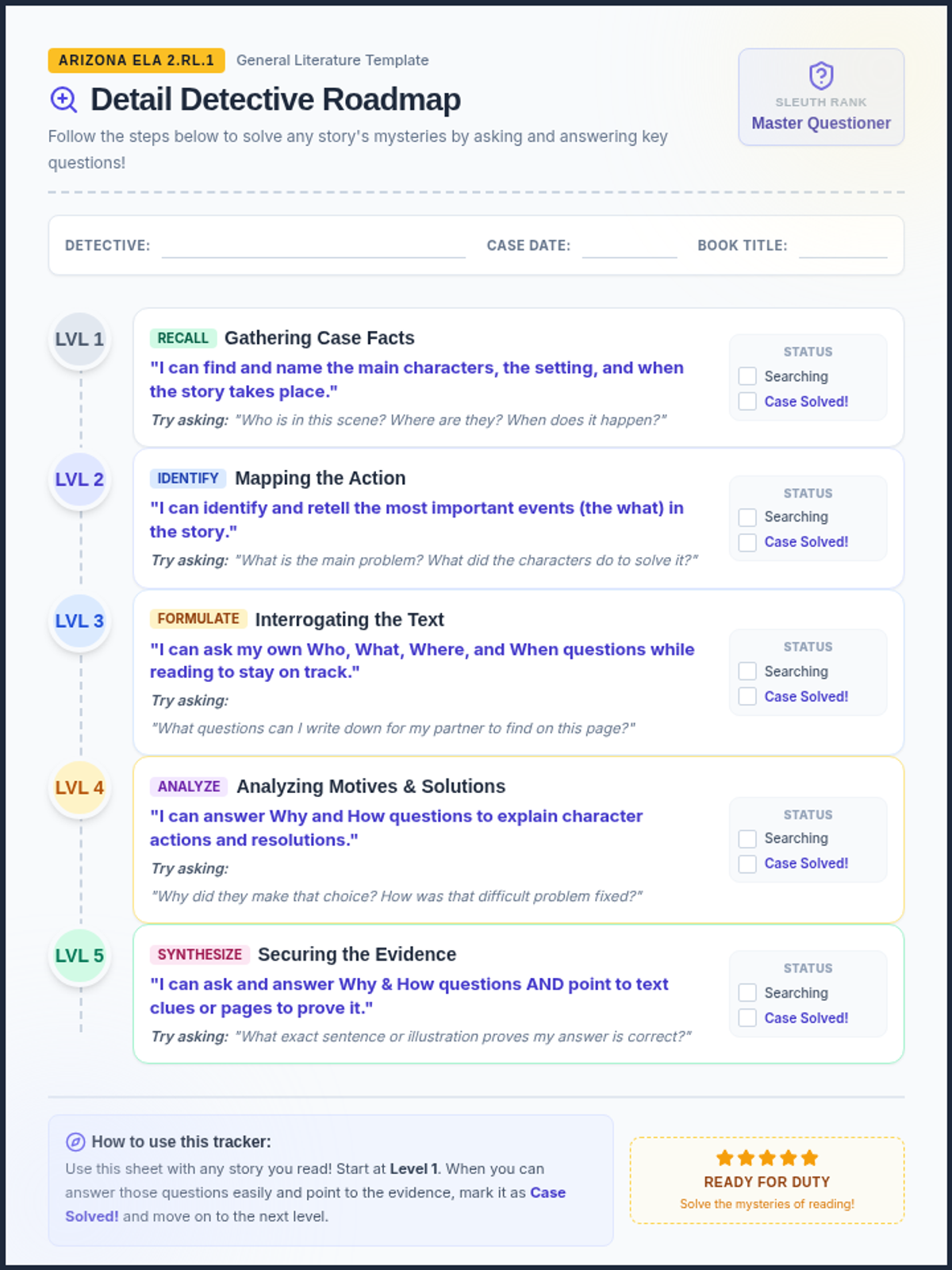
A lesson focused on teaching students how to ask and answer who, what, where, when, why, and how questions using a progression of student-friendly learning targets.
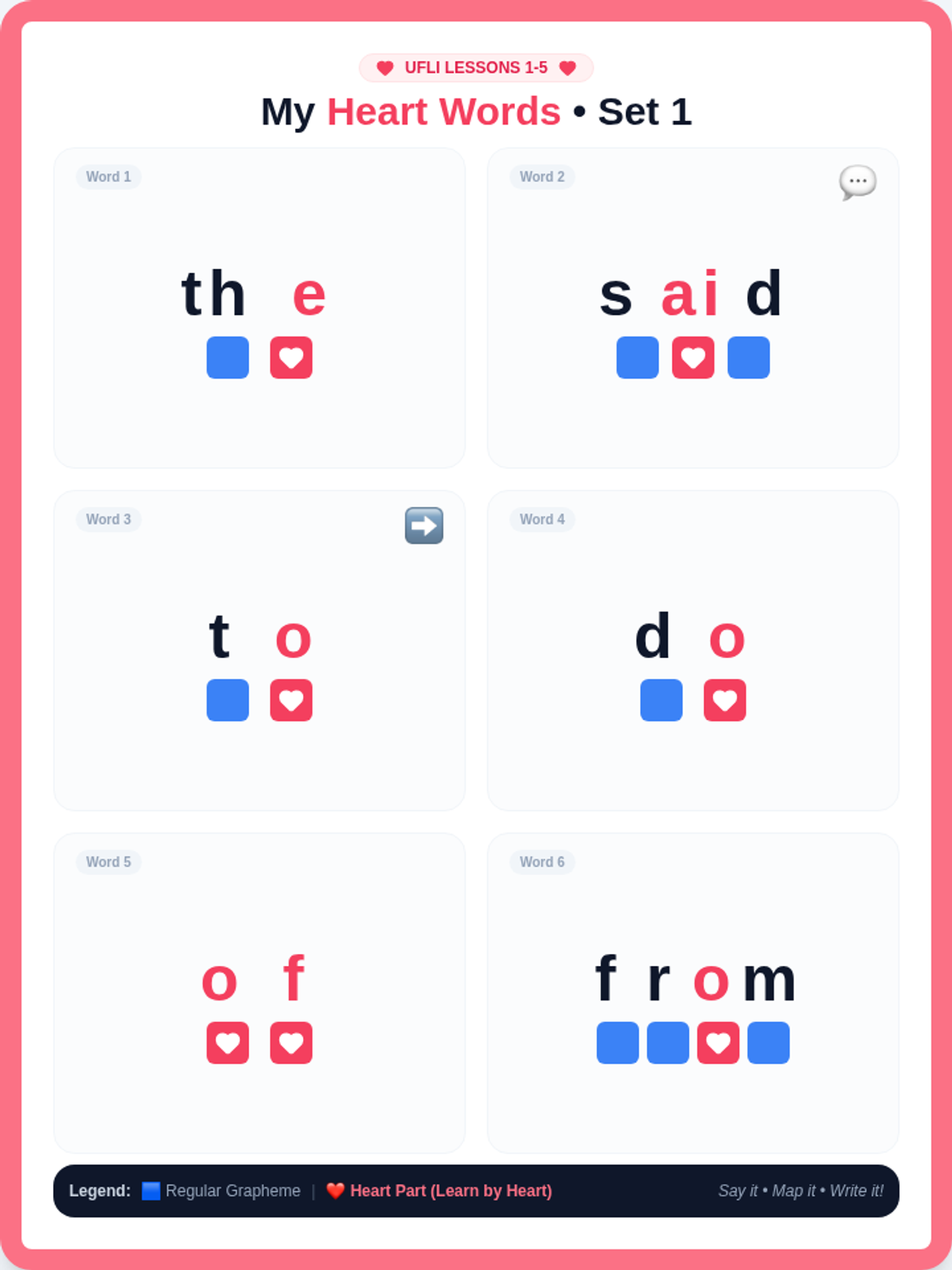
A collection of visual anchor charts and posters for UFLI foundations heart words, designed to support students in orthographic mapping with clear visuals and phonetic cues.
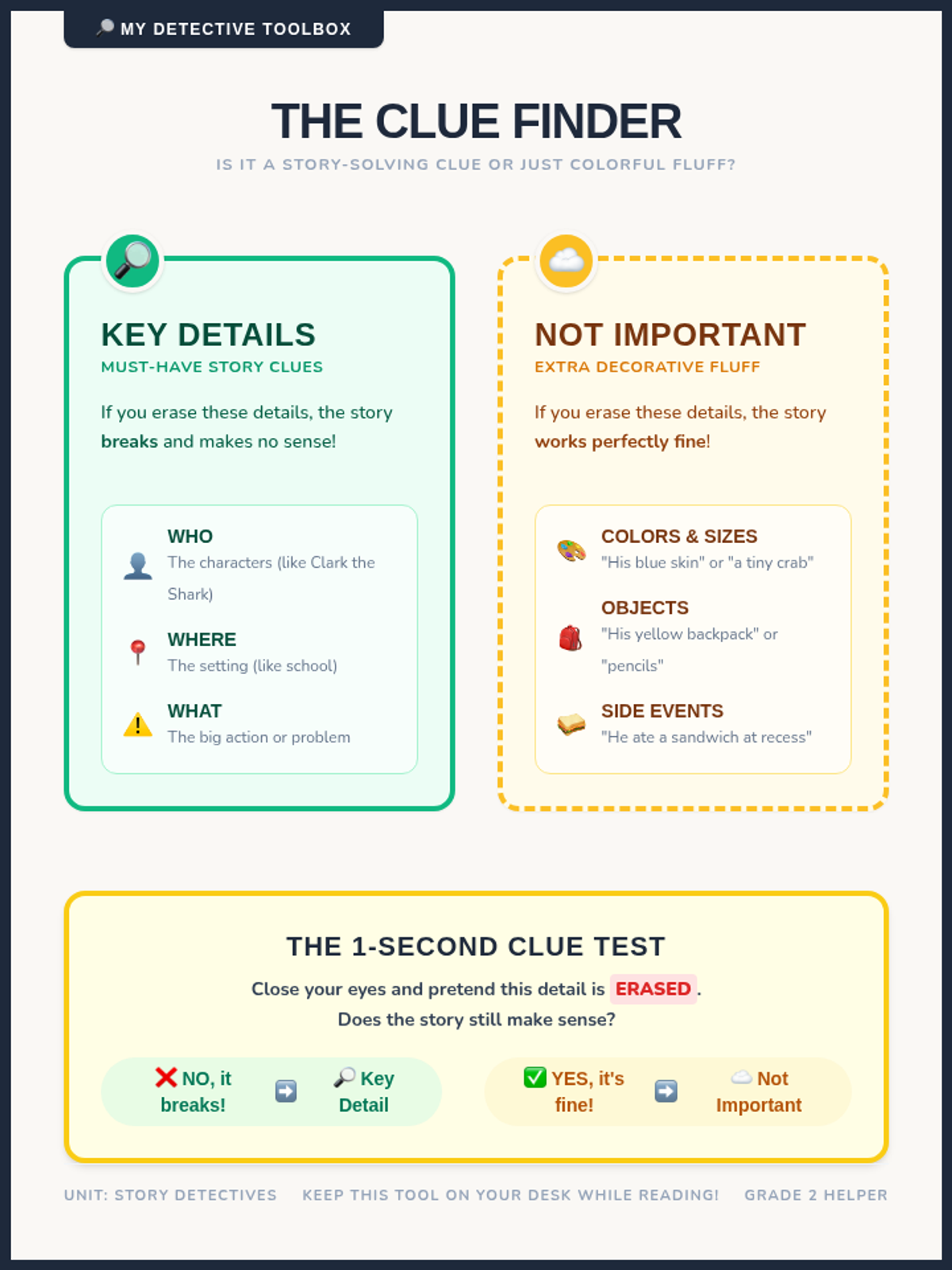
A lesson designed for second graders to distinguish between key details (character, setting, key plot points) and unimportant extra details (fluff) using a fun mystery detective theme.
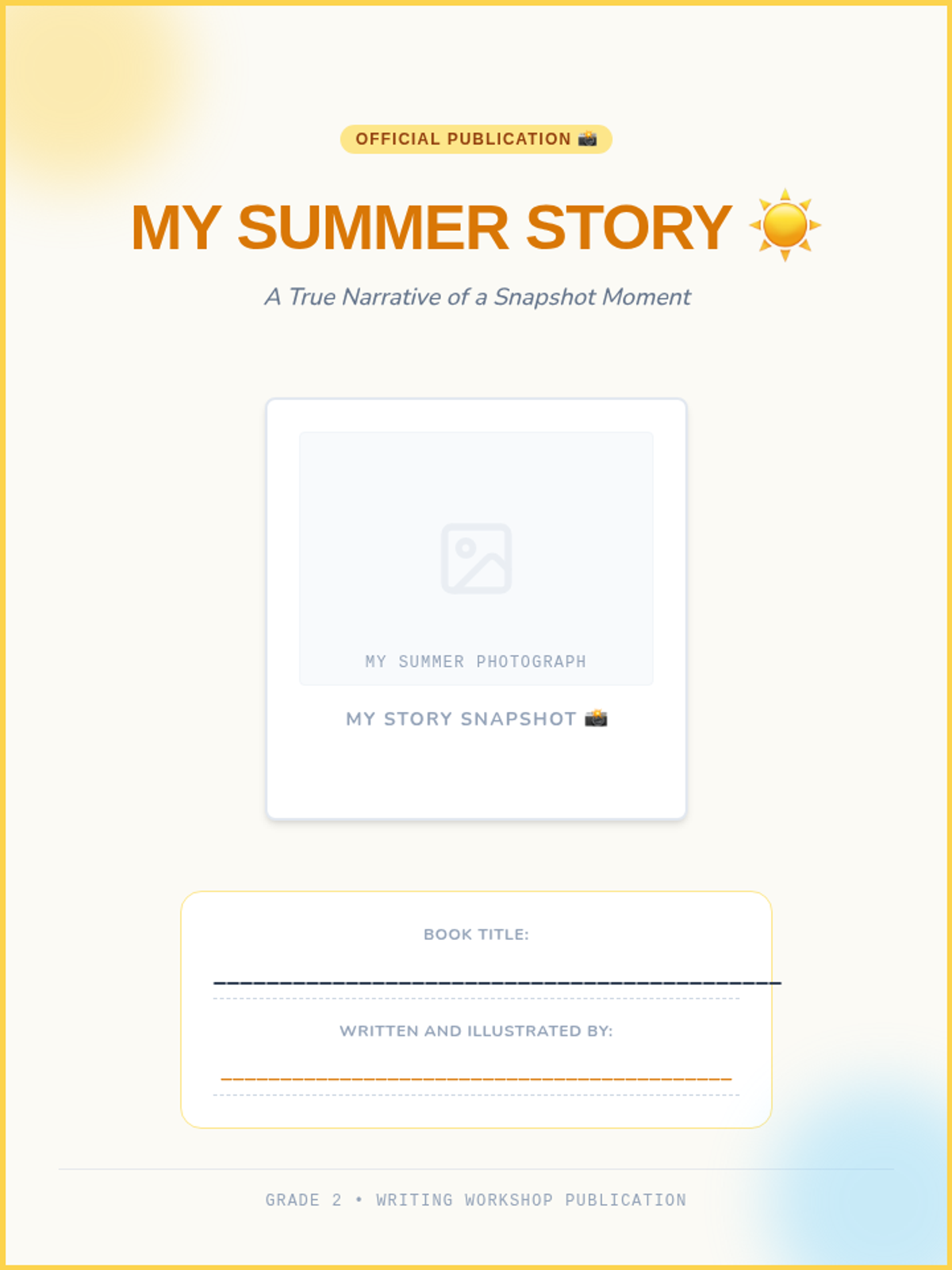
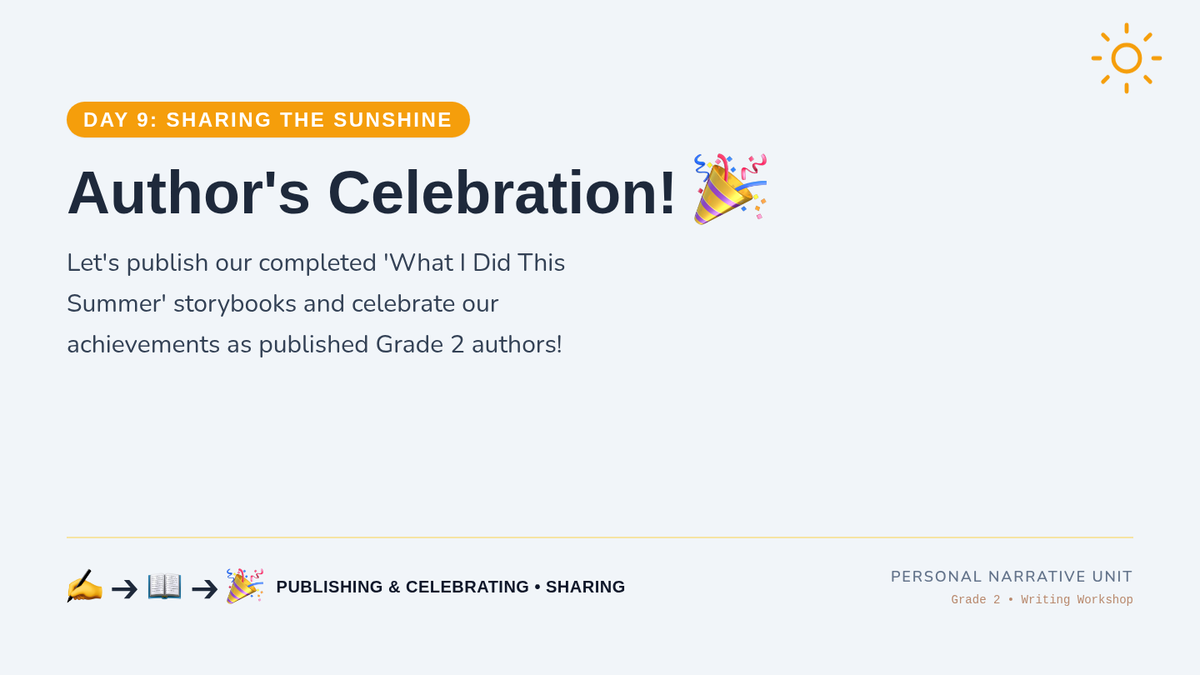
Students publish and share their completed 'What I Did This Summer' stories with their classmates, celebrating their growth as narrative writers.
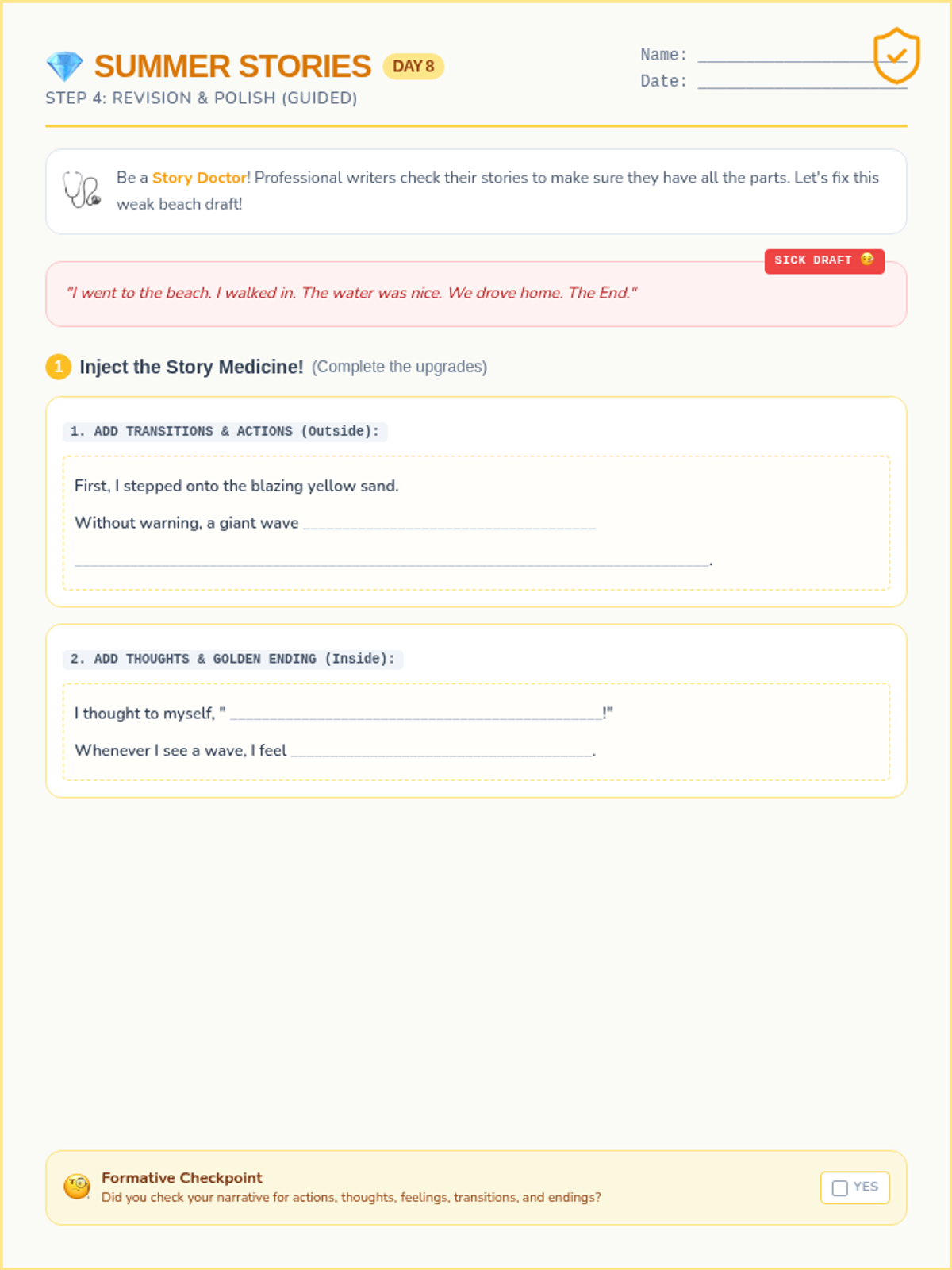
Students review their completed narrative drafts with a checklist, checking for actions, thoughts, feelings, transition words, and a strong conclusion, then writing their final polished draft.
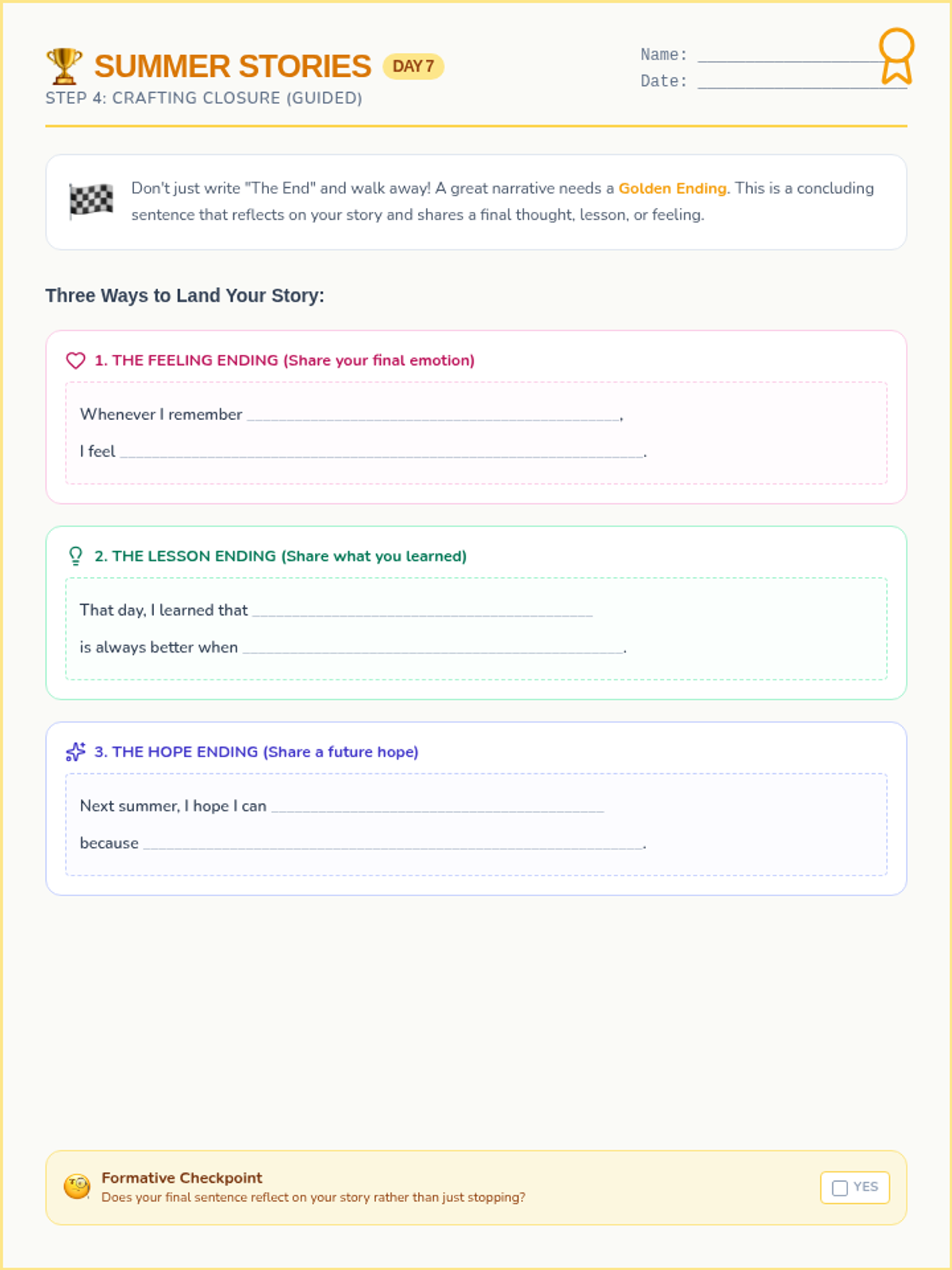
Students learn how to write a satisfying concluding sentence that reflects on their summer story and leaves the reader with a final thought, lesson, or feeling.
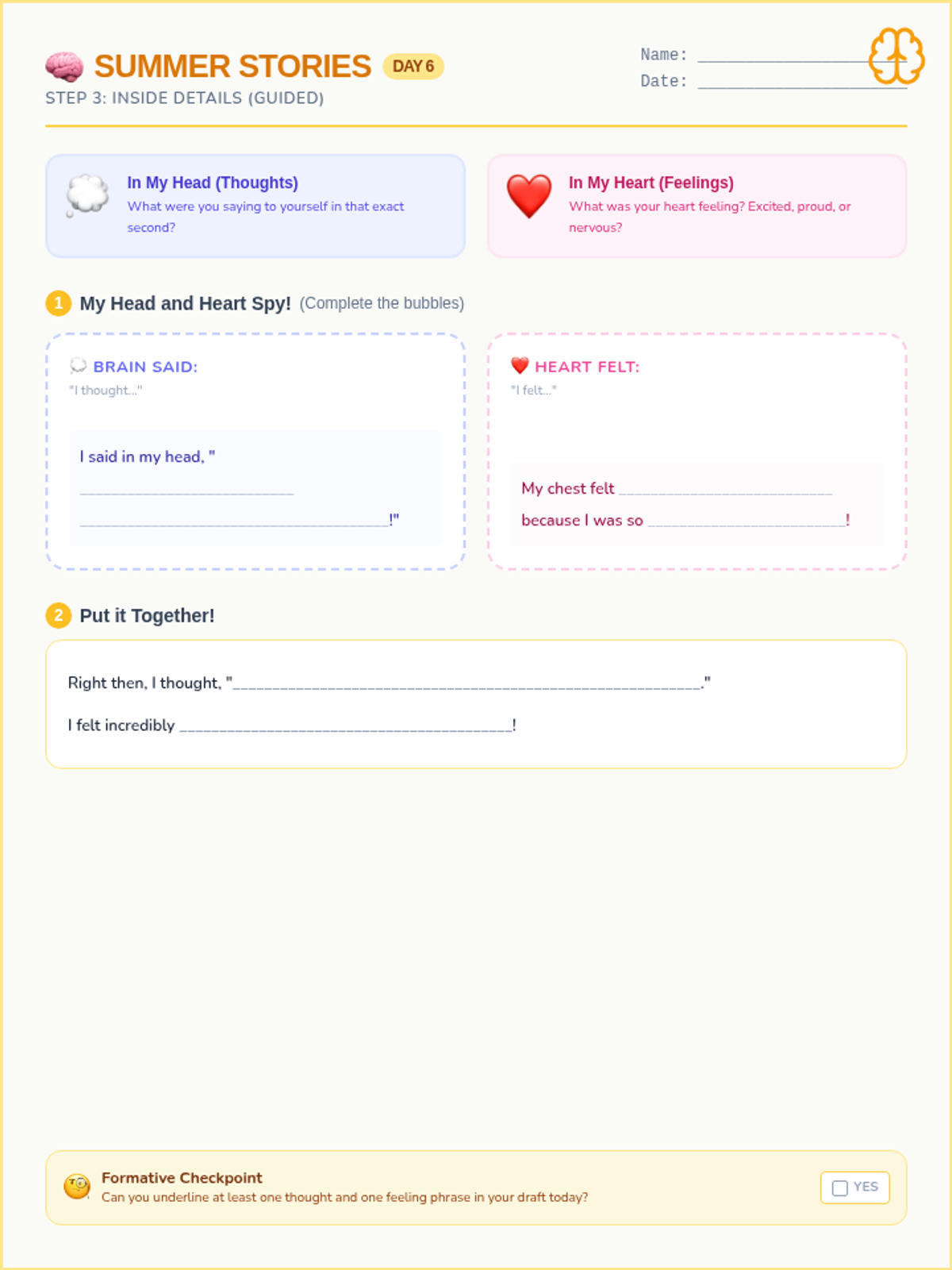
Students elaborate their narratives by adding internal thoughts and feelings, ensuring their emotional response to the summer event is clear.
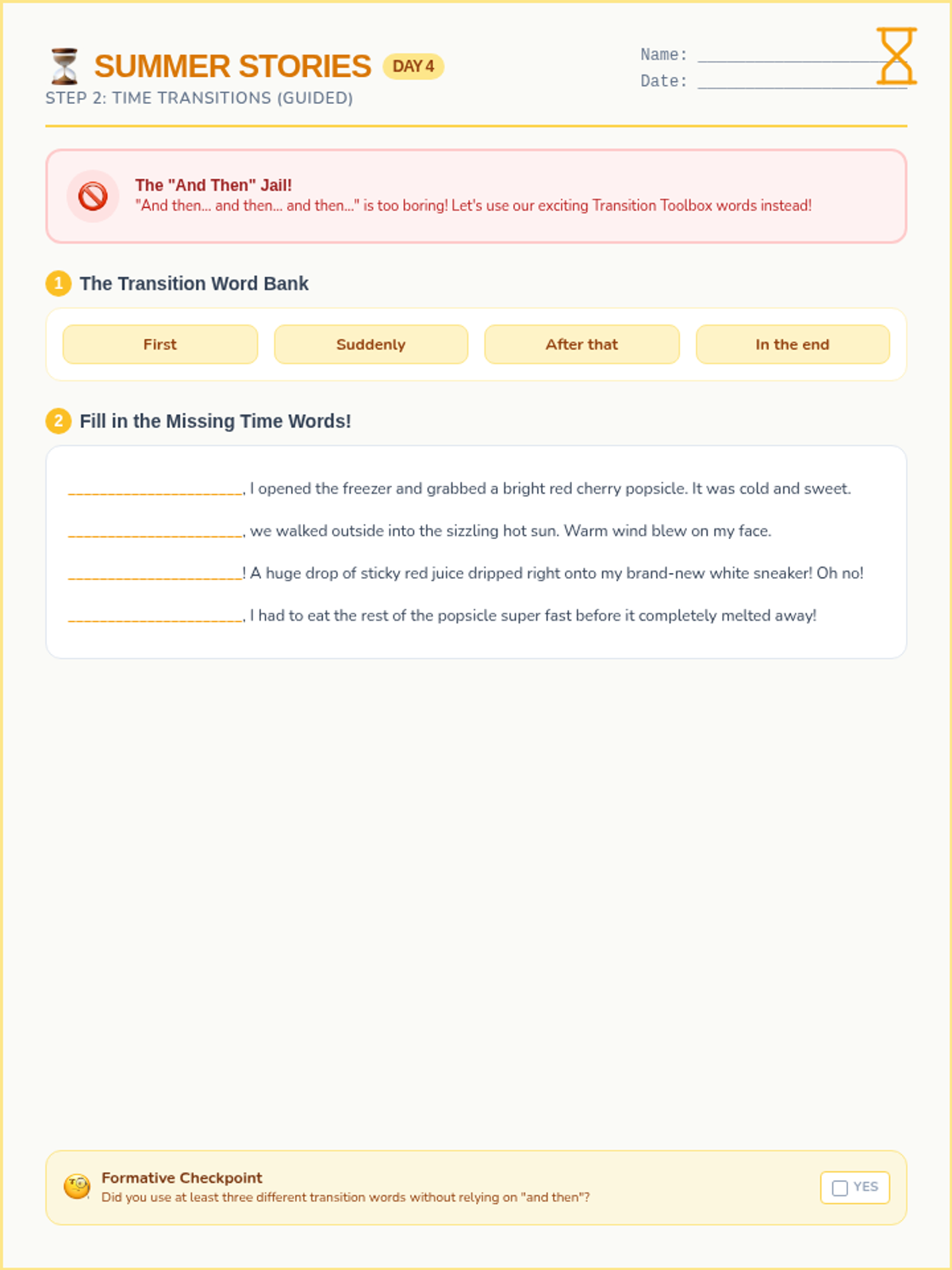
Students learn to use a variety of temporal words (First, Later, Suddenly, After that) to build a smooth, chronological flow.
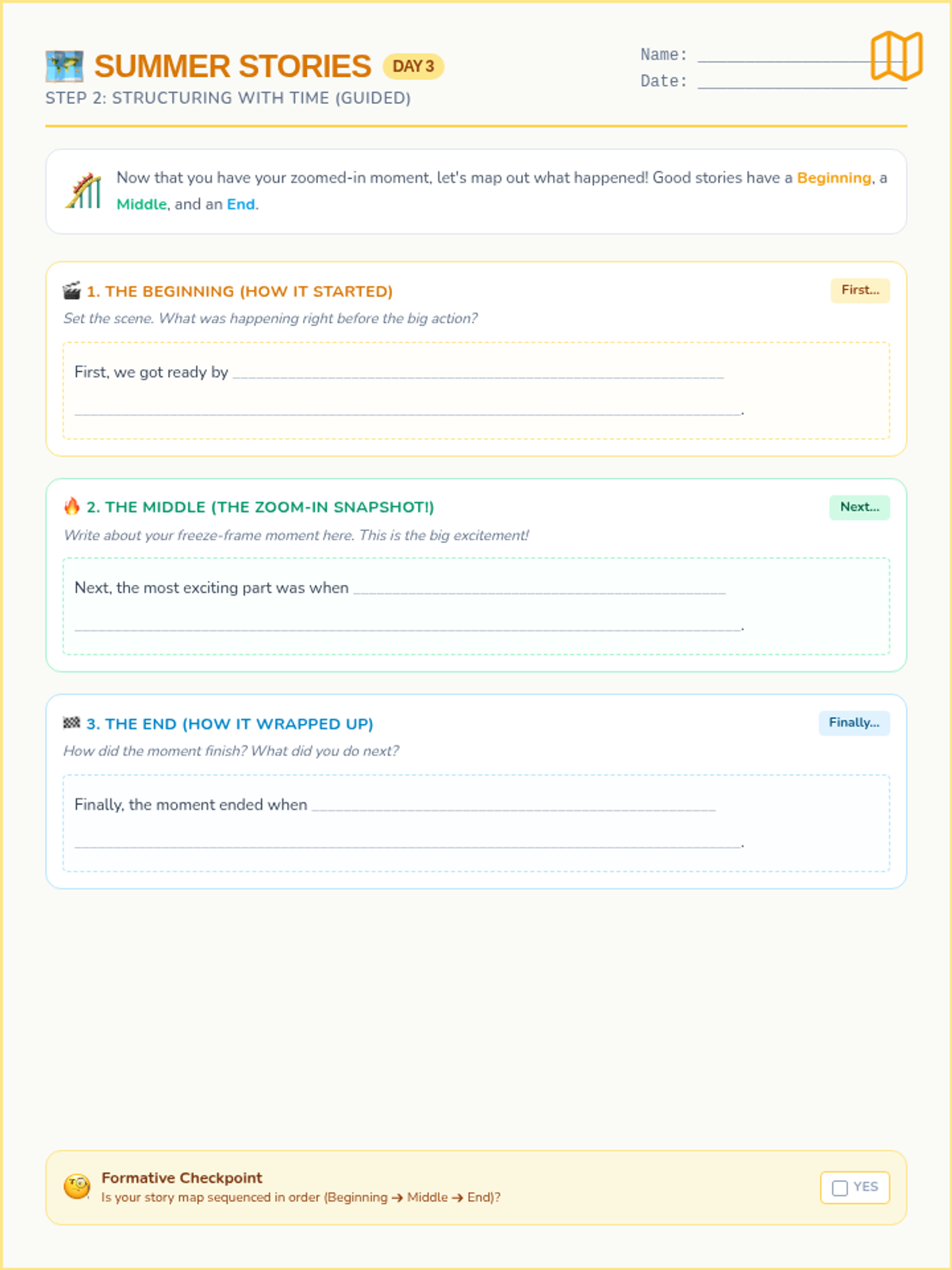
Students sequence their single seed story into a logical 3-part narrative map (beginning, middle, and end) to prepare for drafting.