A straightforward, accessible lesson for high school seniors on how to organize an academic paper using a 'Roadmap' metaphor. Focuses on clear claims and supporting evidence without overly complex hierarchical systems.
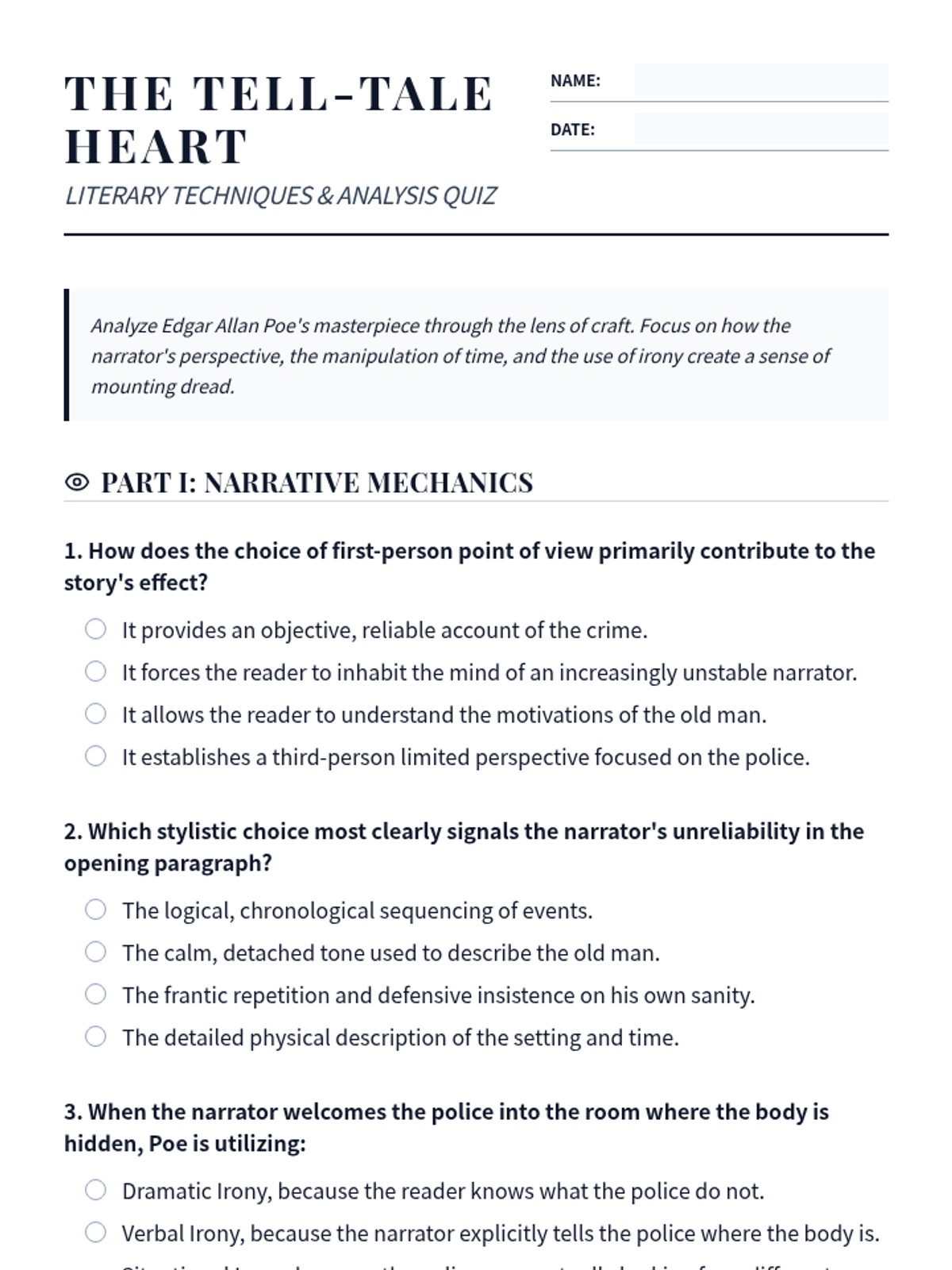
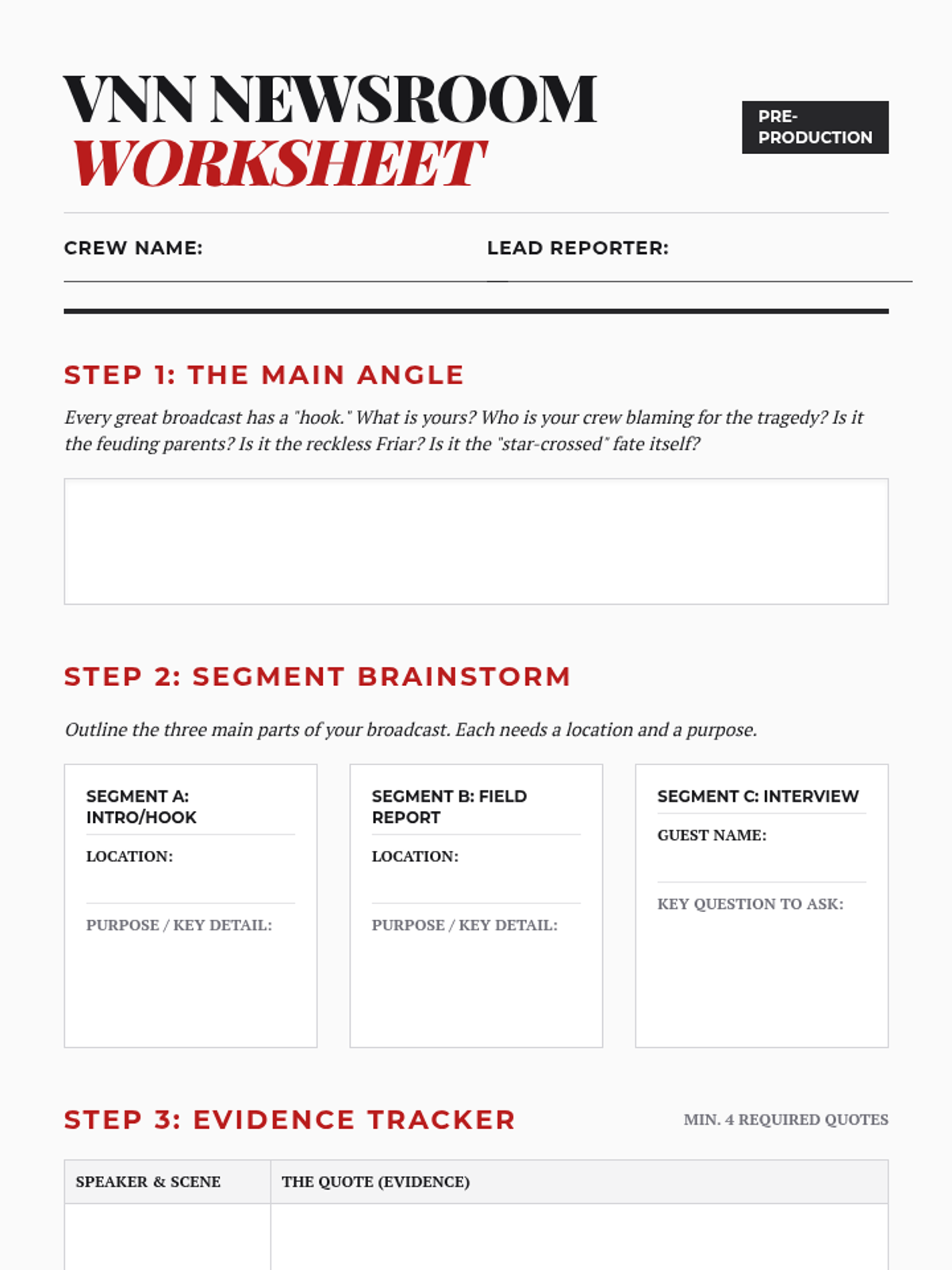
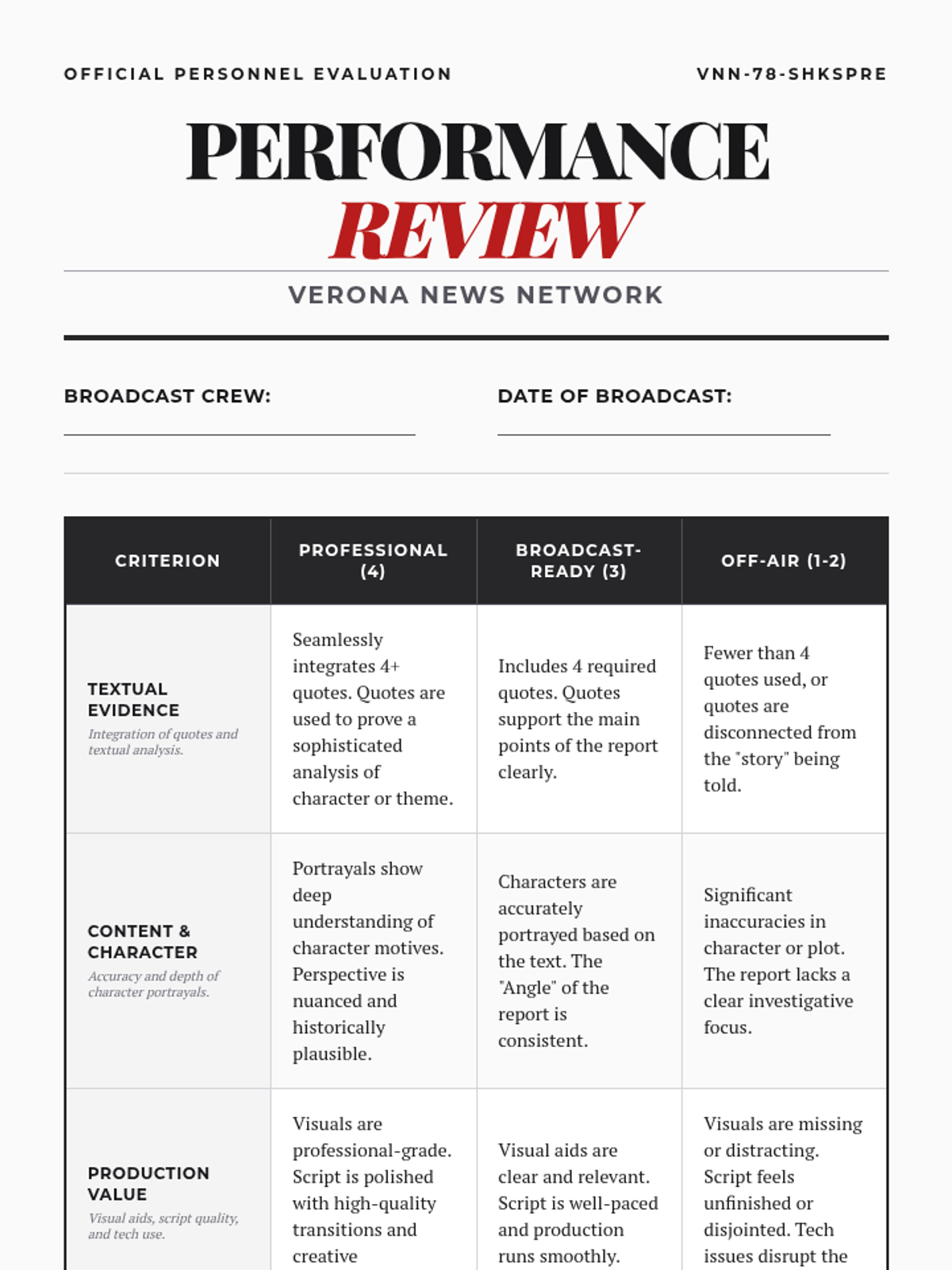
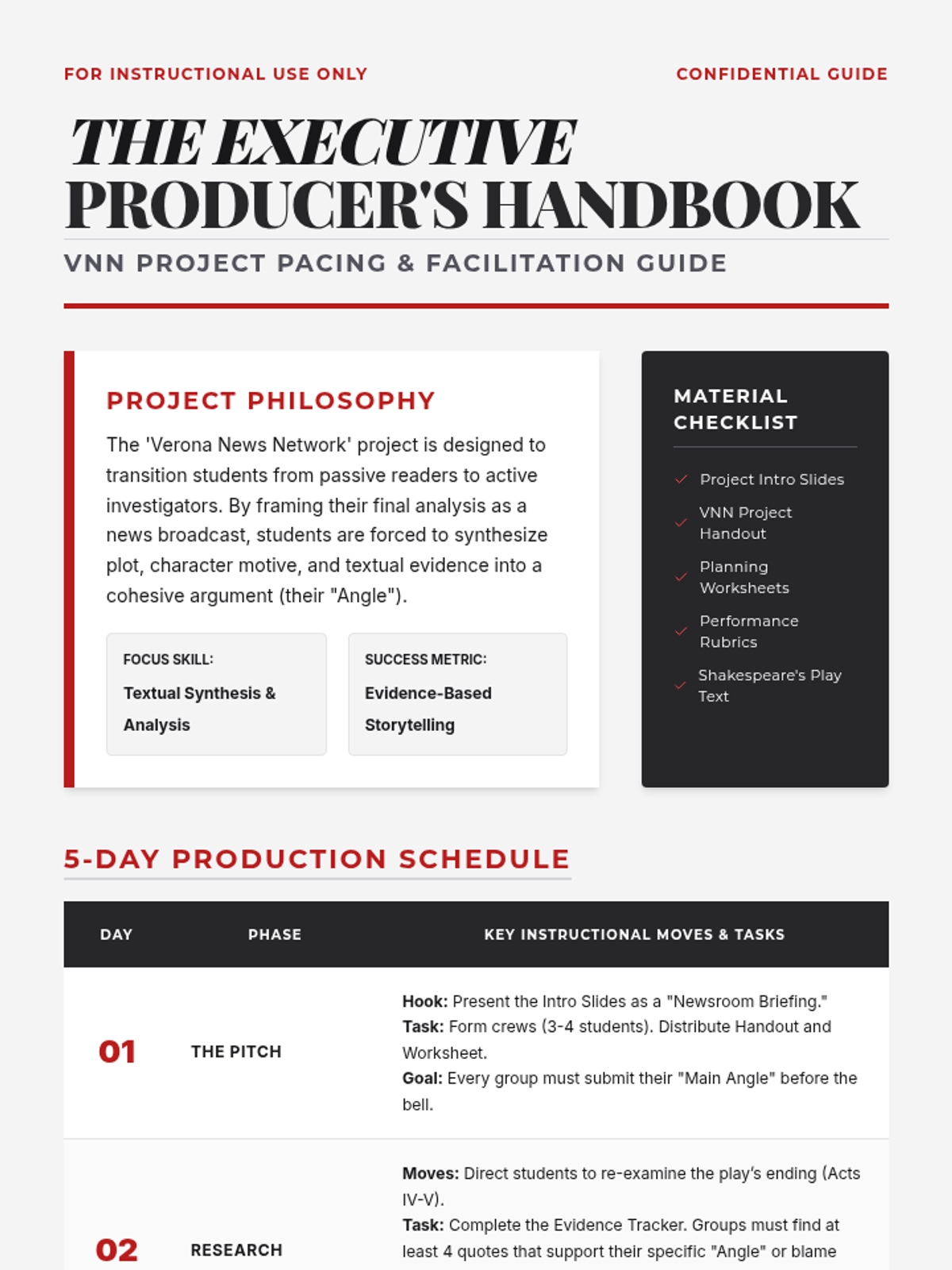
This lesson explores the themes of impulsivity and inherited conflict through a short story that mirrors Romeo and Juliet. Students analyze character motivations, figurative language, and plot structure to prepare for the English 1 EOC exam.
A comprehensive revising and editing practice focused on English 1 Texas EOC skills, featuring a student-centered personal narrative passage and exam-style questions.
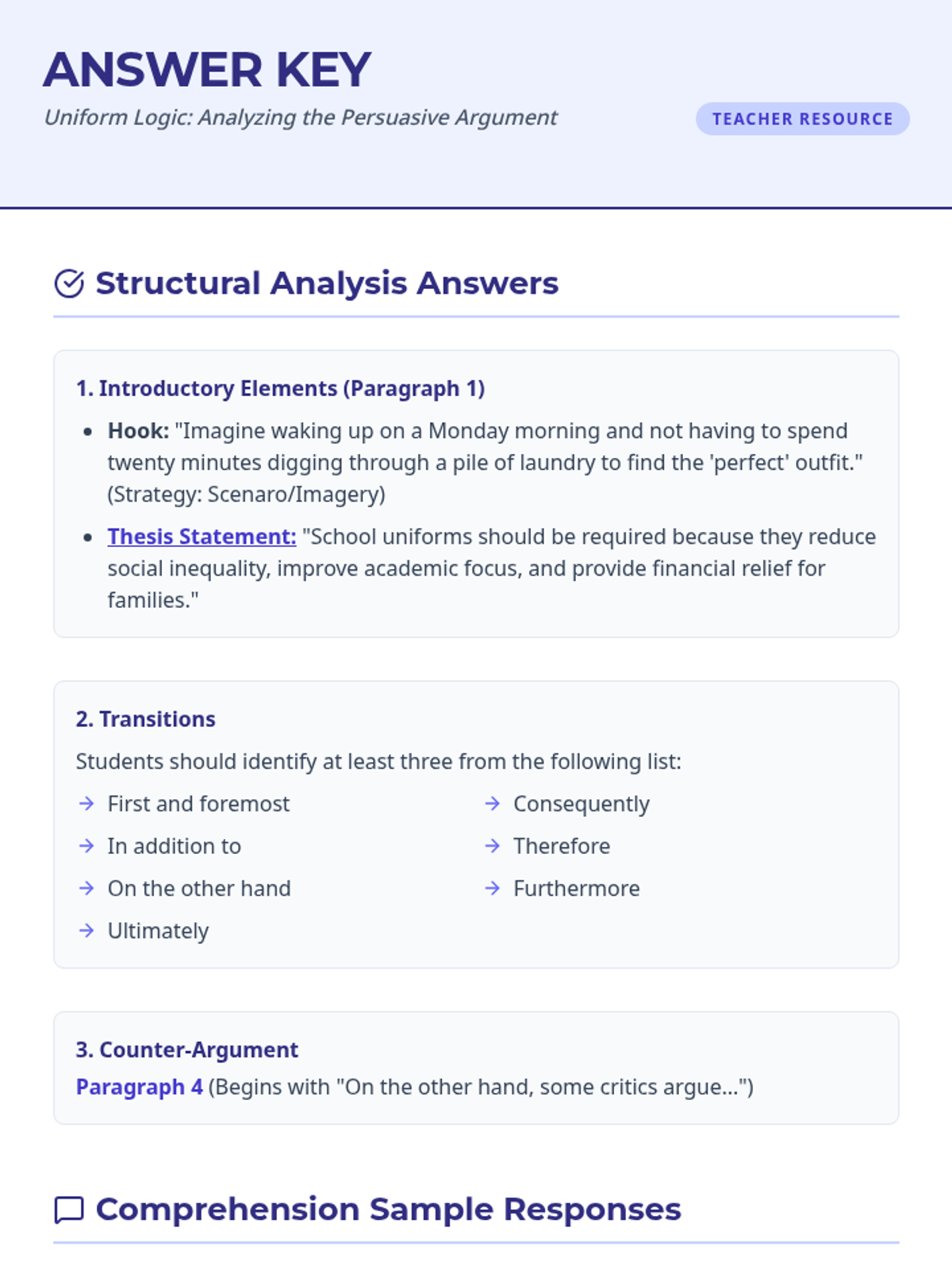
This lesson focuses on analyzing argumentative texts through the lens of rhetorical devices, author's purpose, and structural choices. Students will engage in collaborative discussions, analyze a persuasive essay on the social impact of fast fashion, and practice EOC-style assessment questions, including a Short Constructed Response (SCR).
A comprehensive practice session for English 1 EOC revising and editing, featuring a medical-themed approach to 'curing' common writing ailments like poor sentence structure, tense issues, and punctuation errors.
This lesson prepares students for the English 1 EOC exam by analyzing a poem and an informational text about nature and ecosystems. It includes test-style questions, a short constructed response, and a collaborative speaking activity.
A 45-minute TELPAS-aligned lesson for 9th-10th grade ELLs exploring the legend of Dracula through sensory language, classic literature, and creative craft. Students will compare cinematic portrayals, analyze text, and build their own 'shadow bat' while practicing speaking and writing skills.
A 45-minute TELPAS-aligned lesson for 9th and 10th graders that explores the Star Wars universe through sensory language, character creation, and a hands-on puppet craft. Students practice all four language domains while navigating the light and dark sides of the Force.
A 45-minute ESOL lesson exploring the Battle of Puebla and Cinco de Mayo. Students analyze informational texts and poetry to answer essential questions about making oneself heard and the value of research, culminating in a sensory writing and speaking activity.
A conclusion to the unit exploring the tragic resolution in Chapter 8. Students analyze themes of loyalty, consequence, and the ultimate failure of a corrupted American Dream.
An analysis of the narrative climax in Chapter 7, focusing on the various types of conflict that erupt during the confrontation at the Plaza Hotel. Students identify the turning points for the main characters.
An exploration of Gatsby's true origins revealed in Chapter 6. Students analyze the theme of illusion versus reality and the clash between 'old money' and 'new money' social worlds.
A thematic analysis of Chapter 5, centered on the reunion of Gatsby and Daisy. Students explore themes of the past, hope, and the fine line between dreams and illusions.
An analysis of Jay Gatsby's character development in Chapter 4, focusing on the tension between his self-presentation and Nick's perception. Students explore direct and indirect characterization techniques.
An investigation into the rich symbolism present in Chapter 3 during one of Gatsby's lavish parties. Students decode the meaning behind objects like the library books and the yellow car to understand the era's superficiality.
An exploration of the contrasting settings in Chapter 2, specifically the Valley of Ashes and Myrtle Wilson's apartment. Students analyze how setting contributes to mood, characterization, and emerging themes of social decay.
An introduction to Chapter 1 of 'The Great Gatsby', focusing on Nick Carraway's point of view and the established tone. Students analyze how the narrator's perspective shapes their initial impressions of West Egg and East Egg.
A comprehensive lesson on narrative sentence variation focusing on varied beginnings, sentence combining, length modulation, and descriptive clauses. Students move from identifying monotone rhythms to crafting dynamic, flowing prose.
Synthesizing the relationship between point of view and plot. Students use their annotations to respond to a short constructed response prompt about how the omniscient perspective impacts the selection's development.
Diving deeper into figurative language including metaphors, personification, and situational irony. Students finish the story and evaluate the symbolic significance of the 'open window' and 'heart trouble'.
Introduction to 3rd person omniscient point of view and sensory imagery. Students begin reading the text and analyze how Chopin uses the setting outside the open window to reflect Louise Mallard's internal shift.