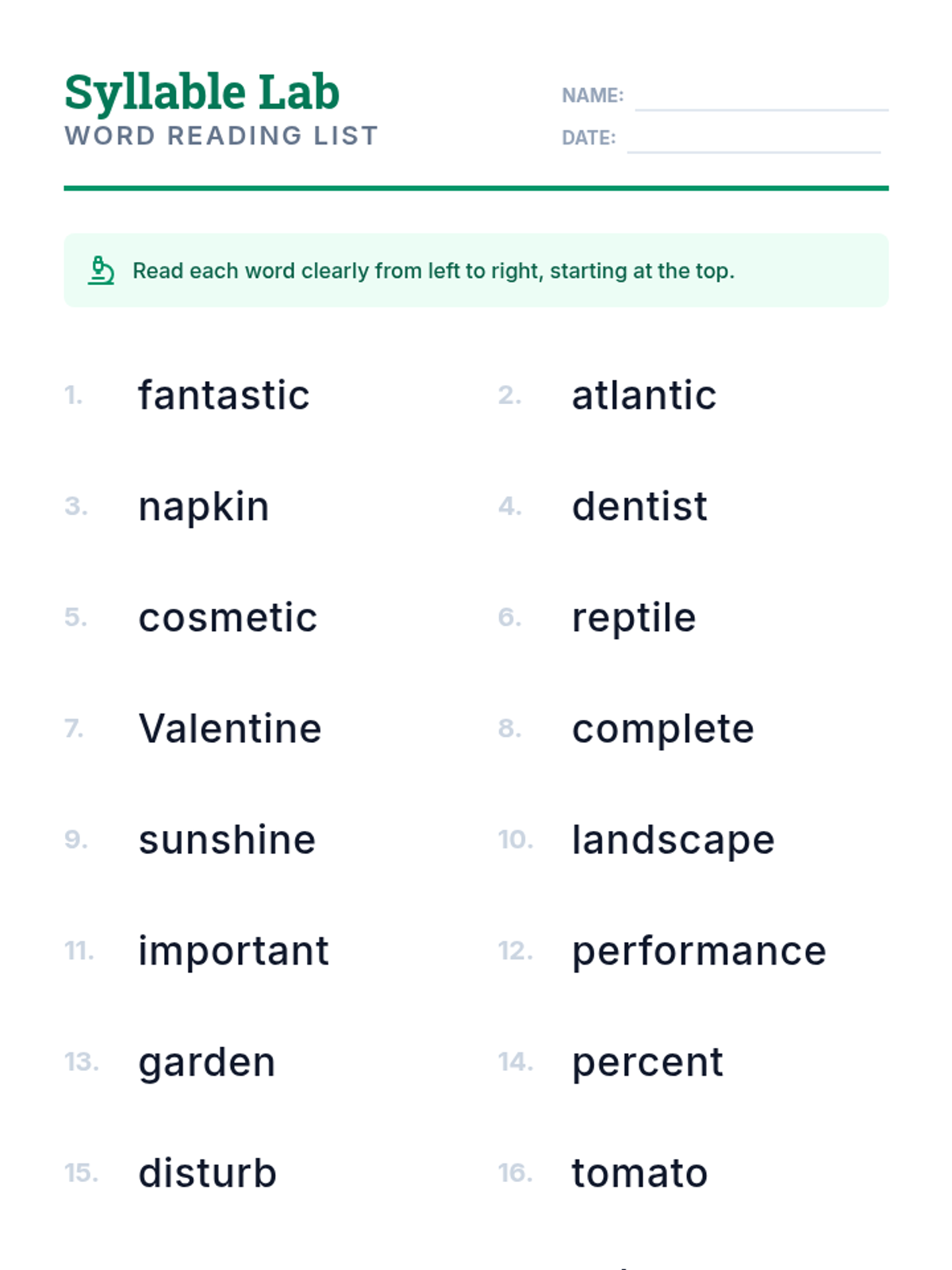
This lesson focuses on identifying and decoding multisyllabic words containing open syllables. Students will learn the 'open gate' rule to improve their reading fluency and word-solving stamina.
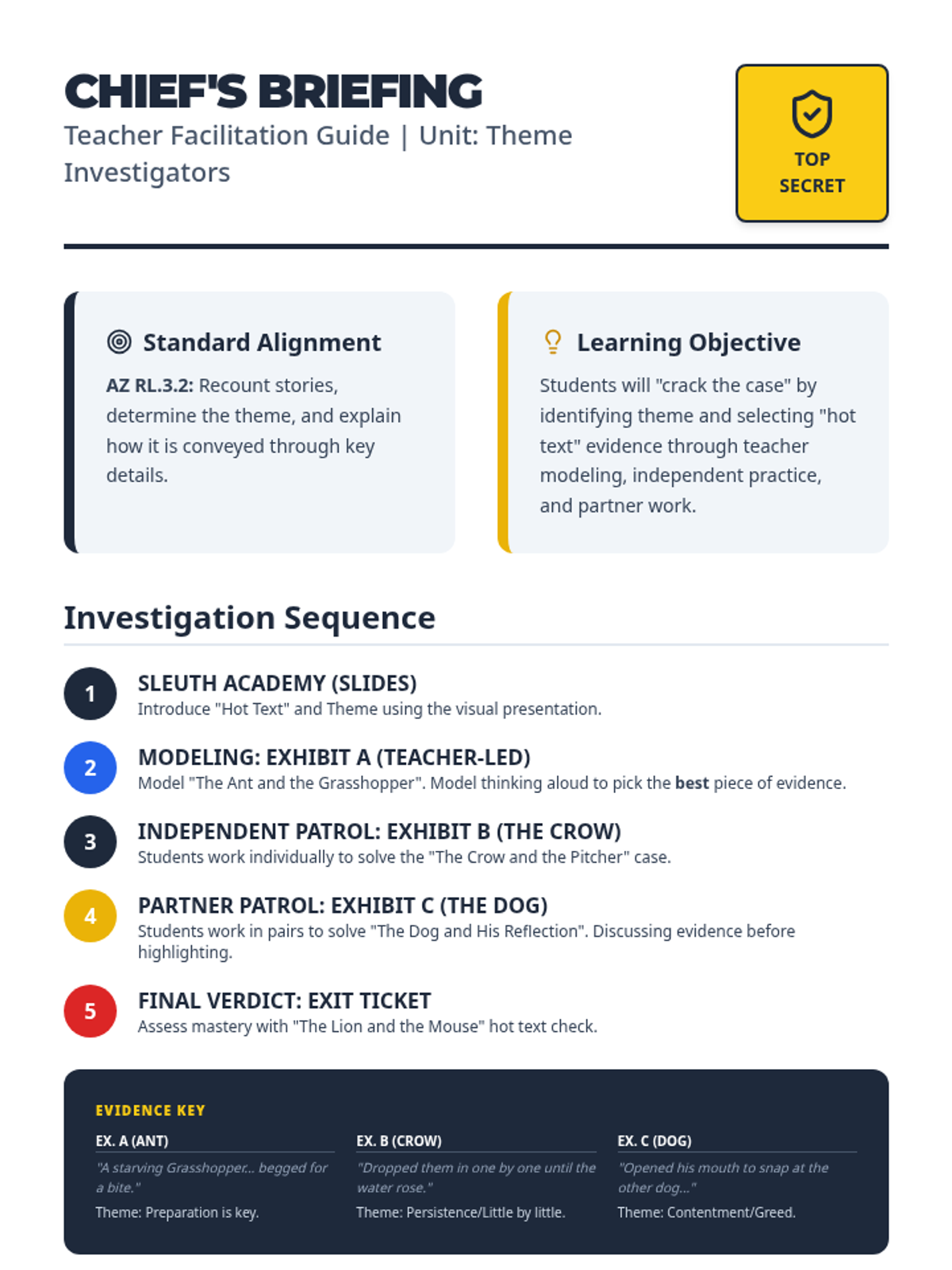
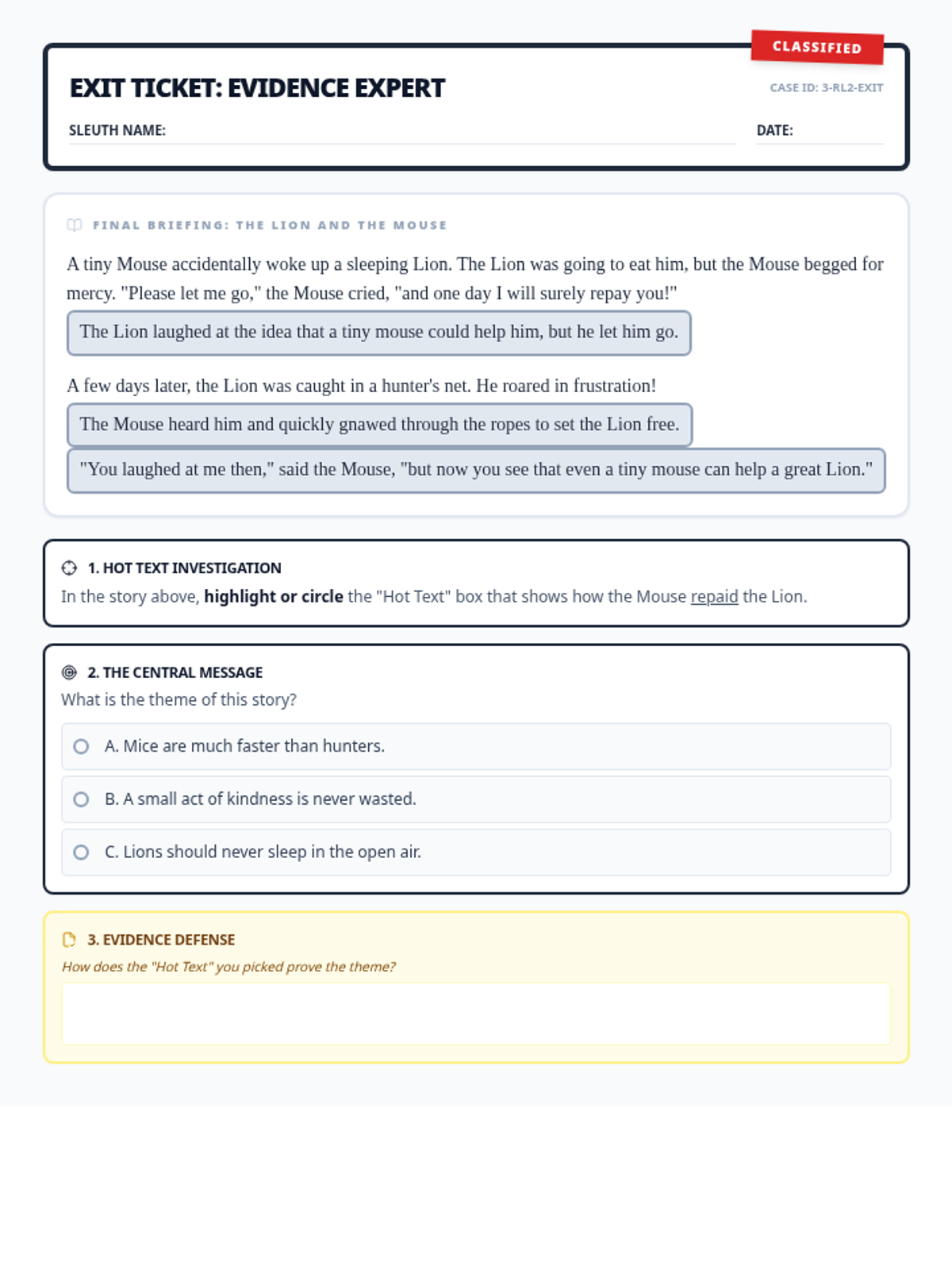
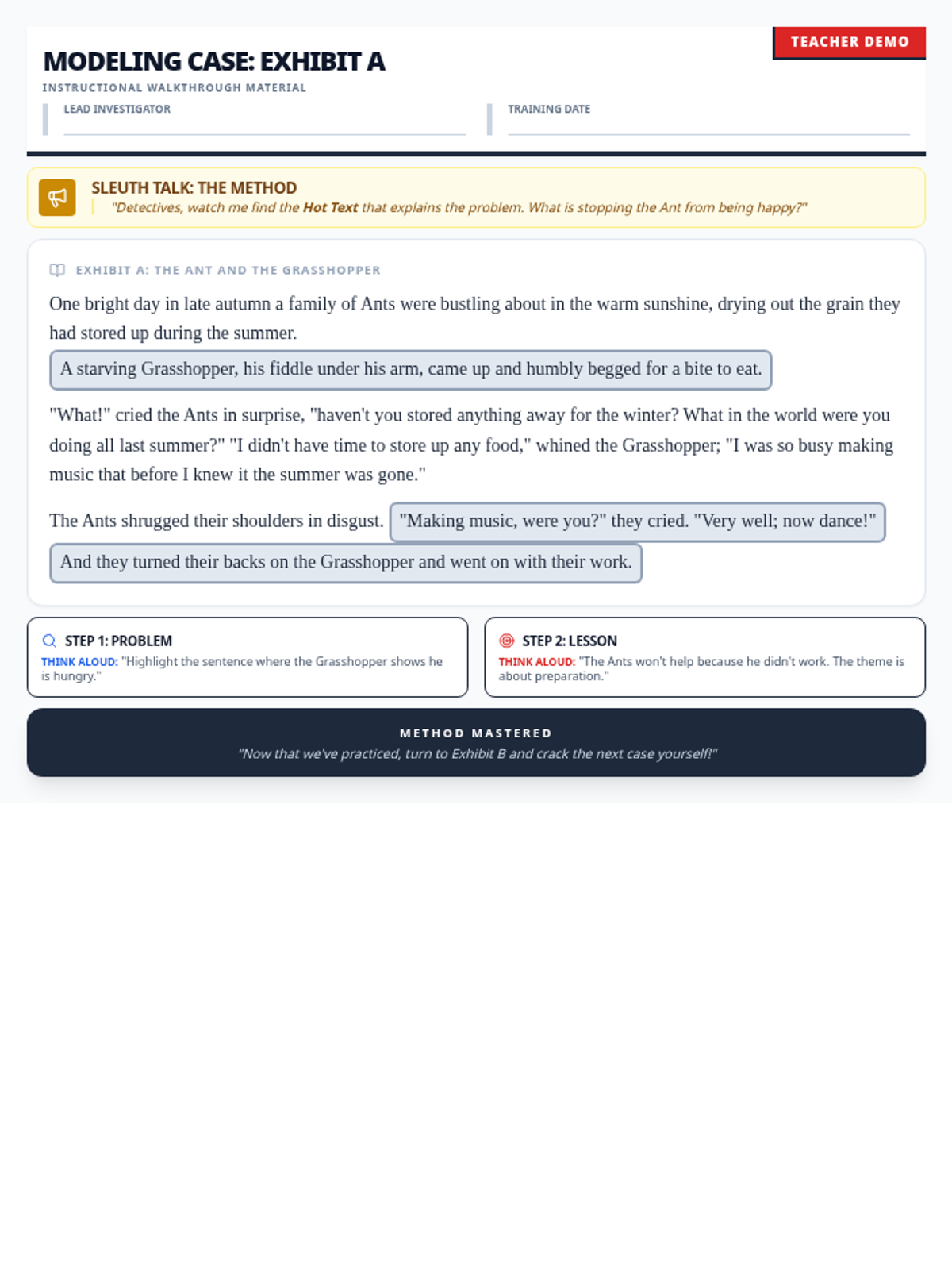
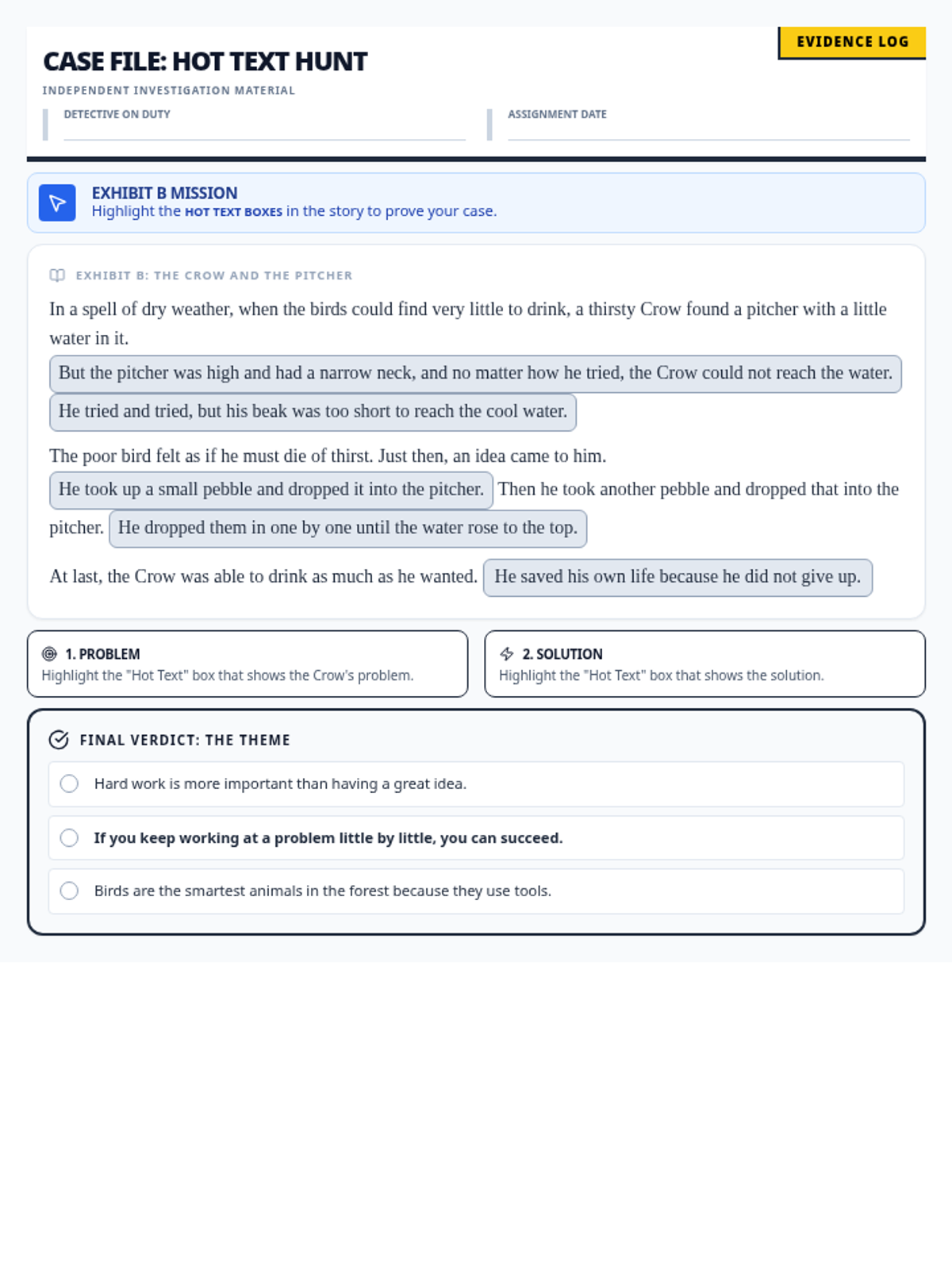
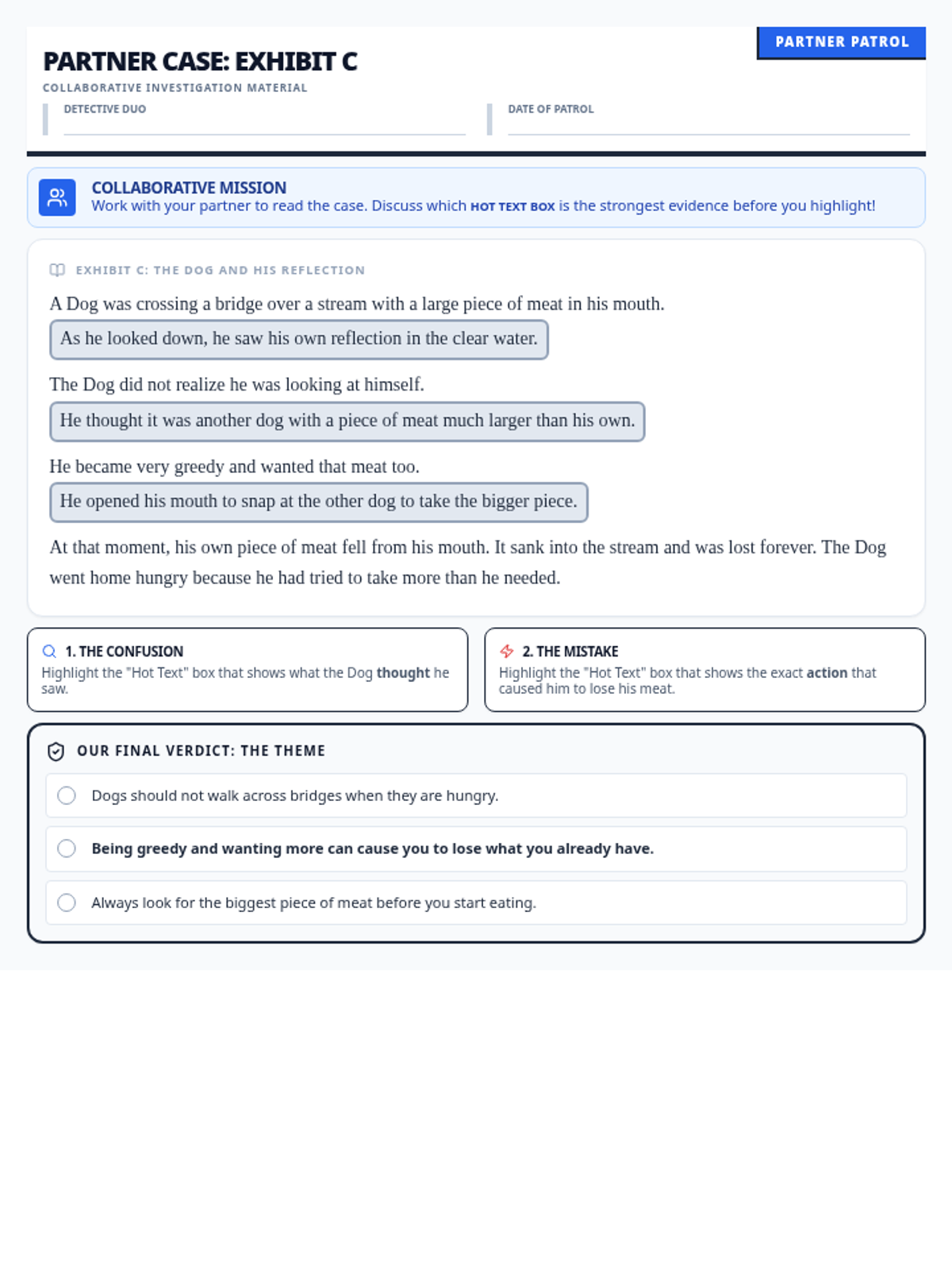
A lesson focused on identifying themes and central messages in fables and folktales using the 'Story Sleuths' detective theme. Students will practice recounting stories and identifying specific text evidence (hot text) to support their findings.
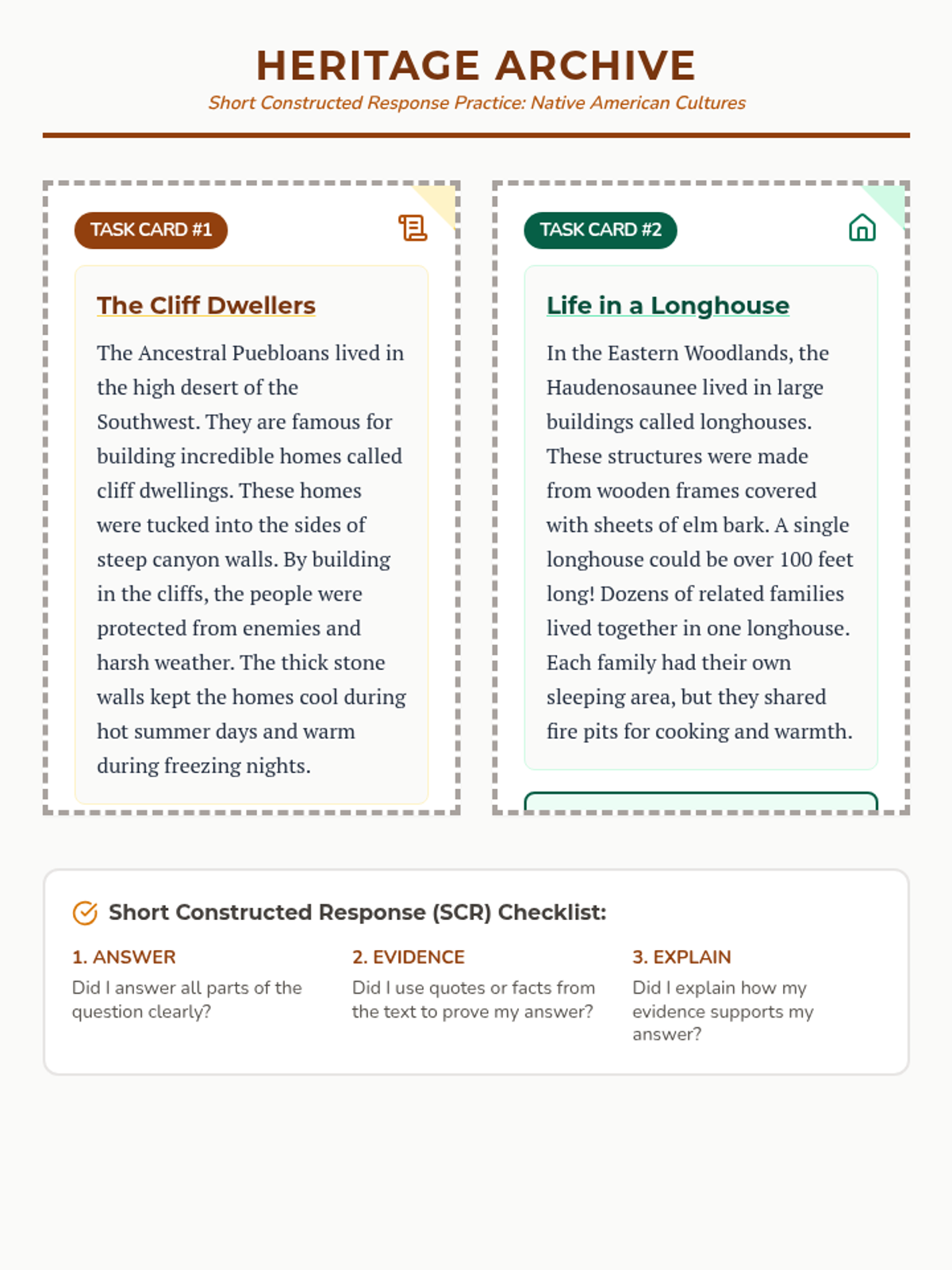
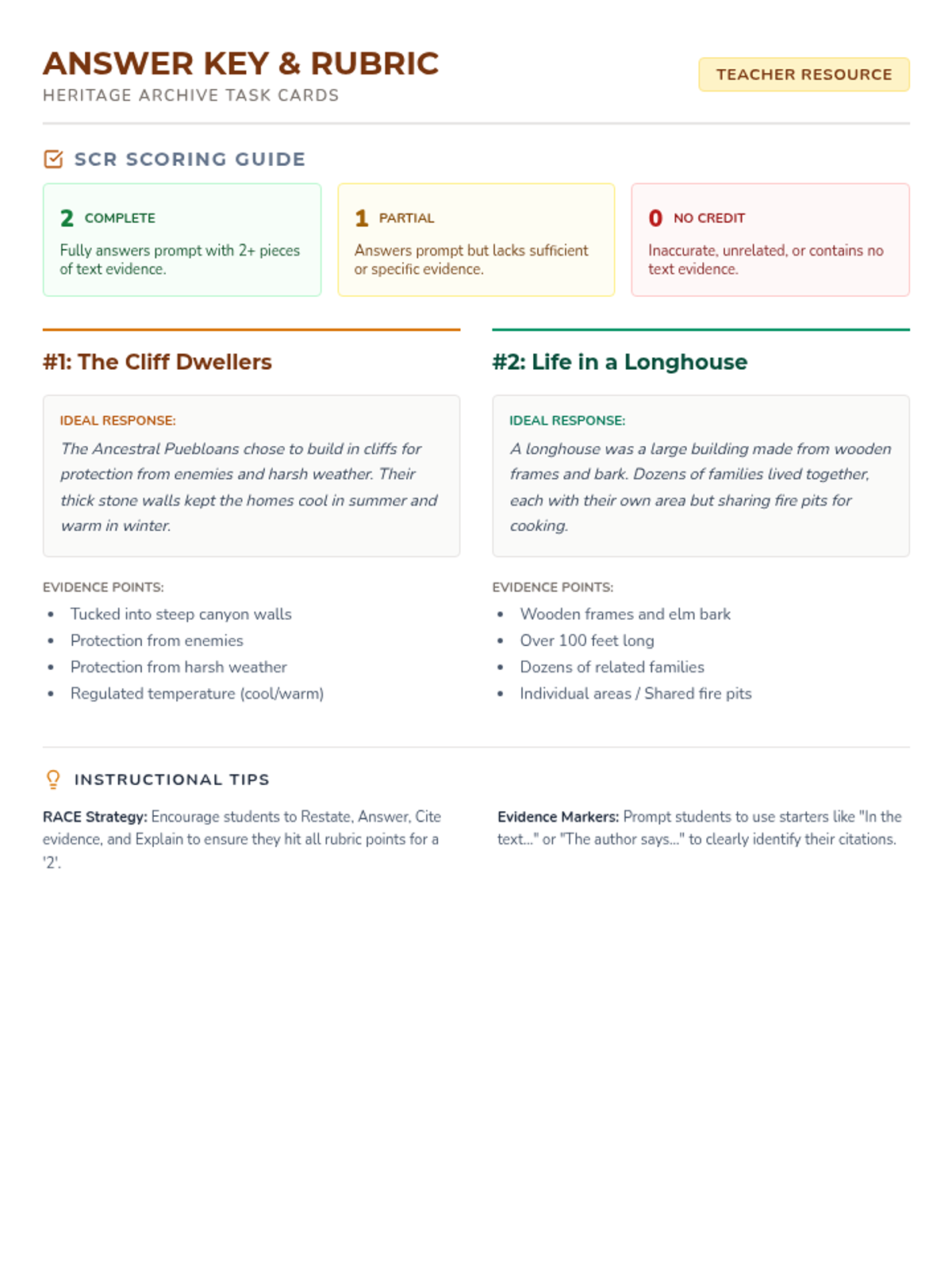
A short lesson focusing on practicing short constructed responses (SCR) using informational texts about the Ancestral Puebloans and the Haudenosaunee. Students read short passages, identify key details, and write evidenced-based responses.
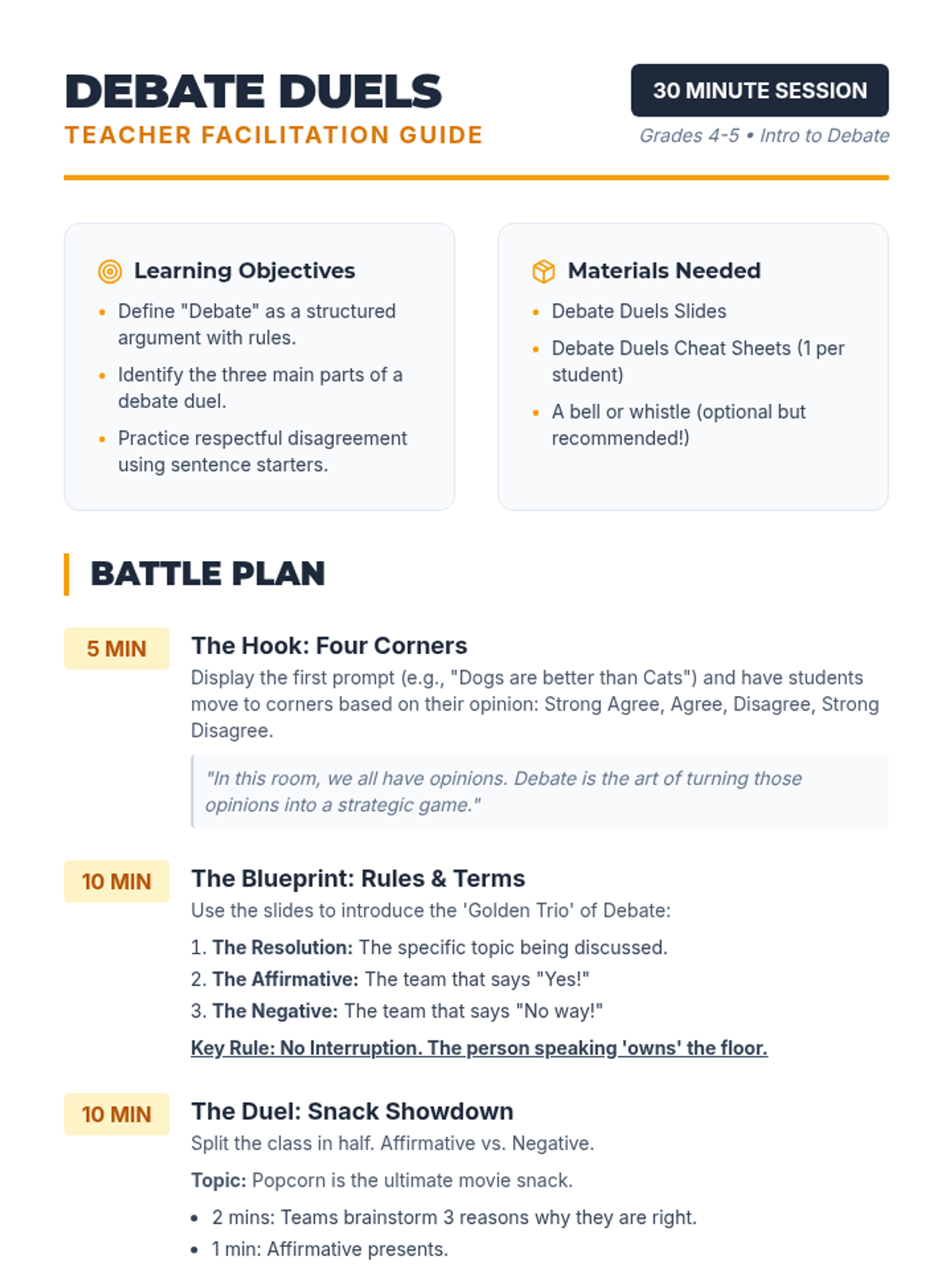
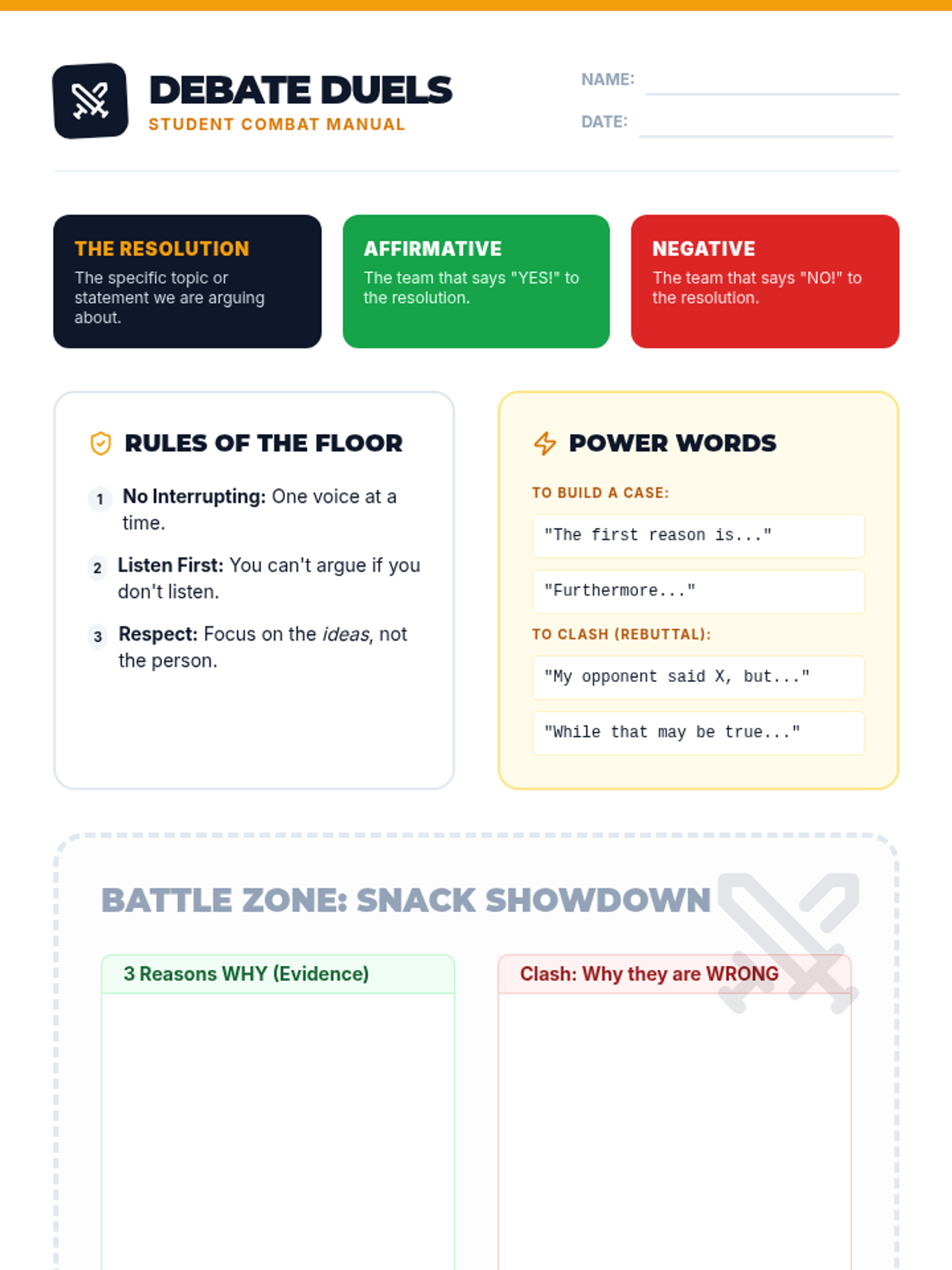
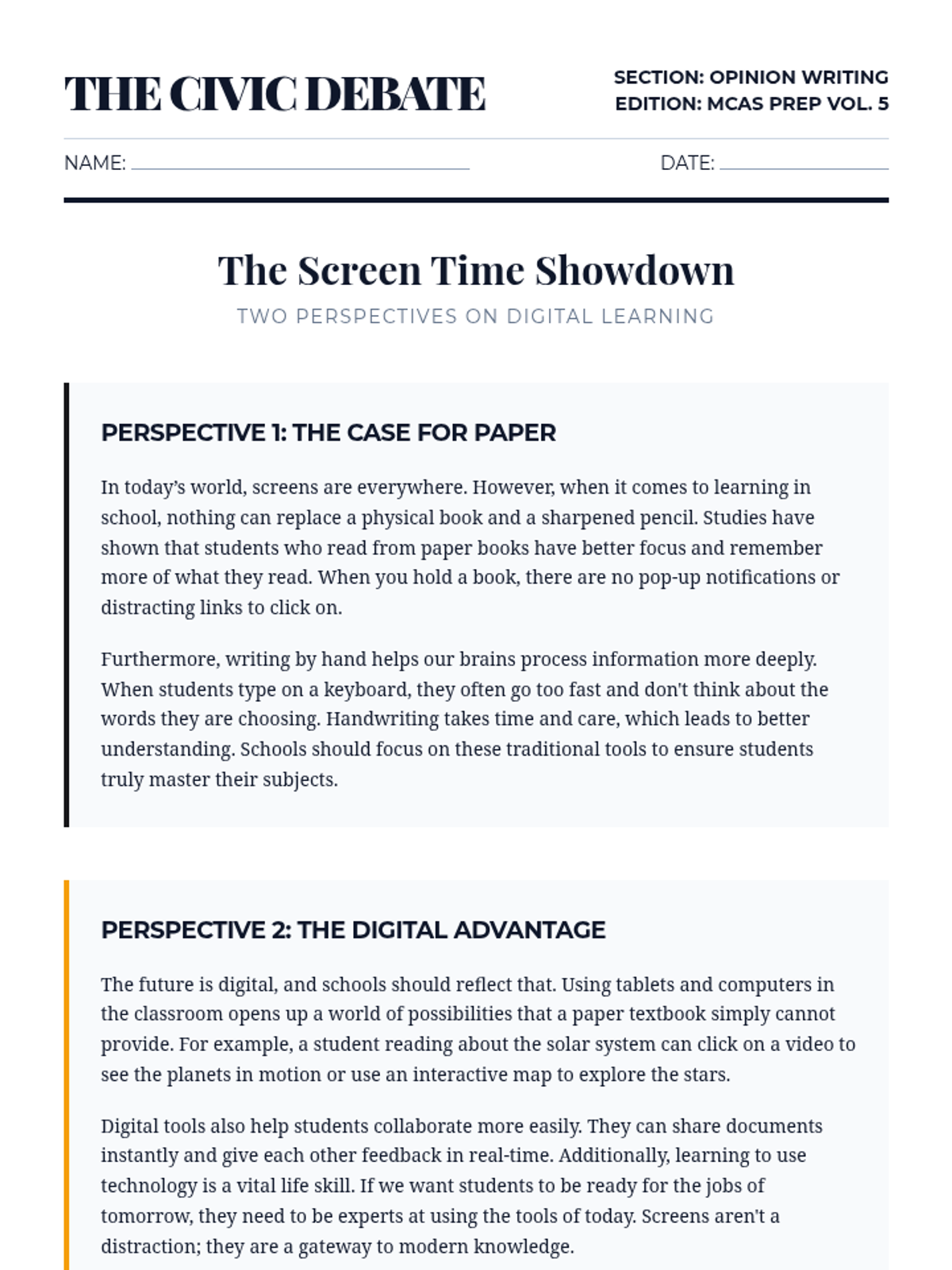
An introductory lesson for 4th and 5th graders to the world of competitive debate, focusing on structure, rules, and respectful disagreement through high-energy activities.
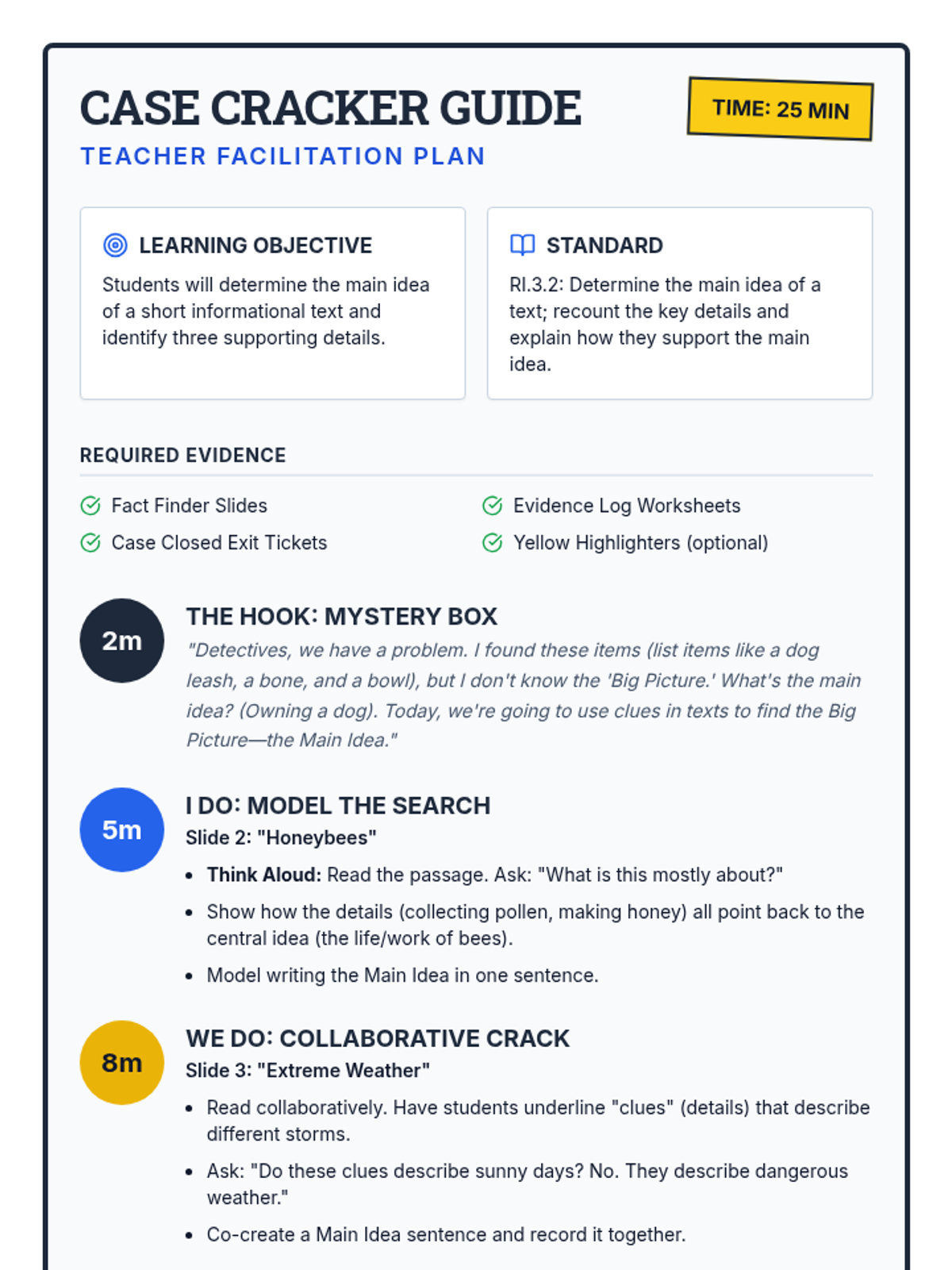
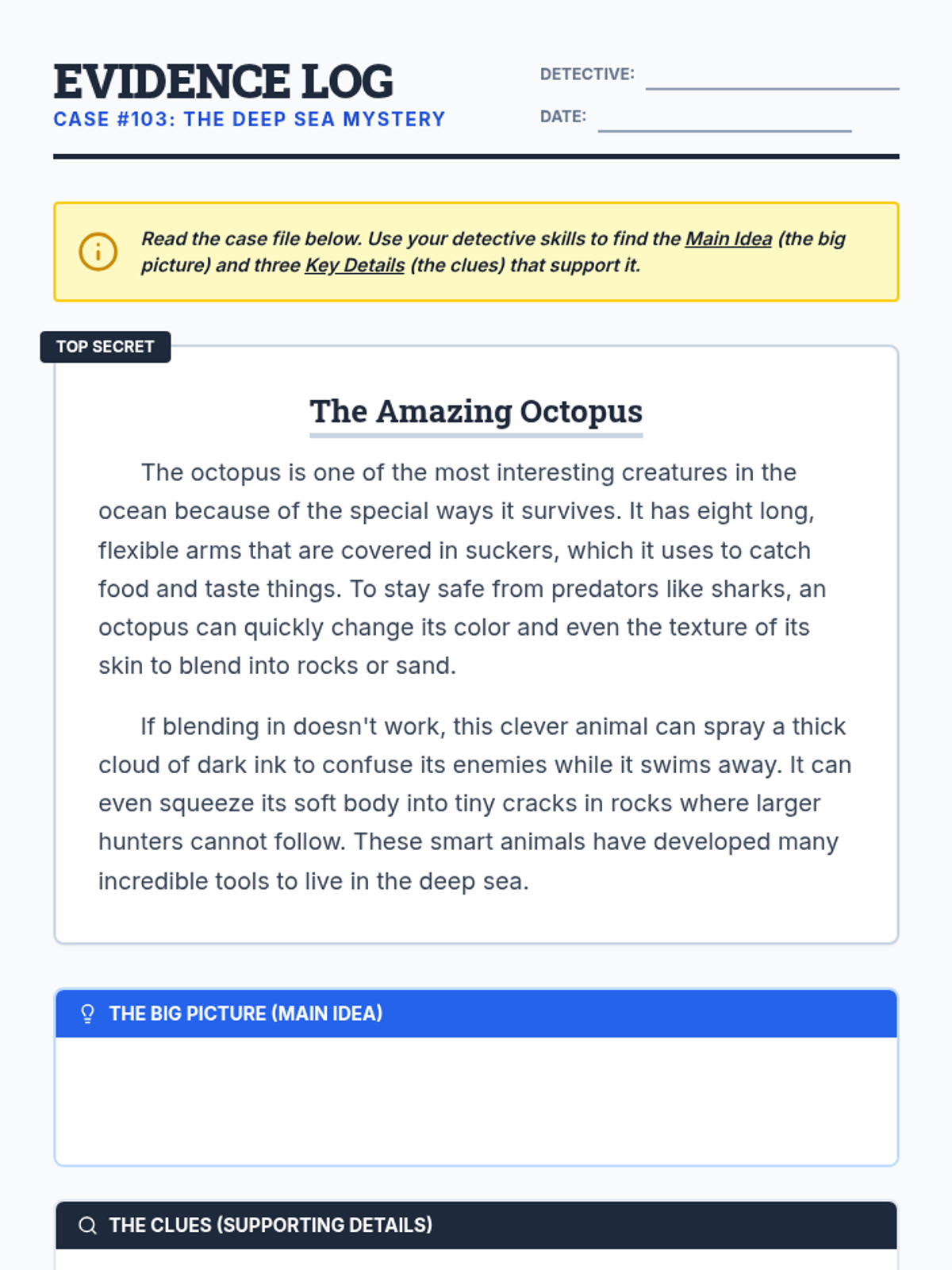
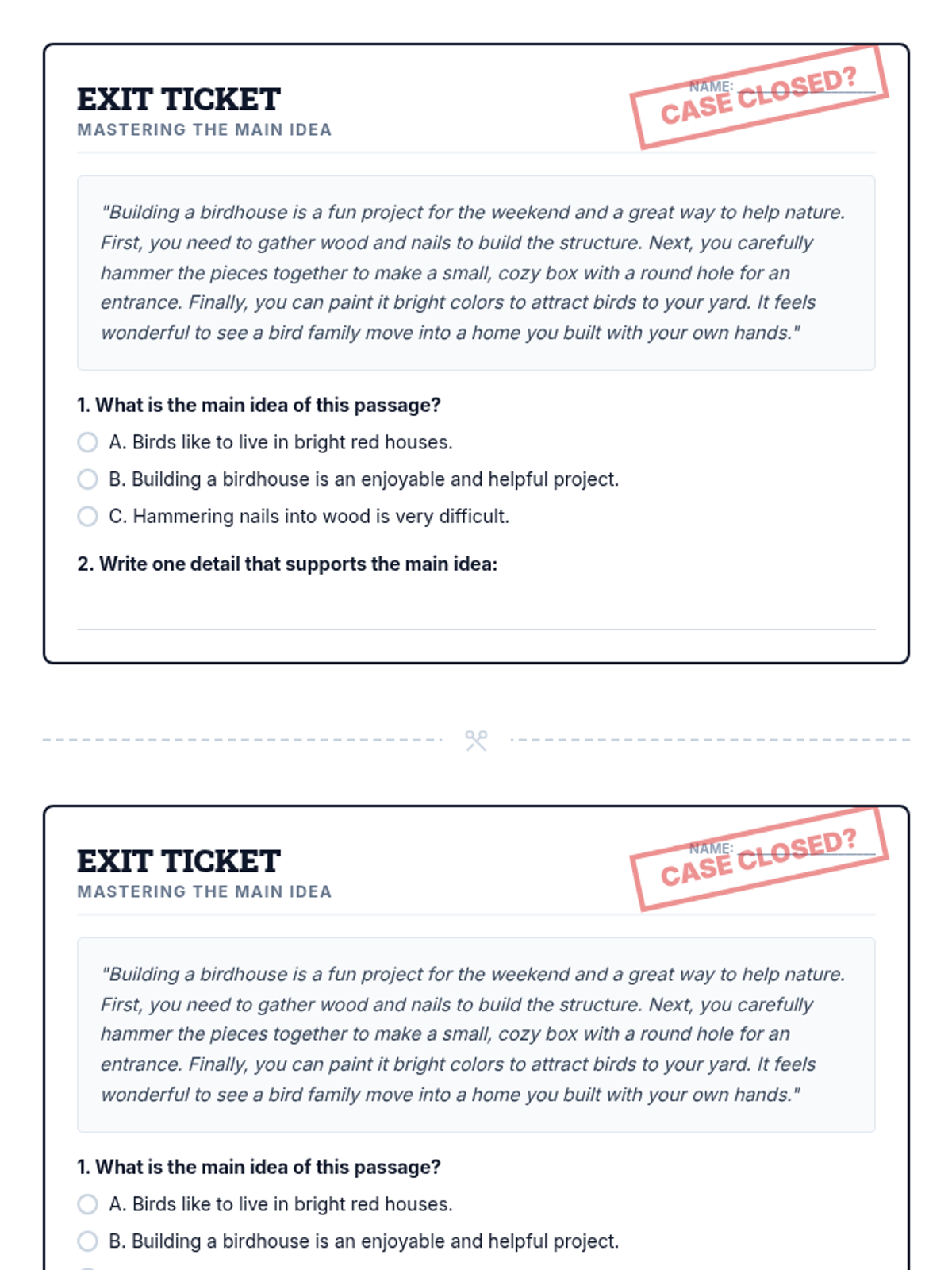
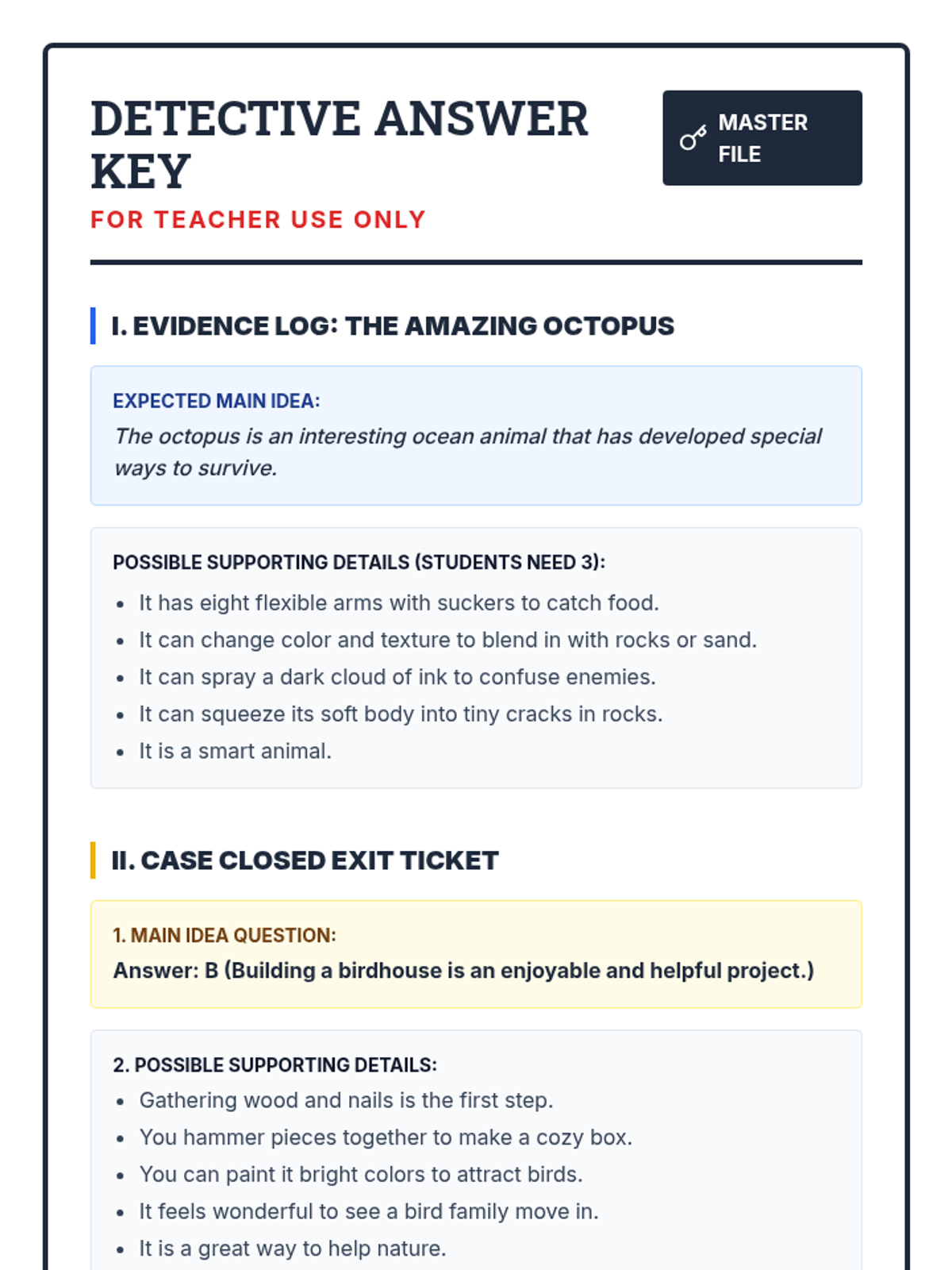
A fast-paced 25-minute small group lesson focusing on identifying main ideas and supporting details using a detective-themed 'Case Files' approach. Includes guided modeling, collaborative practice, and independent application.
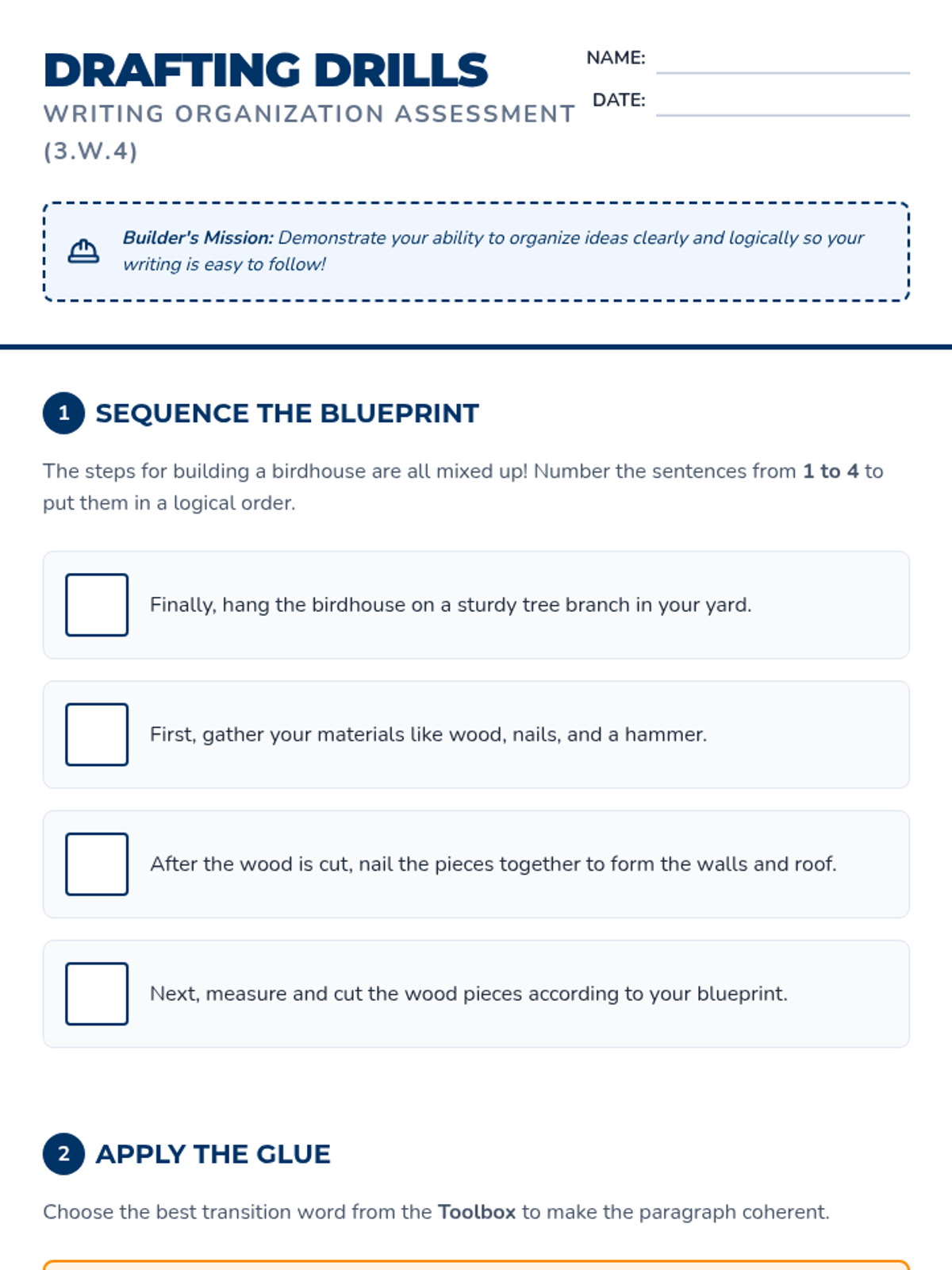
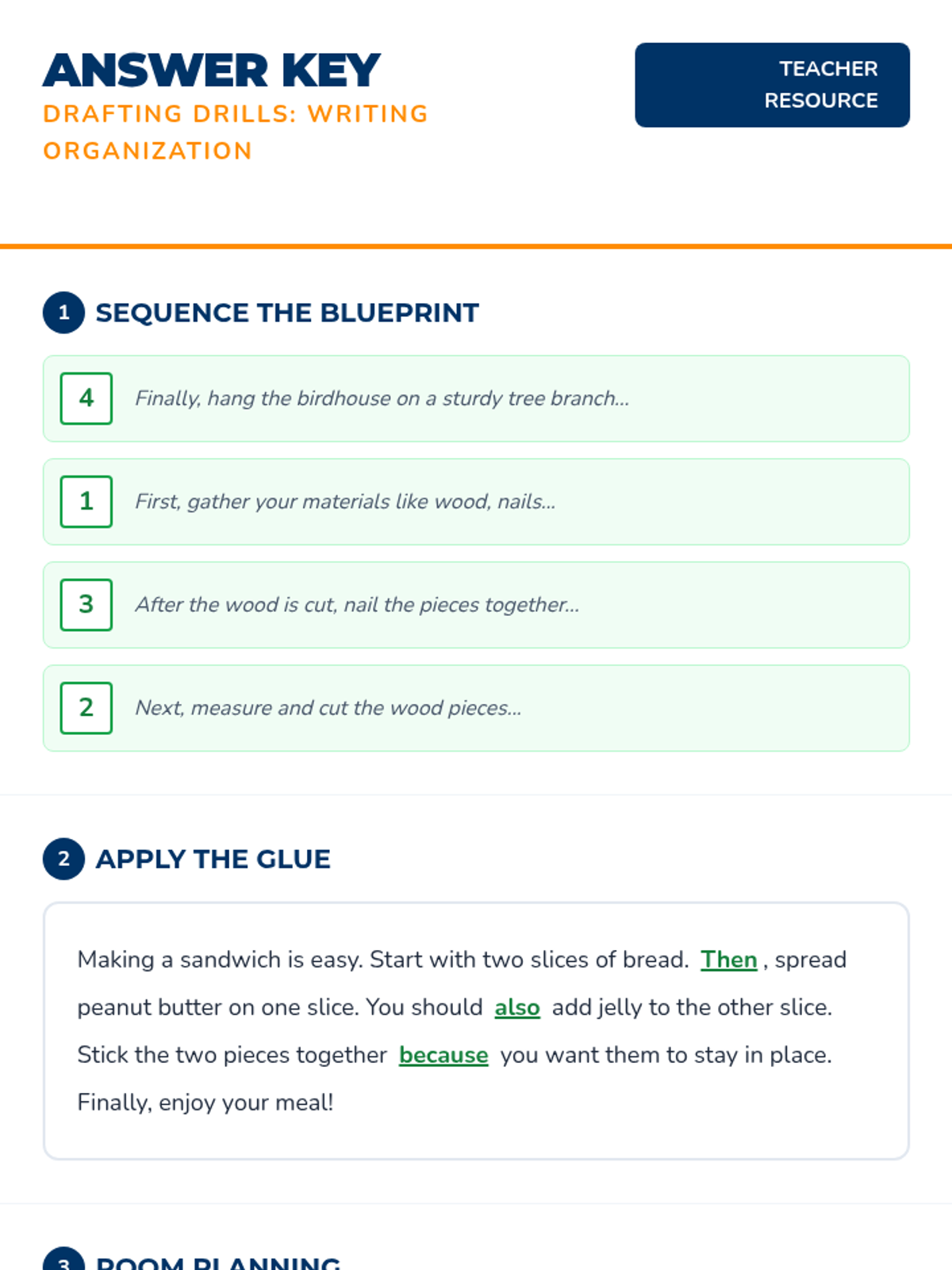
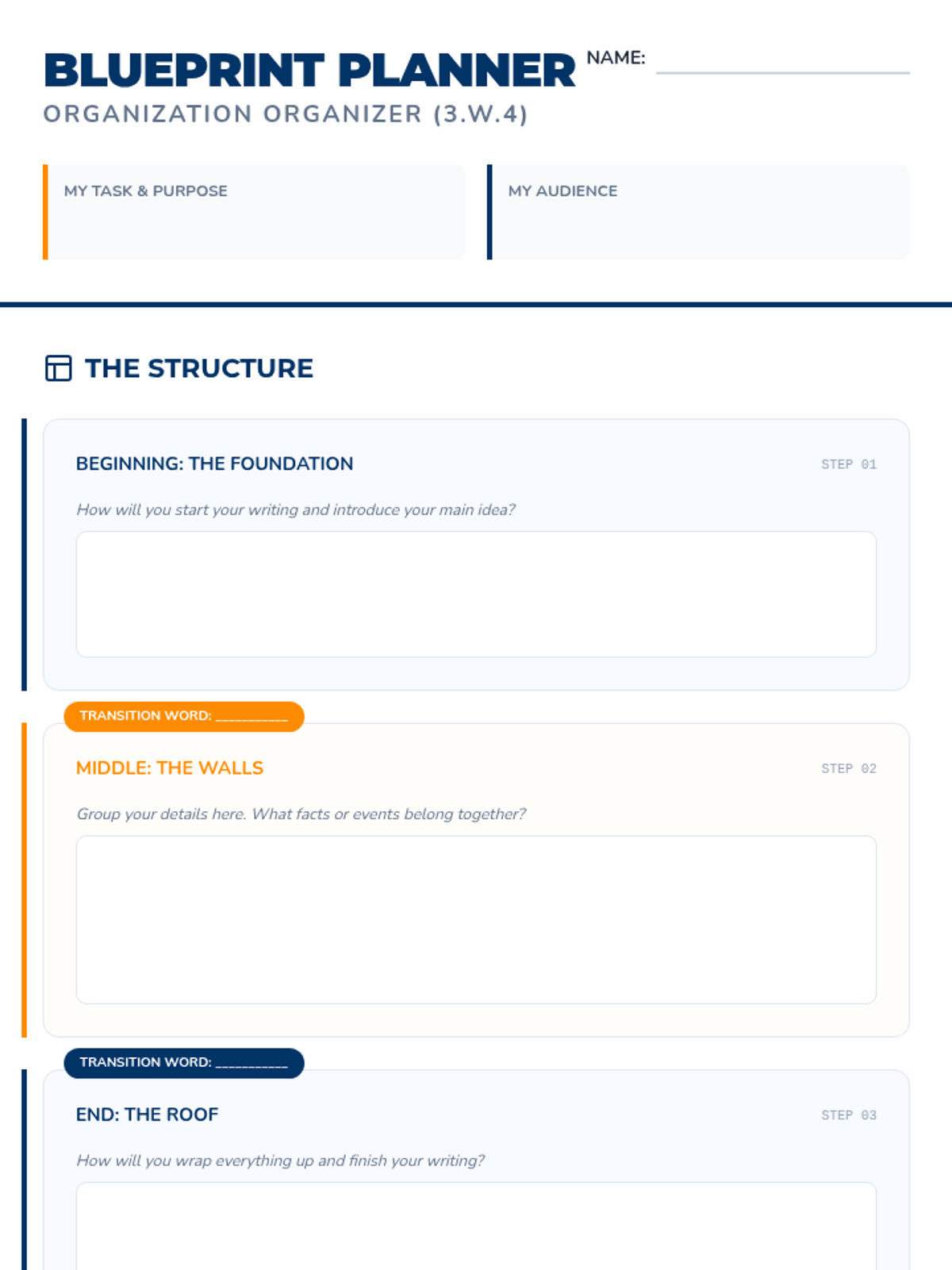
A lesson focused on mastering standard 3.W.4 by teaching students how to organize their writing for clarity and coherence through the metaphor of architectural drafting.
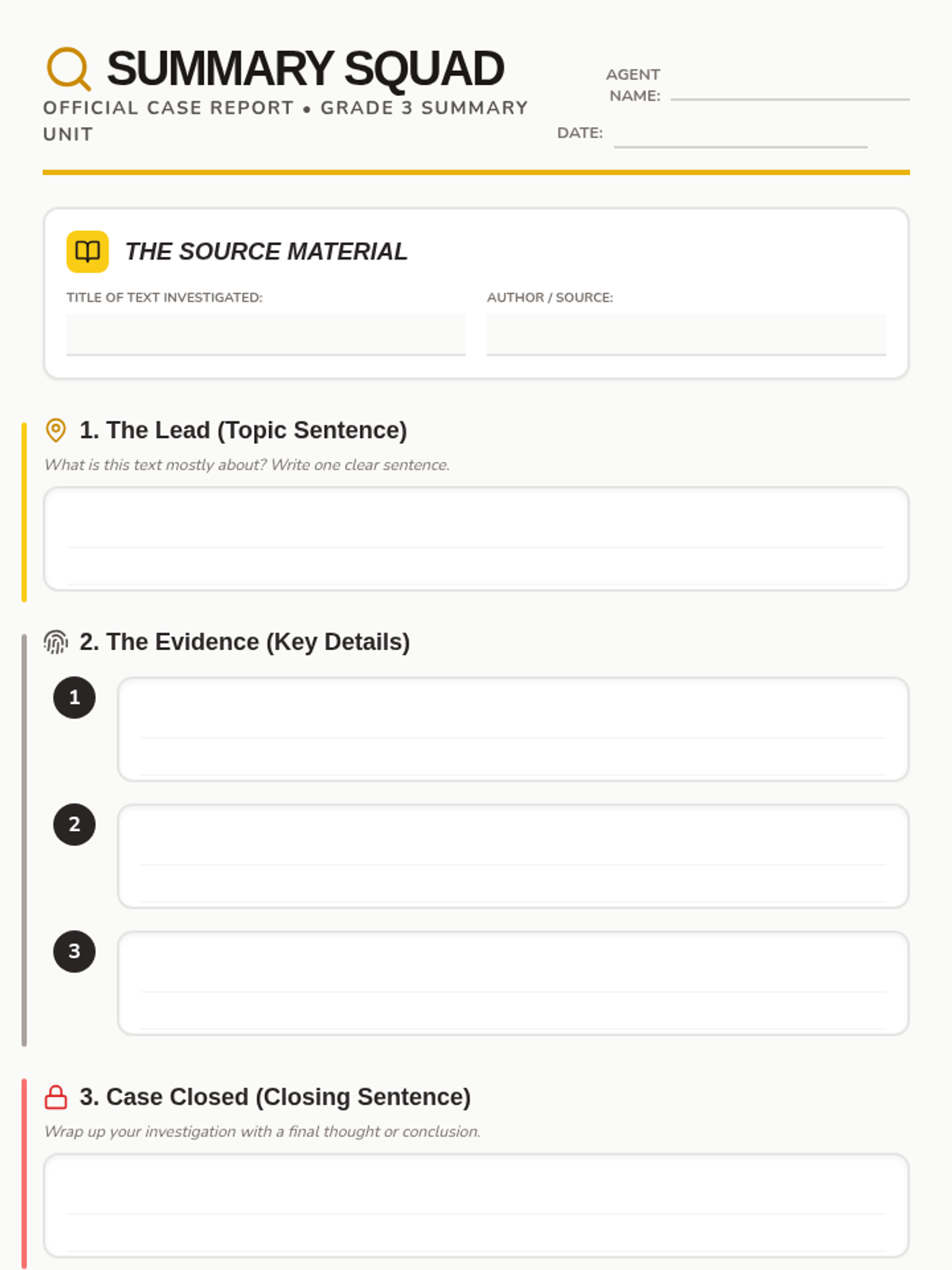
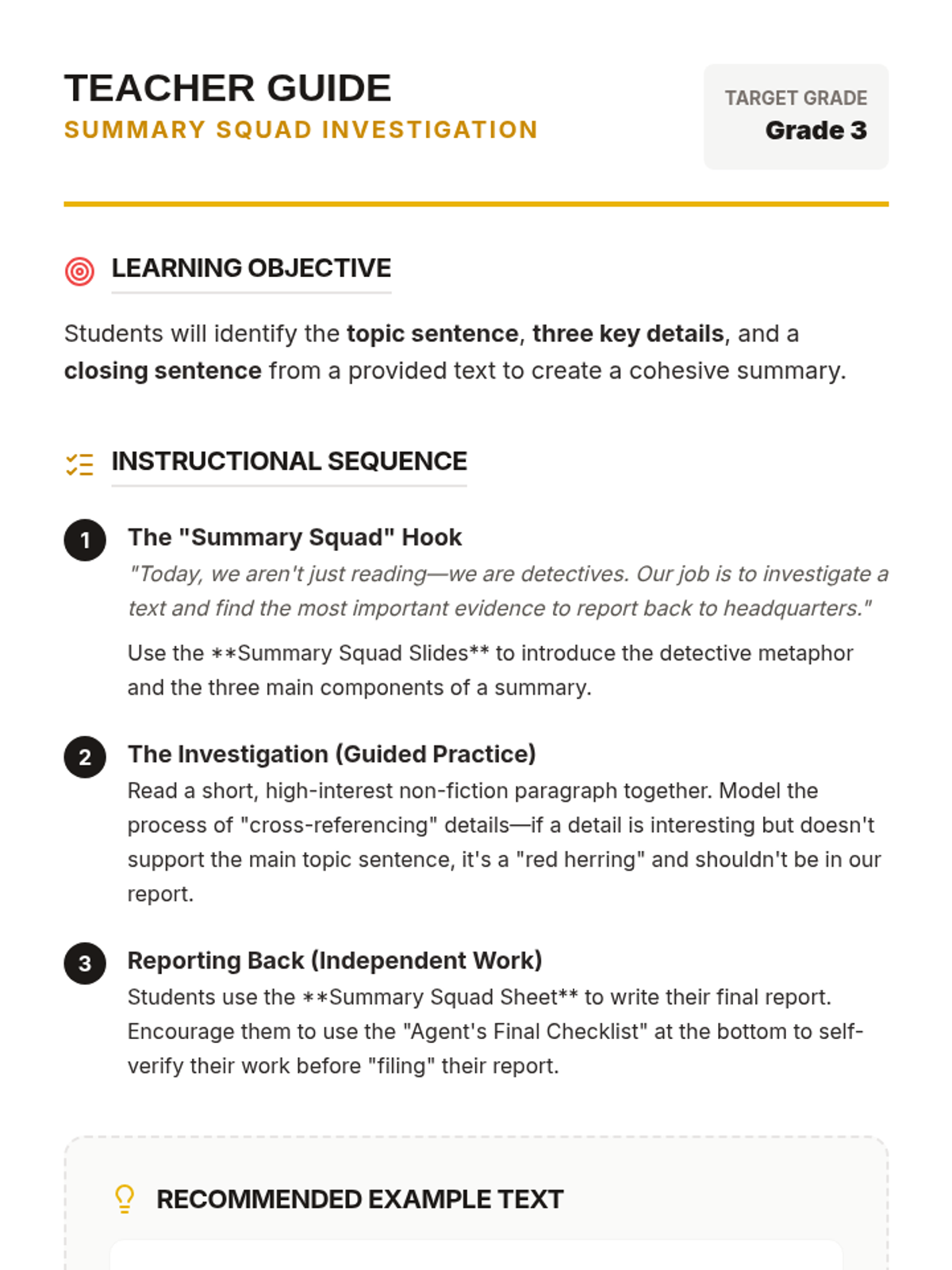
A lesson designed to help 3rd-grade students master the art of summarizing by identifying a topic sentence, three key details, and a closing sentence. Using a fun 'Summary Squad' detective theme, students learn to treat summarizing as an investigation to find the most important parts of a text.
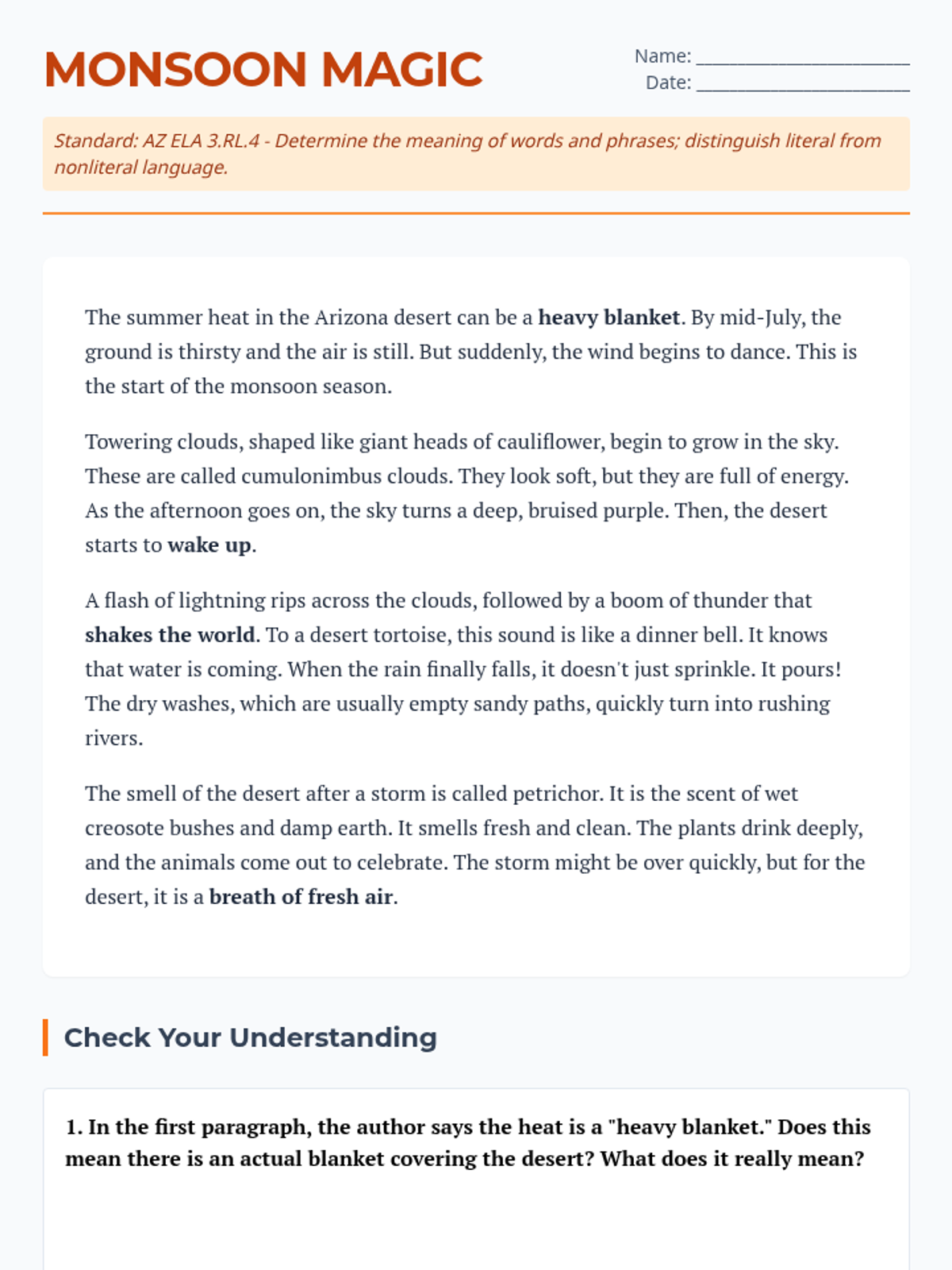
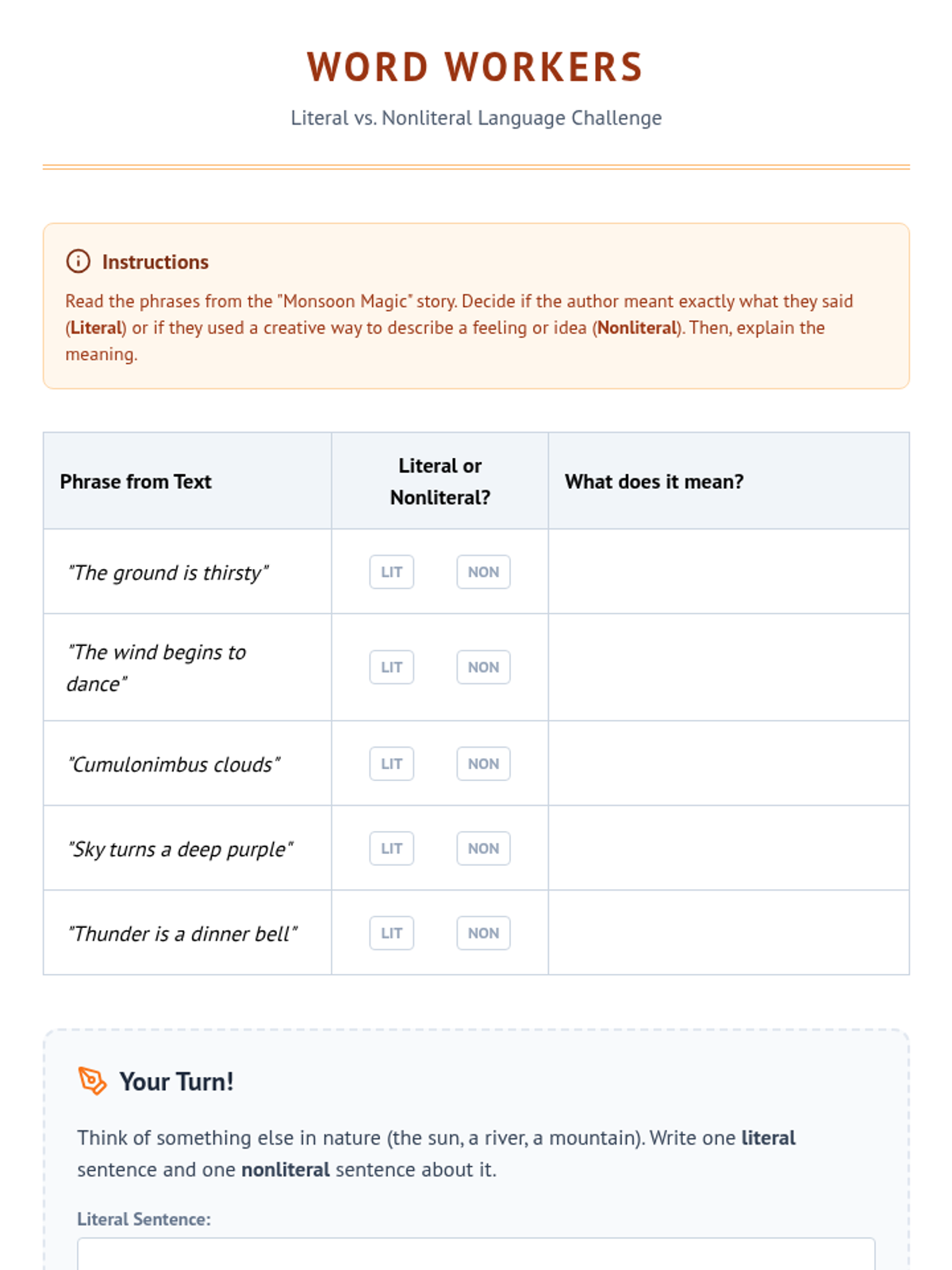
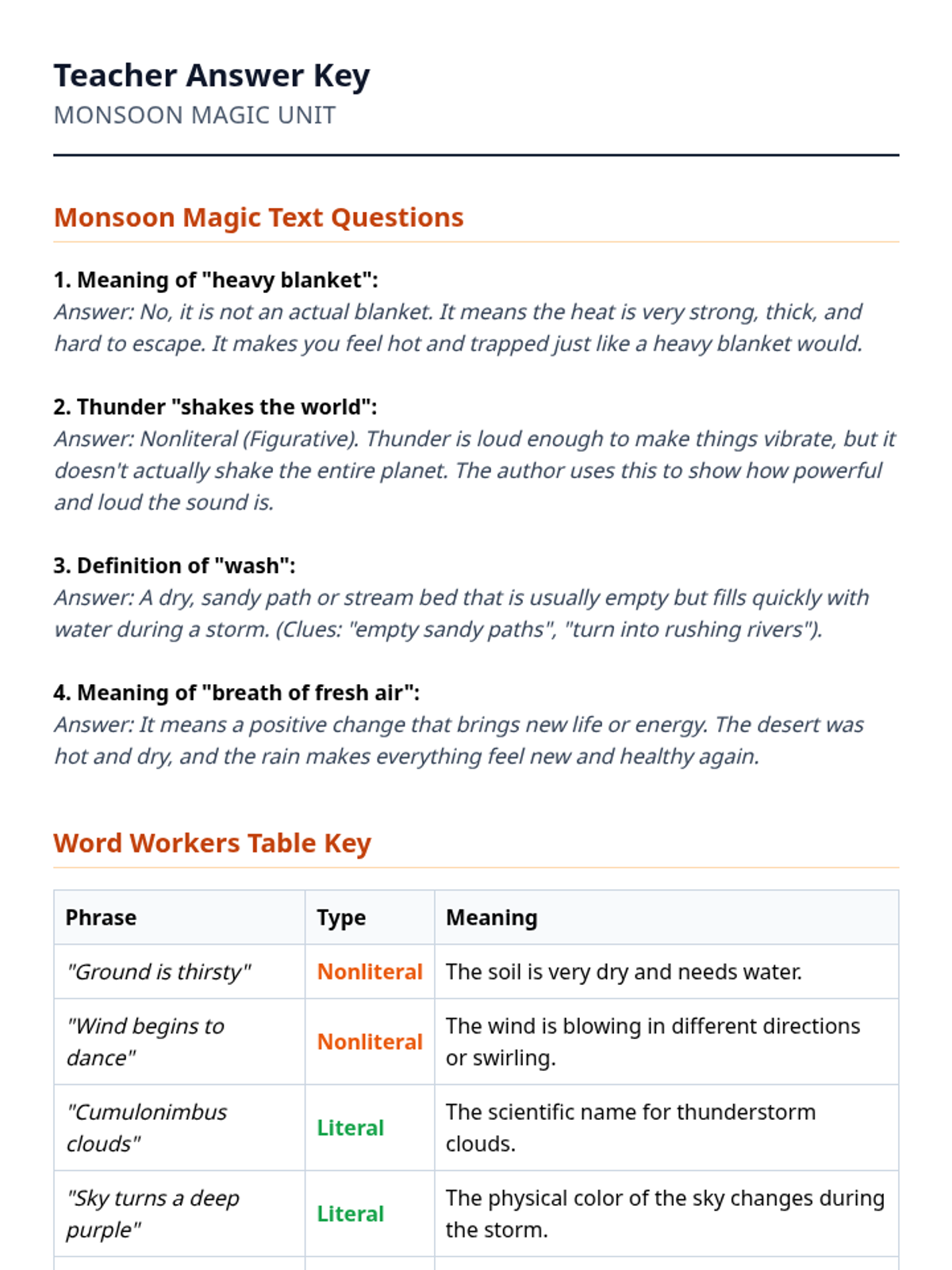
A lesson focused on identifying literal and nonliteral language within a narrative nonfiction text about Arizona monsoons, aligned with AZ ELA standard 3.RL.4.
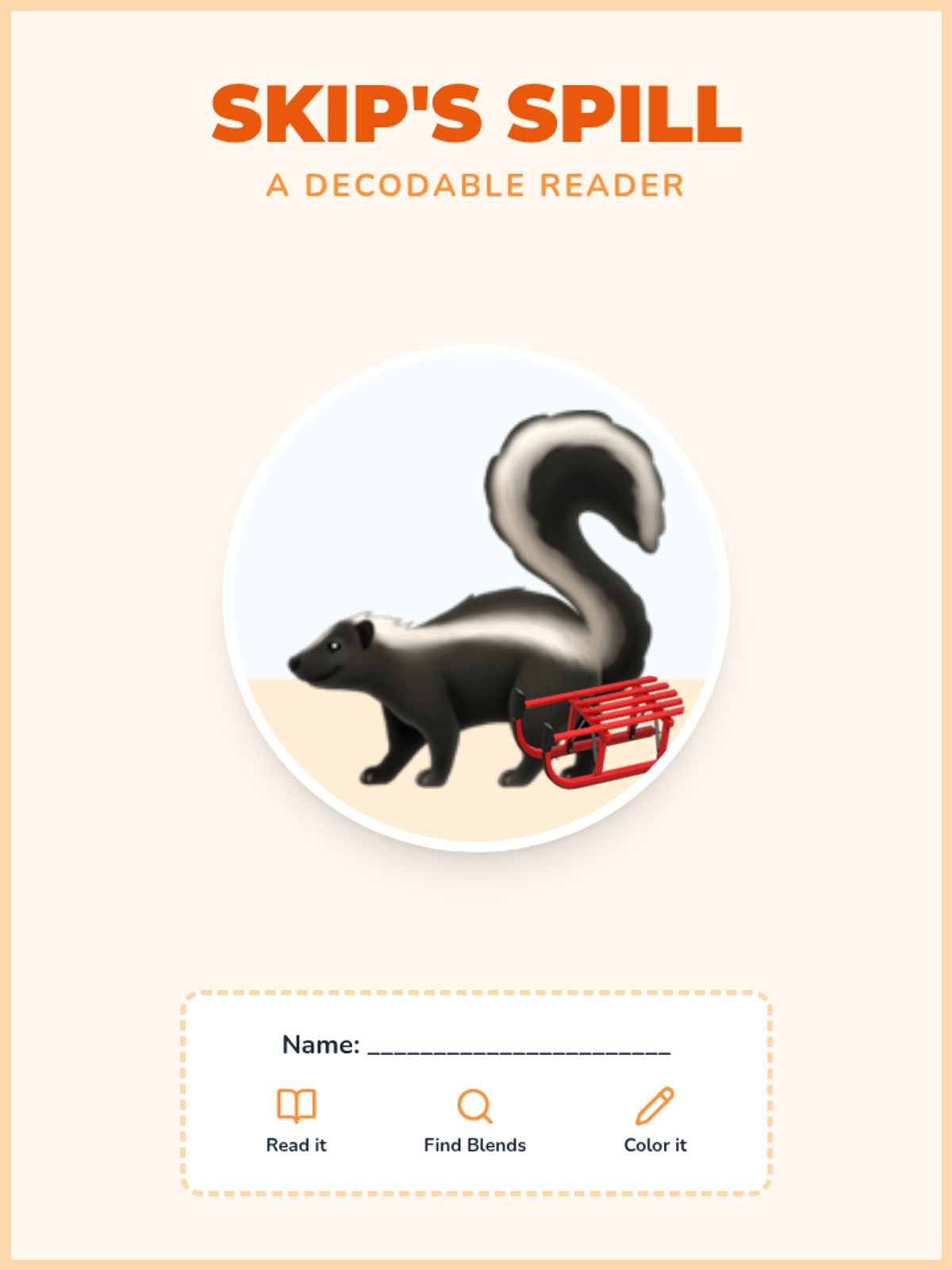
A decodable reader and guided reading lesson focused on S-blends (sk, sl, st, sc, sw, sm) through the story of Skip the skunk's clumsy accident.
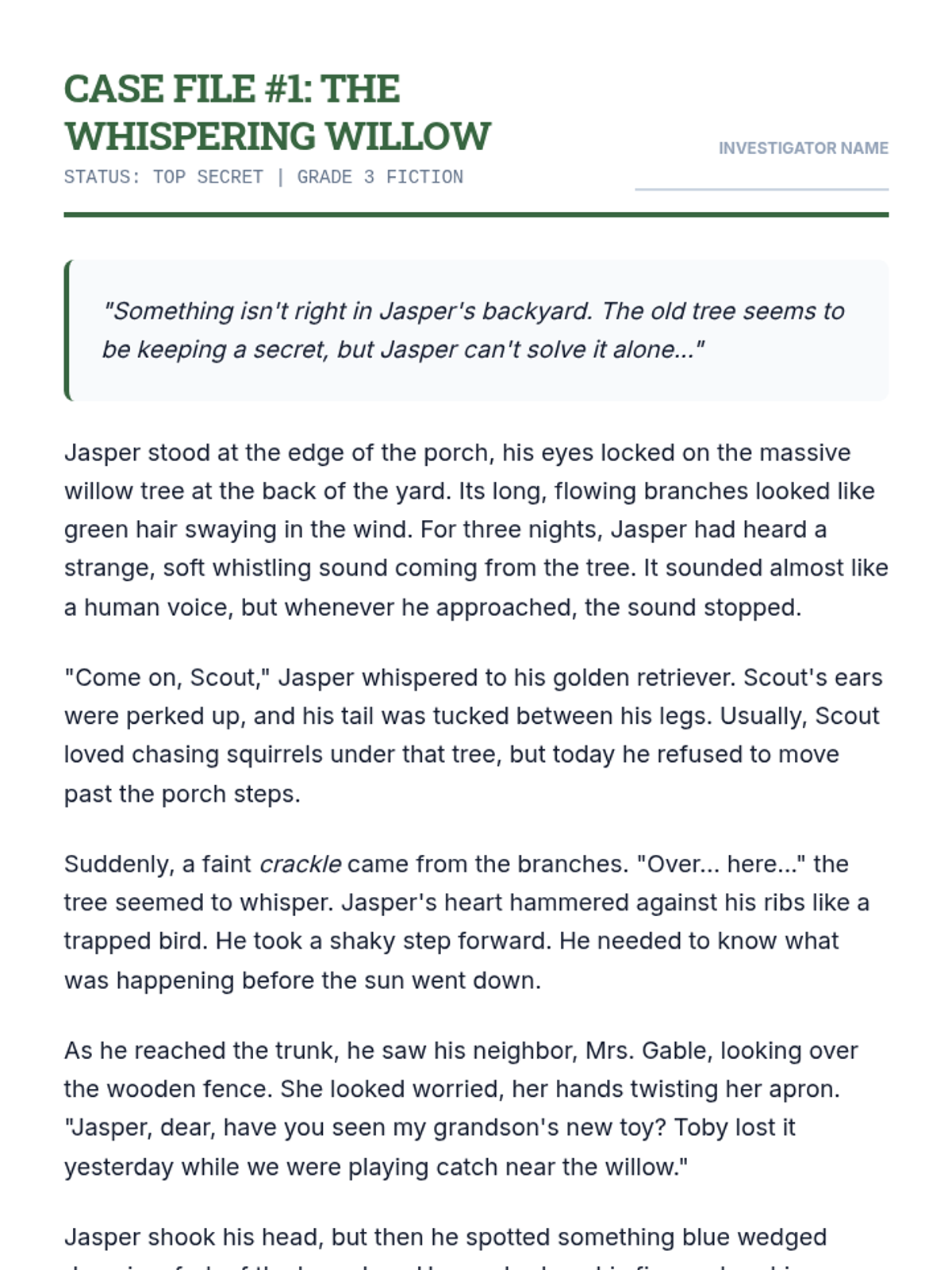
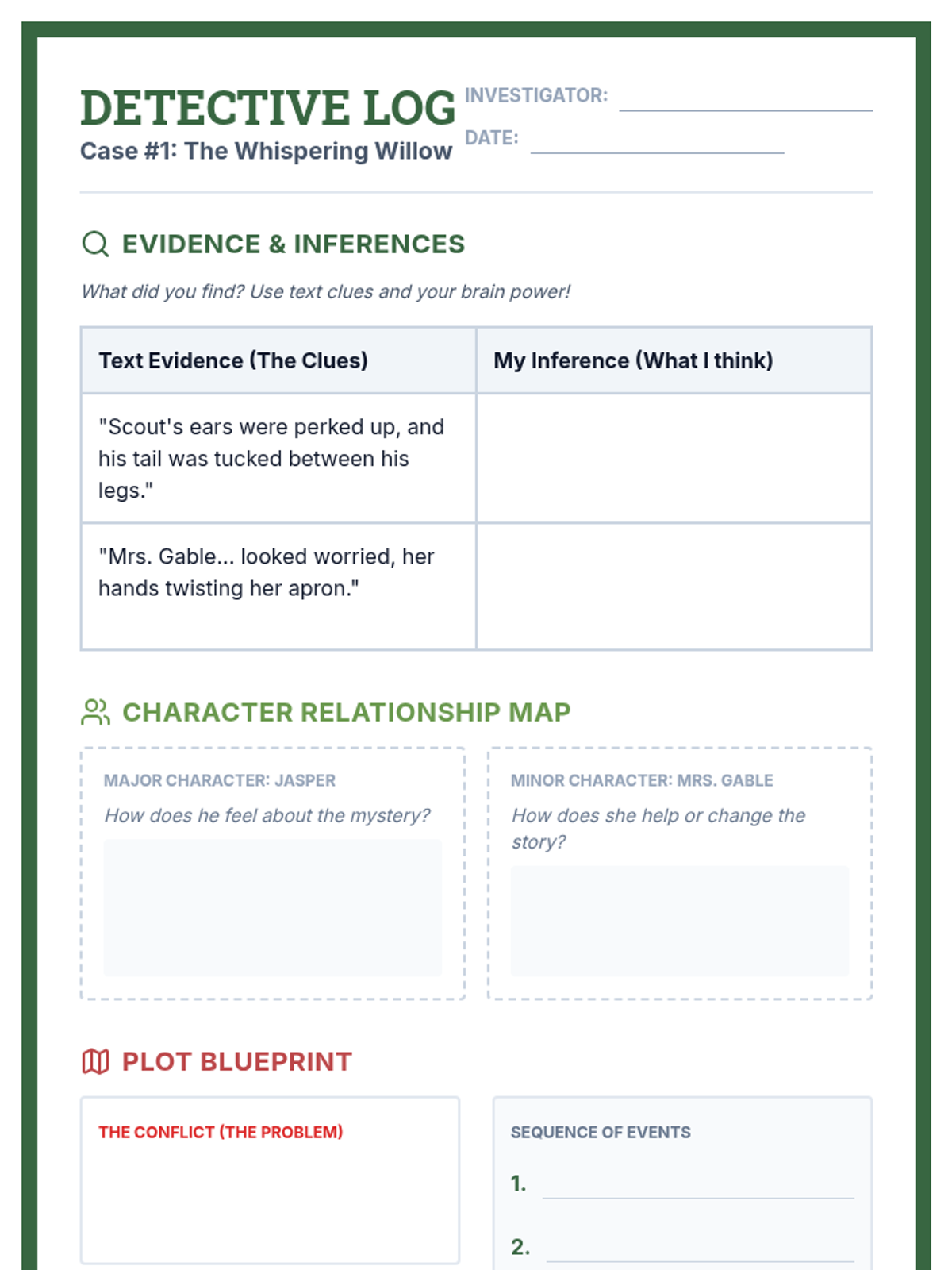
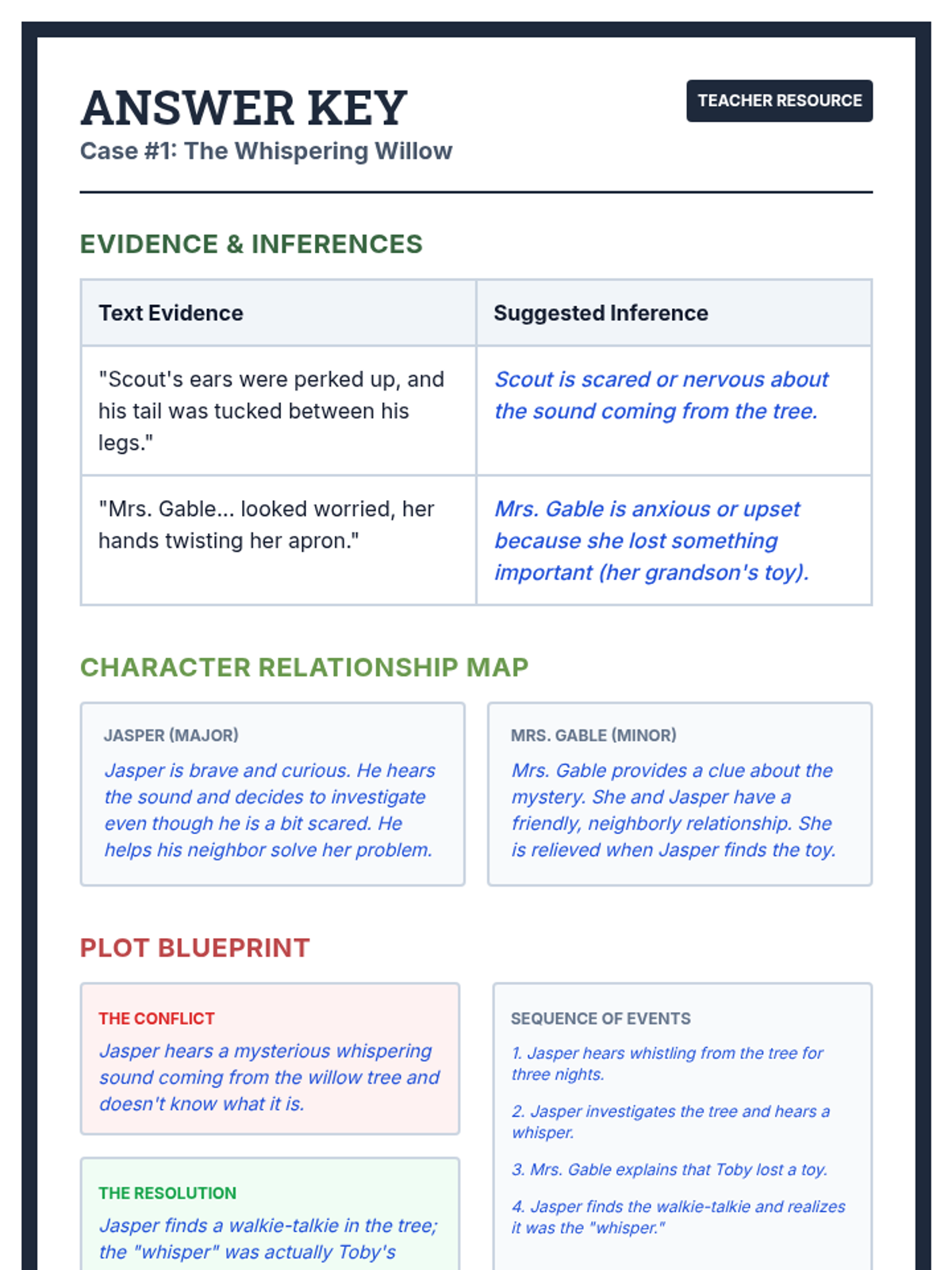
A lesson where students become 'Story Detectives' to practice making inferences, analyzing character relationships, and mapping out plot elements using two engaging mystery stories.
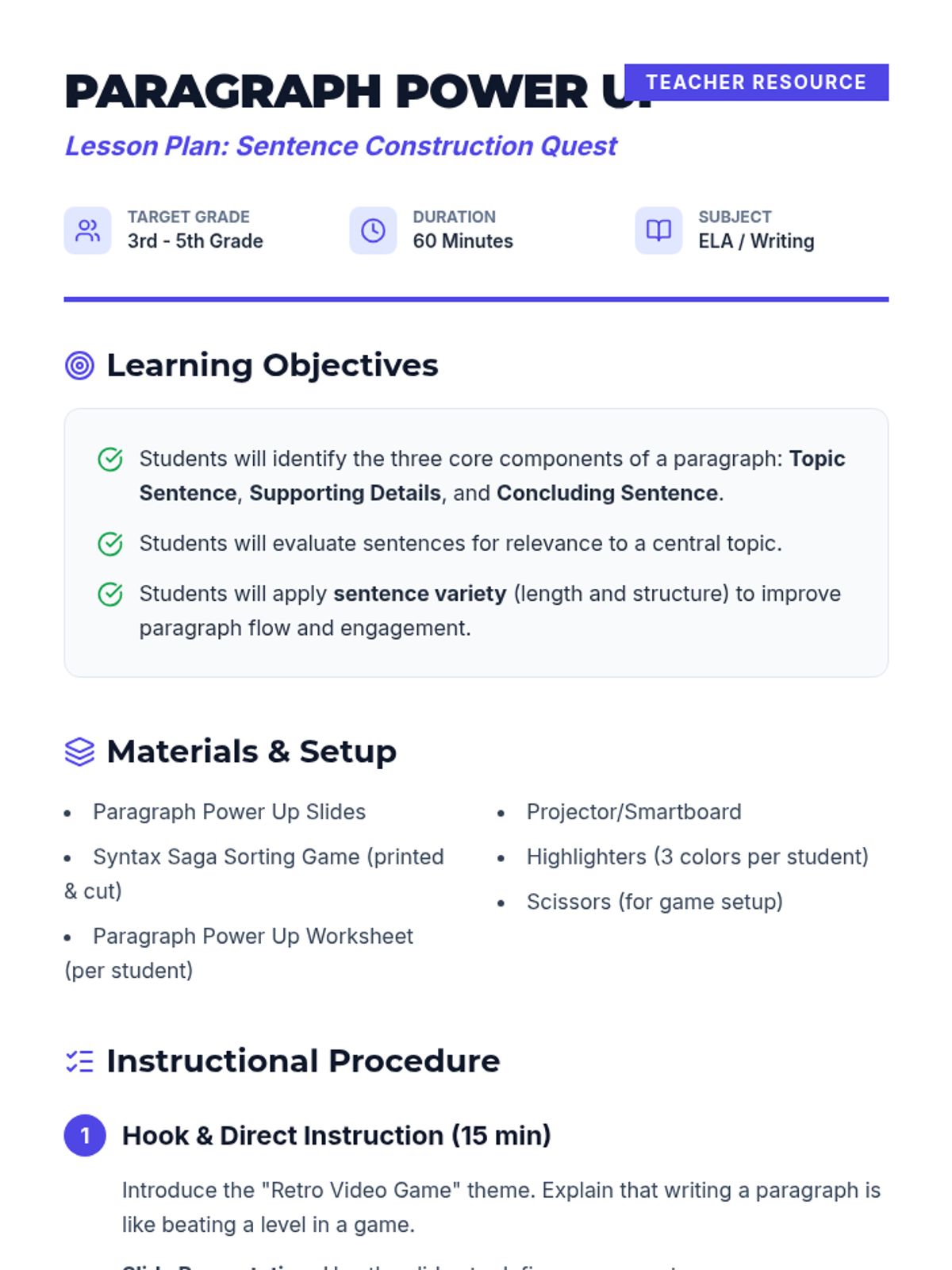
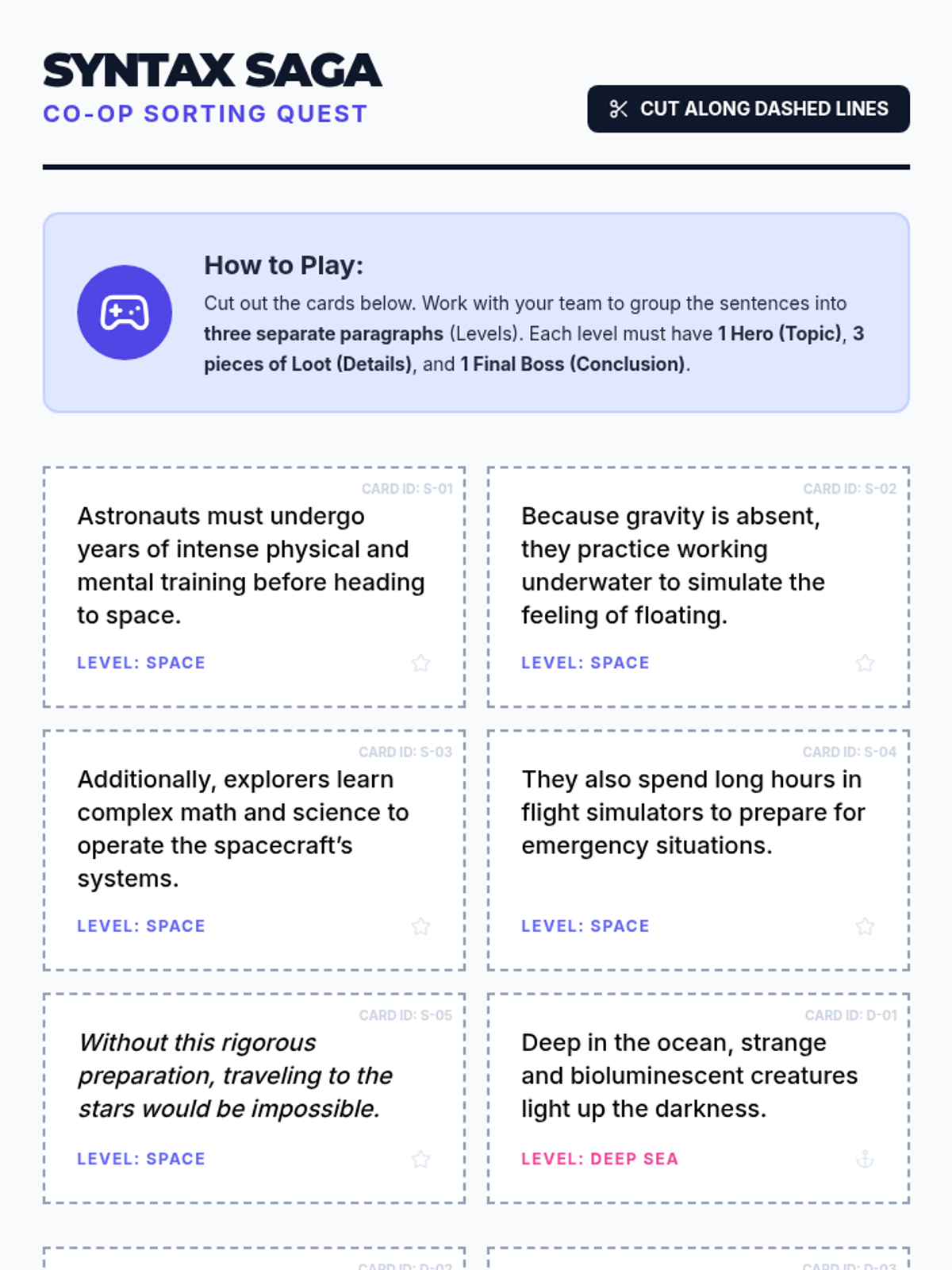
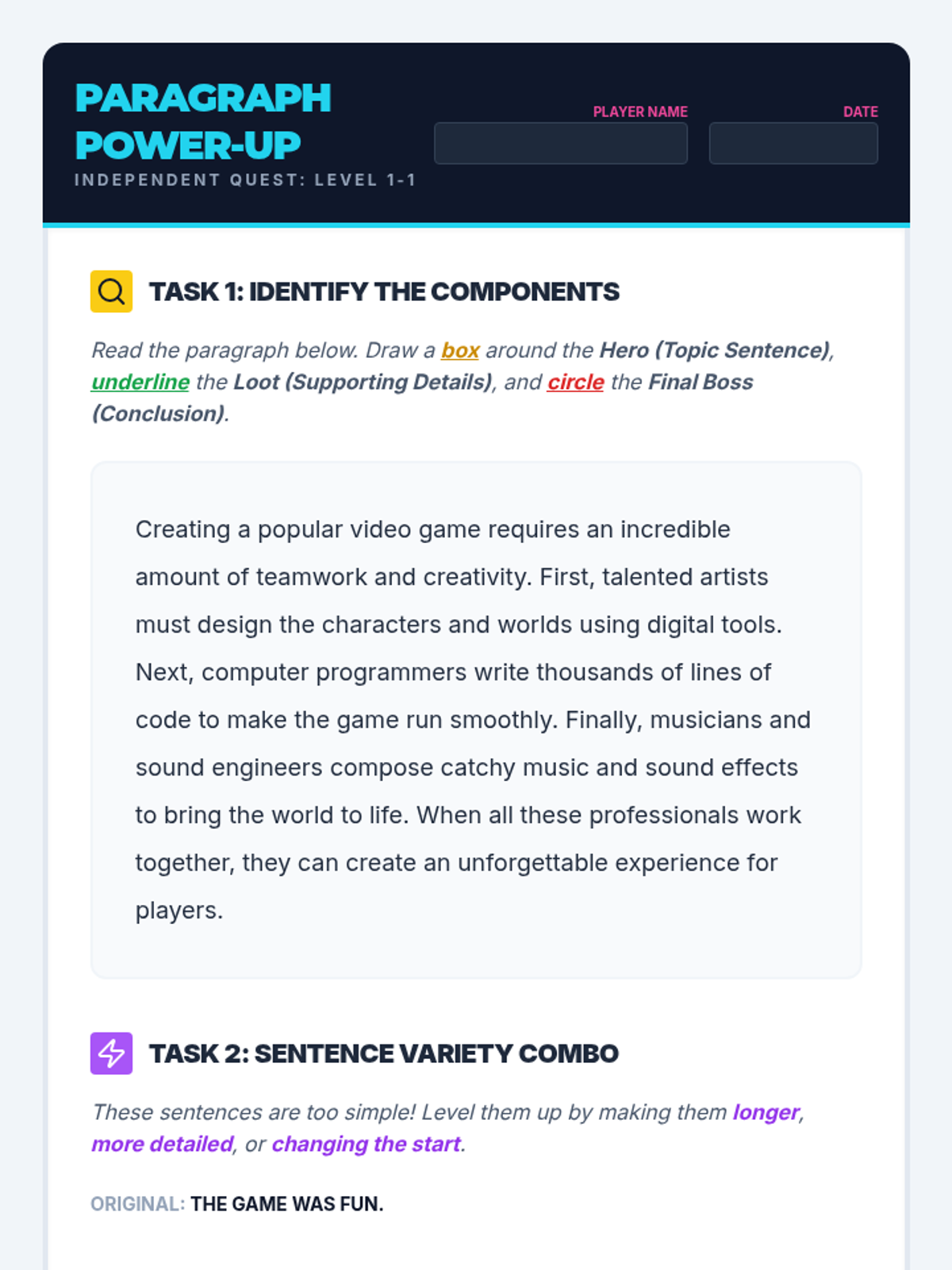
A comprehensive lesson designed to help 3rd-5th grade students master the art of paragraph construction through a fun, retro video game theme. Students will learn about sentence variety, topic sentences, and supporting details through interactive slides, a card-based game, and scaffolded practice.
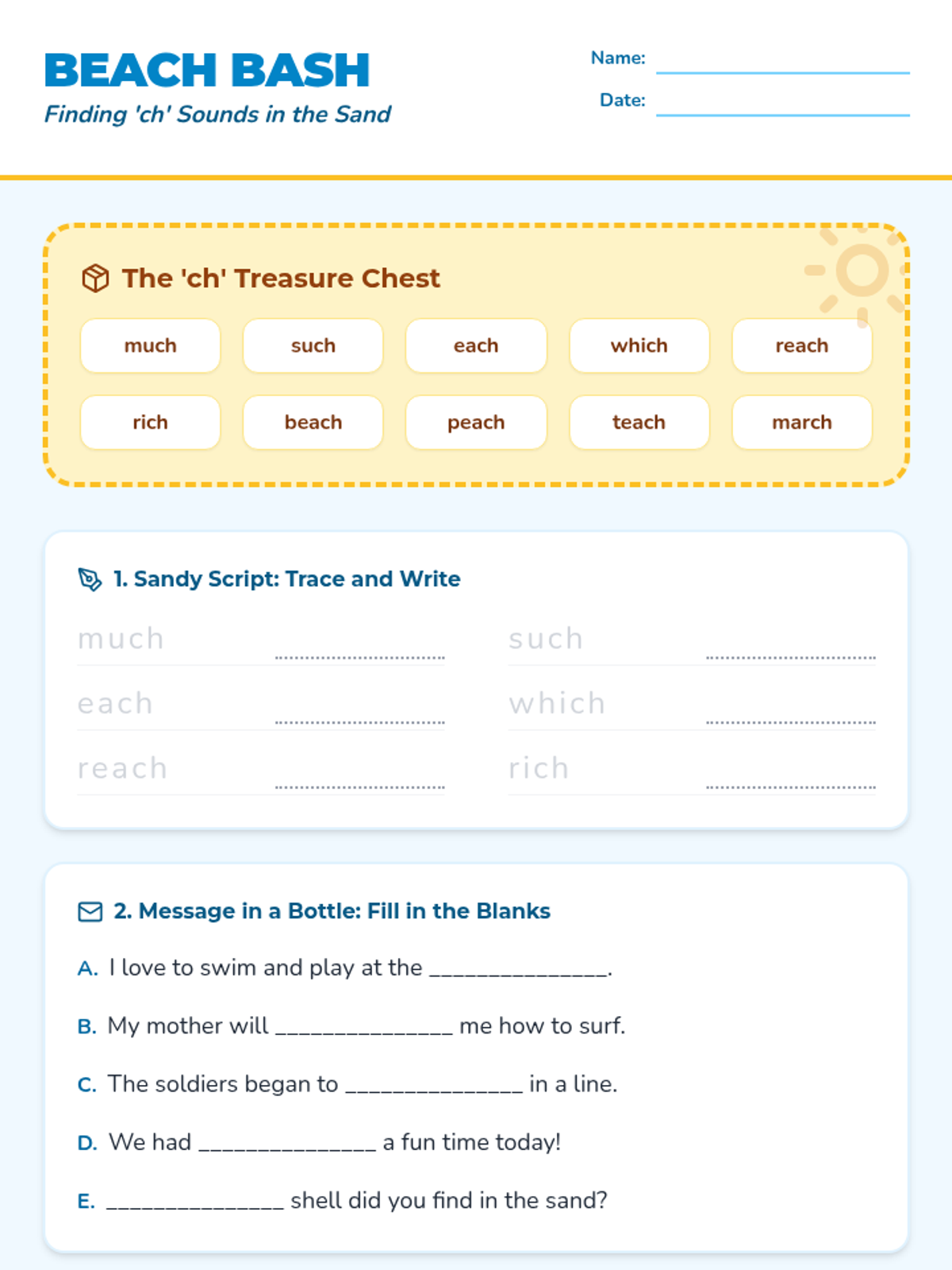
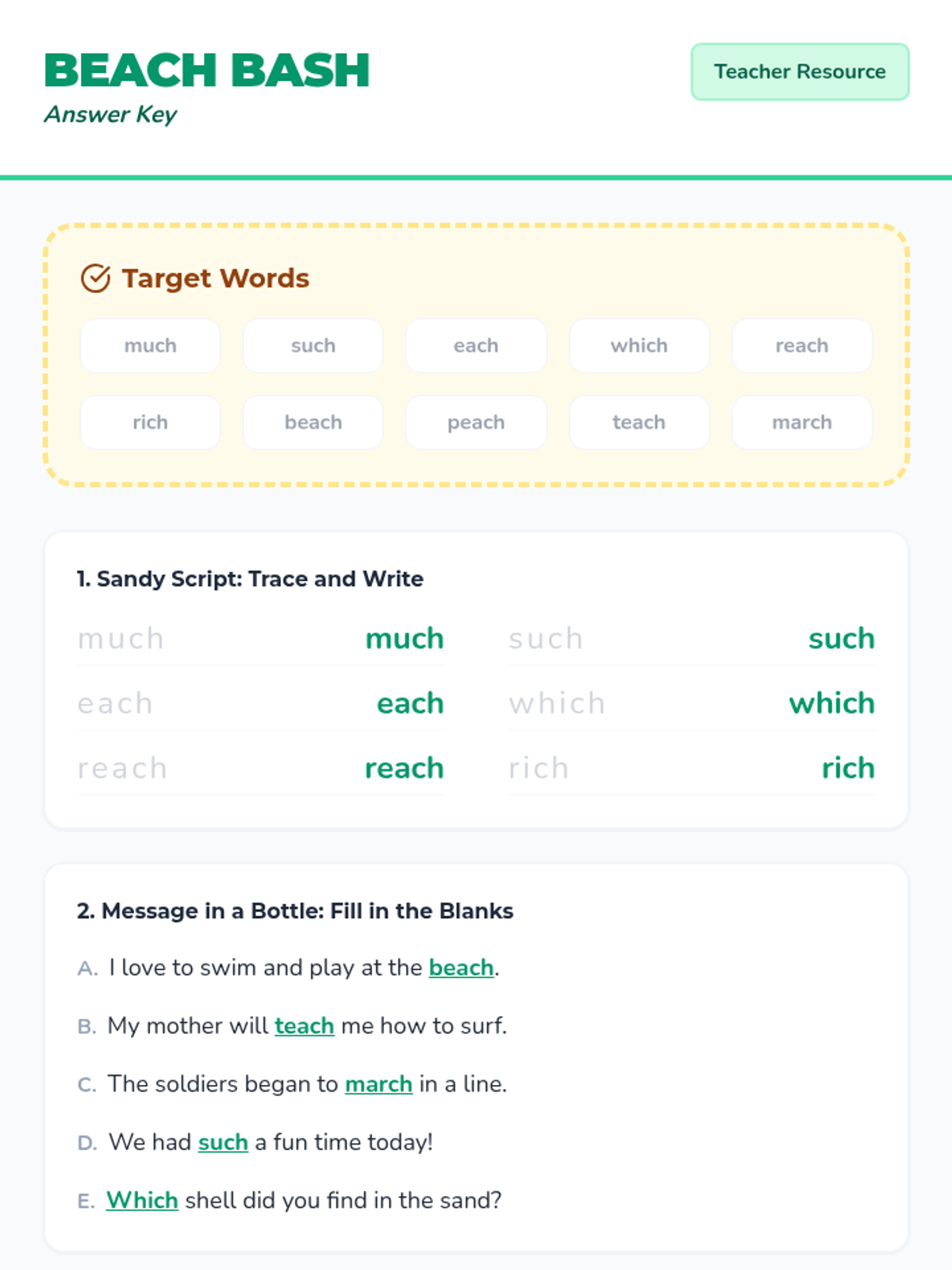
A fun, beach-themed lesson focusing on reading and writing high-frequency words that end with the 'ch' digraph. Students will engage with 10 key words through tracing, sentence completion, and visual identification.
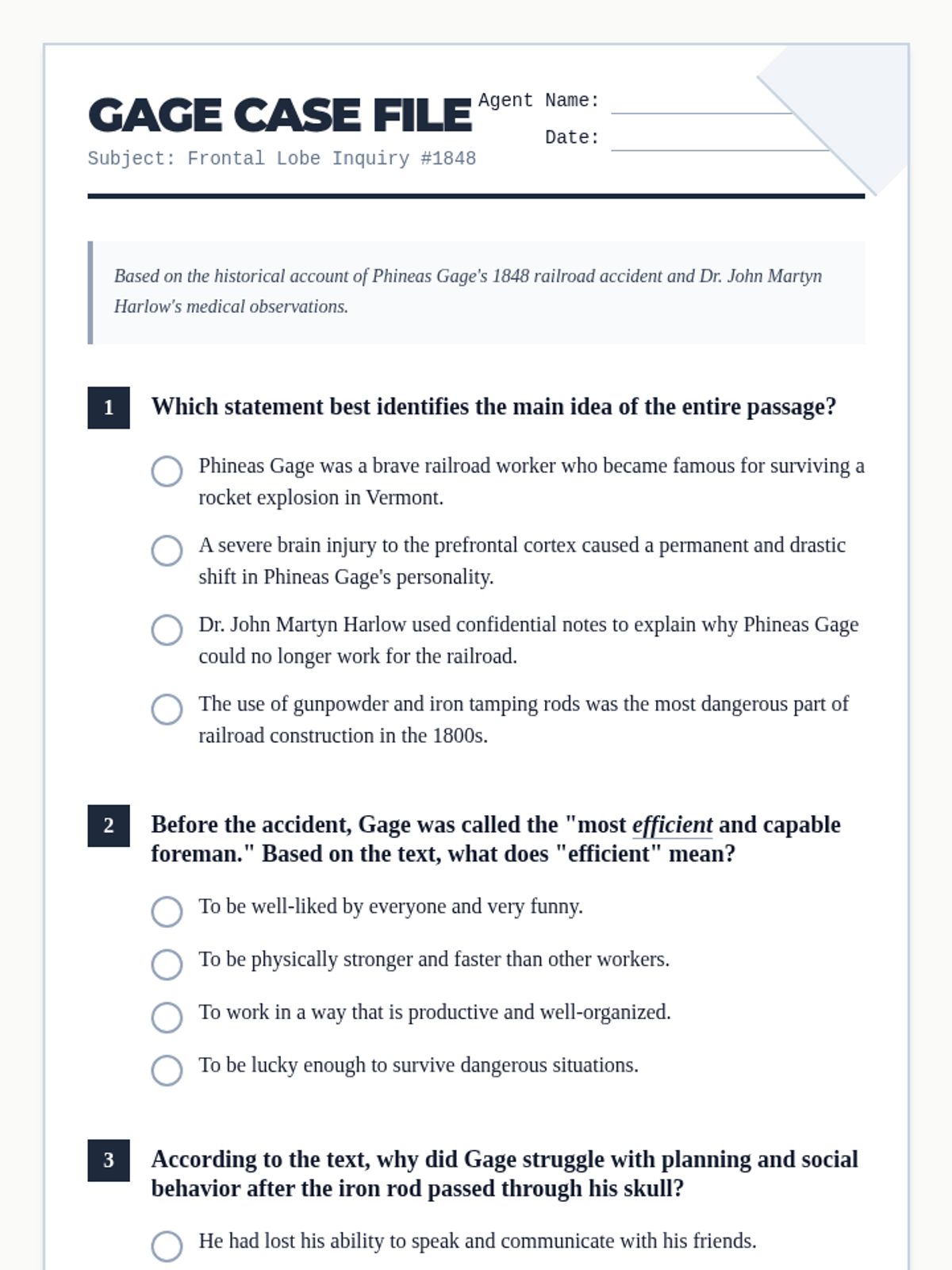
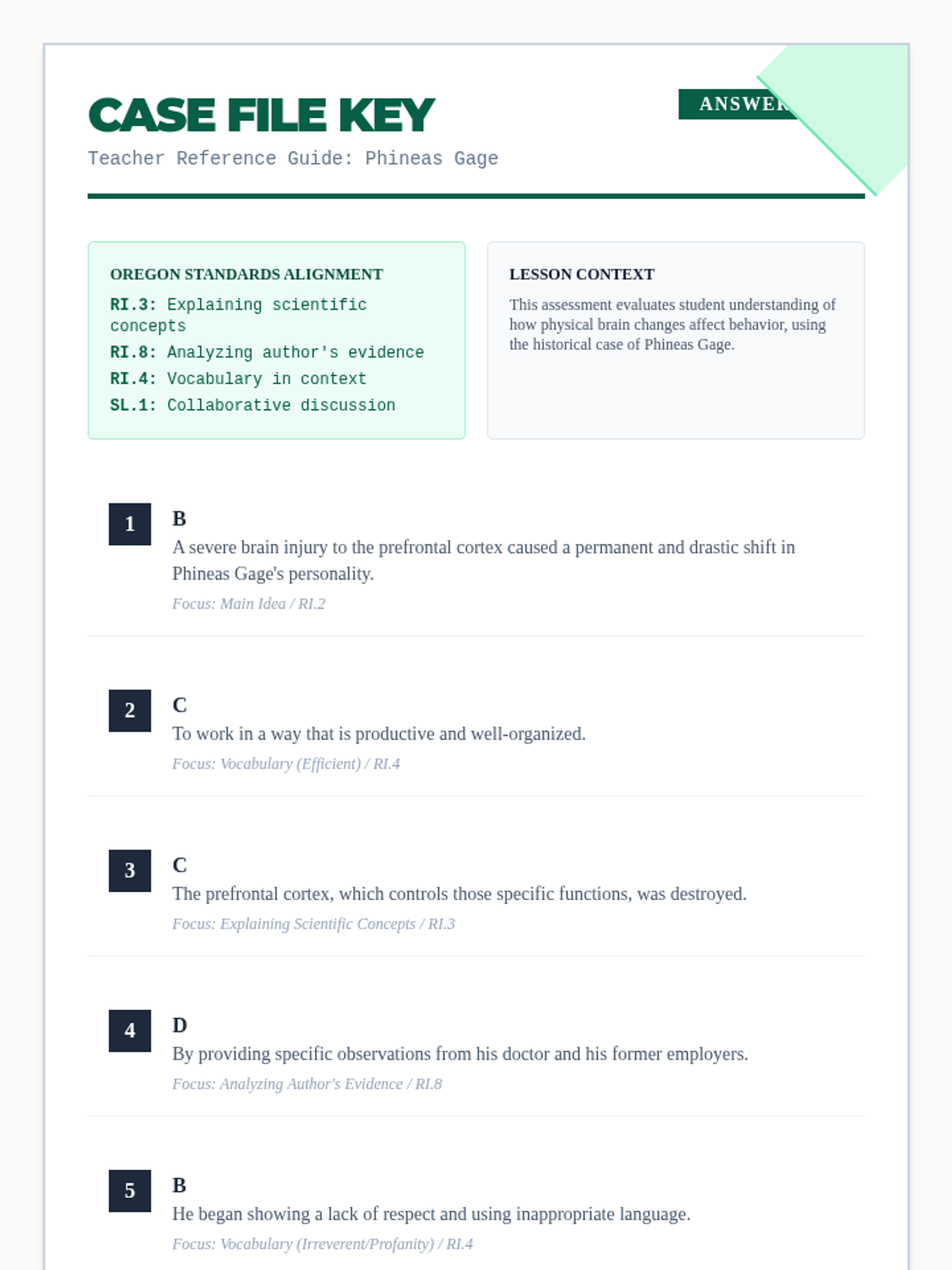
A lesson exploring the famous case of Phineas Gage to understand the connection between brain structure and personality, meeting Oregon learning standards for reading informational text.
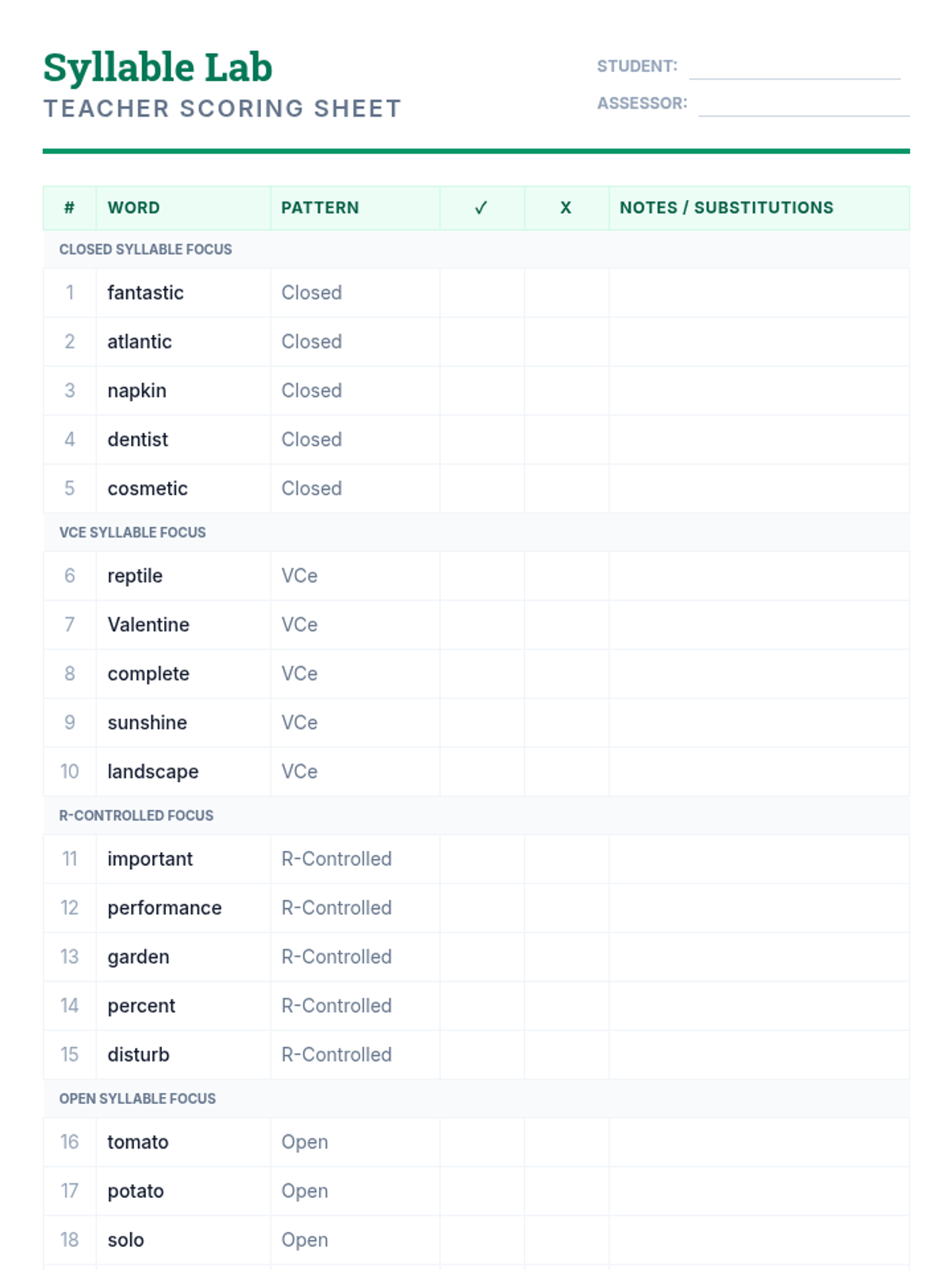
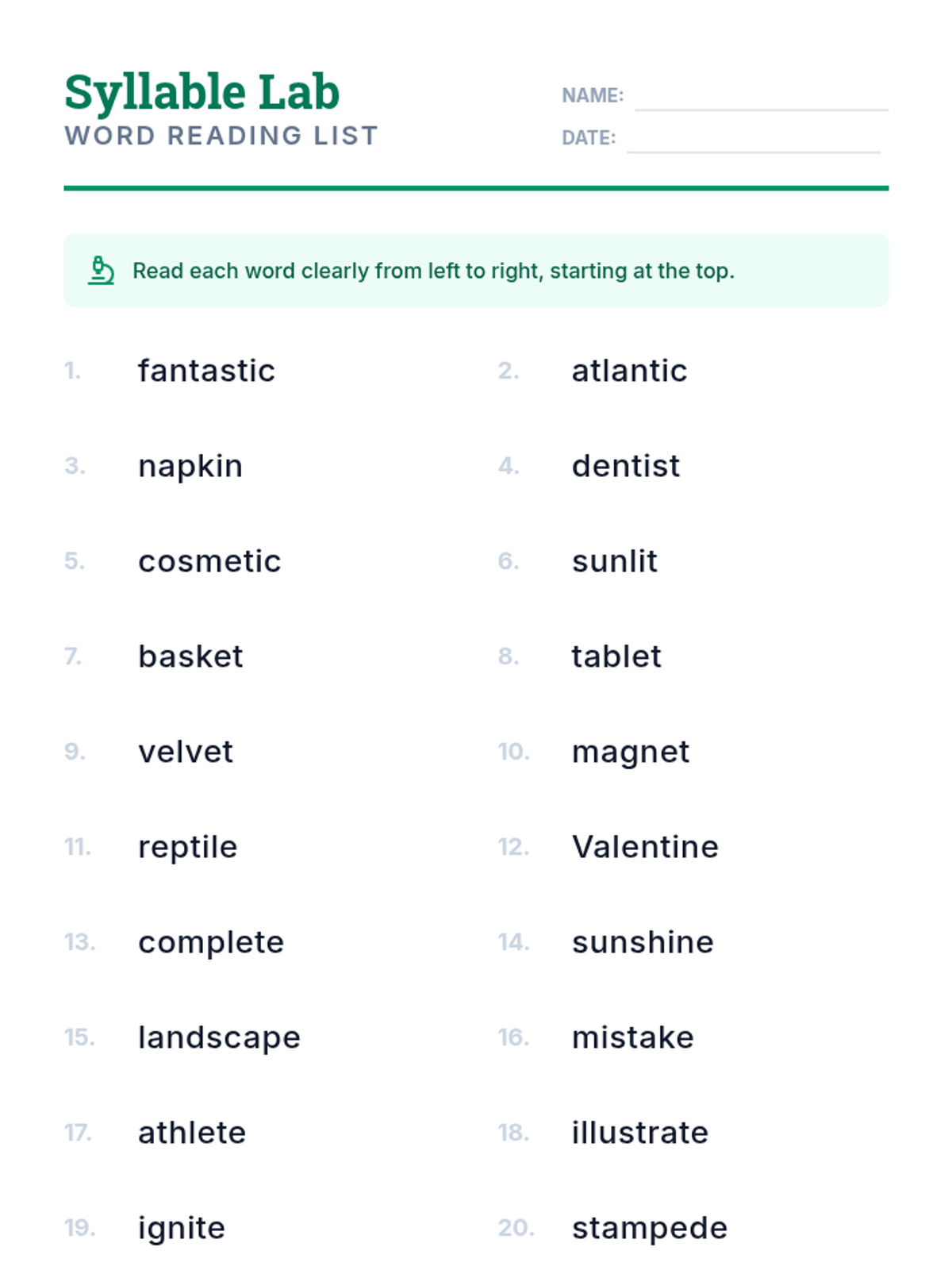
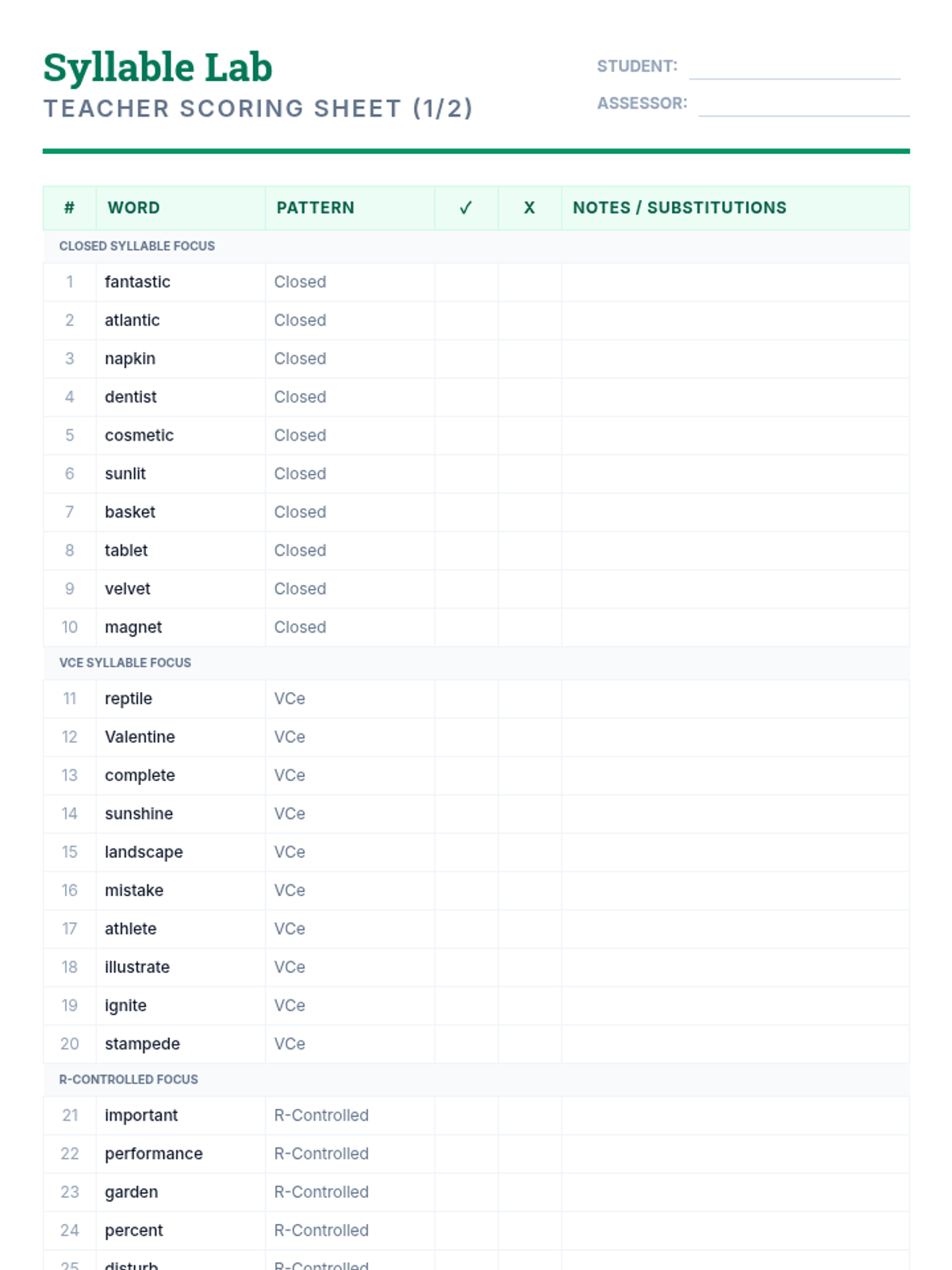
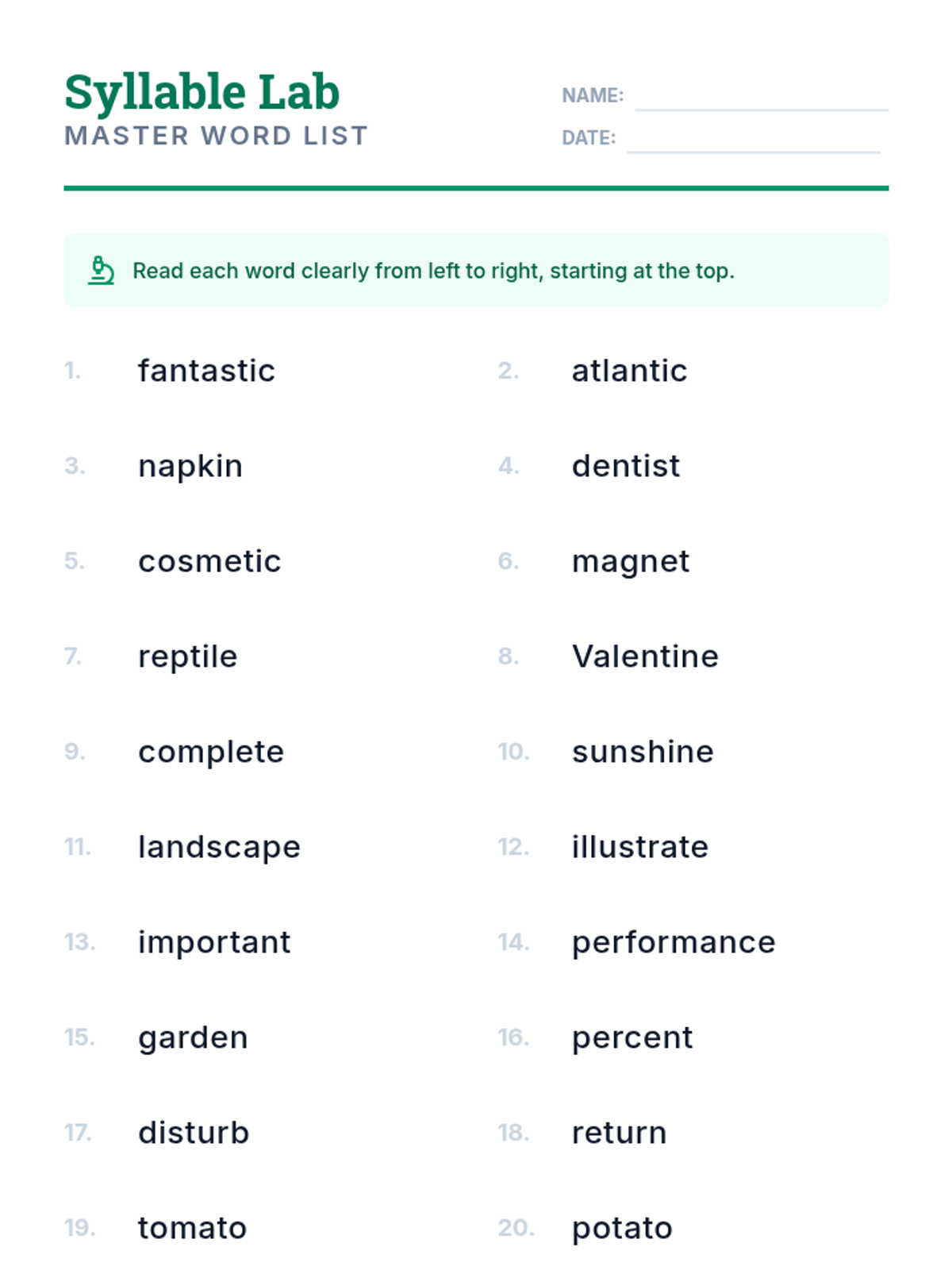
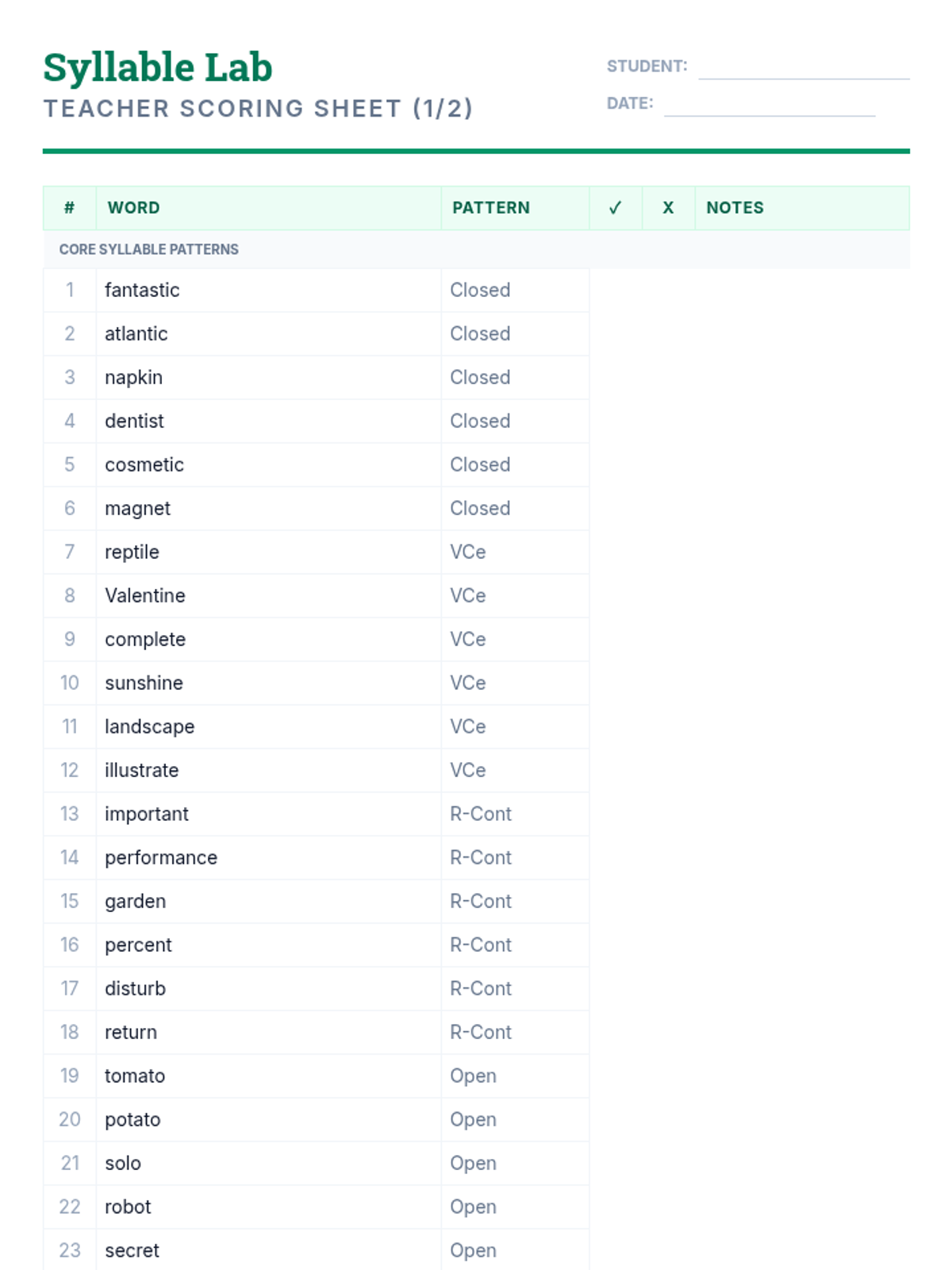
A comprehensive assessment focusing on decoding 2-3 syllable words across various syllable patterns including closed, VCe, r-controlled, open, and vowel teams.
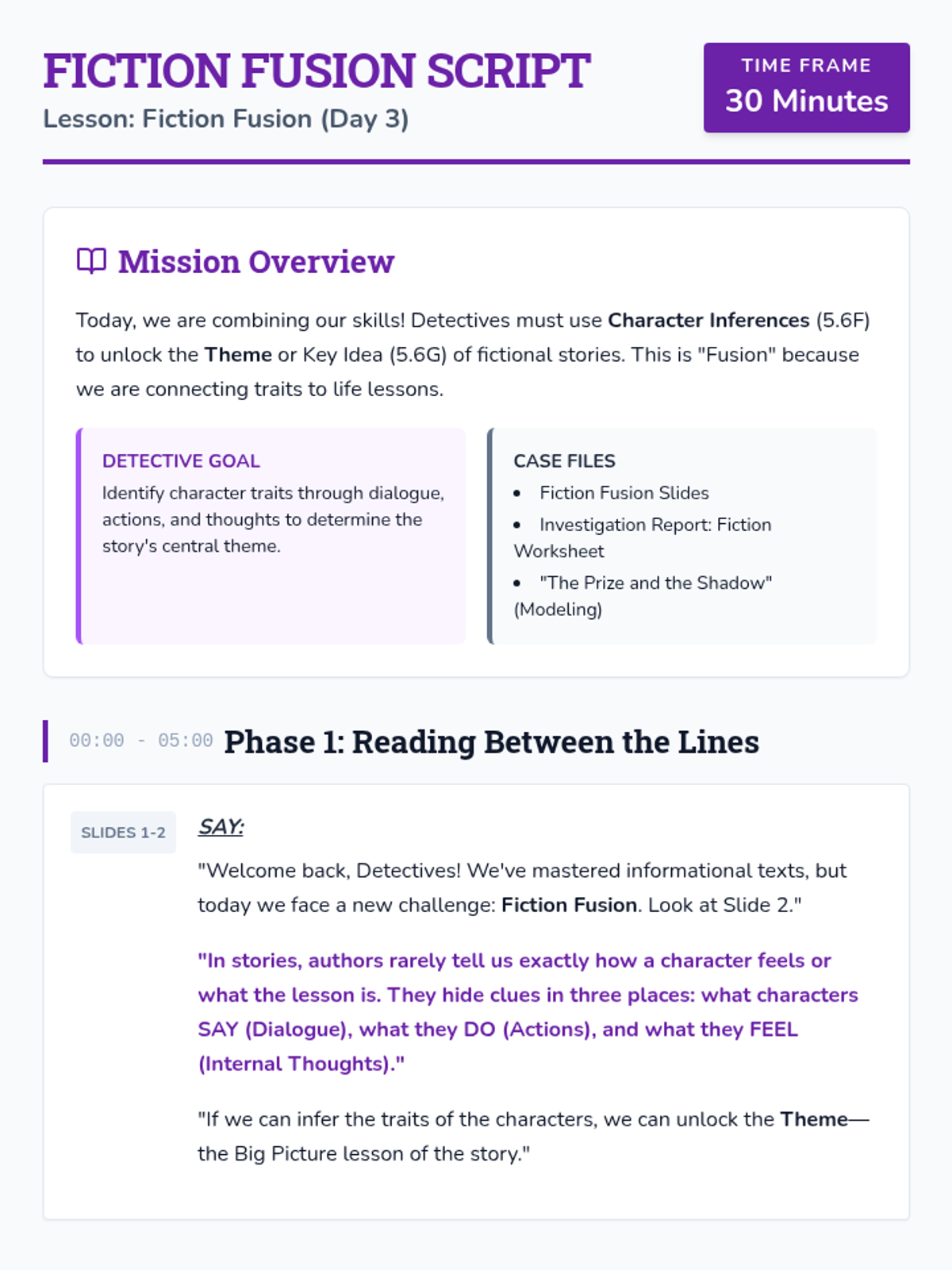
A lesson that bridges the gap between informational and narrative texts by applying detective skills to fiction. Students integrate character inferences with theme identification to solve 'literary mysteries,' analyzing fables like 'The Wisdom of the Cracked Pot' and 'The Kindness of the Lion.'
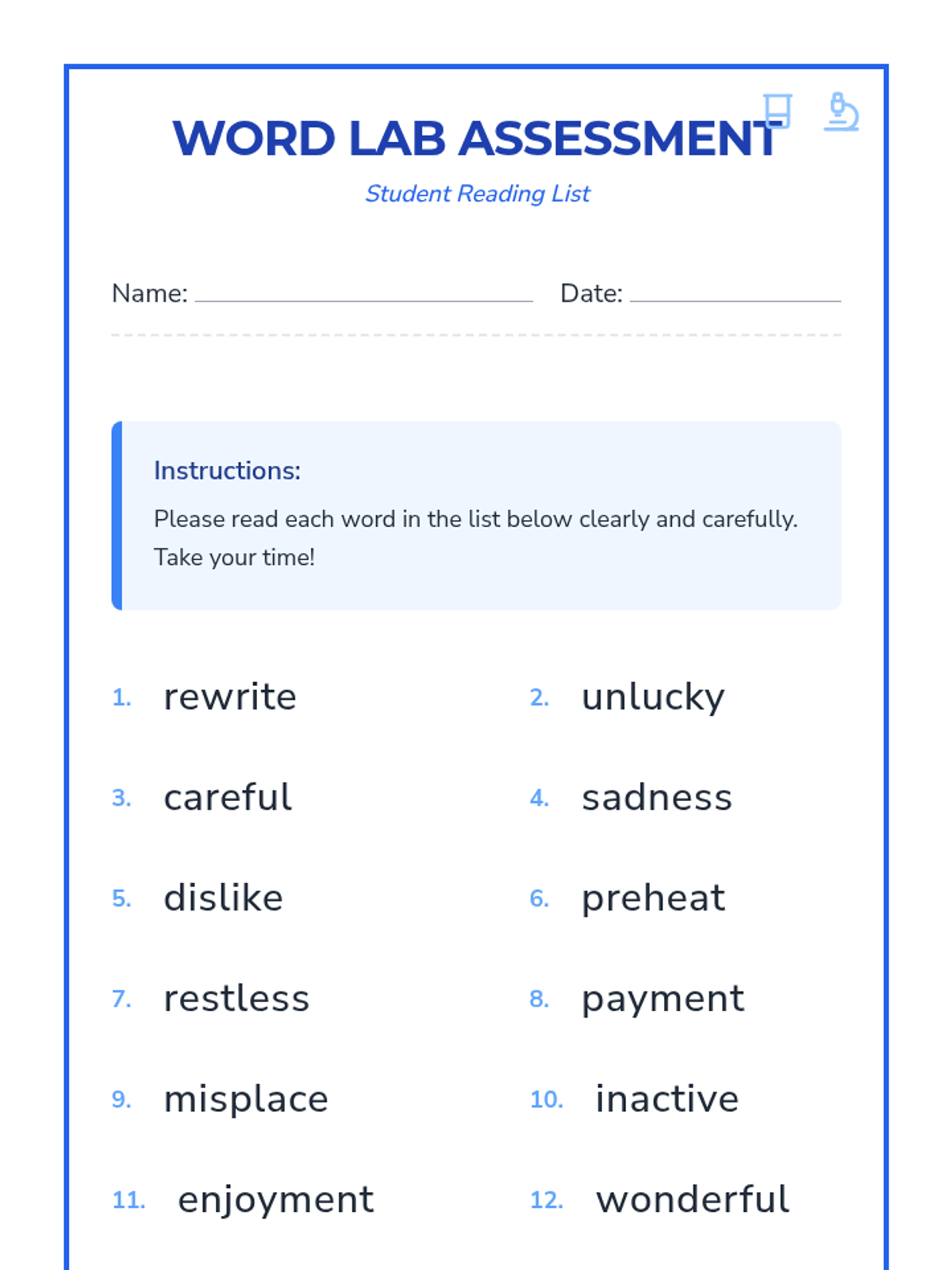
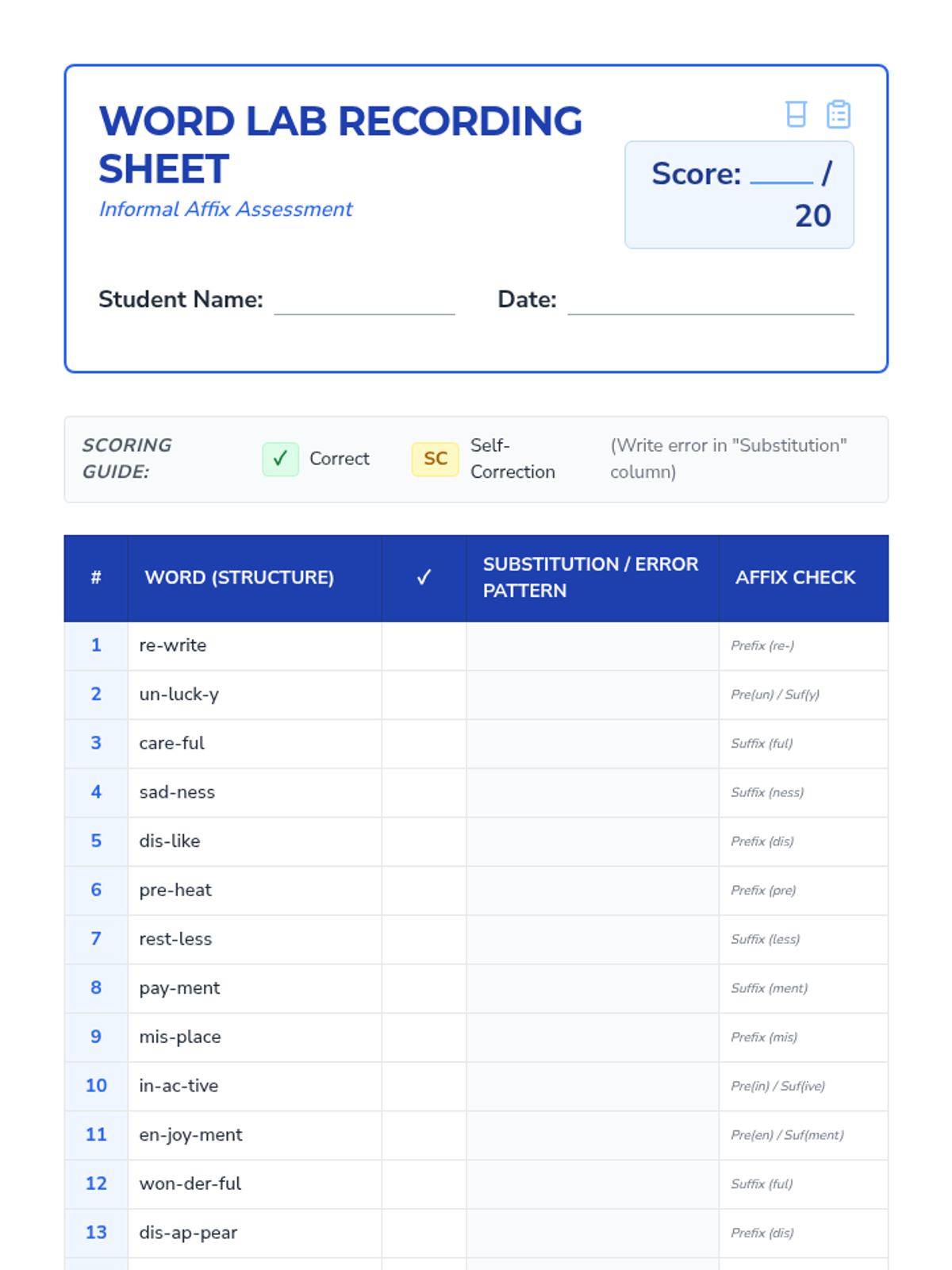
This lesson provides an informal assessment for students to demonstrate their ability to read 2-3 syllable words containing common prefixes and suffixes. It includes a student-facing word list and a corresponding teacher recording sheet.
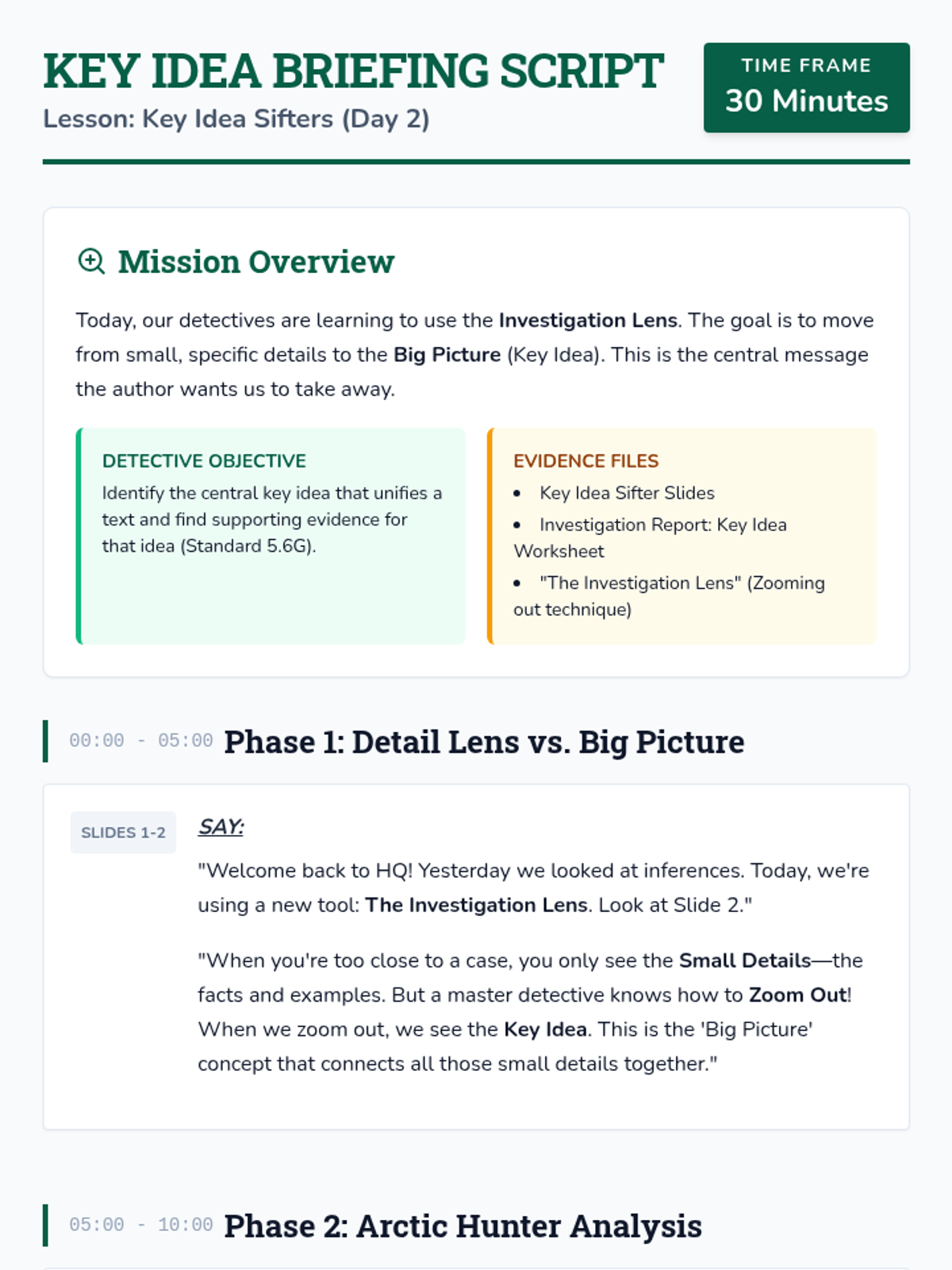
A lesson focused on identifying the central 'Big Picture' idea in informational texts using the 'Investigation Lens.' Students practice zooming out from specific details to synthesize the main message authors intend to convey, using cases about polar bear adaptations and Thomas Edison's persistence.
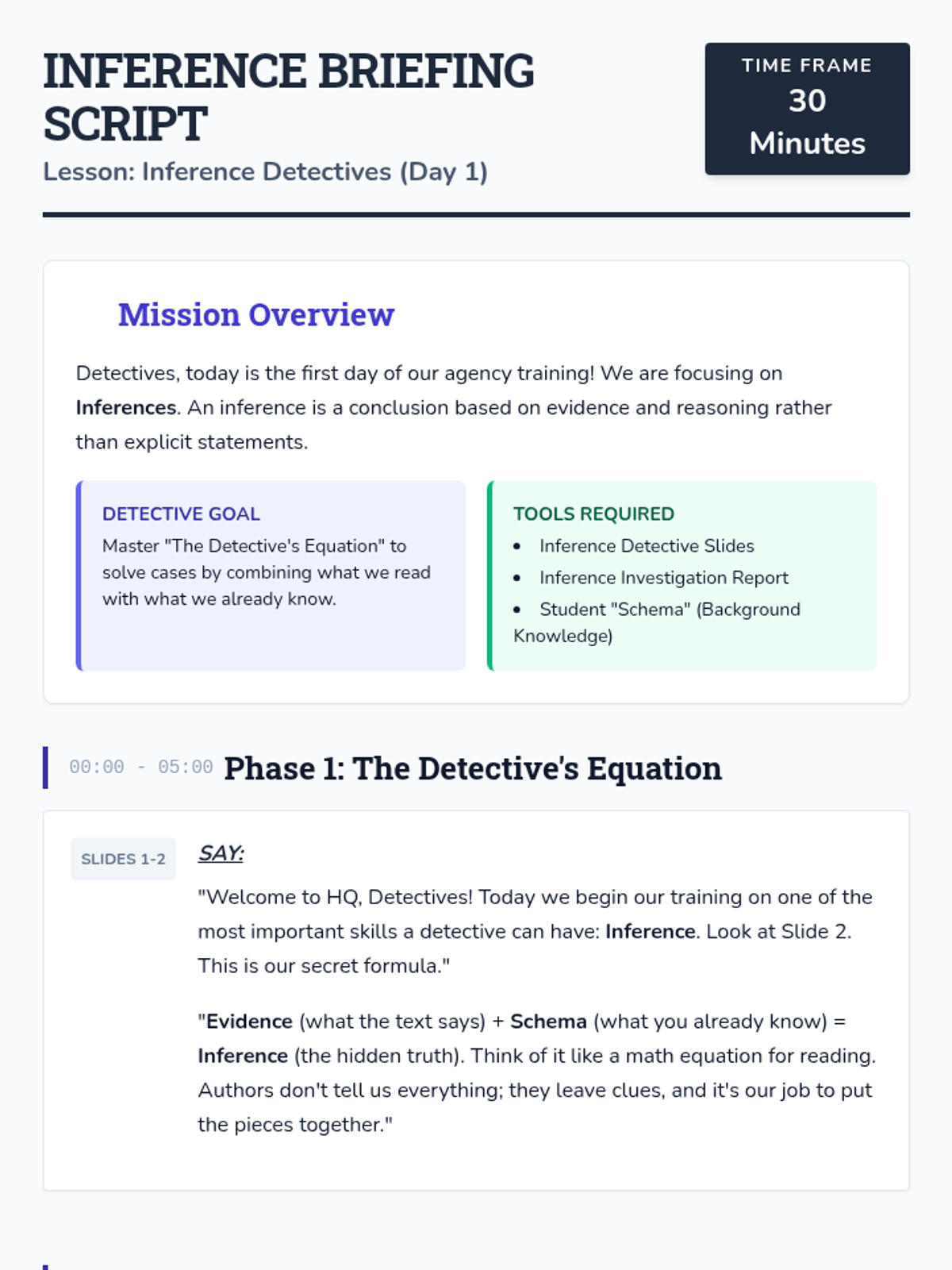
A foundational lesson on making inferences using text evidence and personal schema. Students learn 'The Detective's Equation' (Evidence + Schema = Inference) and apply it to solve short 'case studies' ranging from athletic disappointments to mysterious kitchen messes.
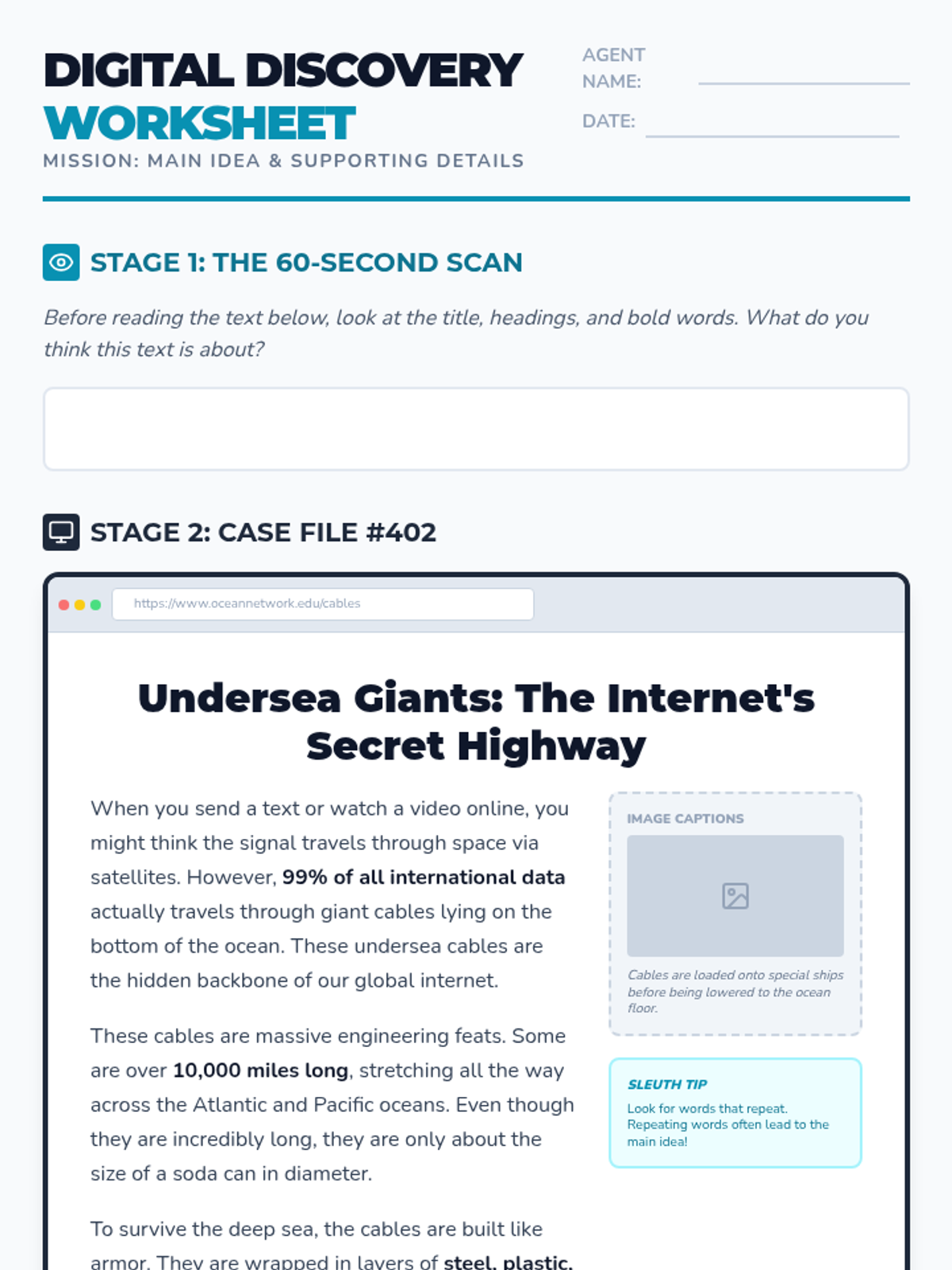
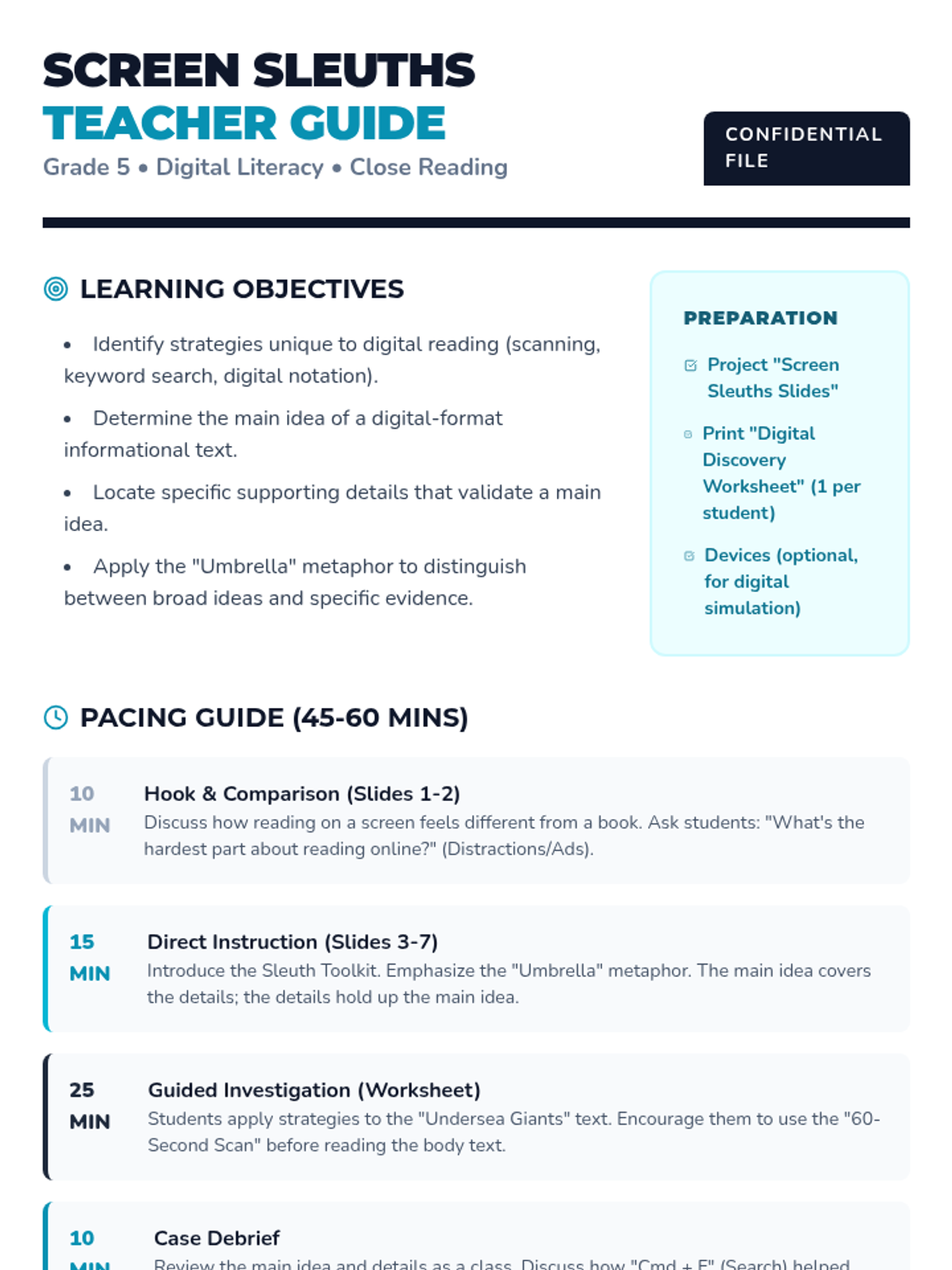
A lesson for 5th graders on applying close reading strategies to digital texts, with a specific focus on identifying main ideas and supporting details in an online environment.
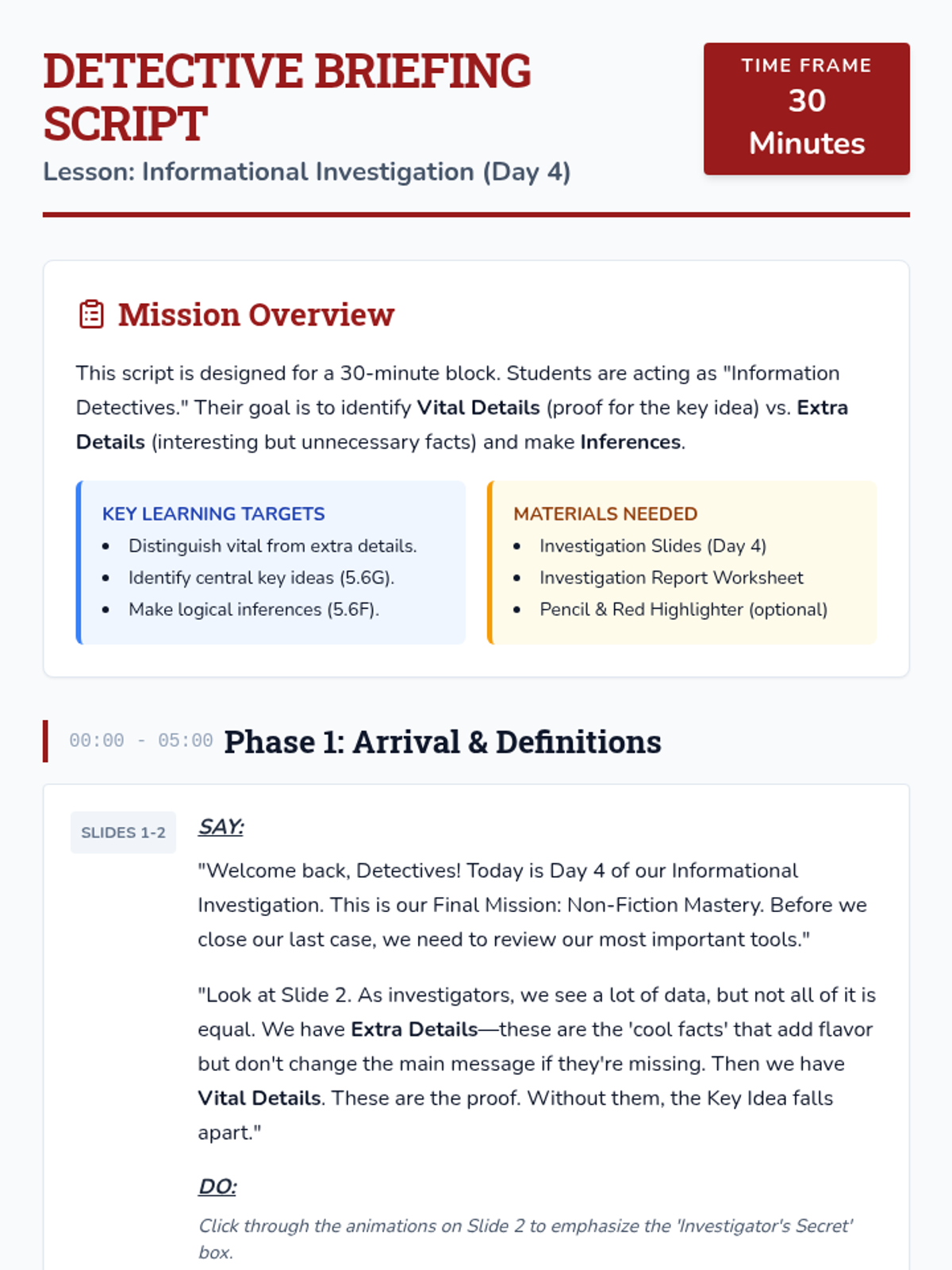
A comprehensive lesson focused on teaching students how to distinguish between vital and extra details in informational texts to identify key ideas and make inferences. Using a 'detective' theme, students analyze real-world topics like the invention of Band-Aids, the importance of bees, and medical 3D printing.
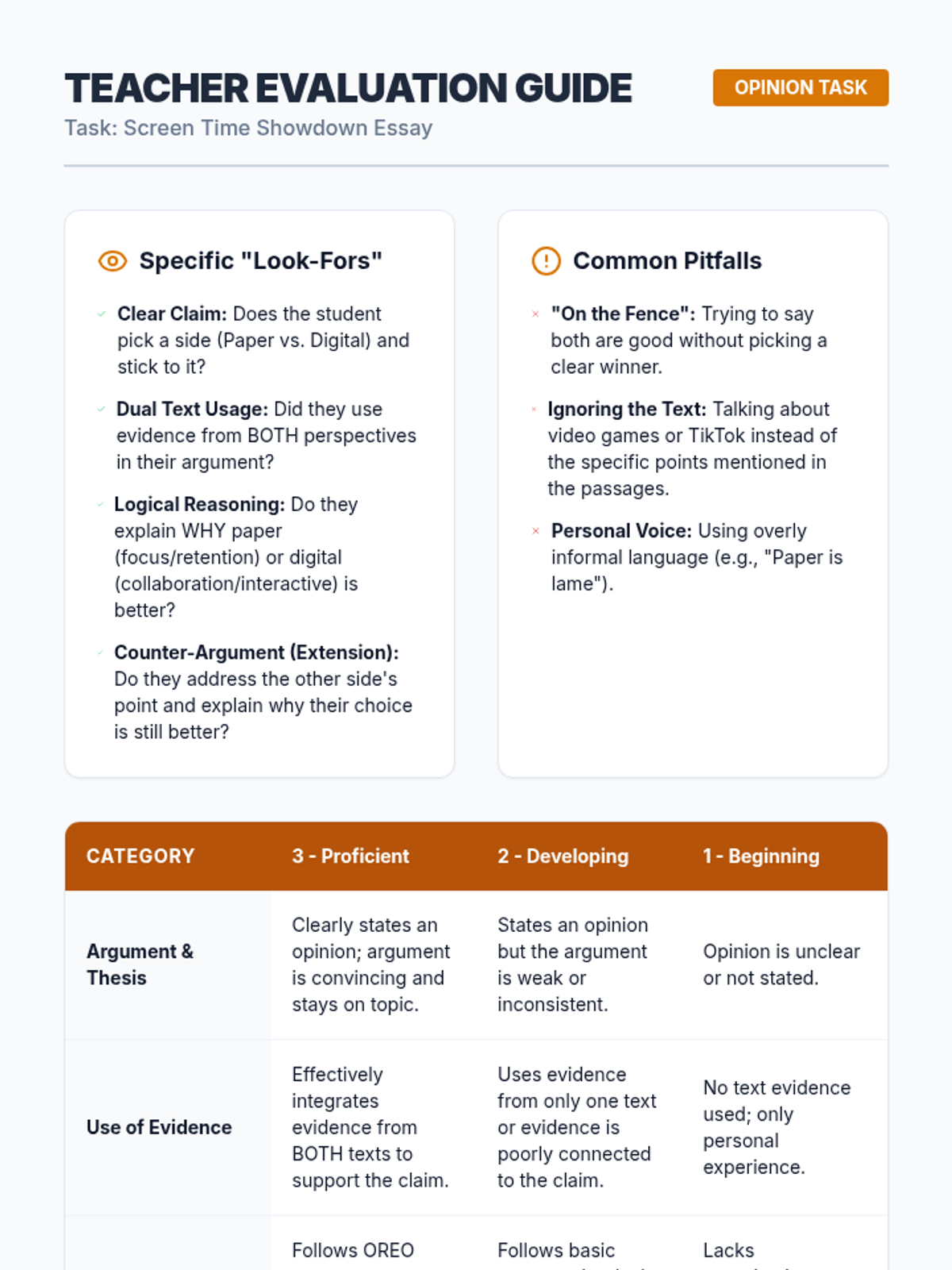
Students evaluate multiple viewpoints on a topic and construct a persuasive essay supported by evidence from the text.
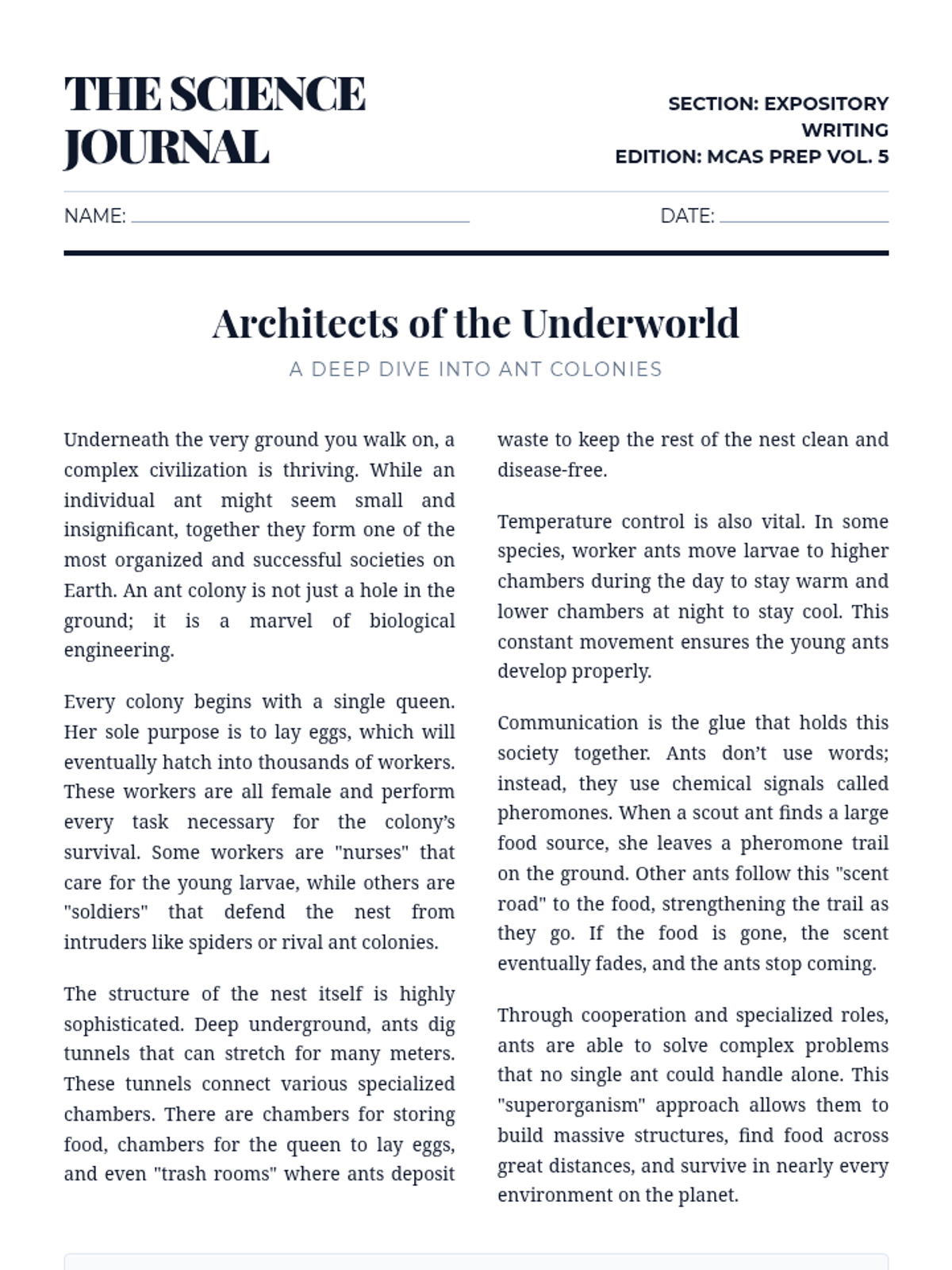
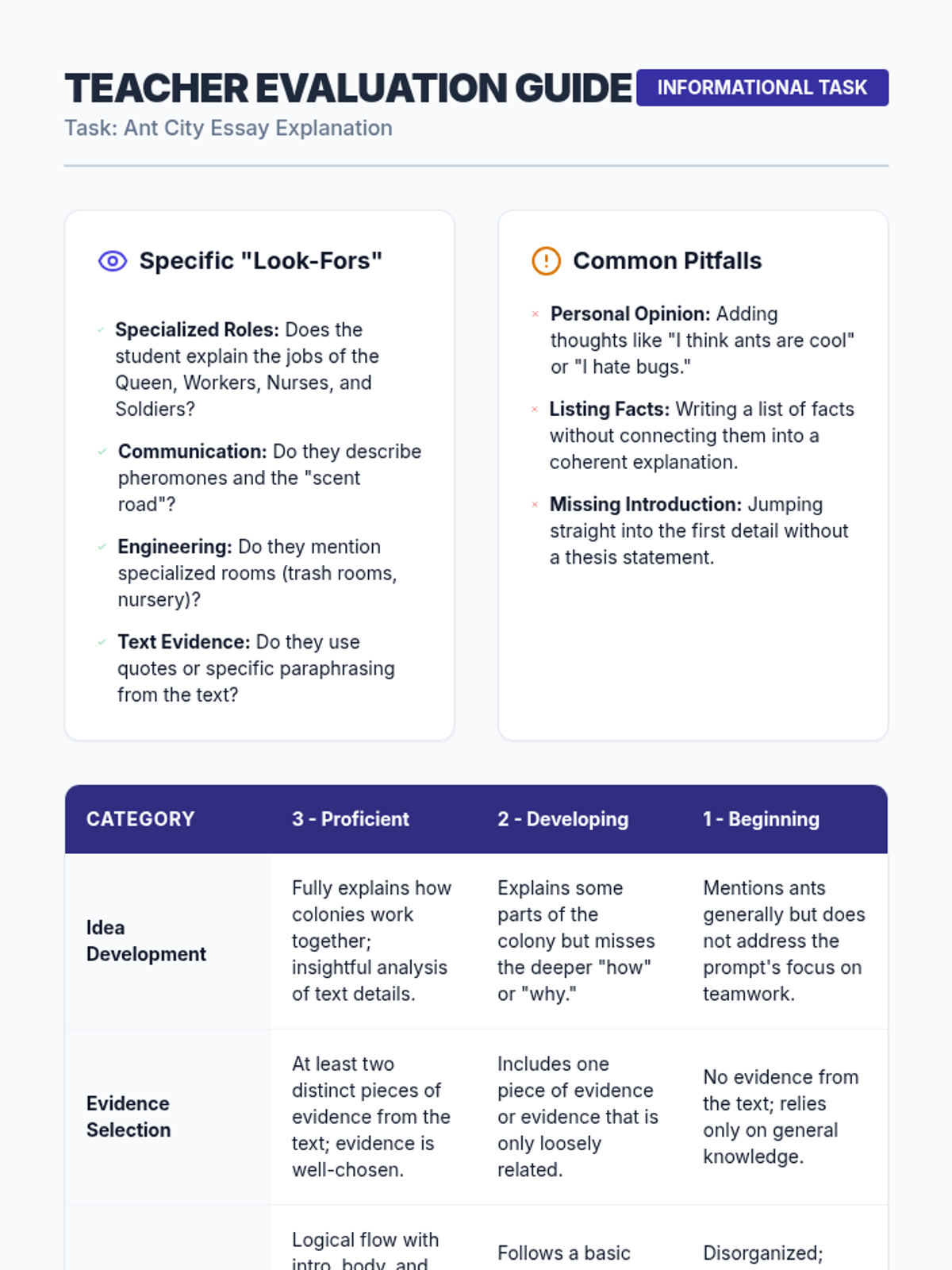
Students analyze informational texts to extract key details and synthesize information into a coherent expository essay.
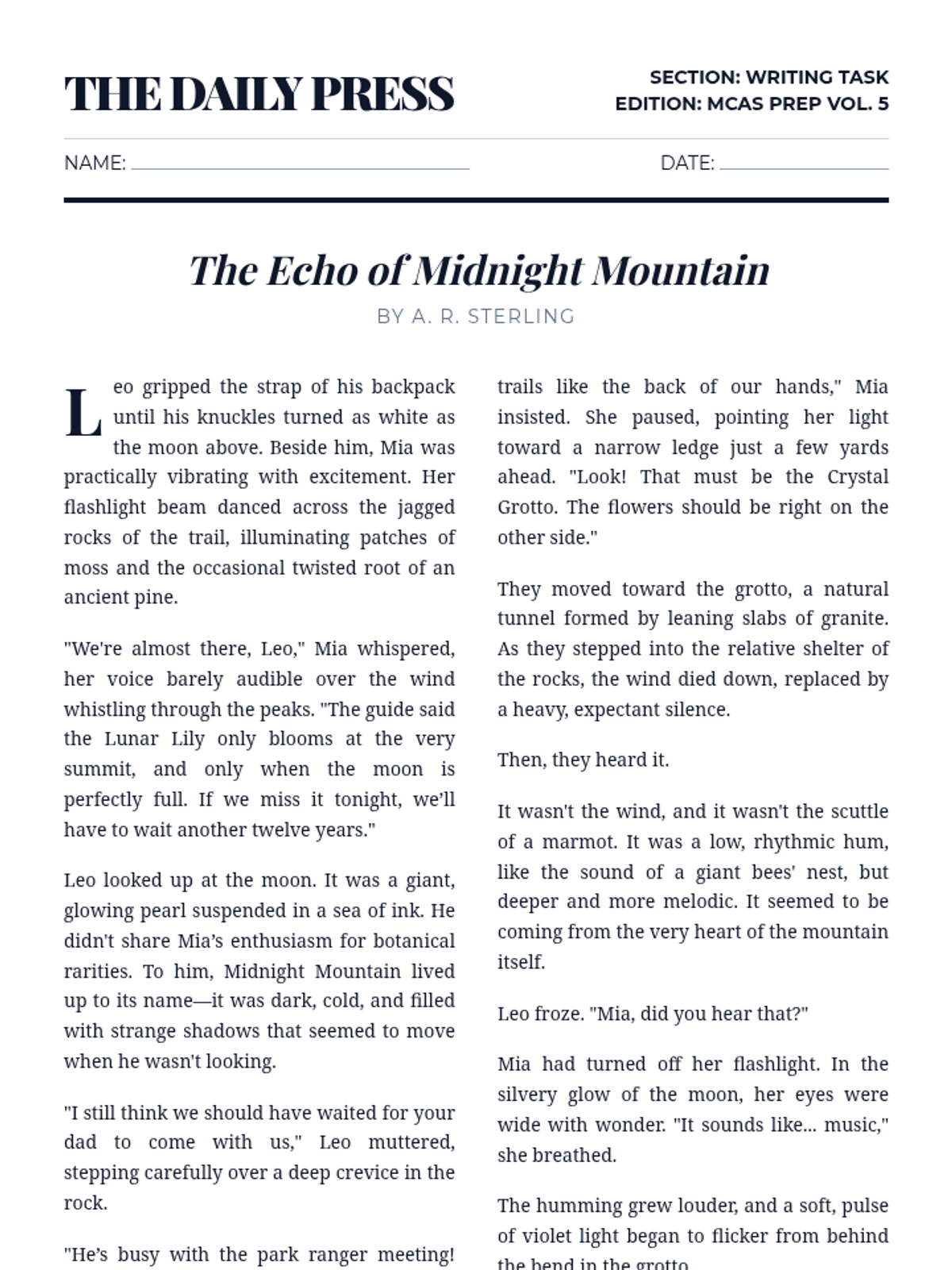
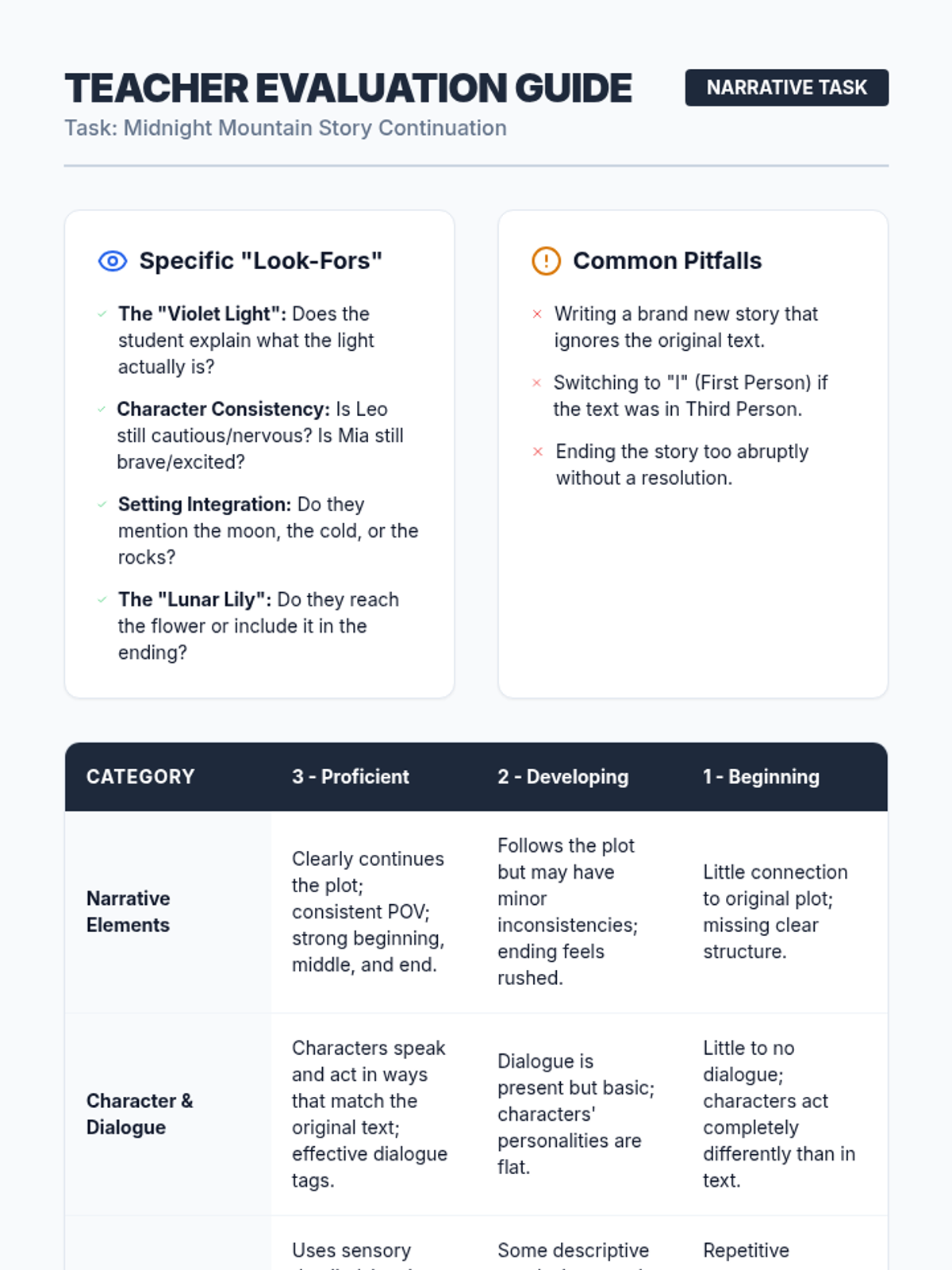
Students practice crafting narrative responses by continuing a story or changing a character's perspective based on a given text.
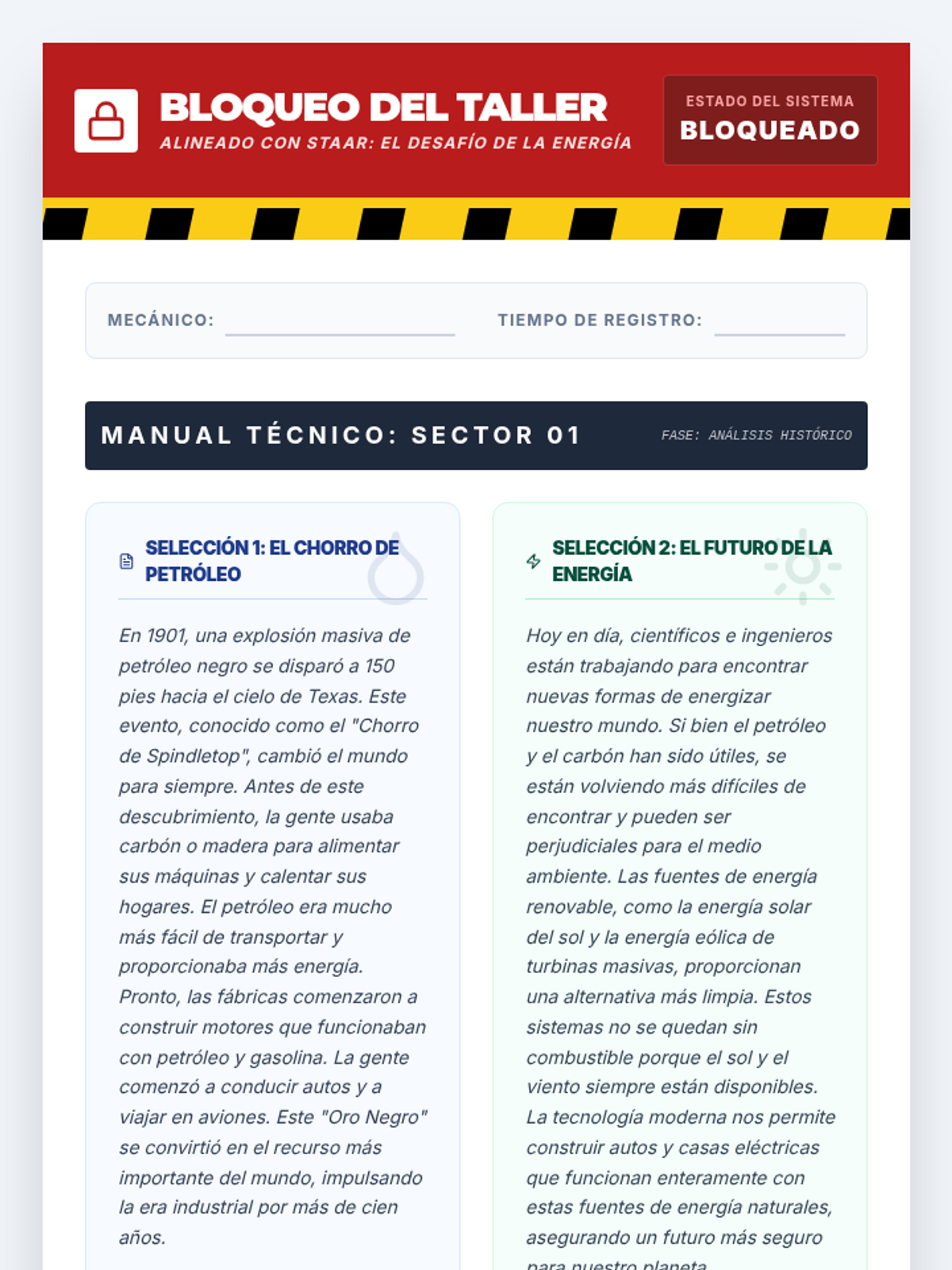
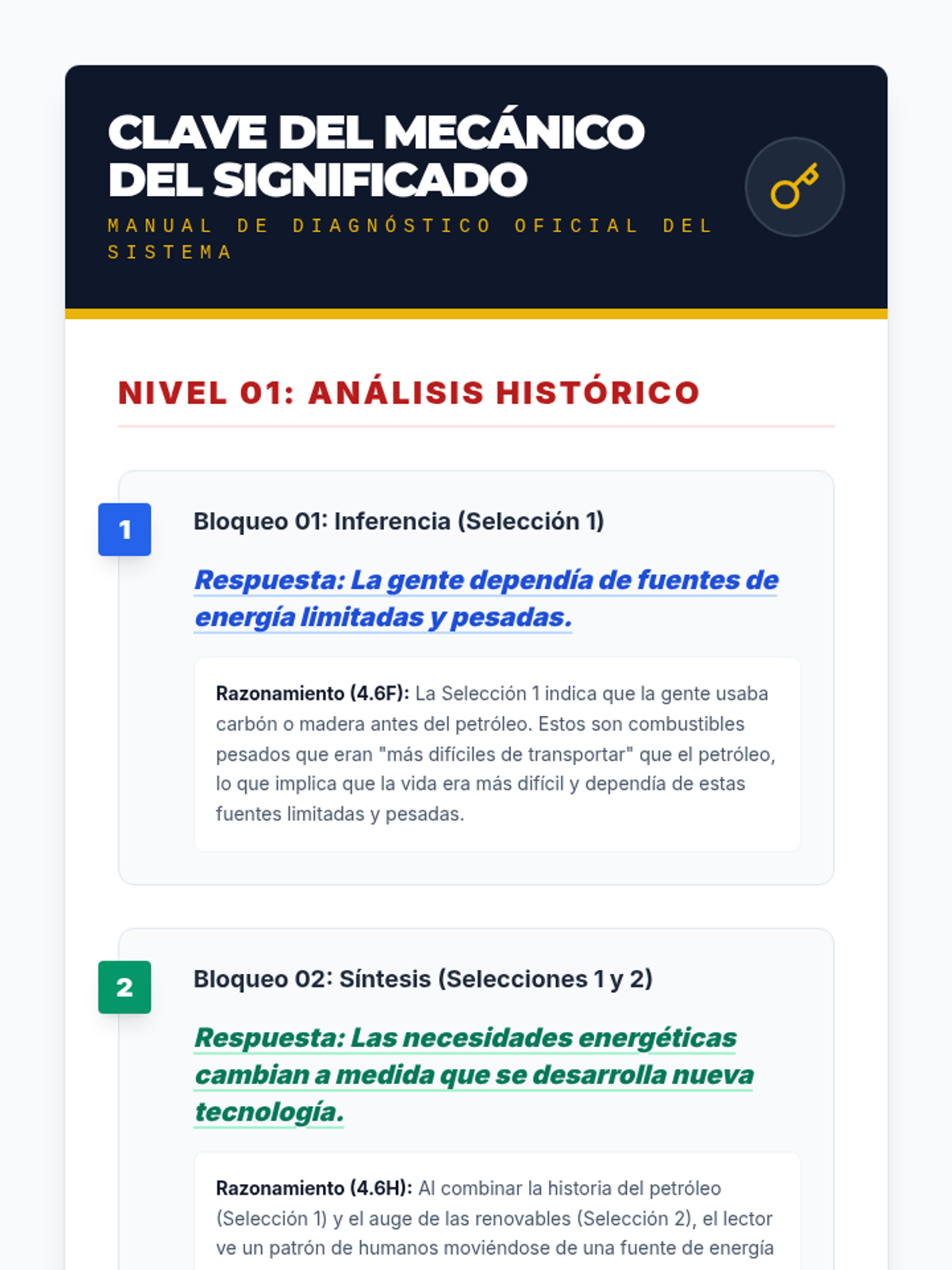
Una misión de simulación de alta intensidad donde los estudiantes deben resolver acertijos de comprensión lectora (inferencia y síntesis) para 'desbloquear' un taller de energía después de un fallo crítico del sistema.
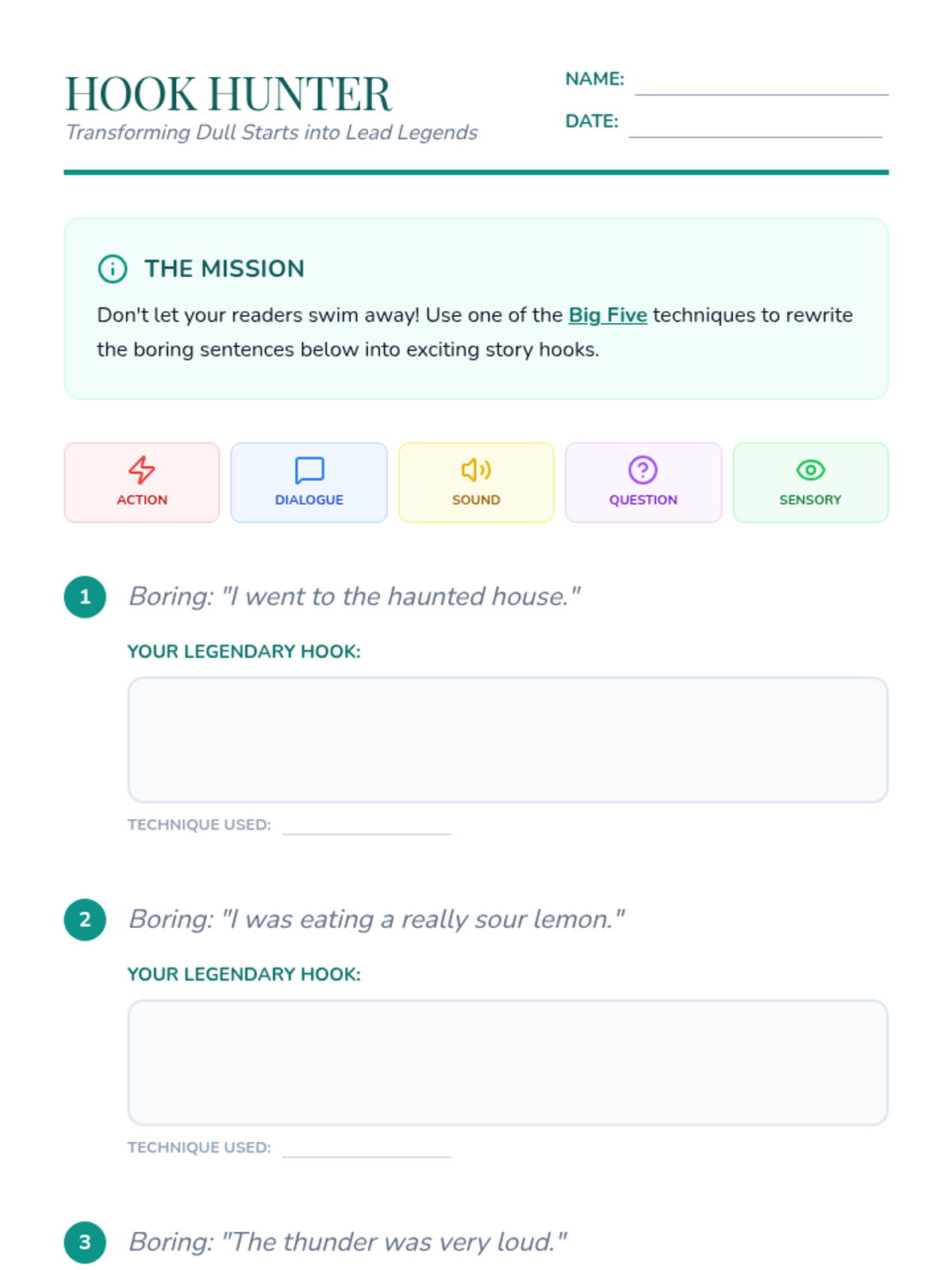
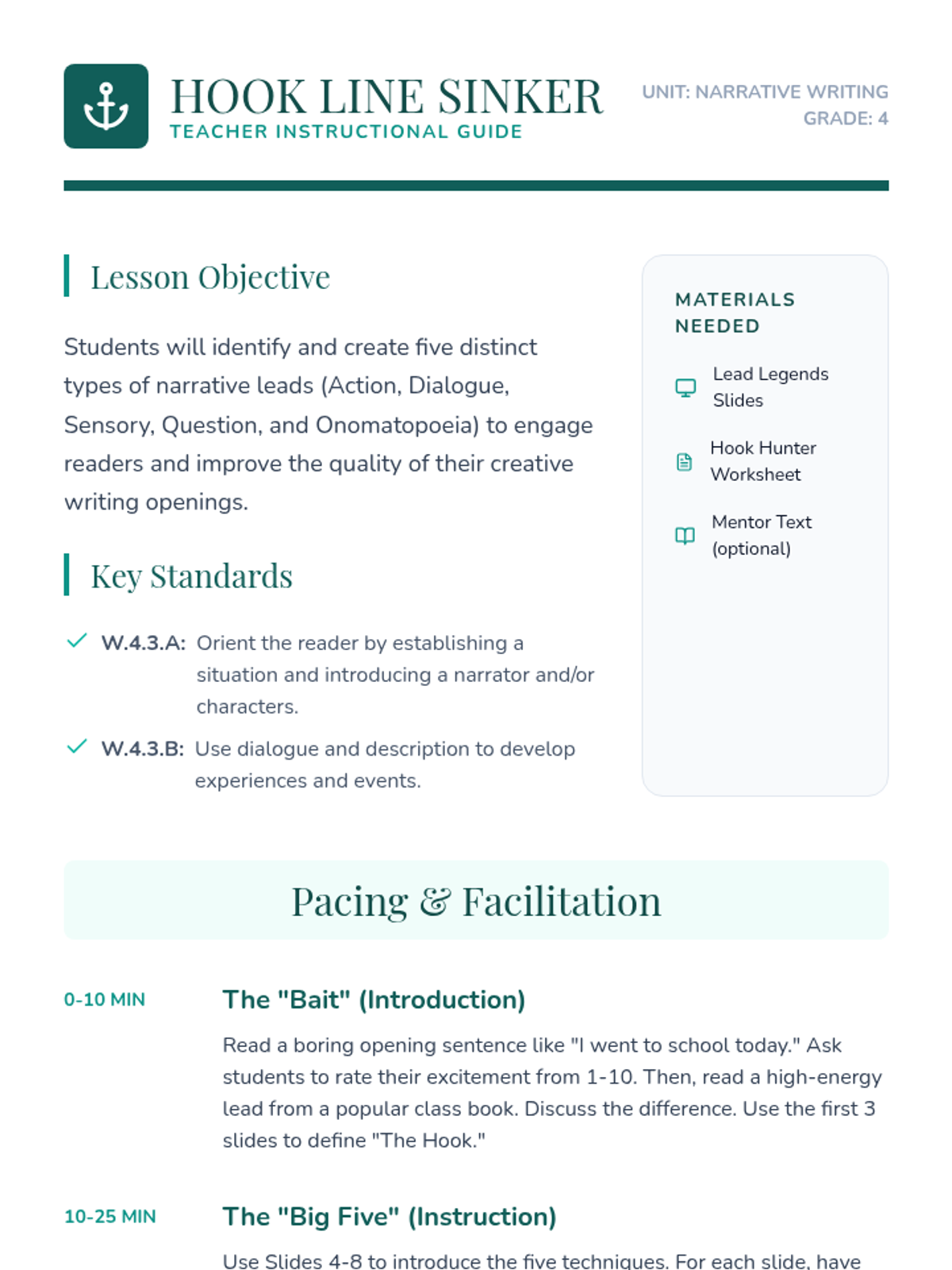
A lesson focused on teaching 4th-grade students how to write engaging narrative leads using five specific techniques: Action, Dialogue, Sensory Details, Questions, and Onomatopoeia. Students will analyze examples and practice transforming dull openings into exciting hooks.
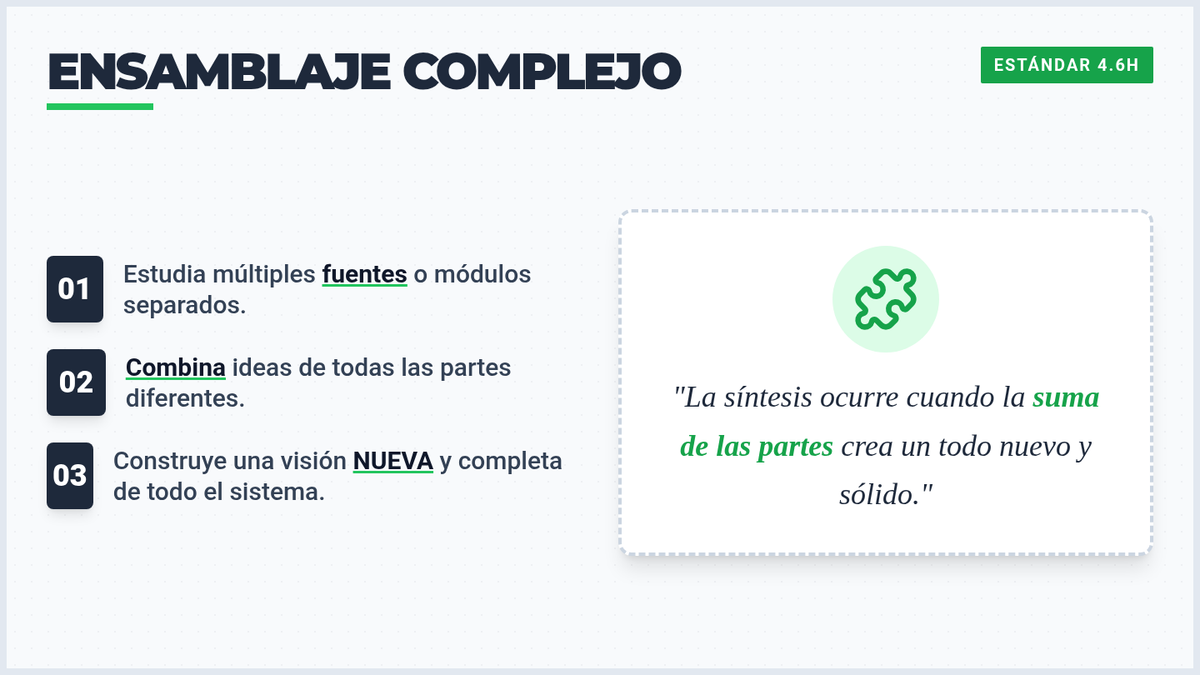
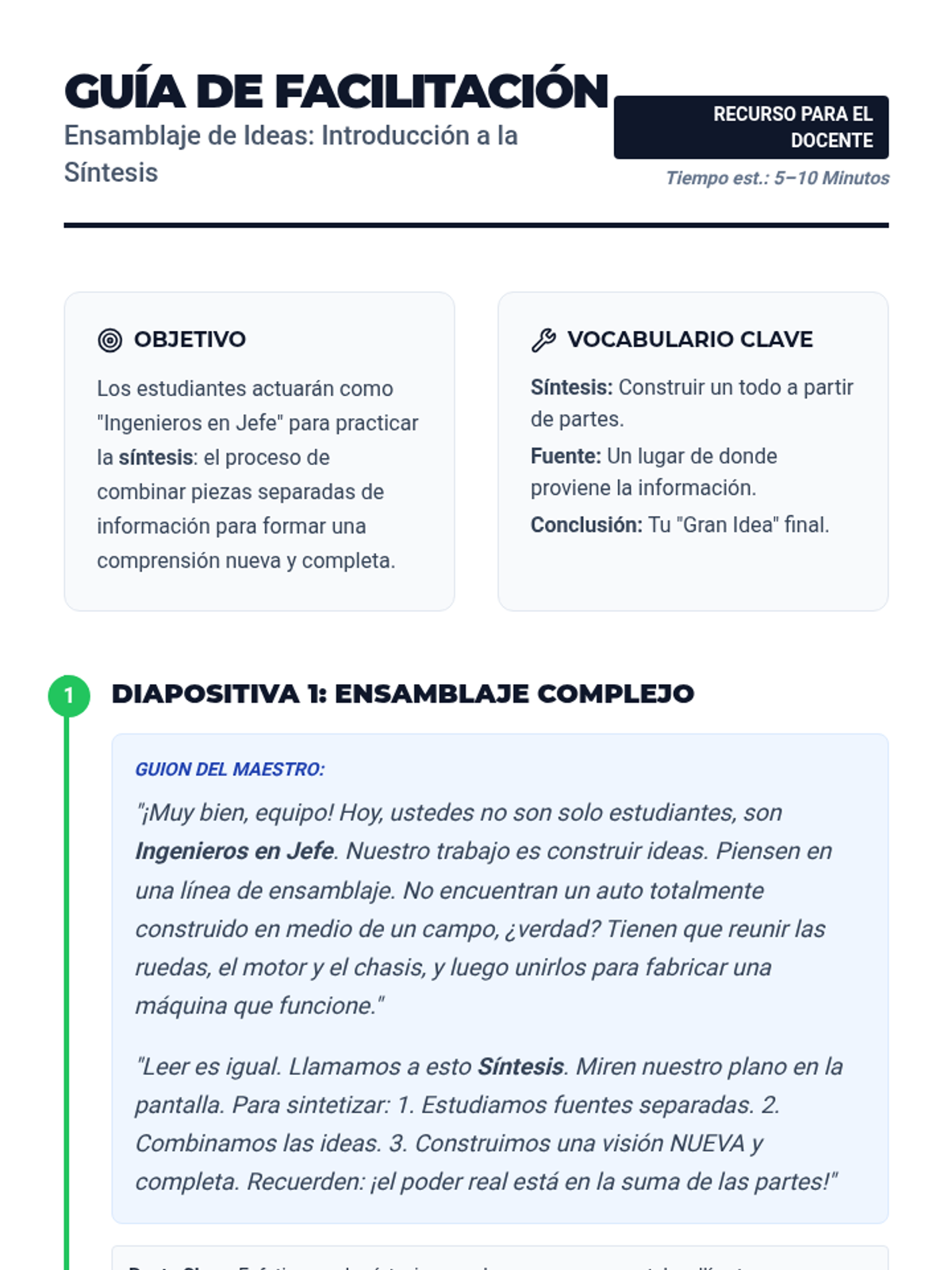
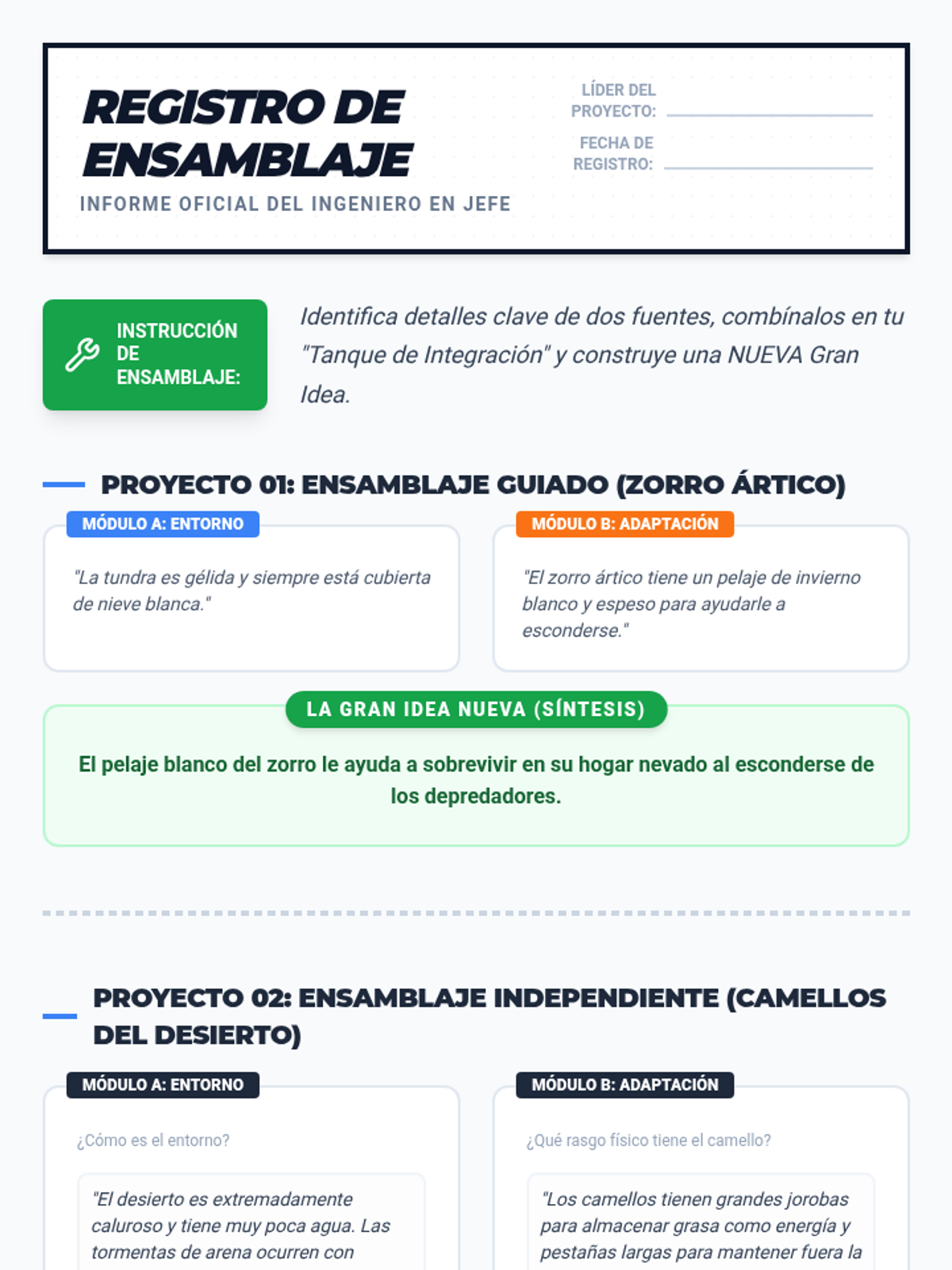
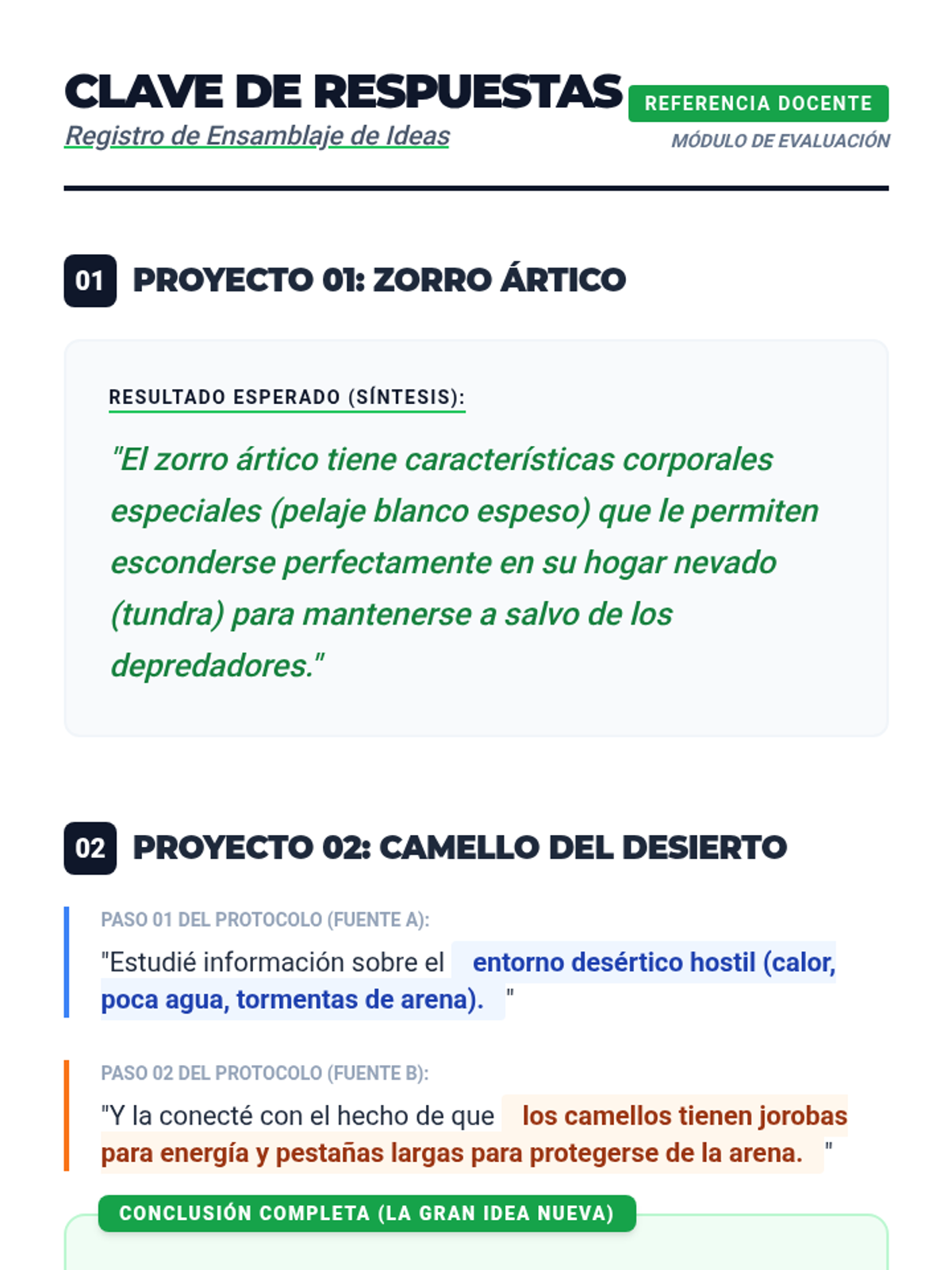
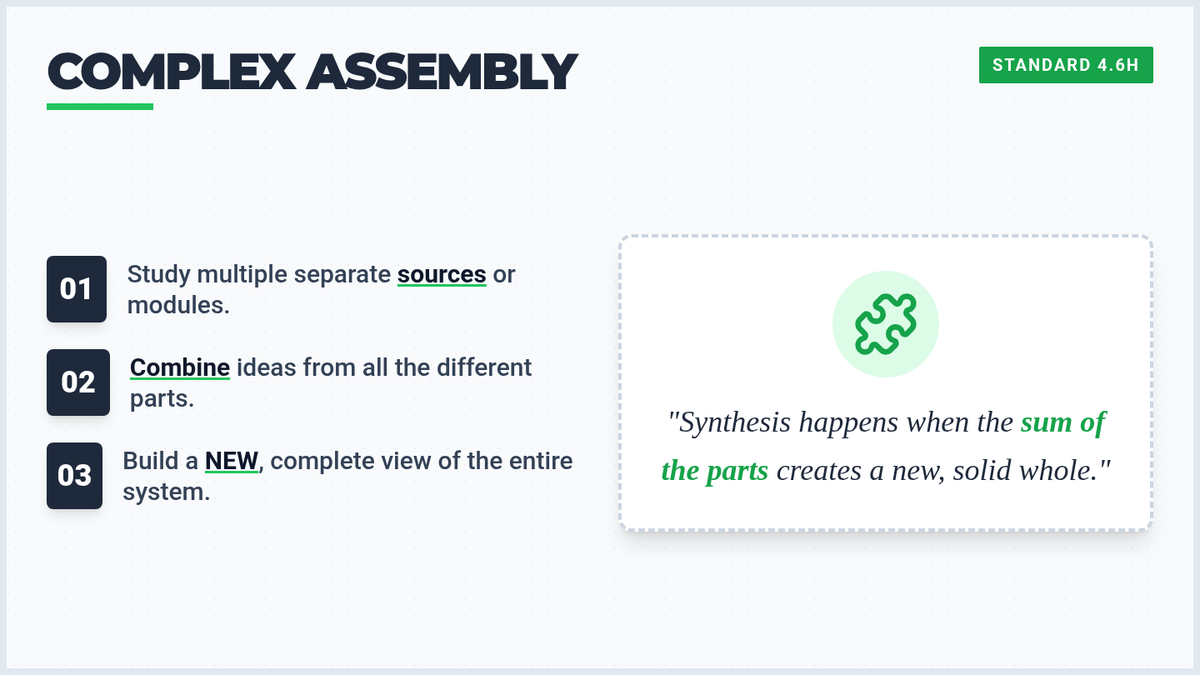
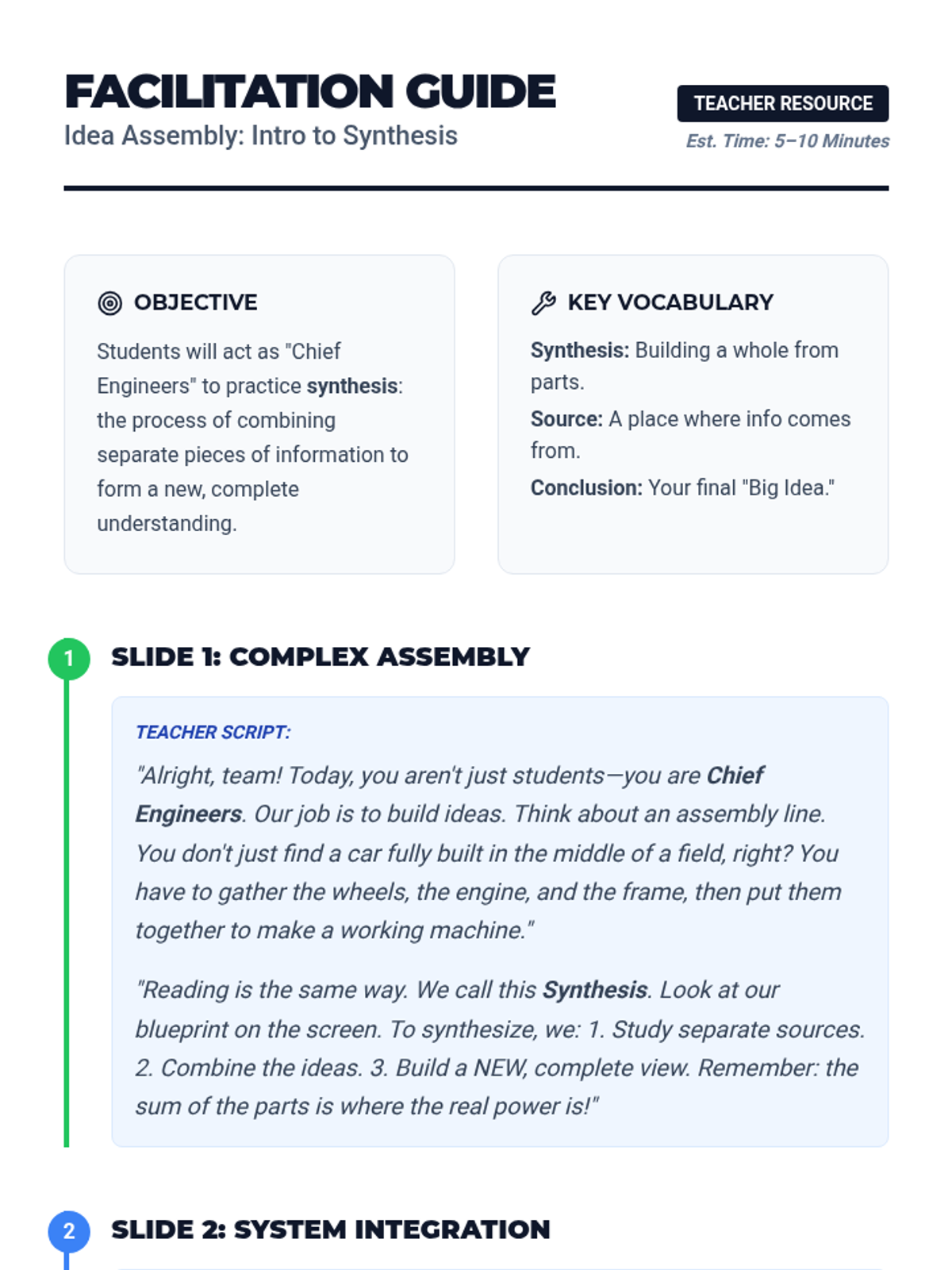
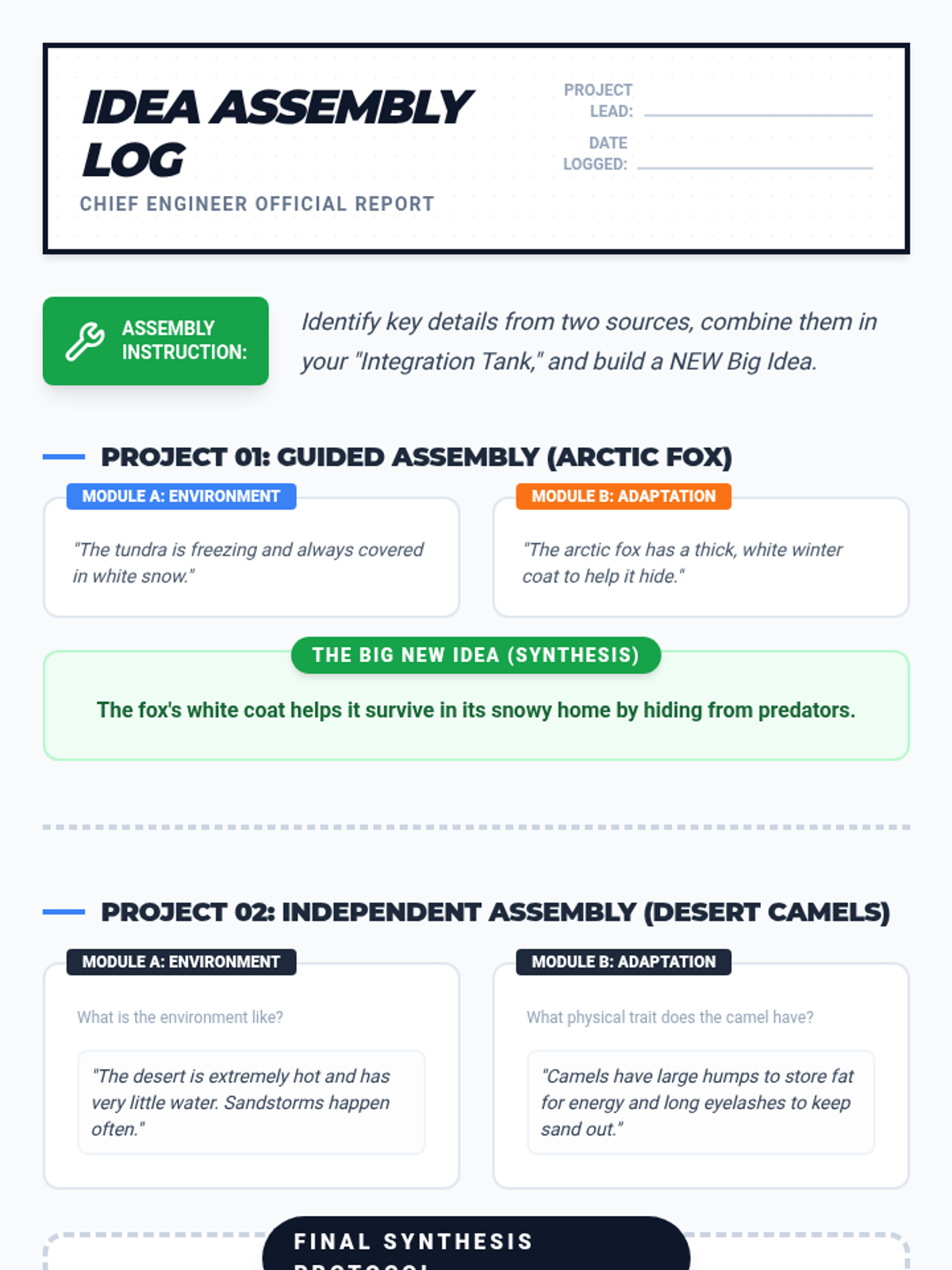
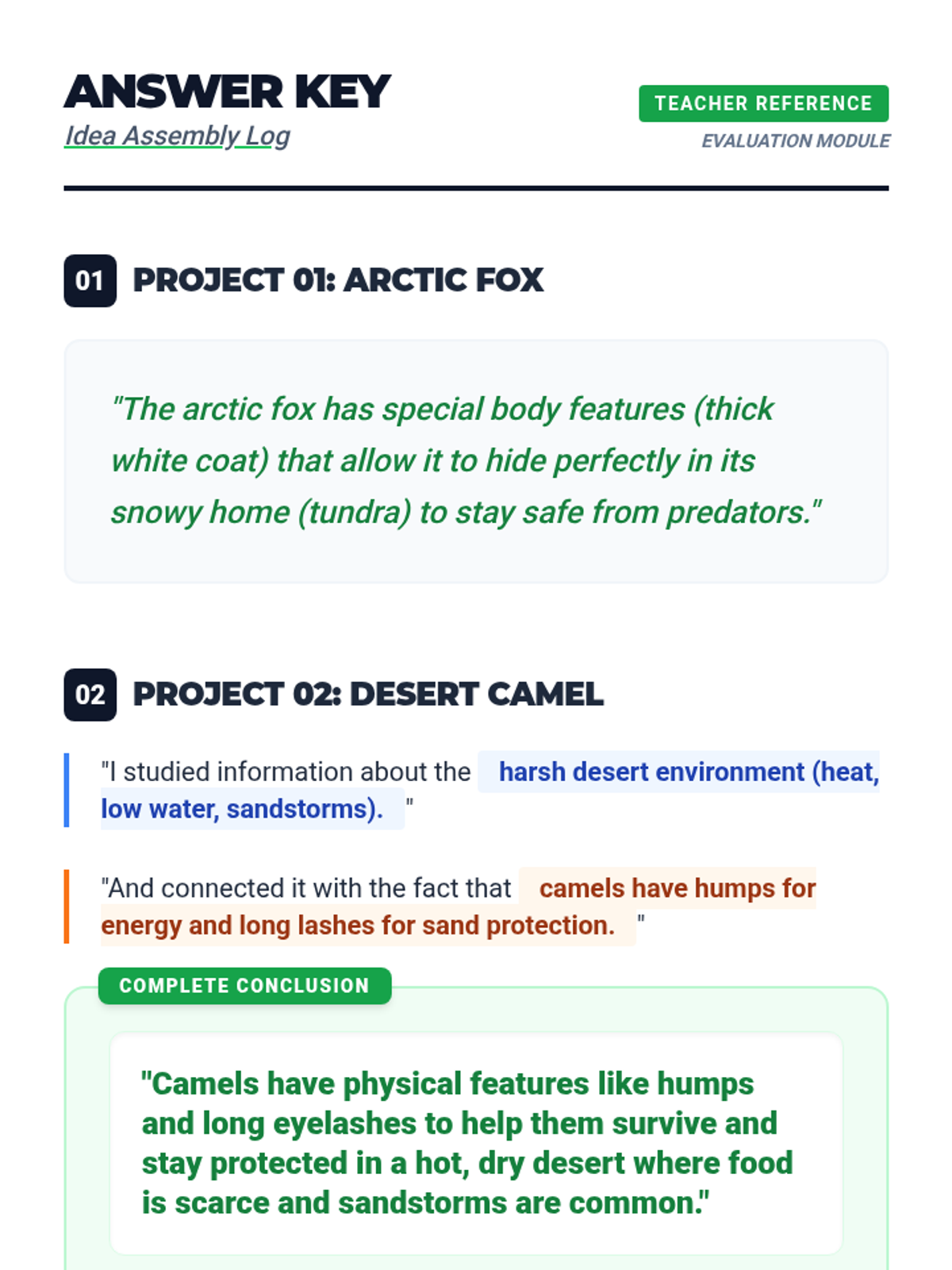
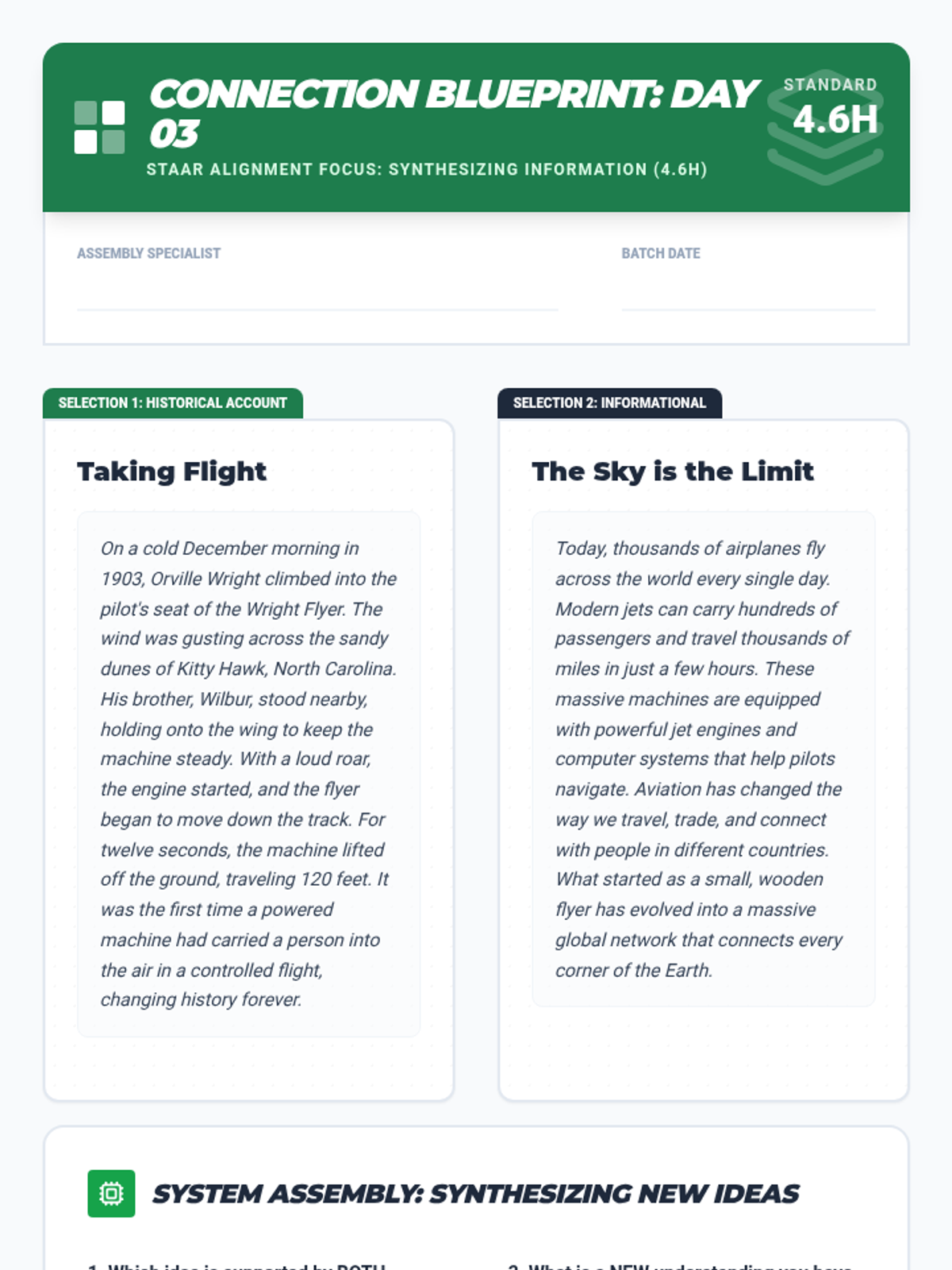
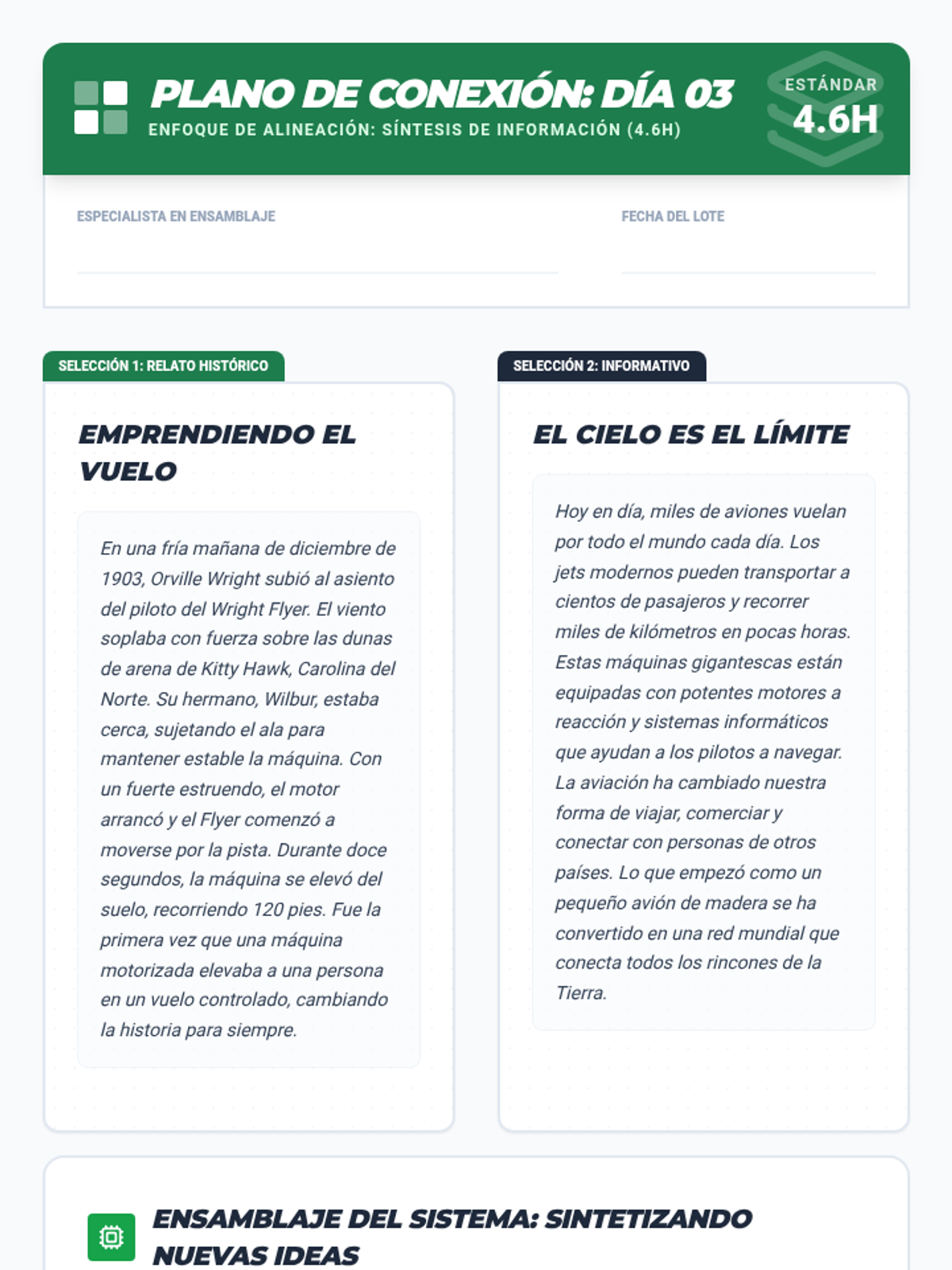
A short 5-10 minute introduction to synthesis (in English and Spanish) where students act as "Chief Engineers" to assemble separate pieces of information into a new, complete idea. Includes slides, facilitation guides, logs, and answer keys.
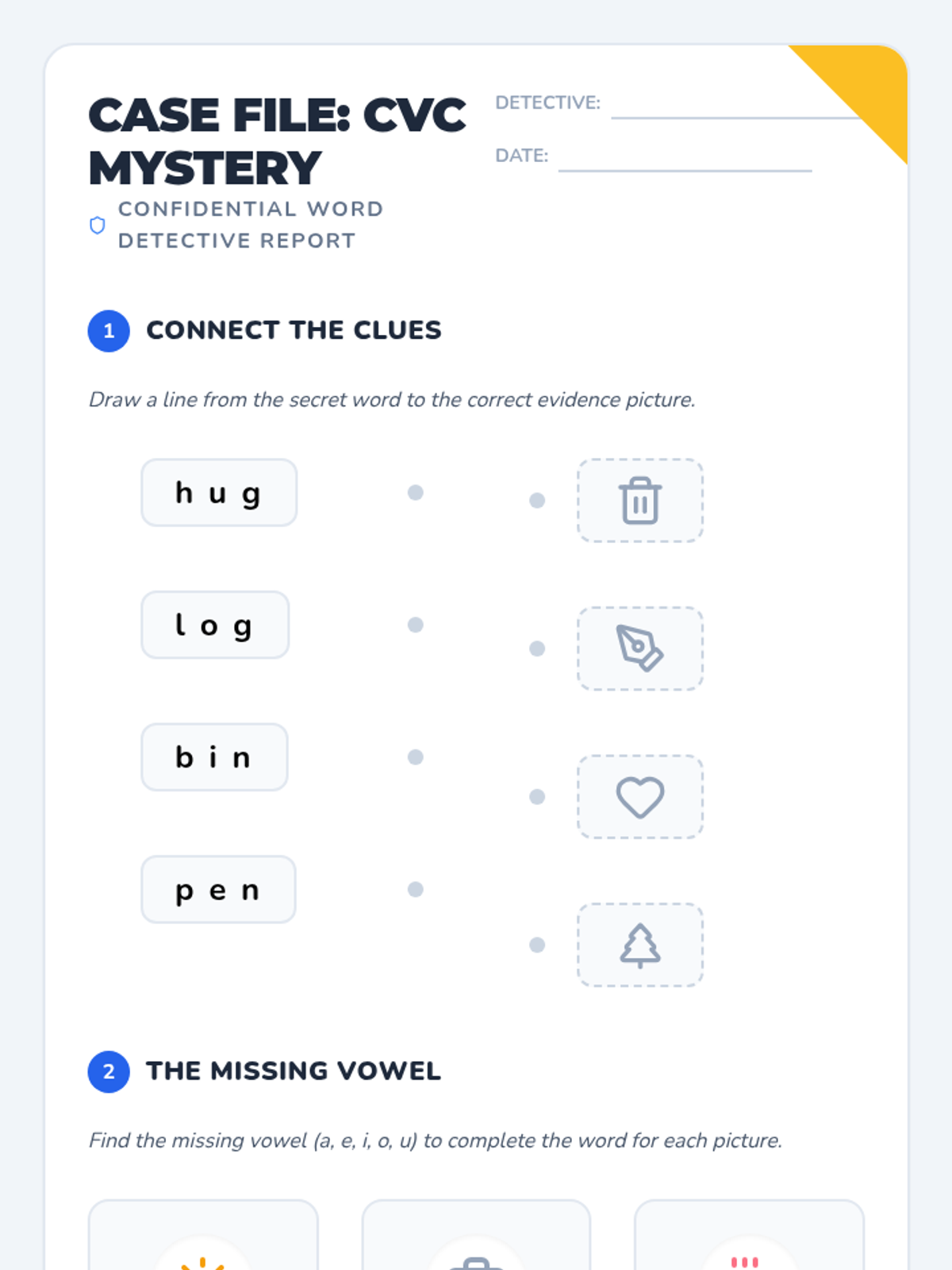
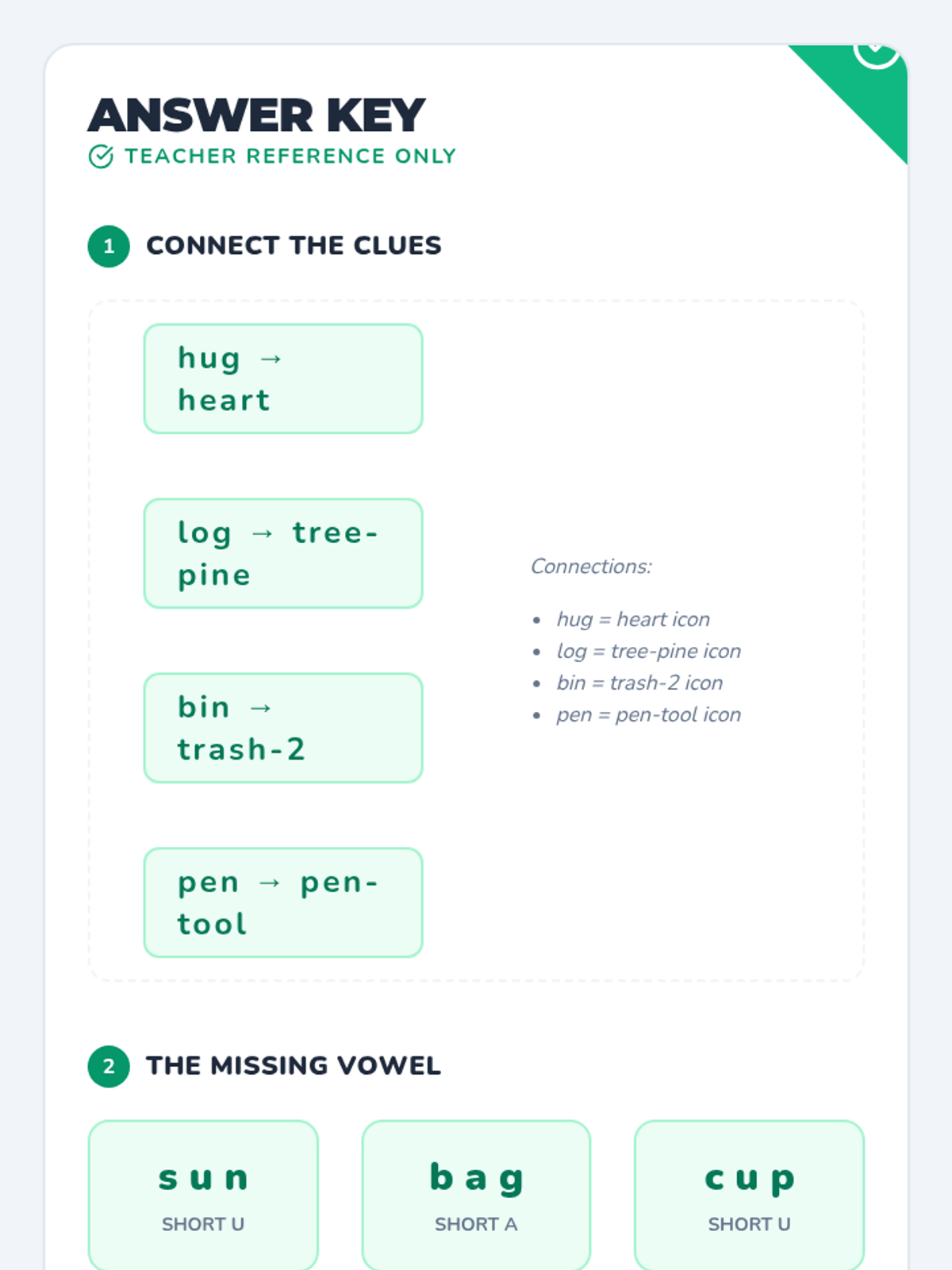
Students become 'Word Detectives' to decode and build simple Consonant-Vowel-Consonant words through visual blending and independent practice. This lesson reinforces phonemic awareness and early reading skills.
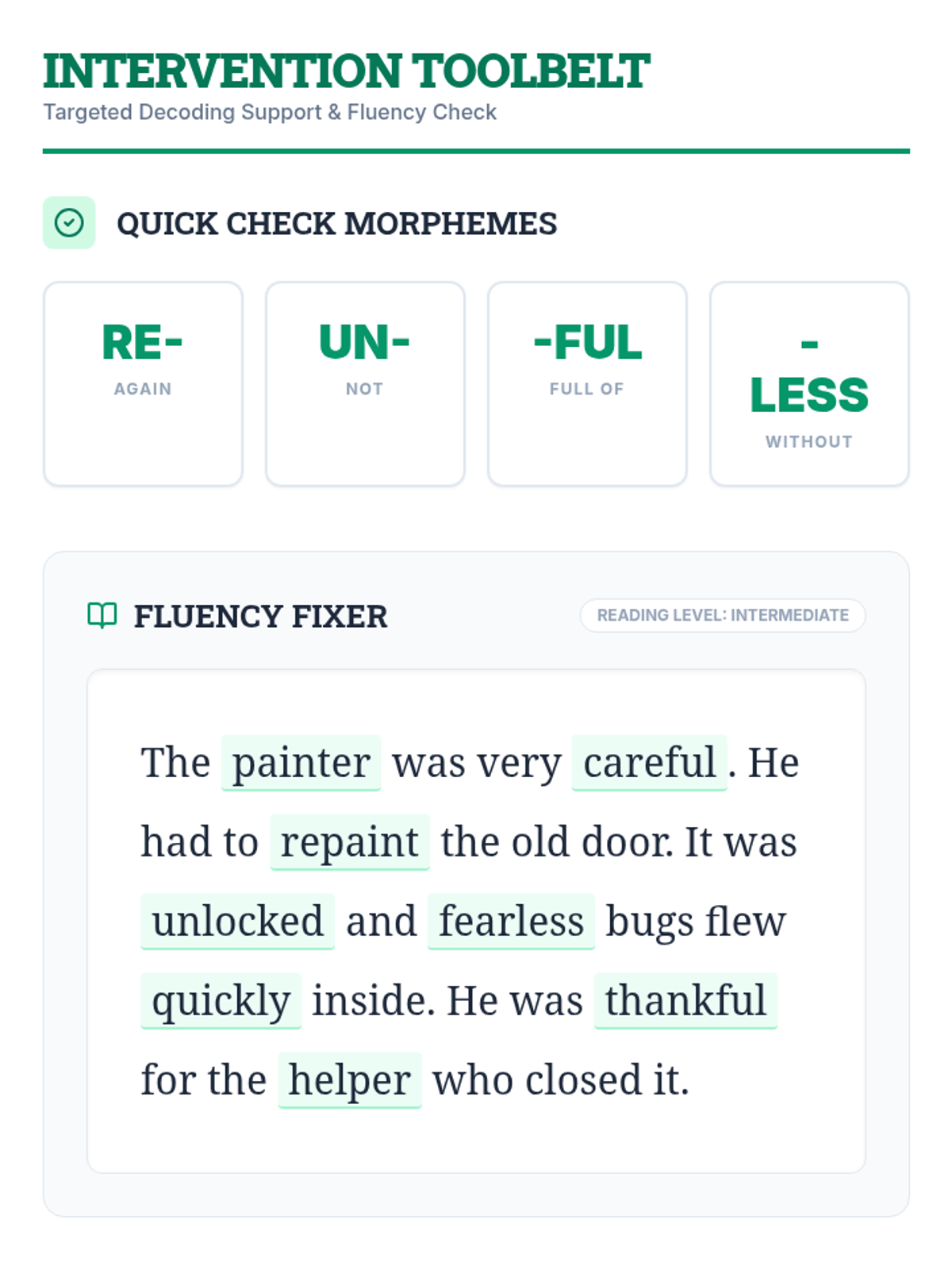
Targeted small group intervention materials and fluency practice for students needing extra support with morphological decoding.
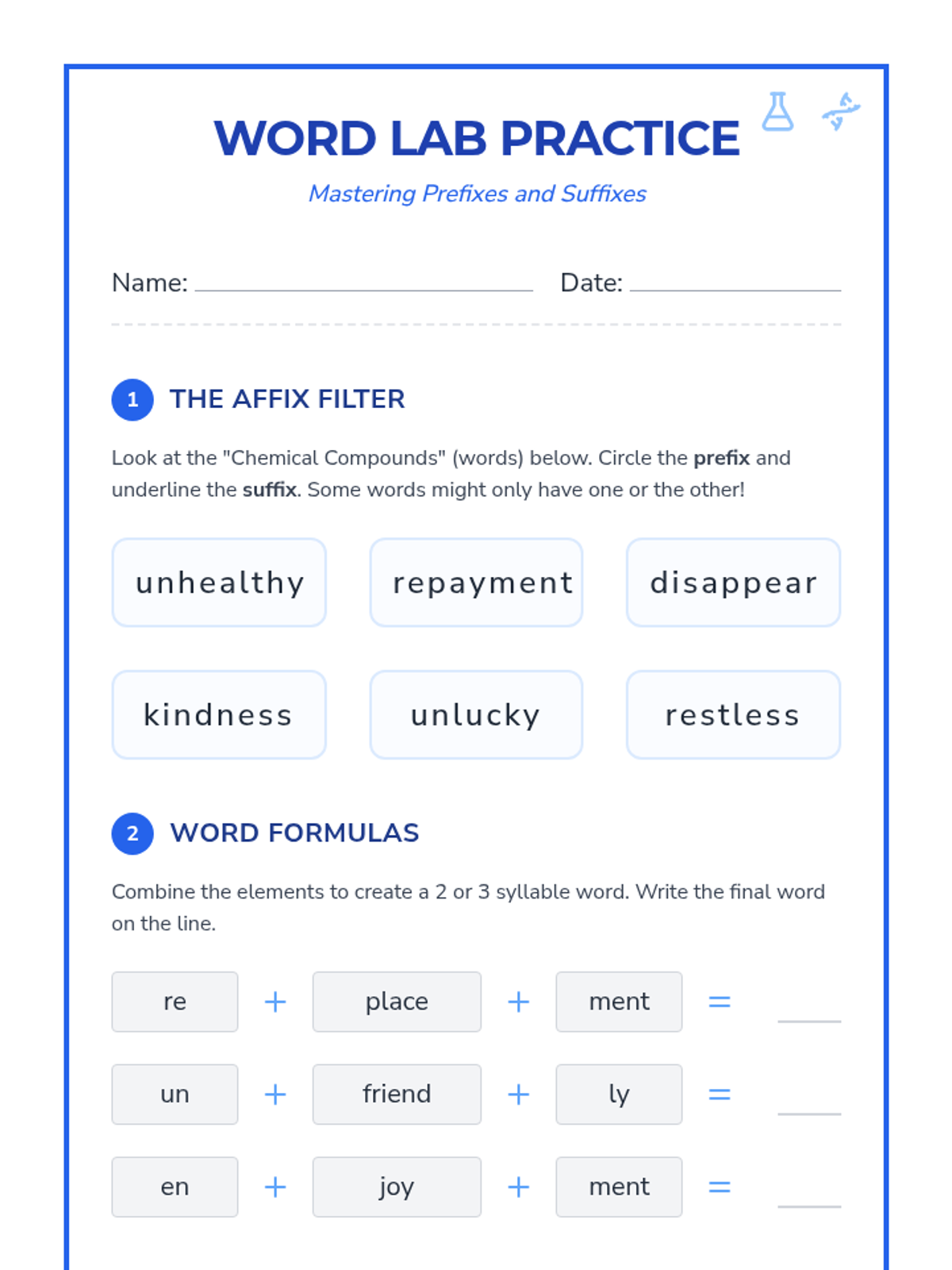
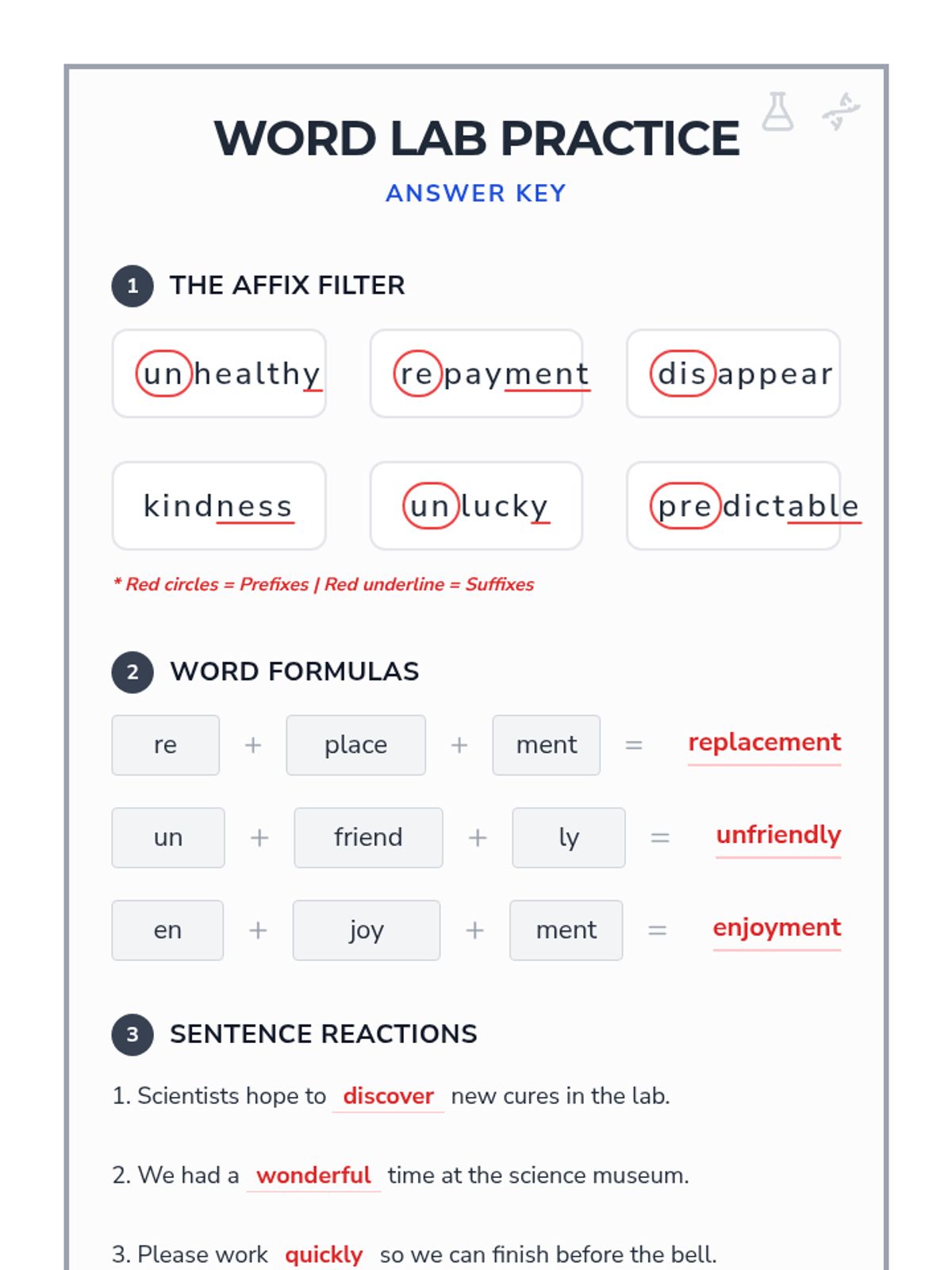
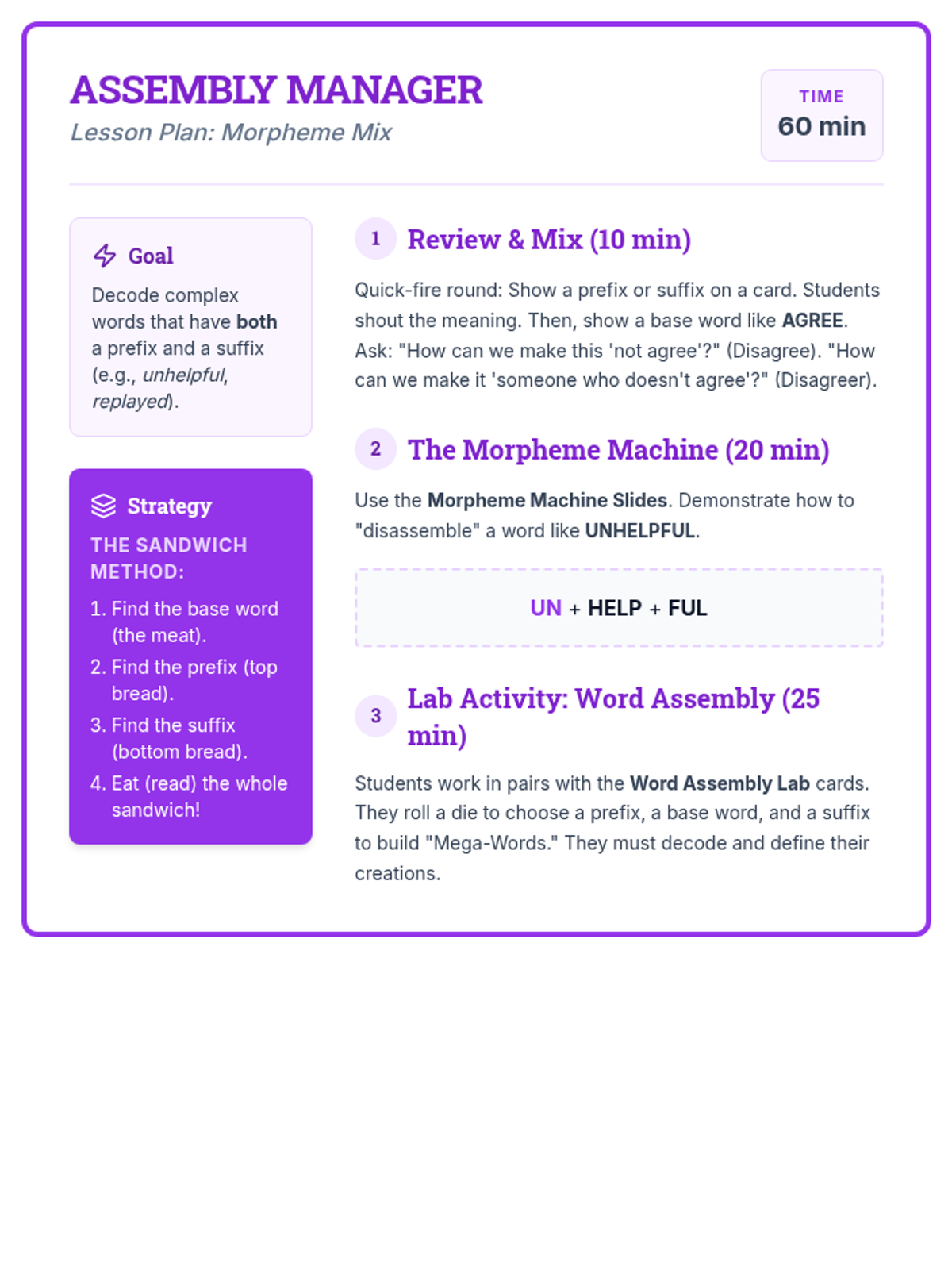
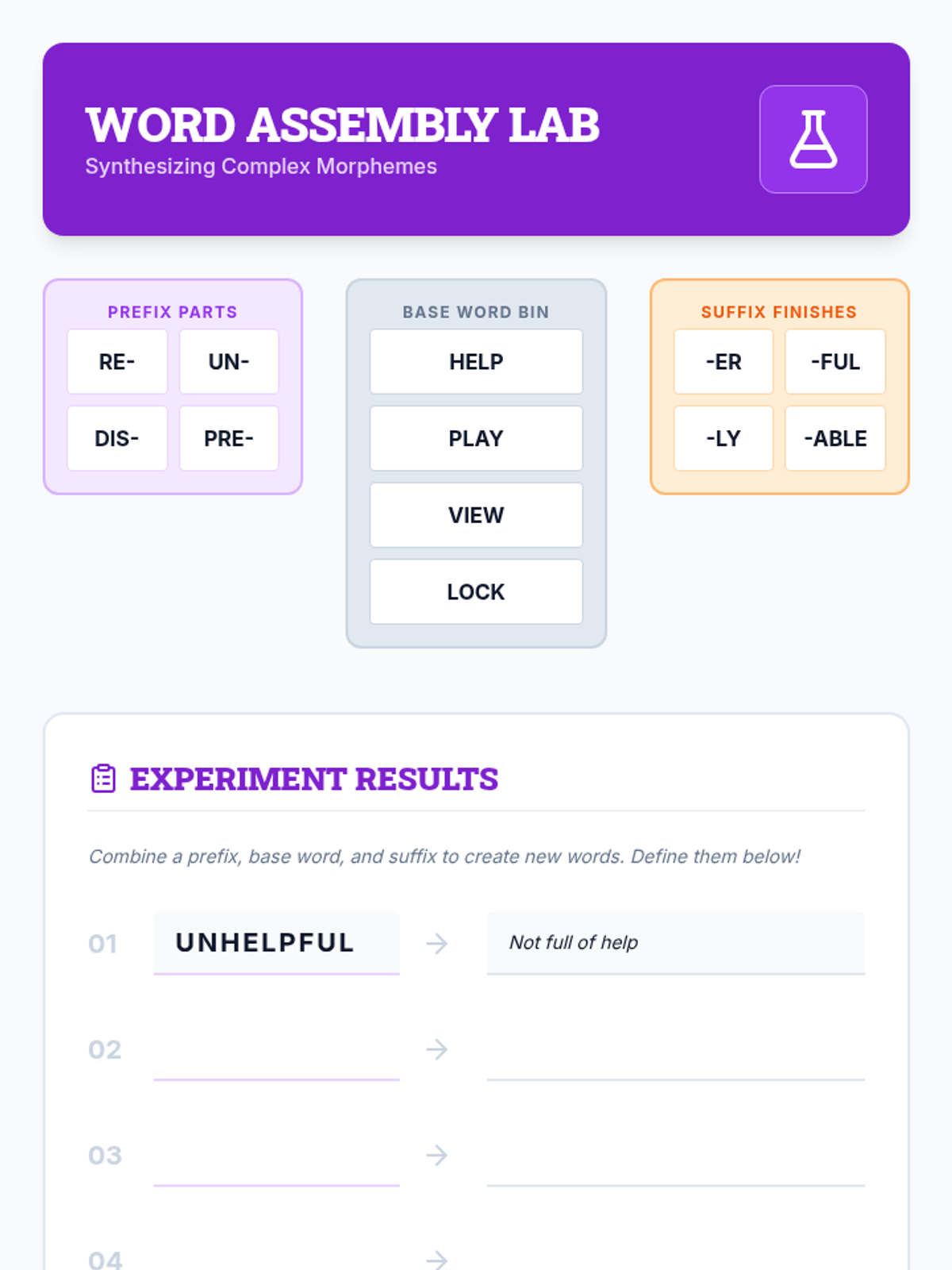
Synthesizes prefix and suffix knowledge to decode complex, multisyllabic words through structural analysis.
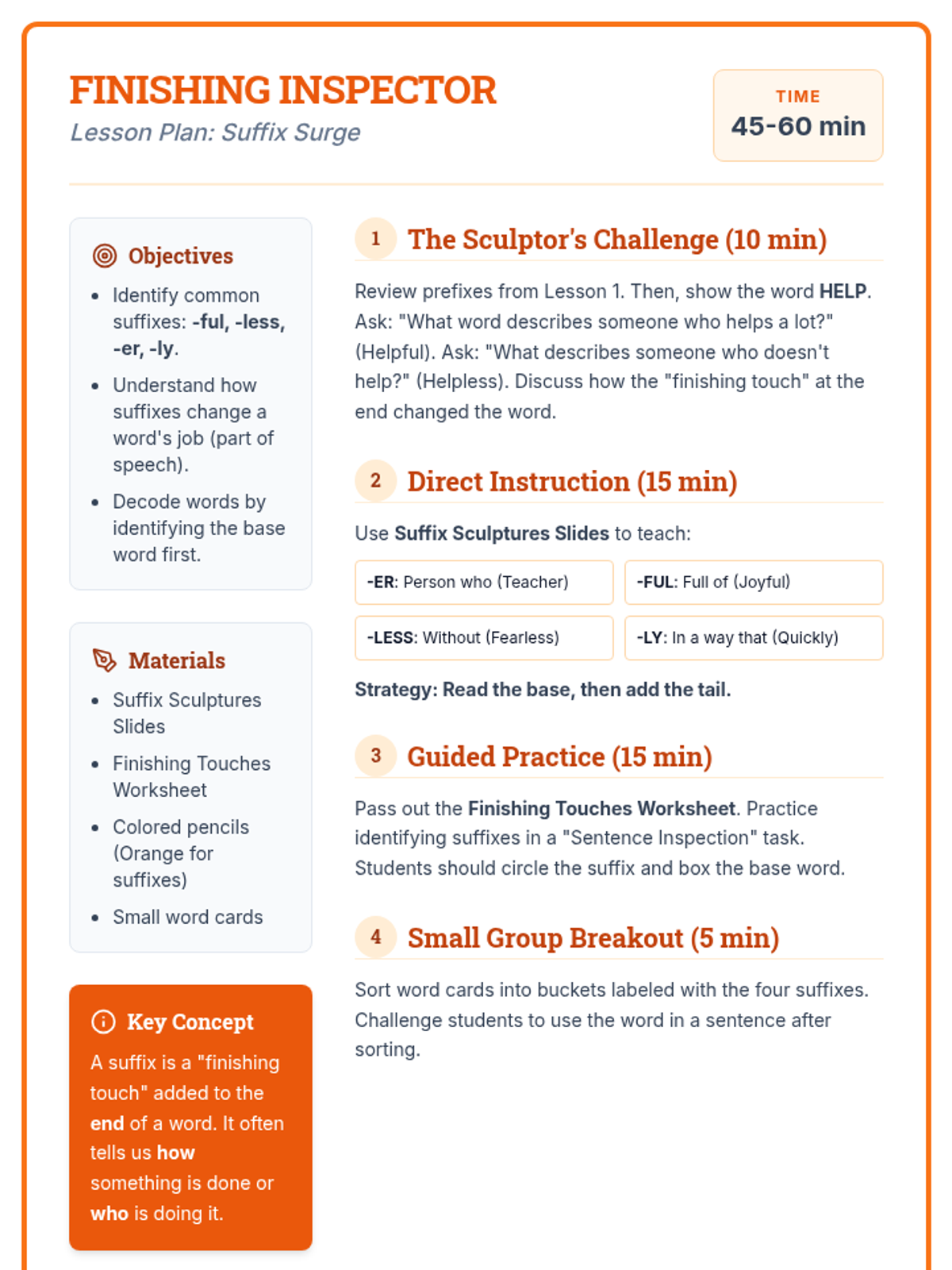
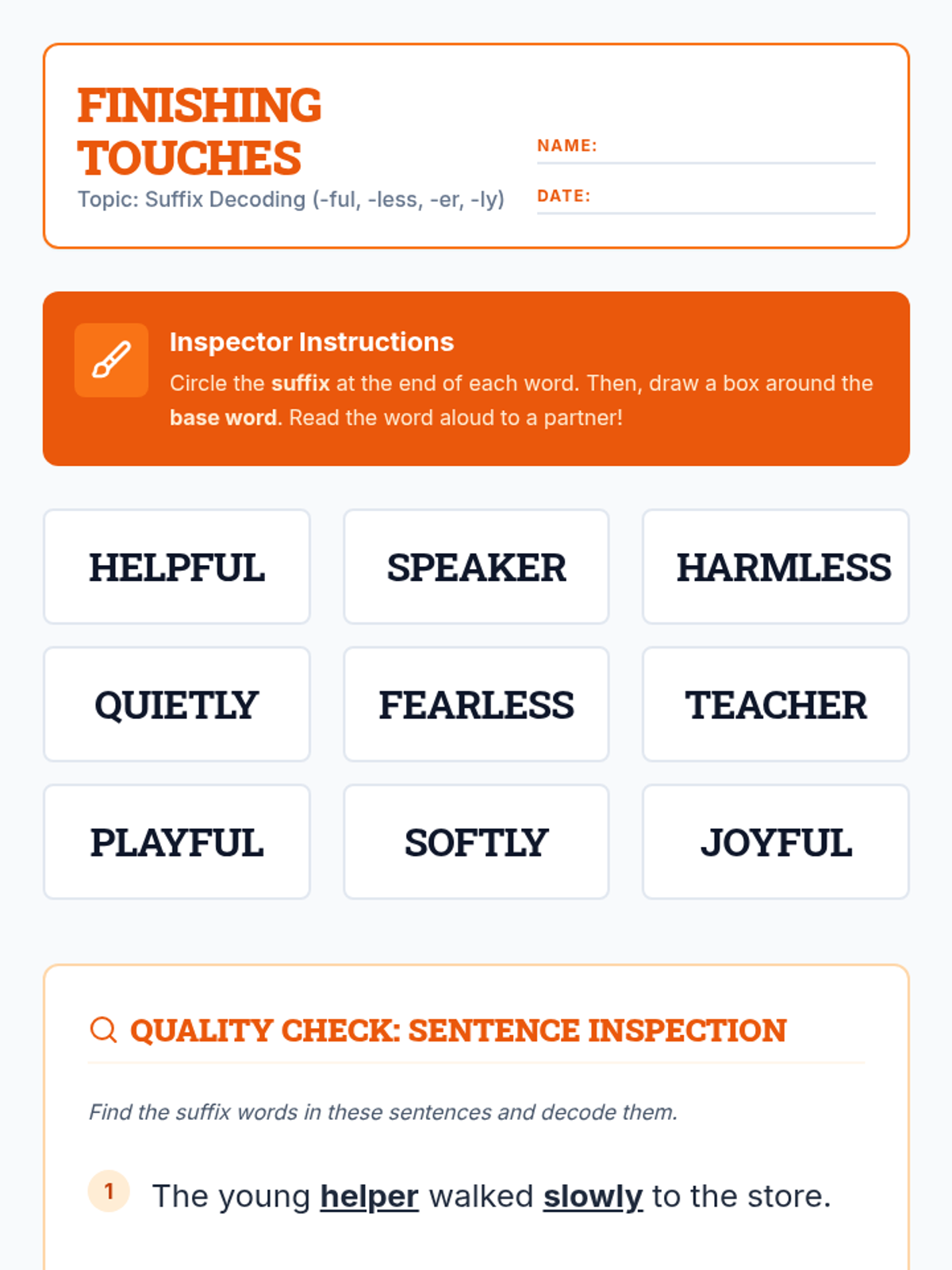
Explores common suffixes (-ful, -less, -er, -ly) and how they modify the function and meaning of base words.
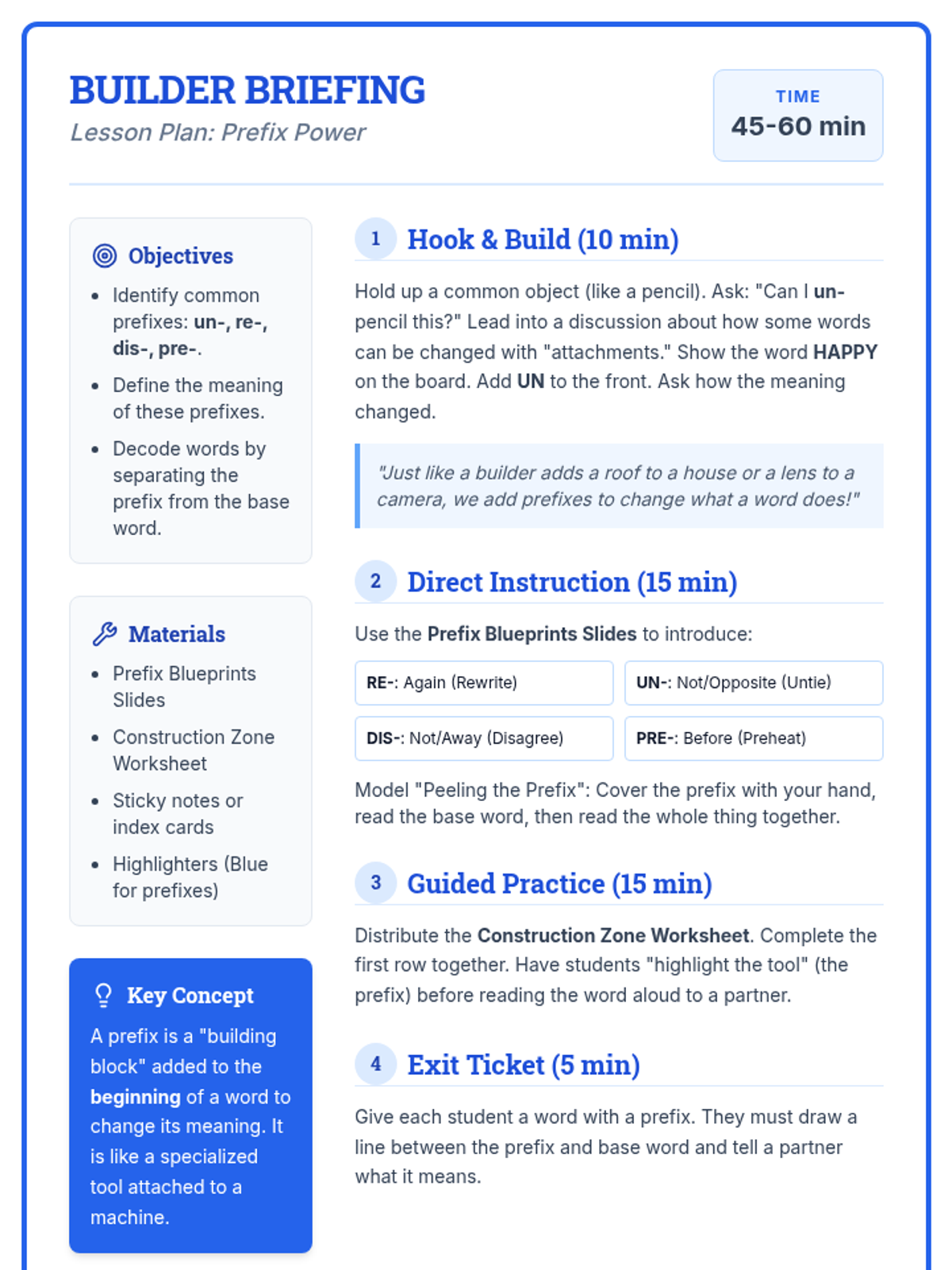
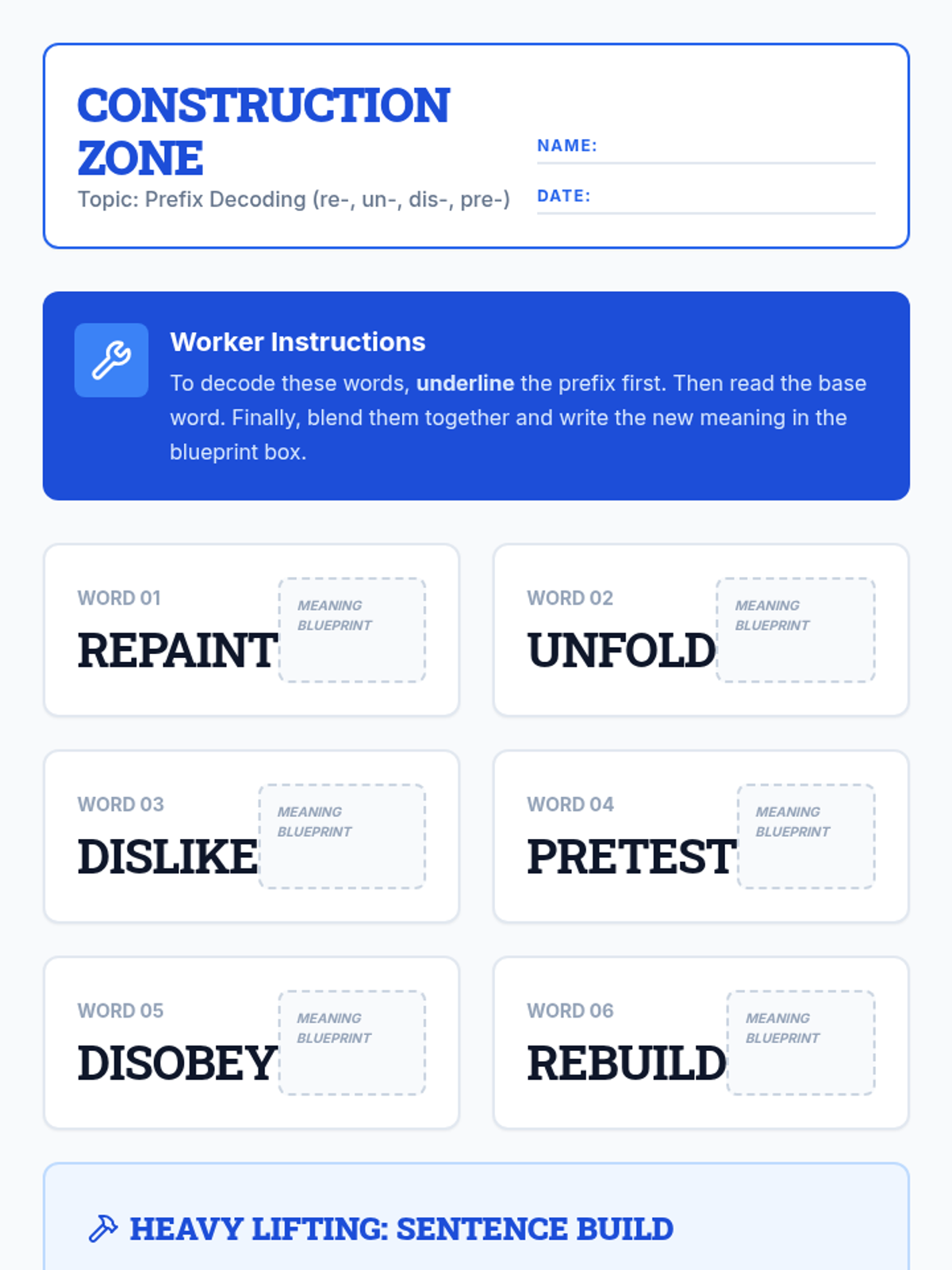
Introduces the concept of prefixes as word 'attachments' that change meaning, specifically focusing on re-, un-, dis-, and pre-.