Introduction to water and air as natural resources, identifying where they are found in our environment and why they are essential for life.
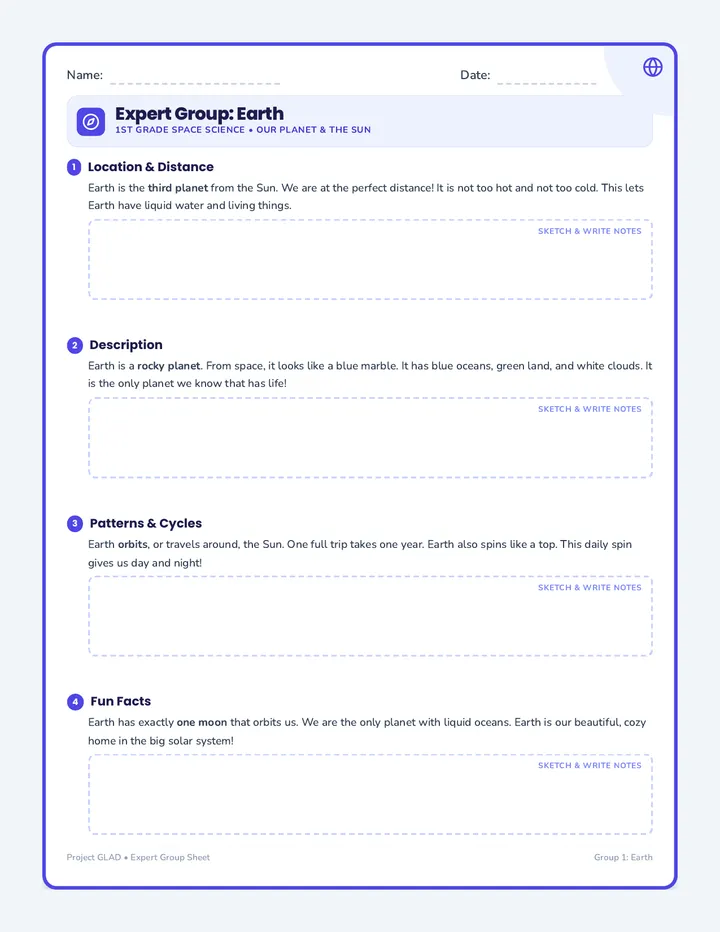
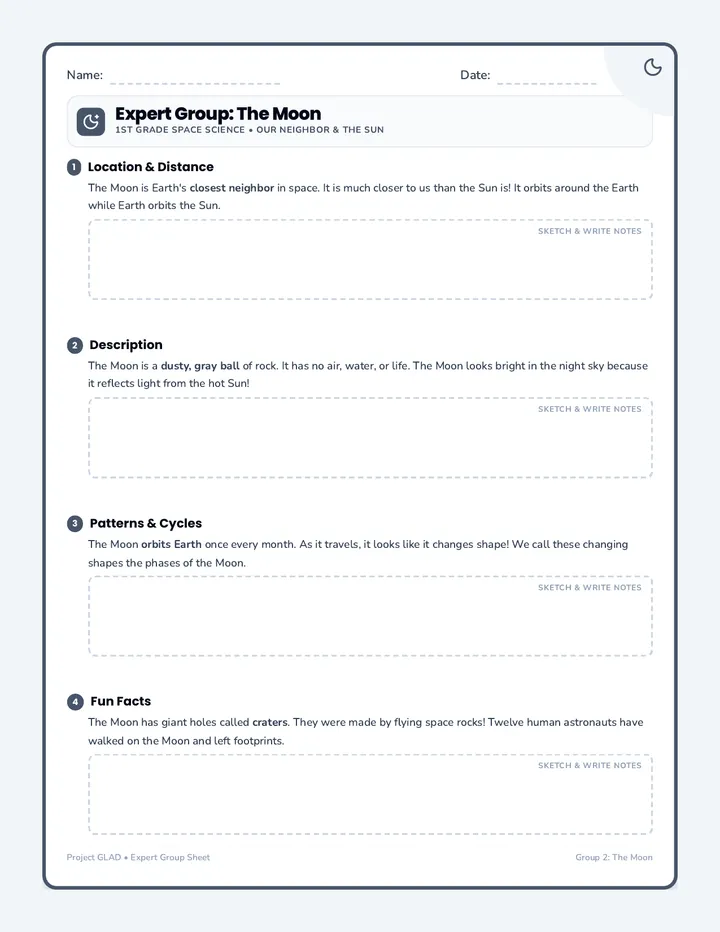
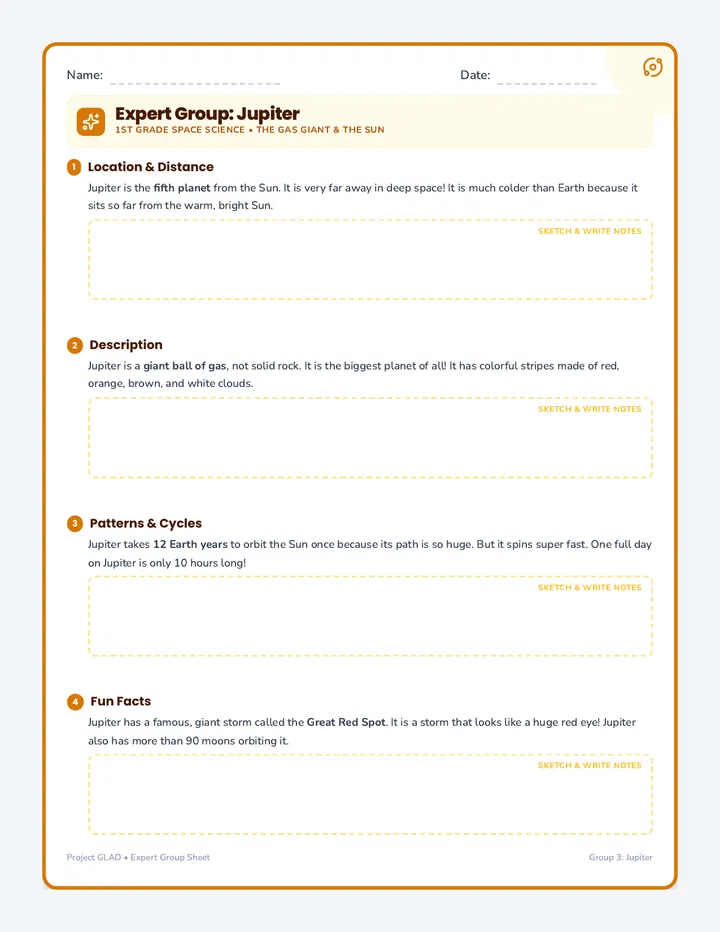
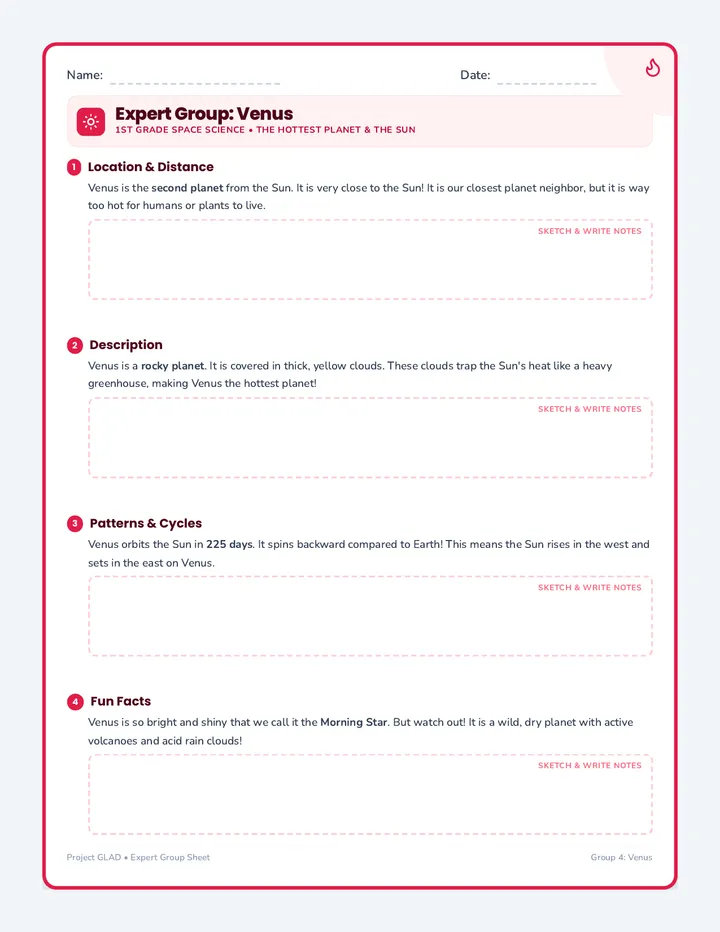
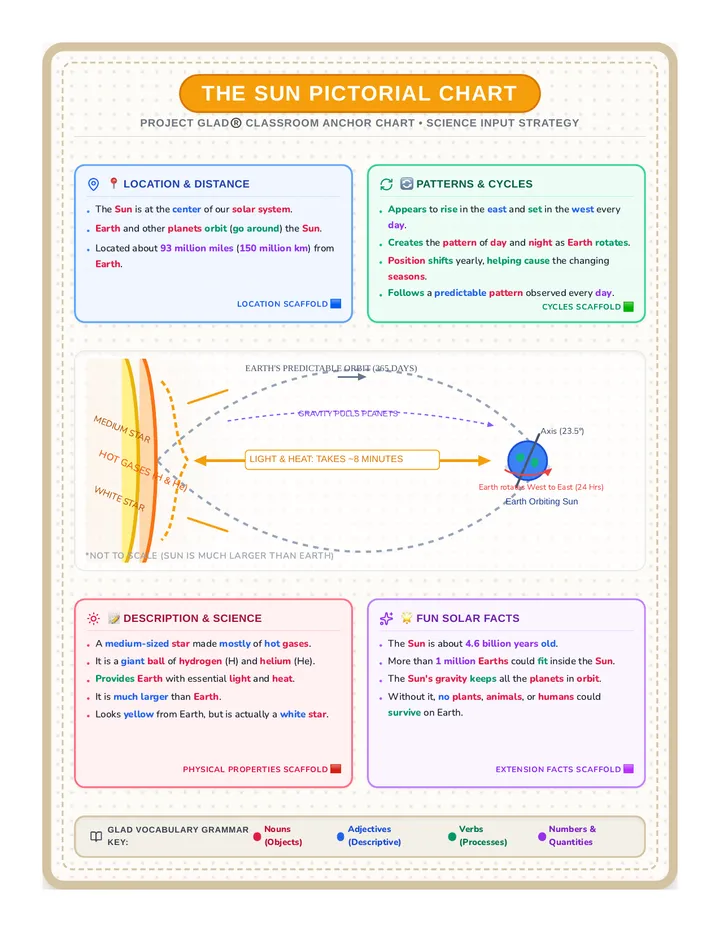
A 1st-grade science unit where students work in expert groups to explore Earth, the Moon, Jupiter, and Venus in relation to the Sun. Each group reads specialized text and sketches key observations to build collaborative knowledge.
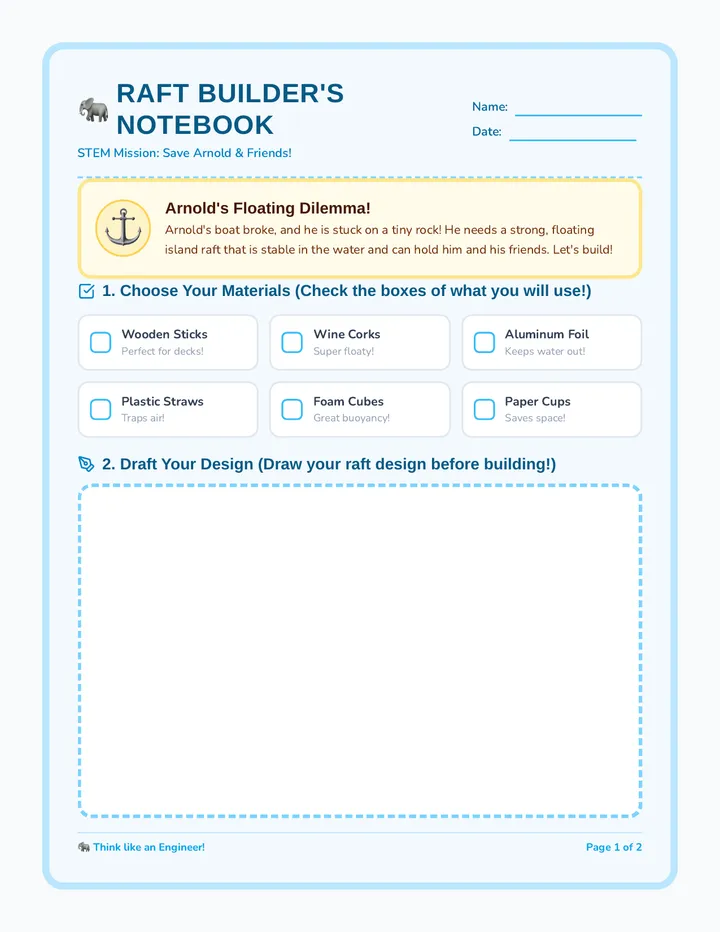
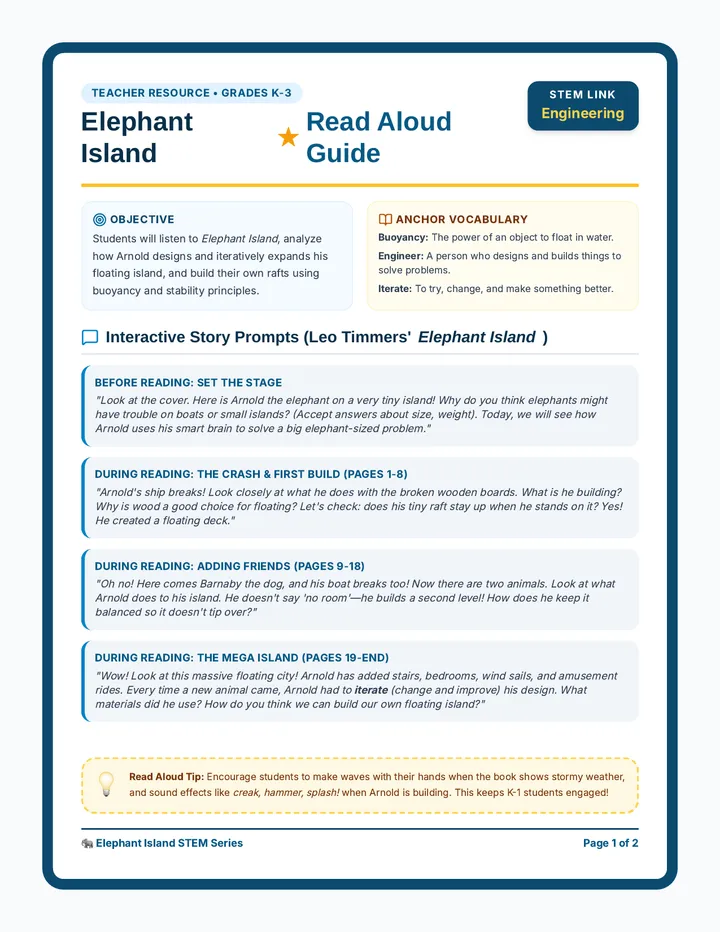
An interactive STEM challenge and read-aloud experience based on Leo Timmers' 'Elephant Island'. Students design and build floating island rafts to rescue Arnold and his friends.
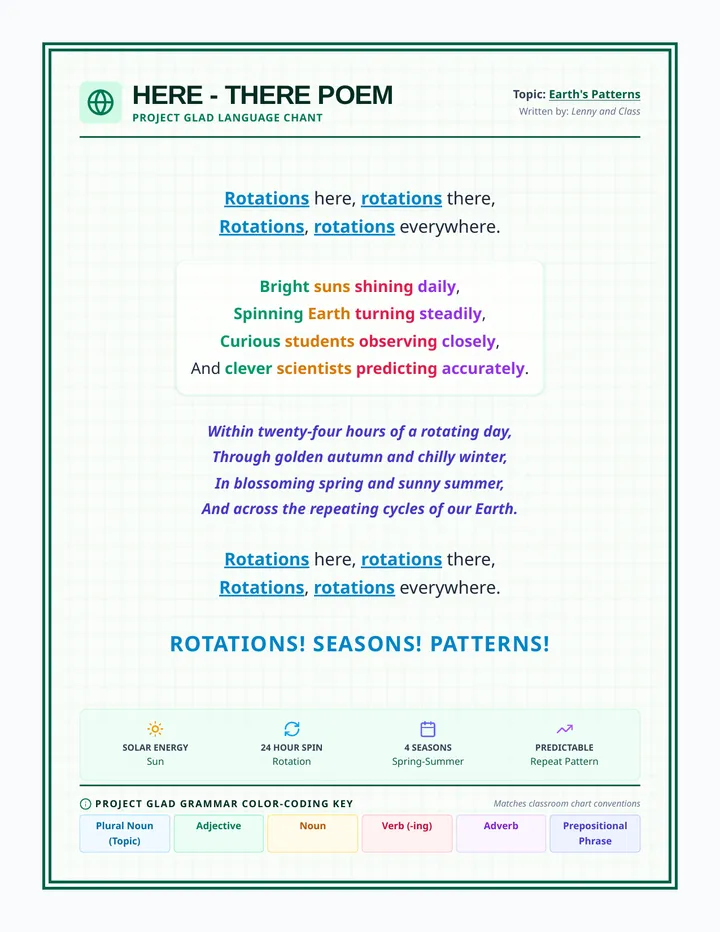
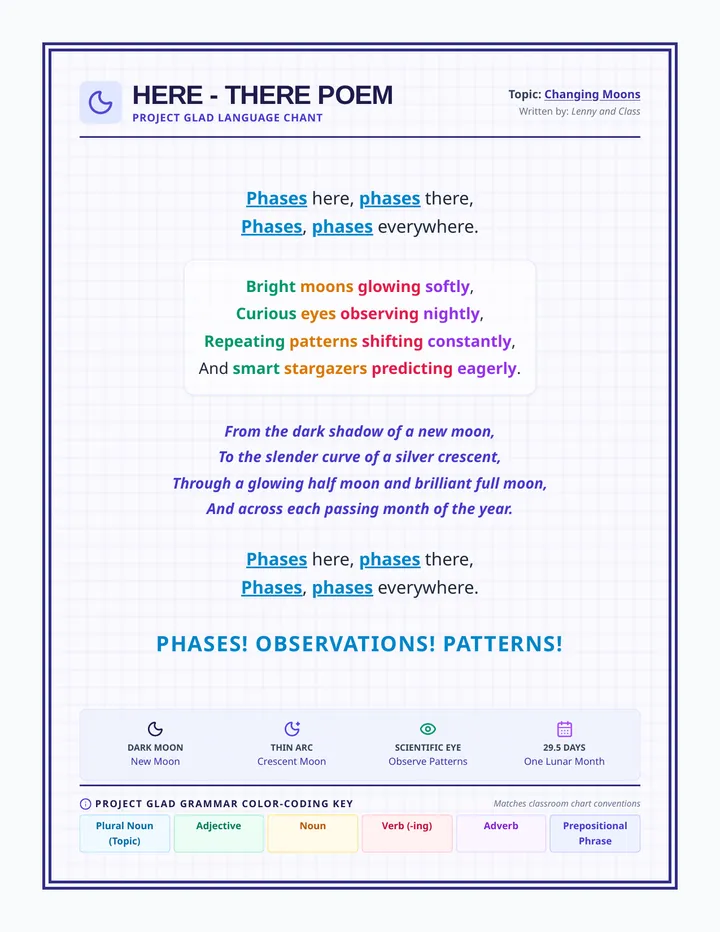
A set of beautifully color-coded GLAD (Guided Language Acquisition Design) Here/There chants that introduce students to repeating solar and lunar cycles. Includes classroom-ready anchor chart posters for rotating Earth patterns and changing moon phases.
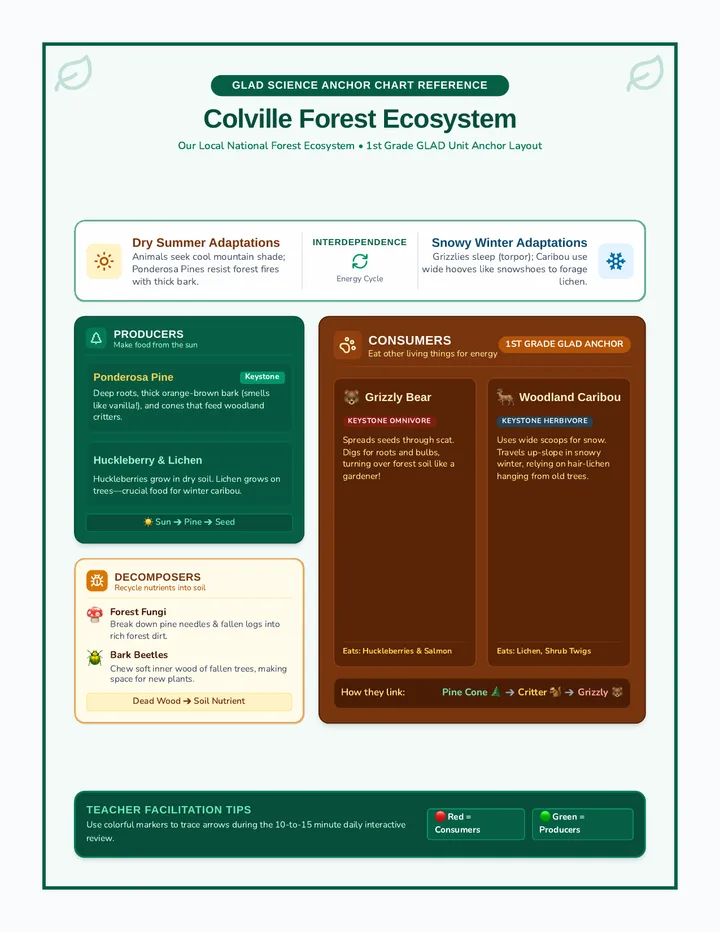
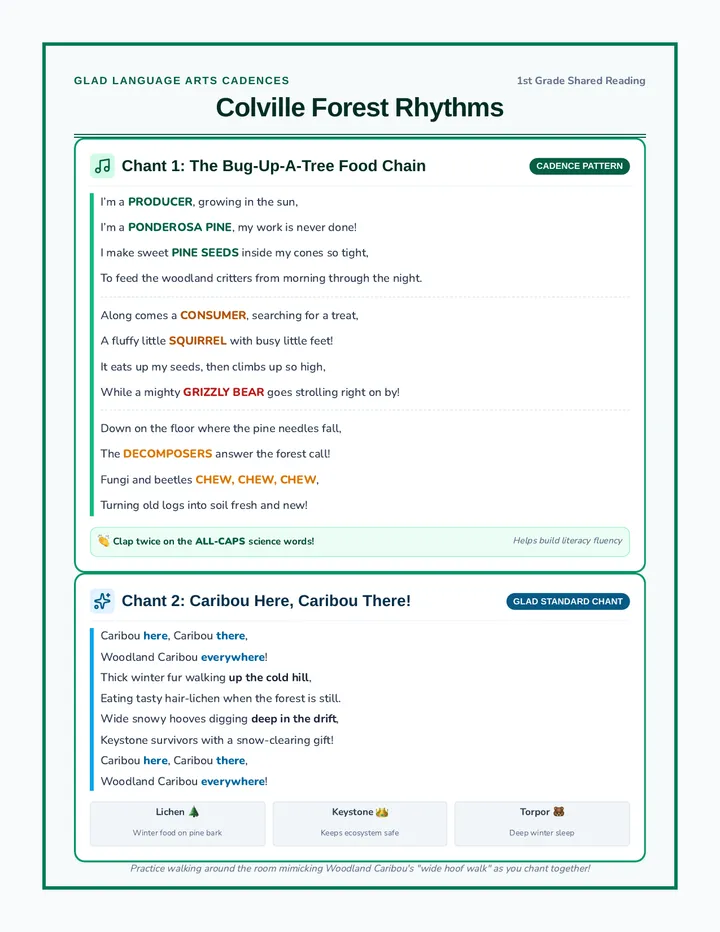
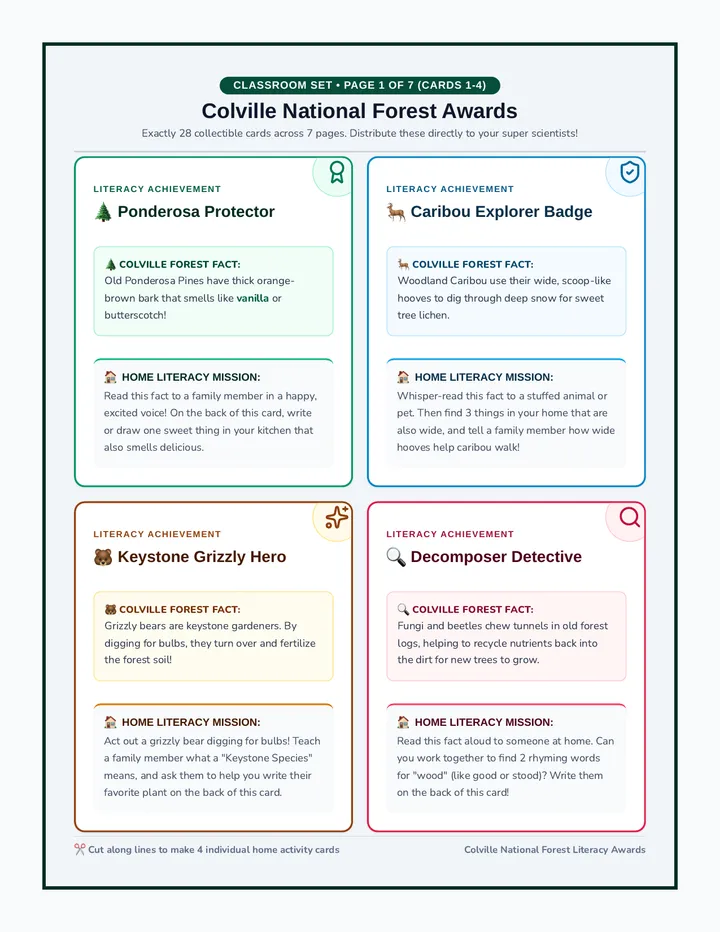
An interactive unit lesson plan implementing Guided Language Acquisition Design (GLAD) strategies to teach 1st graders about the Colville National Forest ecosystem. Students interact with pictorial charts, chant high-frequency science vocabulary, and earn literacy awards detailing local keystone species, food webs, and seasonal changes.
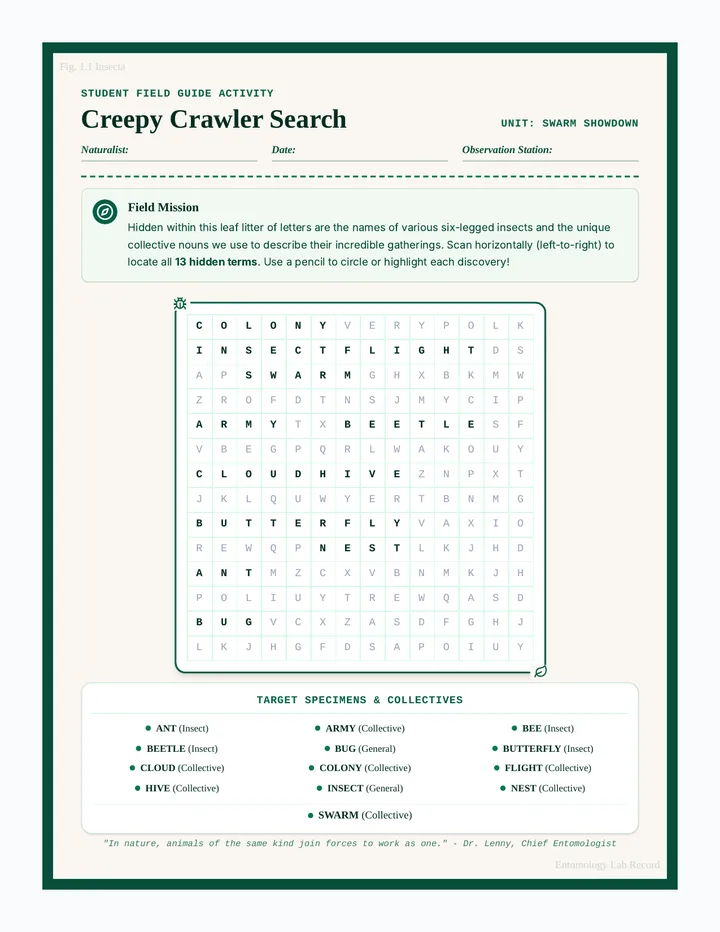
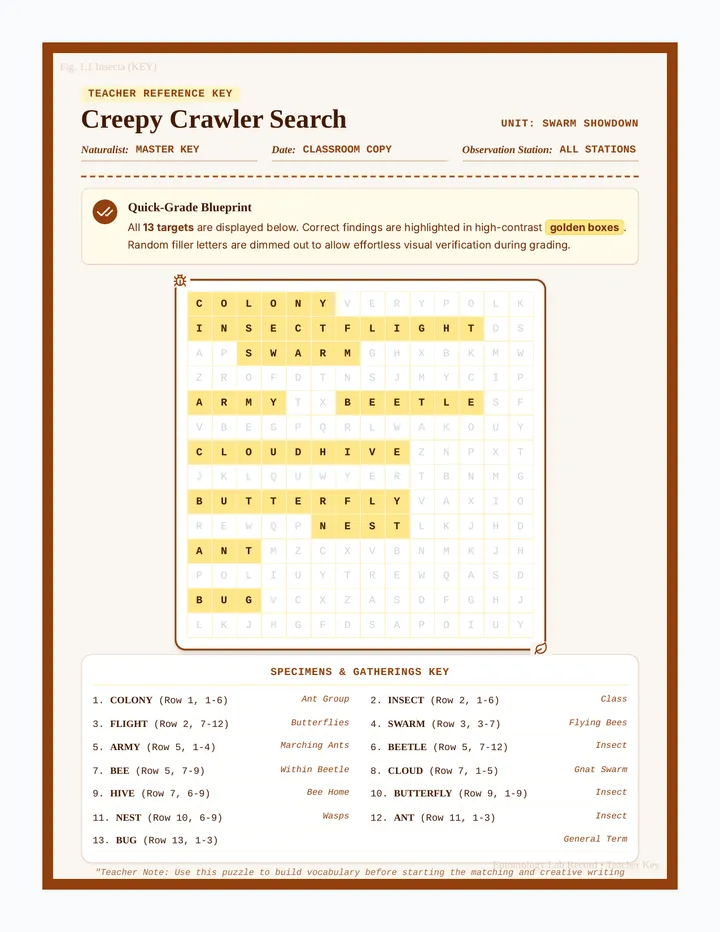
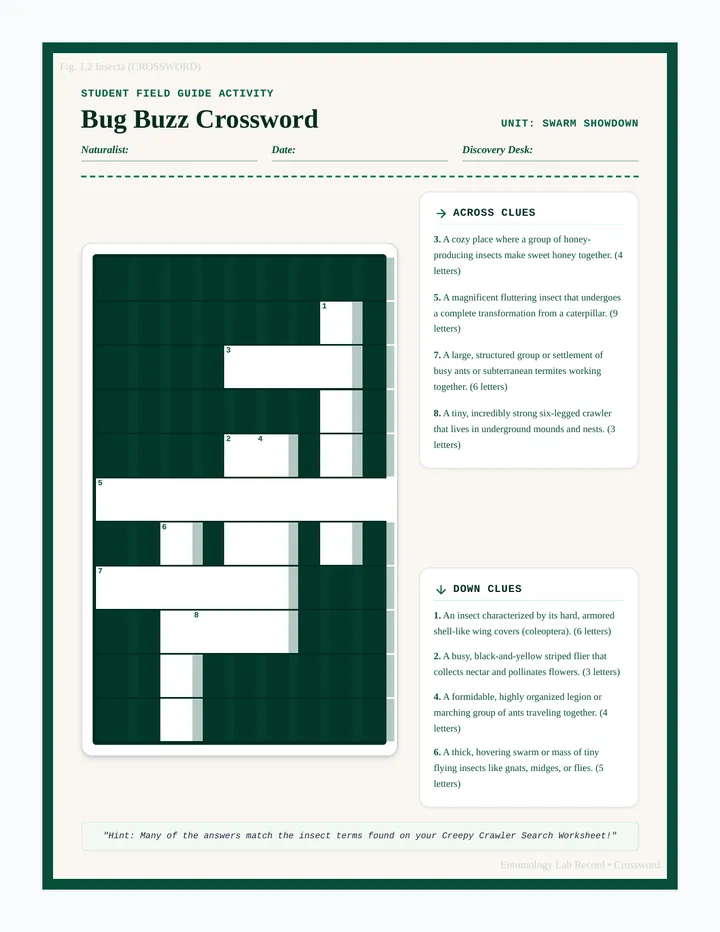
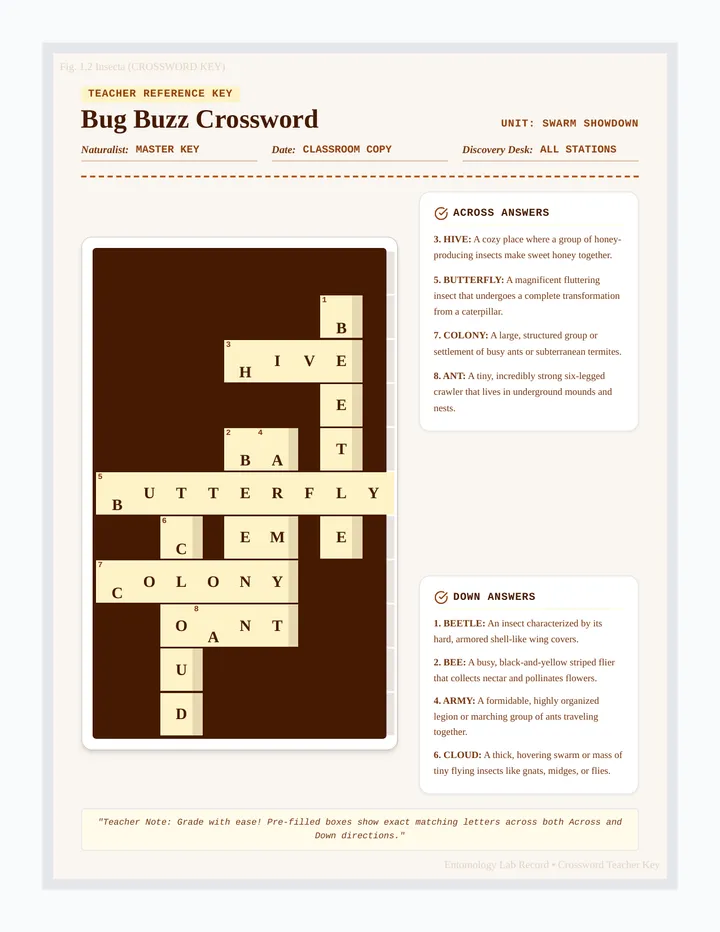
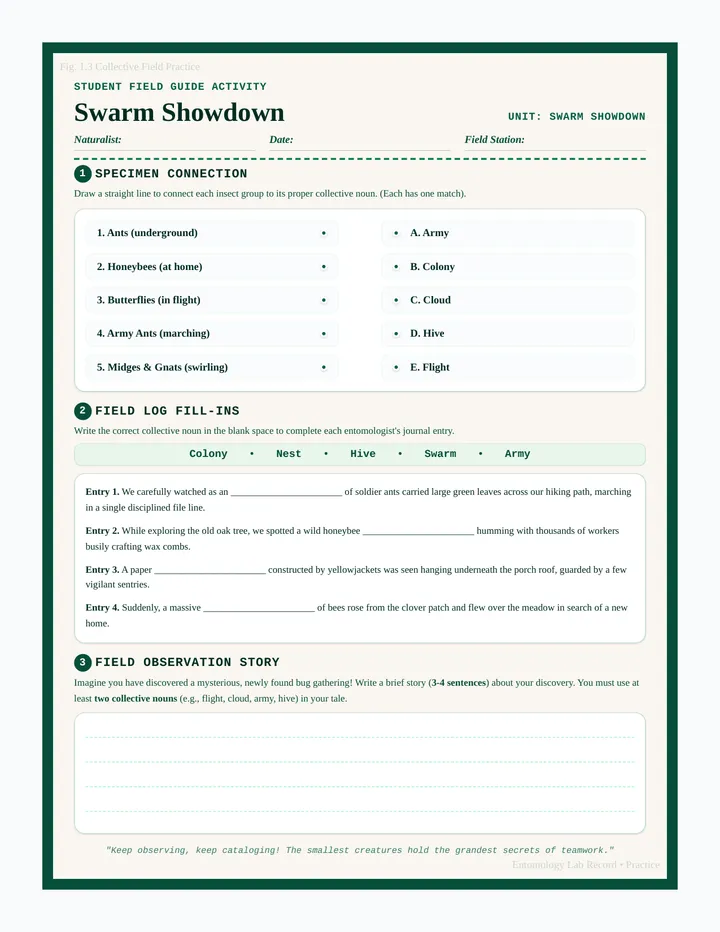
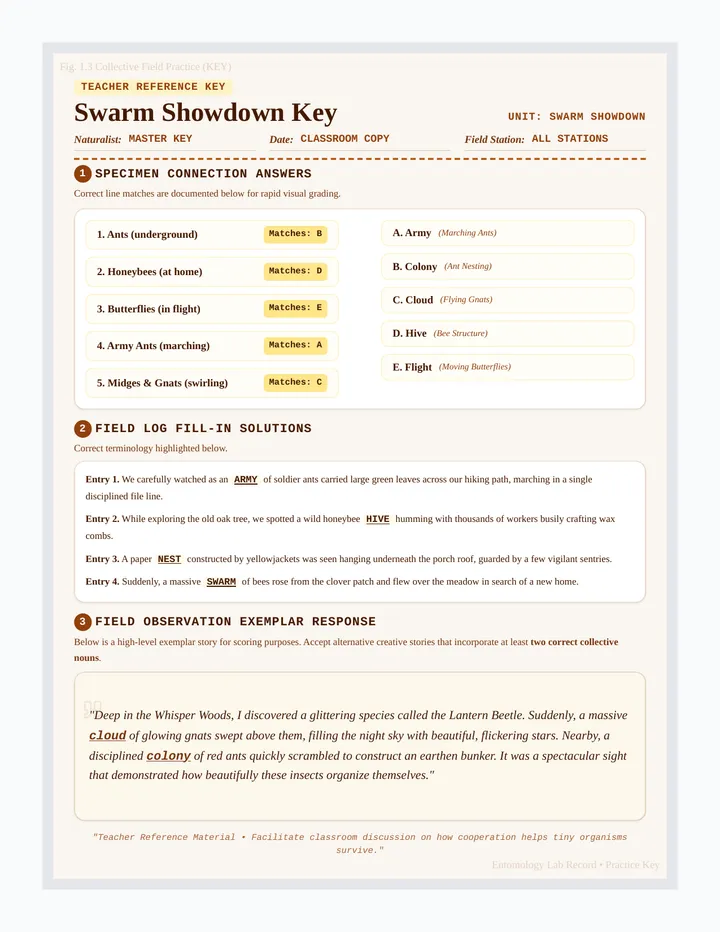
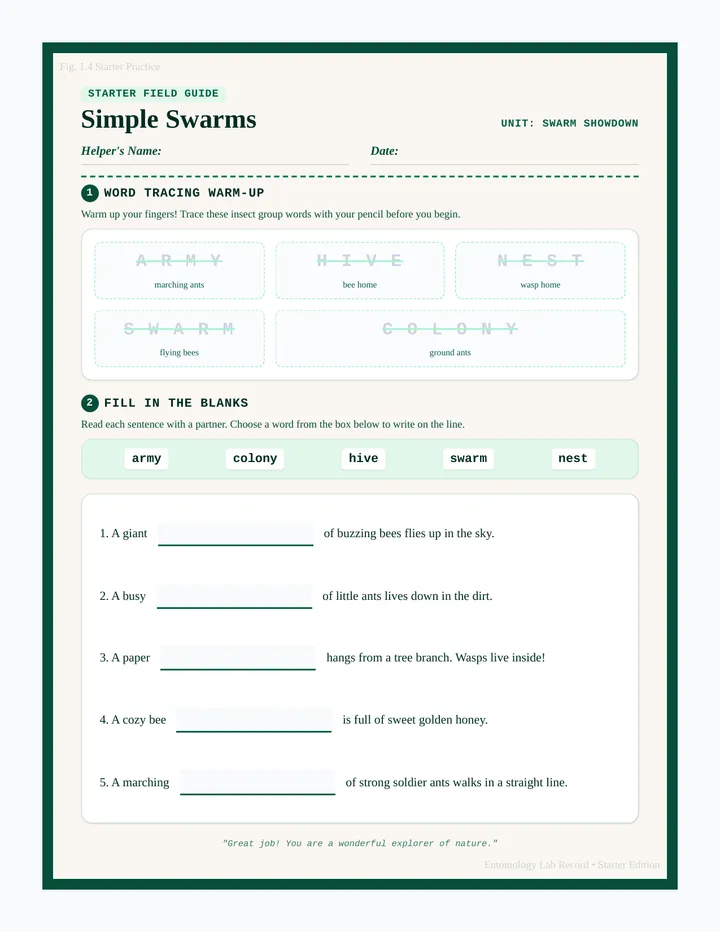
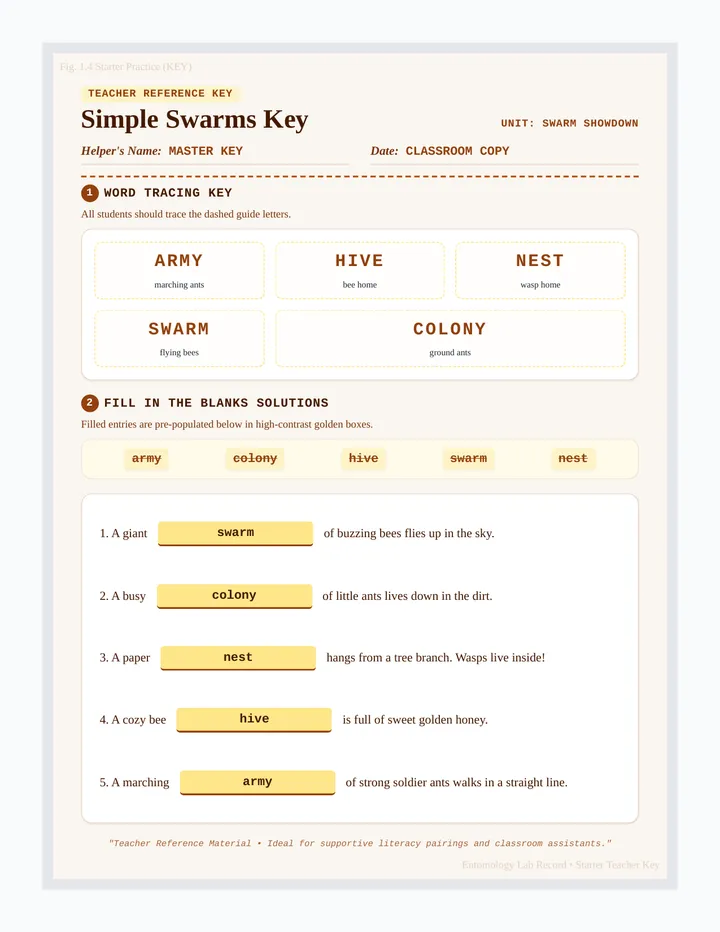
An engaging lesson on insect collective nouns and terminology, featuring a word search, crossword, and hands-on matching and writing activities exploring how bugs gather in groups.
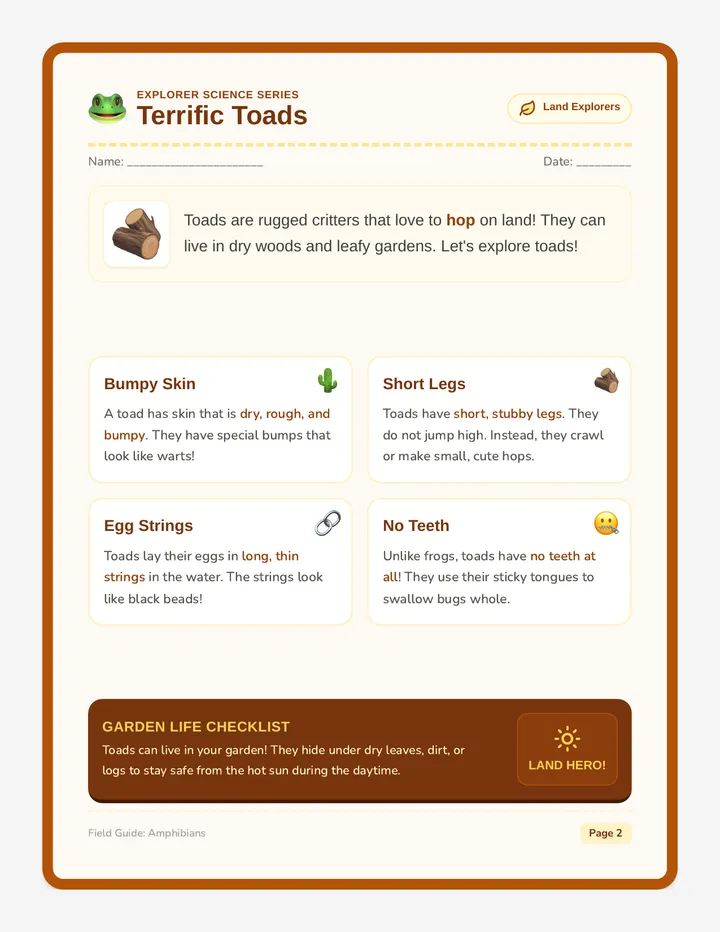
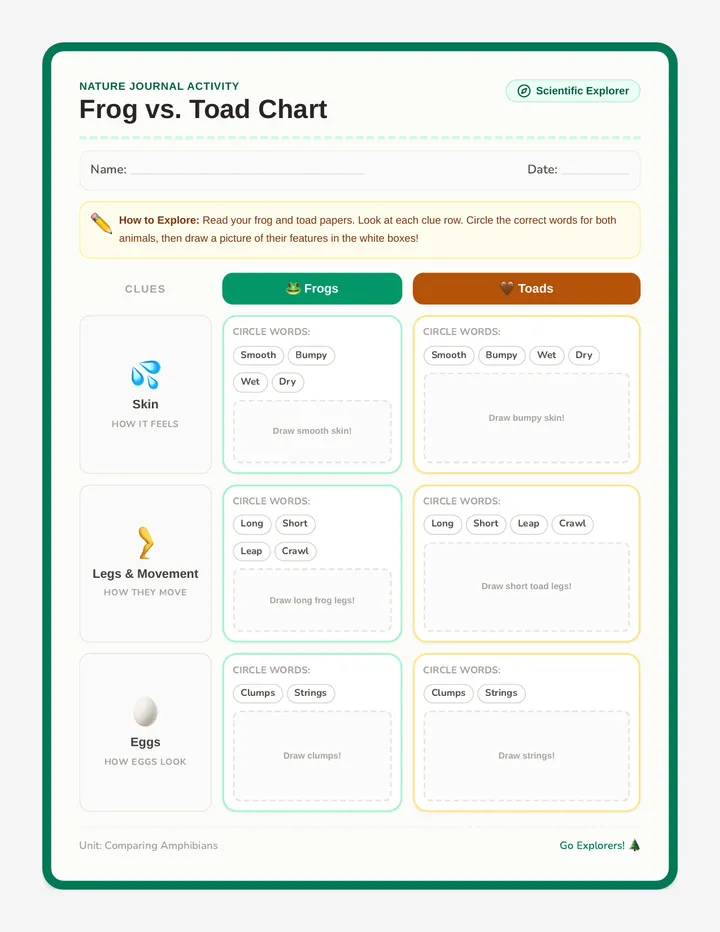
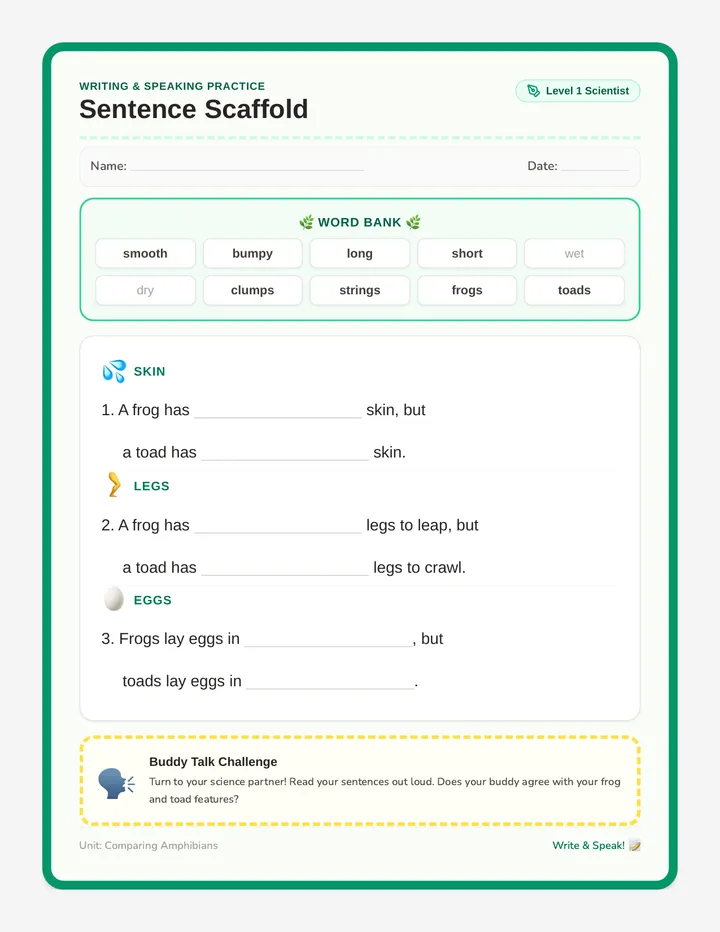
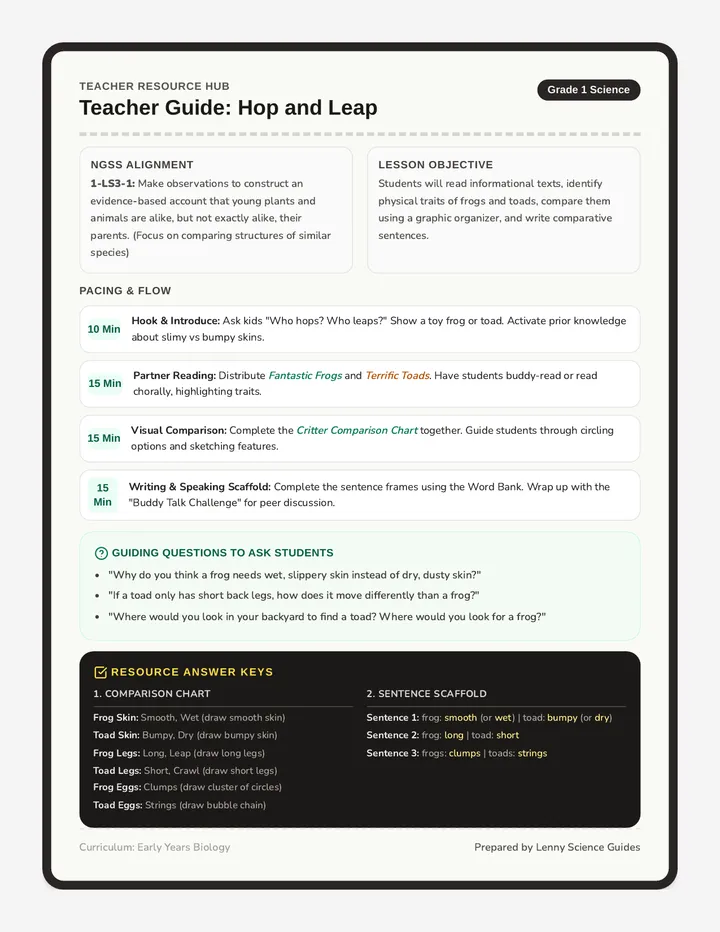
A first-grade science lesson comparing the observable physical and behavioral features of frogs and toads. Includes dual illustrated reading passages, a picture-supported graphic organizer, a sentence-frame writing scaffold, and a teacher facilitation guide.
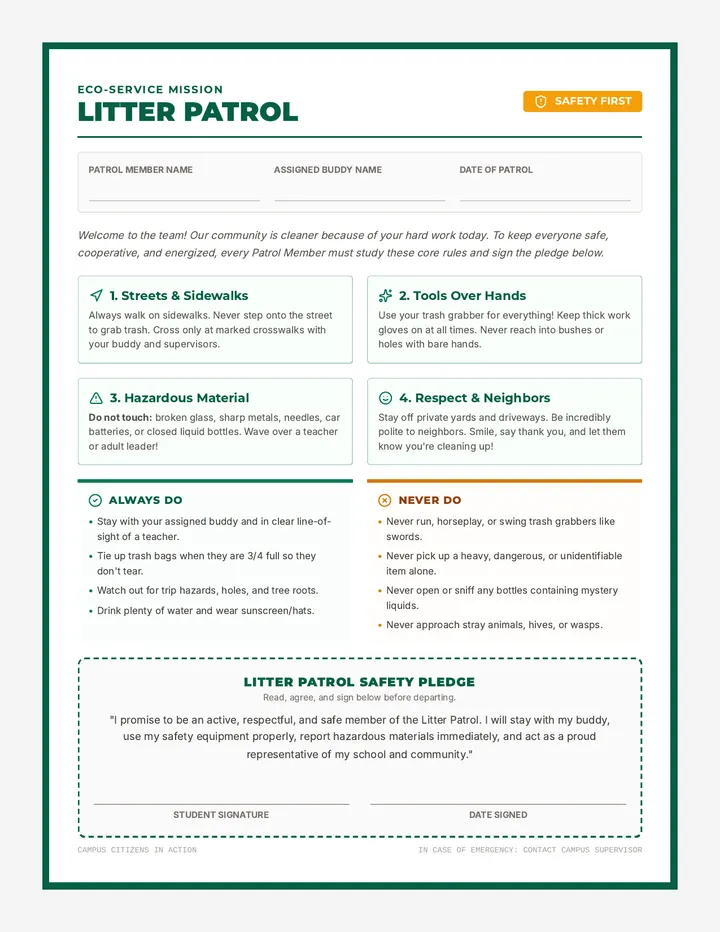
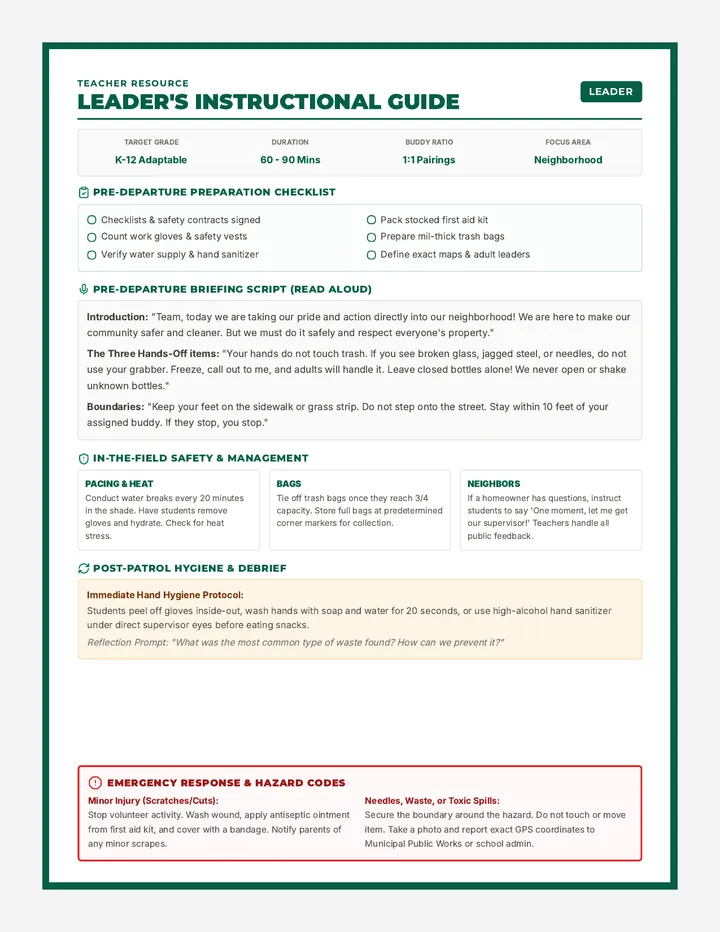
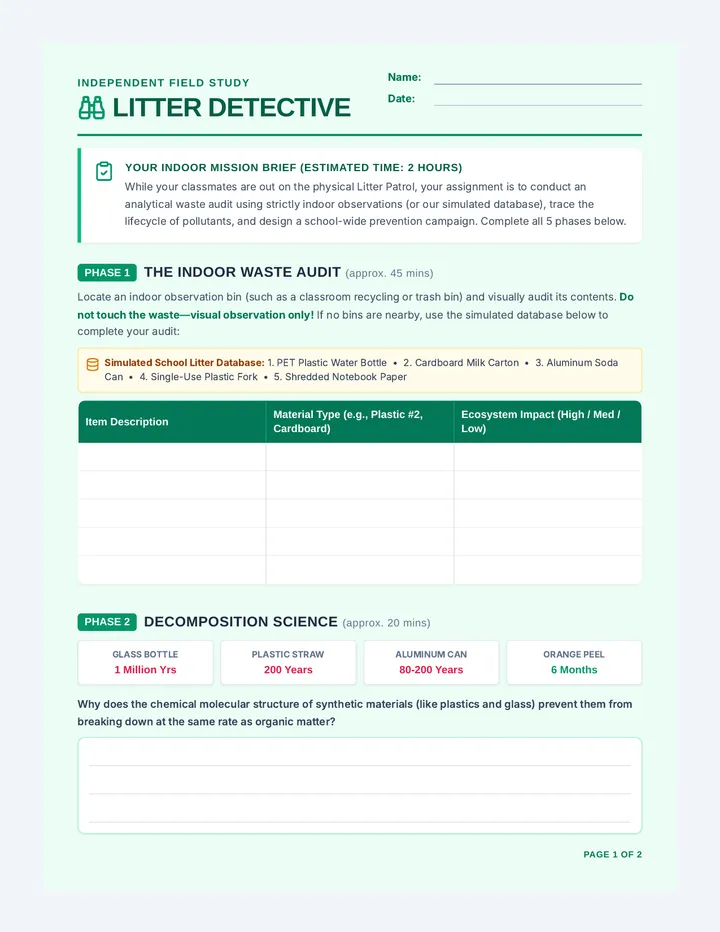
A comprehensive safety and preparation kit for students and teachers participating in a neighborhood trash pick-up community service project. It includes safety slides, a student contract and checklist, and a detailed teacher instruction guide.
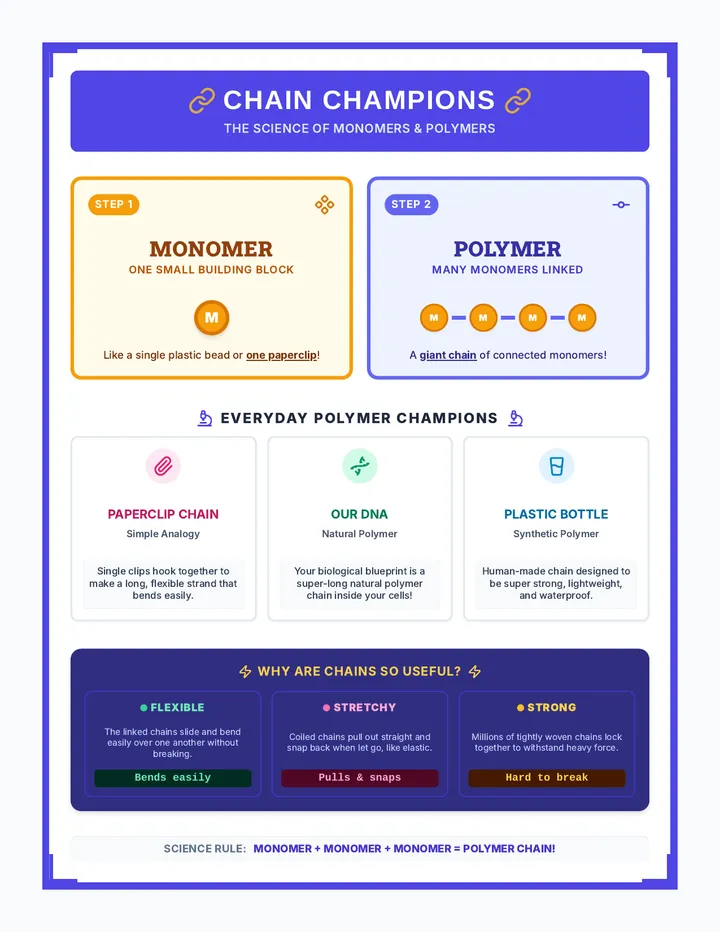
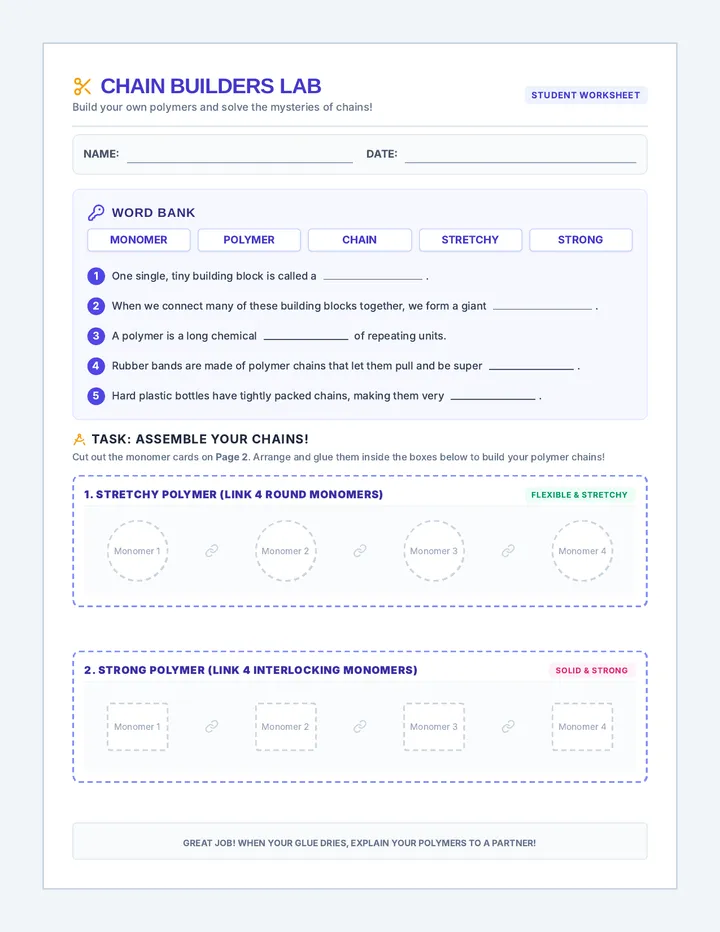
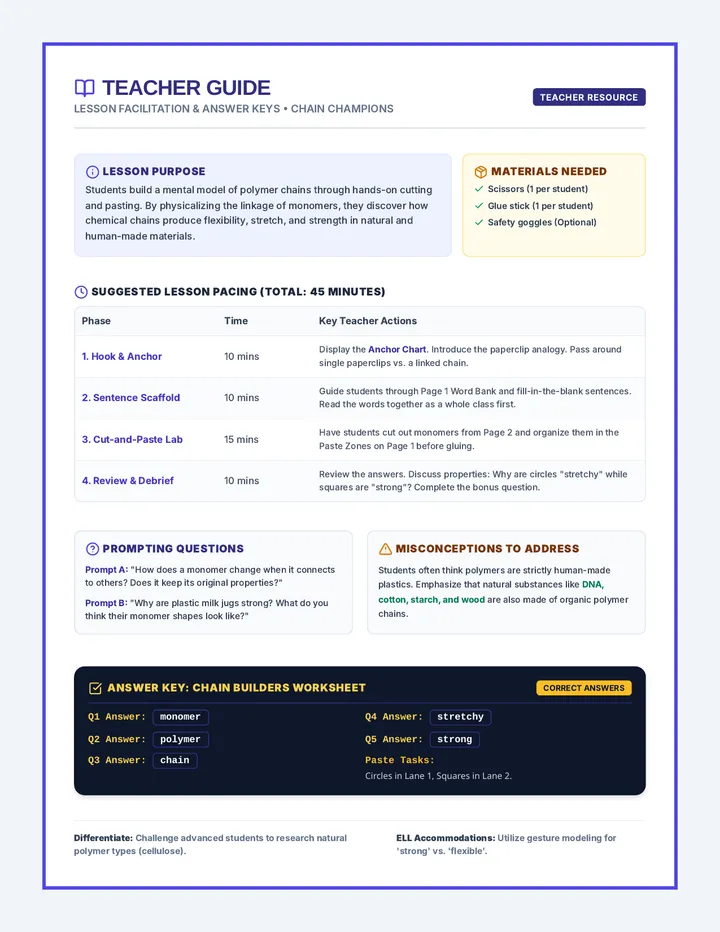
A highly visual and tactile introduction to polymer chains, monomers, and everyday applications. Students explore how small repeating units form strong, flexible, and stretchy properties through hands-on modeling and scaffolded writing.
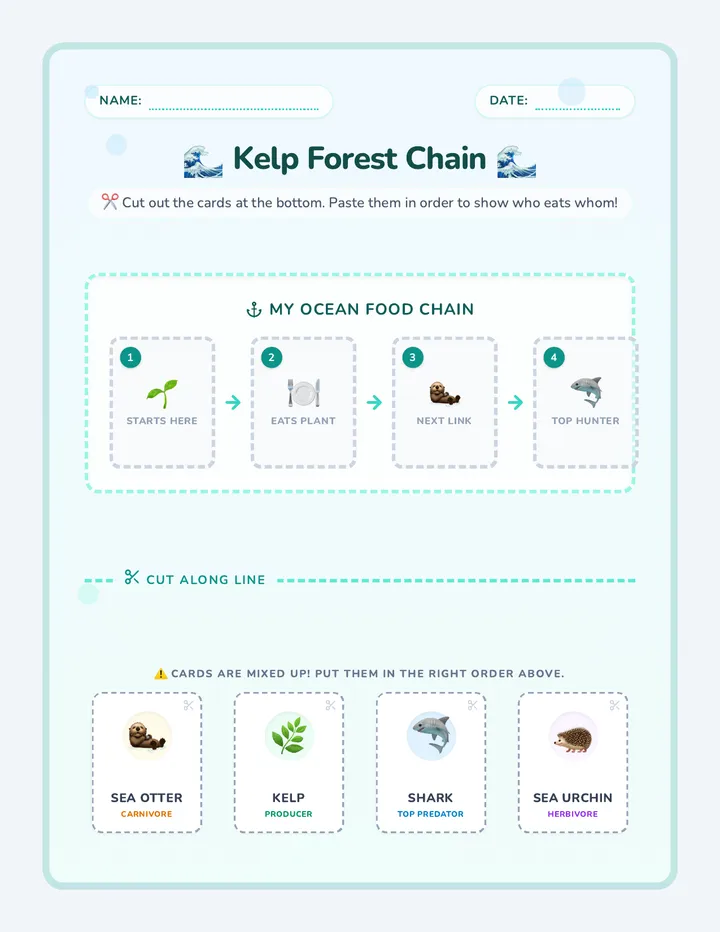
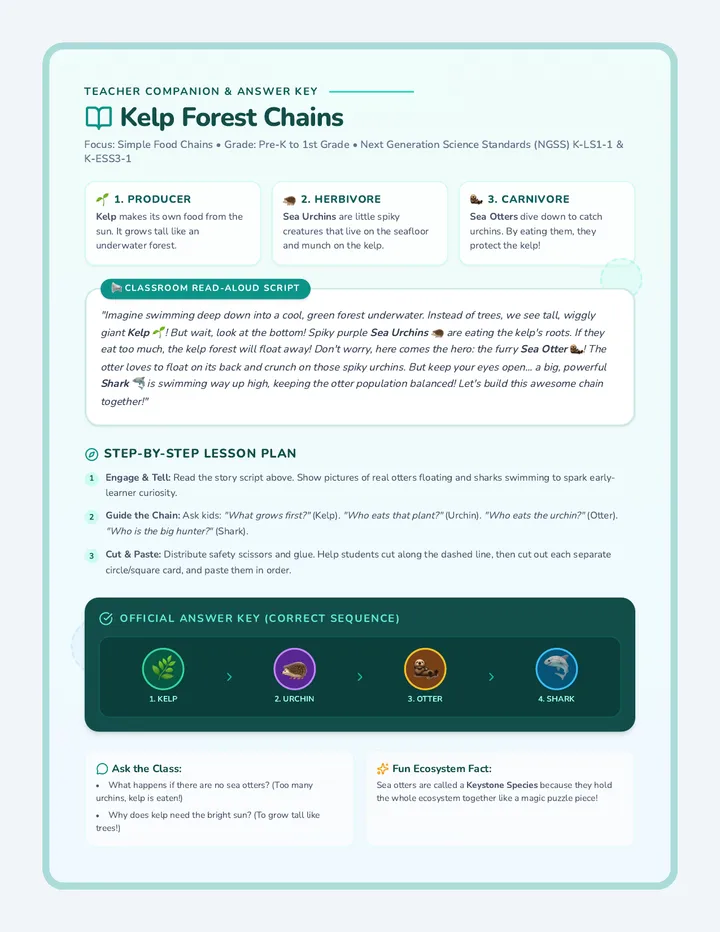
A hand-on science lesson for early learners (Pre-K to 1st grade) to understand simple ocean food chains using the kelp forest ecosystem. Students explore how energy moves from kelp to urchins, otters, and sharks through a tactile cut-and-paste activity.
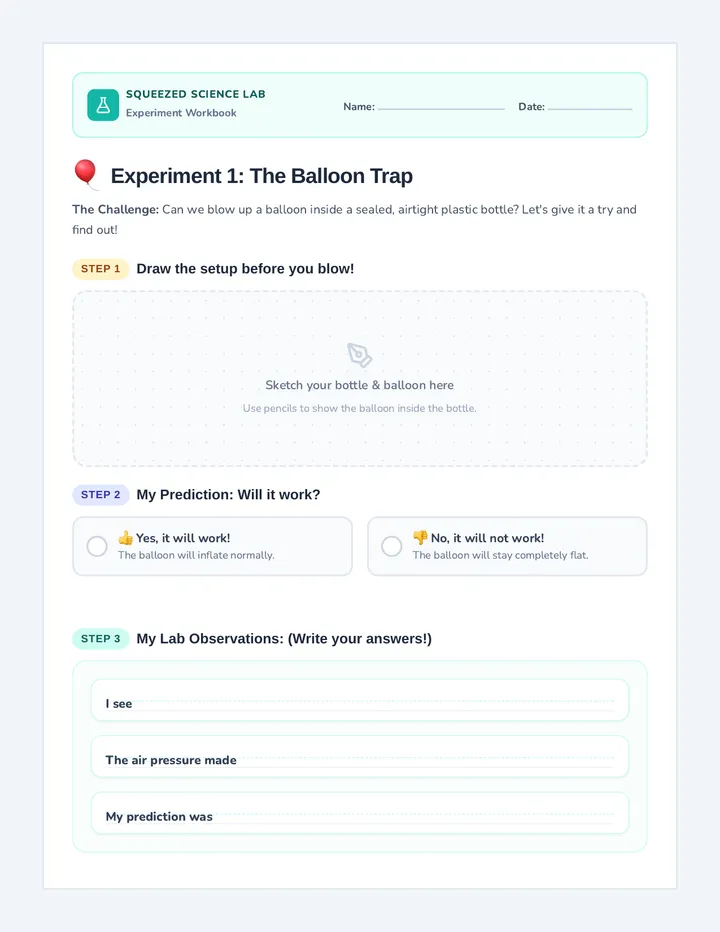
An early elementary science lesson about air pressure featuring three hands-on experiments: Balloon in a Bottle, Egg in a Bottle, and the Water Glass Trick. Students make predictions and record observations using a highly visual cut-and-paste workbook.
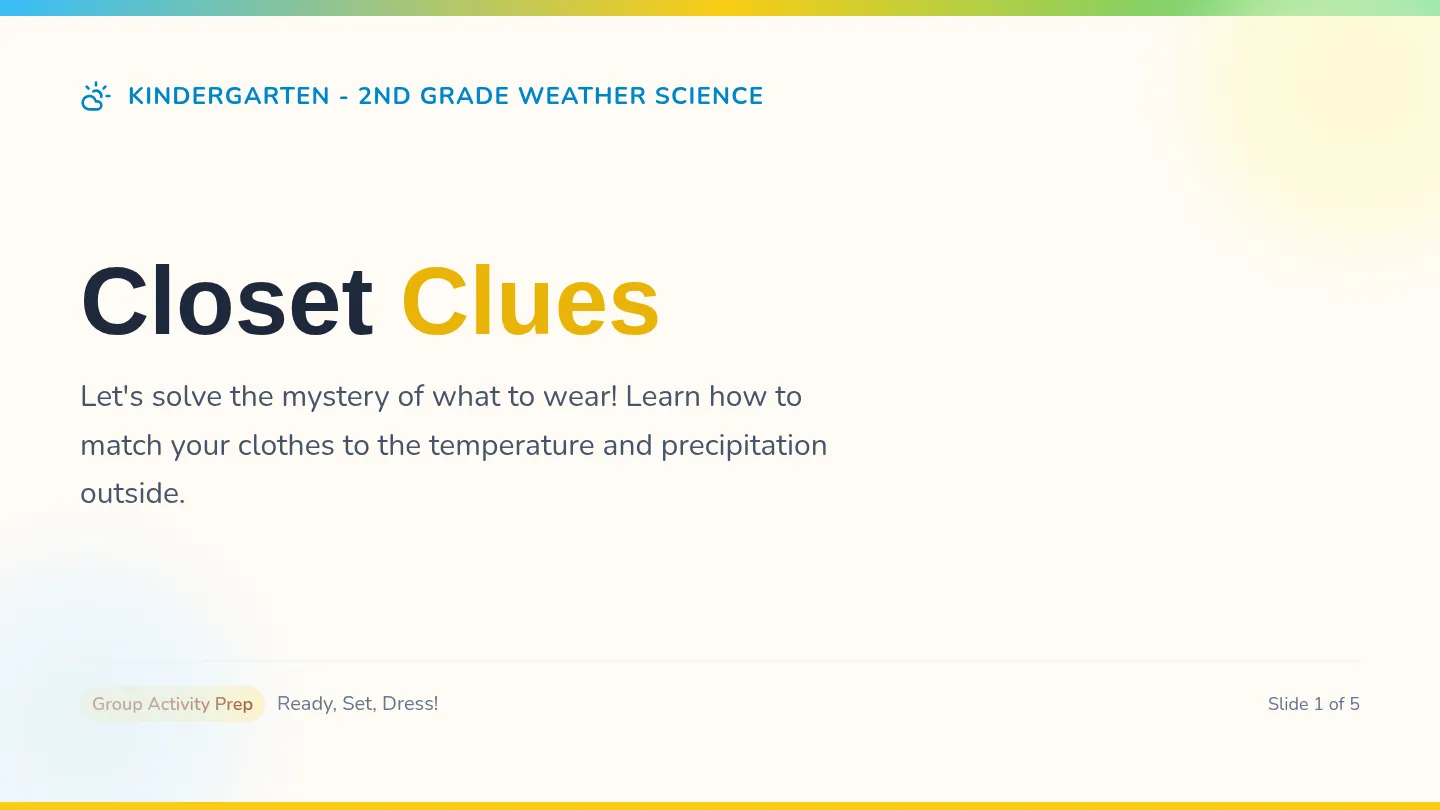
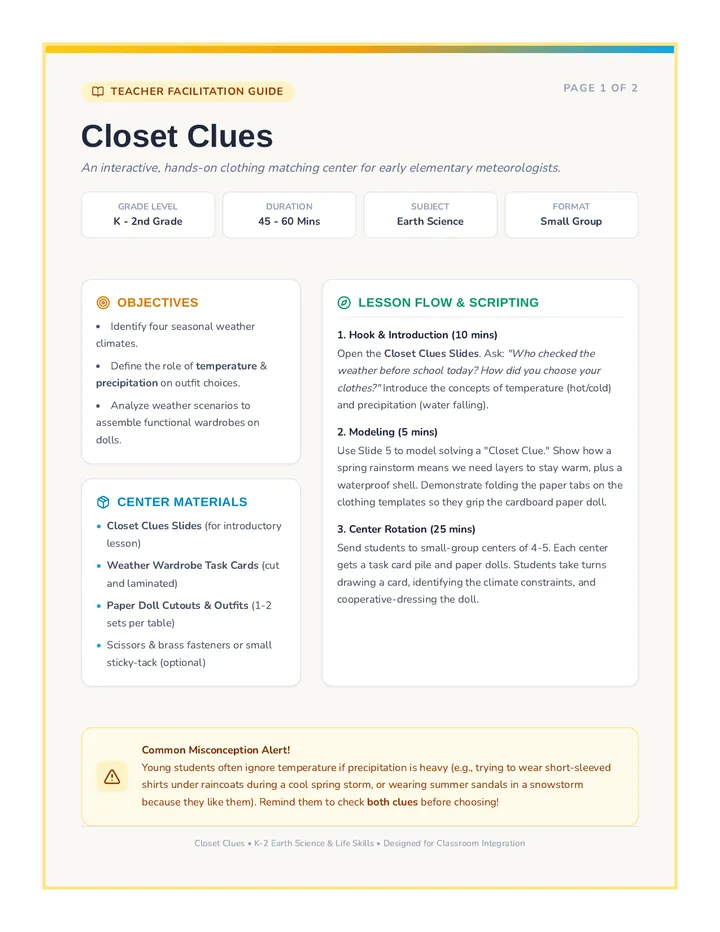
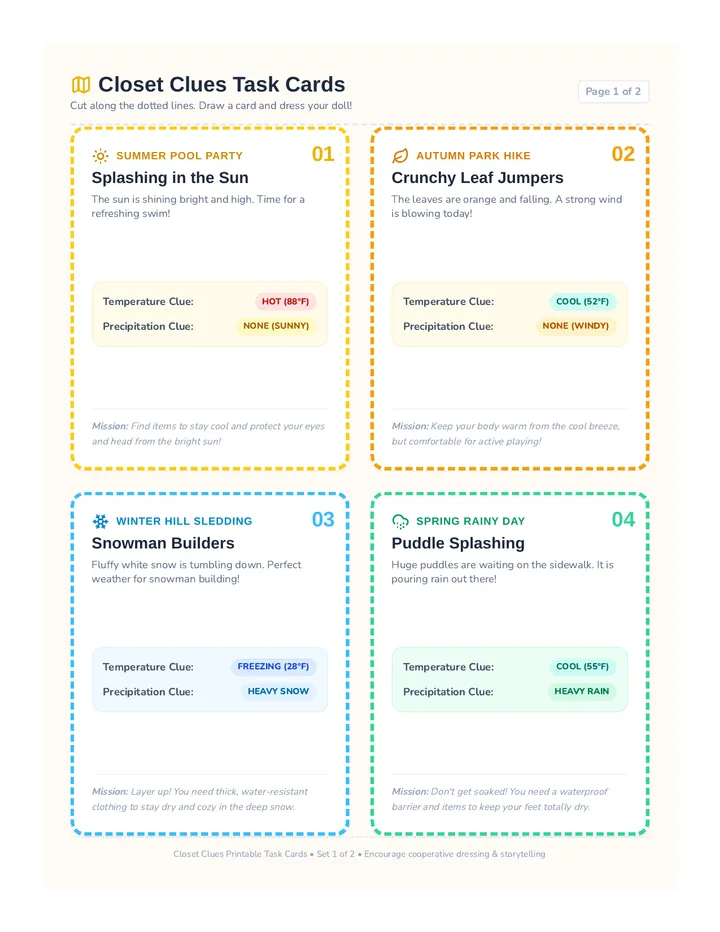
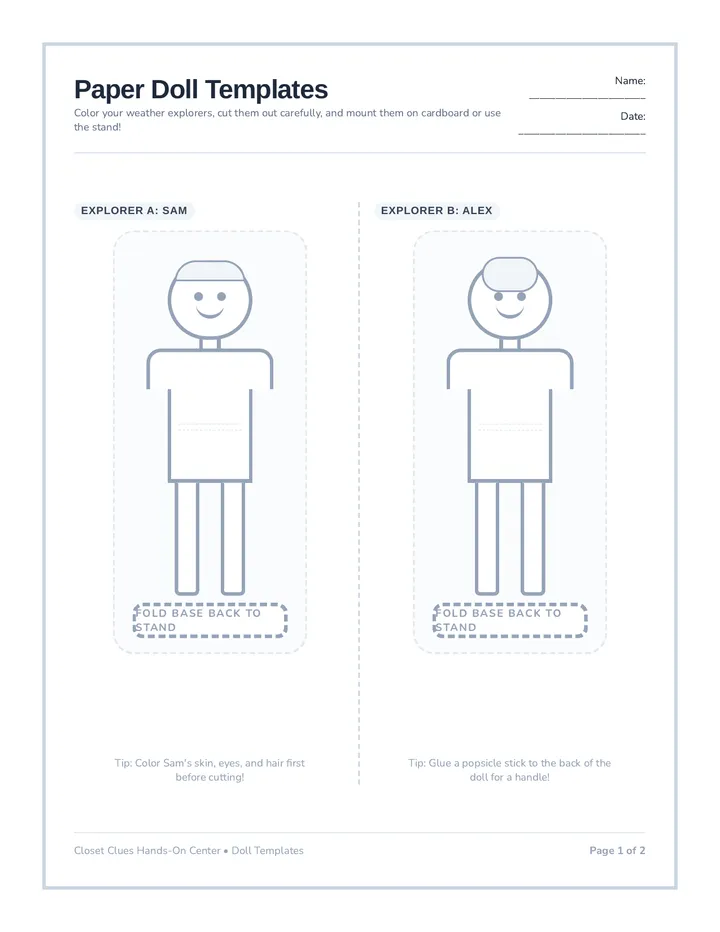
A hands-on, interactive lesson where students explore how to select appropriate clothing based on seasonal weather conditions, temperature, and precipitation. Using task cards and paper-doll cutouts, students practice matching wardrobes to real-world weather scenarios.
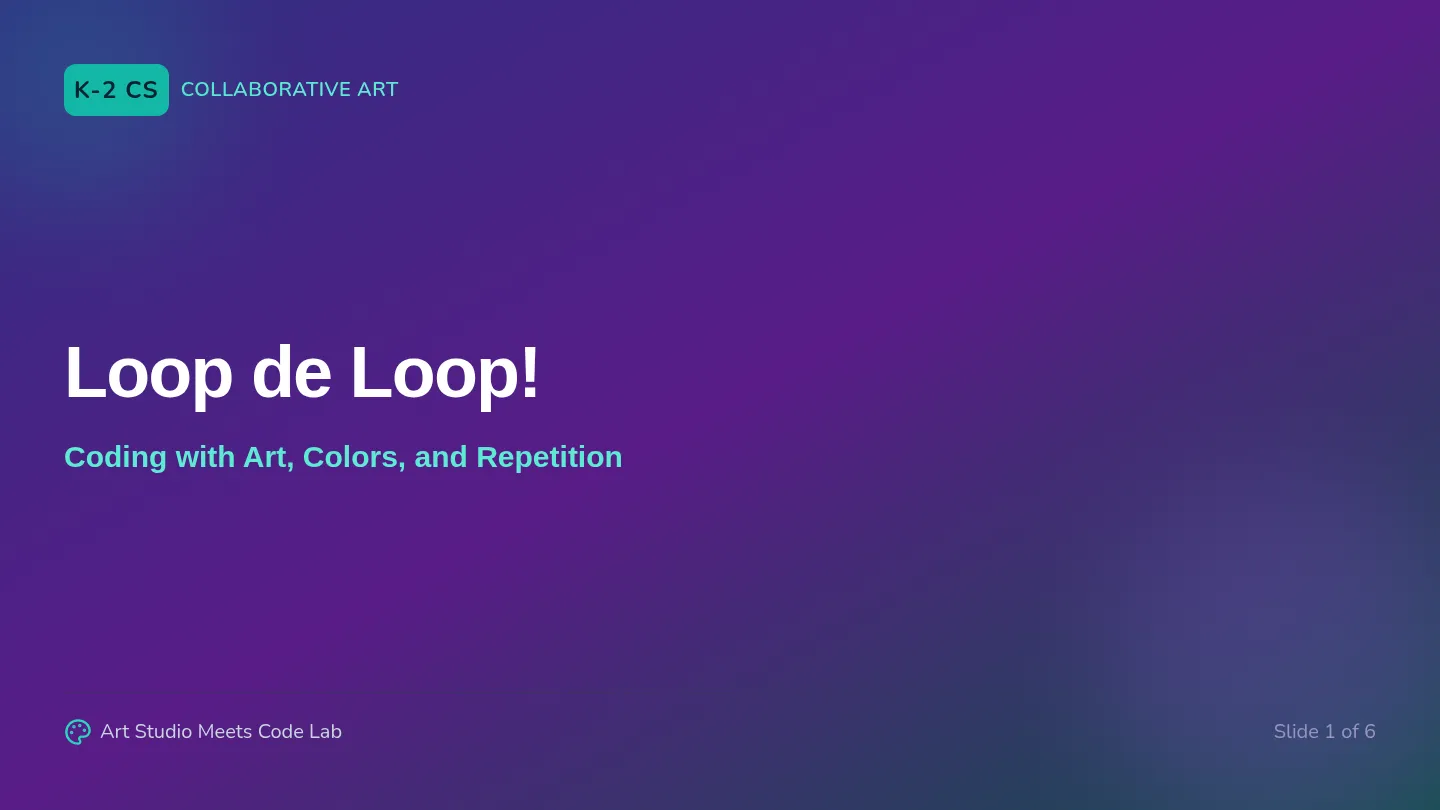
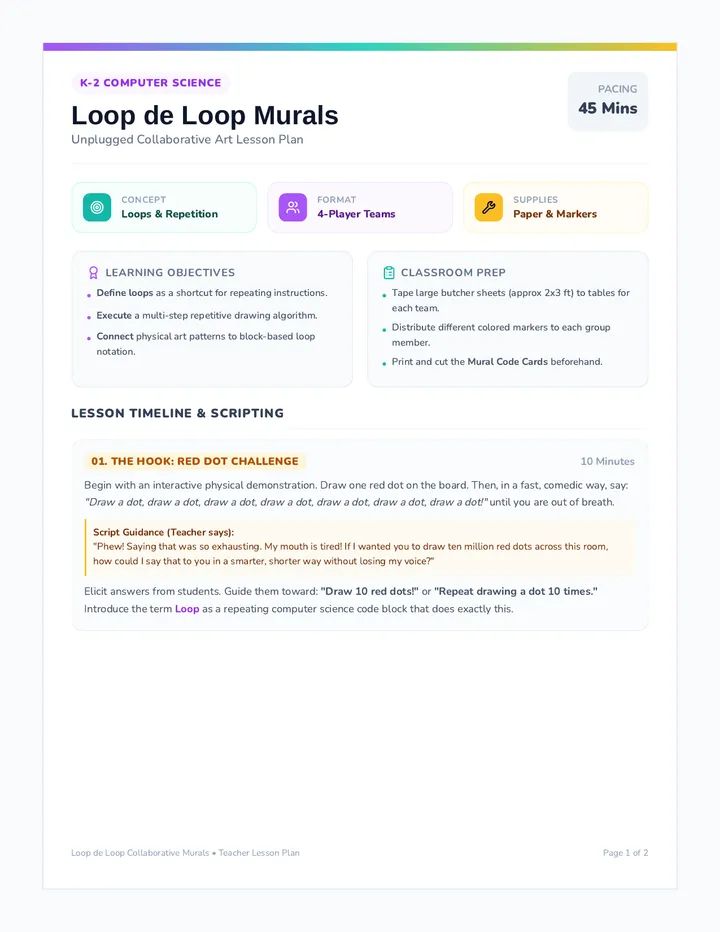
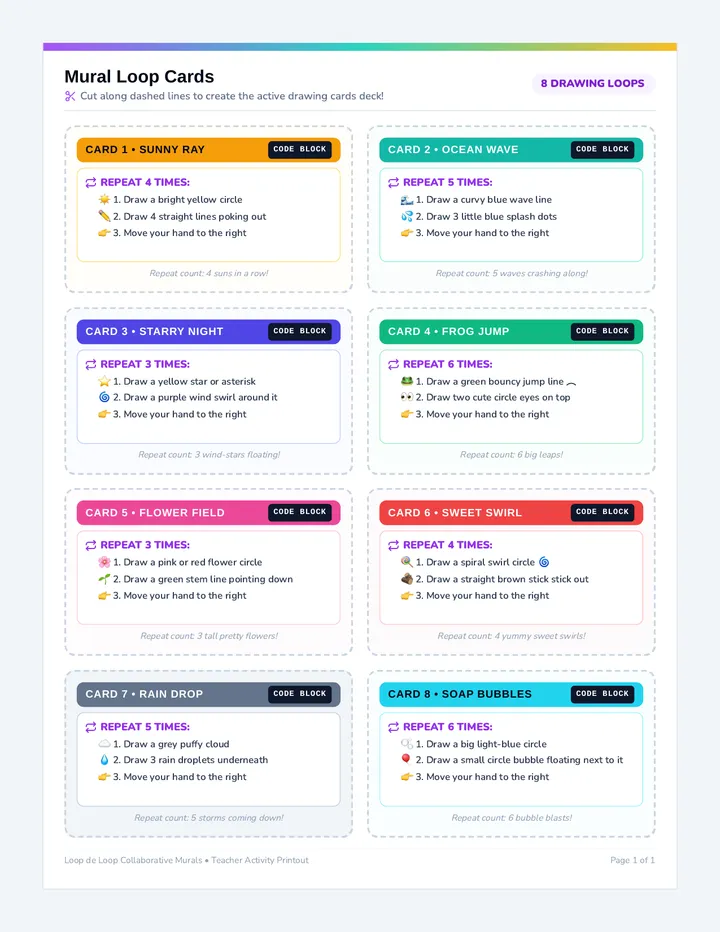
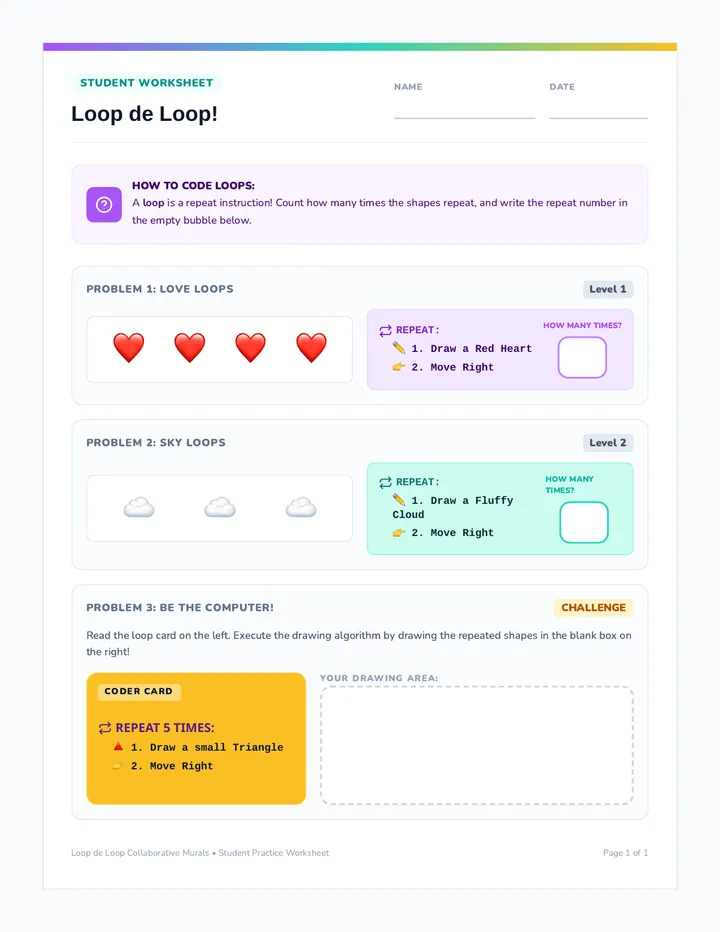
An active, hands-on unplugged computer science lesson for K-2 students. Students learn the concept of loops (repetition) by creating collaborative art masterpieces using simple drawing algorithms.
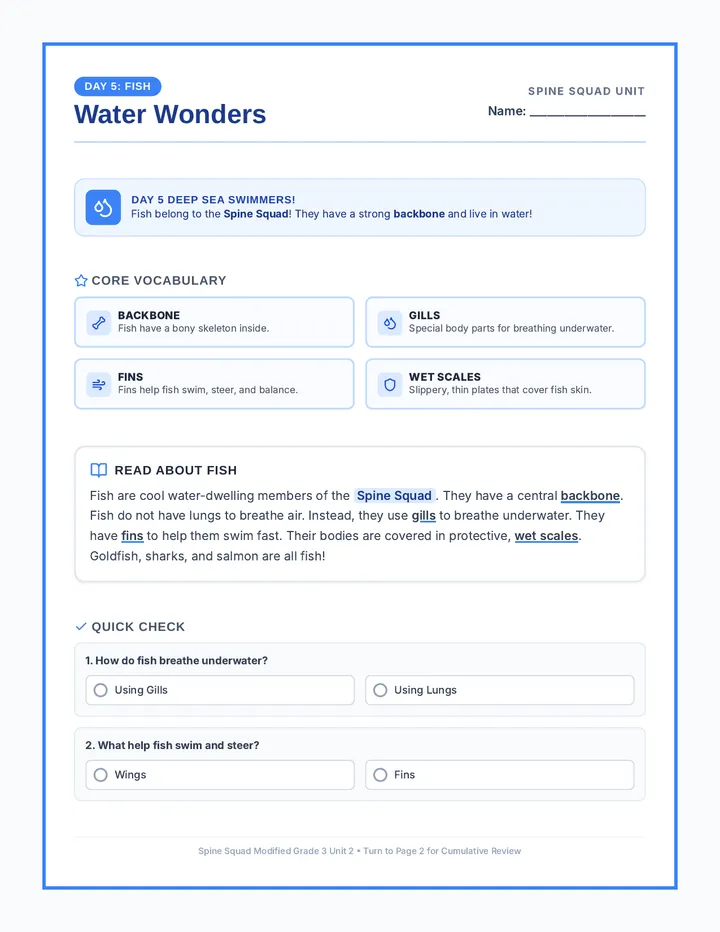
In this fifth and final lesson of the Spine Squad unit, students explore fish, focusing on gills, fins, scales, and underwater survival, with a final cumulative review of the five vertebrate groups.
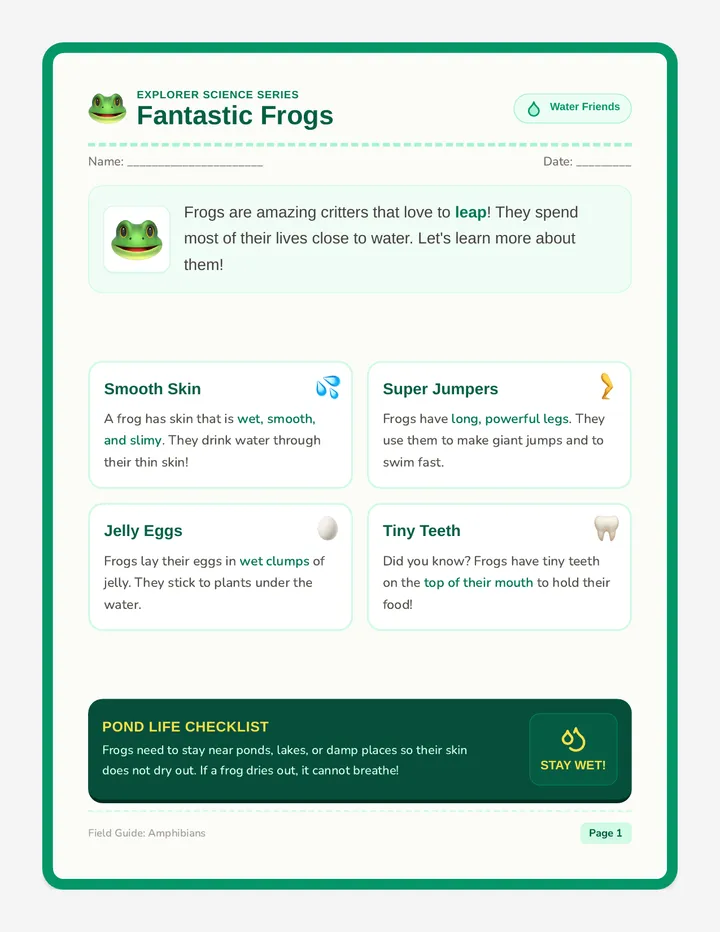
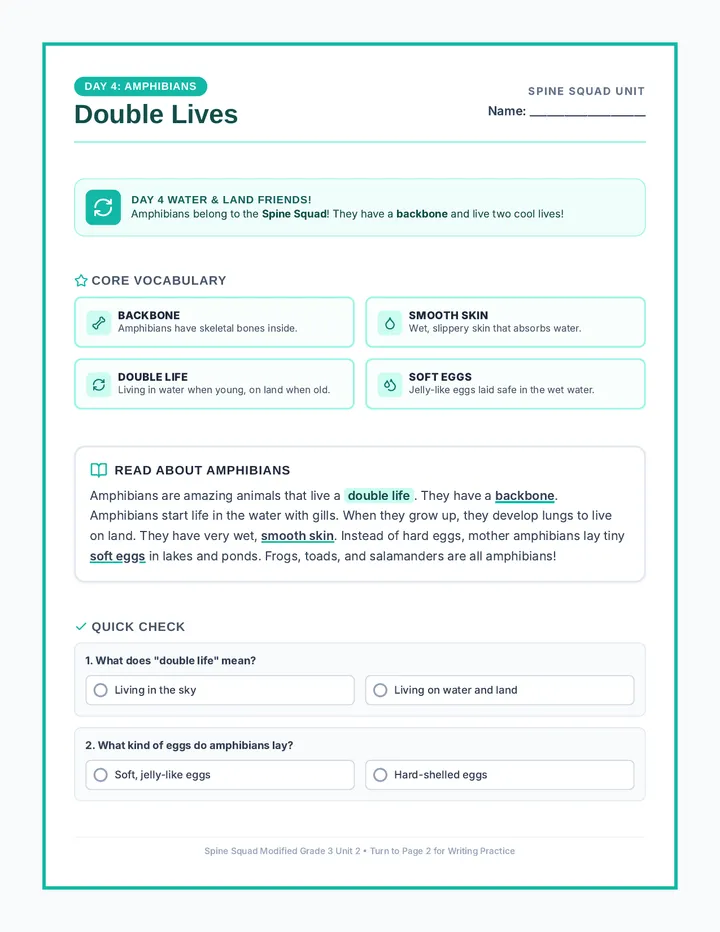
In this fourth lesson of the Spine Squad unit, students study amphibians, understanding how they live on water and land, lay soft eggs, and have smooth, wet skin, with scaffolded reading and tracing.
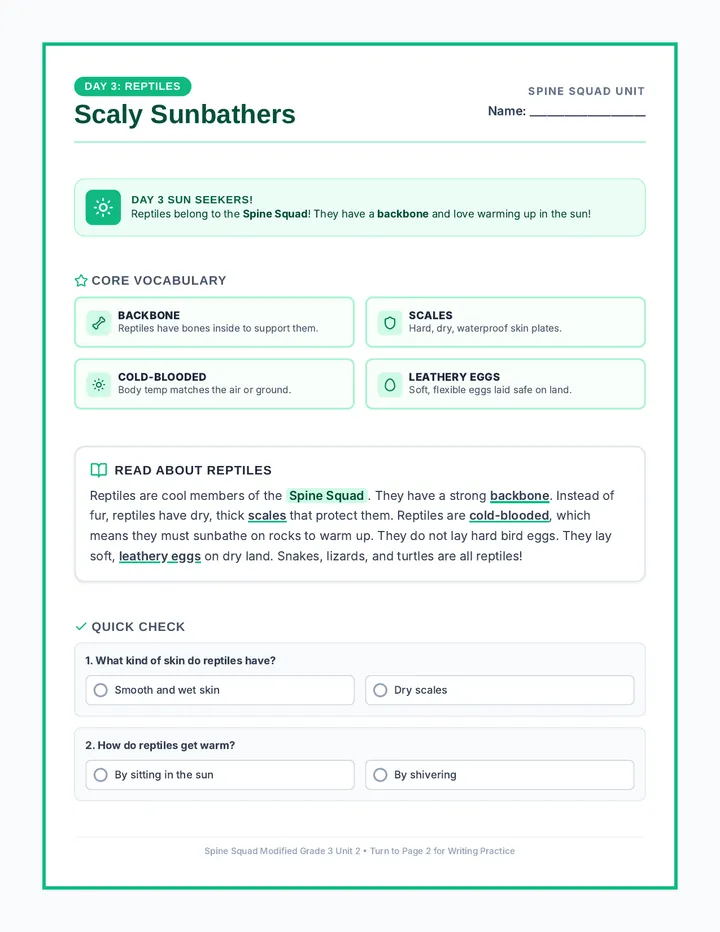
In this third lesson of the Spine Squad unit, students identify reptiles, exploring characteristics such as scales, cold-blooded regulation, and laying leathery eggs on land, supported by guided tracing.
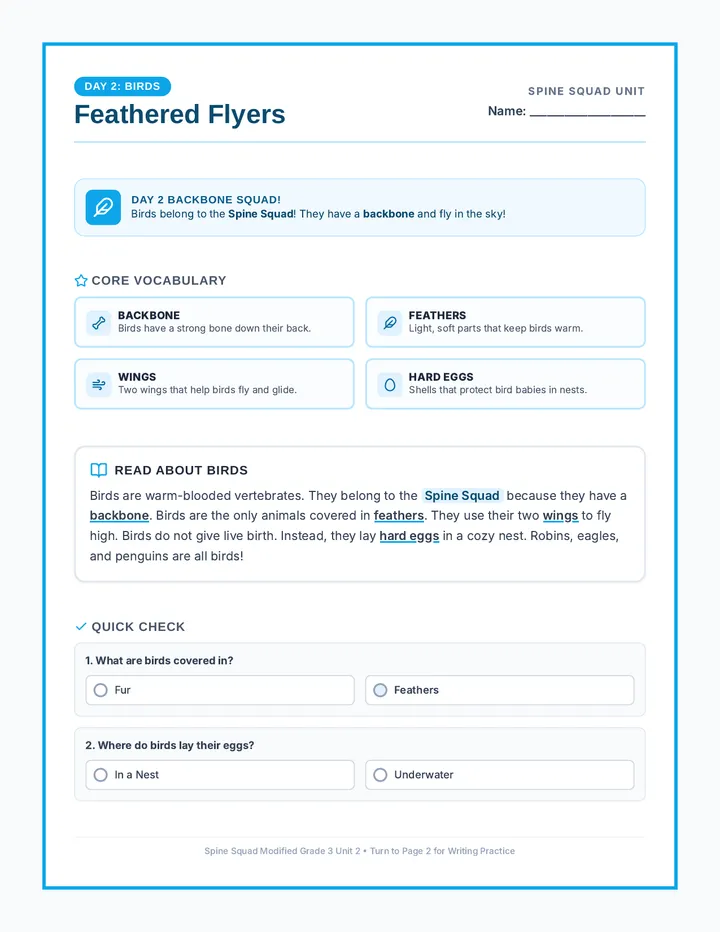
In this second lesson of the Spine Squad unit, students examine the key characteristics of birds, including feathers, wings, and laying hard-shelled eggs, using scaffolded comprehension prompts and tracing.
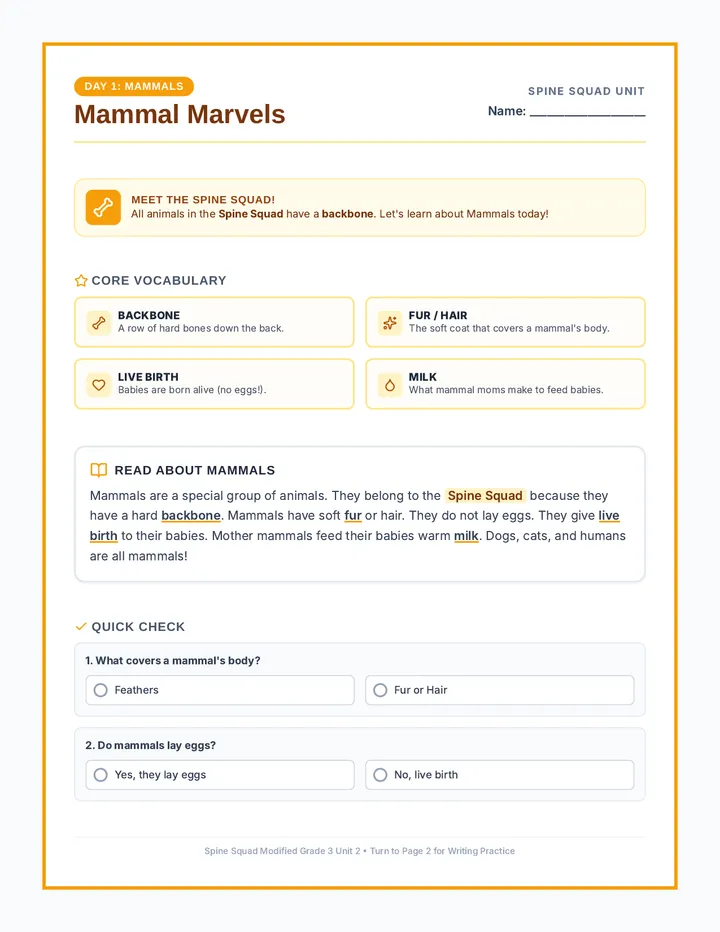
In this first lesson of the Spine Squad unit, students explore the unique traits of mammals, focusing on fur/hair, live birth, and milk production with heavy visual support and tracing activities.
An interactive, visually rich lesson preparing Florida students for severe storms and hurricanes. Covers emergency kit building, weather alerts, home action plans, and sensory coping strategies to reduce storm anxiety.
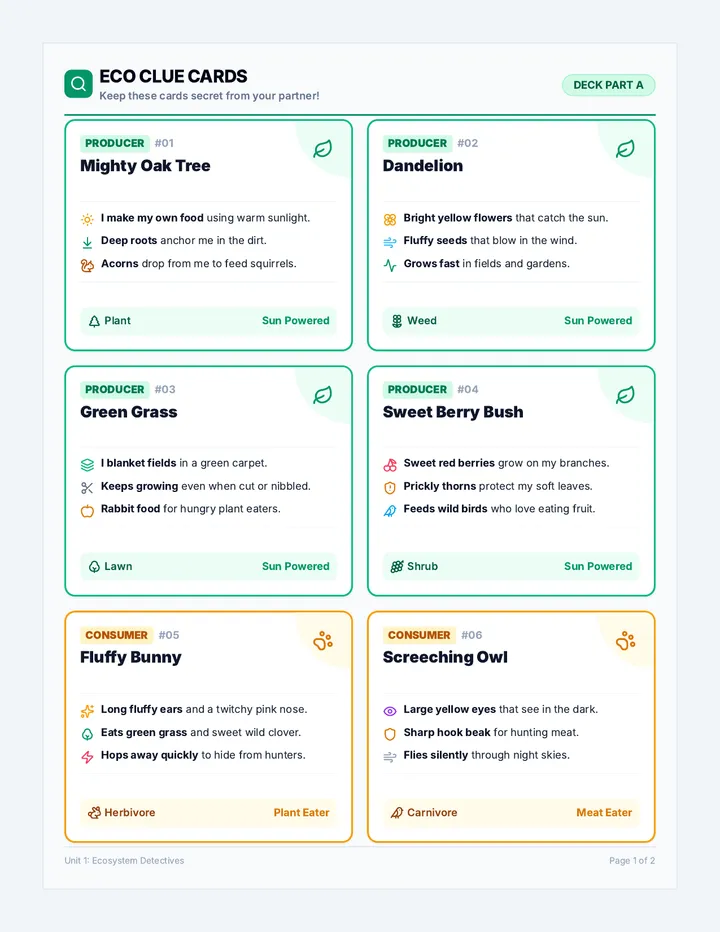
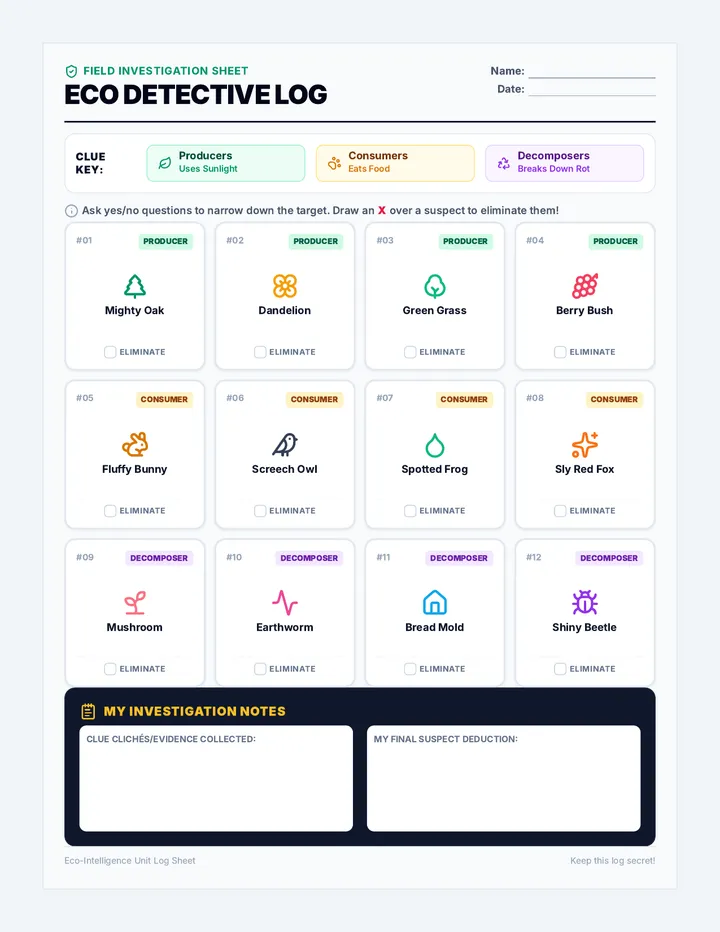
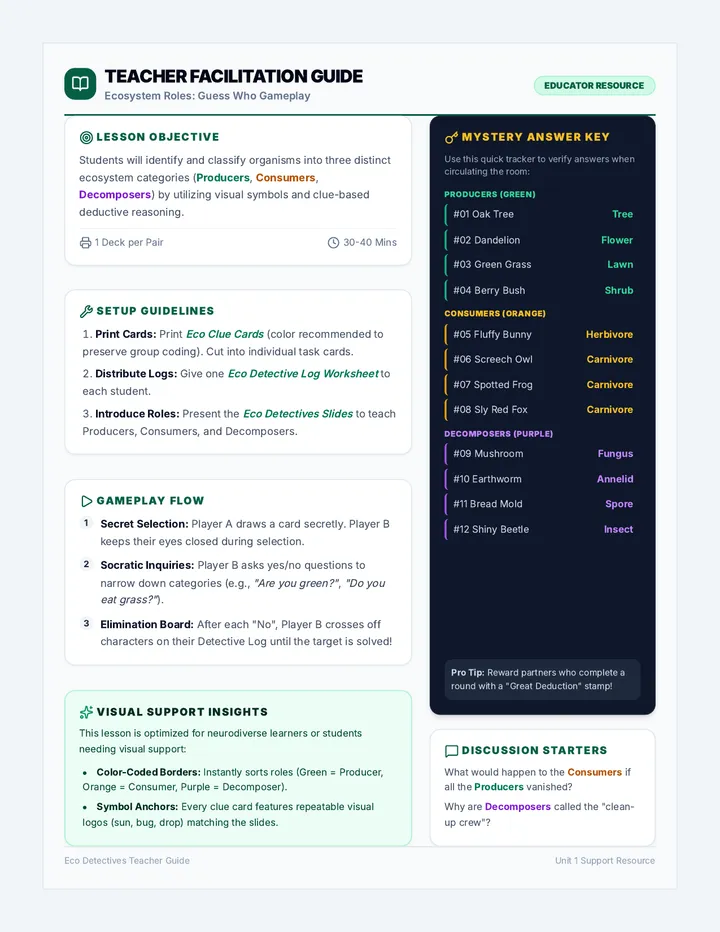
An interactive, visual-heavy lesson where students investigate ecosystem roles (producers, consumers, and decomposers) through an engaging 'Guess Who' style game. Includes visual-support clue cards, a detective tracking sheet, and a comprehensive teacher guide.
A lesson on oceanography covering shorelines, coastal features, and the deep seafloor, adapted with a friendly My Little Pony decorative theme and chunked, accessible text for Standard Modified Special Education students.
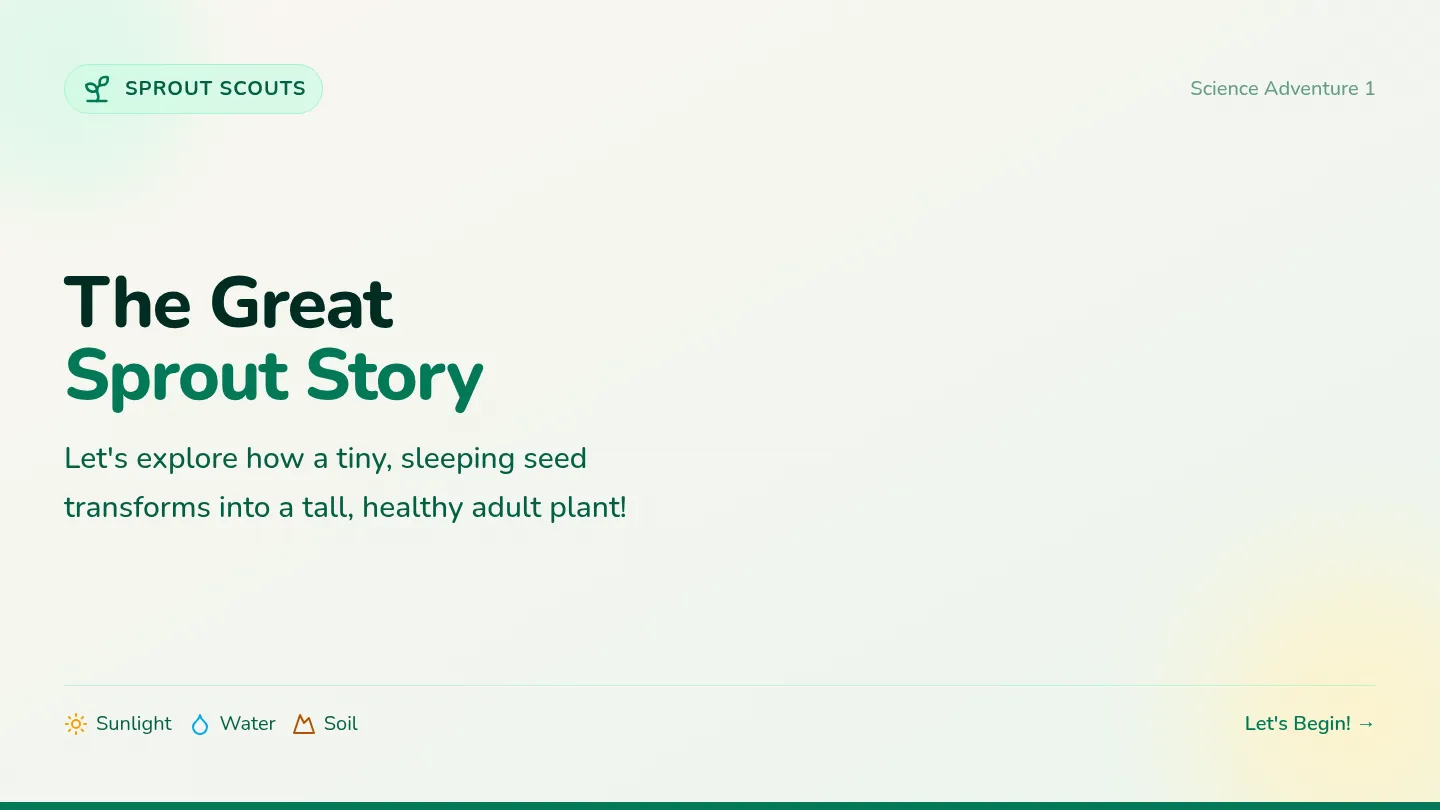
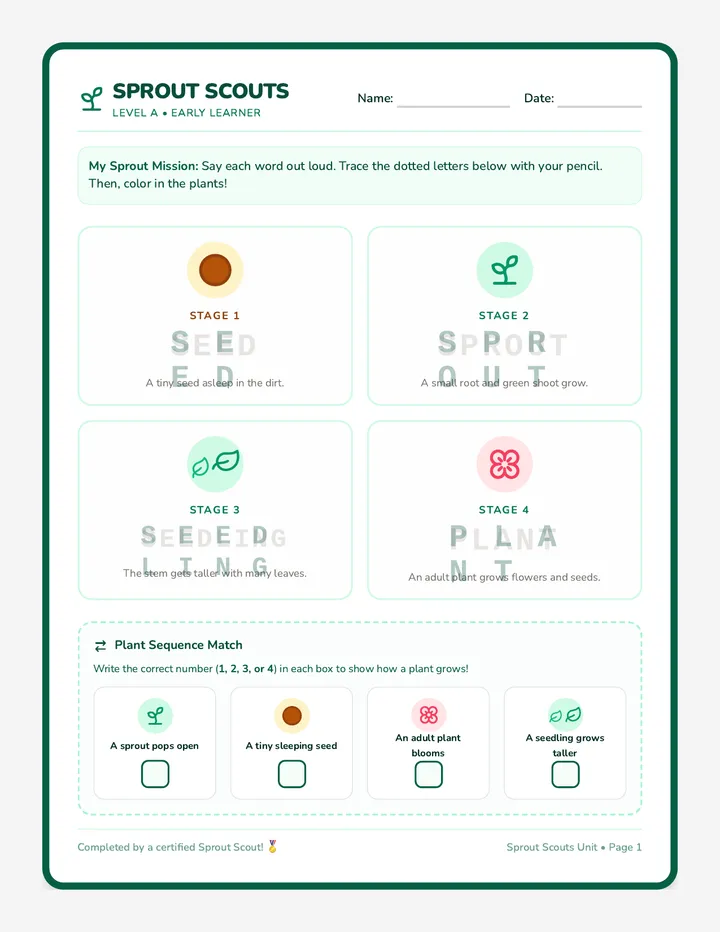
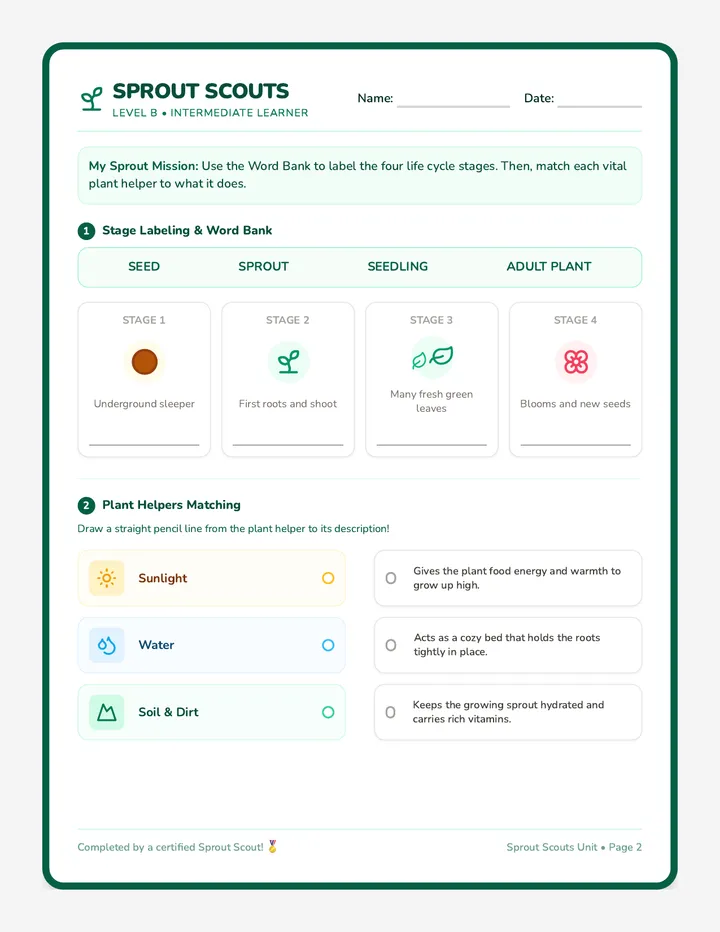
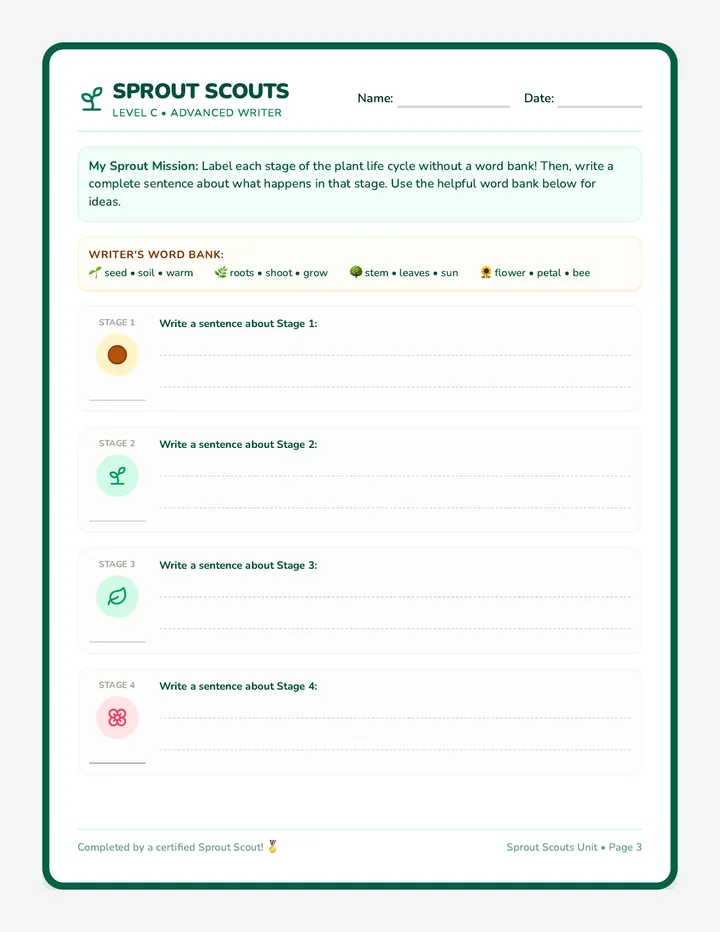
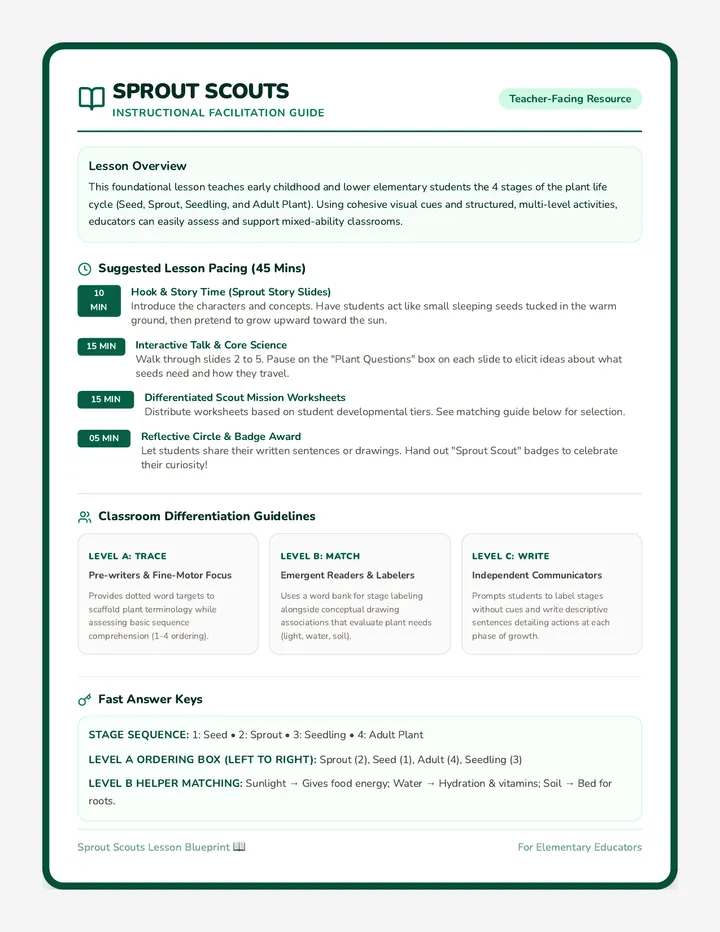
A foundational biology lesson exploring the simple life cycle of a plant from seed to sprout to adult. Includes interactive slides, a comprehensive teacher guide, and three tiers of differentiated worksheets to support early writers, matchers, and independent sentence-builders.