An introductory weather lesson for 1st graders focusing on observation, basic patterns, and the water cycle. Students act as meteorologists to identify weather types and track daily changes.
Students act as 'Marine Bio-Engineers' to design and build artificial reef structures that support a healthy ecosystem on Mystery Island's coast, focusing on biotic and abiotic interactions.
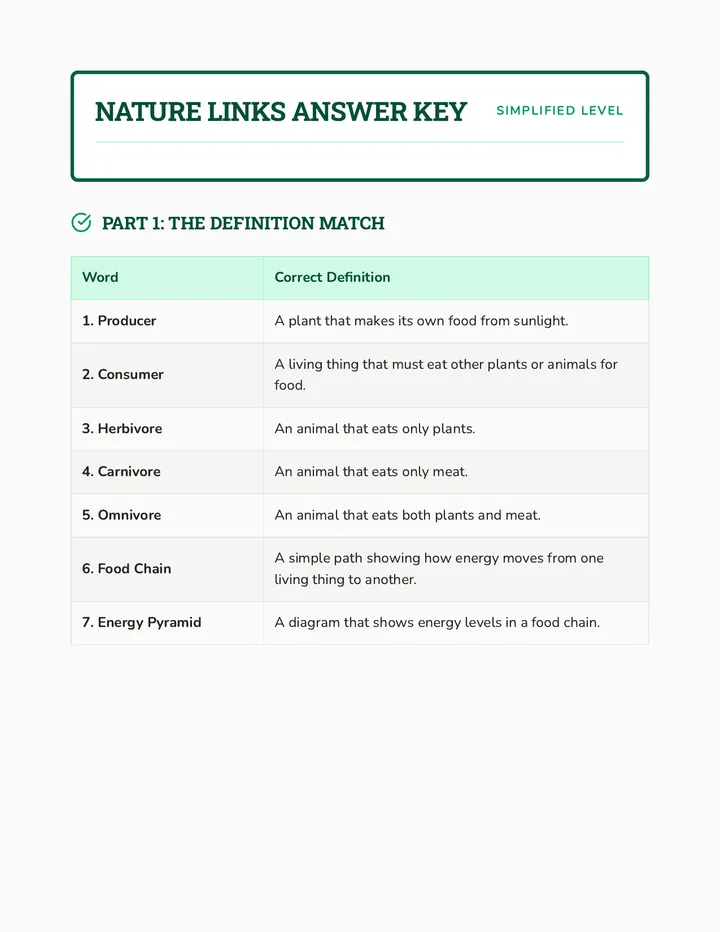
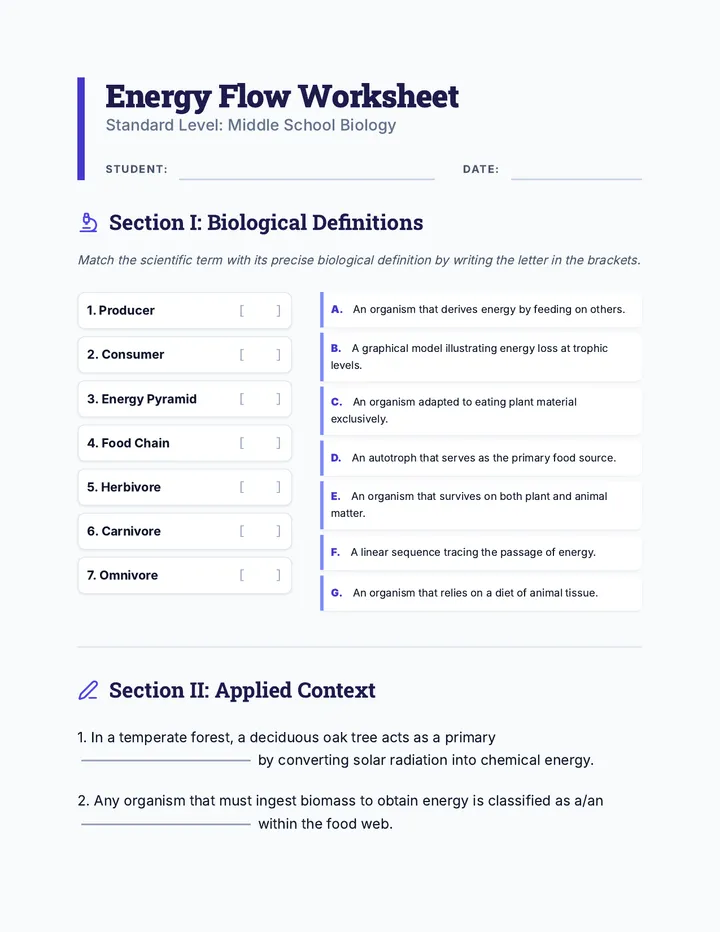
Students design and build 'Food Web Restoration' models to visualize and explain the flow of energy from producers to multiple consumers on Mystery Island.
Students design and build 'Weather Shields' to protect a model plant from extreme temperature and precipitation changes on Mystery Island, exploring how environmental factors affect organisms.
Students act as 'Botanical Engineers' to design and build seed models that can travel through the air to reach new parts of Mystery Island, focusing on seed dispersal methods.
Students design external structures for a 'Mystery Organism' to help it meet its basic needs (food, water, shelter) on Mystery Island, focusing on the link between structure and function.
An introductory lesson on tiger-related vocabulary, focusing on conservation, biology, and habitat through kid-friendly definitions and syllable practice.
An introductory lesson on the importance of native plants for local ecosystems, designed for K-2 students. Includes hands-on garden design projects and visual aids for ecosystem services.
An outdoor sensory experience where students use natural materials to create 'mud pies,' focusing on texture, composition, and imaginative play.
Students compare and contrast the textures and molding properties of homemade playdough and kinetic sand through tactile exploration.
A deep dive into non-Newtonian fluids as students mix cornstarch and water to create oobleck, exploring how it changes from solid to liquid.
Students explore density and mixtures by creating mesmerizing sensory bottles using oil, water, and various floating objects.
A structured literacy lesson focused on the letter C /k/ and glued sounds -an and -am, using the decodable text 'The Cat Can'. This lesson follows a backwards planning approach to ensure students can decode and encode CVC words and nasalized vowels.
An introductory weather lesson for 1st graders focusing on observation, the water cycle, and basic forecasting through hands-on activities and visual learning.
An introductory science lesson for 1st graders focusing on weather patterns, the water cycle, and basic meteorological observation. Students explore different weather types and create their own weather tracking tools.
Students use evidence gathered throughout the week to construct and present arguments for why and how we must protect our natural resources.
Learning specific, actionable ways that humans can protect water and air resources through recycling, reducing waste, and conservation.
Understanding the importance of clean air, identifying sources of air pollution, and observing the effects of dirty air.
Exploring the specific uses of water, how it can become polluted, and initial ideas for keeping it clean.
Introduction to water and air as natural resources, identifying where they are found in our environment and why they are essential for life.
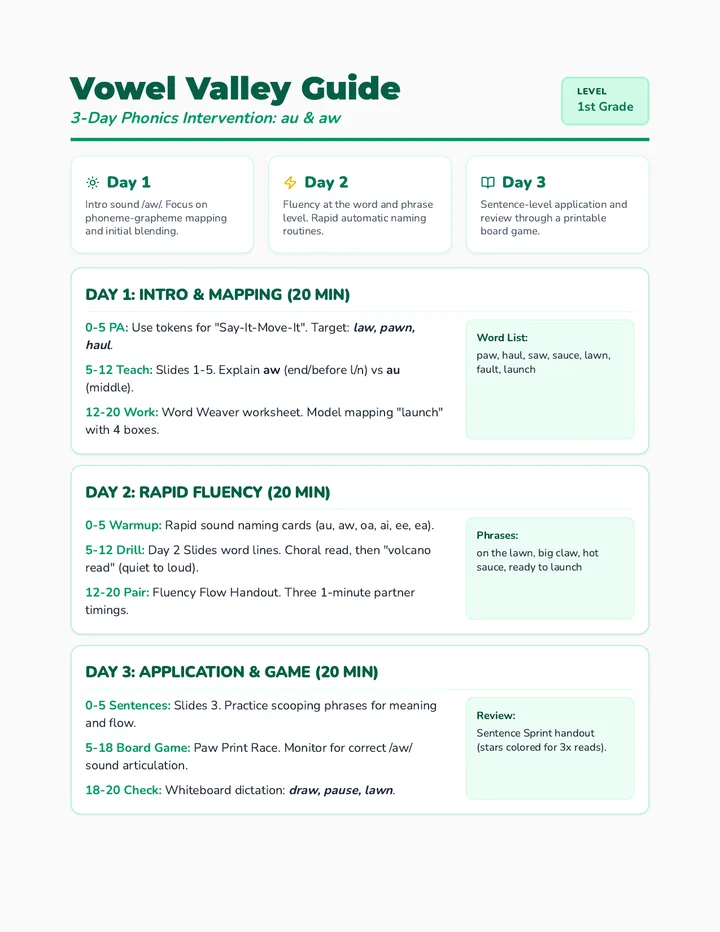
A high-impact, 10-minute small group lesson focusing on the vowel teams ew, ue, and ui, following Science of Reading principles including explicit instruction and orthographic mapping.
A K-2 lesson introducing students to the unique biodiversity of island ecosystems through storytelling and visual exploration, emphasizing species identification and environmental care.
Introduces energy sources like the sun, wind, and fossil fuels, and how we use them to power our world using simple language.
Introduces viruses, bacteria, and how to stay healthy using simple 1st-grade level language and high-visual support.
Introduces fossils, rock layers, and how the Earth has changed over time using simple 1st-grade level language and high-visual support.
A comprehensive guide and evaluation system for elementary students conducting science research projects. Includes a student-friendly rubric, a teacher grading sheet, and instructional slides to set students up for success.