Students deconstruct the Narmer Palette and other early iconographic sources to separate historical events from royal propaganda. The seminar focuses on the violent vs. assimilative nature of the unification of Upper and Lower Egypt.
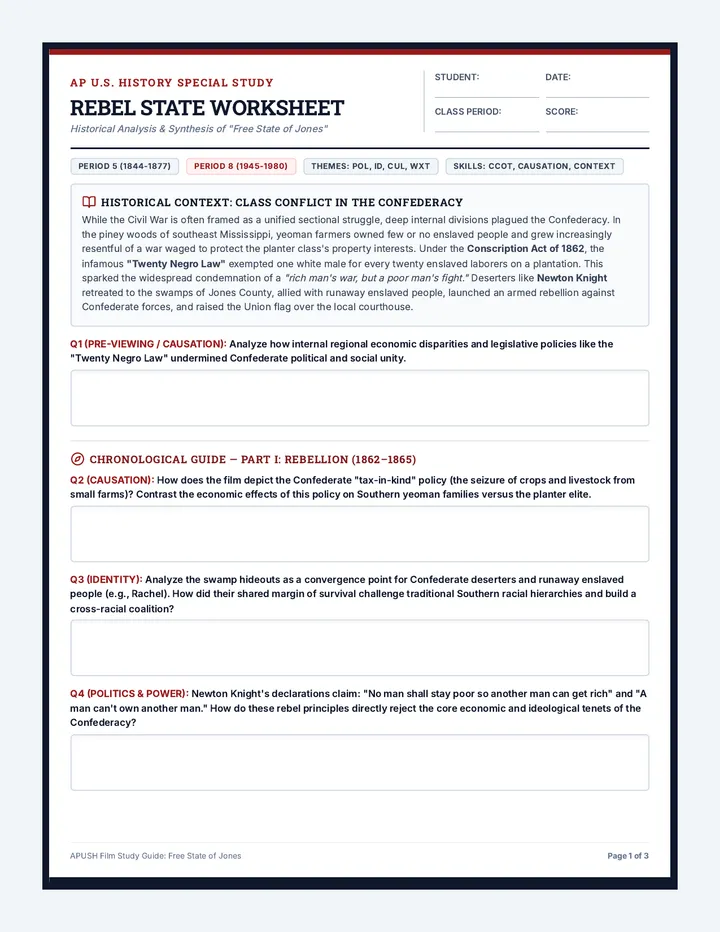
A comprehensive AP U.S. History study of the internal conflicts of the Confederacy, the legal boundaries of Reconstruction, and the long struggle for civil rights in Mississippi, structured around the historical events depicted in the film Free State of Jones.
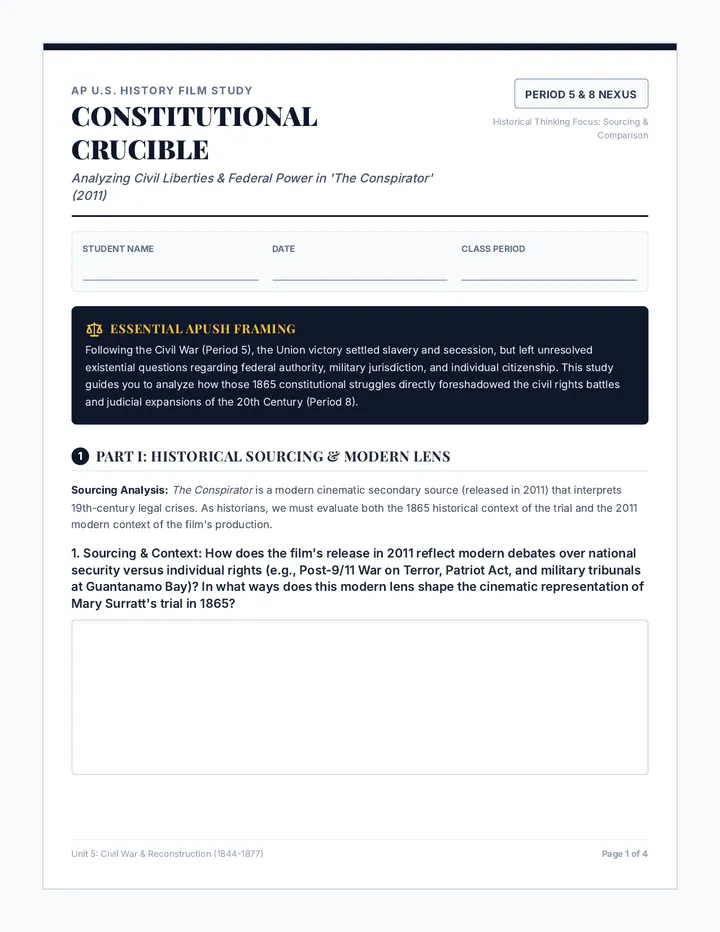
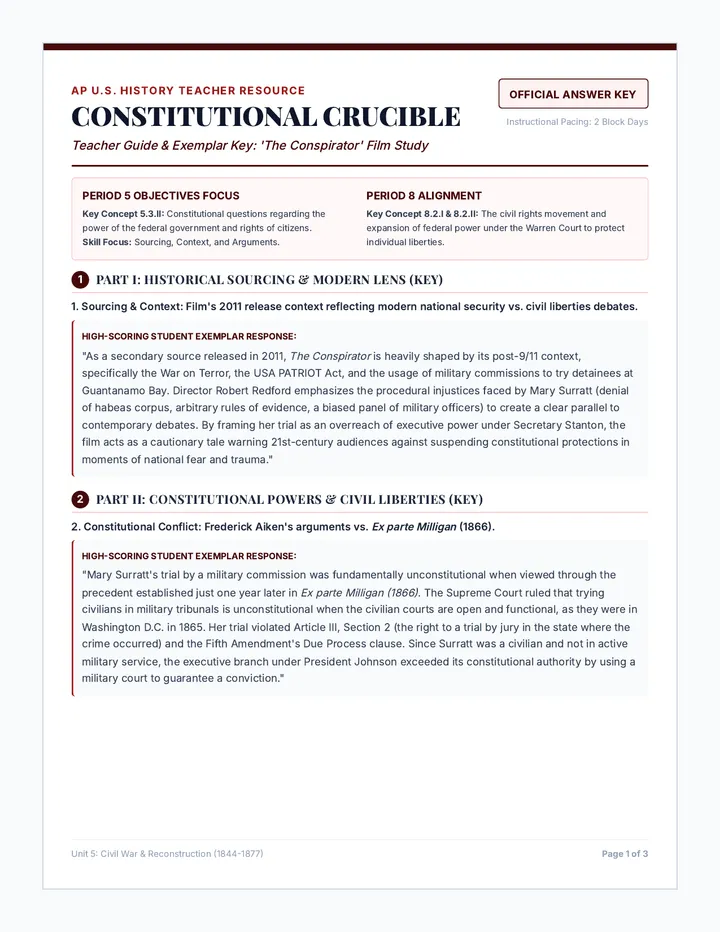
An AP U.S. History film study and constitutional analysis of 'The Conspirator'. Students explore Period 5 legal precedents, executive authority, and civil liberties, while tracing long-term continuities in civil rights into the 20th century.
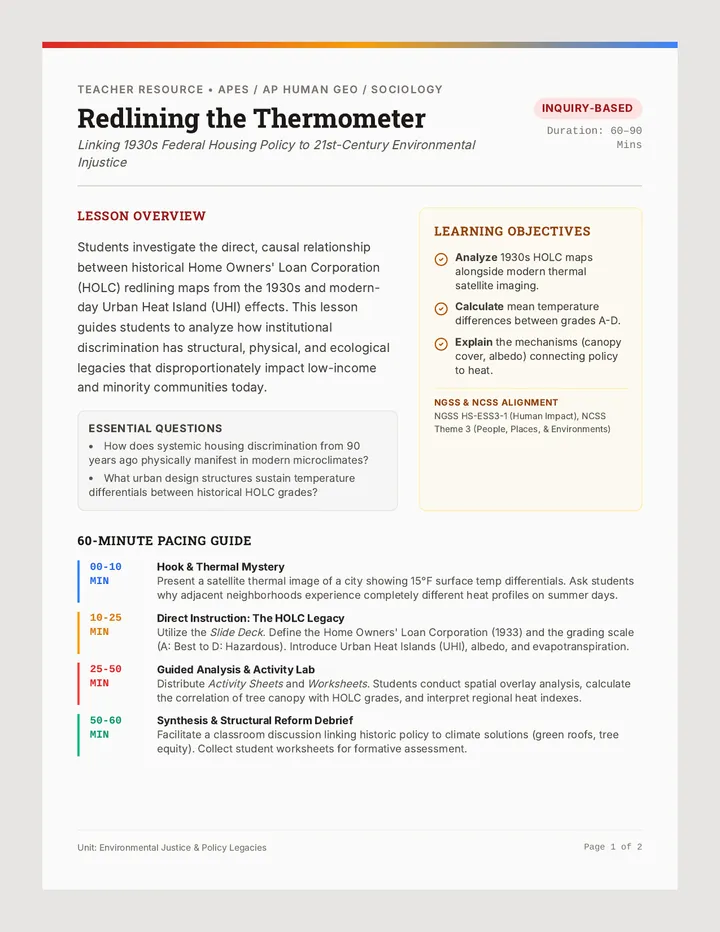
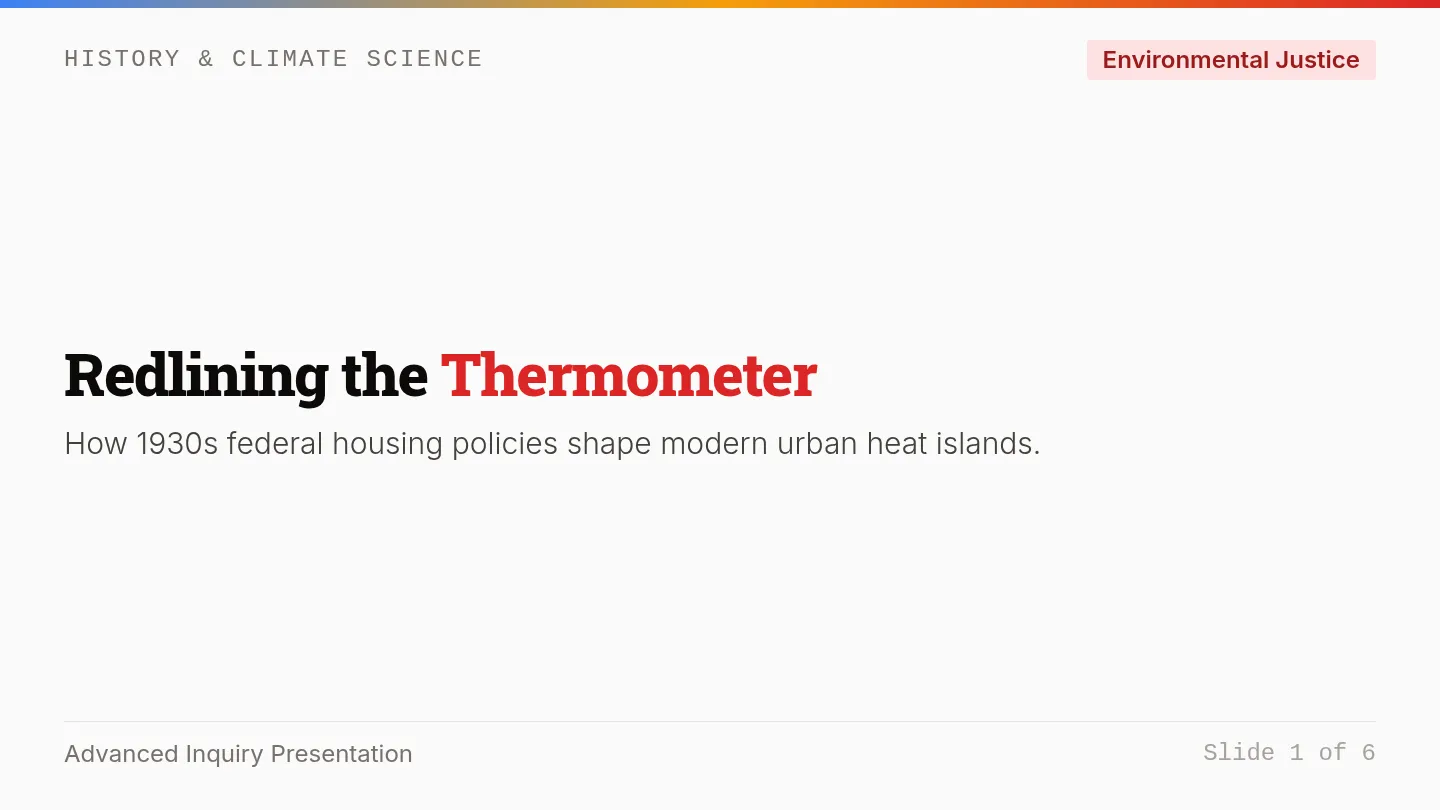
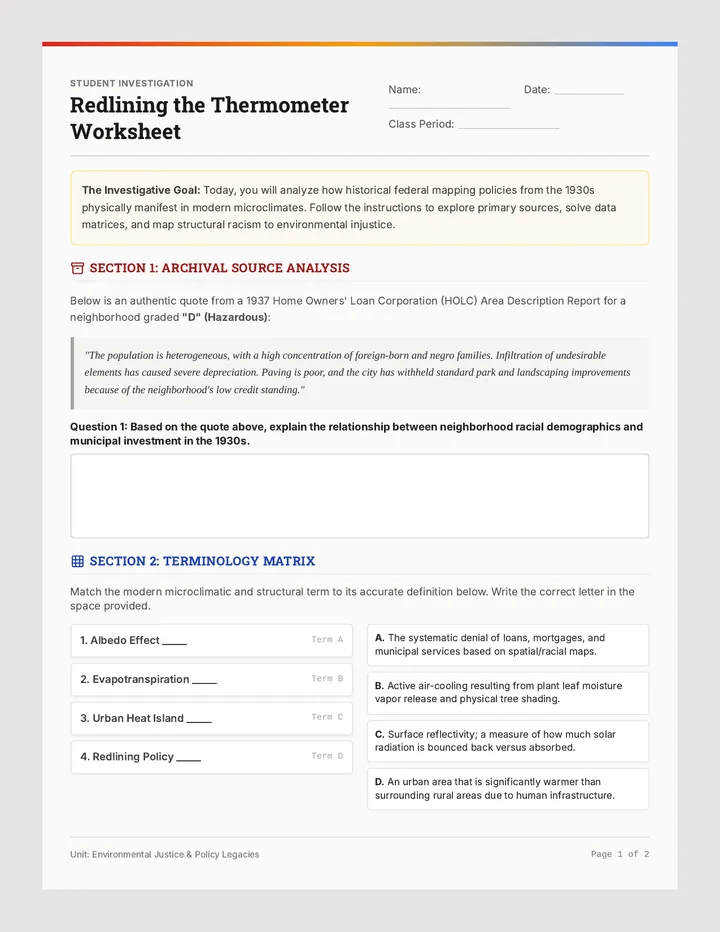
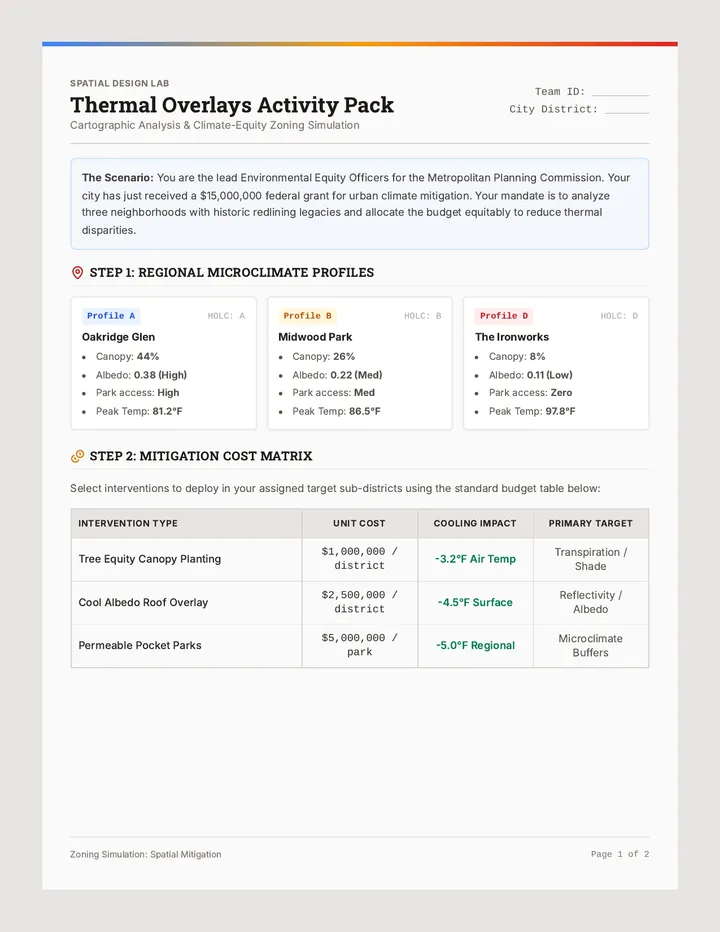
An advanced, interdisciplinary lesson for high school and undergraduate students exploring the causal relationship between 1930s Home Owners' Loan Corporation (HOLC) redlining maps and modern-day urban heat island (UHI) effects, analyzing systemic racism and environmental injustice.
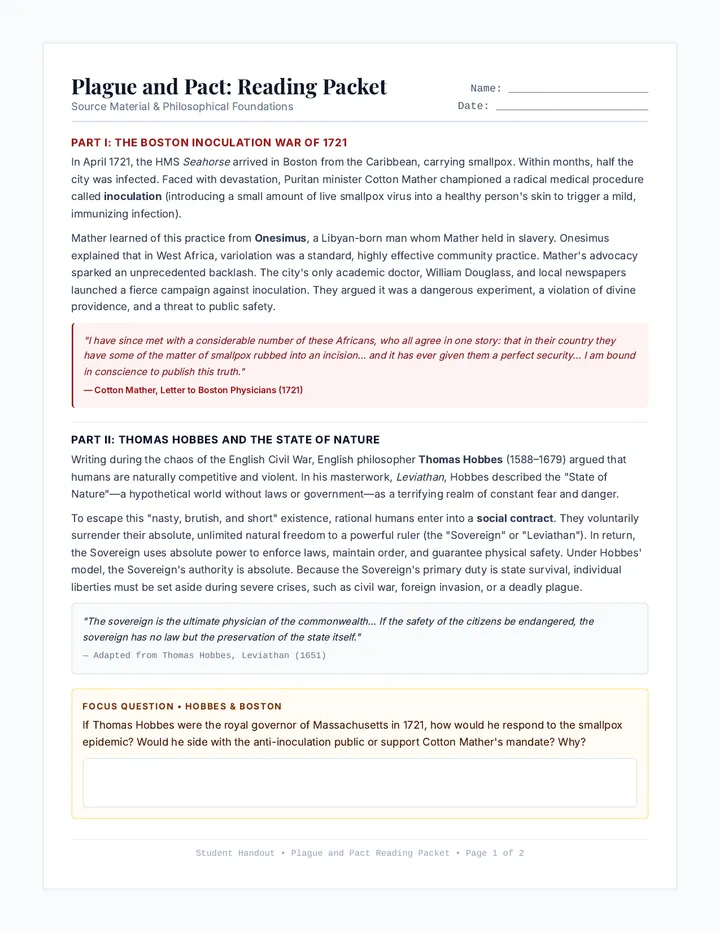
An inquiry-based lesson exploring how historical epidemics (from the Black Death to Smallpox inoculation) tested and reshaped the social contract between citizens and states, forcing a reckoning between personal liberty and public safety.
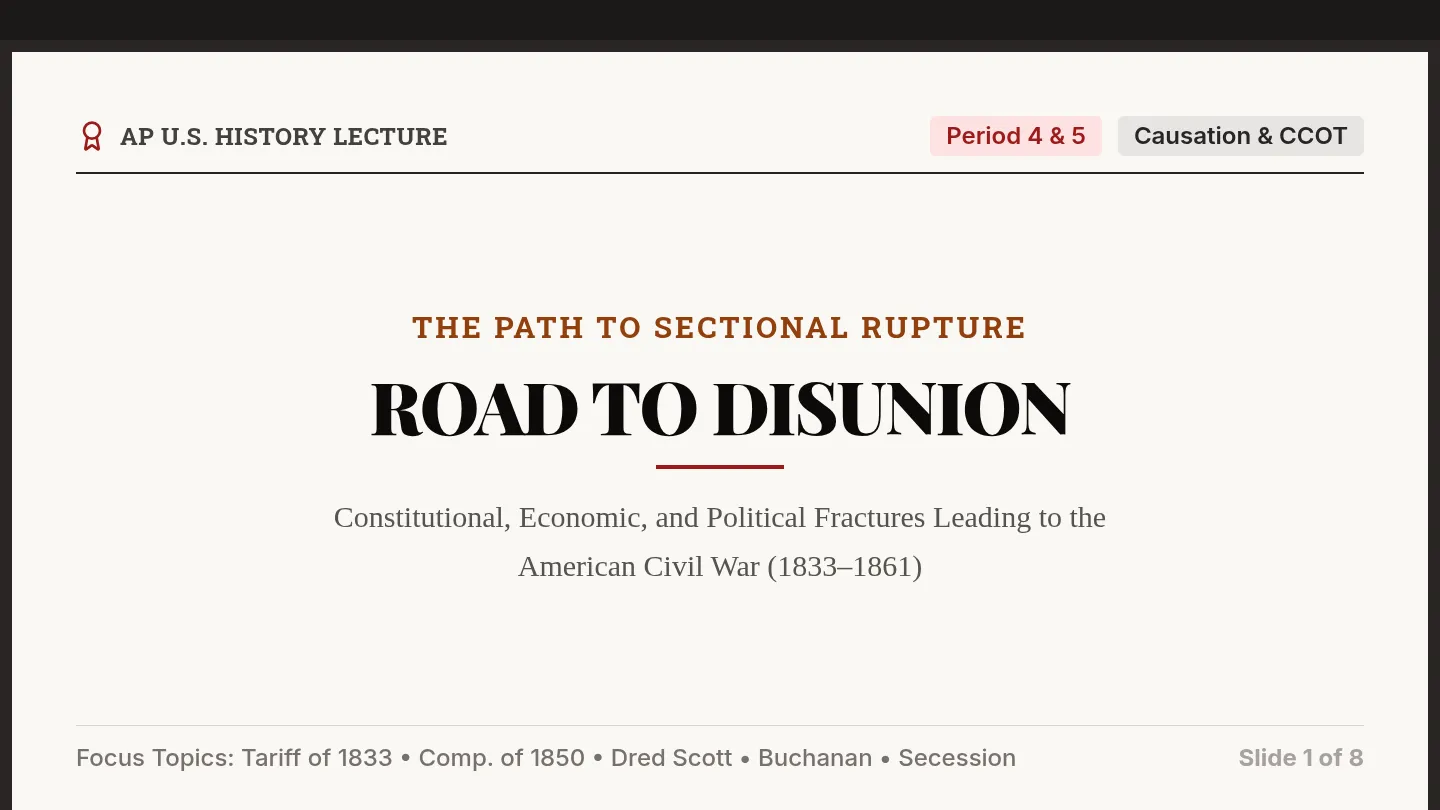
An advanced AP US History lecture series exploring the constitutional, economic, and political crises that fractured the United States between 1833 and 1861. This lesson highlights key legislative compromises, executive decisions, and judicial rulings that made sectional conflict and the Civil War inevitable.
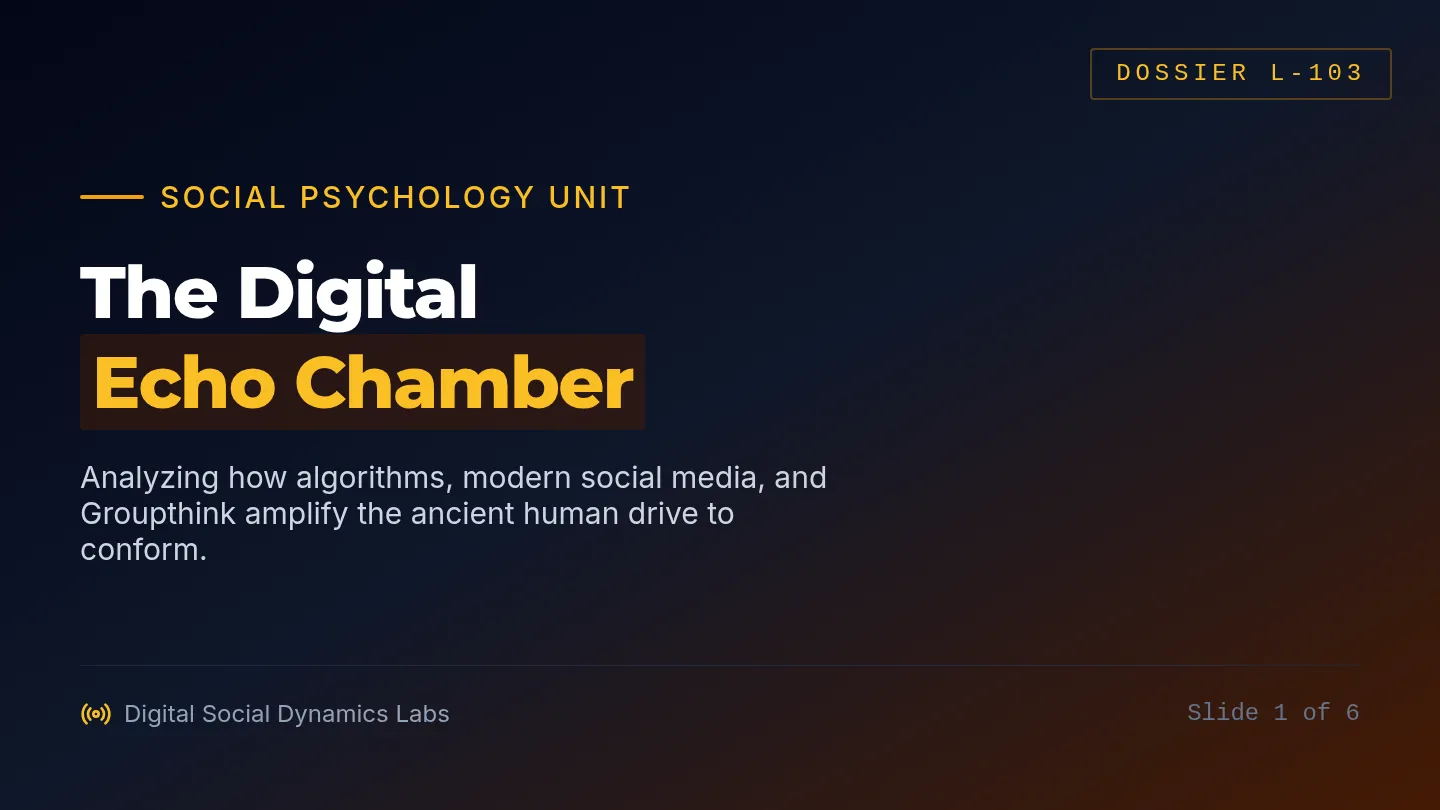
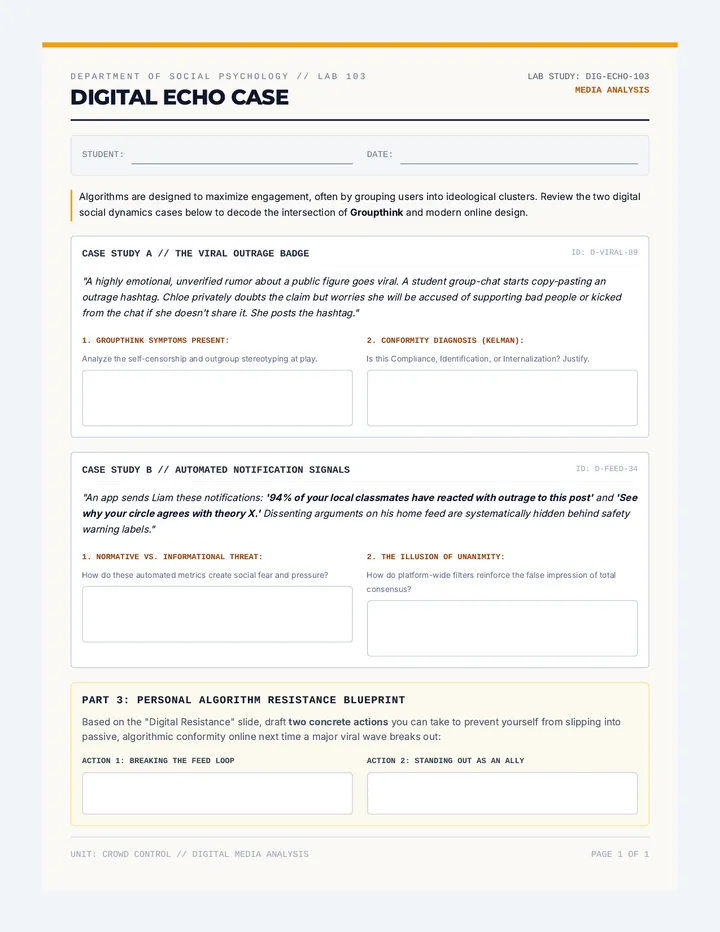
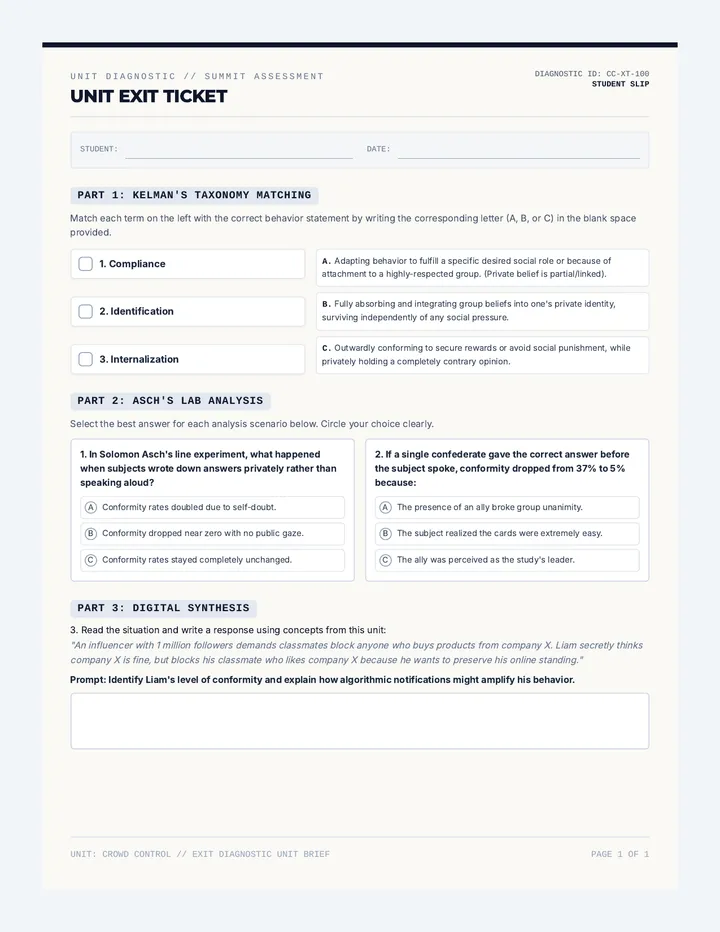
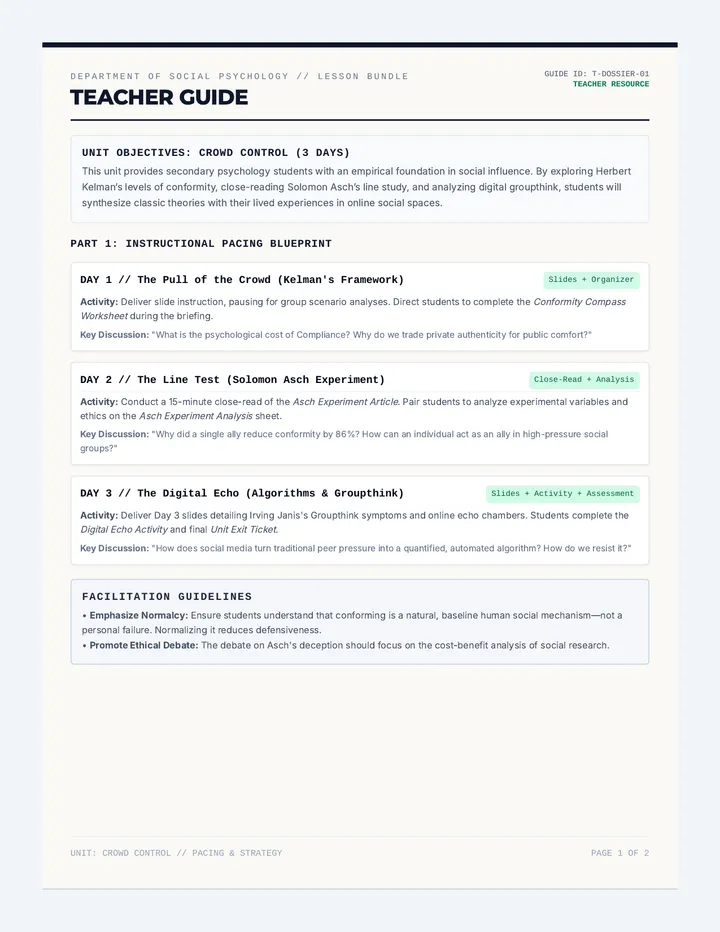
Explores groupthink, social media algorithms, and peer pressure. Students analyze how online spaces amplify conformity and complete an exit ticket to assess their understanding across the unit.
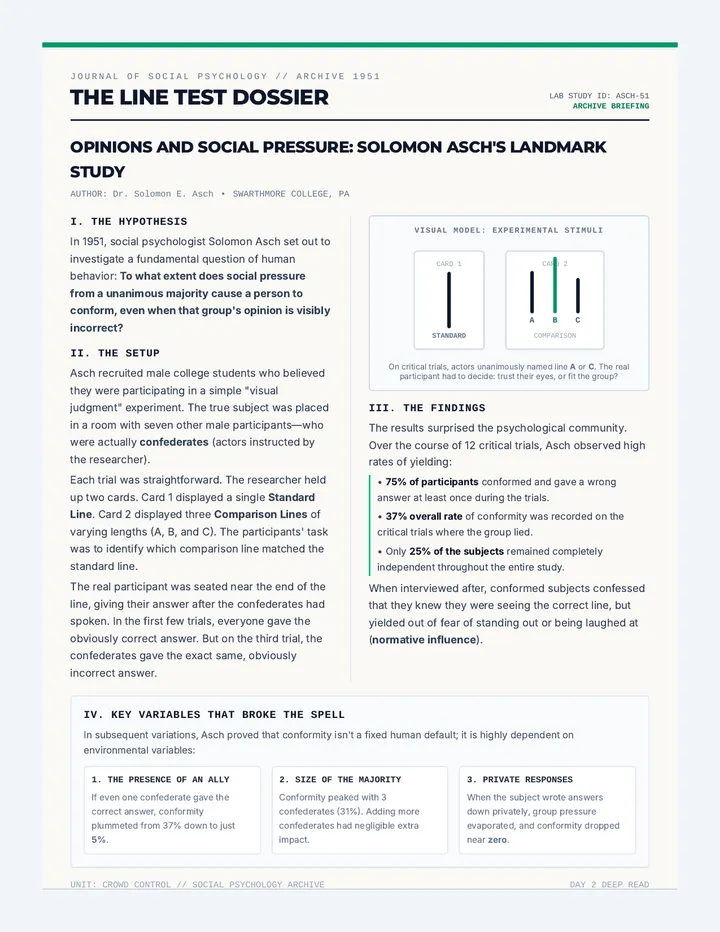
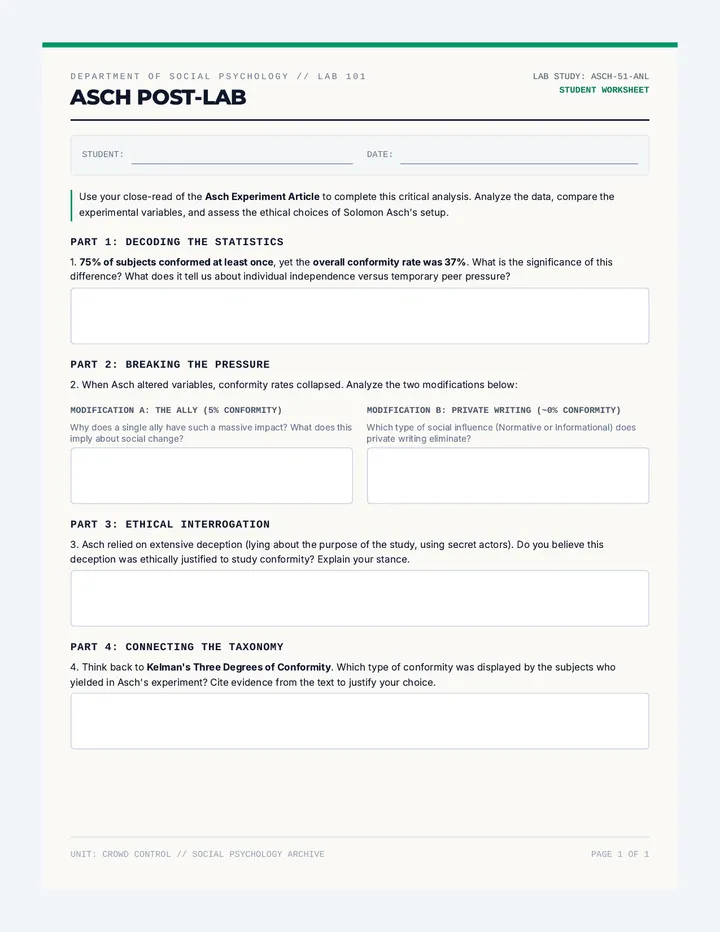
Focuses on Solomon Asch's landmark 1951 conformity experiment. Students close-read an informational text about the study's design, results, and ethical implications, and answer critical thinking questions.
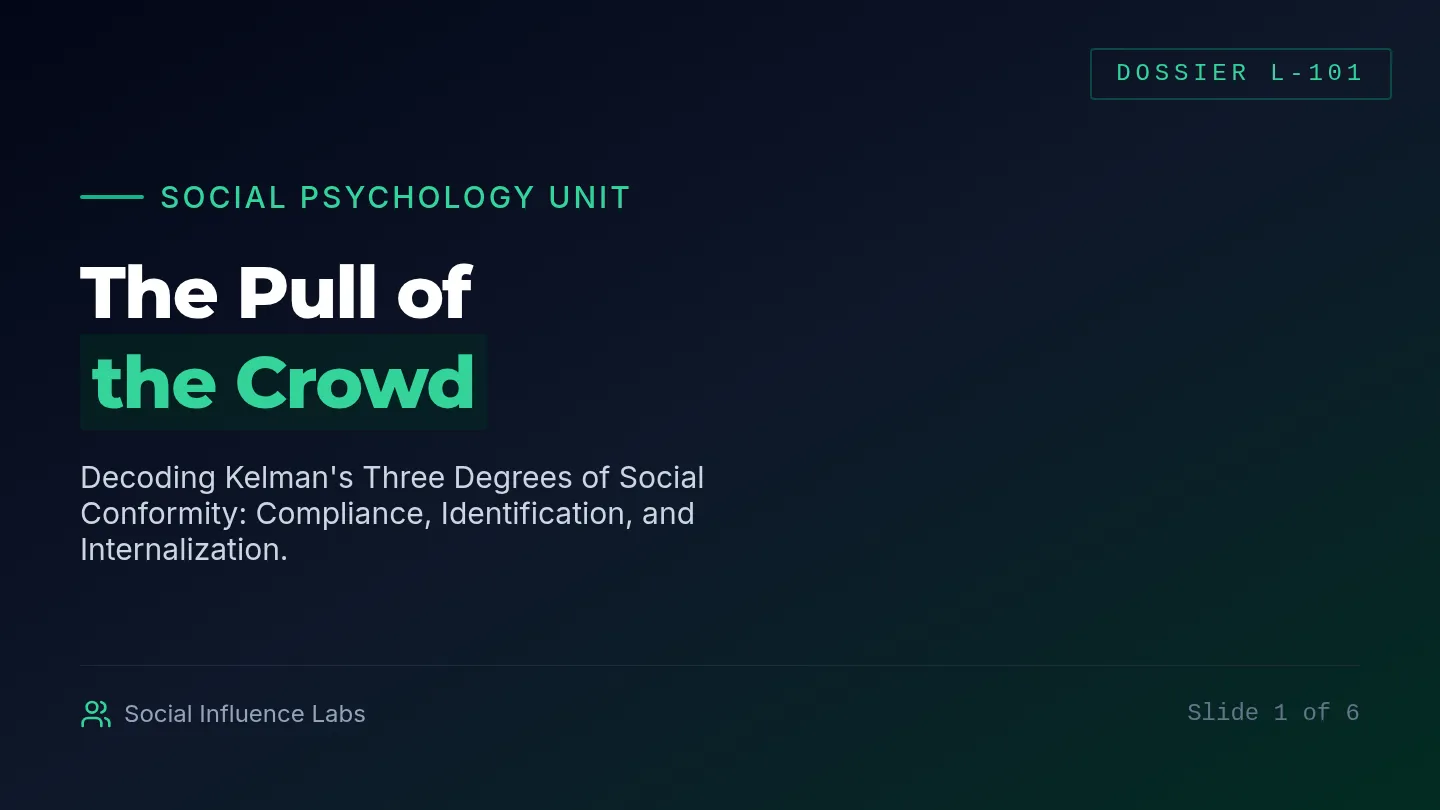
Introduces the social psychology of conformity, focusing on Herbert Kelman's three types: compliance, identification, and internalization. Students analyze real-world scenarios and map definitions on a graphic organizer.
An exploration of Sigmund Freud's psychodynamic approach to personality, focusing on the dynamic conflict between the Id, Ego, and Superego, and the defense mechanisms the mind uses to cope with resulting anxiety.
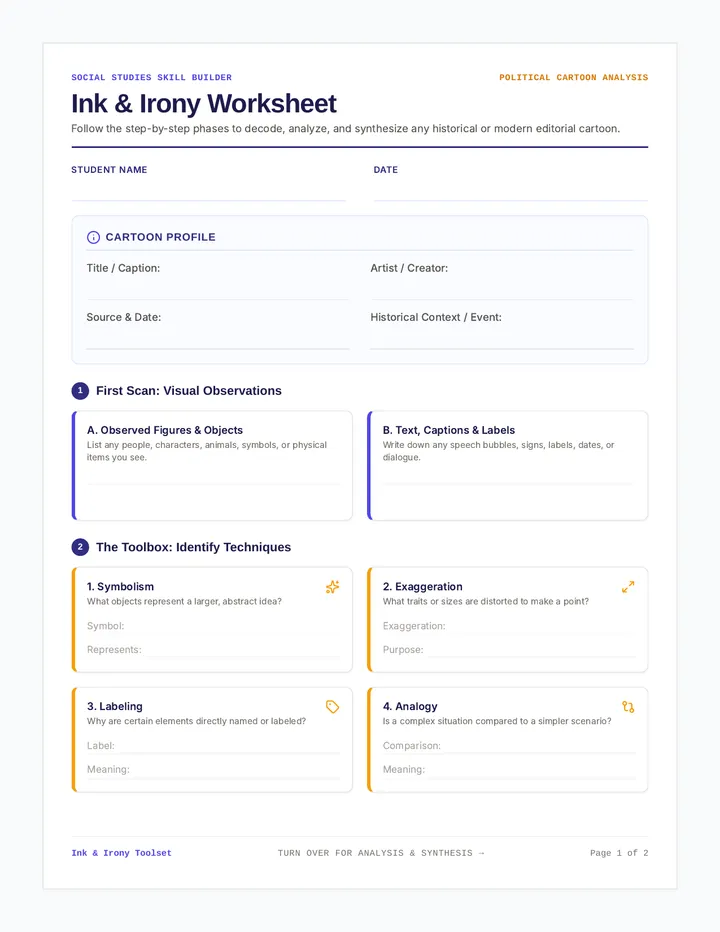
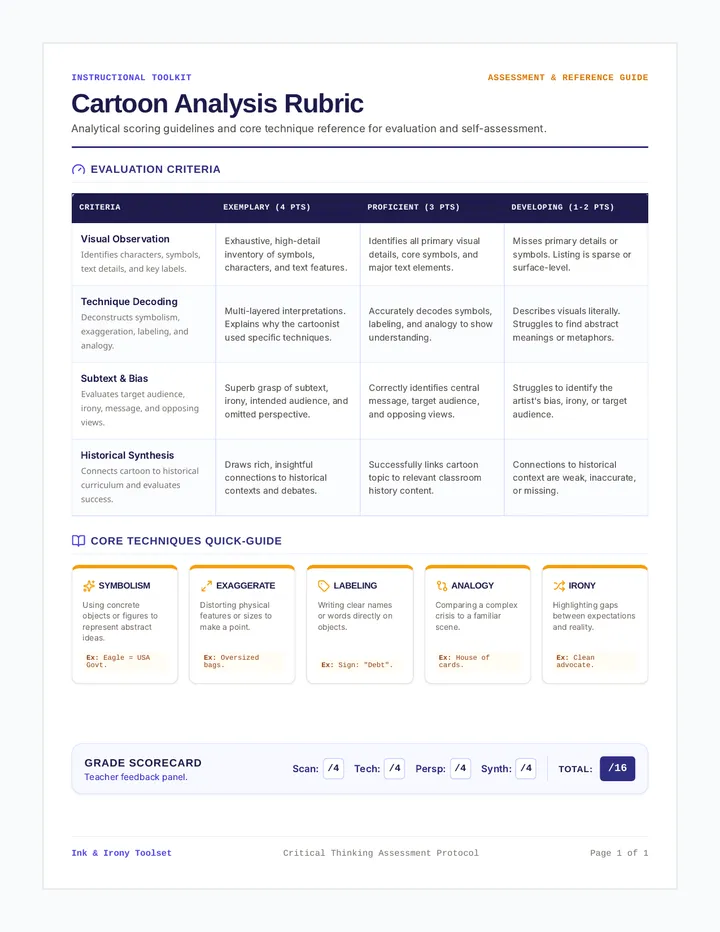
A comprehensive instructional toolkit for analyzing editorial and political cartoons. Features a versatile double-page graphic organizer and a structured assessment rubric adaptable to any historical era.
An introductory lesson on the Trait Approach to personality, guiding students through key definitions, major theorists (Allport, Cattell, Eysenck), the Big Five model, and the real-world applications and limitations of trait theory.
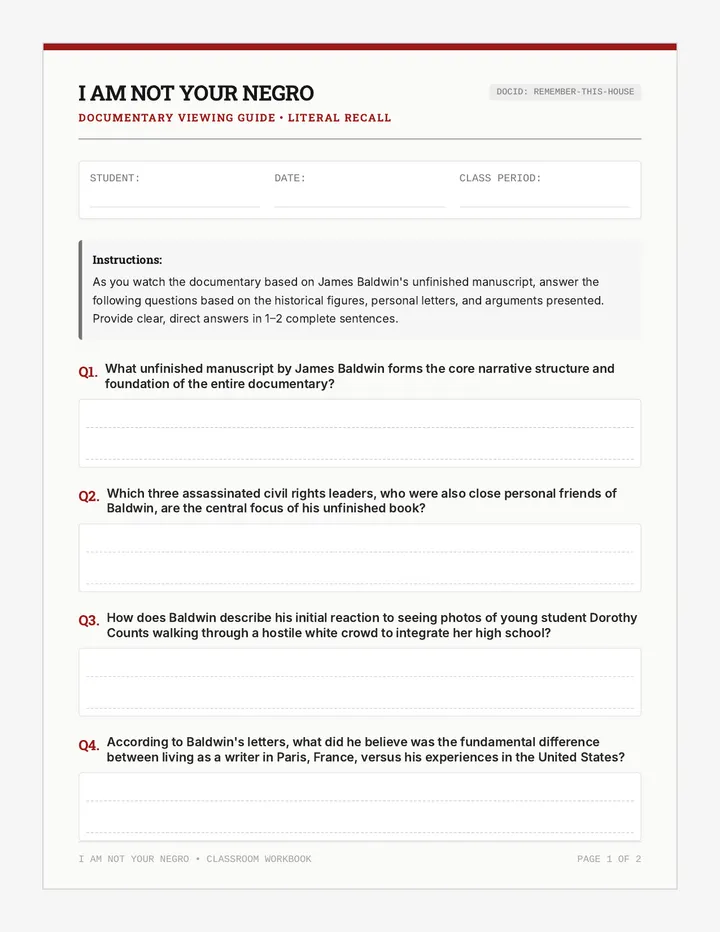
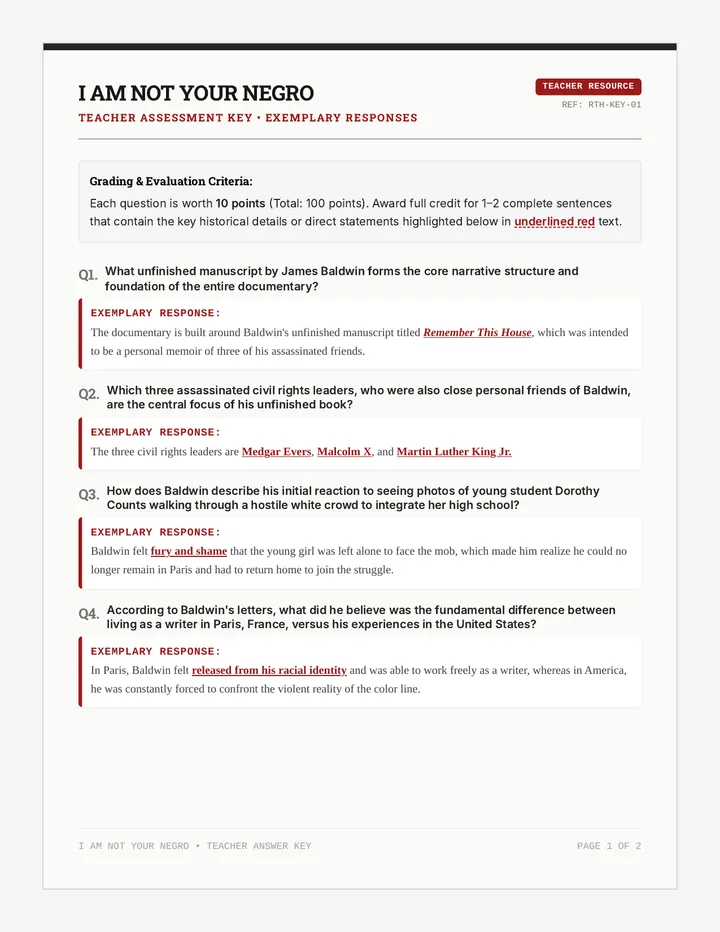
A high school/college level history and literature lesson focused on James Baldwin's documentary 'I Am Not Your Negro'. It examines literal comprehension and recall of key historical figures, events, and Baldwin's core arguments about race, media, and American identity.
A deep dive into Solomon Asch's classic conformity experiment, examining behavioral mechanisms, neural pathways of peer pressure, experimental design flaws, and quantitative data analysis.
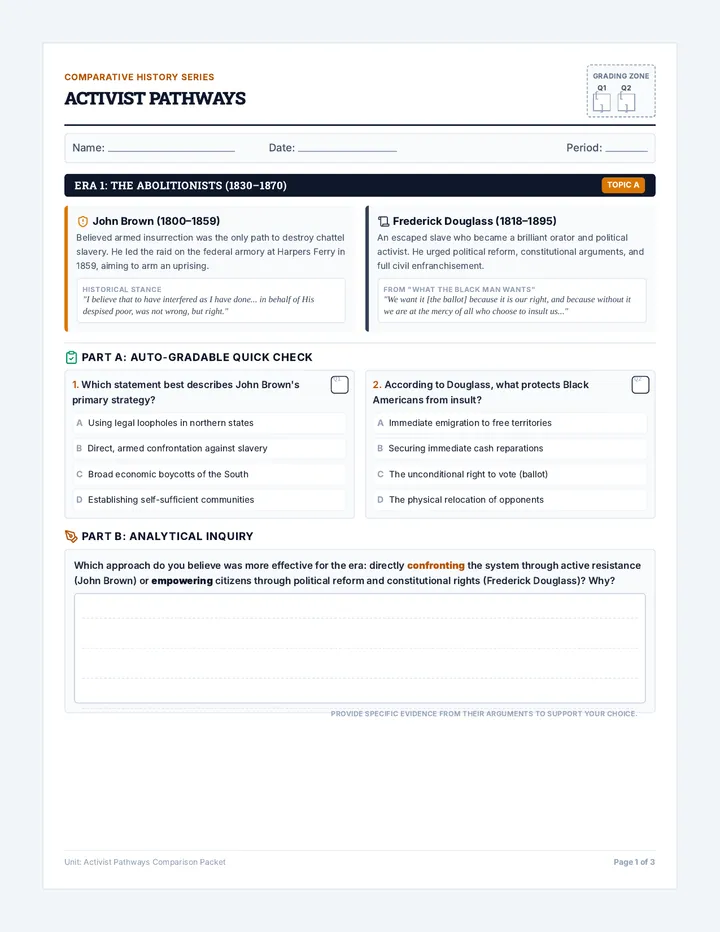
A lesson comparing the strategies and philosophies of major Black rights activists across three distinct eras: Abolitionism, the Jim Crow Era, and the Civil Rights Movement.
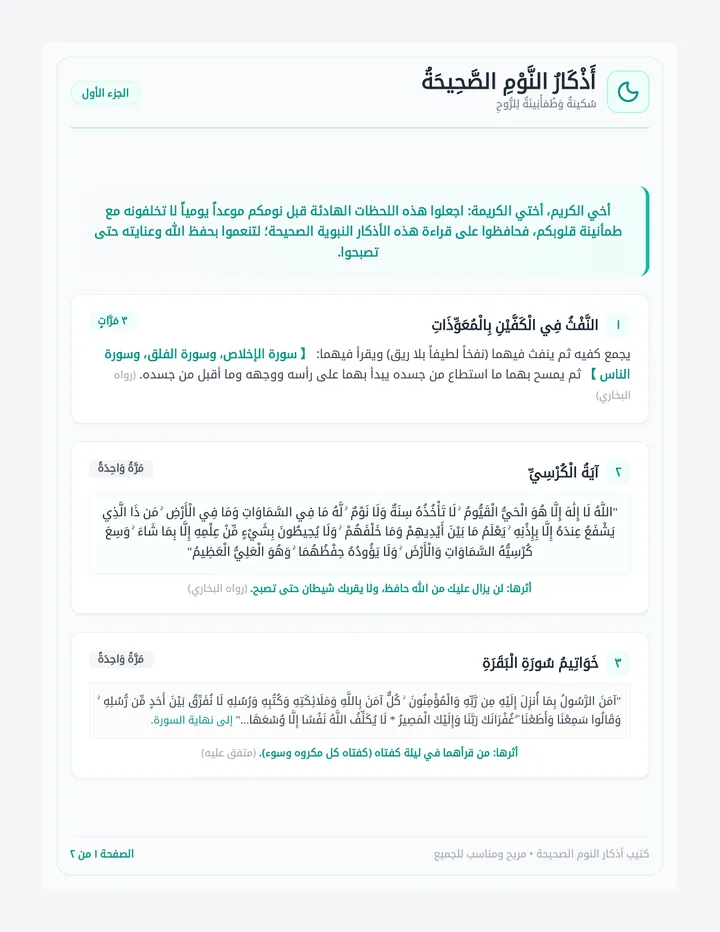
أذكار النوم الصحيحة من السنة النبوية الشريفة مصممة بأسلوب عصري وألوان مهدئة للعين (الرمادي والتركواز الفاتح) لتسهيل القراءة والتصفح اليومي قبل النوم.
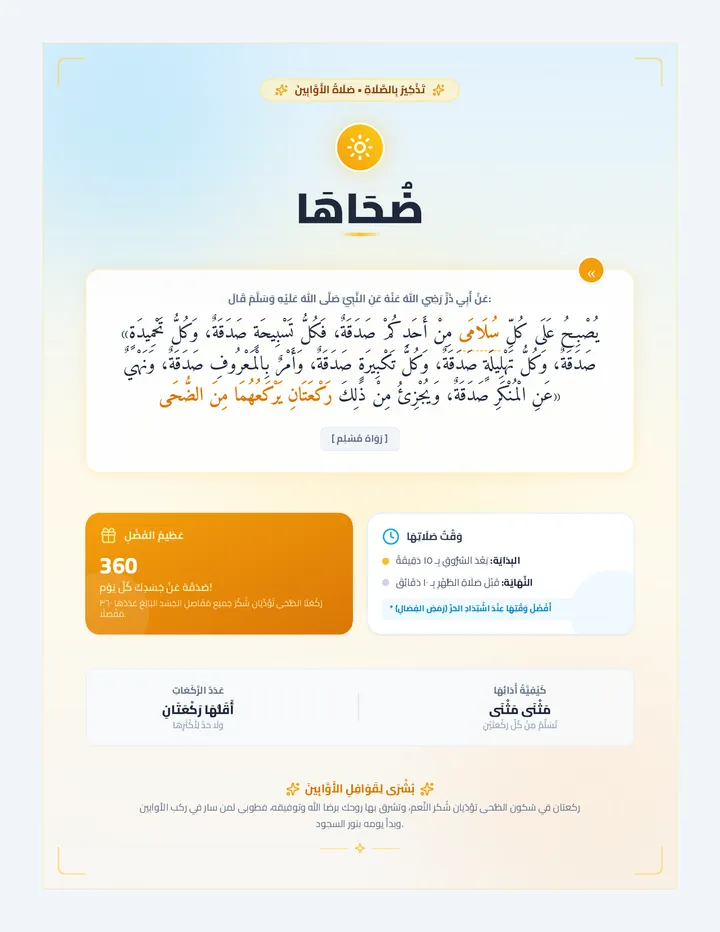
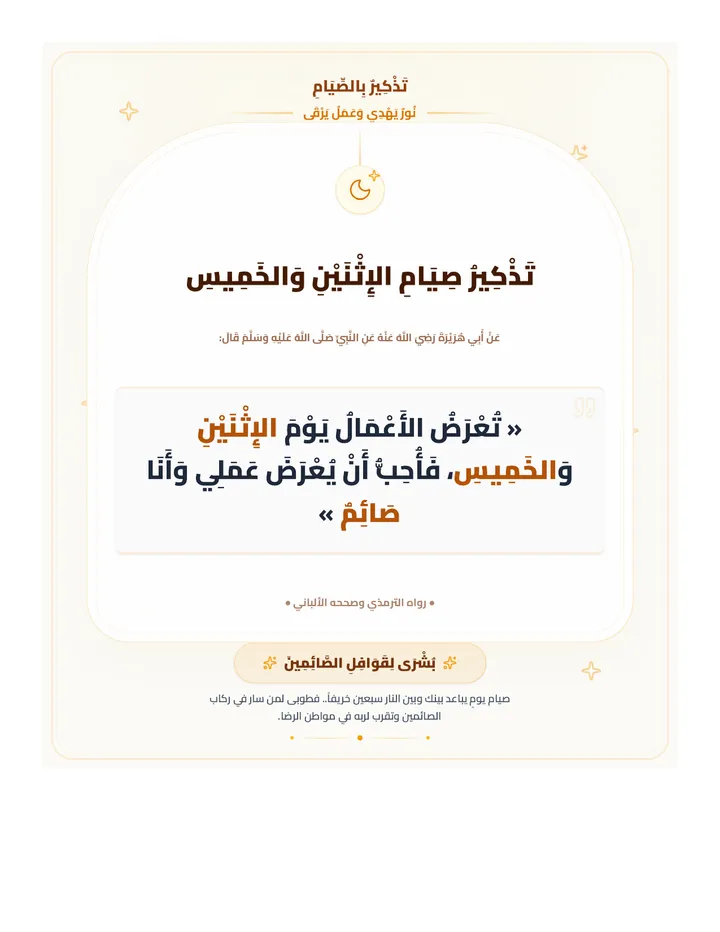
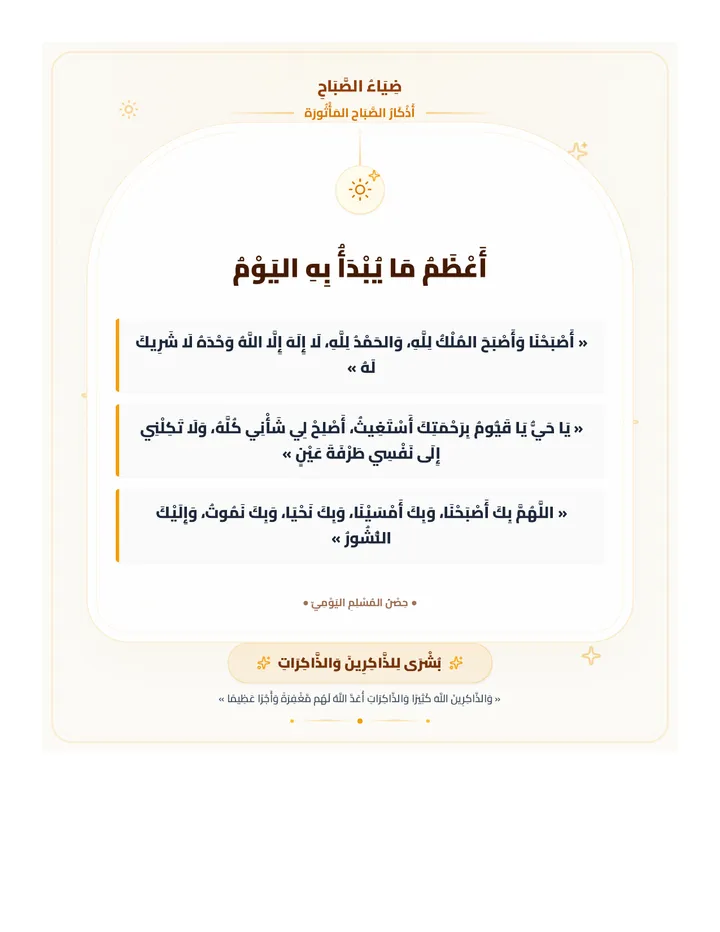
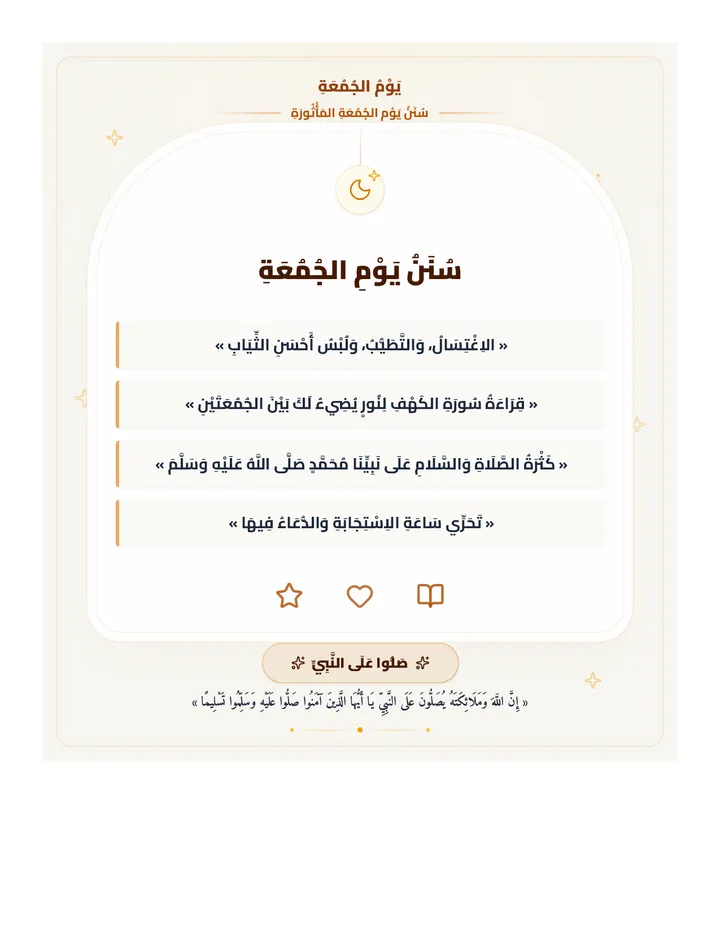
A lesson focusing on daily spiritual habits, providing beautifully designed reminder cards and resources for students and teachers to cultivate consistent worship.
A premium, cohesive collection of beautifully designed spiritual and religious reminders for daily, weekly, and seasonal practices, featuring high-contrast connected Arabic typography, elegant arches, and glowing celestial themes.