A fun, hands-on introduction to the meter as a standard unit of measurement, where students learn to identify objects as shorter or longer than 1m.
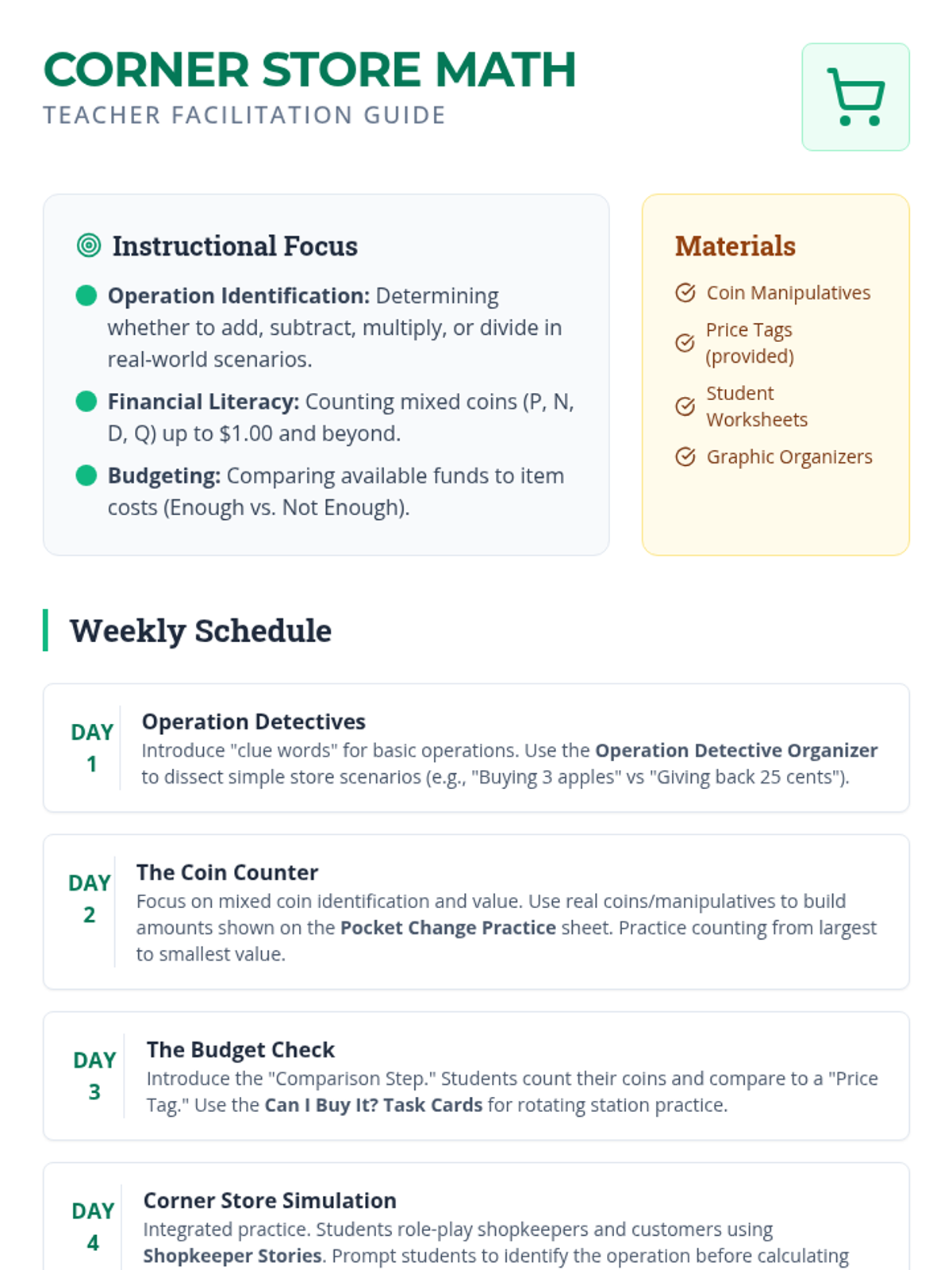
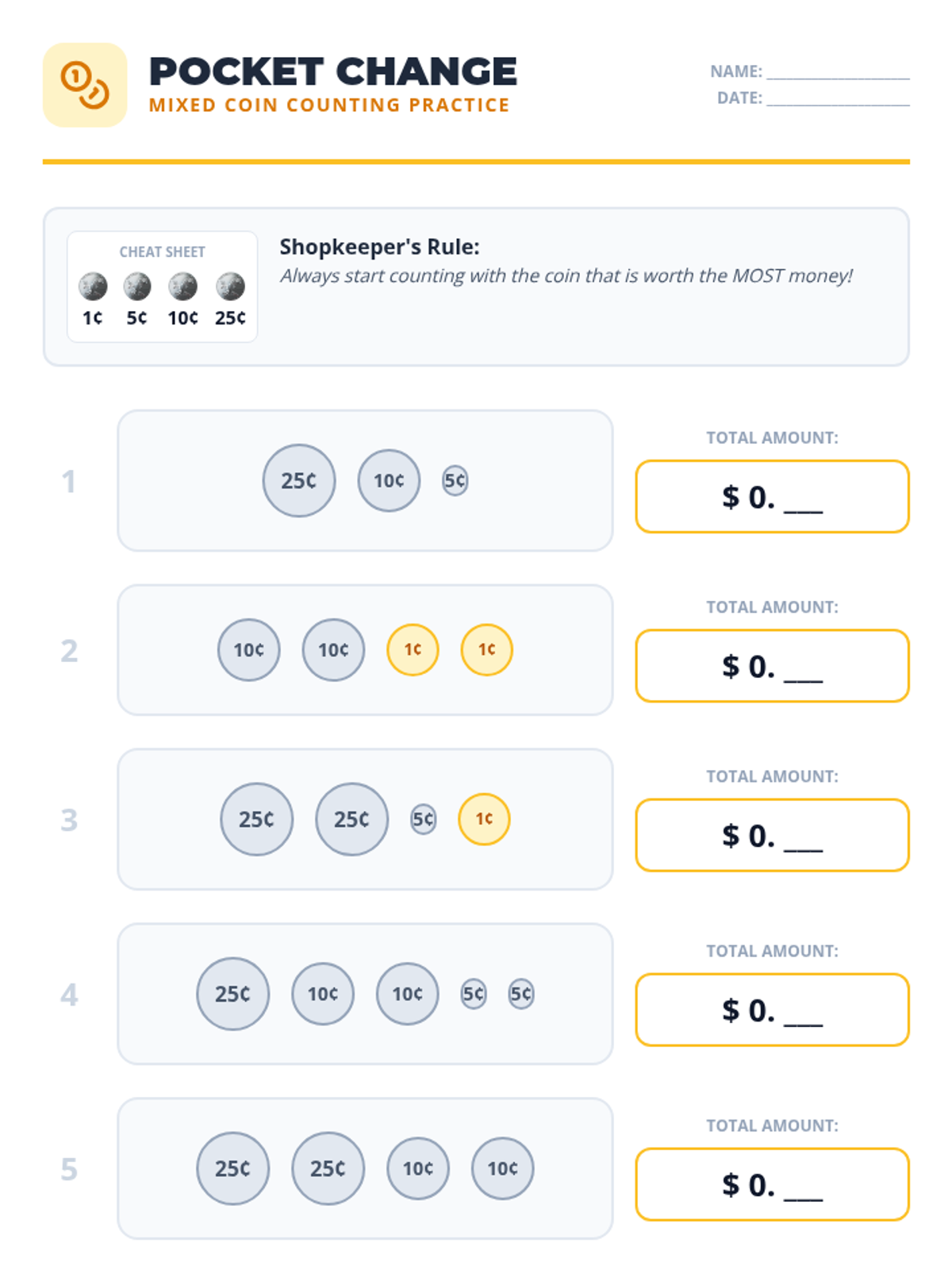
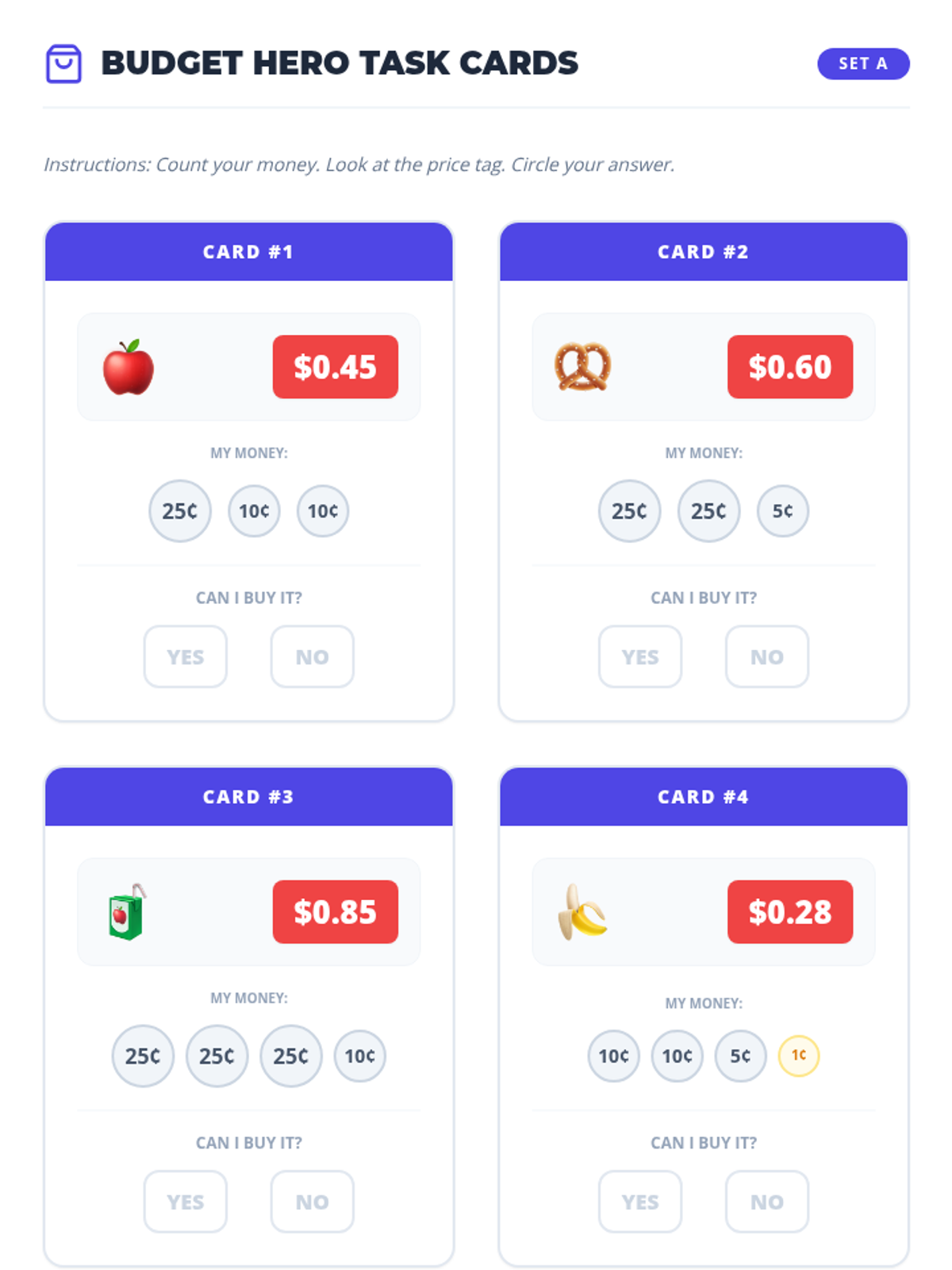
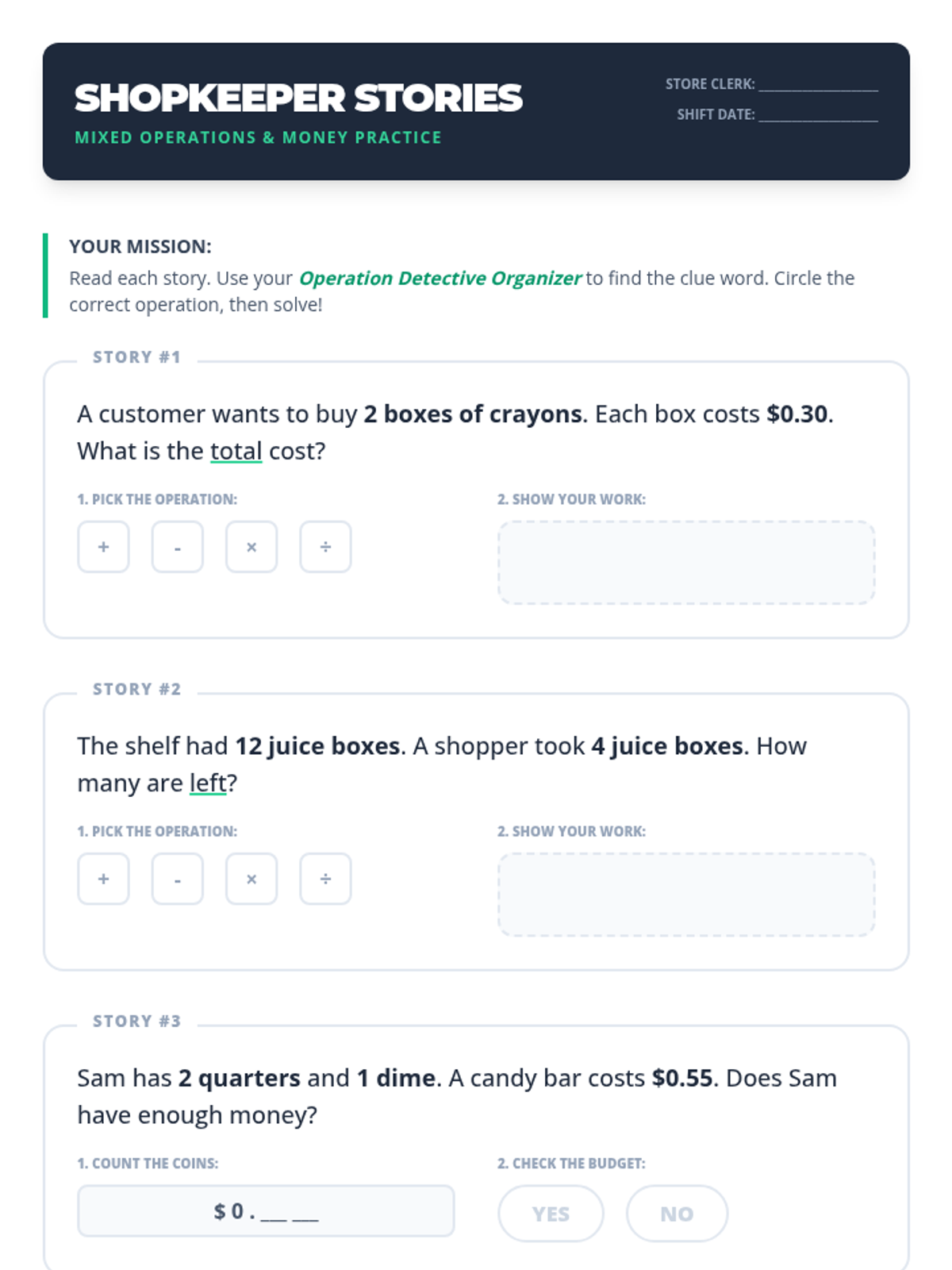
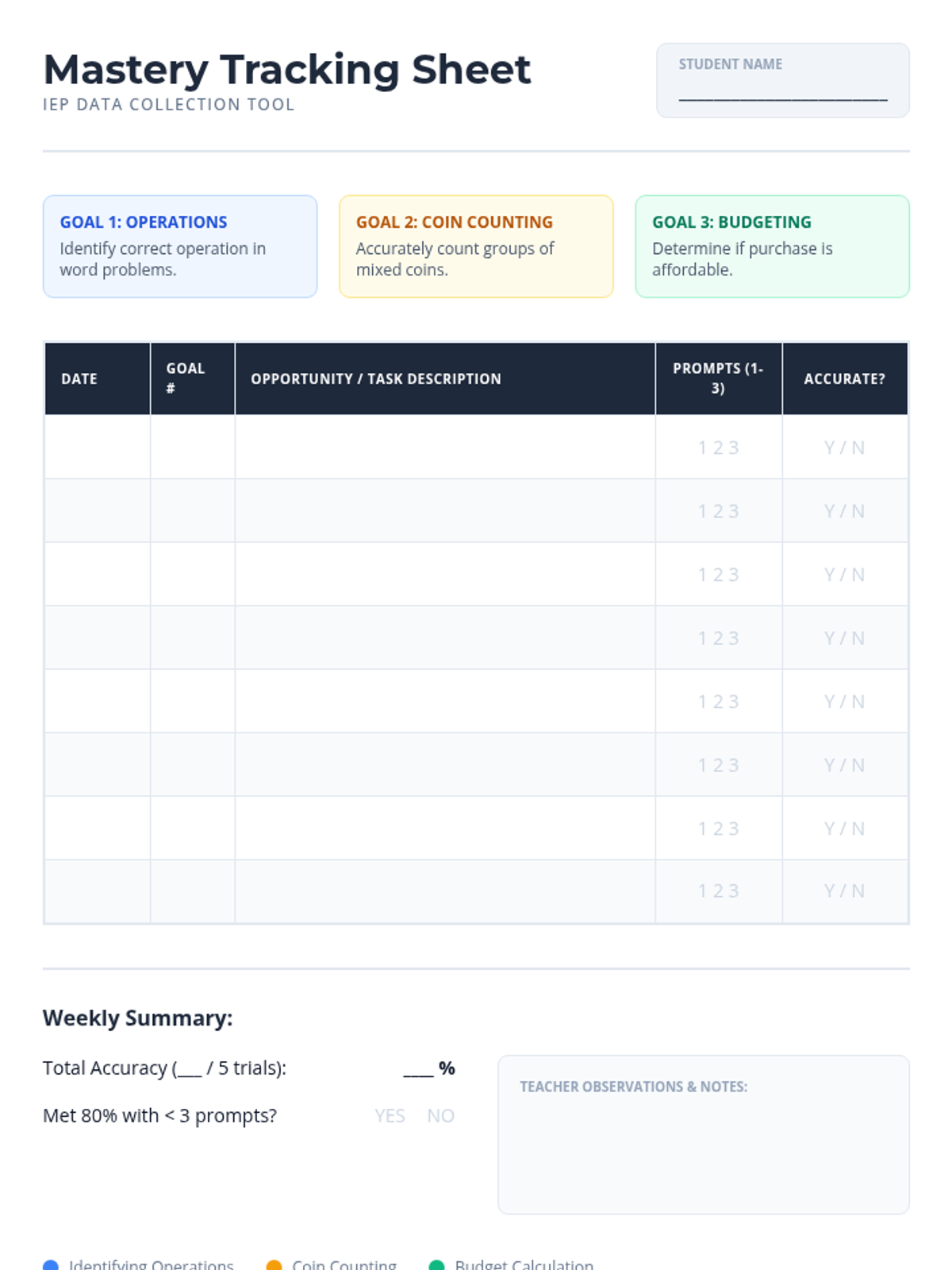
A week-long series of activities focused on identifying math operations in word problems, counting mixed coins, and determining if a purchase is affordable within a budget. Includes a teacher guide, graphic organizers, and practice worksheets themed around a neighborhood corner store.
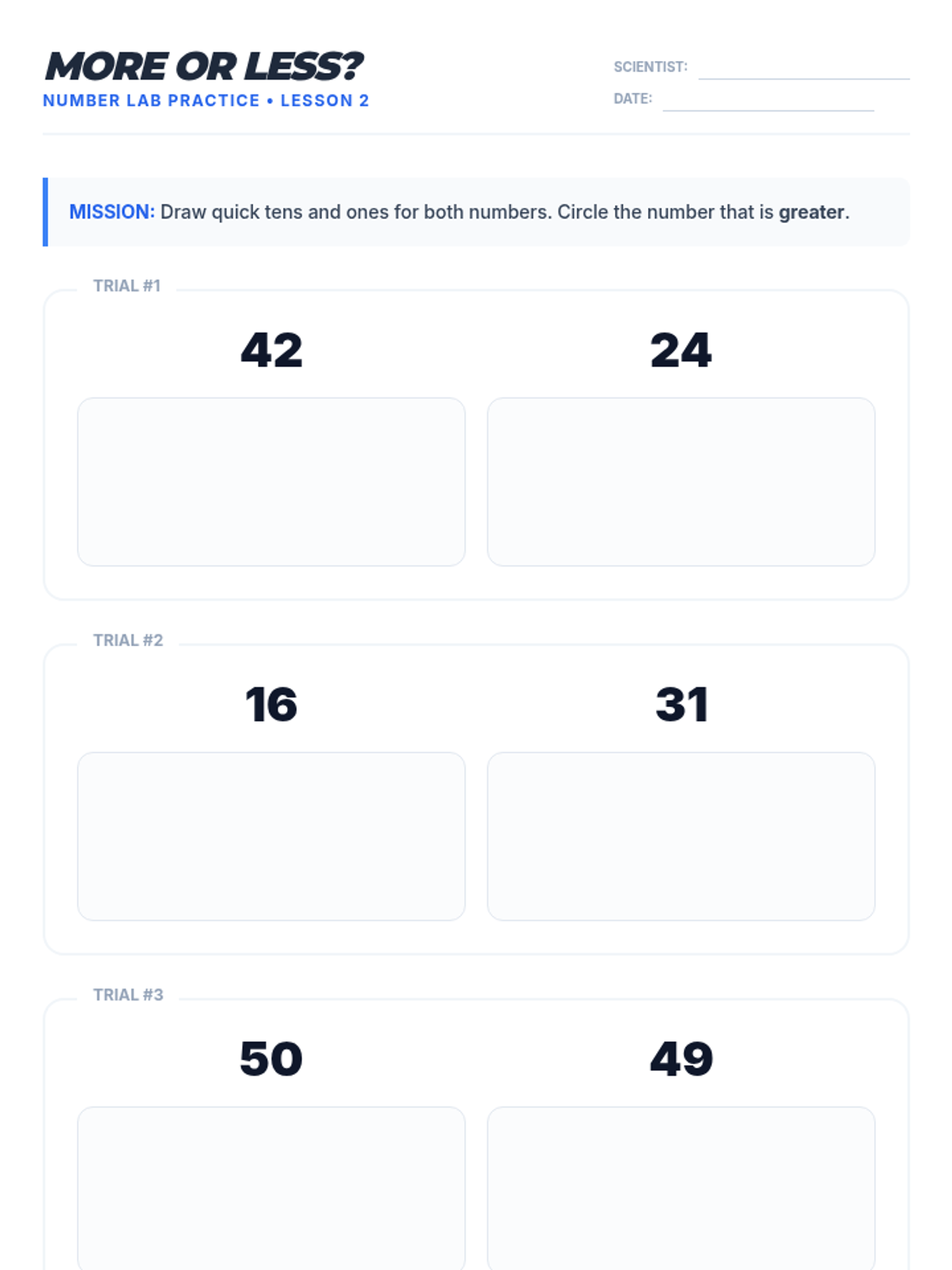
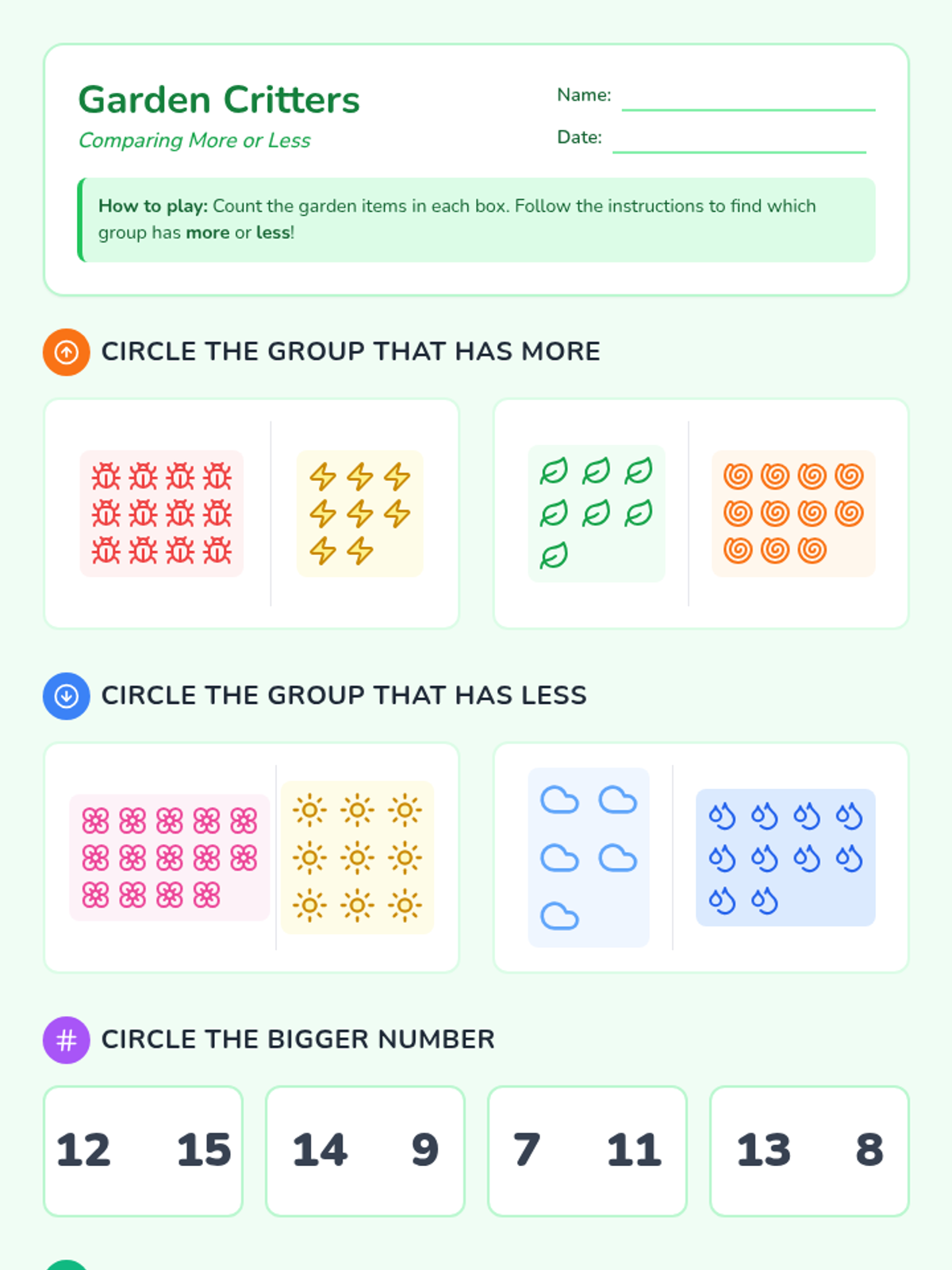
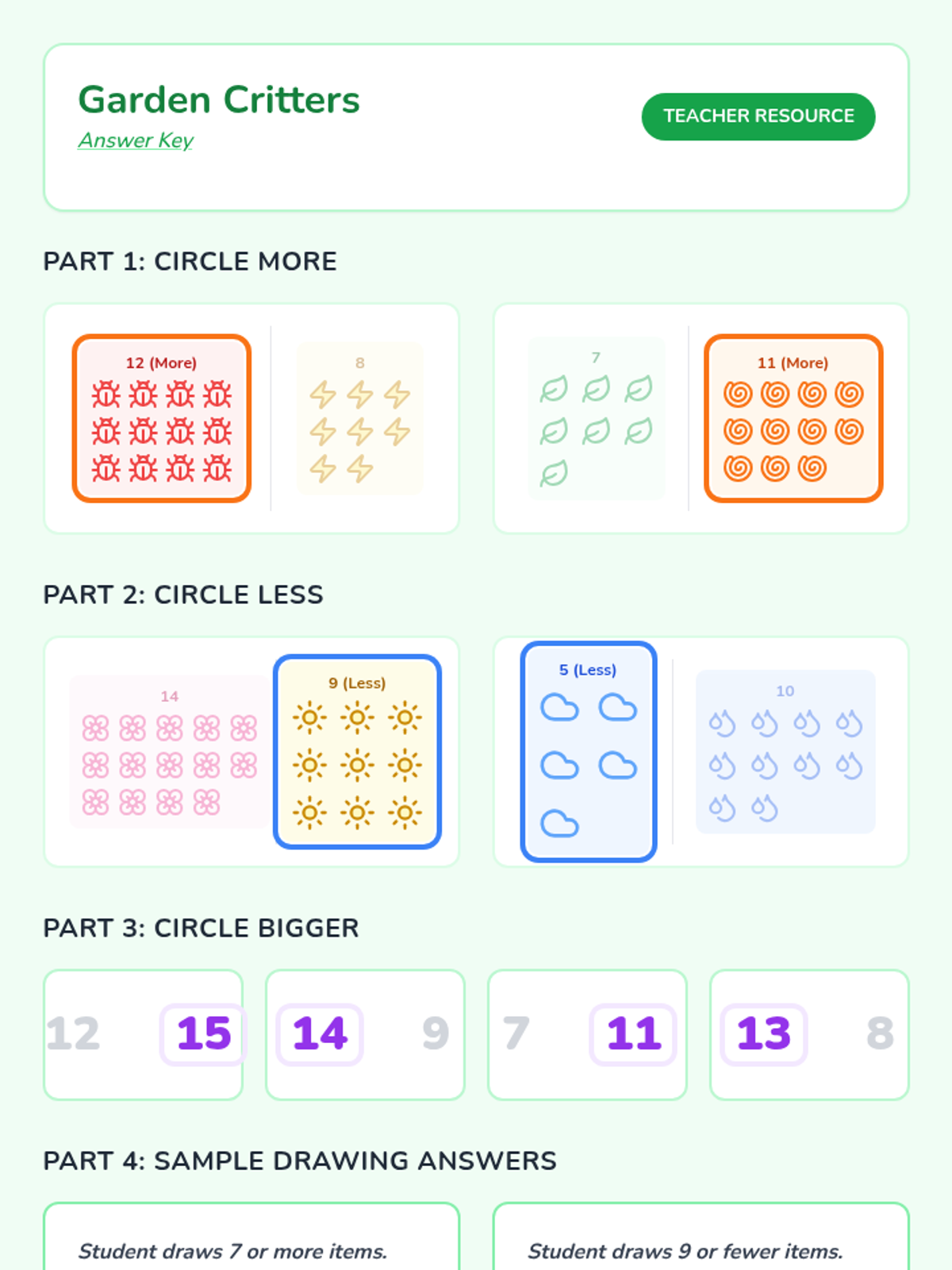
A lesson focused on comparing quantities and numbers up to 15 using visual representations and numerical values. Students will practice identifying sets with more or fewer items and comparing numerals directly.
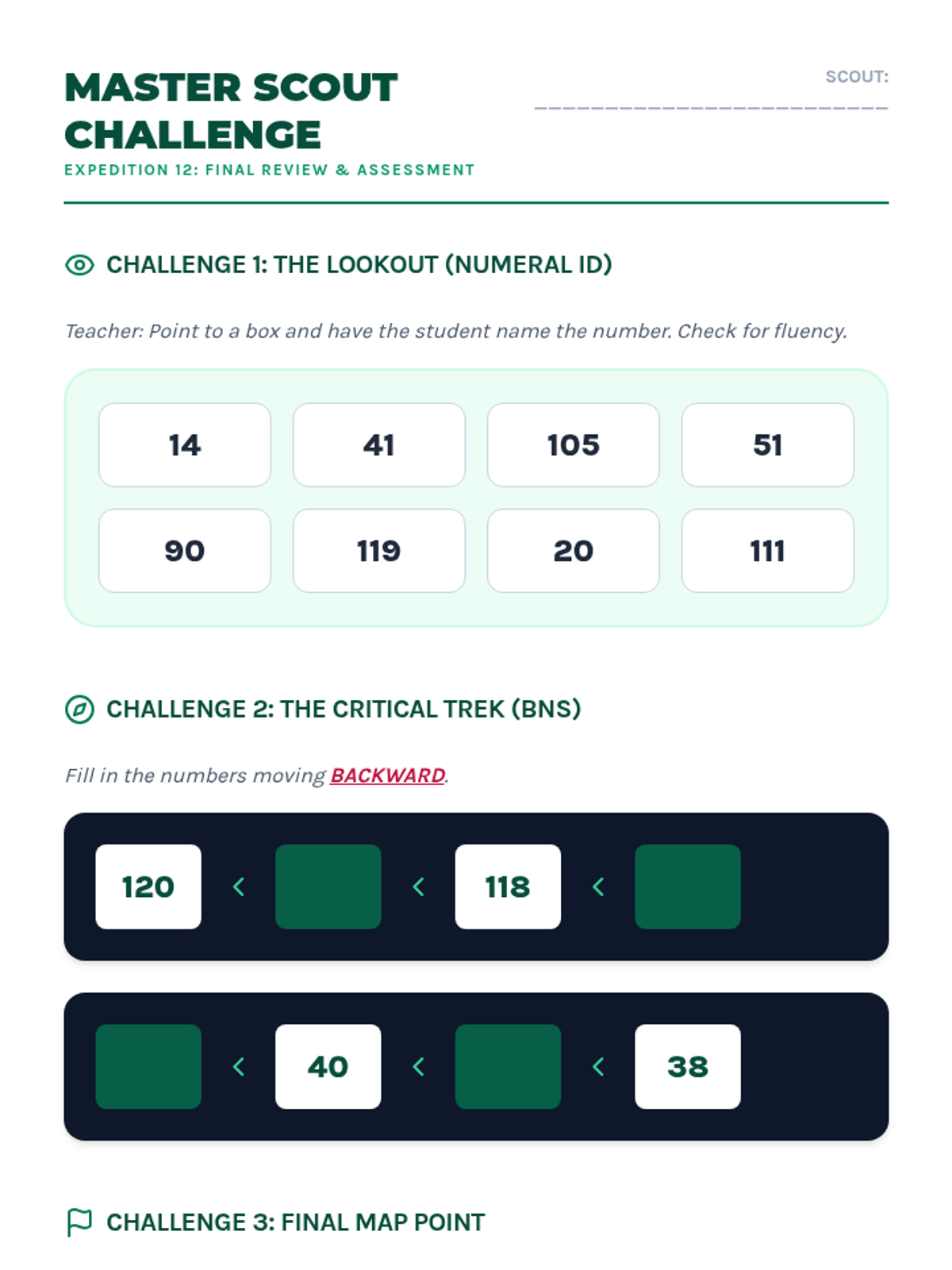
Final review and assessment of numeral ID and counting sequences.
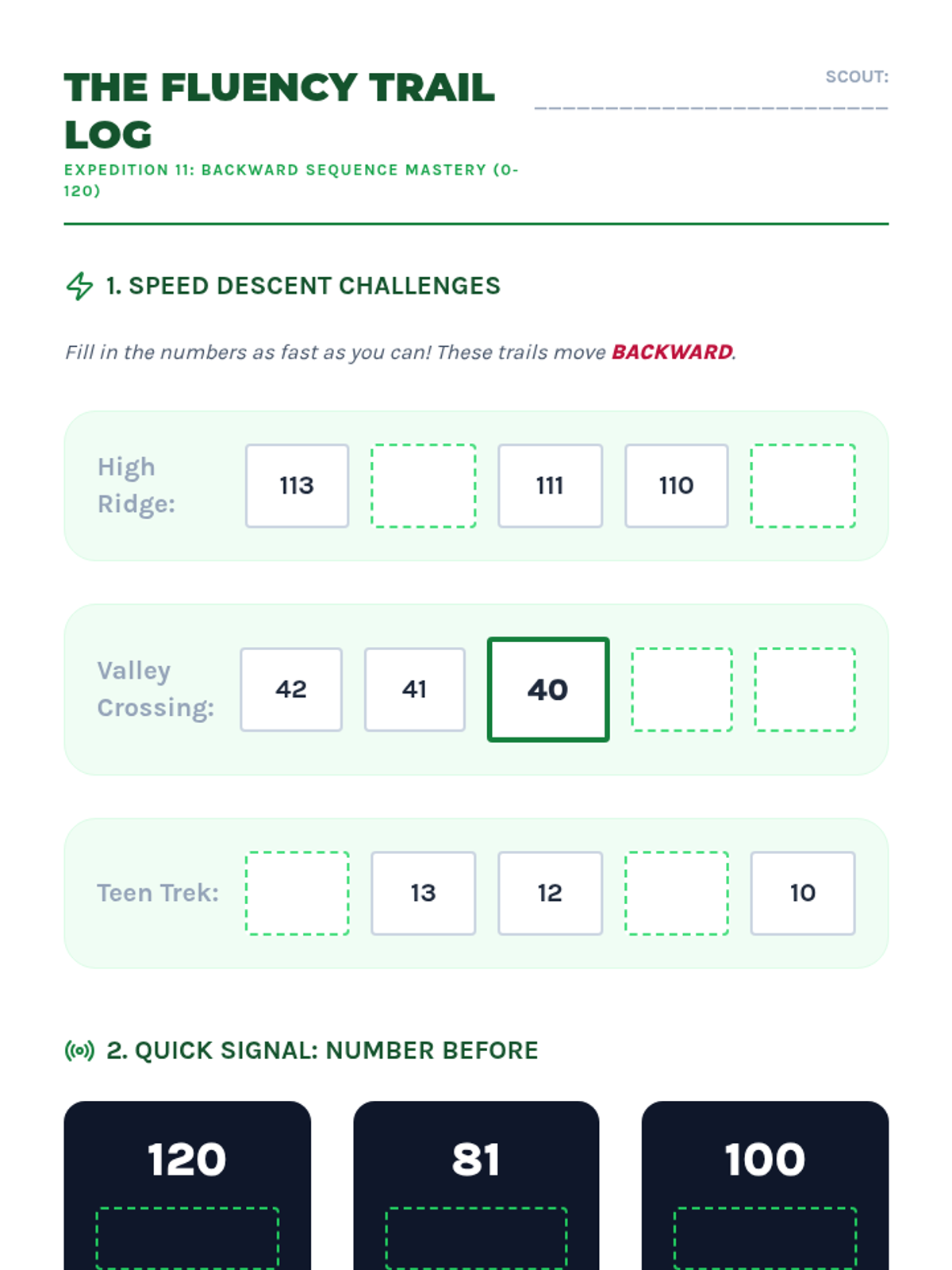
Fluency focus on backward sequences across the full 0-120 range.
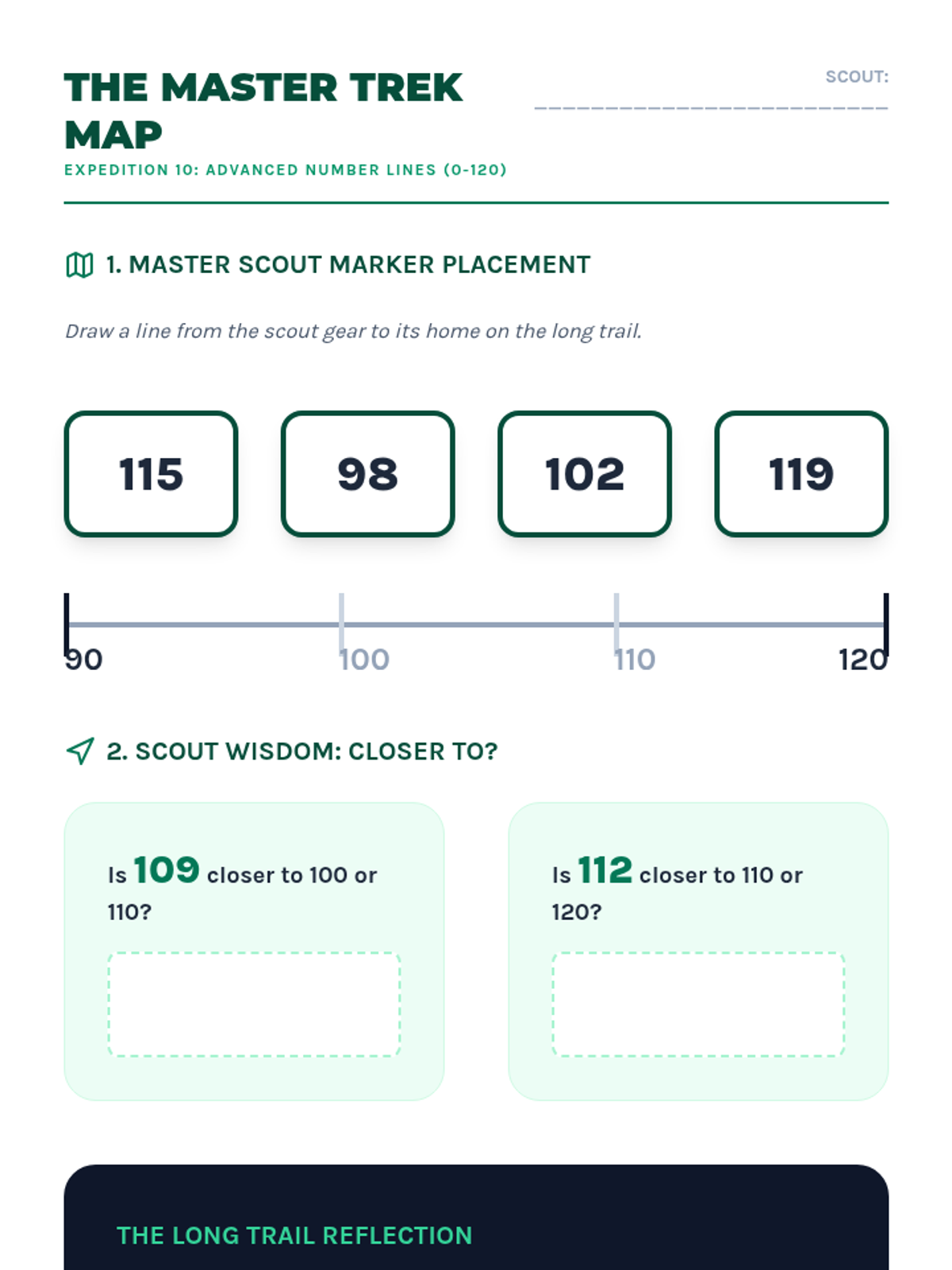
Advanced number line navigation and relative position (0-120).
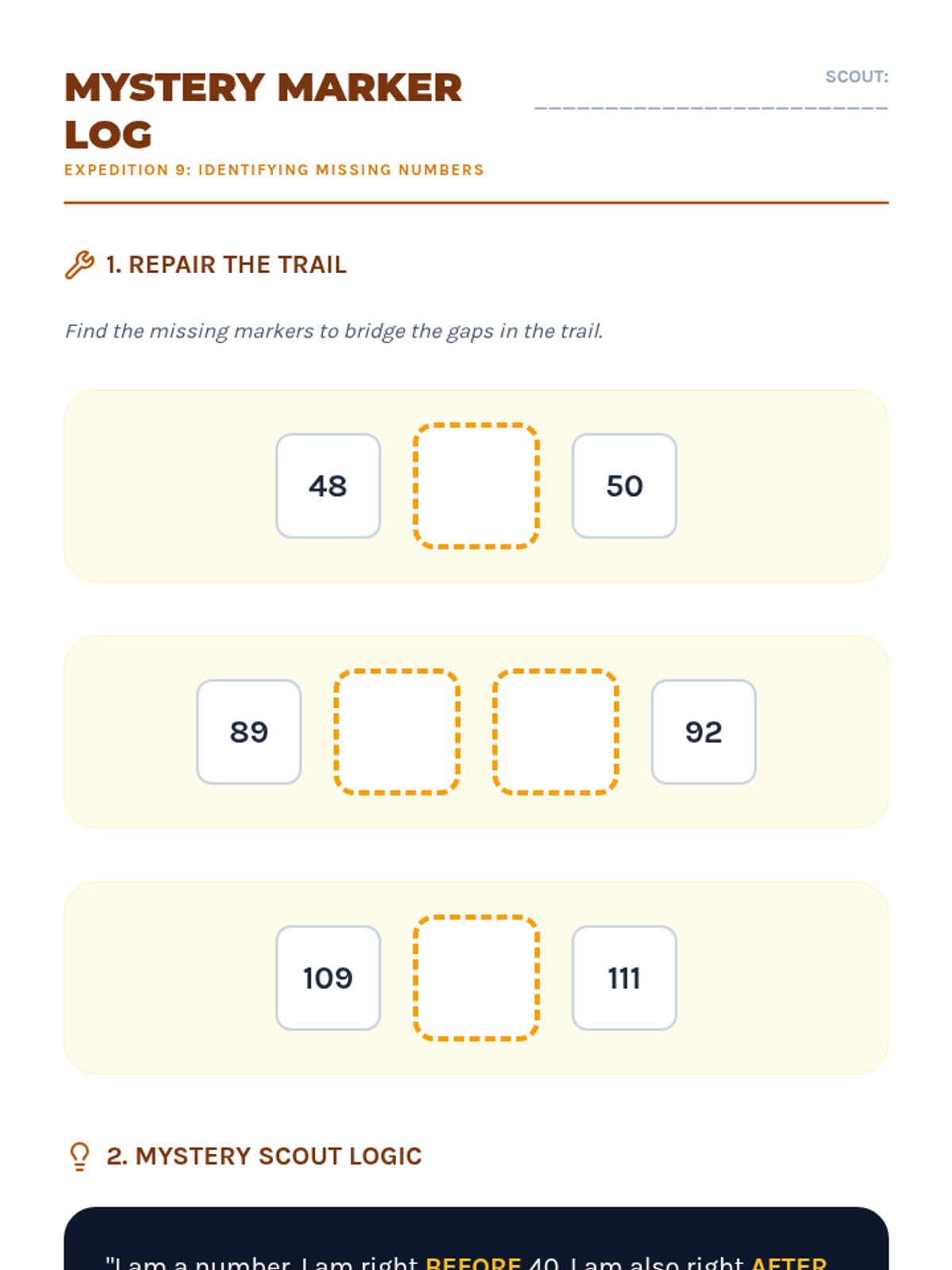
Finding missing numbers in various sequences (FNS/BNS).
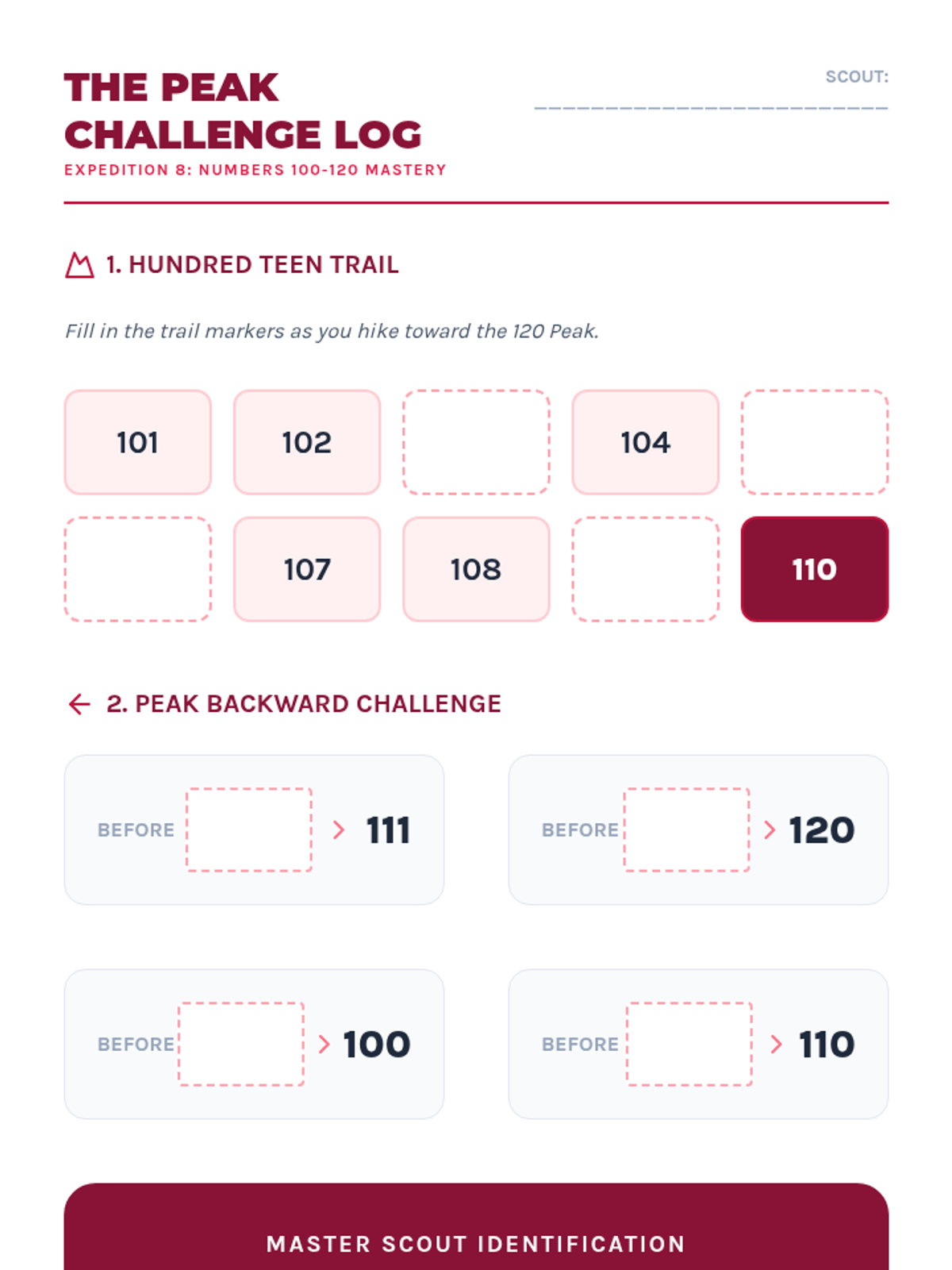
Mastery of the 100-120 range (the "Peak").
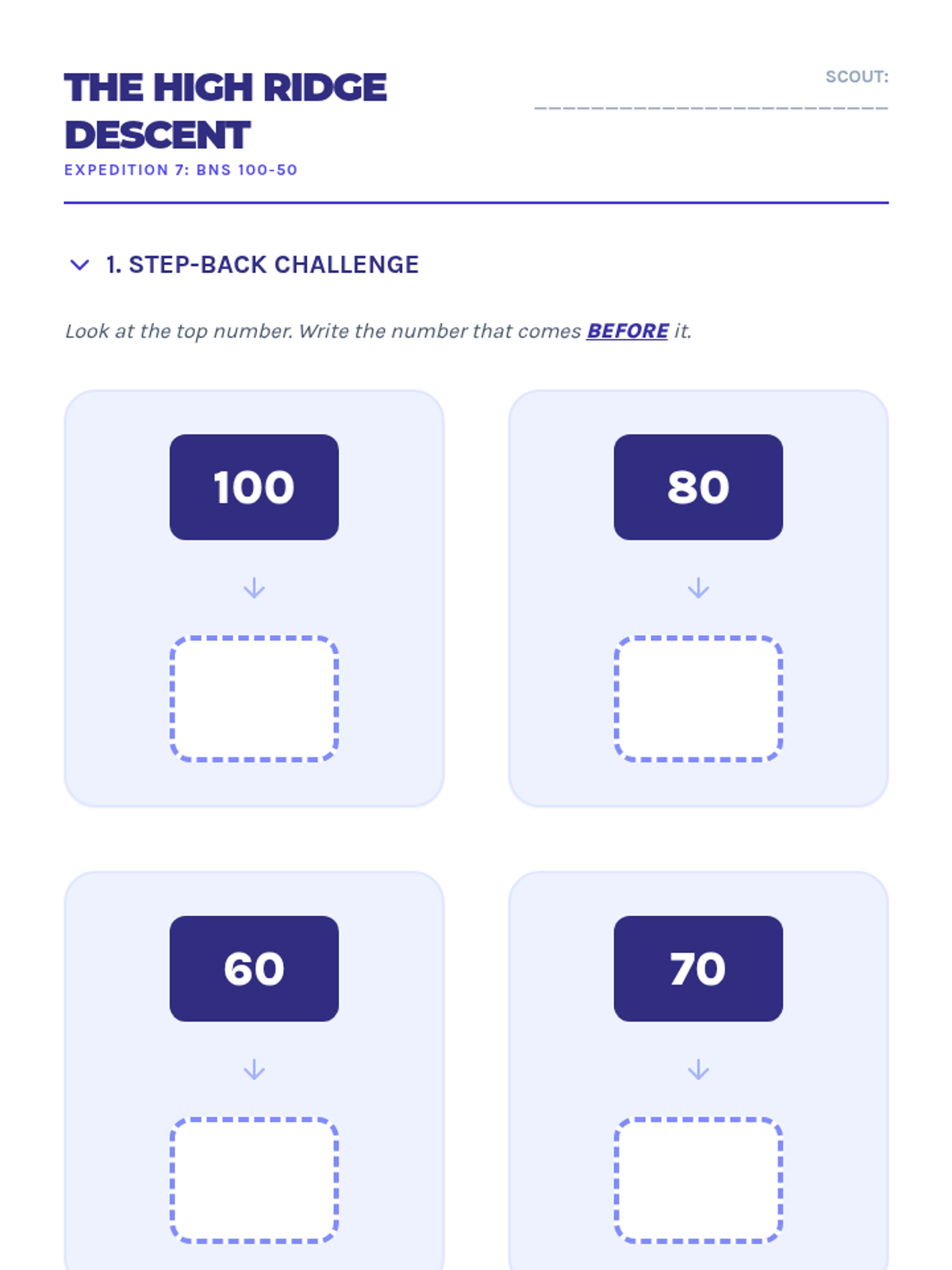
Backward sequences from 100 down to 50.
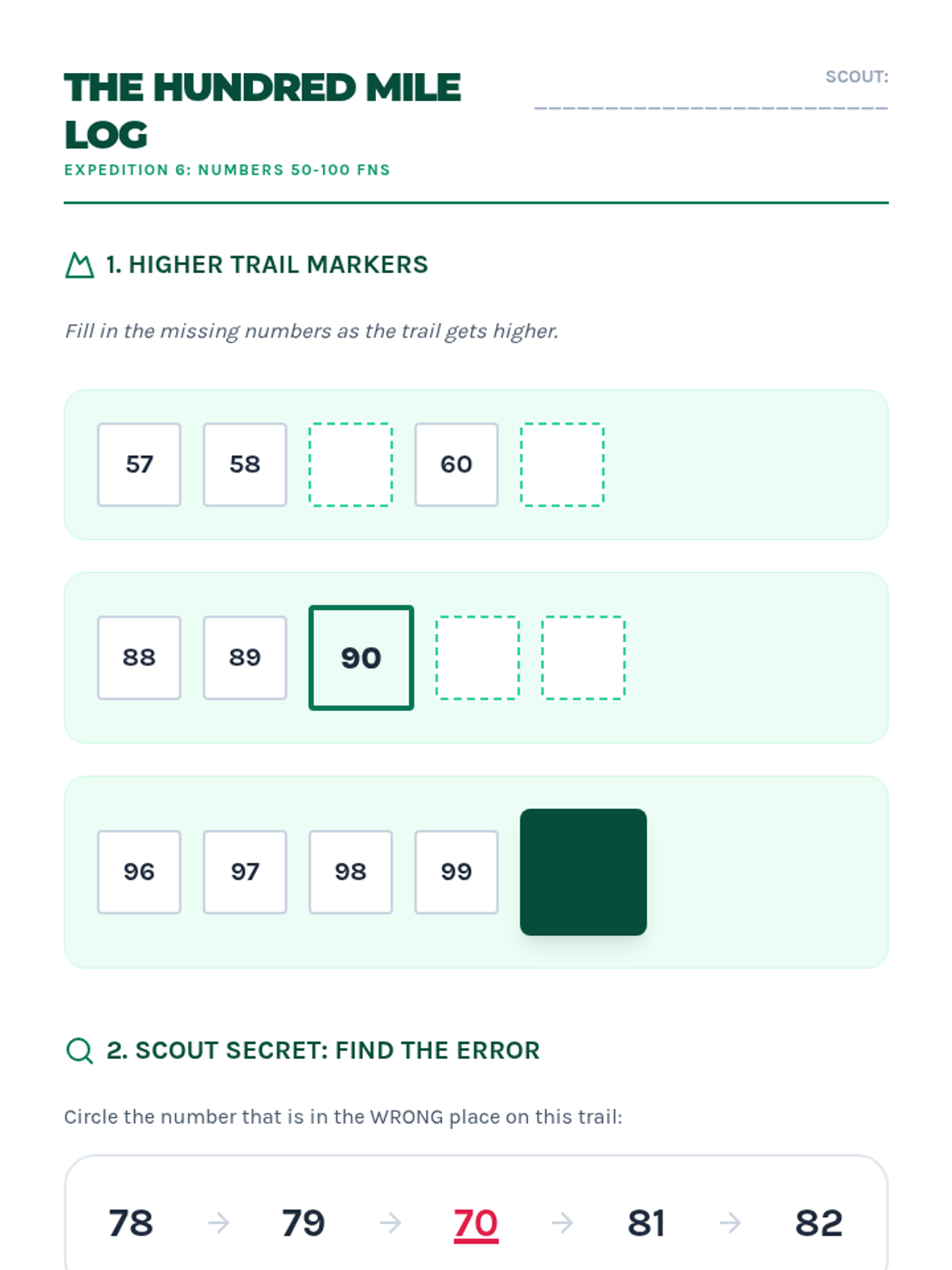
Forward sequences and numeral identification for numbers 50-100.
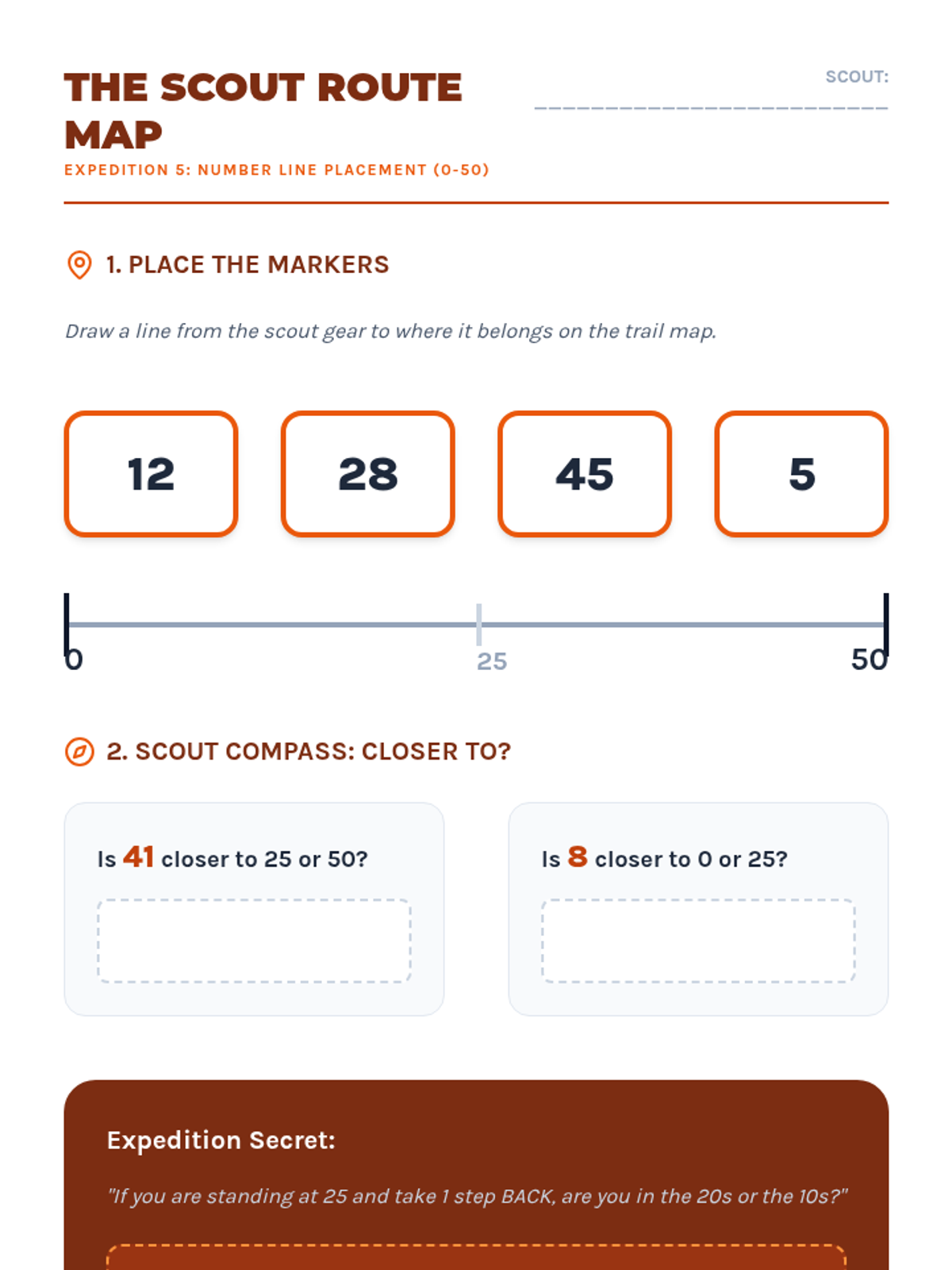
Placing and identifying numbers on an open number line (0-50).
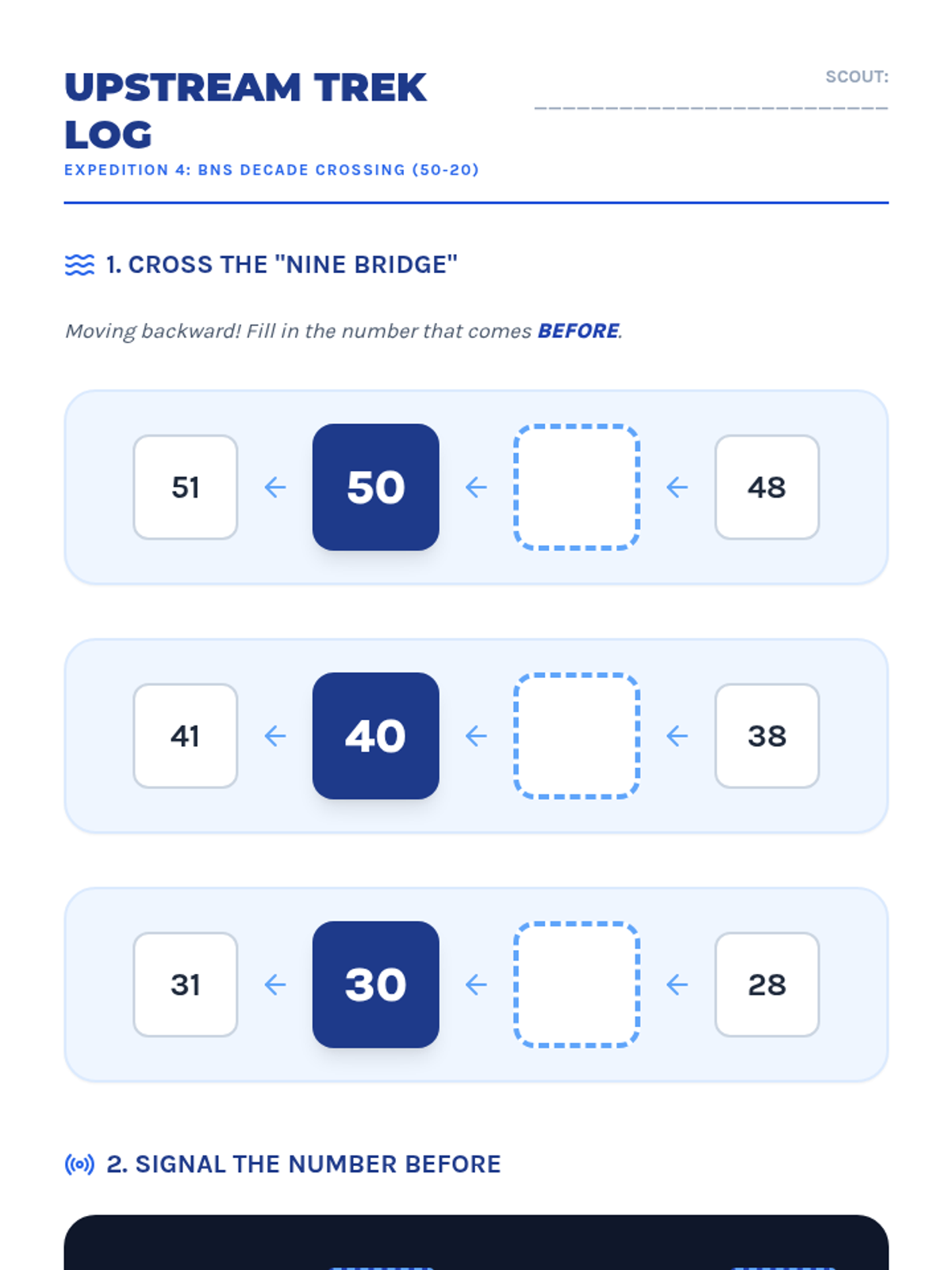
Backward sequences across decades (50 down to 20).
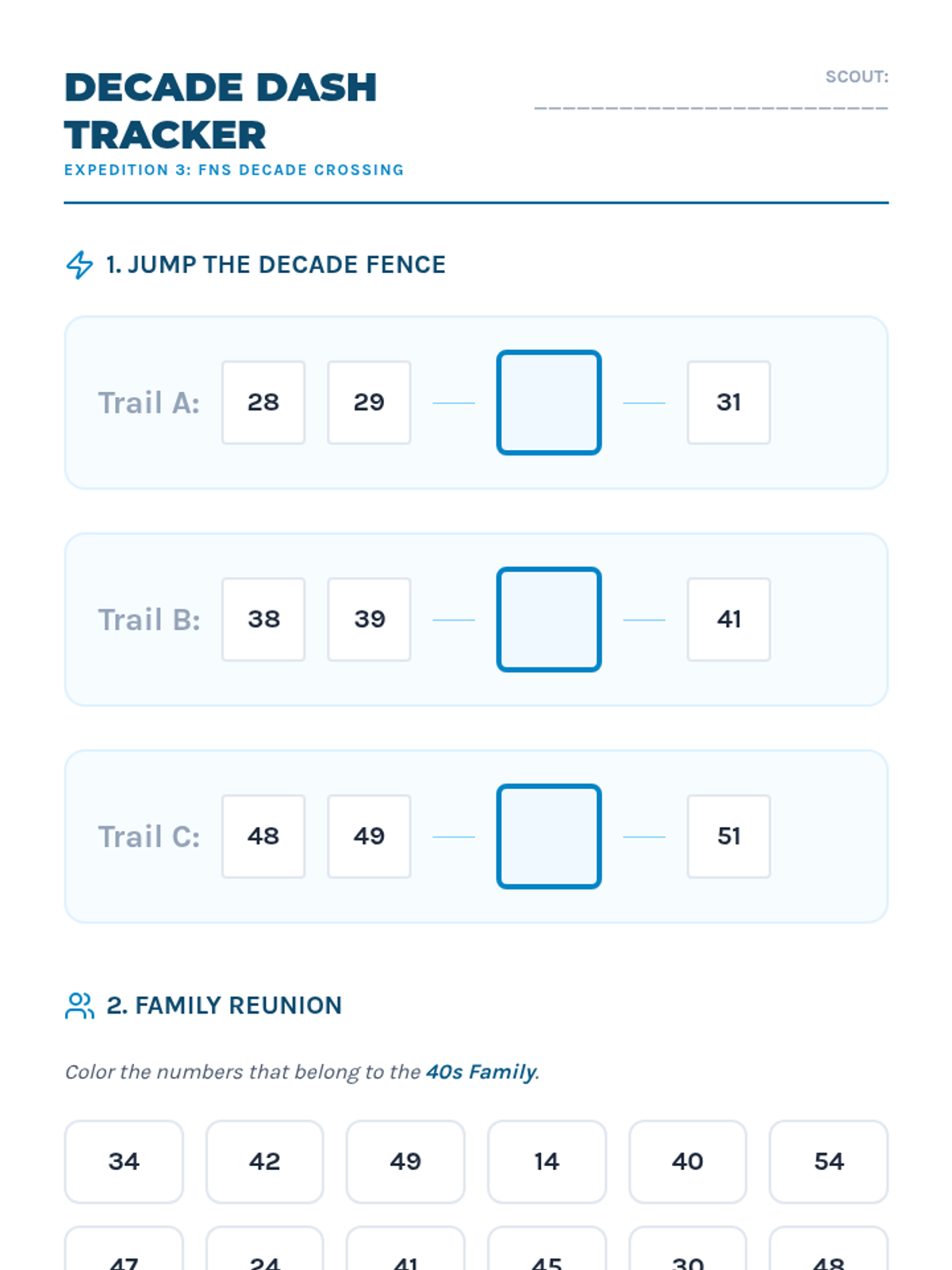
Mastering transitions between decades from 20 to 50.
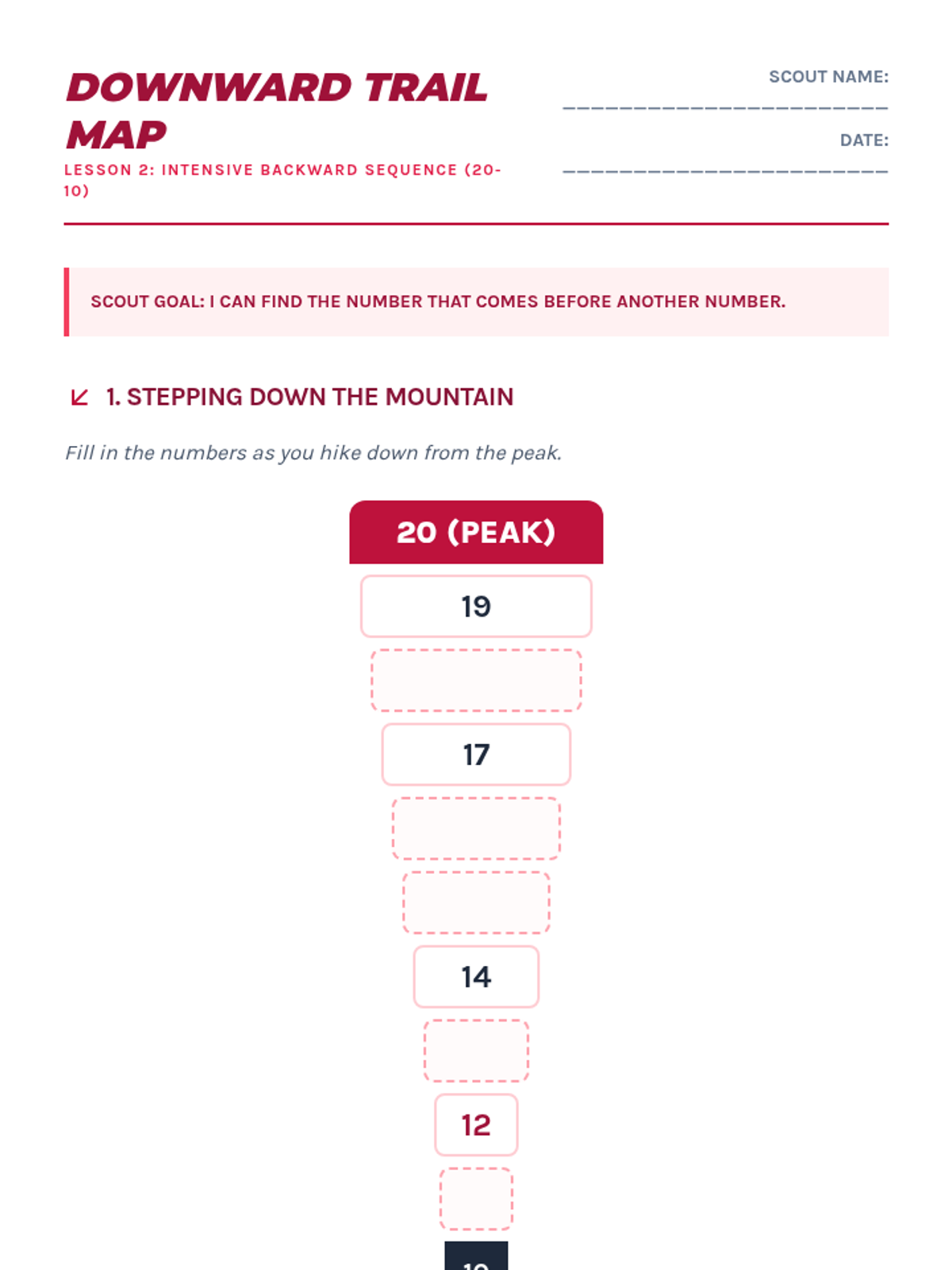
Intensive focus on backward number sequences from 20 down to 10.
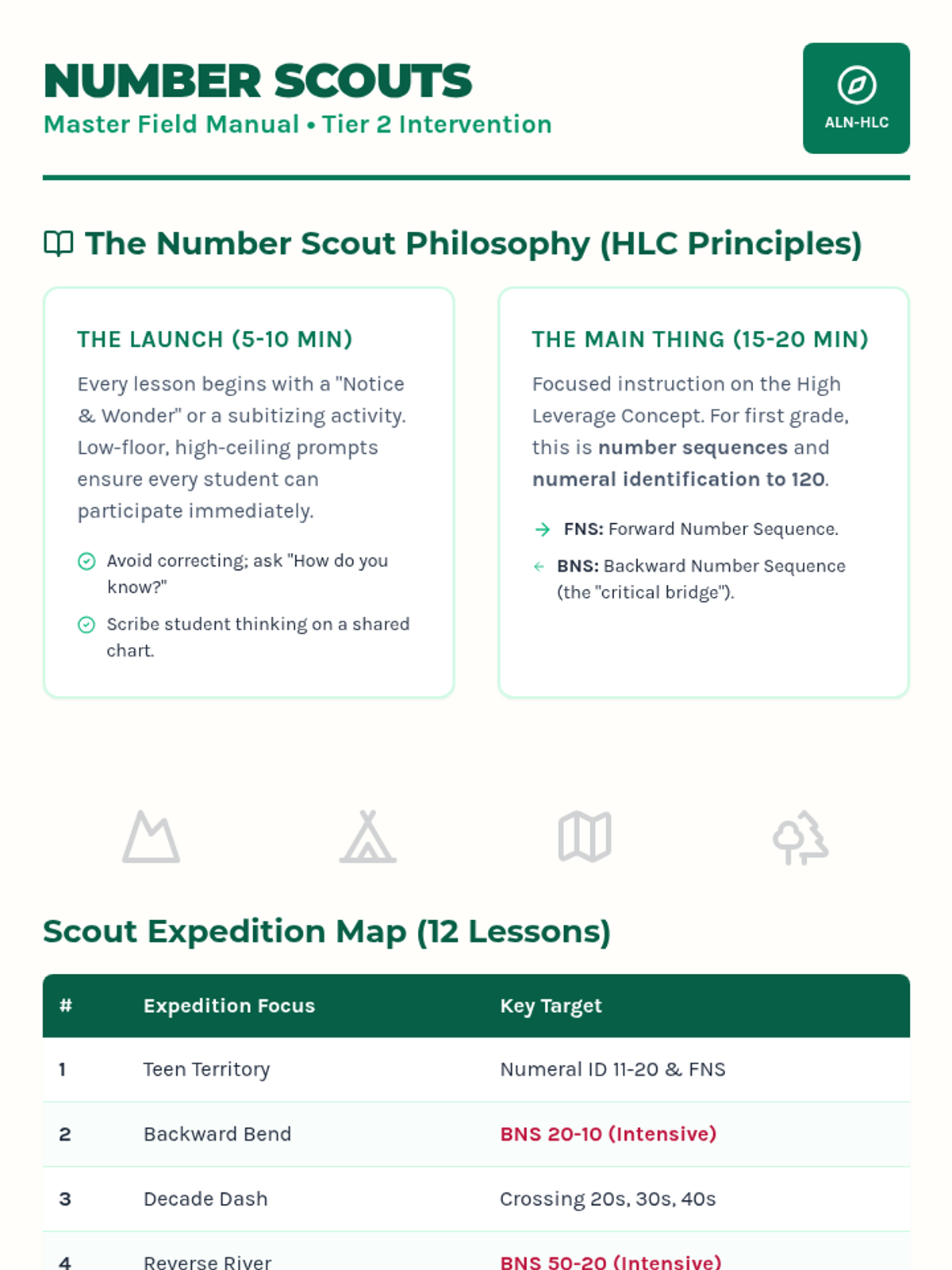
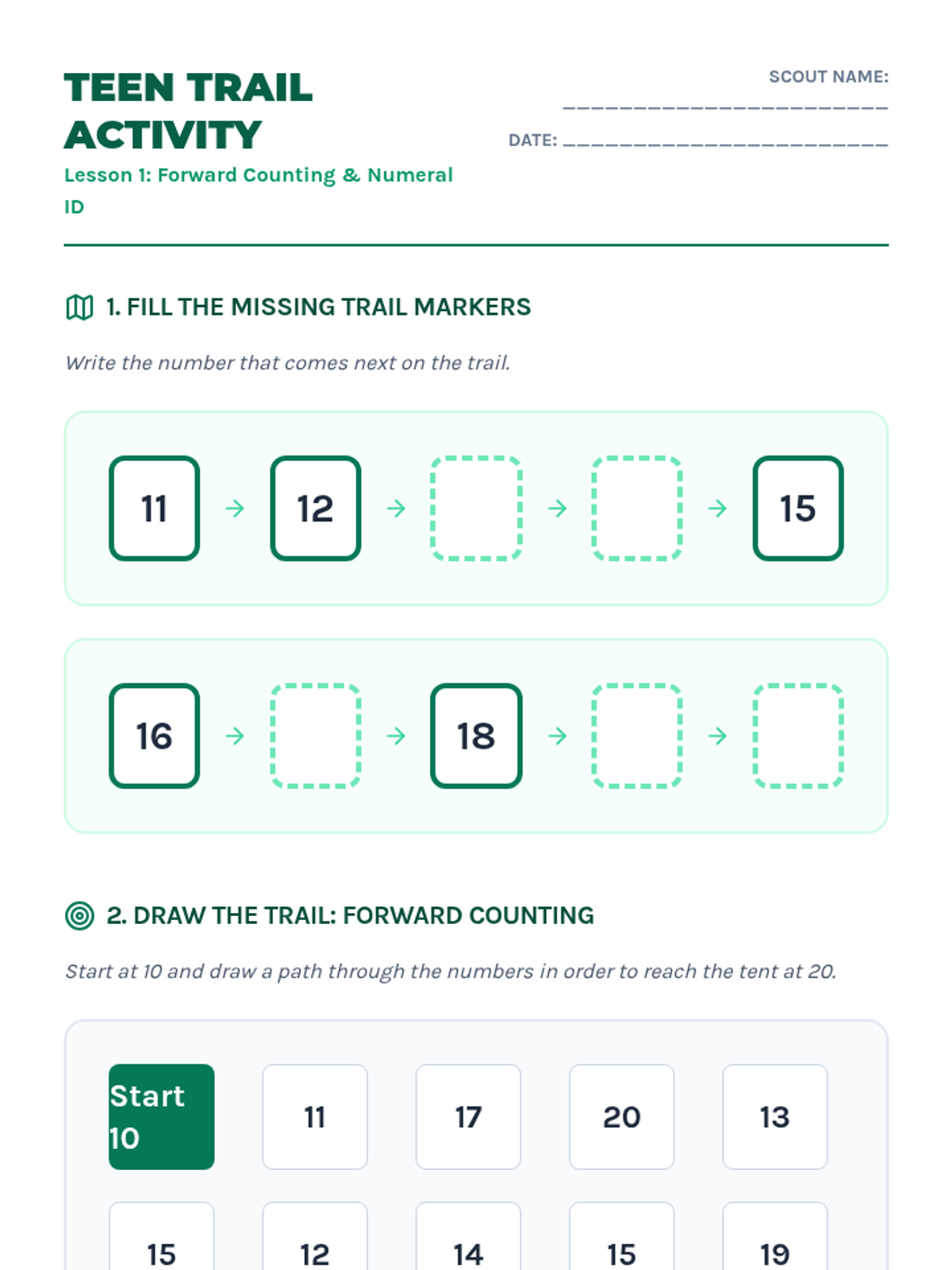
Focus on numeral identification and forward sequences for numbers 11-20.
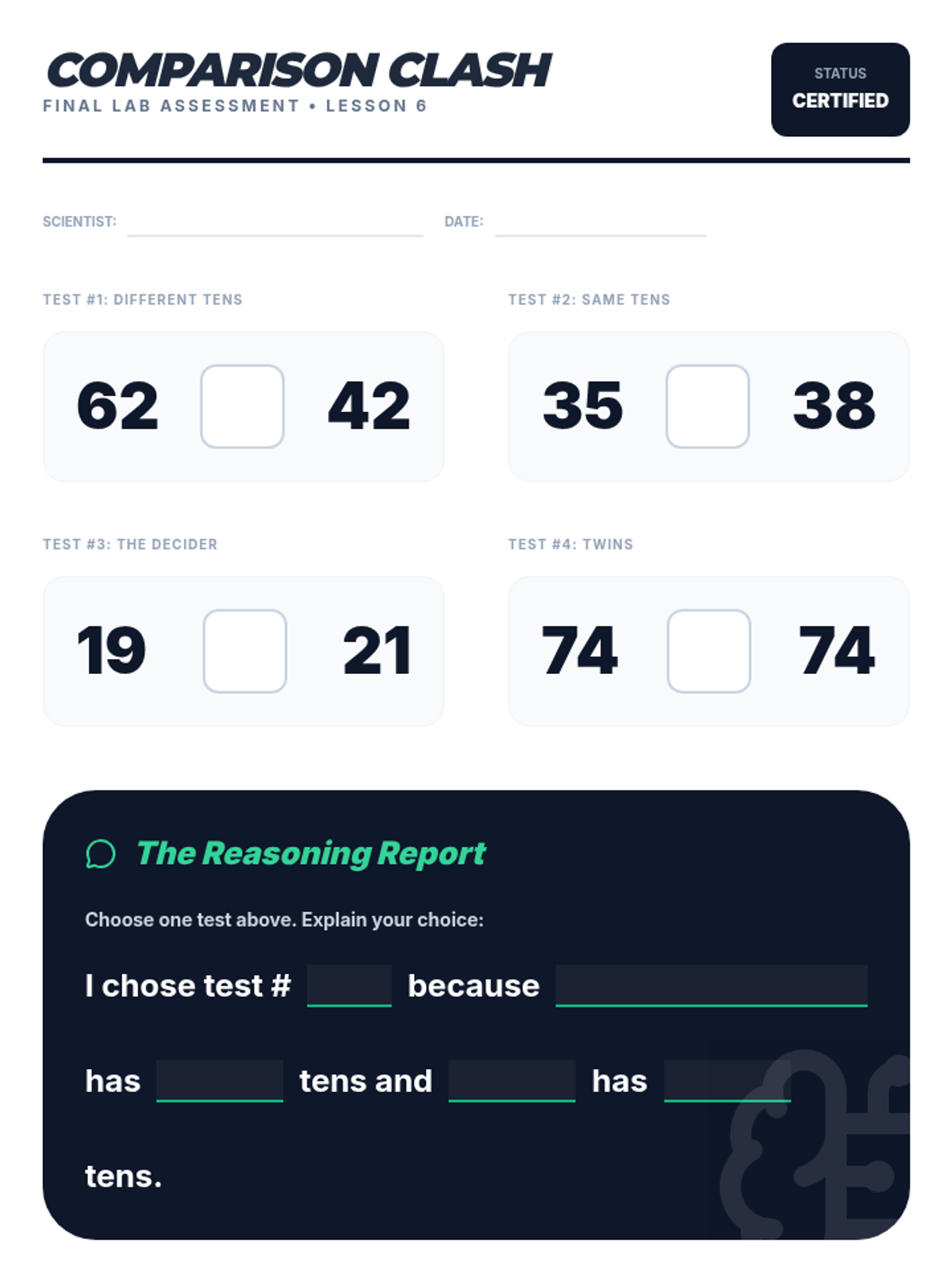
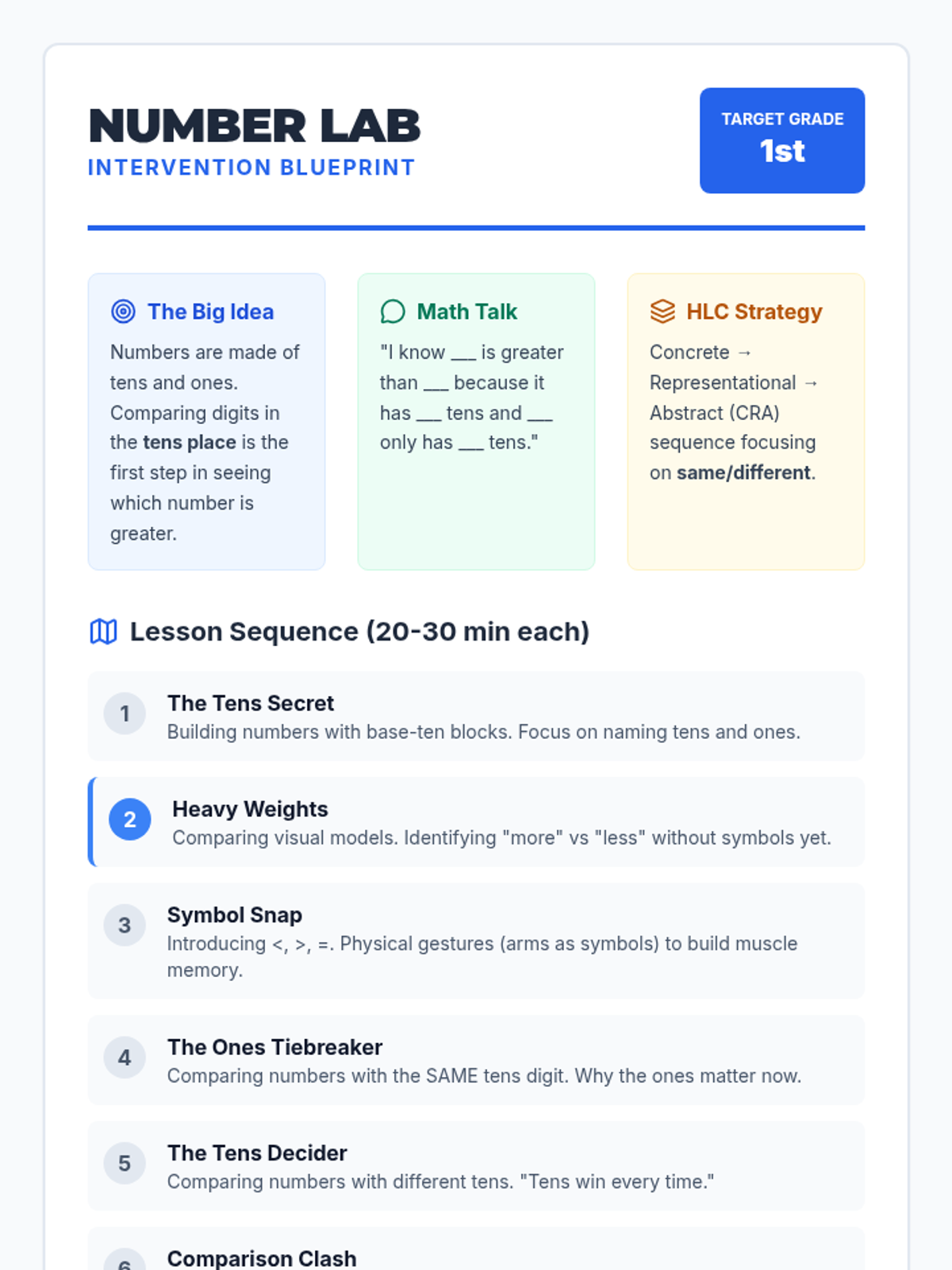
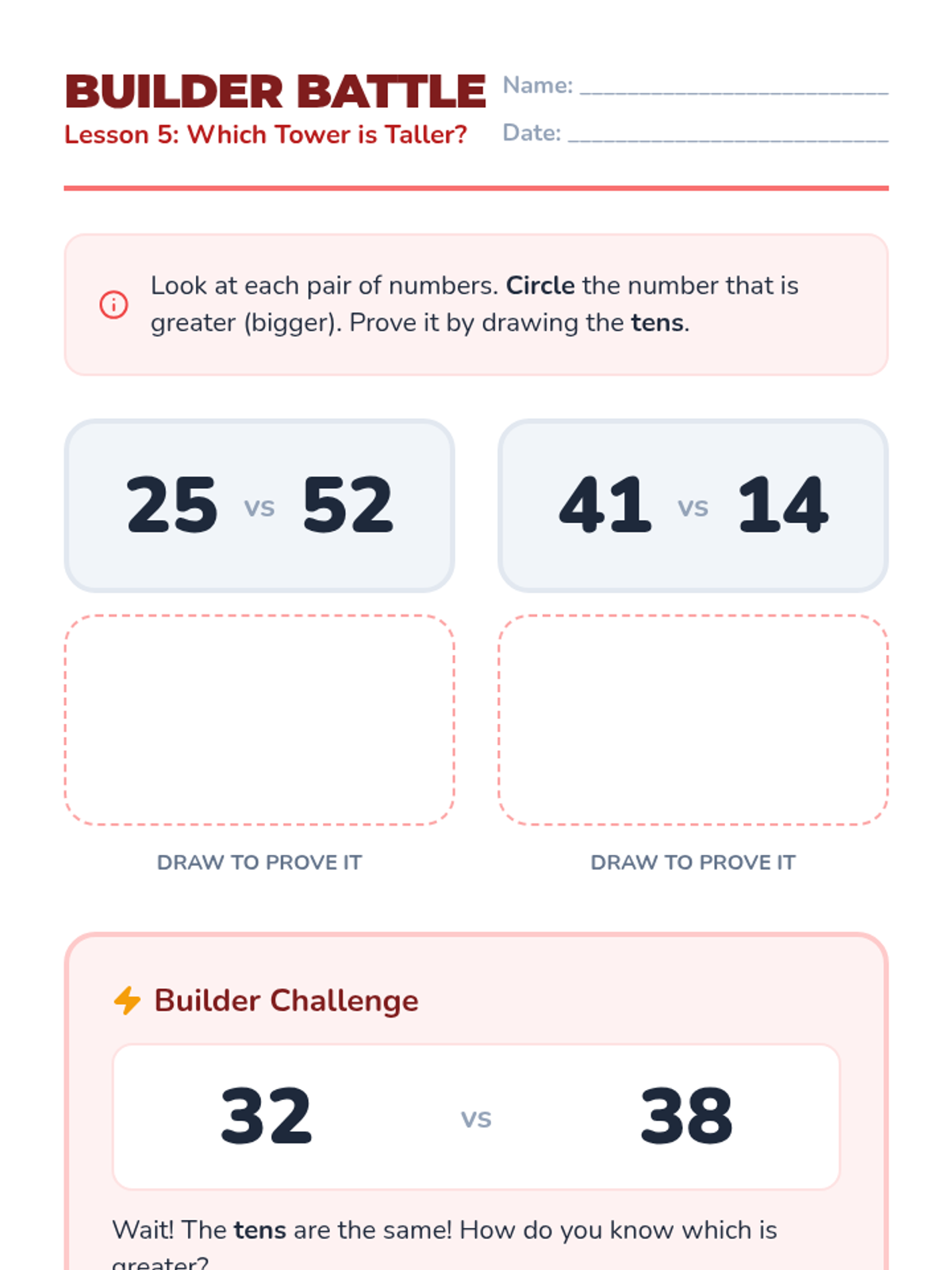
Consolidation of skills where students compare varied pairs of two-digit numbers and record results using appropriate symbols and mathematical reasoning.
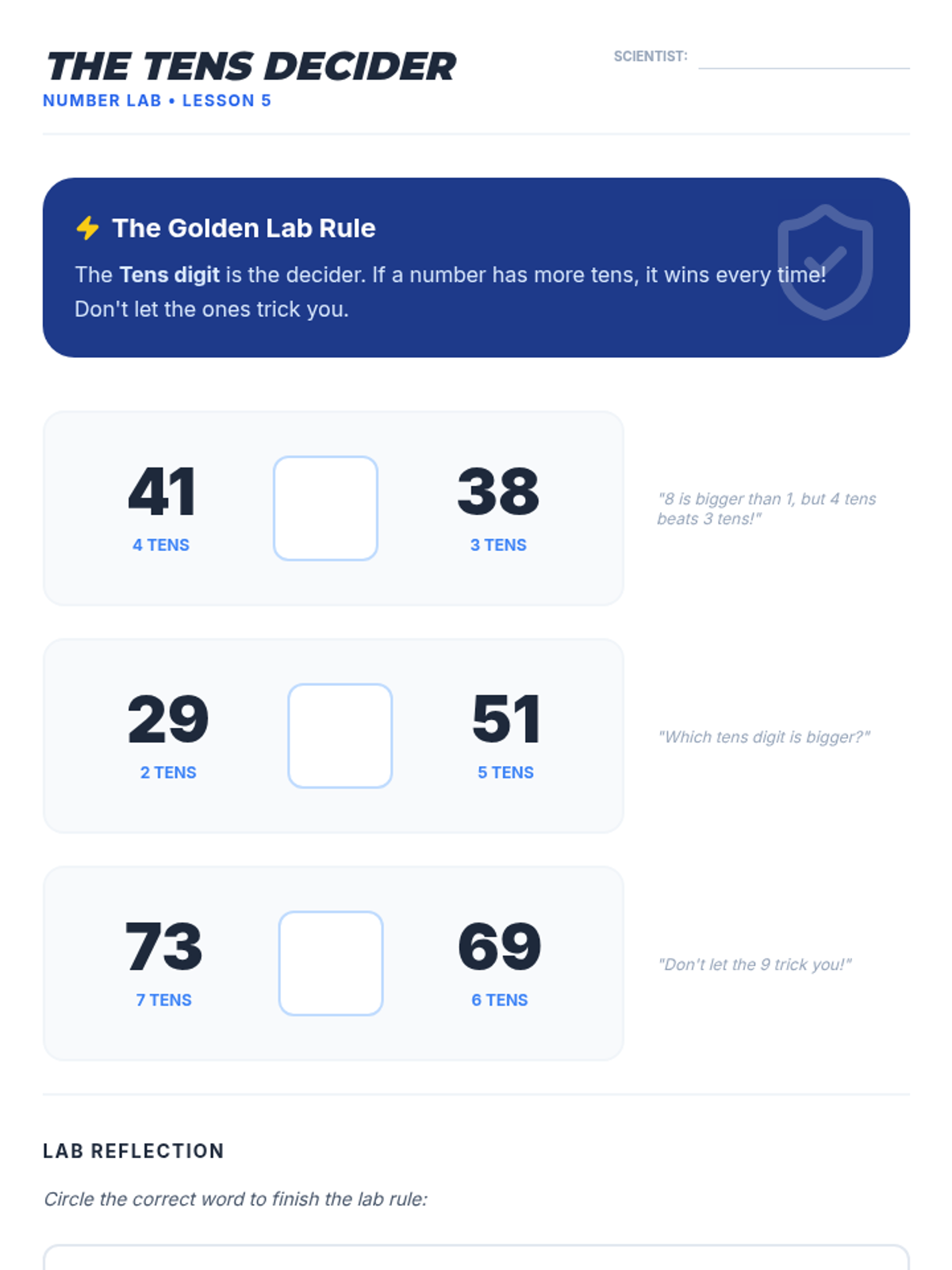
Focusing on numbers where the tens digits are different, emphasizing that the tens digit is the primary factor in determining which number is greater.
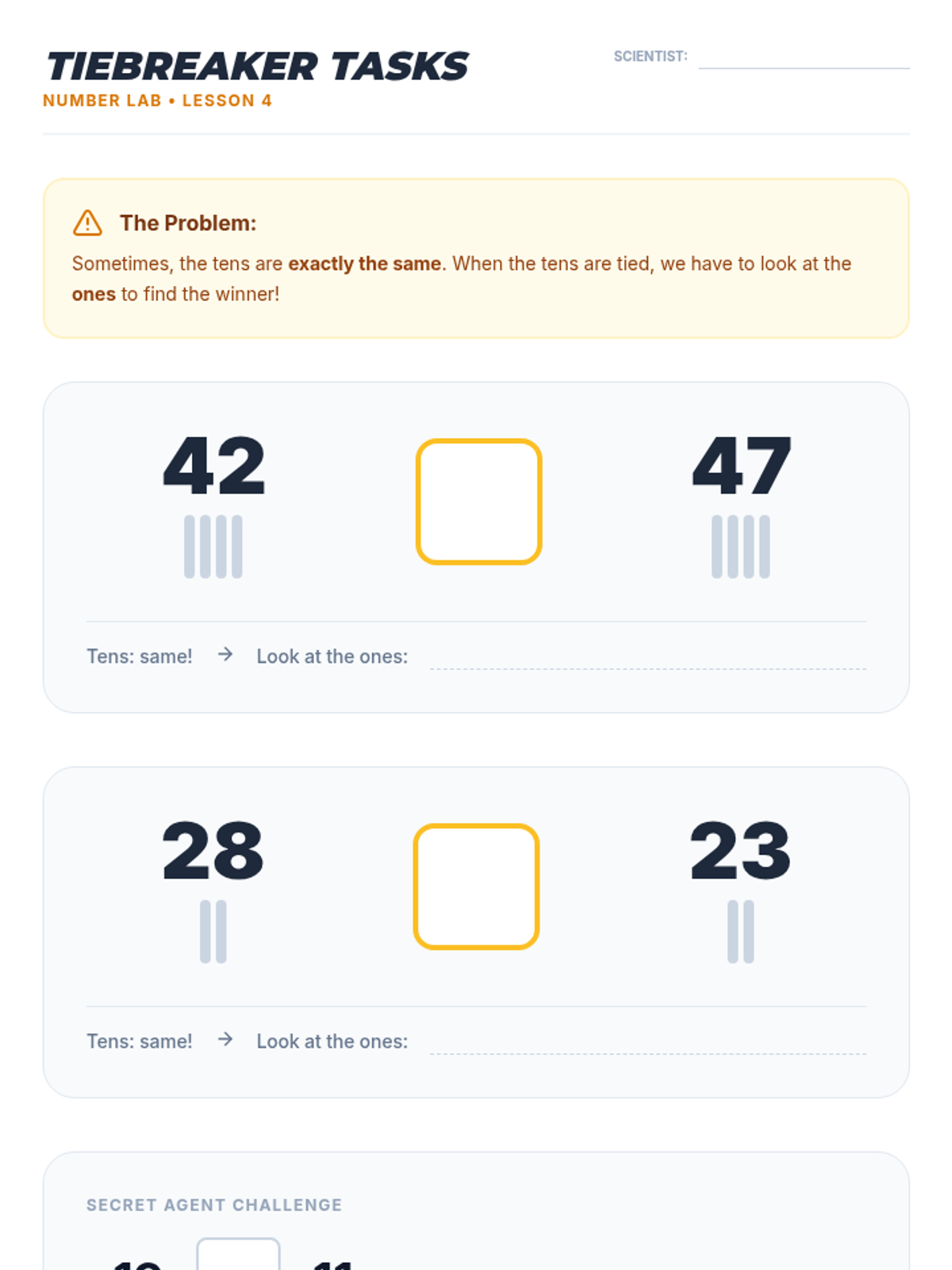
Focusing on numbers with the same tens digit to understand that when tens are equal, we look at the ones digit to determine the relationship.
Introduction of the symbols <, >, and = as tools to record the relationship between two numbers, connecting them to the language of 'greater than' and 'less than'.
Students compare two numbers visually using base-ten models to identify which is 'greater' and which is 'less' before introducing formal symbols.
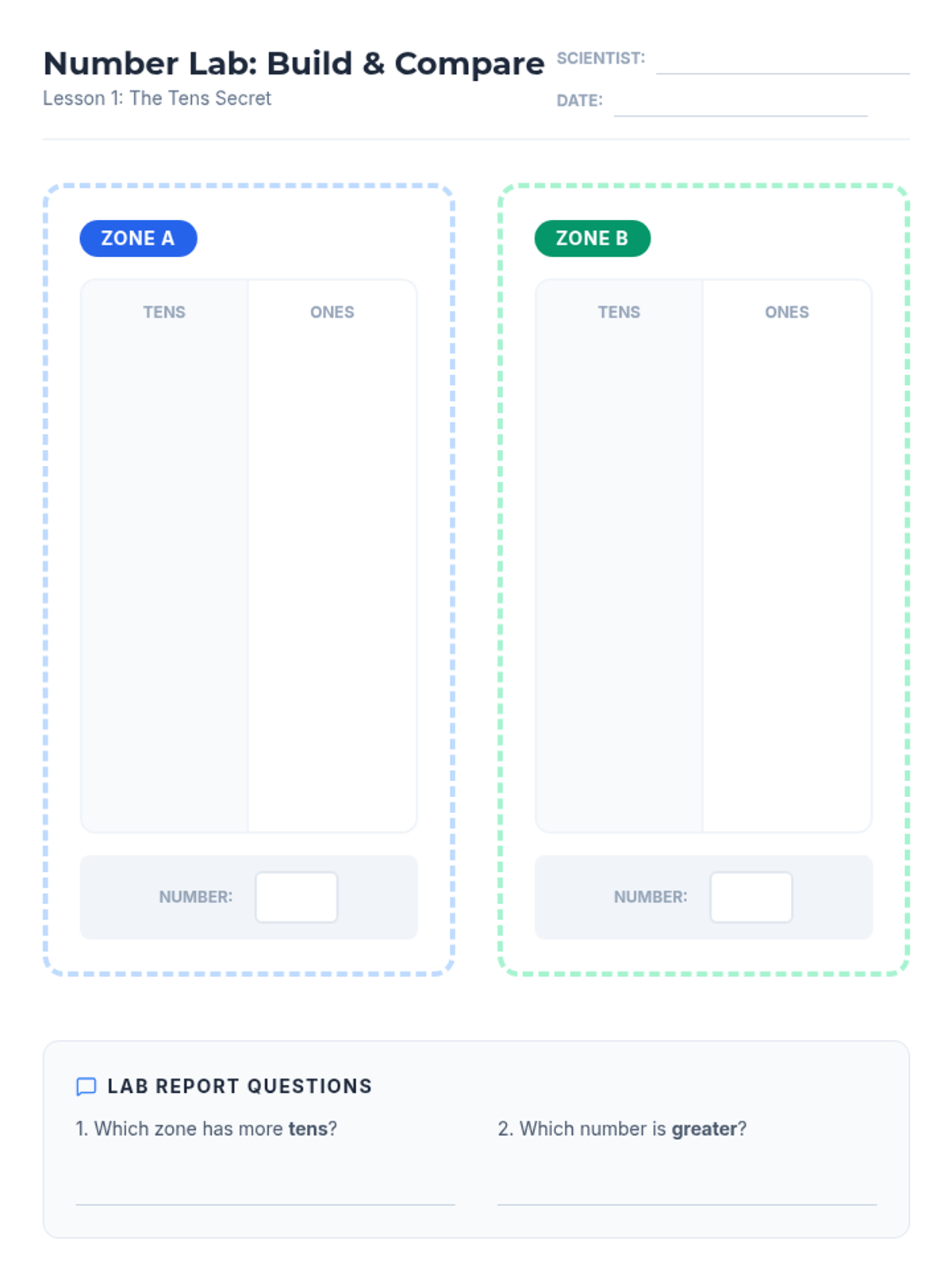
Students build two-digit numbers using base-ten models to understand that the tens digit represents the number of groups of ten and the ones digit represents the number of leftovers.
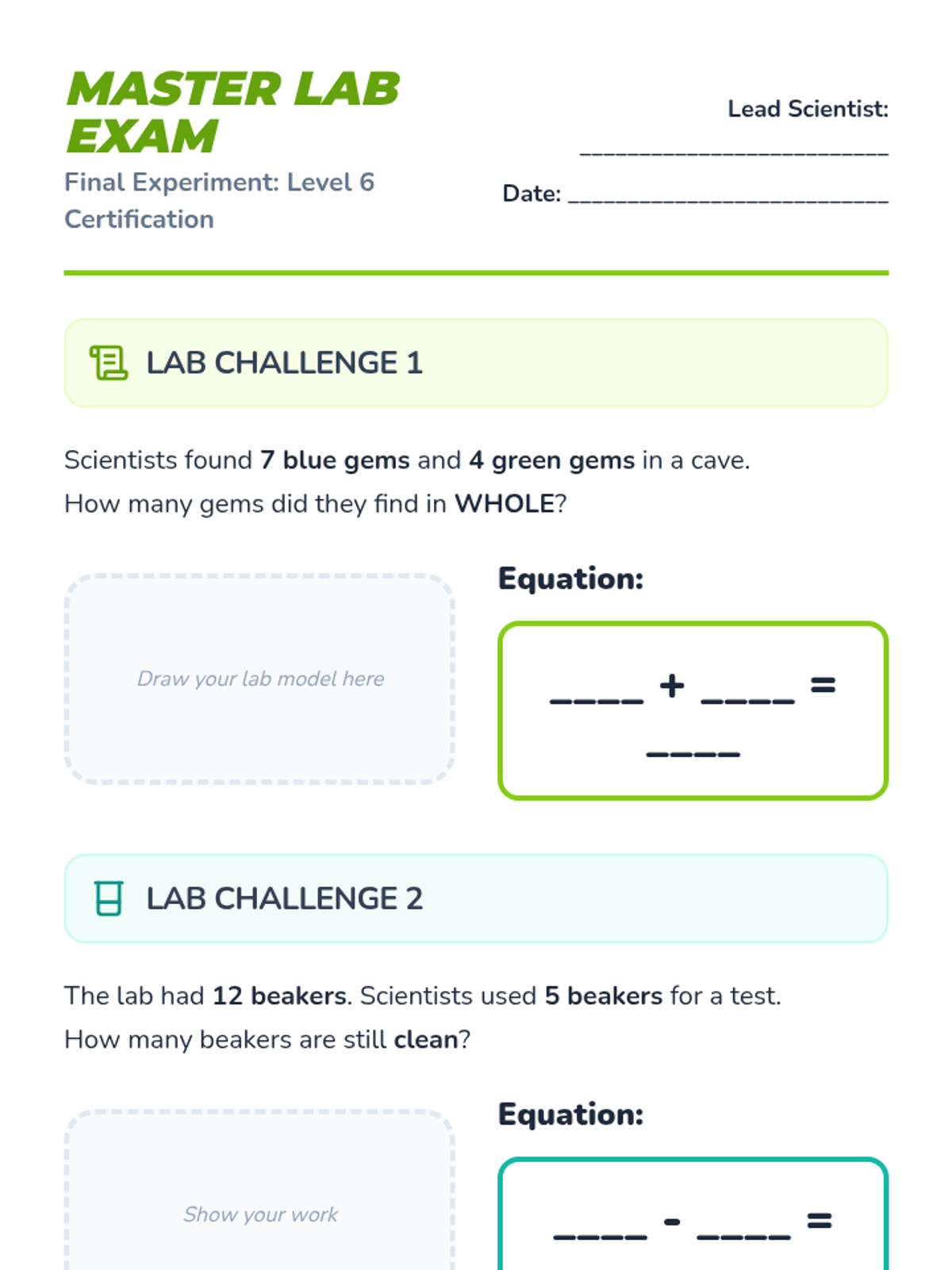
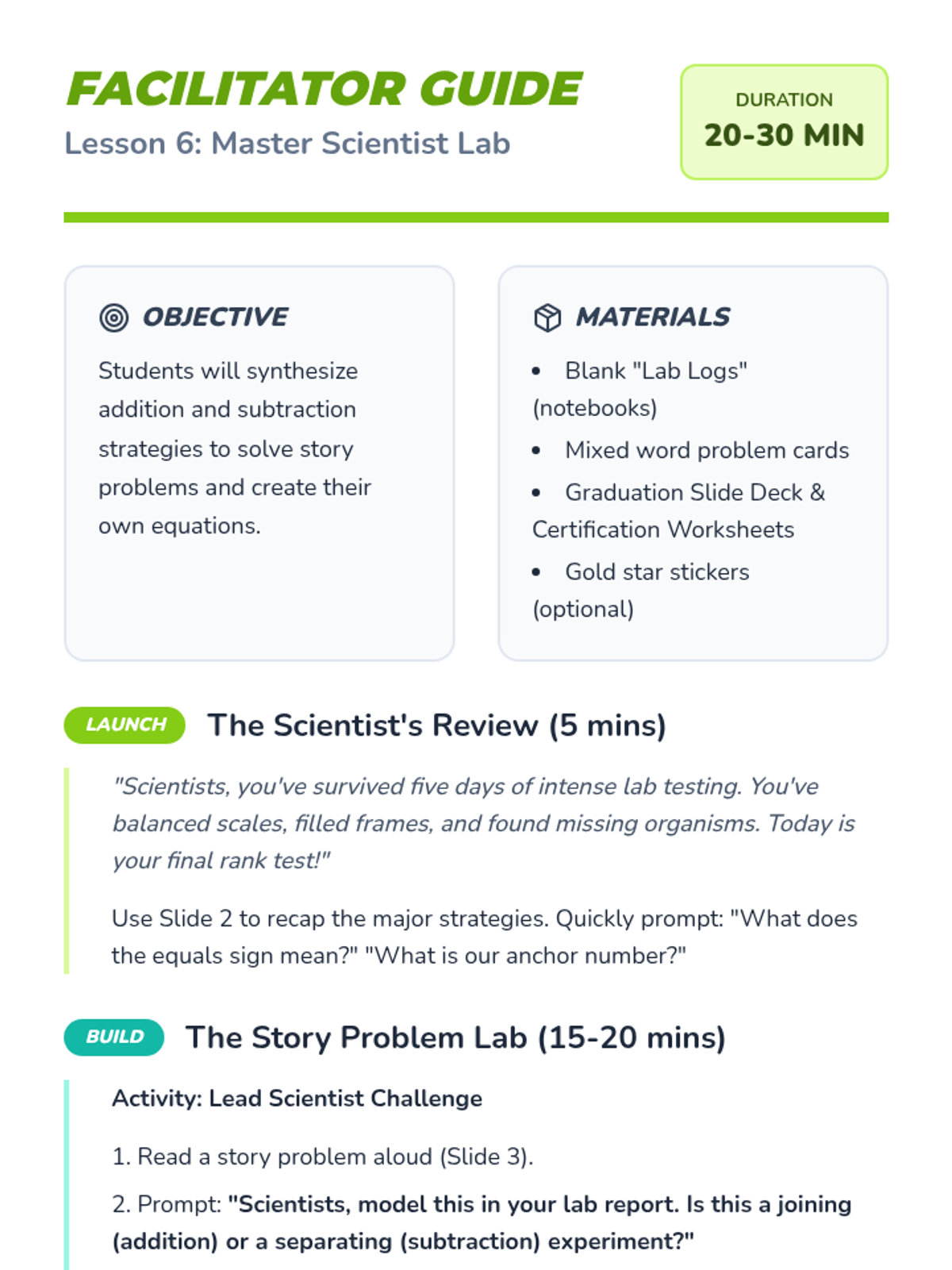
Synthesizes all lab skills to solve word problems and create original equations. Students prove their mastery as Lead Equation Scientists.
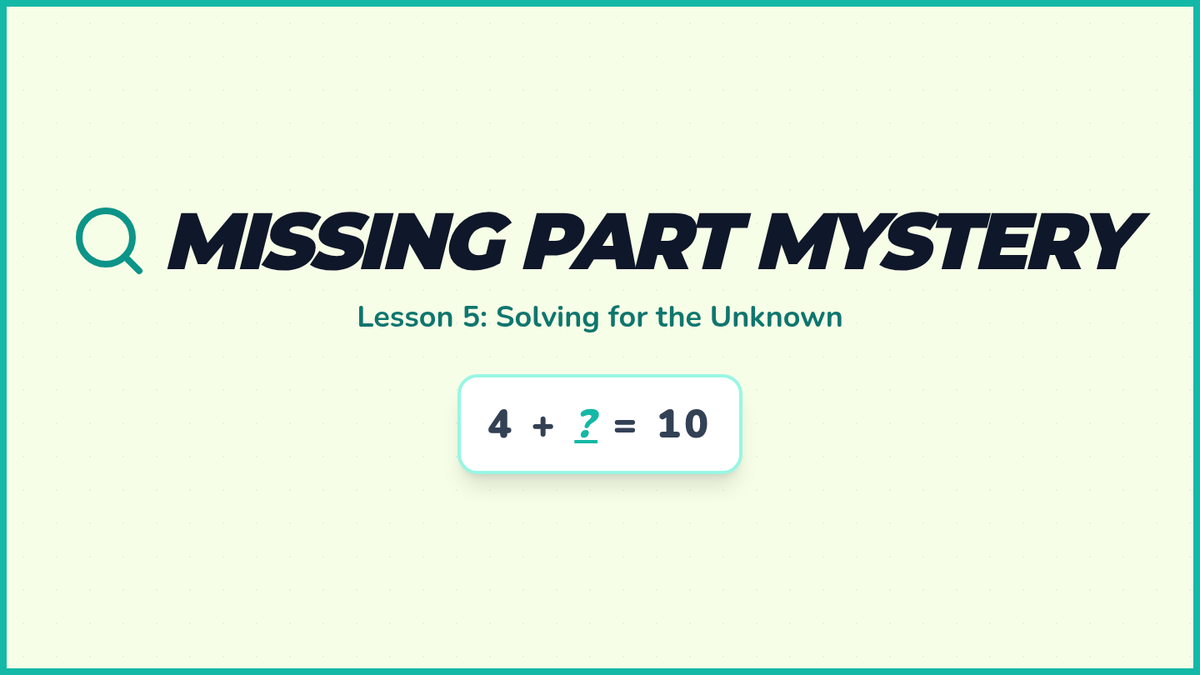
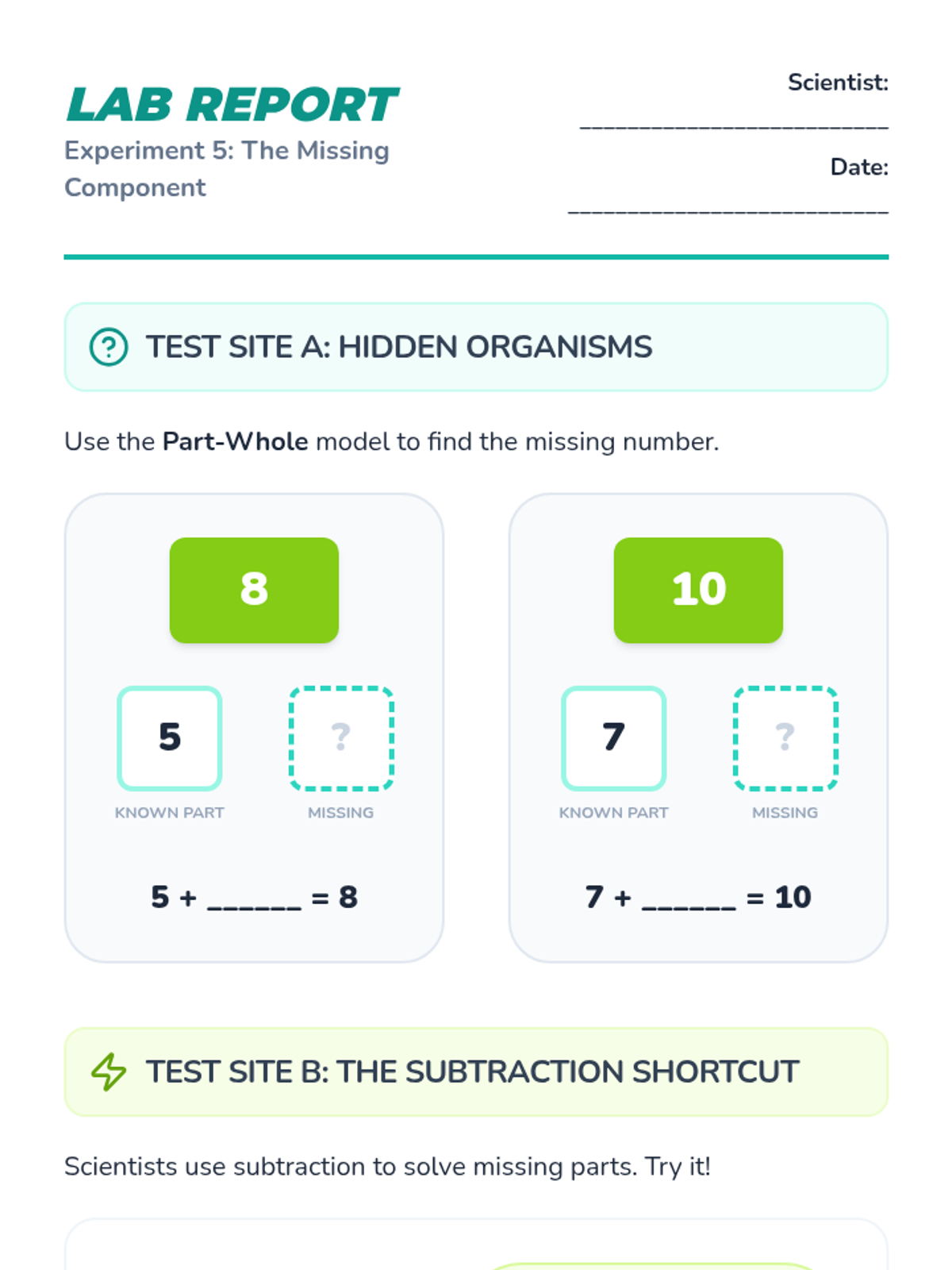
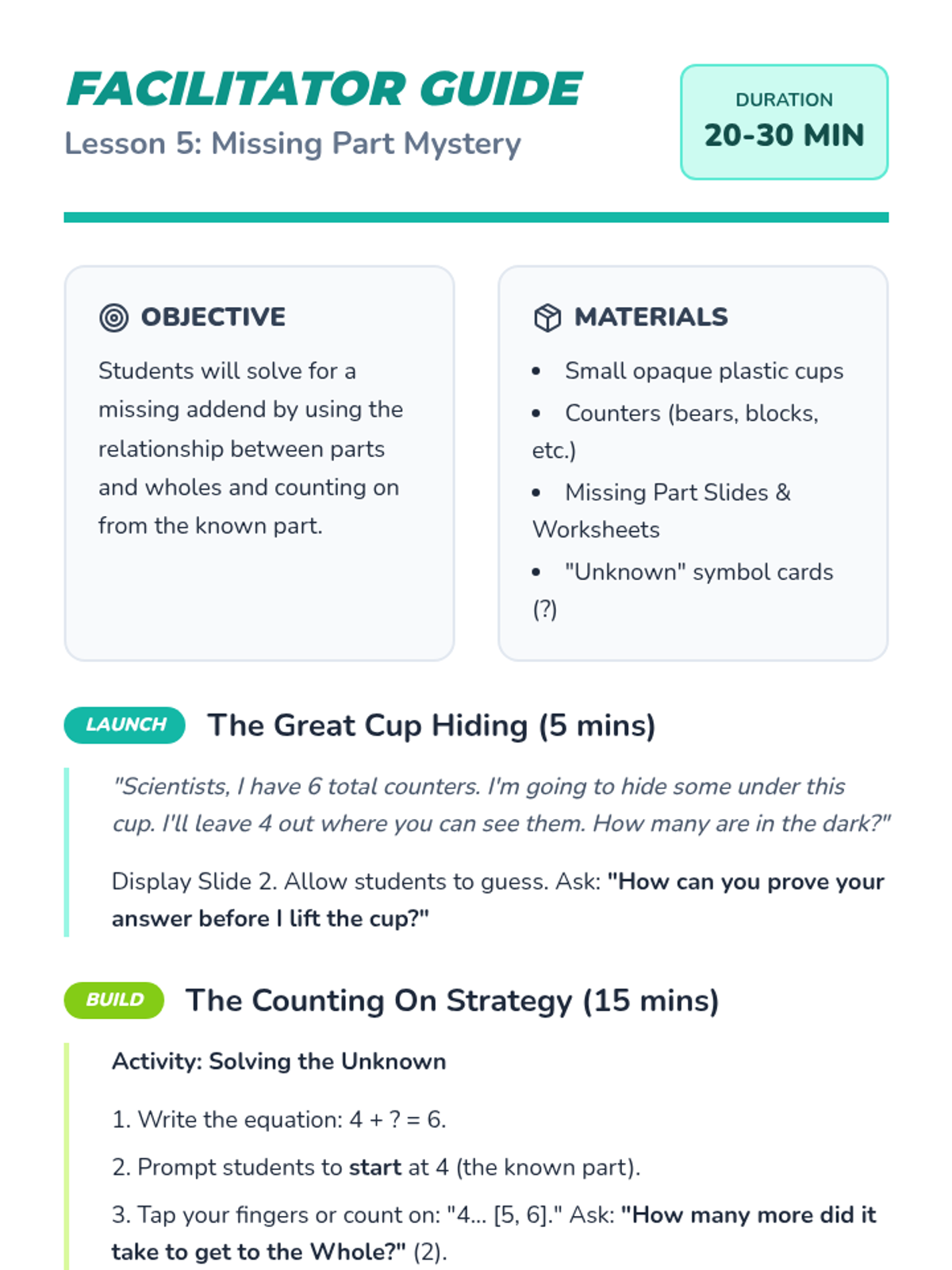
Develops strategies for finding an unknown part in an equation. Students use part-whole models to solve for the 'missing component' in both addition and subtraction contexts.
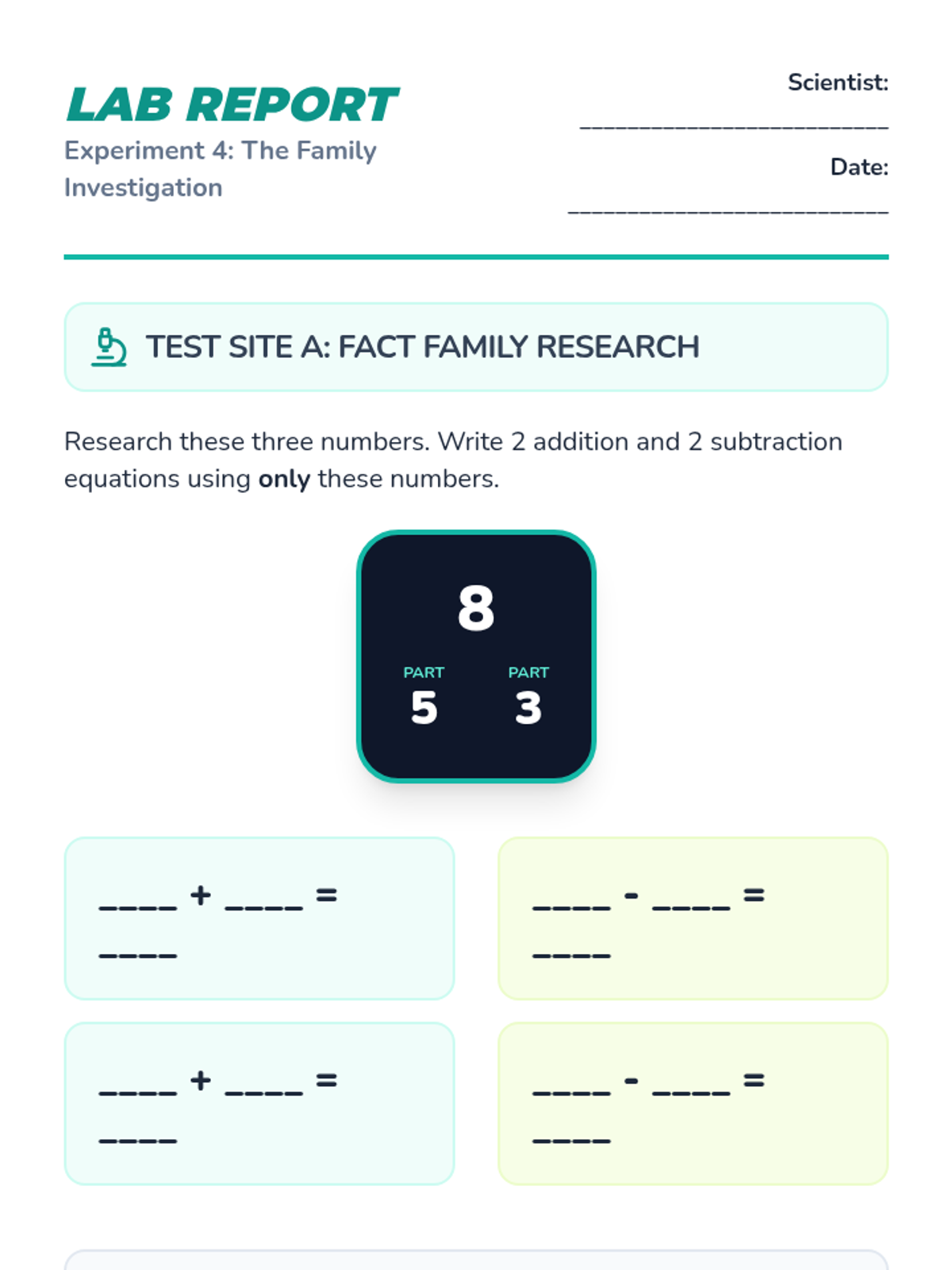
Investigates the inverse relationship between addition and subtraction. Students act as 'researchers' to see how the same three numbers can form four different related equations.
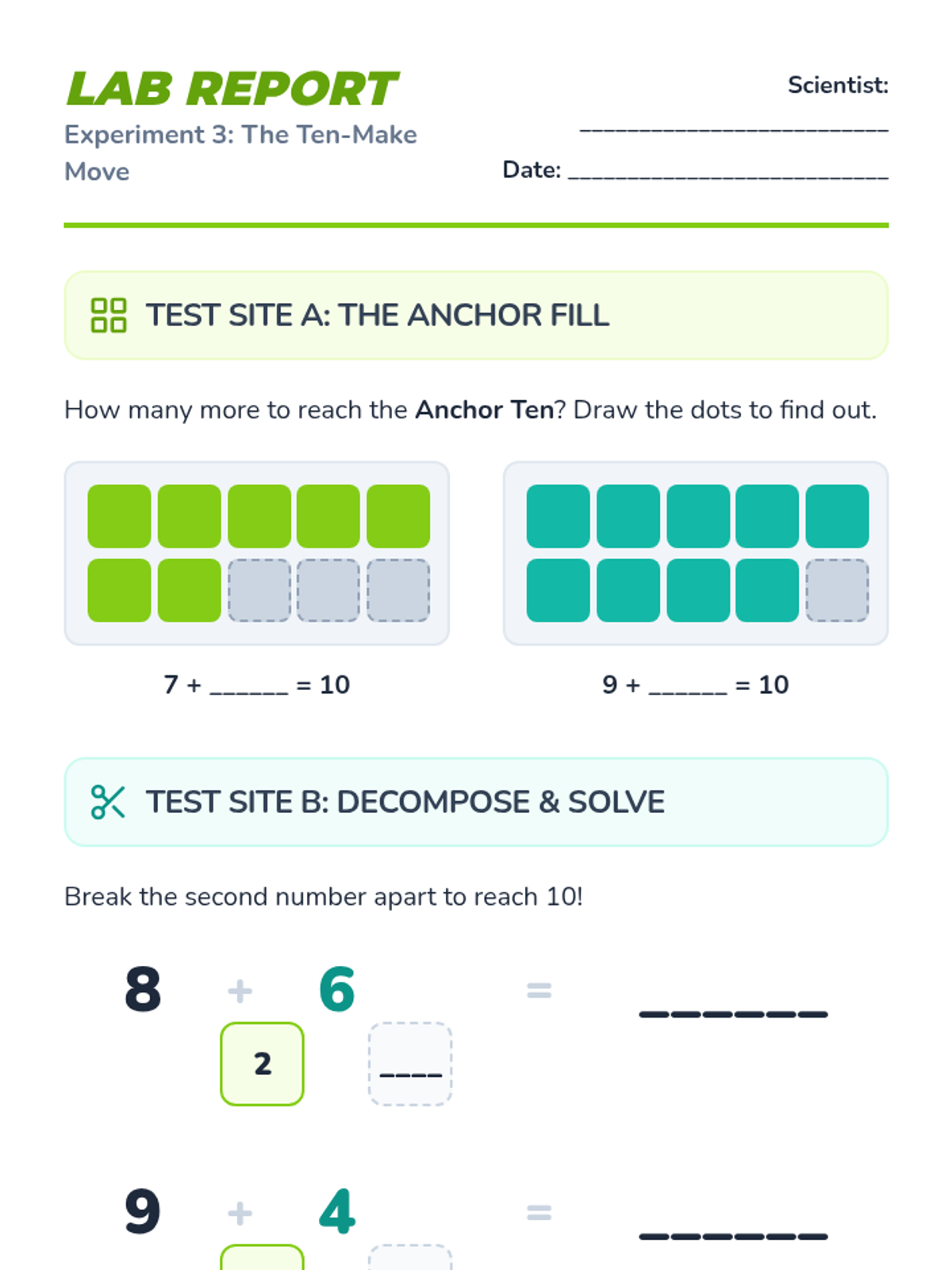
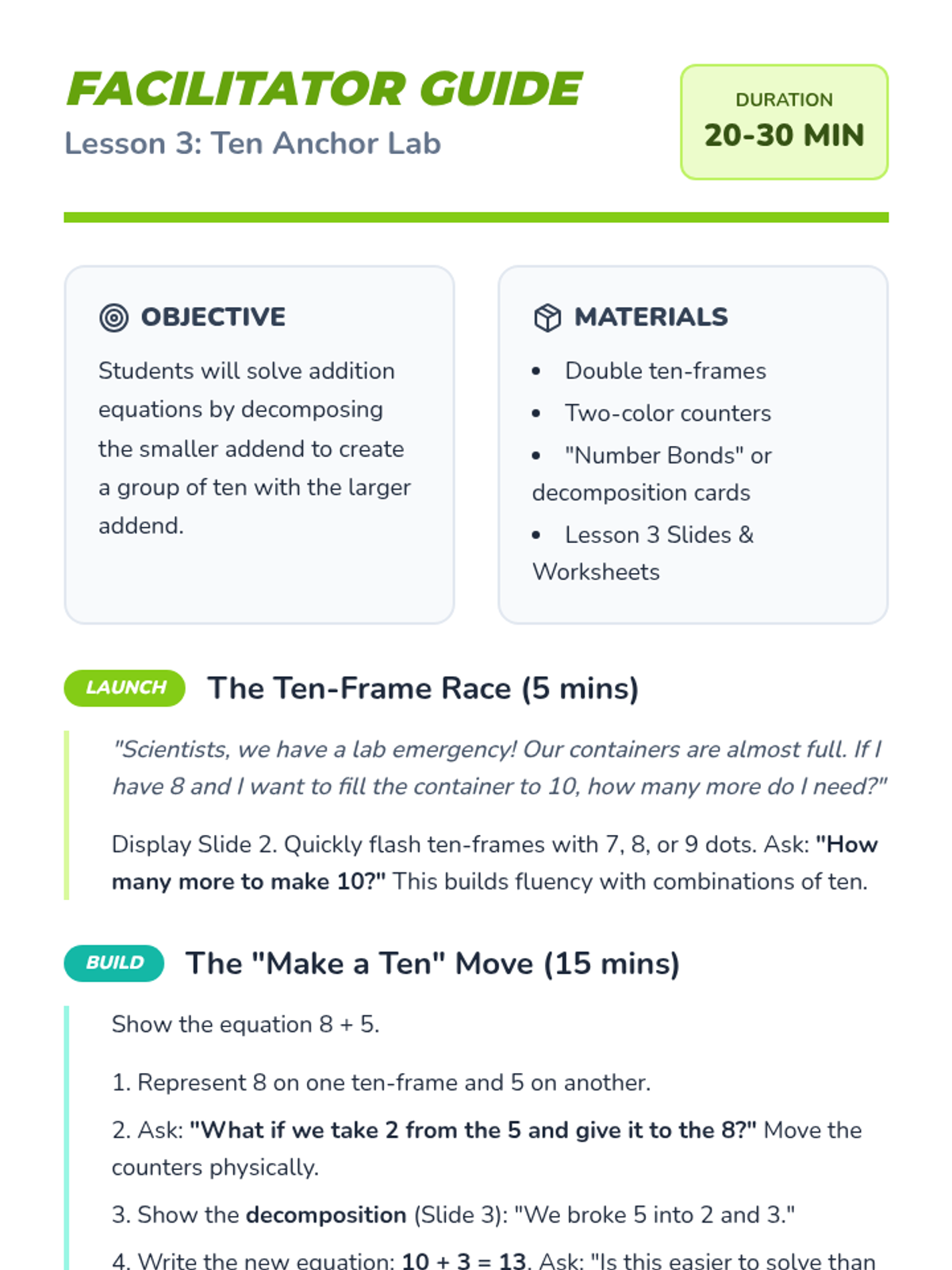
Focuses on the anchor number ten. Students learn to decompose smaller numbers to 'make a ten' as a high-leverage strategy for solving more complex addition and subtraction equations.
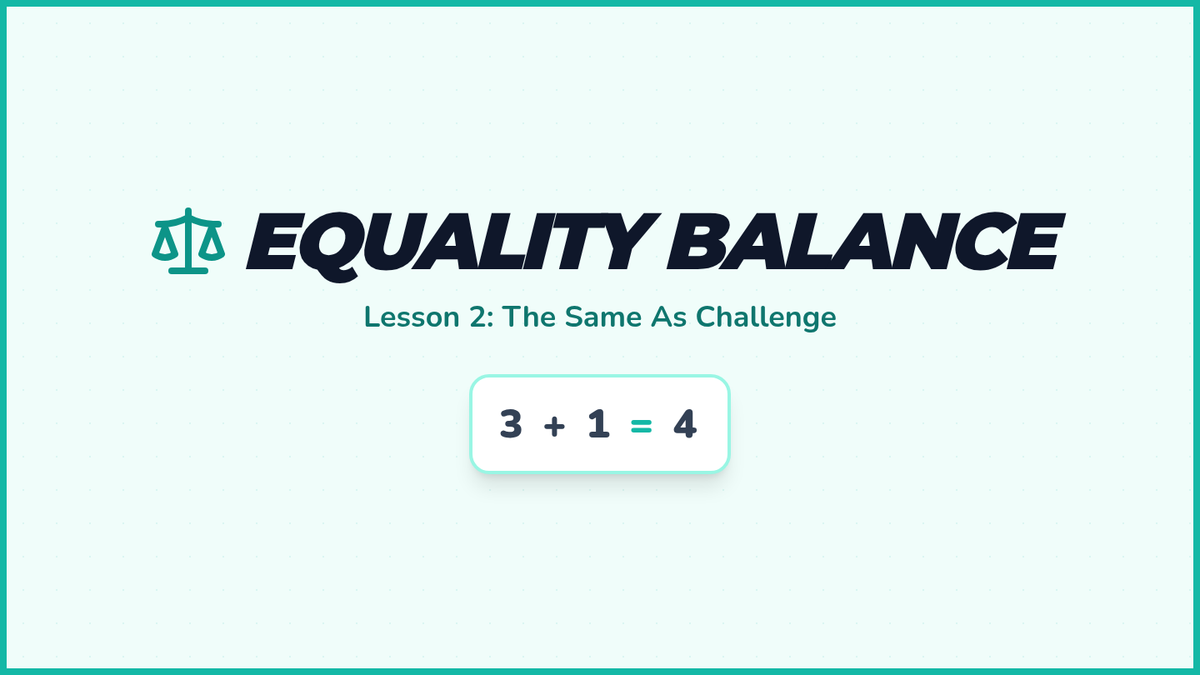
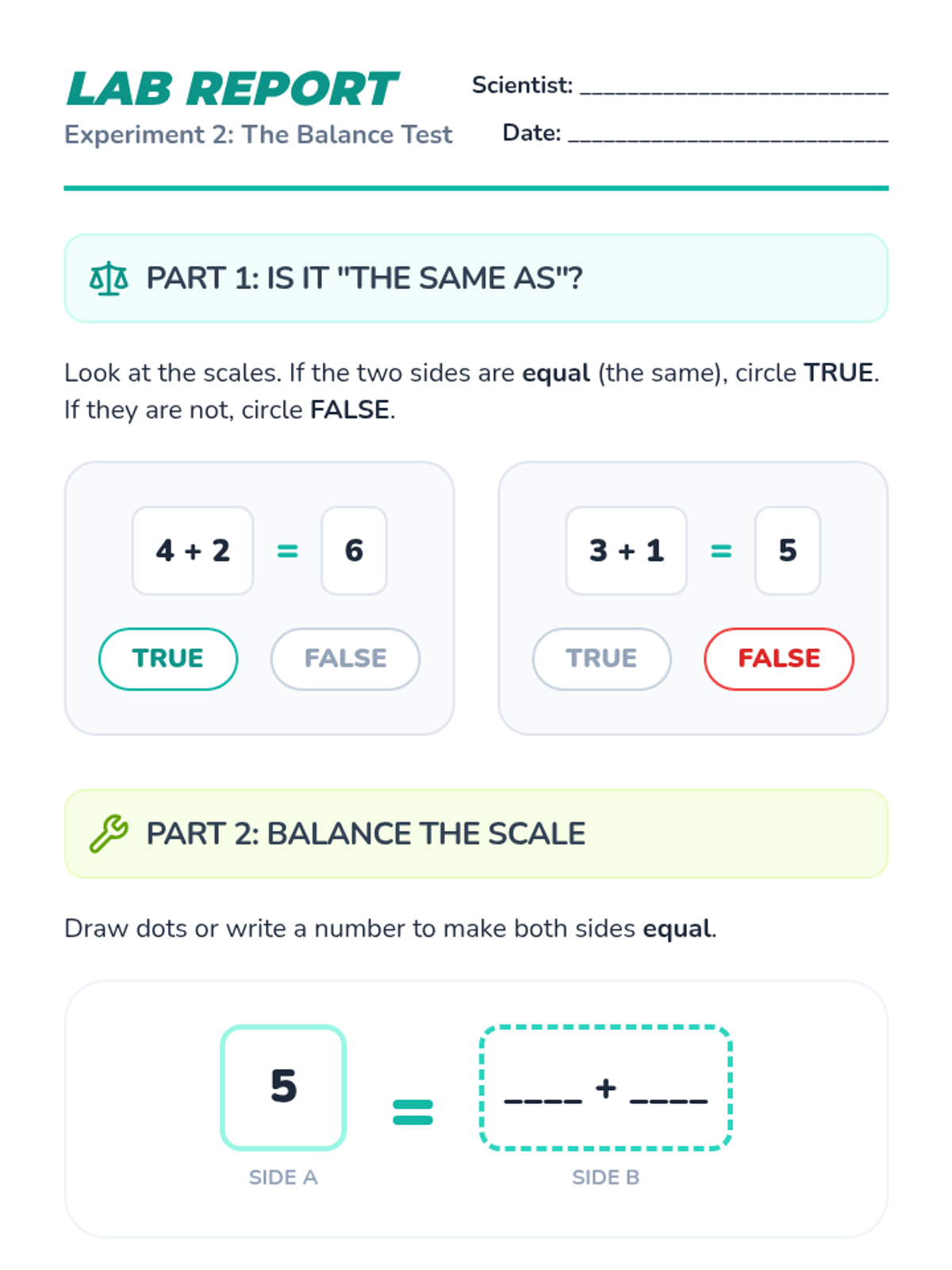
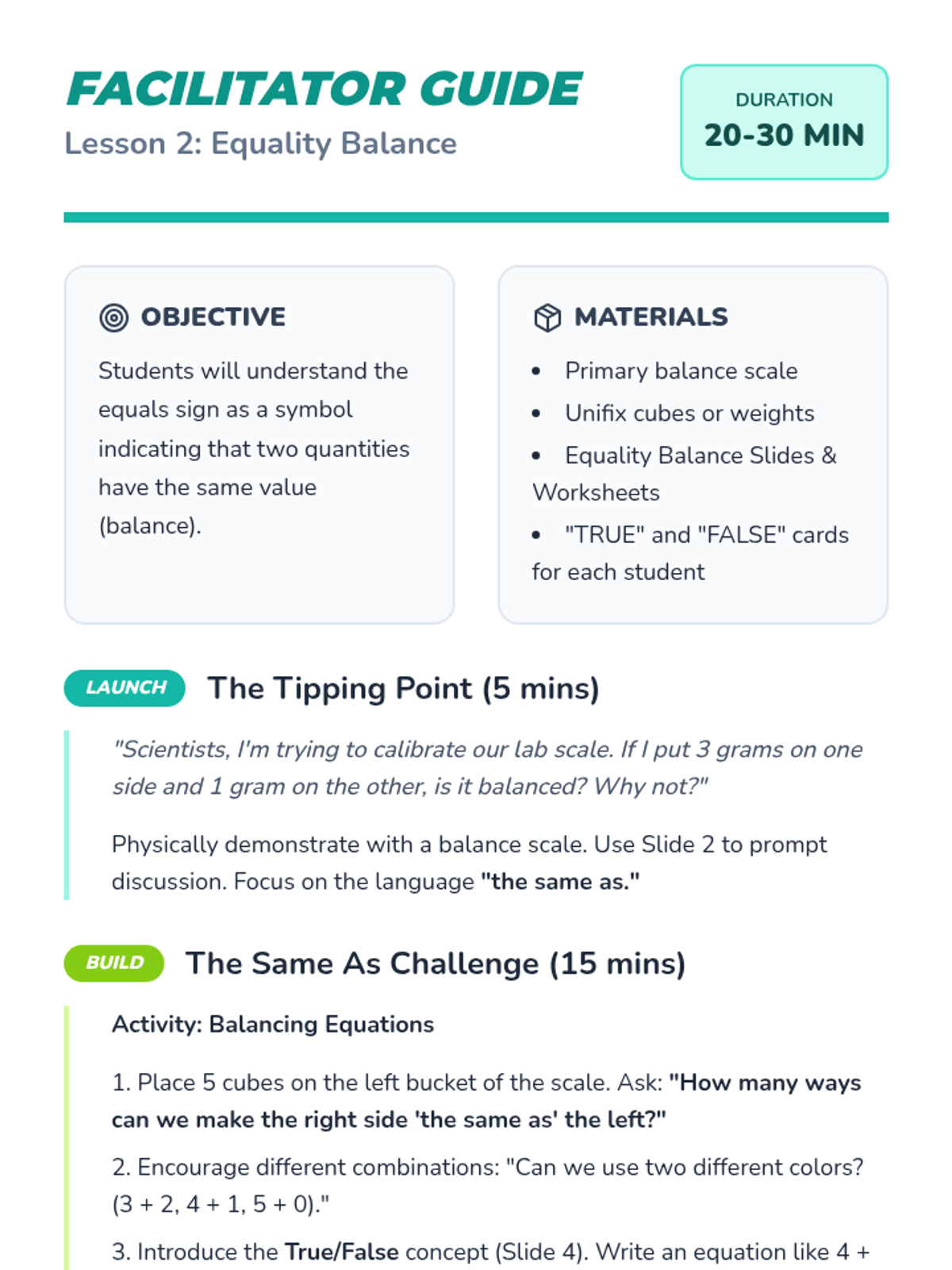
Redefines the equals sign as a symbol of balance and 'the same as' rather than 'the answer is.' Students use balance scales to evaluate if equations are true or false.
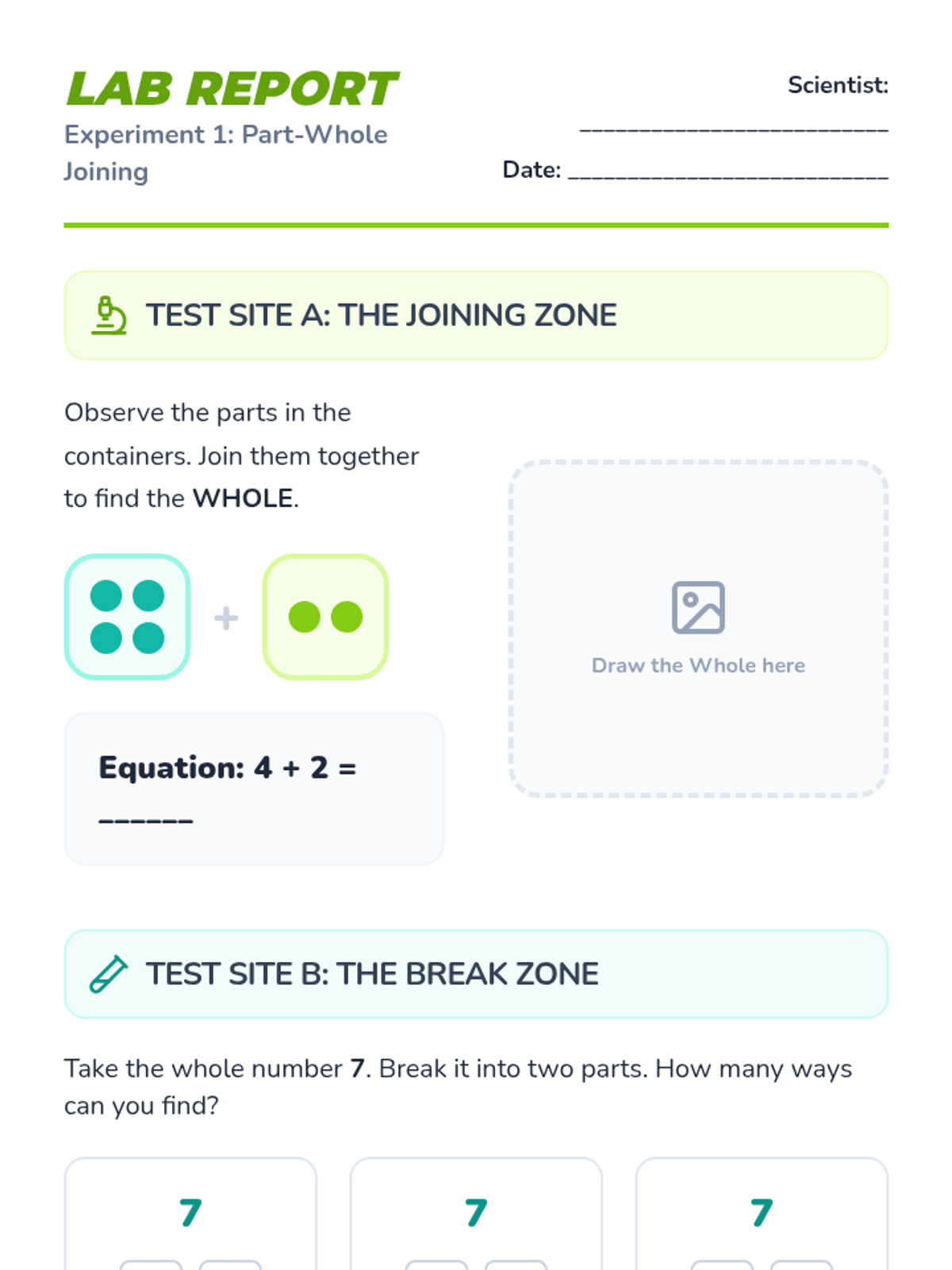
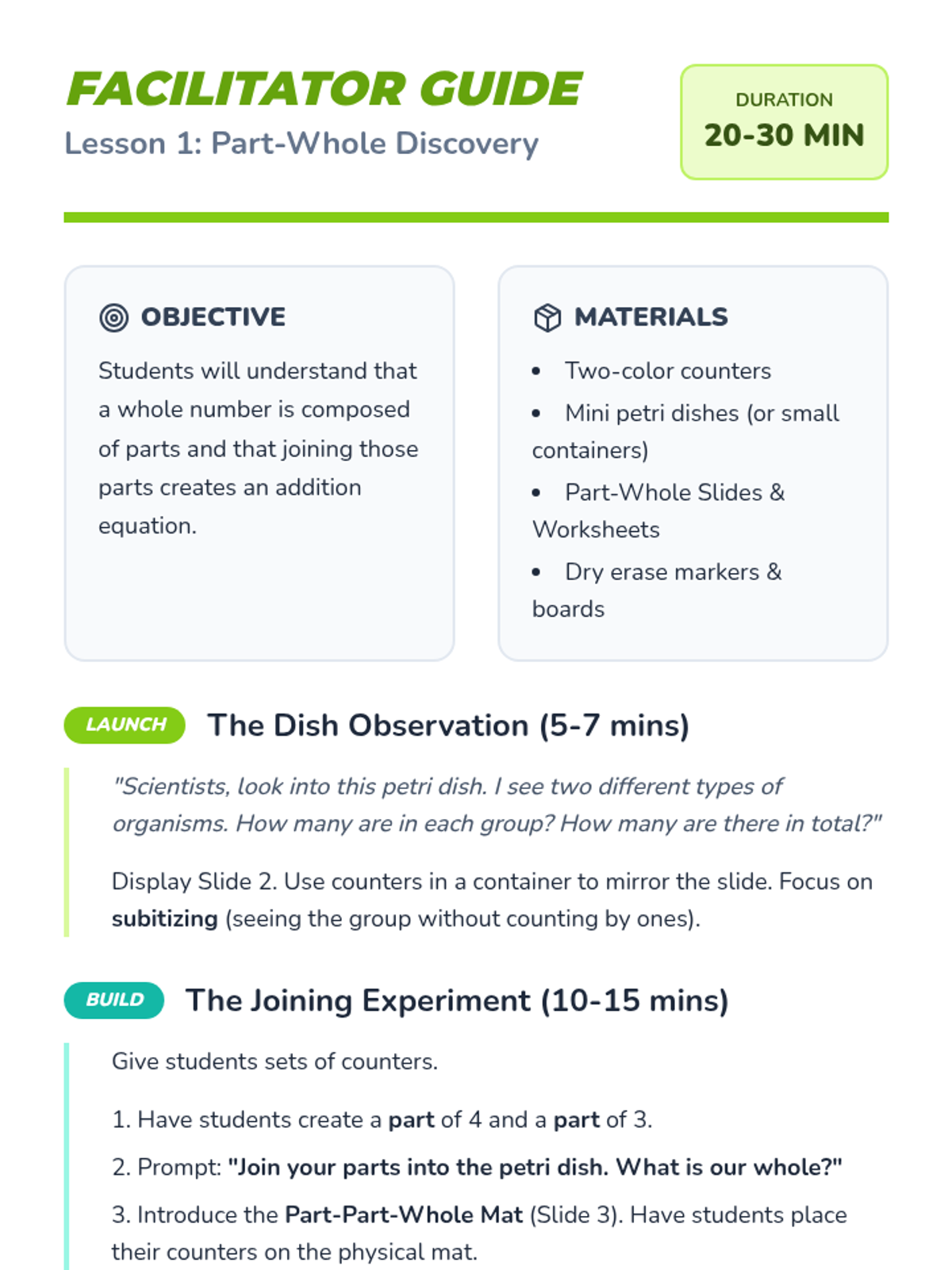
Establishes the foundational understanding of parts and wholes using visual models. Students learn that two parts join to create a whole, forming the basis for any addition or subtraction equation.
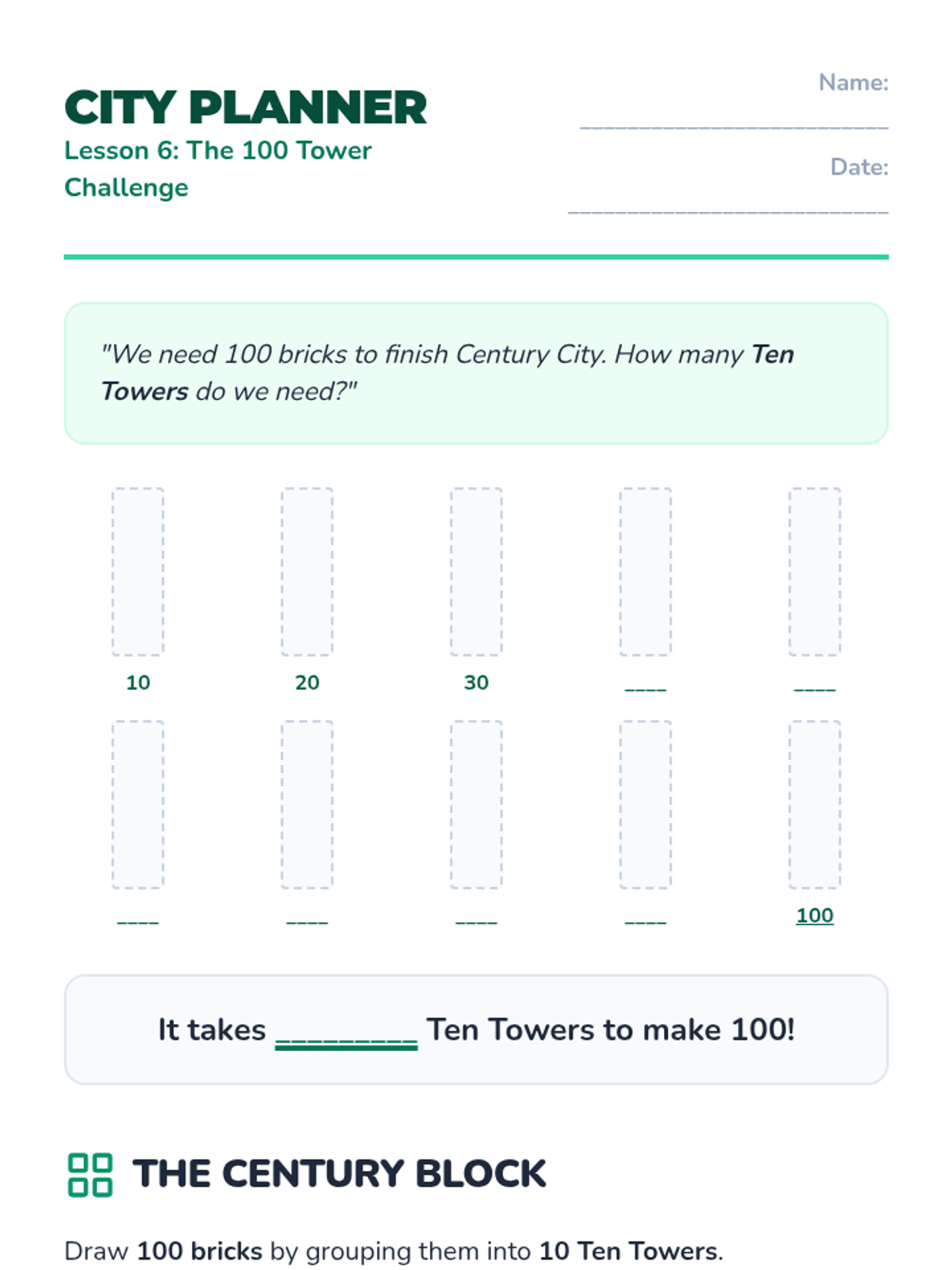
Synthesizes learning by building up to 100, understanding that 10 tens make a hundred.
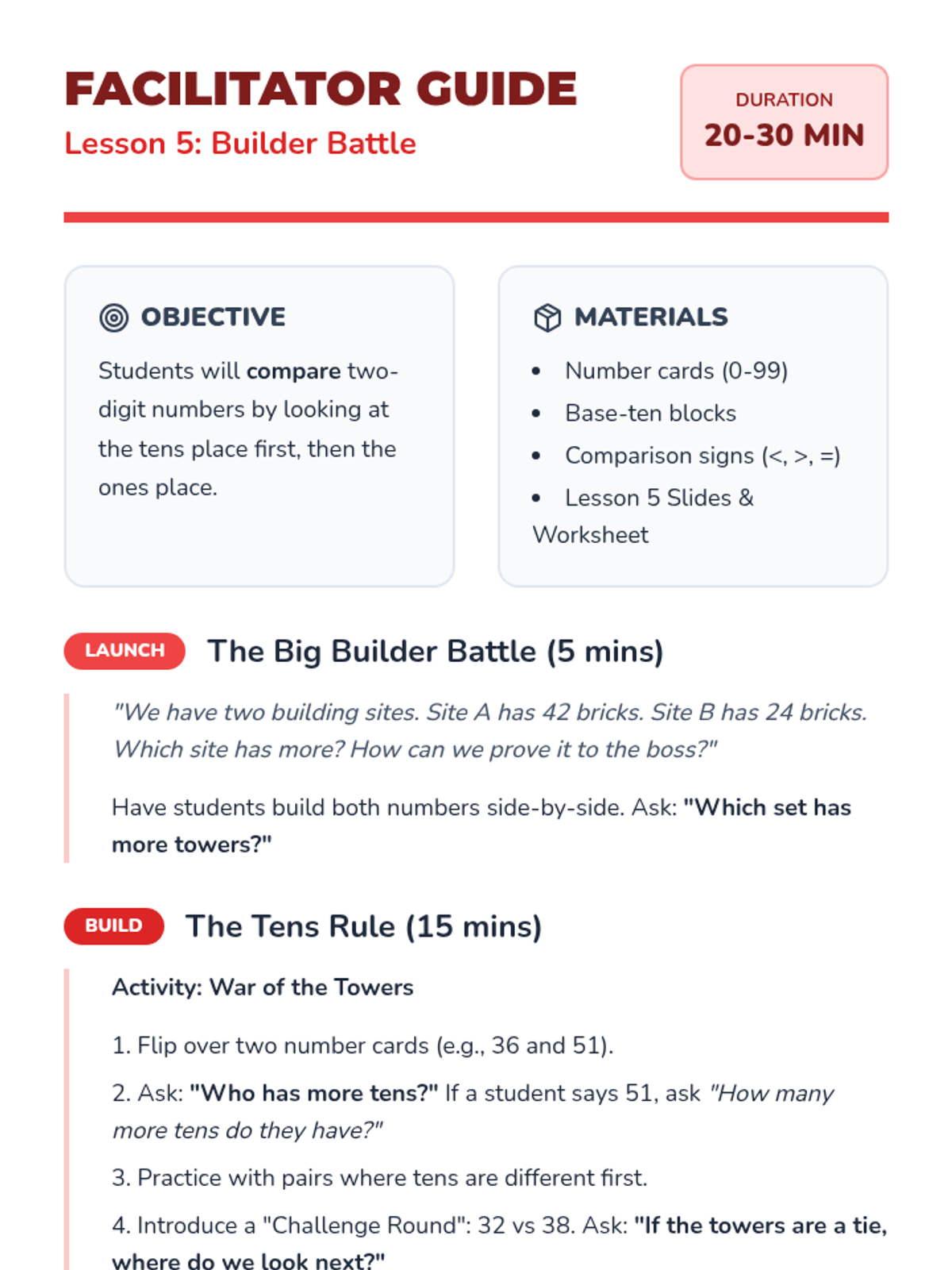
Uses place value knowledge to compare two-digit numbers, identifying which 'tower' is taller based on tens and then ones.
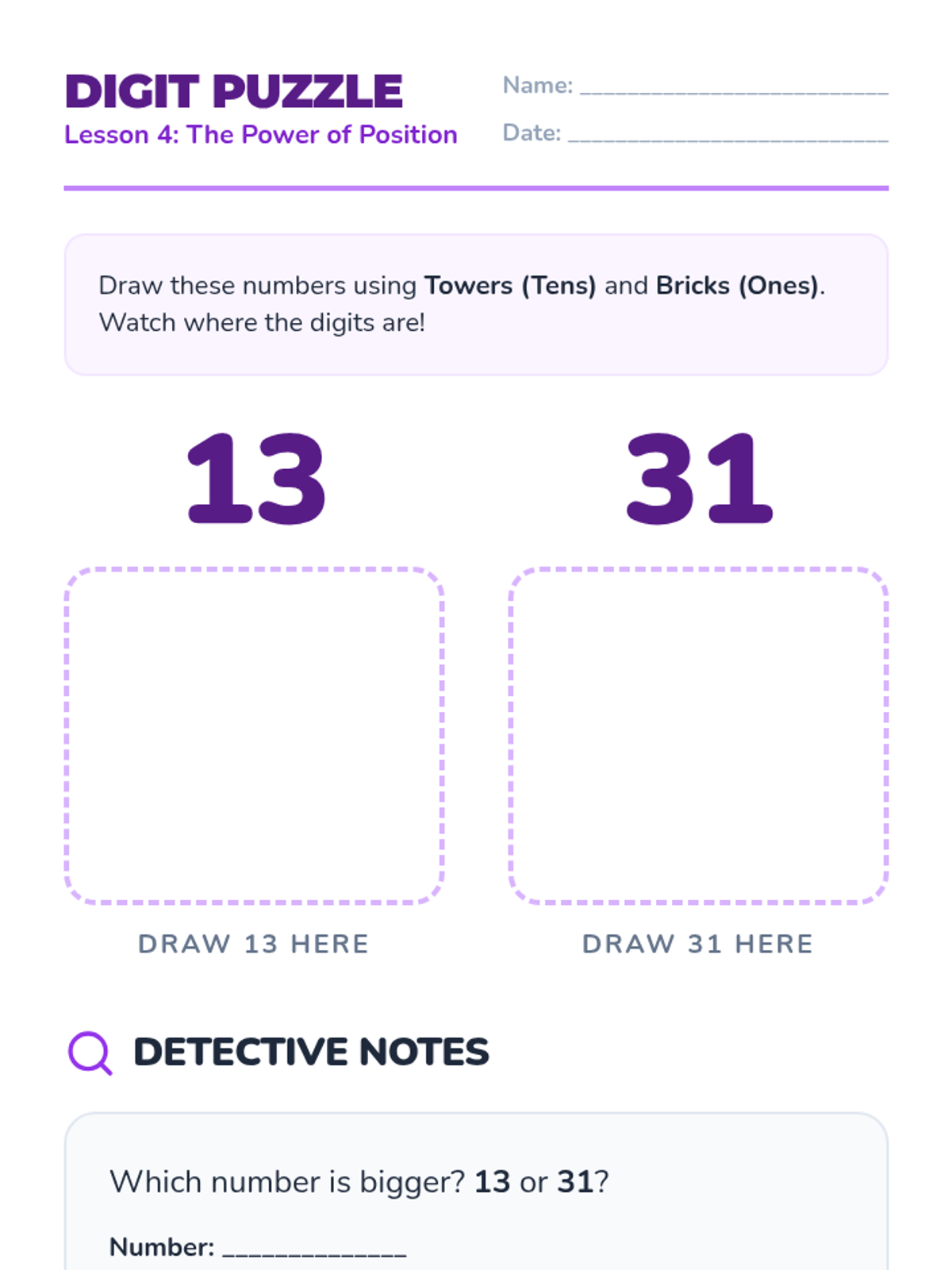
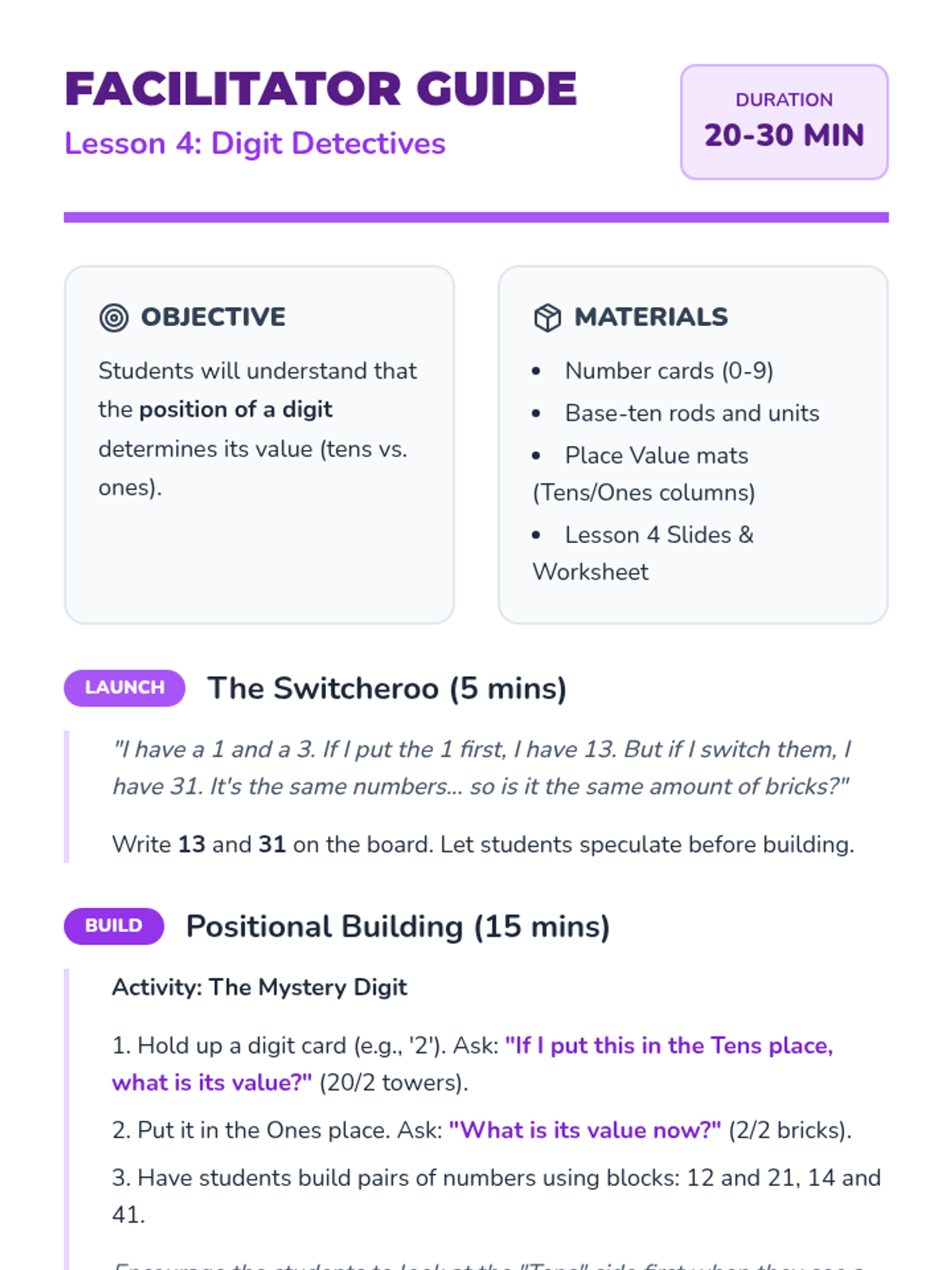
Investigates the position of digits, helping students distinguish between the value of the tens place and the ones place.
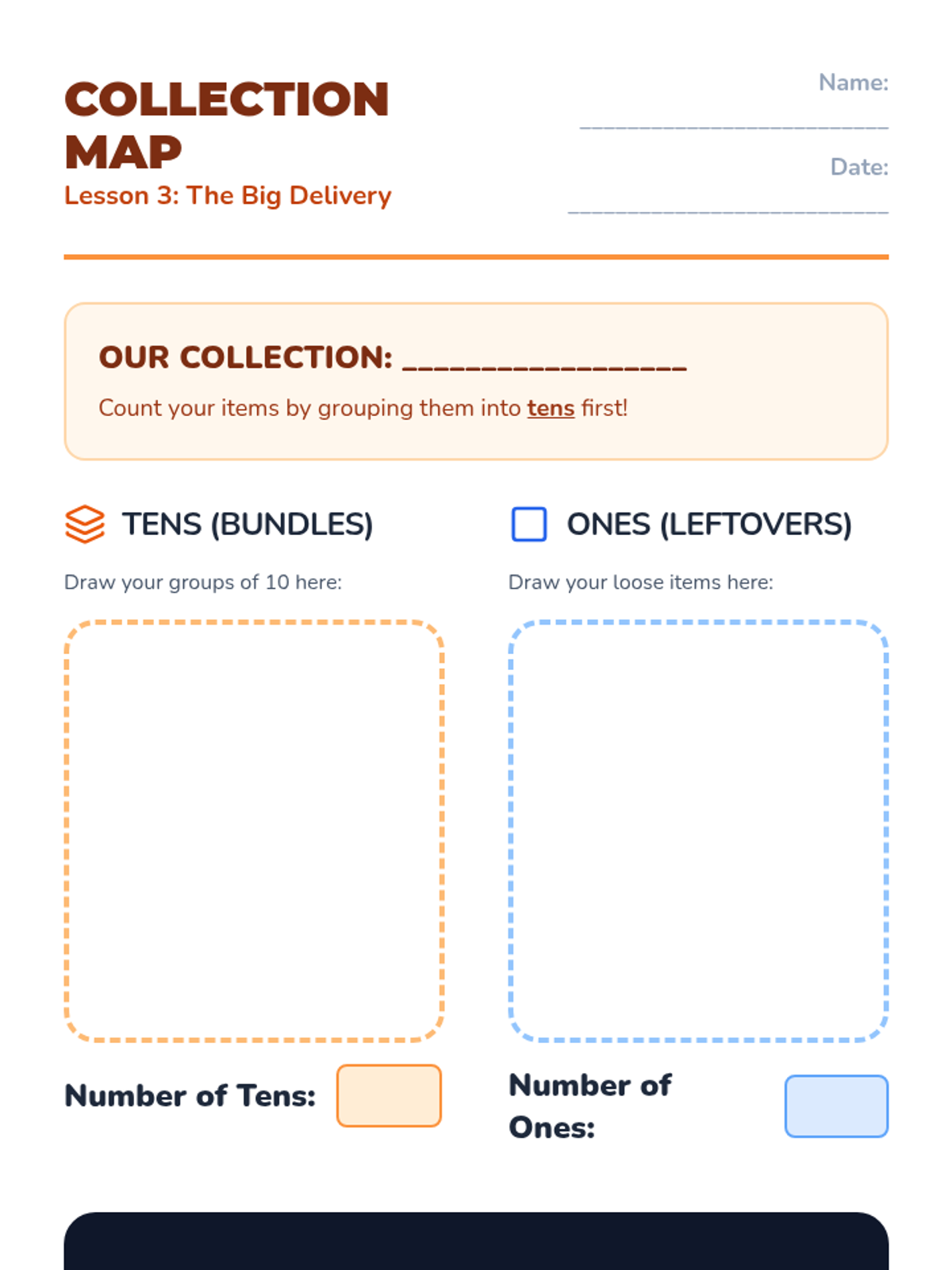
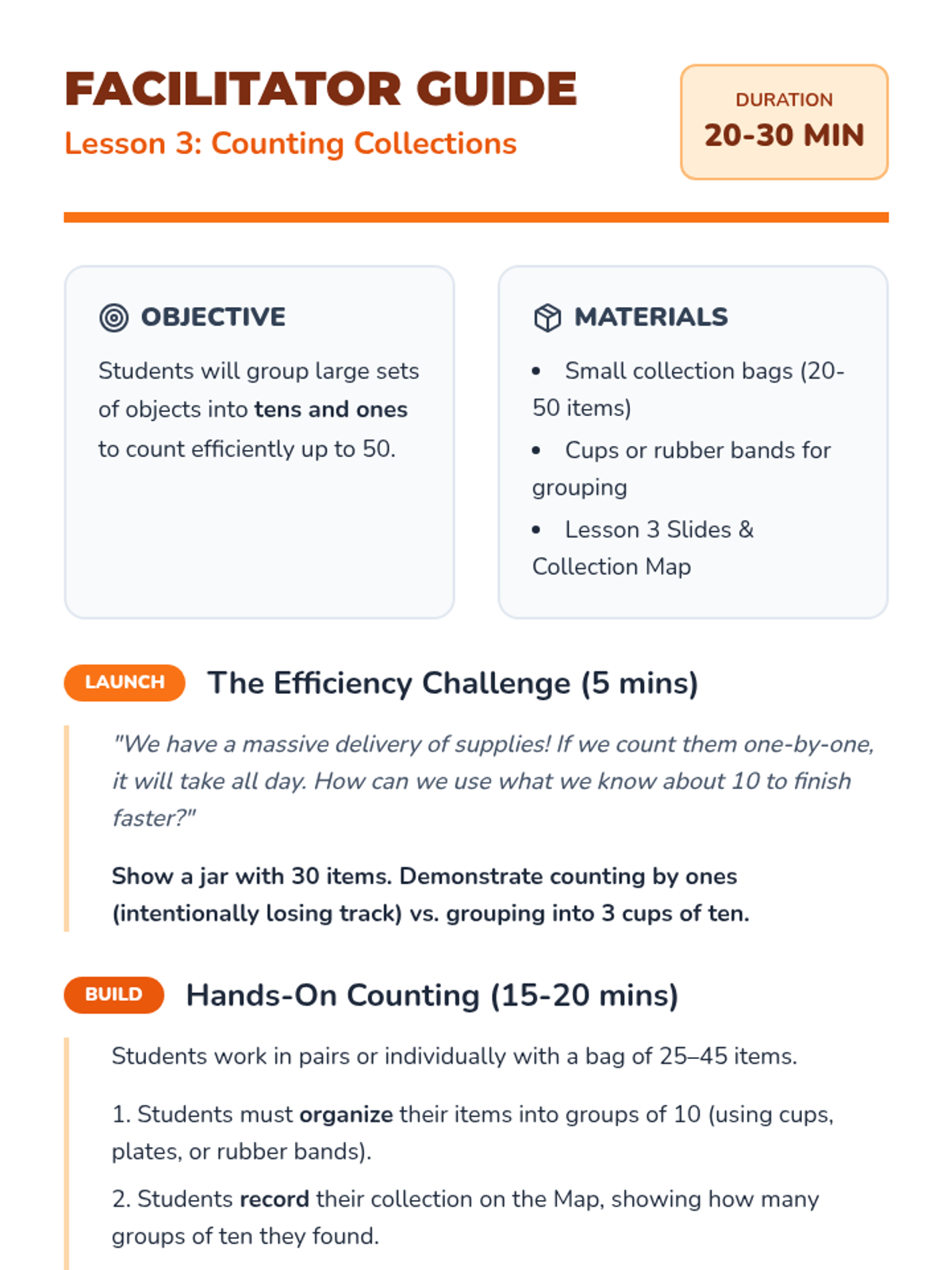
Expands place value understanding to numbers up to 50, focusing on counting large collections by grouping into tens.
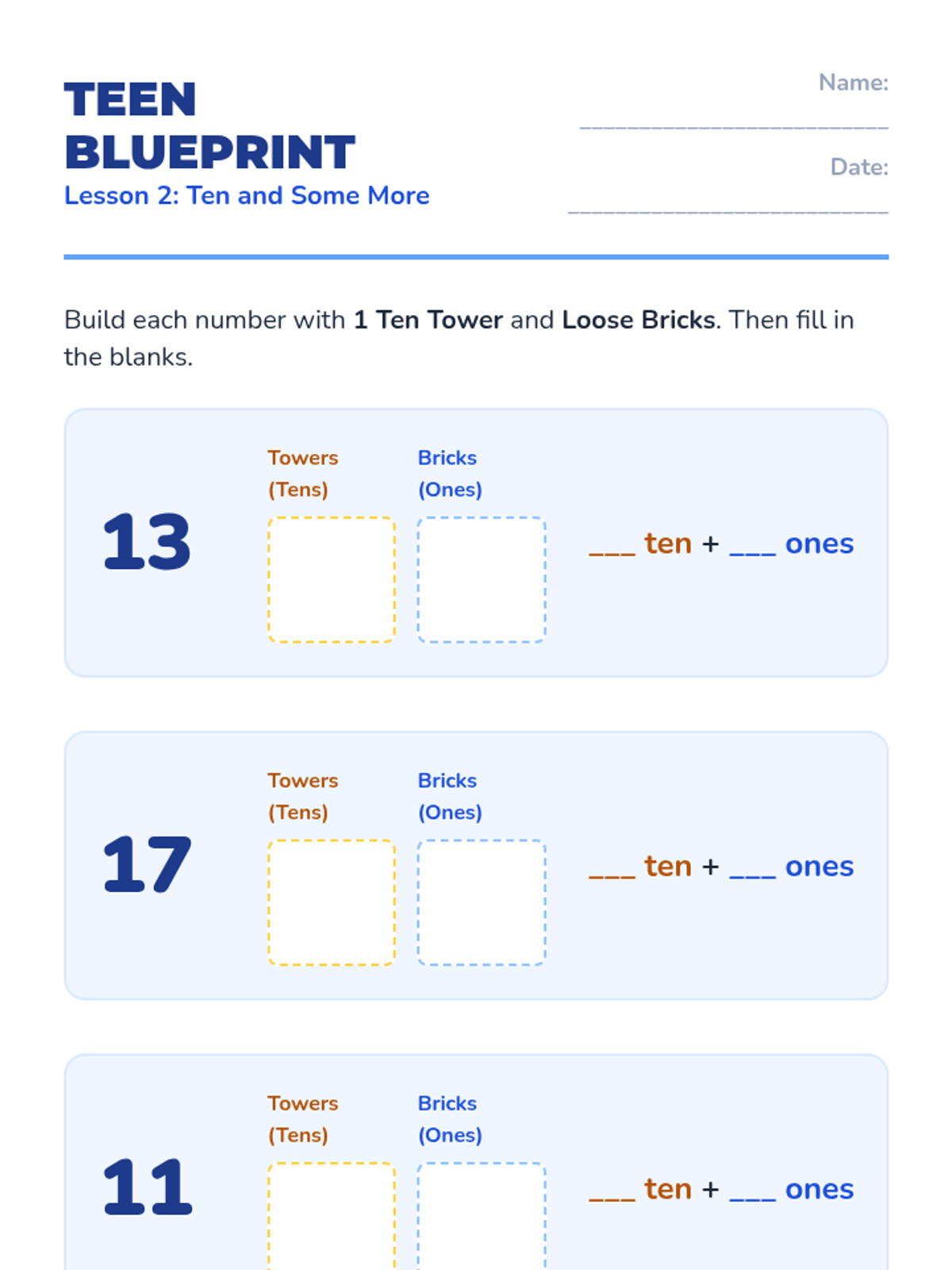
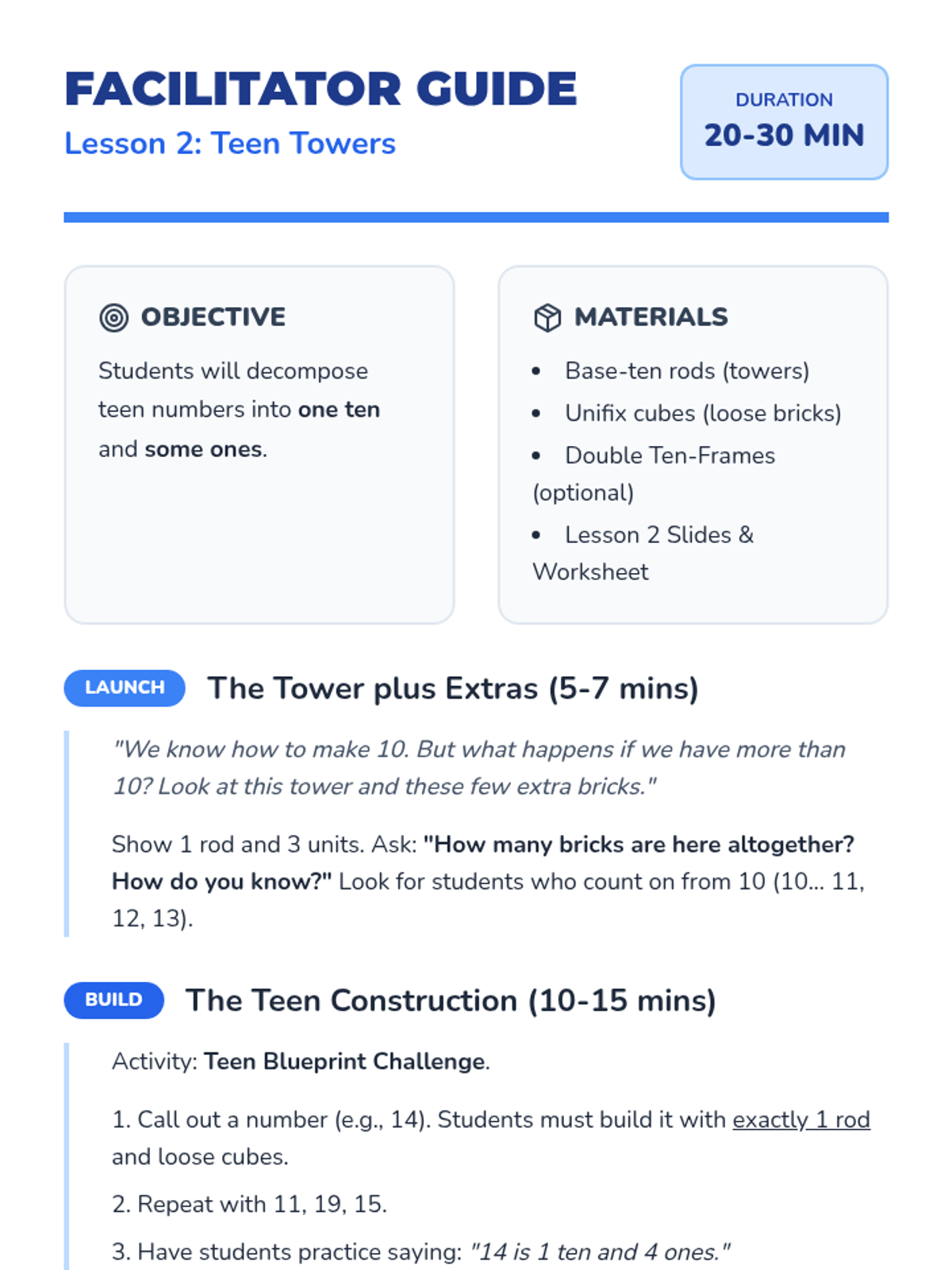
Explores teen numbers (11-19) as a bundle of ten and some extra ones, reinforcing the 'ten plus' structure.
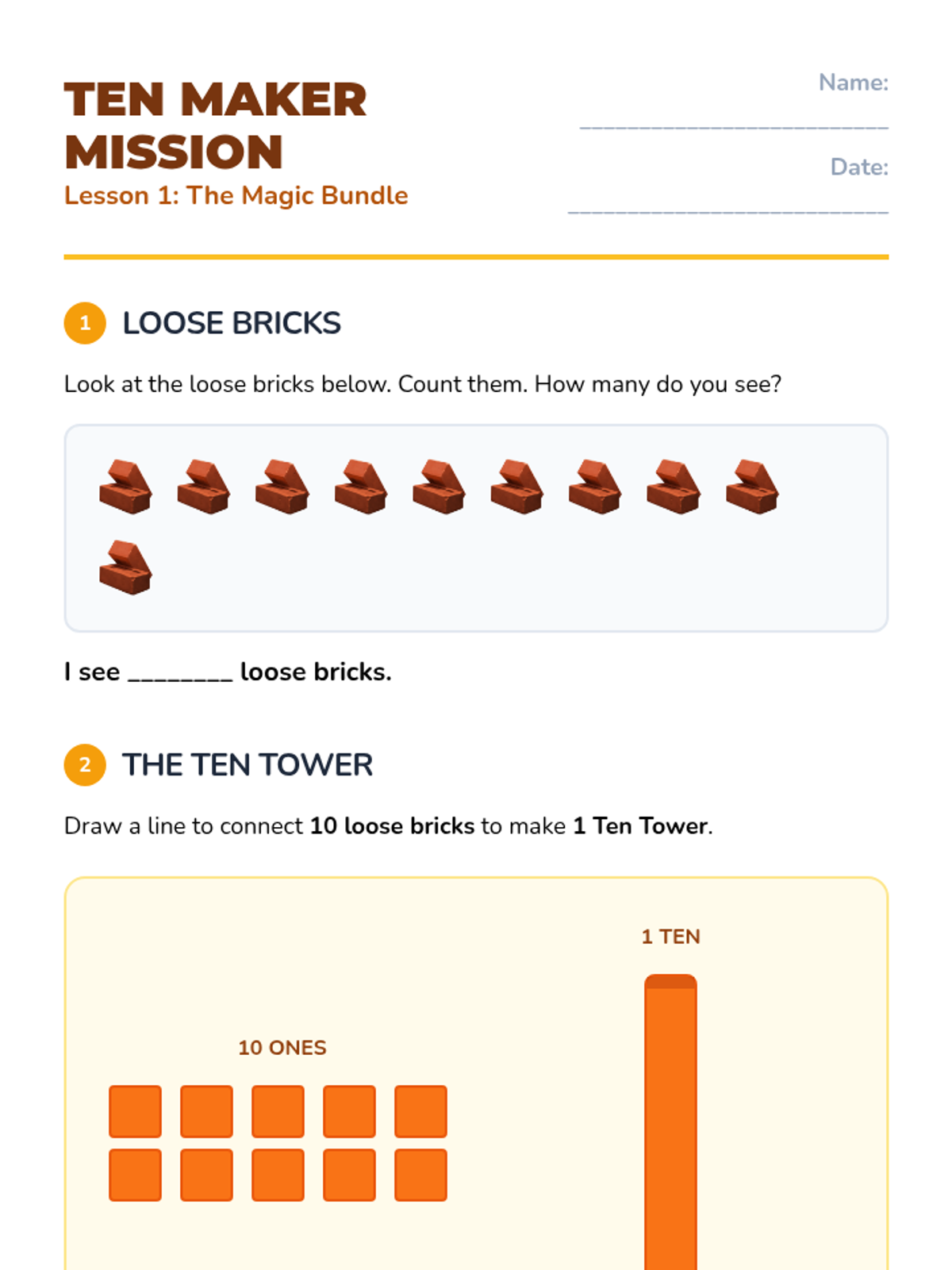
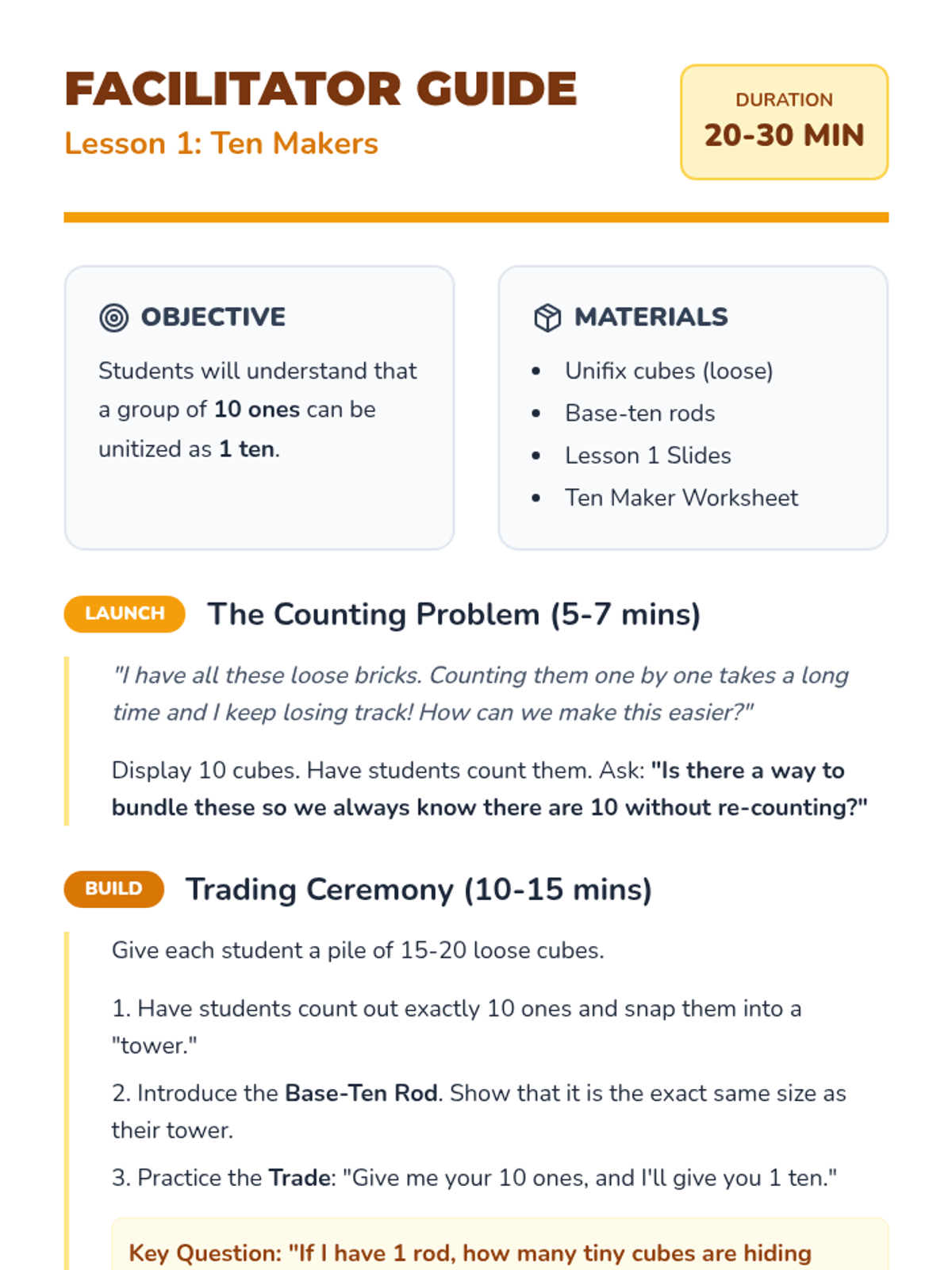
Focuses on the transition from counting by ones to unitizing ten as a single group. Students use bundles and frames to see '10' as both ten ones and one ten.
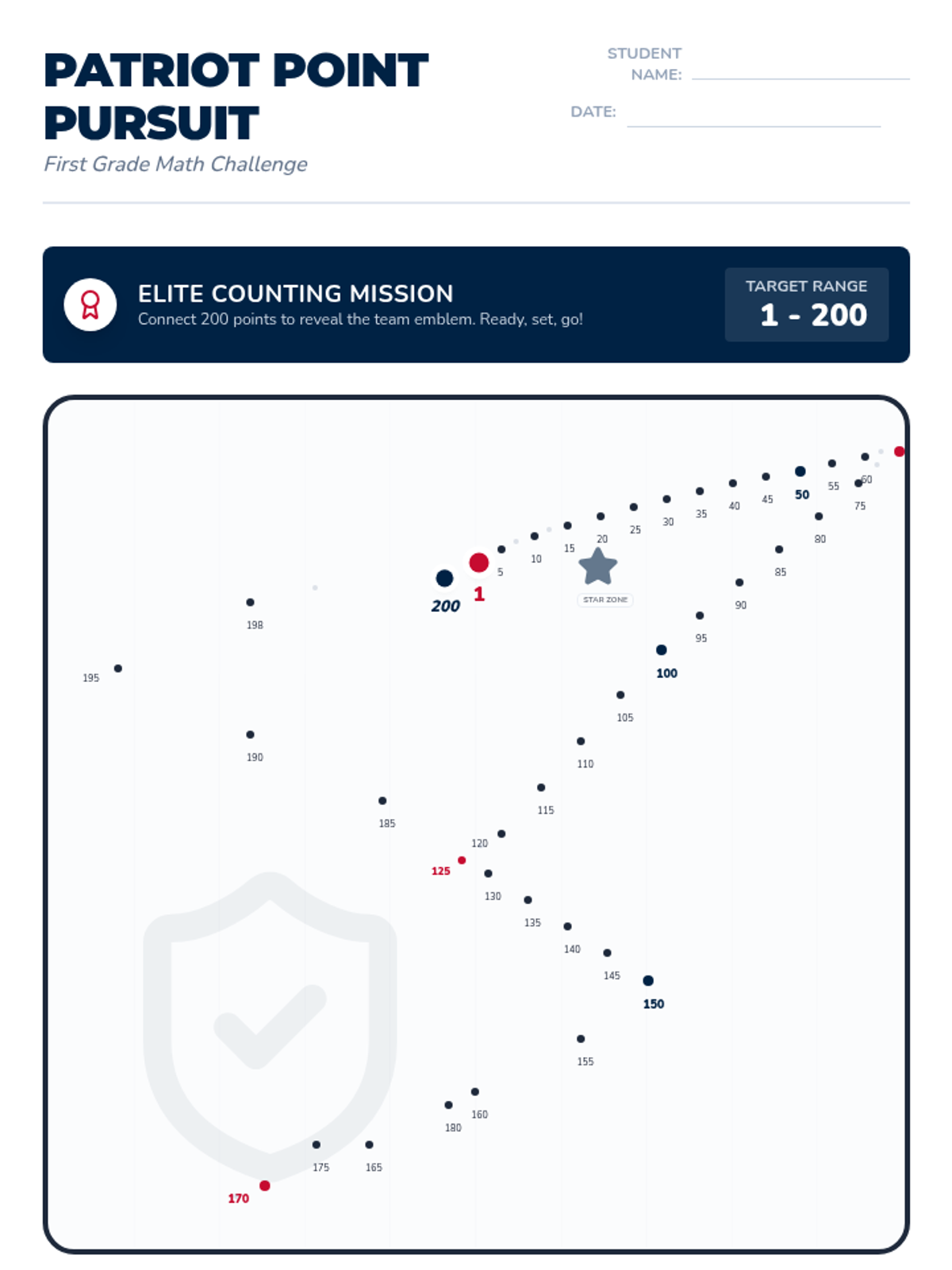
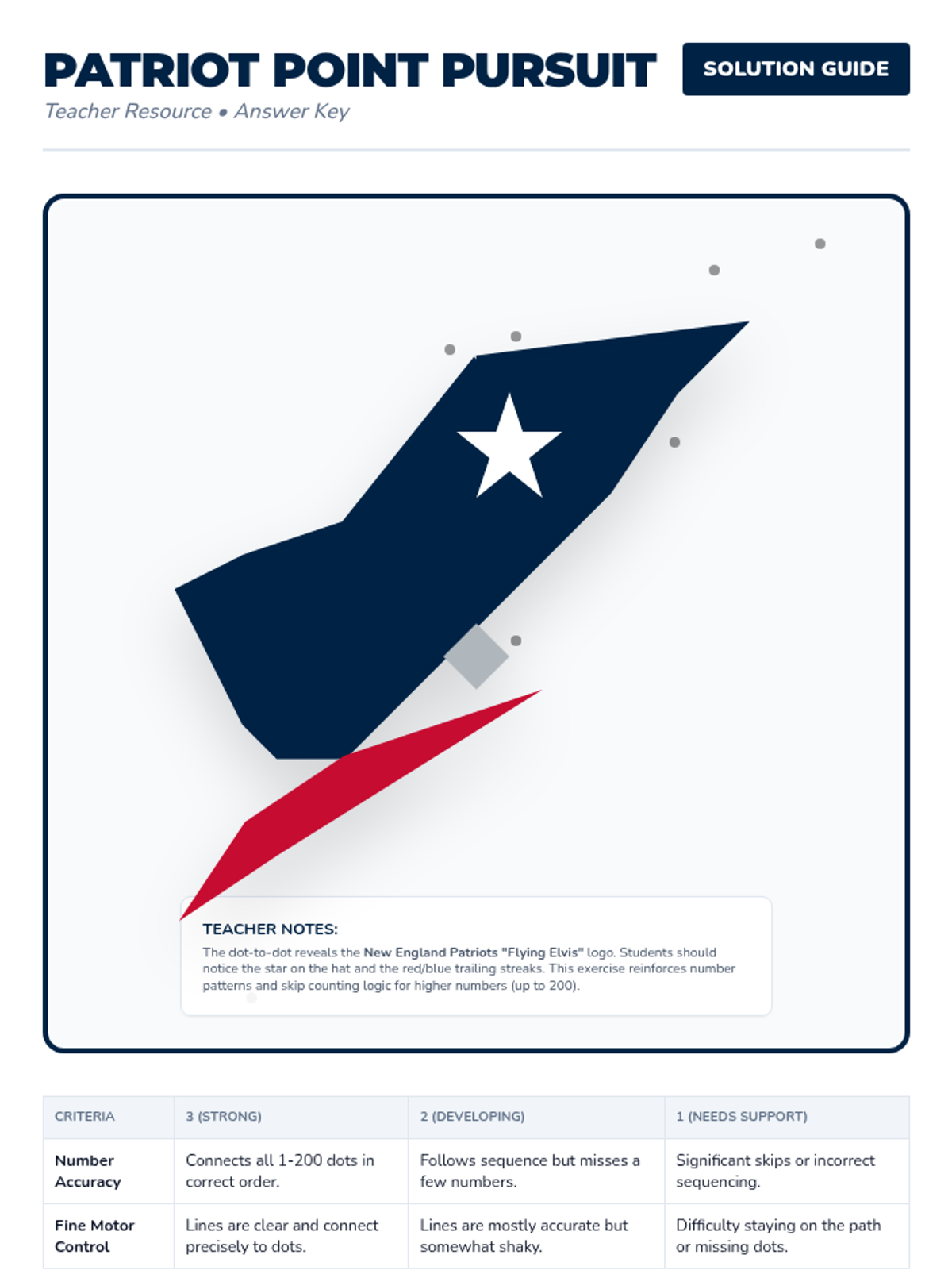
A counting and fine motor activity centered around the New England Patriots logo, challenging students to count and connect numbers up to 200.
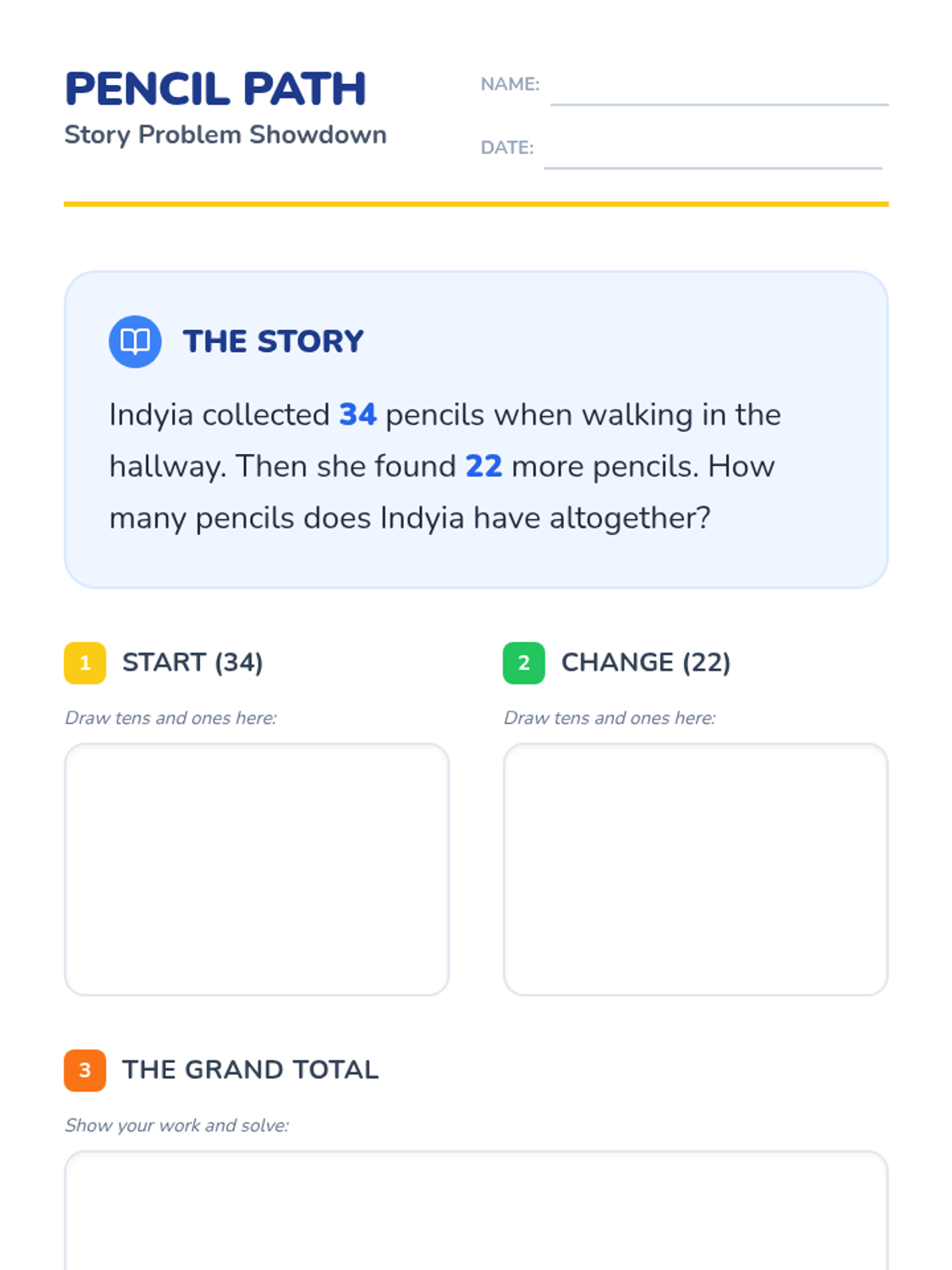
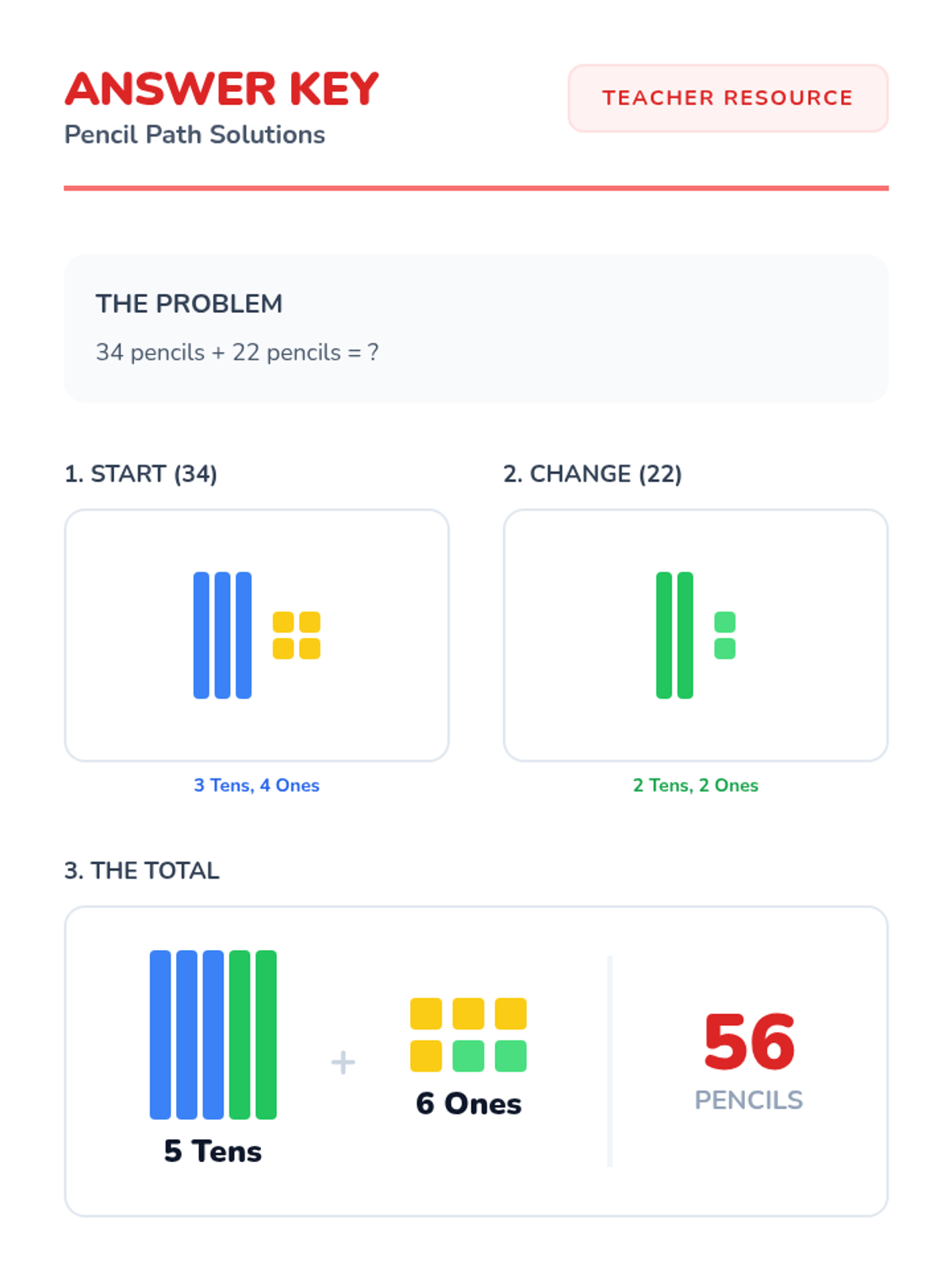
A lesson focused on solving addition story problems using visual representations, featuring a character named Indyia collecting pencils in a school hallway.
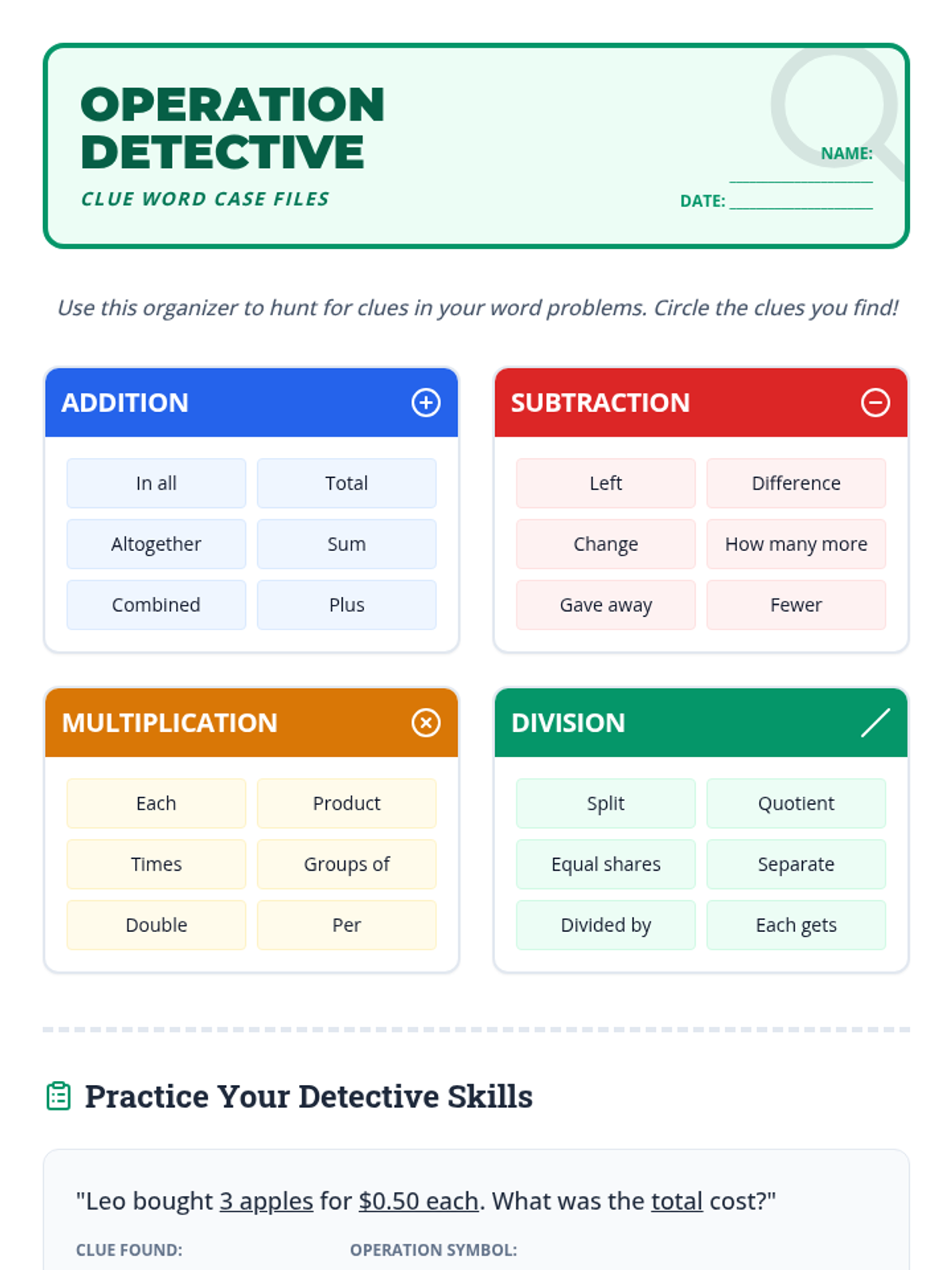
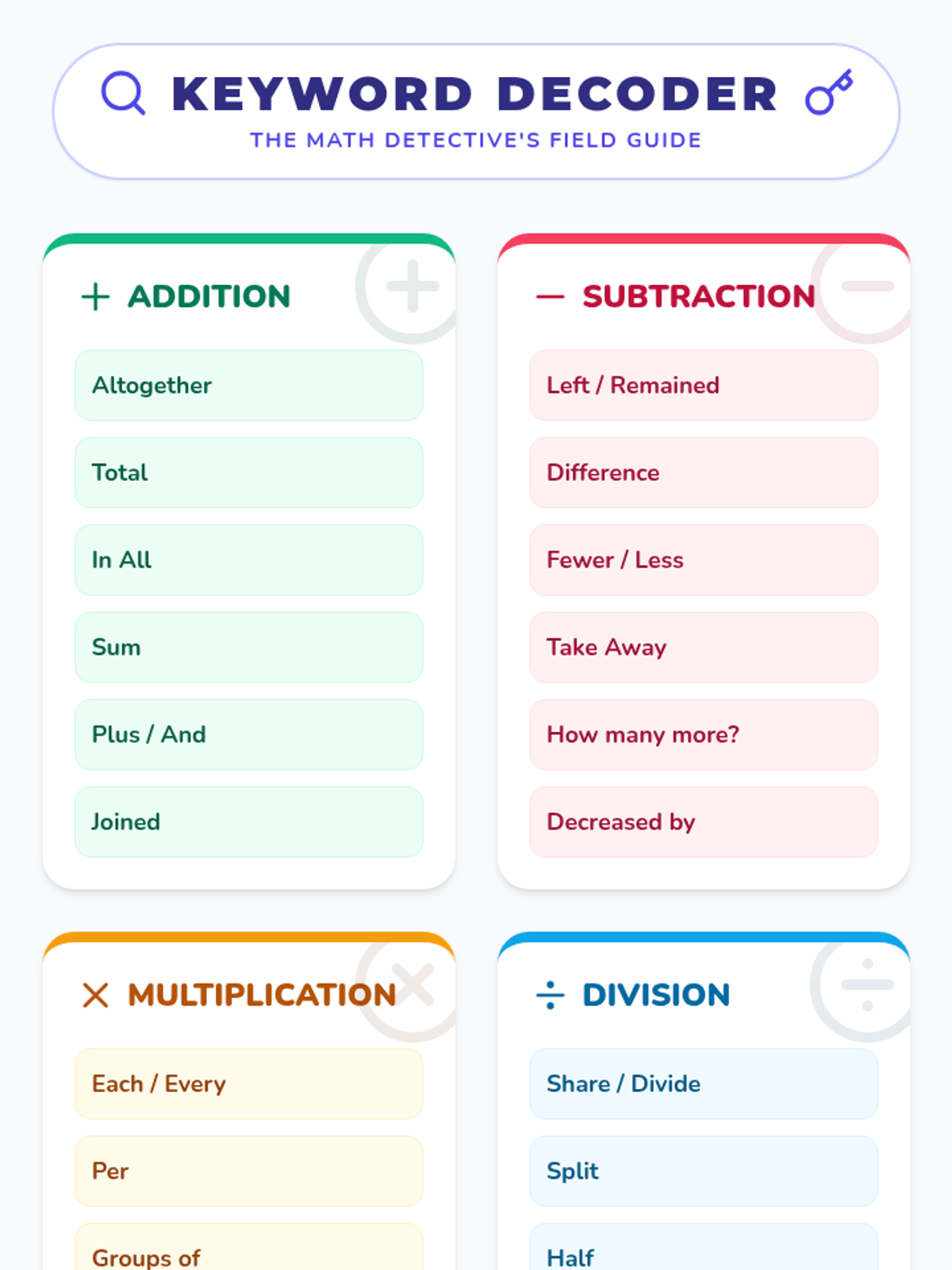
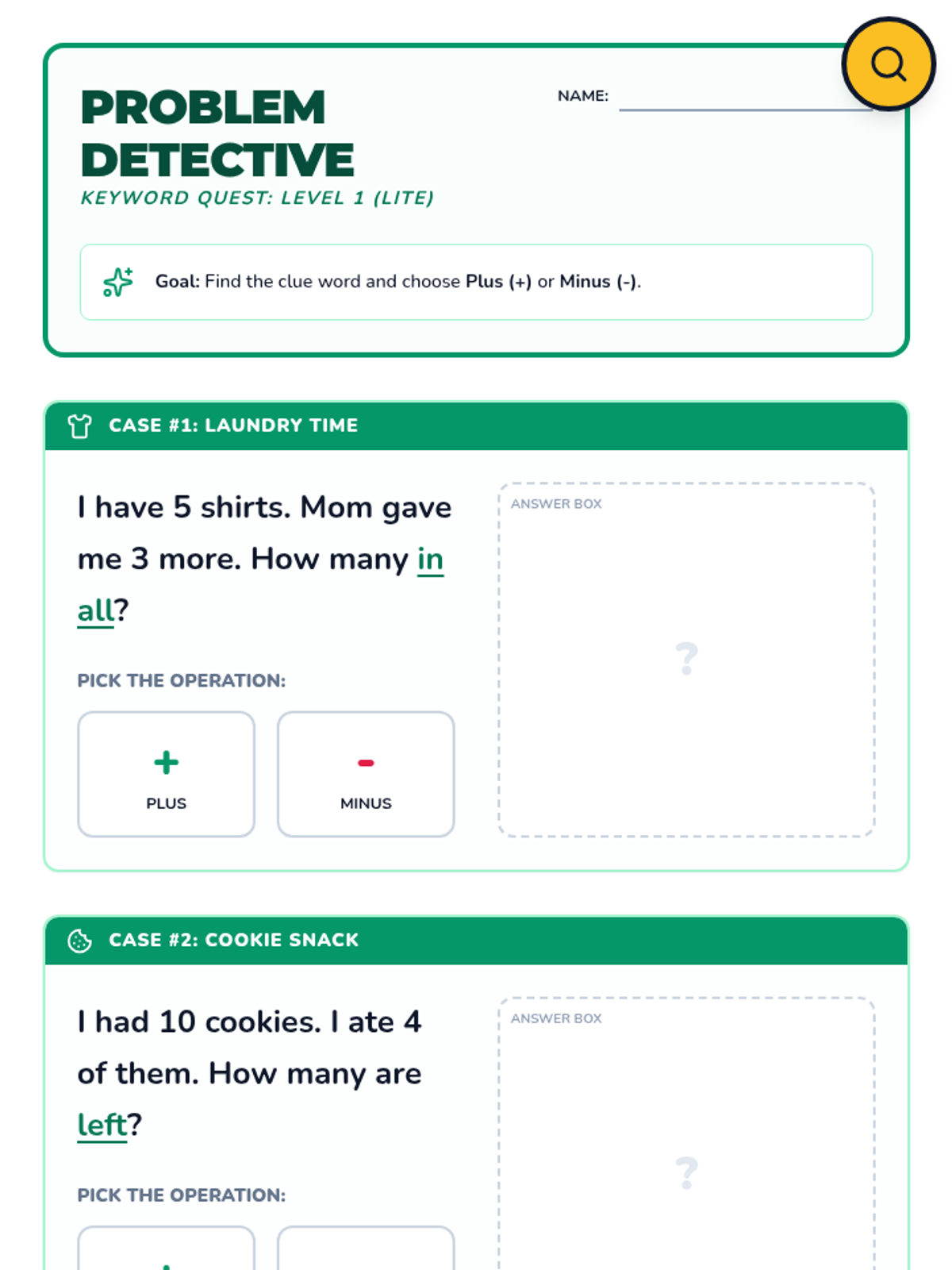
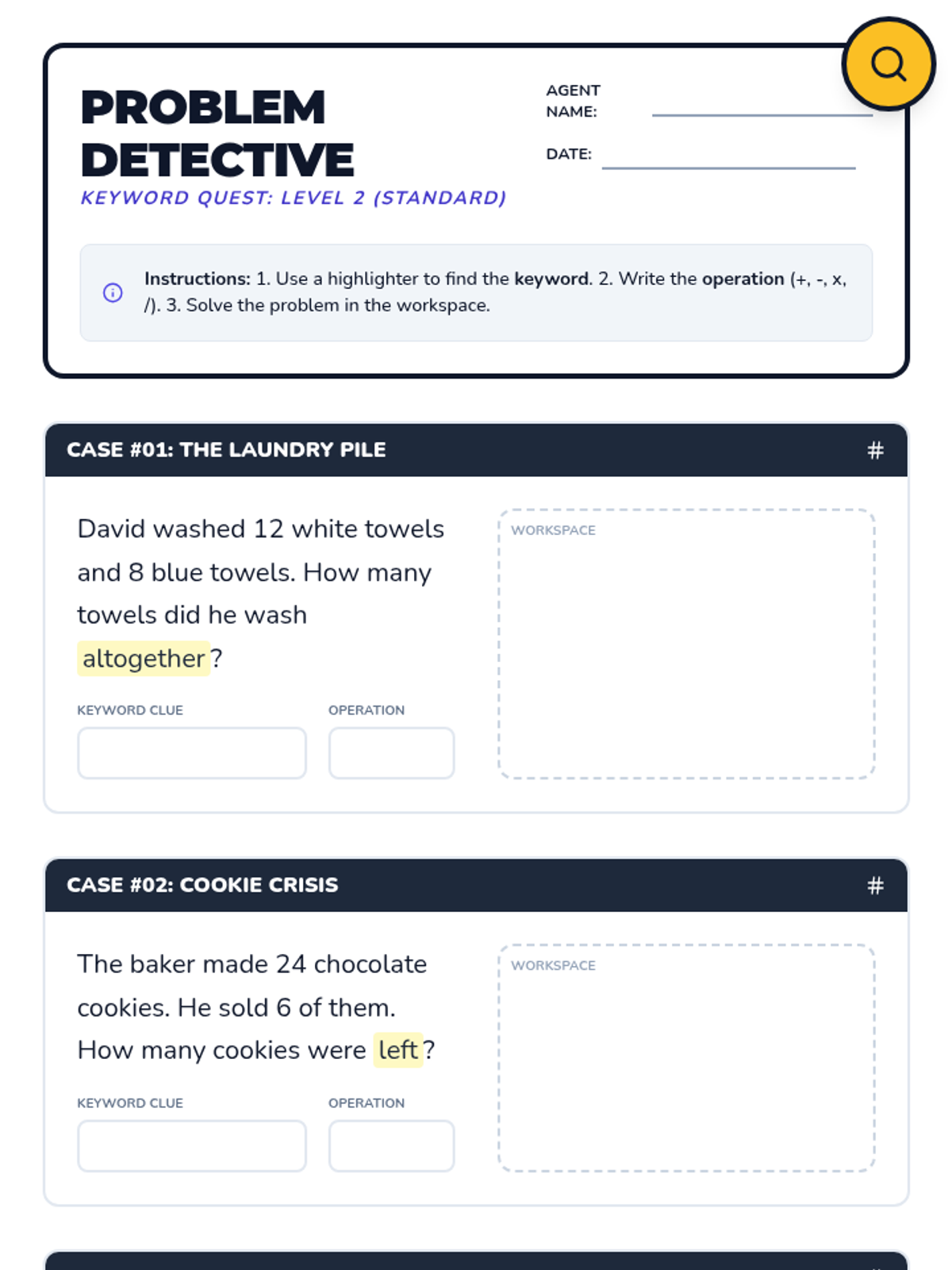
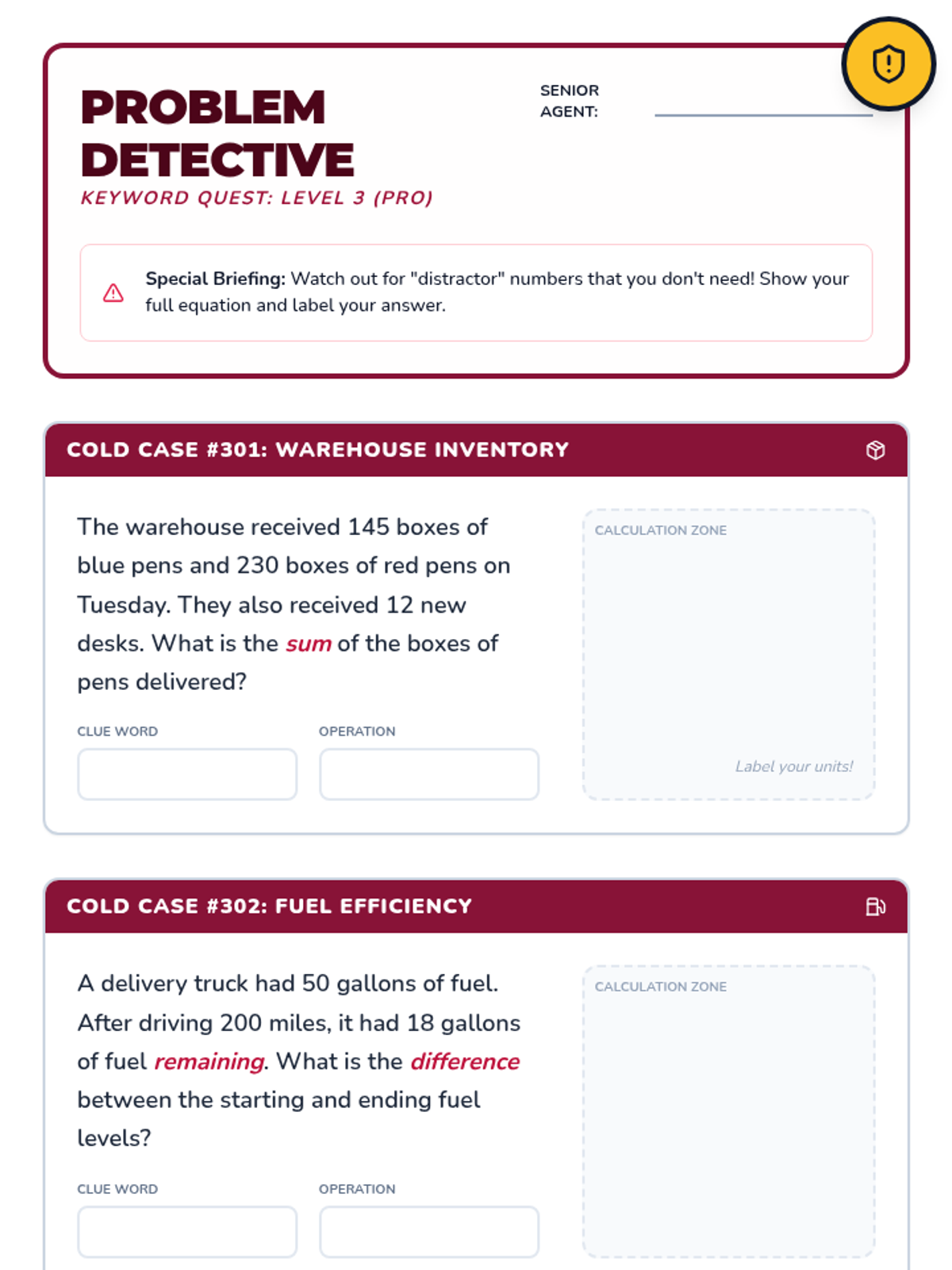
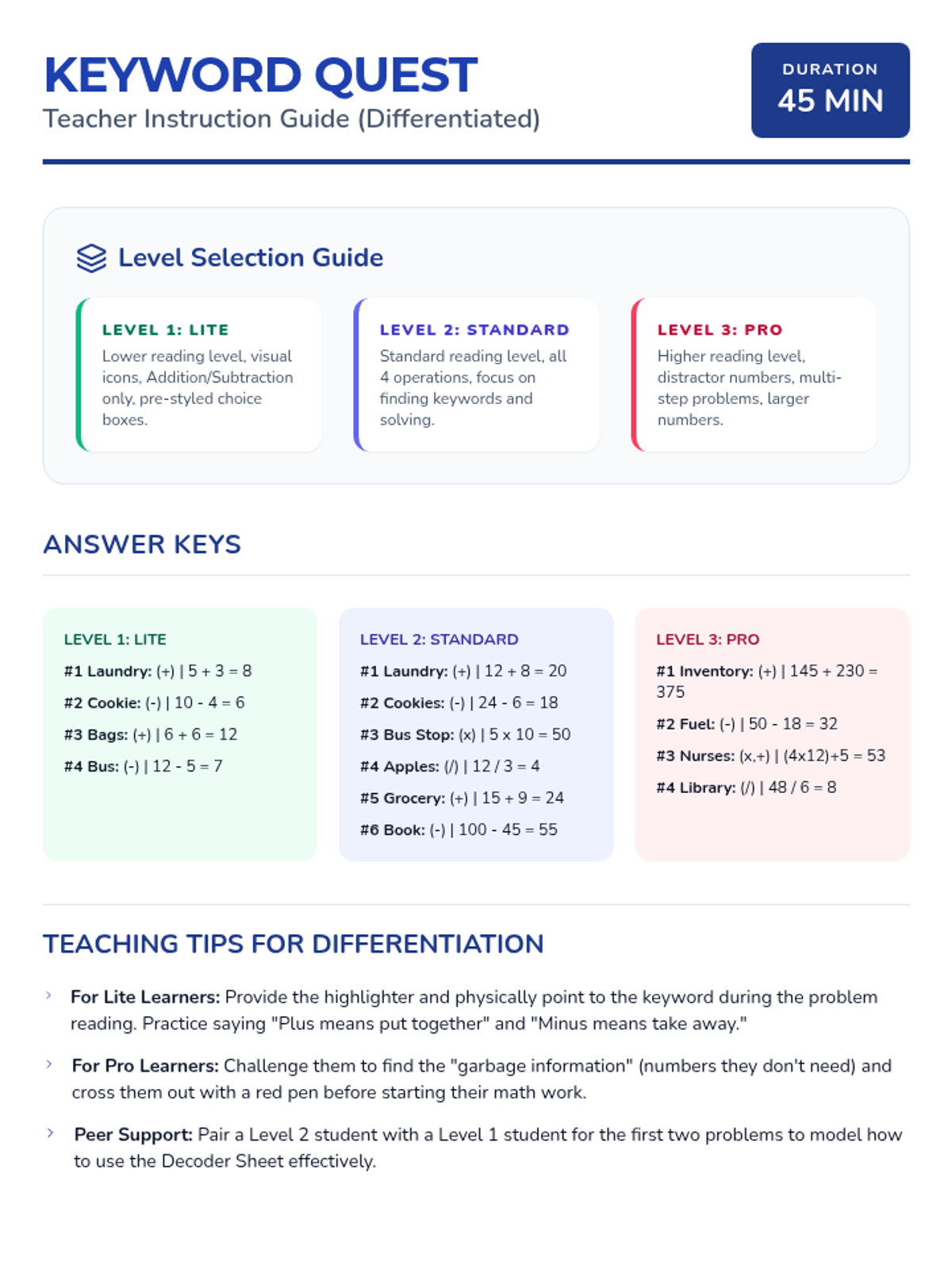
A lesson focused on identifying and using mathematical keywords to solve word problems in real-life scenarios. Students act as 'Math Detectives' to uncover clues that tell them which operation to use.
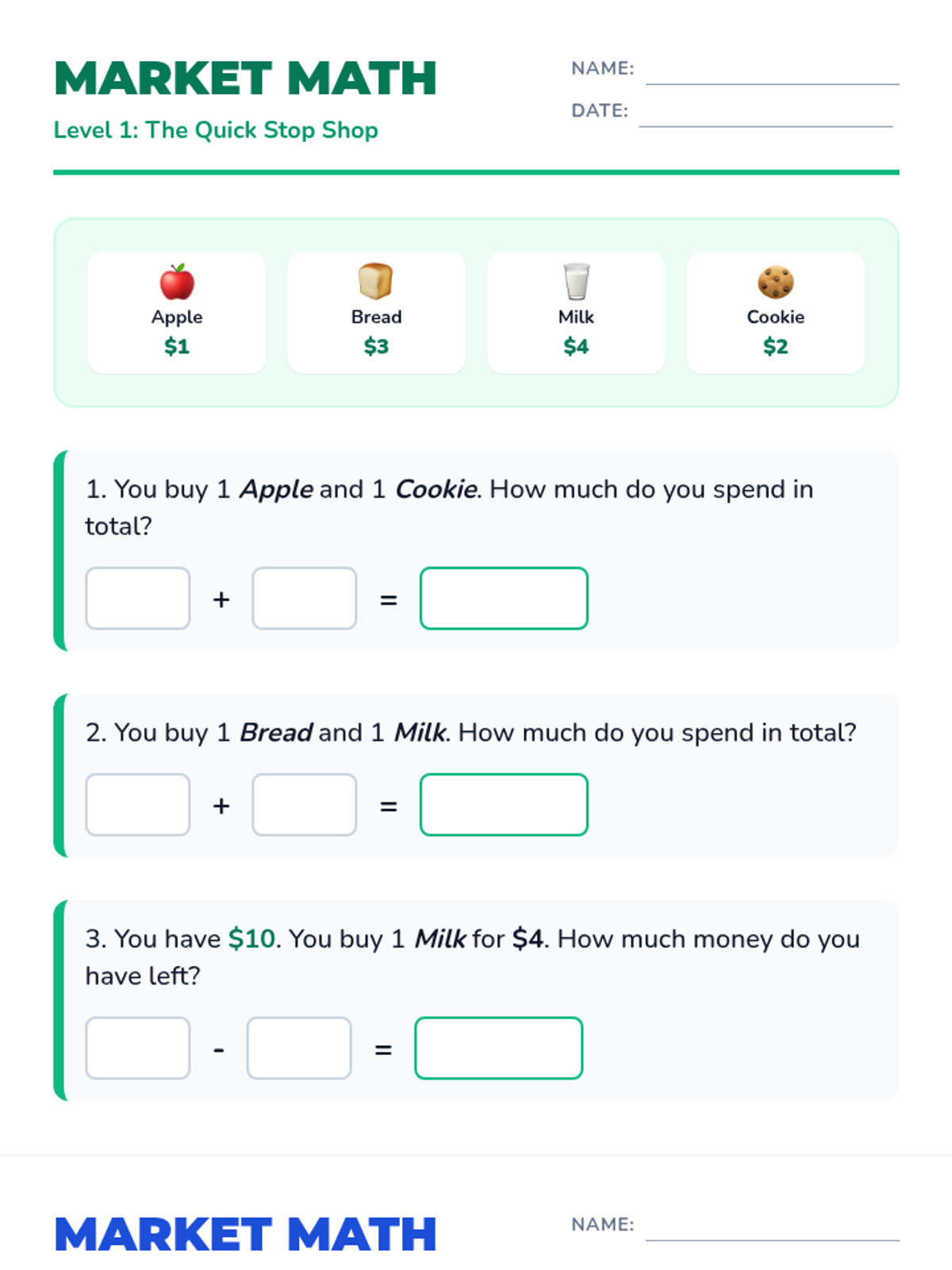
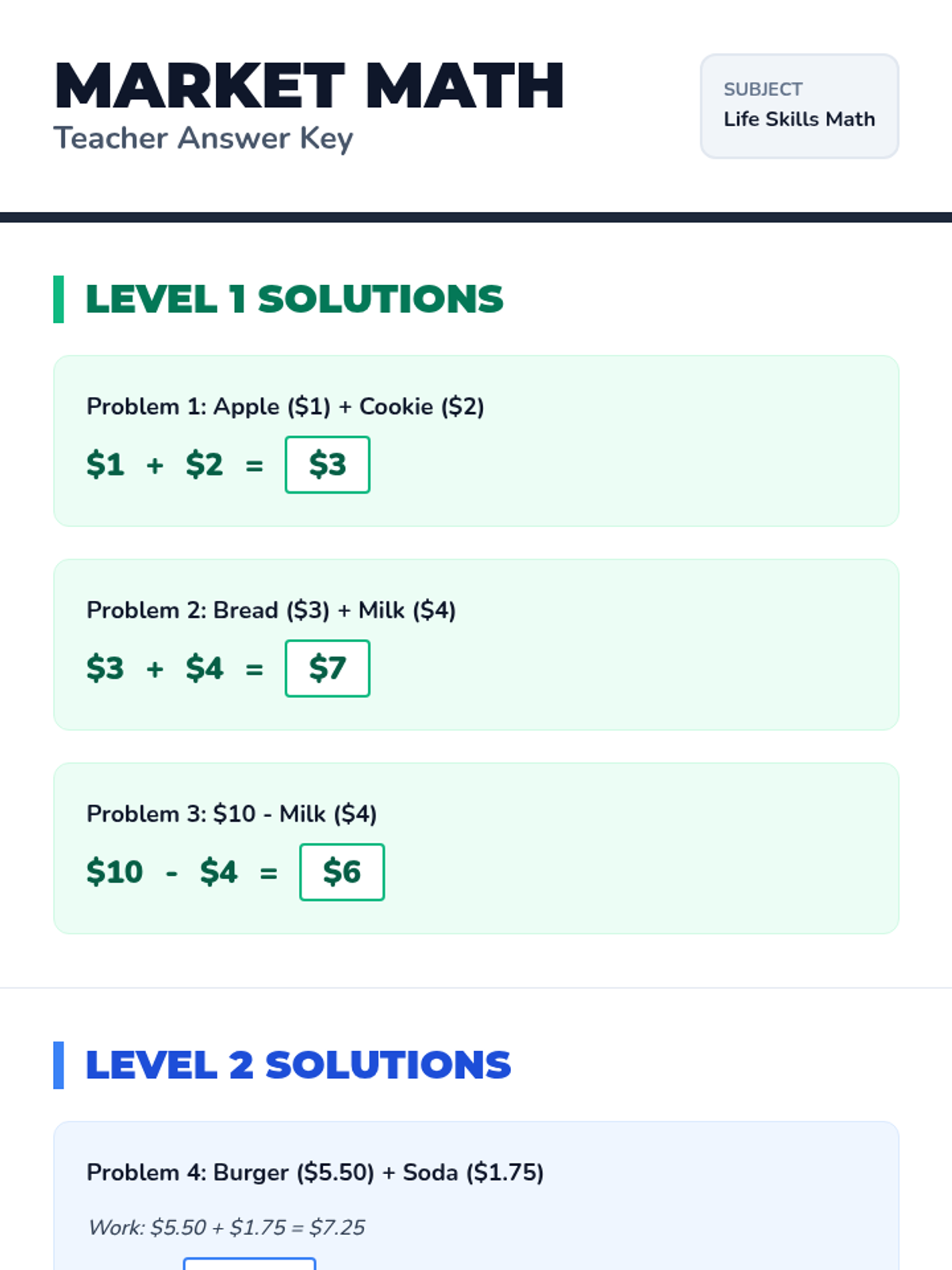
A comprehensive lesson on applying basic math skills to real-world shopping scenarios, featuring differentiated word problems for various ability levels.
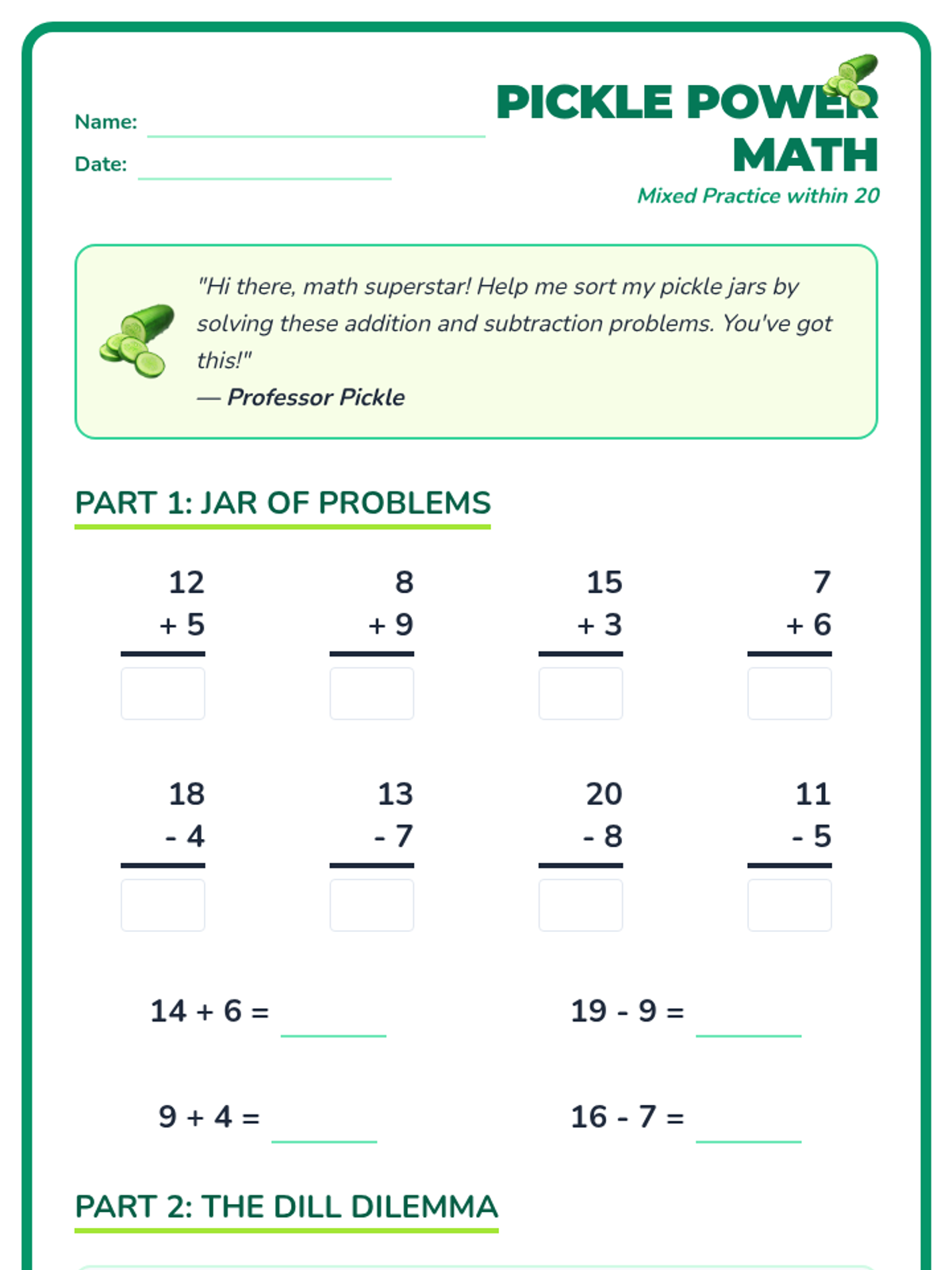
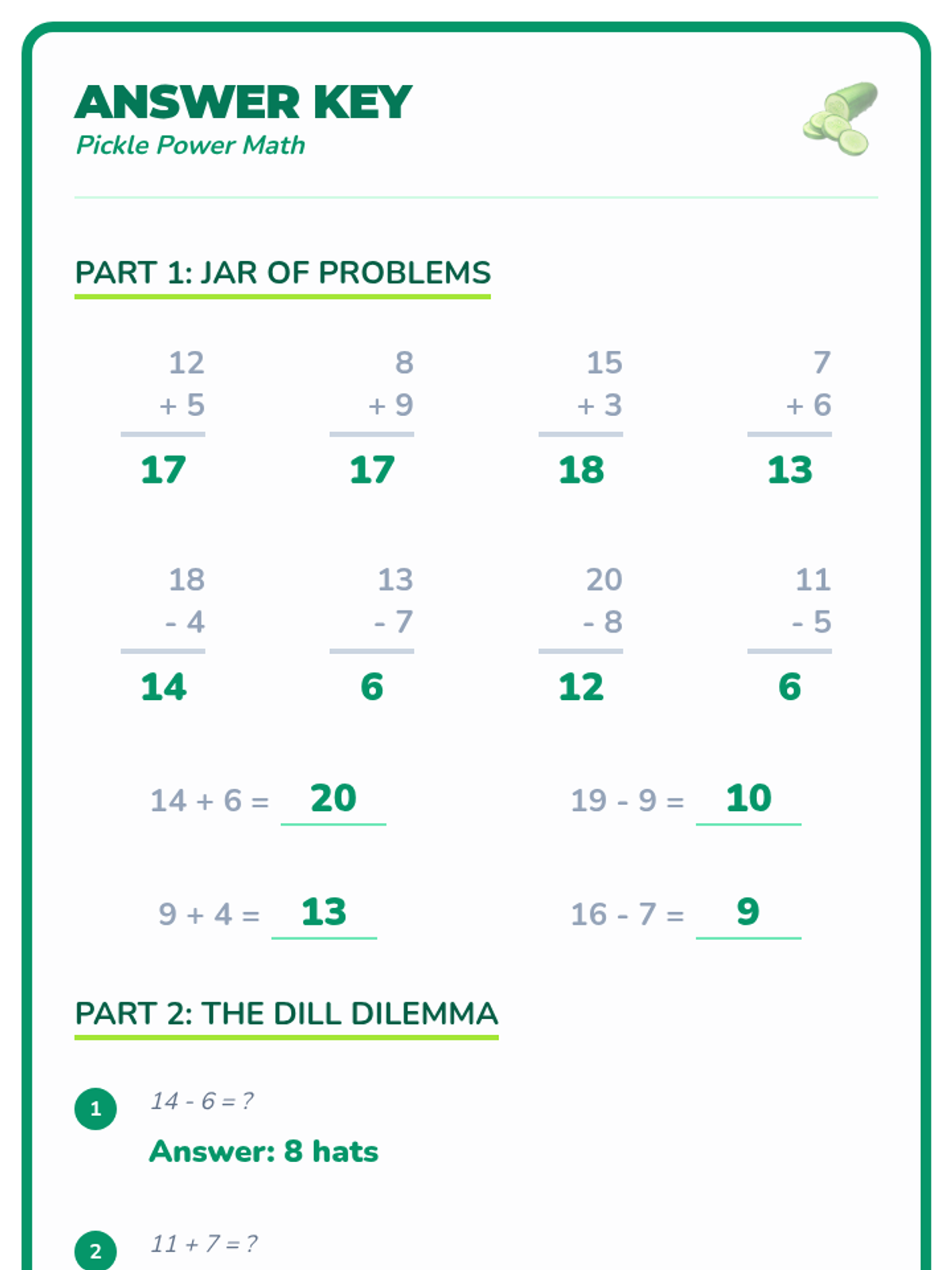
A fun, pickle-themed lesson for first graders to practice mixed addition and subtraction within 20. Includes a student worksheet and an answer key.
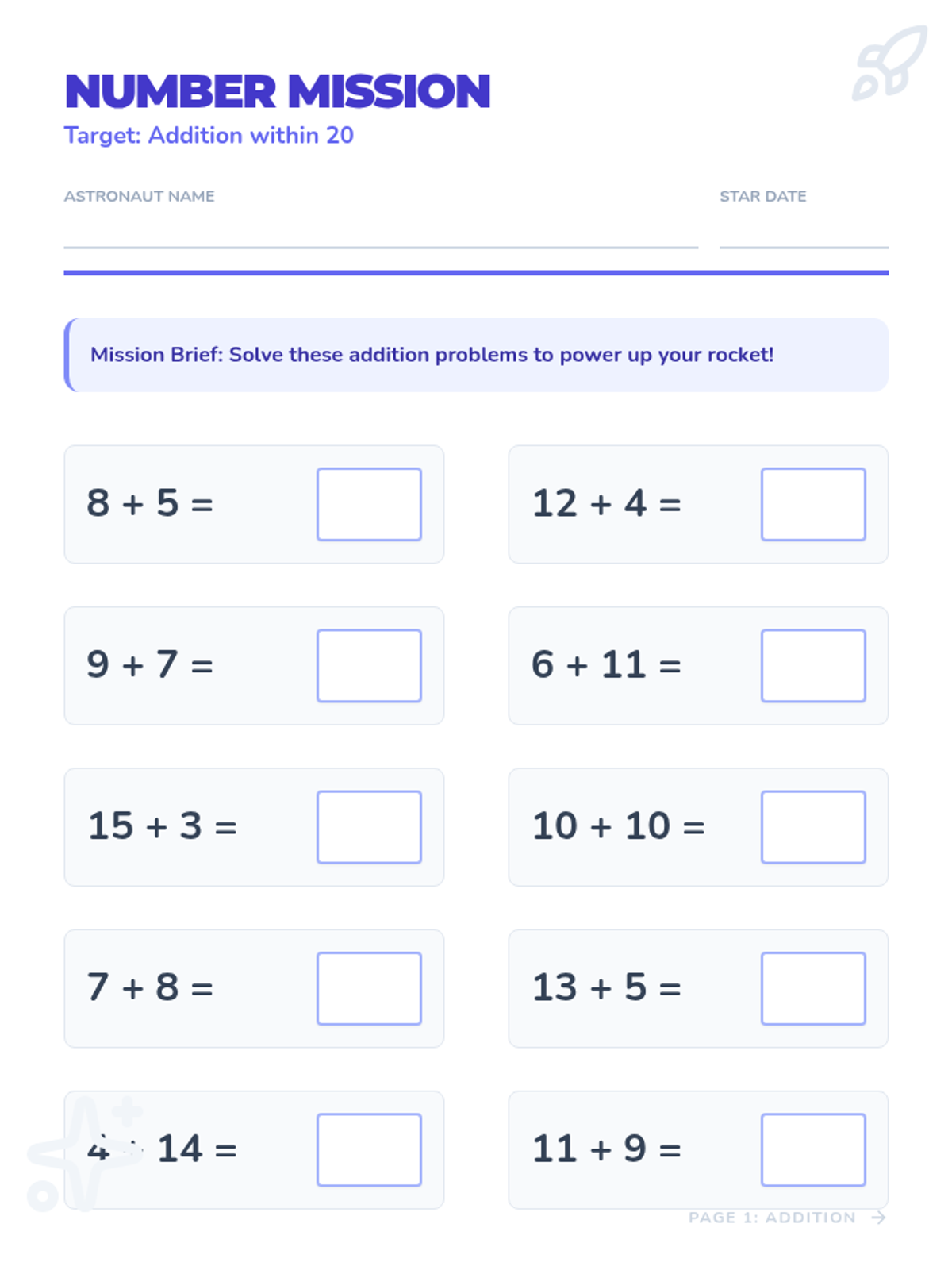
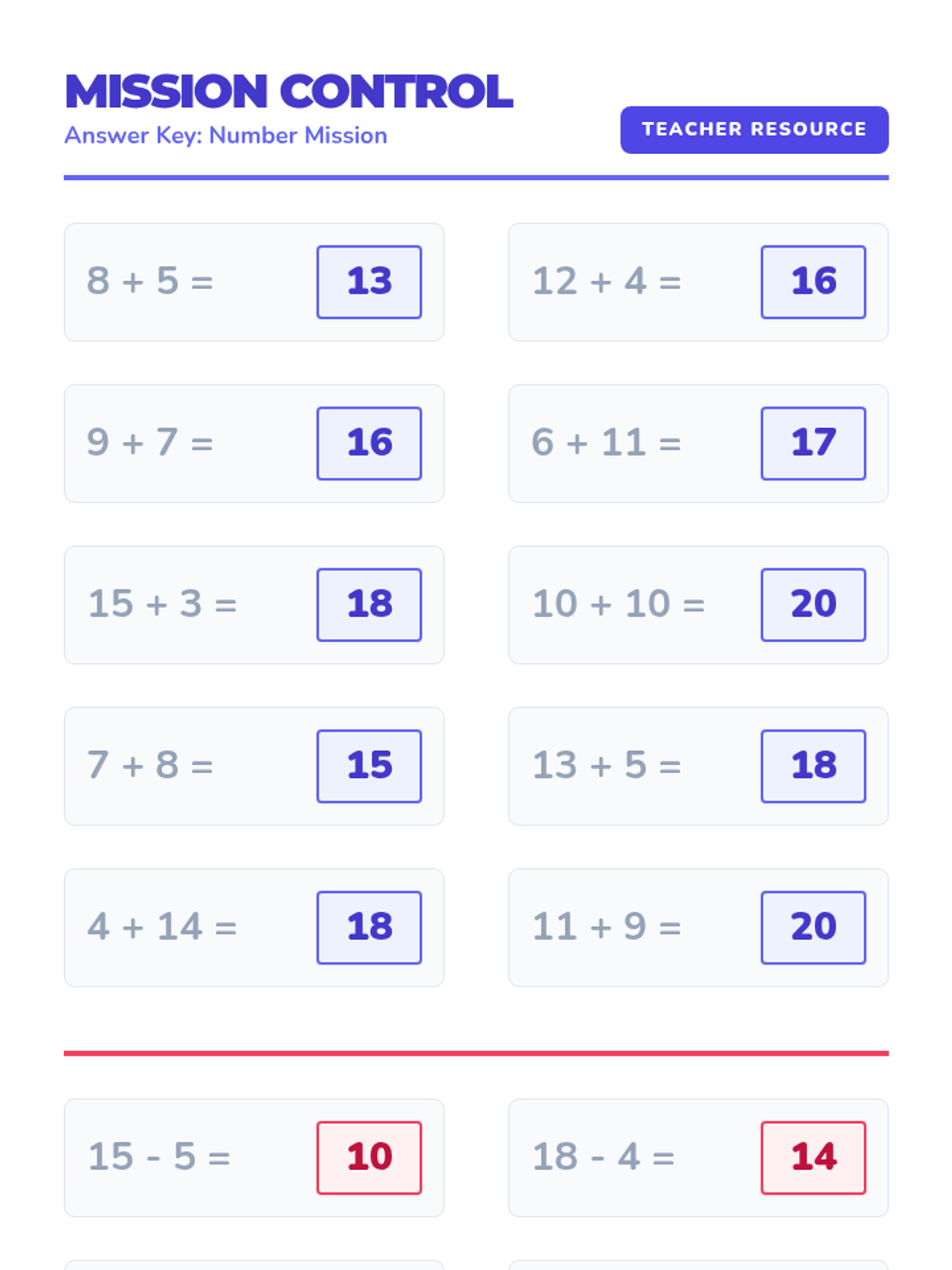
A lesson focusing on mastering basic addition and subtraction within 20 through repetitive practice and clear number sentences.
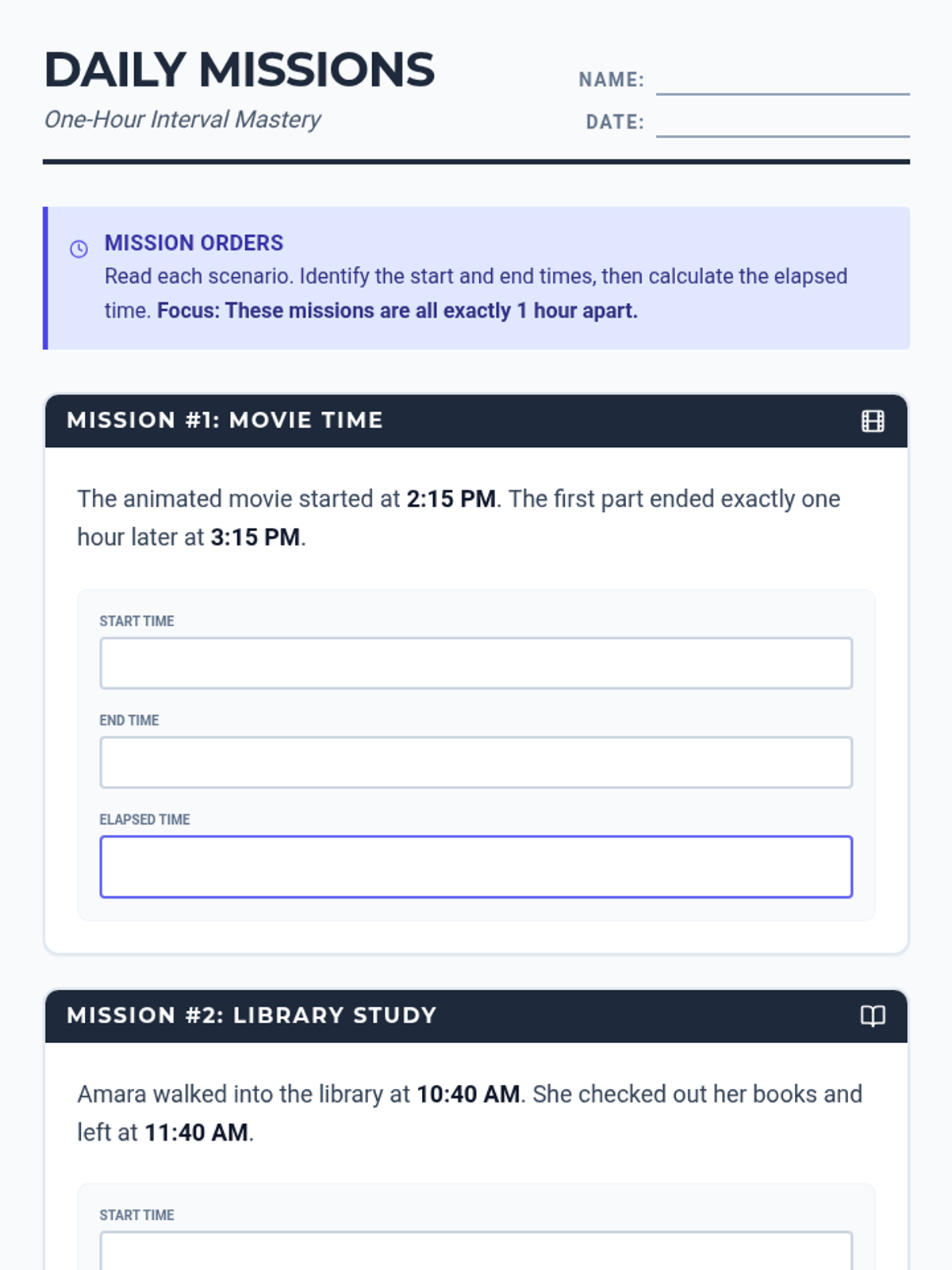
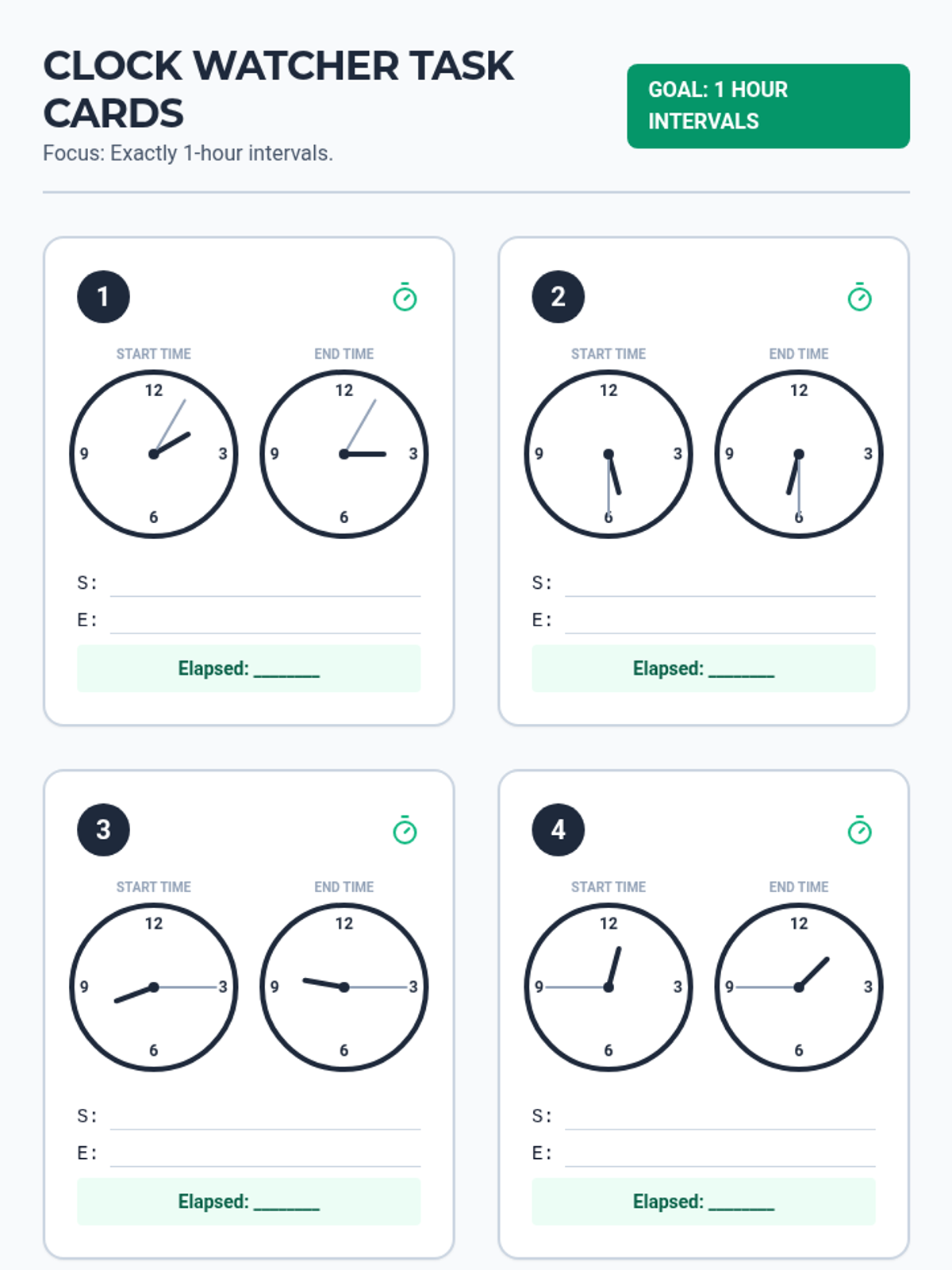
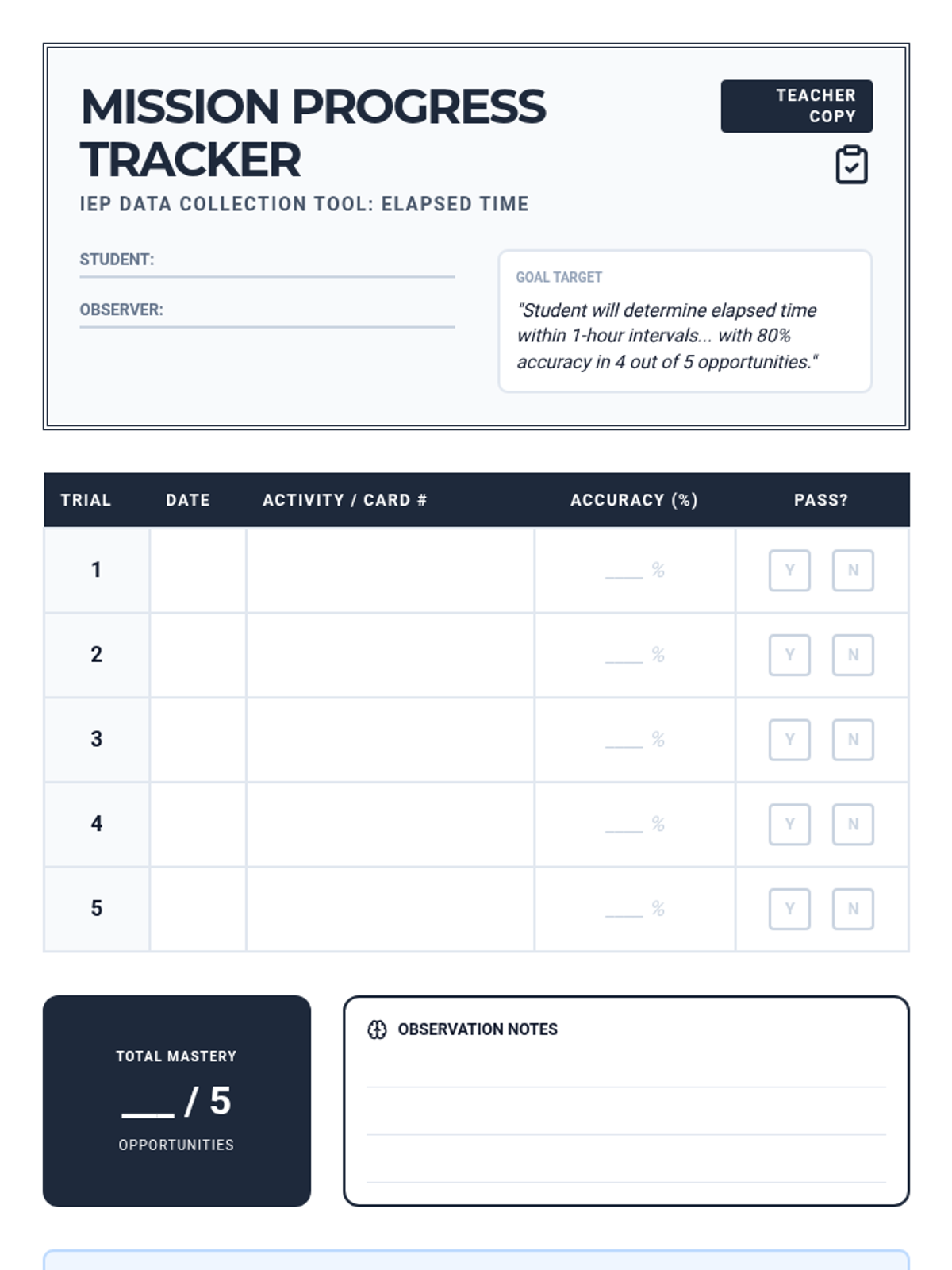
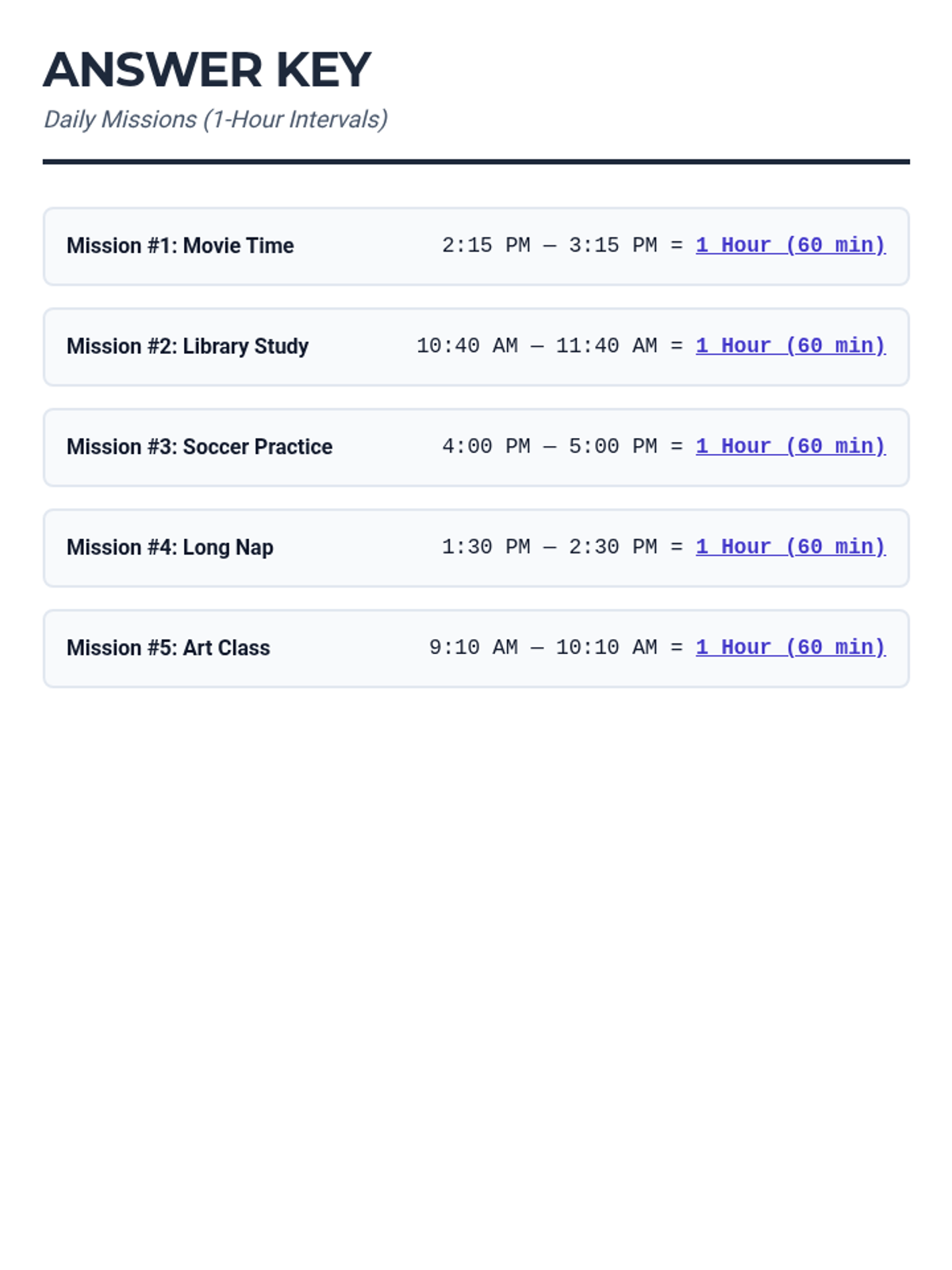
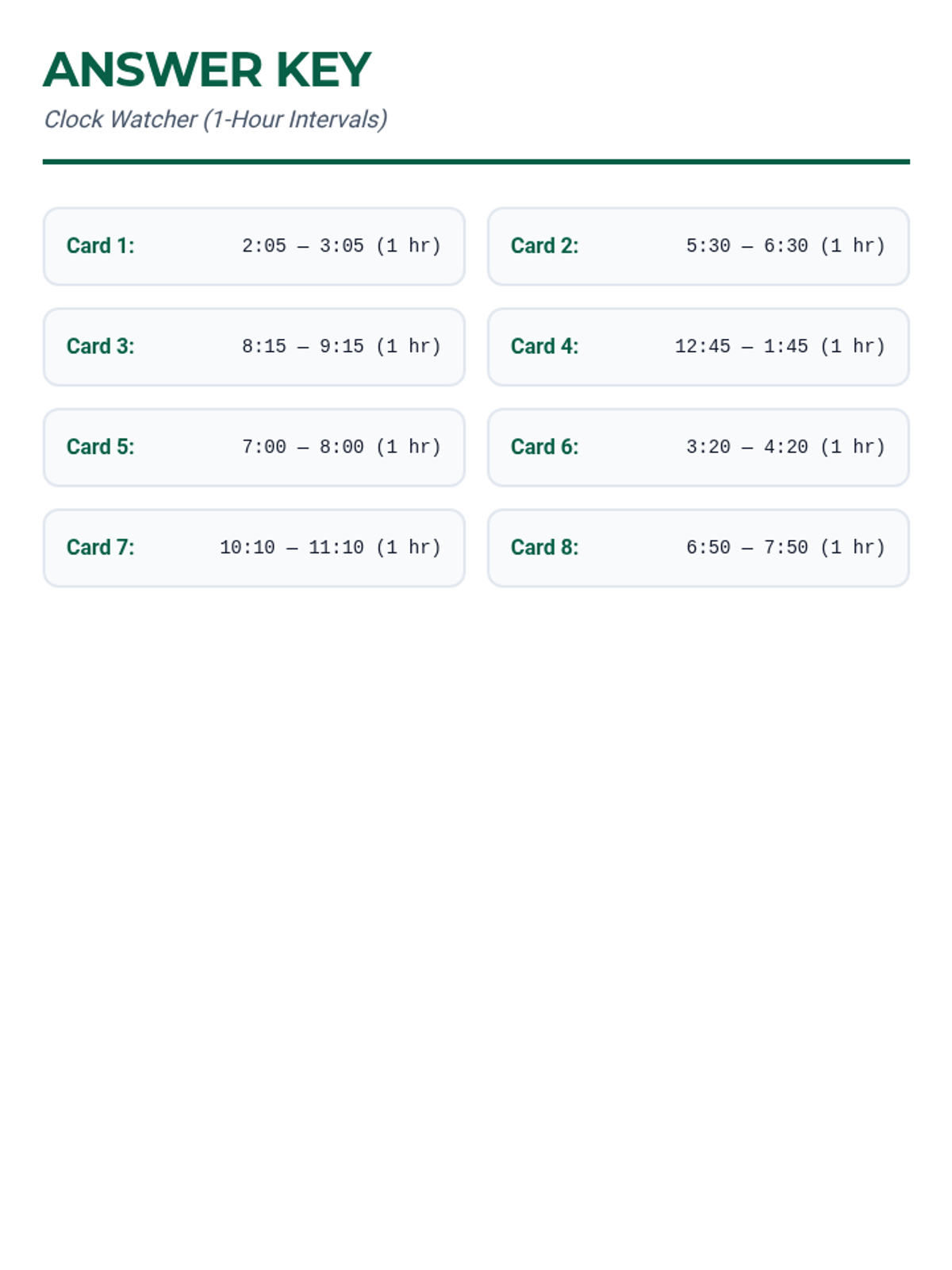
A set of materials designed to help students master elapsed time within one-hour intervals through real-life scenarios, visual models, and systematic data tracking.
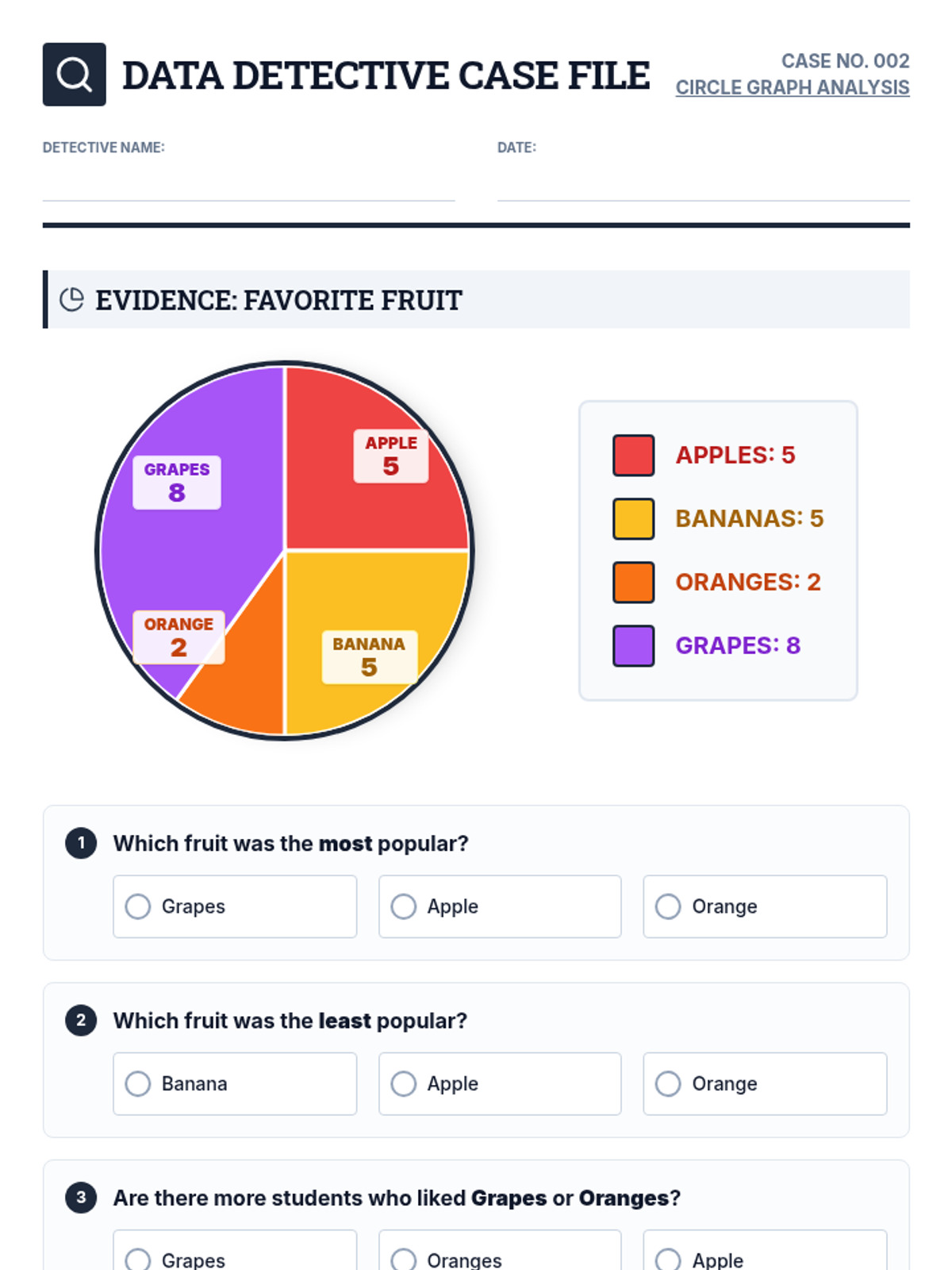
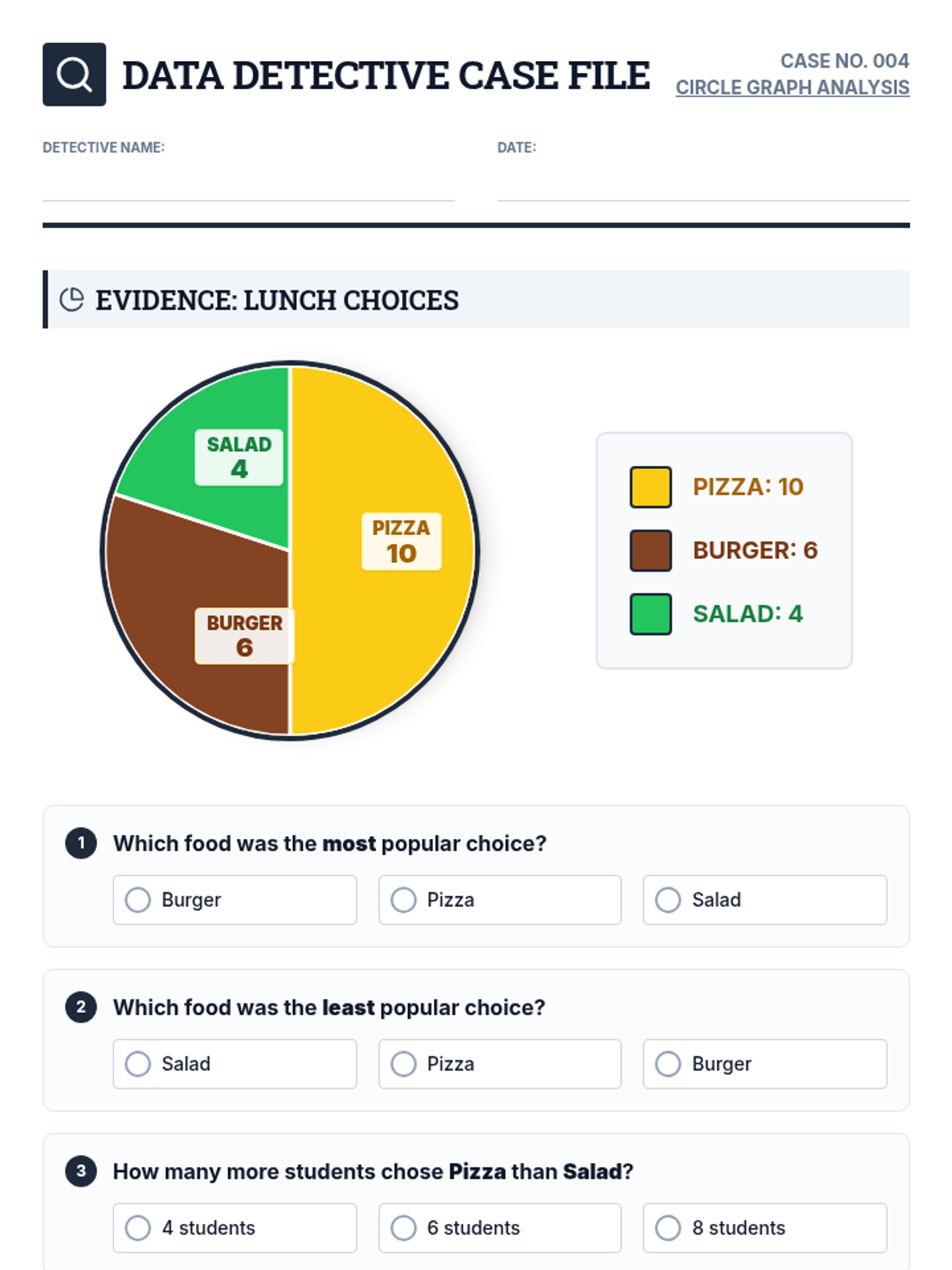
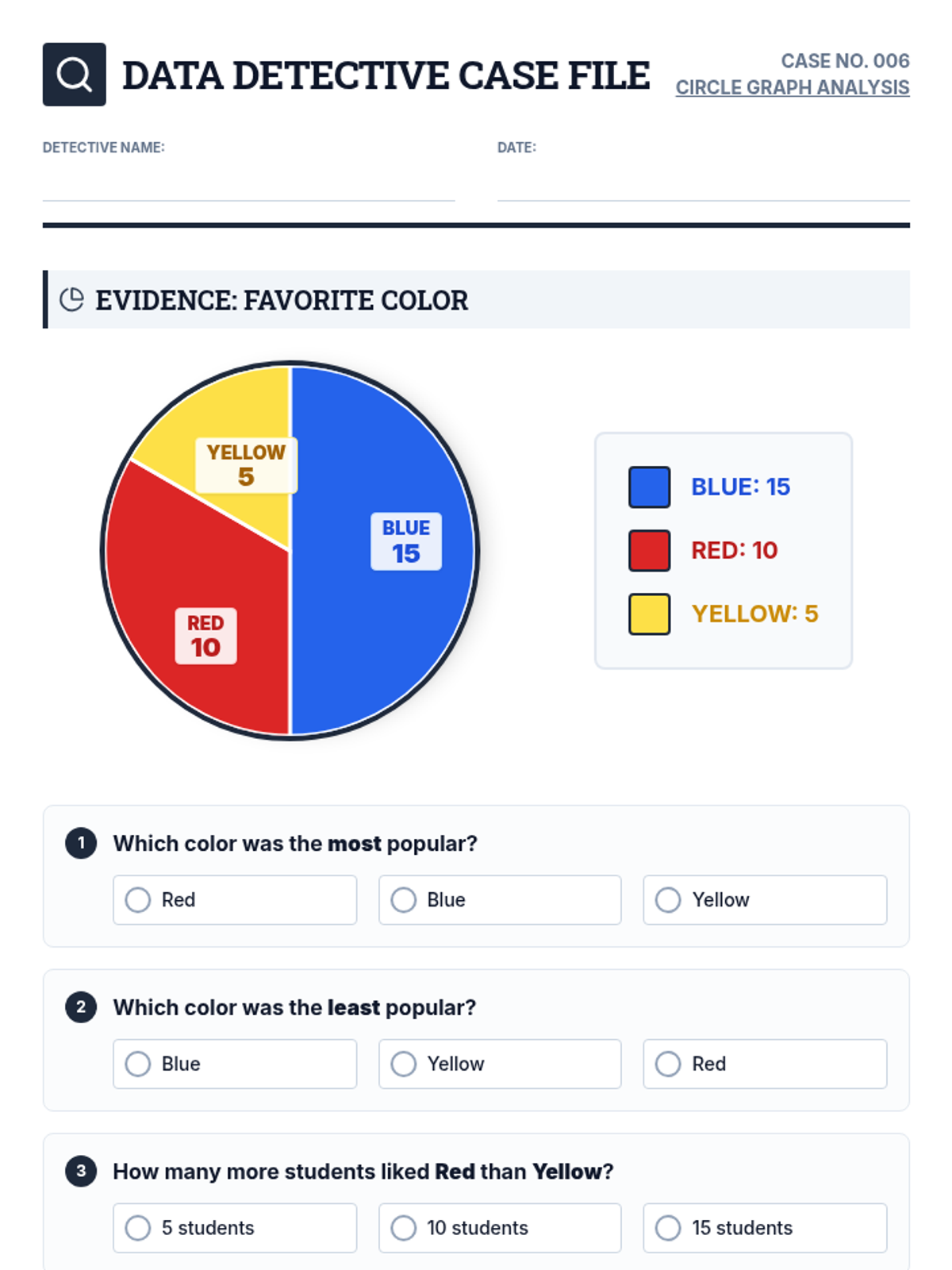
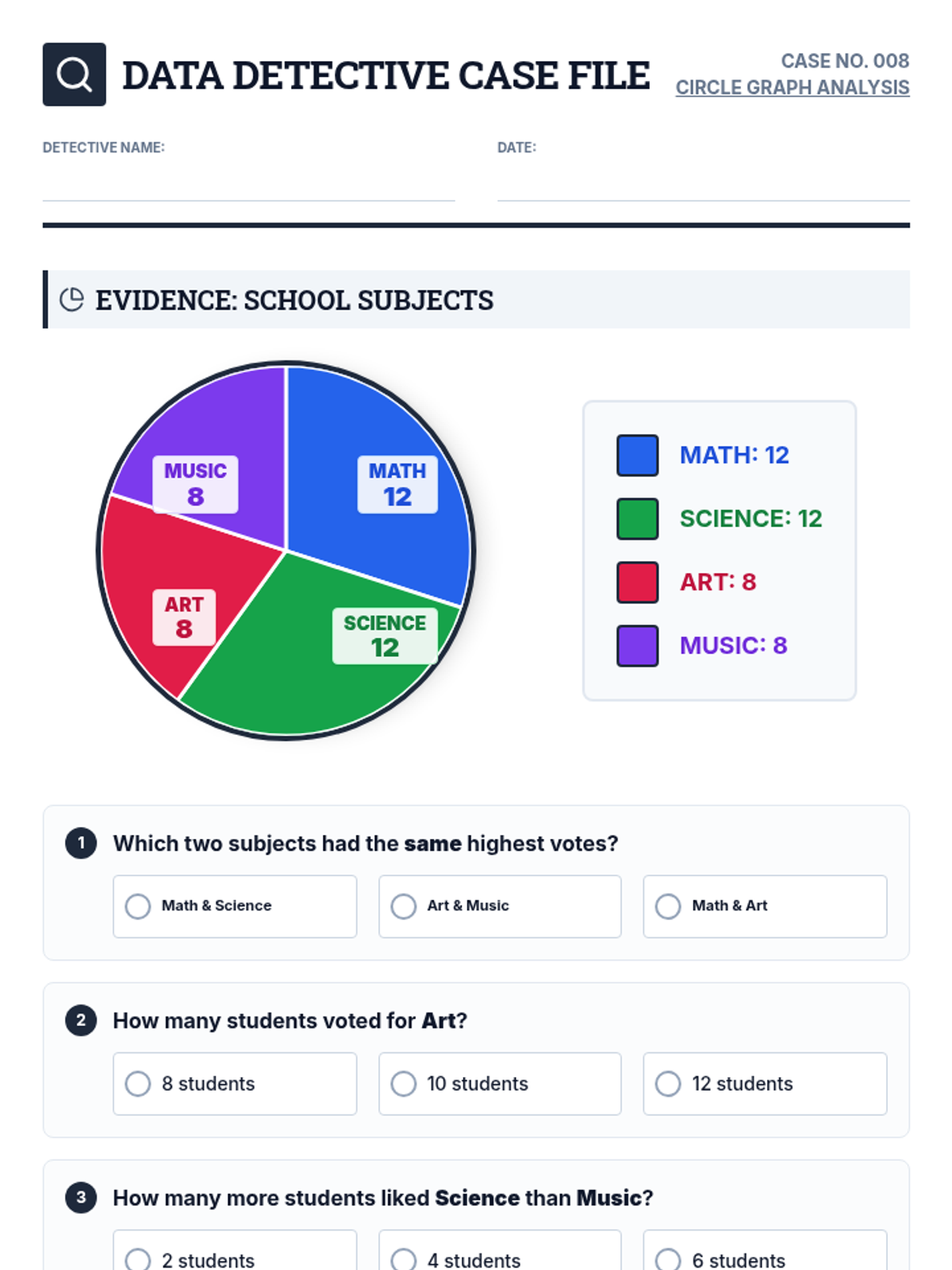
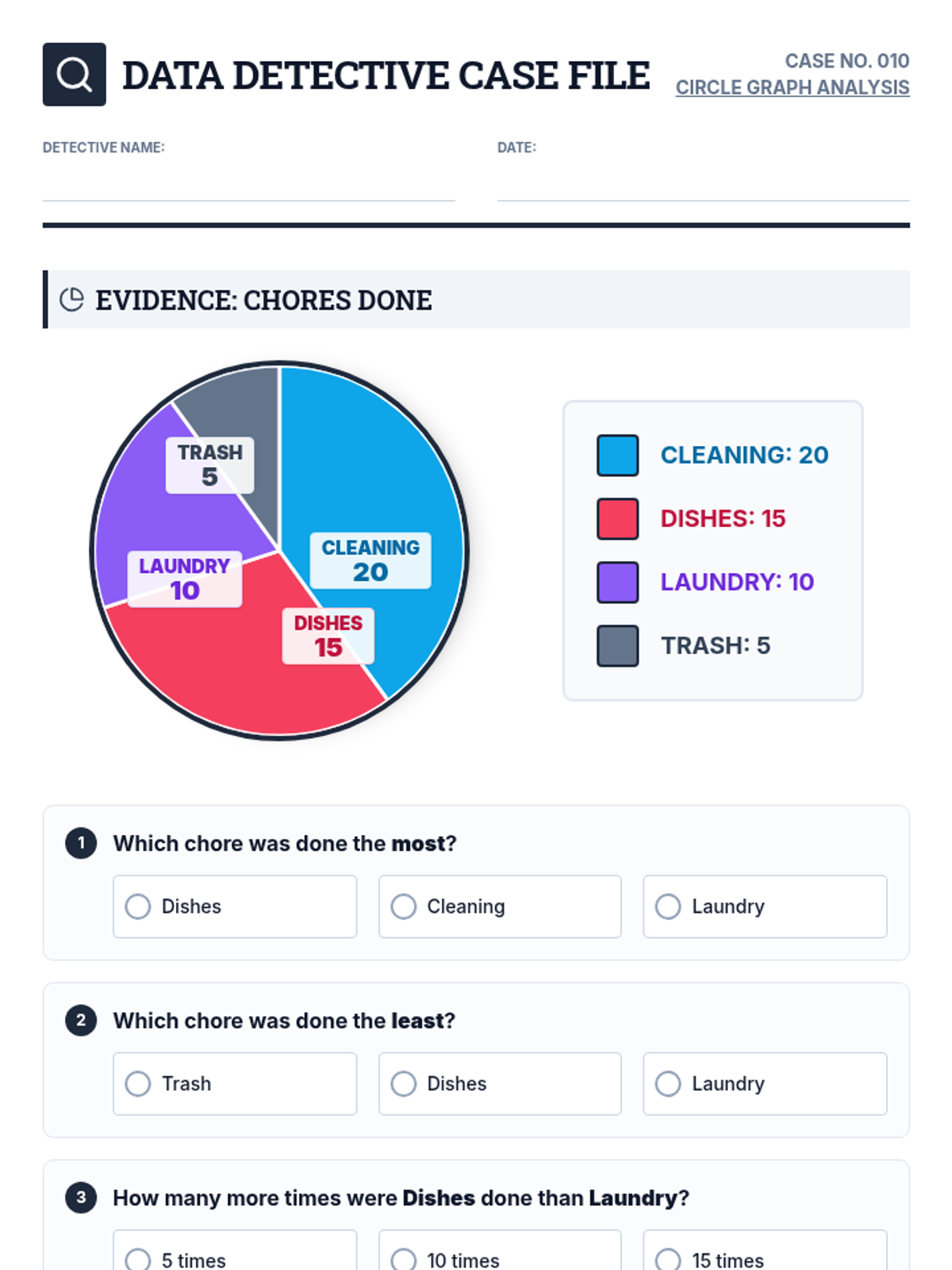
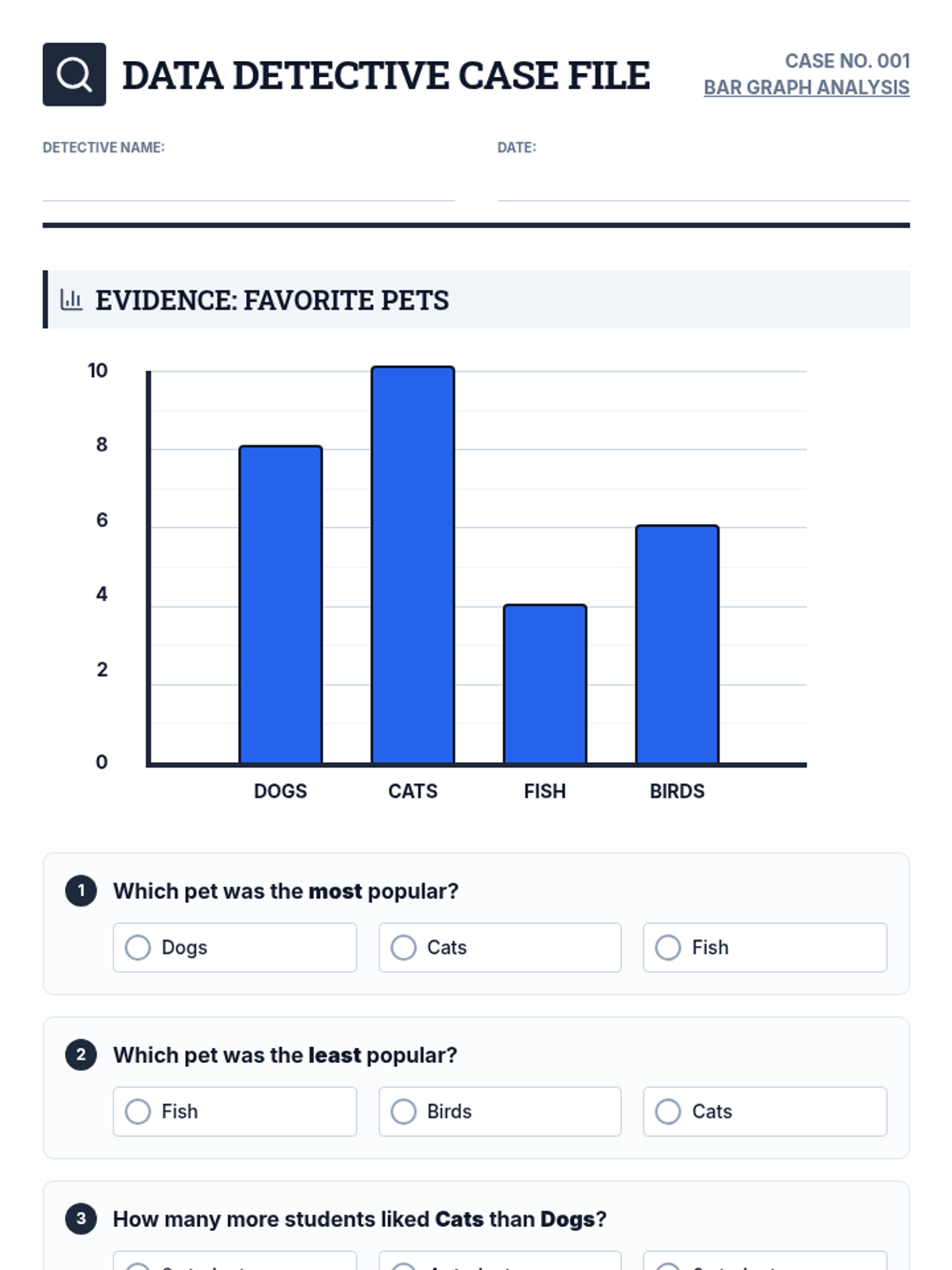
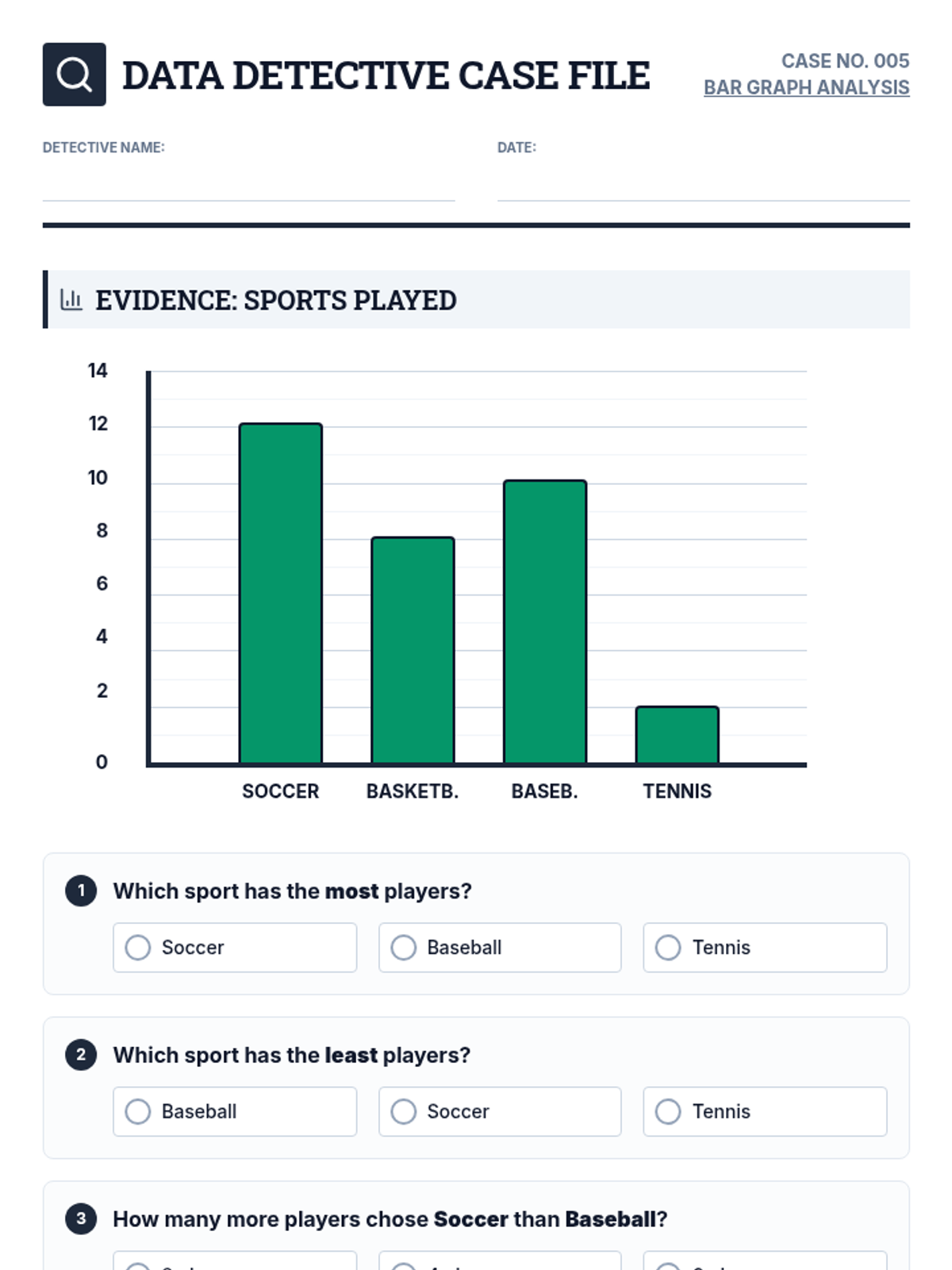
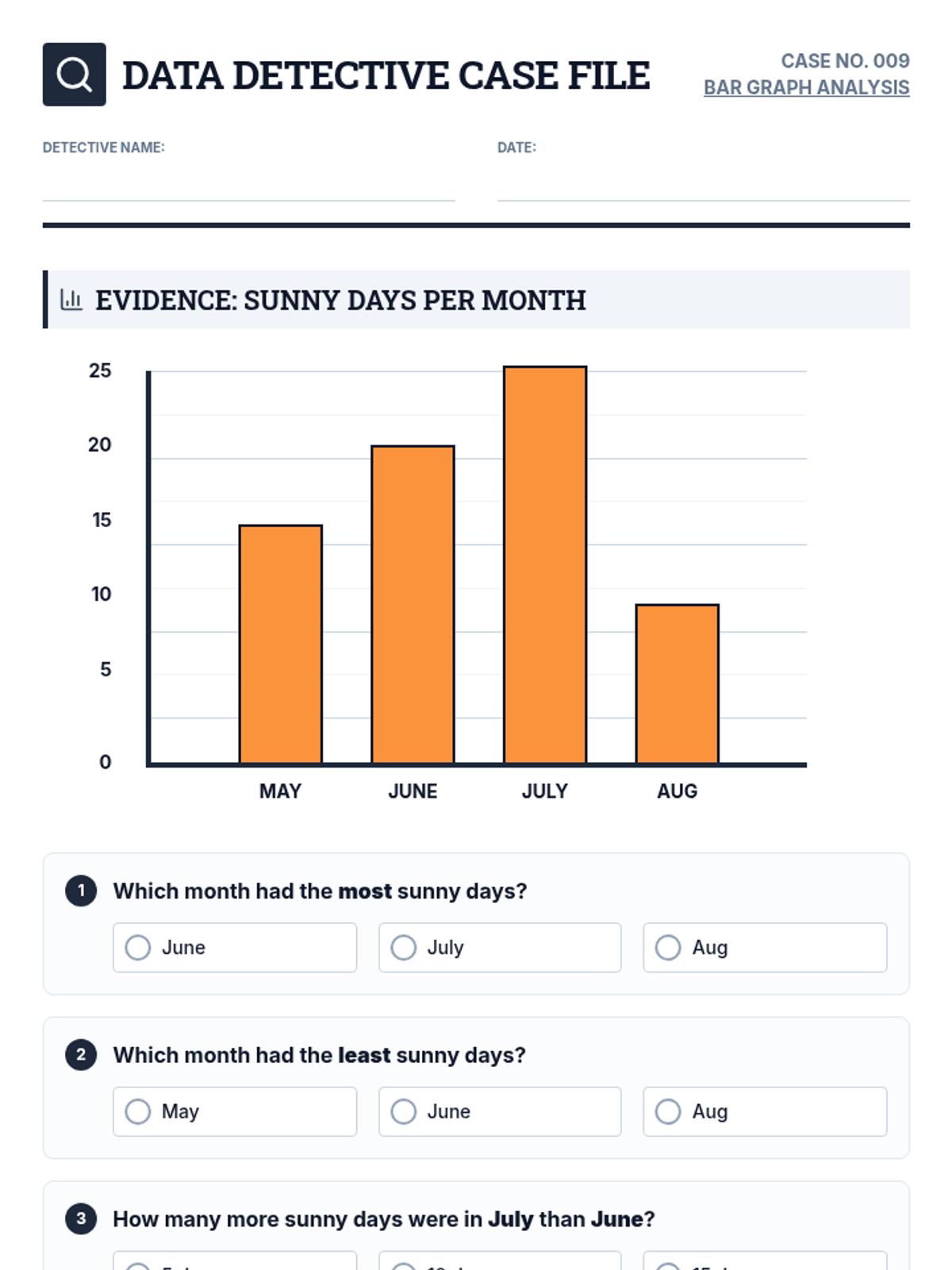
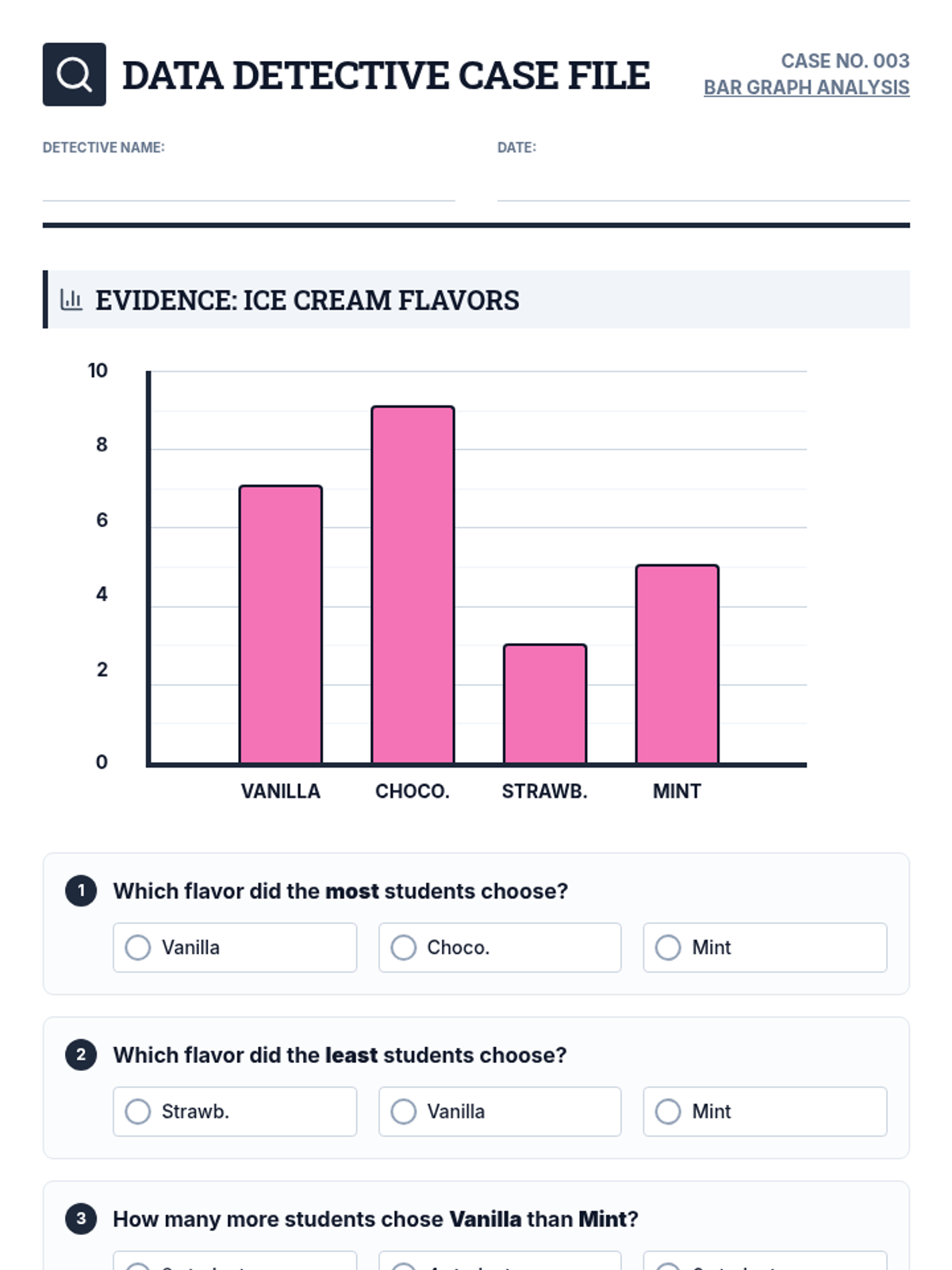
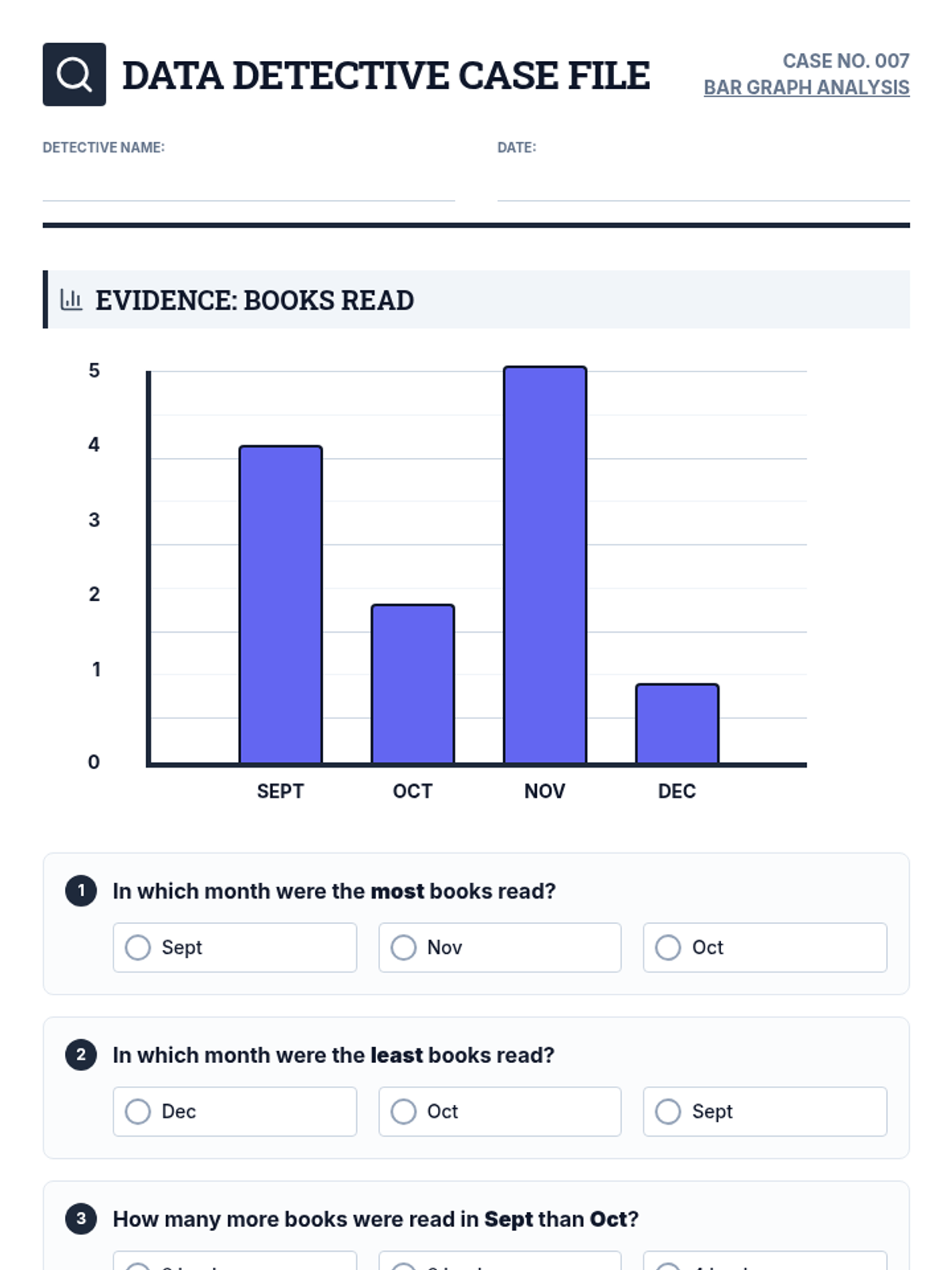
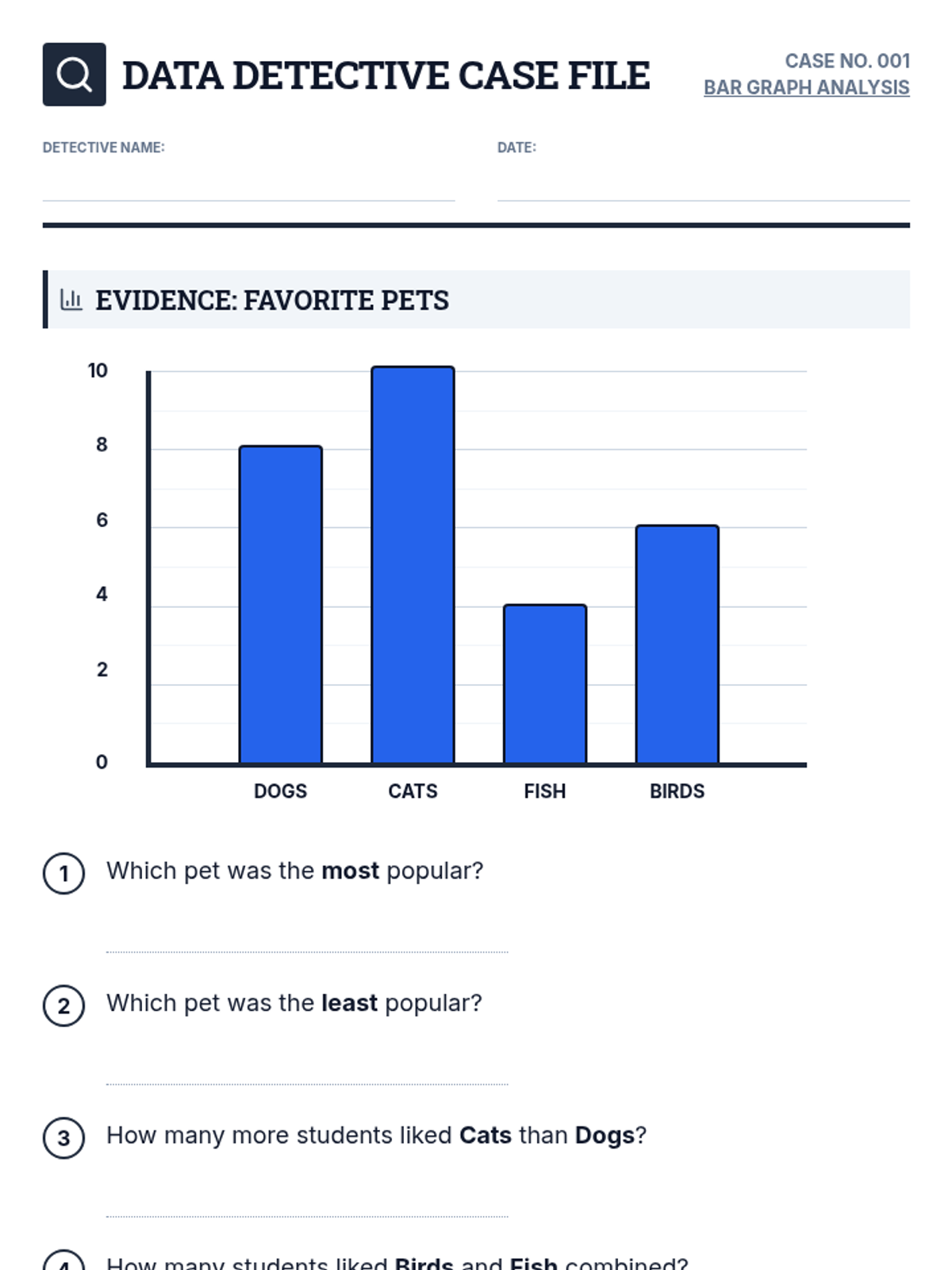
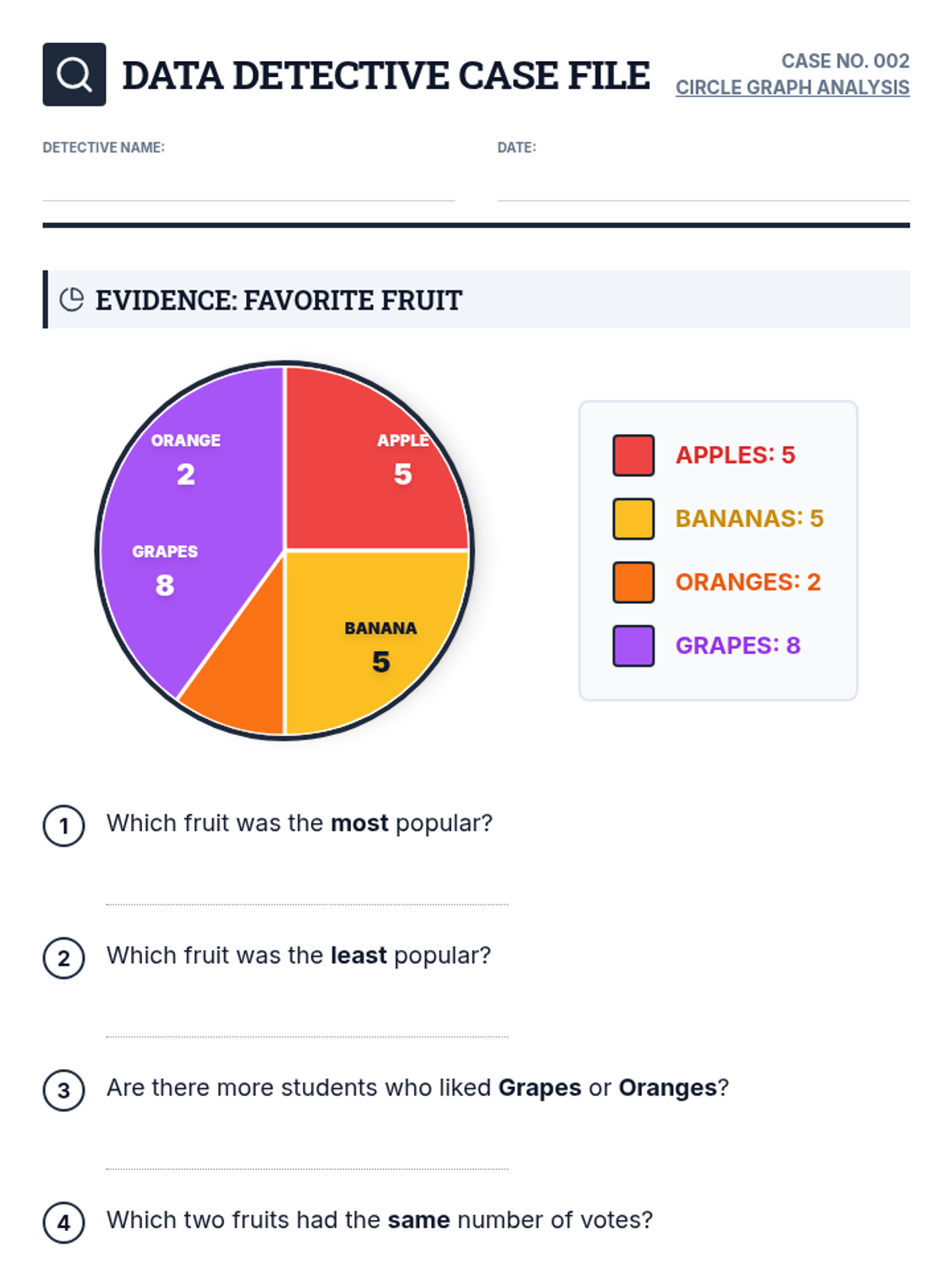
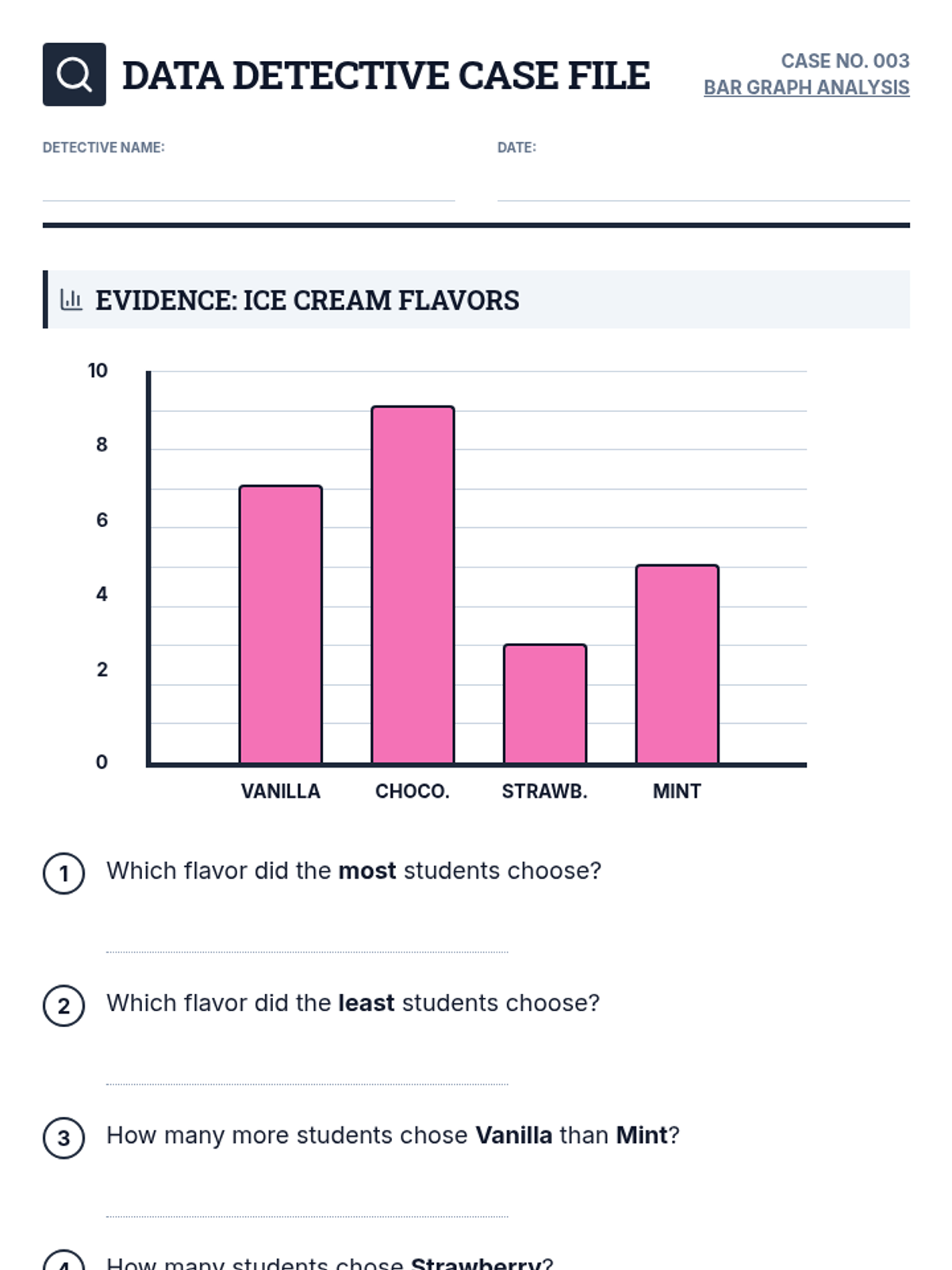
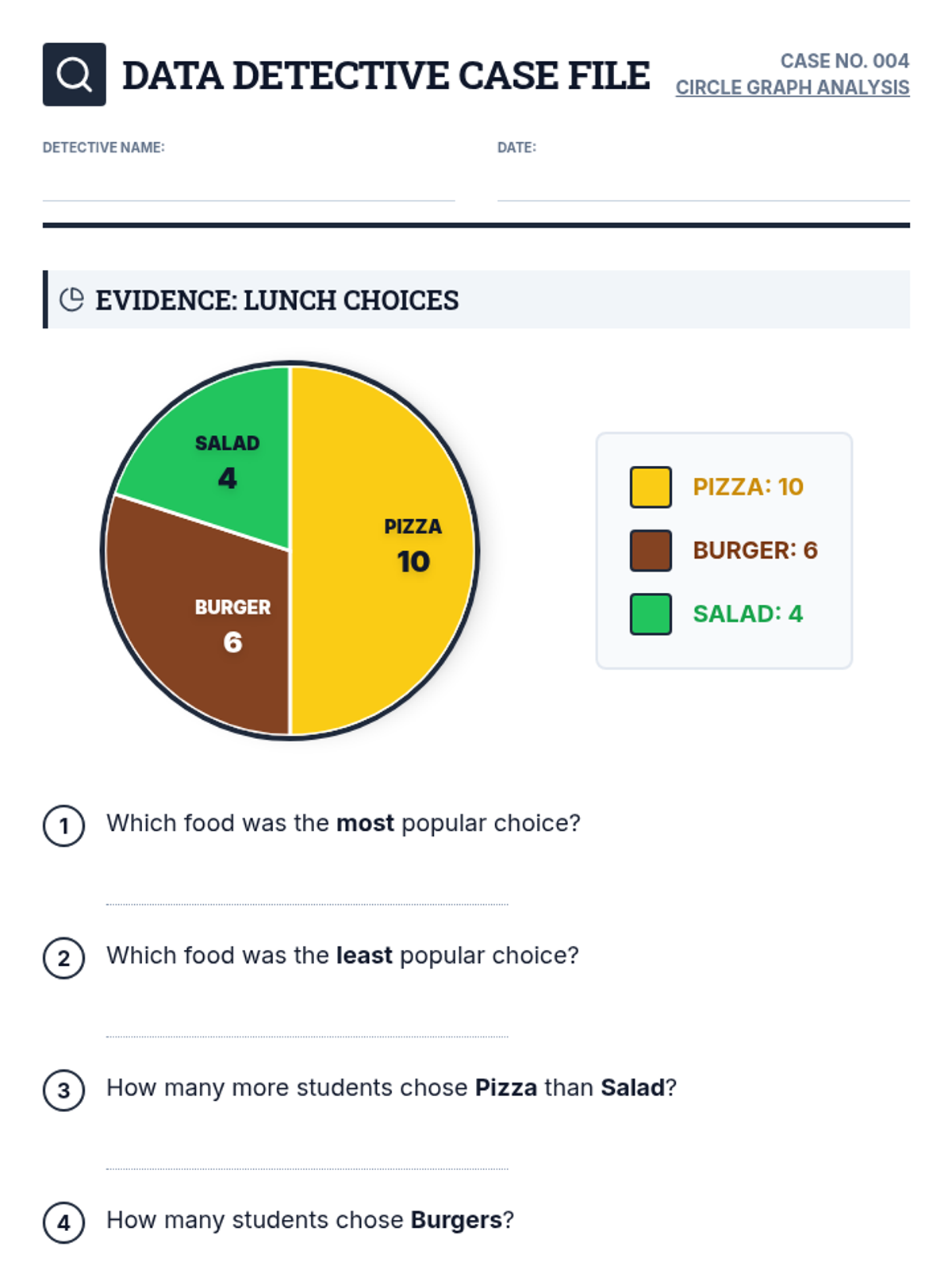
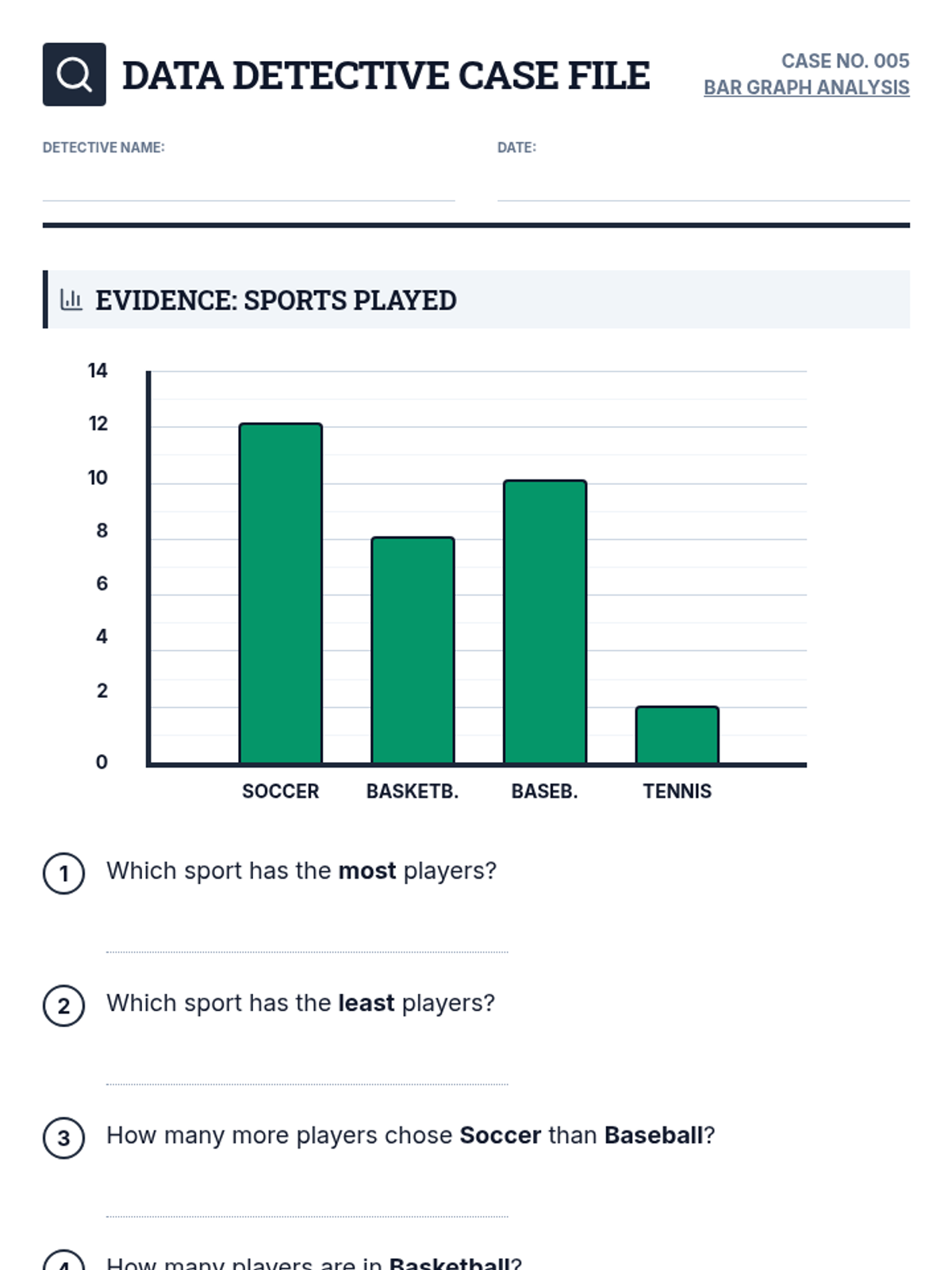
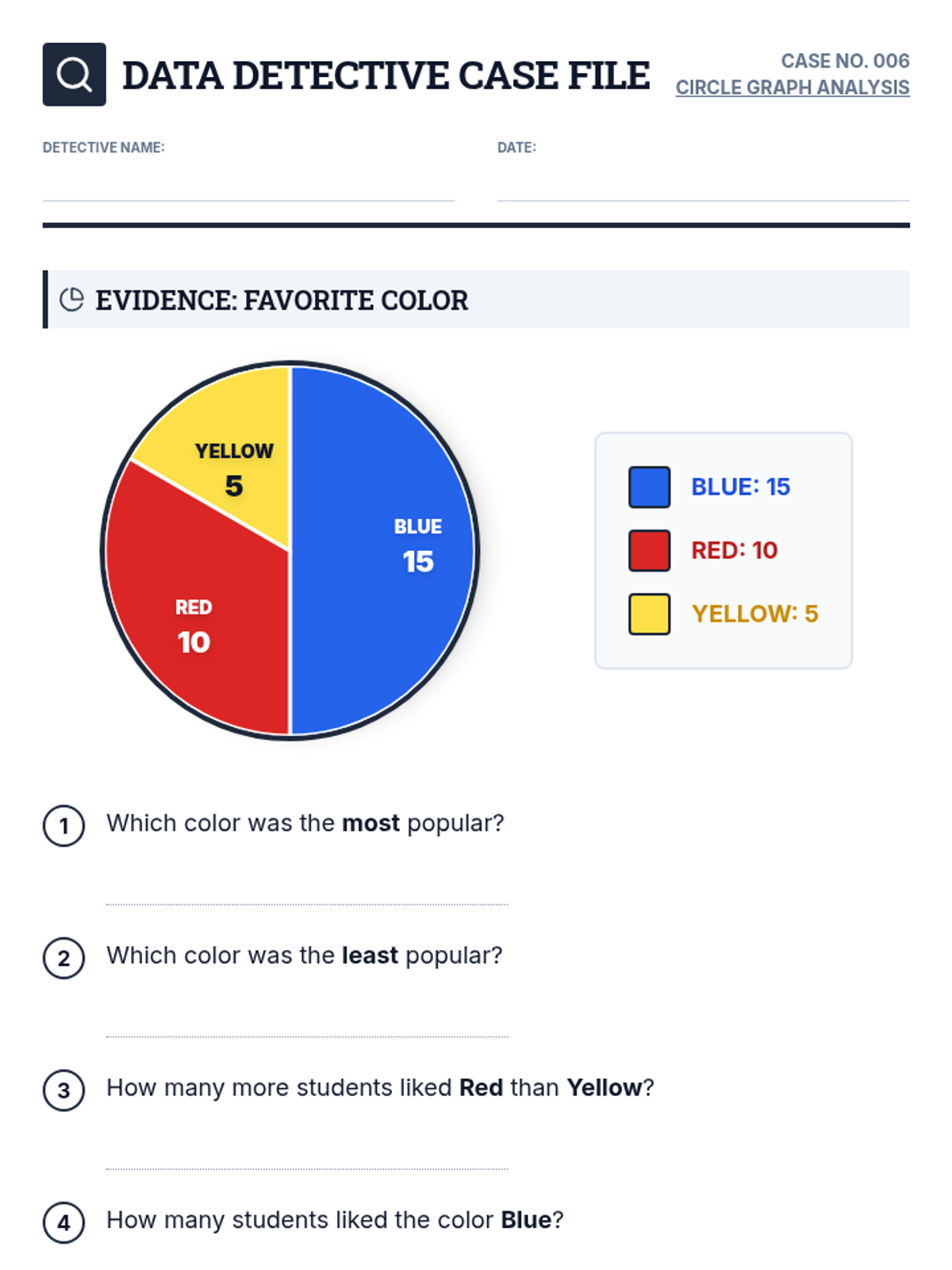
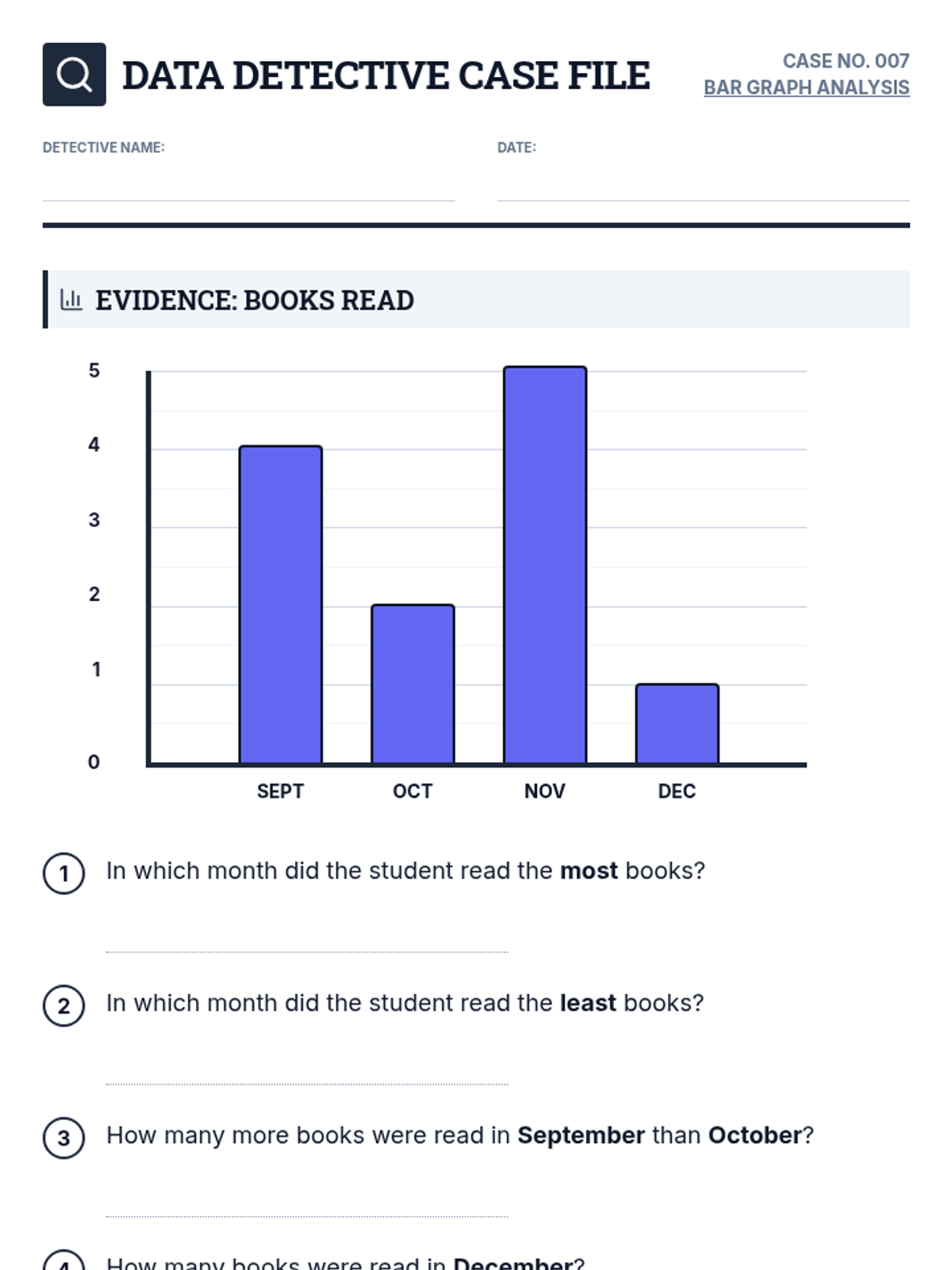
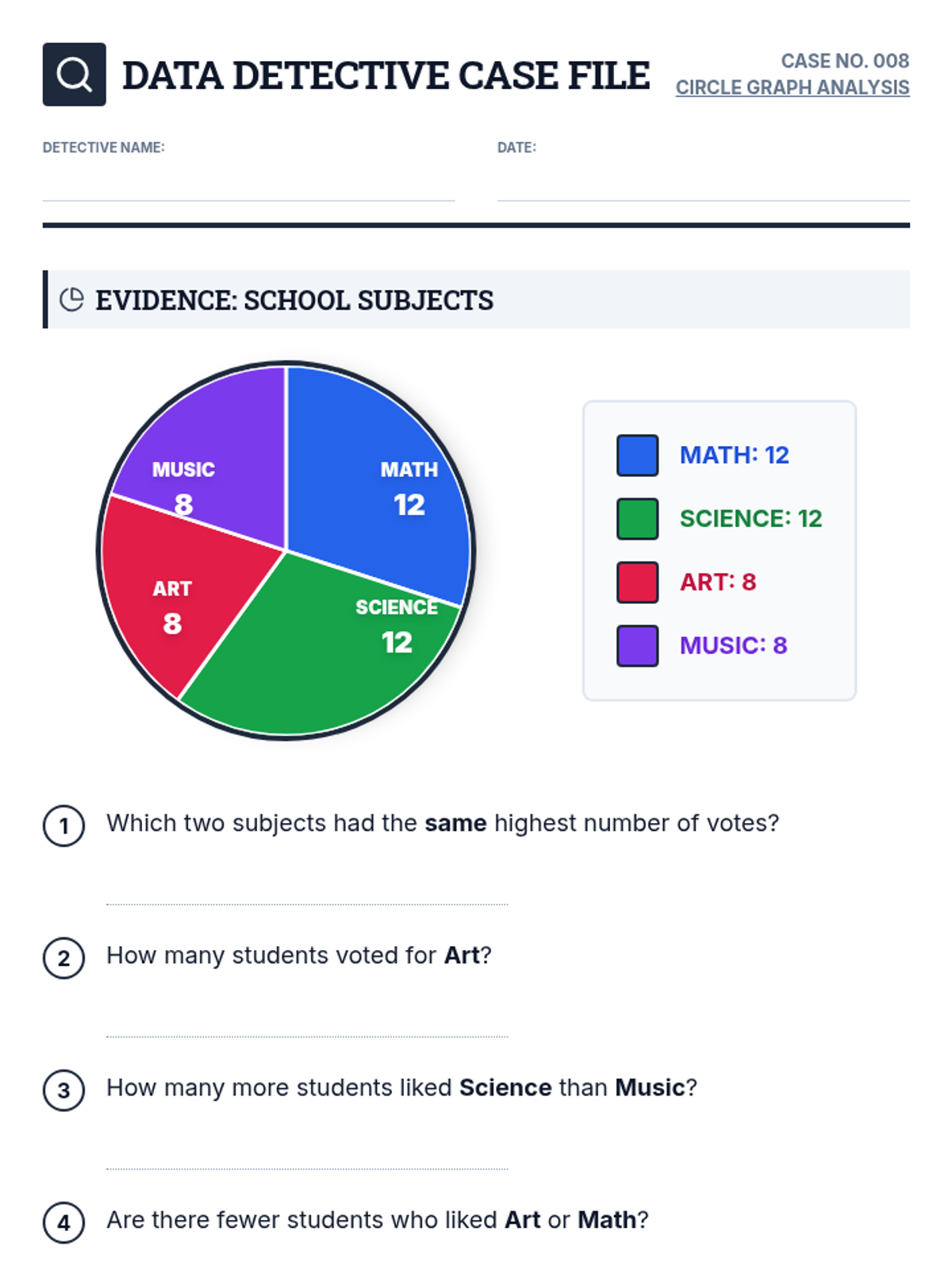
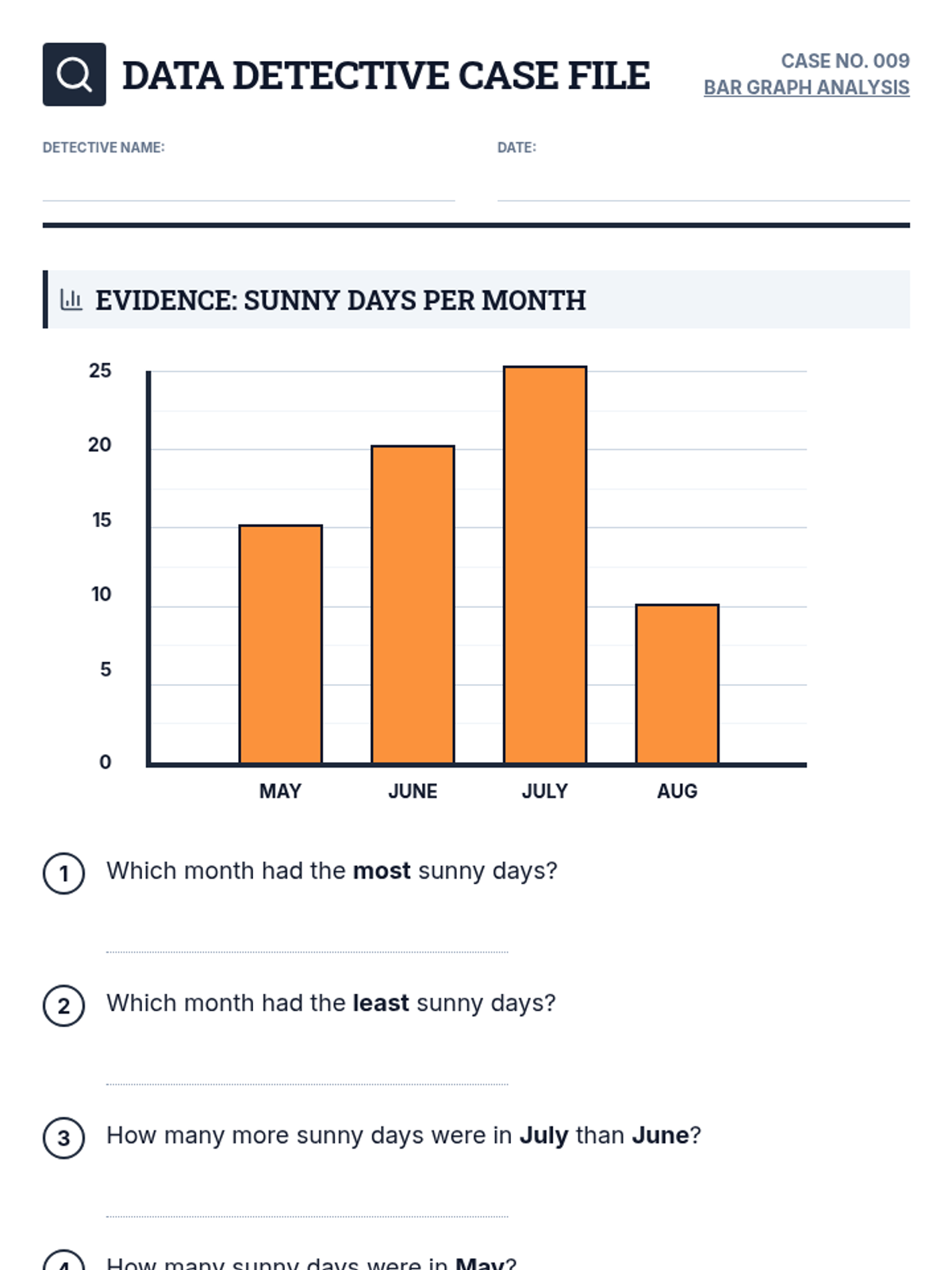
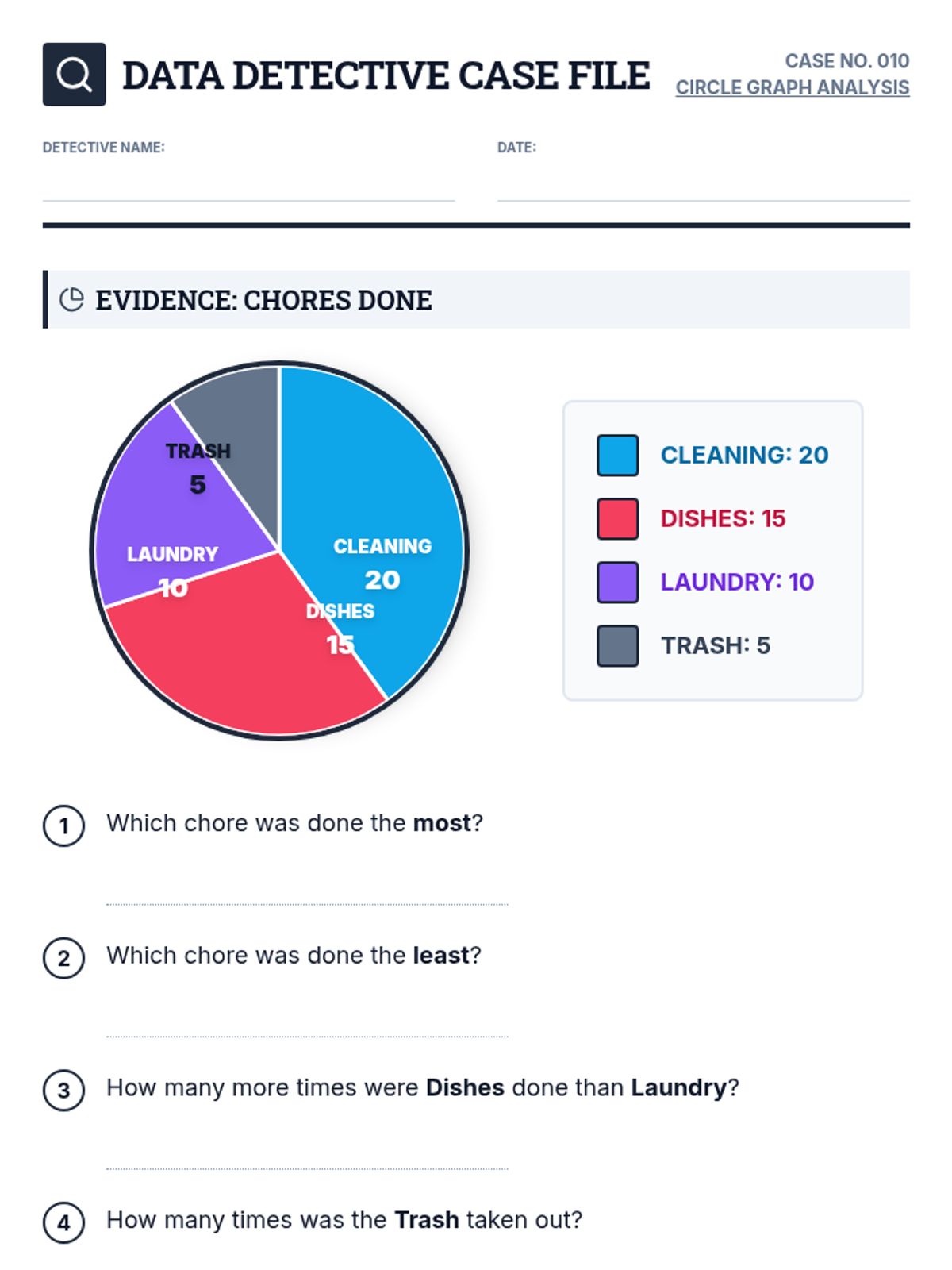
A collection of 10 distinct data analysis work samples featuring bar and circle graphs, designed for MCAS Alt portfolio evidence. Each sample focuses on identifying key information, making comparisons, and calculating totals.
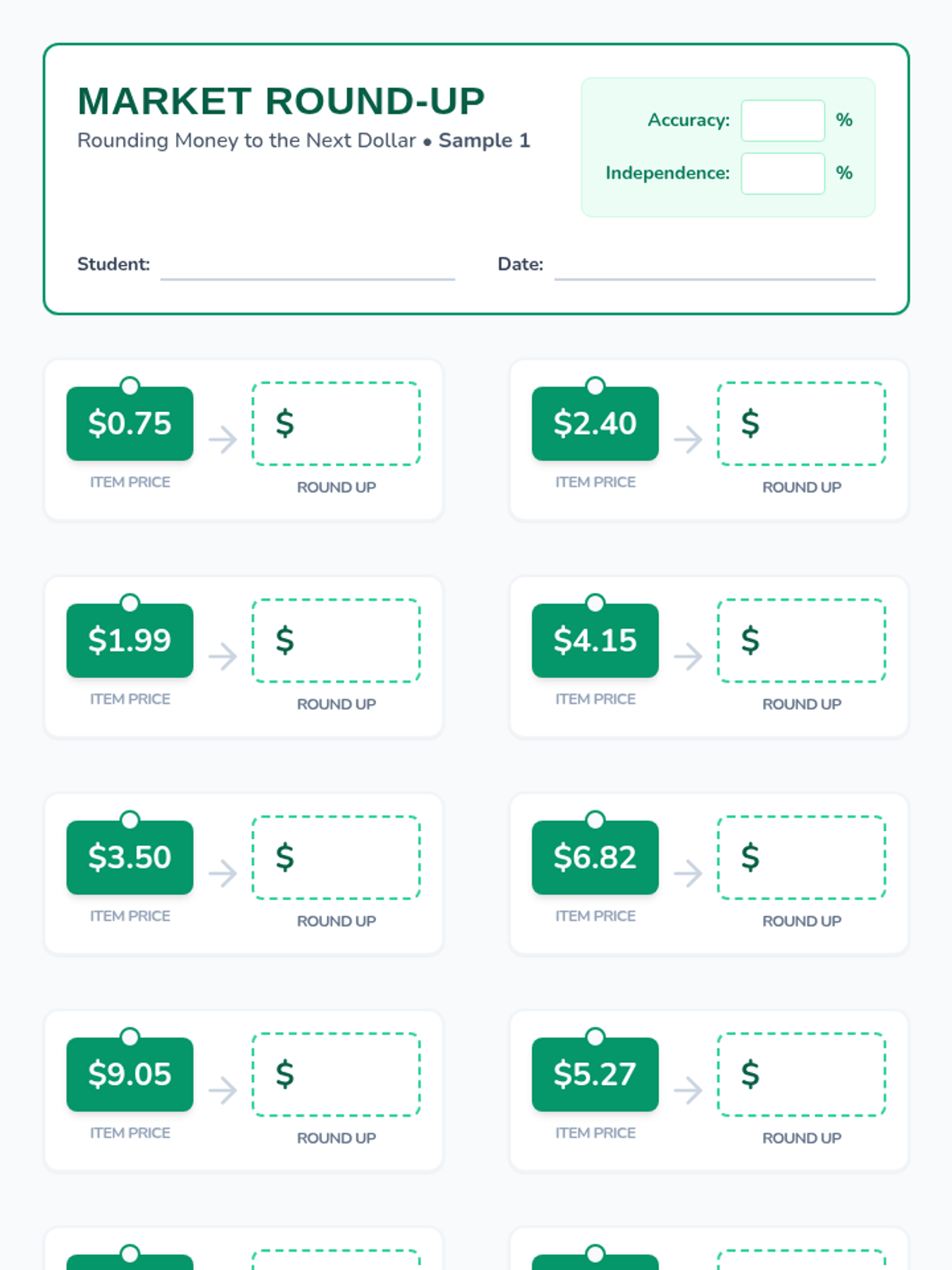
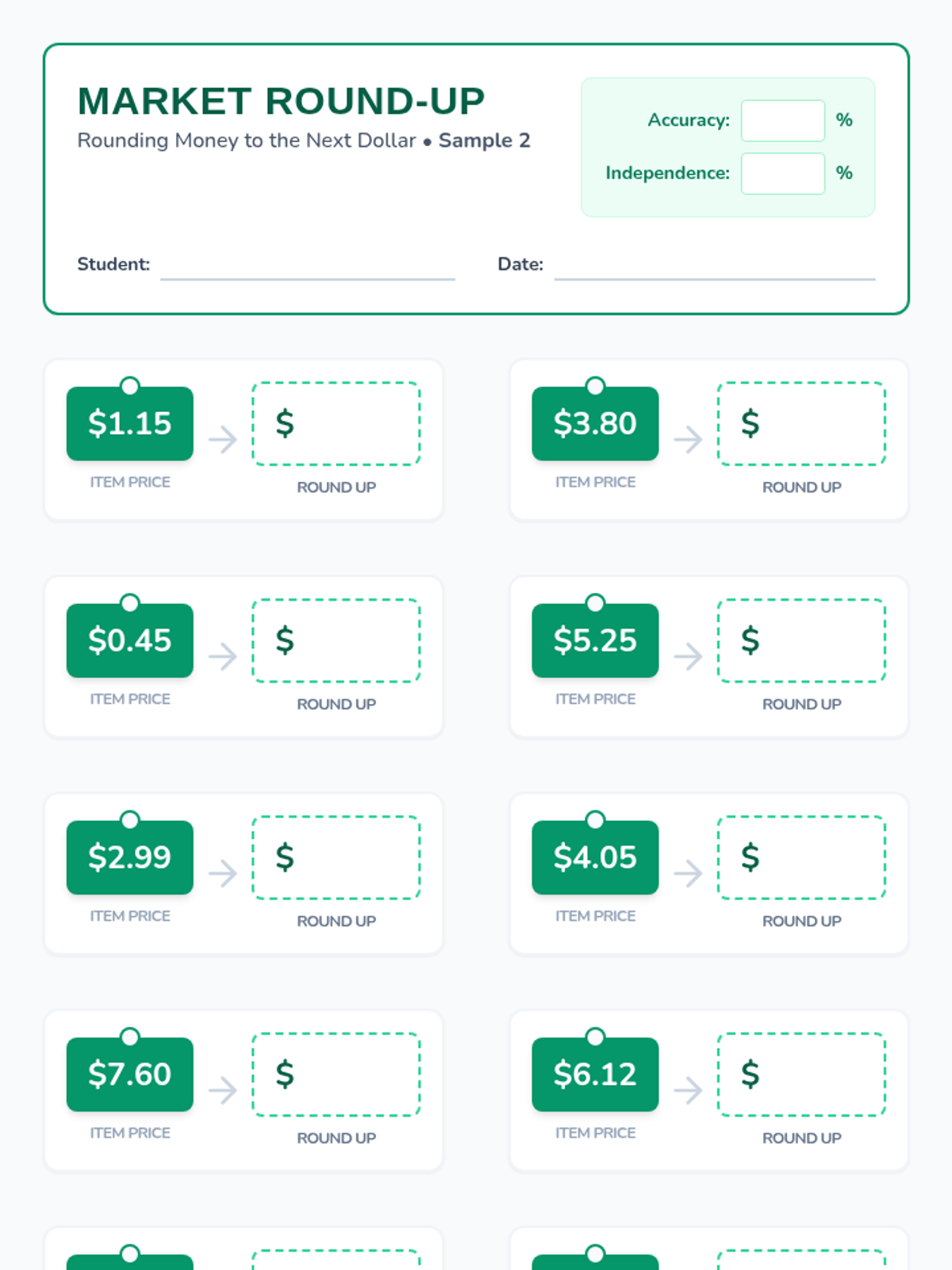
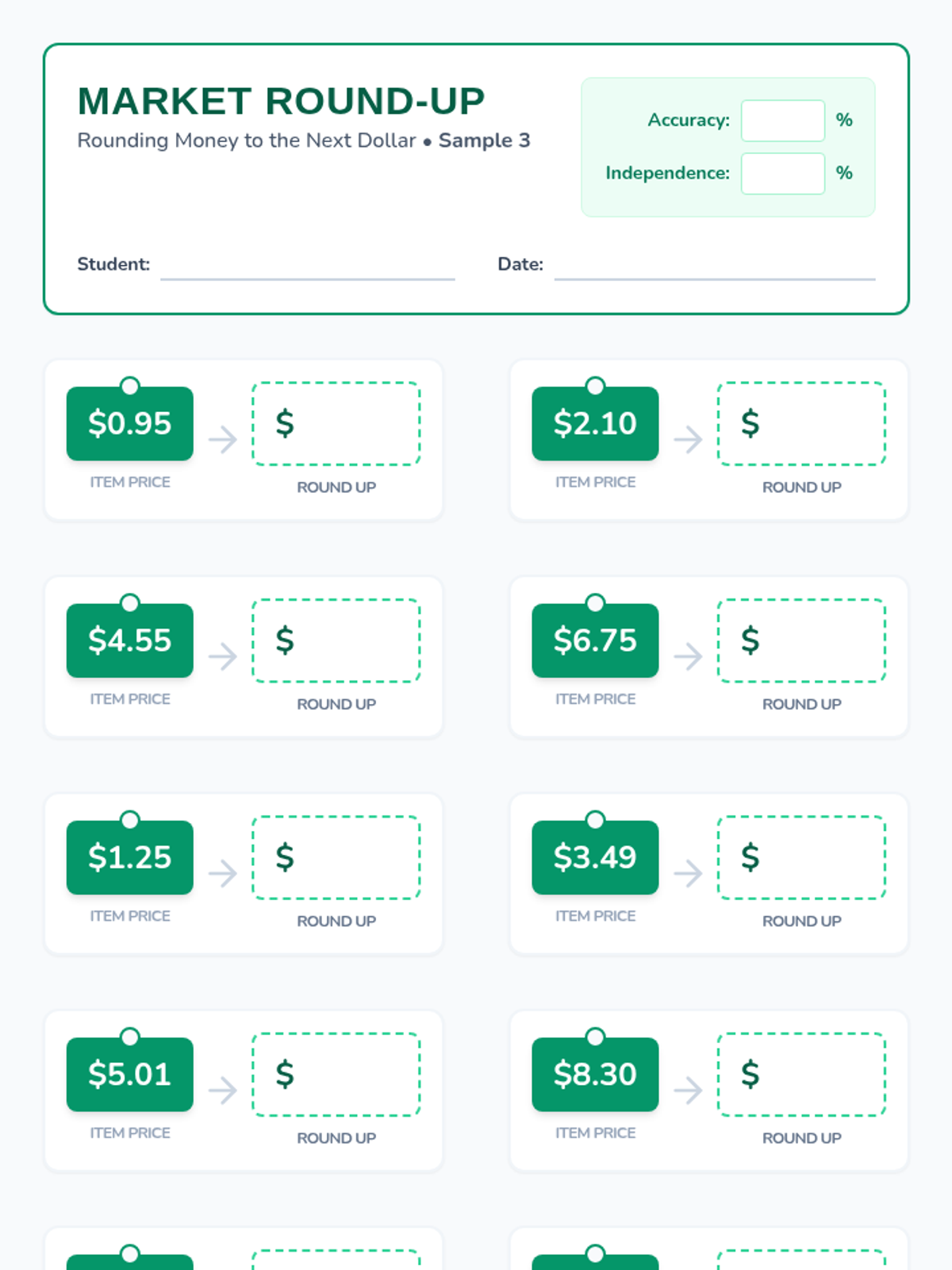
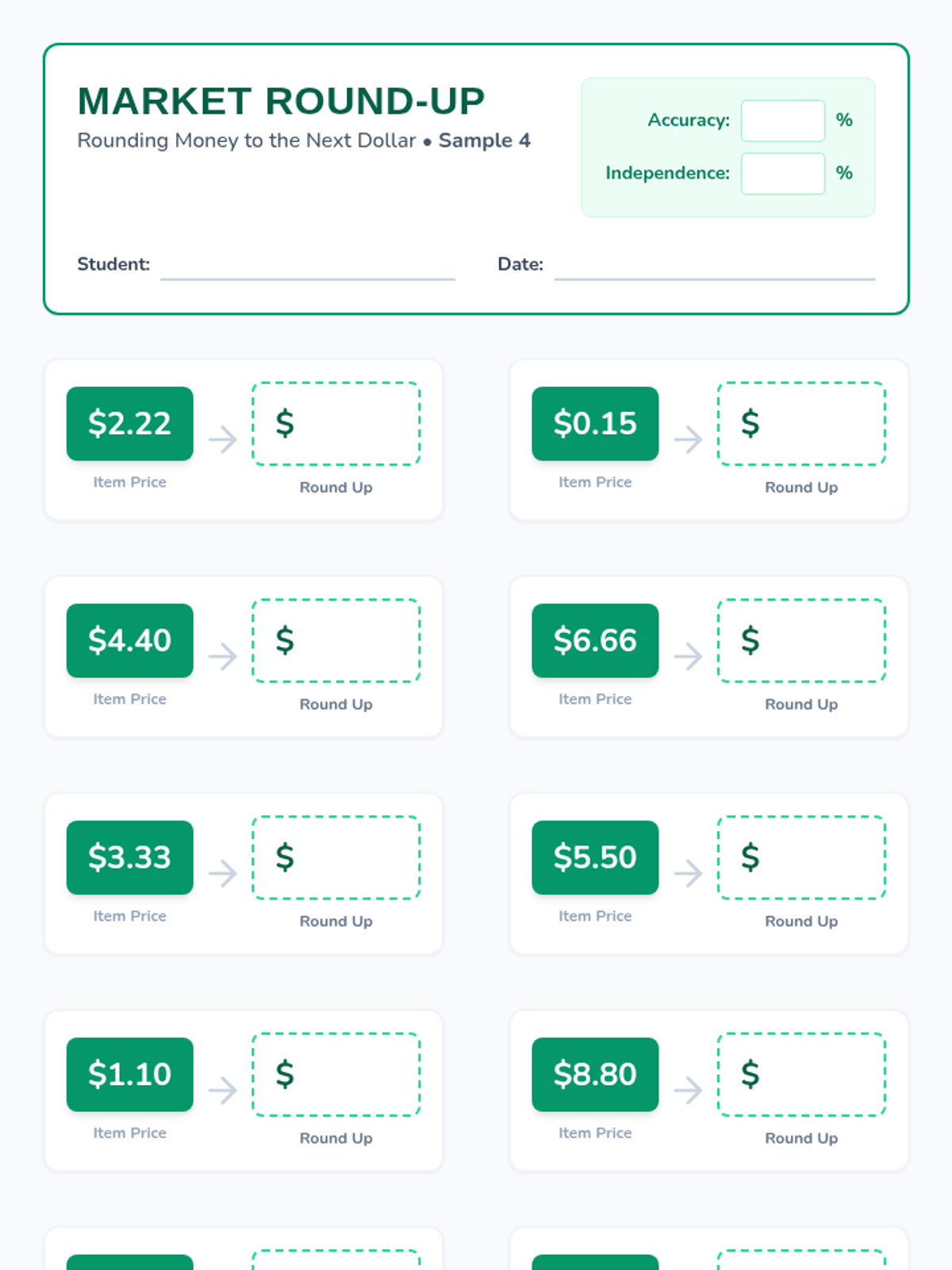
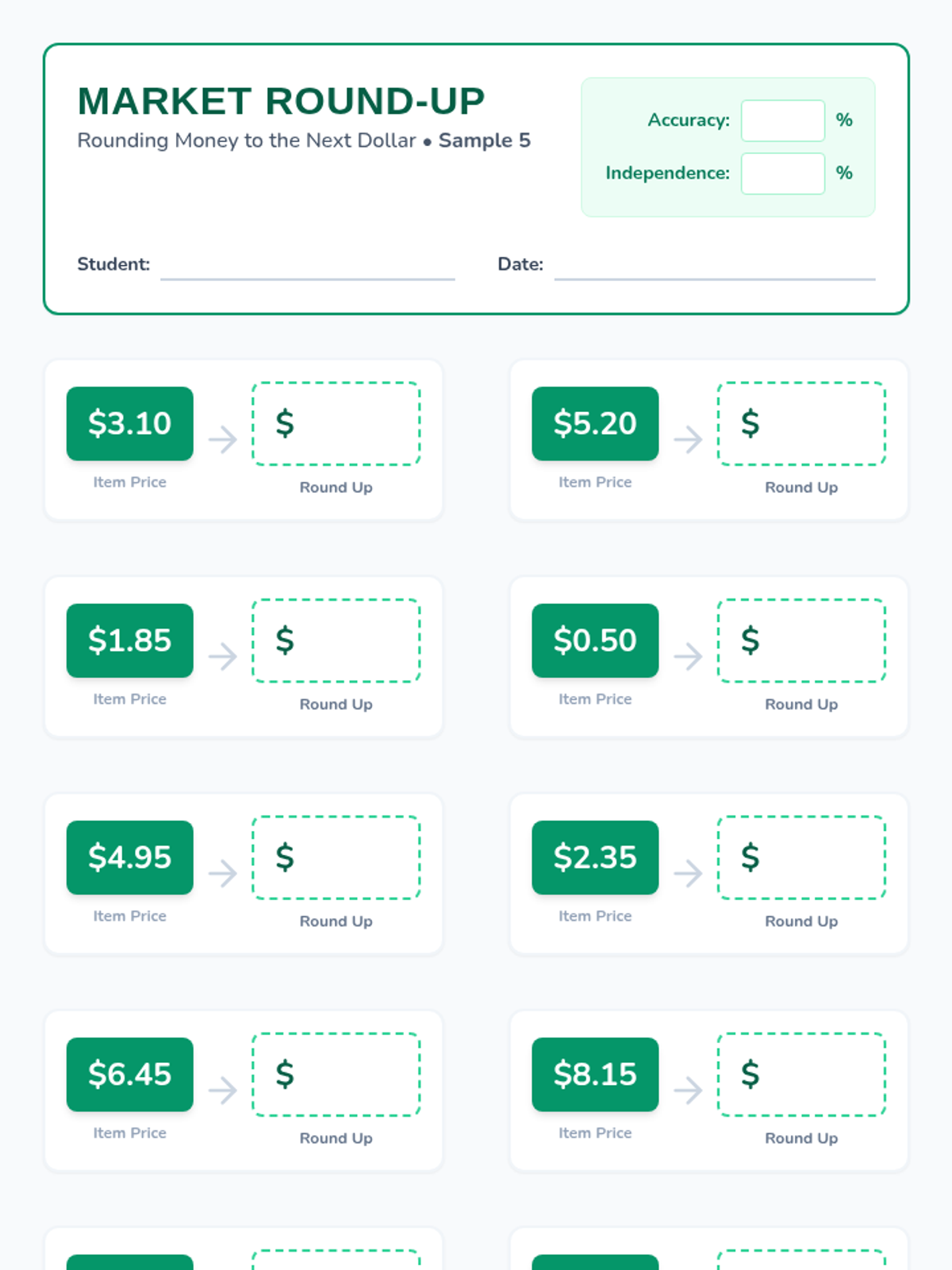
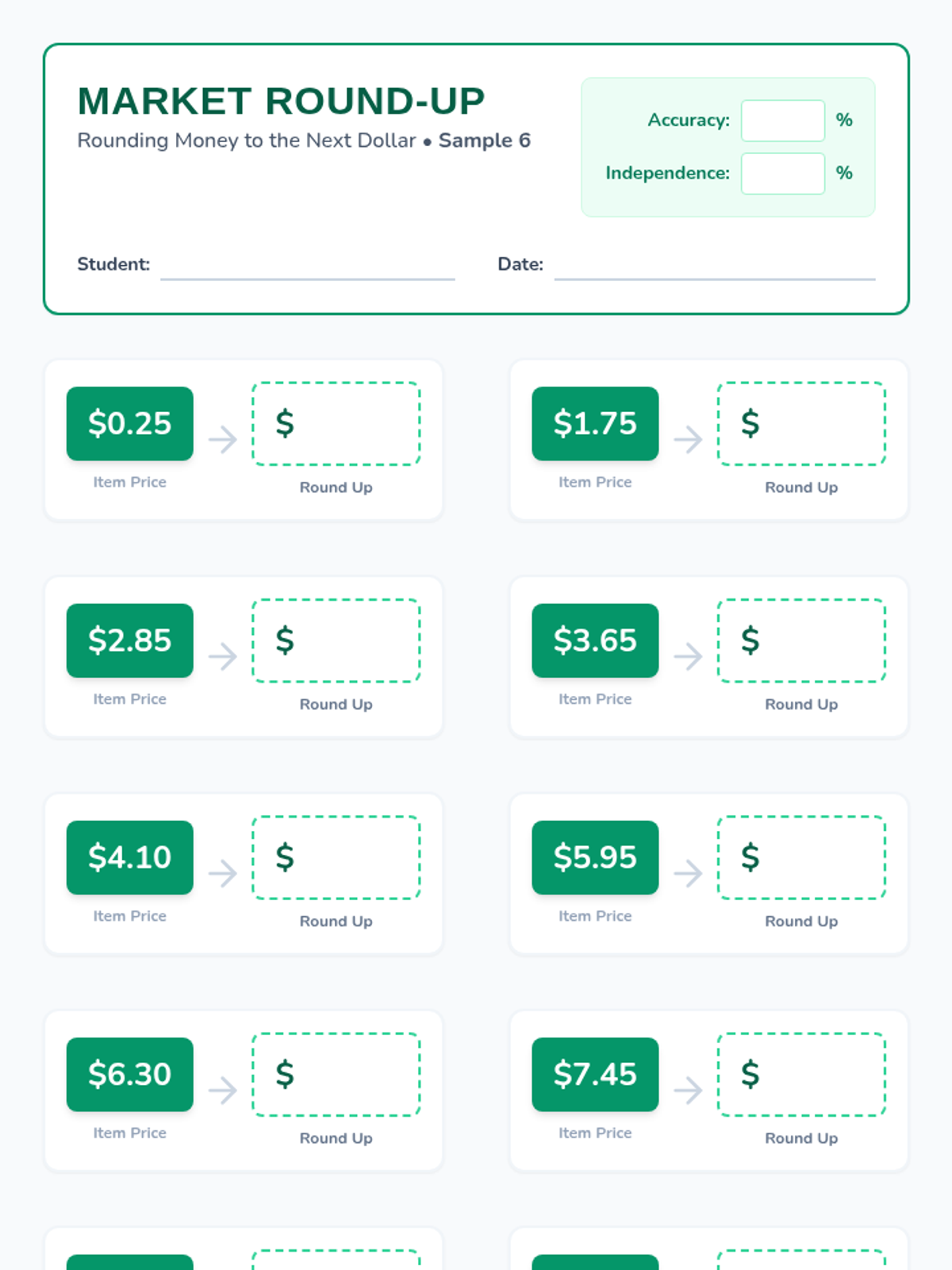
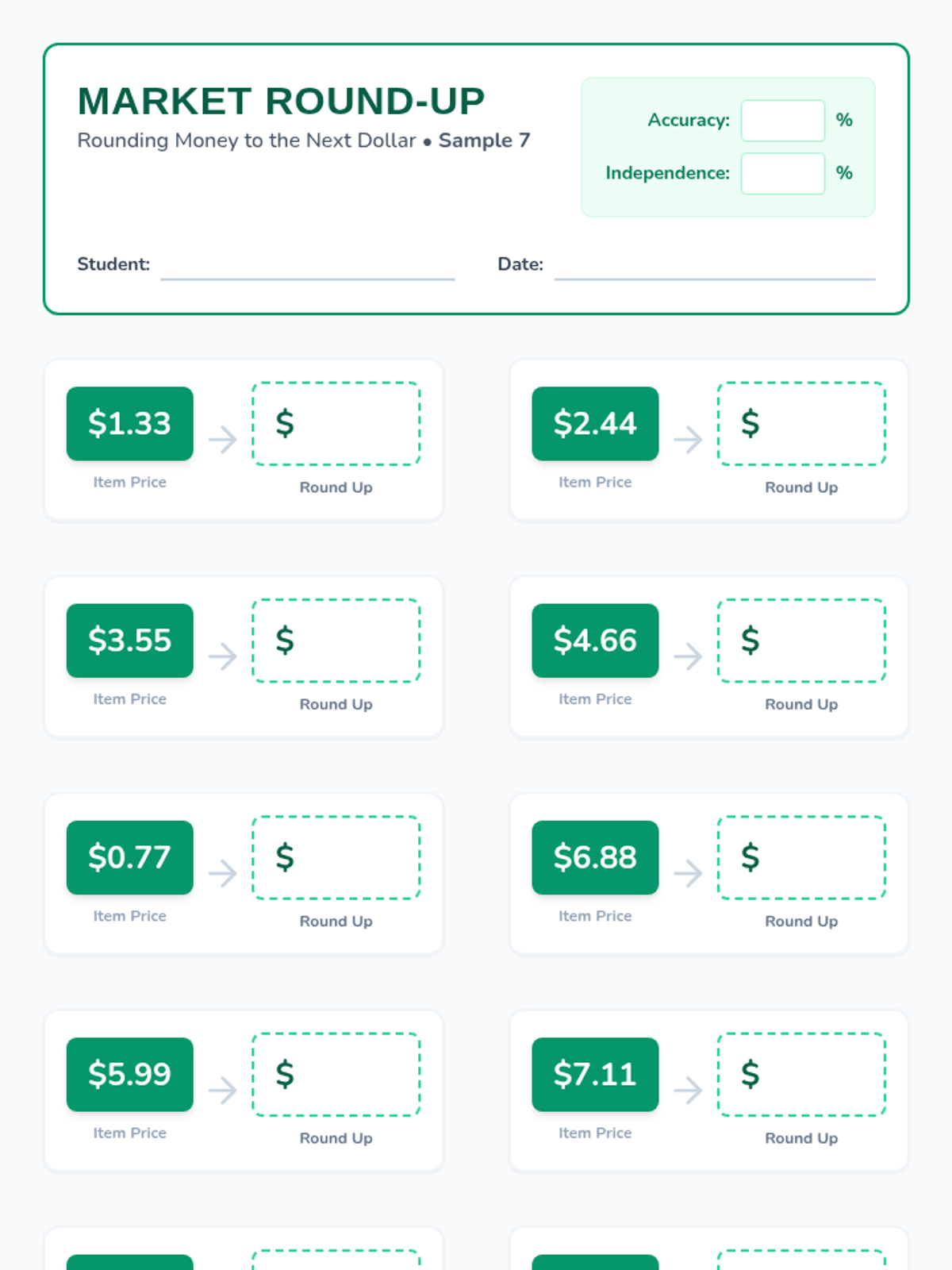
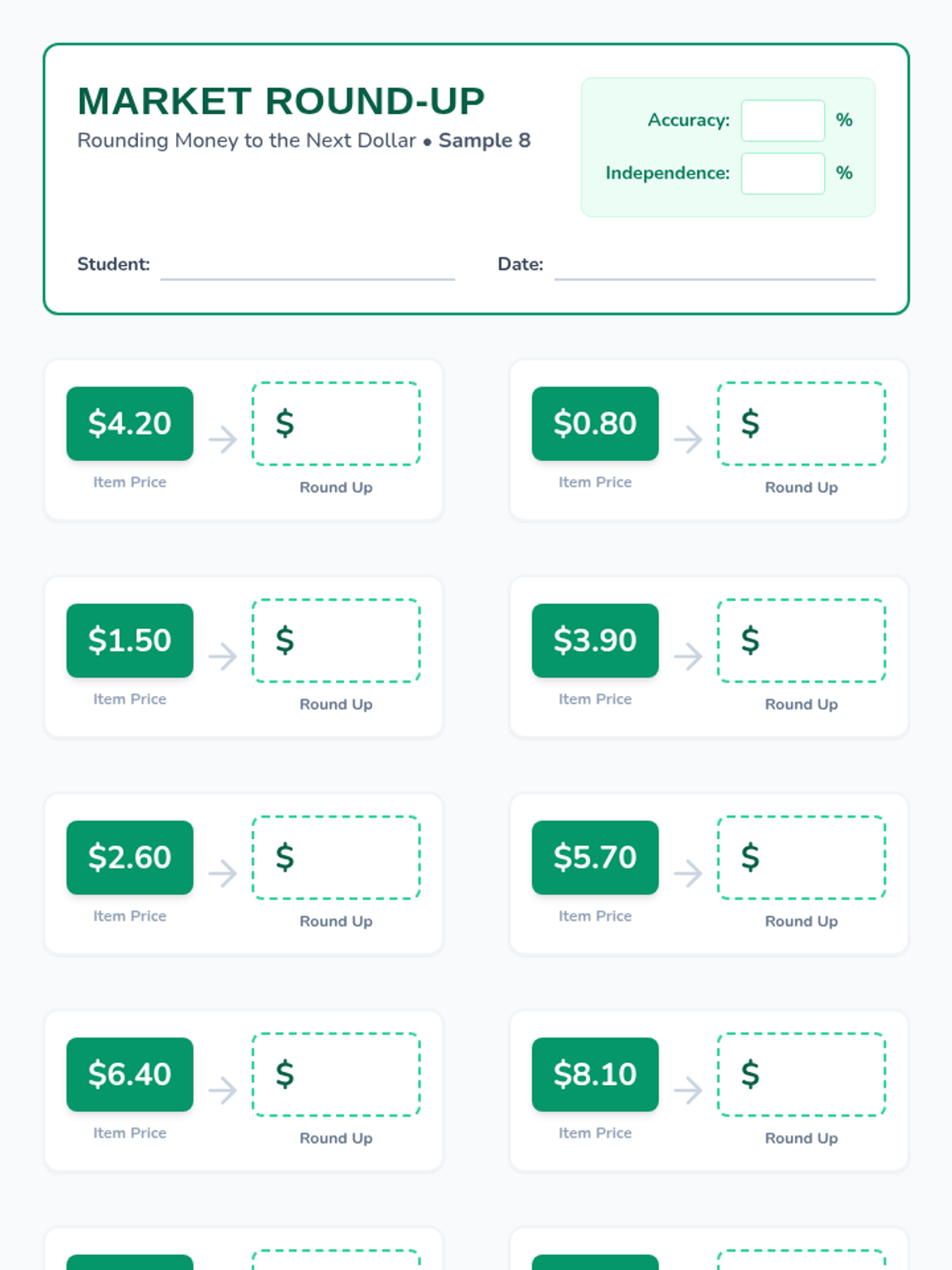
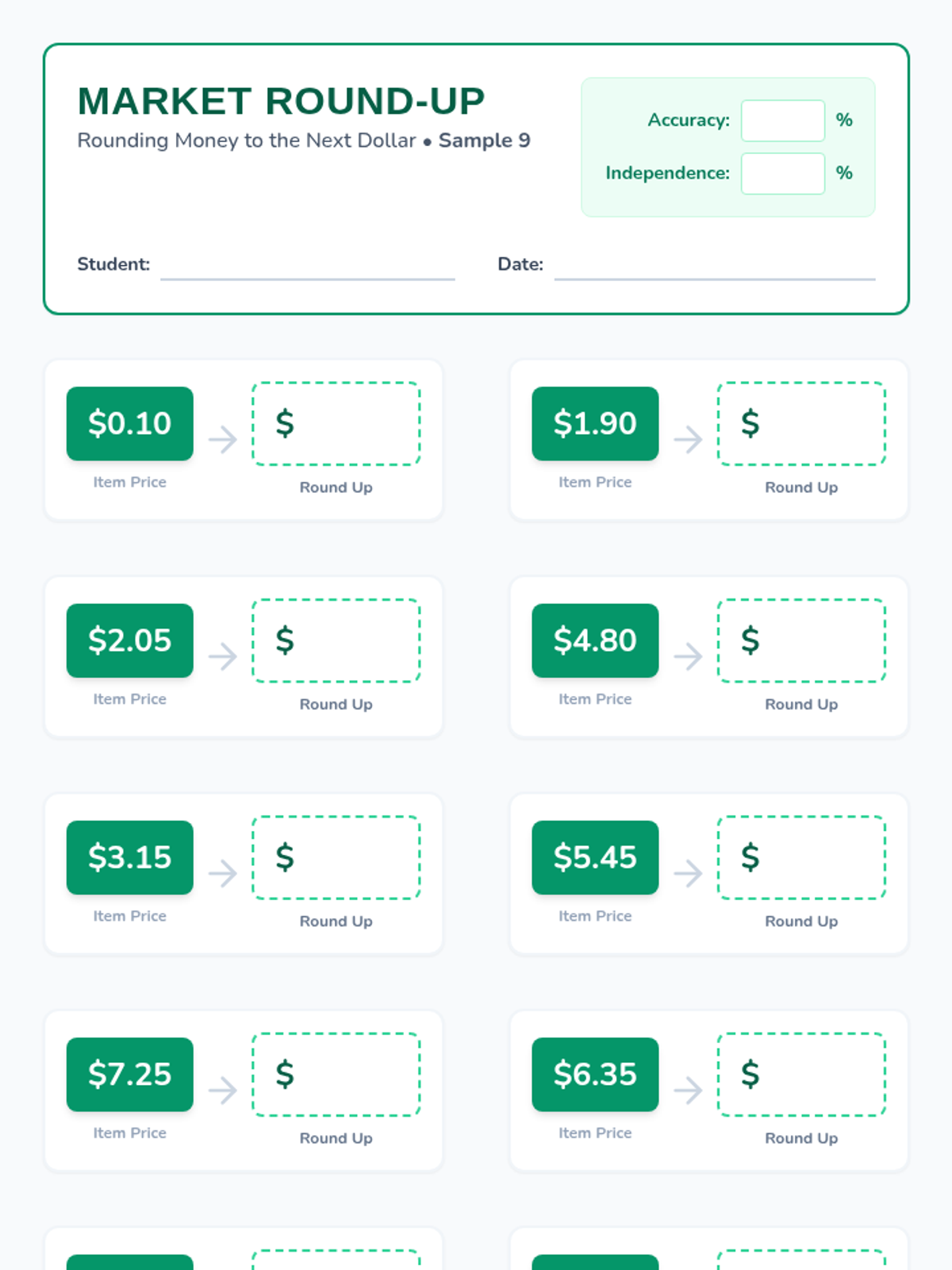
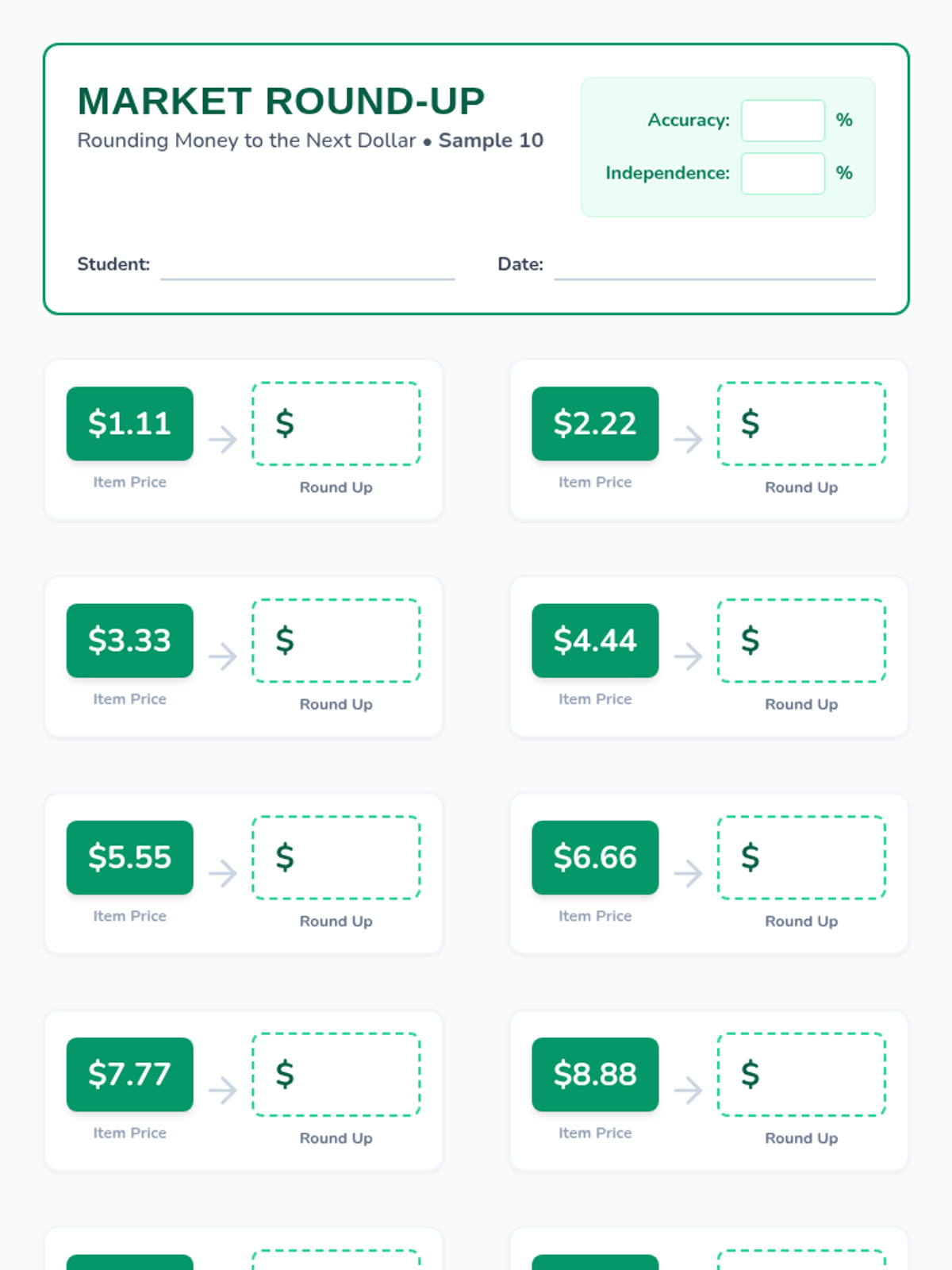
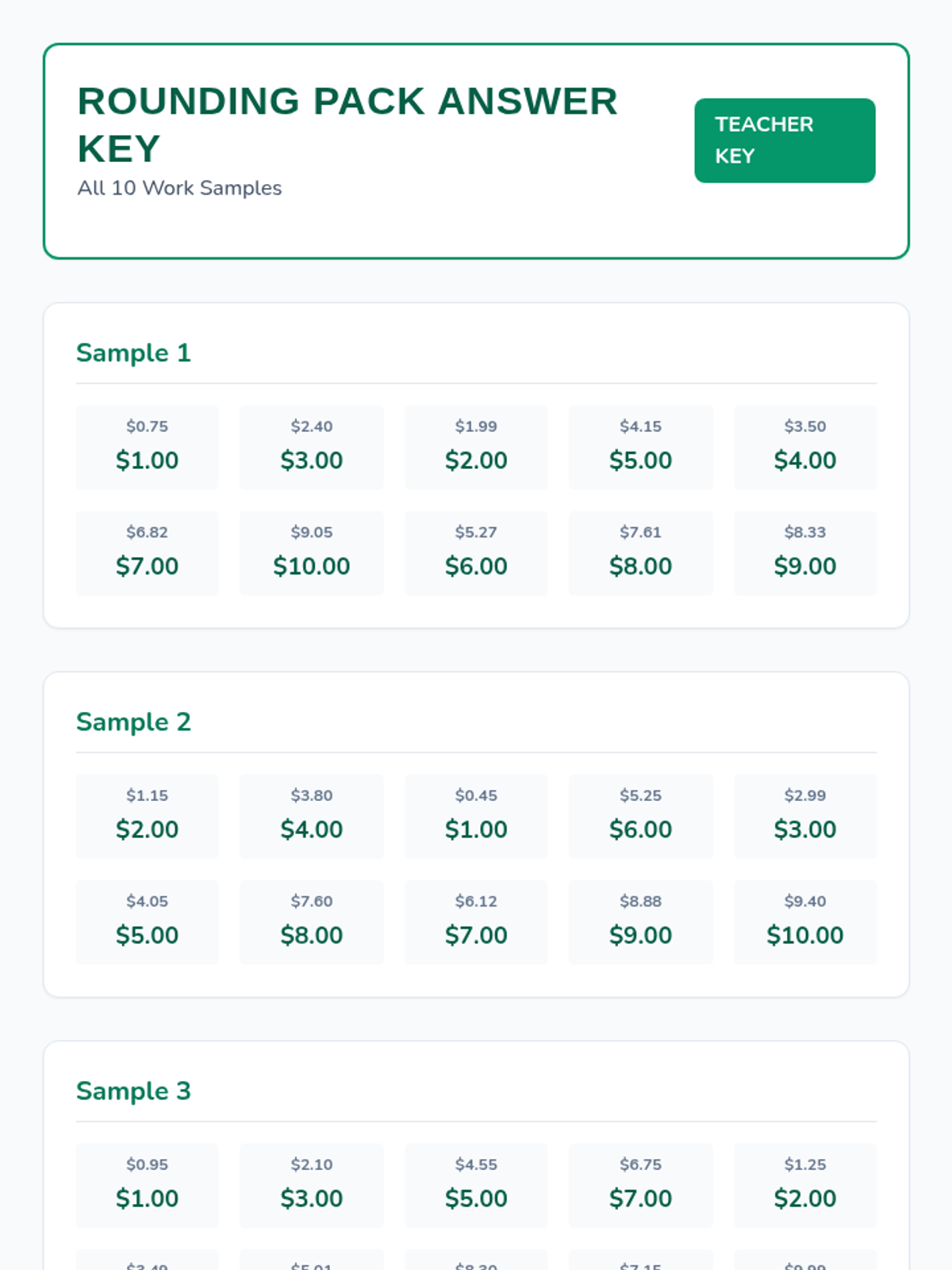
A lesson focused on the 'Dollar Up' method for rounding money to the nearest dollar, specifically designed for MCAS-Alt work samples. Students practice connecting decimals to whole dollars using visual price tags and simple rounding rules.
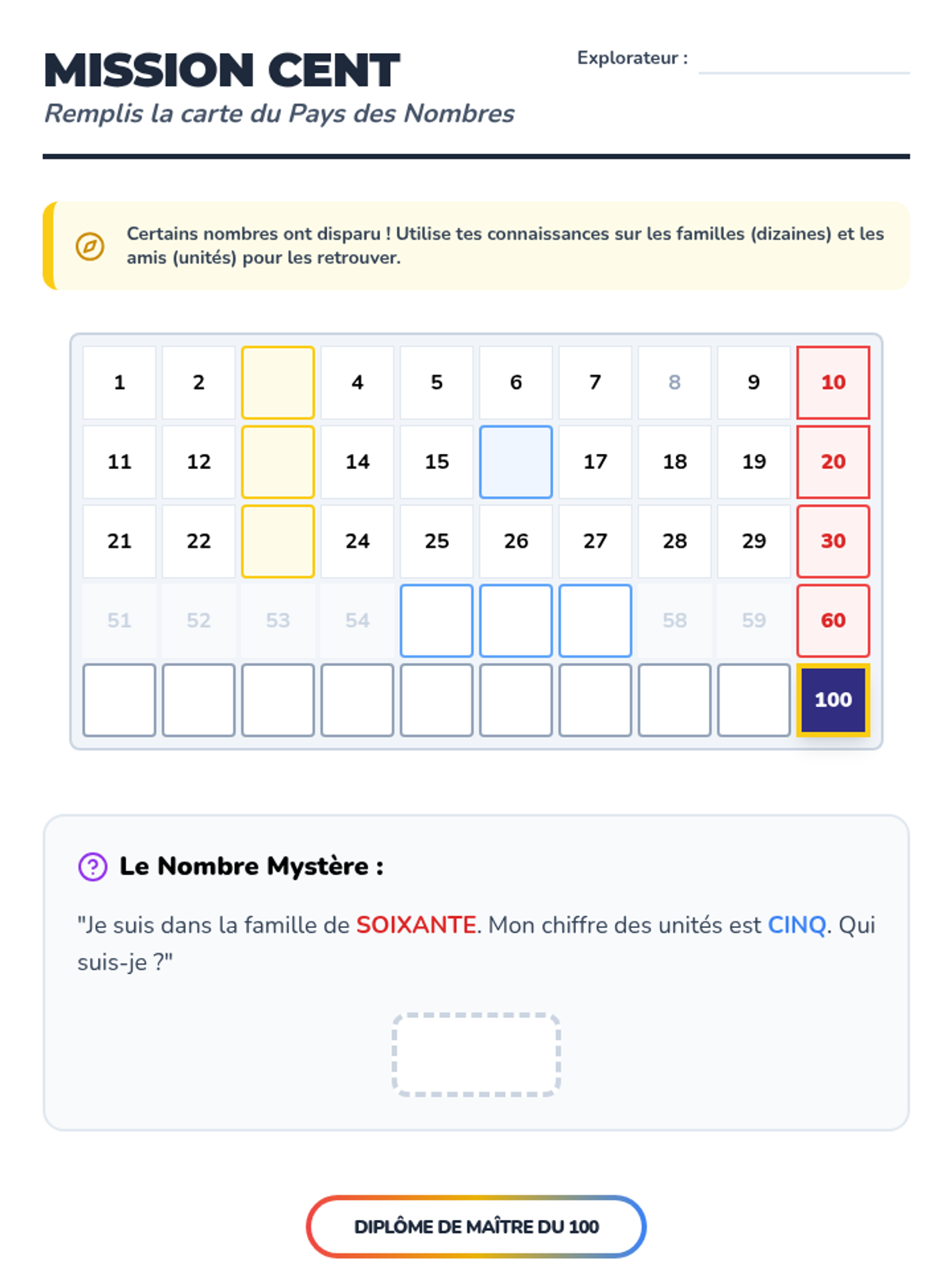
Synthèse de l'apprentissage avec l'exploration du tableau des 100. Identification des régularités (colonnes des unités, lignes des dizaines) pour naviguer dans la grande comptine numérique.
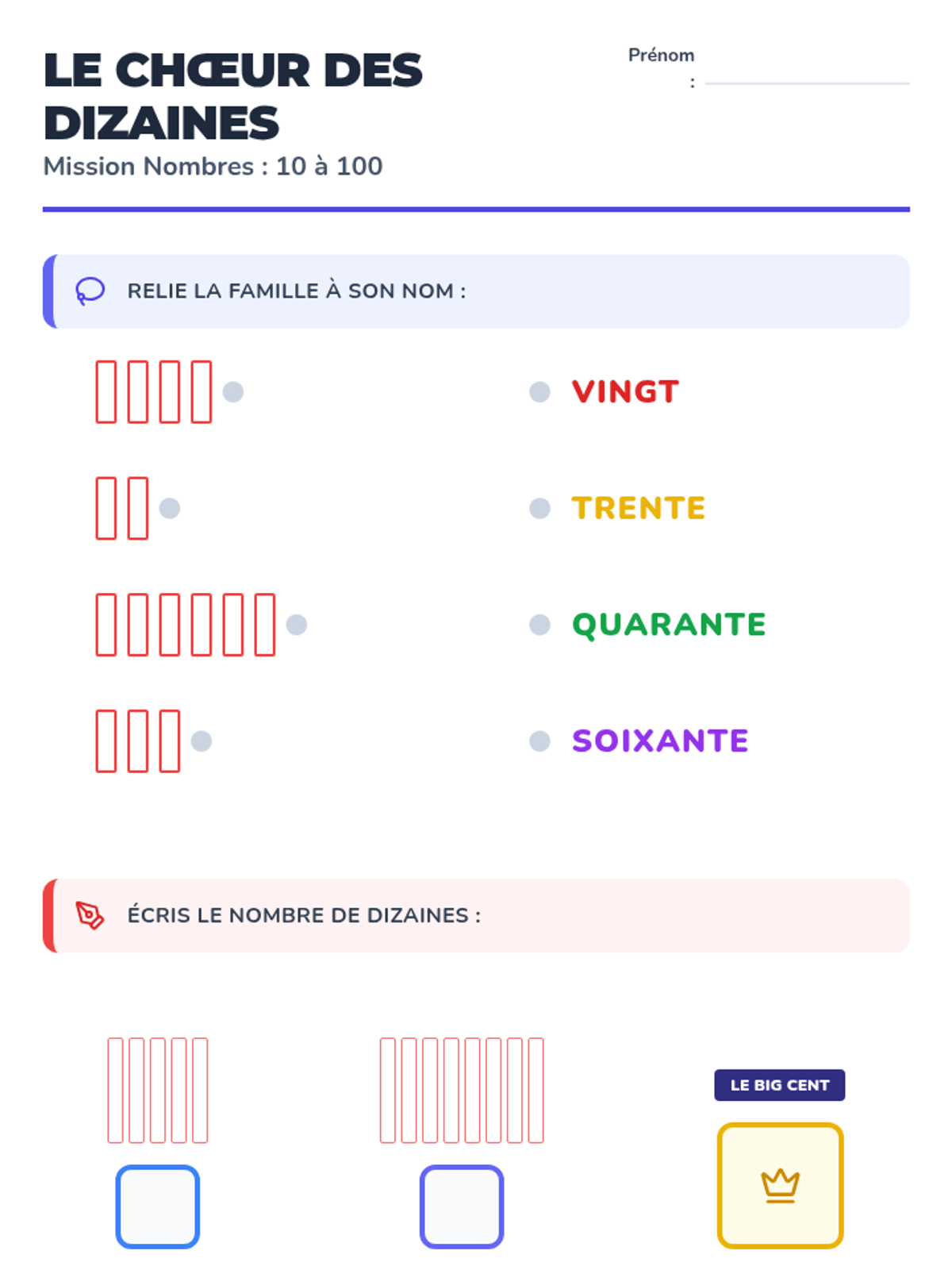
Focus sur le comptage par dizaines (10, 20, 30... 100). Apprentissage des noms des familles (Vingt, Trente, Quarante, etc.) et visualisation de leur structure en barres de 10.