Focus sur le comptage par dizaines (10, 20, 30... 100). Apprentissage des noms des familles (Vingt, Trente, Quarante, etc.) et visualisation de leur structure en barres de 10.
Final application of fluency through collaborative games and problem-solving scenarios.
Synthesizing strategies to solve mixed multiplication and division problems within 100.
Exploring square numbers (e.g., 5x5, 6x6) through visual patterns and area models.
Discovering the 'ten minus one' pattern and other visual tricks for mastering the 9s.
Applying the distributive property to break apart larger facts into smaller, known chunks (focusing on 3s and 6s).
Using the clock and finger patterns to master 5s and 10s facts through rhythmic counting and visual cues.
Extending doubling strategies to master the 8s facts and building connections to smaller factors.
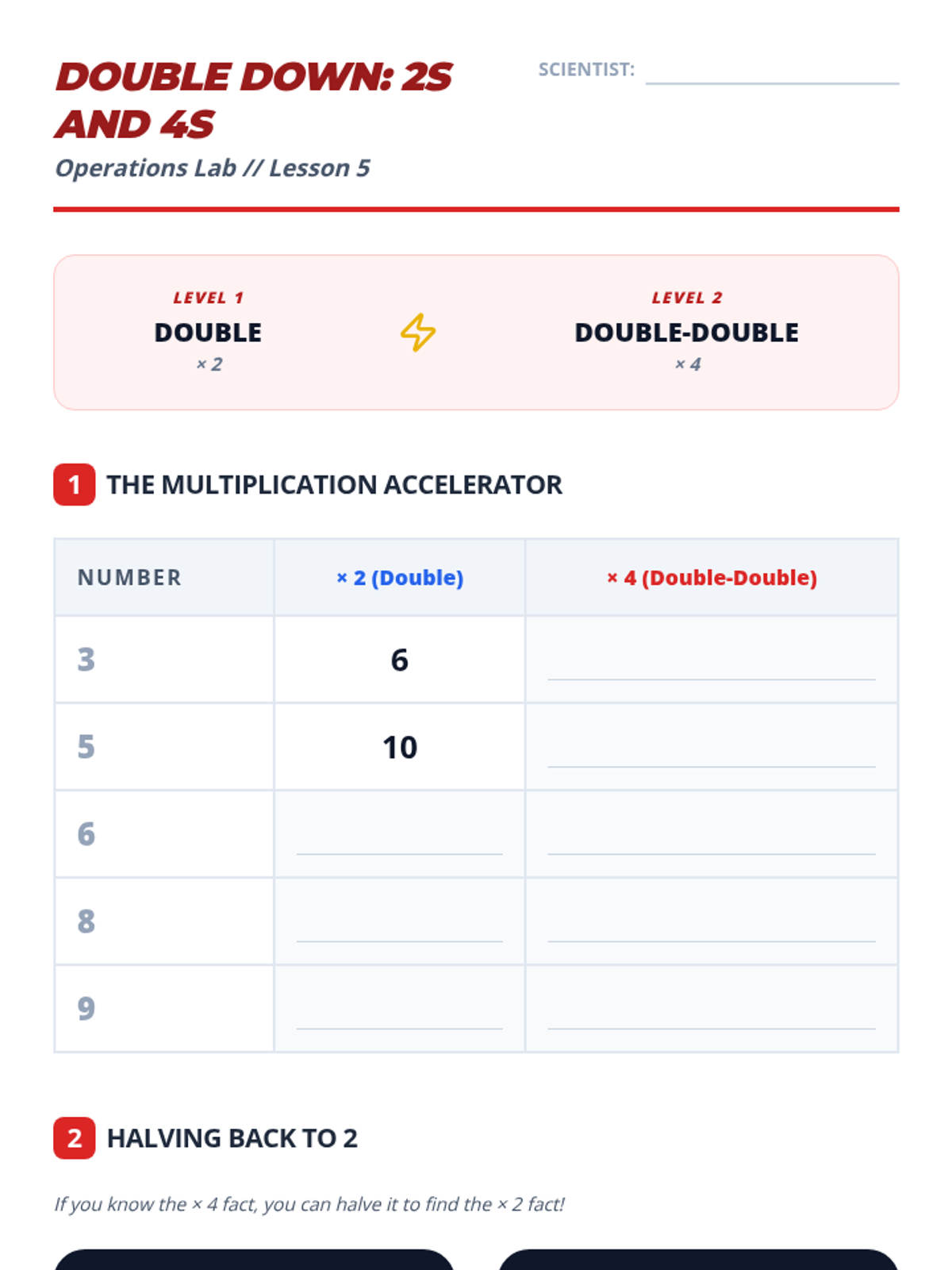
Building fluency with 2s and 4s by using the 'double' and 'double-double' strategy.
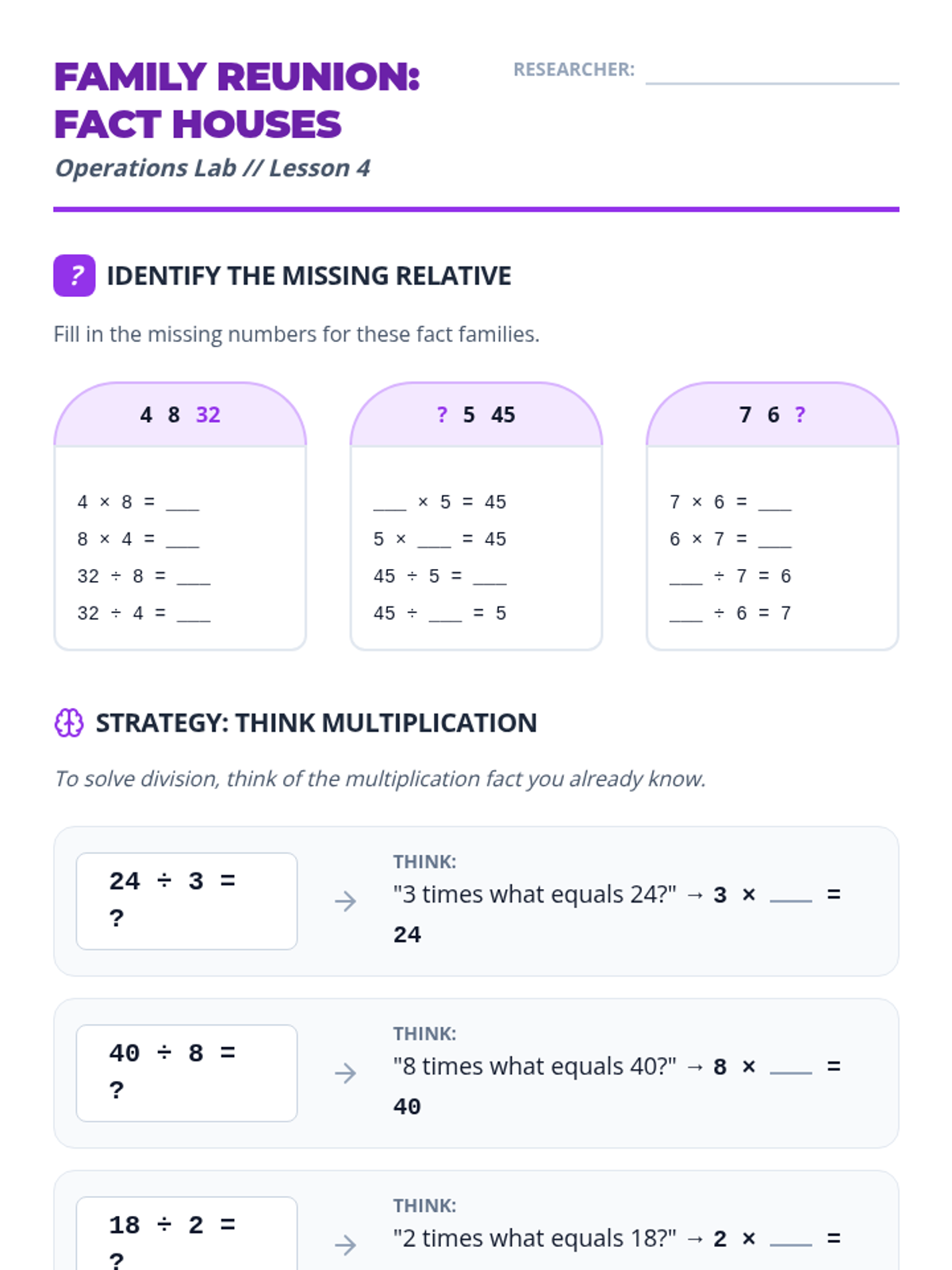
Exploring the relationship between multiplication and division using fact families and missing factor problems.
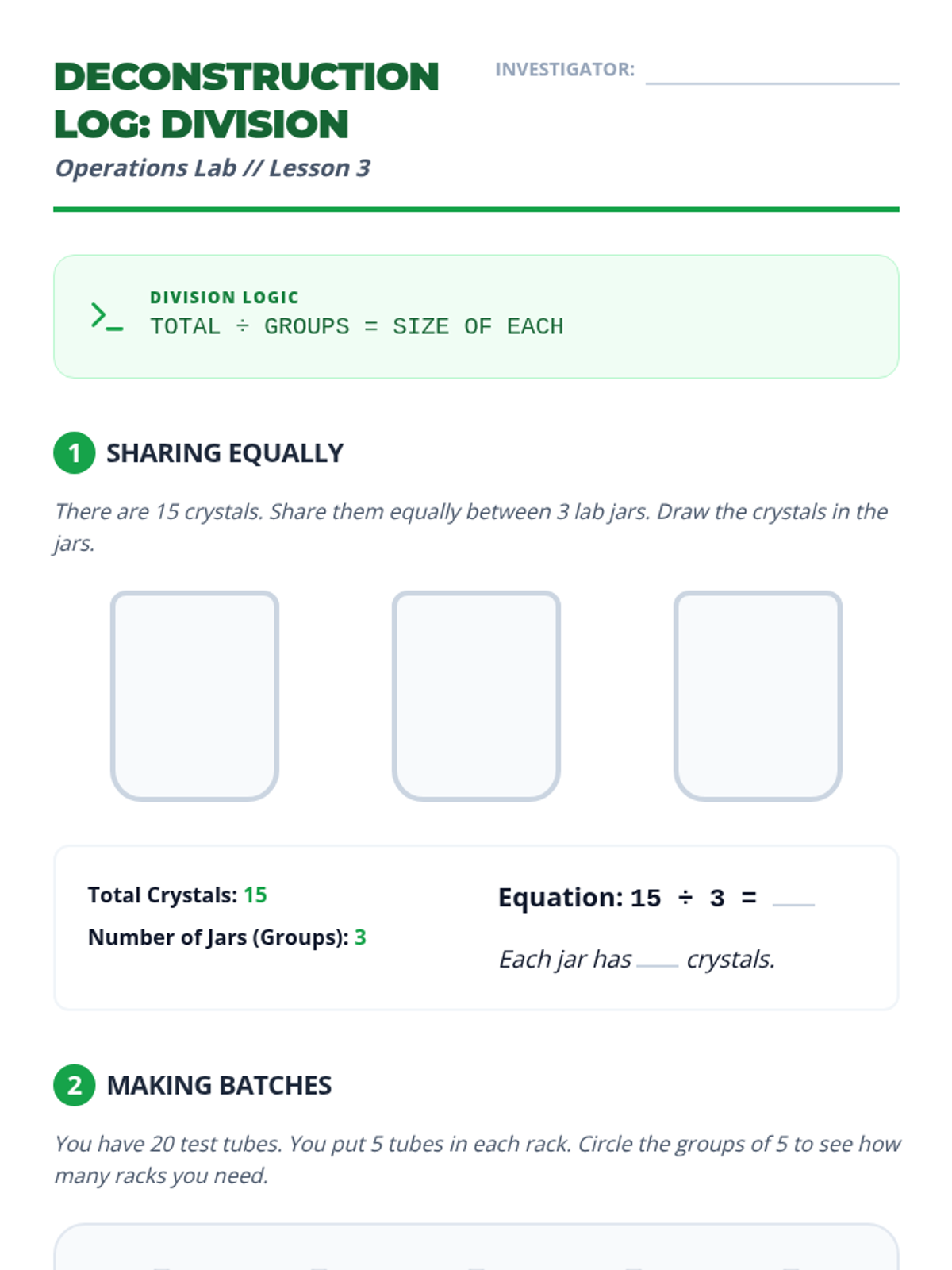
Introducing division as the inverse of multiplication, focusing on 'how many in each group' and 'how many groups'.
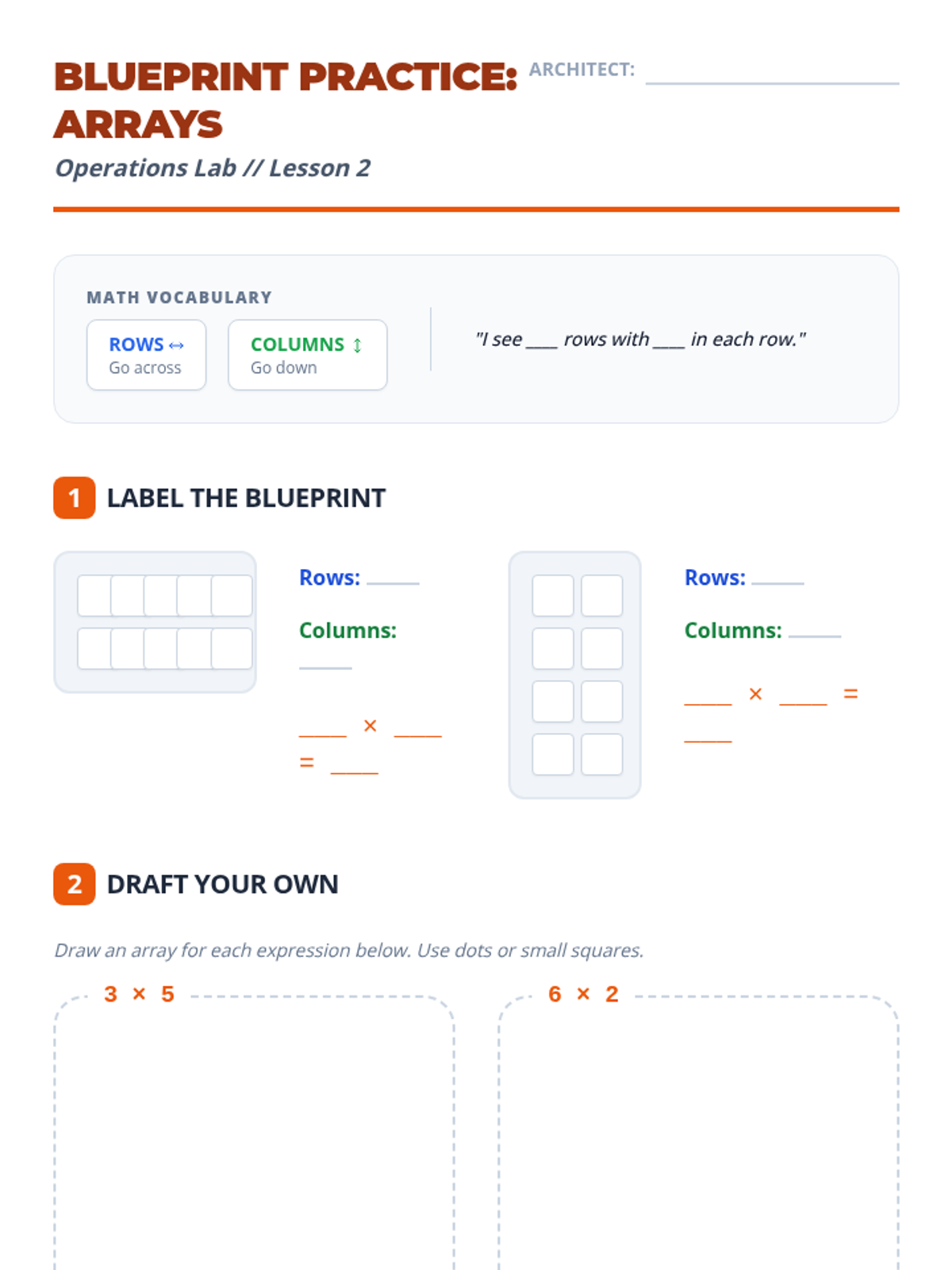
Connecting equal groups to the rows and columns of an array to build a spatial understanding of multiplication.
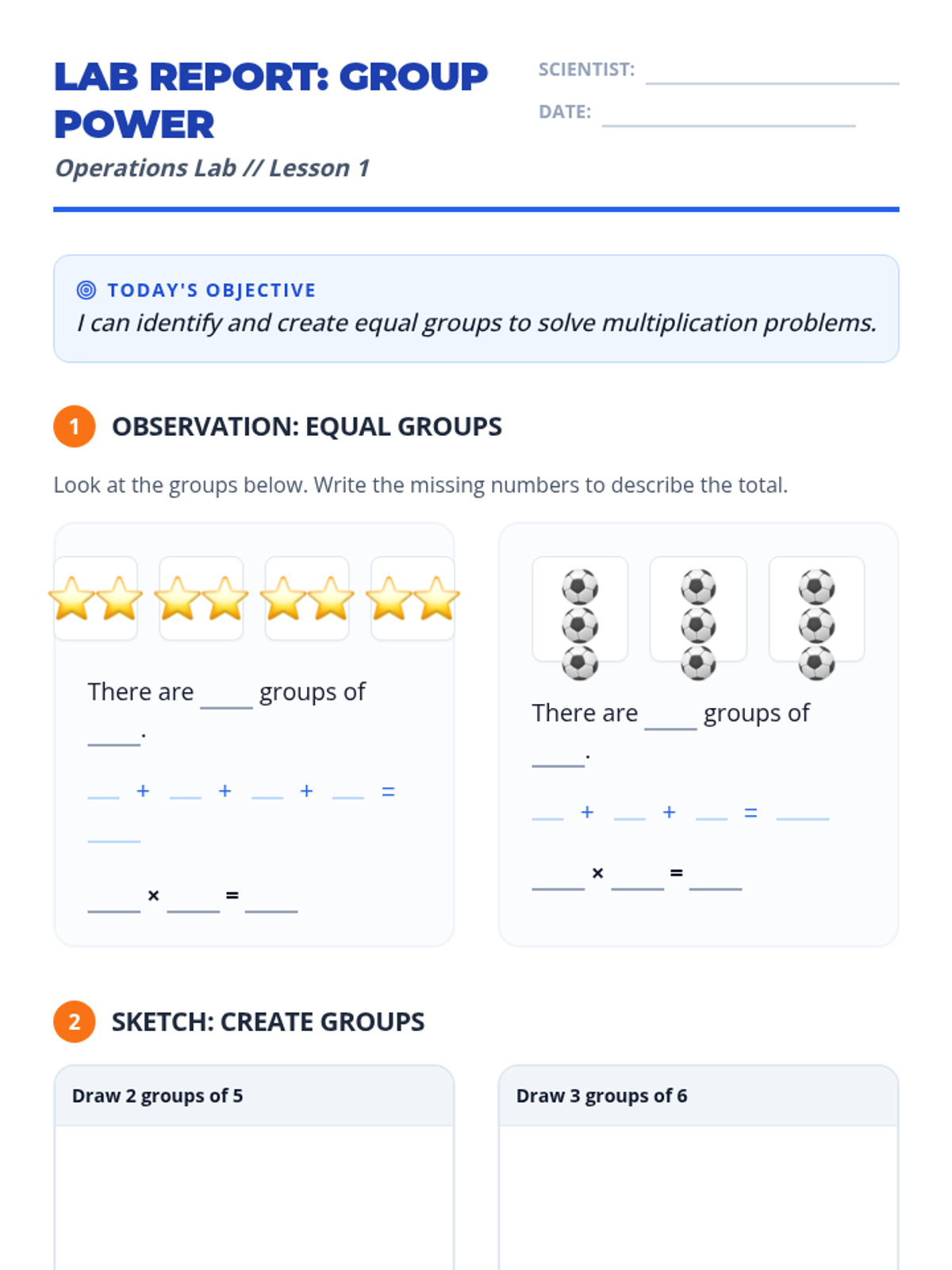
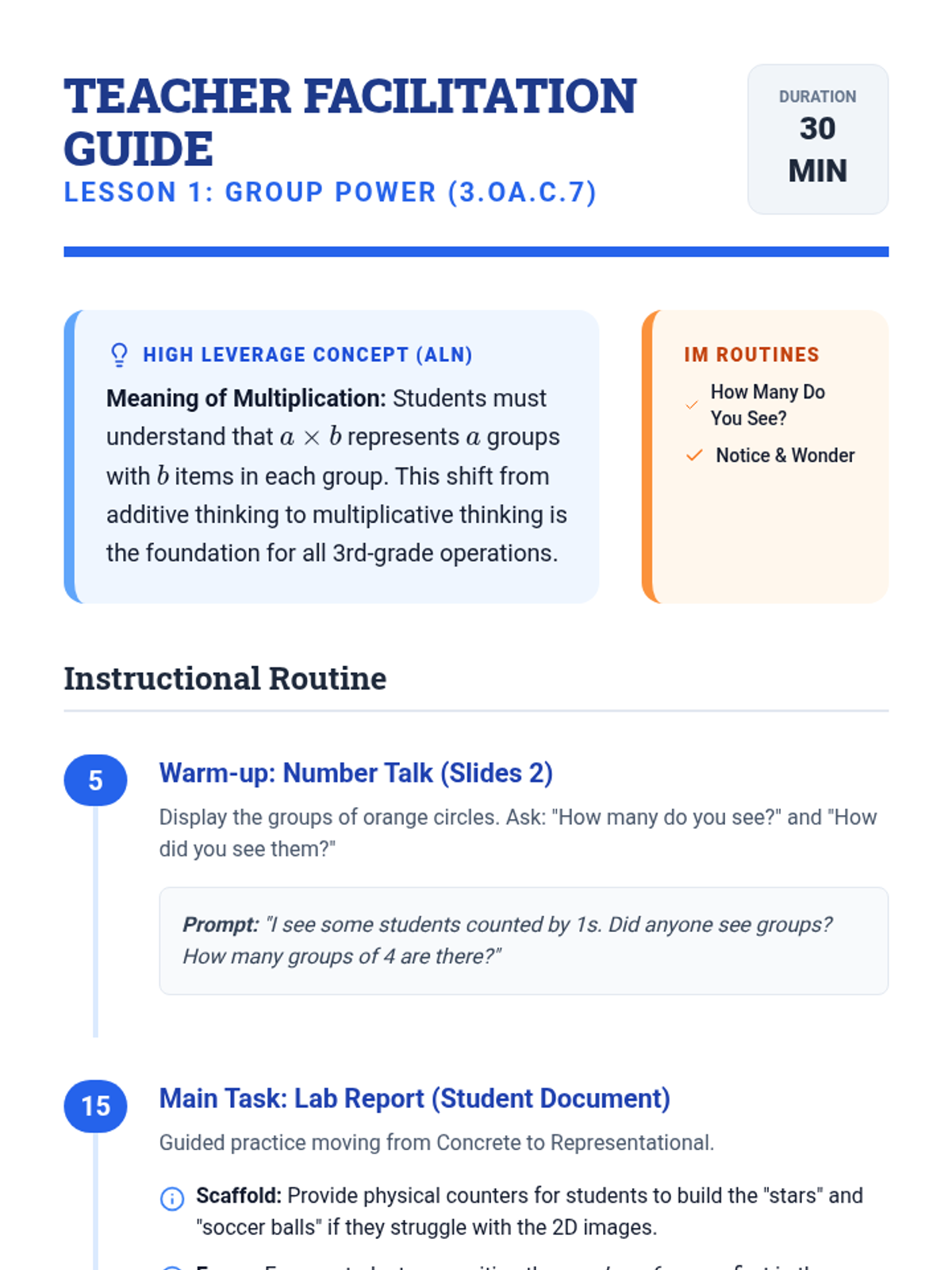
Focus on the meaning of multiplication as equal groups through visual representations and 'How Many Do You See?' routines.
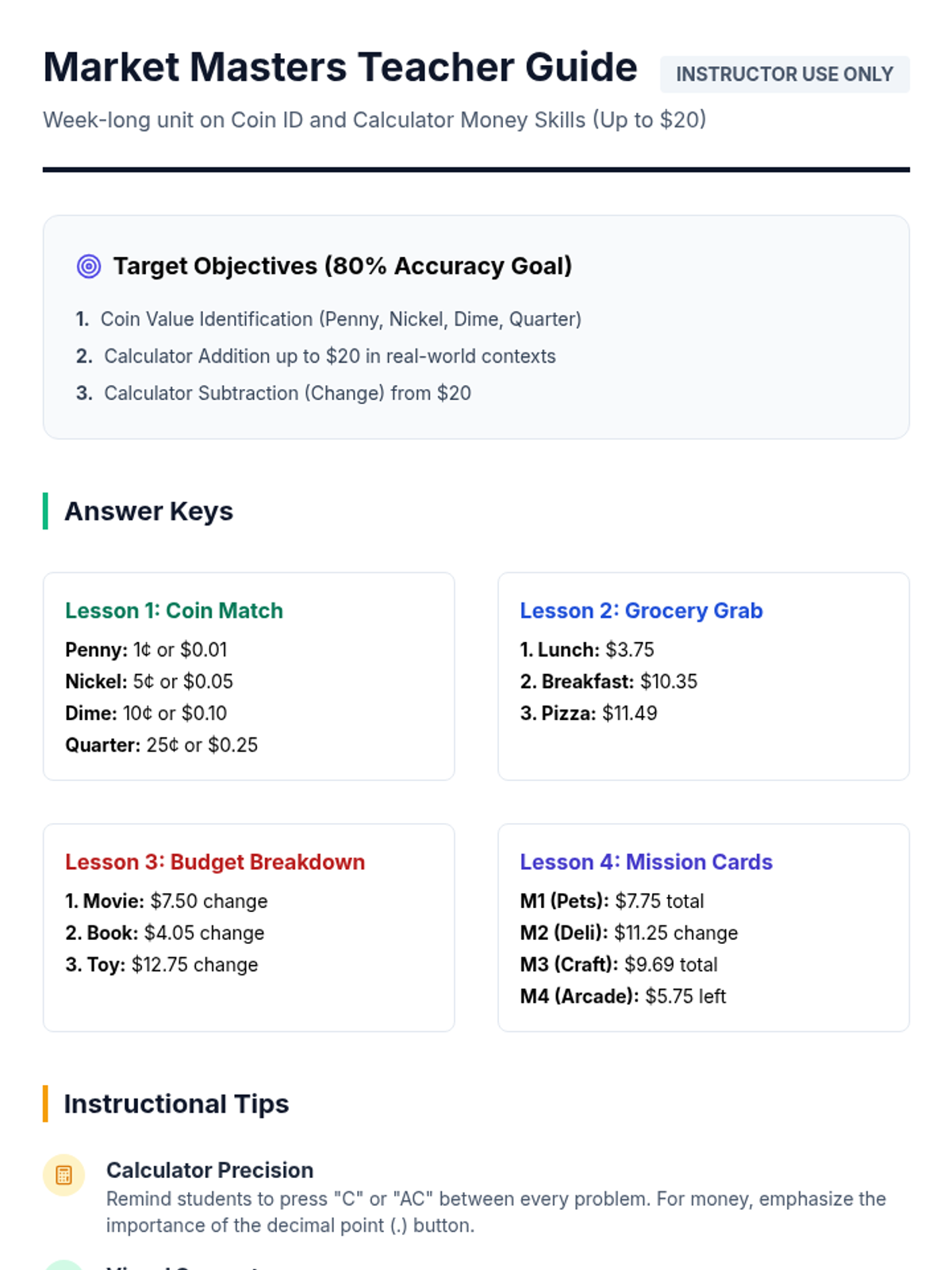
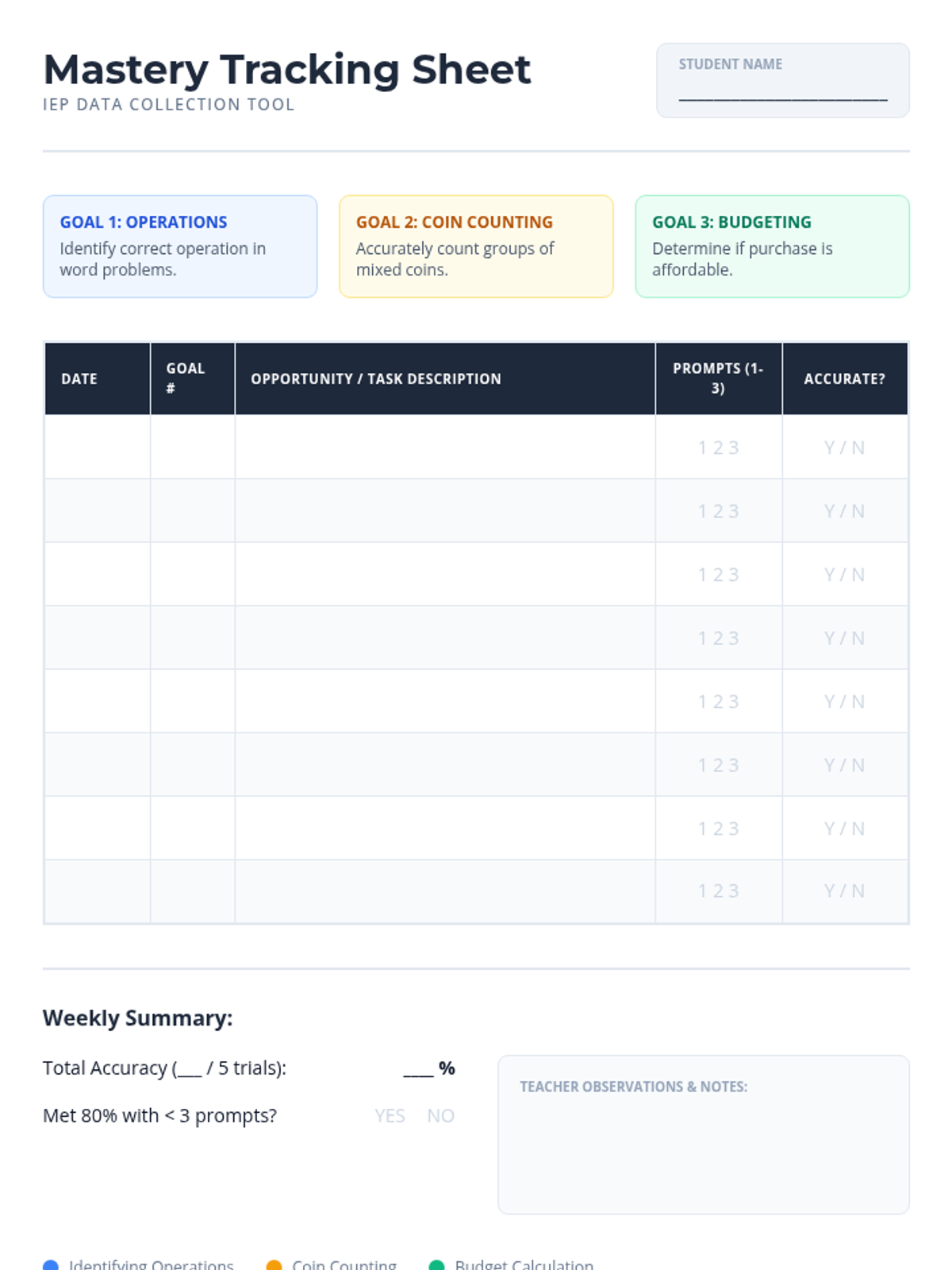
A final assessment and review day to track progress towards identifying coins and performing money calculations with 80% accuracy.
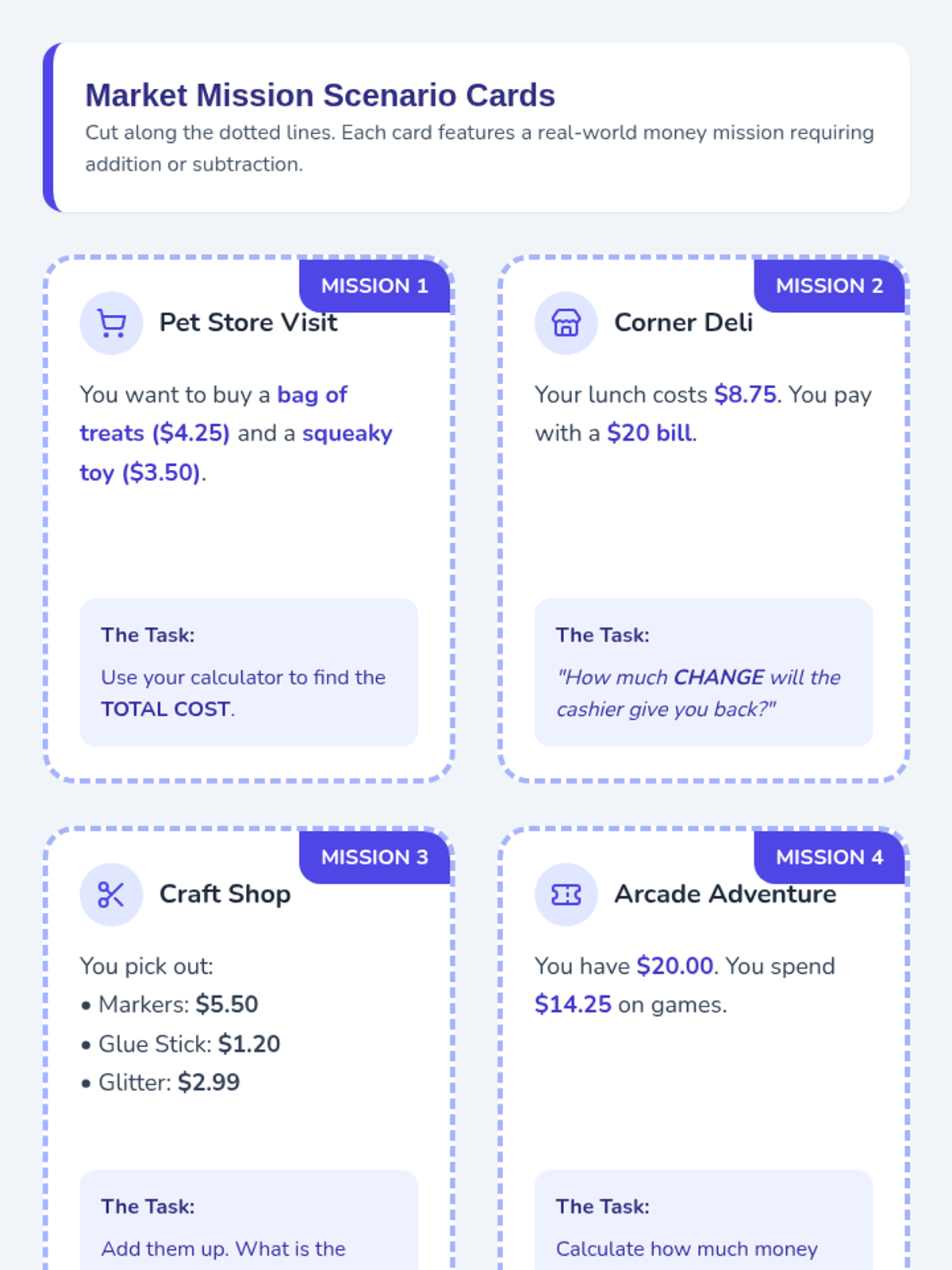
Applying both addition and subtraction to multi-step real-world scenarios using a set of interactive scenario cards.
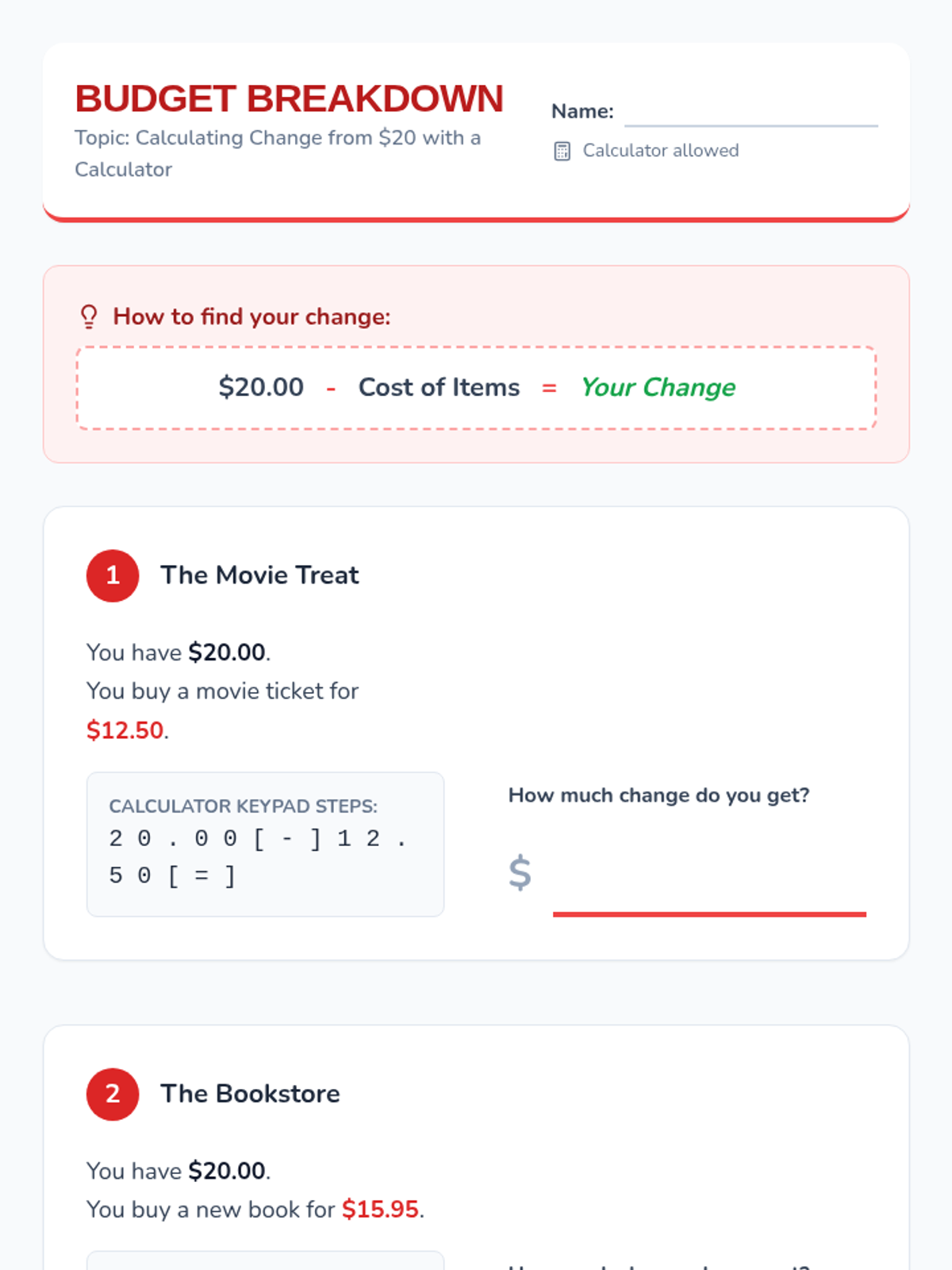
Practicing subtraction skills to calculate change and budget remaining money from a $20 limit.
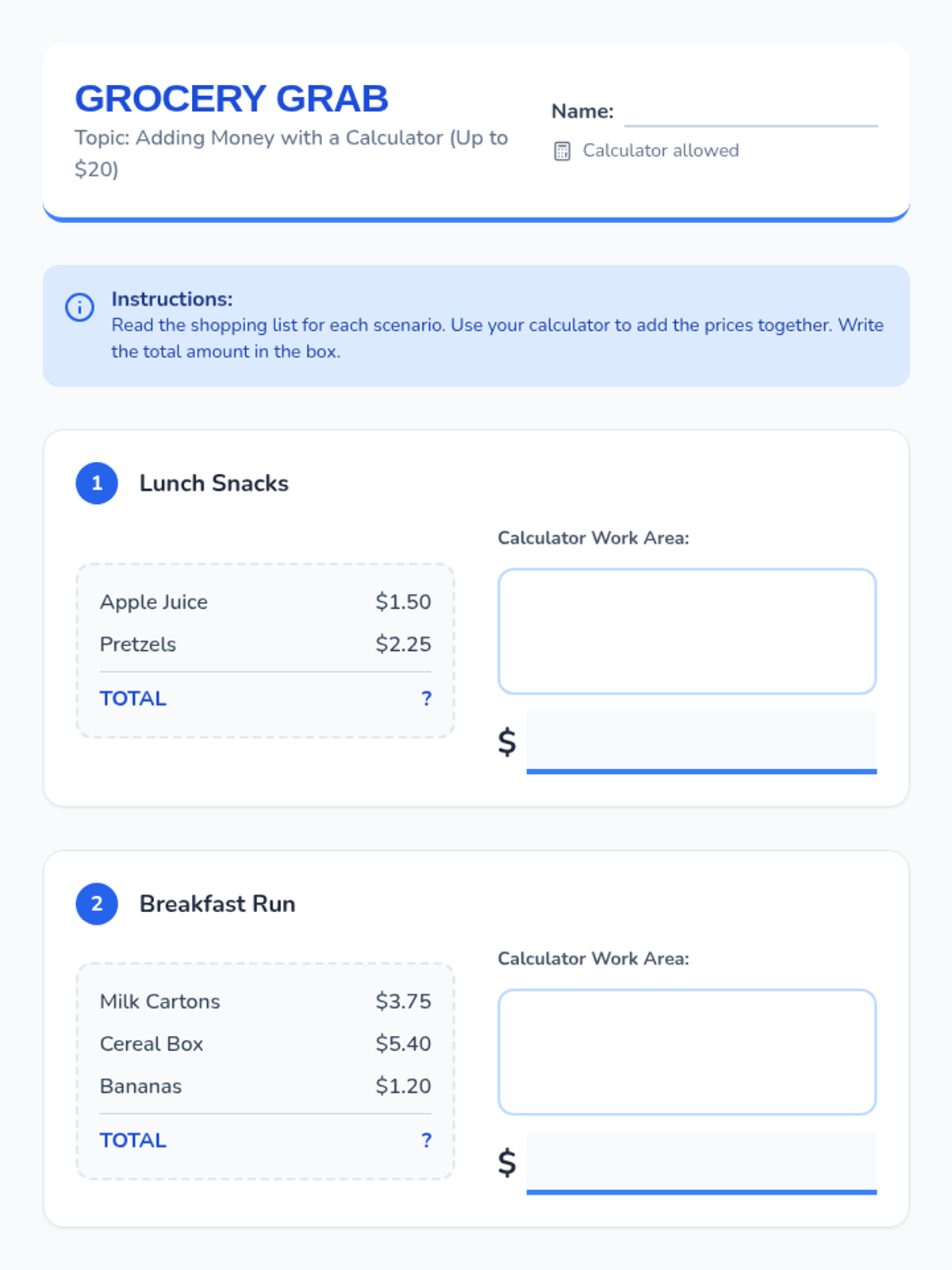
Introduction to adding money amounts up to $20 using a calculator based on shopping lists and grocery scenarios.
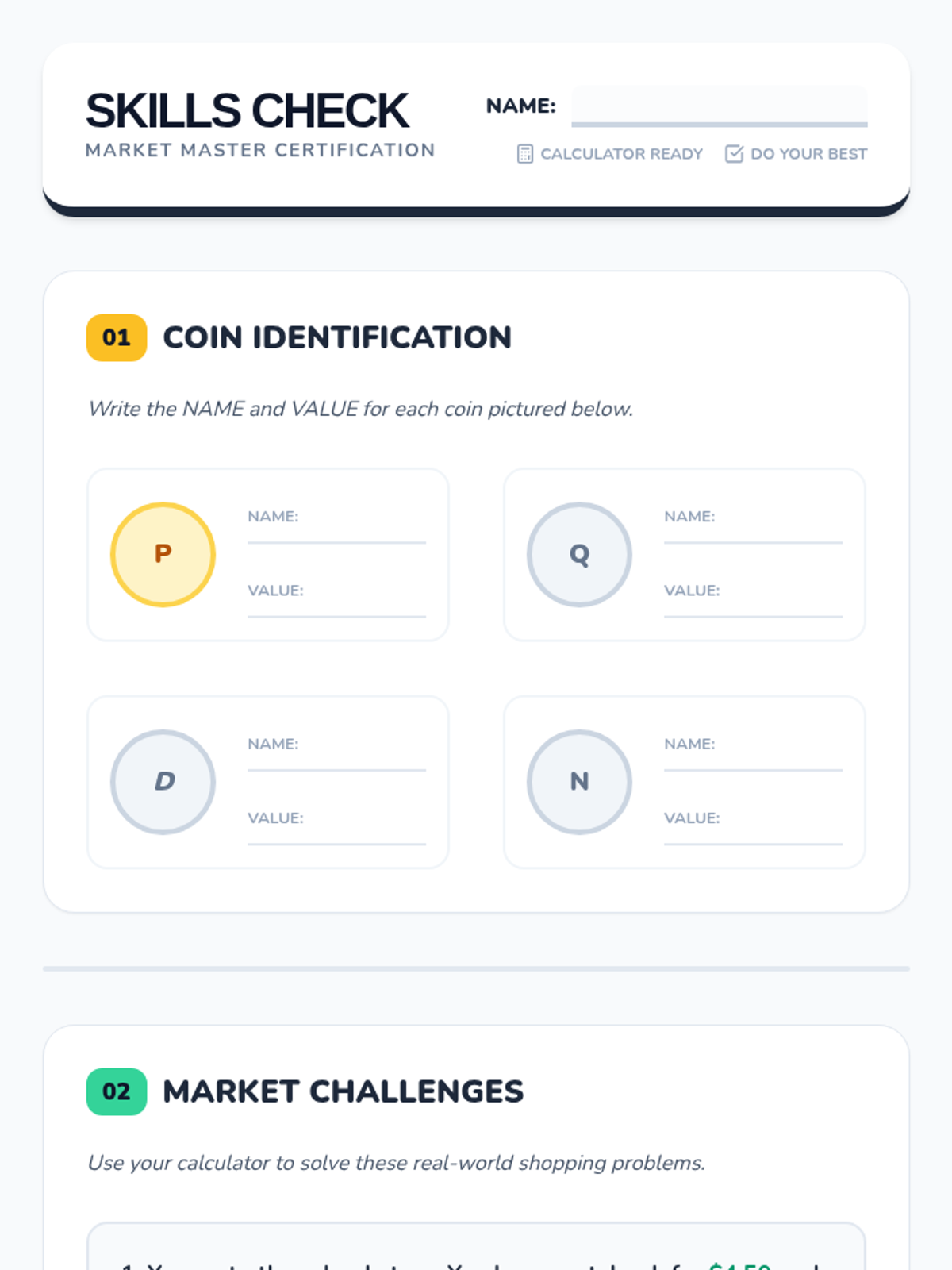
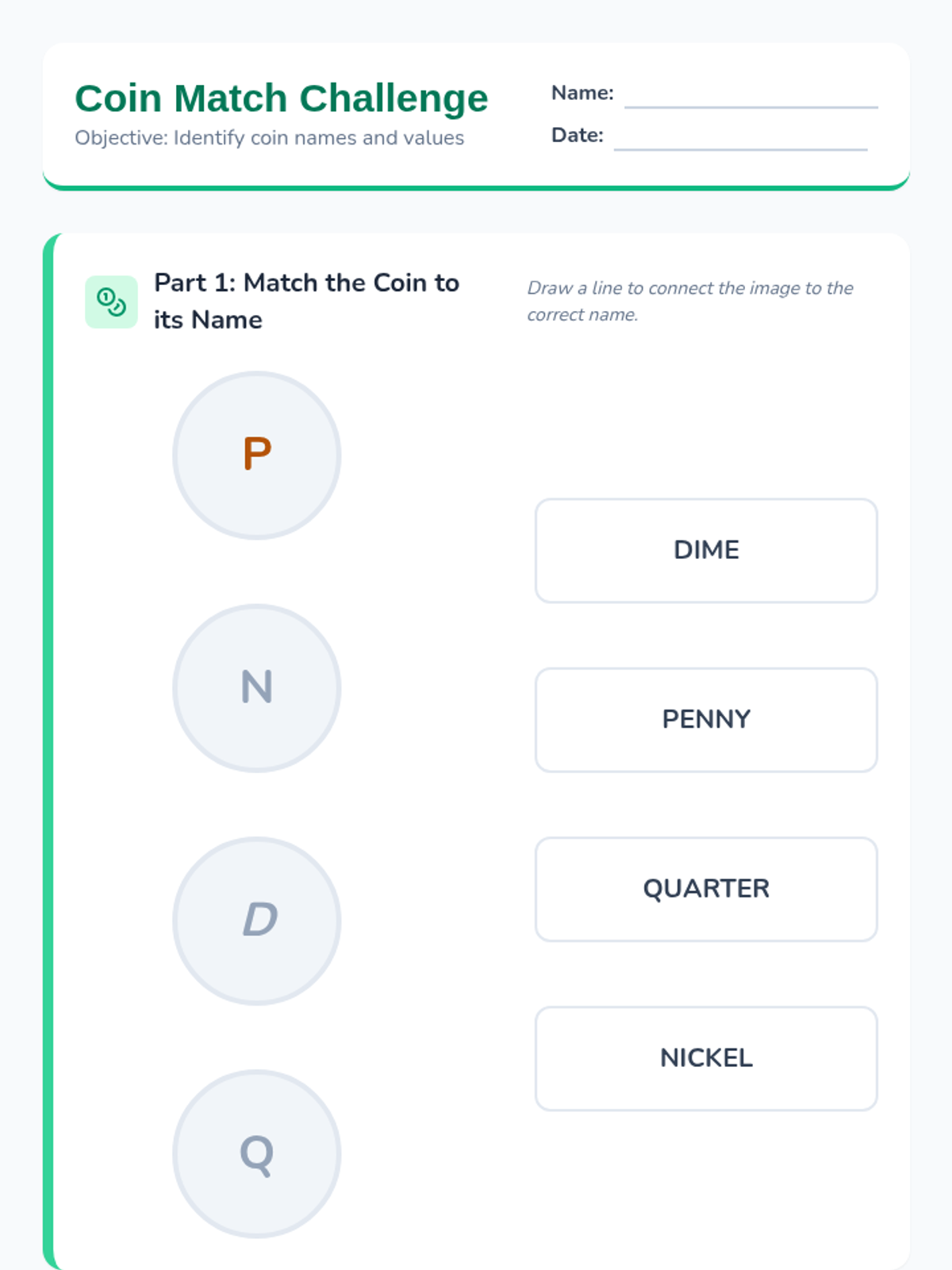
Focuses on identifying the names and values of pennies, nickels, dimes, and quarters through matching and visual aids.
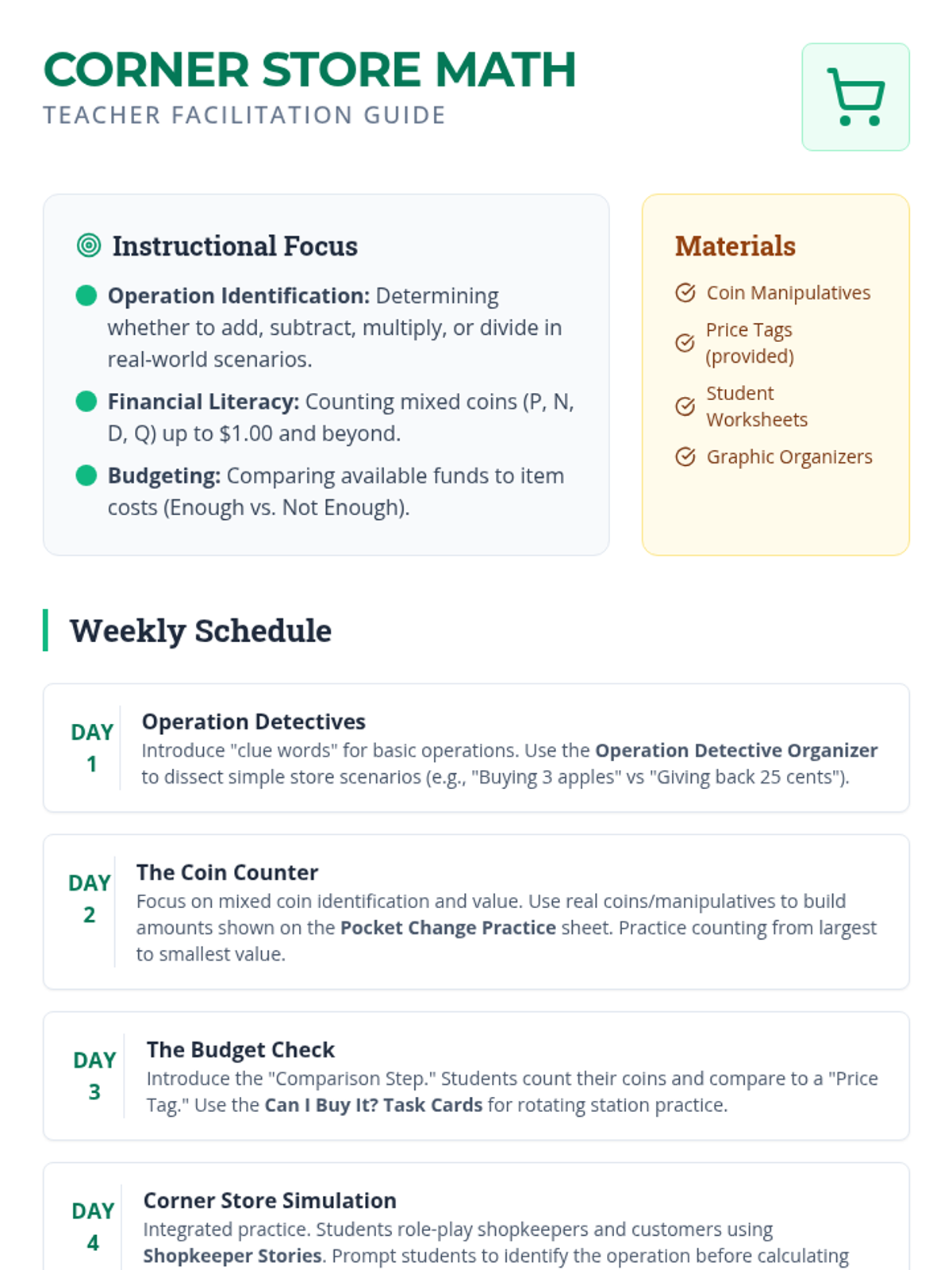
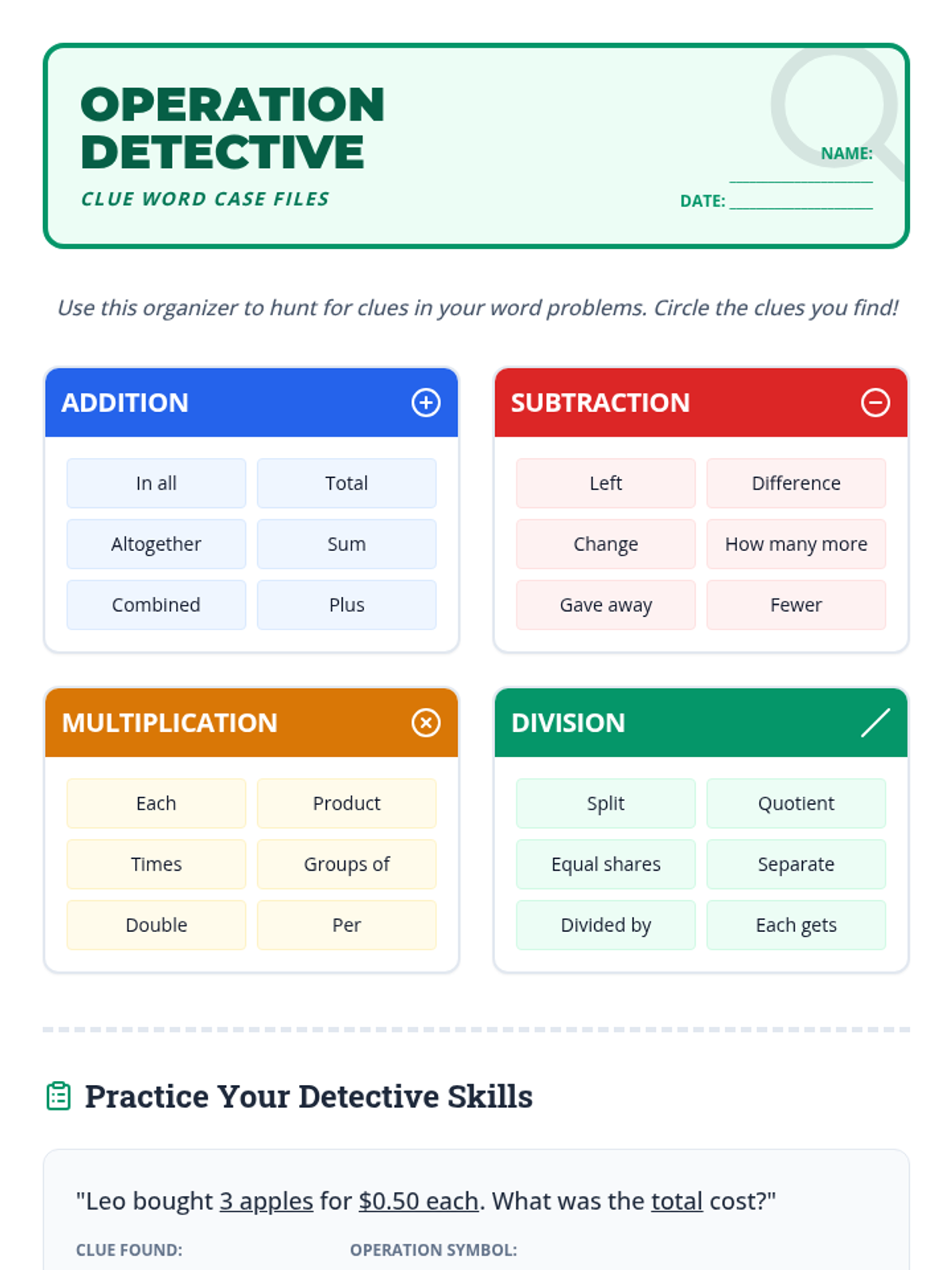
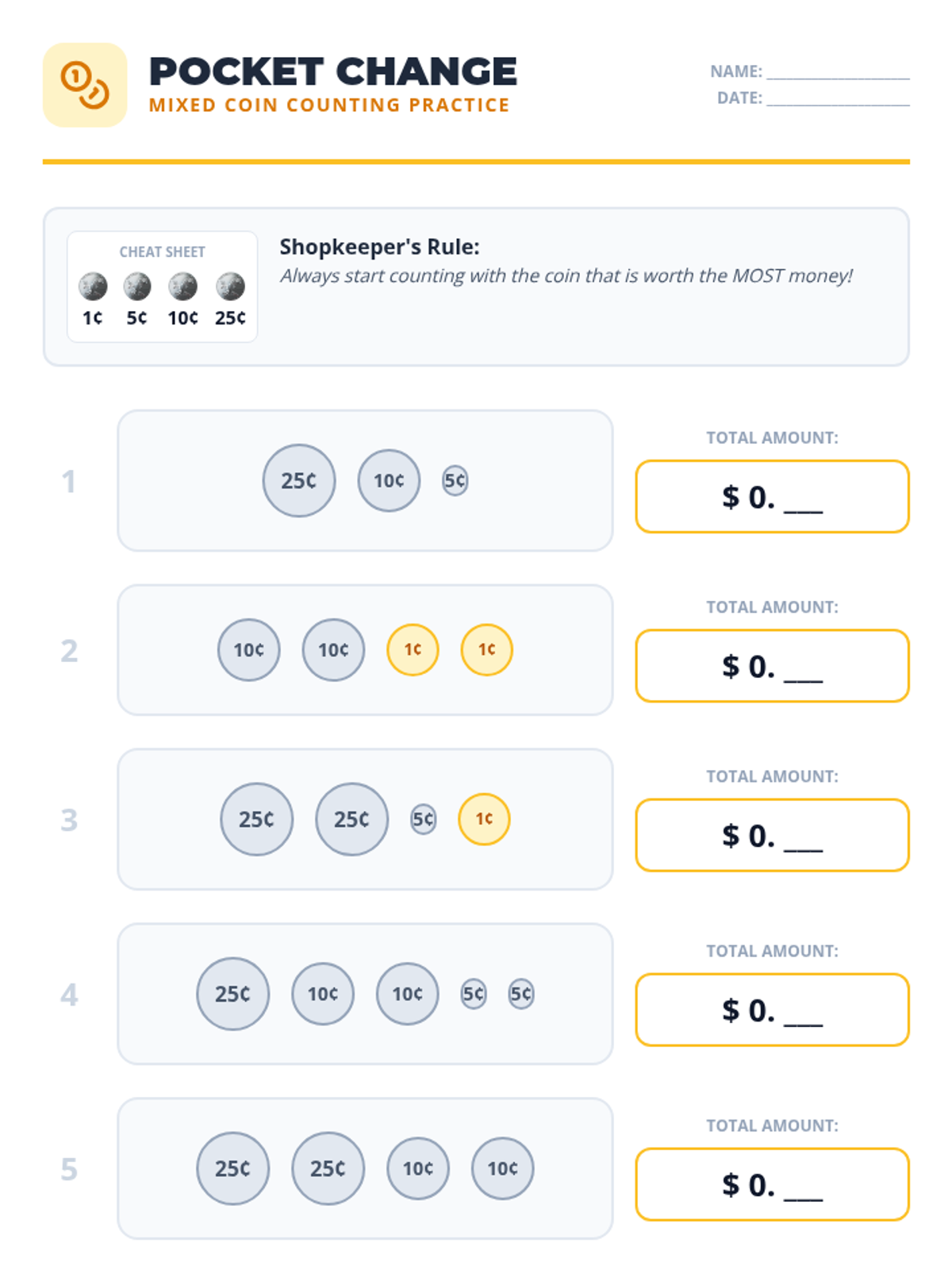
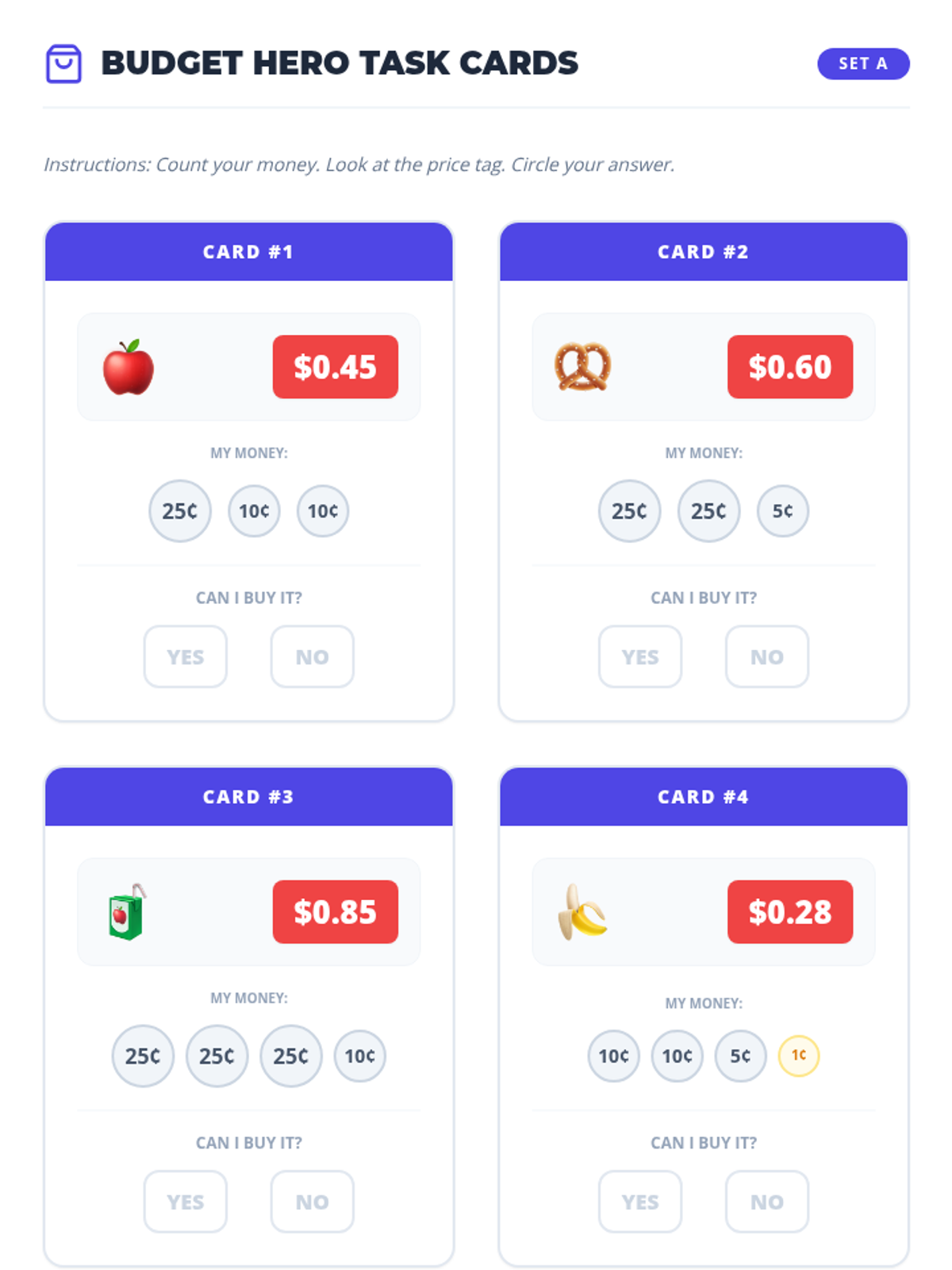
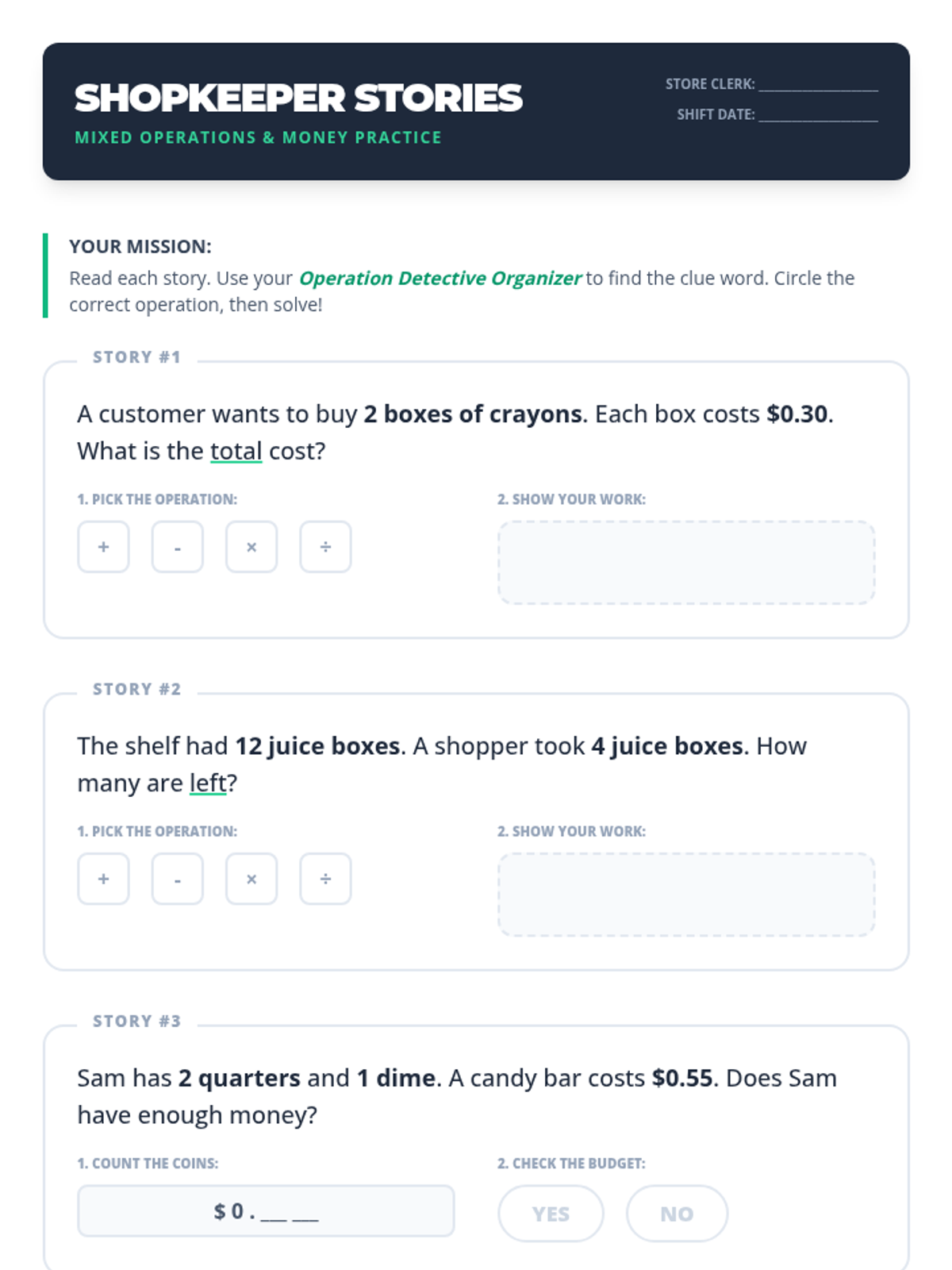
A week-long series of activities focused on identifying math operations in word problems, counting mixed coins, and determining if a purchase is affordable within a budget. Includes a teacher guide, graphic organizers, and practice worksheets themed around a neighborhood corner store.
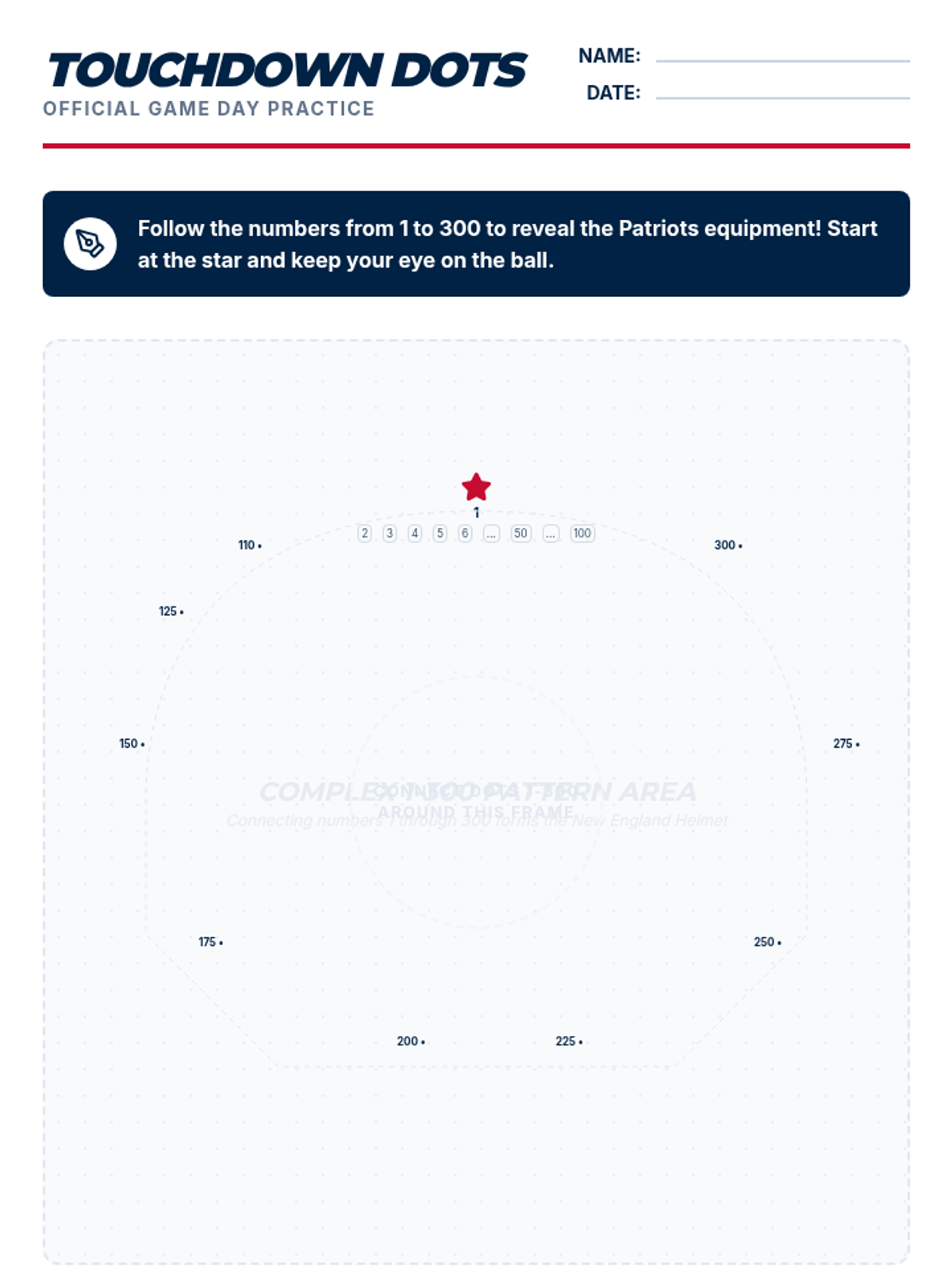
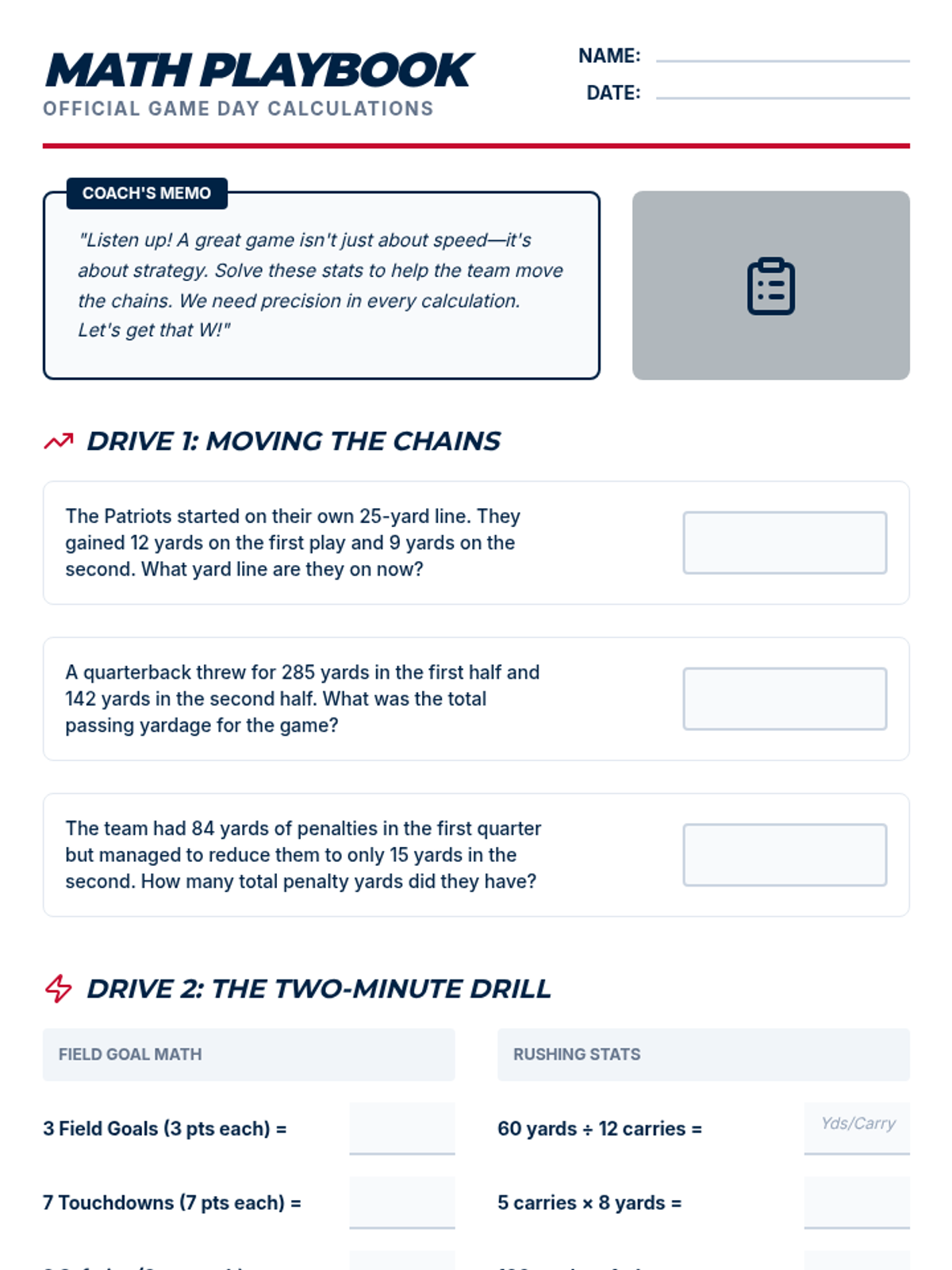
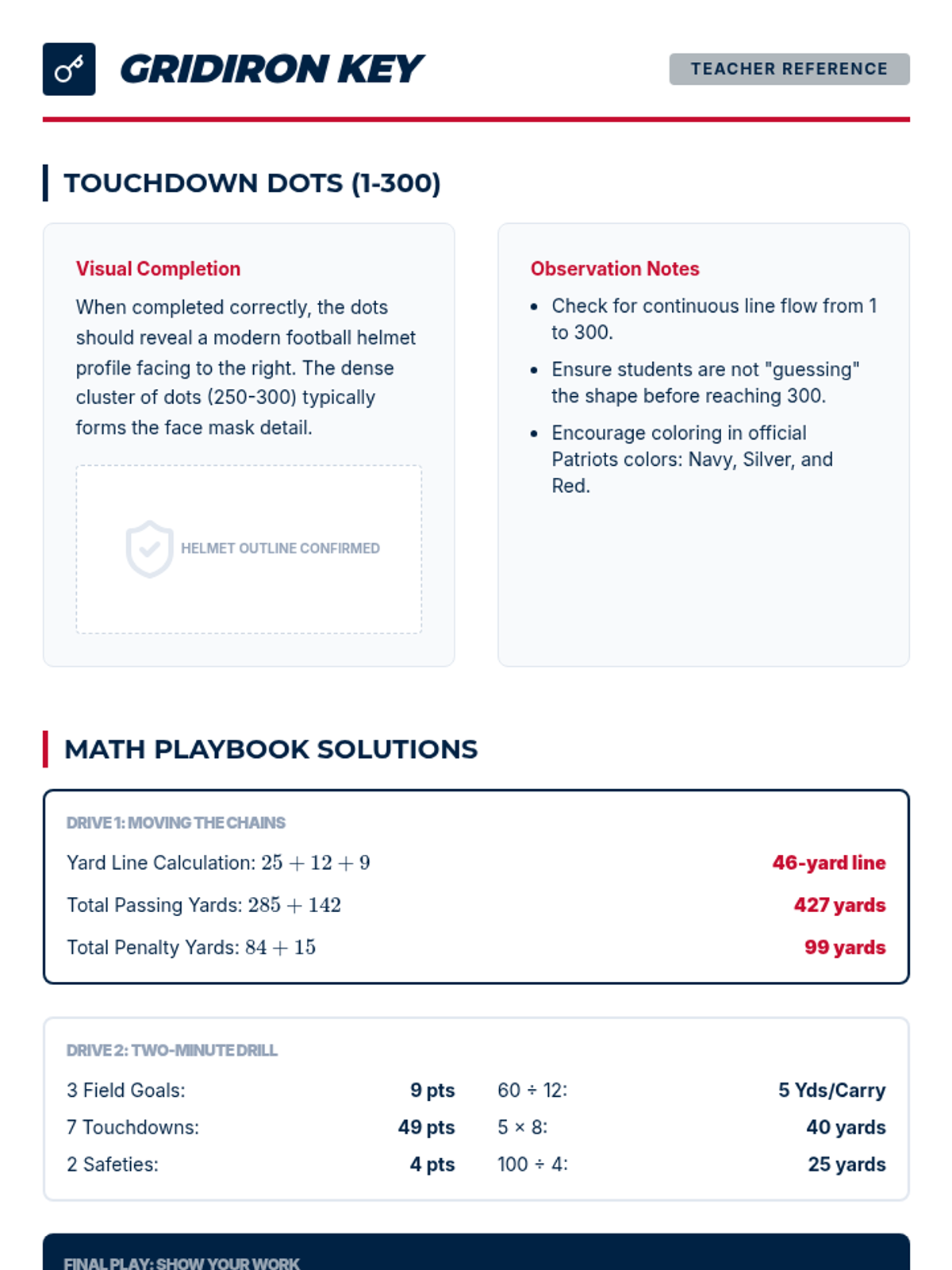
A football-themed lesson featuring a complex 1-300 dot-to-dot and a math review based on game stats and scoring.