Une séquence pédagogique basée sur l'univers des Numberblocks pour aider un enfant autiste de 7 ans à maîtriser la comptine numérique jusqu'à 100, en mettant l'accent sur la structure décimale et les régularités.

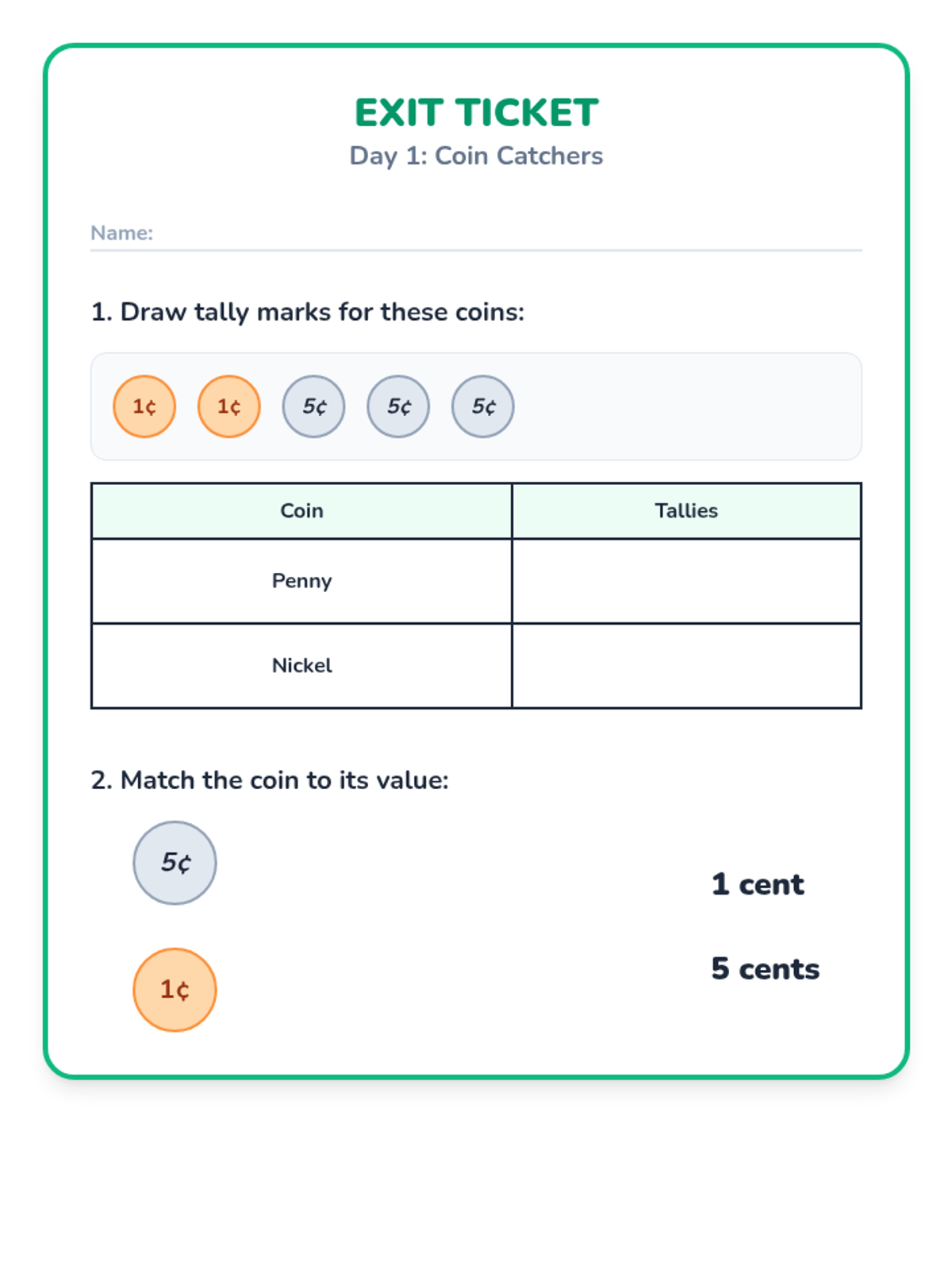
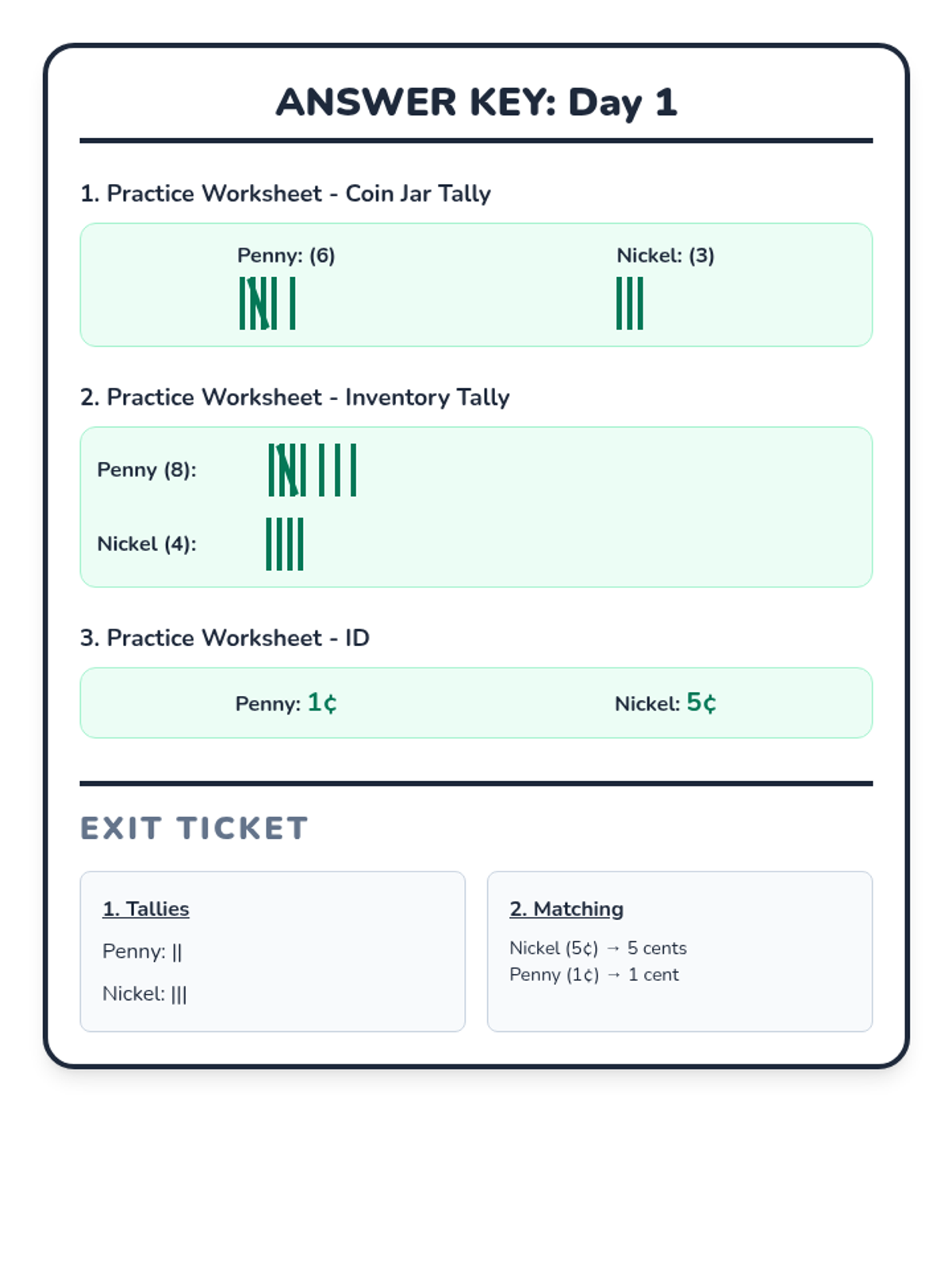
A comprehensive week-long math unit focused on identifying coin values and performing addition and subtraction of money up to $20 using a calculator in real-world contexts.
A 12-lesson intervention sequence focused on numeral identification, forward/backward sequences, and number lines for 1st-grade Tier 2 support, utilizing High Leverage Concepts from All Learners Network.
A 6-lesson Tier 2 intervention sequence for first-grade students focused on comparing two-digit numbers using tens and ones meanings and comparison symbols. Grounded in All Learners Network High Leverage Concepts, the unit moves from physical modeling to symbolic representation.
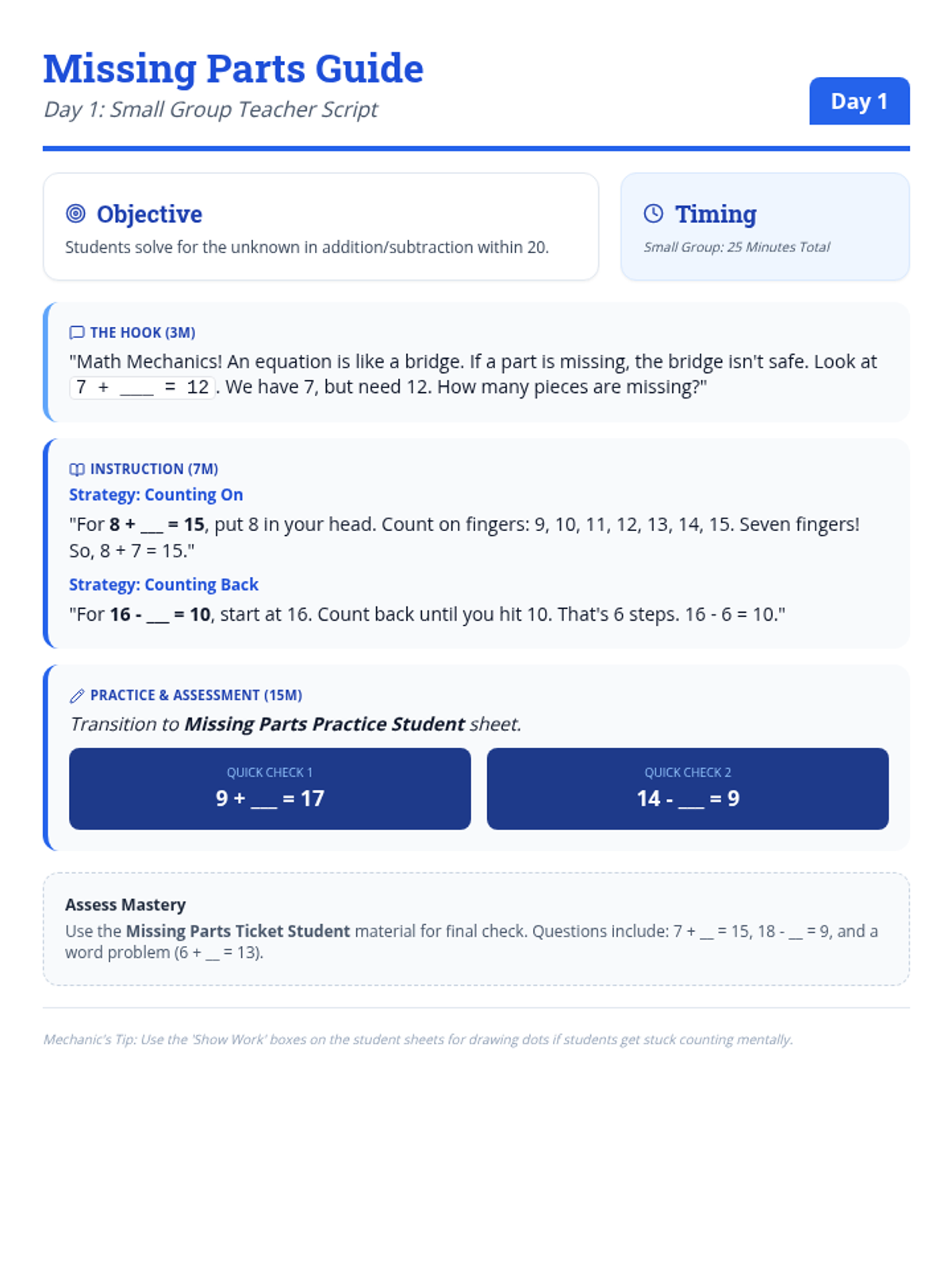
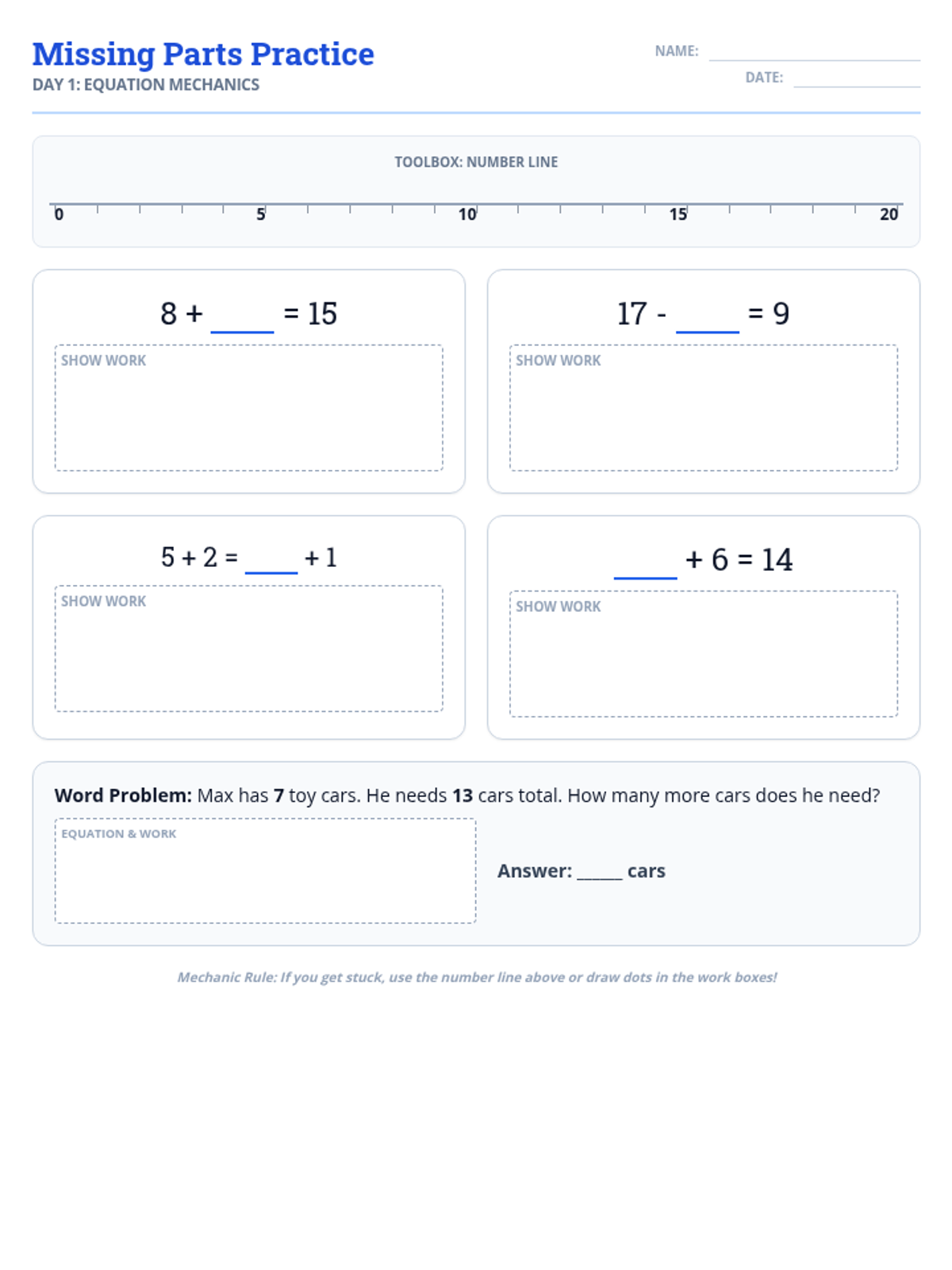
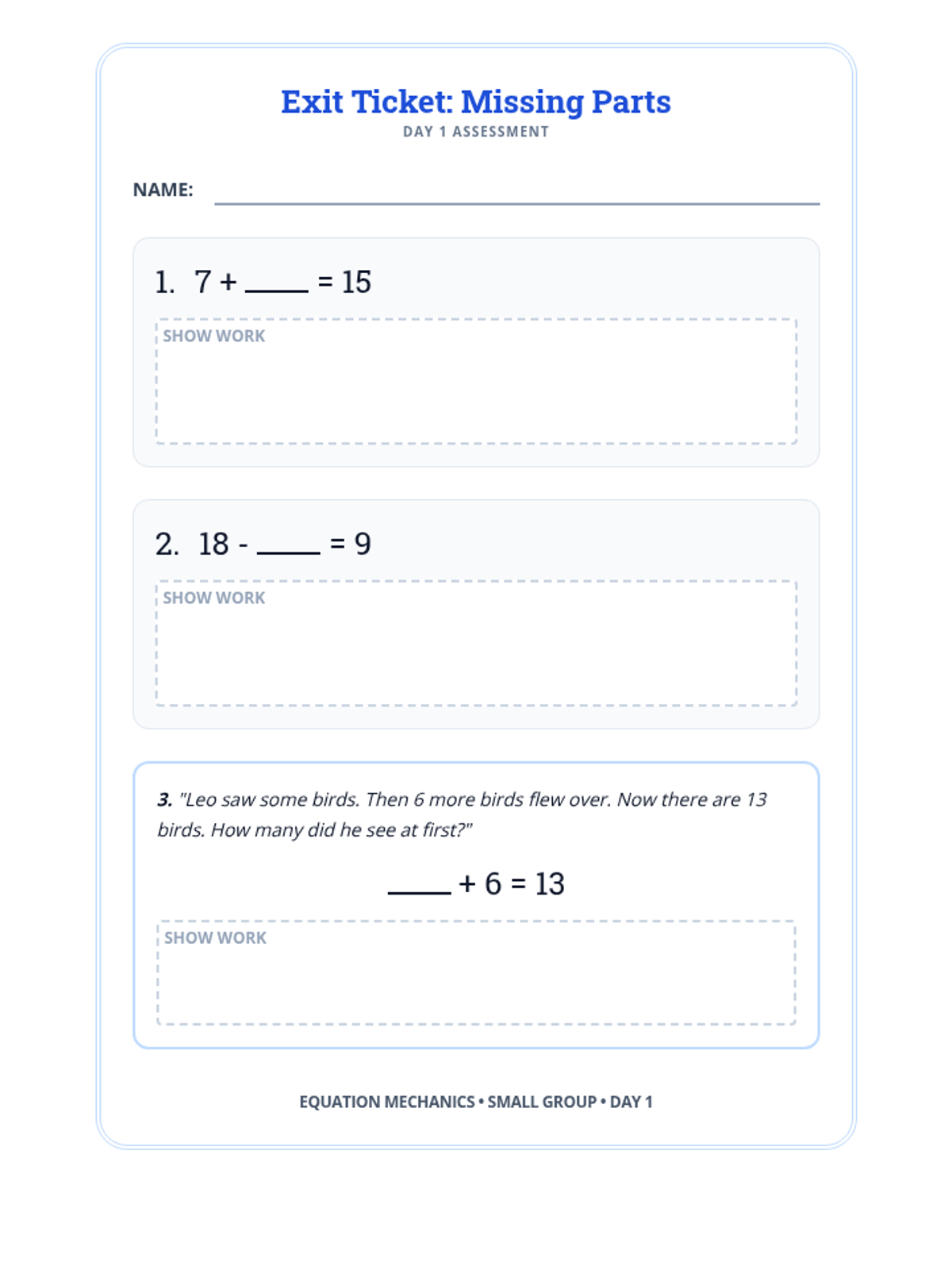
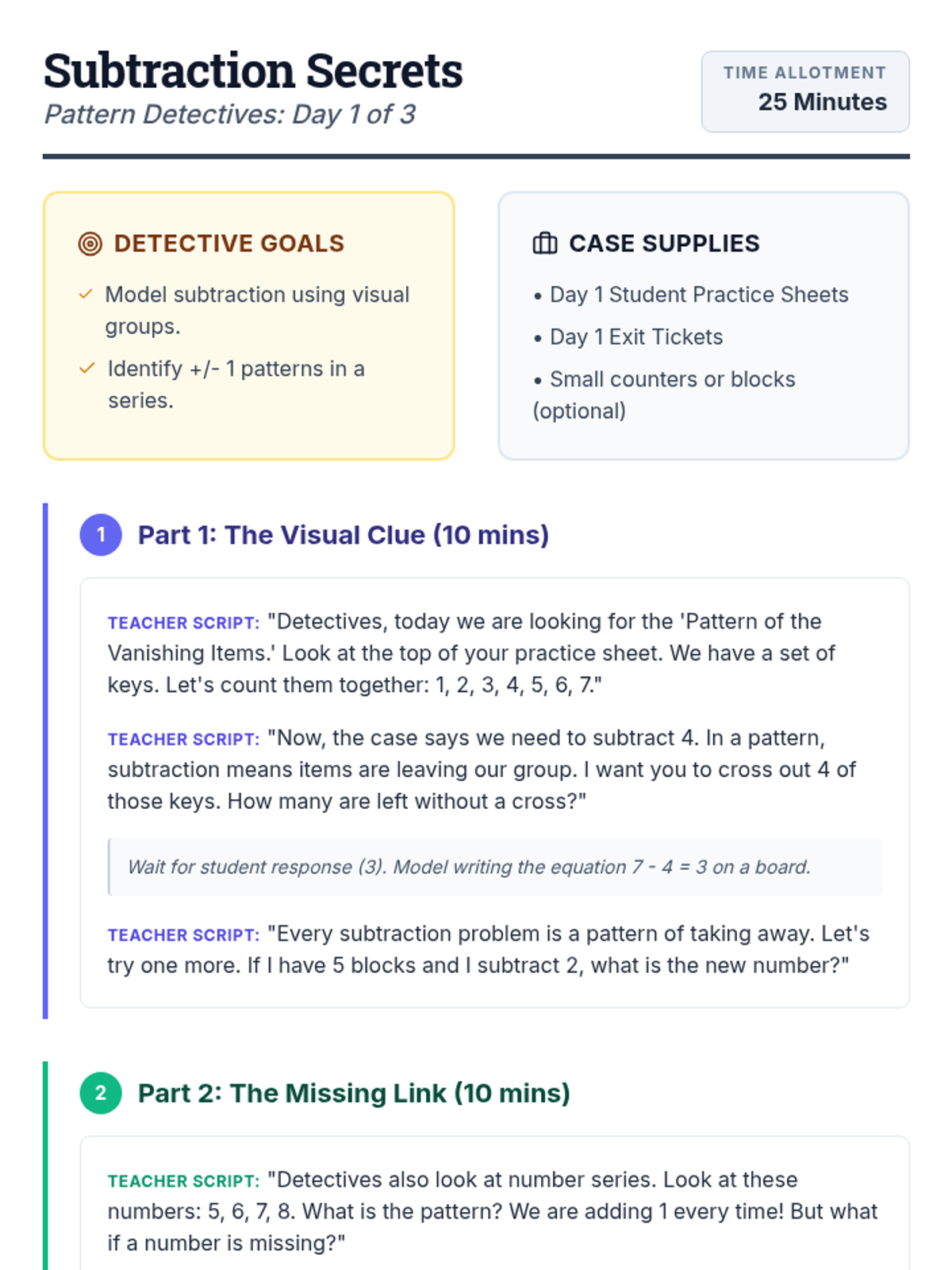
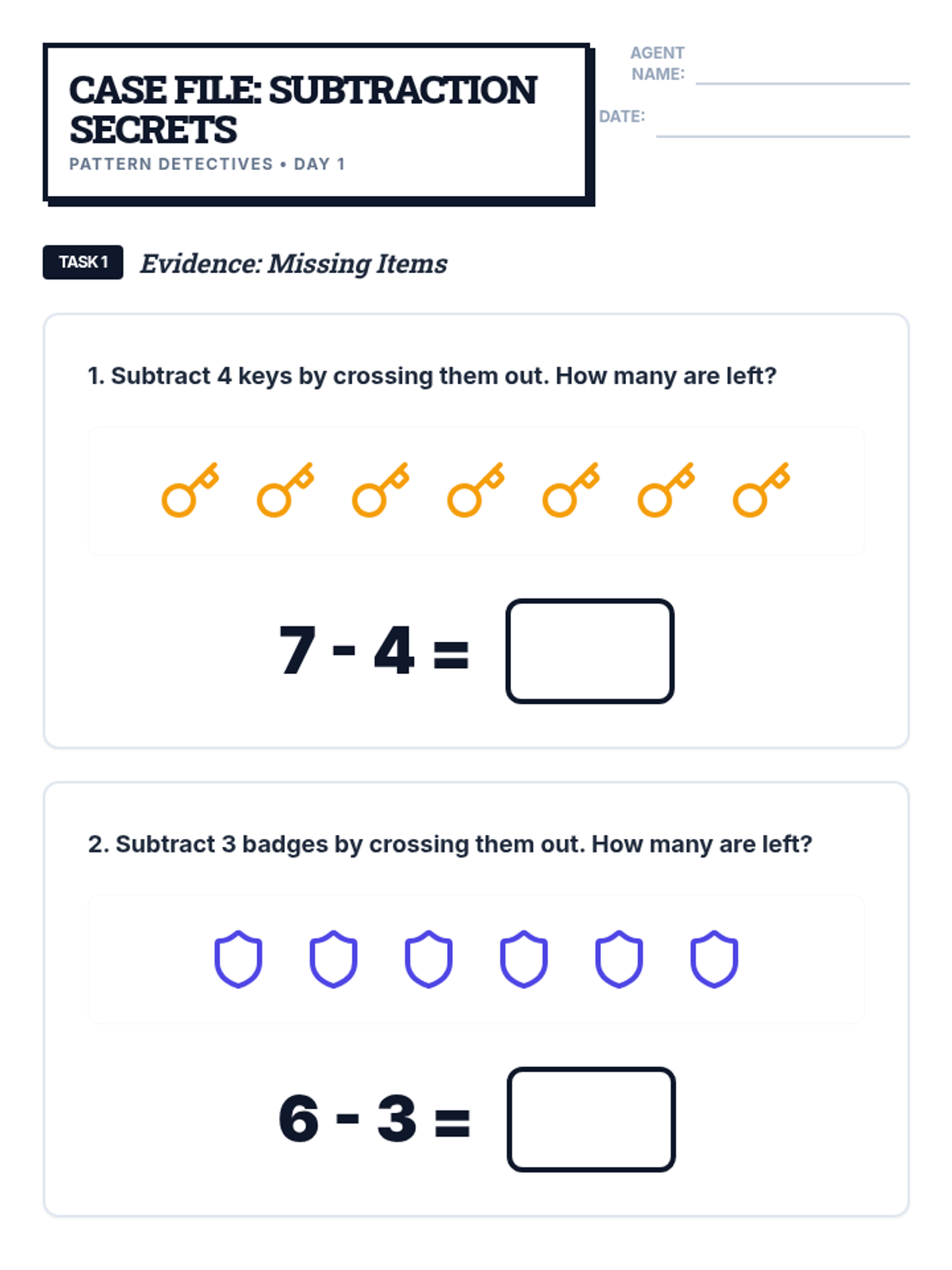
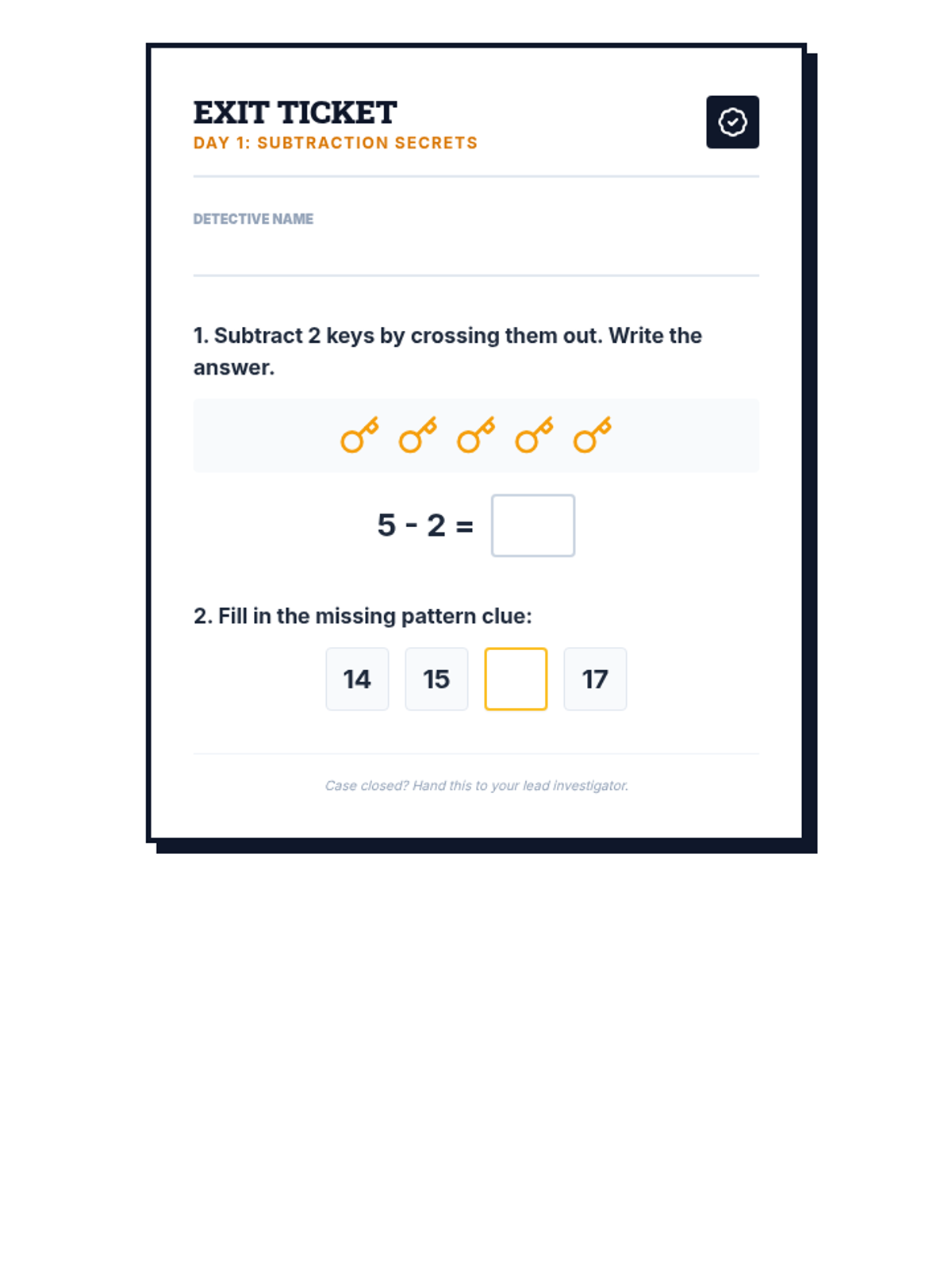
A 6-lesson Tier 2 intervention sequence for first graders focused on addition and subtraction equations. Using an 'Equation Lab' theme, students move from part-whole understanding to the concept of equality and the inverse relationship between operations, aligned with ALN High Leverage Concepts.
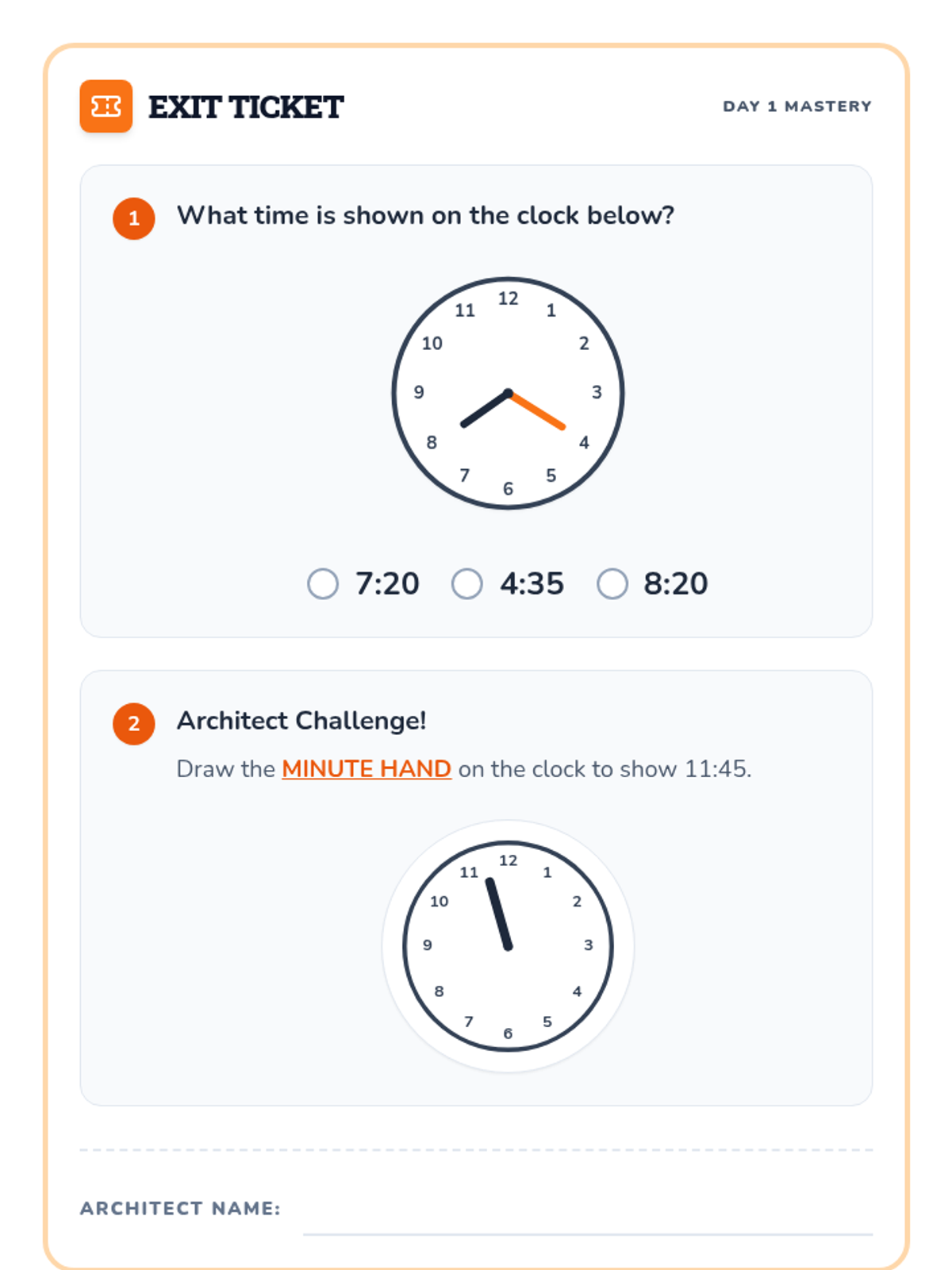
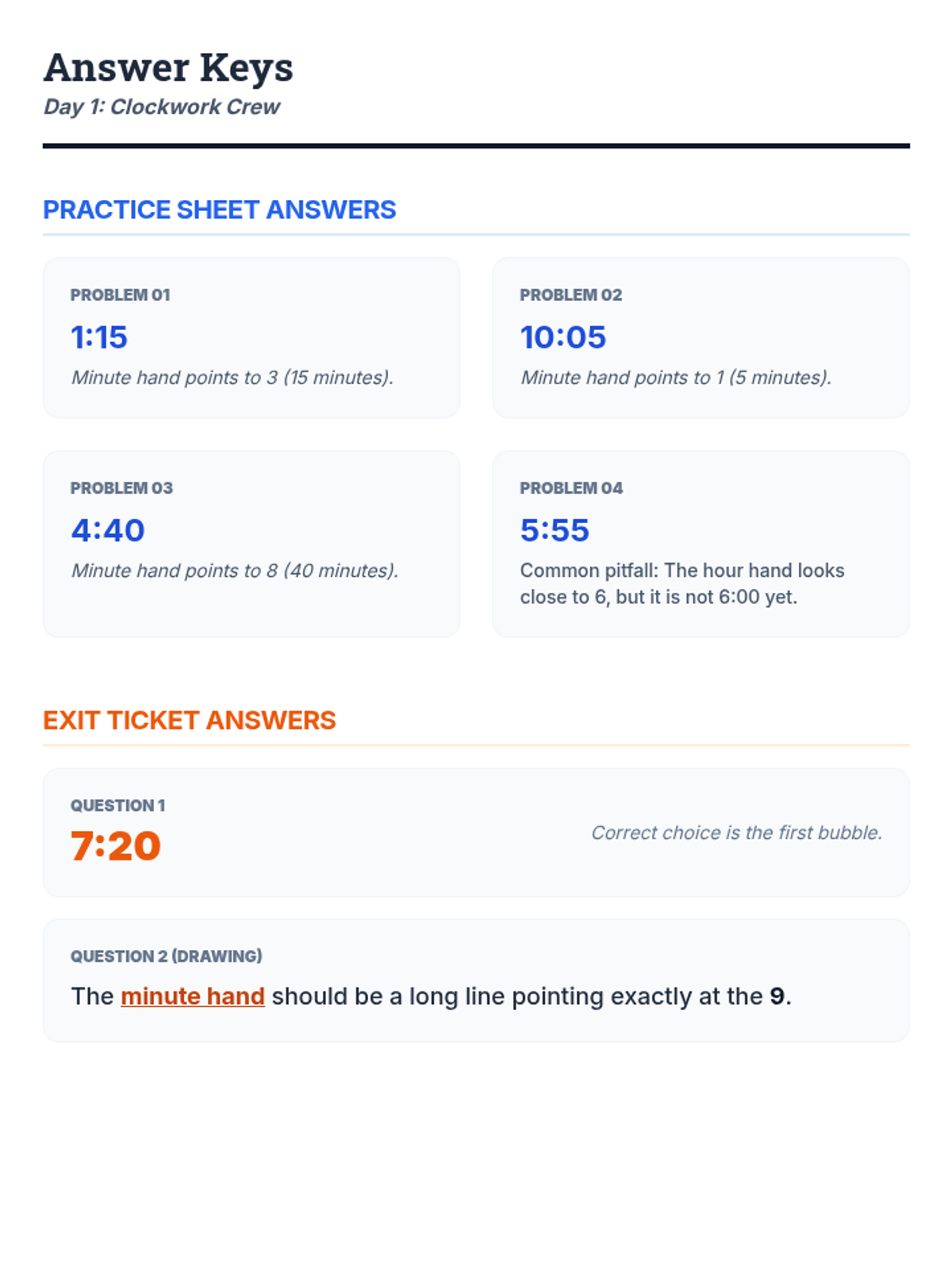
A comprehensive unit on calculating elapsed time, progressing from simple one-hour intervals to quarter-hour and five-minute increments using scenarios and analog clocks.
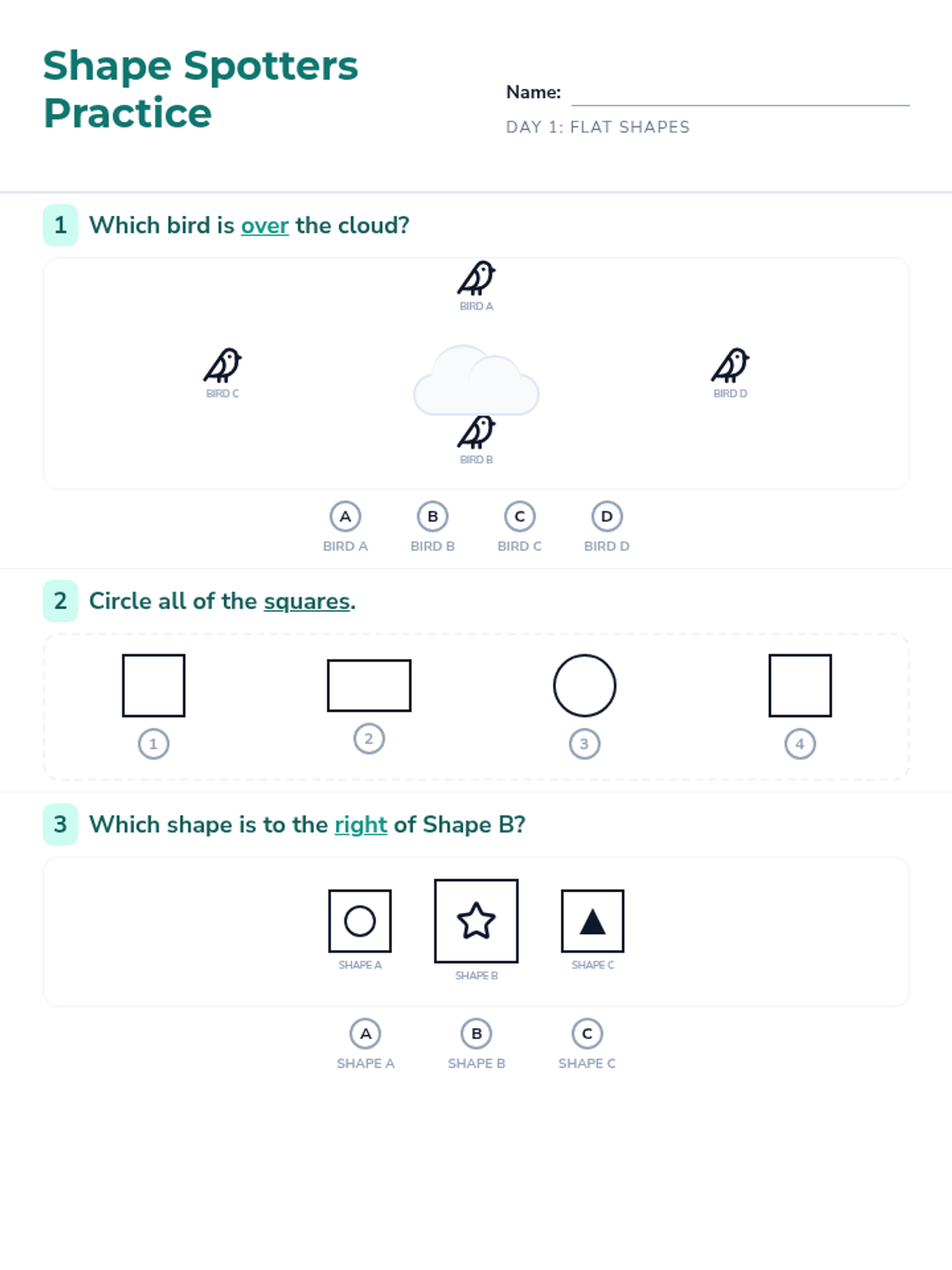
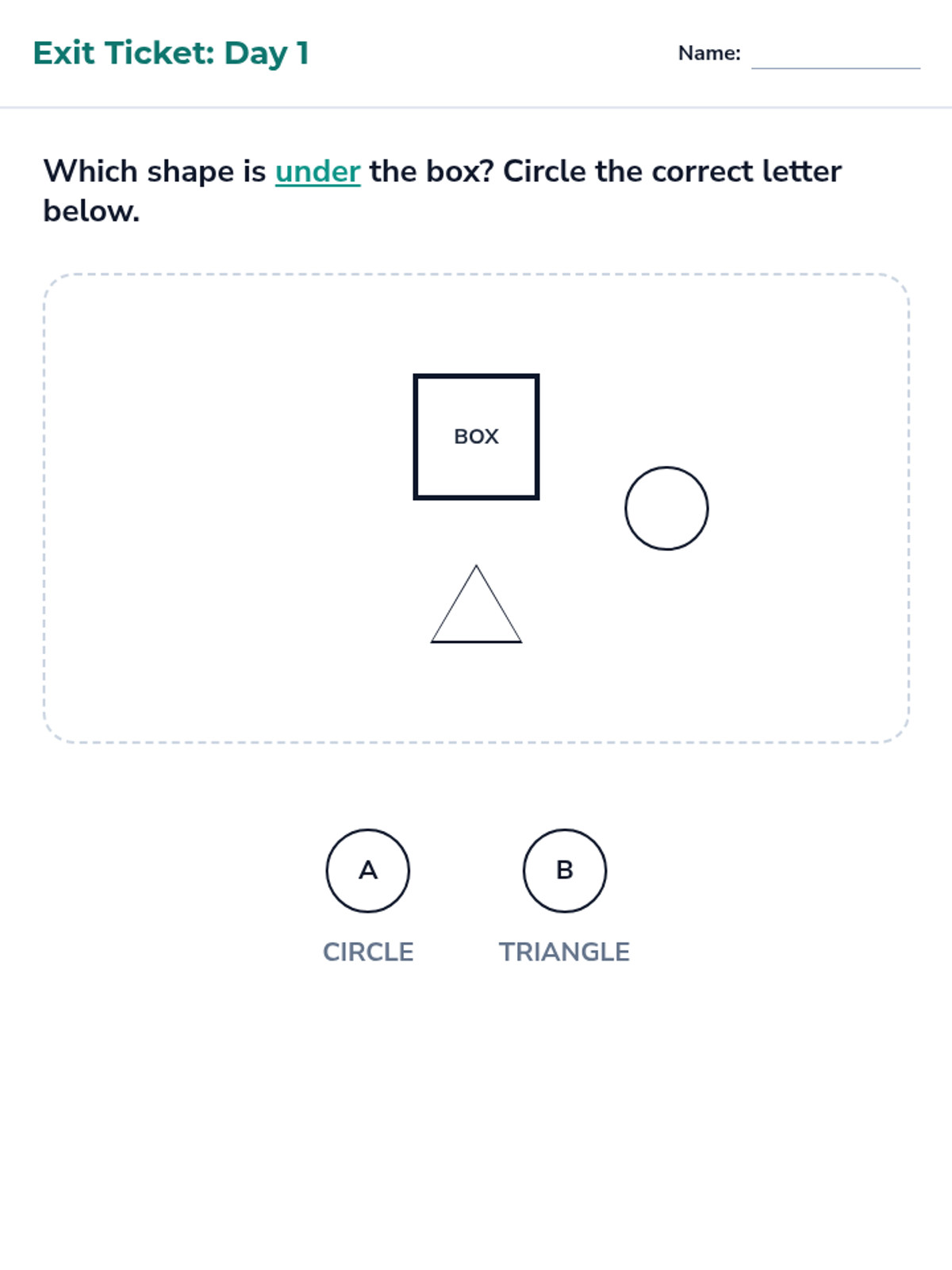
A series of activities for 2nd graders to master spatial relationships (over, under, in front, behind) and temporal sequencing (first, next, last, before, after). Students will use hands-on exploration and logical ordering to understand how things exist in space and time.
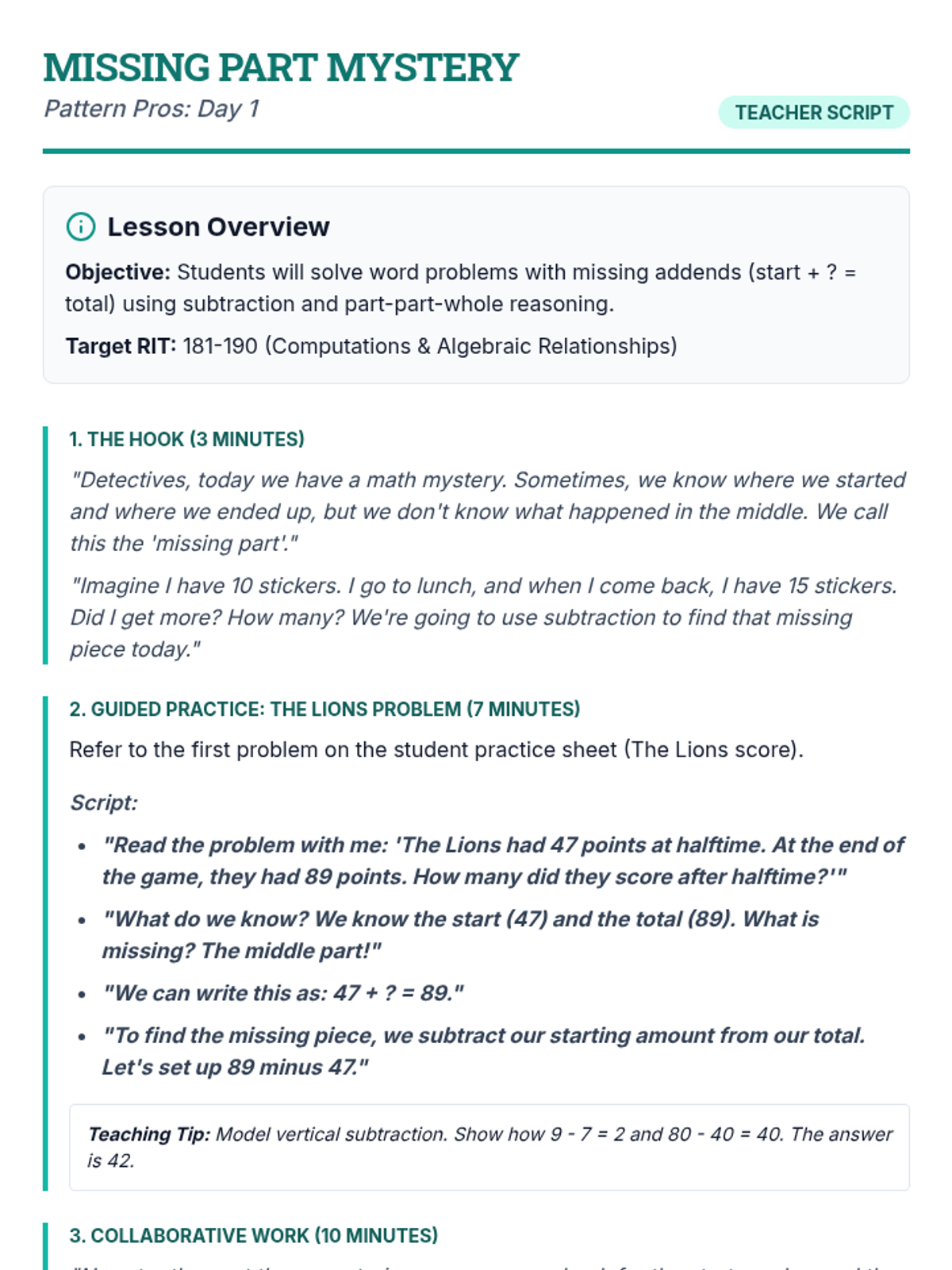
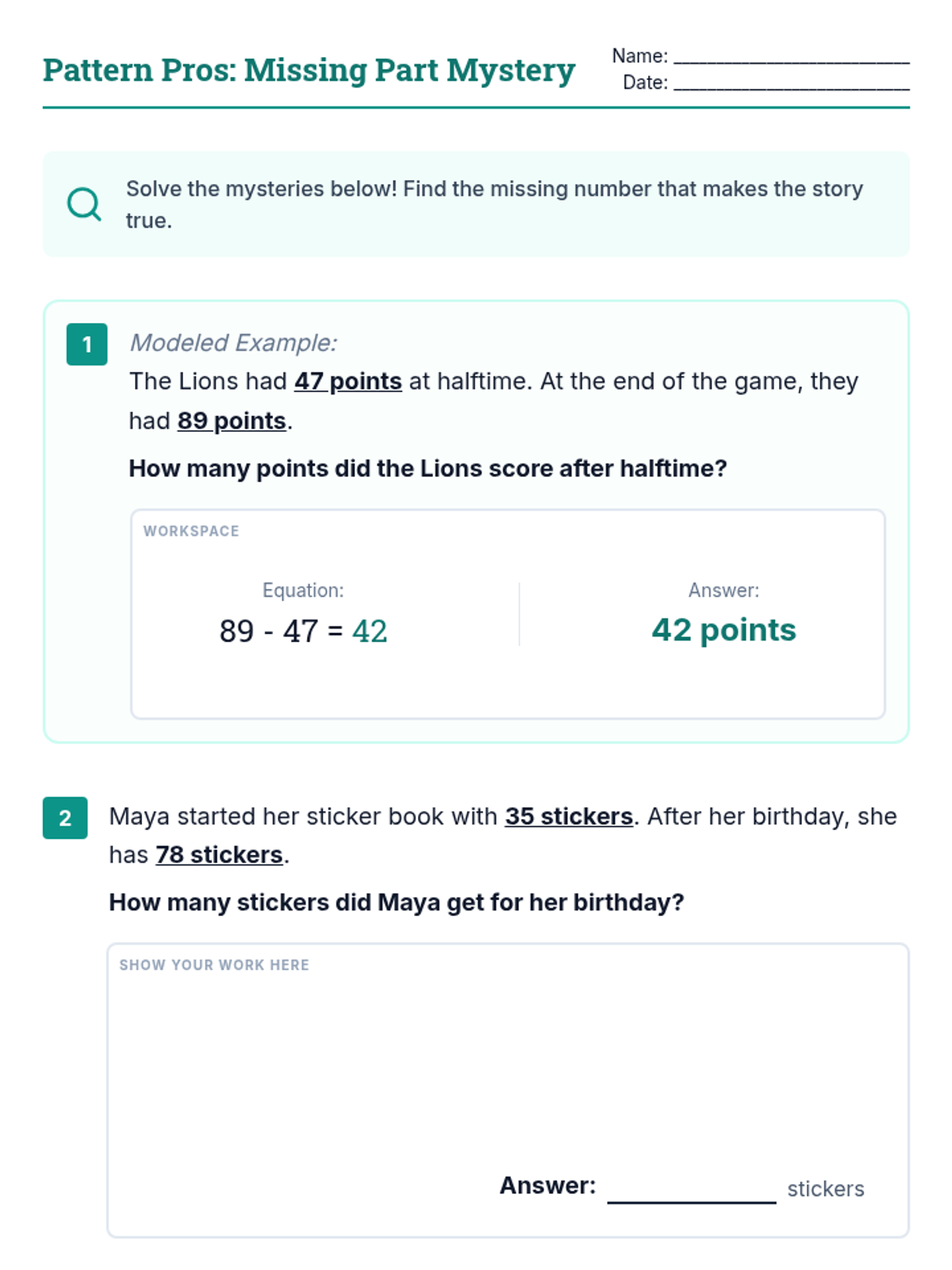
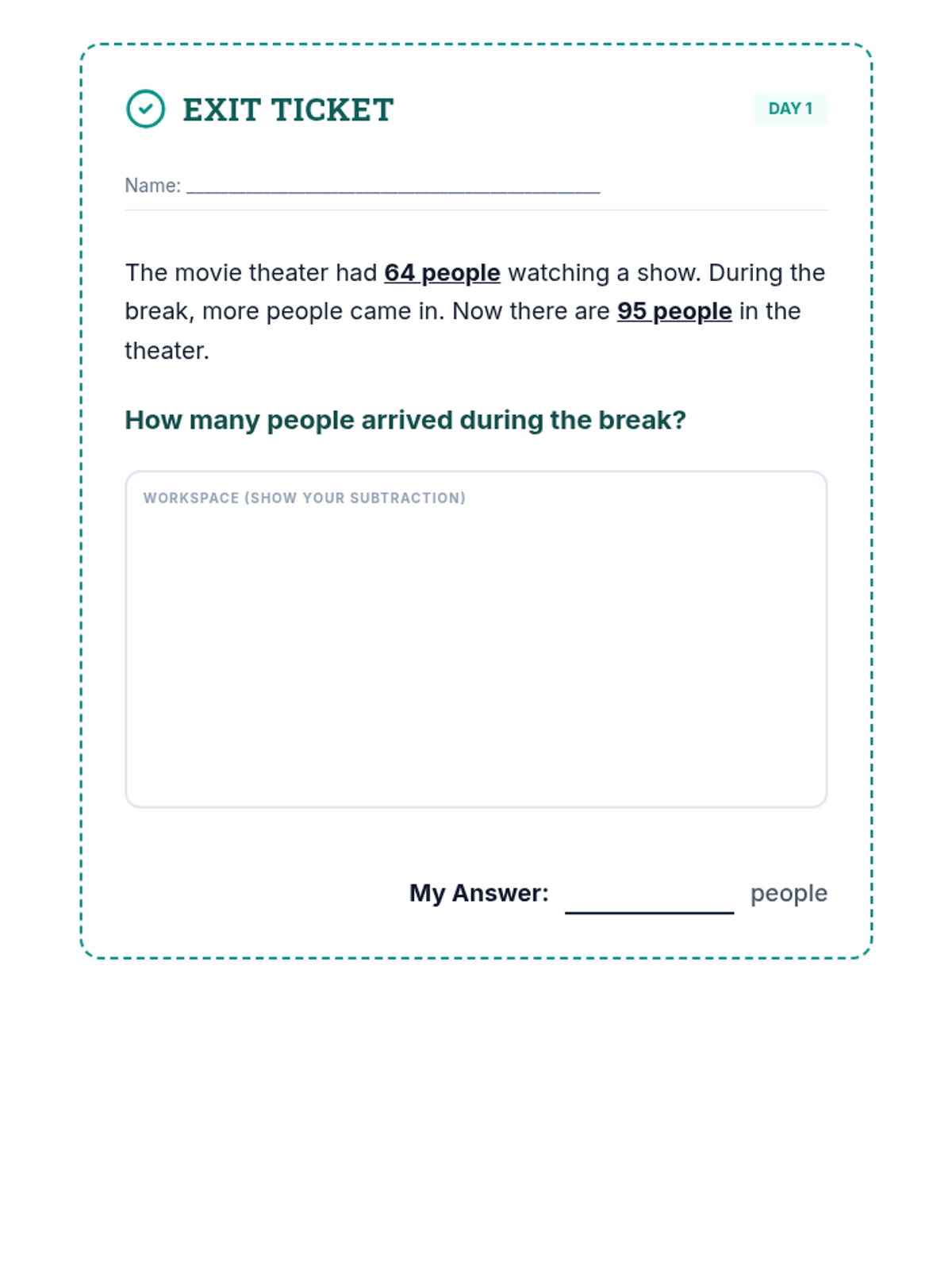
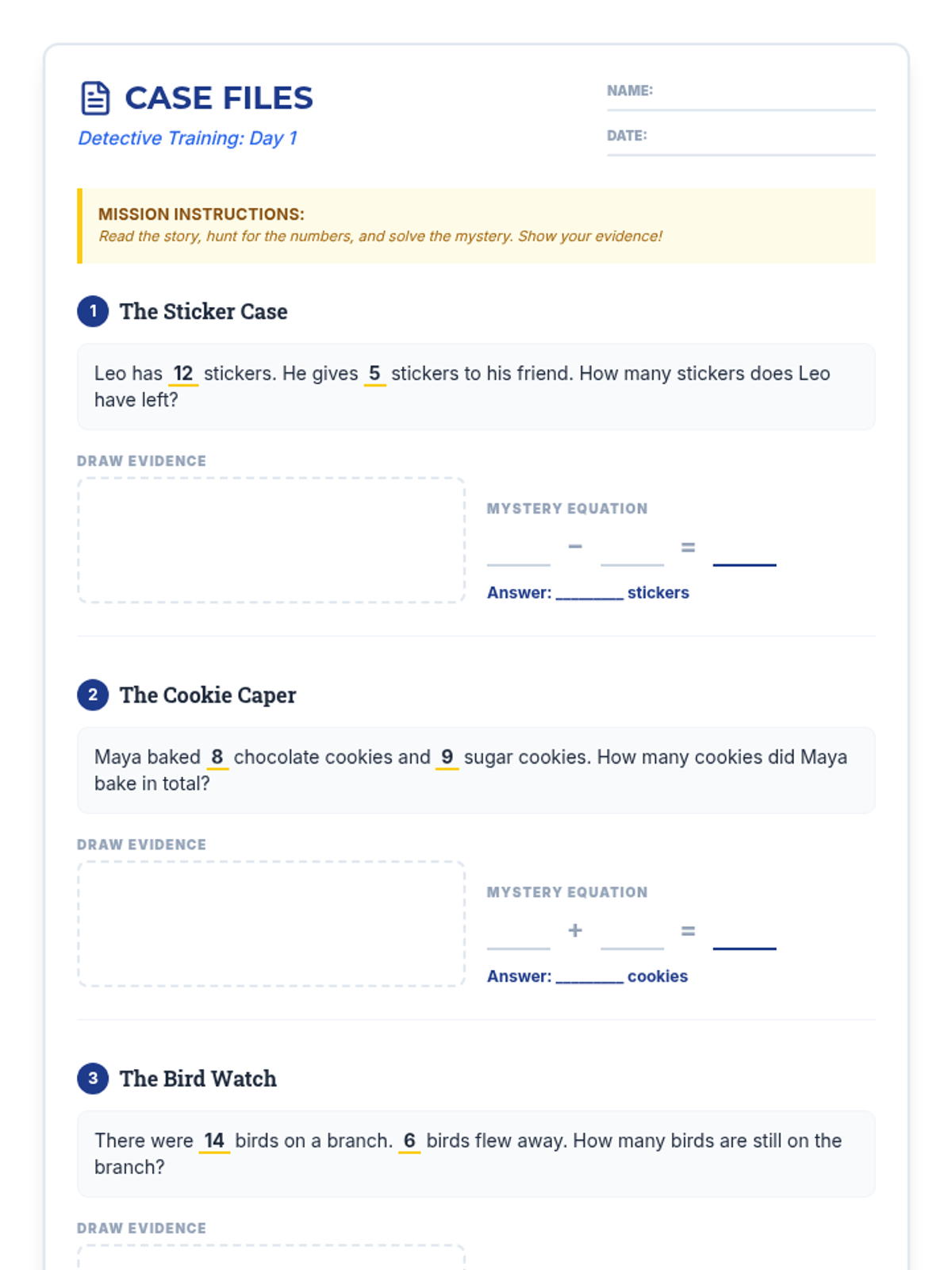
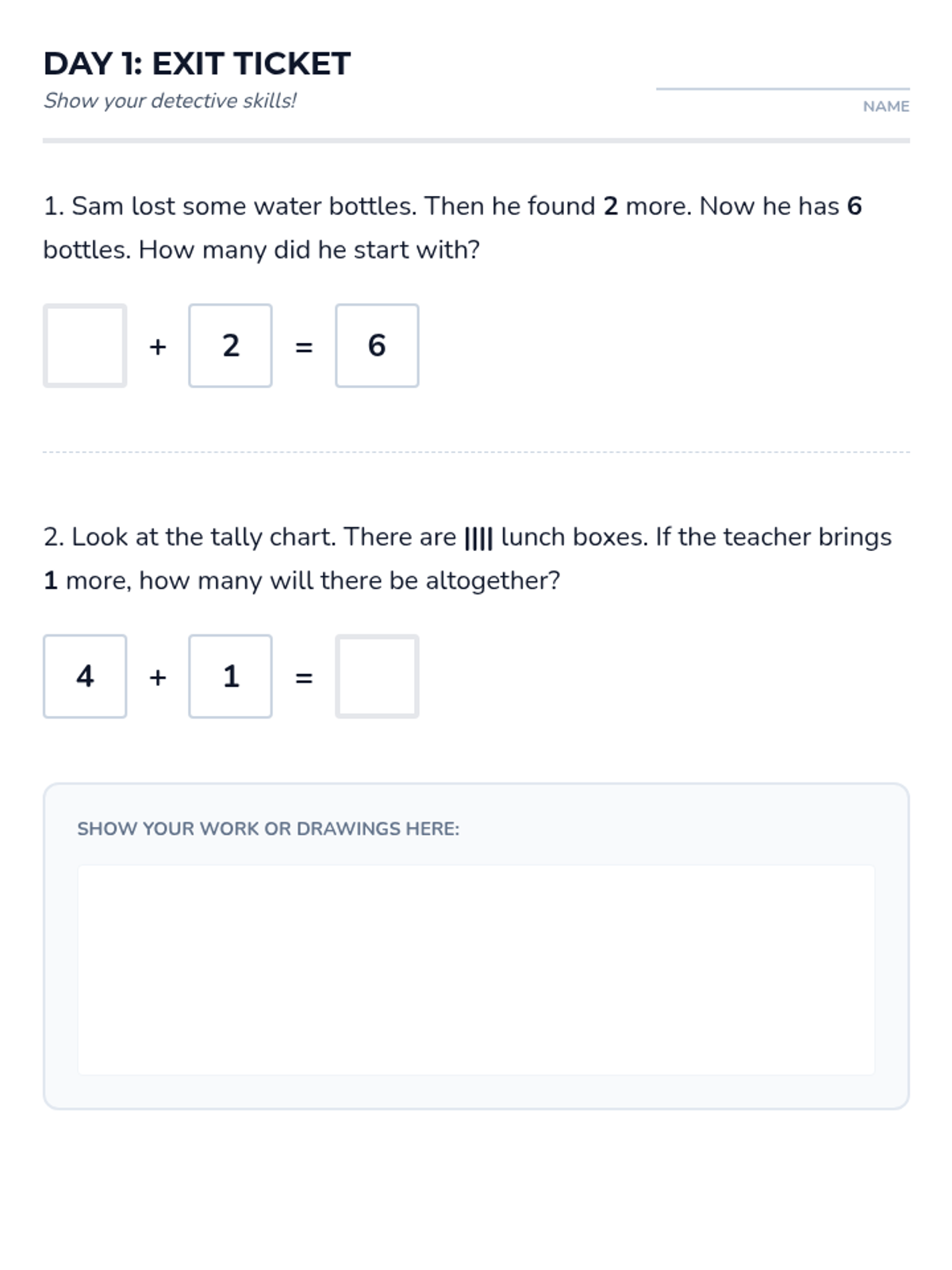
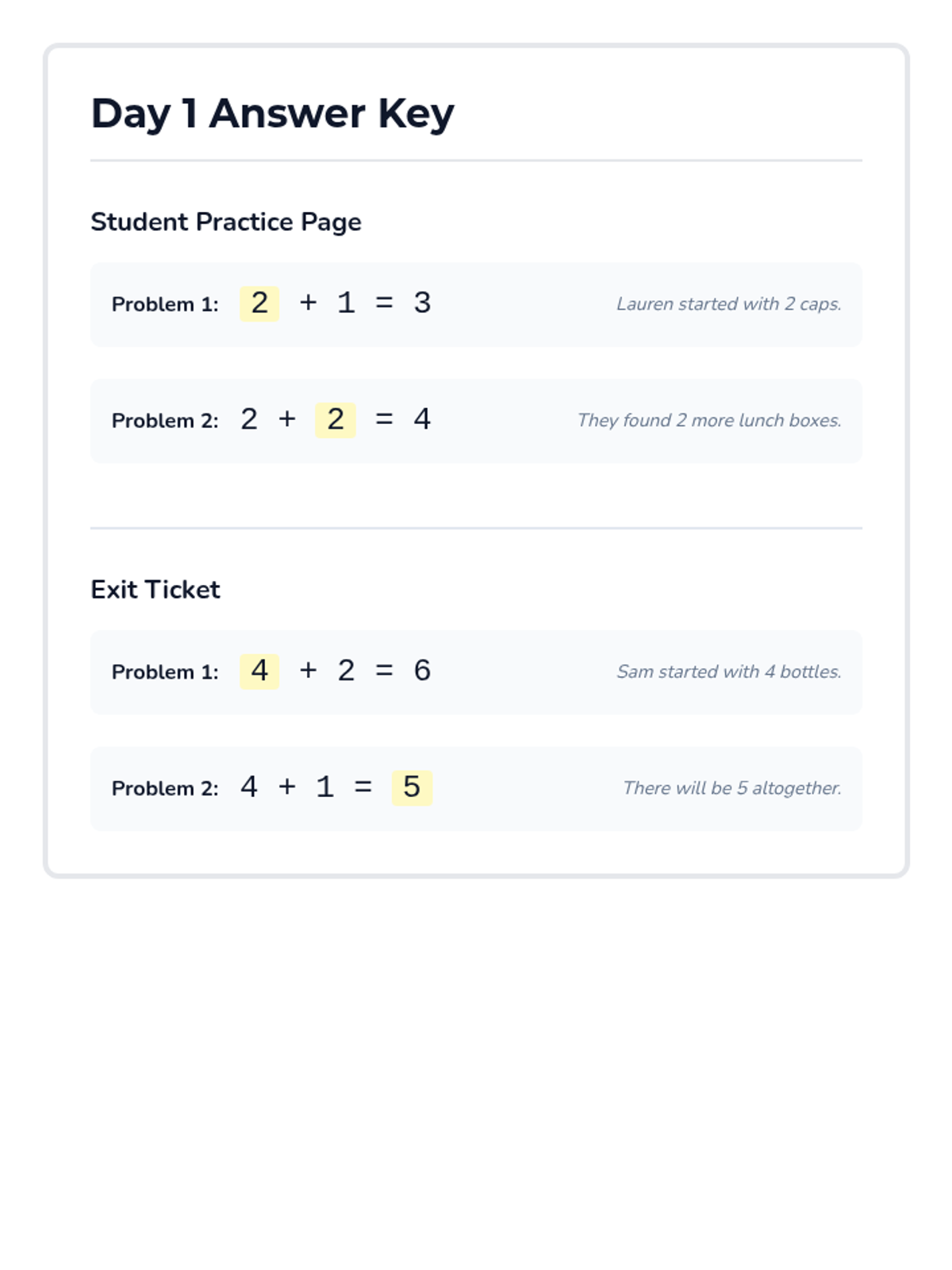
A comprehensive unit where students become 'Problem Detectives,' learning to decode word problems using linguistic cues and cloze-style paragraph writing to explain their mathematical reasoning.
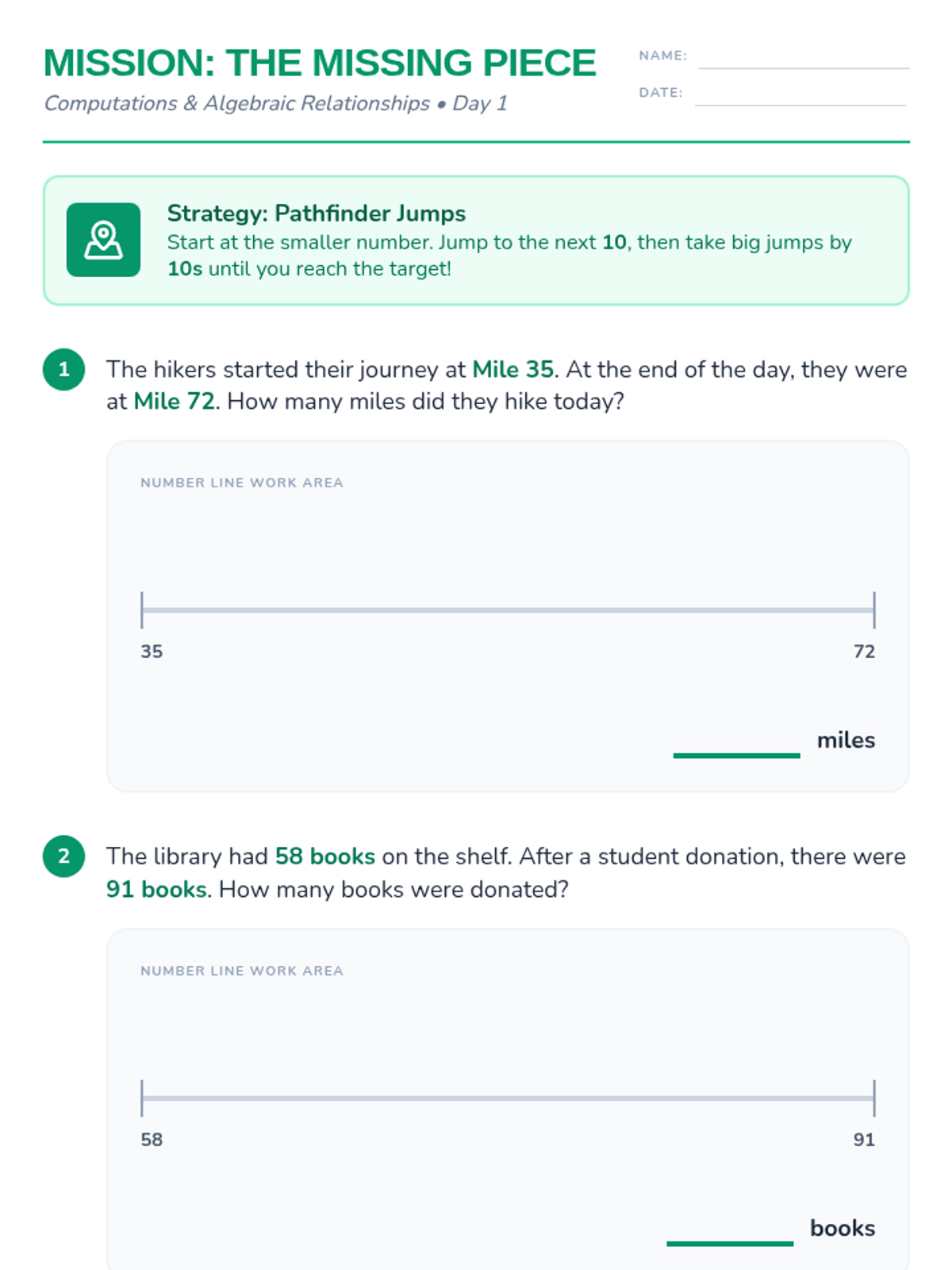
A 2nd-grade math unit focused on applying subtraction of tens to real-world money contexts using dimes as a concrete representation of tens.
A series of lessons designed to help primary students master subtraction strategies using the CPA (Concrete-Pictorial-Abstract) model. Students progress from using physical manipulatives to mental math techniques focused on the base-ten anchor.
A math lesson focused on checking the reasonableness of answers. Students learn to avoid keyword traps and use logic to determine if their solutions make sense in real-world contexts.
A specialized intervention sequence designed for 2nd-grade students to master two-digit addition with regrouping by identifying, analyzing, and correcting common procedural errors.
A hands-on introduction to probability and chance for early elementary students using the concepts of will, won't, and might.
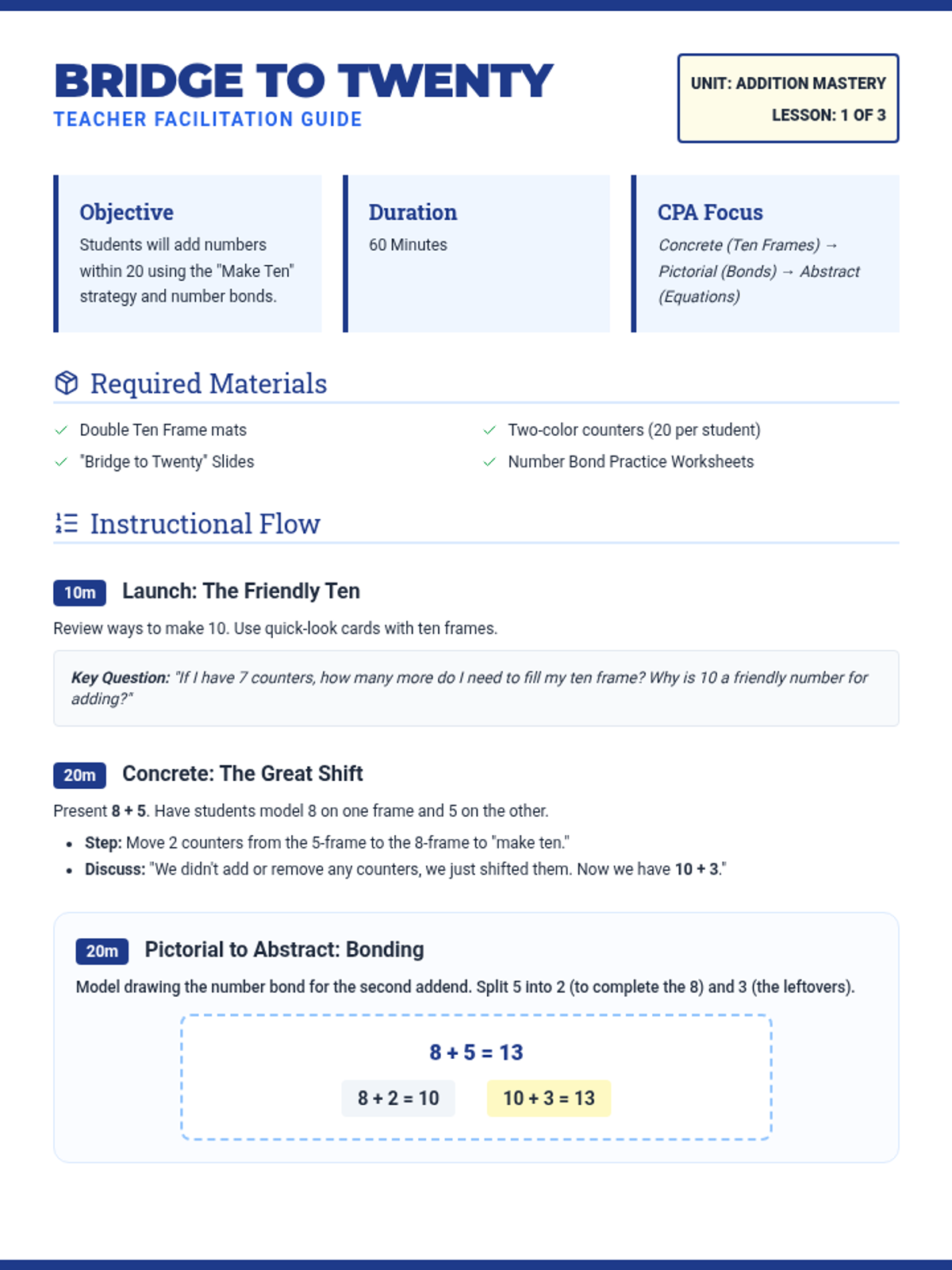
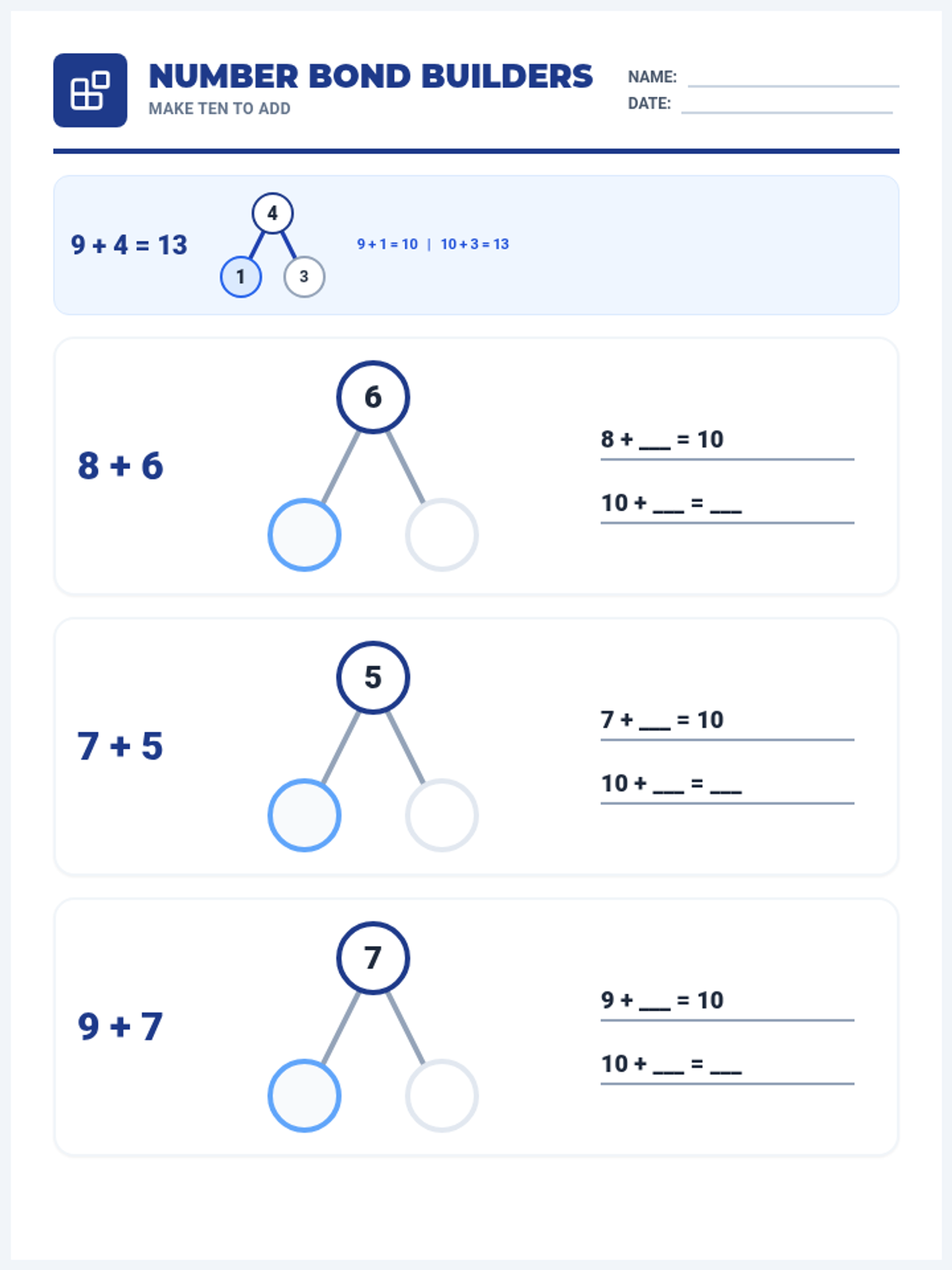
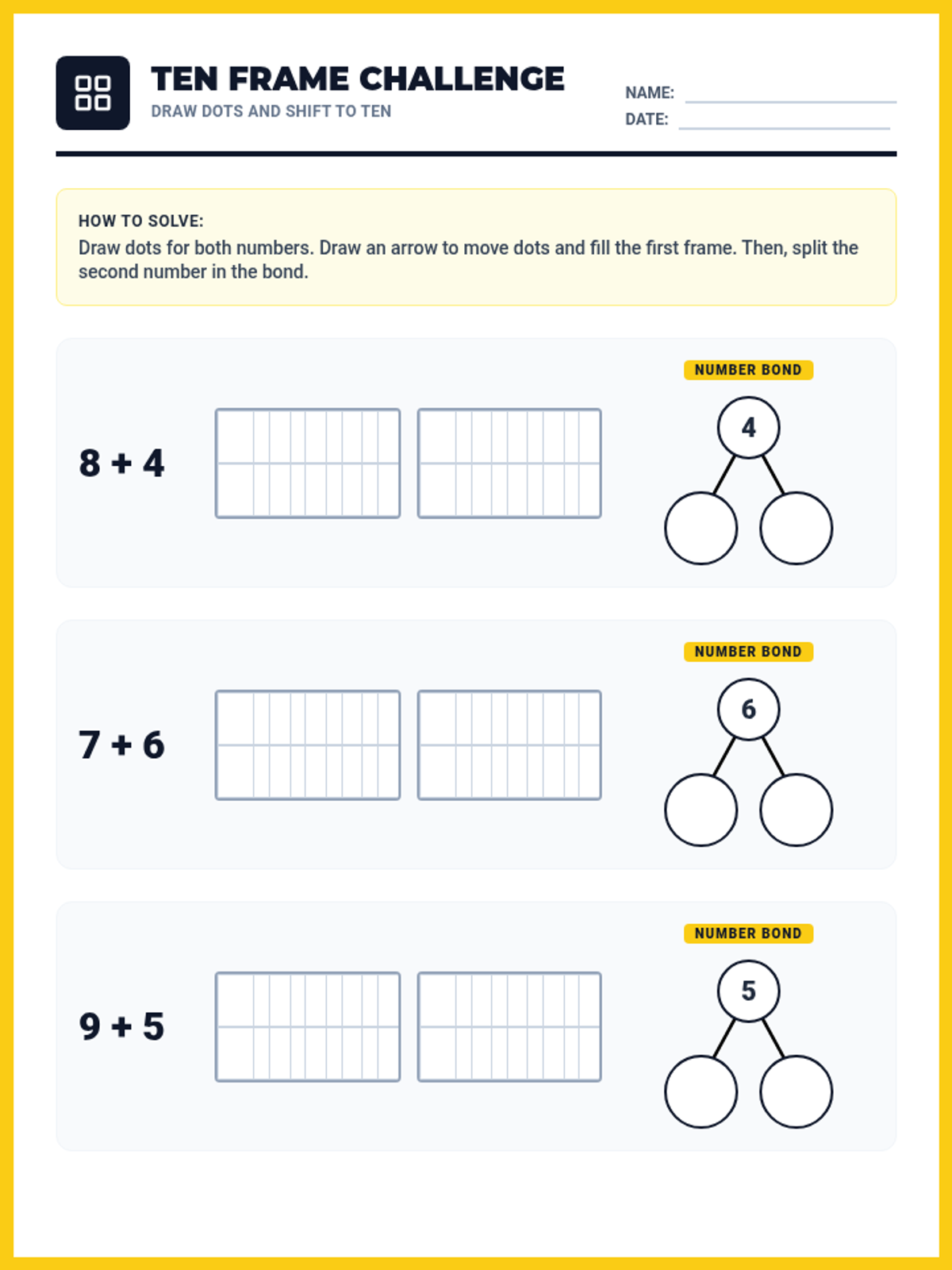
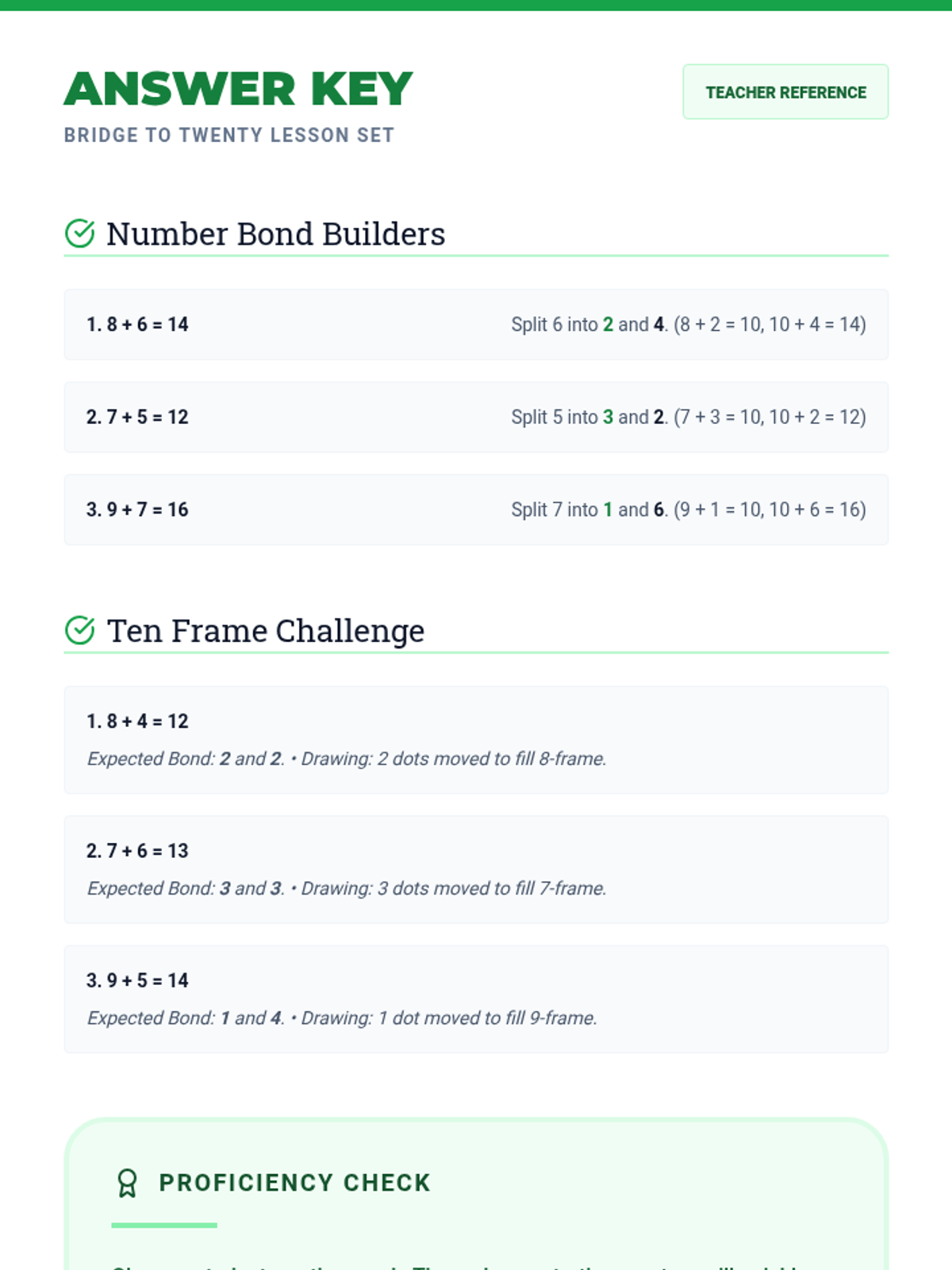
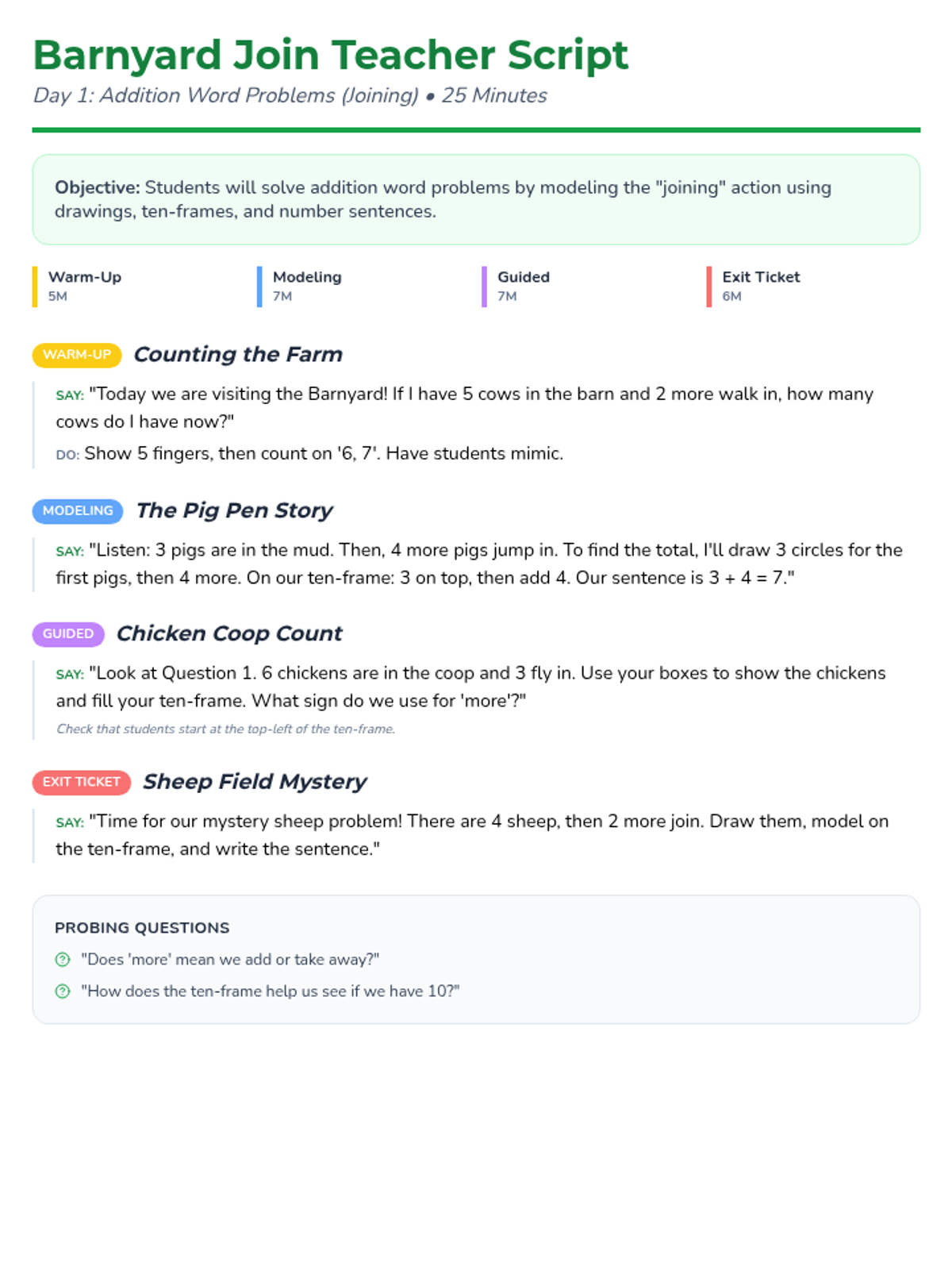
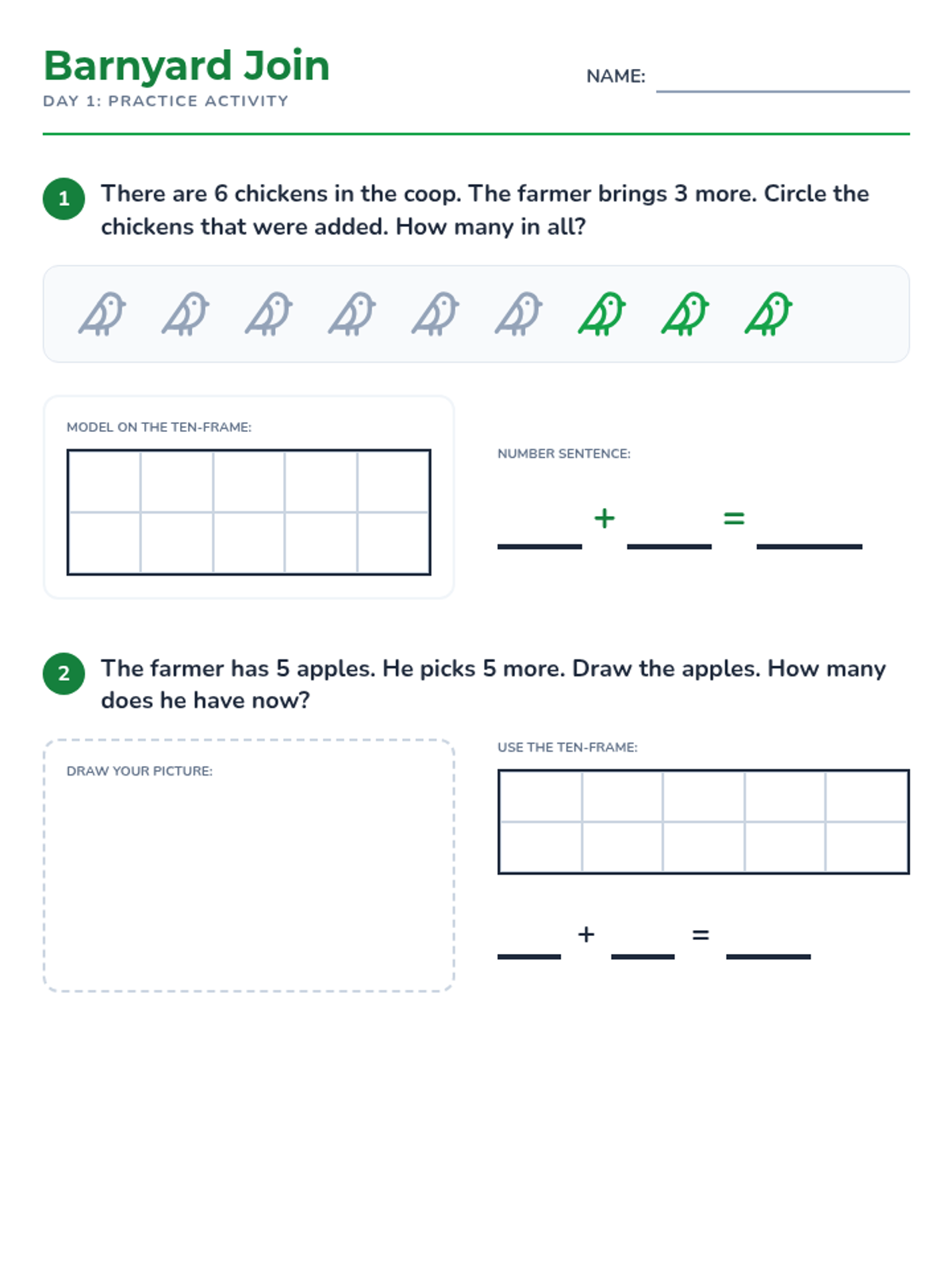
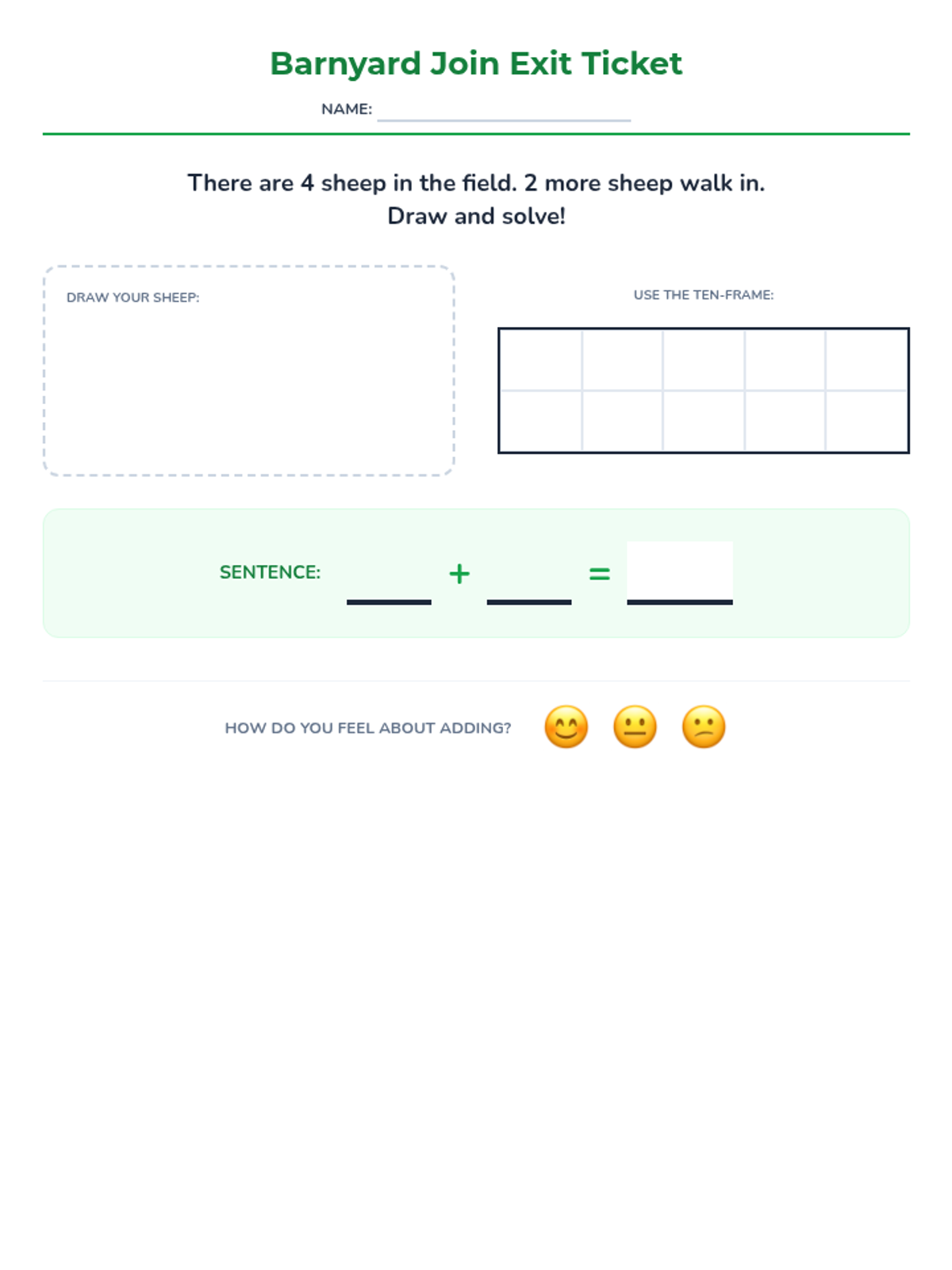
A series of lessons focused on foundational addition strategies for early elementary students, moving from basic counting to more efficient mental math strategies.
A sequence focused on using music, rhythm, and rhyme to master foundational mathematical concepts like addition and skip counting.
A beginner's introduction to geometry focusing on identifying angles as a measure of turn using real-world objects. Students explore the classroom to find 'turns' and 'corners', classifying them as small or large.
A series of parent engagement workshops designed to bridge the gap between classroom instruction and home support for early elementary mathematics. Each session focuses on a specific conceptual strategy to empower parents as learning partners.
A short sequence introducing 2nd-grade students to the concept of estimation and rounding, focusing on when to use approximate numbers versus exact ones.
A short unit focused on mastering two-digit addition and subtraction with regrouping through physical manipulatives and collaborative play.