Cette leçon évalue les connaissances de base sur les 7 concepts ICT et fournit les fondations théoriques pour comprendre les marchés à travers le prisme de la liquidité institutionnelle.
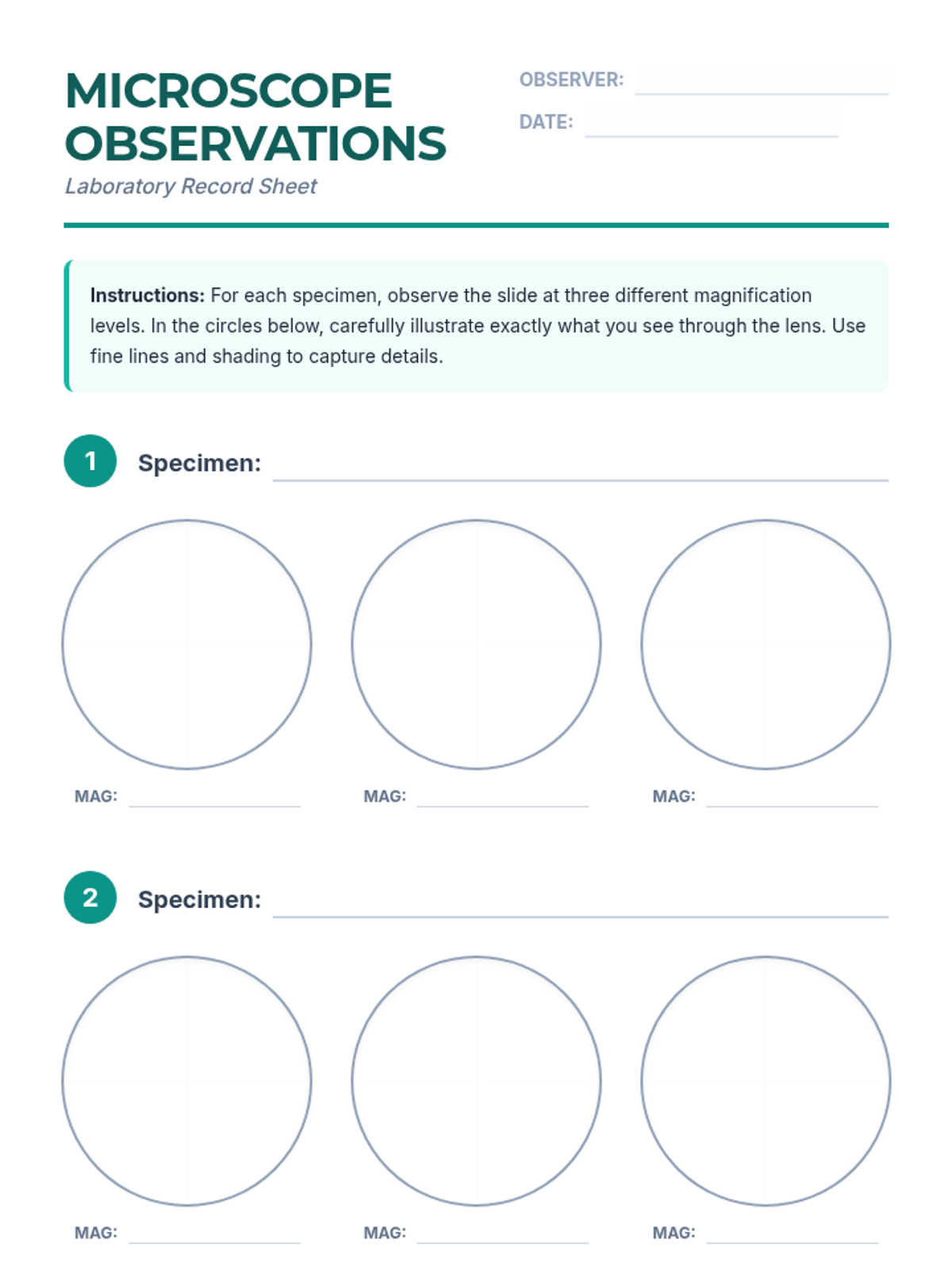
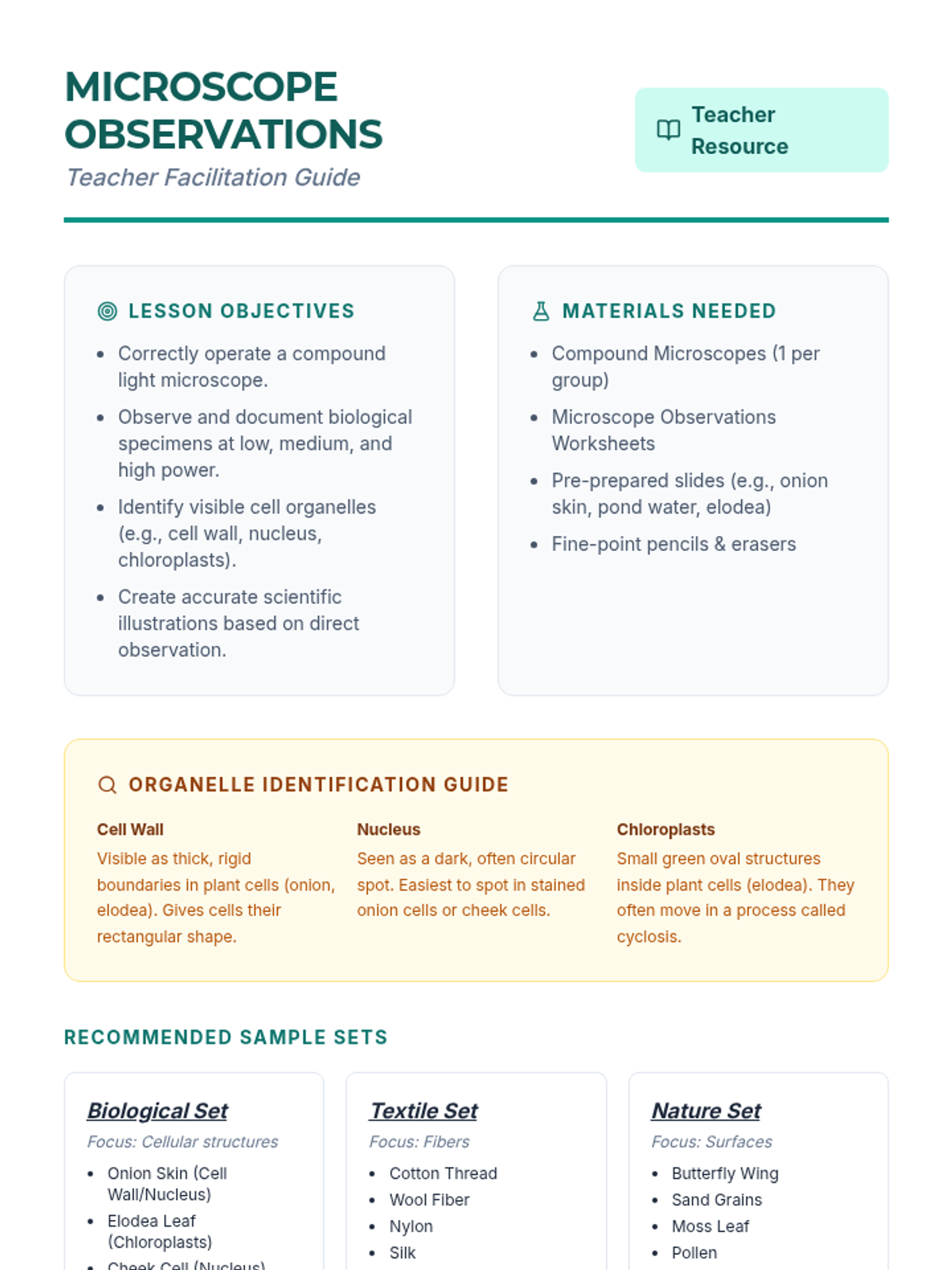
A hands-on laboratory experience where students use microscopes to observe and document biological and physical specimens at varying magnifications.
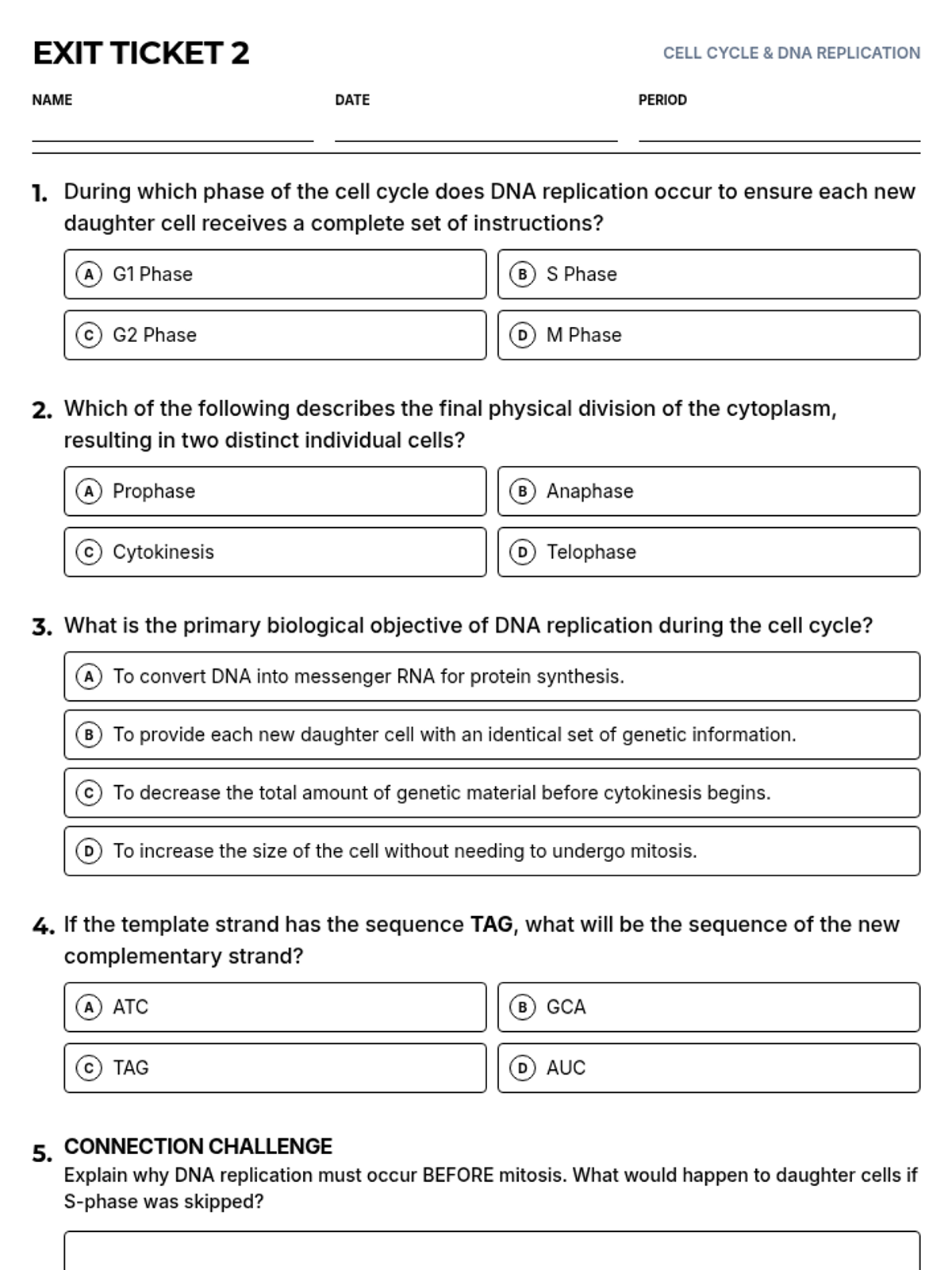
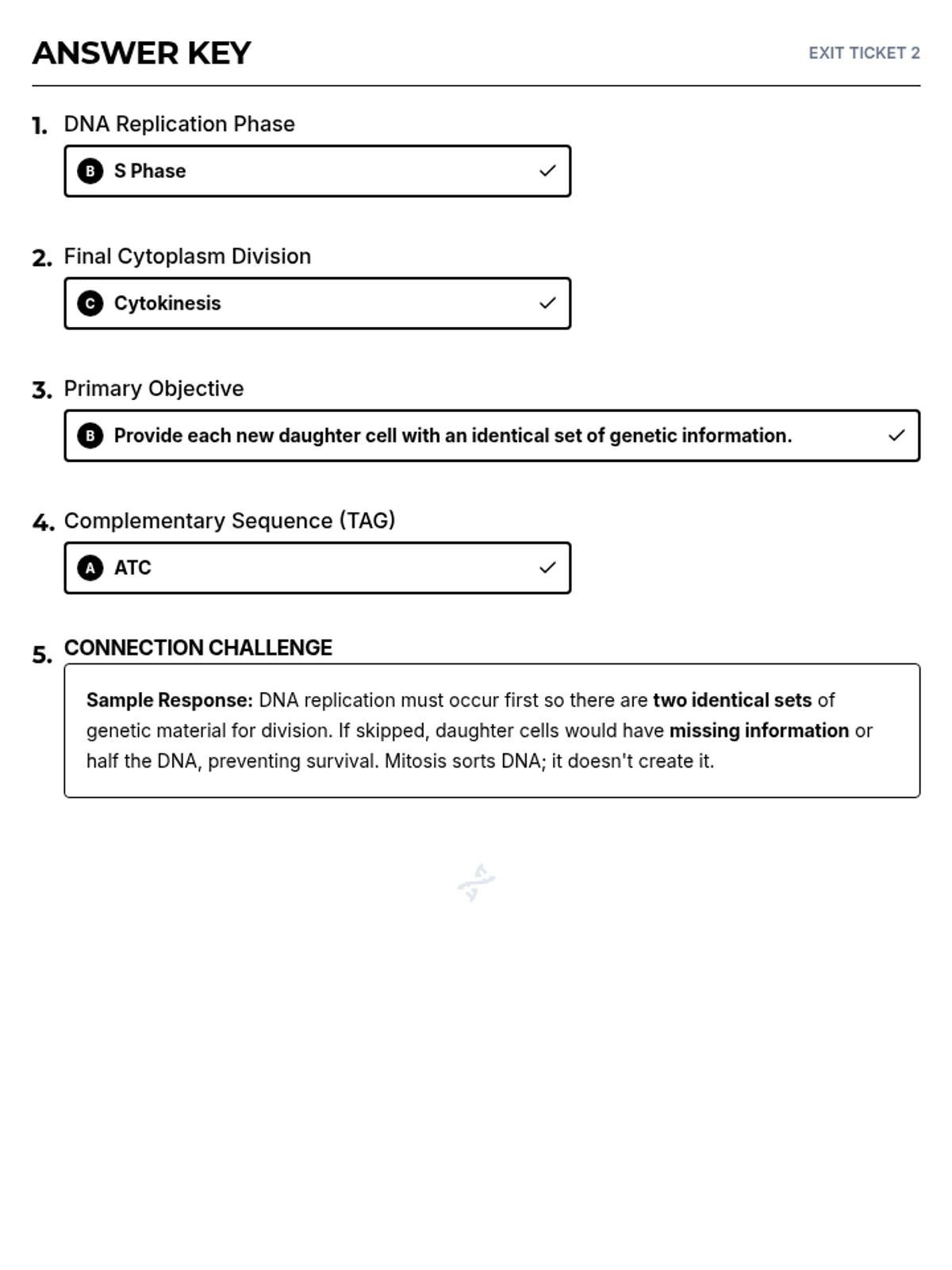
A focused lesson on the mechanics of the cell cycle and DNA replication, emphasizing timing, key stages like S-phase and mitosis, and the process of cytokinesis.
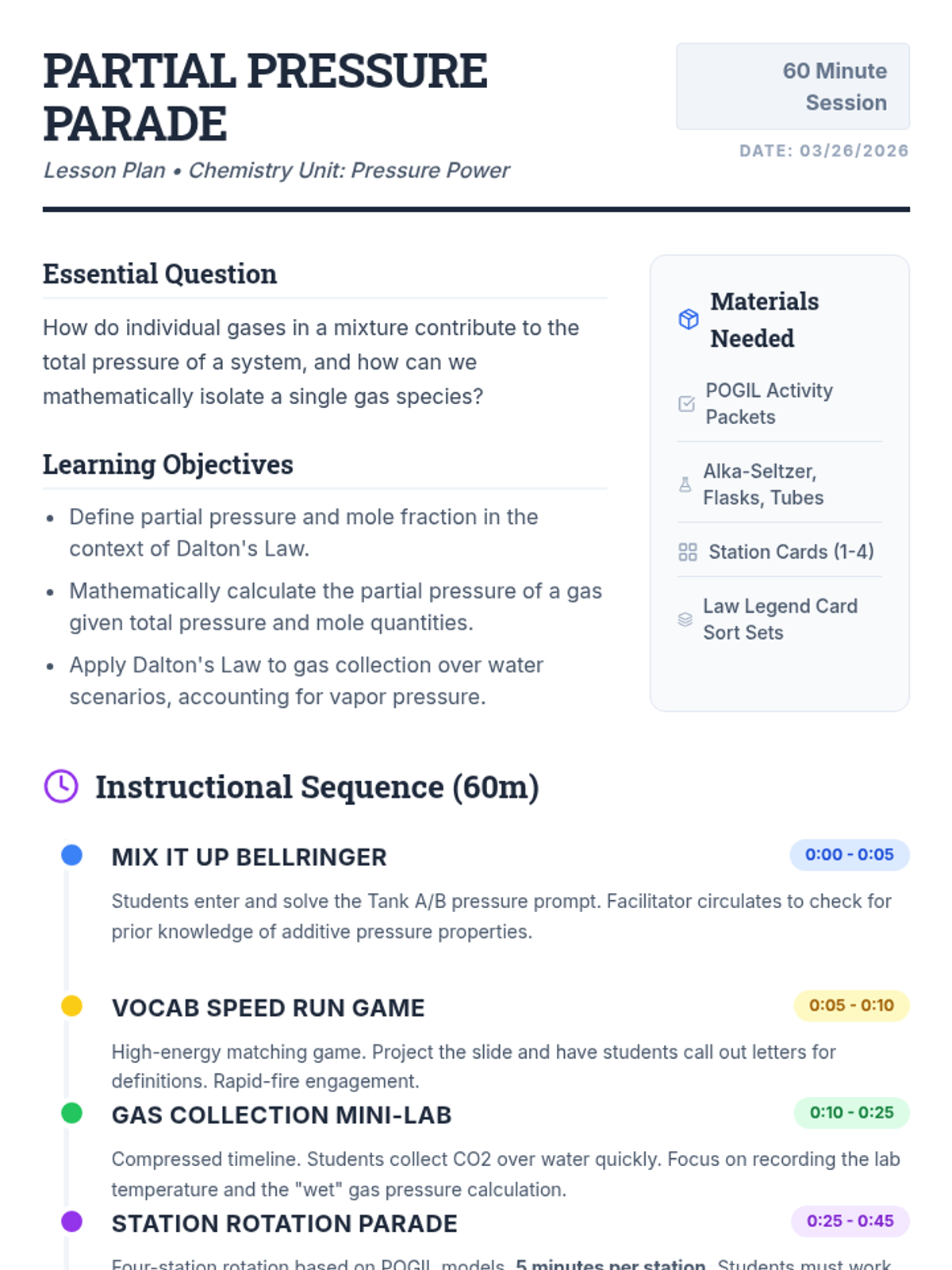
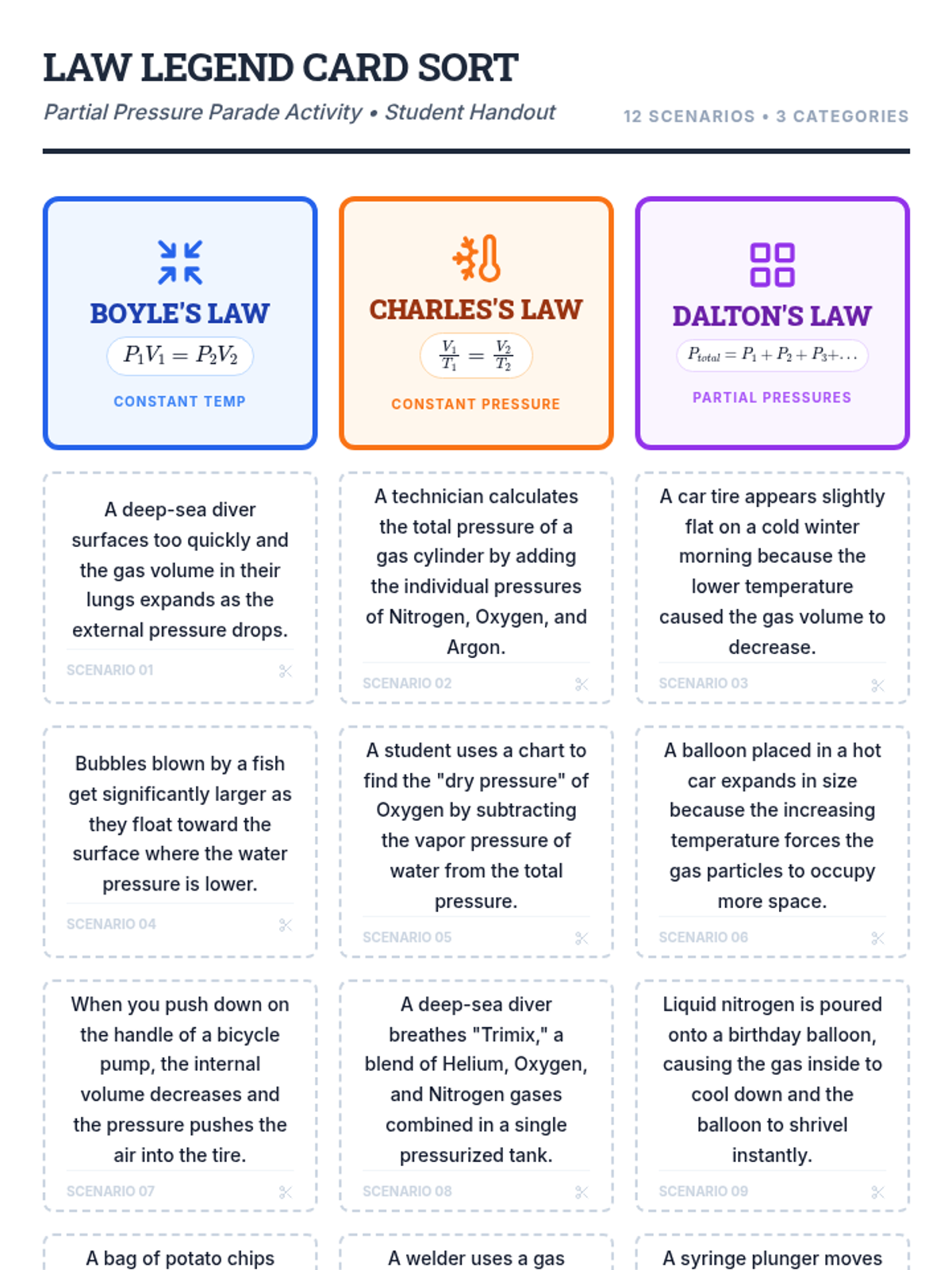
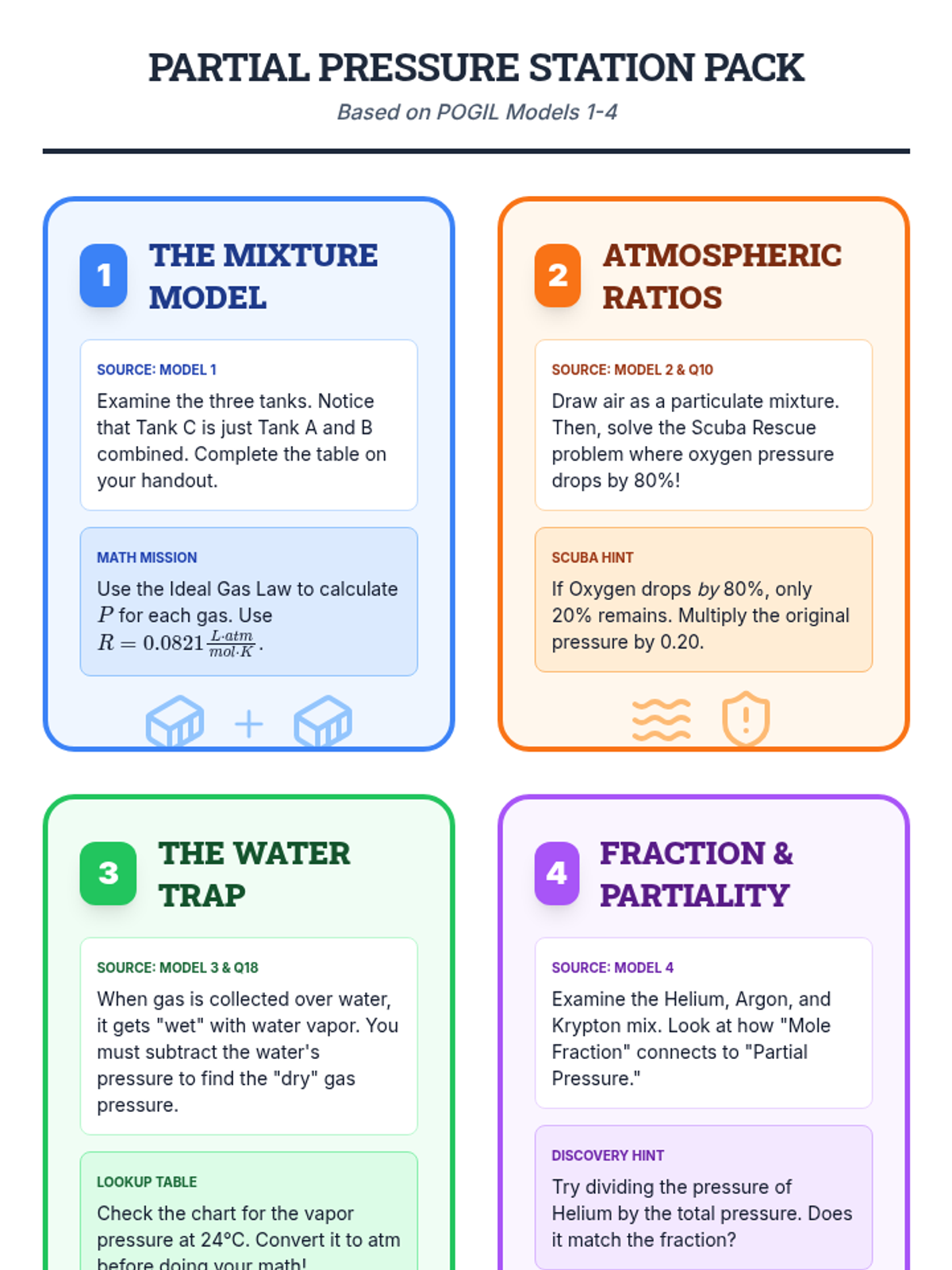
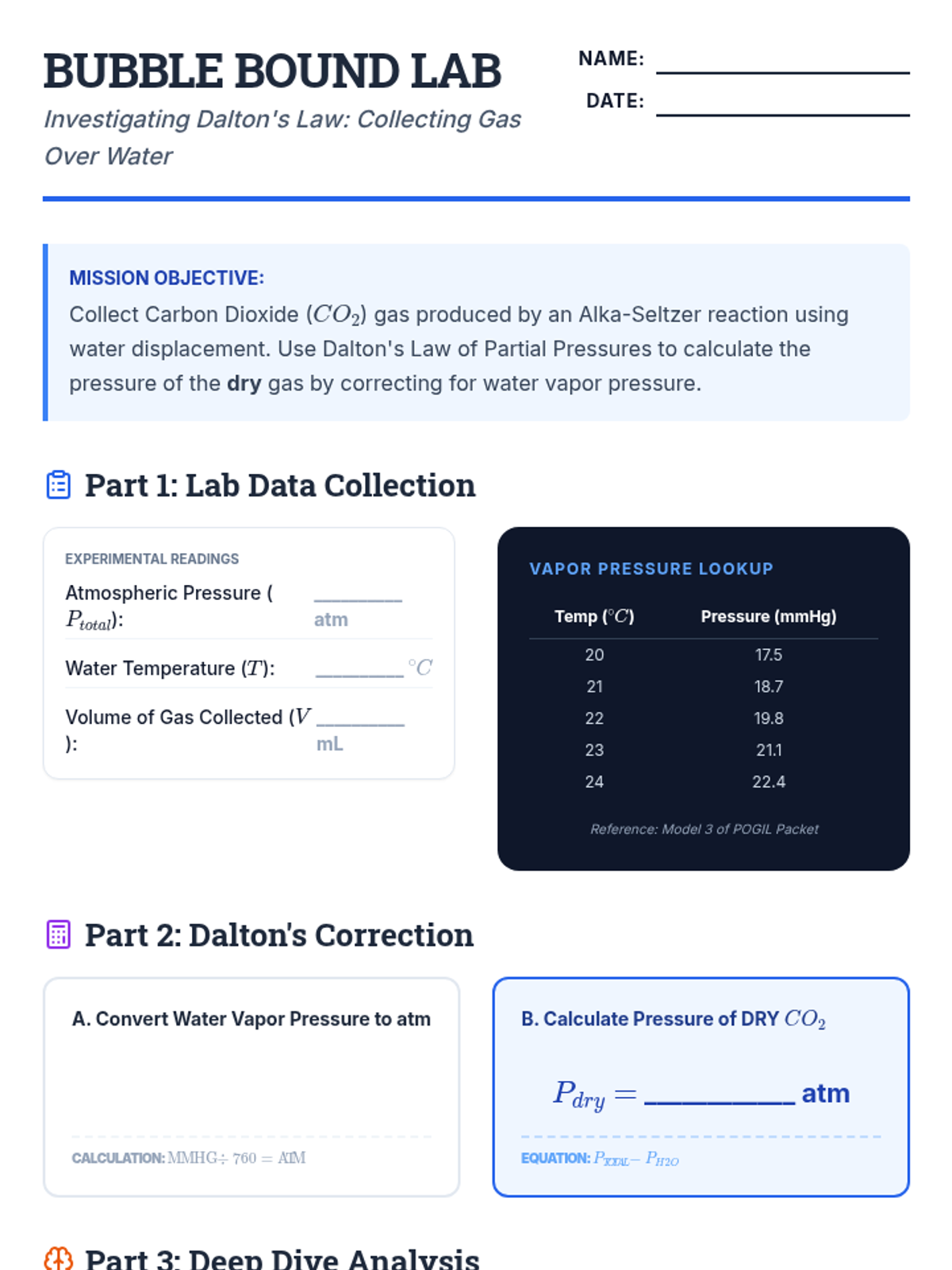
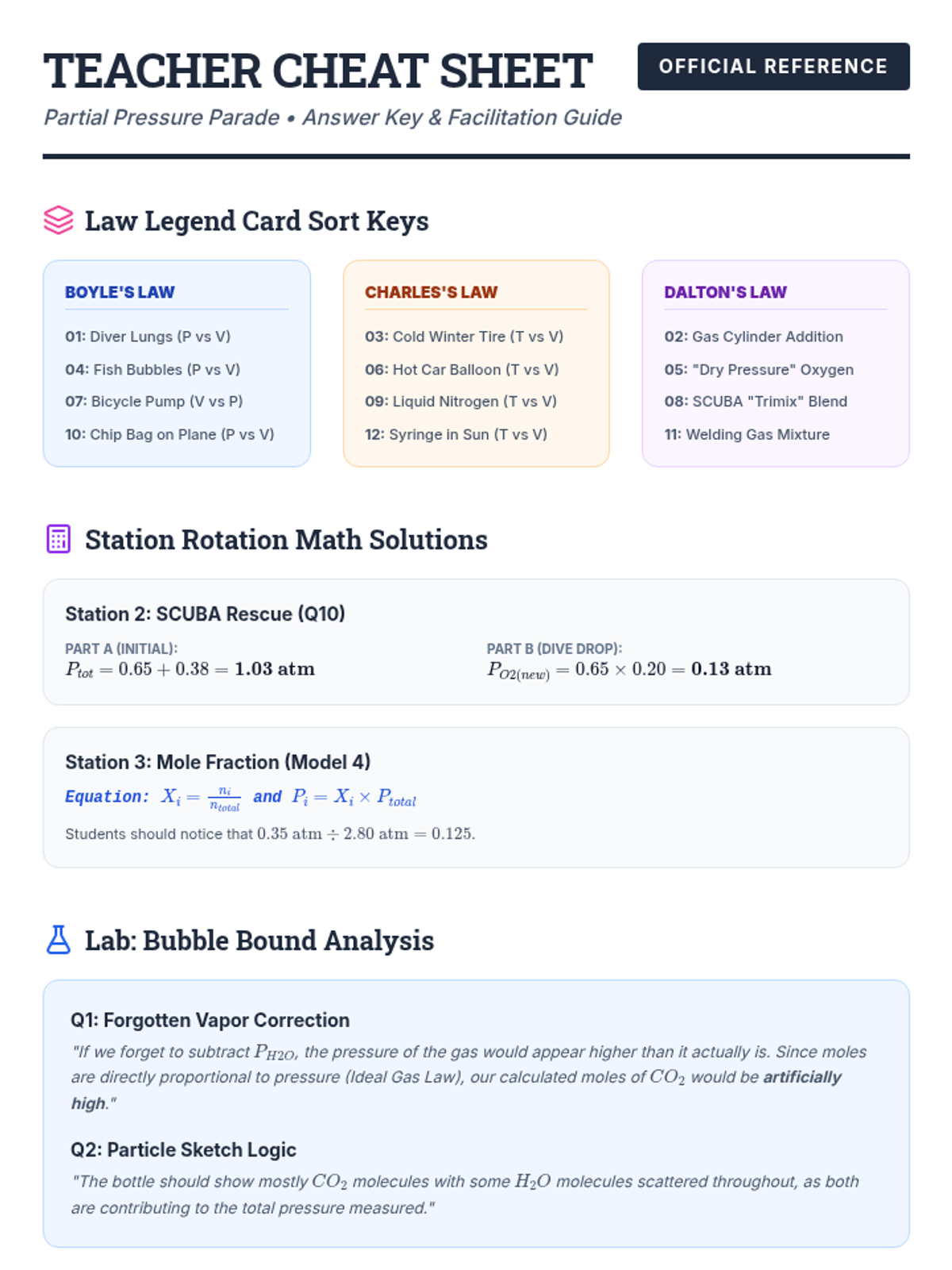
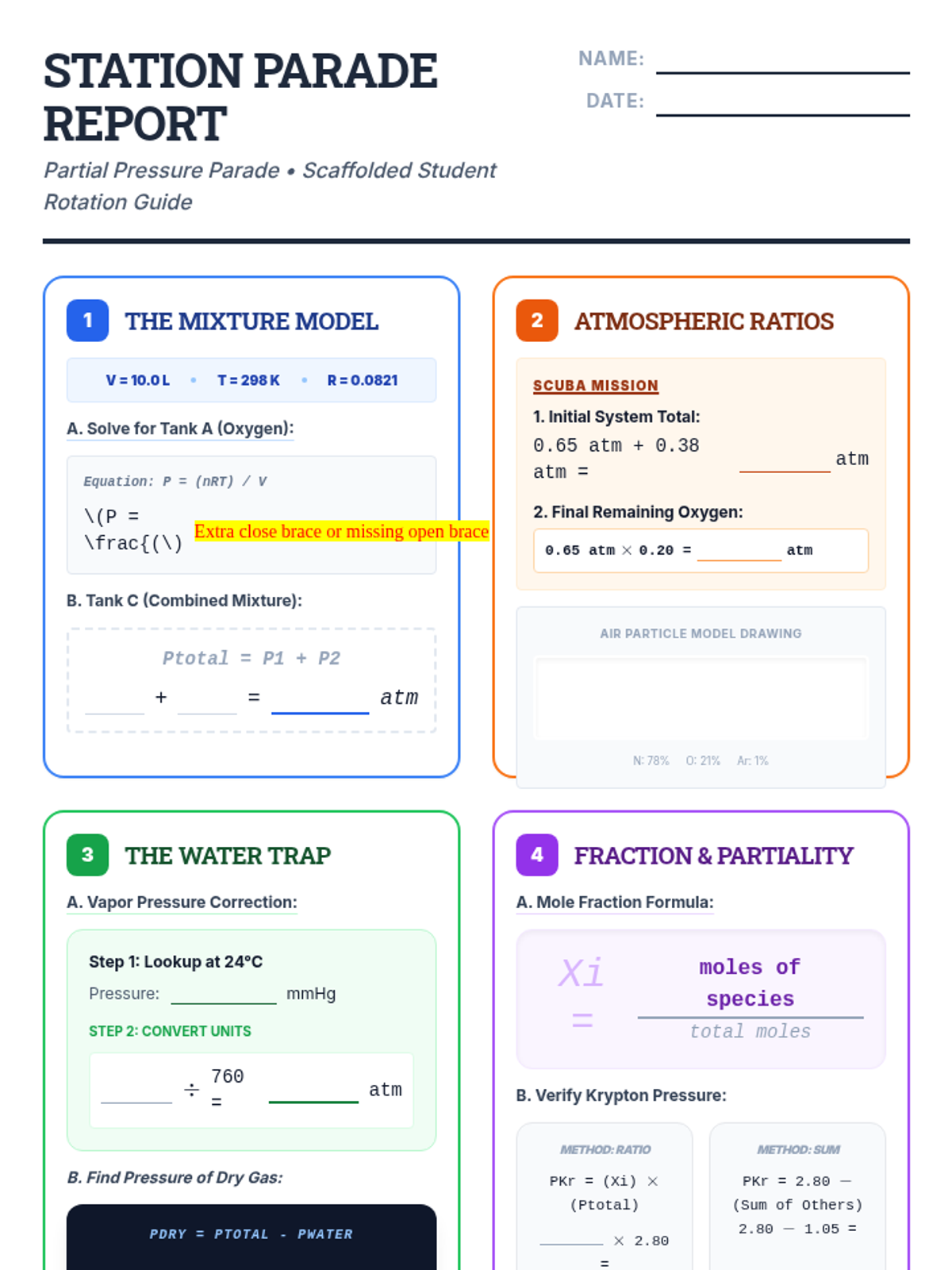
A high-energy, activity-dense lesson focused on Dalton's Law of Partial Pressures, mole fractions, and collecting gas over water, utilizing the POGIL framework to transition from conceptual modeling to mathematical mastery.
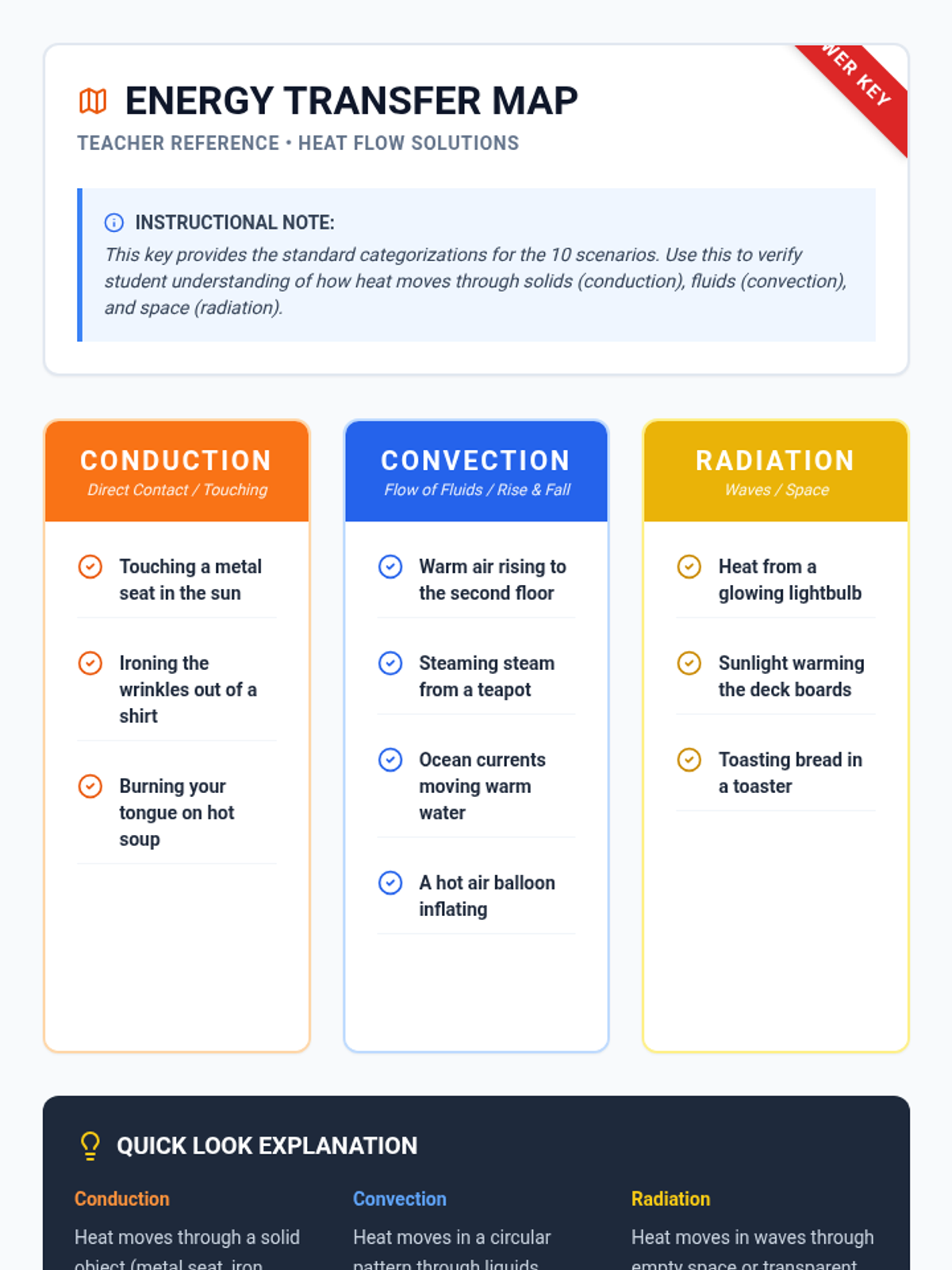
Reviewing the three types of heat transfer through interactive slides and a graphic organizer to connect concepts to everyday life.
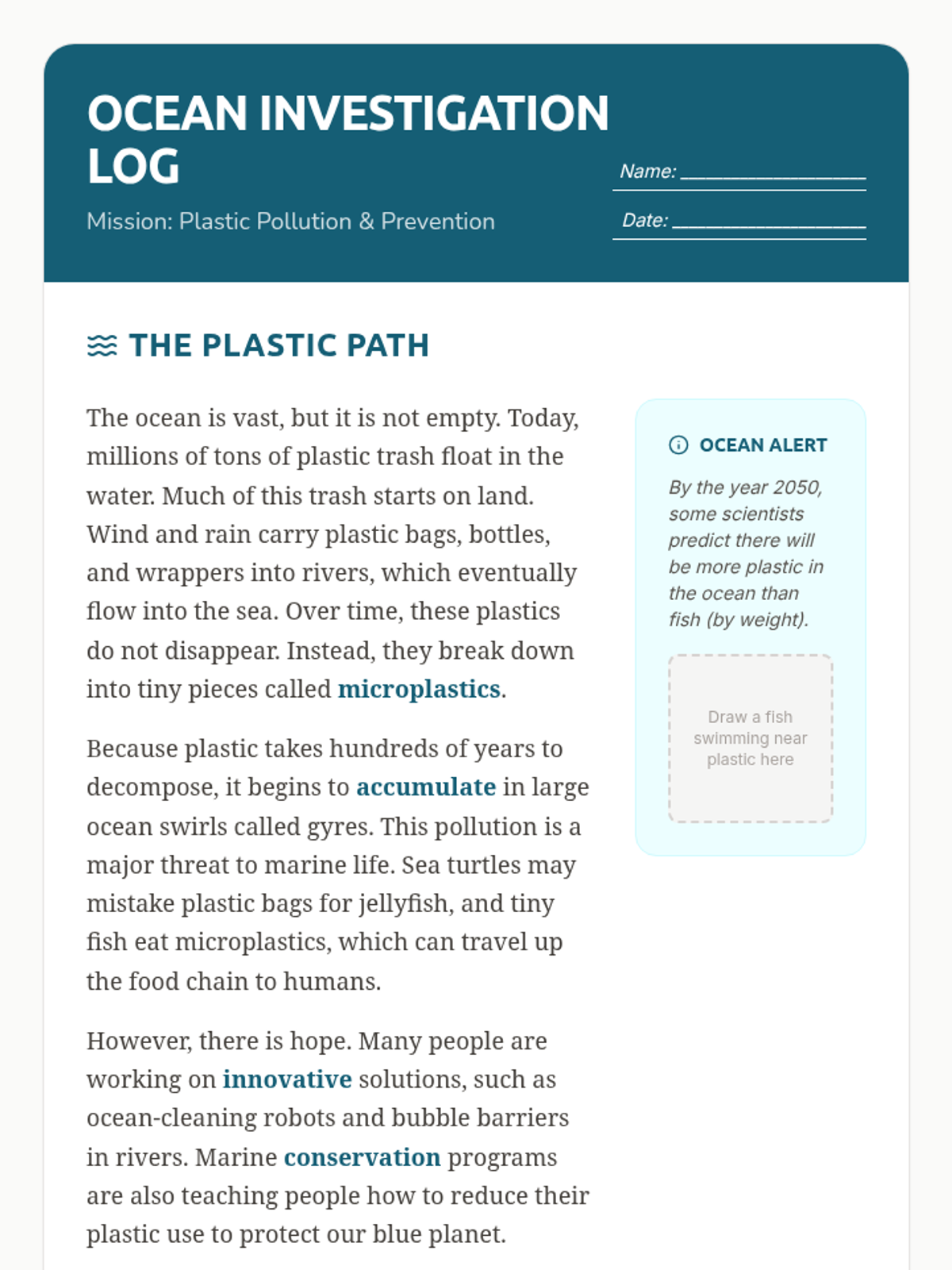
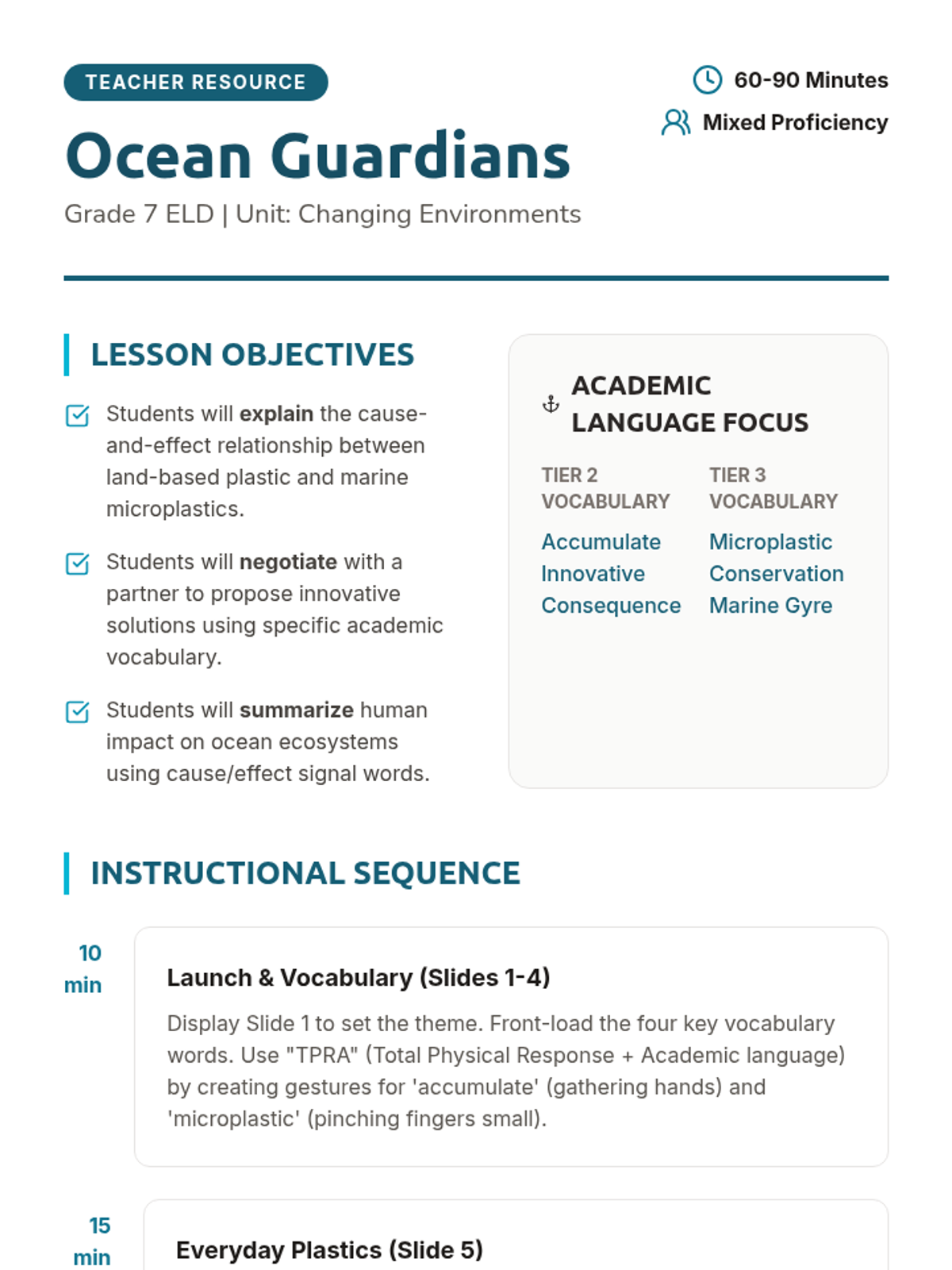
A deep dive into marine environments and the impact of plastic pollution, featuring cause-and-effect analysis and collaborative problem-solving for 7th grade ELD students.
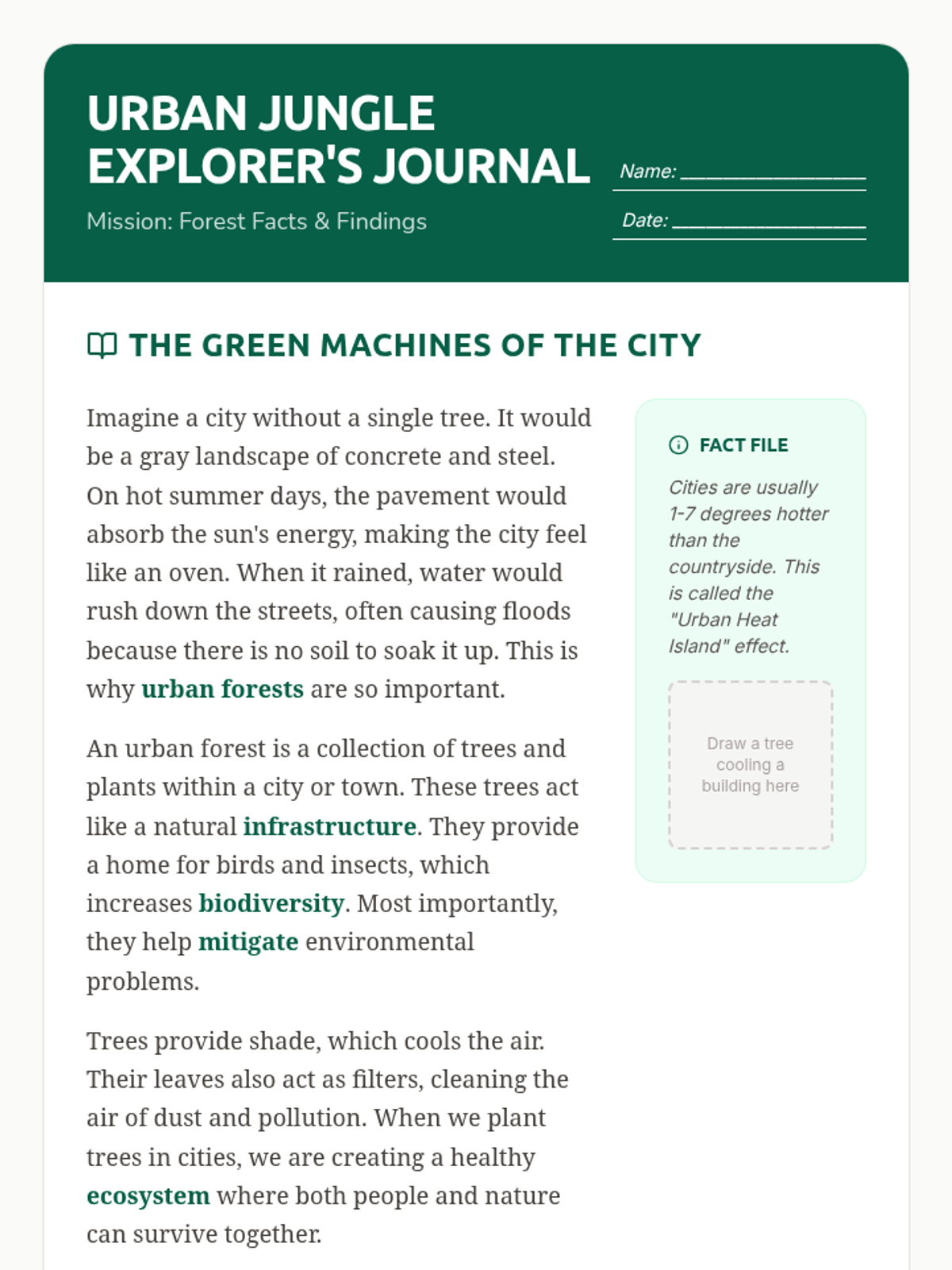
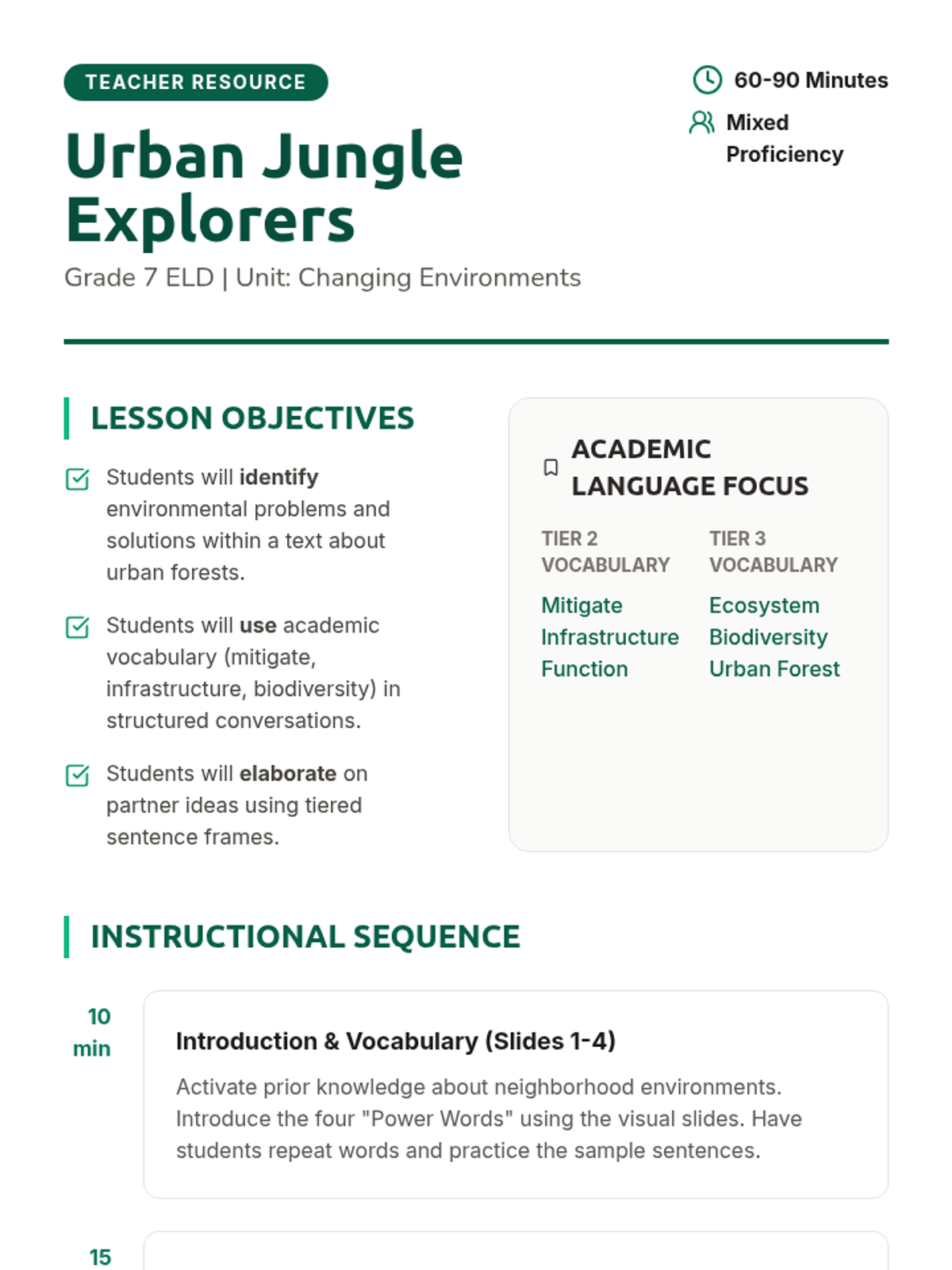
A comprehensive ELD lesson for 7th graders focusing on the ecological and social importance of urban forests, featuring tiered supports for mixed proficiency levels.
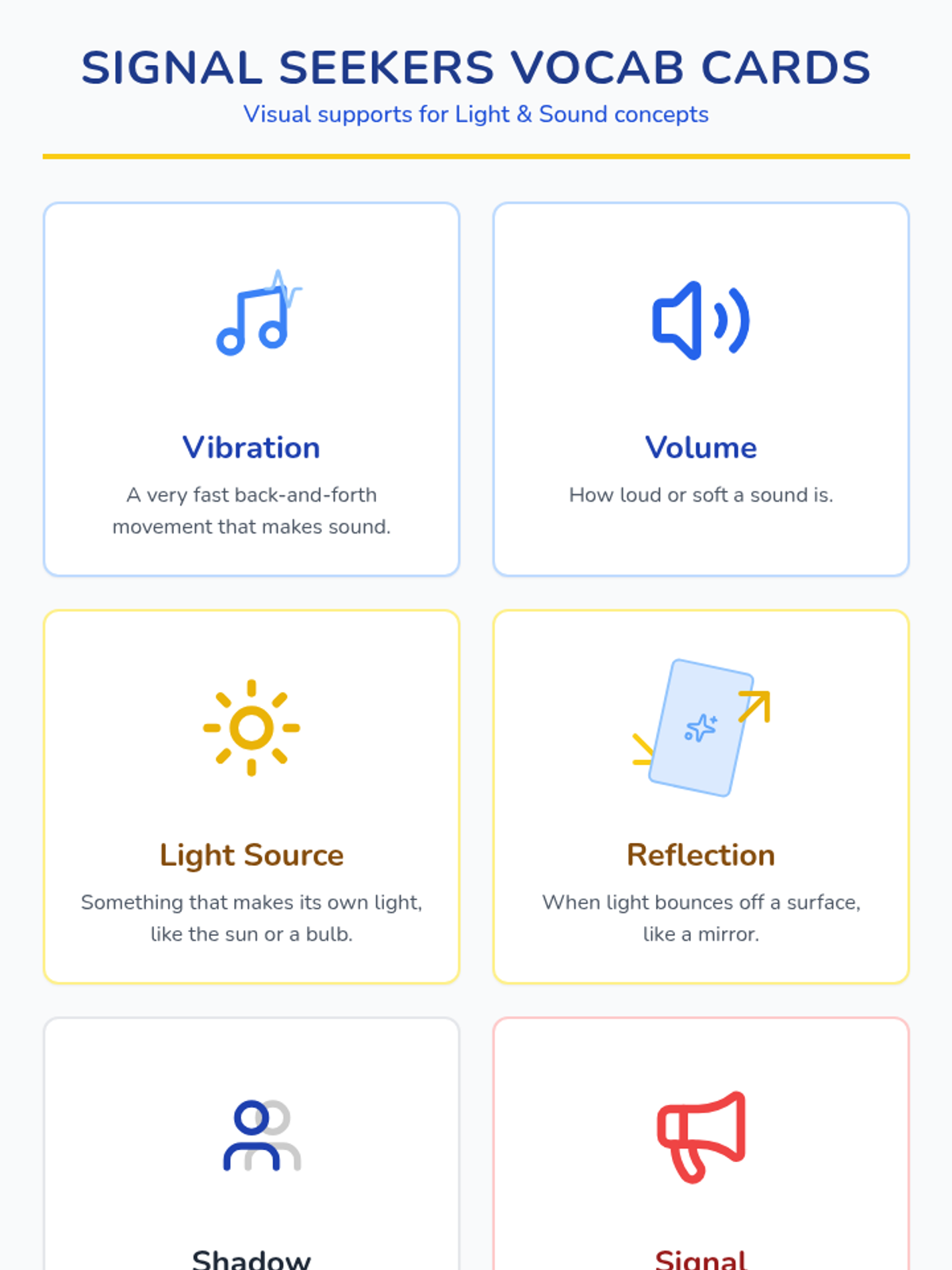
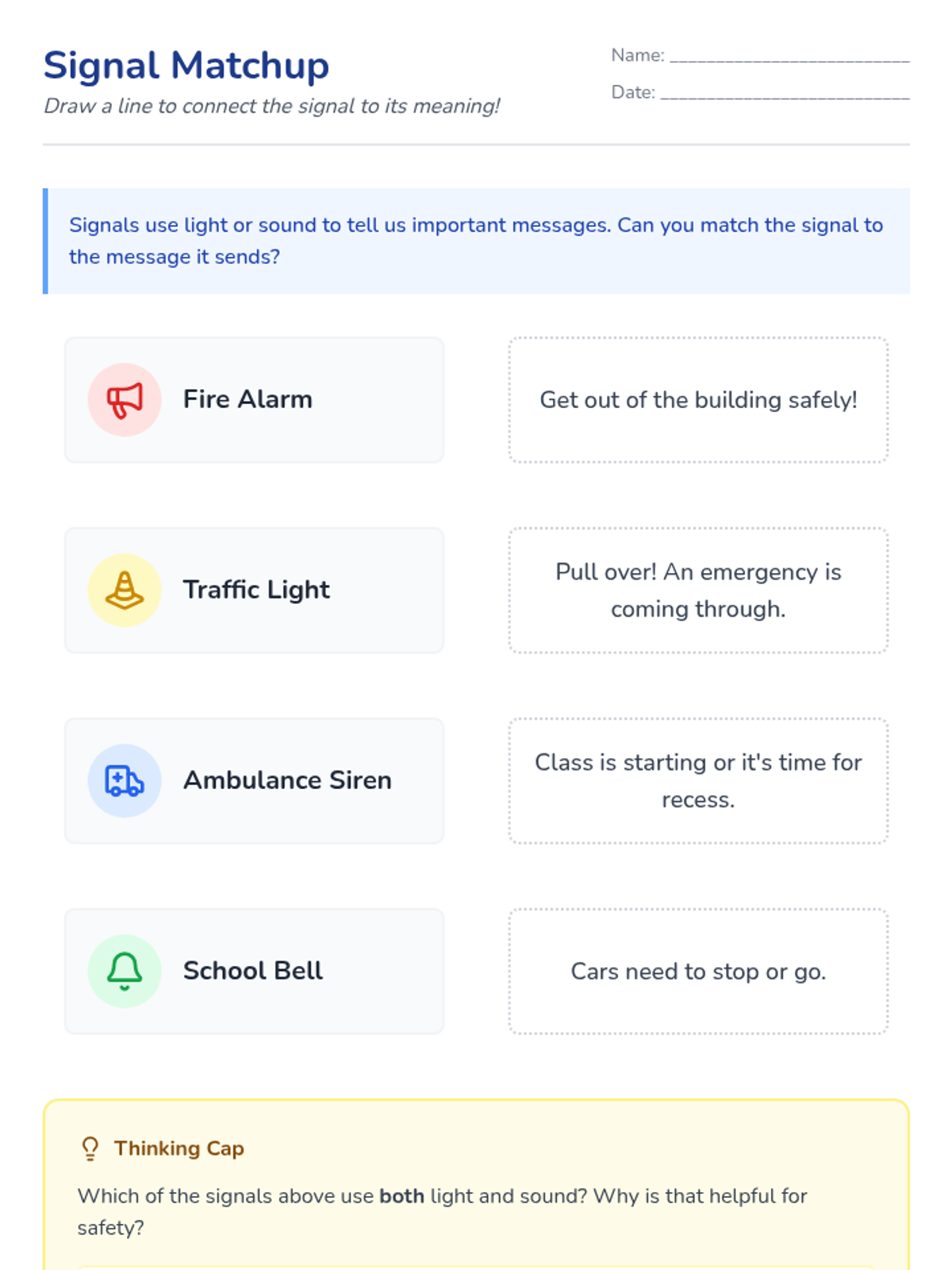
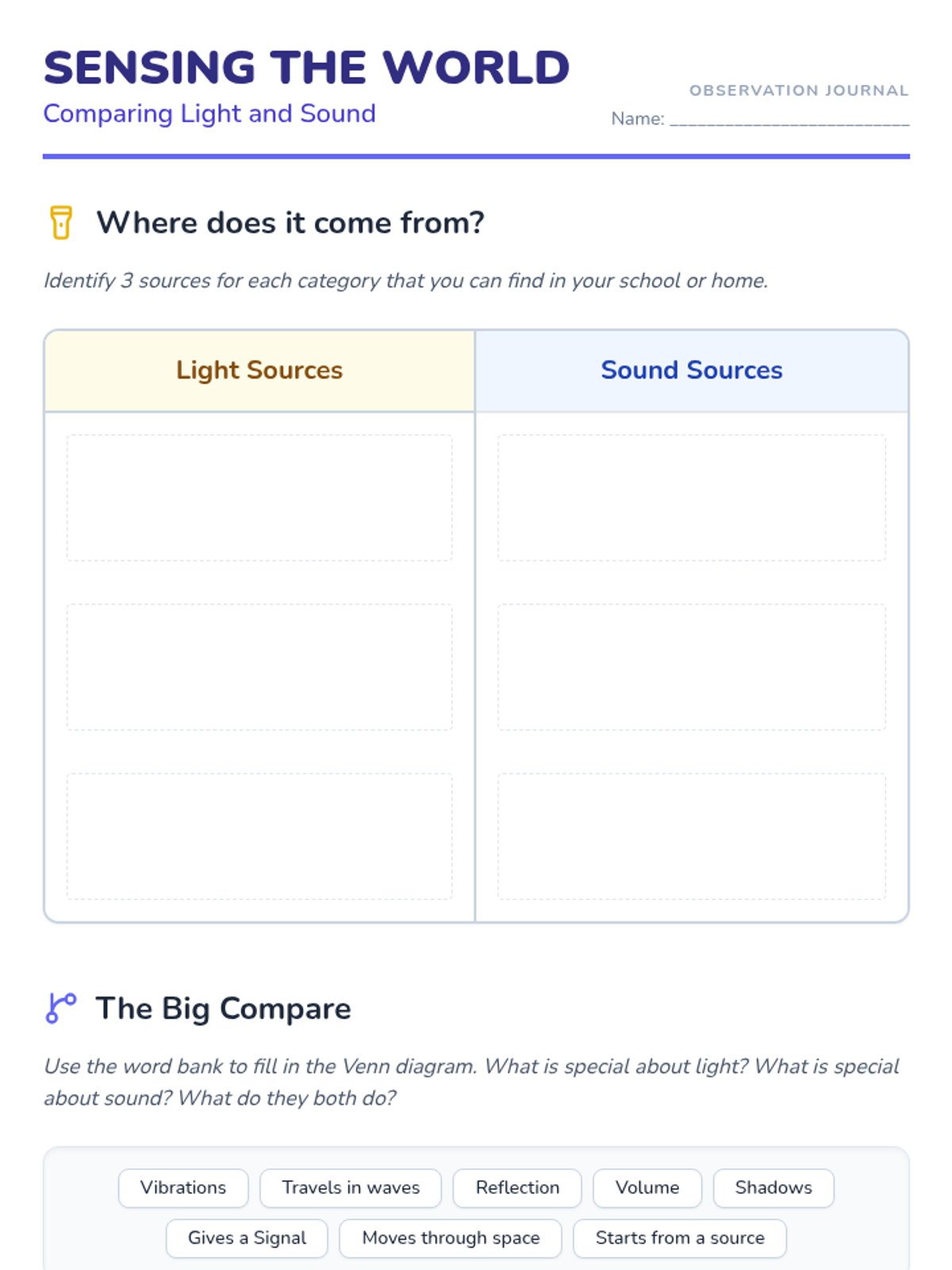
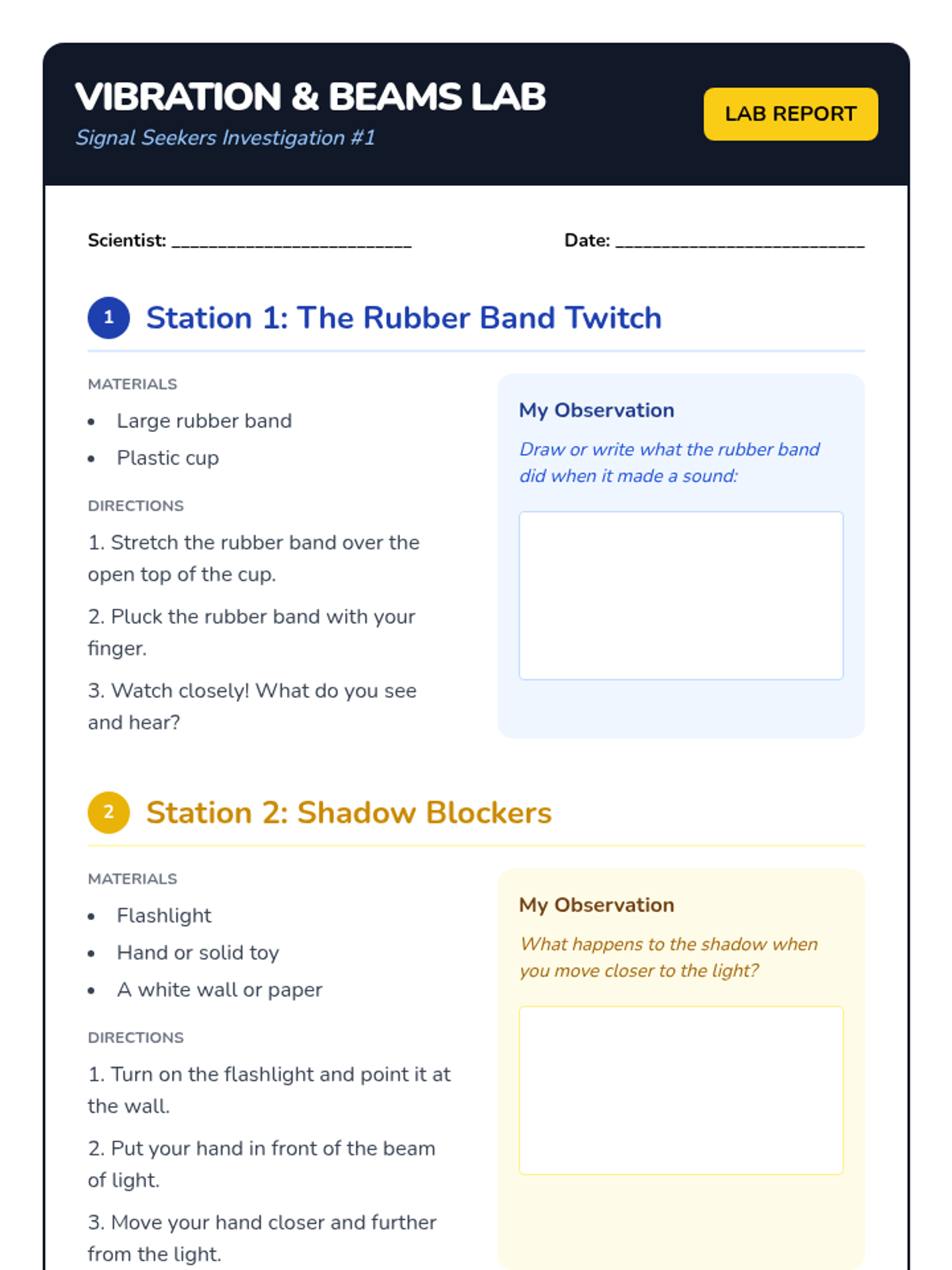
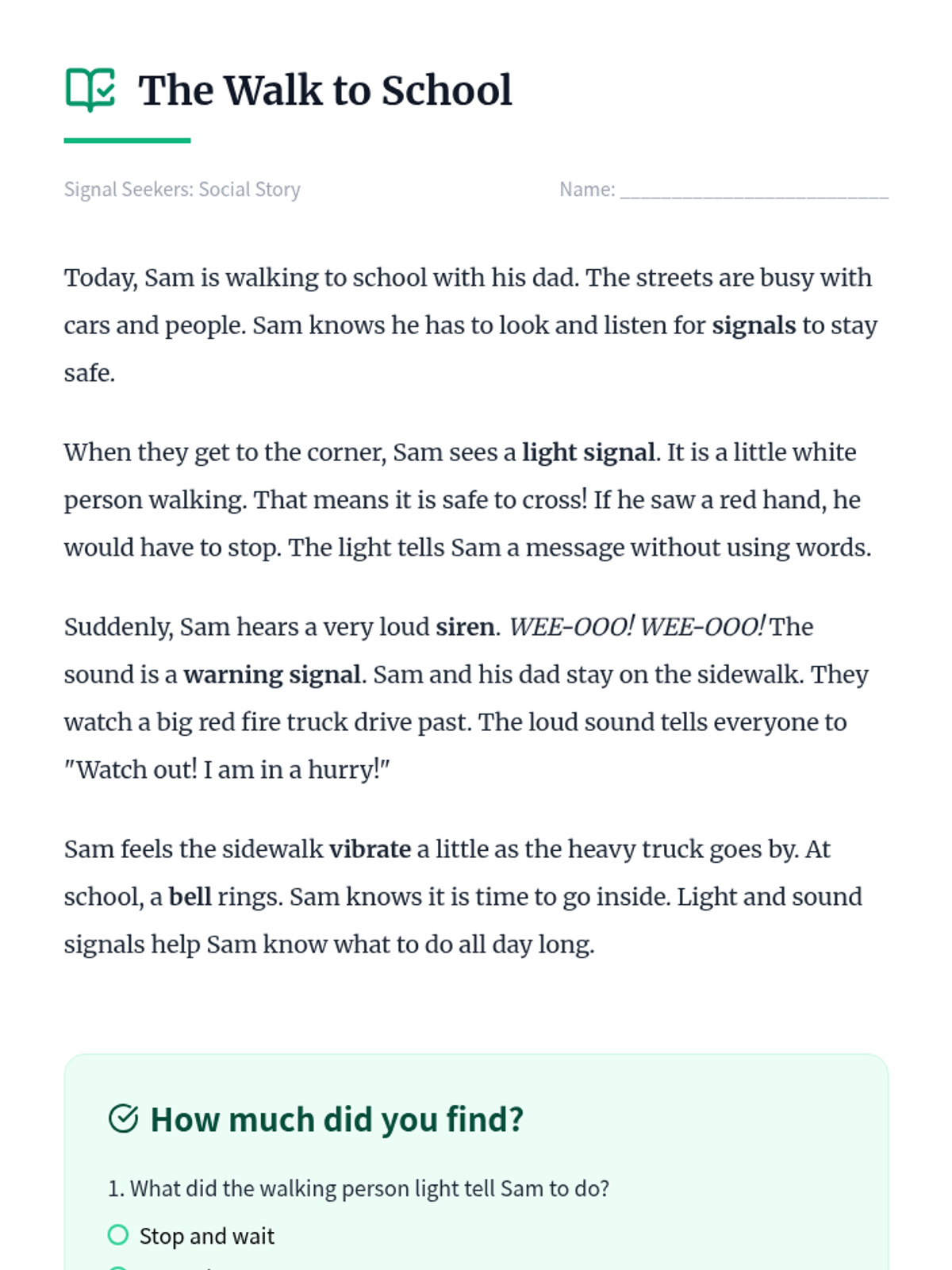
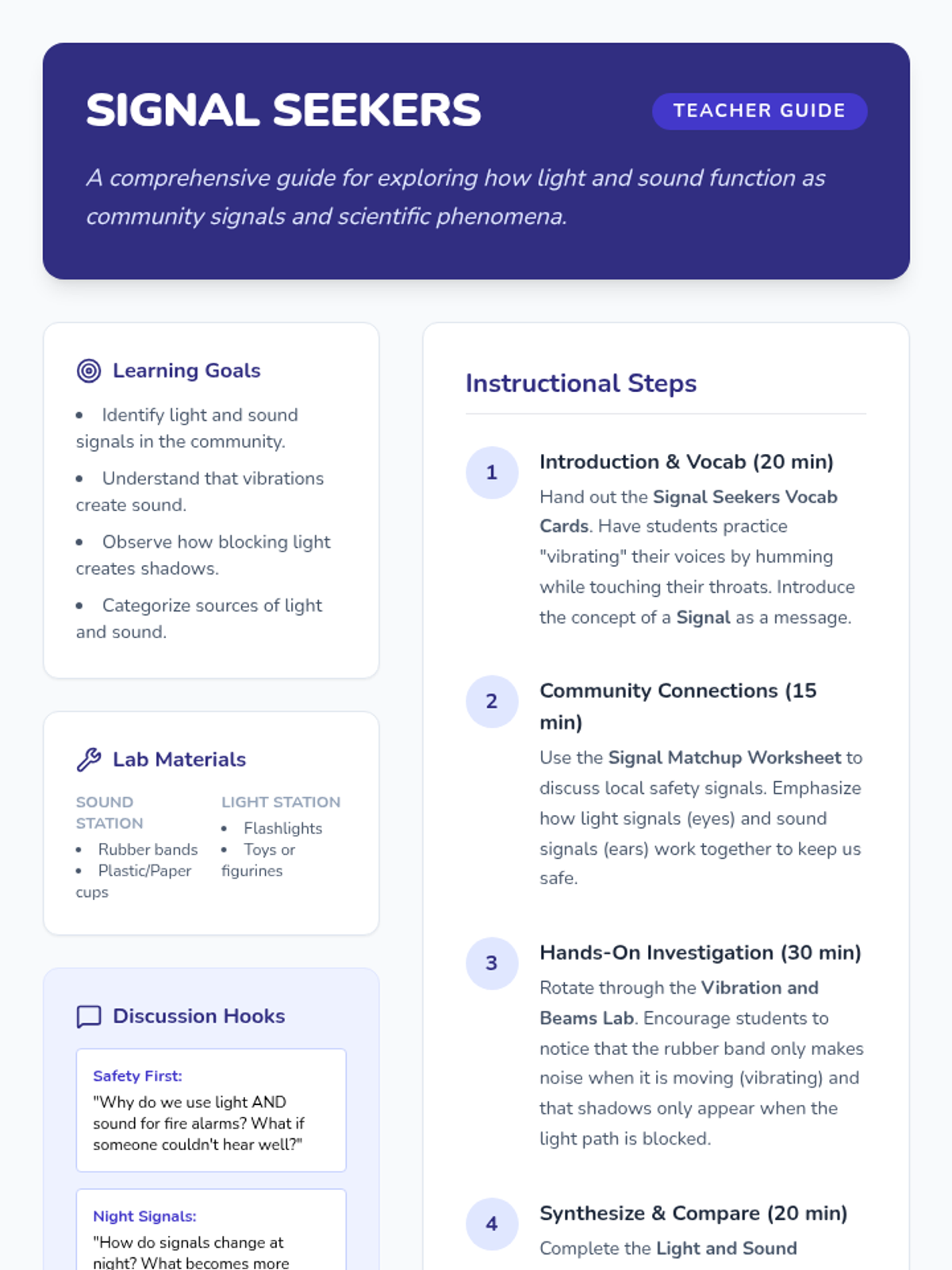
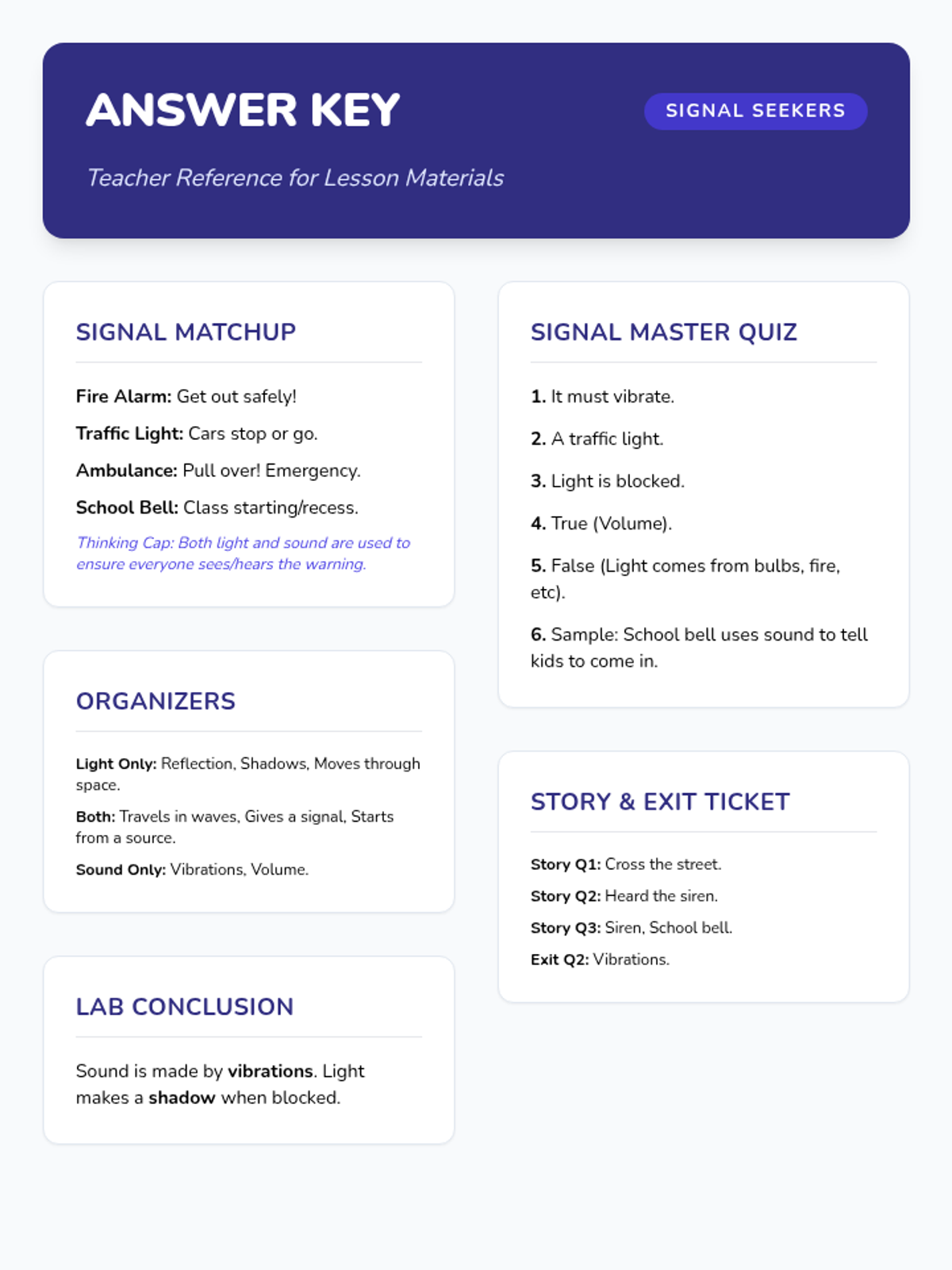
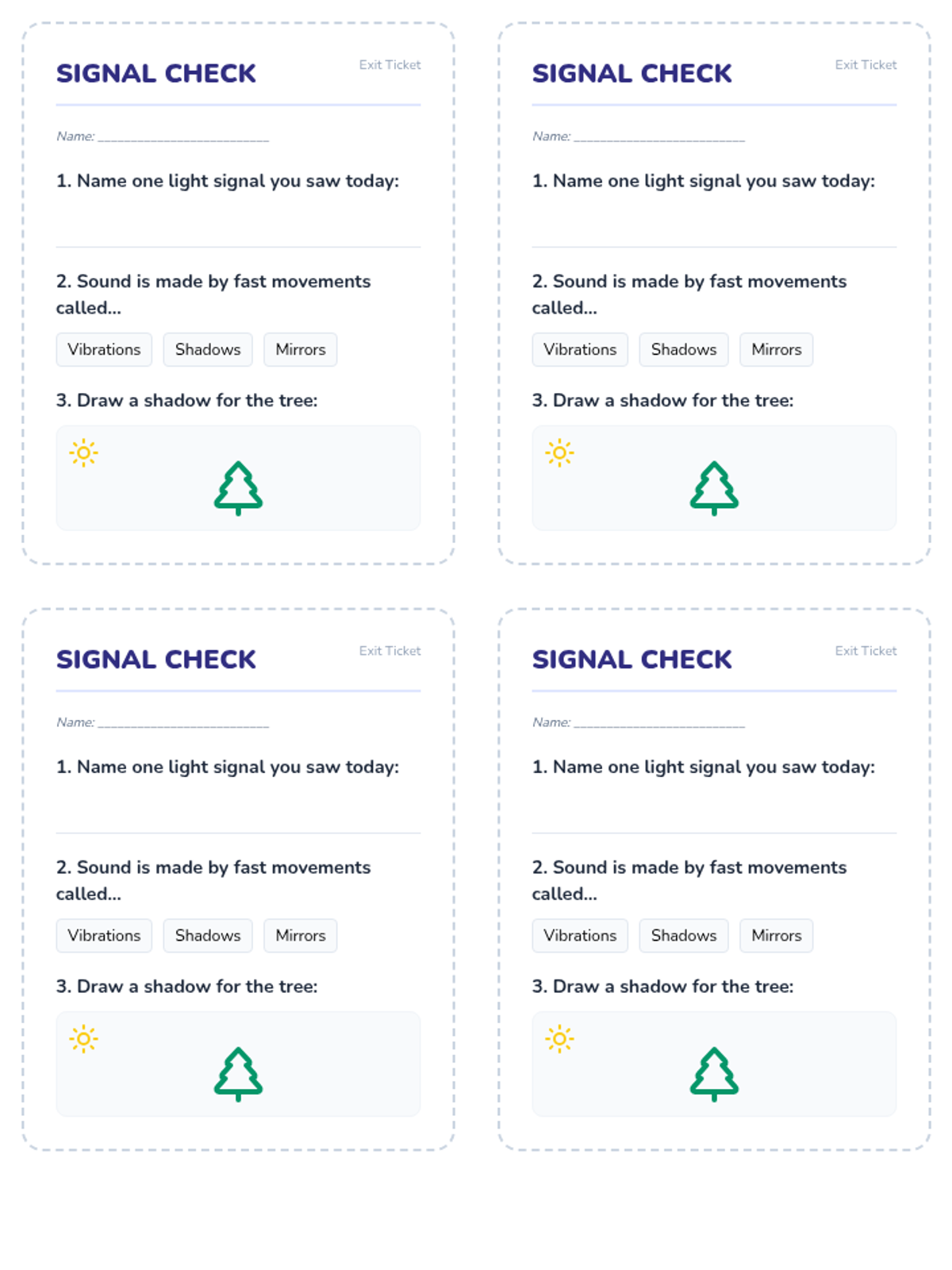
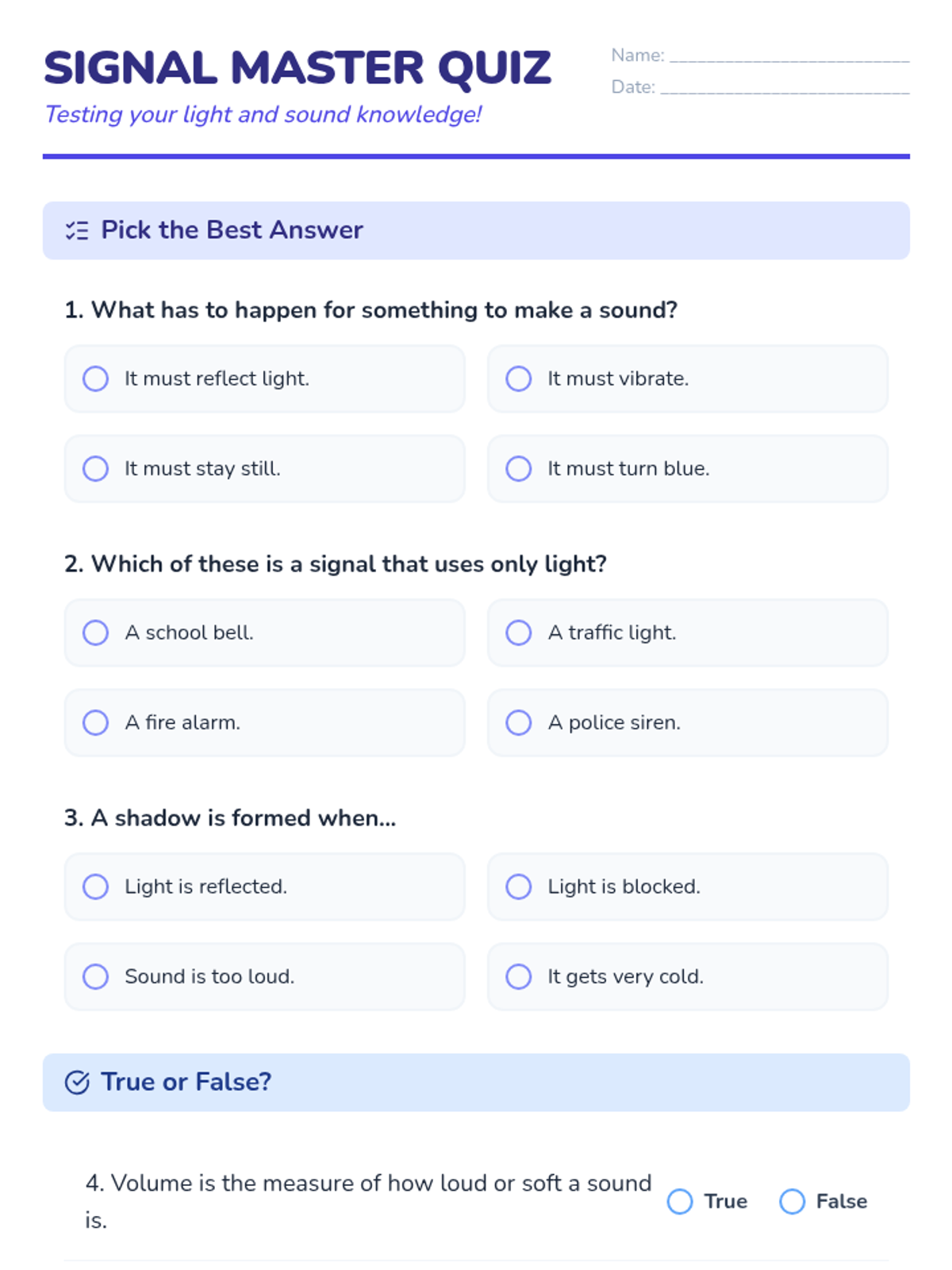
A comprehensive lesson exploring how light and sound function as signals in our community, how they are produced through vibrations and sources, and the unique properties of shadows and volume.
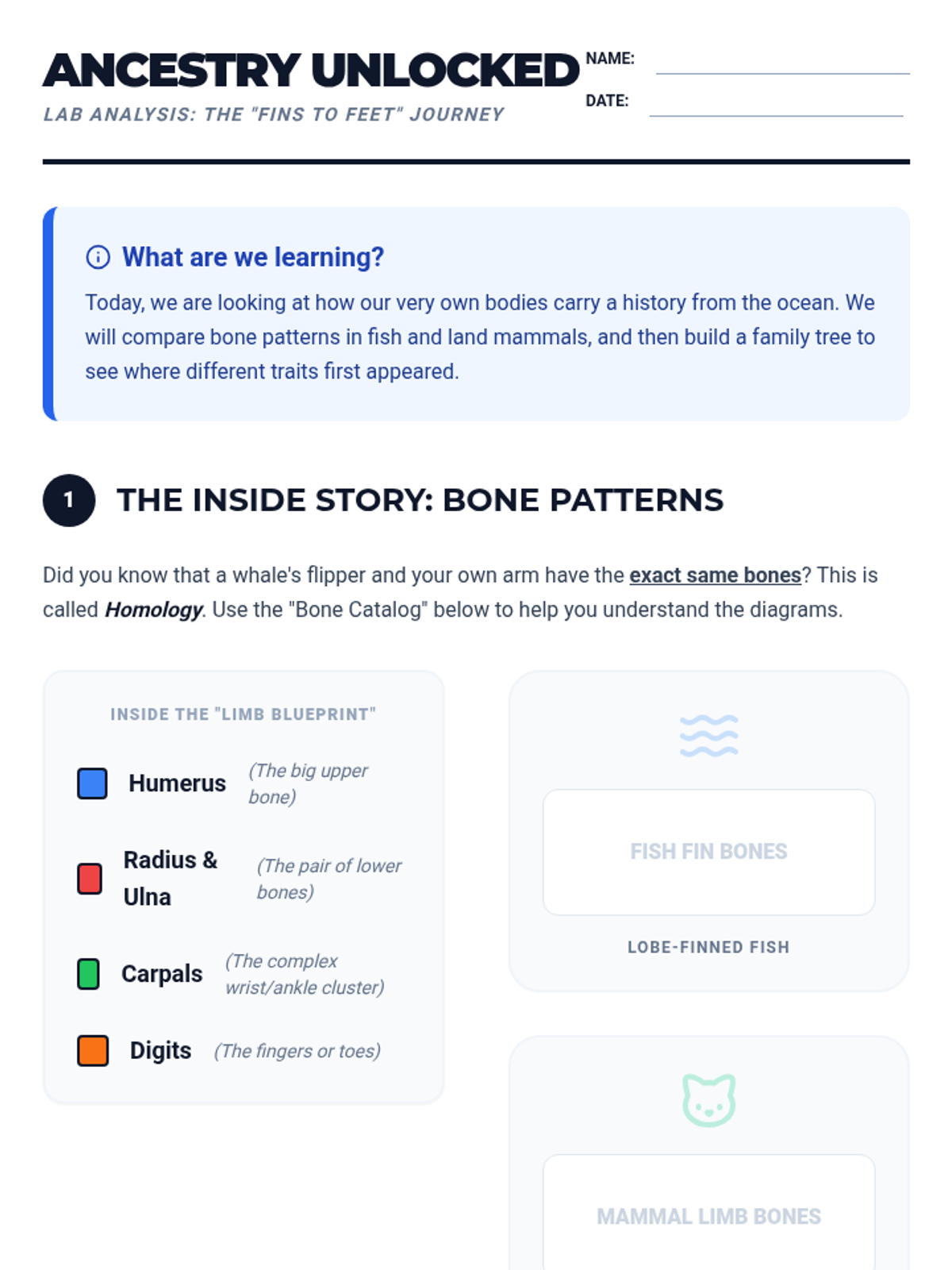
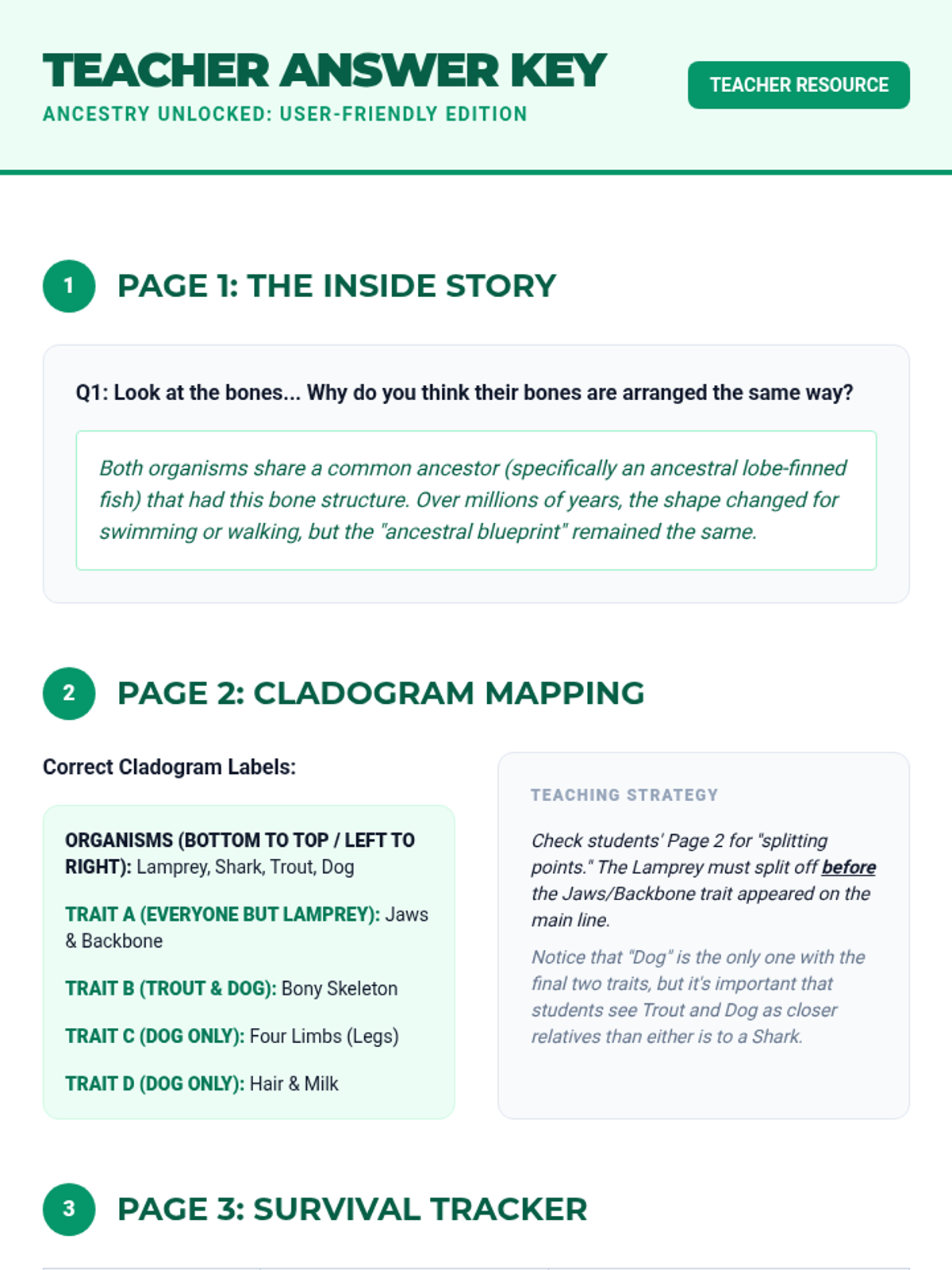
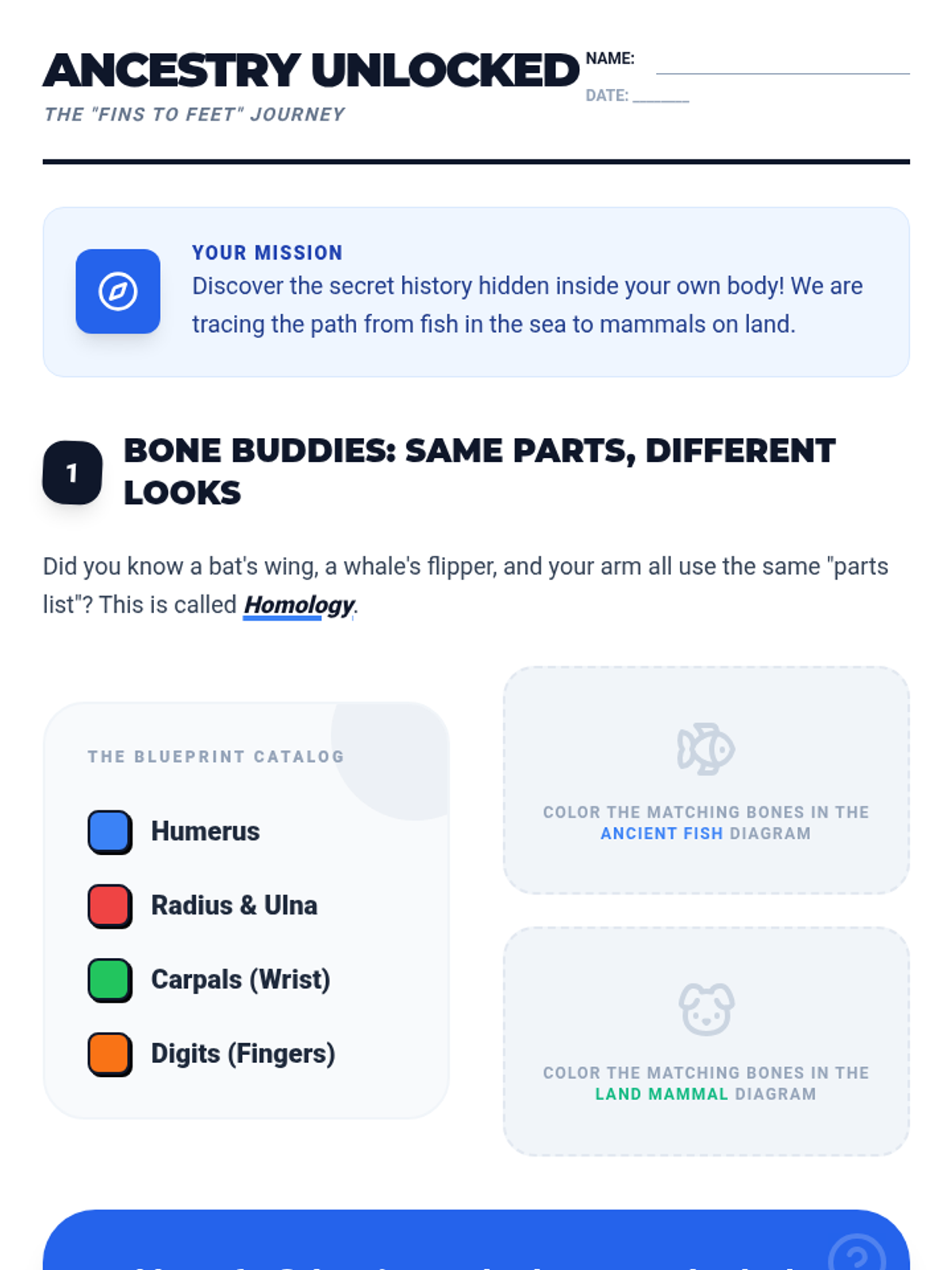
Students explore the shared ancestry of fish and mammals, analyzing homologous bone structures and building cladograms to visualize divergent evolution.
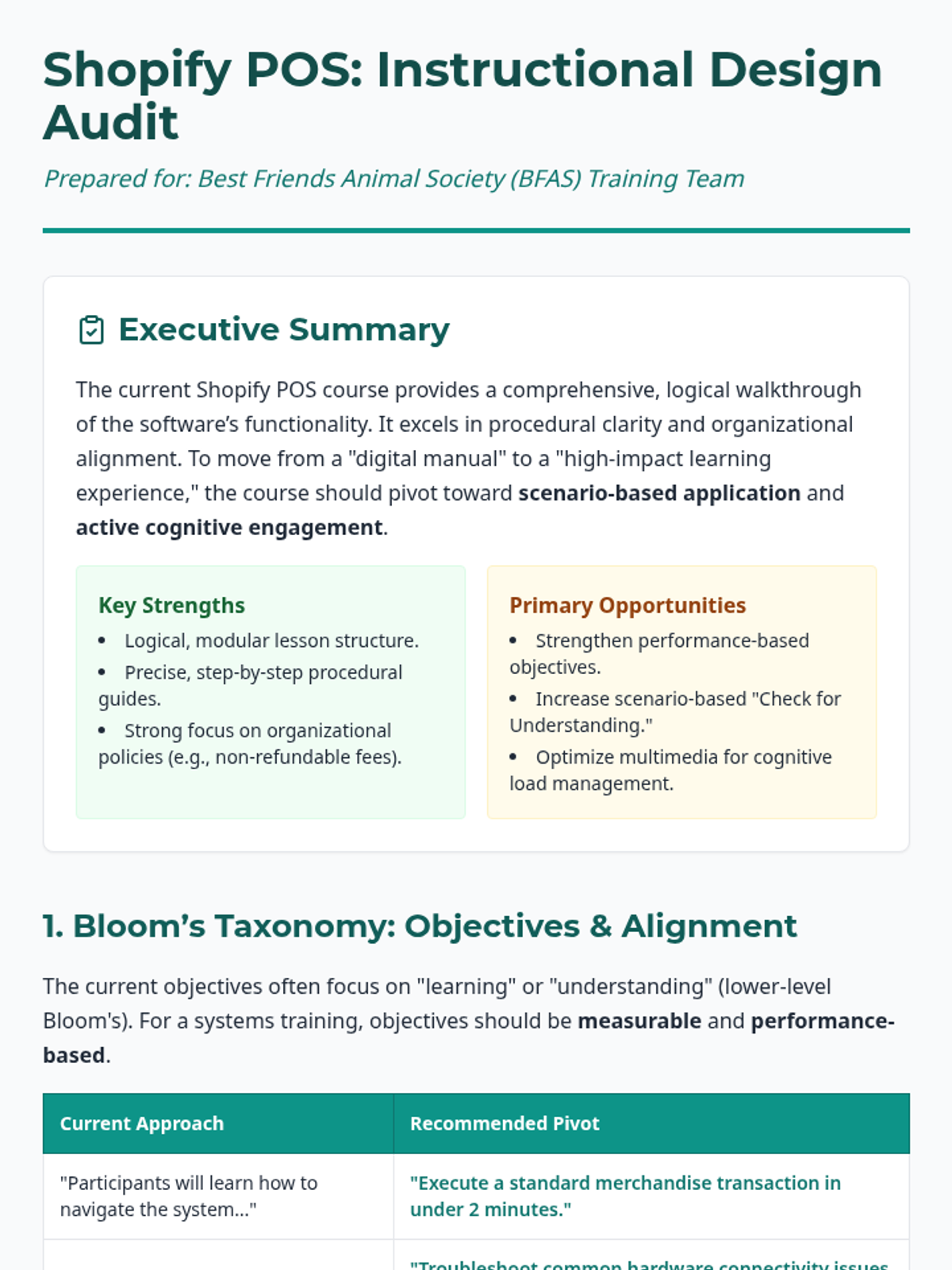
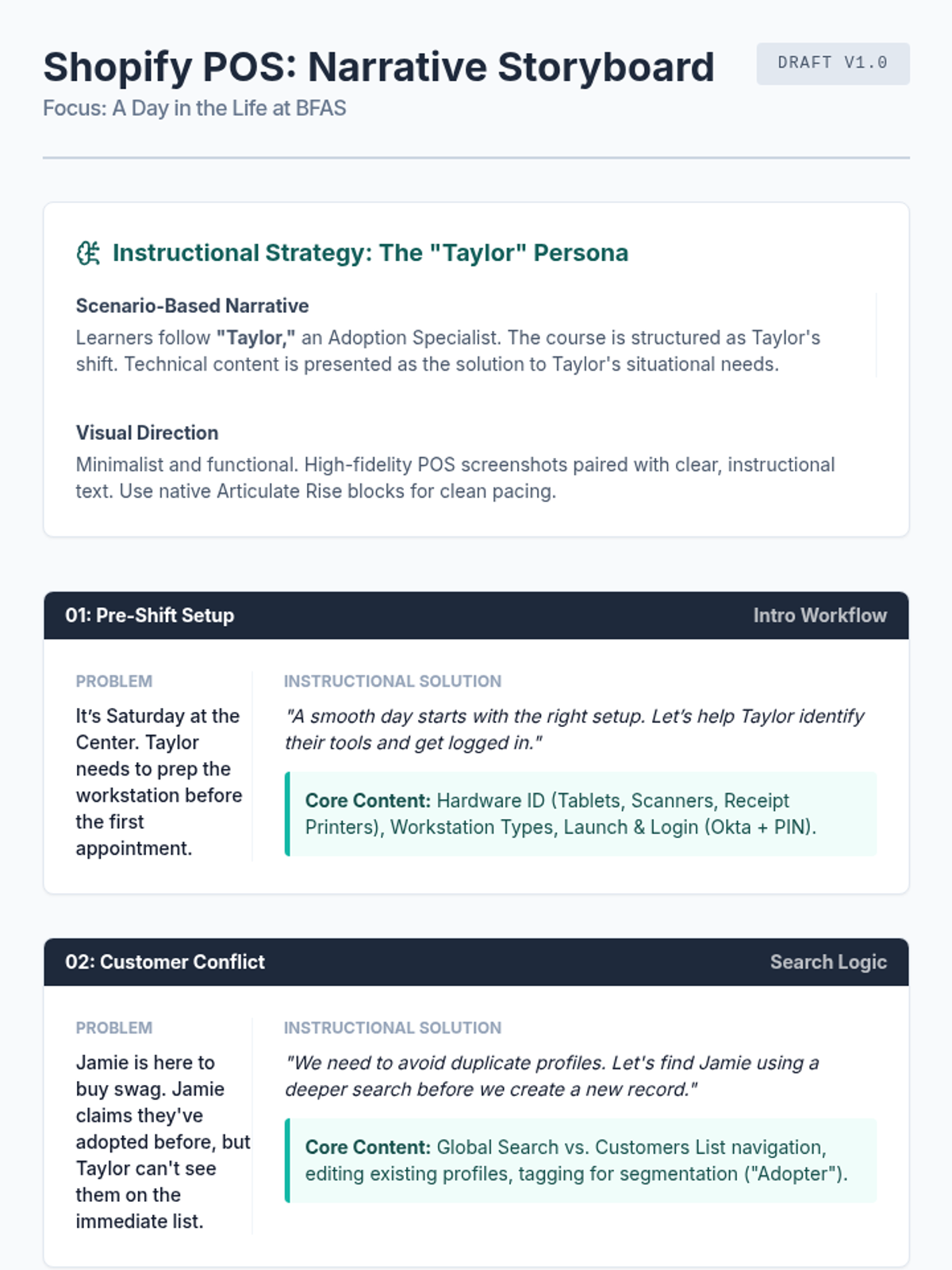
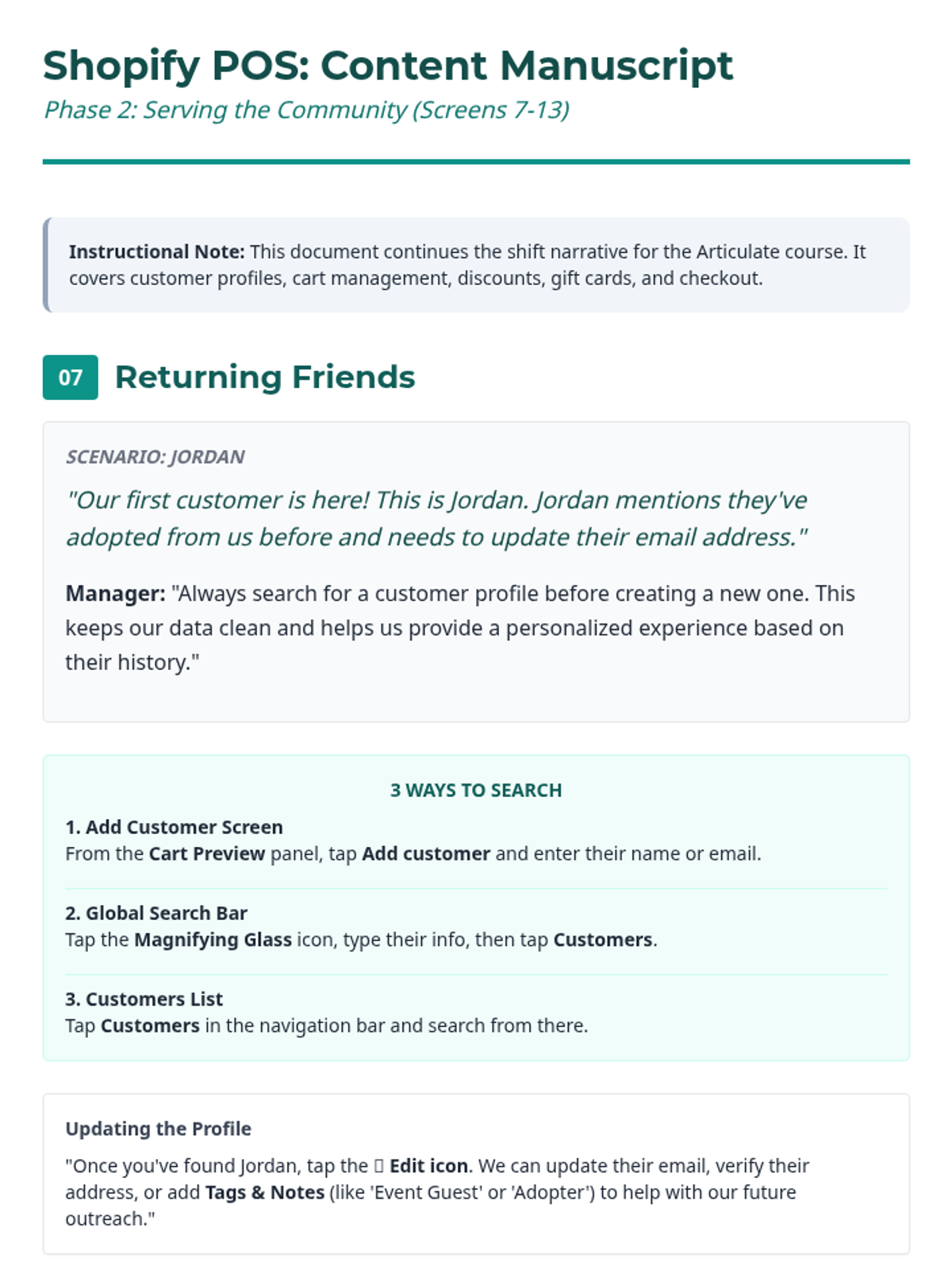
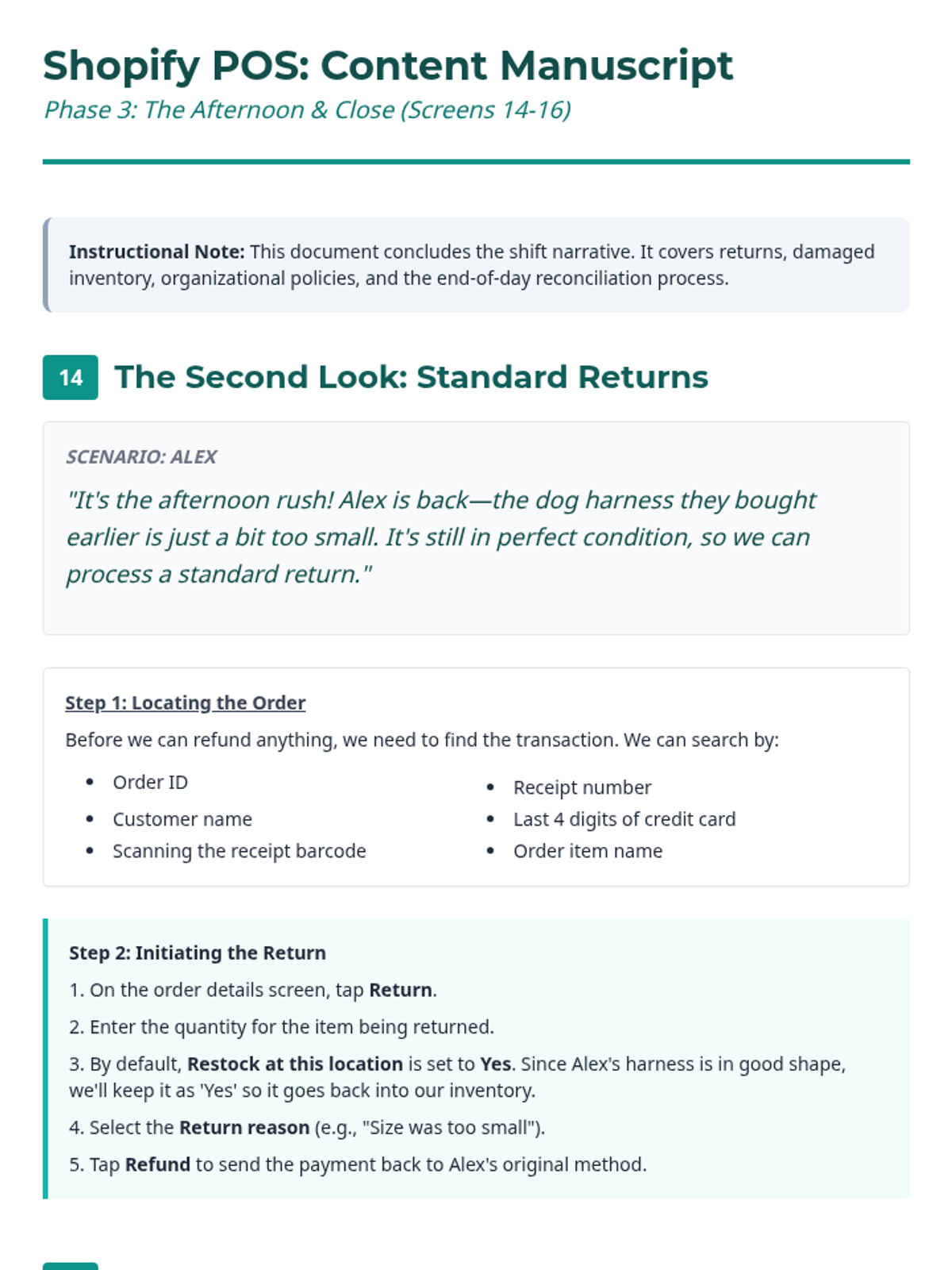
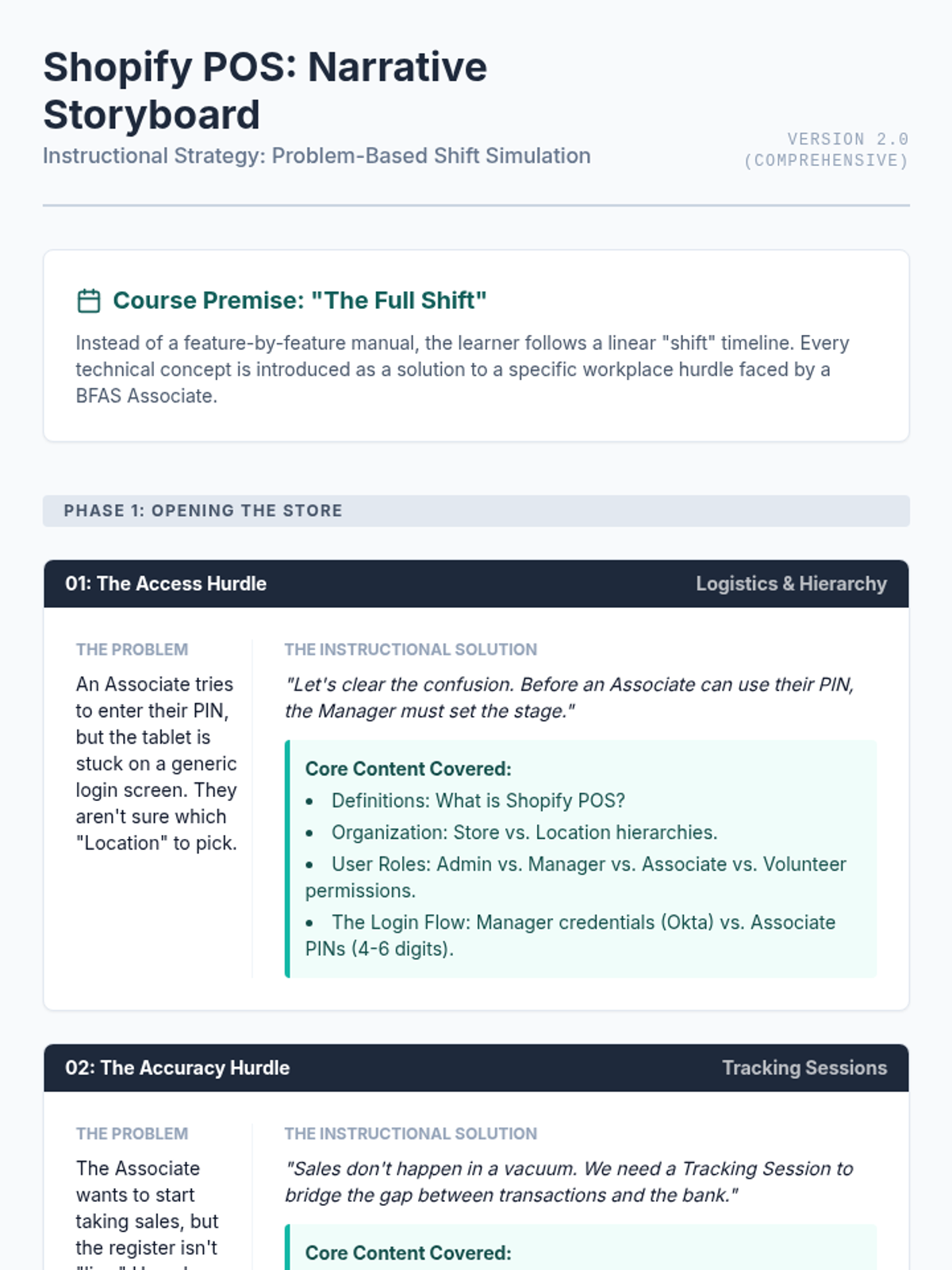
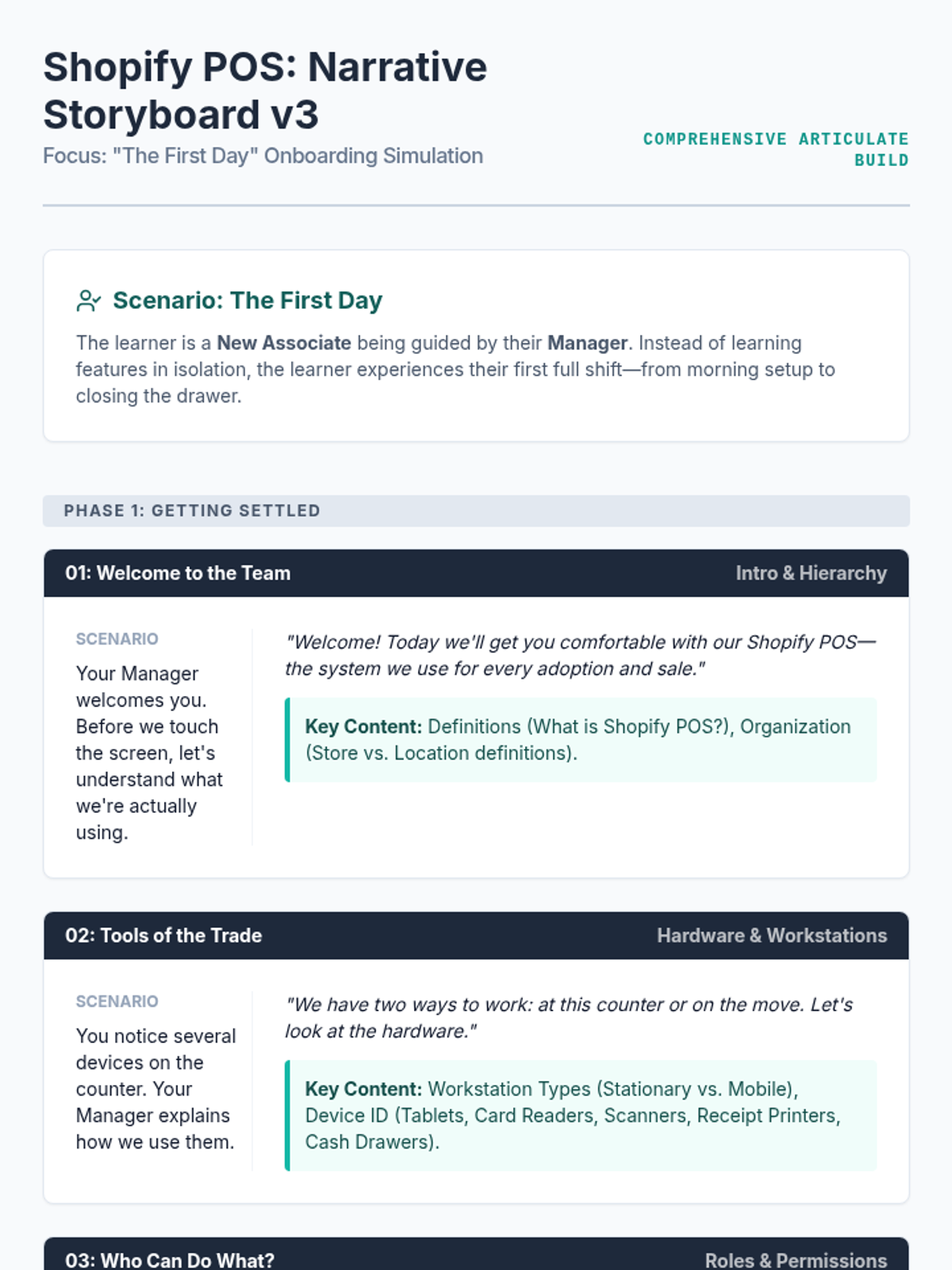
A redesigned training experience for Shopify POS focused on scenario-based learning and performance-centric instruction.
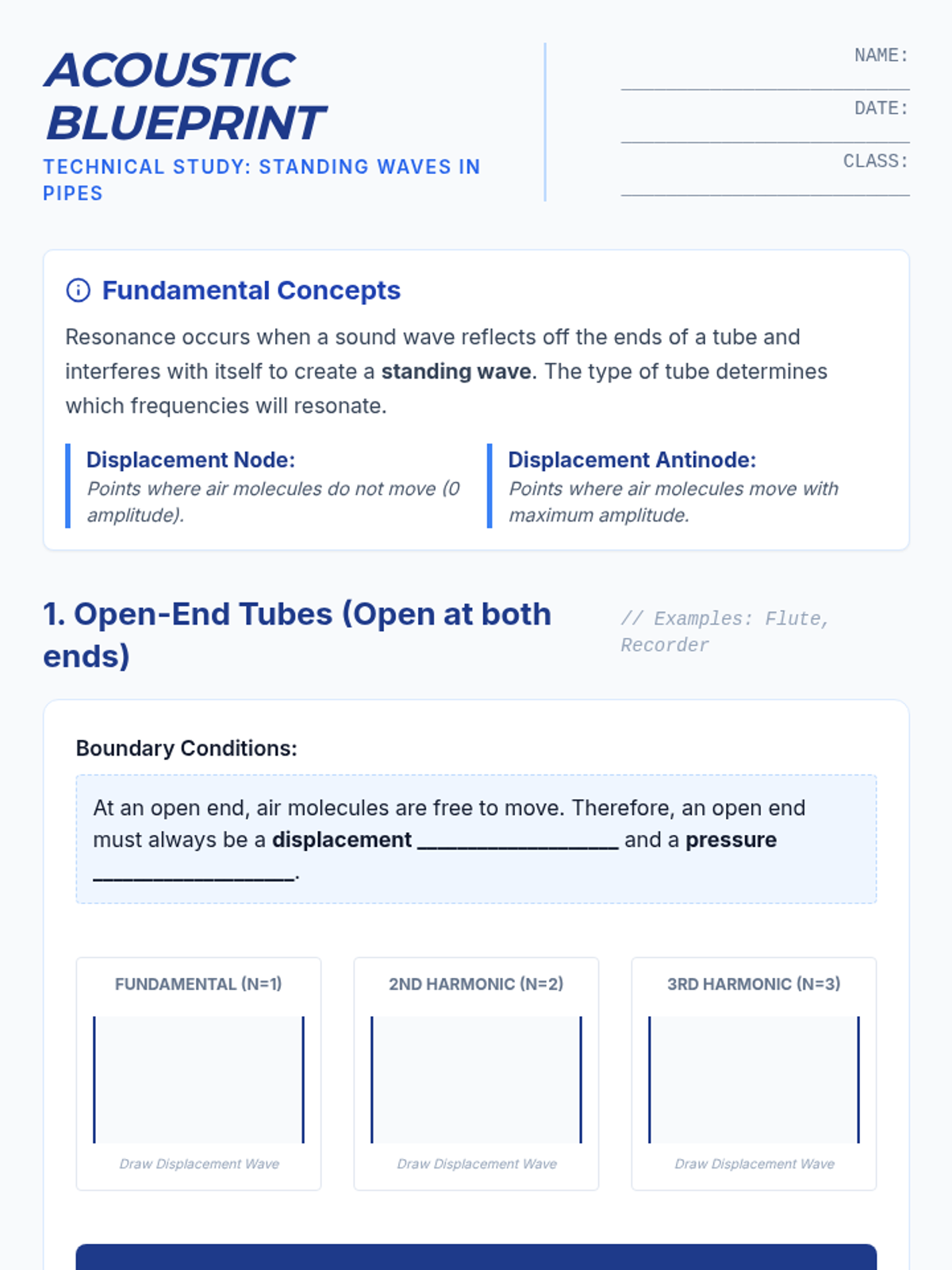
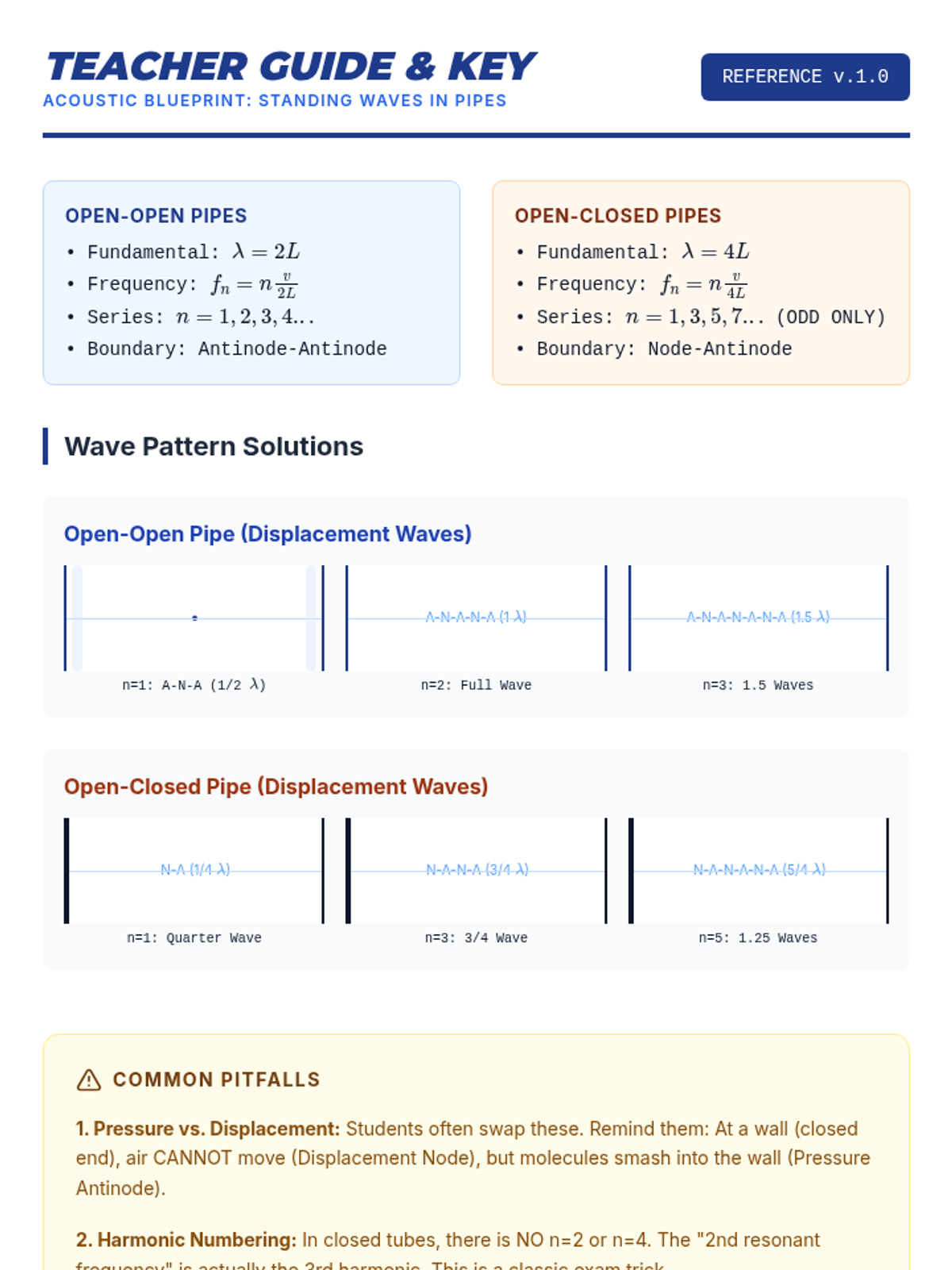
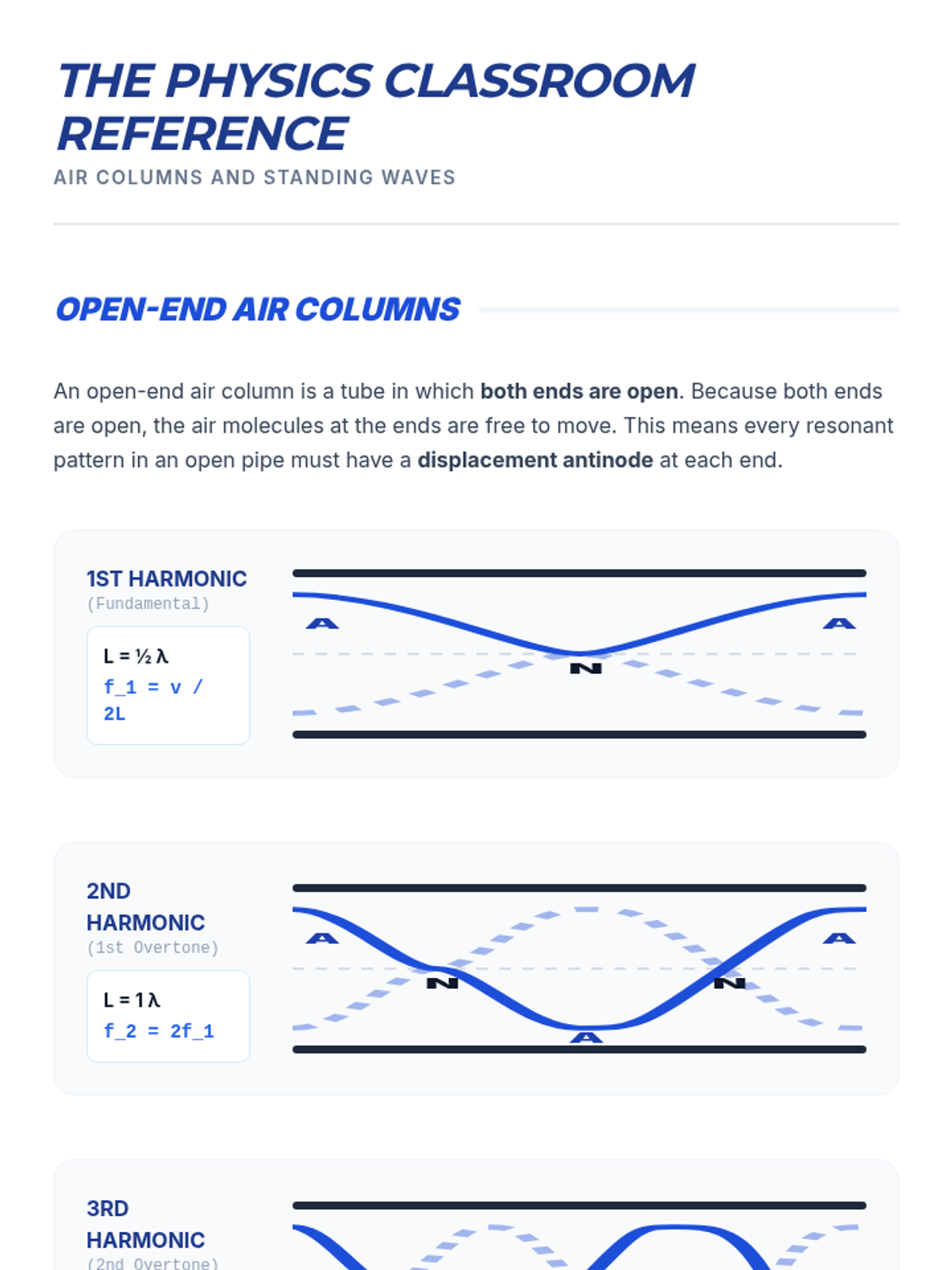
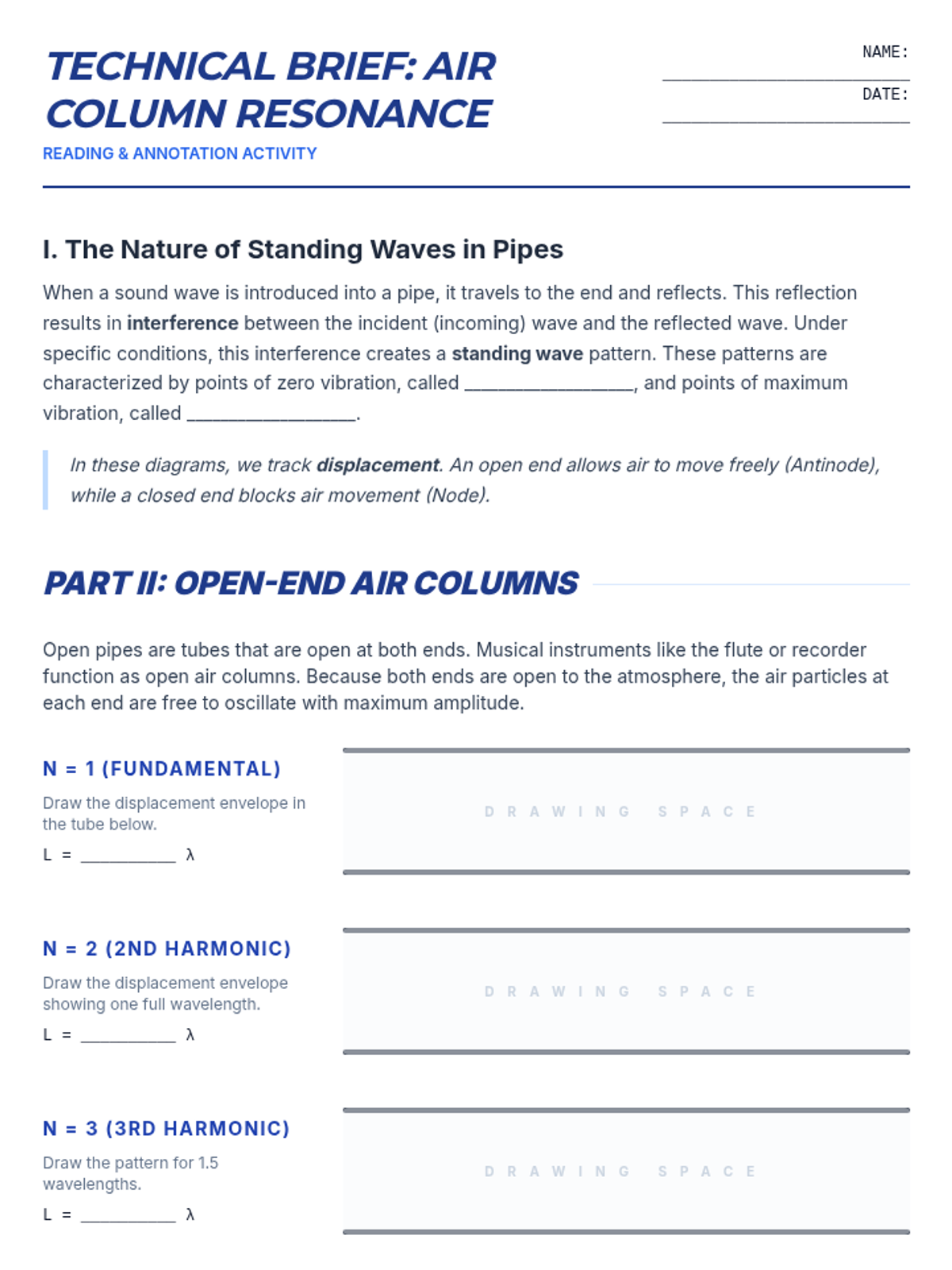
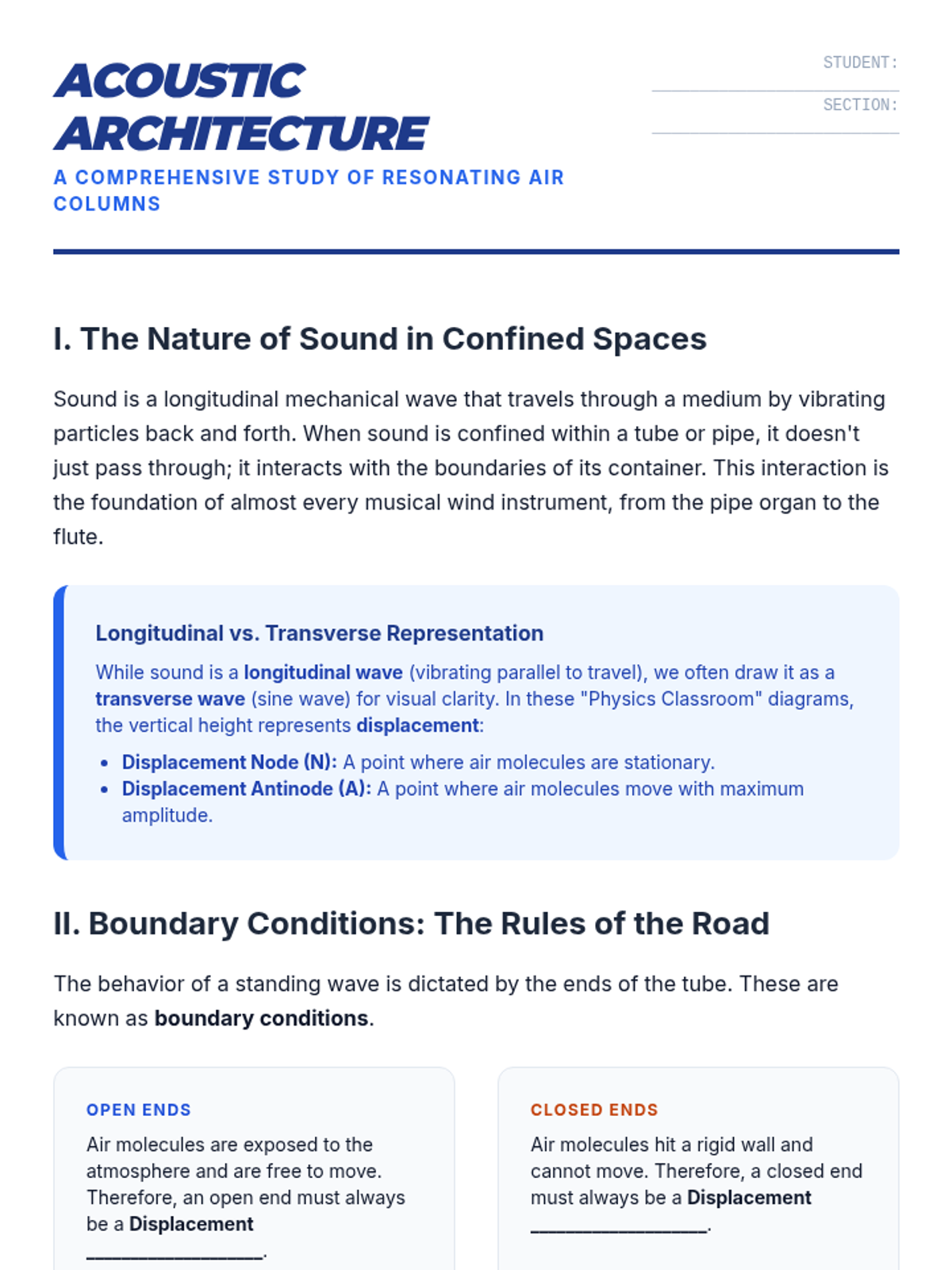
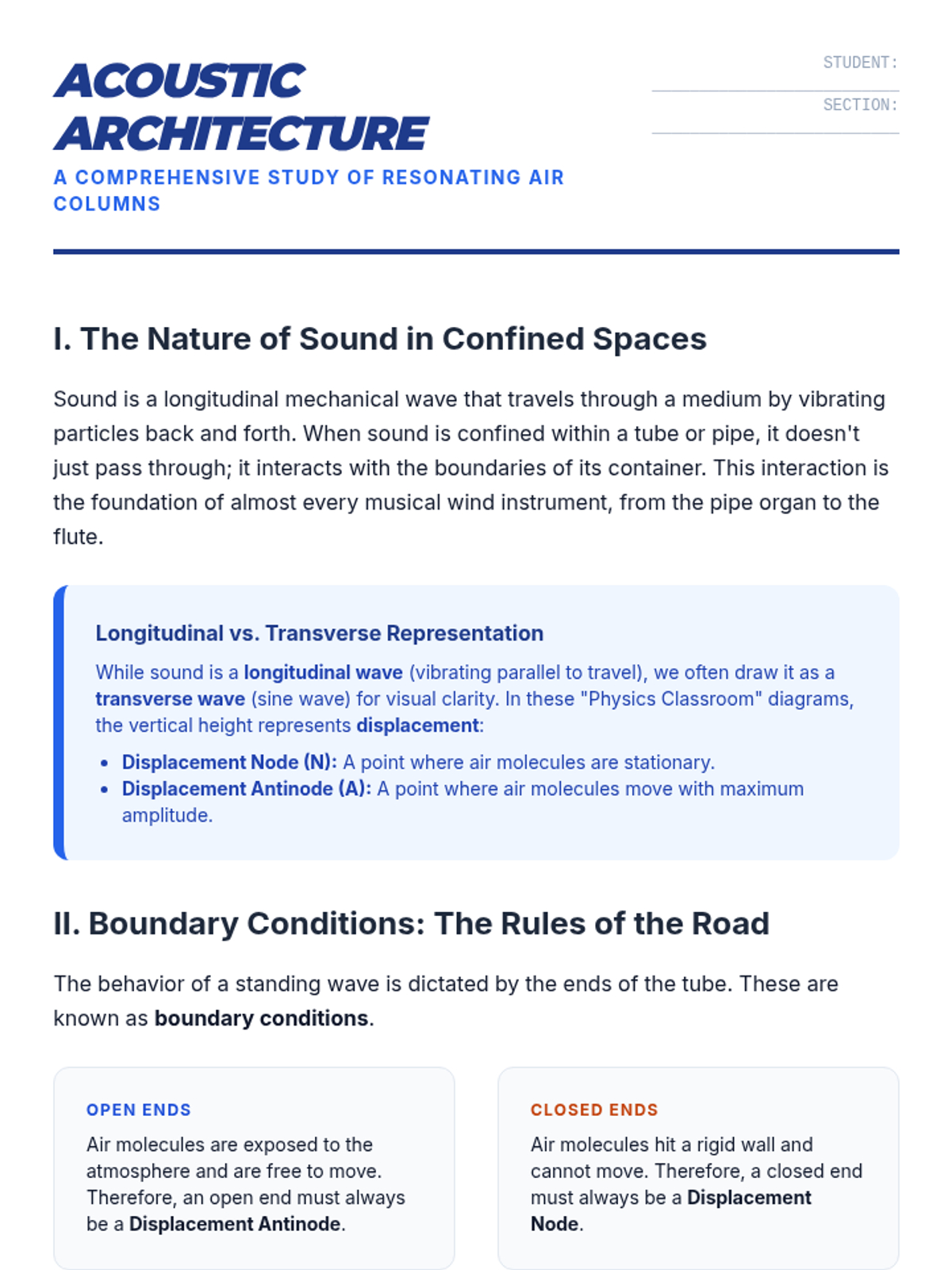
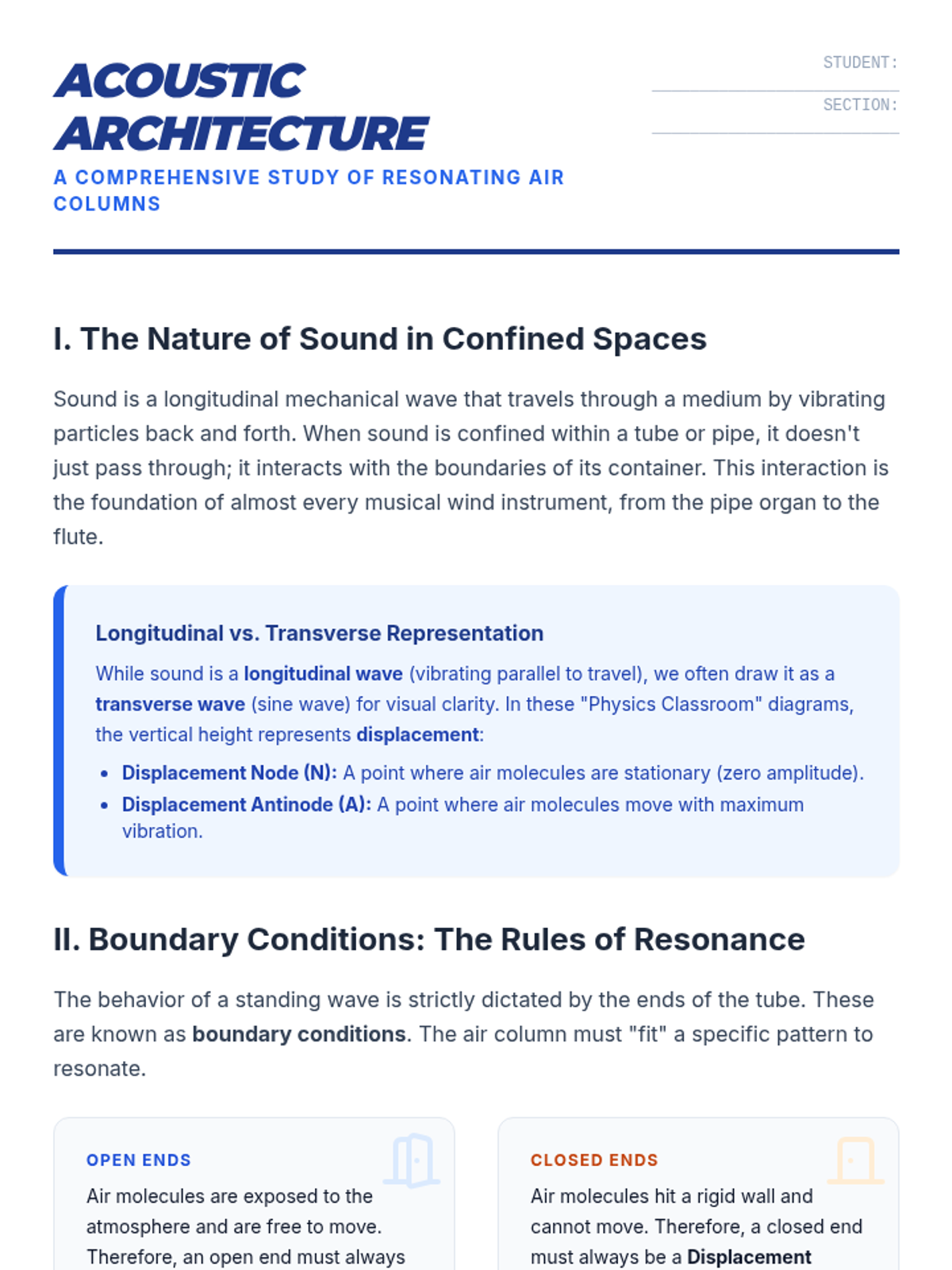
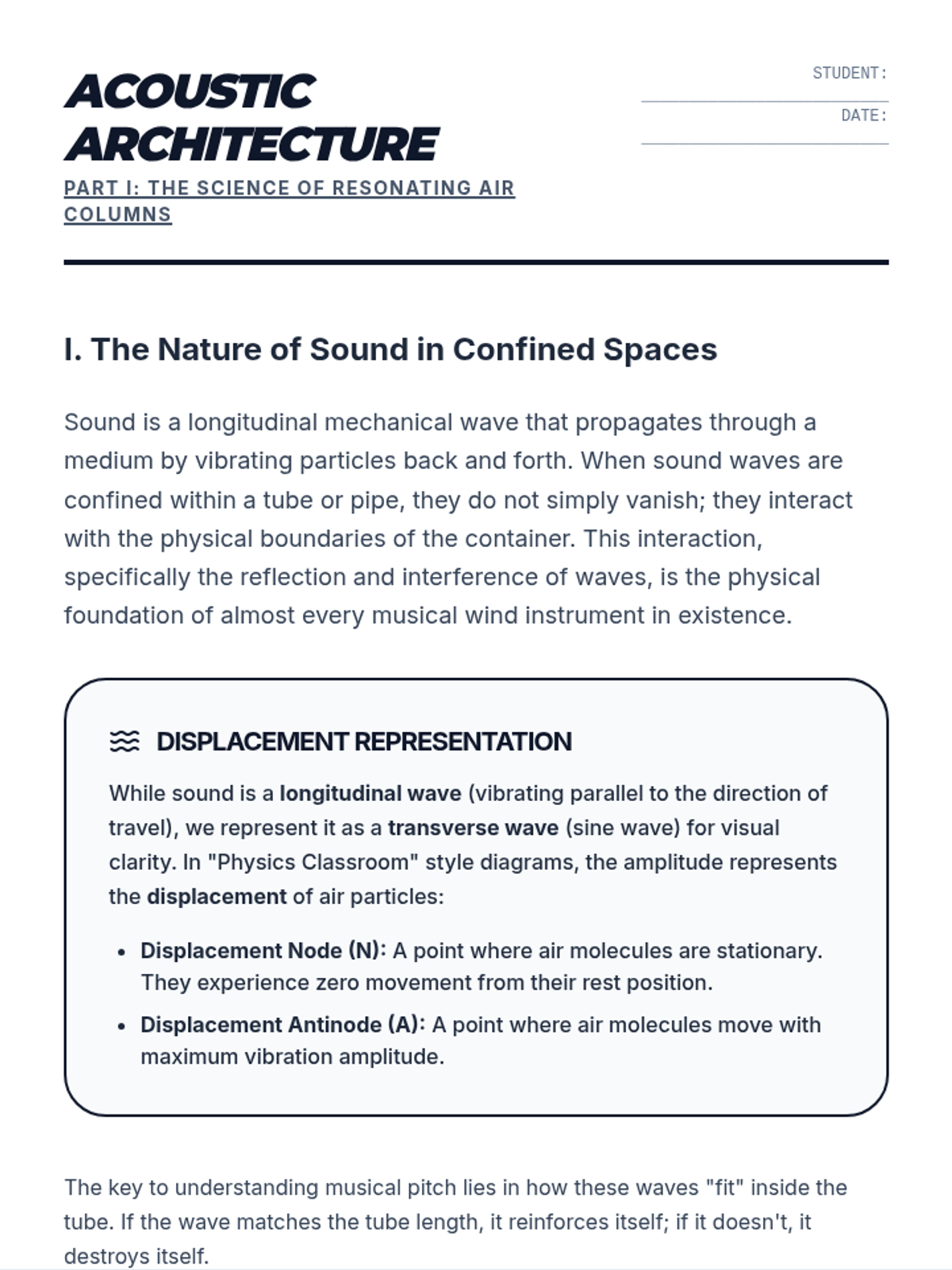
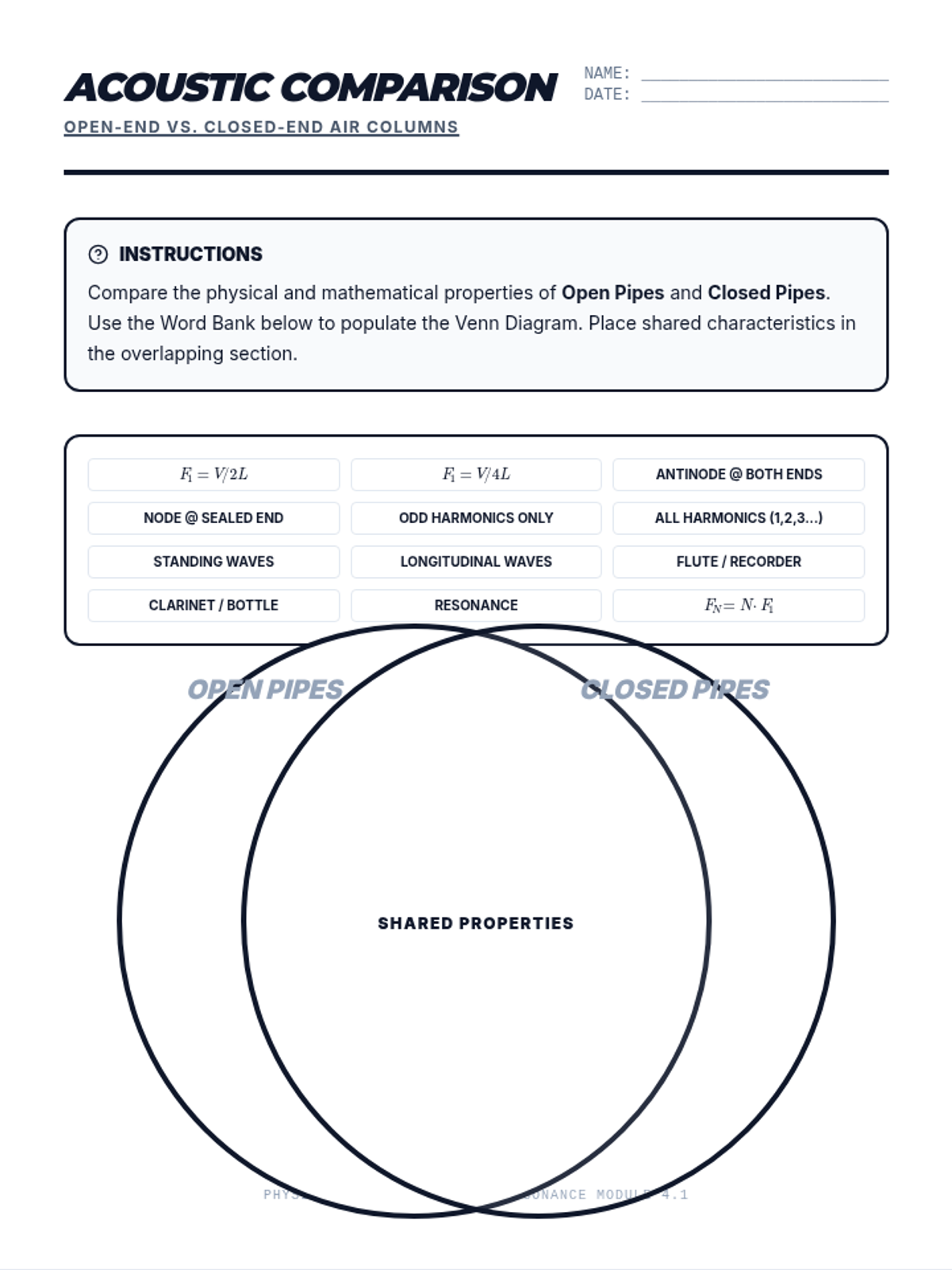
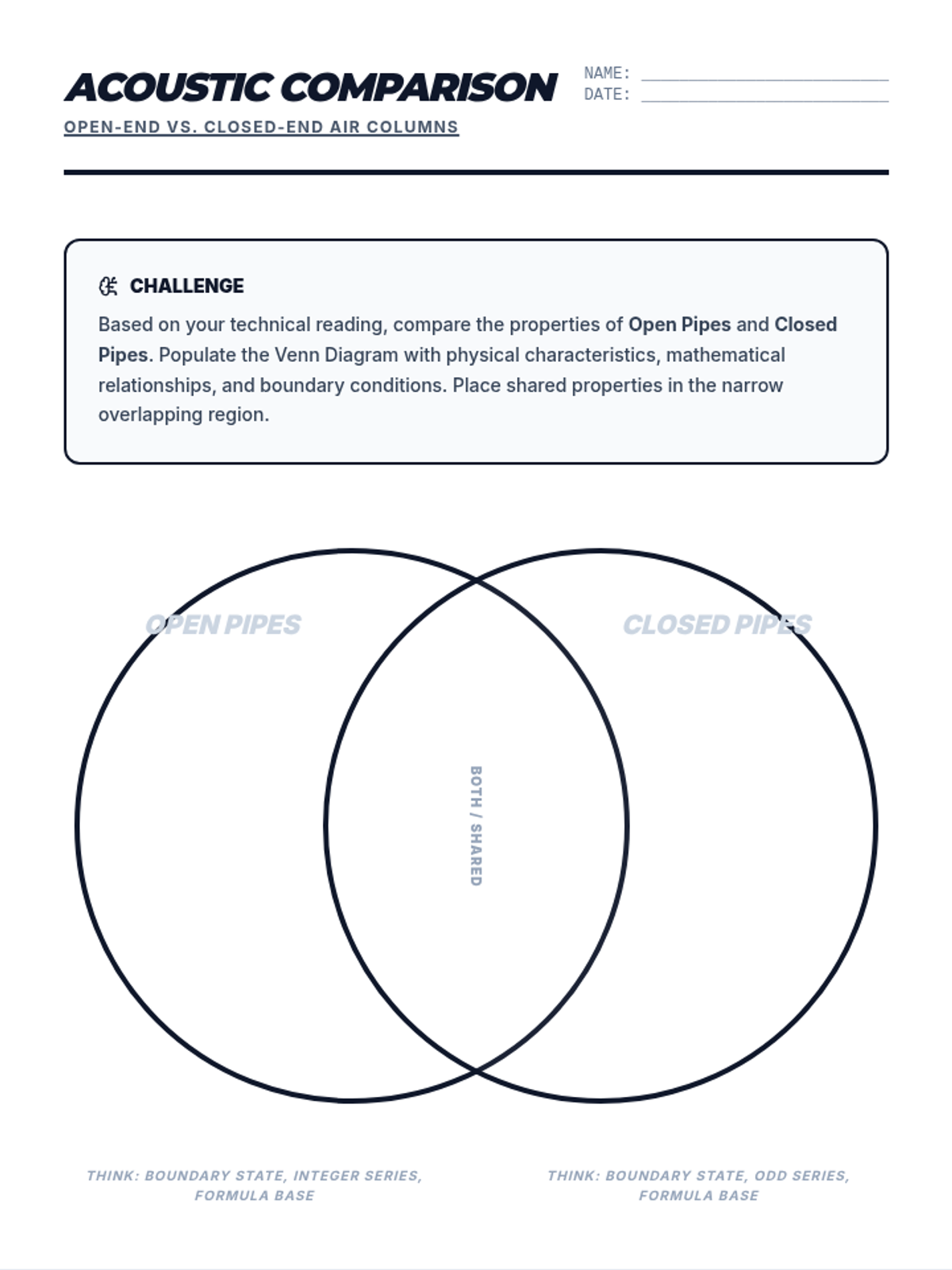
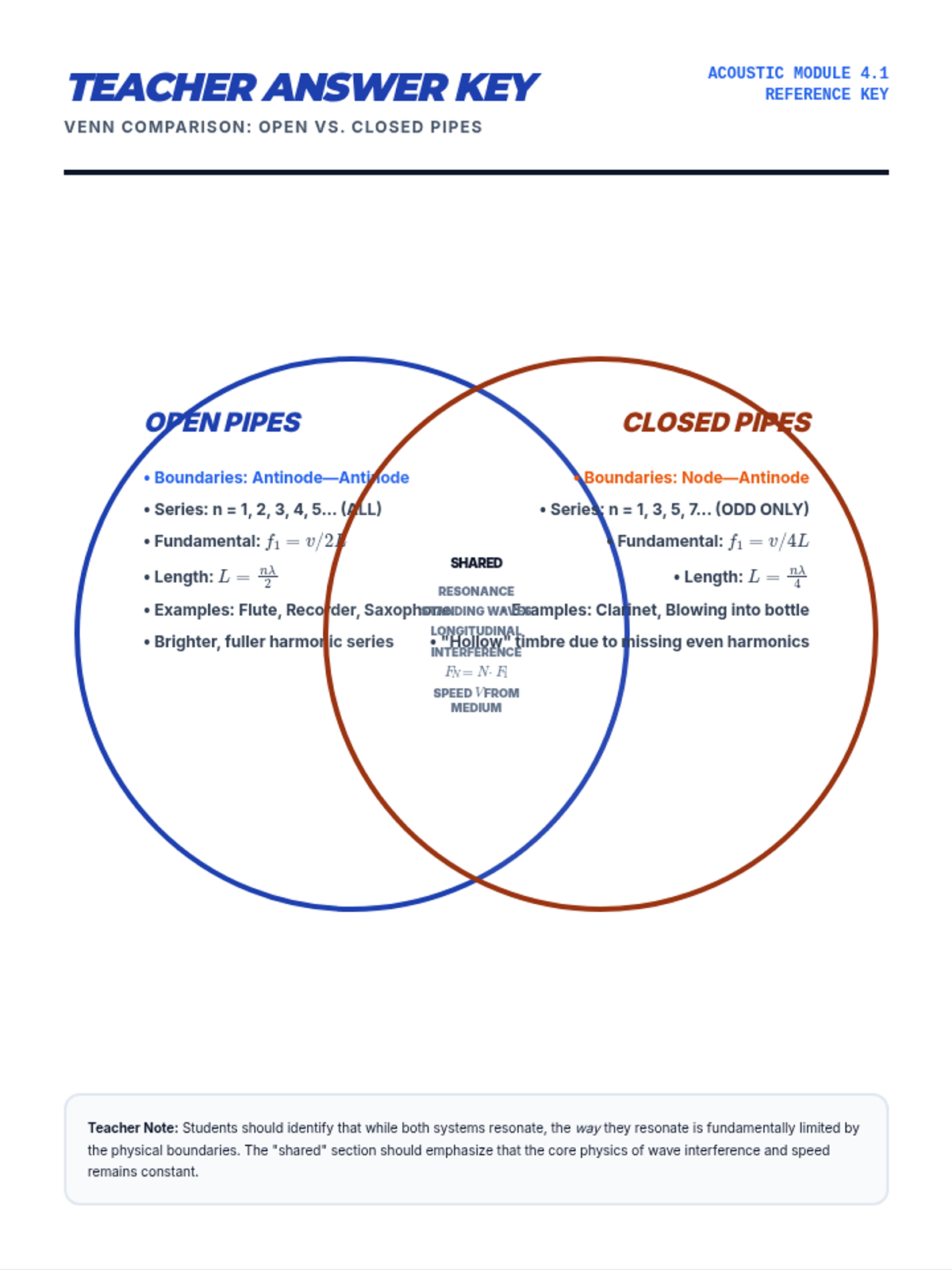
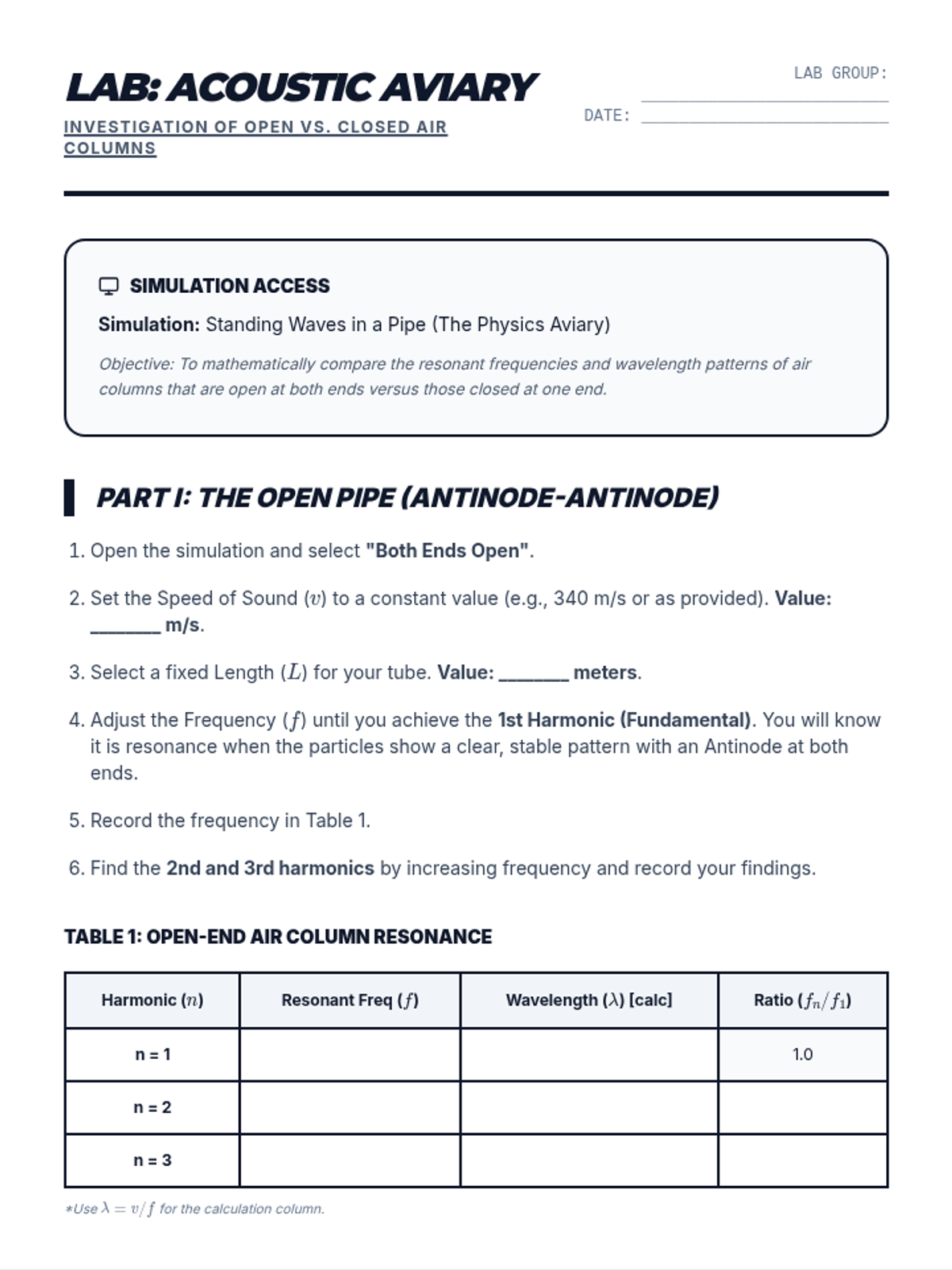
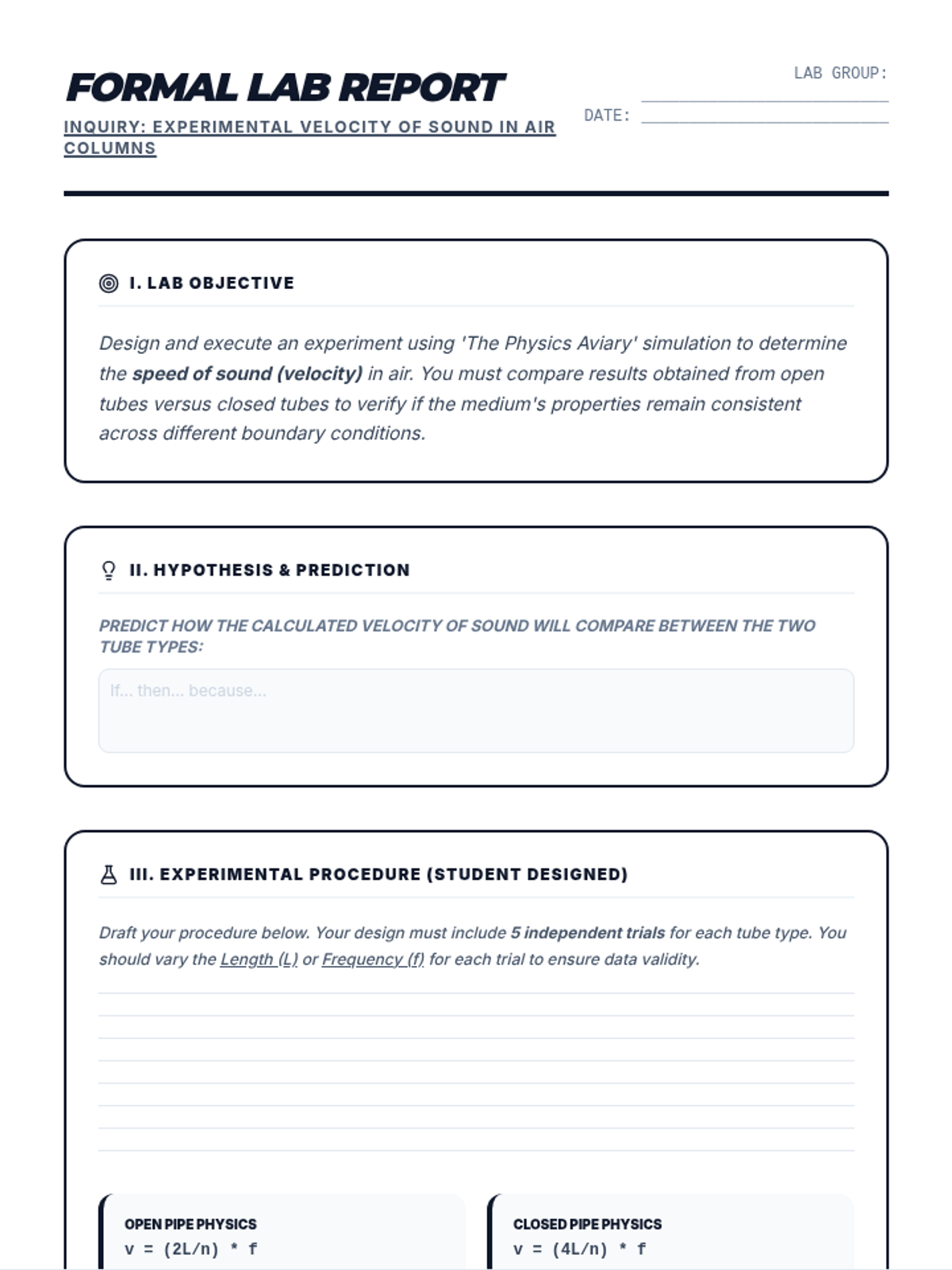
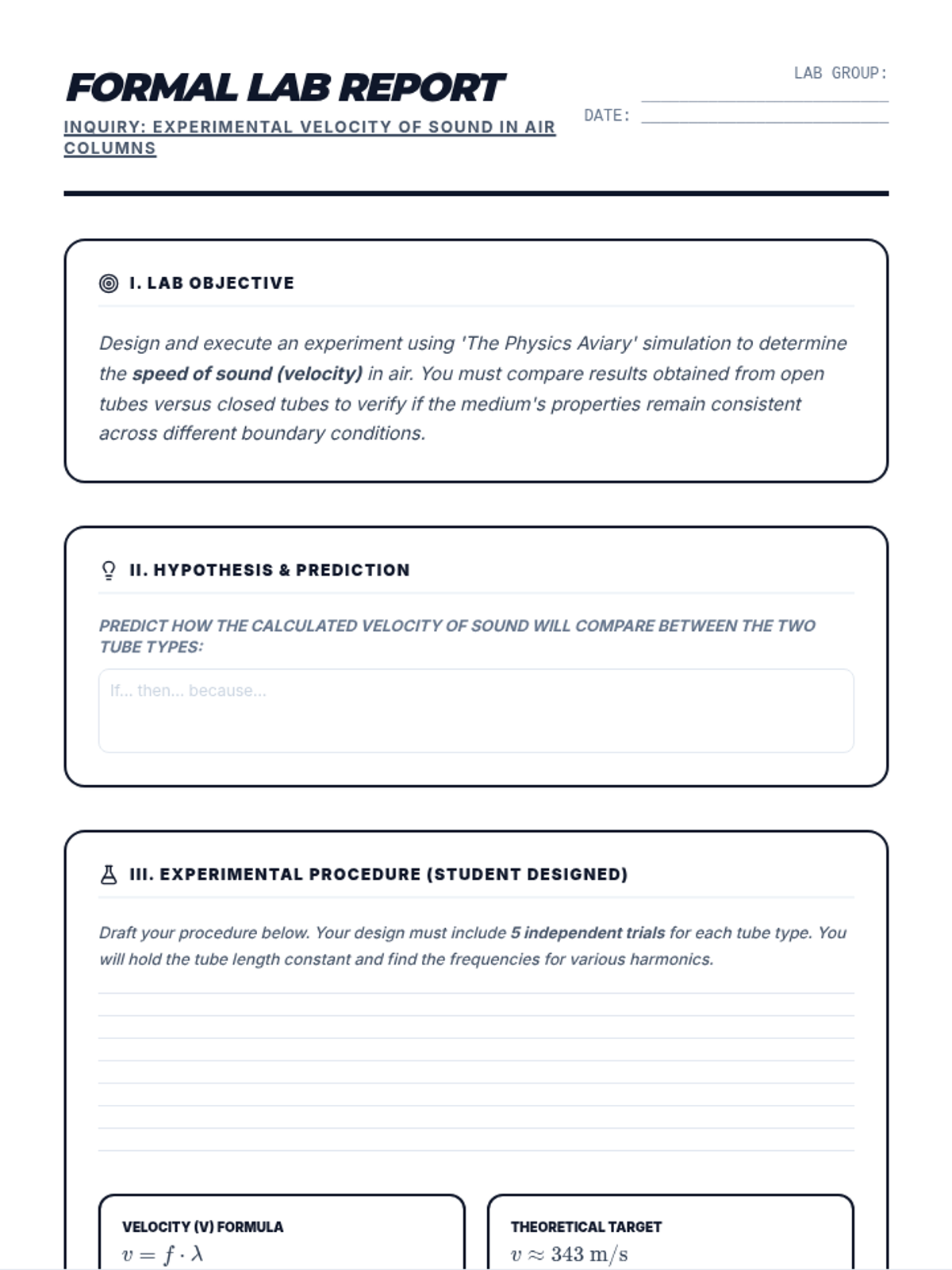
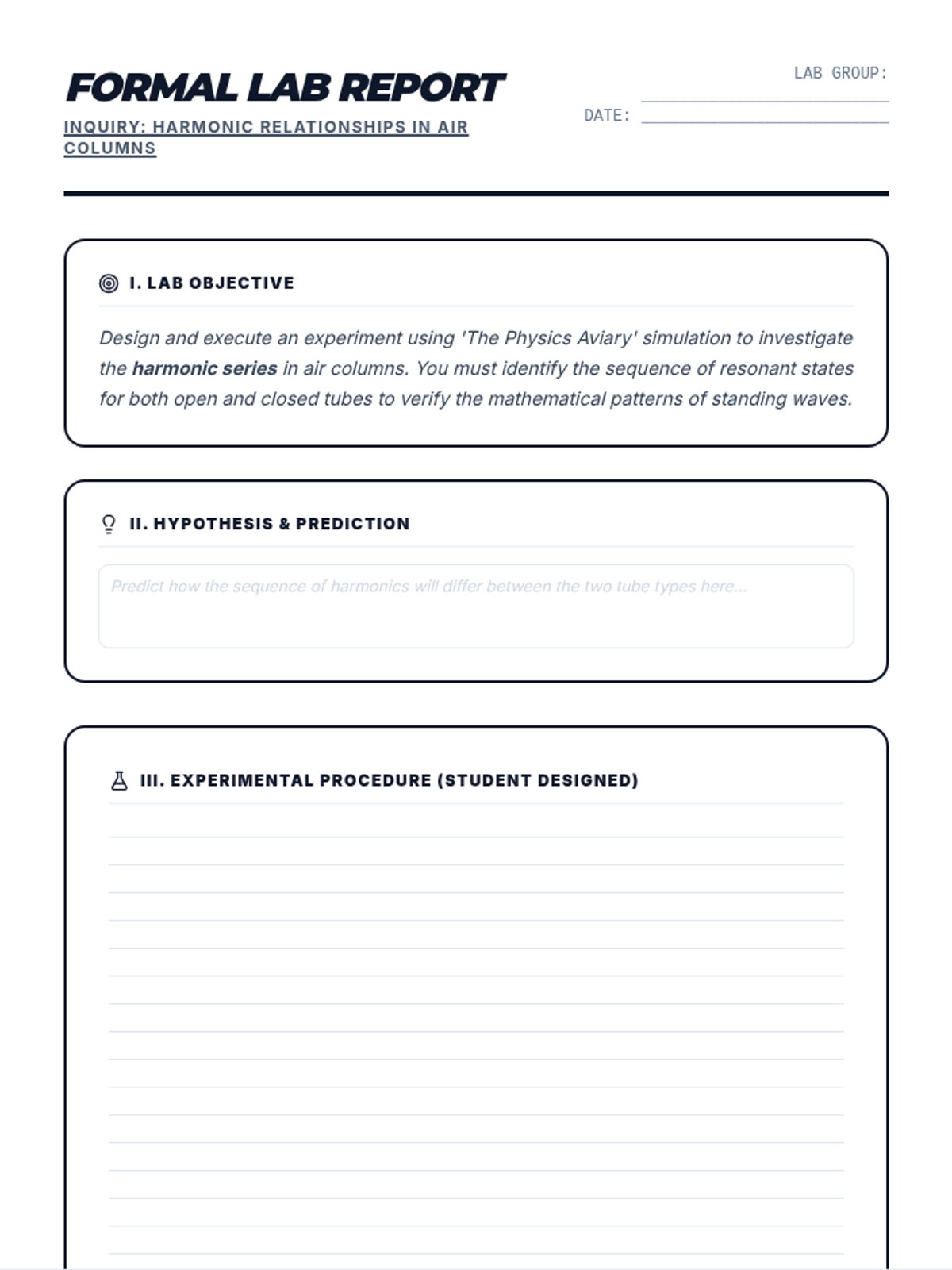
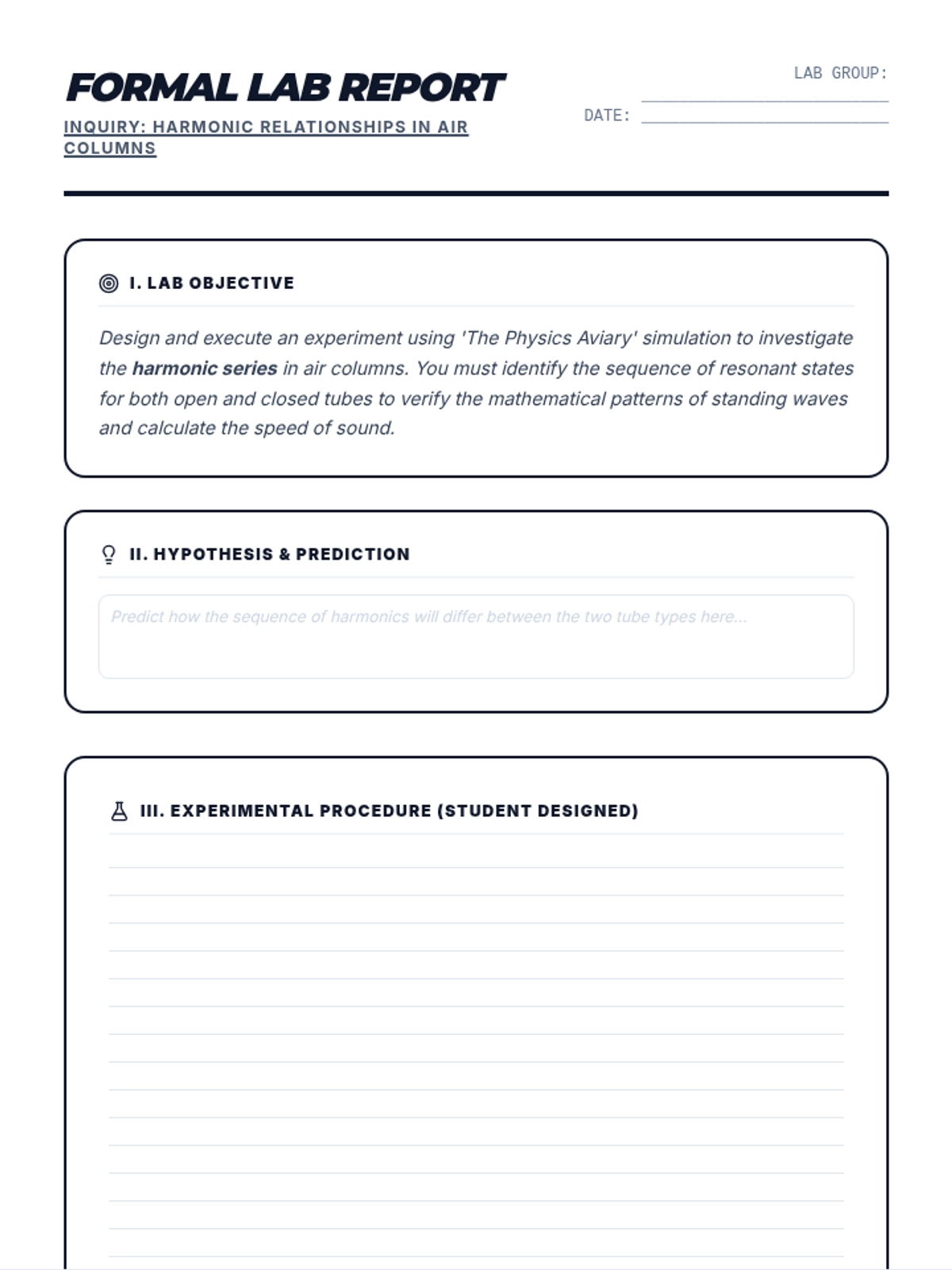
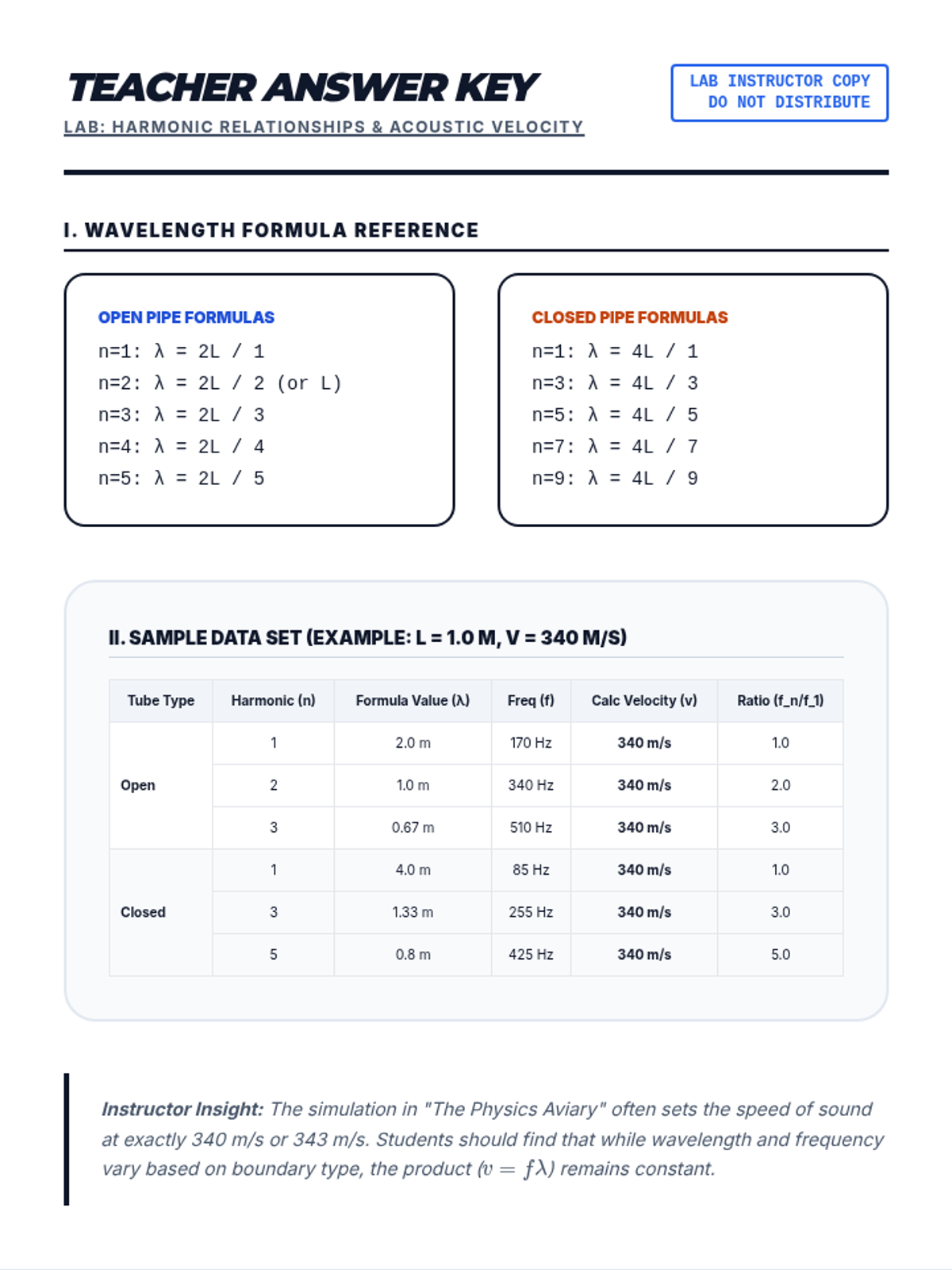
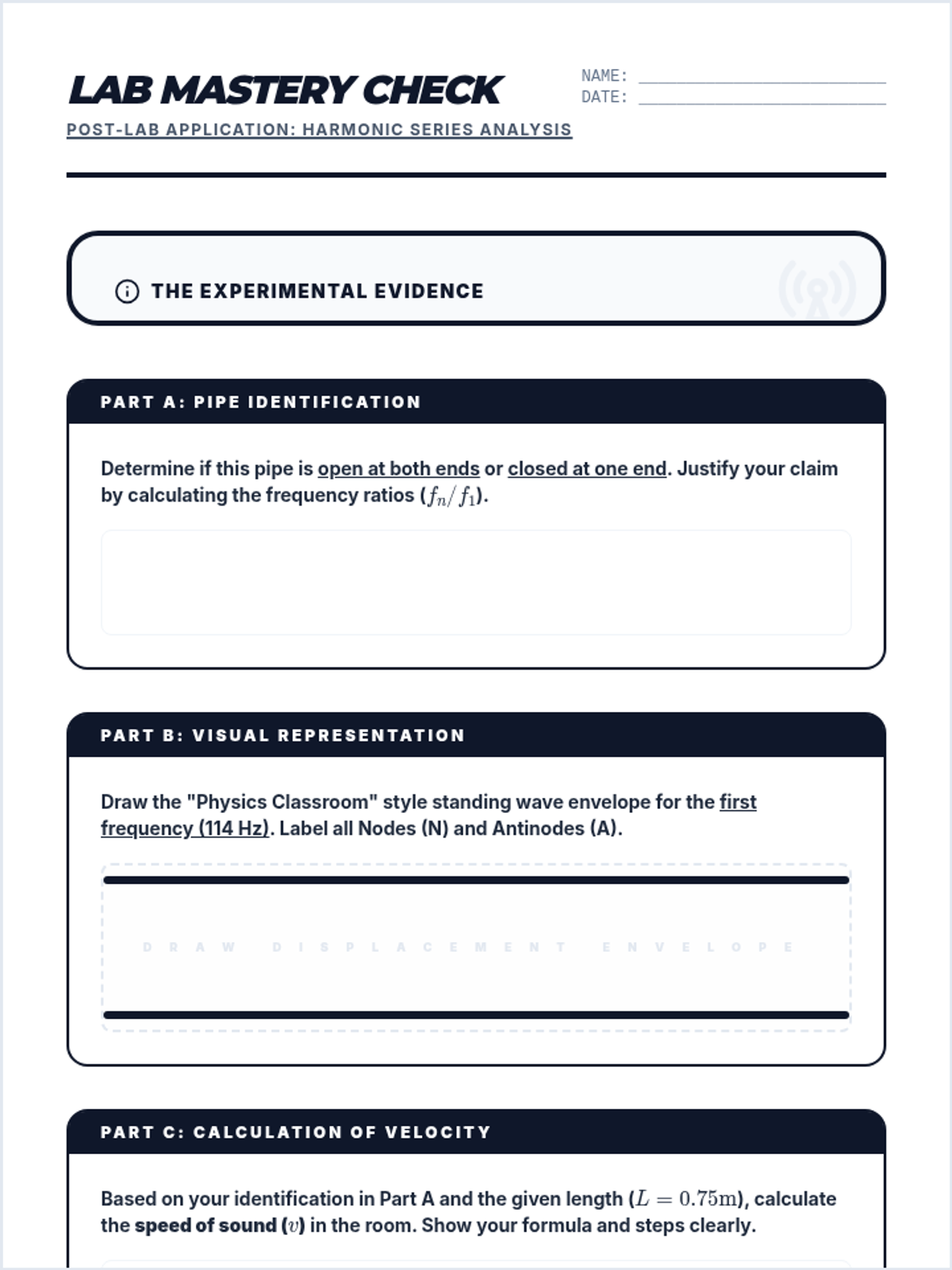
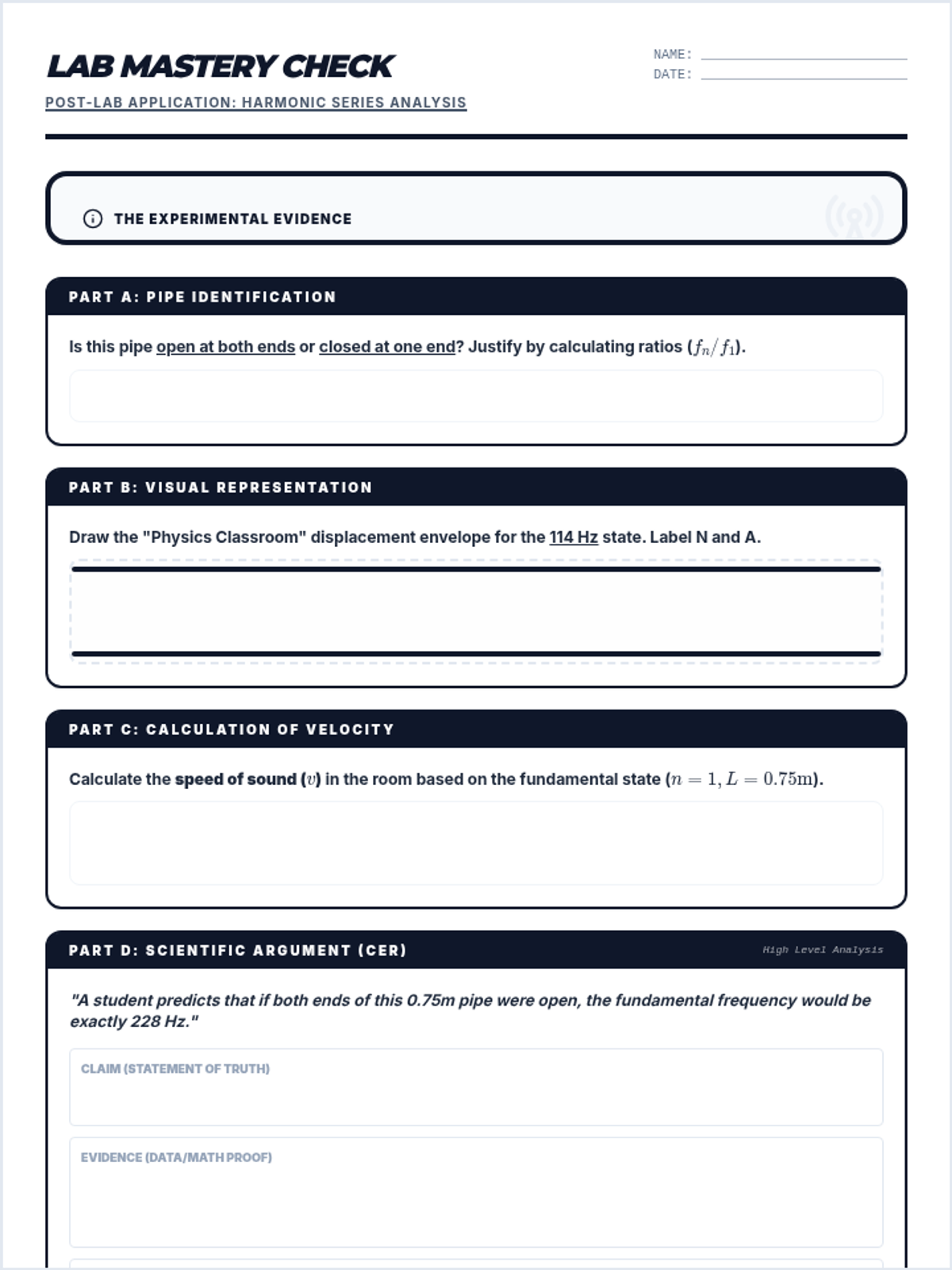
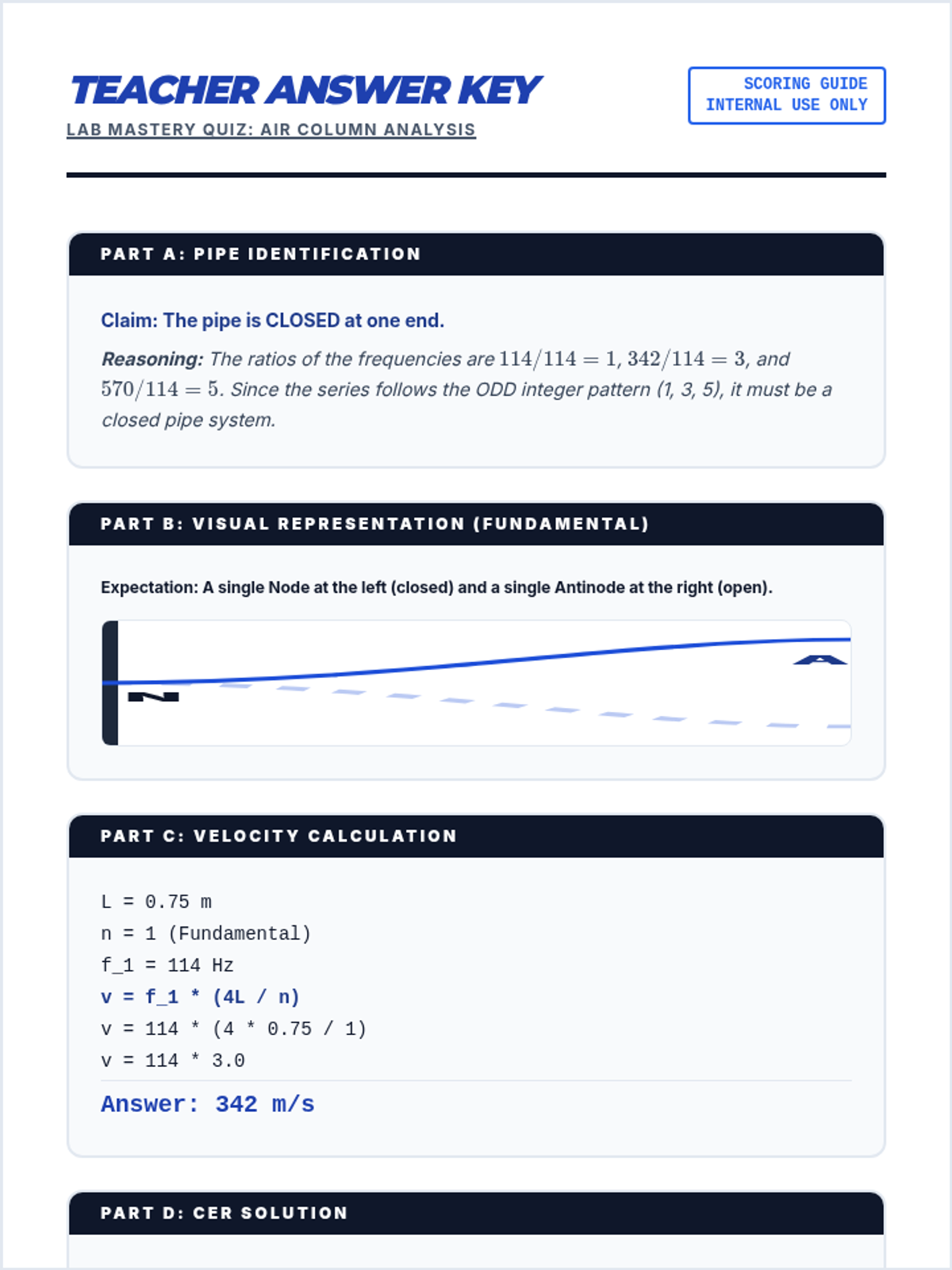
A comprehensive lesson exploring the physics of sound resonance in open and closed pipes, focusing on harmonics, wave patterns, and mathematical relationships.
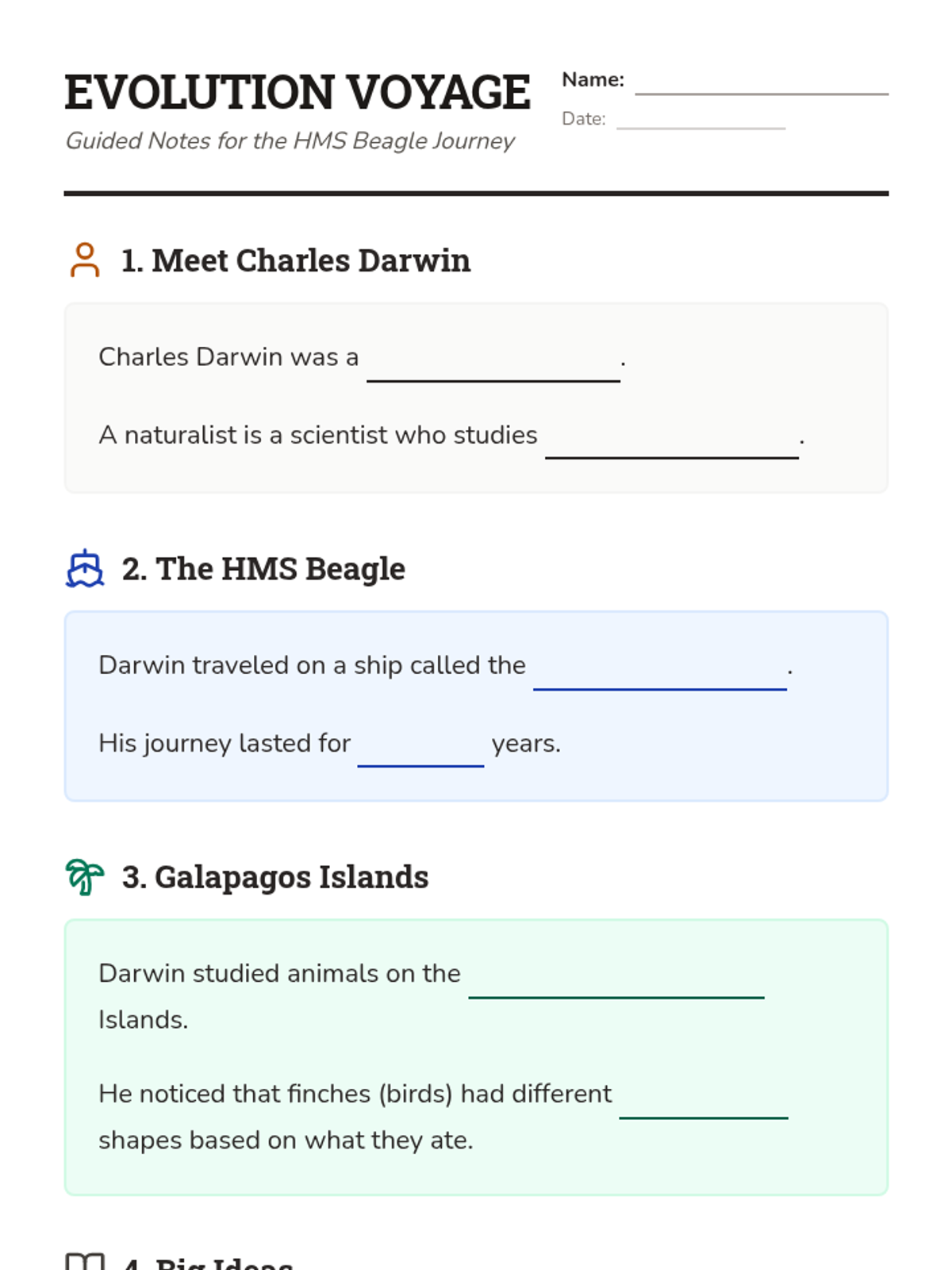
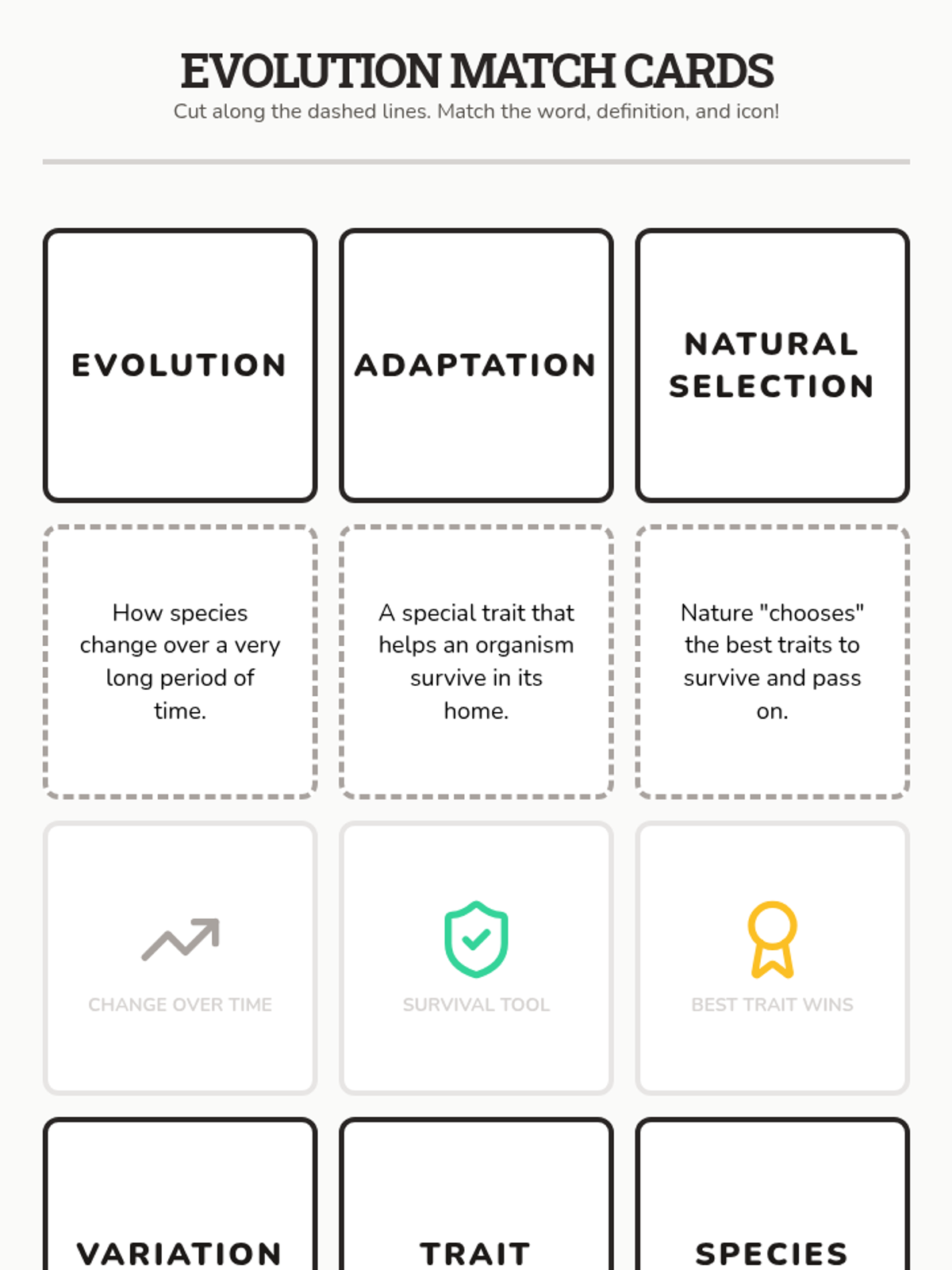
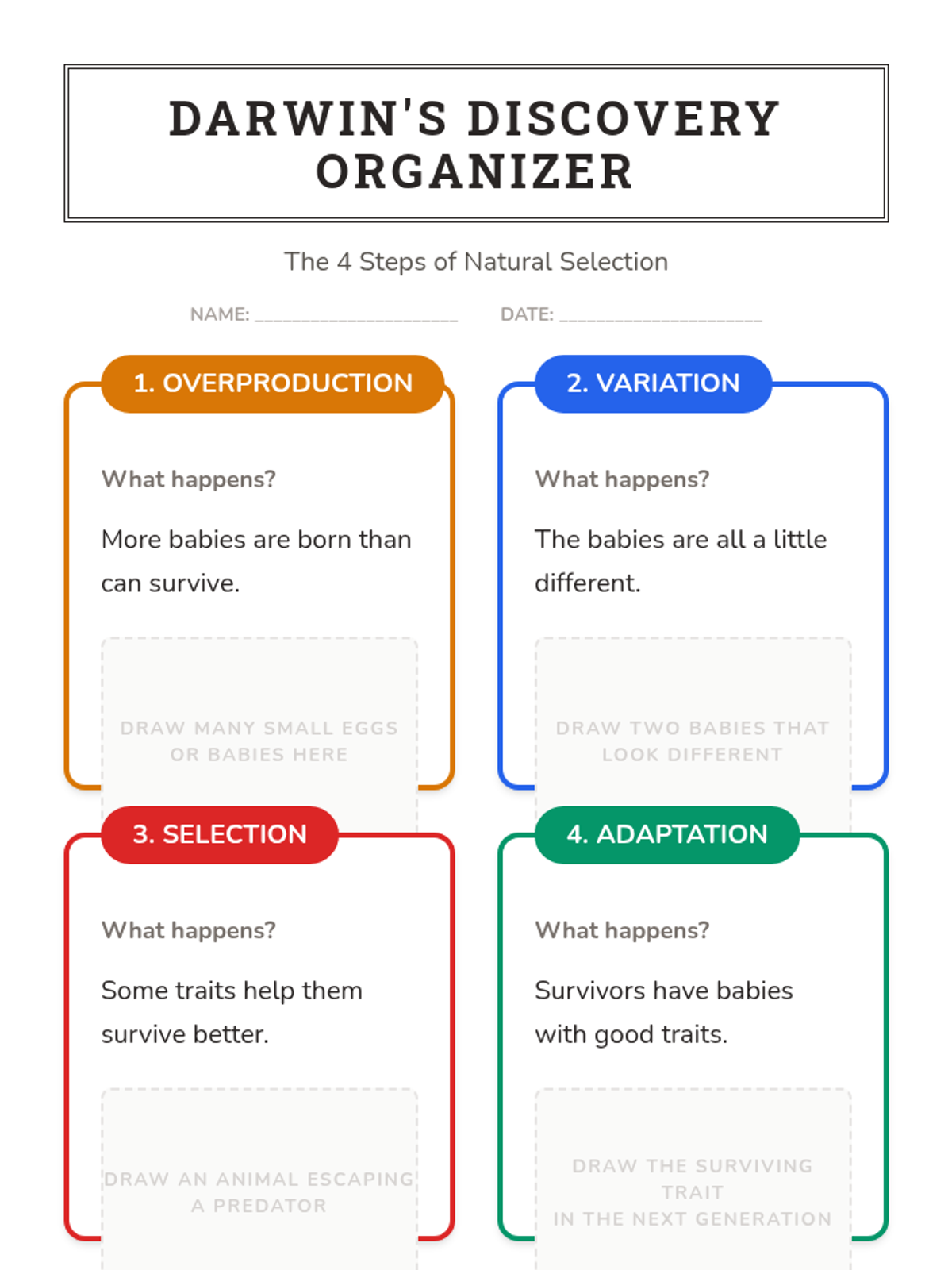
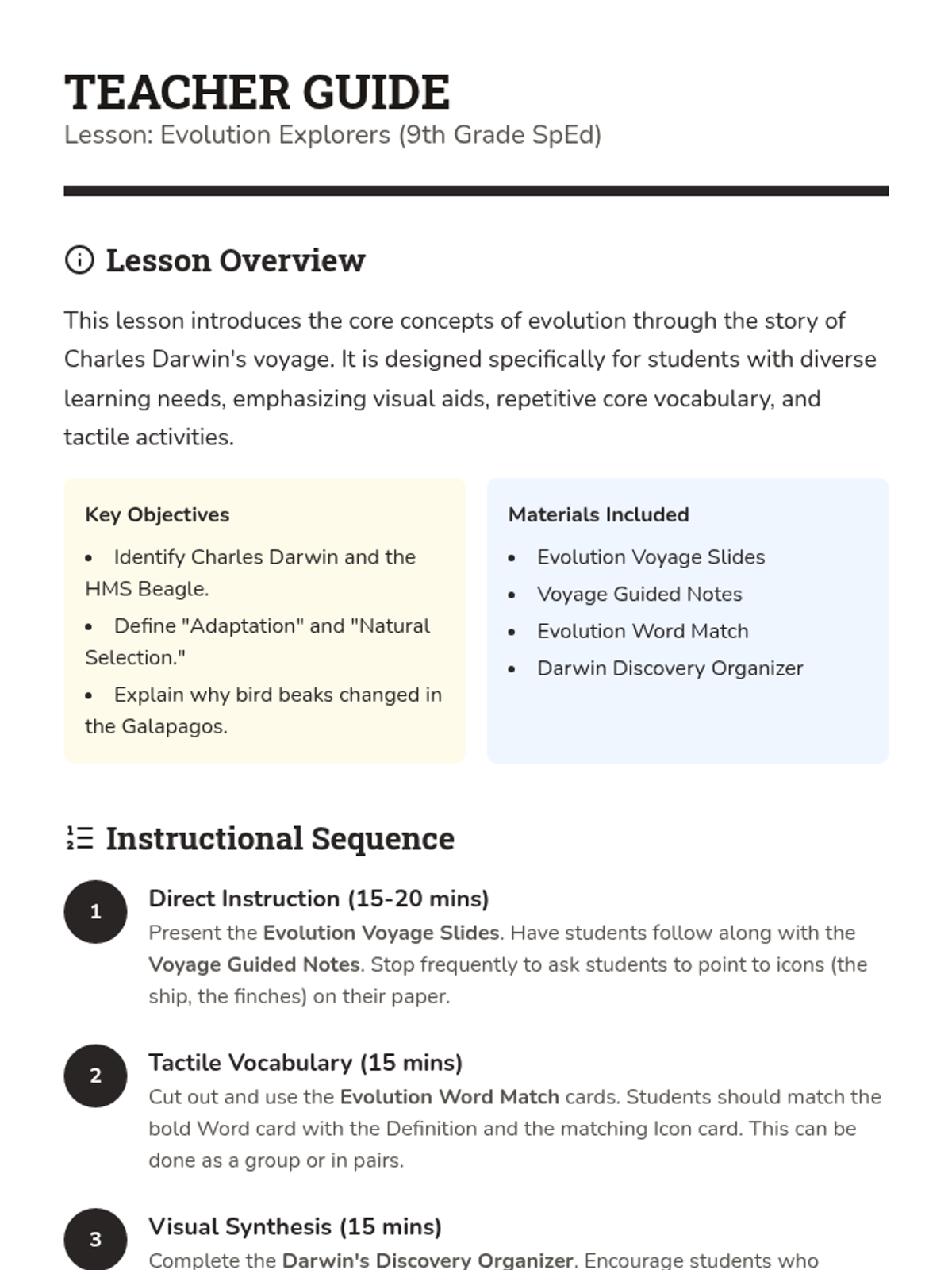
An introductory lesson on evolution for 9th-grade special education students, focusing on Charles Darwin's journey, the HMS Beagle, and the core principles of natural selection and adaptation.
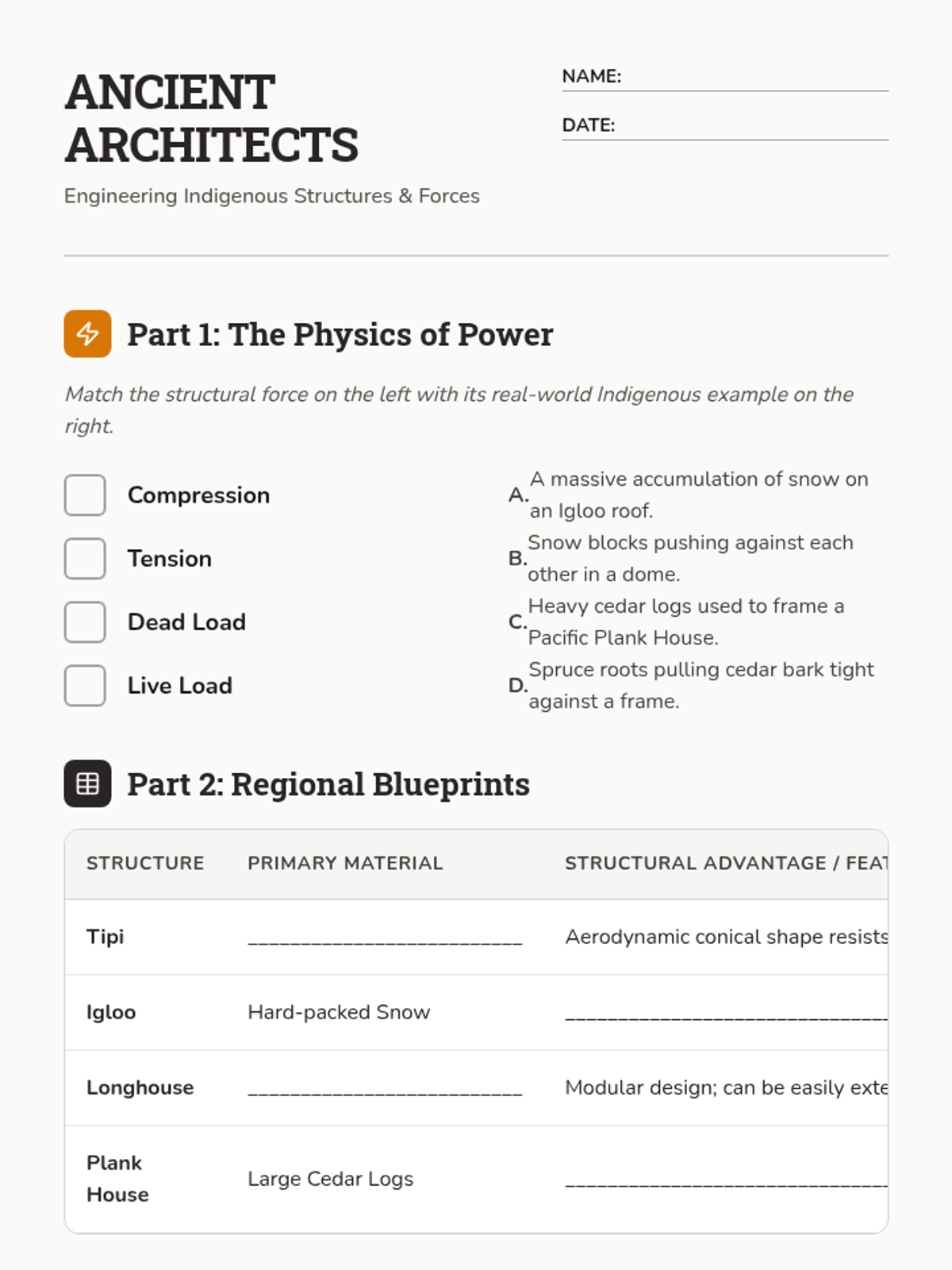
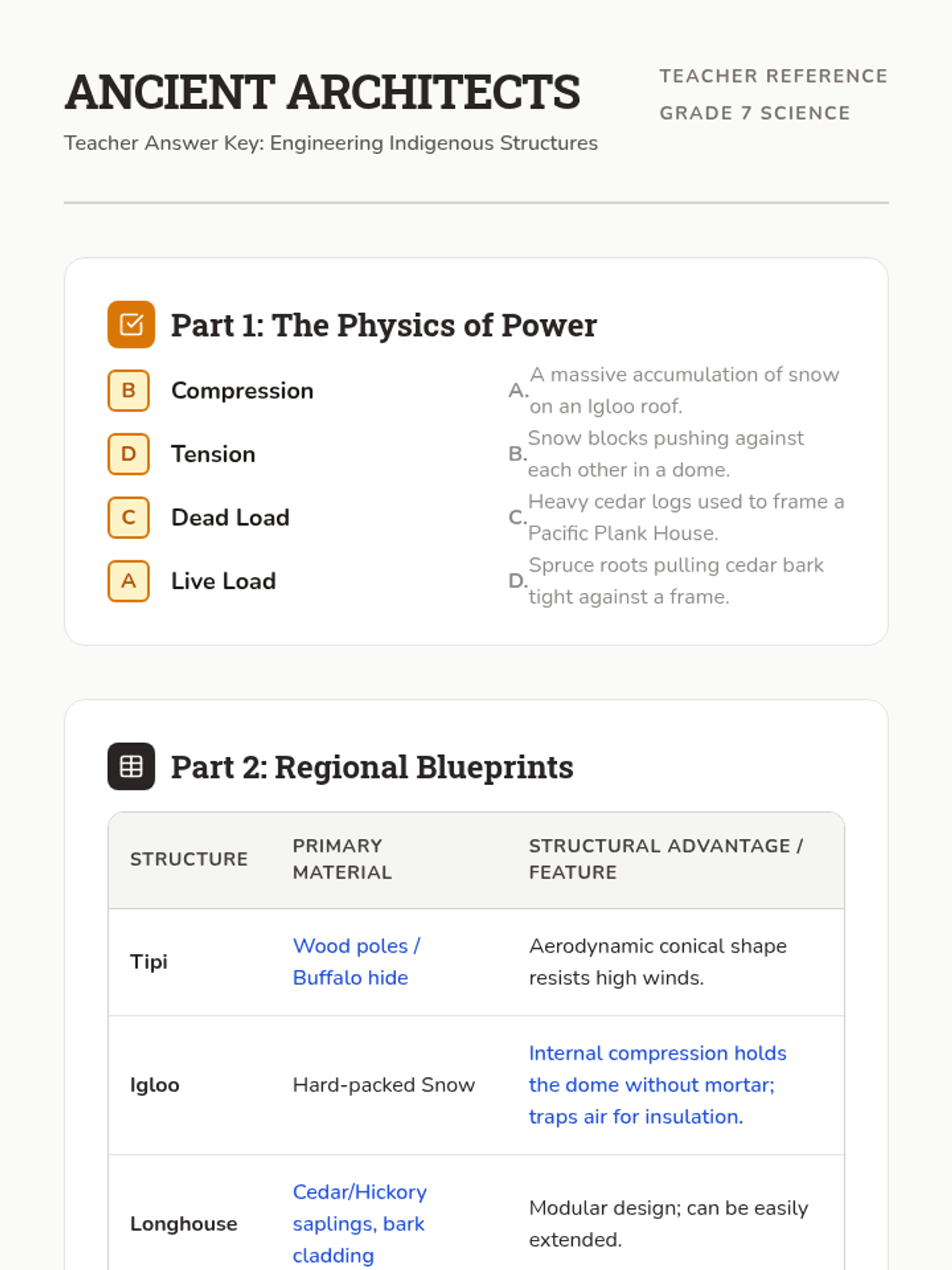
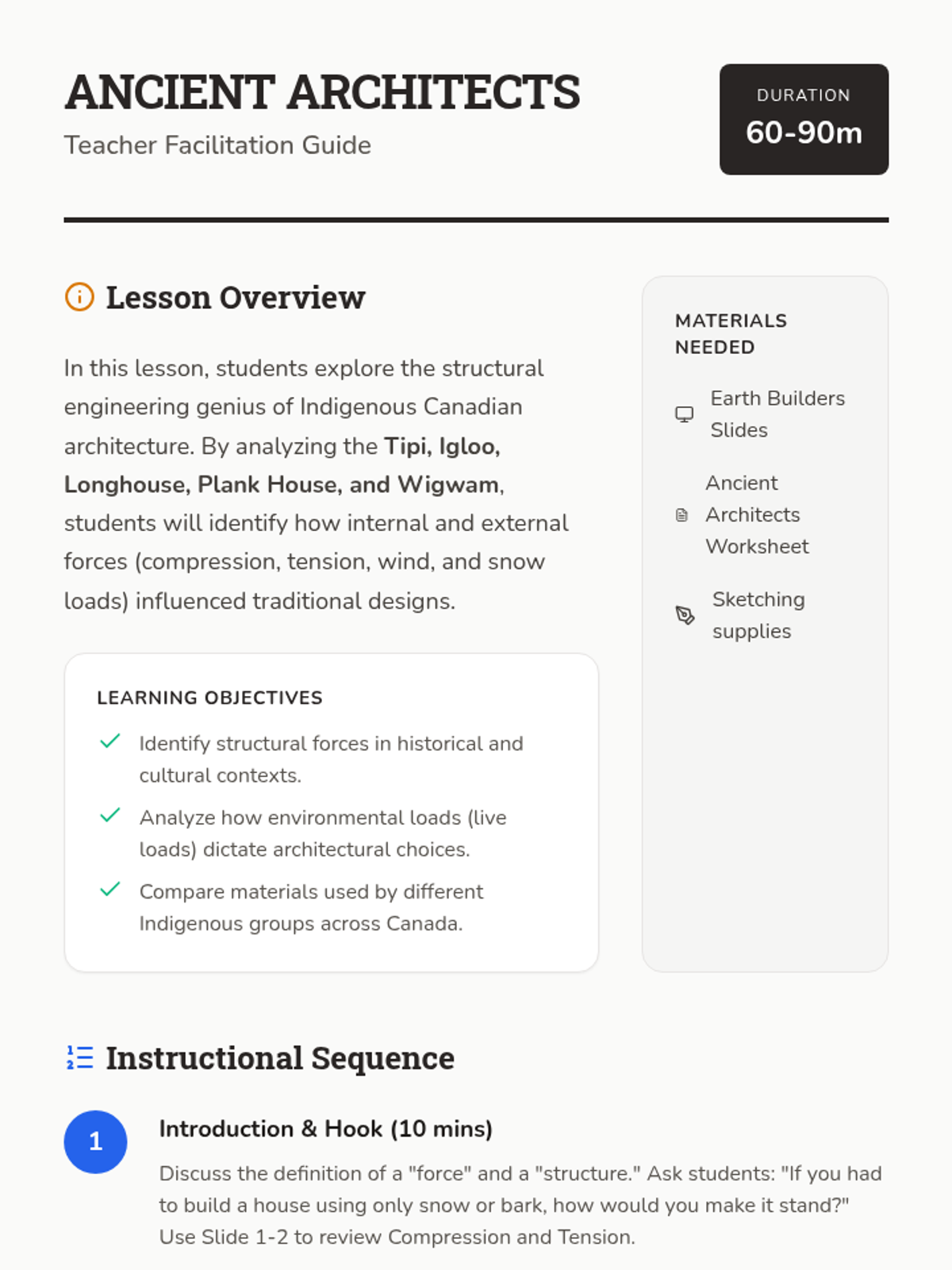
An exploration of Indigenous Canadian architecture through the lens of structural engineering, focusing on how different cultures adapted their shelters to local climates and available materials while managing forces like wind, snow, and gravity.
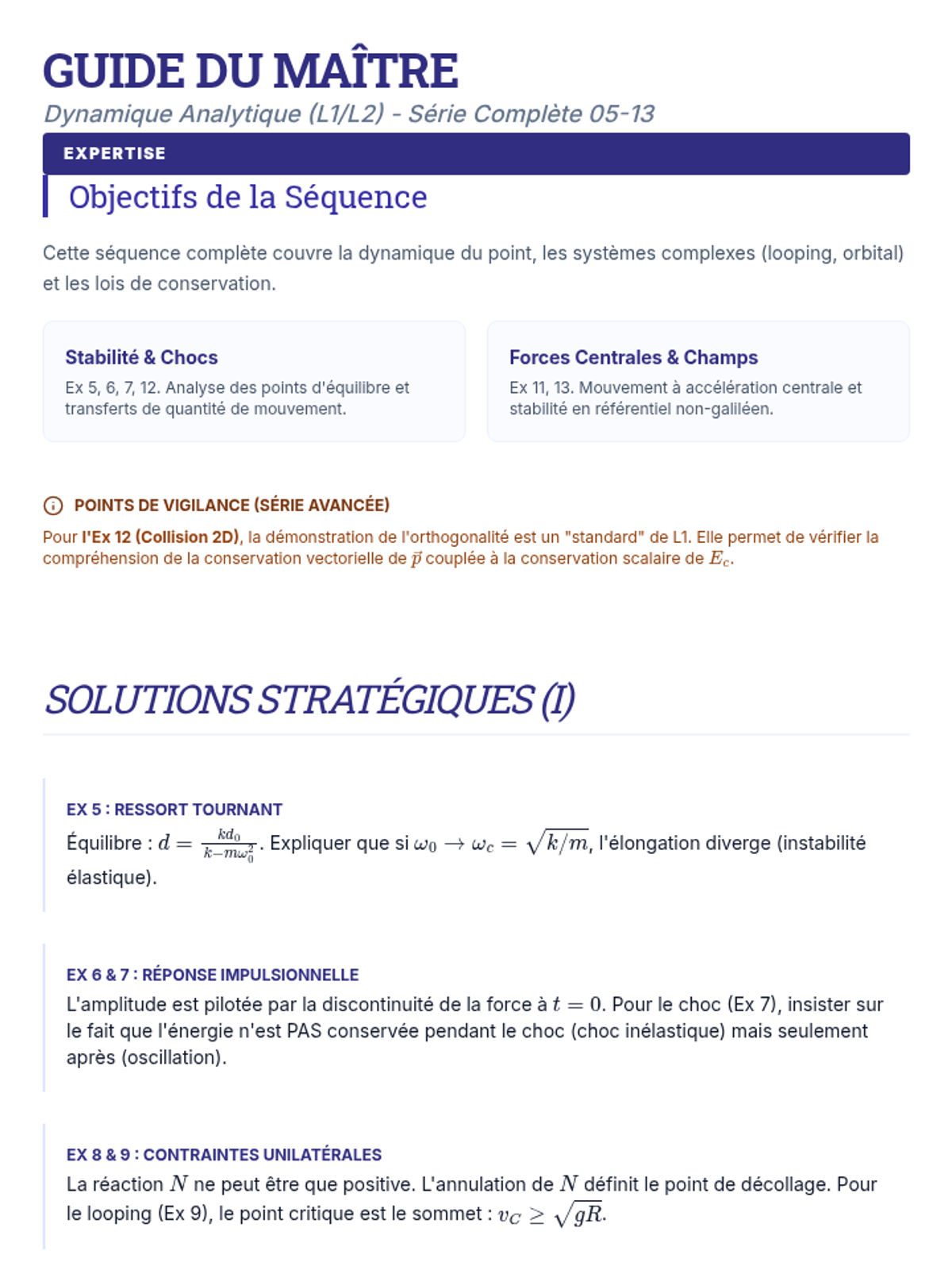
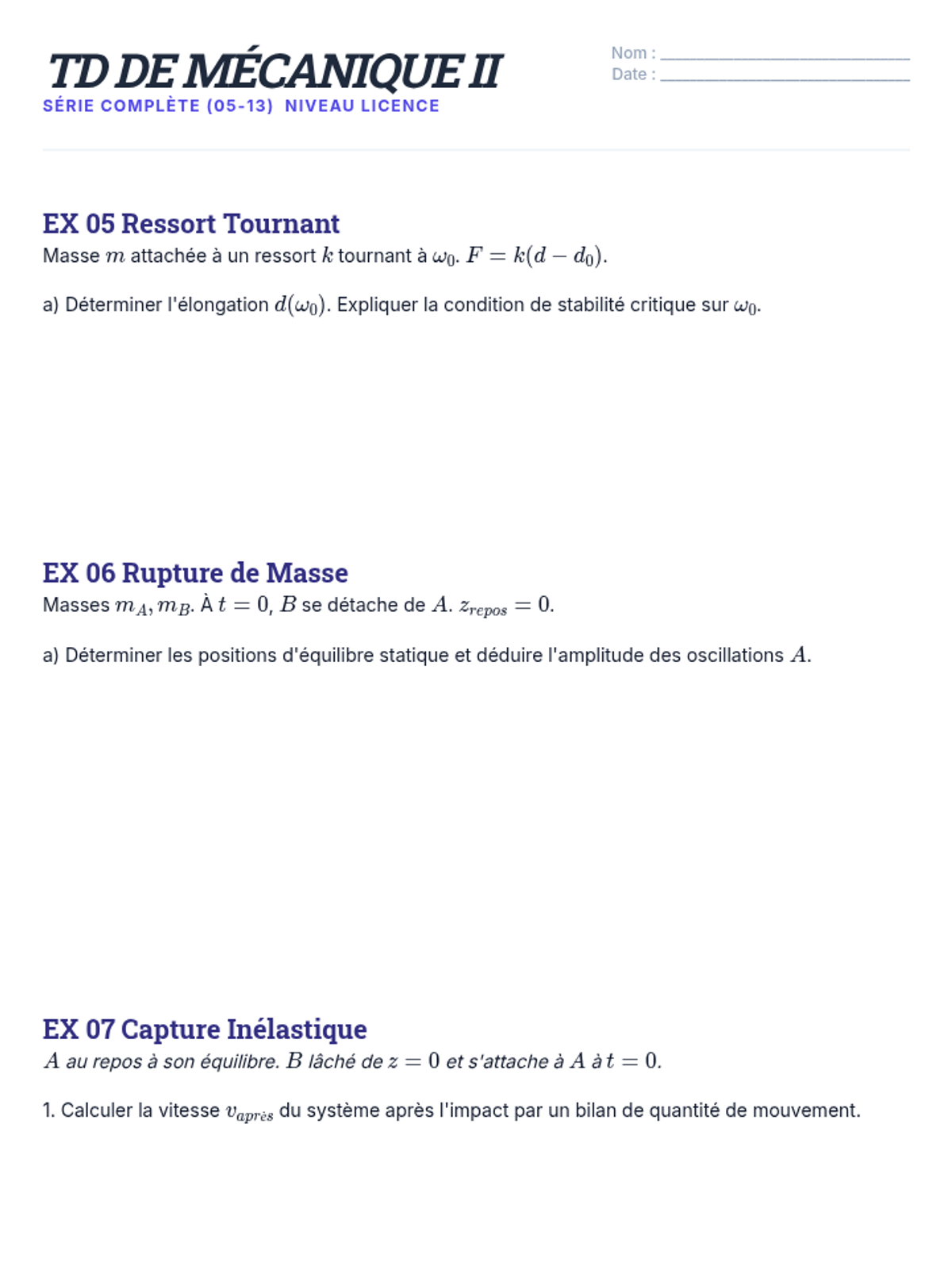
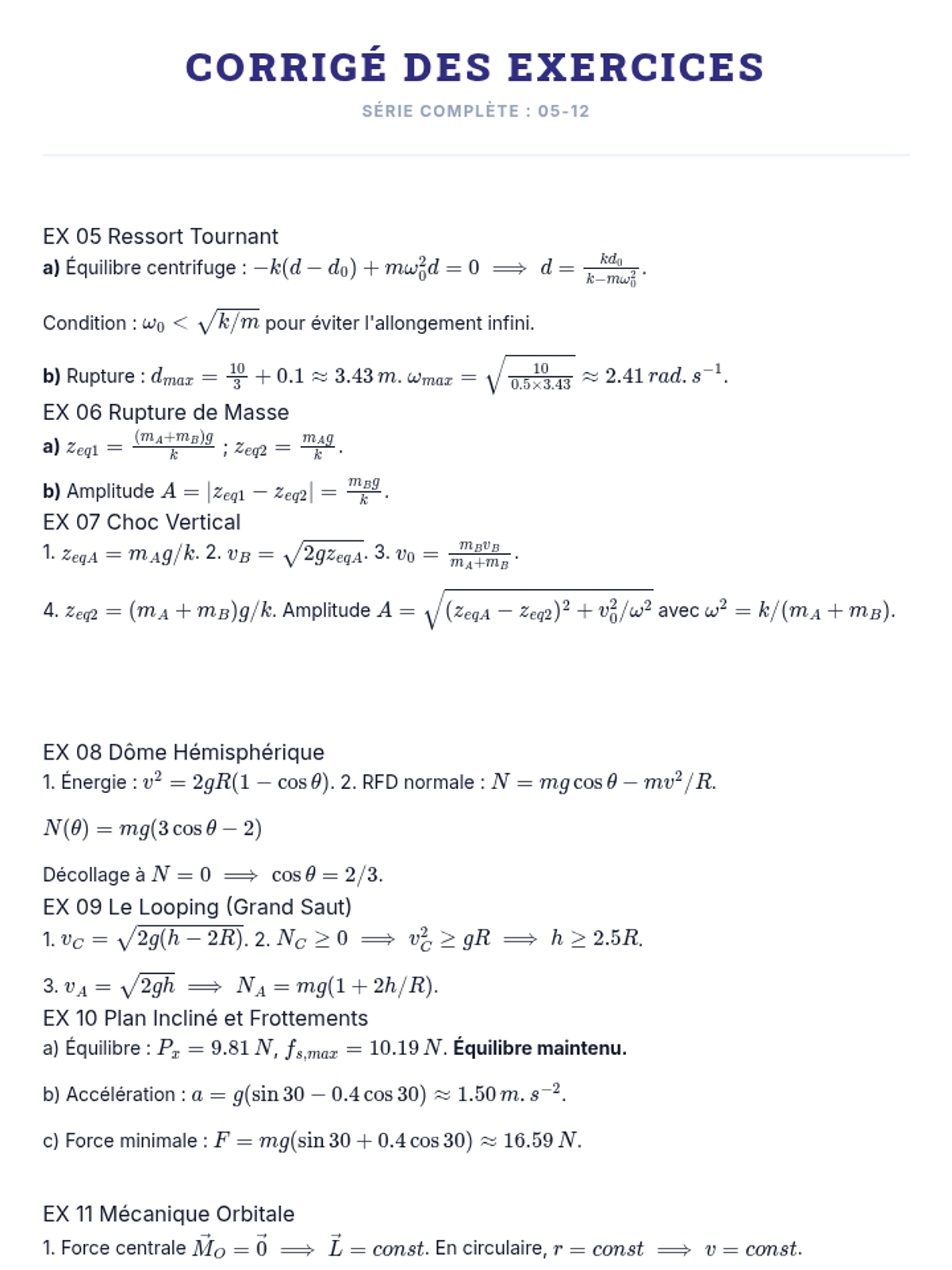
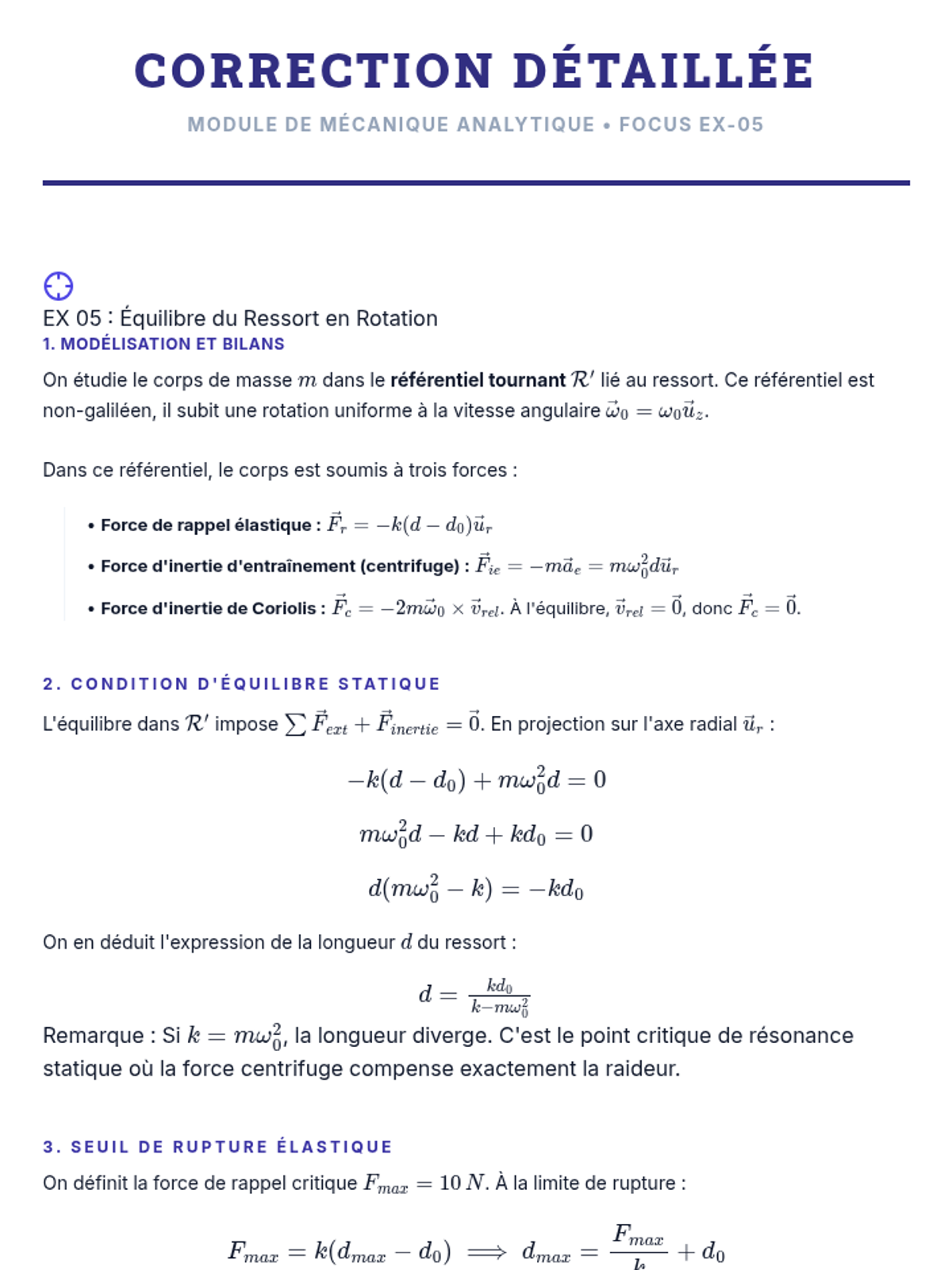
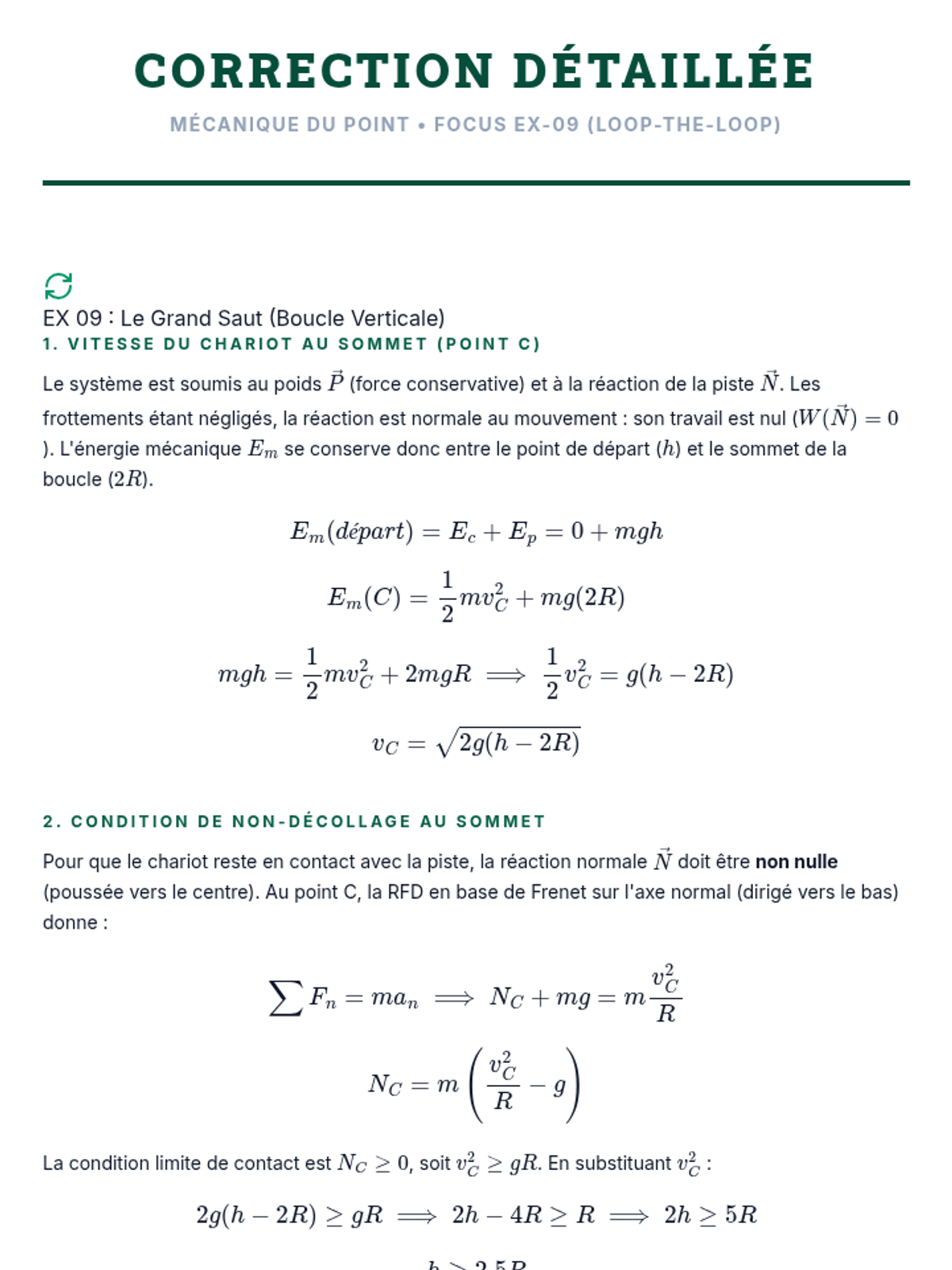
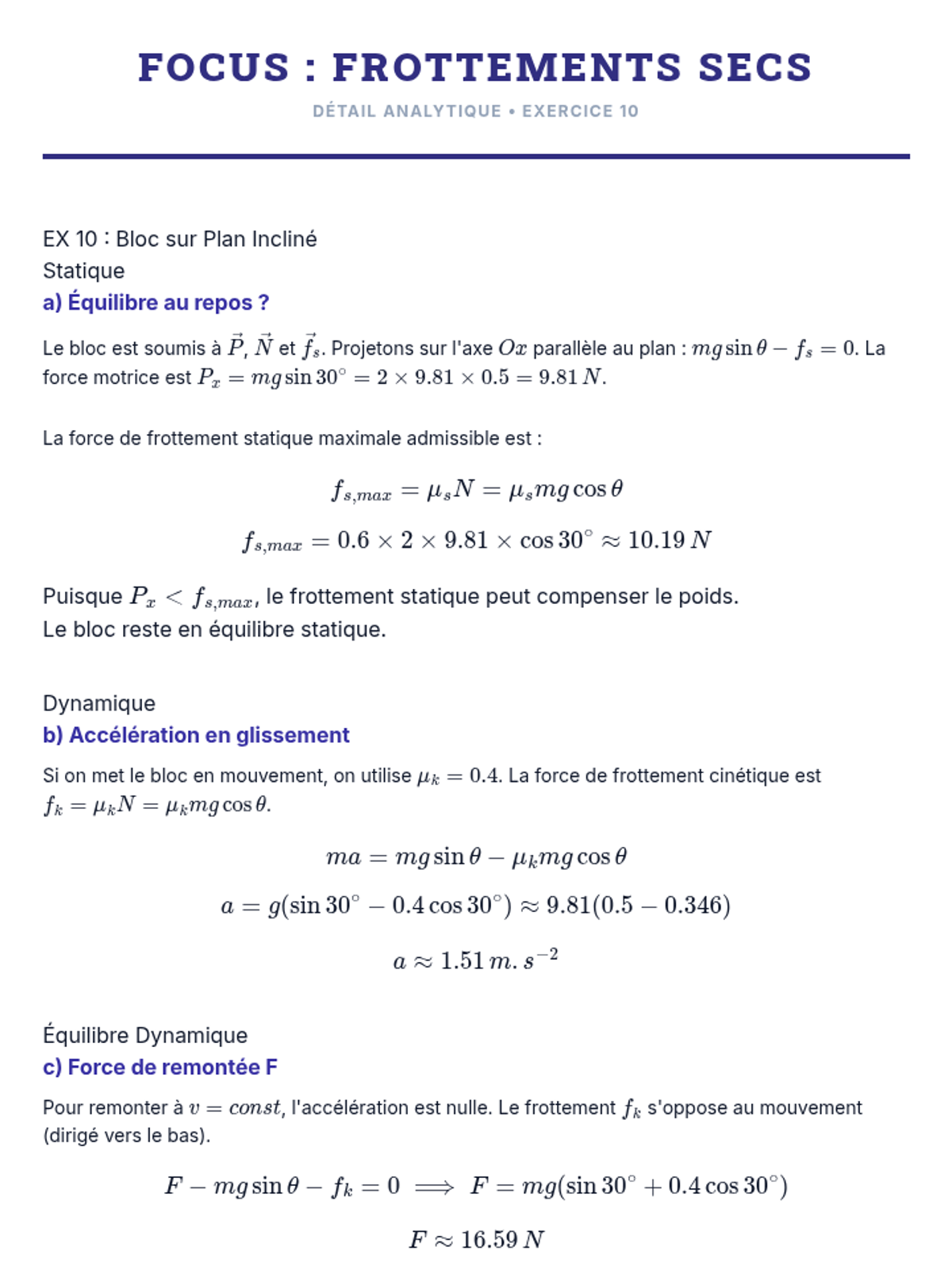
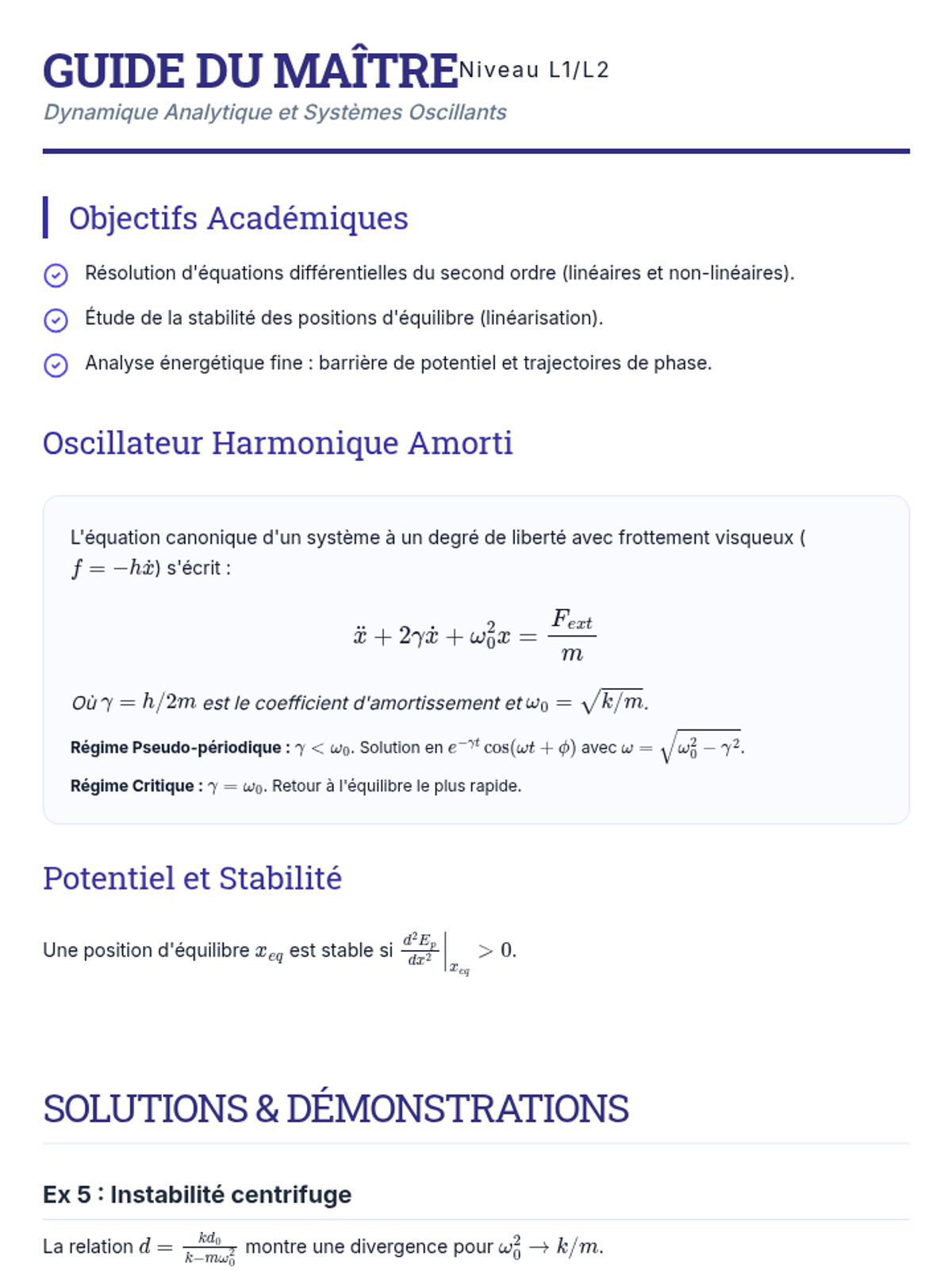
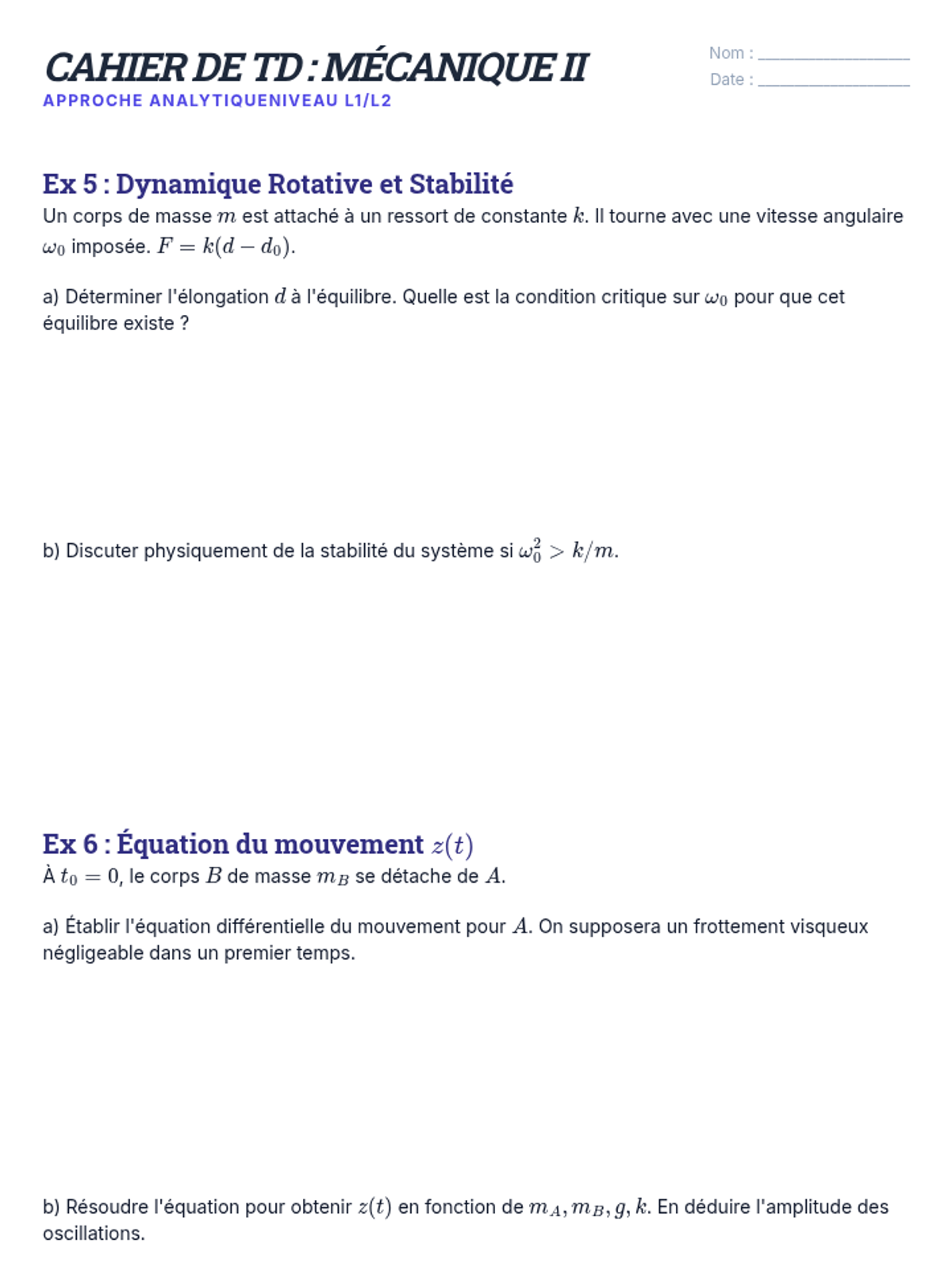
Une exploration approfondie de la mécanique classique, couvrant les ressorts, les mouvements circulaires, les oscillations et la conservation de l'énergie à travers des exercices de synthèse.
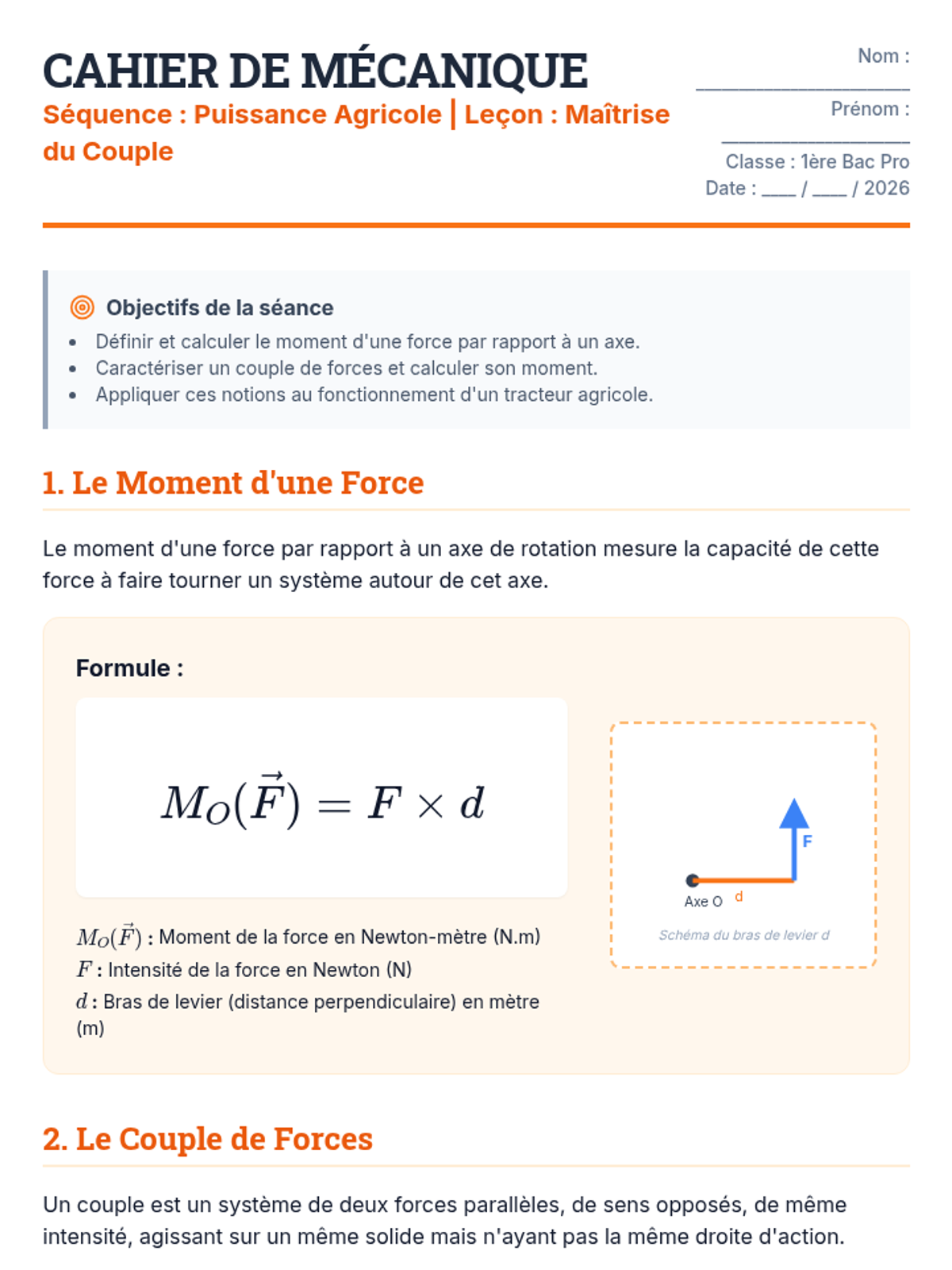
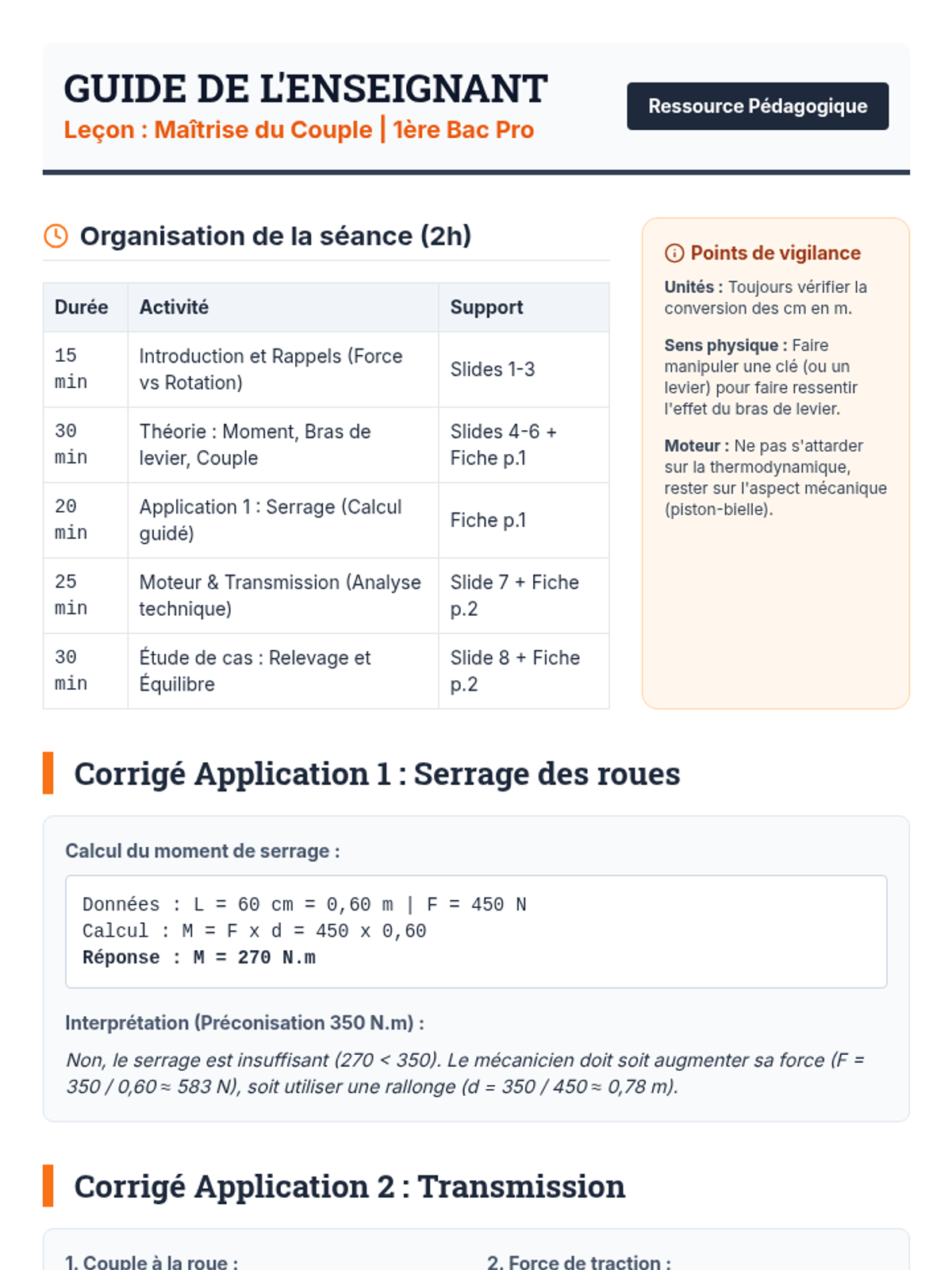
Cette leçon traite du moment d'une force et du couple de forces à travers l'étude du moteur, de la transmission et des organes de levage d'un tracteur.
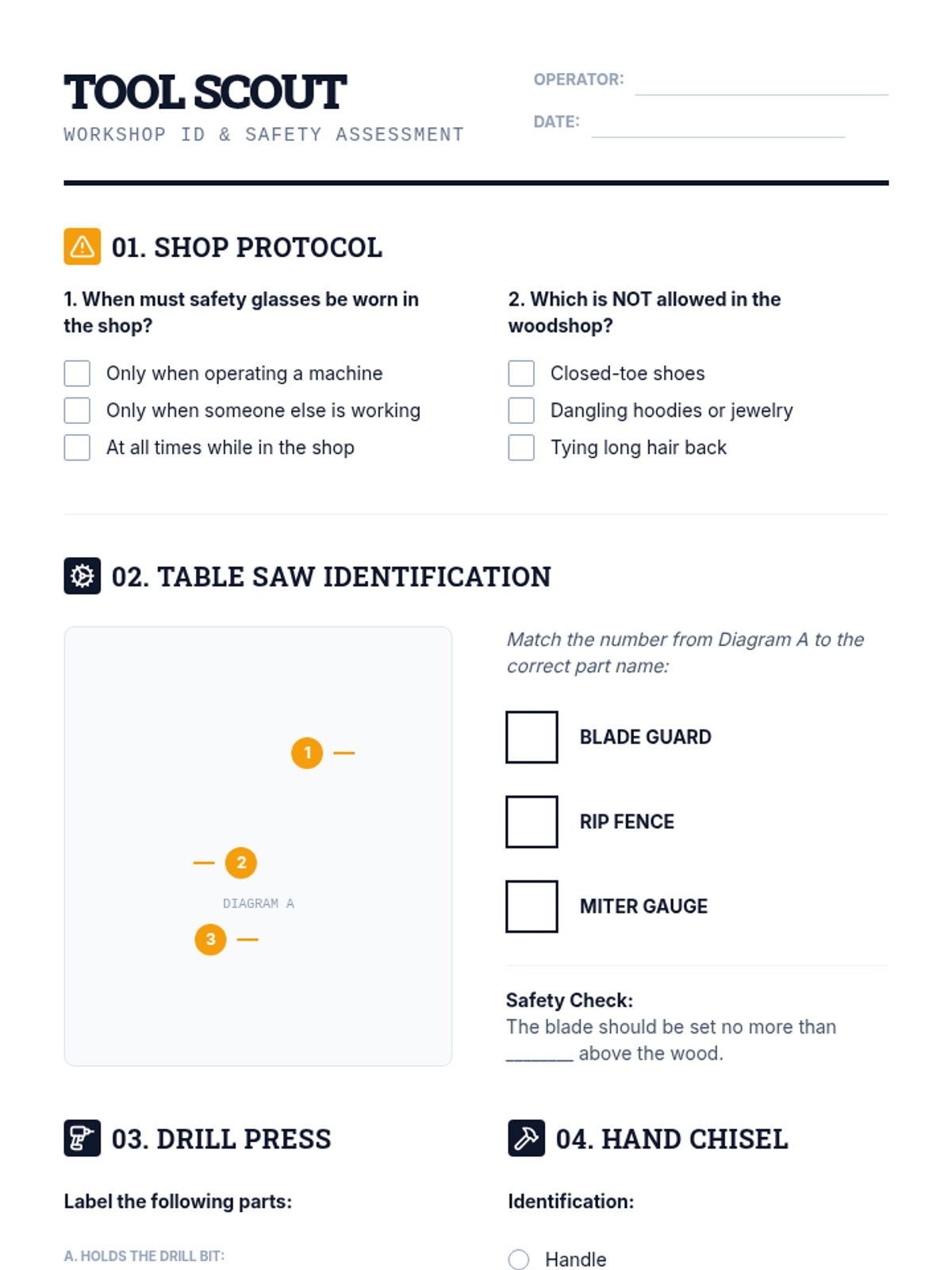
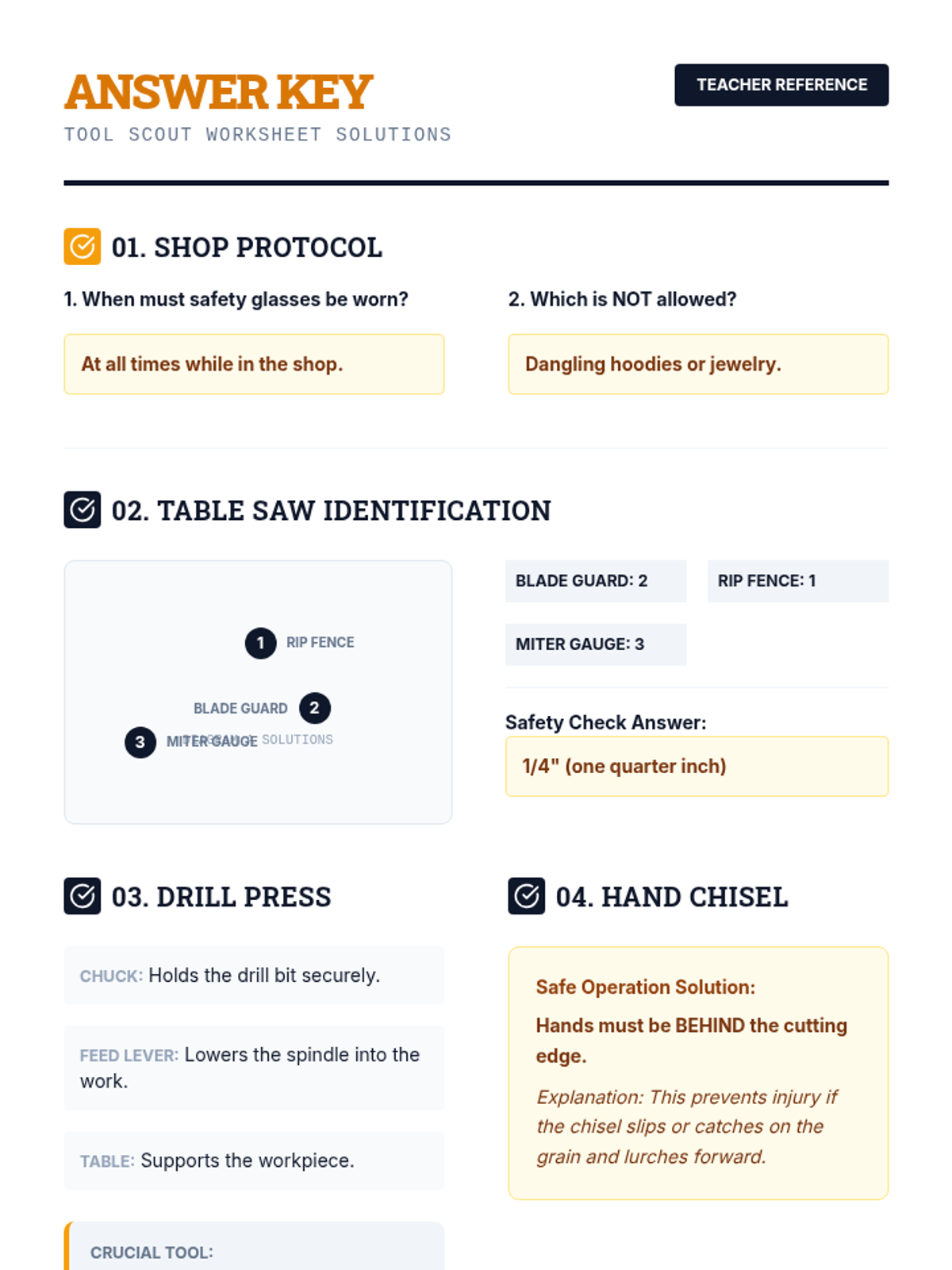
A comprehensive introduction to workshop safety and tool identification, focusing on the table saw, drill press, and hand chisels. Students learn critical safety protocols and part names for essential woodworking machinery.
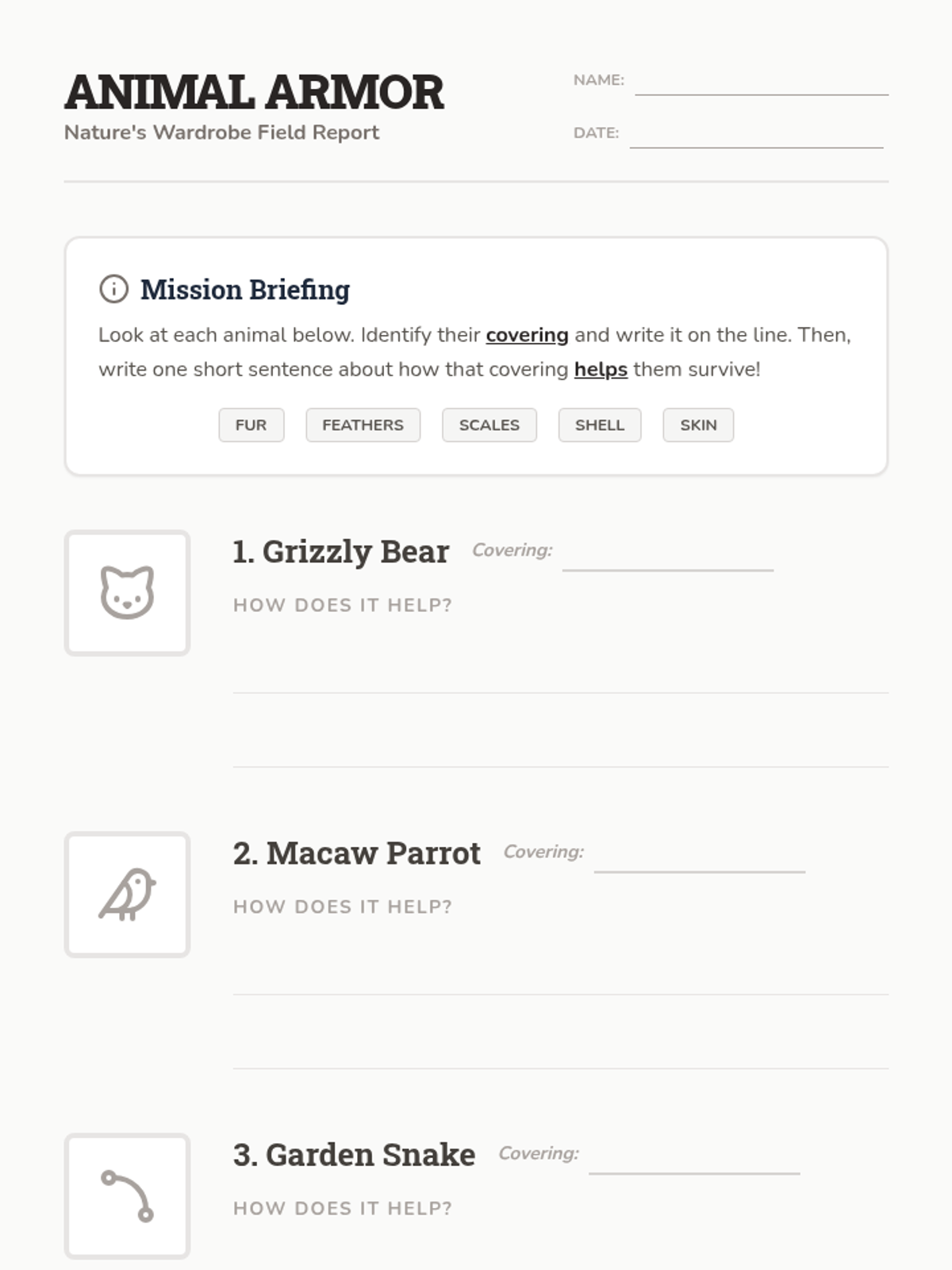
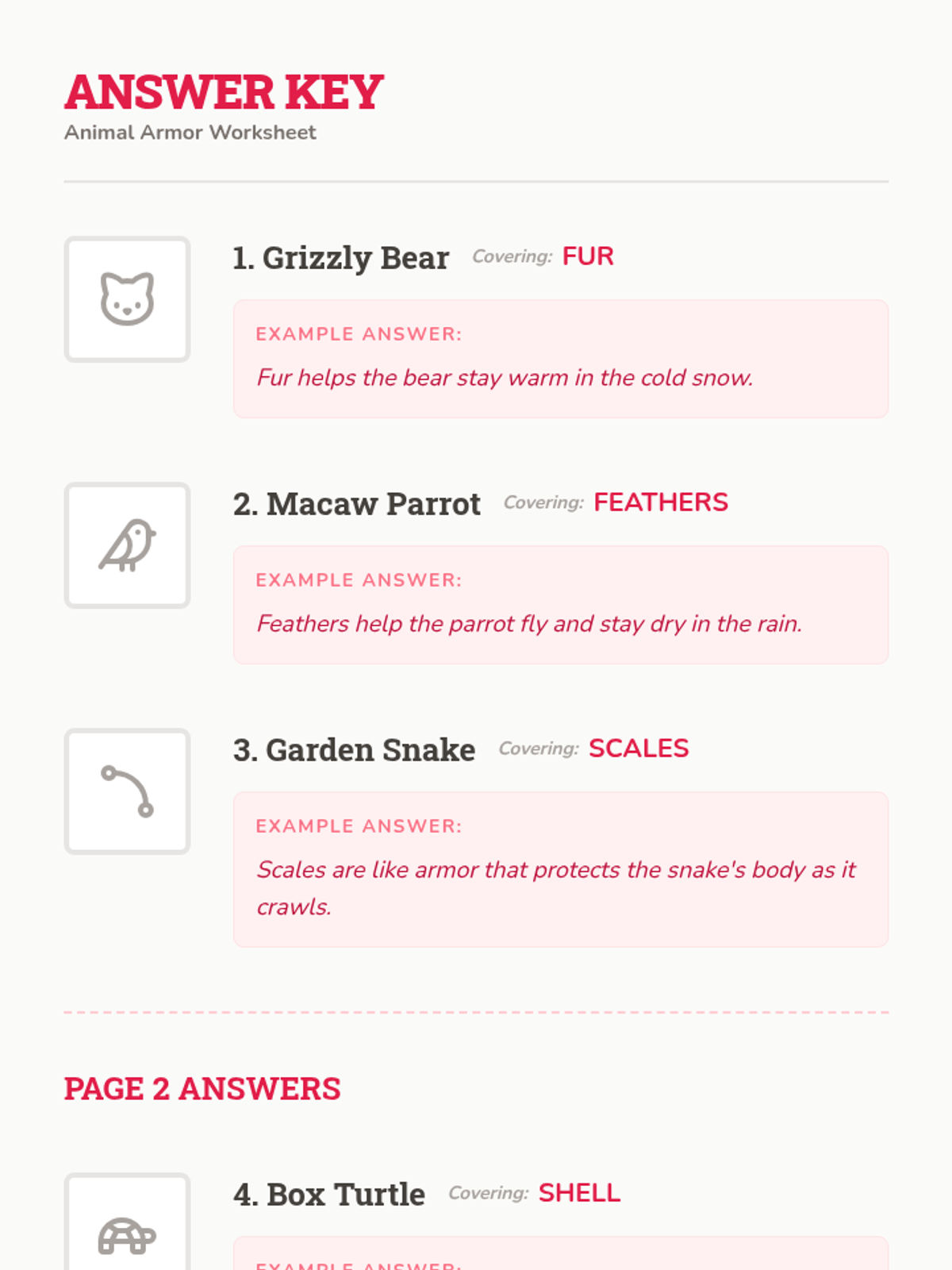
Students apply their knowledge by identifying animal coverings in various examples and writing descriptive sentences about how these coverings protect or help animals.
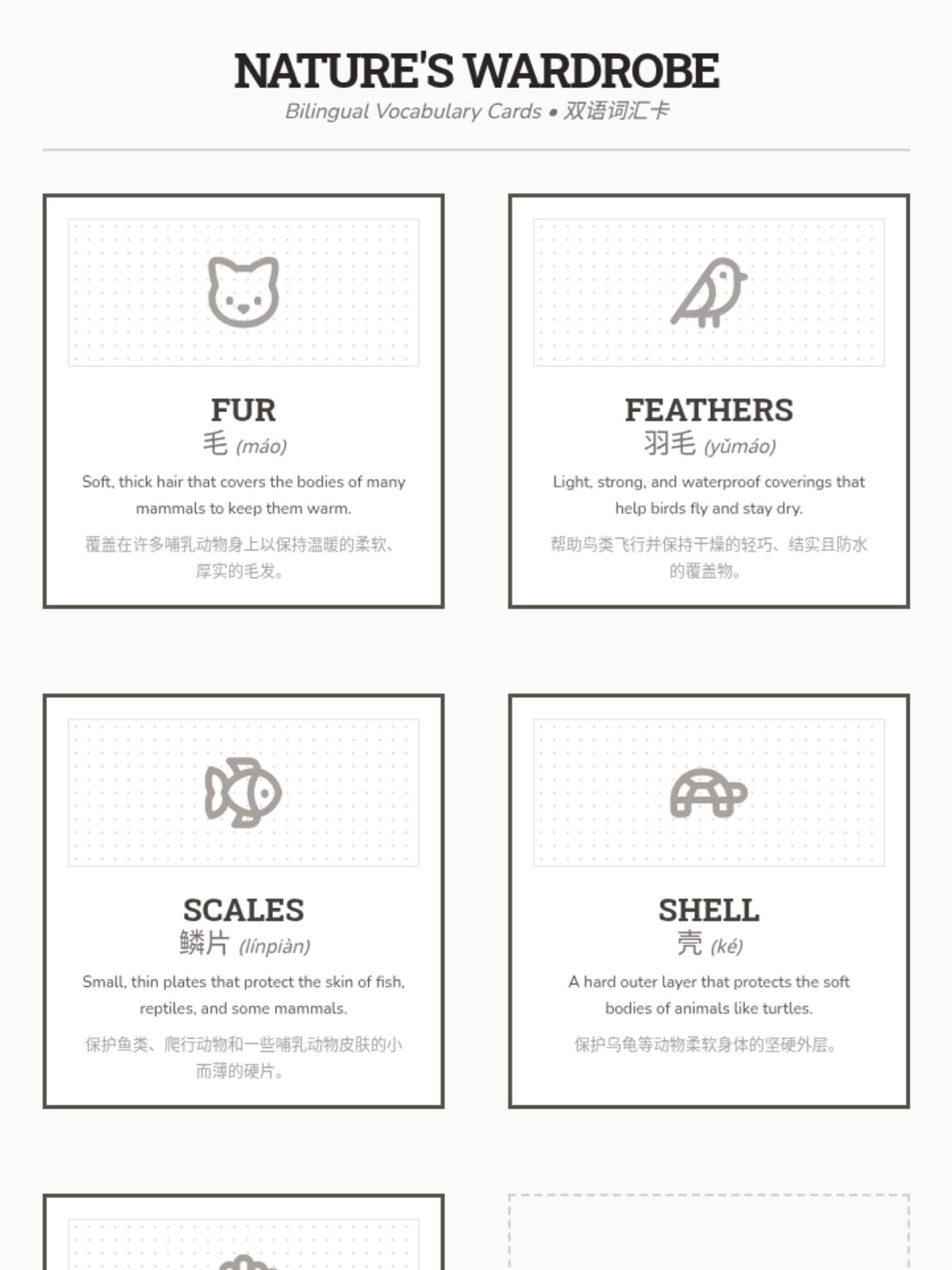
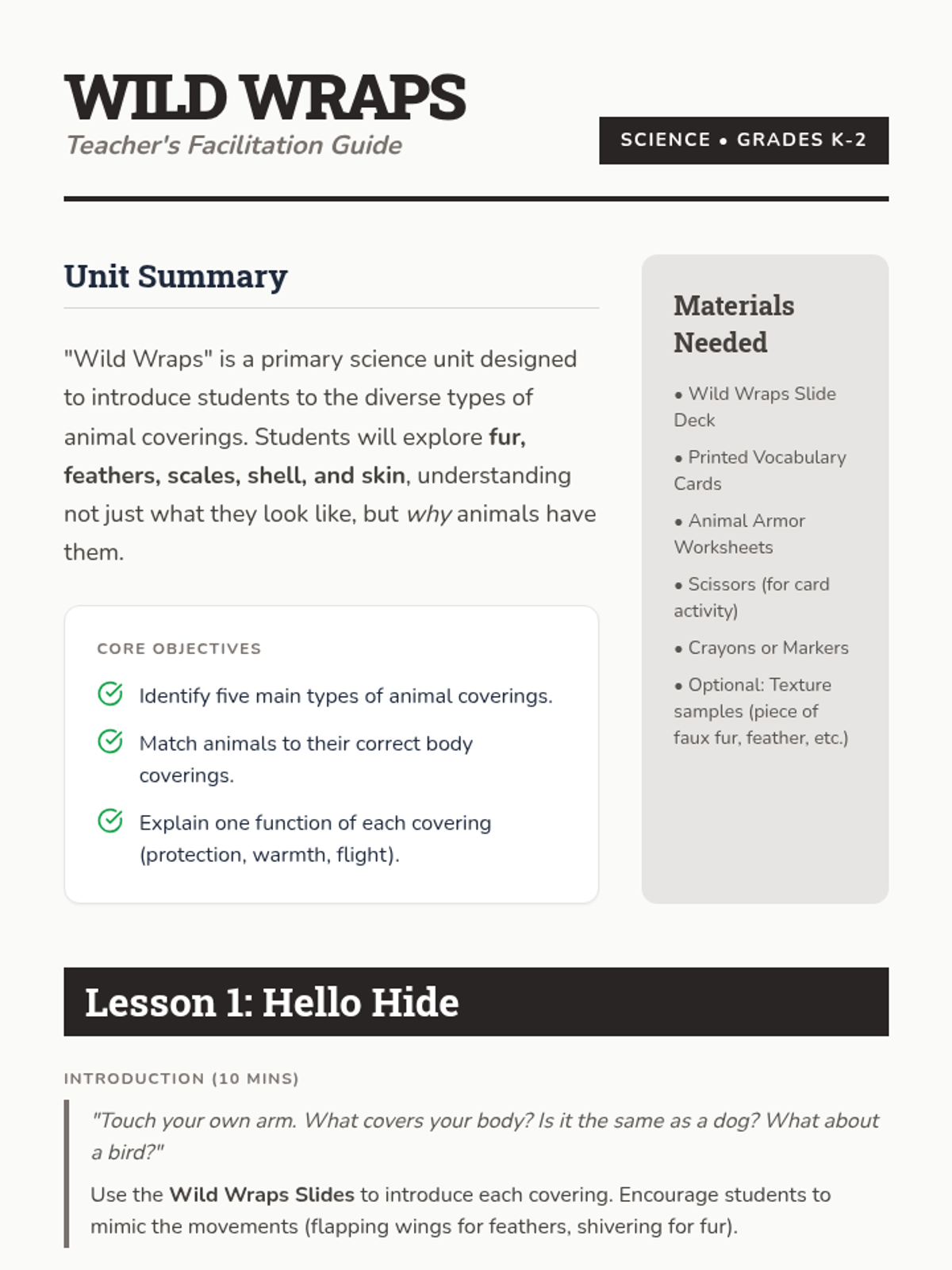
An introduction to the five main types of animal coverings: feathers, fur, scales, shell, and skin. Students learn to identify these textures and understand their basic functions.
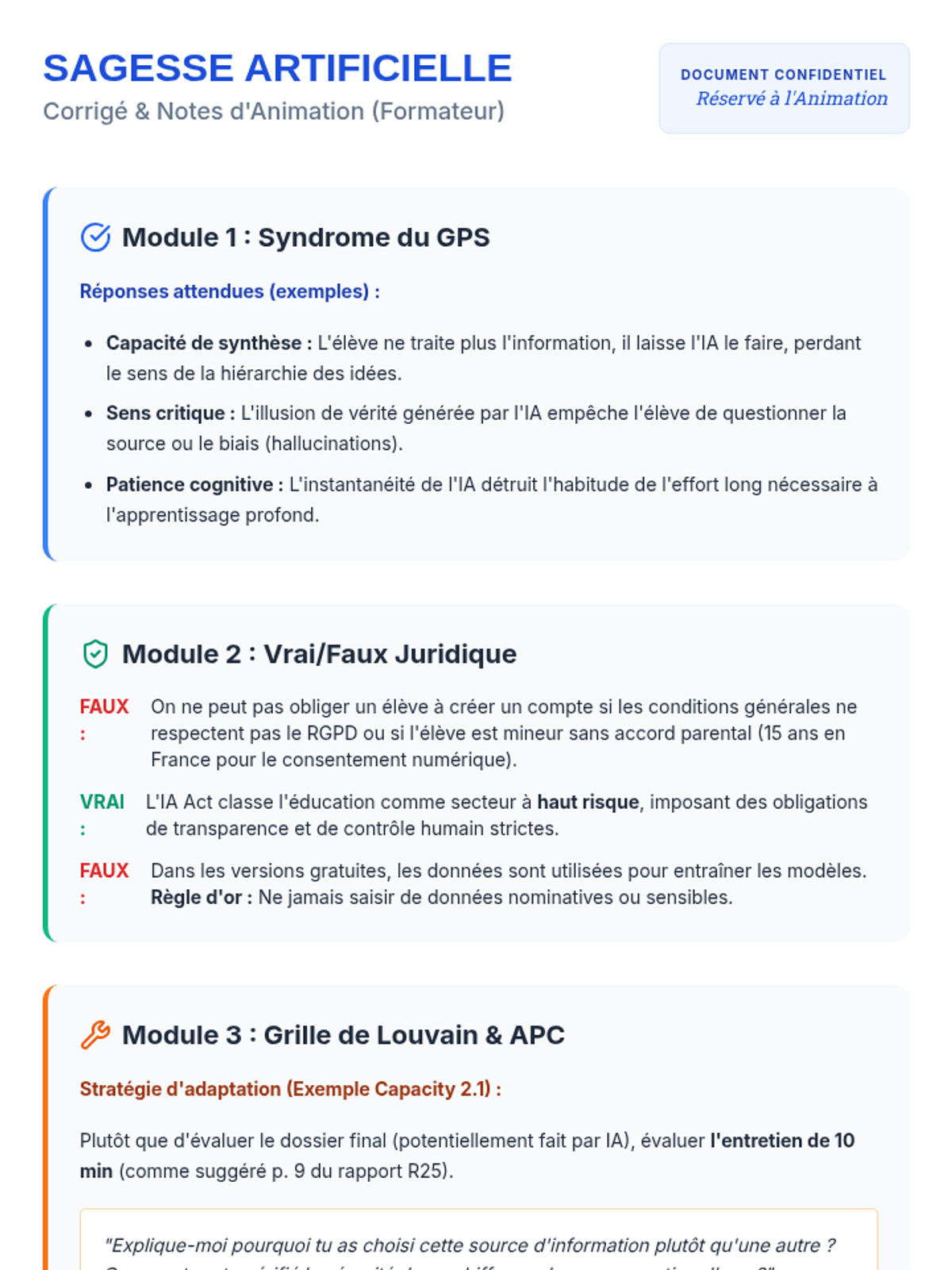
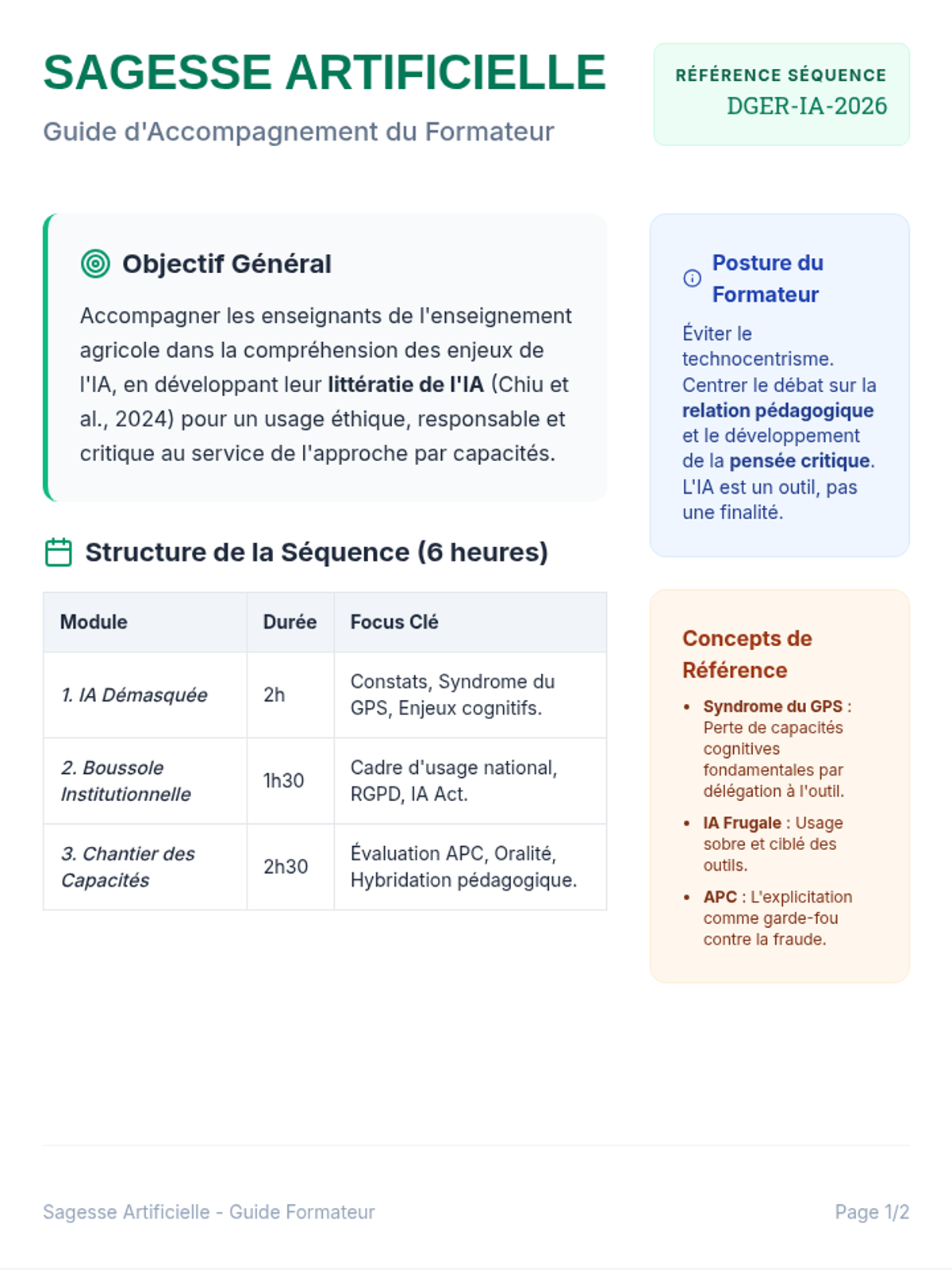
Adapter les pratiques pédagogiques et les modalités d'évaluation dans le cadre de l'approche par capacités (APC) face aux défis des IA génératives.
Analyser le cadre d'usage national, les obligations légales (RGPD, IA Act) et construire une éthique professionnelle partagée.
Explorer l'état des lieux de l'IA dans l'enseignement agricole, comprendre le 'syndrome du GPS' et définir la littératie de l'IA comme compétence transversale.
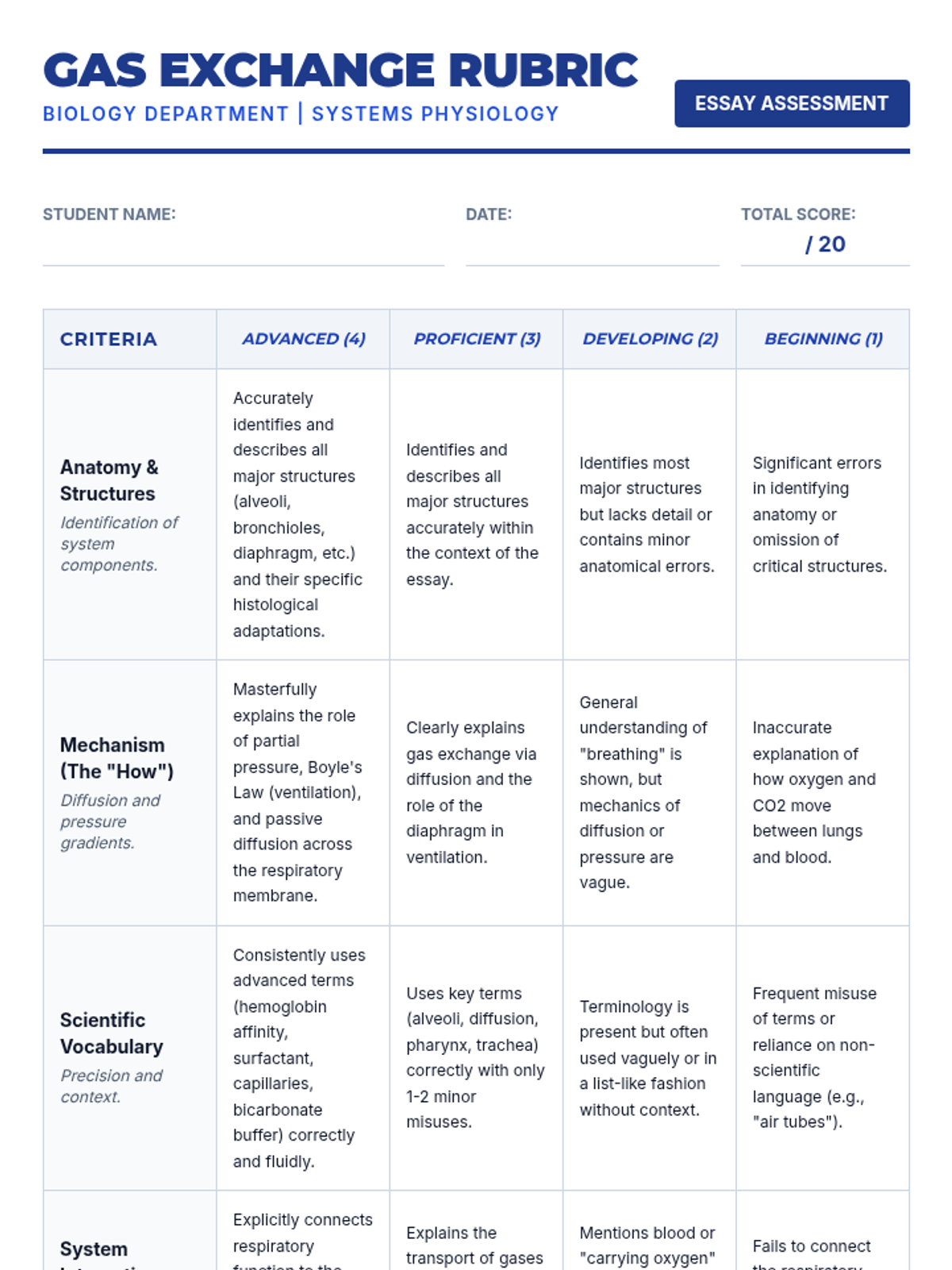
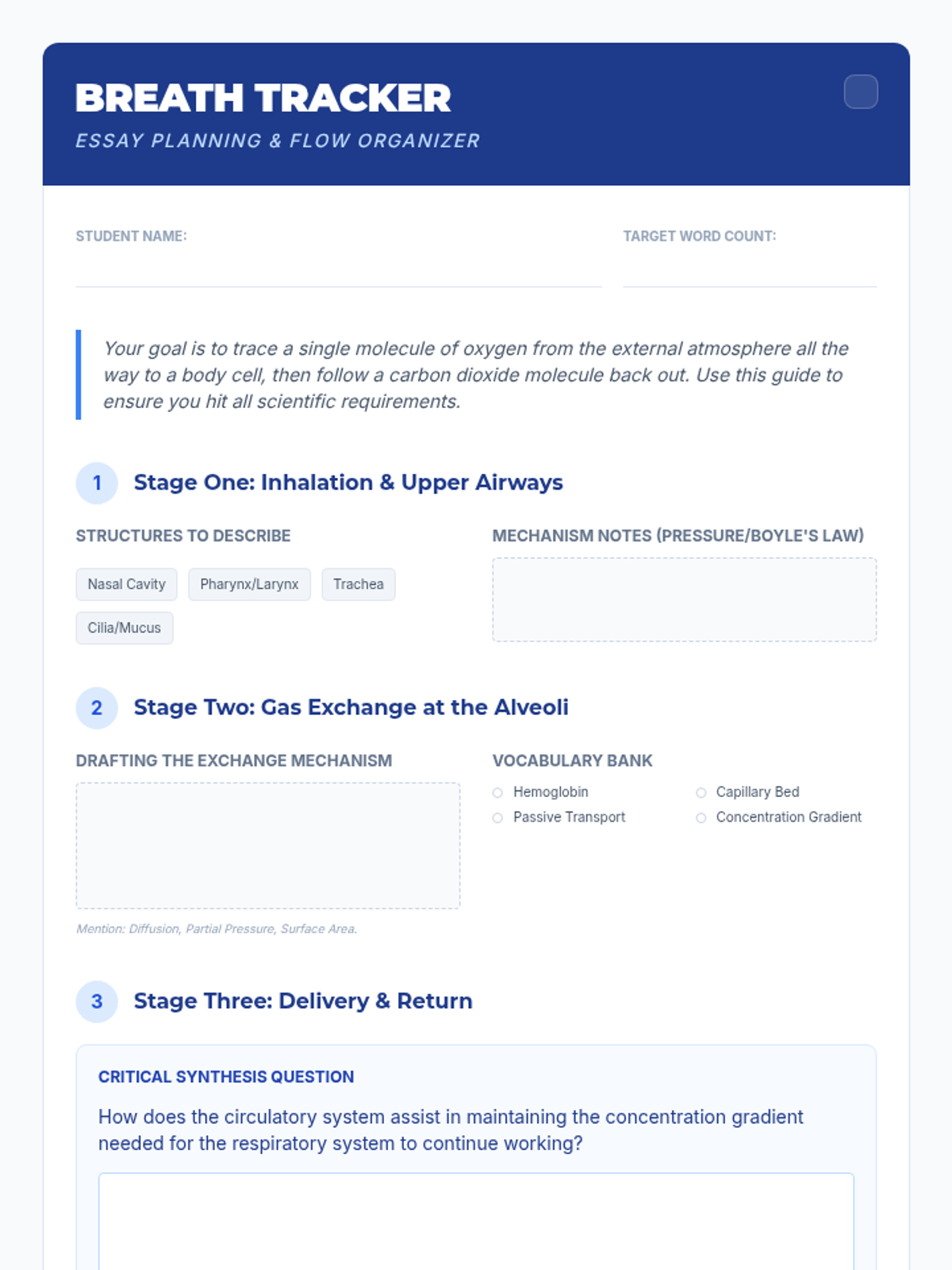
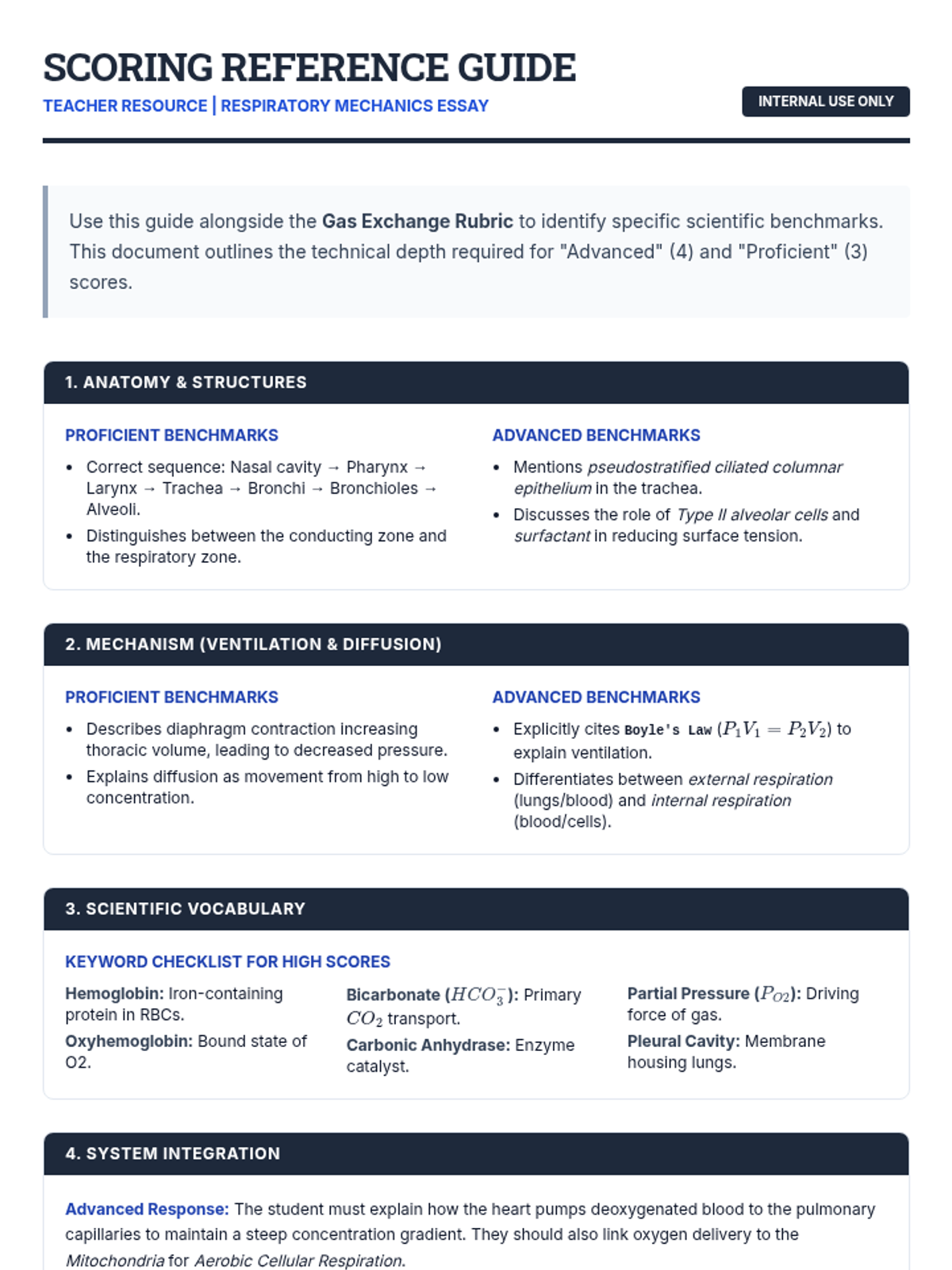
This lesson focuses on the mechanics of the respiratory system, requiring students to synthesize their knowledge into a formal scientific essay. It includes a comprehensive rubric, a student planning guide, and a teacher scoring reference.
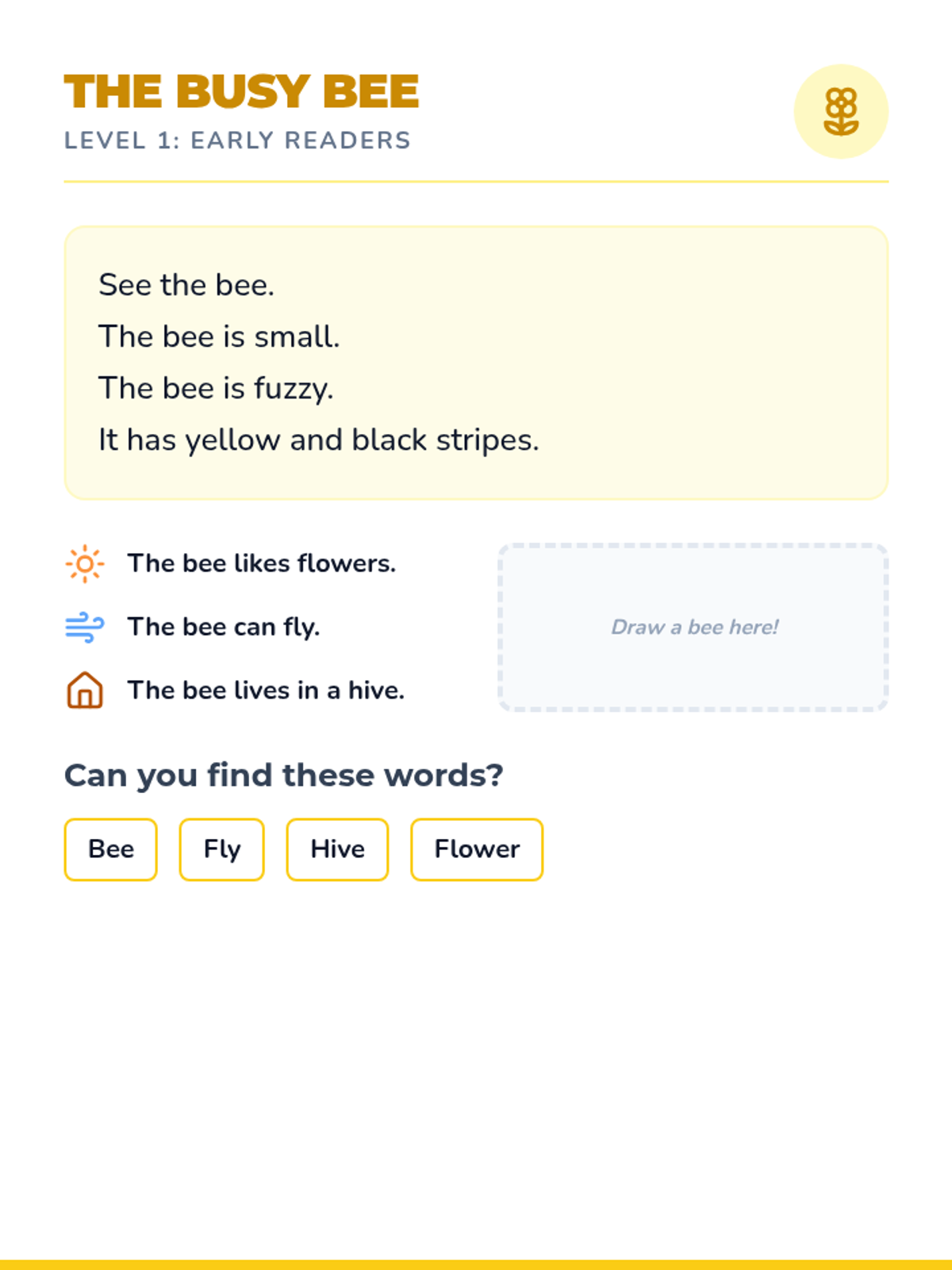
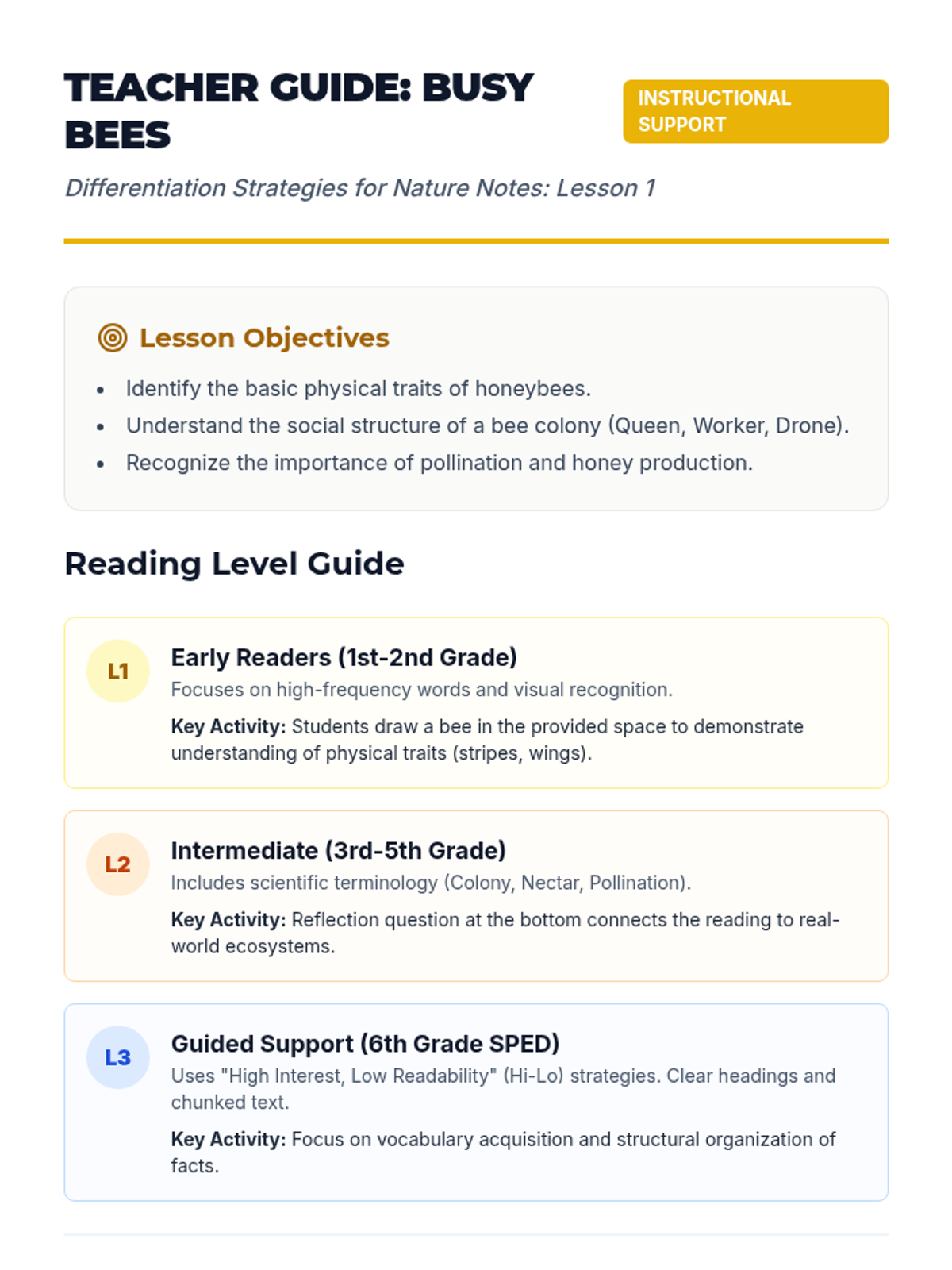
An introductory lesson on honeybees featuring differentiated reading passages and activities tailored for 1st-6th grade reading levels.
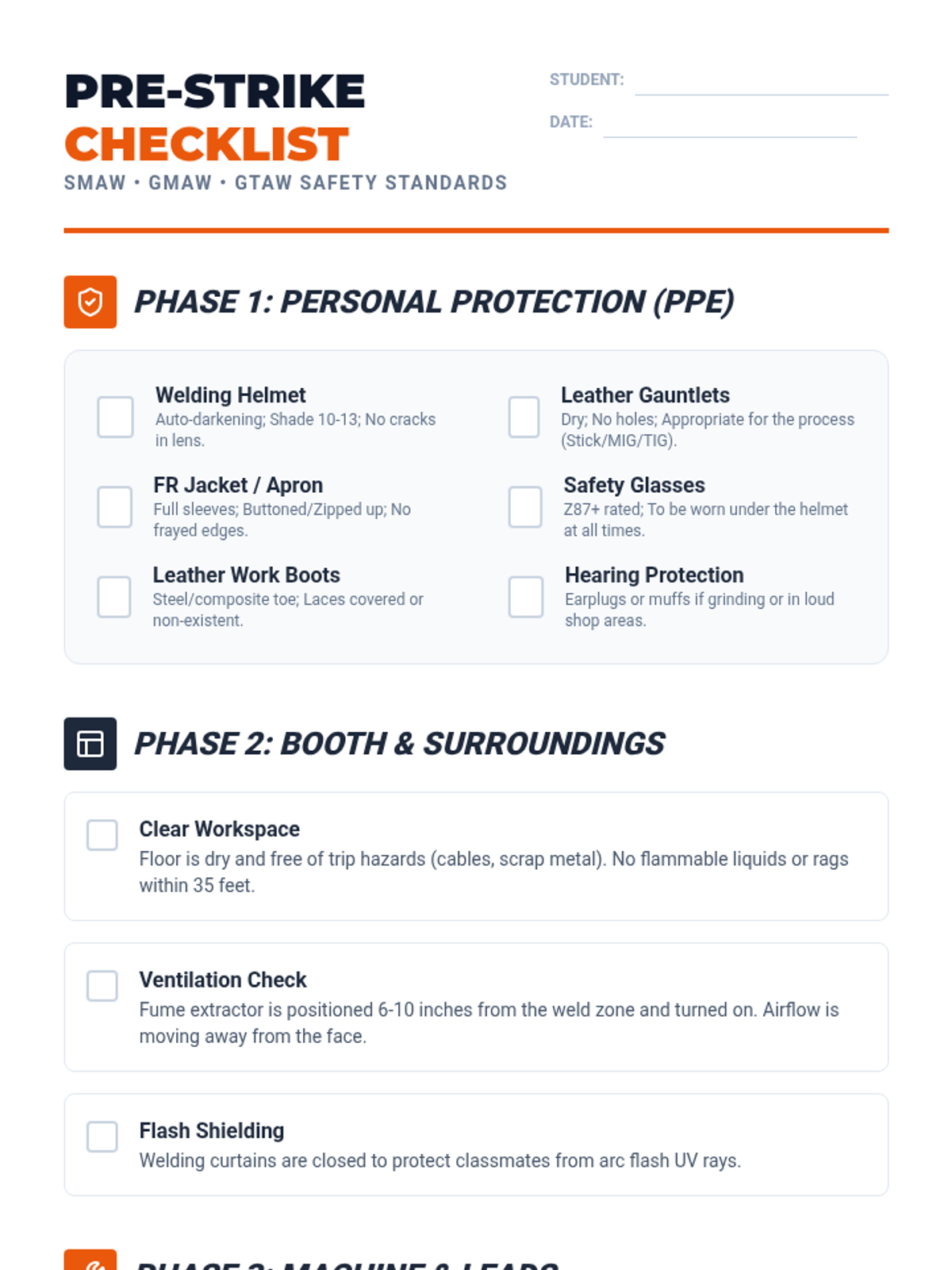
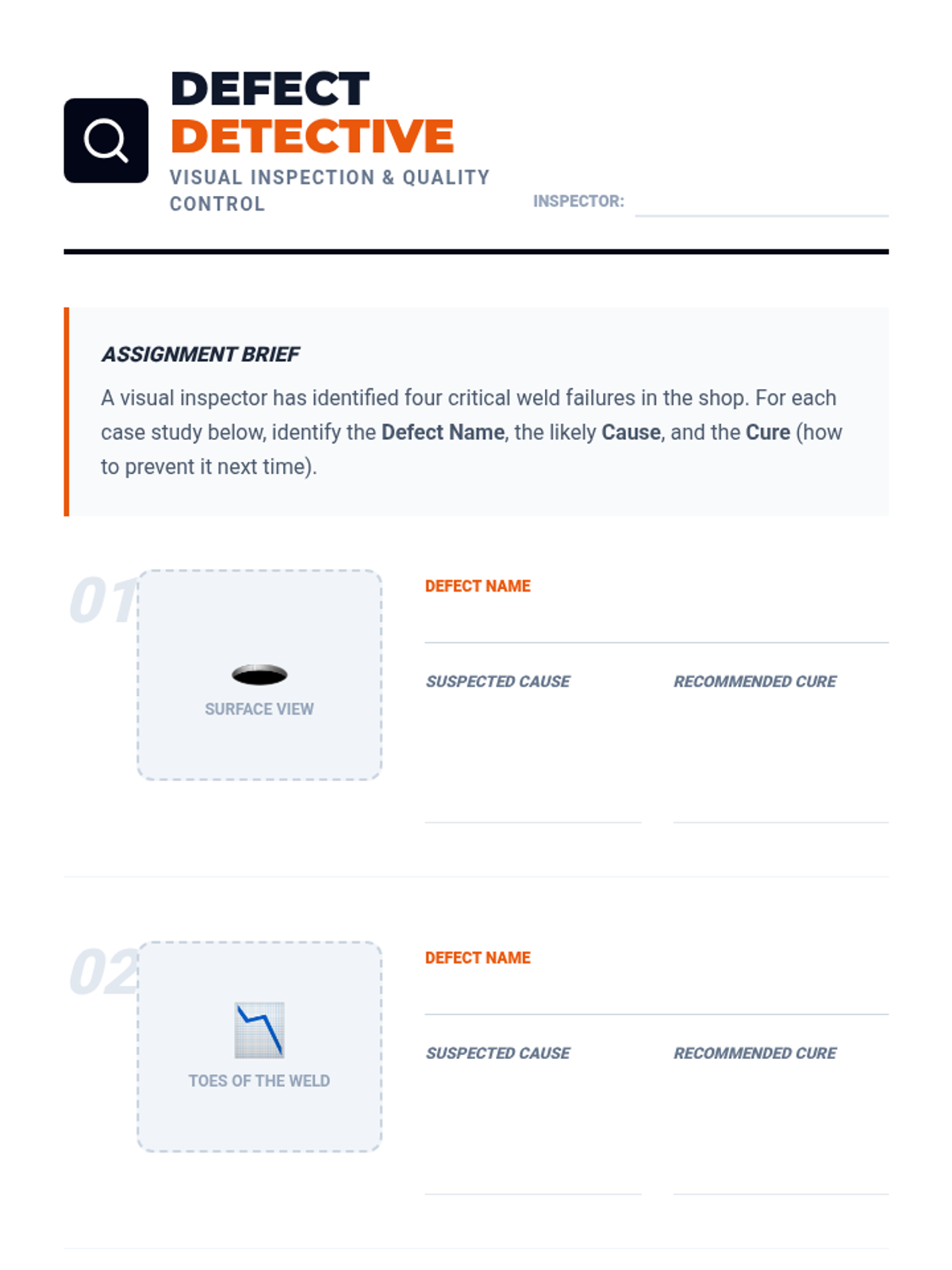
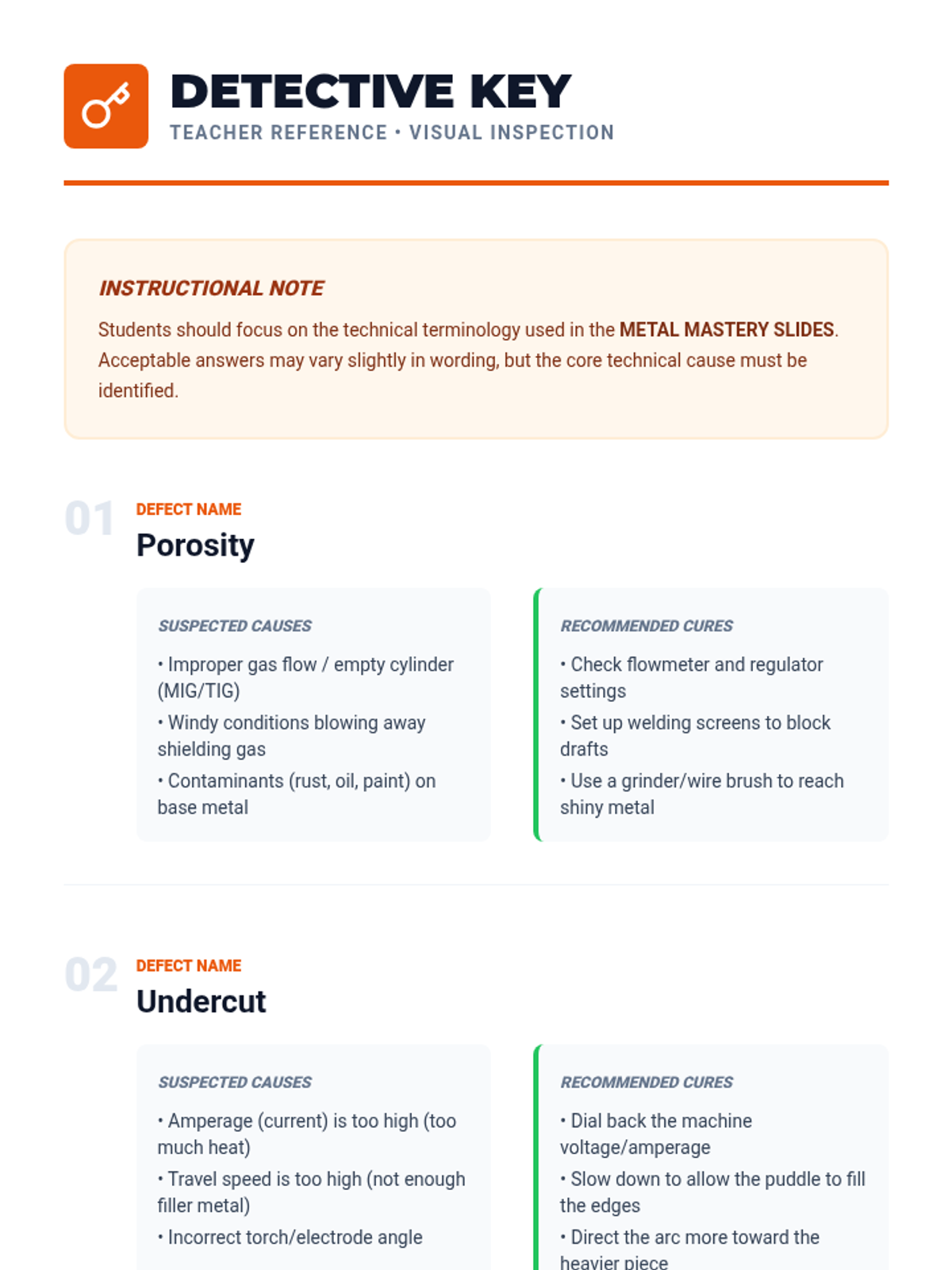
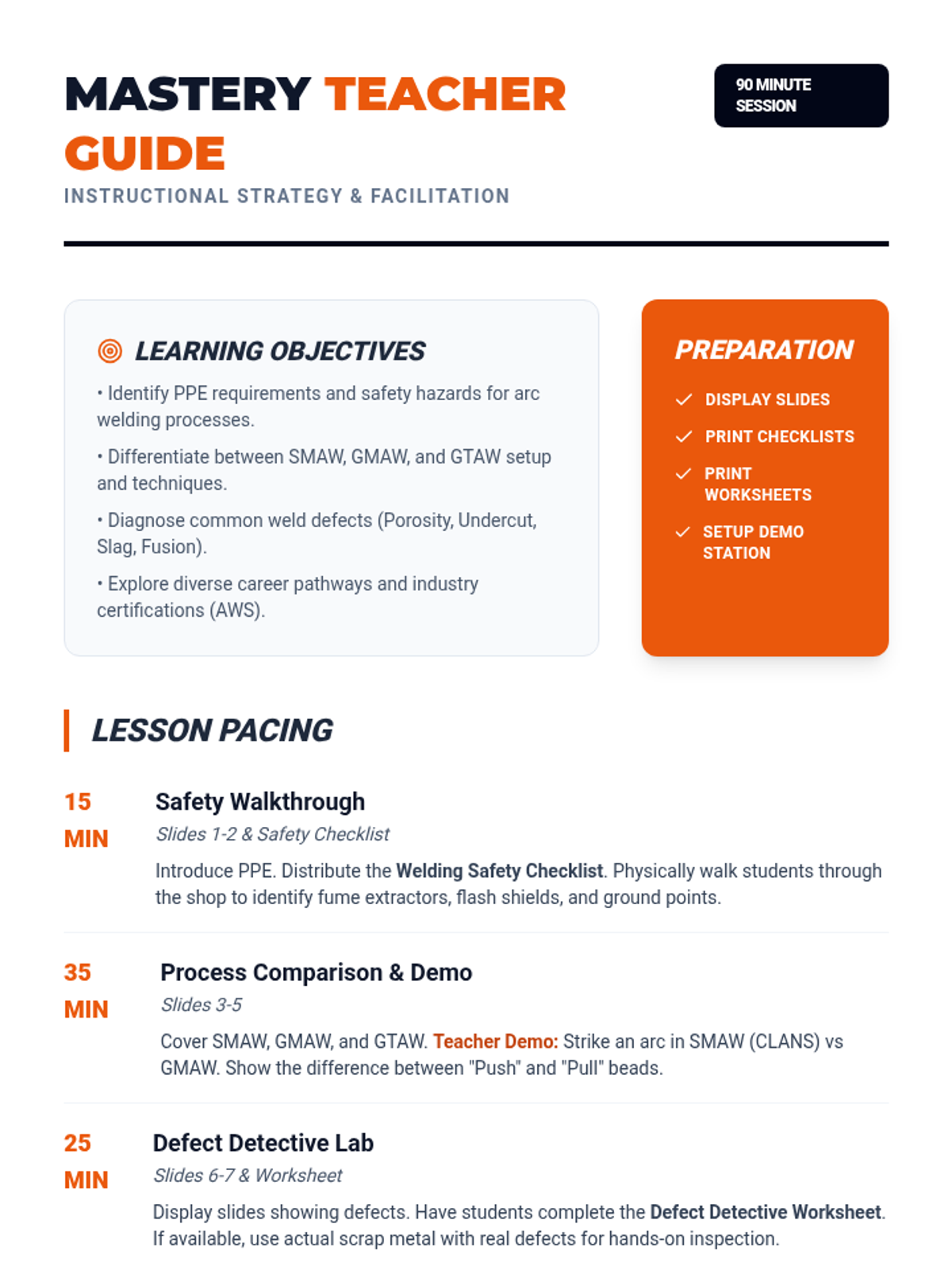
A comprehensive introduction to the fundamental processes, safety protocols, and career paths in professional welding. Students will explore SMAW, GMAW, and GTAW techniques while learning to identify quality welds.
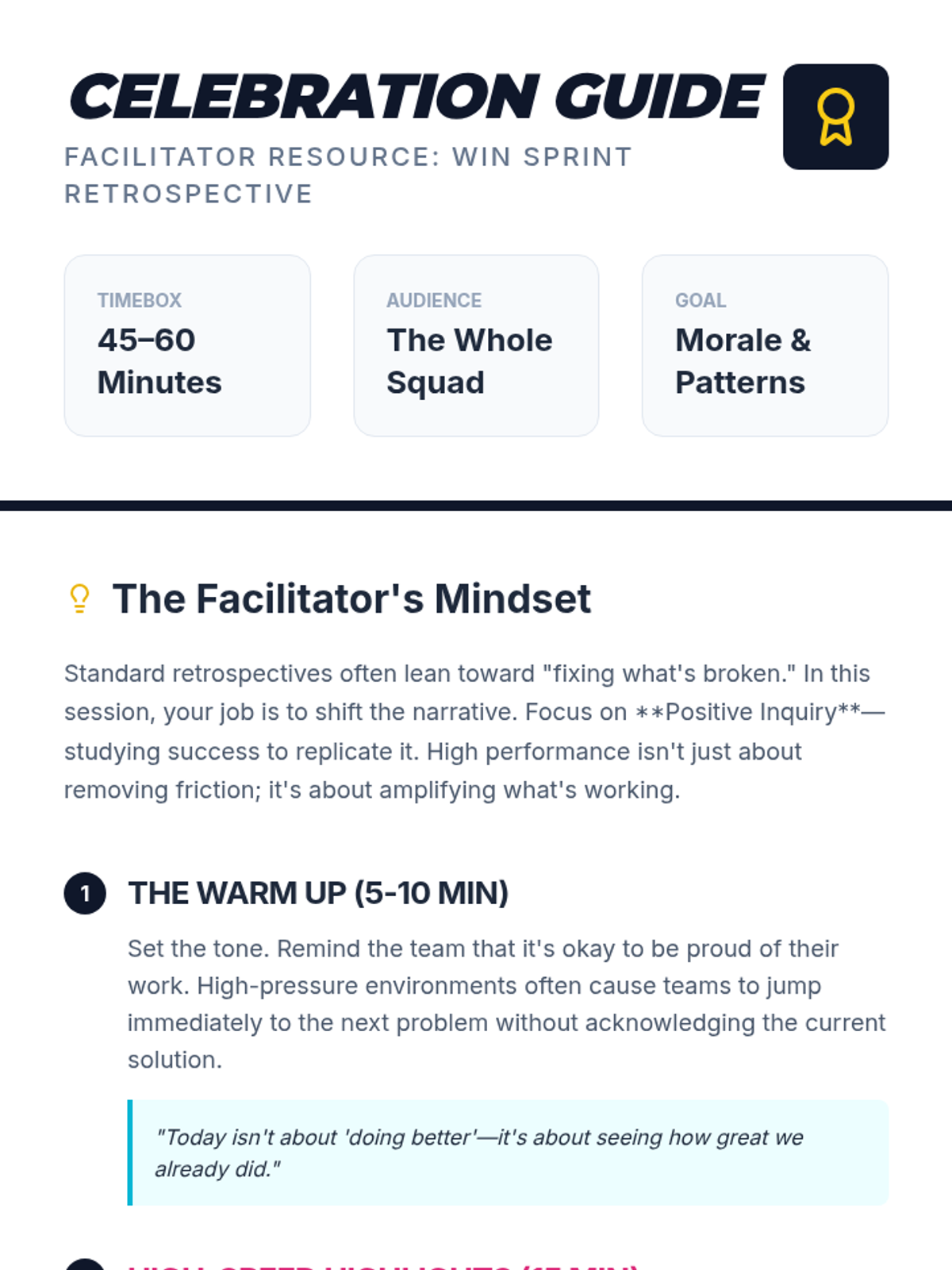
A high-energy agile retrospective focused on celebrating team milestones, recognizing individual contributions, and reflecting on successful patterns to carry forward into future sprints.
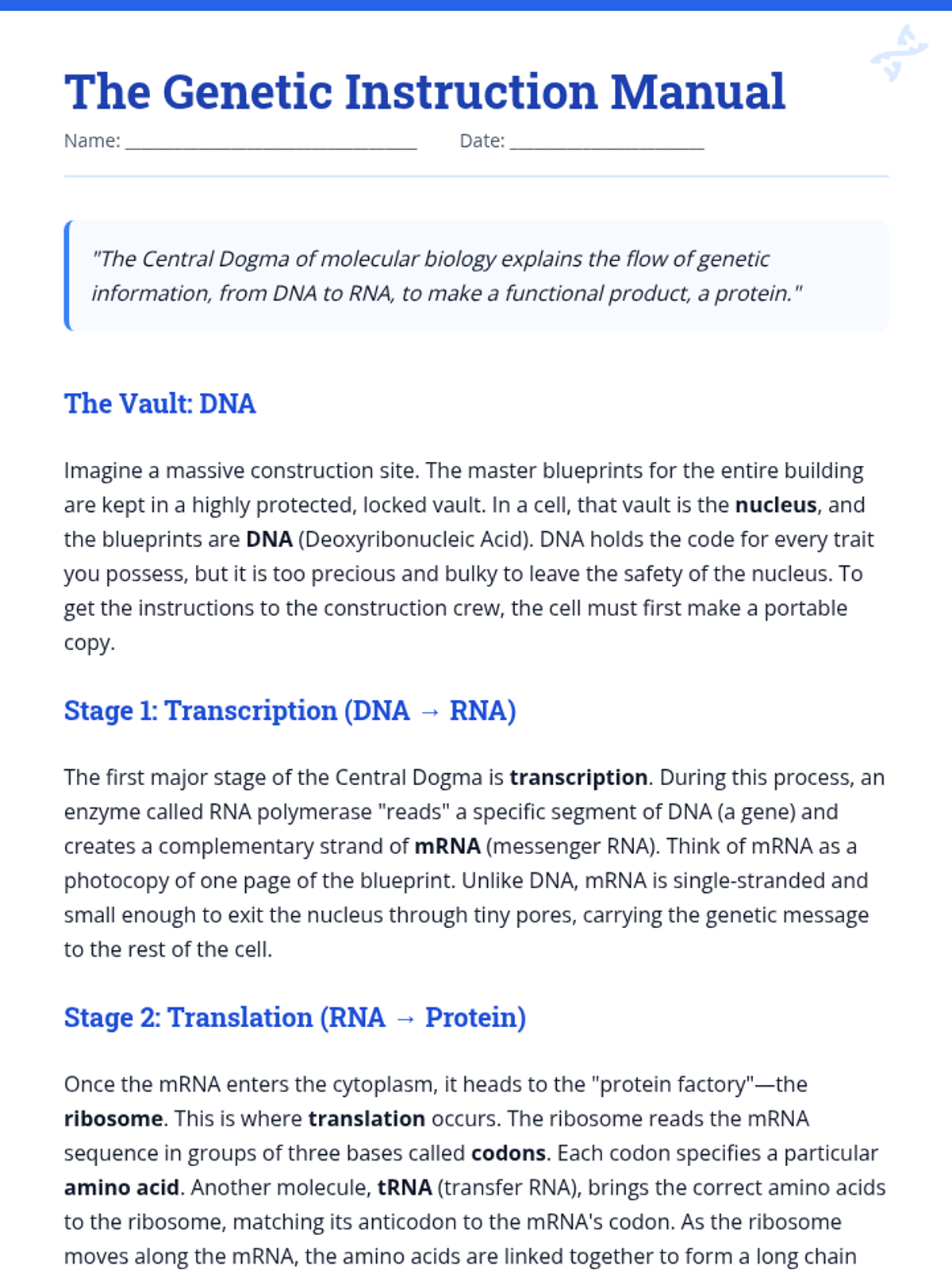
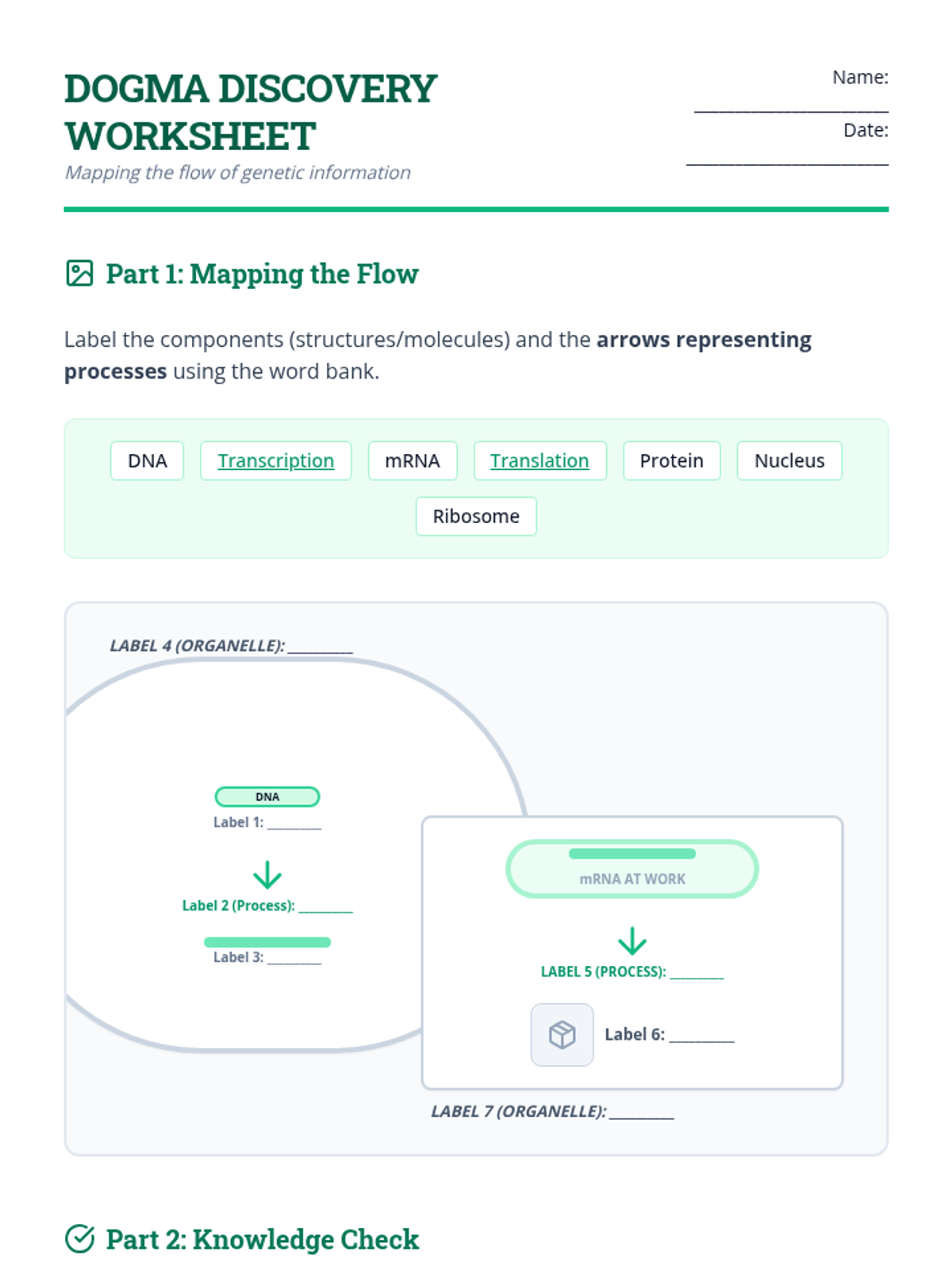
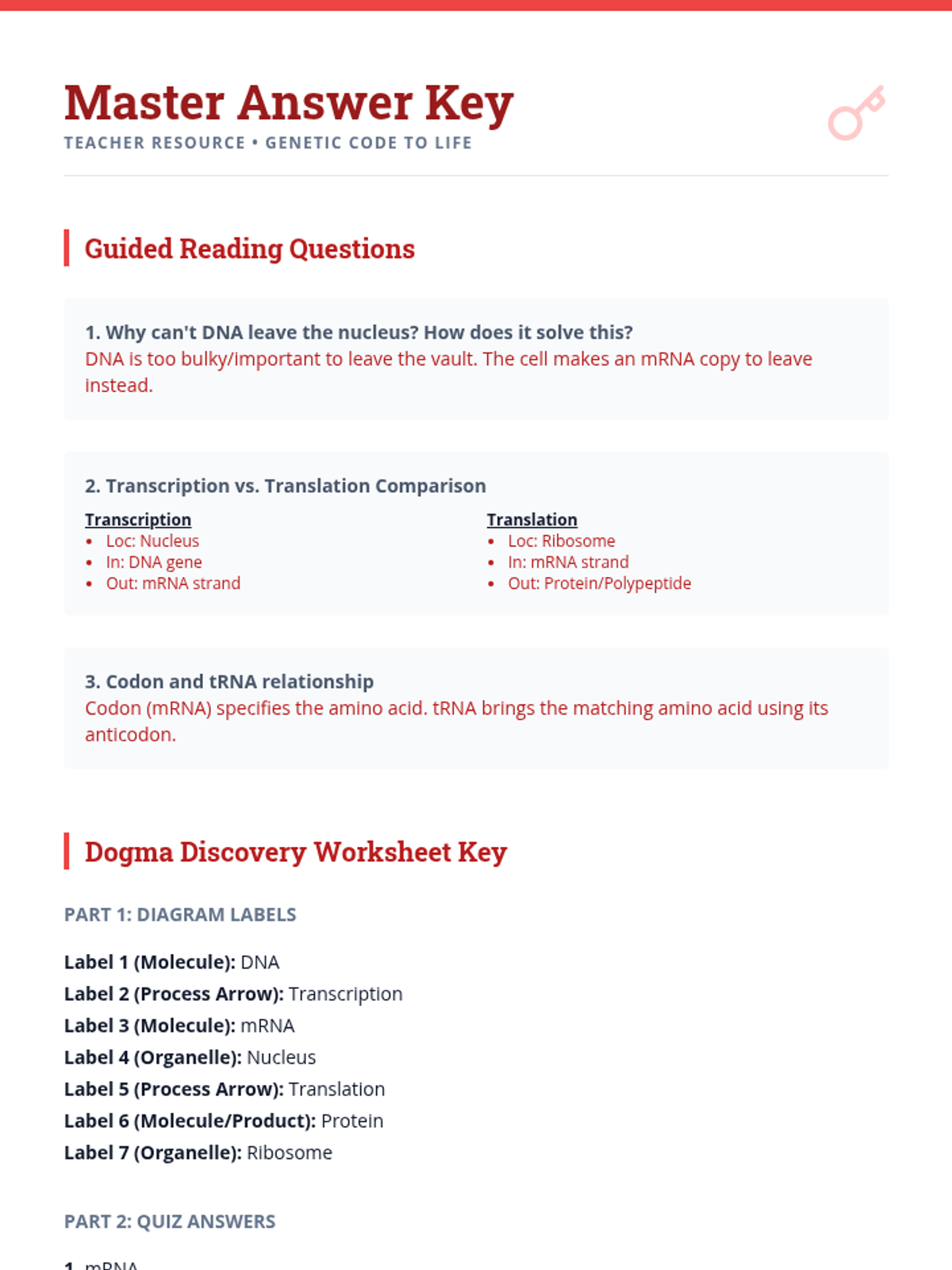
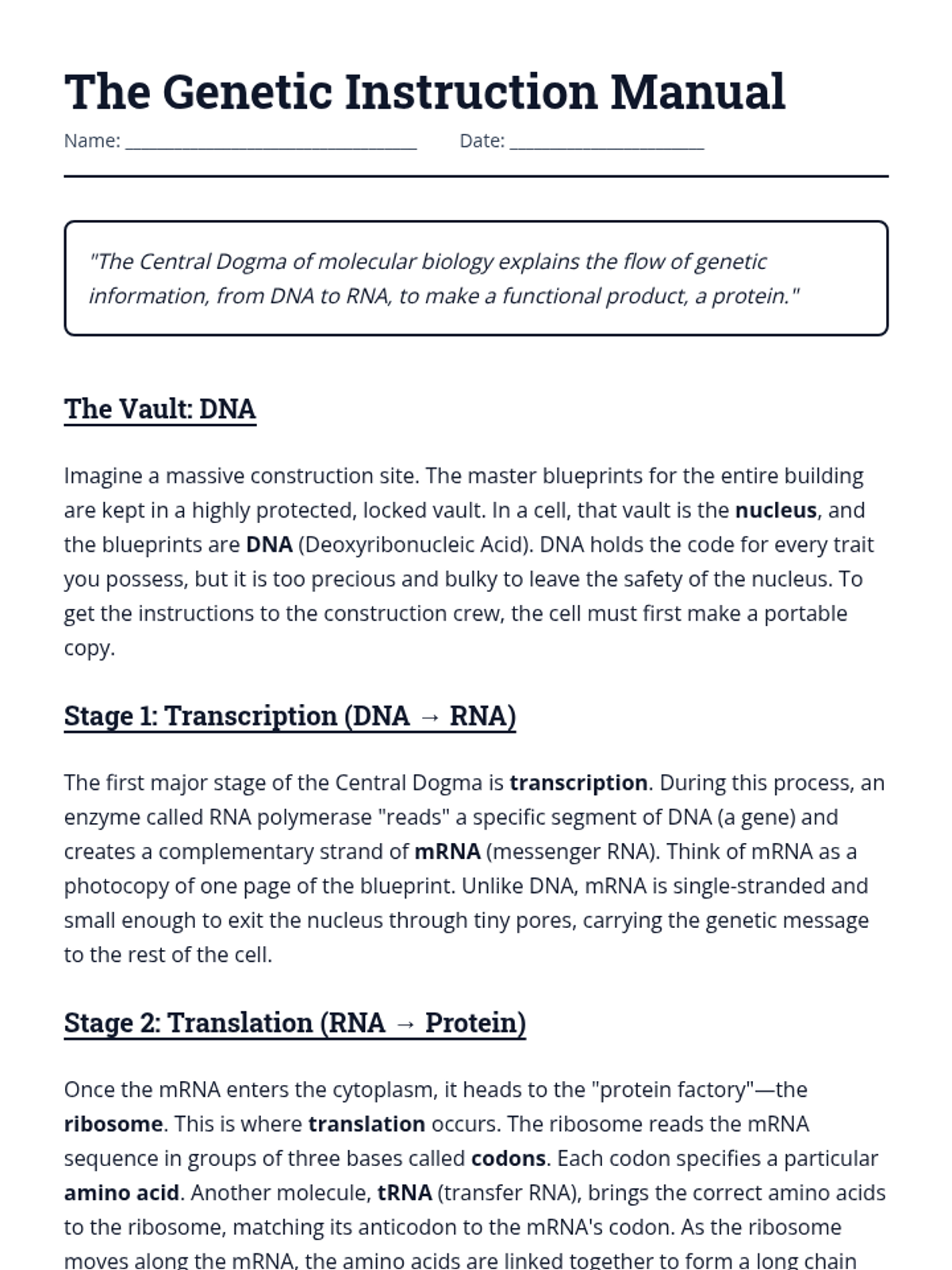
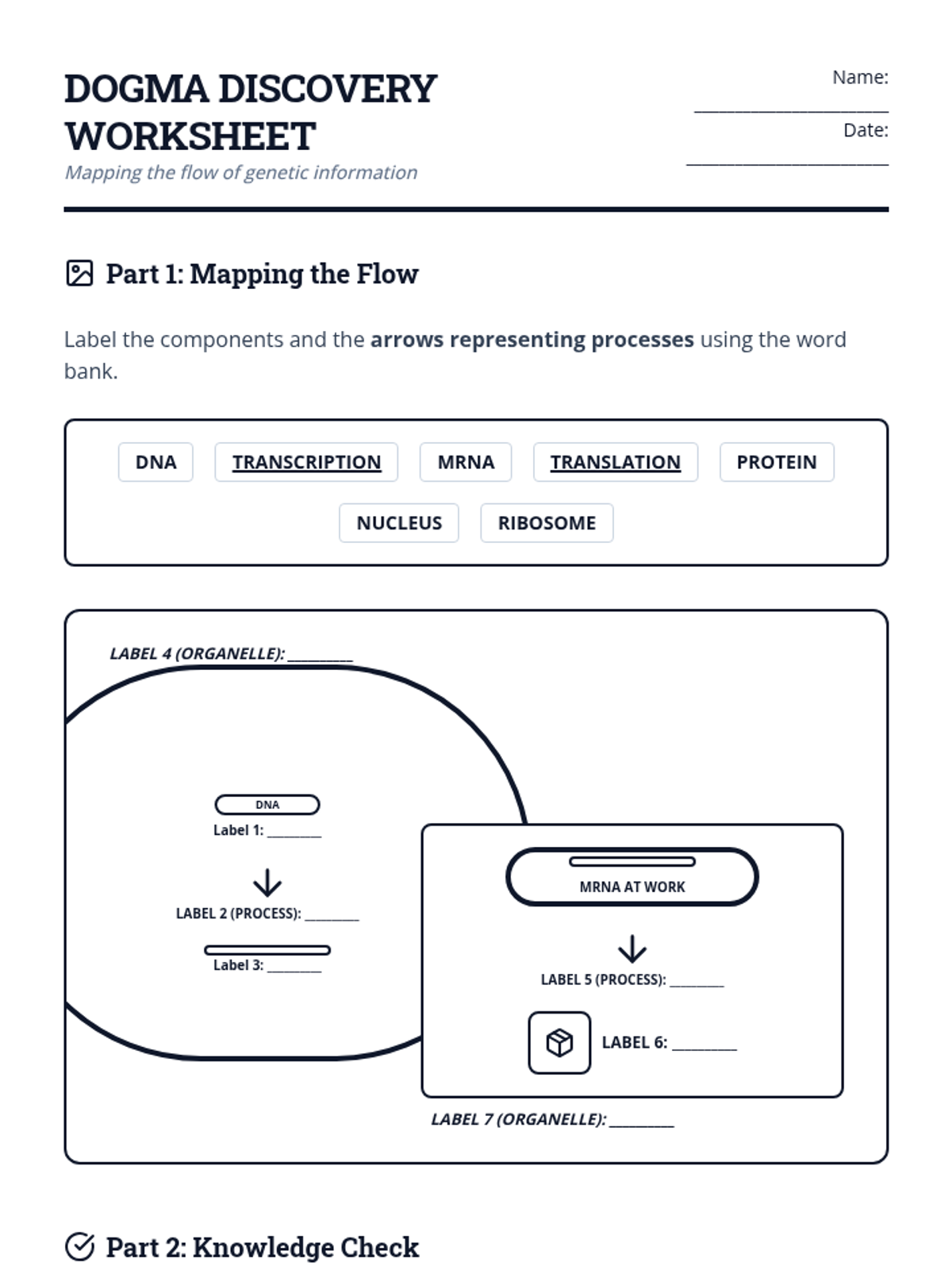
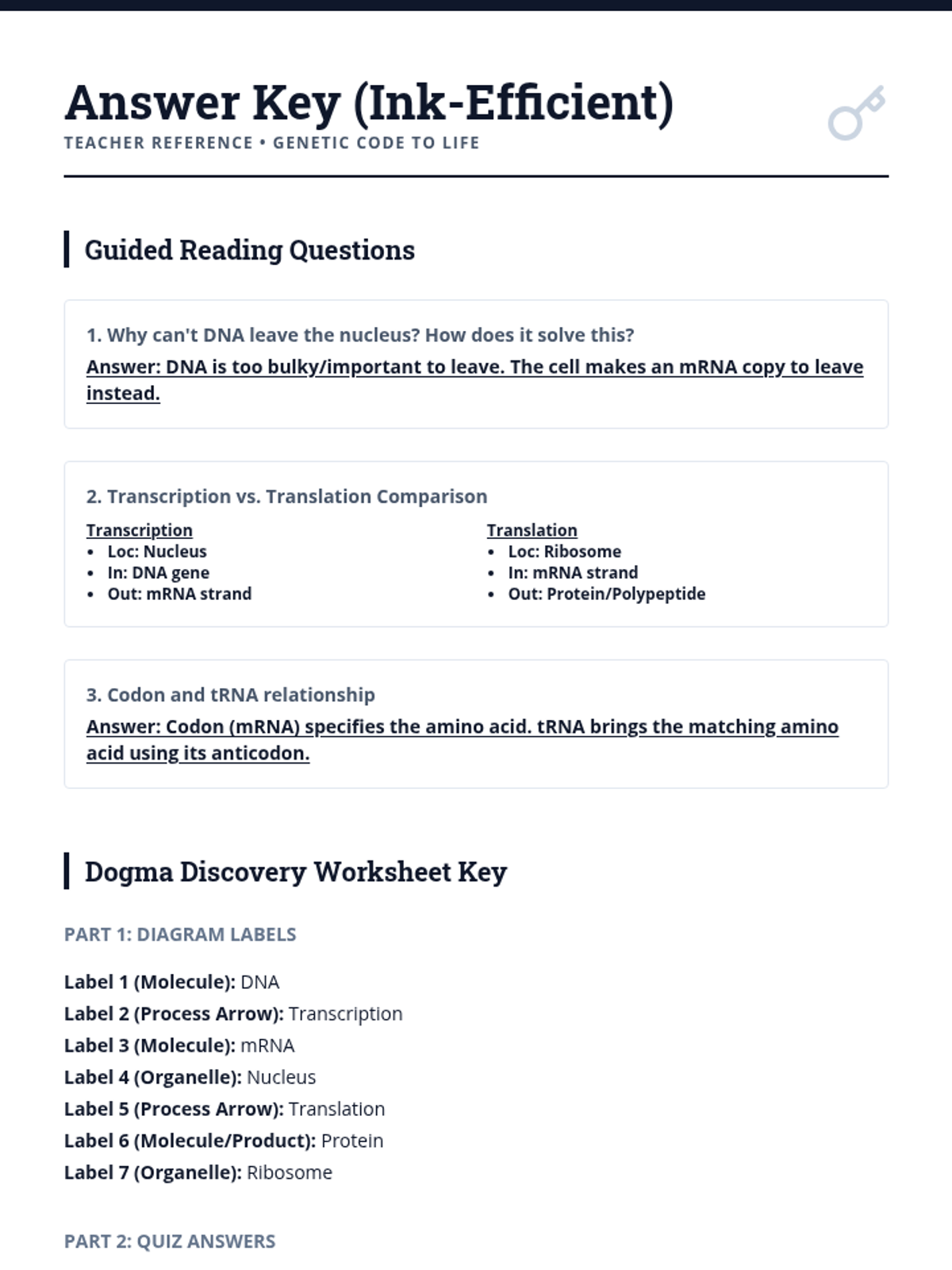
A comprehensive introduction to the Central Dogma of biology, tracing the flow of genetic information from DNA to RNA to Protein through reading, diagrams, and assessment.
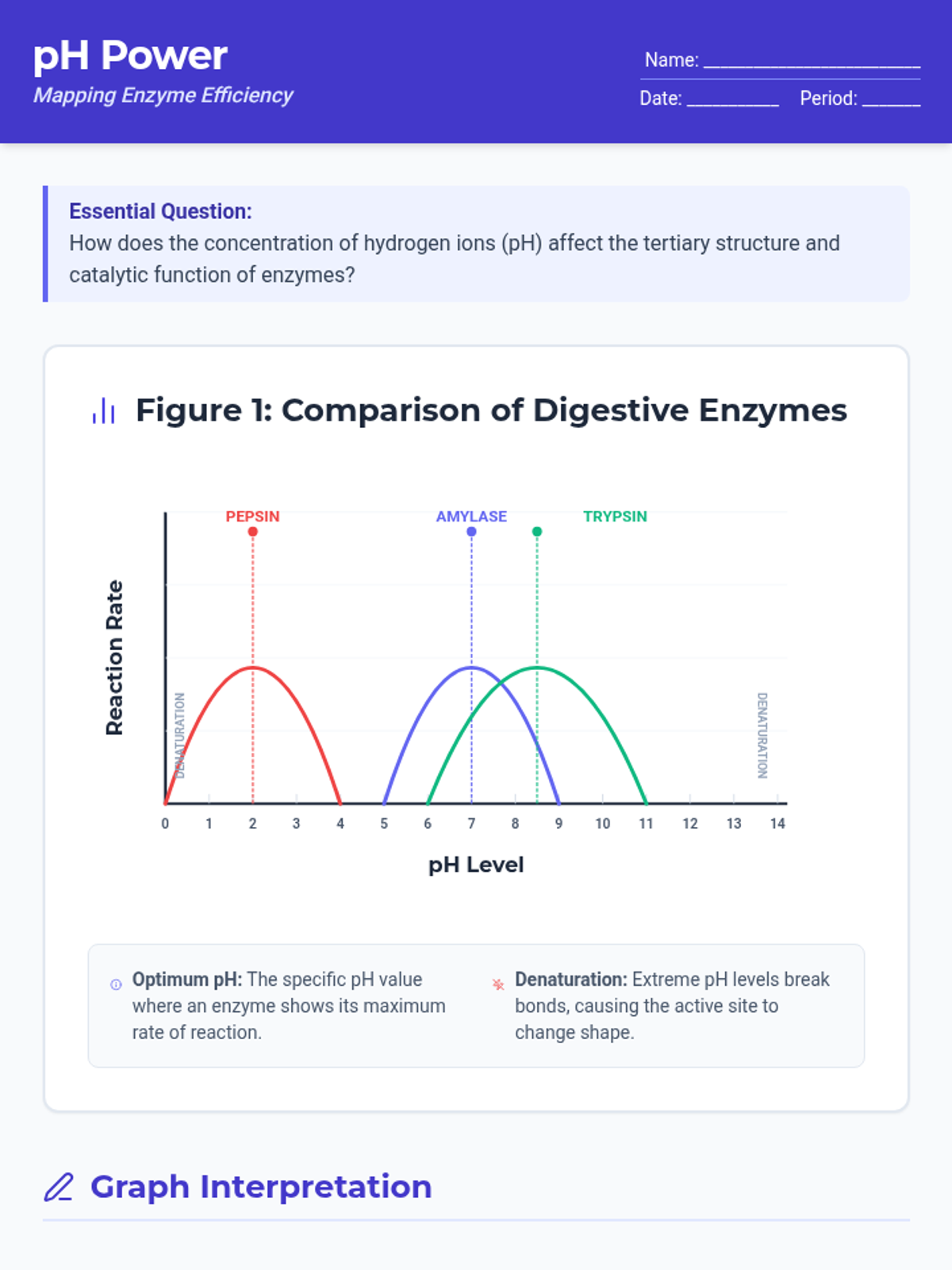
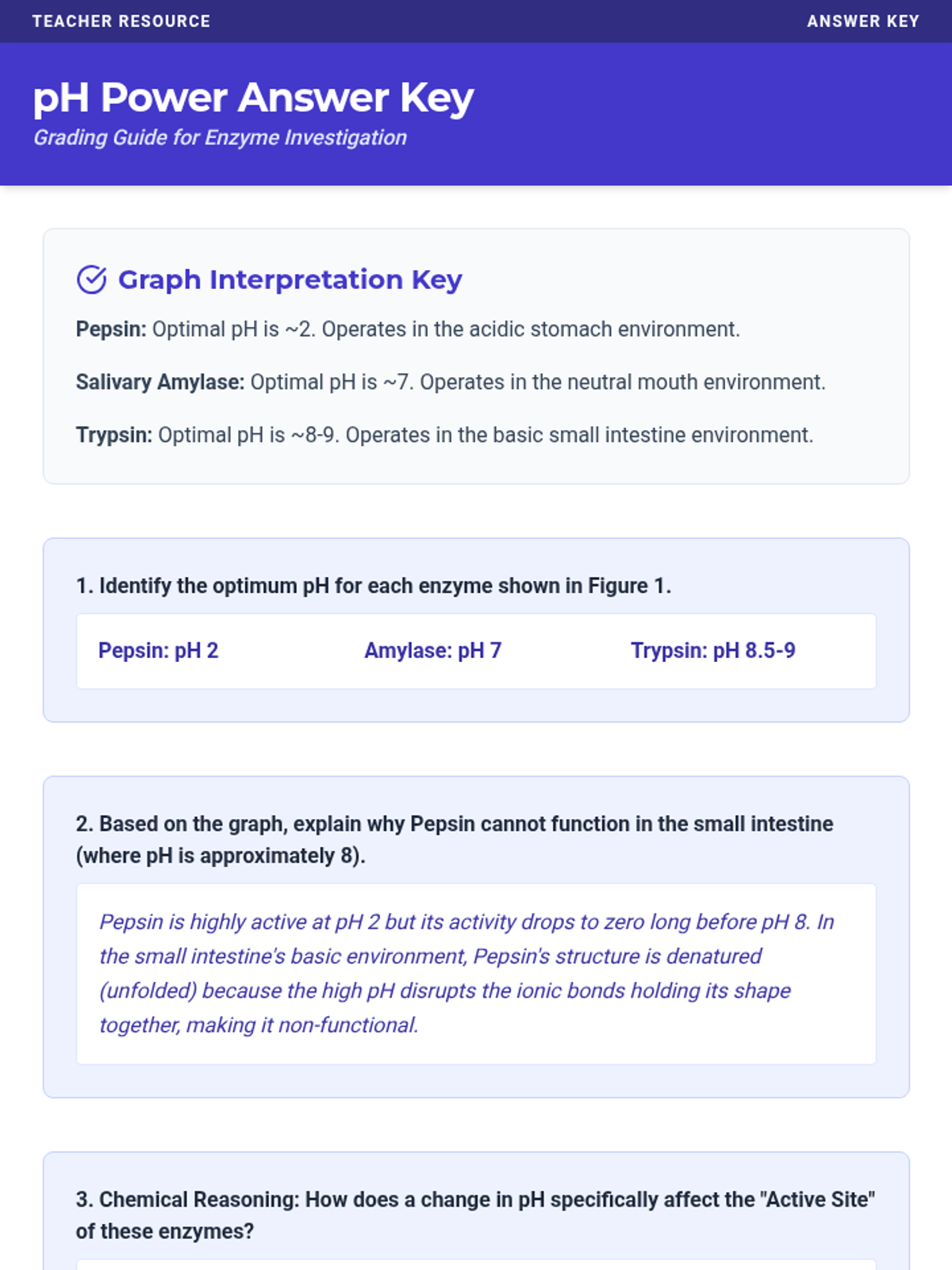
Explore how environmental factors like pH influence enzyme activity through visual models and data analysis.
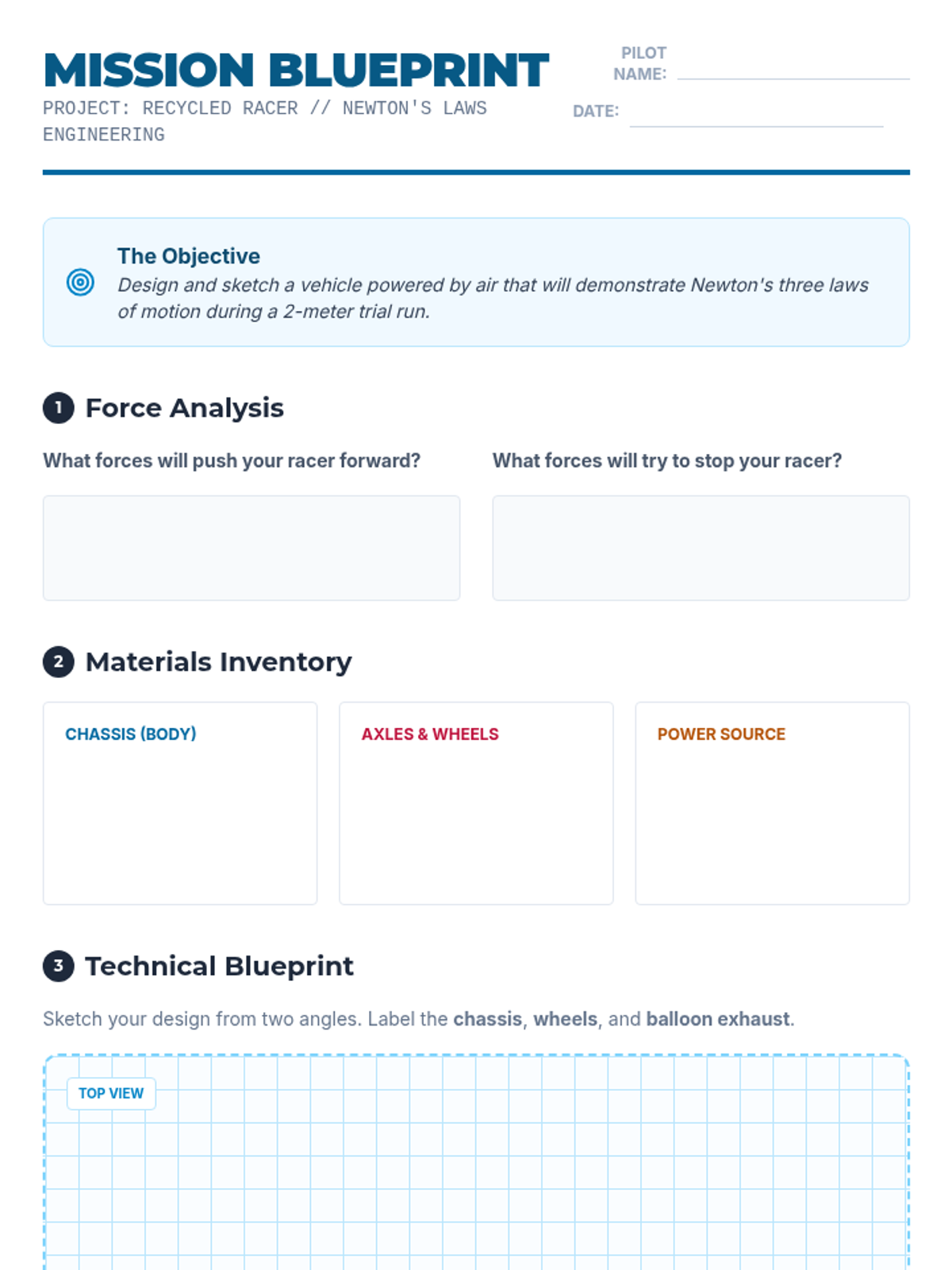
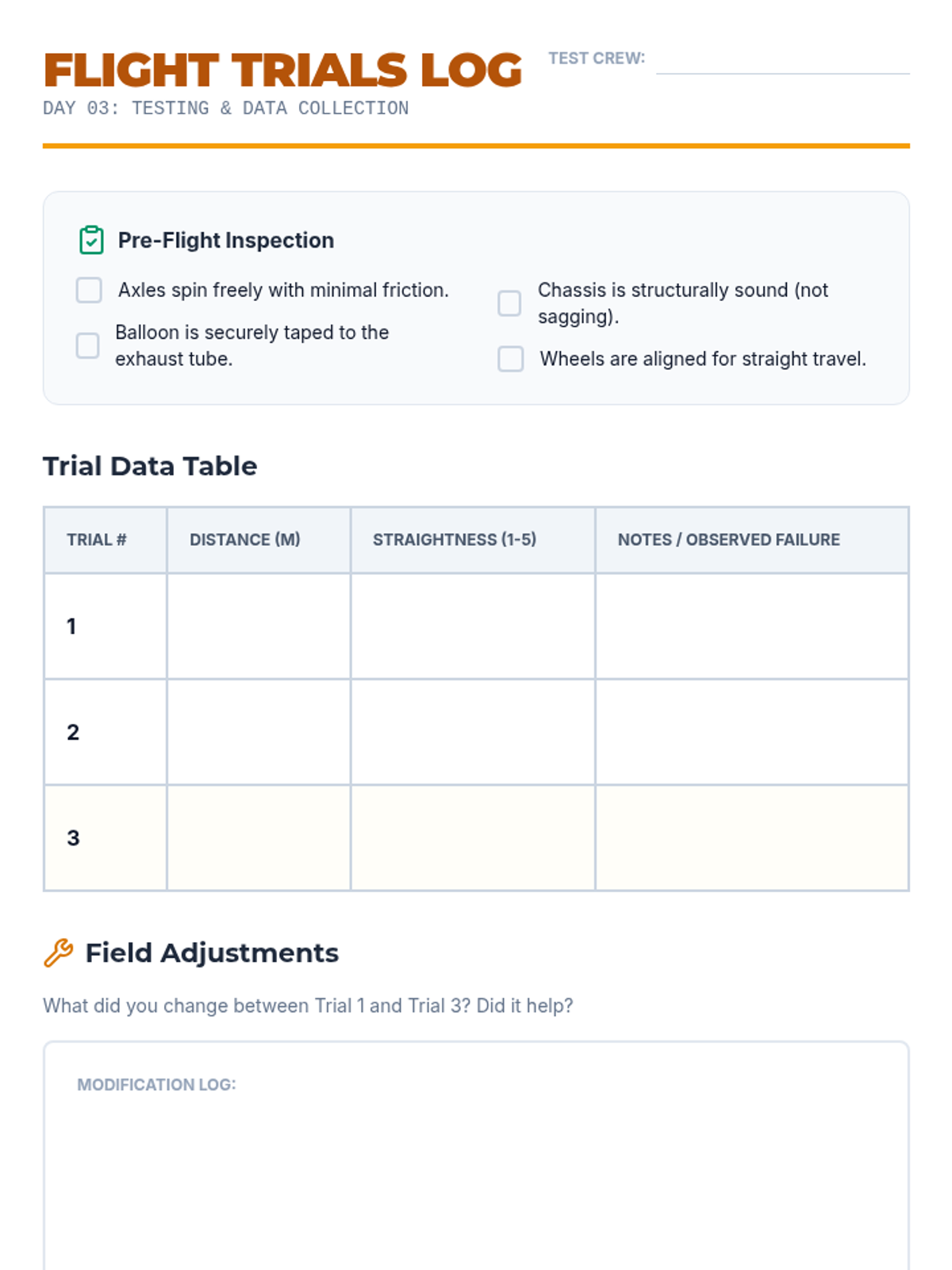
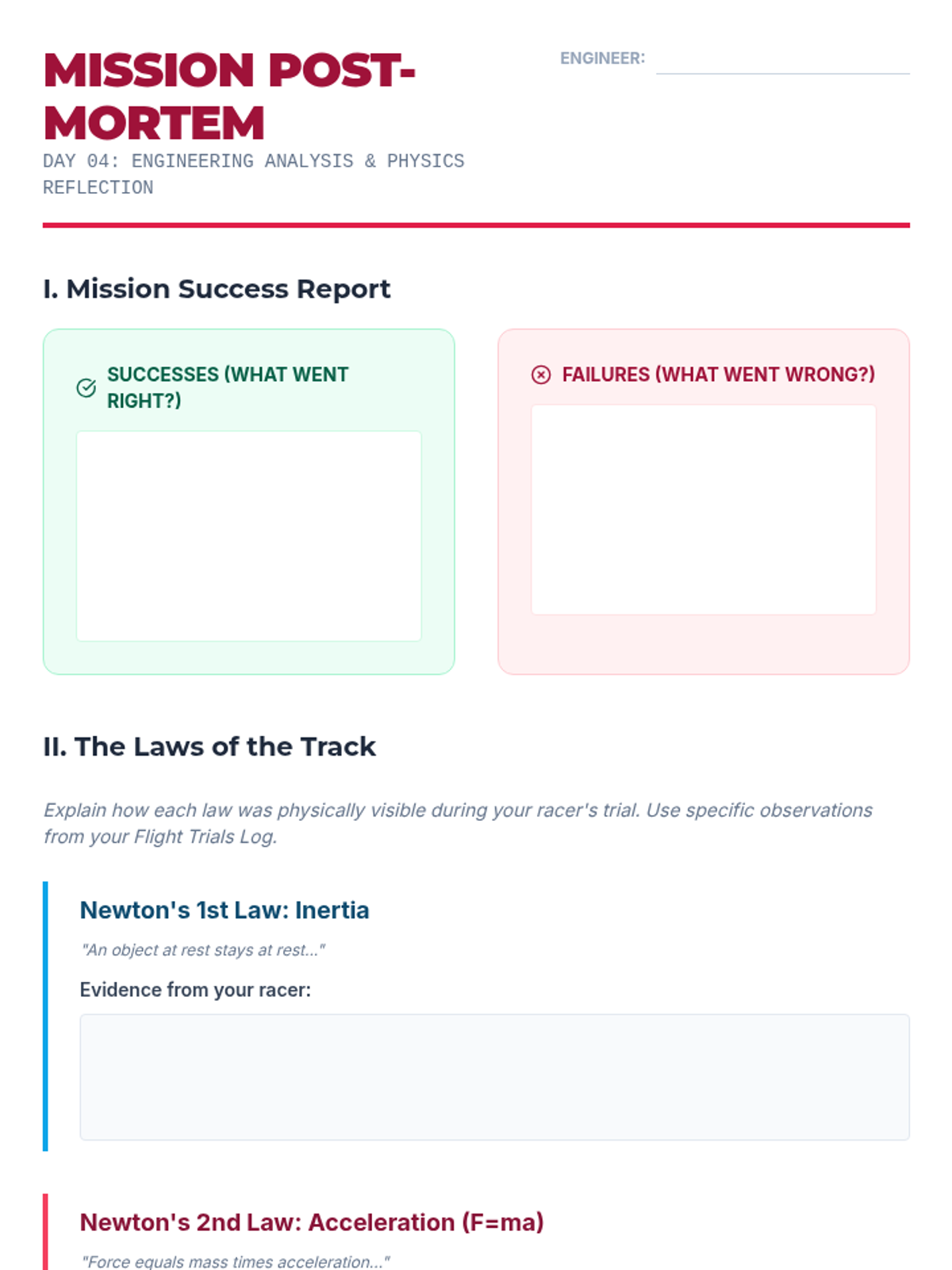
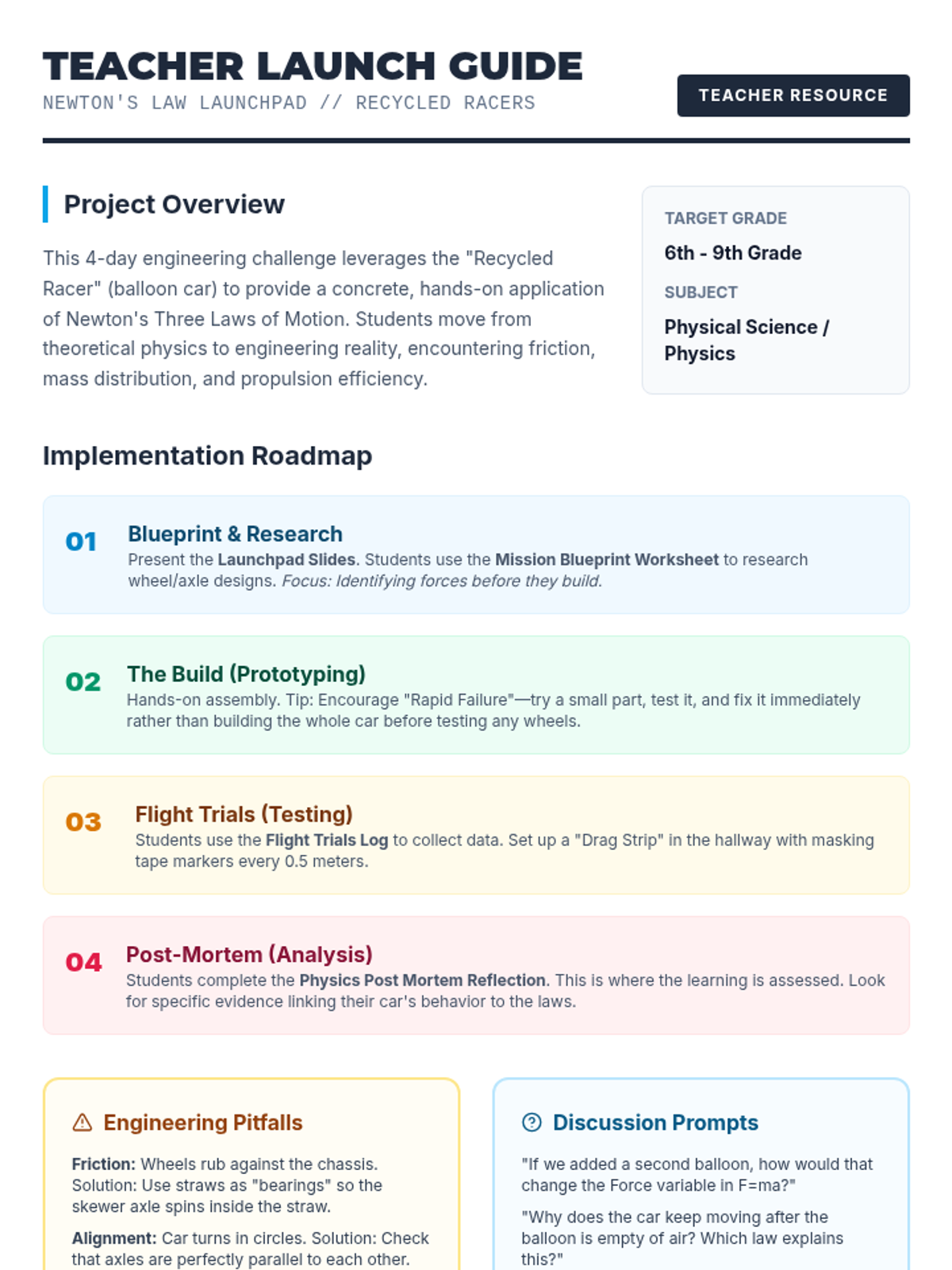
A 4-day hands-on engineering challenge where students design and build a device that demonstrates Newton's three laws of motion using low-cost recycled materials. Students progress through research, blueprinting, prototyping, testing, and a final reflection on the physics at play.
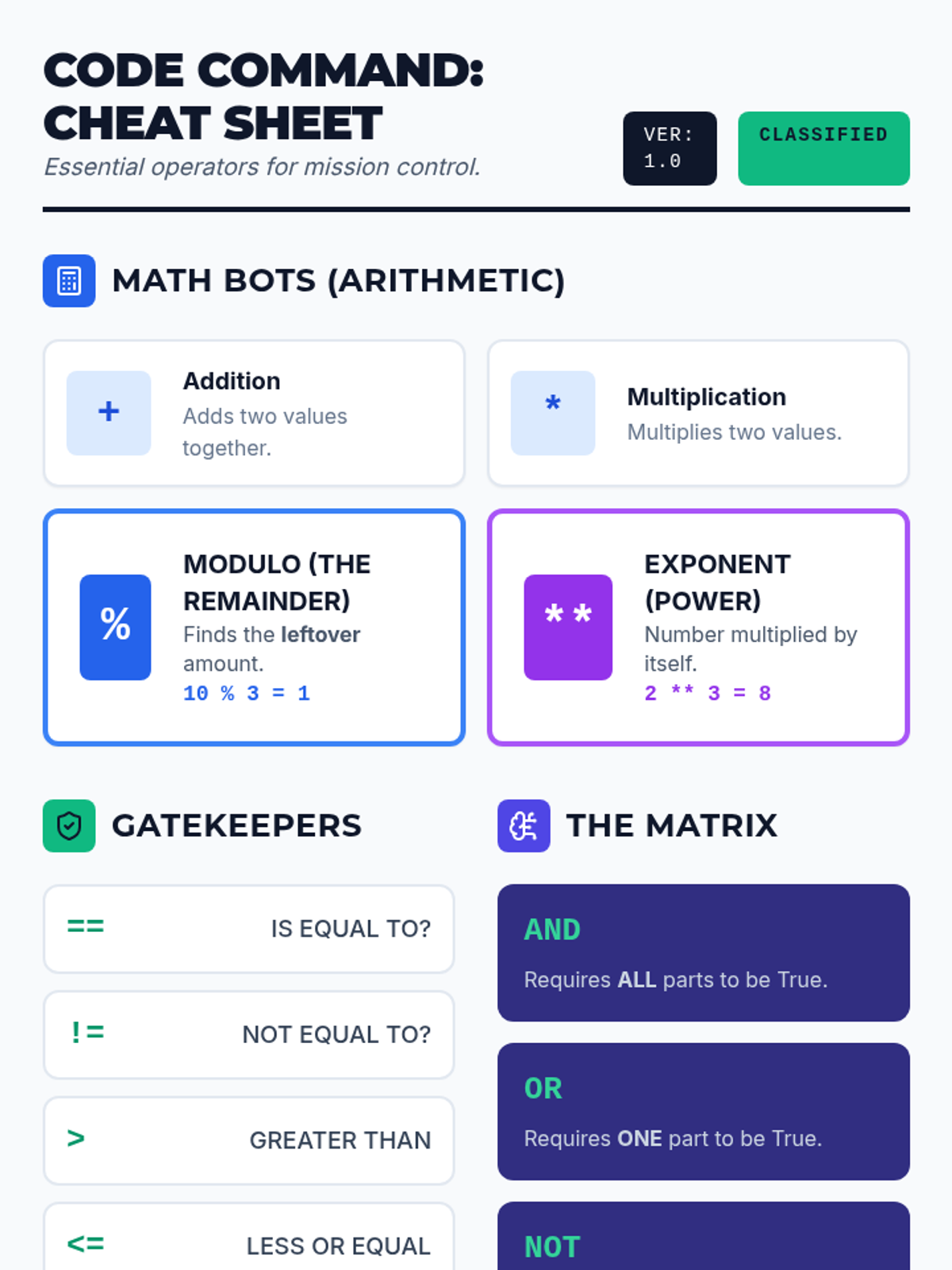
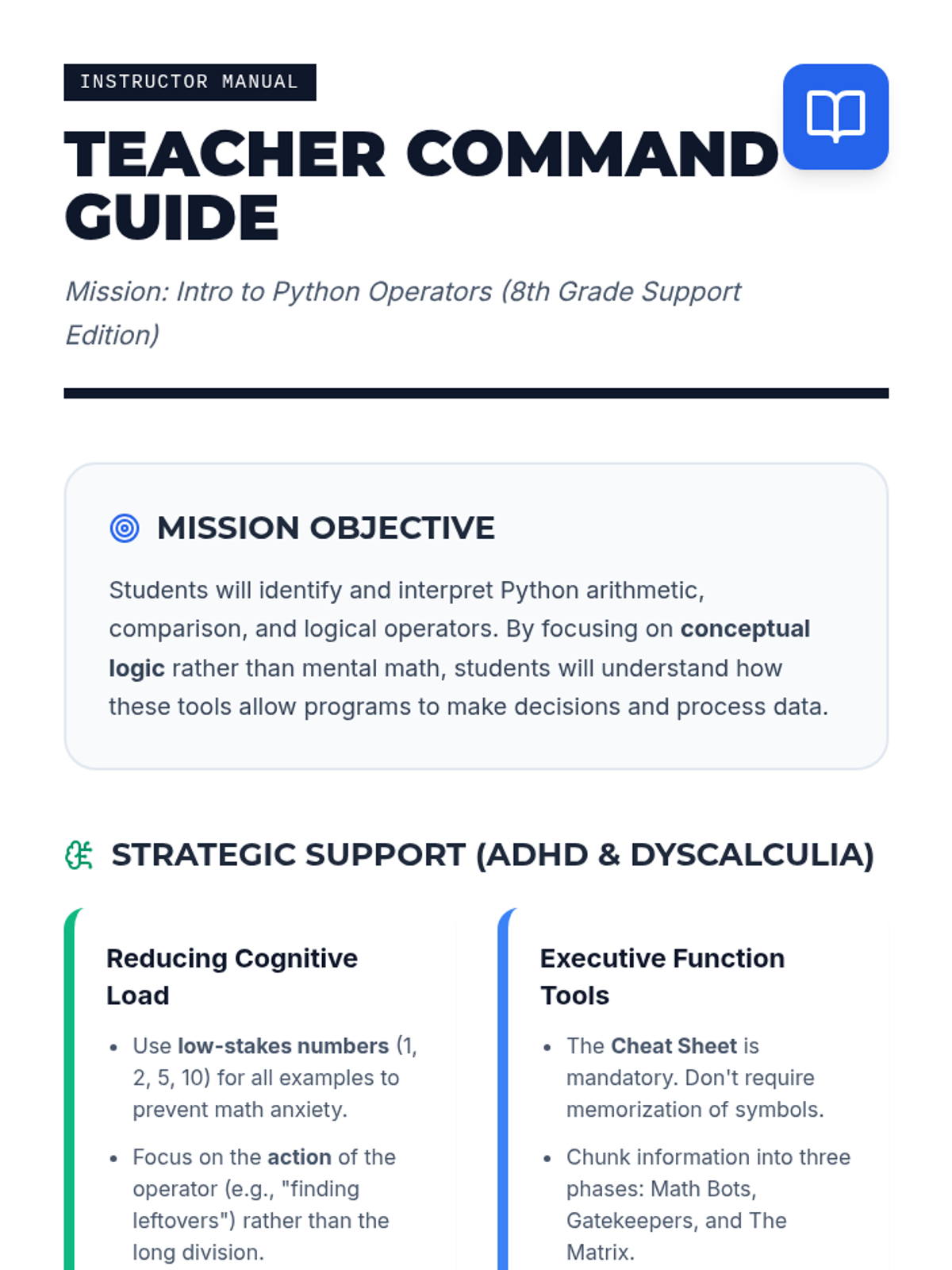
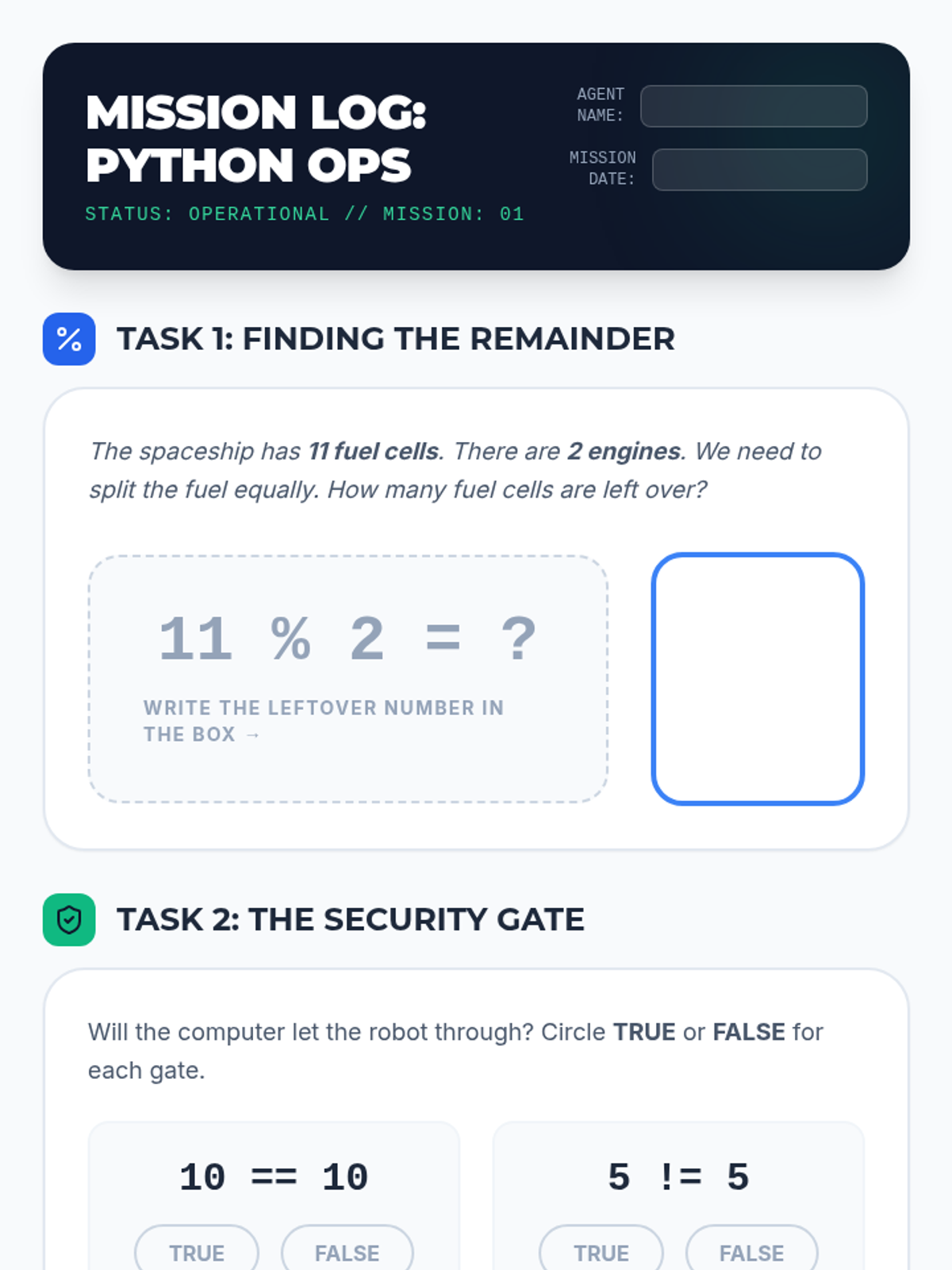
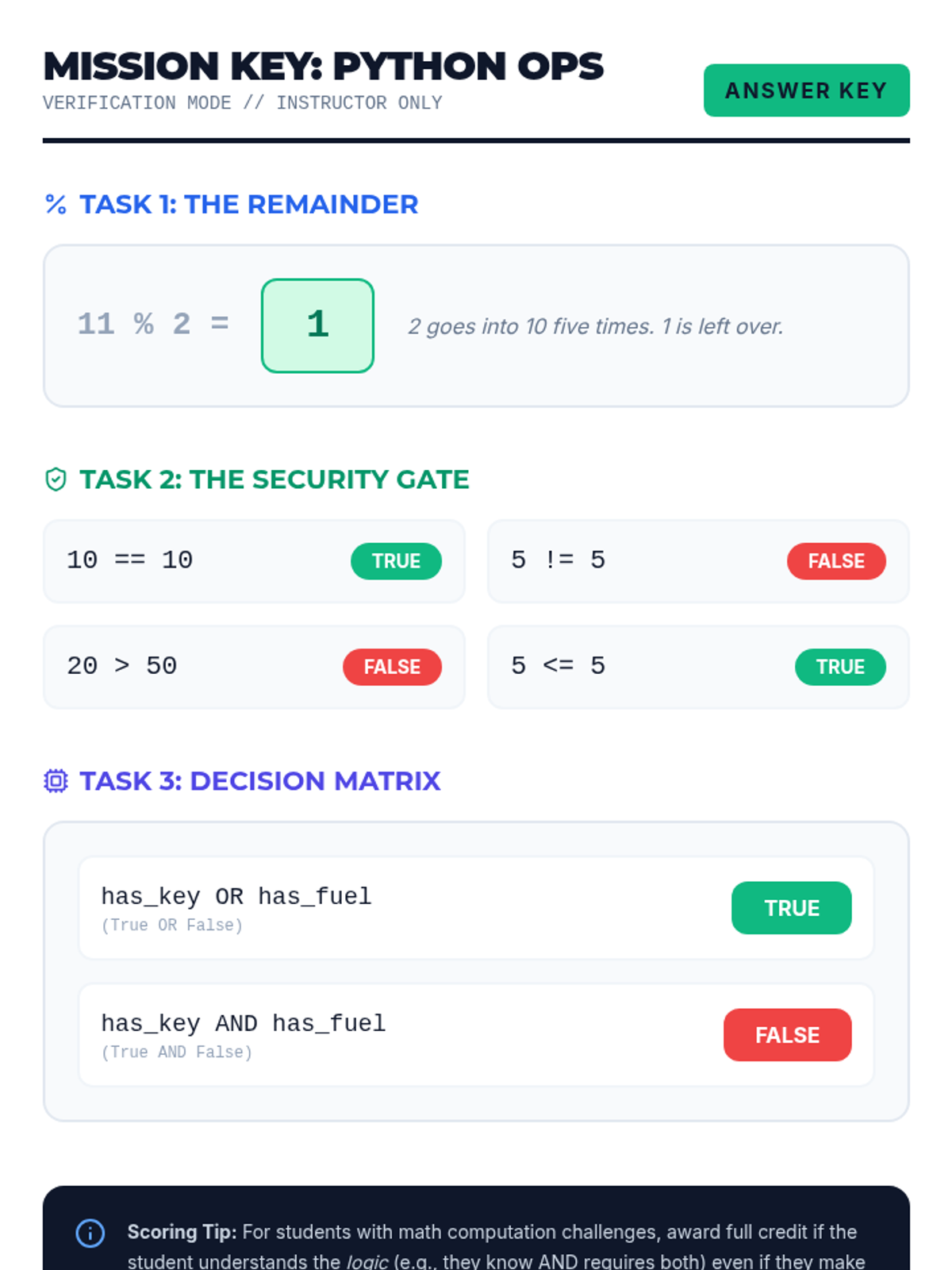
An introductory lesson on Python operators designed for 8th-grade students with ADHD and math challenges. The lesson focuses on conceptual understanding through visual analogies and 'Code Command' mission-based tasks, minimizing complex mental arithmetic.
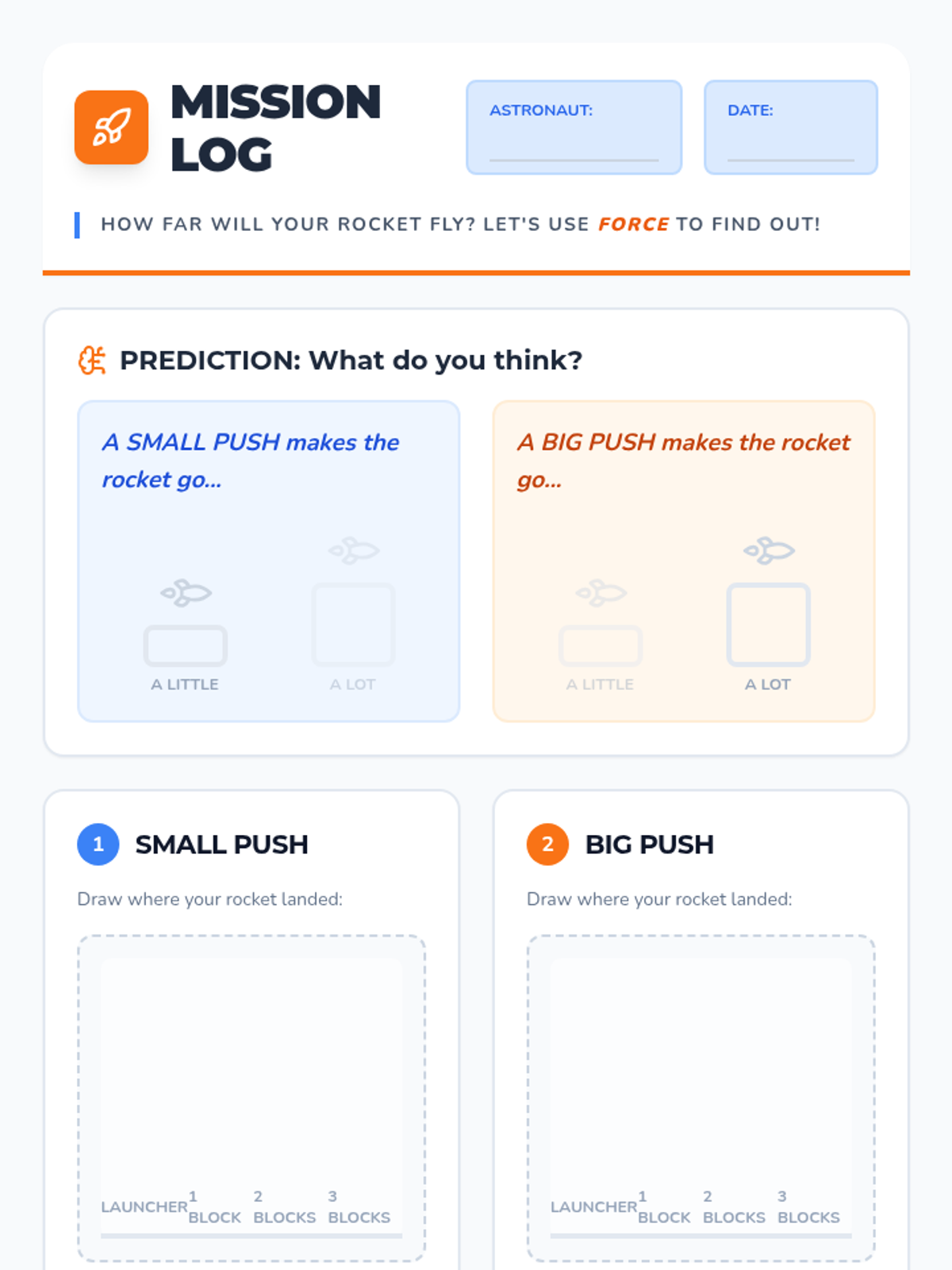
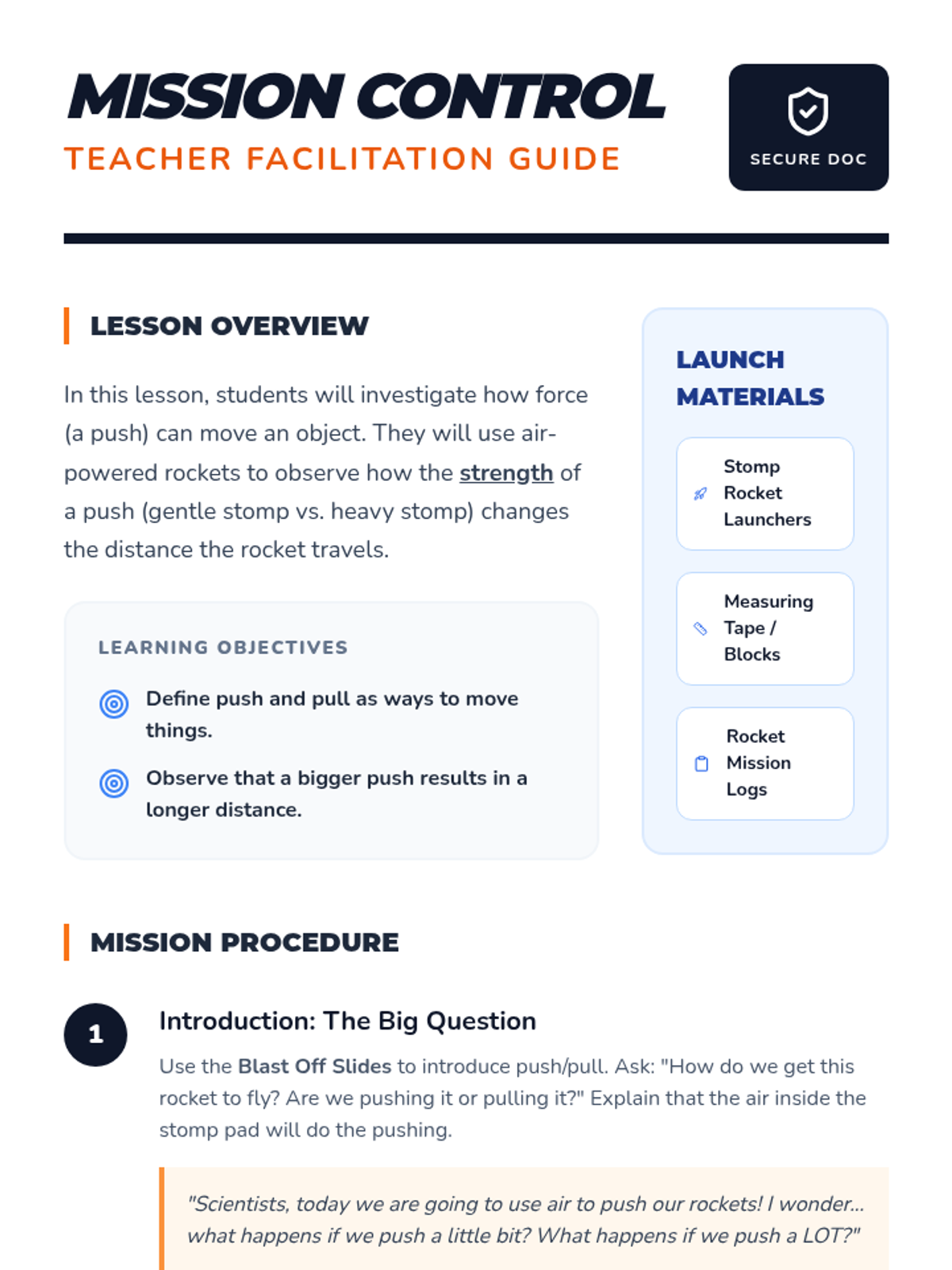
A hands-on exploration of force using air rockets, where kindergarteners learn about pushes and how the strength of a push changes an object's motion.
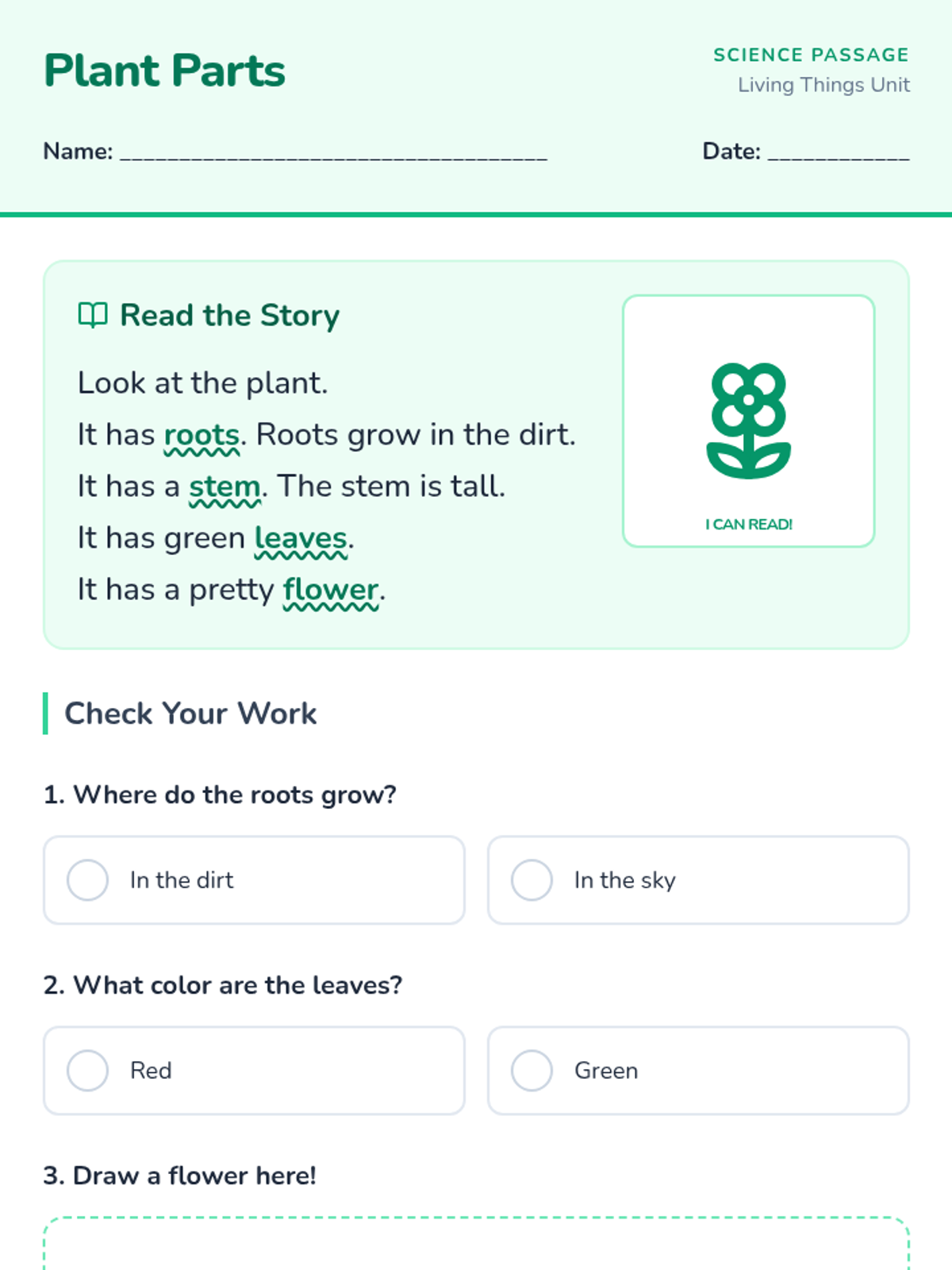
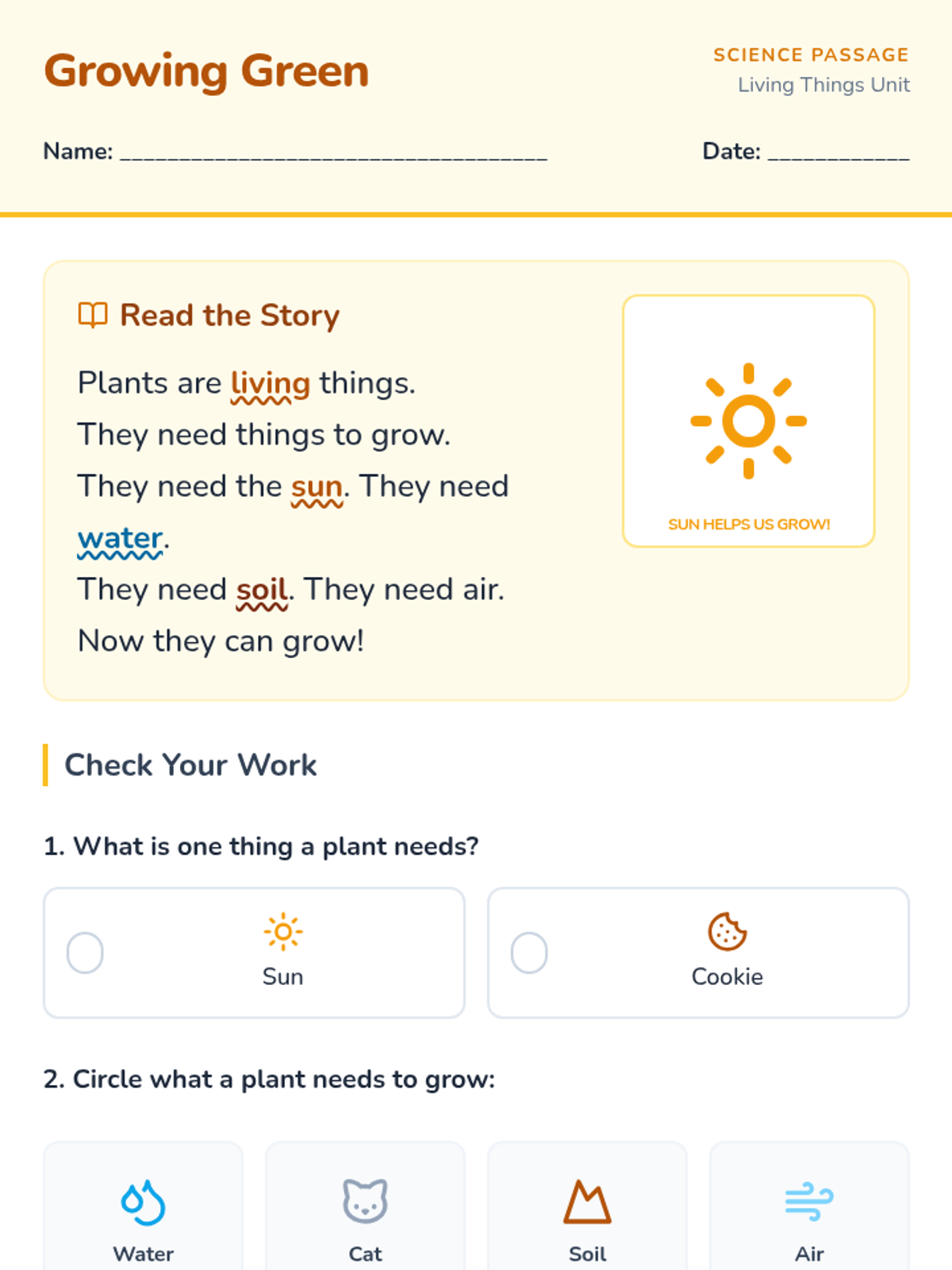
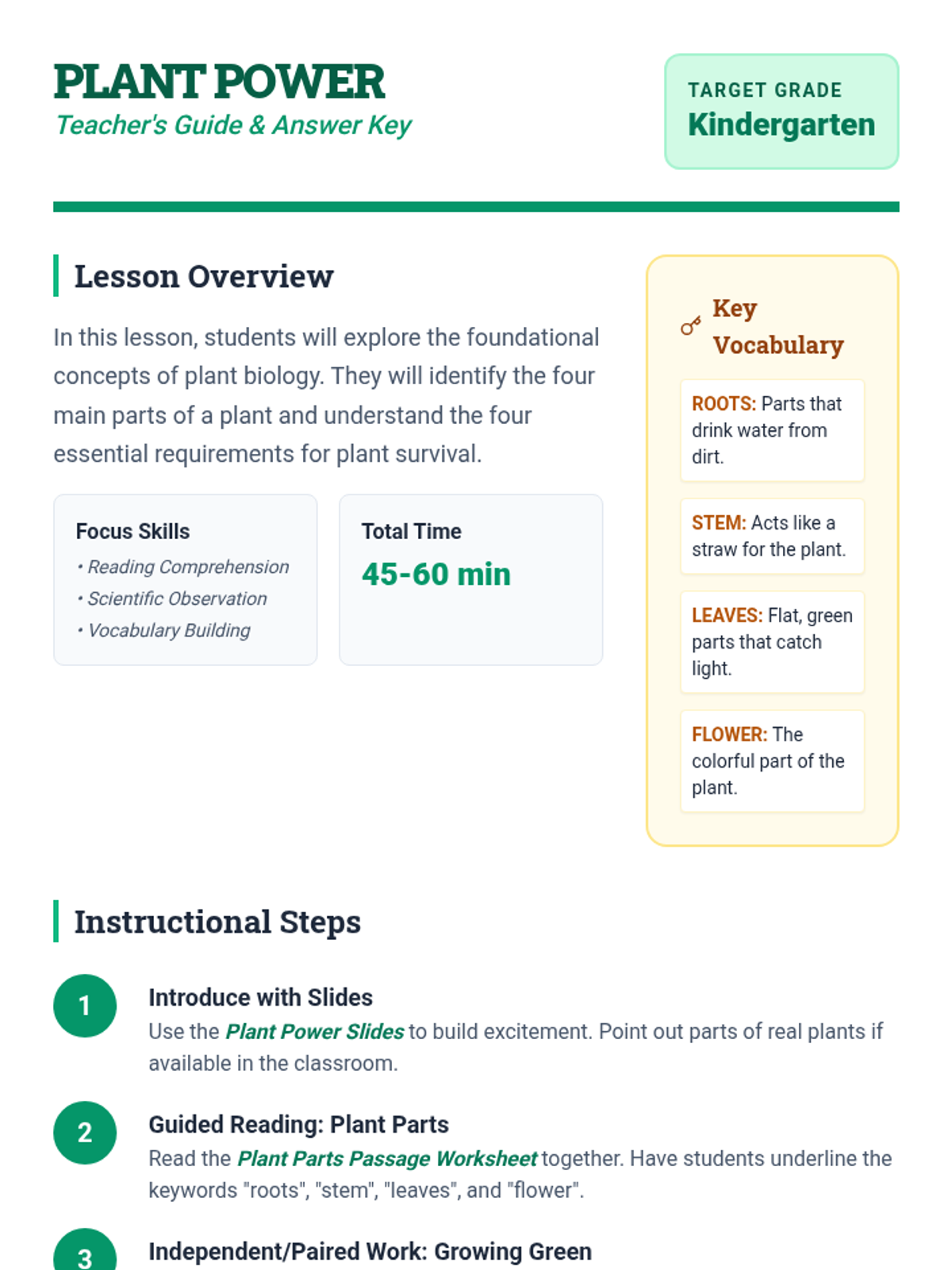
A foundational science lesson for Kindergarteners covering plant anatomy and the essential requirements for plant growth through simple reading passages and visual aids.
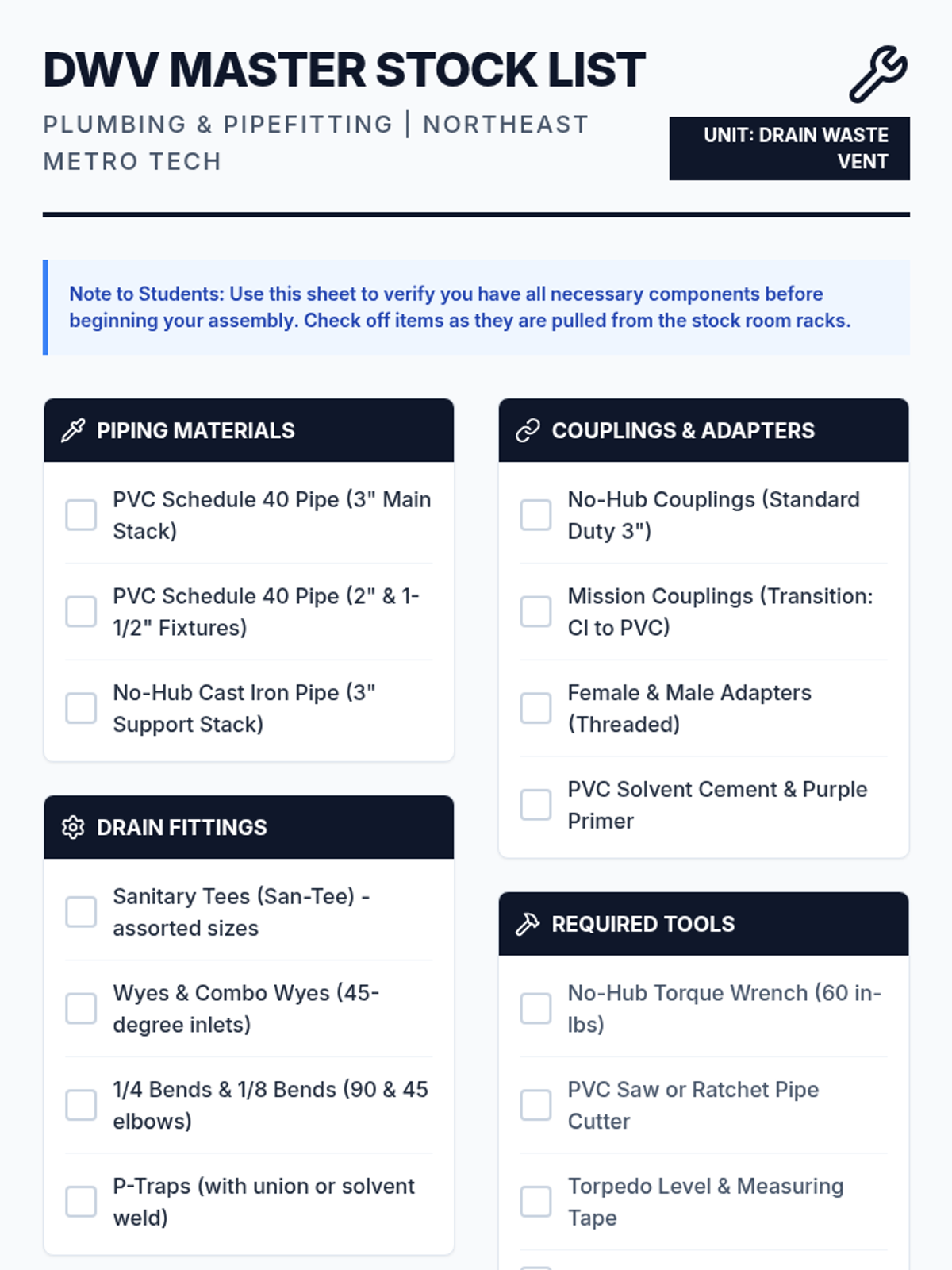
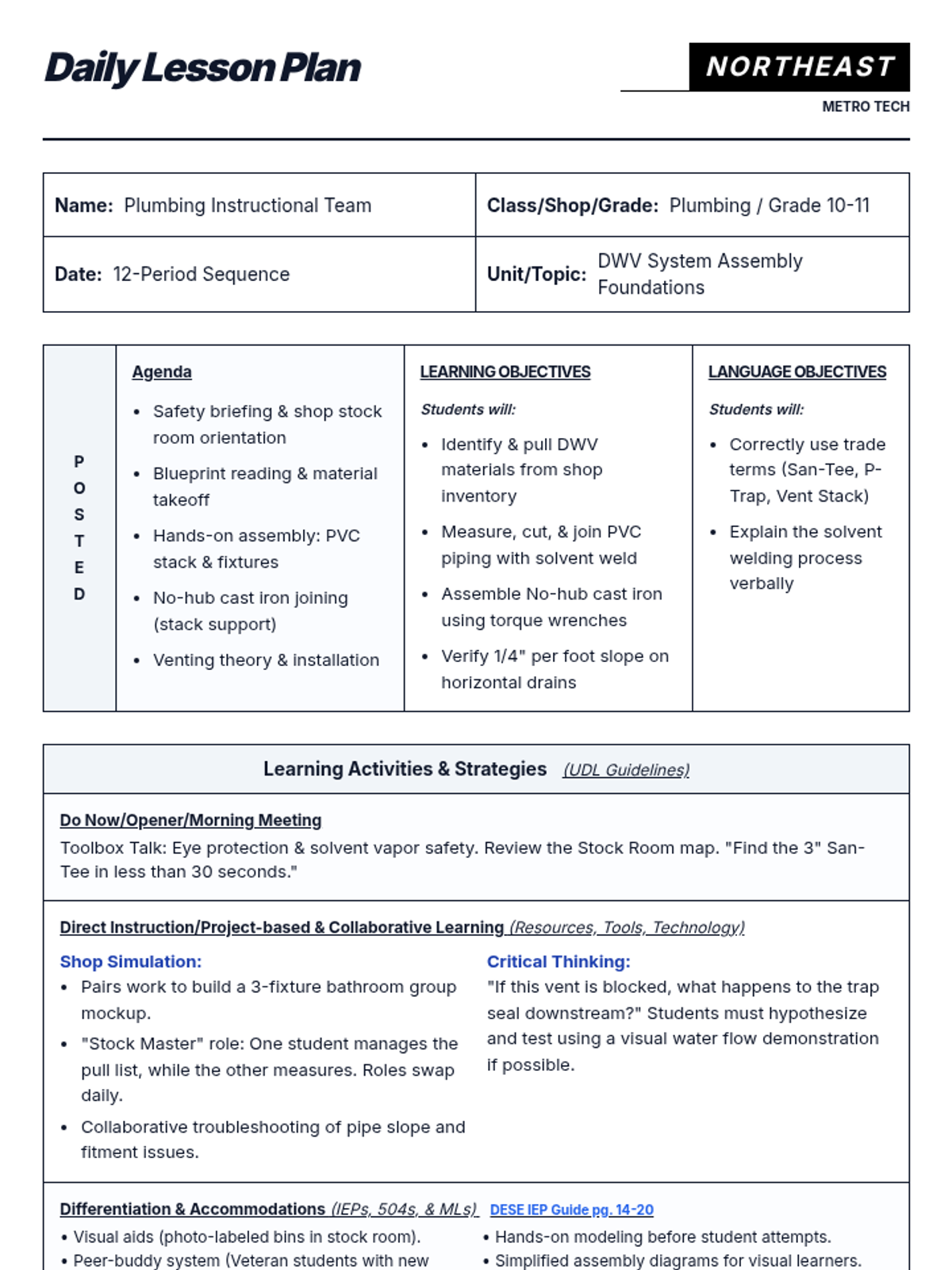
Introduces shop safety protocols, material identification, and system theory for Drain, Waste, and Vent (DWV) plumbing. Students learn to navigate the stock room and understand the purpose of traps, vents, and drains.
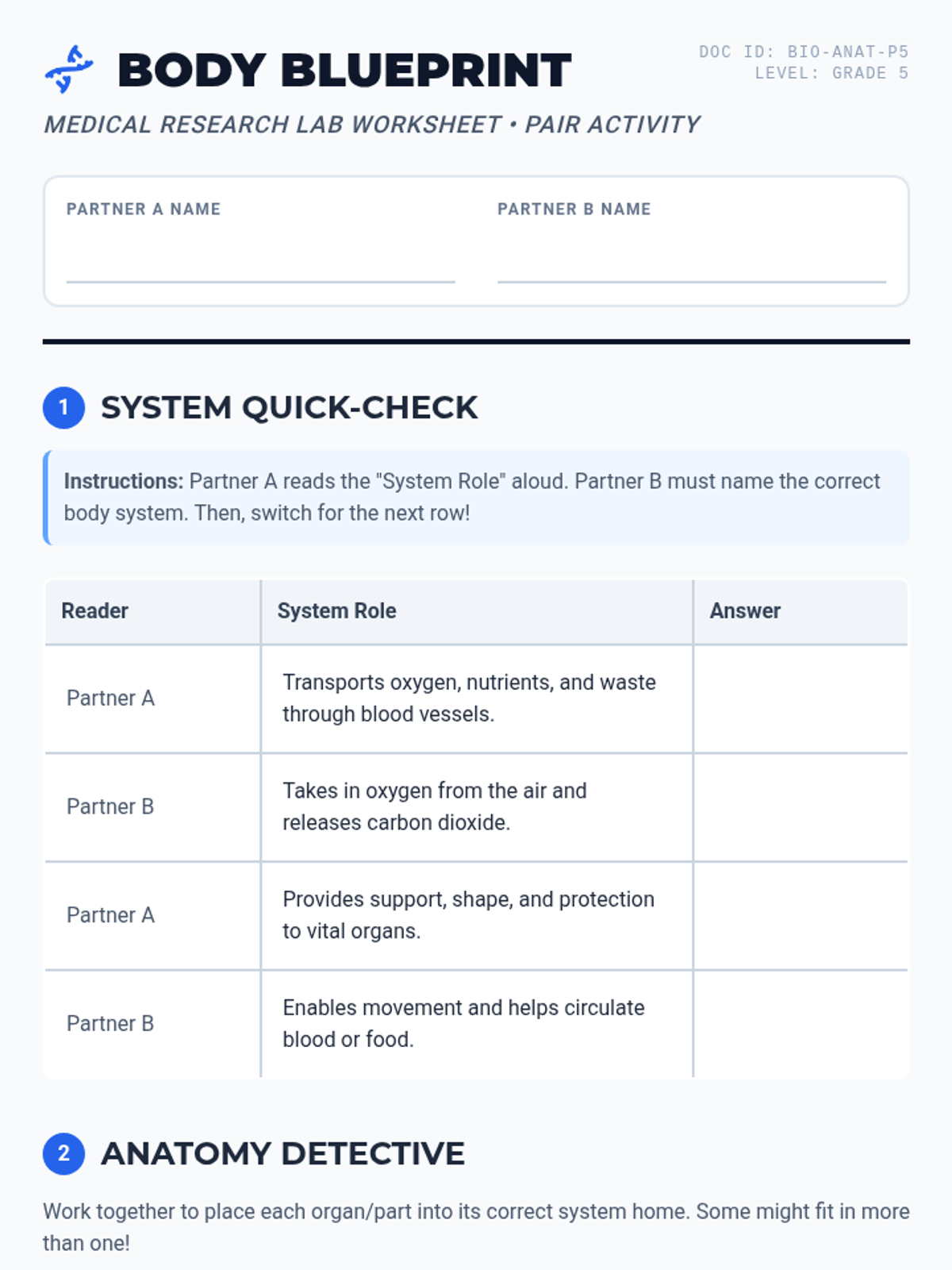
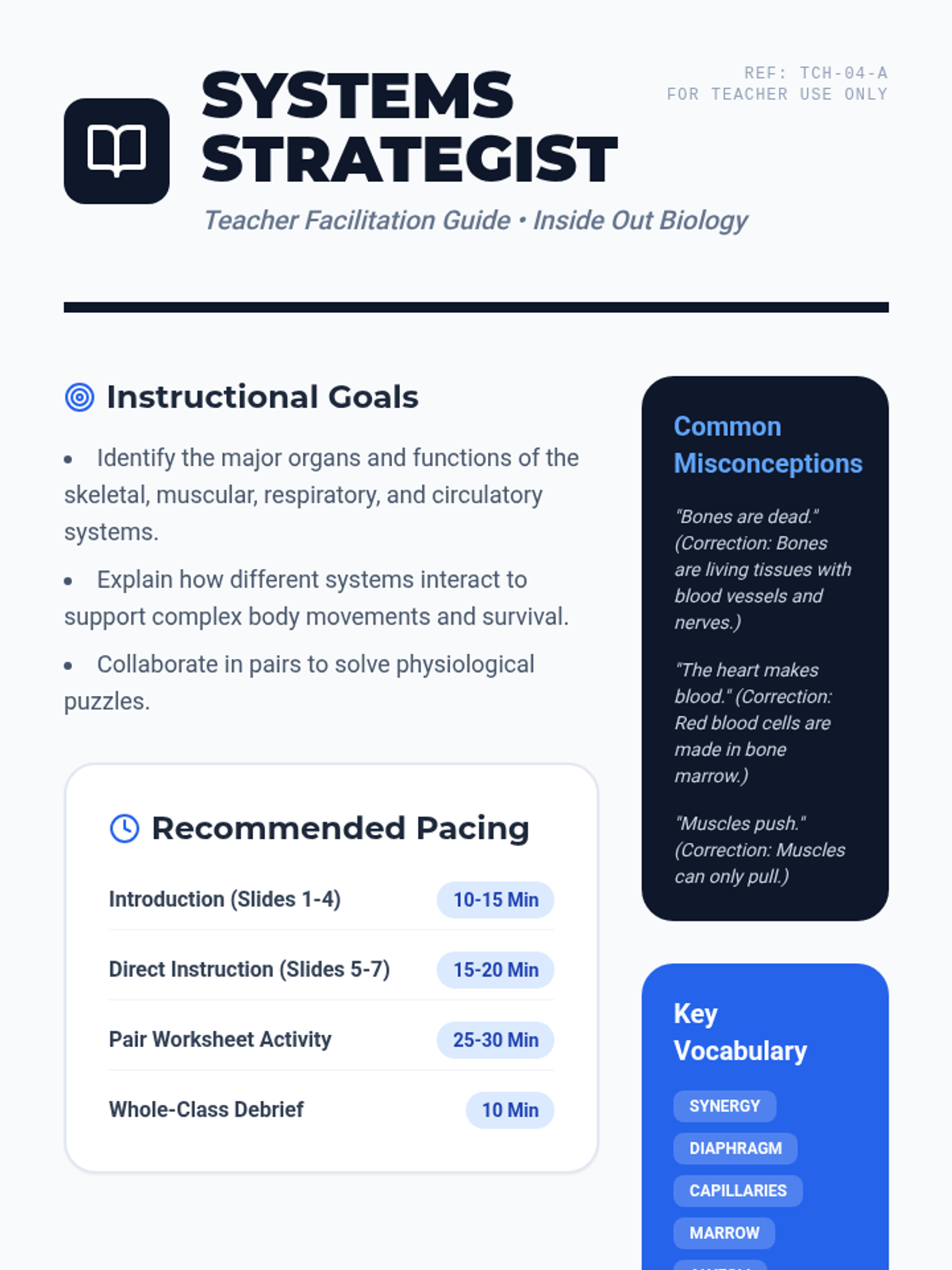
A deep dive into the major human body systems, focusing on how they interact to keep us alive and moving. Students will explore the skeletal, muscular, respiratory, circulatory, and digestive systems through collaborative activities.
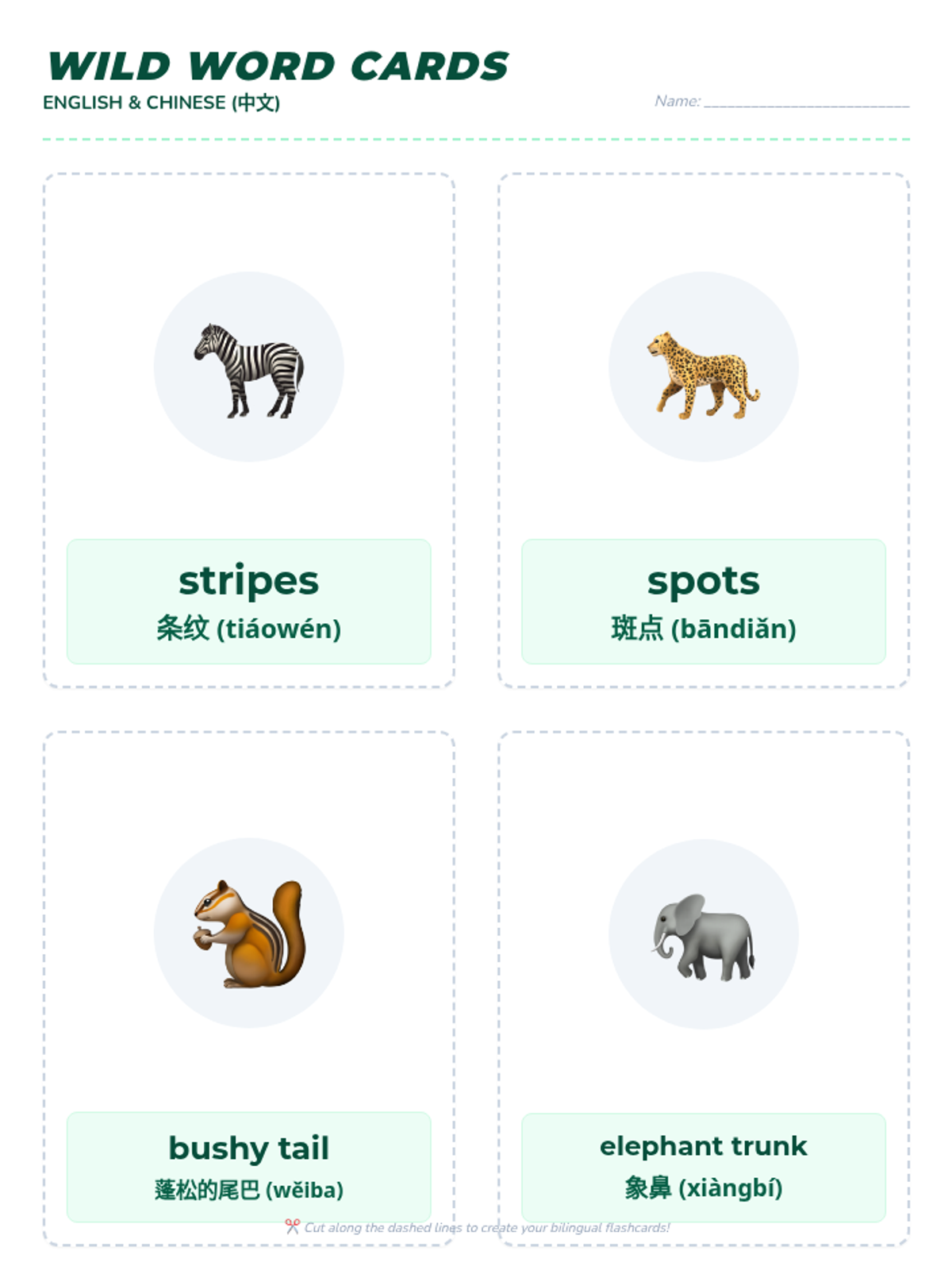
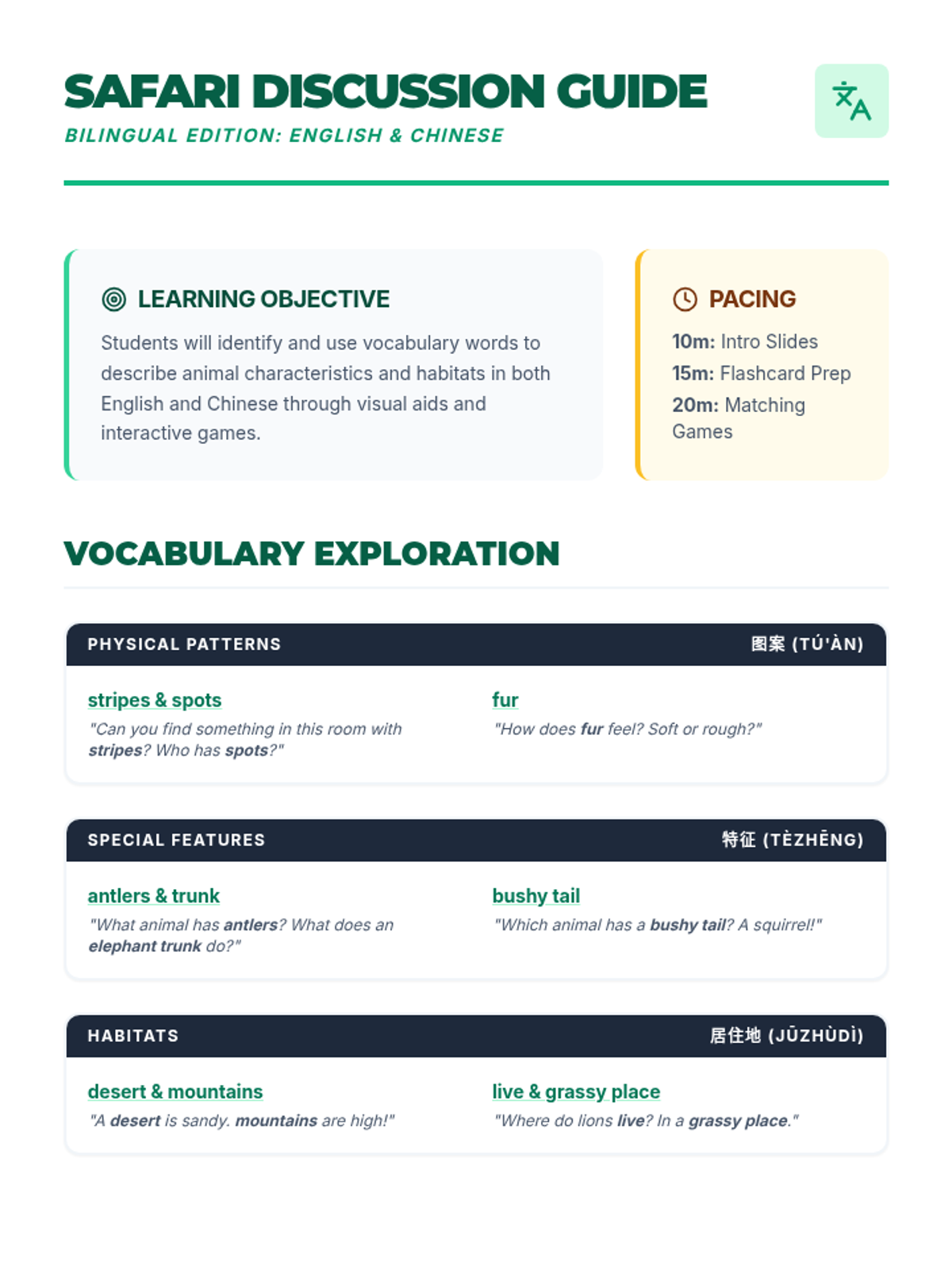
A lesson focused on animal characteristics and habitats, helping students build descriptive vocabulary.
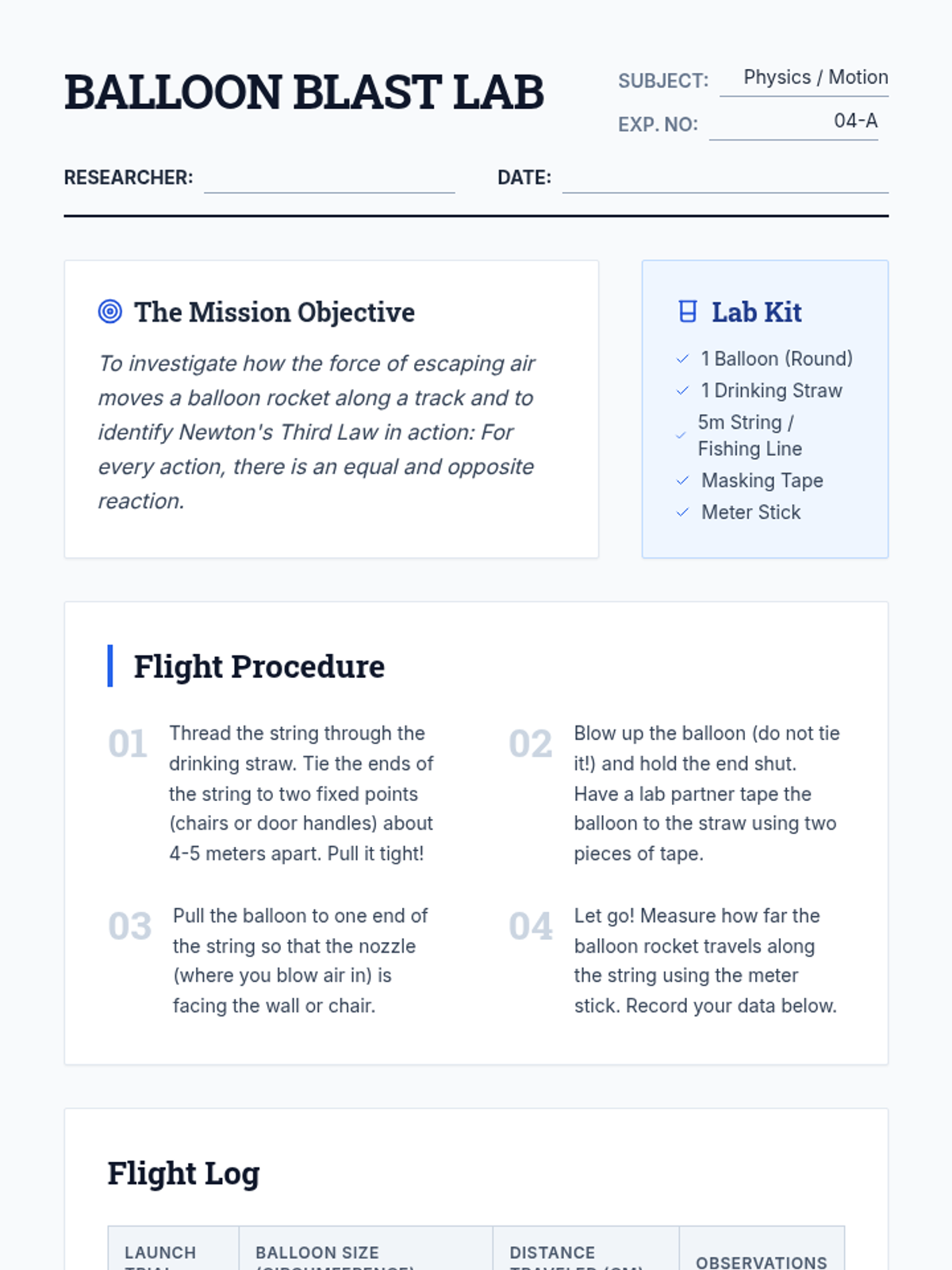
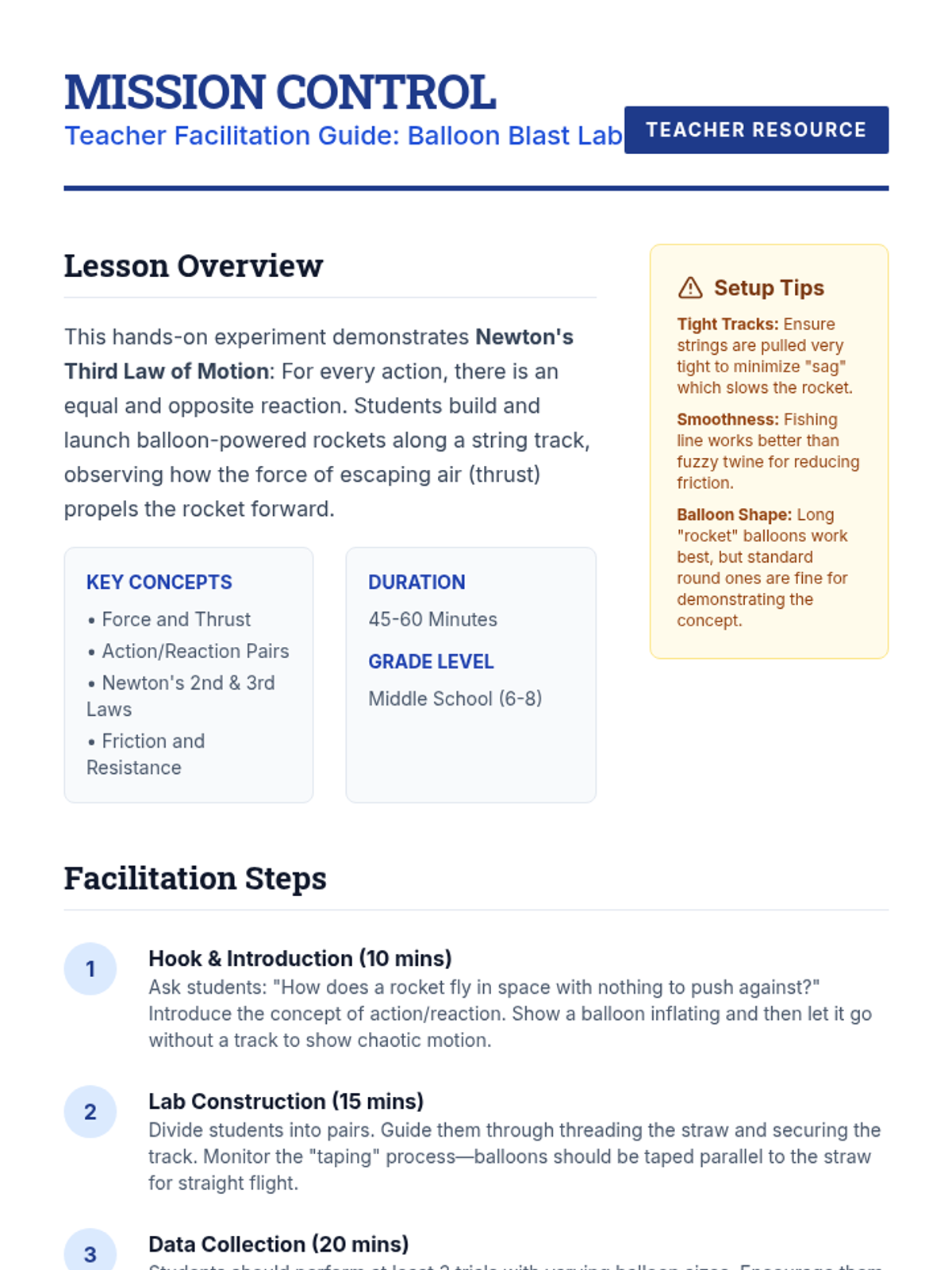
An interactive exploration of Newton's Laws of Motion through hands-on experimentation with balloon-powered rockets. Students will investigate how force impacts distance and velocity.
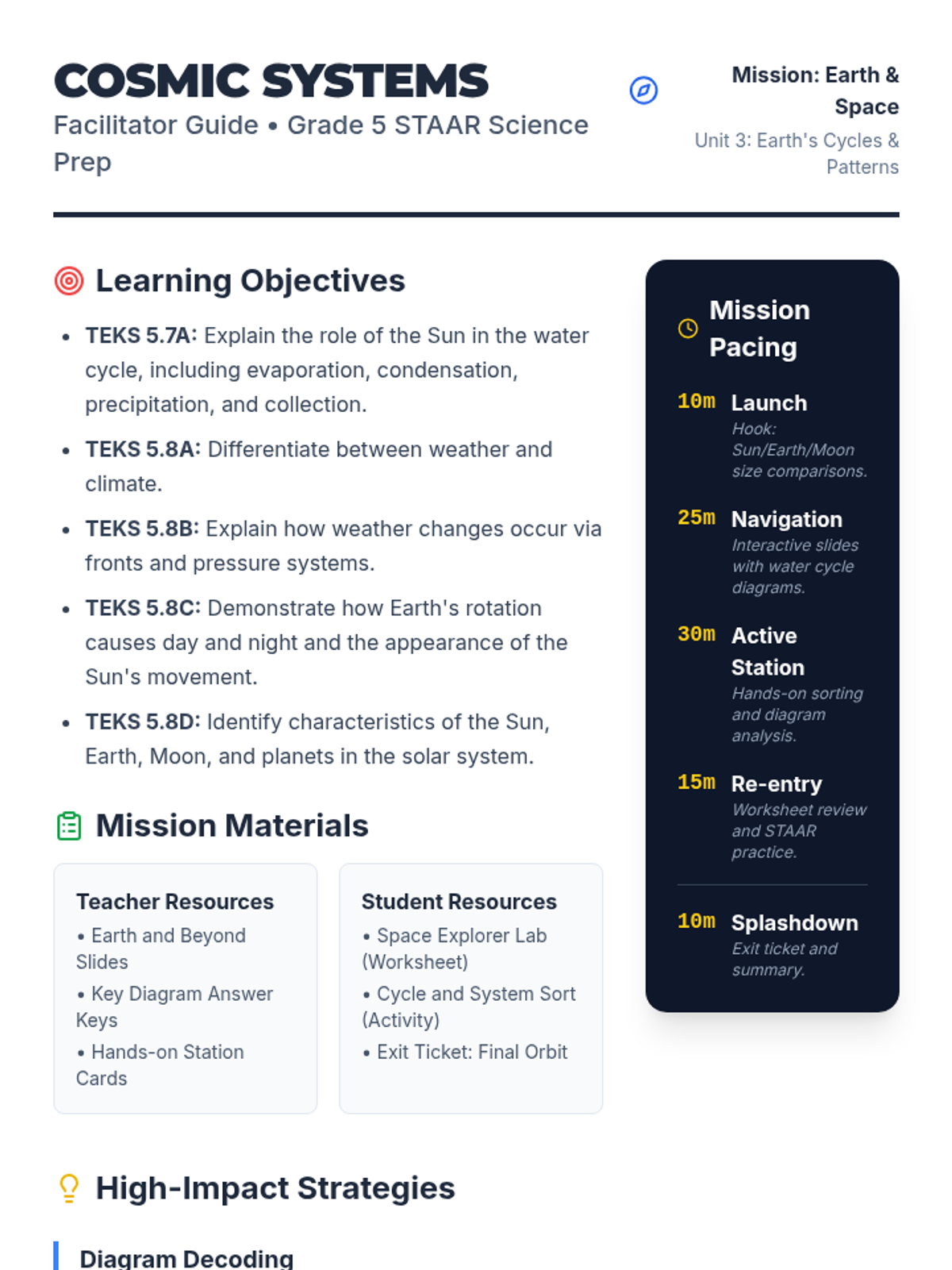
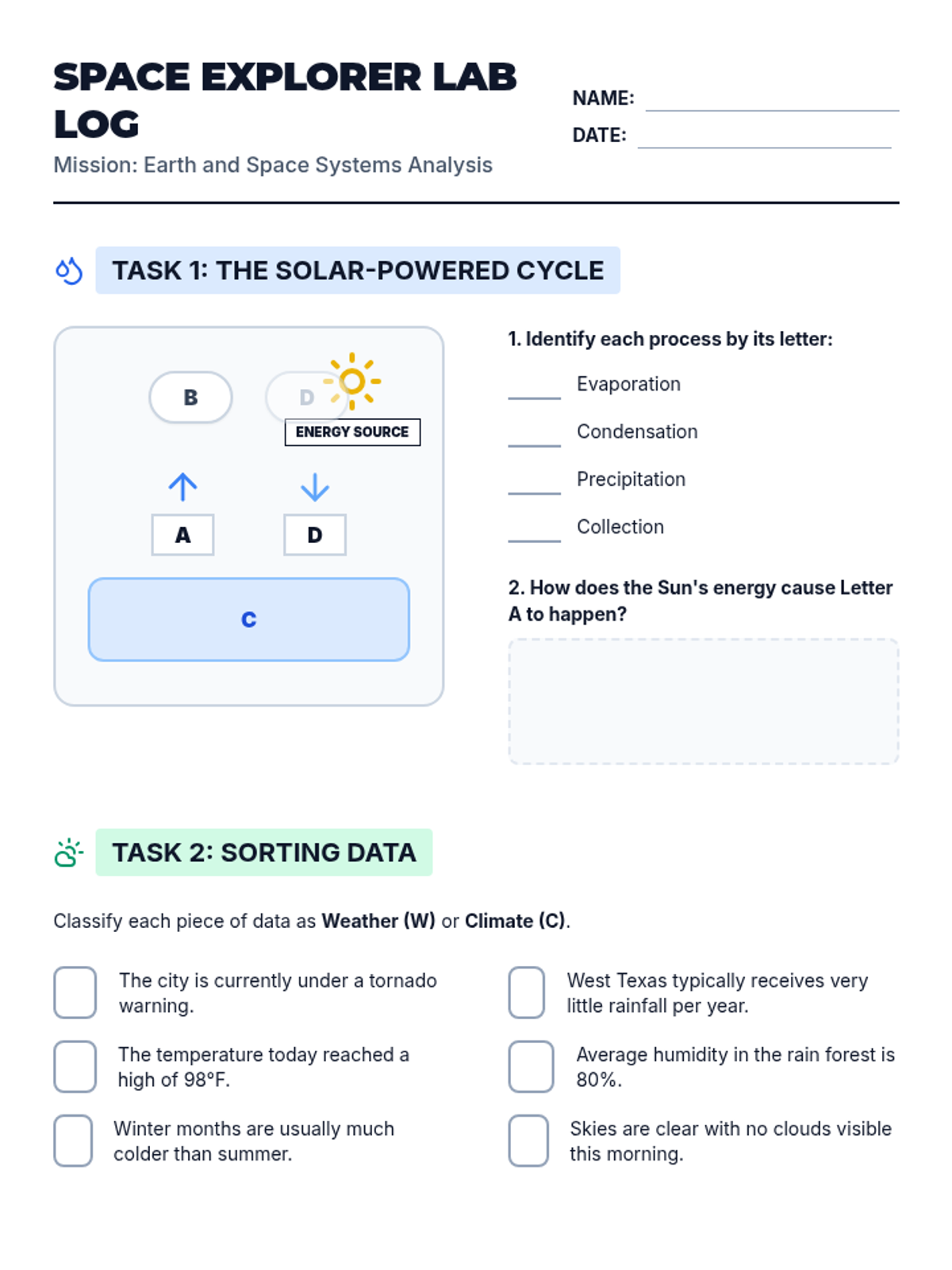
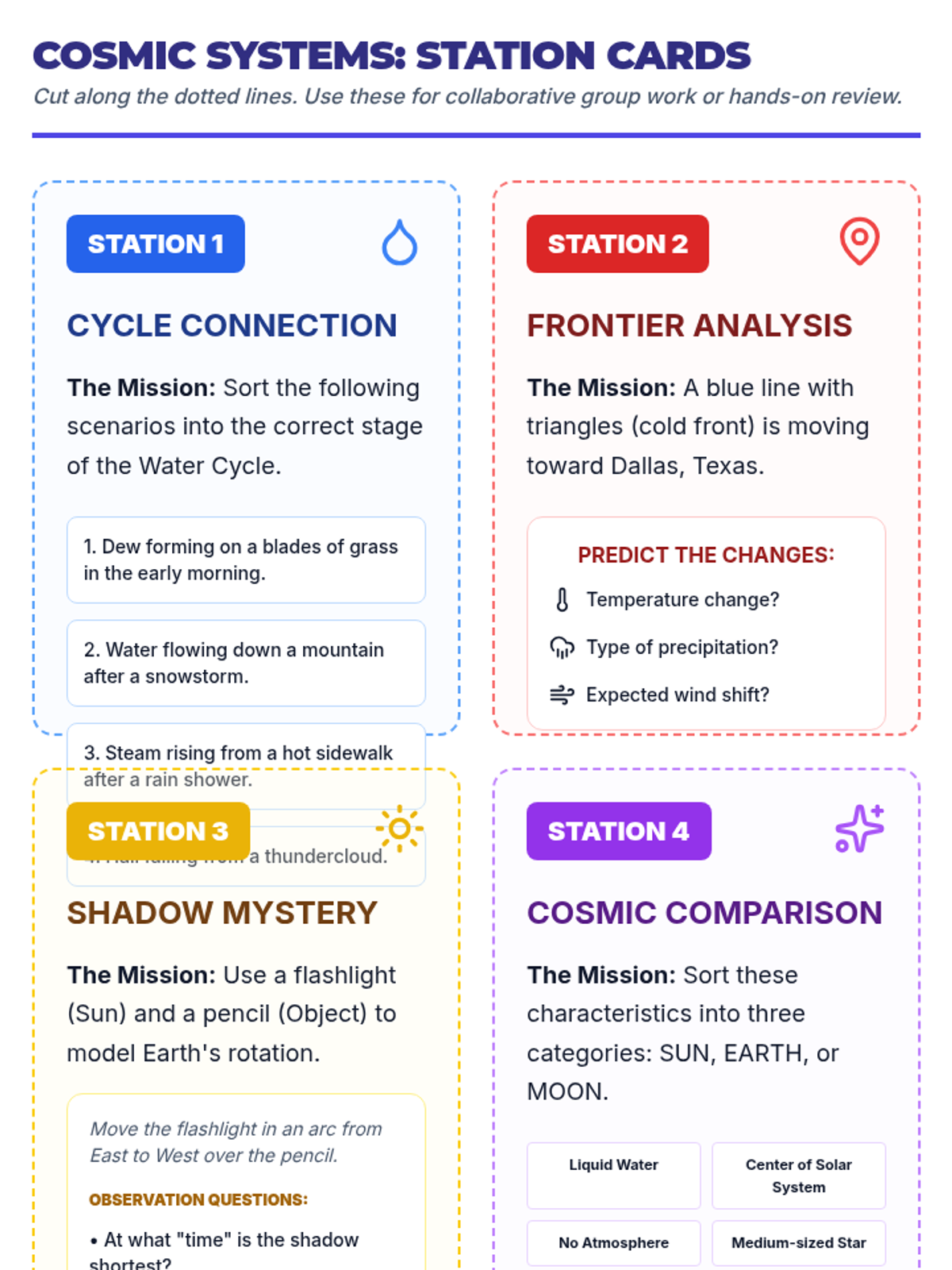
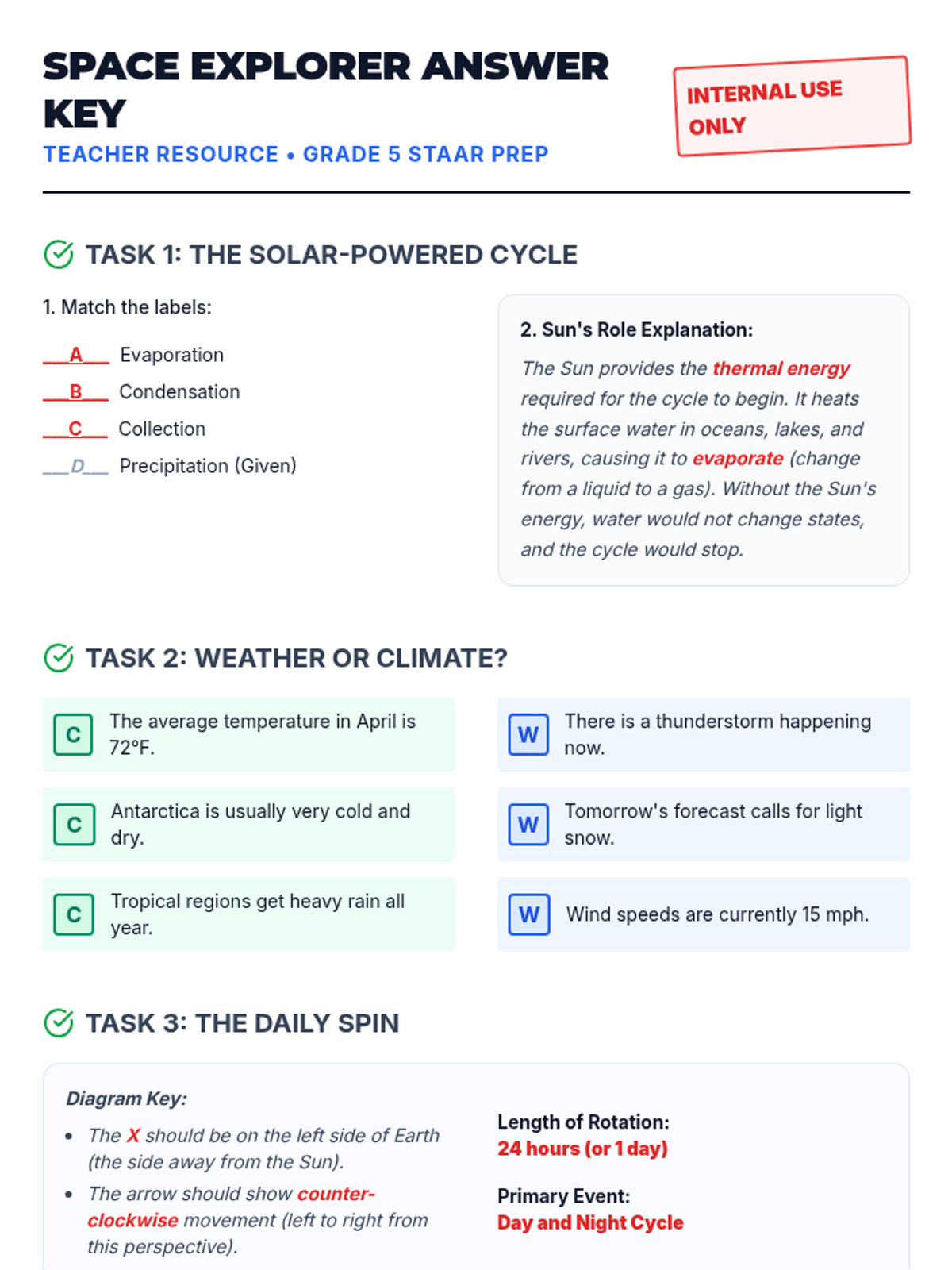
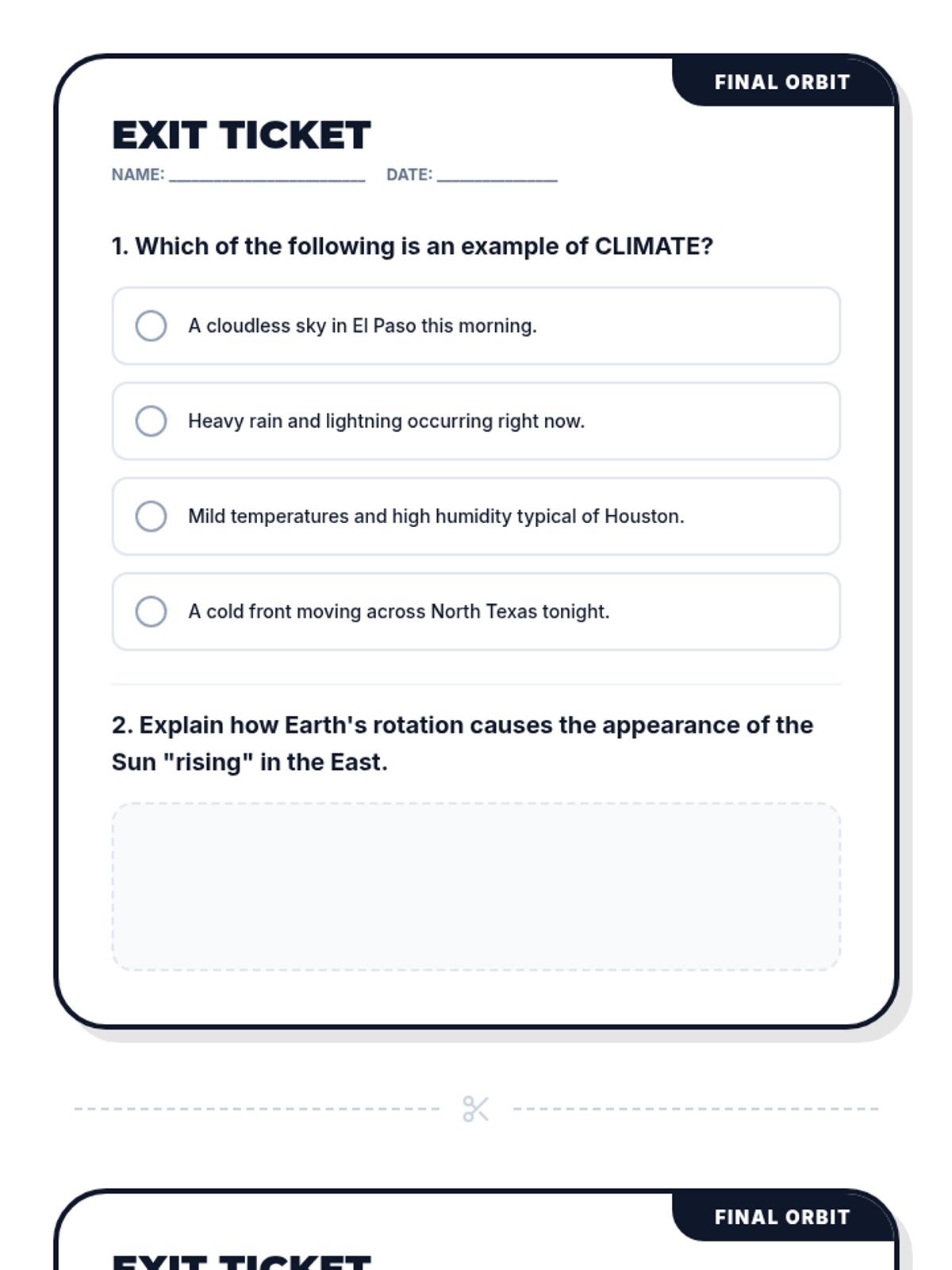
A comprehensive 5th grade STAAR Science prep lesson covering the water cycle, weather patterns, and the solar system through diagram analysis and hands-on review.
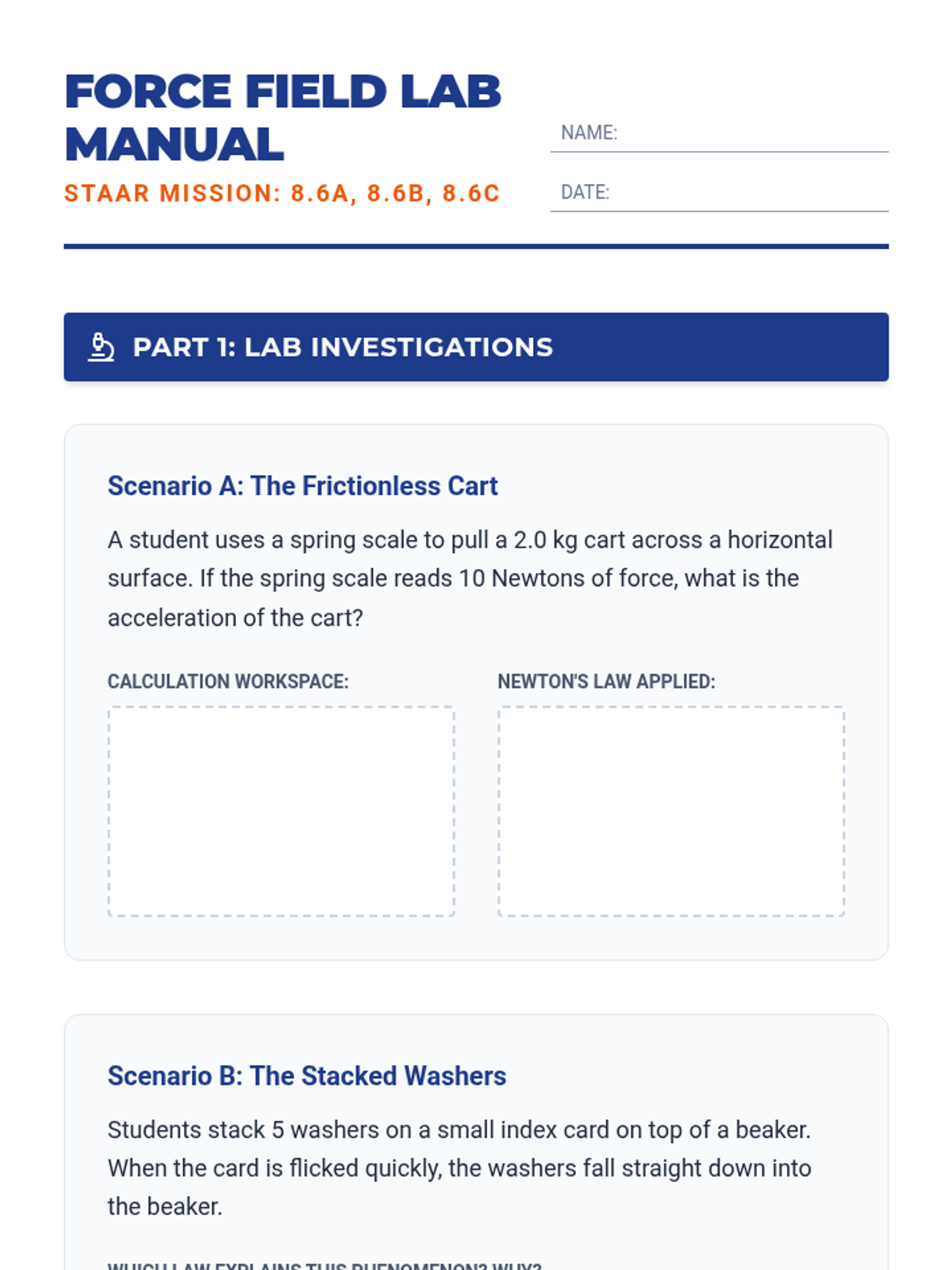
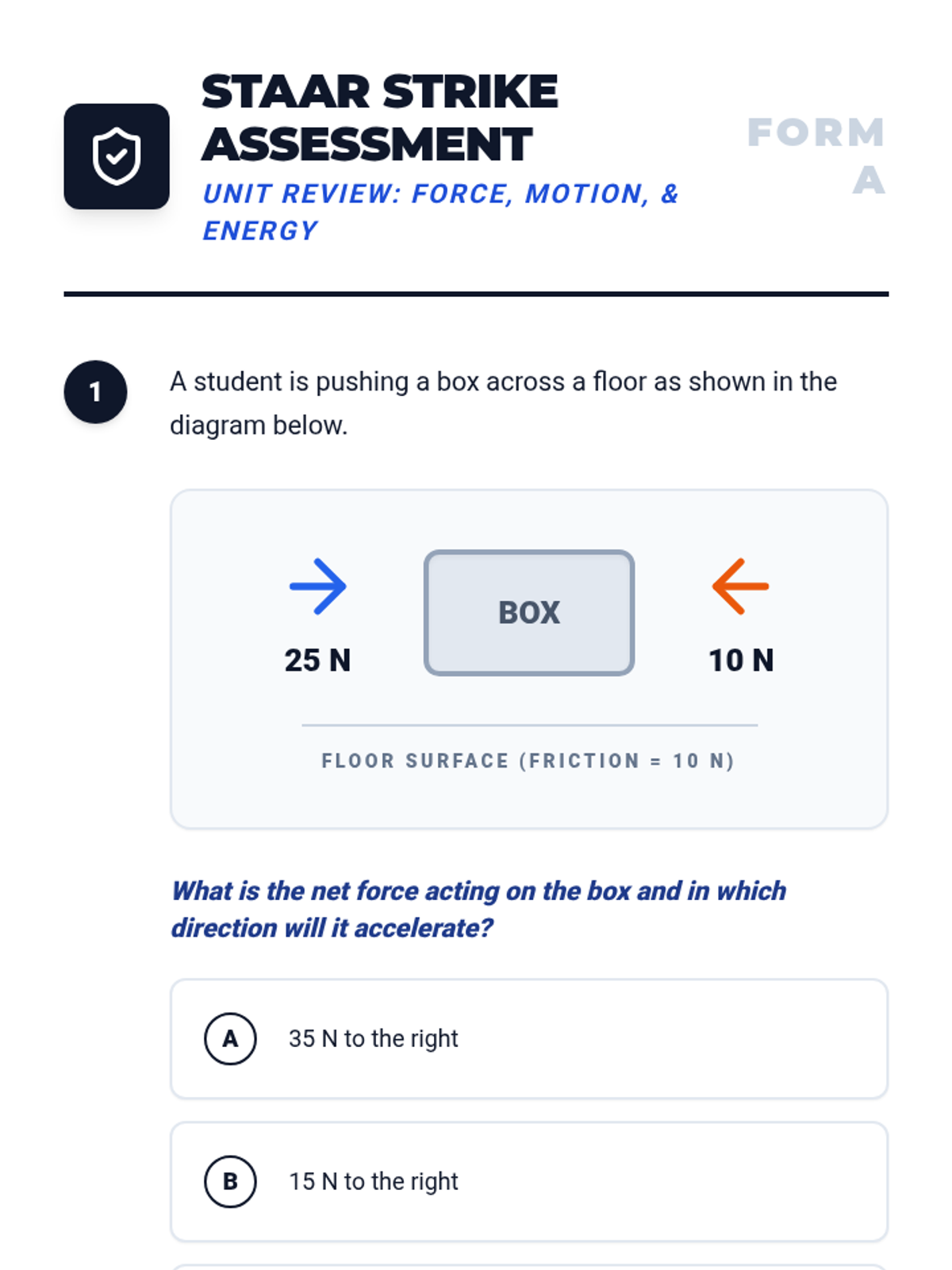
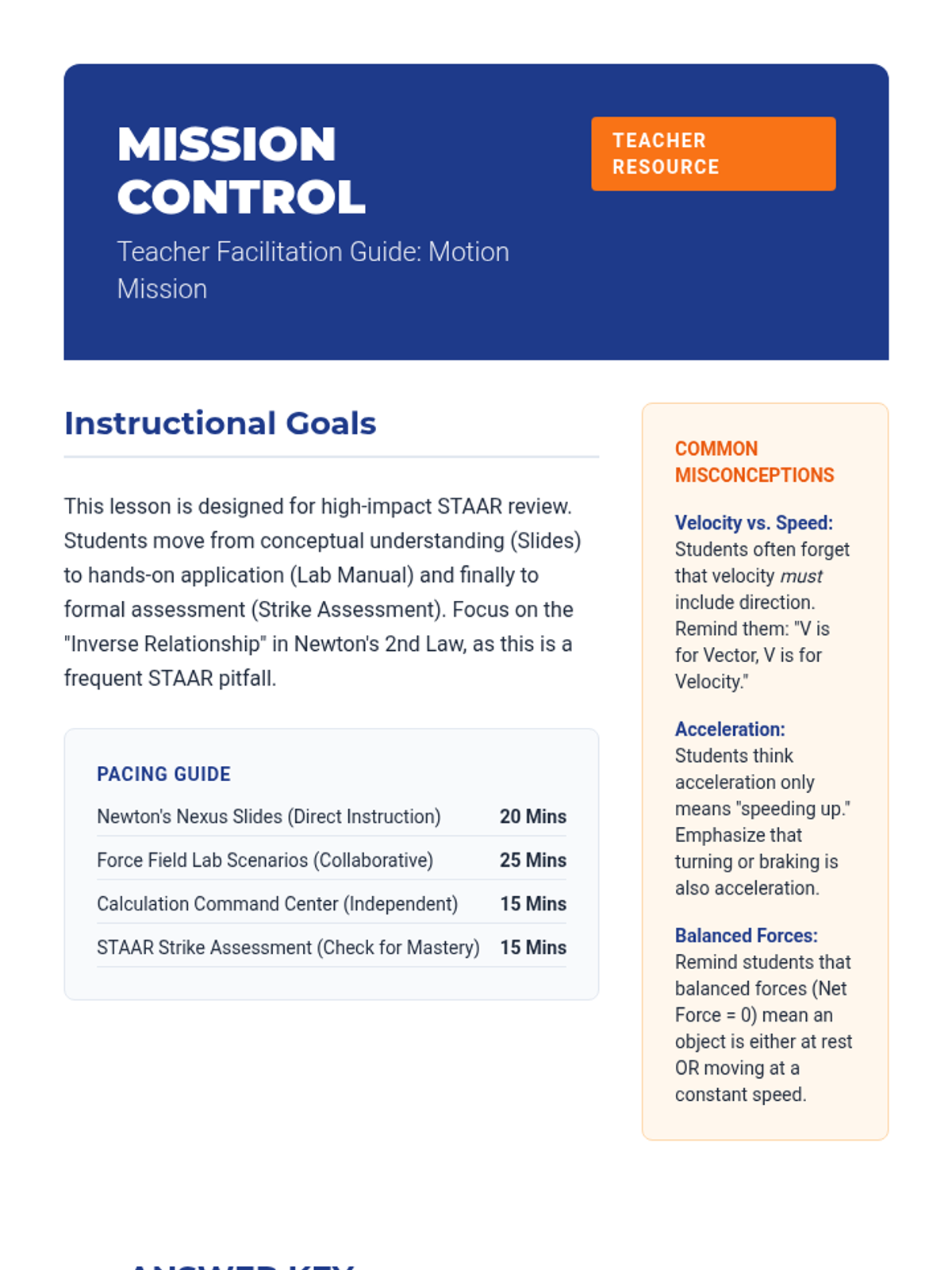
A comprehensive 8th-grade STAAR review lesson focusing on Newton's Laws, force, motion, and energy calculations. Students will engage with lab scenarios, visual models, and practice questions aligned to Texas TEKS 8.6A, 8.6B, and 8.6C.
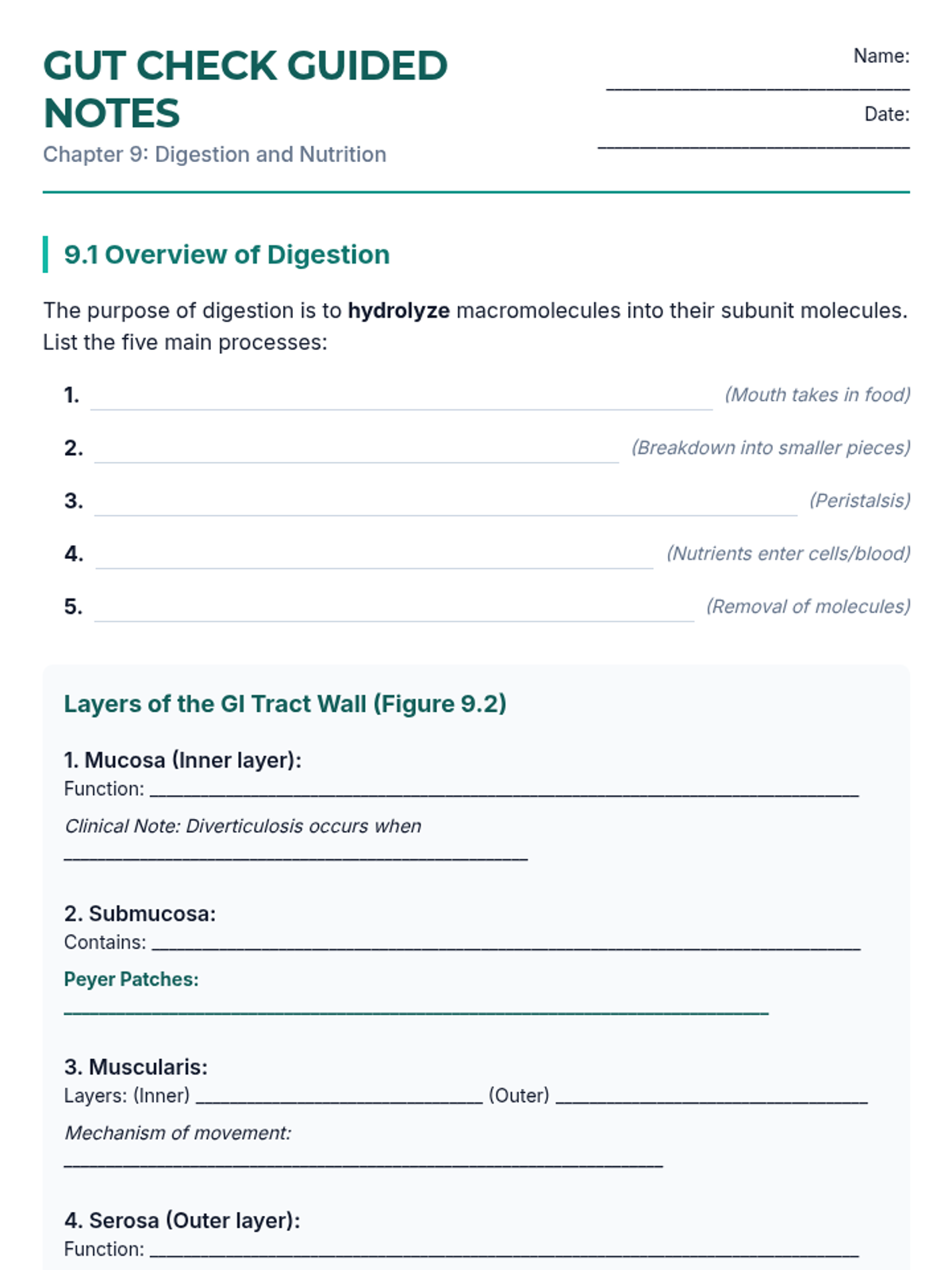
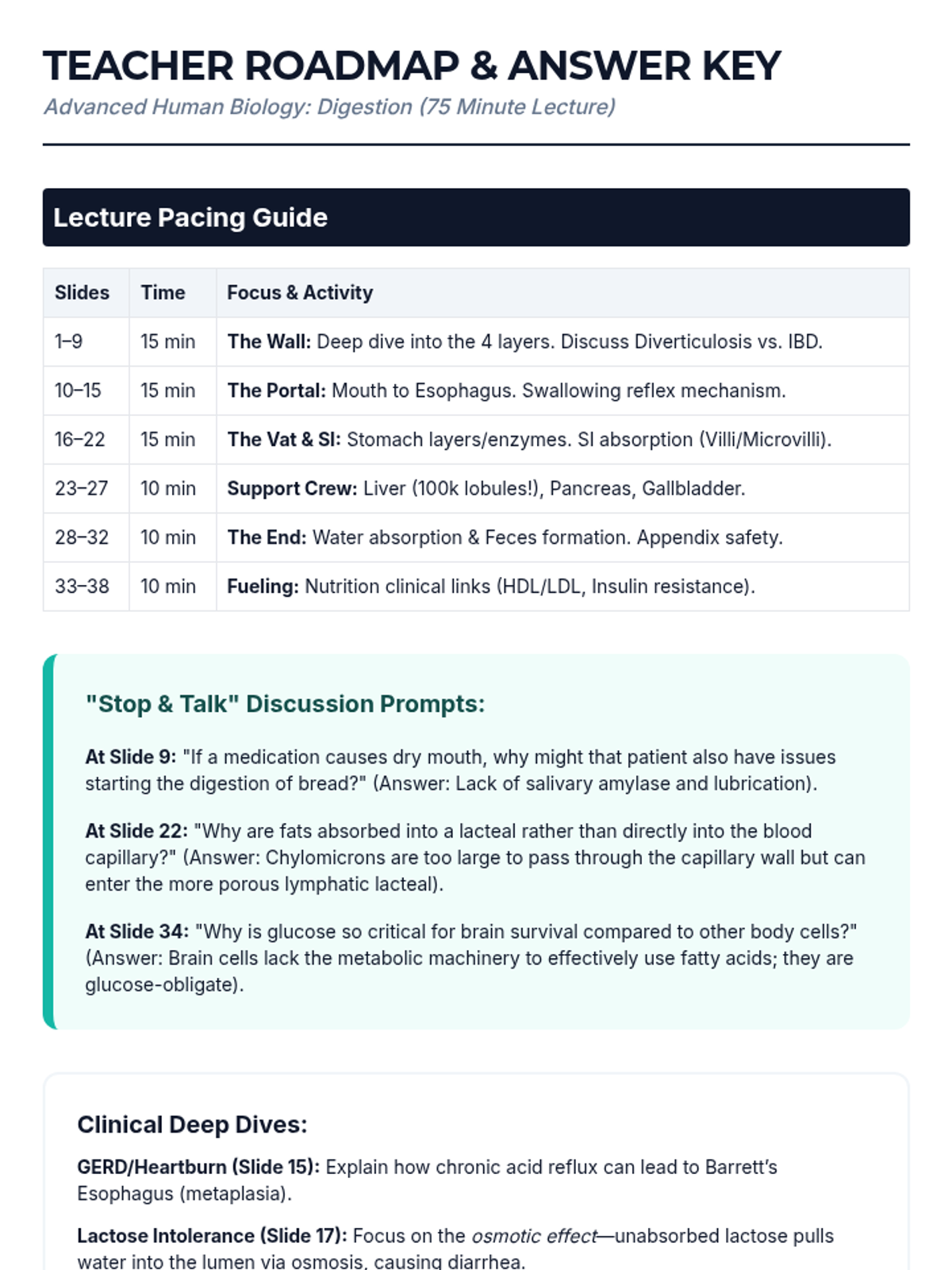
A comprehensive 75-minute college-level lecture exploring the anatomy and physiology of the human digestive system, covering the GI tract wall, organ functions, accessory organs, and the principles of nutrition.
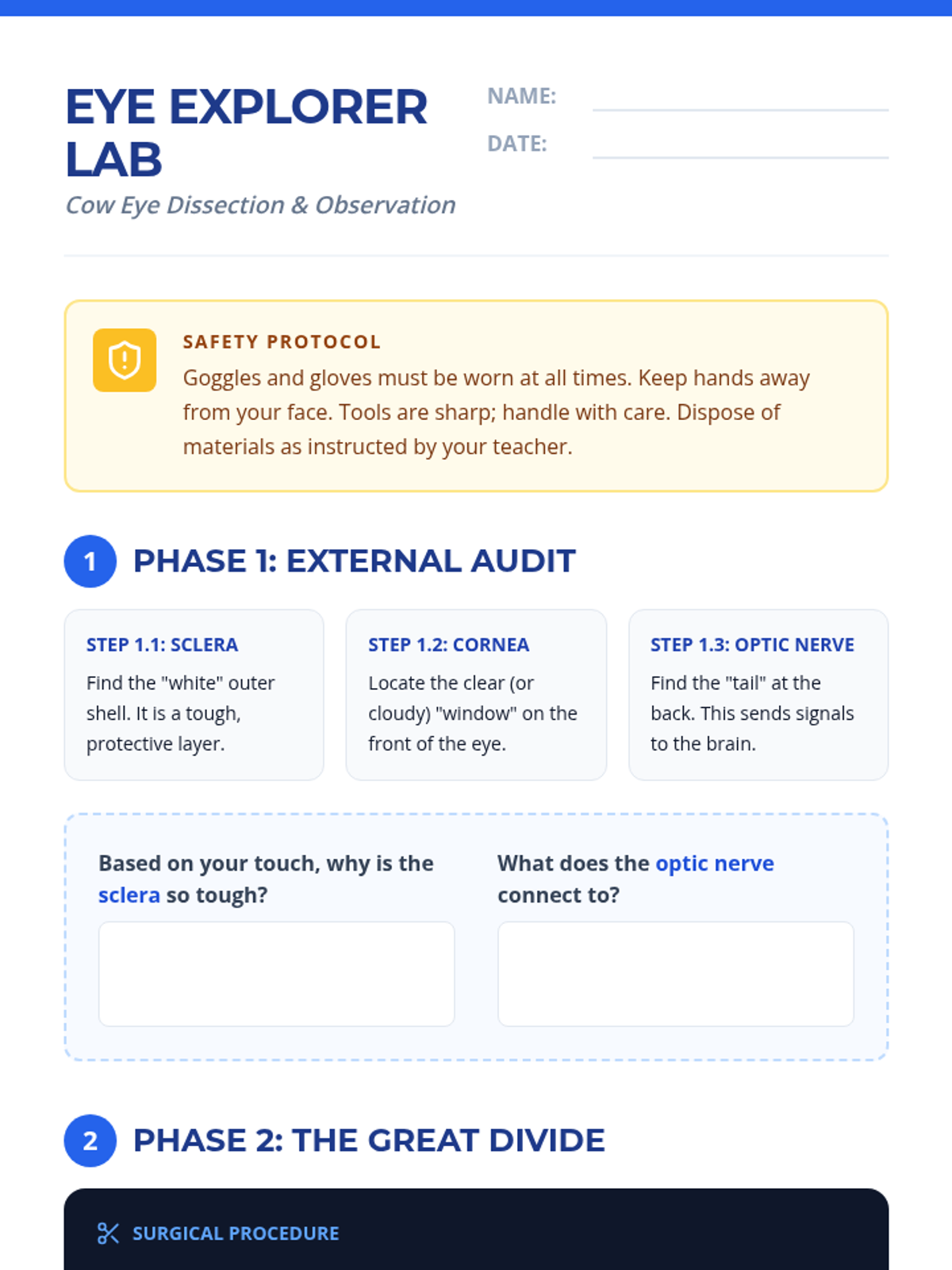
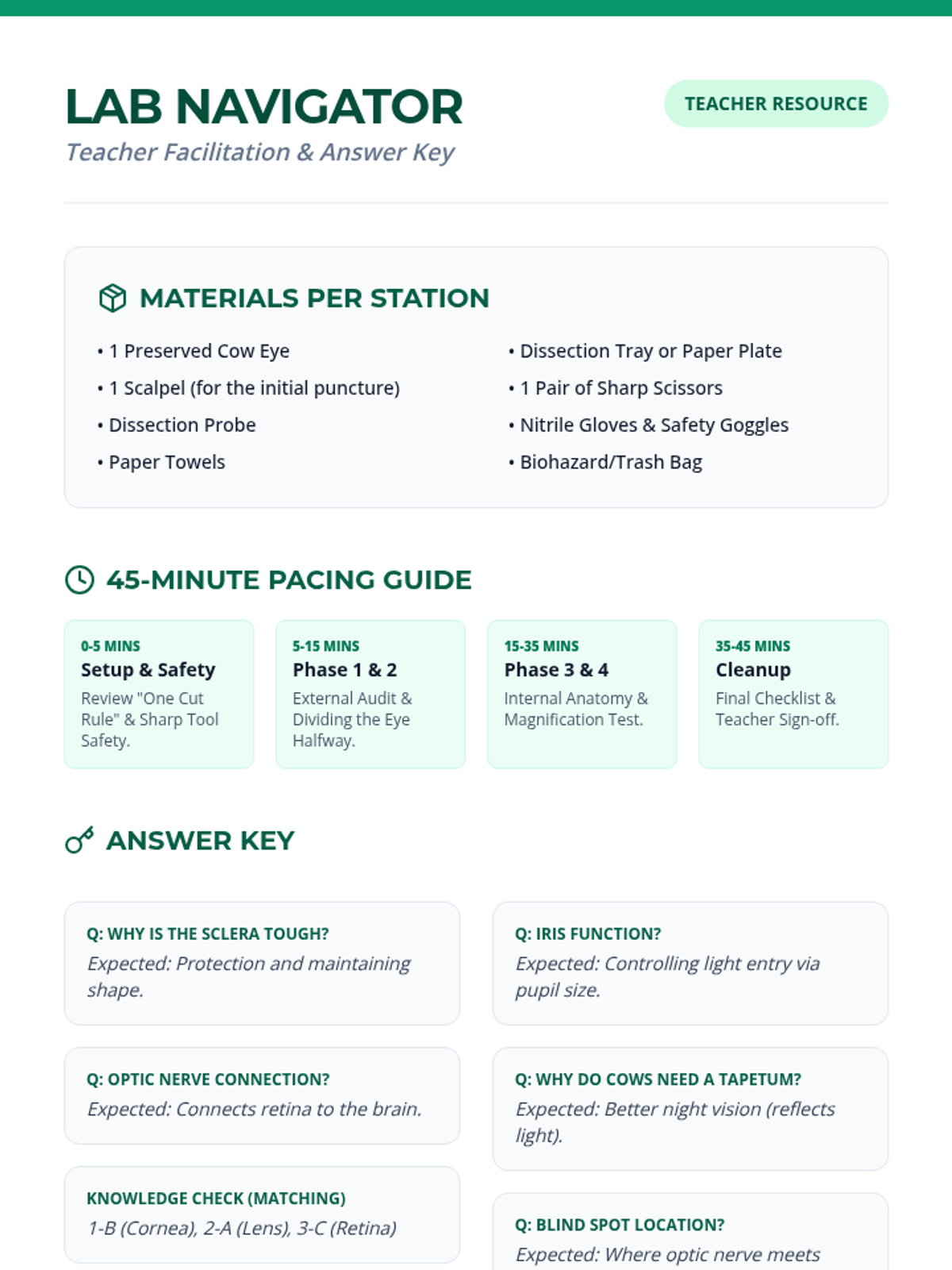
A streamlined 45-minute cow eye dissection lab designed for 8th-grade students to identify key anatomical structures and their functions.
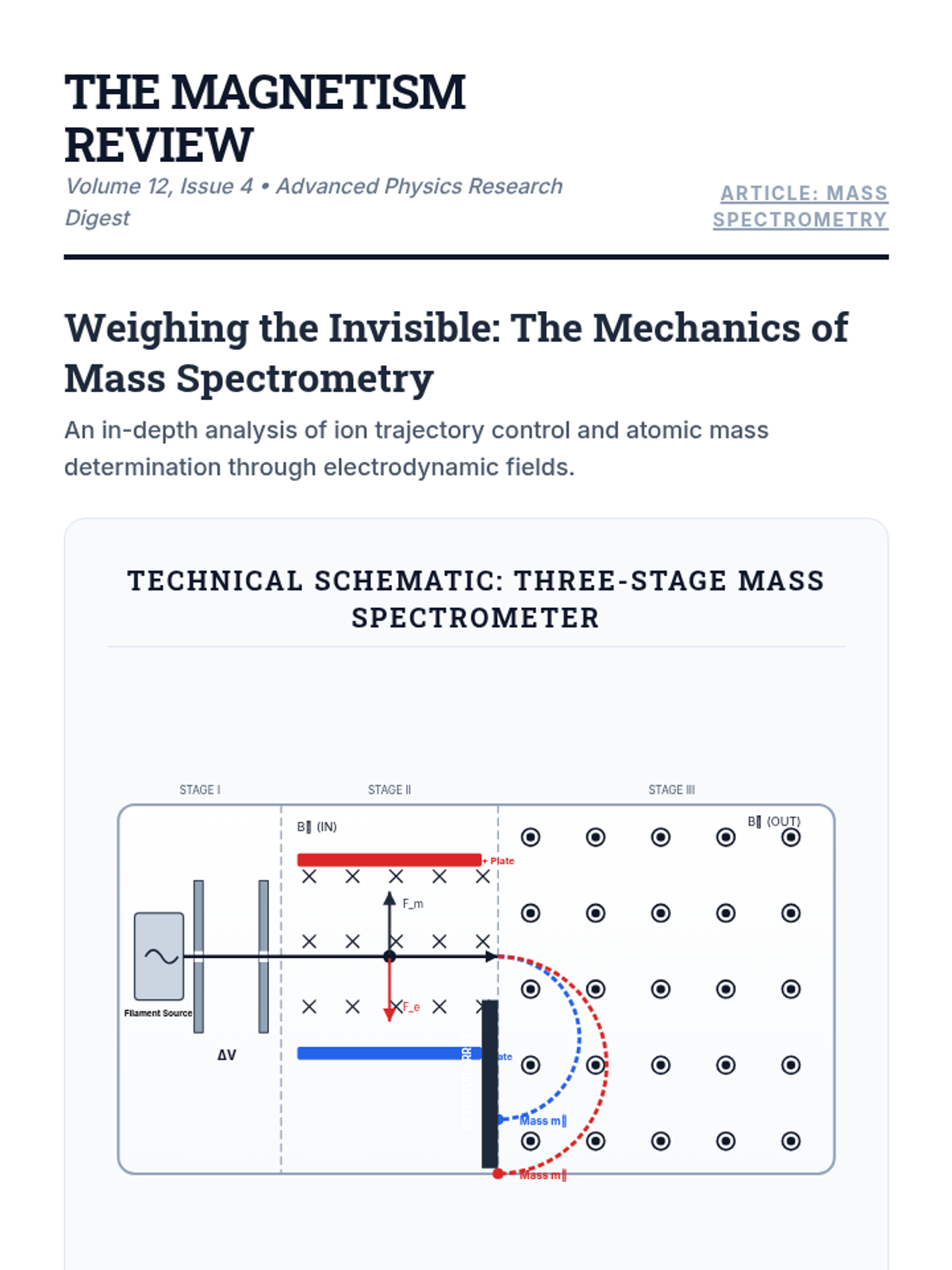
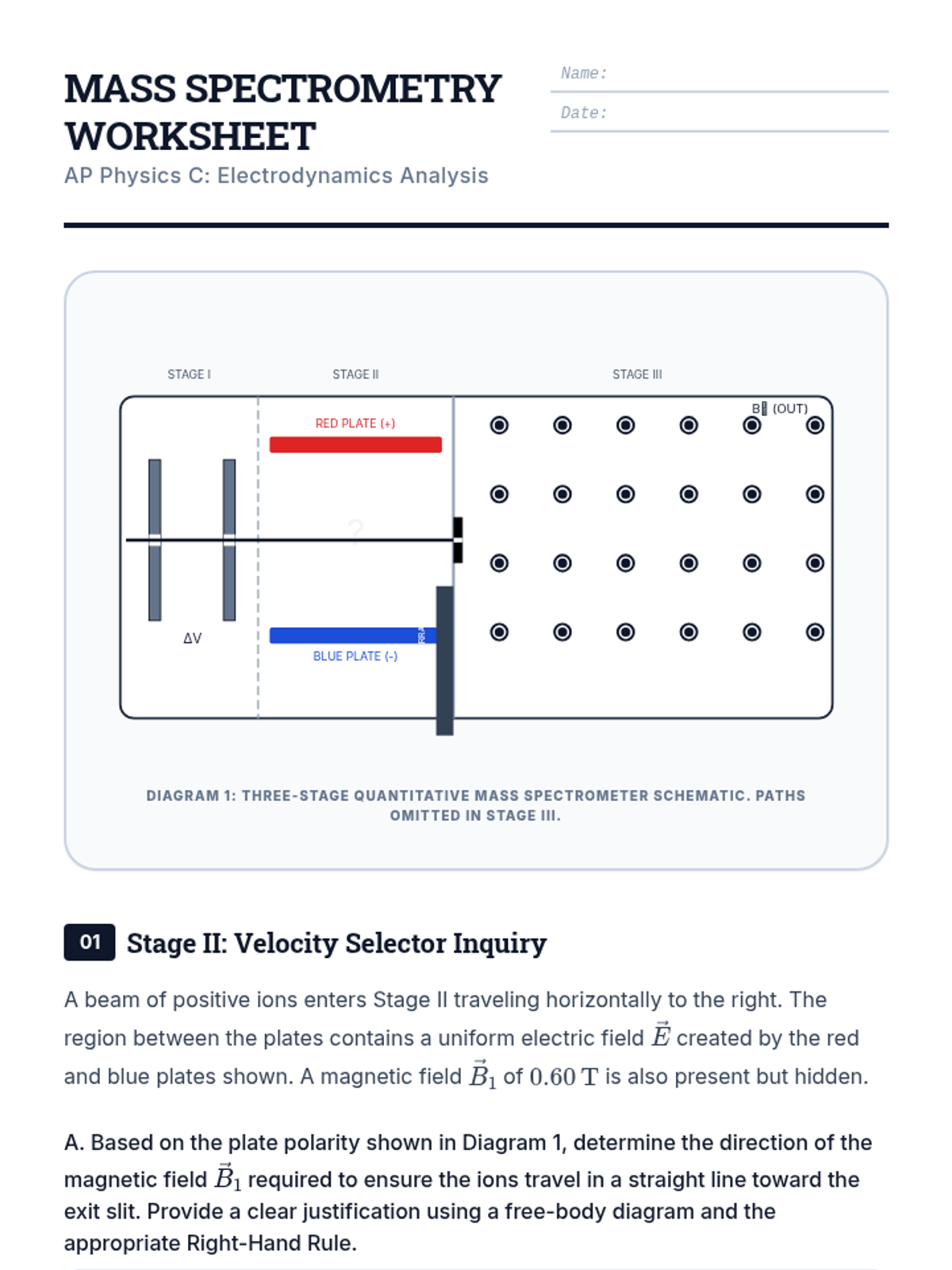
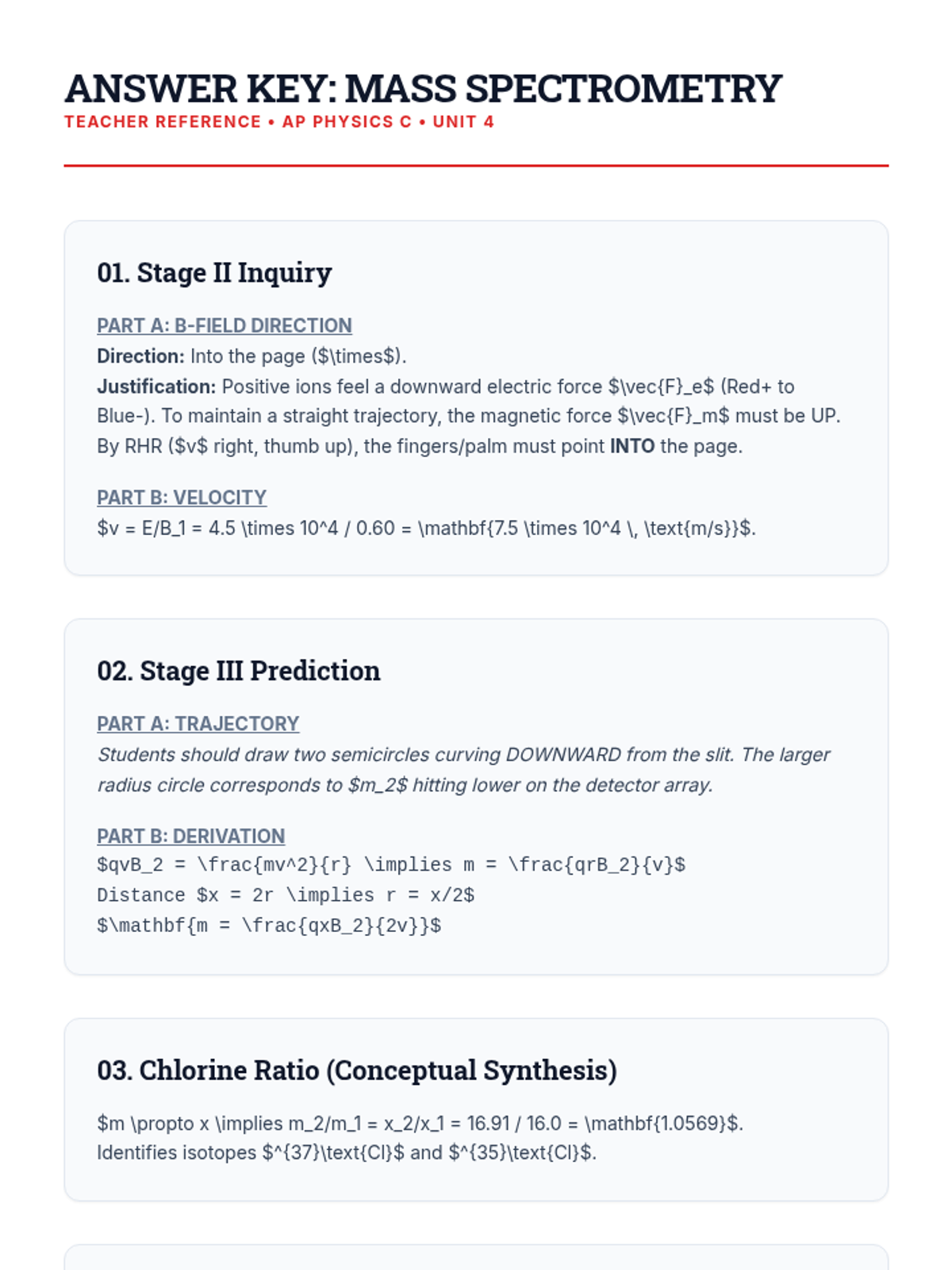
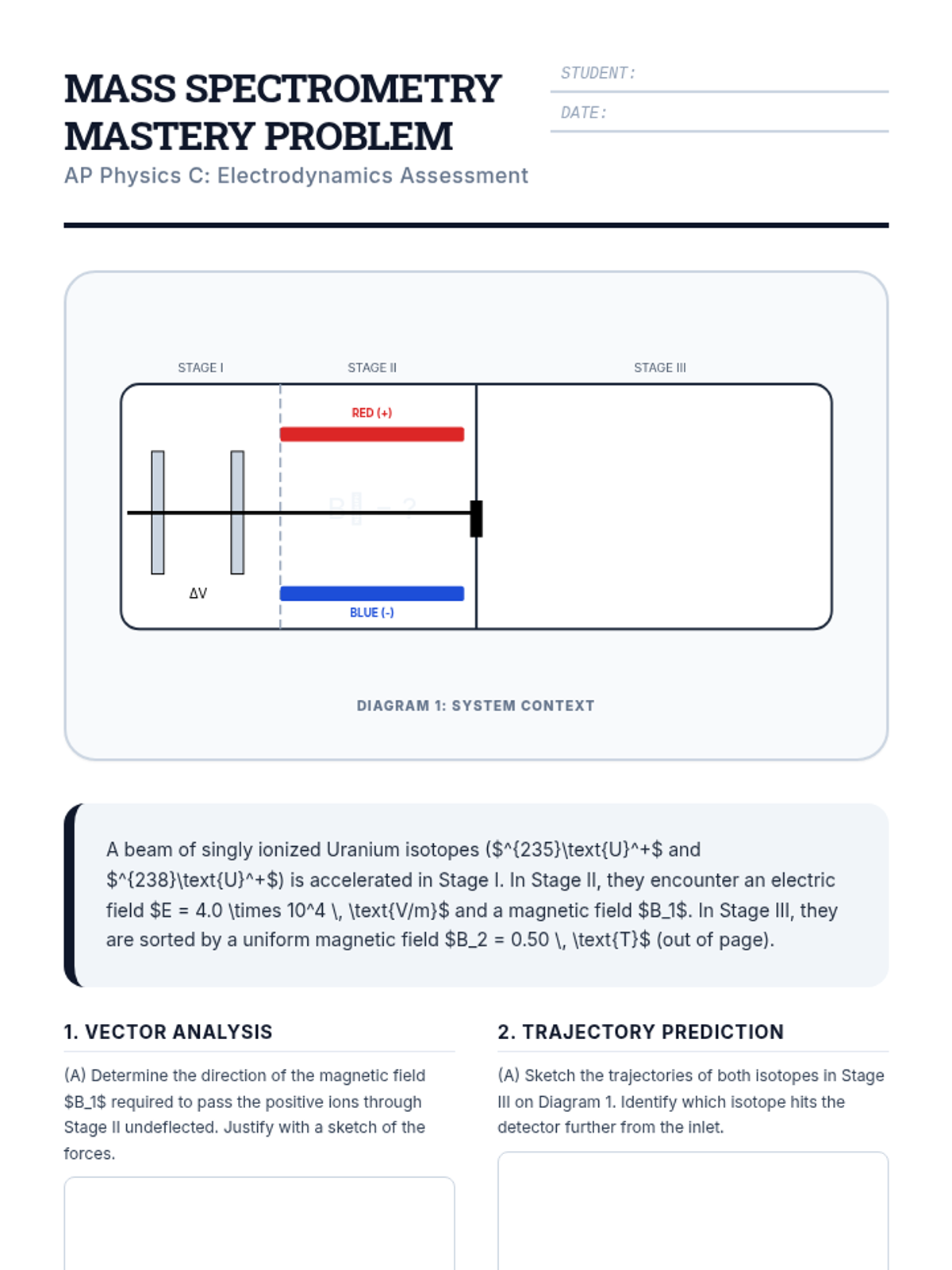
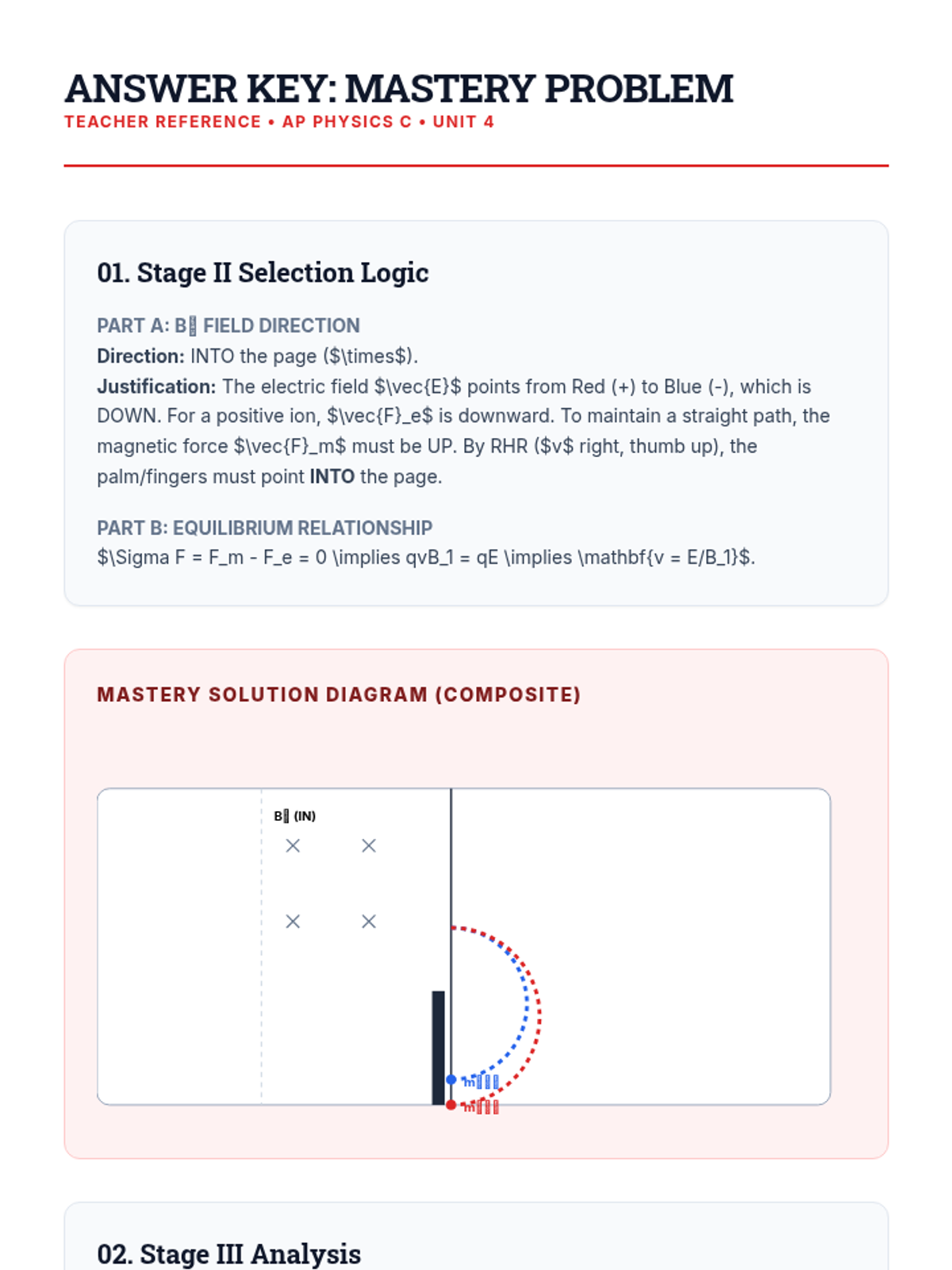
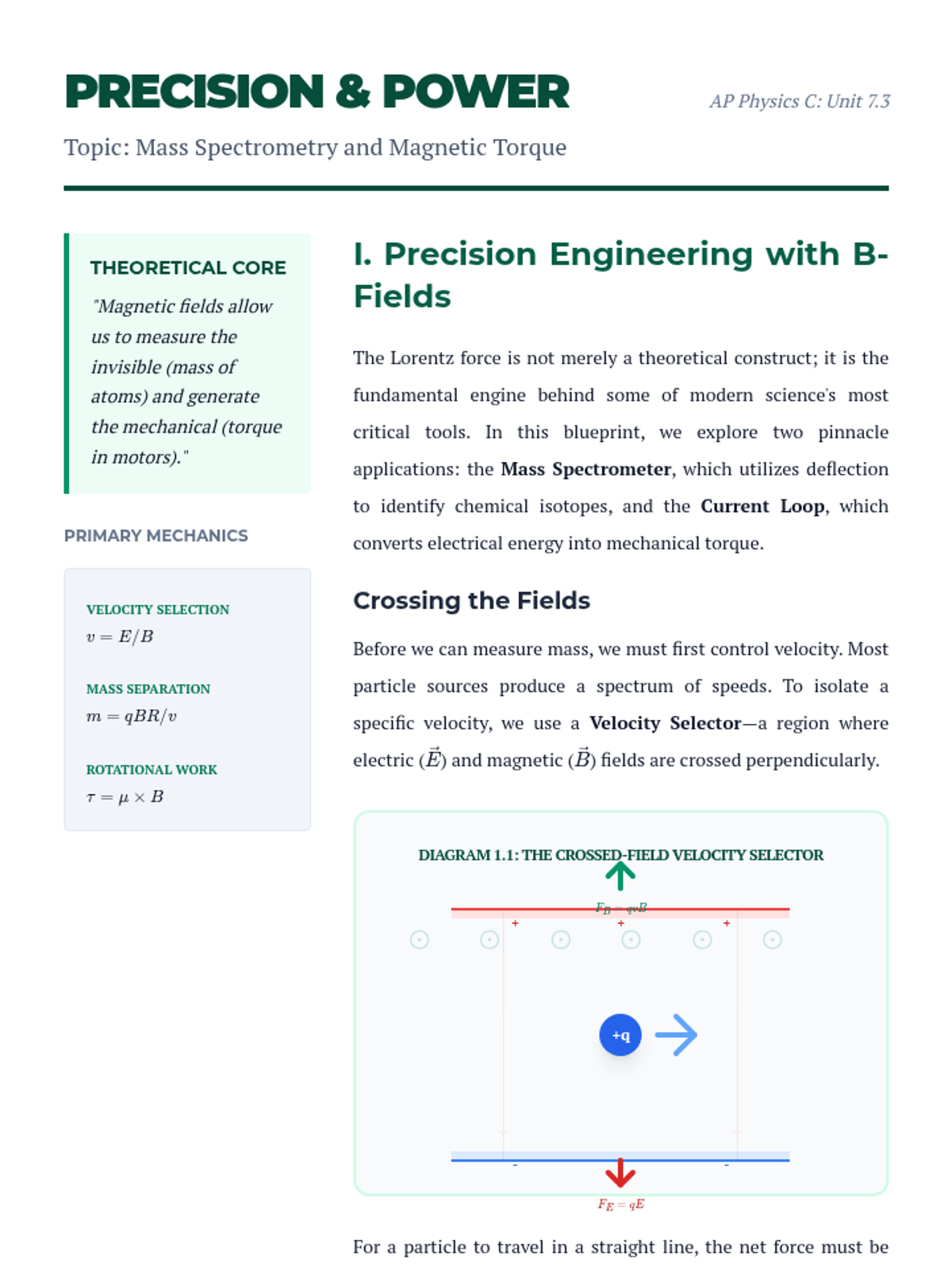
A deep dive into the behavior of charged particles in magnetic fields, focusing on the mechanics of mass spectrometry and the rotational dynamics of current-carrying loops. Students will derive key equations for particle paths and analyze the torque that drives electric motors.
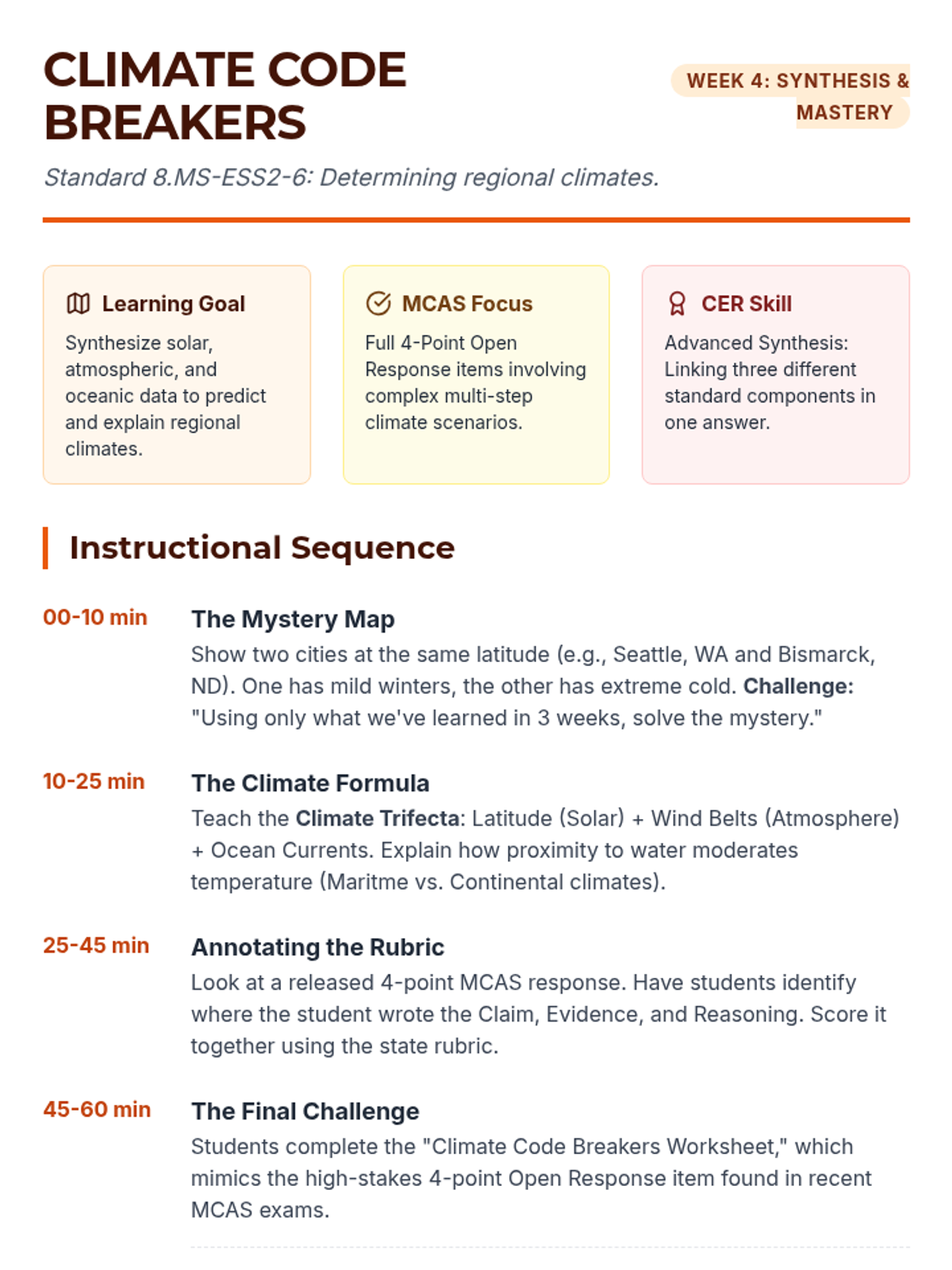
The capstone week where students synthesize their knowledge of solar energy, wind, and water to explain regional climate variations and master the MCAS Open Response CER strategy.
Students dive into the 'Great Ocean Conveyor Belt,' analyzing how surface winds and density differences (temperature and salinity) drive oceanic circulation and transport heat around the globe.
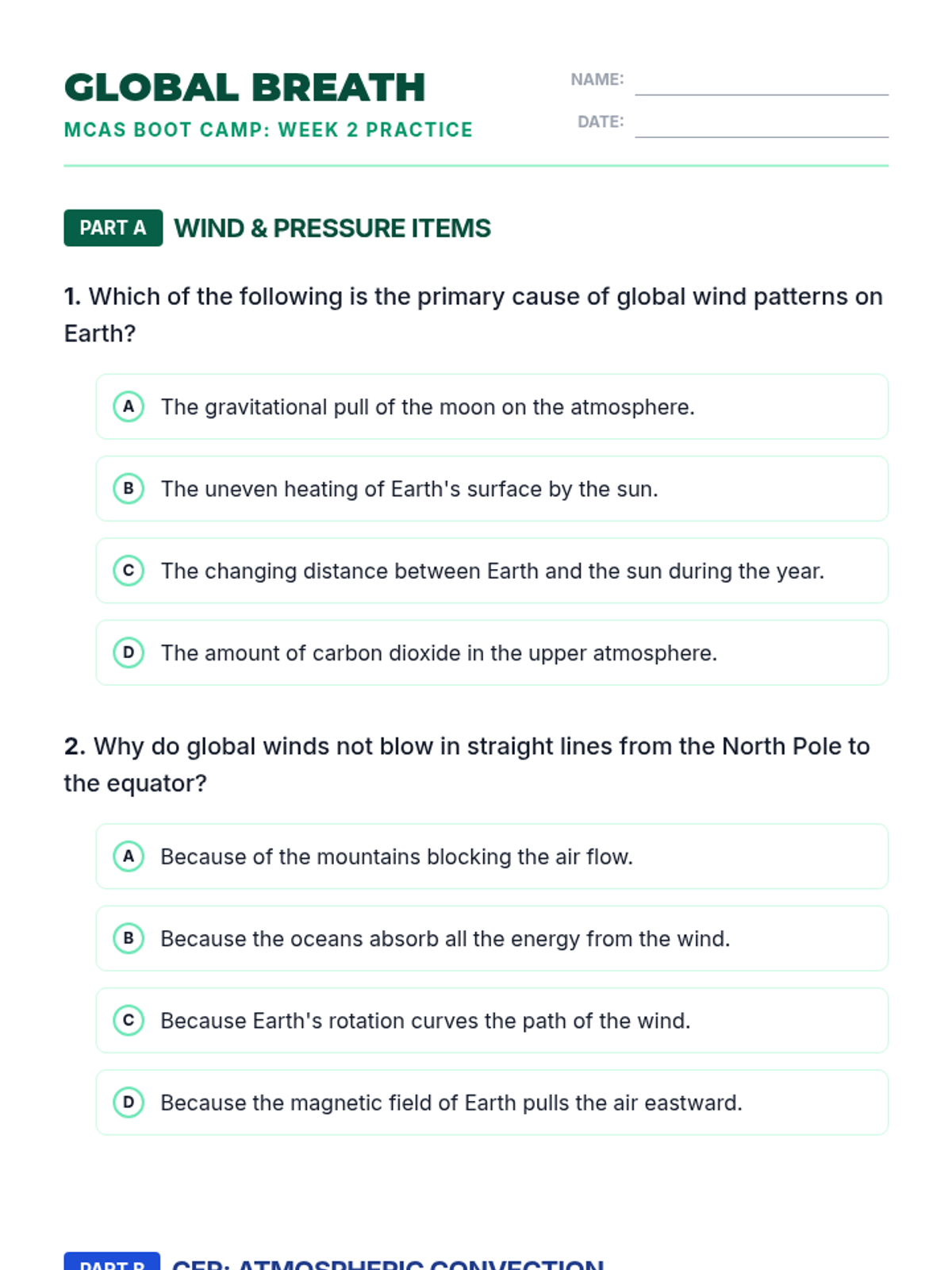
An exploration of atmospheric pressure and the Coriolis effect, focusing on how air moves from high to low pressure to create global wind belts and how these winds influence regional weather patterns.
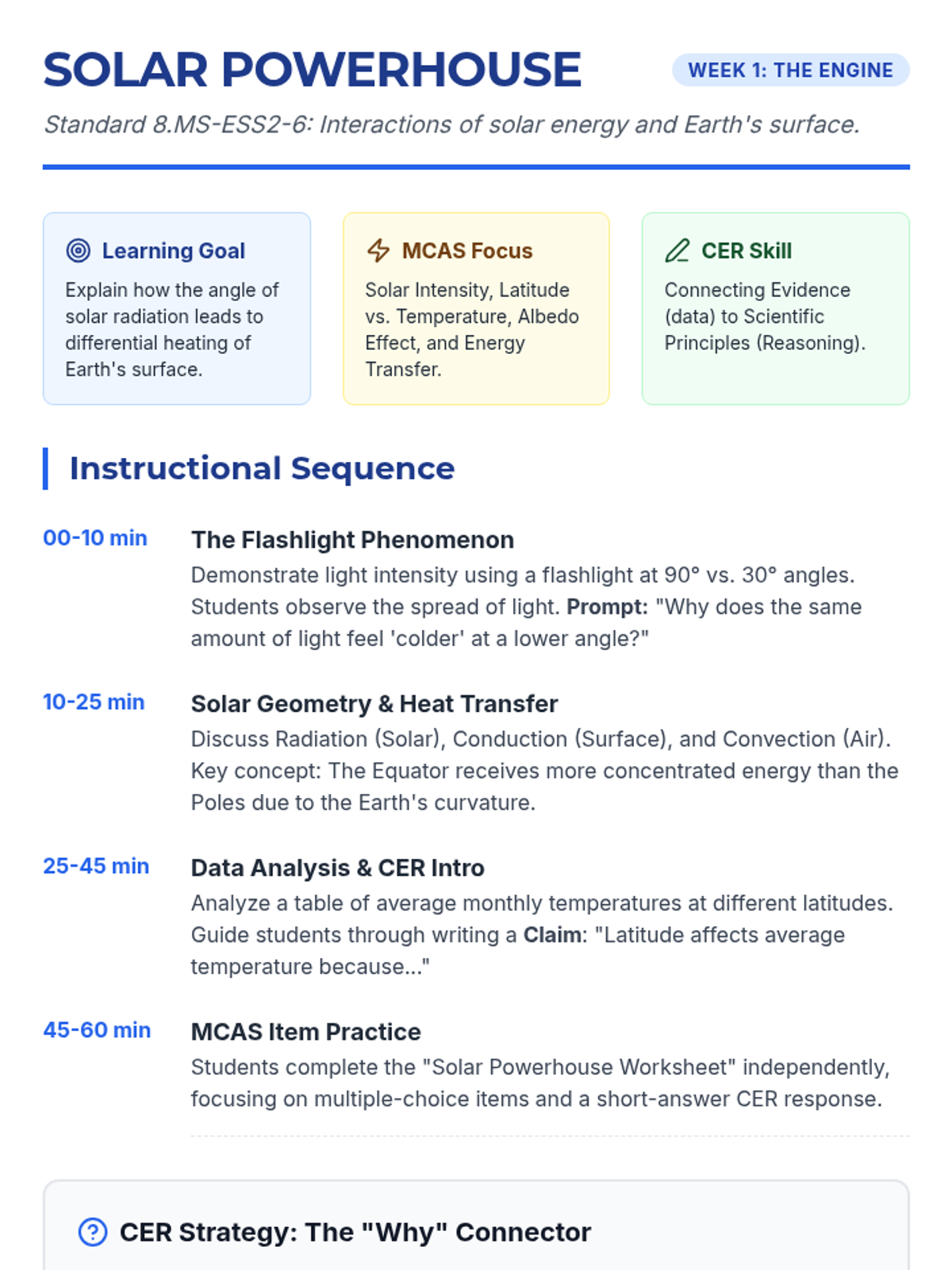
Students investigate how differential heating of Earth's surface by the sun creates the initial energy imbalance that drives all weather and climate, practicing CER to explain the relationship between latitude and solar intensity.
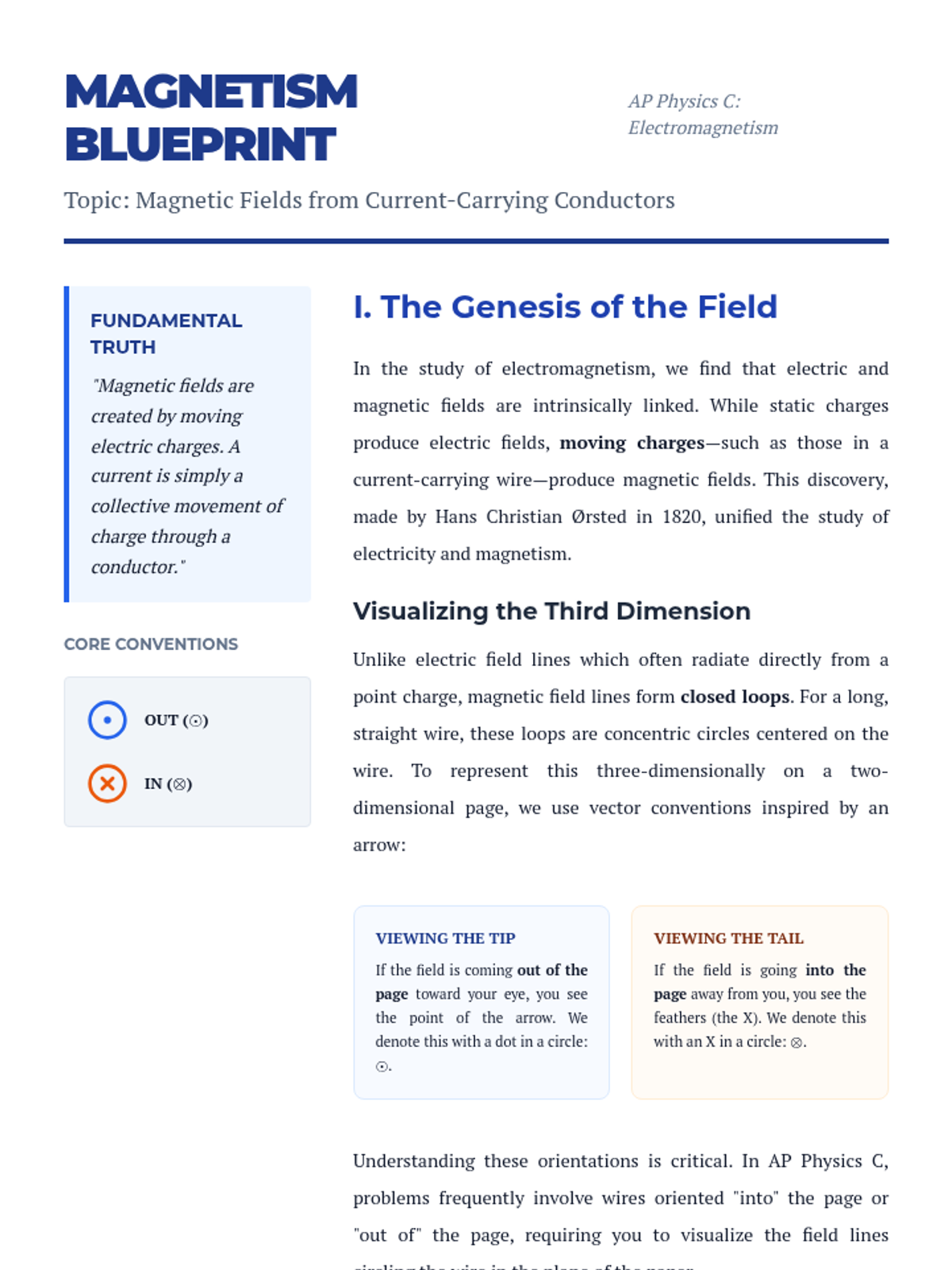
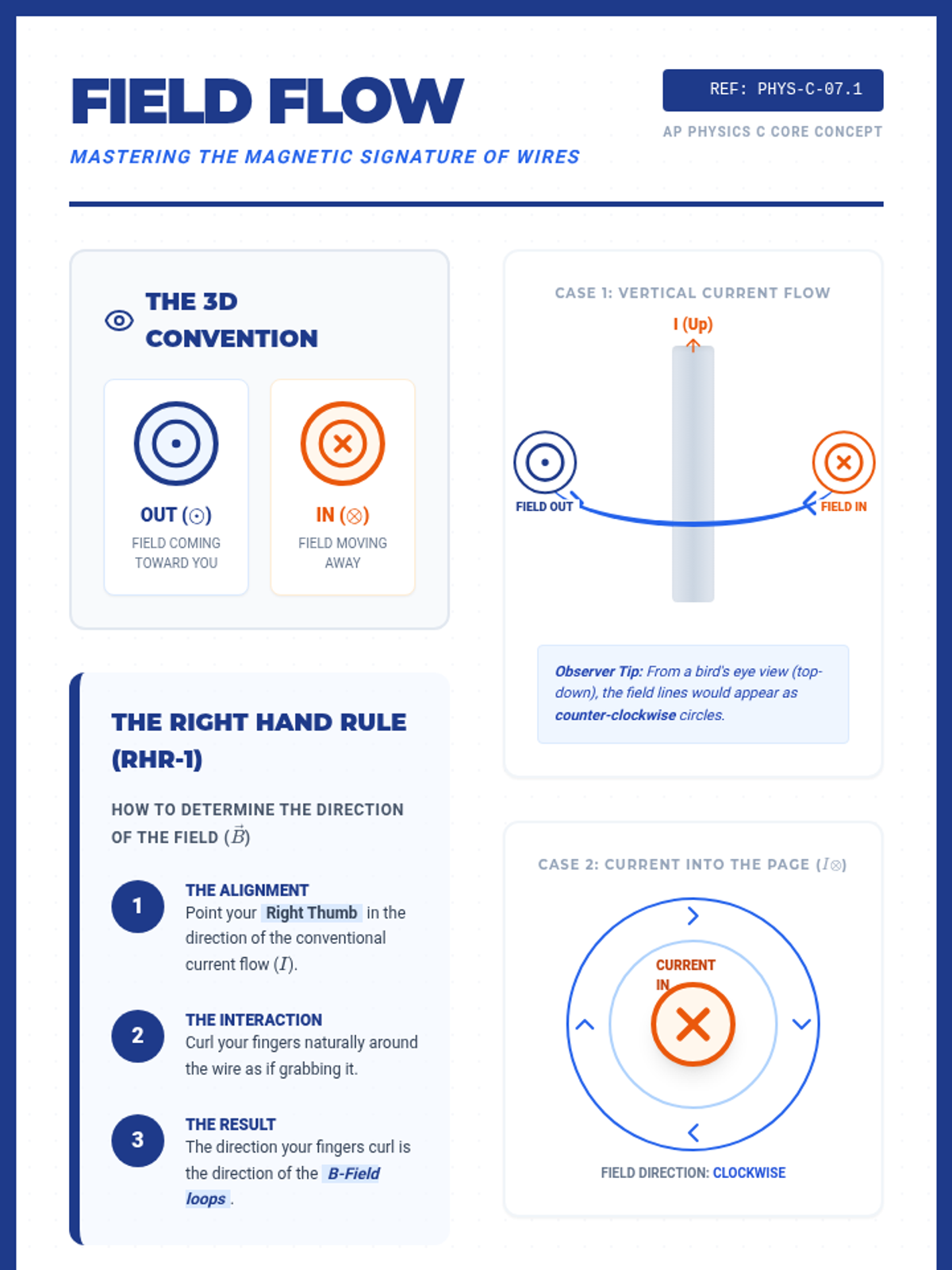
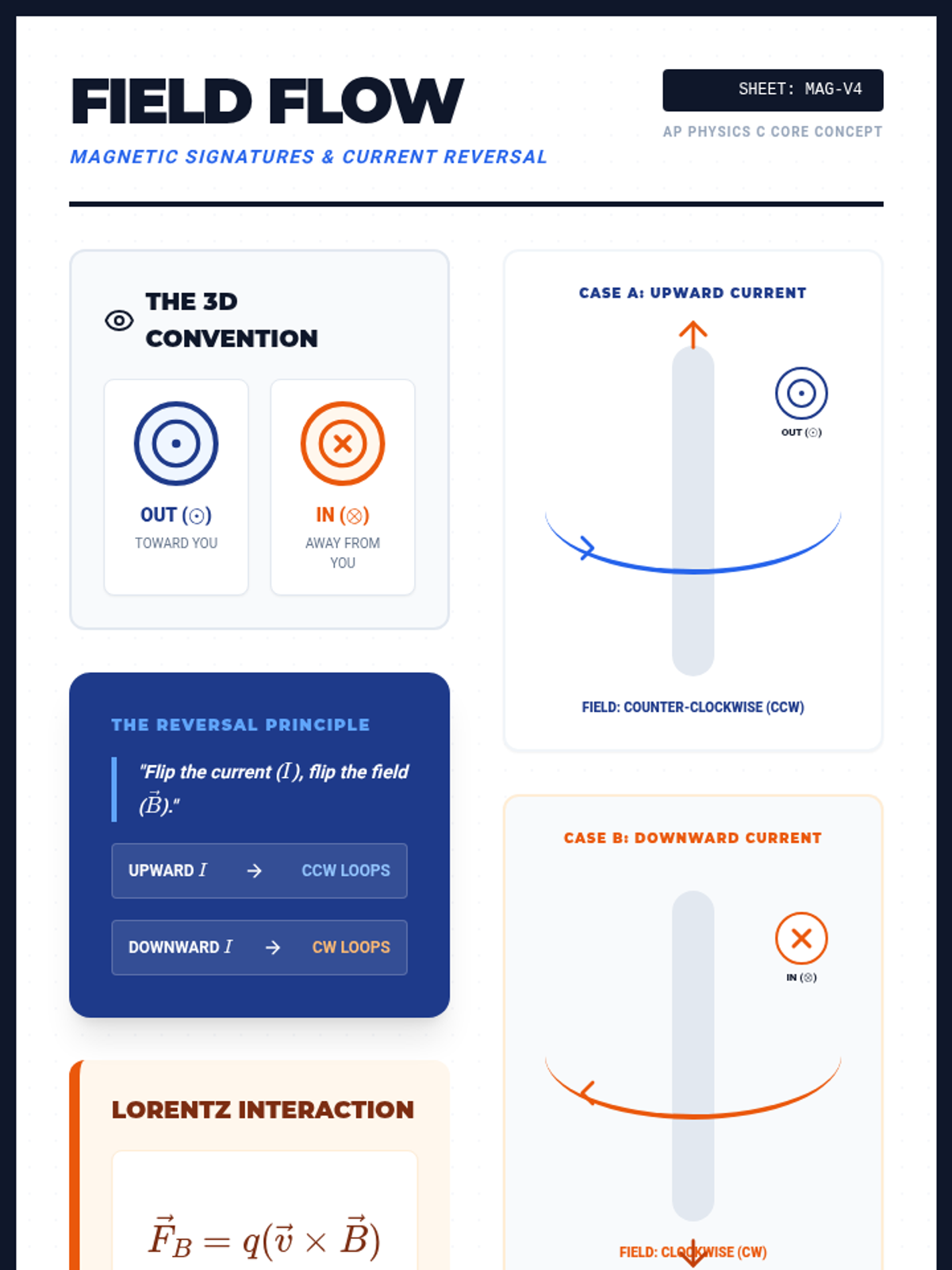
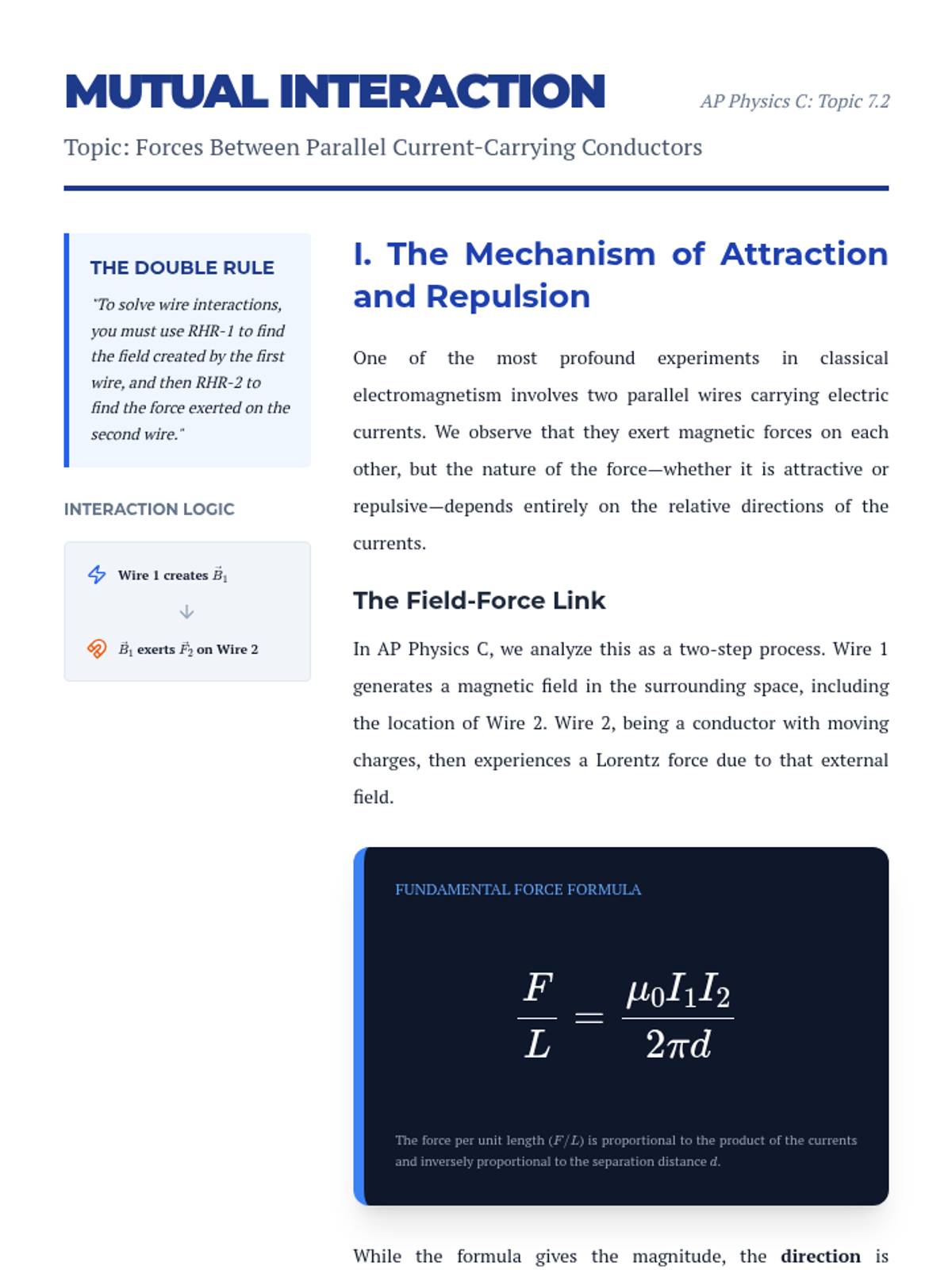
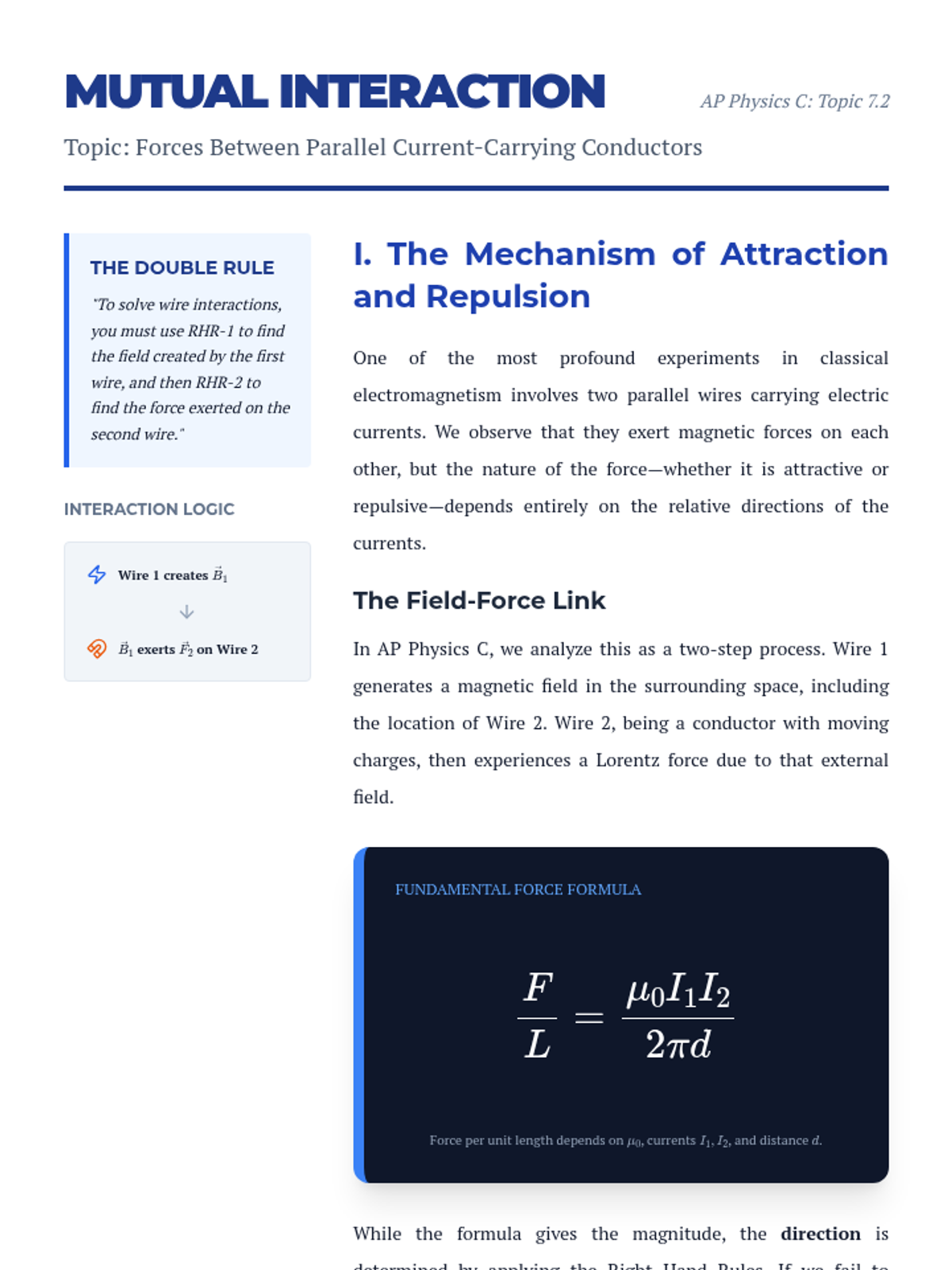
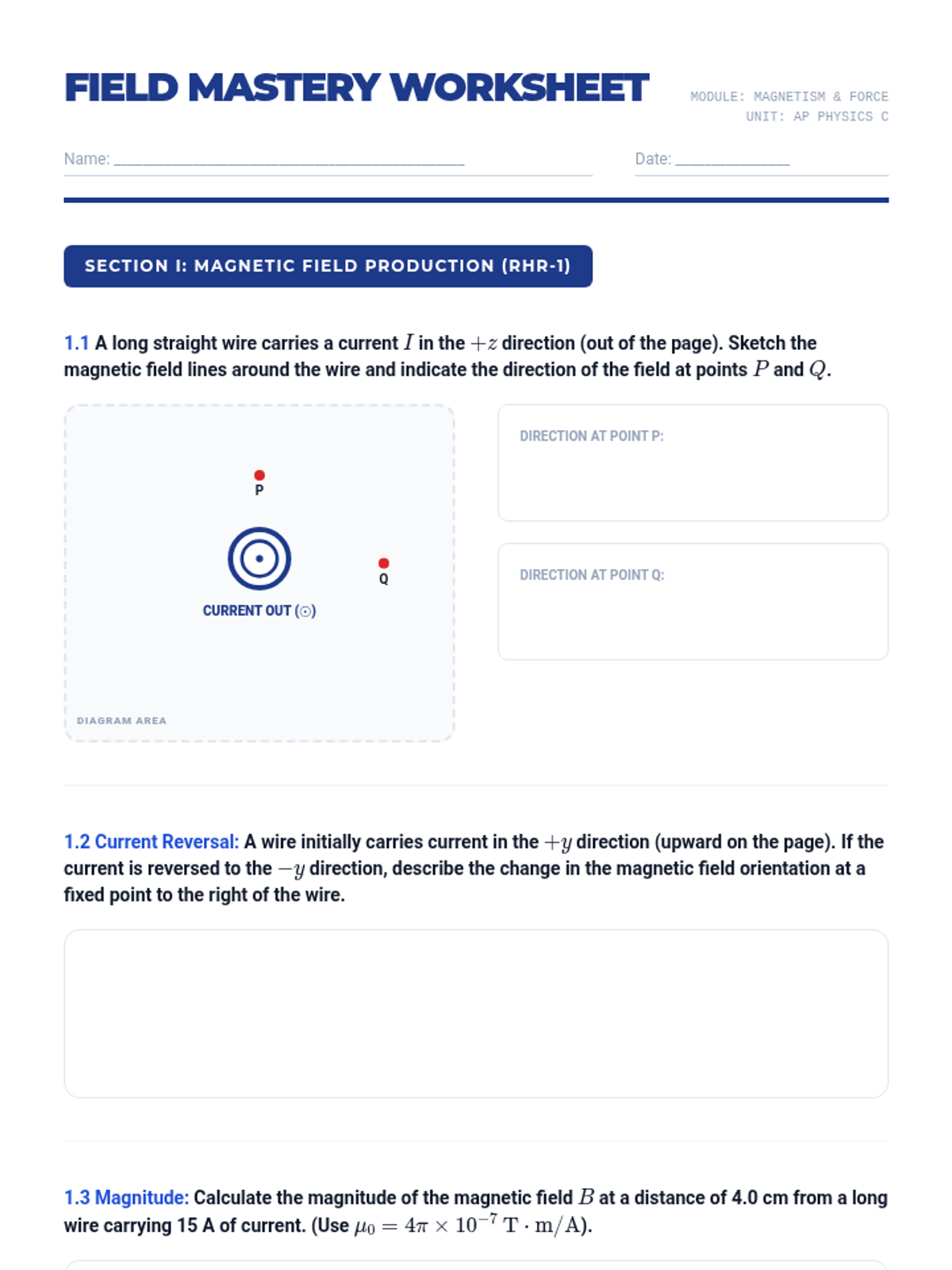
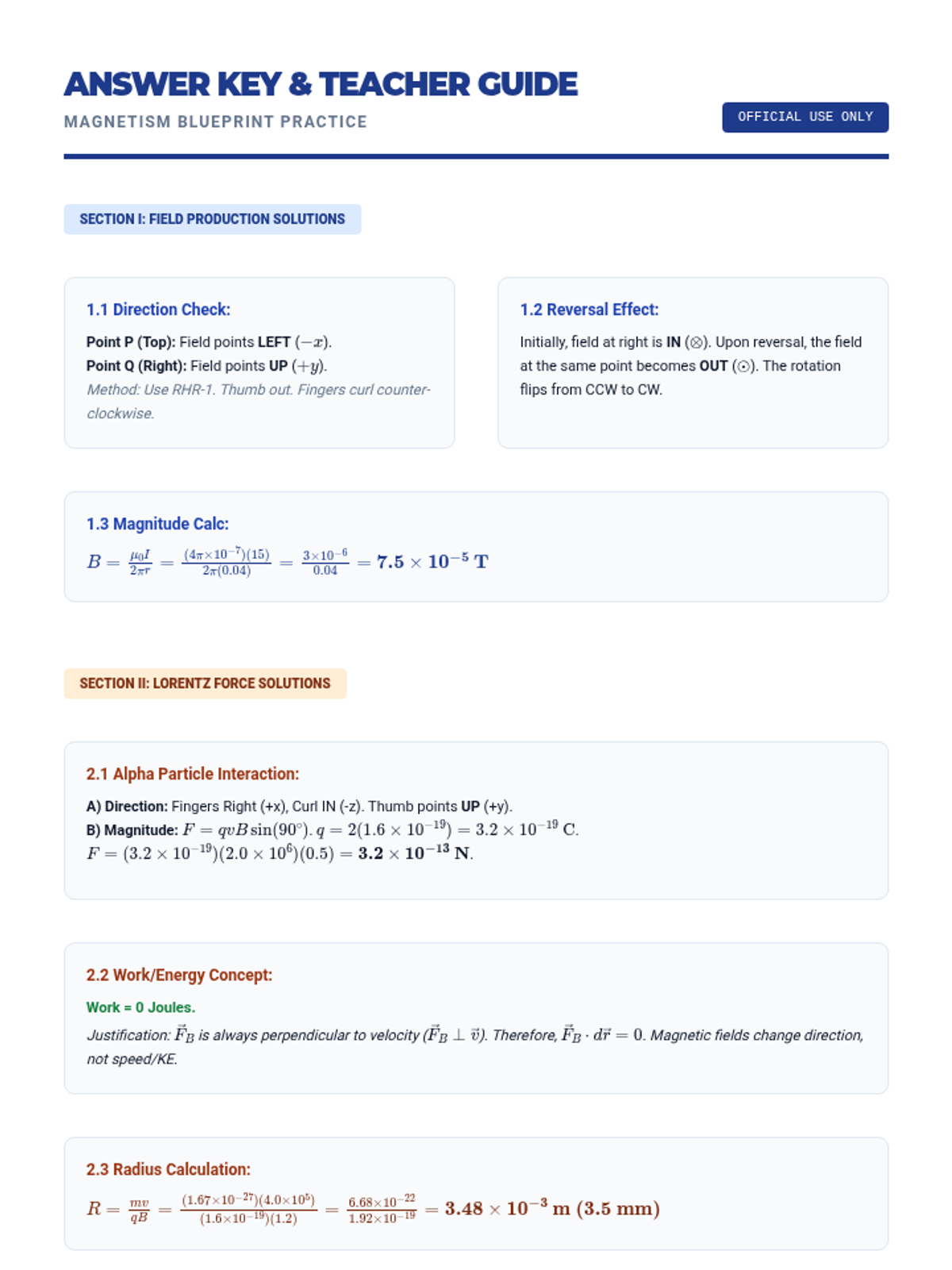
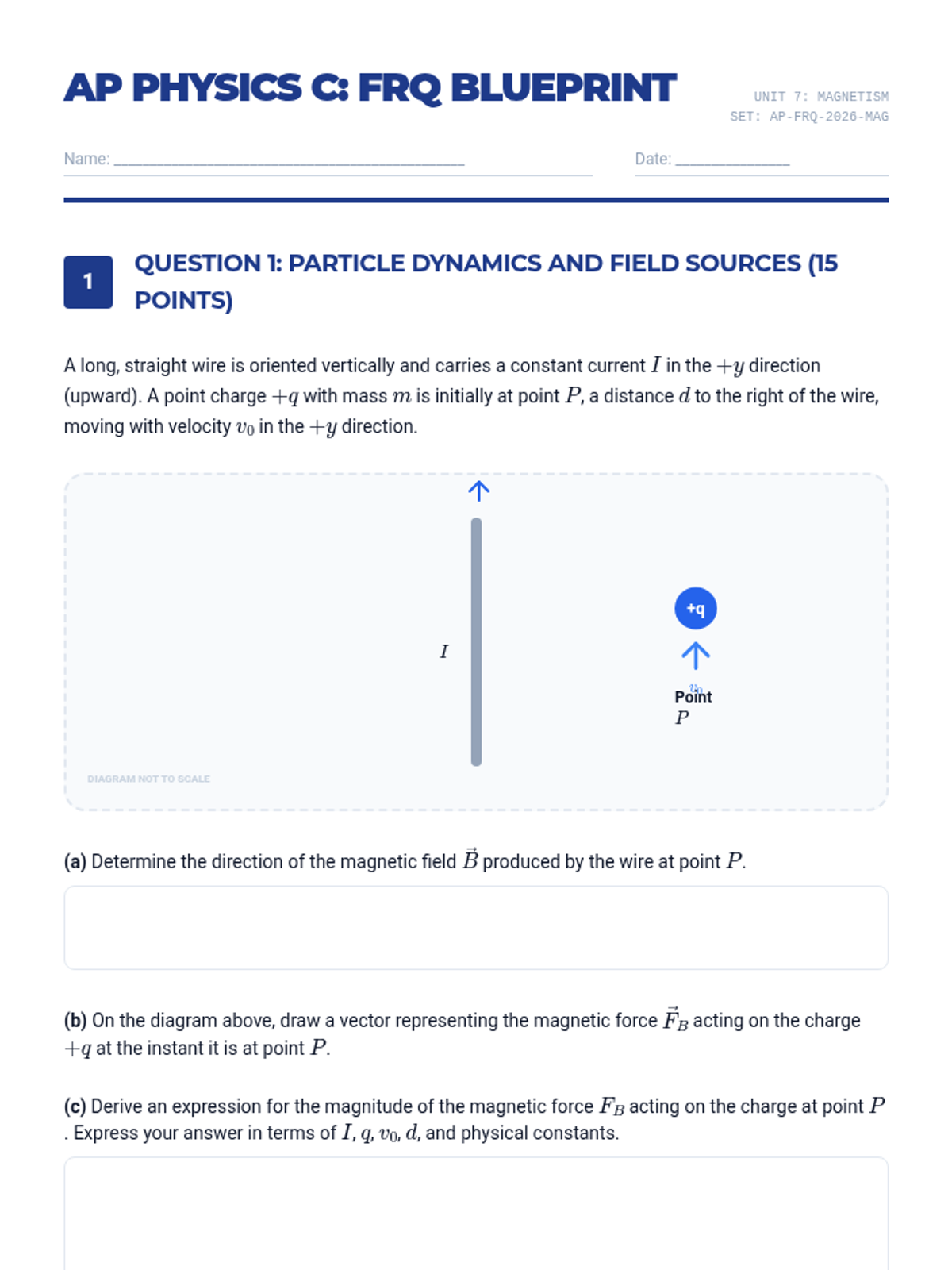
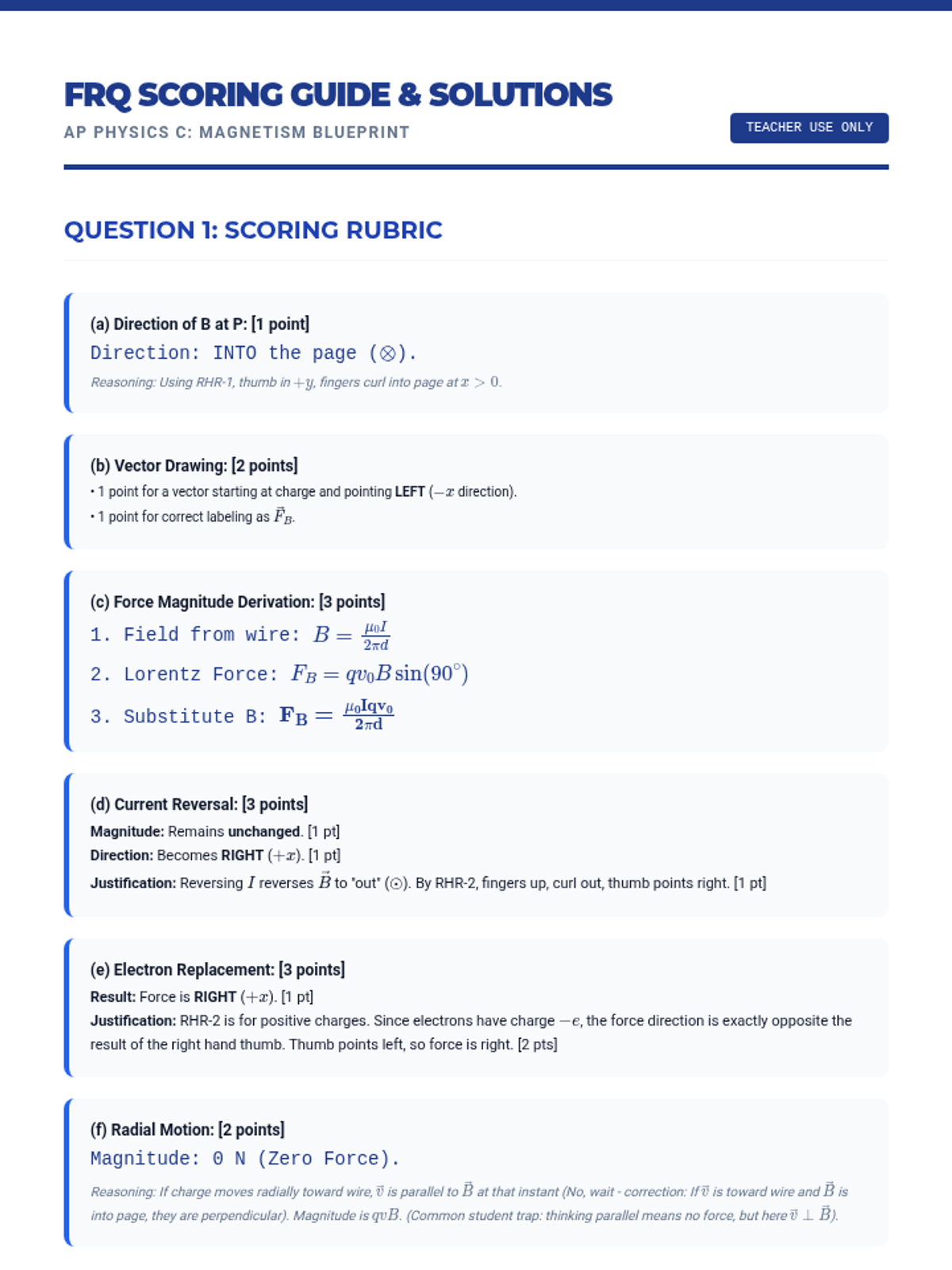
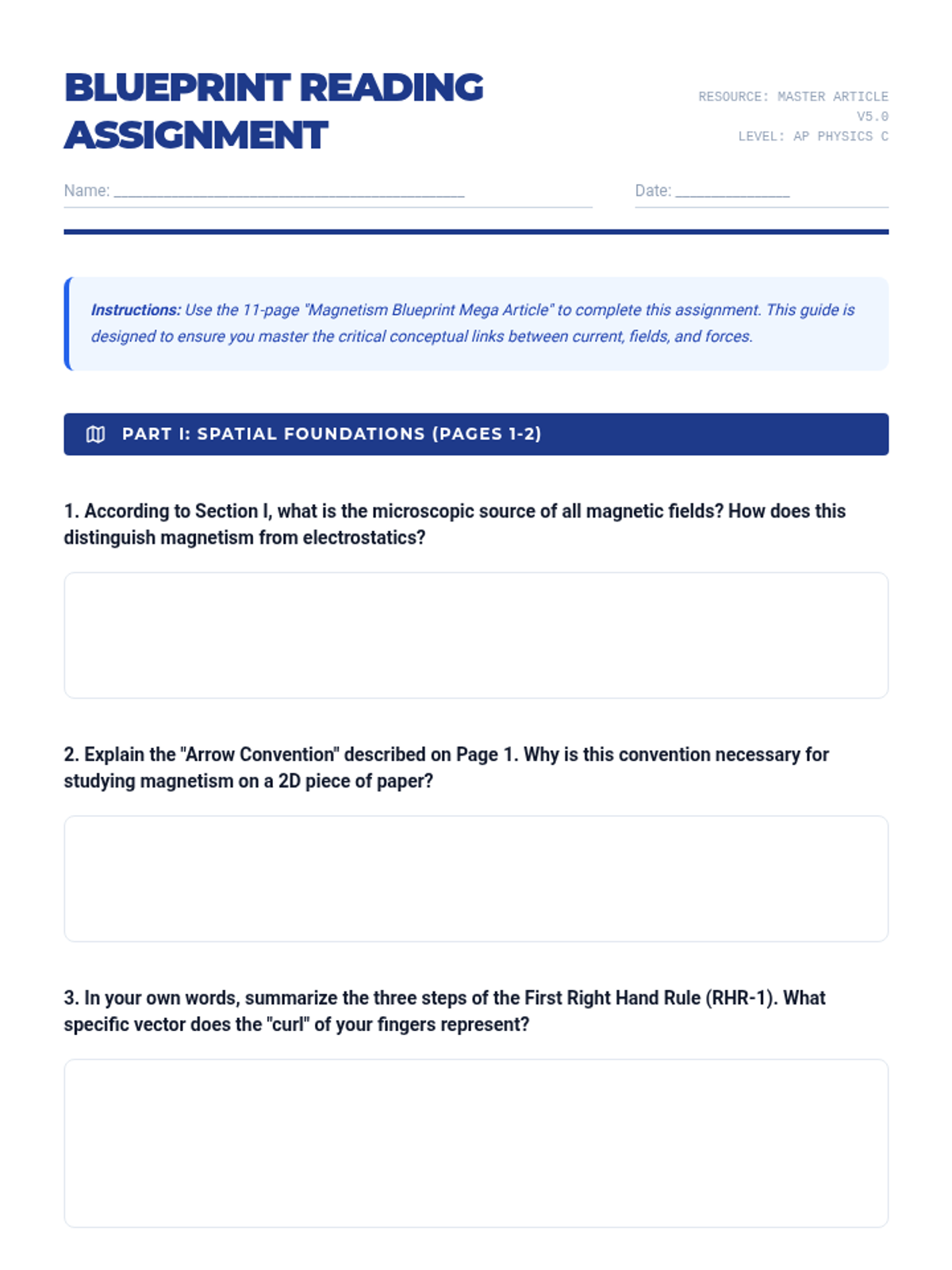
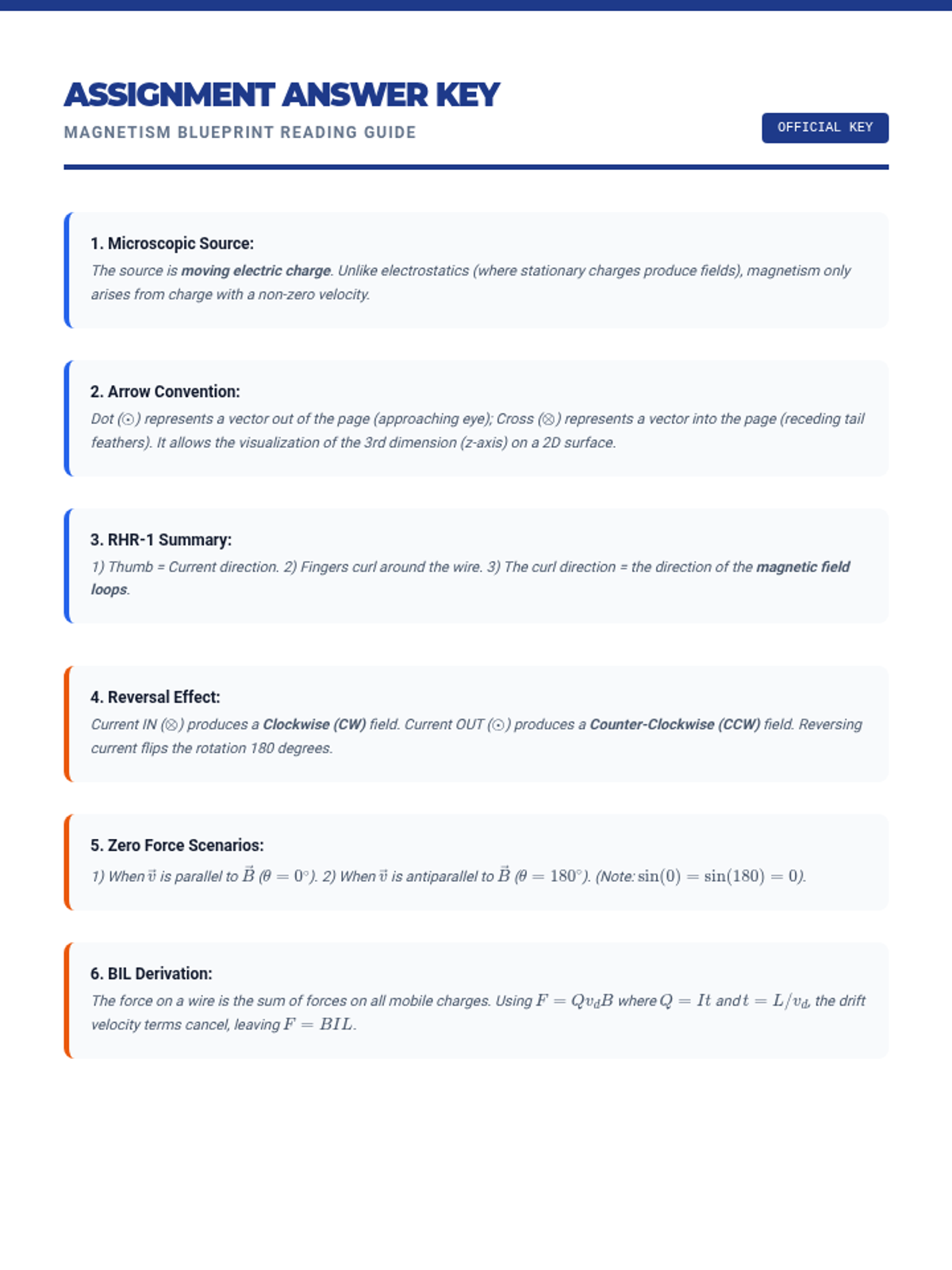
An in-depth exploration of electromagnetism focusing on the relationship between electric currents and magnetic fields, featuring the Biot-Savart Law, Ampere's Law, and the Lorentz Force.
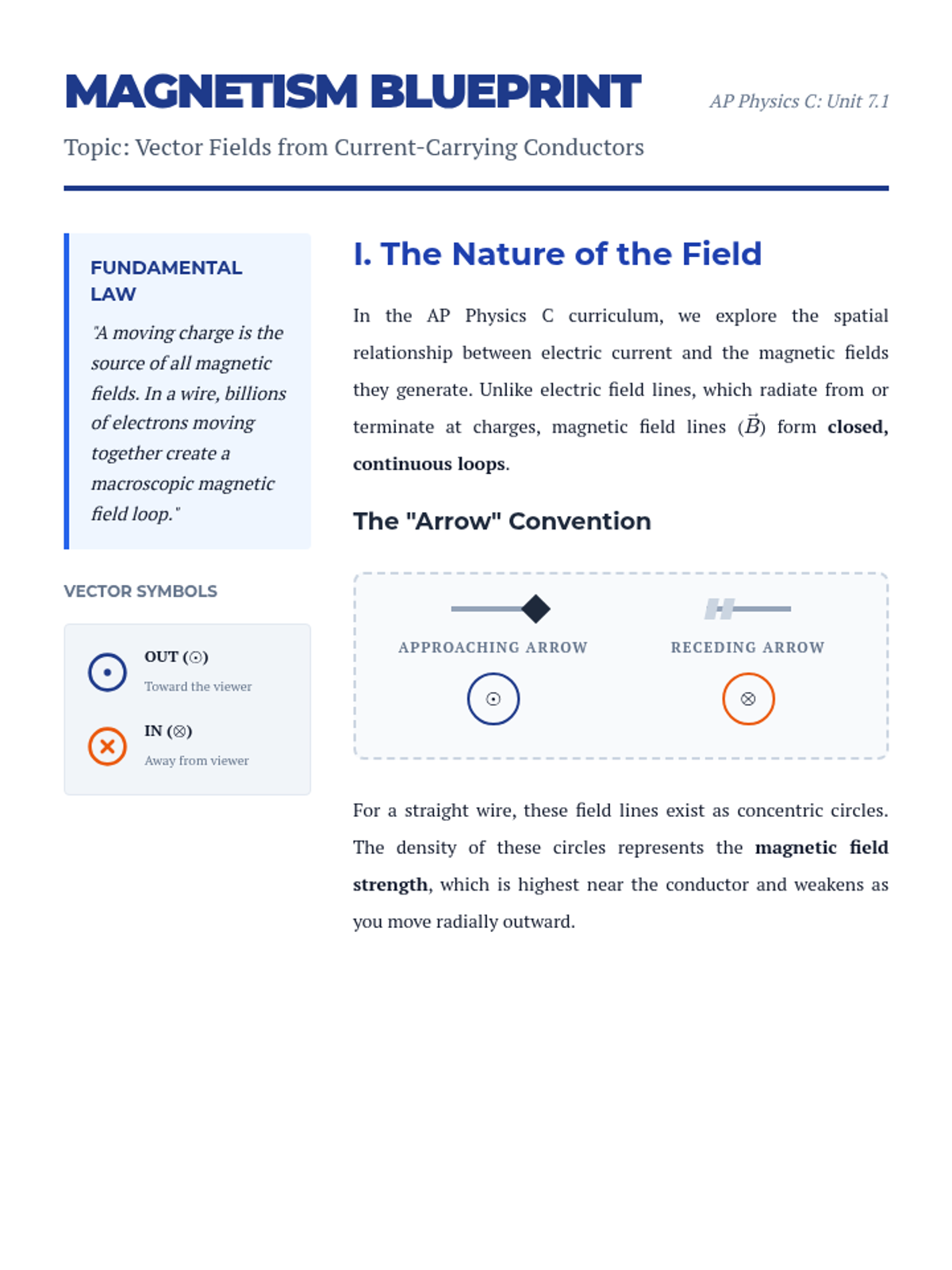
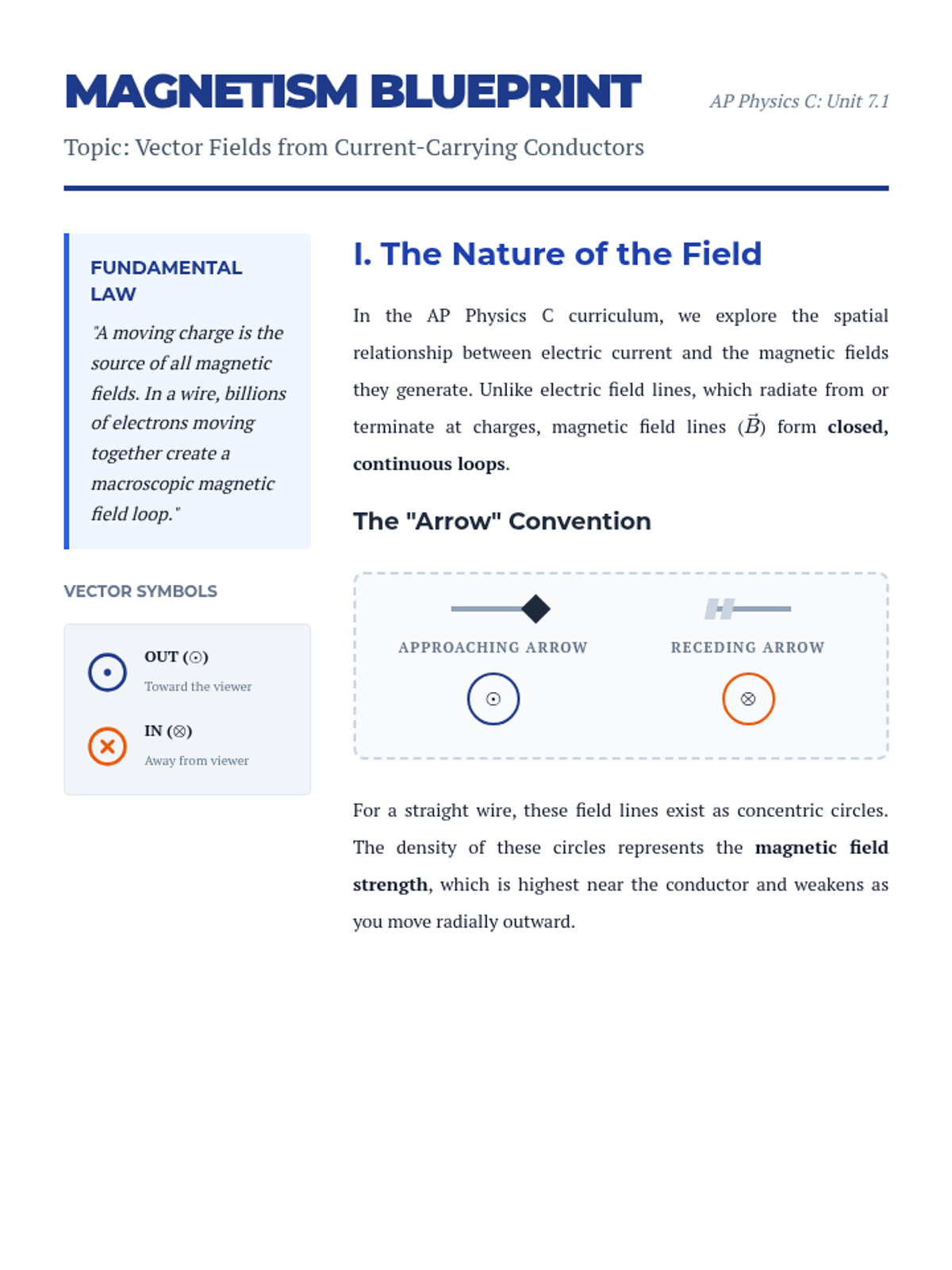
A comprehensive lesson on the nature of magnetic fields, focusing on their vector properties, dipole sources, and the implications of Gauss's Law for magnetism. Students will explore how fields are represented and why magnetic monopoles do not exist.