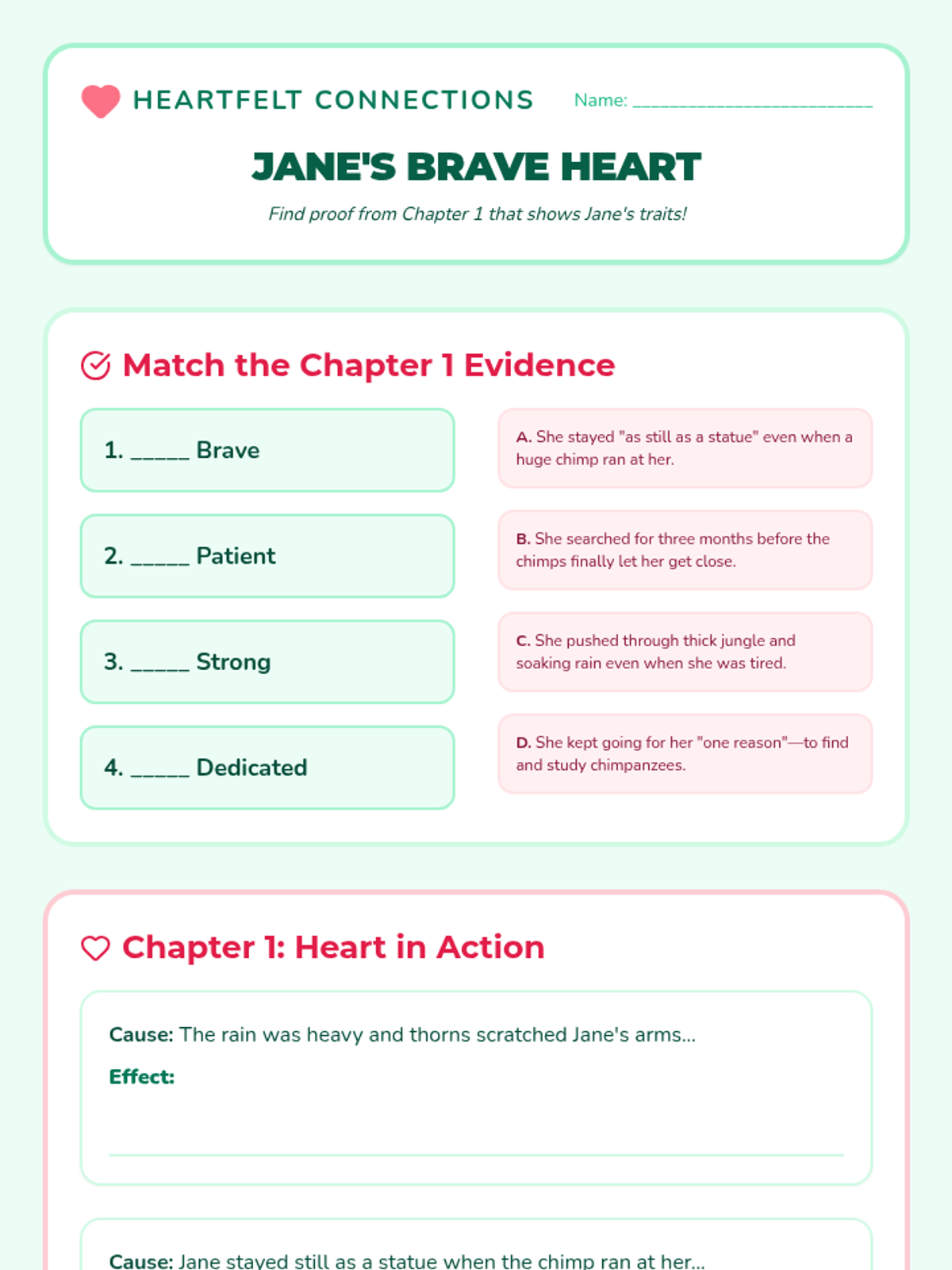
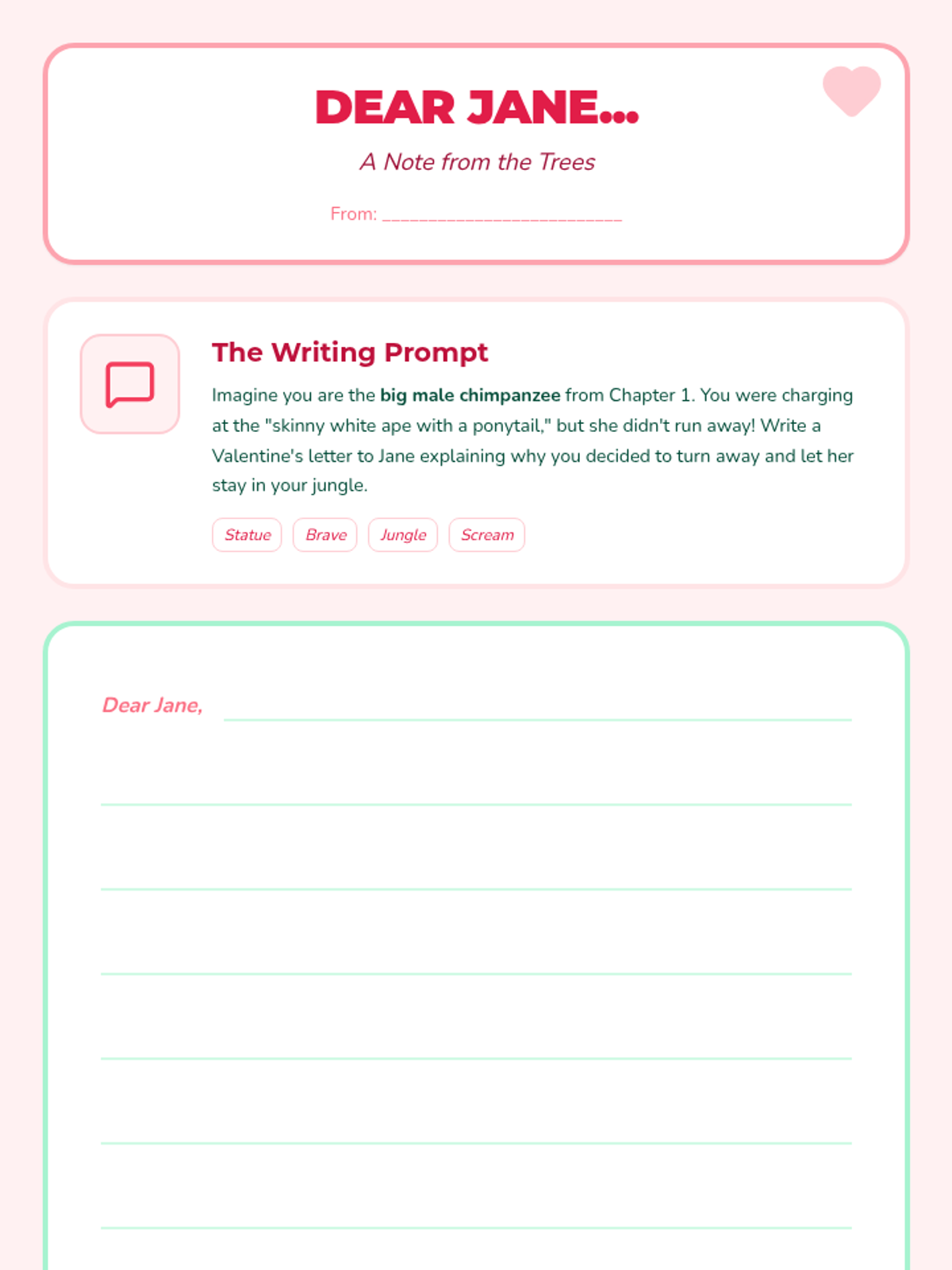
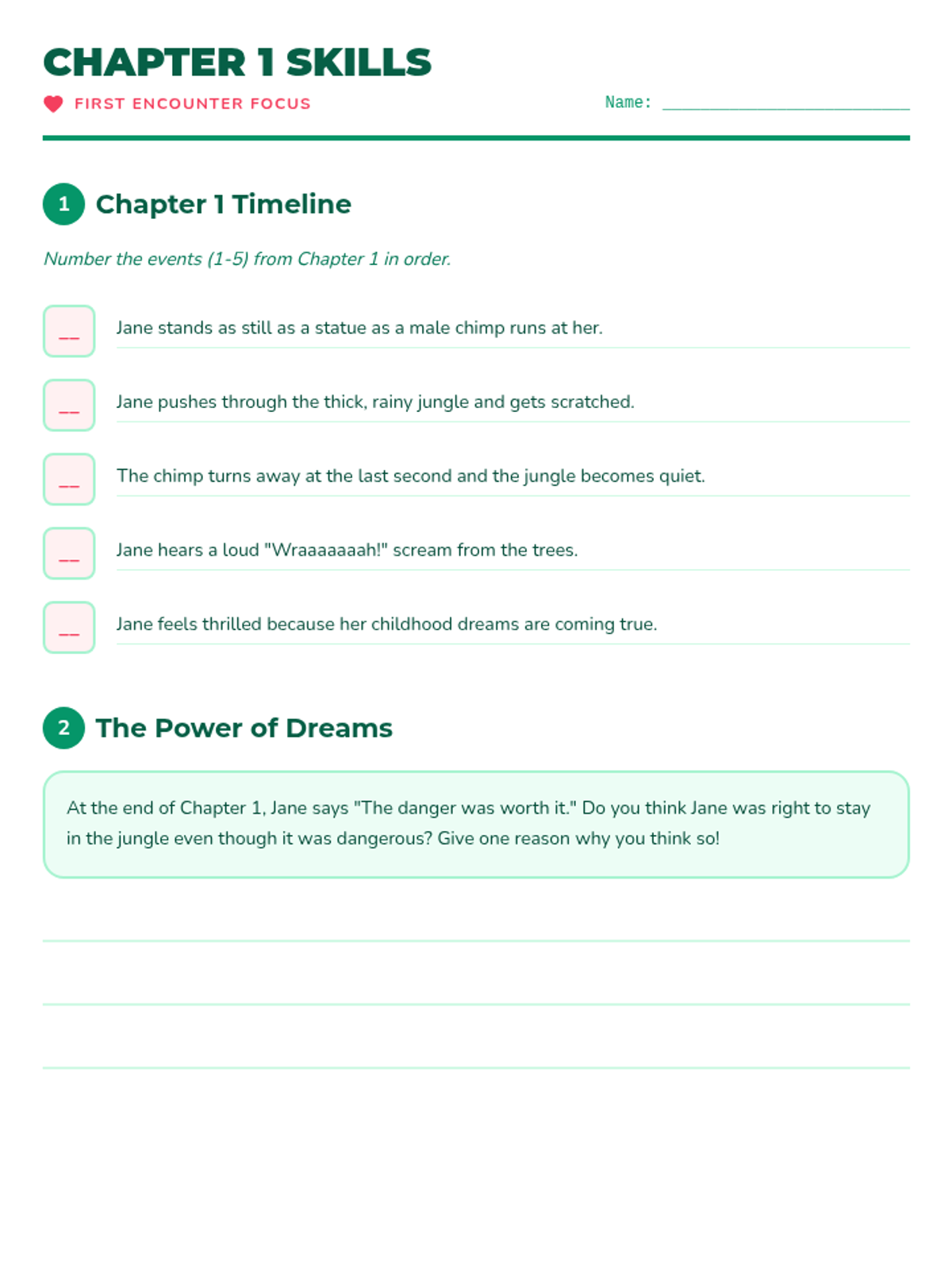
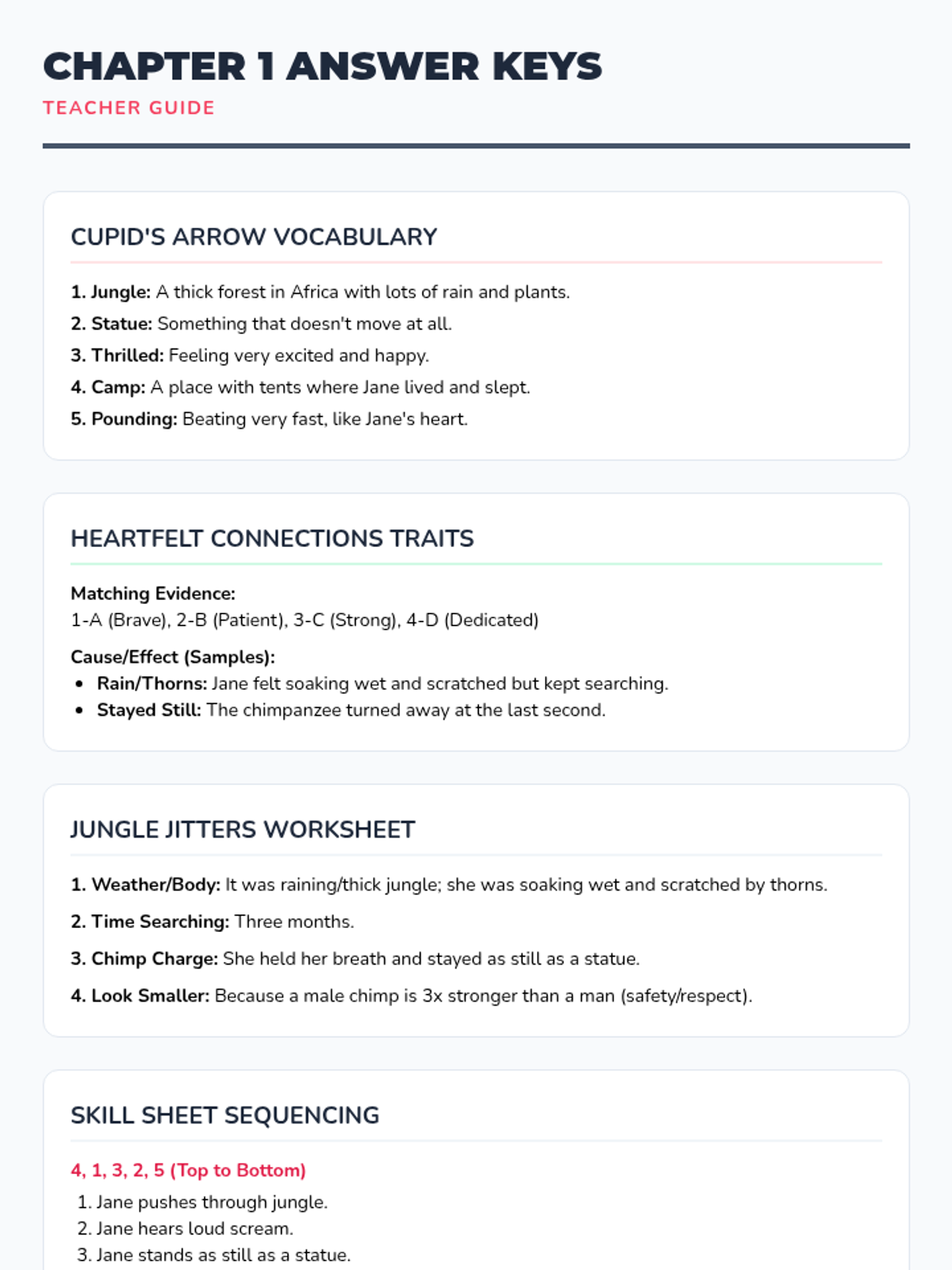
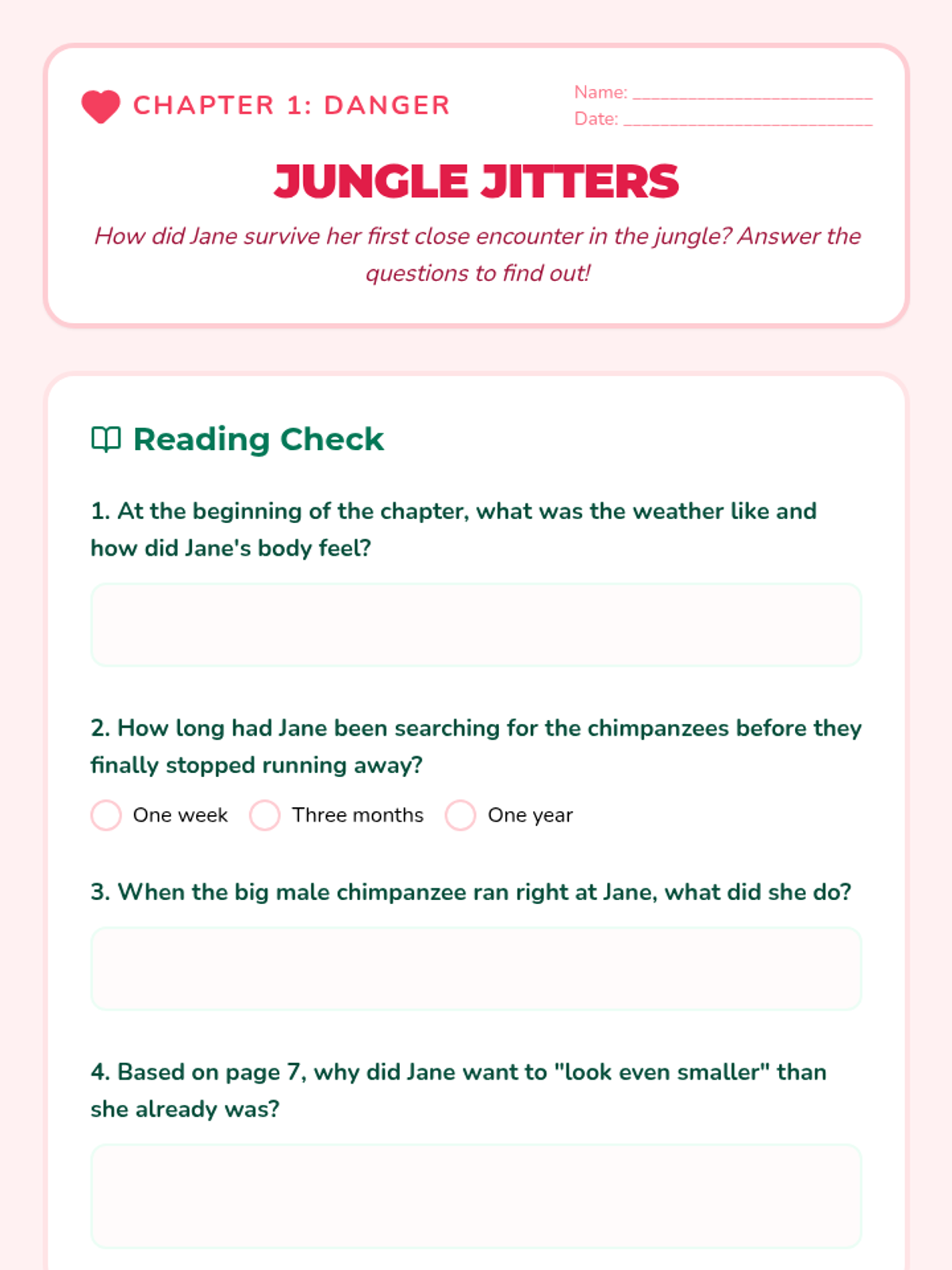
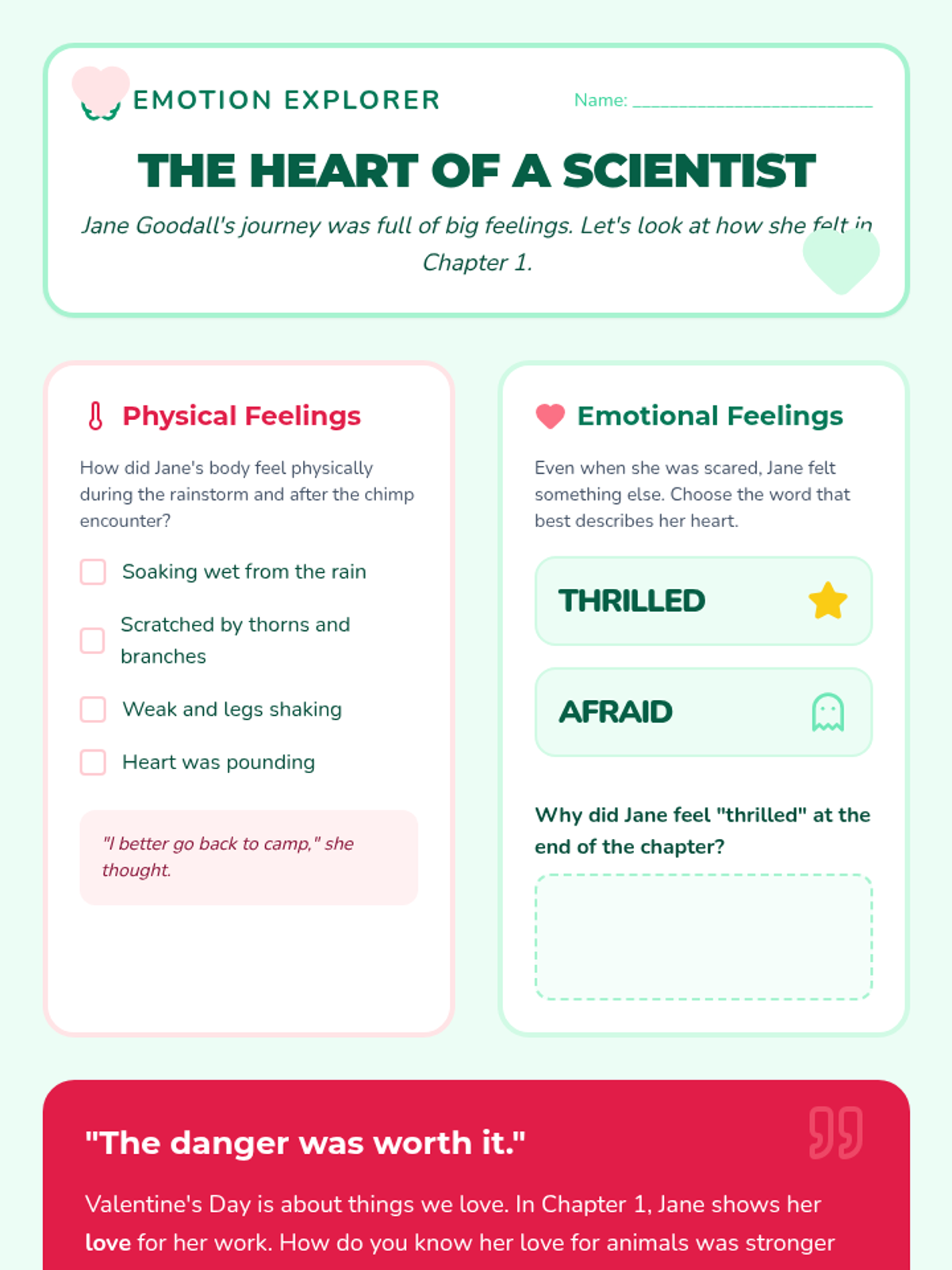
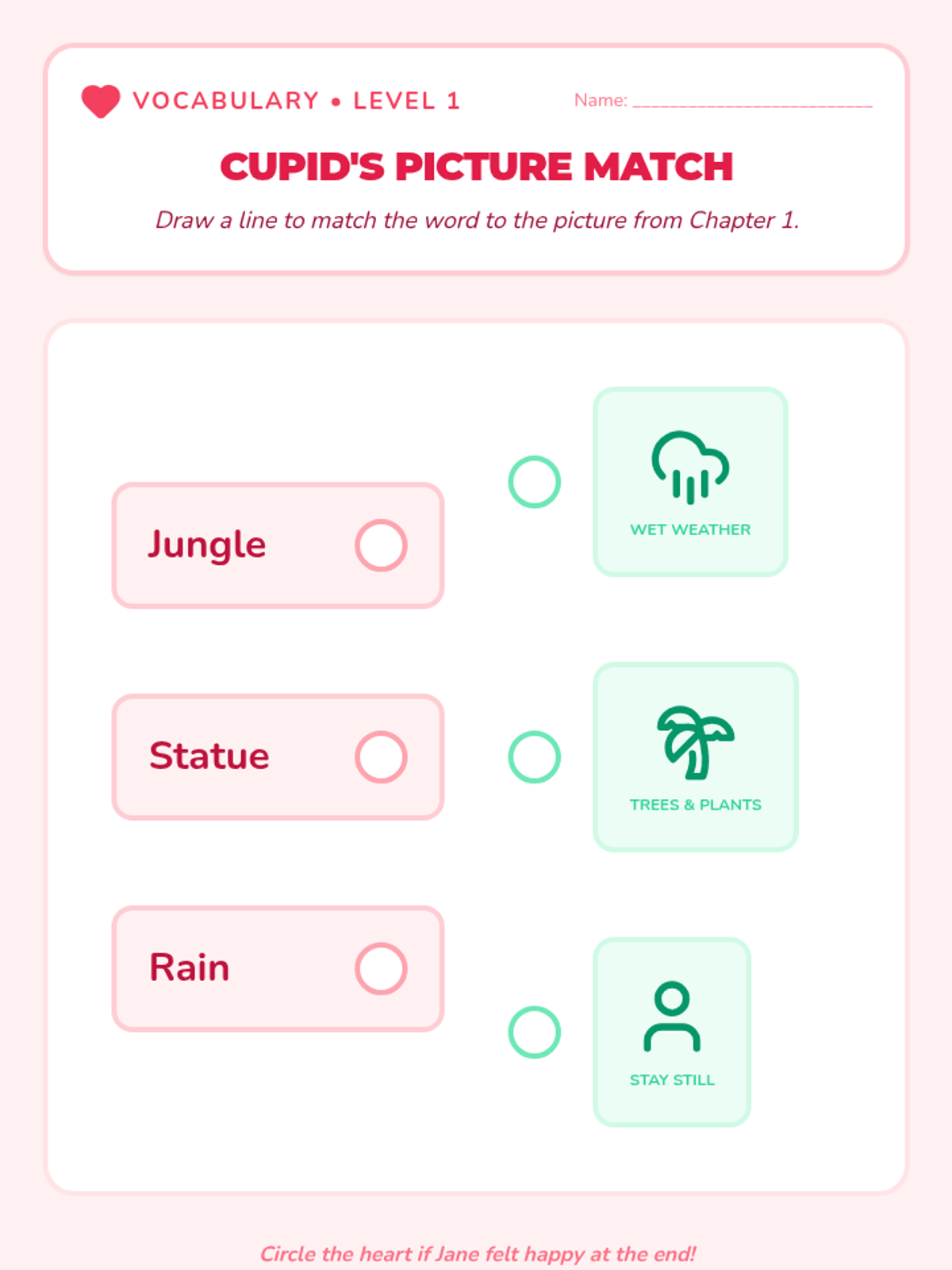
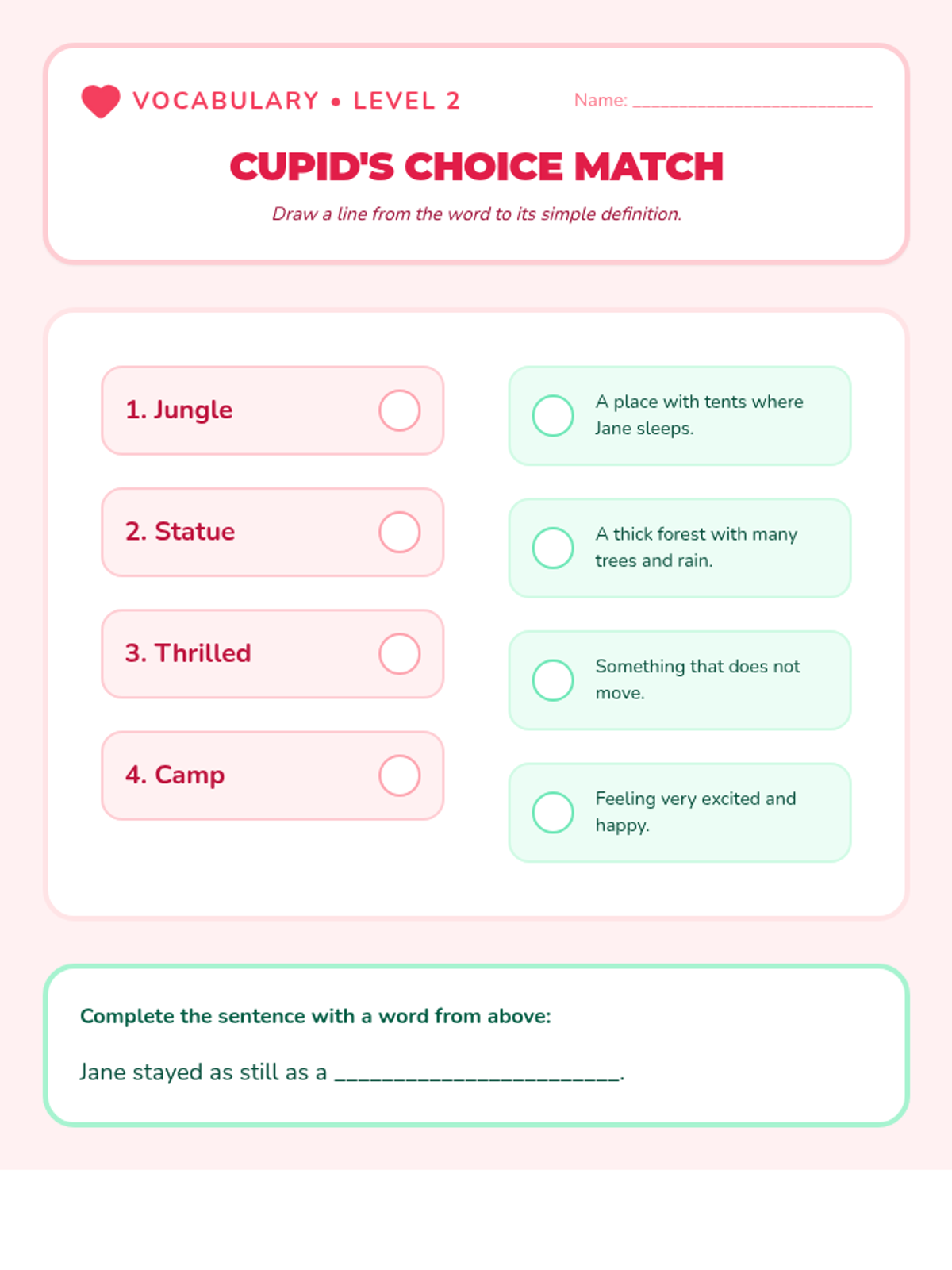
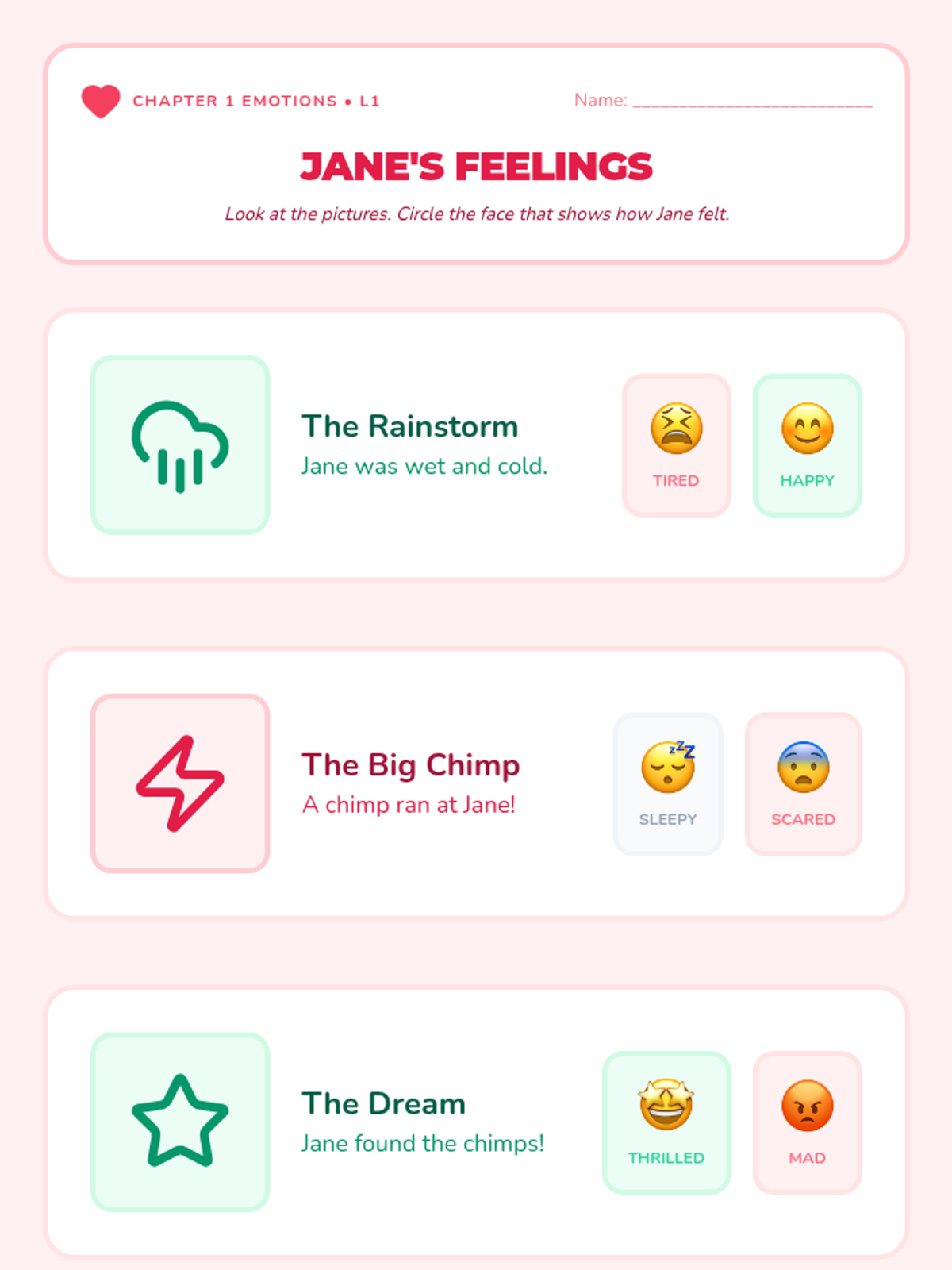
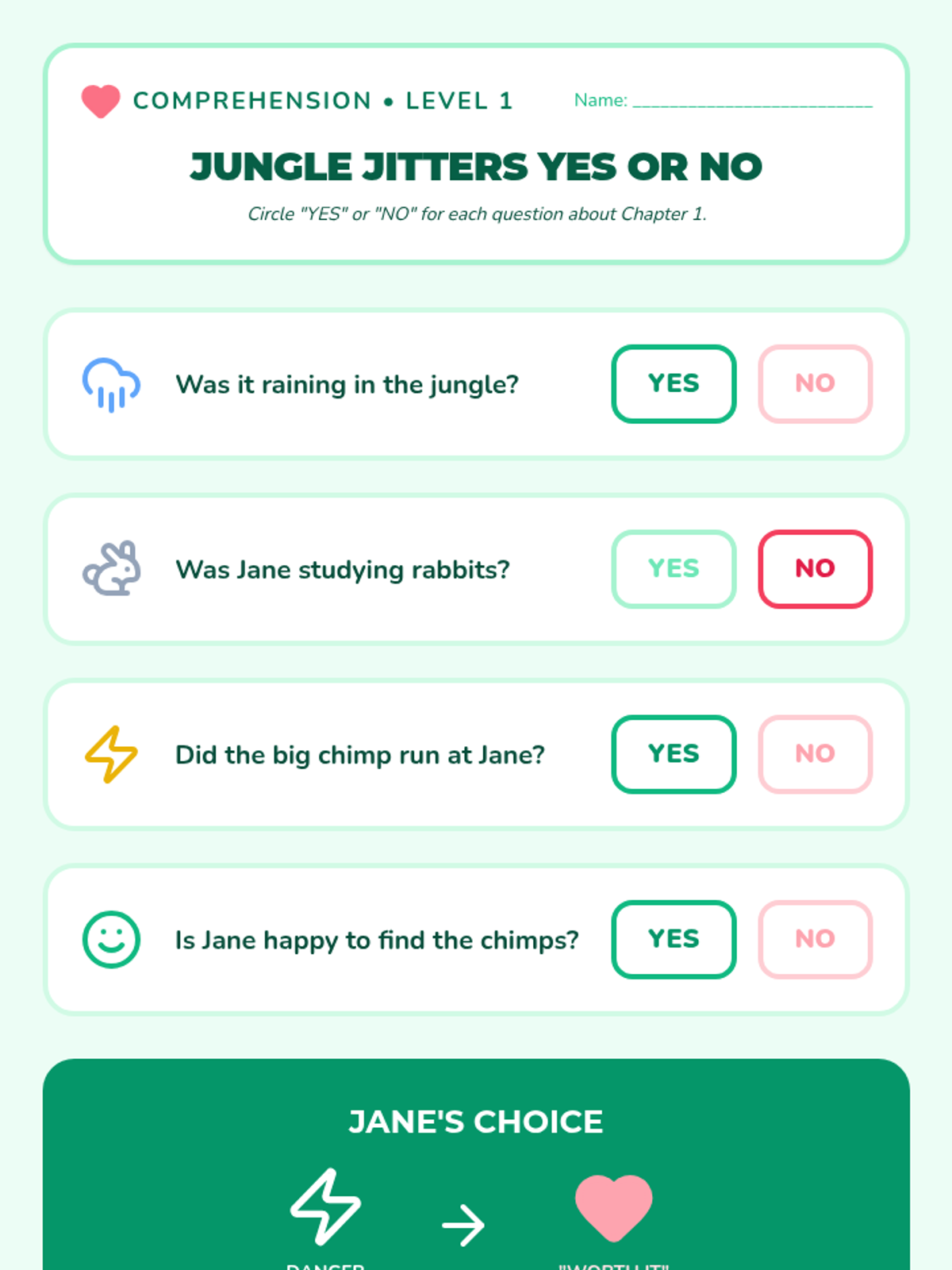
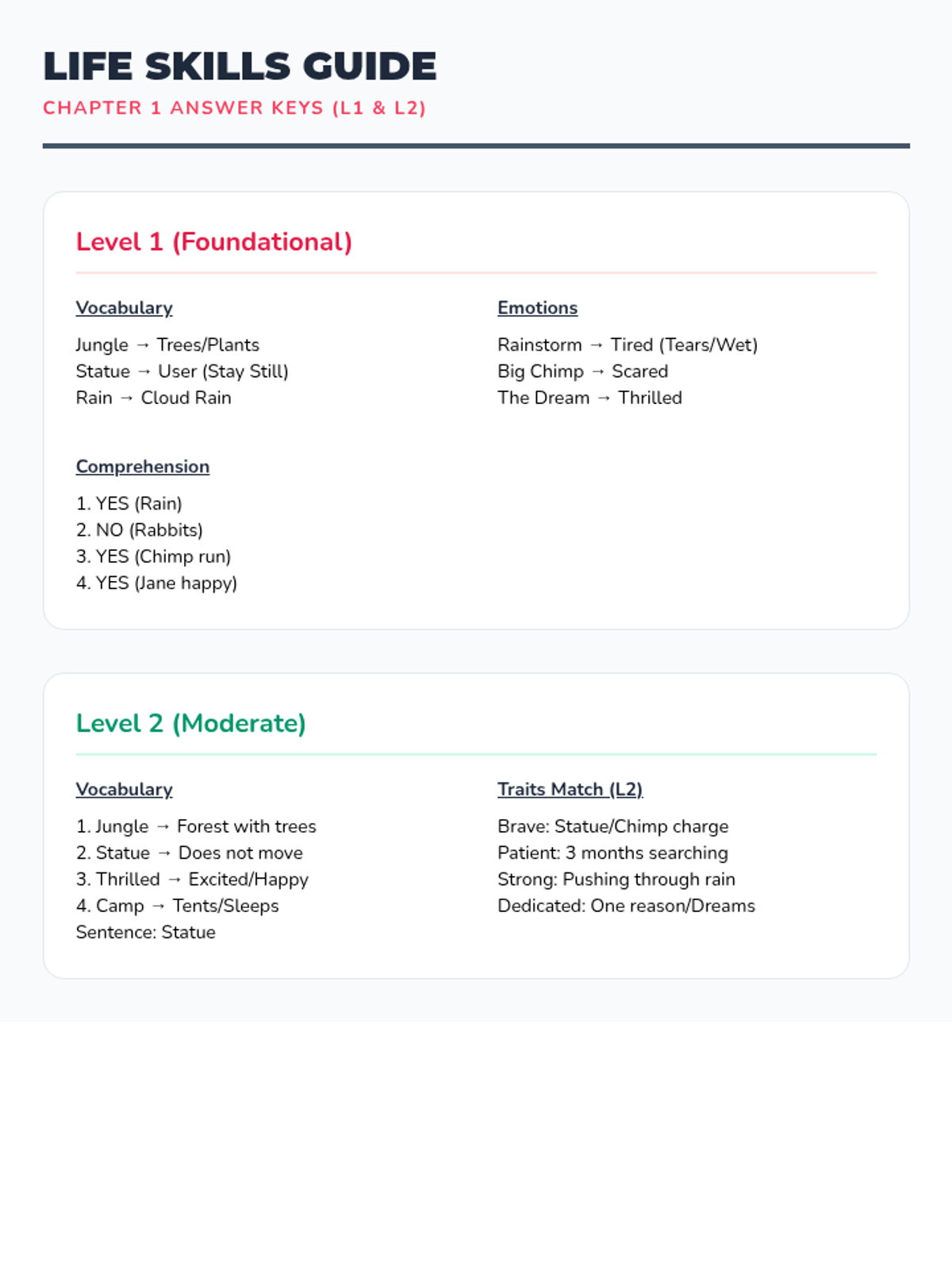
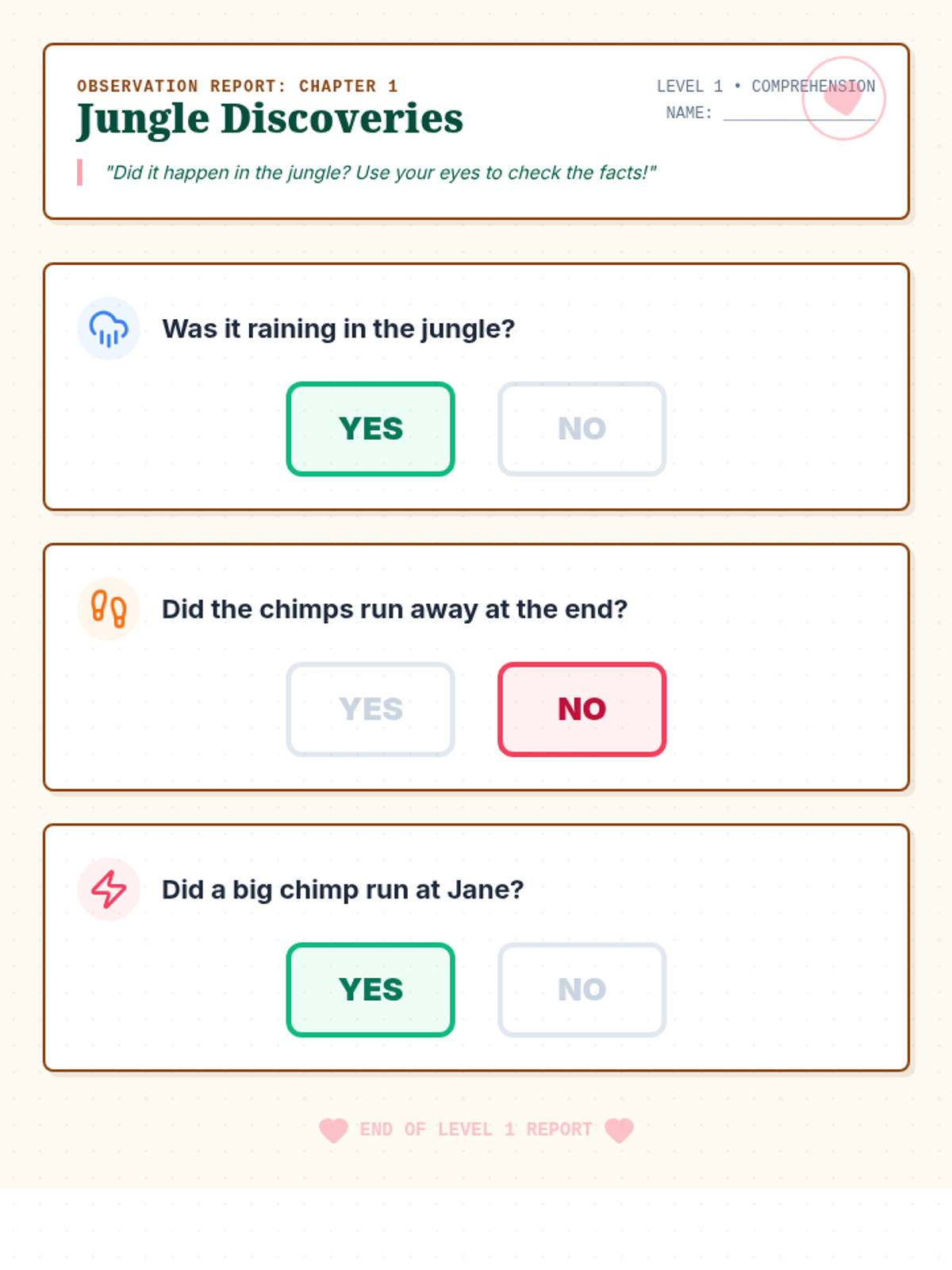
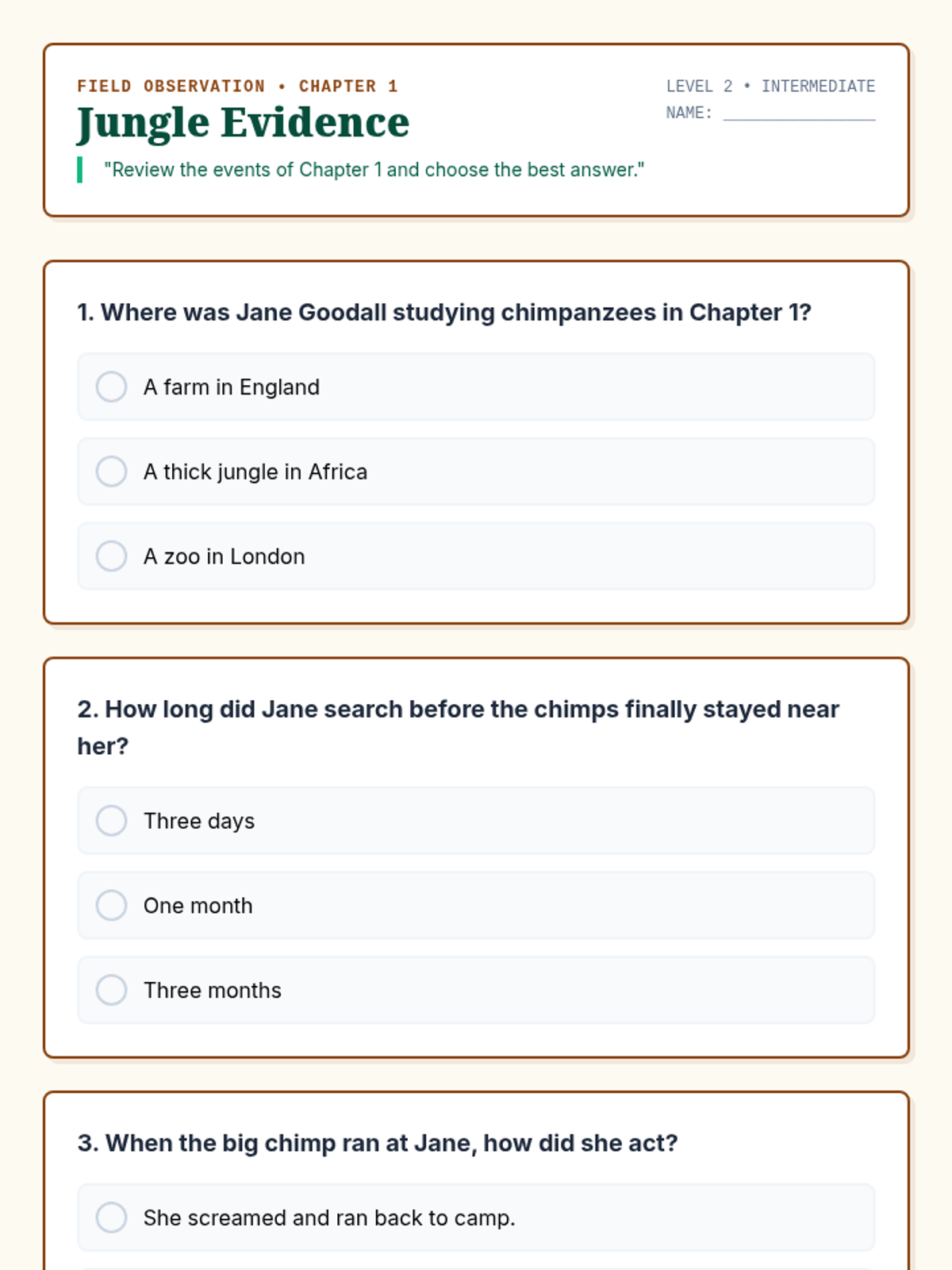
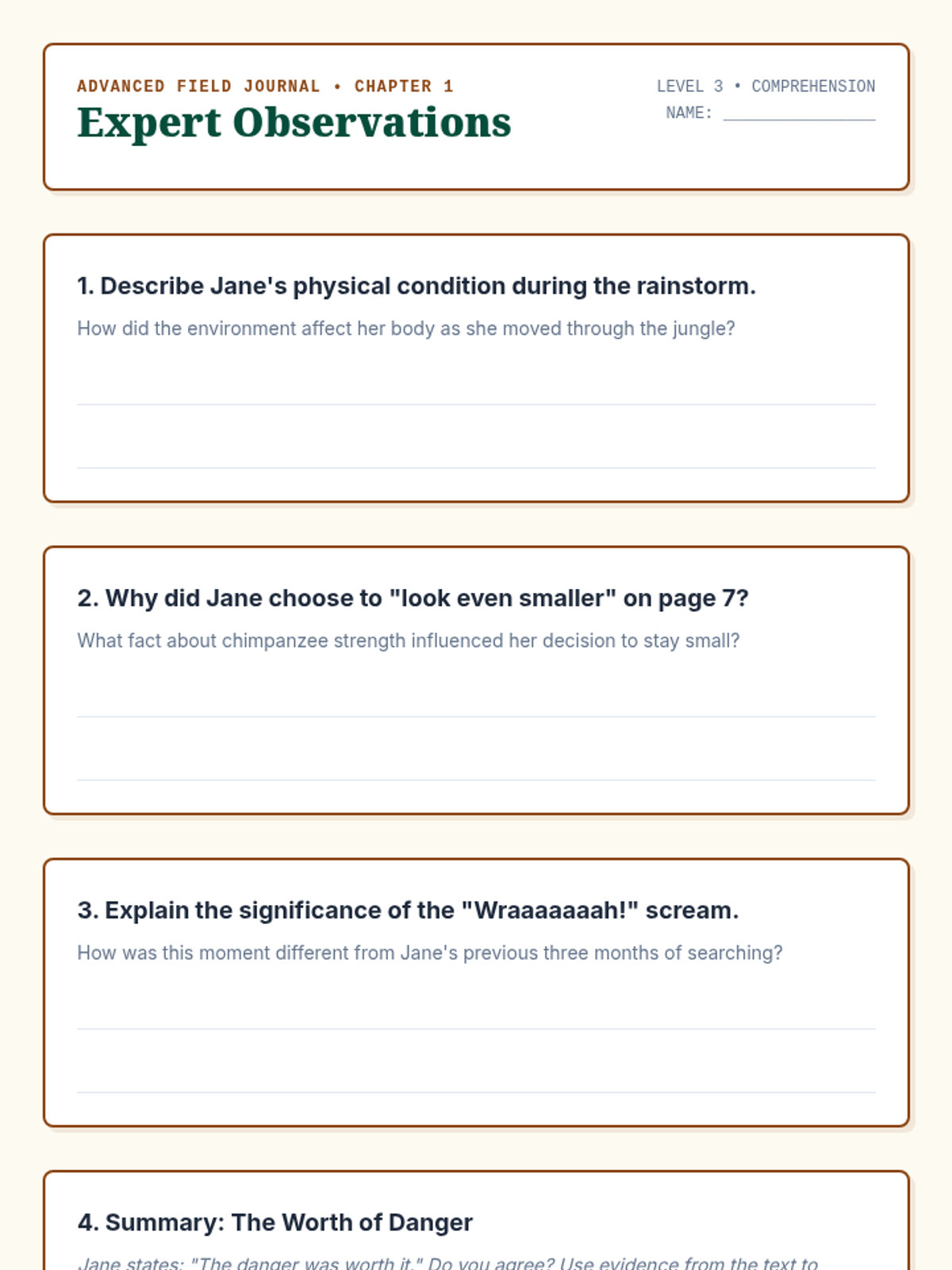
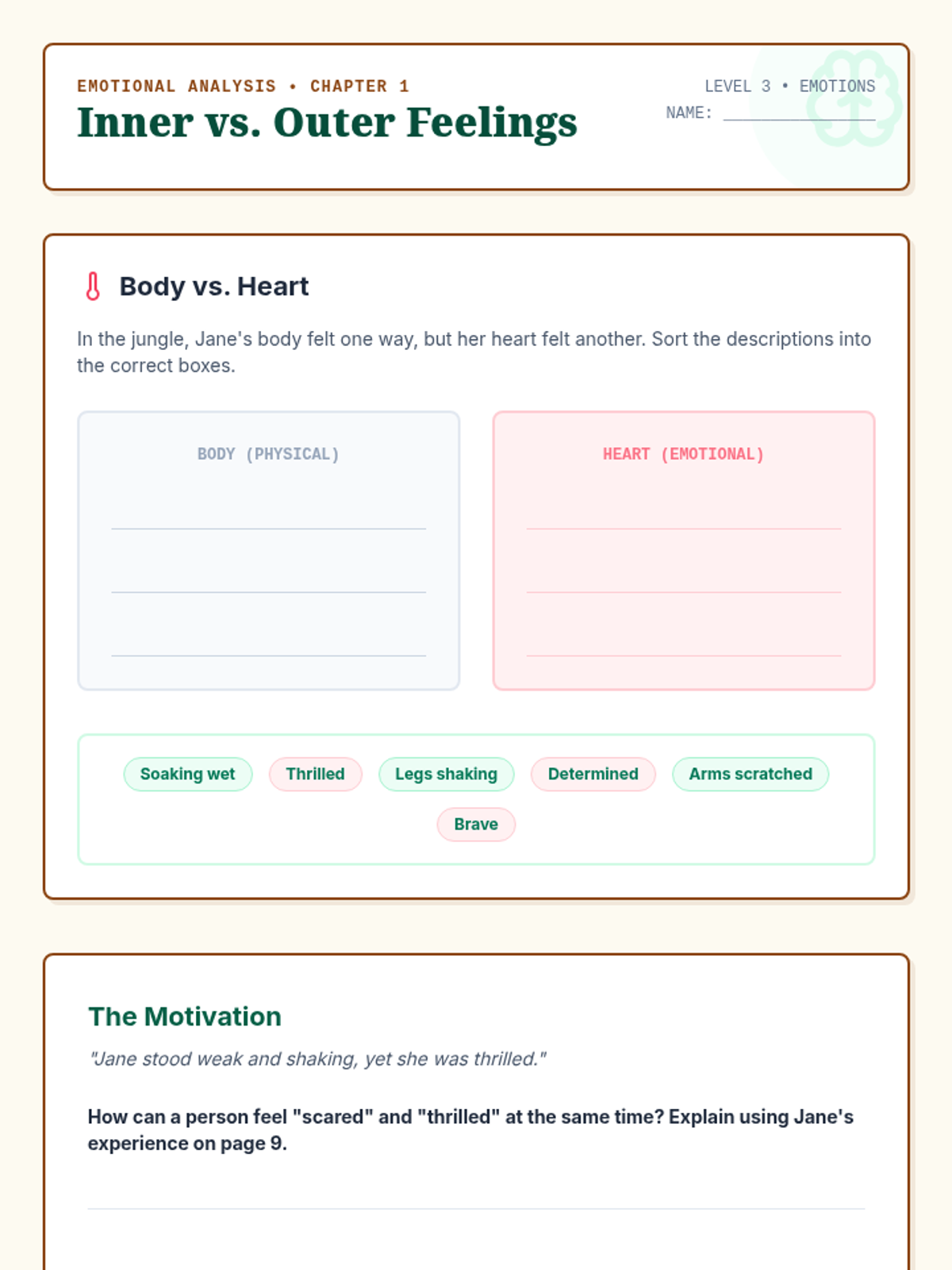
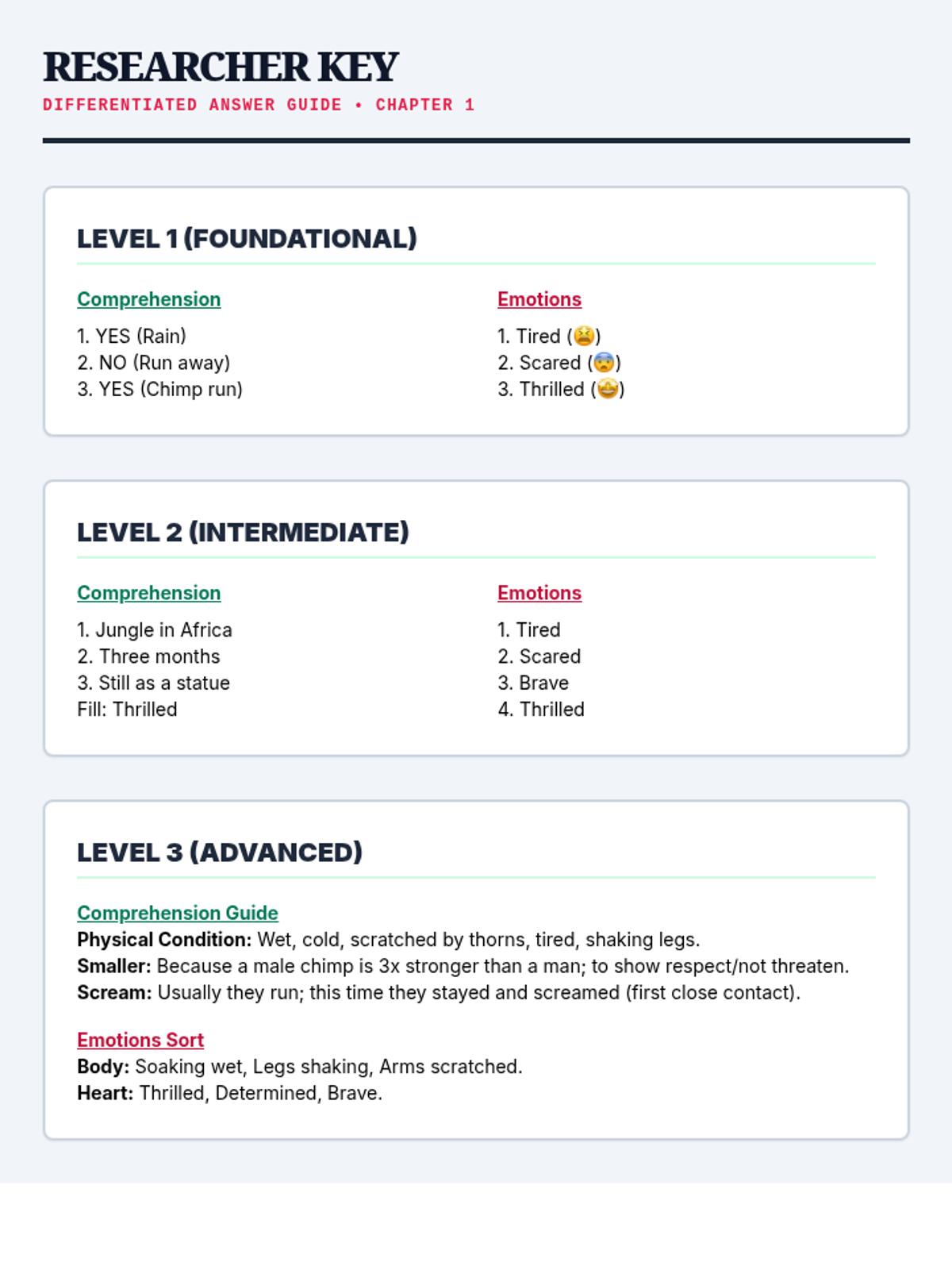
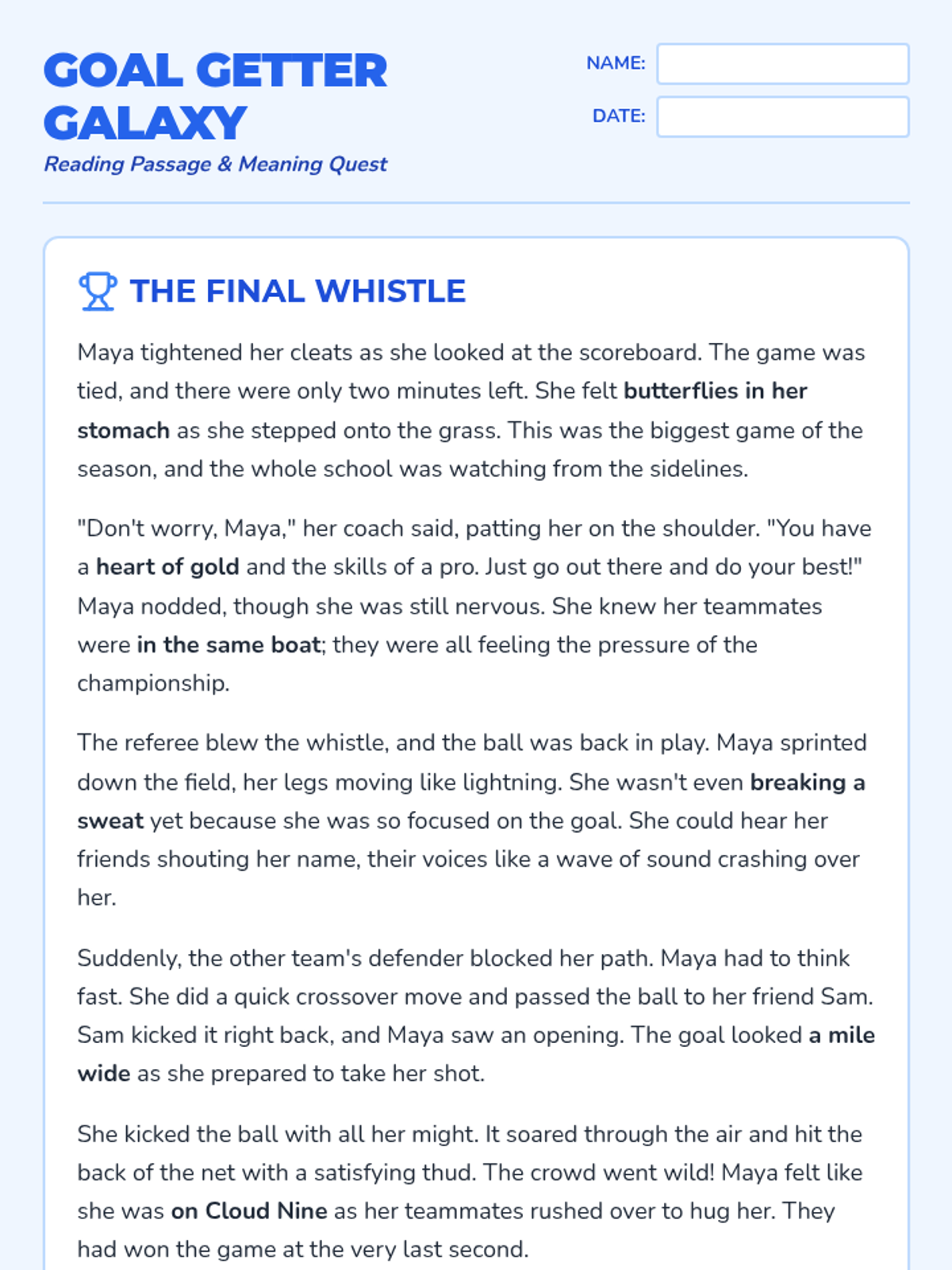
A set of differentiated resources for Chapter 1 of 'Jane Goodall and the Chimpanzees of Gombe', focusing on comprehension and character emotions during Jane's first major encounter with chimpanzees in the African jungle.
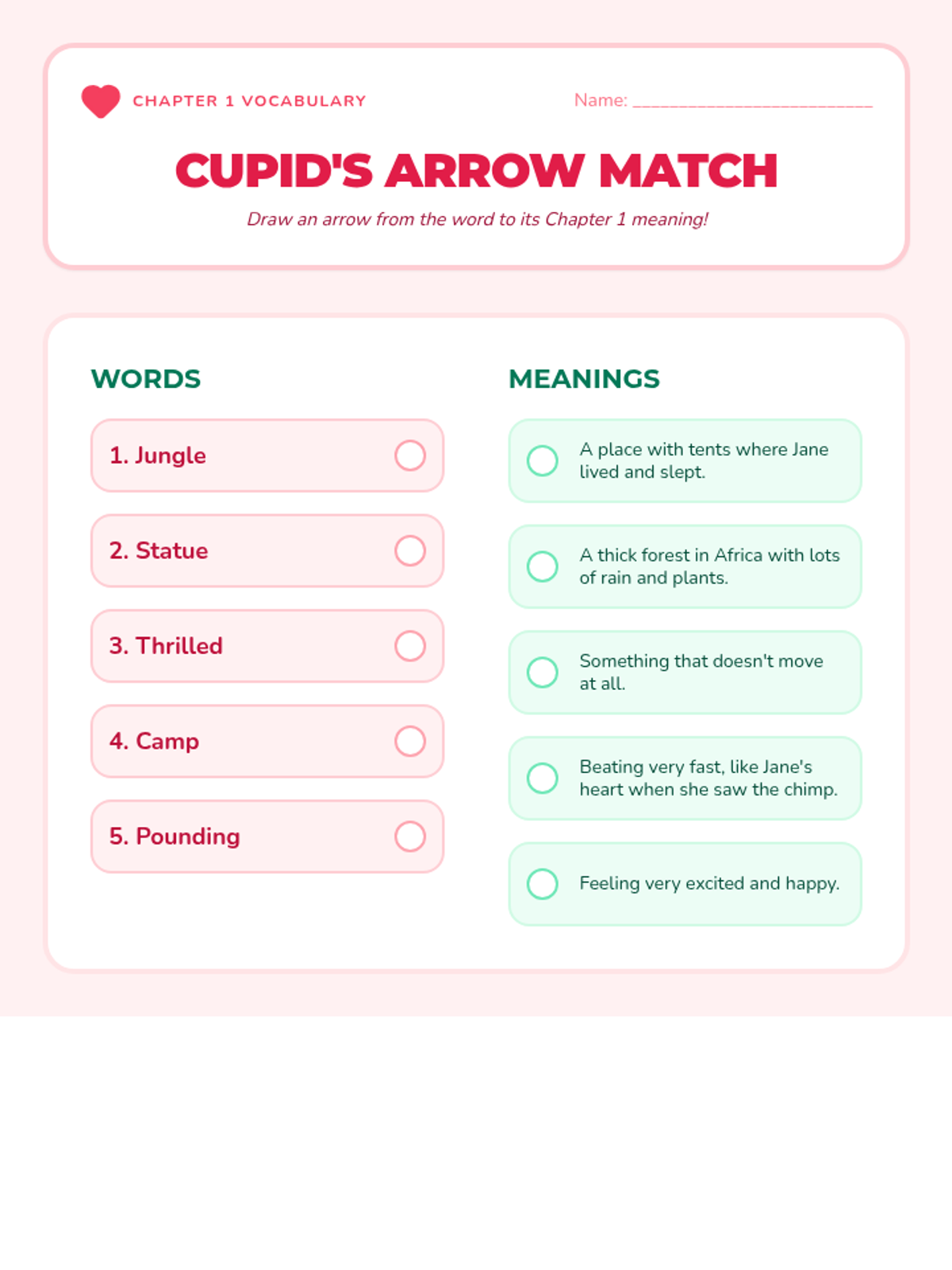
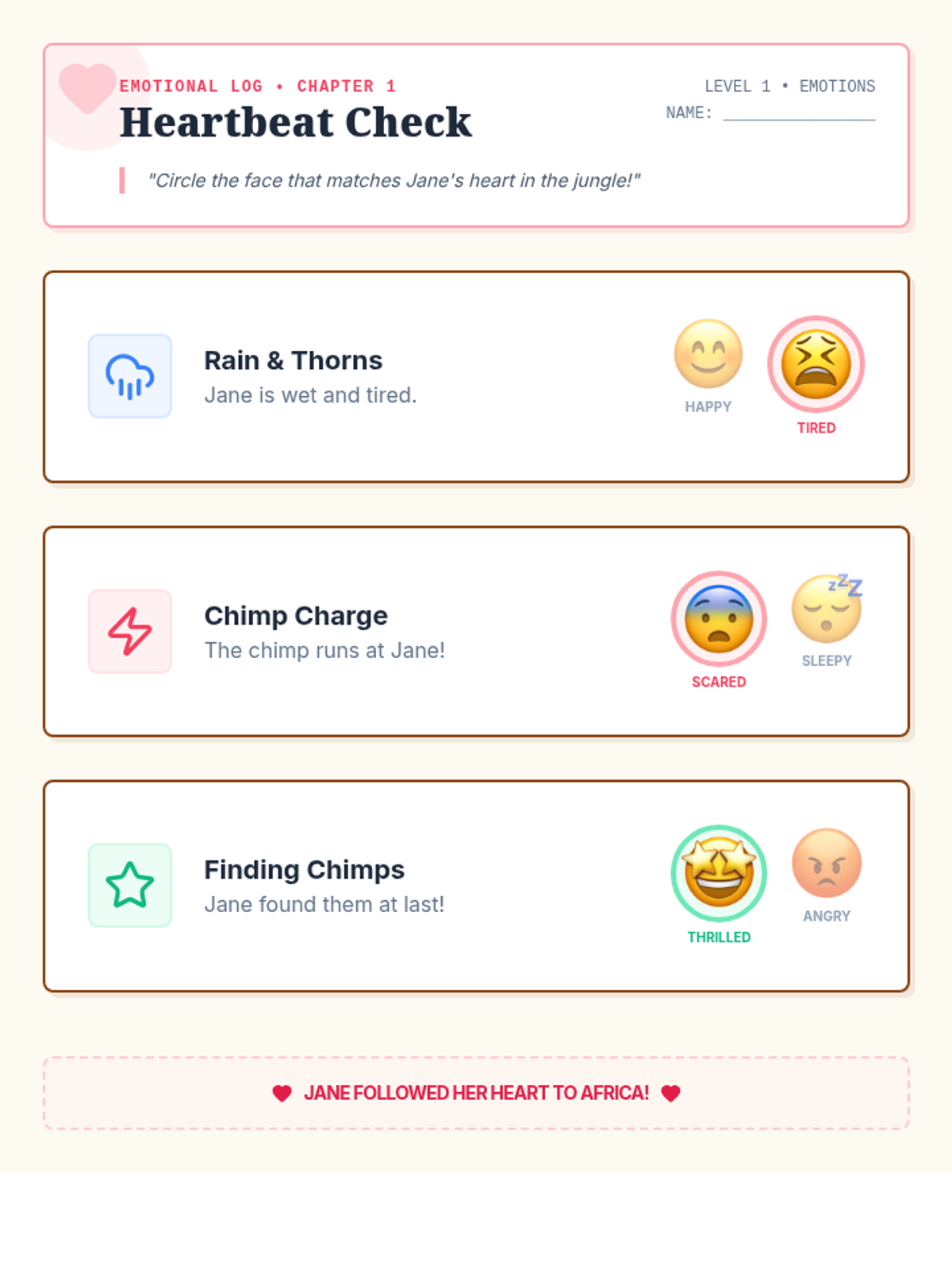
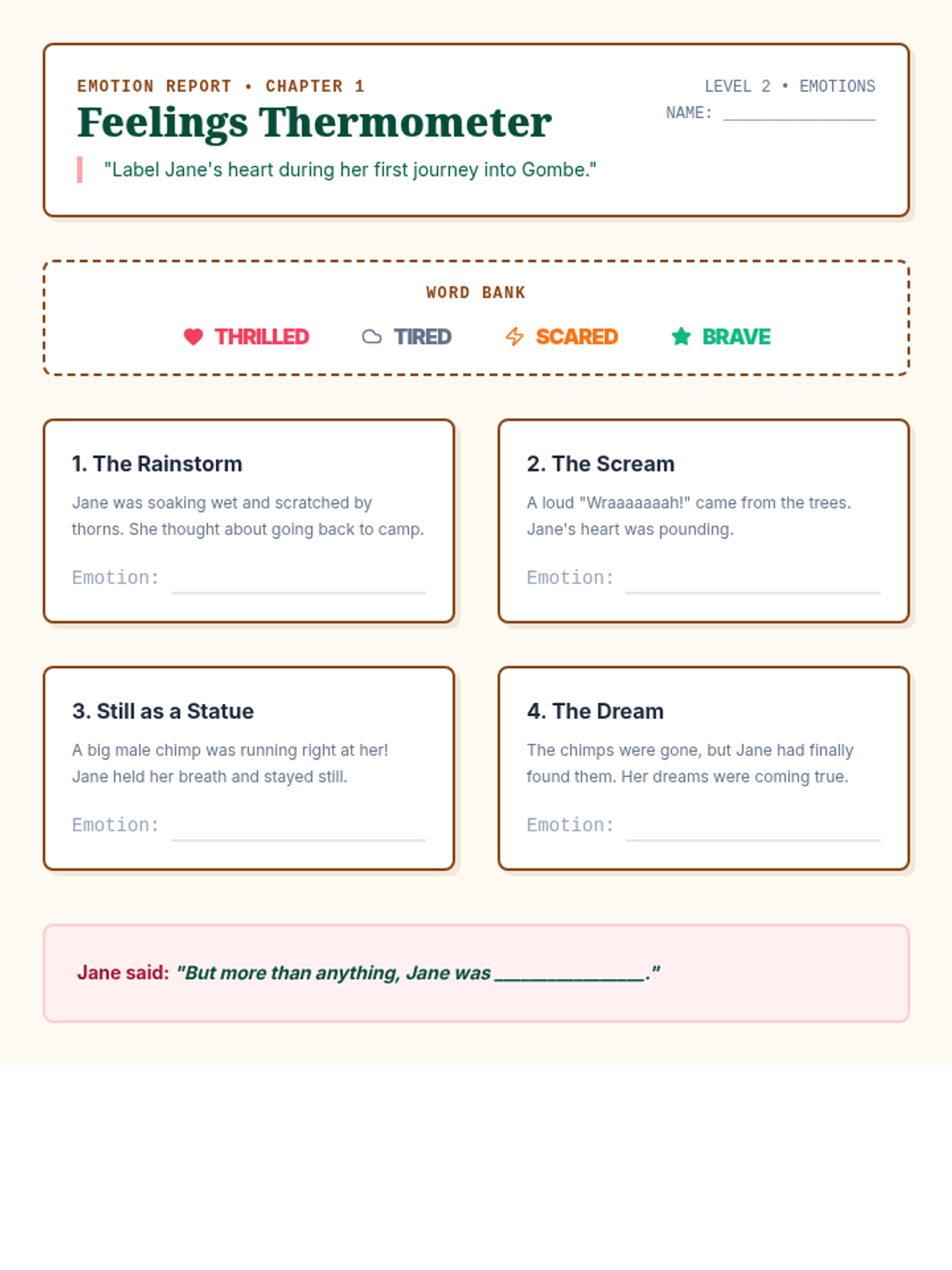
A set of Valentine's Day themed ELA activities focused exclusively on Chapter 1: Danger from Jane Goodall's life, exploring her emotions and comprehension of her first close encounter with chimpanzees.
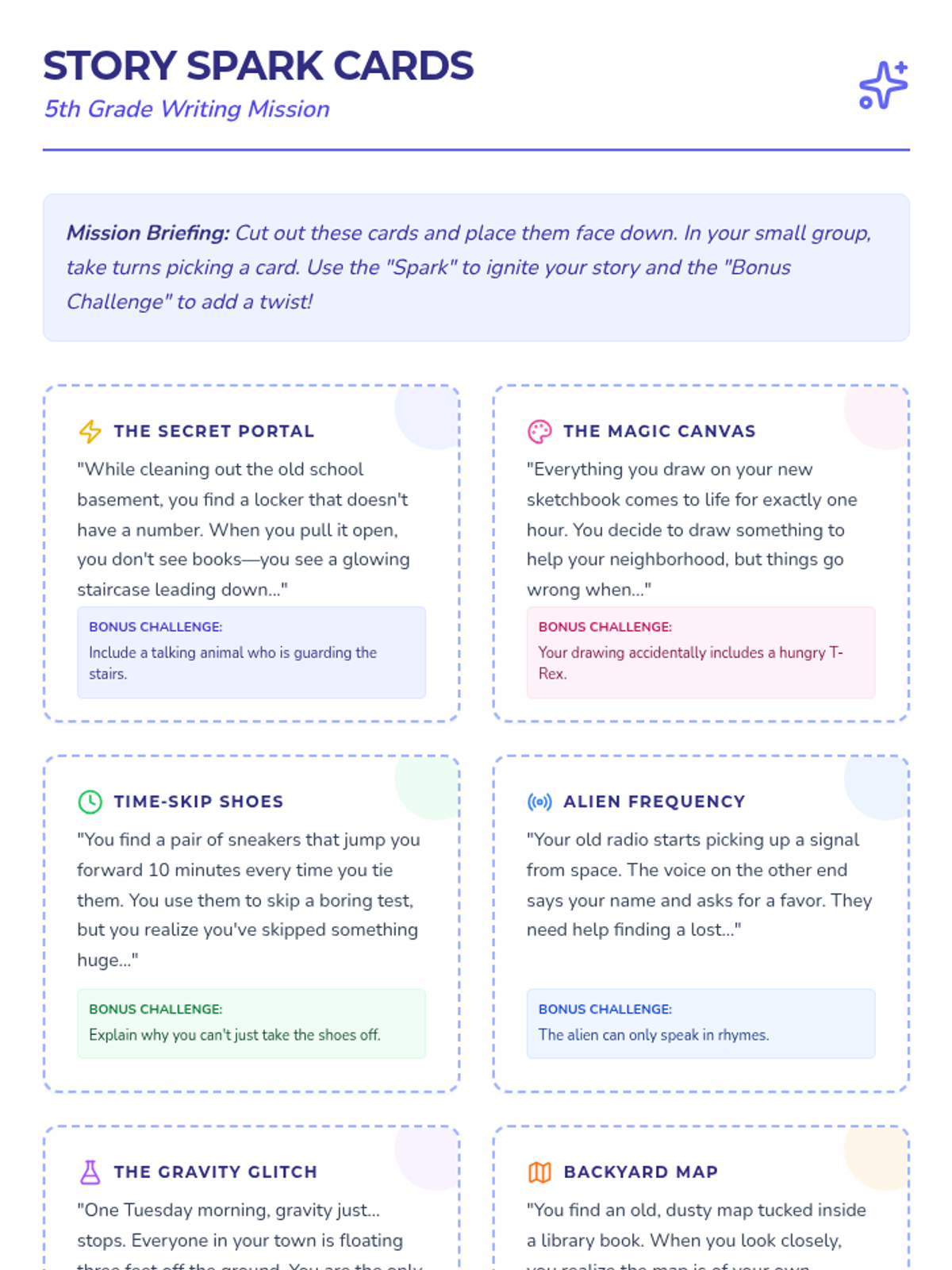
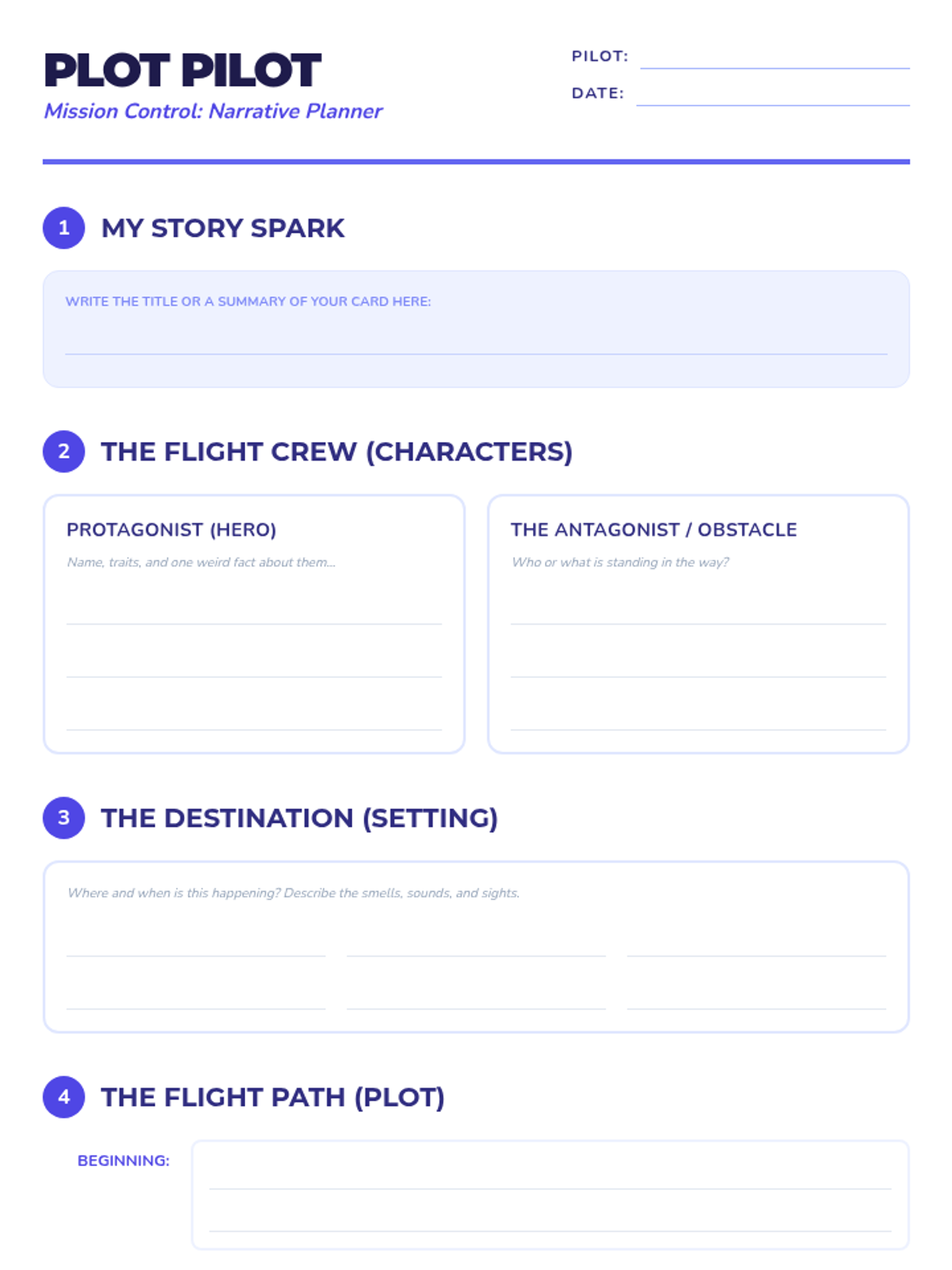
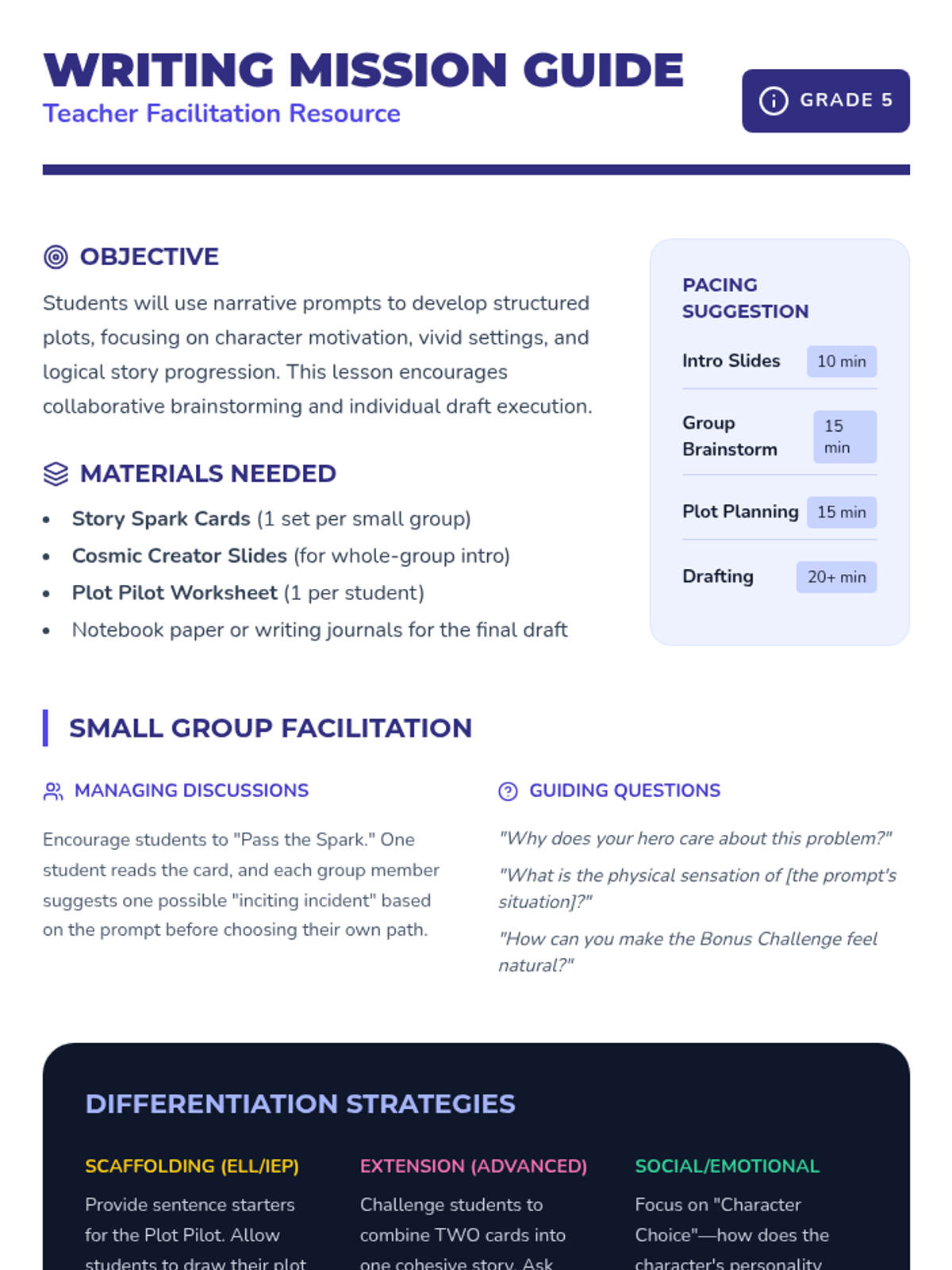
A creative writing lesson designed to ignite 5th-grade students' imaginations through high-interest story starters and structured plot planning. Students will use prompt cards to kickstart their narrative writing process in small groups.
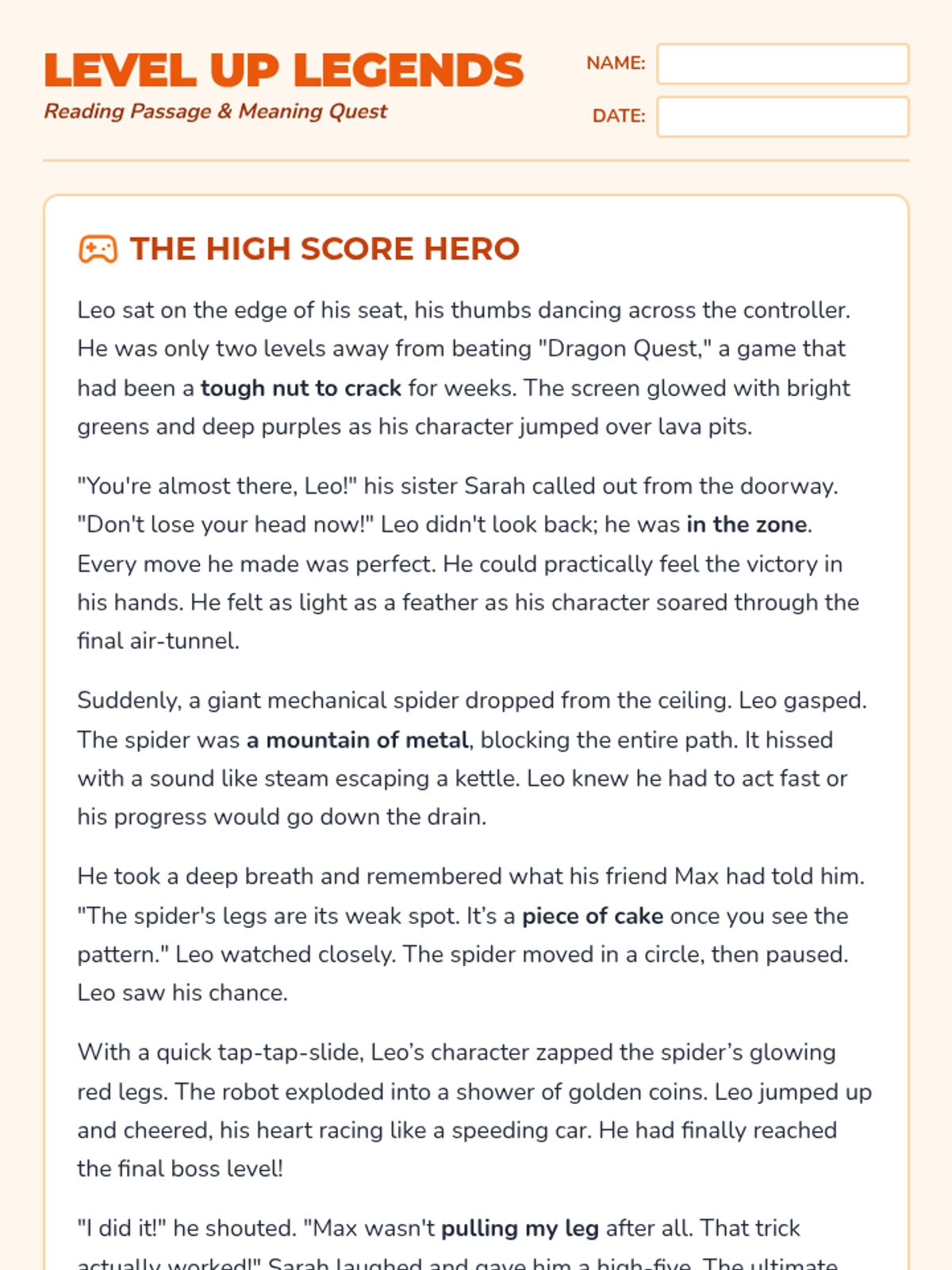
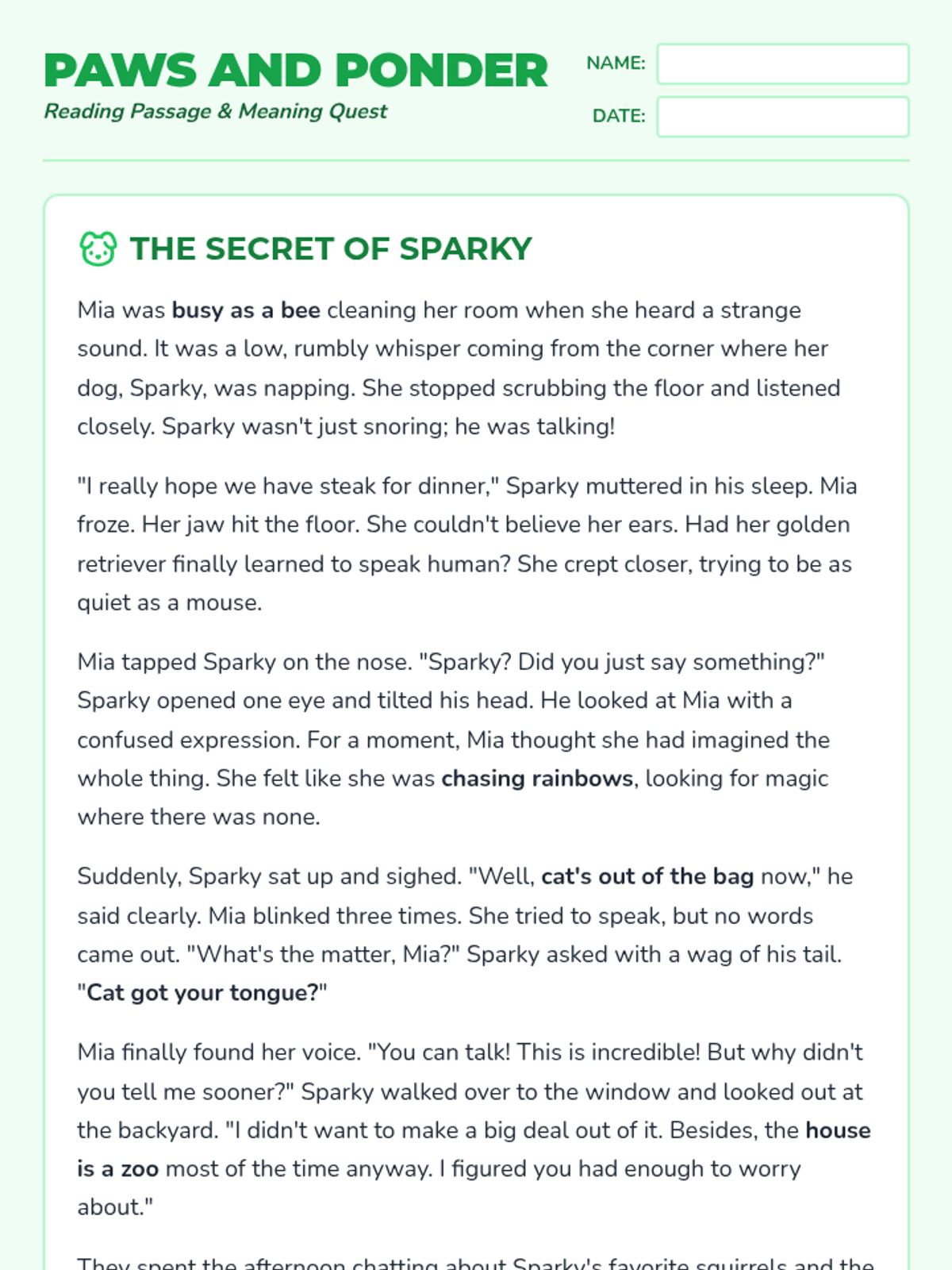
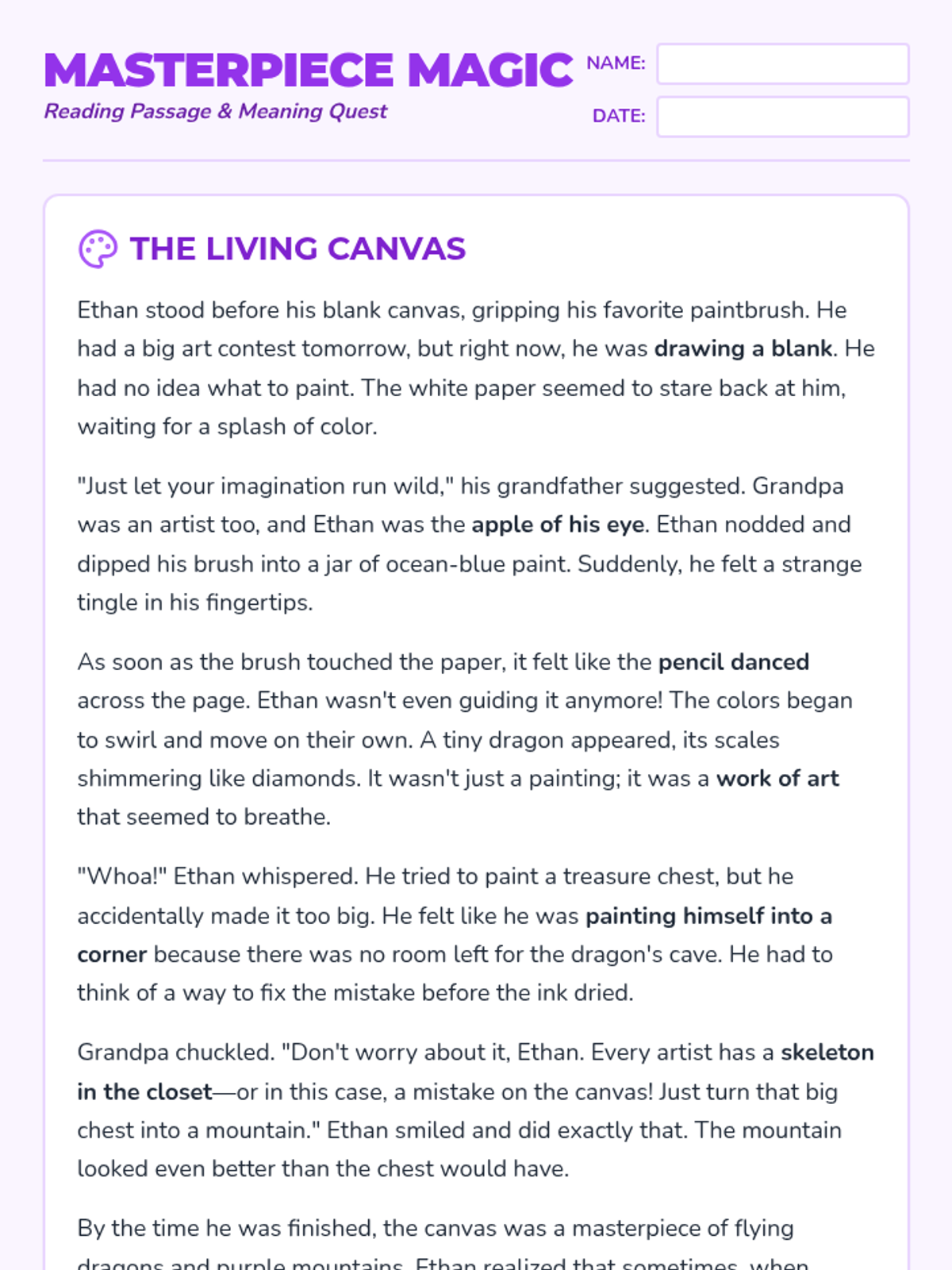
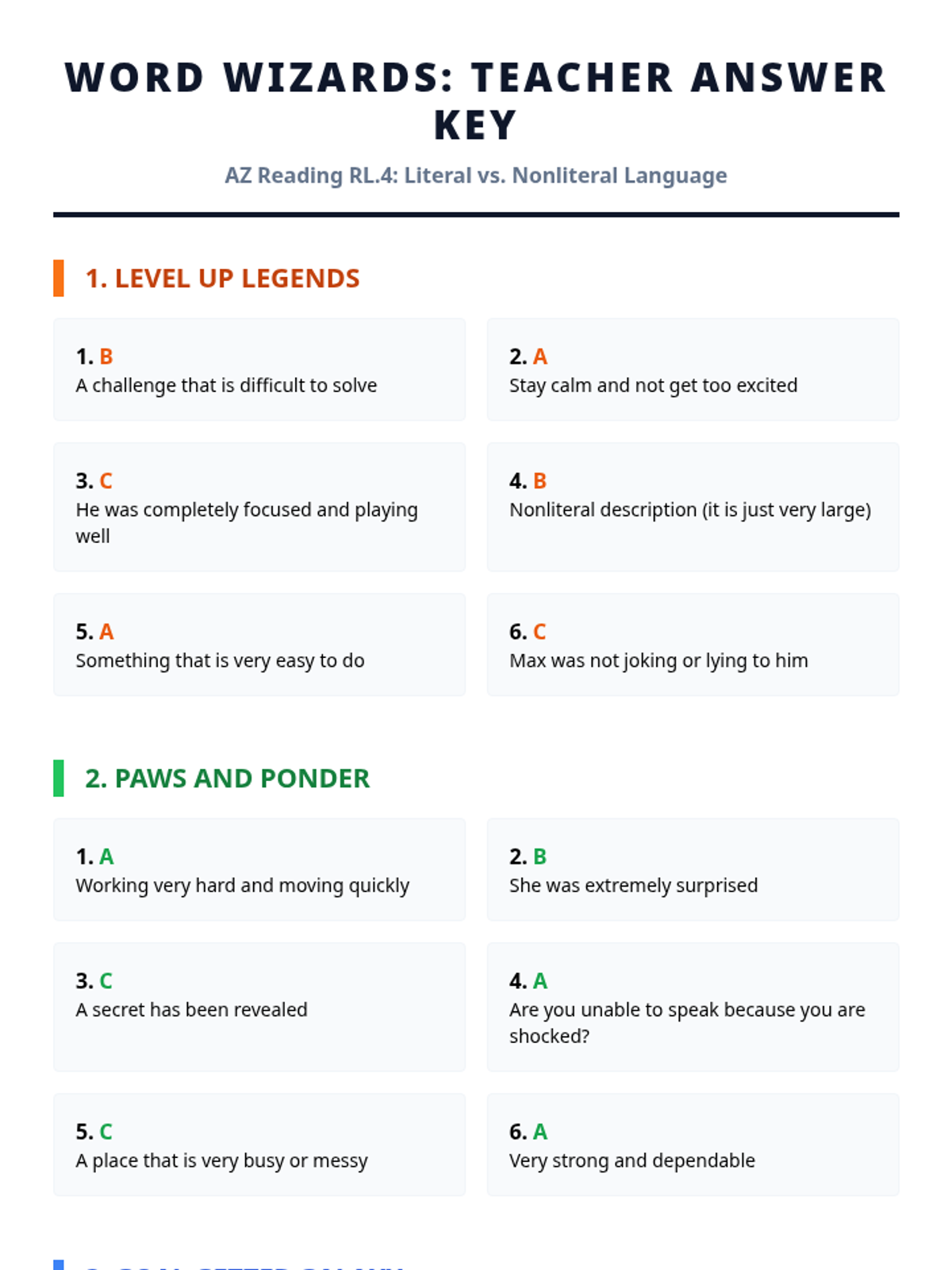
A fast-paced reteach lesson focused on distinguishing between literal and nonliteral language through engaging short stories.
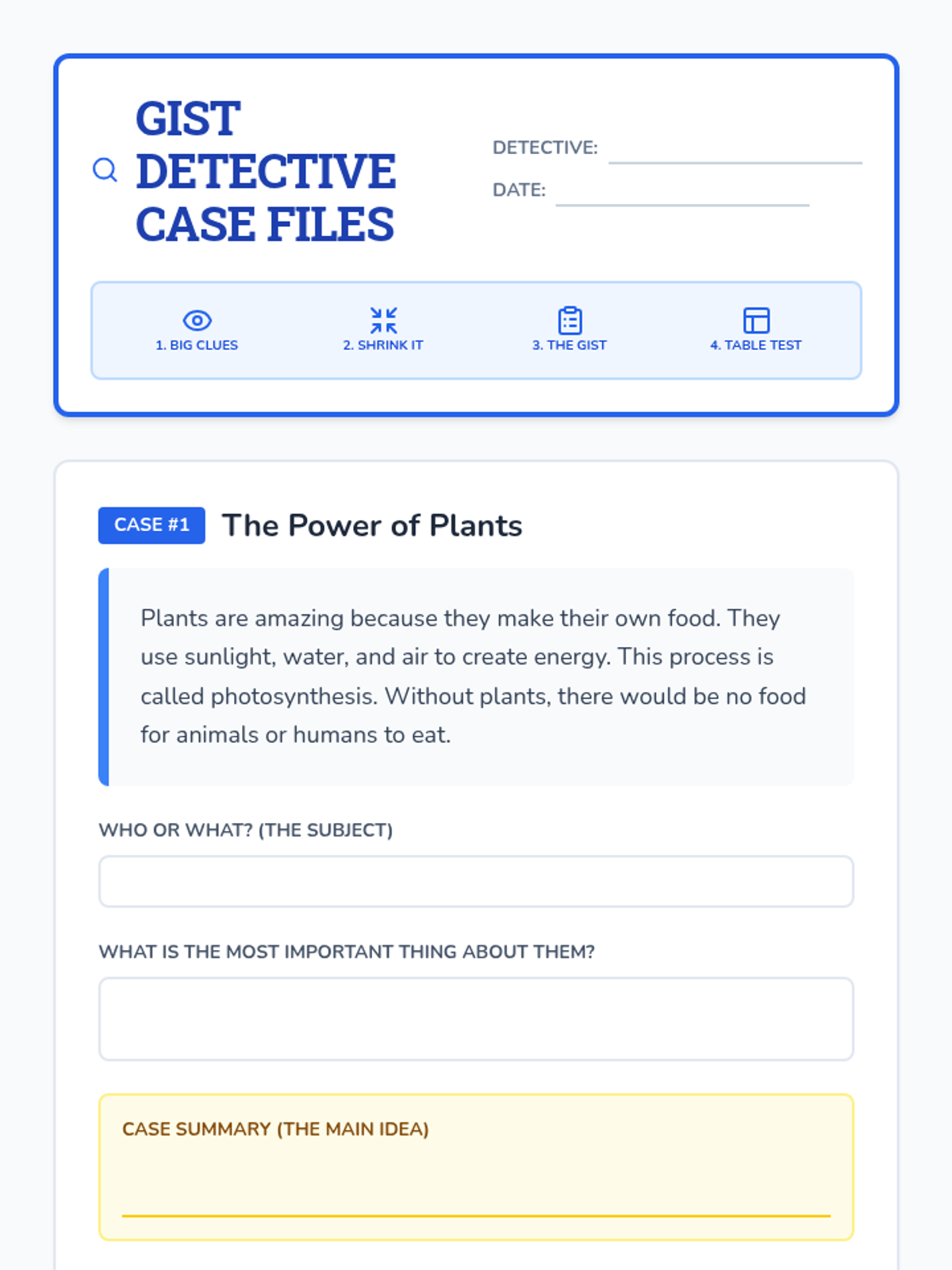
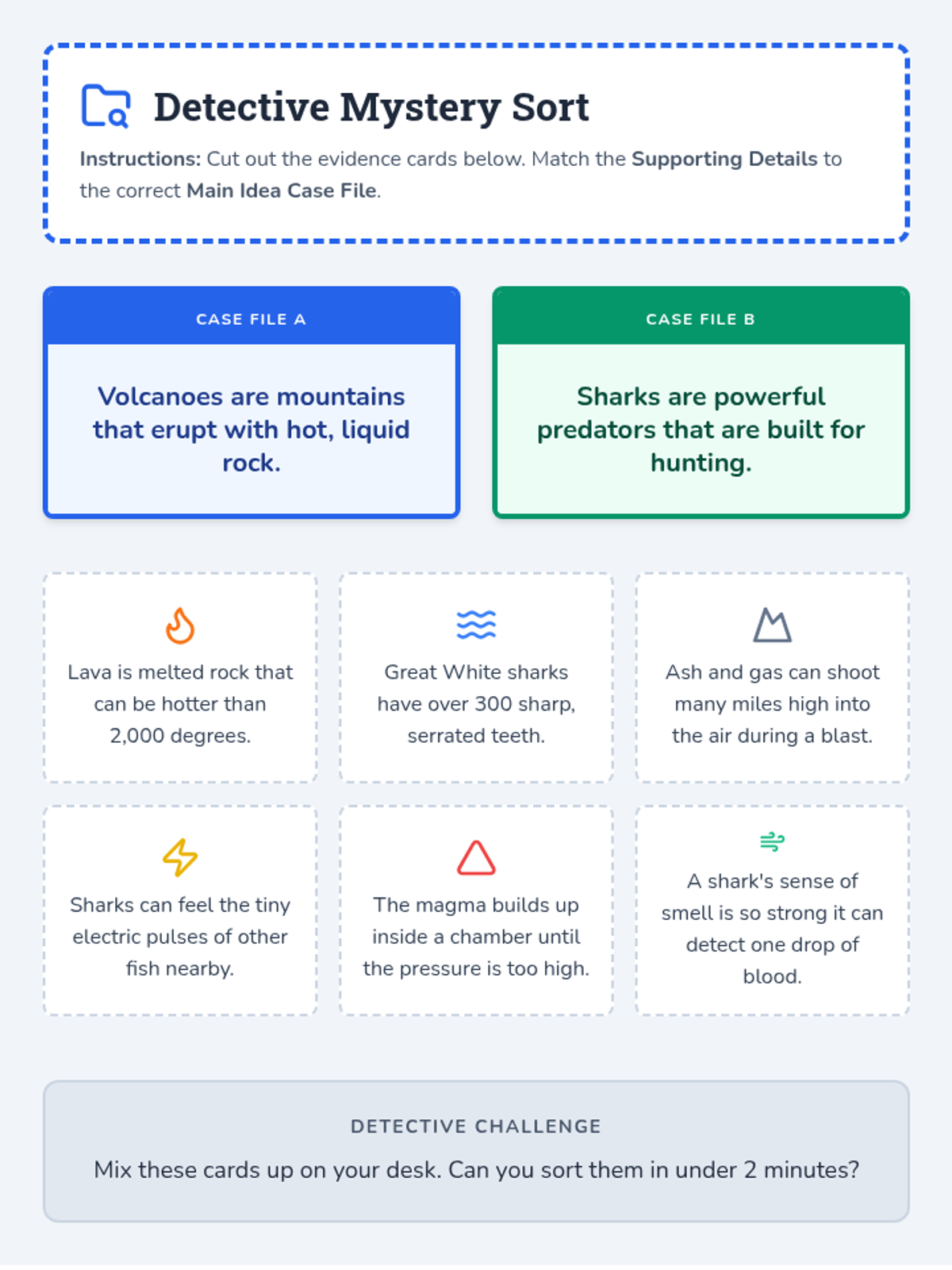
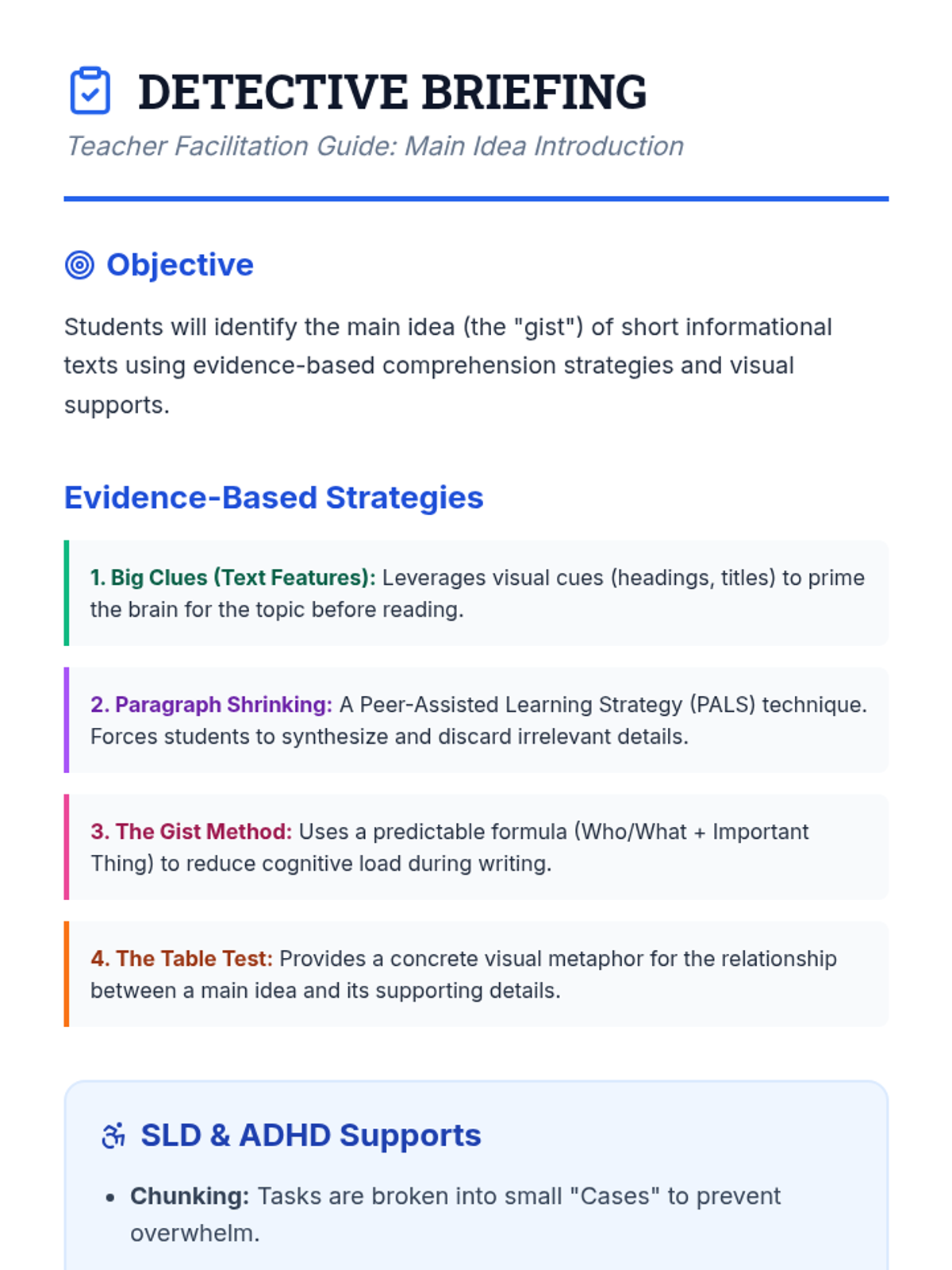
An introductory lesson on identifying the main idea in informational texts using evidence-based strategies. Designed with visual supports and chunked information to support students with SLD and ADHD.
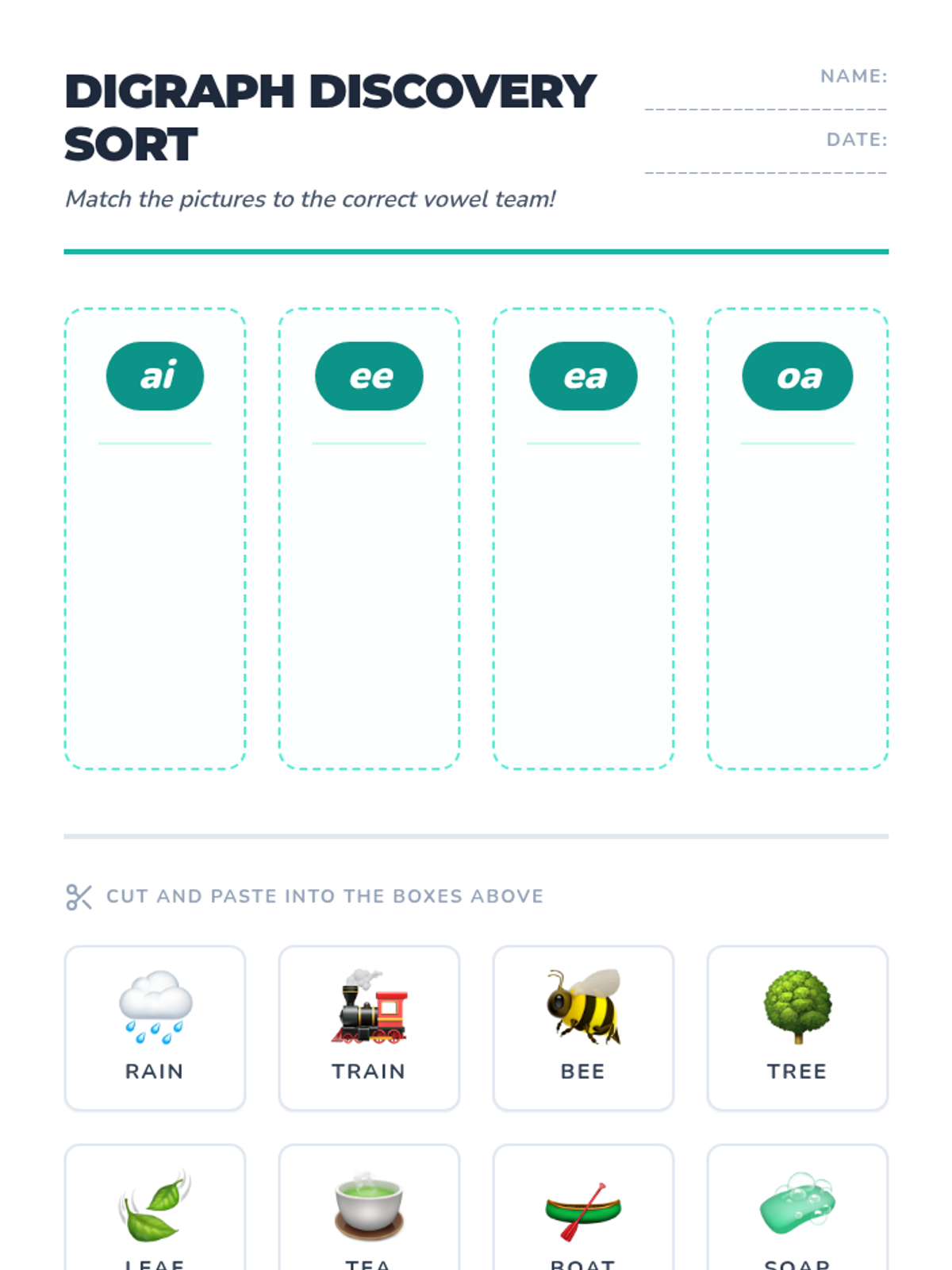
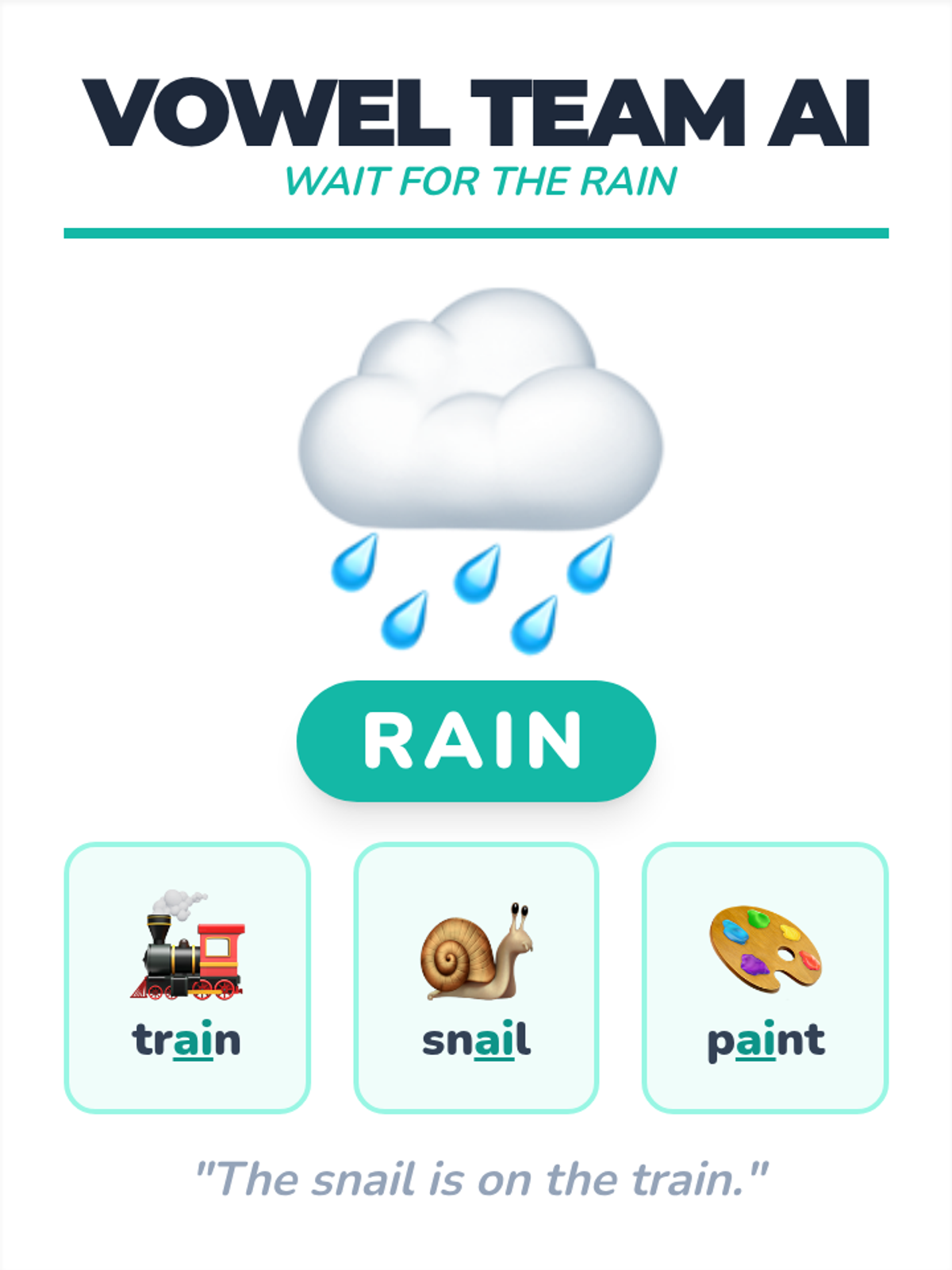
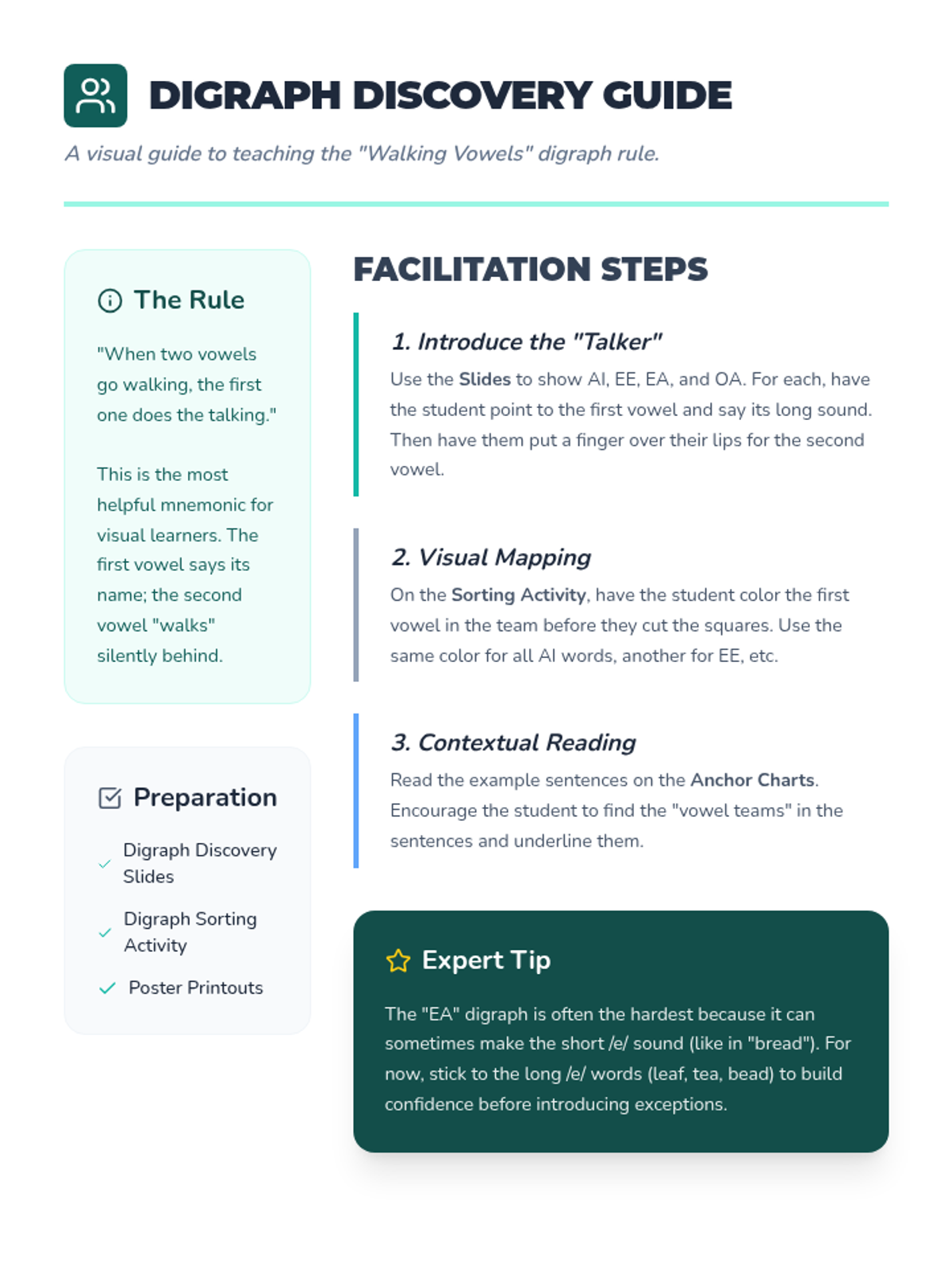
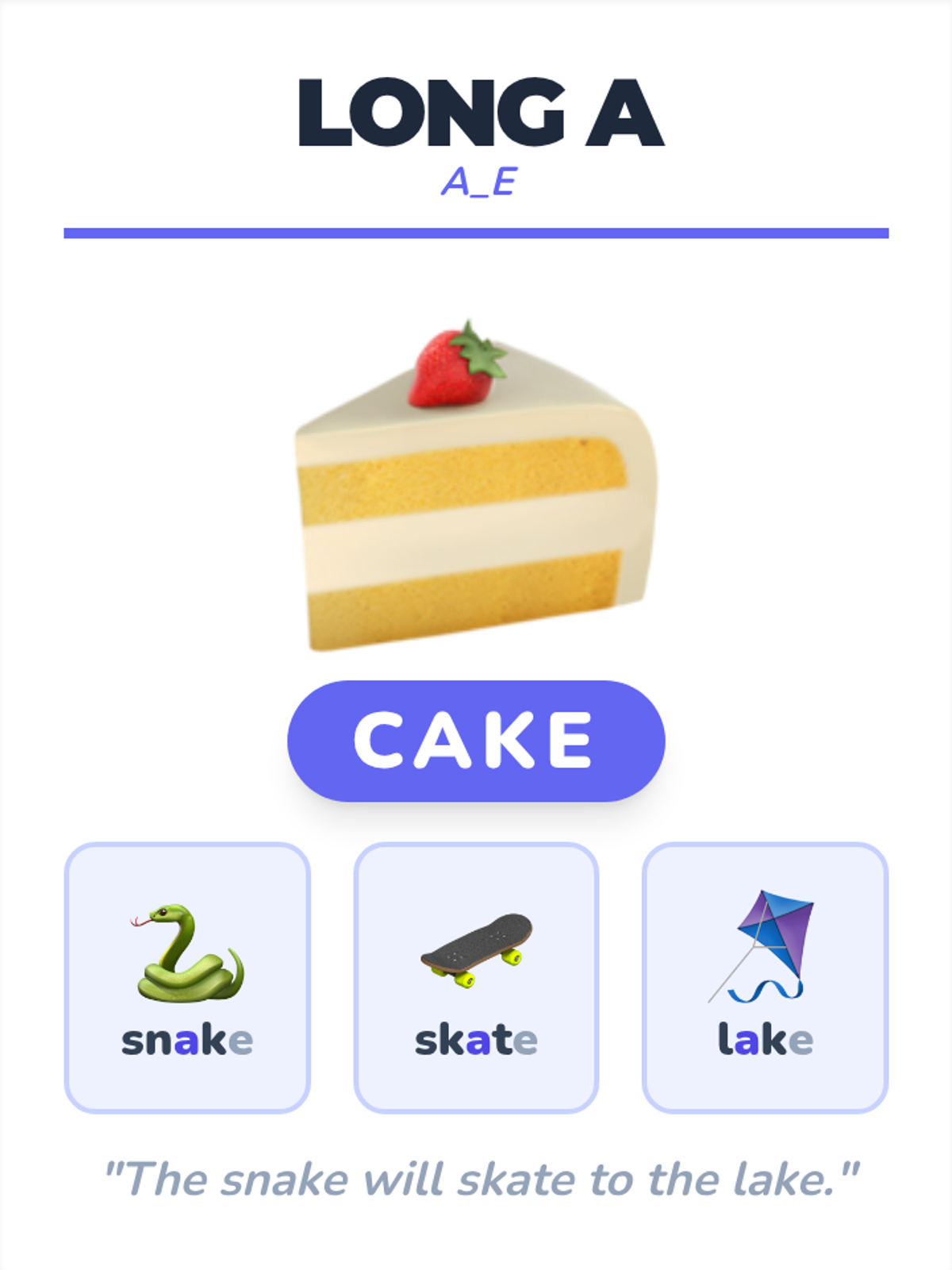
Focuses on common vowel digraphs (AI, EE, EA, OA) where two vowels work together to make one long vowel sound.
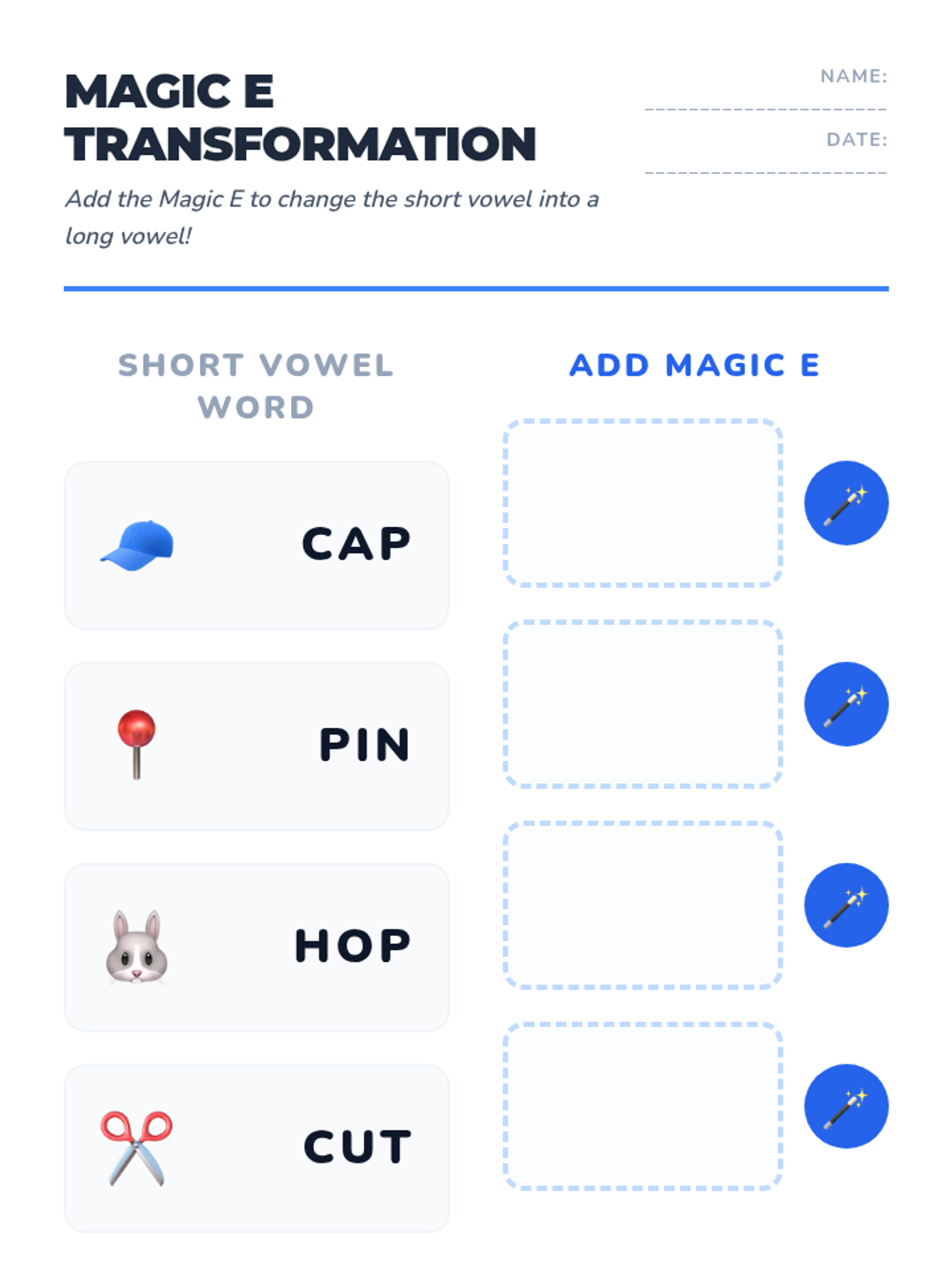
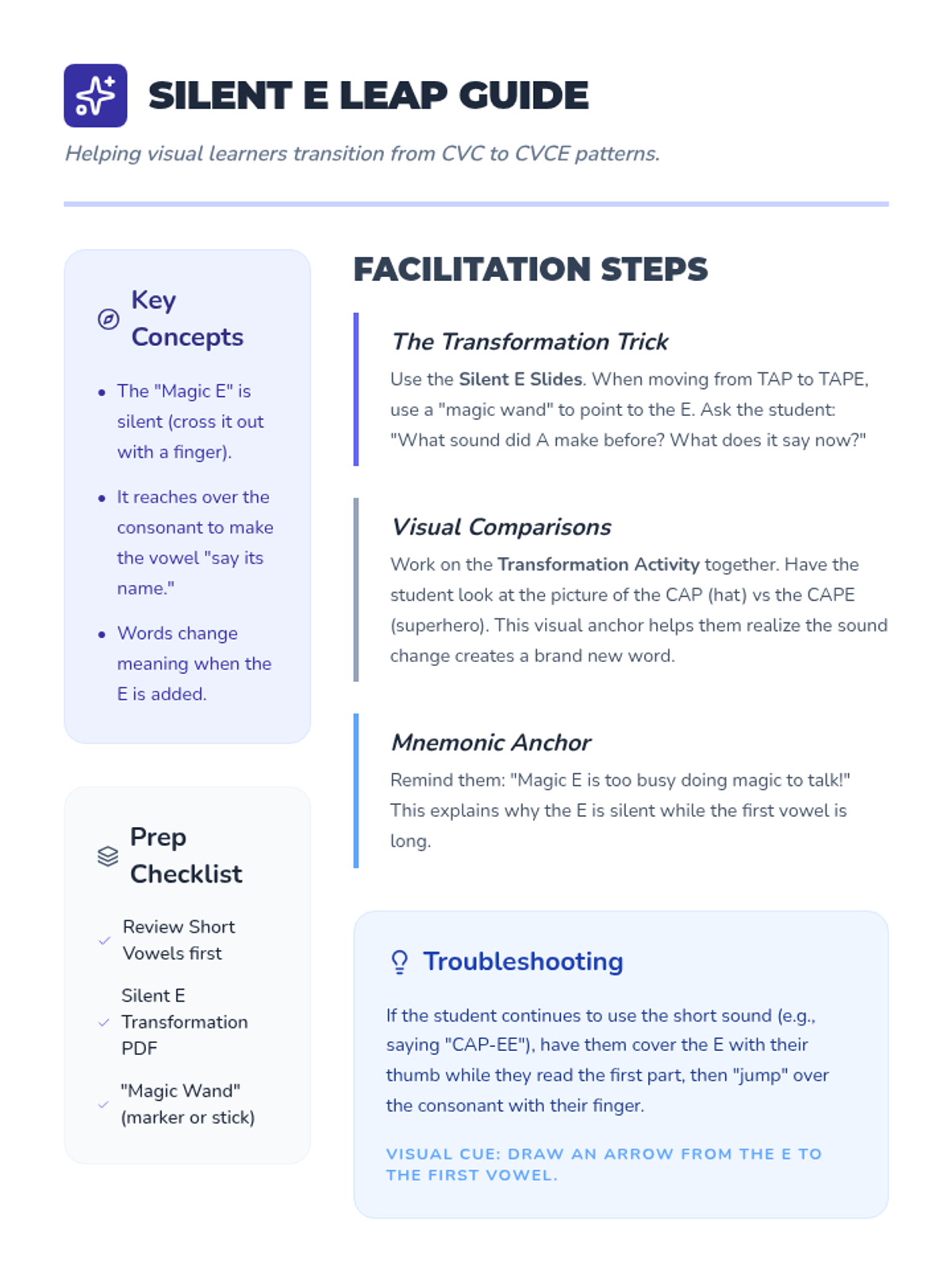
Introduces the silent E pattern (CVCE) and how it "makes the vowel say its name," featuring visual transformations and word-building practice.
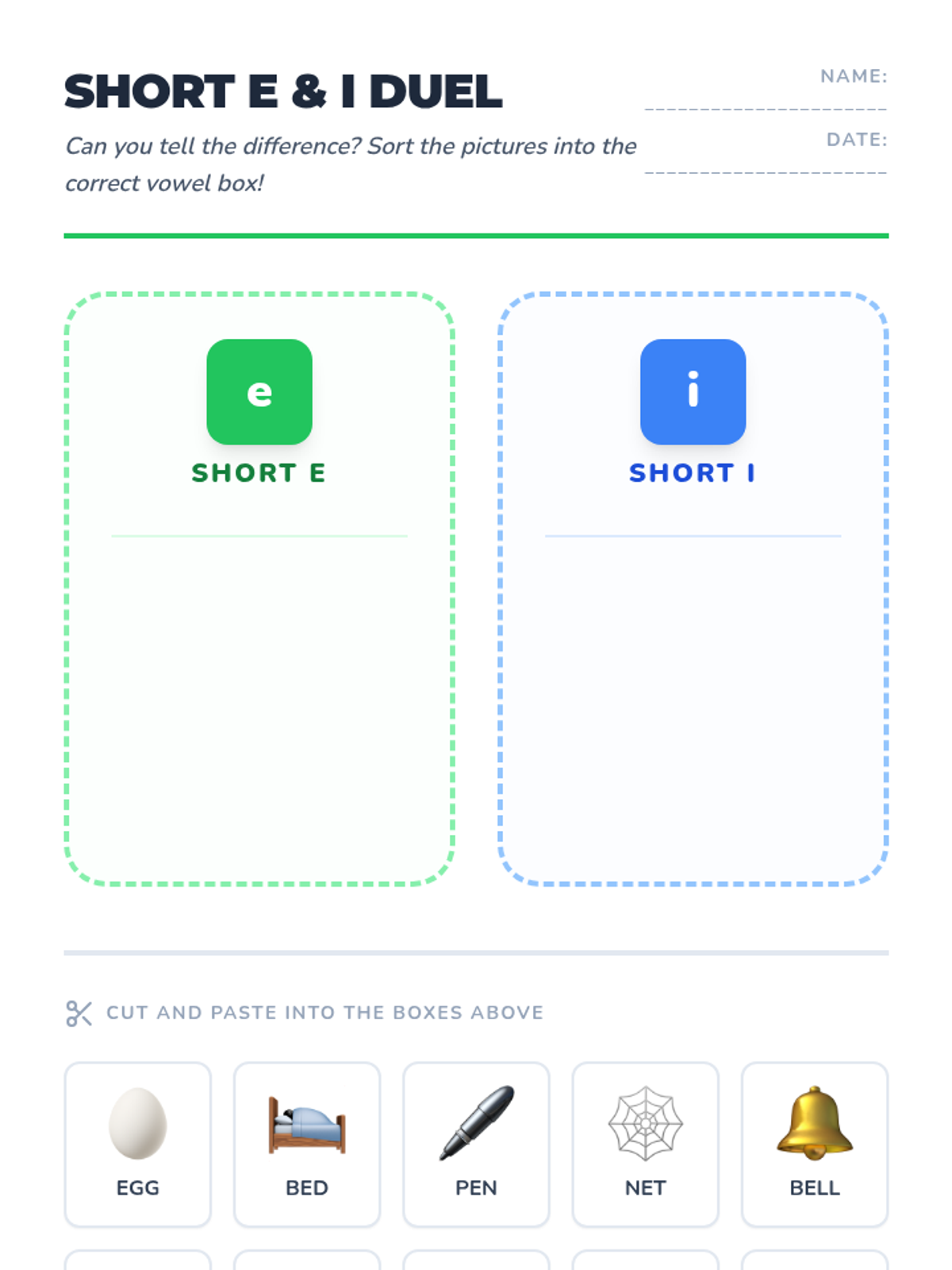
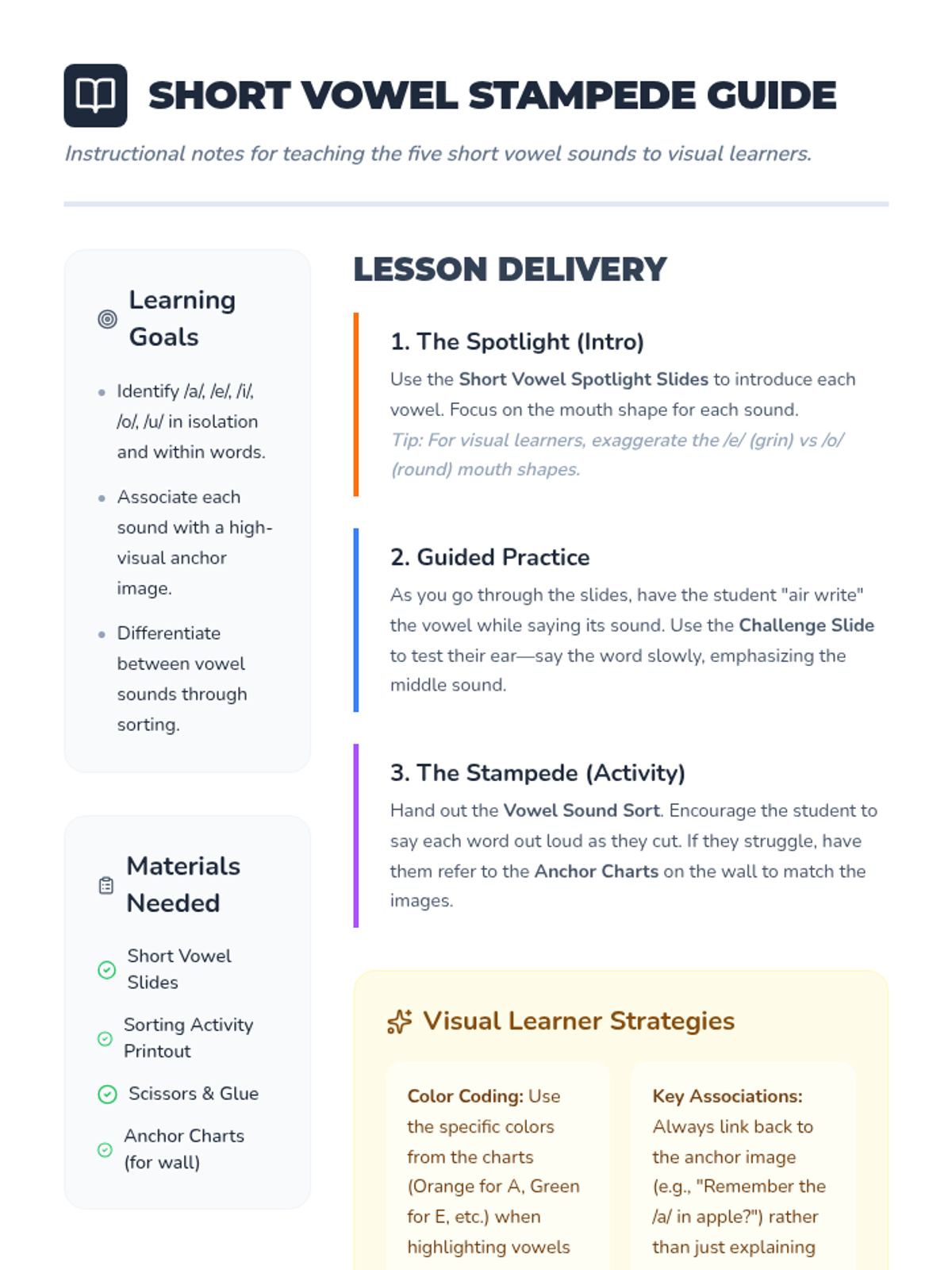
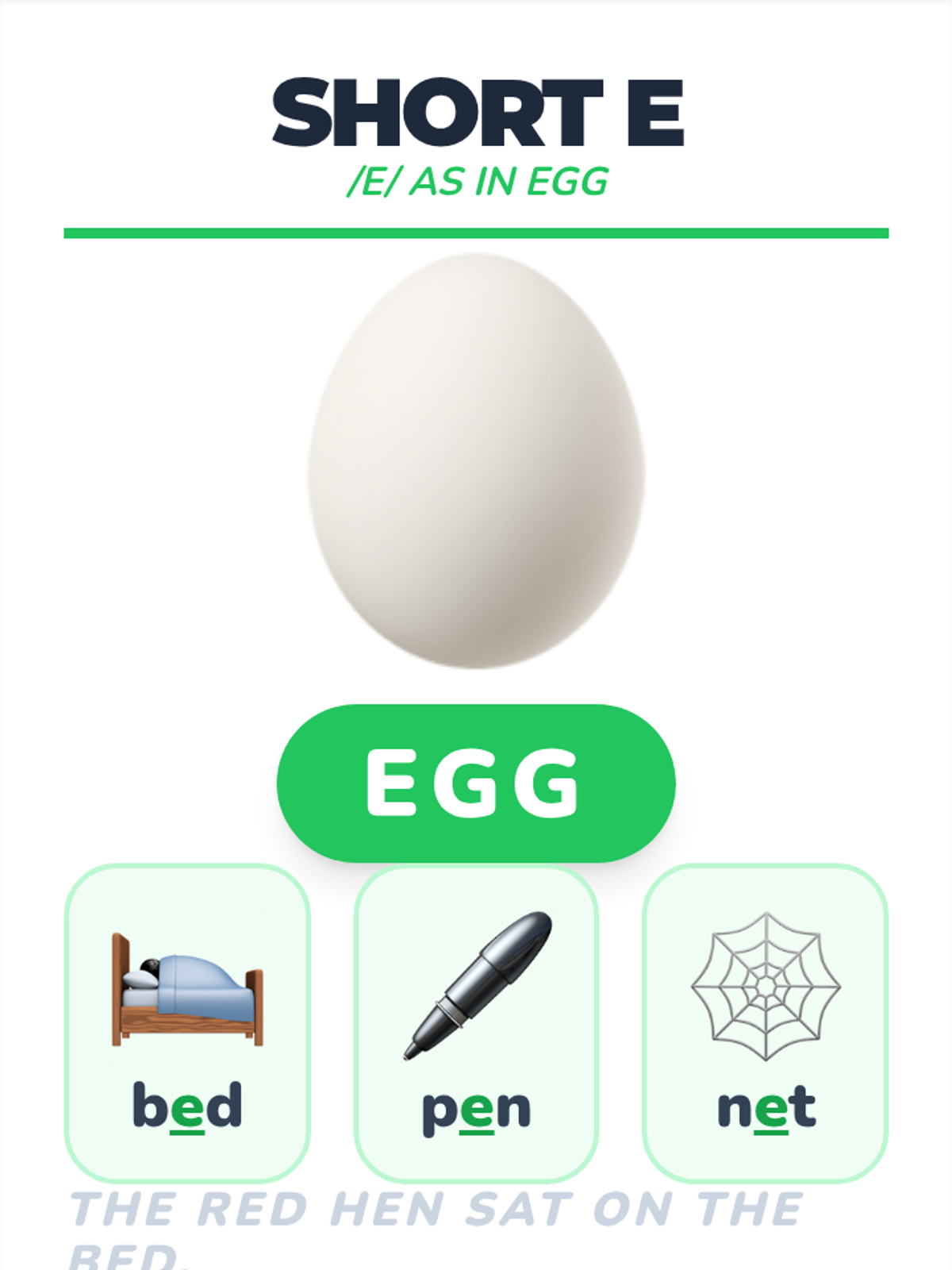
Focuses on the identification and differentiation of short vowel sounds (A, E, I, O, U) using visual anchors and word-image associations.
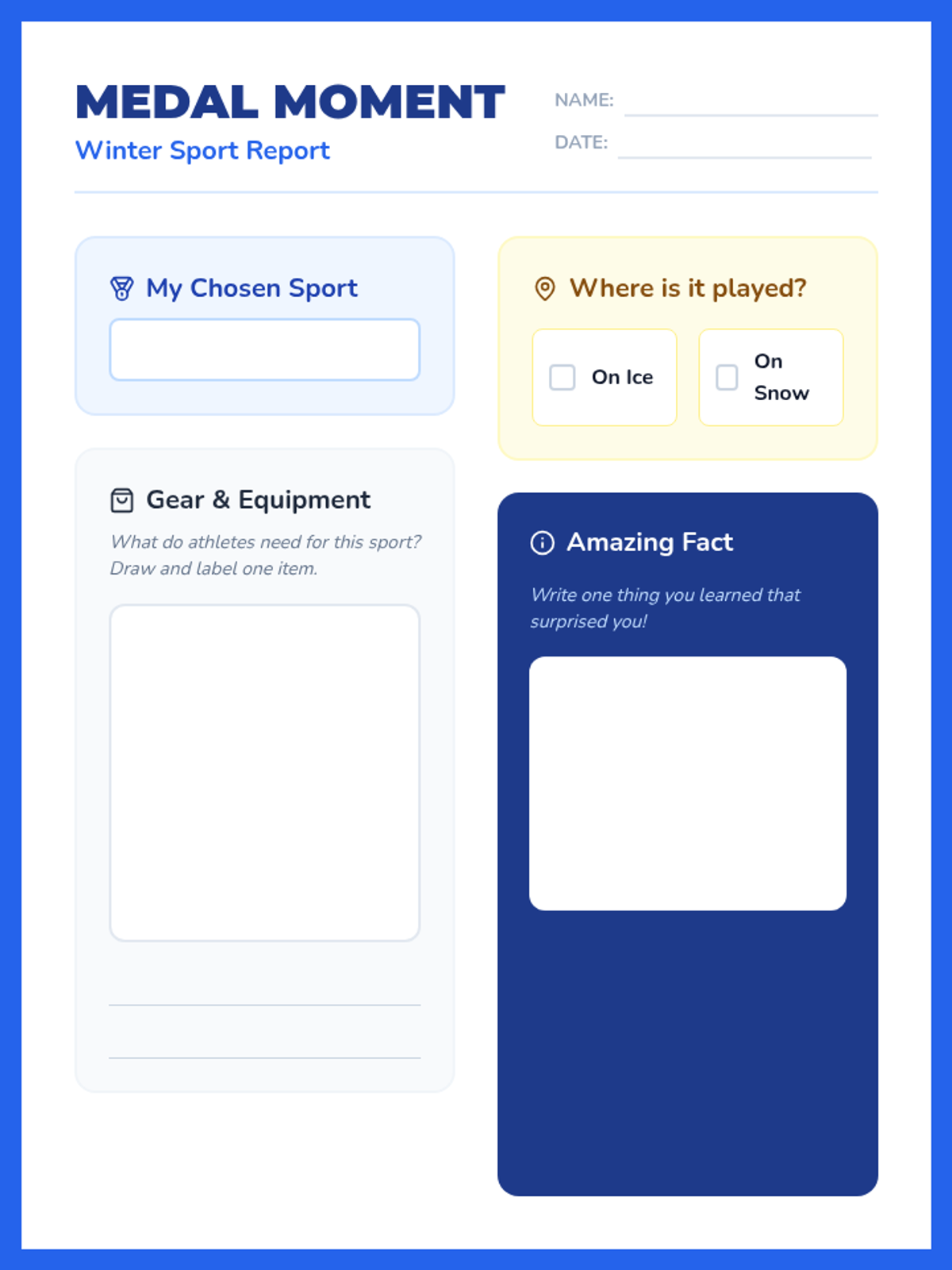
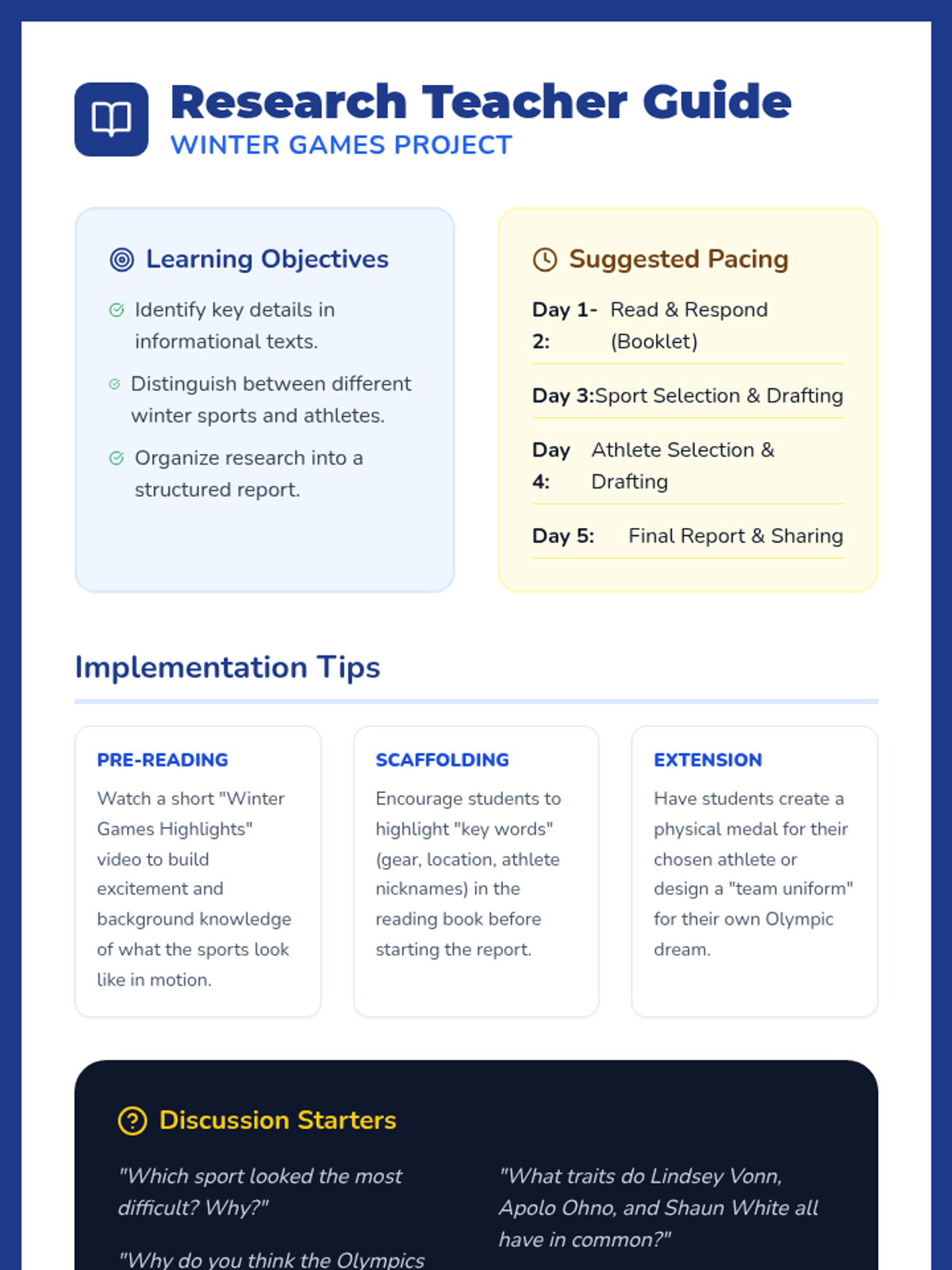
A comprehensive independent research project for 2nd graders to explore the Winter Olympics through reading passages, comprehension activities, and a final report template. Students will learn about diverse sports and legendary athletes while practicing informational text skills.
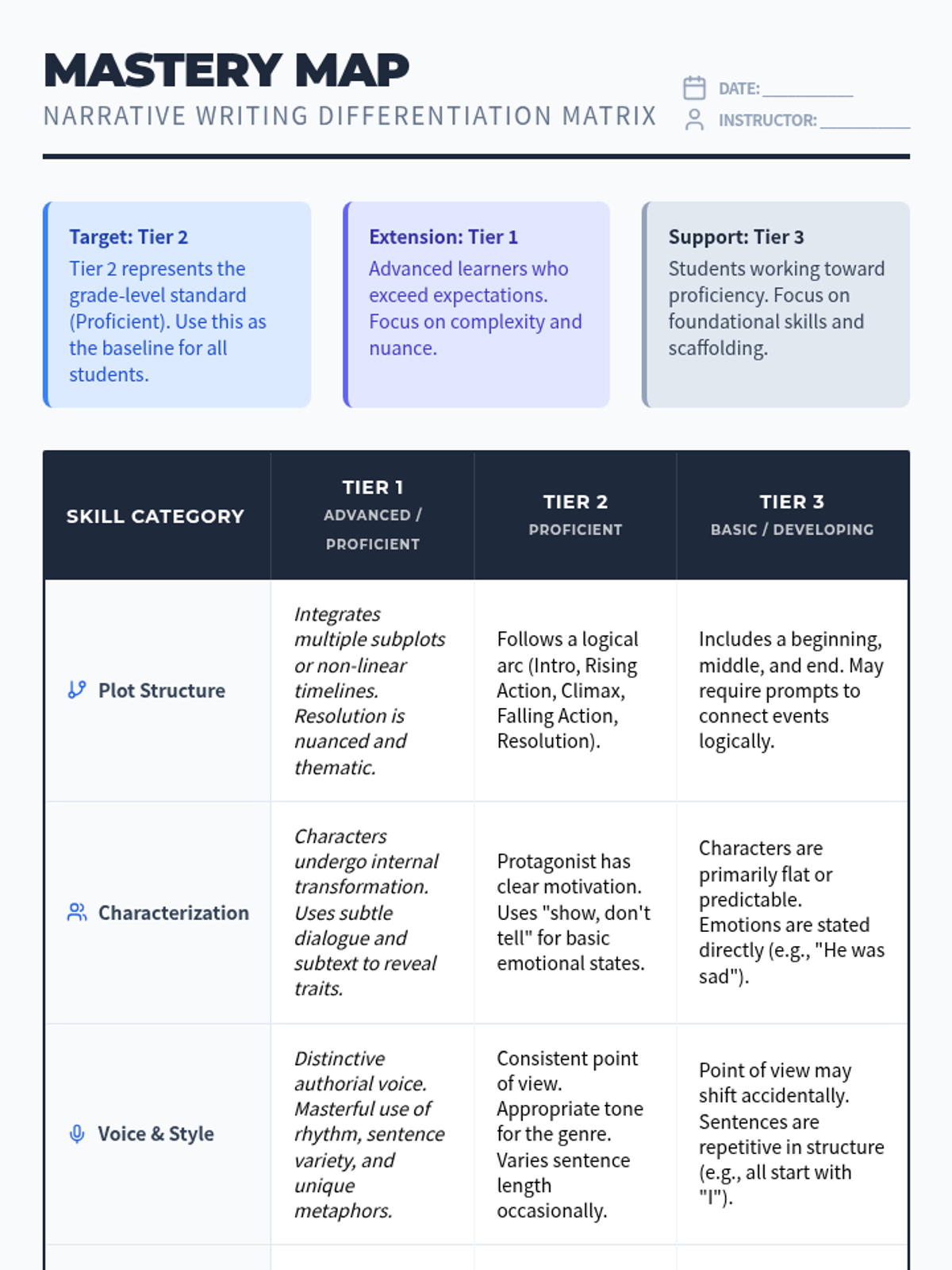
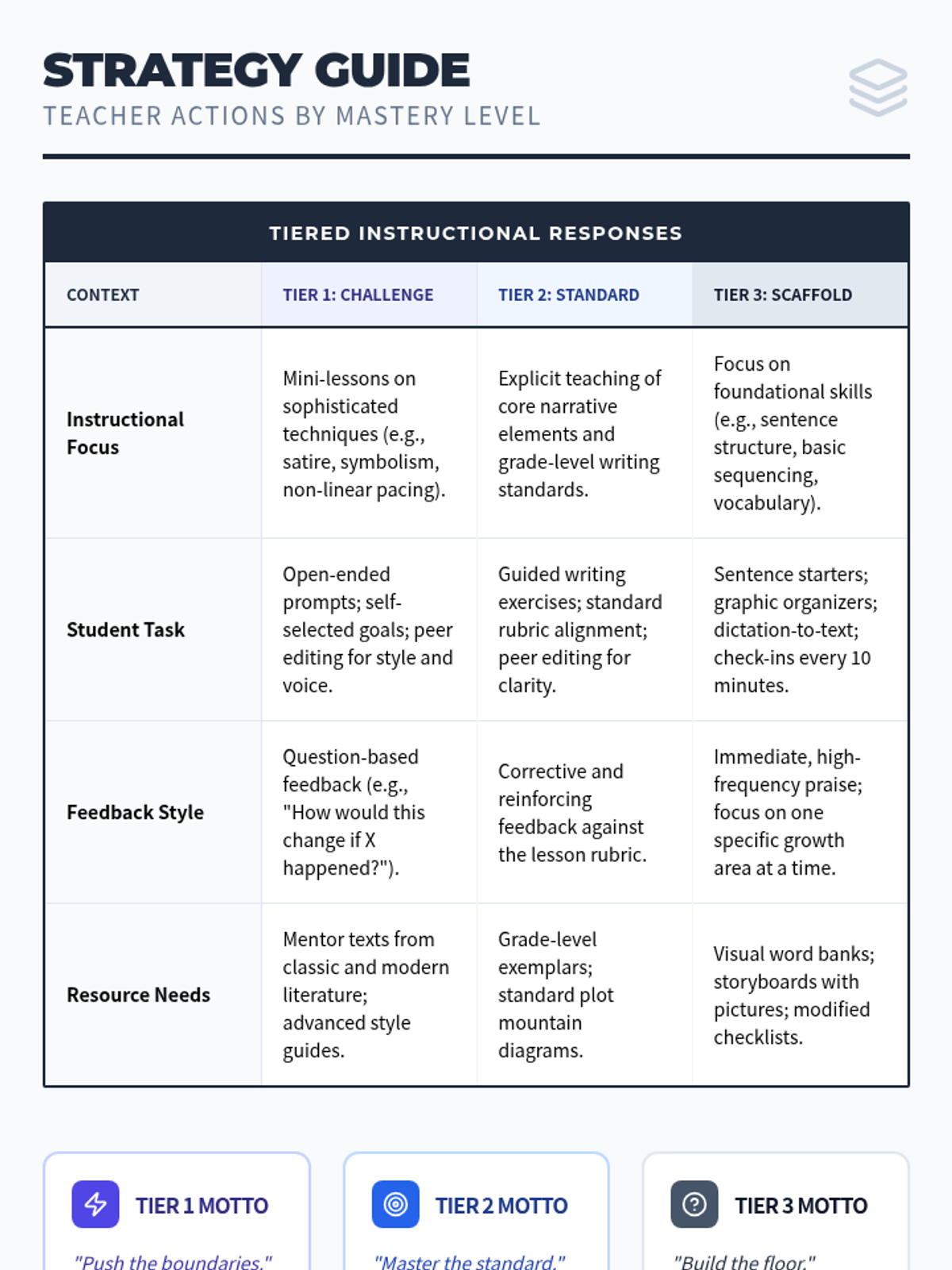
A resource kit for teachers to track and support student progress across three distinct tiers of mastery, specifically tailored for Narrative Writing skills.
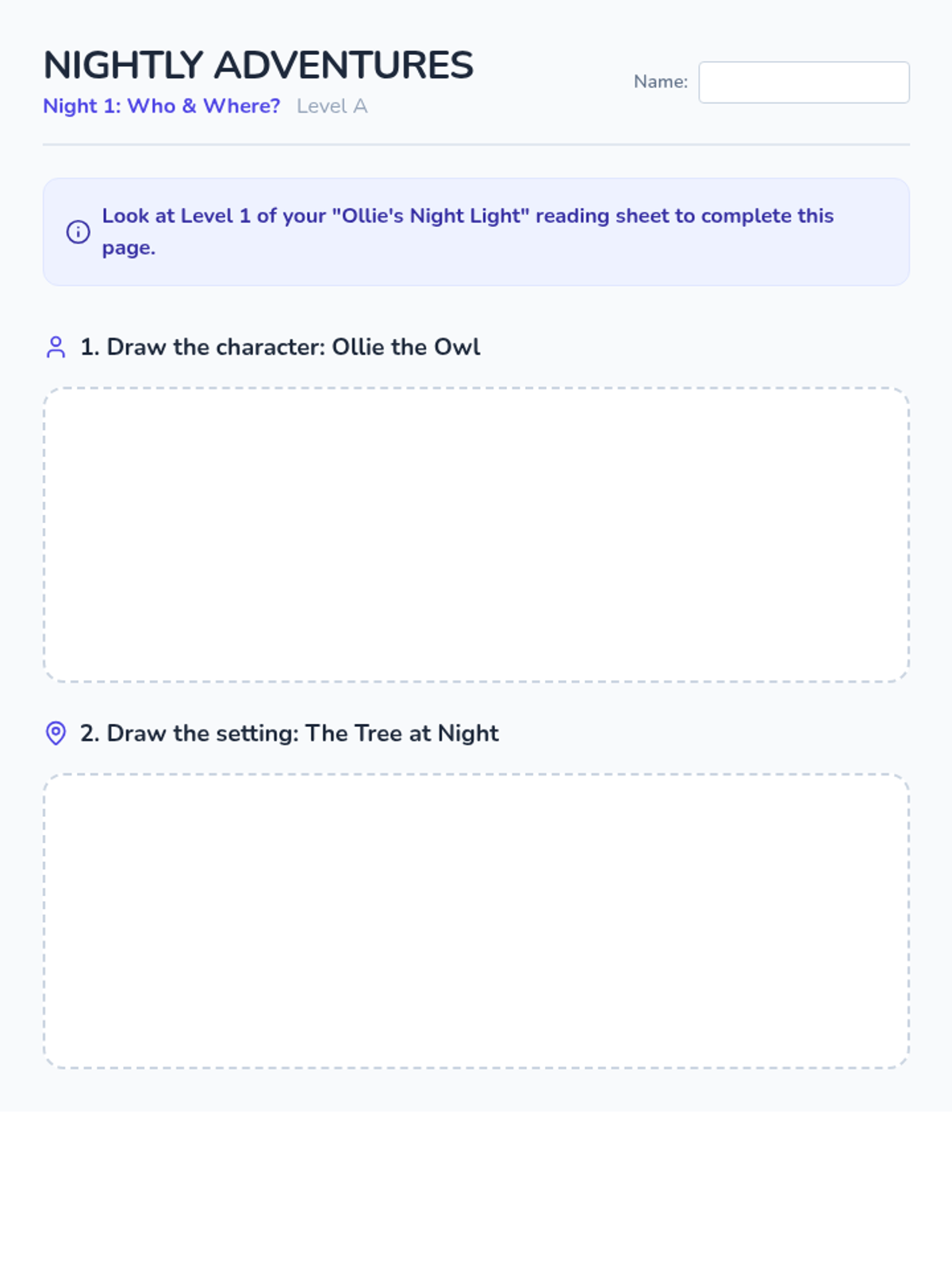
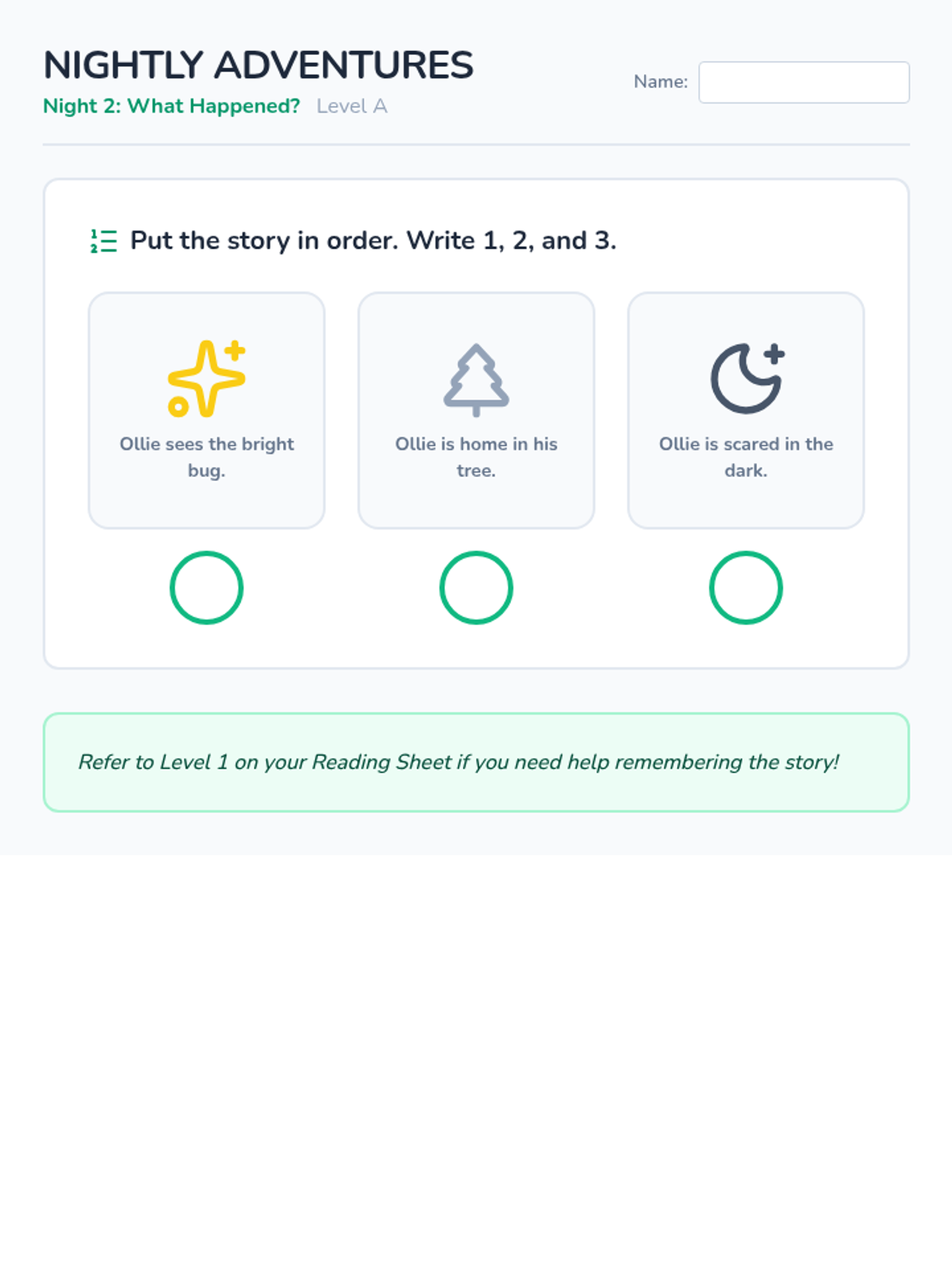
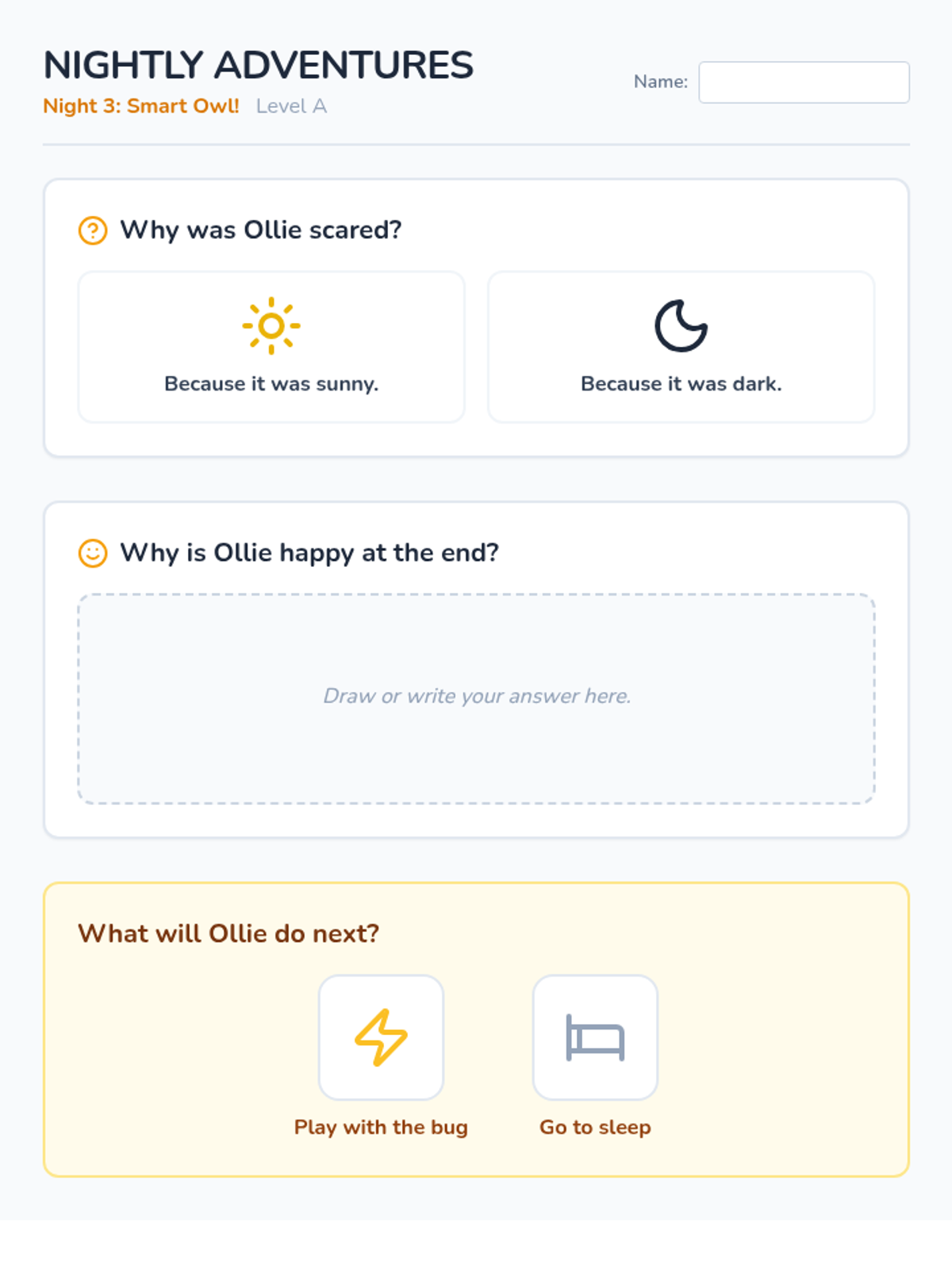
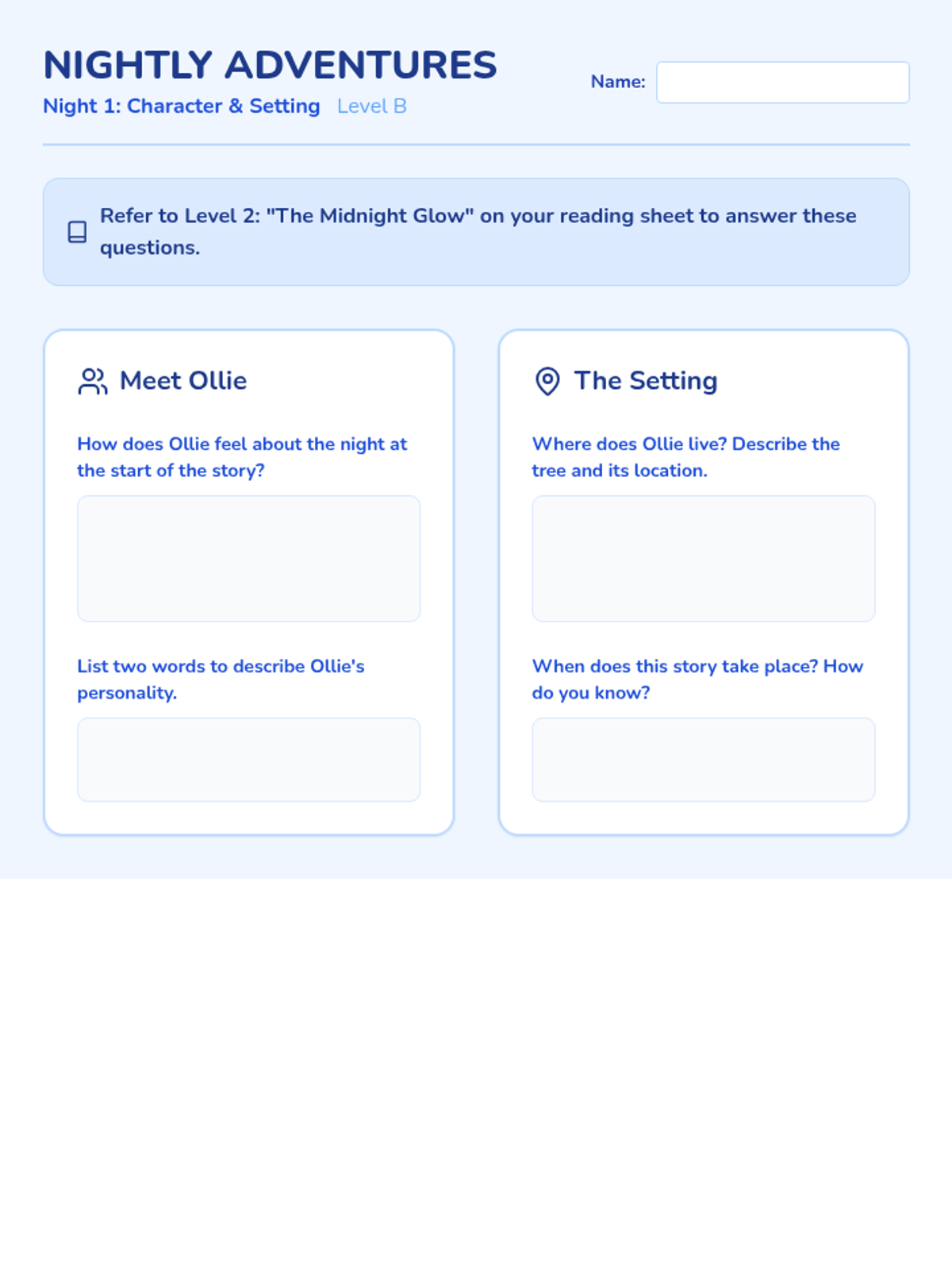
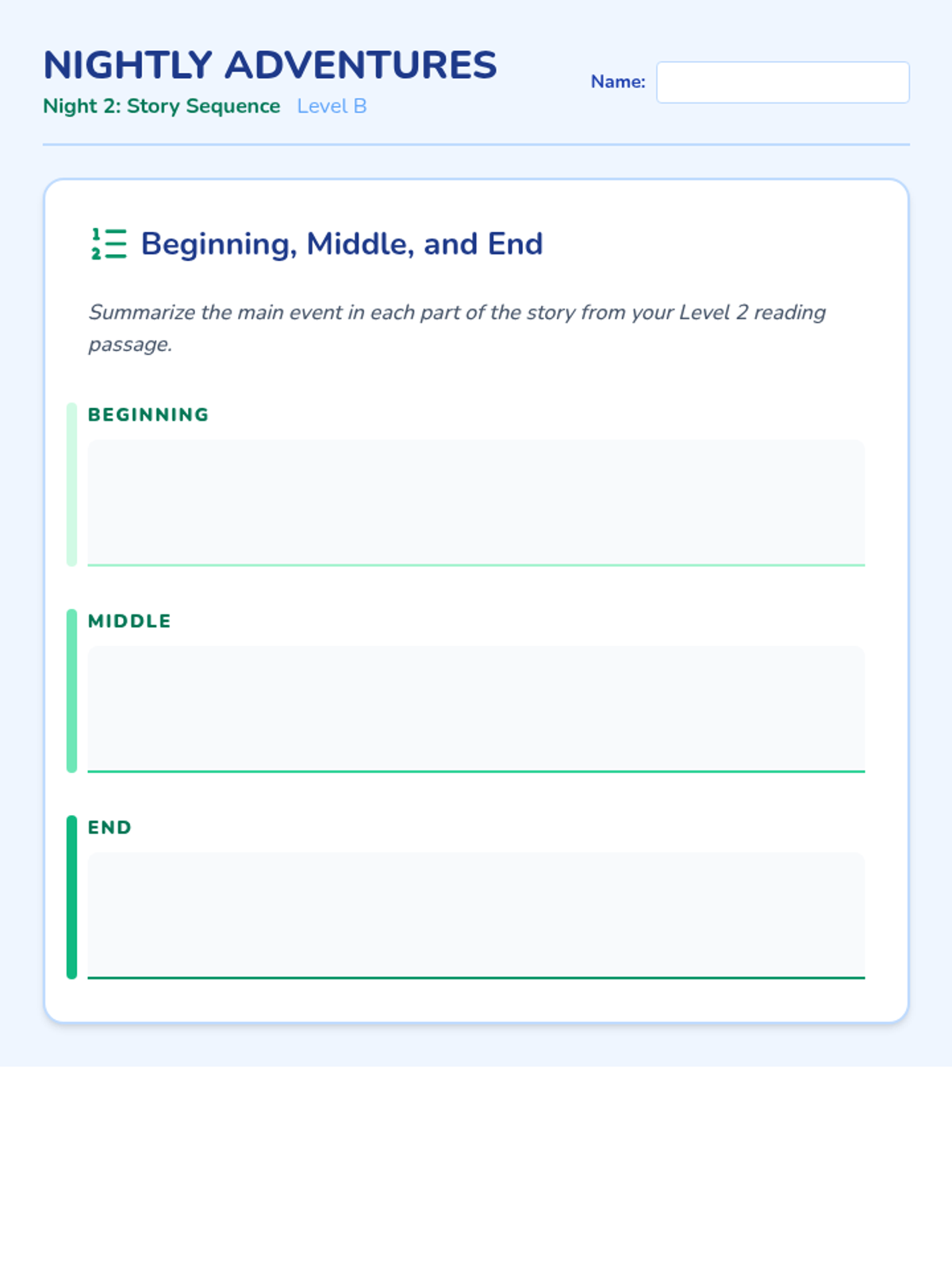
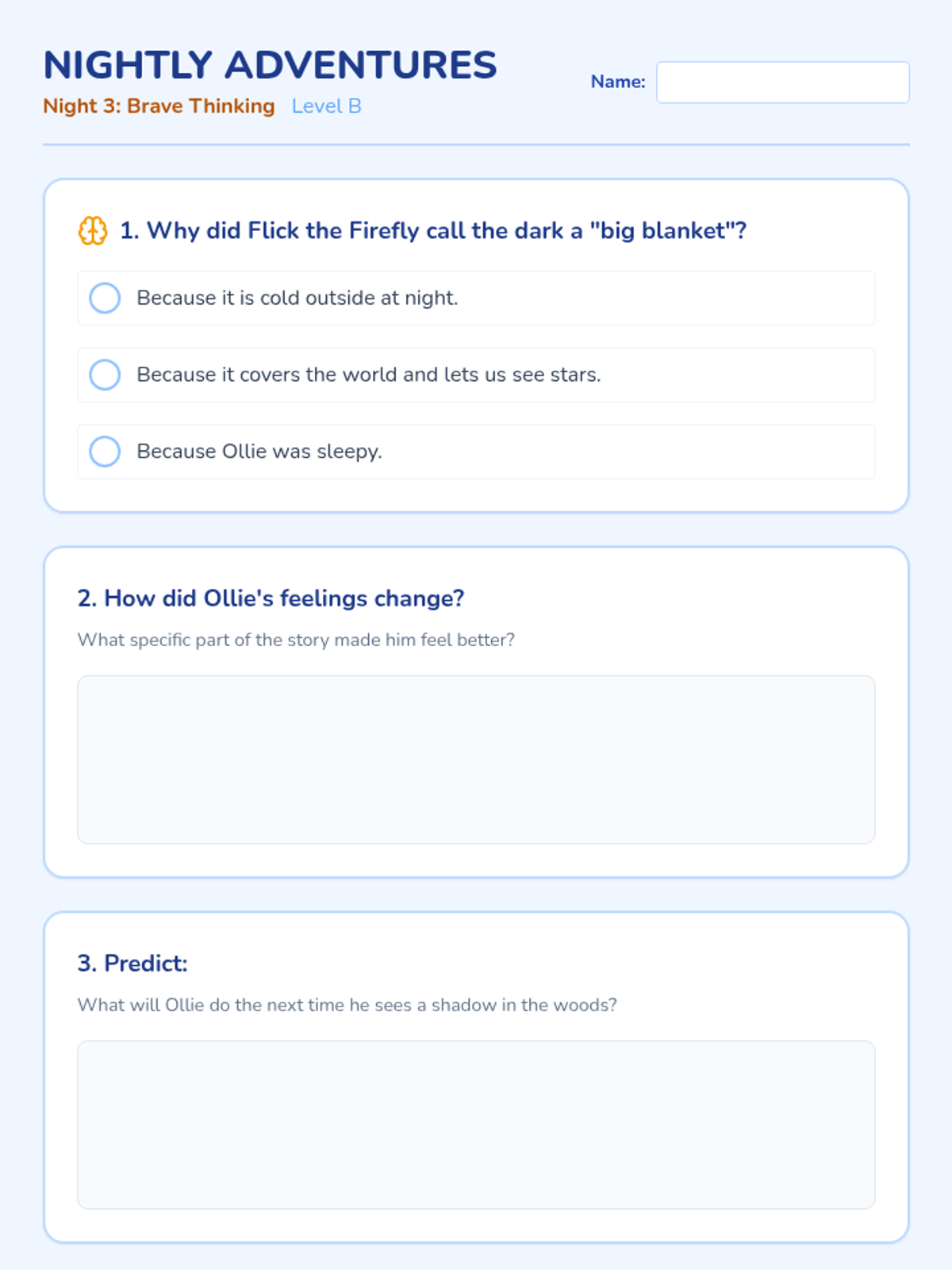
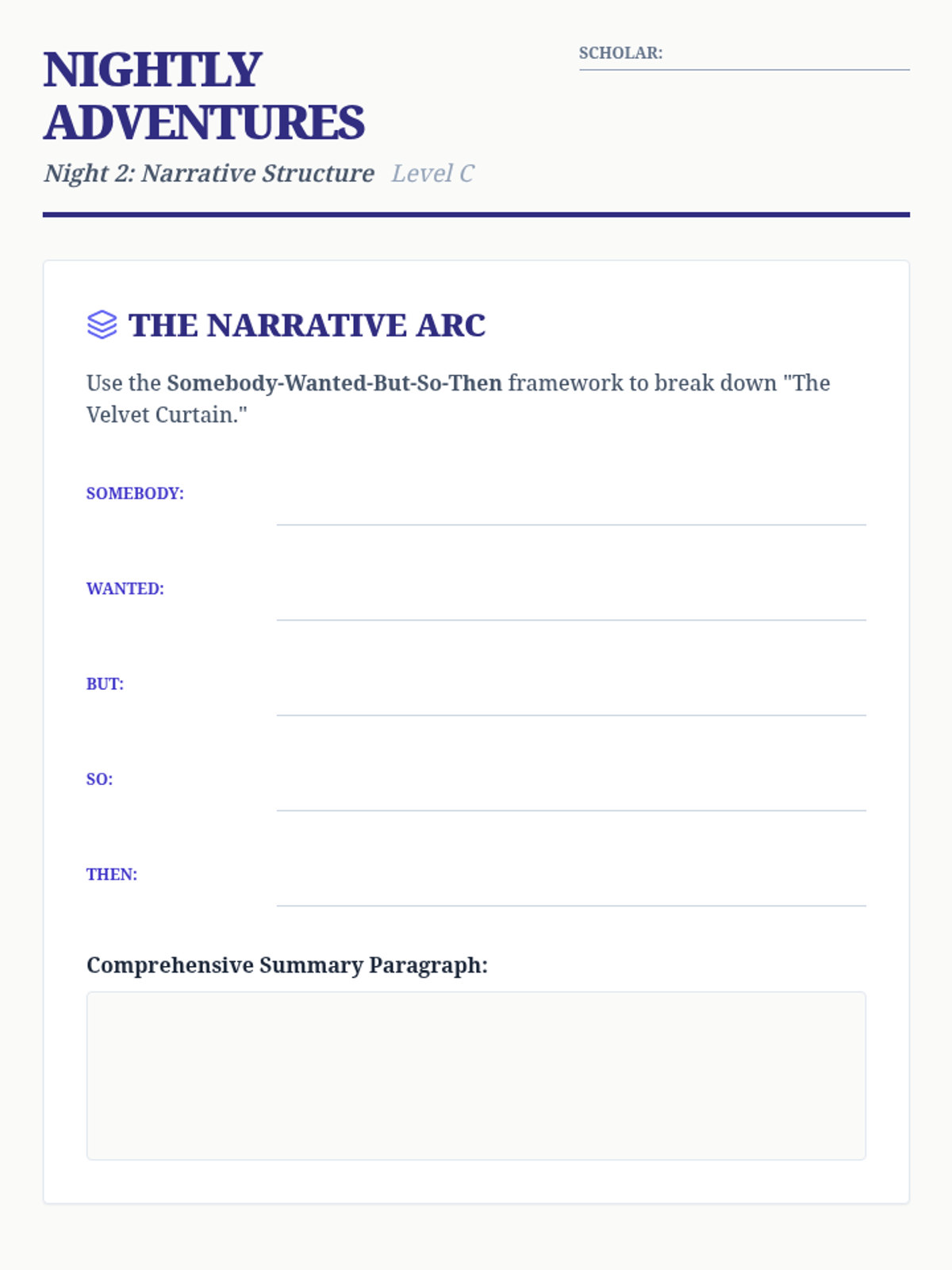
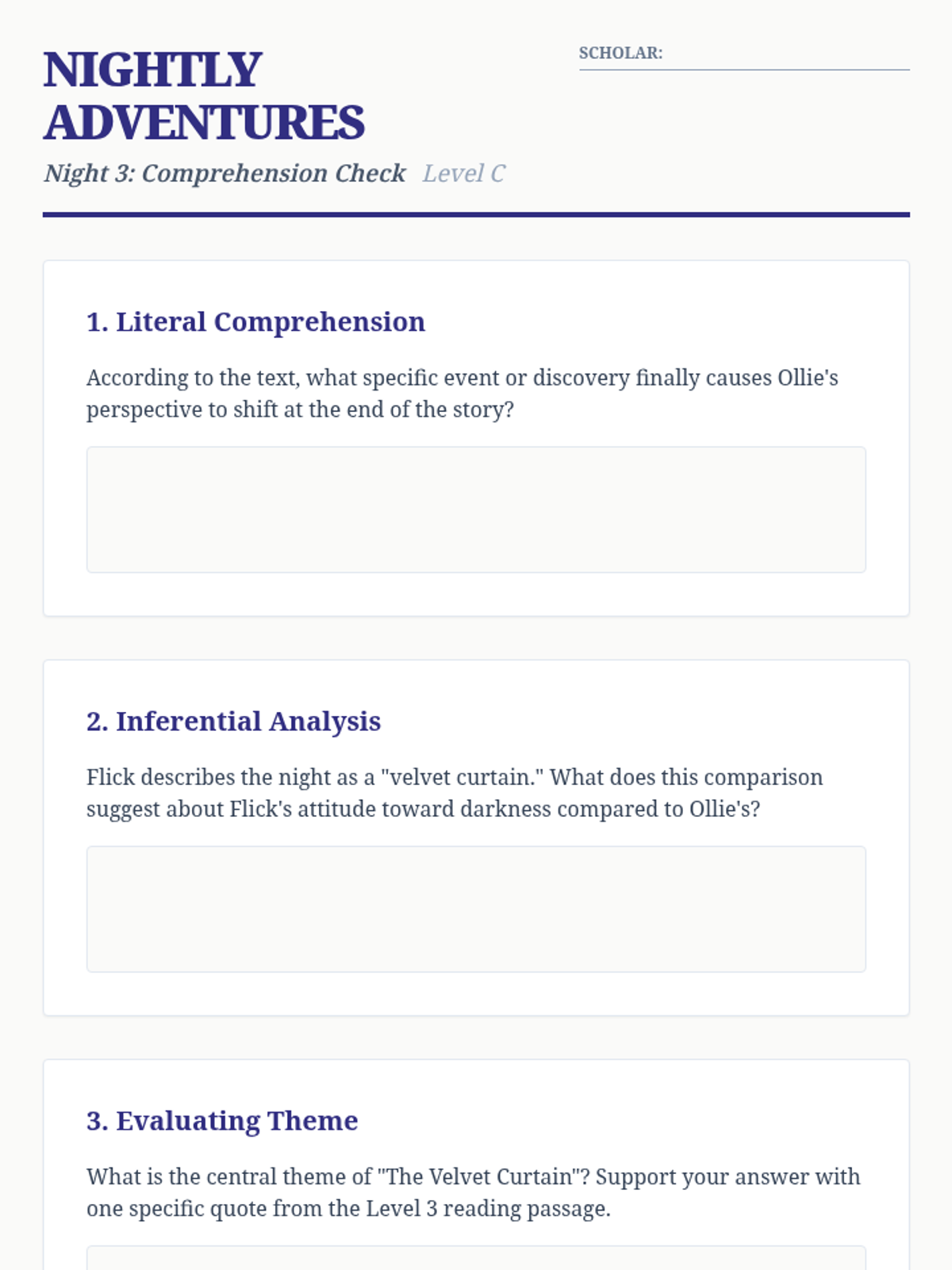
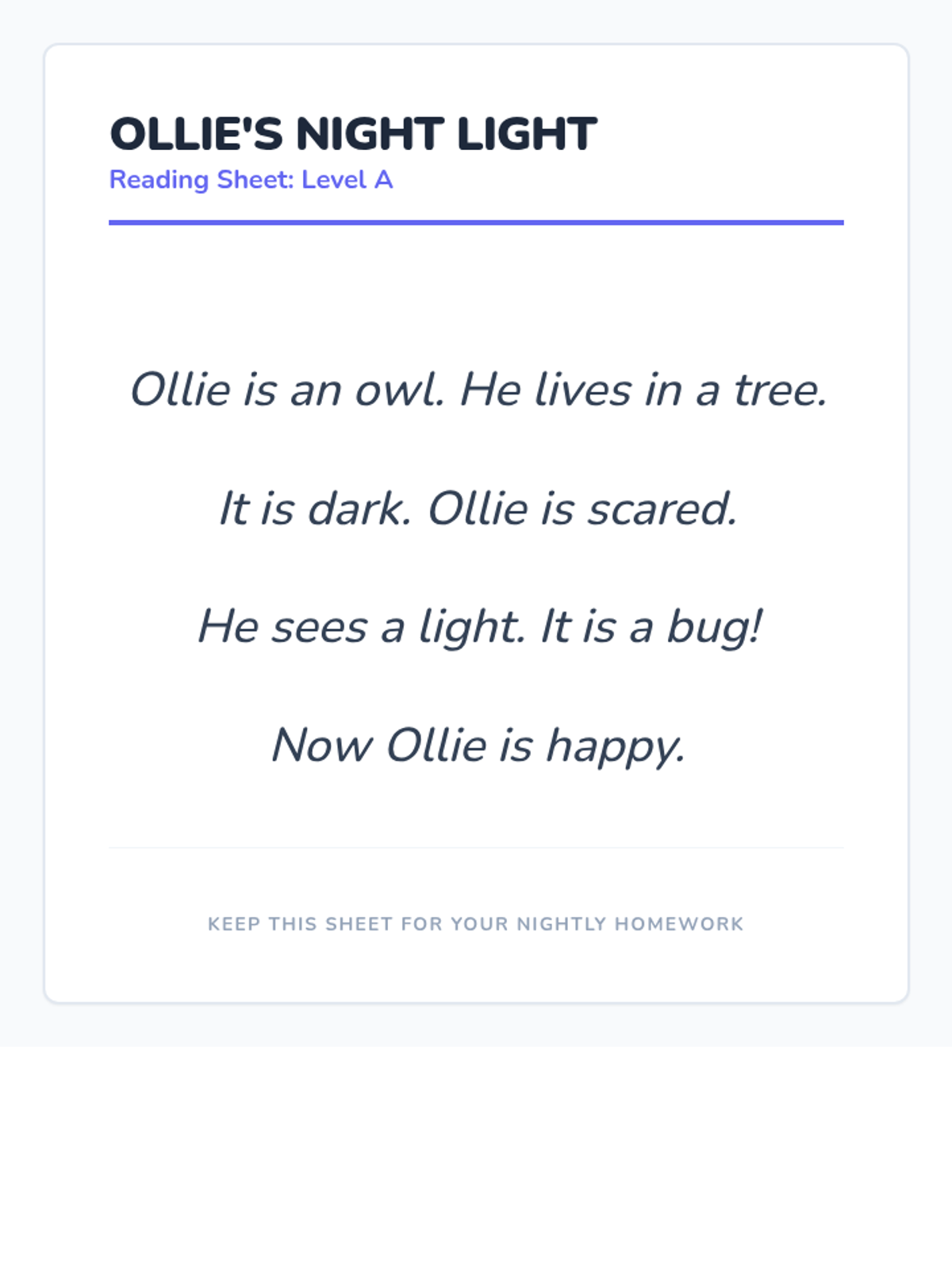
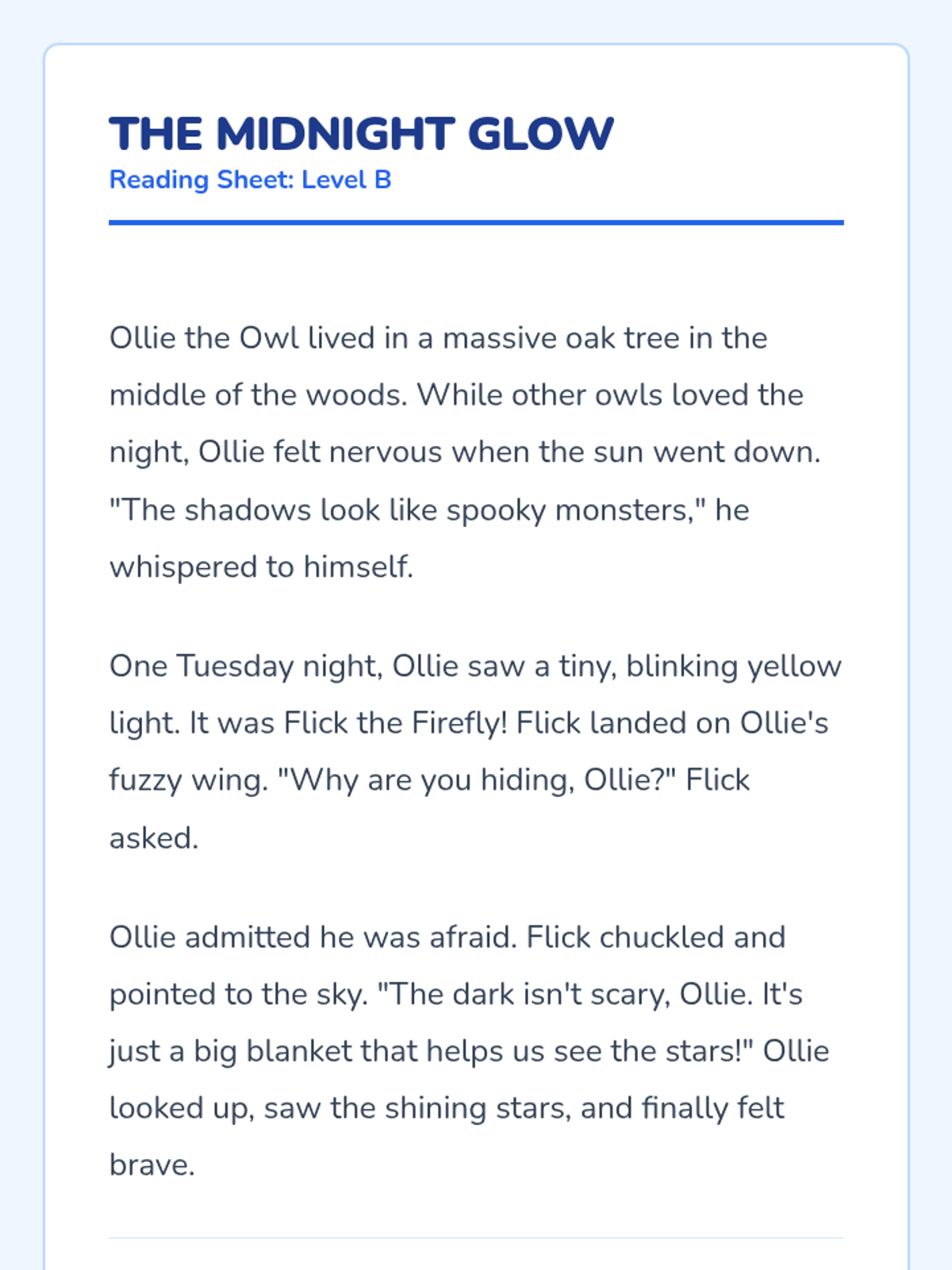
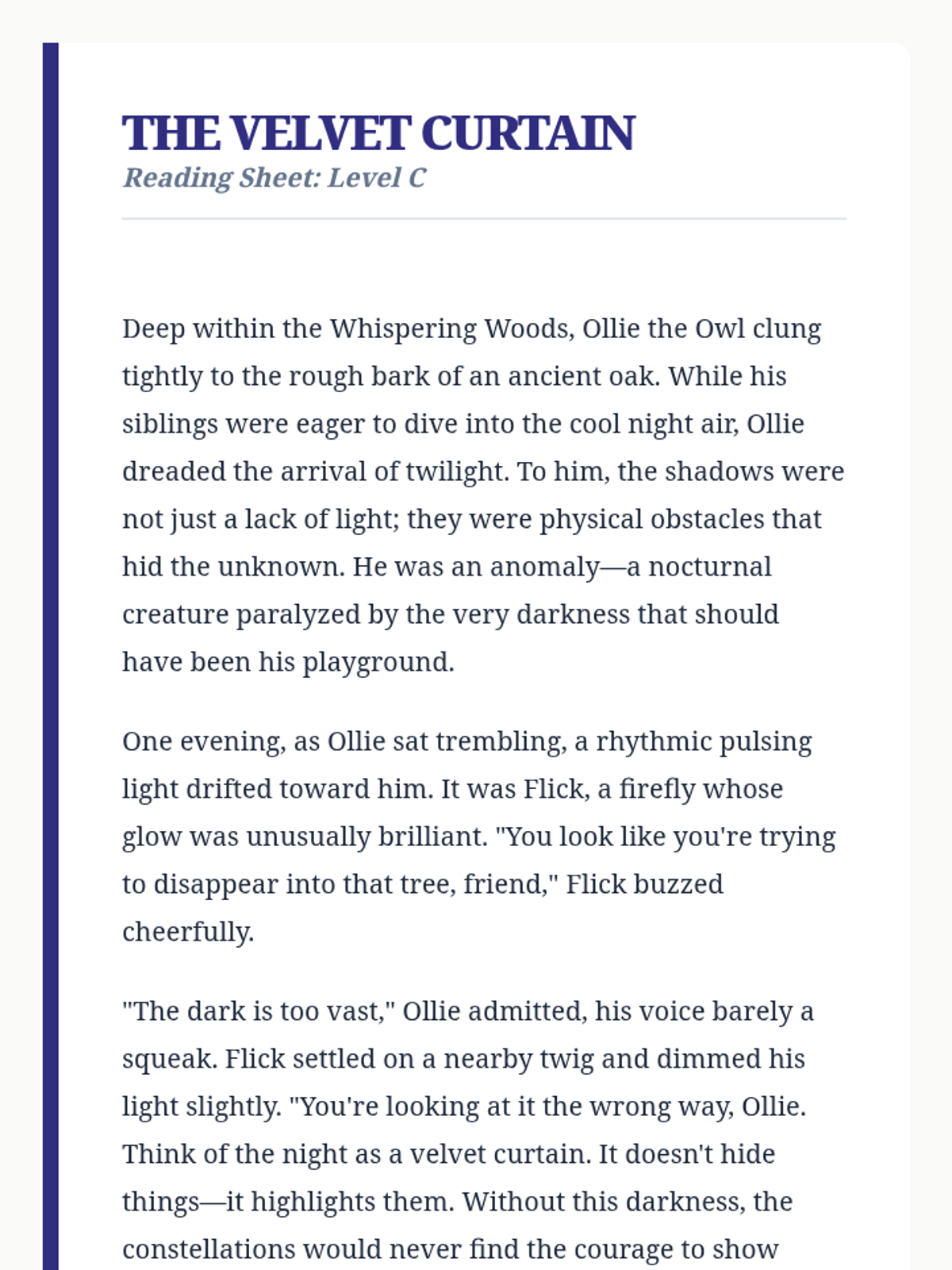
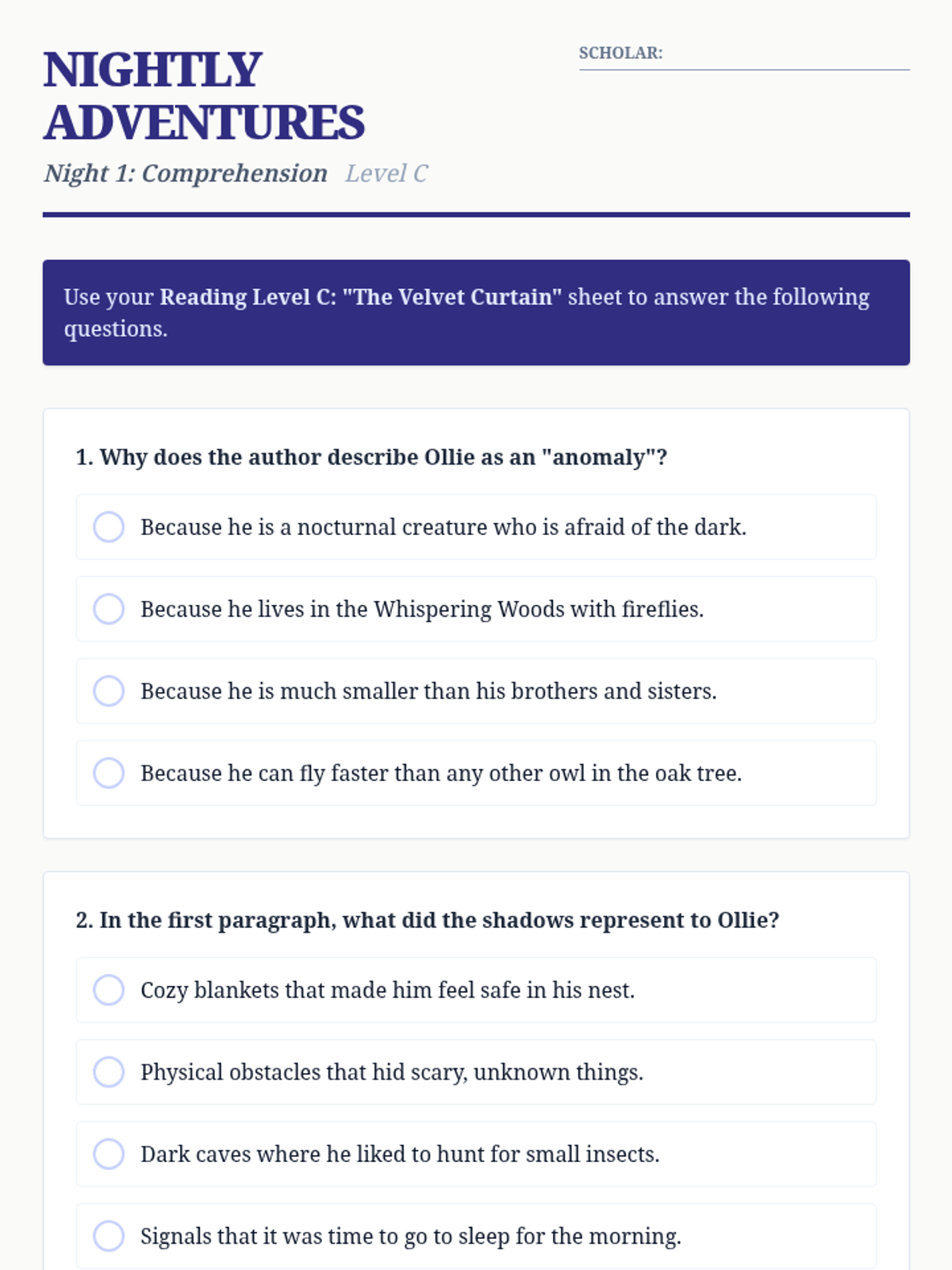
A comprehensive 3-night homework sequence based on 'Ollie's Nightly Adventures'. Each grade level (K, 2, 4) has three distinct assignments focusing on character/setting, sequencing, and inference/summarization using the same story text for the week.
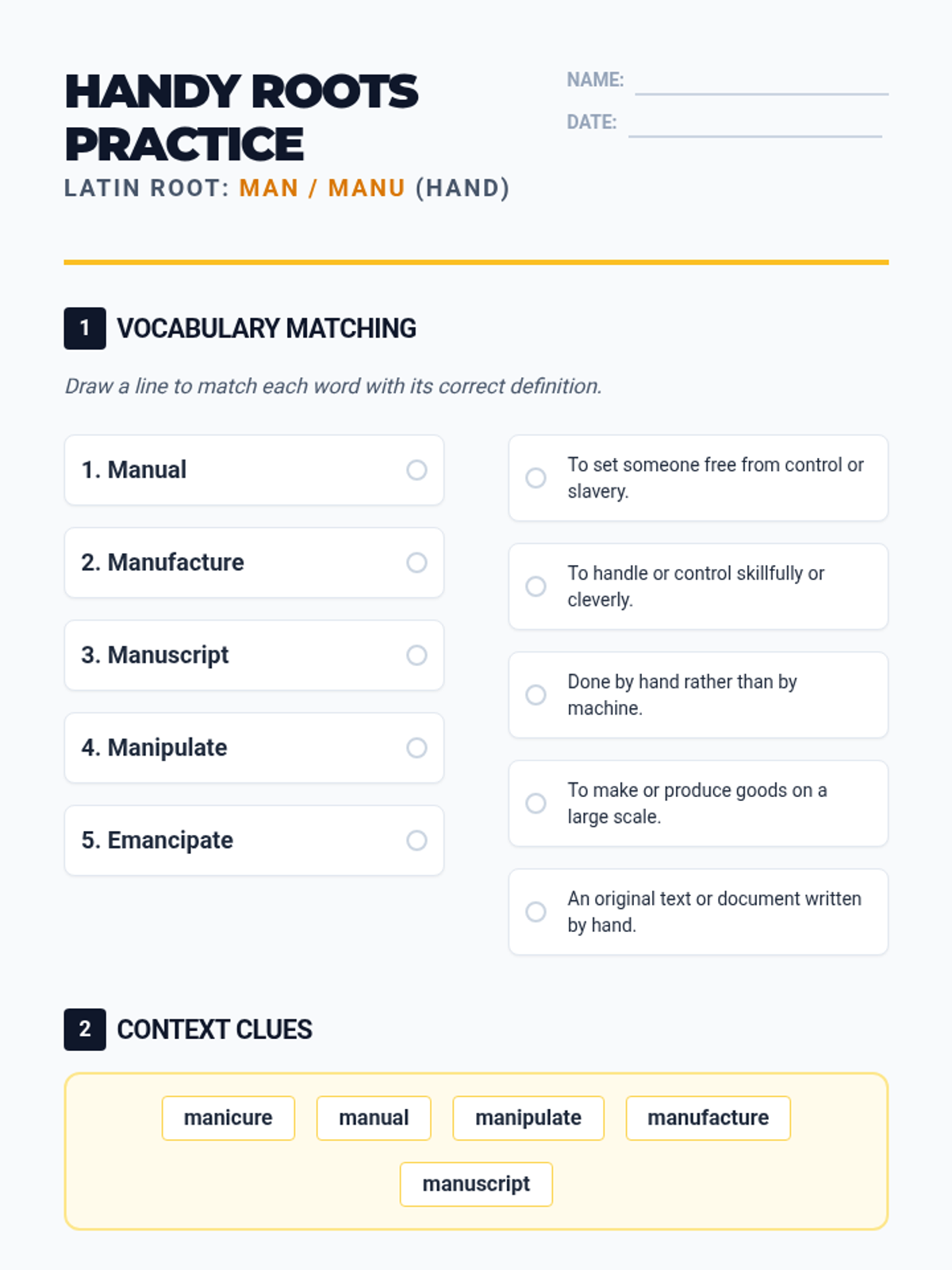
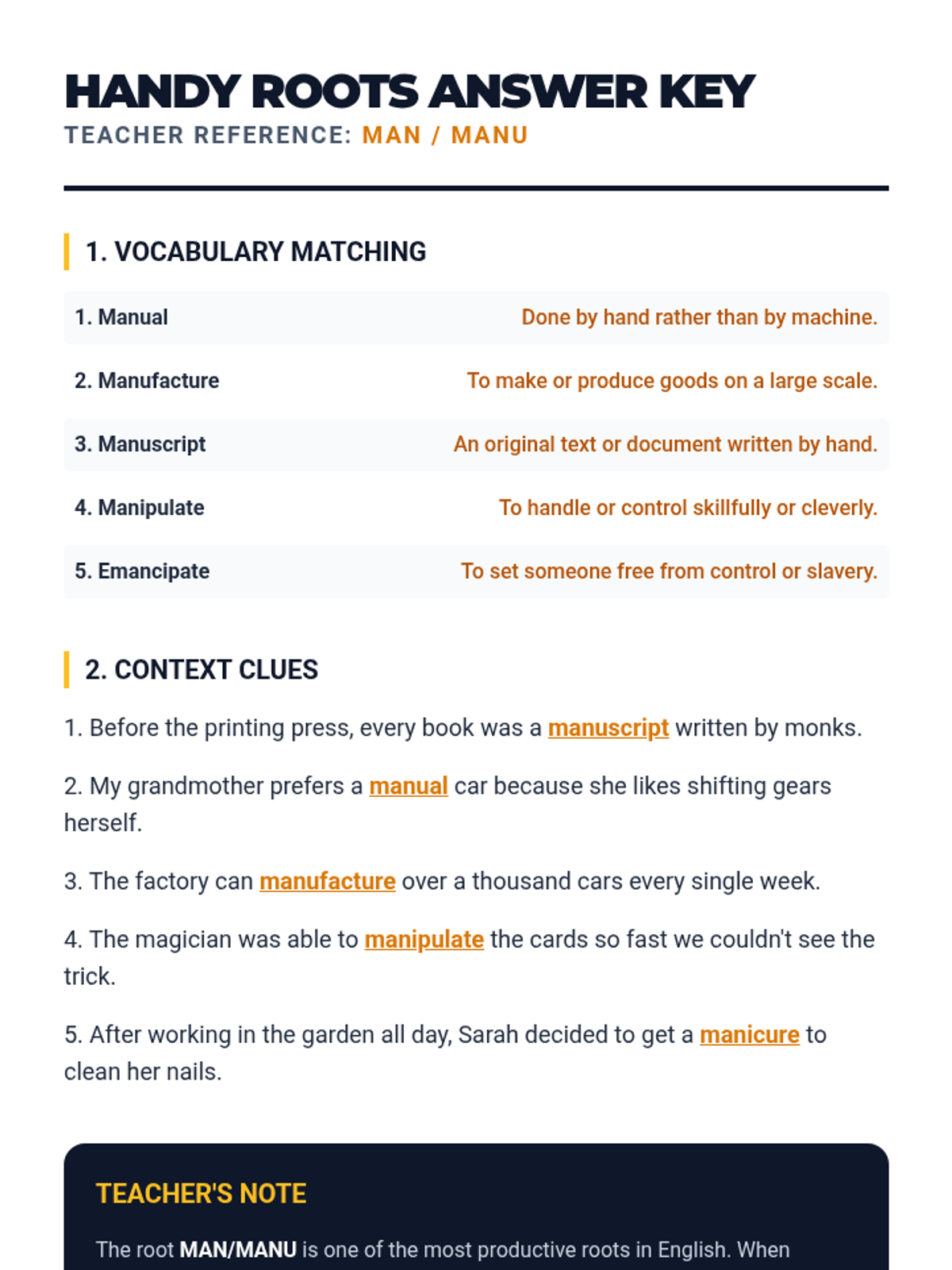
A comprehensive lesson exploring the Latin root 'man/manu' (hand) through visual slides and practical word-building activities.
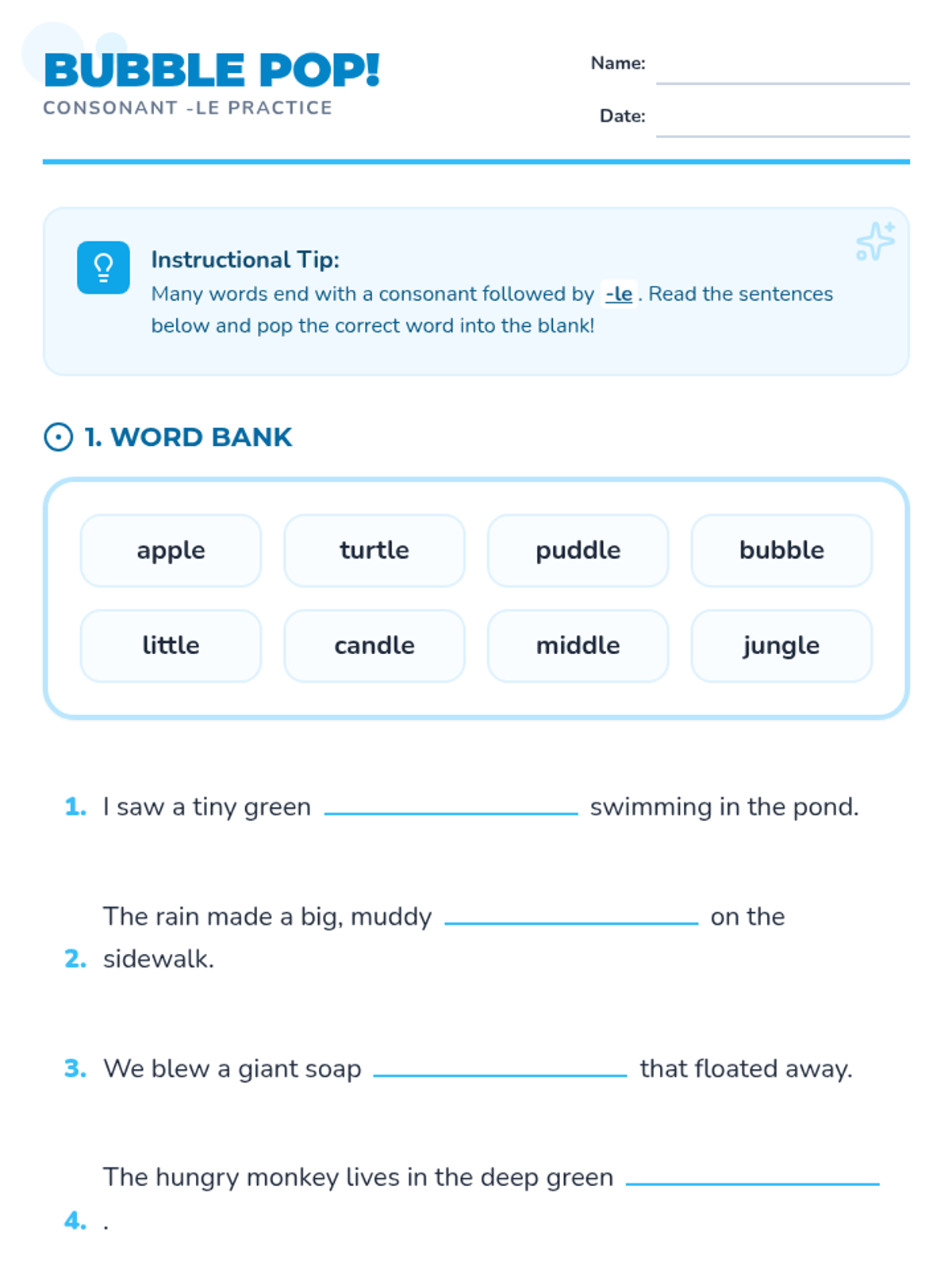
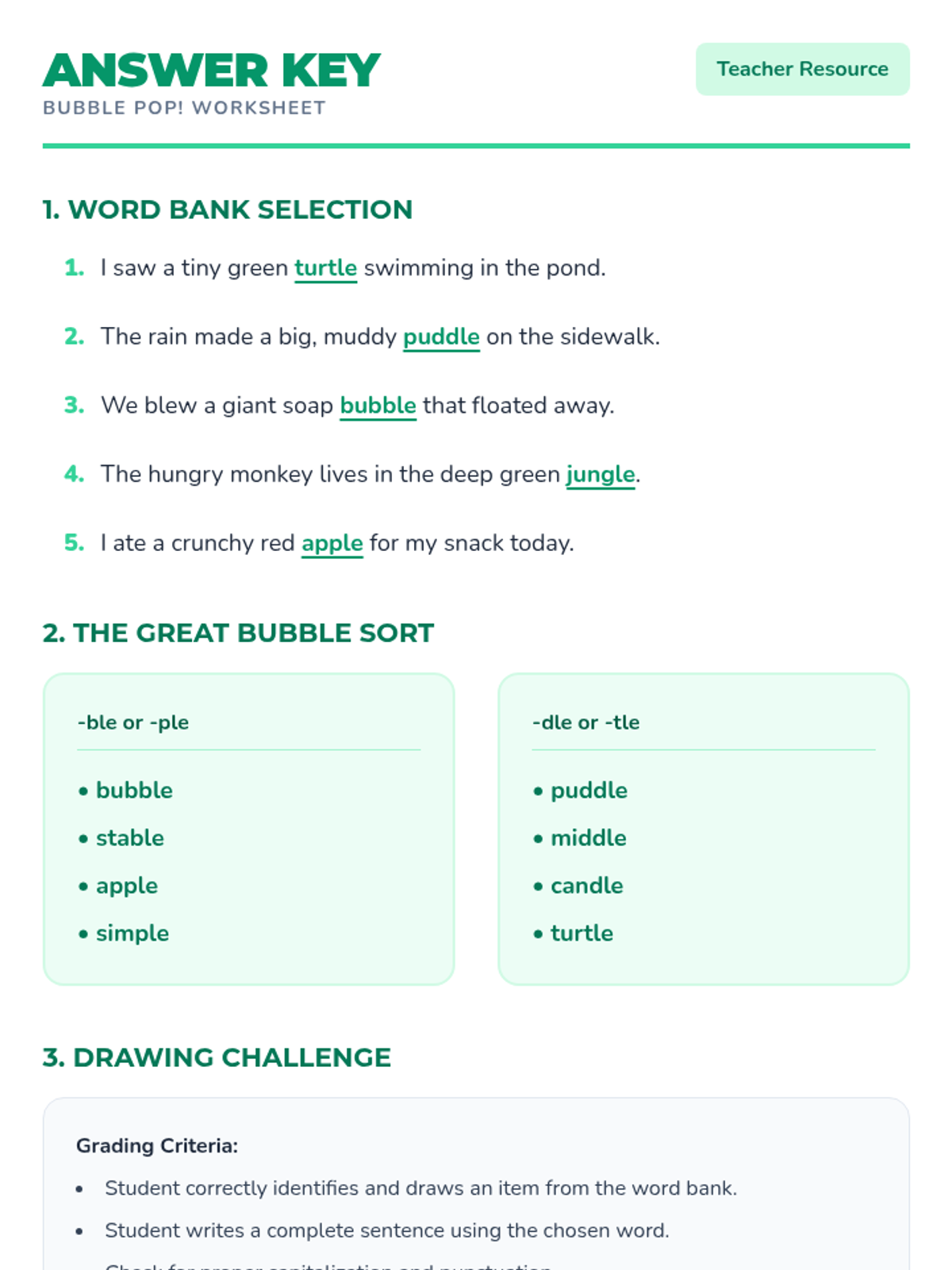
A lesson focused on identifying and spelling common words ending in the '-le' consonant-le pattern. Students will engage with matching, sentence completion, and sorting activities.
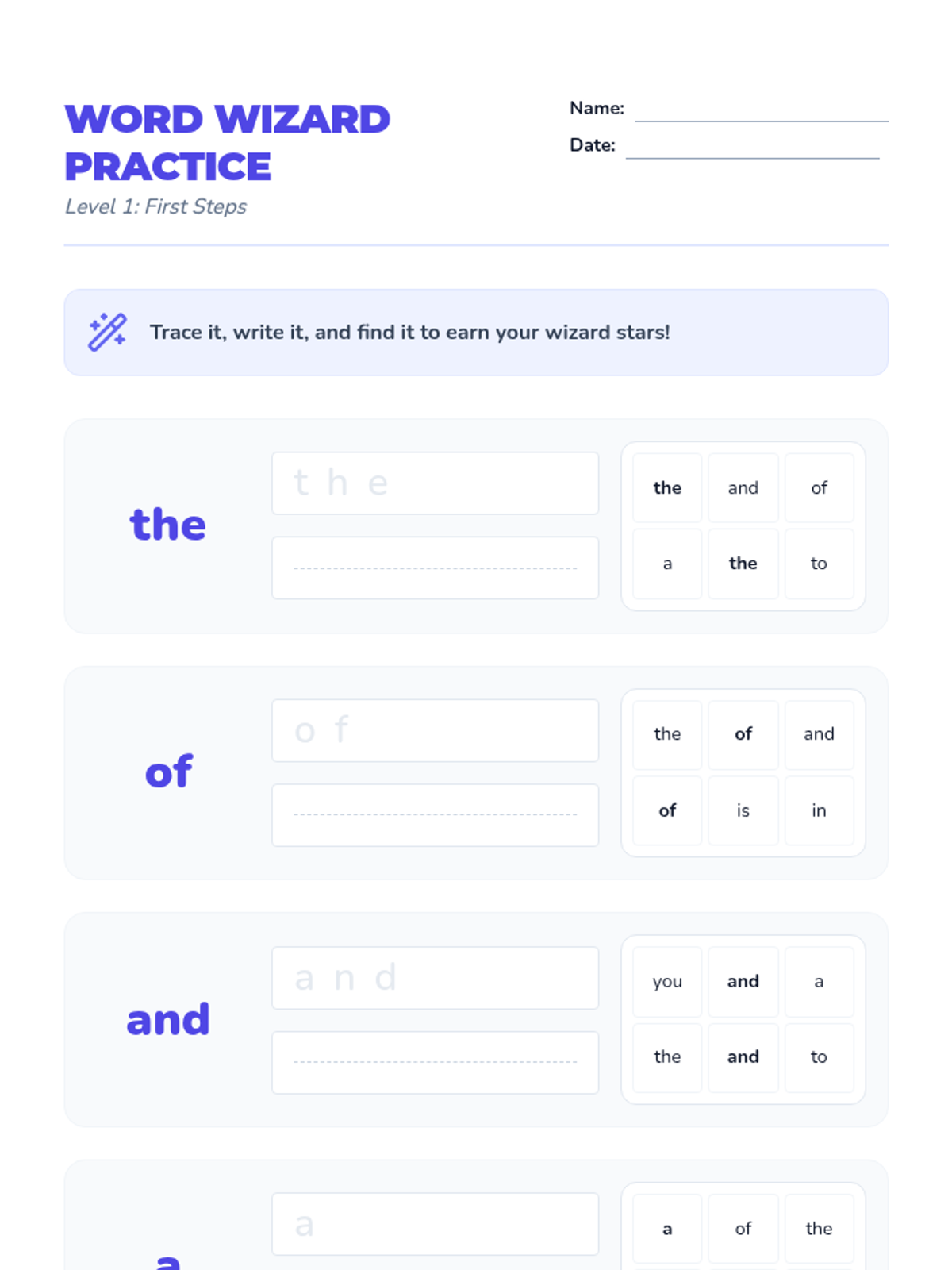
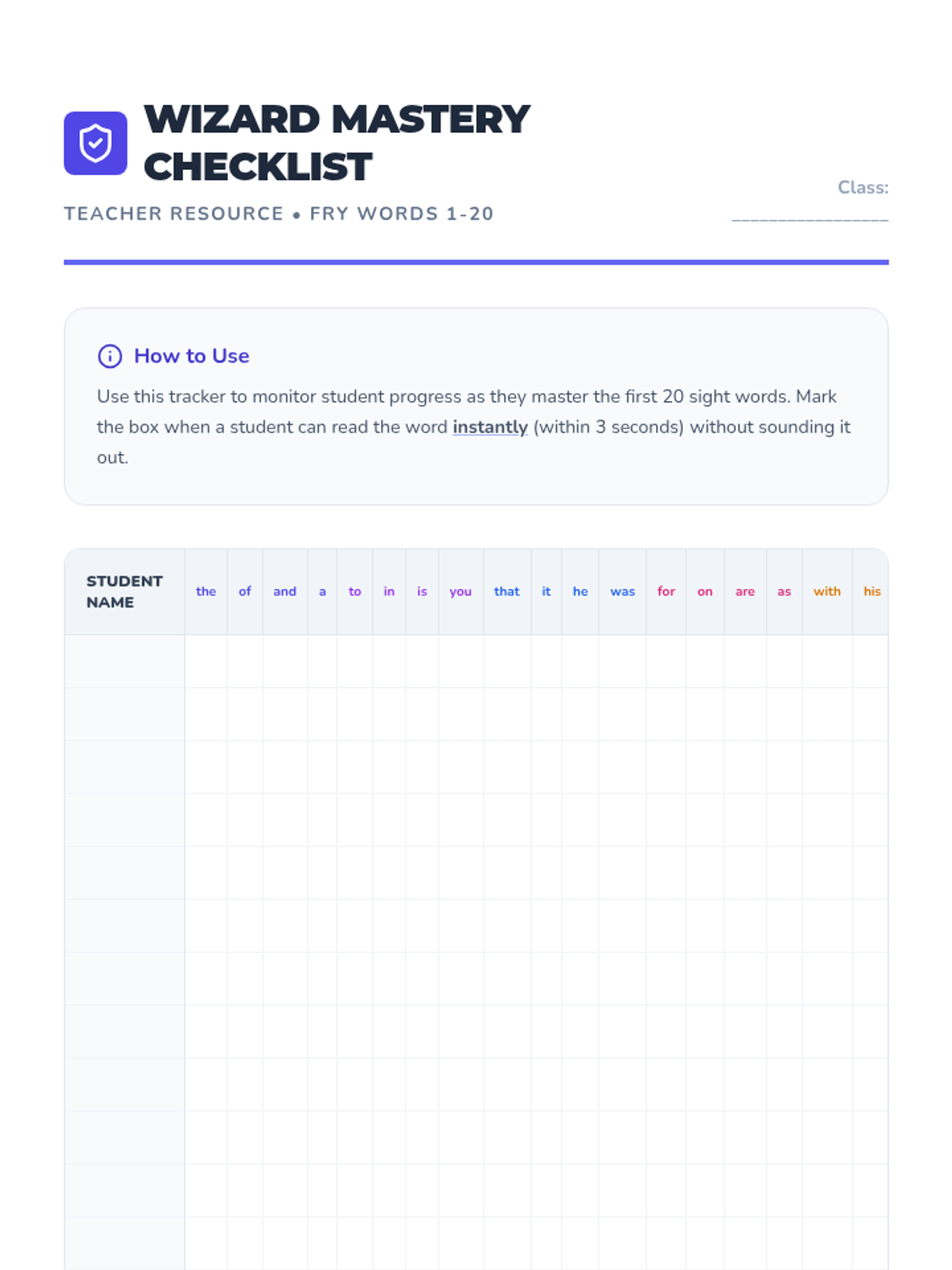
A foundational sight word unit focusing on the first 20 words of the Fry list through tracing, writing, and identification activities.
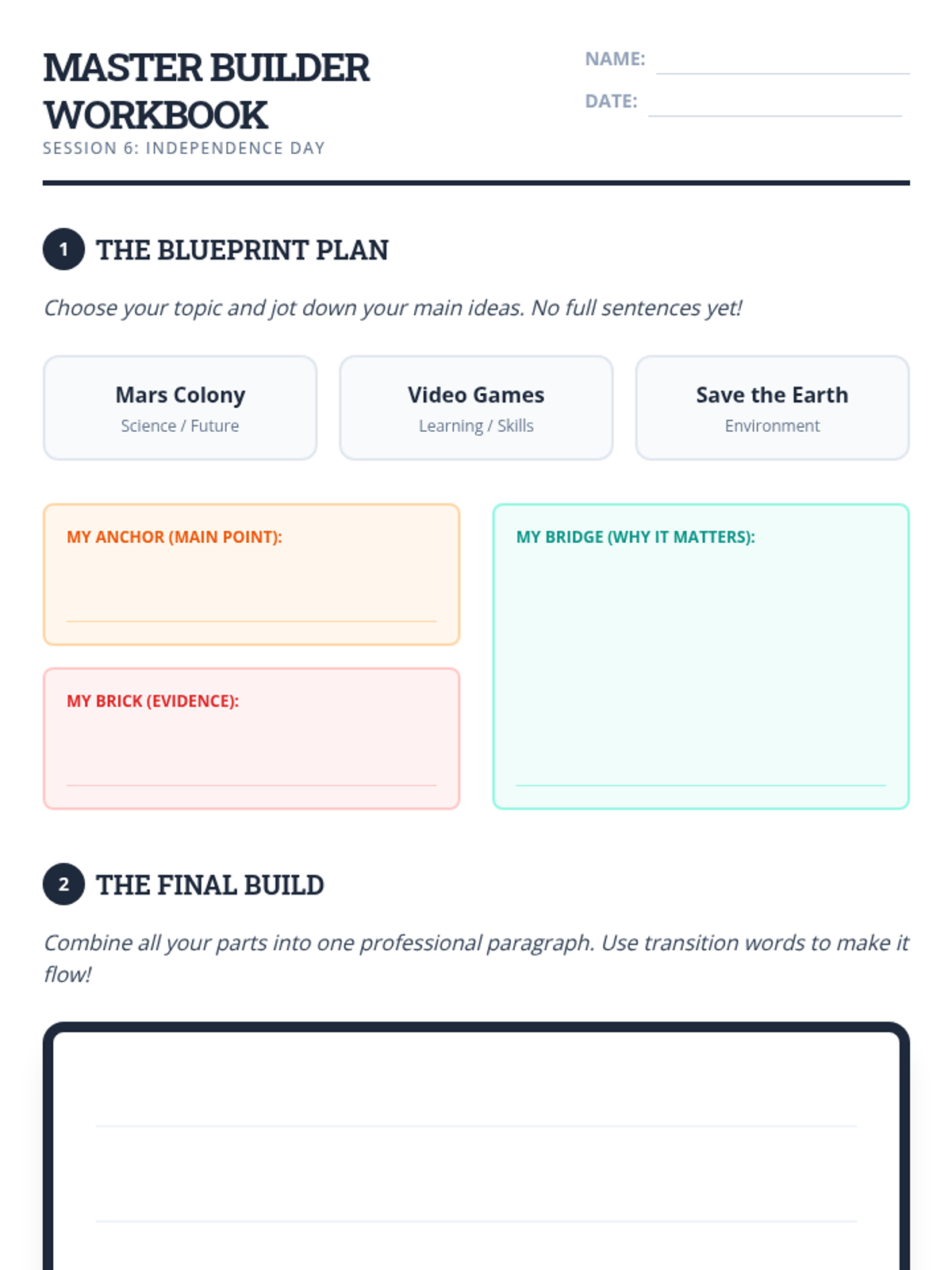
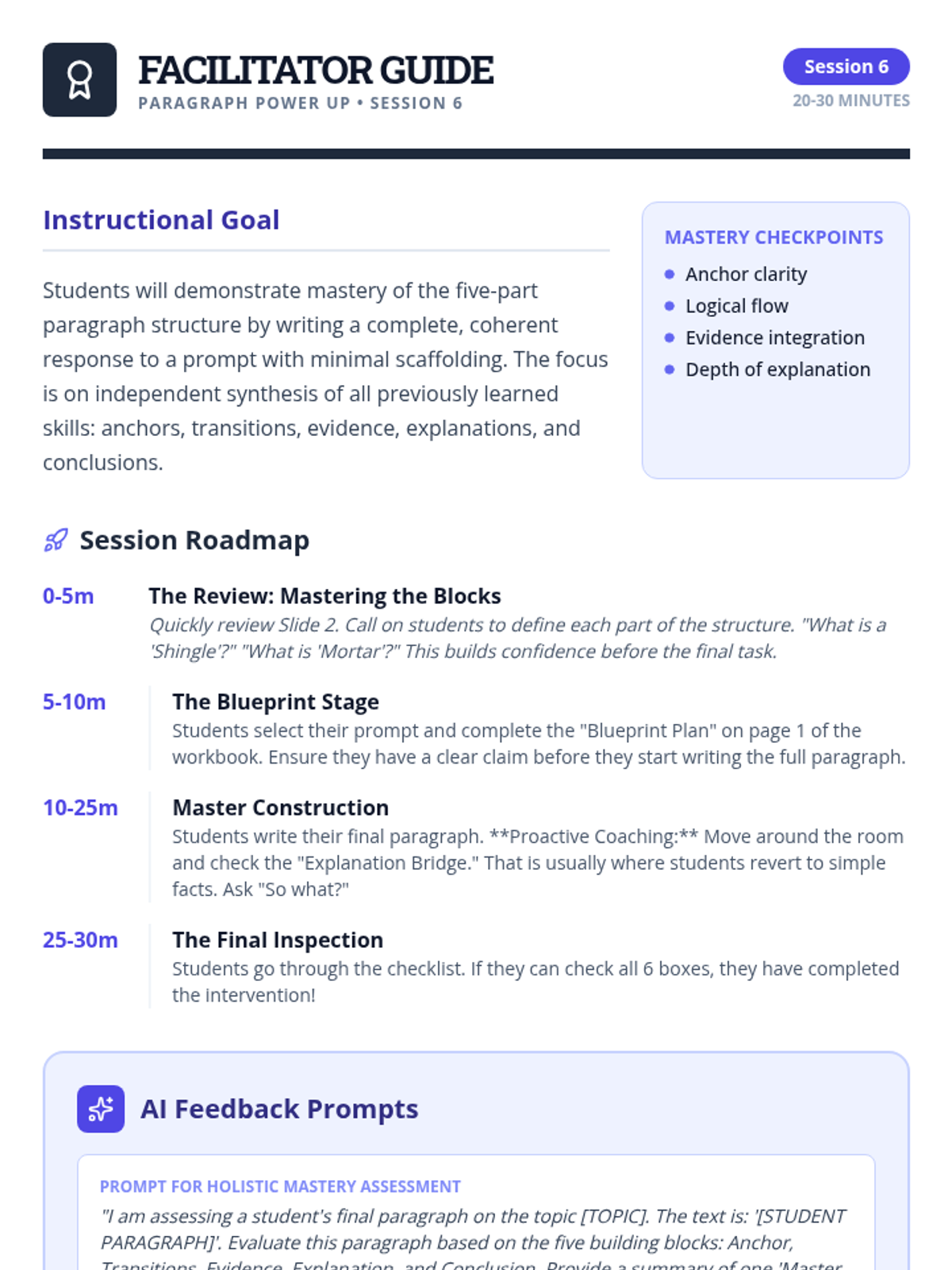
The culmination of the sequence. Students use all the 'Building Block' skills to write a complete, structured paragraph on a topic of their choice with minimal scaffolding.
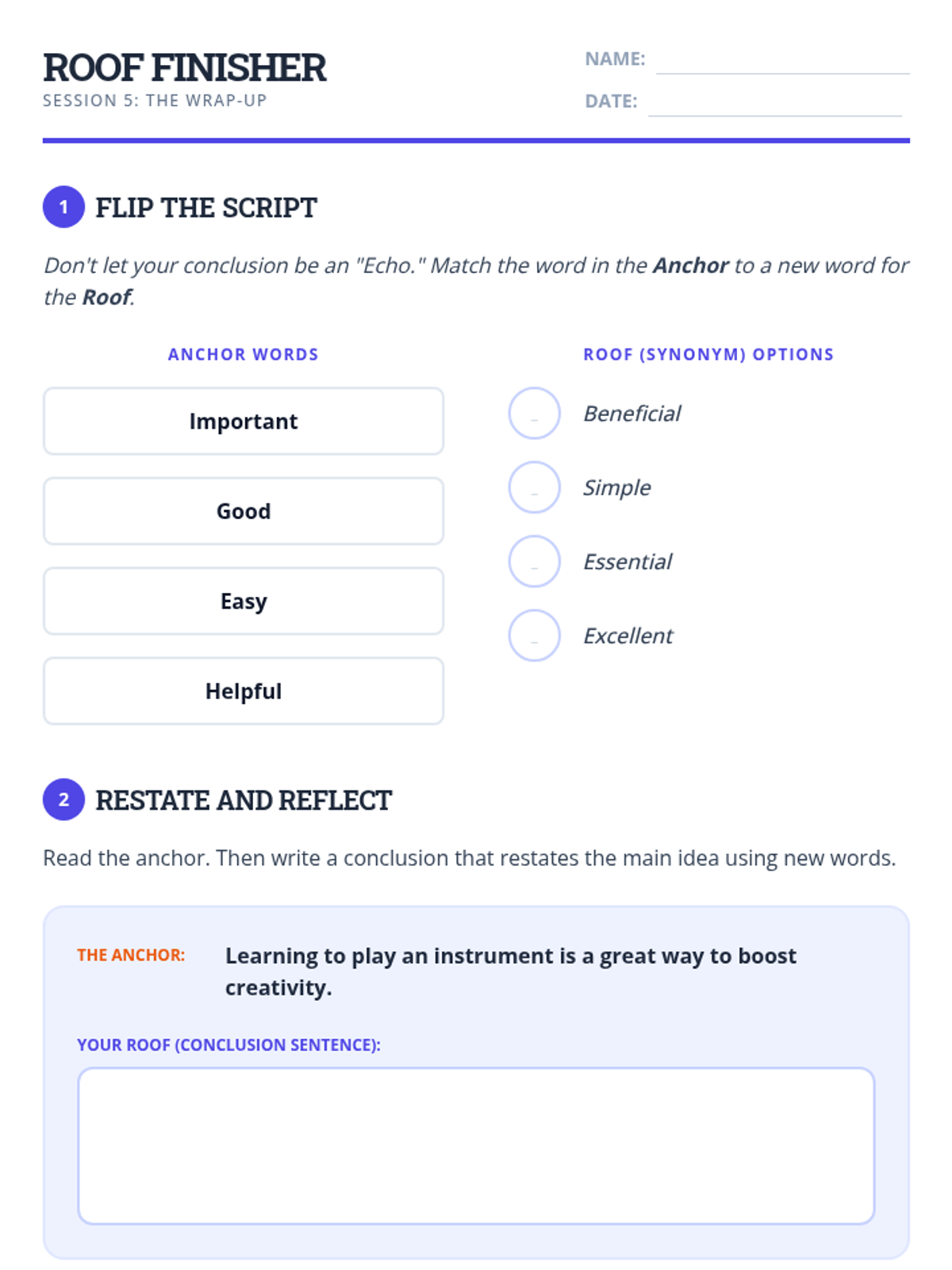
Focuses on the final part of the paragraph: the conclusion. Students learn to 'seal' their writing by restating their main idea in a new way and providing a final thought that protects the whole structure.
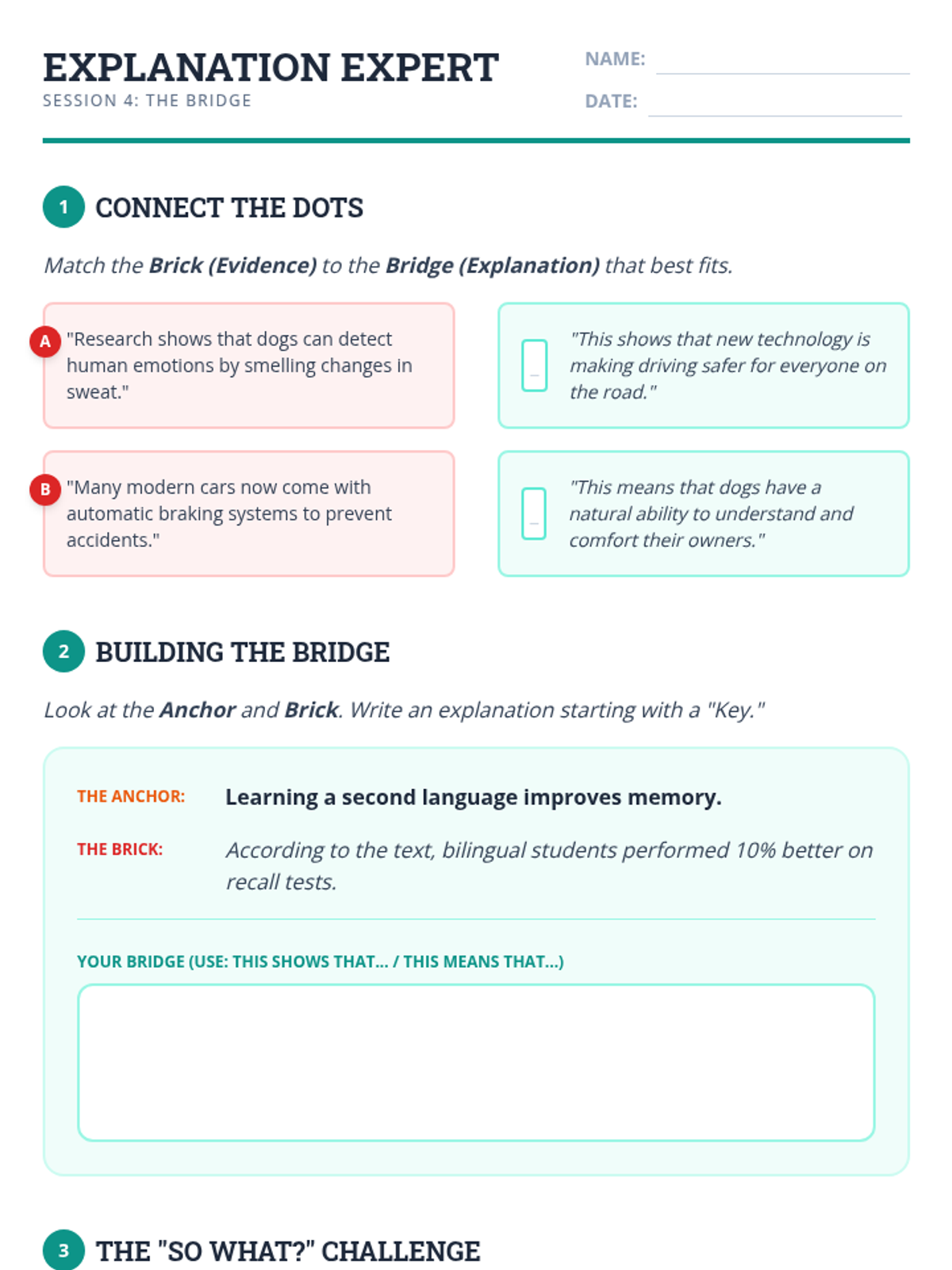
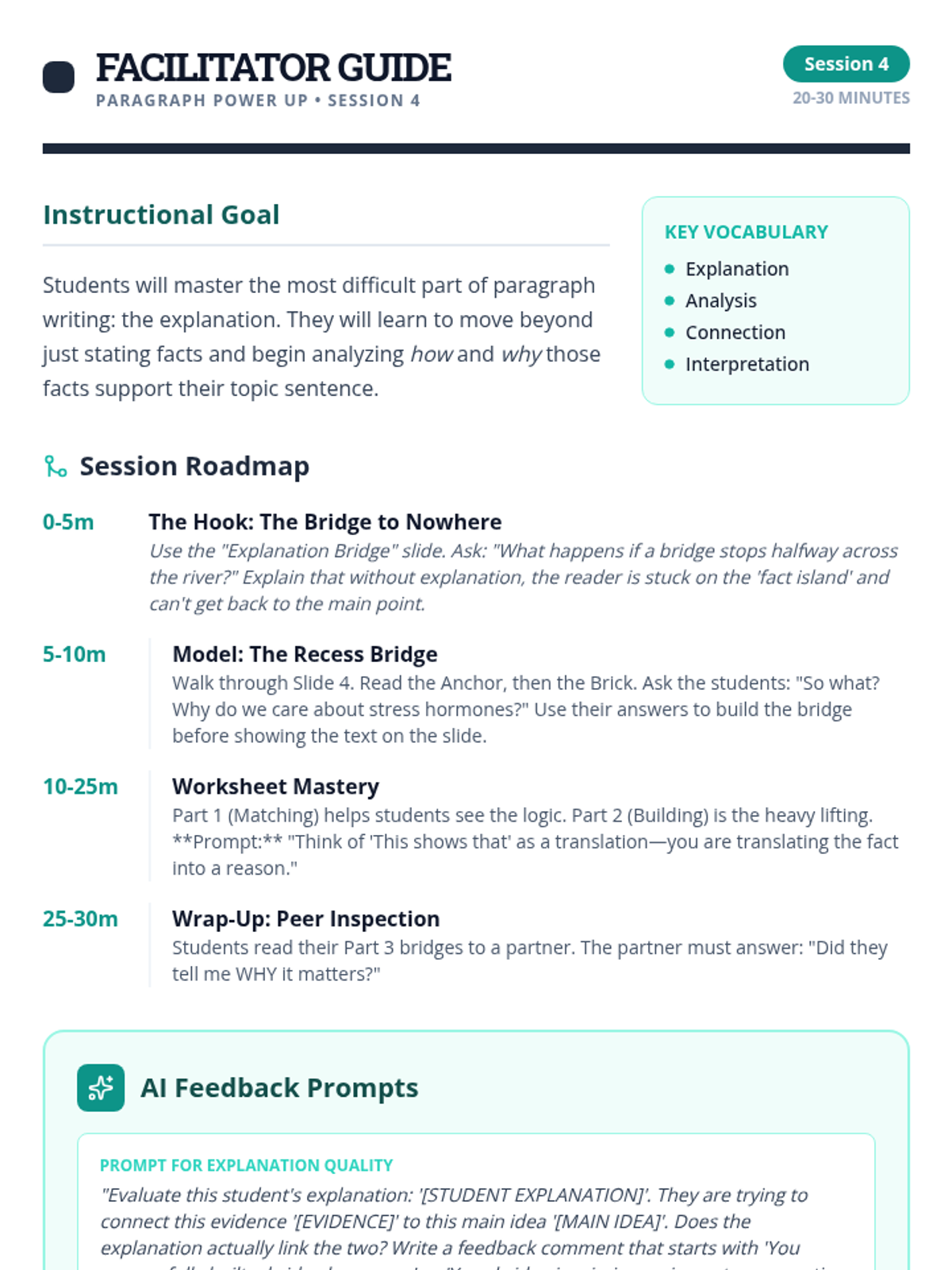
Focuses on the 'bridge' of the paragraph: the explanation. Students learn to explain why their evidence supports their main idea, using sentence frames like 'This shows that...' to build deeper meaning.
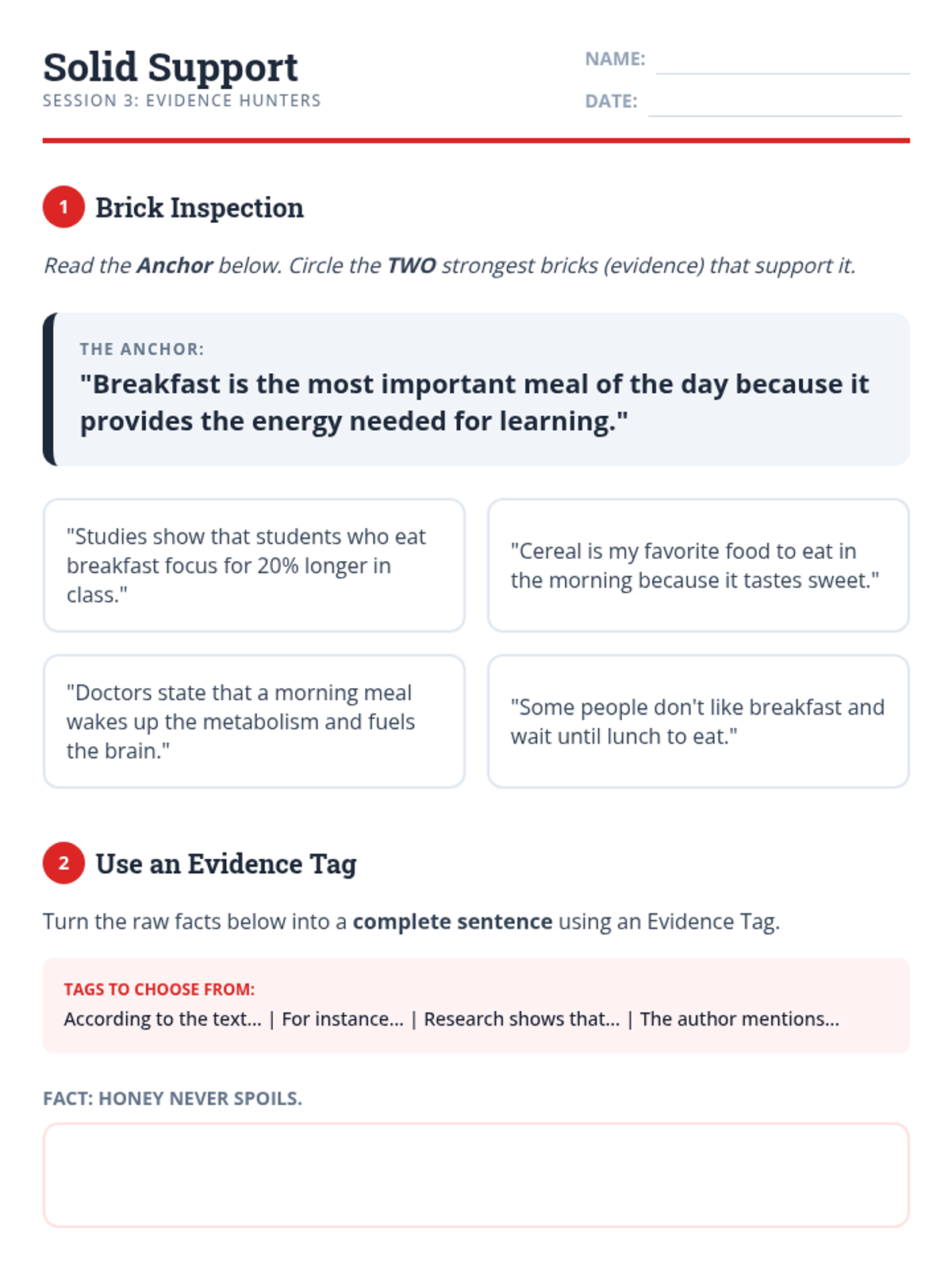
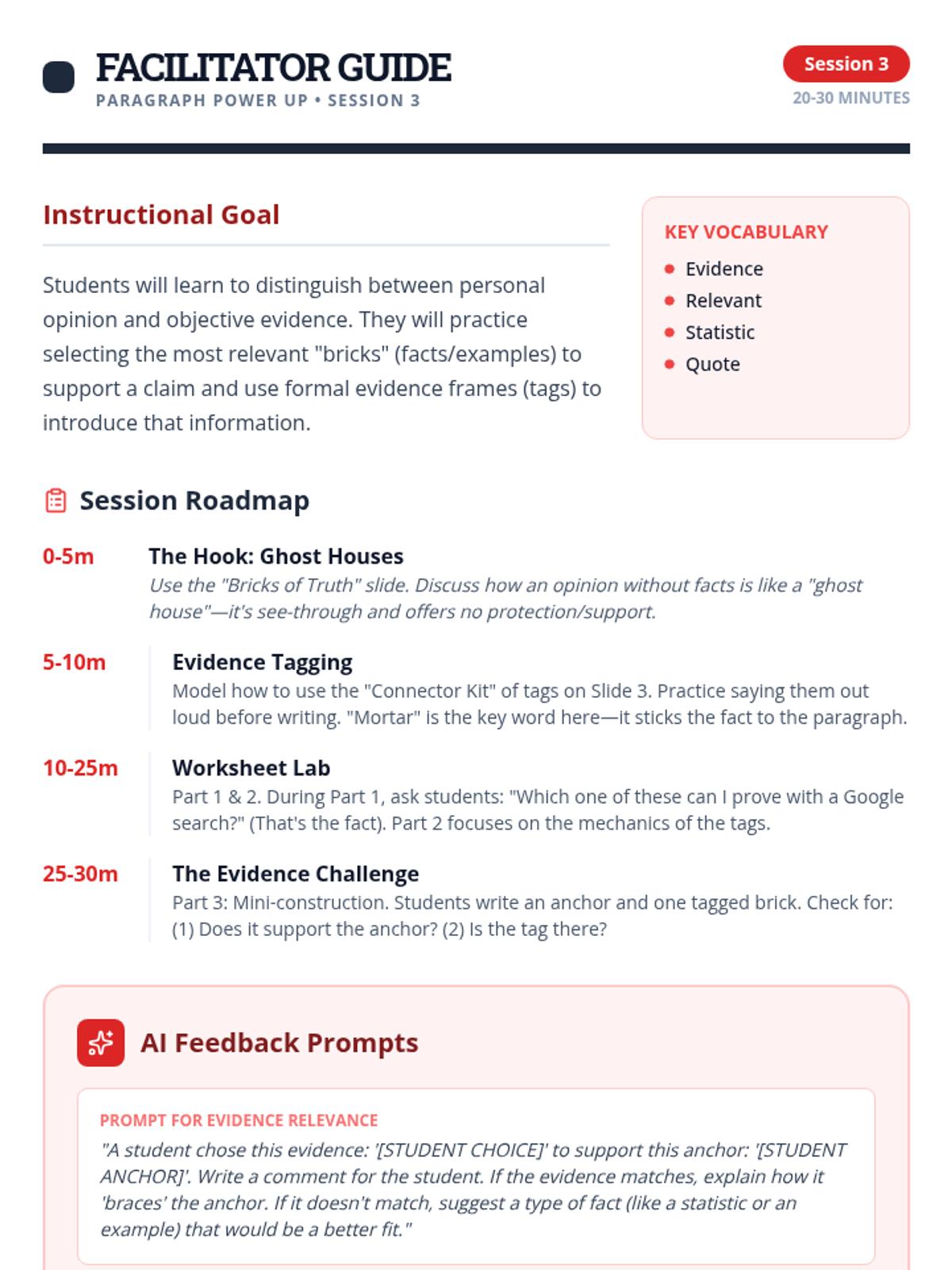
Focuses on the 'bricks' of a paragraph: evidence and supporting details. Students learn how to select relevant information and introduce it using formal evidence frames.
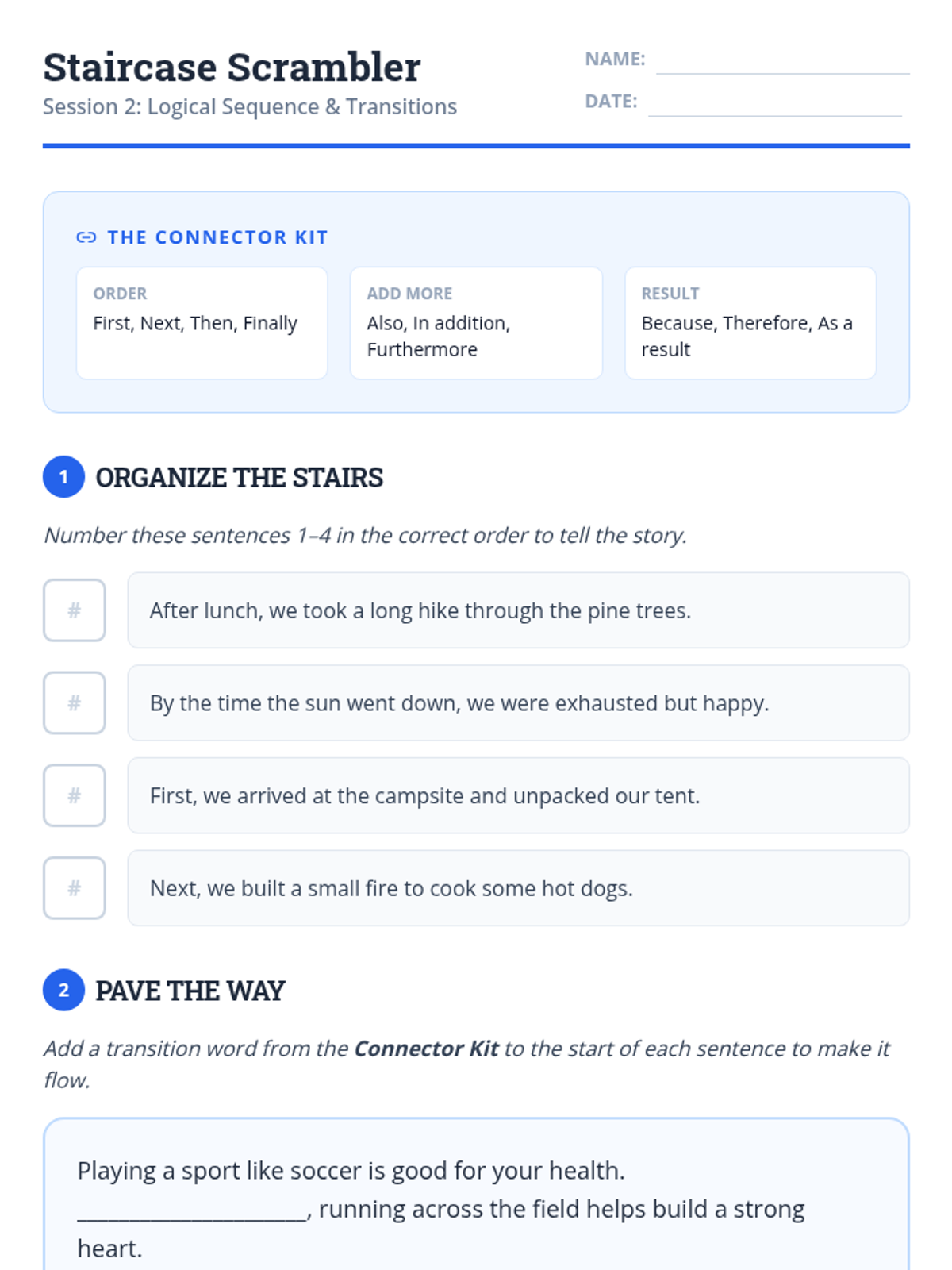
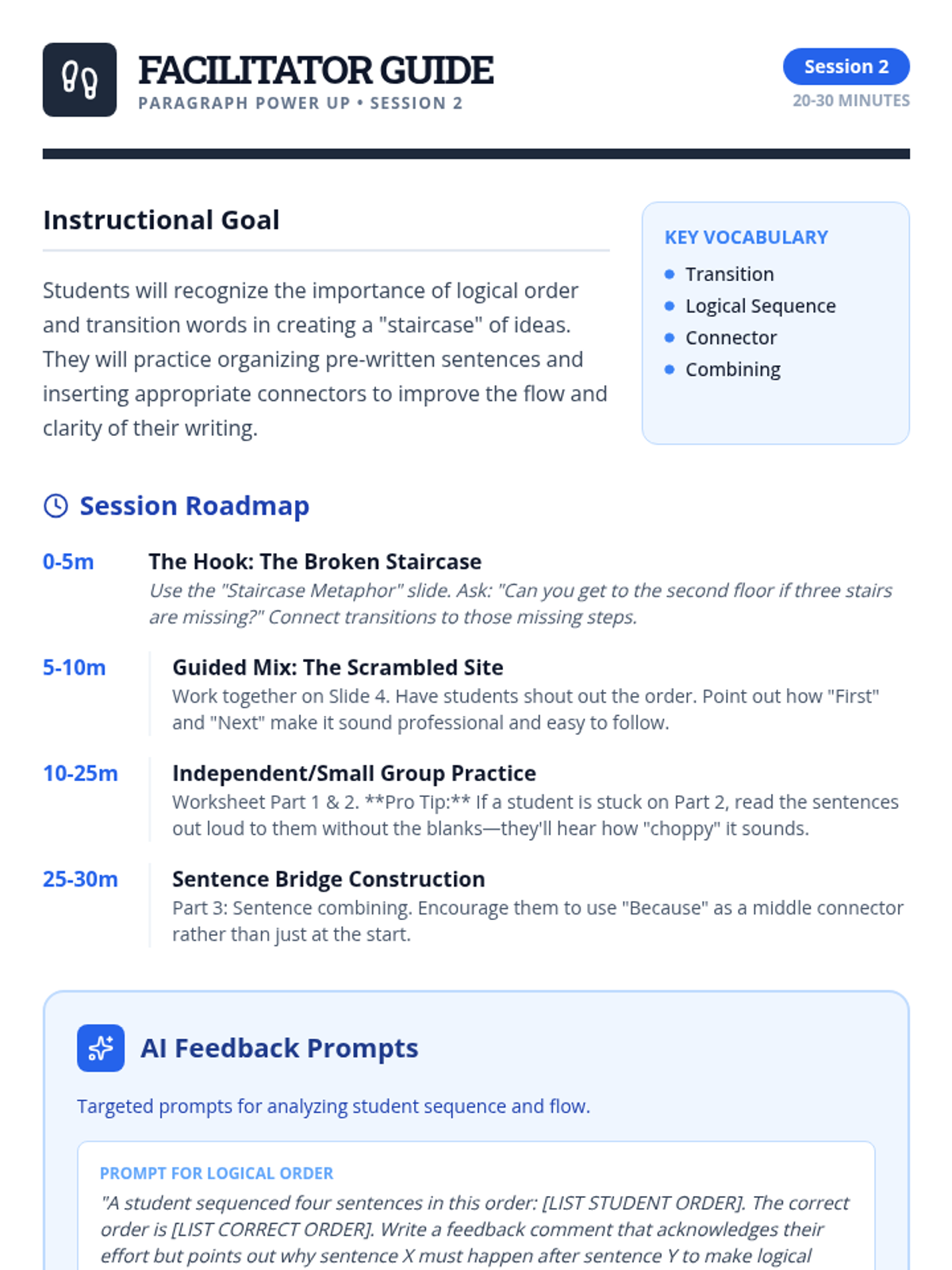
Focuses on the logical sequence of a paragraph. Students learn to use transition words to connect their foundation to their supporting details, ensuring the 'building' has clear paths and structure.
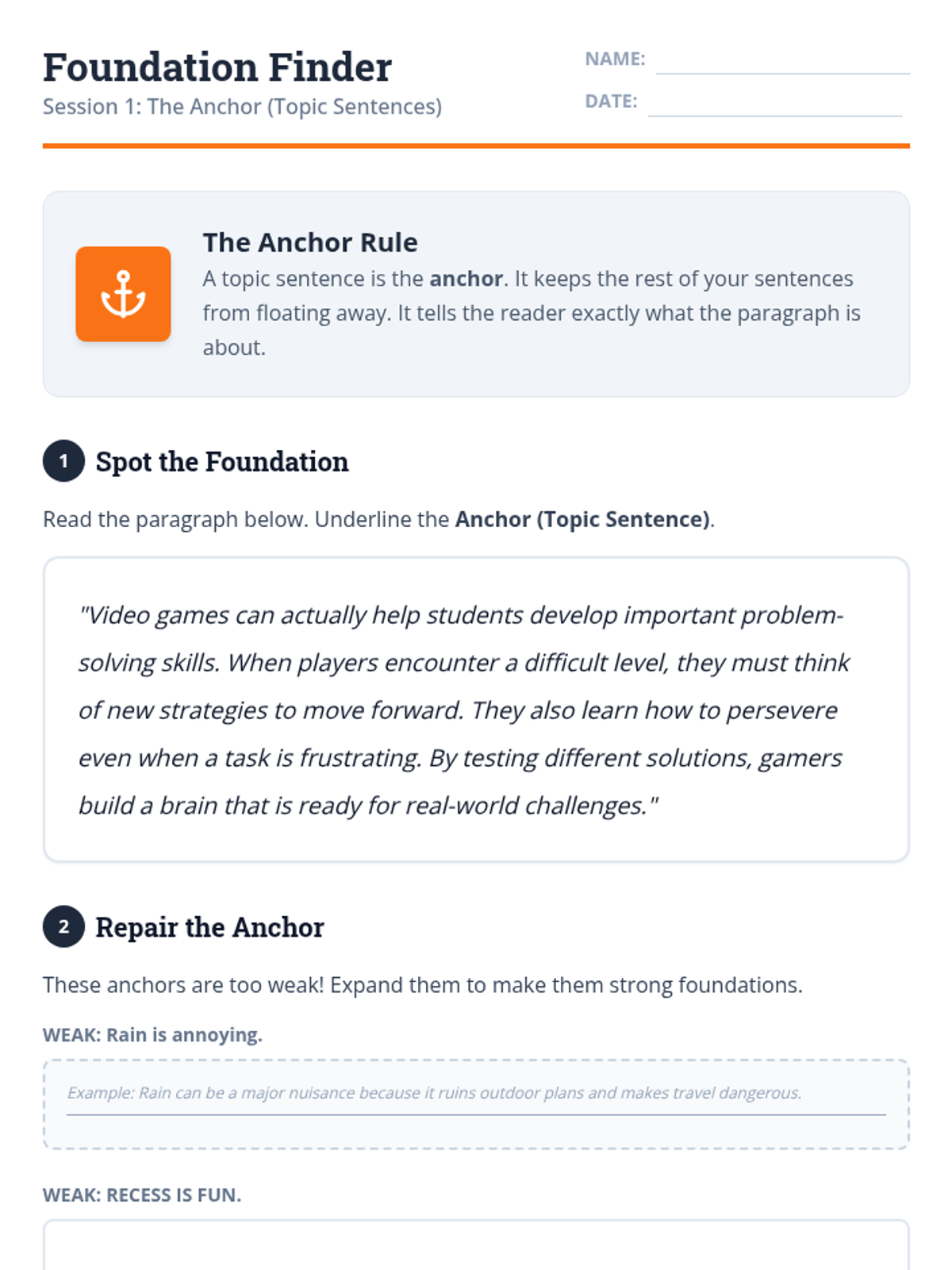
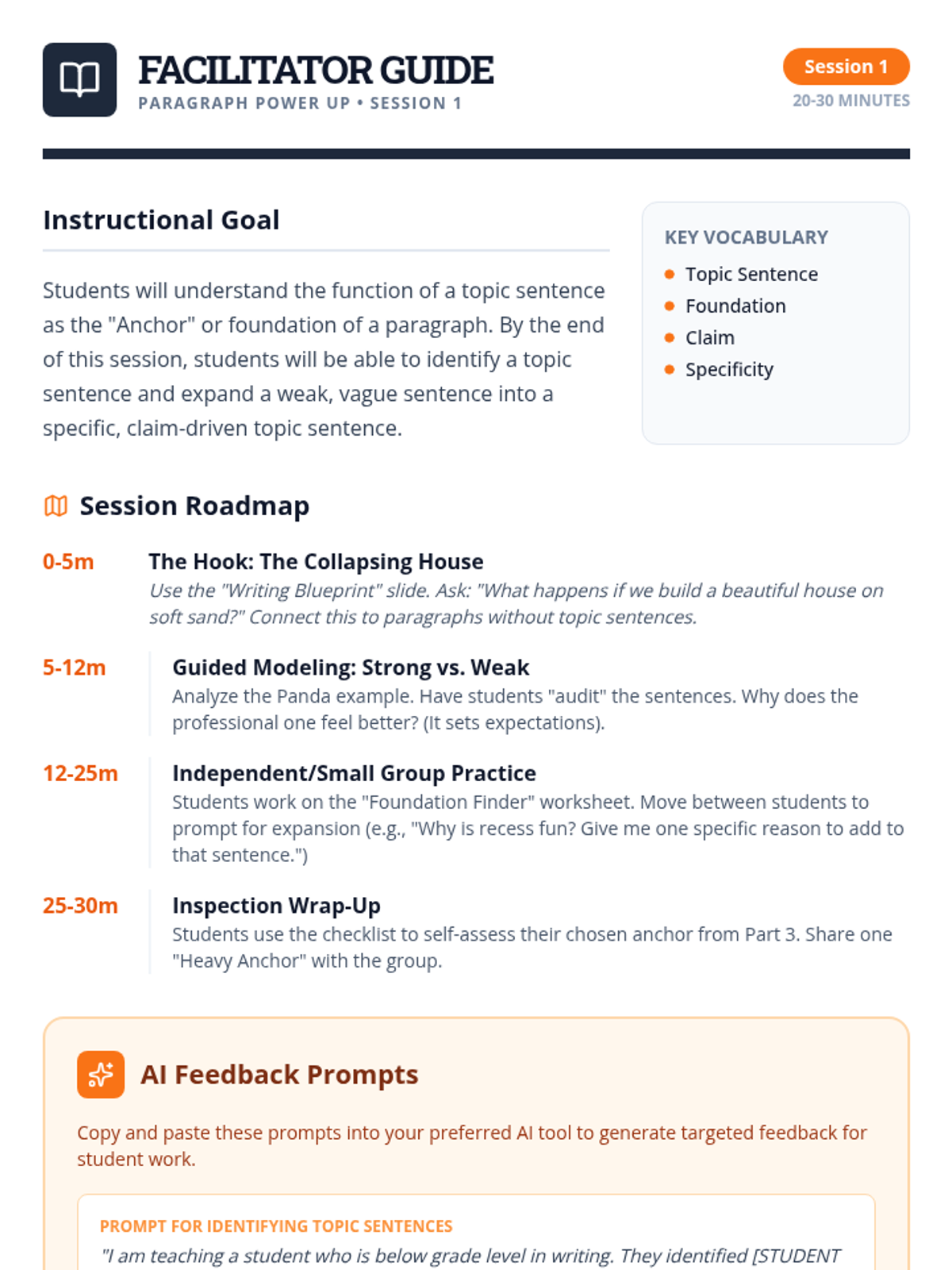
Focuses on the foundation of a paragraph: the topic sentence. Students learn to identify main ideas and craft clear, focused opening statements using sentence frames and expansion techniques.
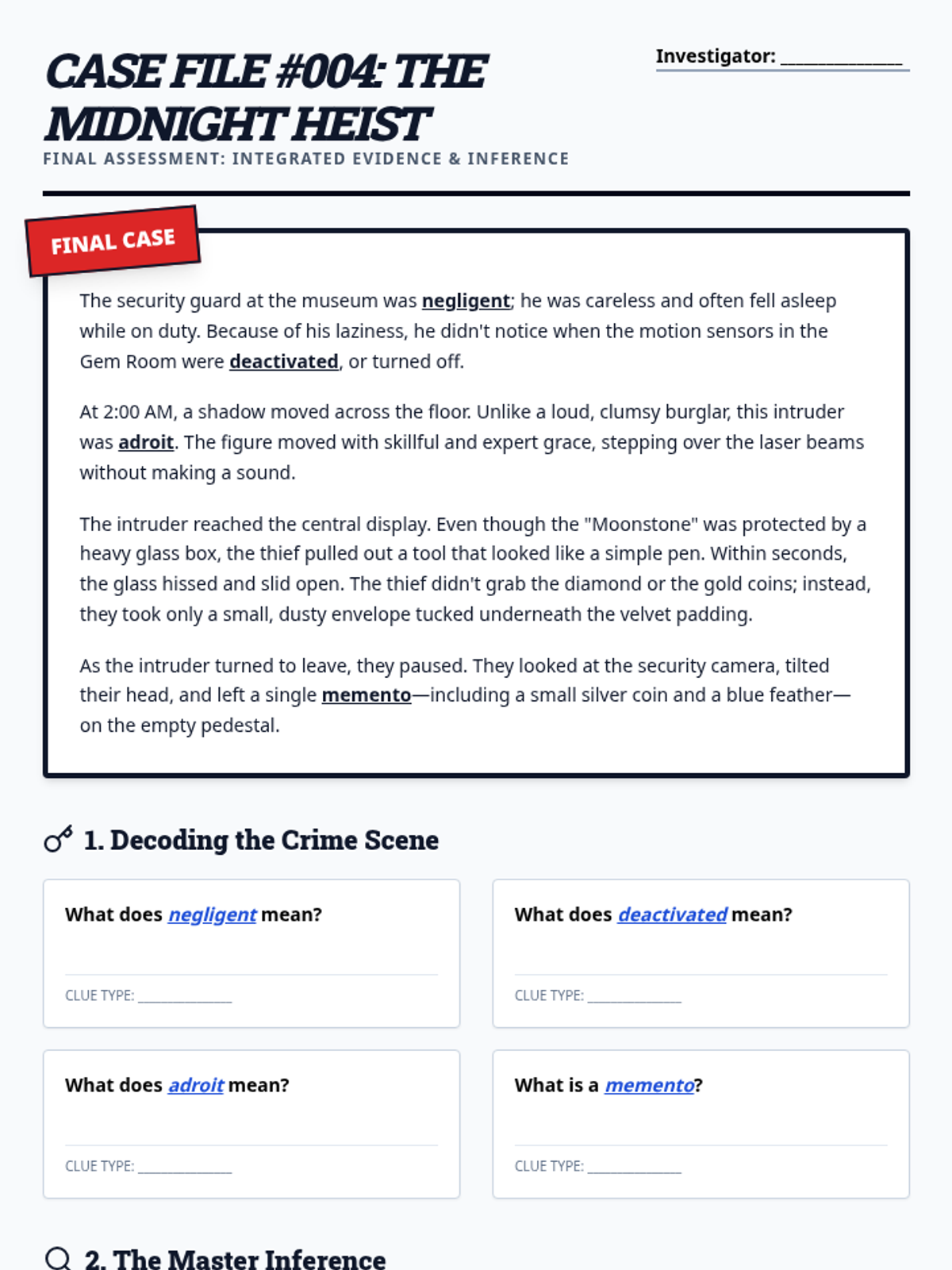
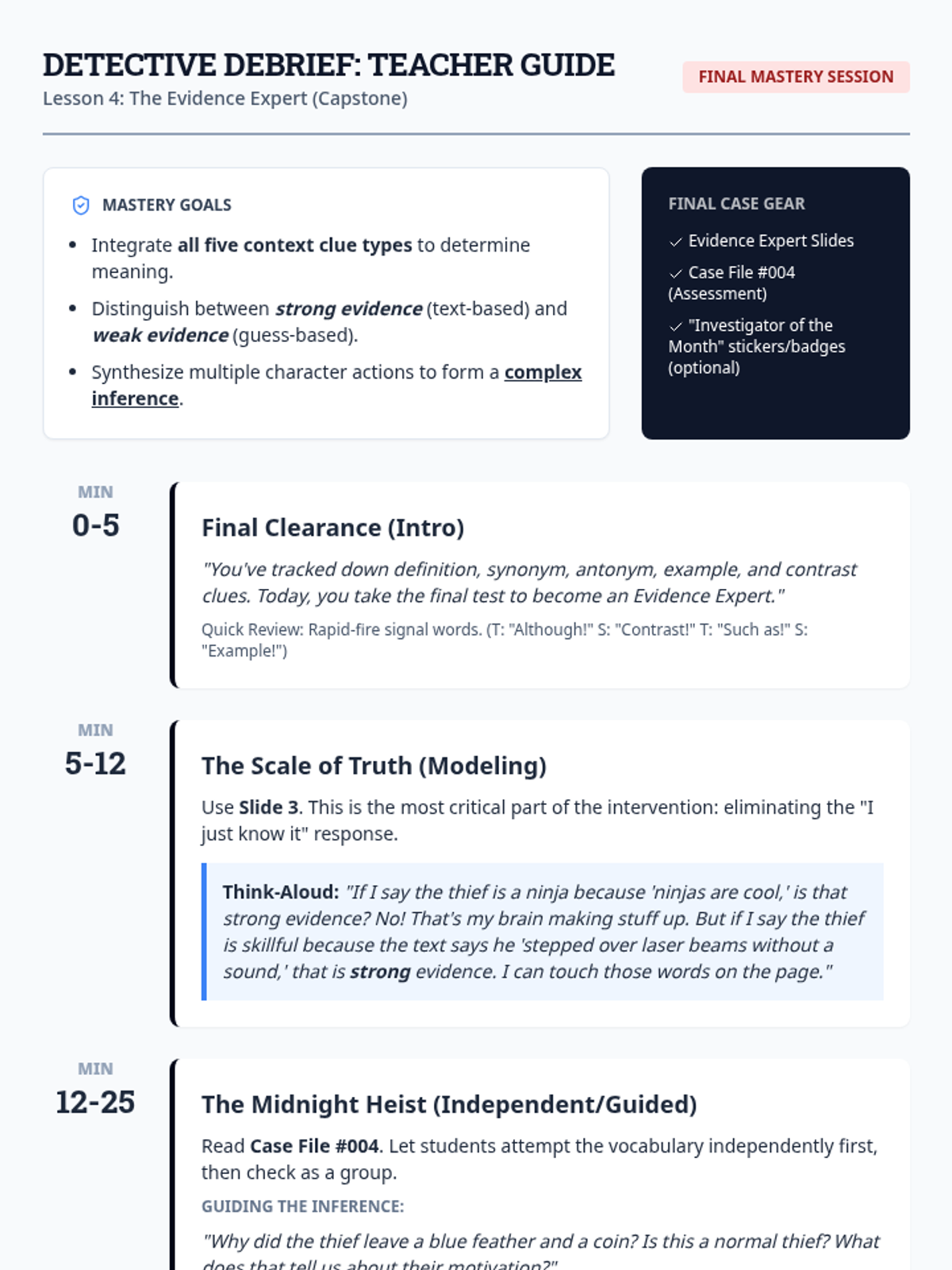
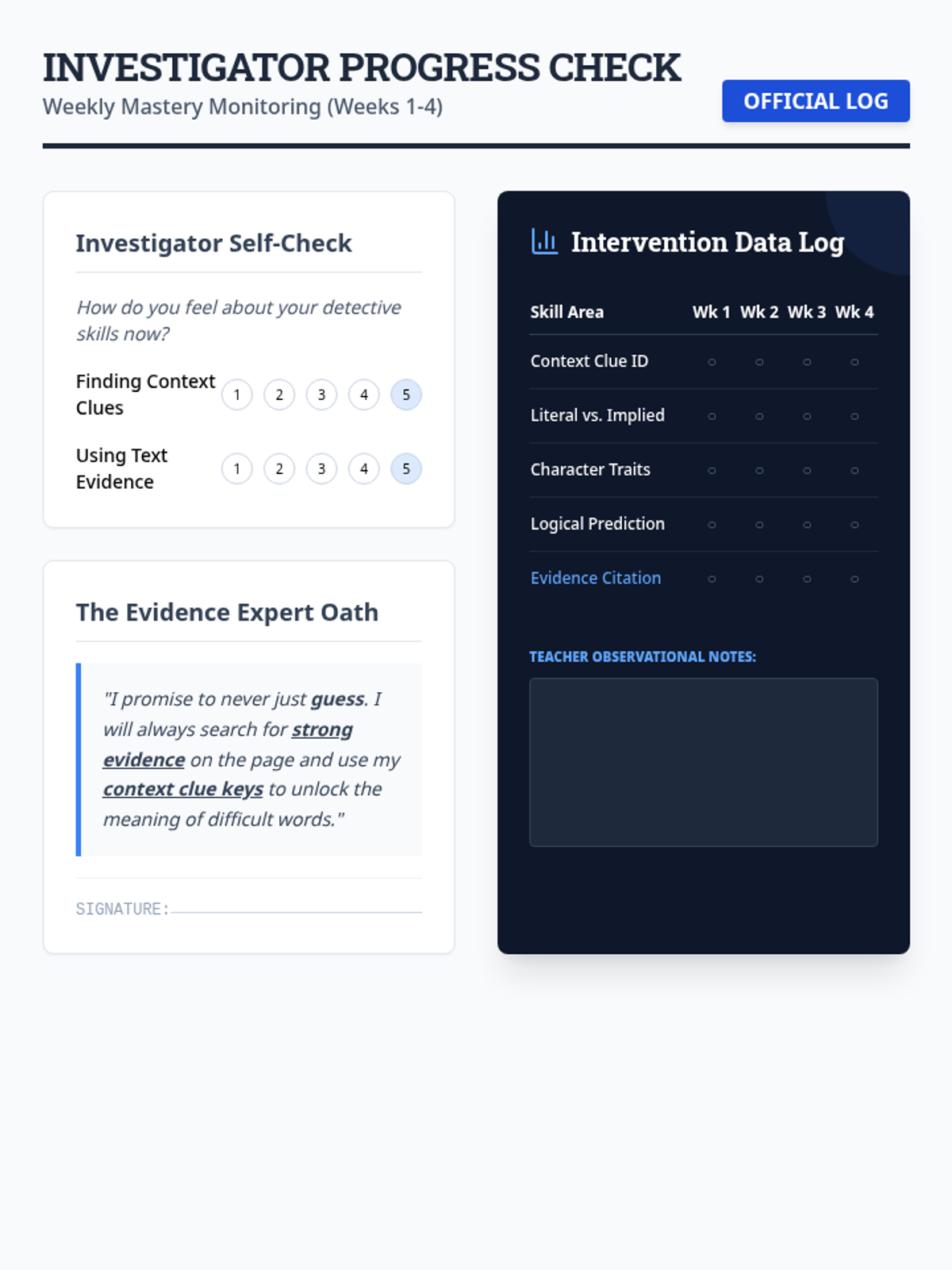
The capstone of the intervention where students integrate all context clue types and focus on selecting the 'strongest' evidence to support complex inferences. Includes a final 'case' to solve.
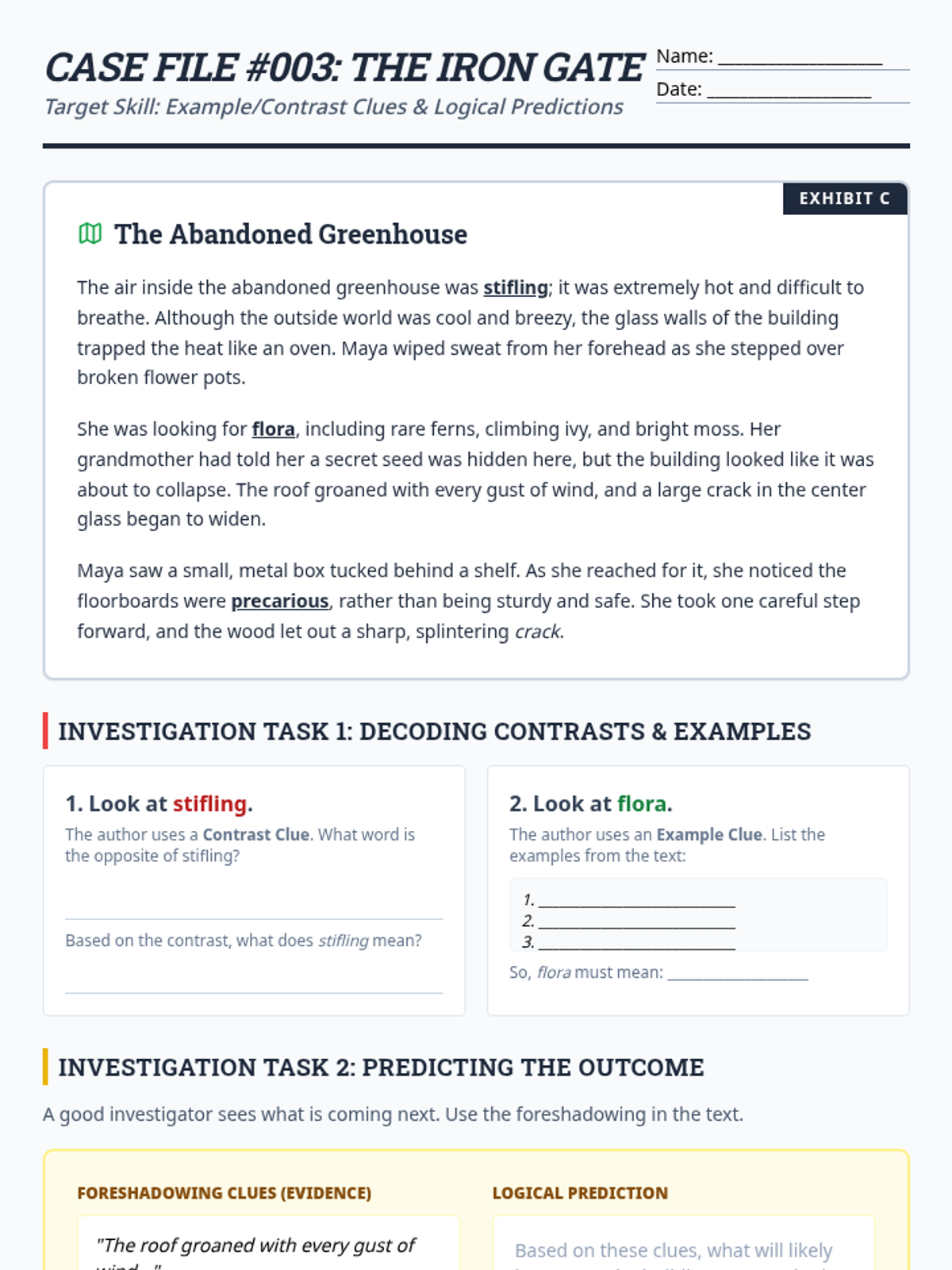
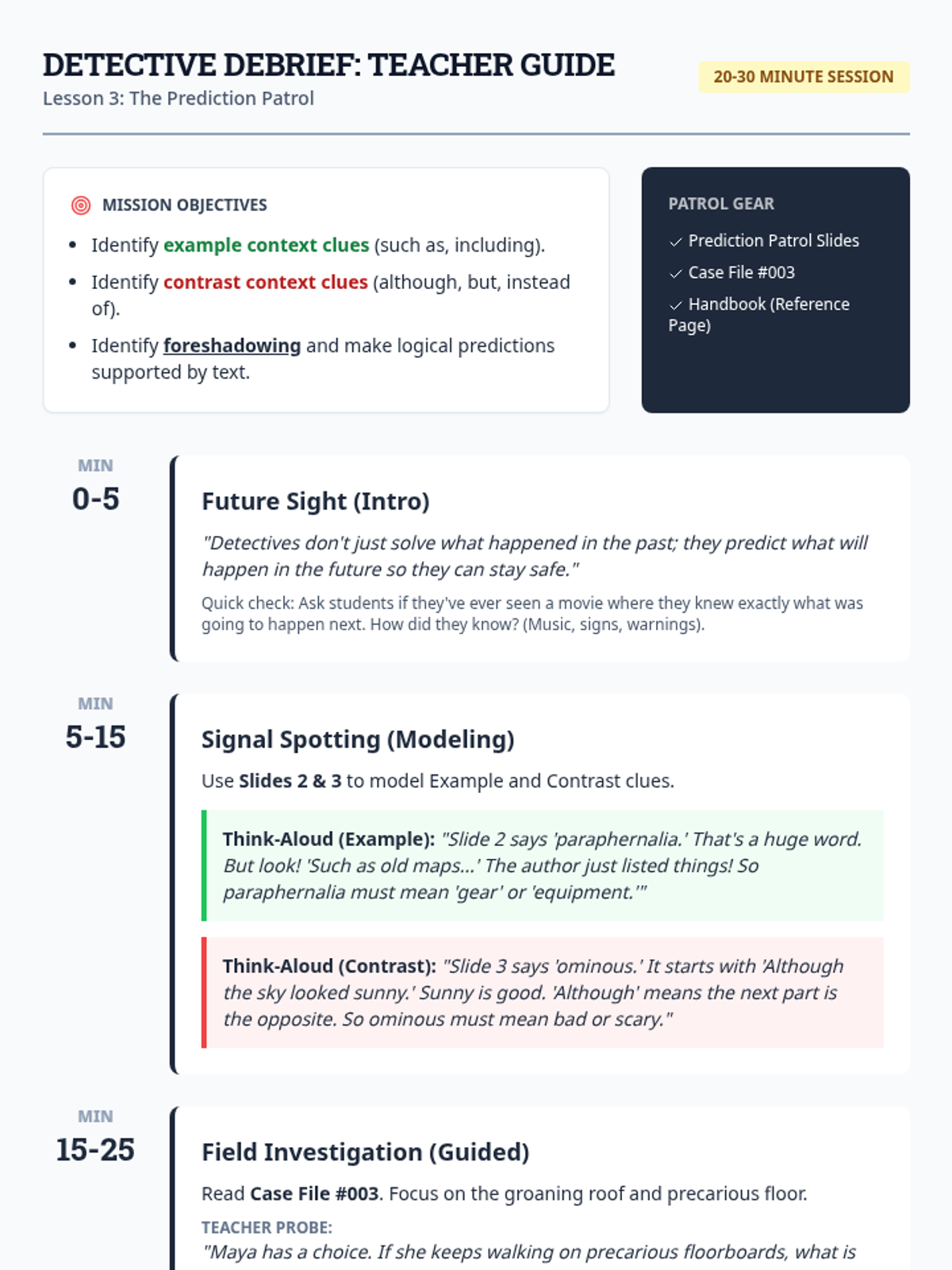
Covers example and contrast context clues to determine word meaning. Students practice making logical predictions about plot outcomes based on foreshadowing and environmental clues in the text.