Using iron filings, students visualize and draw the invisible magnetic field lines that surround a bar magnet.
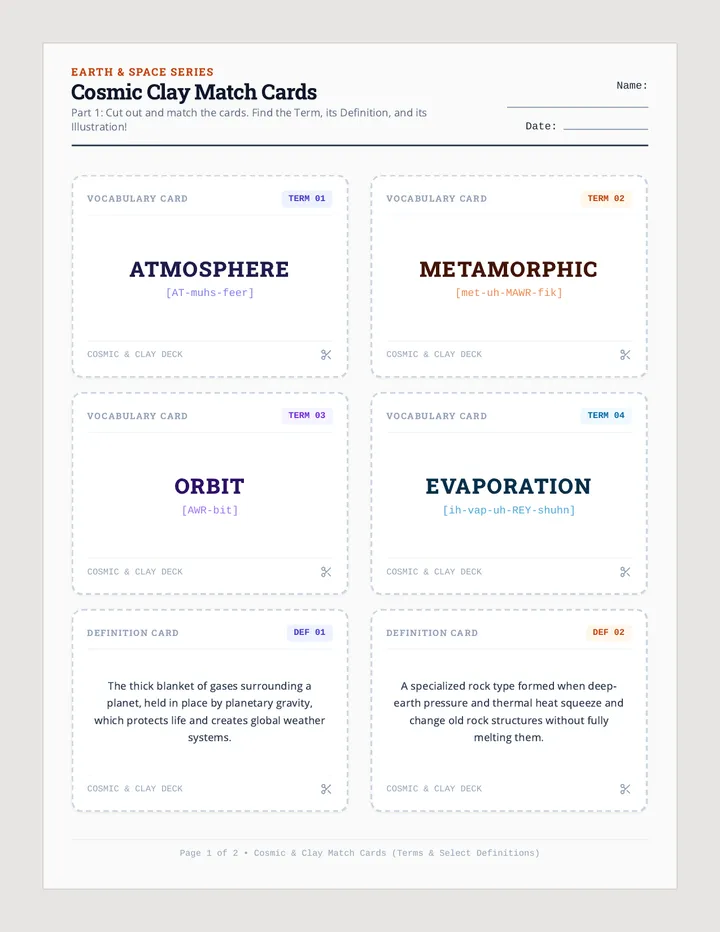
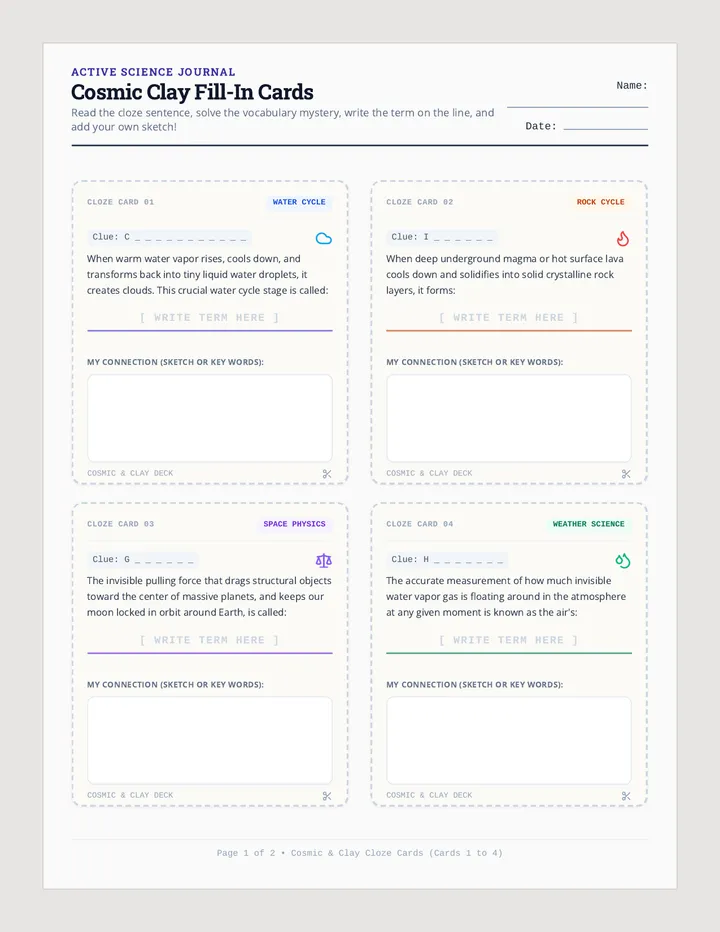
An interactive vocabulary lesson on Earth and Space Science, featuring visual matching card decks and tactile fill-in-the-blank cloze activities covering rocks, weather, water cycles, and space.
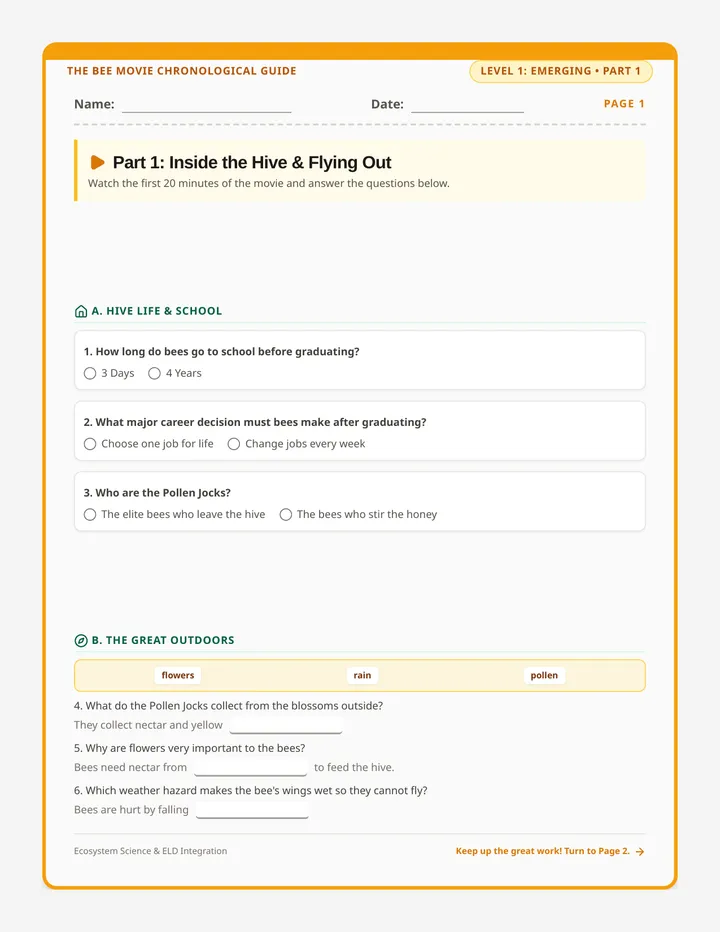
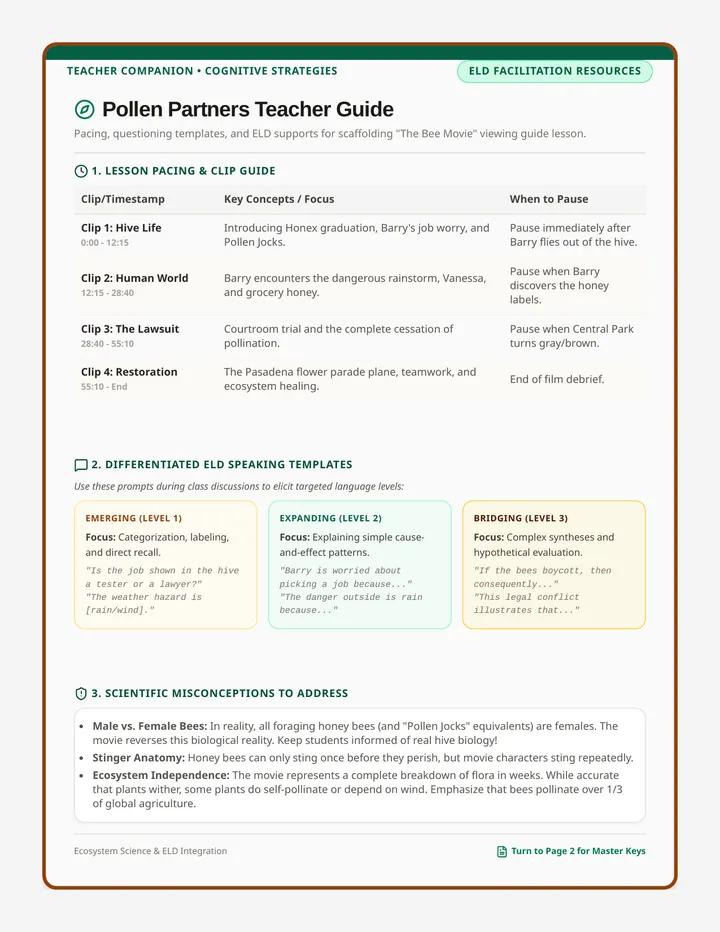
A 5th-grade viewing guide lesson centered around the ecological themes of The Bee Movie. This lesson provides tiered scaffolds (Emerging, Expanding, and Bridging) to support English Language Learners in analyzing pollination, human-bee interaction, and environmental responsibility.
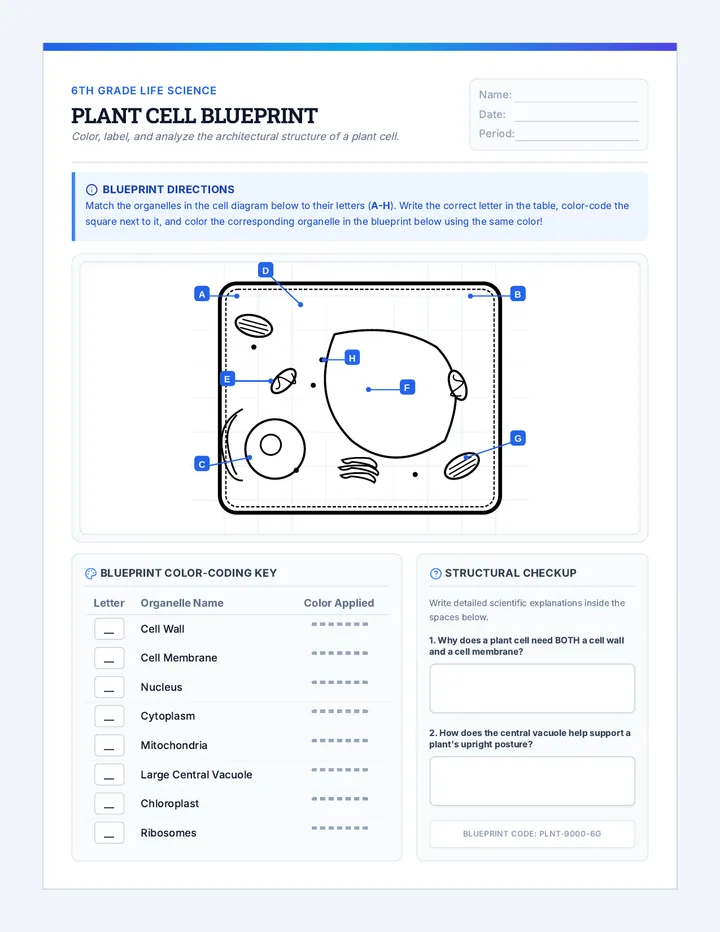
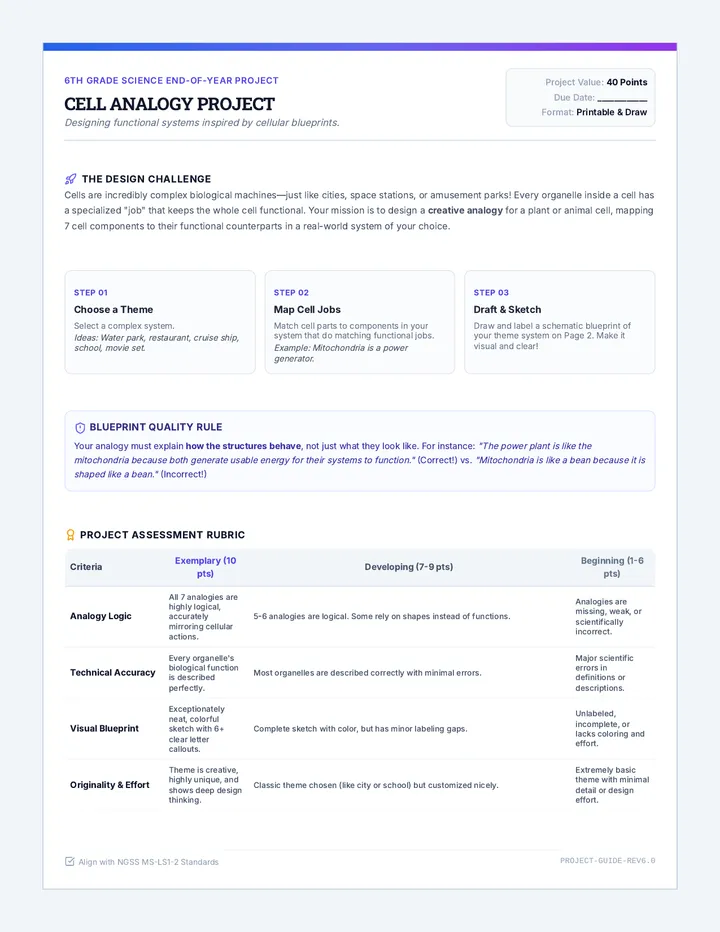
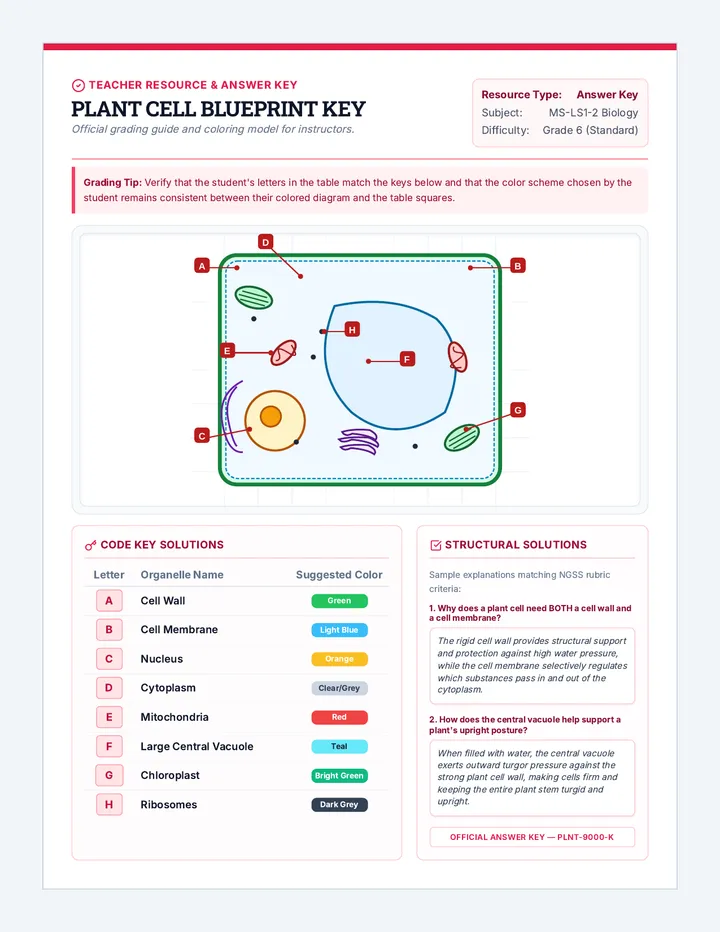
An end-of-year science project lesson where 6th-grade students explore plant and animal cells through creative coloring worksheets and a student-designed cell analogy project. Includes high-quality coloring diagrams and a comprehensive graphic organizer guide.
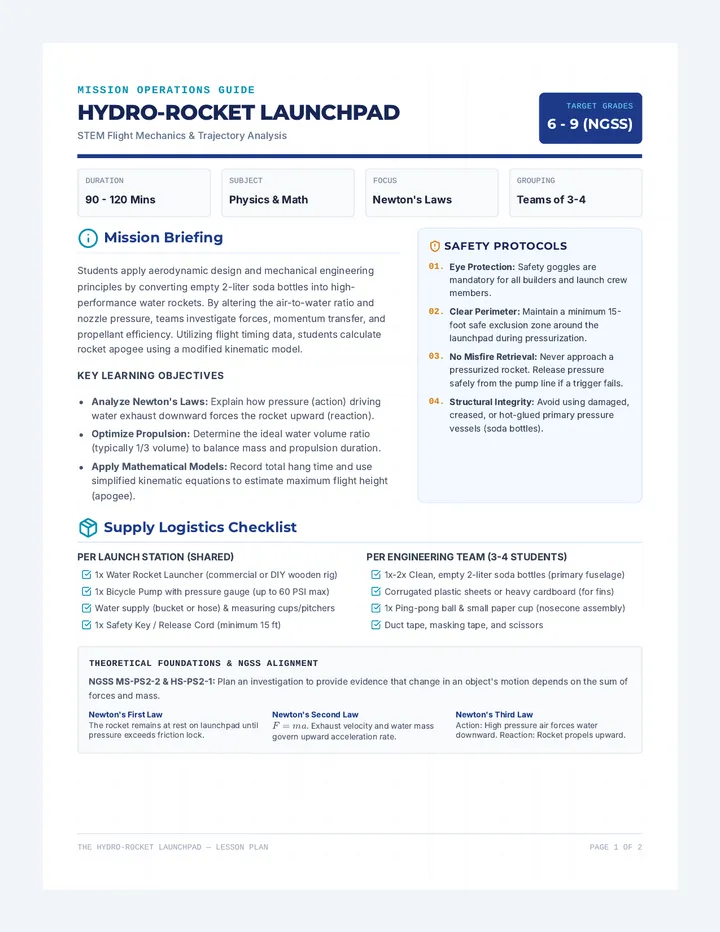
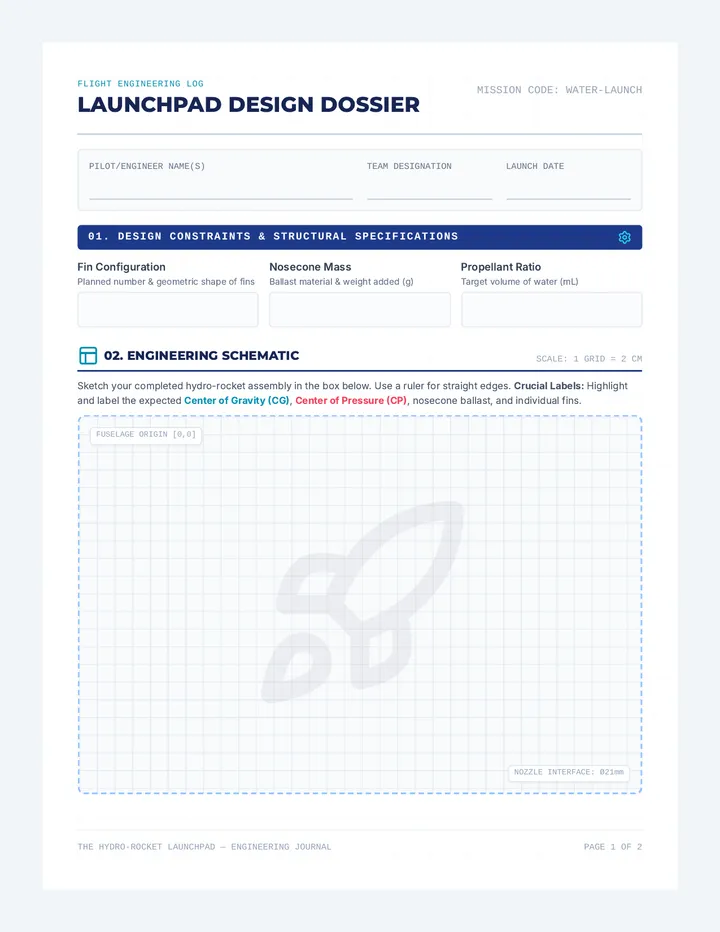
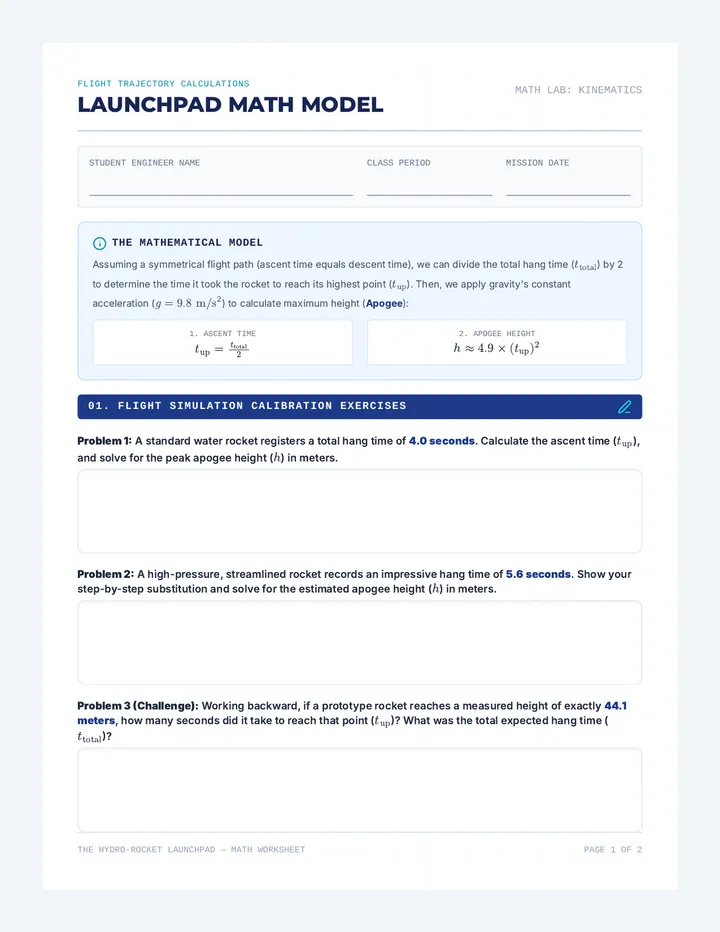
A comprehensive STEM lesson where students design, build, and launch water bottle rockets to explore pressure, volume, and Newton's laws. Students apply physics principles and mathematical formulas to model trajectories and calculate apogee height from hang time.
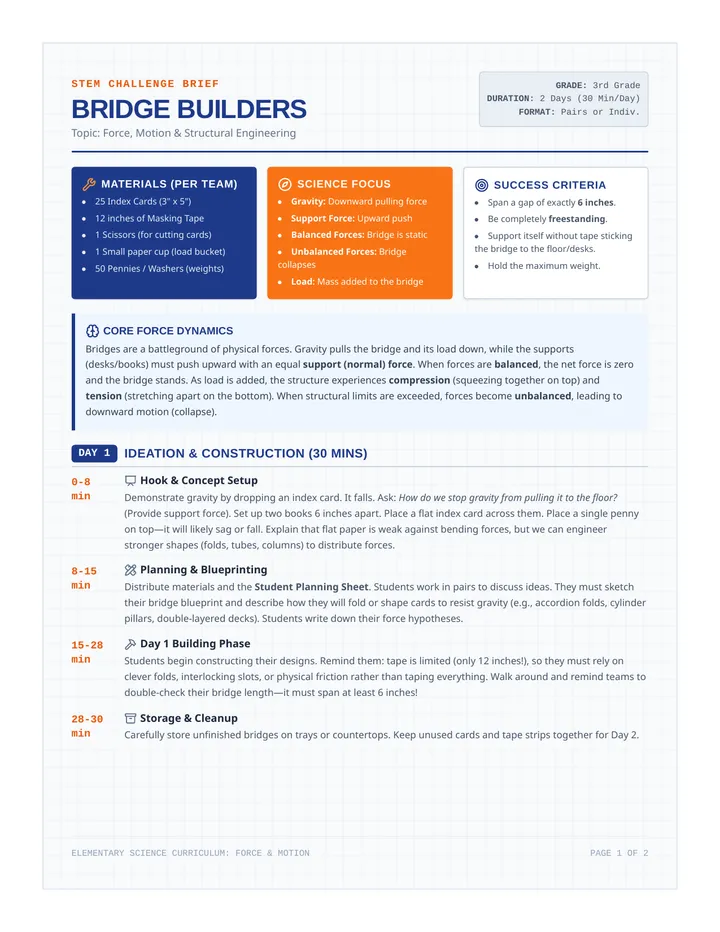
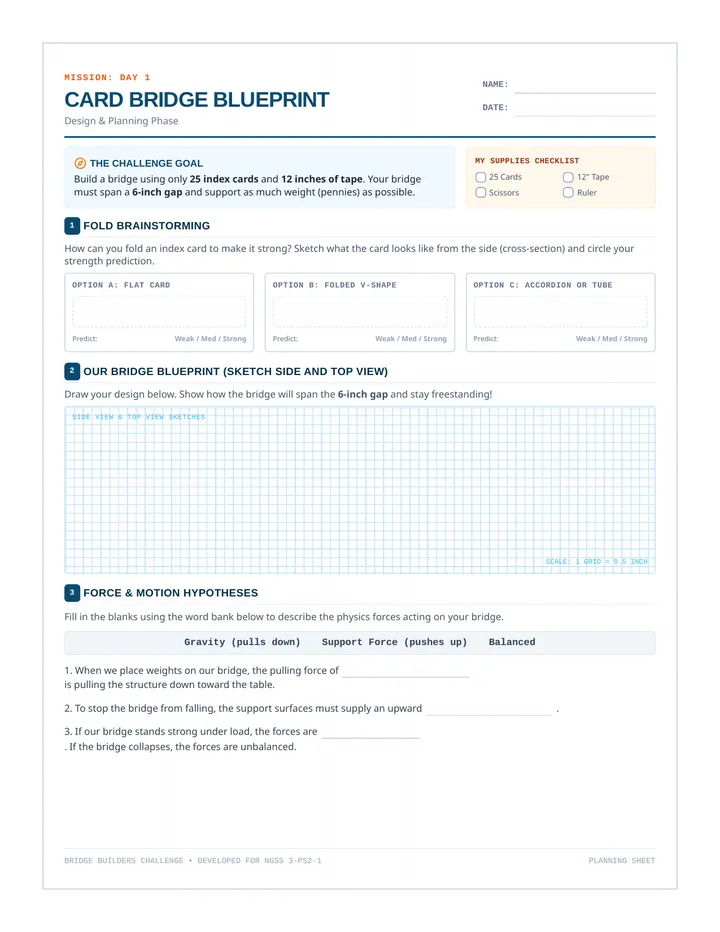
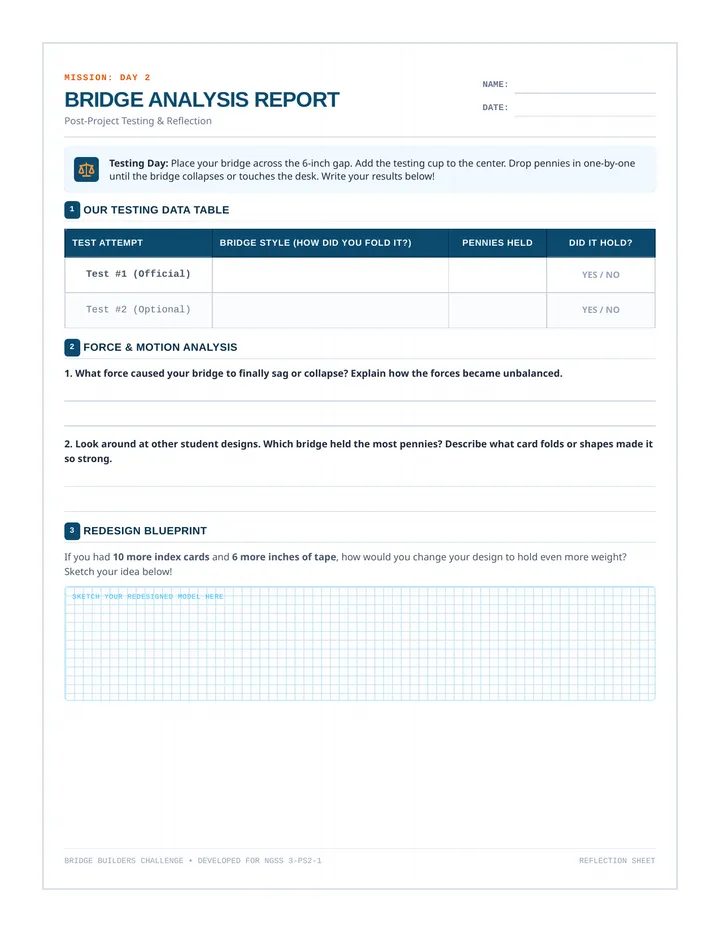
A 2-day hands-on STEM engineering challenge where 3rd-grade students design, build, and test index card bridges to explore balanced and unbalanced forces, gravity, and load-bearing structures.
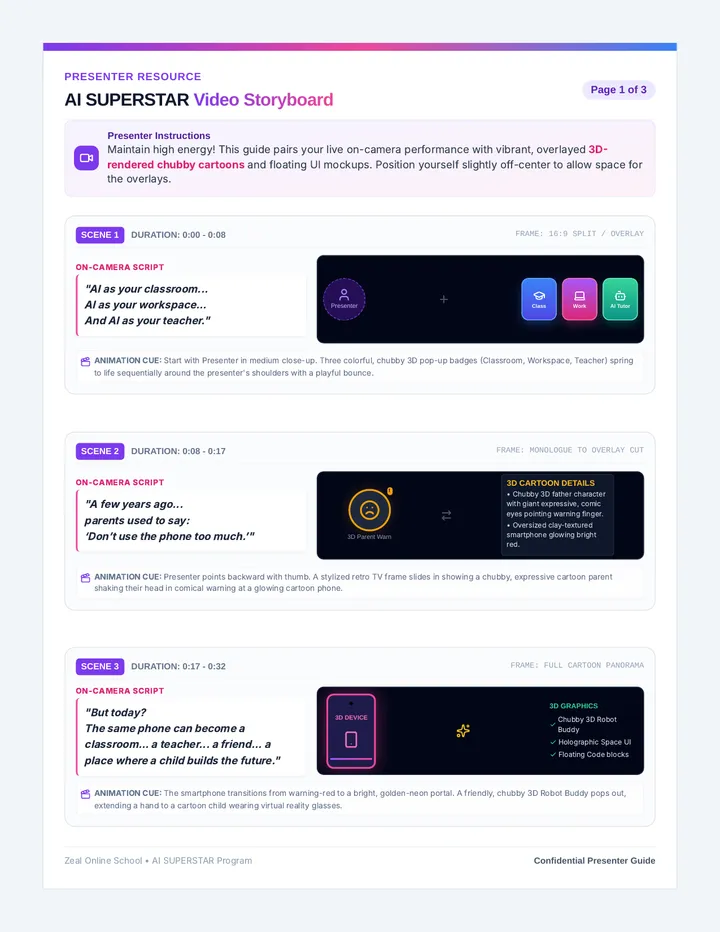
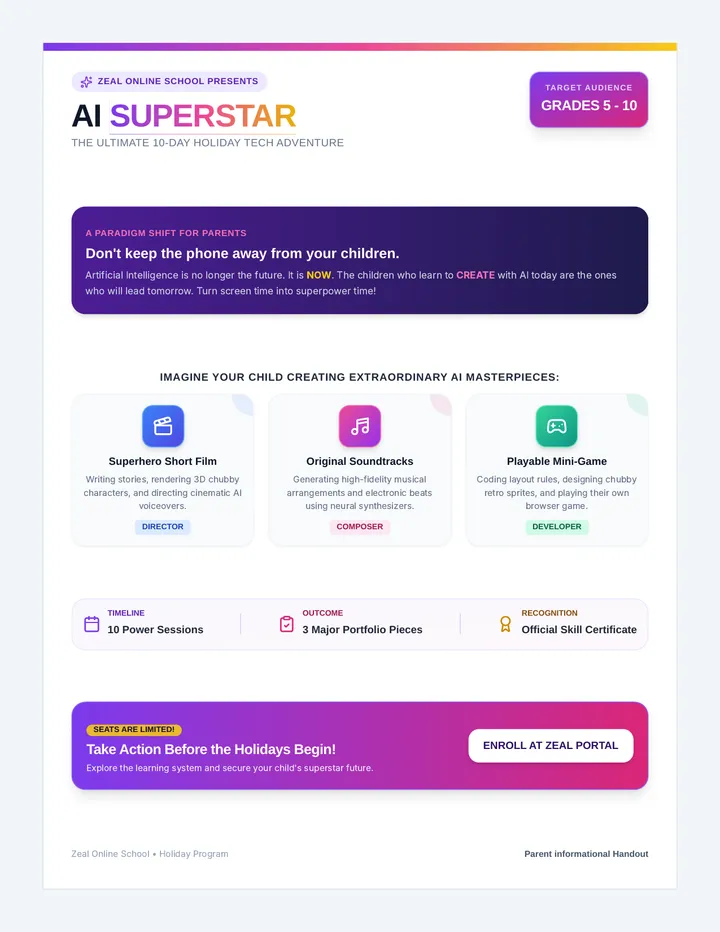
A promotional and planning resource bundle for Zeal Online School's 'AI Superstar' program. Includes a highly descriptive scene-by-scene video storyboard guide for the presenter and a vibrant promotional flyer and informational packet for parents.
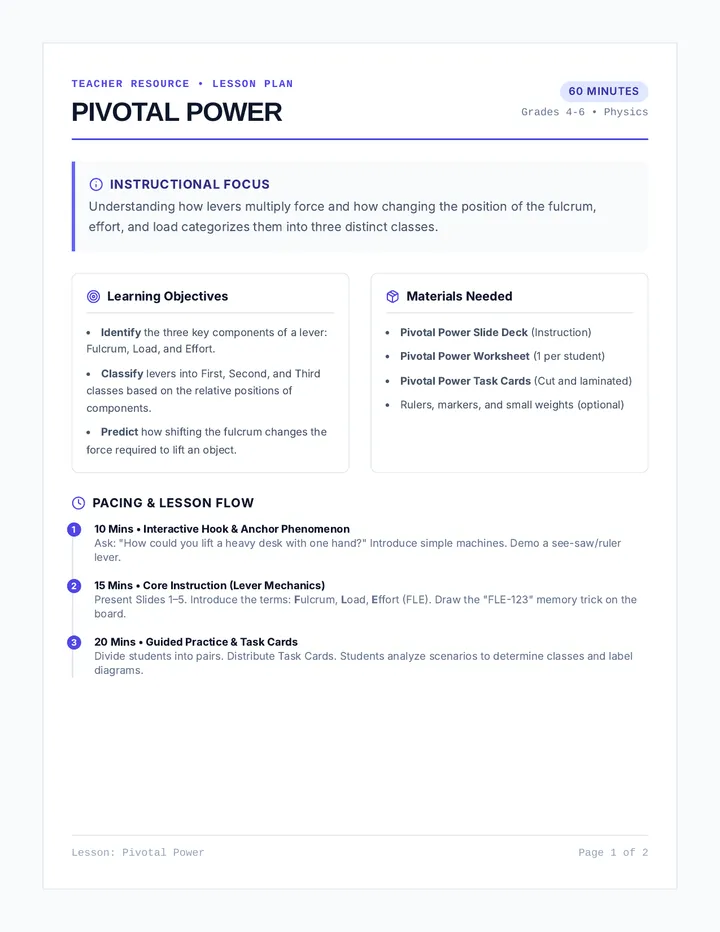
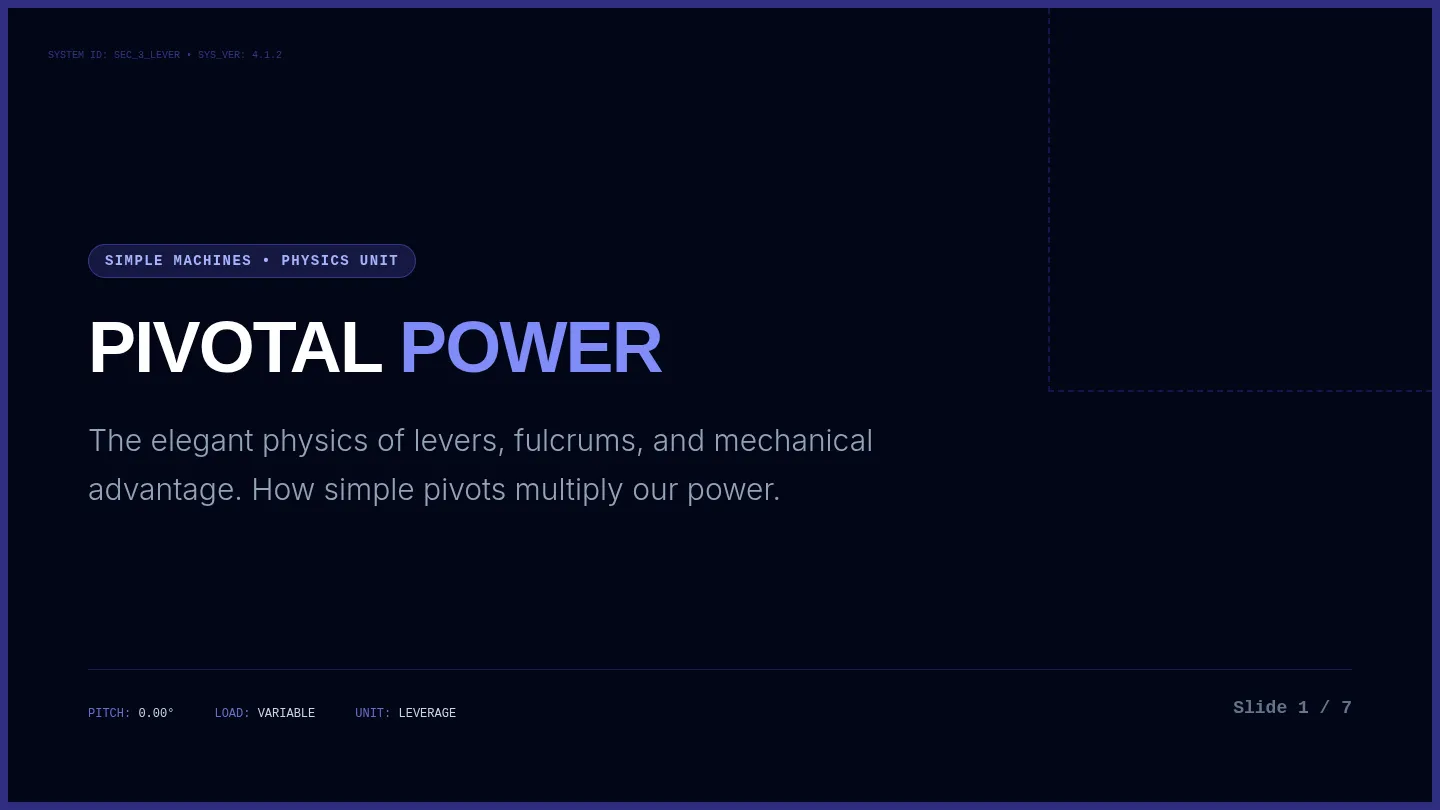
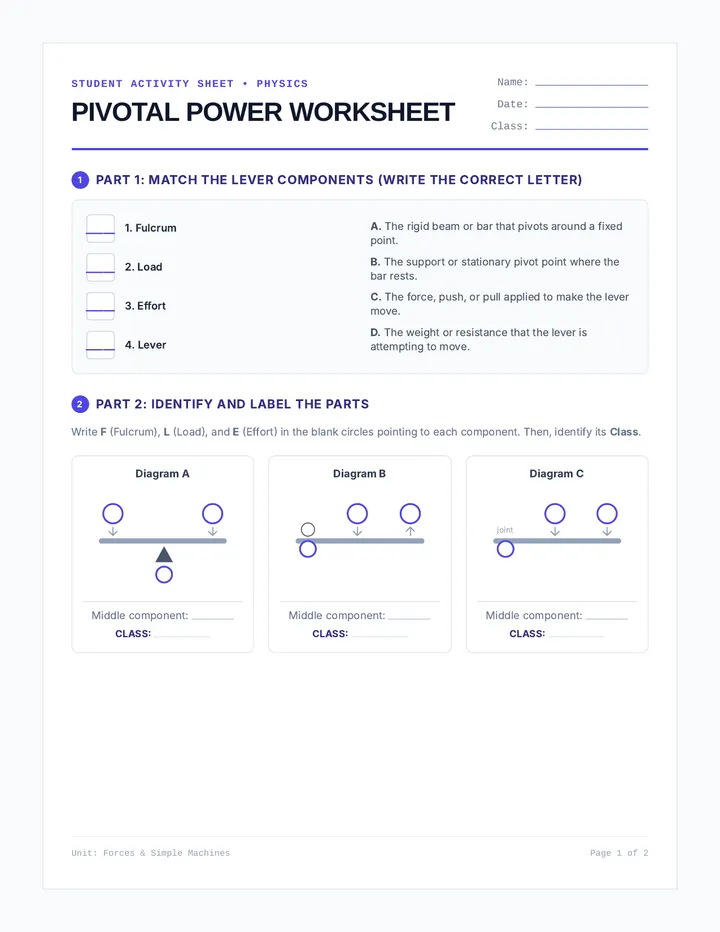
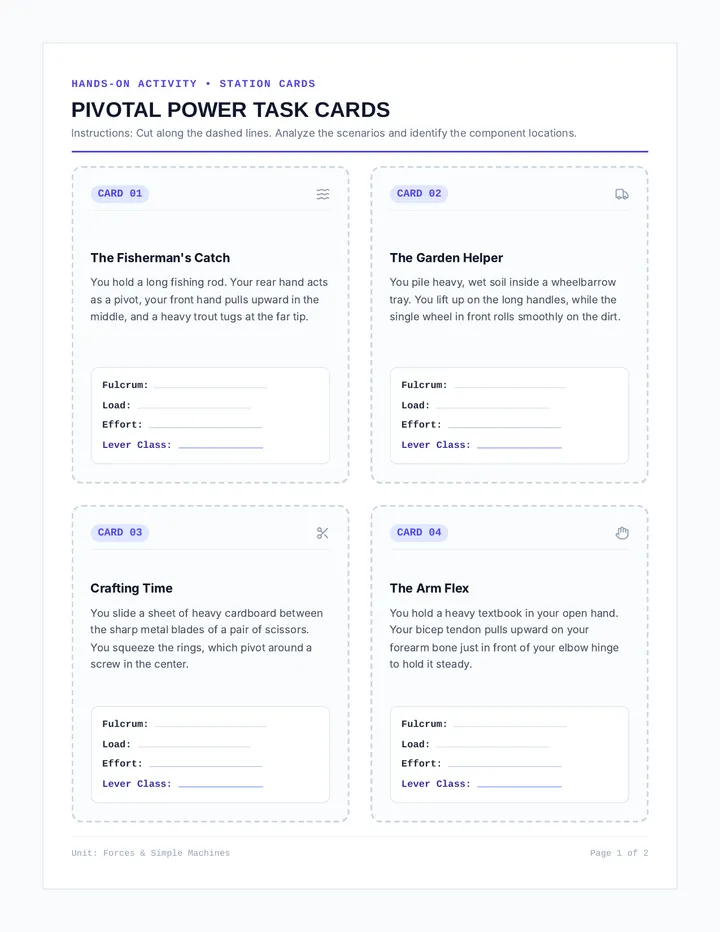
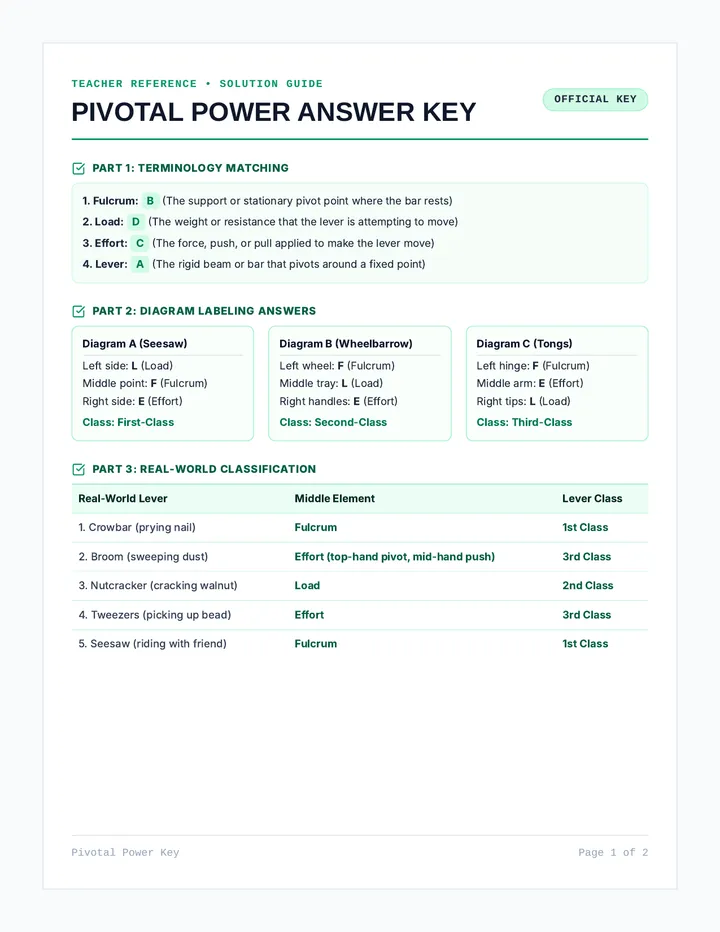
A dynamic science lesson on simple machines focusing on levers and fulcrums. Students explore the three classes of levers through hands-on scenarios, visual models, and interactive challenges.
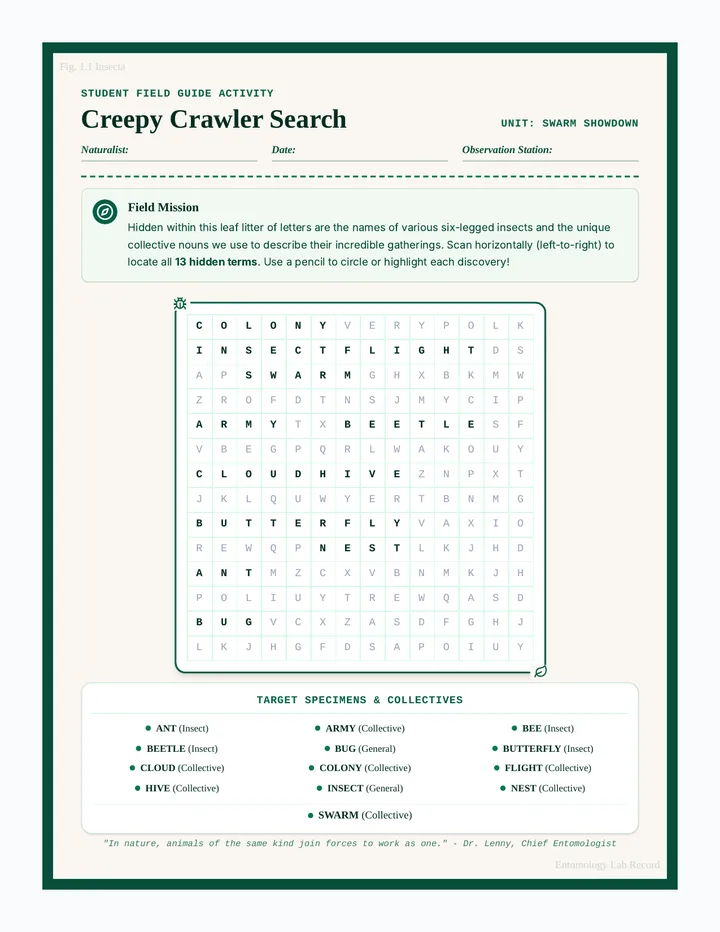
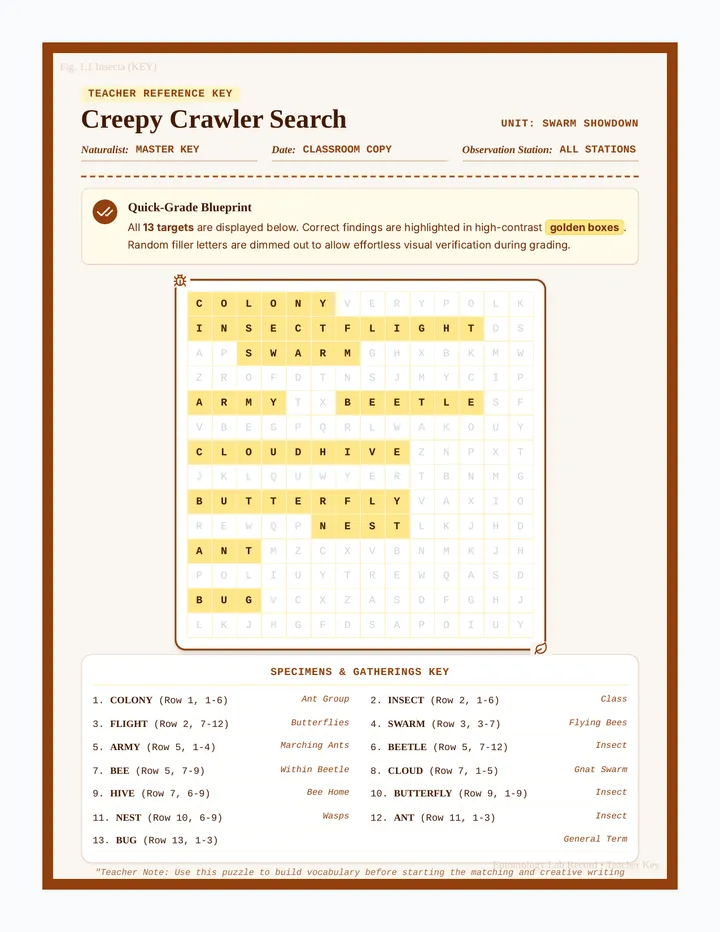
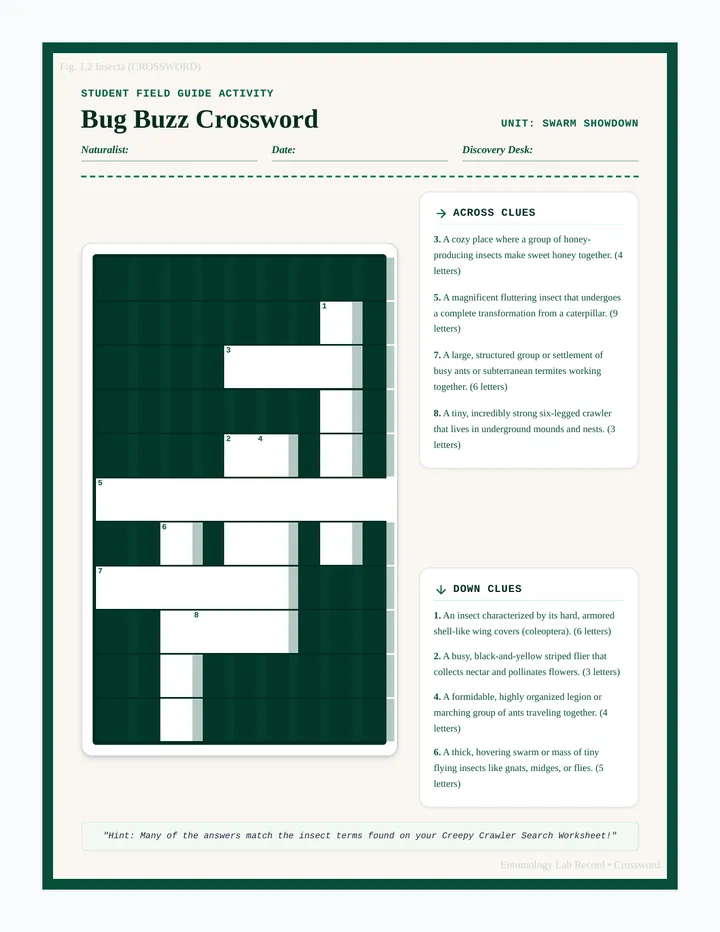
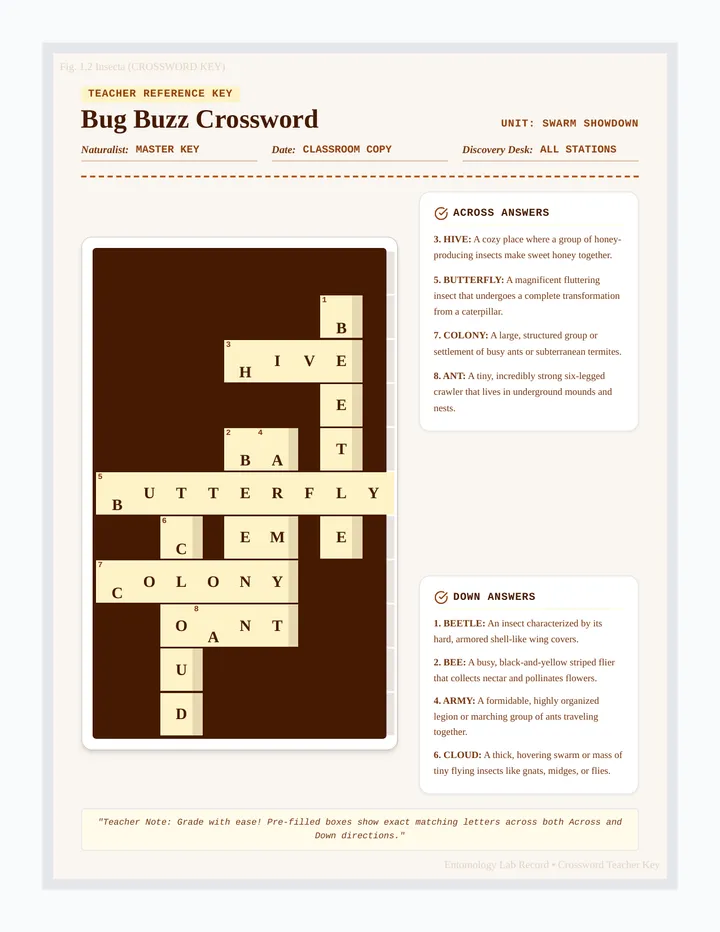
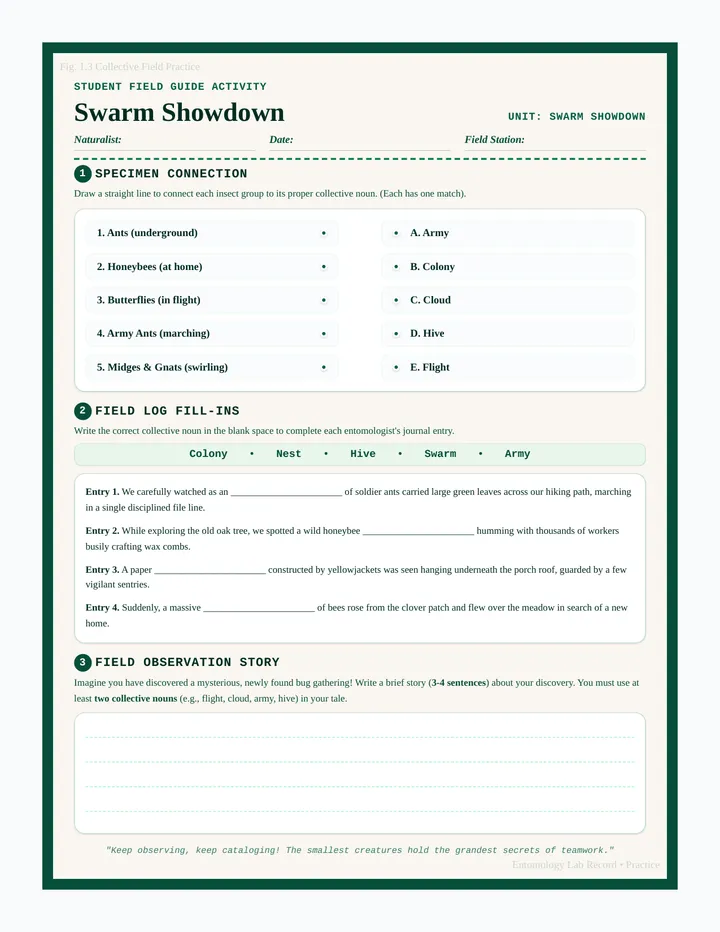
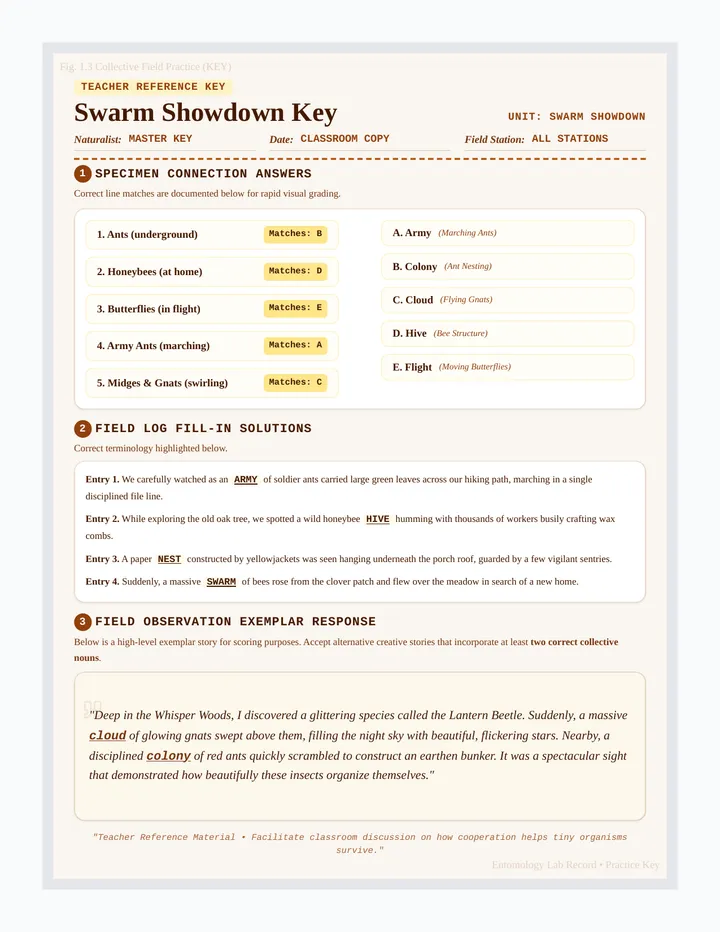
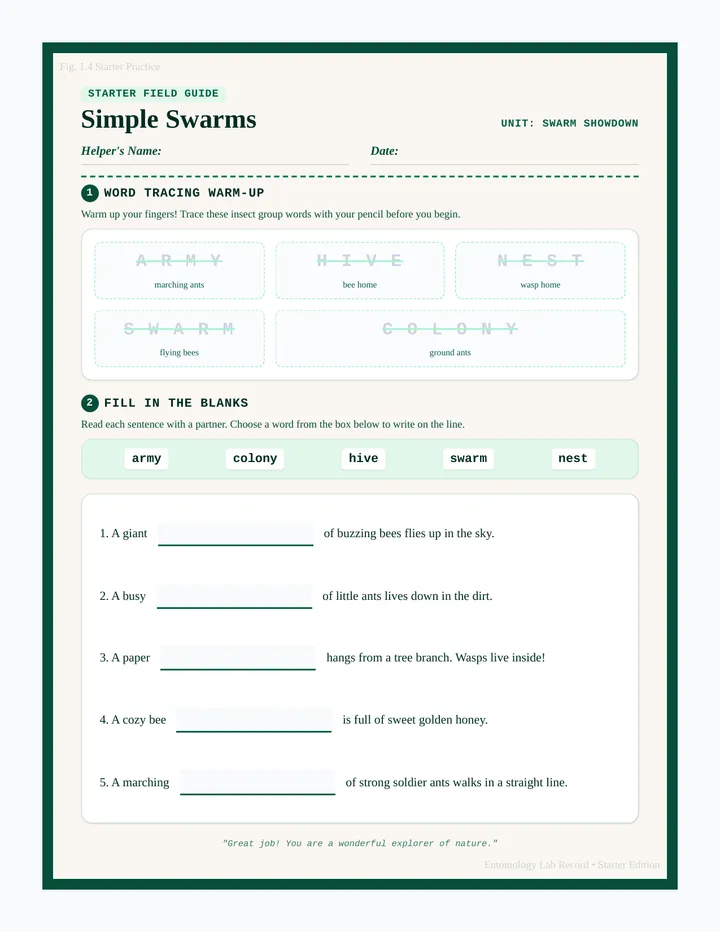
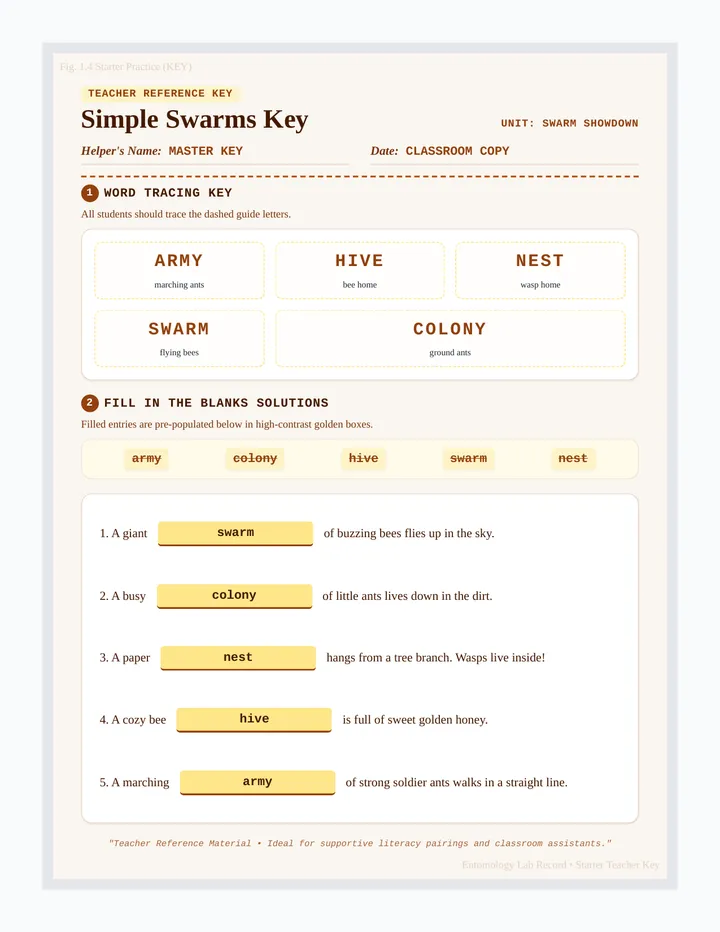
An engaging lesson on insect collective nouns and terminology, featuring a word search, crossword, and hands-on matching and writing activities exploring how bugs gather in groups.
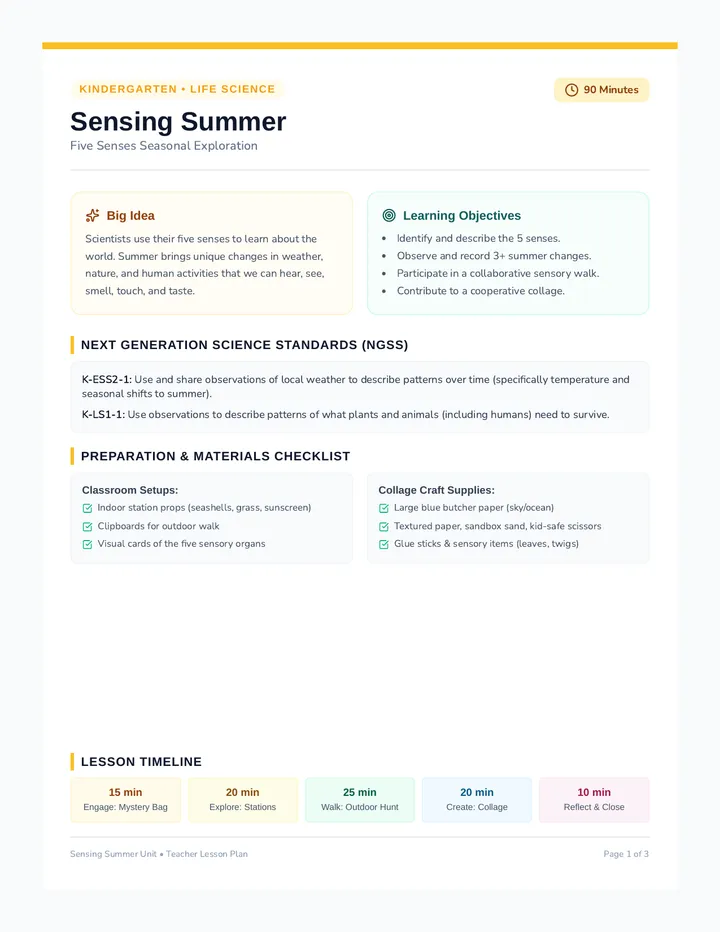
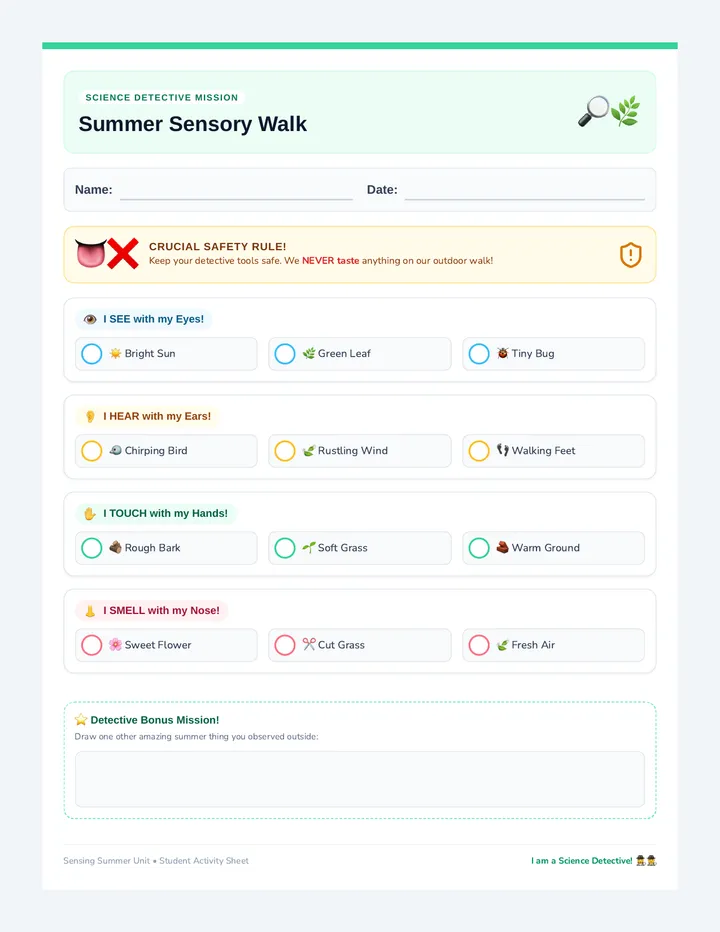
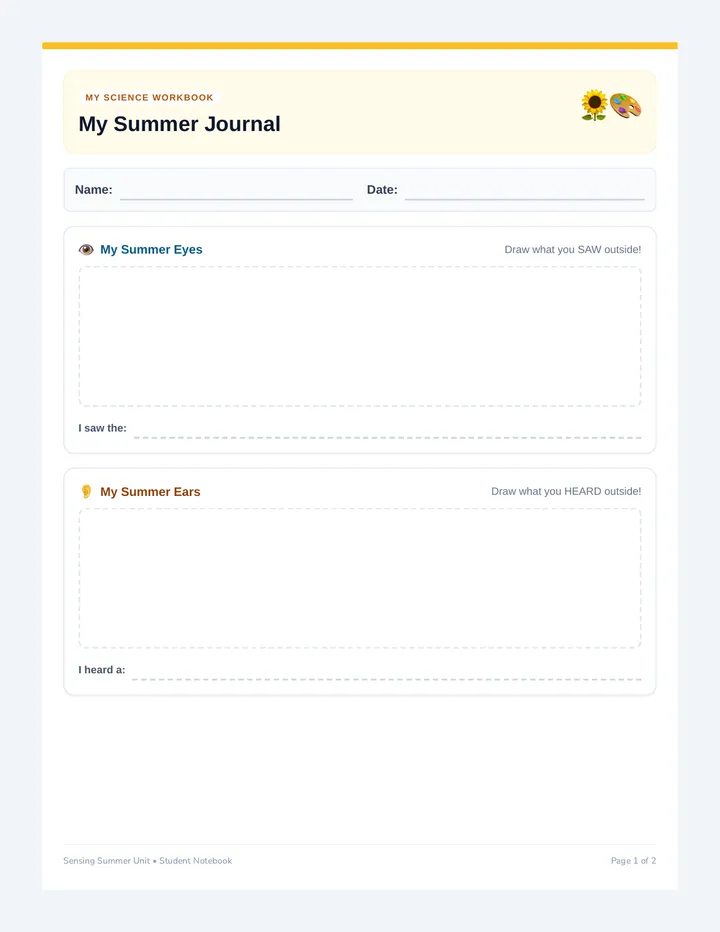
An interactive sensory science lesson where kindergarteners explore the seasonal changes of summer using their five senses through classroom discovery, an outdoor sensory walk, and journal reflections.
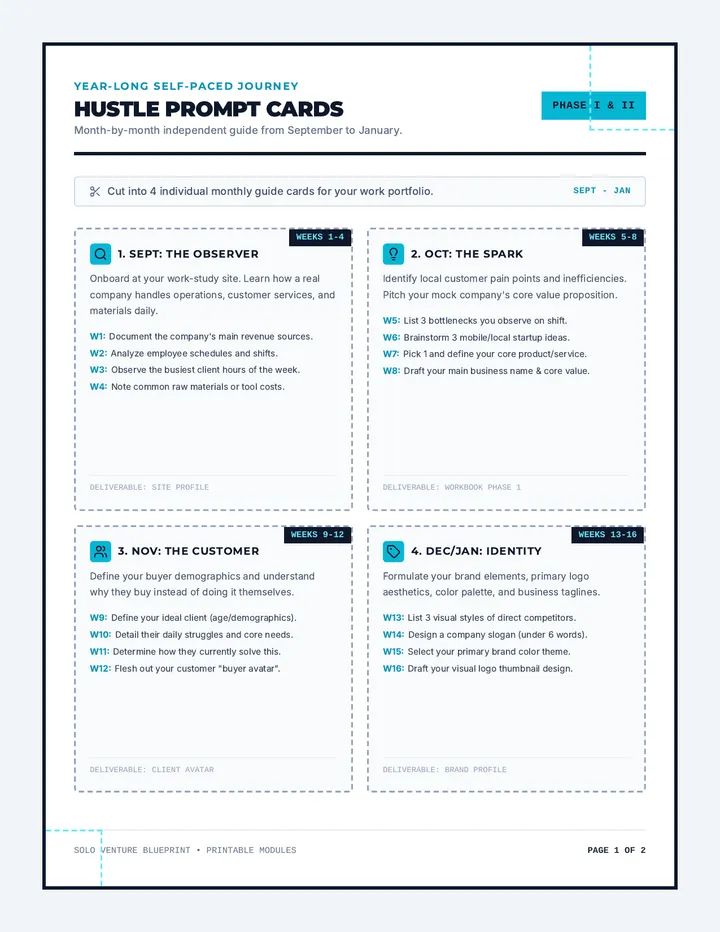
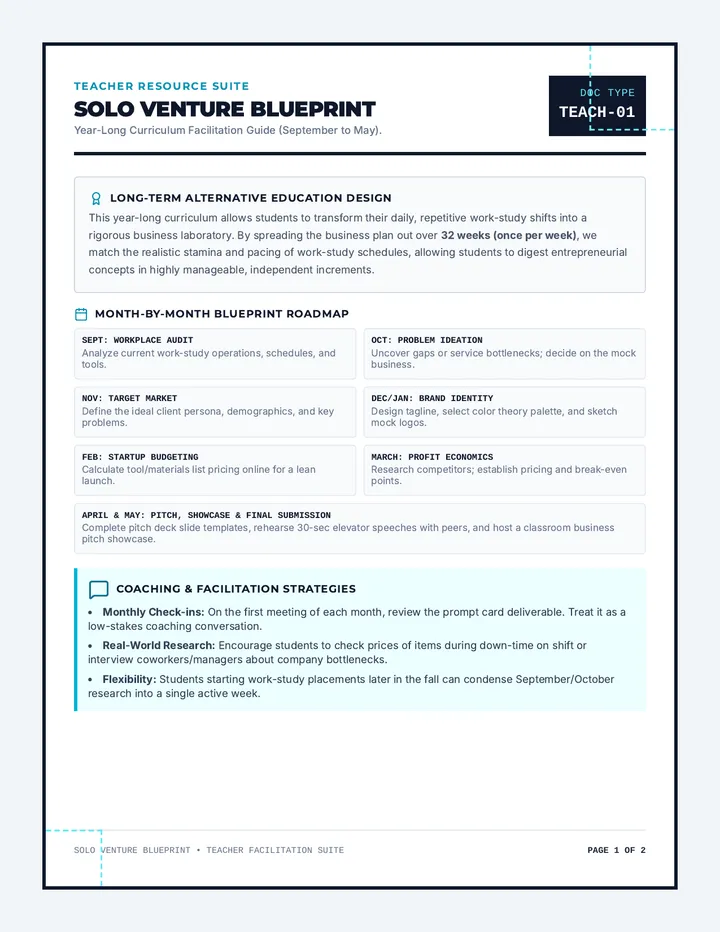
A modular, self-paced entrepreneurship project designed for alternative education students in work-study programs. It bridges real-world work experience with business planning, allowing students to design and pitch their own mock business.
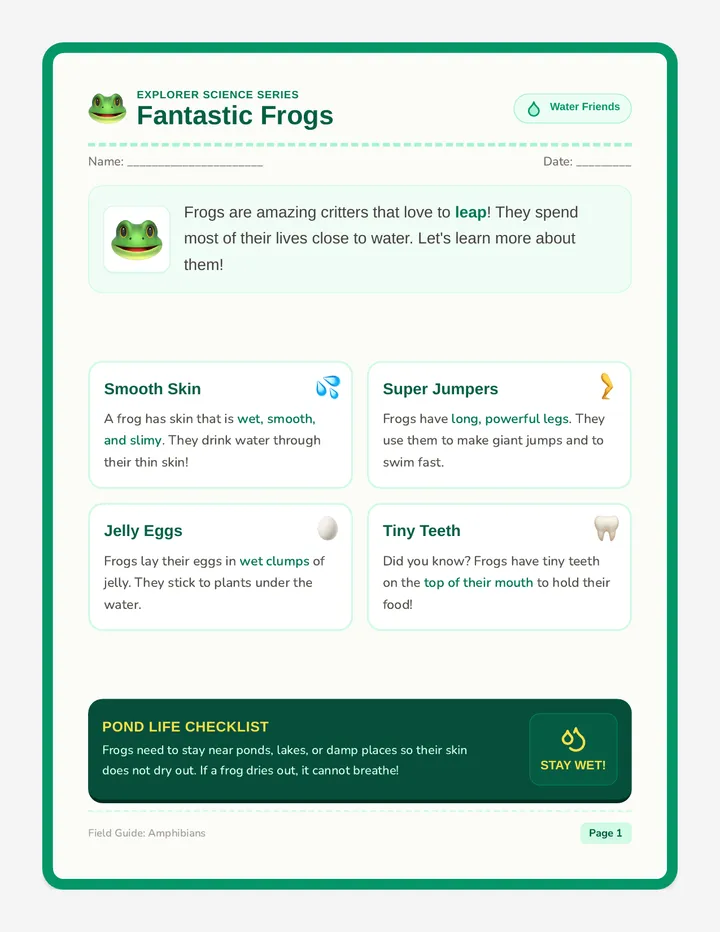
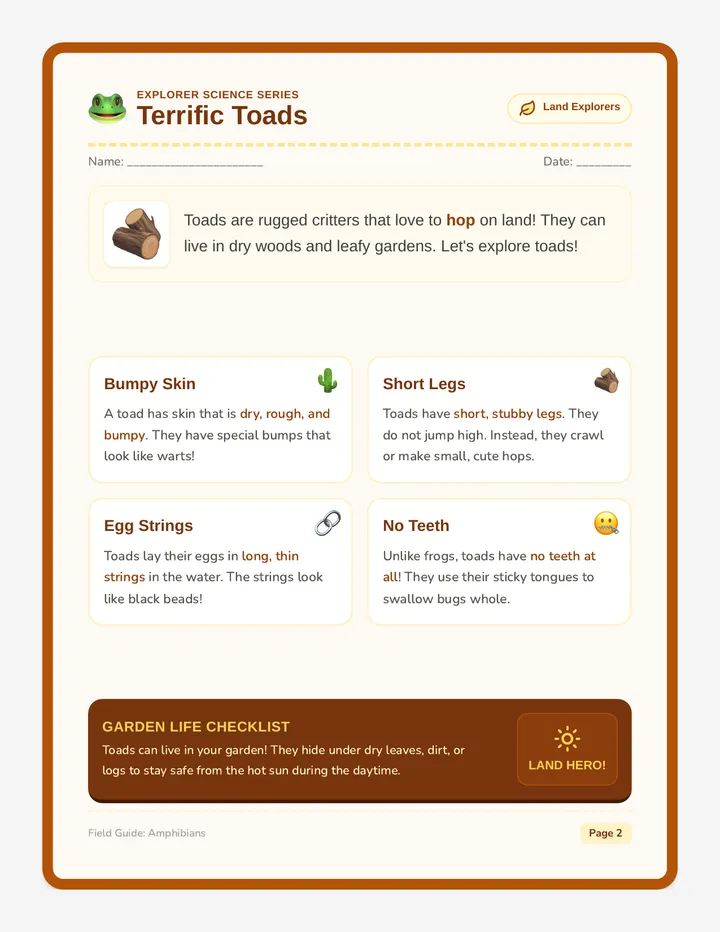
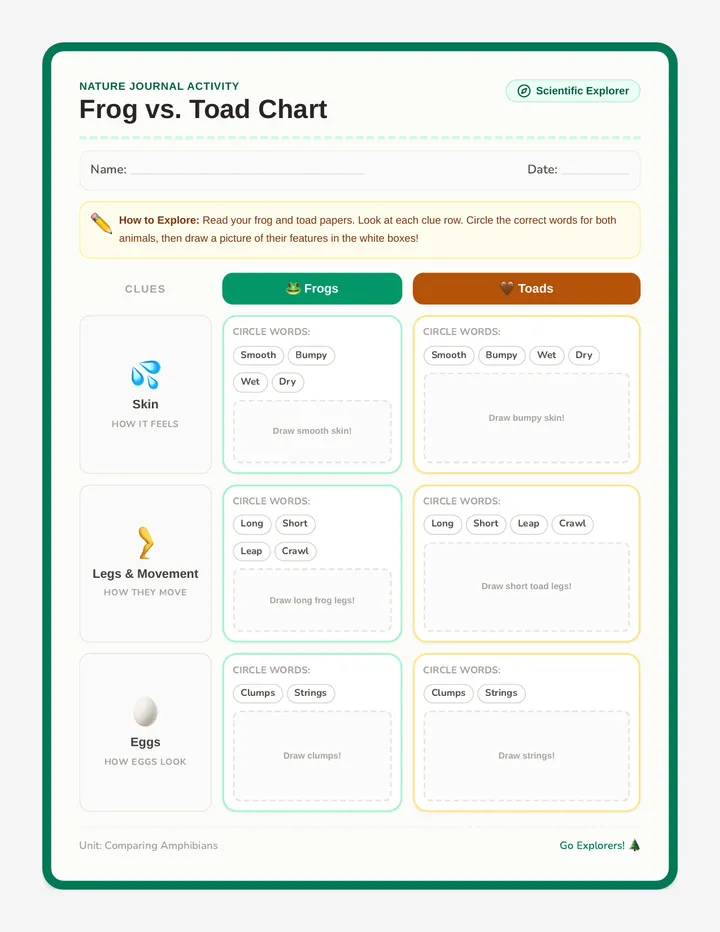
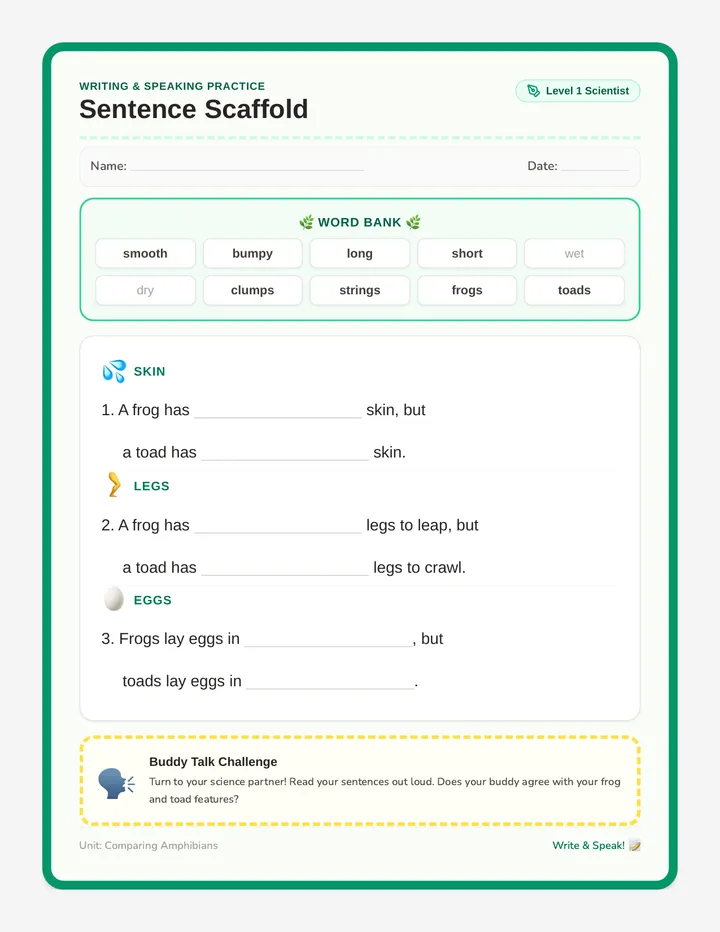
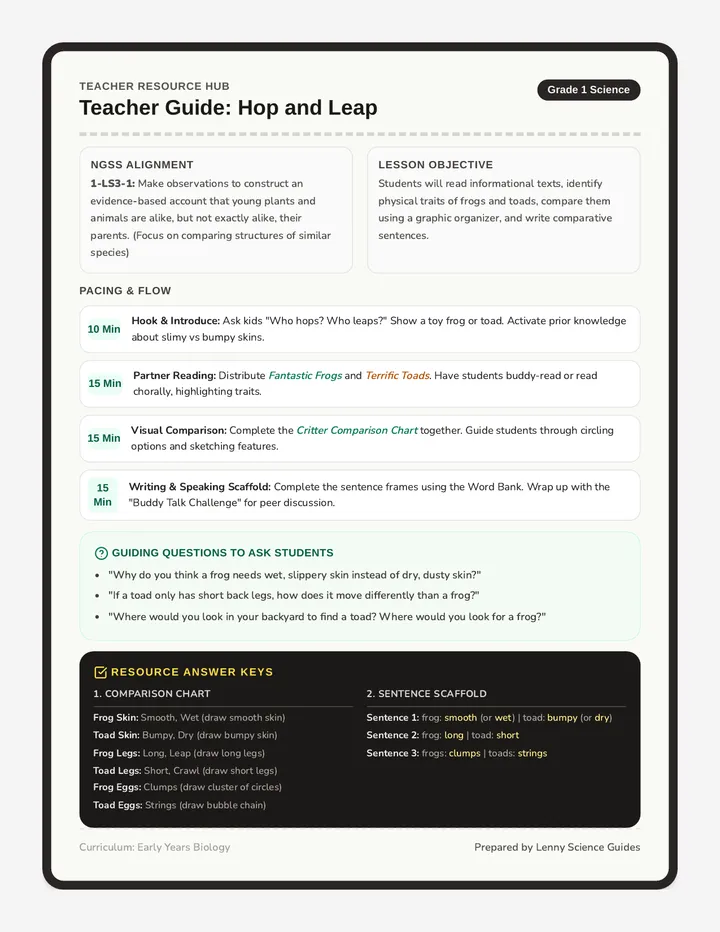
A first-grade science lesson comparing the observable physical and behavioral features of frogs and toads. Includes dual illustrated reading passages, a picture-supported graphic organizer, a sentence-frame writing scaffold, and a teacher facilitation guide.
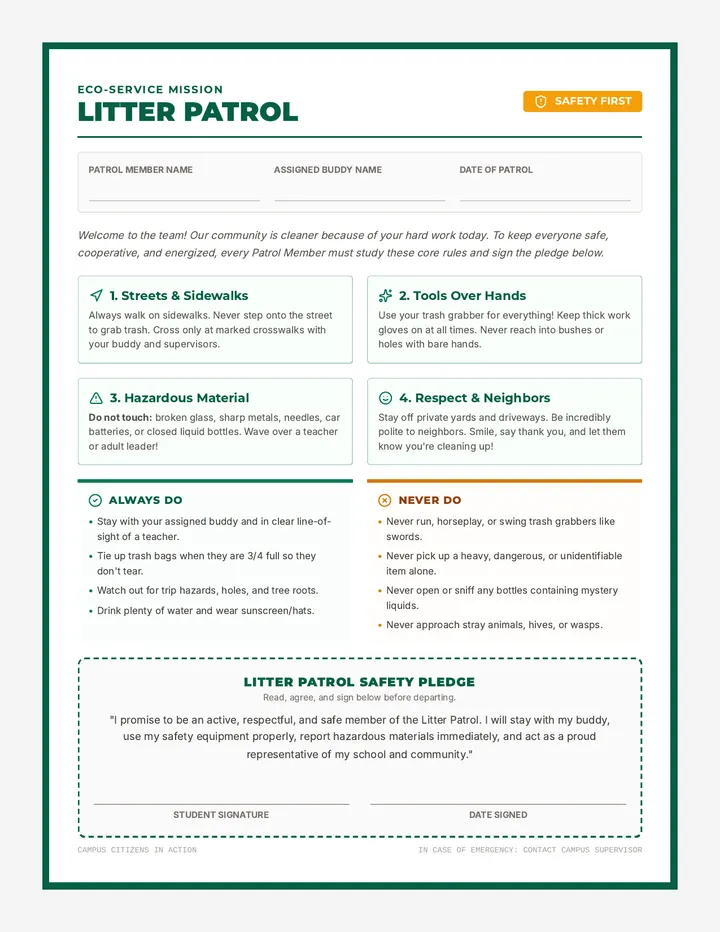
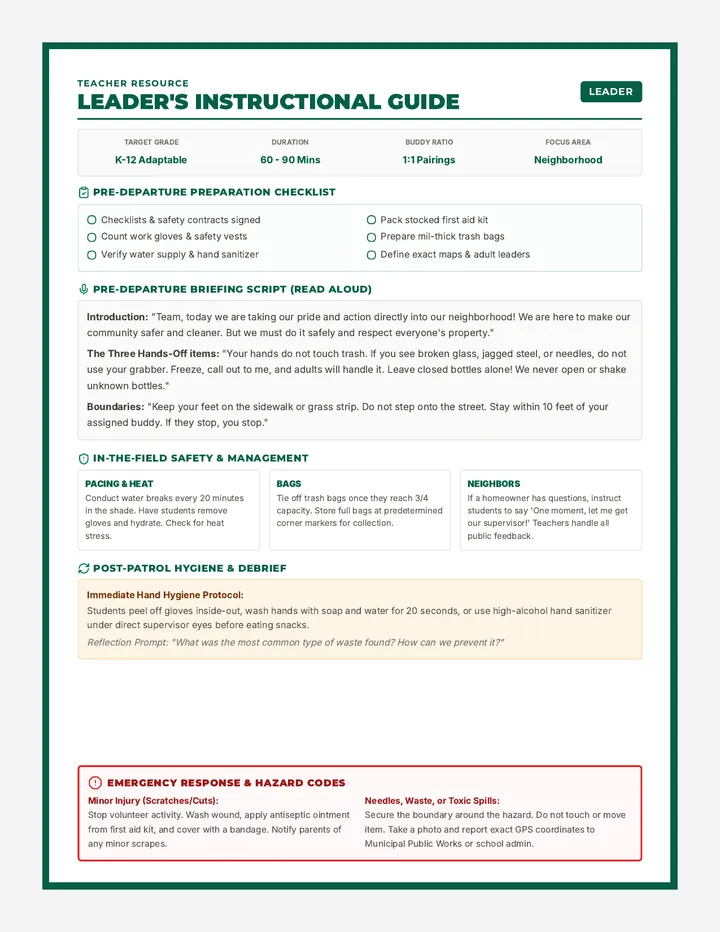
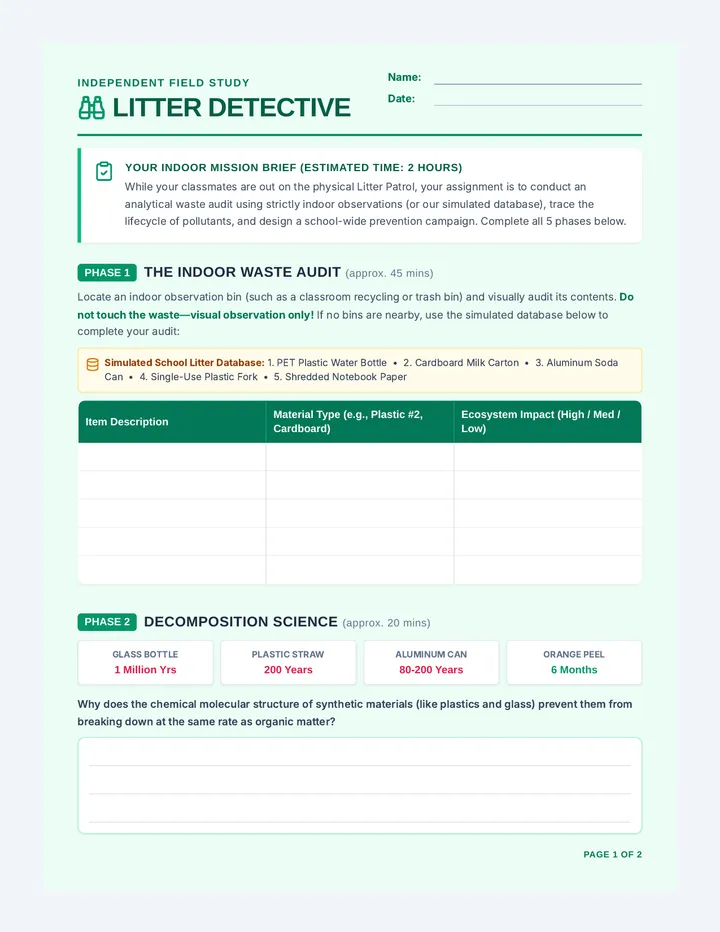
A comprehensive safety and preparation kit for students and teachers participating in a neighborhood trash pick-up community service project. It includes safety slides, a student contract and checklist, and a detailed teacher instruction guide.
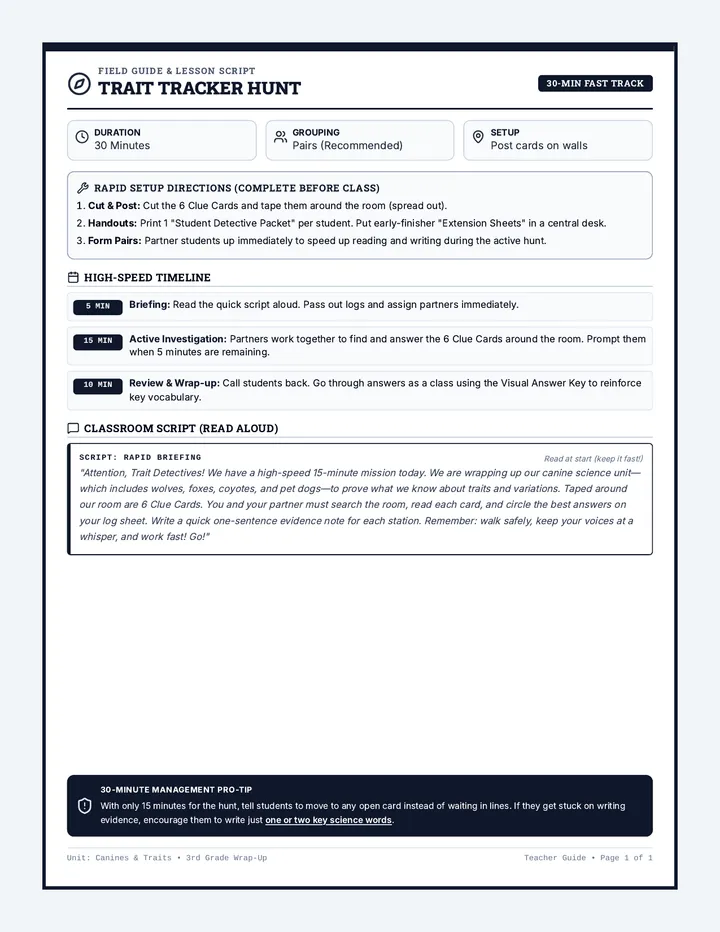
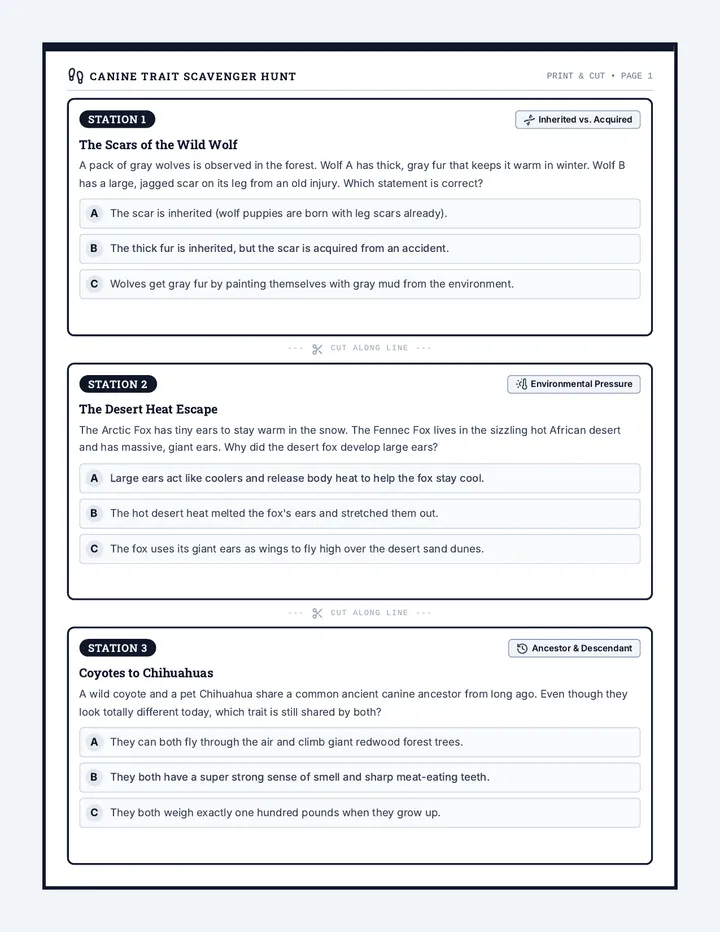
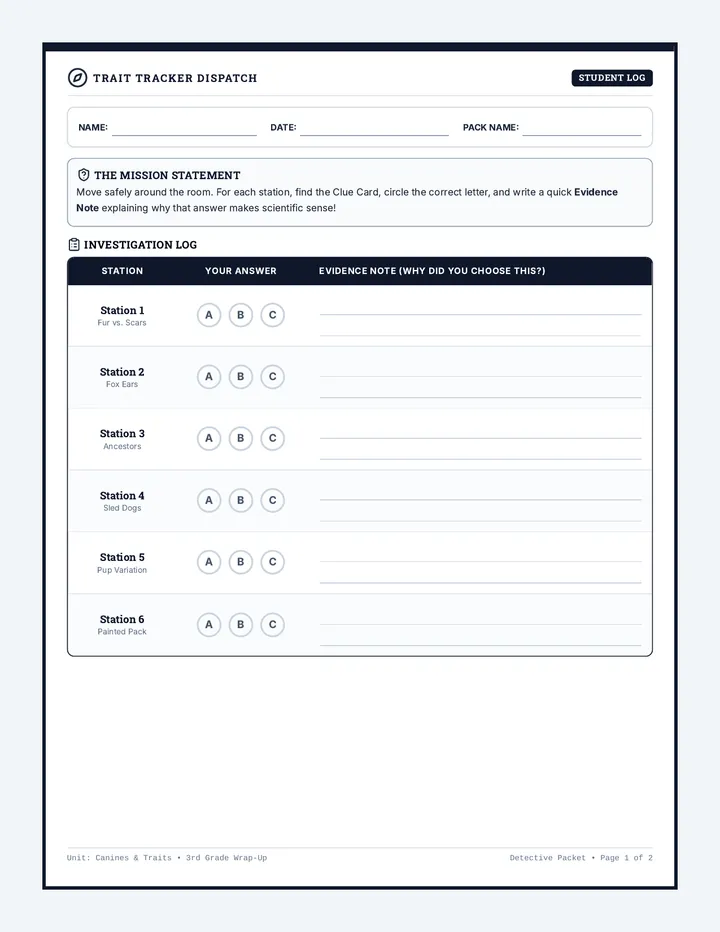
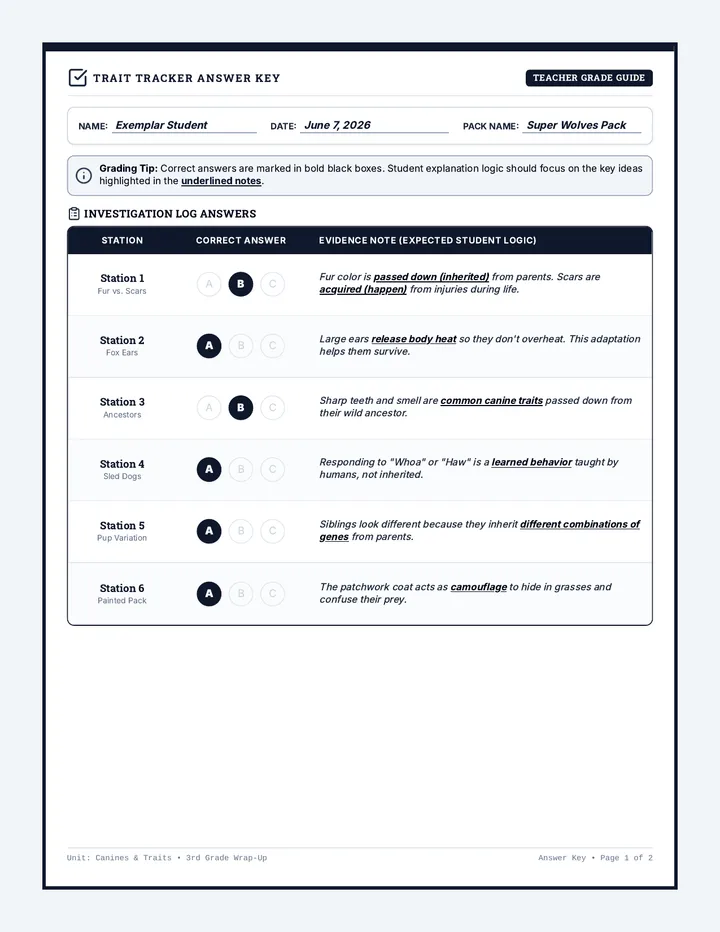
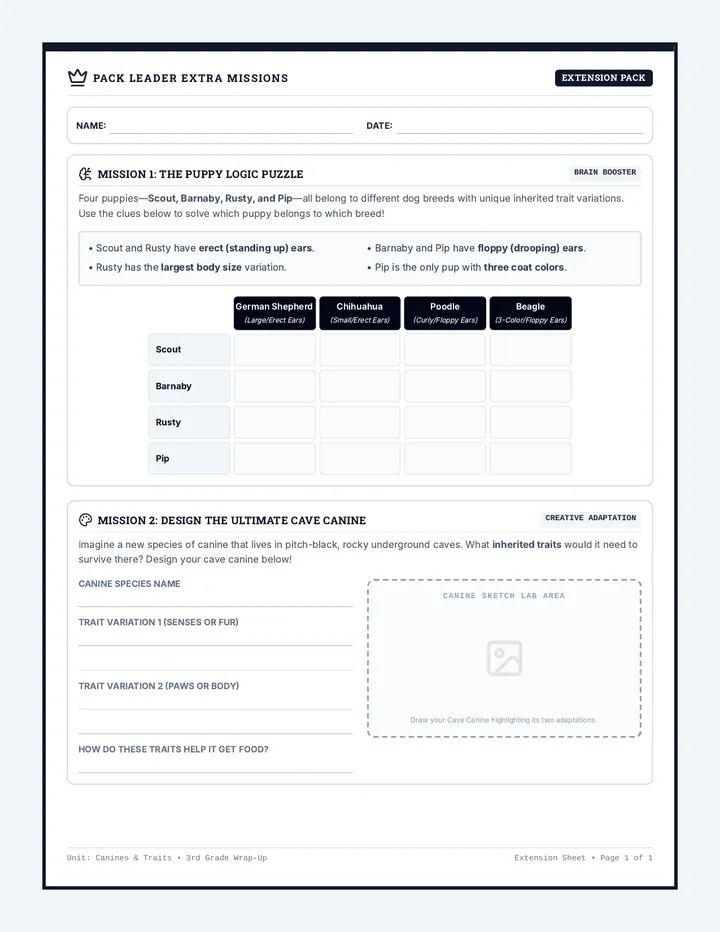
A high-engagement, print-ready scavenger hunt and review activity where students track down canine trait clues. Designed for easy delivery by a substitute teacher, it includes a step-by-step facilitation script, task cards, a student investigation log, an answer key, and creative early-finisher extensions.
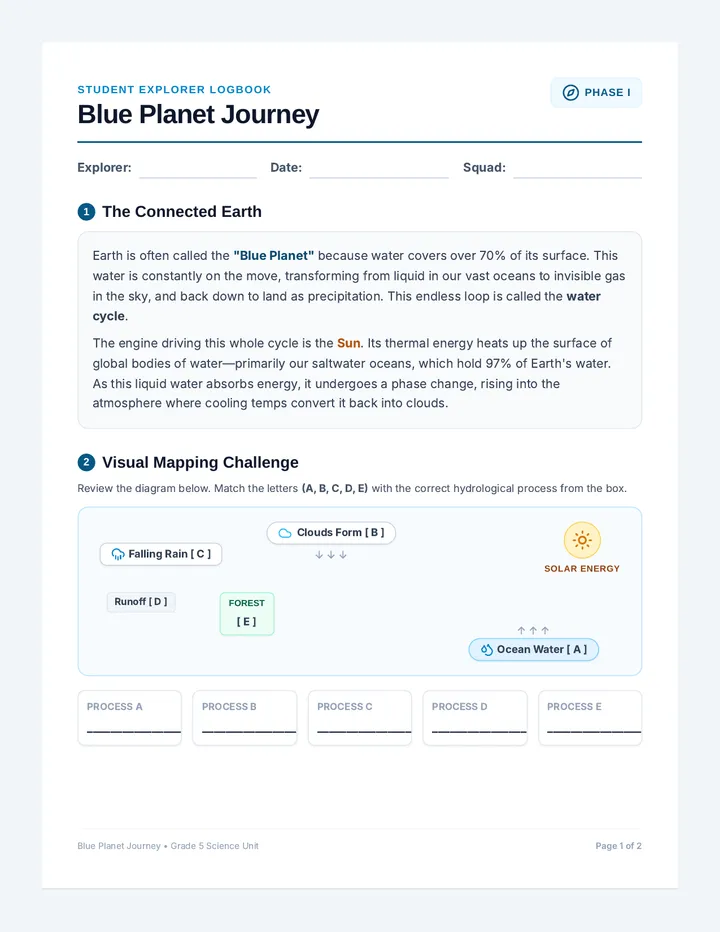
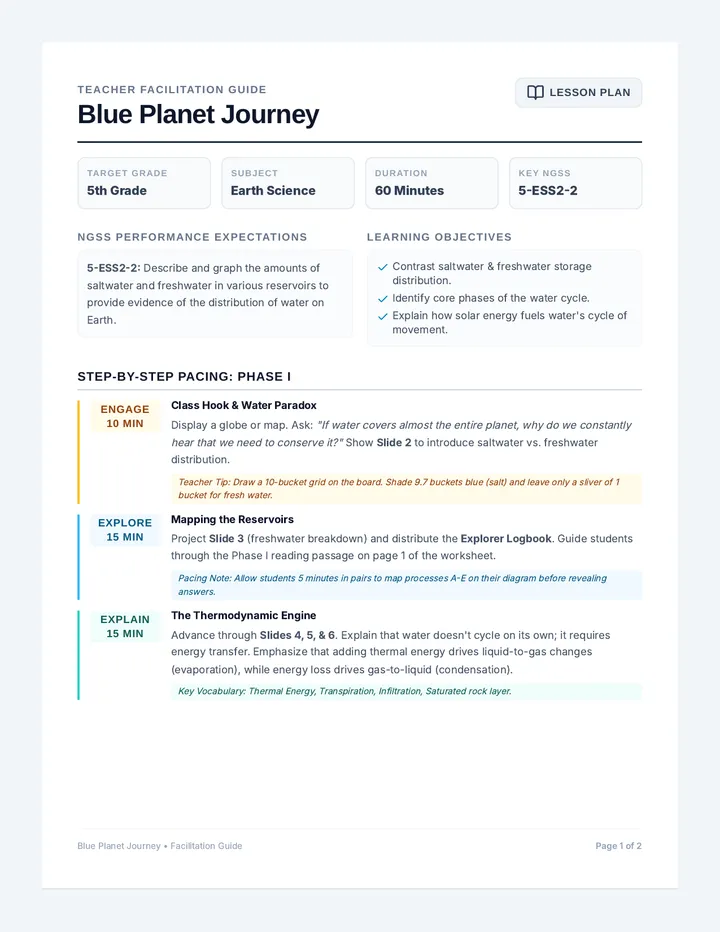
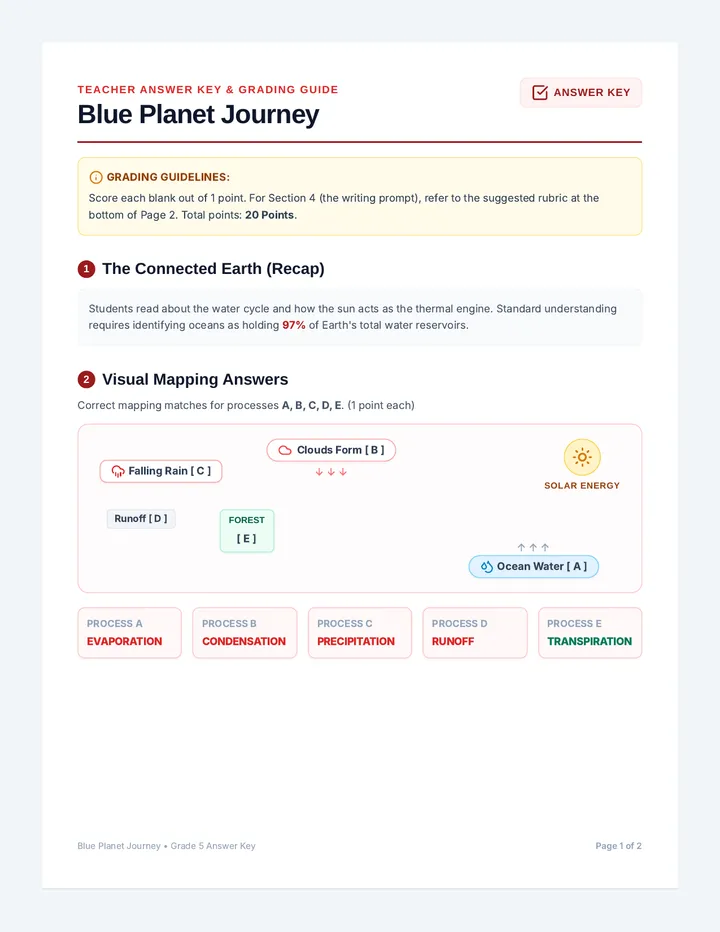
An immersive 5th-grade exploration of Earth's water systems, connecting global bodies of water directly to the continuous cycle of evaporation, condensation, precipitation, and runoff. Students trace how thermal energy drives these transitions across saltwater and freshwater reservoirs.
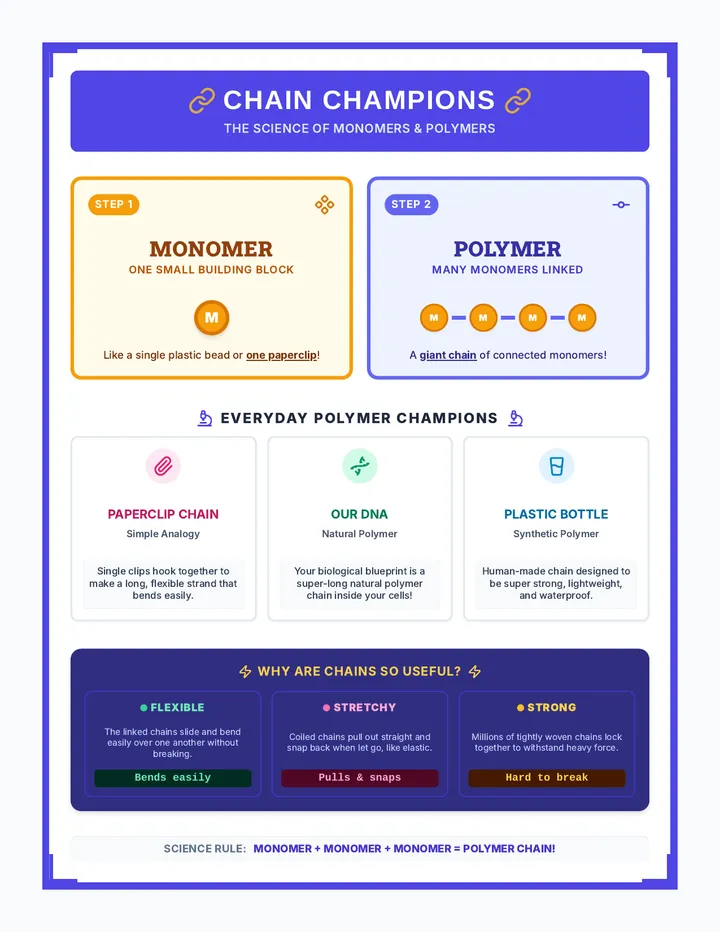
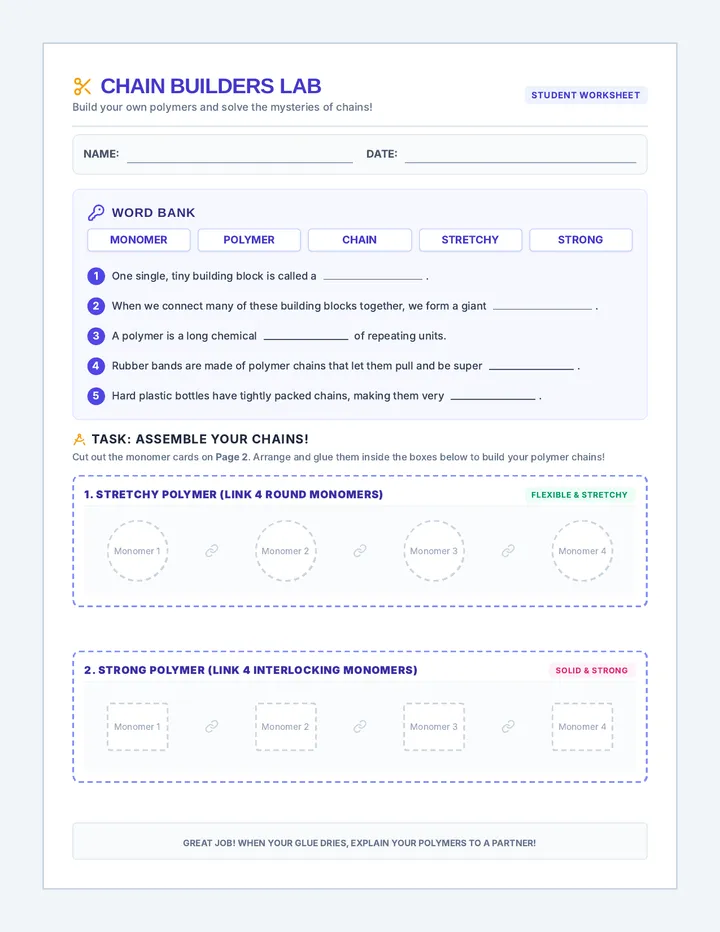
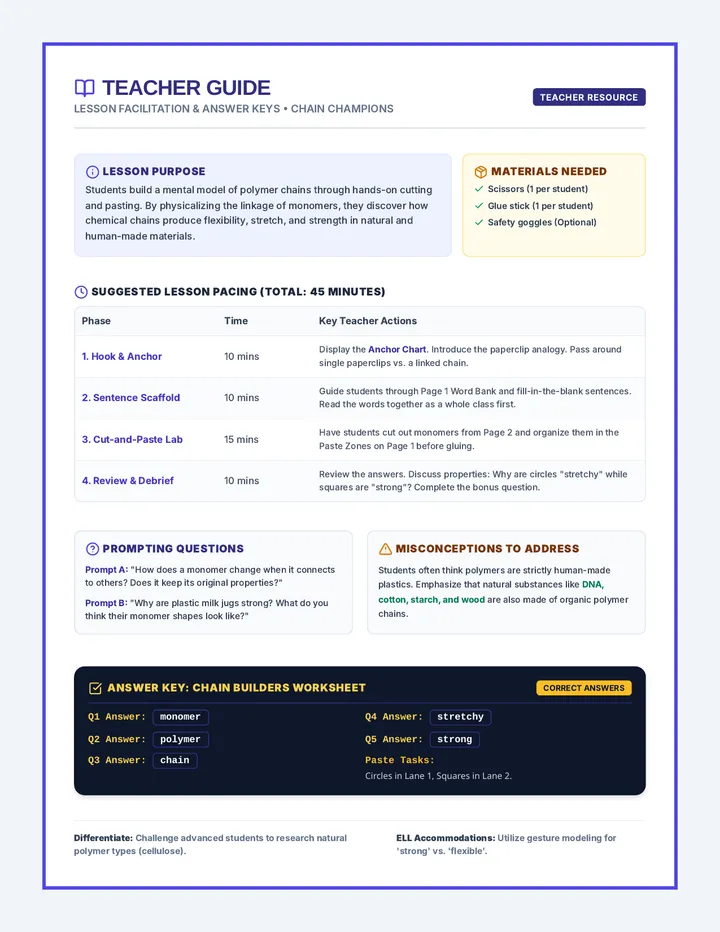
A highly visual and tactile introduction to polymer chains, monomers, and everyday applications. Students explore how small repeating units form strong, flexible, and stretchy properties through hands-on modeling and scaffolded writing.
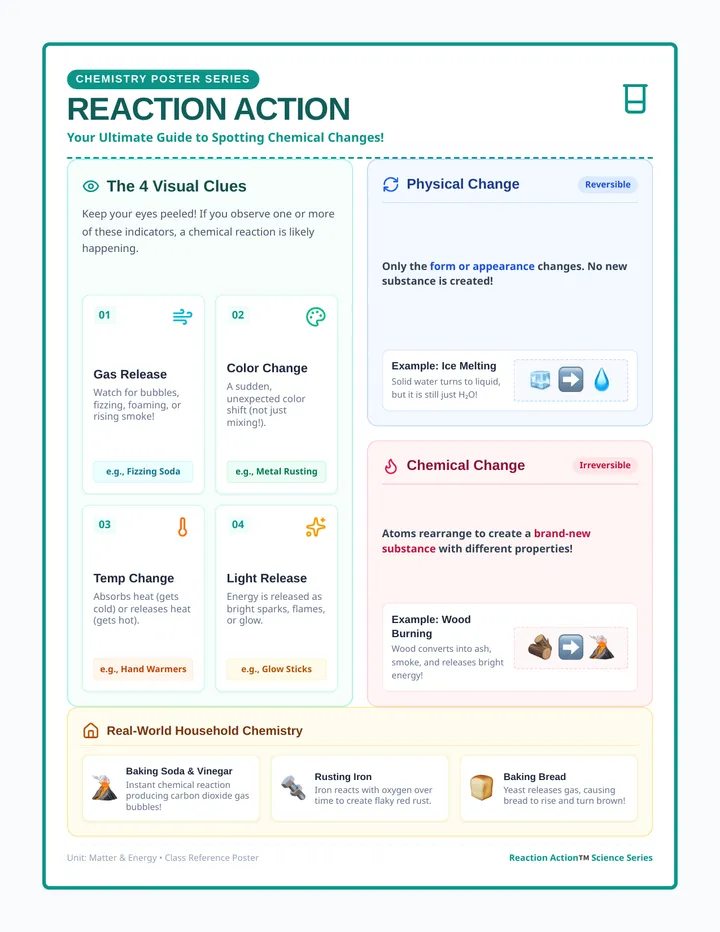
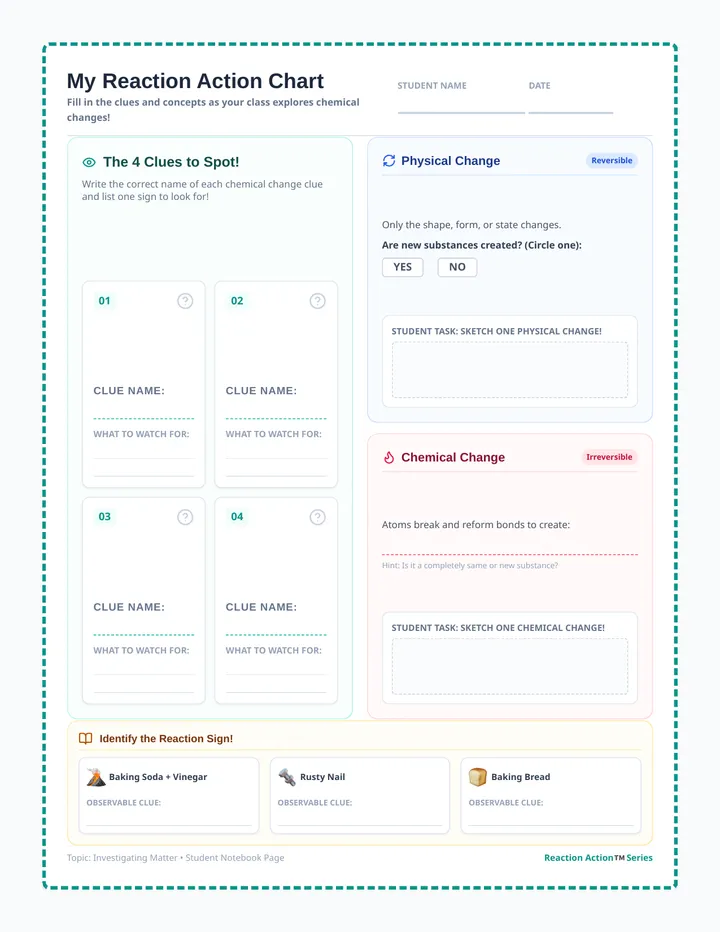
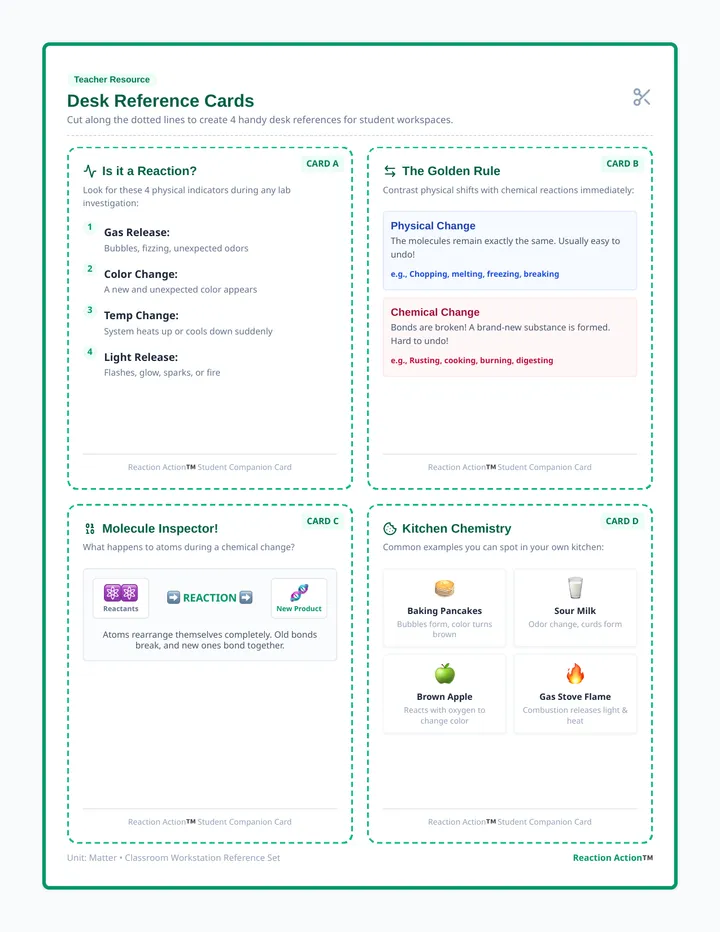
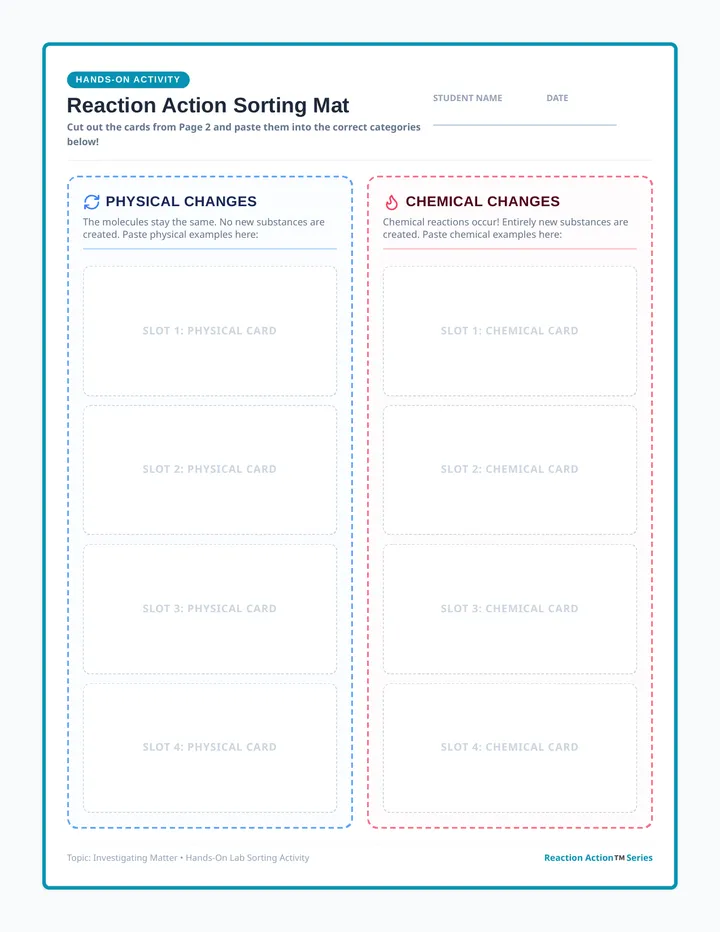
A comprehensive learning suite focused on identifying chemical reactions through visual clues, contrasting physical and chemical changes, and sorting real-world household examples. Includes a complete anchor chart, student fill-in chart, pocket resources, and a hands-on sorting kit.
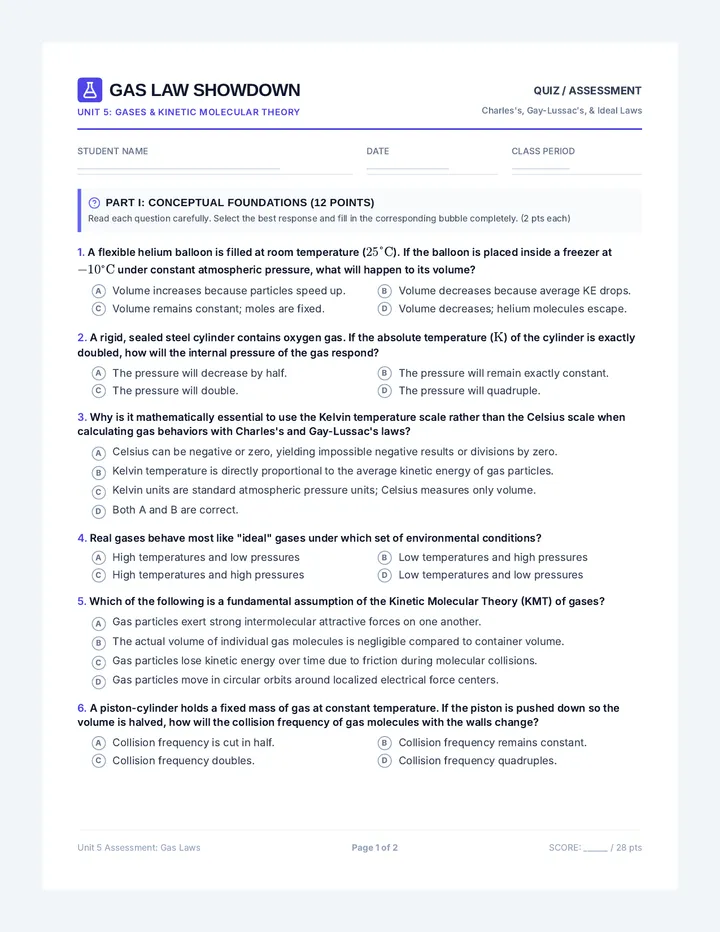
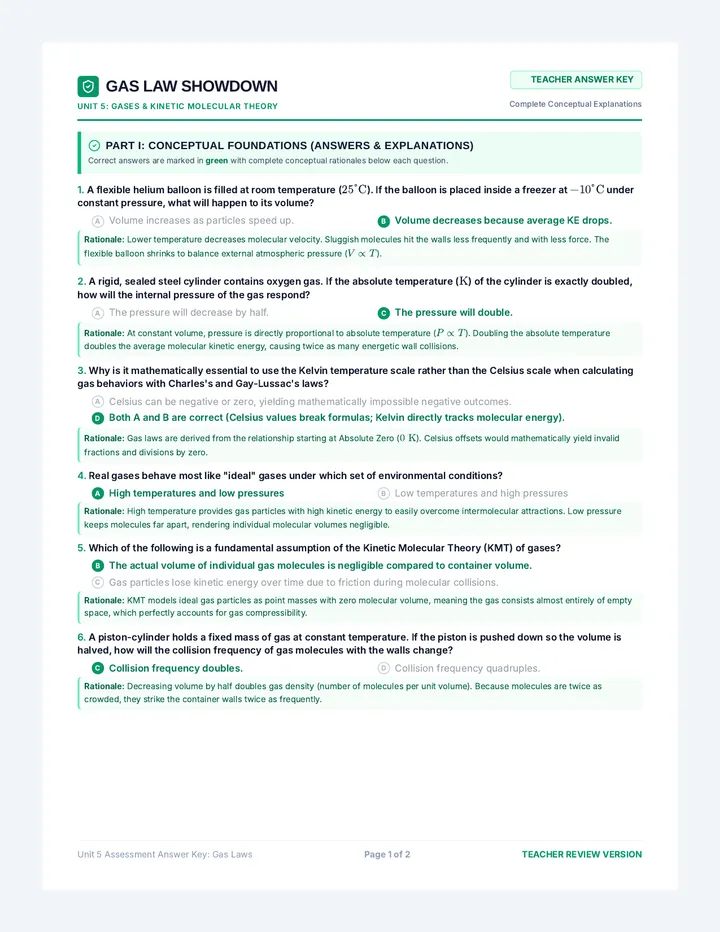
A rigorous assessment lesson covering Charles's Law, Gay-Lussac's Law, and the Ideal Gas Law. Students demonstrate understanding through conceptual multiple-choice questions and solve multi-step algebraic calculations with gas behavior formulas.
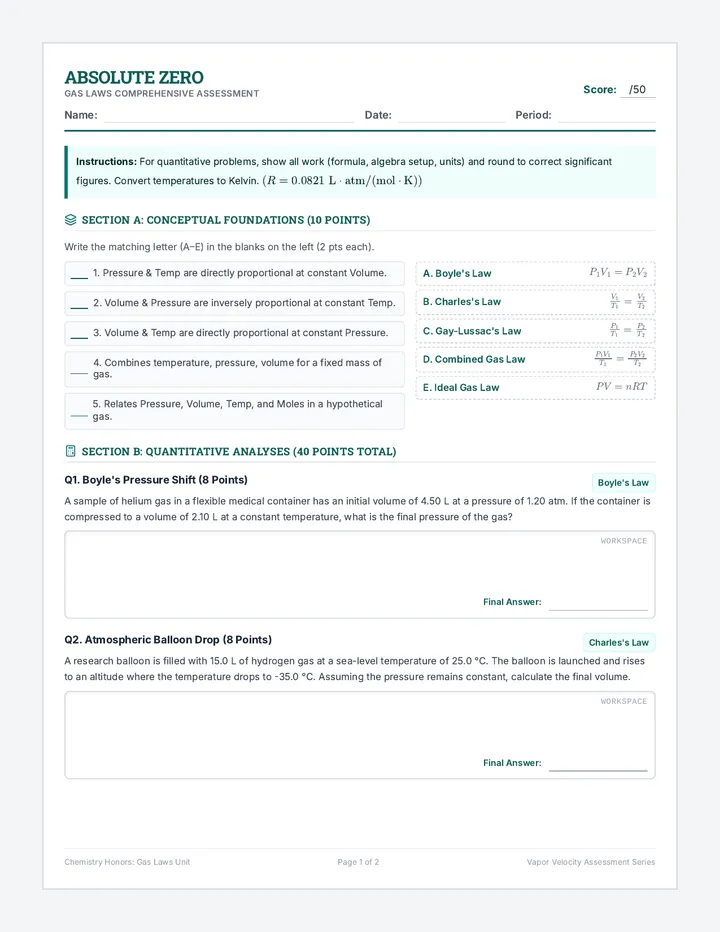
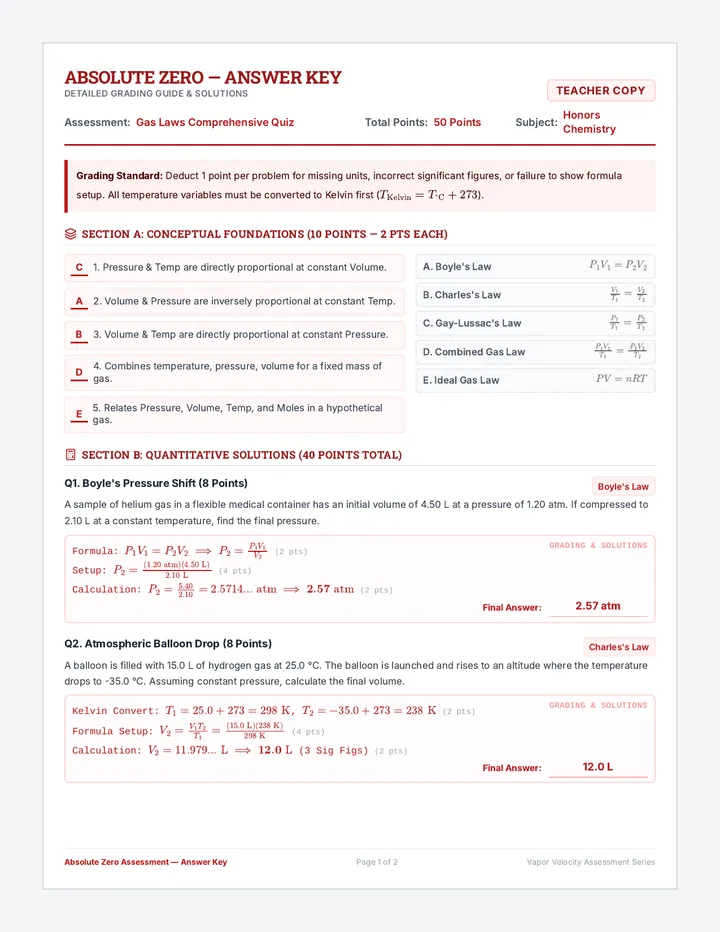
A comprehensive assessment lesson on the behavior of gases. Students demonstrate their understanding of Boyle's, Charles's, Gay-Lussac's, Combined, and Ideal gas laws through theoretical and quantitative problem-solving.
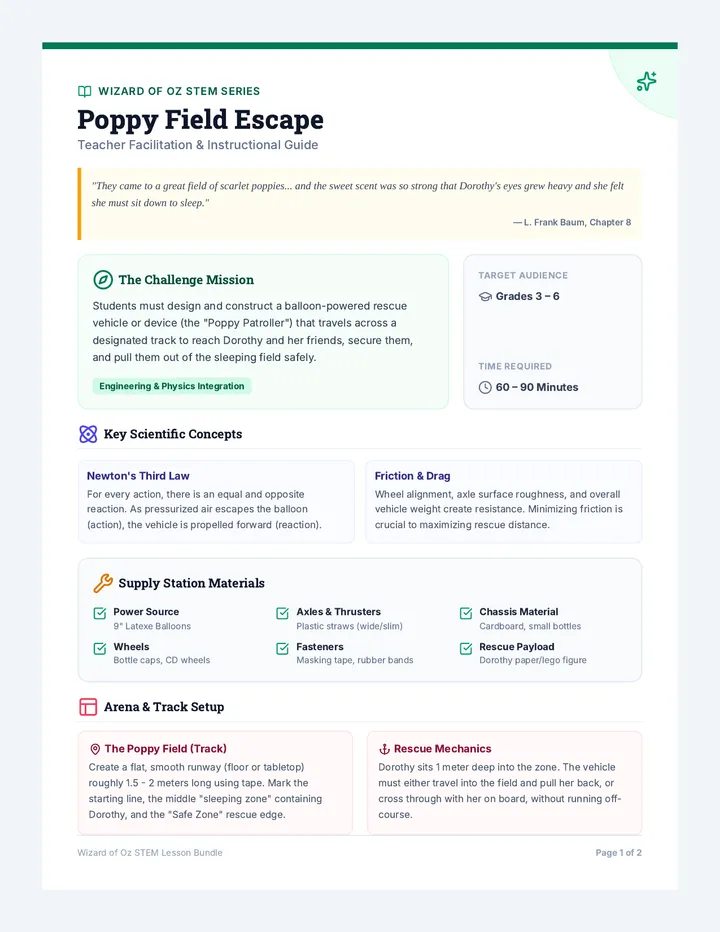
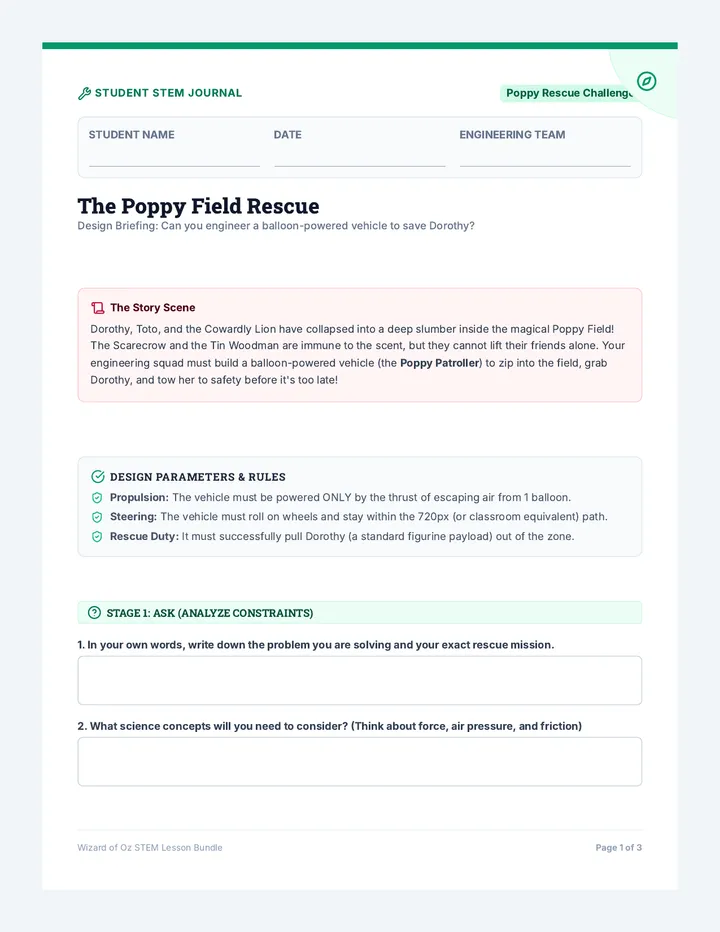
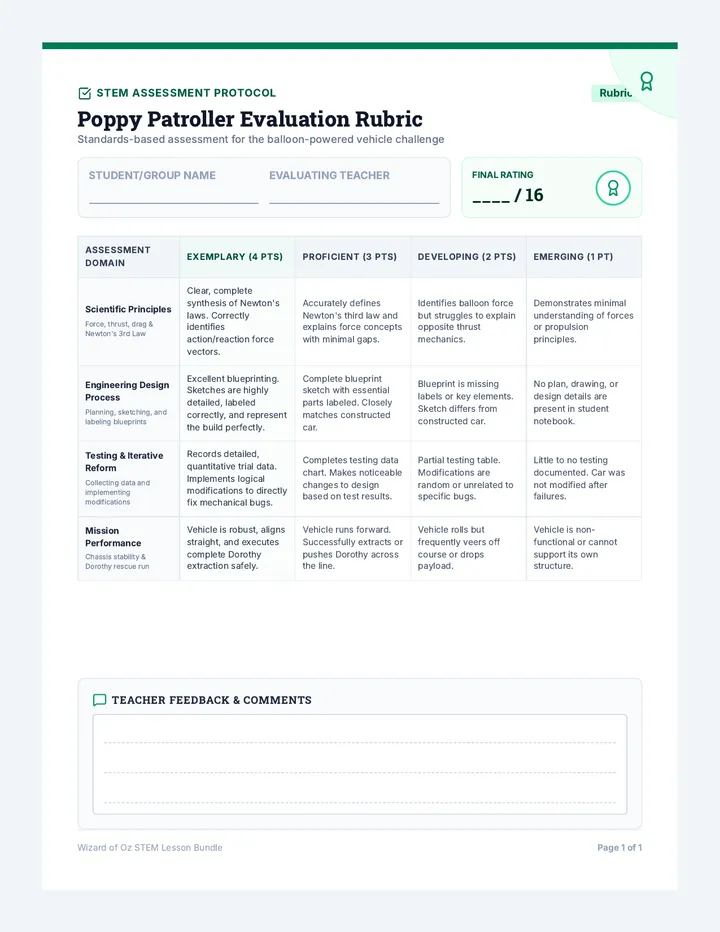
A hands-on STEM challenge based on The Wizard of Oz where students design and build a balloon-powered rescue vehicle to save Dorothy and her friends from the sleeping effects of the Poppy Field. This lesson guides students through the complete engineering design process, combining physical science concepts with literary connections.
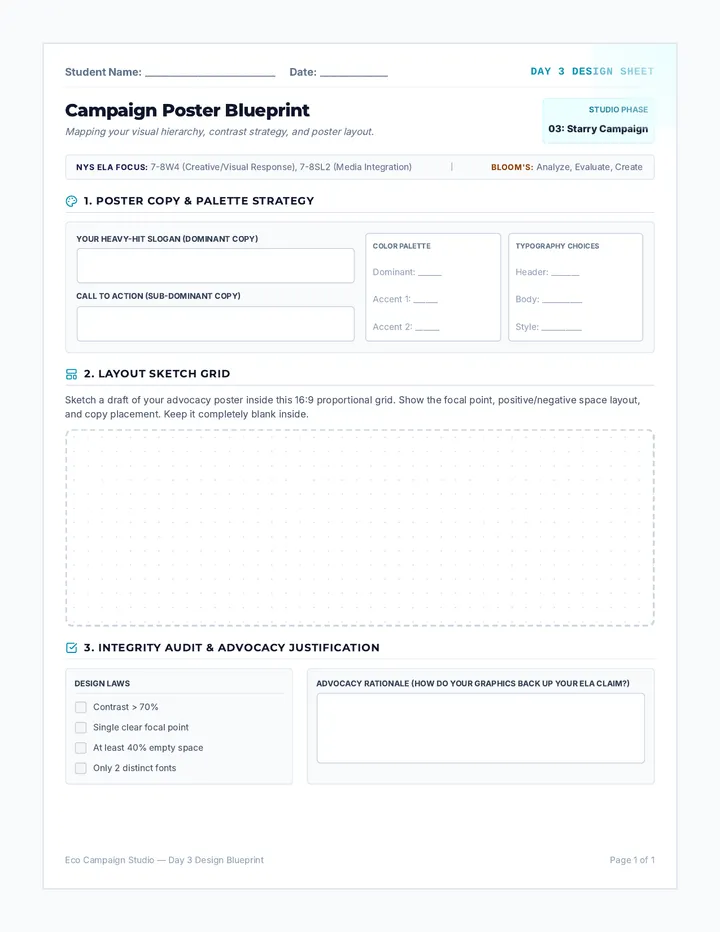
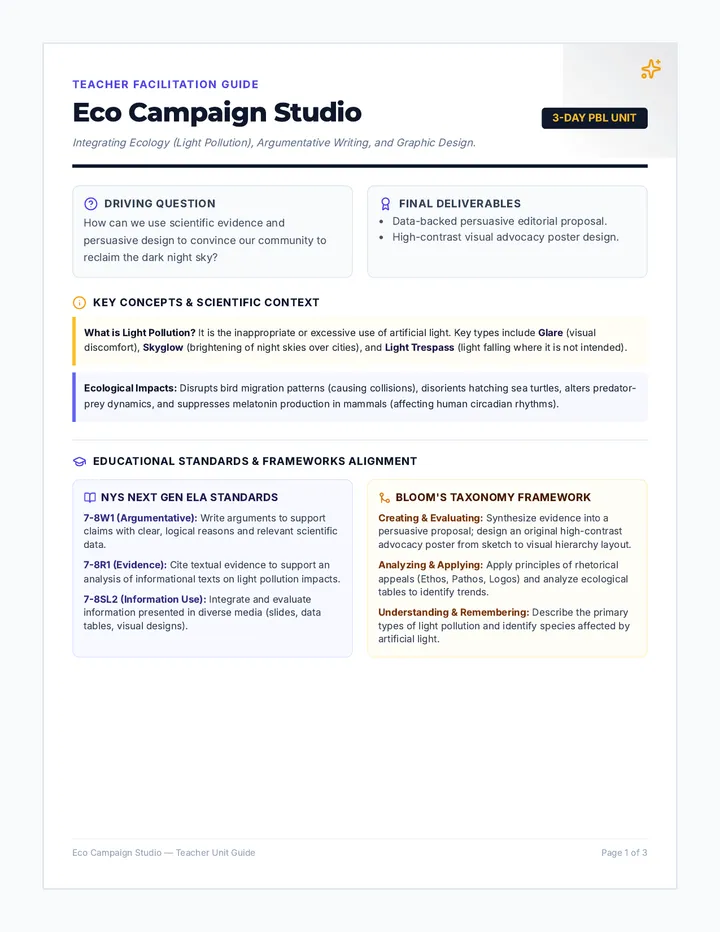
Students explore principles of visual design, contrast, and visual hierarchy to design and sketch an advocacy poster that supports their persuasive argument.
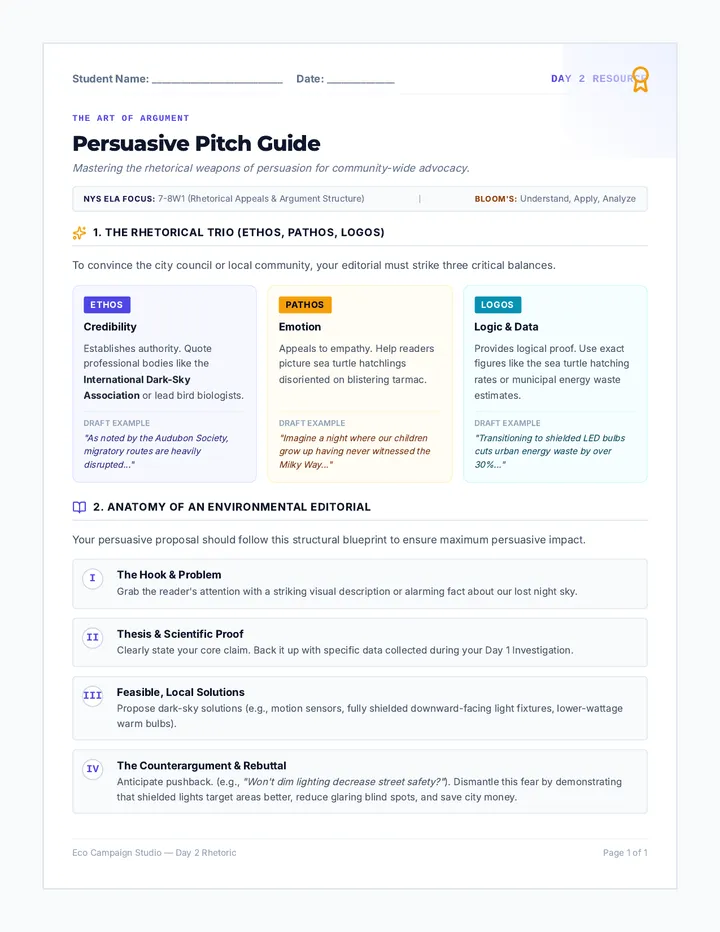
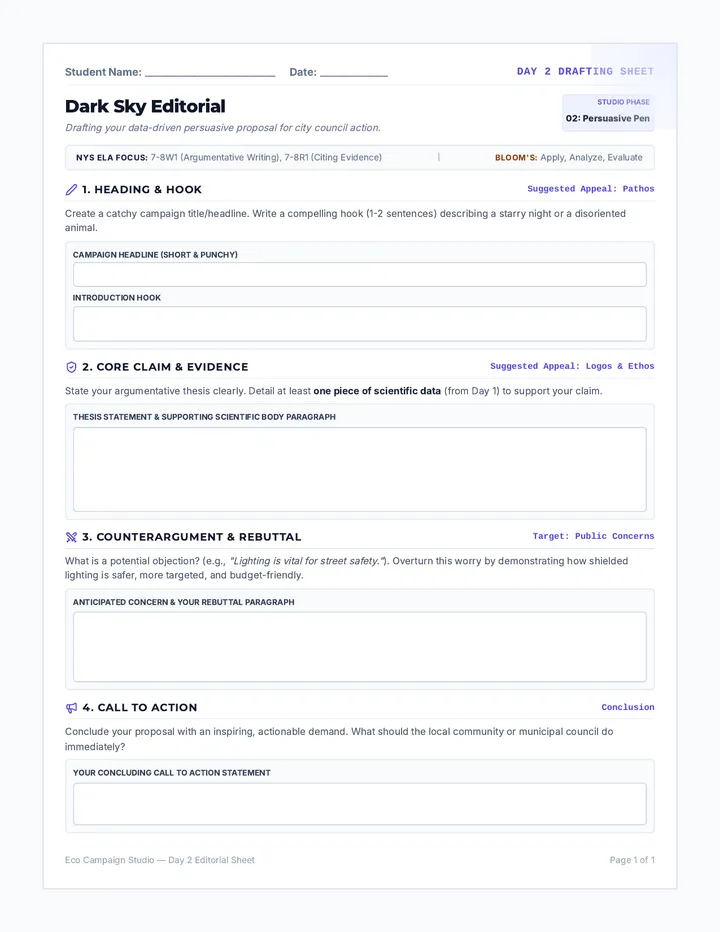
Students translate their scientific evidence into a structured, persuasive editorial or proposal, mastering rhetorical appeals and learning to counter opposing viewpoints.
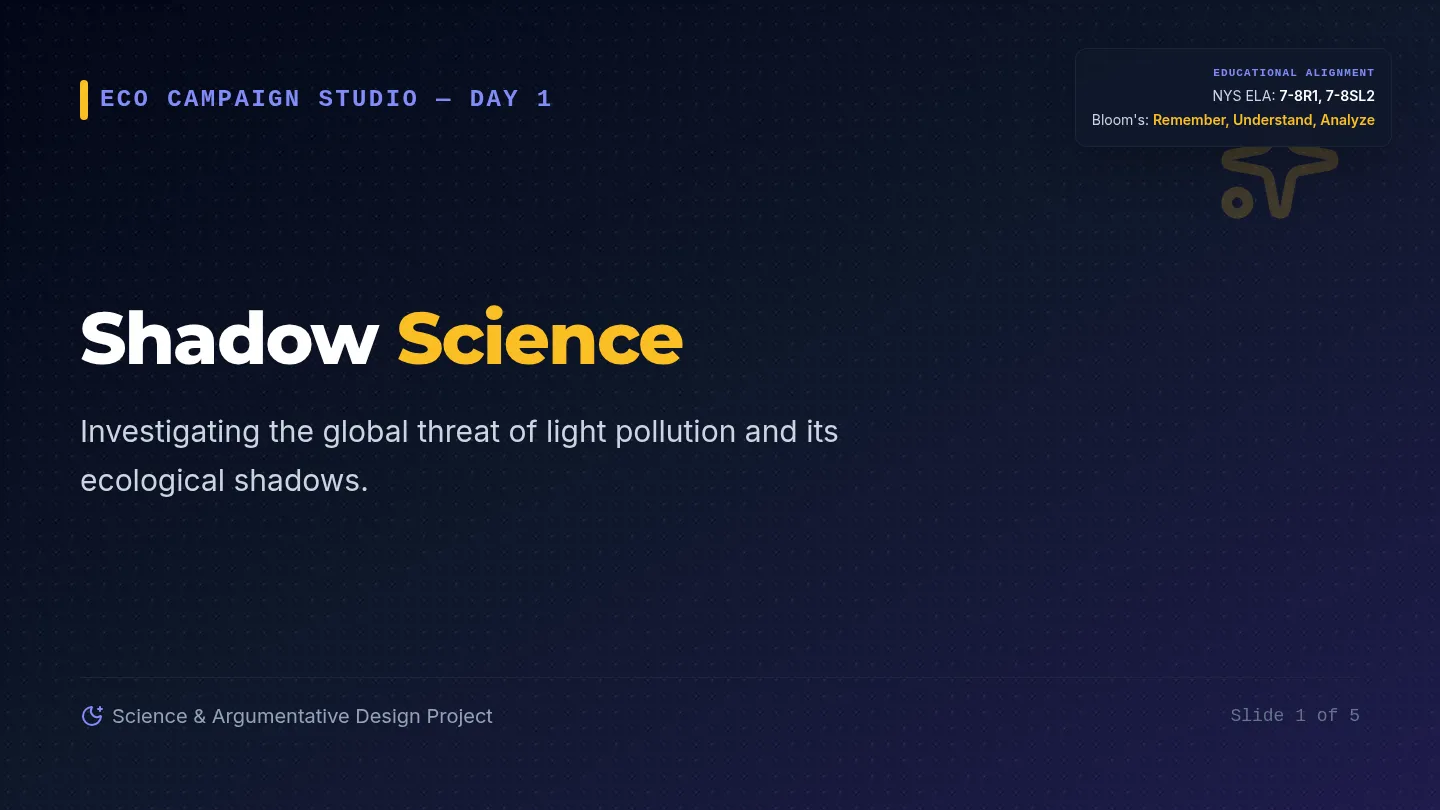
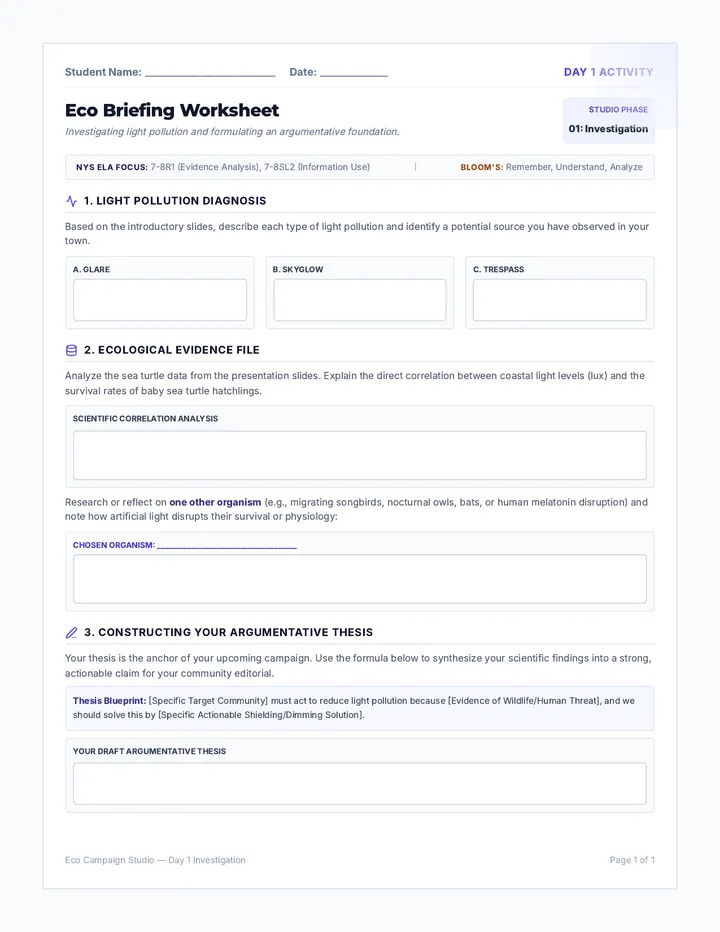
Students investigate the science of light pollution, explore its ecological effects on wildlife and human health, and analyze real-world data to formulate their core argumentative thesis.
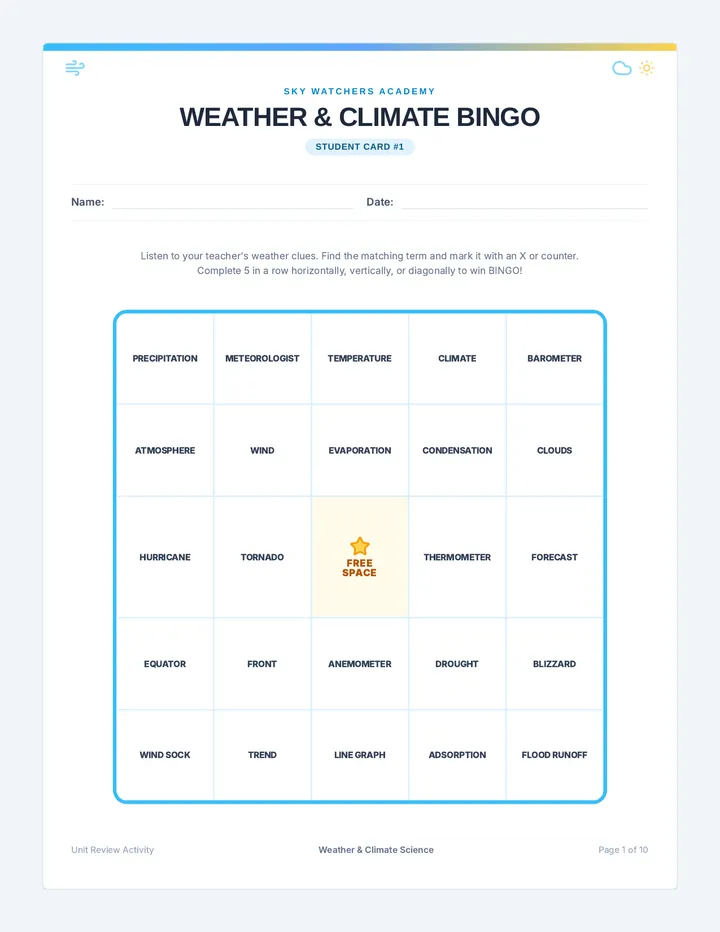
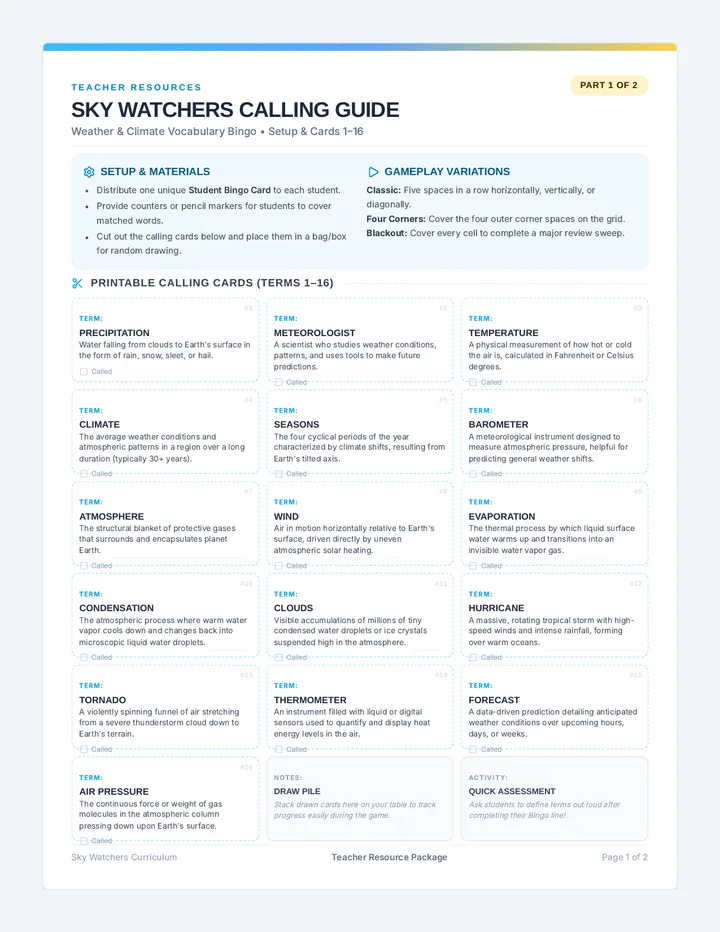
A weather and climate science unit featuring a complete class set of ready-to-print Bingo cards and a comprehensive teacher calling and tracking guide.
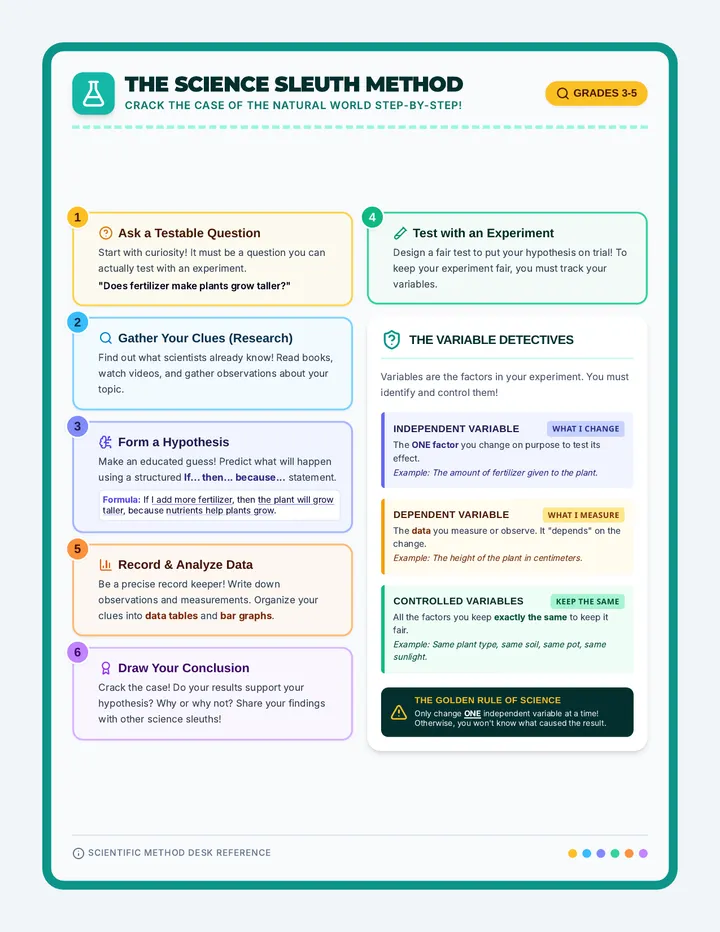
A high-impact science investigation unit starting with visual anchor charts and student planning templates to master the scientific method and variable identification in grades 3-5.
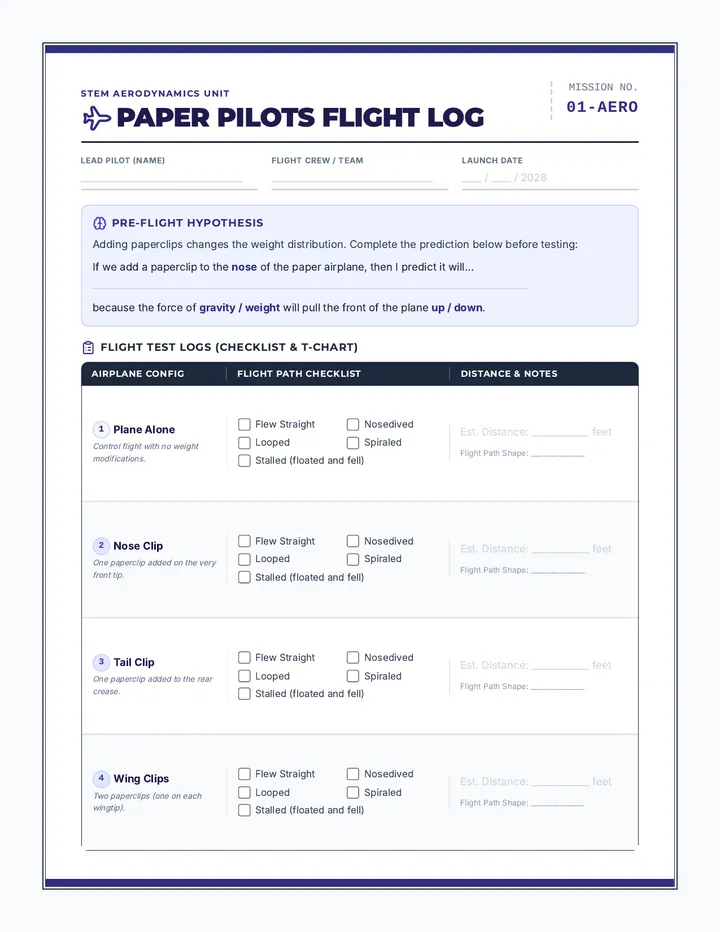
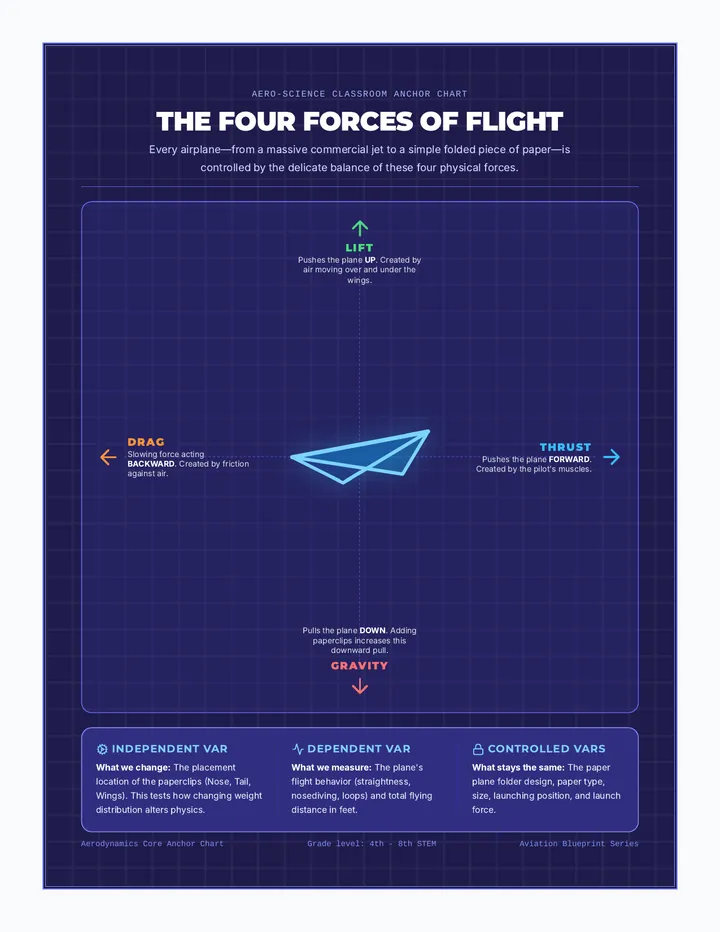
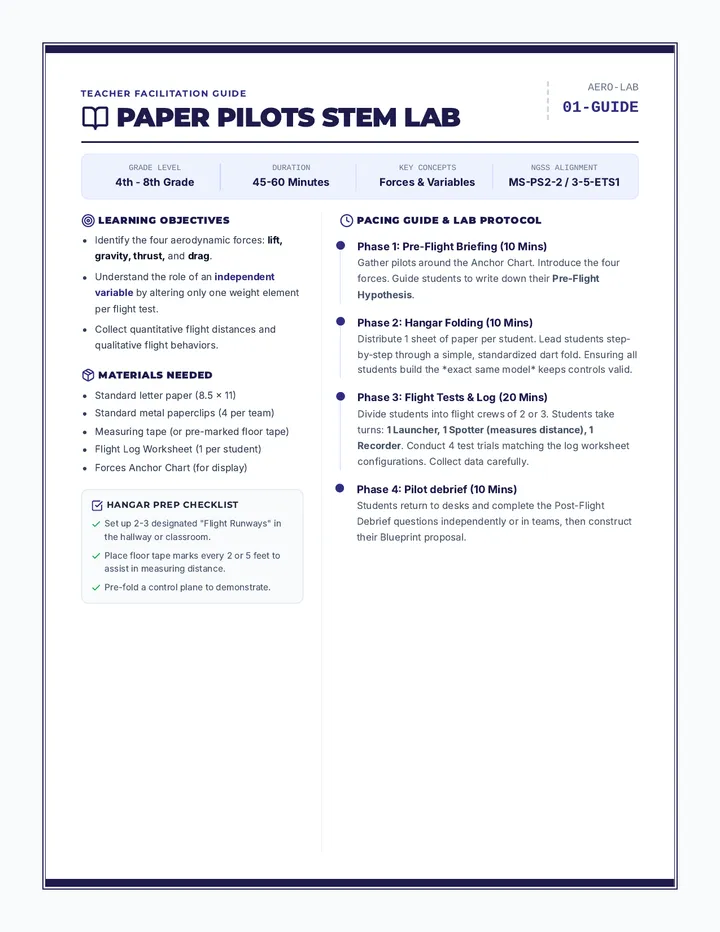
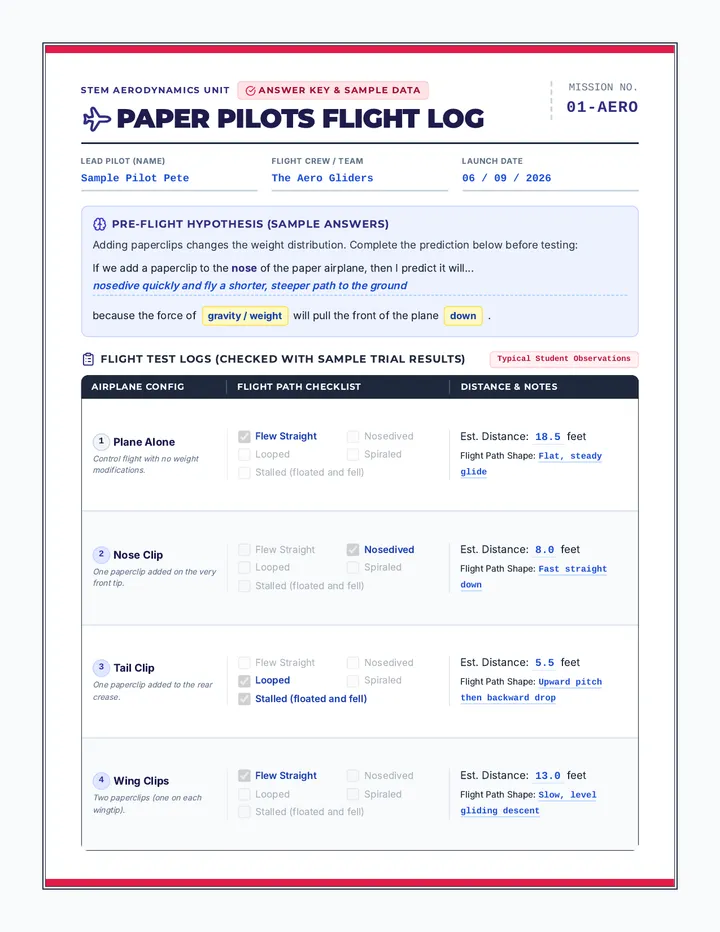
A hands-on STEM lesson where students explore aerodynamics and variables by testing how adding paperclips to different parts of a paper airplane affects its flight path, stability, and distance.
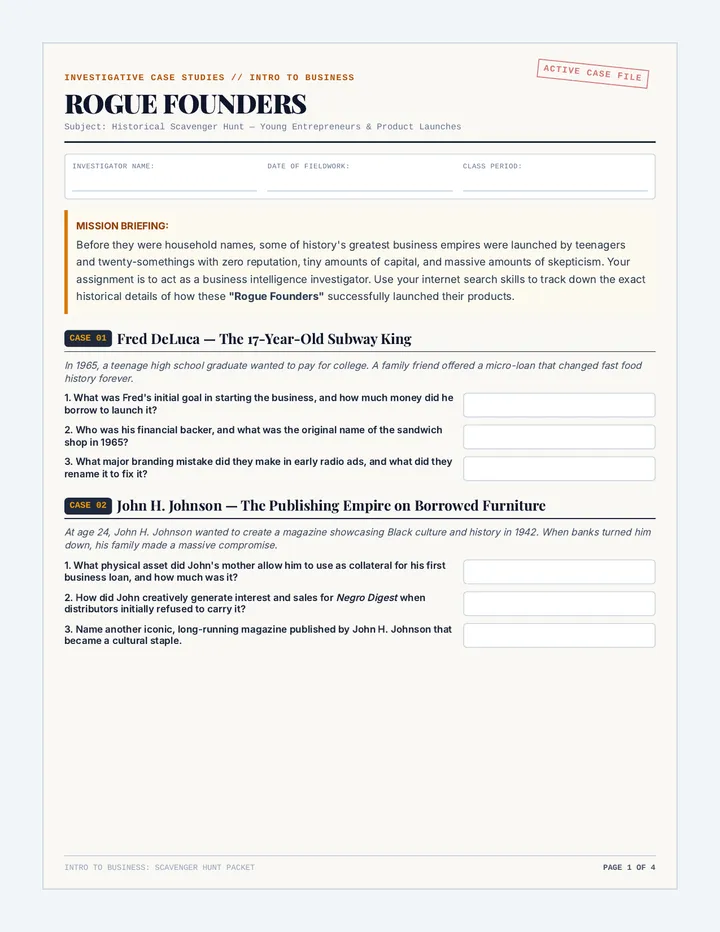
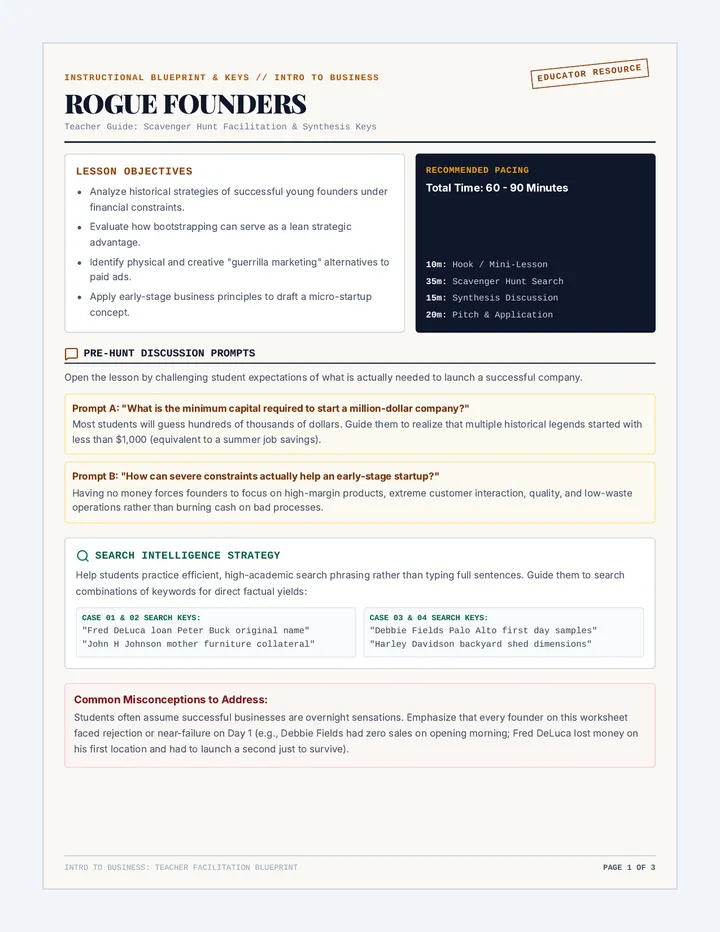
A high school introduction to business lesson exploring the journeys of historical young entrepreneurs who defied the odds. Students conduct an internet scavenger hunt to investigate their startup strategies, financial hurdles, and marketing breakthroughs.
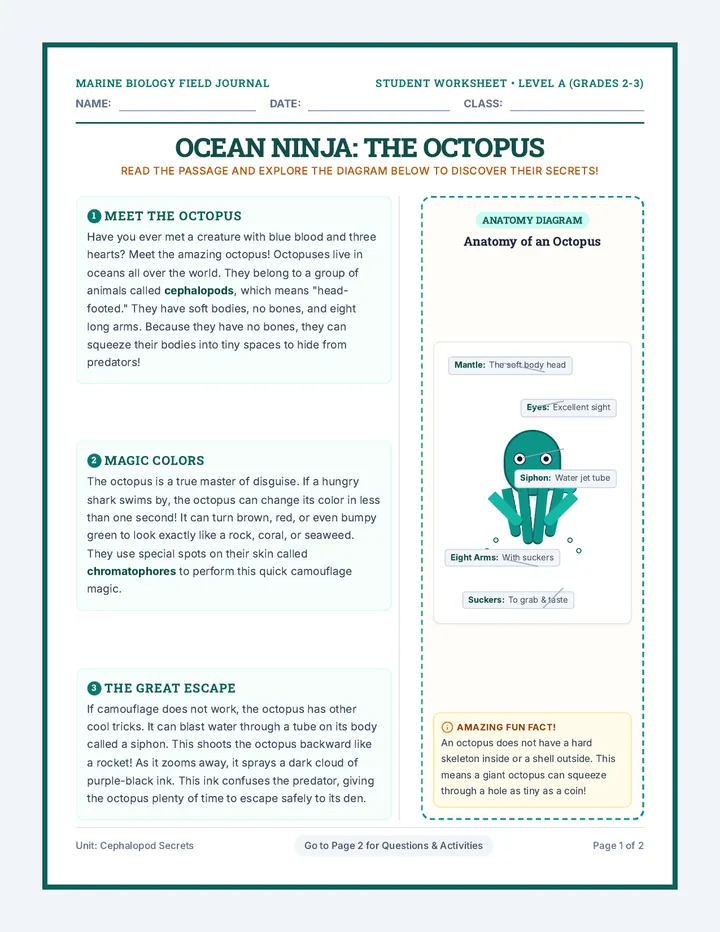
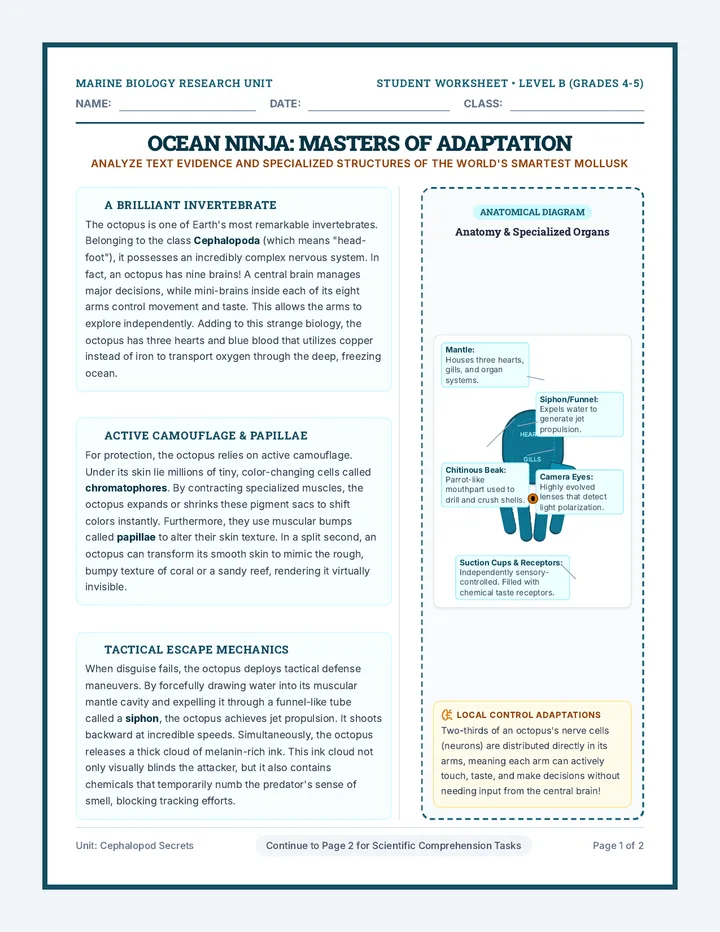
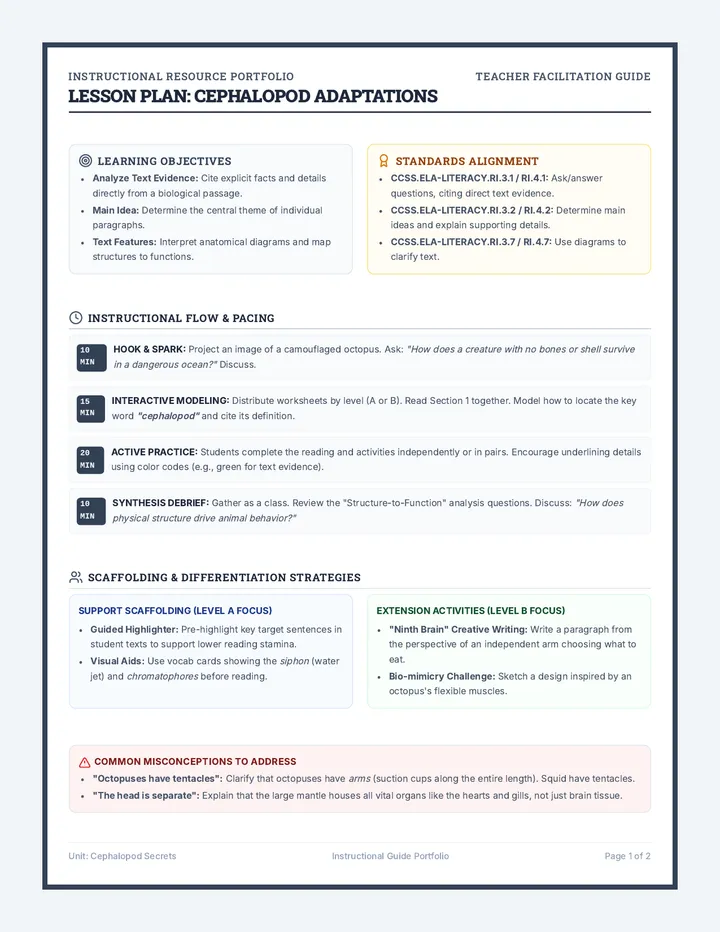
A differentiated reading comprehension unit focusing on the fascinating adaptations, anatomy, and intelligence of octopuses. Students read level-adjusted passages, analyze text-feature diagrams, and practice finding direct text evidence and summarizing main ideas.
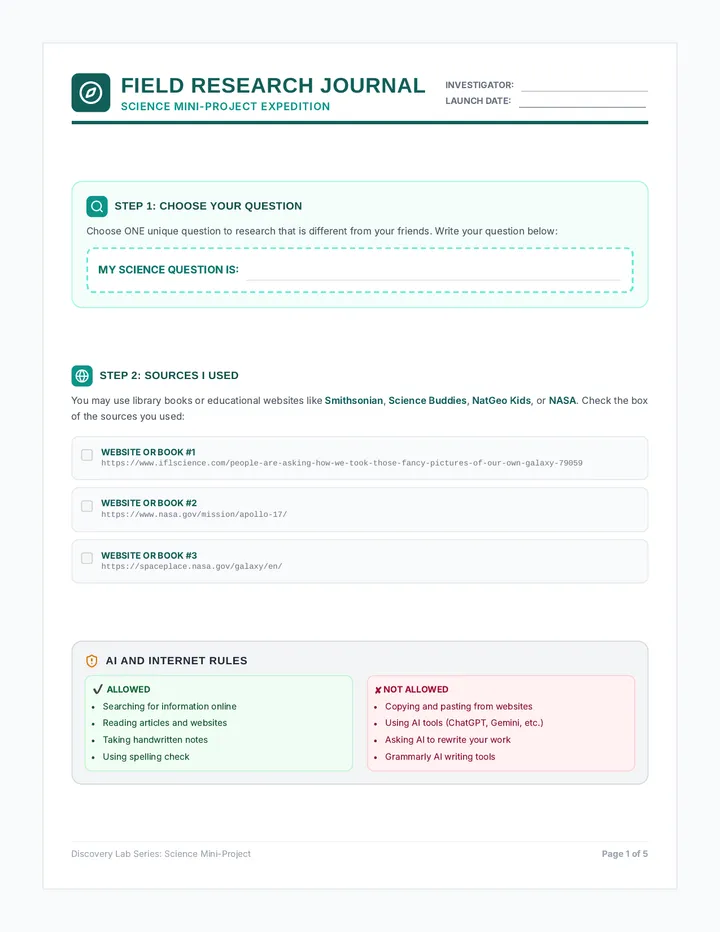
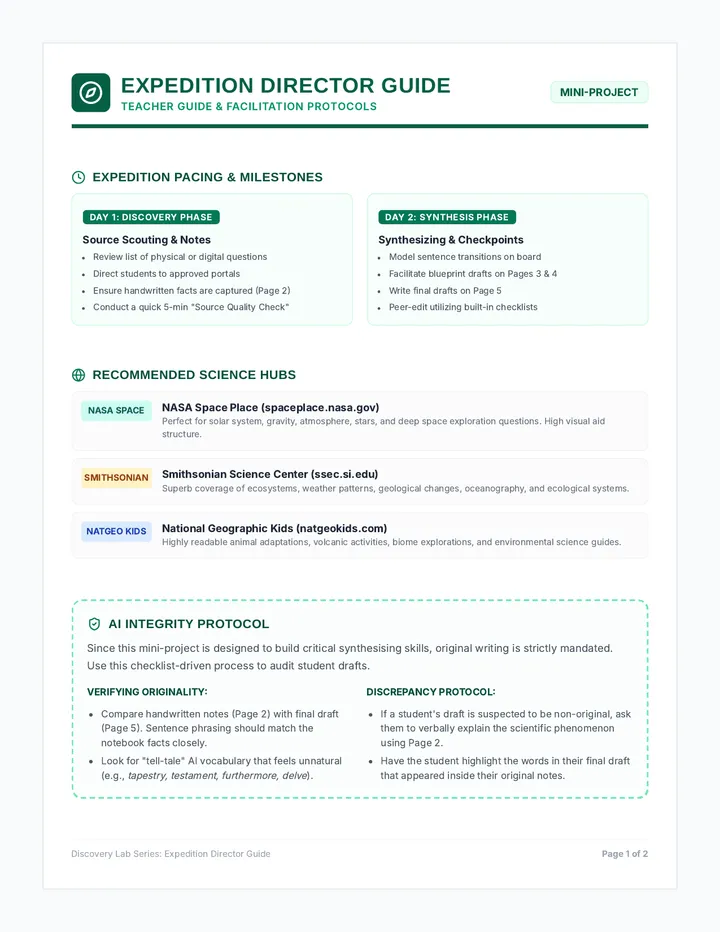
A student-led research project where students choose a science question, evaluate reliable sources, gather evidence, and draft a 3-4 paragraph explanation. Includes moderate visual scaffolding and structured checklists to guide independent inquiry and writing.
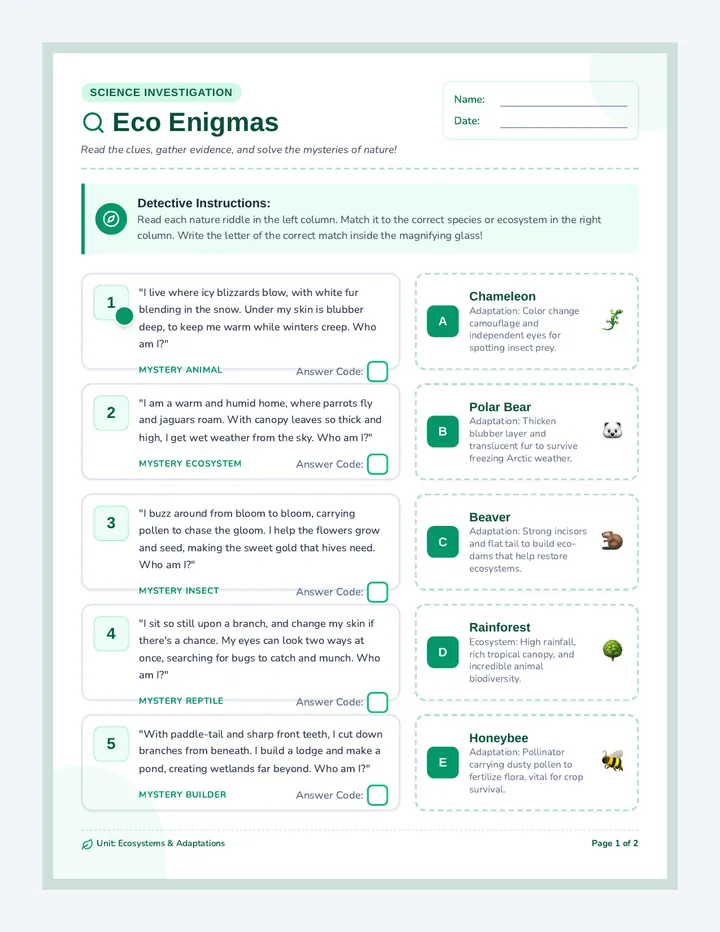
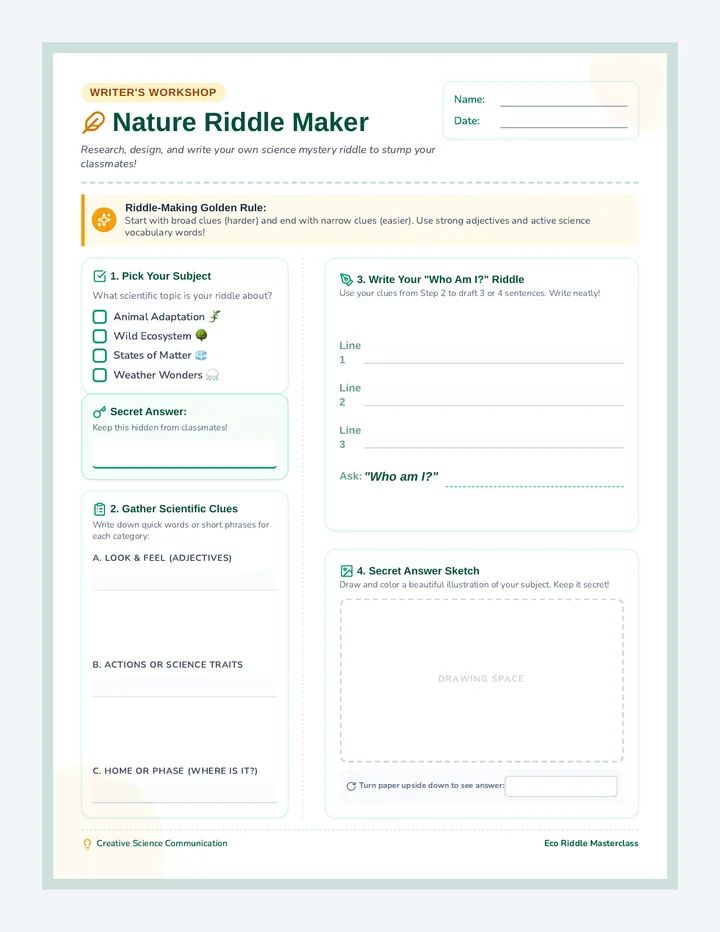
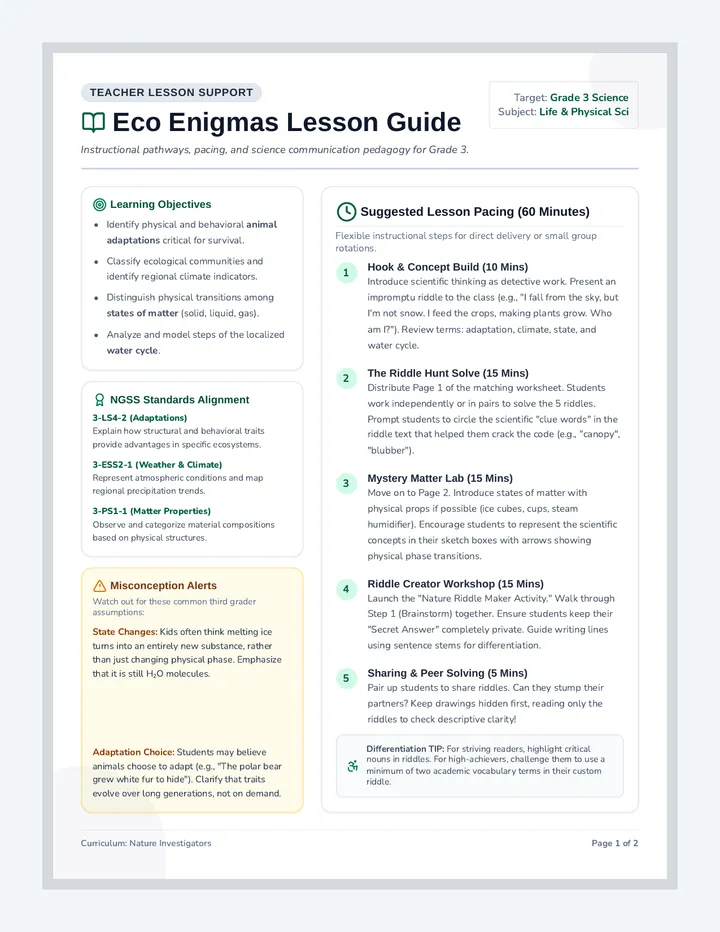
A hands-on science lesson for third graders using riddles to explore ecosystems, animal adaptations, weather, and states of matter. Students solve clues, match concepts, and author their own scientific riddles.
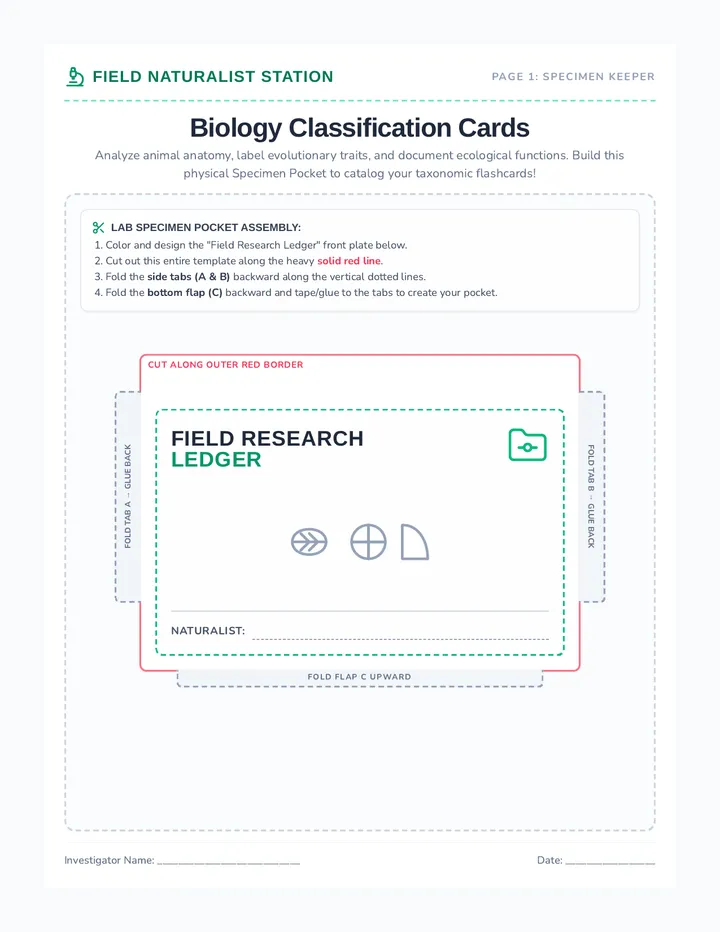
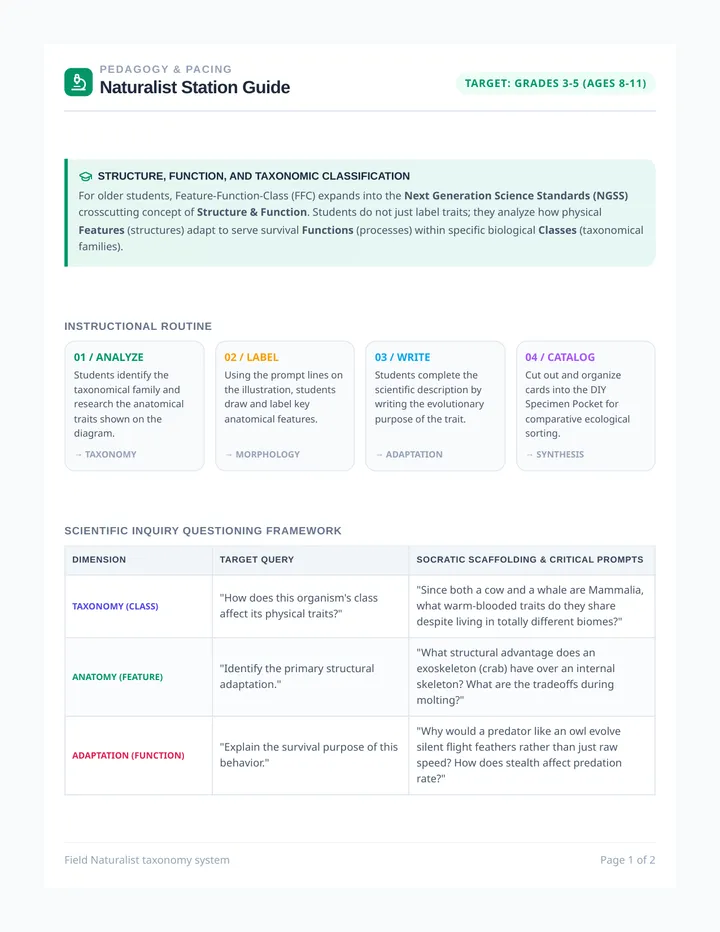
A biology and taxonomy sorting system designed for older kids (Grades 3-5). Students analyze evolutionary adaptations, label critical anatomical features, and categorize specimens by their taxonomic classes, habitats, and ecological functions.
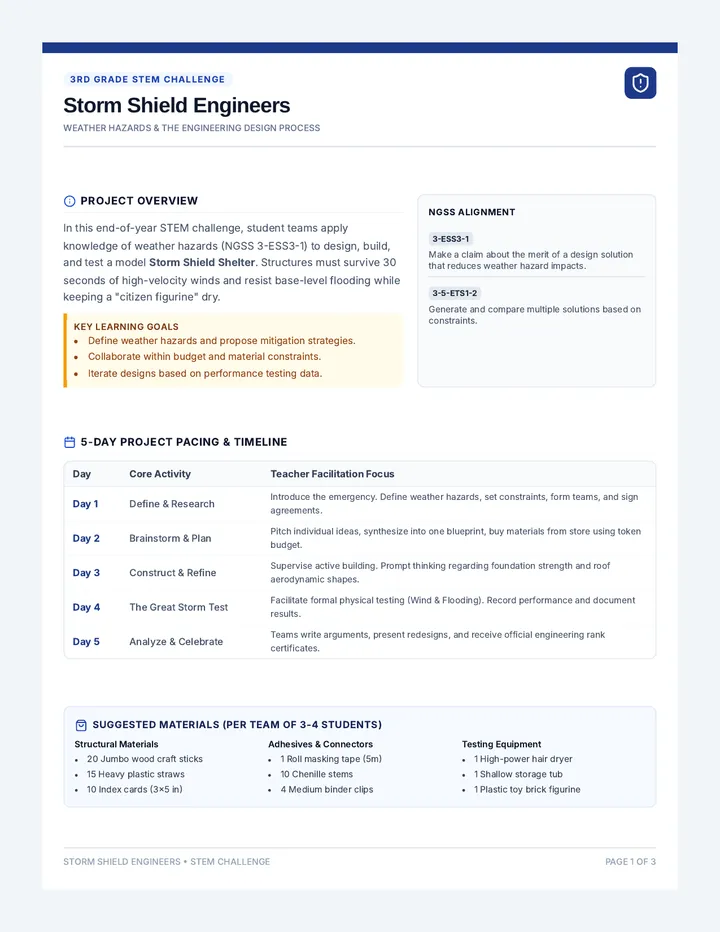
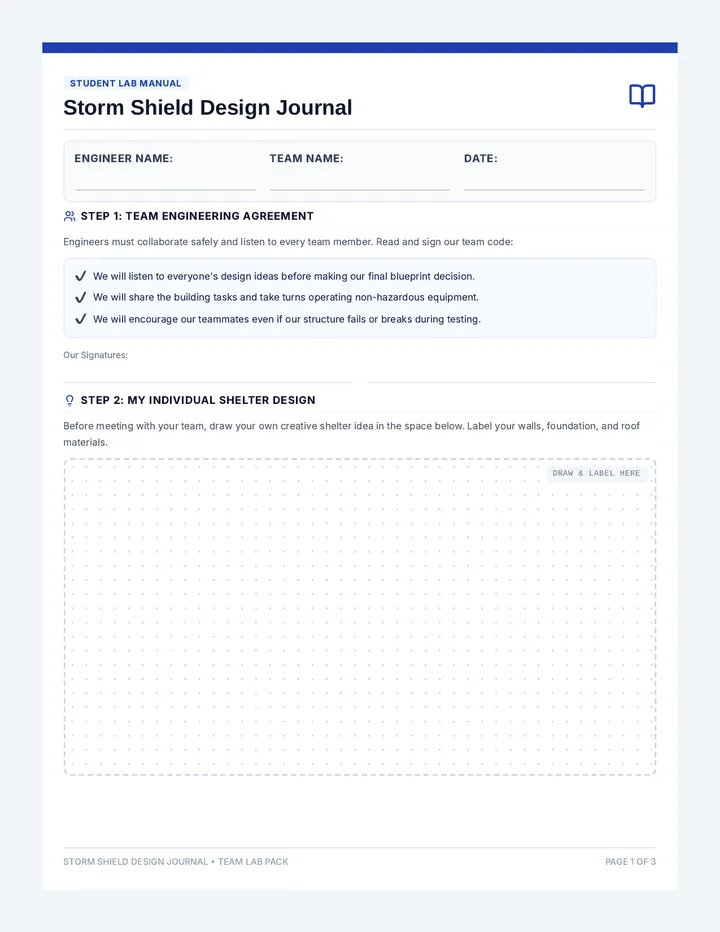
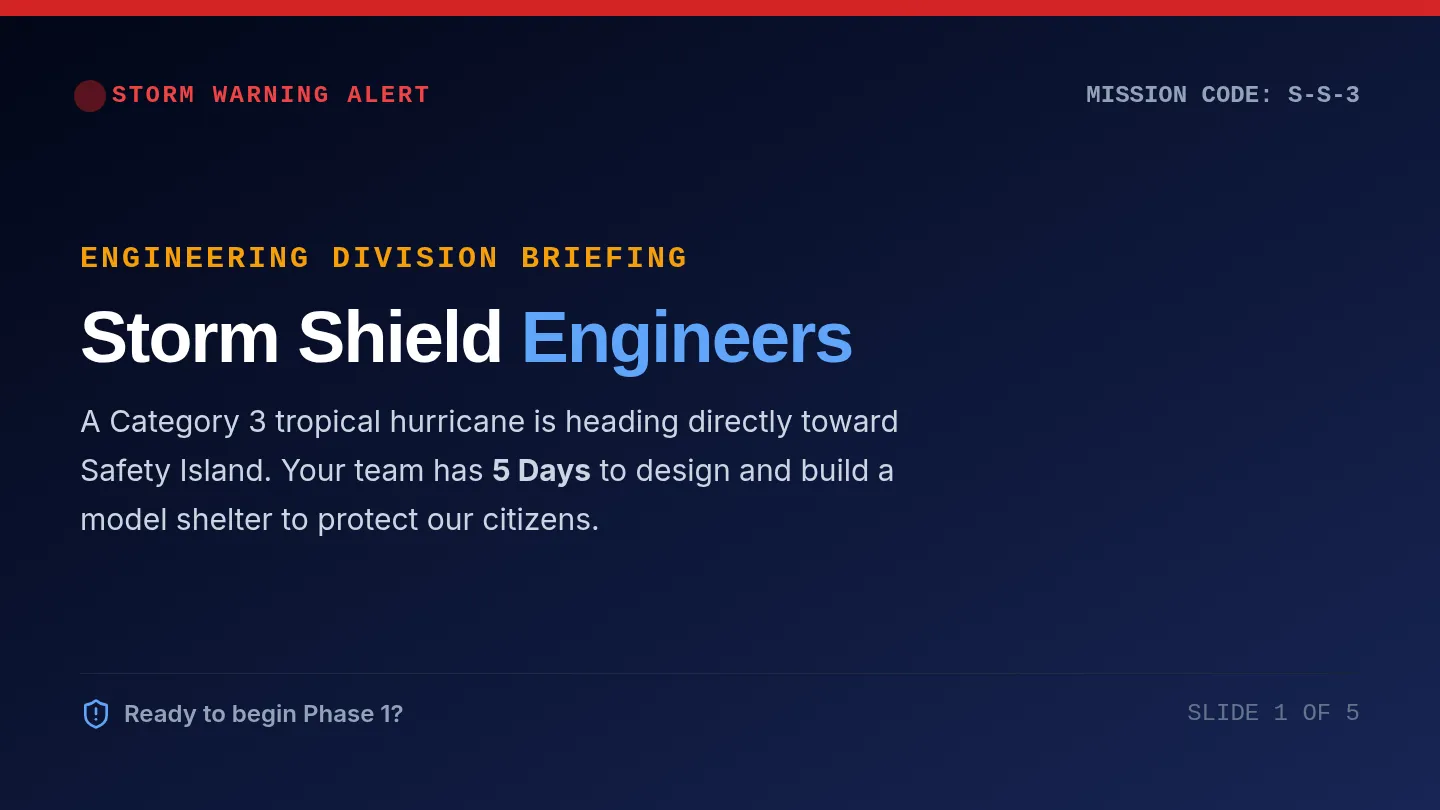
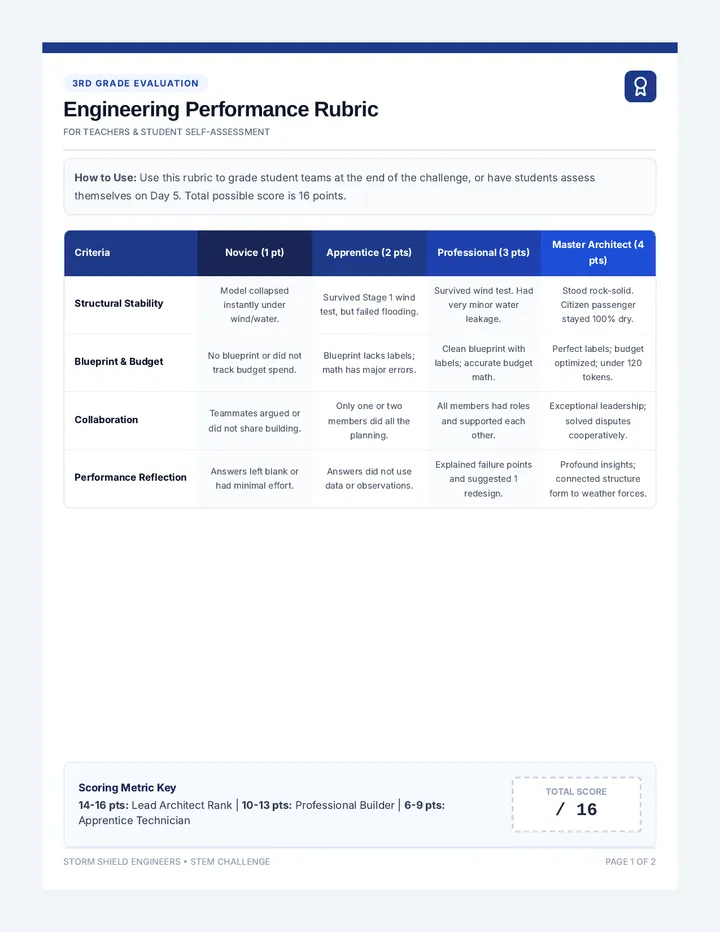
A collaborative, hands-on 3rd-grade STEM challenge where student engineering teams design, build, and test a model storm shelter that can survive wind and water hazards. Students apply weather hazard standards while experiencing the complete engineering design process over a multi-day timeline.
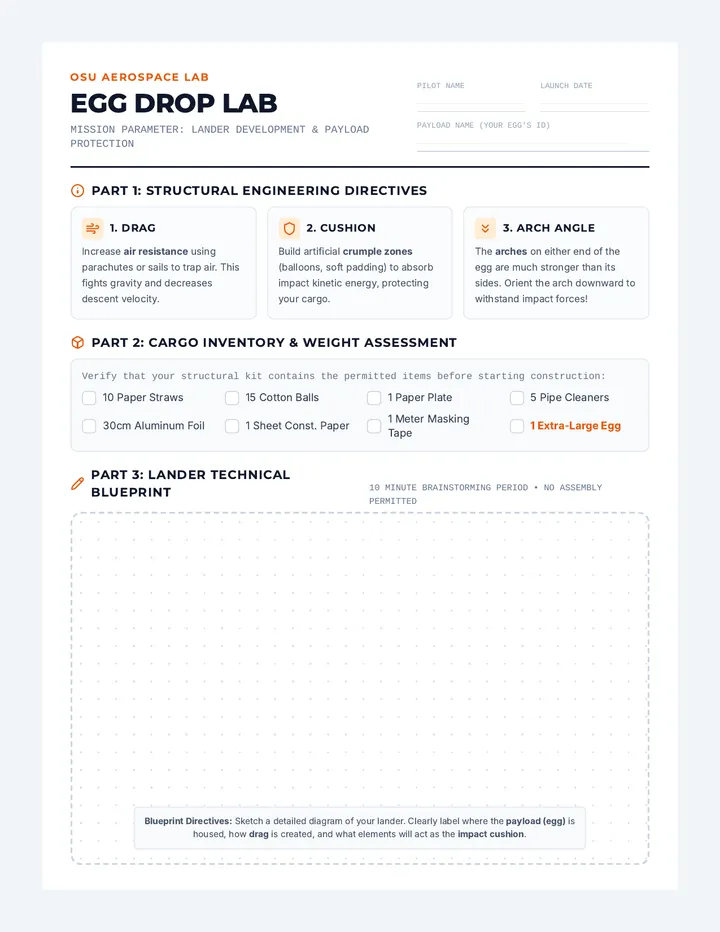
An engaging, hands-on physics and engineering lesson where students design, build, and test protective landing craft for fragile payloads (eggs), exploring forces, deceleration, and structural integrity.
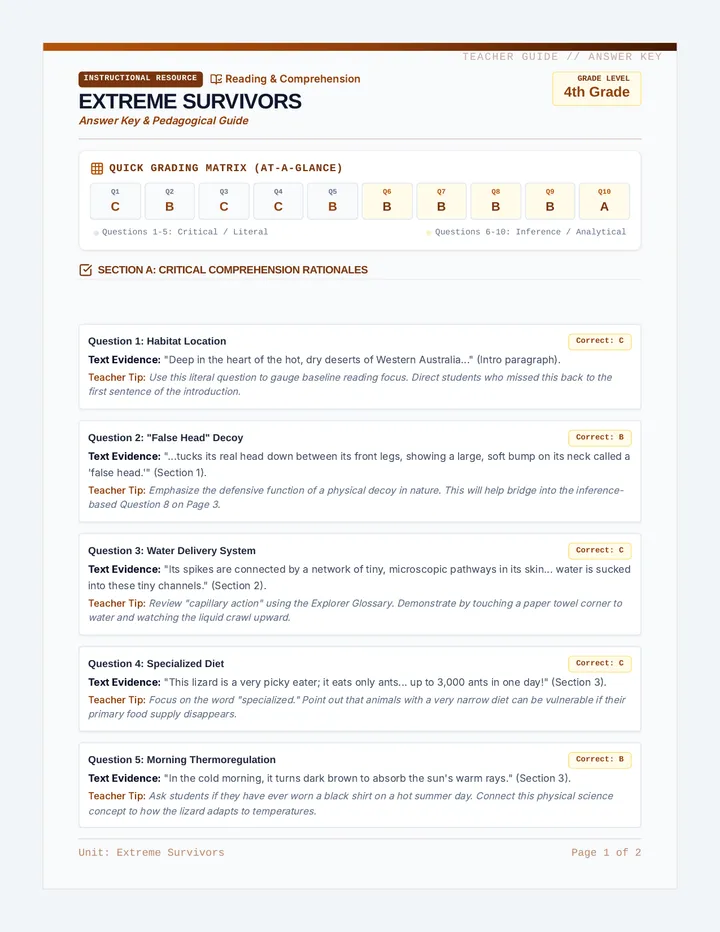
An on-grade level reading and comprehension unit focusing on how extreme desert animals, specifically the Thorny Devil, utilize highly specialized physical and behavioral adaptations to survive in the arid Australian Outback.
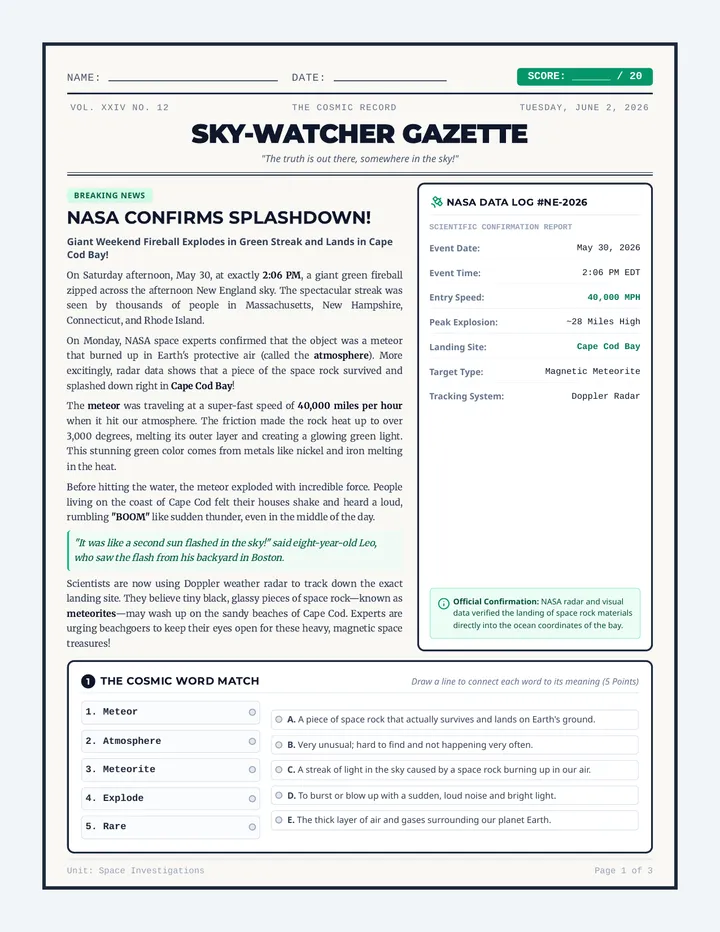
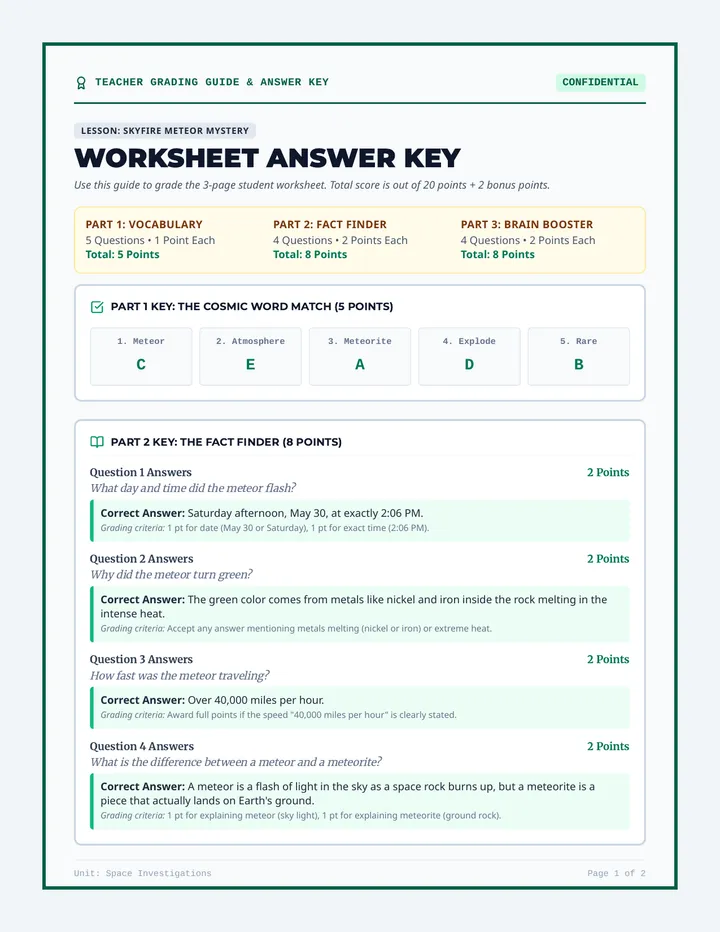
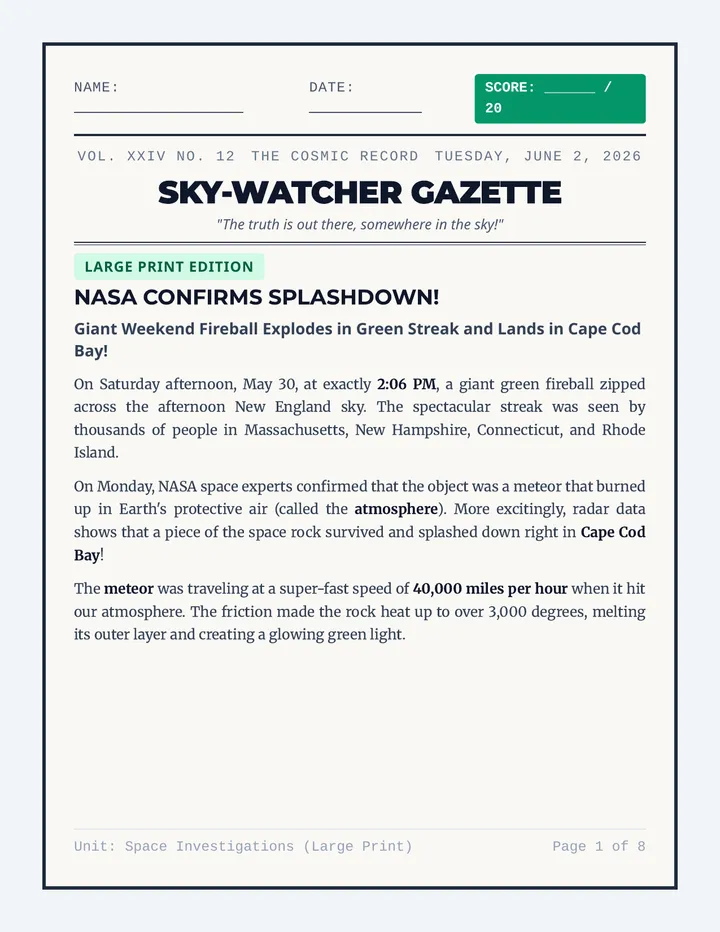
A reading comprehension lesson for 2nd and 3rd-grade students based on the spectacular meteor explosion over New England. Features engaging news-style reading, vocabulary challenges, comprehension questions, and a creative activity.
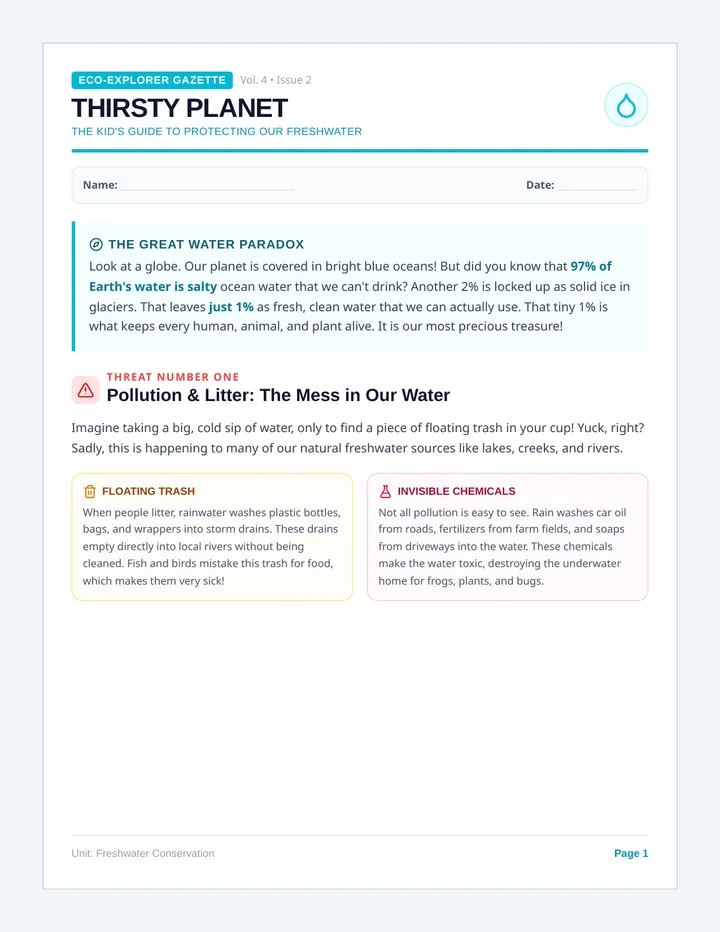
A lesson focused on understanding the primary threats to our freshwater supply, featuring an engaging, student-friendly explorer article on pollution, home water waste, droughts, and growing demand.
A comprehensive NYS Biology Regents preparation lesson focused on mastering the Claim-Evidence-Reasoning (CER) framework through the lens of Homeostasis and Feedback Mechanisms (specifically blood glucose regulation). Designed with heavy scaffolding, visual organizers, and multiple-choice matching for struggling learners.