A focused review of frequently confused homophones common in 10th-grade MCAS testing and formal academic writing. Students will use a graphic organizer to distinguish between word pairs and apply their knowledge through practice exercises.
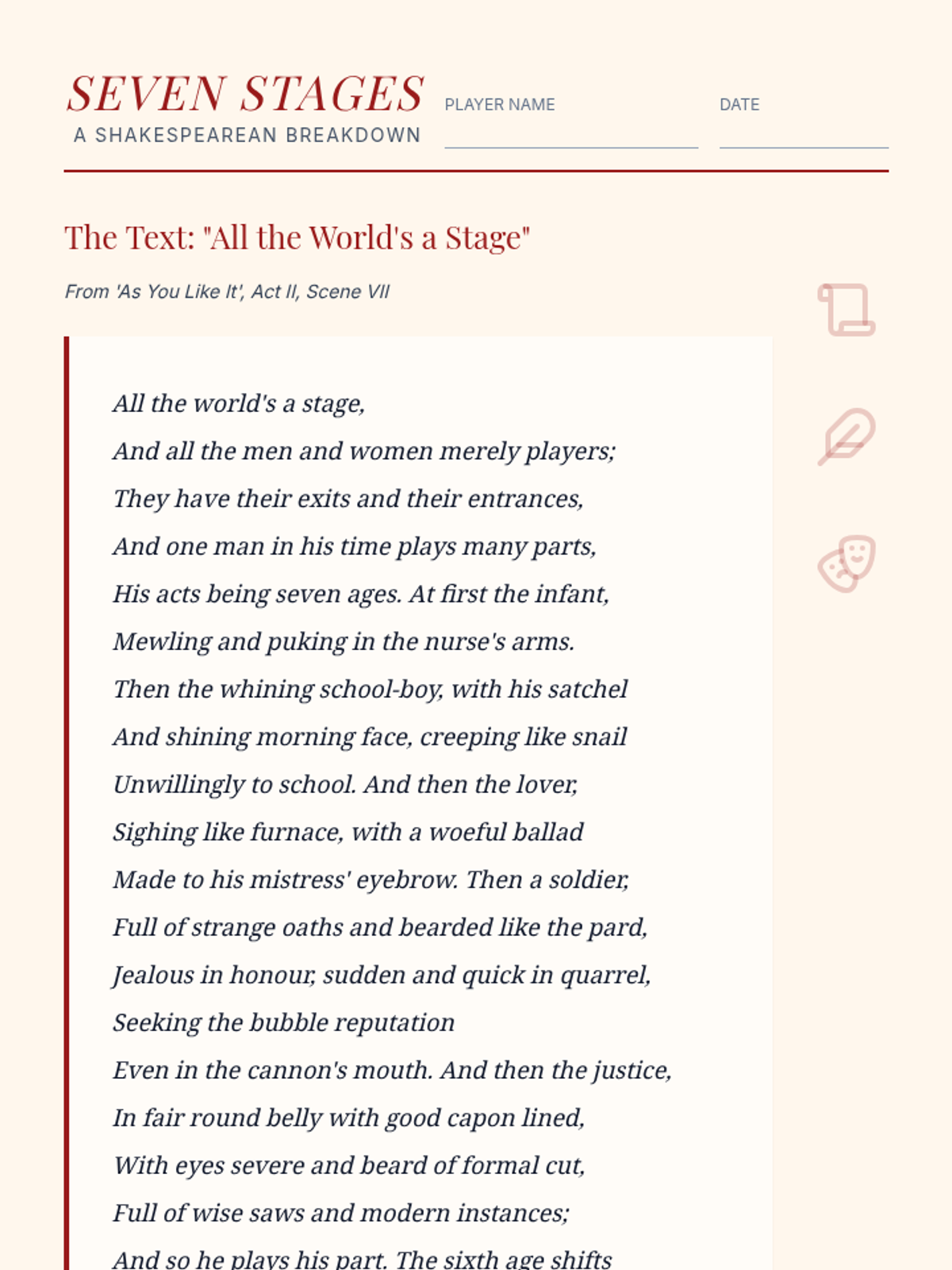
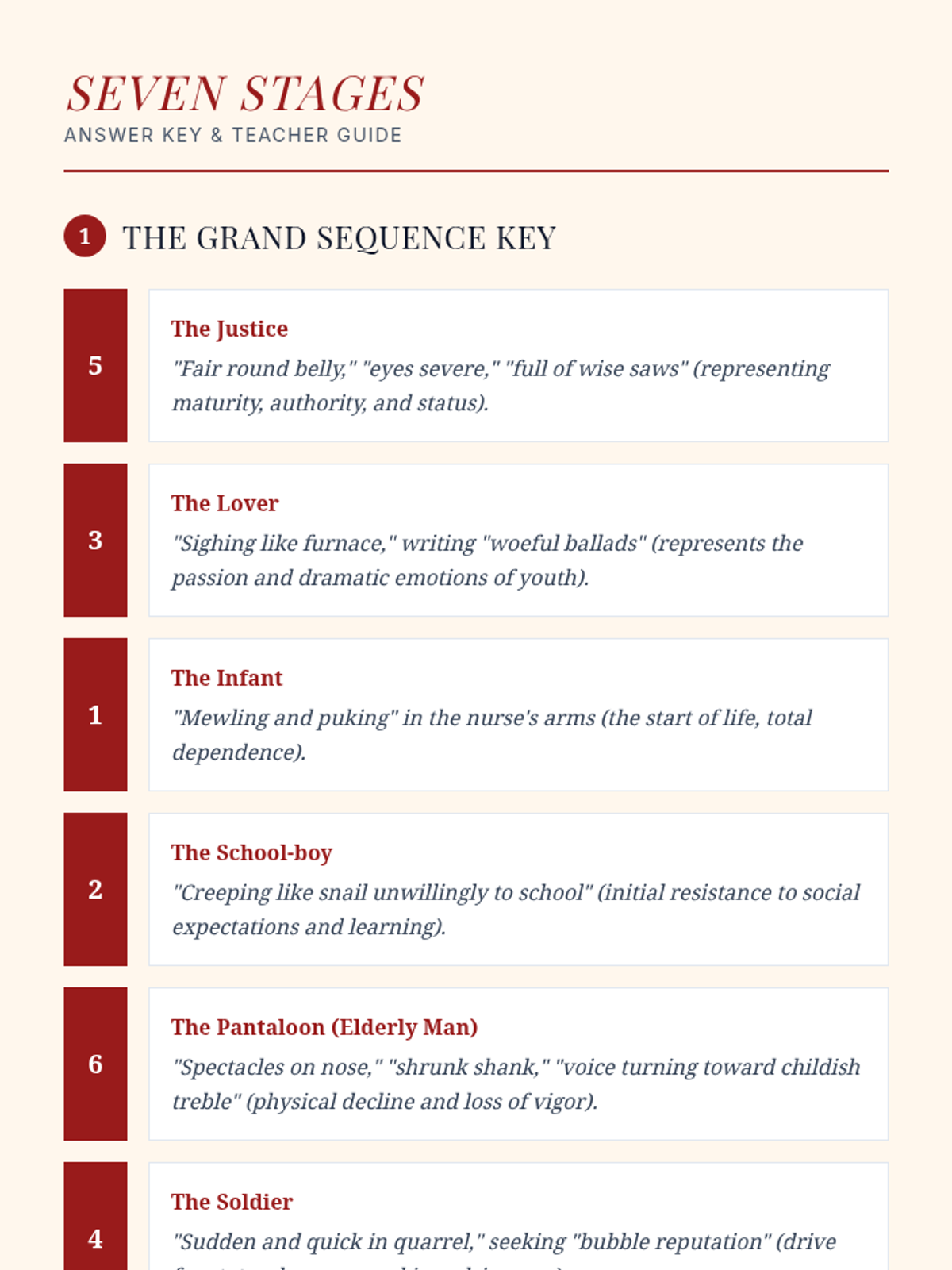
A lesson focused on analyzing Shakespeare's 'All the world's a stage' monologue, emphasizing sequencing of the seven ages of man and identifying the central theme.
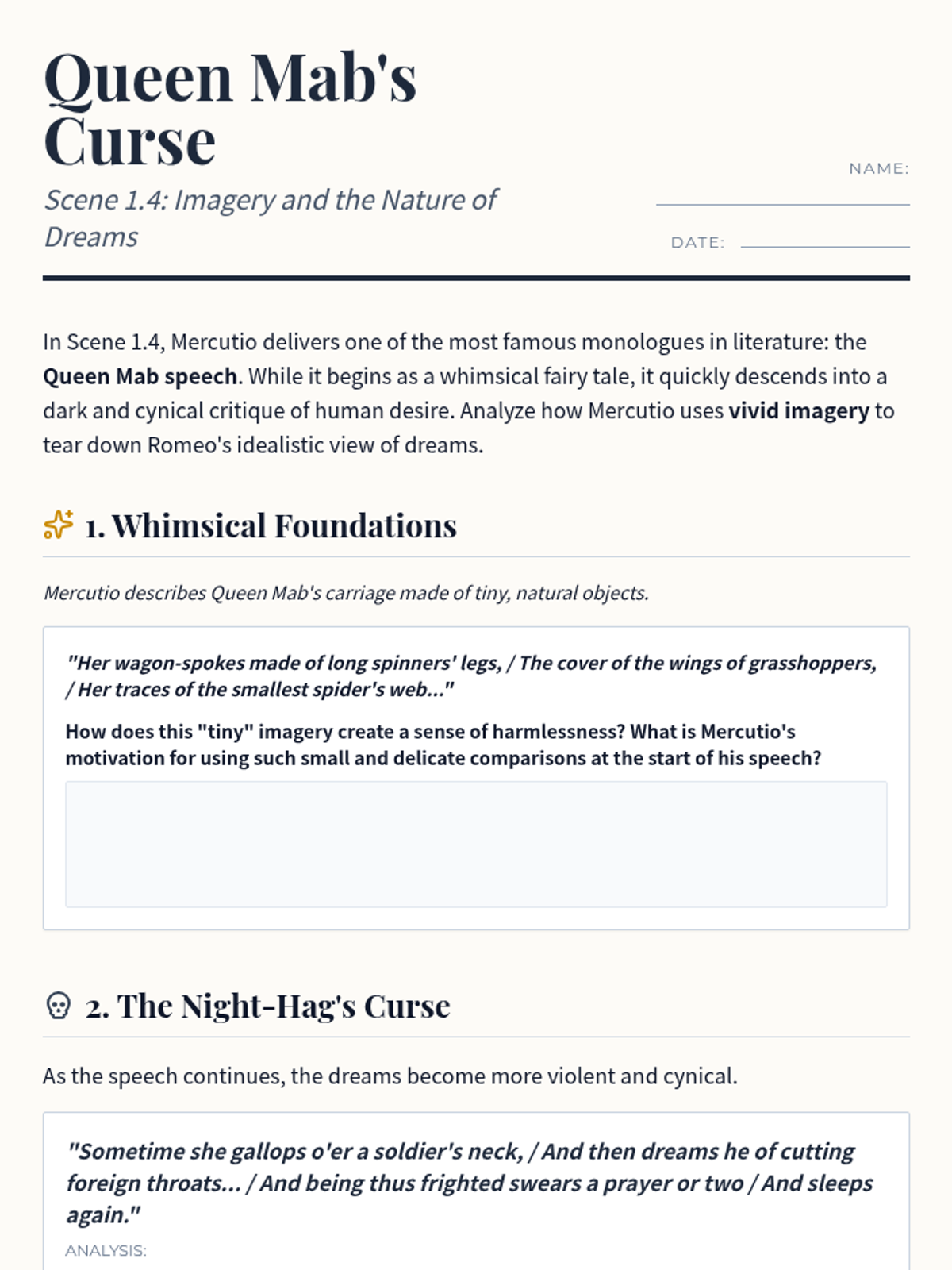
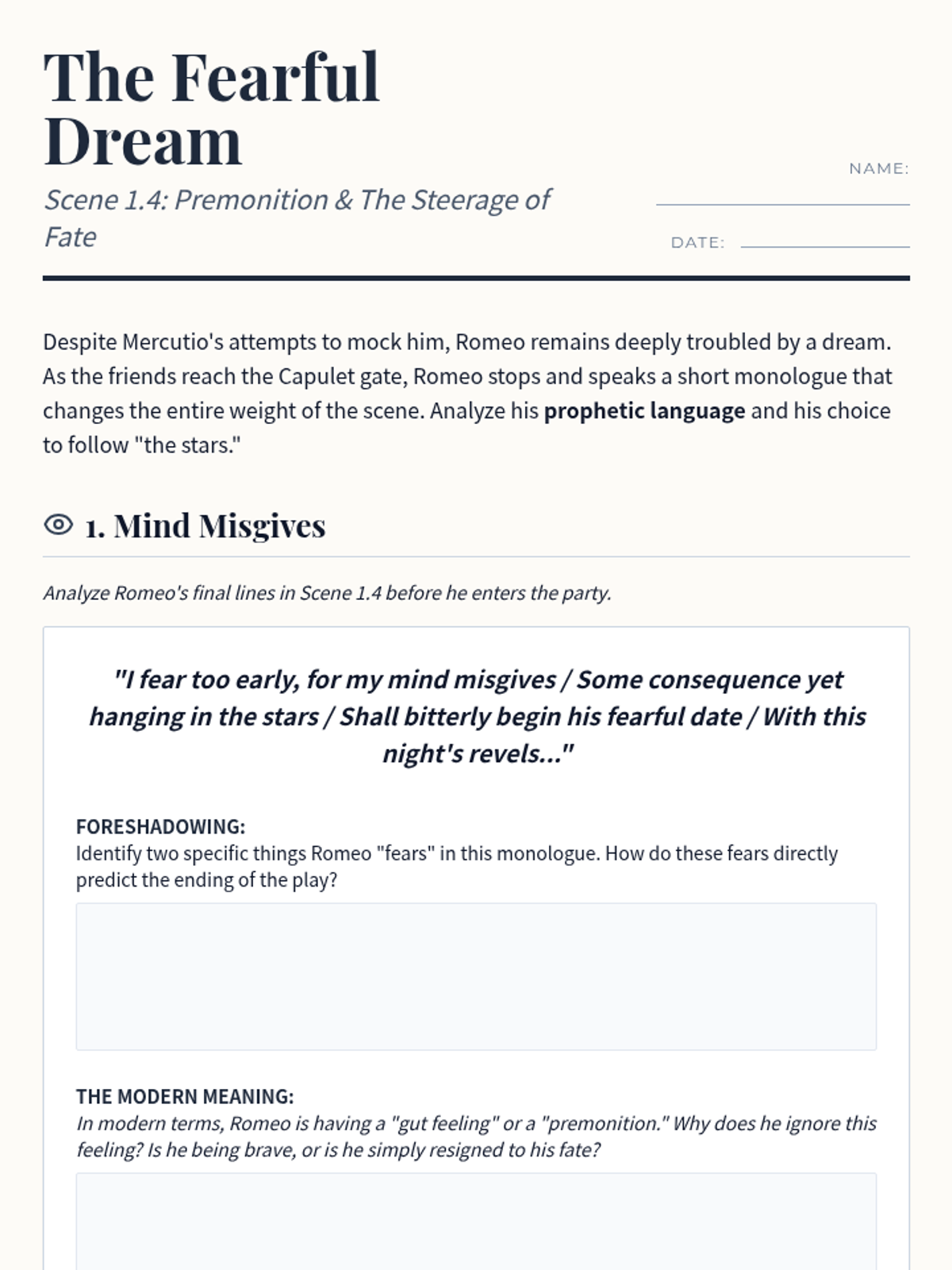
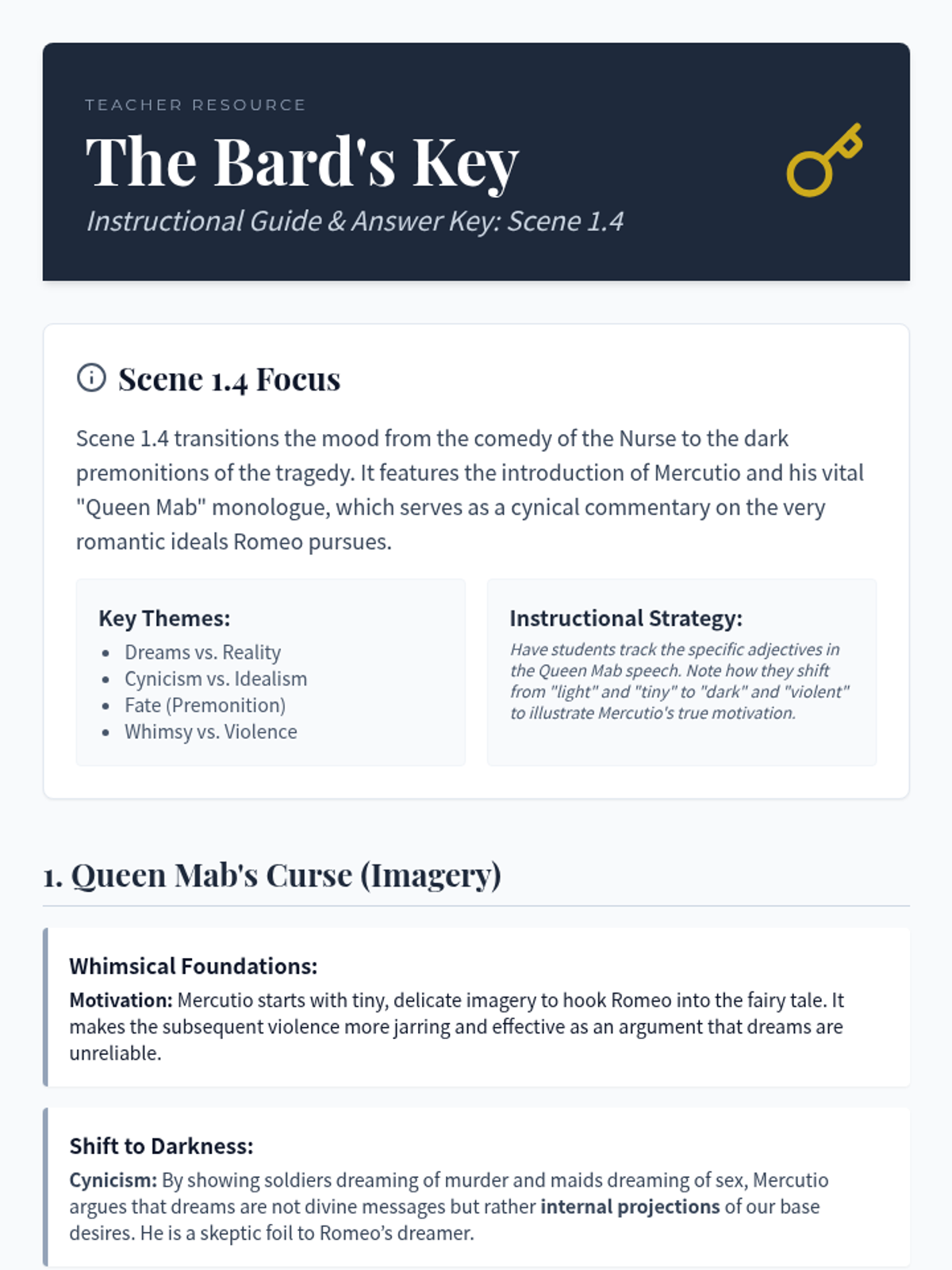
A study of Act 1, Scene 4, where Romeo, Mercutio, and Benvolio prepare to crash the Capulet ball. Students will analyze Mercutio's vivid Queen Mab speech, Romeo's persistent melancholy and prophetic dreams, and the tension between whimsical fantasy and dark reality.
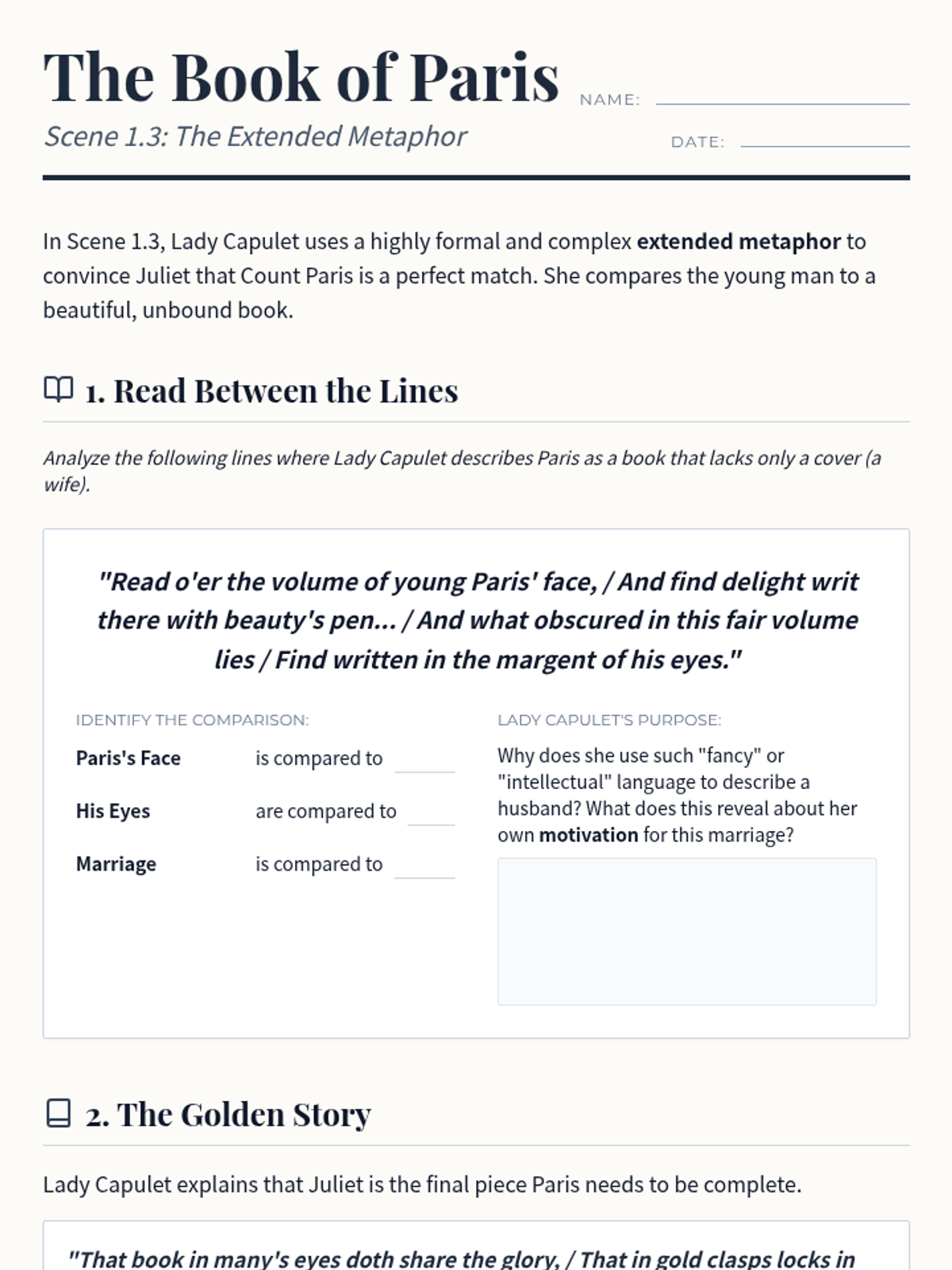
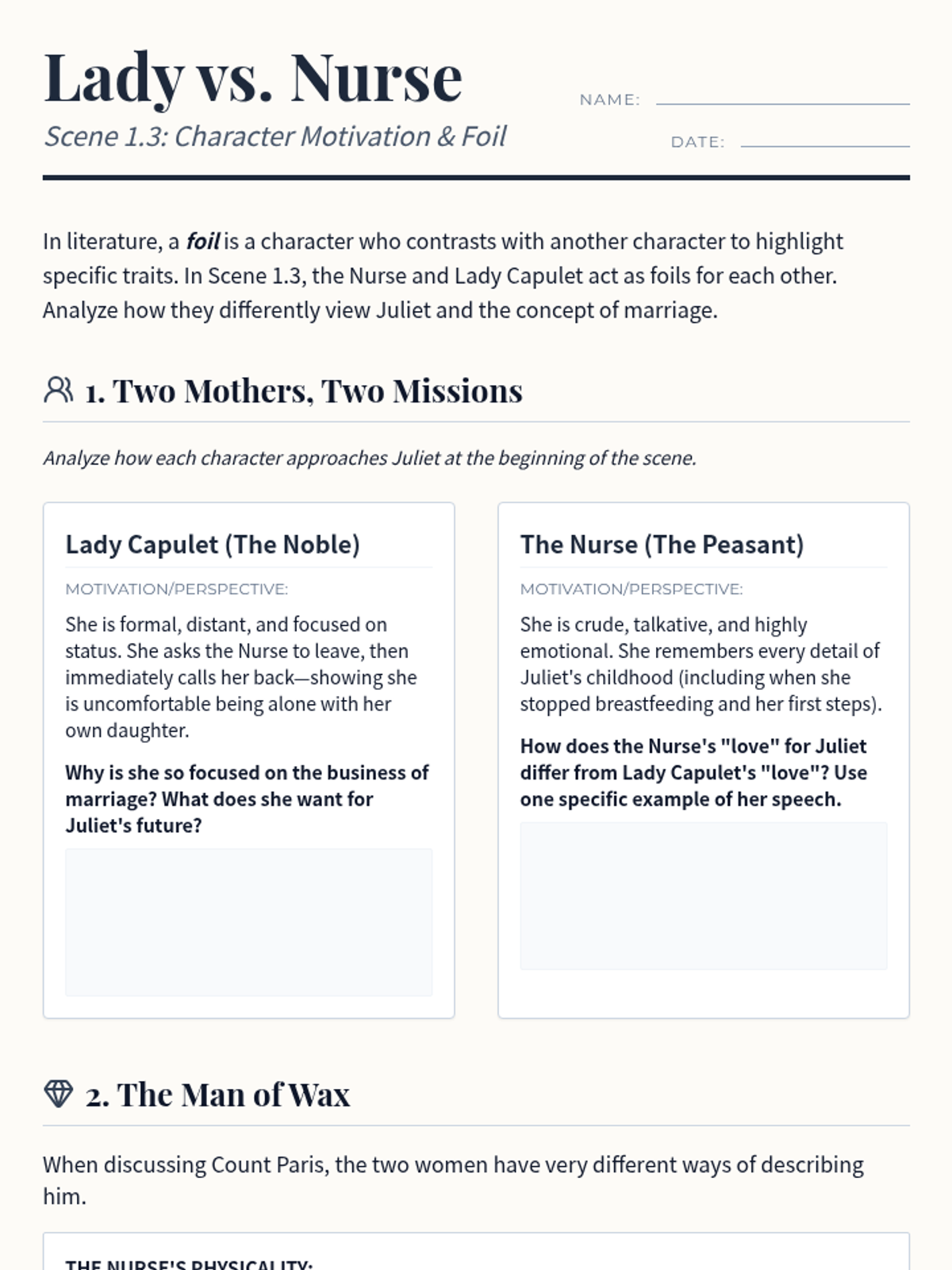
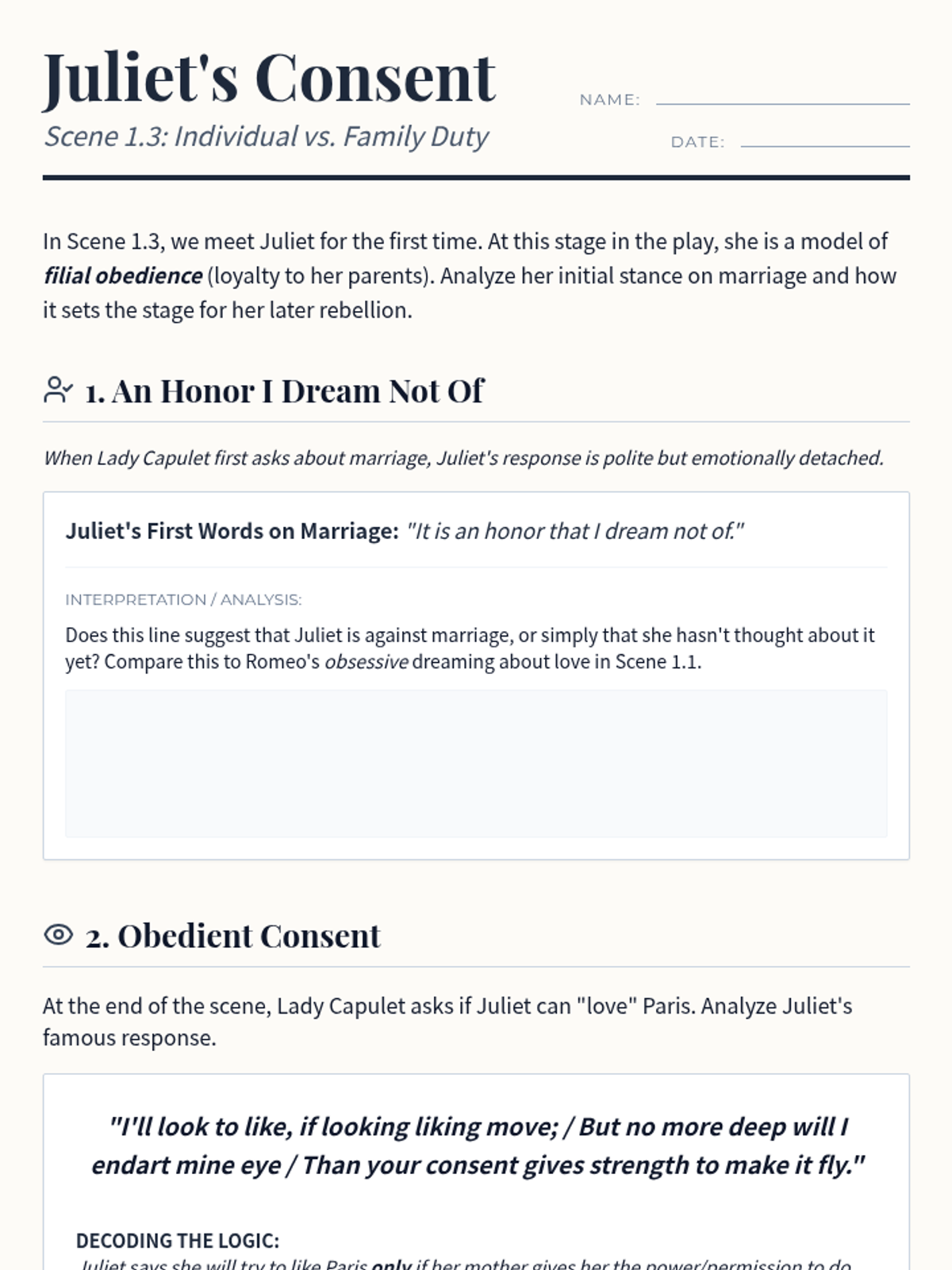
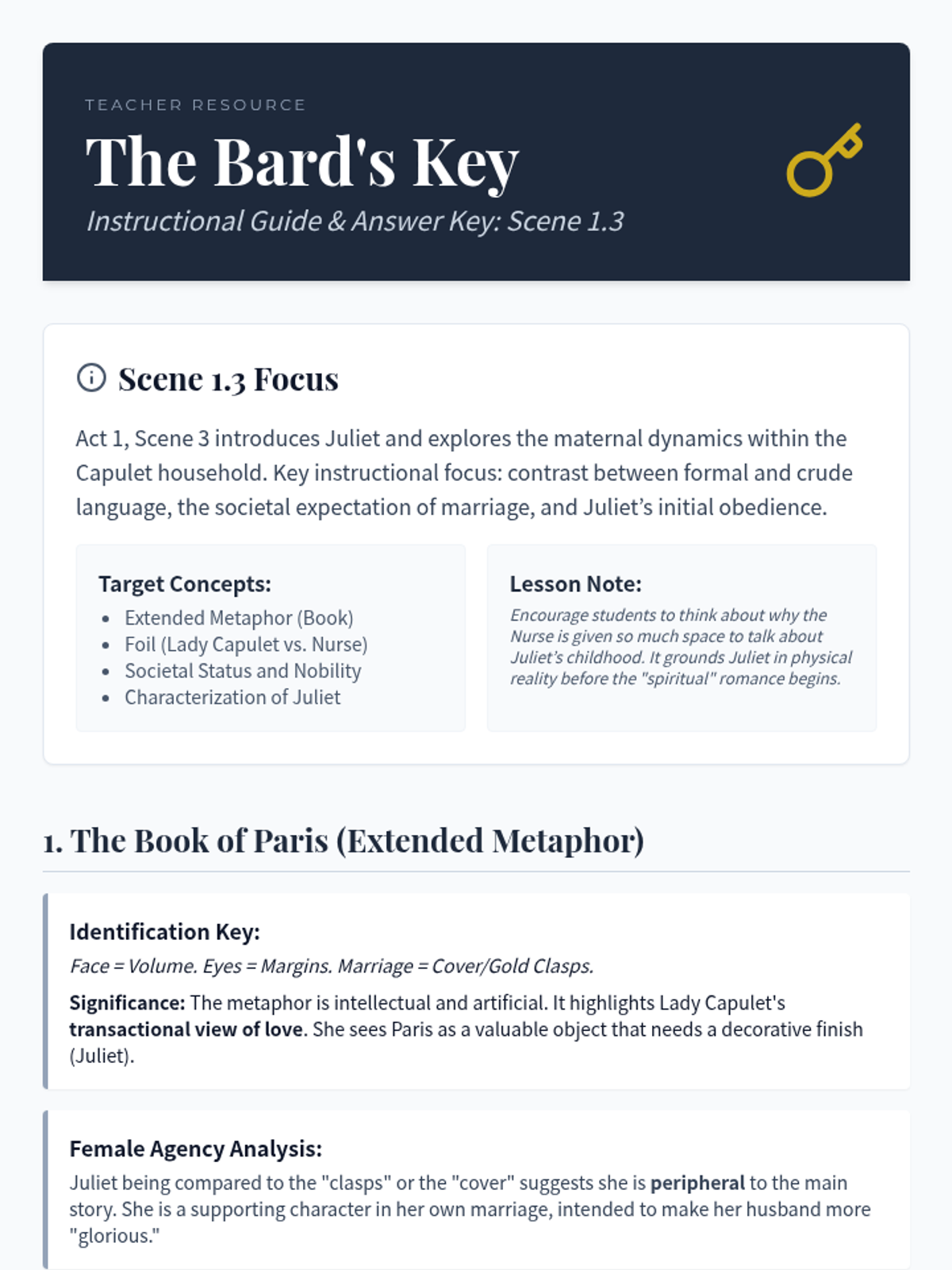
A study of Act 1, Scene 3, introducing the Nurse and Lady Capulet's proposal of marriage to Paris. Students will analyze the Nurse's coarse humor, Lady Capulet's extended metaphor of Paris as a book, and Juliet's initial stance on marriage and obedience.
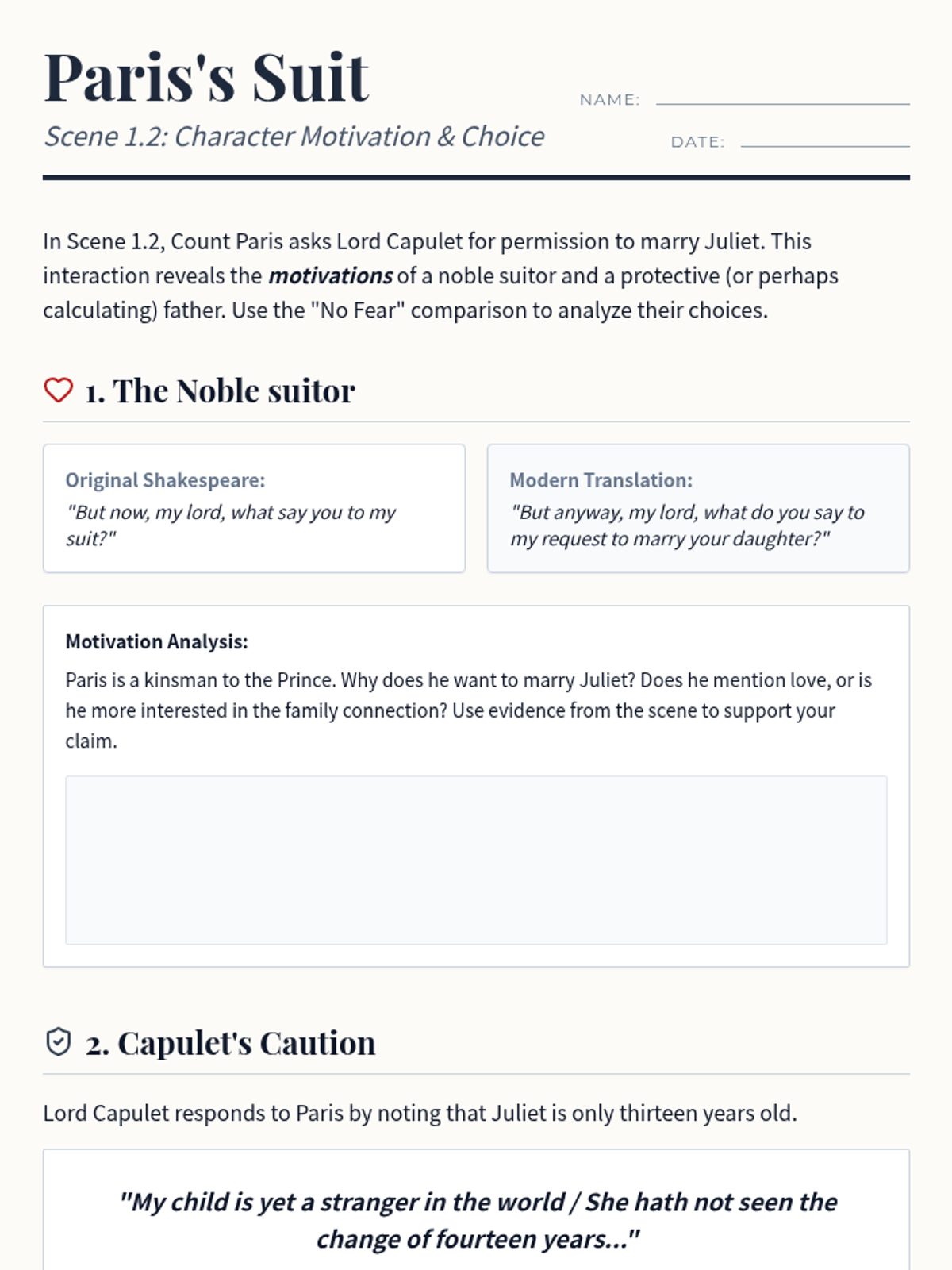
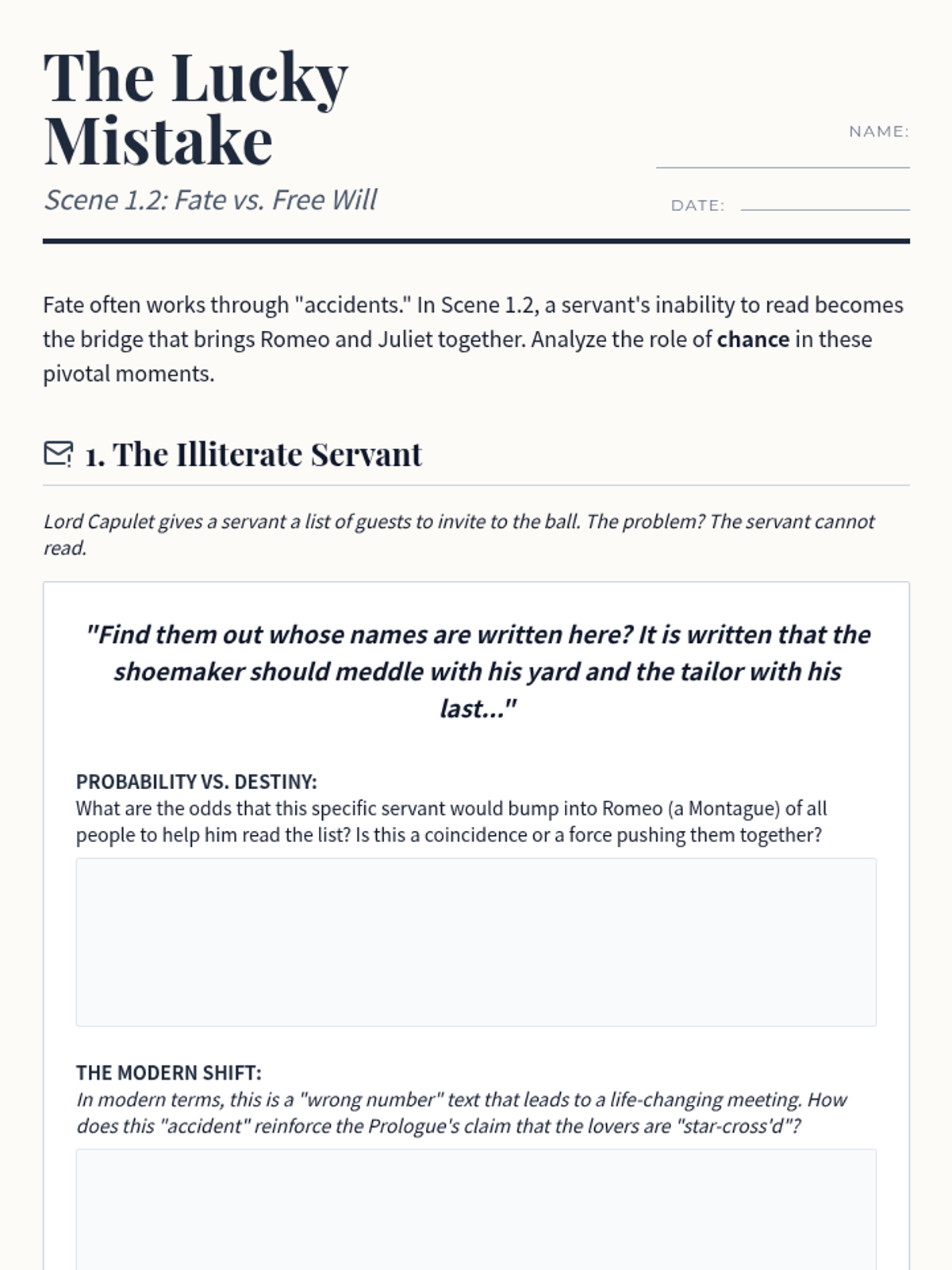
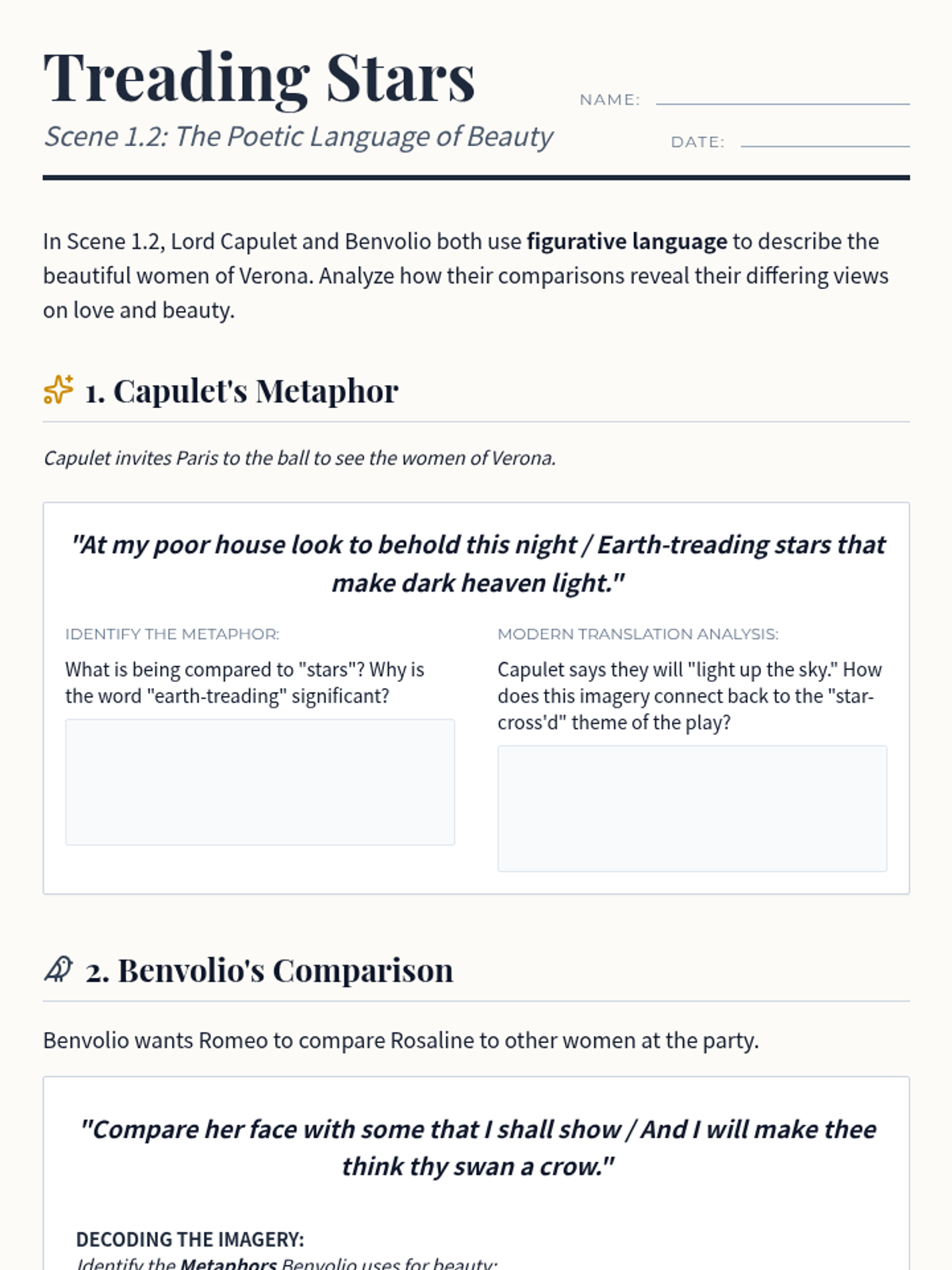
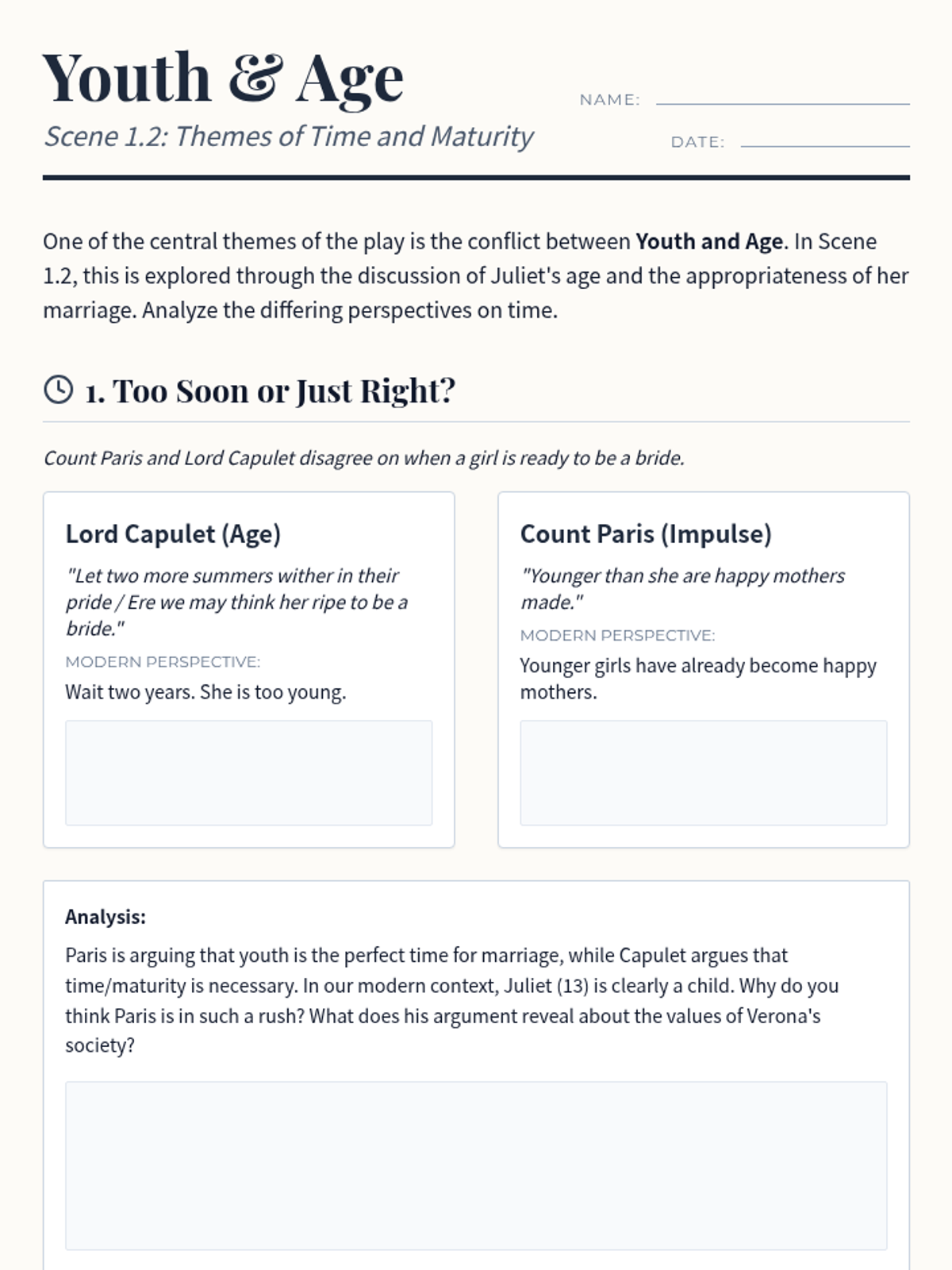
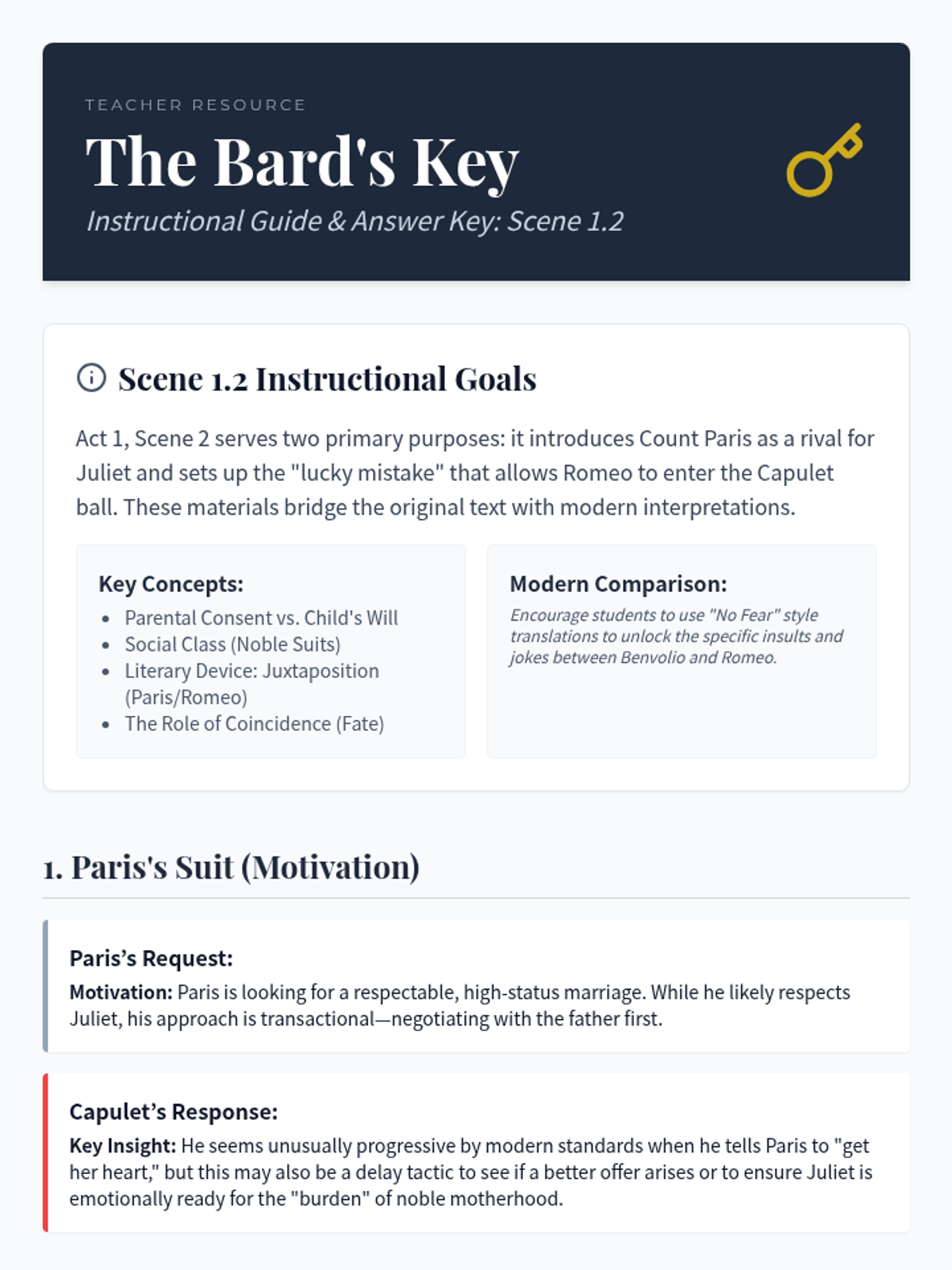
A study of Act 1, Scene 2, where Count Paris asks for Juliet's hand and Romeo and Benvolio discover the Capulet party through a chance encounter. Students will analyze the dynamics of parental choice, the role of chance, and the poetic language used to describe the ladies of Verona.
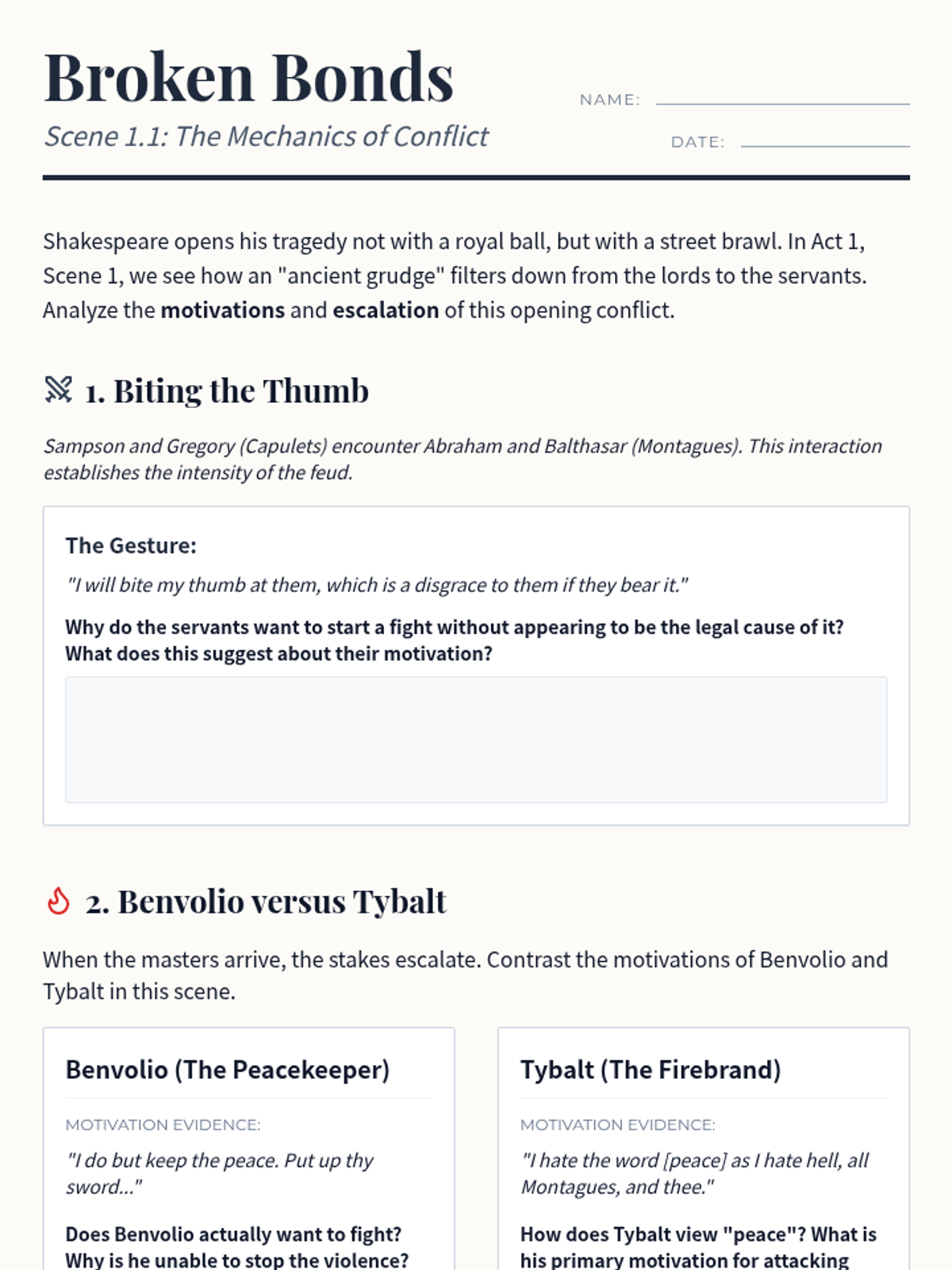
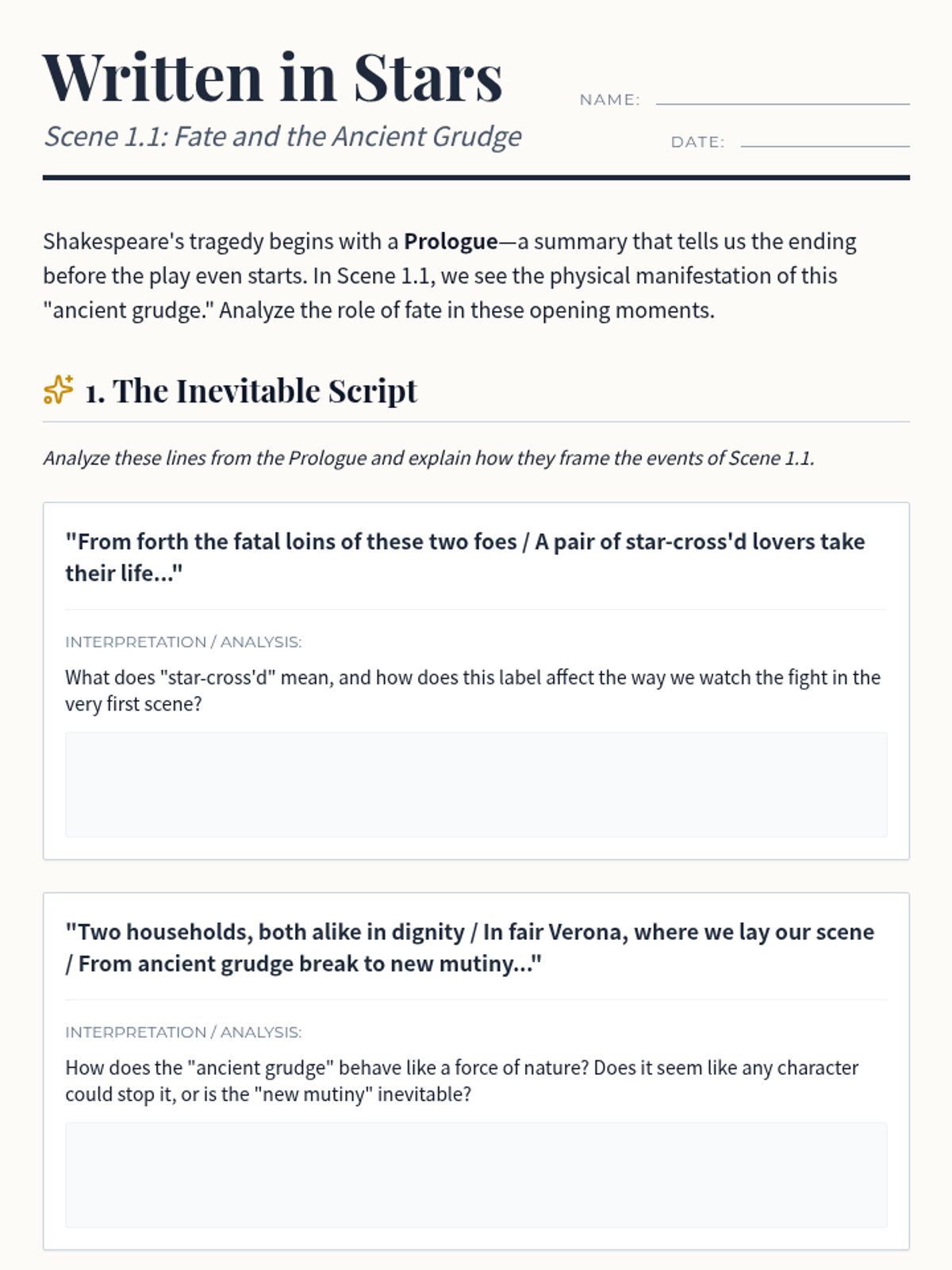
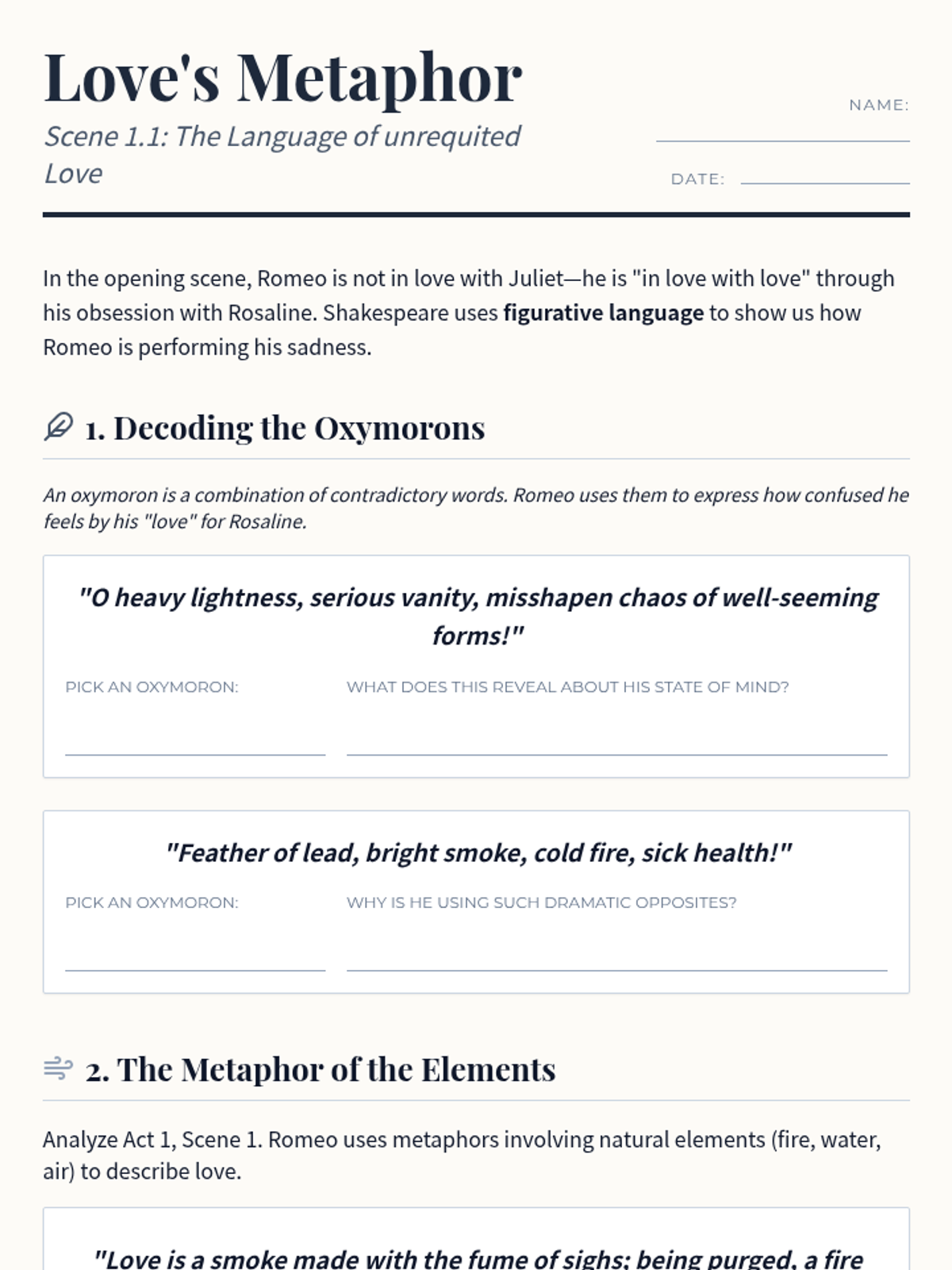
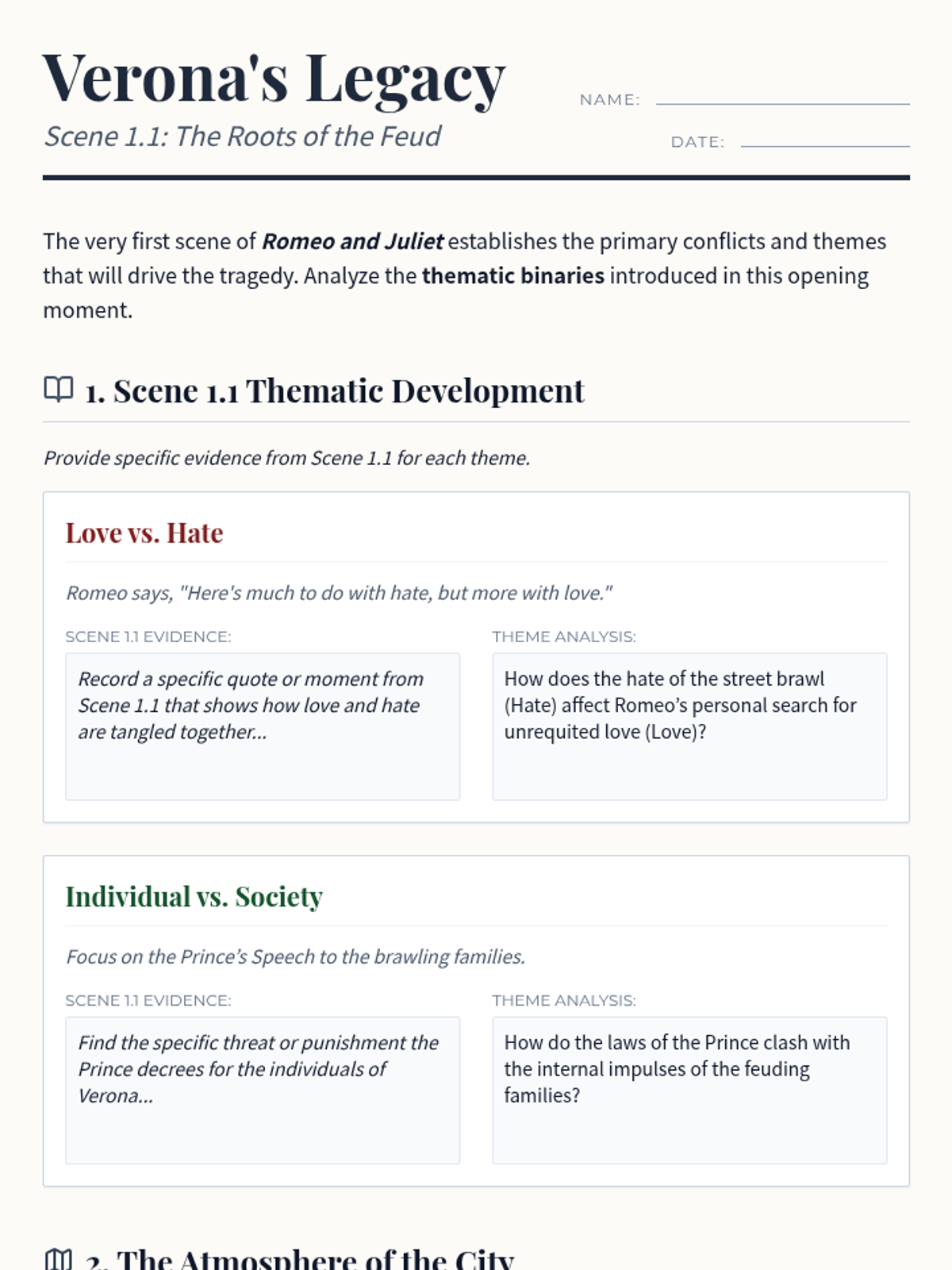
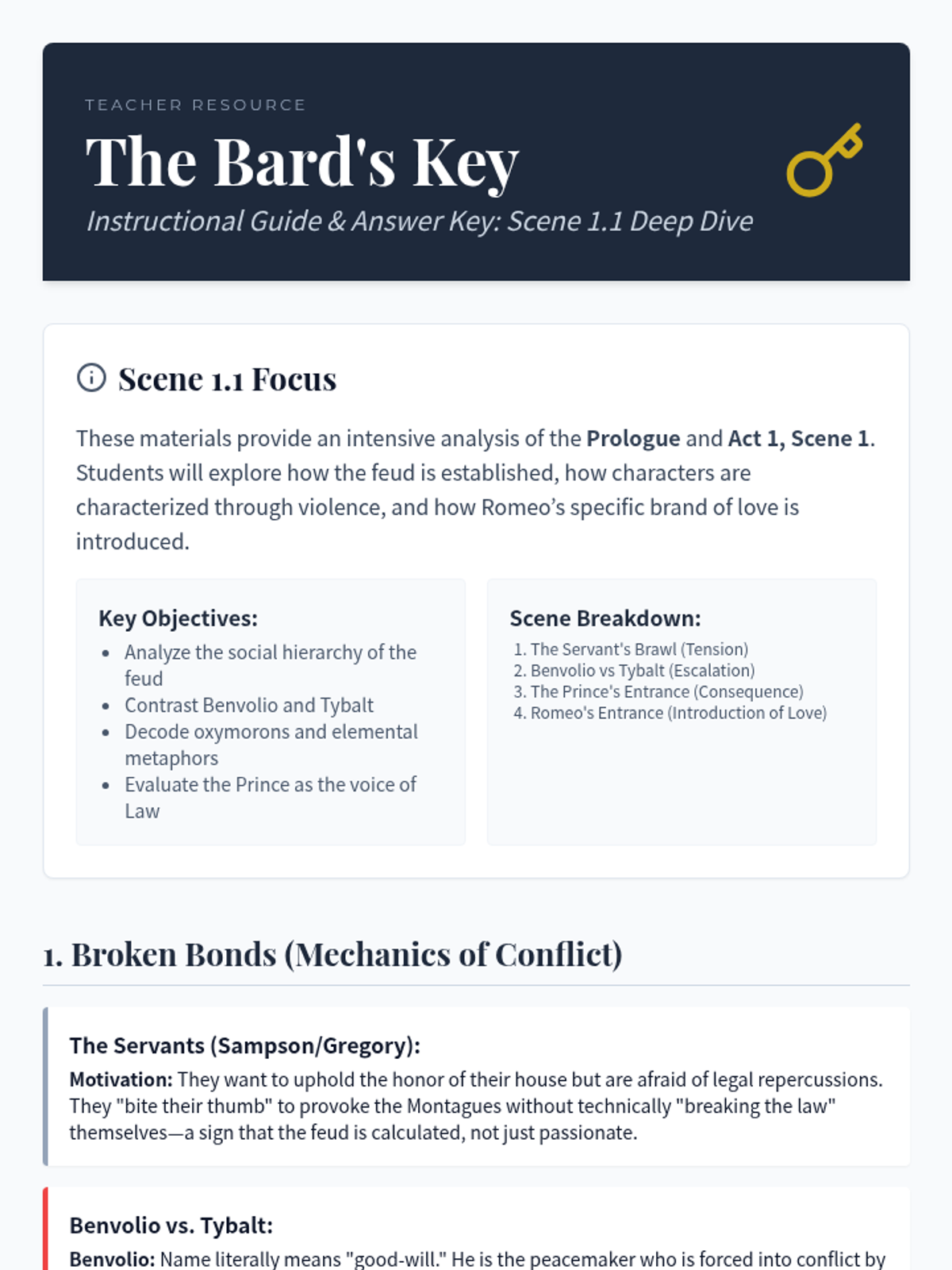
An intensive study of the opening scene and prologue of Shakespeare's Romeo and Juliet. Students will analyze the mechanics of the ancient grudge, the characterization of the principal families, and the specific poetic techniques used to establish Romeo's unrequited love for Rosaline.
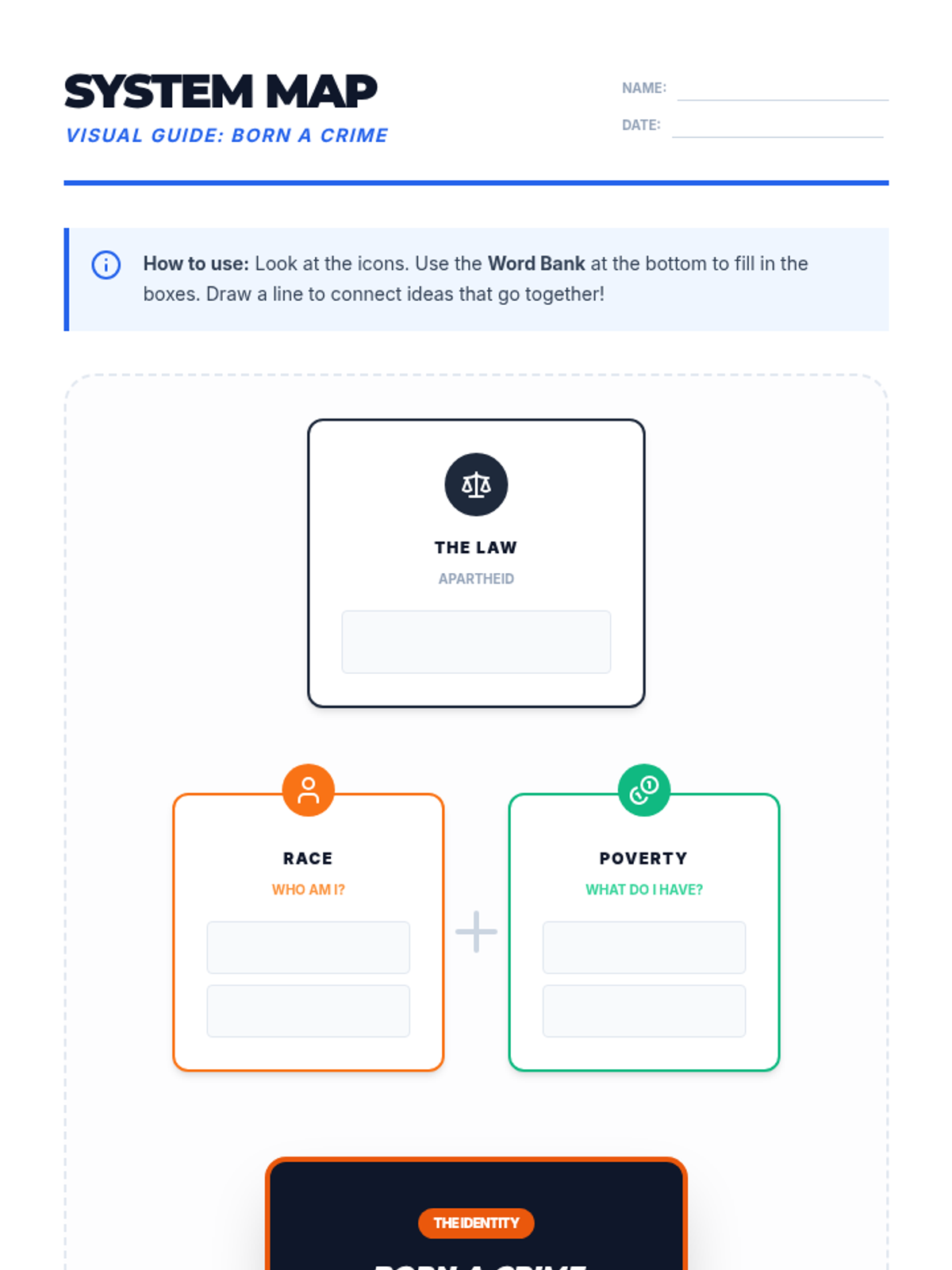
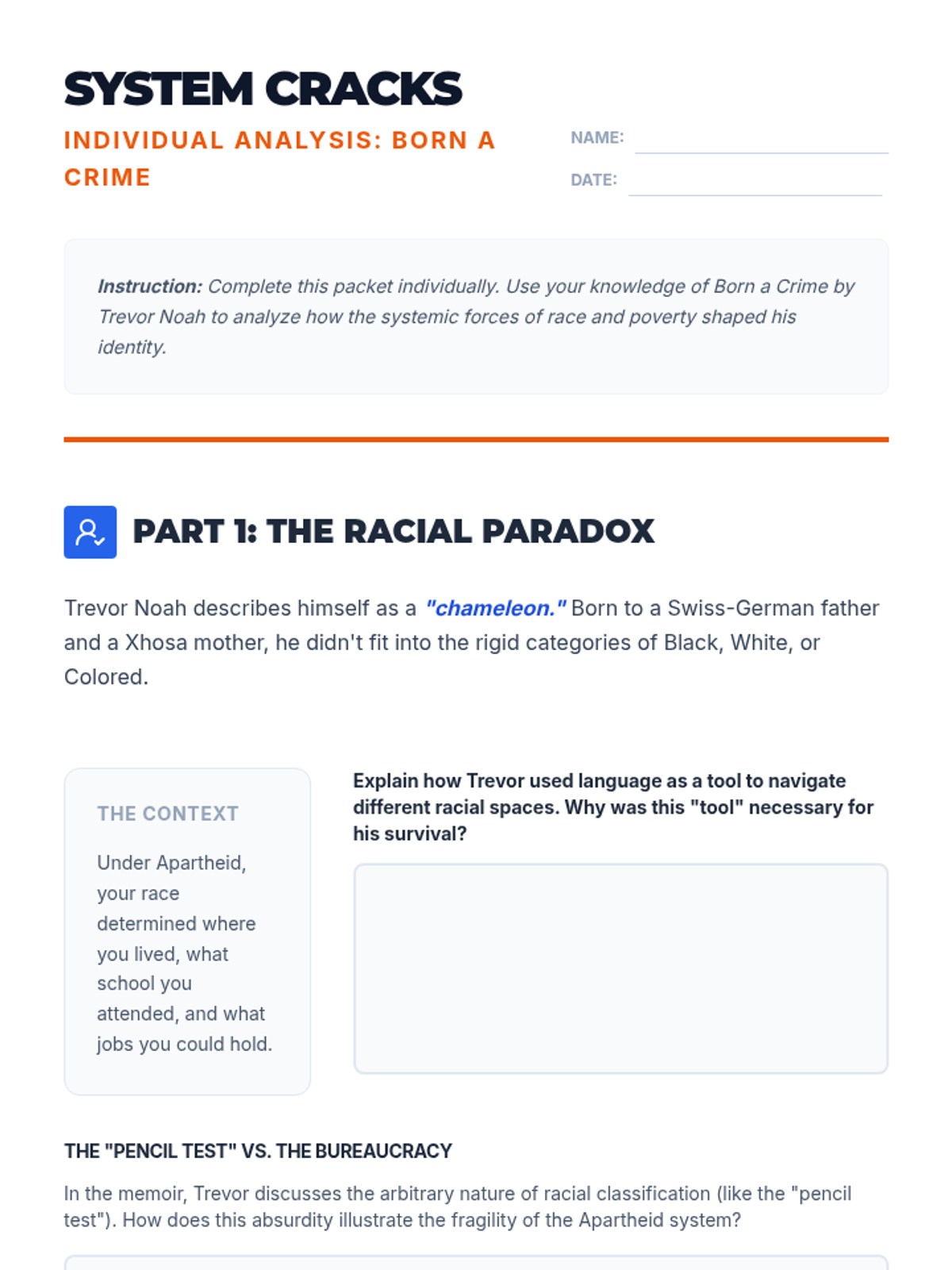
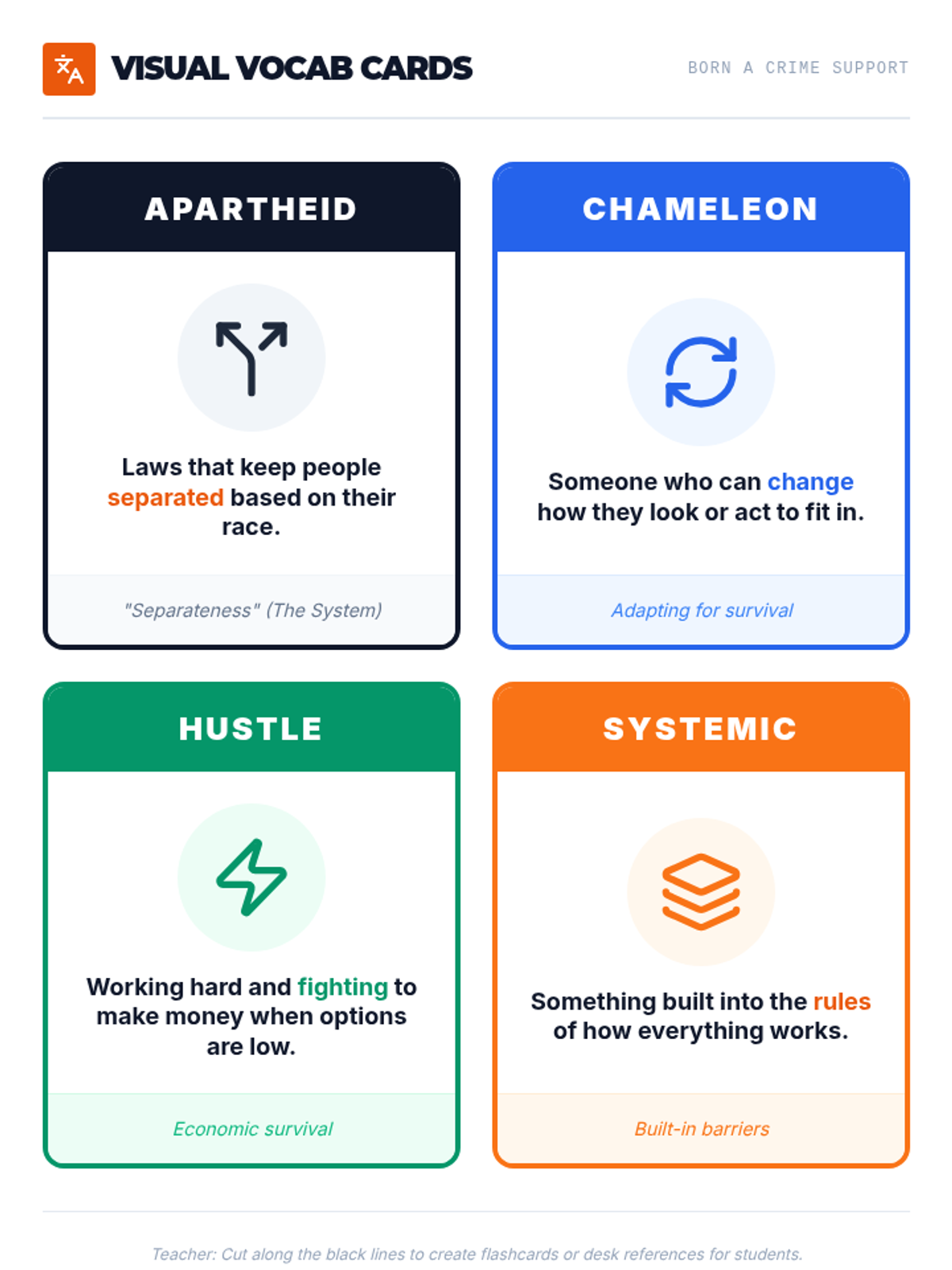
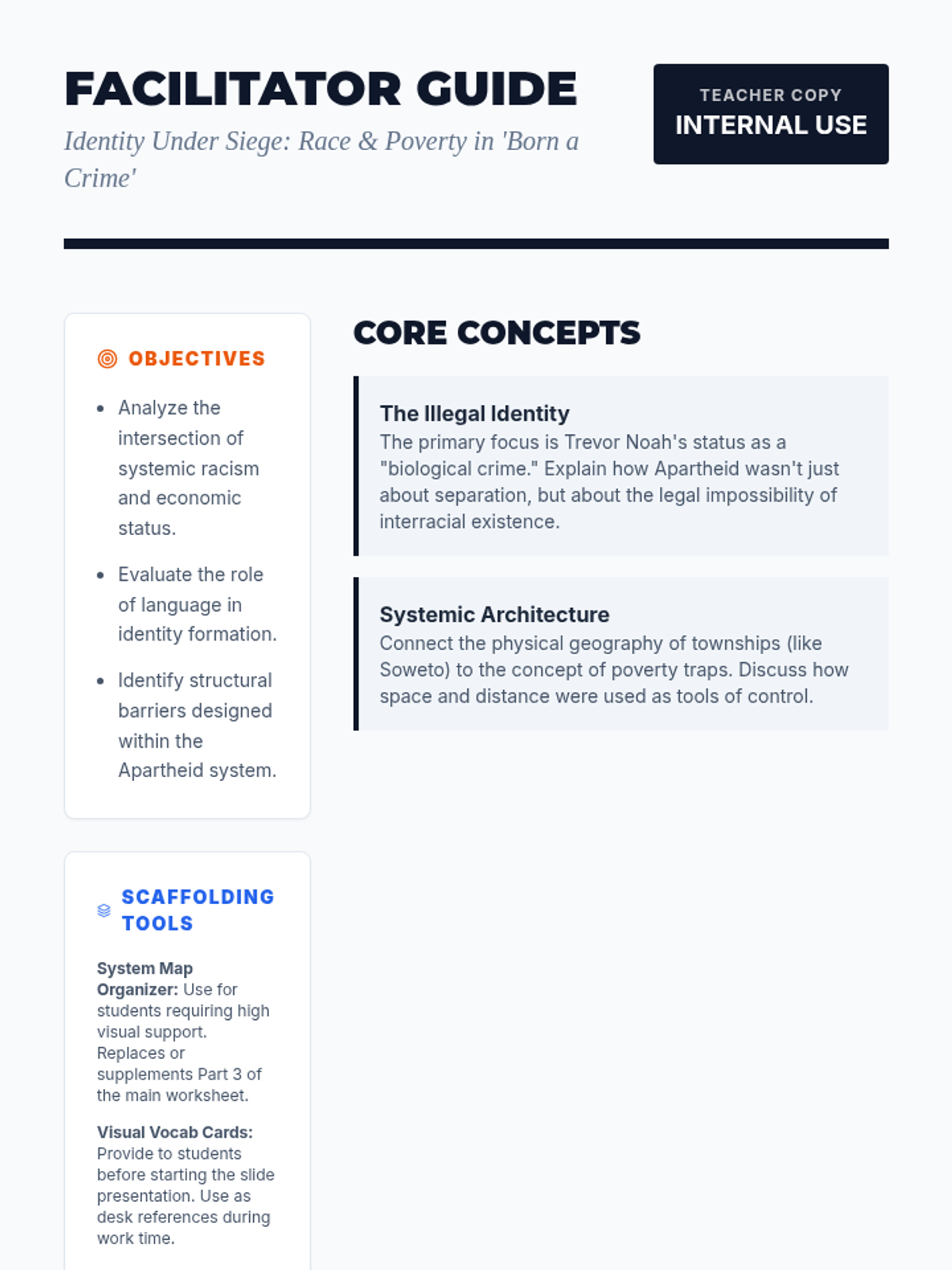
A deep dive into the intersection of race and poverty within the context of Trevor Noah's memoir 'Born a Crime', exploring how systemic laws shaped personal identity and economic opportunity in South Africa.
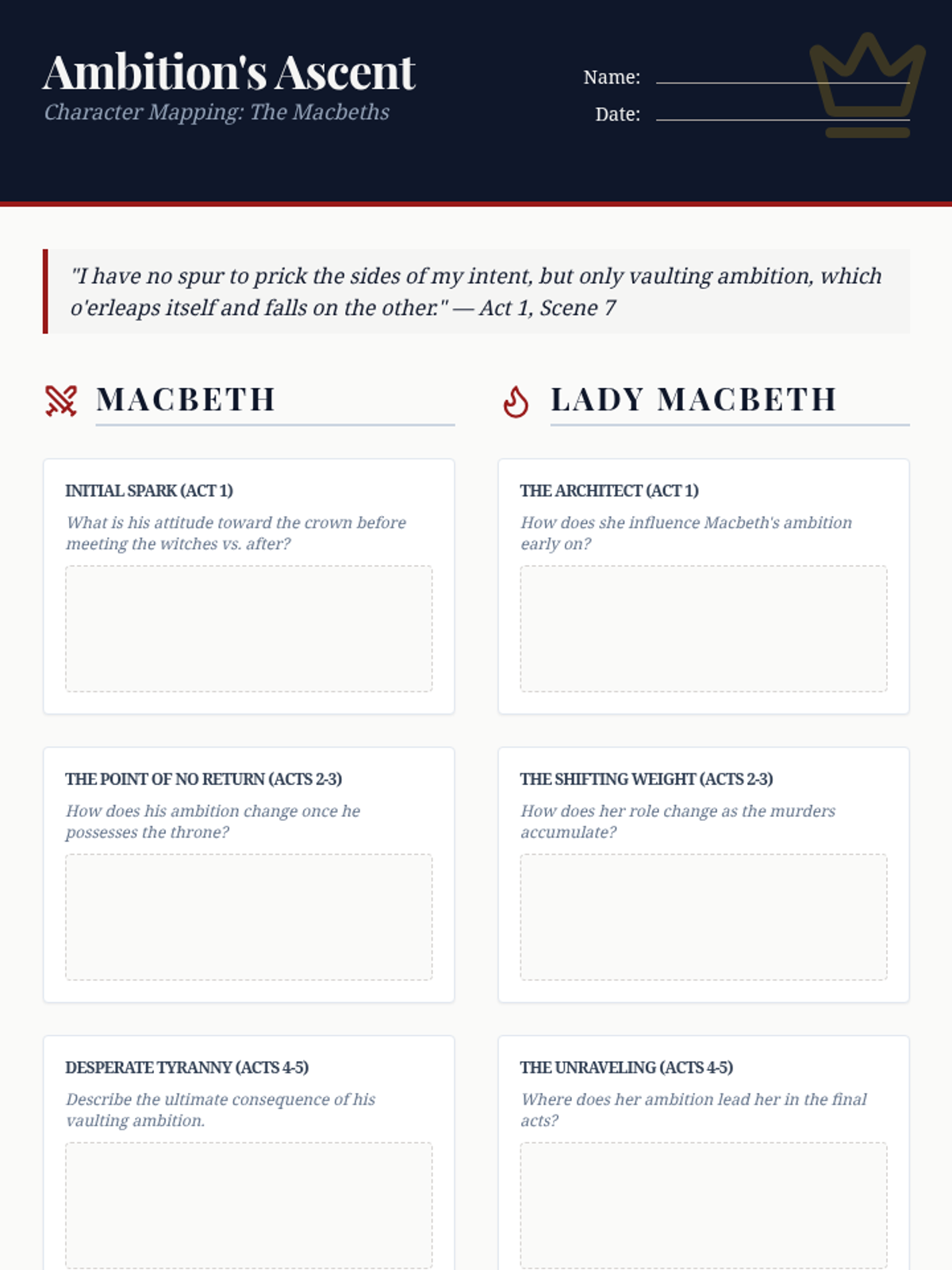
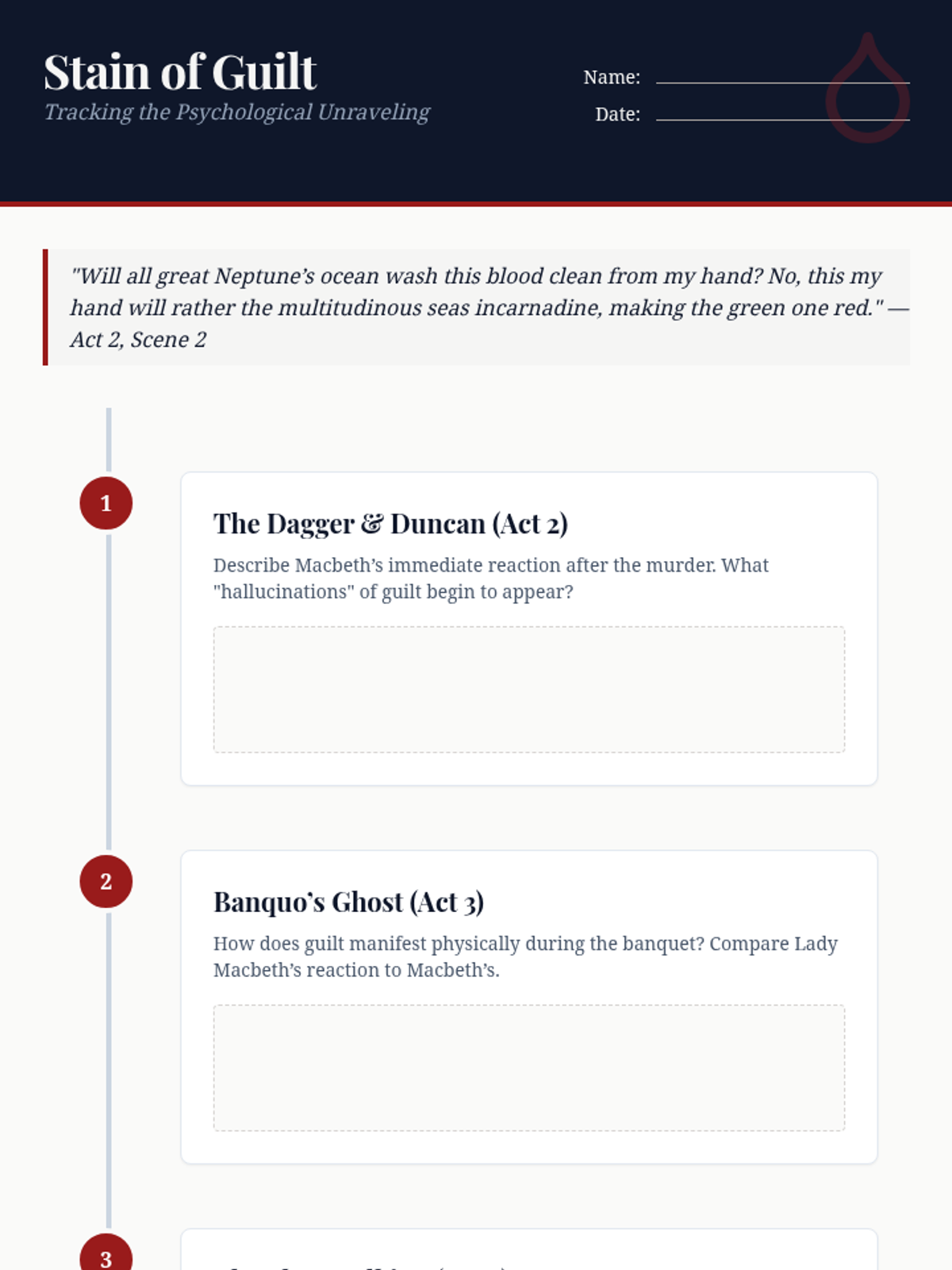
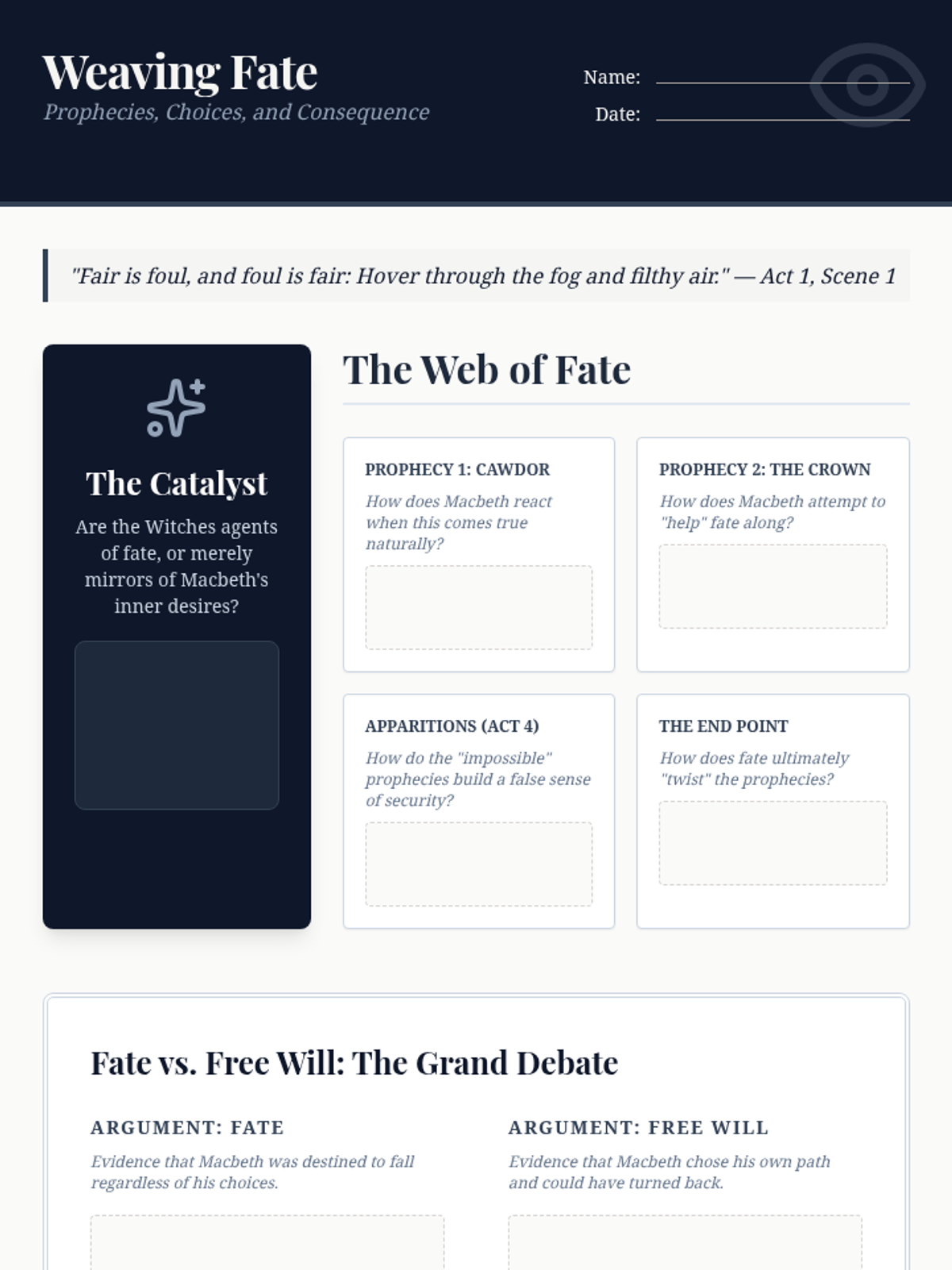
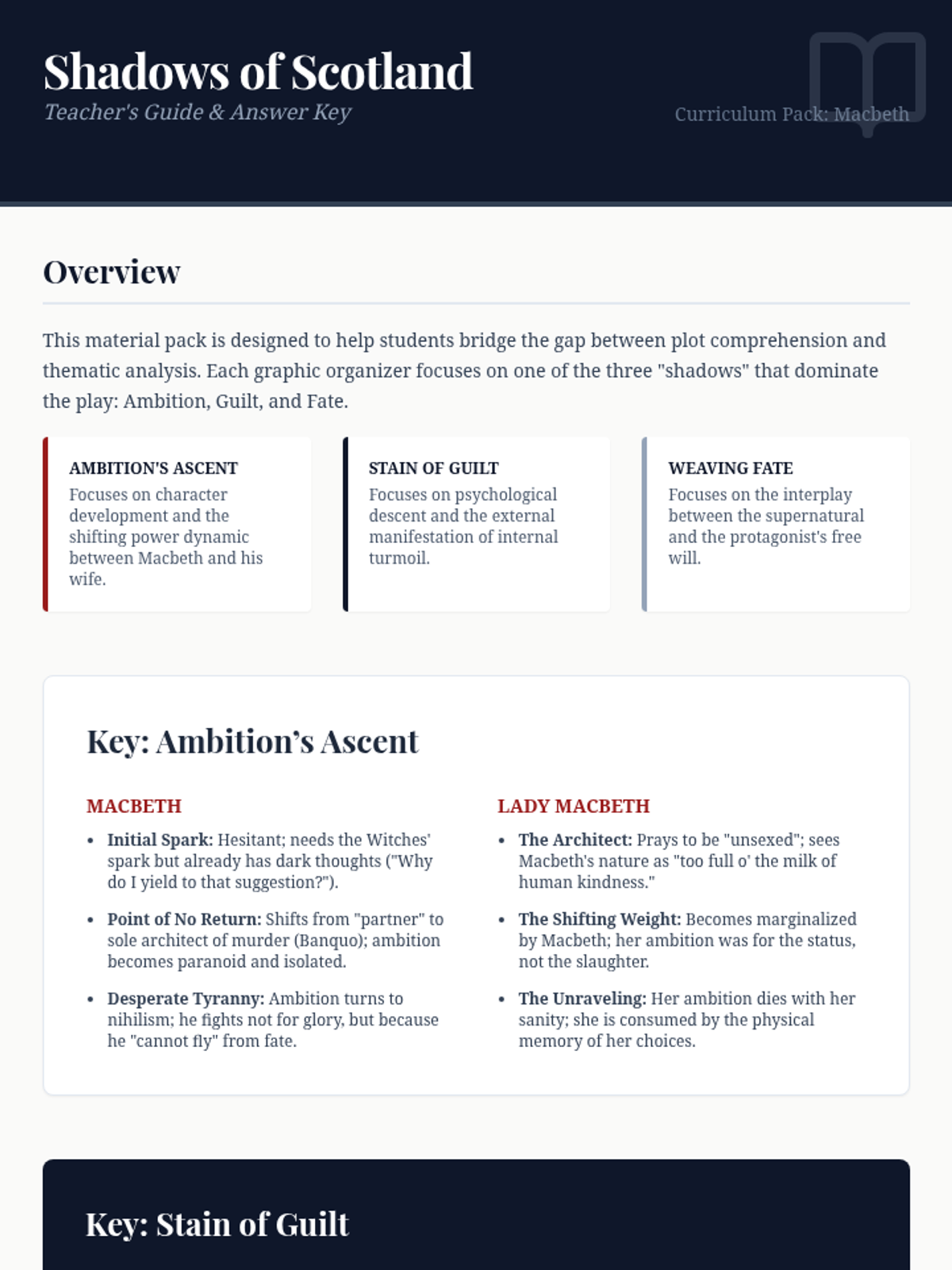
A collection of graphic organizers and analysis tools focused on the central themes of ambition, guilt, and fate in Shakespeare's Macbeth. Students track character development and plot progression through visual mapping and evidence-based analysis.
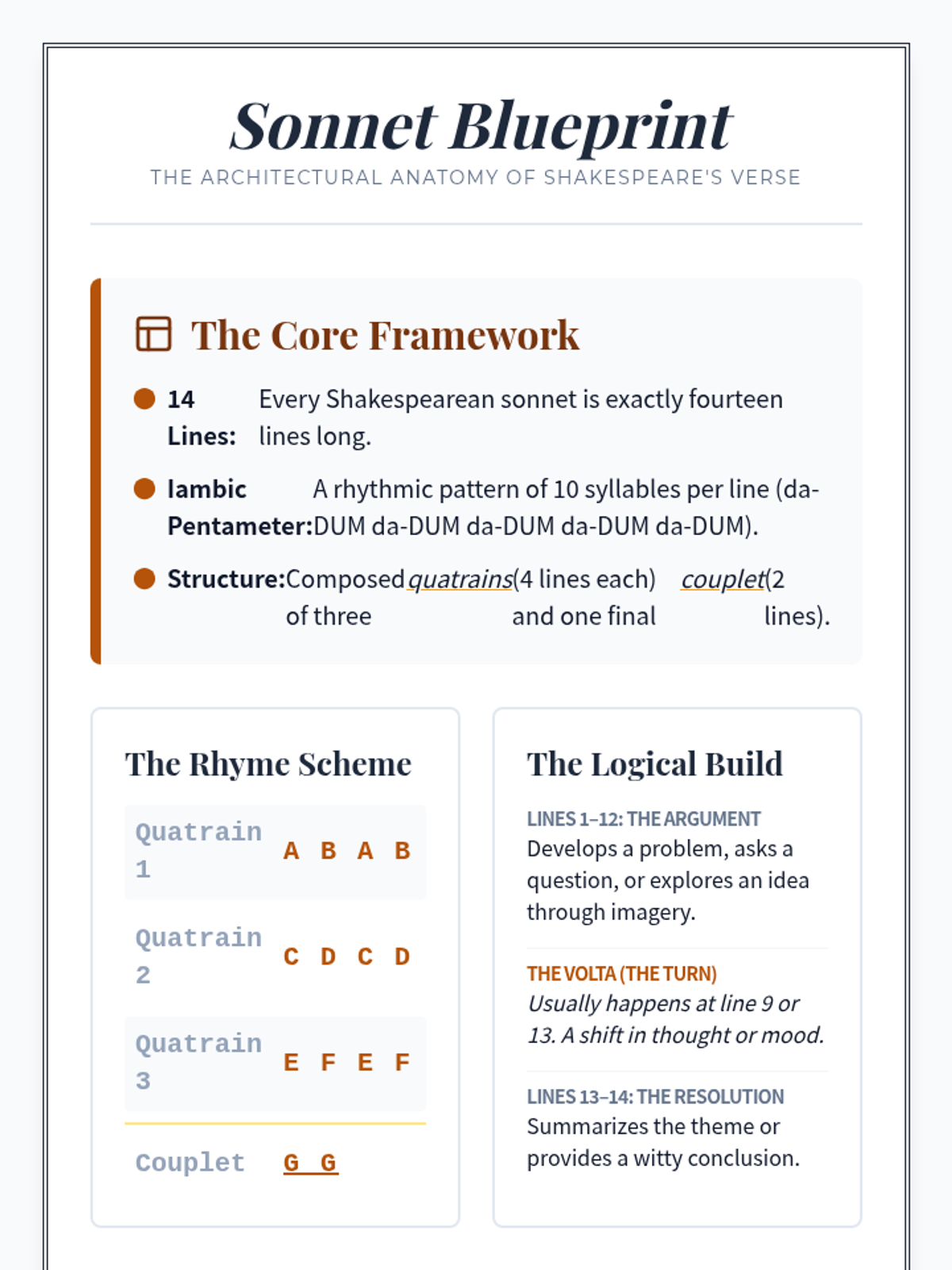
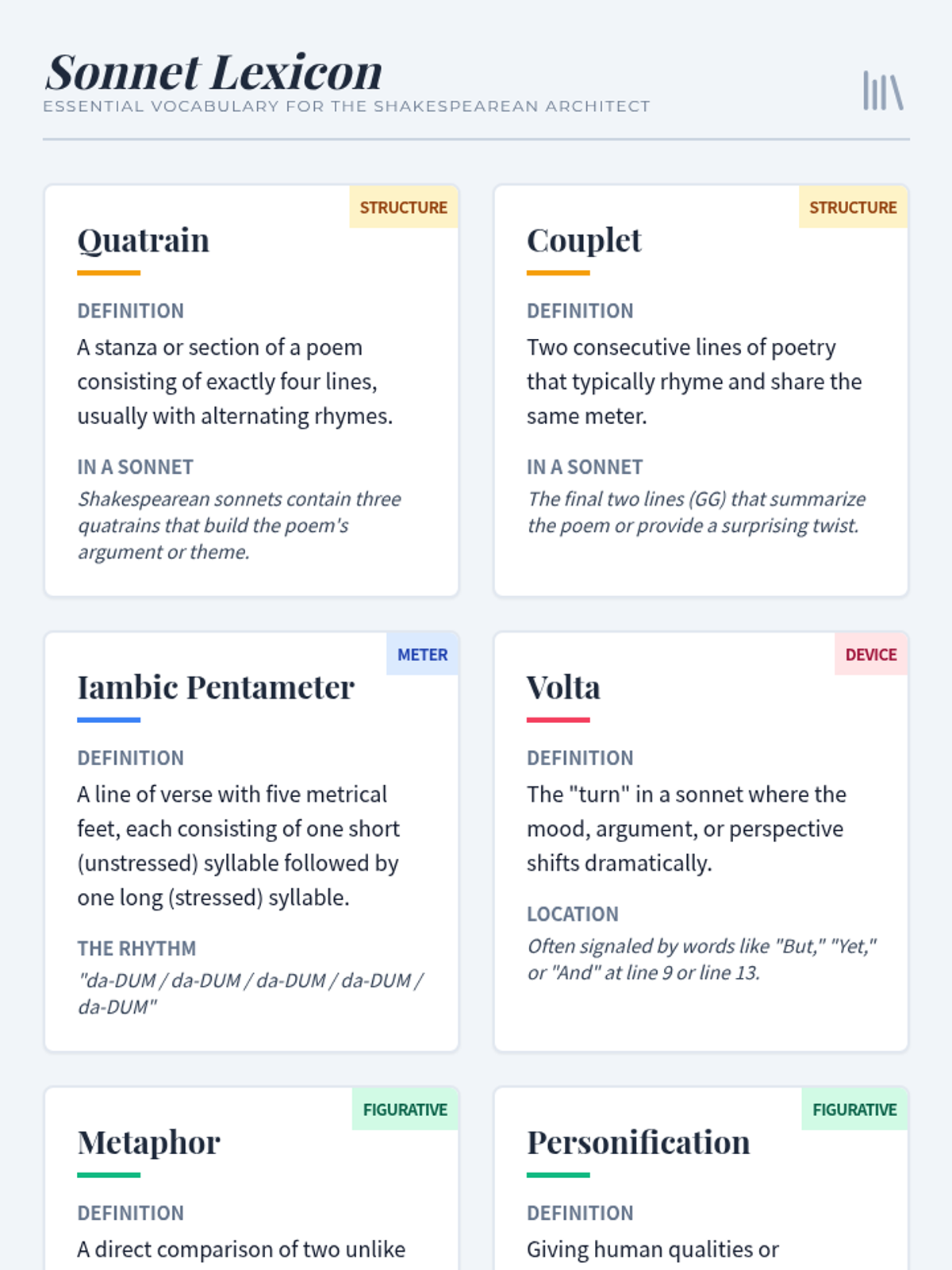
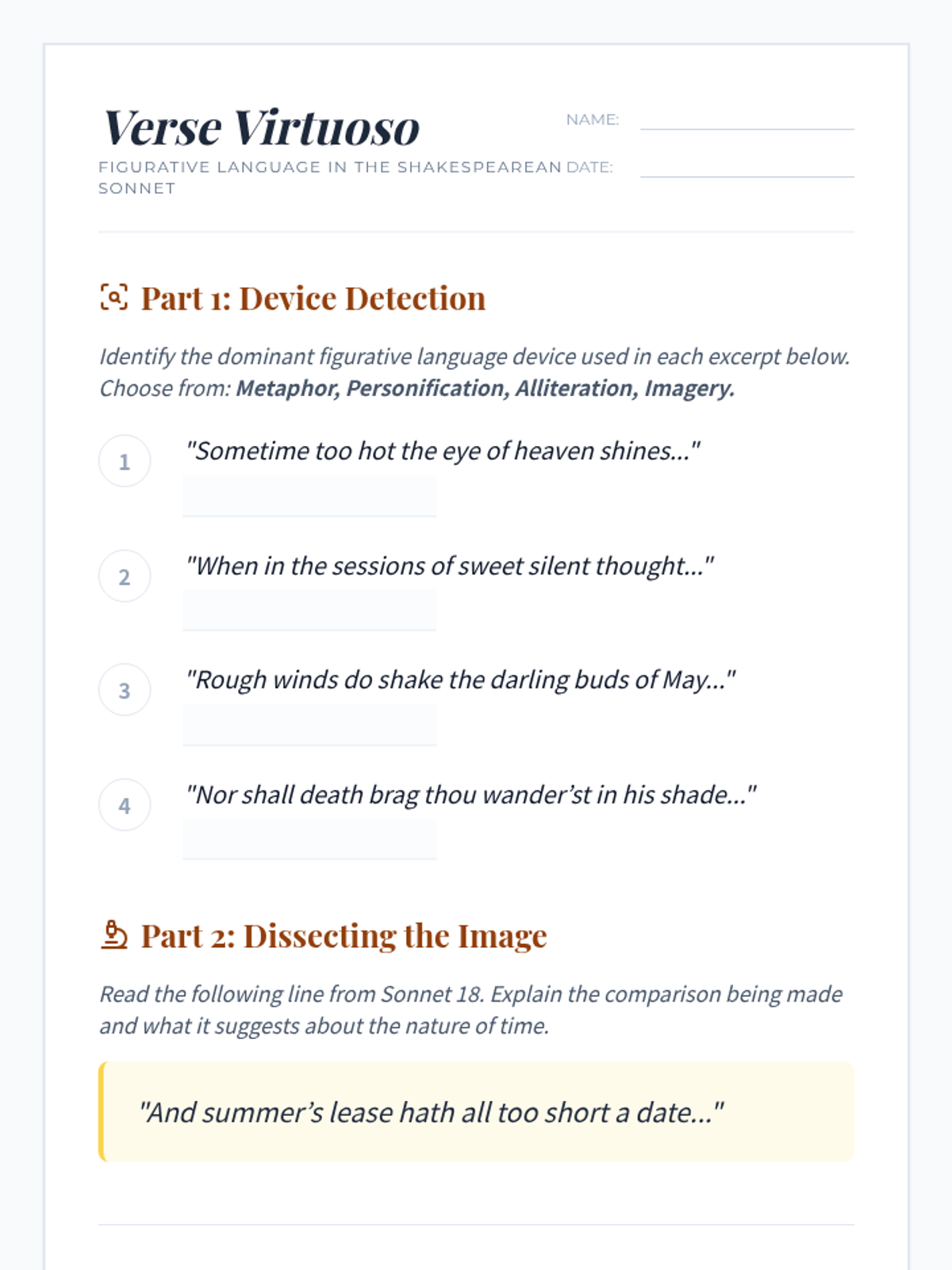
A lesson introducing the architectural structure and poetic devices of Shakespearean sonnets, focusing on technical form and figurative language.
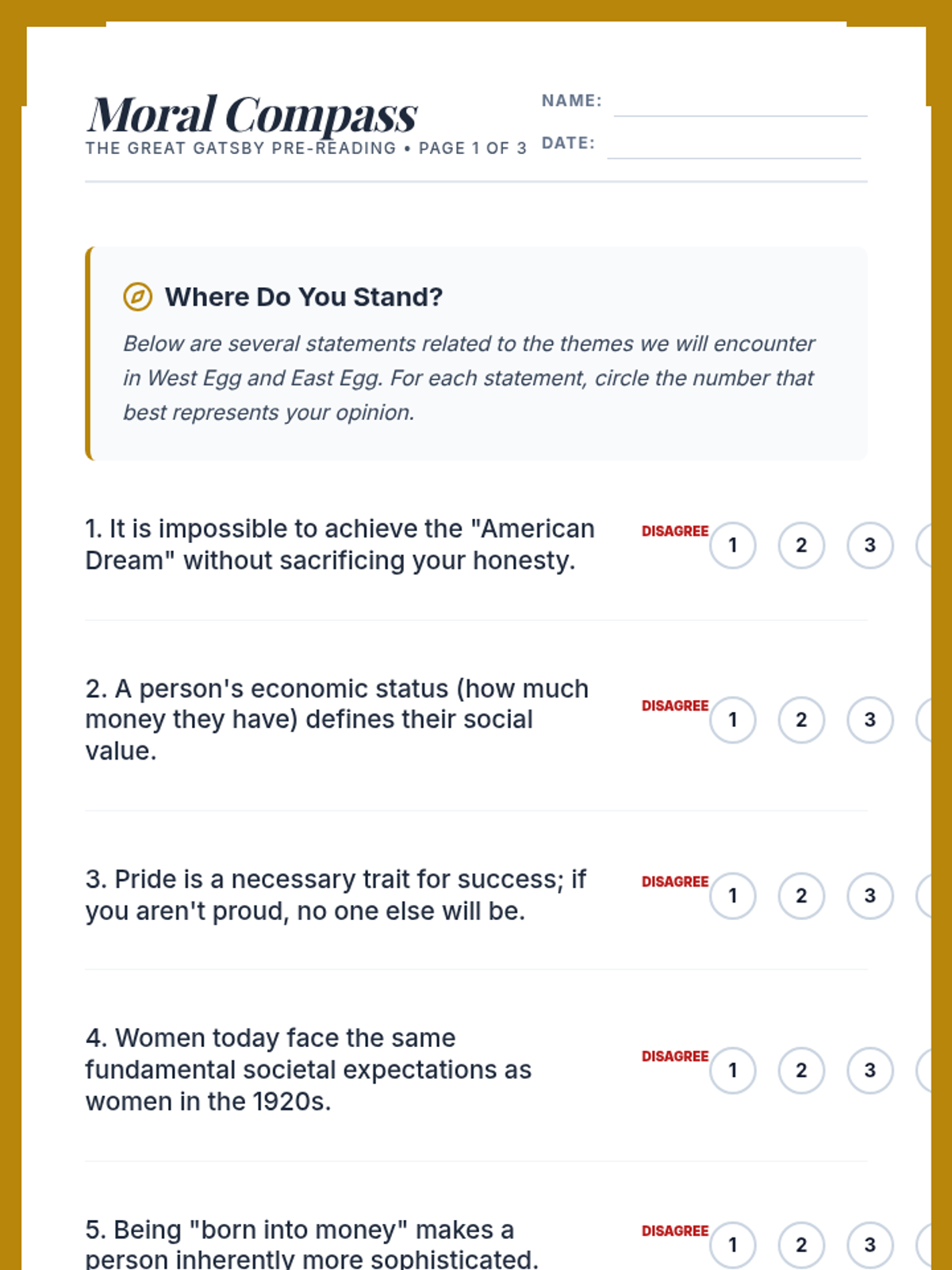
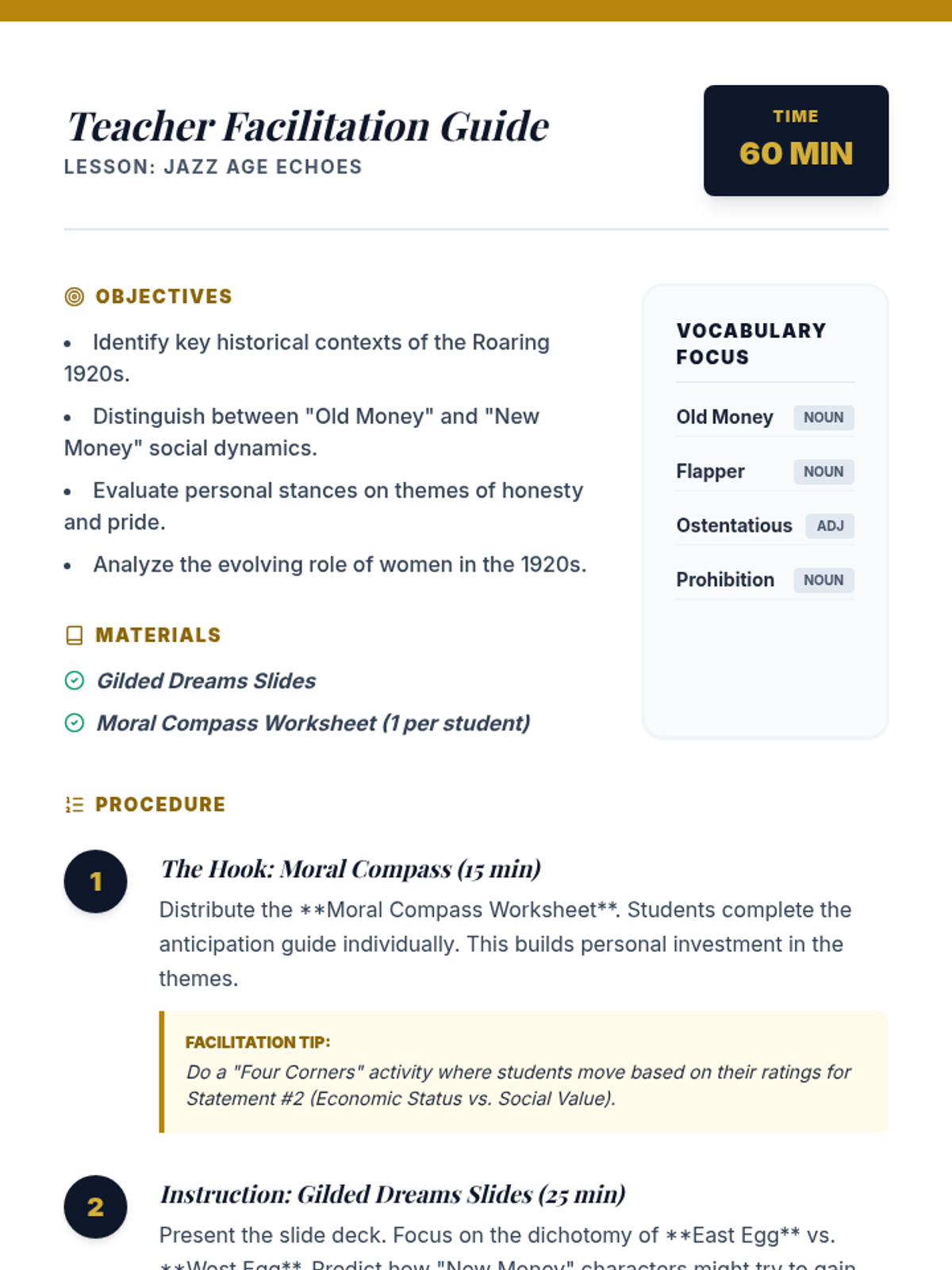
An introductory lesson to F. Scott Fitzgerald's The Great Gatsby, focusing on the historical context of the 1920s and the novel's central themes of wealth, gender, pride, and honesty.
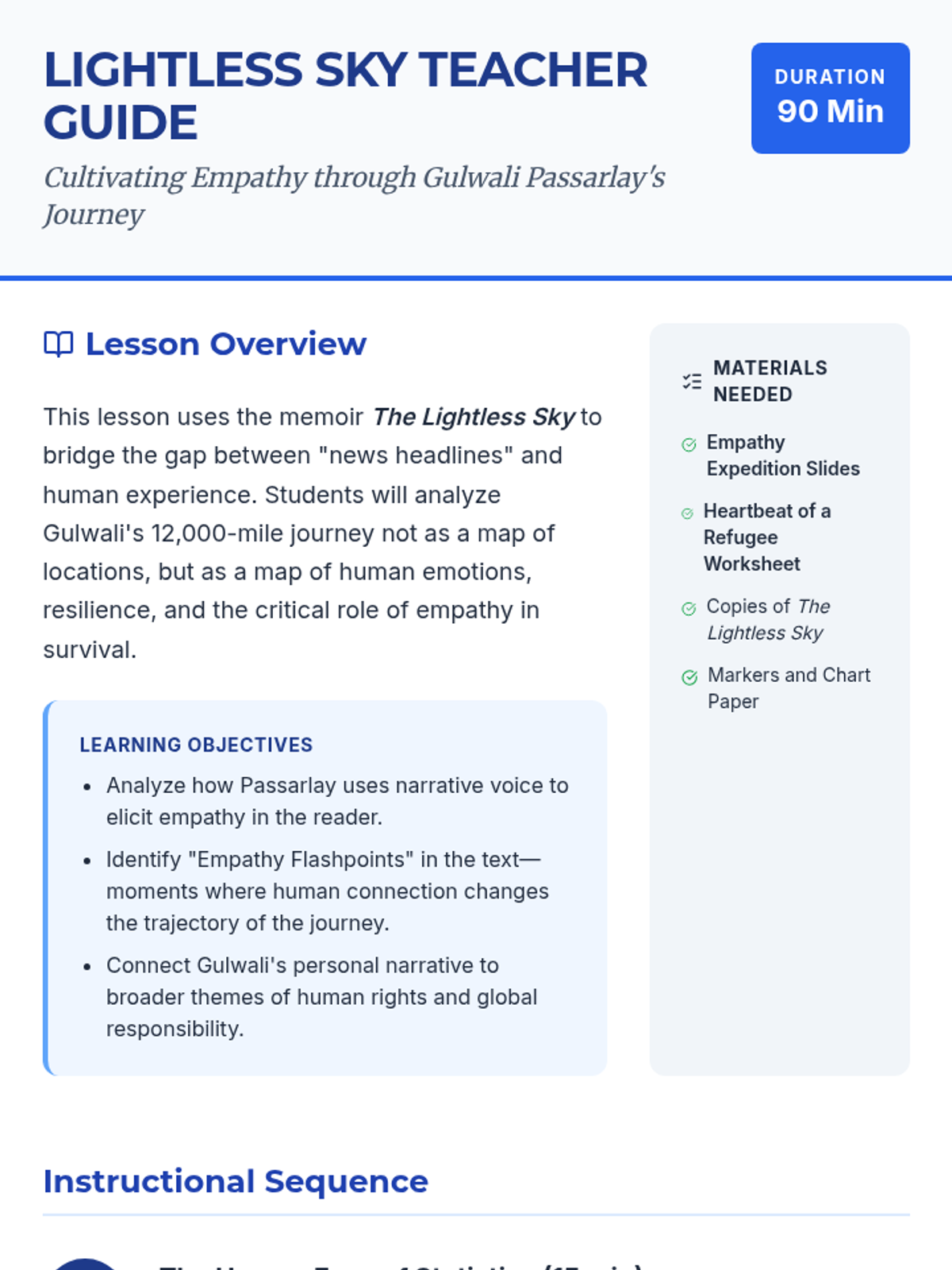
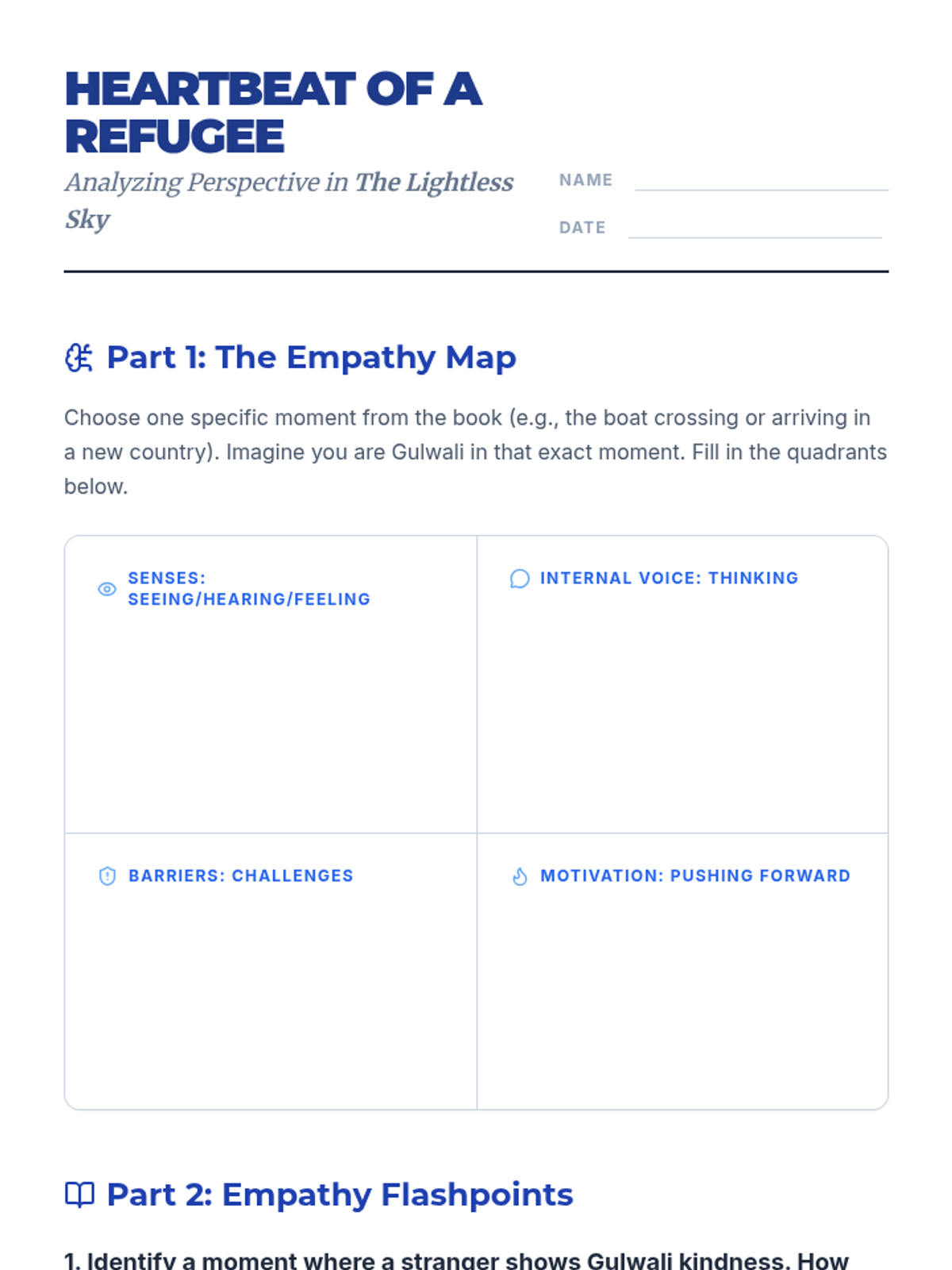
A comprehensive lesson focused on Gulwali Passarlay's memoir, 'The Lightless Sky,' designed to cultivate empathy through perspective-taking, text analysis, and reflection on the global refugee crisis.
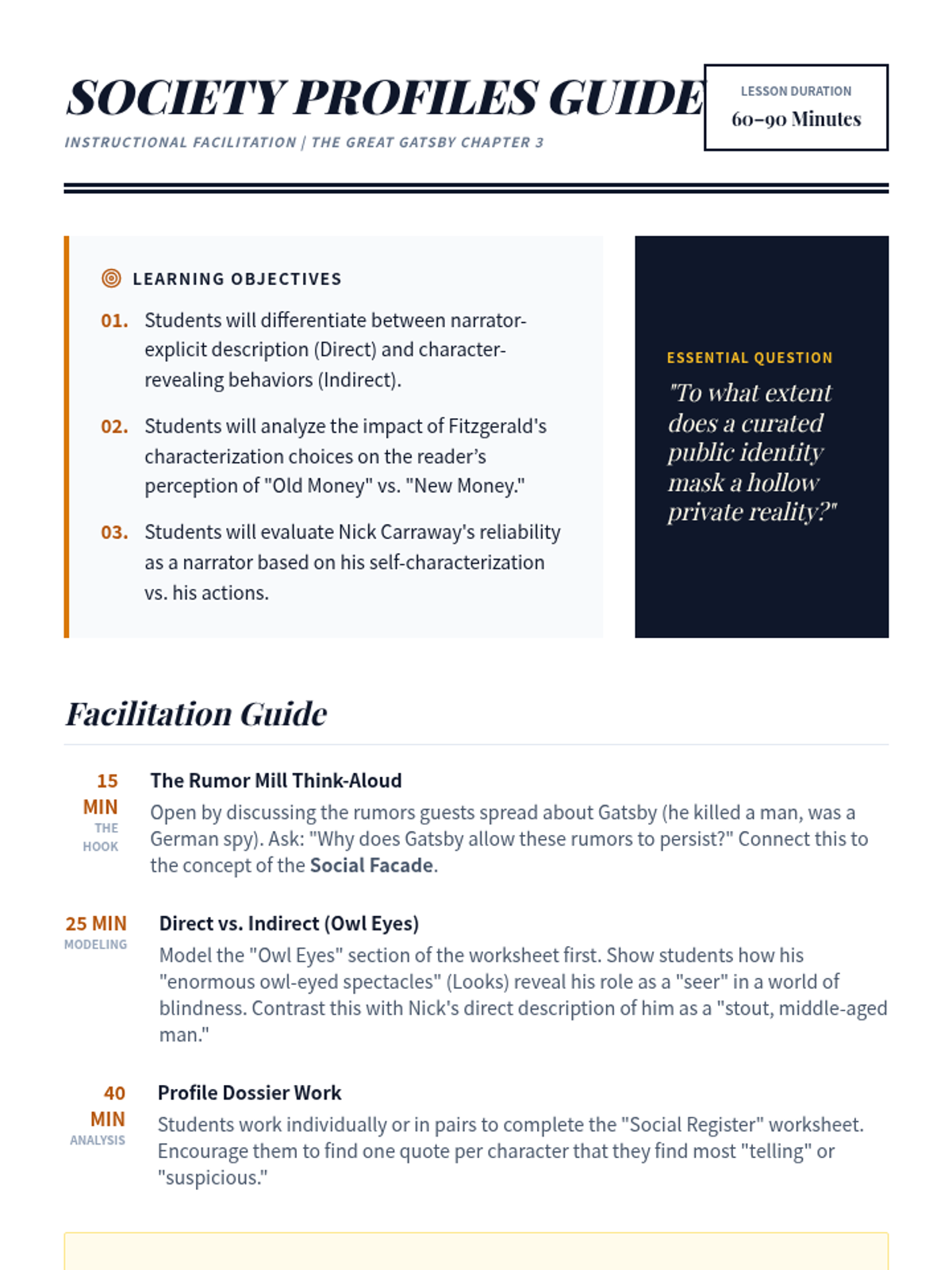
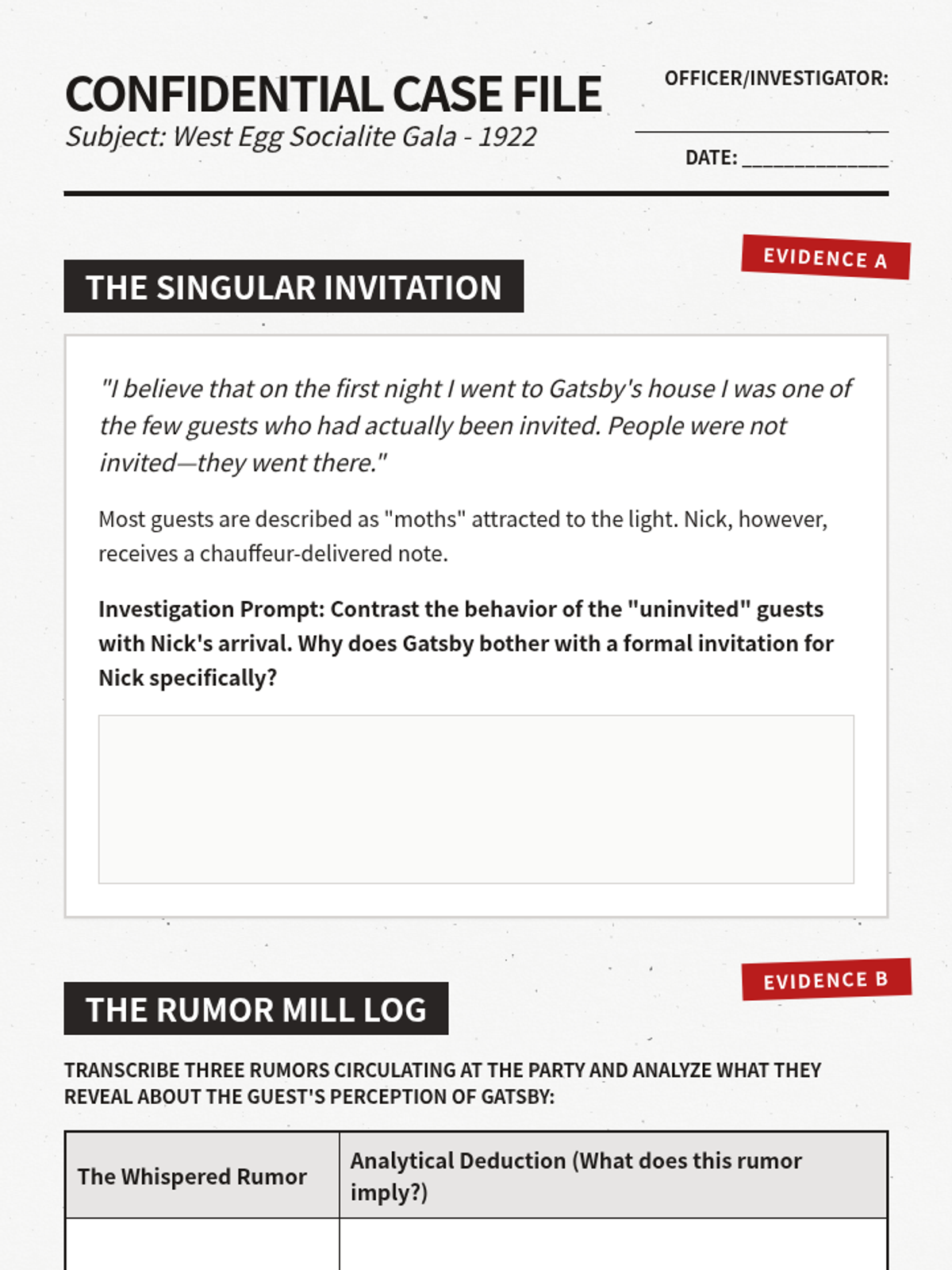
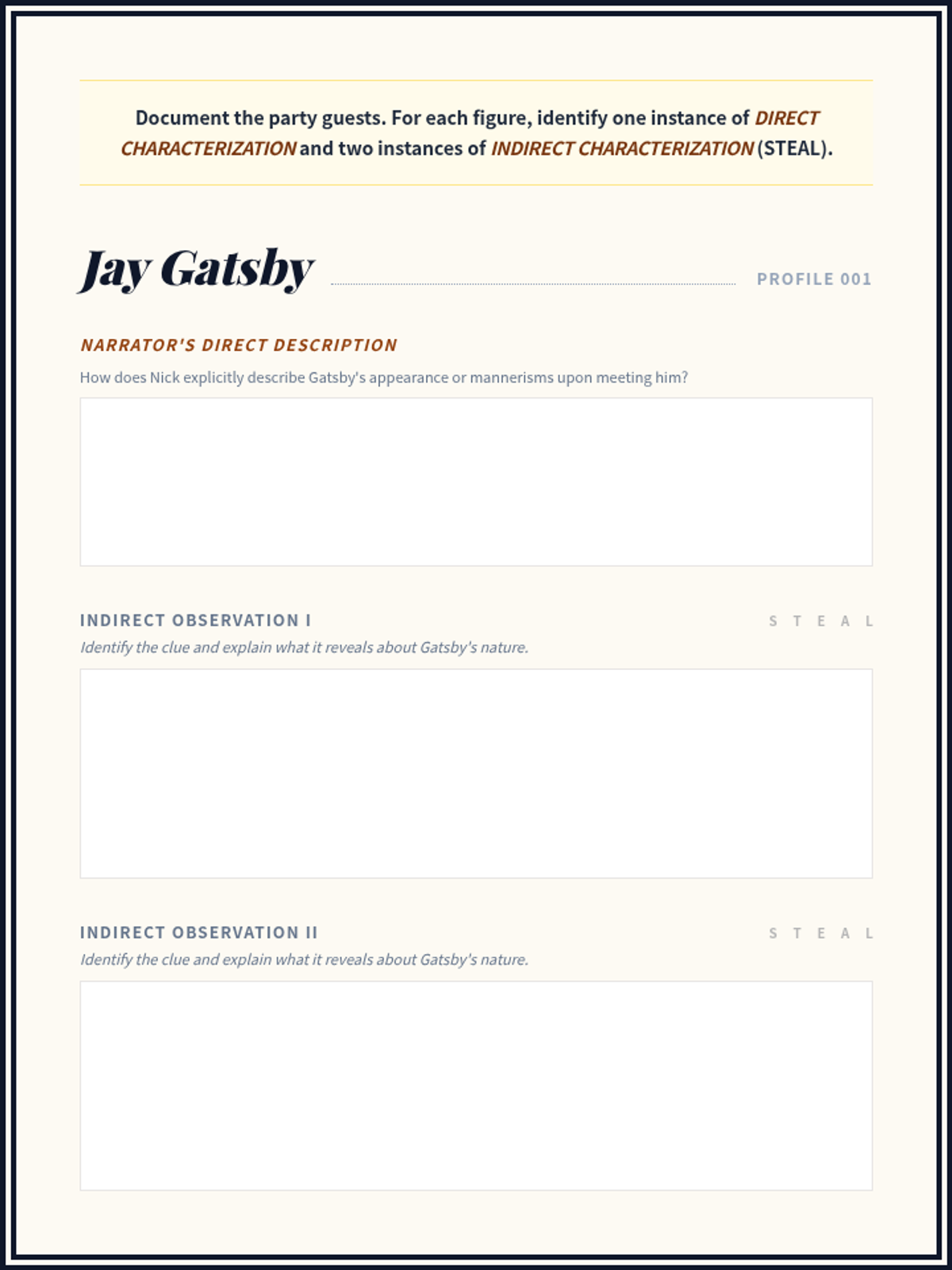
A characterization project focused on F. Scott Fitzgerald's The Great Gatsby, Chapter 3. Students analyze Gatsby, Owl Eyes, Nick, and Jordan through the lens of direct and indirect characterization to create investigative dossiers.
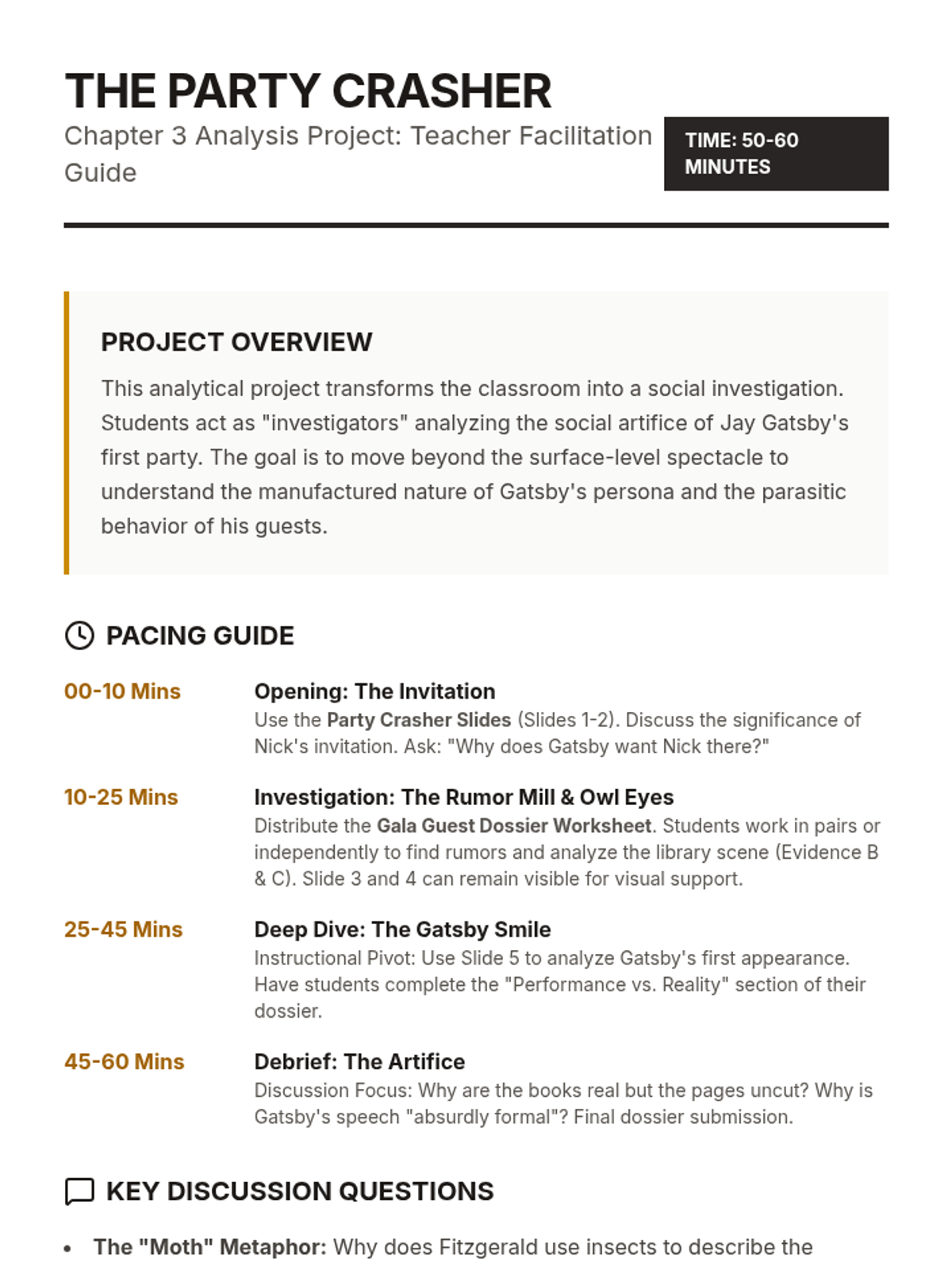
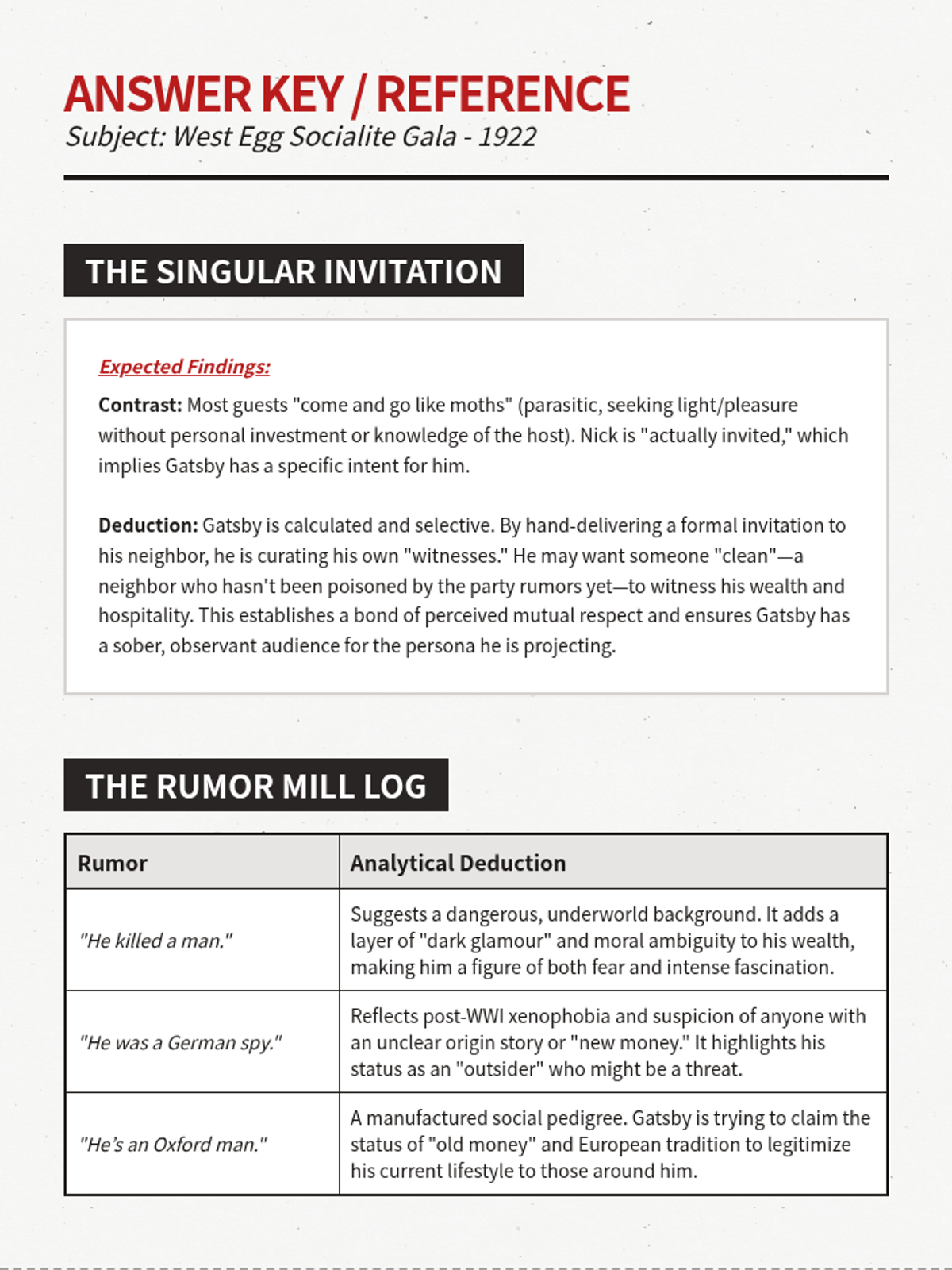
An intensive one-day analytical investigation into Chapter 3 of The Great Gatsby, focusing on the artifice of Gatsby's parties, the nature of his guests, and the first encounter with the man himself.
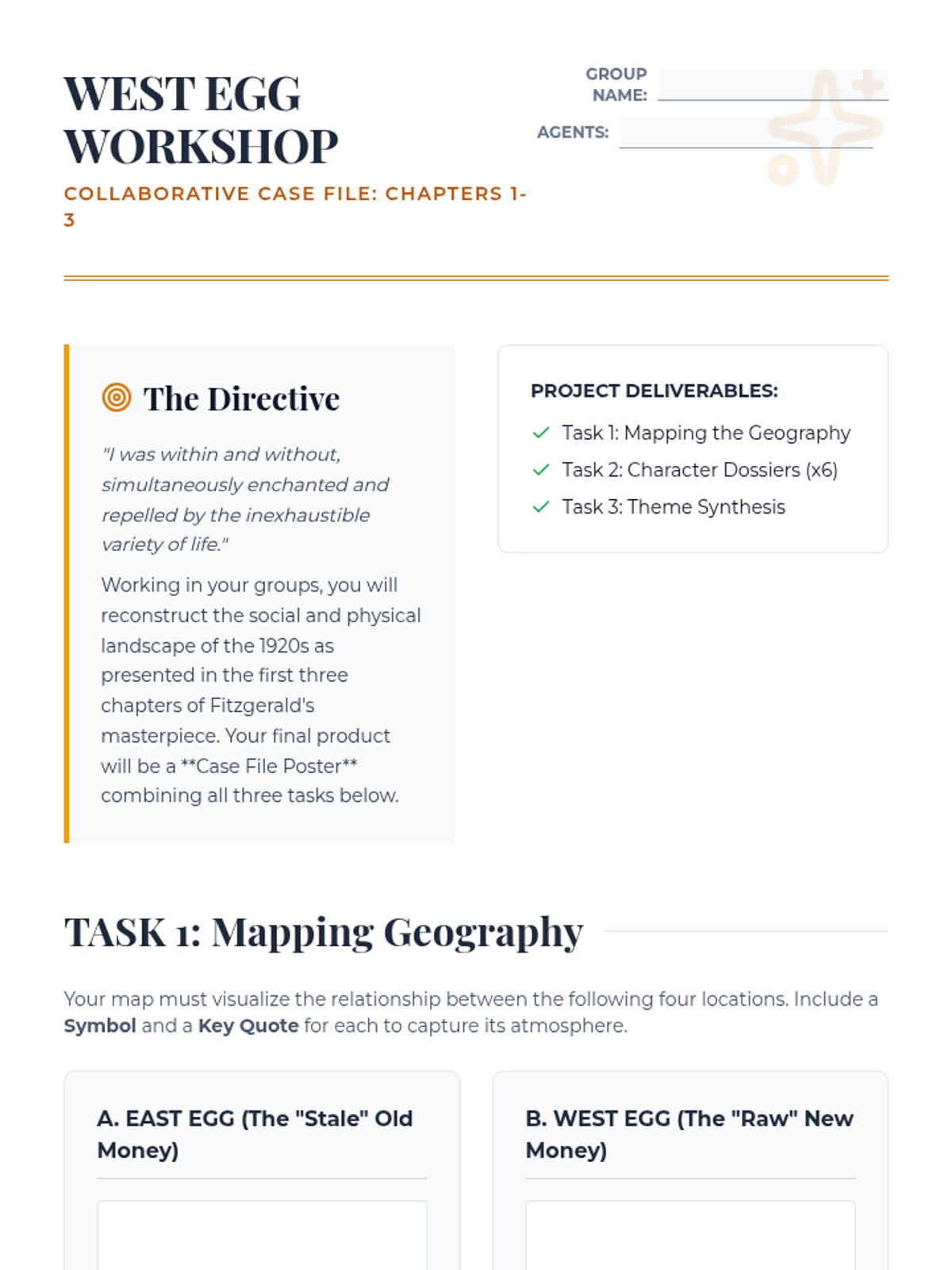
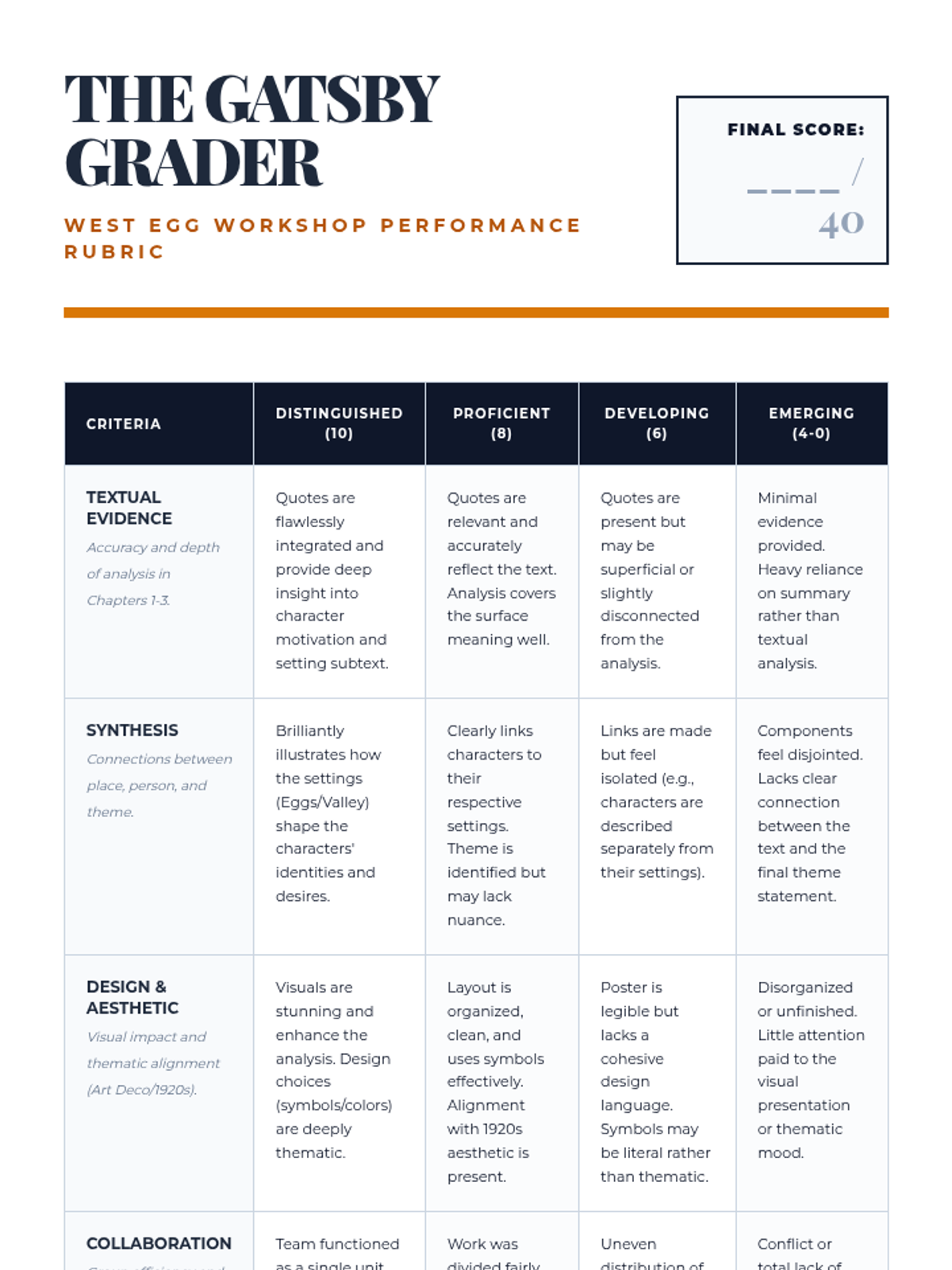
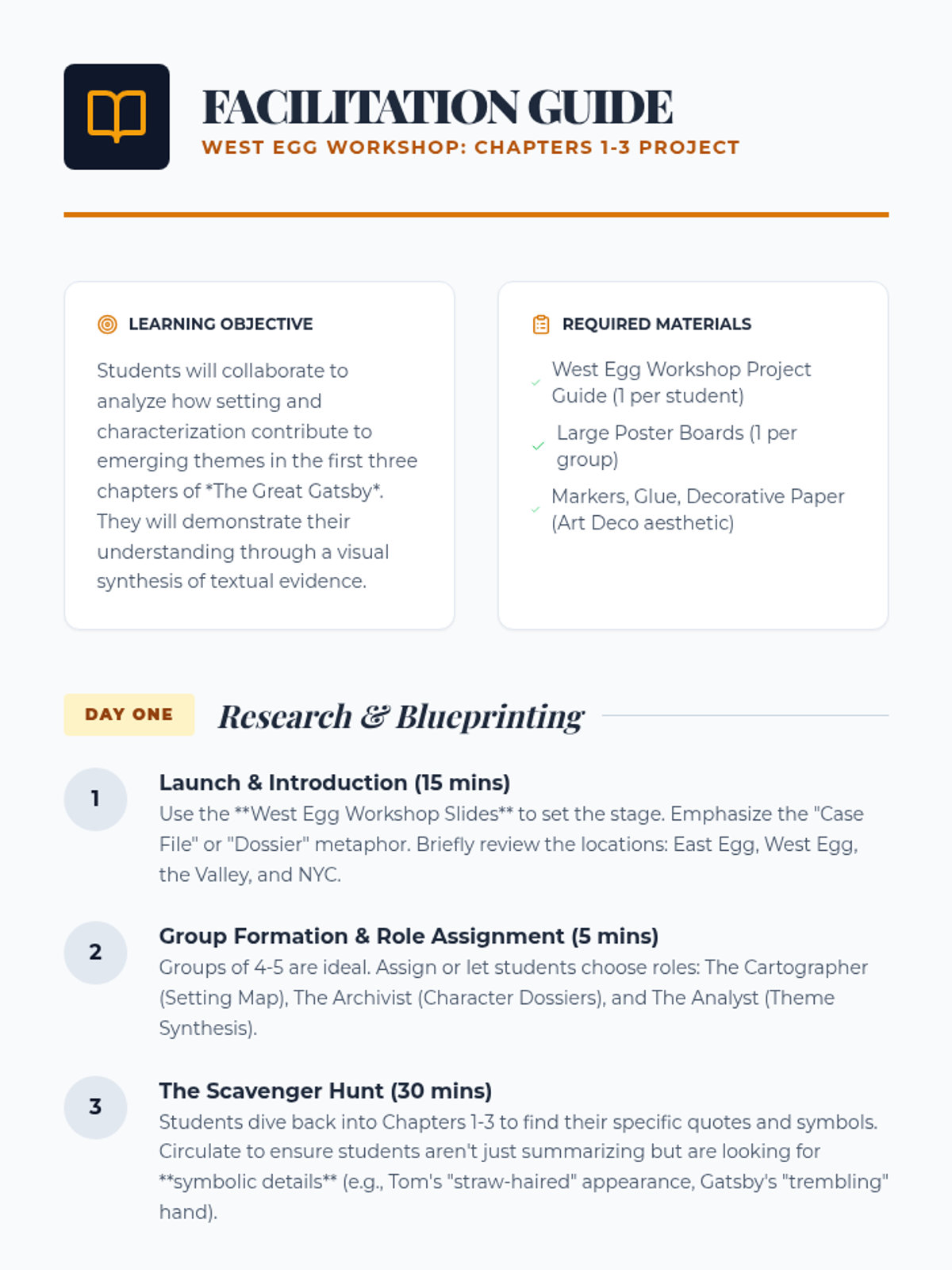
A 2-day collaborative project focusing on the first three chapters of The Great Gatsby, where students analyze characterization, setting, and emerging themes through creative mapping and dossier creation.
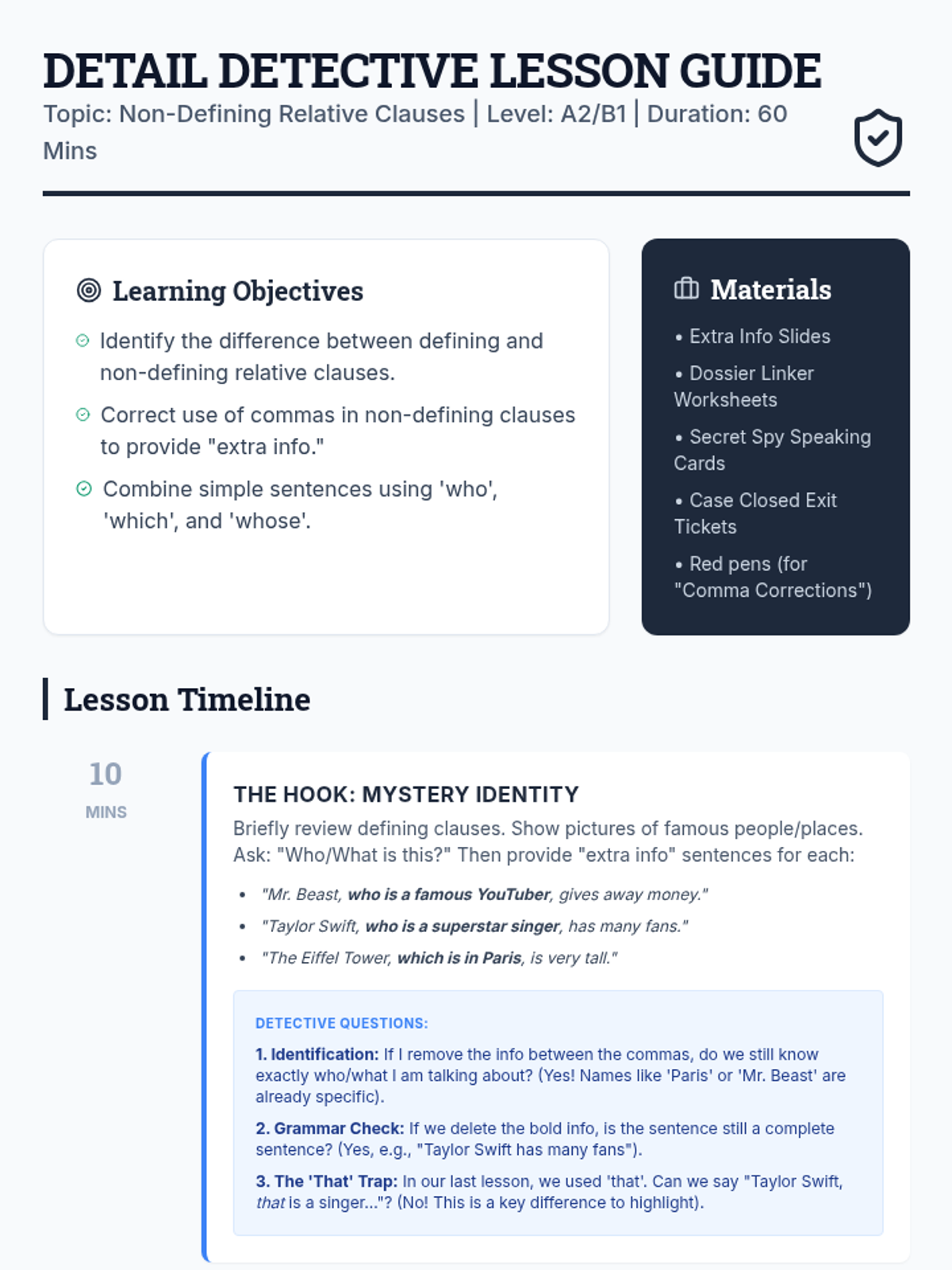
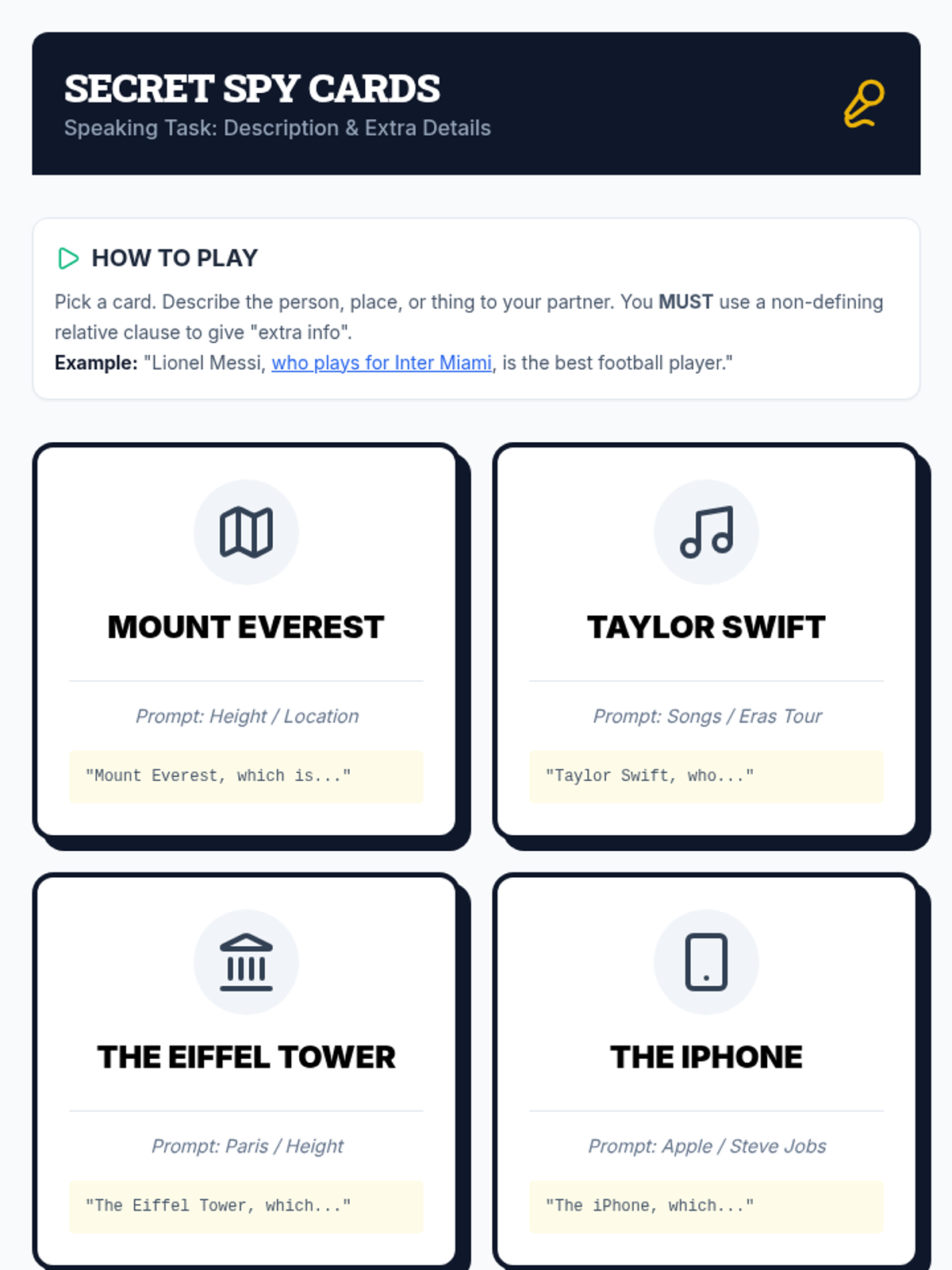
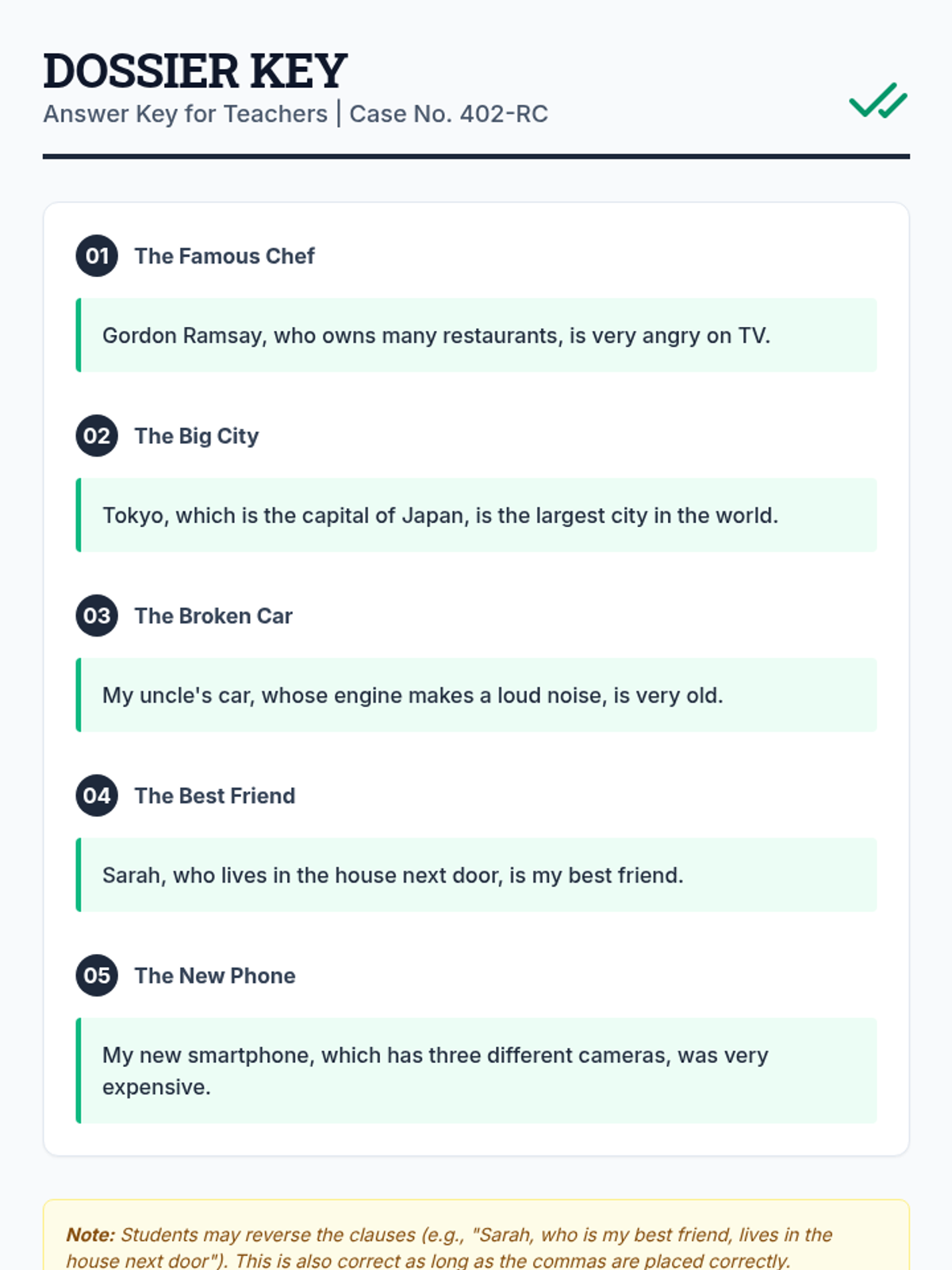
A 60-minute ESL lesson for A2 students focused on non-defining relative clauses through a 'Detail Detective' theme, featuring sentence combining, speaking cards, and comma mastery.
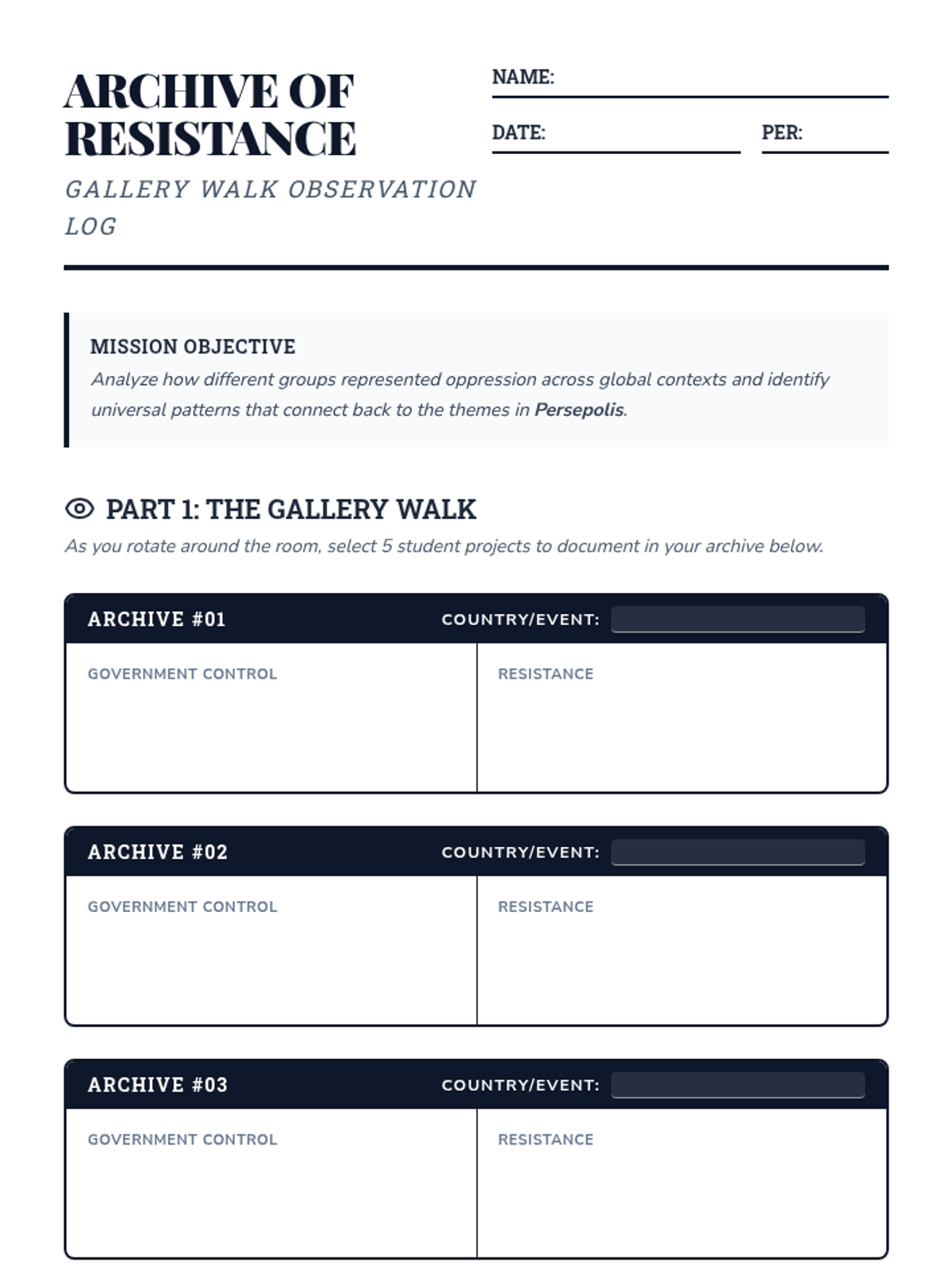
Students explore global contexts of oppression and resistance through a gallery walk of peer-created comic strips, drawing parallels to the themes in Marjane Satrapi's Persepolis.
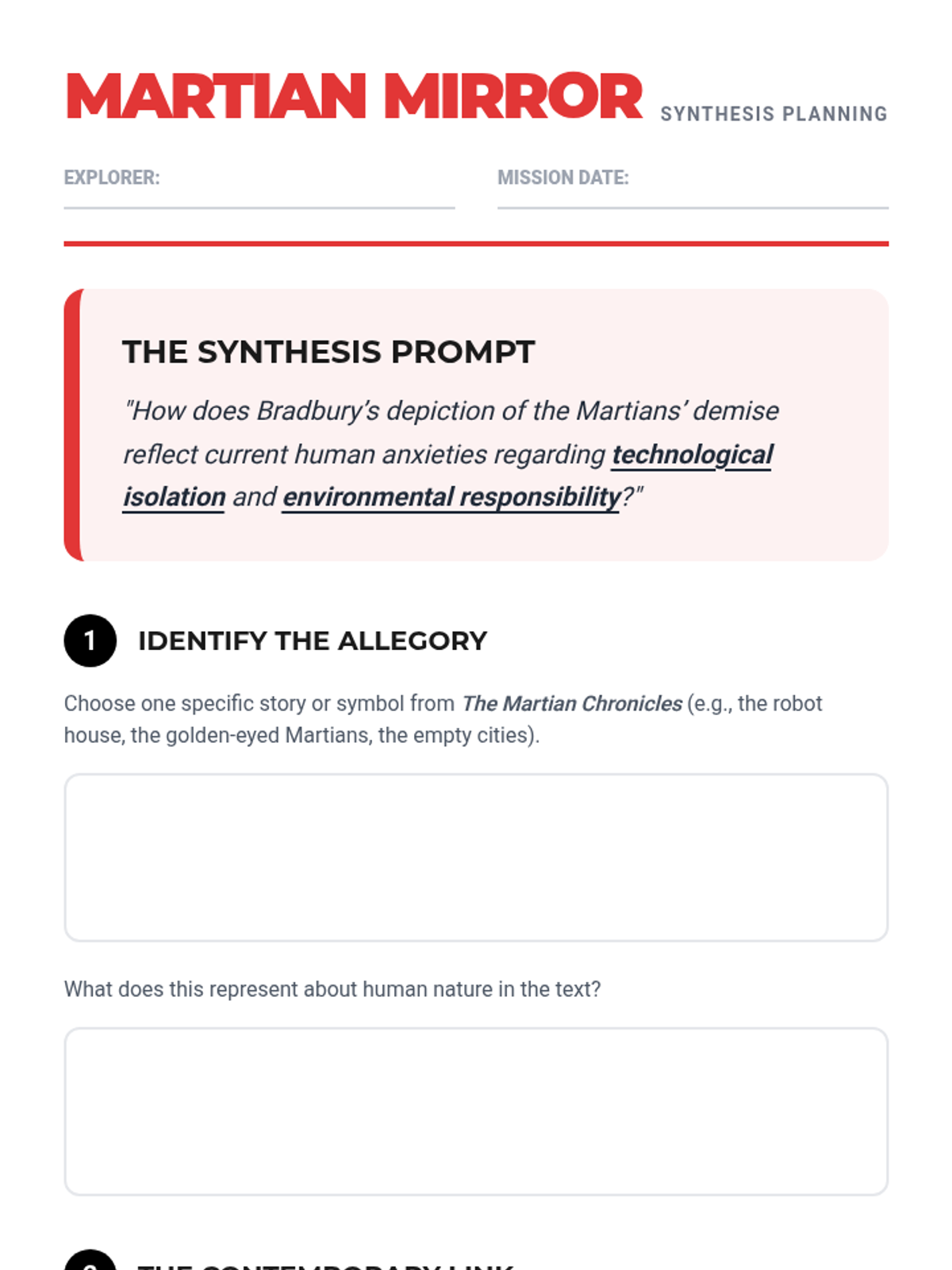
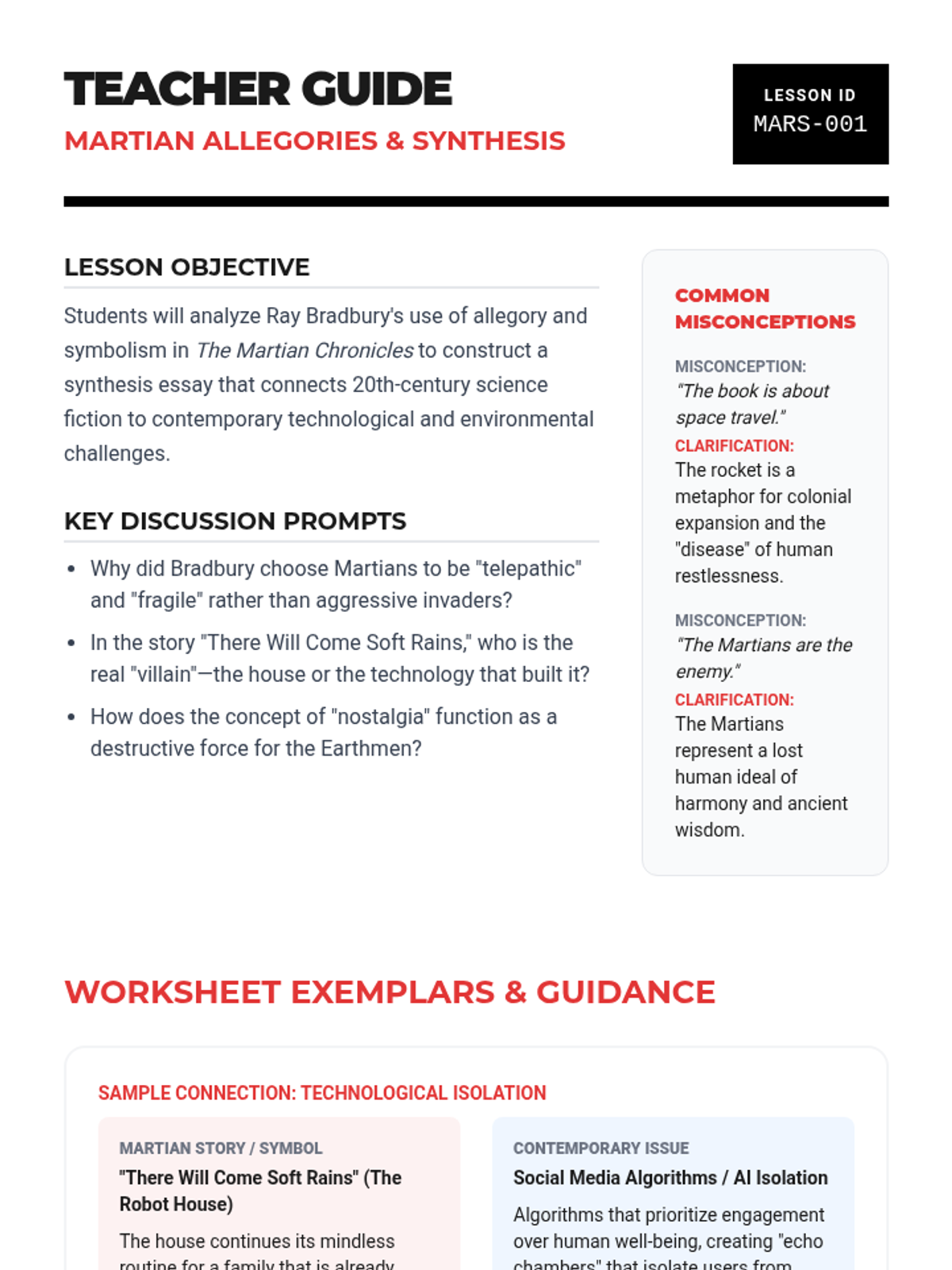
An exploration of Ray Bradbury's use of allegory and symbolism in The Martian Chronicles, culminating in a synthesis essay connecting the text to modern societal challenges.
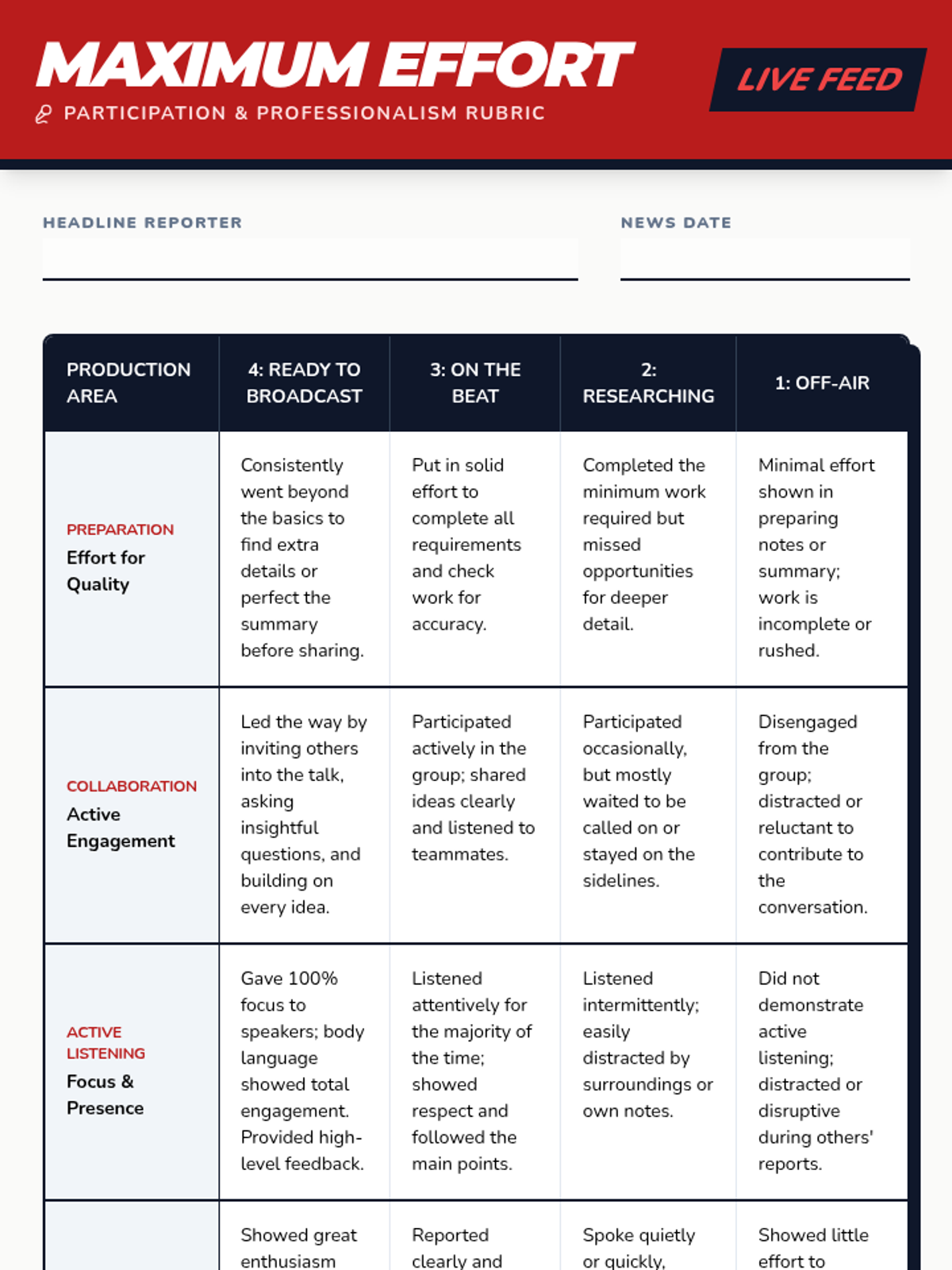
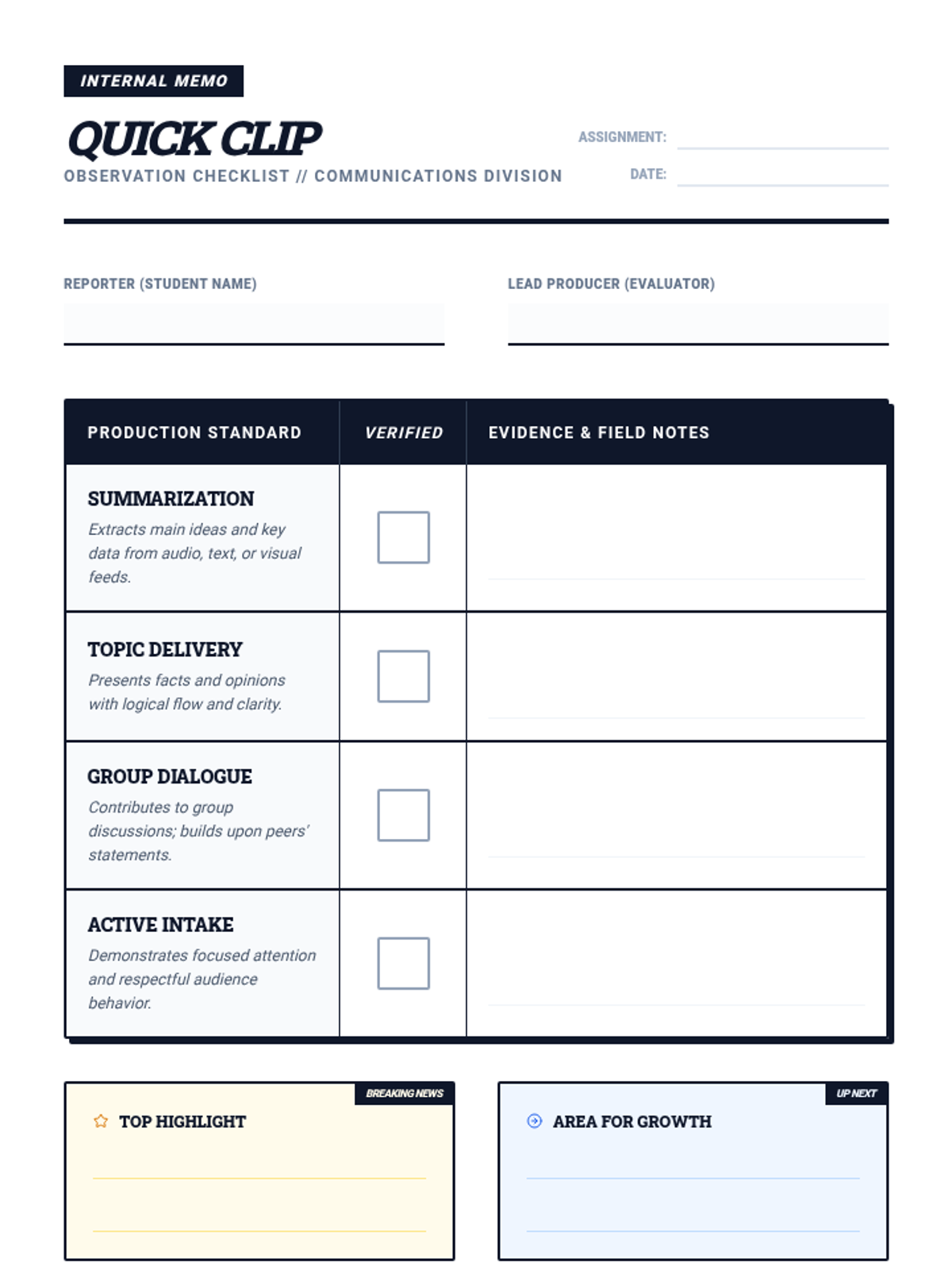
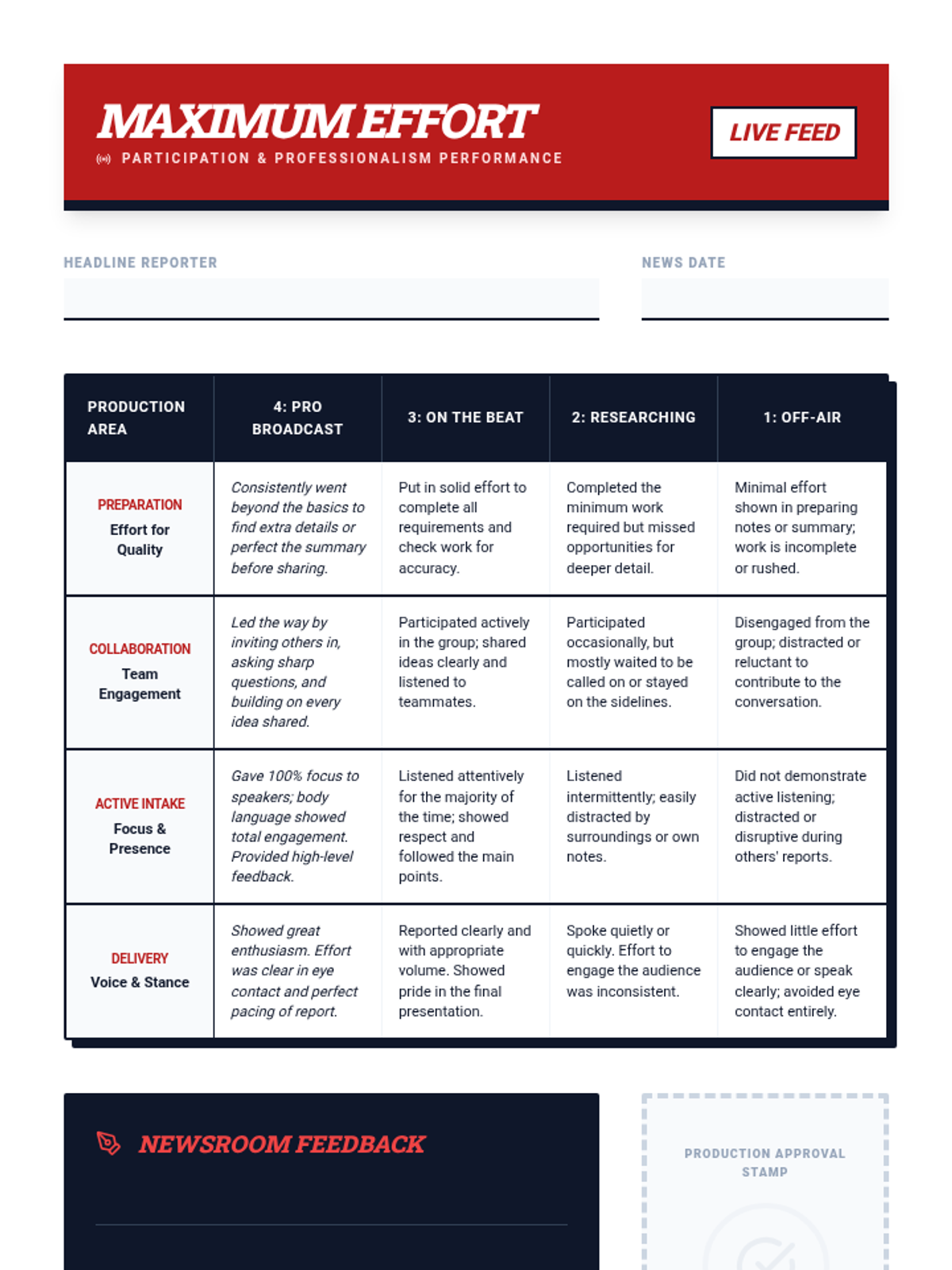
A set of assessment tools designed to evaluate students' listening, speaking, and collaborative skills through the lens of a professional newsroom.
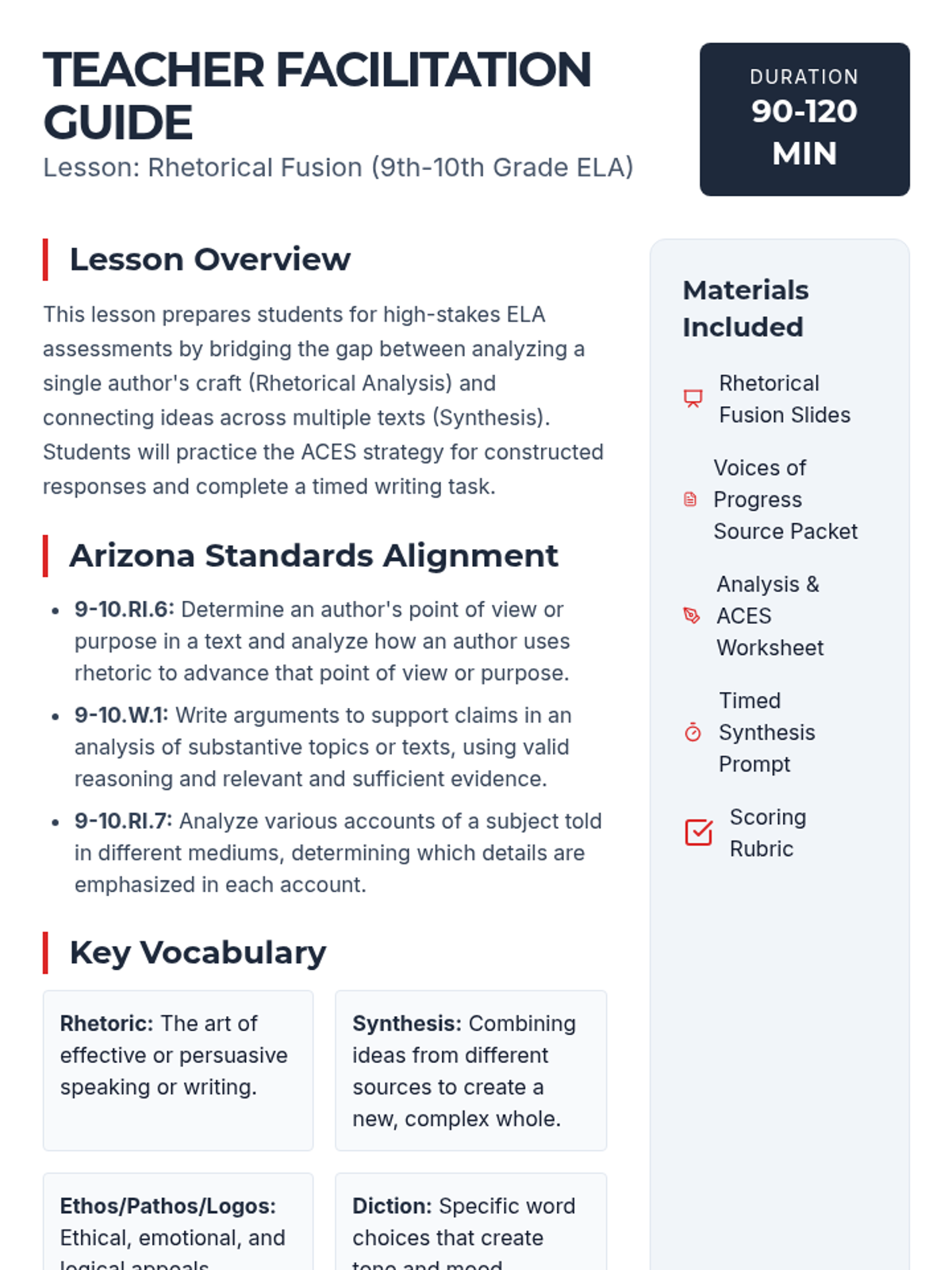
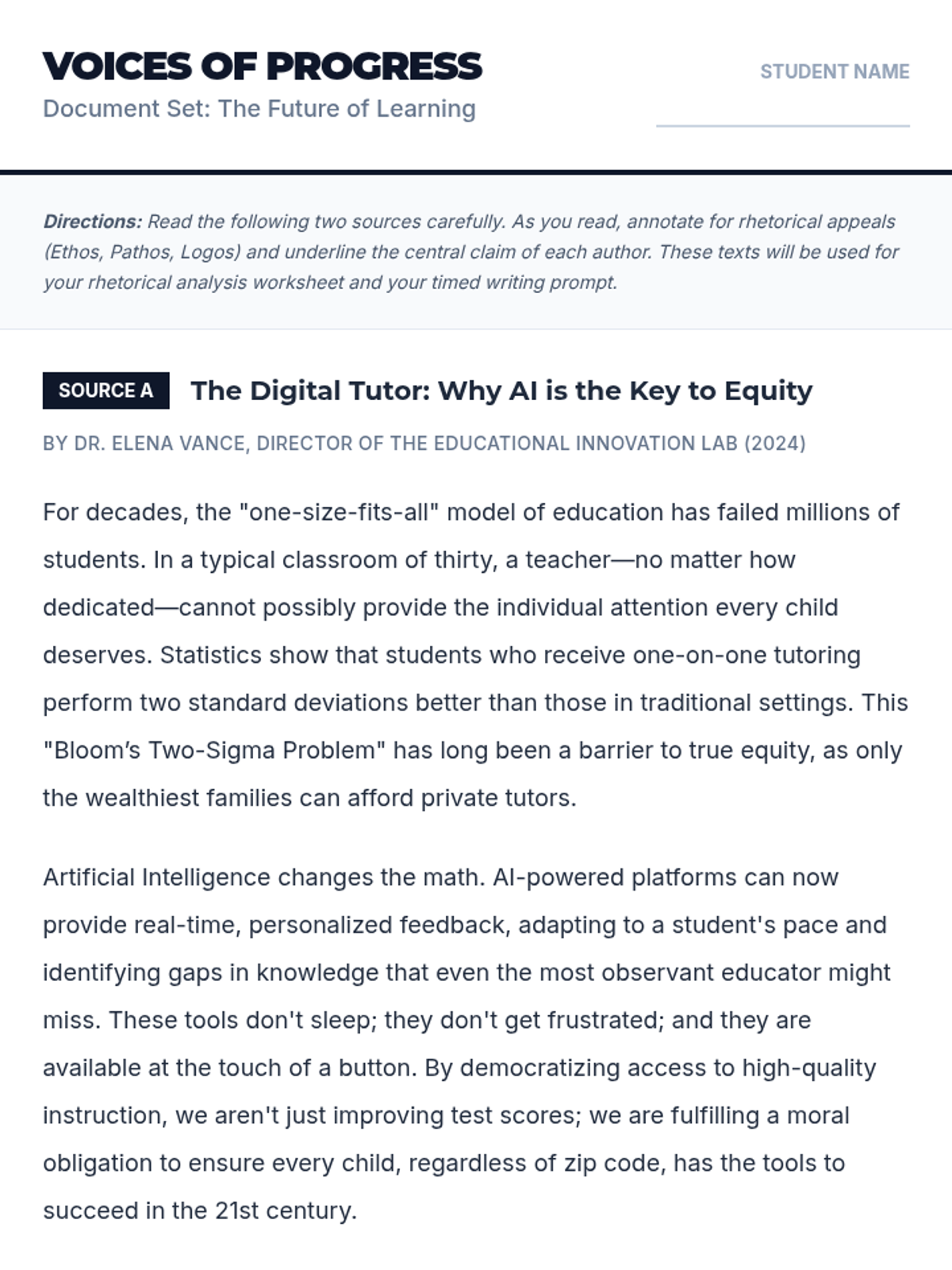
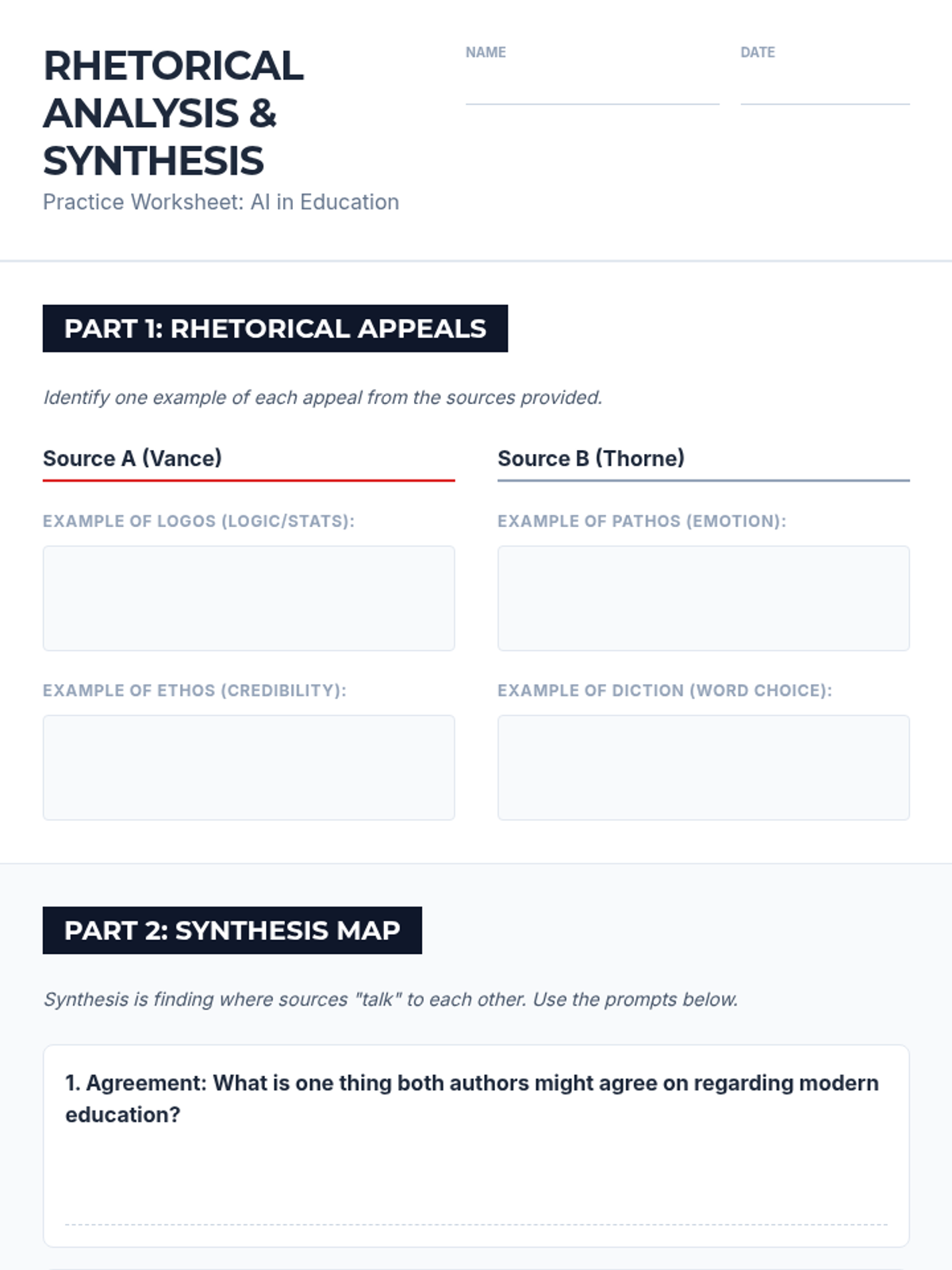
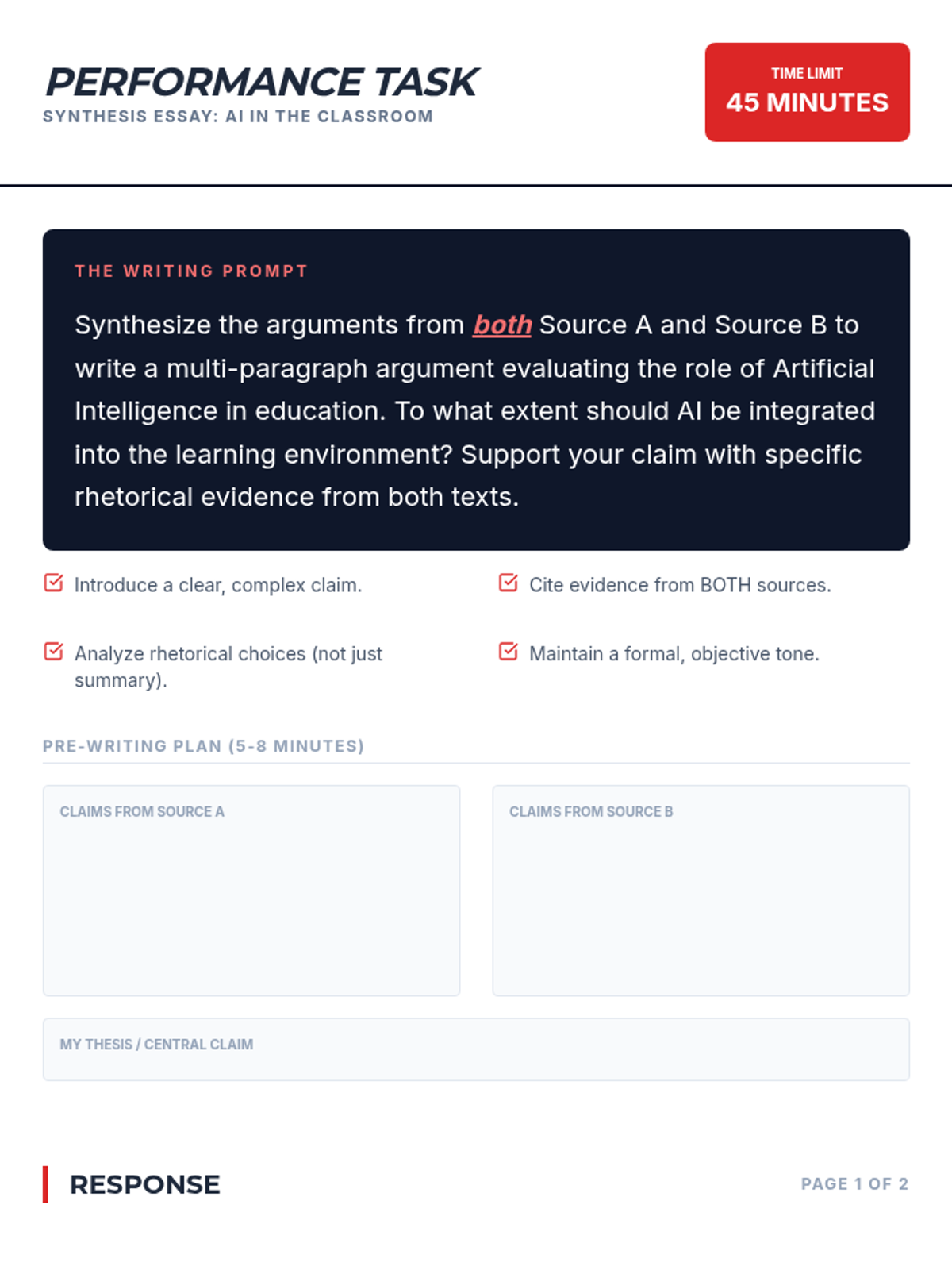
A comprehensive prep lesson for 9th-10th grade students focusing on analyzing rhetorical strategies and synthesizing information from multiple sources. Includes strategies for constructed responses and timed writing practice aligned with Arizona ELA standards.
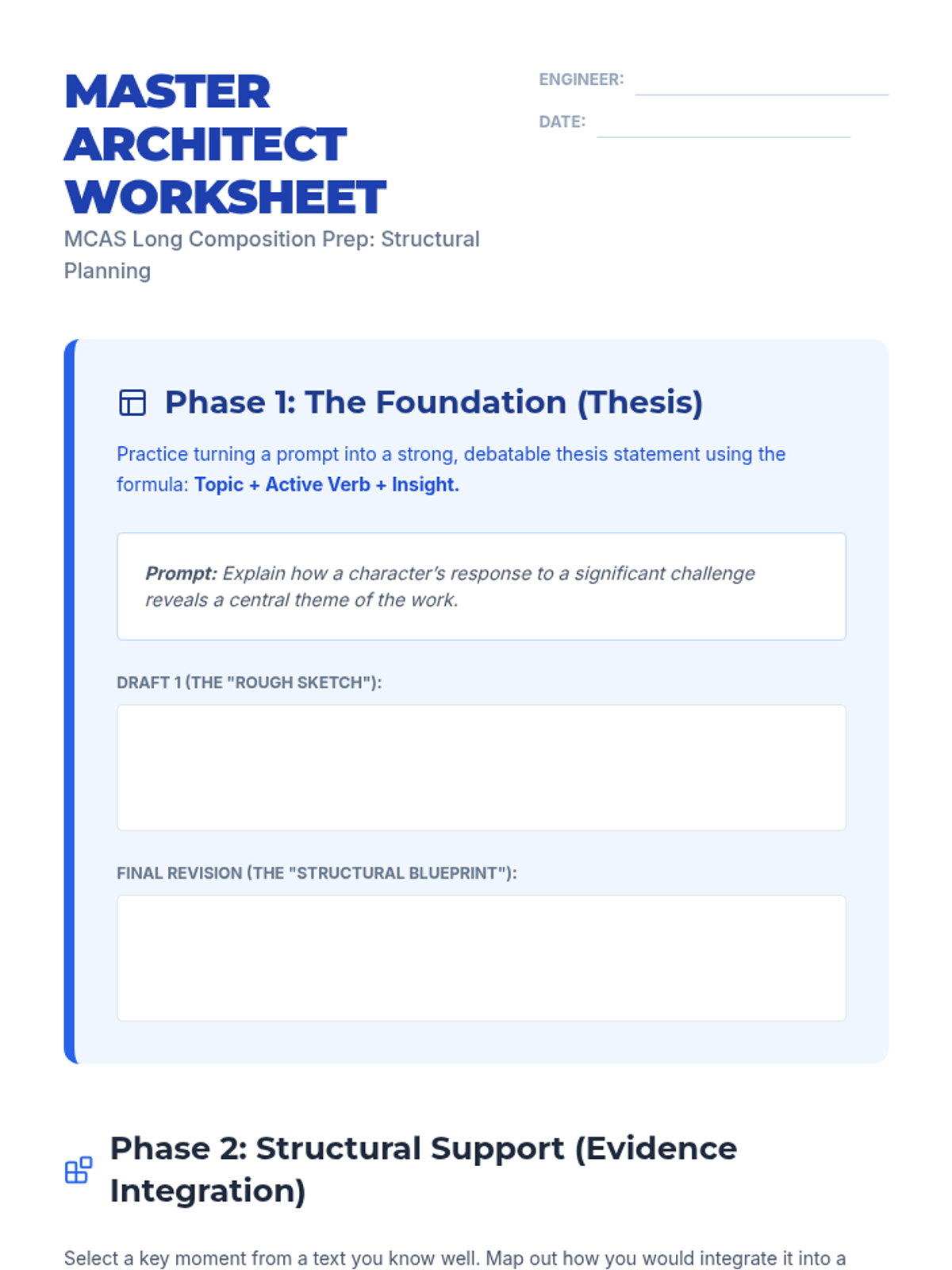
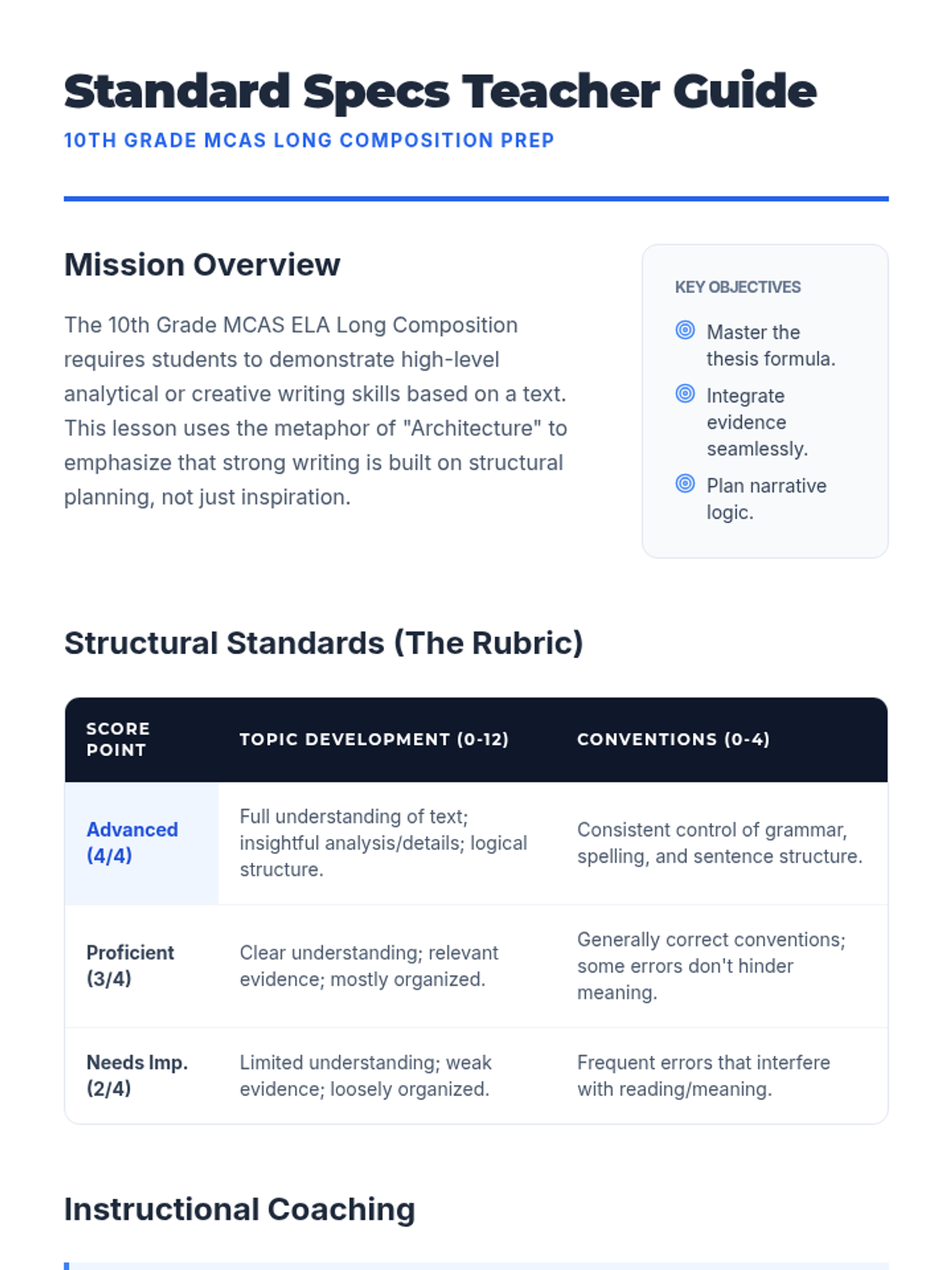
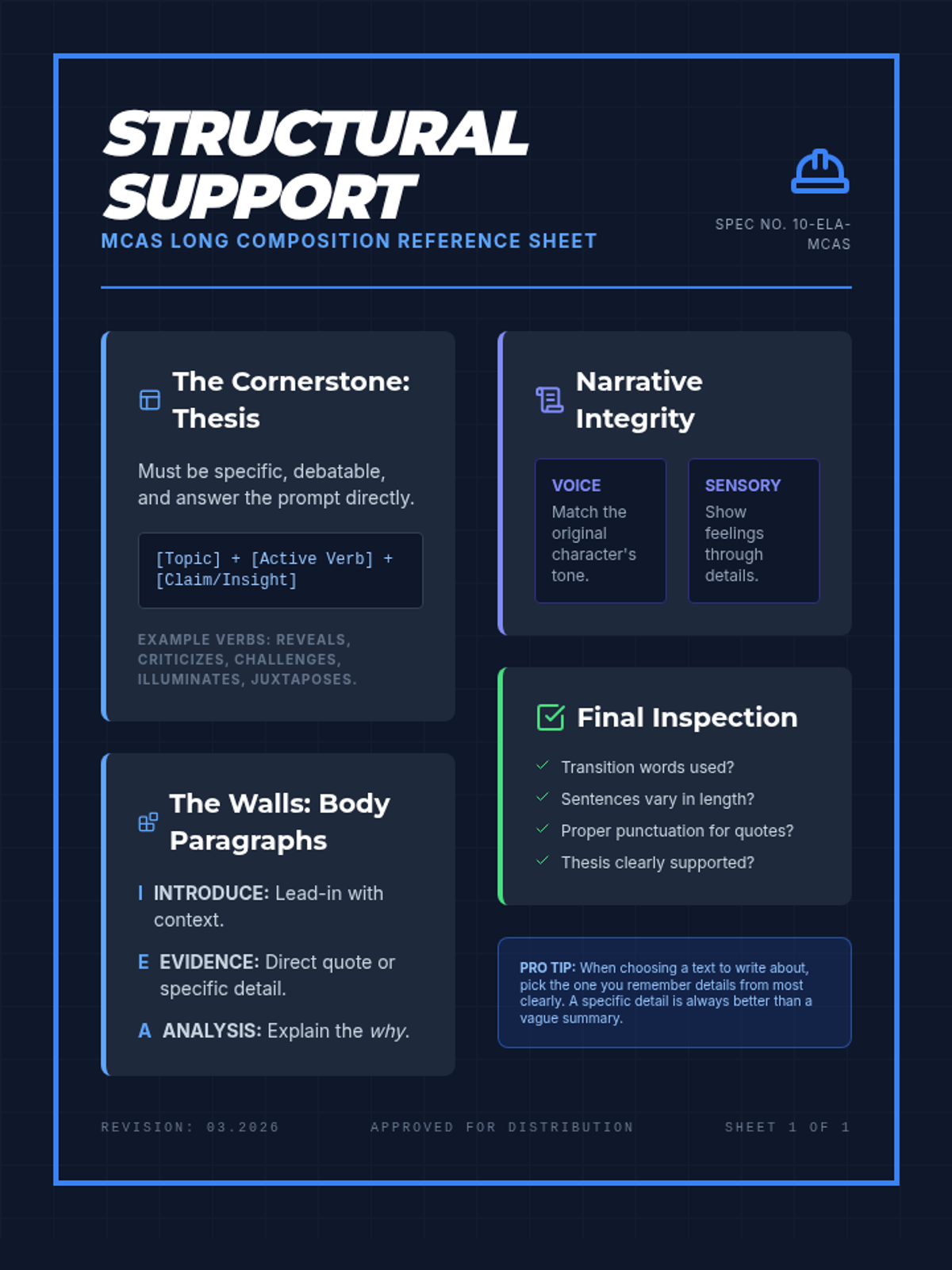
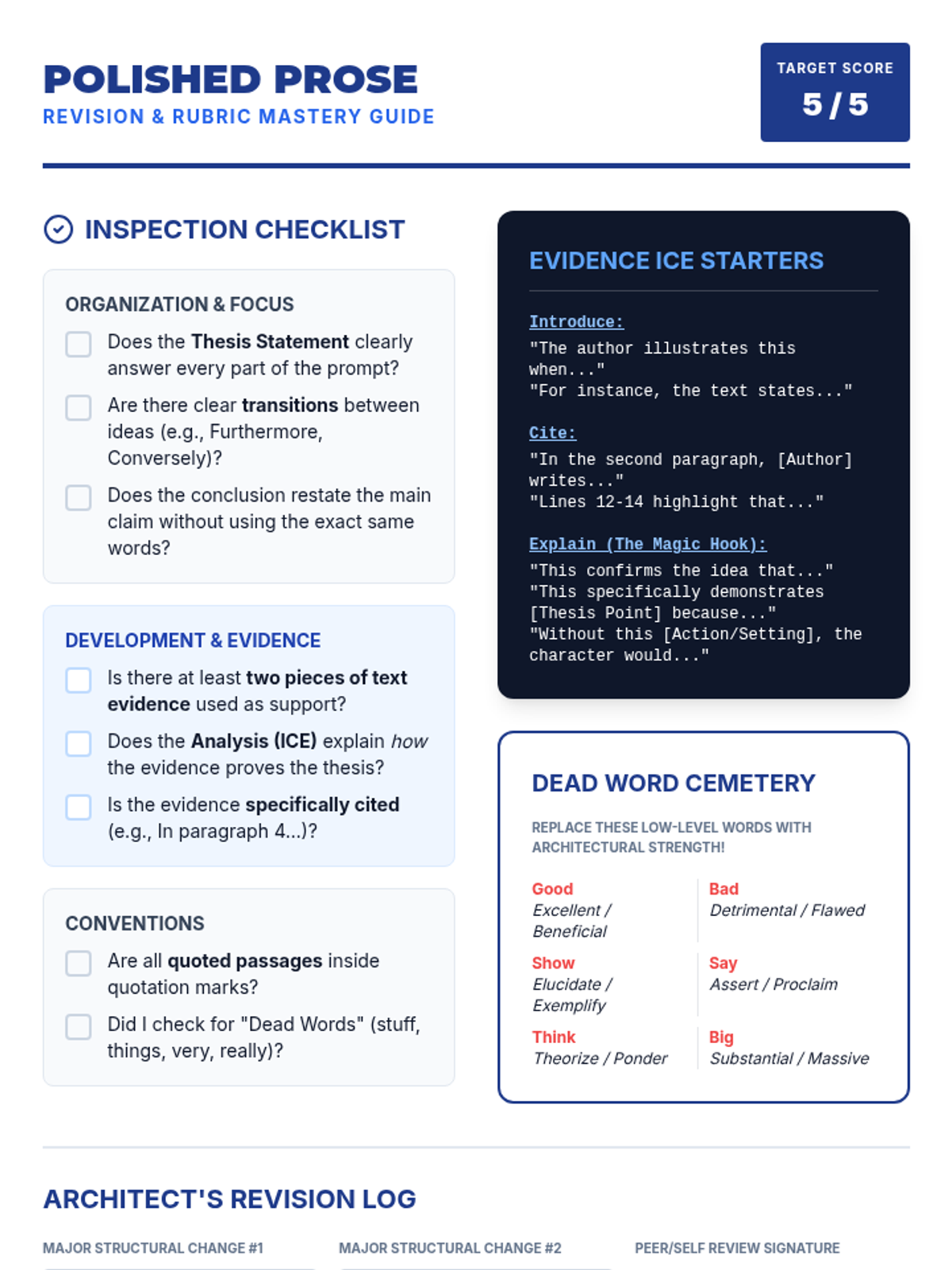
A comprehensive prep lesson for the 10th grade ELA MCAS long composition, focusing on structural planning for both argument and narrative responses. Students will master thesis construction, evidence selection, and revision techniques through architectural metaphors.
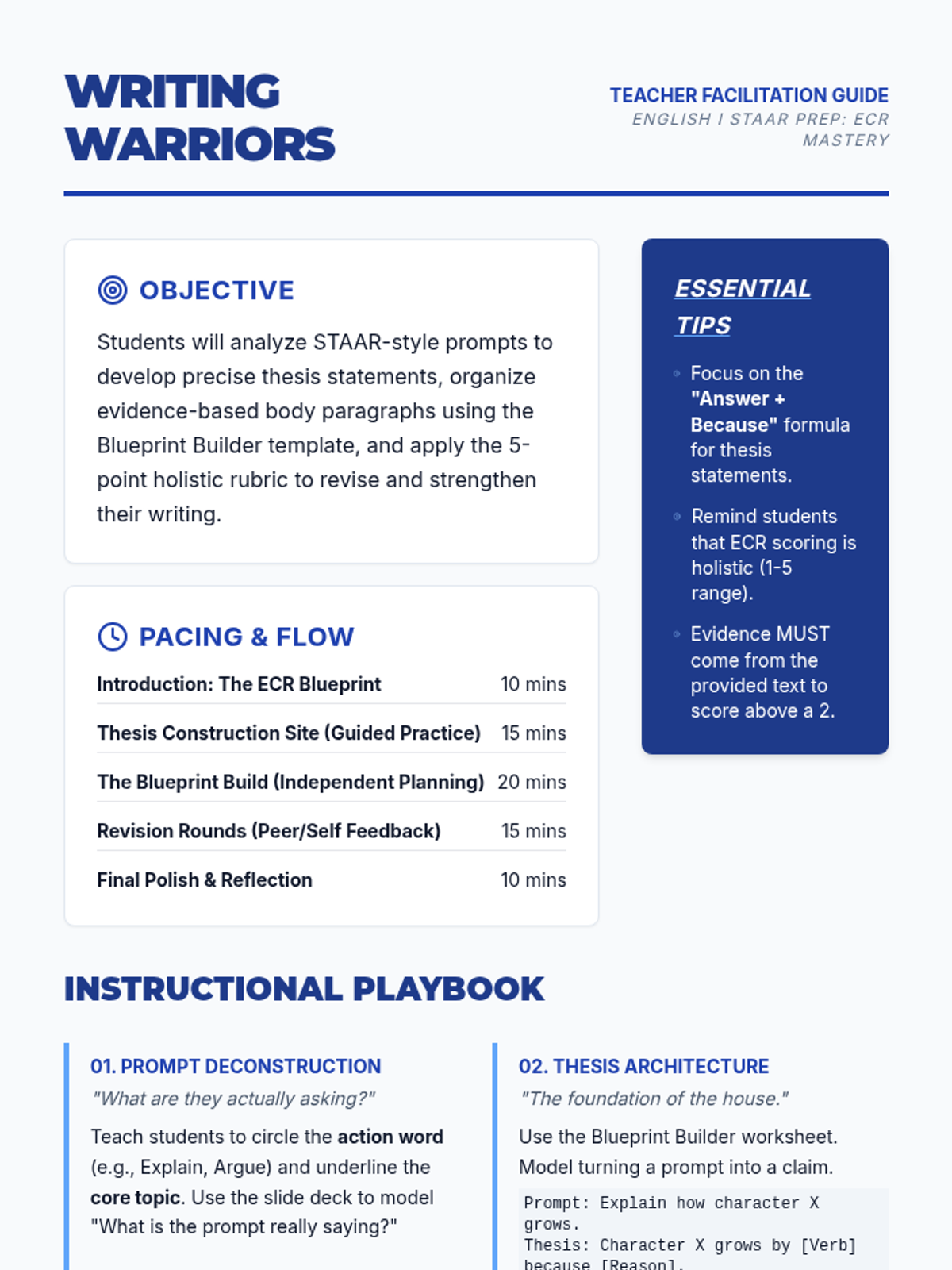
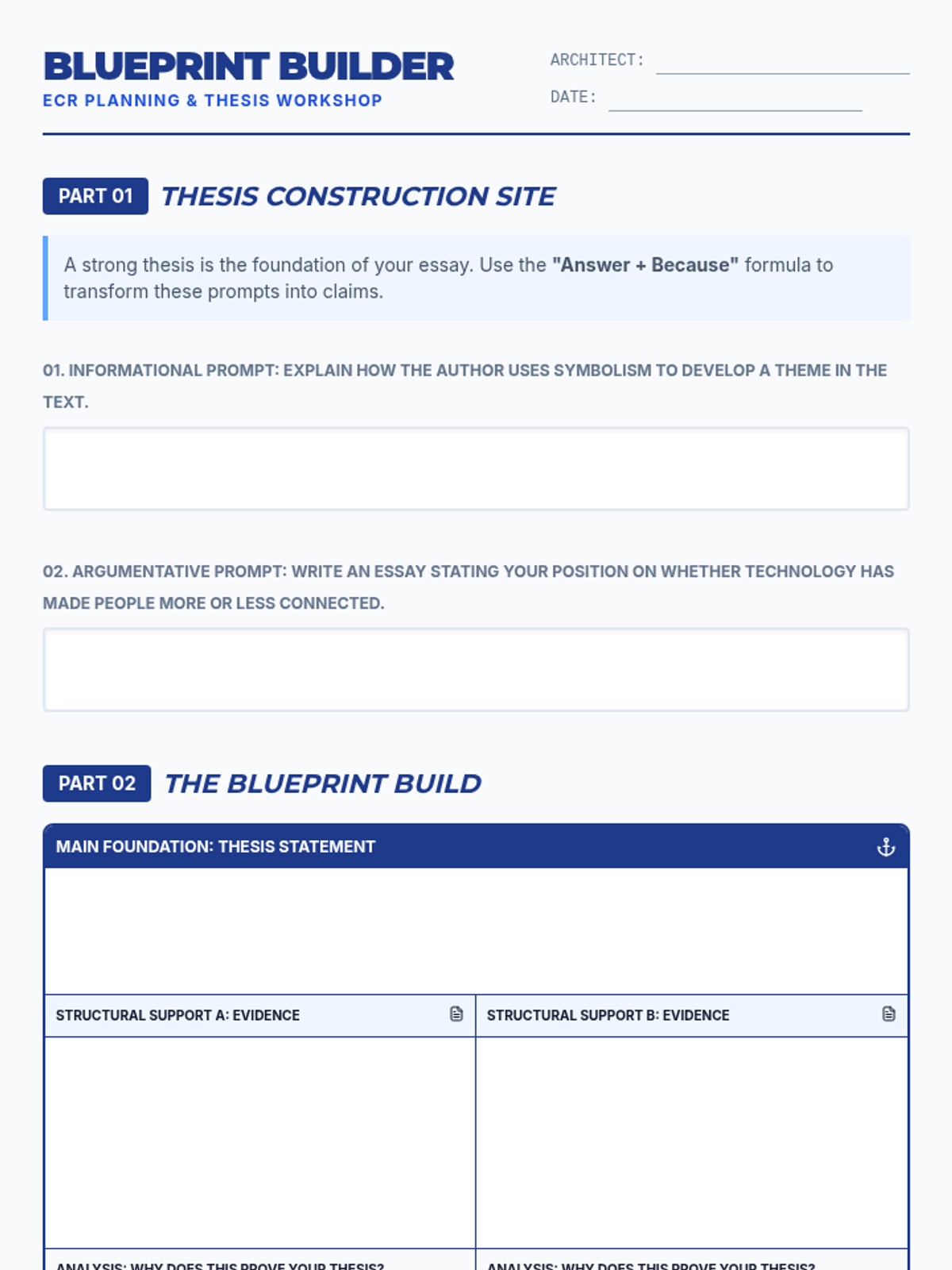
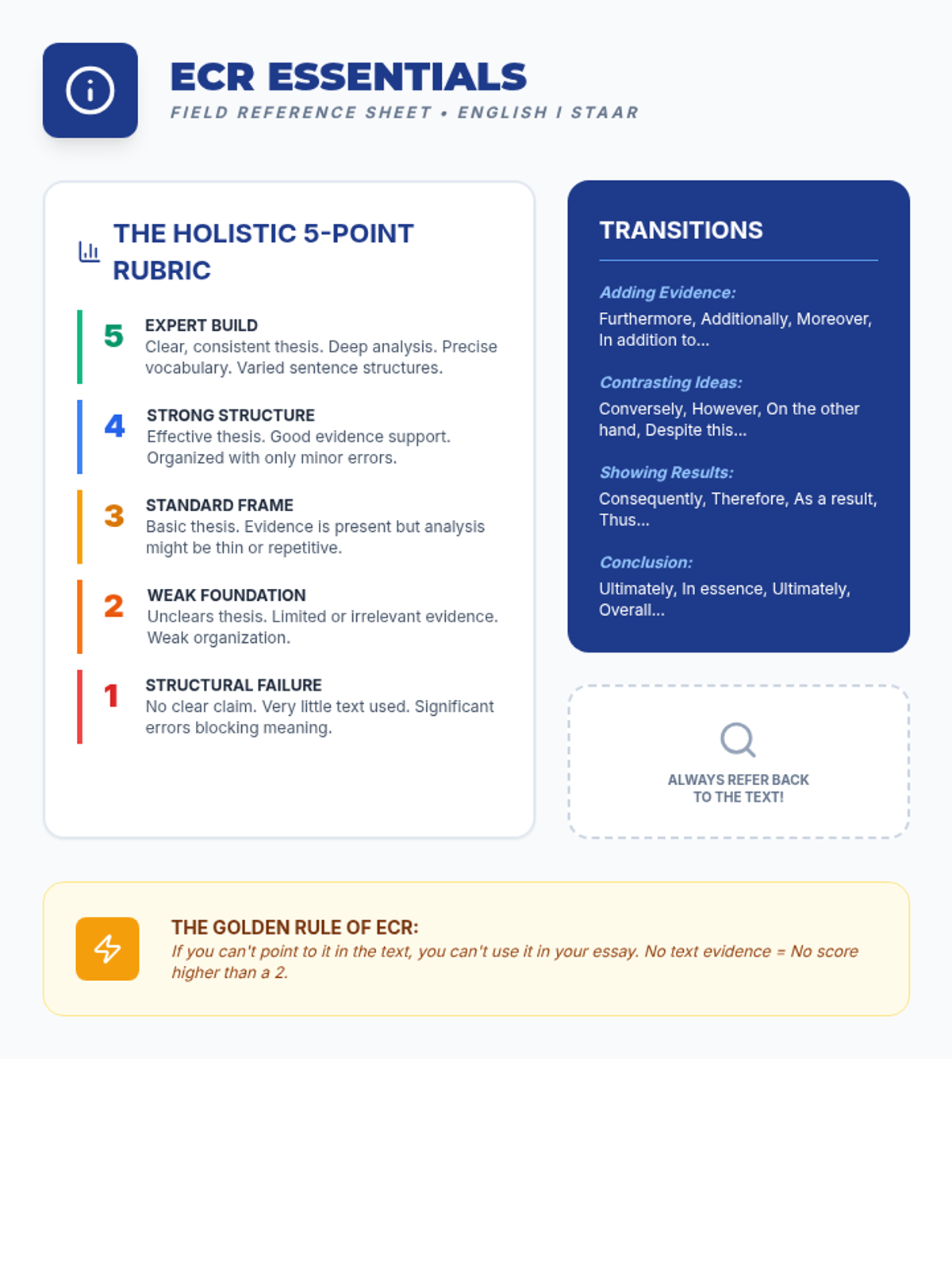
A comprehensive STAAR prep lesson focused on mastering the Extended Constructed Response (ECR). Students will practice crafting strong thesis statements, planning structured essays, and using rubric-aligned strategies to revise their writing for both informational and argumentative prompts.
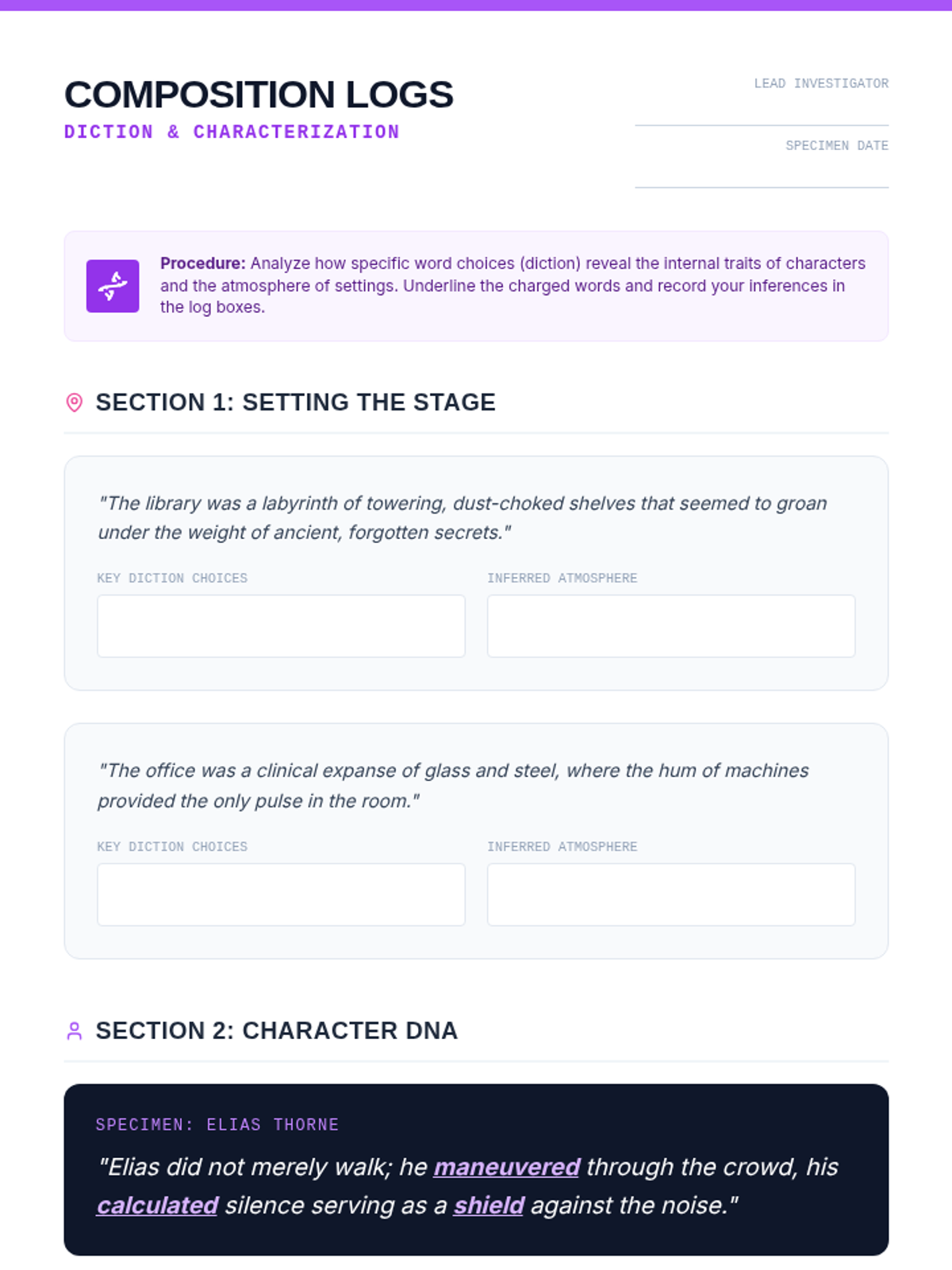
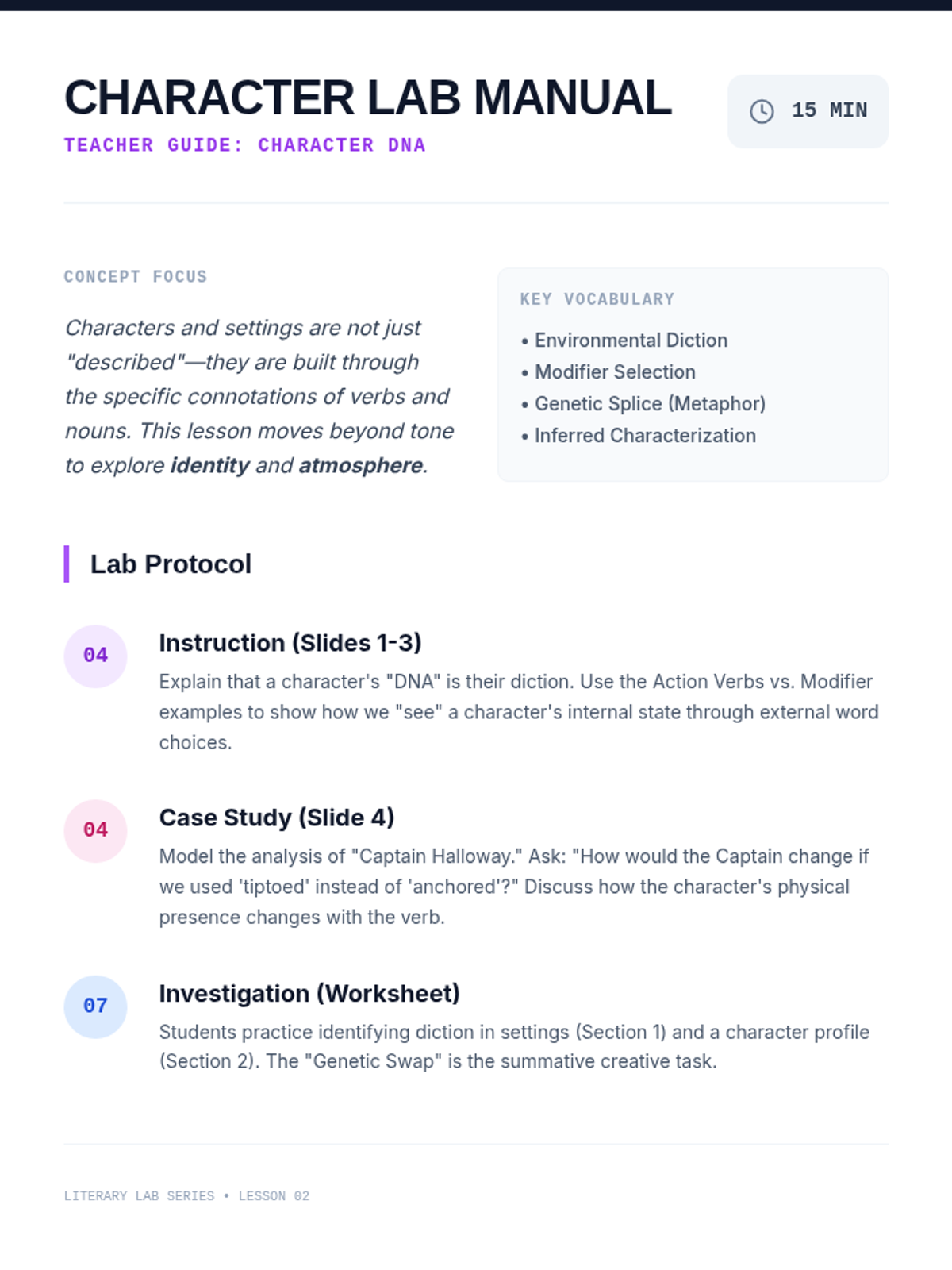
A 15-minute mini-lesson exploring how diction acts as the 'genetic material' of a story, building vivid settings and complex characters through precise word choice.
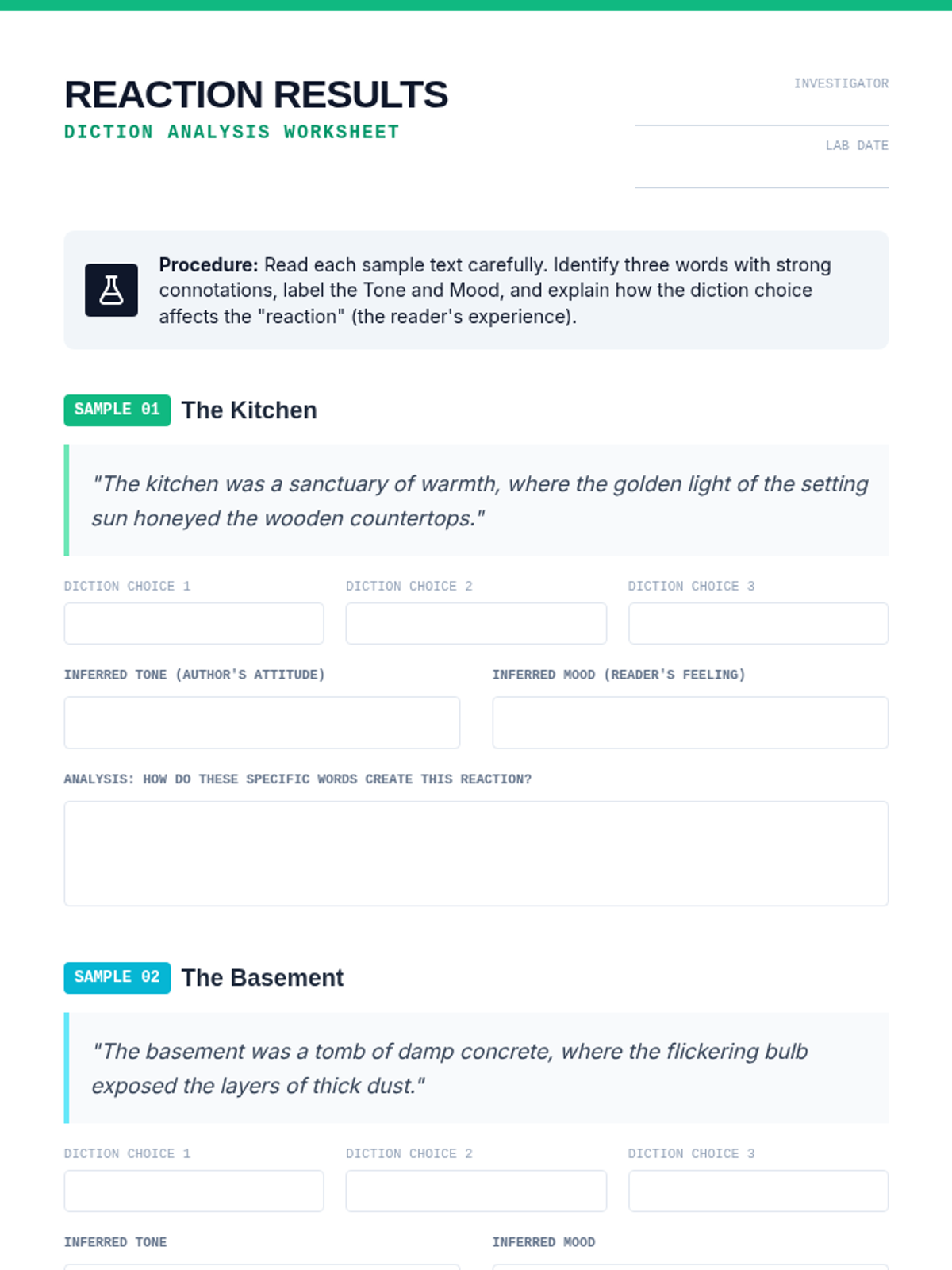
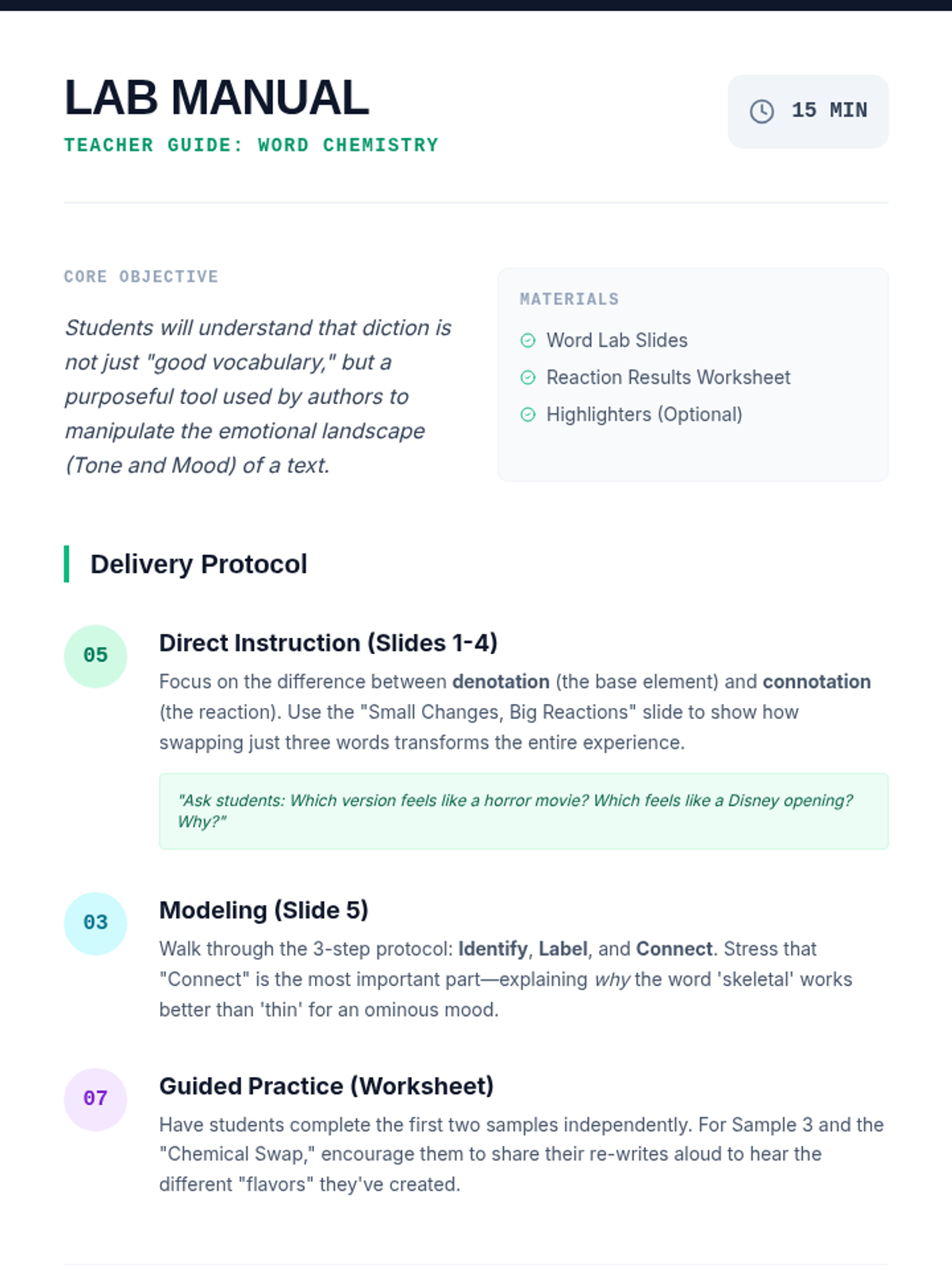
A 15-minute mini-lesson exploring how specific word choices (diction) create distinct tones and moods in literature, framed through a 'Word Lab' investigation.
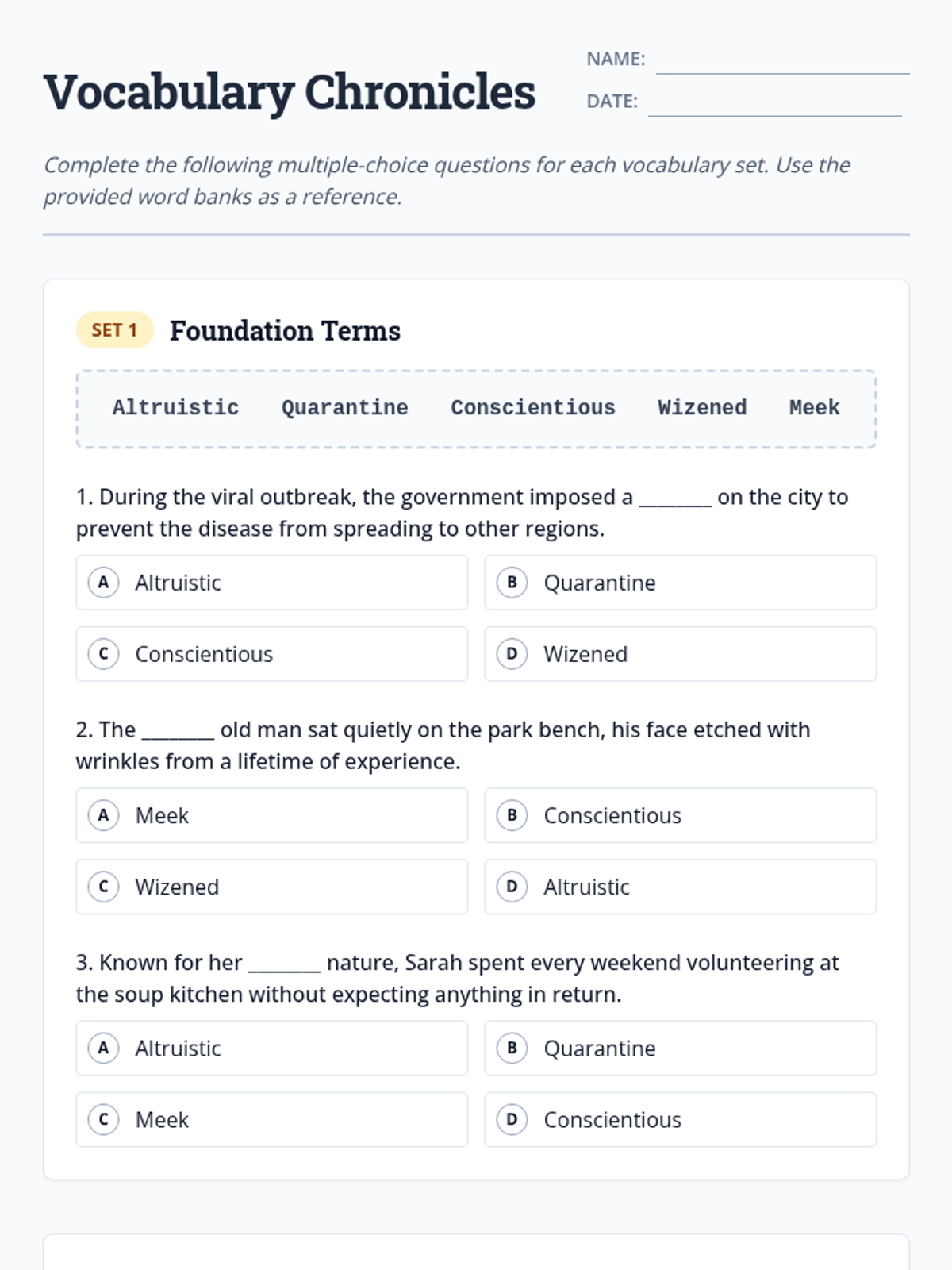
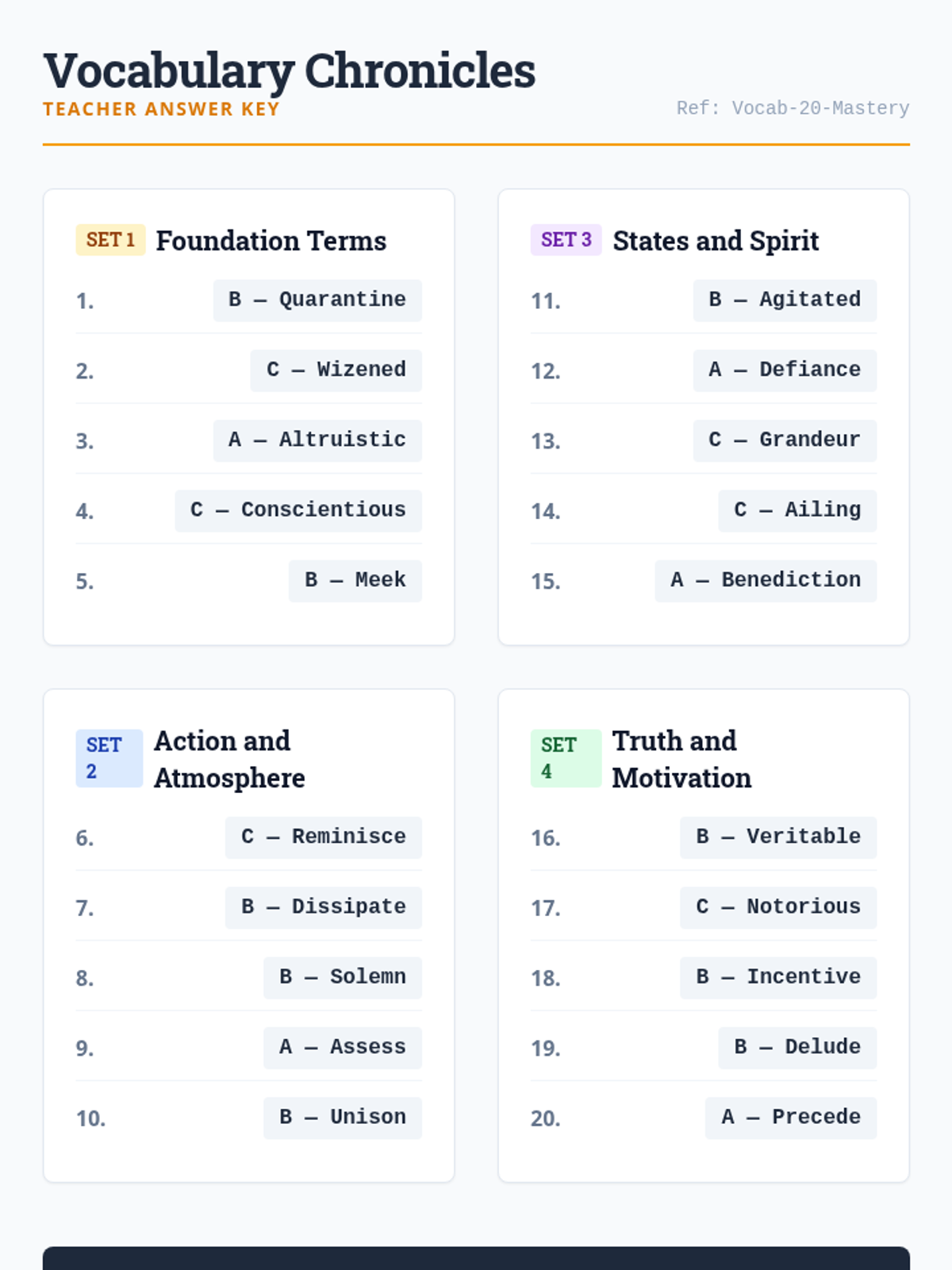
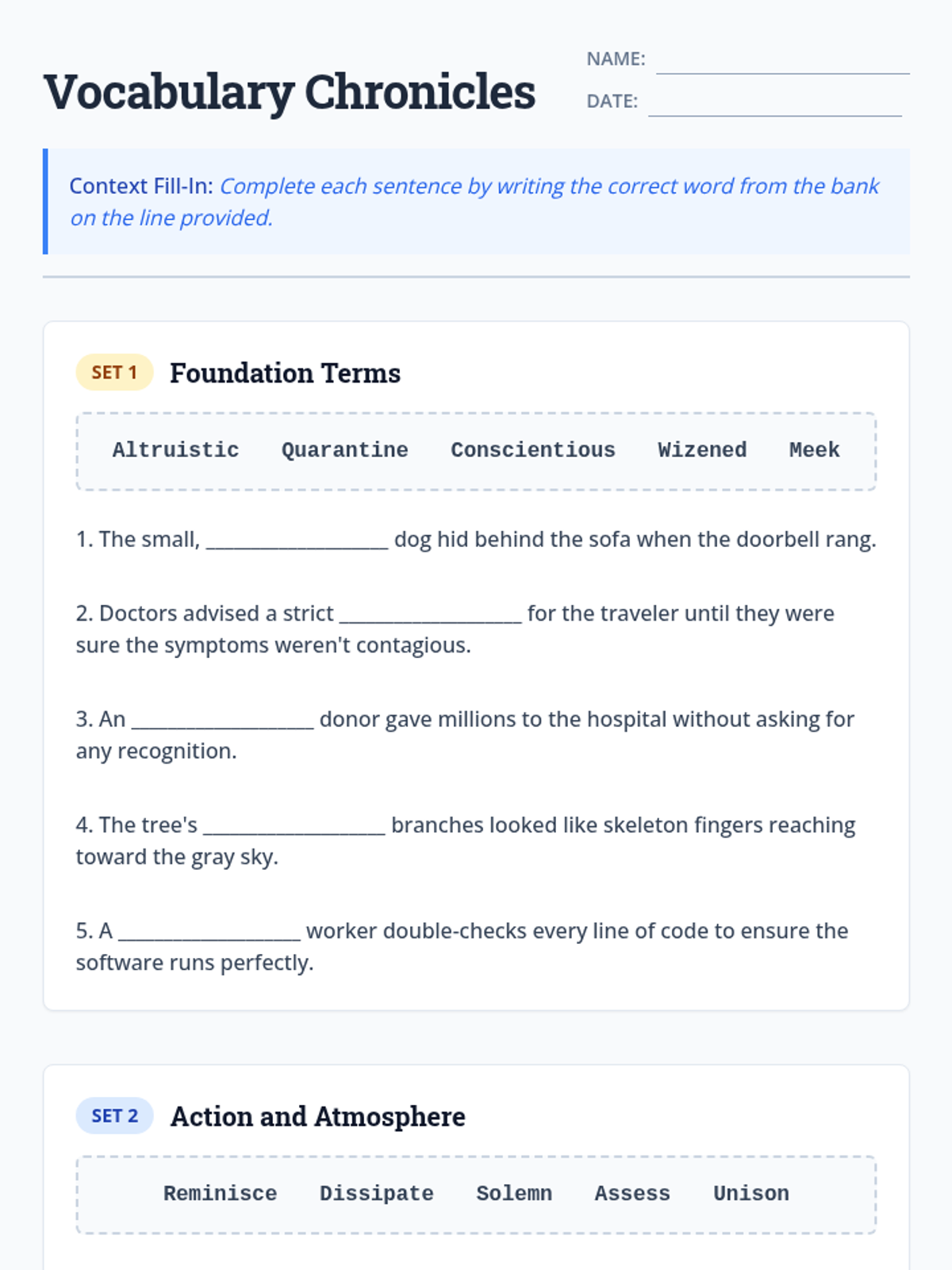
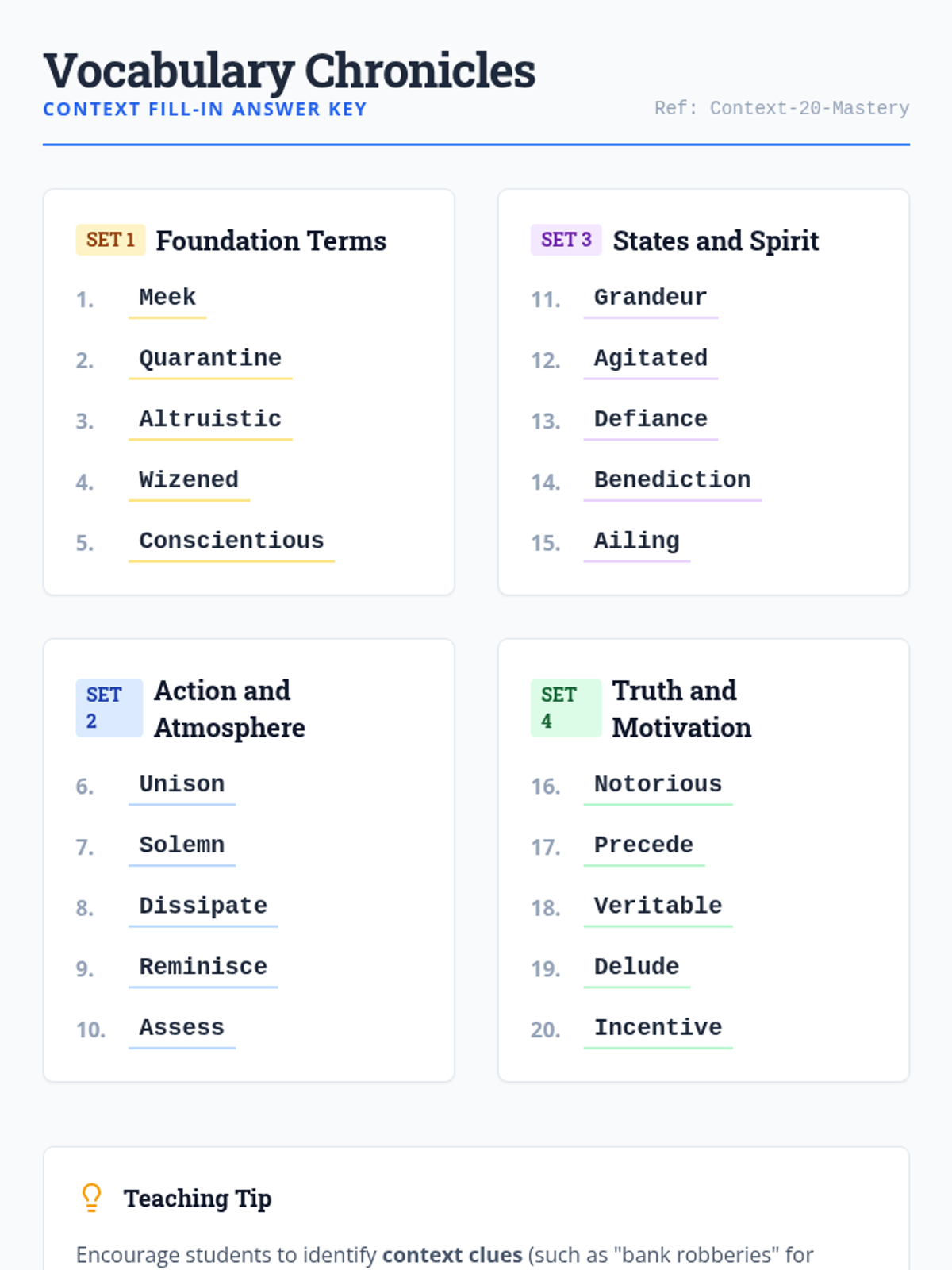
A comprehensive vocabulary study focusing on 20 key terms from historical and literary contexts, featuring word bank exercises and multiple-choice assessments.
A fast-paced, movement-based warm-up for 10th grade ELA focusing on philosophical themes of luck, fate, and folklore to celebrate St. Patrick's Day.
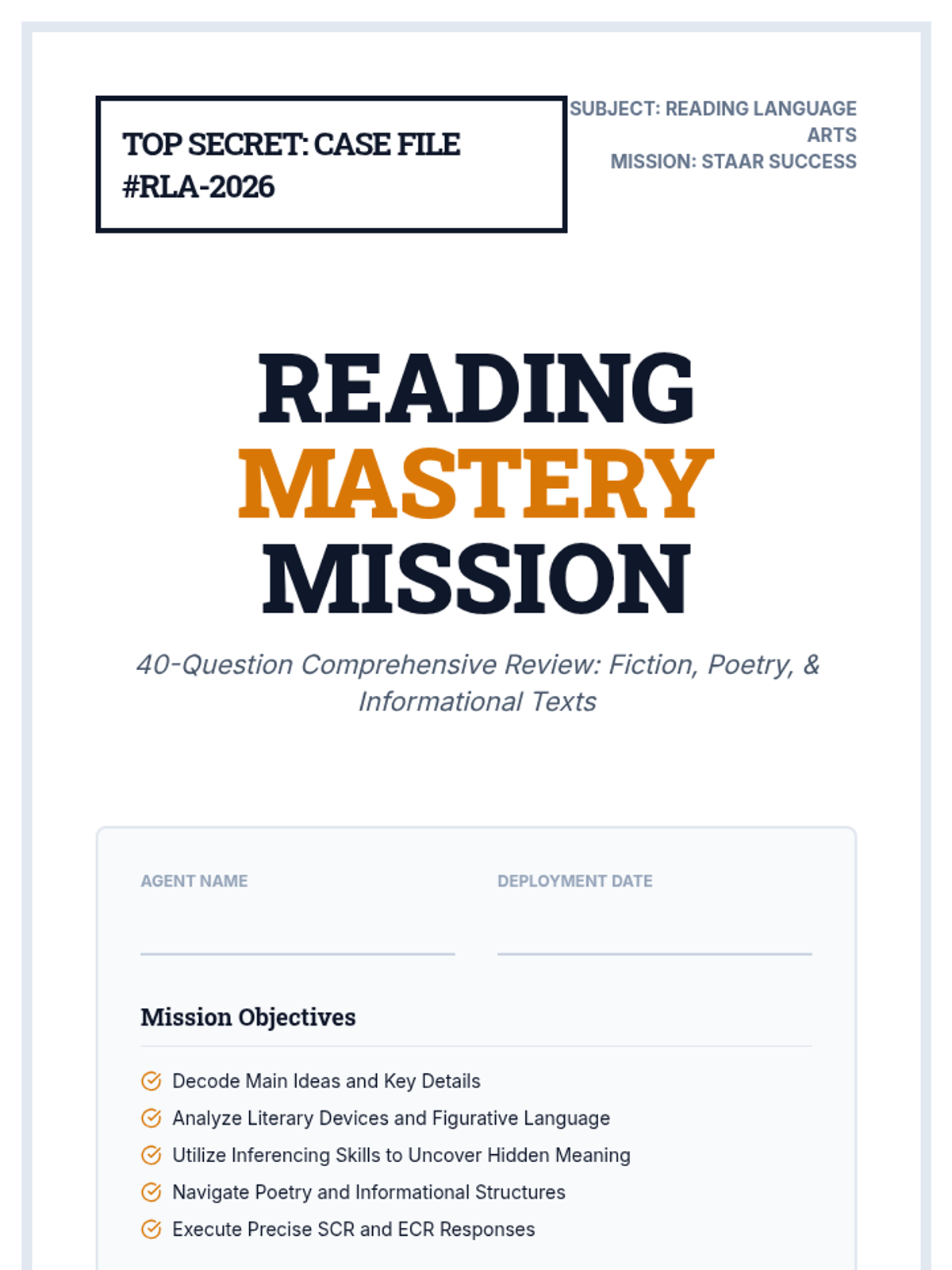
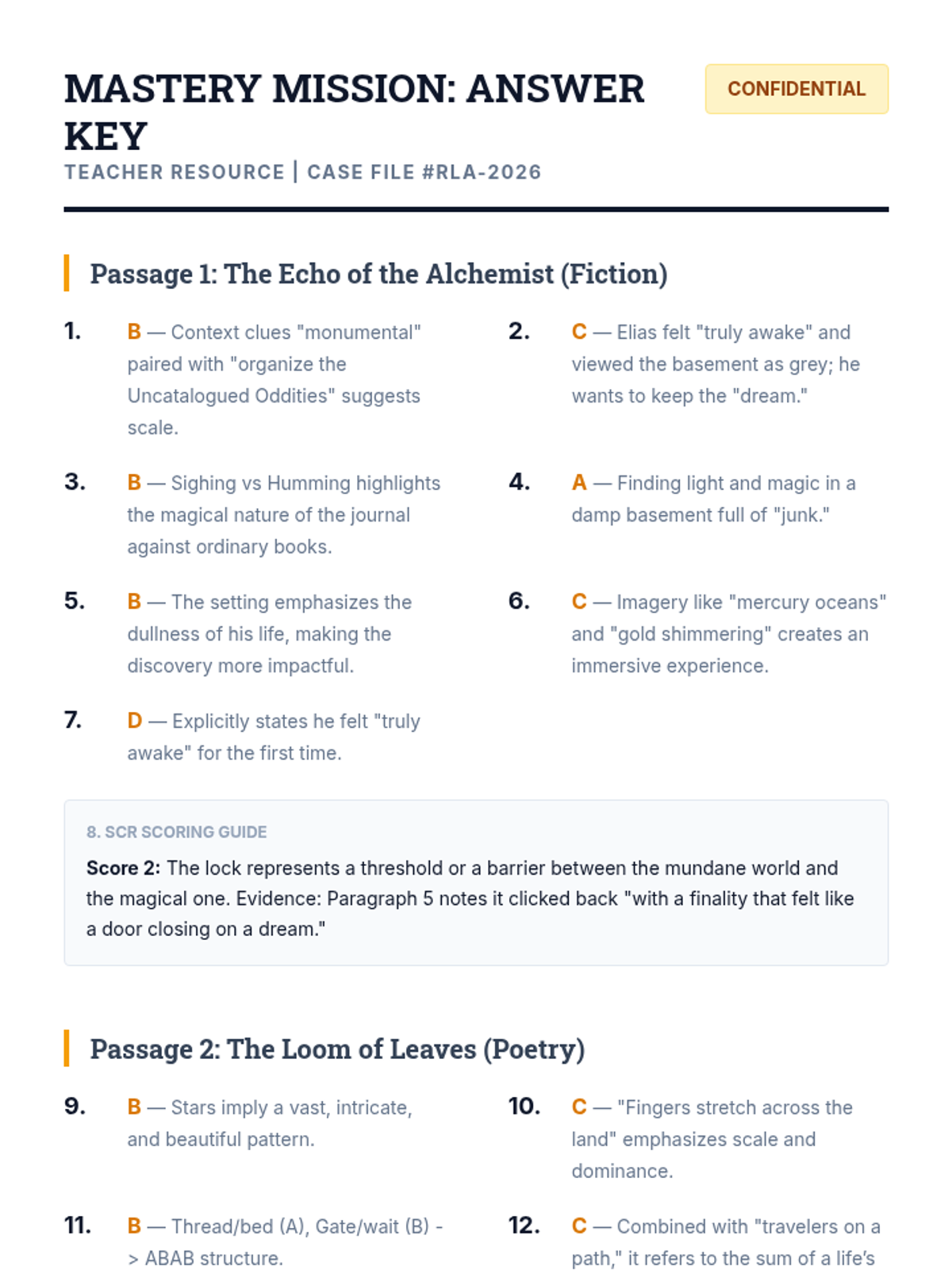
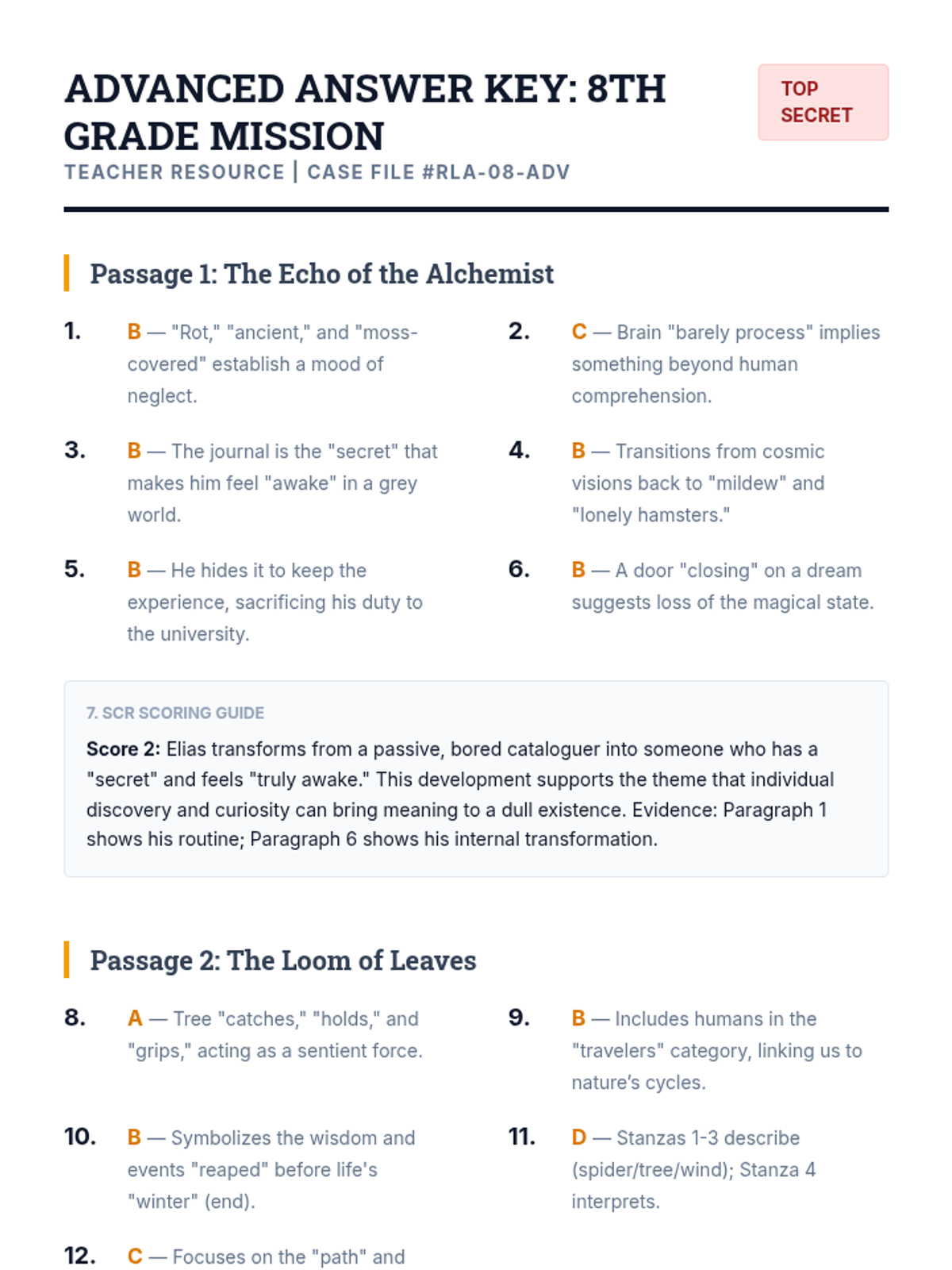
A comprehensive STAAR Reading Language Arts review covering main idea, inferencing, literary devices, poetry, and informational texts through multiple-choice, SCR, and ECR practice.
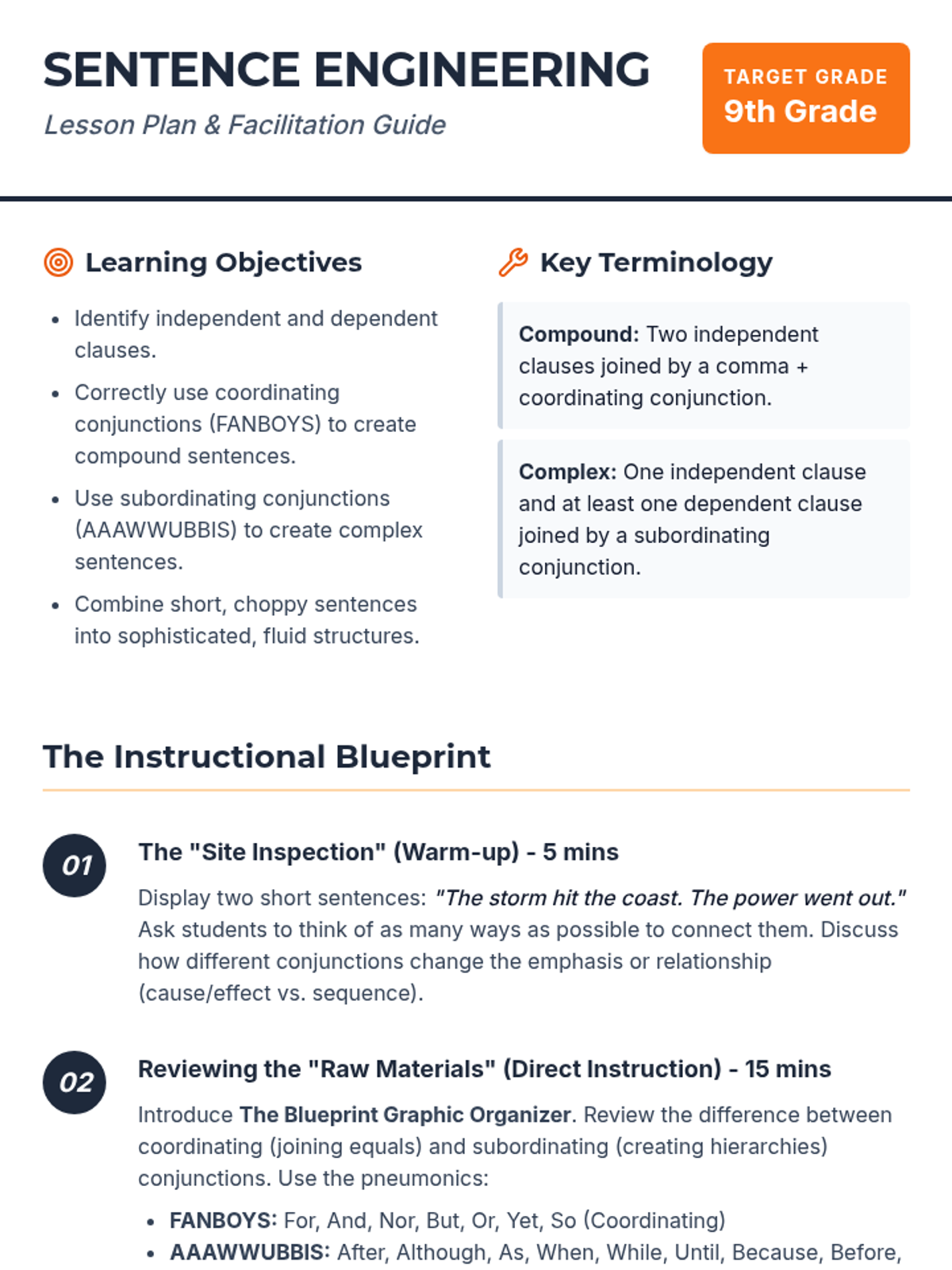
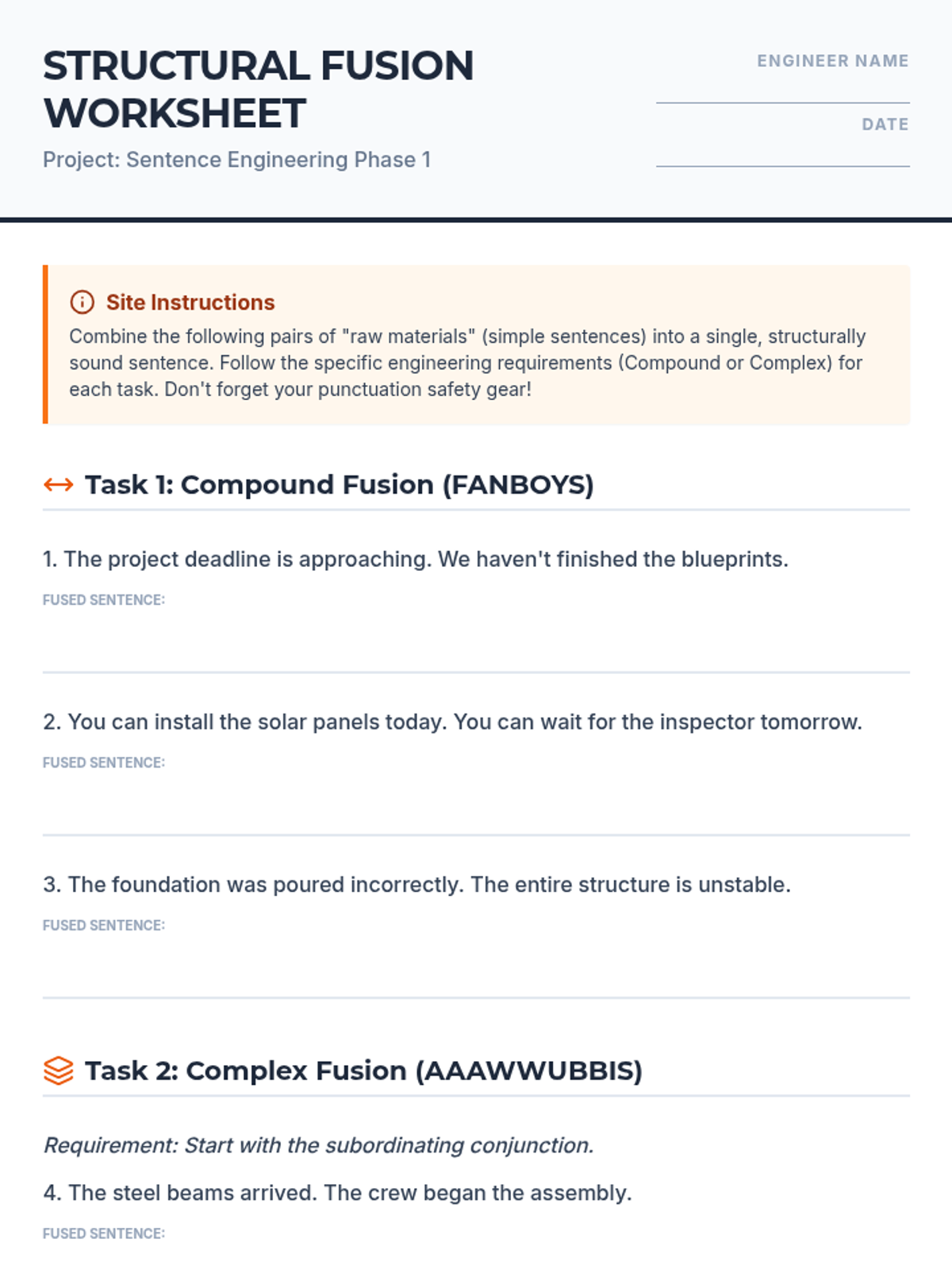
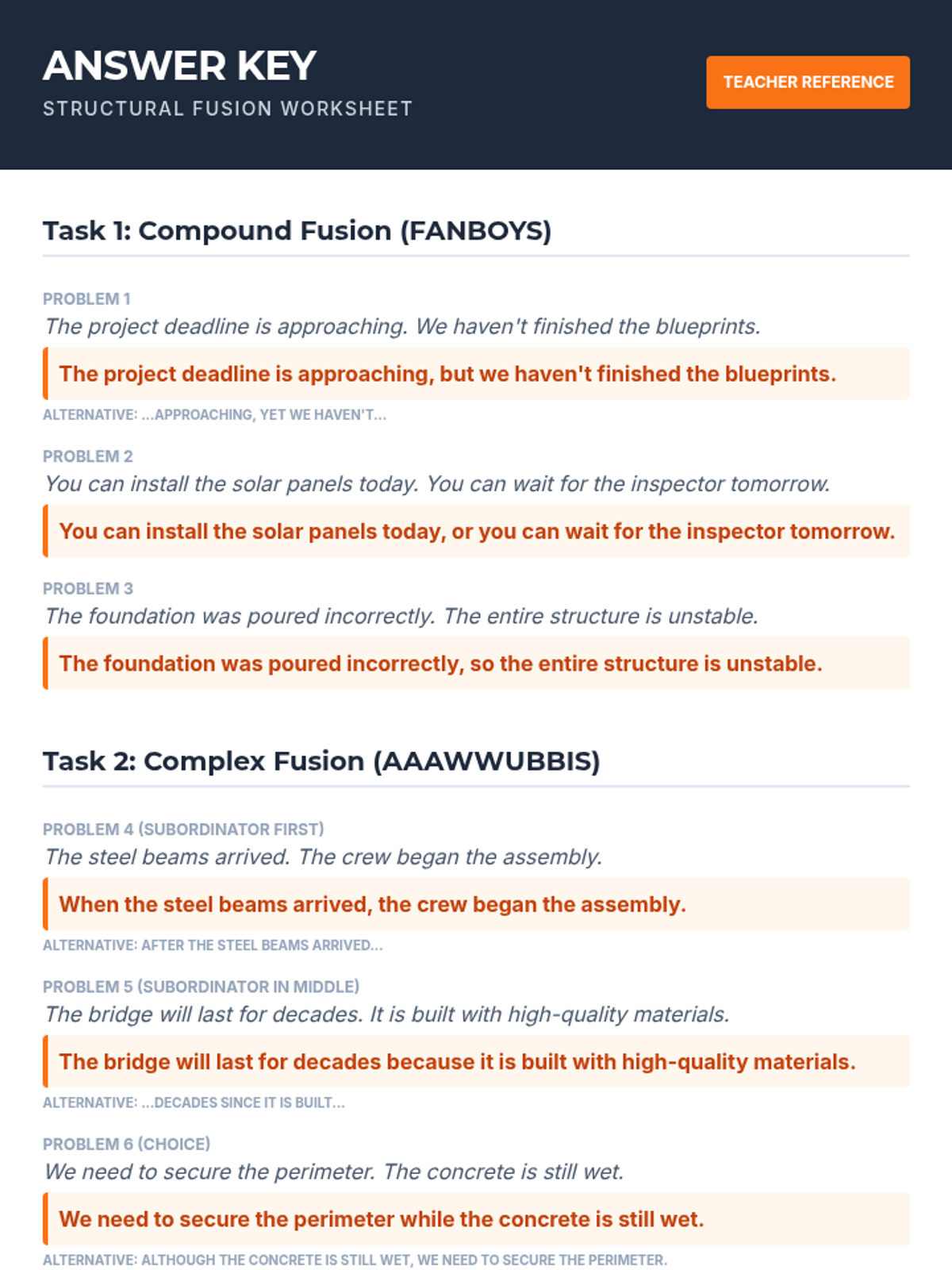
A comprehensive lesson focused on mastering compound and complex sentence structures using coordinating and subordinating conjunctions. Students will learn to 'engineer' more sophisticated writing by strategically combining ideas.