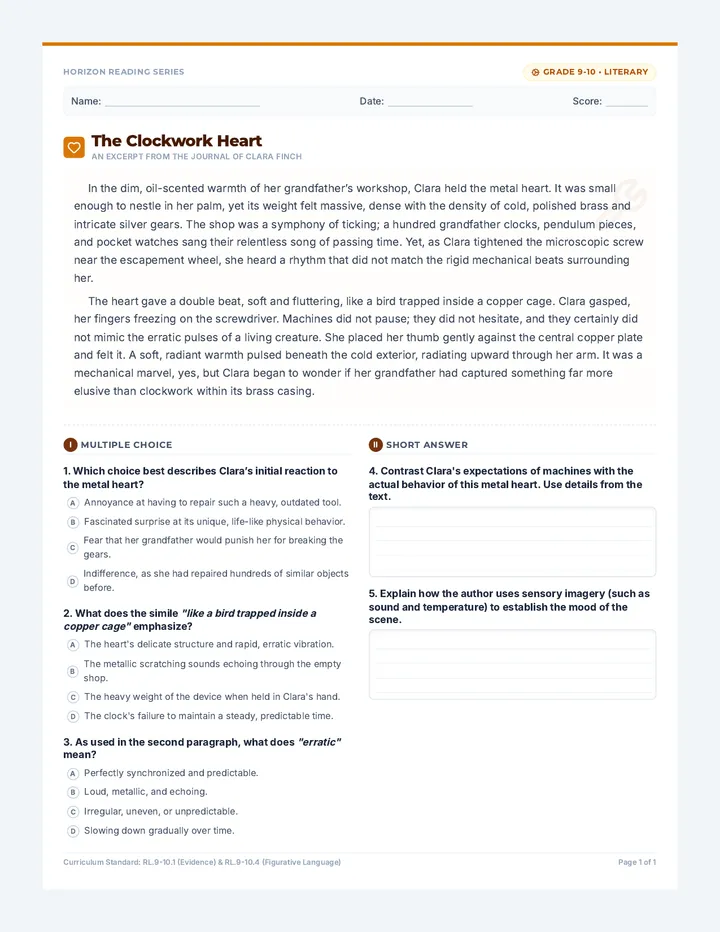
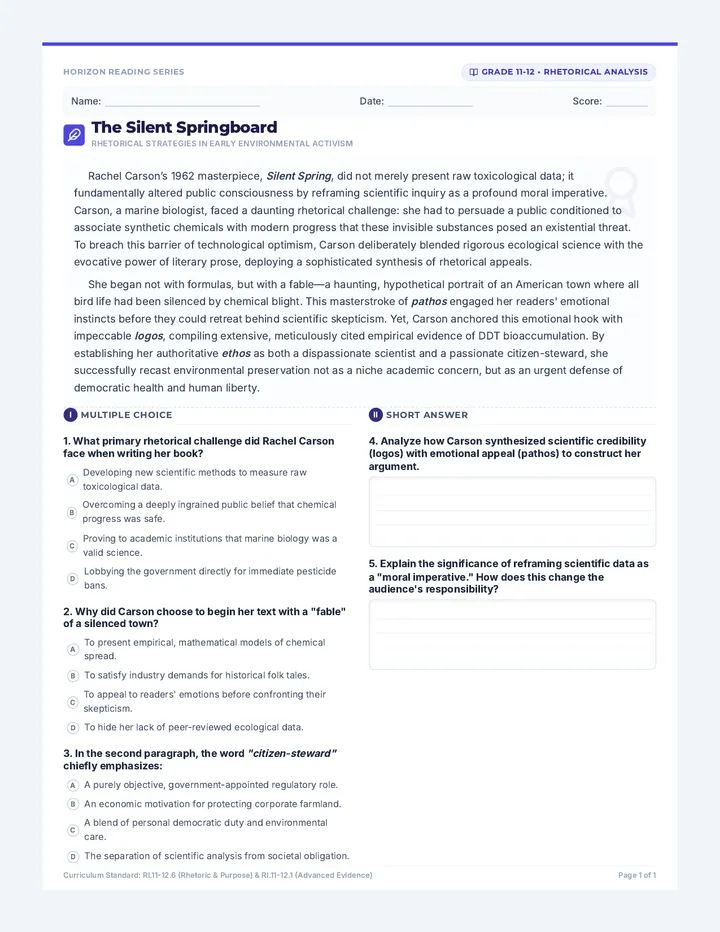
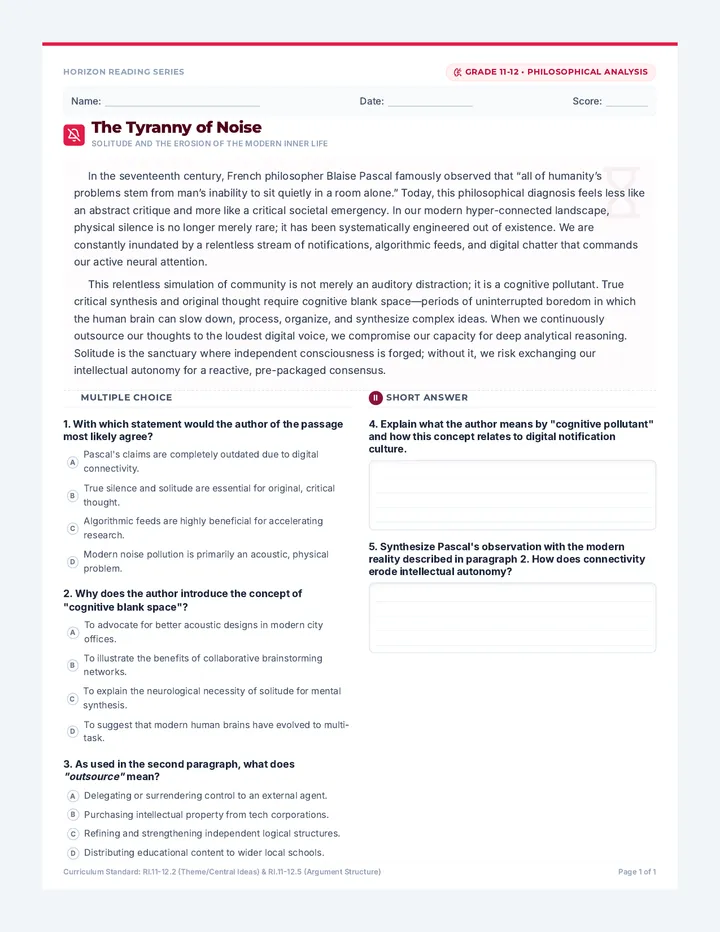
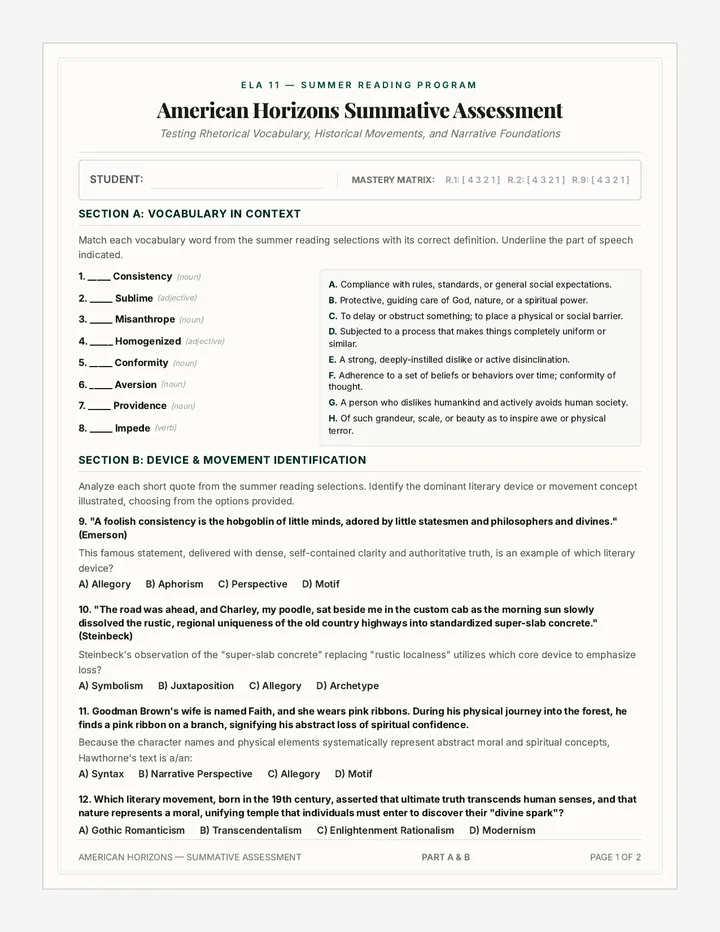
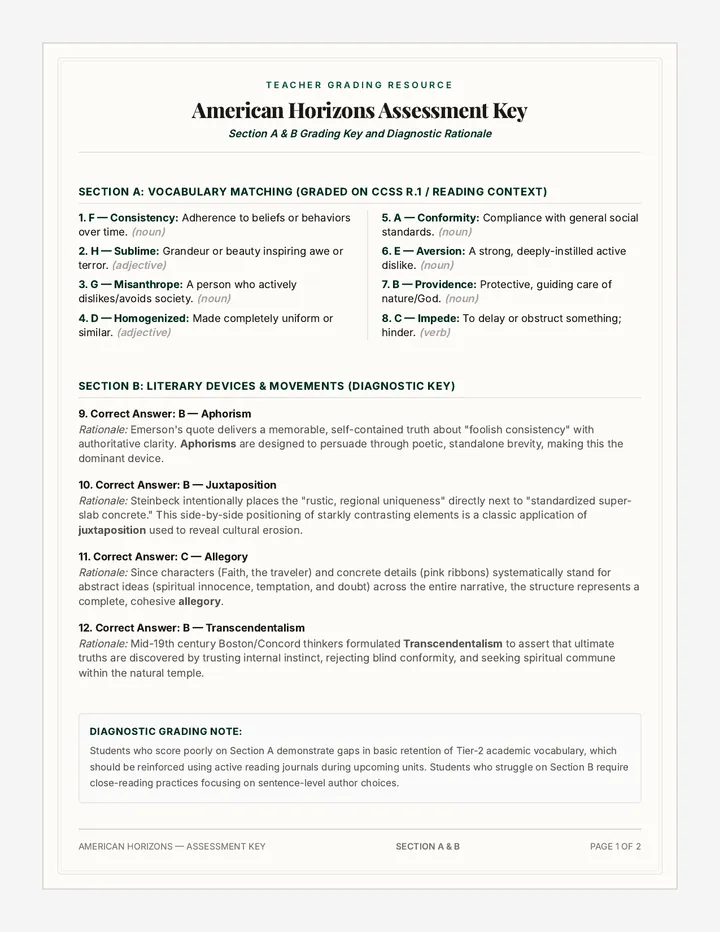
A comprehensive vocabulary study focusing on 20 key terms from historical and literary contexts, featuring word bank exercises and multiple-choice assessments.
A 15-minute mini-lesson exploring how diction acts as the 'genetic material' of a story, building vivid settings and complex characters through precise word choice.
A 15-minute mini-lesson exploring how specific word choices (diction) create distinct tones and moods in literature, framed through a 'Word Lab' investigation.
A comprehensive lesson exploring Tanith Lee's 'Awake,' a subversion of Sleeping Beauty, focusing on structural choices and source material transformation (RL.5 and RL.9). Students will analyze character conflict and the concept of 'the gift of time.'
A fast-paced, movement-based warm-up for 10th grade ELA focusing on philosophical themes of luck, fate, and folklore to celebrate St. Patrick's Day.
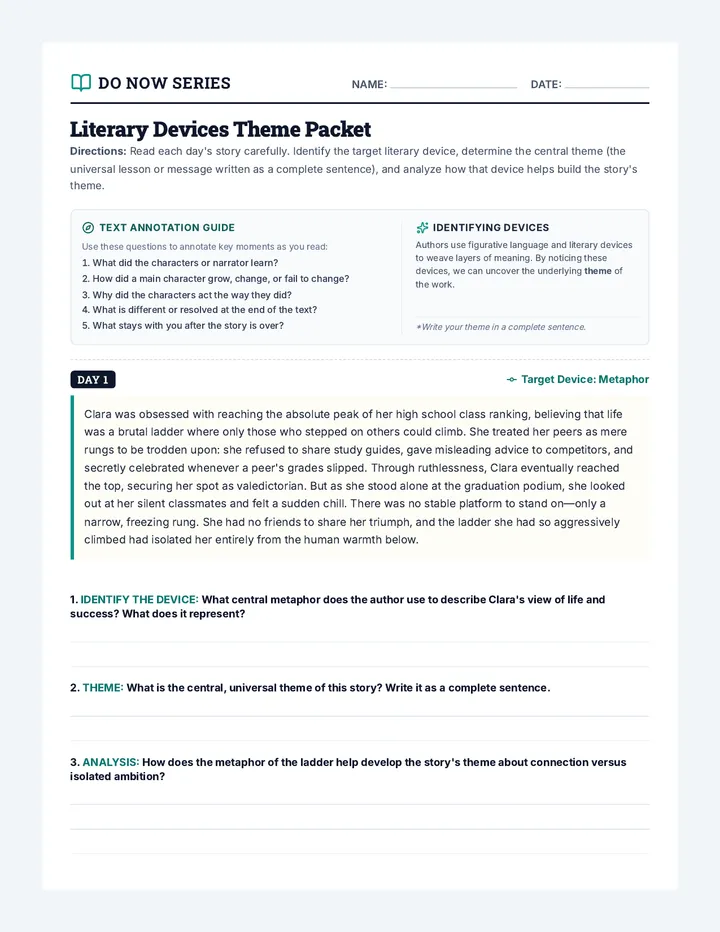
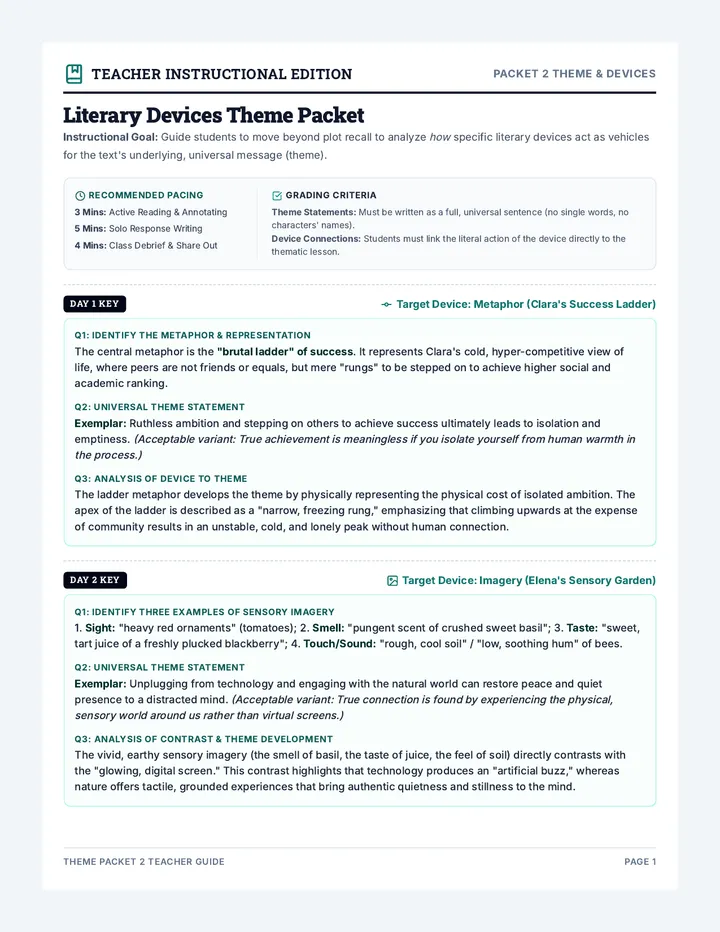
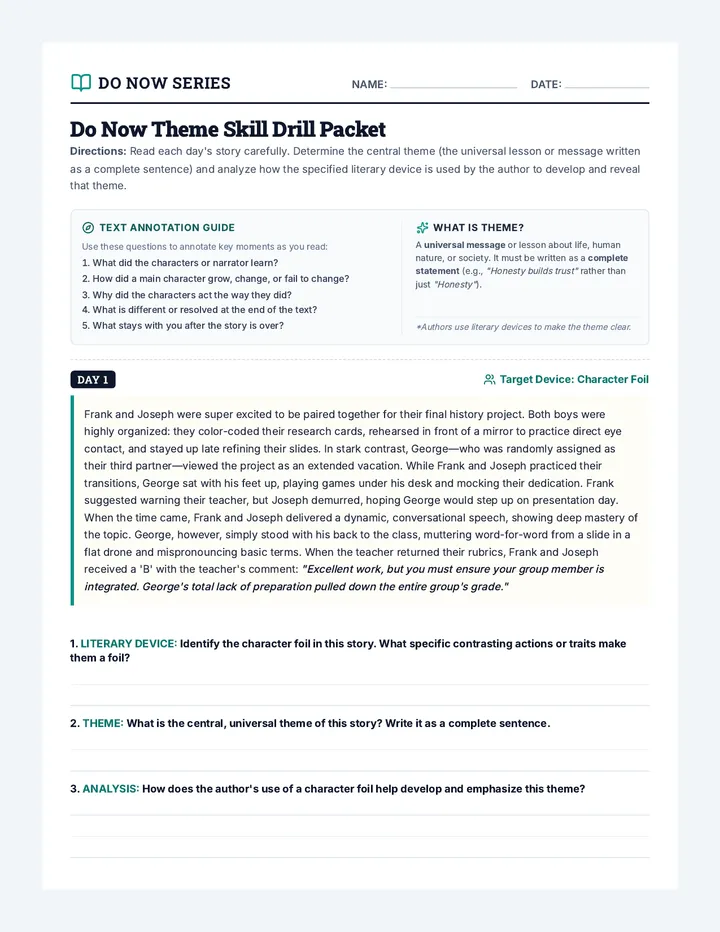
Review of key literary devices and characters. Final unit assessment focusing on vocabulary and theme identification.
Focus on visual literacy, context clues in illustrations, and idioms/phrasal verbs common in American middle school culture.
Analysis of Rodrick's band 'Löded Diper' and the concept of satire. Students explore how Greg's attempts to keep secrets often lead to ironic results.
Transition to the second book. Focus on sibling relationships and the introduction of situational irony regarding Rodrick's 'leverage' over Greg.
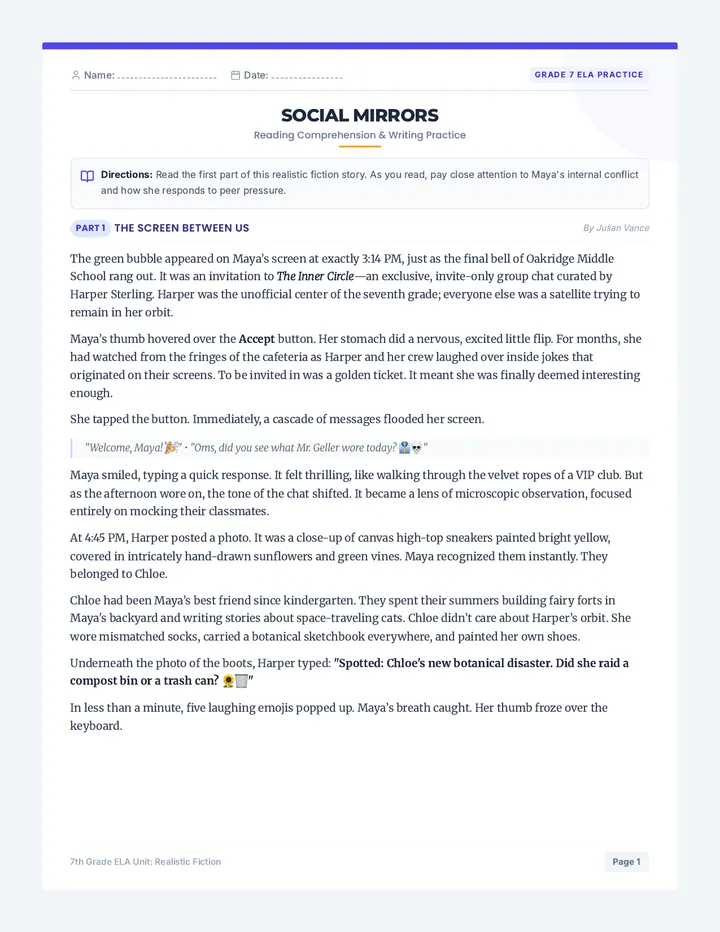
Exploring social dynamics and popularity. Students analyze the 'Cheese Touch' as an allegory for social exclusion and learn about hyperbole.
Introduction to the diary format, the concept of a 'journal', and Greg's unique narrative voice. Focus on identifying main characters and basic school-related vocabulary.
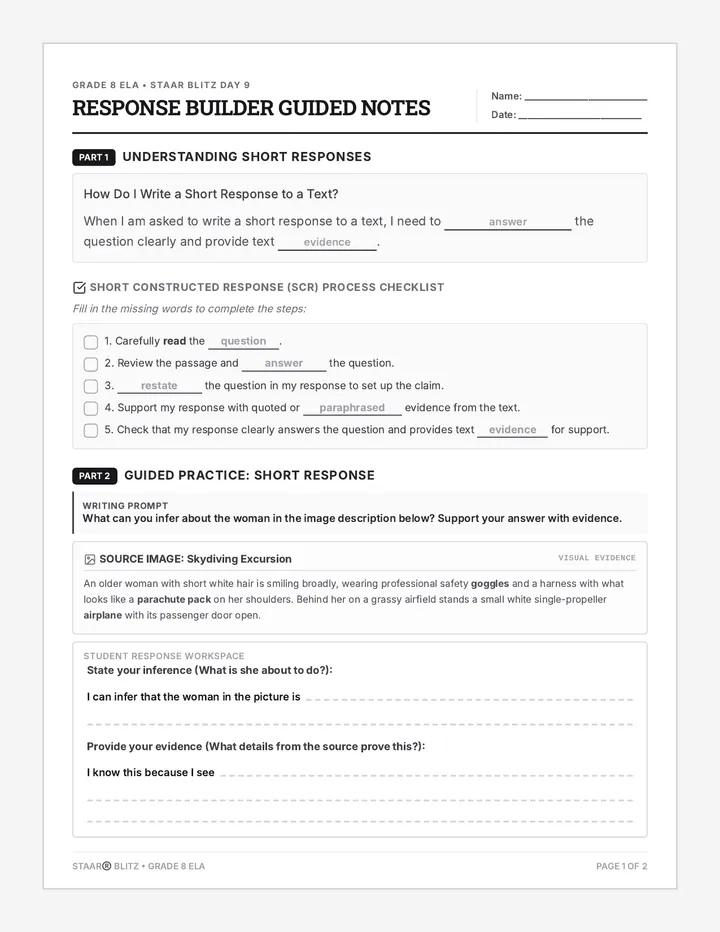
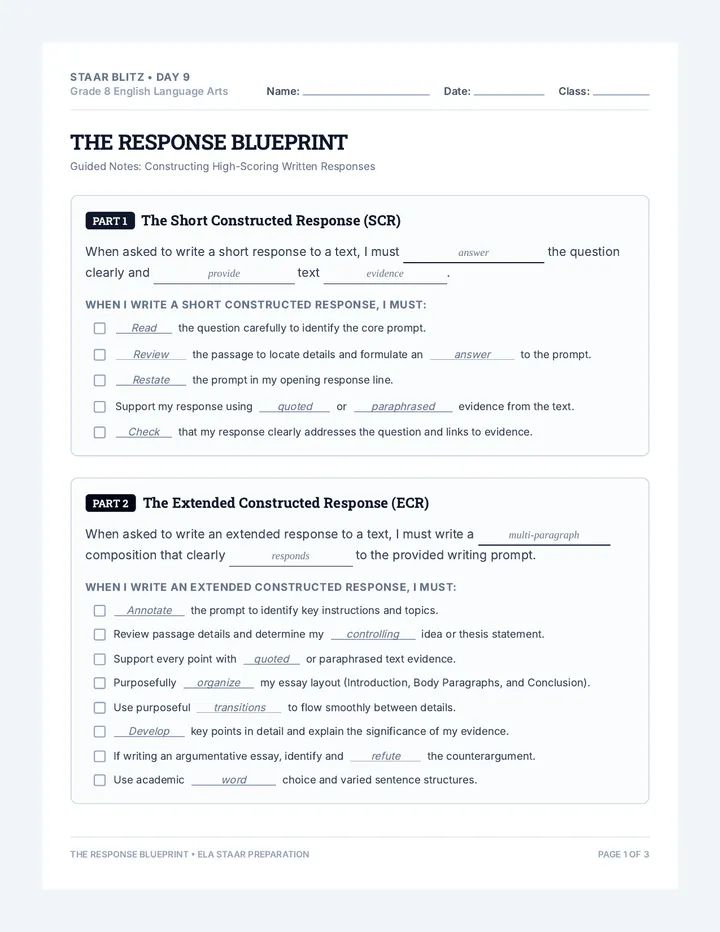
A comprehensive STAAR Reading Language Arts review covering main idea, inferencing, literary devices, poetry, and informational texts through multiple-choice, SCR, and ECR practice.
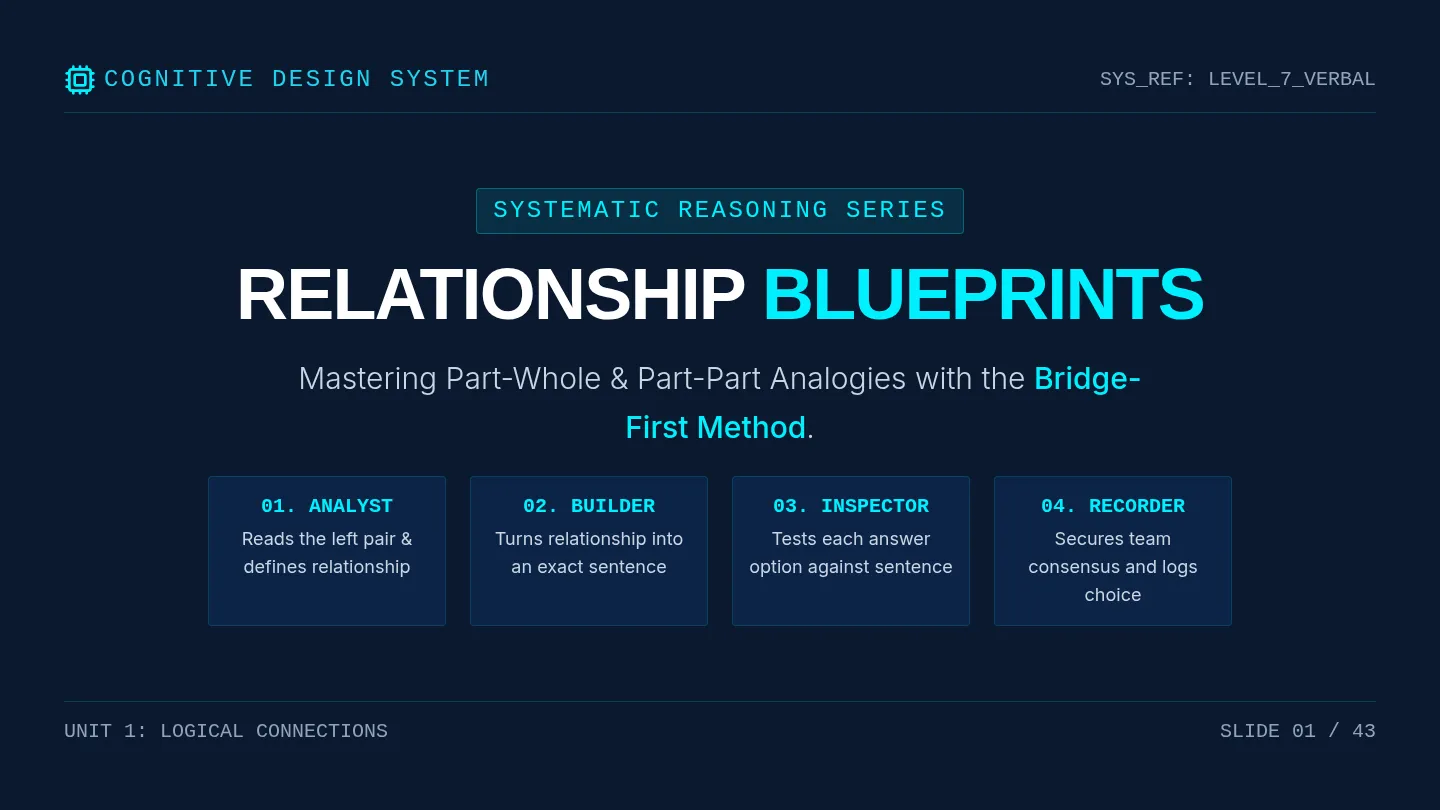
A comprehensive lesson focused on 7th-grade word study, including word relationships (synonyms, antonyms, analogies), morphology (roots, prefixes, suffixes), and part-of-speech functions.
Students step into the shoes of future journalists to script and record a podcast broadcast from the year 2050, exploring community evolution and technological innovation.
A comprehensive lesson focused on mastering compound and complex sentence structures using coordinating and subordinating conjunctions. Students will learn to 'engineer' more sophisticated writing by strategically combining ideas.
This lesson focuses on helping students distinguish between claims, reasons, and evidence within the context of news articles. Students will learn to identify the logical 'why' (reasons) versus the factual 'how we know' (evidence).
A lesson for Year 8 students on achieving conciseness by removing redundancy, converting passive voice to active, and pruning prepositional phrases.