A characterization project focused on F. Scott Fitzgerald's The Great Gatsby, Chapter 3. Students analyze Gatsby, Owl Eyes, Nick, and Jordan through the lens of direct and indirect characterization to create investigative dossiers.
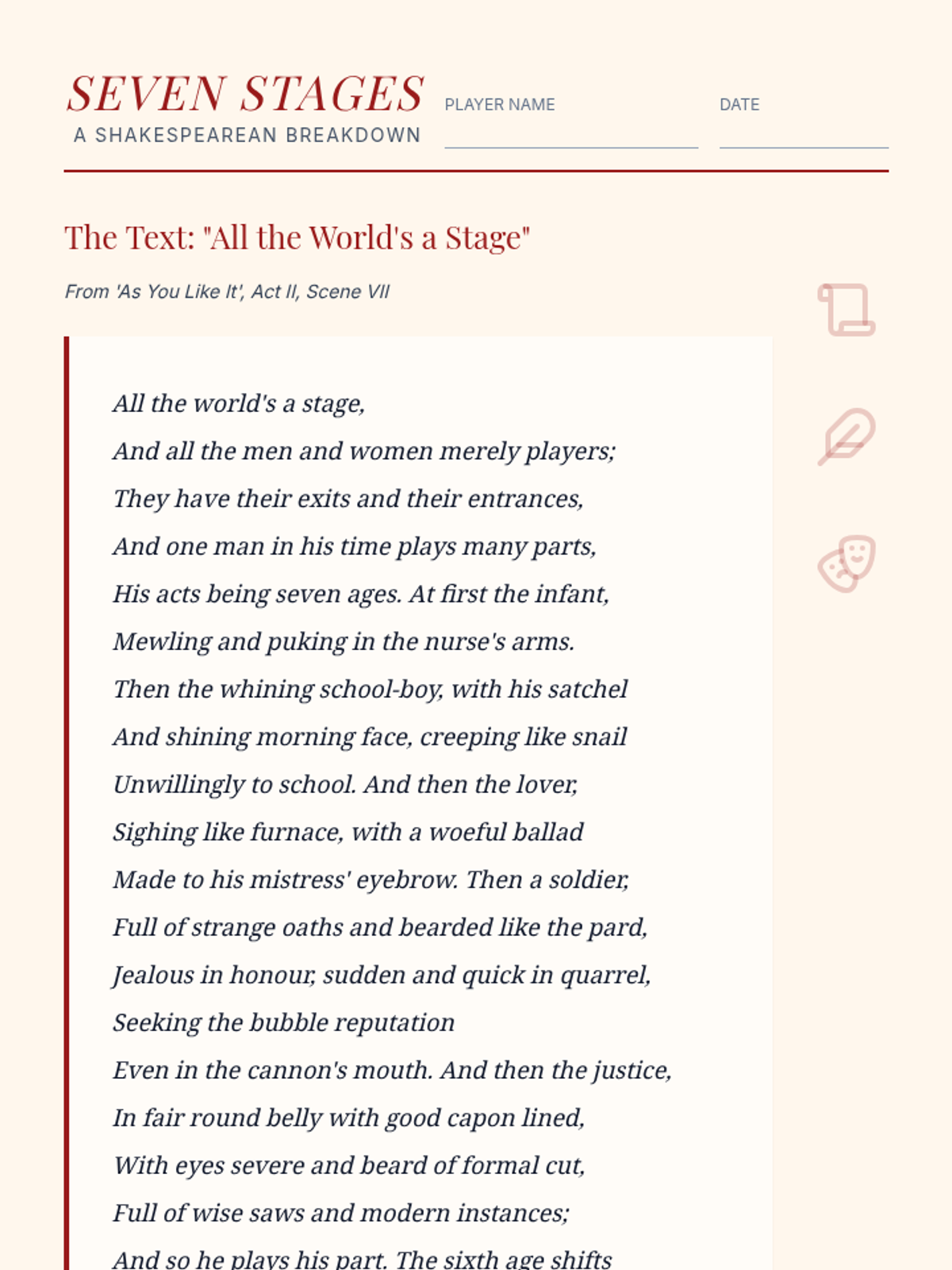
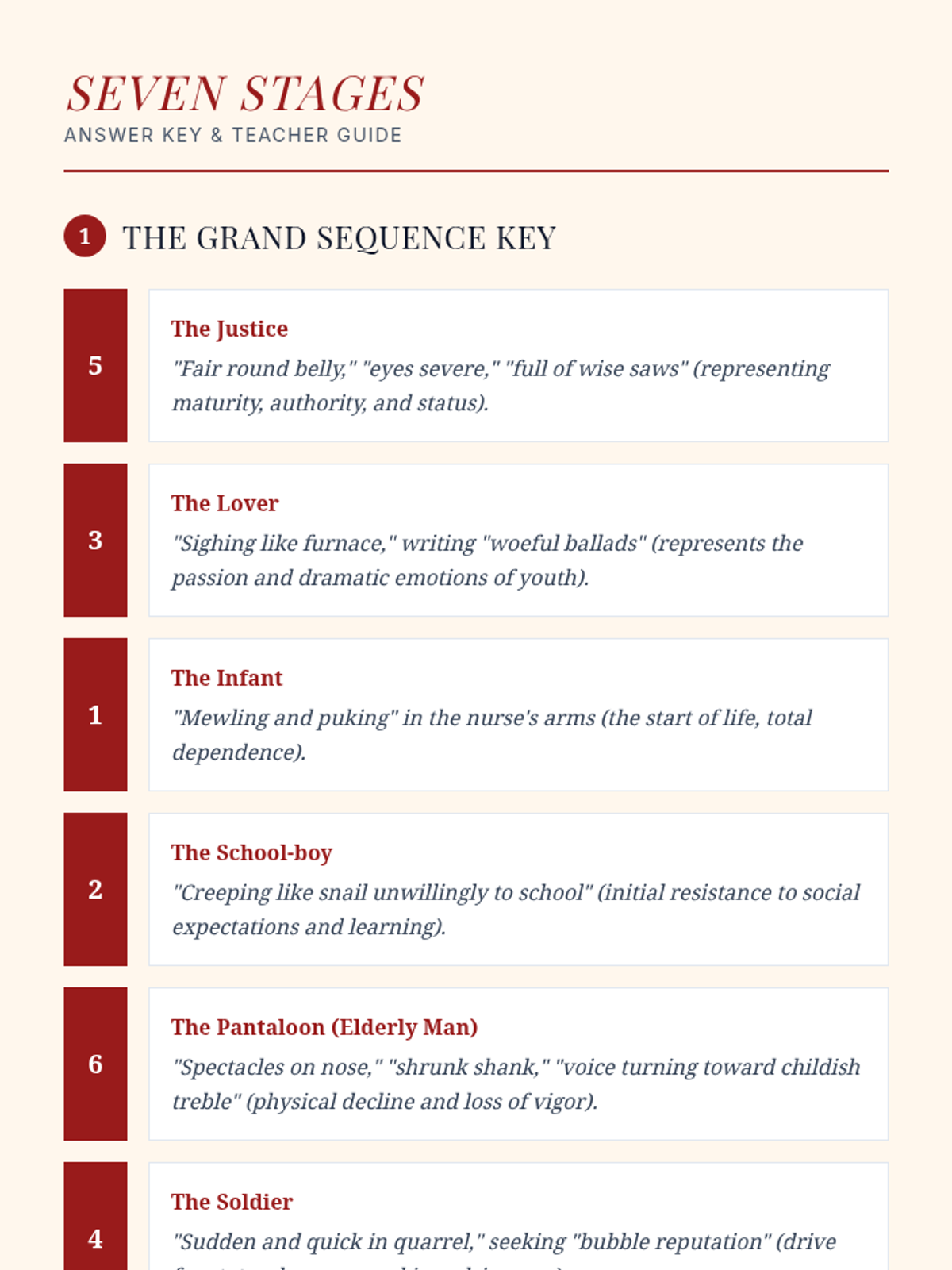
A lesson focused on analyzing Shakespeare's 'All the world's a stage' monologue, emphasizing sequencing of the seven ages of man and identifying the central theme.
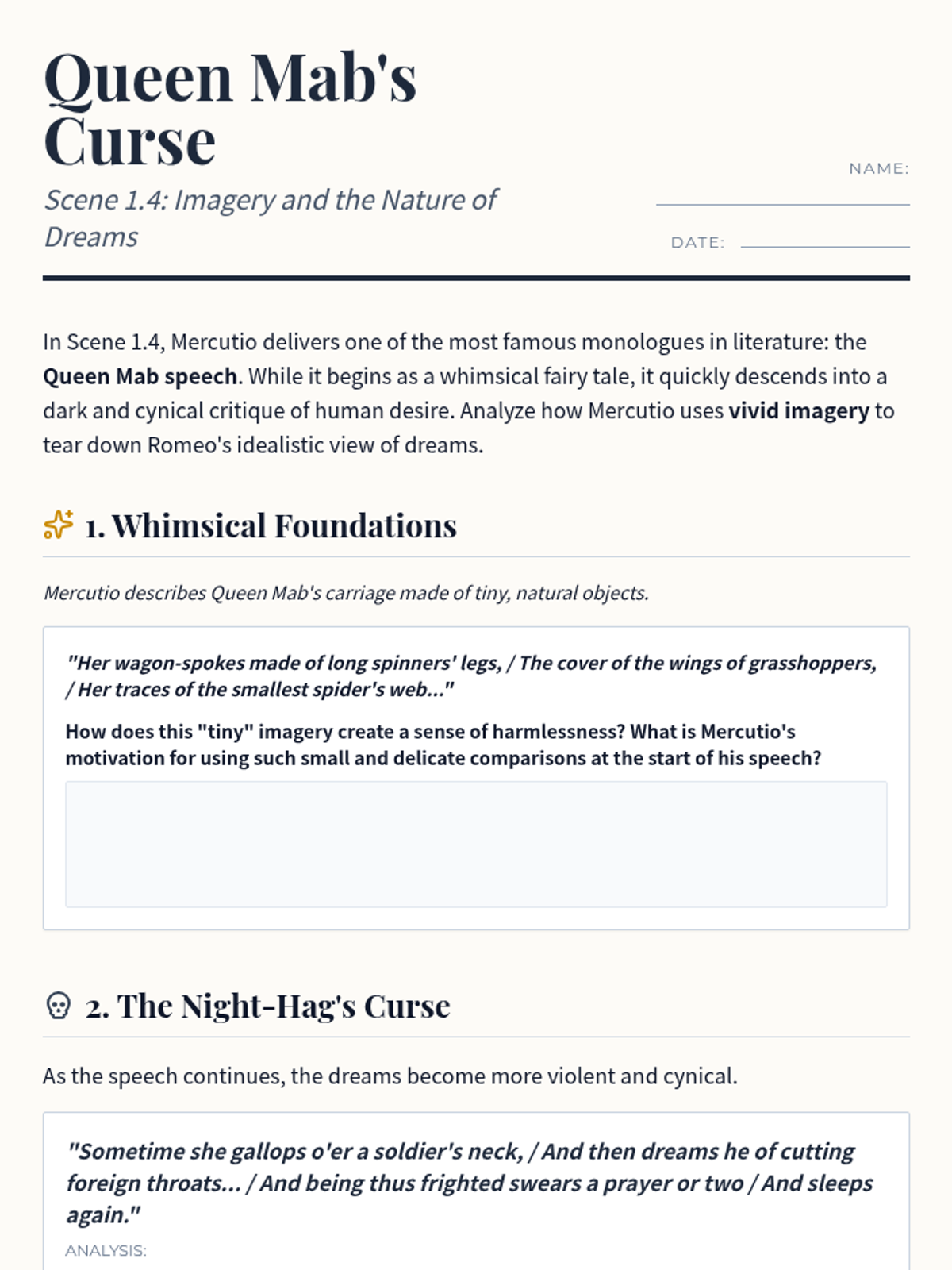
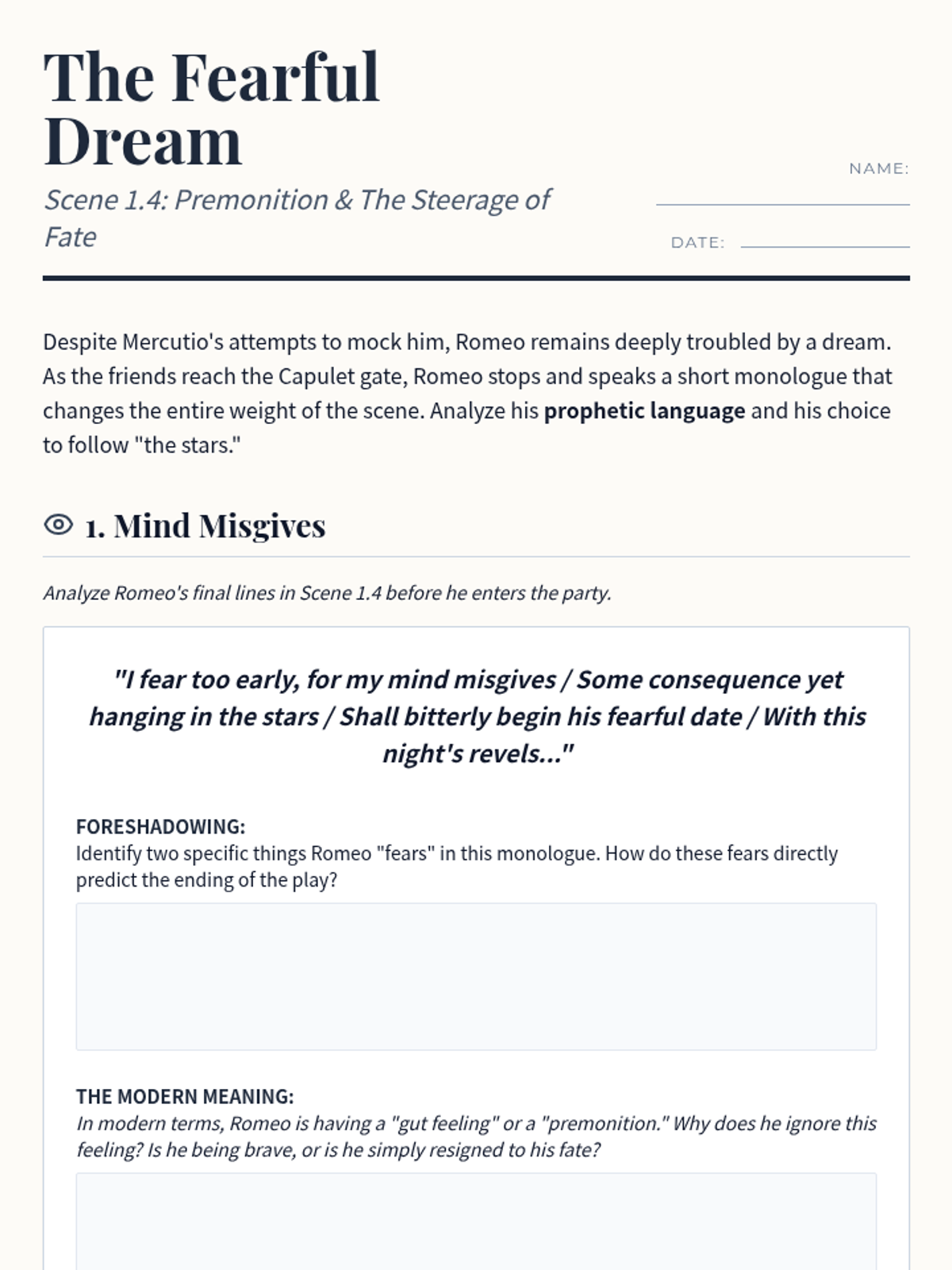
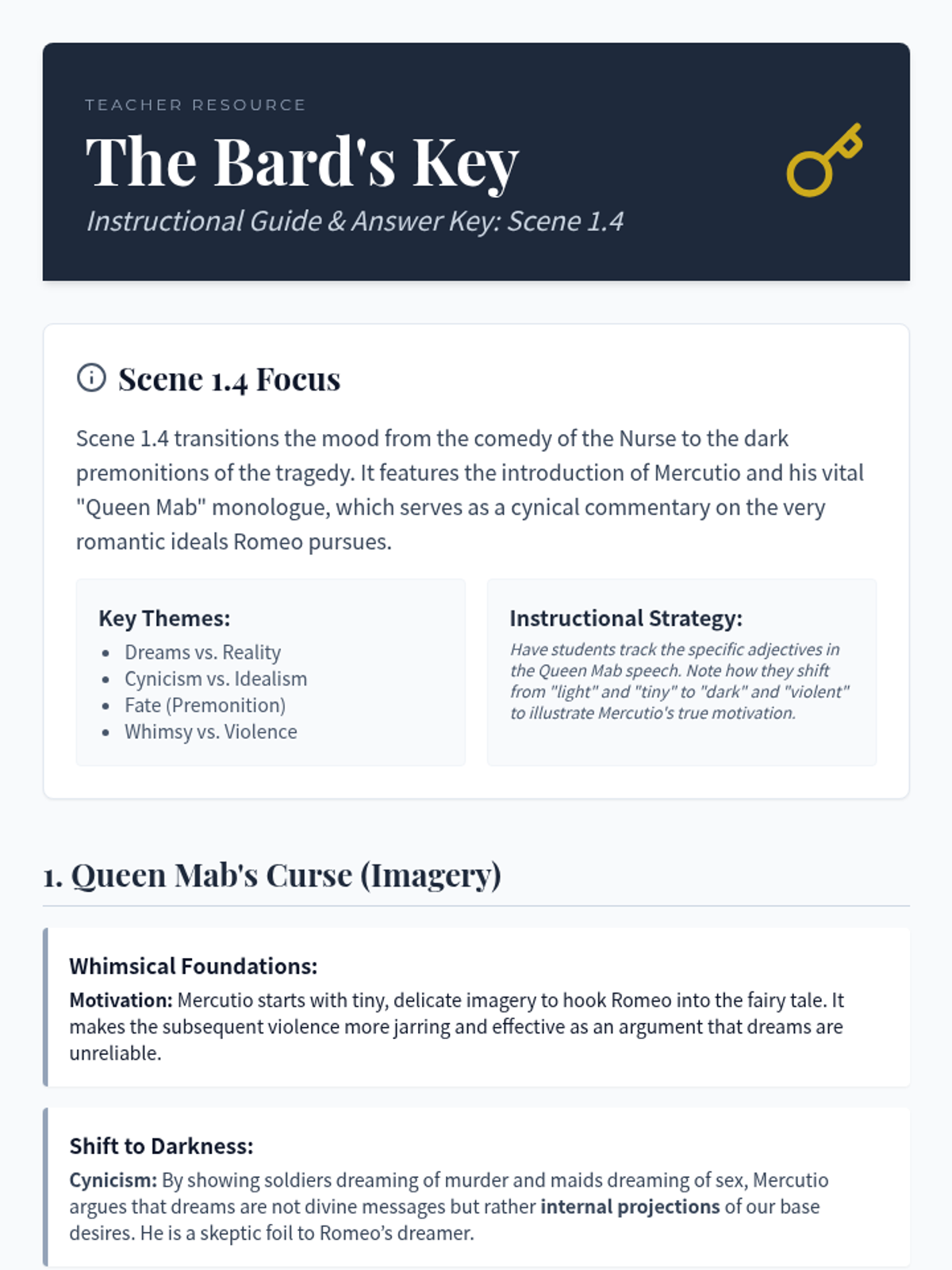
A study of Act 1, Scene 4, where Romeo, Mercutio, and Benvolio prepare to crash the Capulet ball. Students will analyze Mercutio's vivid Queen Mab speech, Romeo's persistent melancholy and prophetic dreams, and the tension between whimsical fantasy and dark reality.
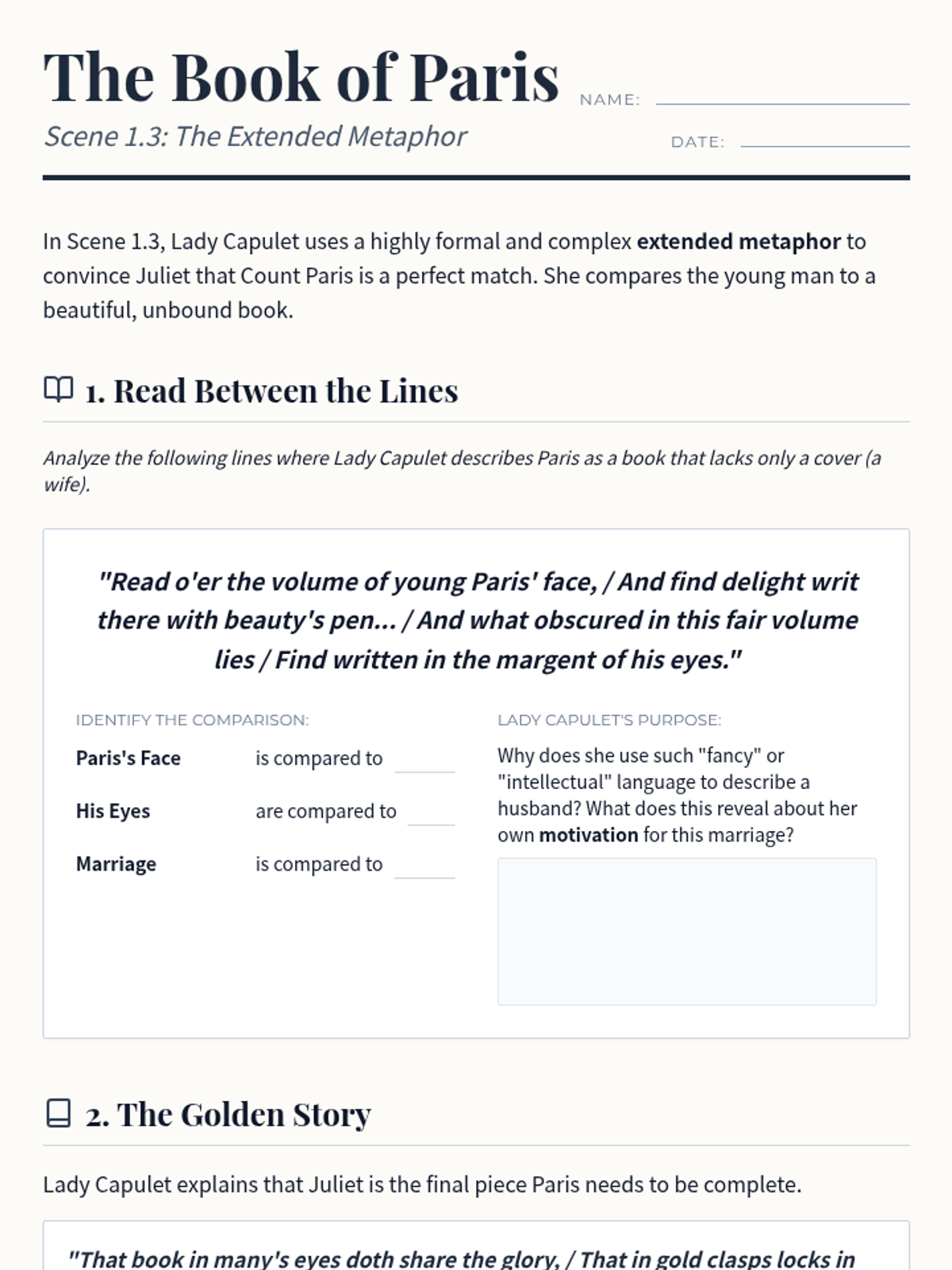
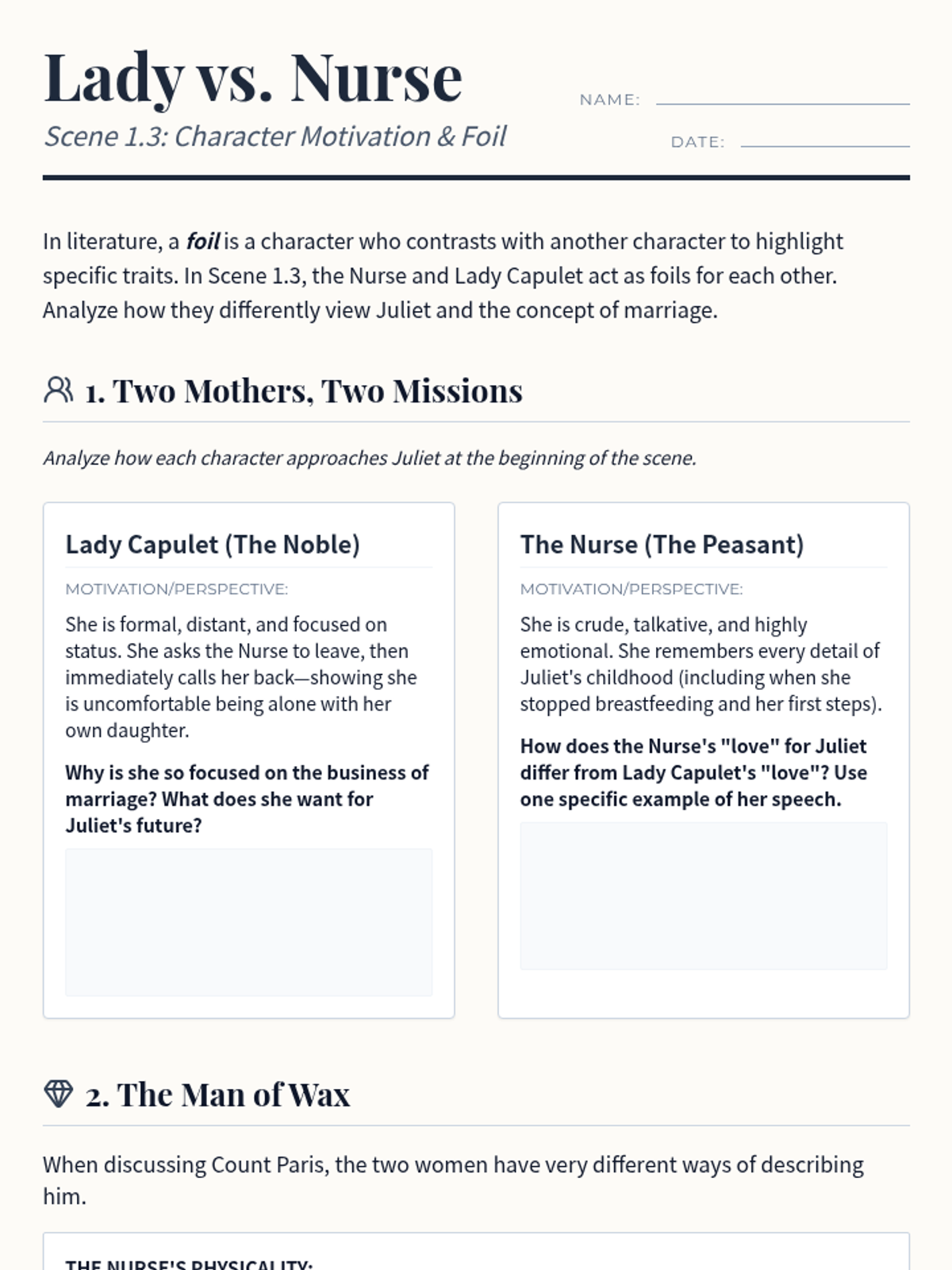
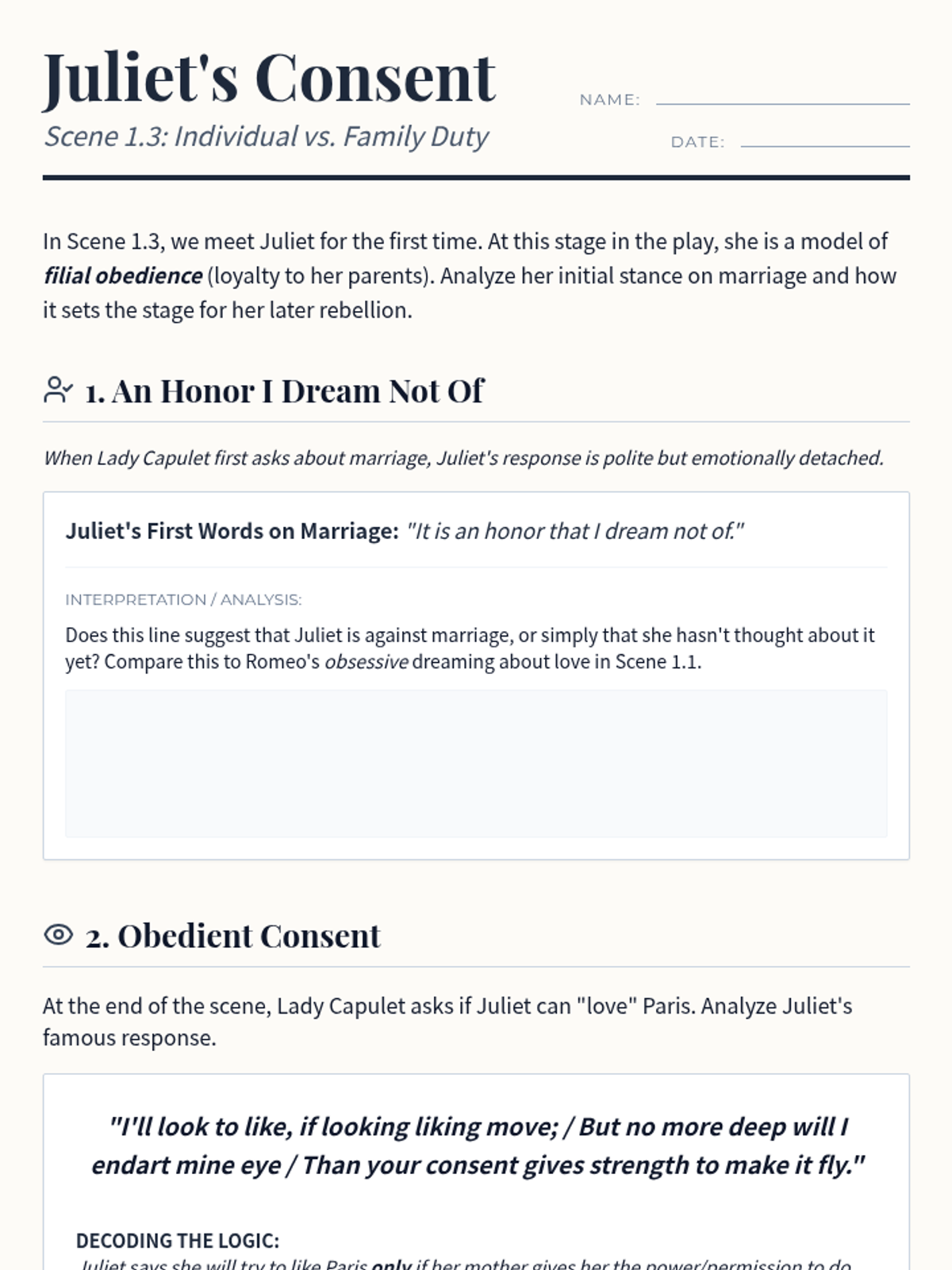
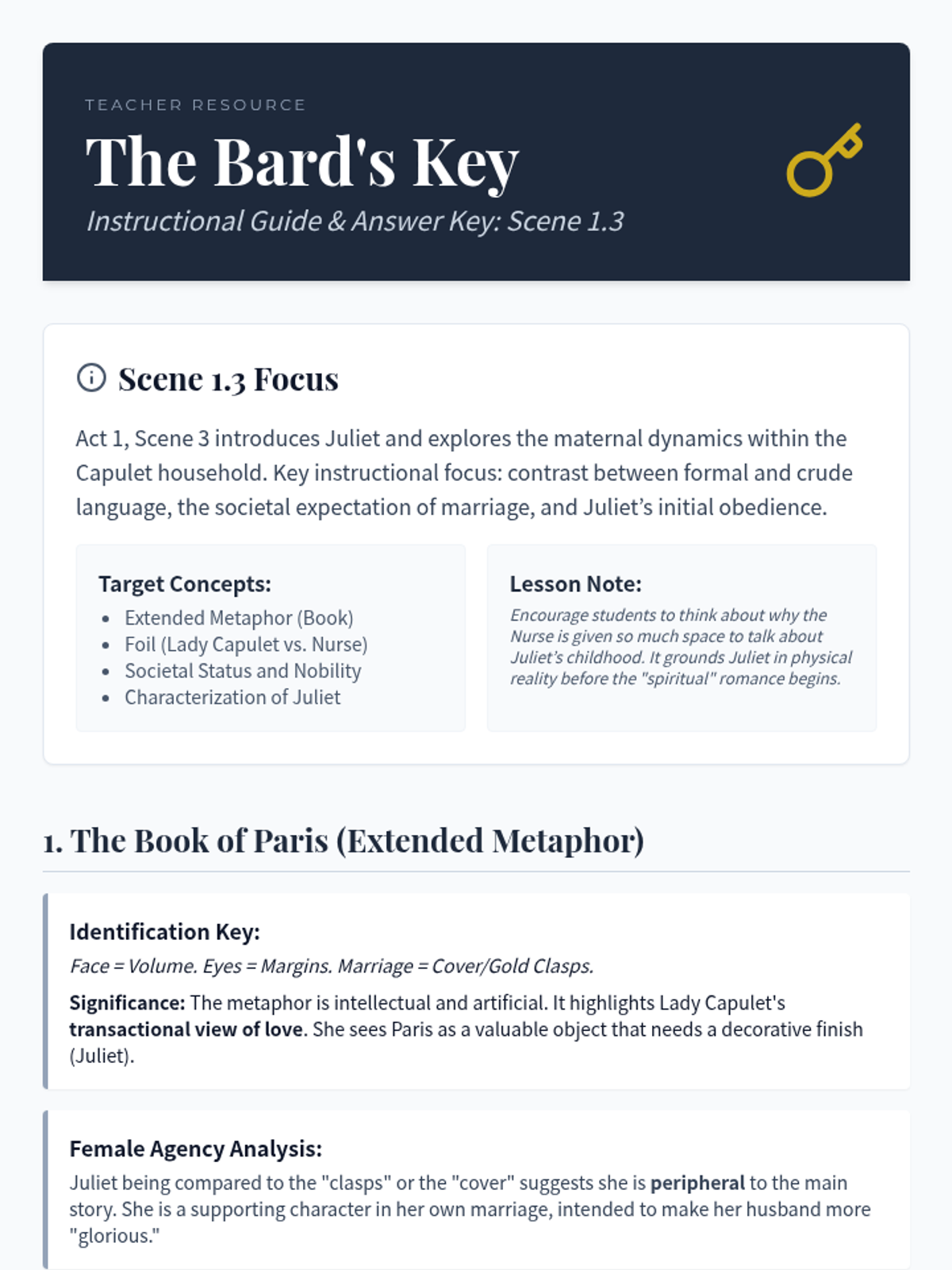
A study of Act 1, Scene 3, introducing the Nurse and Lady Capulet's proposal of marriage to Paris. Students will analyze the Nurse's coarse humor, Lady Capulet's extended metaphor of Paris as a book, and Juliet's initial stance on marriage and obedience.
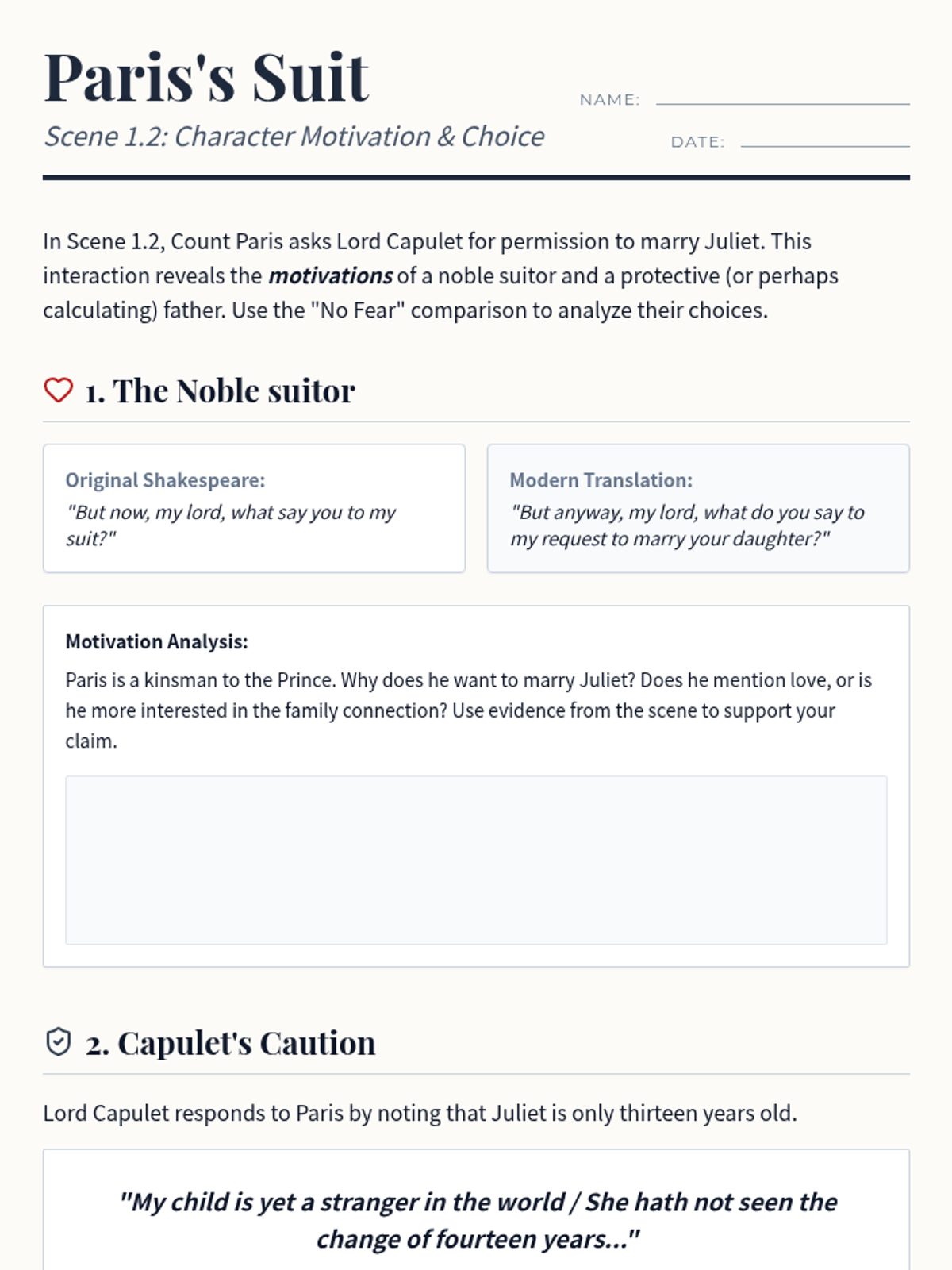
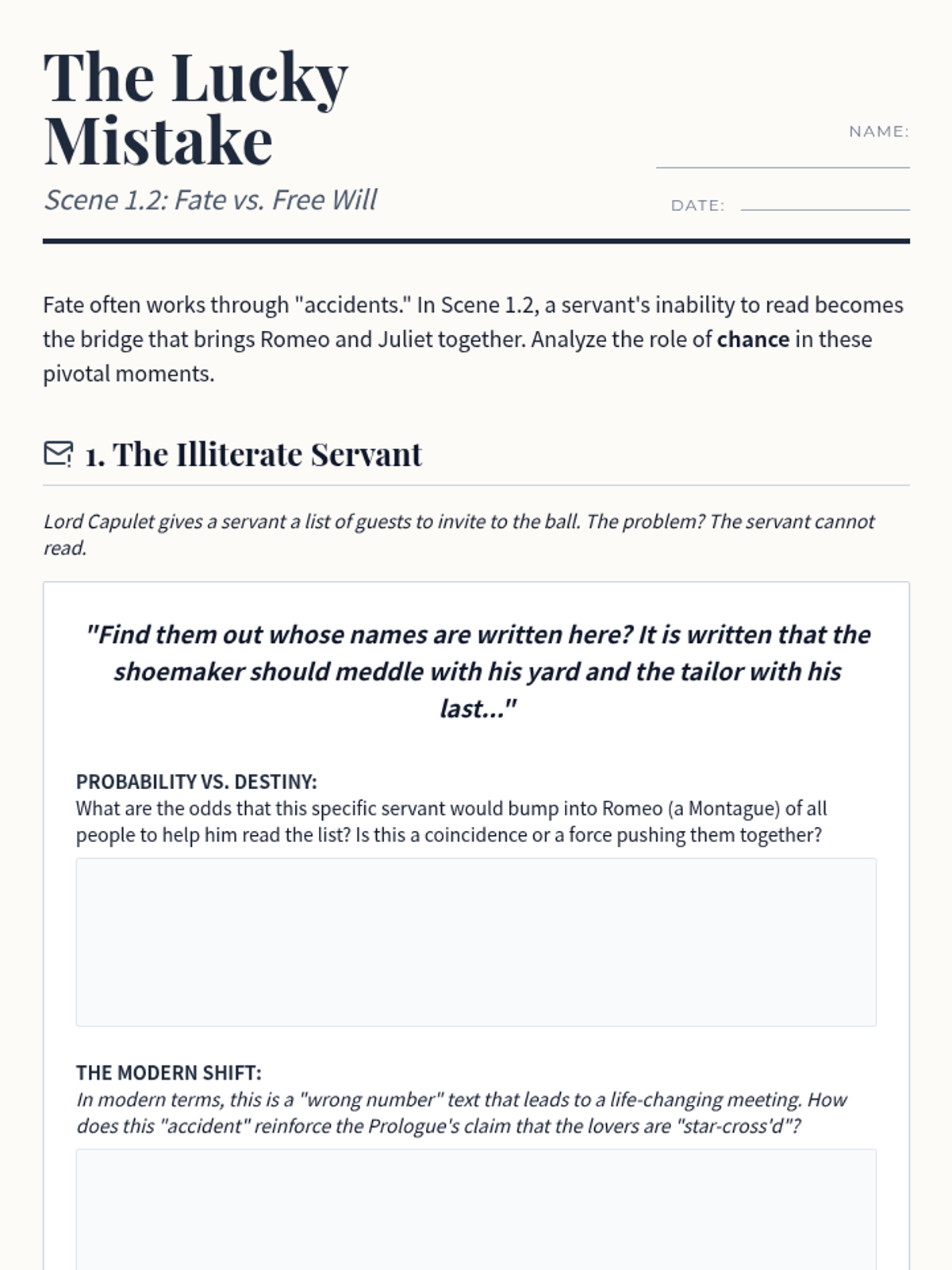
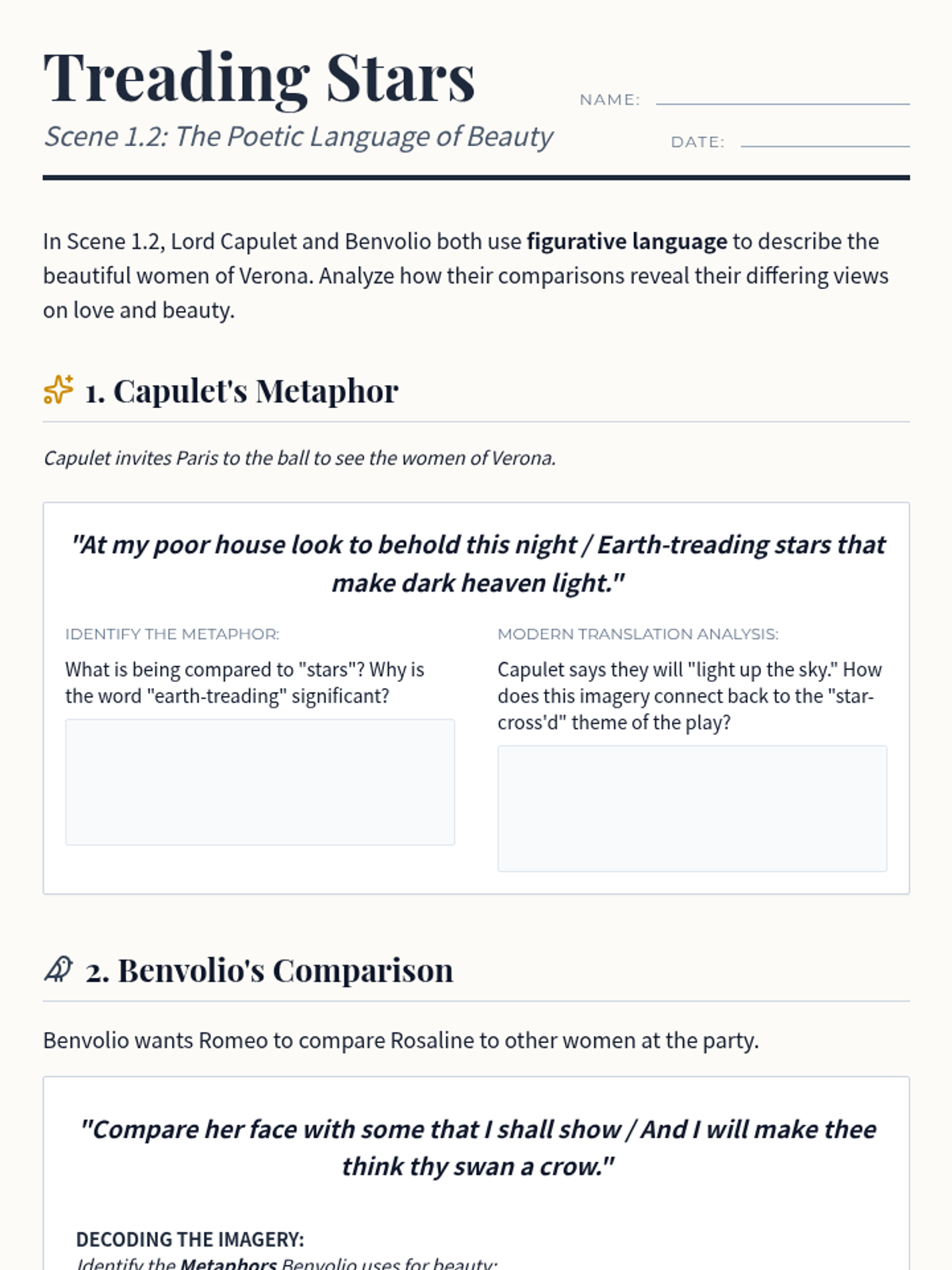
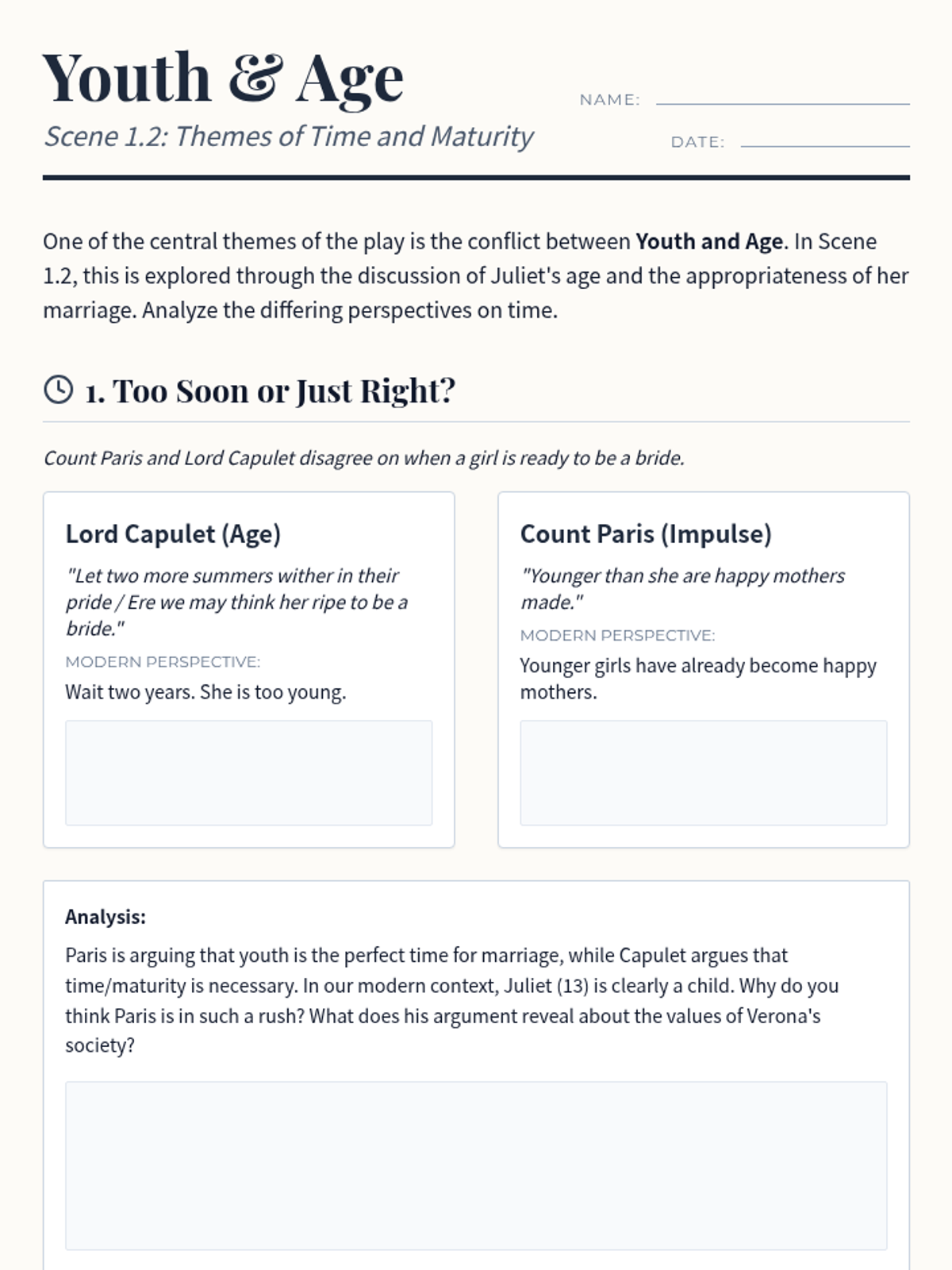
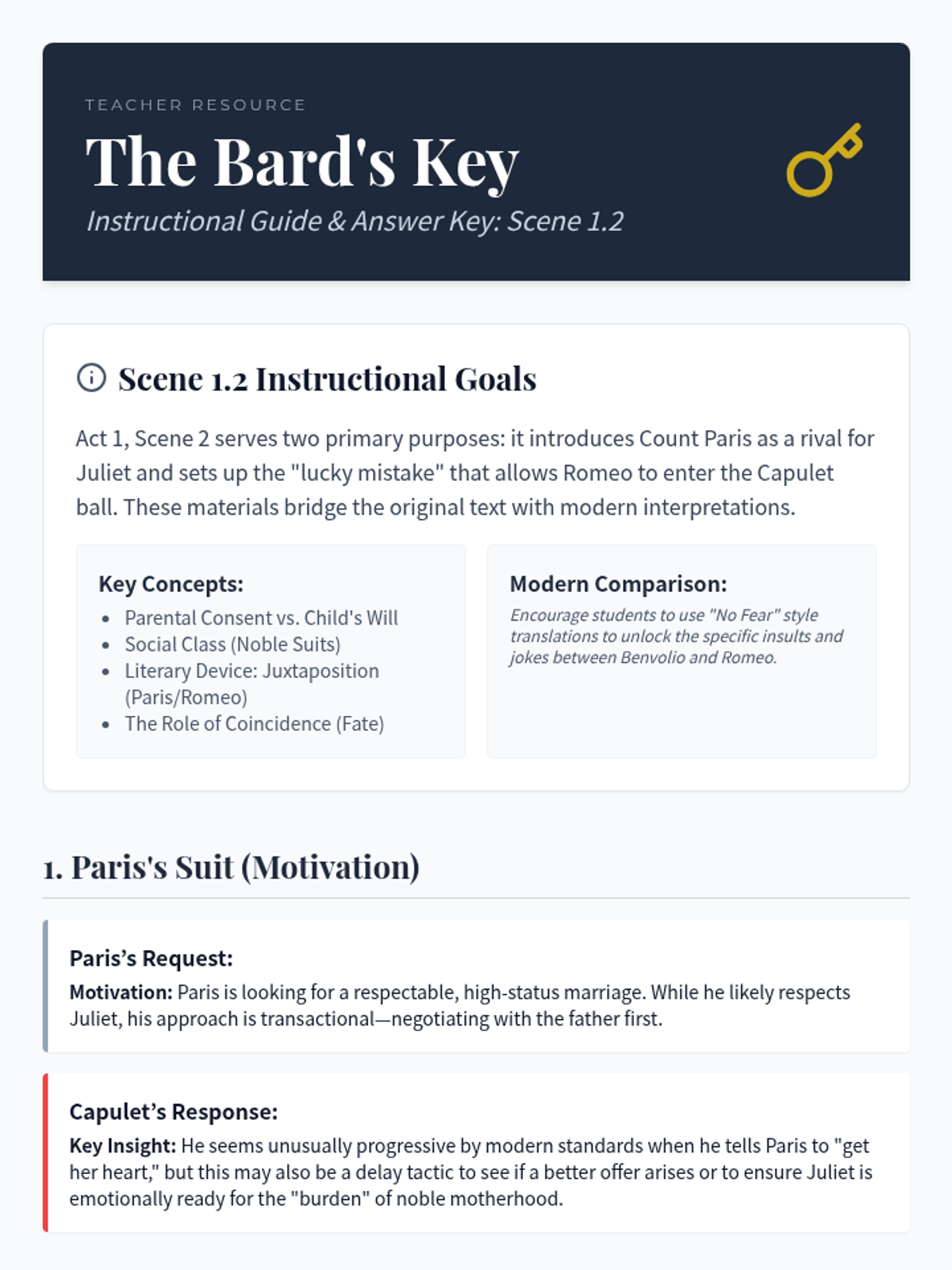
A study of Act 1, Scene 2, where Count Paris asks for Juliet's hand and Romeo and Benvolio discover the Capulet party through a chance encounter. Students will analyze the dynamics of parental choice, the role of chance, and the poetic language used to describe the ladies of Verona.
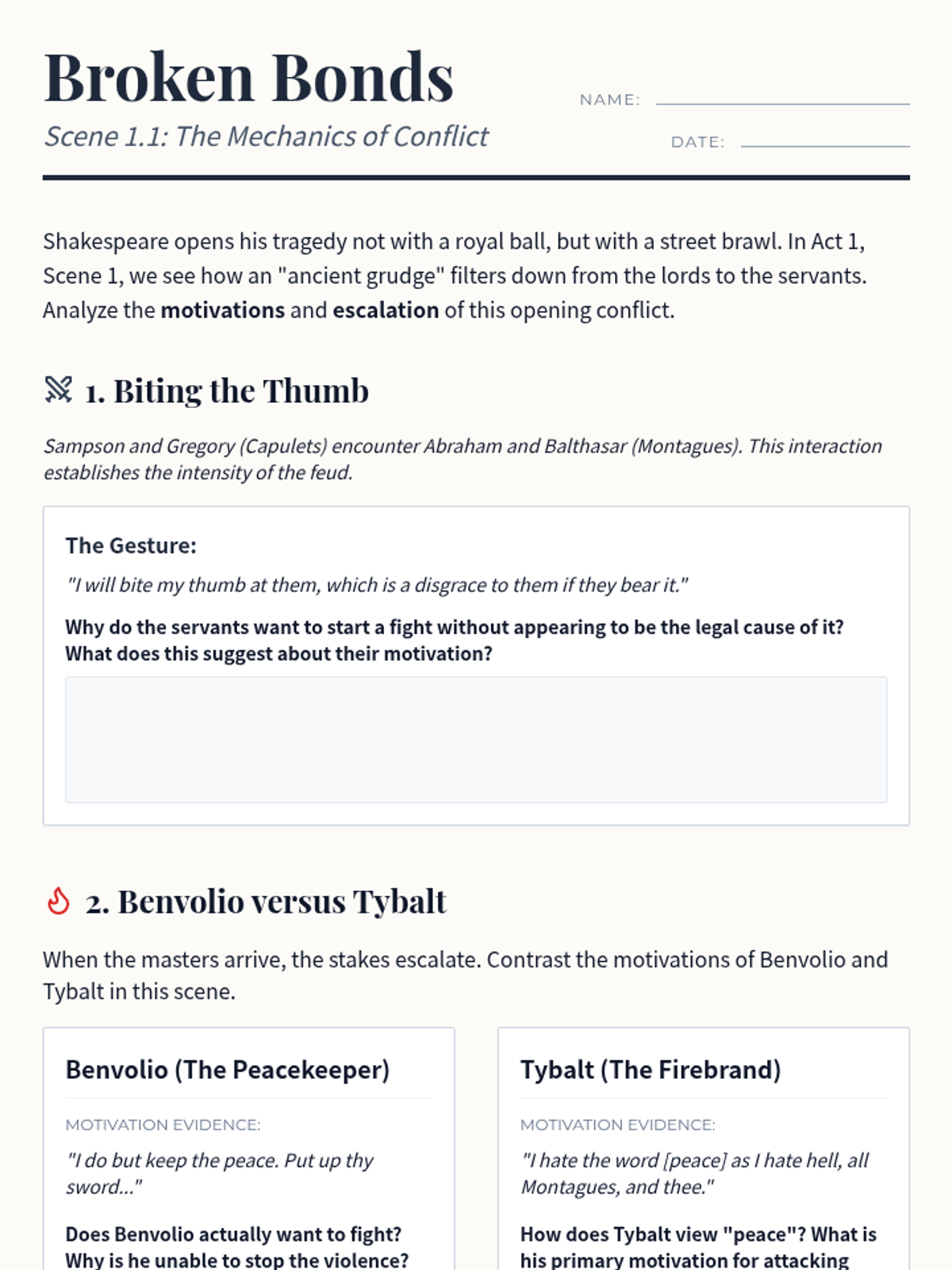
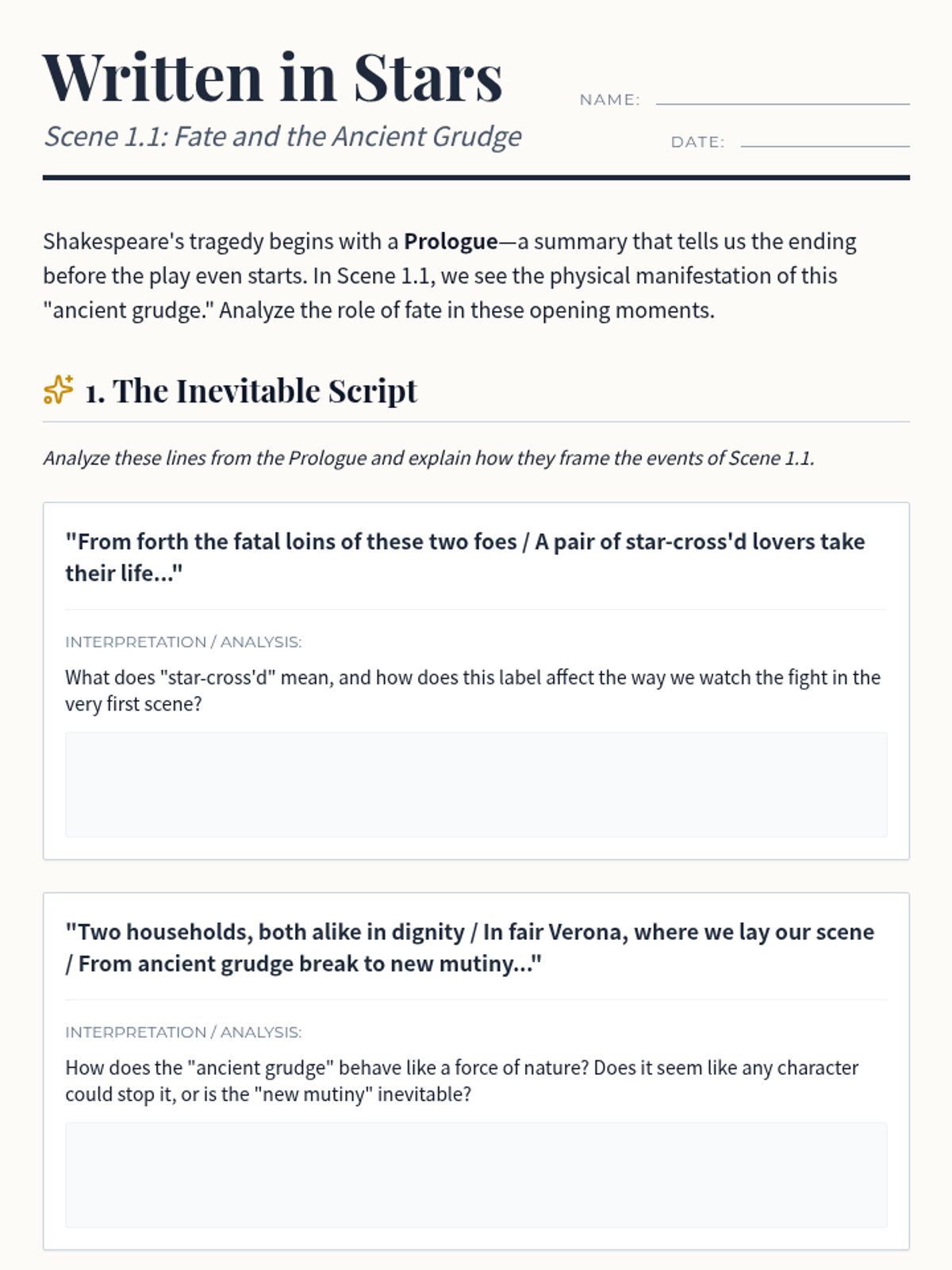
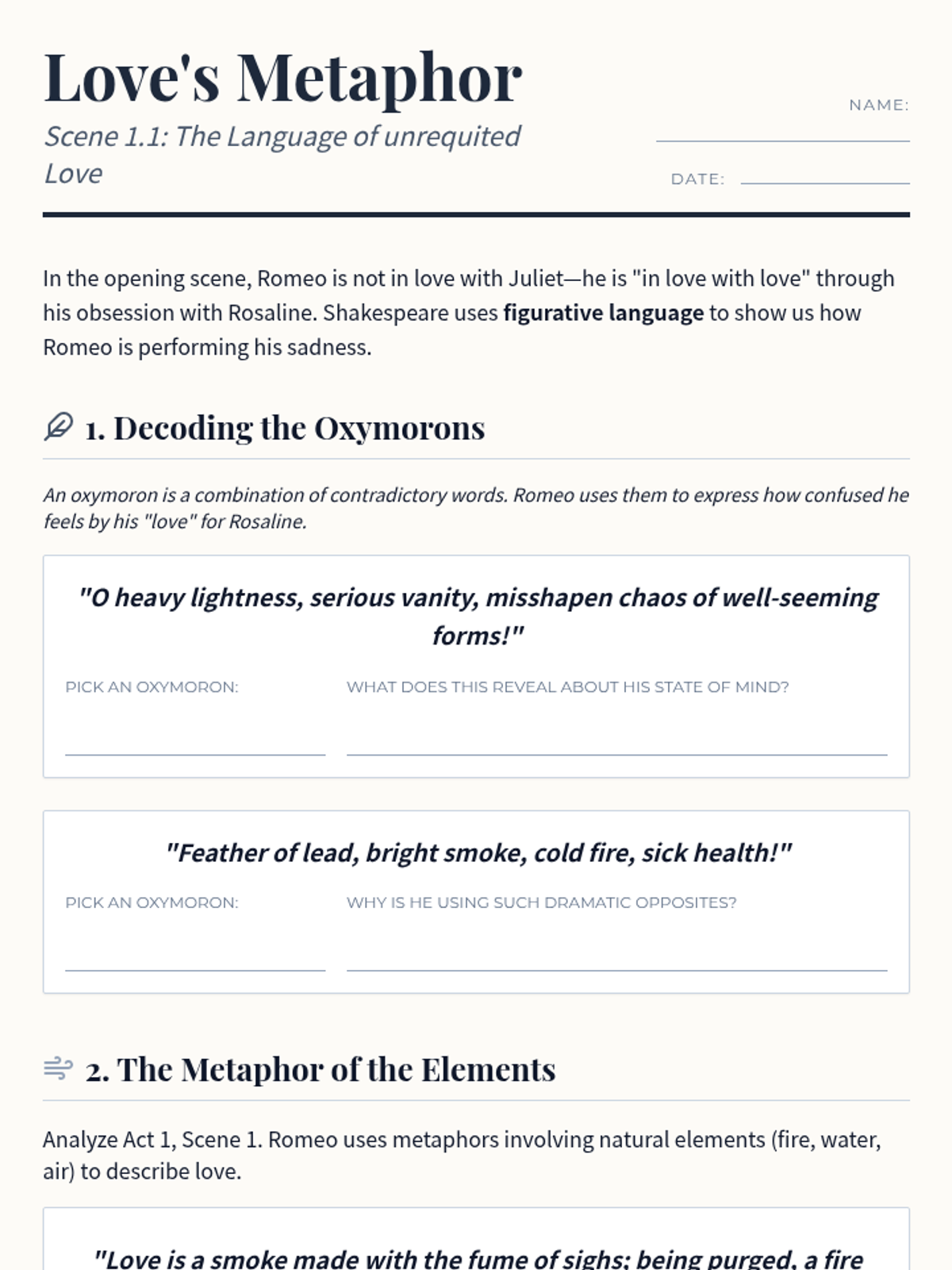
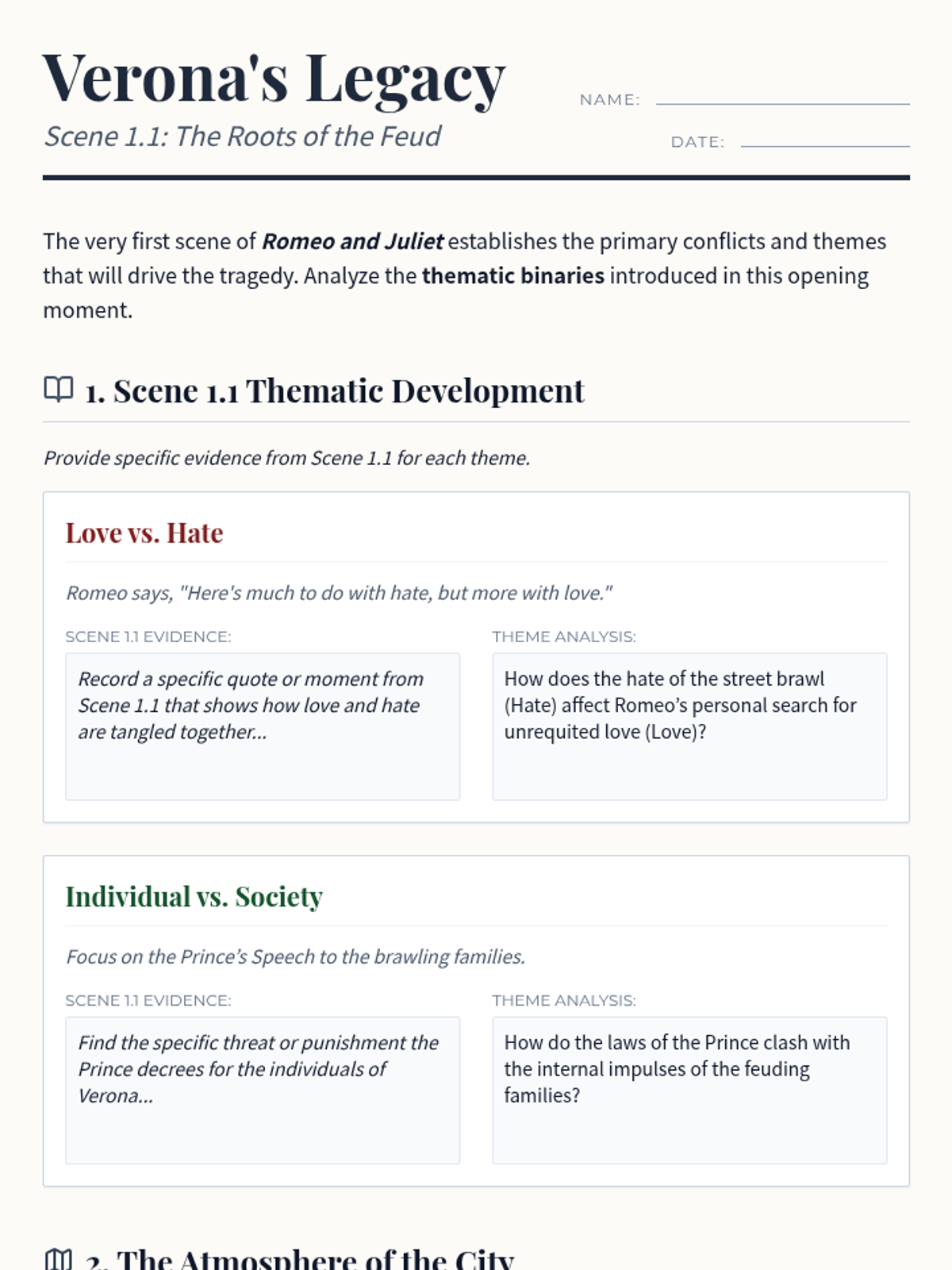
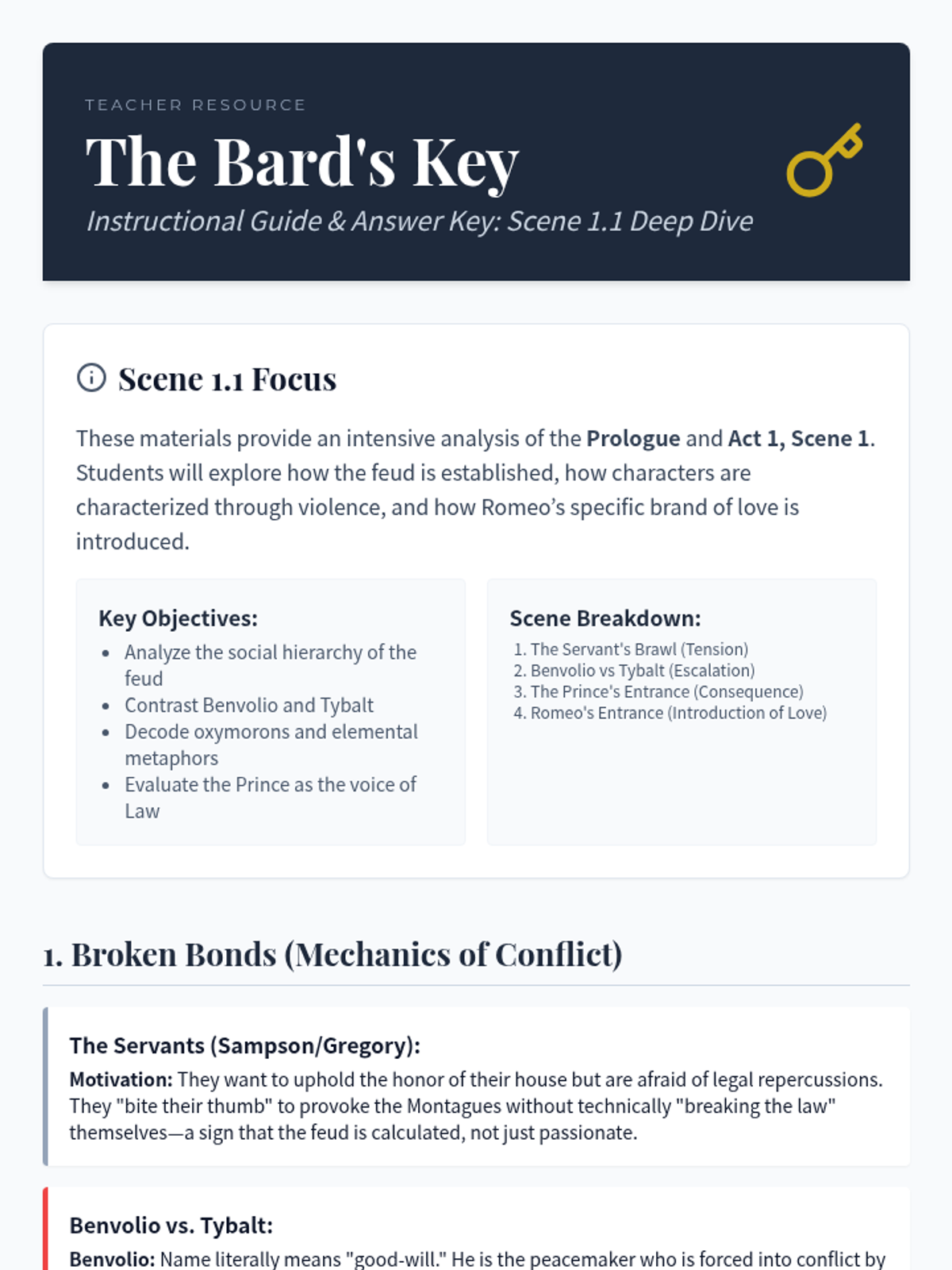
An intensive study of the opening scene and prologue of Shakespeare's Romeo and Juliet. Students will analyze the mechanics of the ancient grudge, the characterization of the principal families, and the specific poetic techniques used to establish Romeo's unrequited love for Rosaline.