Strategic application of the Hierarchy of Controls. Focuses on elimination and substitution as primary defenses, evaluating the limitations of administrative controls and PPE.
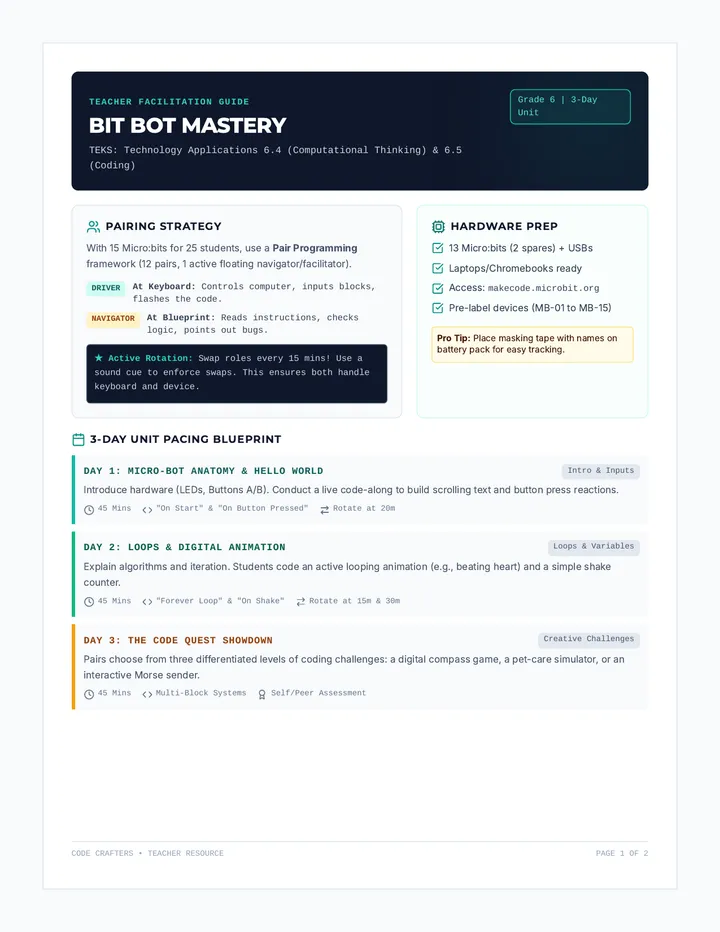
A comprehensive sub plan focusing on hardware basics, cybersecurity, and the impact of computing through a hands-on 'Human Computer' unplugged simulation.
A comprehensive lesson exploring the sense of sight through a detailed reading passage and STAAR-aligned comprehension questions designed for second grade.
Discover the structure of watershed systems, the importance of the Chesapeake Bay, and how human activity impacts water quality.
Investigate the chemical nature of water through pH testing, exploring acidity, alkalinity, and how water's role as a solvent impacts life and the environment.
Explore the unique molecular properties of water, including cohesion, adhesion, and surface tension, through the 'Penny Power' lab and interactive demonstrations.
Una sesión práctica de 60 minutos que integra los fundamentos de la programación orientada a objetos en Python con la persistencia de datos mediante el manejo de archivos (File I/O).
An introductory overview of blockchain security vulnerabilities, focusing on the mechanics and consequences of a 51% attack on decentralized networks.
En esta lección, los estudiantes aprenderán a transformar aplicaciones estáticas en interfaces interactivas mediante el uso de TouchableHighlight y la actualización del estado (setState) en React Native dentro del entorno CodeHS.
Este plan de lección se enfoca en la actualización dinámica del estado en aplicaciones móviles utilizando React Native. Los estudiantes aprenderán a conectar eventos táctiles con funciones de modificación de datos para crear interfaces interactivas y reactivas.
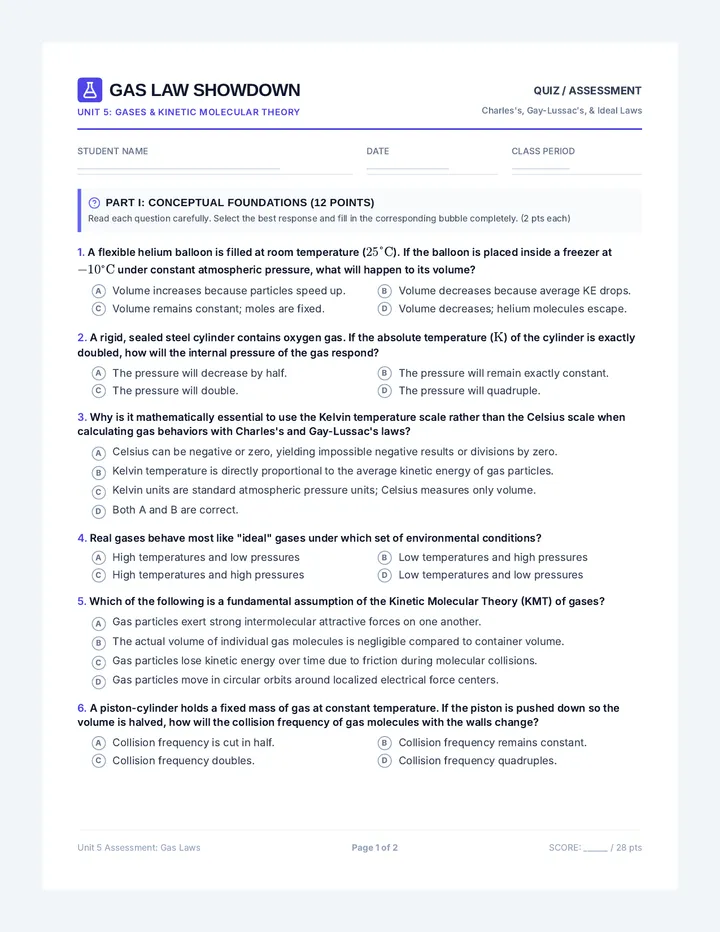
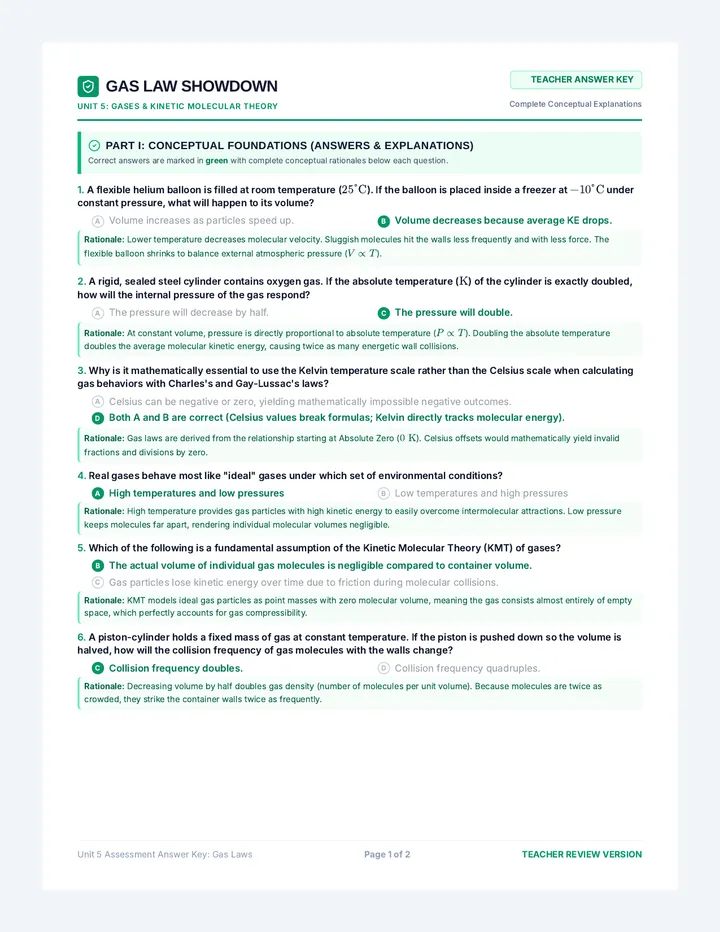
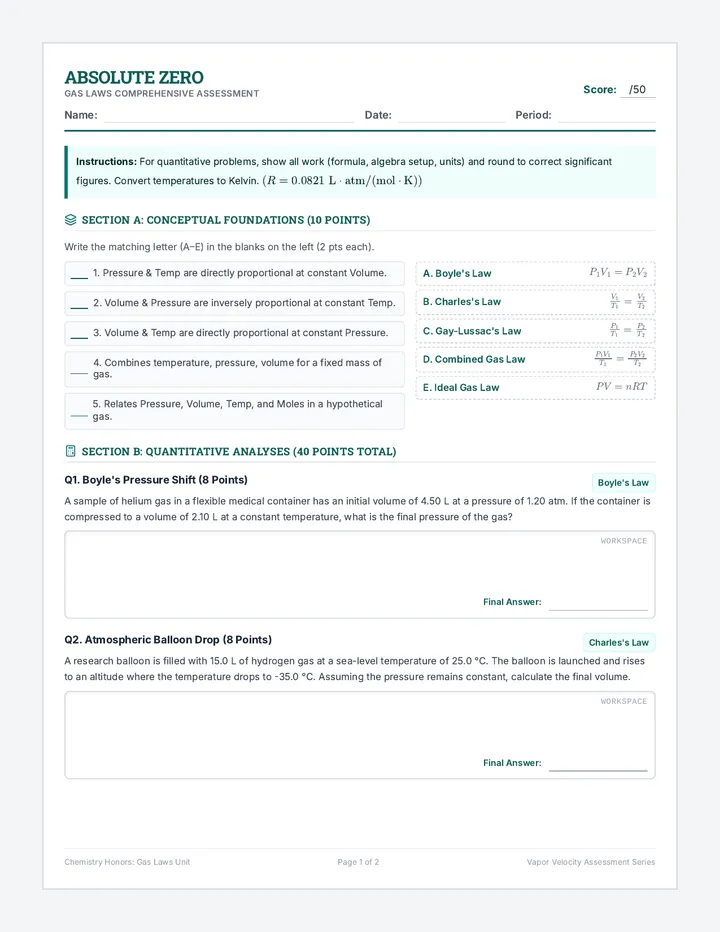
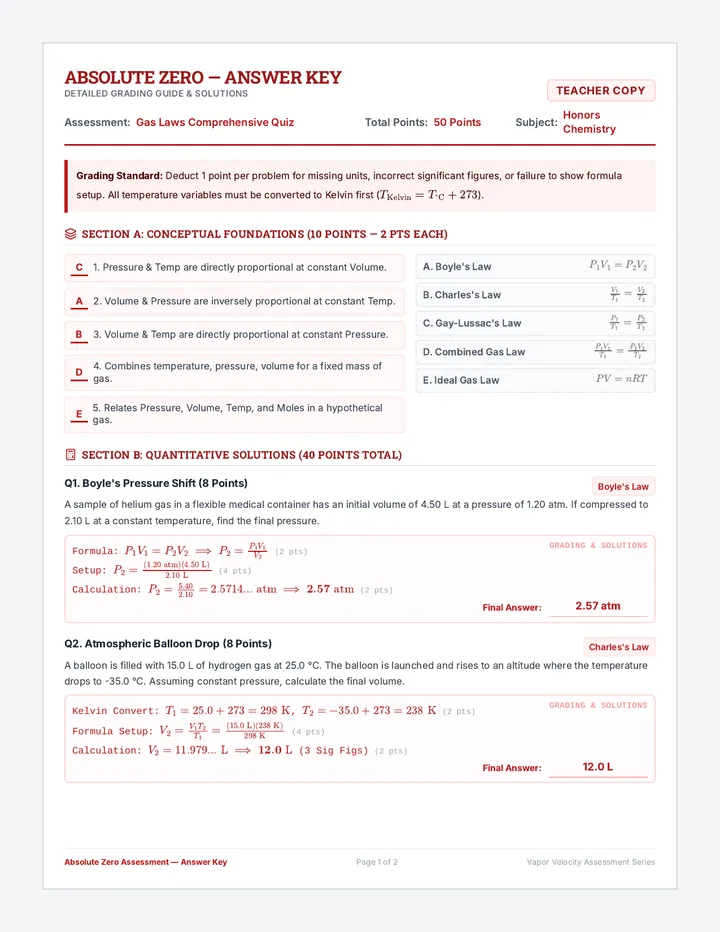
A comprehensive set of practice problems covering the six fundamental gas laws: Boyle's, Charles's, Gay-Lussac's, Ideal, Combined, and Dalton's law of partial pressures.
A comprehensive guide and evaluation system for elementary students conducting science research projects. Includes a student-friendly rubric, a teacher grading sheet, and instructional slides to set students up for success.
A 30-35 minute graduate-level lesson focused on the carbonate submarine fan architecture of the Mississippian Lake Valley Formation, exploring gravity flow processes and facies models.
A master's level exploration of the Bishop et al. (2023) paper on carbonate submarine fans, focusing on facies analysis, architectural elements, and depositional models in the Mississippian Lake Valley Formation.
A comparative study of geomorphology, exploring how liquid properties (viscosity, density, and flow) shape land formations on Earth and other celestial bodies like Mars, Titan, and Venus.
An immersive exploration of liquid properties—viscosity, density, capillary action, and intermolecular forces—comparing water to various common fluids through hands-on experimentation and data analysis.
A focused lesson on the fundamental laws of electricity, covering Ohm's Law for circuits and Coulomb's Law for electrostatic forces through conceptual analysis and calculation practice.
A comprehensive biology lesson covering genetics (transcription/translation), evolutionary classification, and ecological succession, designed to mirror the rigor and format of the Texas EOC.
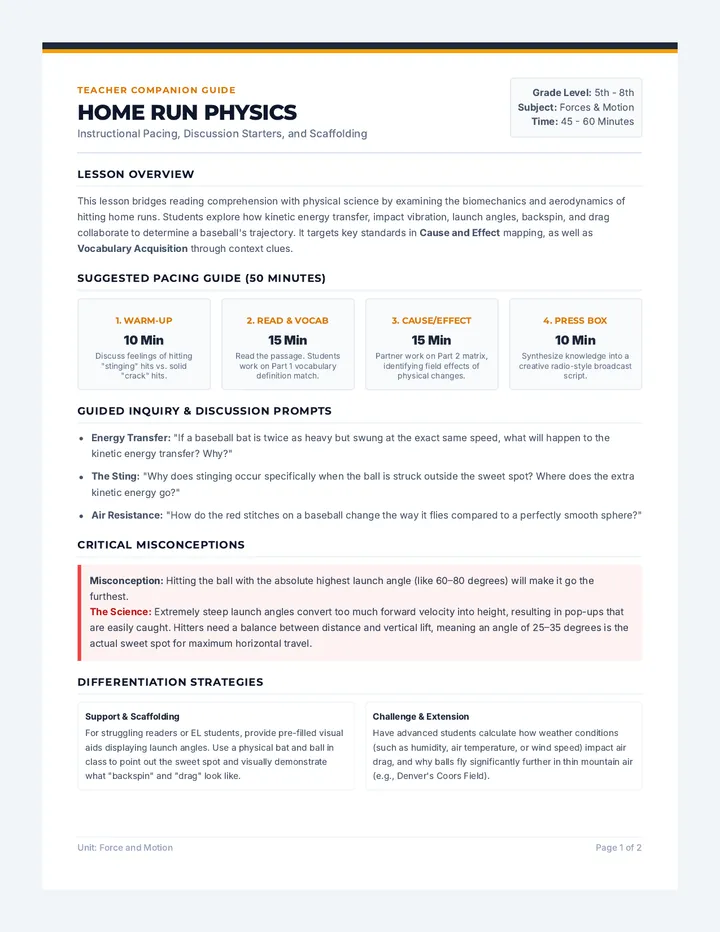
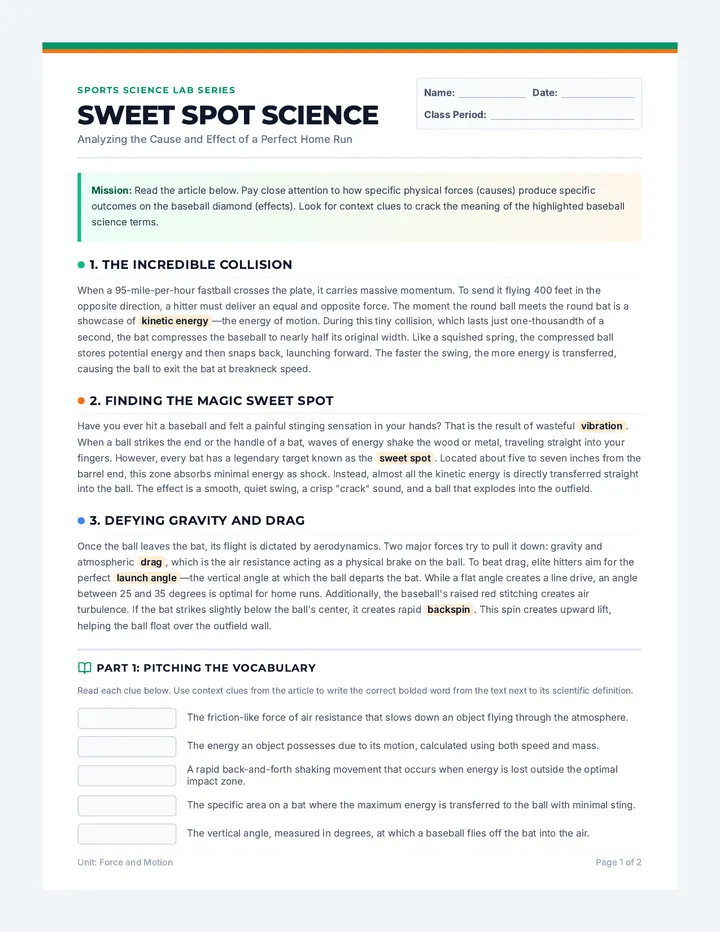
This lesson compares linear and rotational motion through a case study of a high-tech amusement park ride. Students explore the analogies between force and torque, mass and inertia, and work/power/conservation laws in both systems.
This lesson compares linear and angular motion through a multi-part reading assignment, including an informational article, a textbook excerpt, and a case study. Students will identify key formulas and physical principles.
An introductory lesson for 2nd graders on observing and recording daily weather patterns, featuring hands-on activities and data collection.
Cette séance de 2 heures permet aux élèves de distinguer qualification et compétence, d'analyser l'impact des conditions de travail sur le comportement des salariés et de mesurer la performance de l'activité humaine via des indicateurs de productivité et de climat social.