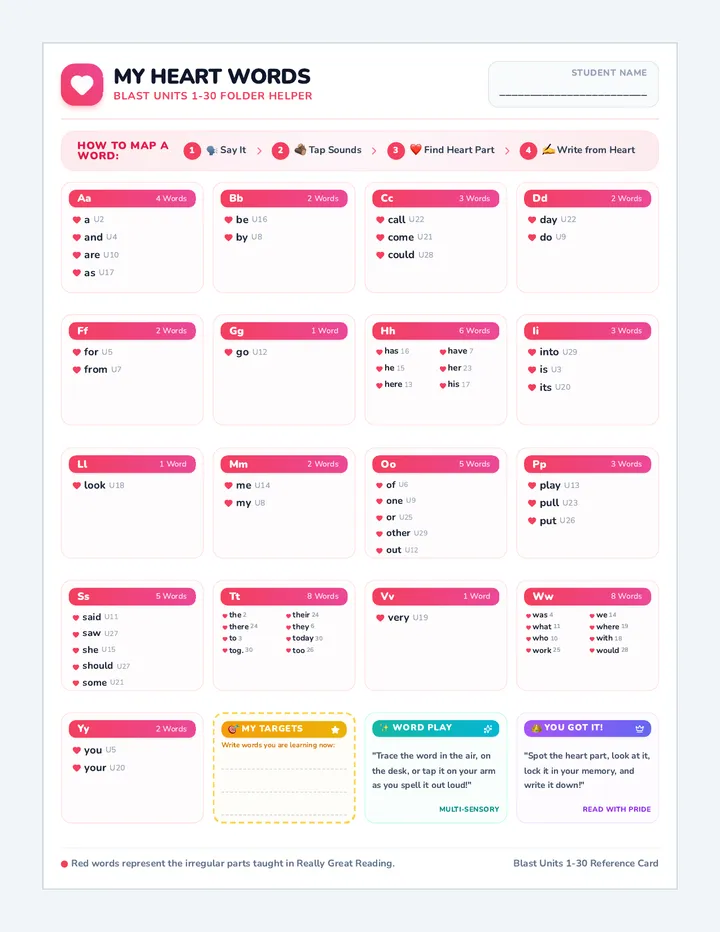
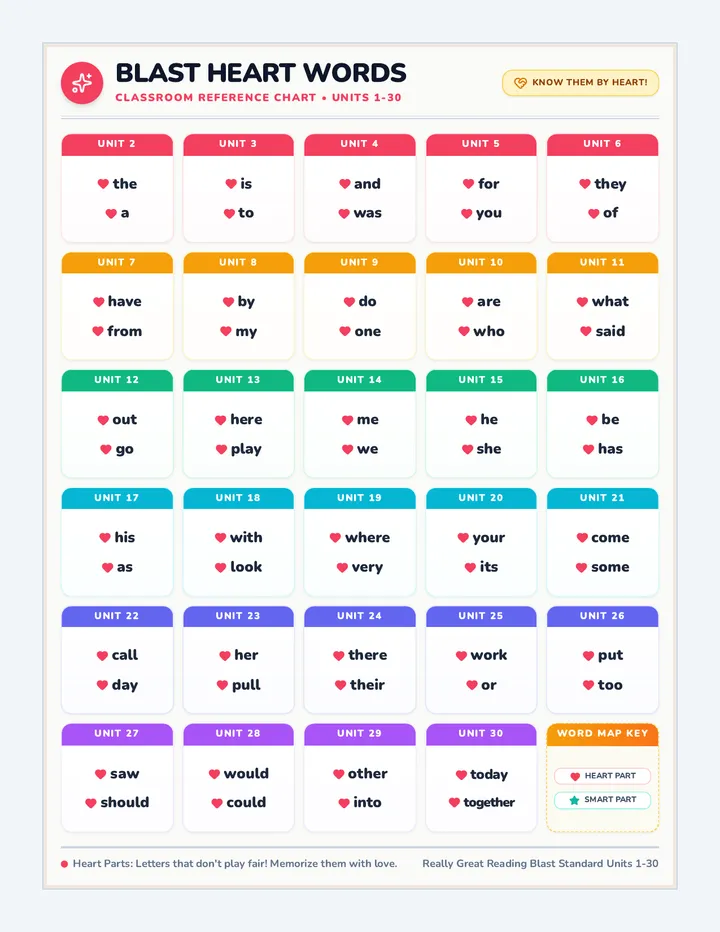
A lesson focusing on glued sounds -am and -an, along with trick words 'from', 'have', 'do', and 'does' for early literacy development.
A decodable reader and guided reading lesson focused on S-blends (sk, sl, st, sc, sw, sm) through the story of Skip the skunk's clumsy accident.
A fun, beach-themed lesson focusing on reading and writing high-frequency words that end with the 'ch' digraph. Students will engage with 10 key words through tracing, sentence completion, and visual identification.
A lesson exploring the famous case of Phineas Gage to understand the connection between brain structure and personality, meeting Oregon learning standards for reading informational text.
A focused 30-minute exploration of Macbeth's moral decay and psychological collapse across Act II, Scene 2 and Act III, Scene 4. Students analyze the immediate aftermath of regicide and the public appearance of Banquo's ghost to determine if Macbeth is fit for the crown.
This lesson focuses on Chapter 4 of Frederick Douglass's narrative, analyzing how specific accounts of murder illustrate the inhumanity of slavery and the corruption of the Southern legal system. Students analyze key lines and imagery to identify Douglass's central claims about the lack of justice and value placed on enslaved lives.
An analysis of Chapter 8 'Moscow', focusing on the introduction of Uncle Anoosh and the influence of political ideology on personal identity and Marji's concept of heroism.
This lesson provides an informal assessment for students to demonstrate their ability to read 2-3 syllable words containing common prefixes and suffixes. It includes a student-facing word list and a corresponding teacher recording sheet.
Students evaluate multiple viewpoints on a topic and construct a persuasive essay supported by evidence from the text.
Students analyze informational texts to extract key details and synthesize information into a coherent expository essay.
Students practice crafting narrative responses by continuing a story or changing a character's perspective based on a given text.
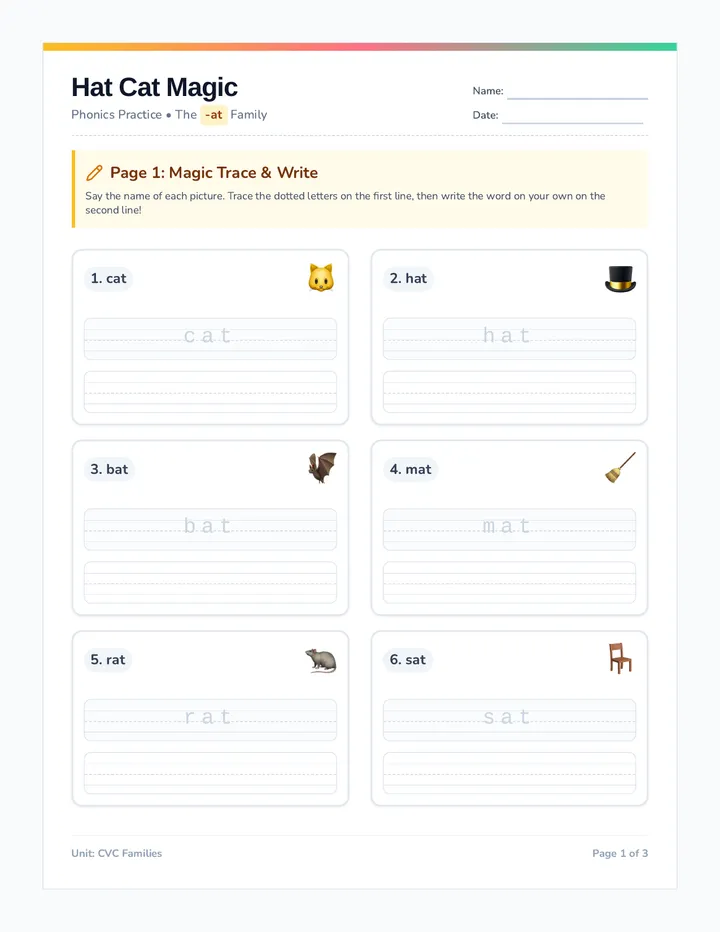
Students become 'Word Detectives' to decode and build simple Consonant-Vowel-Consonant words through visual blending and independent practice. This lesson reinforces phonemic awareness and early reading skills.
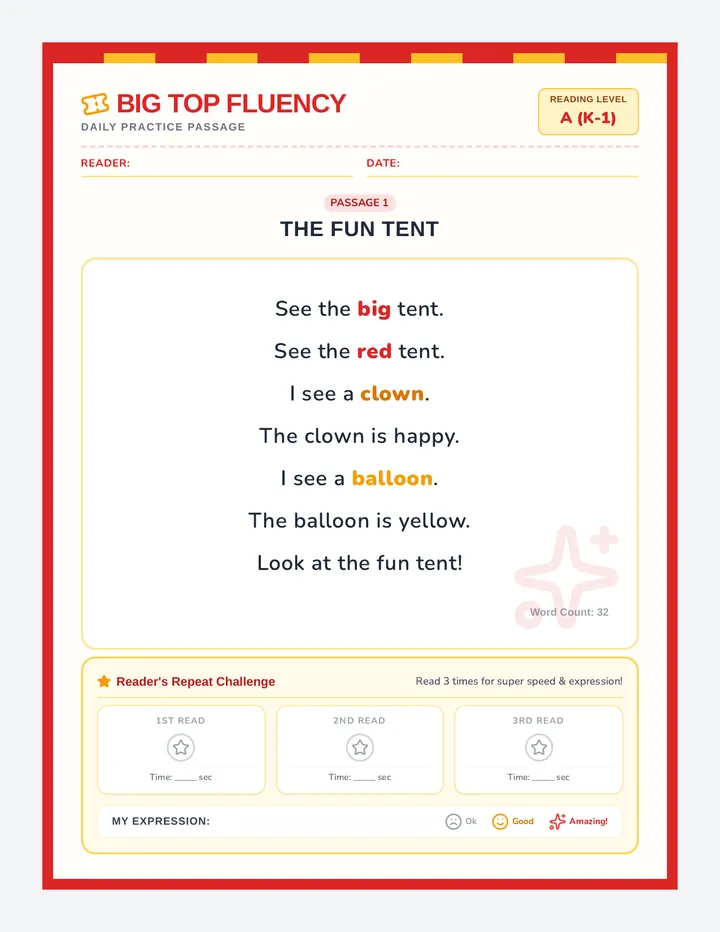
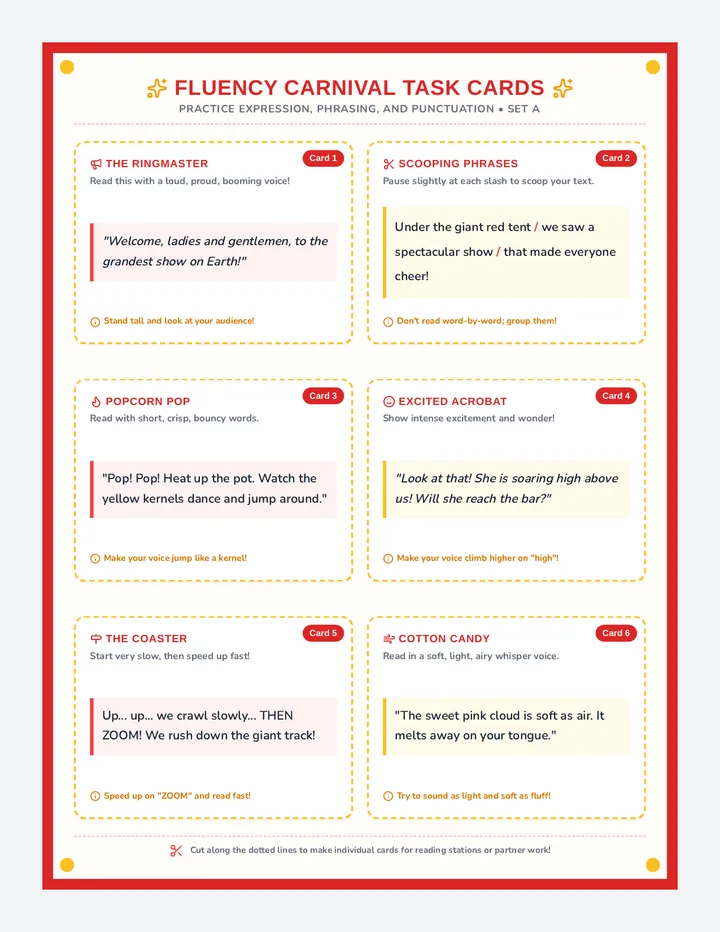
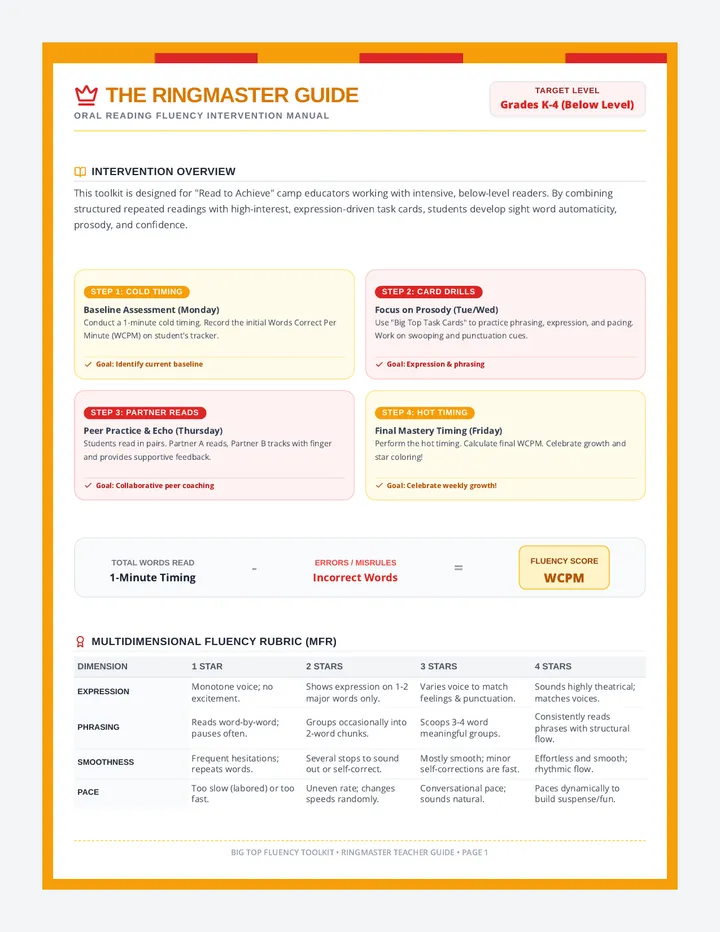
Targeted small group intervention materials and fluency practice for students needing extra support with morphological decoding.
Synthesizes prefix and suffix knowledge to decode complex, multisyllabic words through structural analysis.
Explores common suffixes (-ful, -less, -er, -ly) and how they modify the function and meaning of base words.
Introduces the concept of prefixes as word 'attachments' that change meaning, specifically focusing on re-, un-, dis-, and pre-.
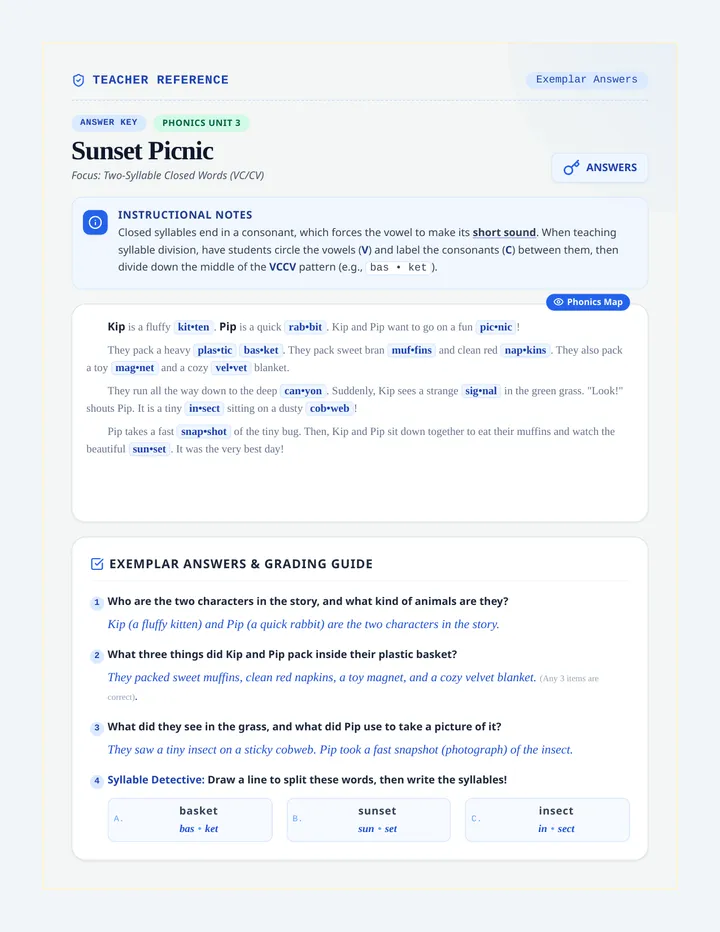
This lesson focuses on identifying and decoding multisyllabic words containing open syllables. Students will learn the 'open gate' rule to improve their reading fluency and word-solving stamina.
A multi-sensory literacy experience for early learners, using tactile objects, sounds, and smells to bring a story about a forest animal to life.
In this lesson, students learn the difference between opinion and evidence, practice identifying textual support through an interactive 'evidence hunt', and draft paragraphs that connect claims to proof.
A Kindergarten read-aloud lesson for 'The Tree in the Ancient Forest' focusing on developing oral language skills through the 'Notice and Wonder' strategy. Students explore ecosystem connections while practicing sharing their observations and questions.
A focused practice session for CKLA Grade 1 Skills 1 & 2 Tricky Words, featuring printable flashcards and a teacher-led 15-minute drill protocol to build word recognition automaticity.