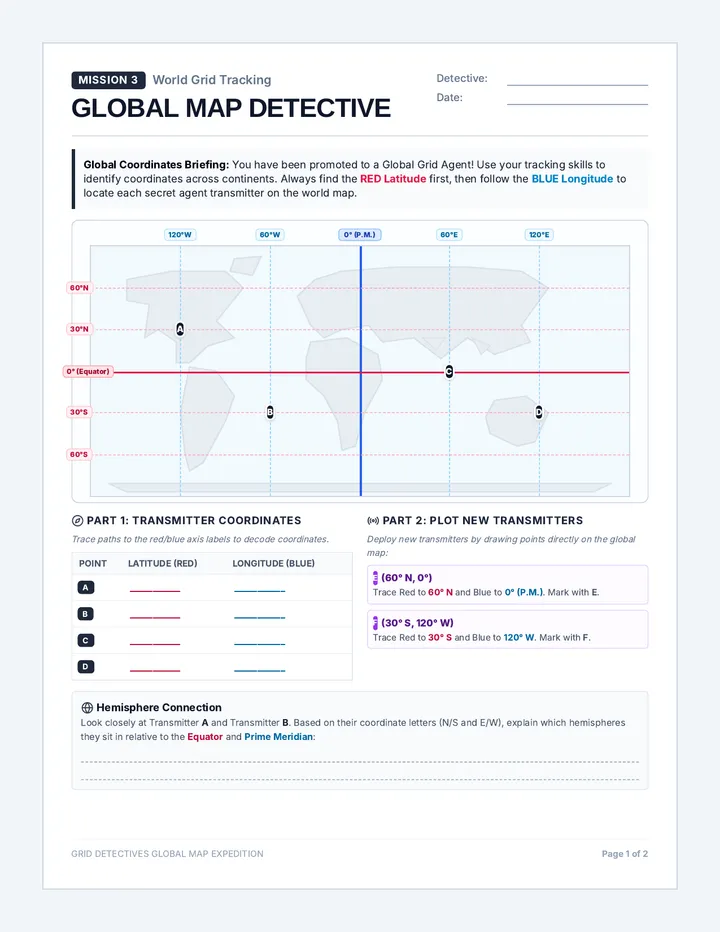
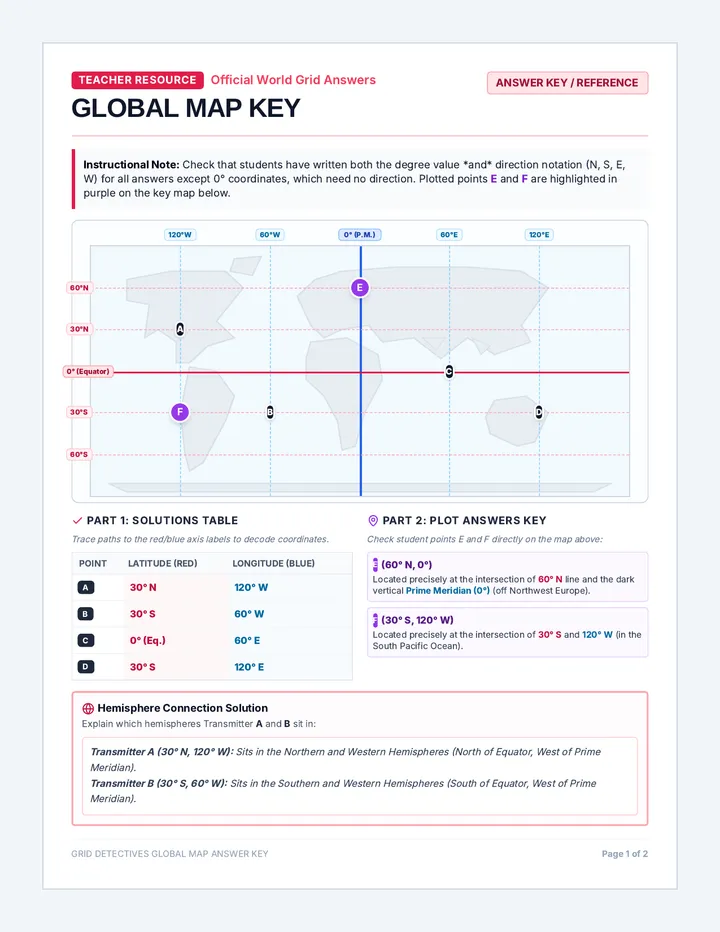
Students refine their rough sketches into a polished map. They add color, a clear key, and labels using correct spatial terminology to ensure a visitor could navigate the room.
Students will learn to navigate their local community by mastering map keys and symbols. This lesson includes instructional slides, a reading passage, and a hands-on mapping activity.
A collection of resources for an educational information booth about Peru at a cultural fair, including a fact sheet and interactive trivia cards.
A collection of reflective and creative activities for Memorial Day, including a poppy craft writing activity, a gratitude letter template, and acrostic poems to honor fallen heroes.
An introductory overview of all 50 states, focusing on visual identification, nomenclature, and basic facts.
A lesson introducing students to famous figures from Ohio and their contributions to history, science, and sports.
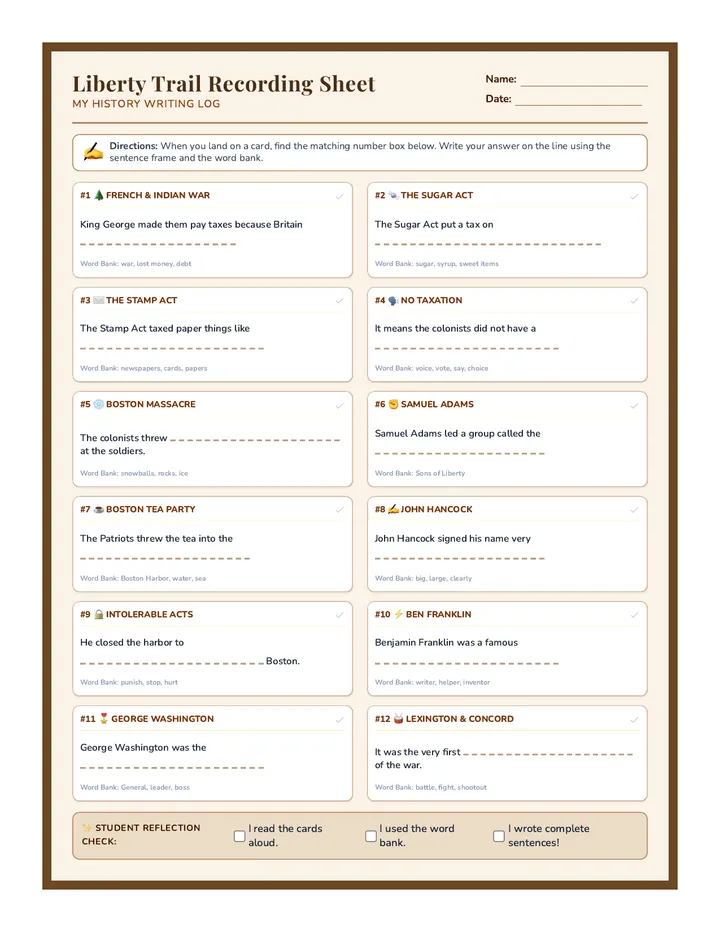
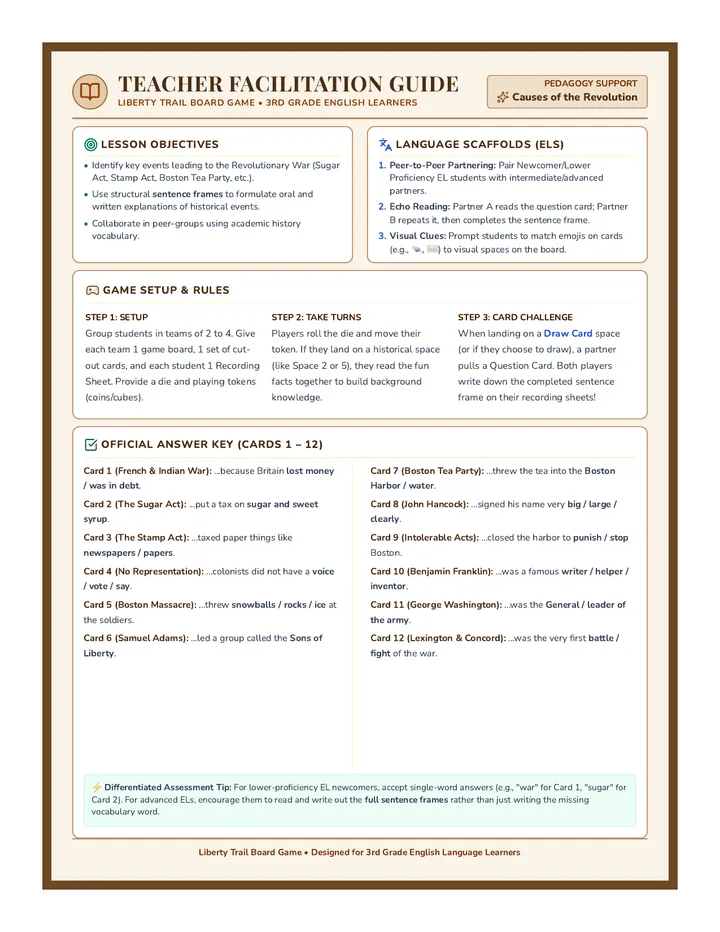
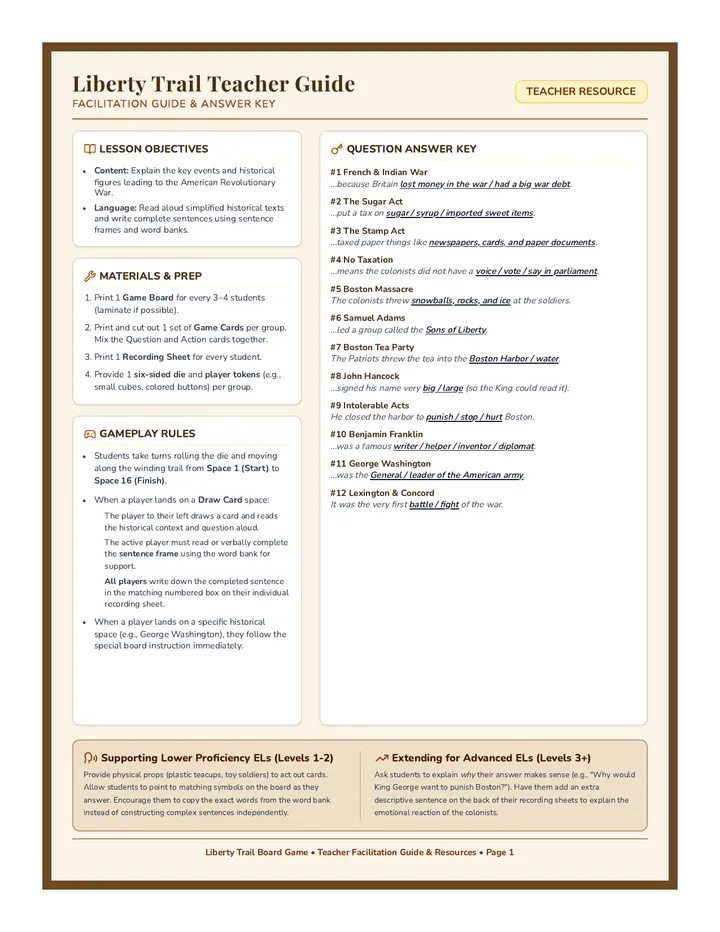
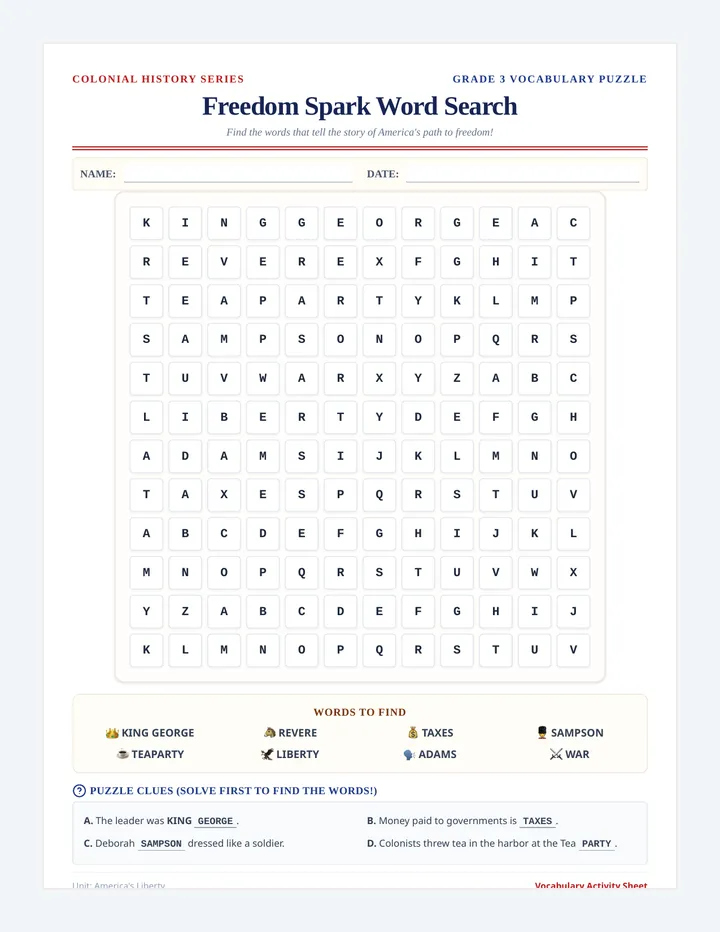
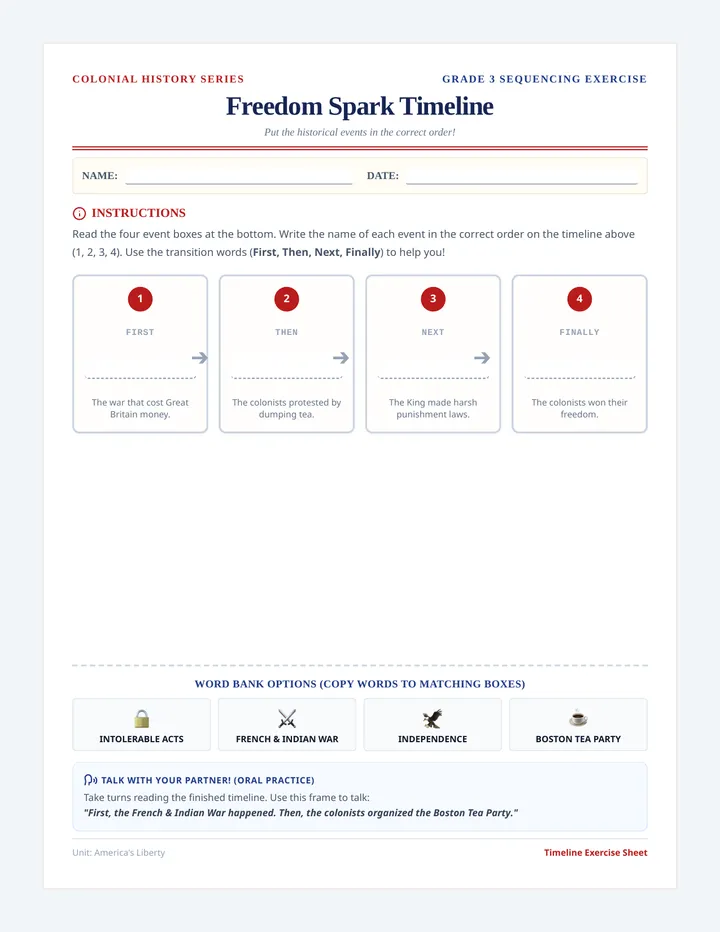
A collection of interactive games and activities designed to reinforce vocabulary and historical knowledge from the 'Fighting for a Cause' unit for Grade 2 students.
A 1st-grade lesson exploring the discovery of King Tutankhamun's tomb, focusing on reading decodable text and identifying key historical details.
Students become "Price Detectives" to solve the mystery of why certain prices changed. They will analyze evidence like weather reports, celebrity news, and shipping delays to identify shifts in supply and demand.
Exploring how changes in supply and demand cause prices to rise and fall, using scenario cards and group discussions to predict market shifts.
An introduction to the relationship between supply (how much we have) and demand (how much people want), using a hands-on lemonade stand simulation to visualize the concepts.
A scavenger hunt activity exploring the journey and lives of the Pilgrims in Plymouth, based on chapters 10 and 11 of the reader. Students will search for 'clue cards' around the room to answer questions about the Mayflower, Squanto, the first winter, and the Thanksgiving celebration.
A lesson focused on the fundamentals of US government branches and the responsibilities of being a good citizen, designed for 3rd grade students.
A substitute-ready lesson focusing on the emotional and practical aspects of immigration, where students decide what five essential items they would pack in a single suitcase.
A lesson exploring the impact of Harriet Beecher Stowe's novel 'Uncle Tom's Cabin' on the abolitionist movement, designed for 3rd-4th grade students.
A lesson focused on Hernando de Soto's expedition through the Southeastern United States, centering on the search for gold and its impact on the region.
A comprehensive lesson on the founding of the English colonies in North America, featuring a visual timeline of major settlements from Roanoke to Georgia.
A lesson introducing King Tutankhamun, focusing on his life as a young pharaoh and the discovery of his hidden tomb in the Valley of the Kings.
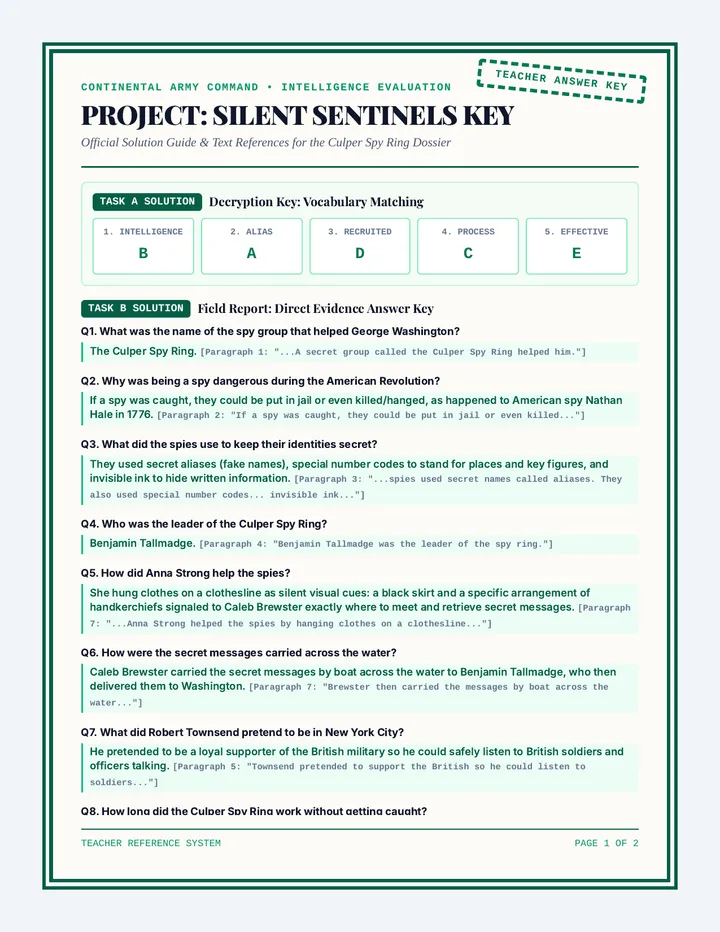
A high-energy lesson on cryptography and the history of the Enigma machine, designed to motivate students before the WYTOPP state assessment. Students learn about substitution ciphers and decode a secret message of encouragement.
In this geography and environmental science lesson, third-grade students trace the journey of a plastic bottle from a local Indiana storm drain through the Wabash, Ohio, and Mississippi Rivers to the Atlantic Ocean, fostering an understanding of watersheds and conservation.
A foundational geography lesson designed for early emergent learners to distinguish between their state (Texas) and their country (USA) using visual nesting and simple categorization.
A history and technology lesson for 8-year-olds exploring how daily life has transformed through technological advancement, featuring visual comparisons and differentiated tasks for EAL learners.