A parent workshop focused on identifying digital tools and community resources to improve family physical and mental health. Participants will explore wellness apps and set concrete goals for their families.
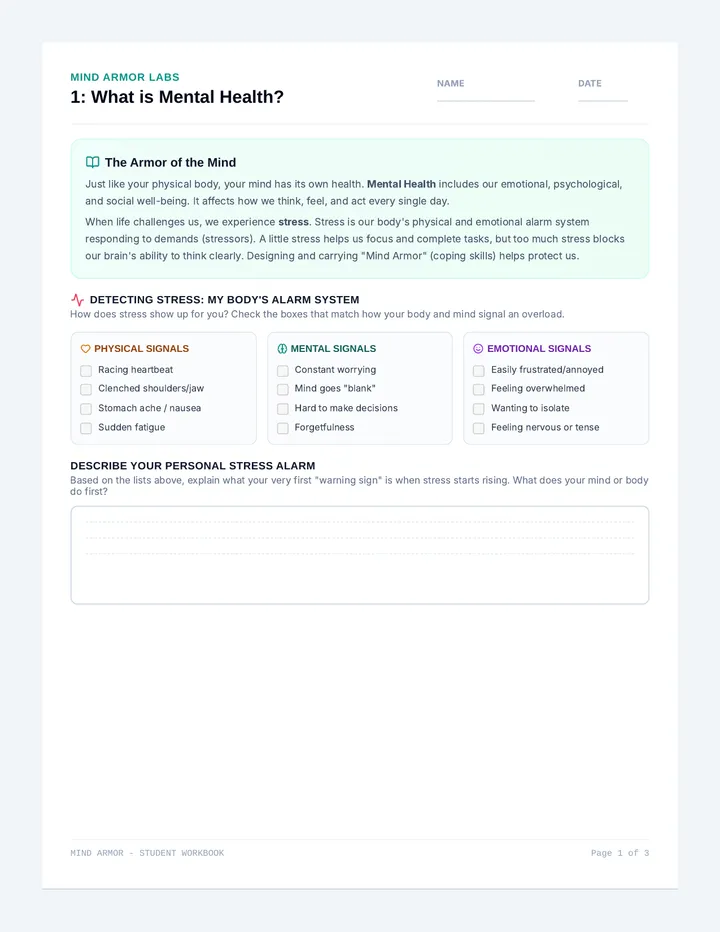
A lesson exploring the physiological mechanisms of stress and the long-term consequences of chronic stress on various body systems, featuring DOK-leveled assessments.
A high-energy 60-minute tumbling lesson focused on intermediate to advanced floor skills including walkovers, handsprings, and aerials. Includes a comprehensive coach guide, visual drills, and a student progress tracker.
A psychology and health lesson for high schoolers exploring why our brains are wired for negativity and how to 'train' for happiness through behavioral actions and social connection. Inspired by Katarina Blom's TEDx talk, students analyze evolutionary biology and the Harvard Study of Adult Development.
A Physical Education and Sports Medicine lesson exploring the psychological benefits of movement versus traditional exercise. Students analyze Jake Tyler's TEDx talk on depression and design a one-week movement plan focused on mental clarity and intention rather than physical metrics.
This lesson explores complex mental health conditions like schizoaffective disorder, schizophrenia, and bipolar disorder, focusing on destigmatization through clinical understanding and empathy. Students learn to distinguish between common myths and medical realities while practicing perspective-taking for those affected by these diagnoses.
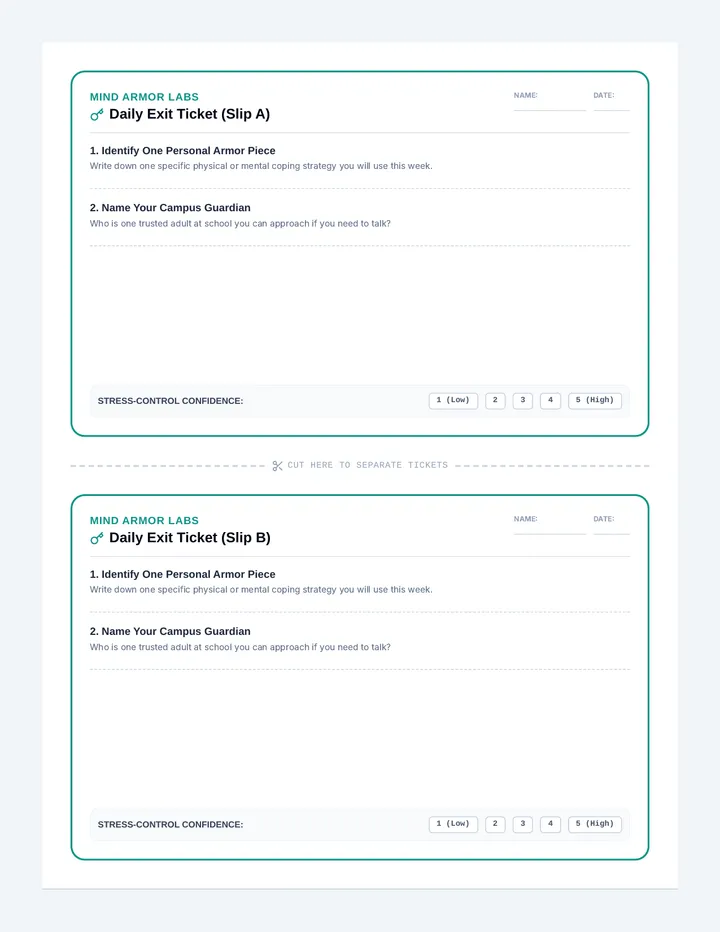
Students will distinguish between controllable and uncontrollable risk factors for mental illness through a video analysis and a 'Circle of Control' mapping activity.
Students explore the multifaceted causes of mental illness using the biopsychosocial model, mapping specific factors like genetics and environment to understand the complex interplay of human health.
A High School Health lesson exploring how social media trends like 'Slim Thick' and 'Thigh Gap' influence body image, featuring an analysis of 'Finsta' culture and a media literacy audit.
Students explore the optimism bias through Tali Sharot's TED talk, analyzing how our brains underestimate risks and overestimate positive outcomes, culminating in a 'parachute' strategy for safer health decisions.
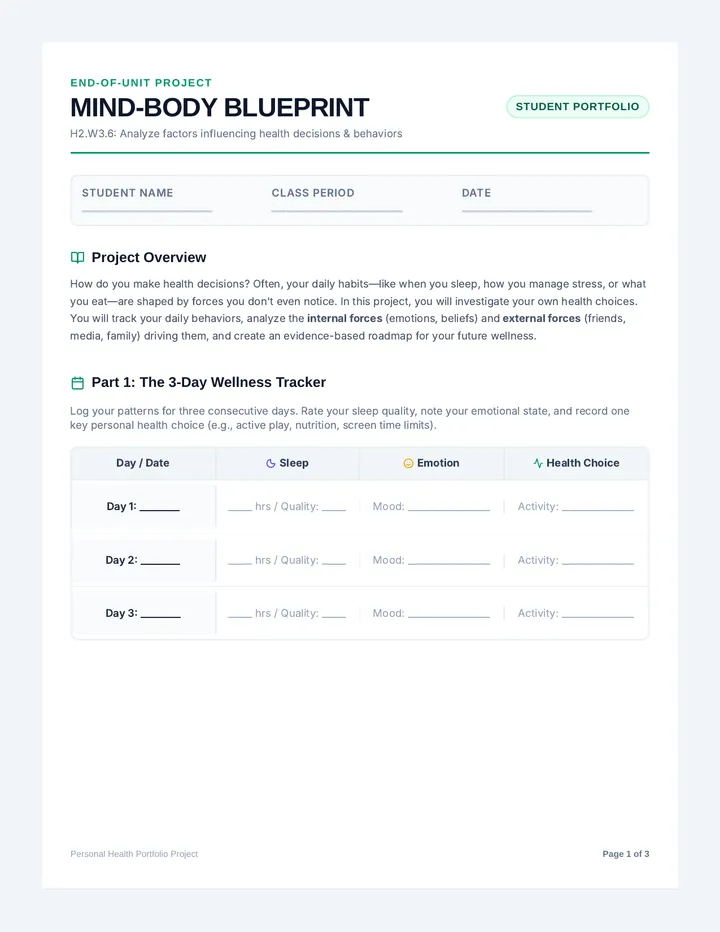
Students investigate the variance of the autism spectrum through video analysis and fictional case studies, challenging stereotypes and functioning labels.
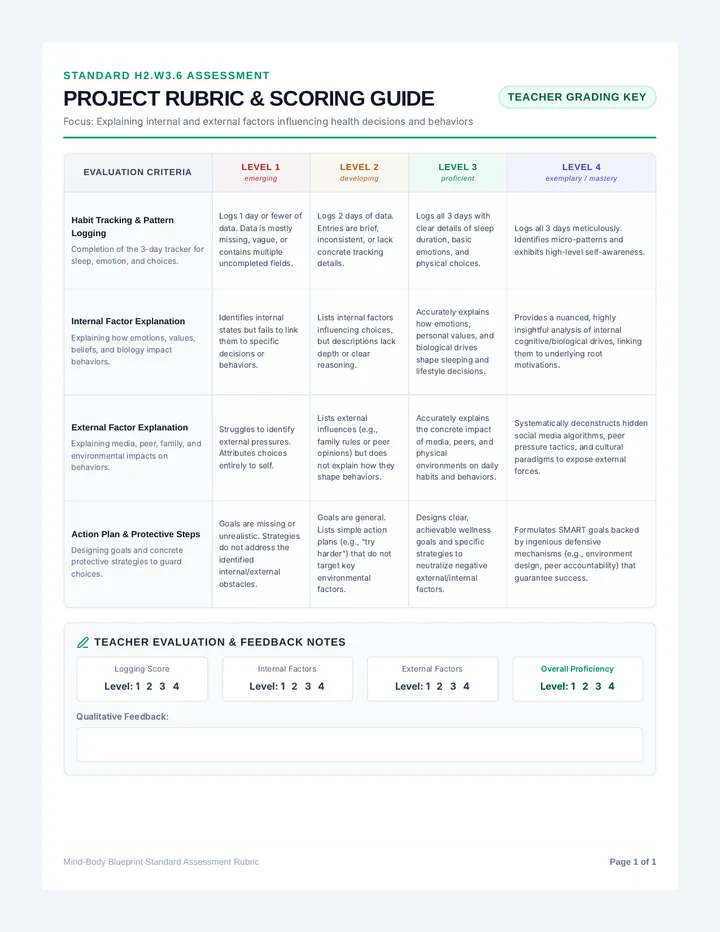
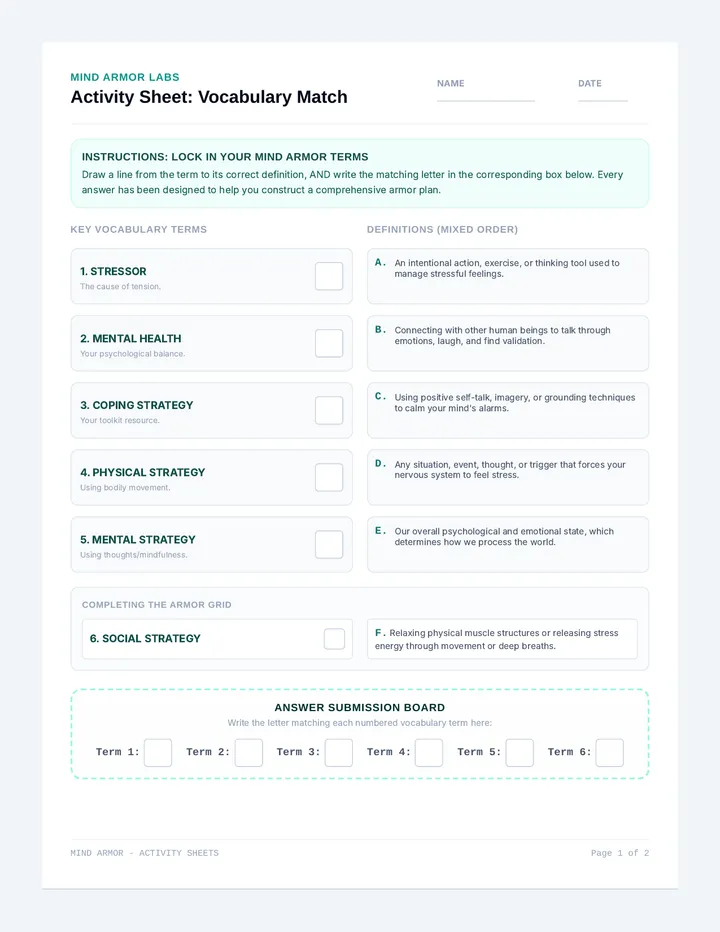
Students differentiate between eustress and distress, analyze the biological mechanism of the HPA axis through a video, and conduct a self-experiment ('Cortisol Control Lab') to test meditation and movement as stress-reduction strategies.