Una presentación multimedia de 40 diapositivas sobre el uso de eventos en MakeCode Arcade para estudiantes de sexto grado, con un diseño profesional de fondo negro.
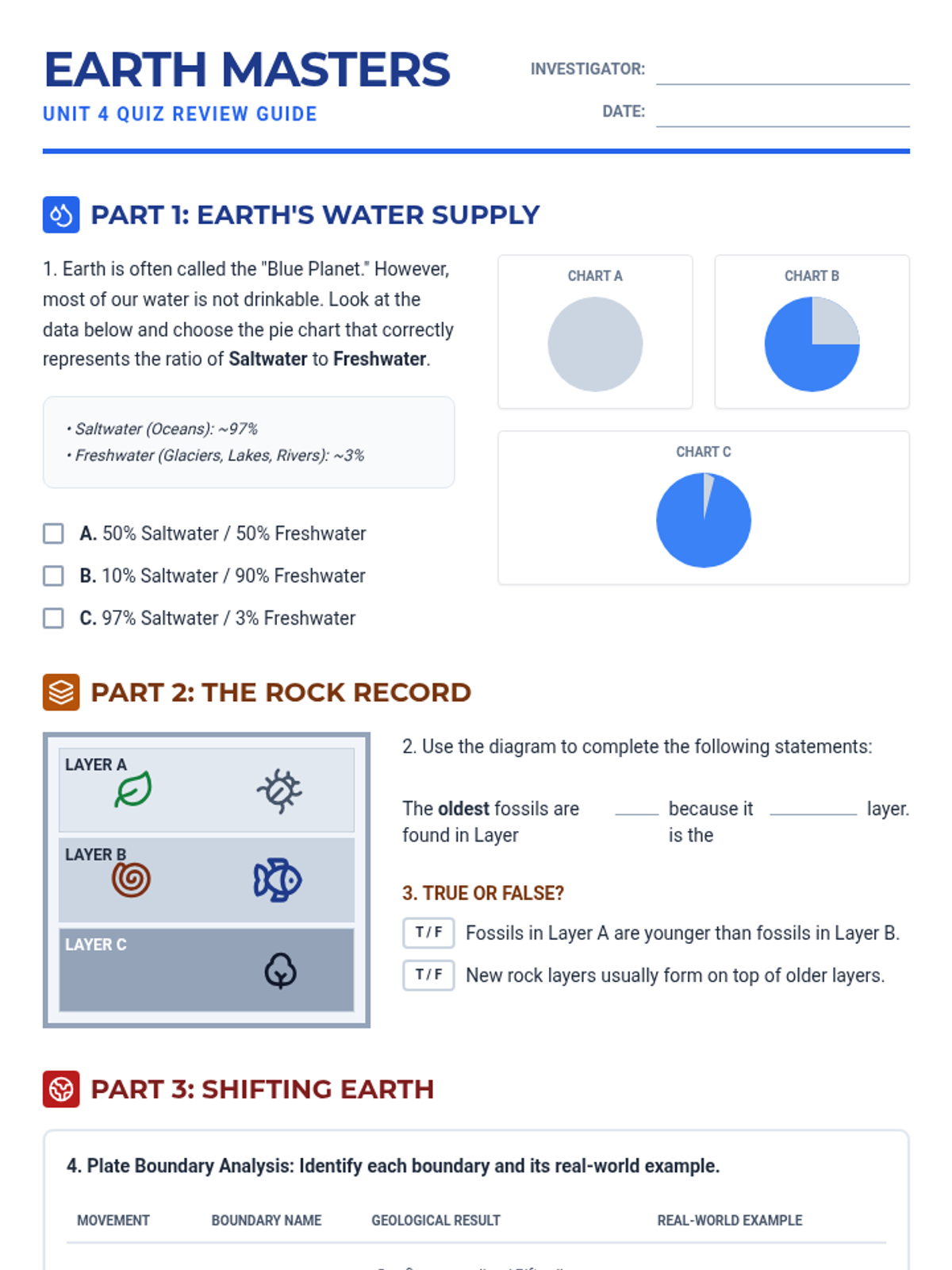
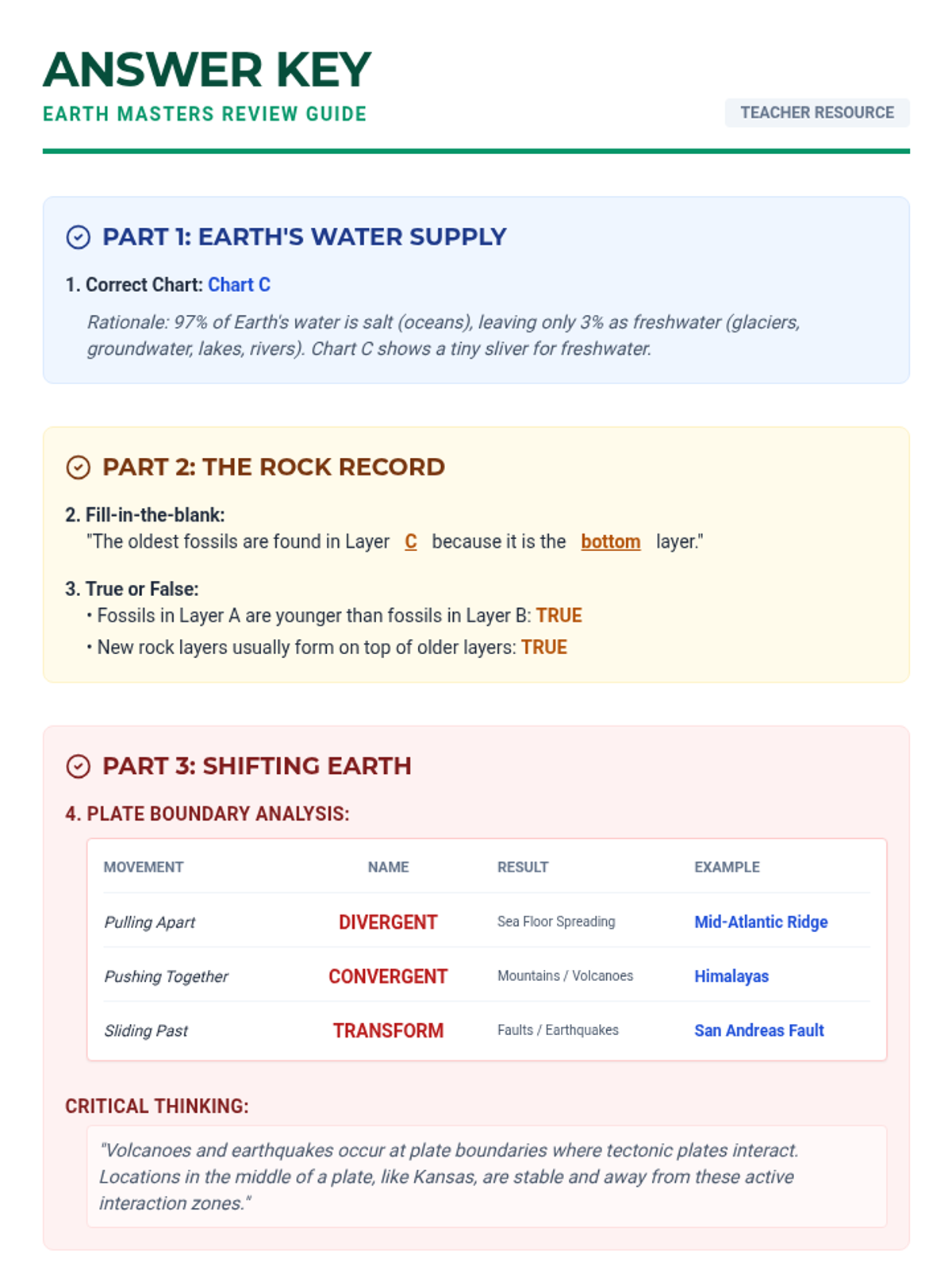
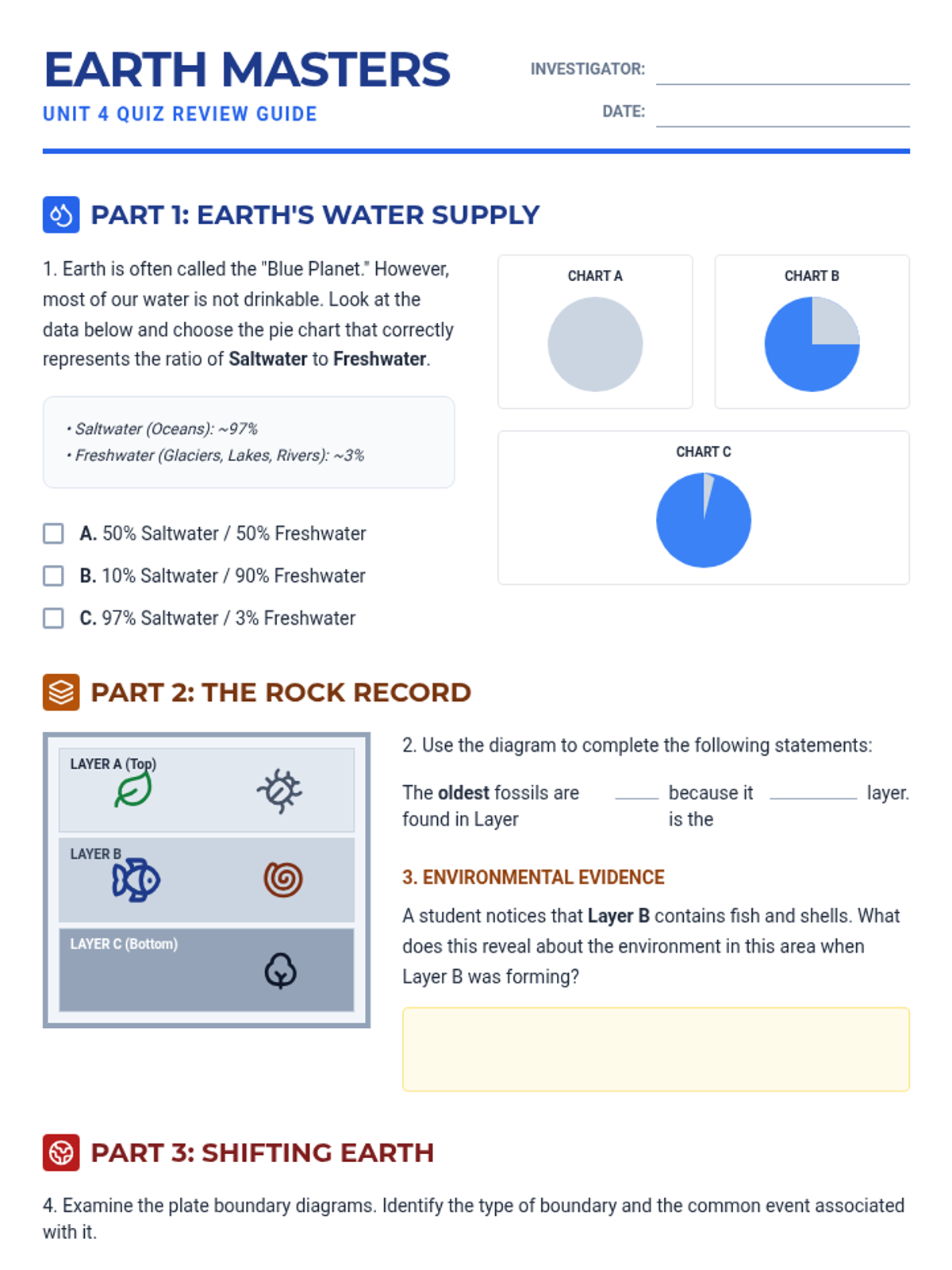
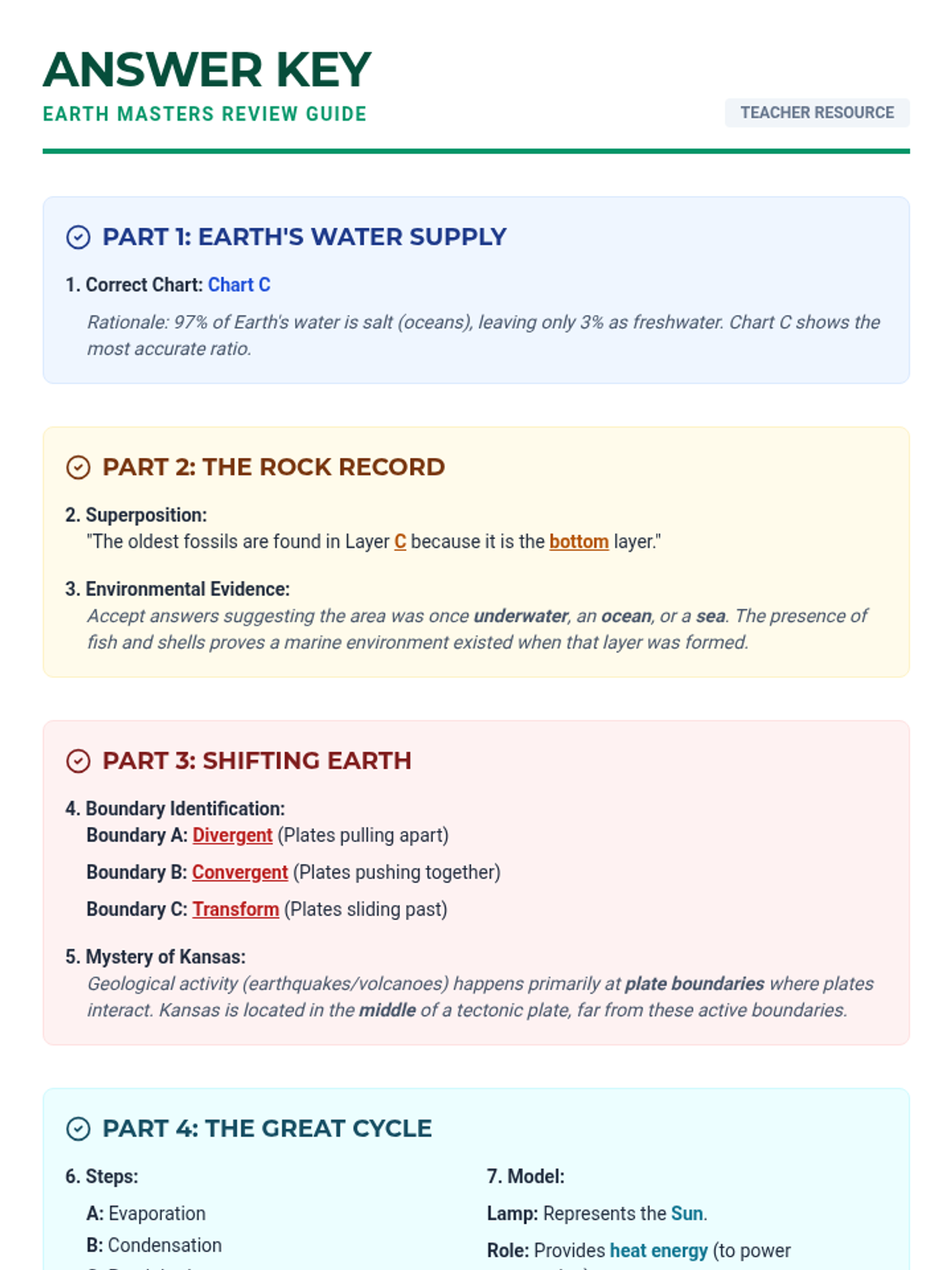
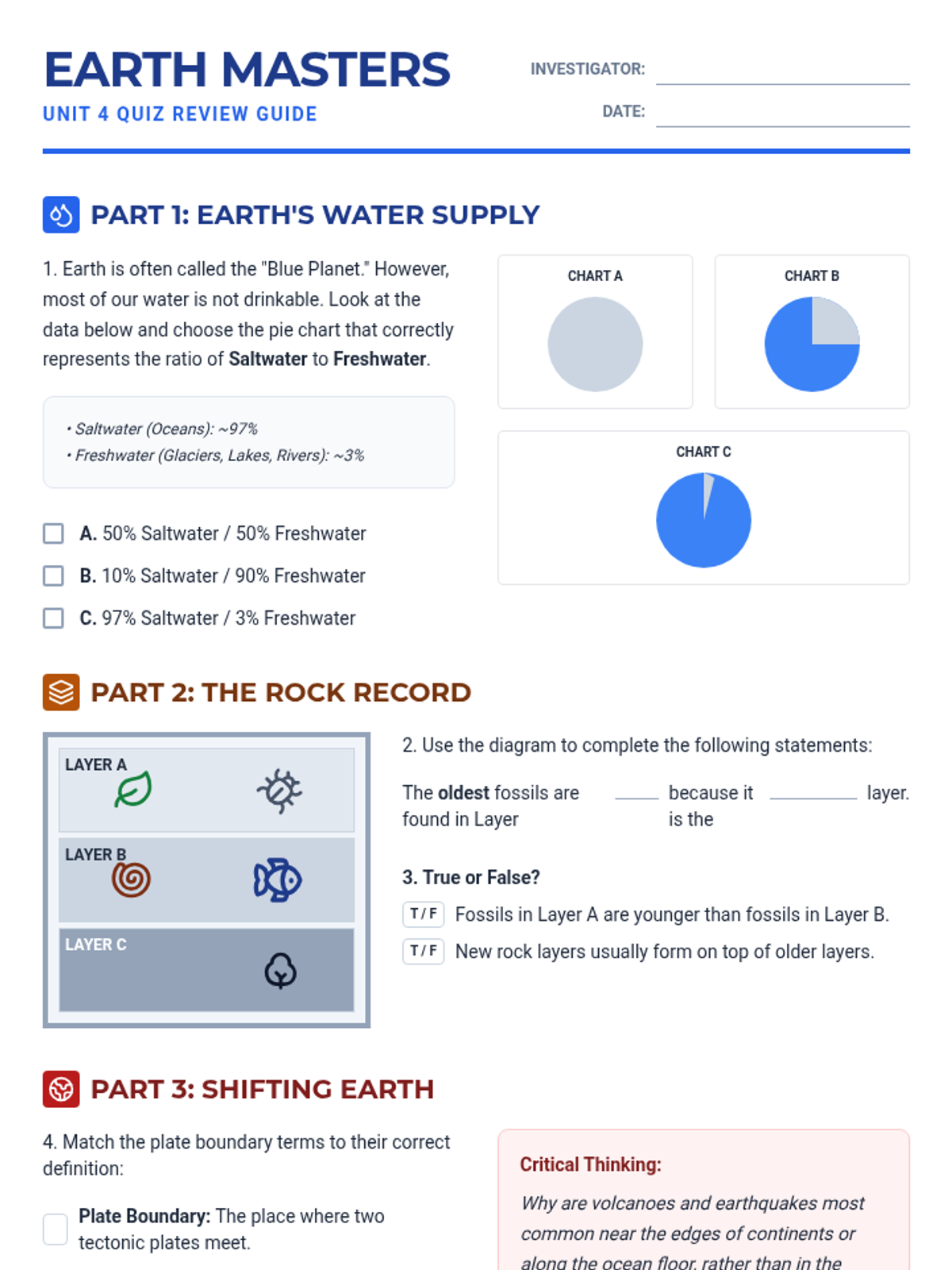
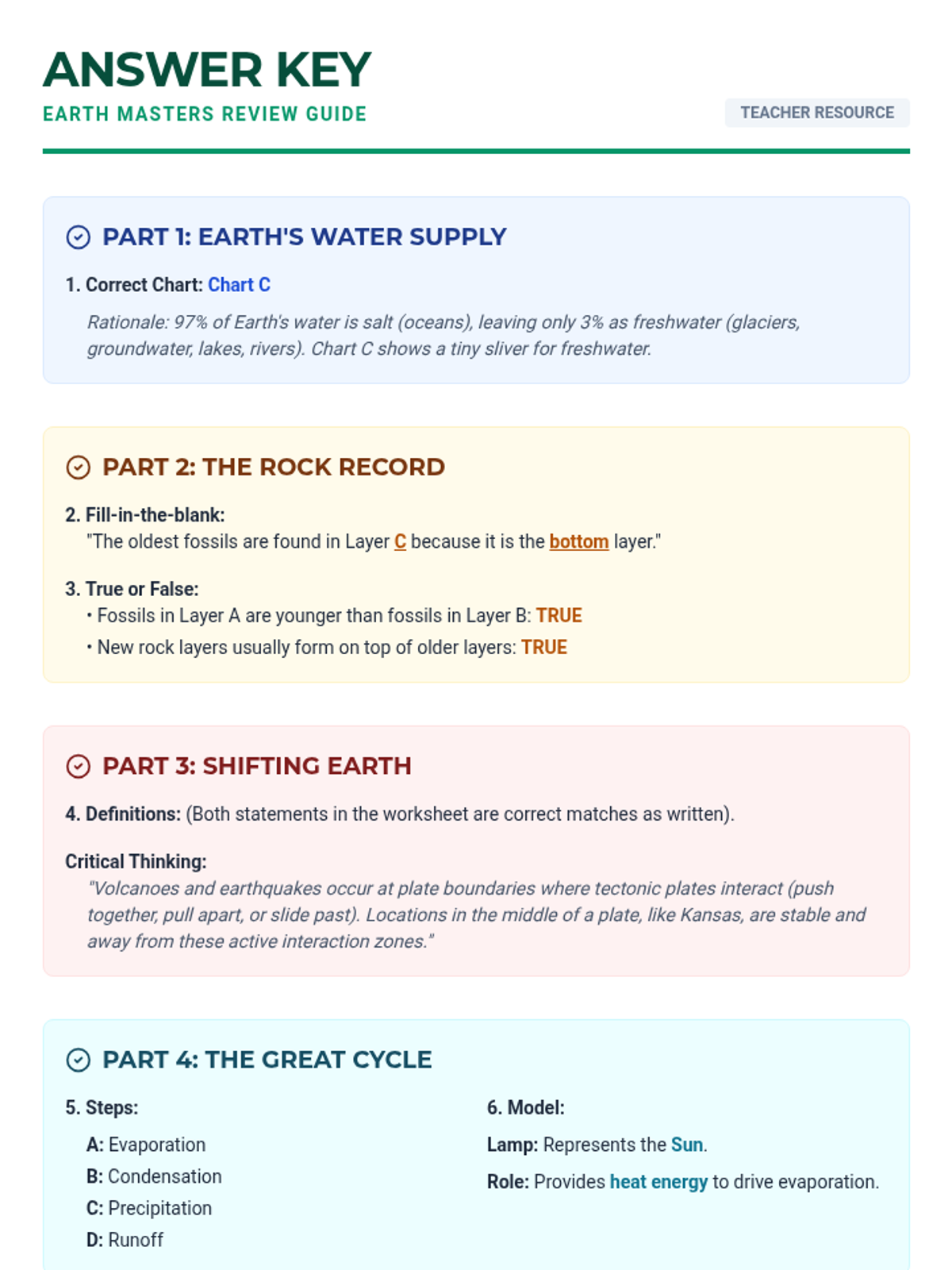
A comprehensive review lesson covering Earth's water distribution, fossil records in rock layers, plate tectonics, and the water cycle to prepare students for the Unit 4 Quiz.
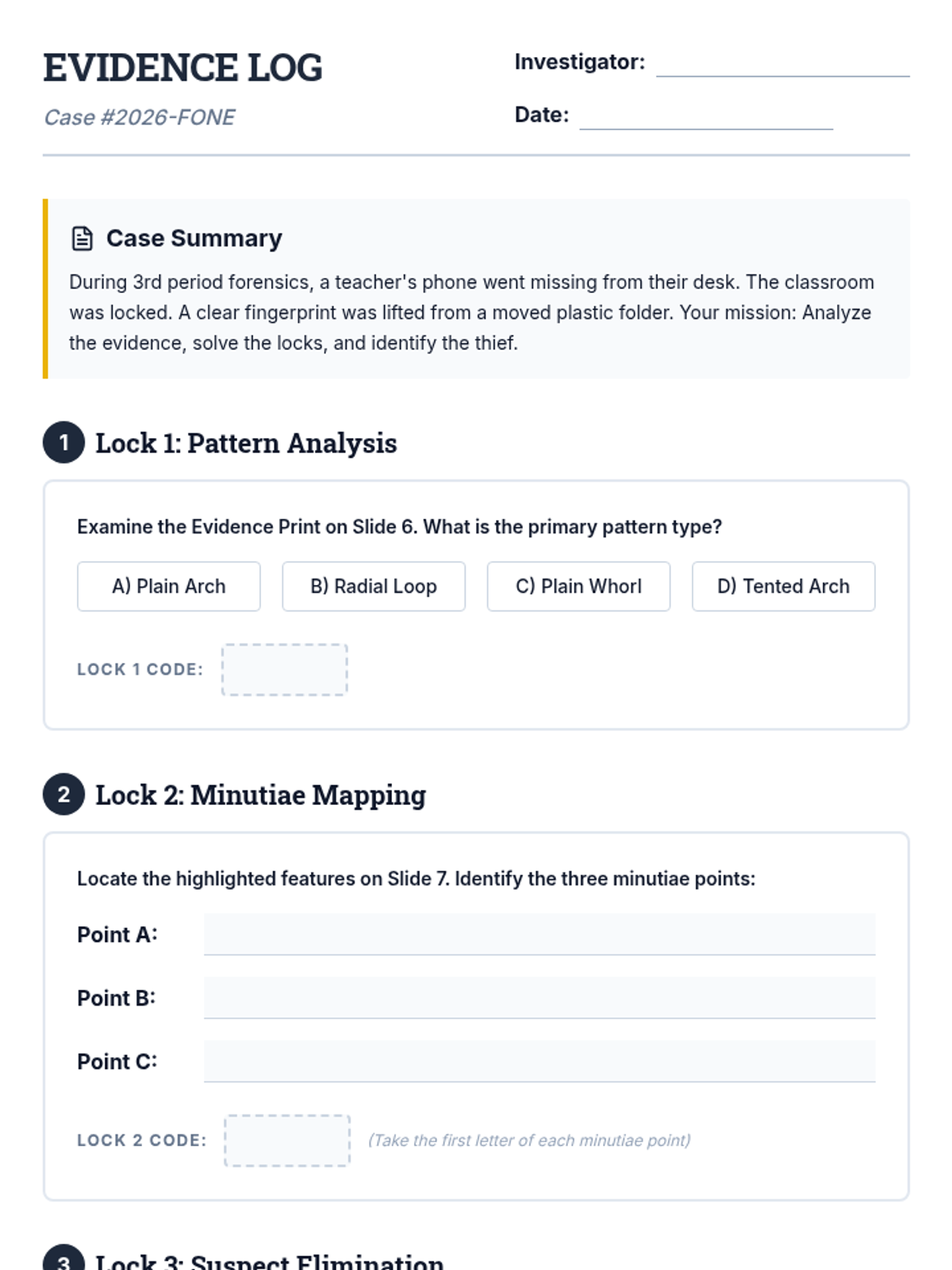
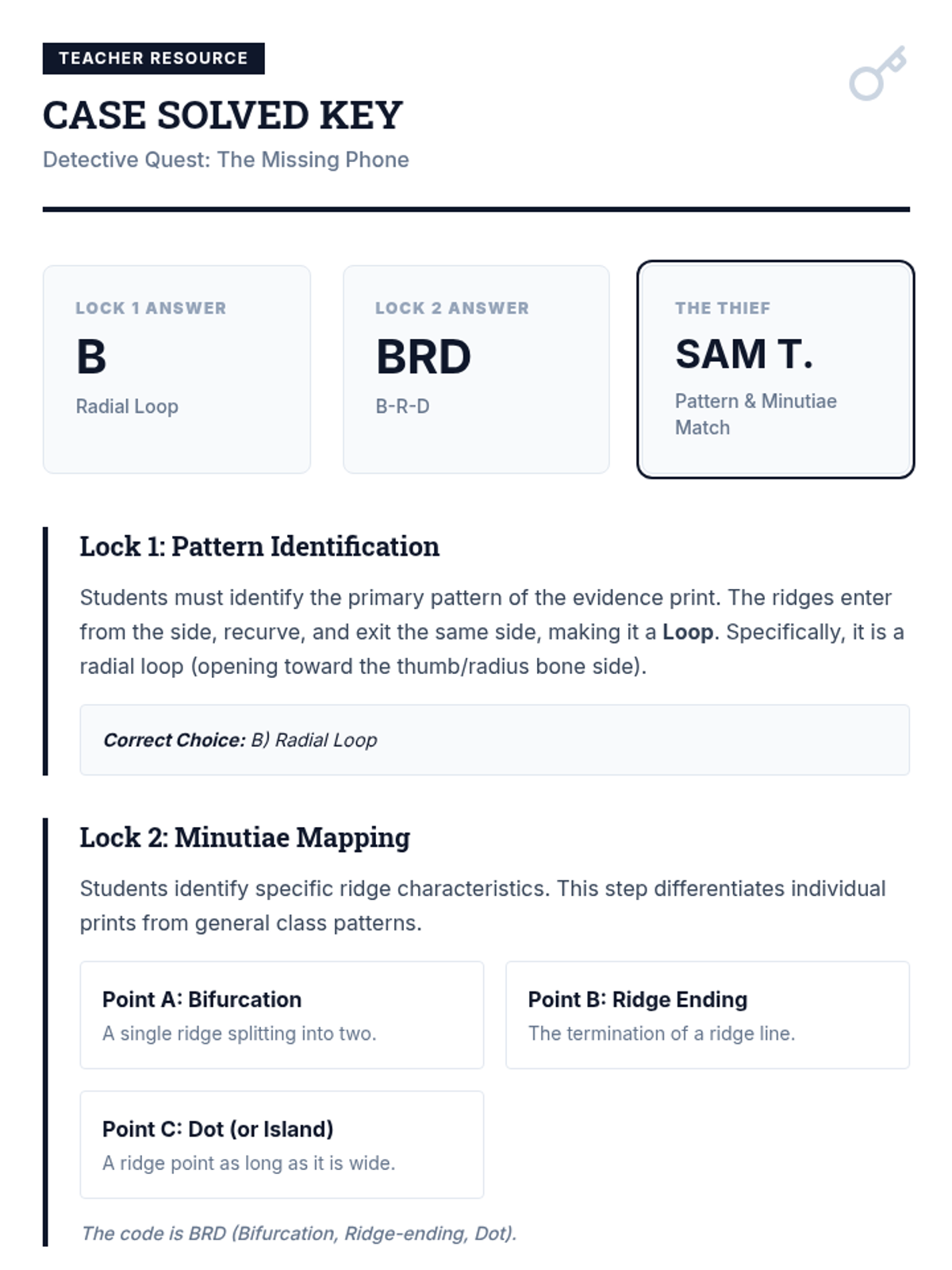
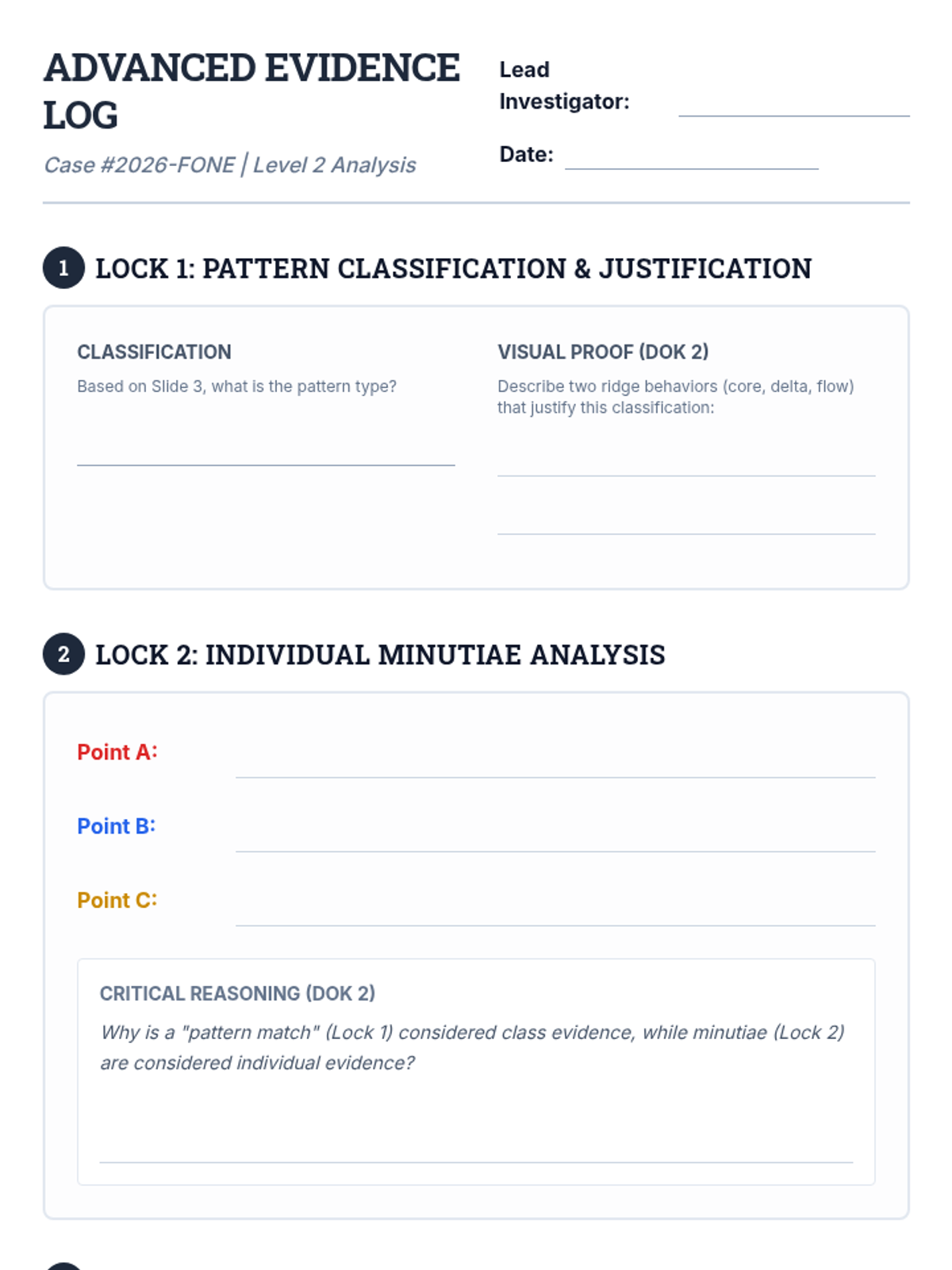
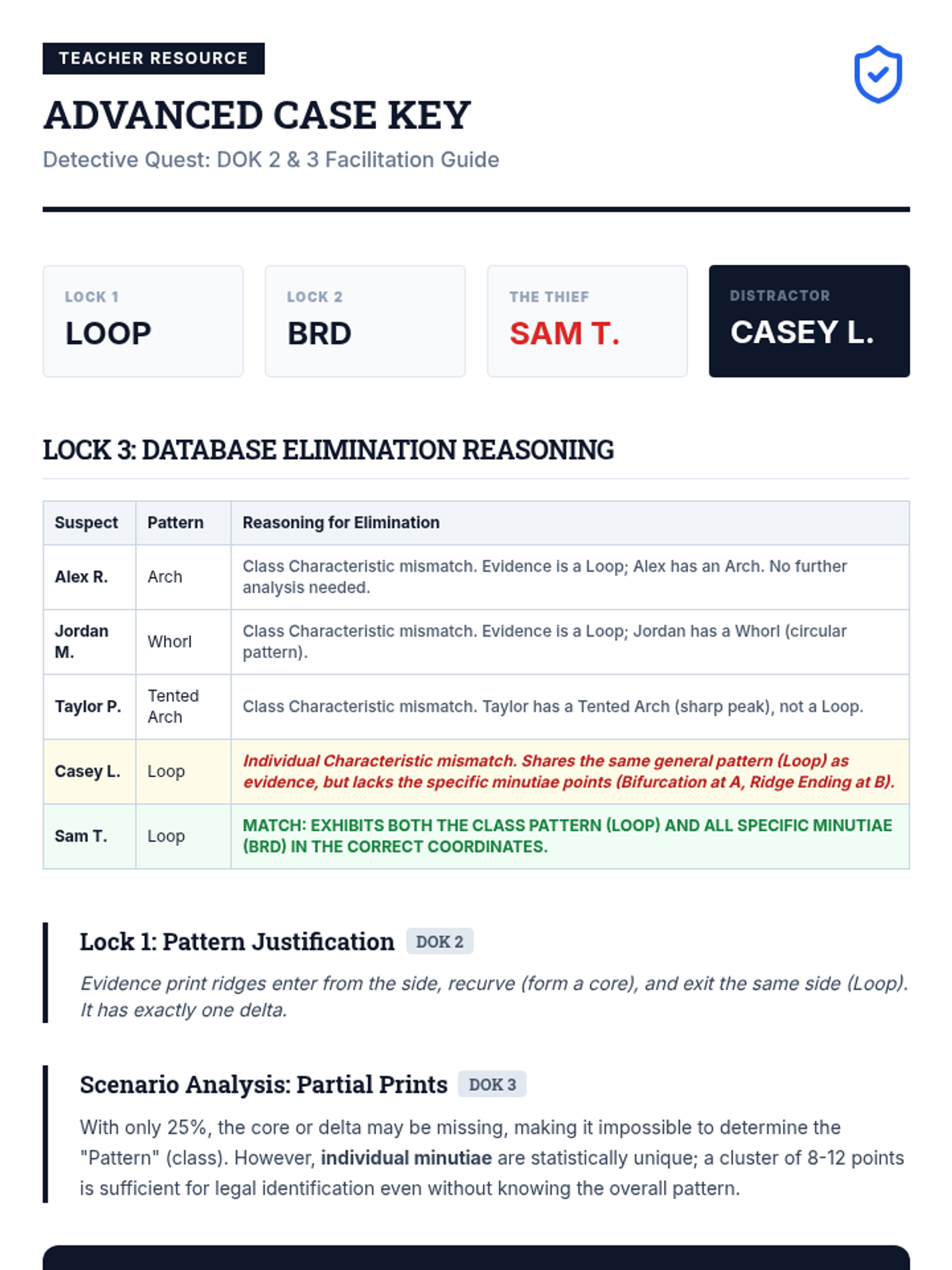
A digital forensic escape room where students solve the mystery of a missing classroom phone by analyzing fingerprint evidence, identifying patterns, and matching minutiae.
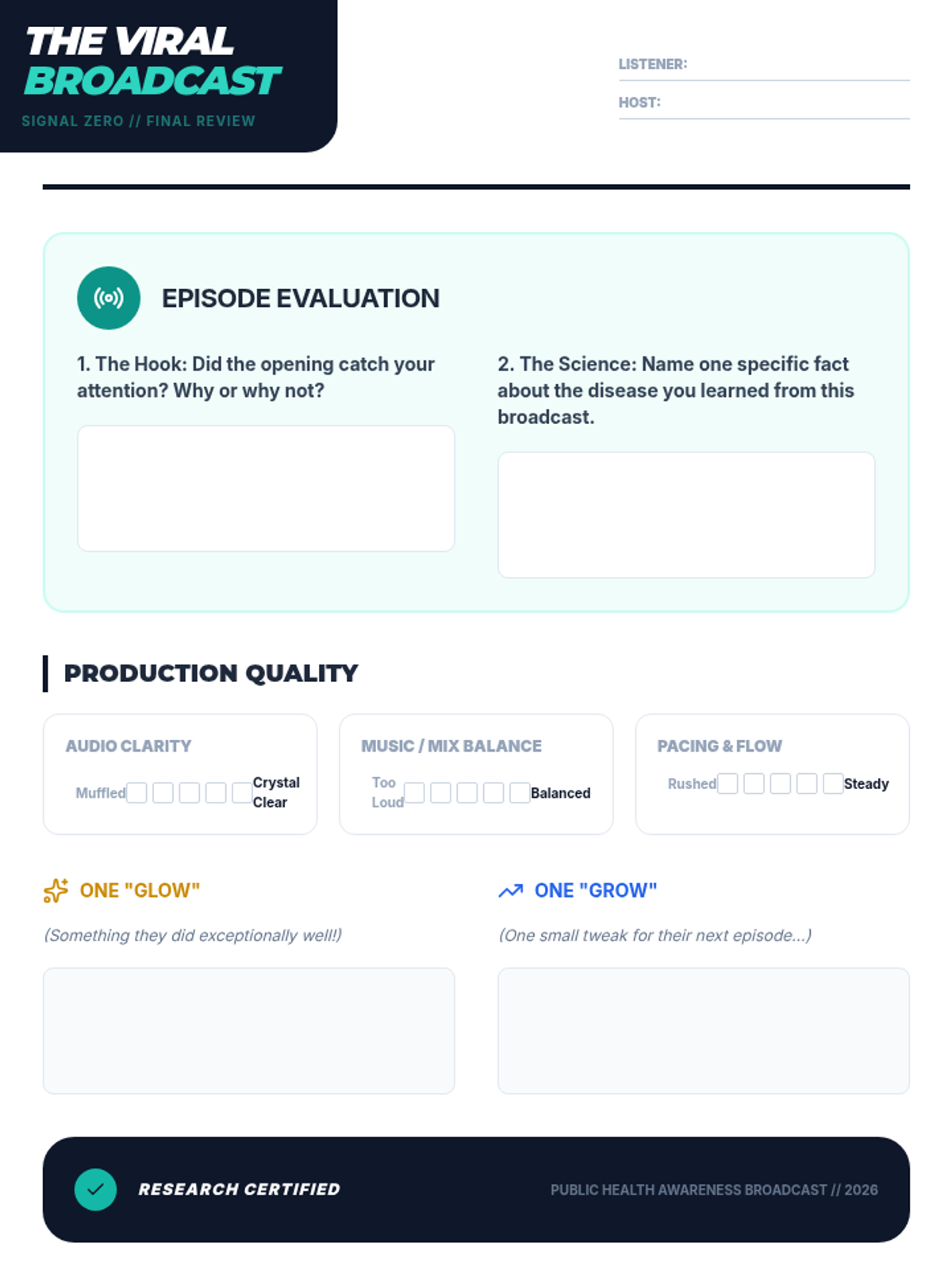
The culmination of the project where students finalize their productions, peer-review work, and share their broadcasts in a community listening party.
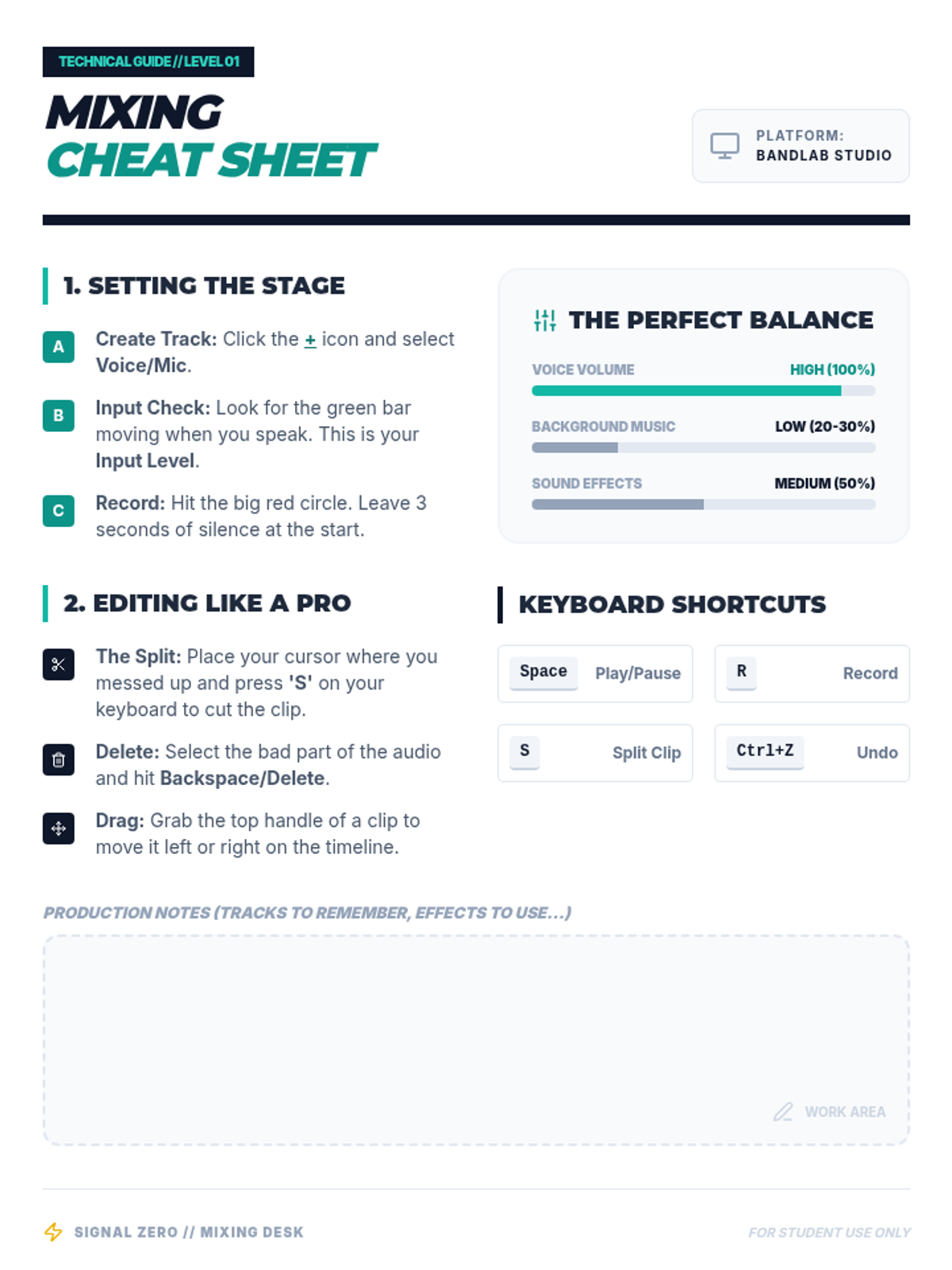
A technical deep-dive into BandLab, covering recording techniques, multi-track editing, and adding musical elements to enhance the narrative.
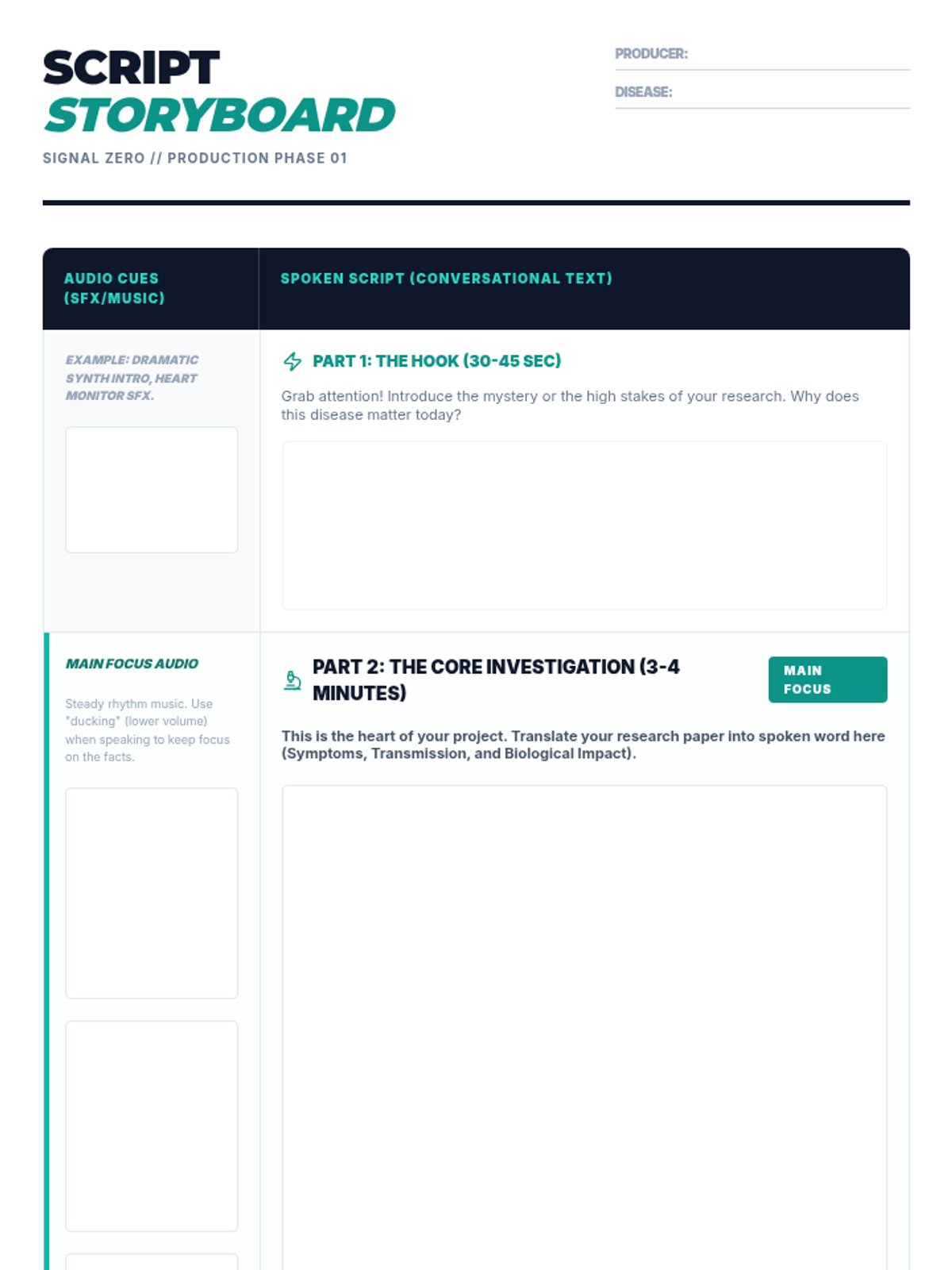
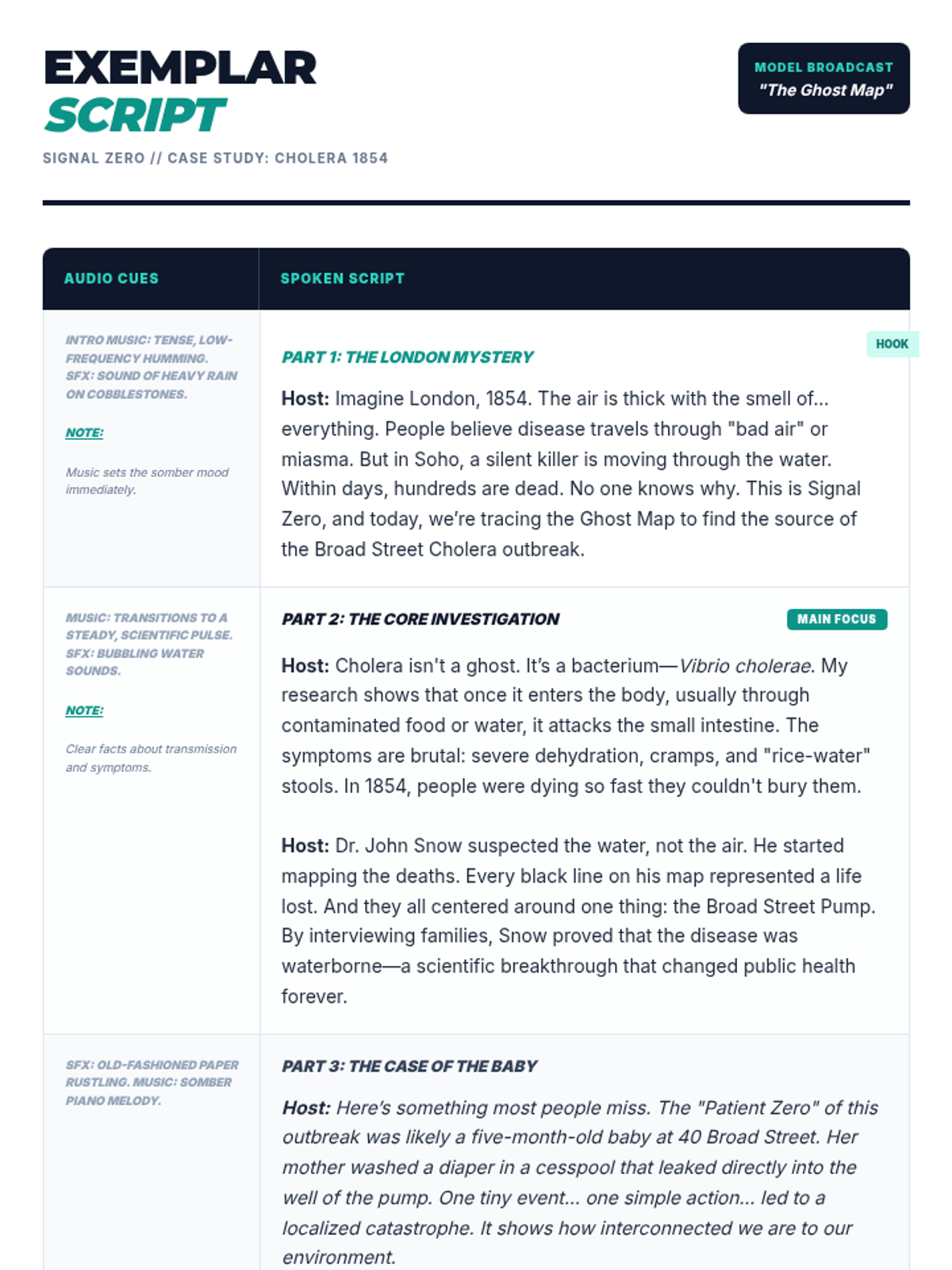
Students transition from formal research papers to conversational audio scripts, learning how to write for the ear and use hooks to engage listeners.
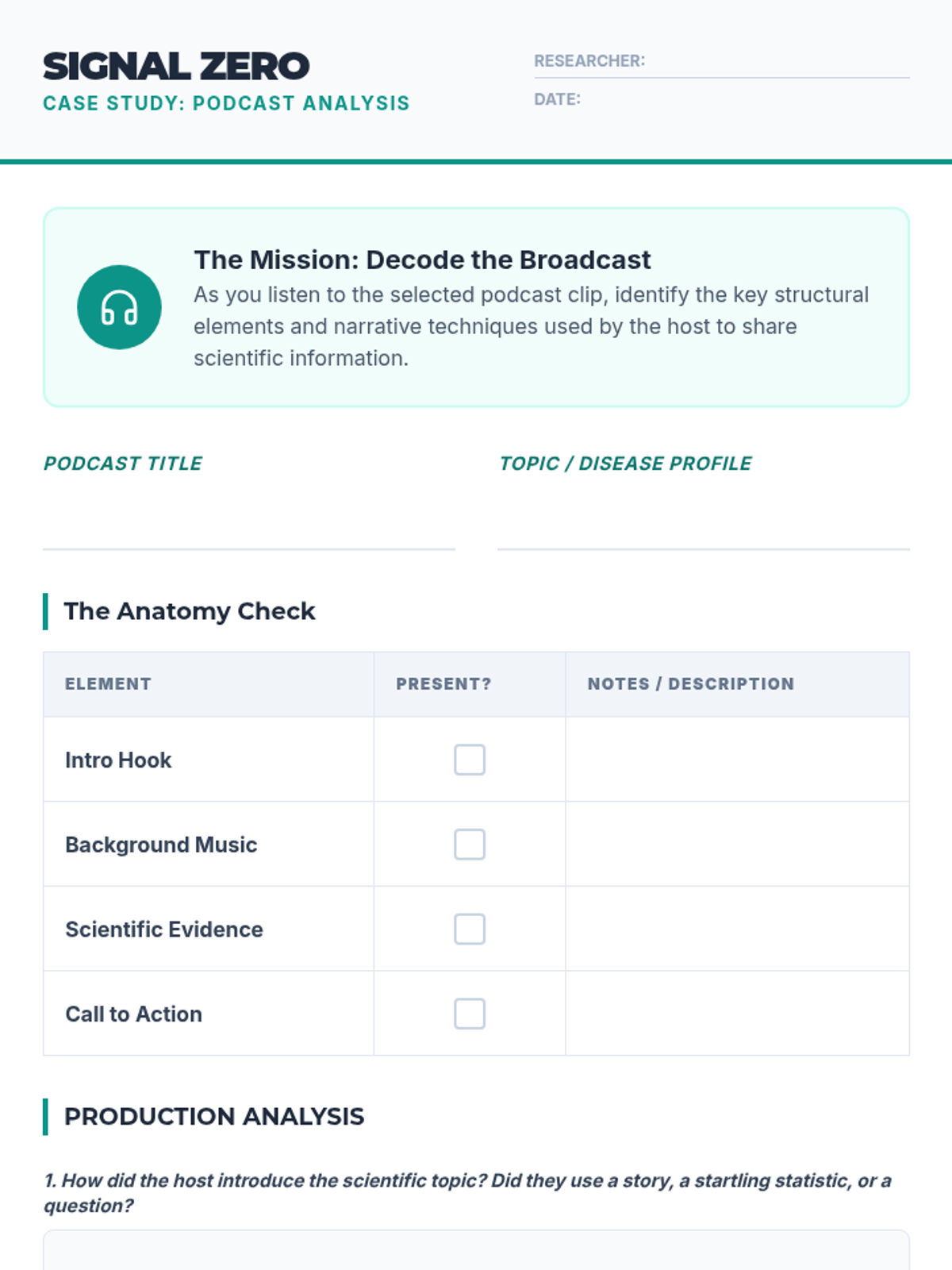
Students explore the fundamentals of podcasting, analyze existing shows, and identify the structural elements that make audio storytelling effective.
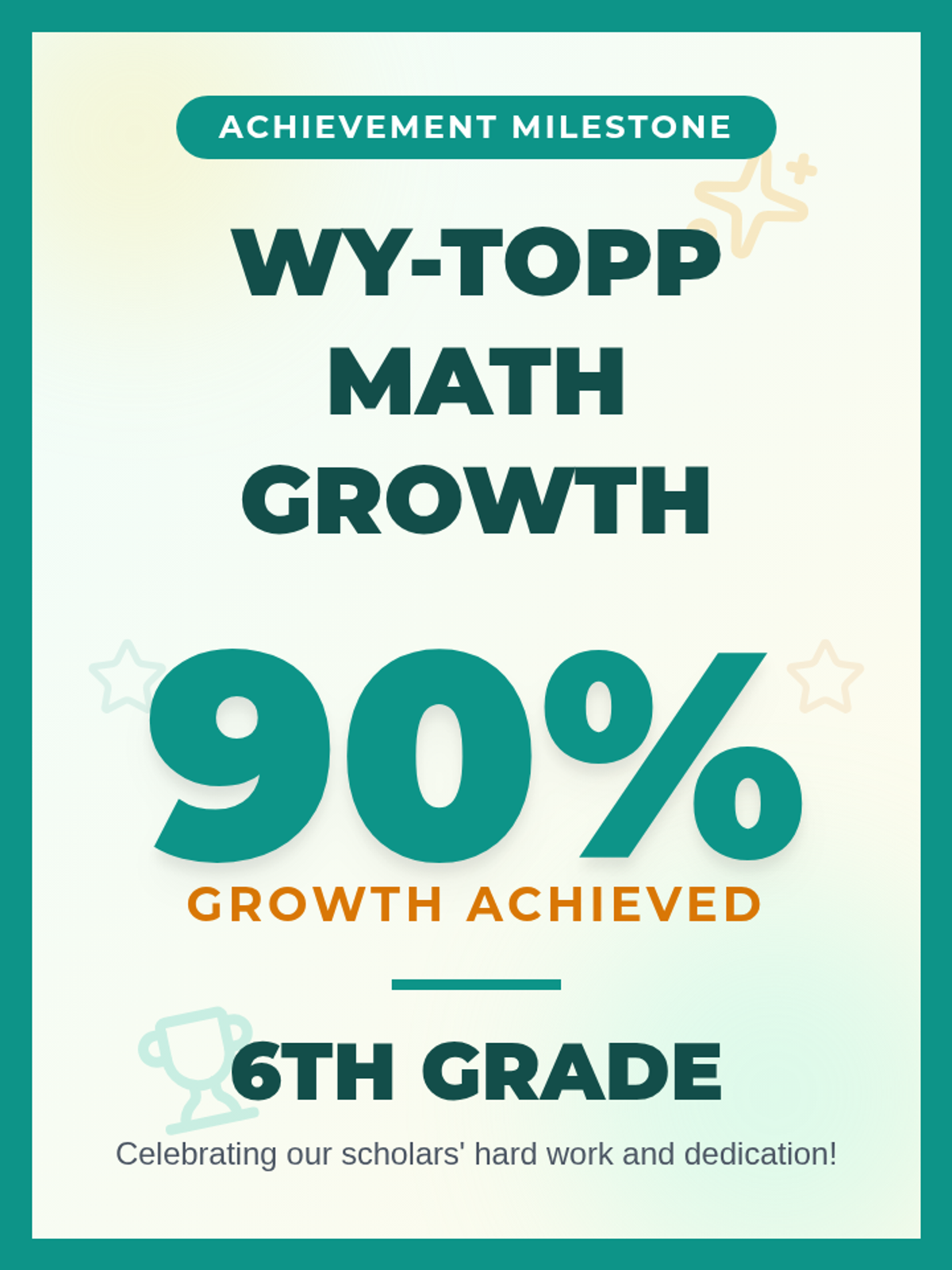
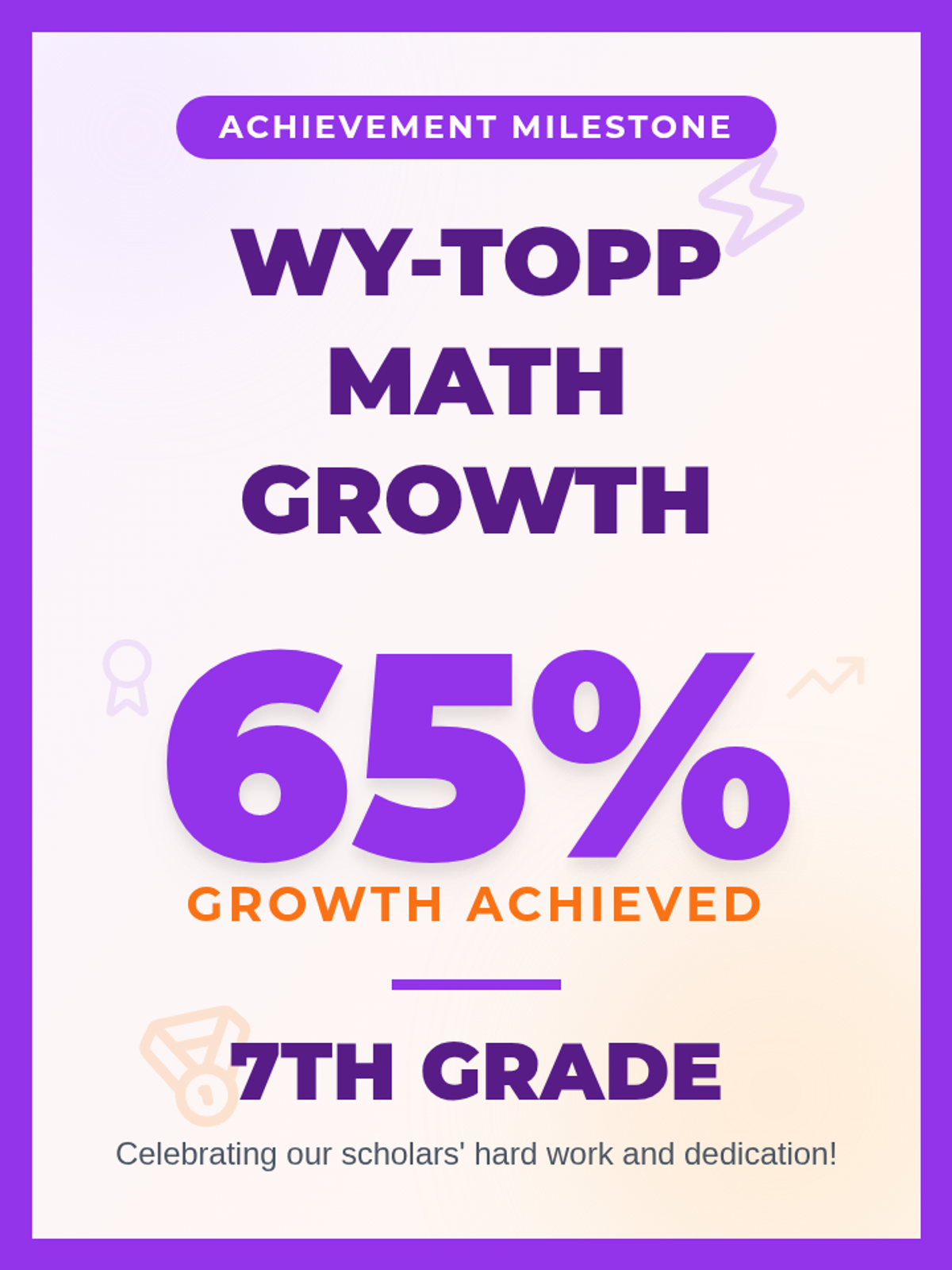
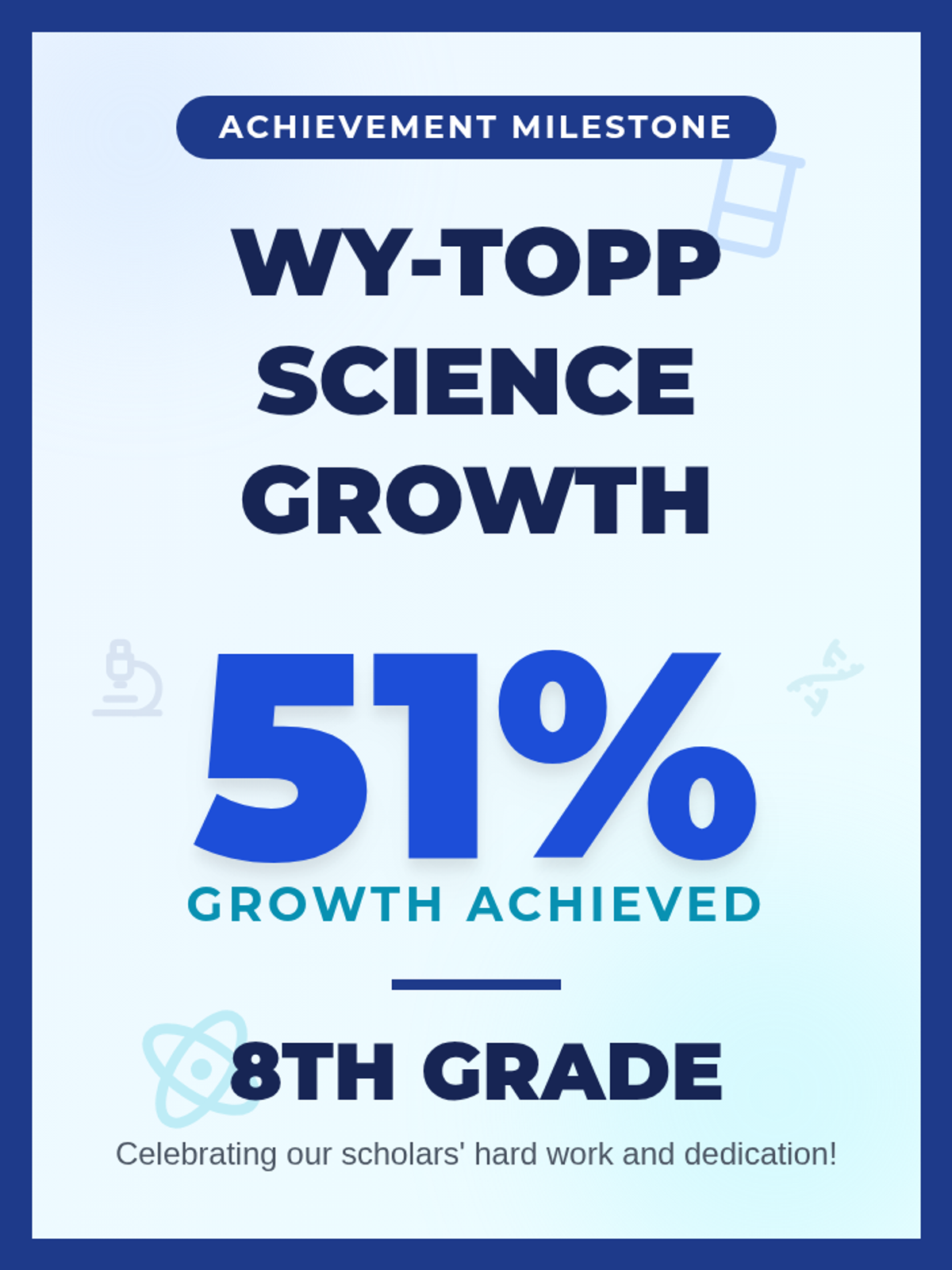
A set of vibrant, high-impact flyers celebrating student growth on WY-TOPP Math (6th/7th) and Science (8th) assessments.
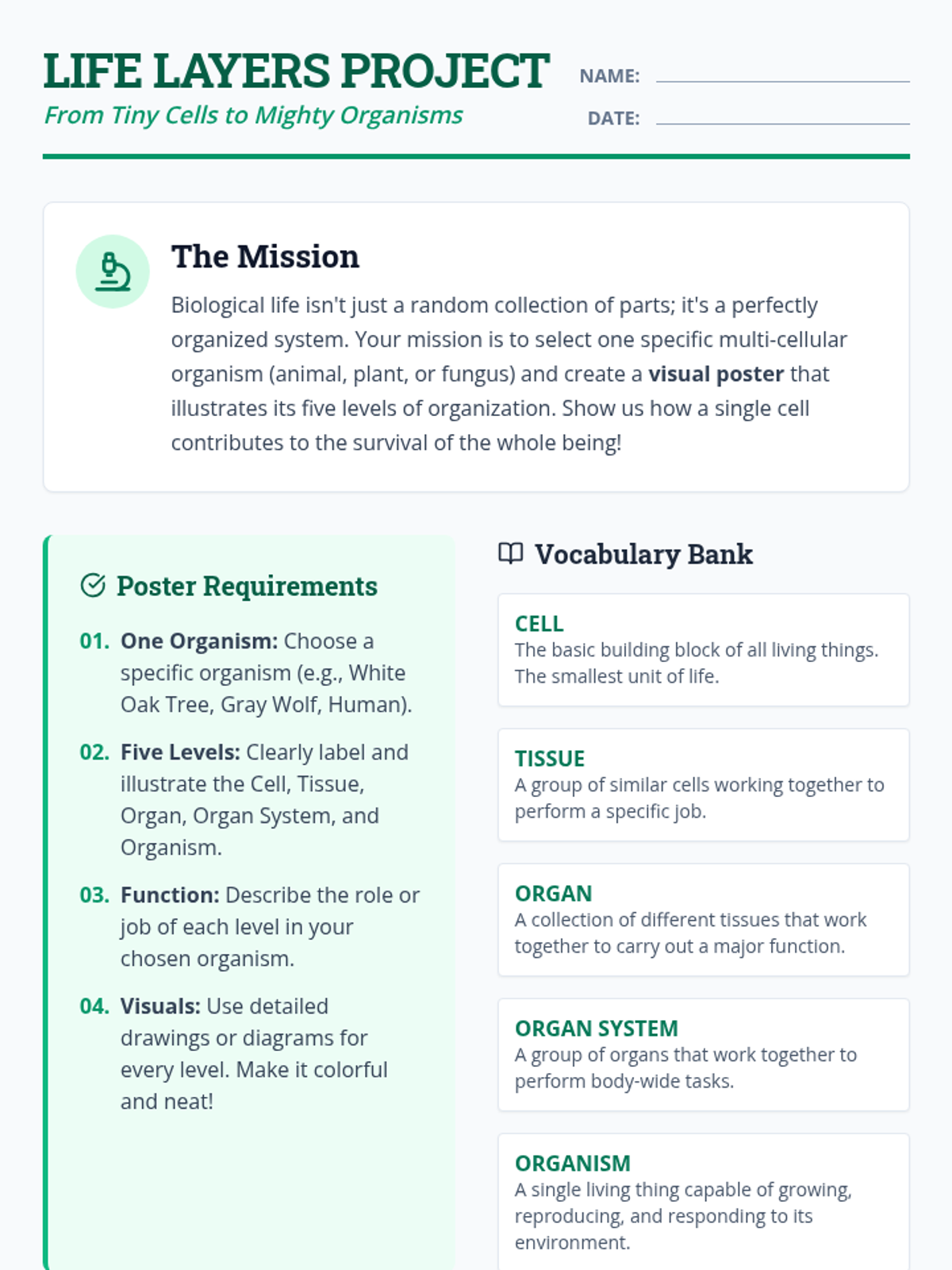
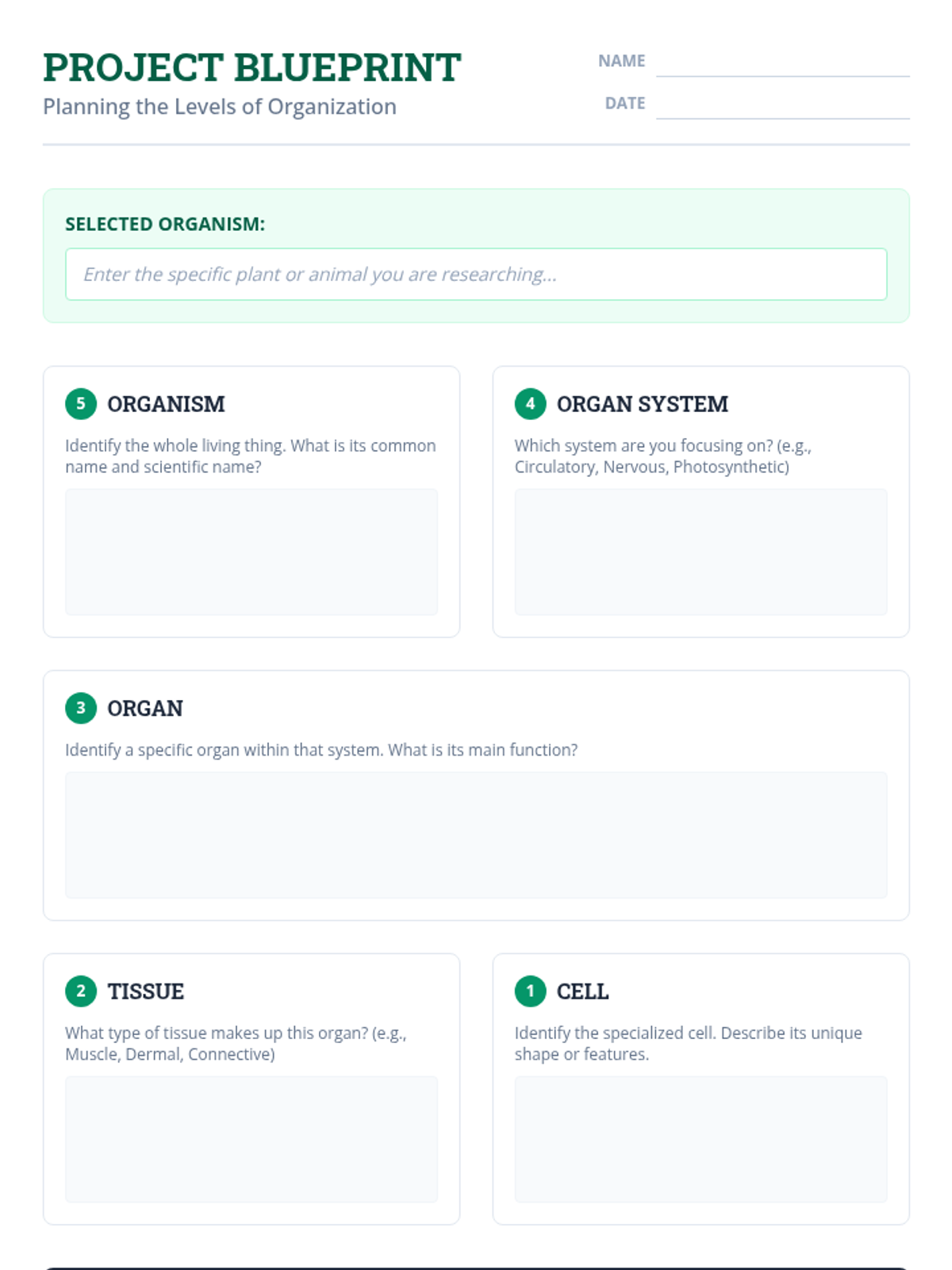
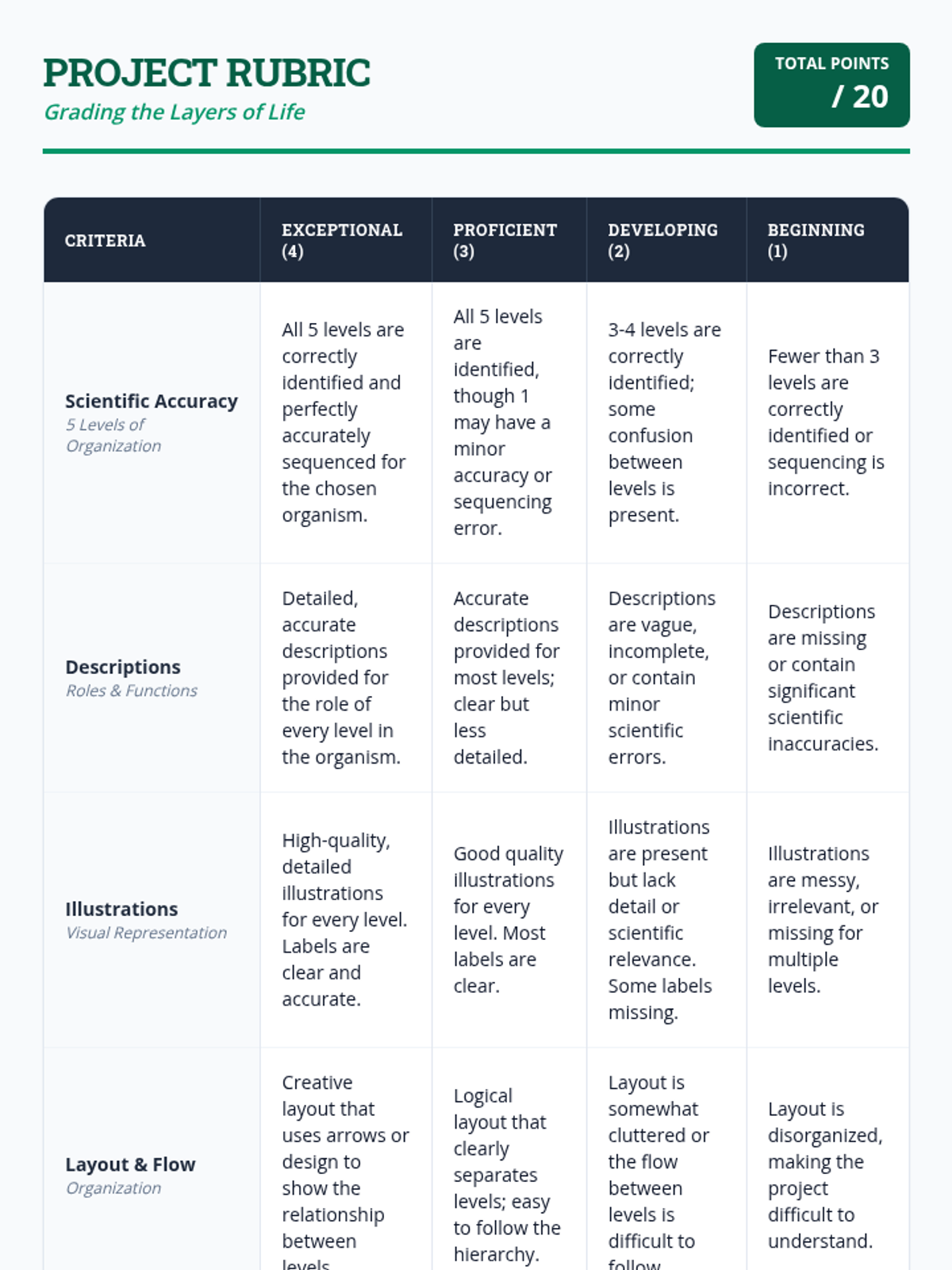
A project-based lesson where students explore the biological levels of organization by creating a detailed poster of a specific organism from cell to whole being. Students will research and illustrate how specialized cells form tissues, organs, and systems that sustain a single living organism.
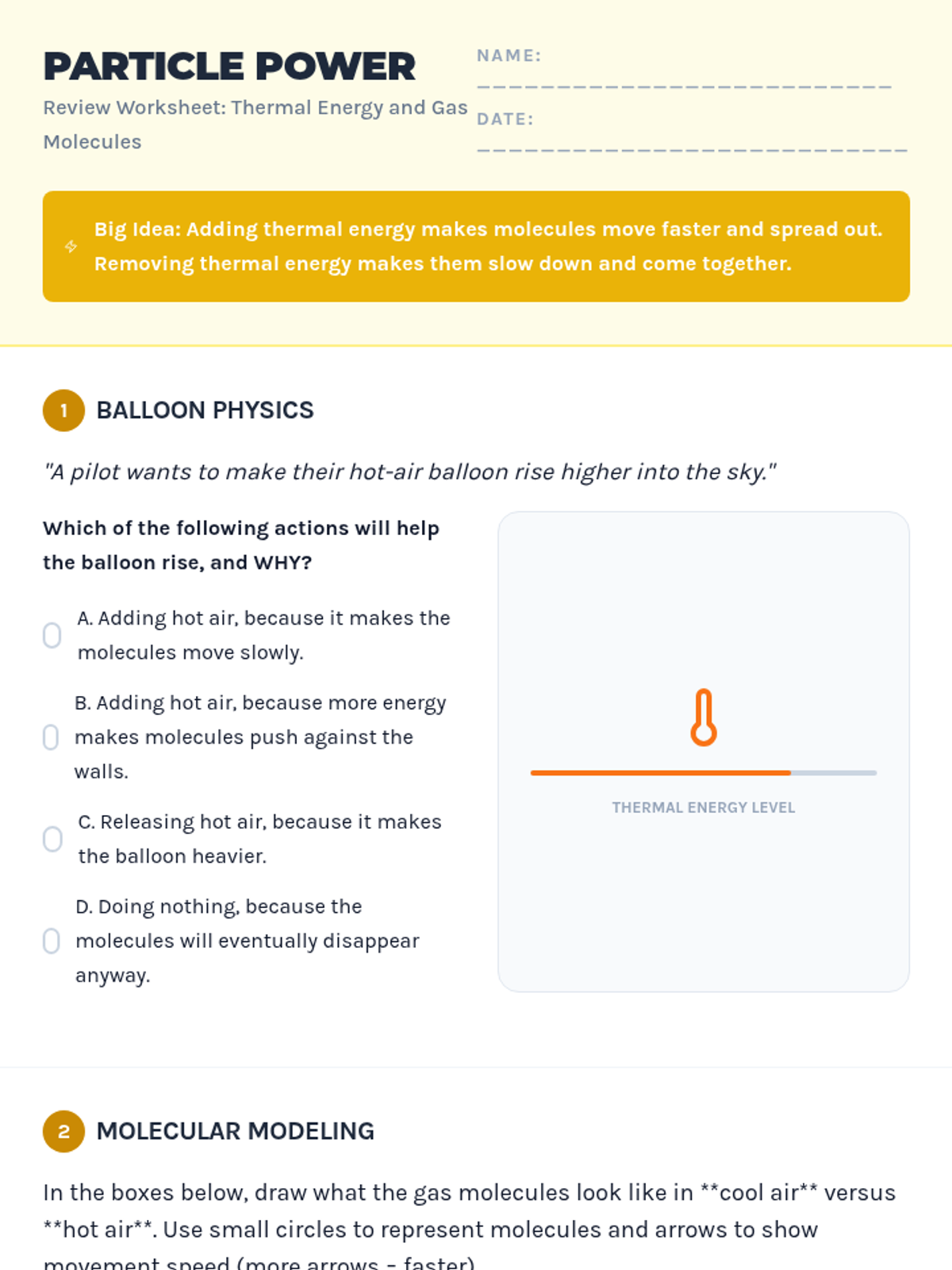
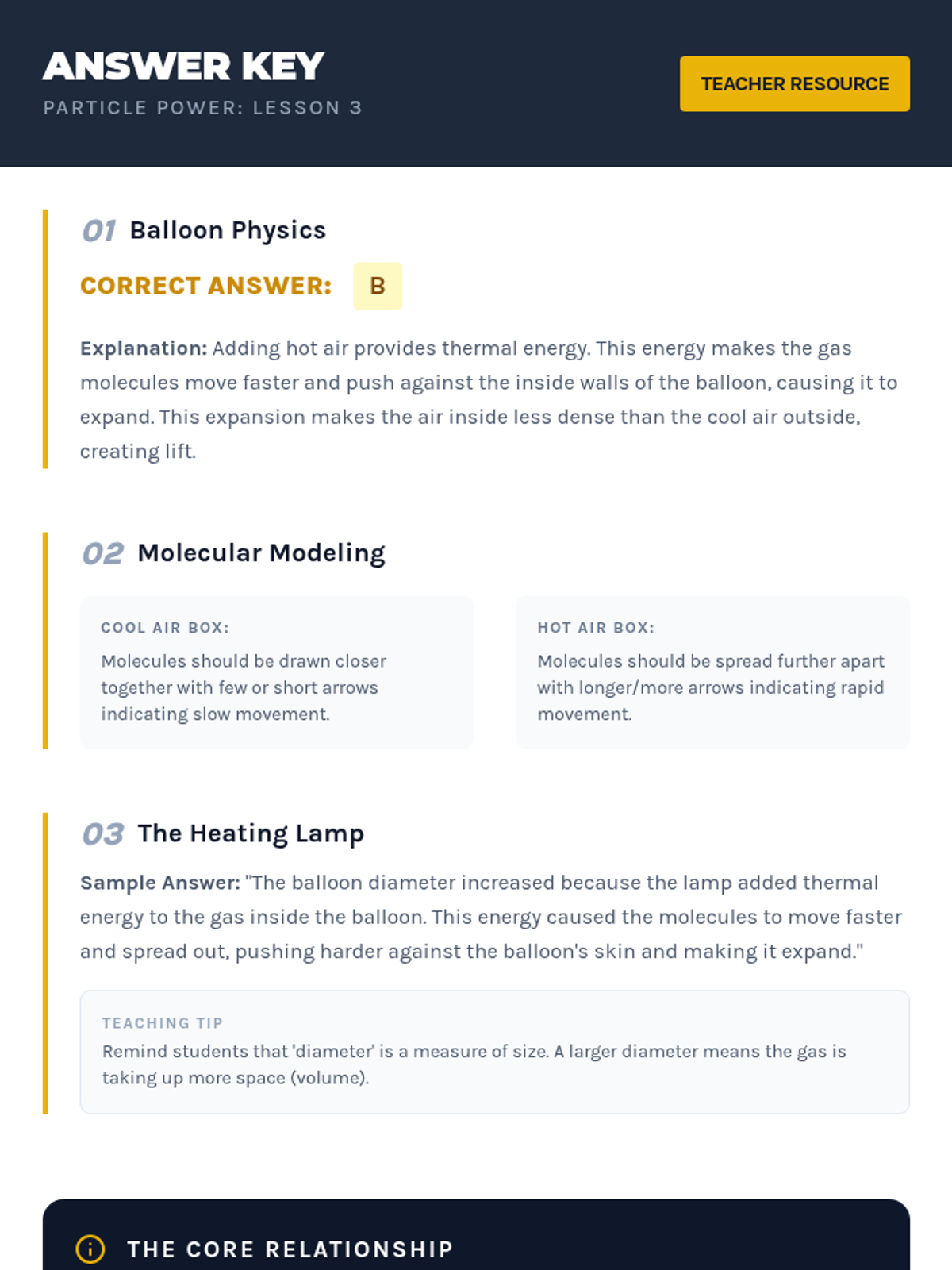
Students will investigate how thermal energy affects the speed and spacing of particles in a gas. They will interpret models and data to explain why hot air rises and how this principle is applied to technologies like hot-air balloons.
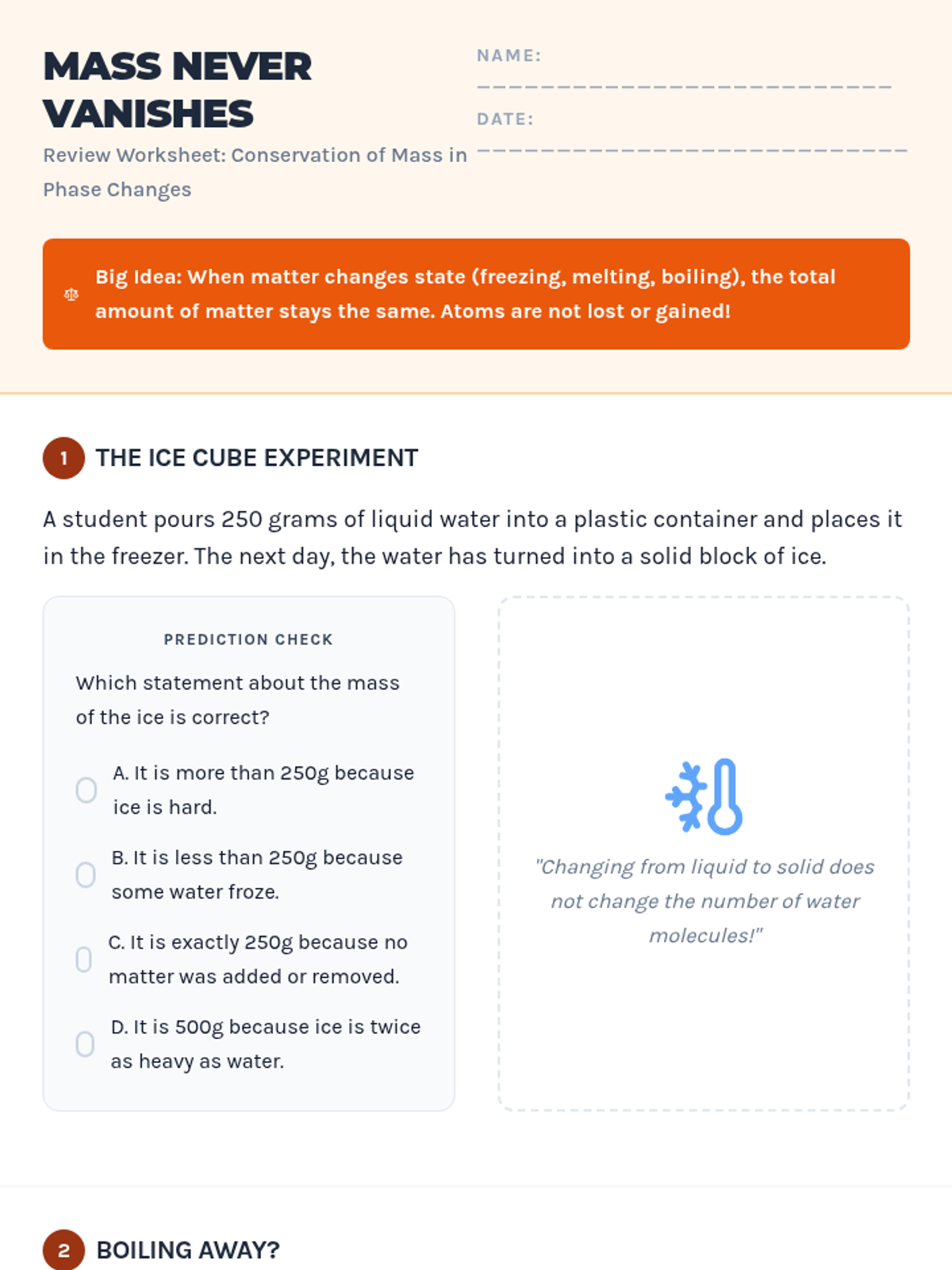
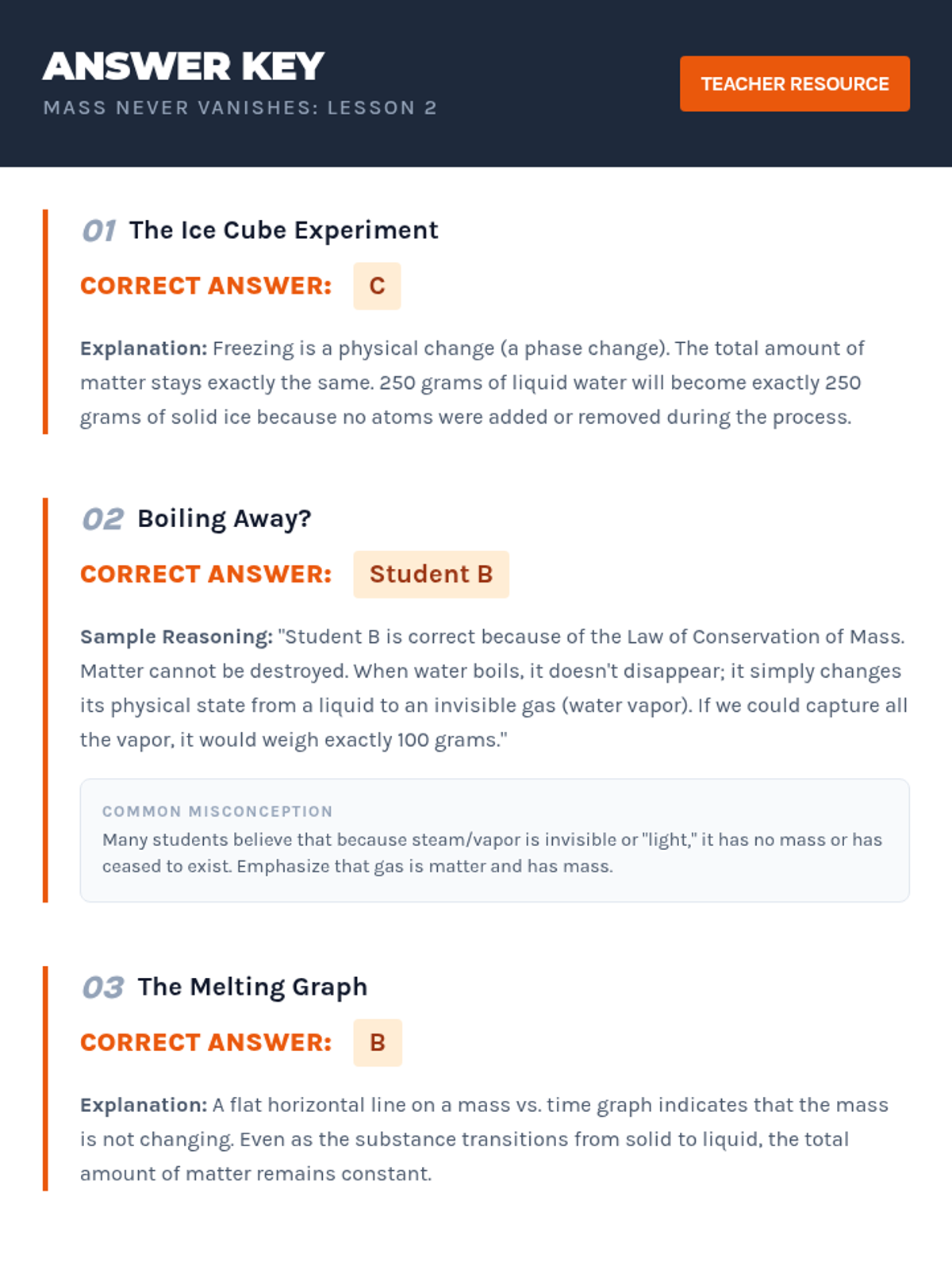
Students will explore how the mass of a substance remains constant even as it undergoes phase changes (freezing, melting, boiling). They will analyze data involving state changes and evaluate scientific claims about matter 'disappearing' during evaporation.
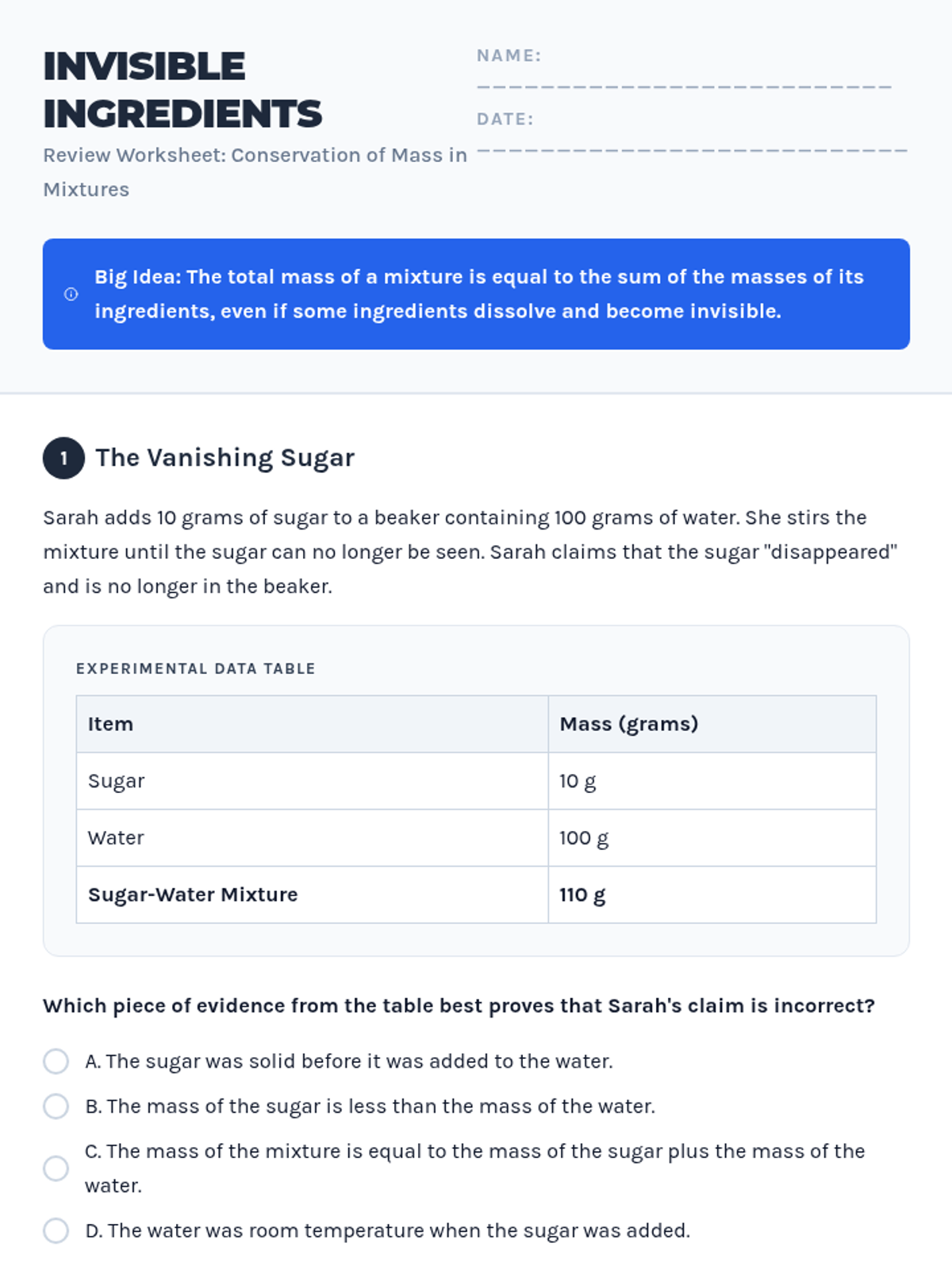
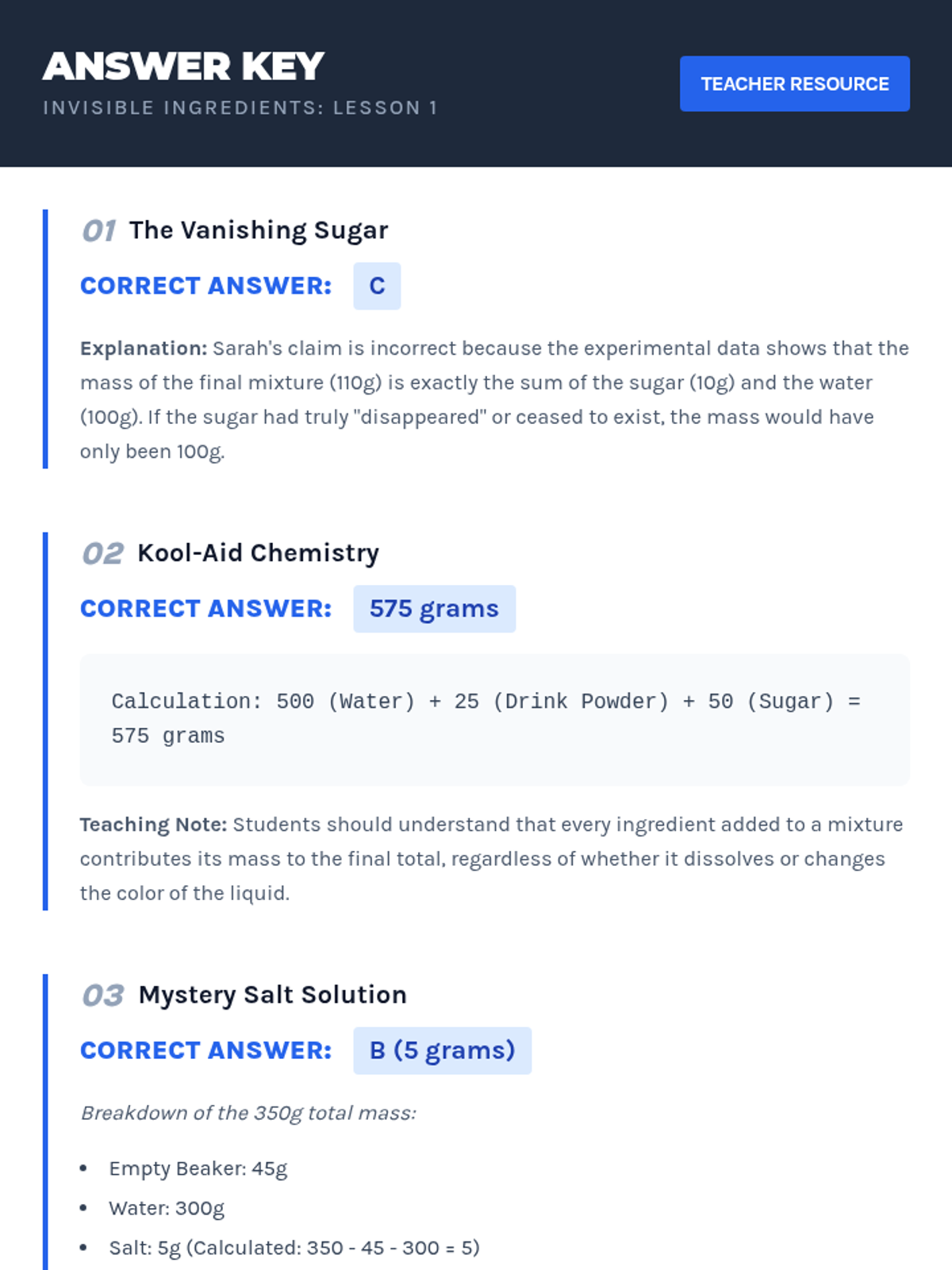
Students will review the law of conservation of mass as it applies to mixtures and dissolving. They will practice interpreting data tables to prove that matter still exists even when it is no longer visible in a solution.
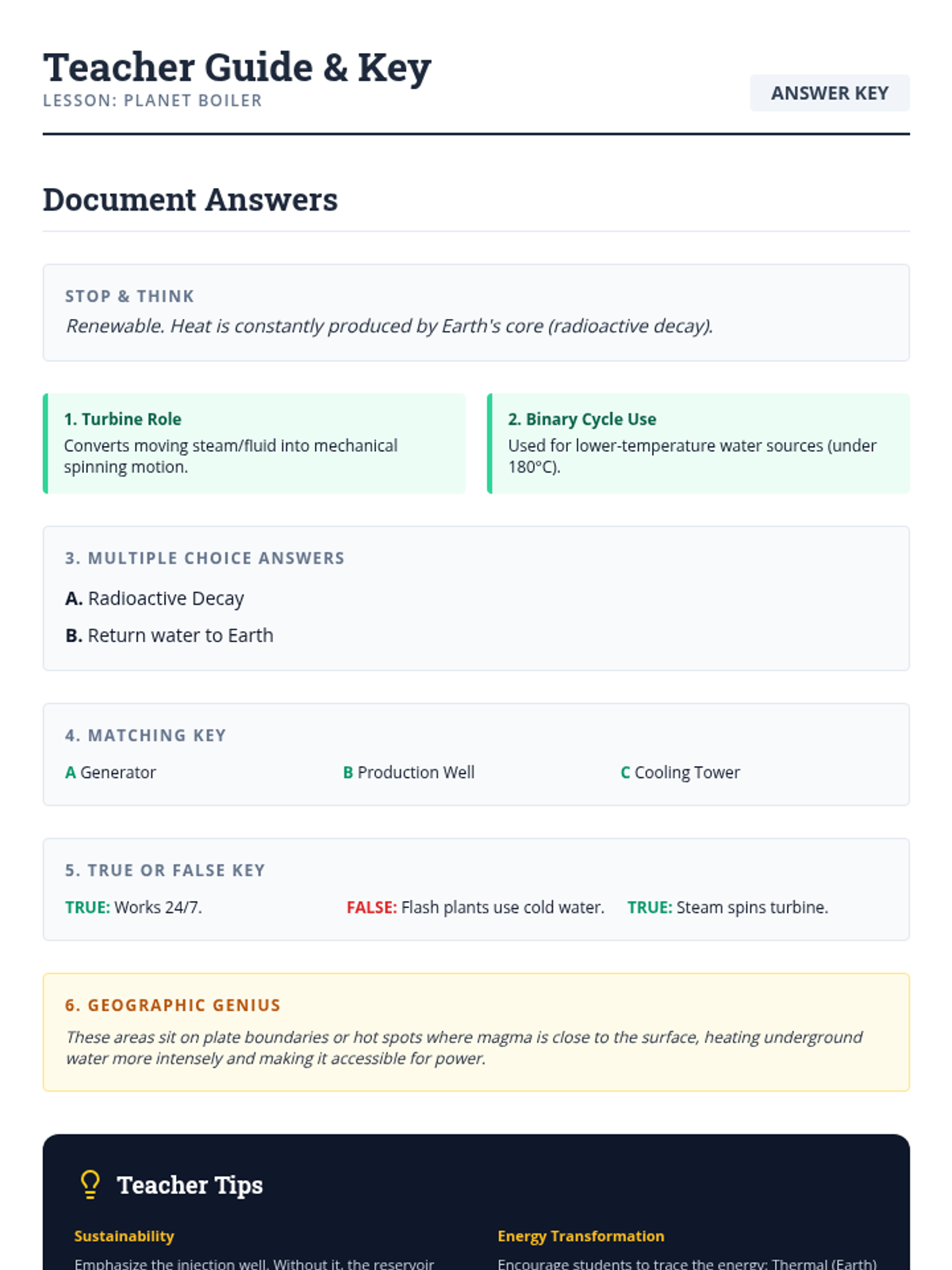
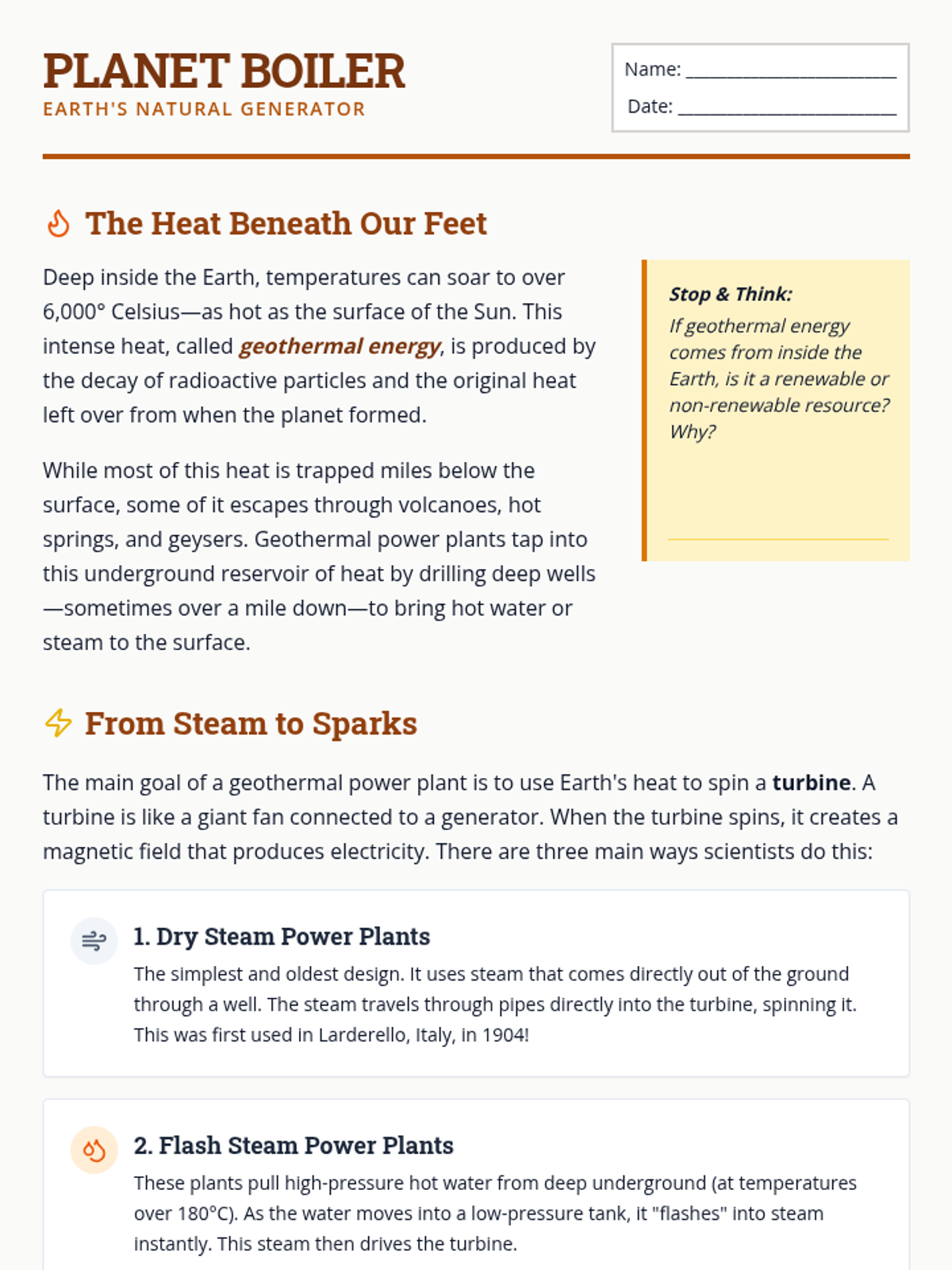
This lesson explores the process of converting geothermal energy into electricity, covering the mechanical systems of dry steam, flash steam, and binary cycle power plants. Students will analyze the flow of energy from Earth's core to the electrical grid.
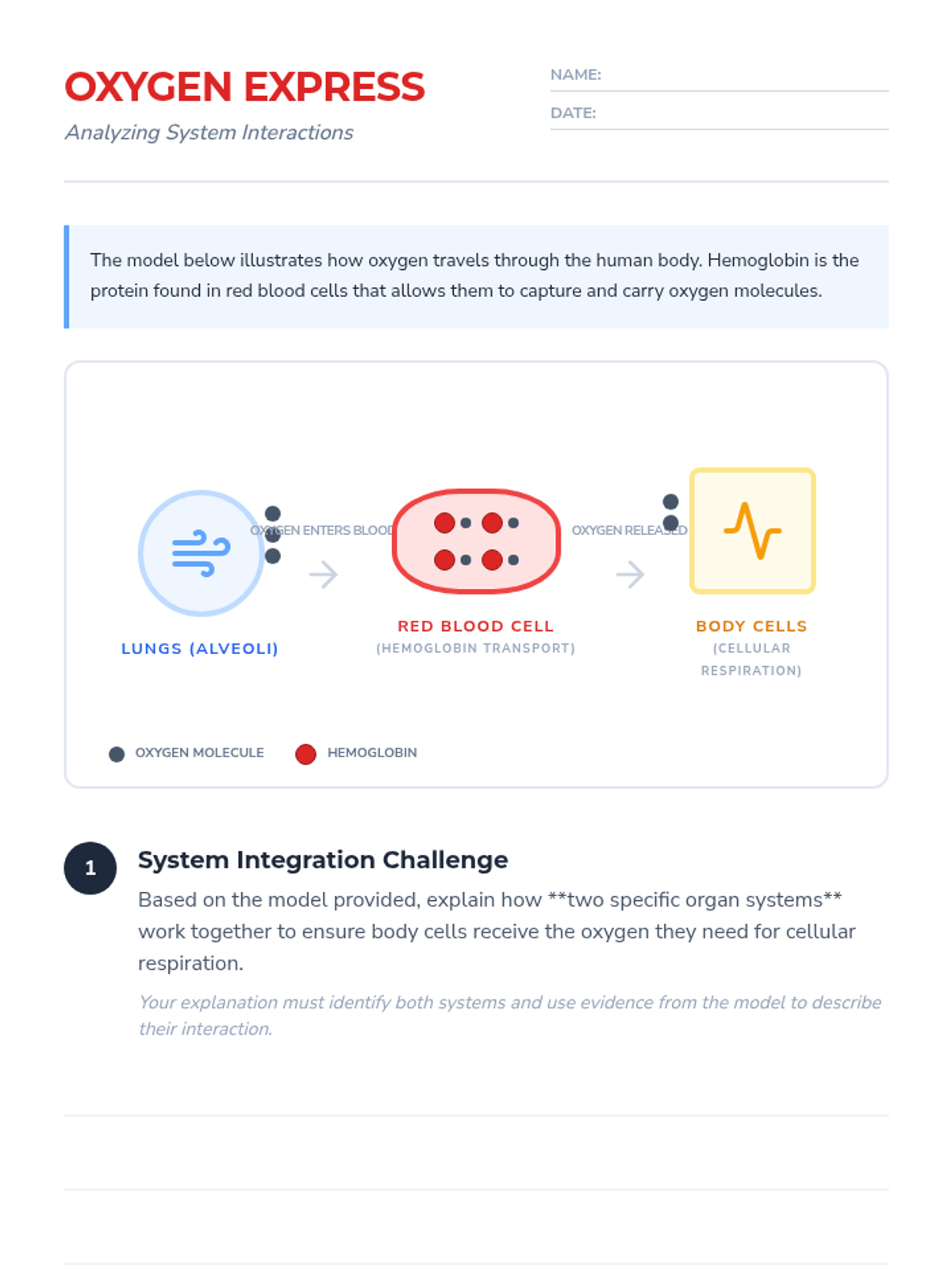
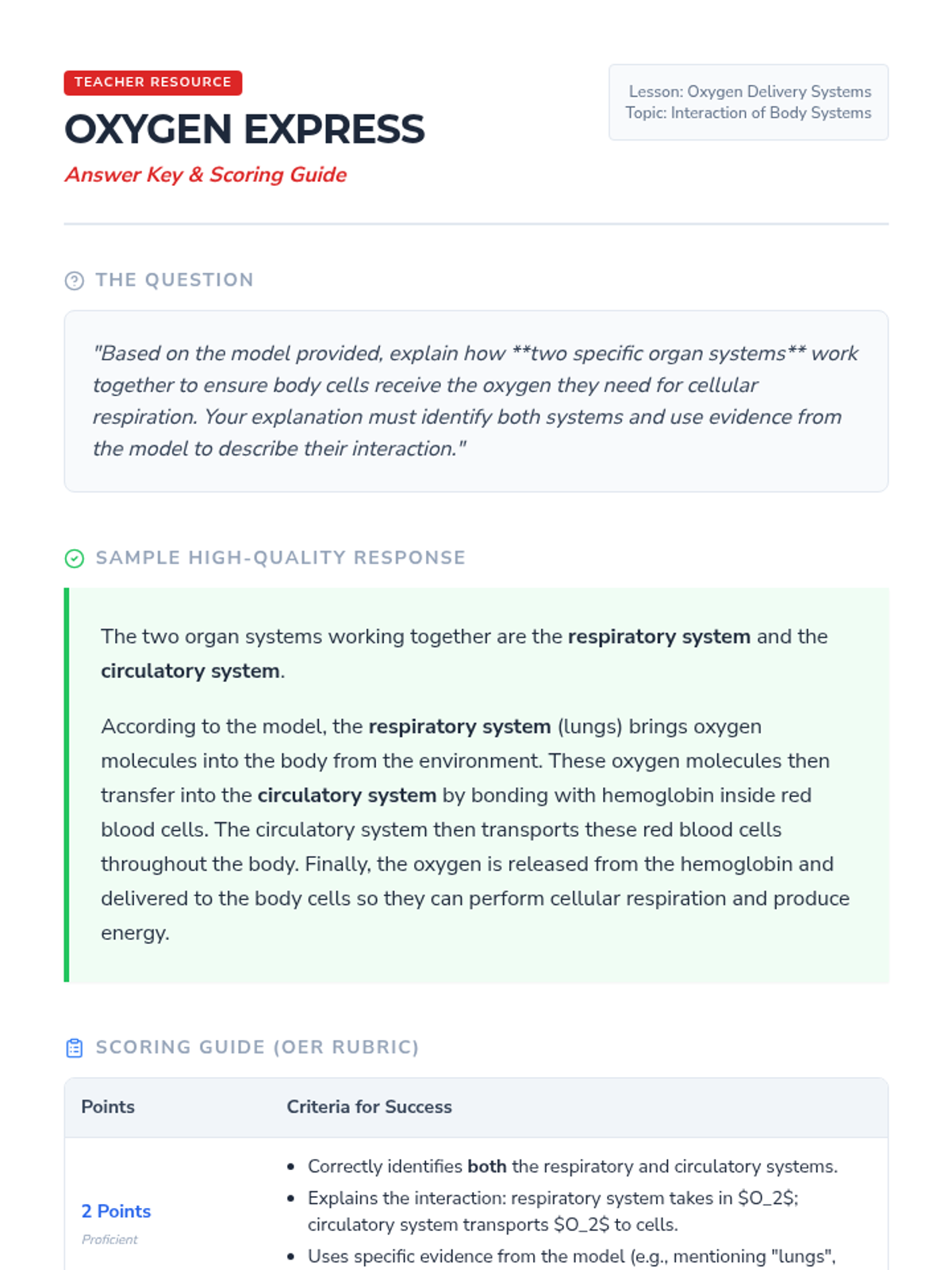
Students analyze the interaction between the respiratory and circulatory systems as they work together to transport oxygen from the environment to body cells for cellular respiration.
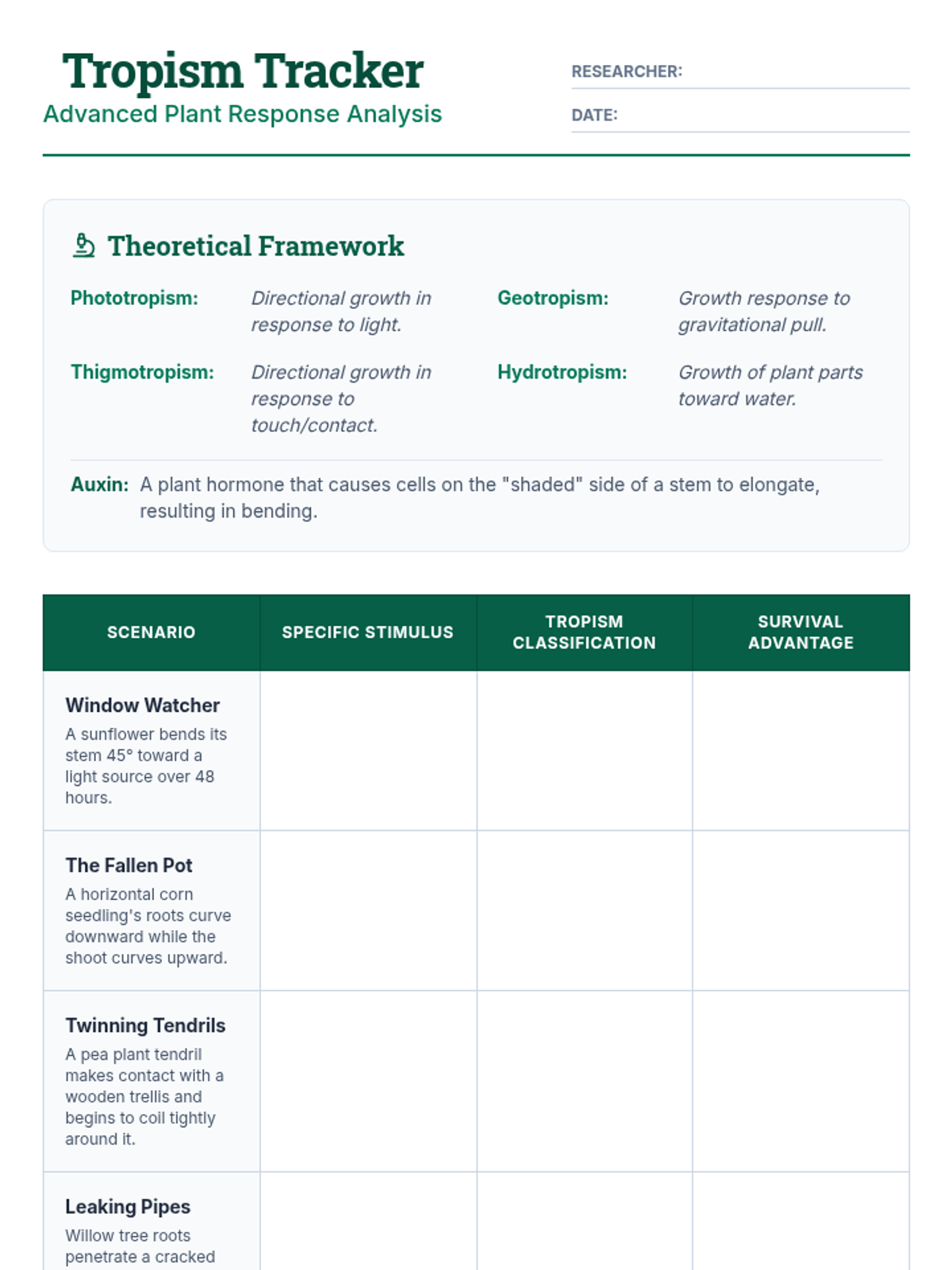
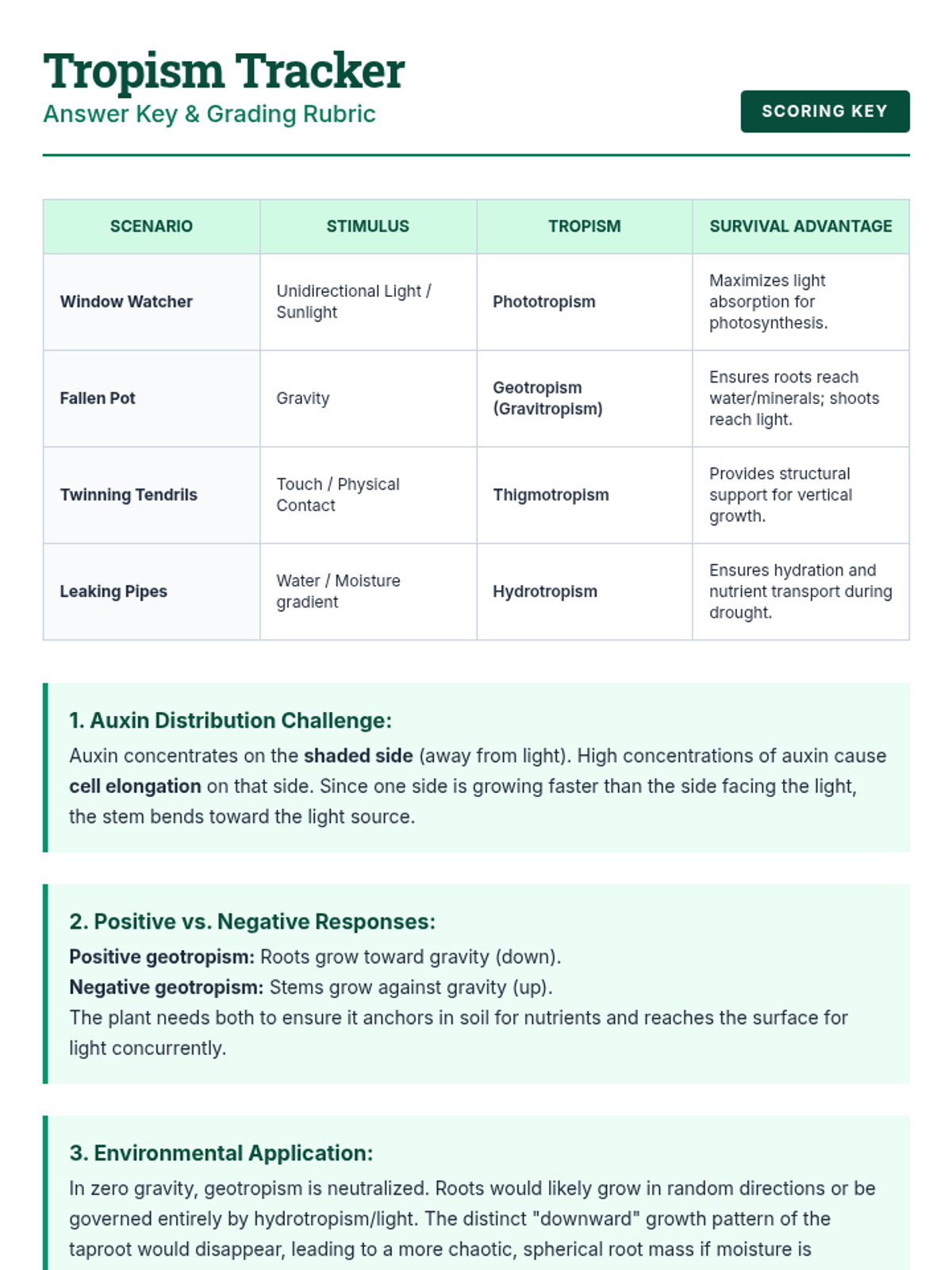
A simplified introduction to how plants respond to their environment through various stimuli like light, gravity, and touch. Students will identify stimuli and responses in everyday botanical scenarios.
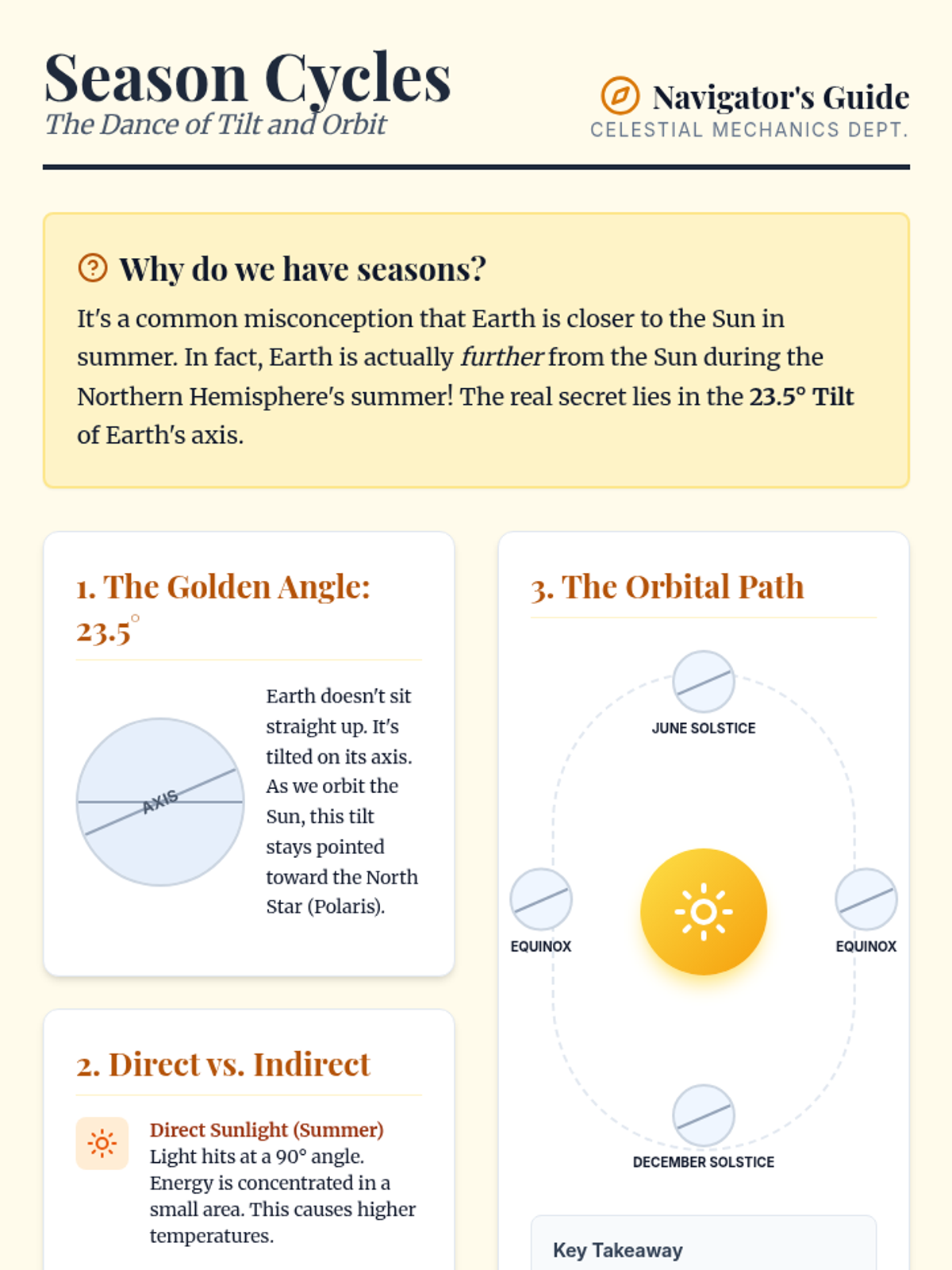
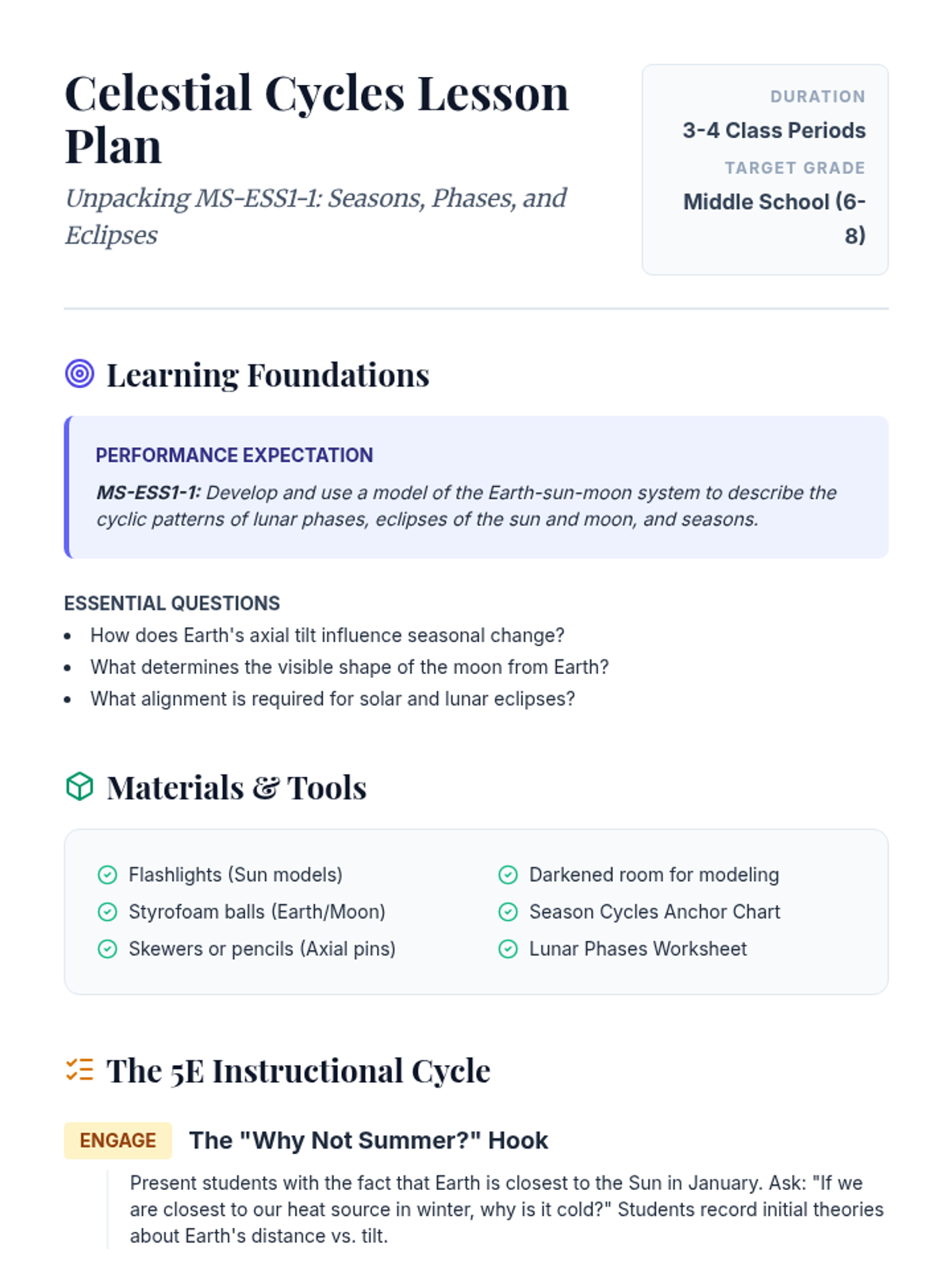
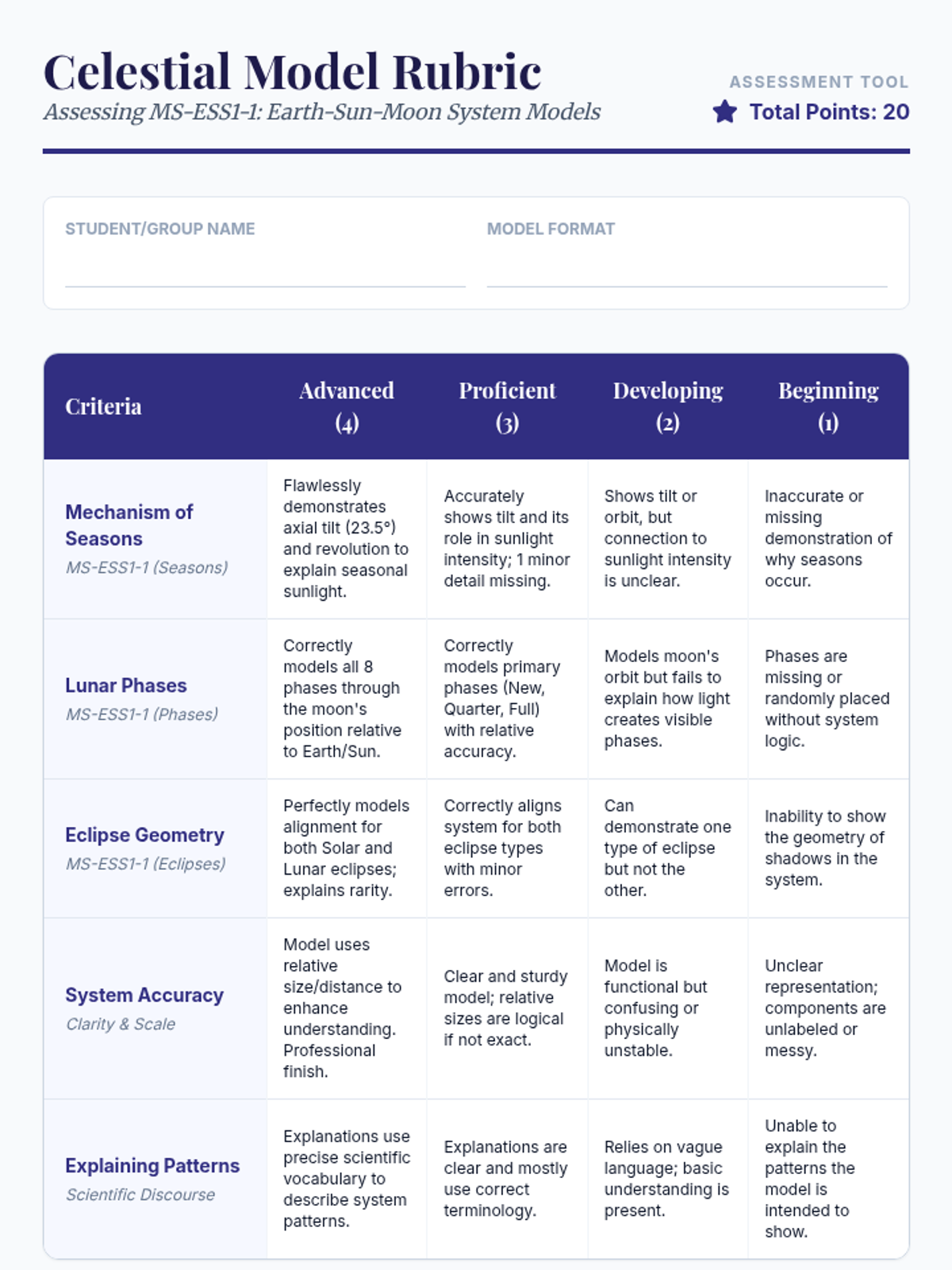
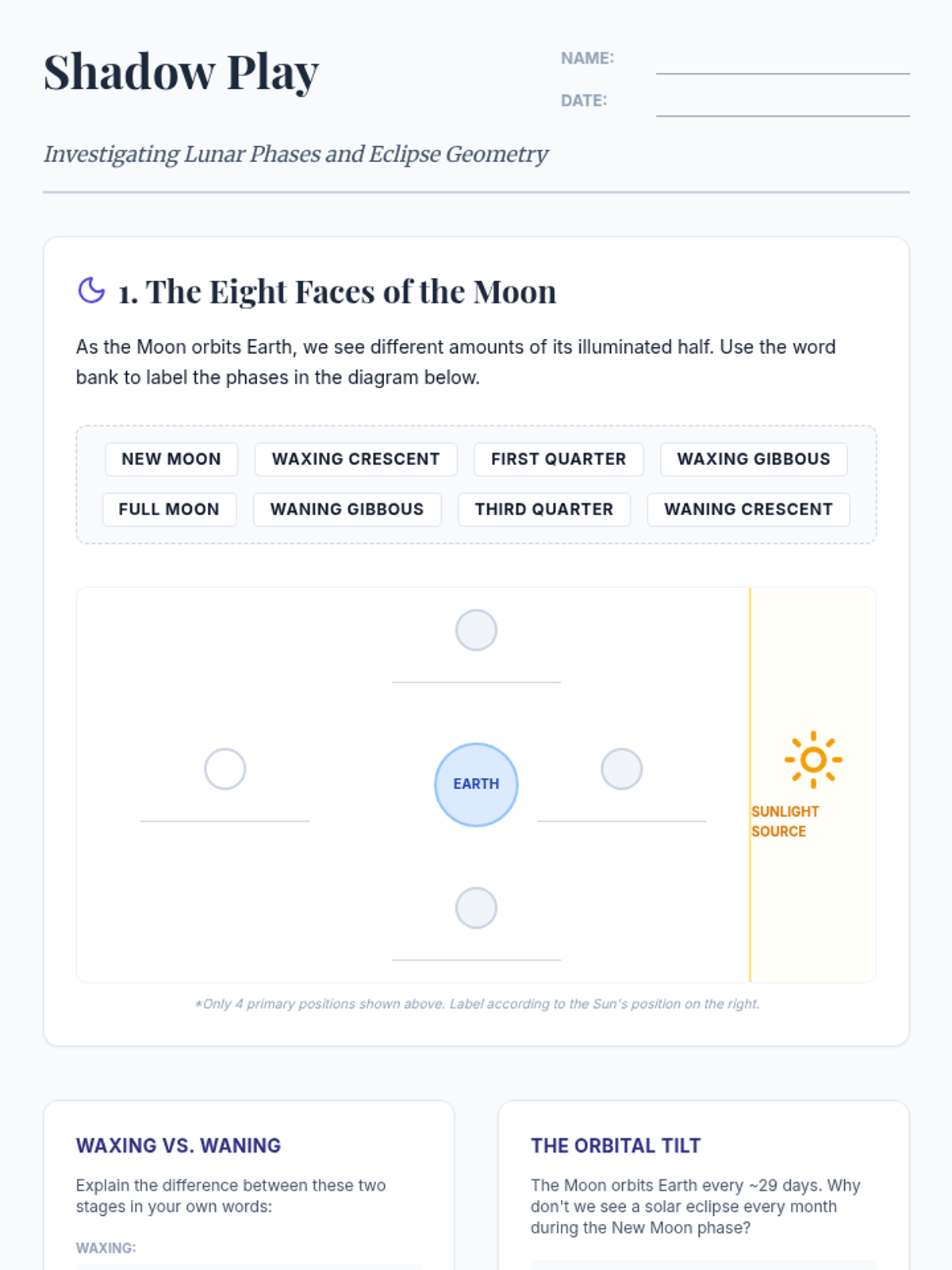
A comprehensive lesson exploring the Earth-sun-moon system, focusing on the mechanisms behind seasons, eclipses, and lunar phases through modeling and inquiry.
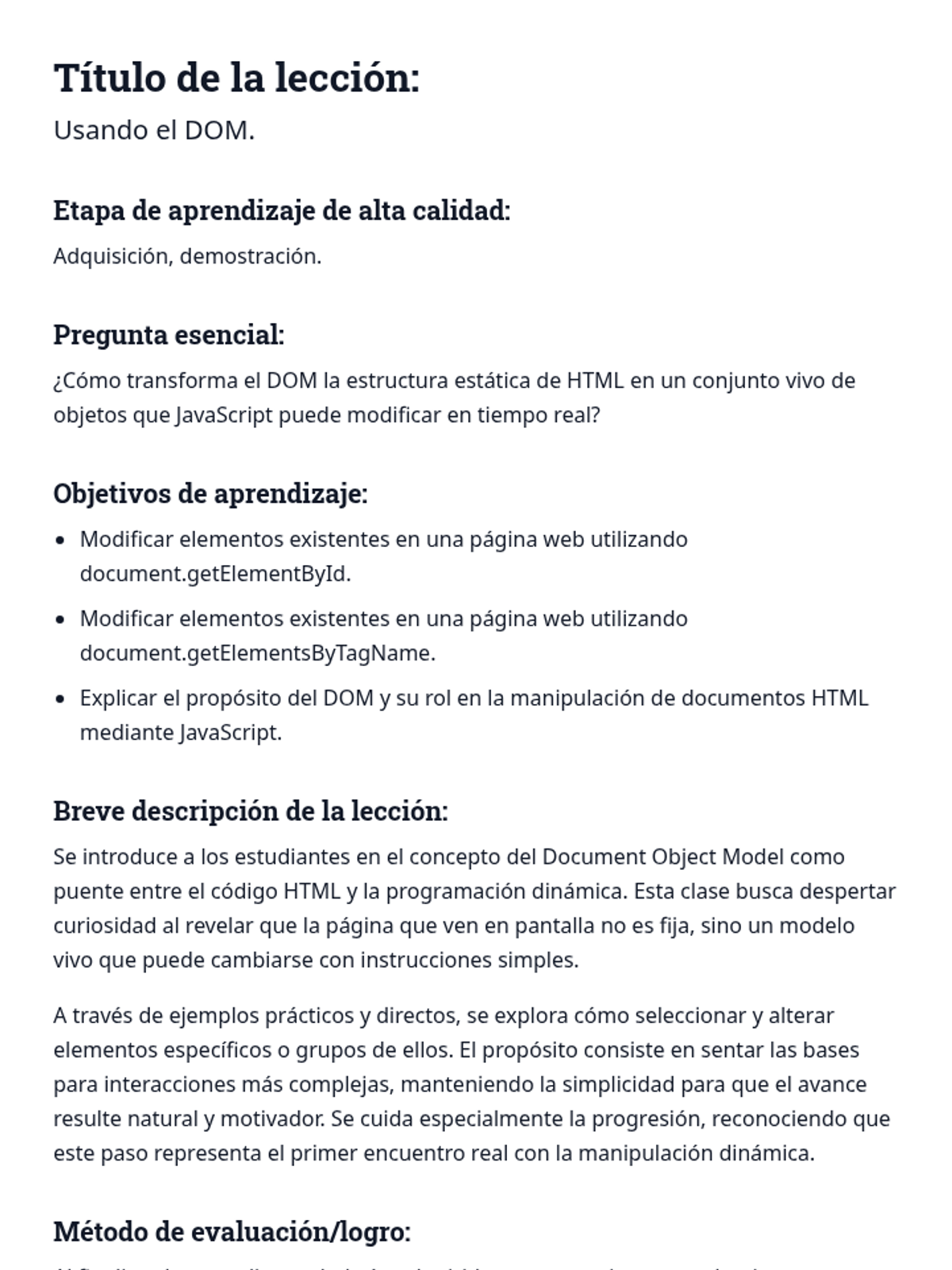
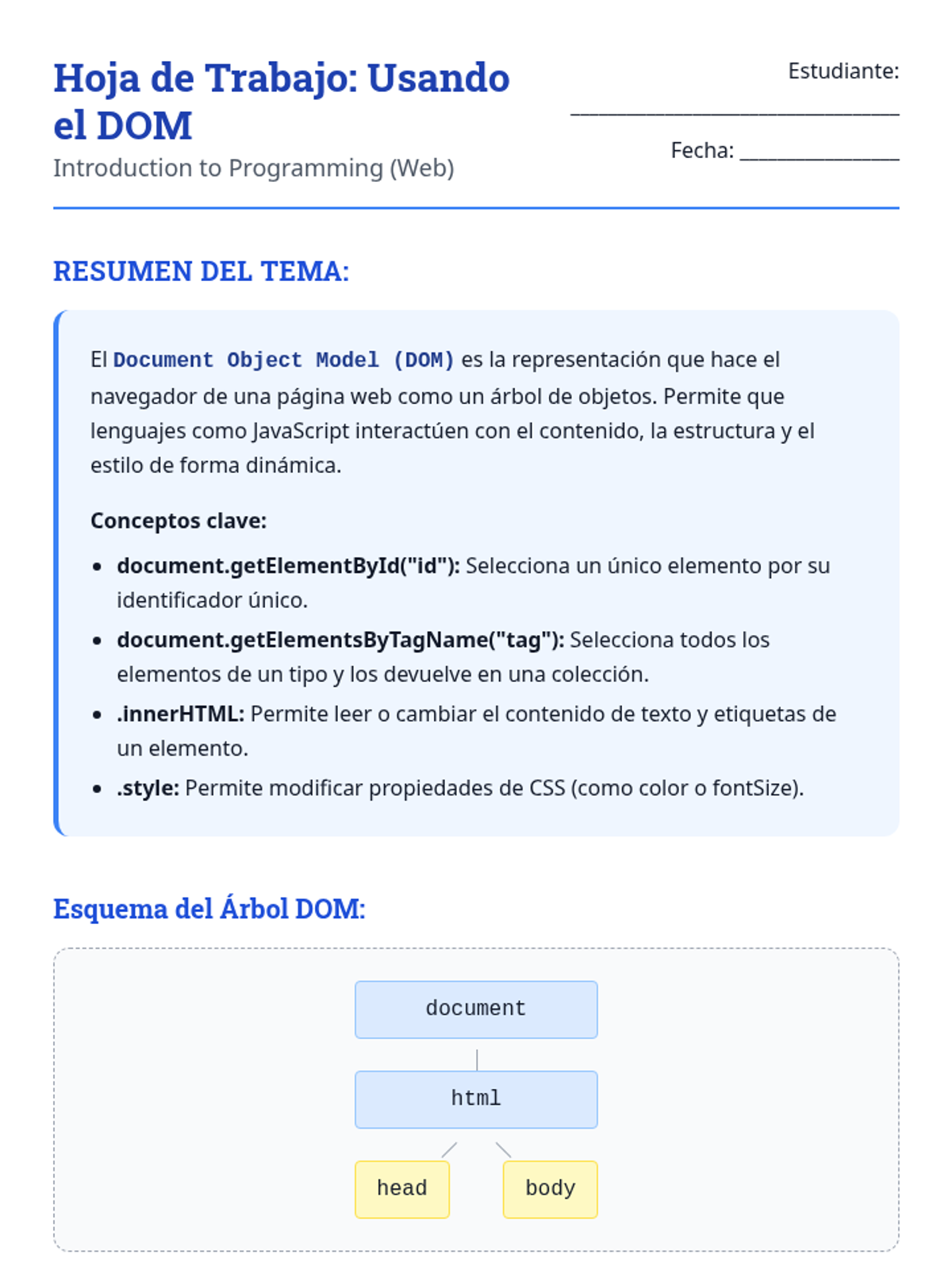
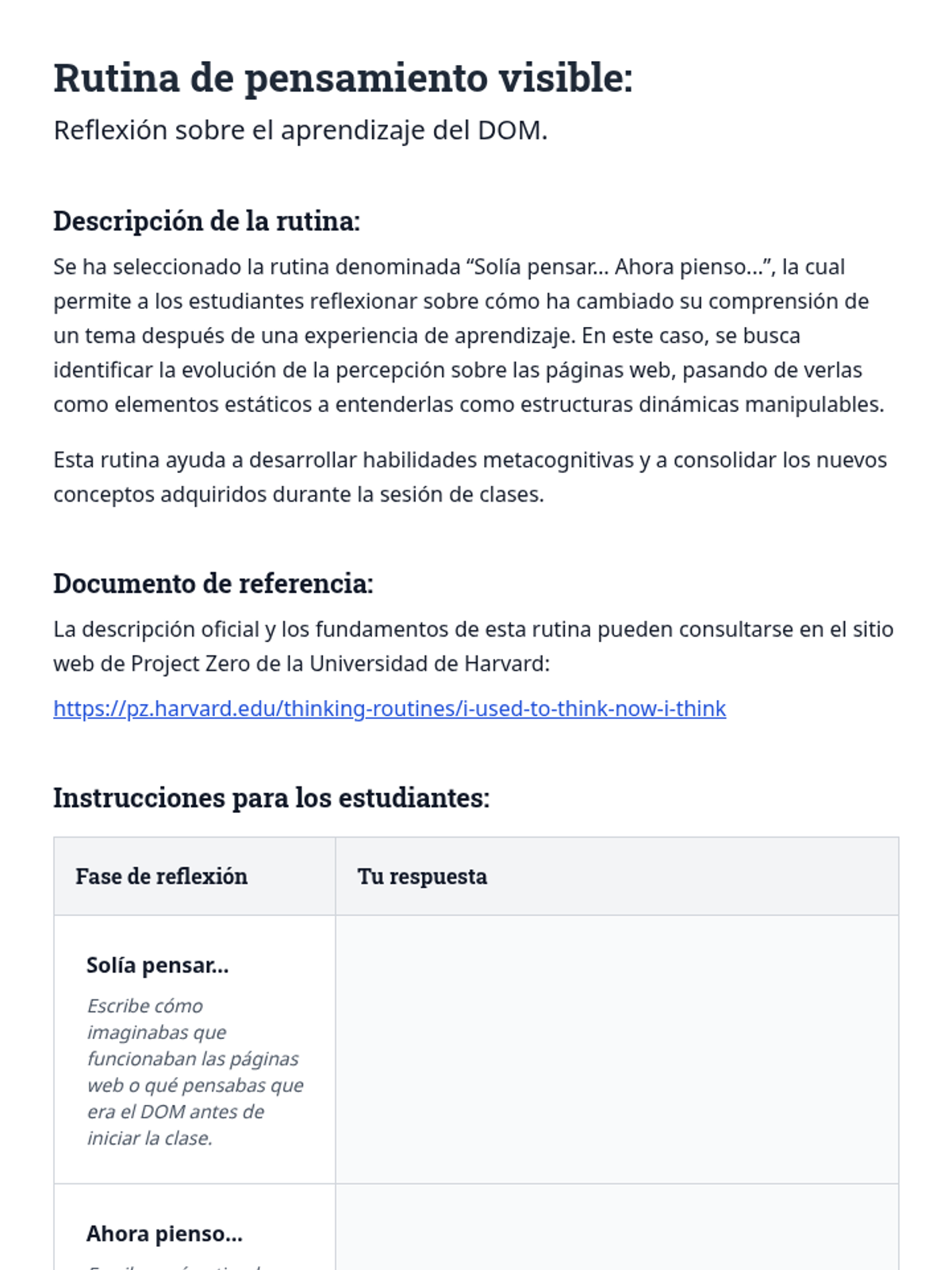
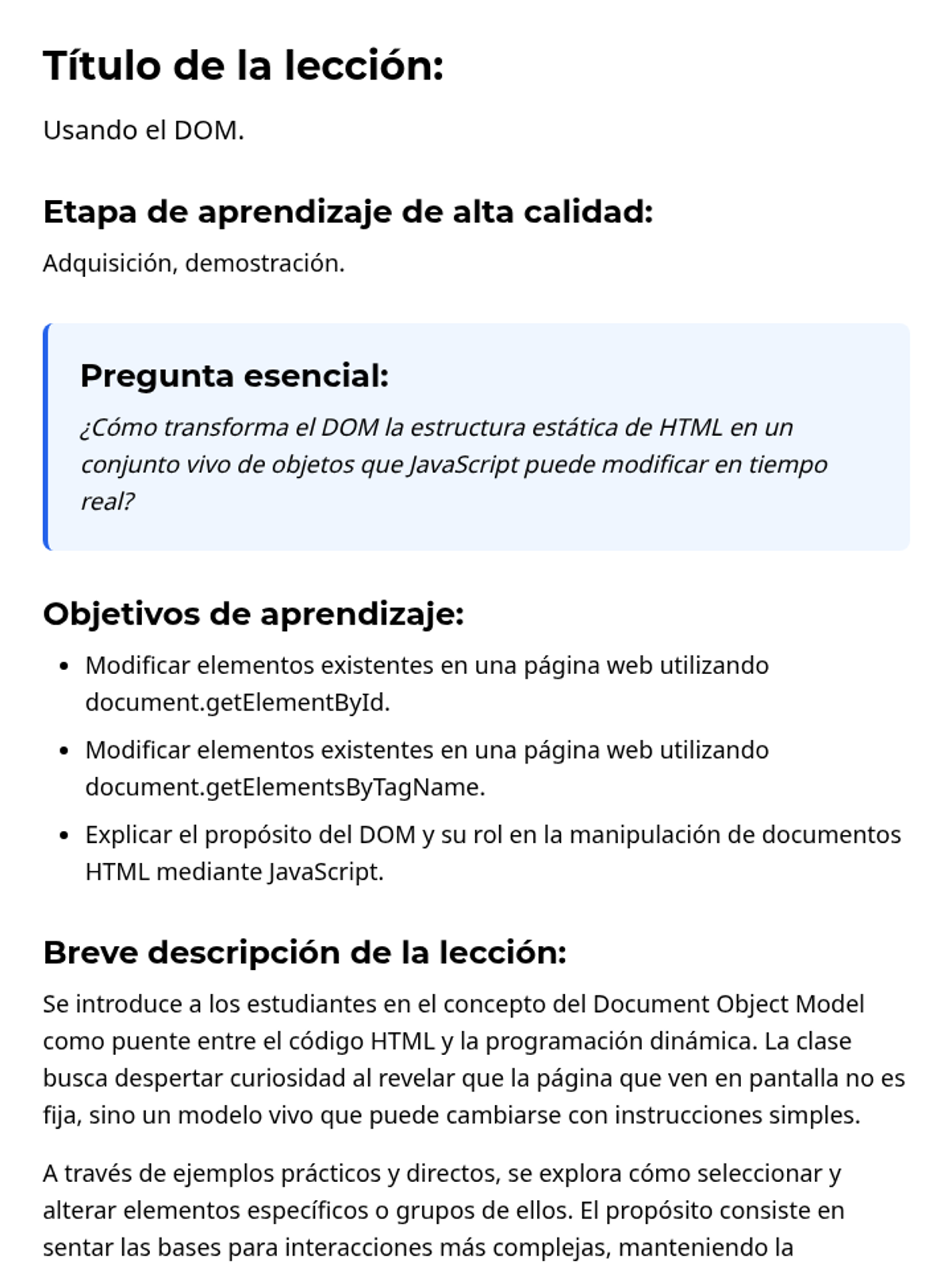
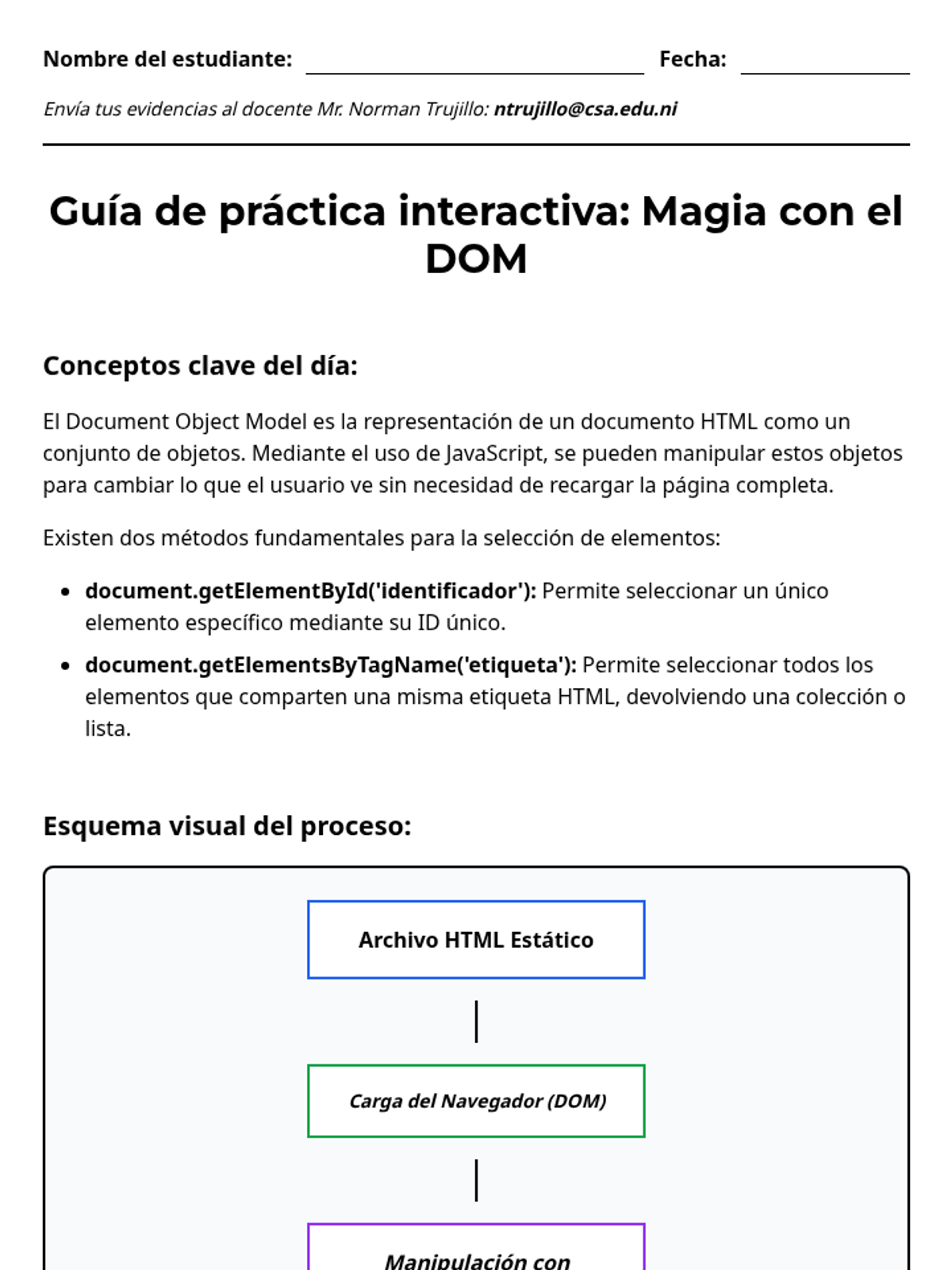
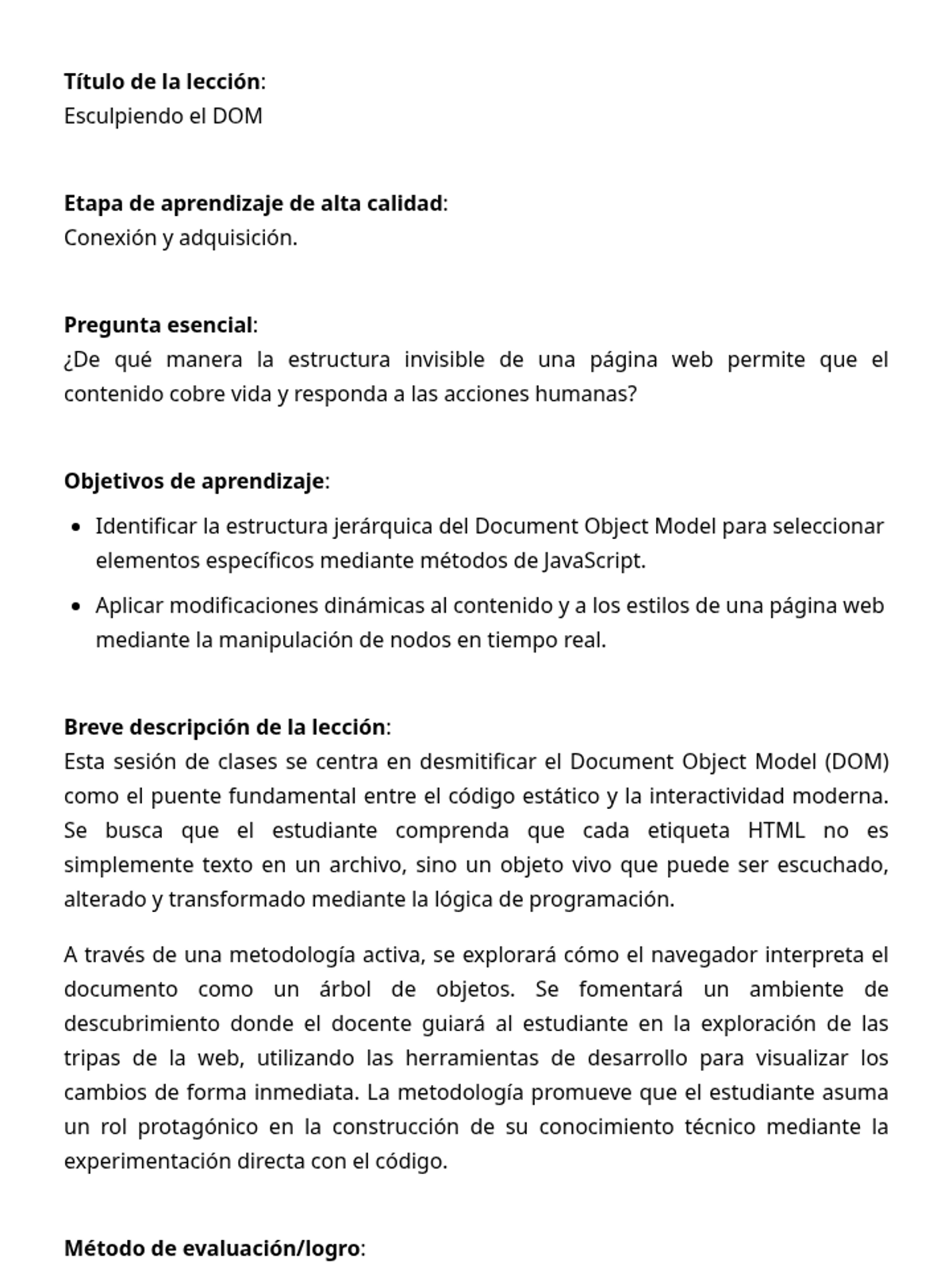
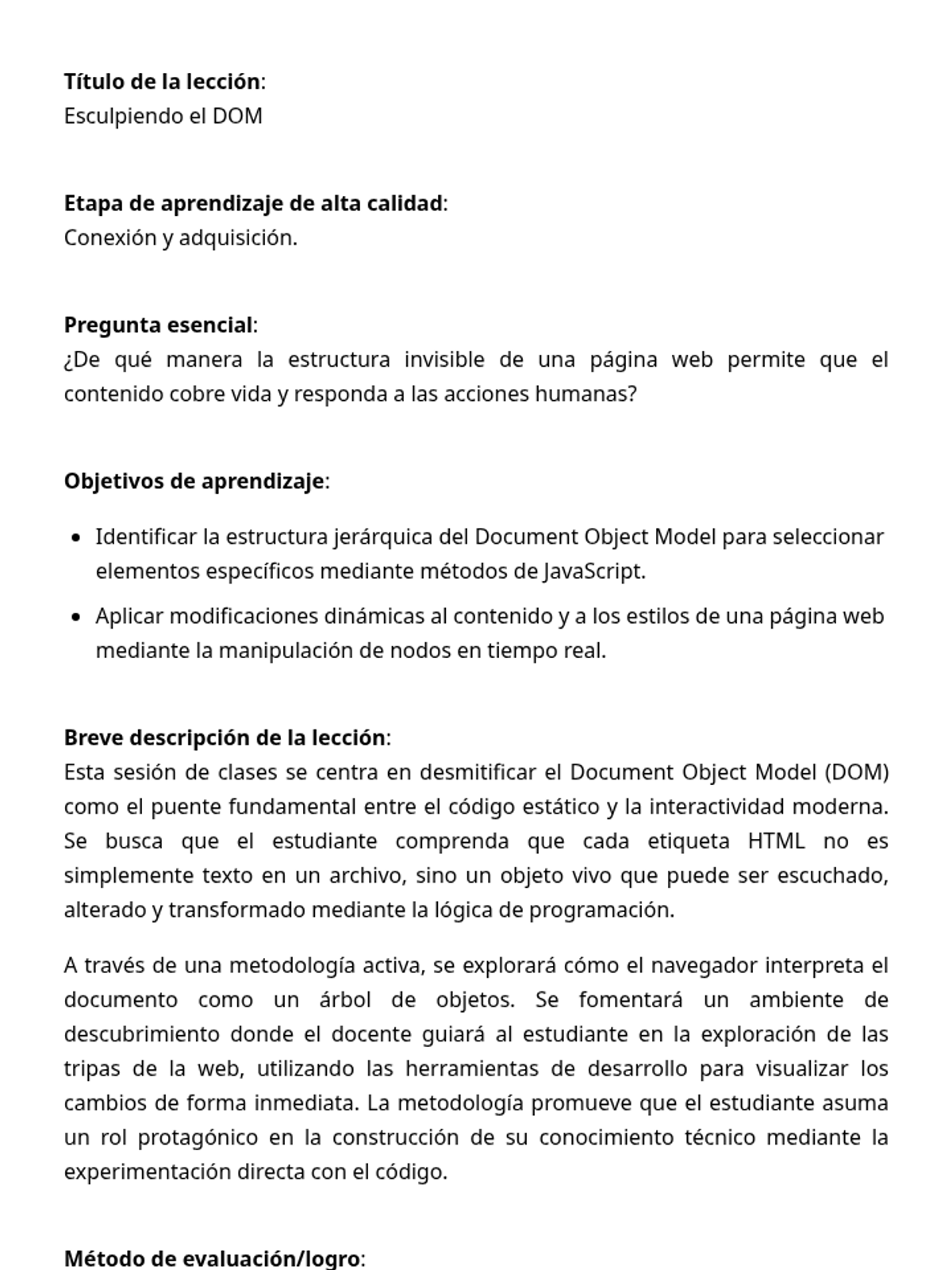
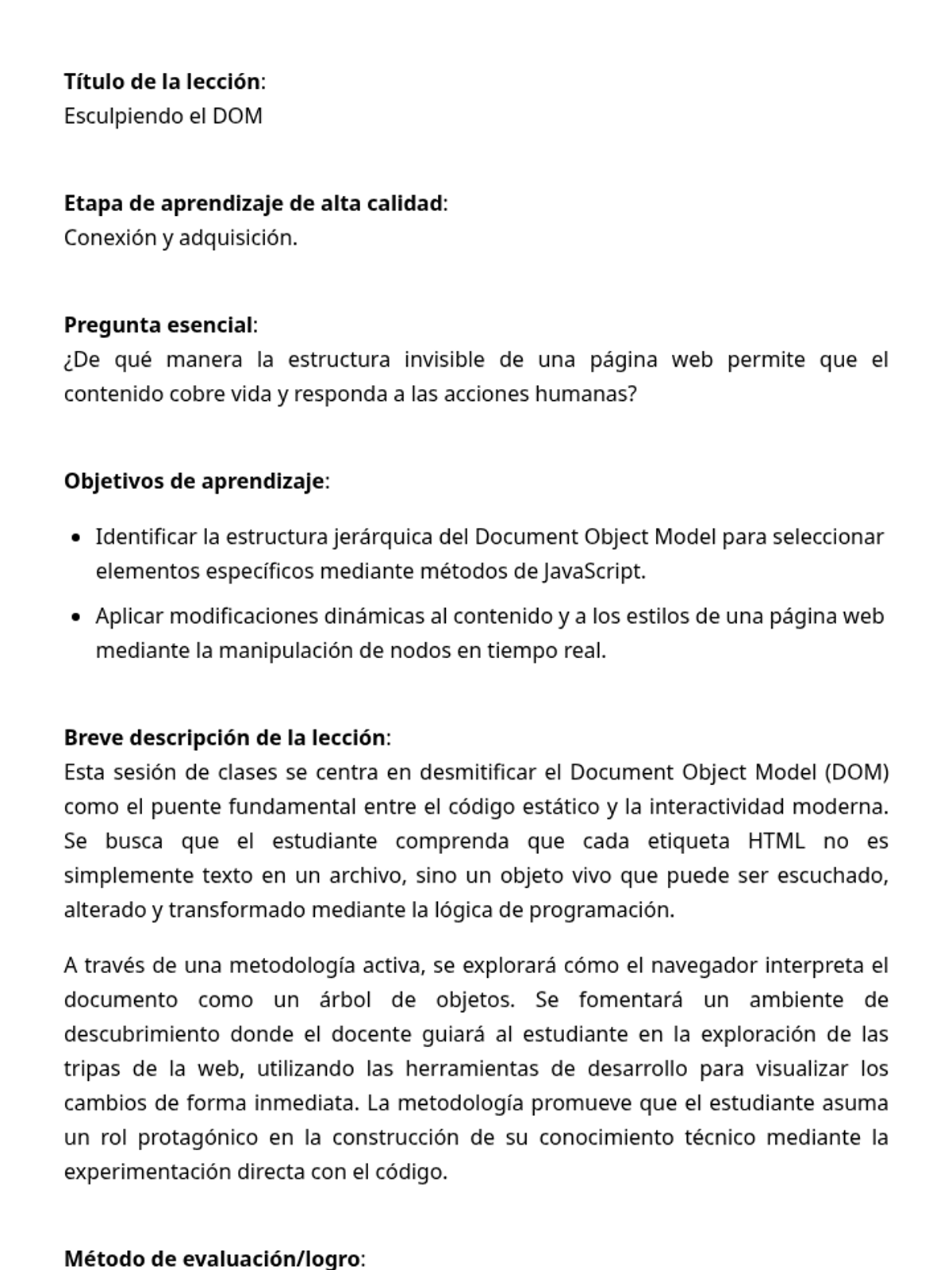
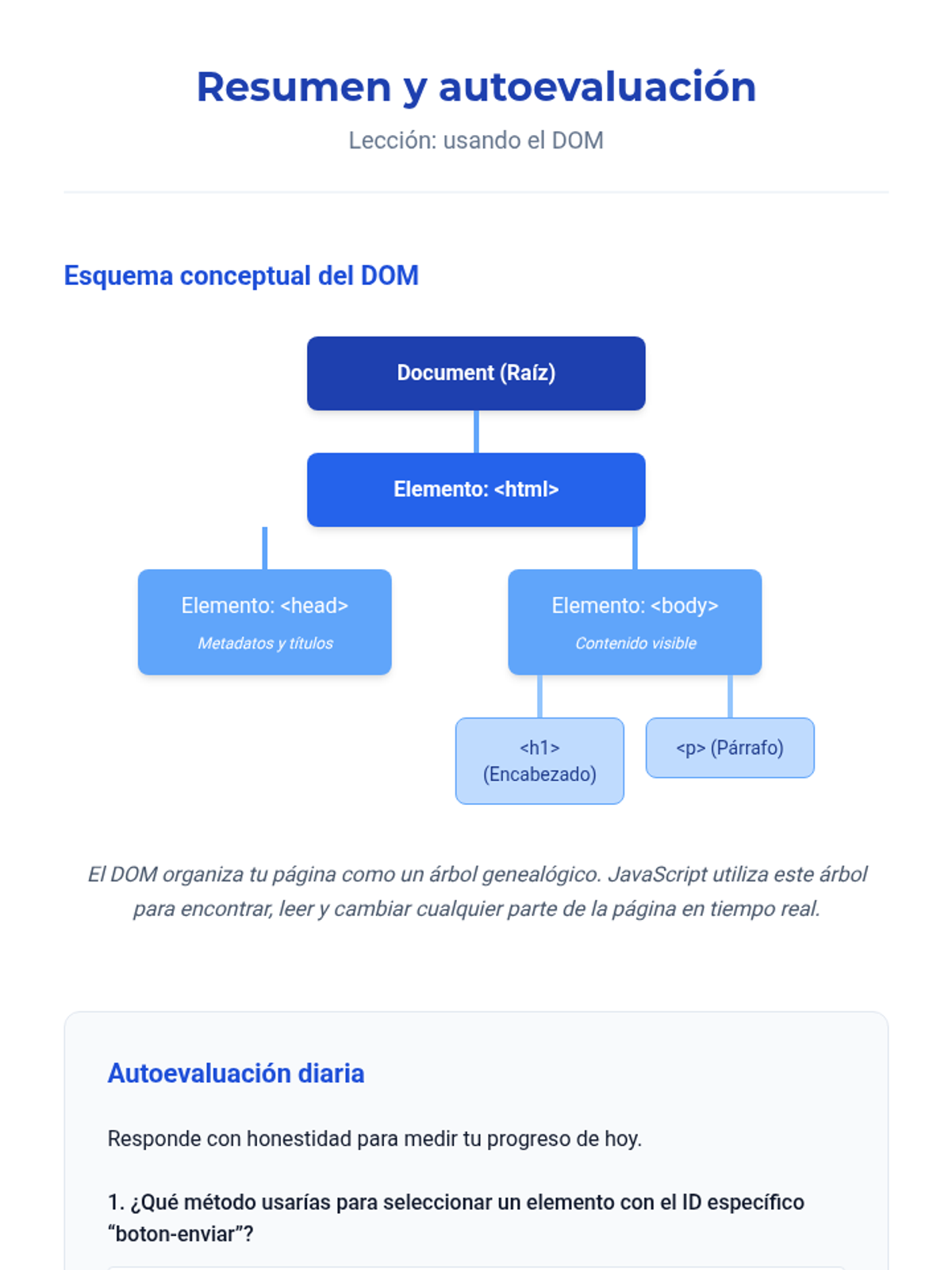
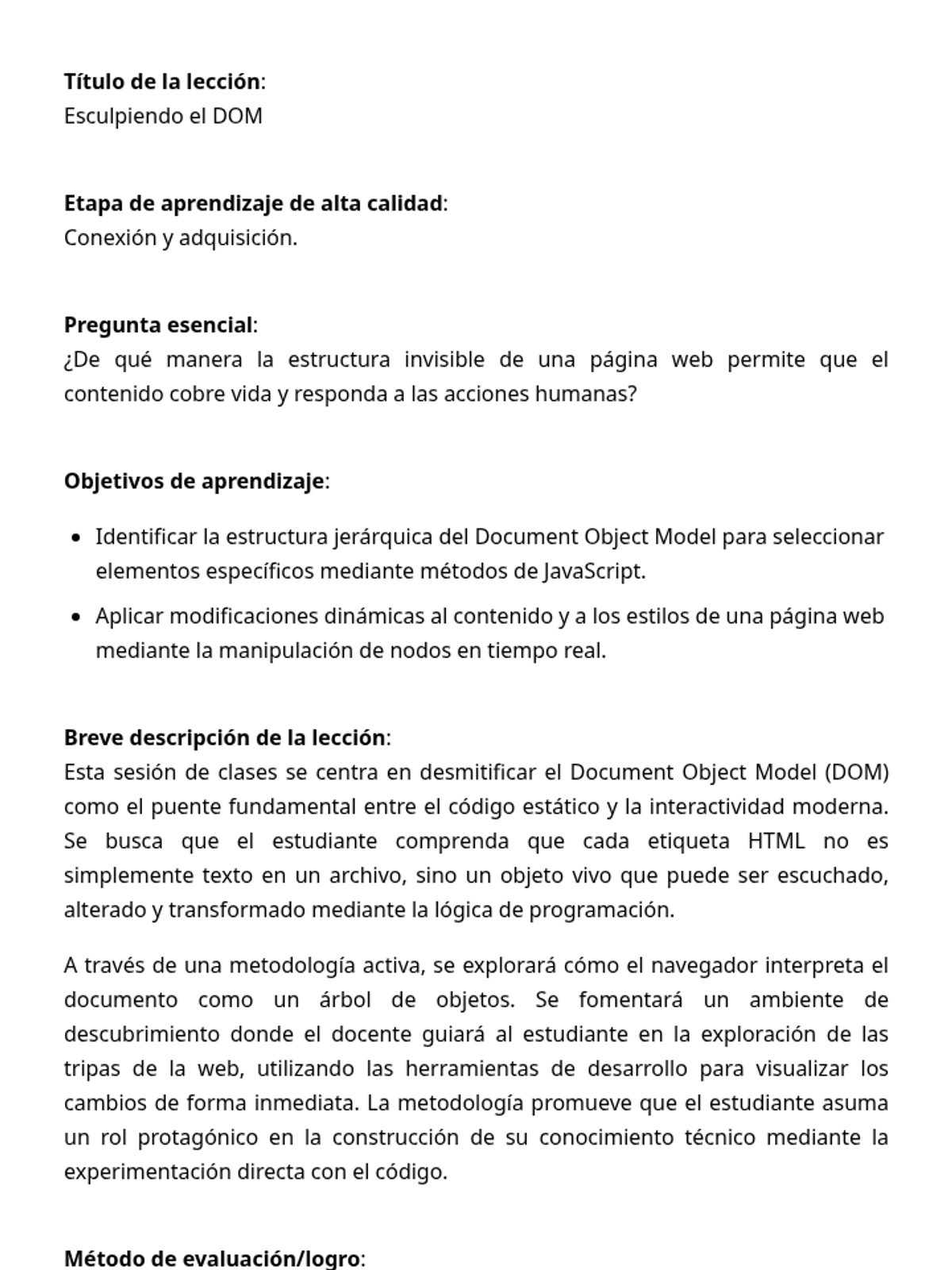
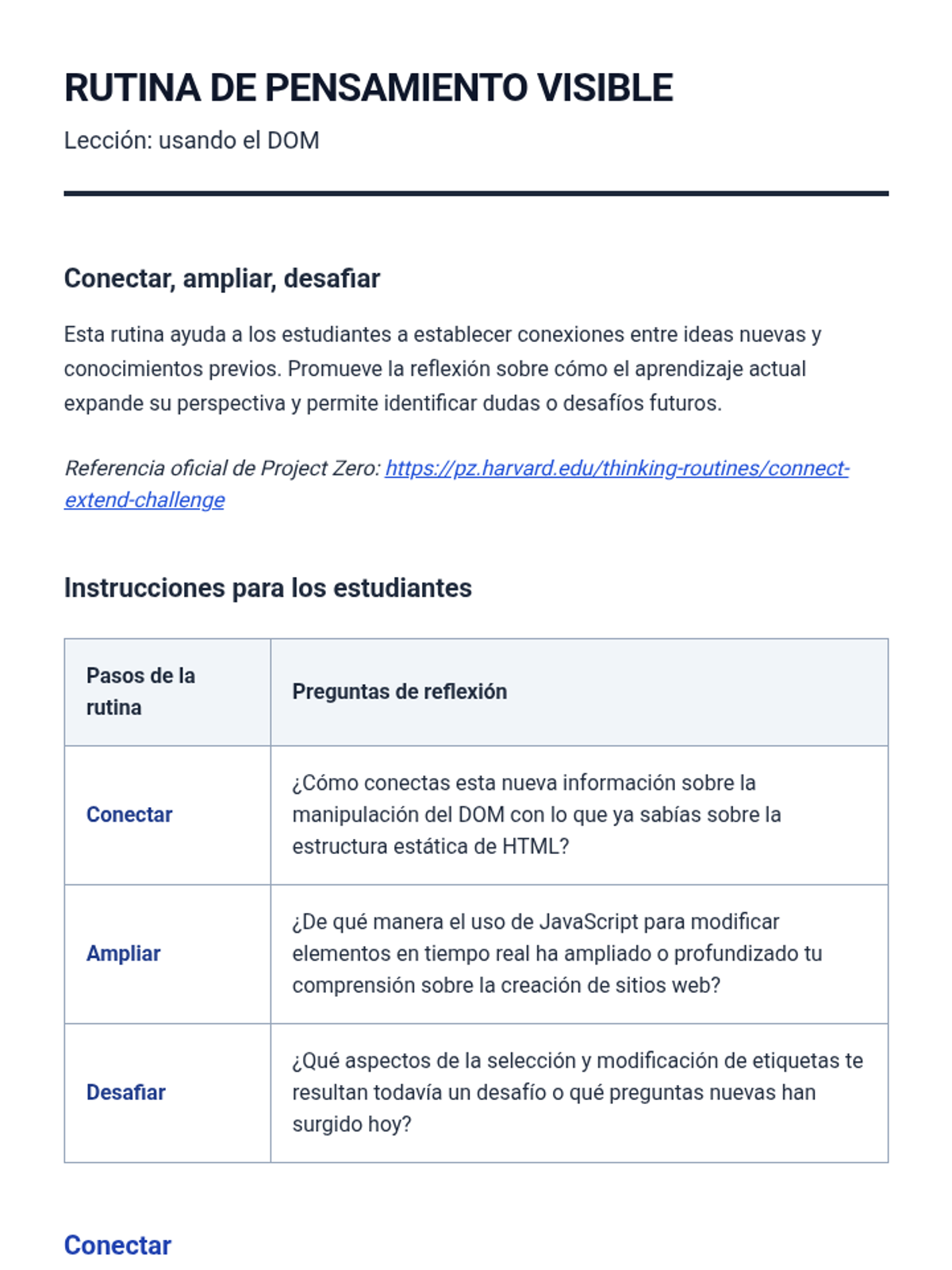
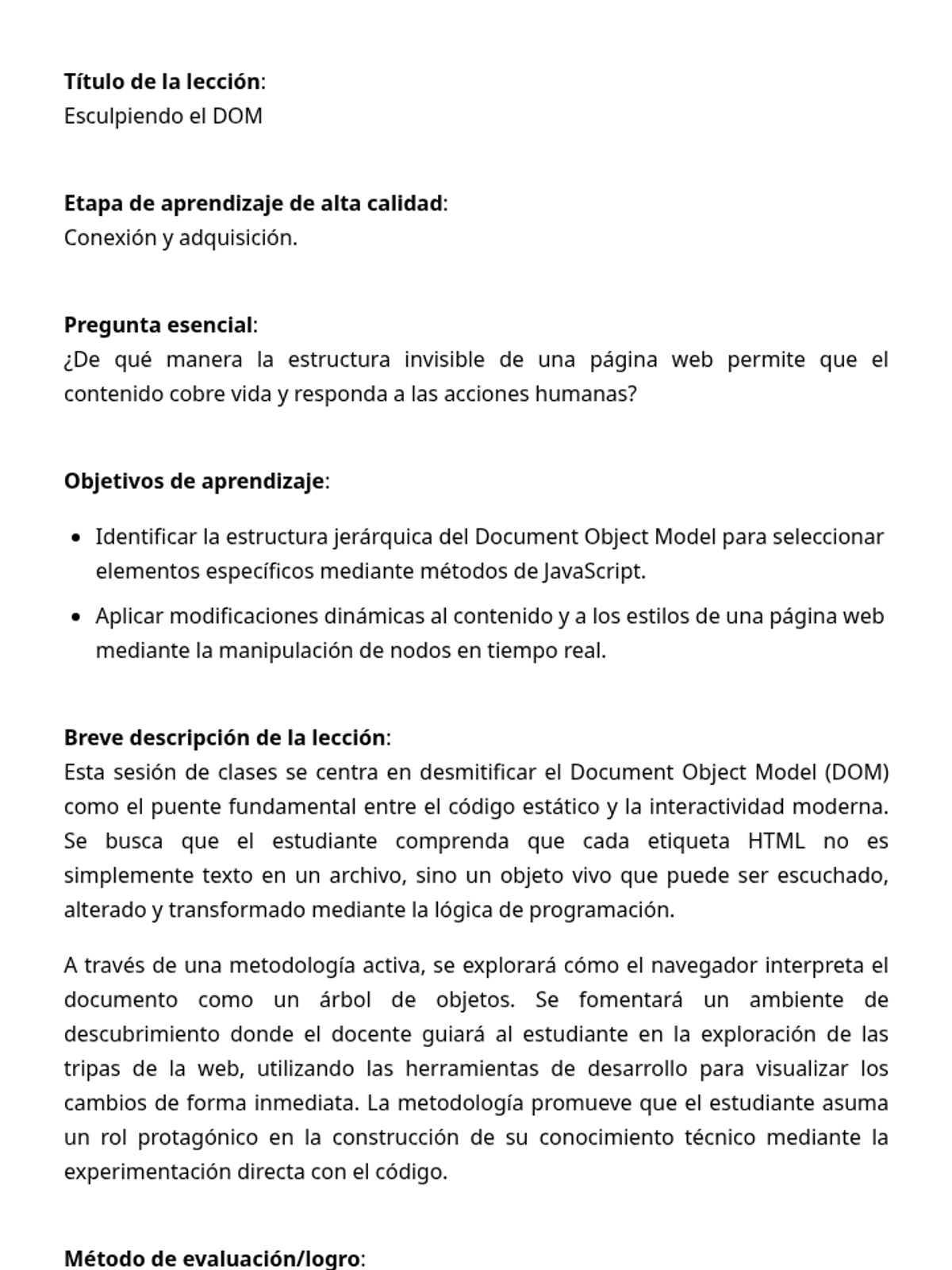
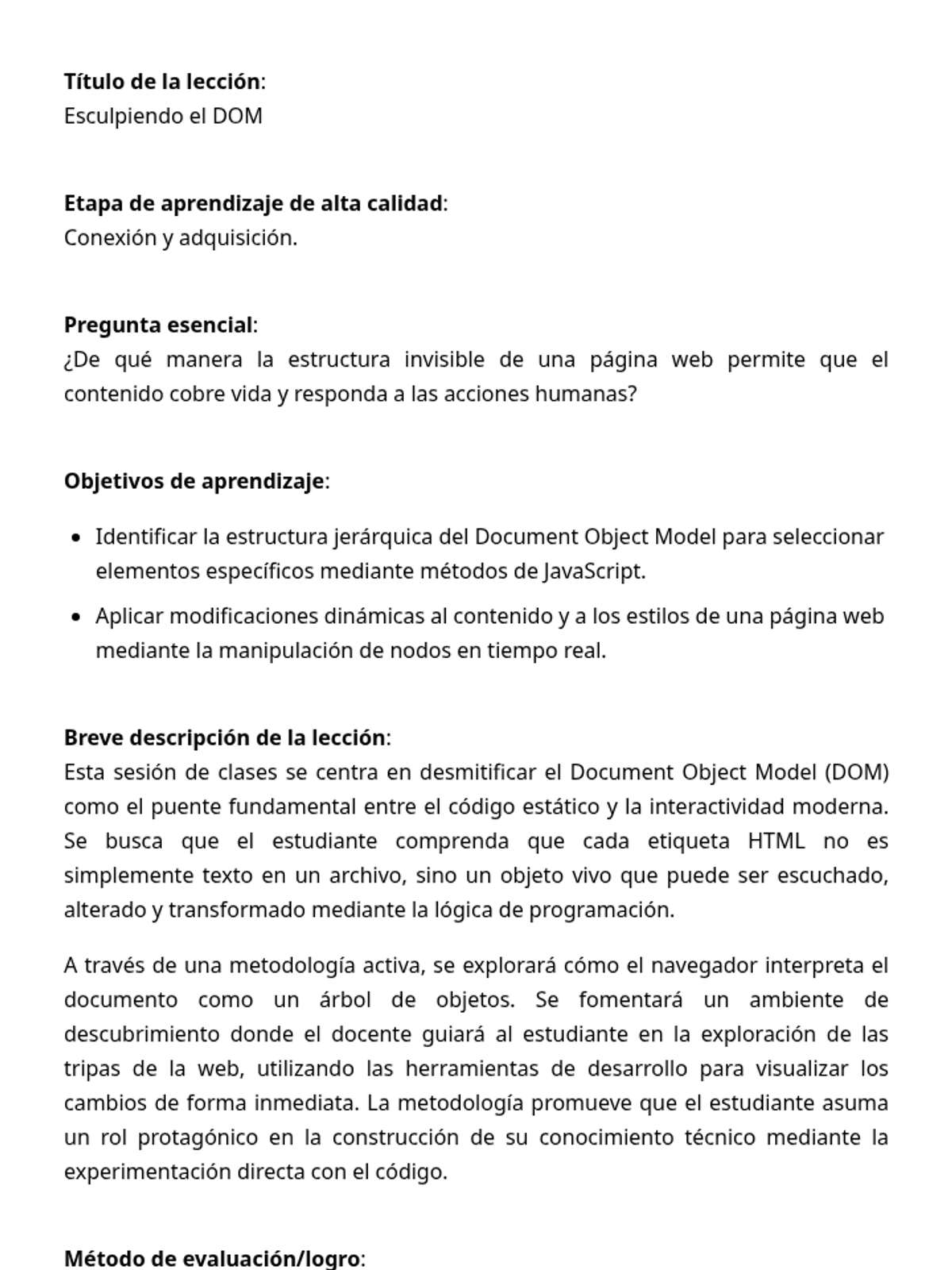
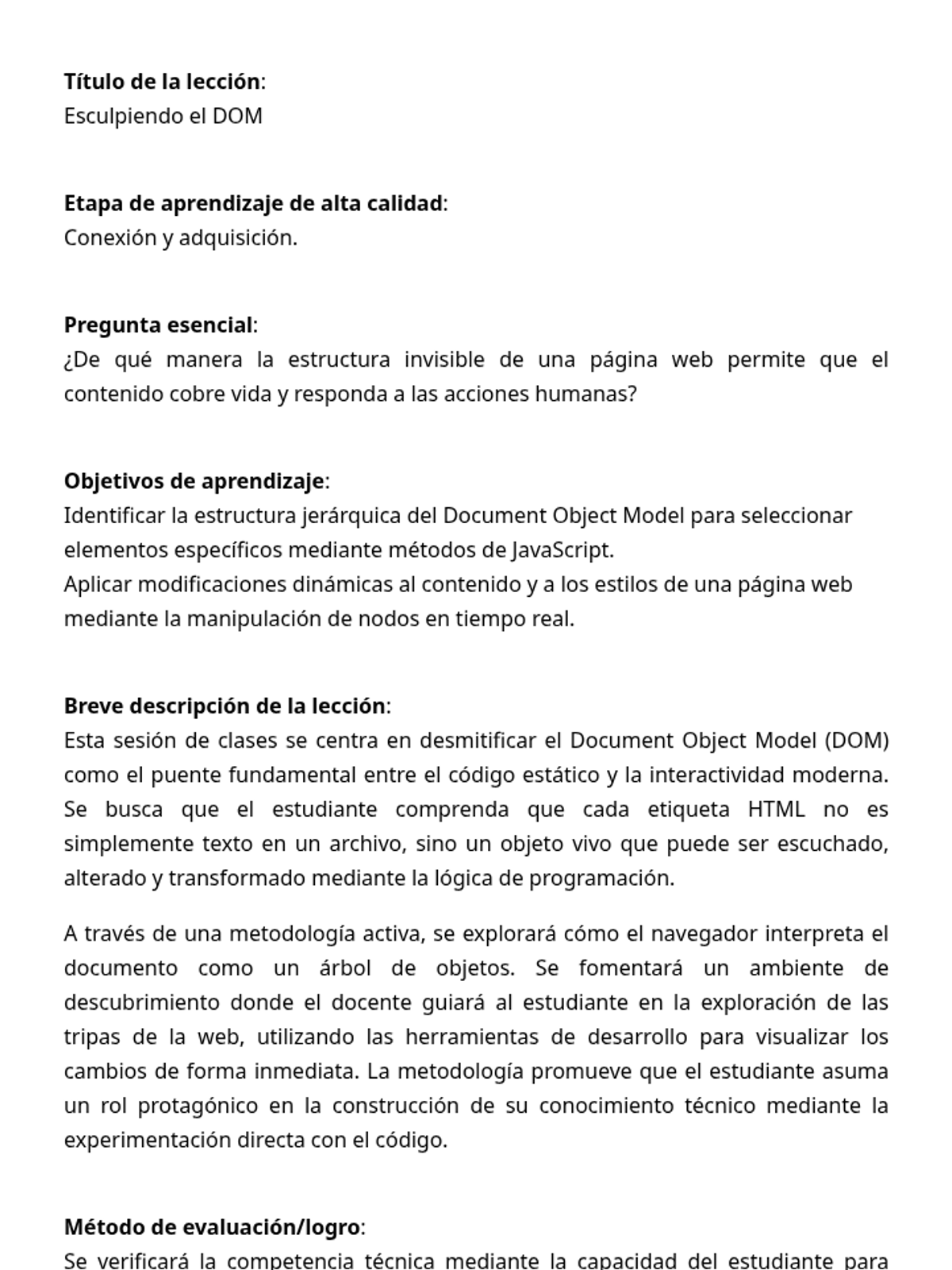
Esta lección introduce a los estudiantes de secundaria en la manipulación dinámica del Document Object Model (DOM) utilizando JavaScript. A través de ejemplos prácticos, se enseña a seleccionar y modificar elementos HTML para transformar páginas estáticas en experiencias interactivas.
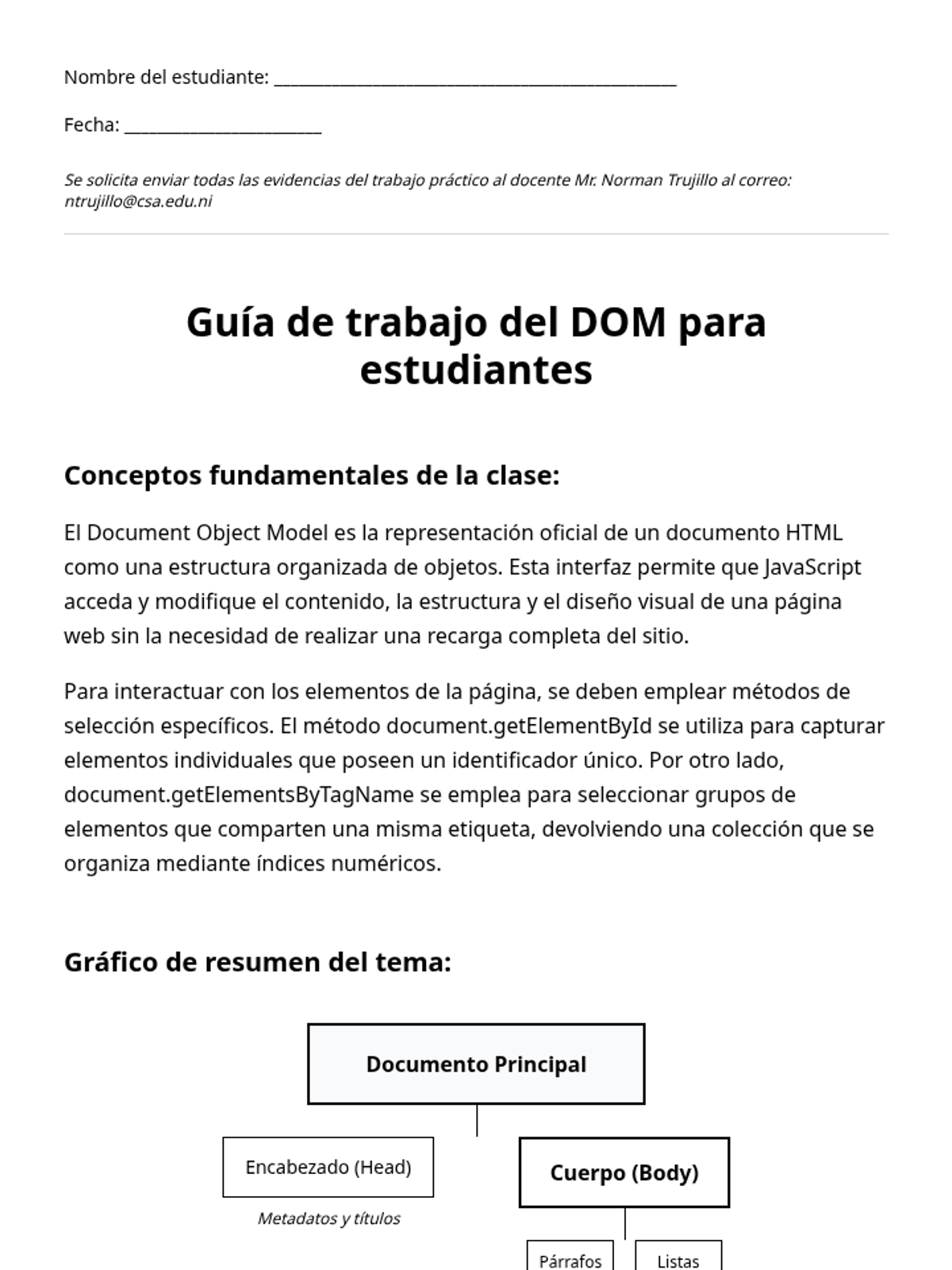
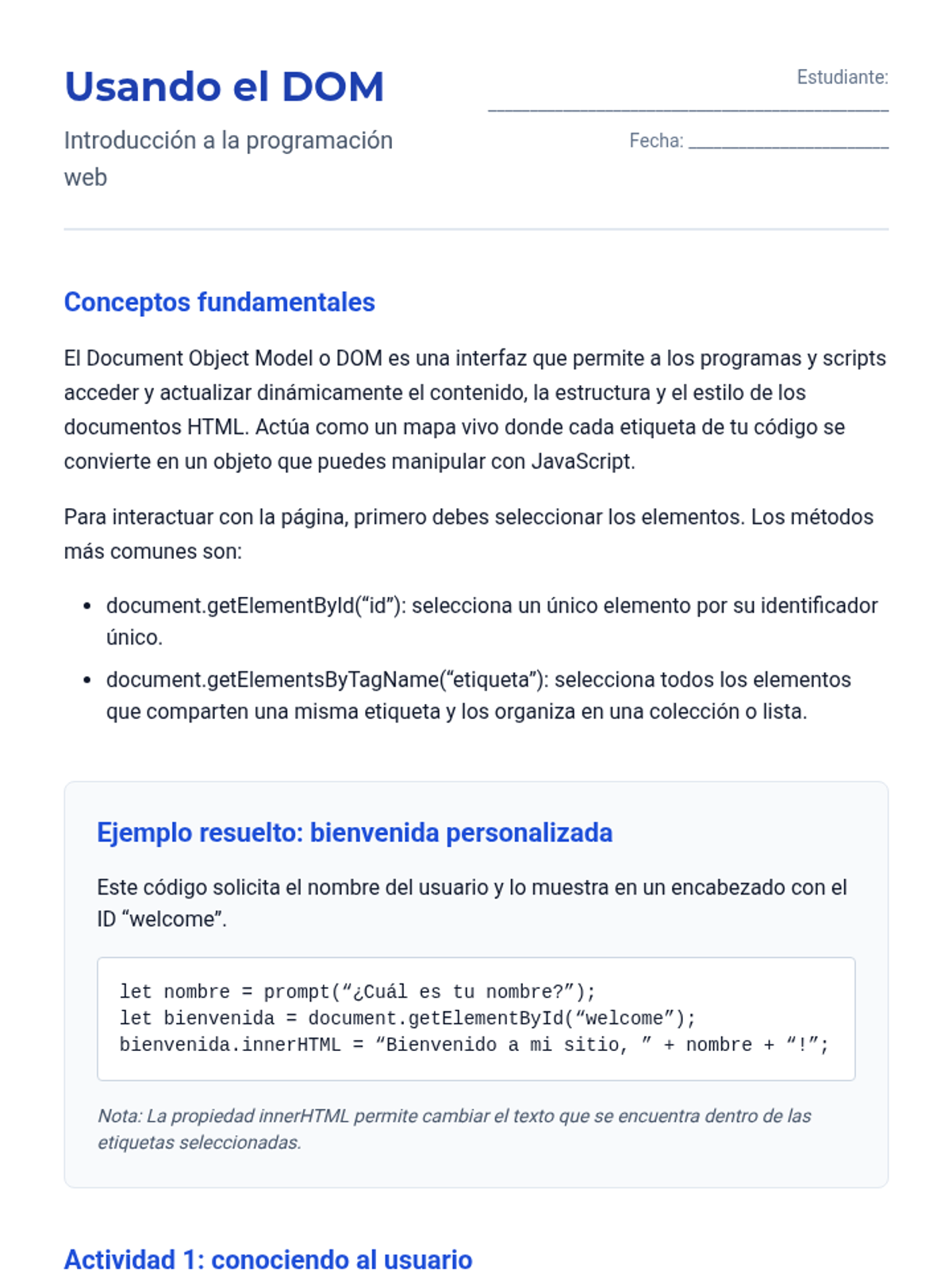
Esta lección introduce a los estudiantes en la manipulación dinámica de páginas web utilizando el Document Object Model (DOM). Se enfoca en los métodos fundamentales de selección por identificador y etiqueta para transformar contenido estático en interactivo.
Lección introductoria sobre el uso de document.getElementById y document.getElementsByTagName para transformar páginas web estáticas en experiencias interactivas.
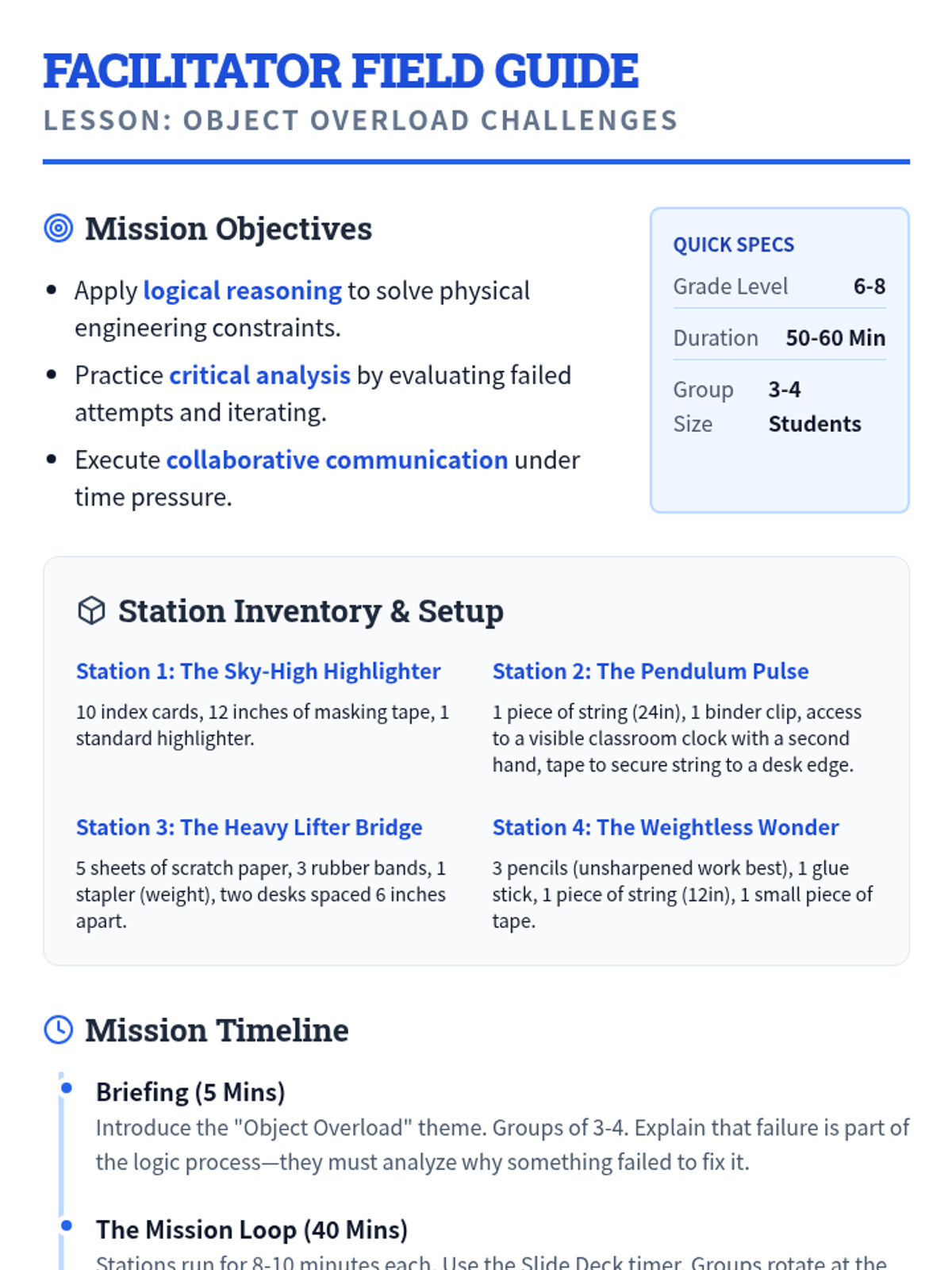
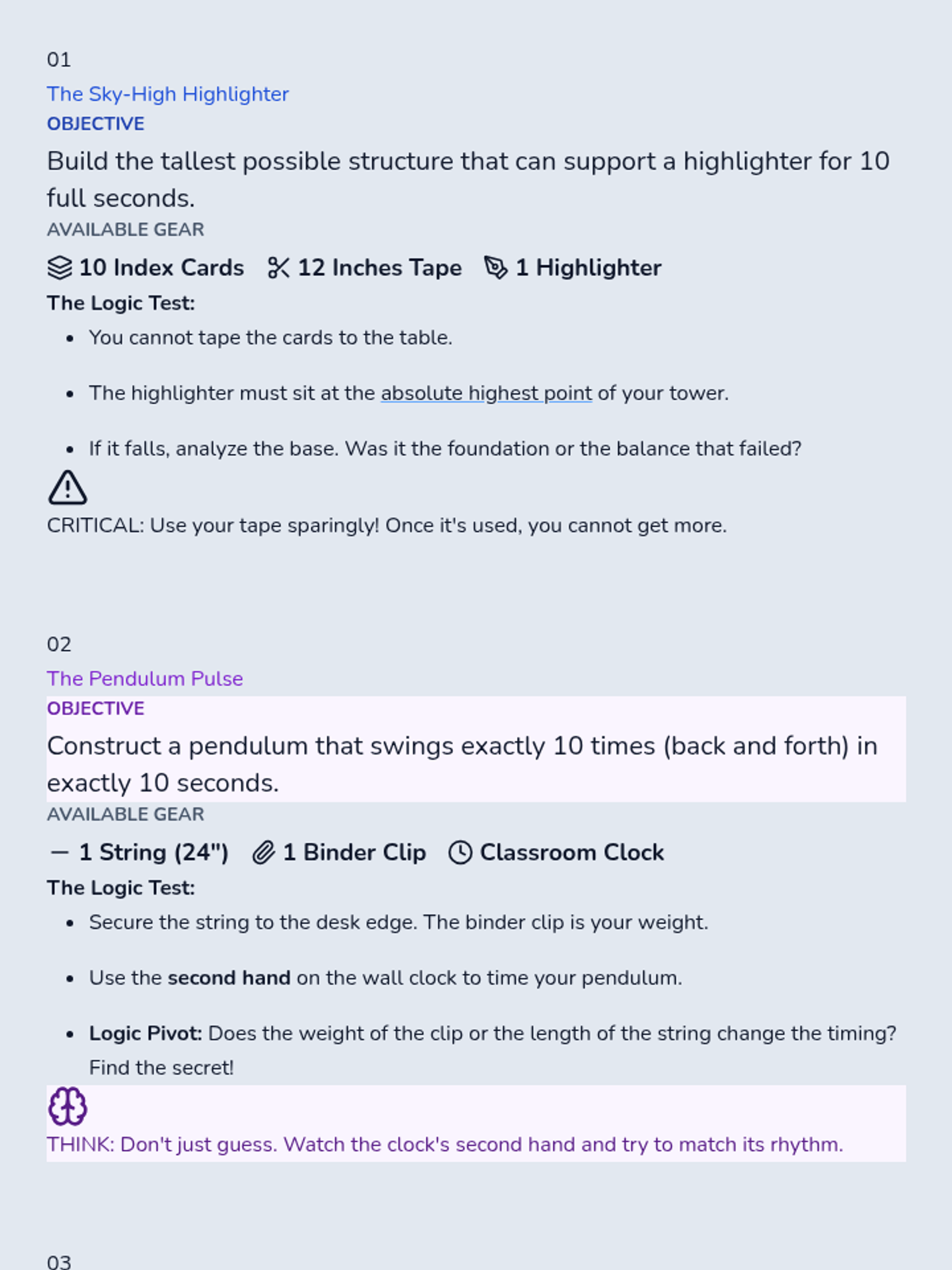
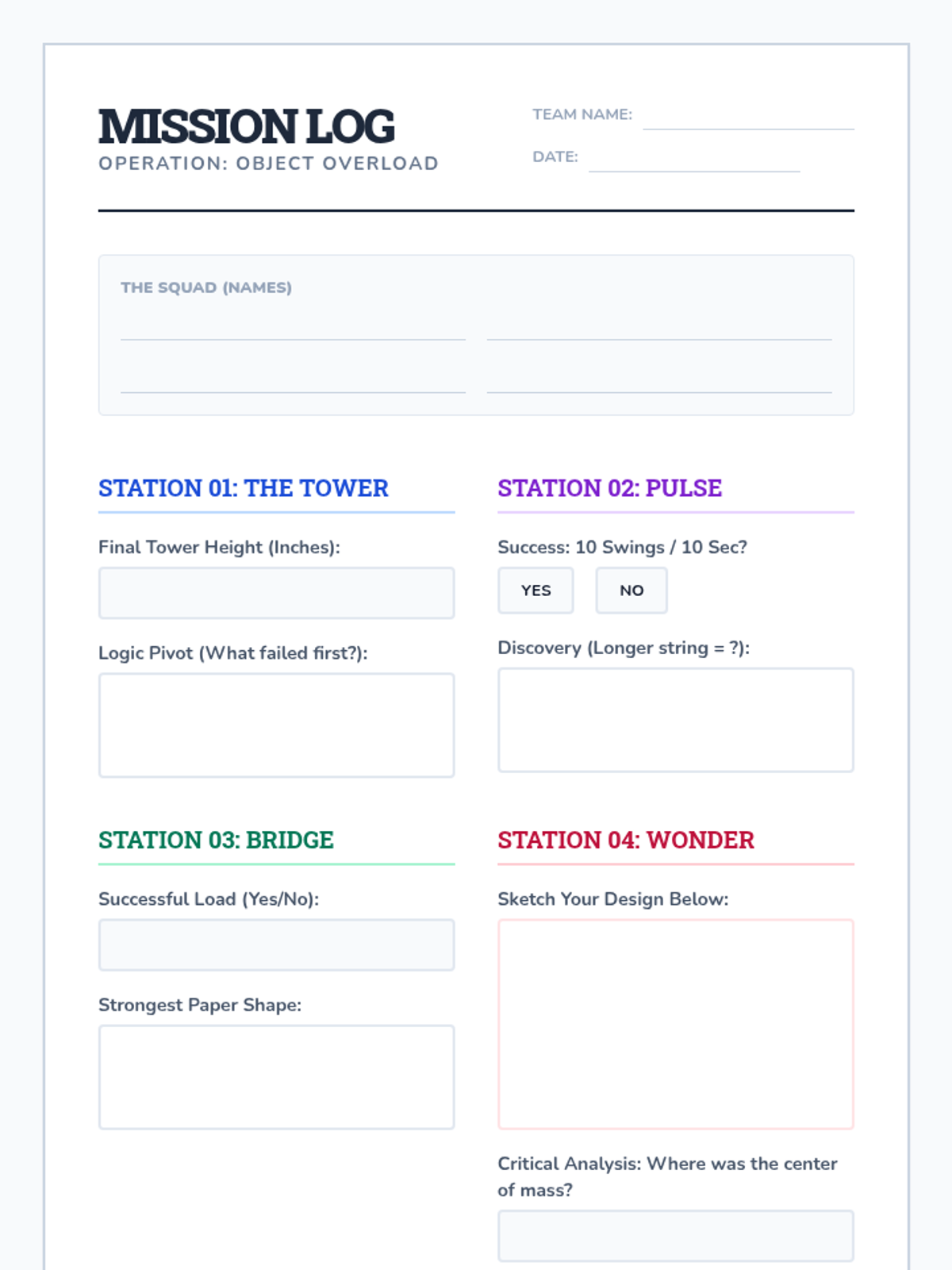
A series of high-energy, station-based team challenges where students use common classroom objects to solve complex problems through logical reasoning and collaboration.
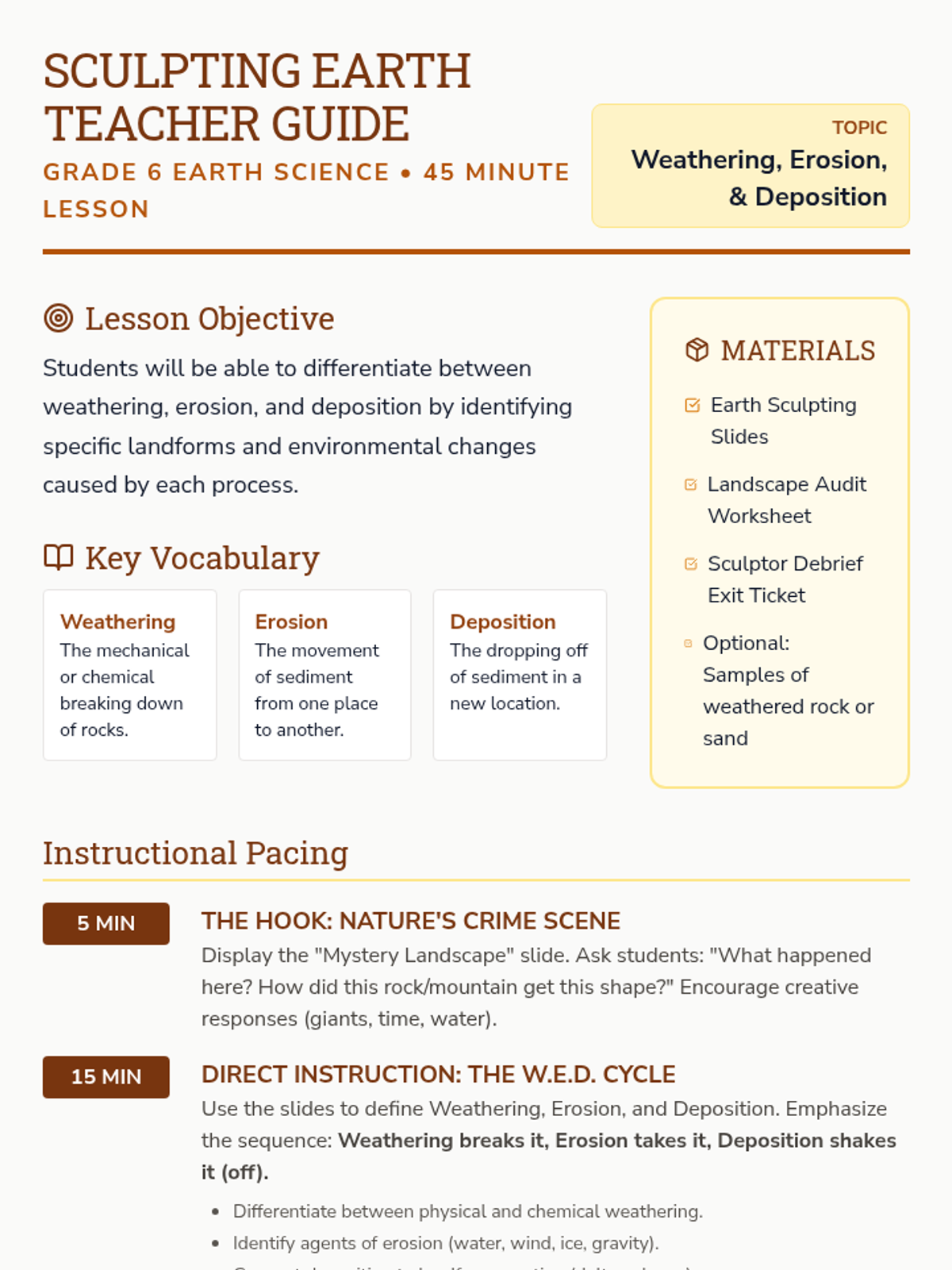
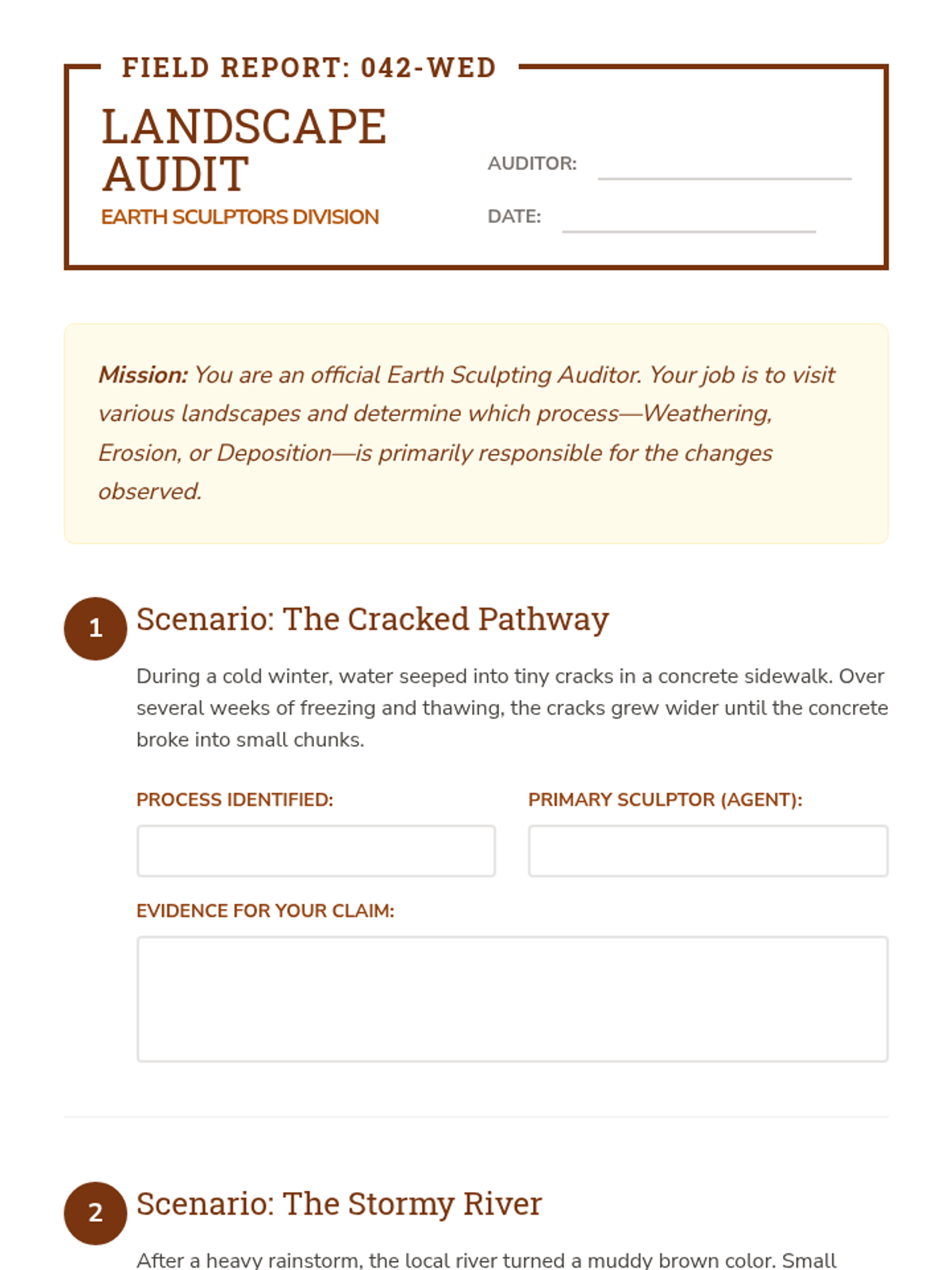
A comprehensive 45-minute lesson exploring the three key processes that shape Earth's surface: weathering, erosion, and deposition. Students will identify these processes in real-world landscapes and understand their interconnected nature.
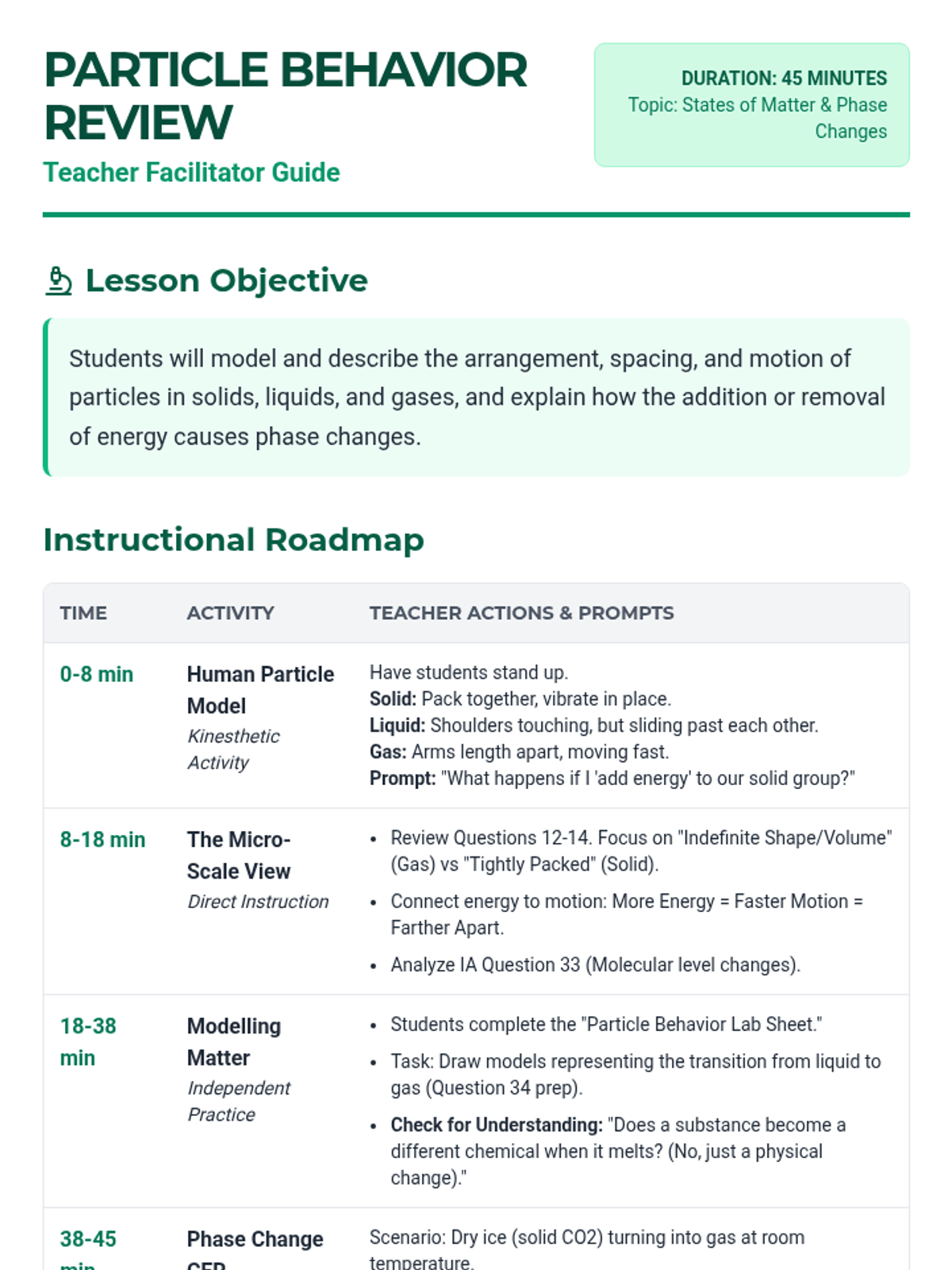
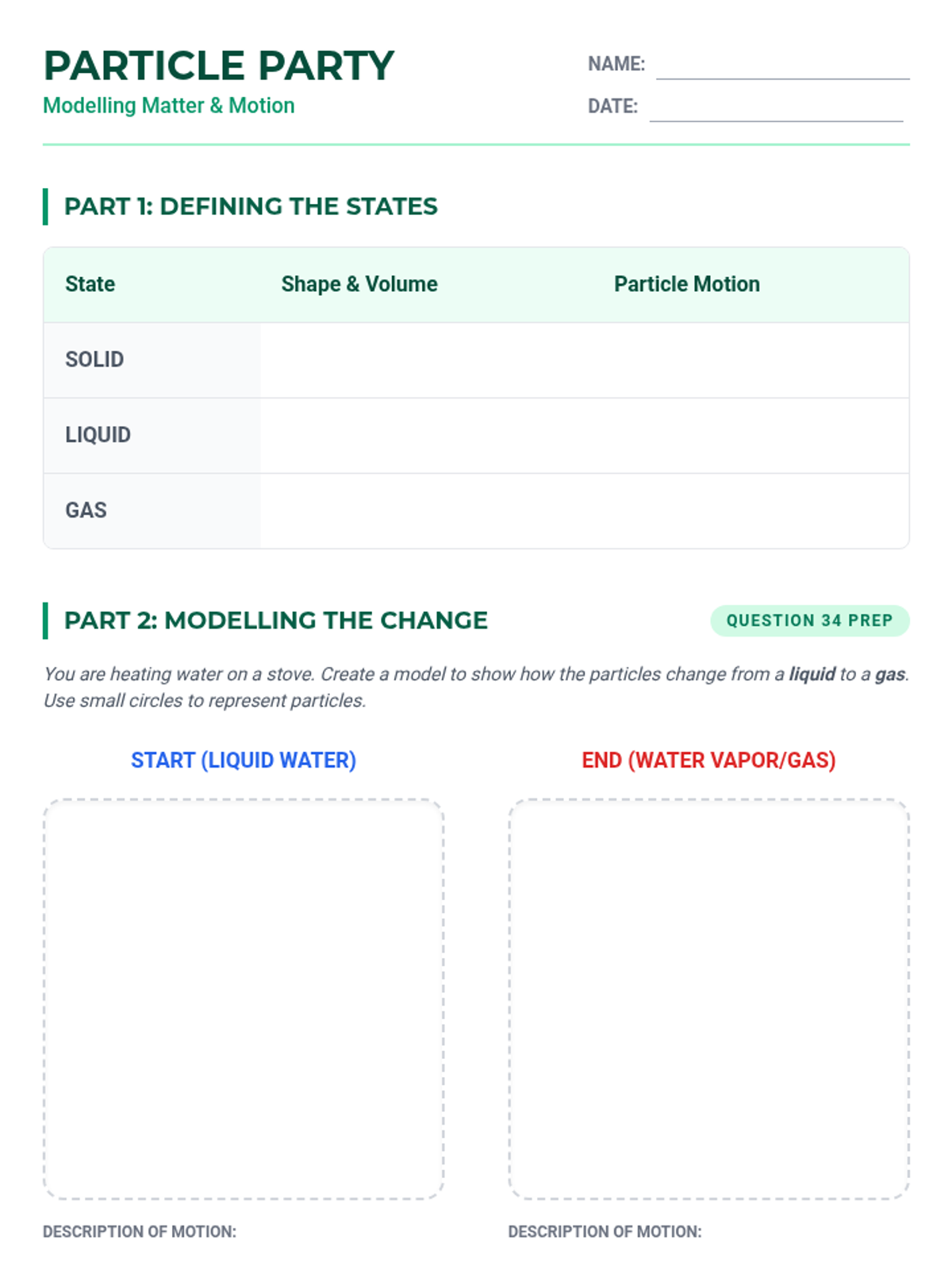
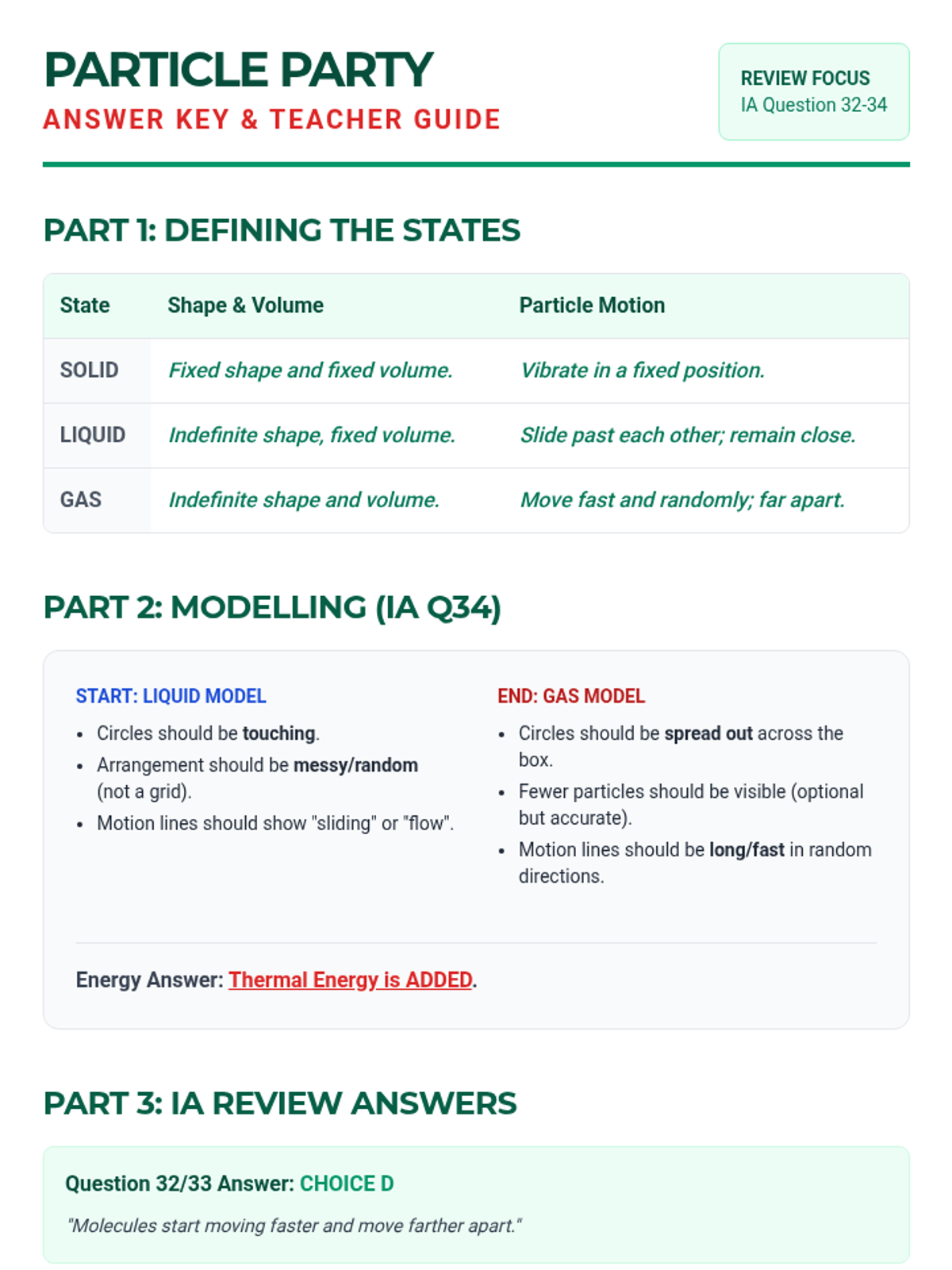
A lesson focusing on the states of matter (solid, liquid, gas) and the behavior of particles at the molecular level. Students will model particle motion and arrangement, as well as the energy changes that drive phase transitions.
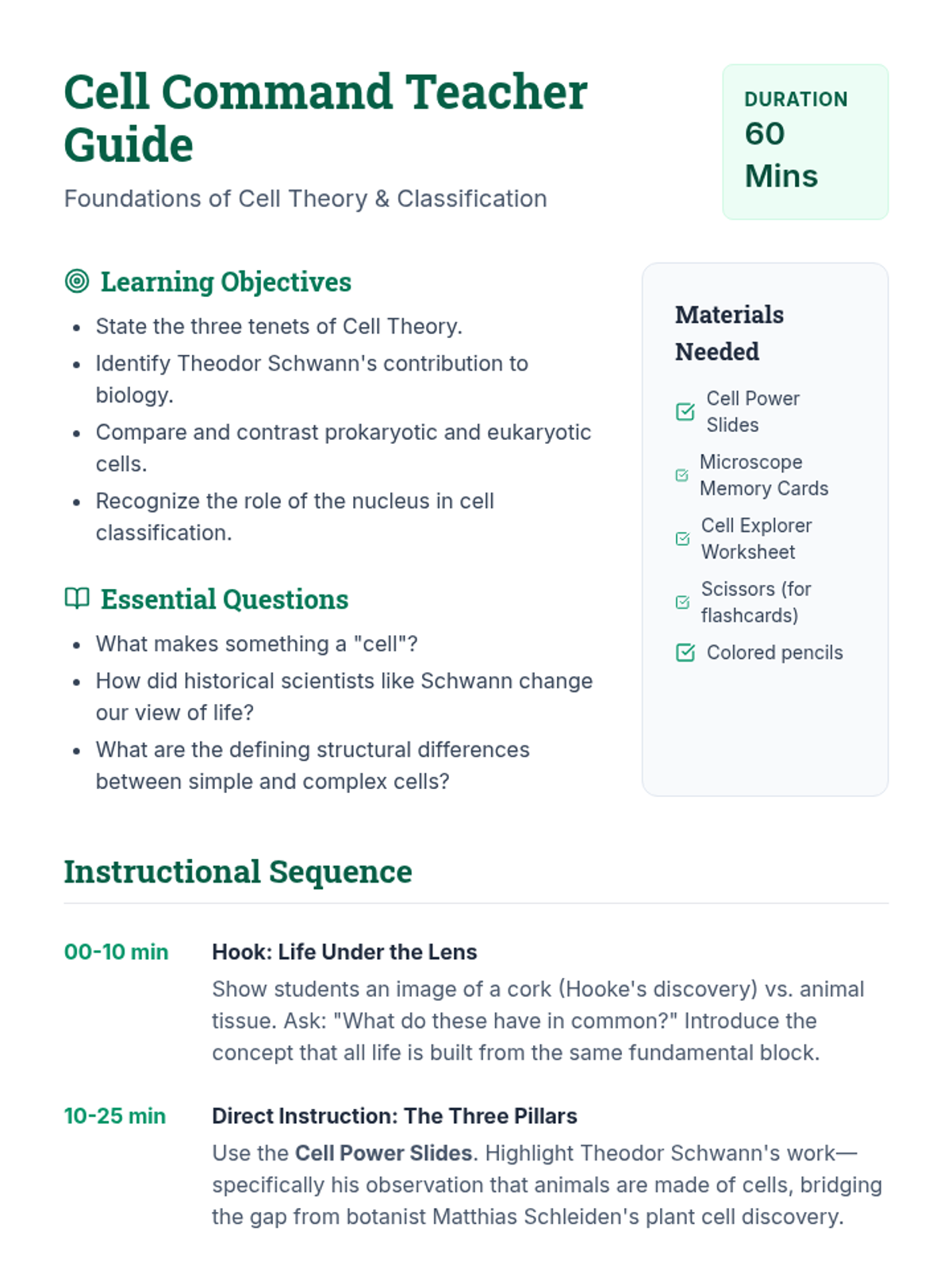
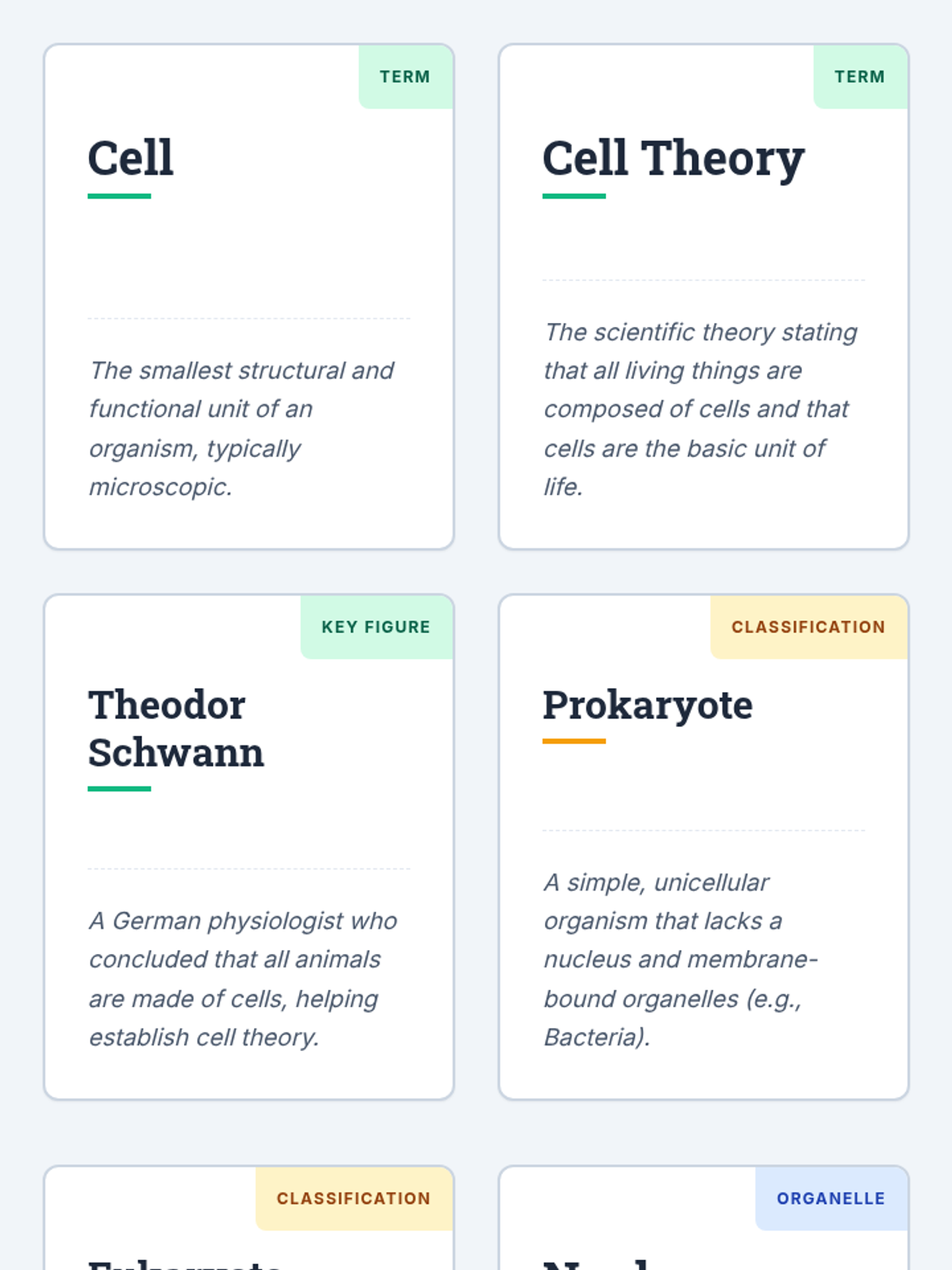
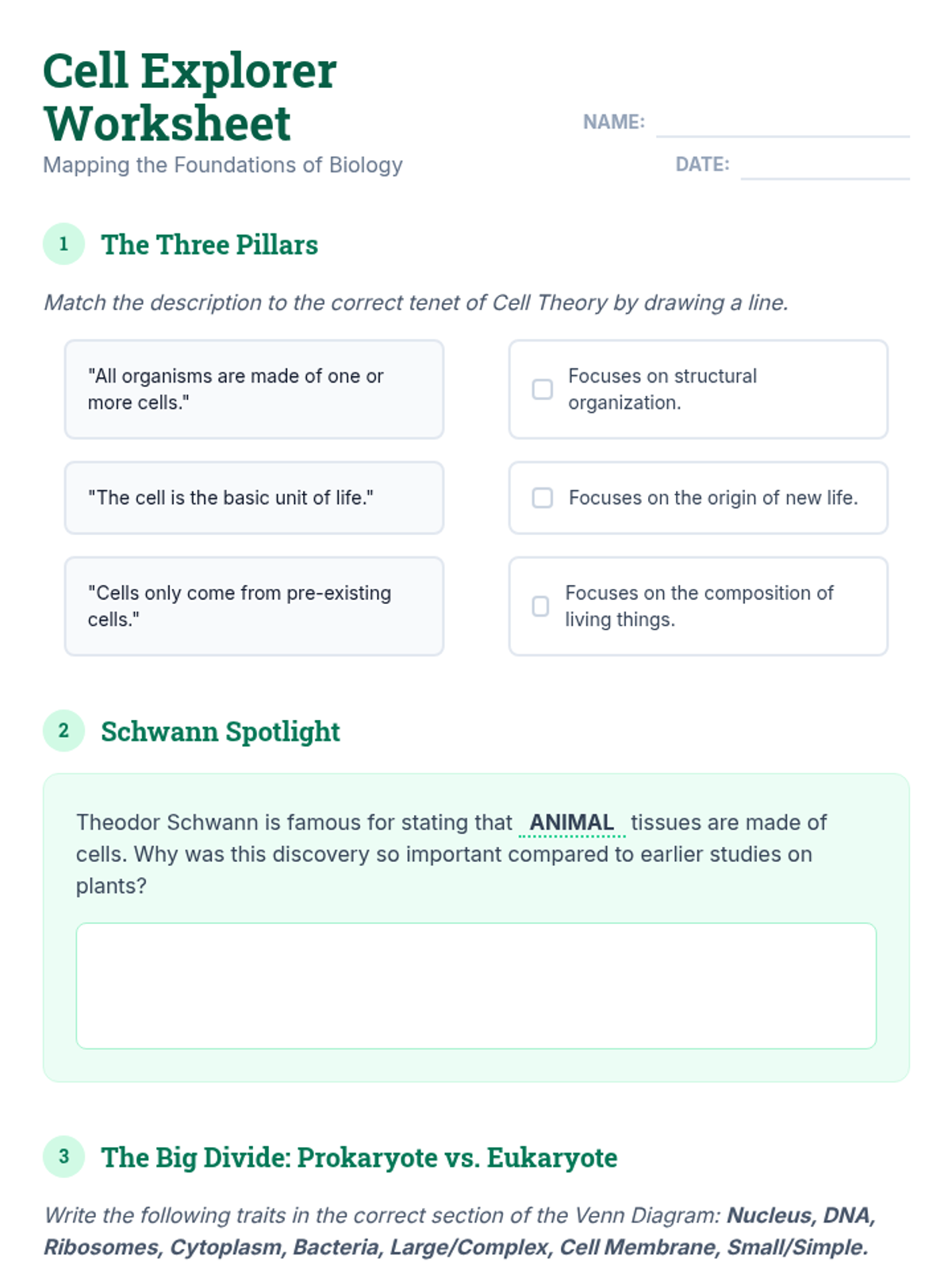
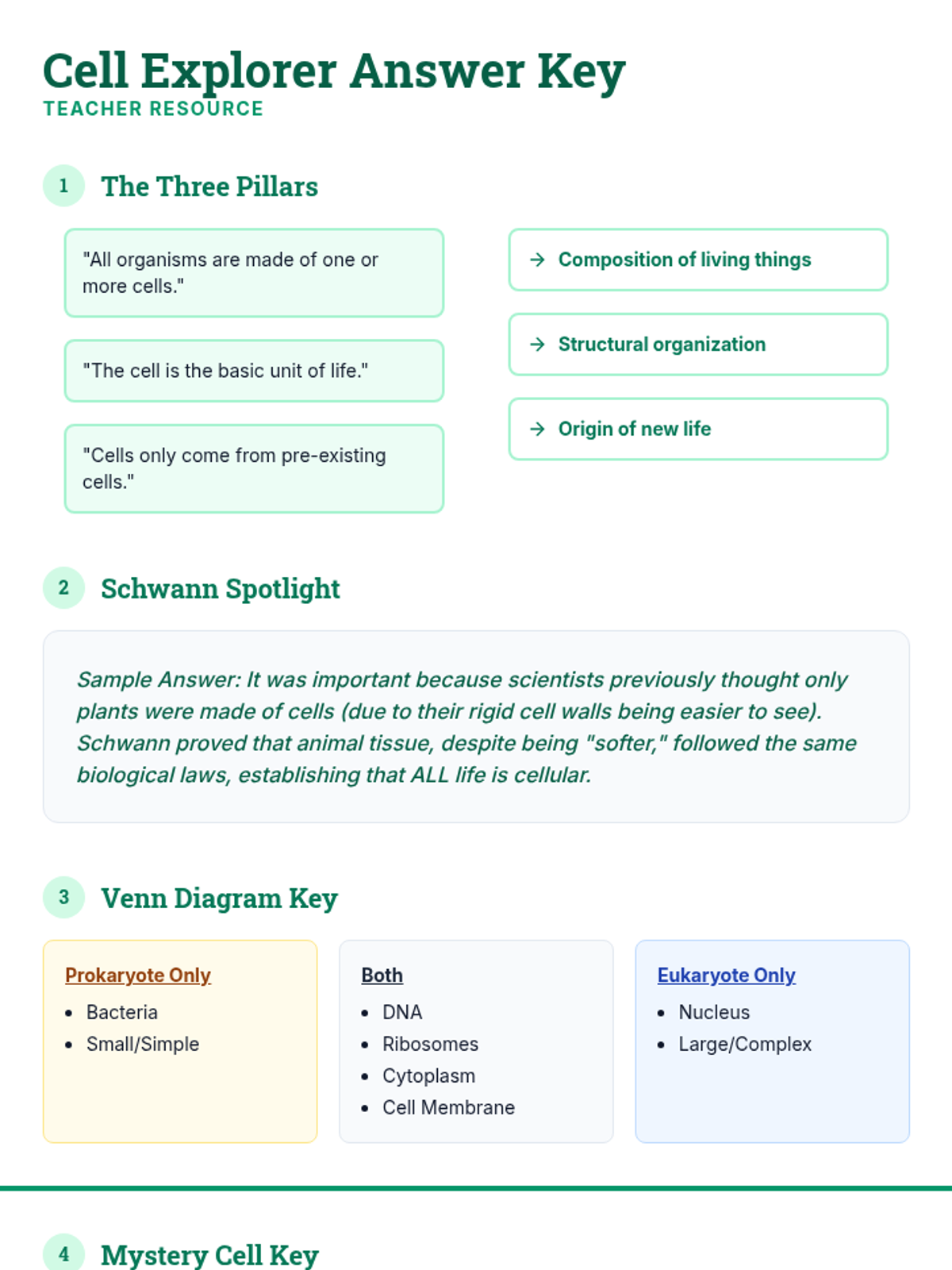
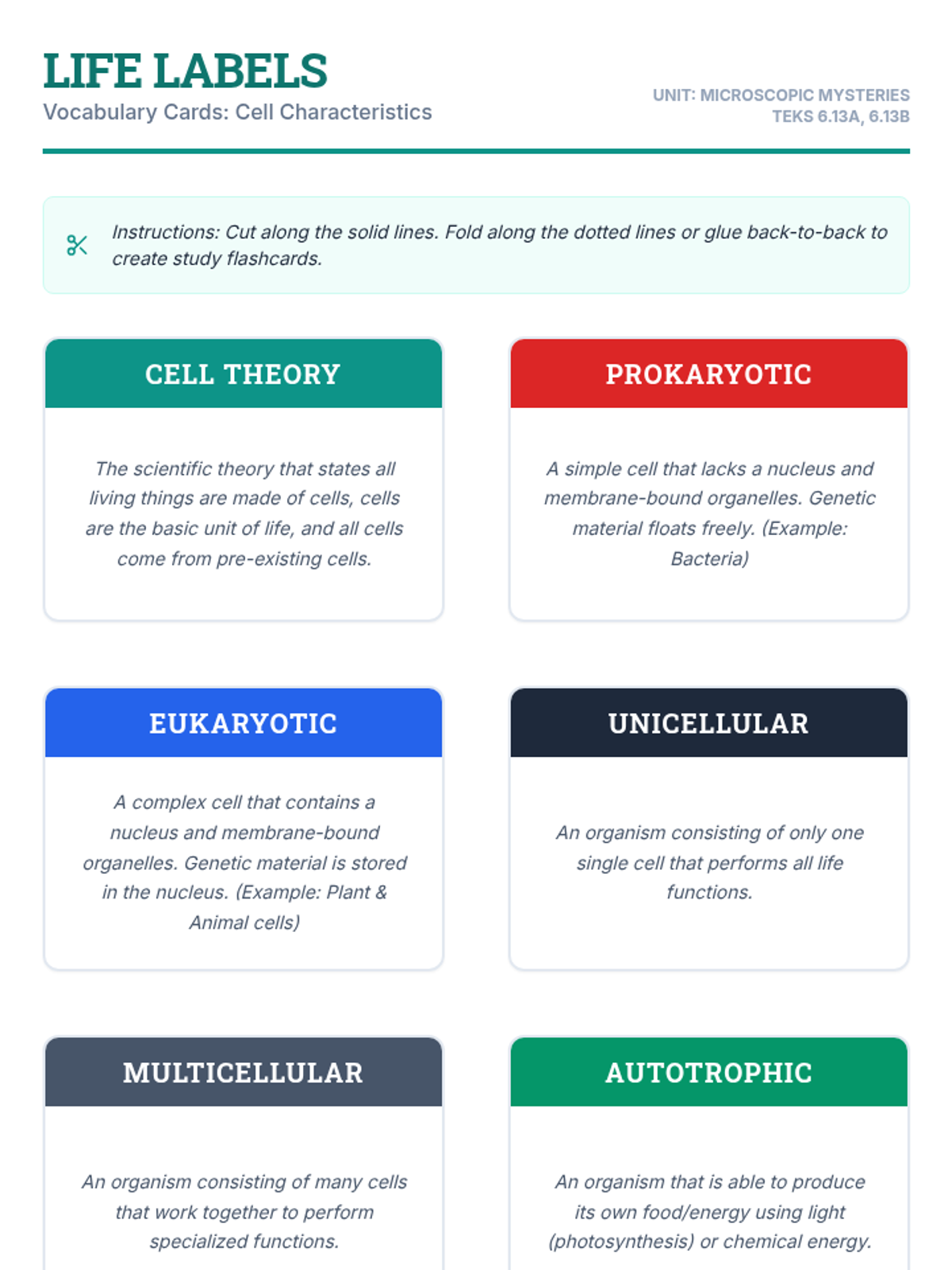
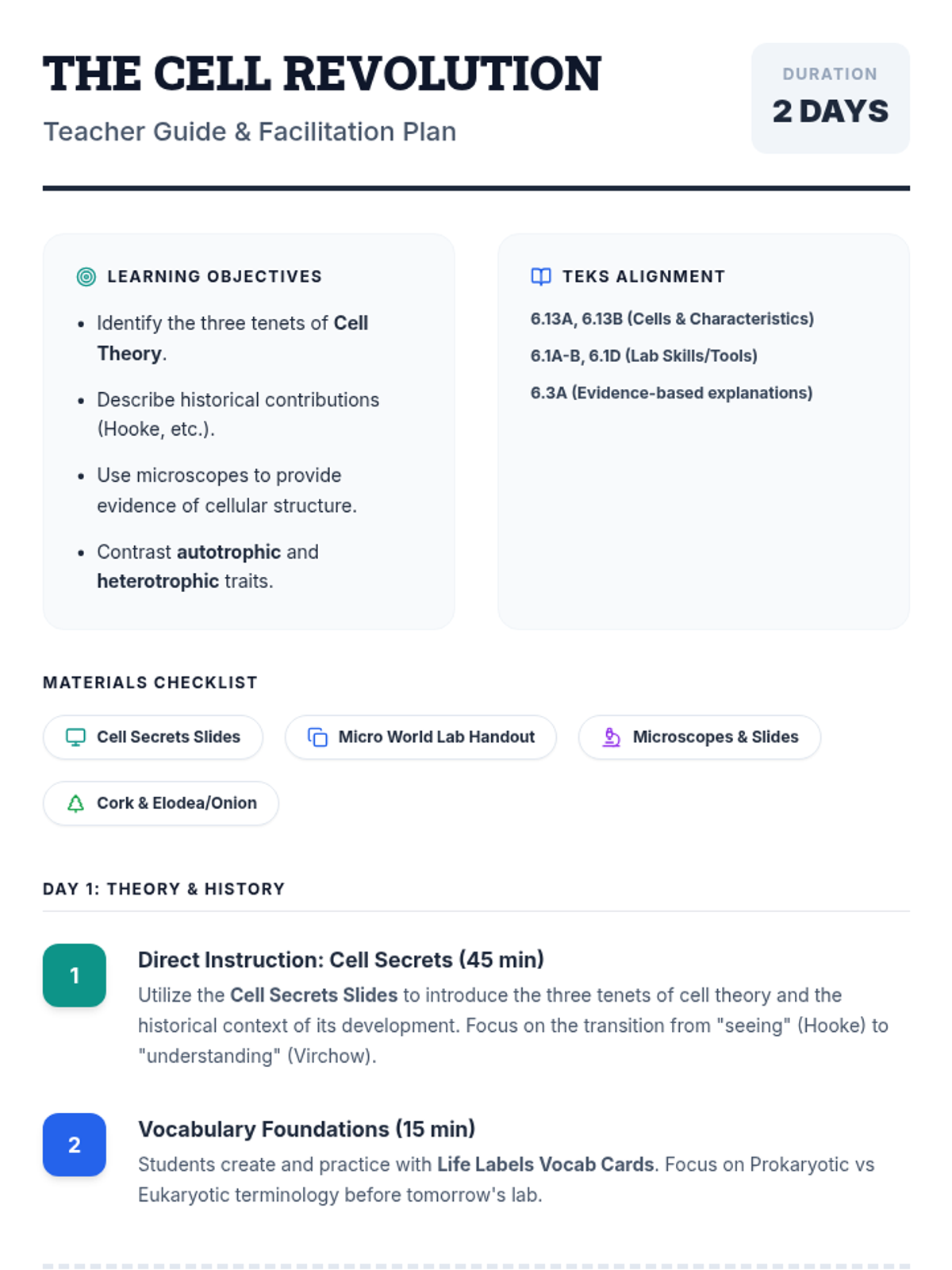
A comprehensive lesson exploring the foundations of cell theory, Theodor Schwann's contributions, and the fundamental differences between prokaryotic and eukaryotic cells.
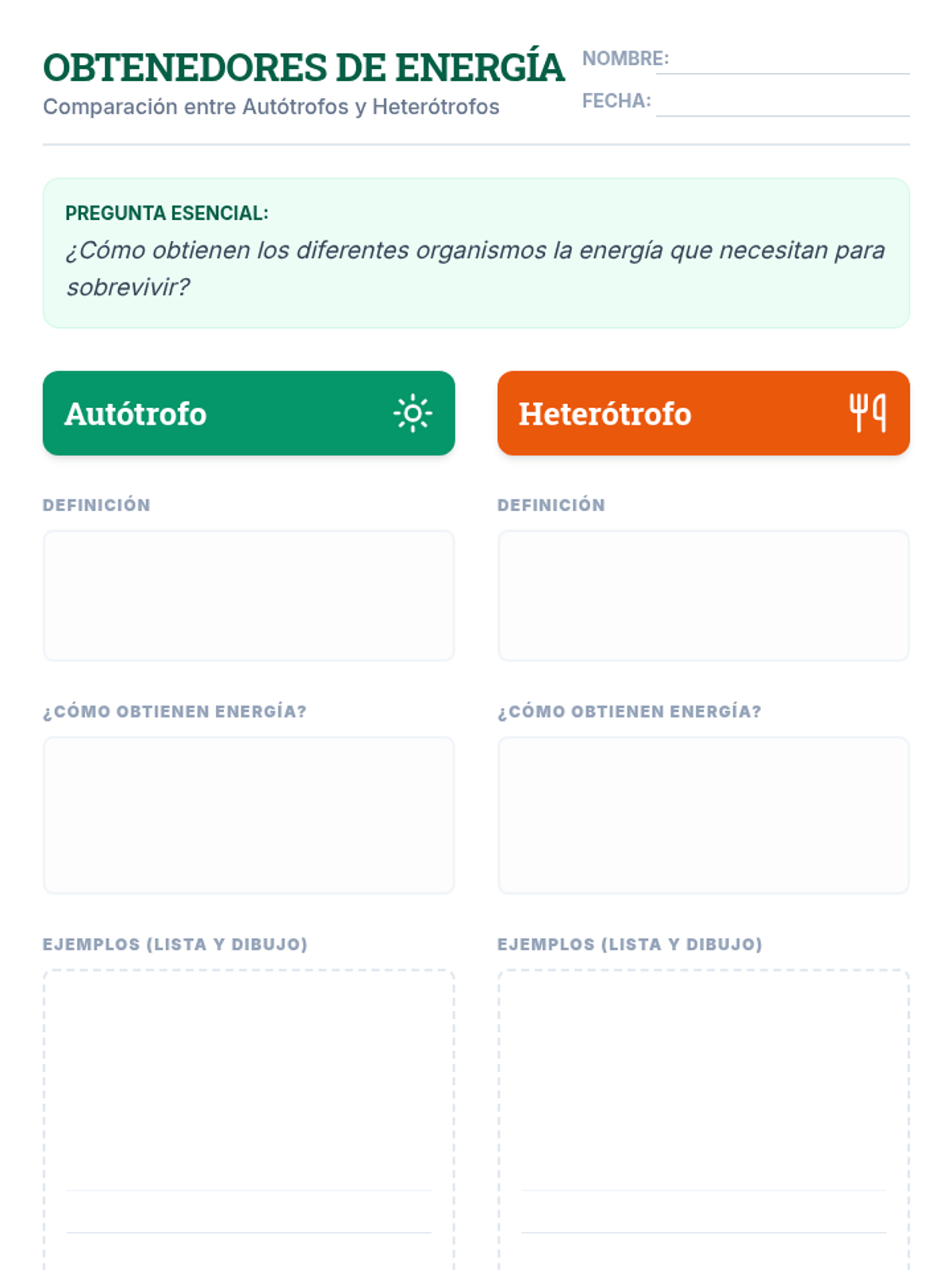
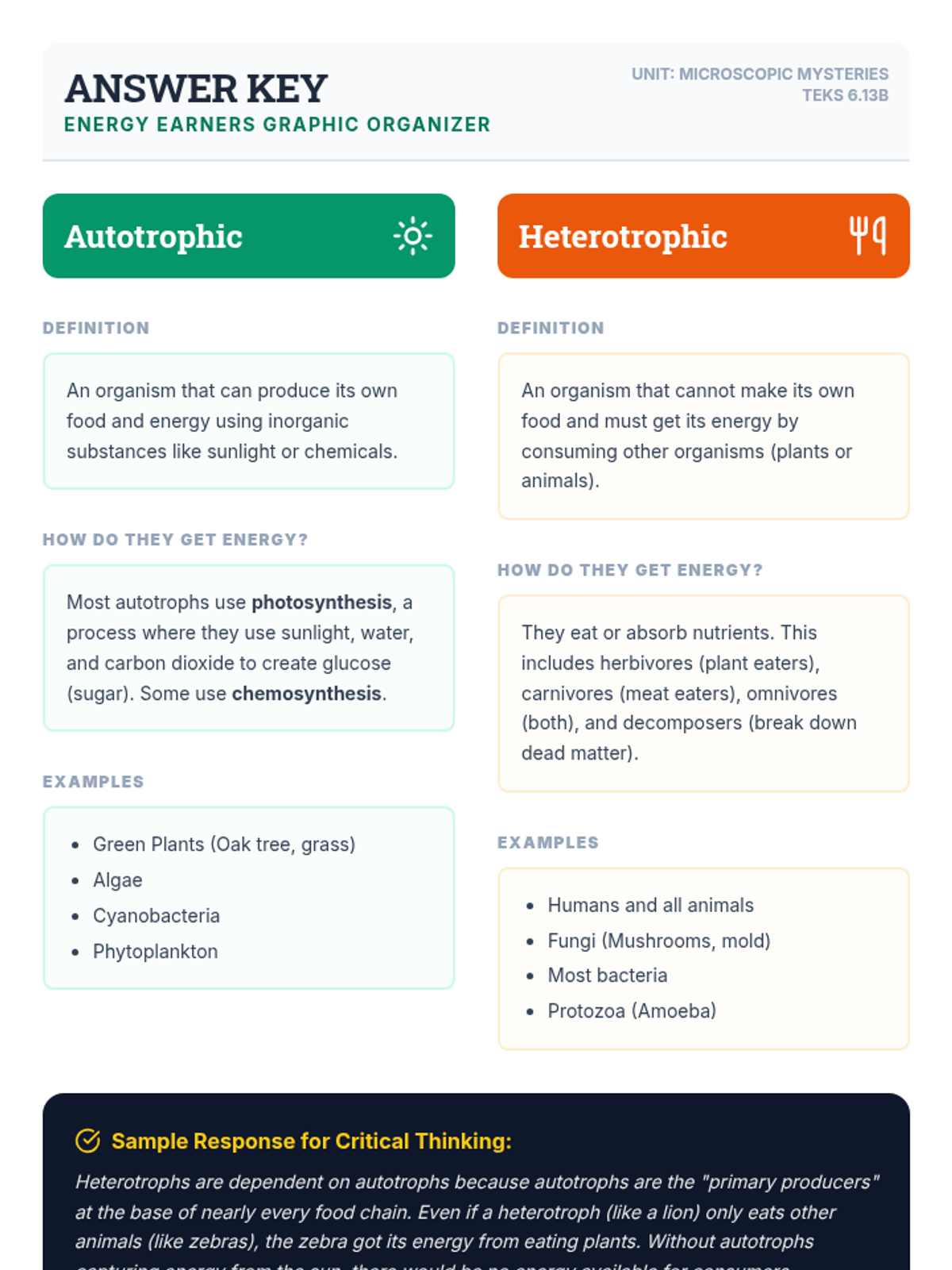
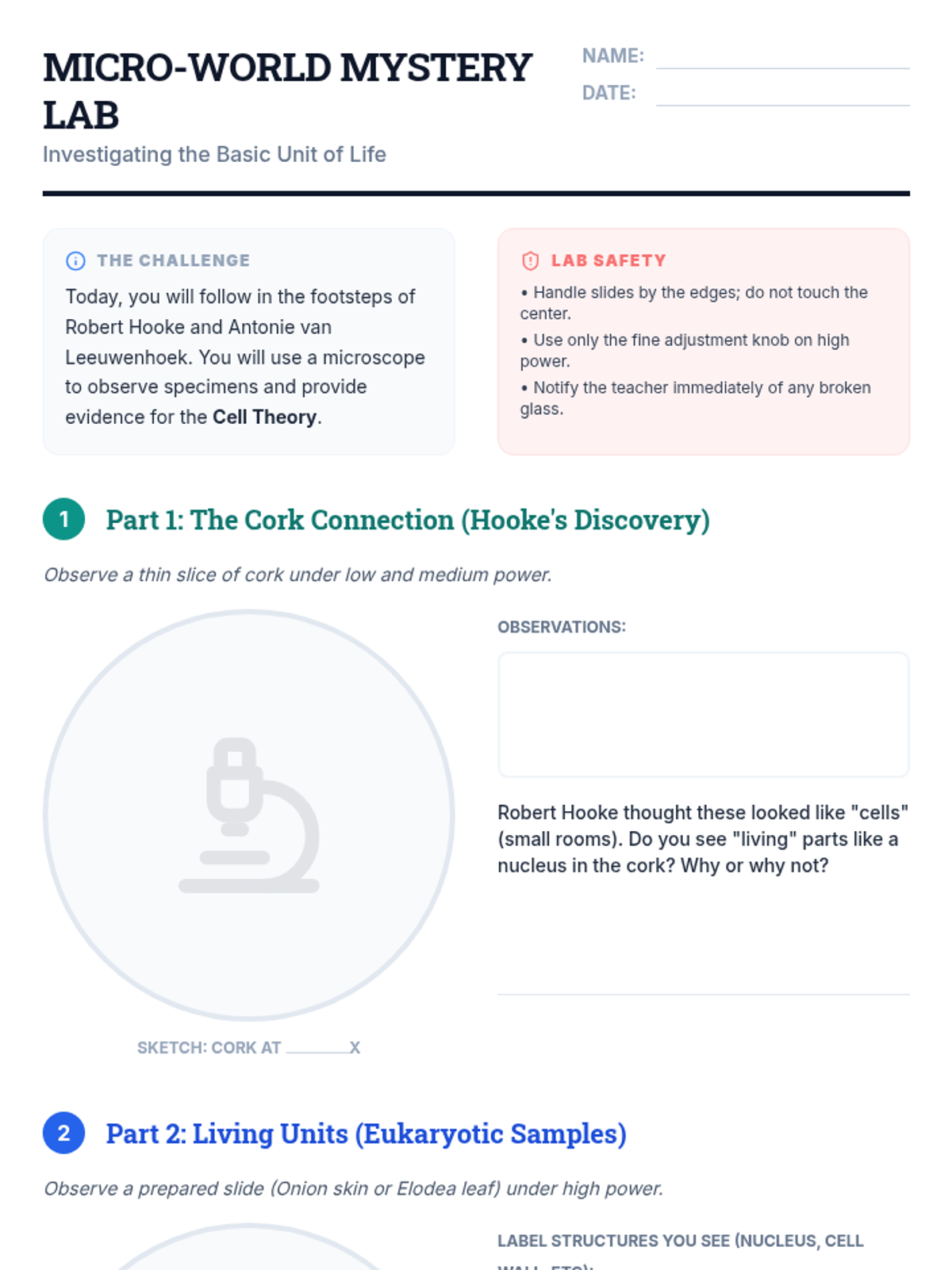
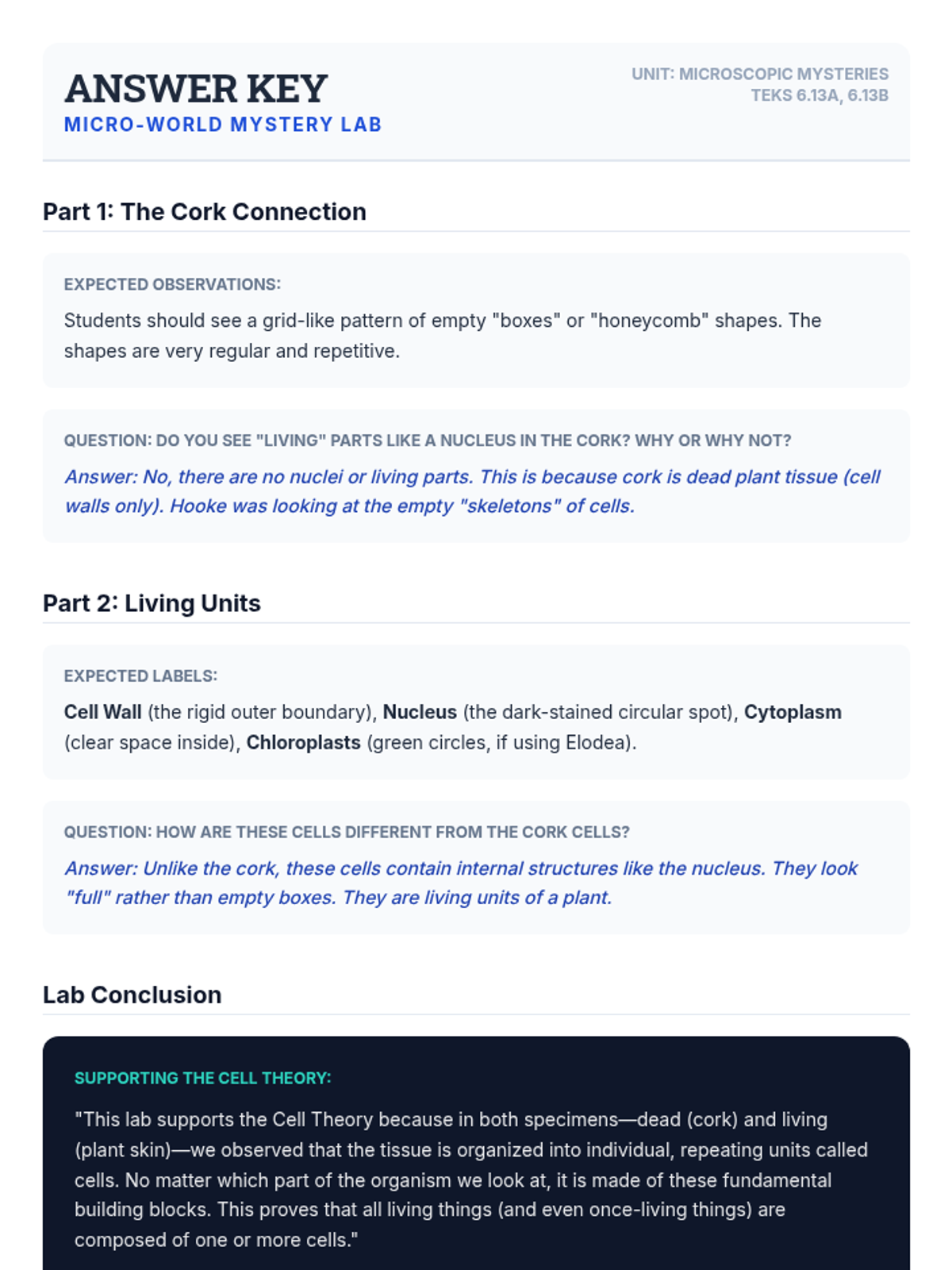
Students investigate the historical milestones of cell theory and differentiate between organisms based on their cellular structure and nutritional methods.
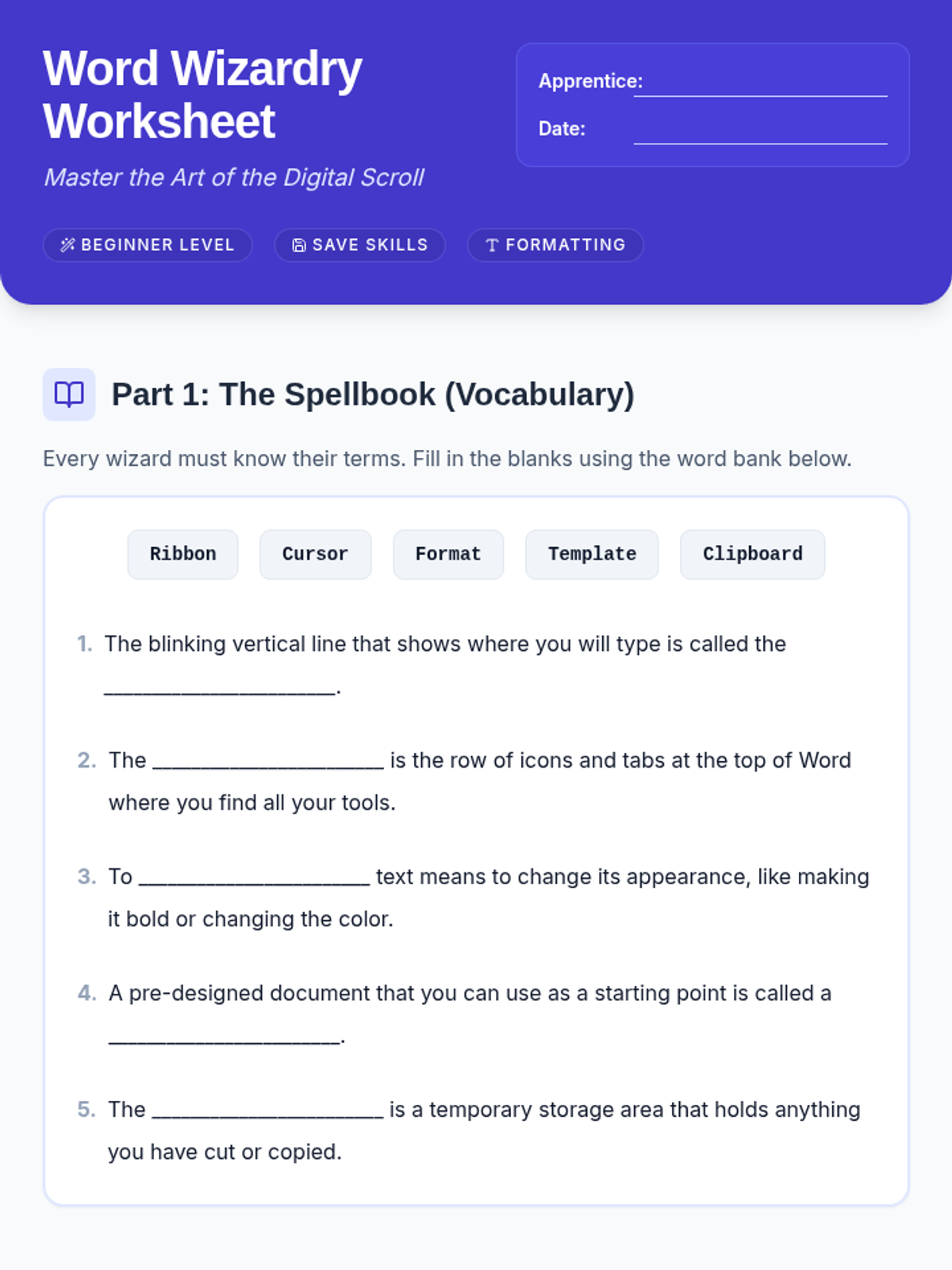
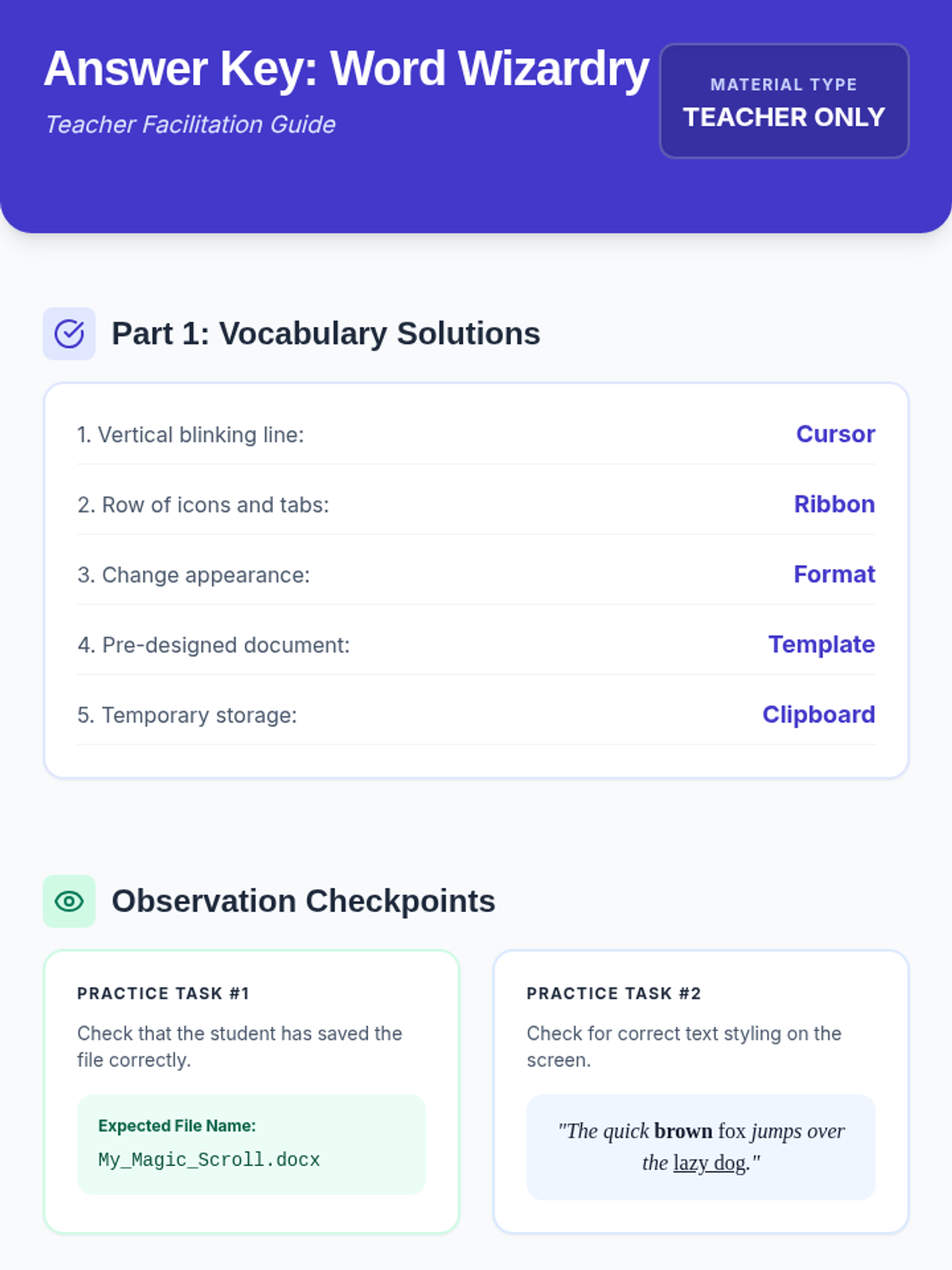
An introductory lesson on Microsoft Word basics, covering document creation, saving, text formatting, and clipboard actions (copy/cut/paste). Students will learn through a 'Word Wizardry' theme, transforming technical skills into creative magic.
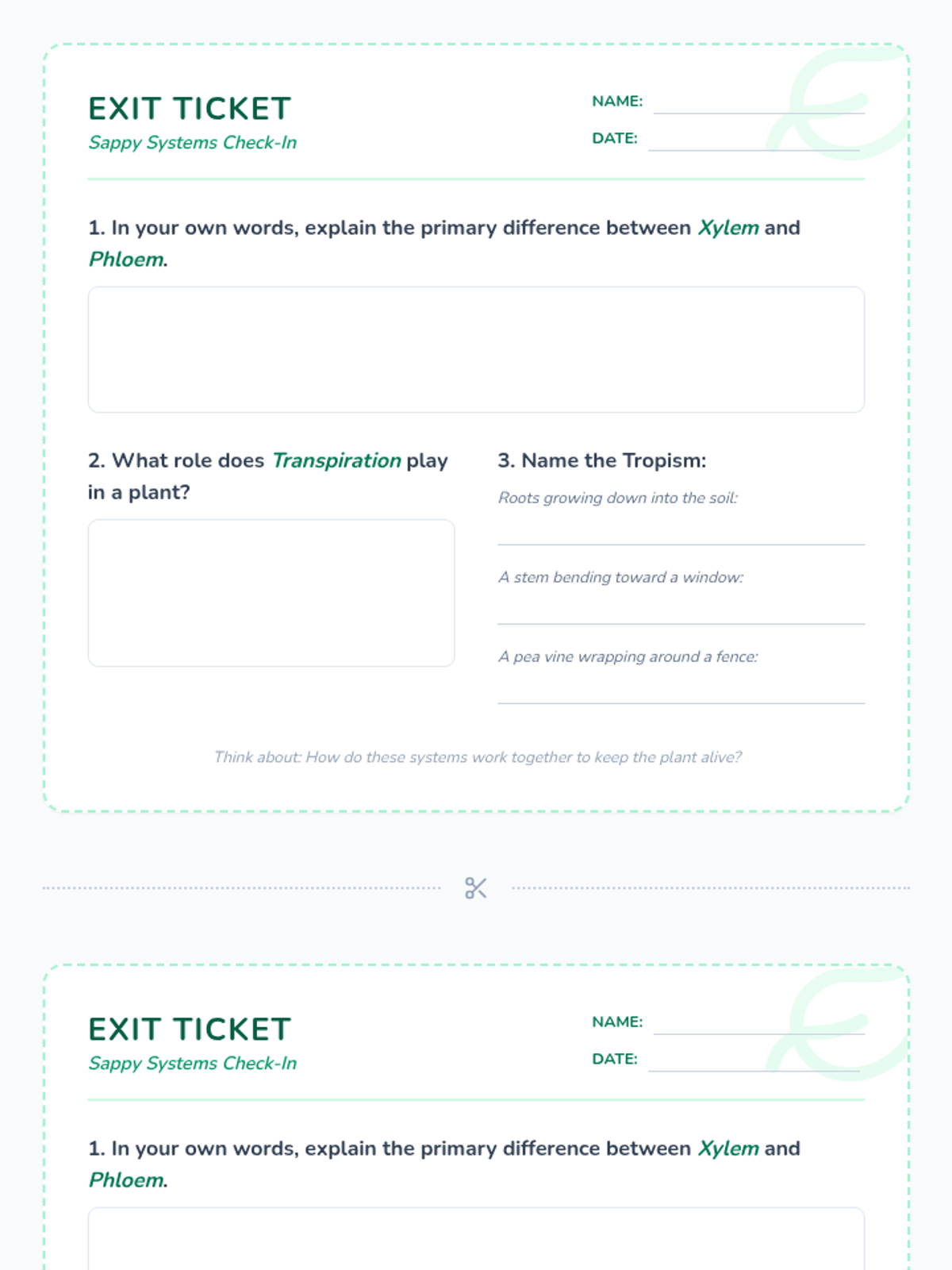
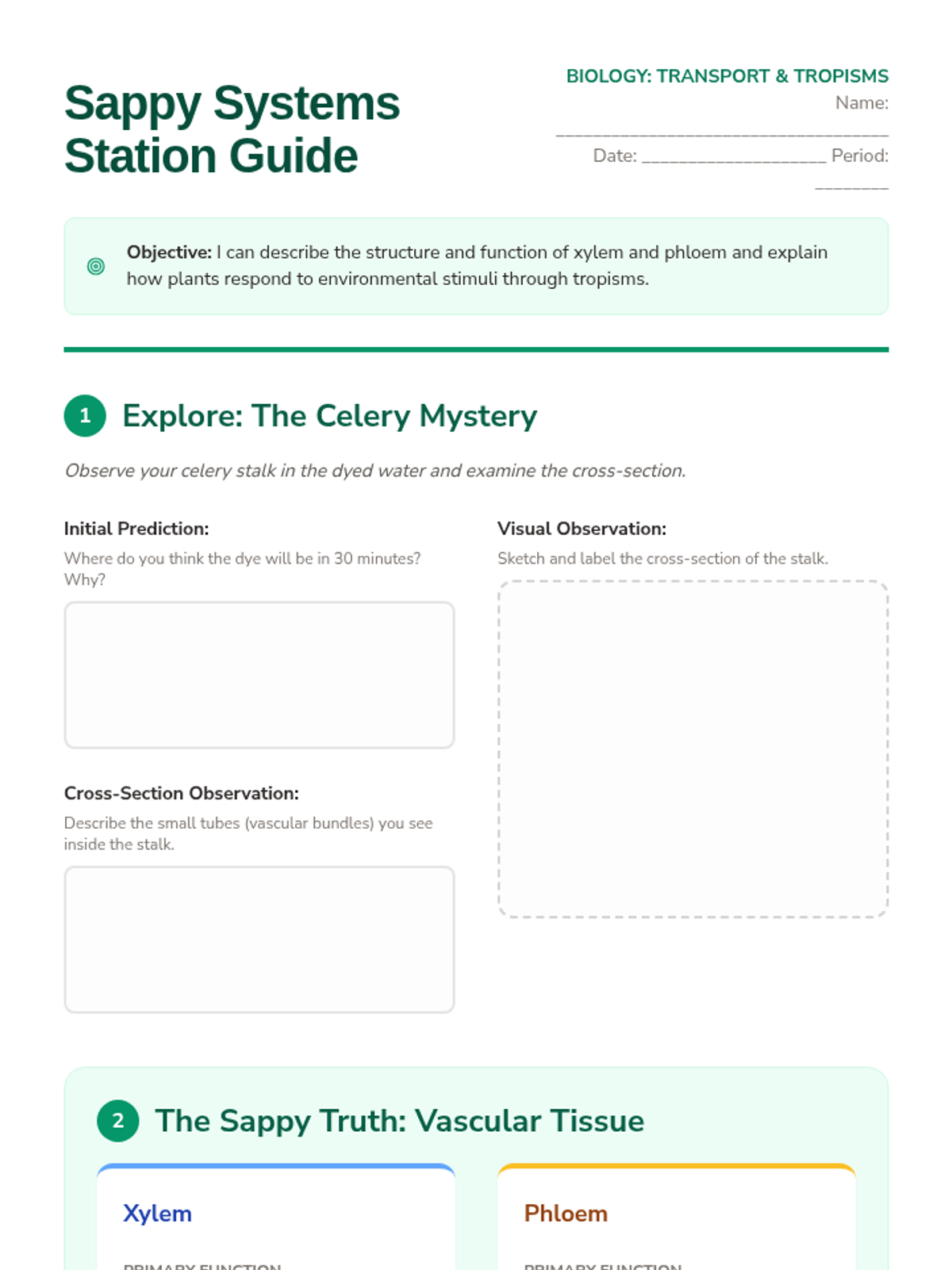
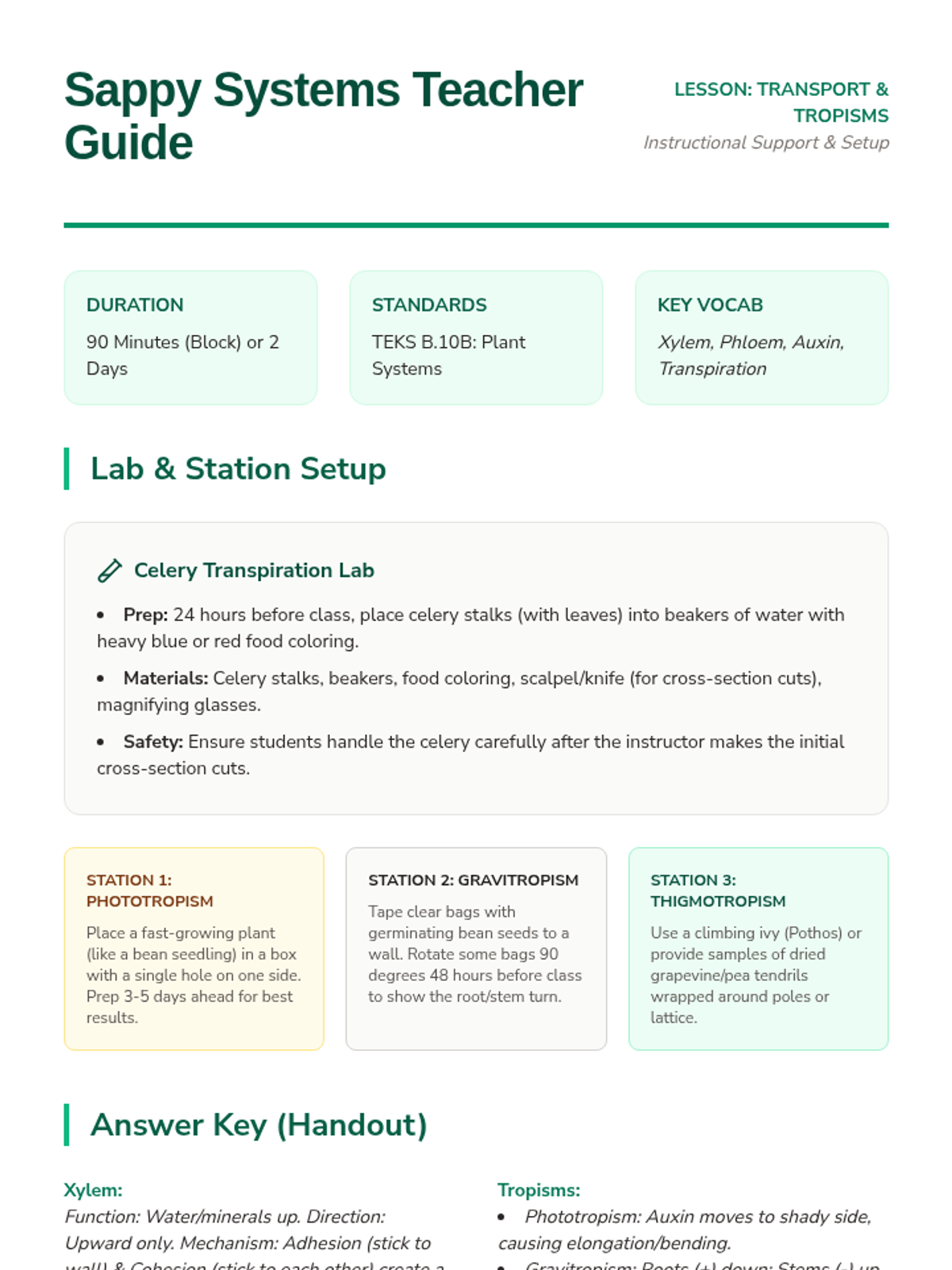
A comprehensive lesson on plant transport systems, covering the structure and function of xylem and phloem, transpiration, and various plant tropisms through hands-on lab work and station-based learning.
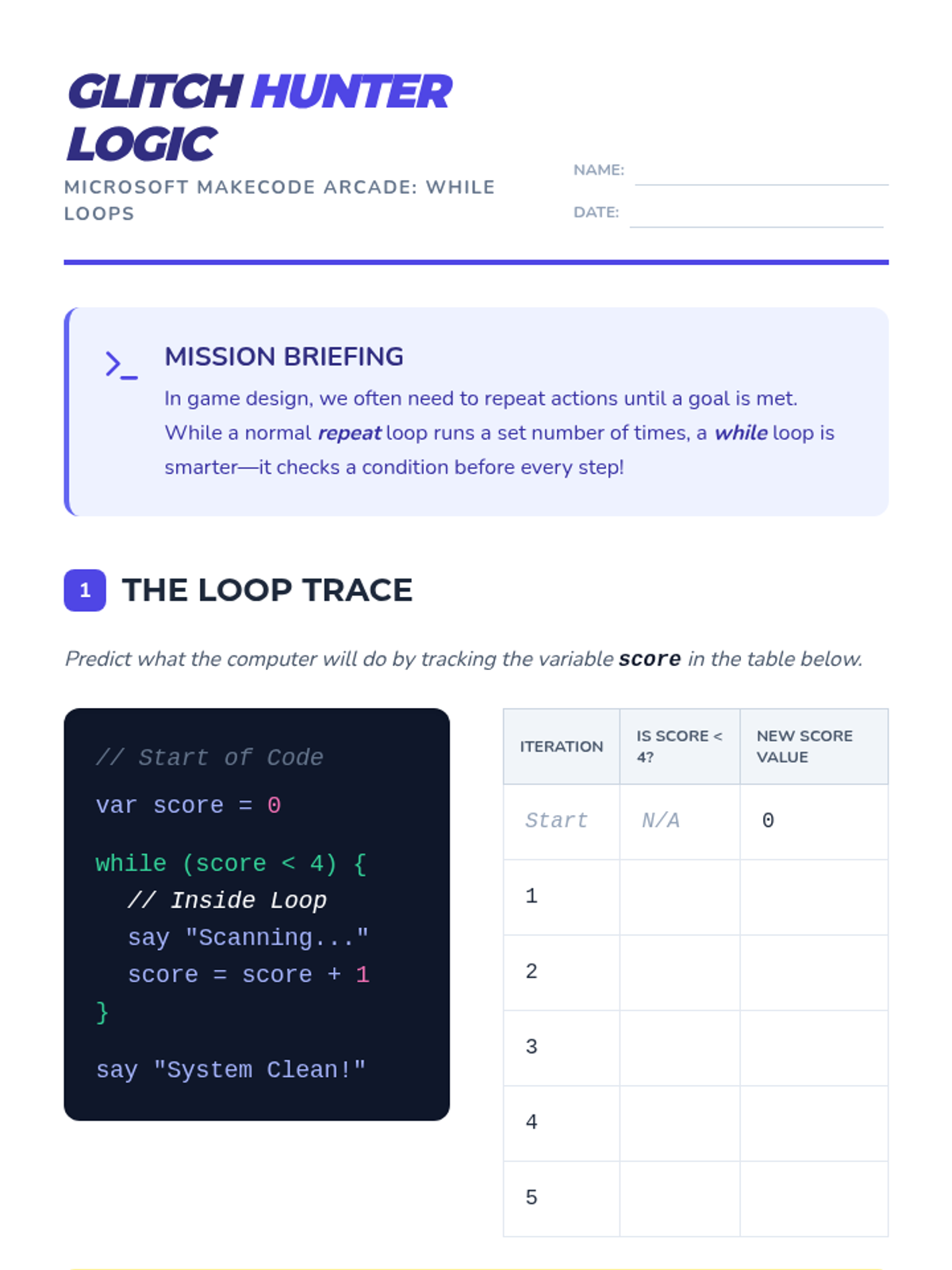
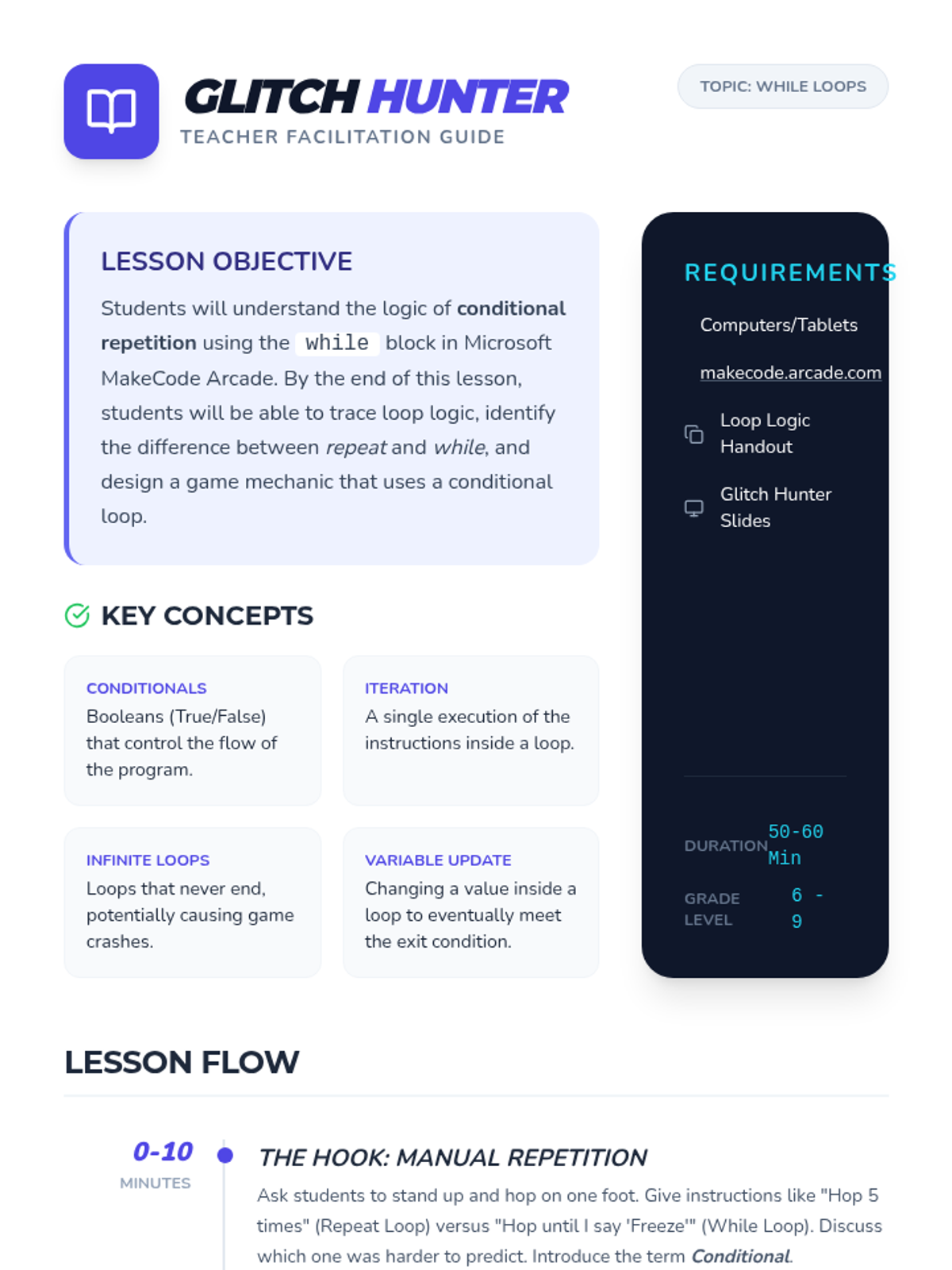
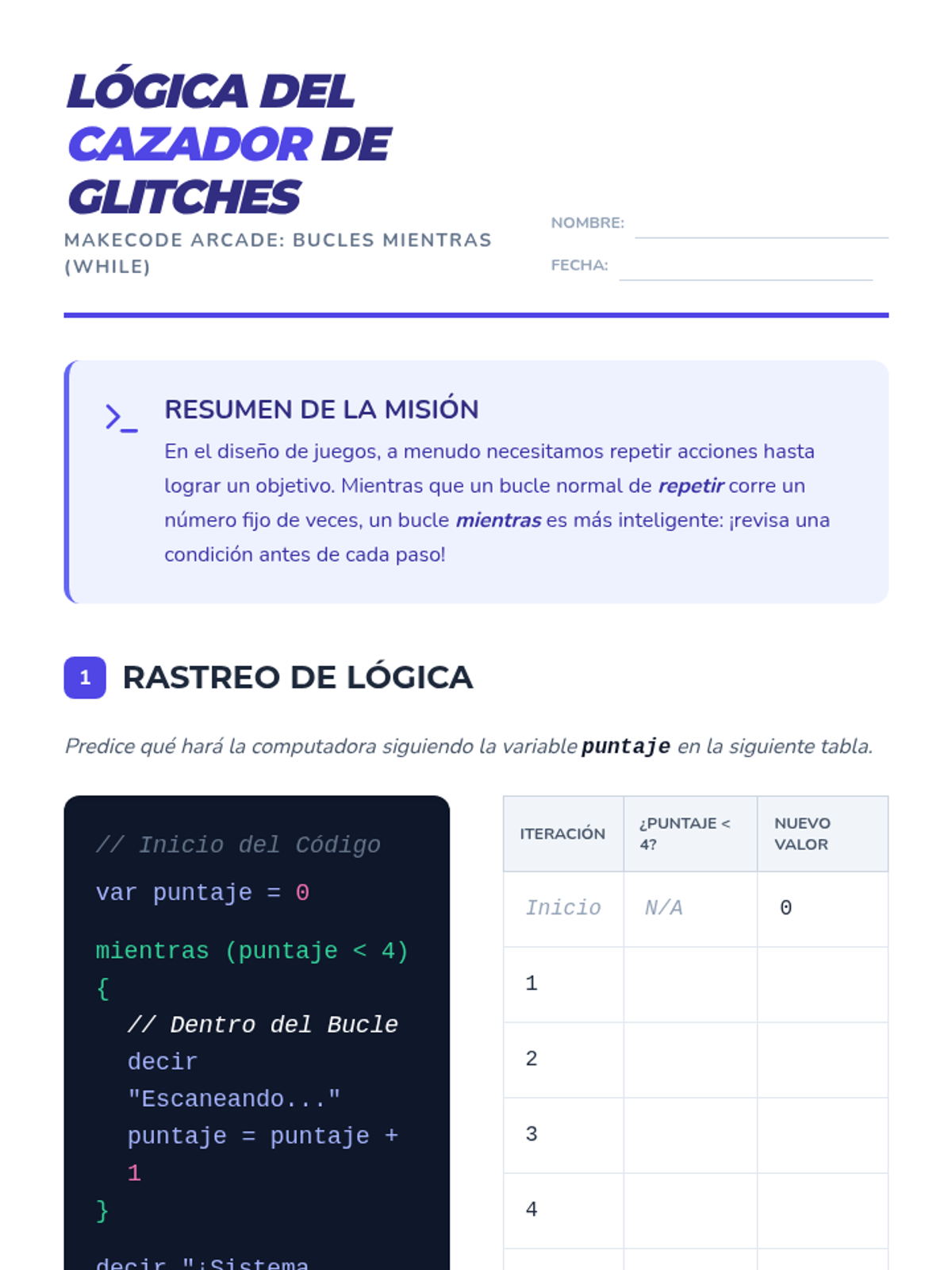
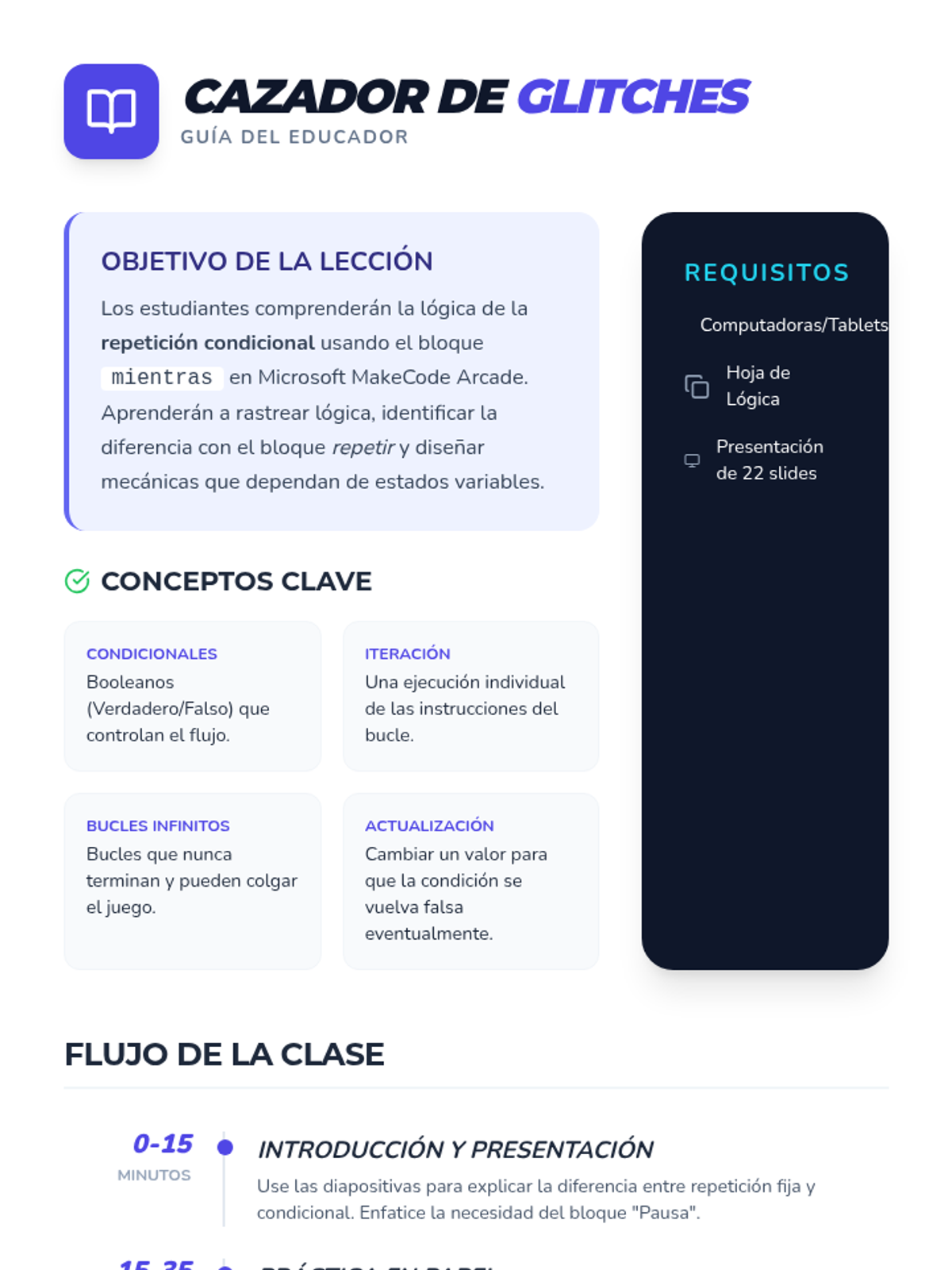
Los estudiantes exploran el poder de los bucles "mientras" (while) en Microsoft MakeCode Arcade para crear comportamientos repetitivos en sus juegos. Aprenden a usar condiciones para controlar la repetición y automatizar mecánicas como la generación de enemigos o el seguimiento de puntajes.