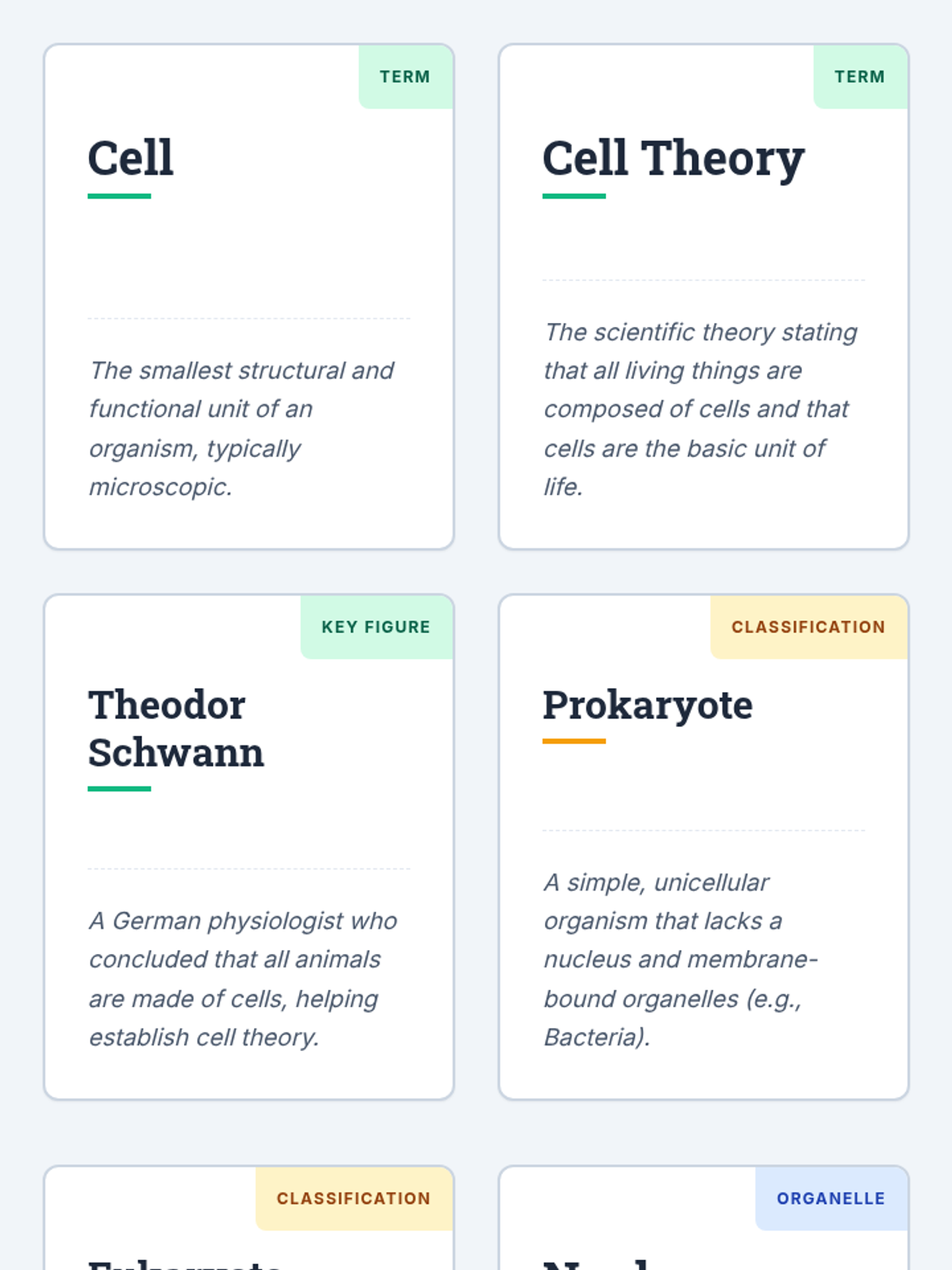
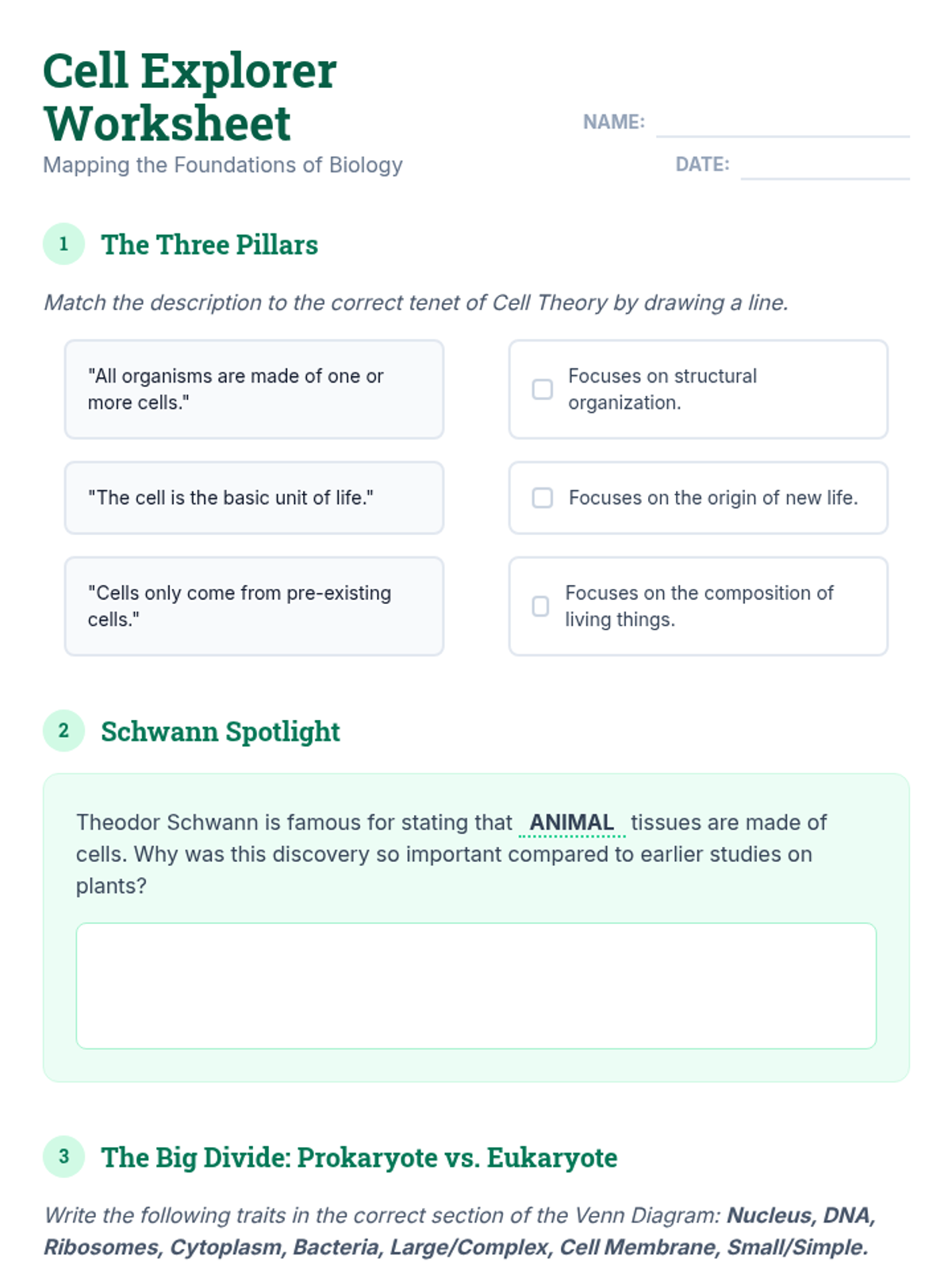
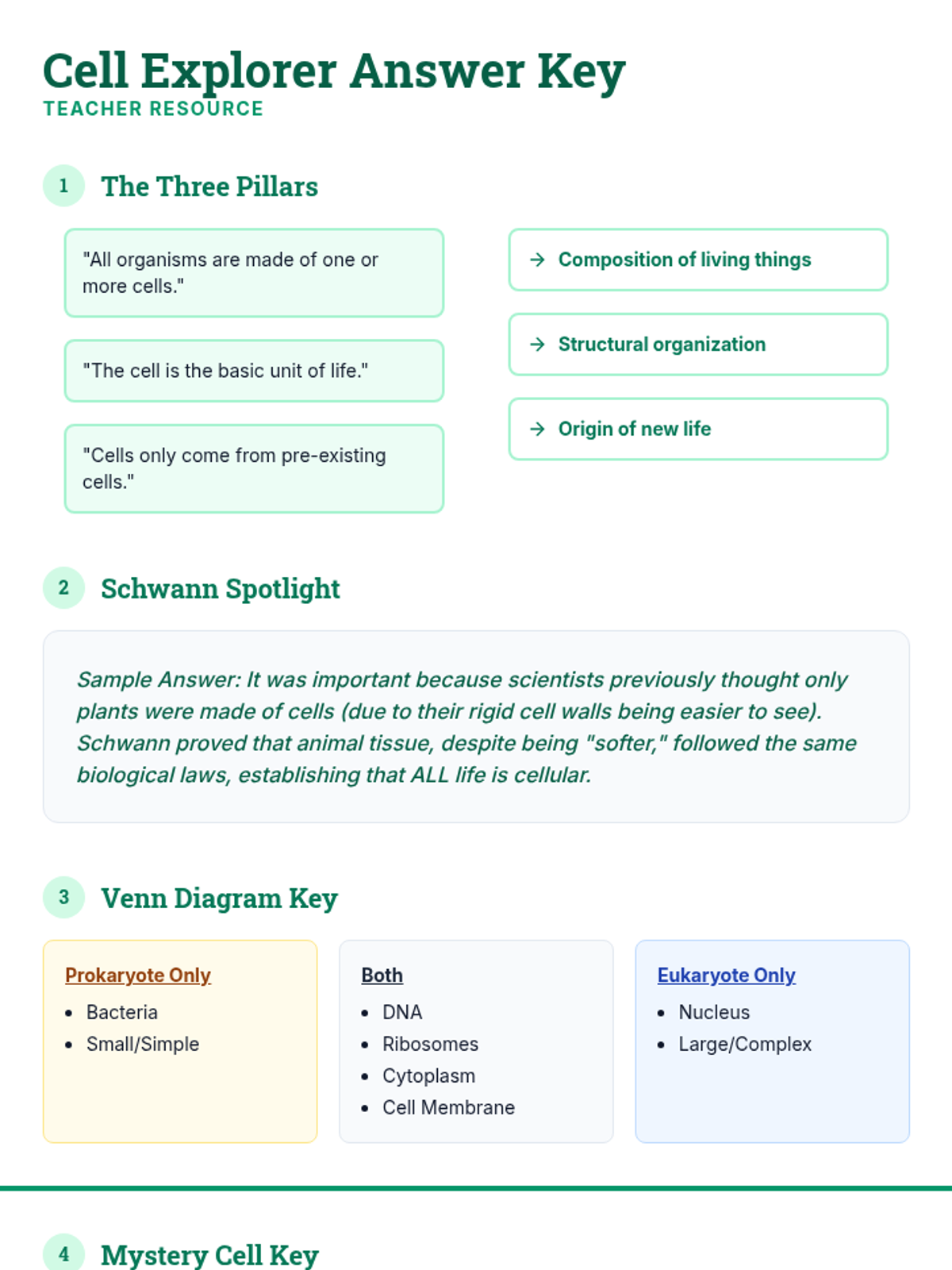
Students investigate the historical milestones of cell theory and differentiate between organisms based on their cellular structure and nutritional methods.
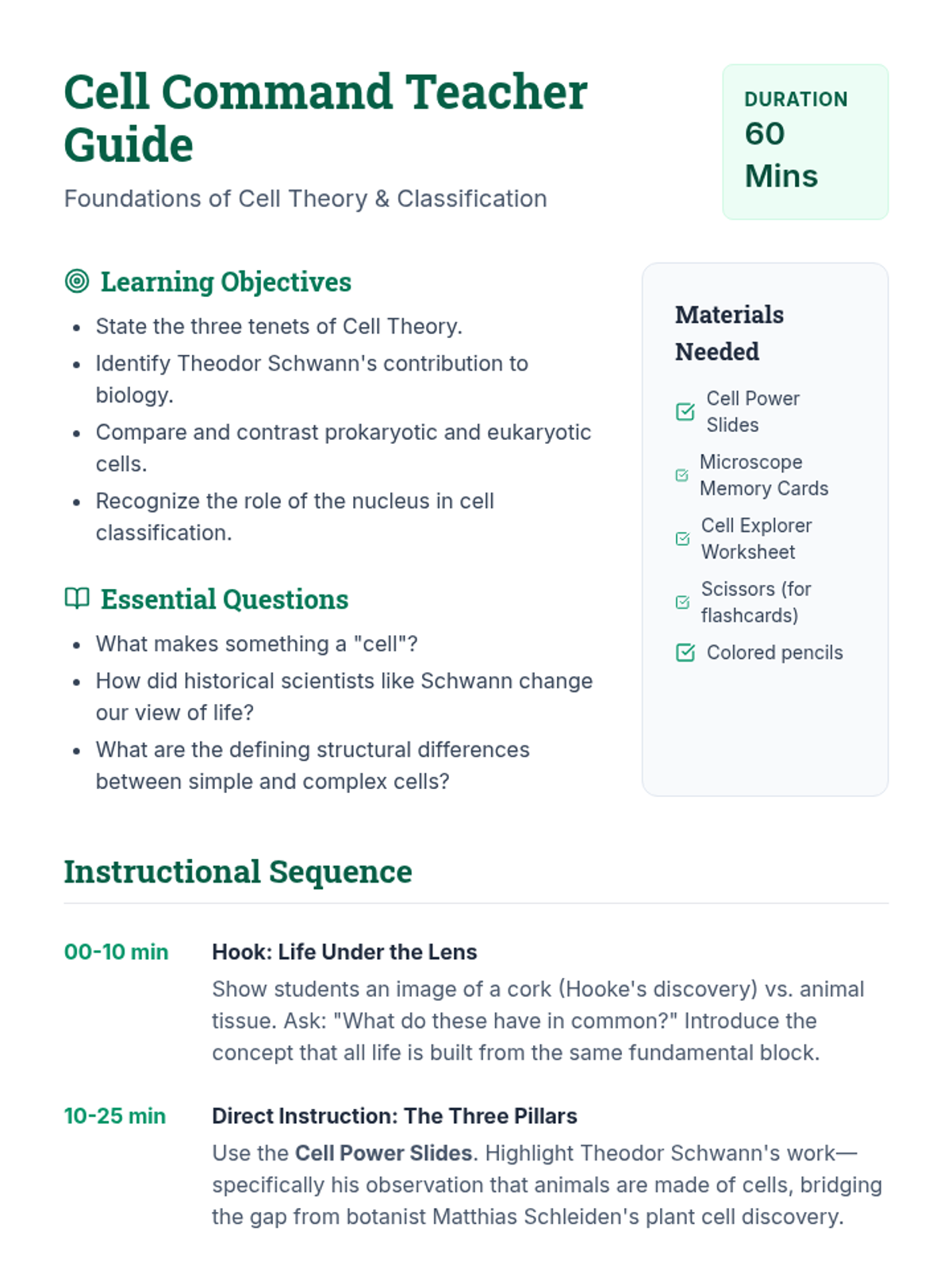
A comprehensive lesson exploring the foundations of cell theory, Theodor Schwann's contributions, and the fundamental differences between prokaryotic and eukaryotic cells.
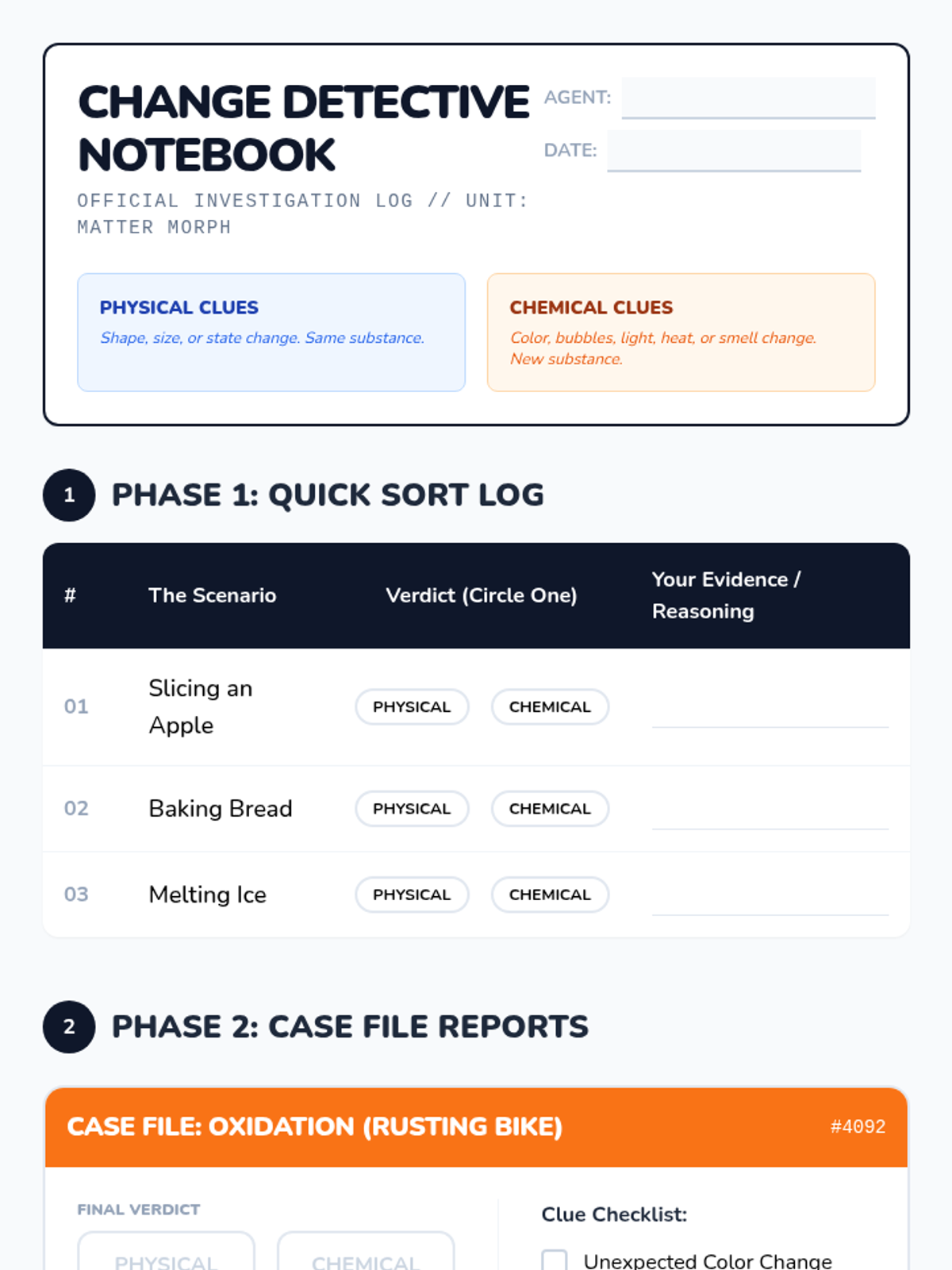
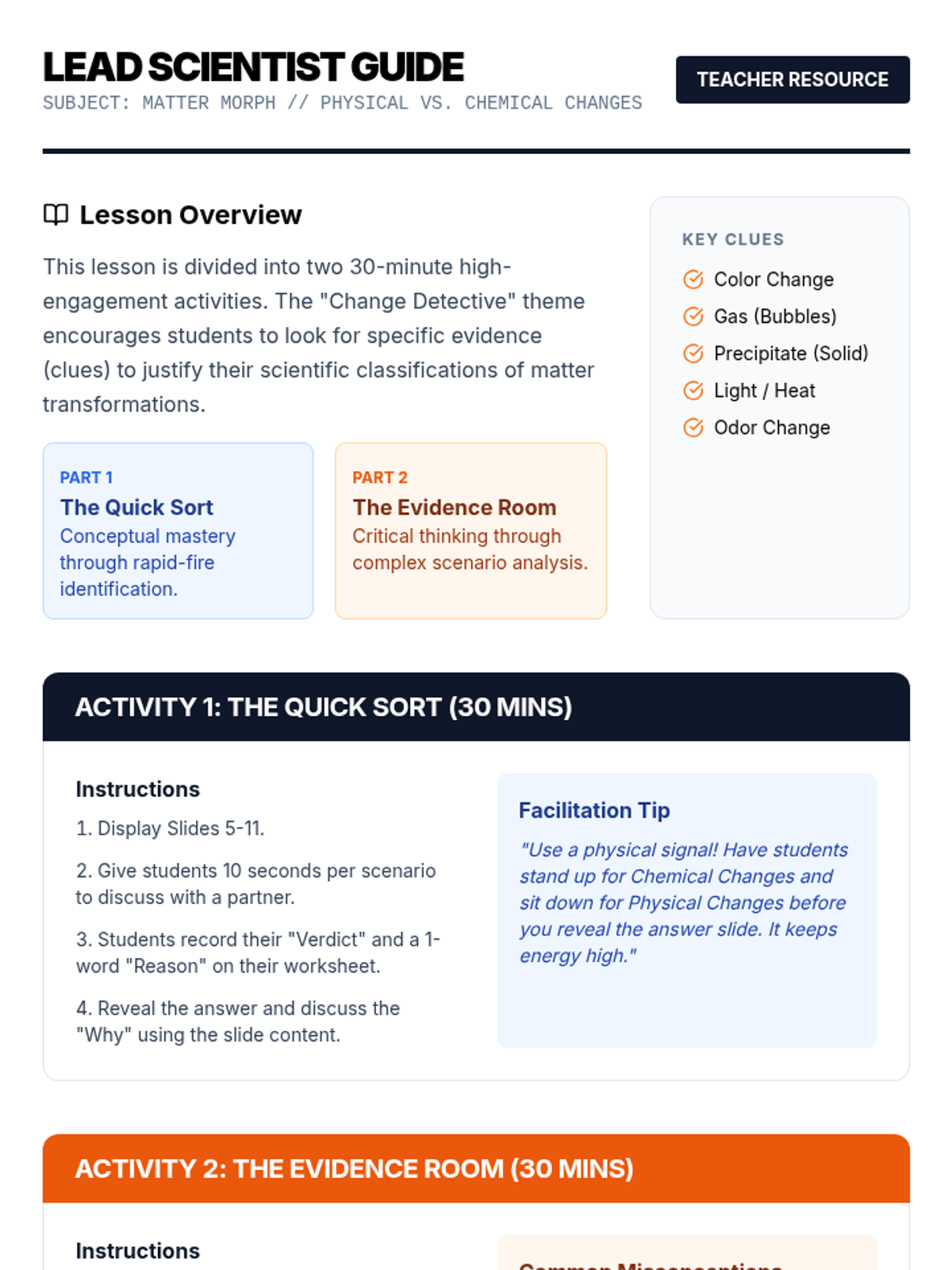
A high-energy lesson where students become 'Change Detectives' to identify and justify the differences between physical and chemical changes through two distinct 30-minute investigations.
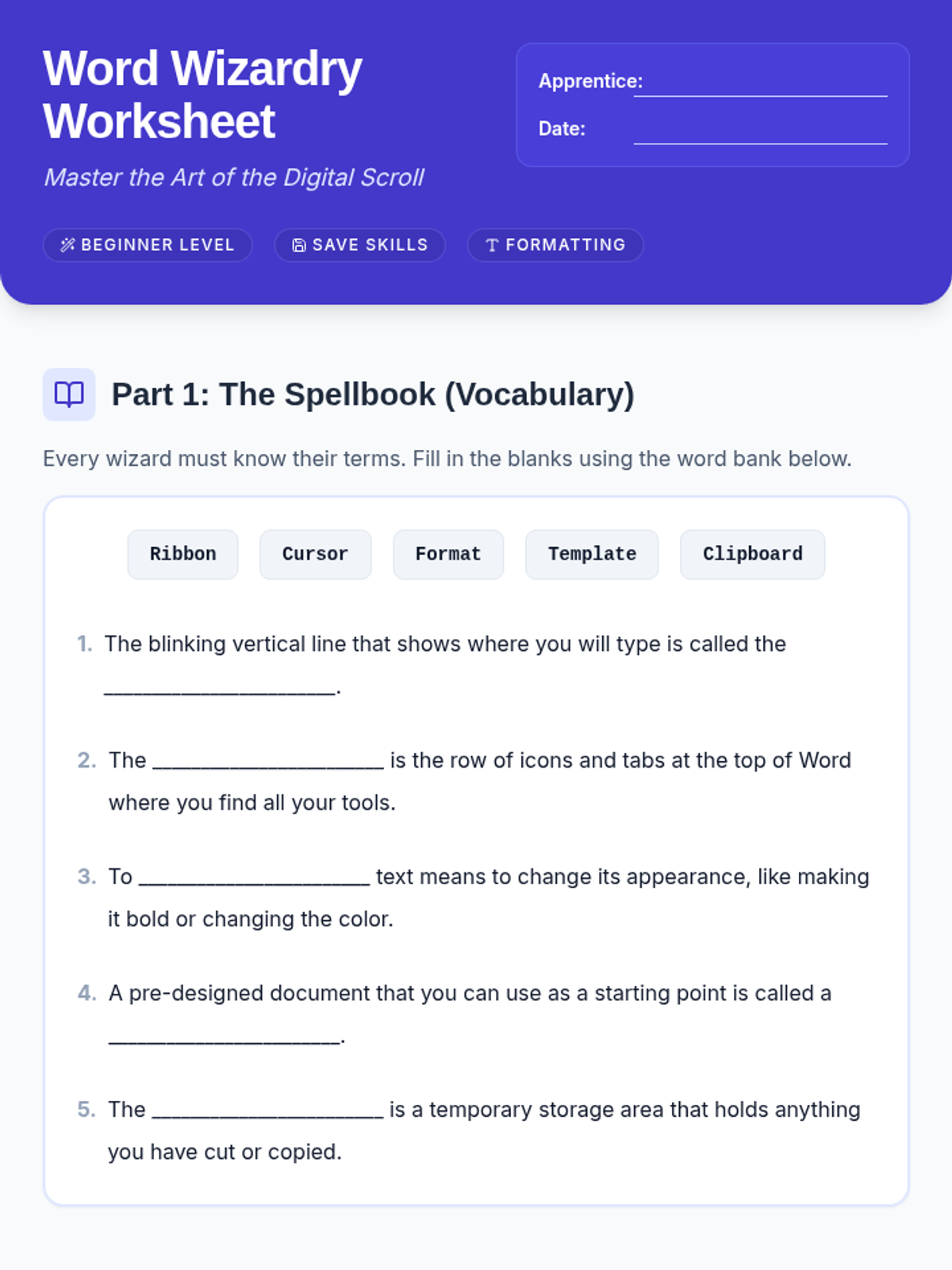
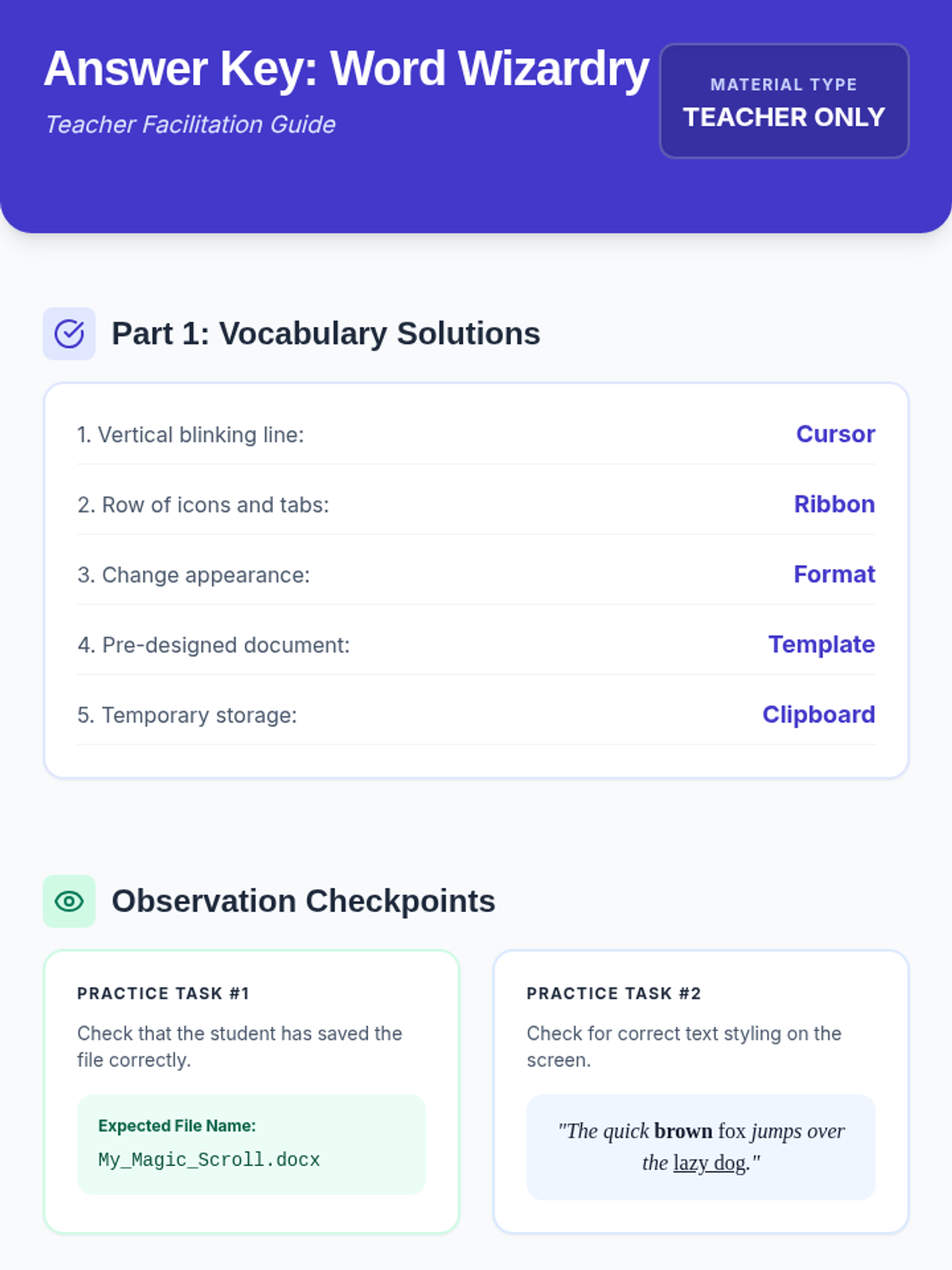
An introductory lesson on Microsoft Word basics, covering document creation, saving, text formatting, and clipboard actions (copy/cut/paste). Students will learn through a 'Word Wizardry' theme, transforming technical skills into creative magic.
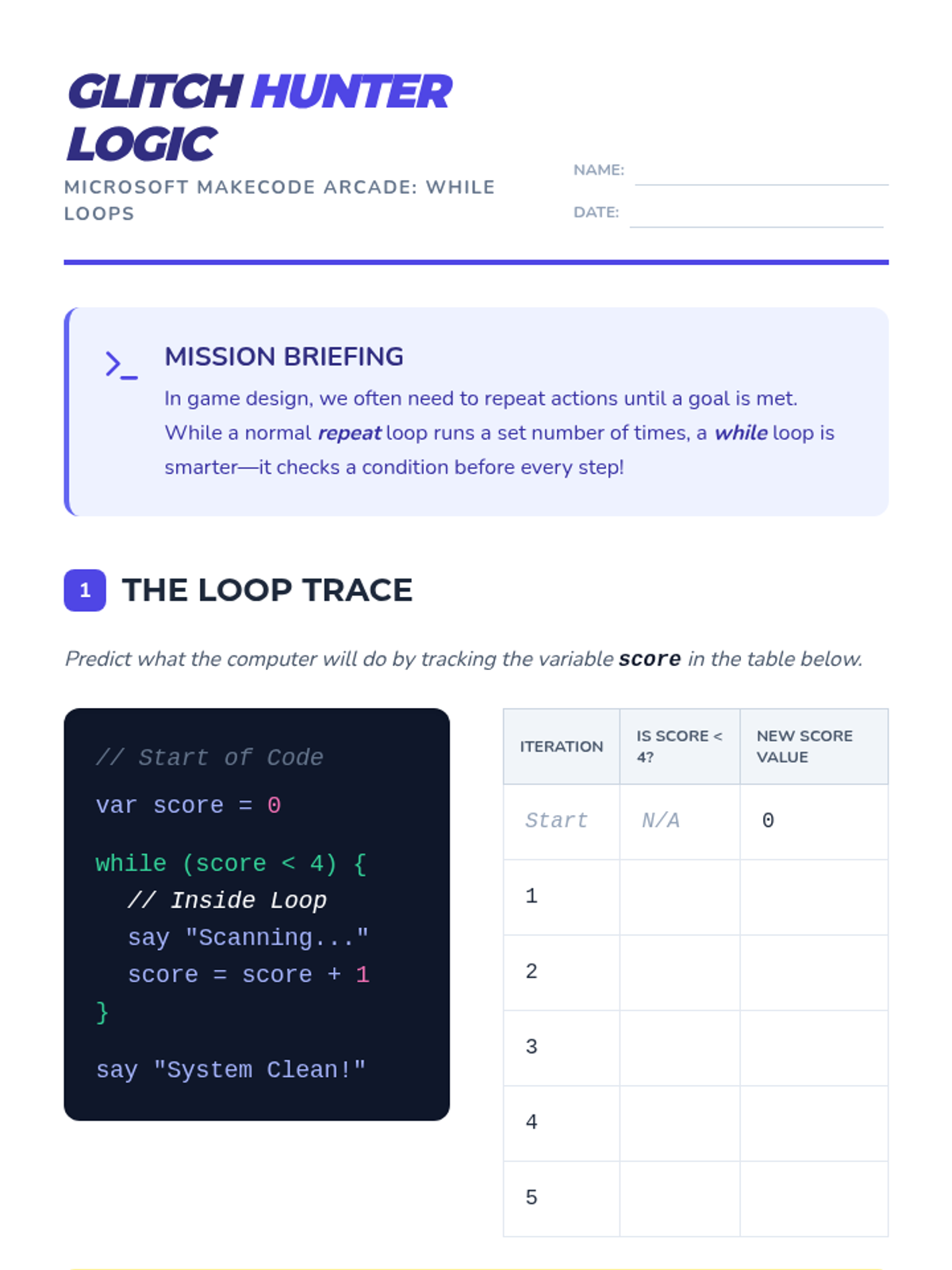
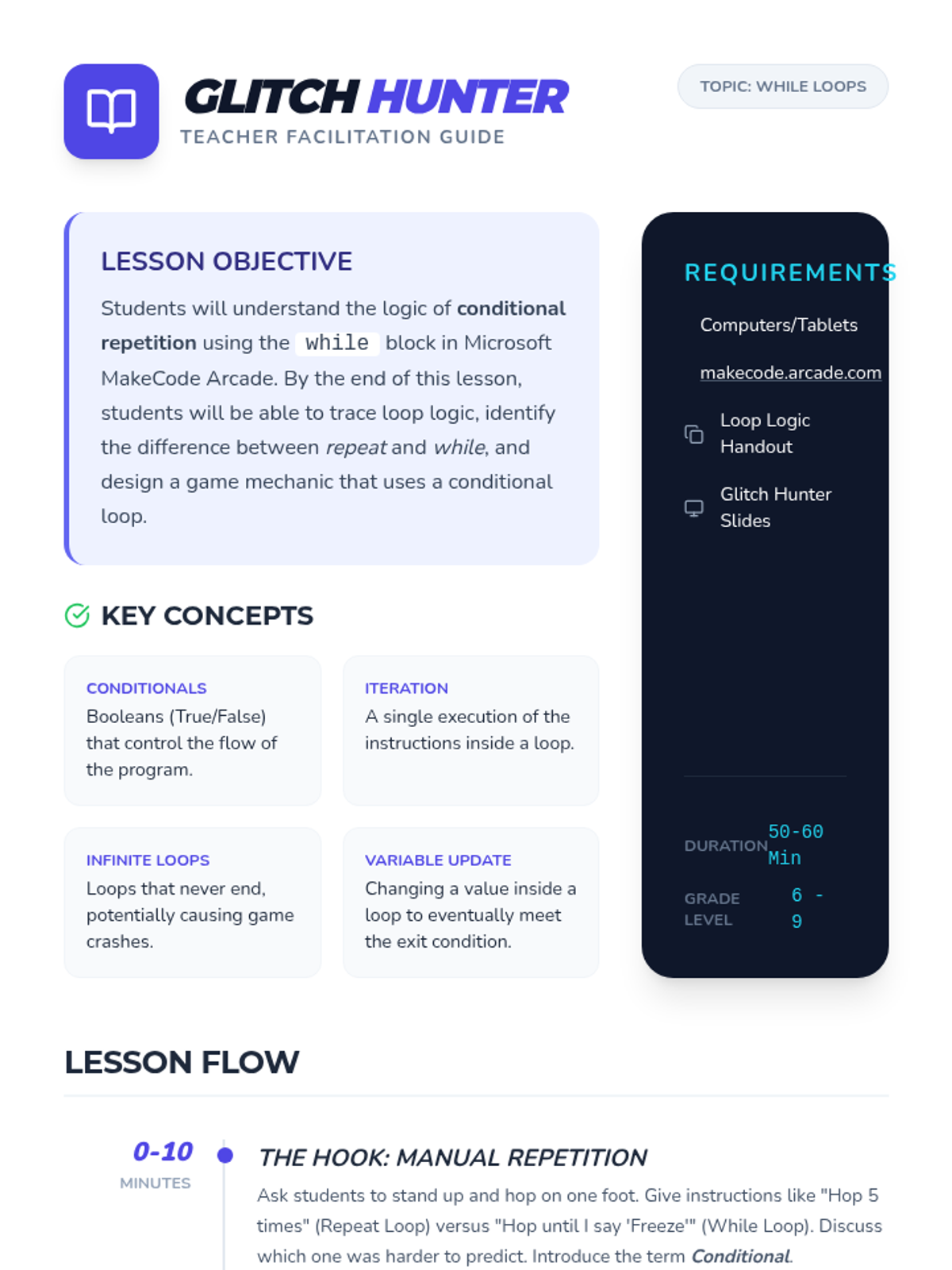
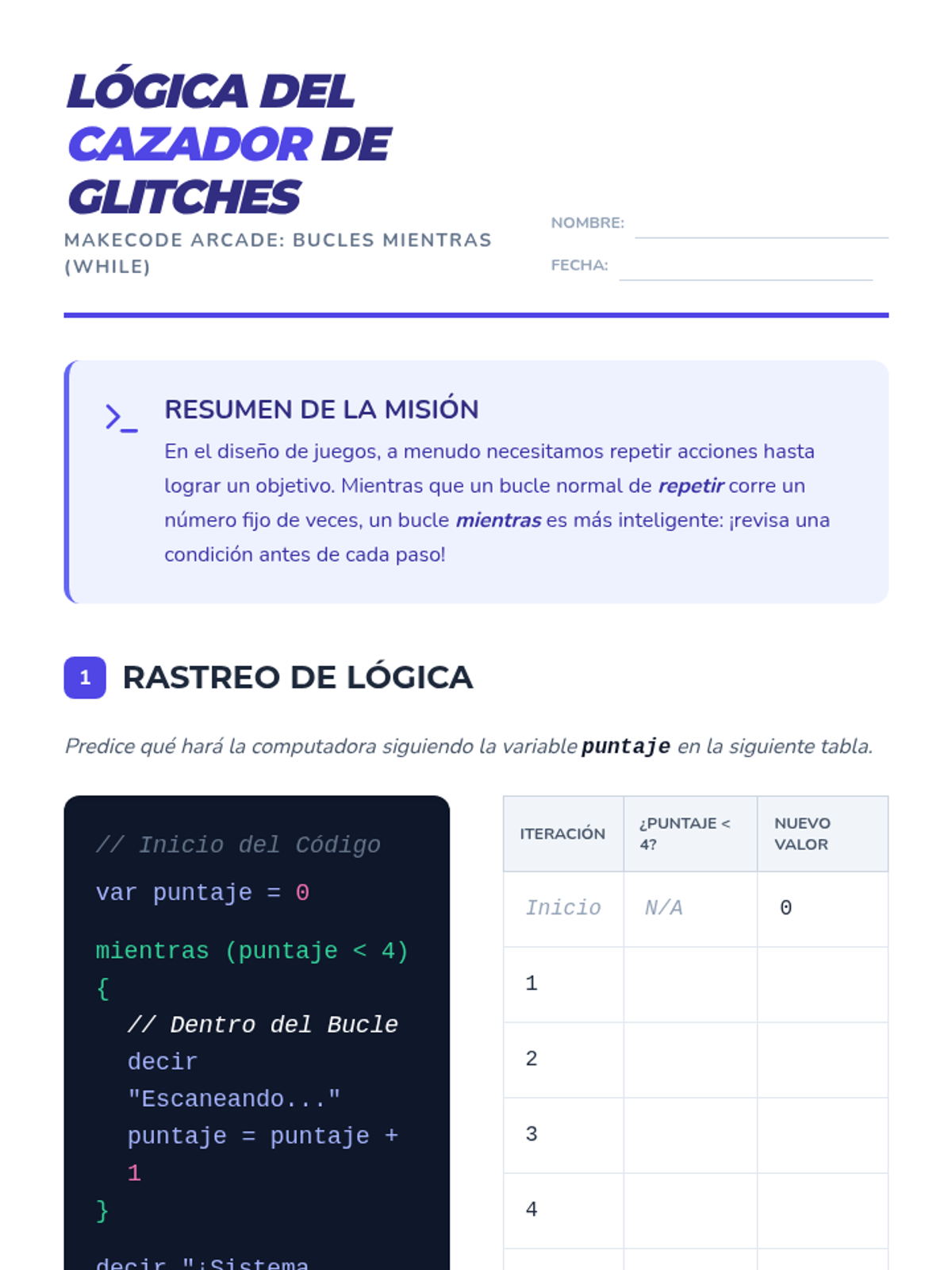
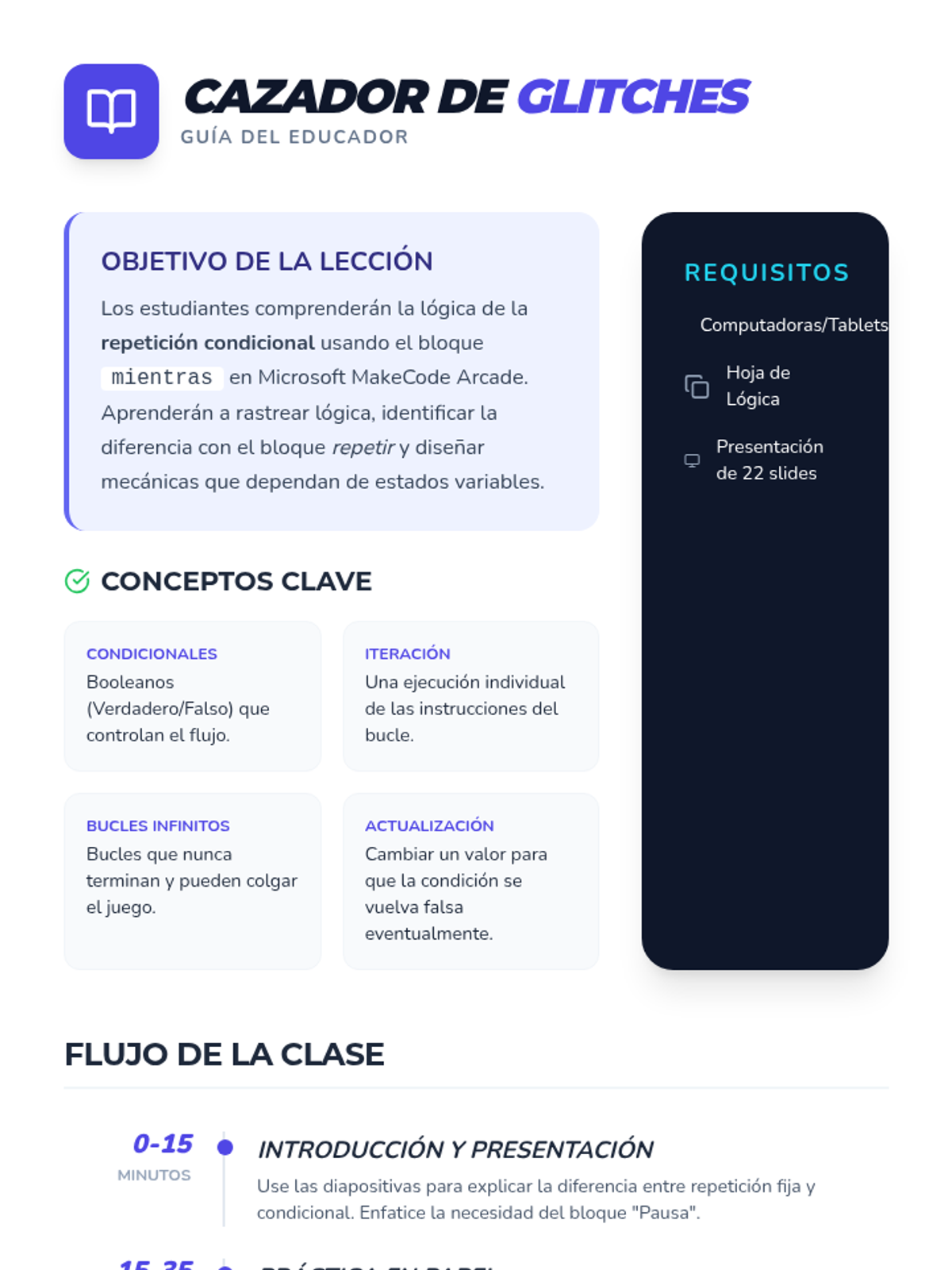
Los estudiantes exploran el poder de los bucles "mientras" (while) en Microsoft MakeCode Arcade para crear comportamientos repetitivos en sus juegos. Aprenden a usar condiciones para controlar la repetición y automatizar mecánicas como la generación de enemigos o el seguimiento de puntajes.
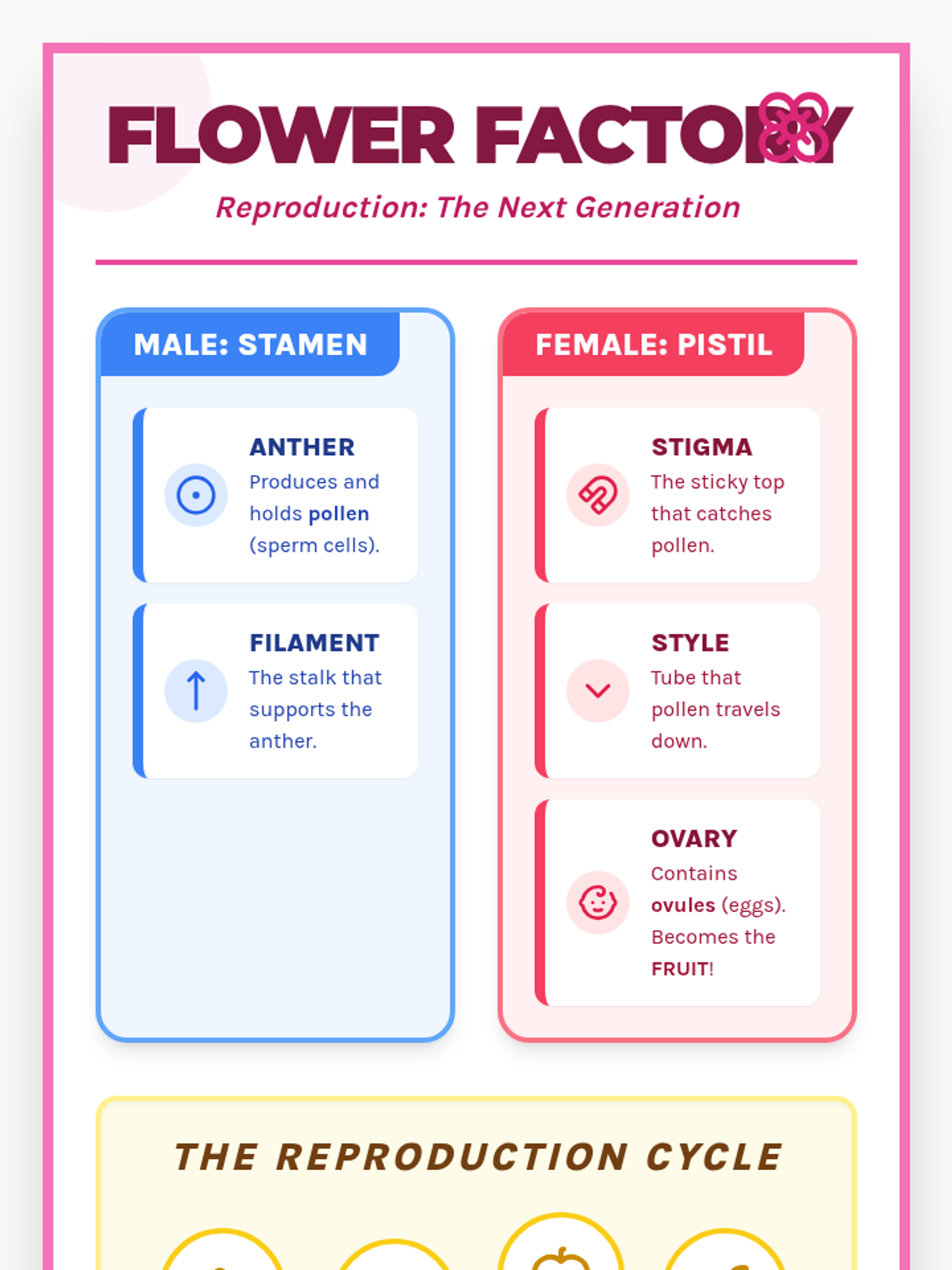
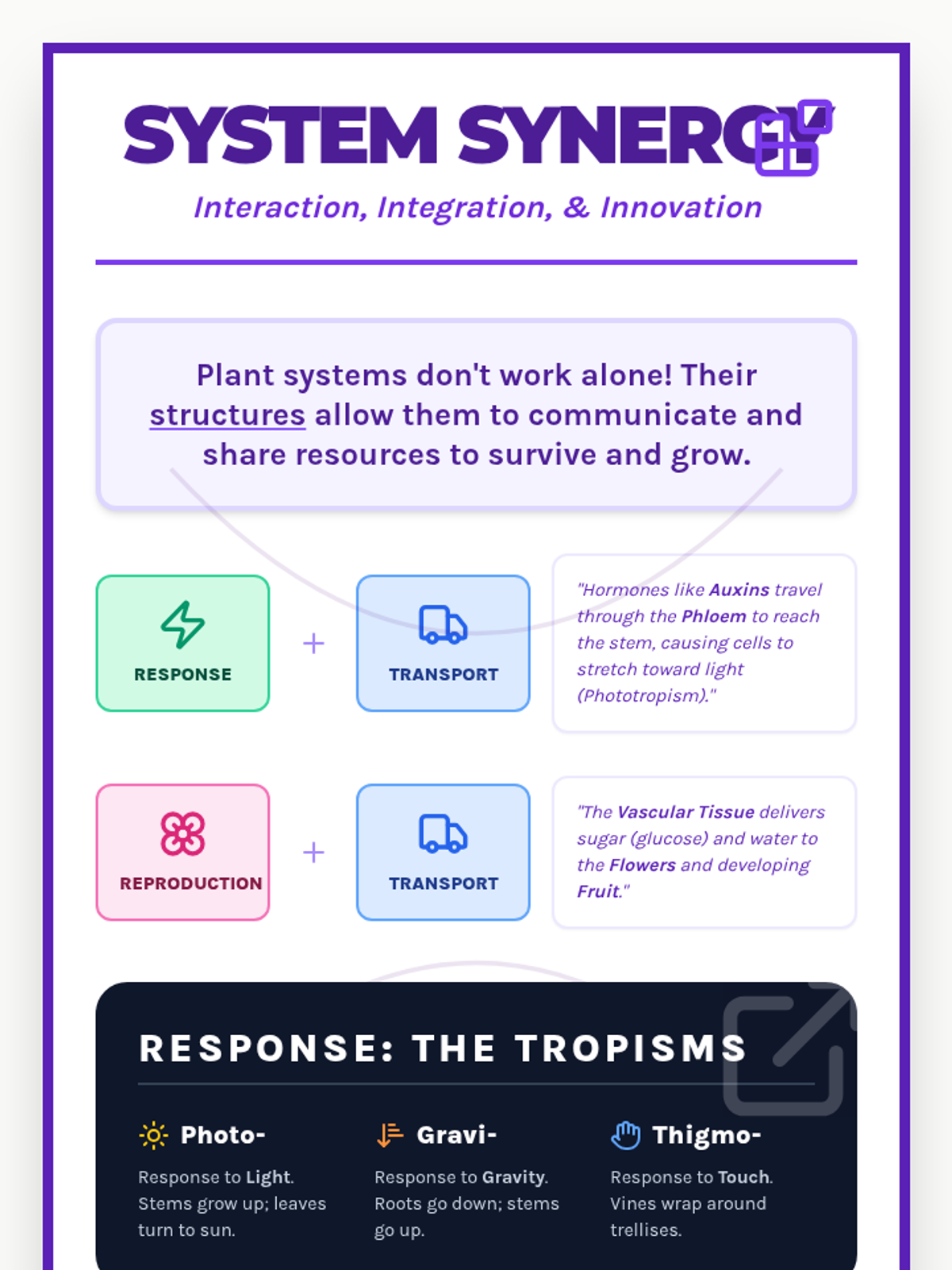
Students explore how roots, stems, leaves, and reproductive systems work together, using Pando as a case study for survival and adaptation.
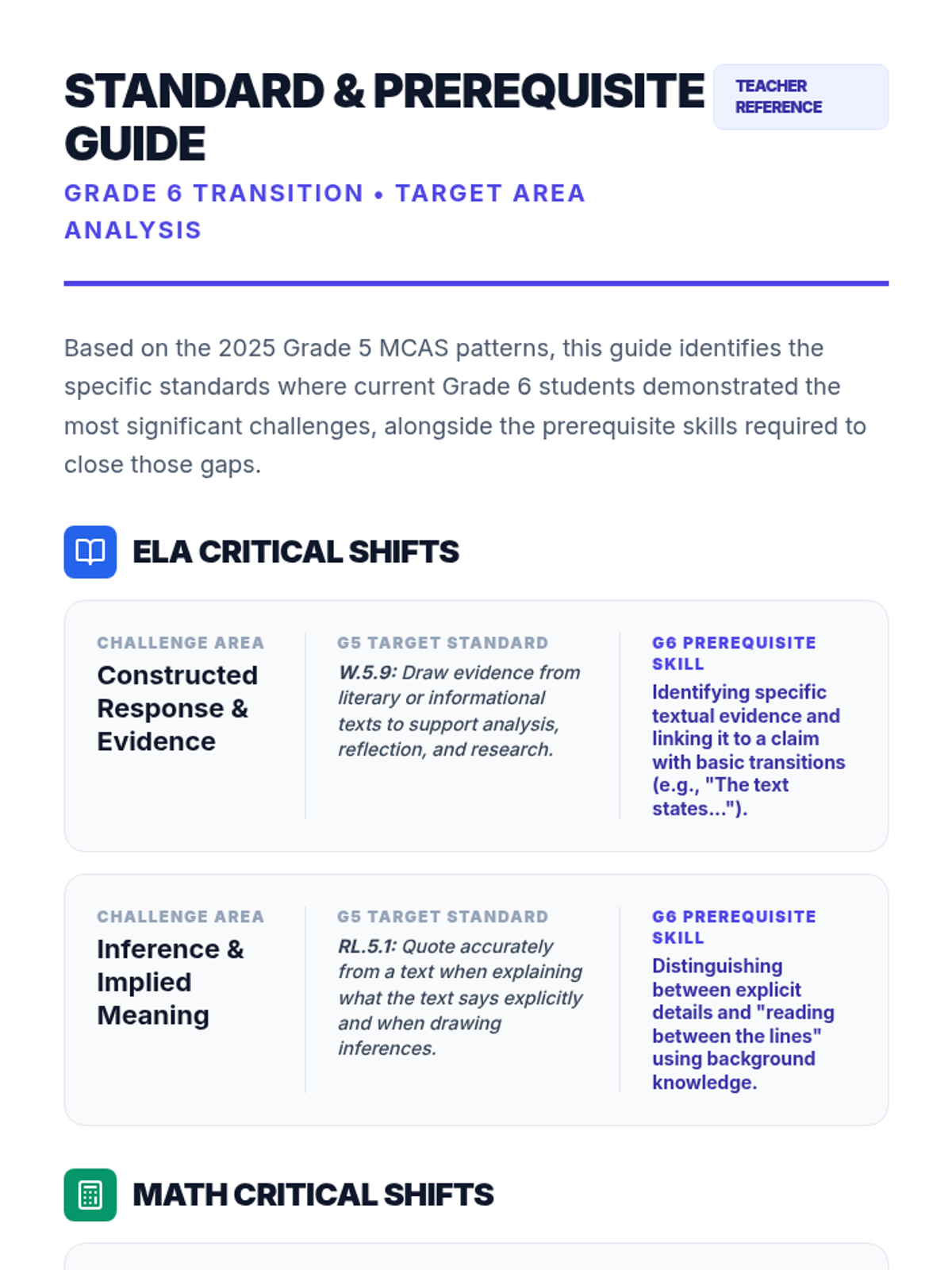
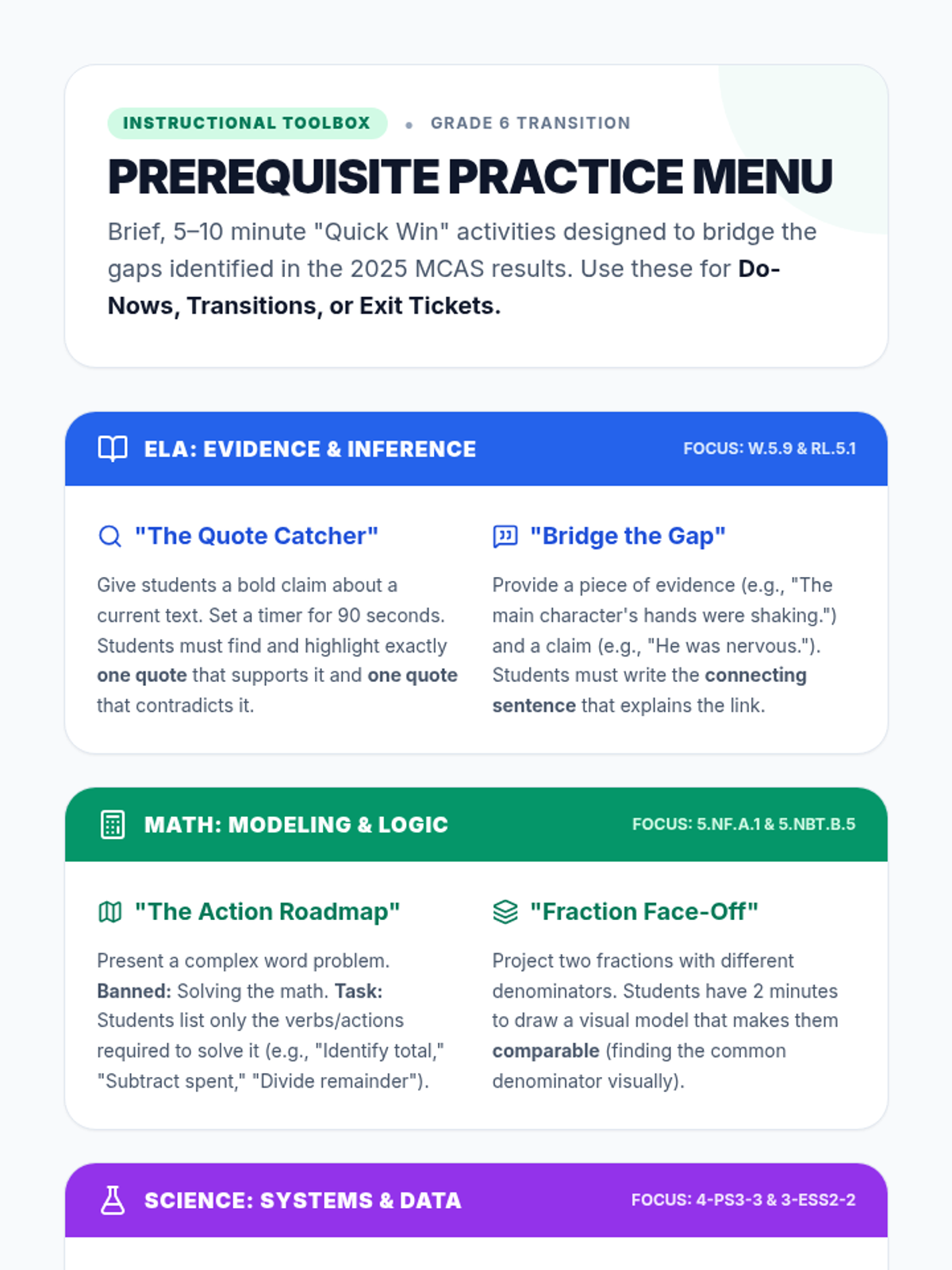
A comprehensive strategic planning resource for educators to analyze Grade 5 MCAS results and align Grade 6 instruction with identified student needs in ELA, Math, and Science.
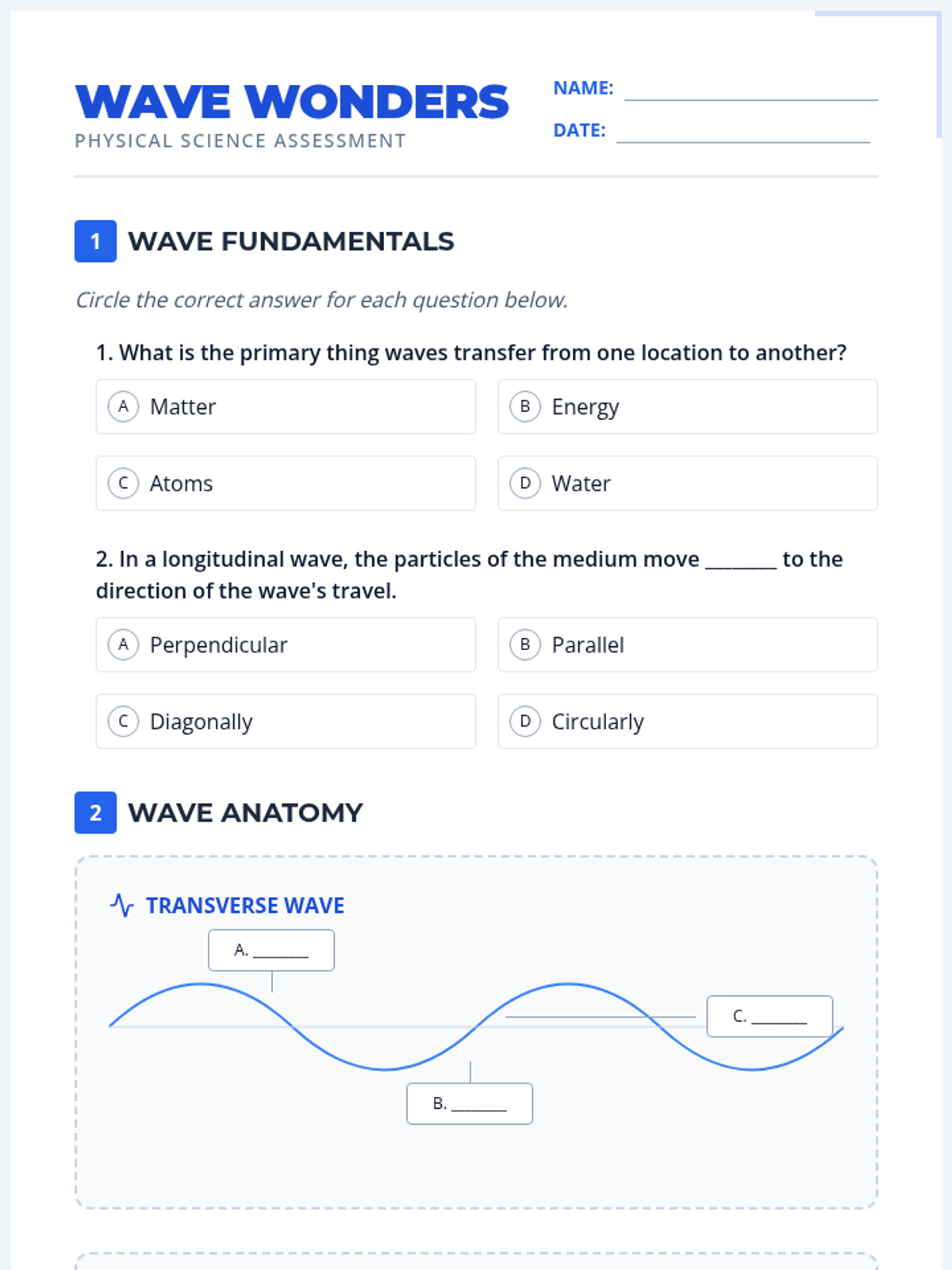
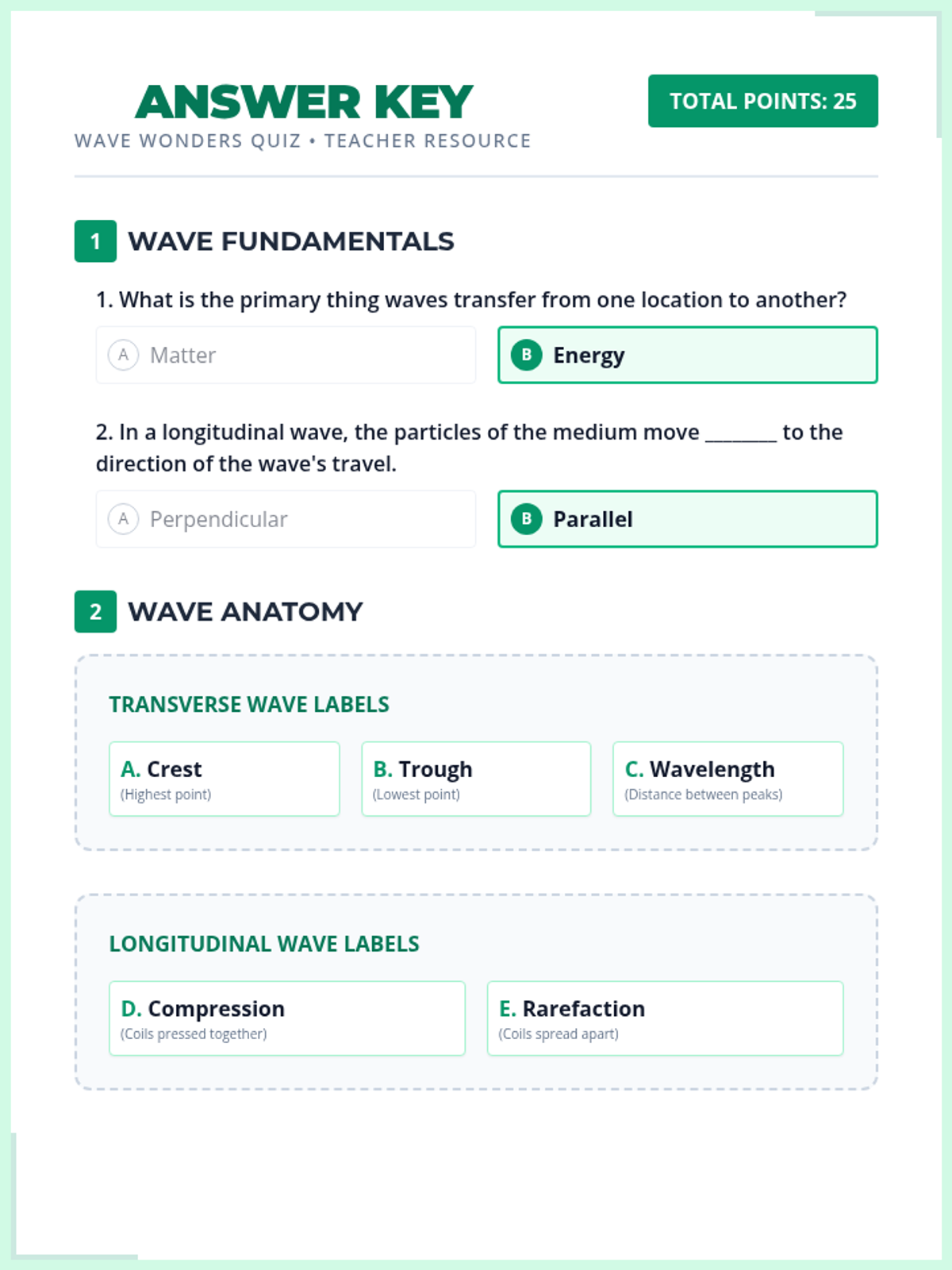
This lesson covers the fundamental differences between transverse and longitudinal waves, focusing on their physical properties, parts, and real-world examples. Students will practice identifying wave characteristics and comparing how energy travels through different mediums.
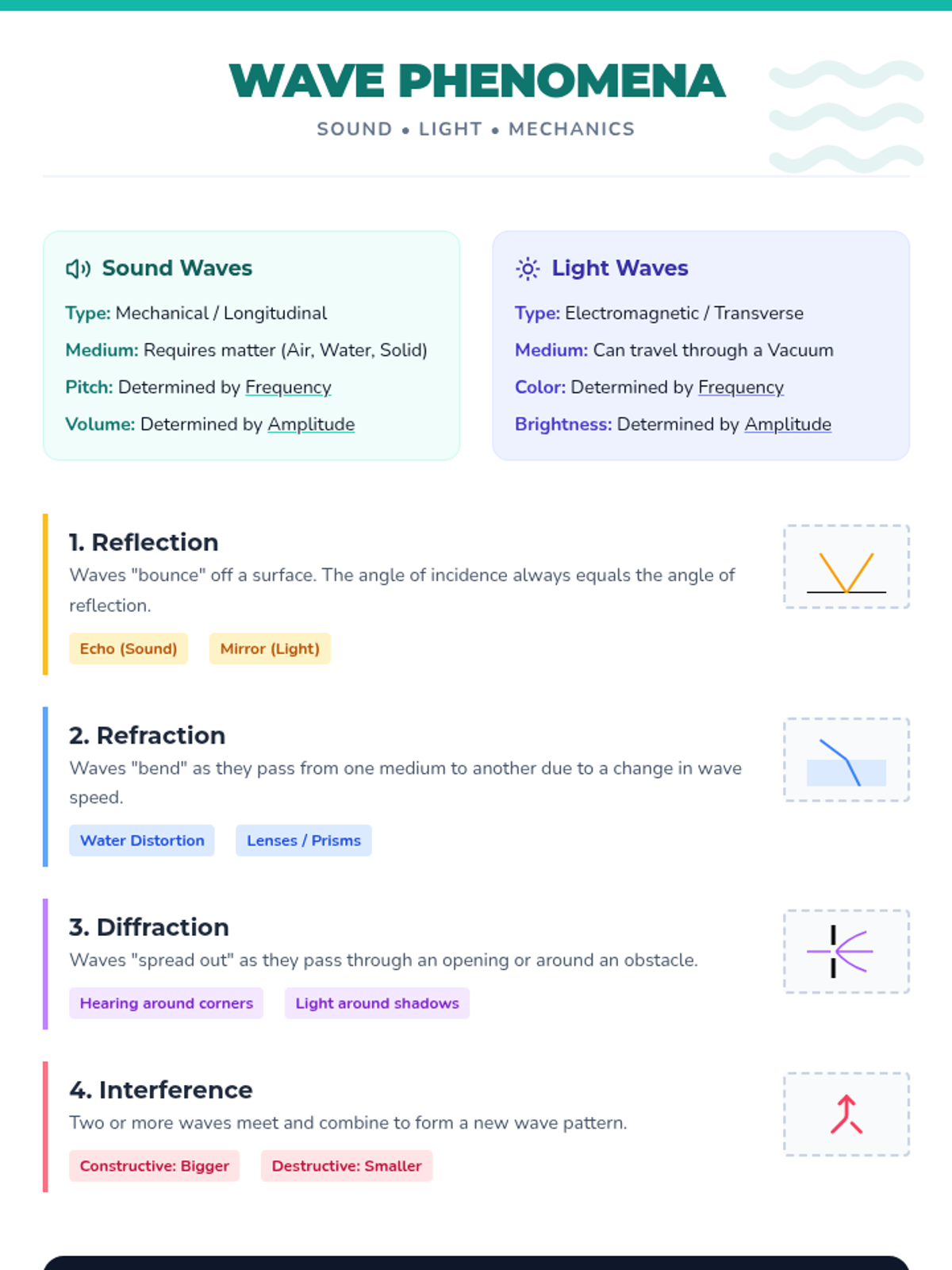
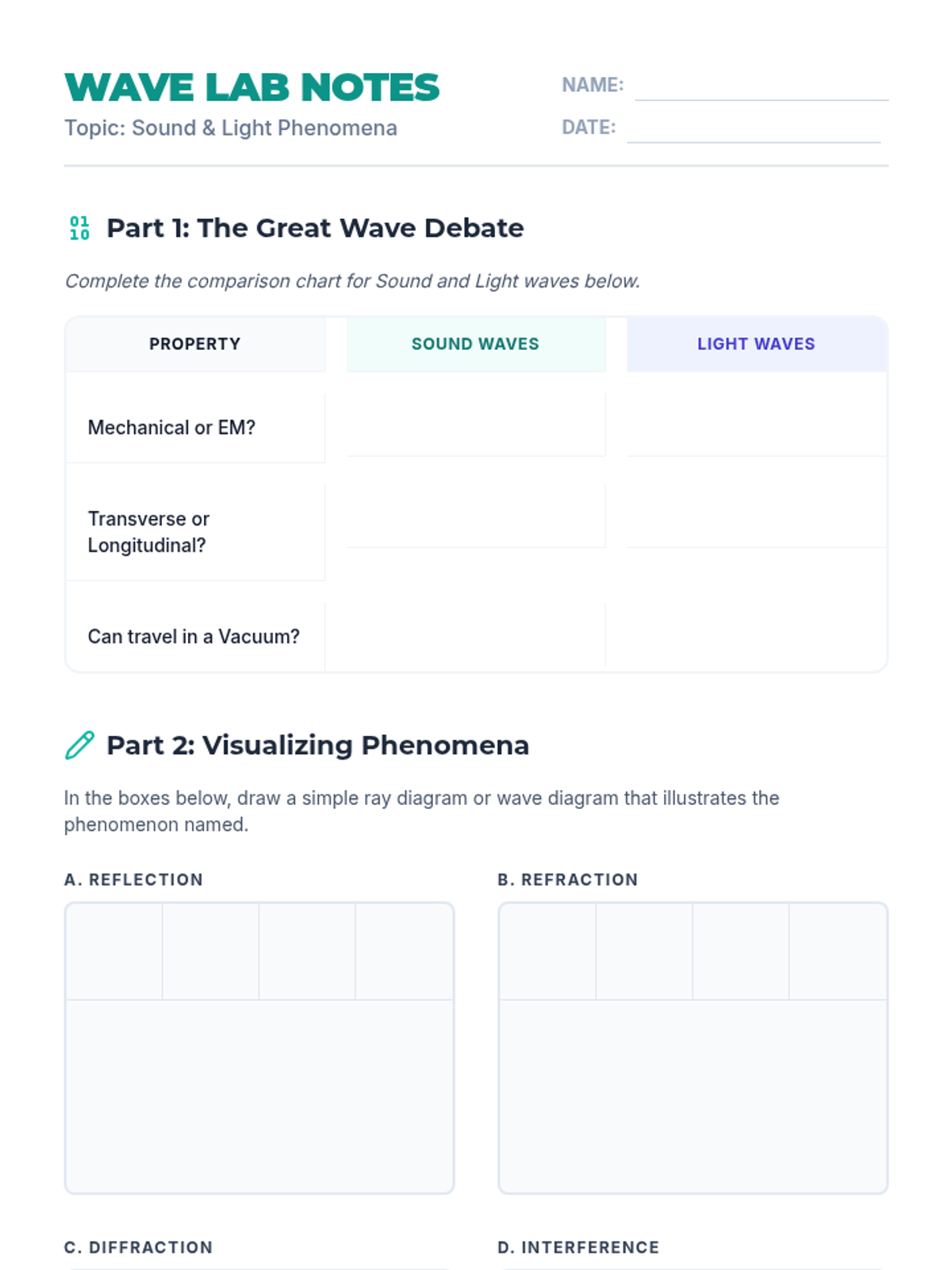
A comprehensive introduction to the fundamental behaviors of sound and light waves, focusing on key phenomena like reflection, refraction, and interference.
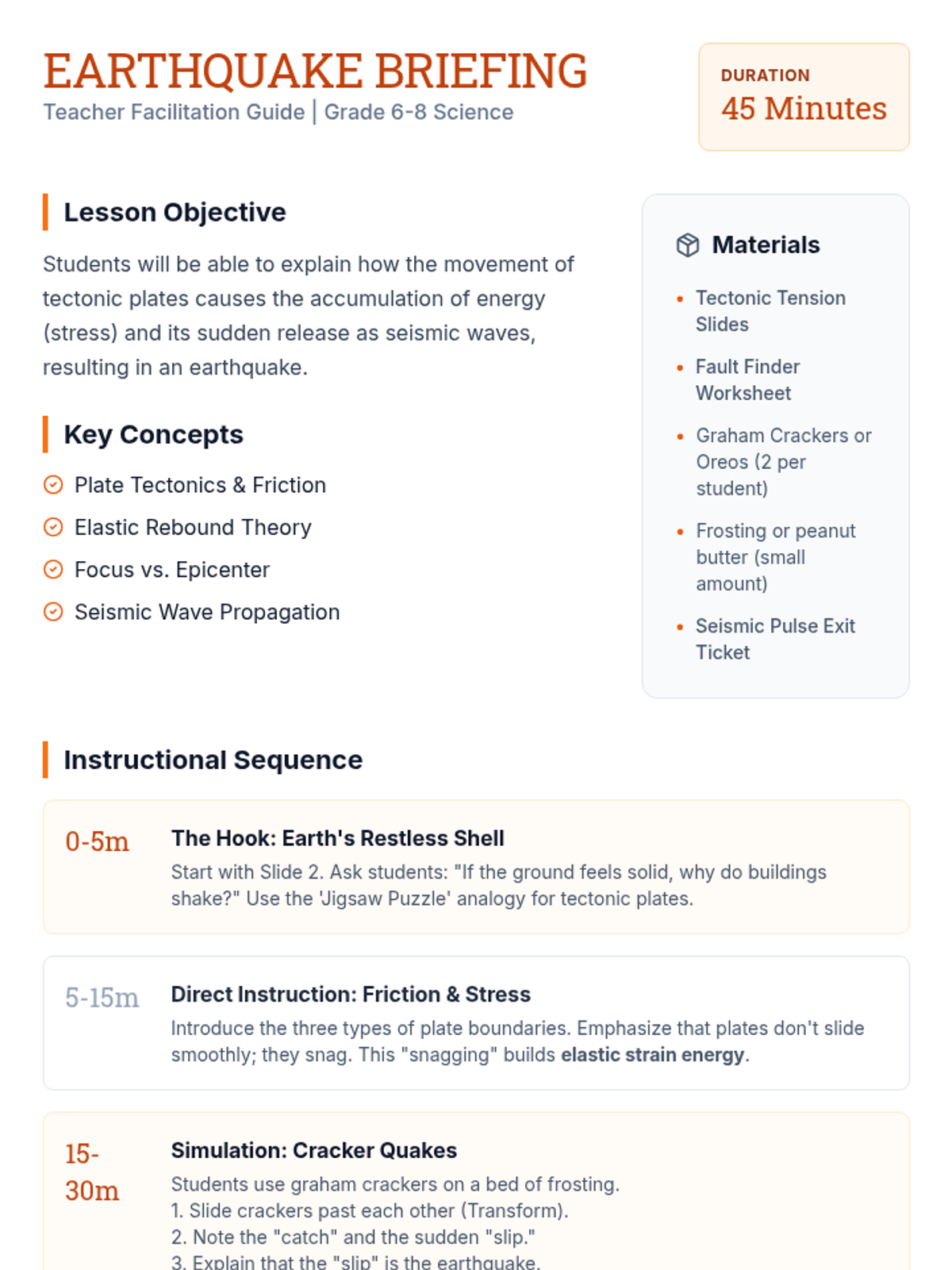
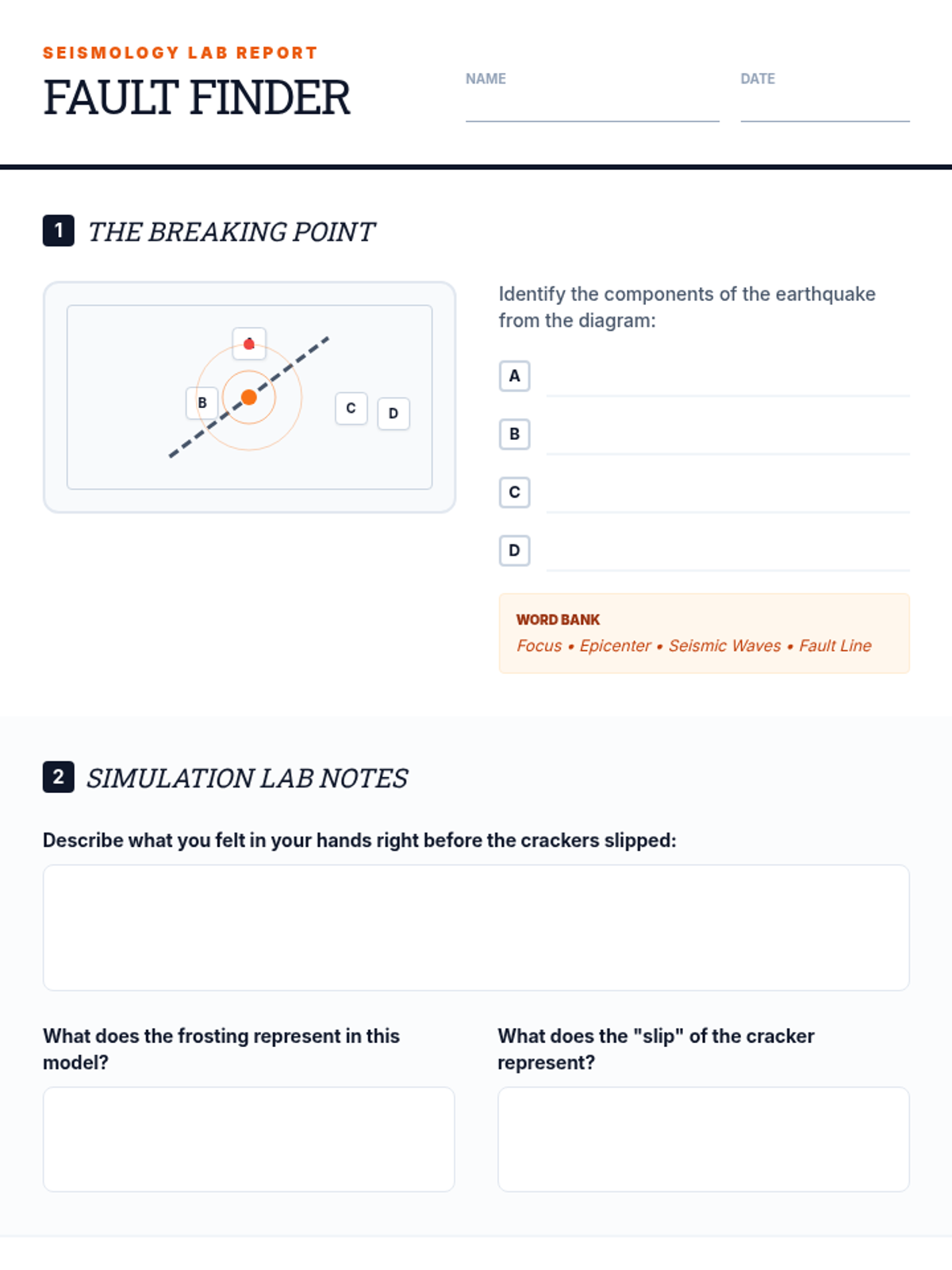
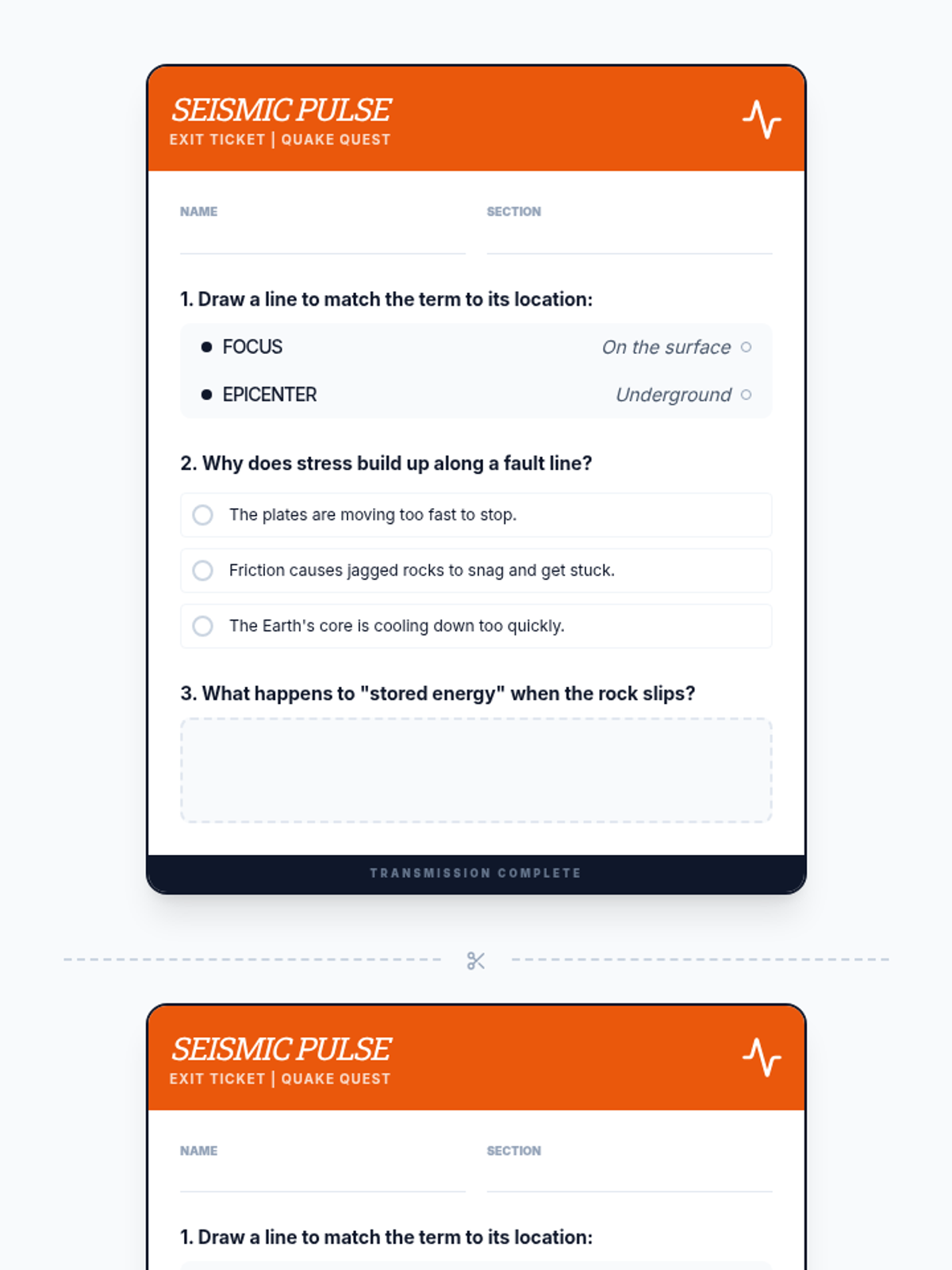
A comprehensive 45-minute lesson exploring the mechanics of earthquakes, tectonic plate movements, and the build-up of seismic energy. Students engage in a hands-on simulation to visualize how stress and friction lead to sudden crustal shifts.
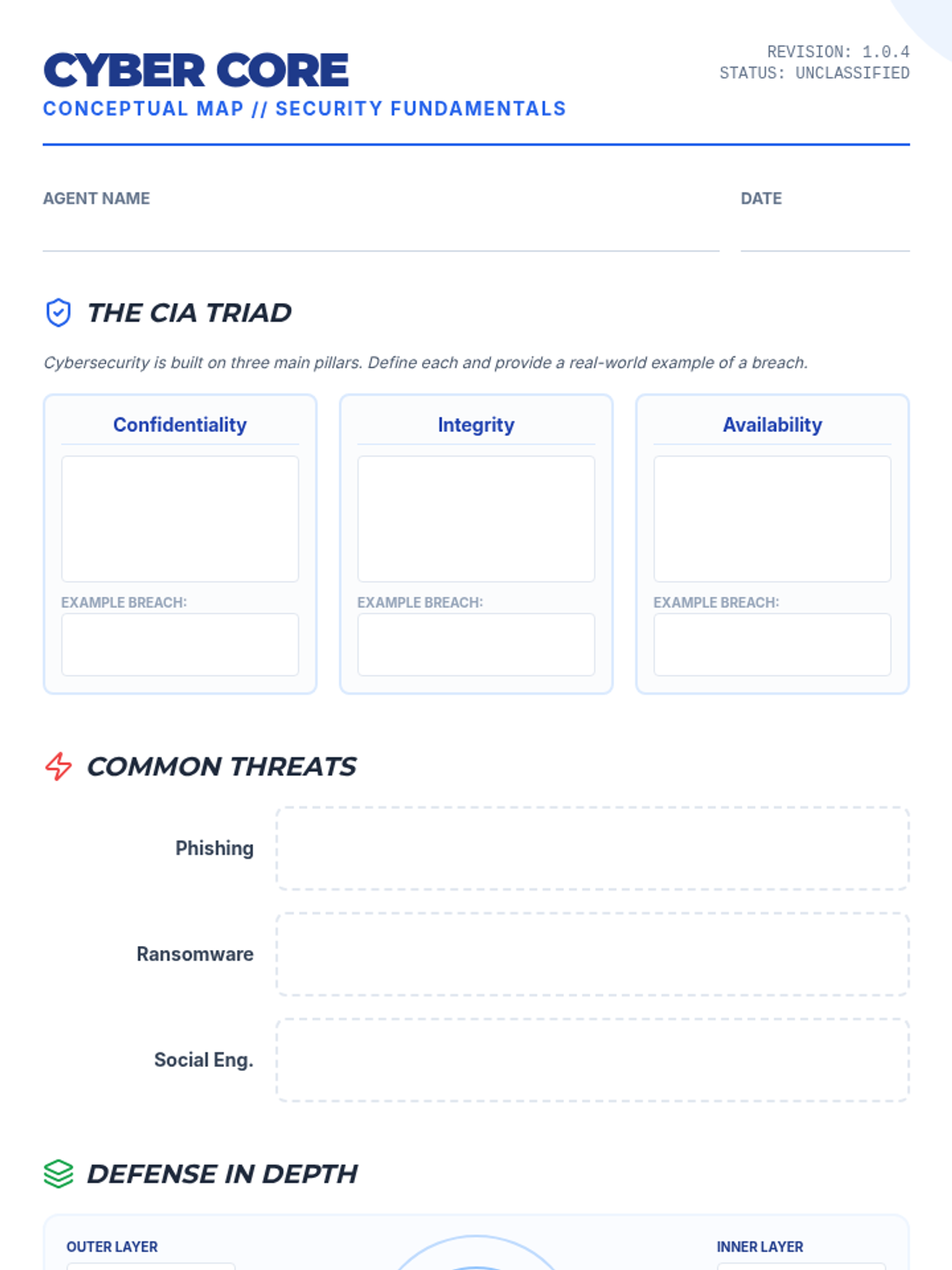
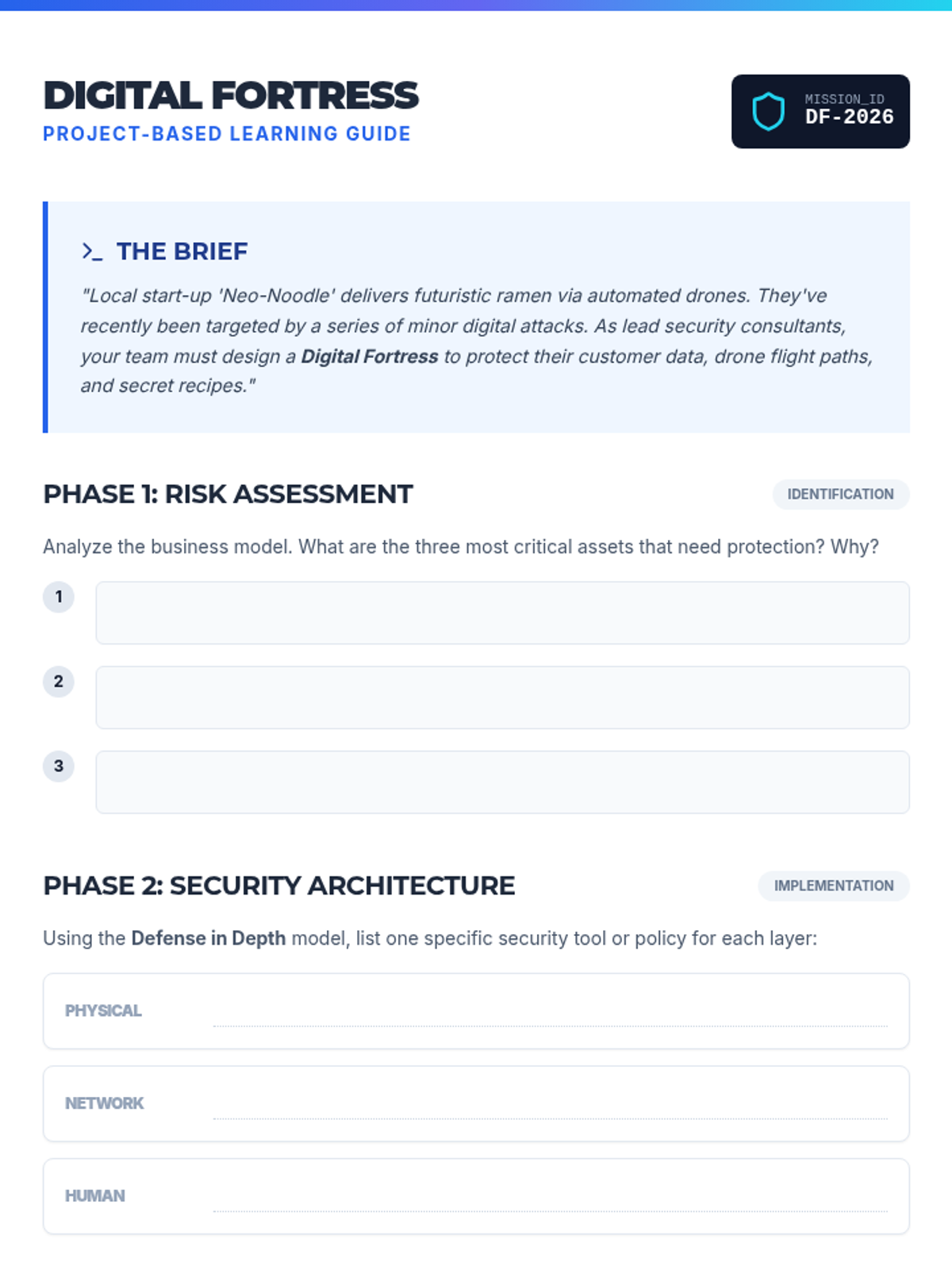
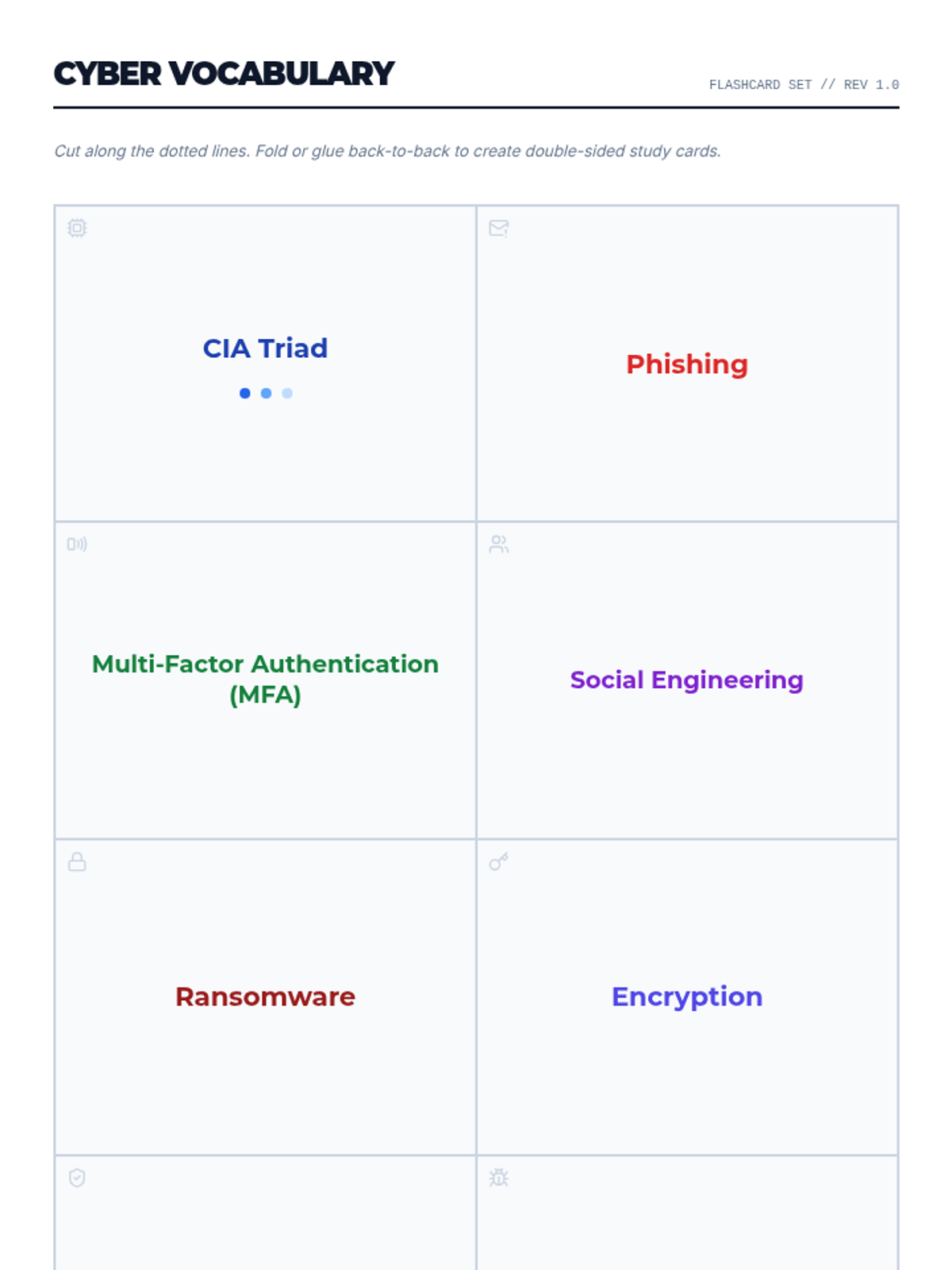
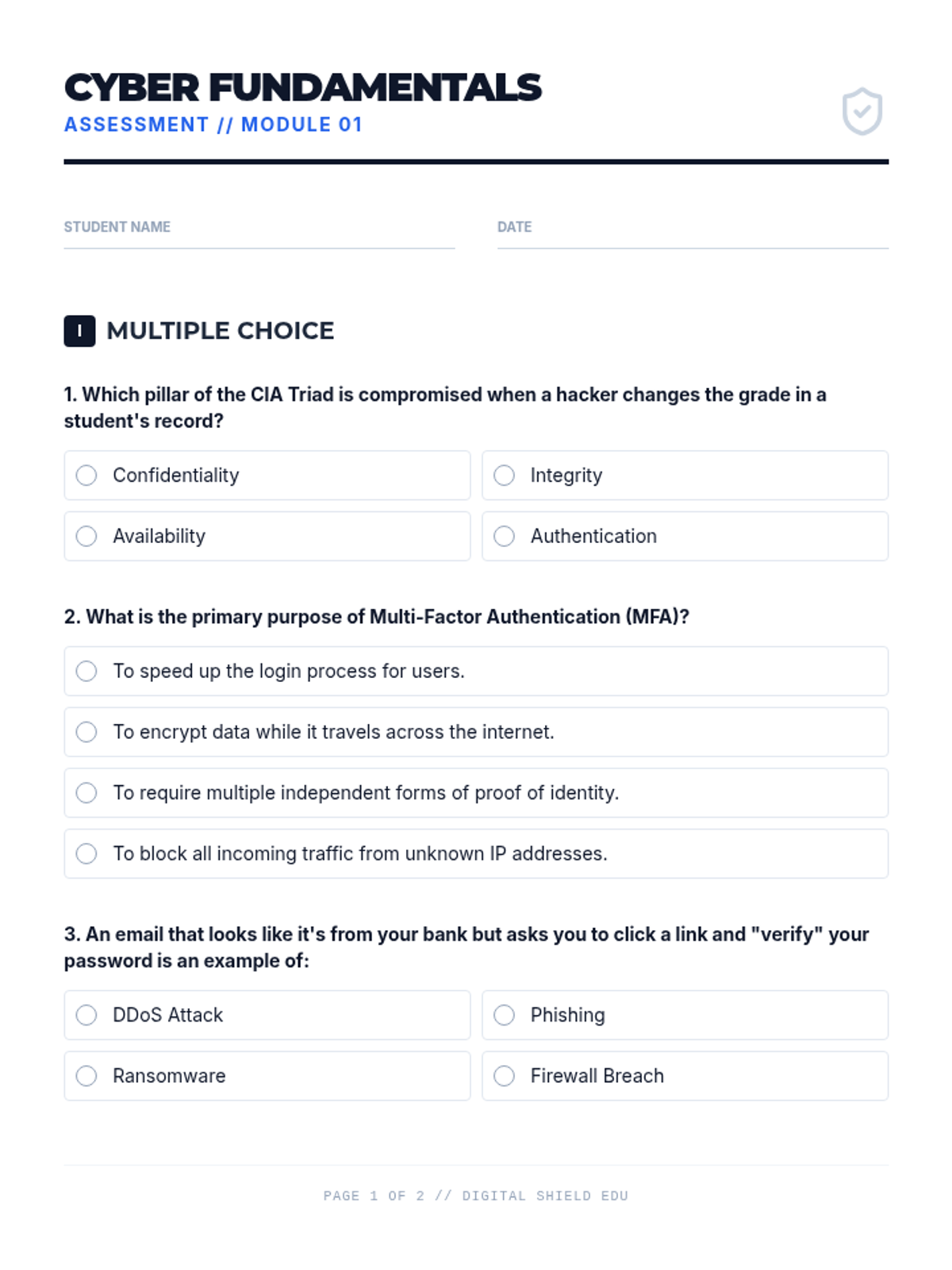
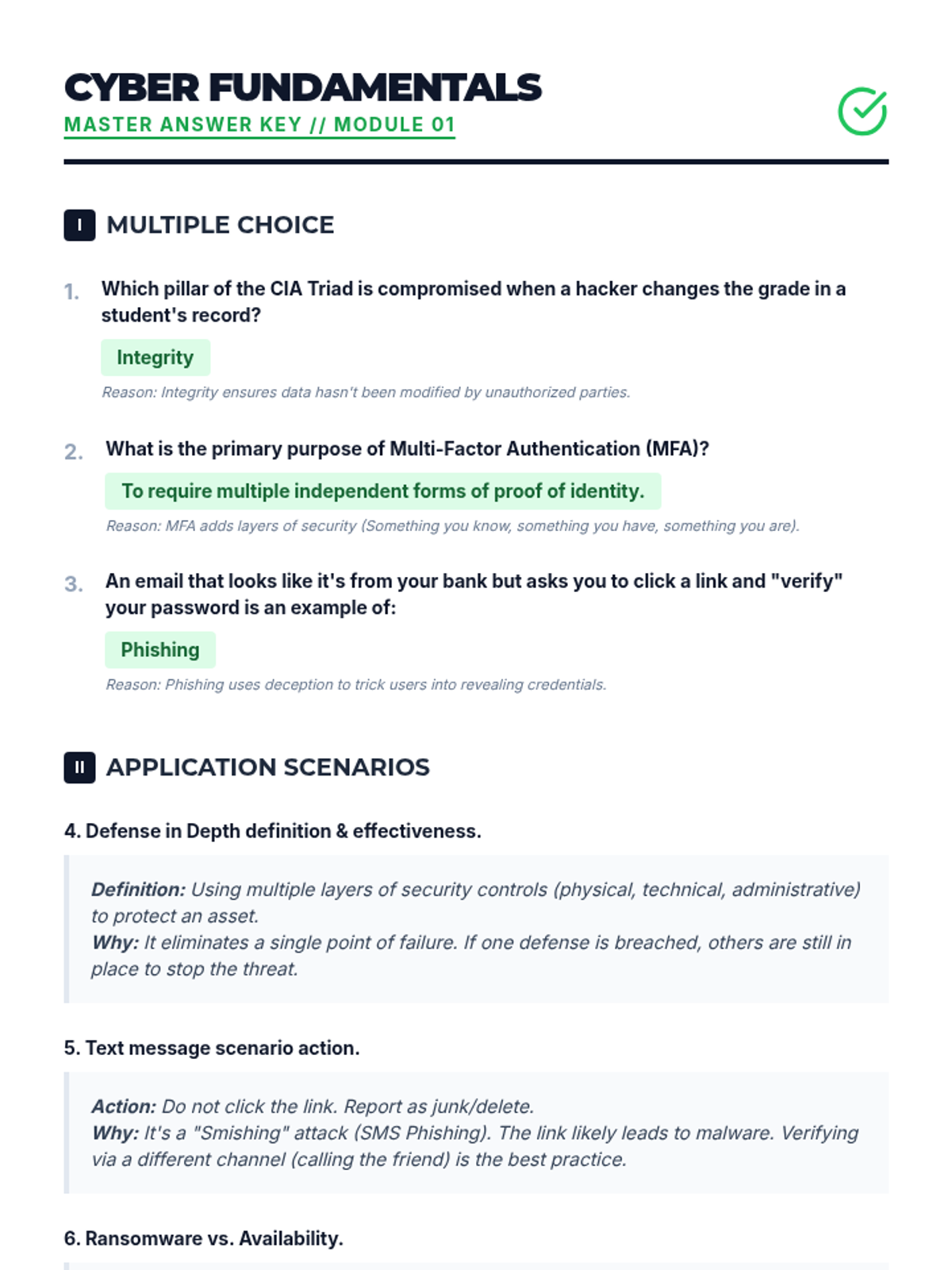
An introductory exploration of cybersecurity fundamentals for middle and high school students, covering the CIA triad, common threats, and defensive strategies through hands-on projects and conceptual mapping.
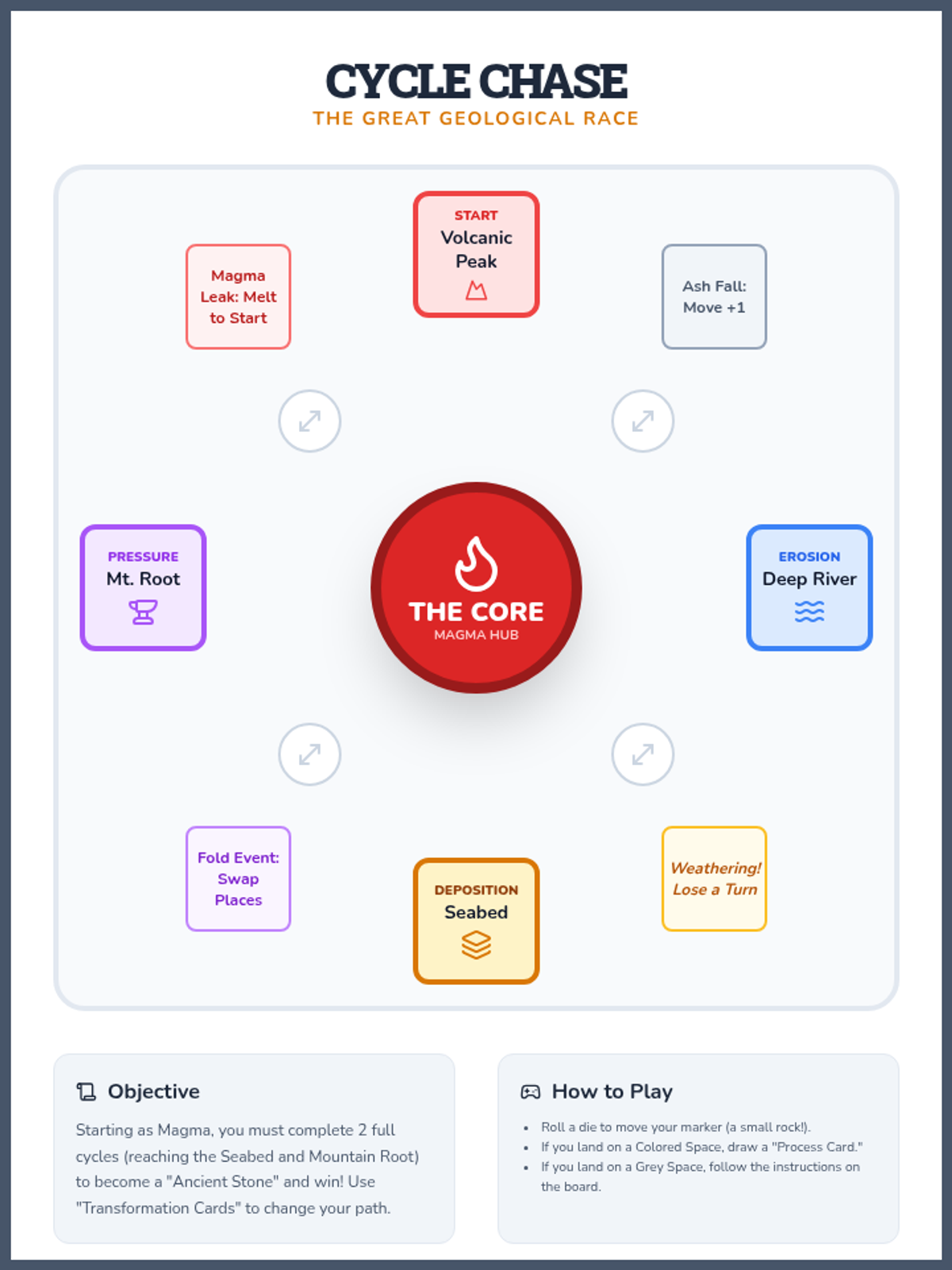
Students become geological detectives to investigate how rocks change over time through heat, pressure, and erosion, culminating in a mystery-solving identification challenge.
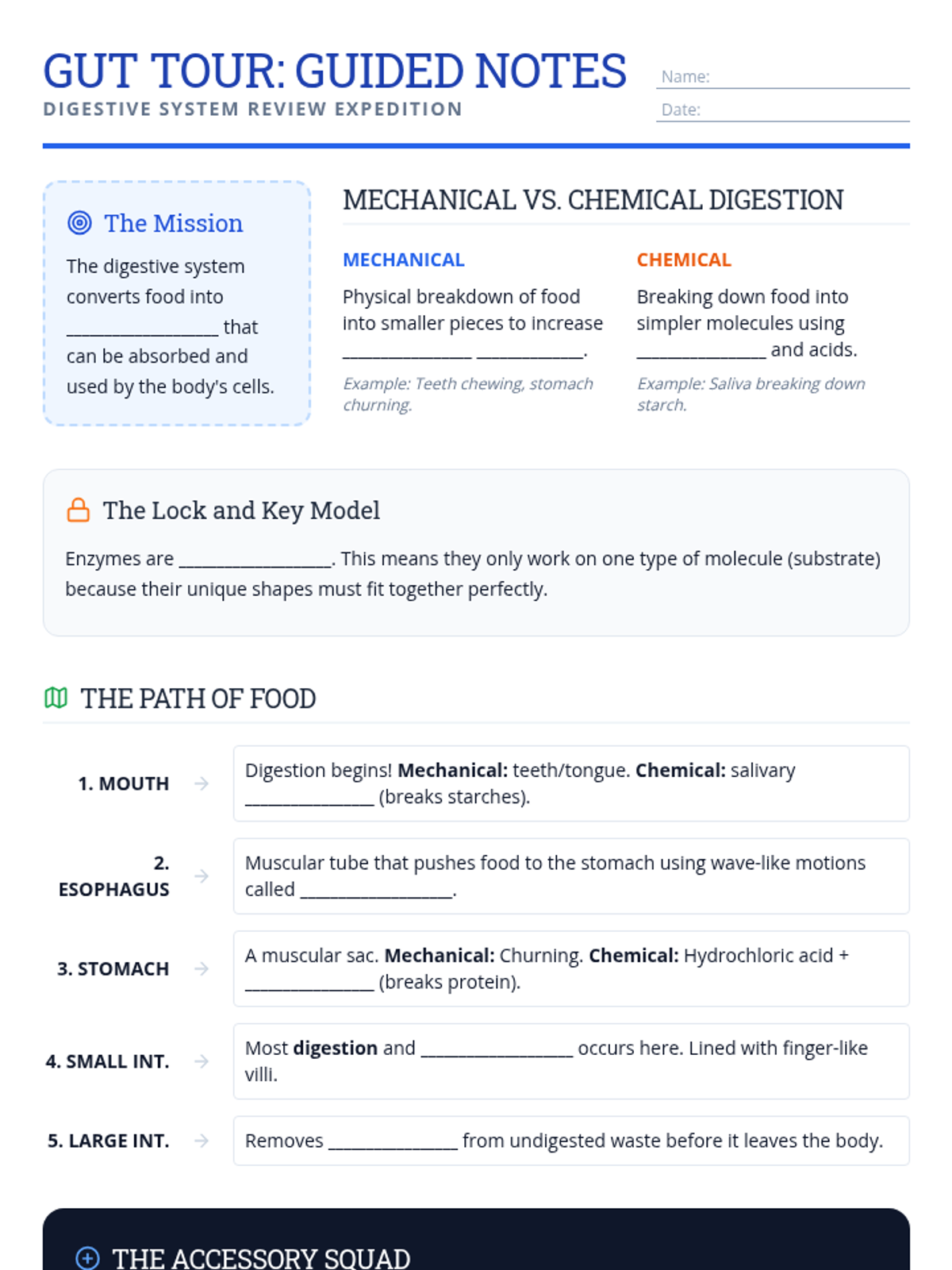
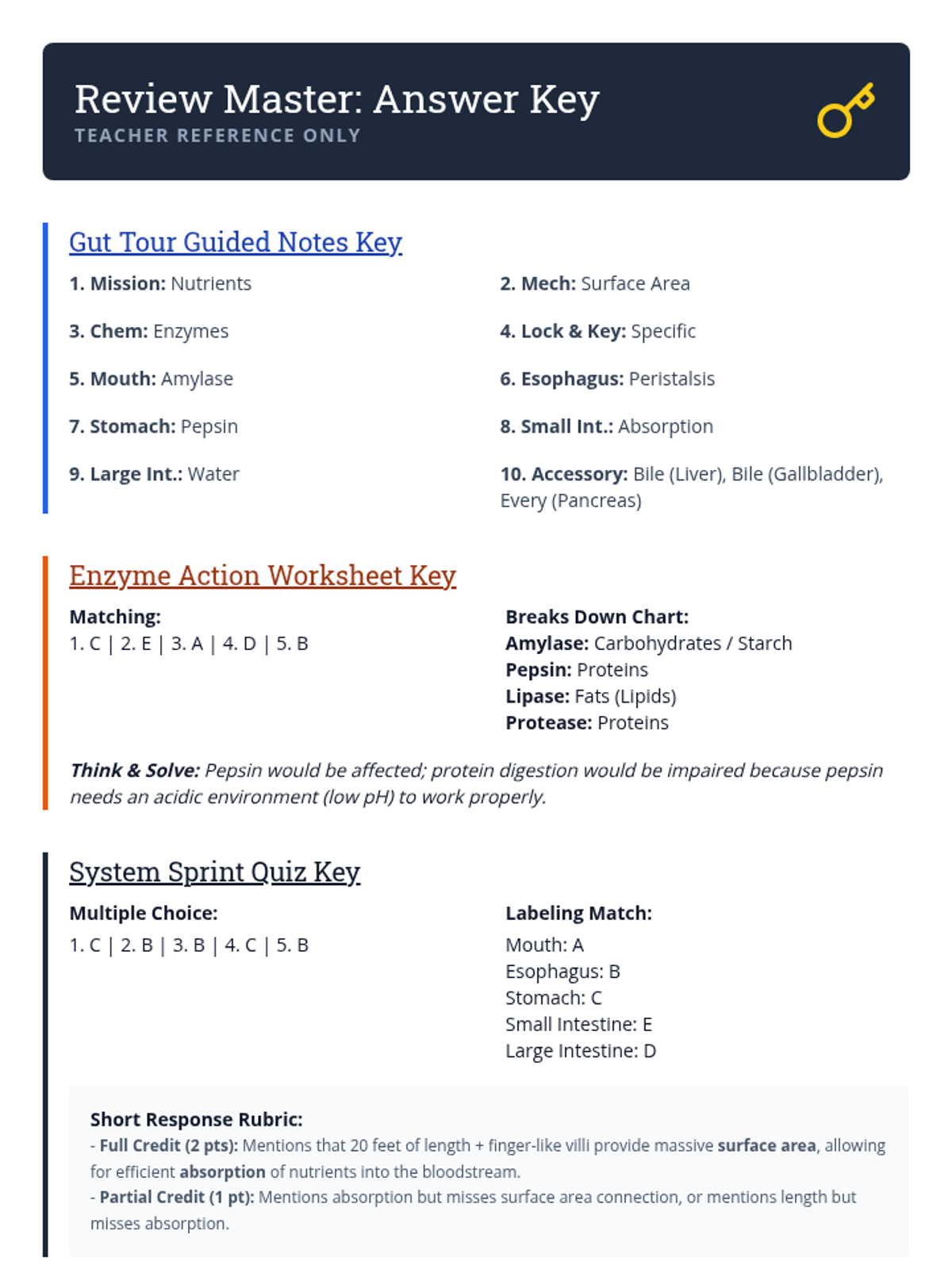
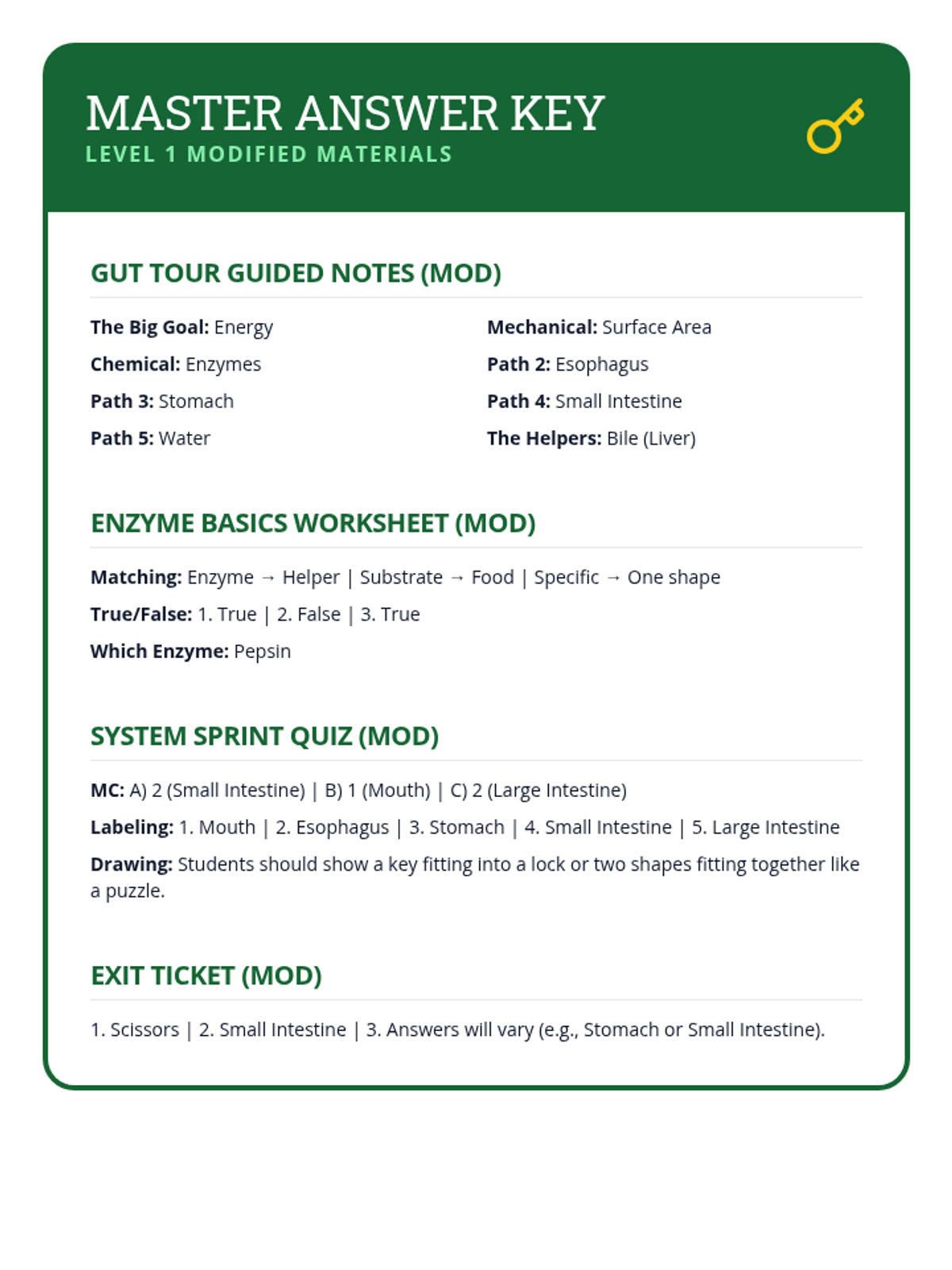
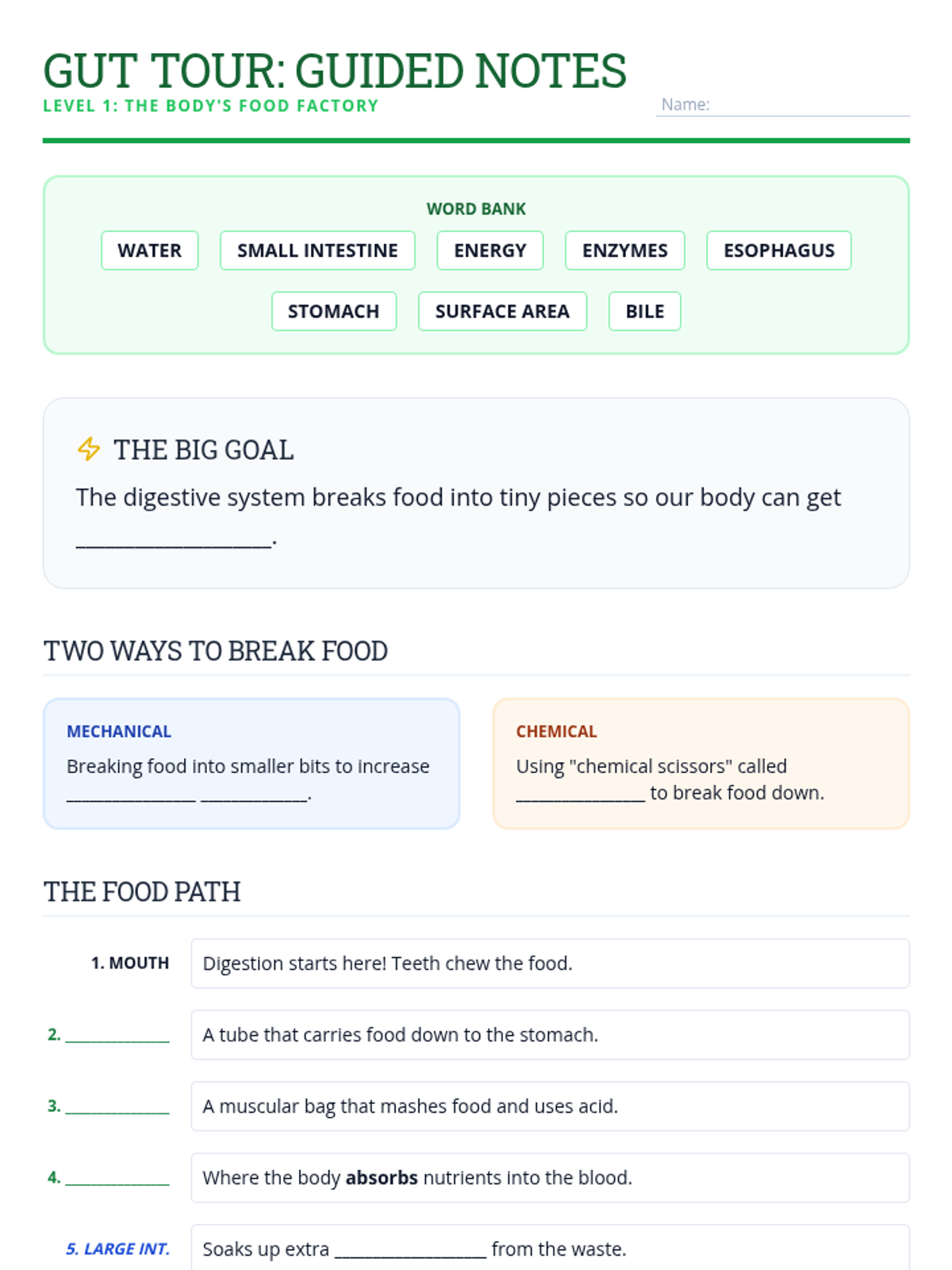
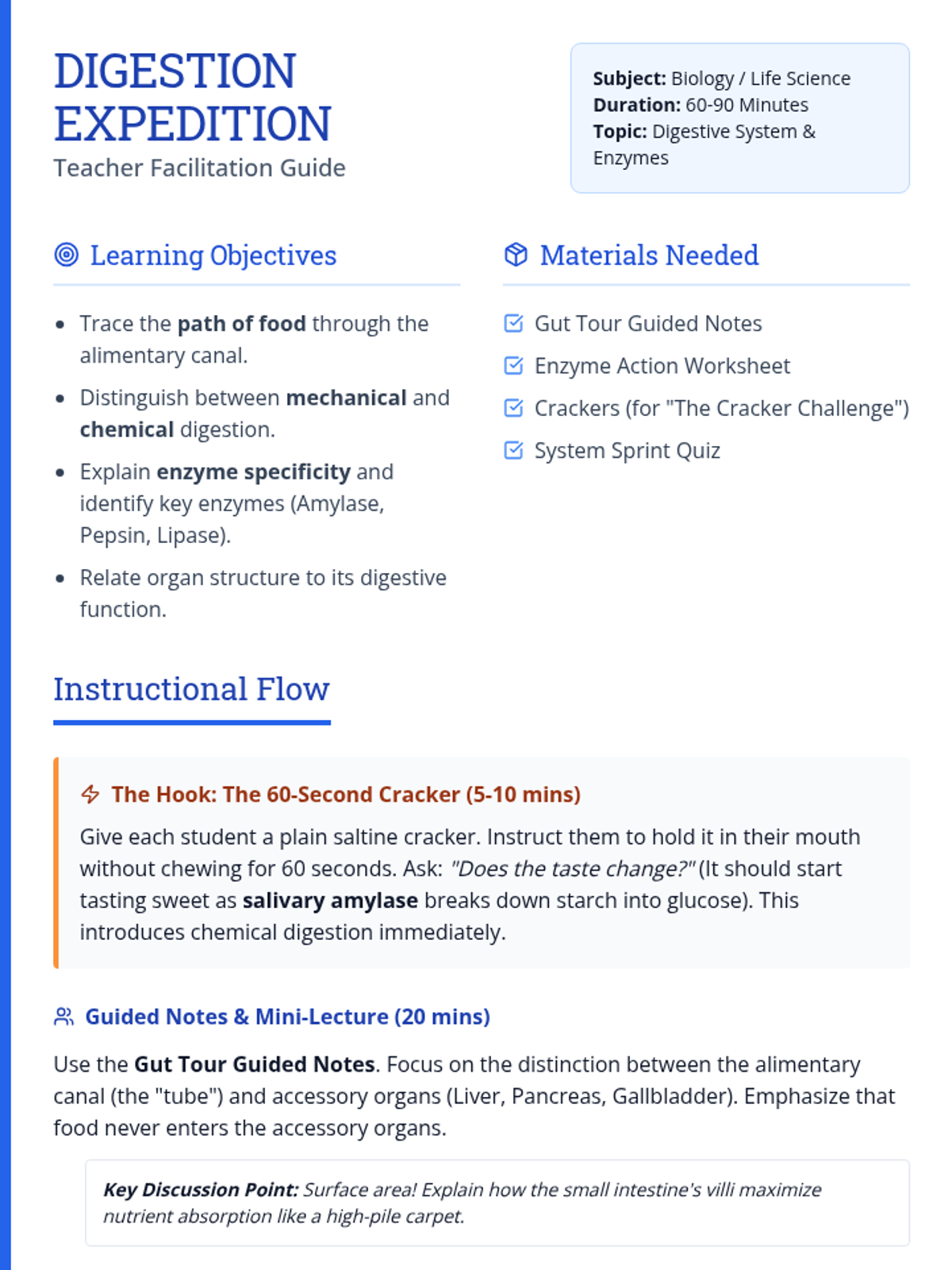
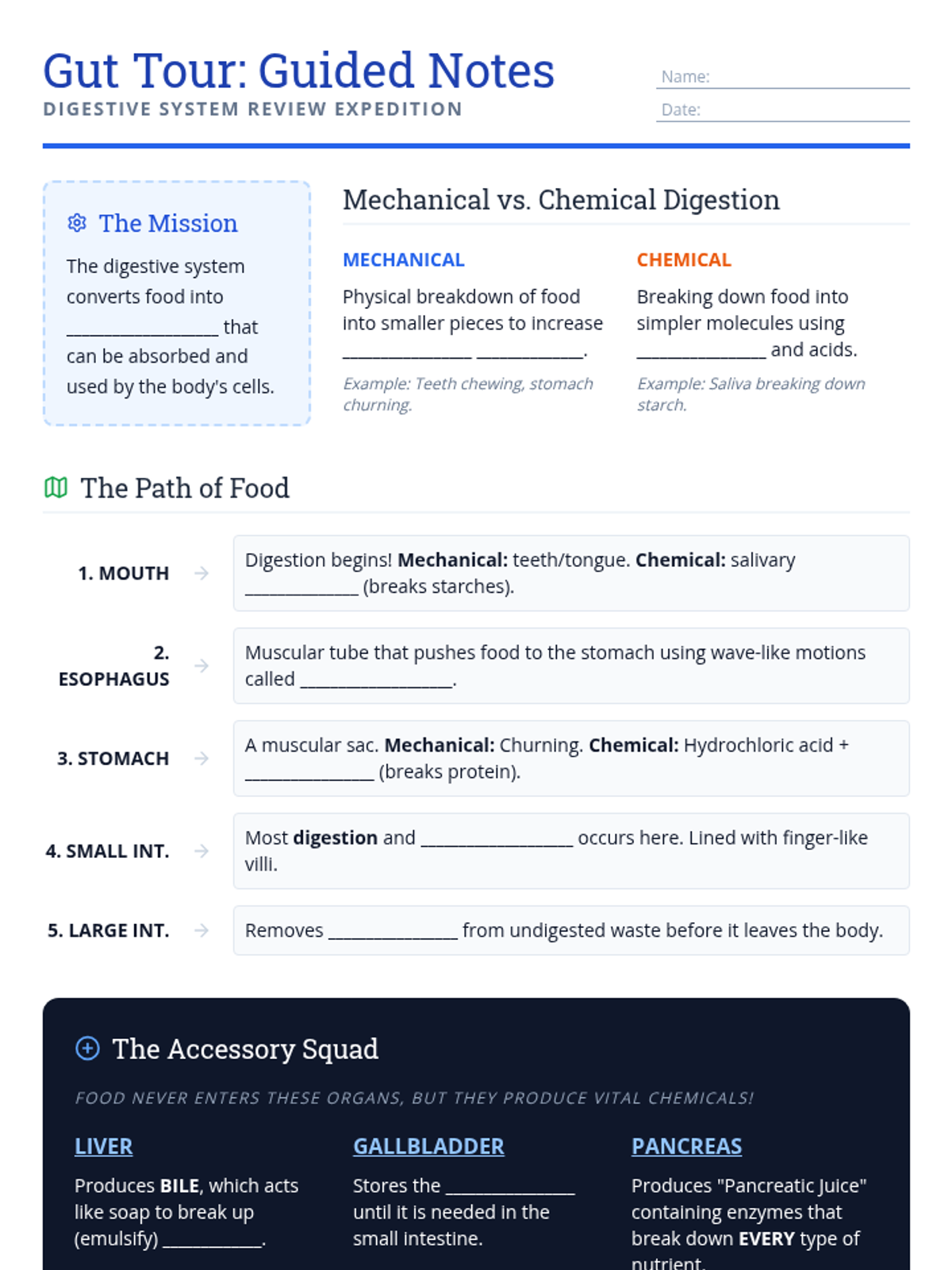
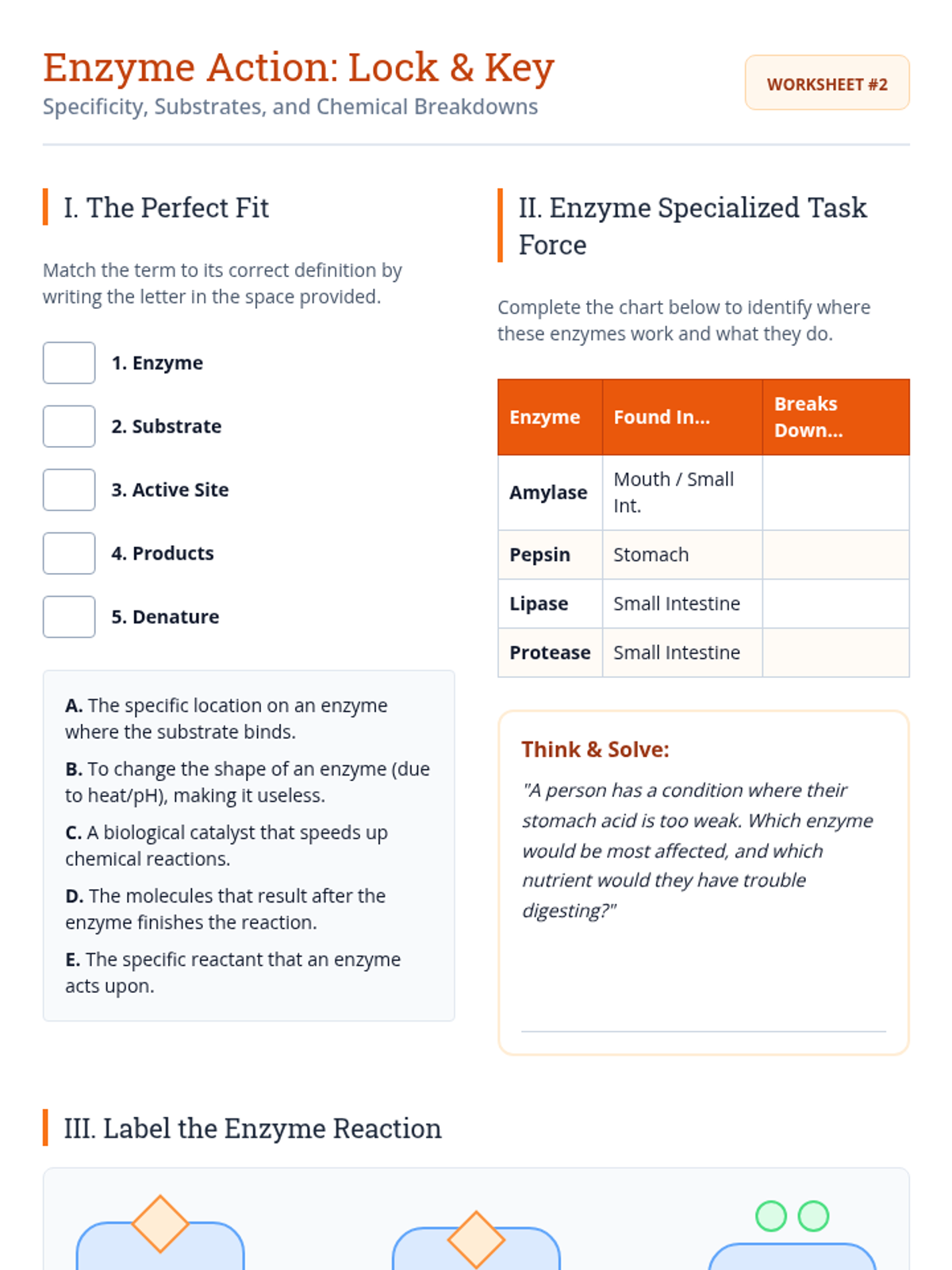
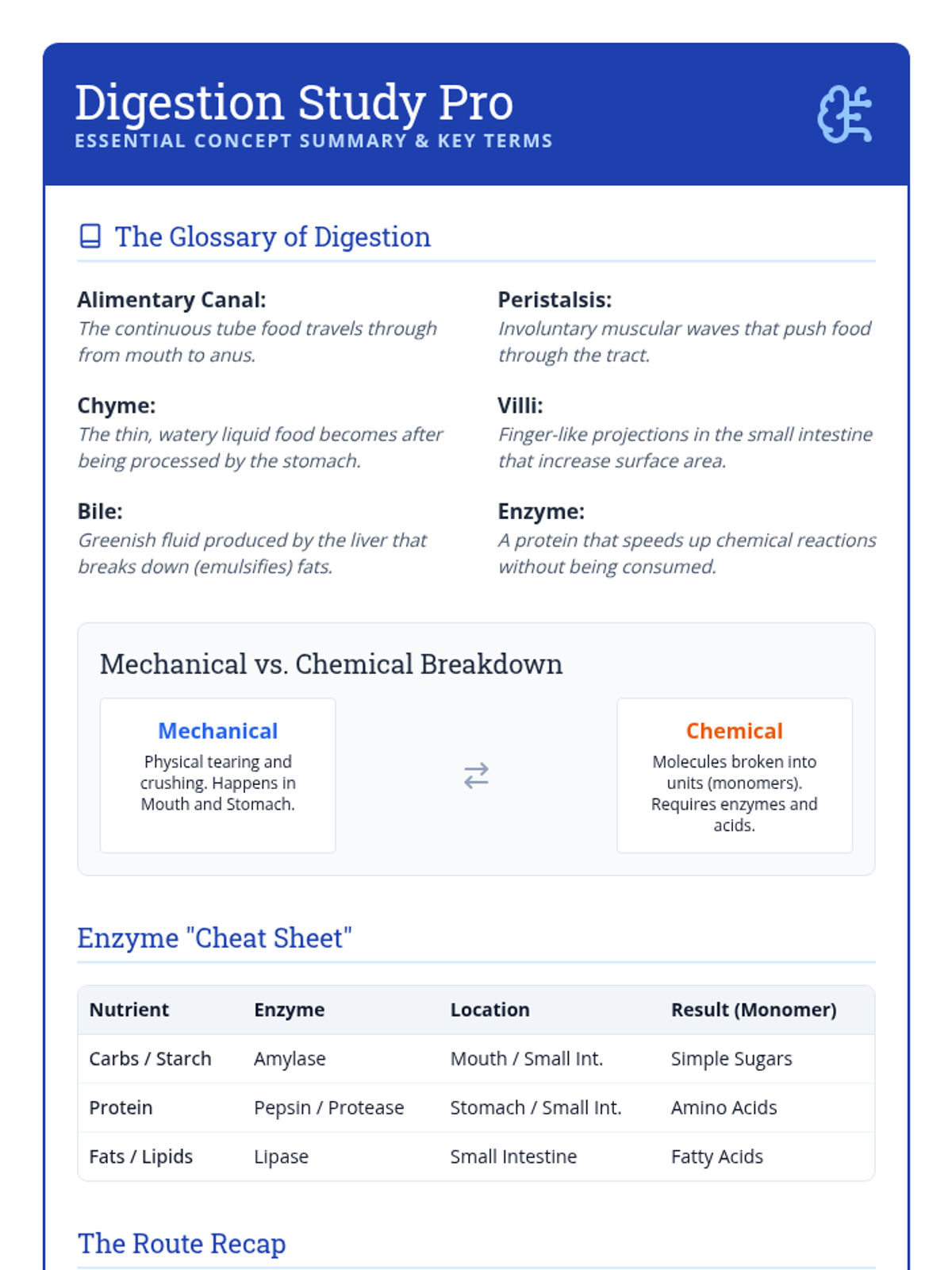
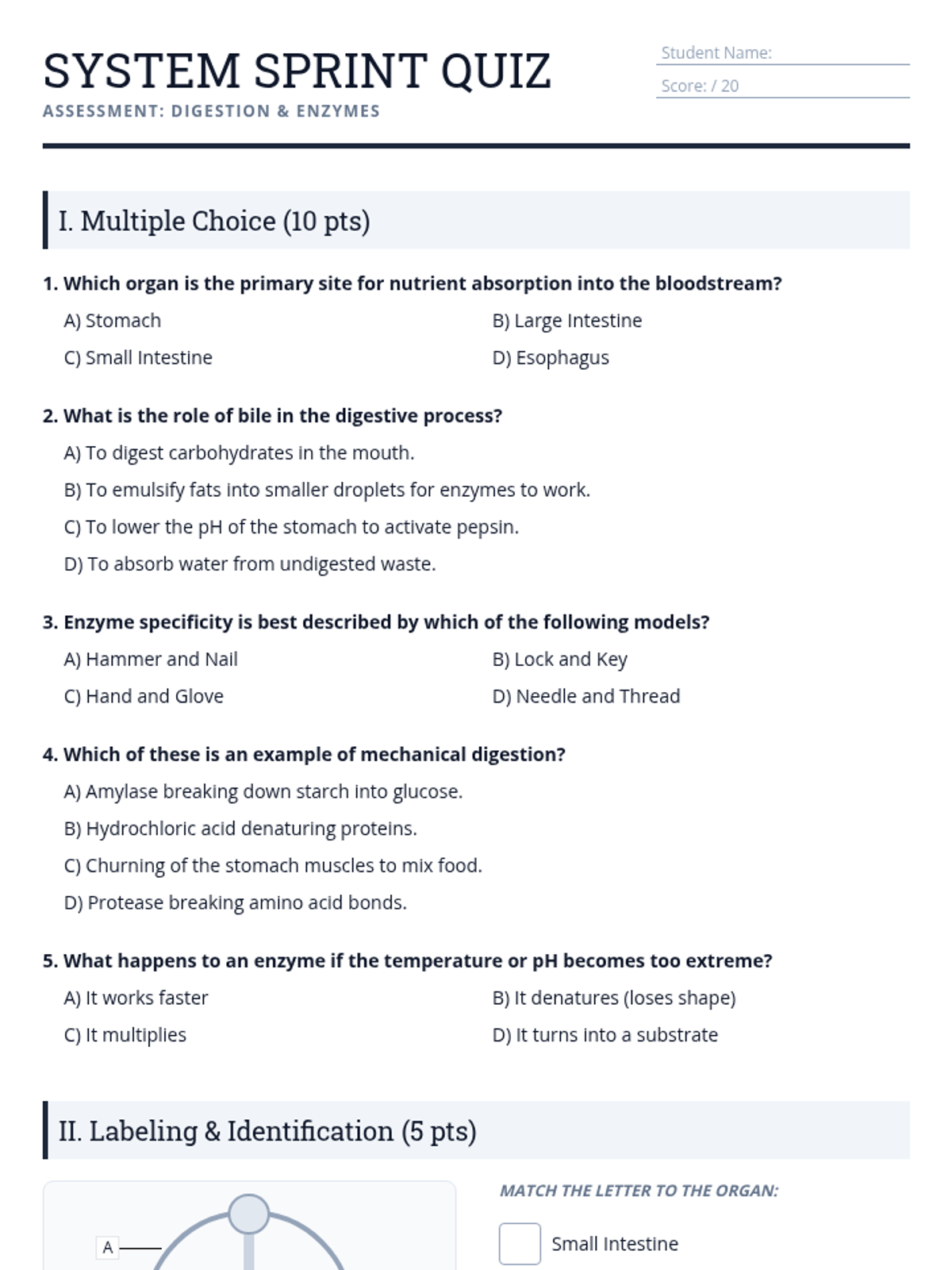
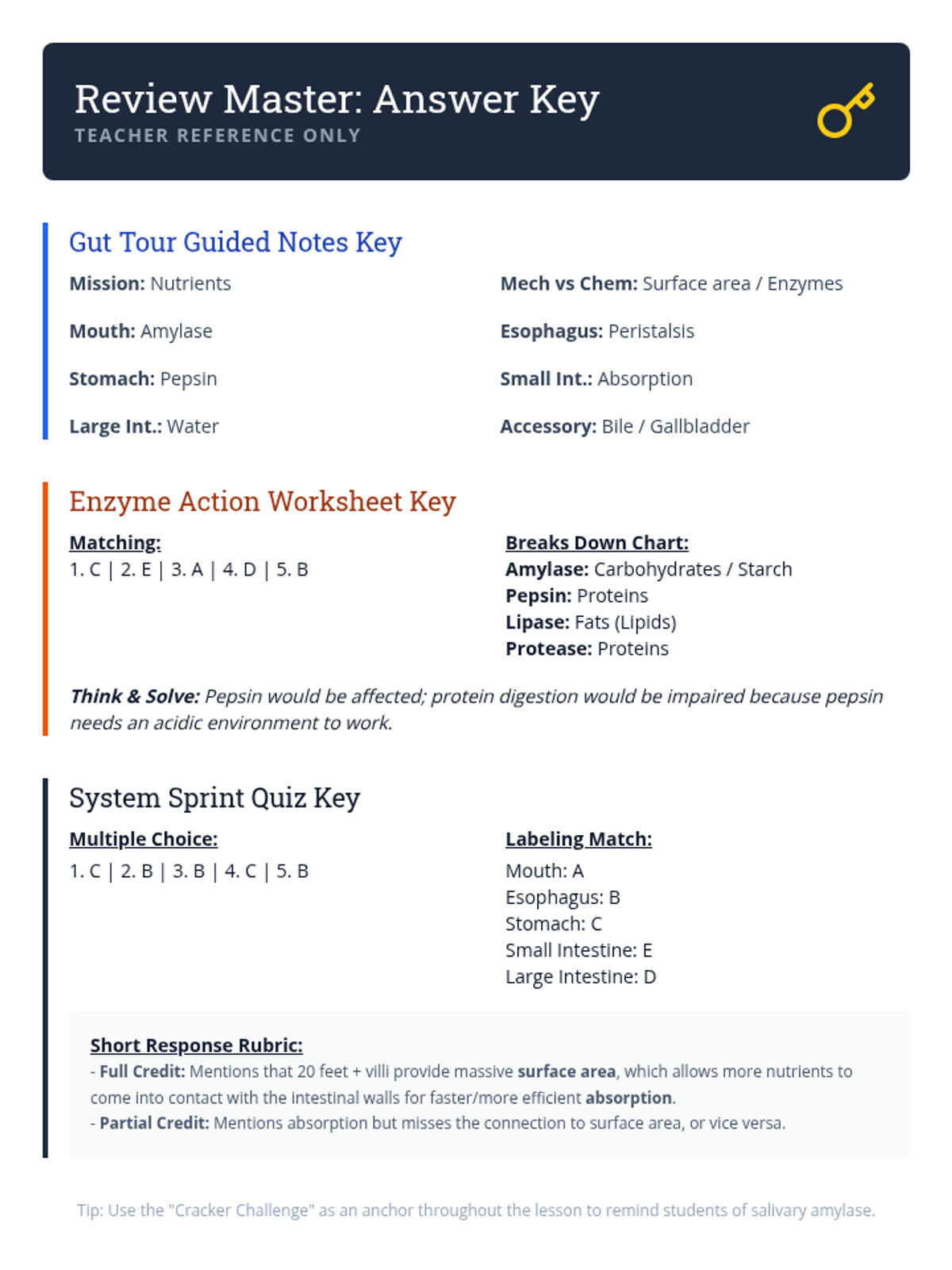
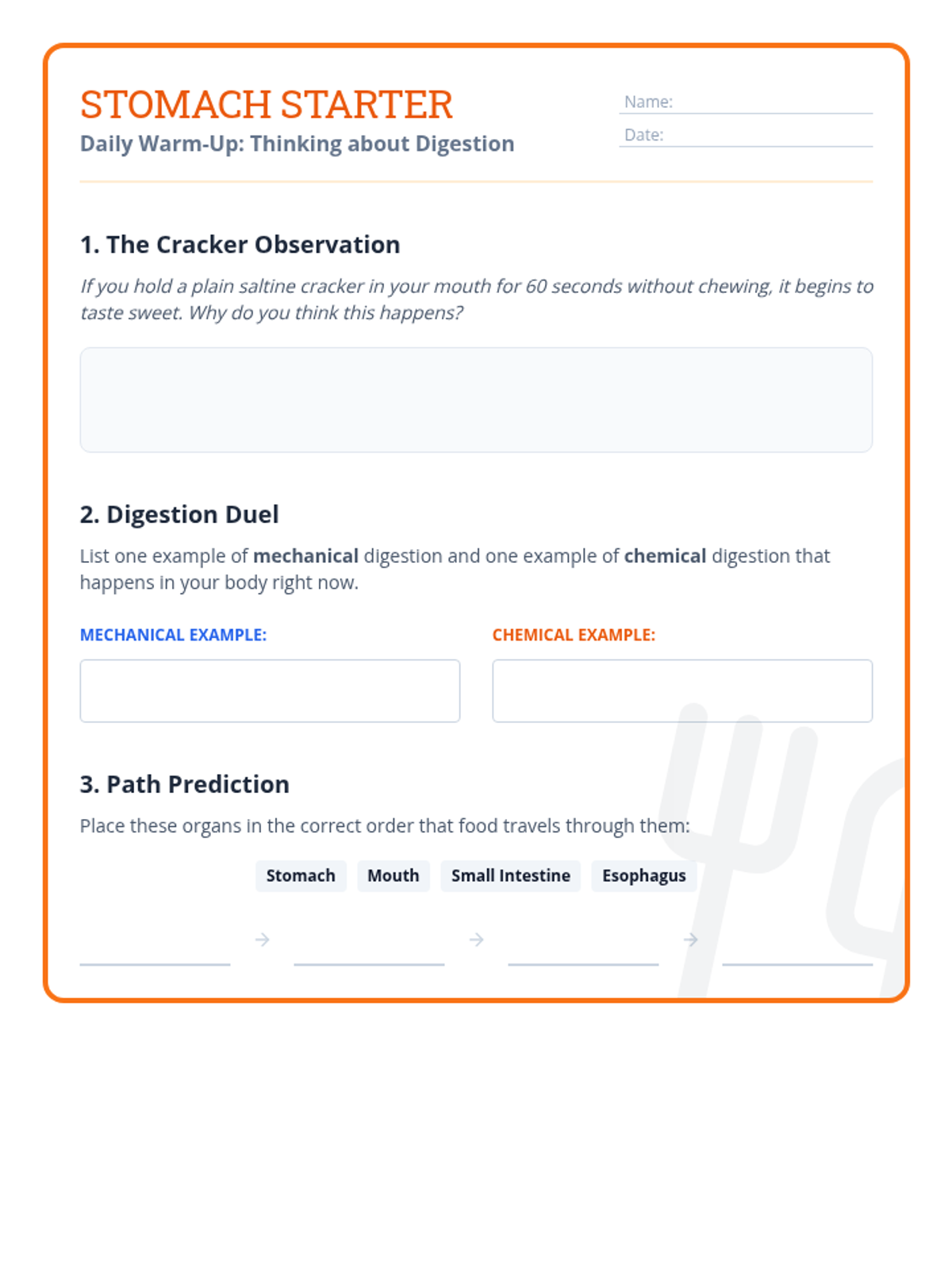
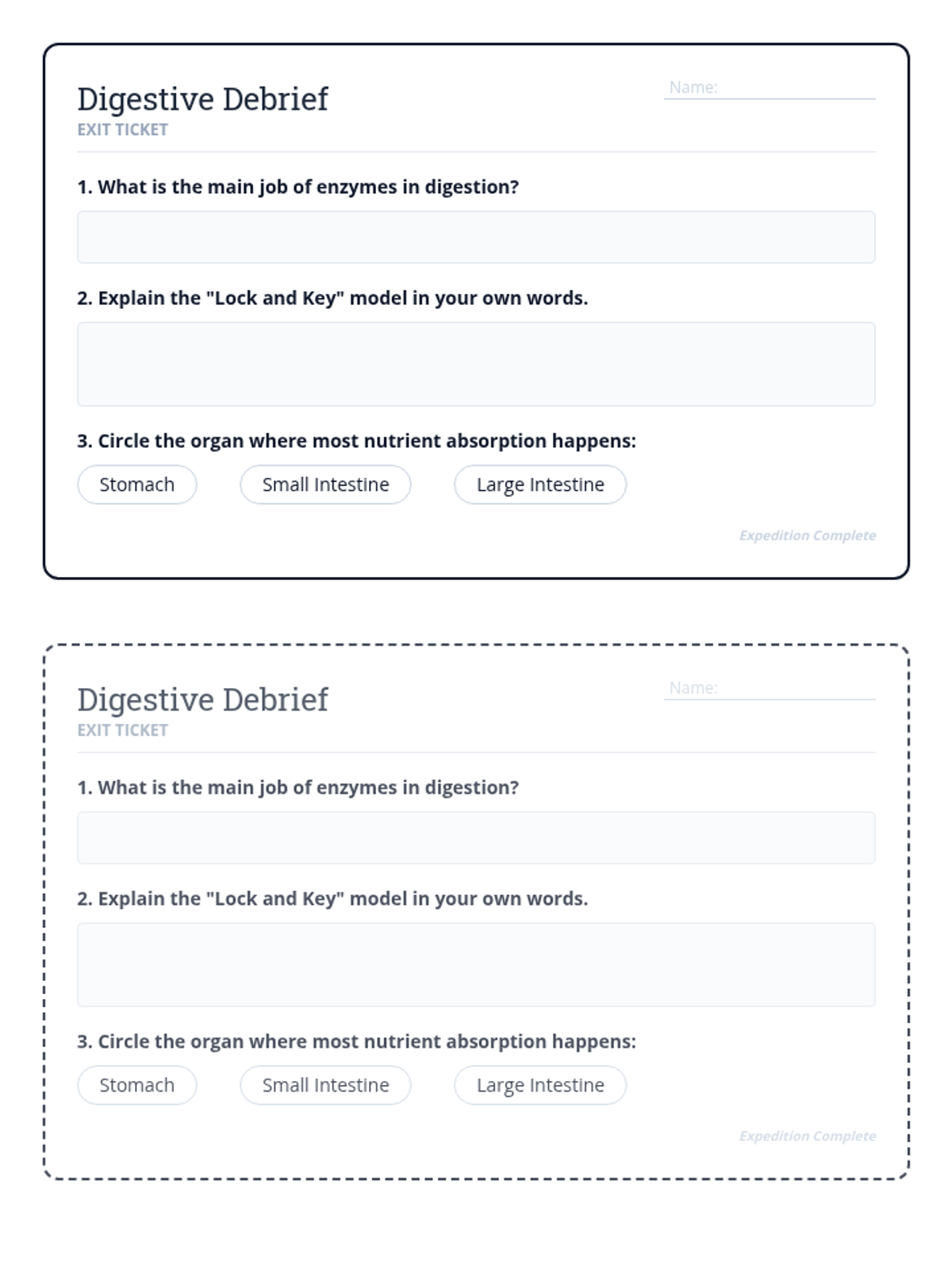
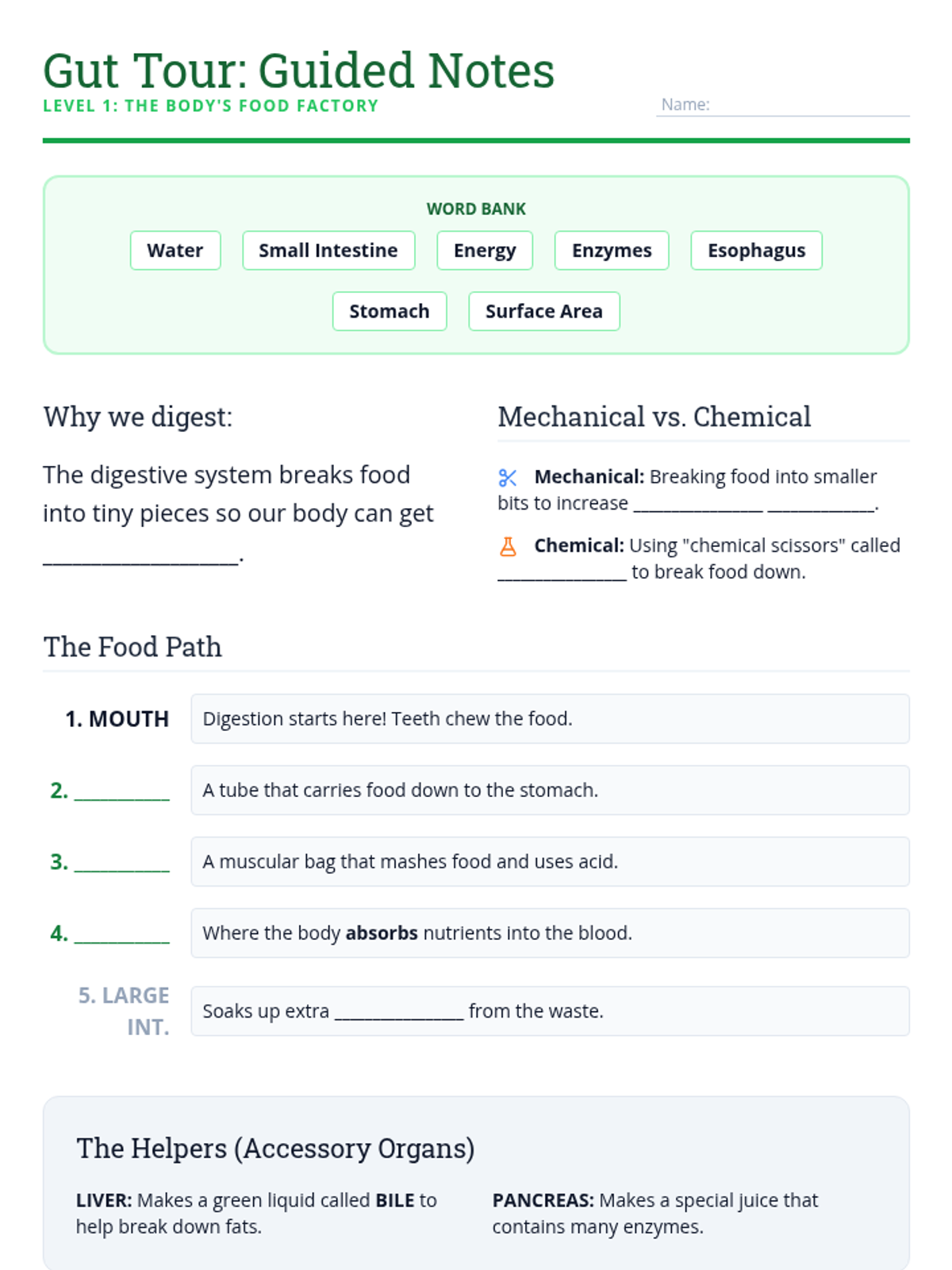
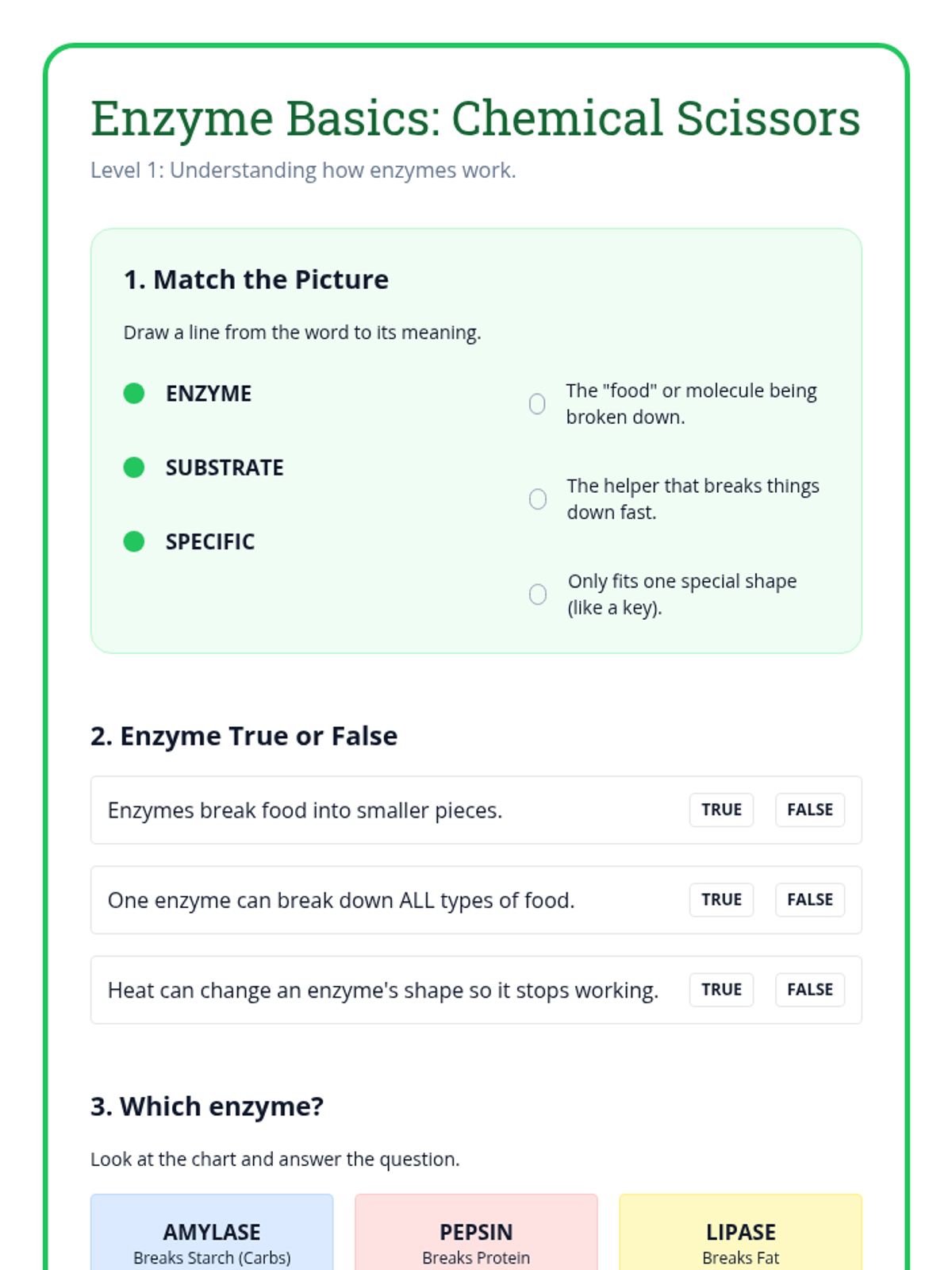
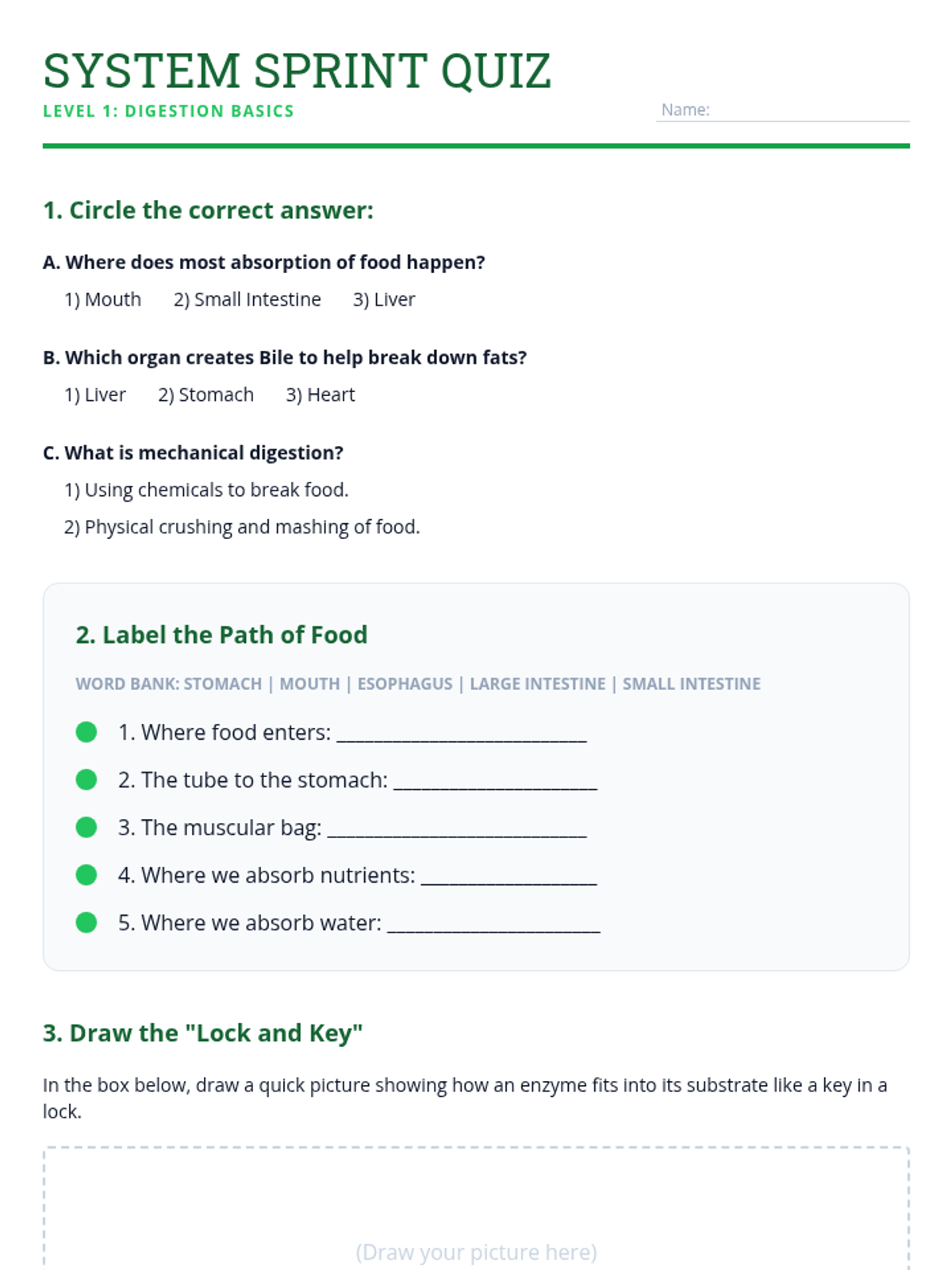
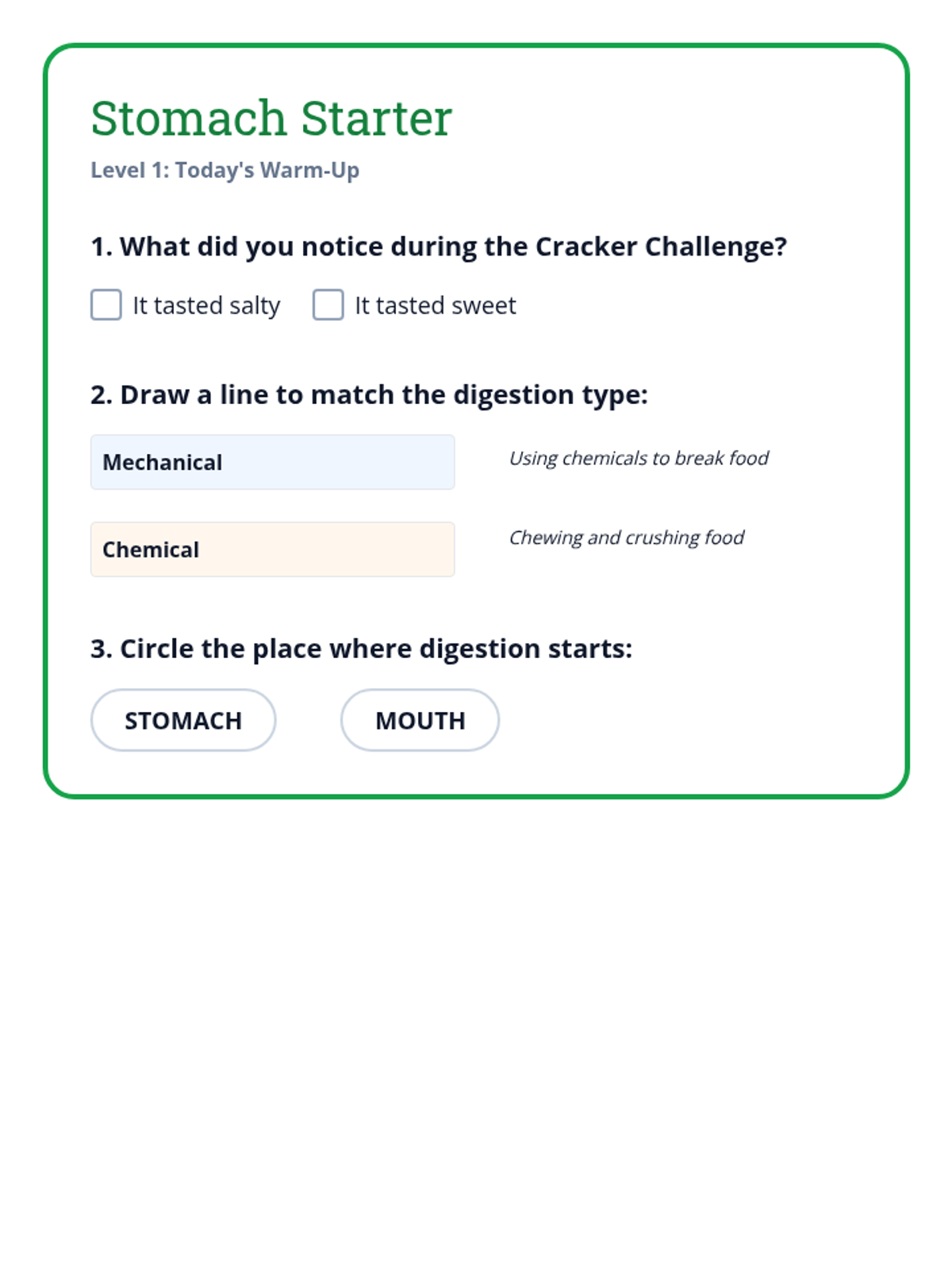
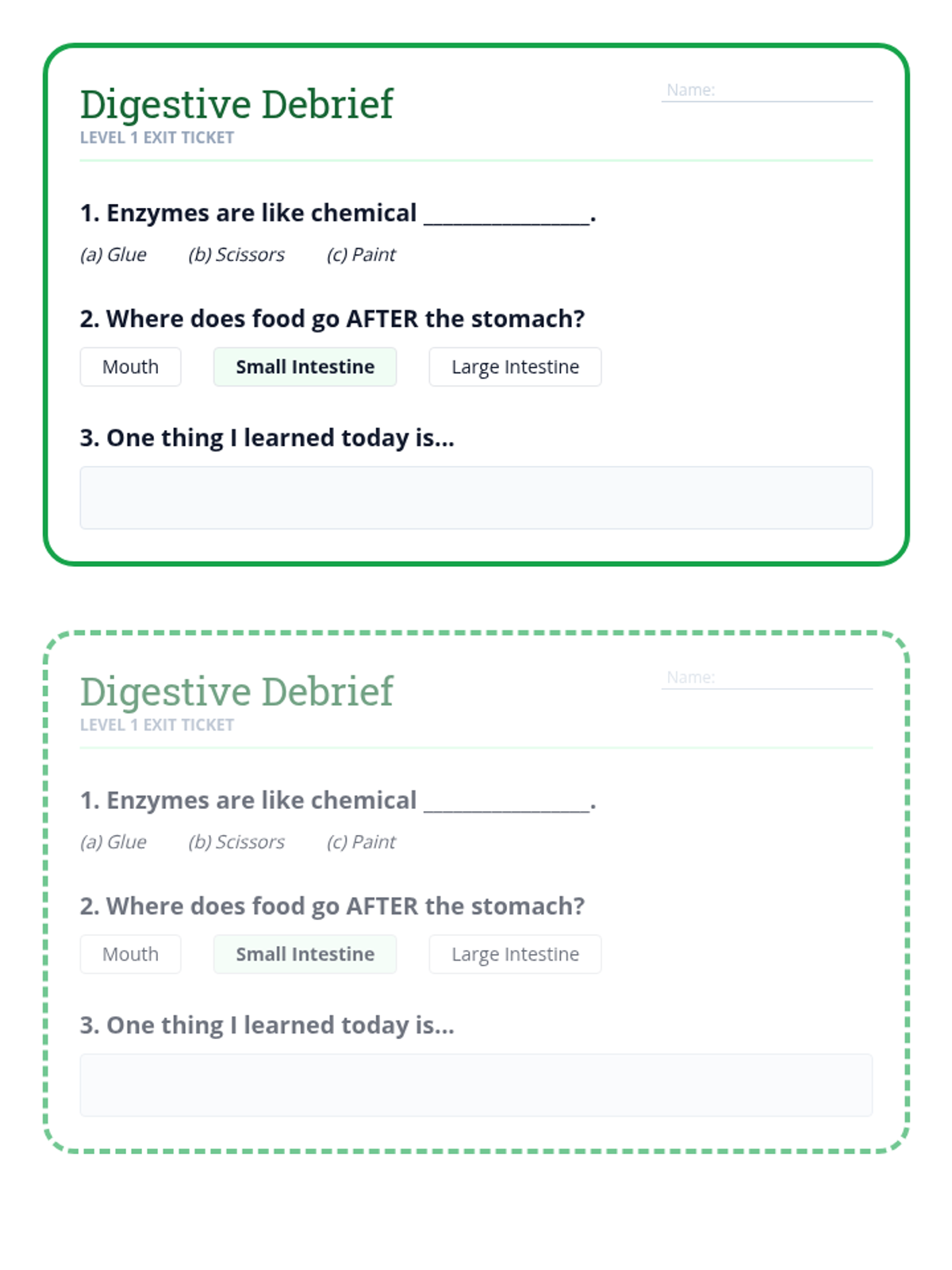
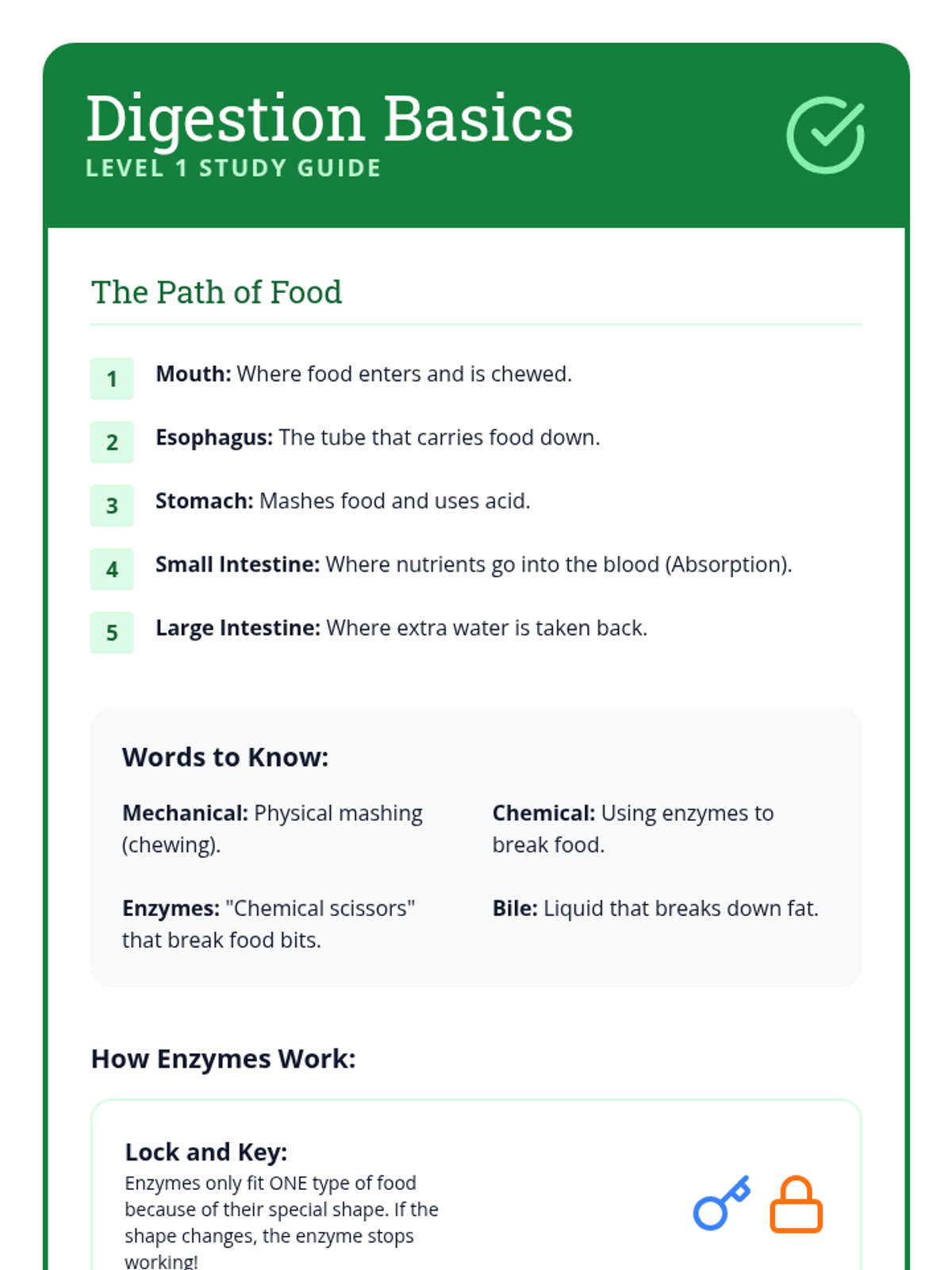
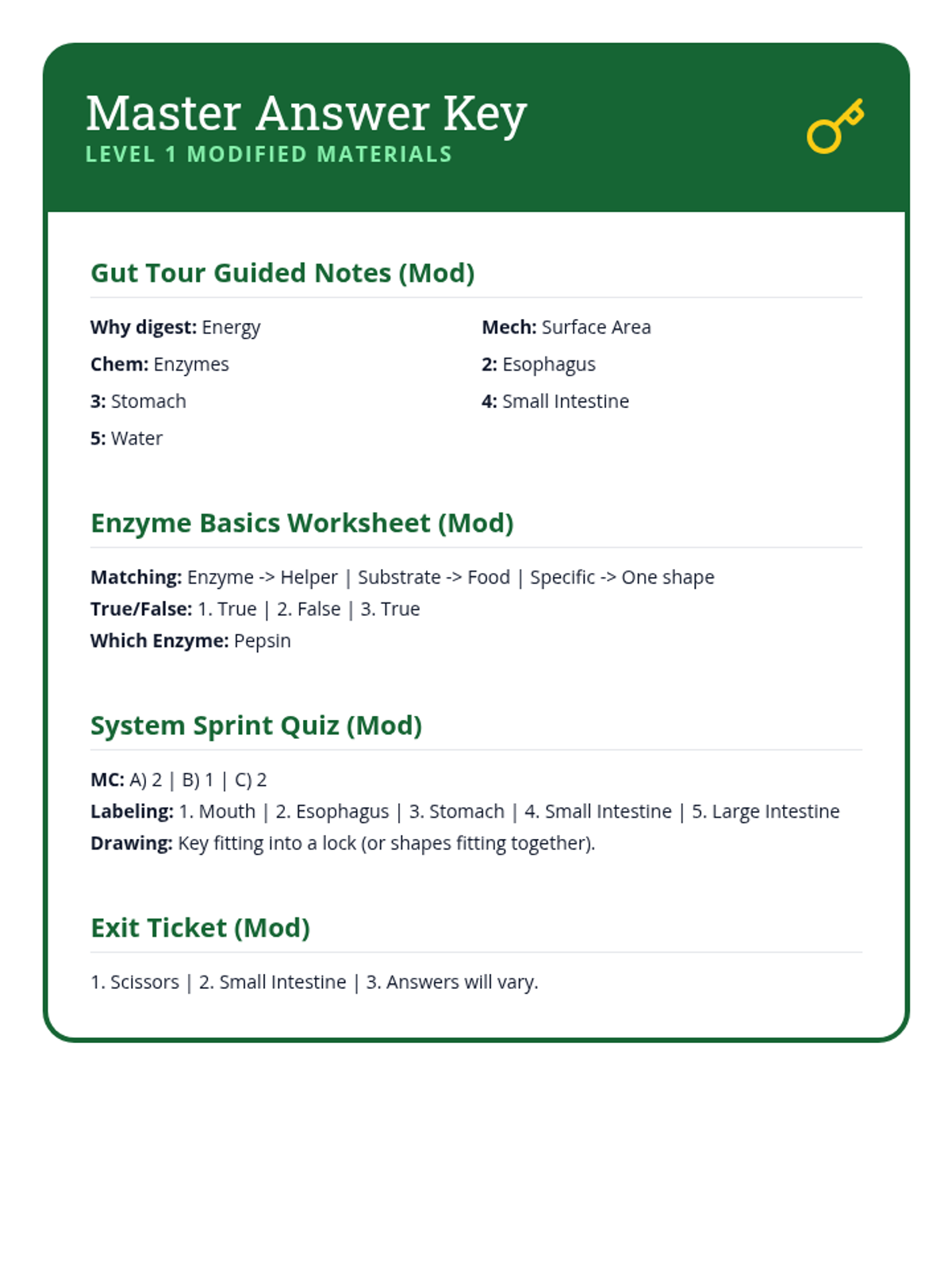
A comprehensive review lesson on the digestive system and enzyme function, focusing on the path of food, mechanical vs. chemical digestion, and enzyme specificity through interactive activities and guided notes.
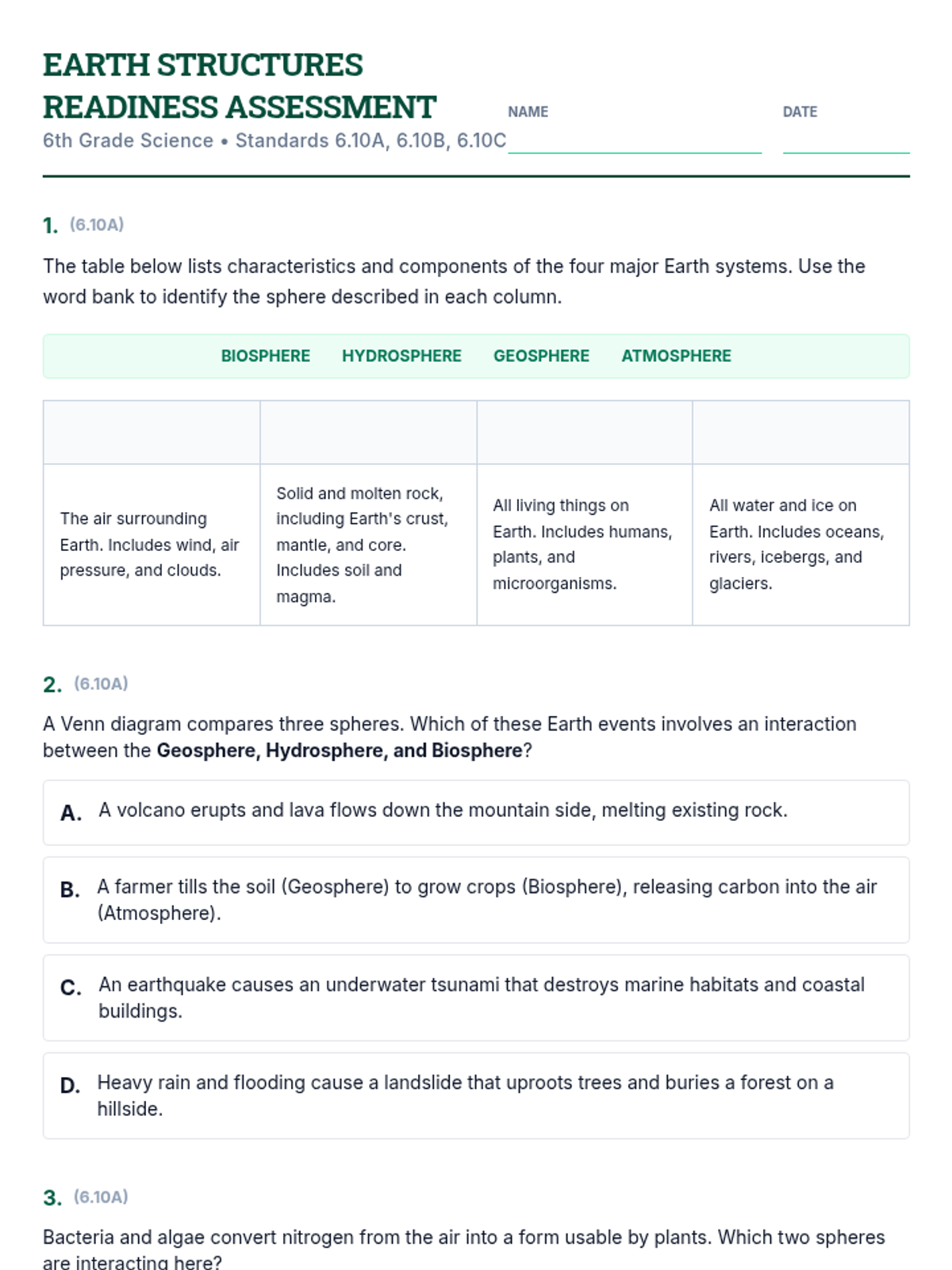
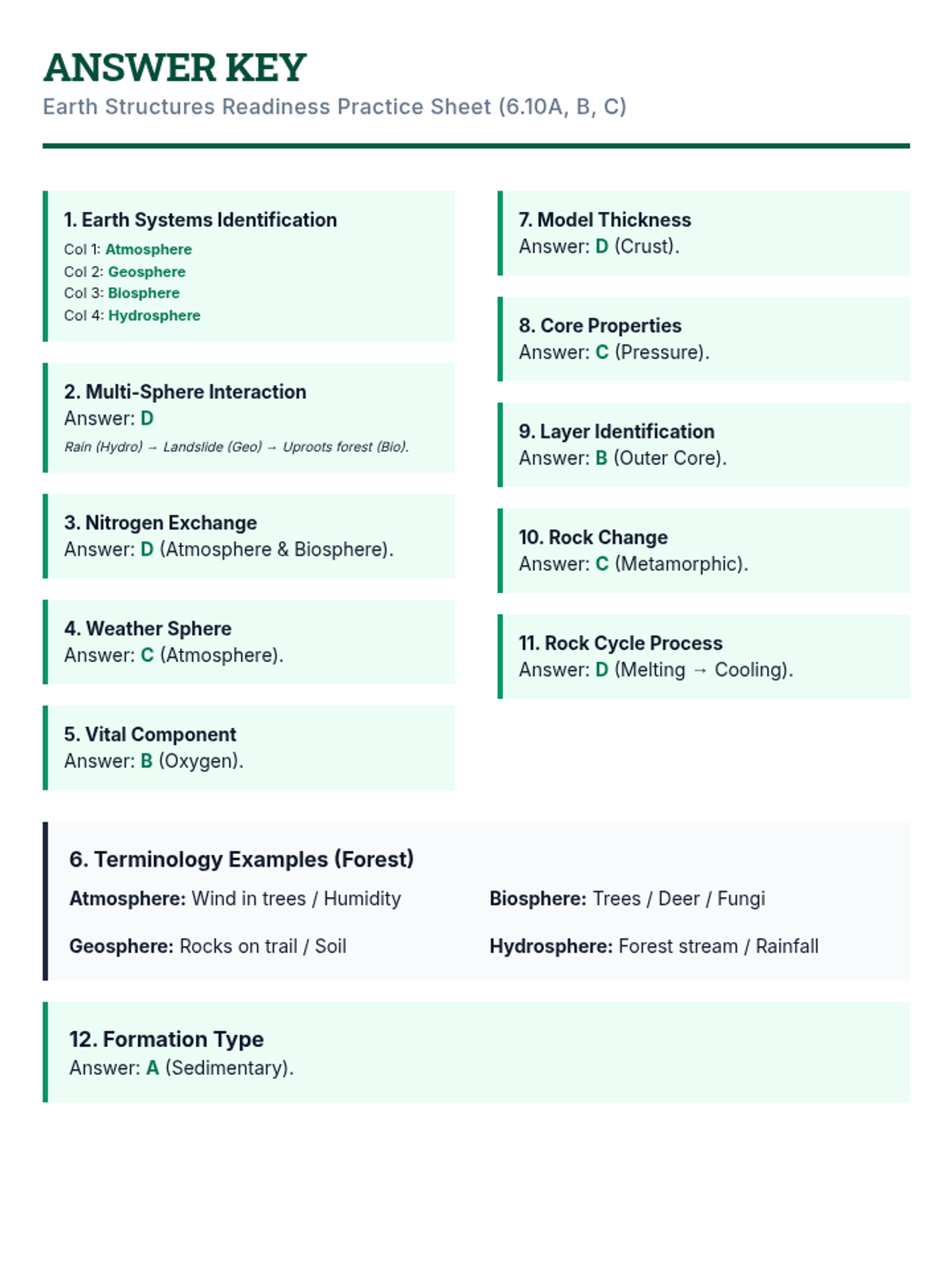
A movement-based scavenger hunt where students solve 'planetary mysteries' covering Earth's spheres, internal layers, and the rock cycle. This lesson includes task cards and a structured recording sheet for 6th grade science review.
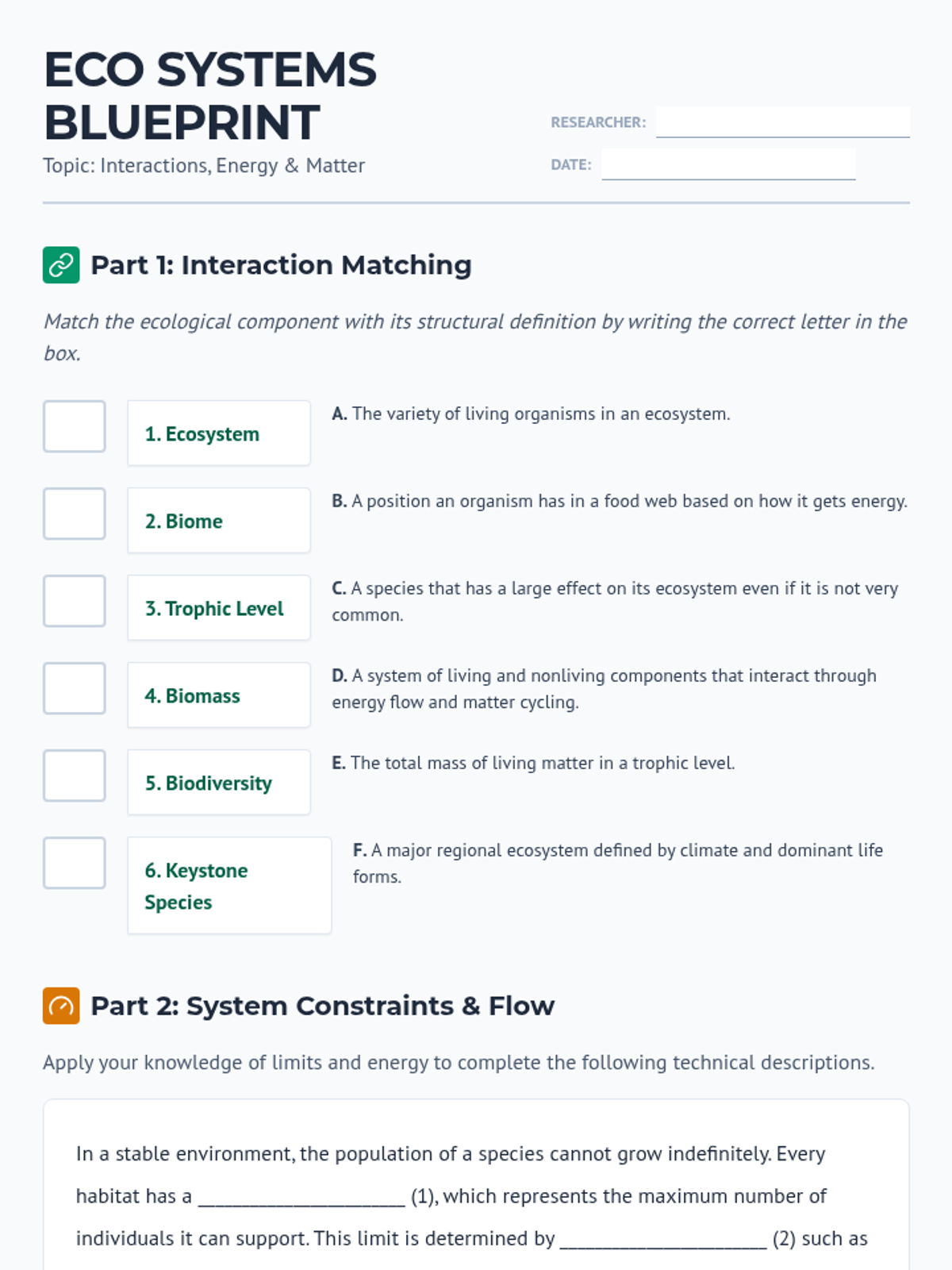
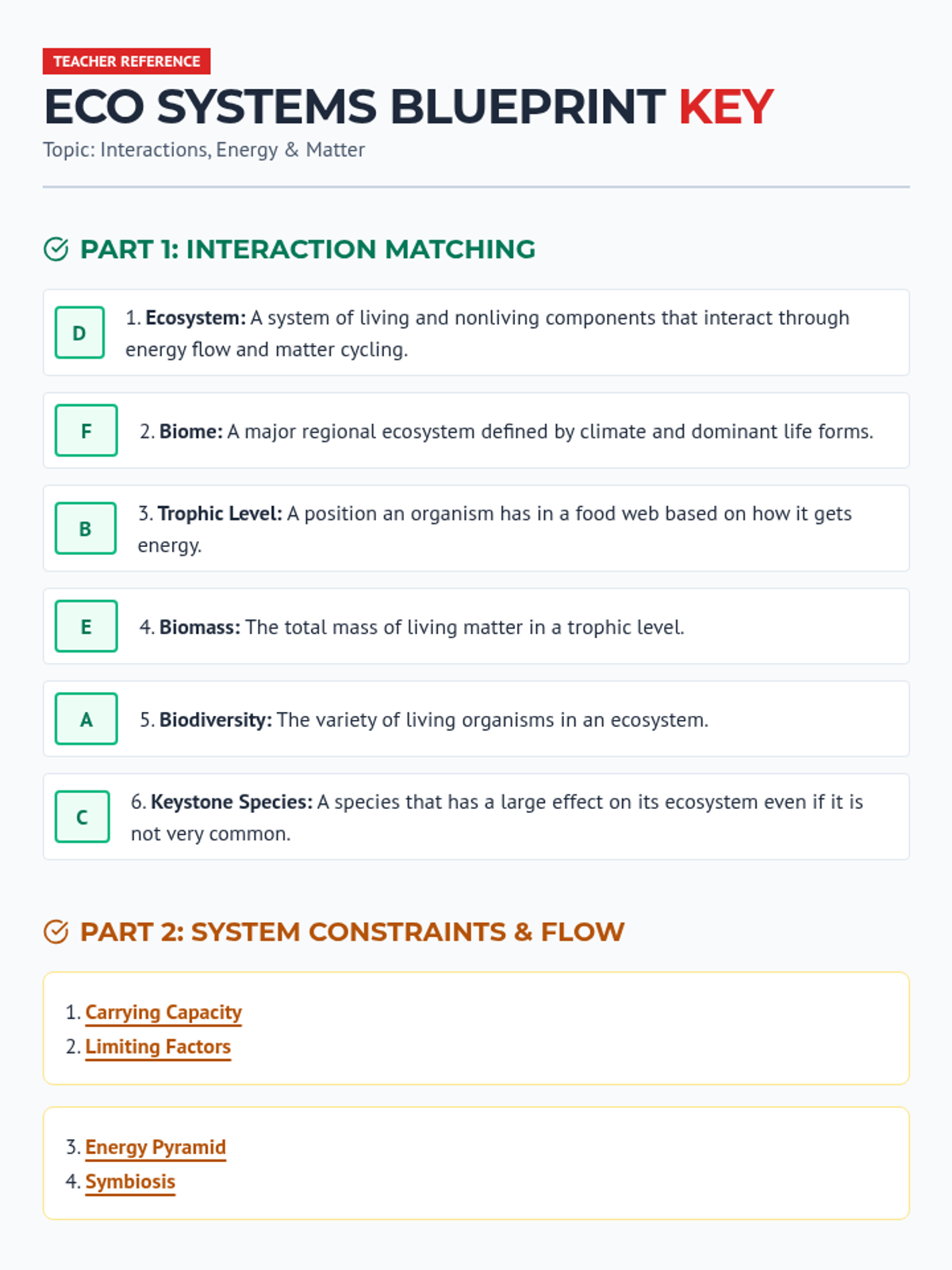
This lesson explores how living and nonliving components interact within an ecosystem, focusing on energy flow and population dynamics.
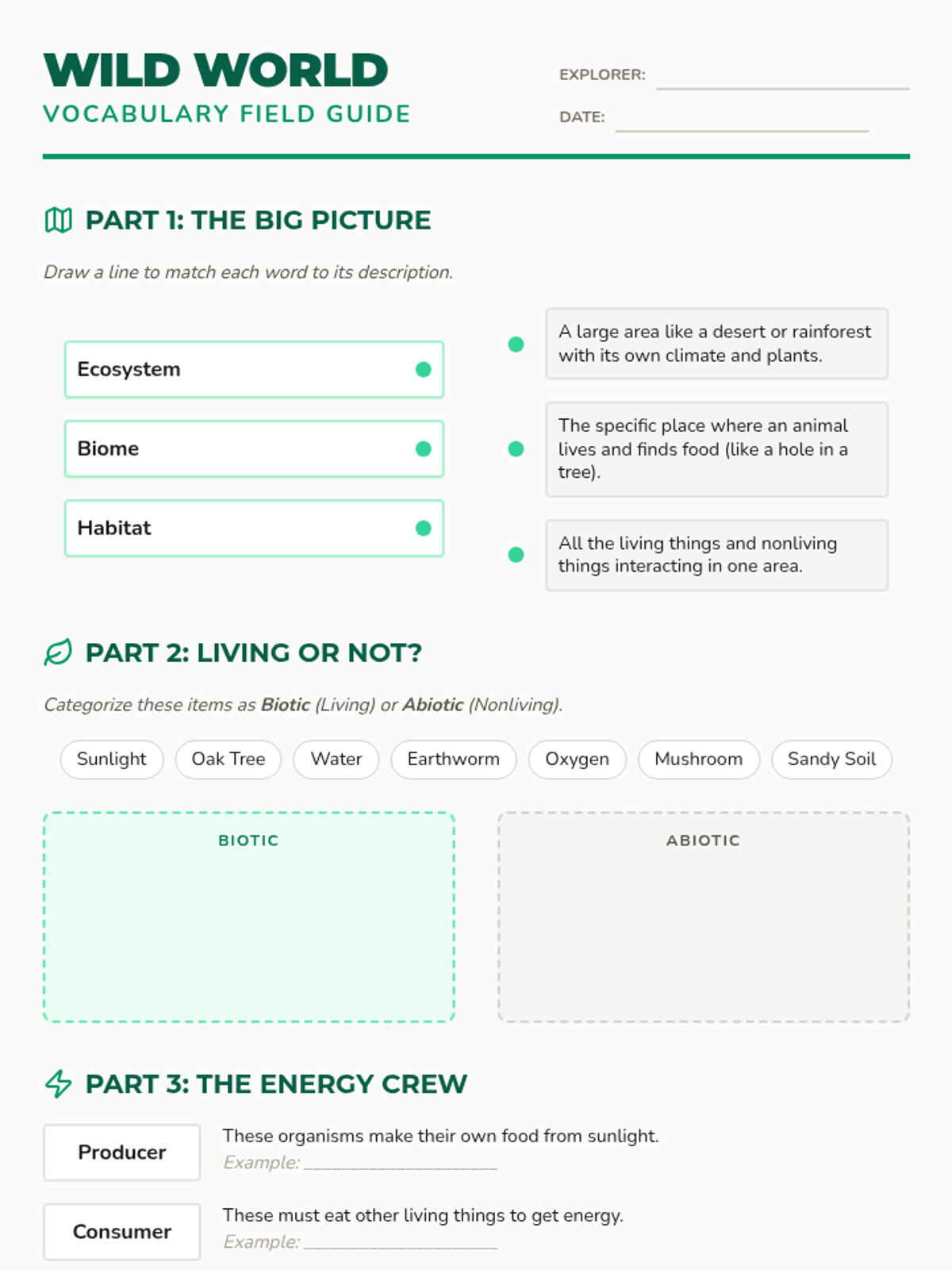
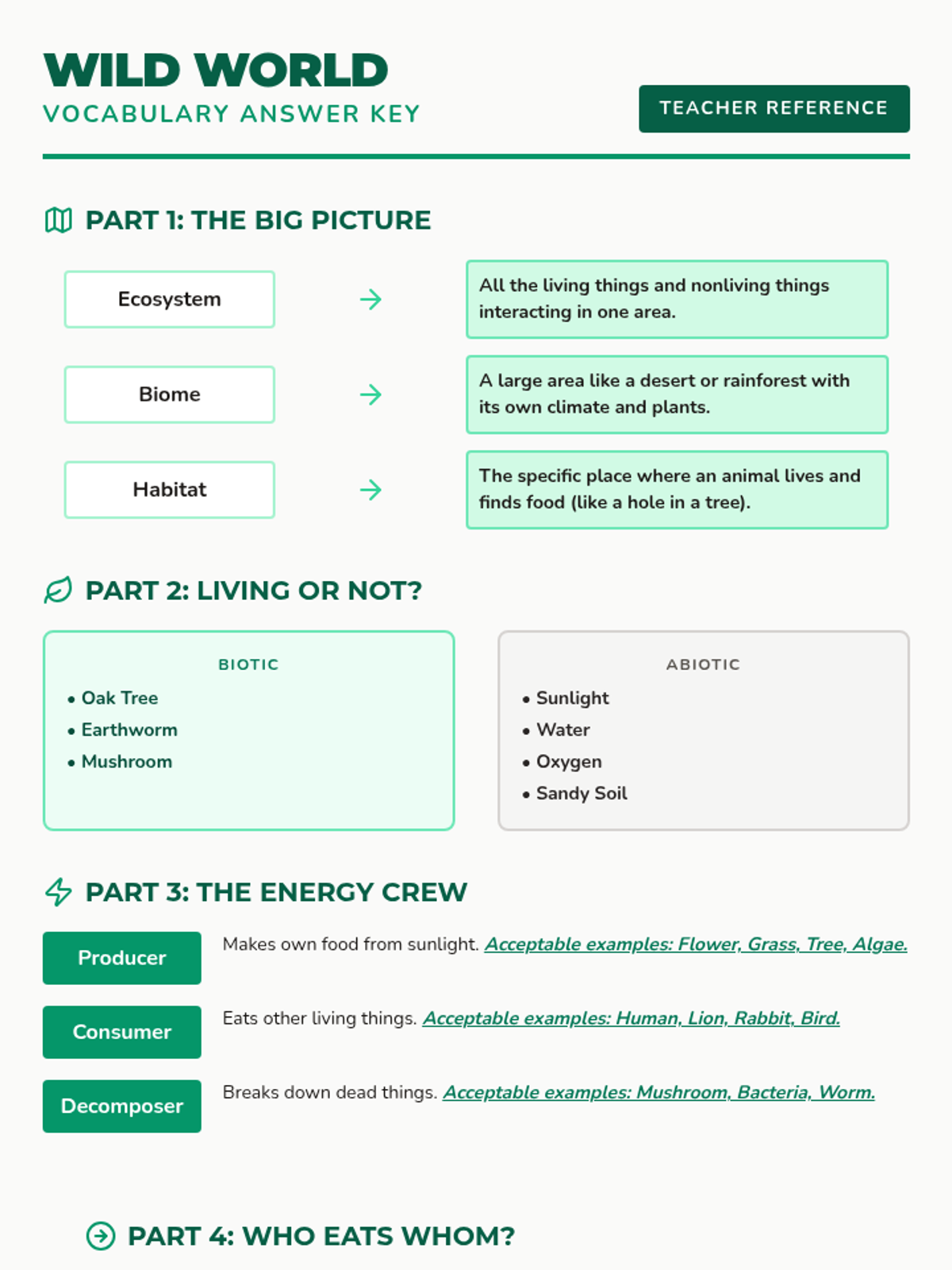
A foundational introduction to ecosystems, biomes, and the roles living things play in their environments. Students explore biotic and abiotic factors and the simple energy paths within food chains and webs.
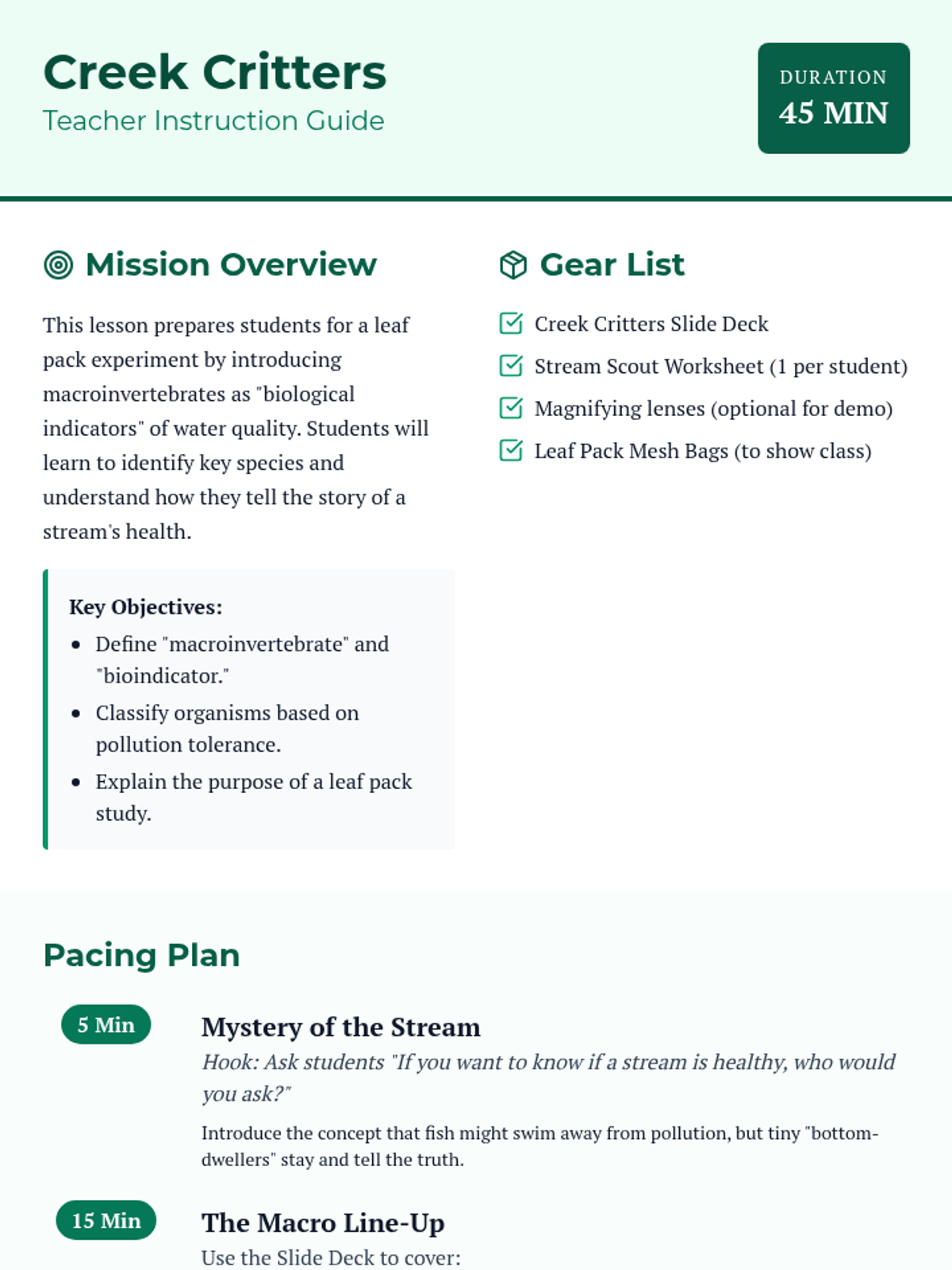
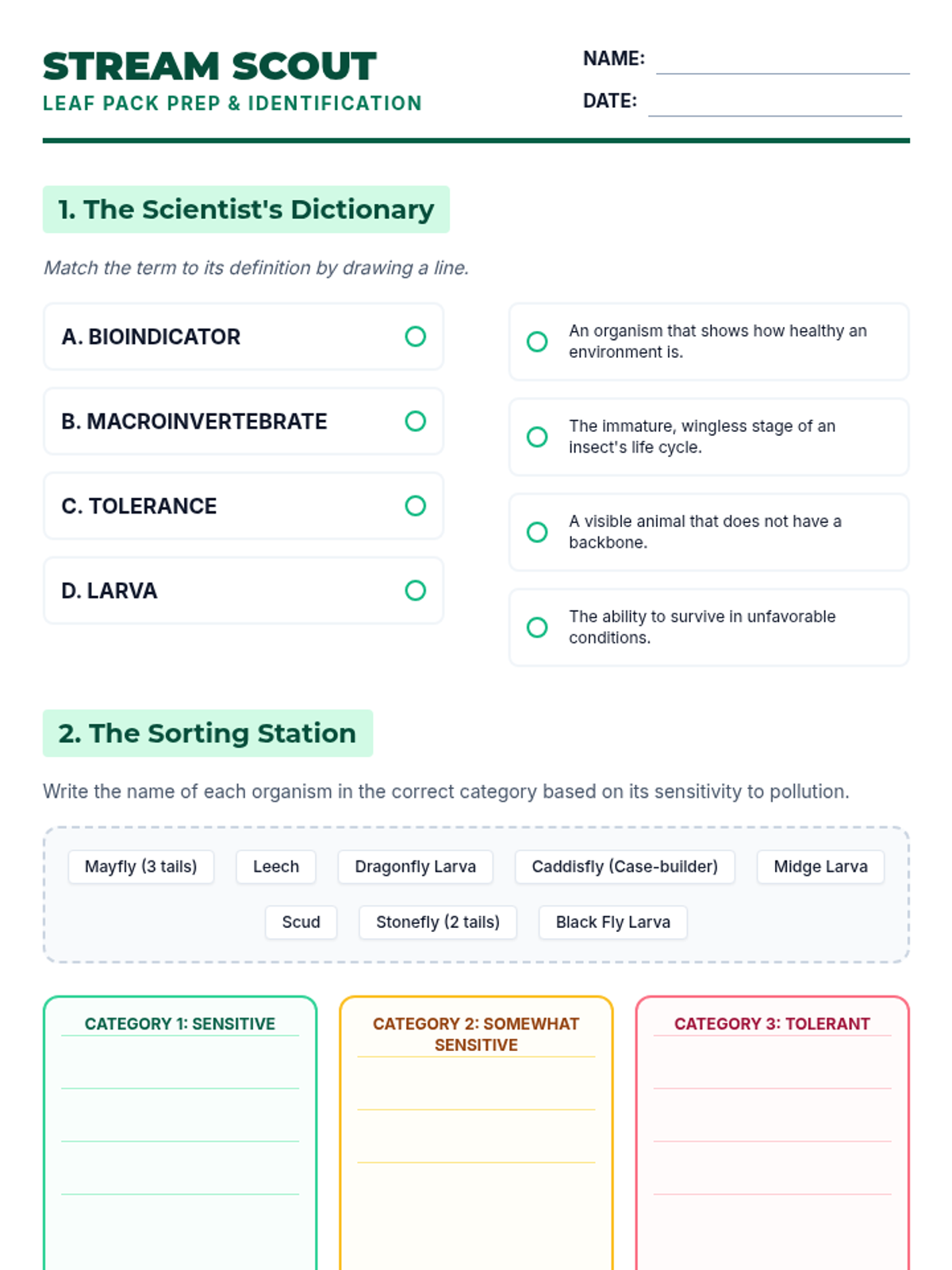
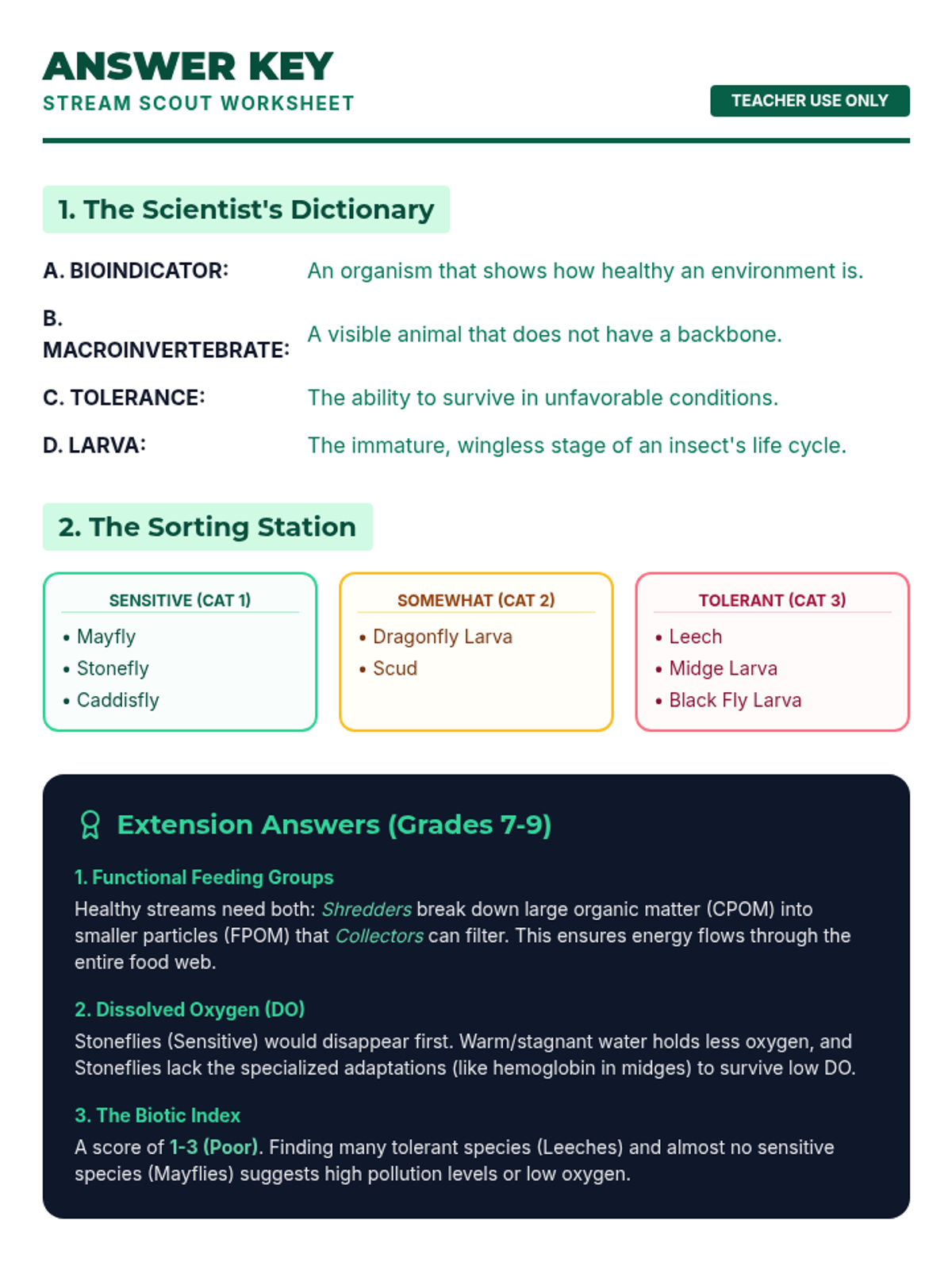
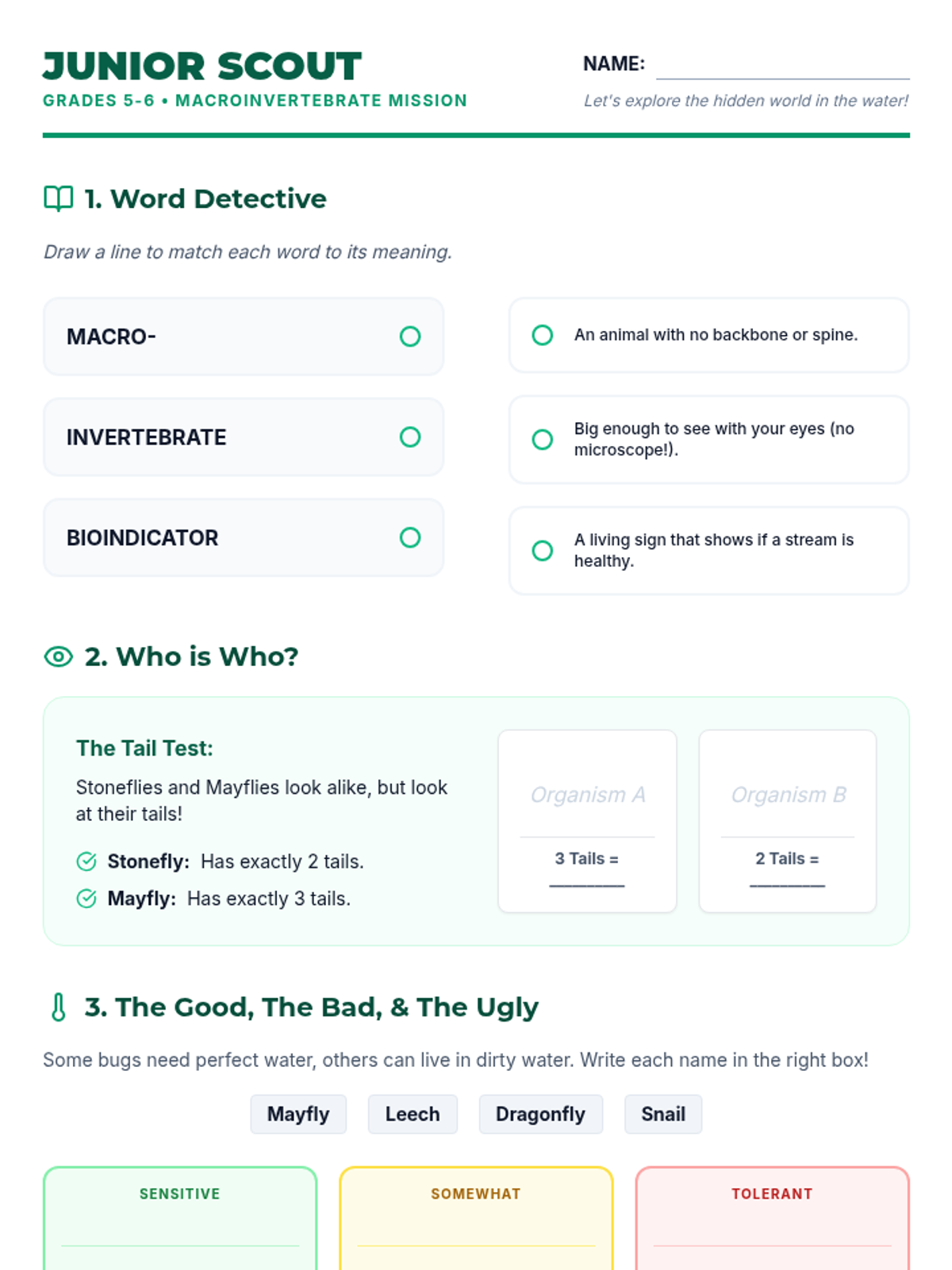
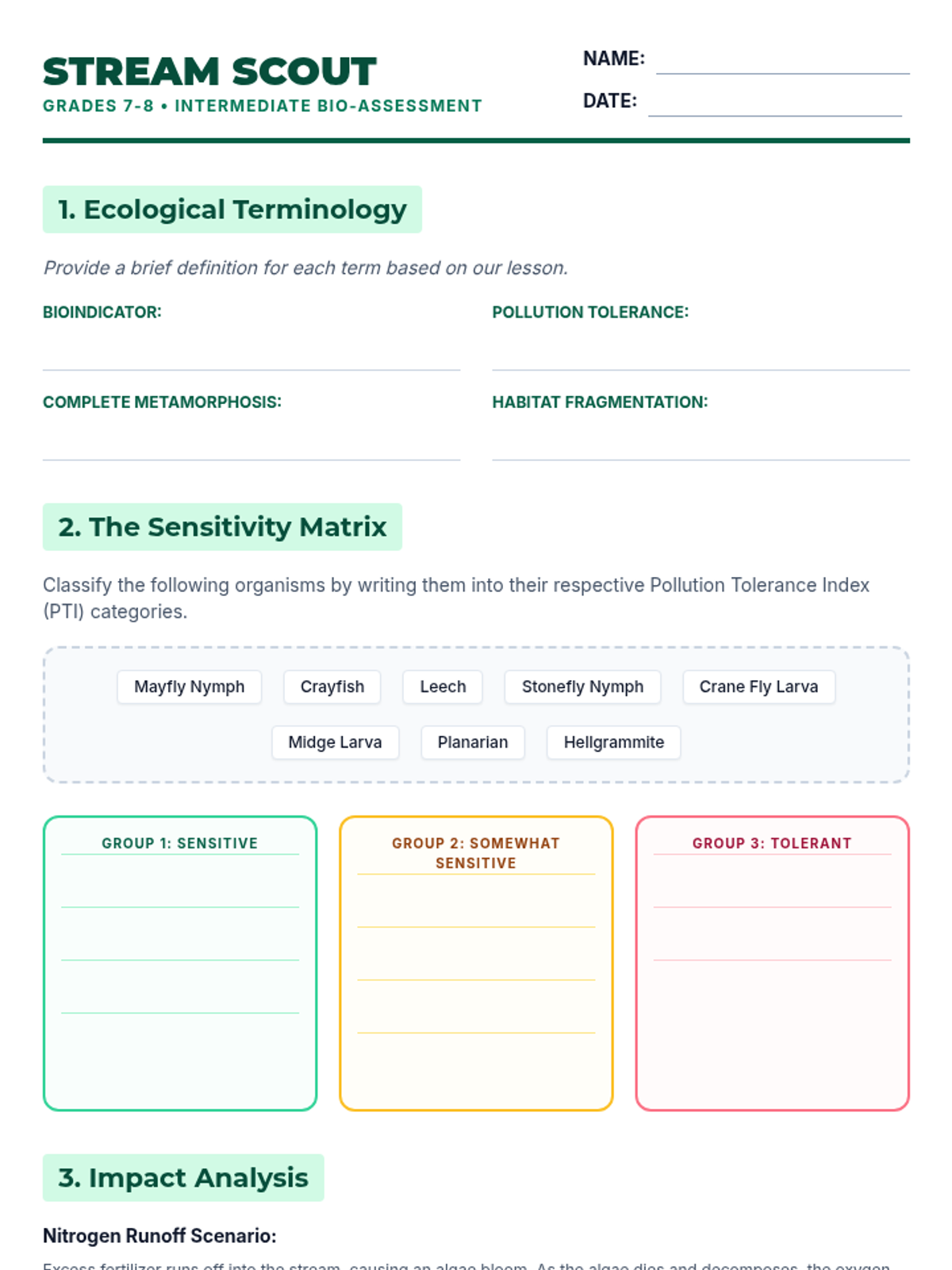
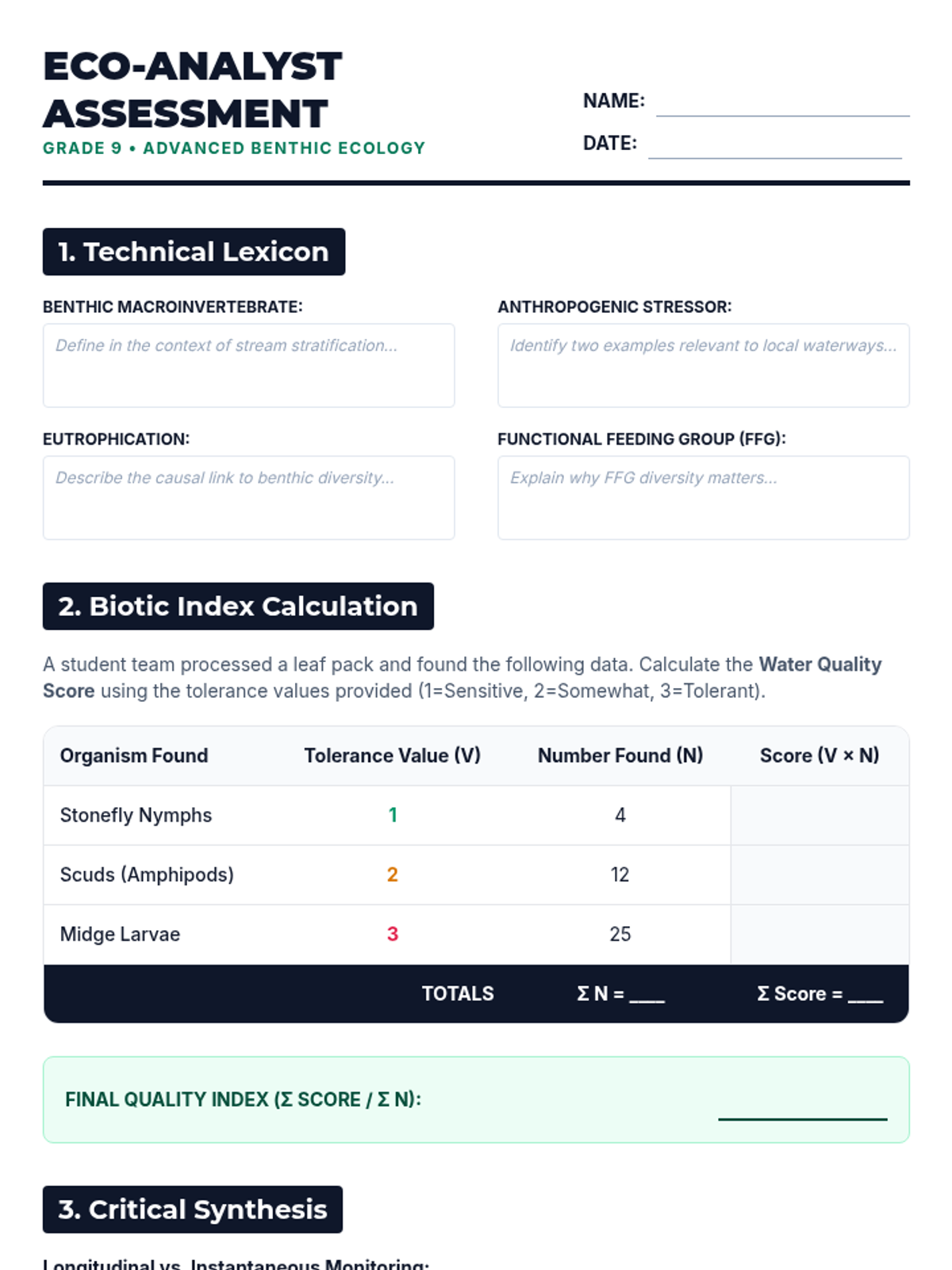
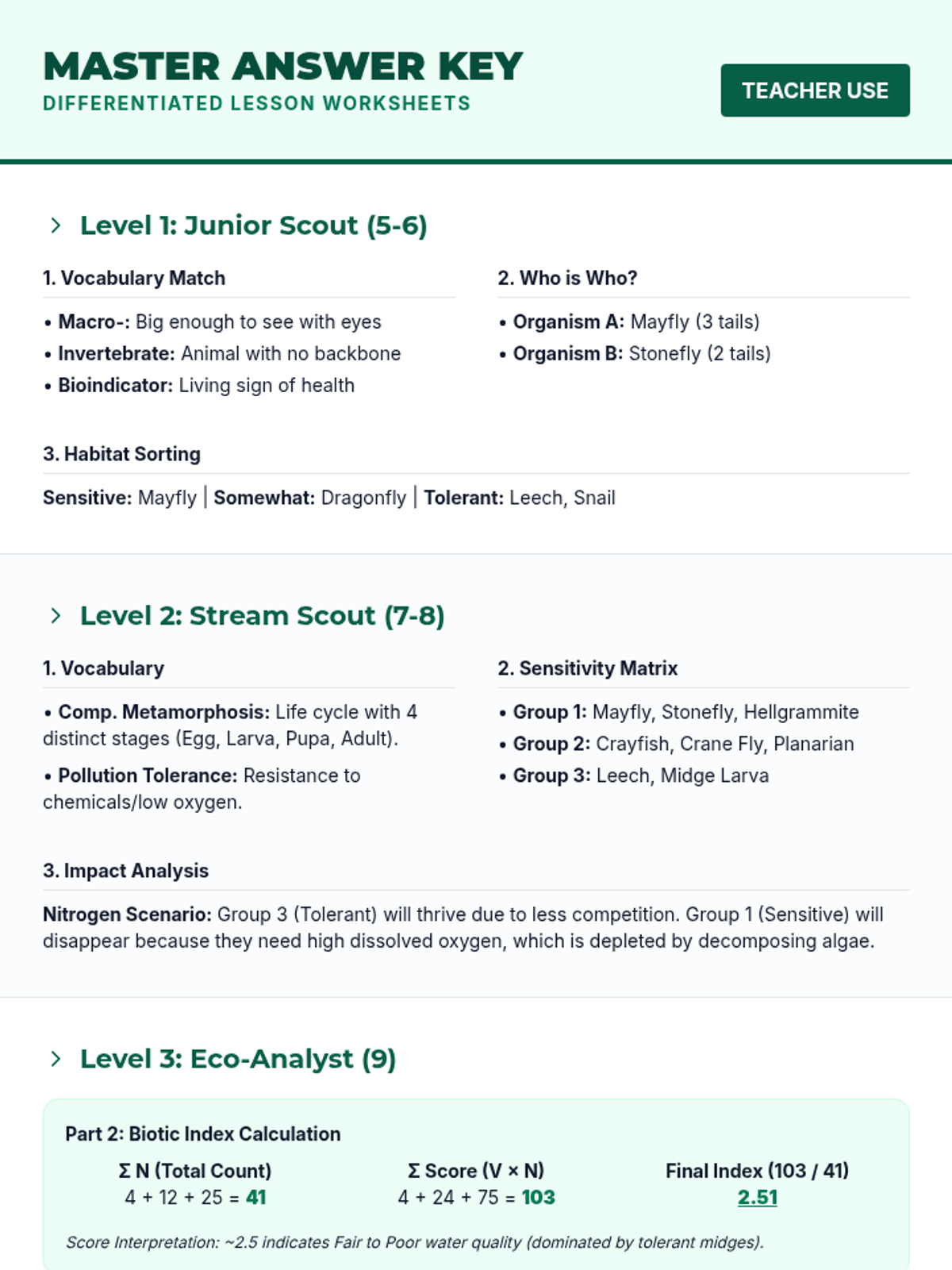
A 45-minute introductory lesson on macroinvertebrates and their role as bioindicators, preparing students for a leaf pack study. Students will learn key ecosystem vocabulary and identification techniques across grades 5-9.
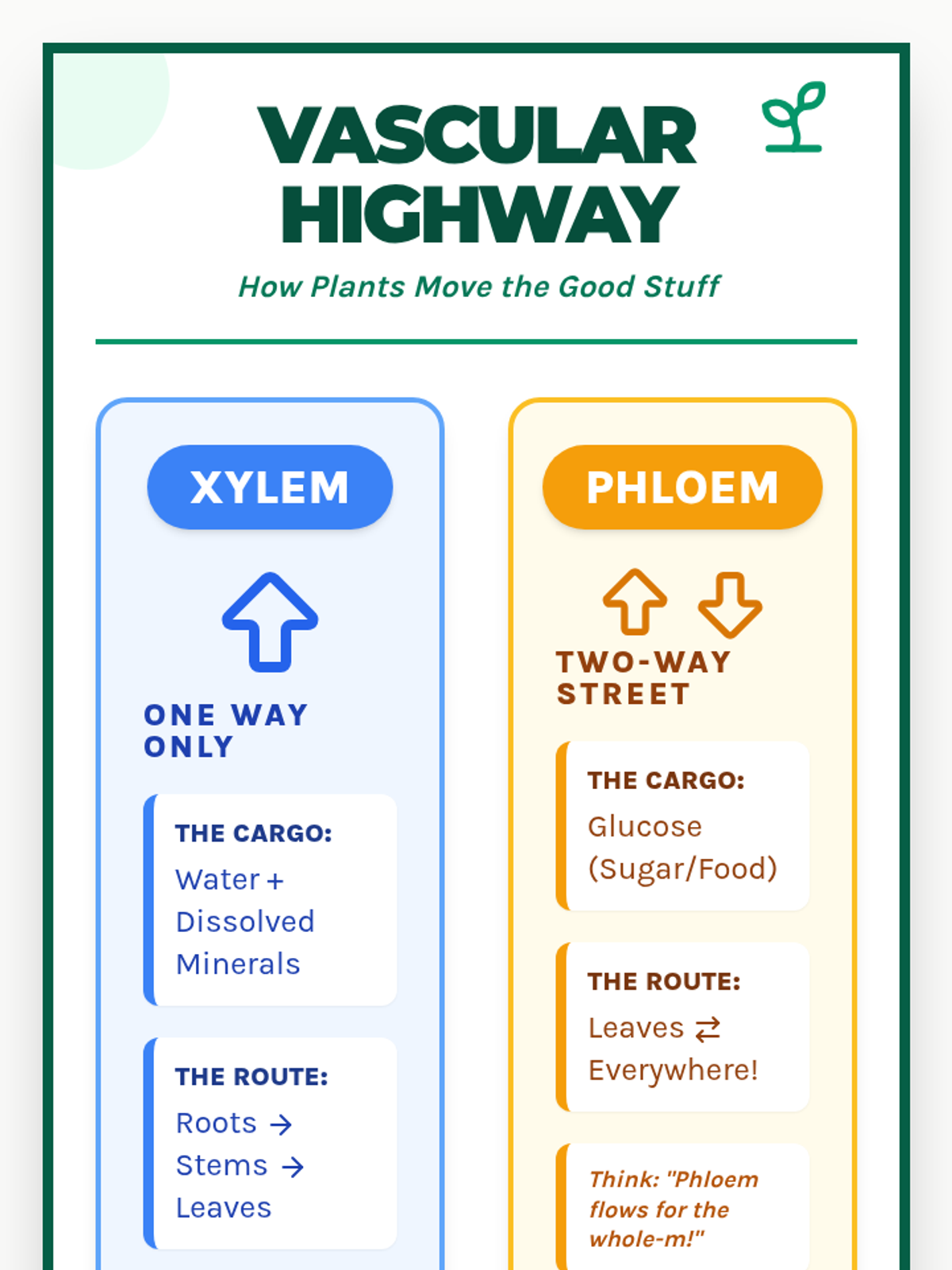
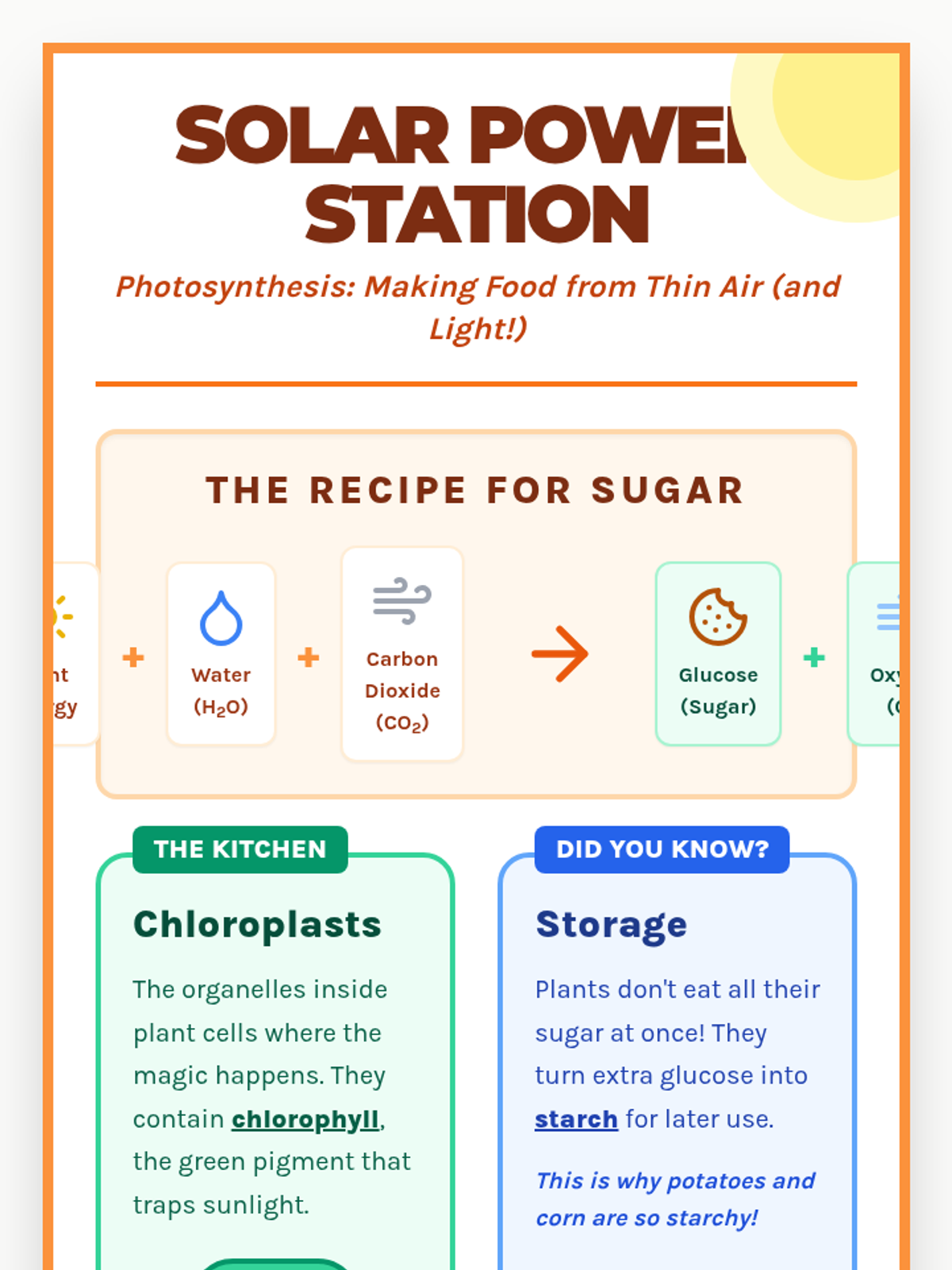
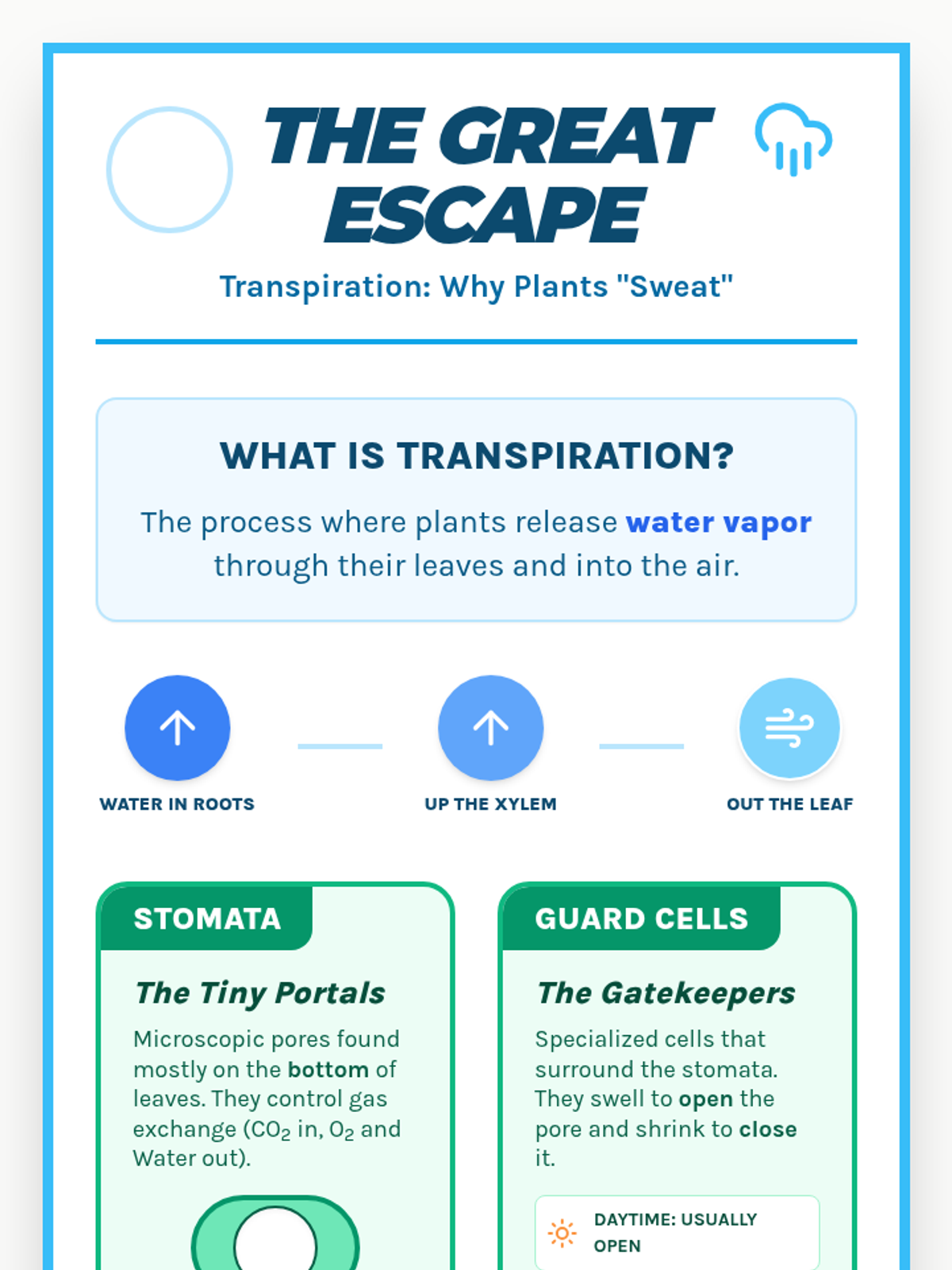
A series of visual anchor charts designed for reference during laboratory investigations into plant vascular systems, photosynthesis, and transpiration.