A comprehensive 1-hour lesson for IGCSE students exploring ethical reasoning, deontology, and consequentialism through interactive dilemmas.
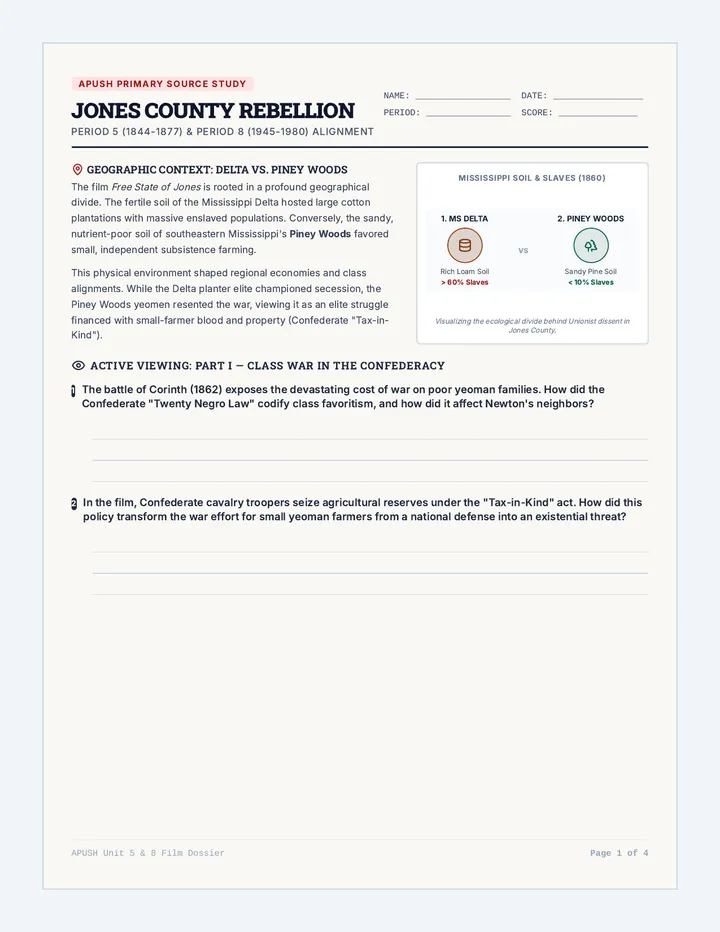
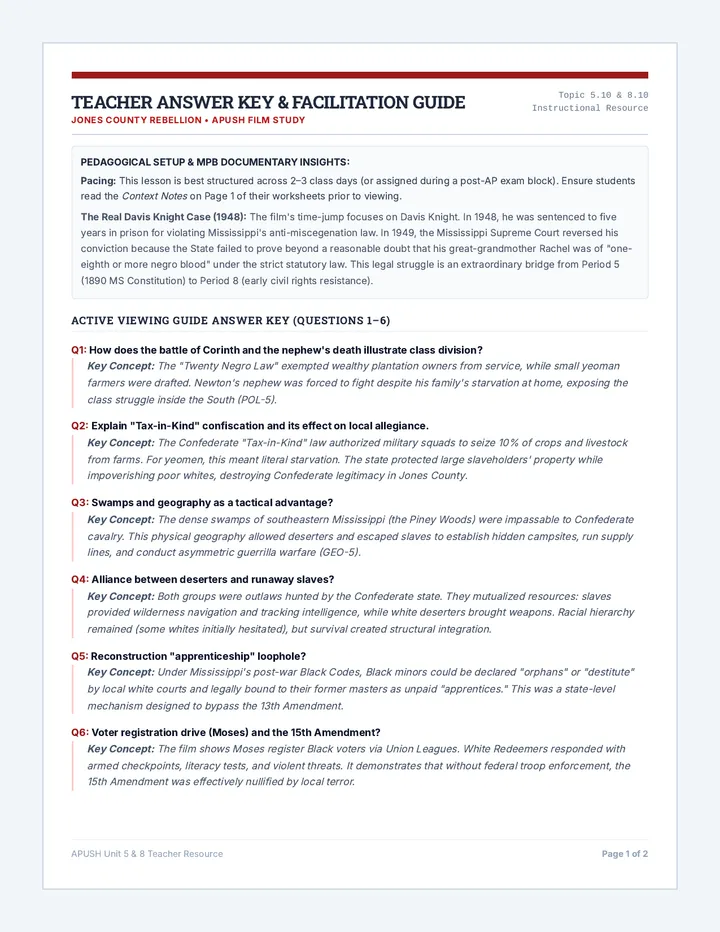
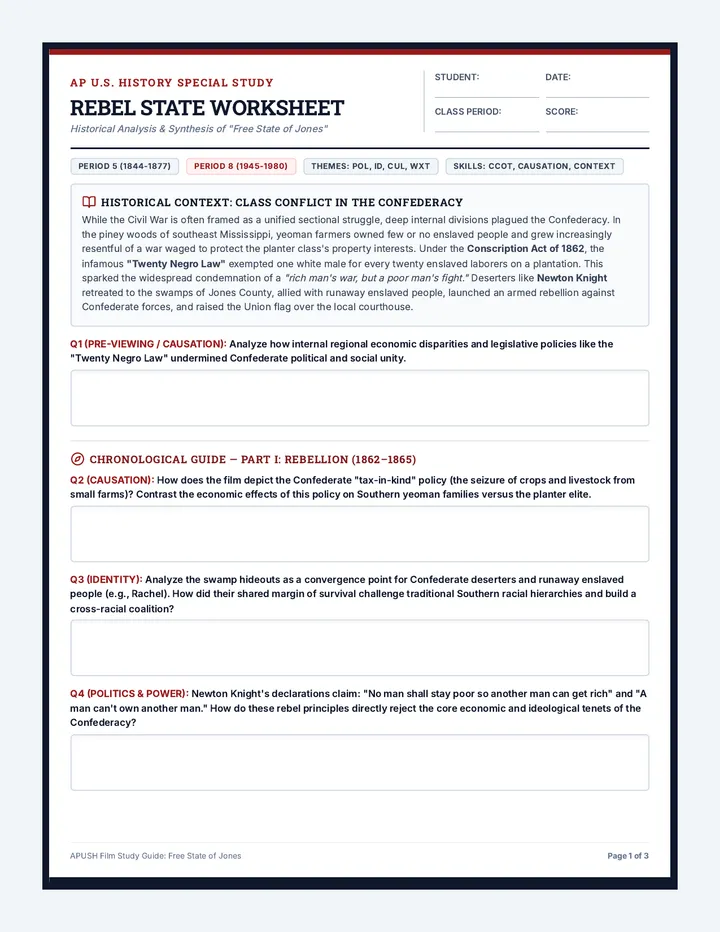
An AP U.S. History film study lesson on 'Free State of Jones' exploring Civil War dissent, Reconstruction failures (Period 5), and their long-term legacy in 20th-century Jim Crow courts (Period 8).
A comprehensive AP U.S. History study of the internal conflicts of the Confederacy, the legal boundaries of Reconstruction, and the long struggle for civil rights in Mississippi, structured around the historical events depicted in the film Free State of Jones.
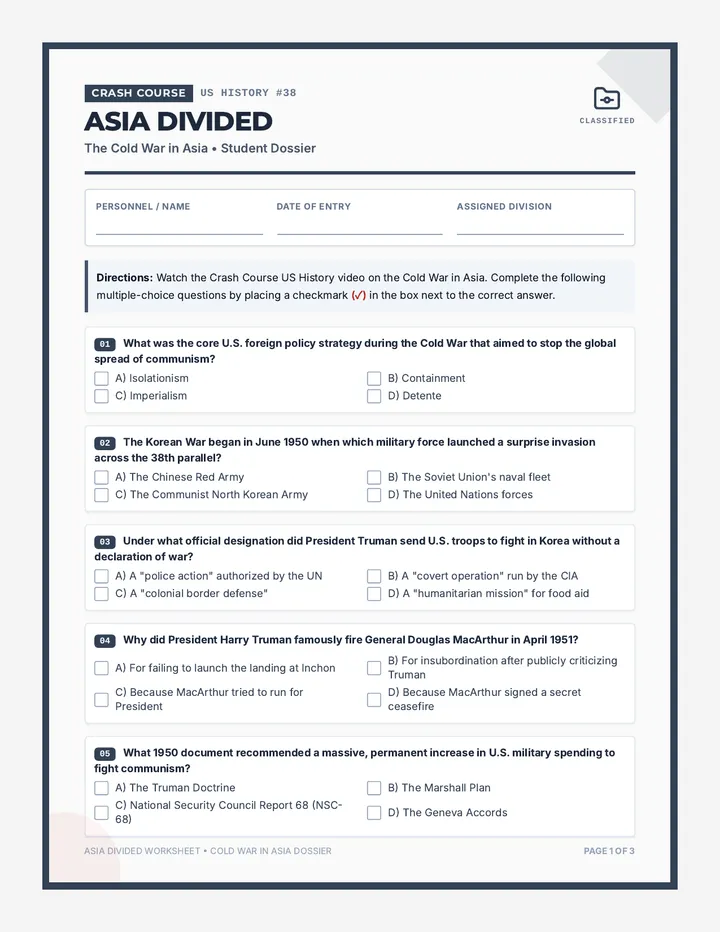
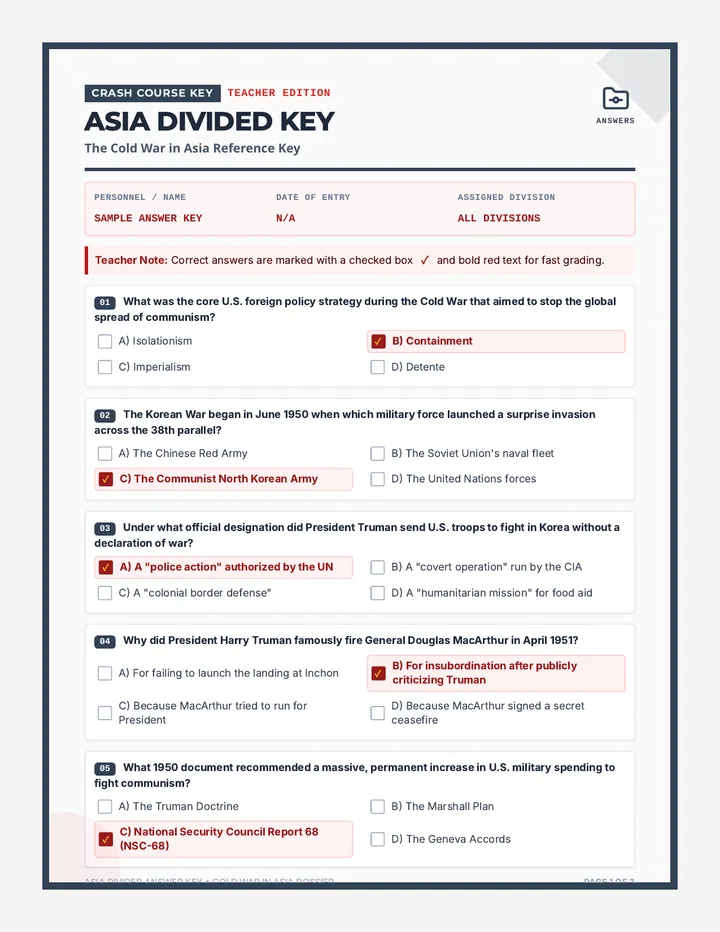
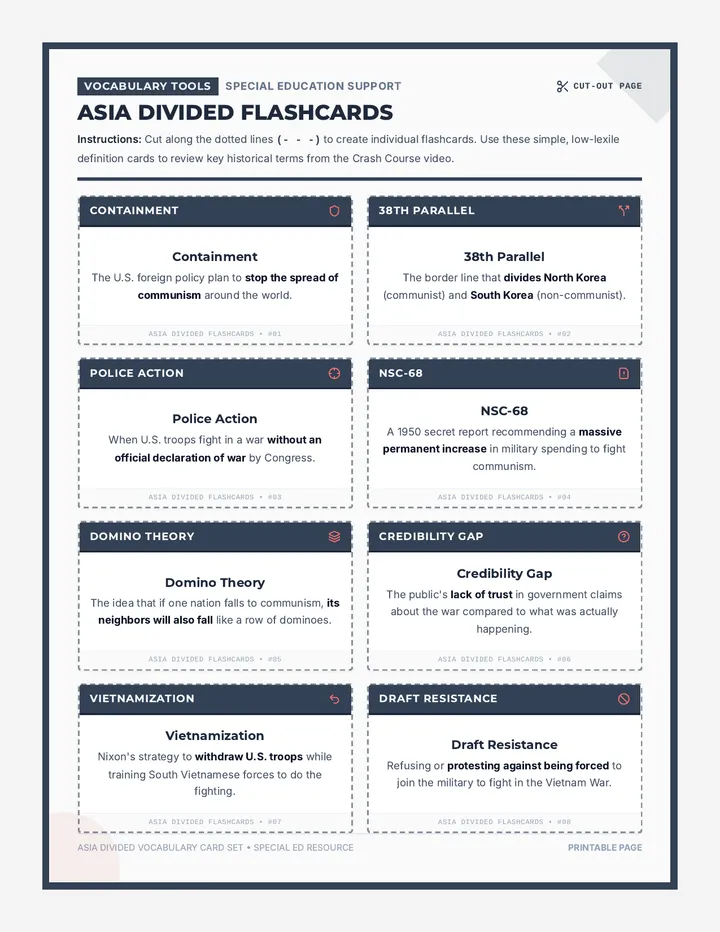
A deep-dive lesson exploring the Cold War in Asia (focusing on the Korean and Vietnam Wars) using Crash Course US History #38. This lesson includes a 15-question comprehension worksheet, a complete teacher answer key, and specialized low-lexile definition flashcards for special education.
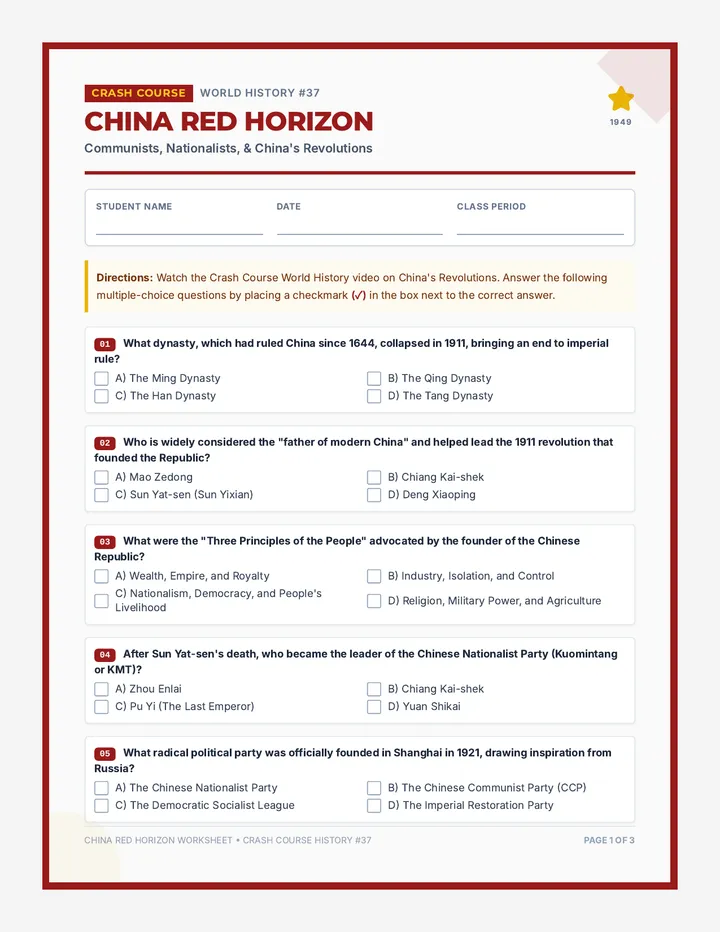
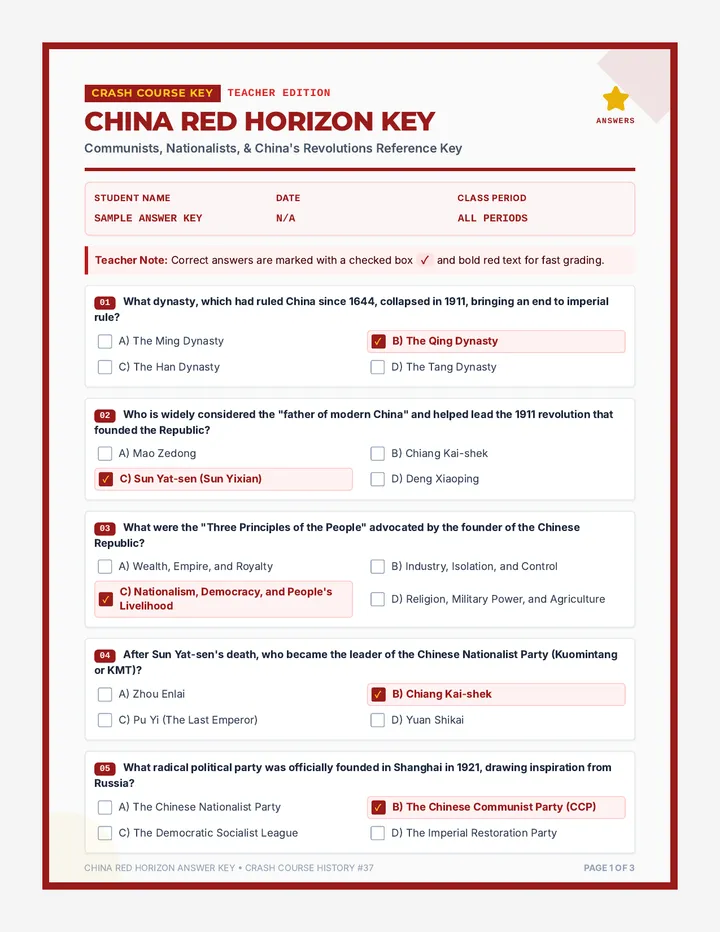
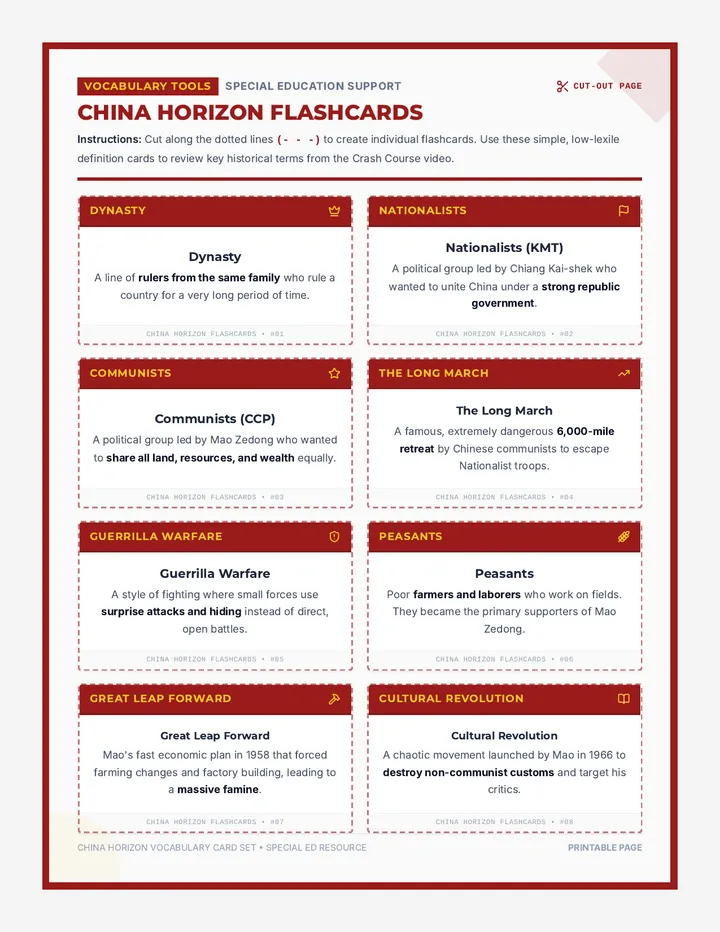
A deep-dive lesson exploring the Chinese revolutions of the 20th century using Crash Course World History #37. Includes a 15-question comprehension worksheet, a complete teacher answer key, and specialized low-lexile definition flashcards for special education.
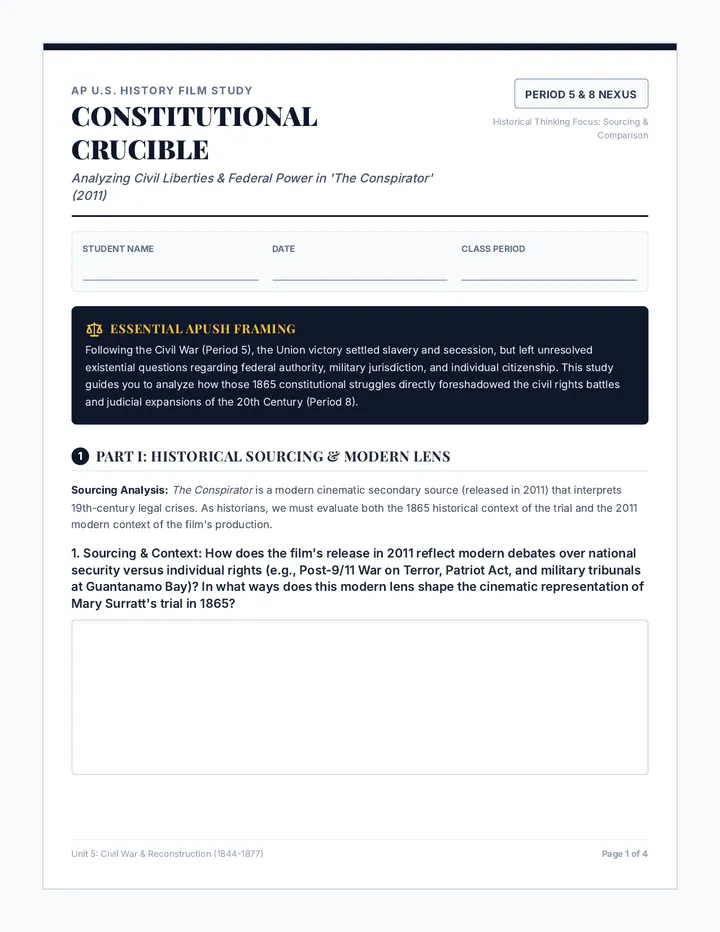
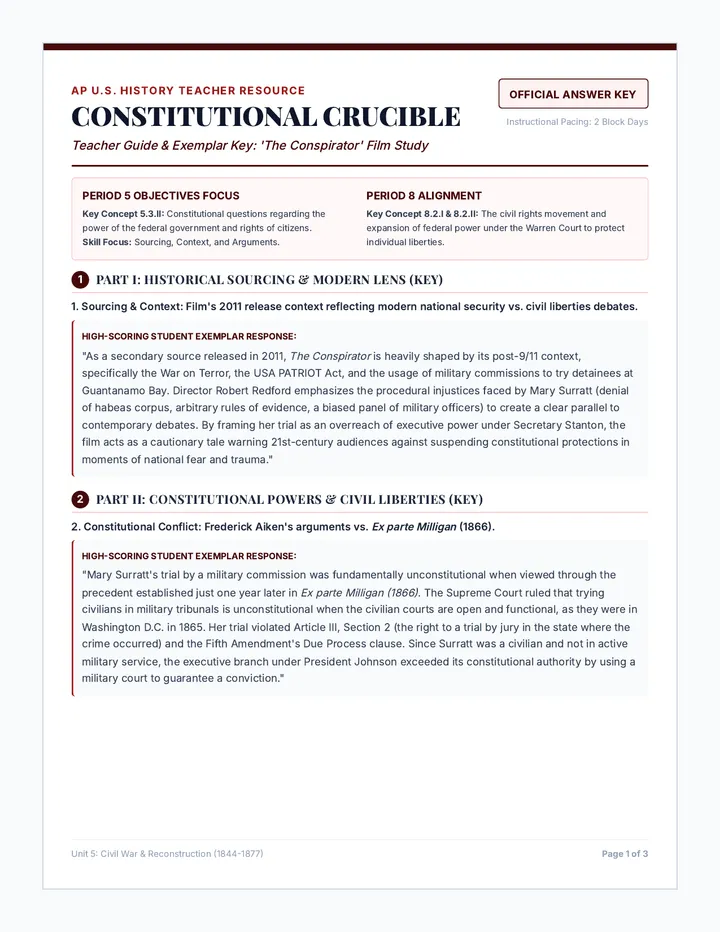
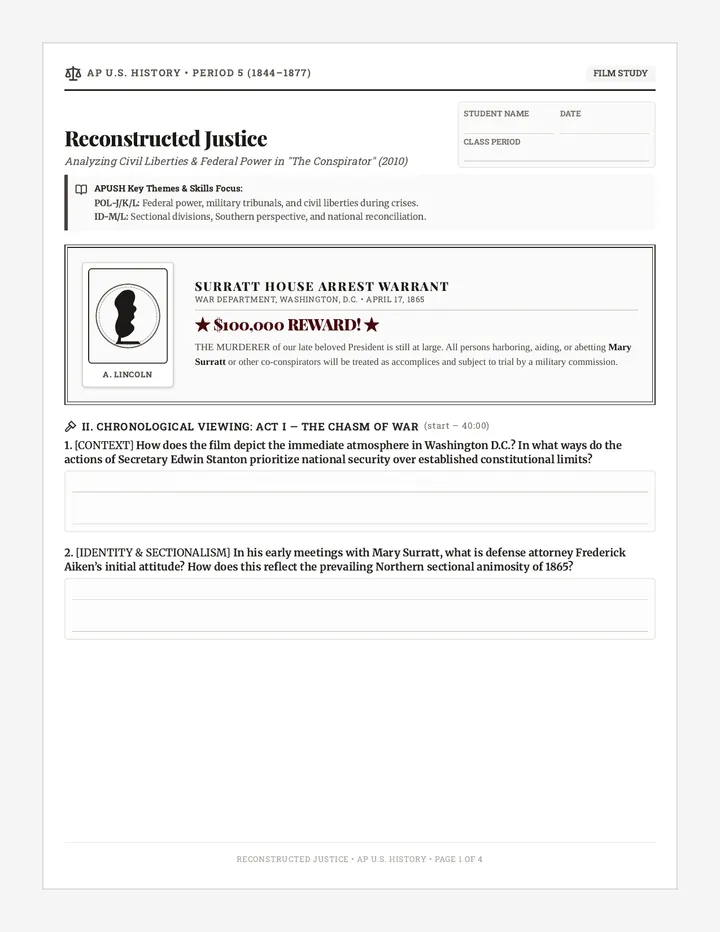
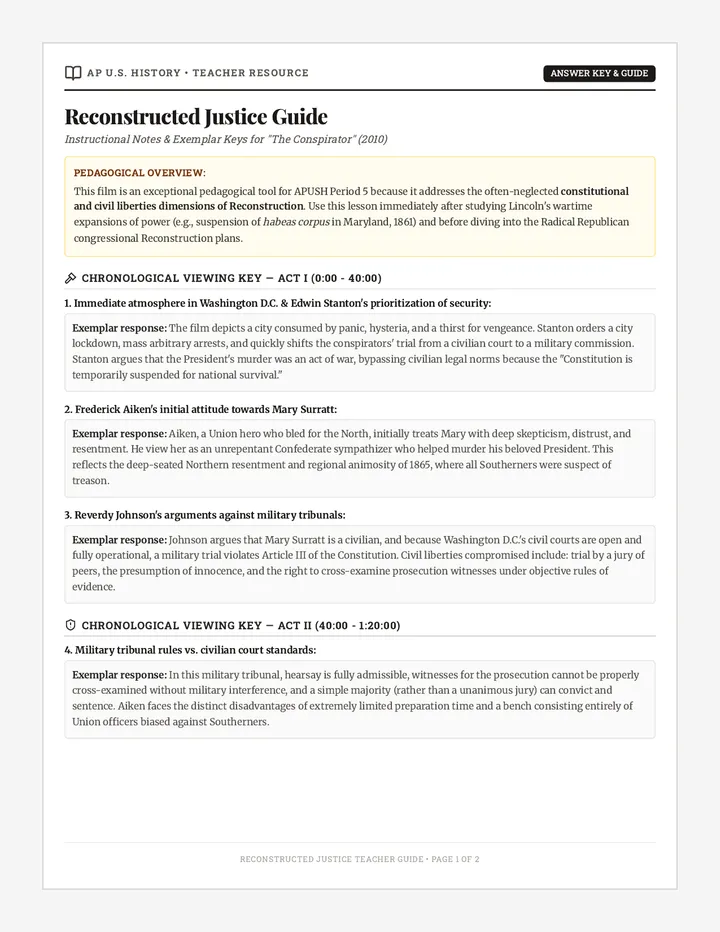
An AP U.S. History film study and constitutional analysis of 'The Conspirator'. Students explore Period 5 legal precedents, executive authority, and civil liberties, while tracing long-term continuities in civil rights into the 20th century.
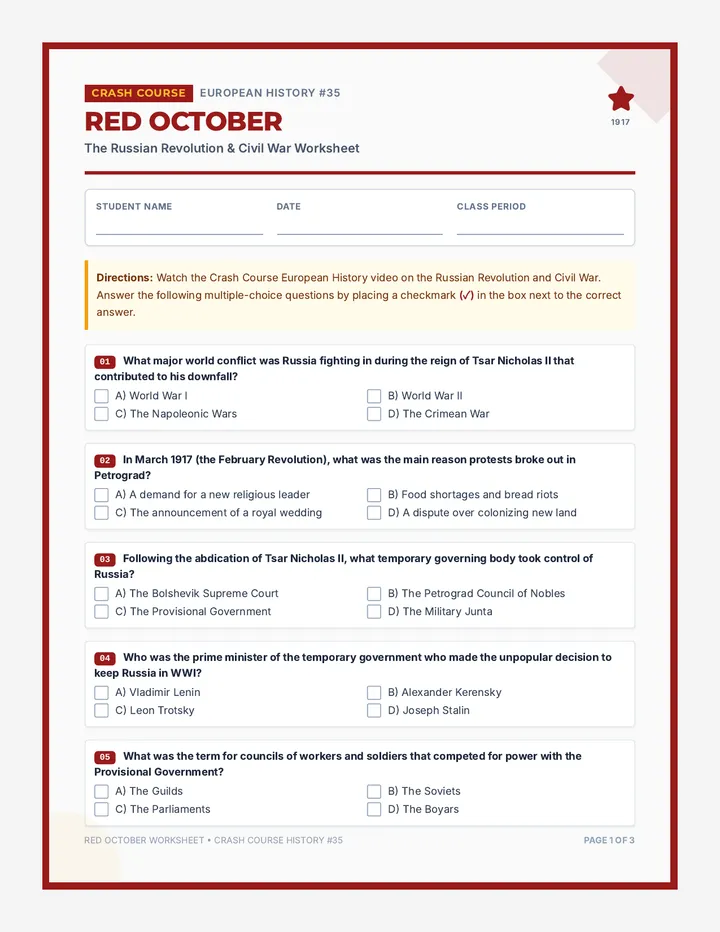
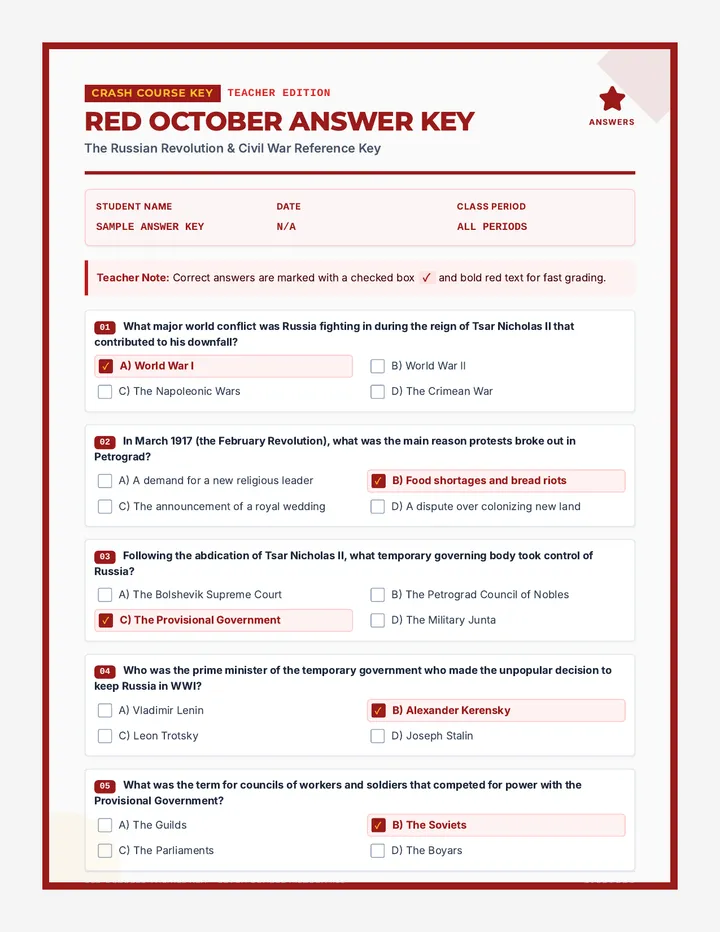
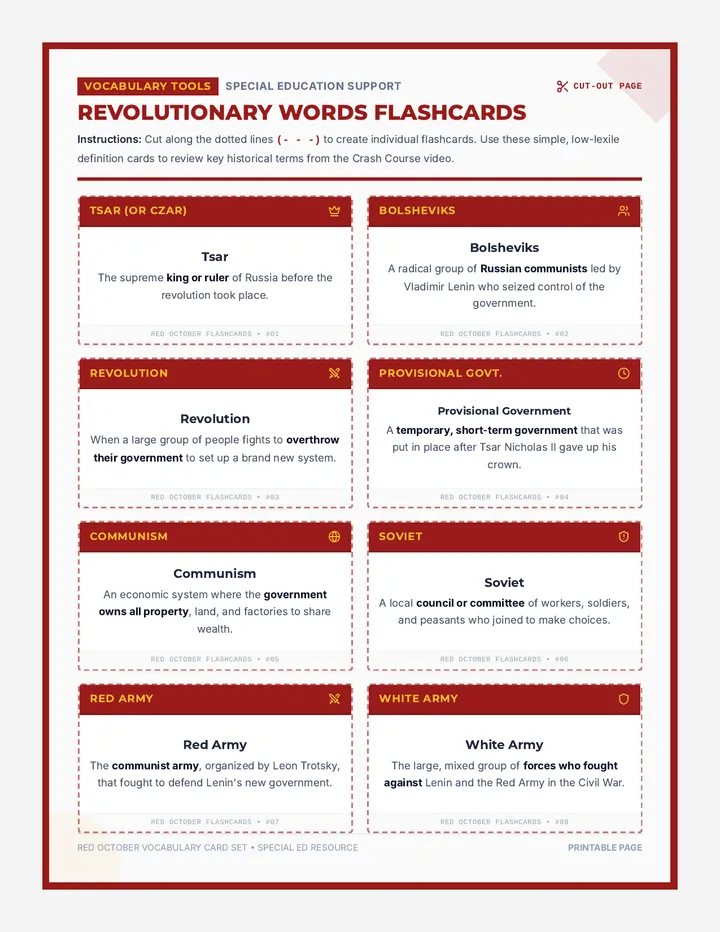
A comprehensive lesson focused on the Russian Revolution and Civil War, utilizing Crash Course European History #35. This lesson includes a 15-question comprehension worksheet, a complete teacher answer key, and specialized low-lexile definition flashcards for special education support.
A highly targeted lesson analyzing the film 'The Conspirator' (2010) through the lens of AP U.S. History Period 5 objectives. It explores the constitutional crises, civil liberties, and regional animosities surrounding the trial of the Lincoln assassination co-conspirators in 1865.
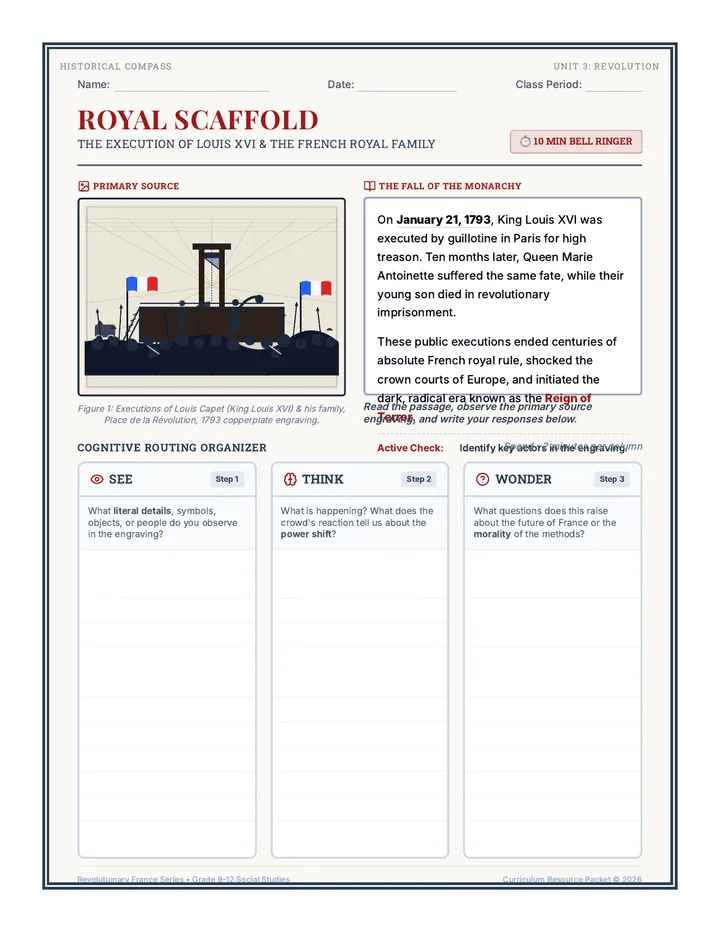
A quick, high-impact bell ringer lesson exploring the execution of King Louis XVI and the French royal family through a primary source engraving and a See-Think-Wonder cognitive routing activity.
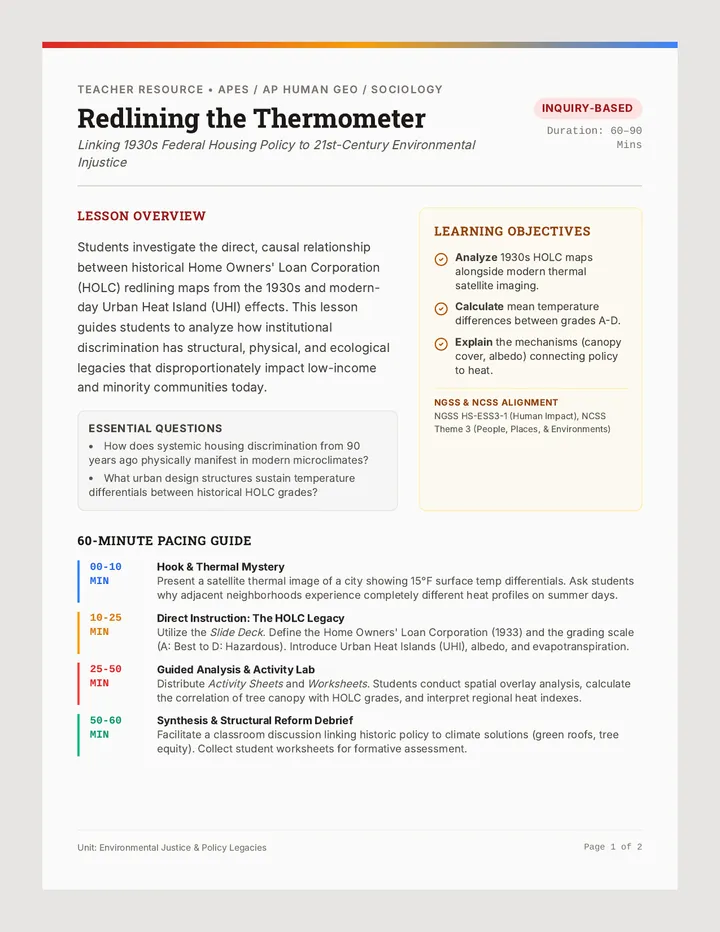
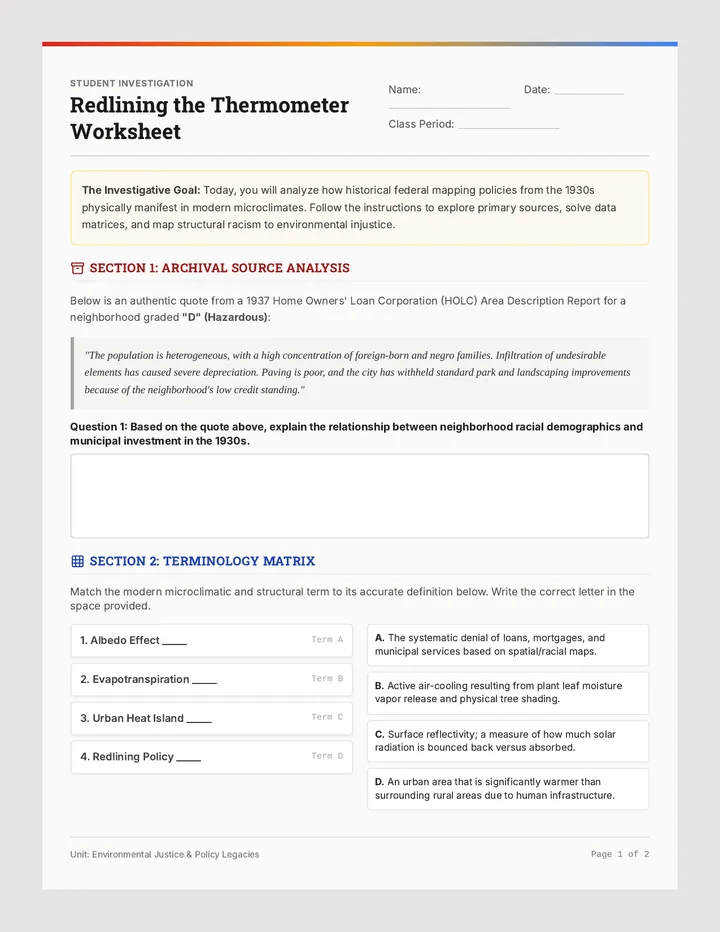
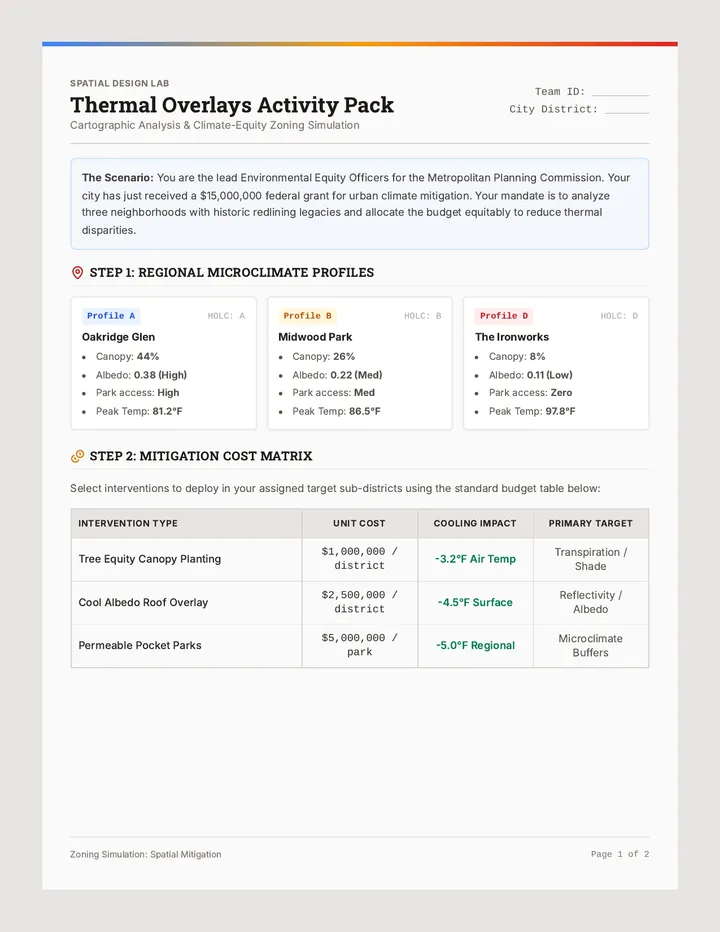
An advanced, interdisciplinary lesson for high school and undergraduate students exploring the causal relationship between 1930s Home Owners' Loan Corporation (HOLC) redlining maps and modern-day urban heat island (UHI) effects, analyzing systemic racism and environmental injustice.
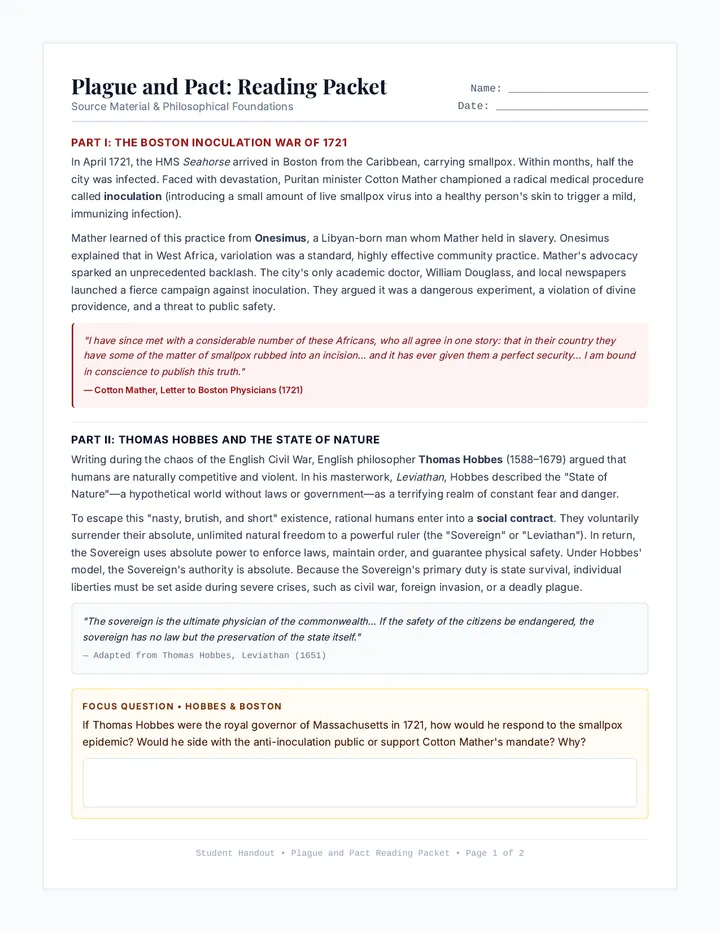
An inquiry-based lesson exploring how historical epidemics (from the Black Death to Smallpox inoculation) tested and reshaped the social contract between citizens and states, forcing a reckoning between personal liberty and public safety.
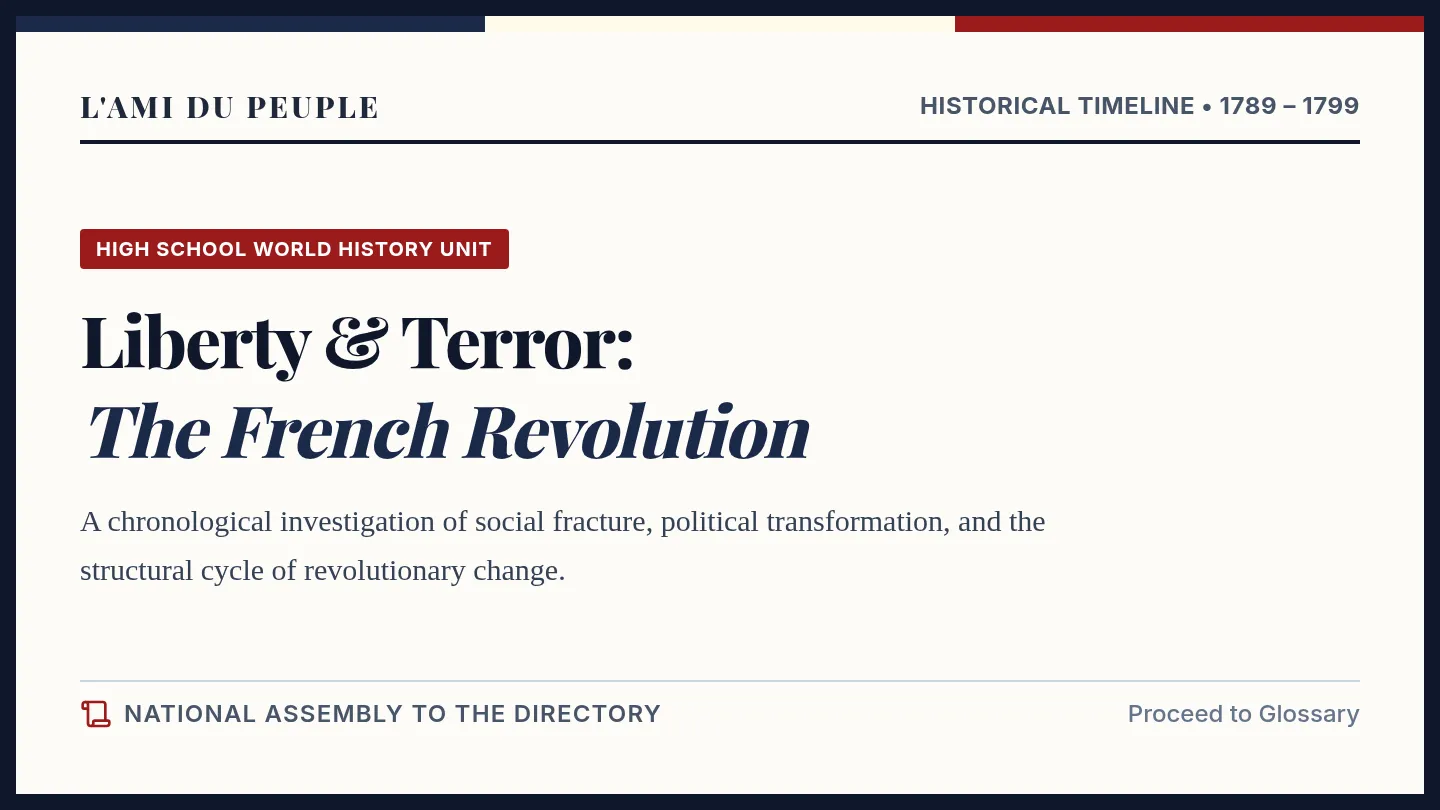
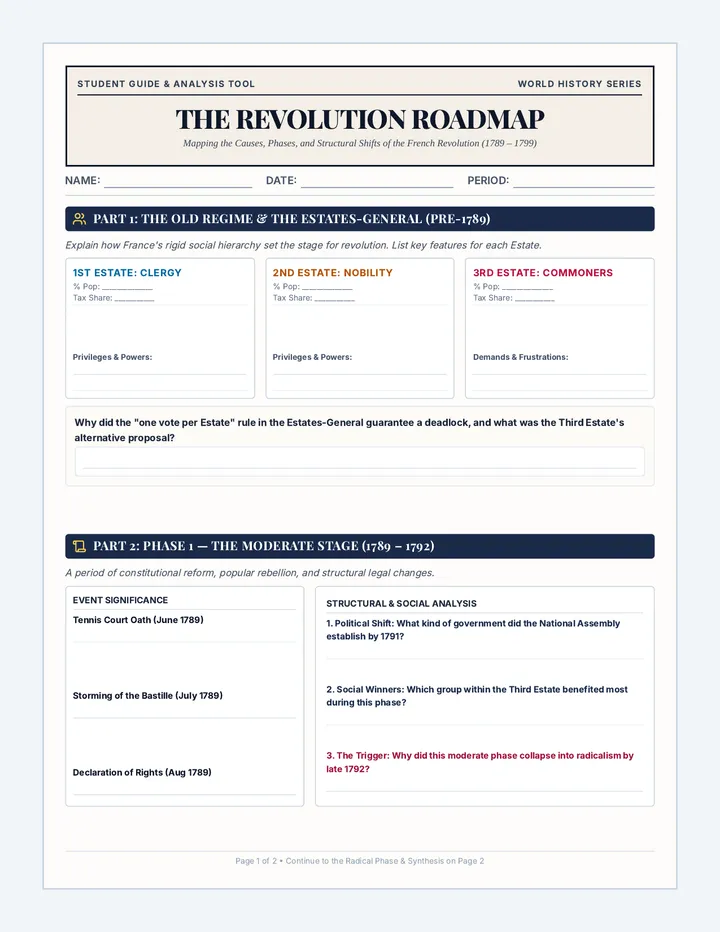
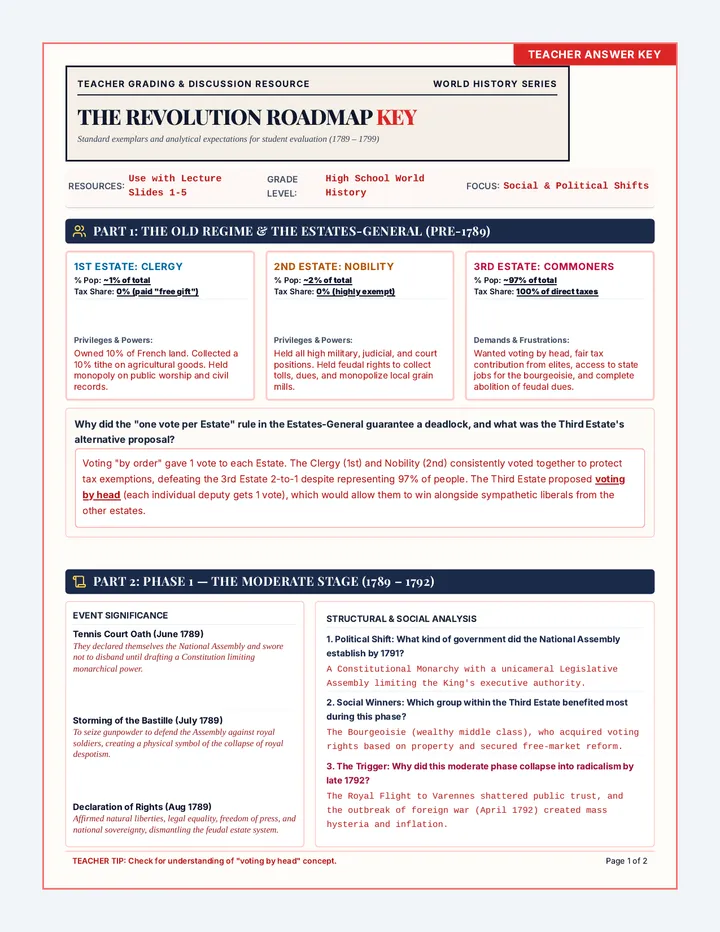
A lesson that contextualizes the key phases of the French Revolution (1789-1799) from the National Assembly to the Directory, guiding students to analyze social dynamics, political shifts, and cause-and-effect relationships.
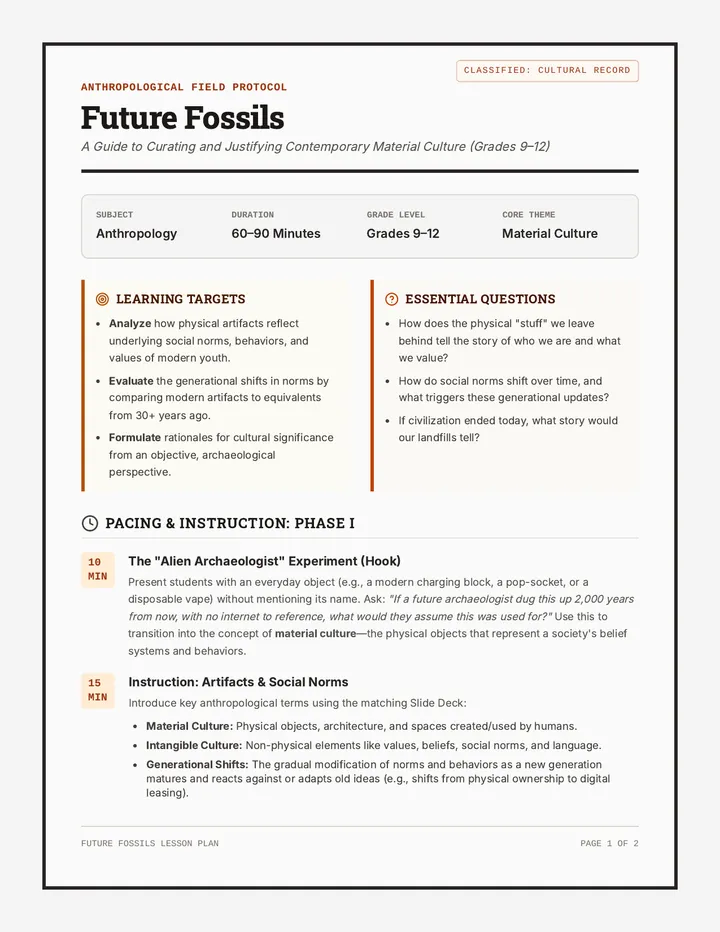
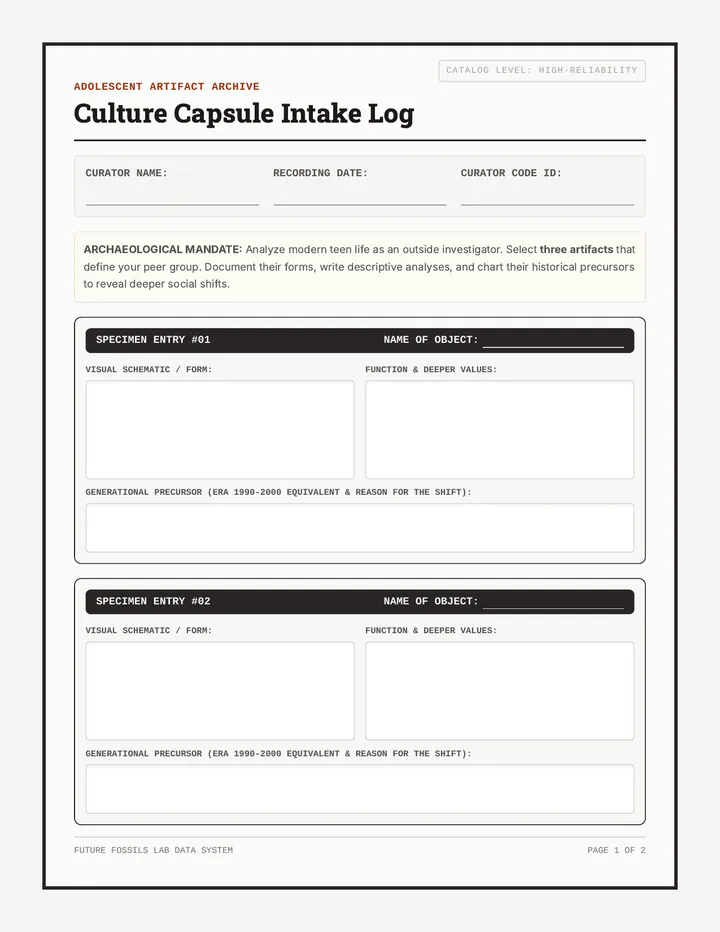
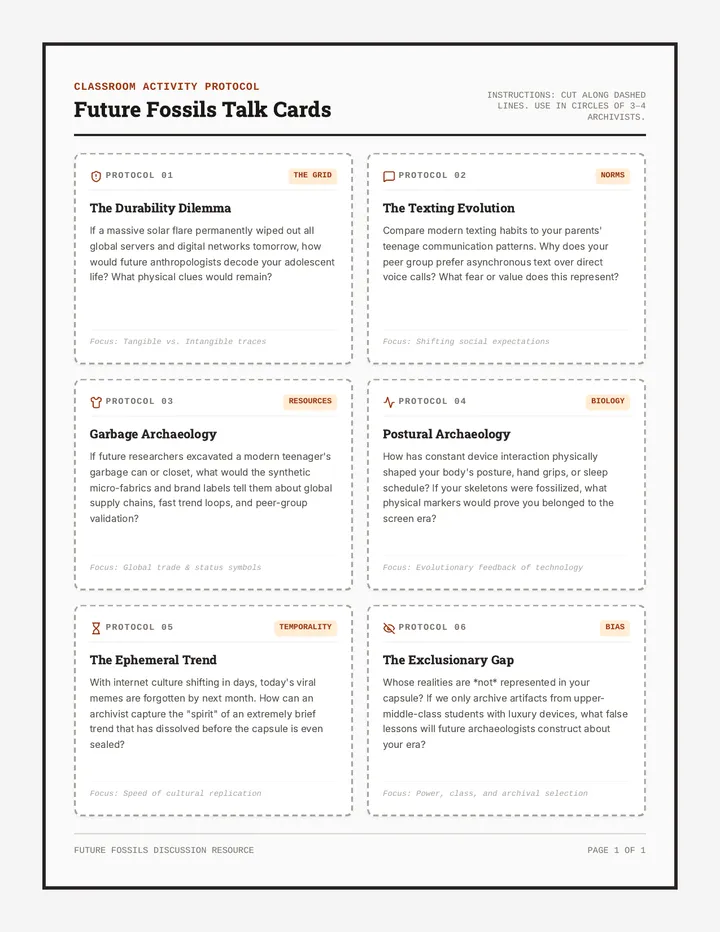
An anthropology lesson where high school students curate and analyze contemporary artifacts that represent modern adolescent culture, exploring generational shifts in social norms and material culture.
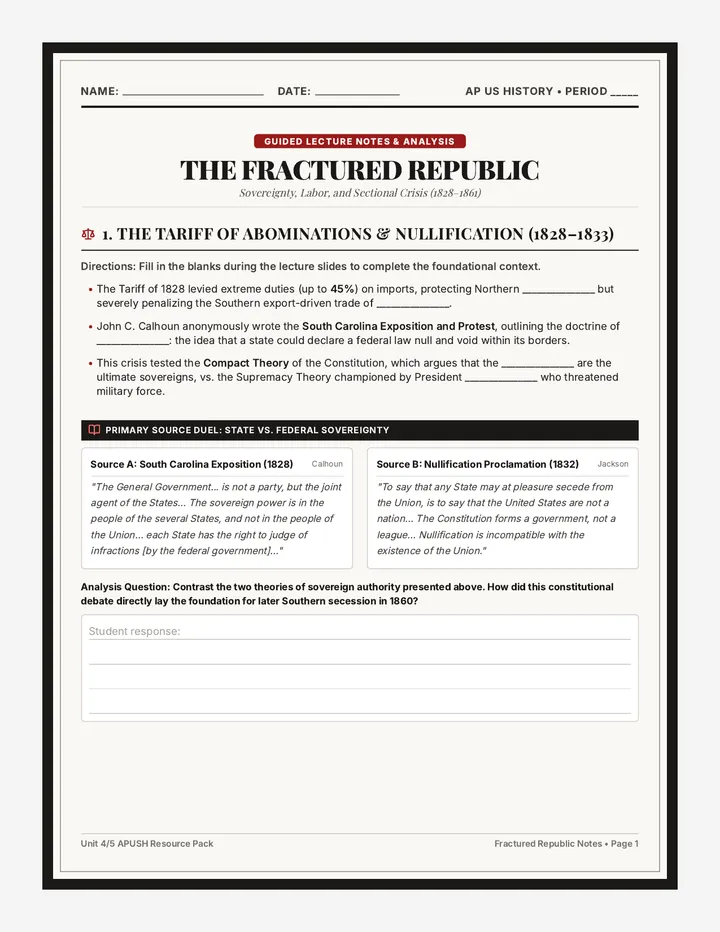
An advanced AP US History lesson exploring the constitutional, economic, and political crises that fractured the United States between 1828 and 1861. Students analyze key events including the Tariff of Abominations, State v. Mann, the Wilmot Proviso, and the rise of the Know-Nothing Party through lectures and structured primary sources.
An advanced AP US History lecture series exploring the constitutional, economic, and political crises that fractured the United States between 1833 and 1861. This lesson highlights key legislative compromises, executive decisions, and judicial rulings that made sectional conflict and the Civil War inevitable.
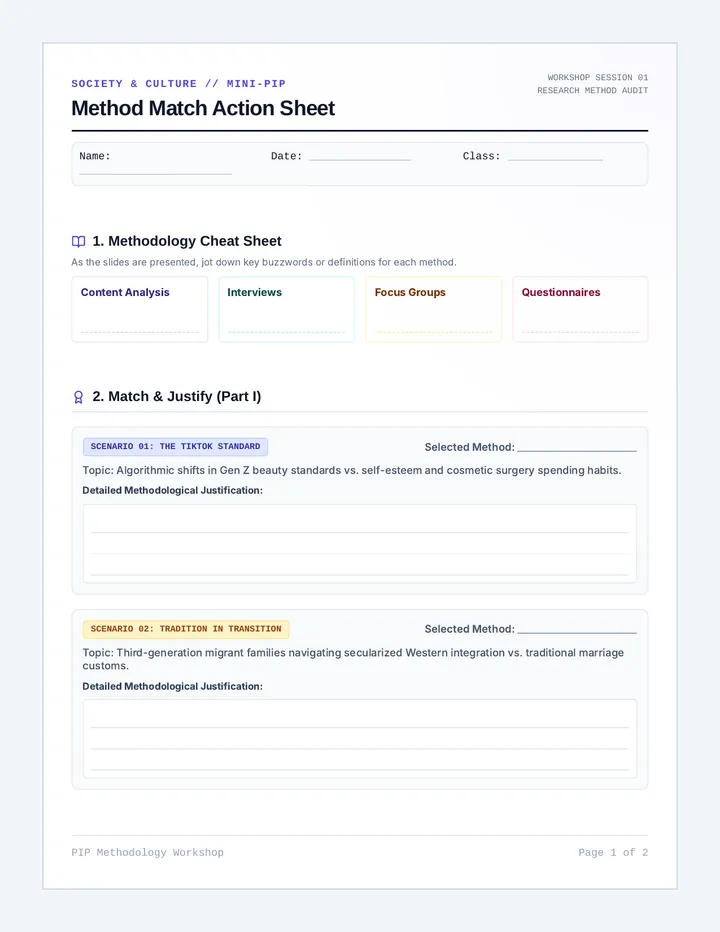
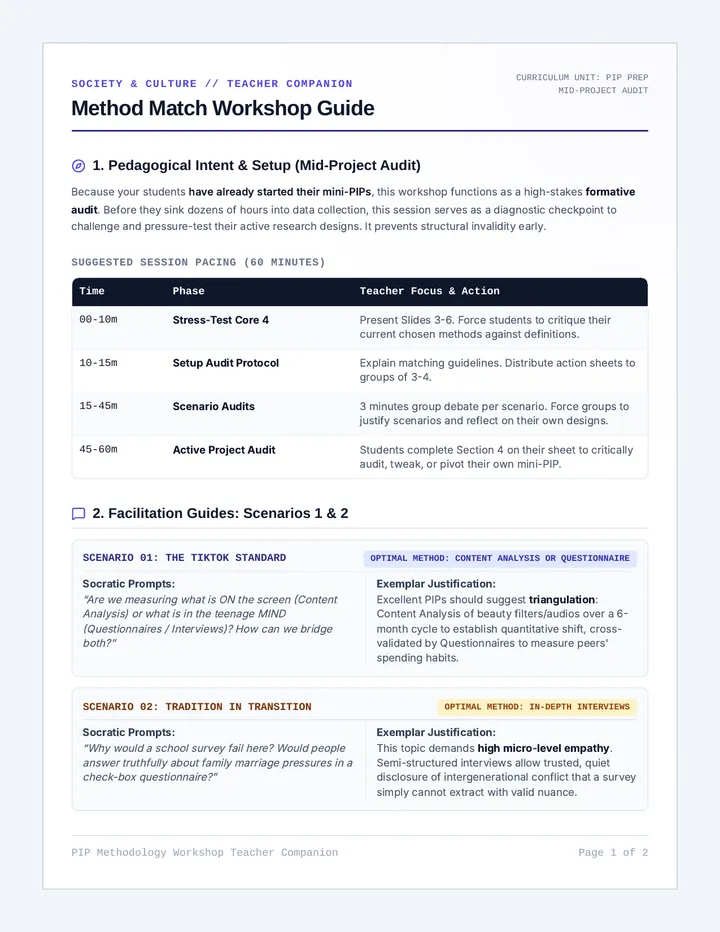
A hands-on workshop designed to introduce Society and Culture students to key research methodologies (Content Analysis, Interviews, Focus Groups, and Questionnaires) for their Personal Interest Projects (PIPs). Students analyze authentic research scenarios and justify the best methodological fit for each PIP topic.
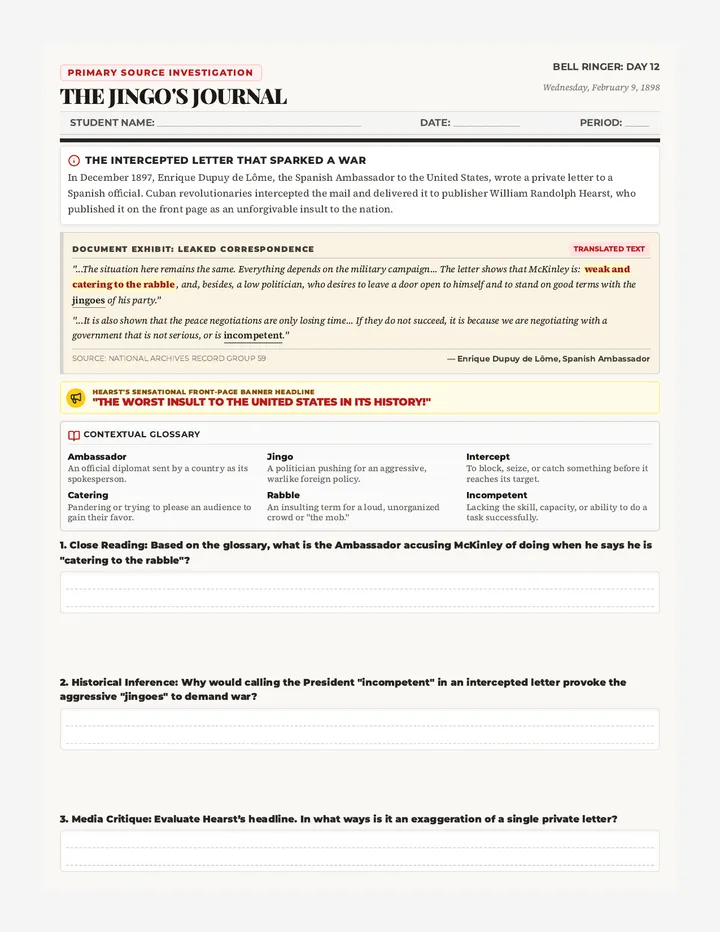
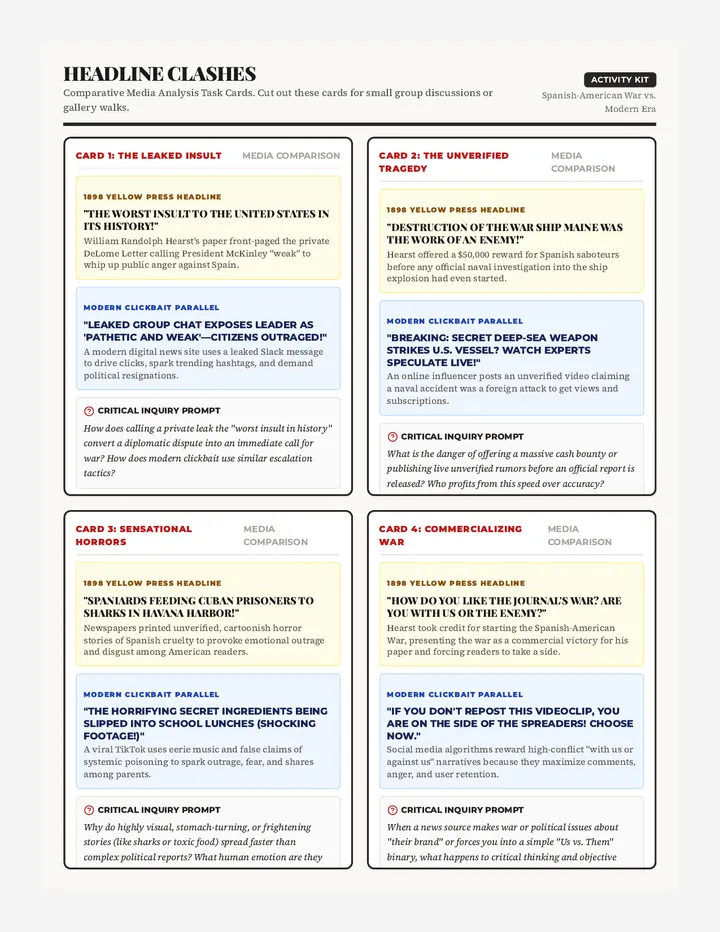
Students examine yellow journalism through the lens of the historical DeLome Letter leak of 1898. They analyze sensationalized media, understand the historical context of the Spanish-American War, and draw parallels to modern media.
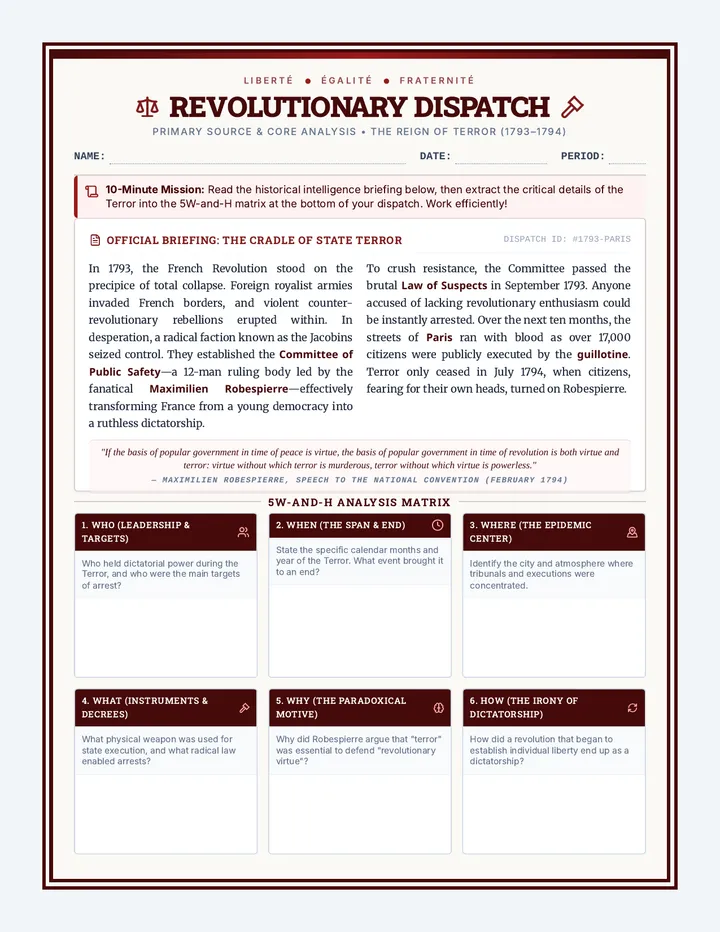
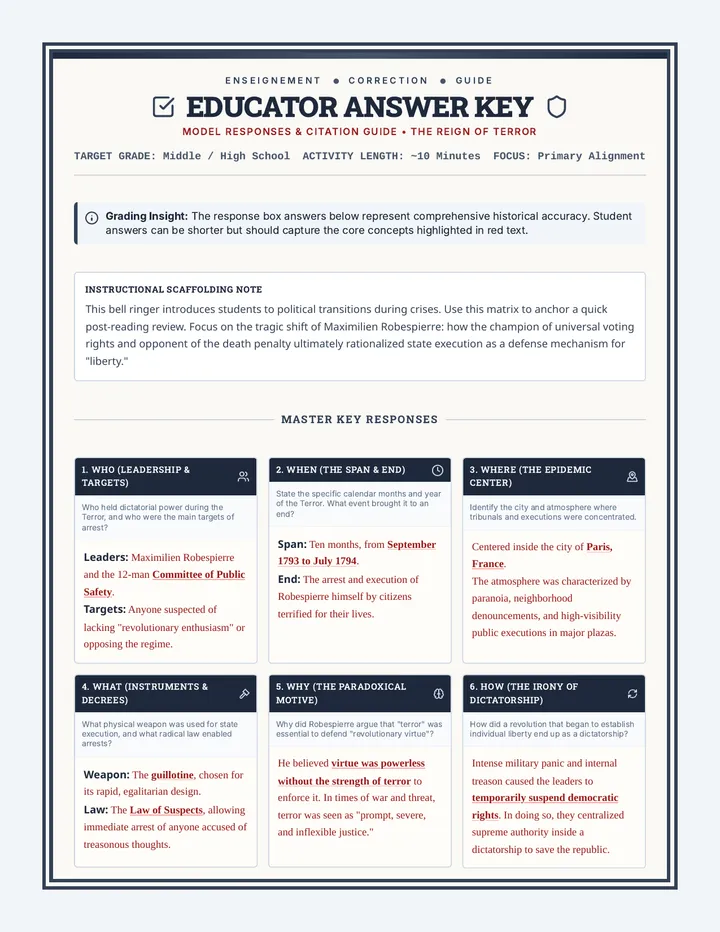
A deep dive into the French Revolution's bloodiest phase, analyzing how revolutionary ideals twisted into state-sponsored terror under Robespierre.
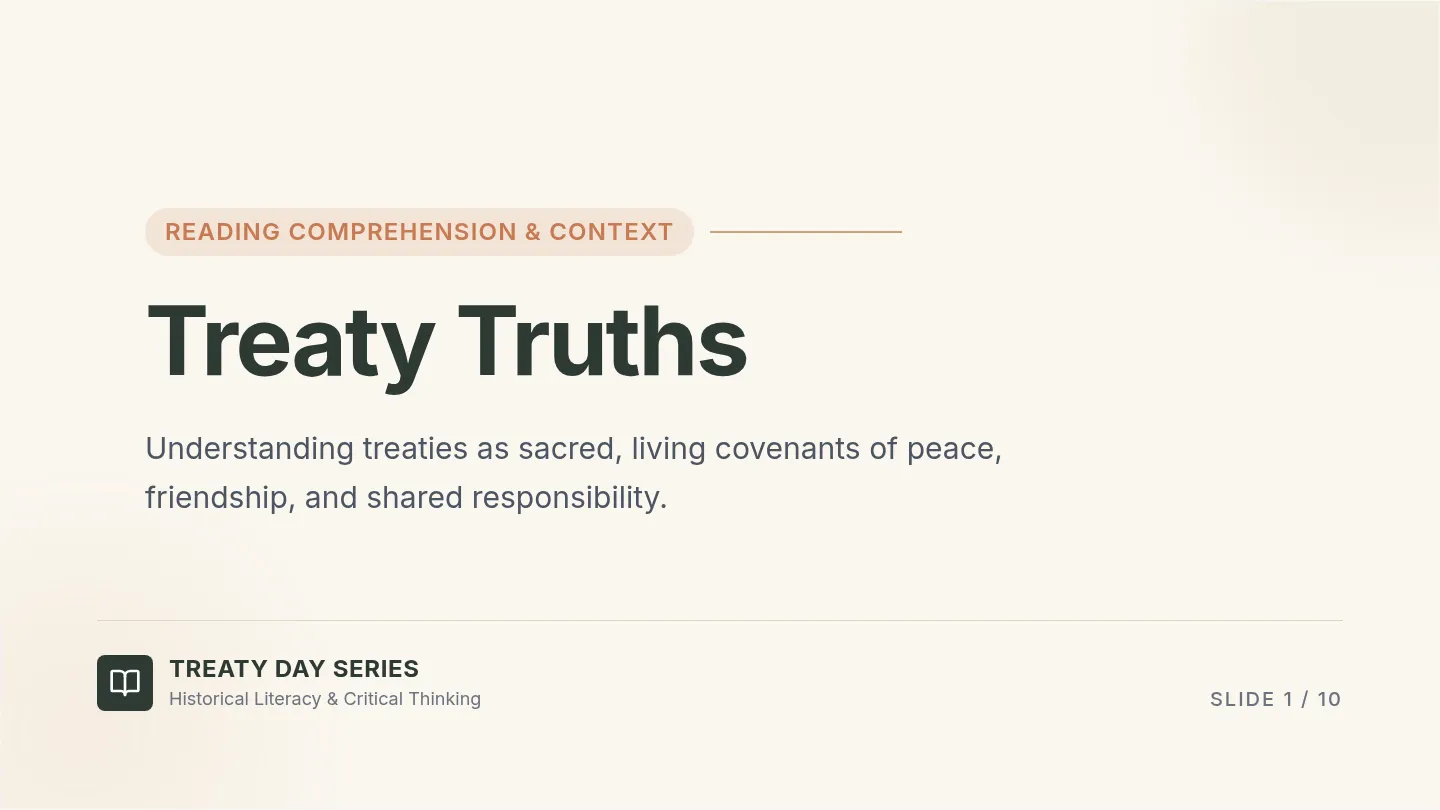
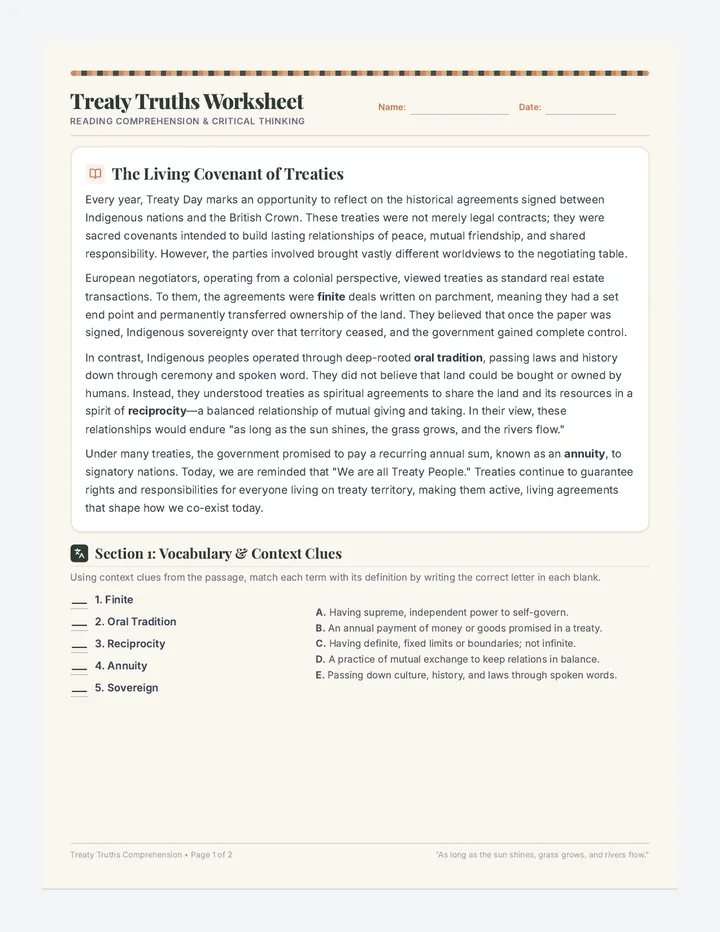
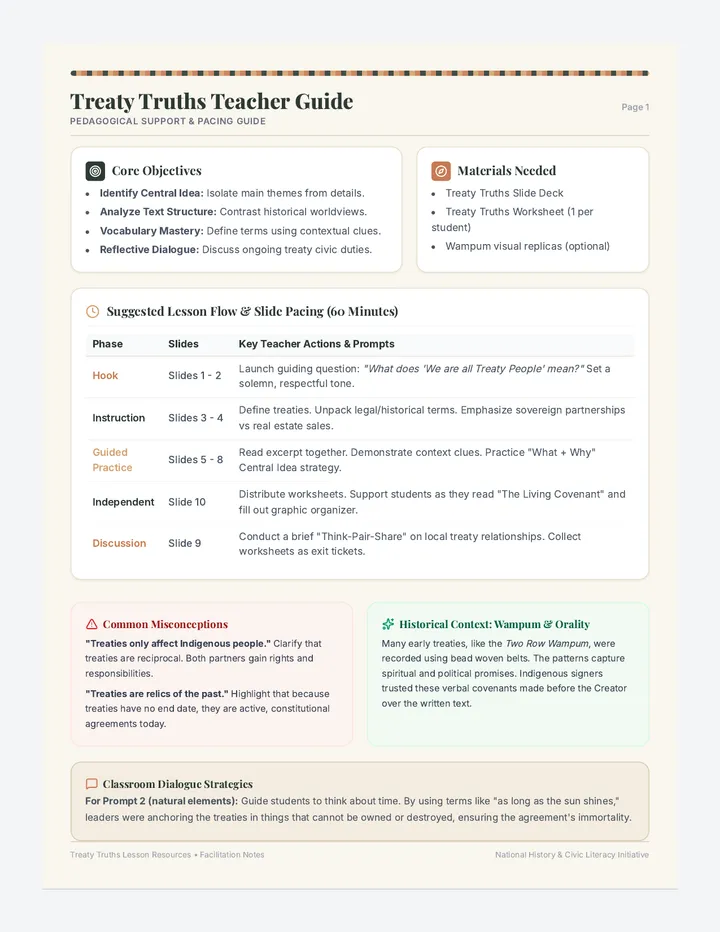
An interactive, historically grounded lesson exploring the significance of Treaty Day, focusing on central ideas, summarizing, and historical vocabulary. Students analyze the nature of treaties as sacred, ongoing agreements and practice identifying key themes and context clues.
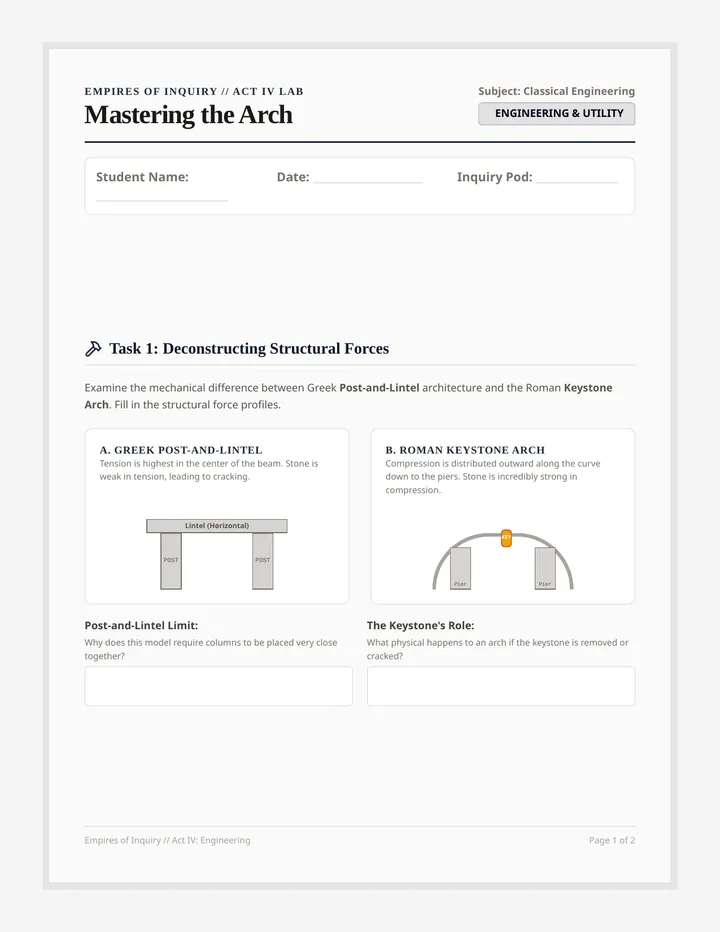
Students investigate the physical backbone of classical empires, comparing Greek structural harmony with Roman concrete engineering and infrastructural feats like aqueducts and roadways.
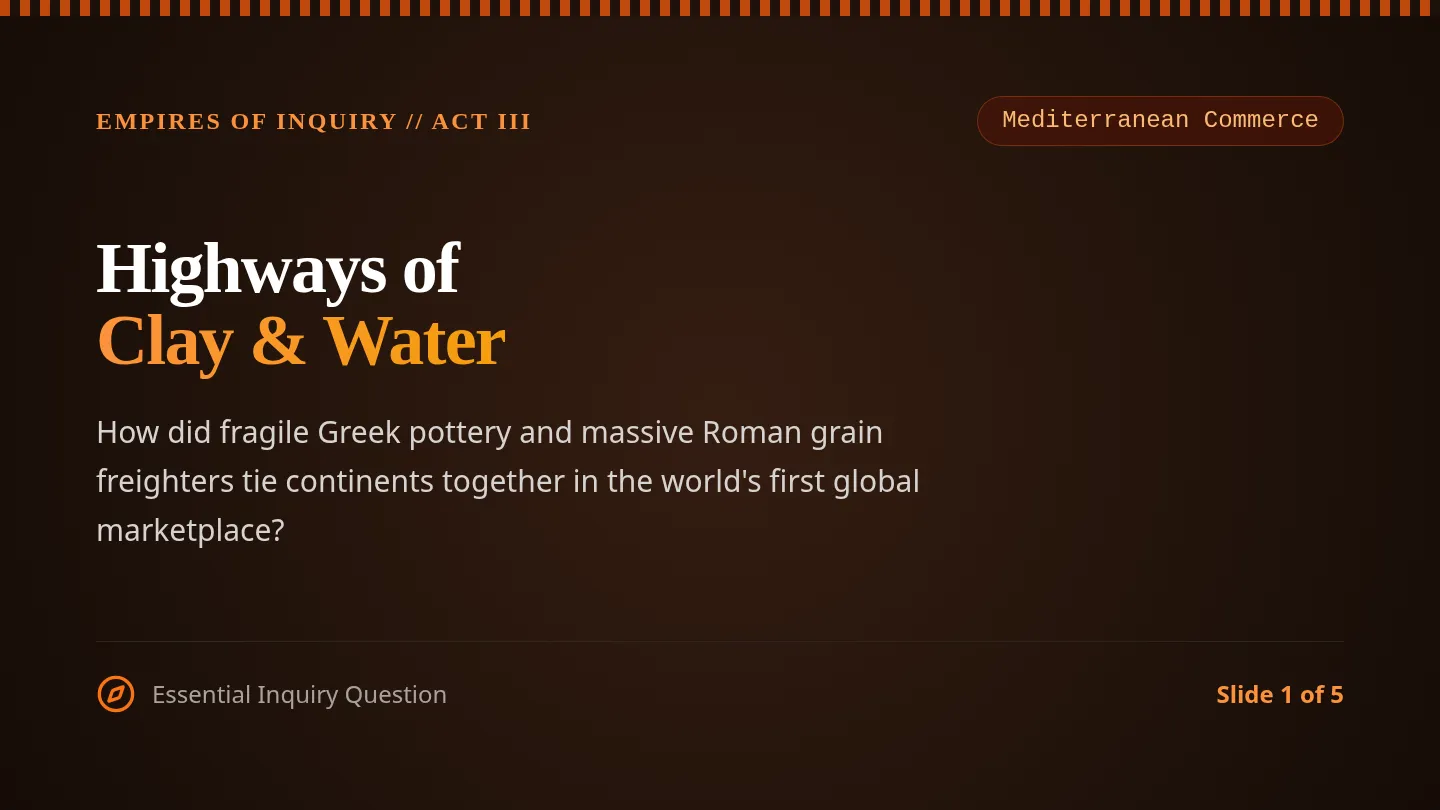
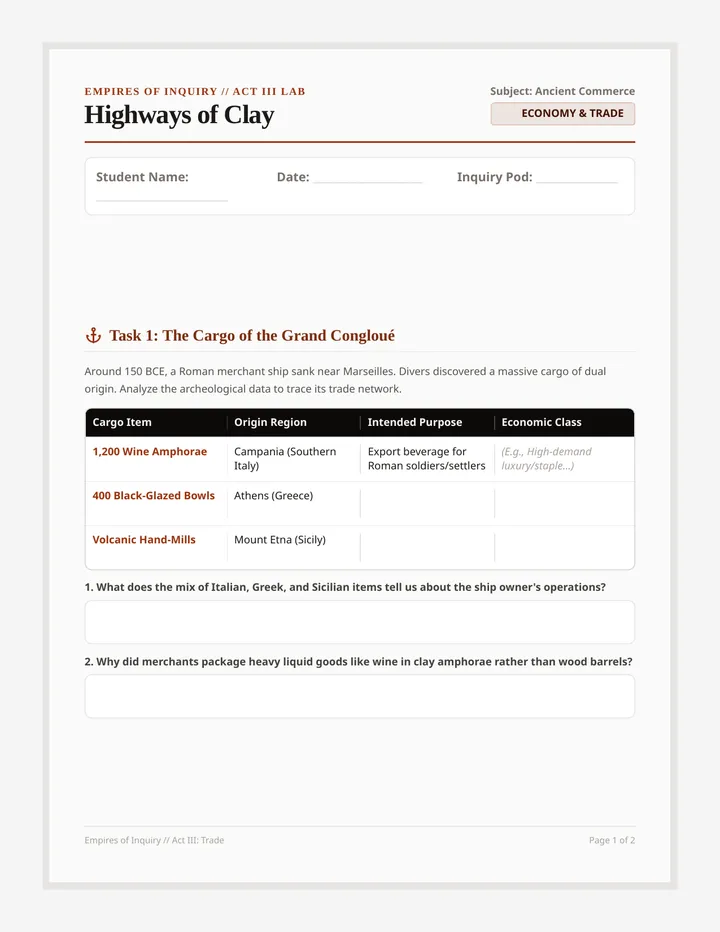
Students trace the economic veins of the Mediterranean, mapping how Greek ceramic trade and Roman maritime highways linked continents, exchanged technologies, and forged a globalized ancient marketplace.
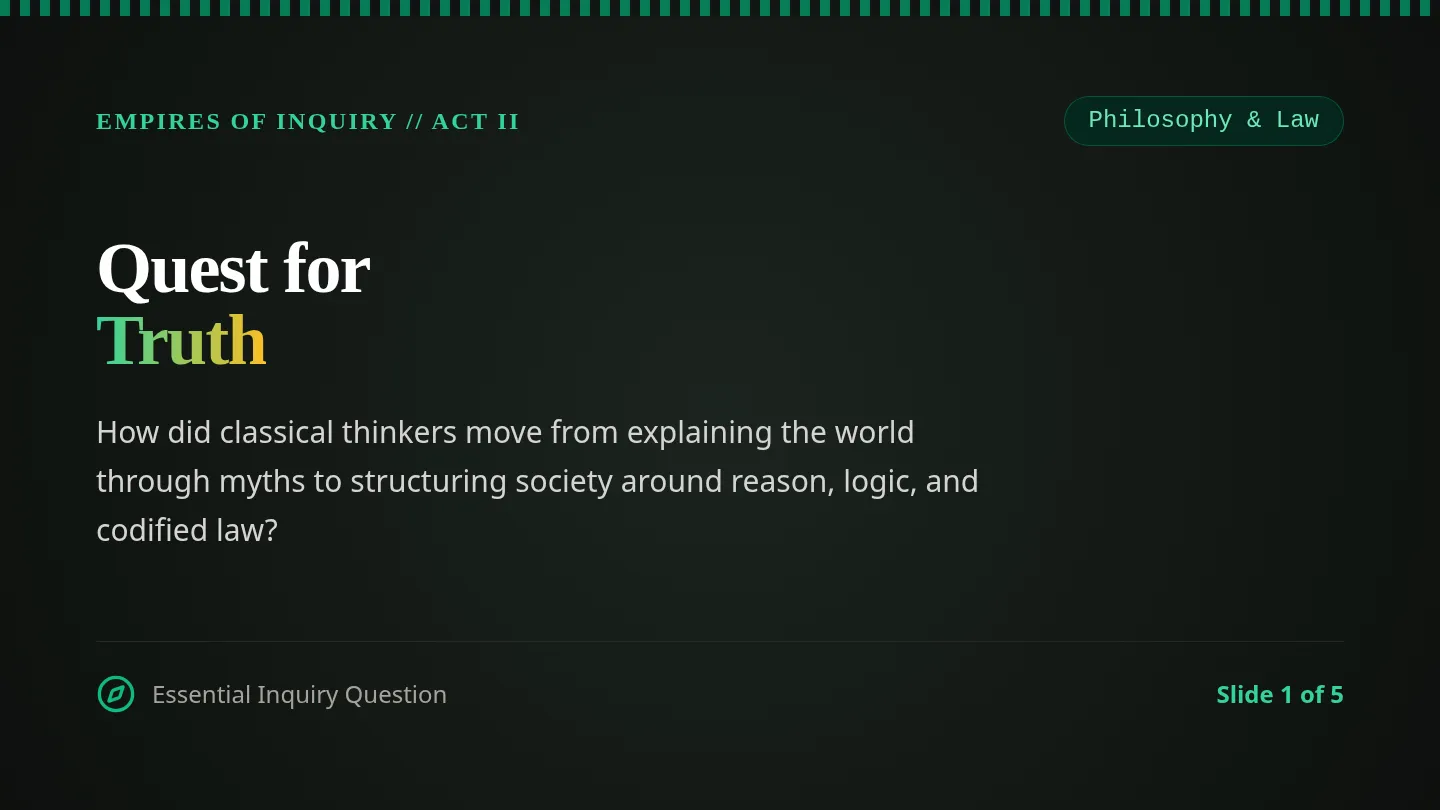
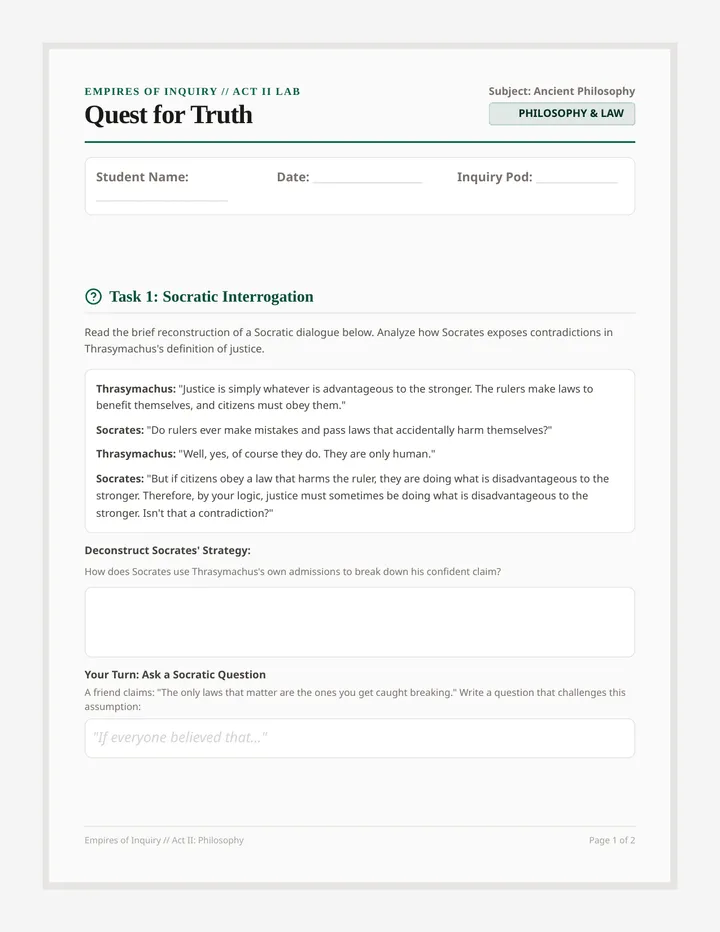
Students explore classical philosophical inquiries through Socrates, Plato, Aristotle, and Roman legal codes, examining how these intellectual frameworks defined ethics, civic duty, and the pursuit of truth.
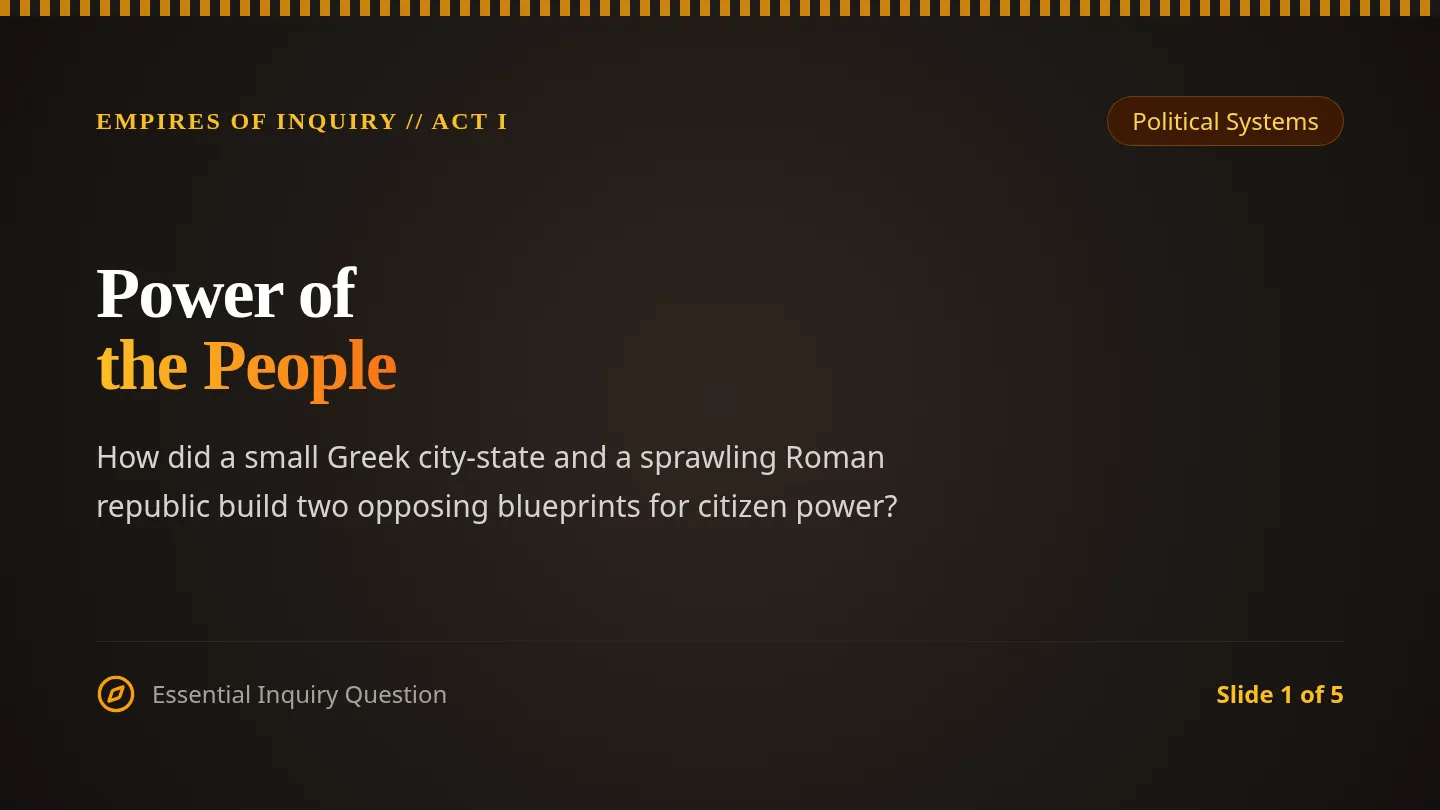
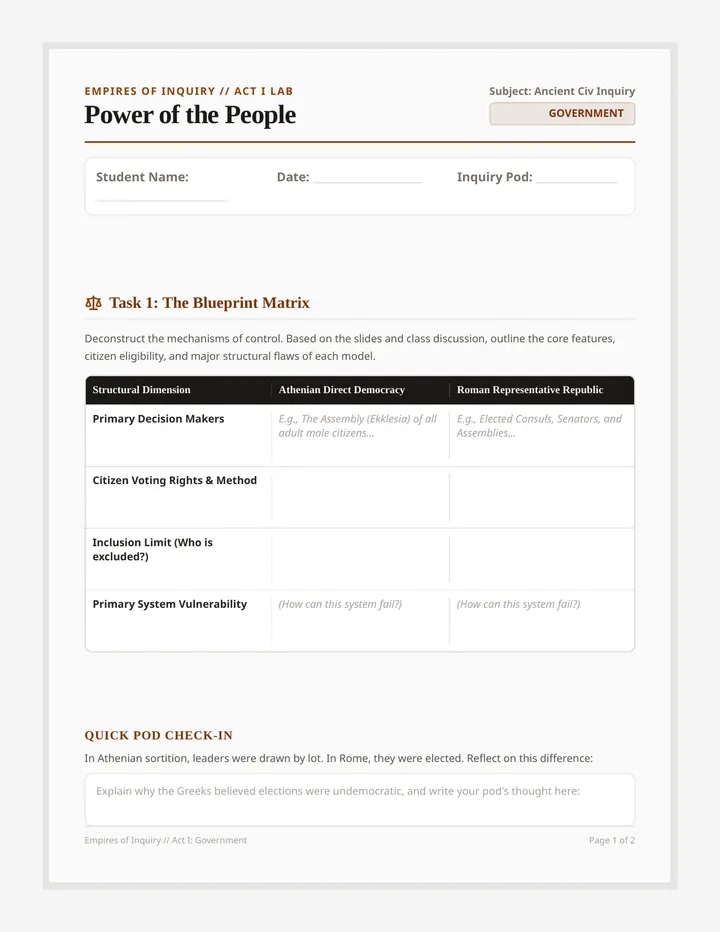
Students investigate the birth of democracy in Athens and the development of the republican system in Rome, comparing citizen participation, power structures, and modern democratic connections.
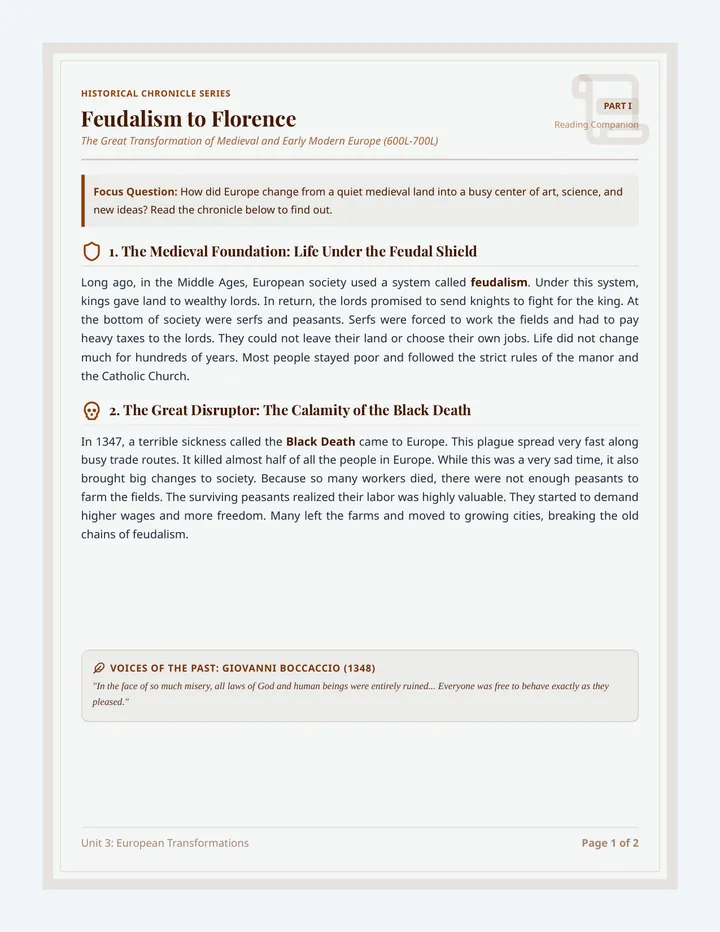
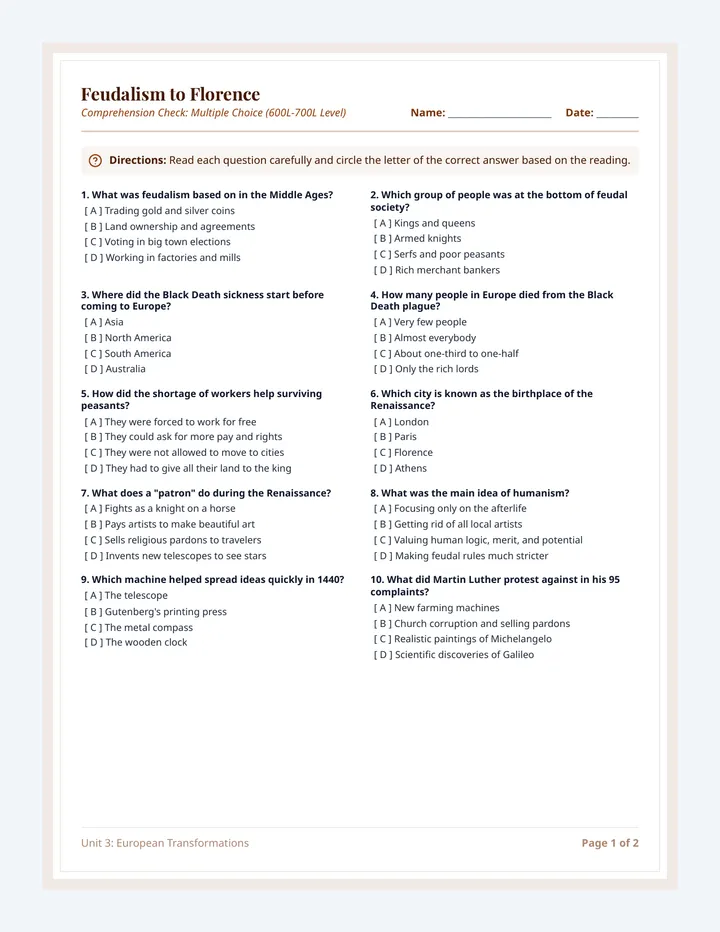
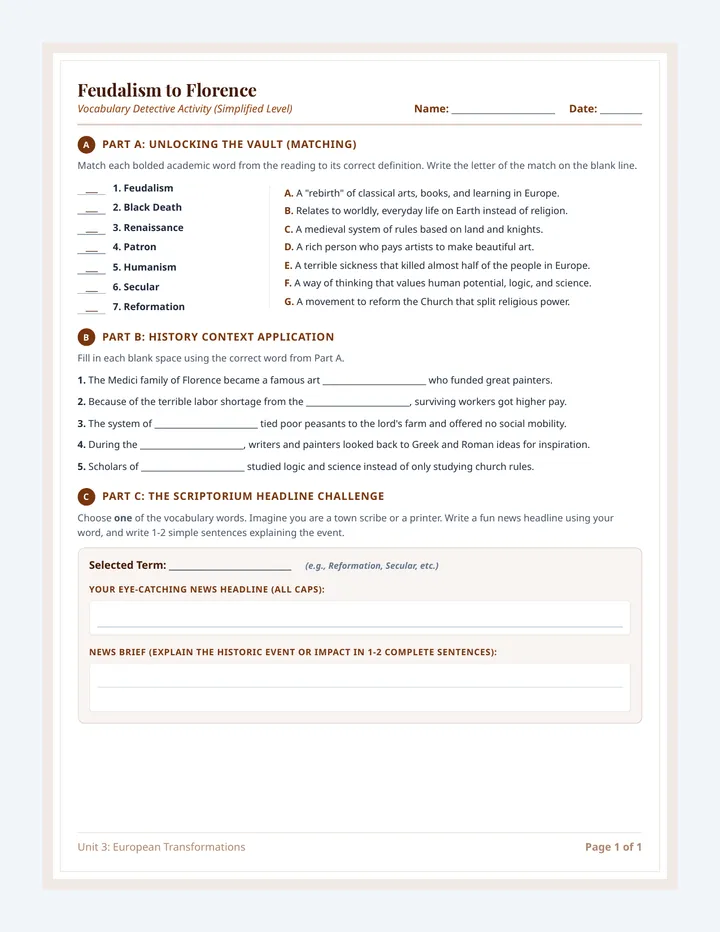
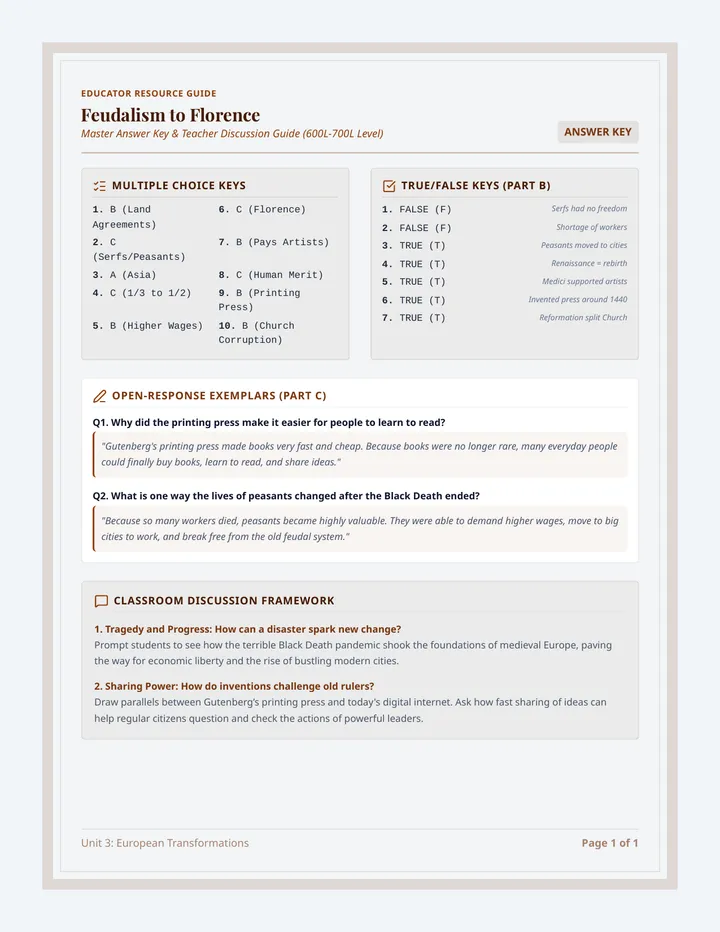
A comprehensive lesson focusing on the transition of European society from the rigid feudal systems of the Middle Ages to the cultural, scientific, and religious revolutions of the Renaissance and Reformation.
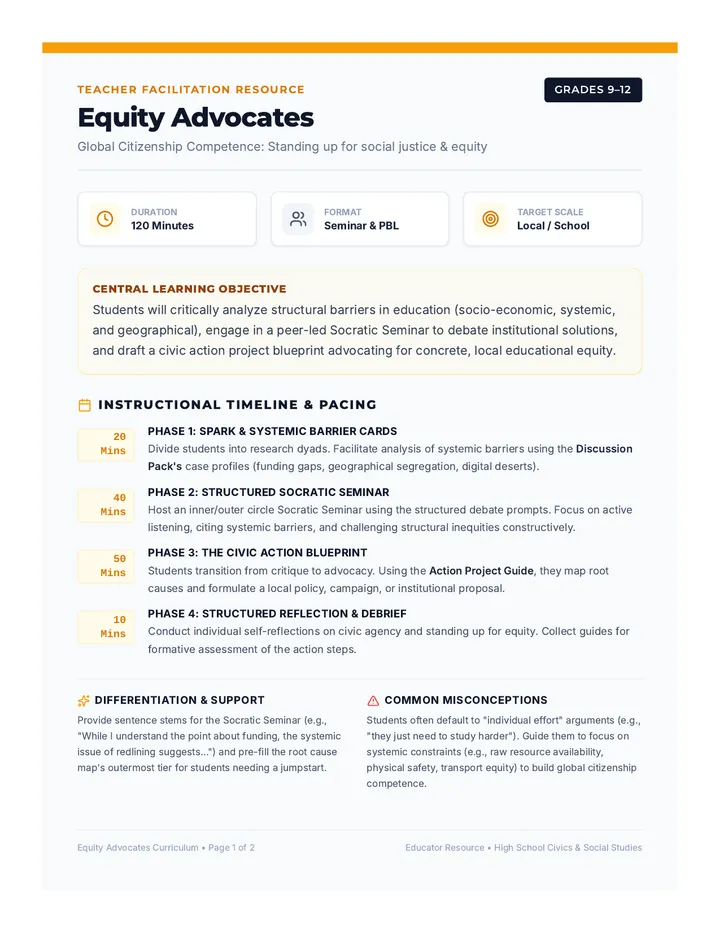
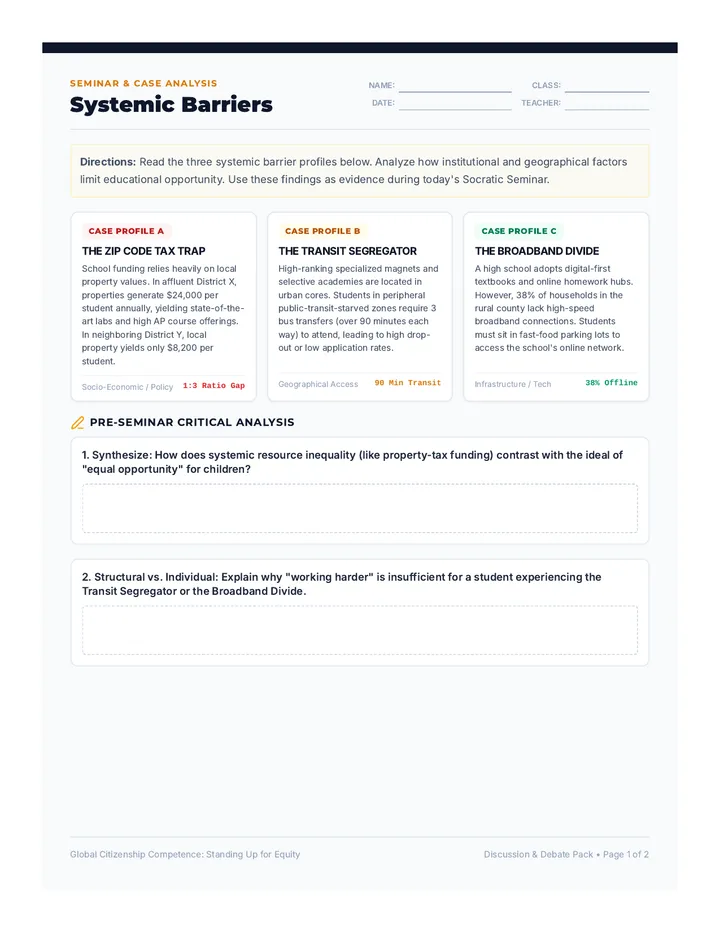
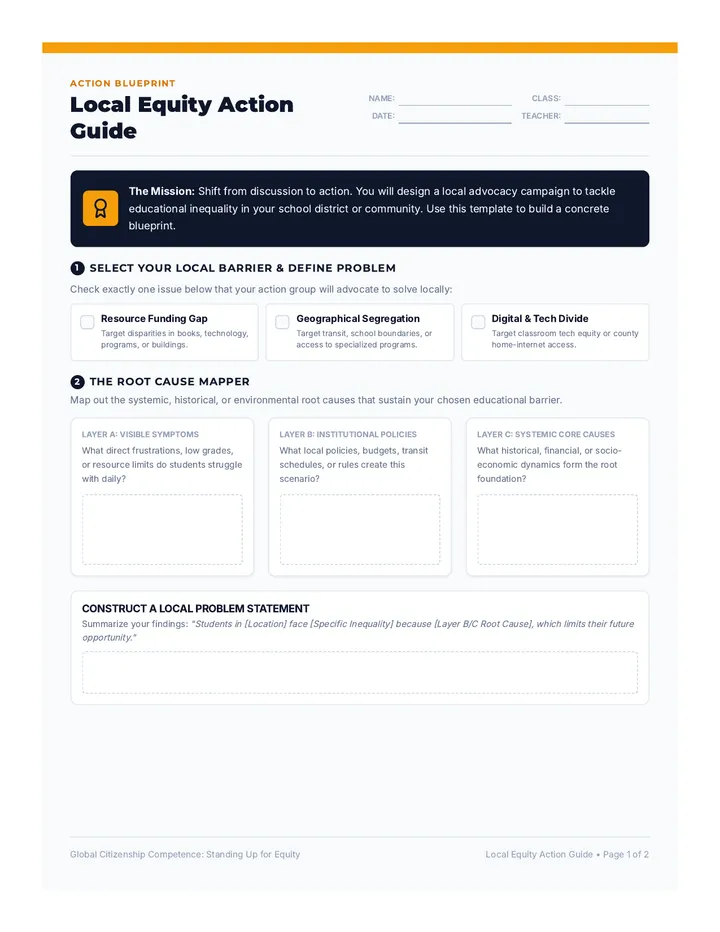
A high-impact project-based lesson for high schoolers (ages 14-18) exploring systemic barriers in education. Students analyze structural inequities, engage in a structured Socratic seminar, and draft a civic action project blueprint to advocate for educational equity in their local community.
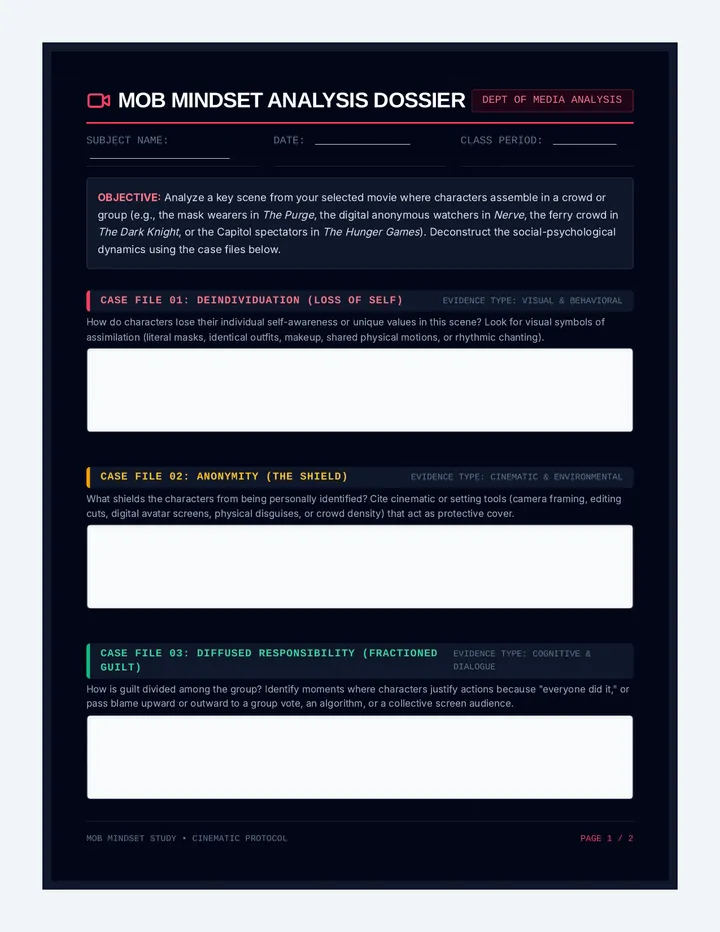
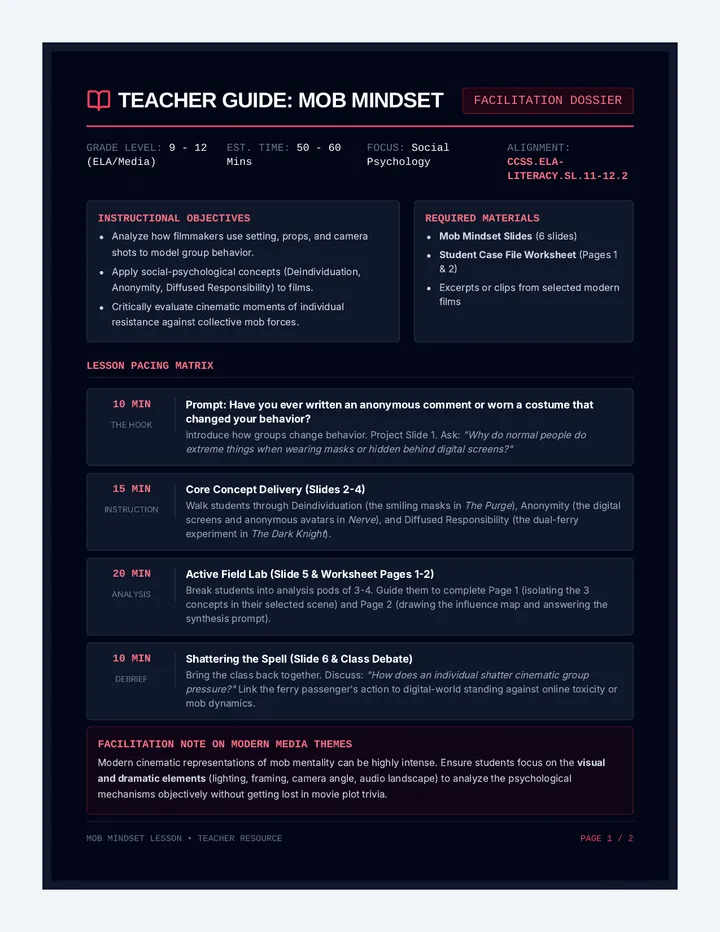
An analytical ELA lesson exploring the social psychology concepts of deindividuation, anonymity, and diffused responsibility in literature. Students examine how characters lose their individuality in groups, using classic literary texts to map the psychology of the mob.
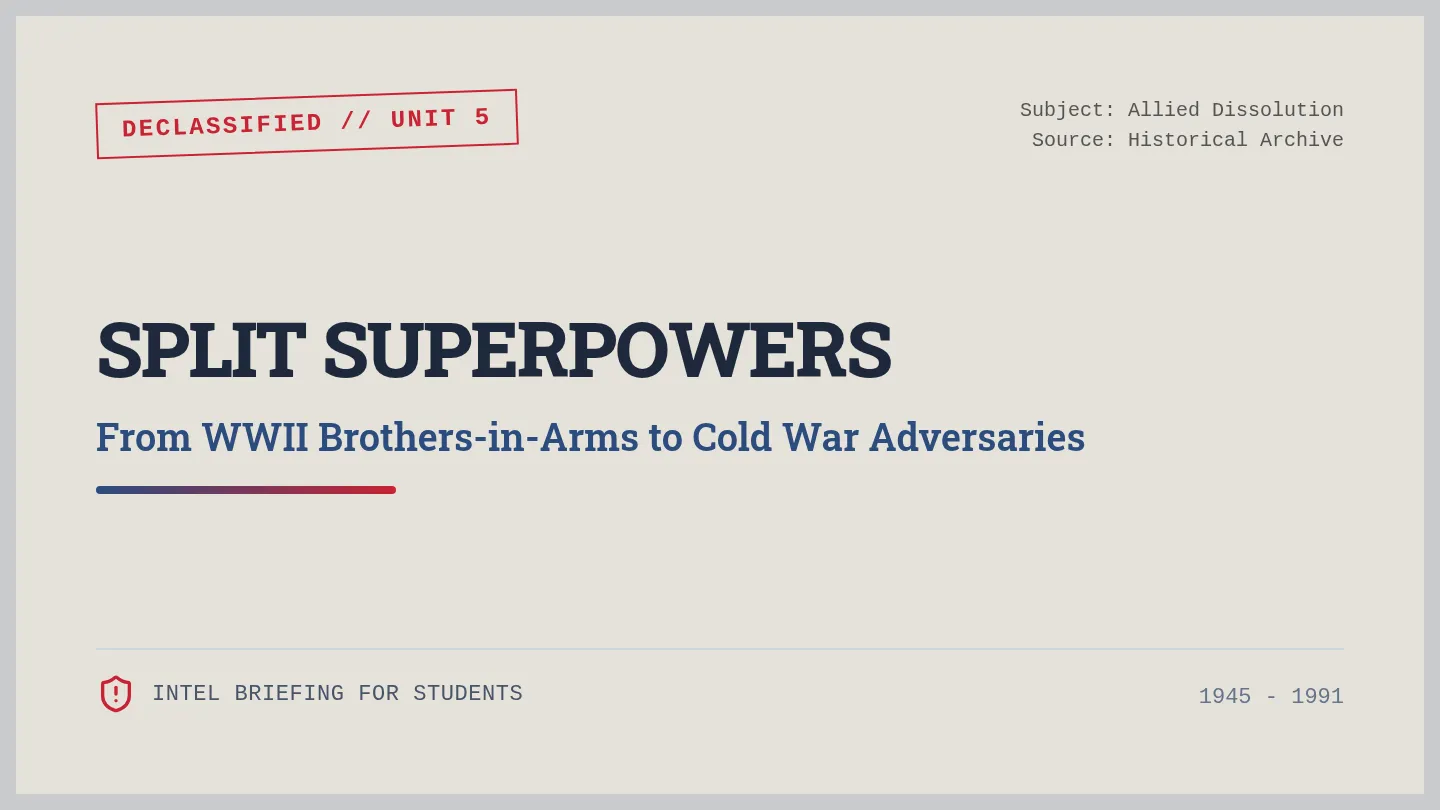
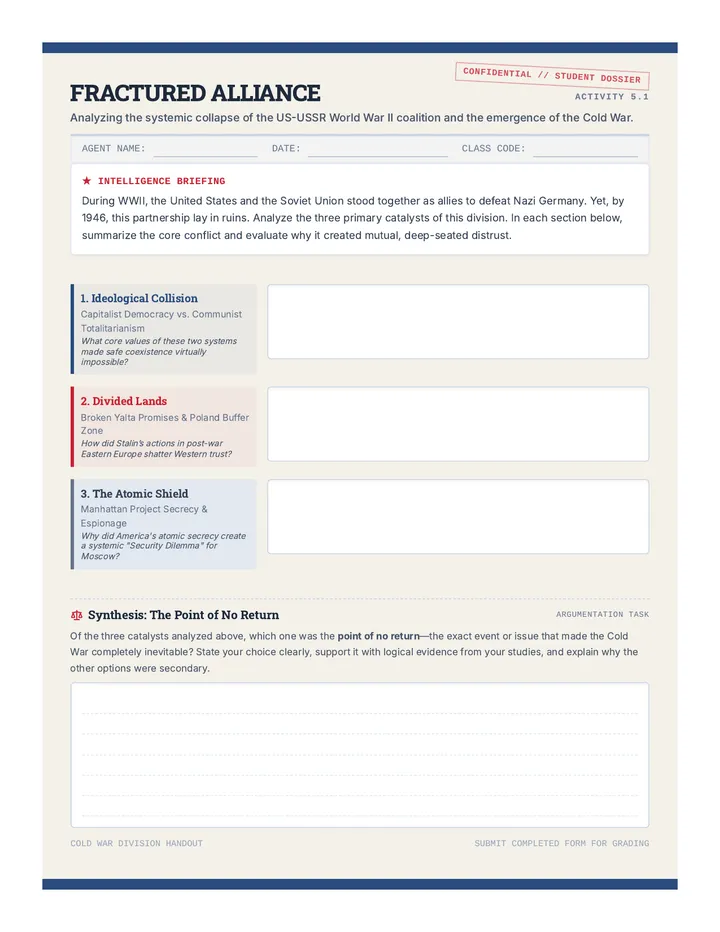
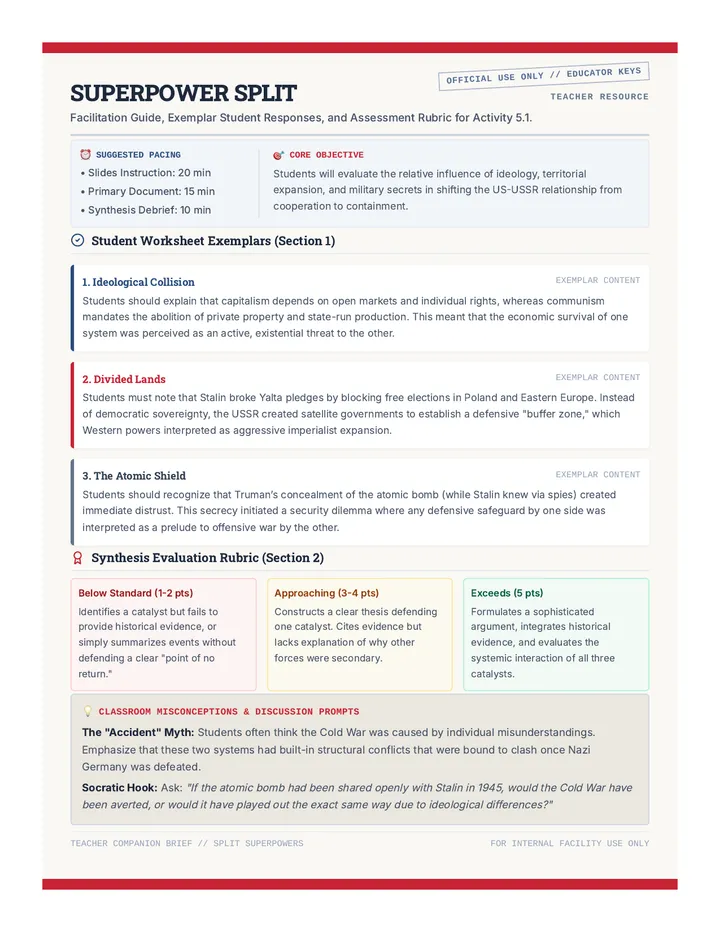
An instructional lesson exploring how the United States and the Soviet Union shifted from World War II allies to Cold War adversaries. The lesson outlines the core ideological, geopolitical, and military reasons behind this historical pivot.
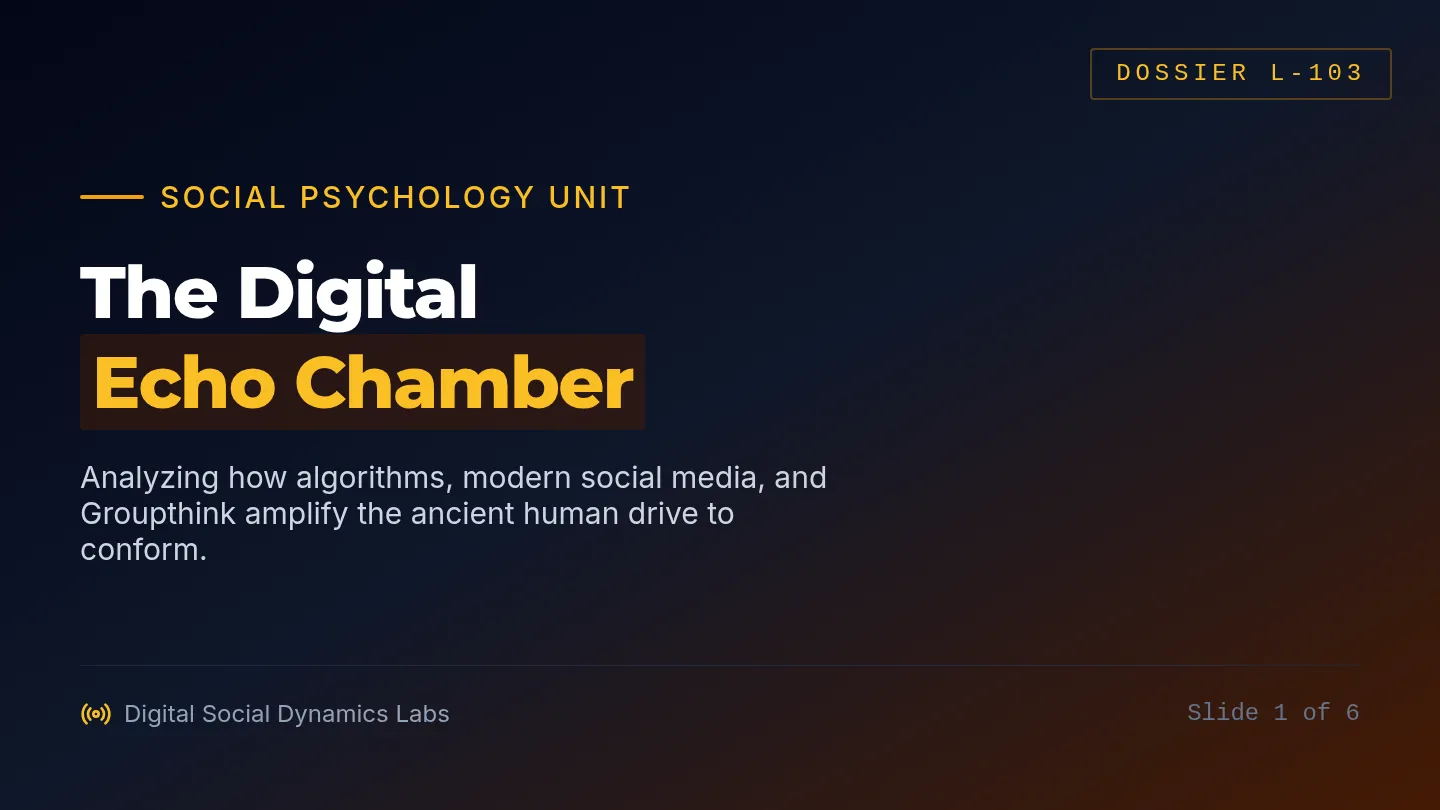
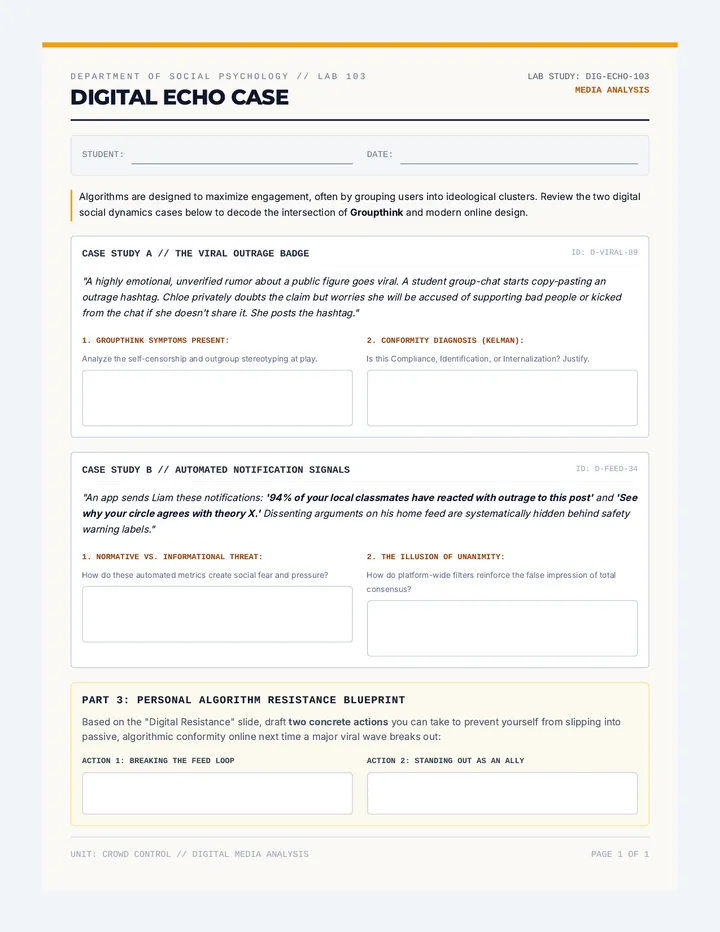
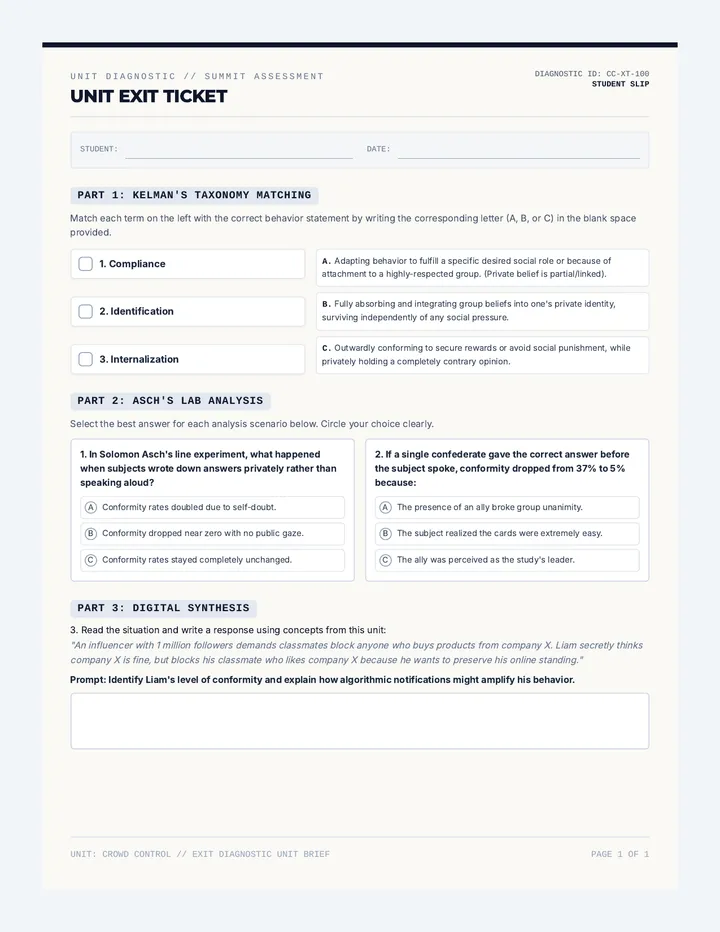
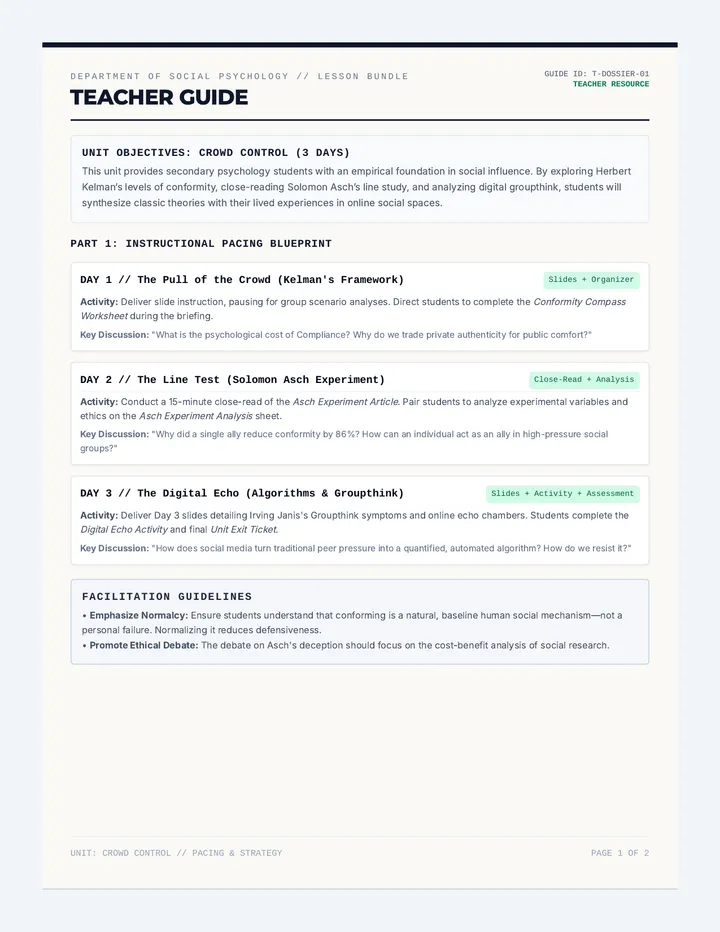
Explores groupthink, social media algorithms, and peer pressure. Students analyze how online spaces amplify conformity and complete an exit ticket to assess their understanding across the unit.
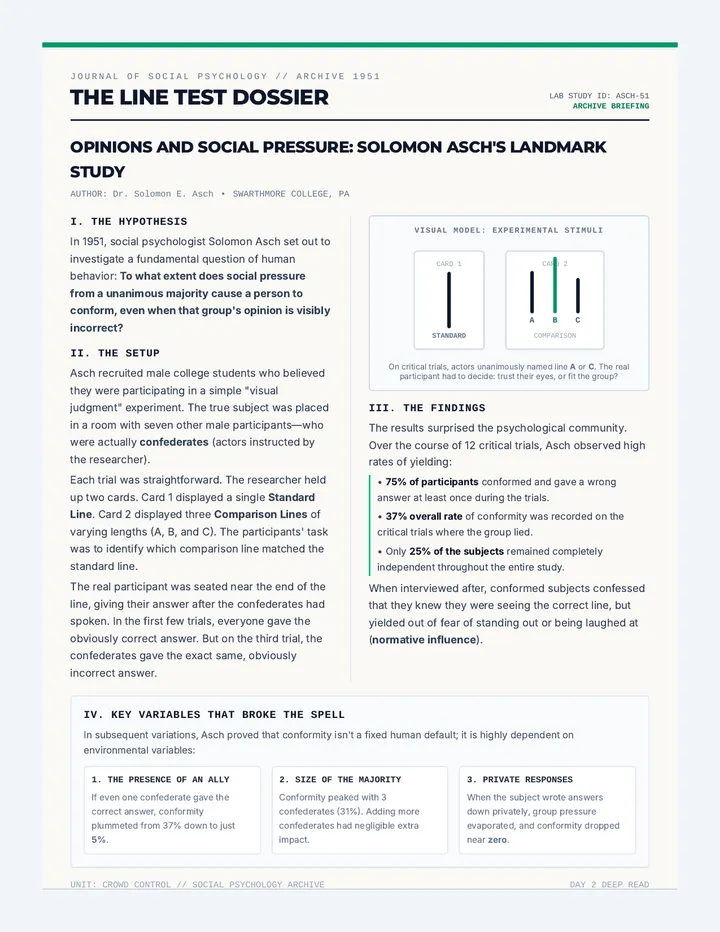
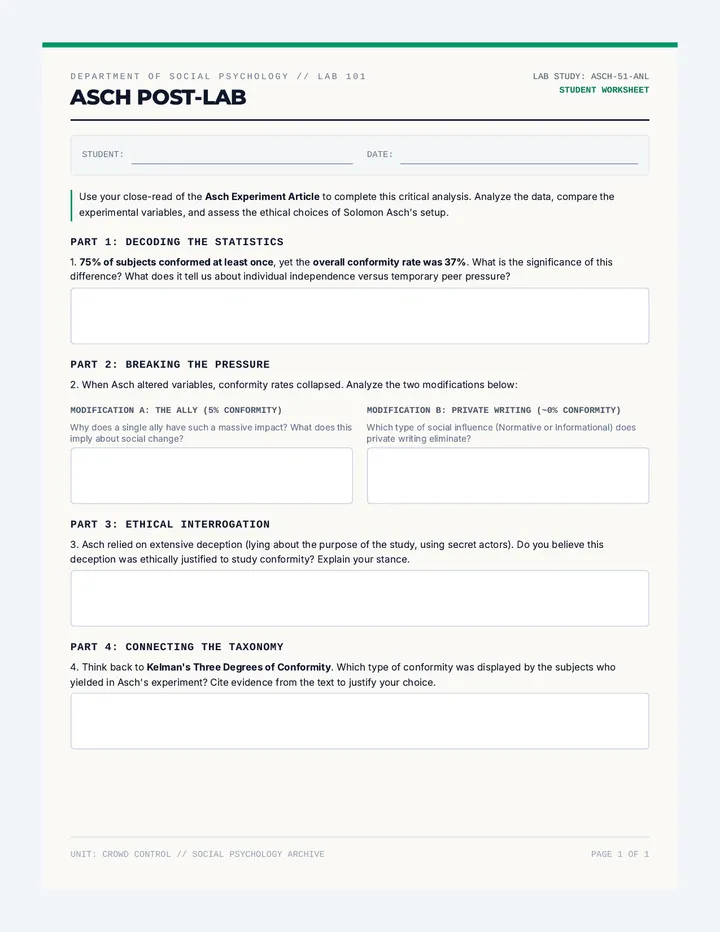
Focuses on Solomon Asch's landmark 1951 conformity experiment. Students close-read an informational text about the study's design, results, and ethical implications, and answer critical thinking questions.
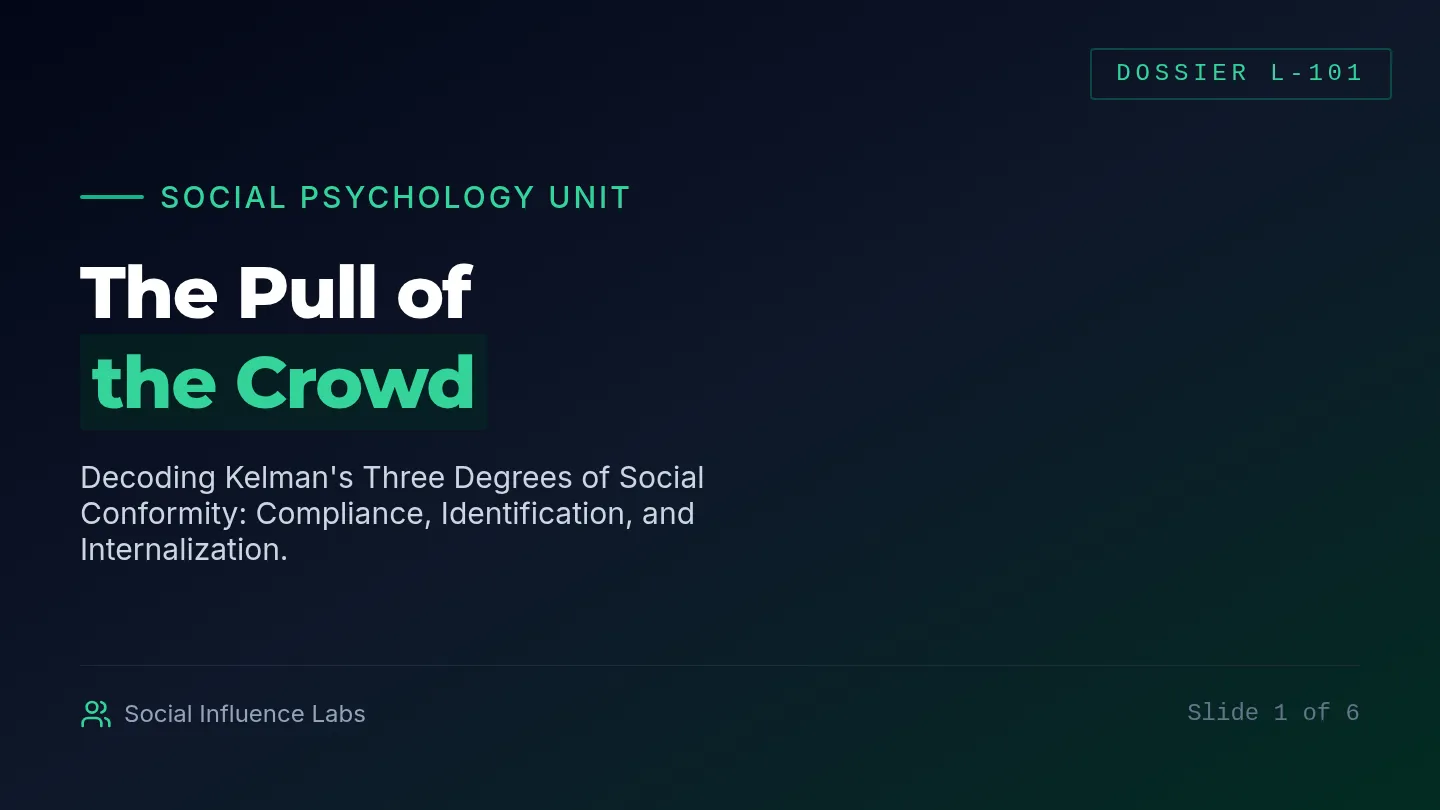
Introduces the social psychology of conformity, focusing on Herbert Kelman's three types: compliance, identification, and internalization. Students analyze real-world scenarios and map definitions on a graphic organizer.
A cumulative three-page reflection portfolio designed for Honors World History scholars to synthesize high-level historical themes, vocabulary, and critical thinking.
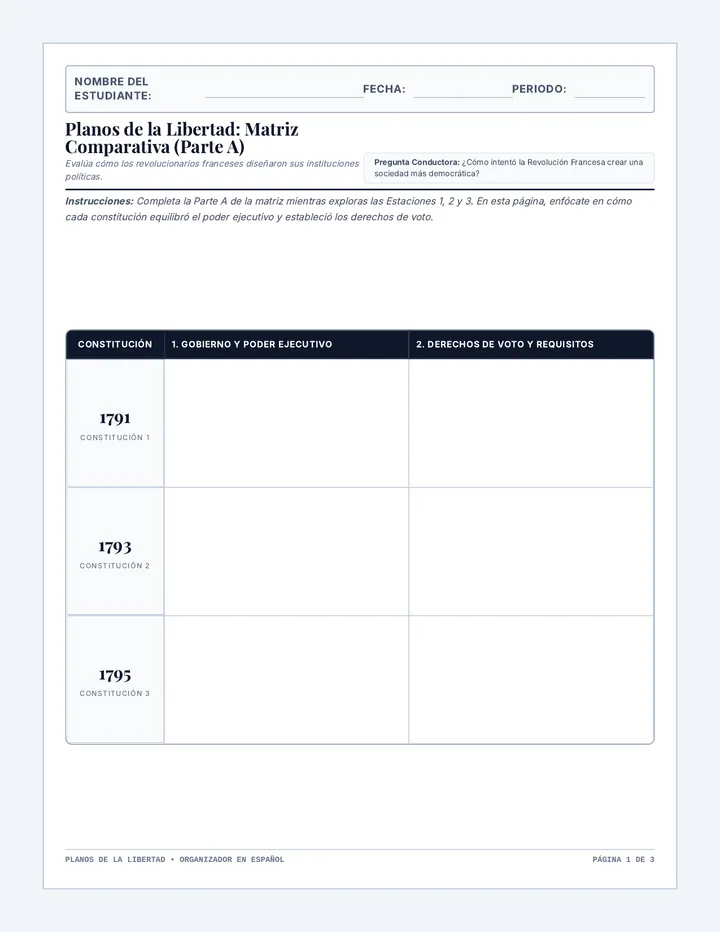
A 10th-grade social studies stations activity investigating the Constitutions of 1791, 1793, and 1795. Students analyze how France repeatedly drafted and revised its foundational laws in a turbulent quest for a more democratic society.
A comprehensive lesson exploring the transition from the roaring optimism of the 1920s to the structural causes of the Great Depression, including the agricultural crisis, income inequality, global trade collapse, and the 1929 stock market crash.
An inquiry-based lesson investigating the transition from the roaring 1920s to the Great Depression. Students analyze how economic policies, consumer credit, and social tensions fueled a cultural boom that ended in systemic collapse.
An exploration of Sigmund Freud's psychodynamic approach to personality, focusing on the dynamic conflict between the Id, Ego, and Superego, and the defense mechanisms the mind uses to cope with resulting anxiety.