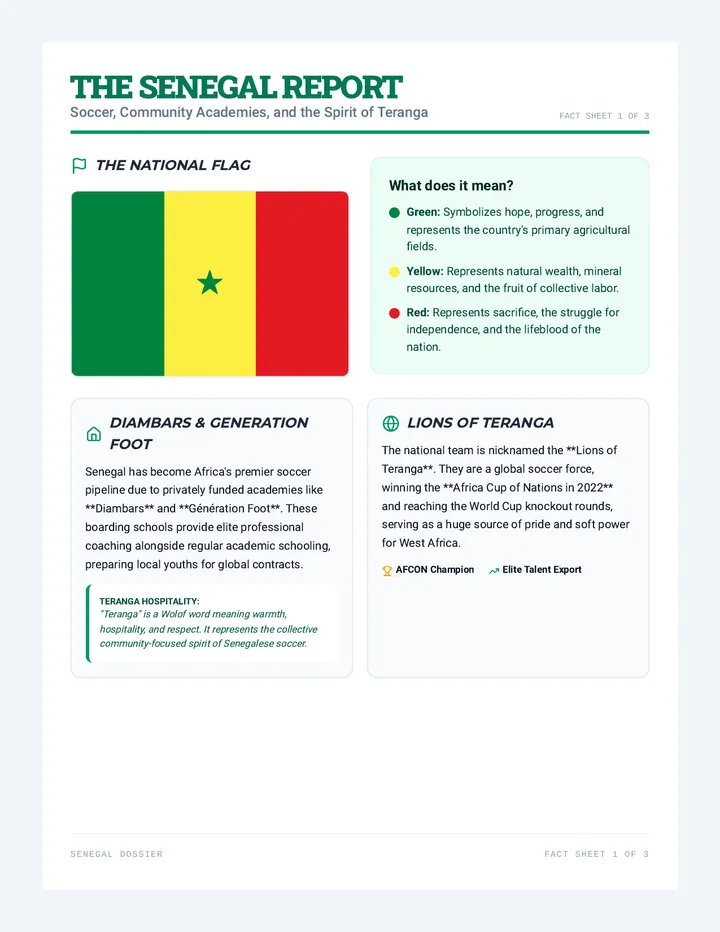
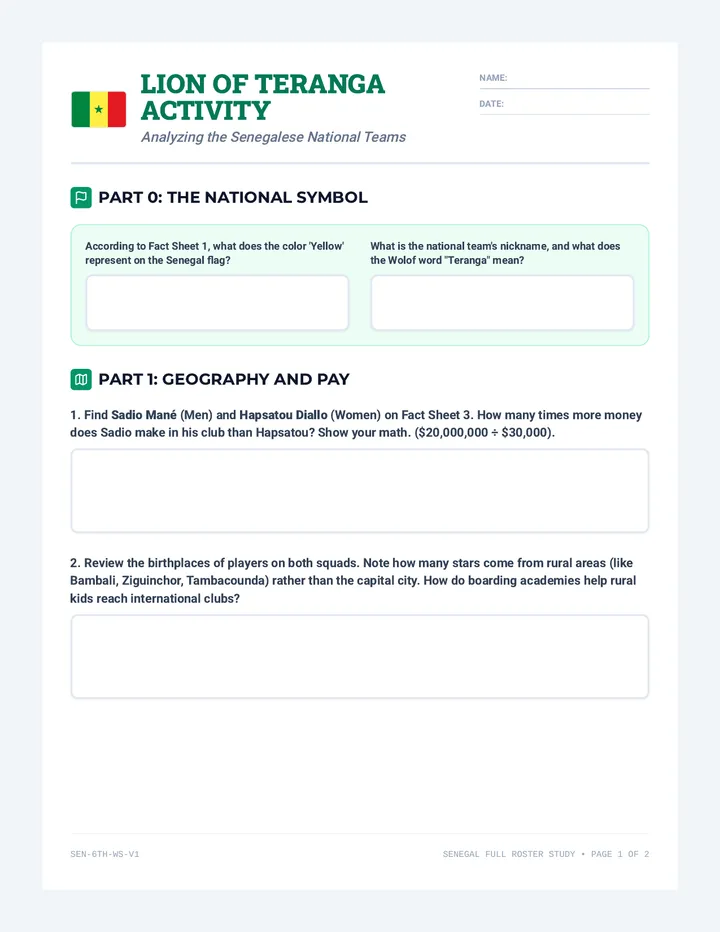
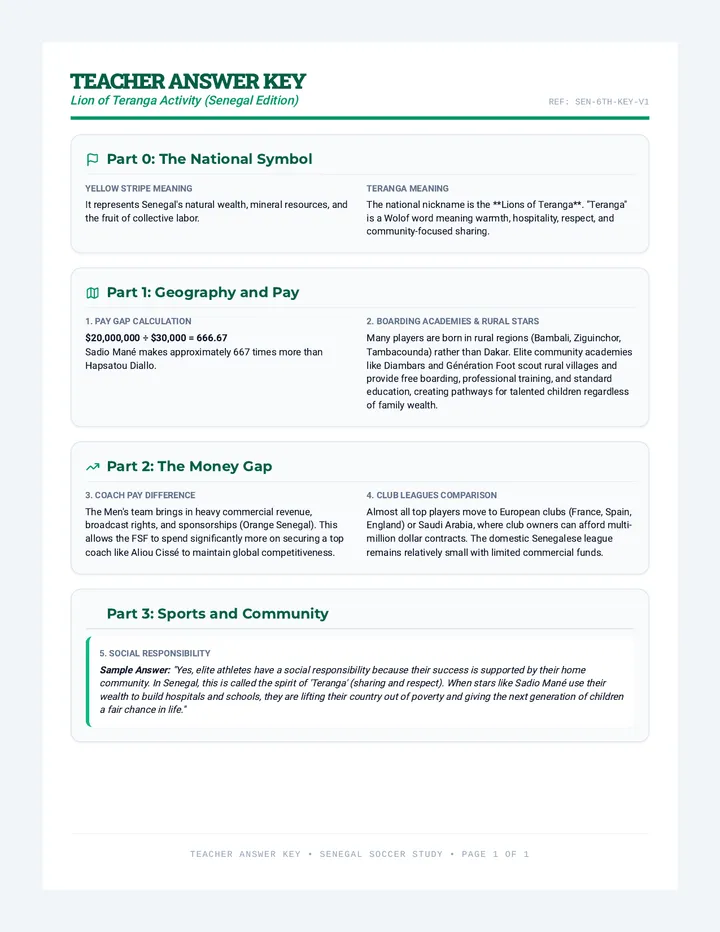
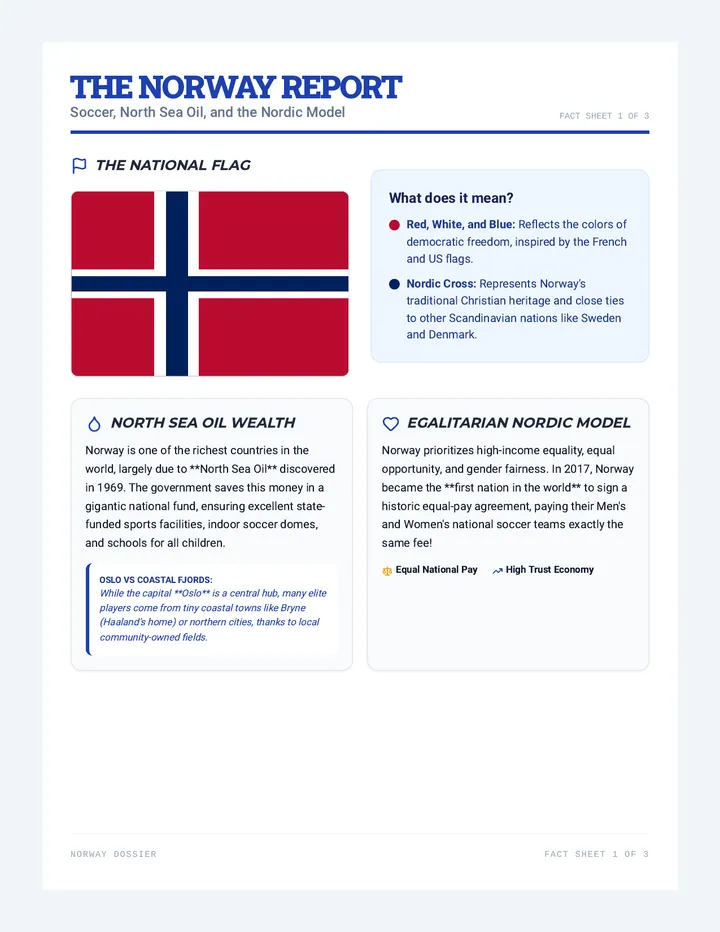
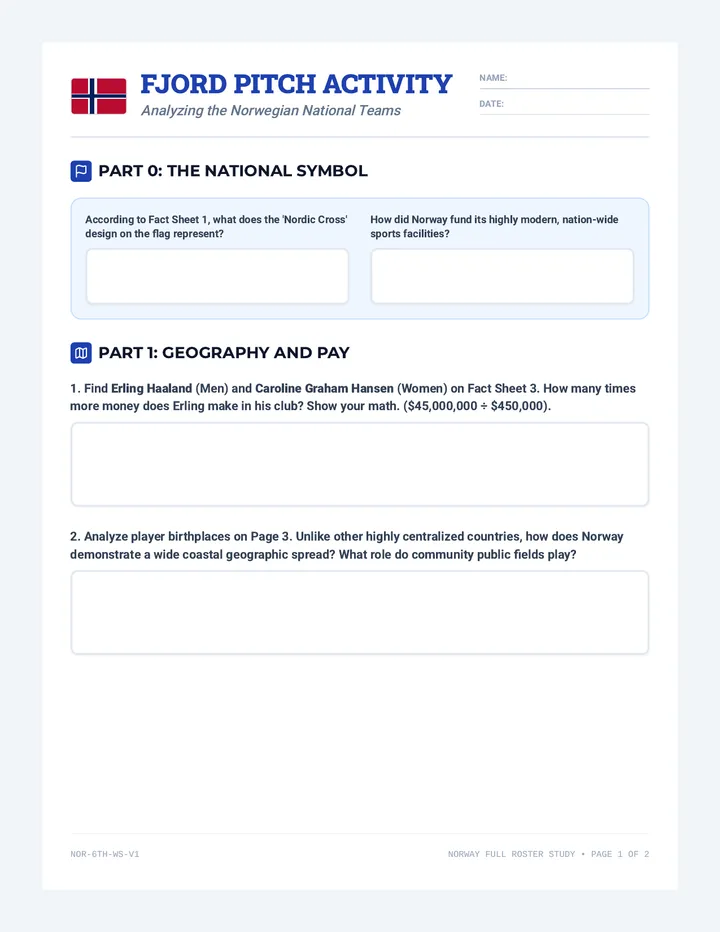
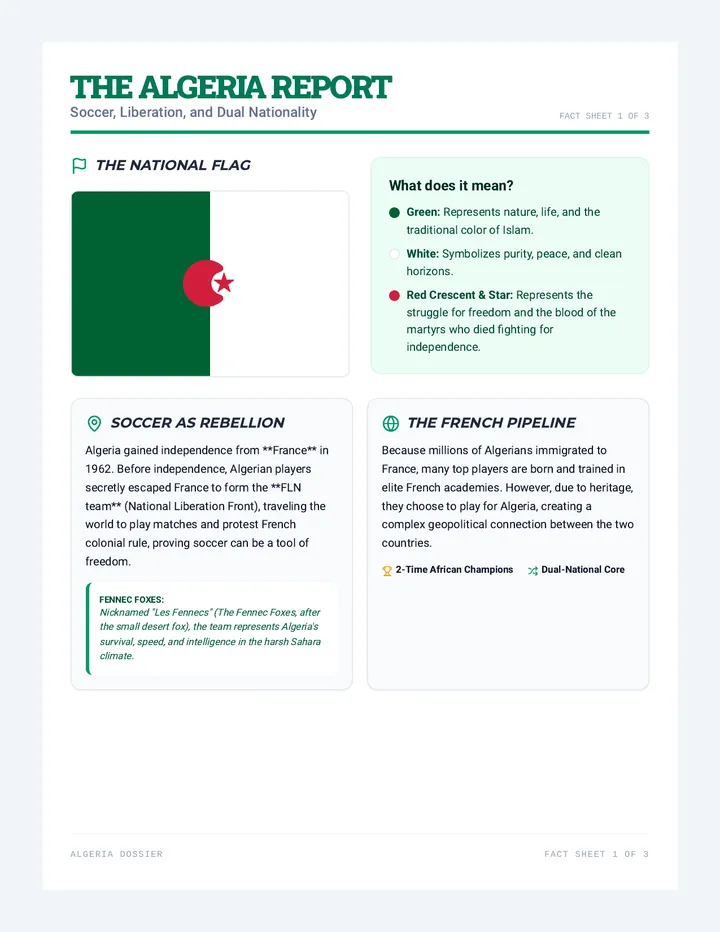
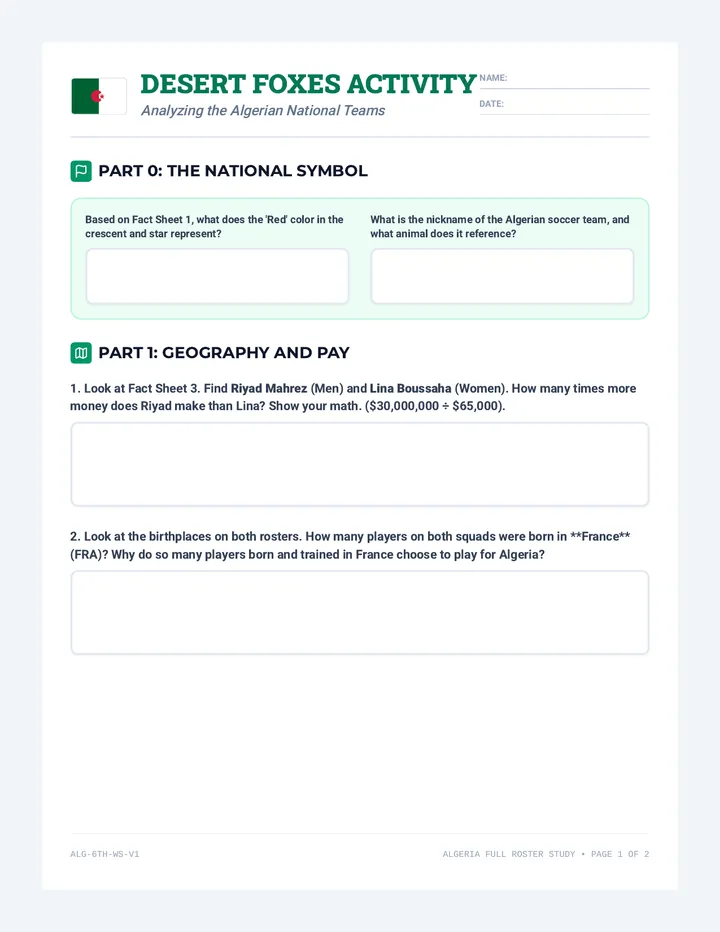
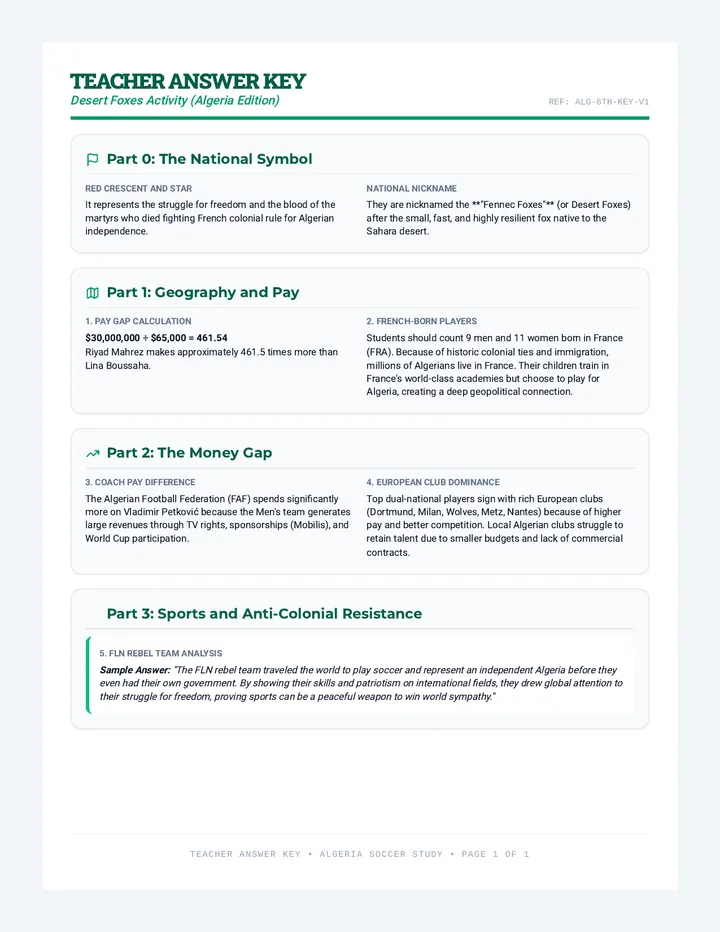
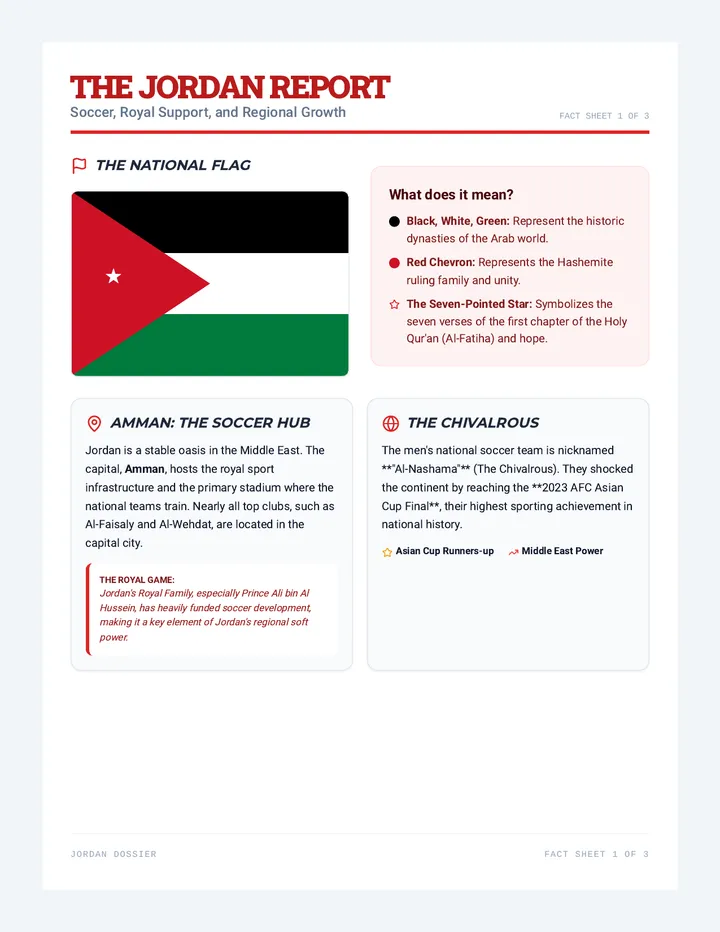
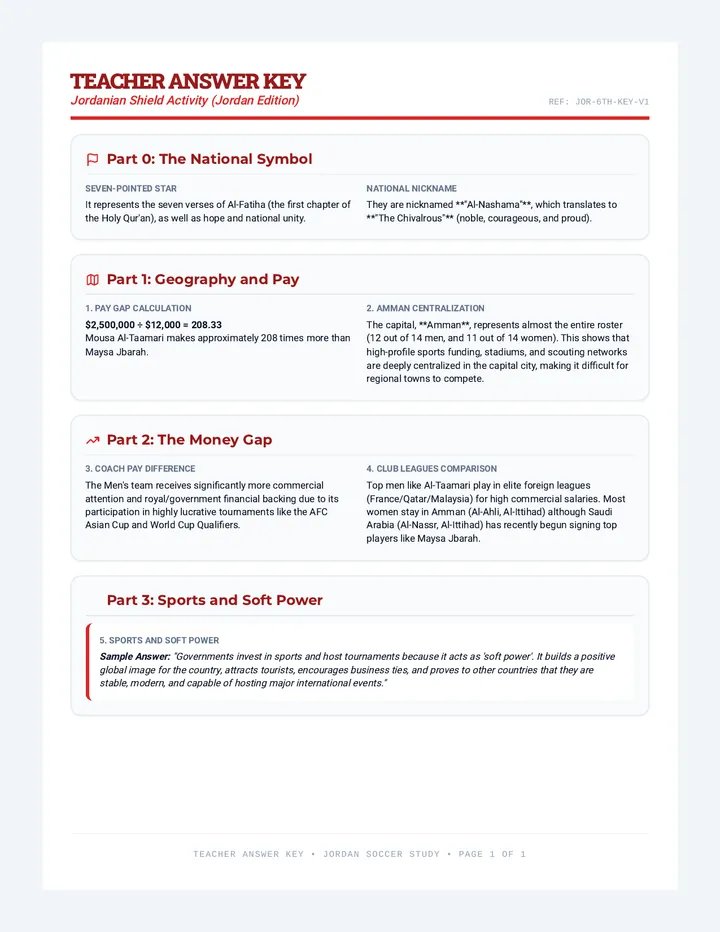
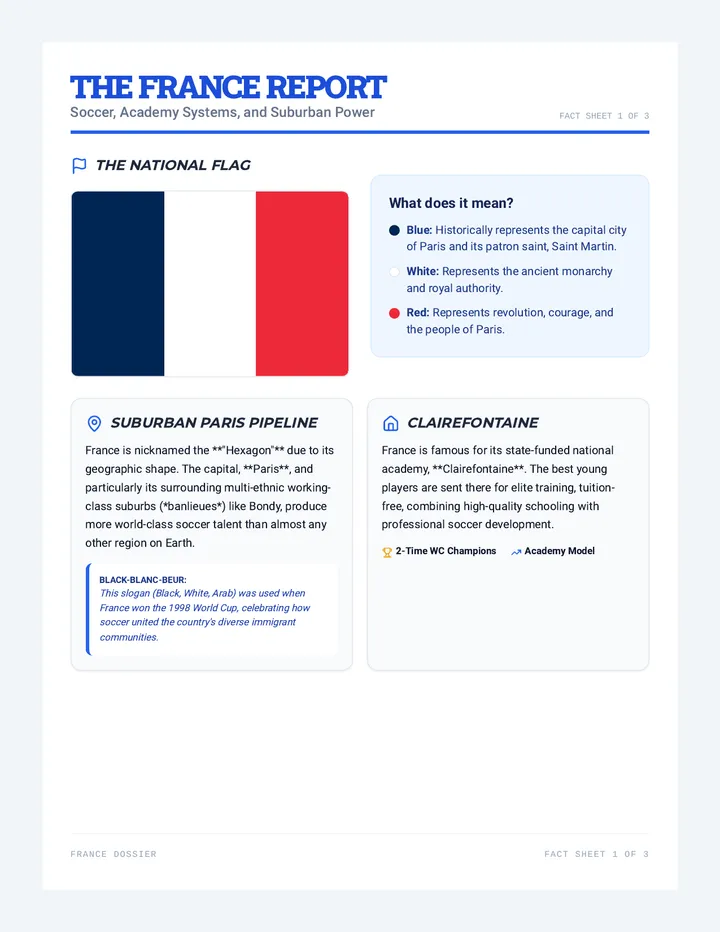
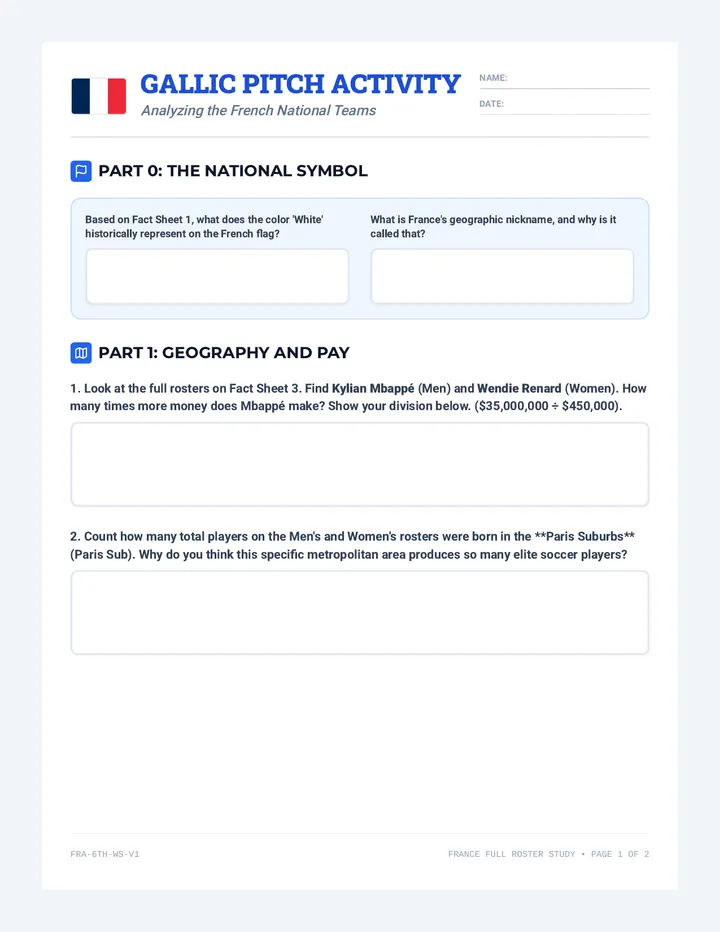
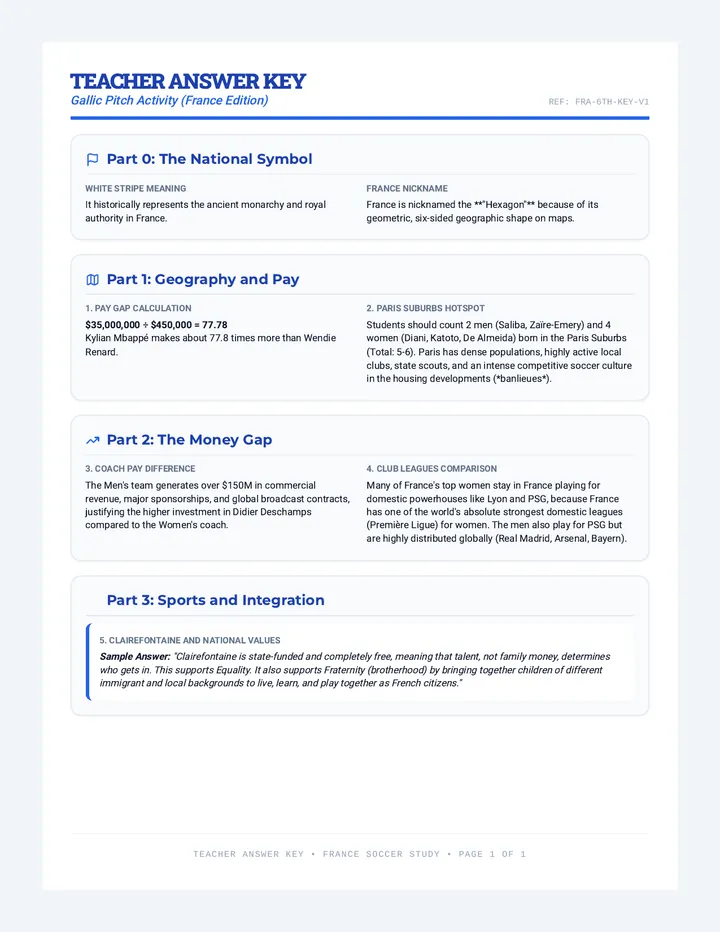
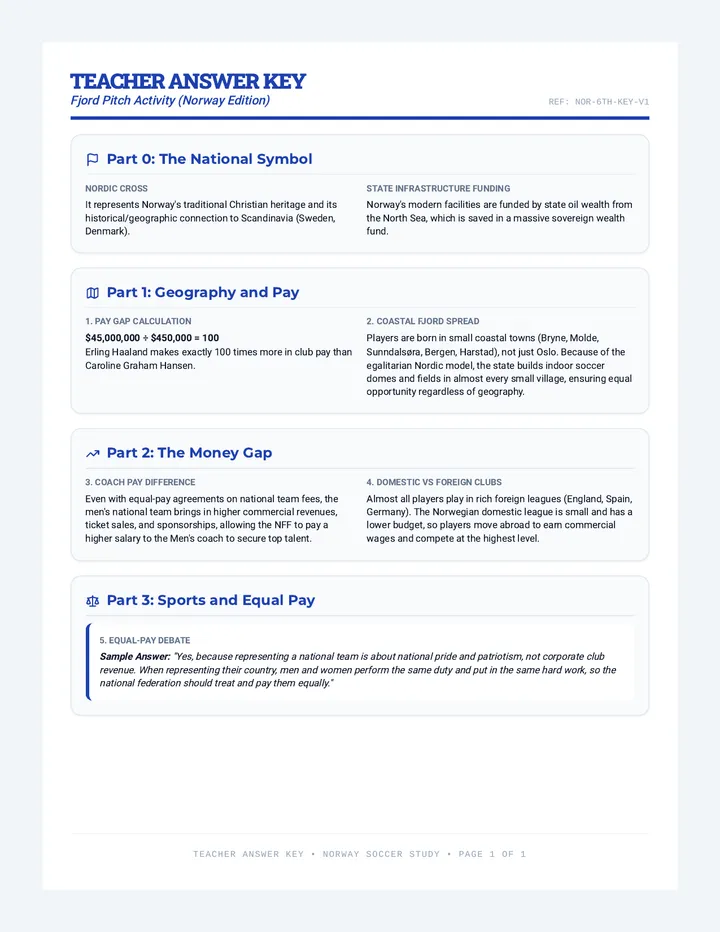
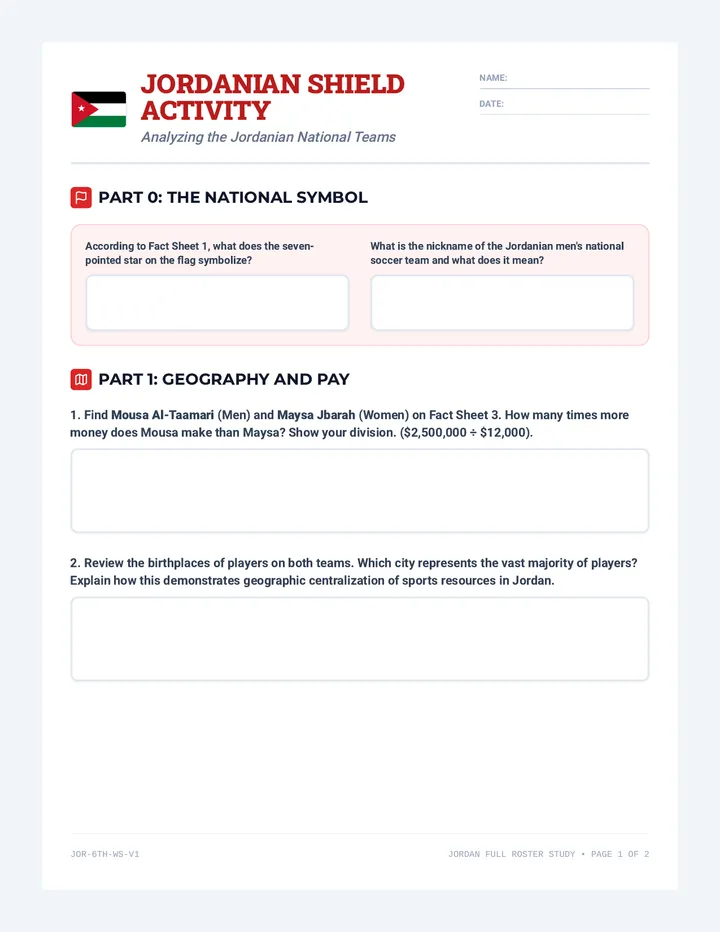
A 7th-grade social studies lesson exploring the themes of Region, Movement, and Interaction through a multimedia country profile project. Students analyze how places are interconnected by human systems and environmental adaptations.

A focused 20-minute analysis of Horace Mann's 12th Annual Report to the Massachusetts Board of Education, exploring the ideals and motivations behind the American Common School Movement.
A foundational introductory lesson for a unit on the Harlem Renaissance, designed for students reading at a 2nd-grade level. The lesson focuses on initial vocabulary exposure and self-assessment of prior knowledge.
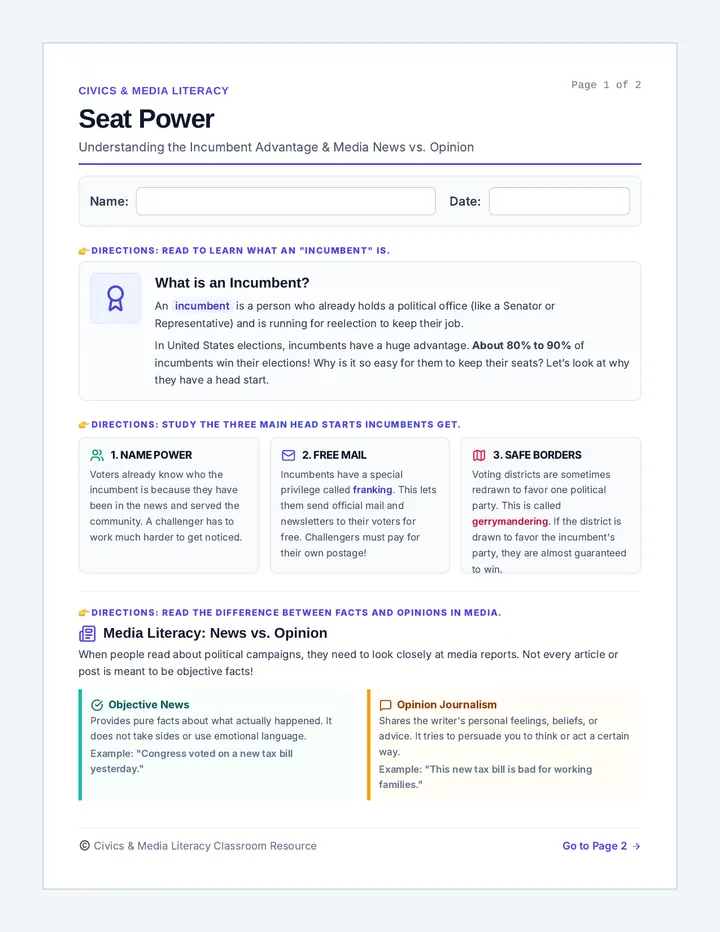
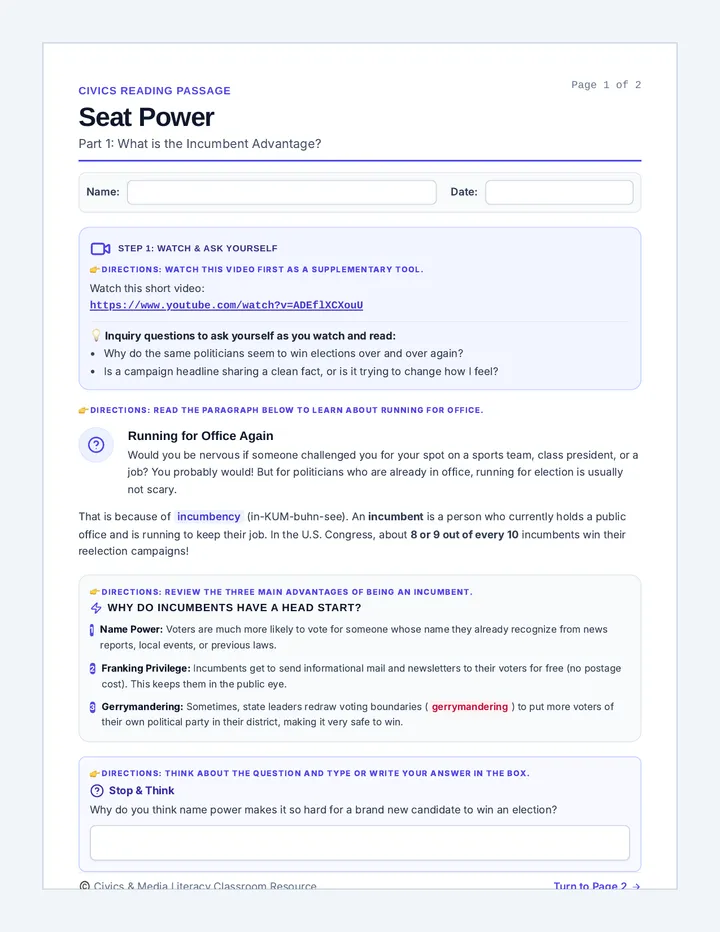
An introduction to the fundamental concepts of political science required for both AP US and Comparative Government, including sovereignty, legitimacy, authority, and the core differences between states, nations, and regimes.
A comprehensive lesson on the ratification of the U.S. Constitution, focusing on the debates between Federalists and Antifederalists, the role of the Bill of Rights, and the contributions of key Founding Fathers.
A comprehensive lesson exploring anxiety disorders, distinguishing between normal stress and clinical diagnoses using the 4 Ds (Deviance, Distress, Dysfunction, Danger), and addressing the stigma of mental health terminology.
A deep dive into the behavioral etiology of anxiety disorders, focusing on how classical conditioning initiates fear and operant conditioning maintains it through the Cycle of Anxiety. Students will map the transition from trigger to reinforcement using specific phobias as case studies.
A high-level AP Psychology lesson exploring the clinical complexities and controversies of diagnosing Dissociative Identity Disorder, featuring a Socratic seminar and differential diagnosis practice.
In this undergraduate psychology lesson, students critique evolutionary perspectives on anxiety and design a behavioral activation intervention for happiness. They analyze Katarina Blom's TEDx talk, explore key studies on negativity bias and social connection, and create a targeted "Happiness Intervention" for college freshmen.
A sociology-focused lesson examining the objectification of women's bodies through the lens of 'Body Image Resilience.' Students analyze how economic systems benefit from self-objectification and explore structural alternatives to beauty-centric social values.
Students investigate the neurobiology of ADHD through metaphorical frameworks, challenging the traditional 'deficit' model of the disorder and exploring the social model of disability.
Students explore the psychological theory of Ego Depletion and decision fatigue through an interactive Stroop test, a video case study on judicial parole decisions, and a collaborative experimental design project. The lesson concludes with a critical look at the replication crisis in psychology.
This lesson explores how cultural beliefs and geographic factors shape perceptions of mental health and access to care, using Sangu Delle's TED Talk as a primary case study for West Africa. Students will analyze the 'Medical Model' vs. 'Supernatural Model' and map out barriers to treatment in rural contexts.
A high school psychology lesson exploring the intersection of intentional living and psychological theories of well-being through Joshua Becker's 8 points of happiness. Students analyze a video, map concepts to Maslow's hierarchy, and apply 'happiness prescriptions' to real-world case studies.
An exploration of the social construction of identity and the mechanisms of social control through shame, using Nietzschean philosophy and Goffman's dramaturgical perspective. Students analyze how societal 'shoulds' create masks and puppets, particularly in the context of gender and social roles.
A high school psychology lesson focusing on the clinical definitions of psychosis, distinguishing between sensory hallucinations and fixed false beliefs (delusions). Students analyze case studies to apply their knowledge of specific clinical categories.
Students explore the Yerkes-Dodson Law through the lens of memory formation and retrieval. They analyze how moderate stress aids encoding while high stress inhibits recall, applying these concepts to real-world scenarios.
Students analyze the economic incentives behind unrealistic beauty standards, calculating the financial 'cost of perfection' and exploring the concept of the 'motivated consumer.'
Students analyze the concept of neurodiversity and apply design-thinking to create inclusive workspaces, connecting the topic to broader civil rights and the Americans with Disabilities Act.
A clinical psychology lesson for undergraduates focusing on the categorization of psychotic symptoms using a simulation video as a case study. Students learn to distinguish between positive and cognitive symptoms and compare media representations to DSM-5 diagnostic criteria.
This lesson explores the Enlightenment foundations of modern democracy, focusing on the 'architects' who drafted the ideas of natural rights, separation of powers, and the social contract. Students analyze how these philosophical blueprints shaped the American Revolution and founding documents.
A lesson focused on the Winter Olympics through the lens of five participating nations: Norway, USA, Japan, Italy, and Canada. Students explore geography, culture, and athletic achievements to understand the global spirit of the games.
A comprehensive lesson exploring the history of US National Parks, the ethical balance between public access and wilderness preservation, and modern conservation strategies.
A lesson exploring the lives of Deborah, Samson, and Ruth, focusing on their character traits, the challenges they faced, and their significance in biblical history.
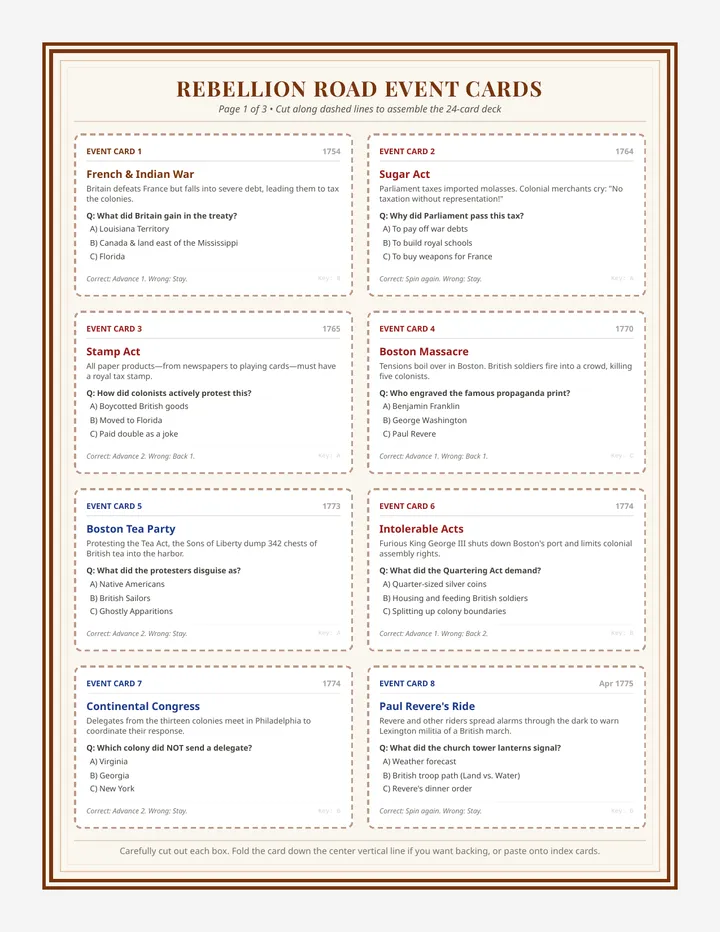
A 50-minute lesson exploring the history and customs of Valentine's Day, designed for middle school students with K-3 reading levels. Includes a KWL chart, accessible text, and comprehension questions.
A lesson exploring how Enlightenment philosophers like Locke, Montesquieu, and Voltaire influenced the founding documents and structure of the United States government.
Students will analyze a clinical video on depression, categorize findings using the Biopsychosocial Model, and perform a gap analysis to identify missing environmental and cultural factors.