Students reverse the process by constructing angles of specific measures. They learn the 3-step drawing process: Base Ray -> Scale Dot -> Connect. The lesson culminates in the 'Blueprint Starburst' project.
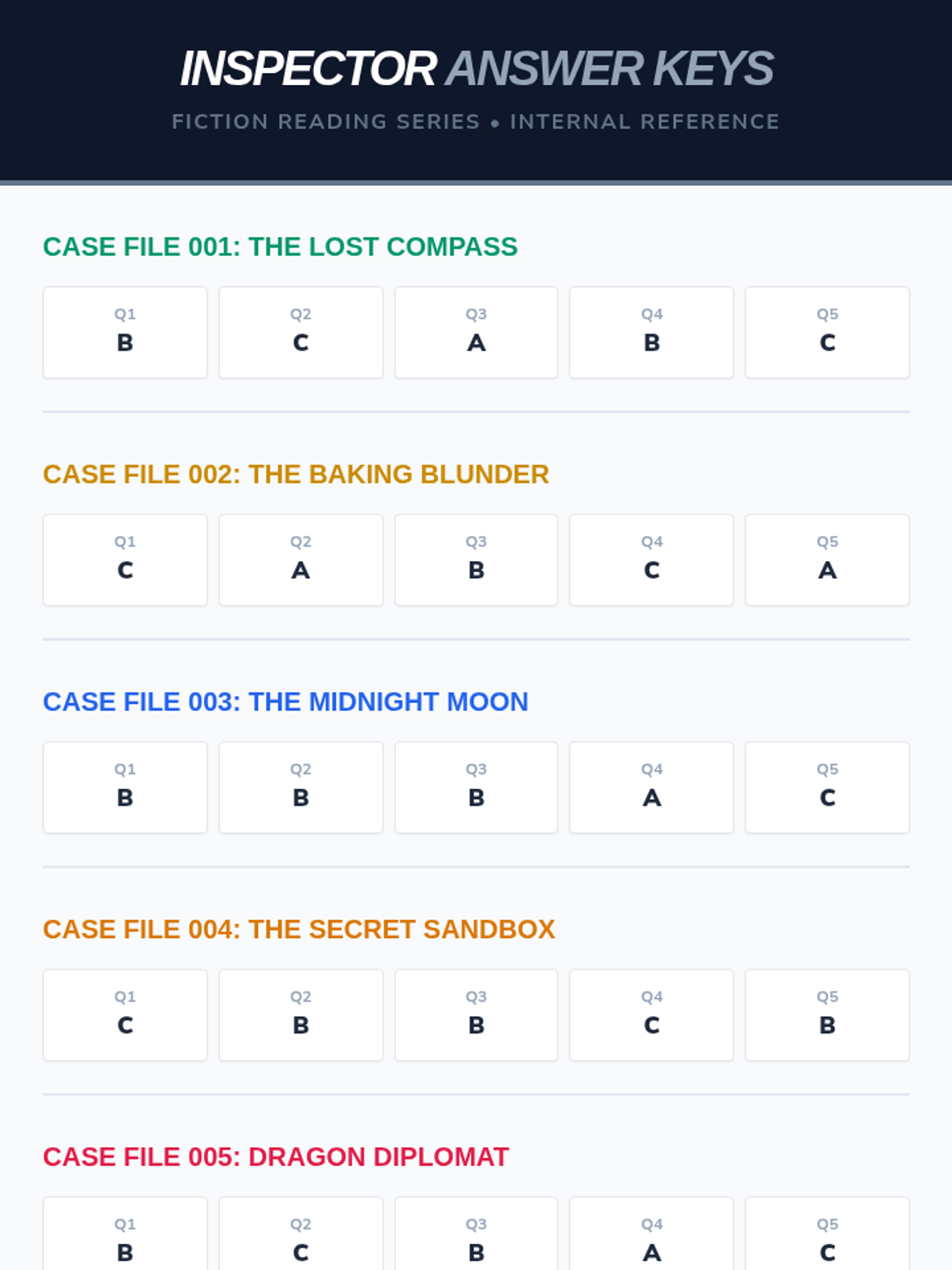
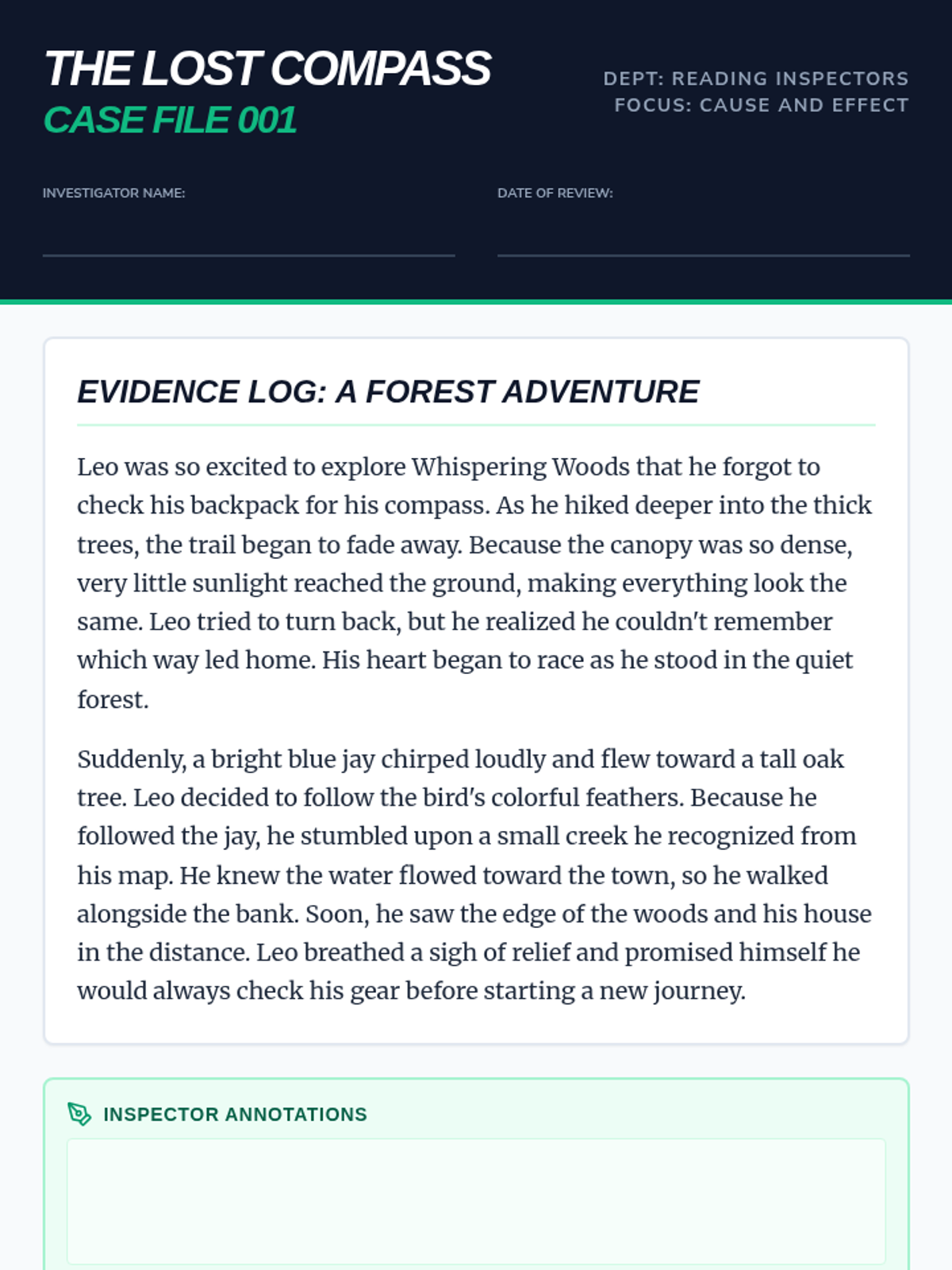
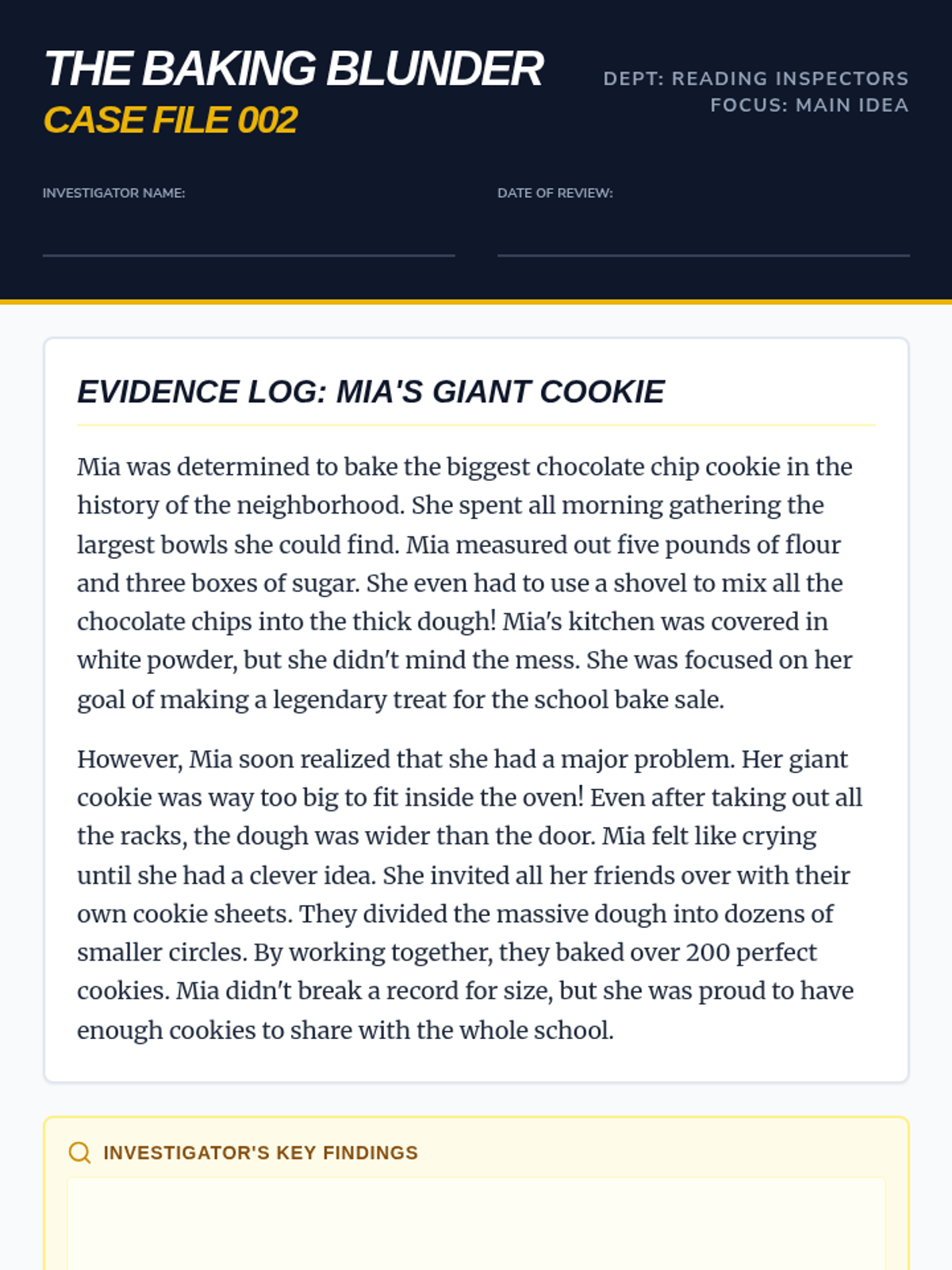
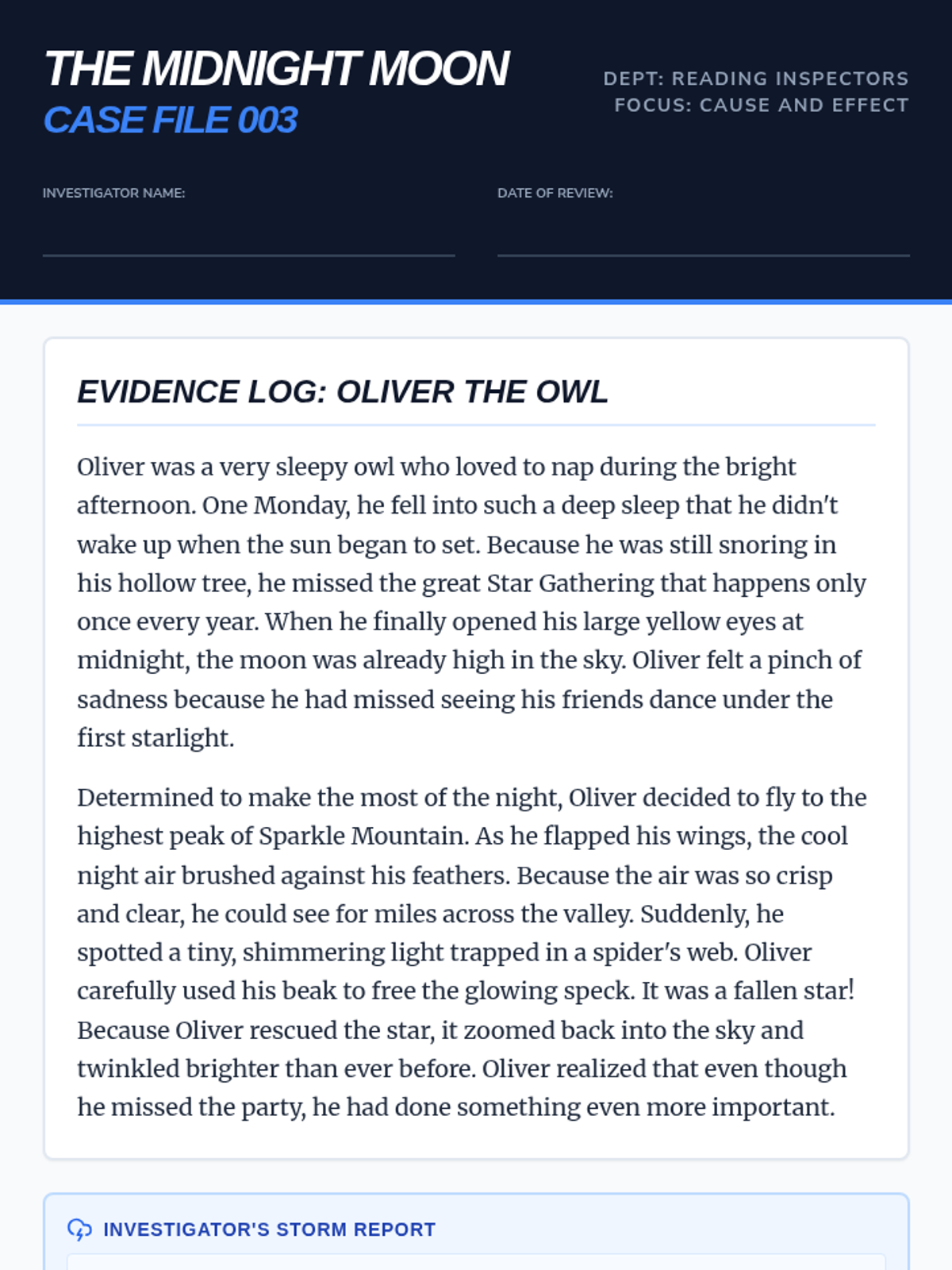
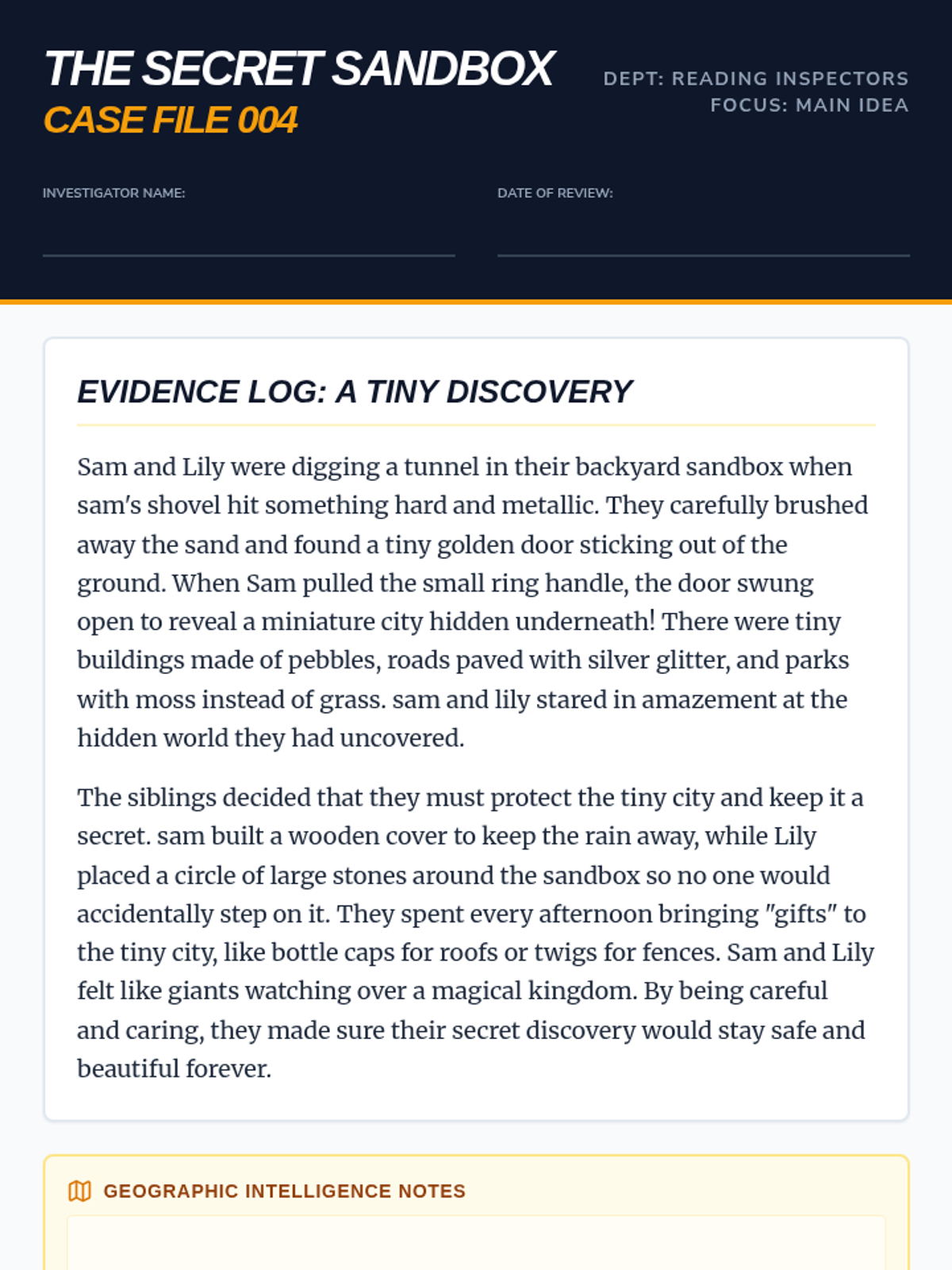
A series of five reading comprehension worksheets for 3rd grade, focusing on cause, effect, and main idea. Each worksheet features a unique passage with five EOG-style multiple-choice questions and space for student annotations or notes.
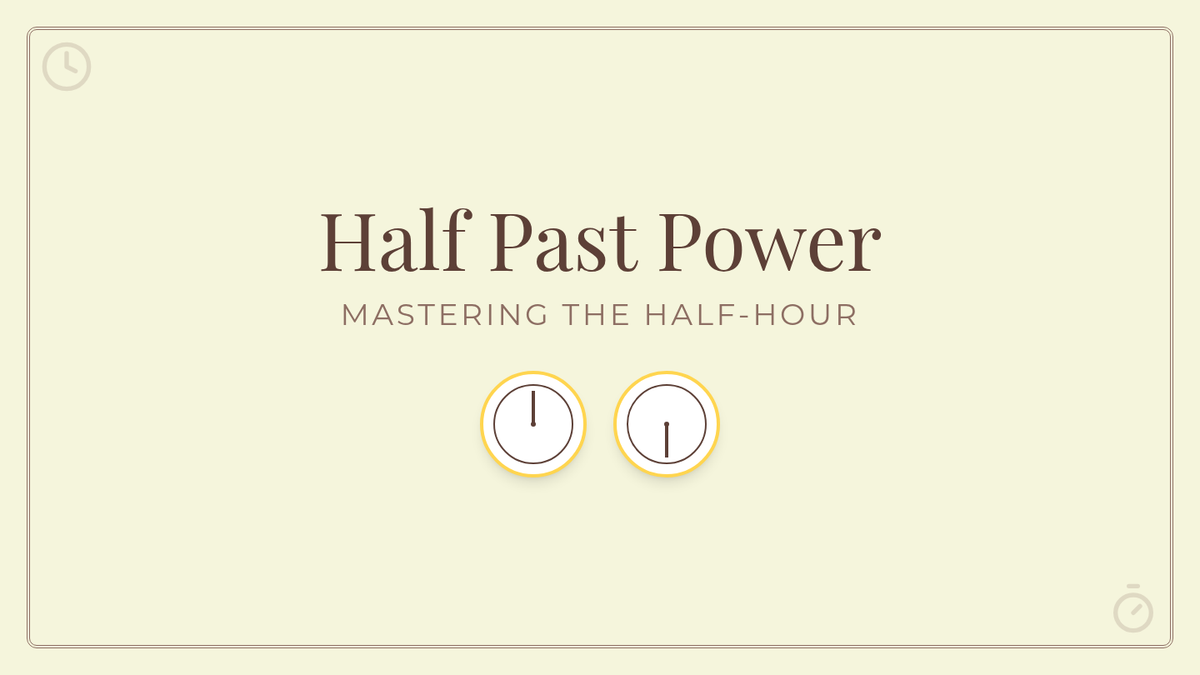
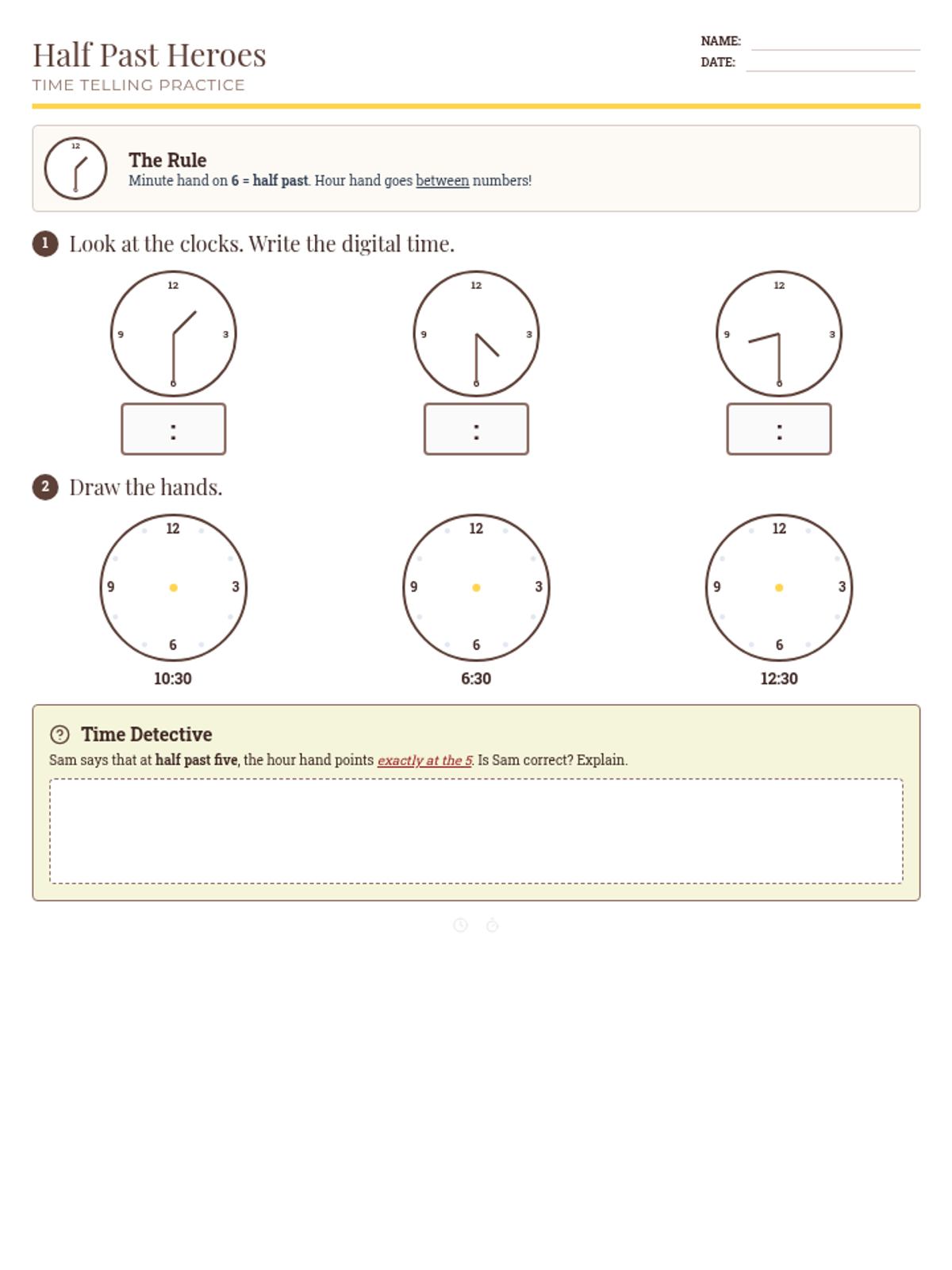
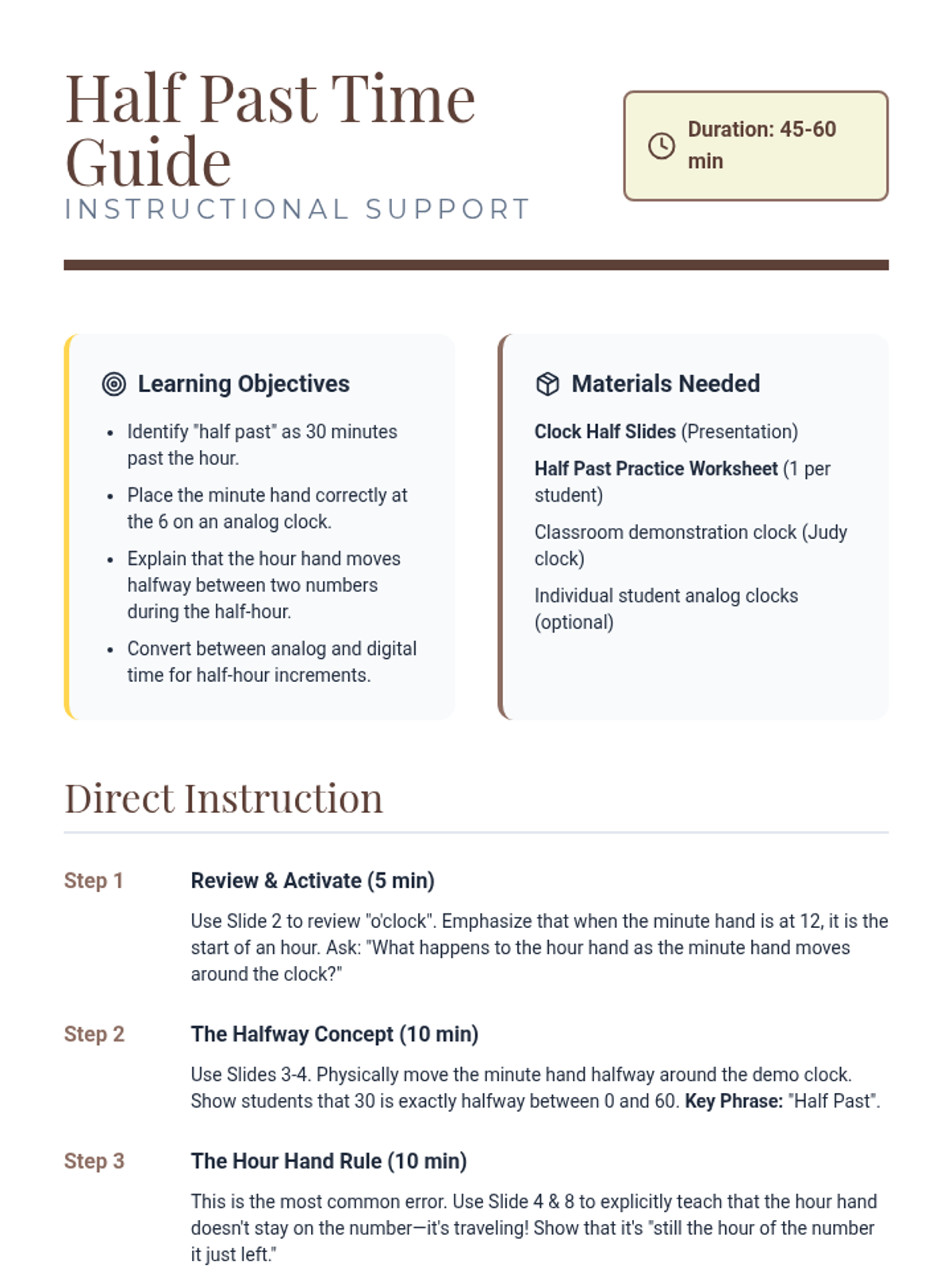
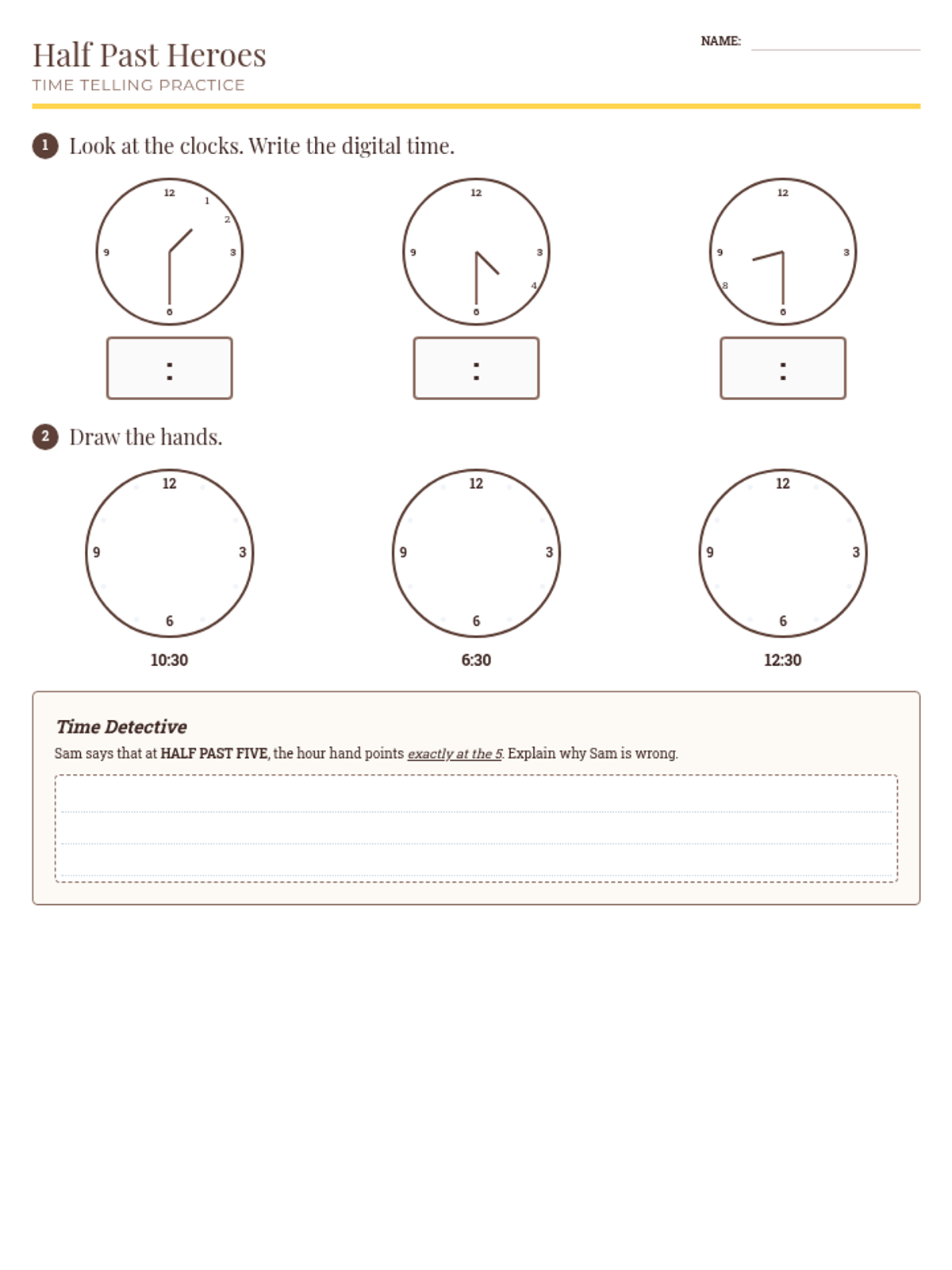
A lesson focused on introducing and practicing telling time to the half-hour, connecting analog and digital representations.
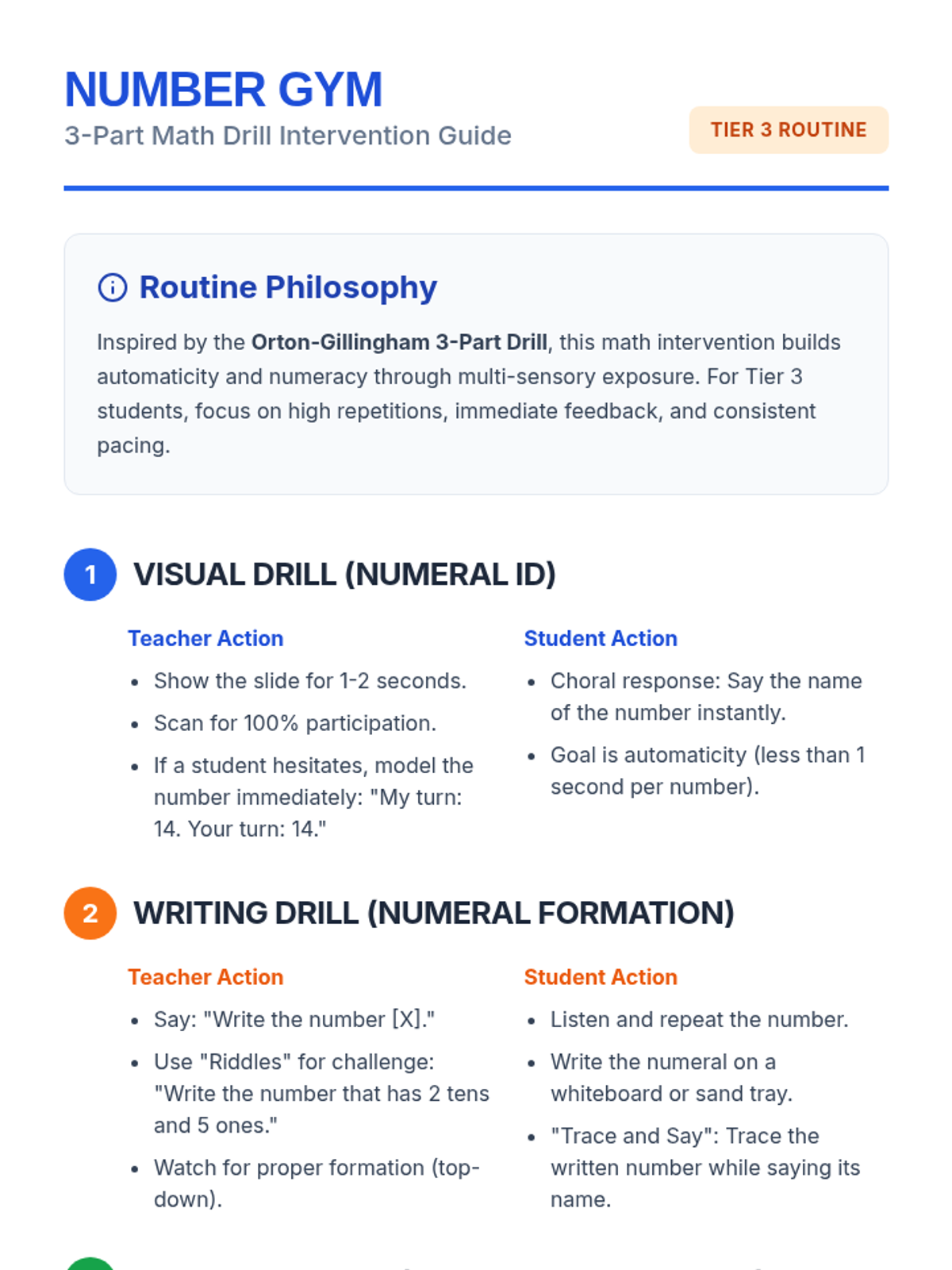
Lesson Day 1 of the Number Gym routine. Introduces the 3-part drill.
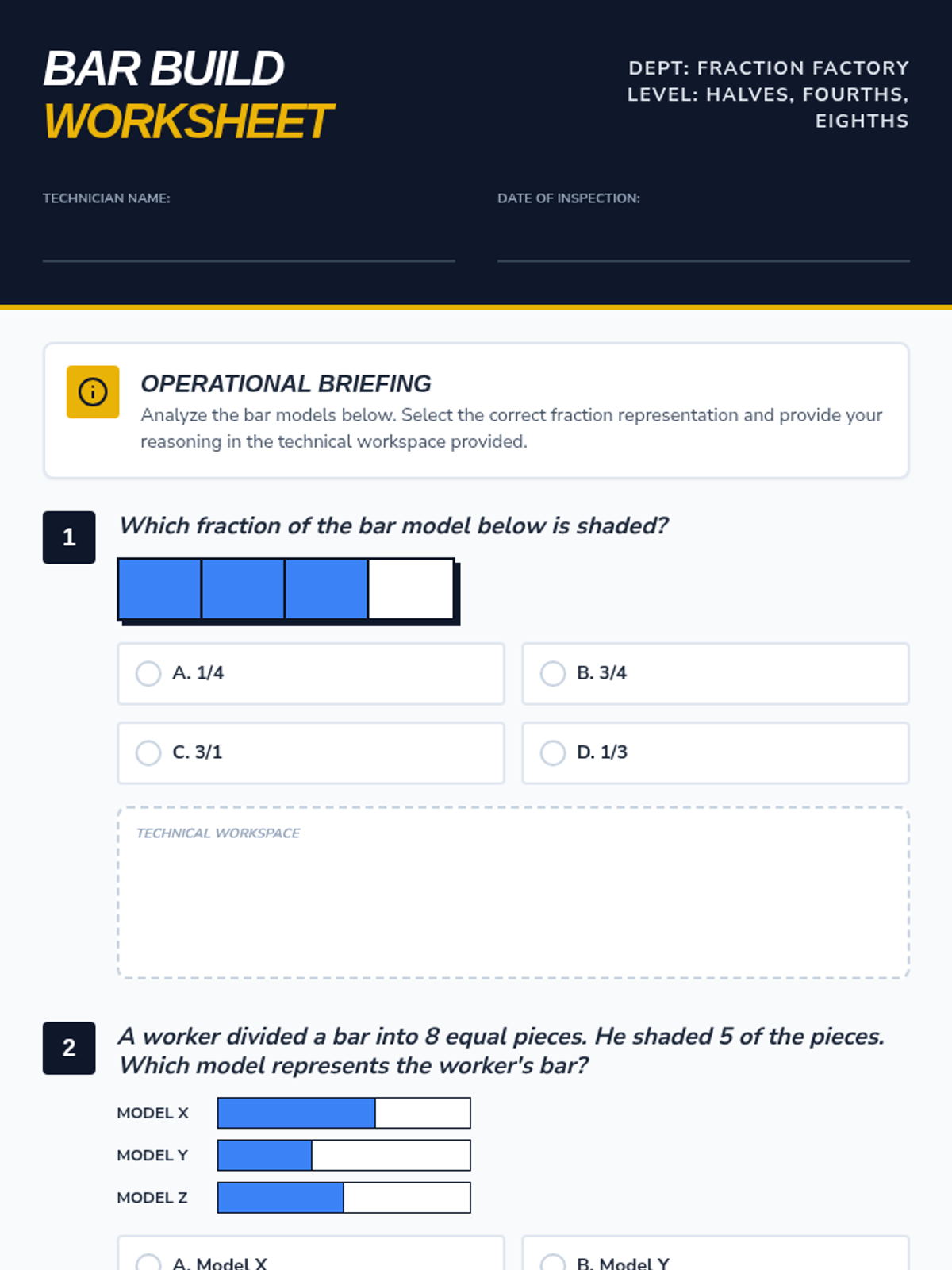
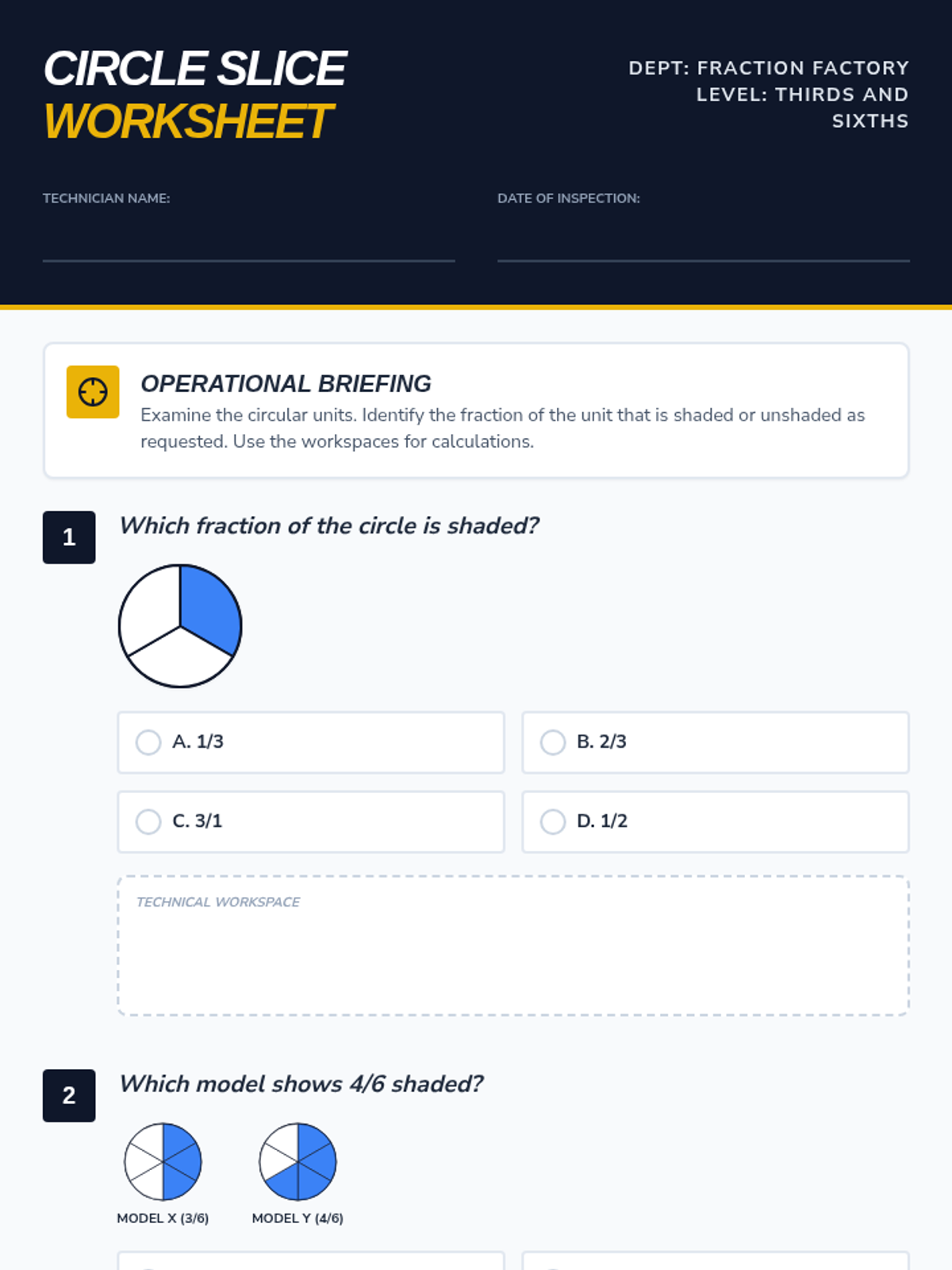
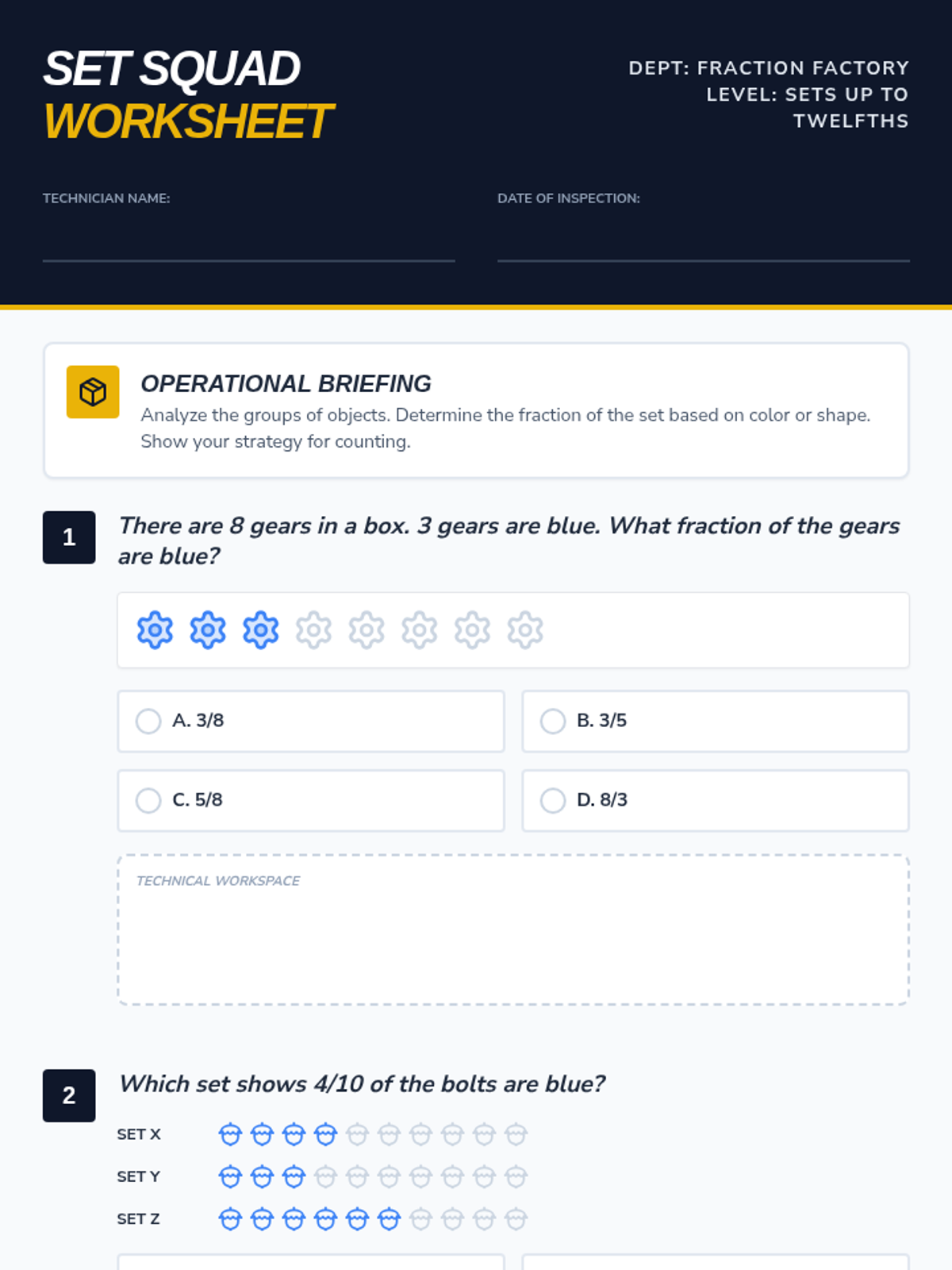
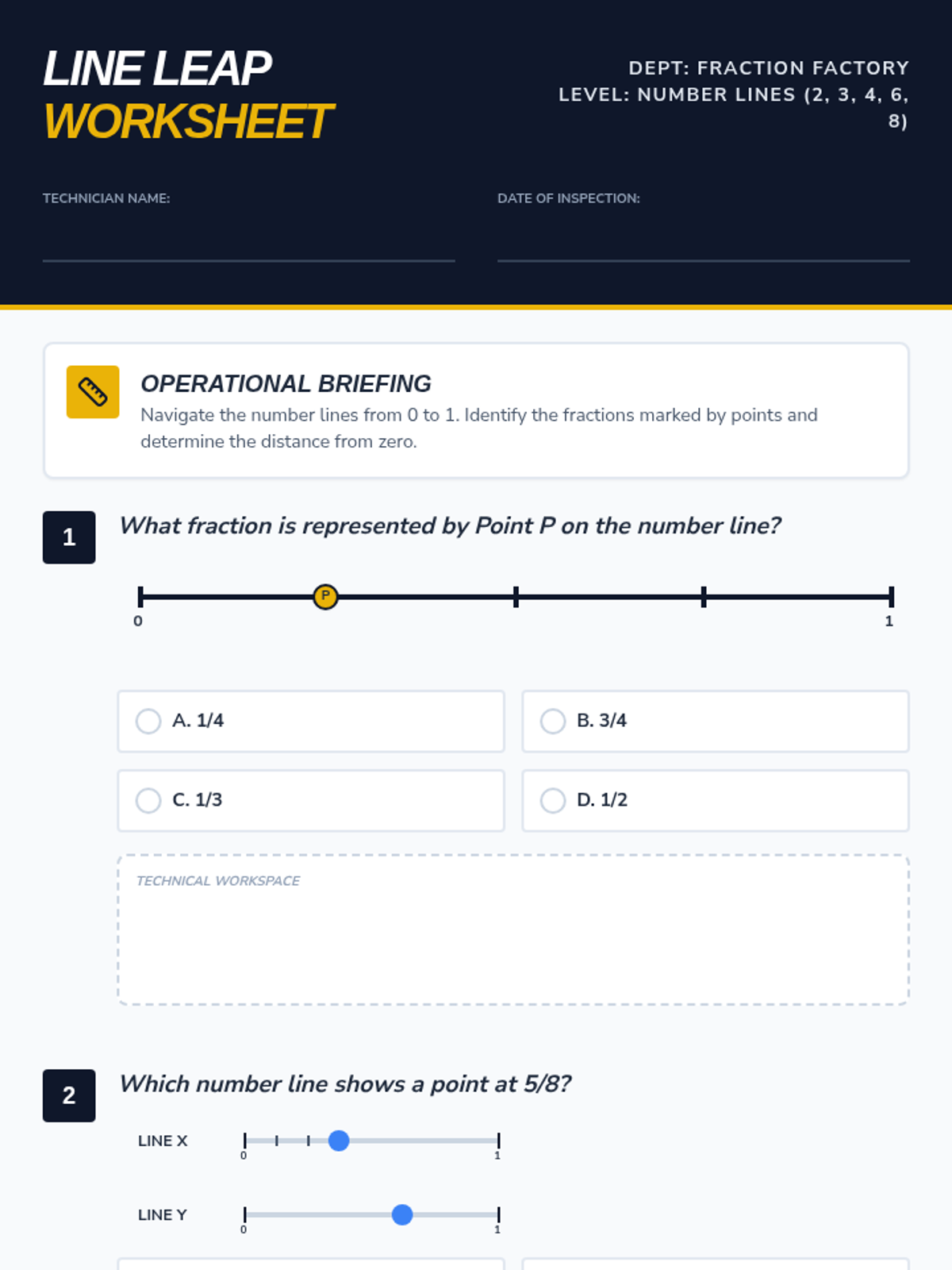
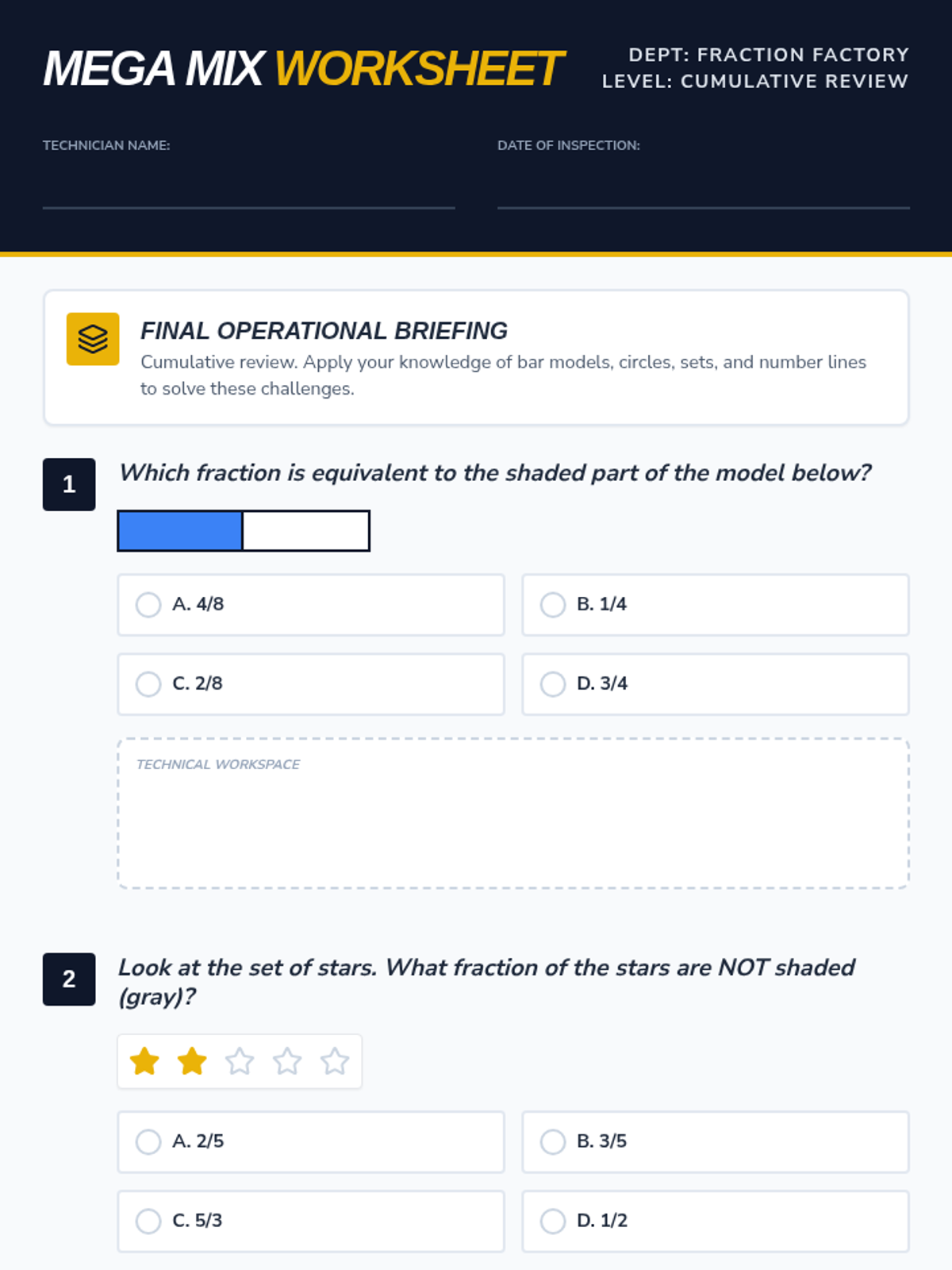
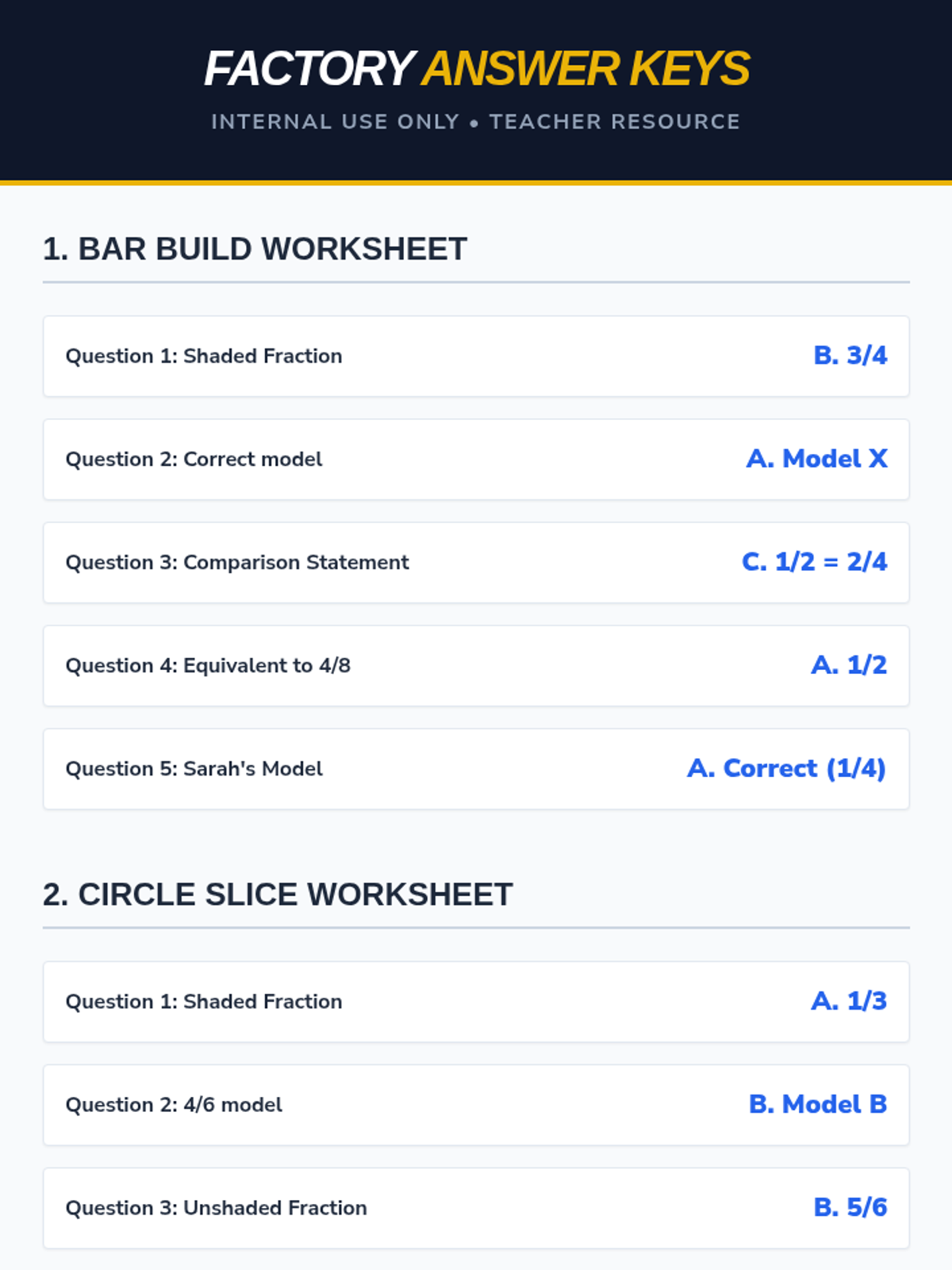
A series of five targeted worksheets designed to review 3rd-grade fraction concepts through various visual models, including bar models, circle areas, set models, and number lines. Each worksheet prepares students for EOG-style questions with rigorous practice and dedicated workspace.
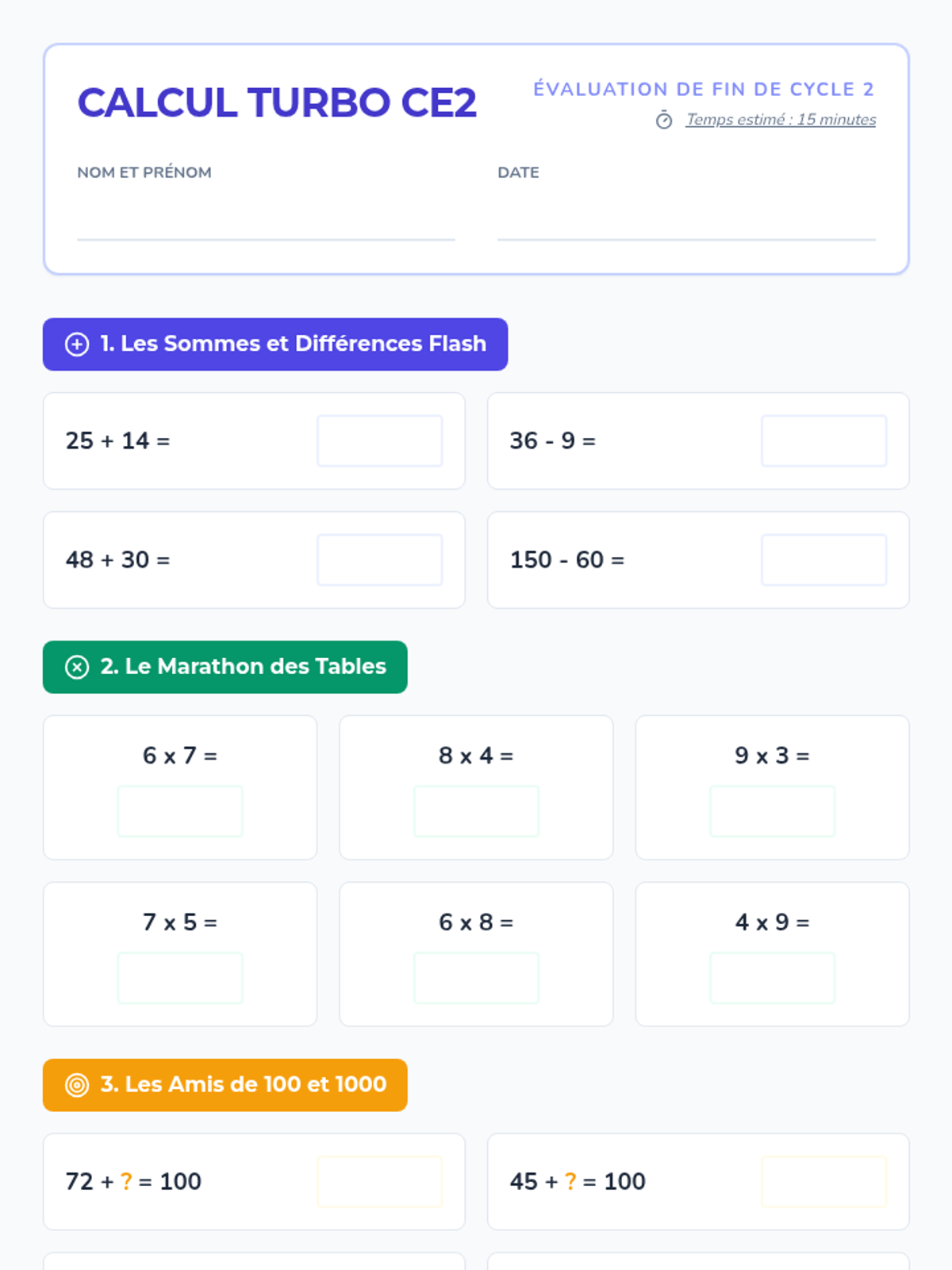
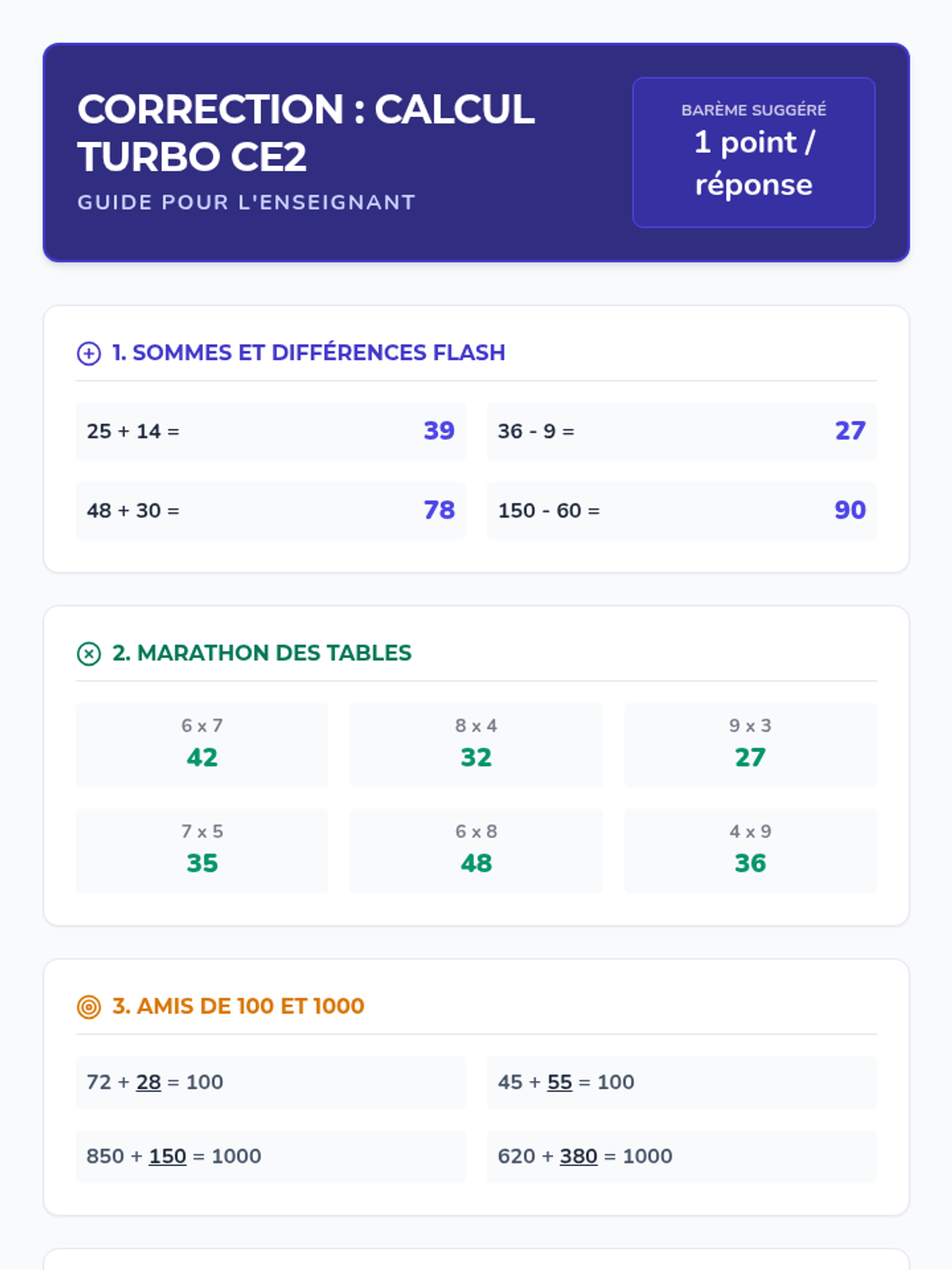
Une évaluation complète de calcul mental pour les élèves de CE2, conçue pour tester les compétences clés de fin de cycle 2. Comprend une fiche de test pour l'élève et un corrigé pour l'enseignant.
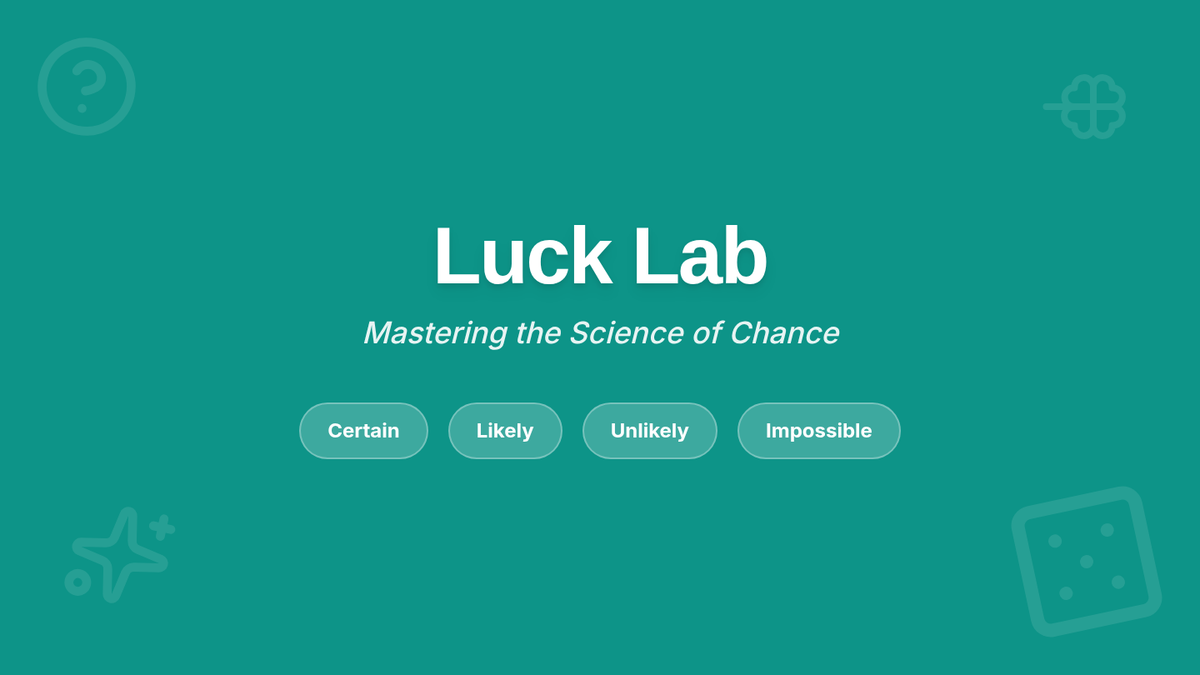
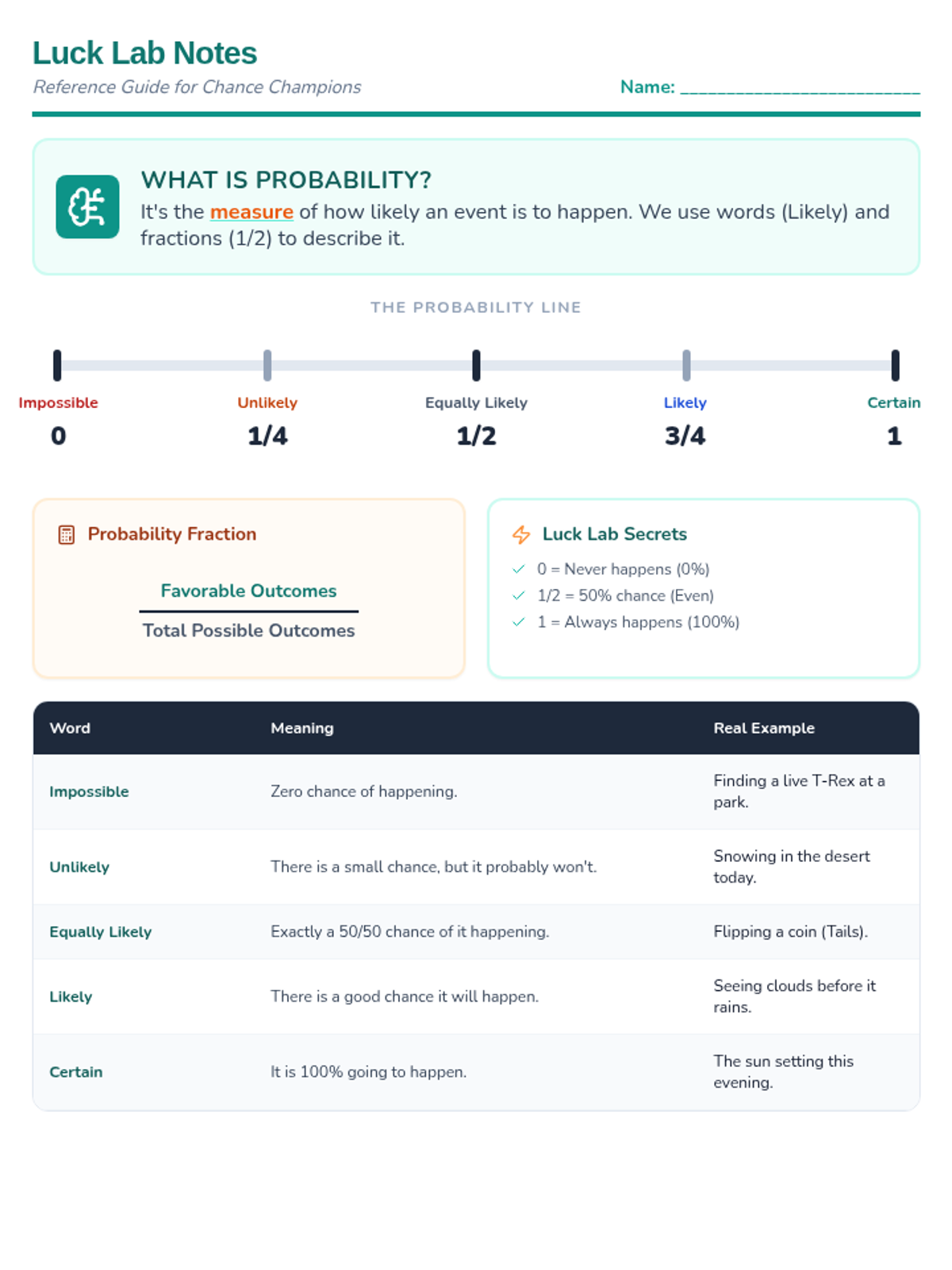
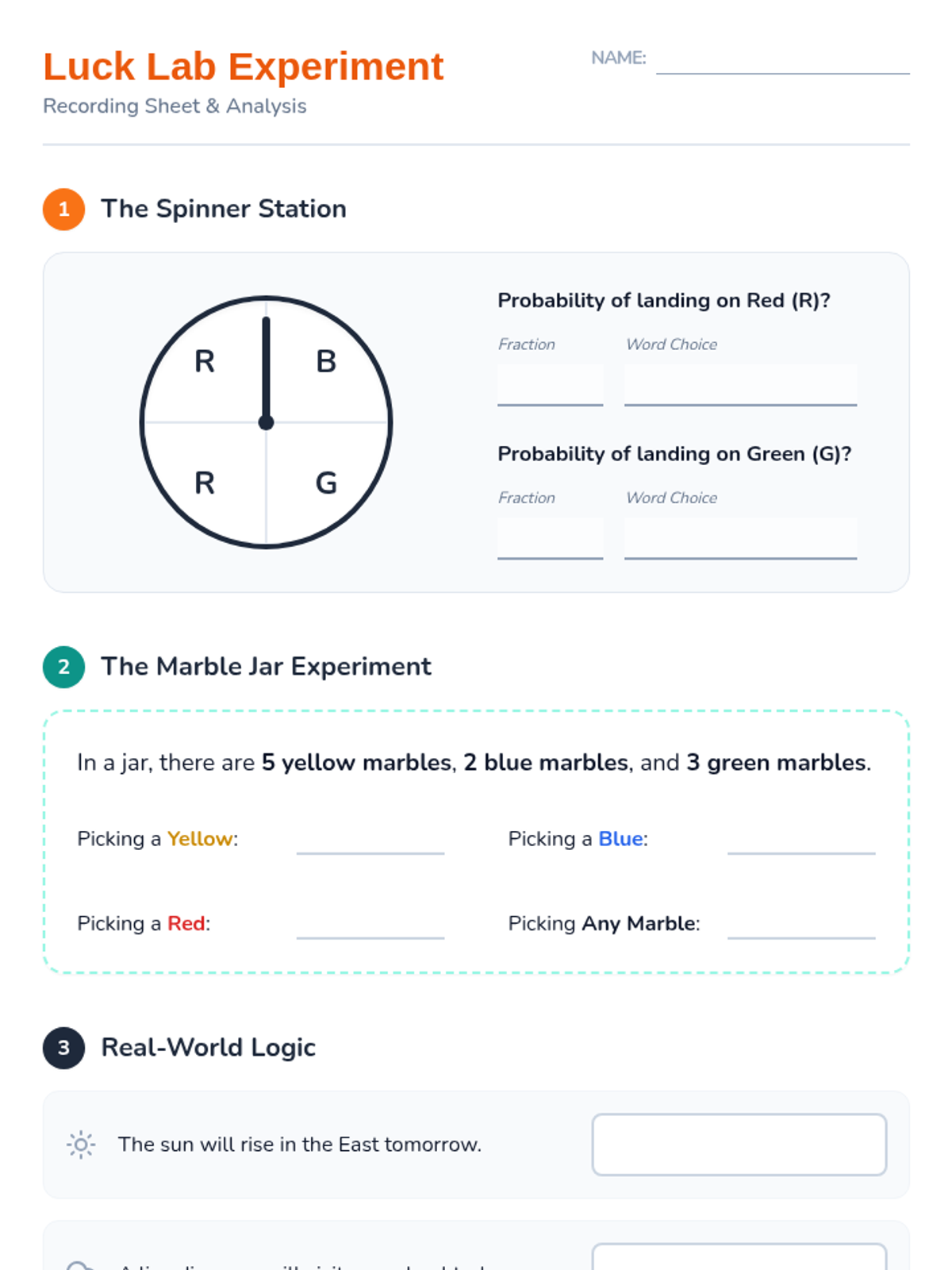
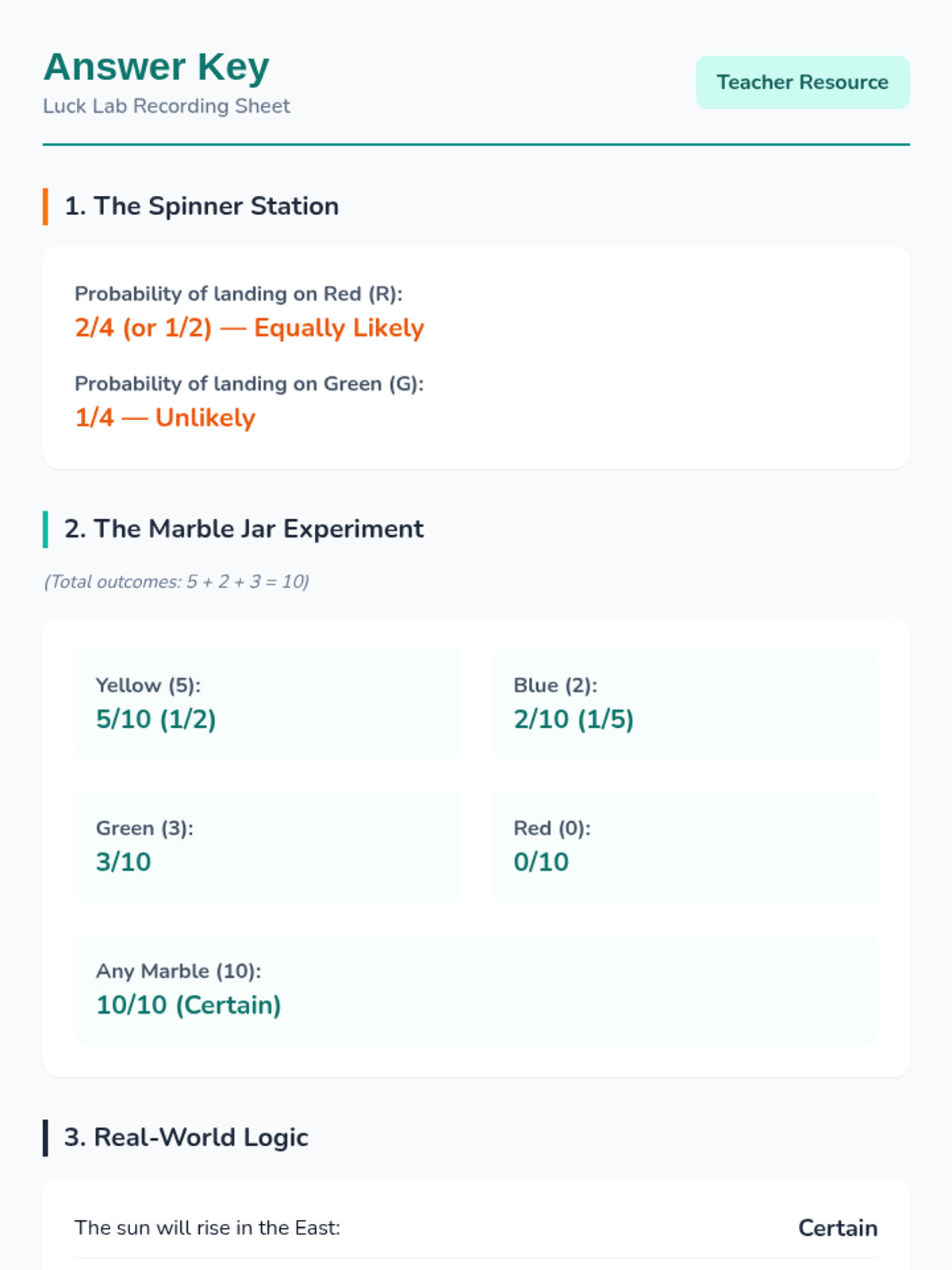
A mini-lesson introducing probability concepts through the lens of 'The Luck Lab', covering vocabulary (certain to impossible) and fractional representations.
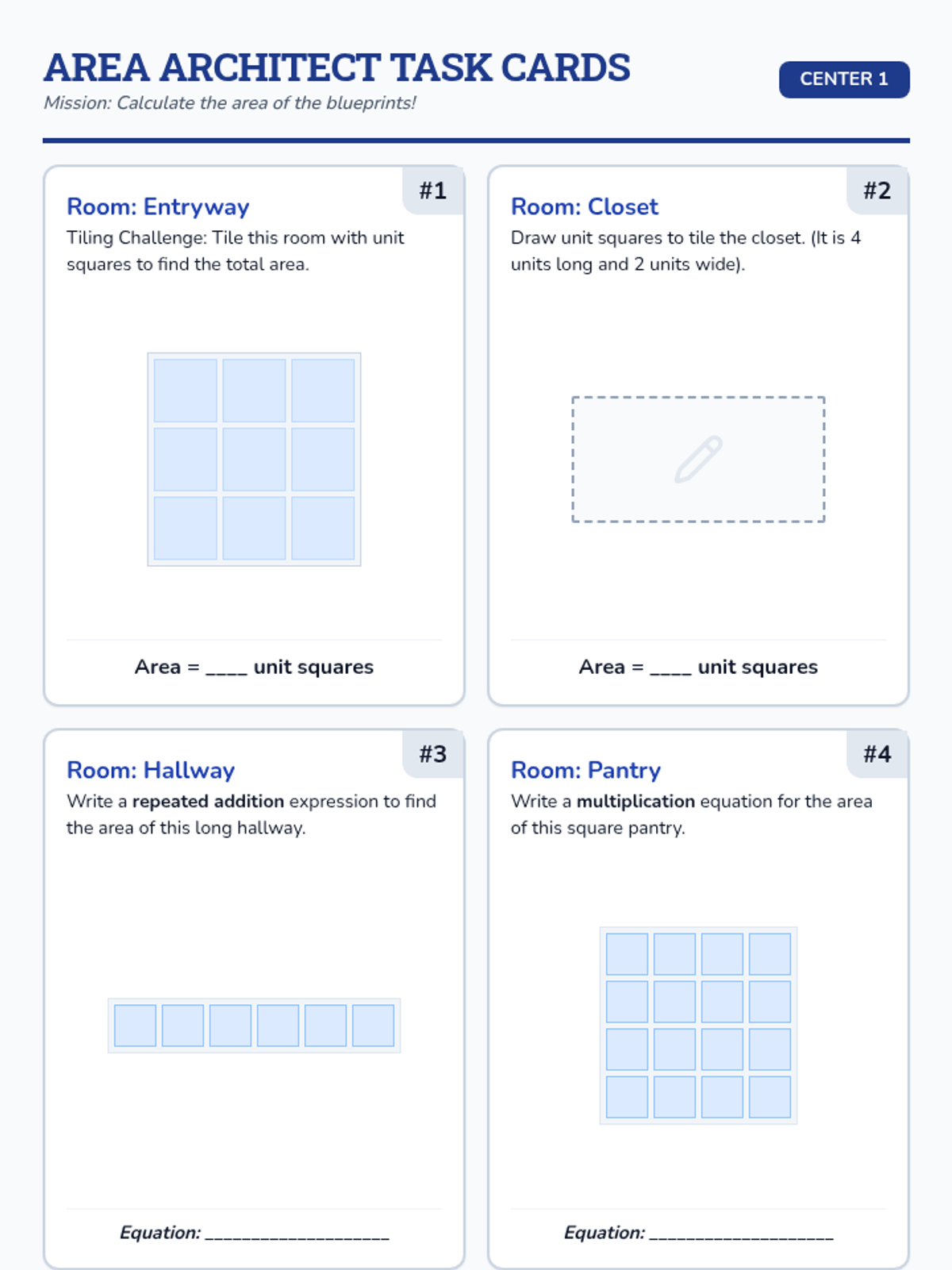
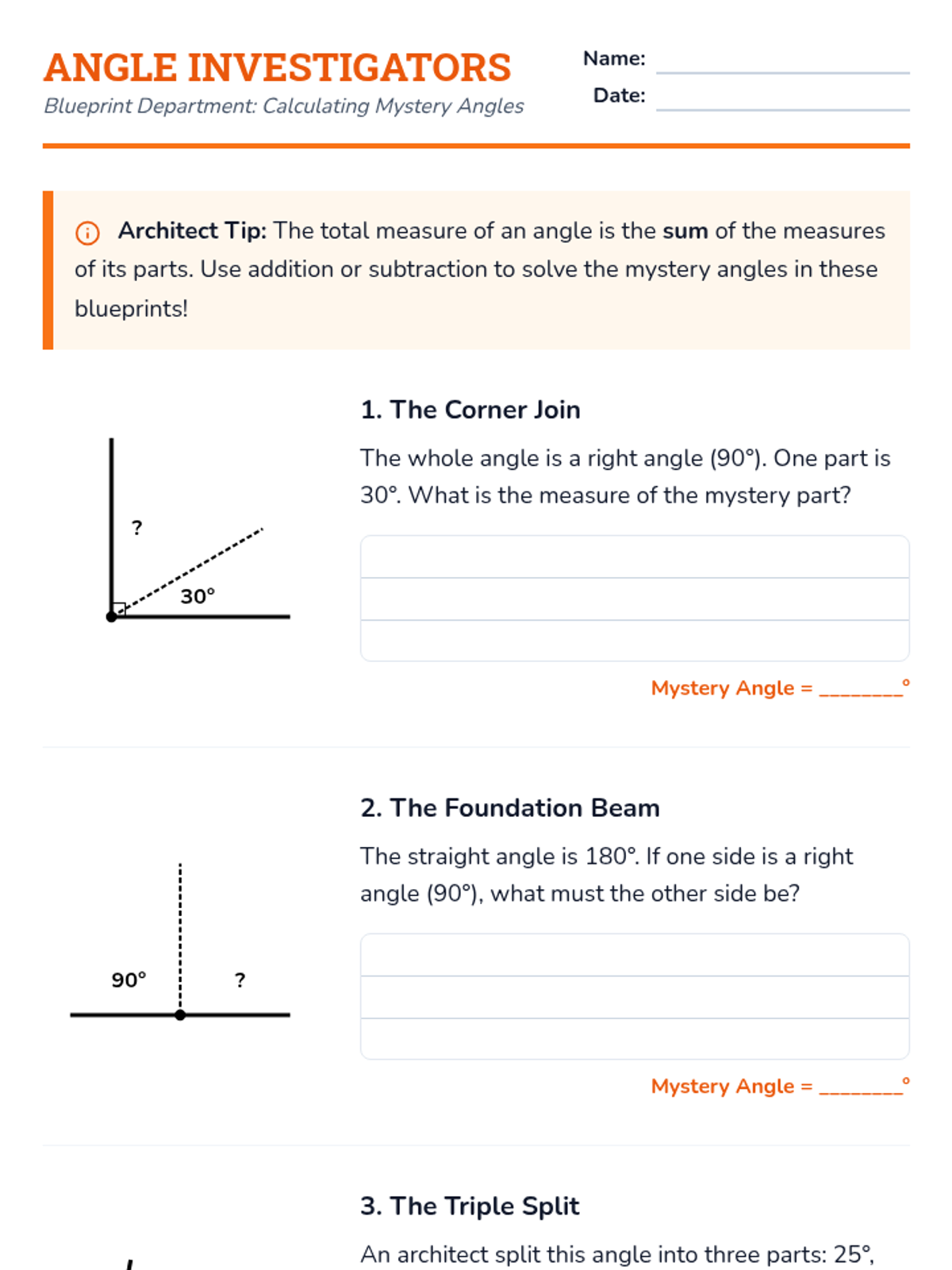
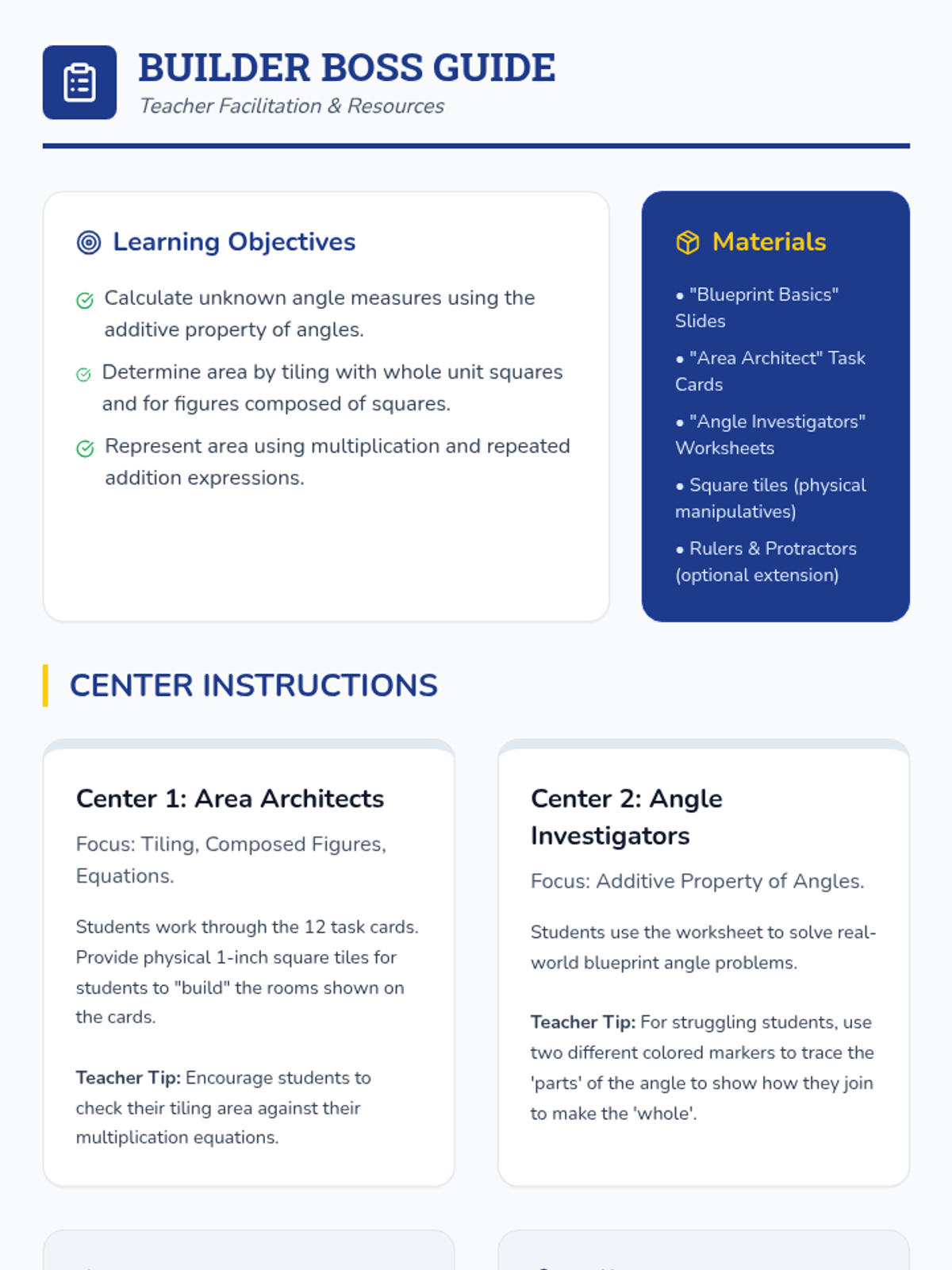
A comprehensive set of small group activities where students calculate unknown angles and determine the area of various figures using tiling and equations. The lesson uses a 'Blueprint Builders' theme to engage students in real-world mathematical applications.
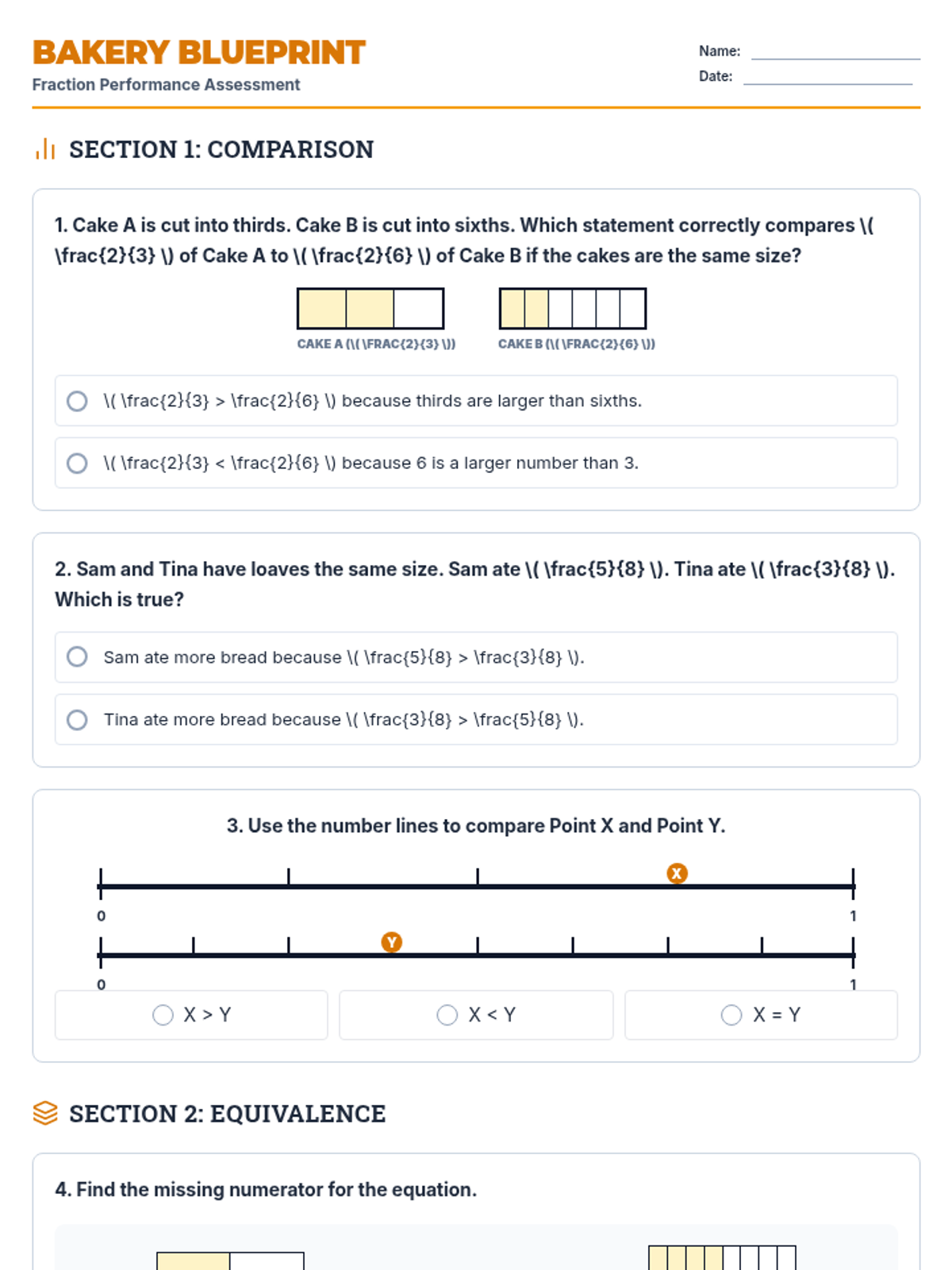
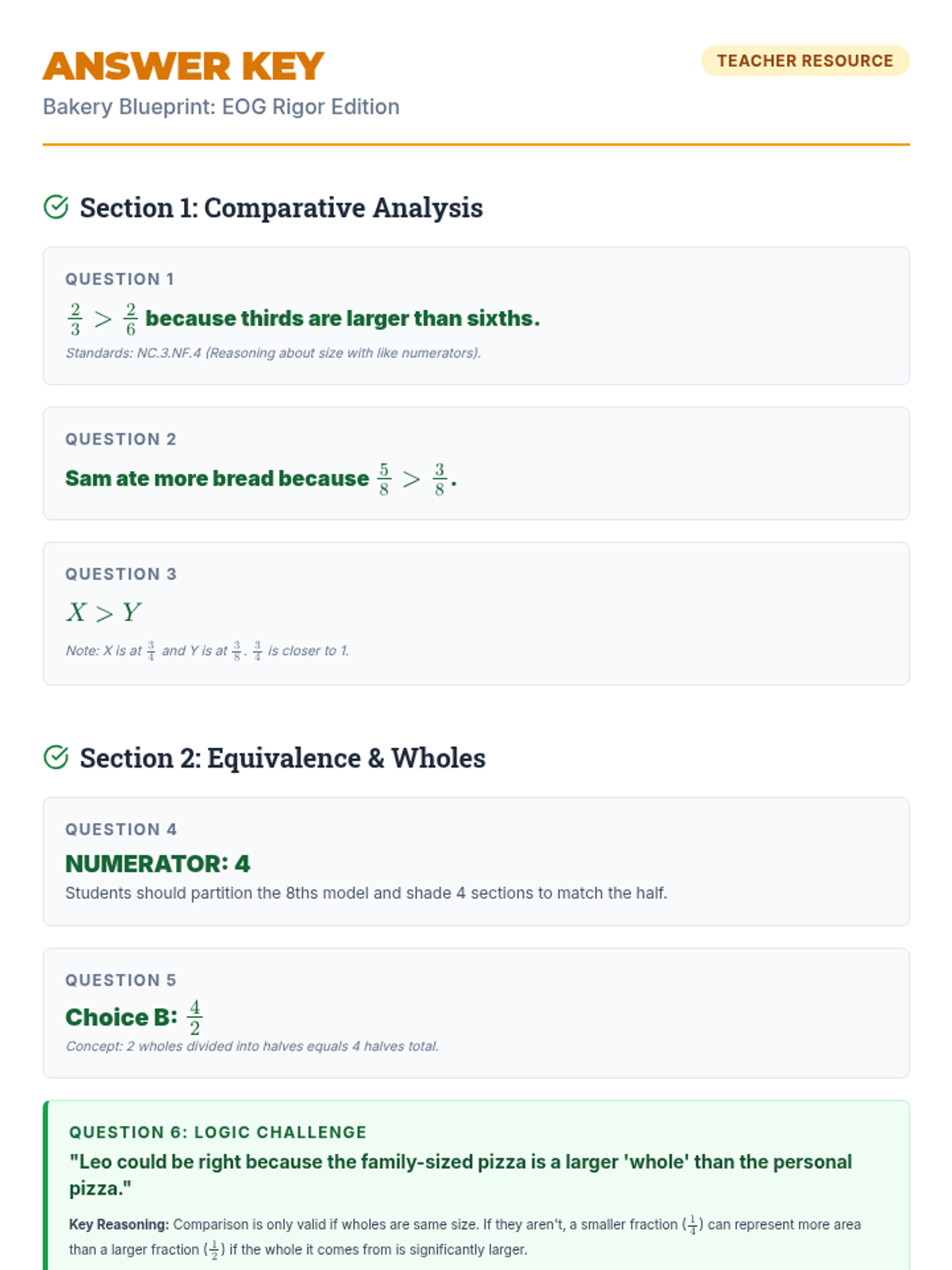
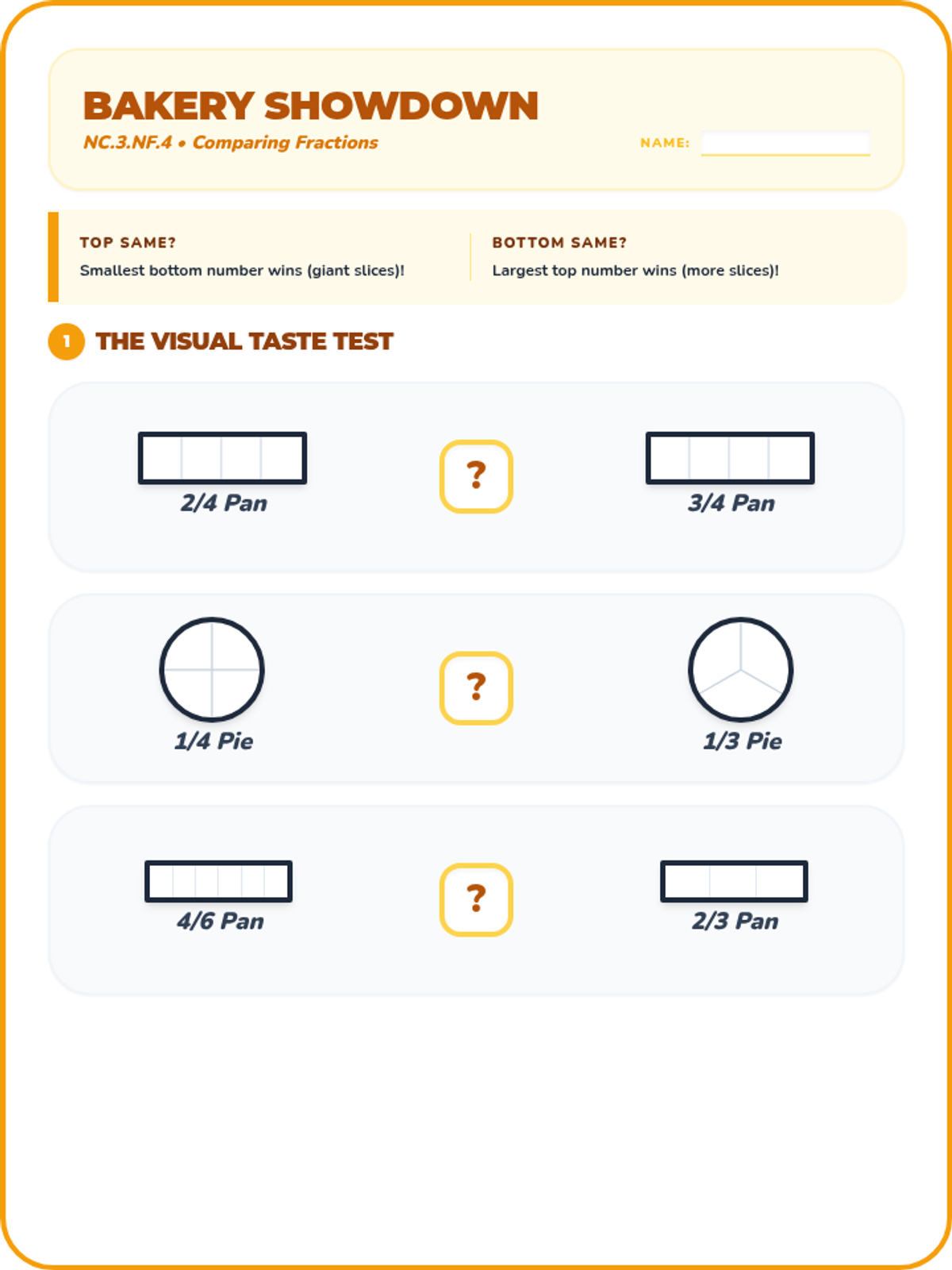
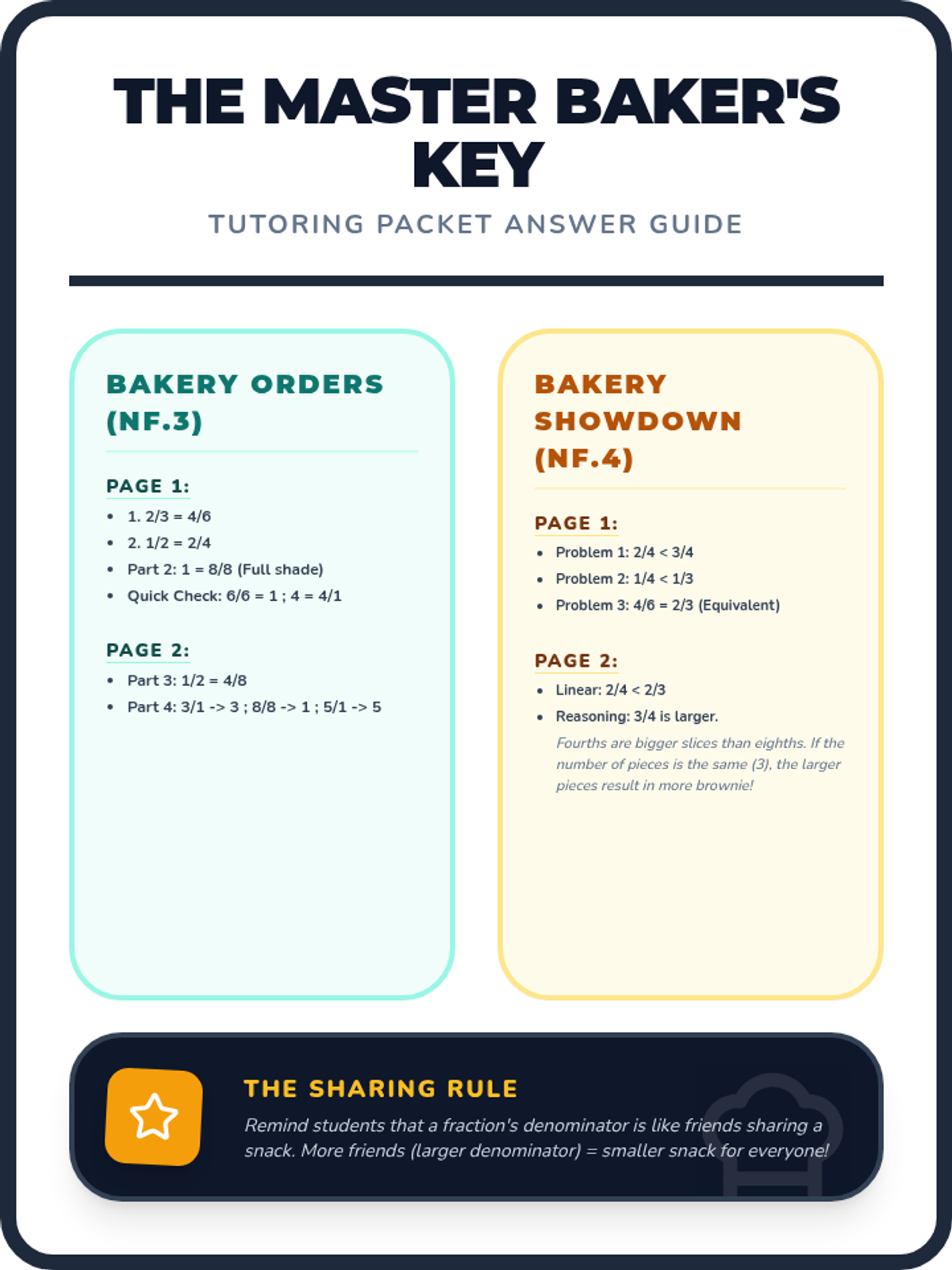
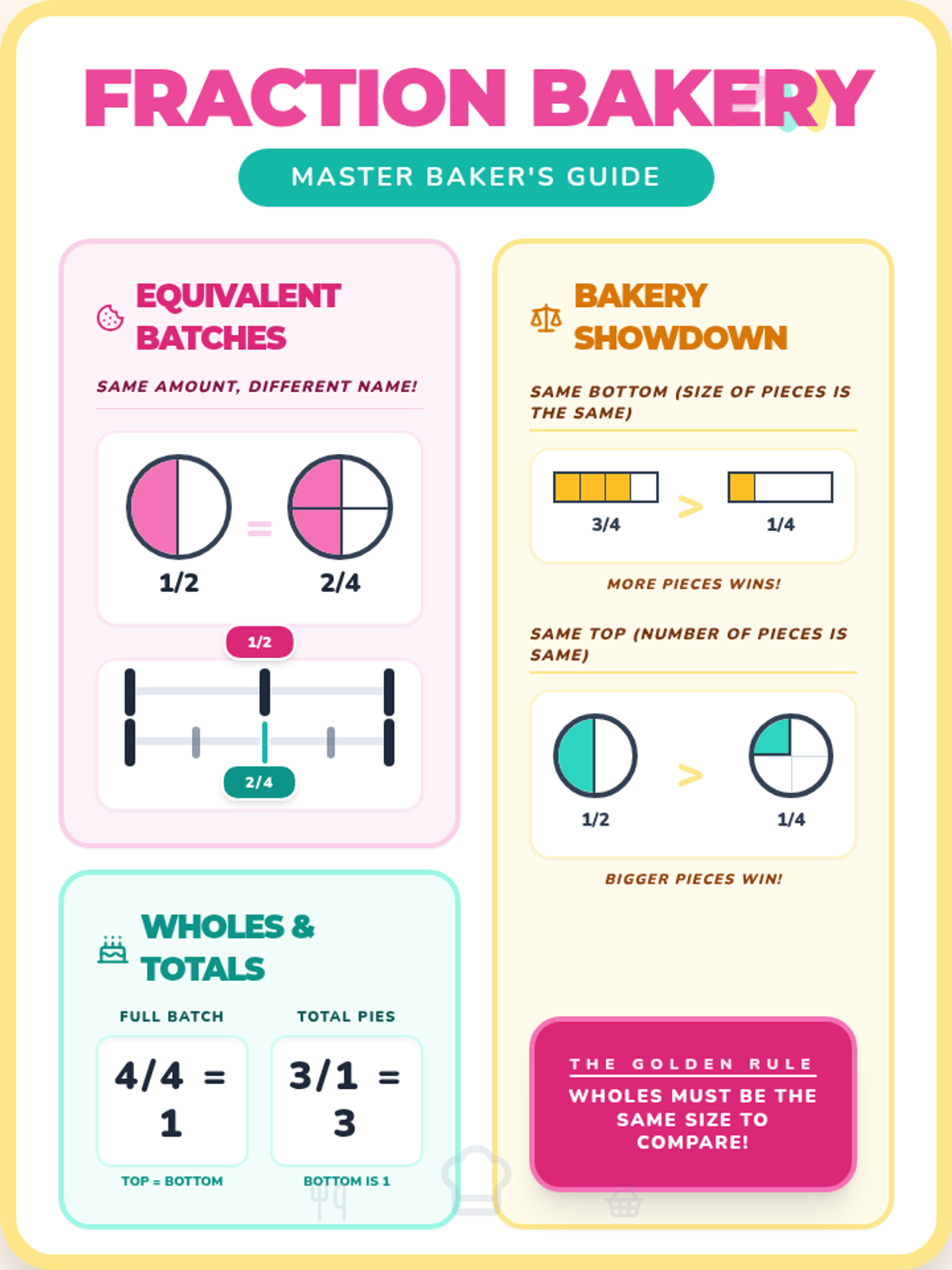
A comprehensive lesson on comparing and representing fractions using area and length models within a bakery-themed context. Students will practice comparing fractions with like numerators or denominators and identifying equivalent fractions and whole numbers.
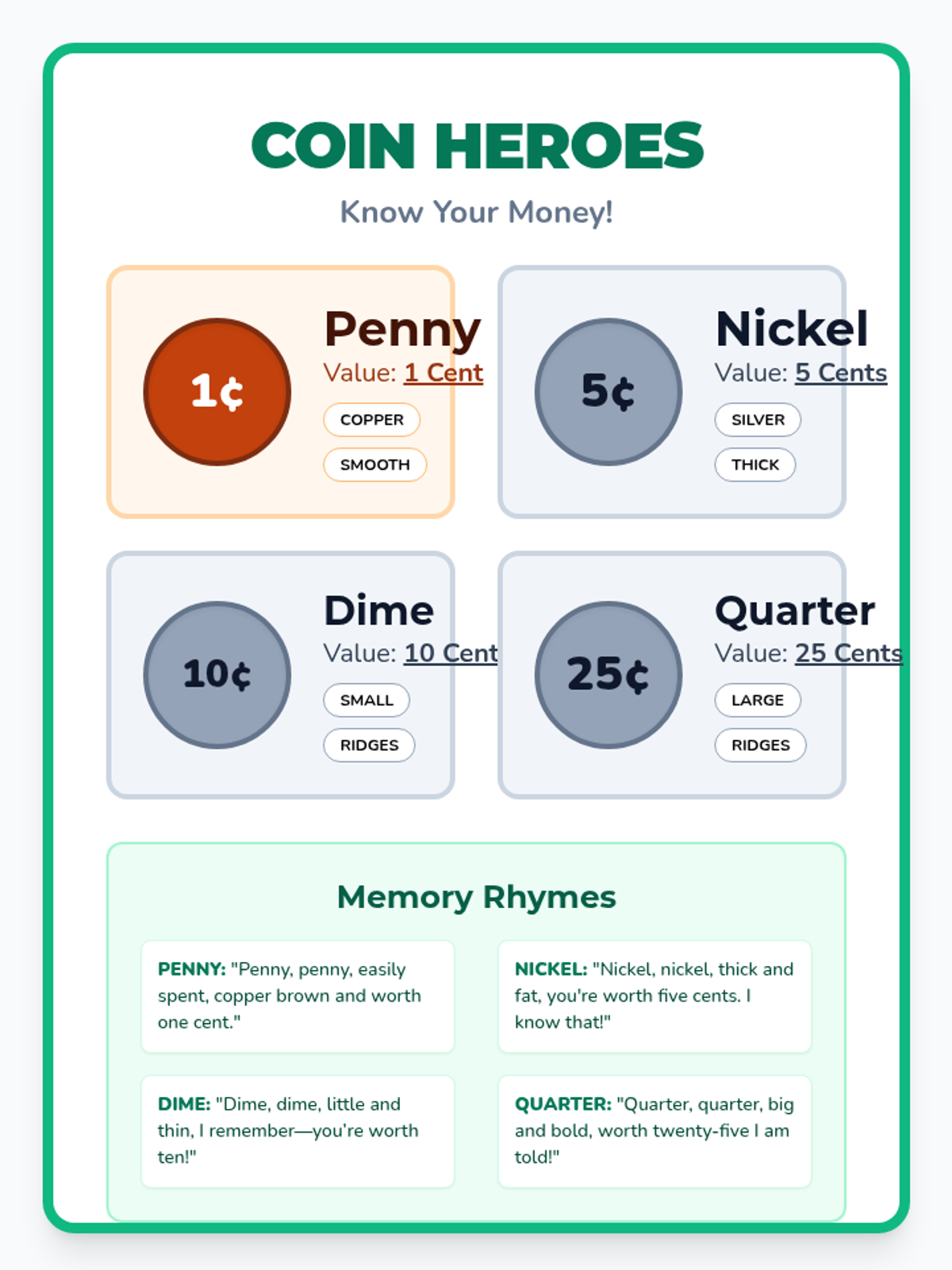
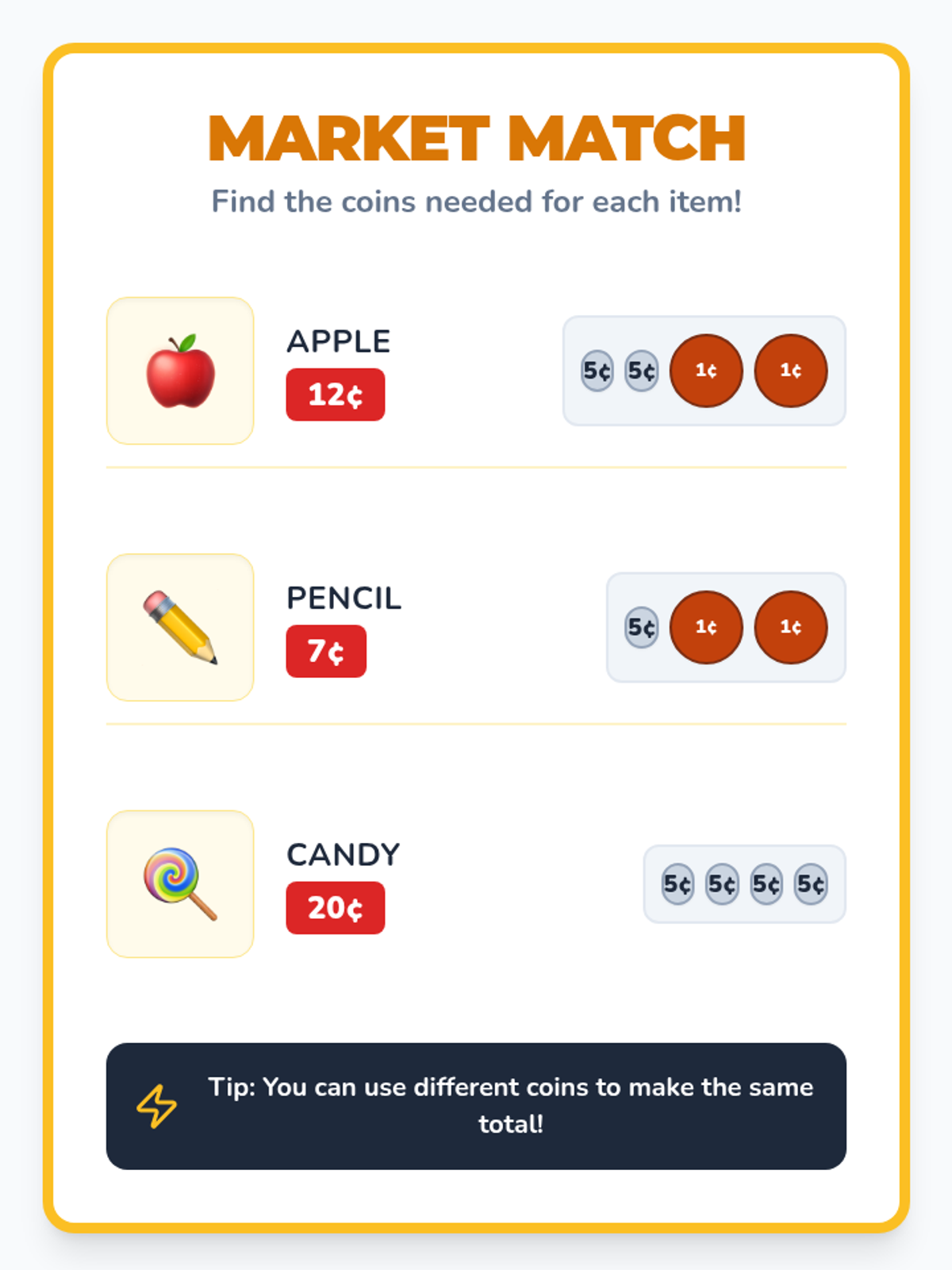
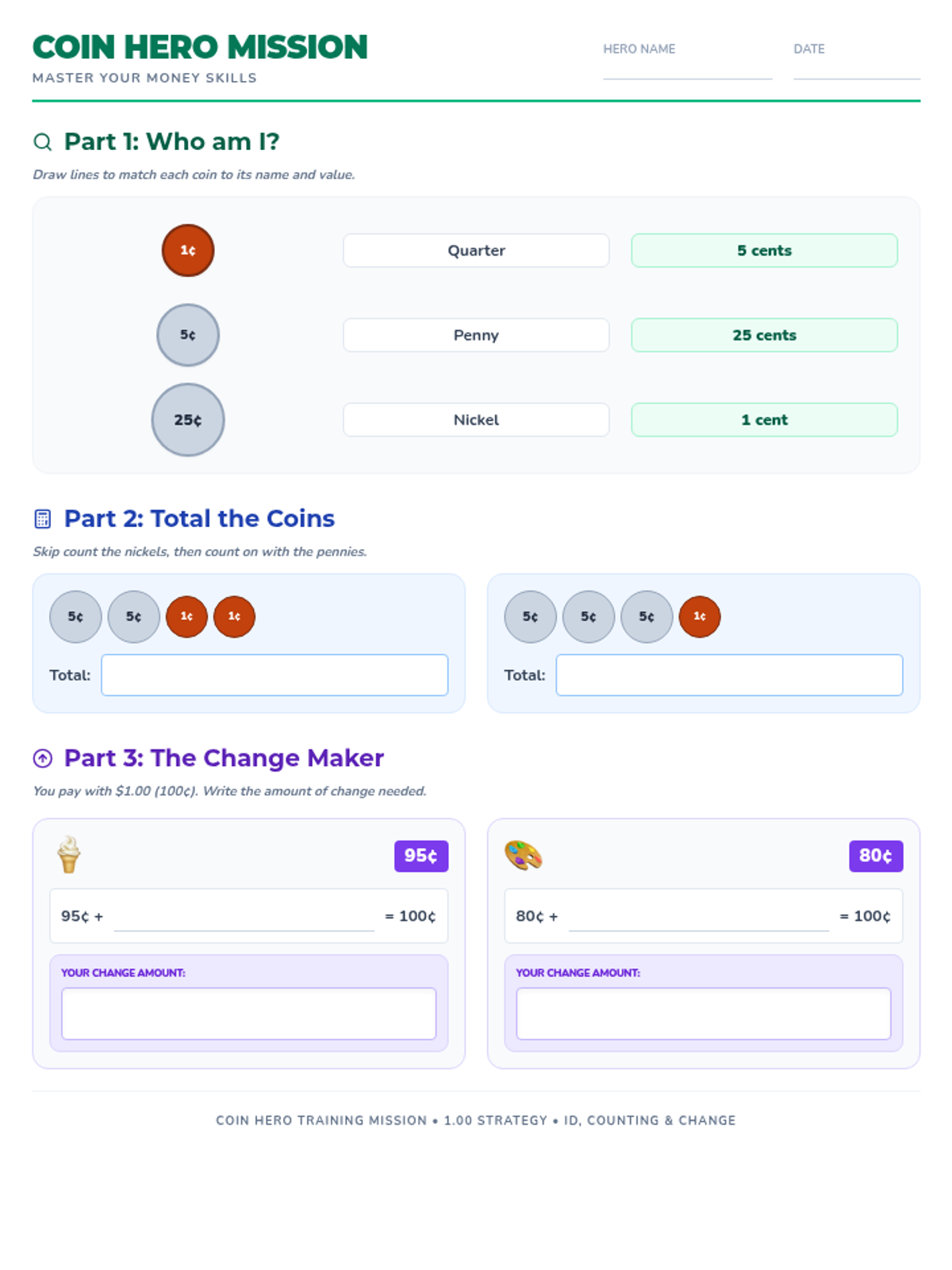
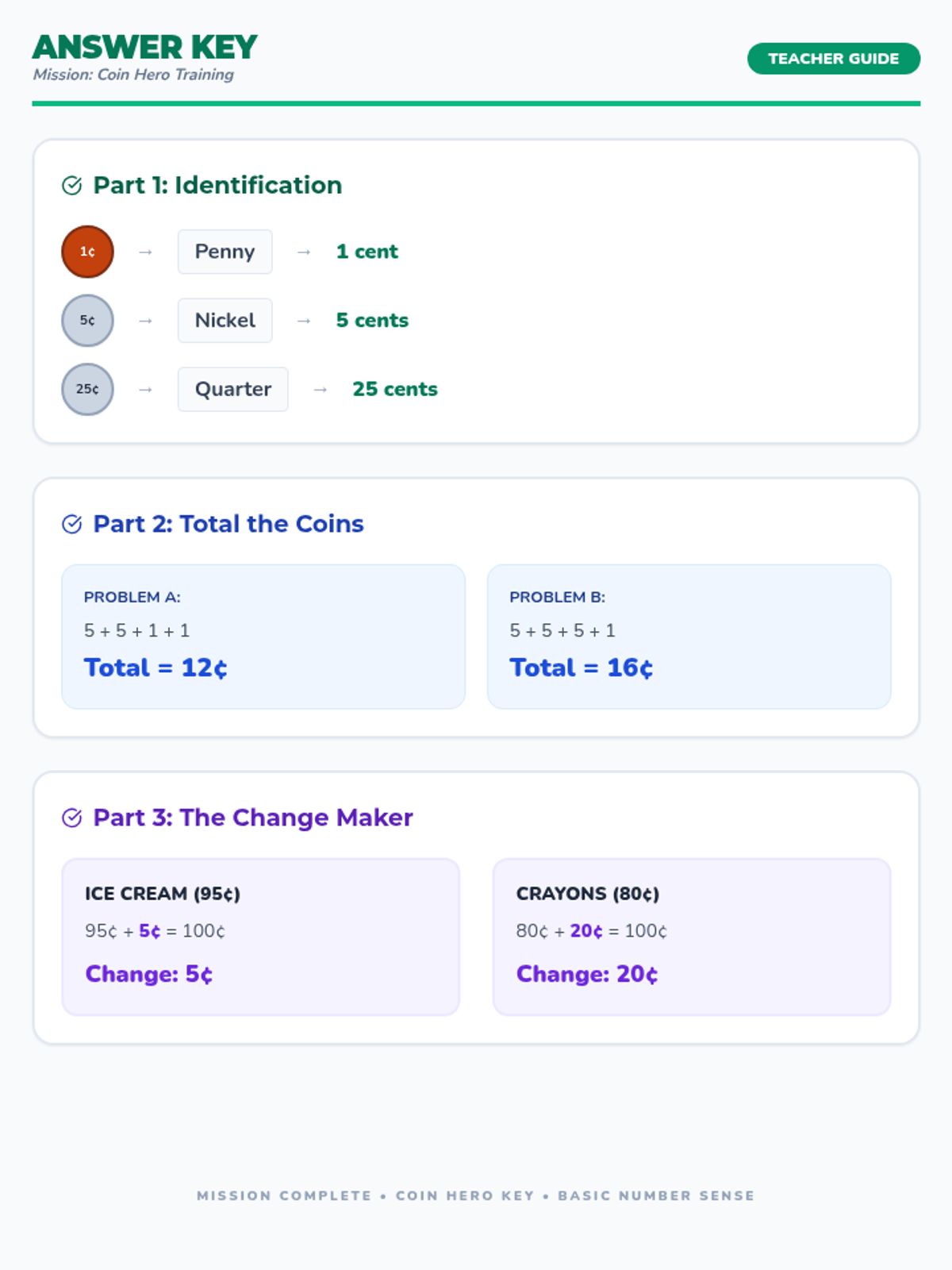
A collection of visual anchor charts and posters designed to teach basic coin identification, counting, and making change from a dollar. These materials use large visuals and clear strategies for early elementary students.
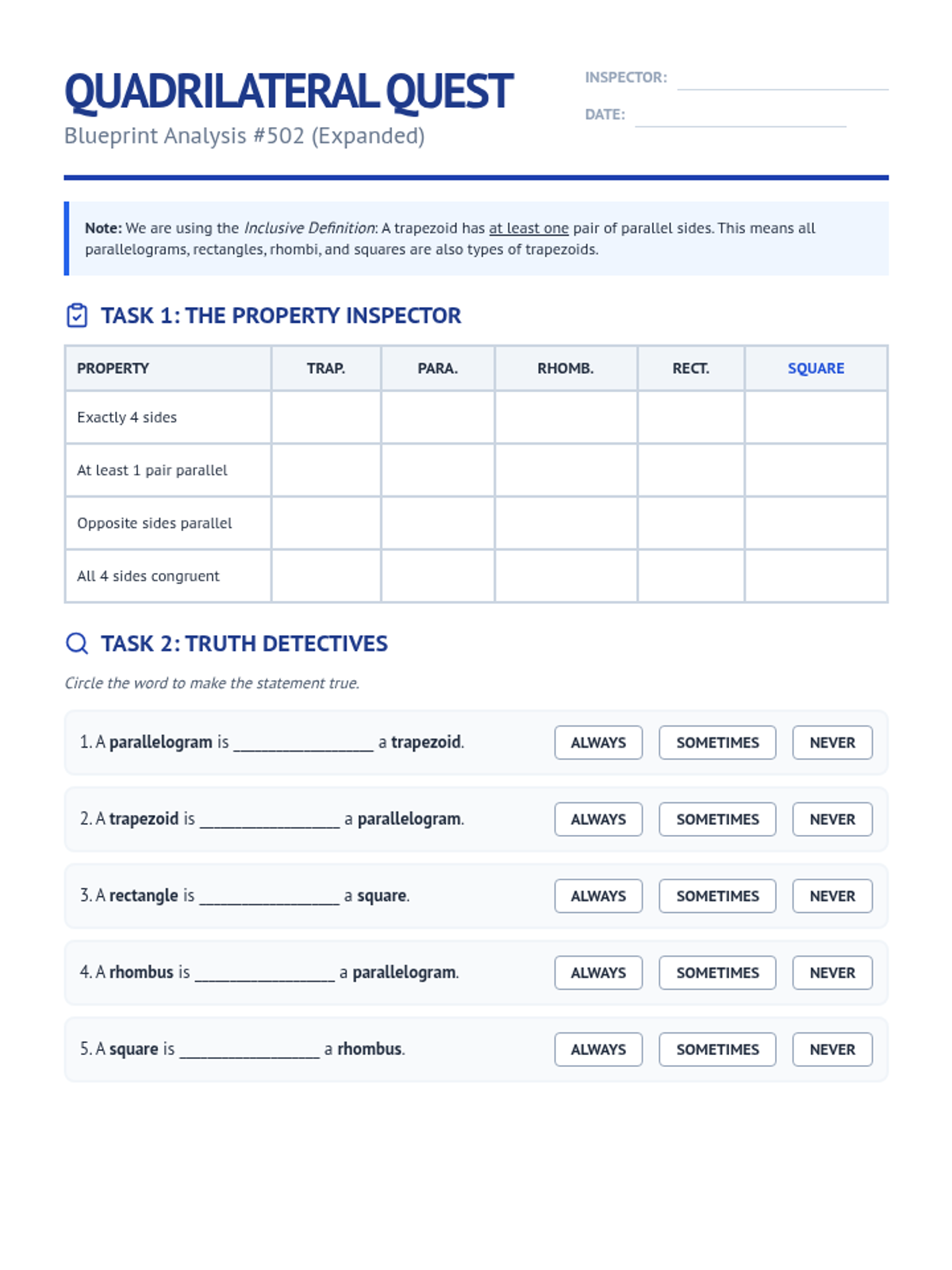
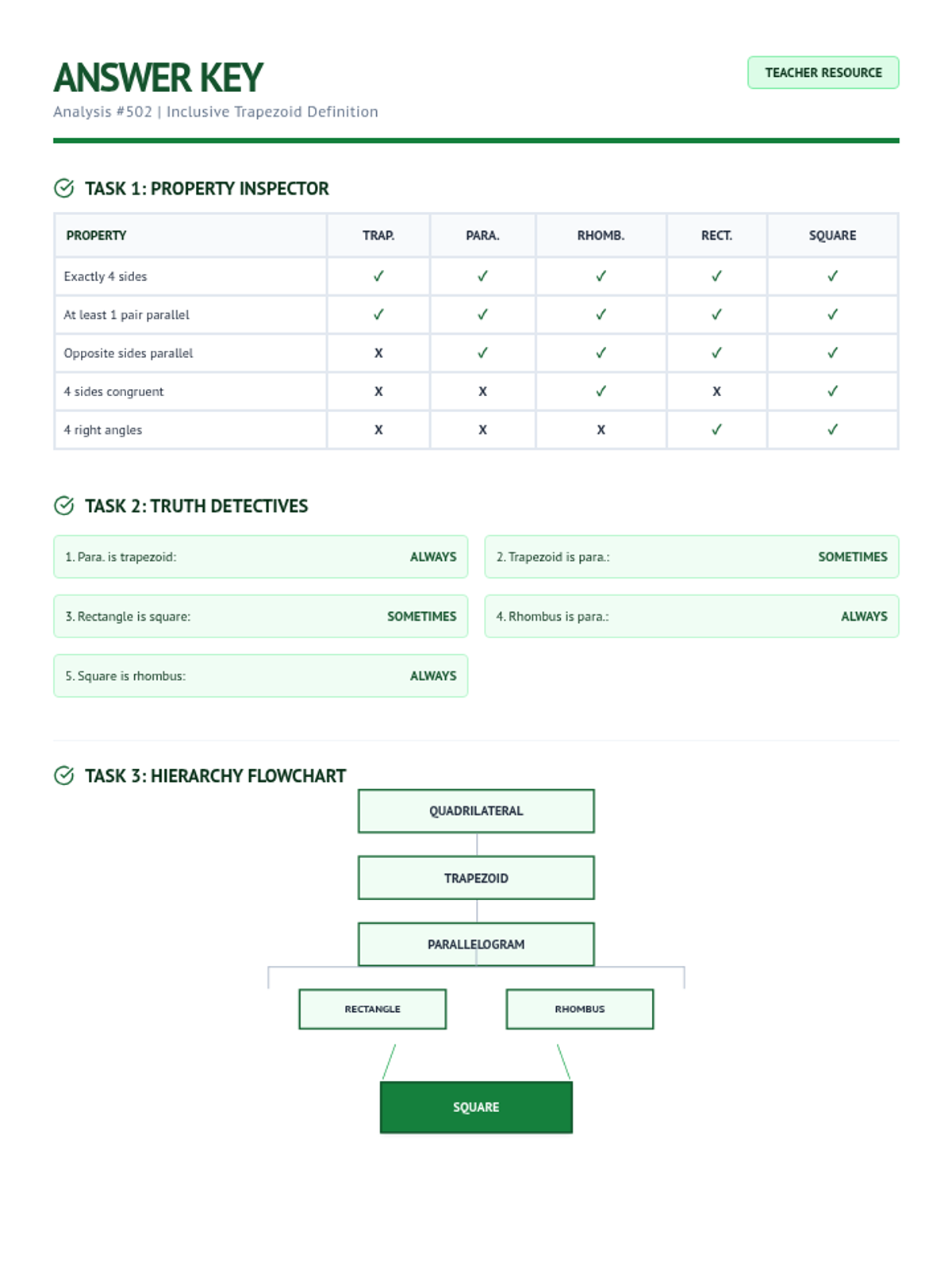
This lesson focuses on the hierarchical classification of quadrilaterals, helping students understand that subcategories inherit properties from their parent categories.
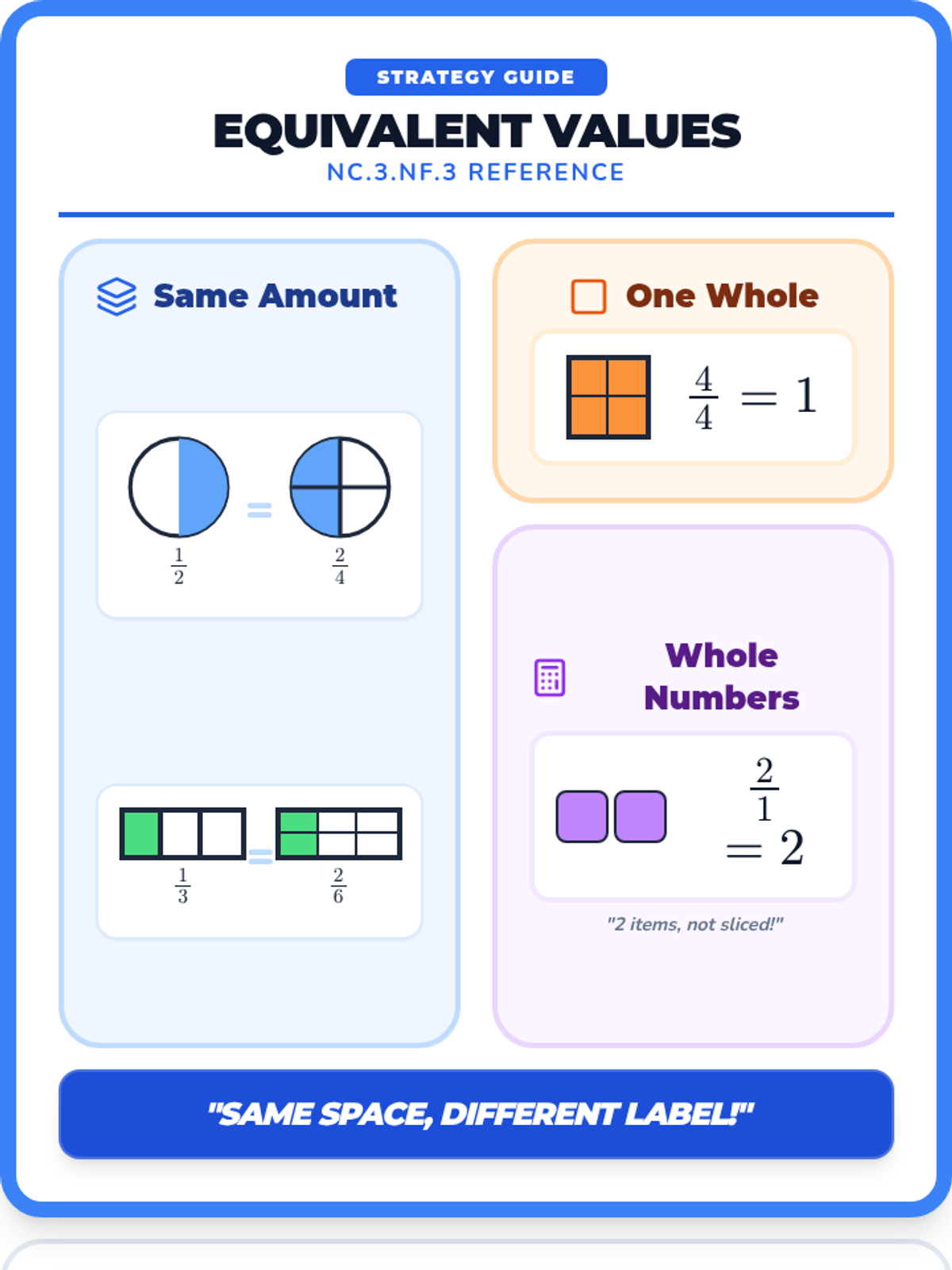
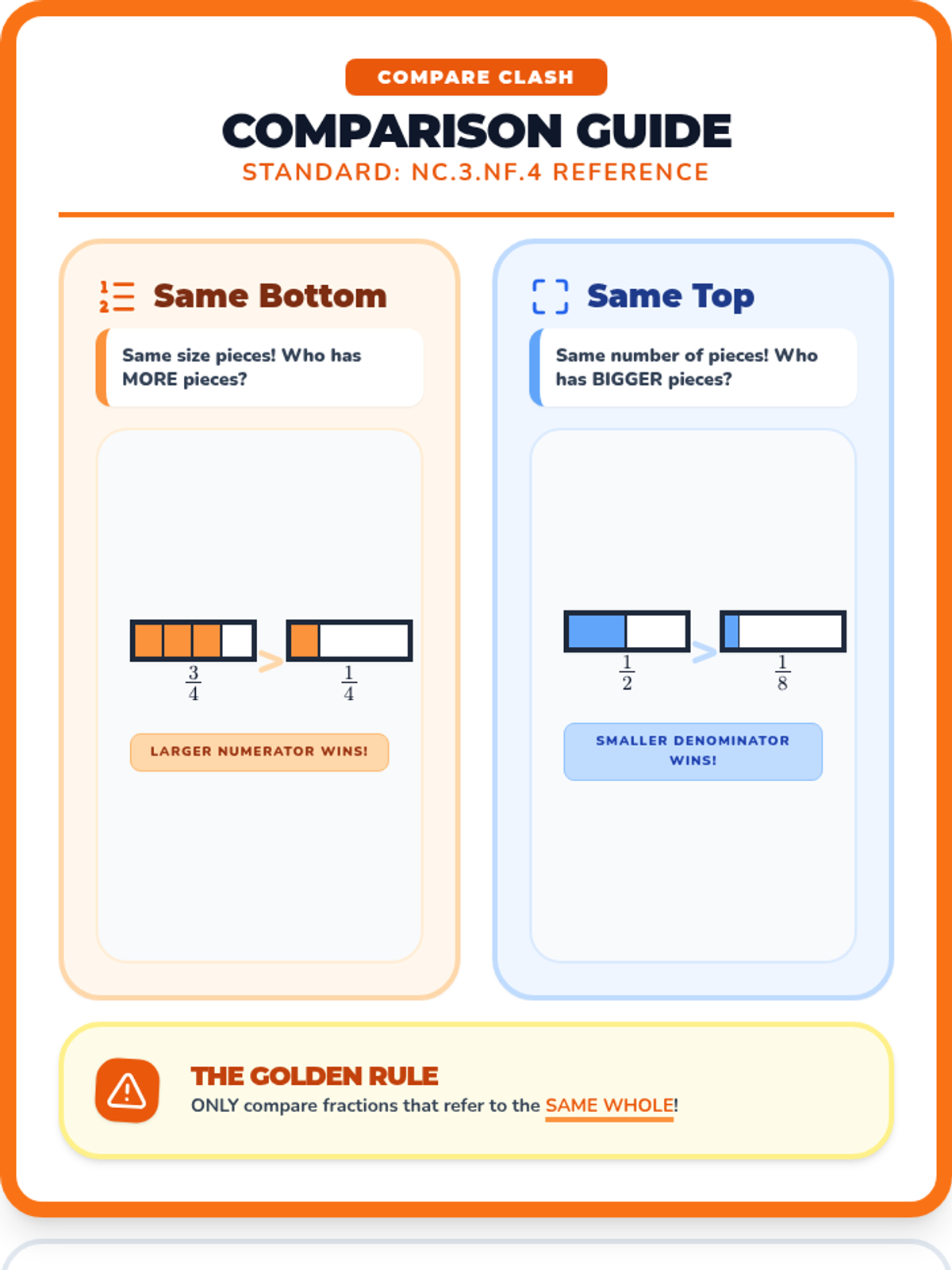
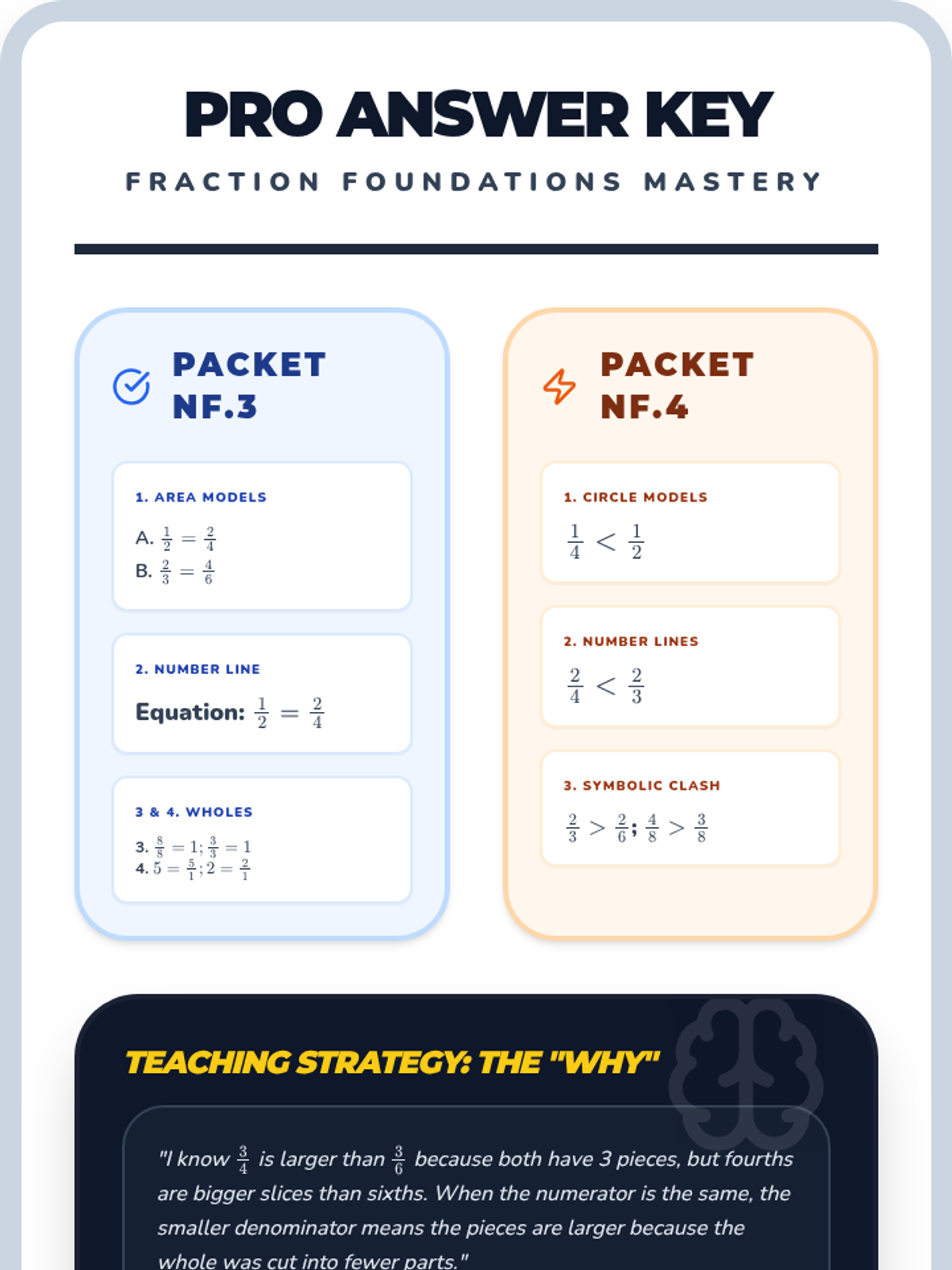
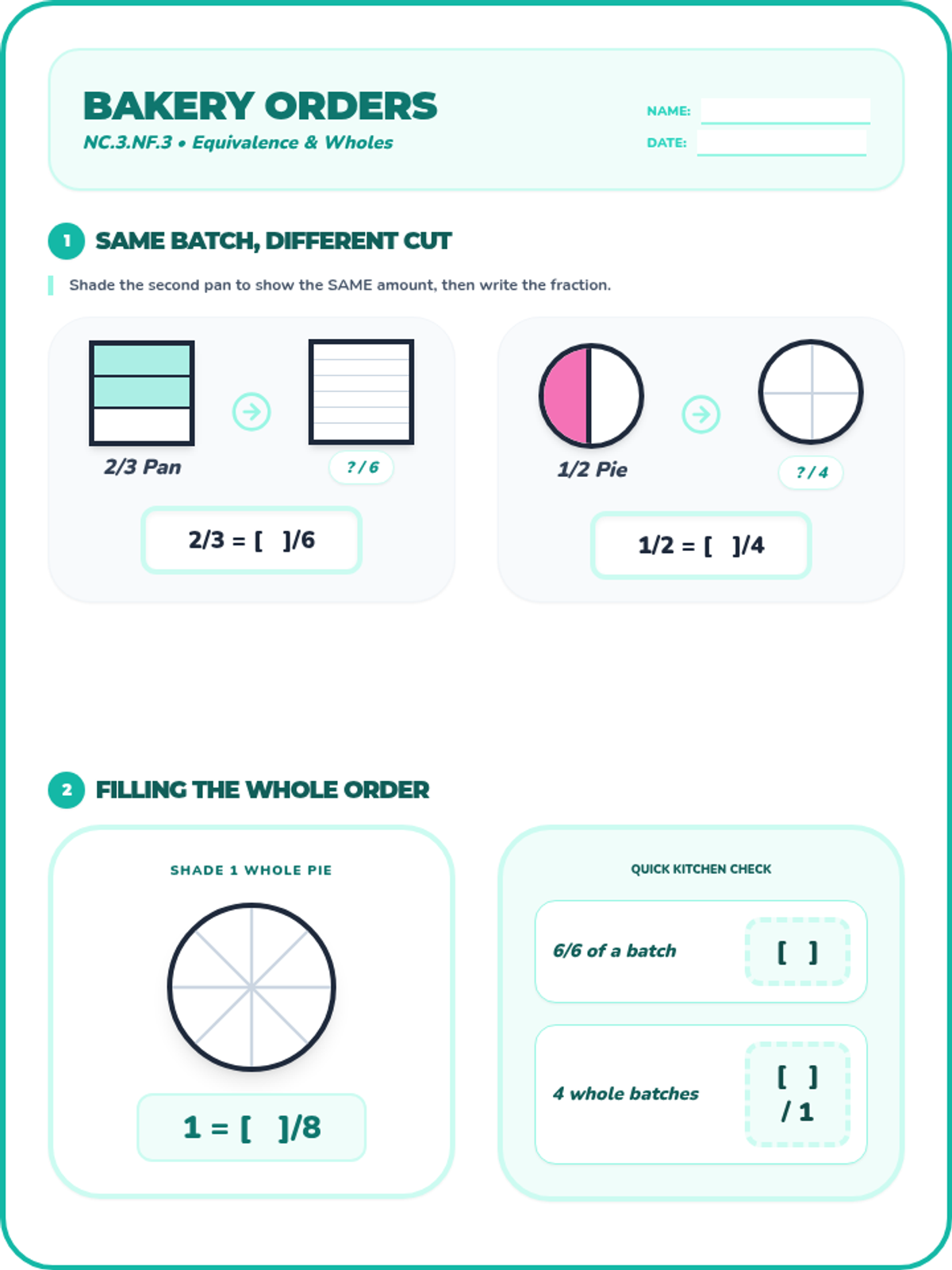
Classroom-ready anchor charts and independent worksheets for NC.3.NF.3 and NC.3.NF.4, focusing on equivalent fractions, wholes, and comparison strategies.
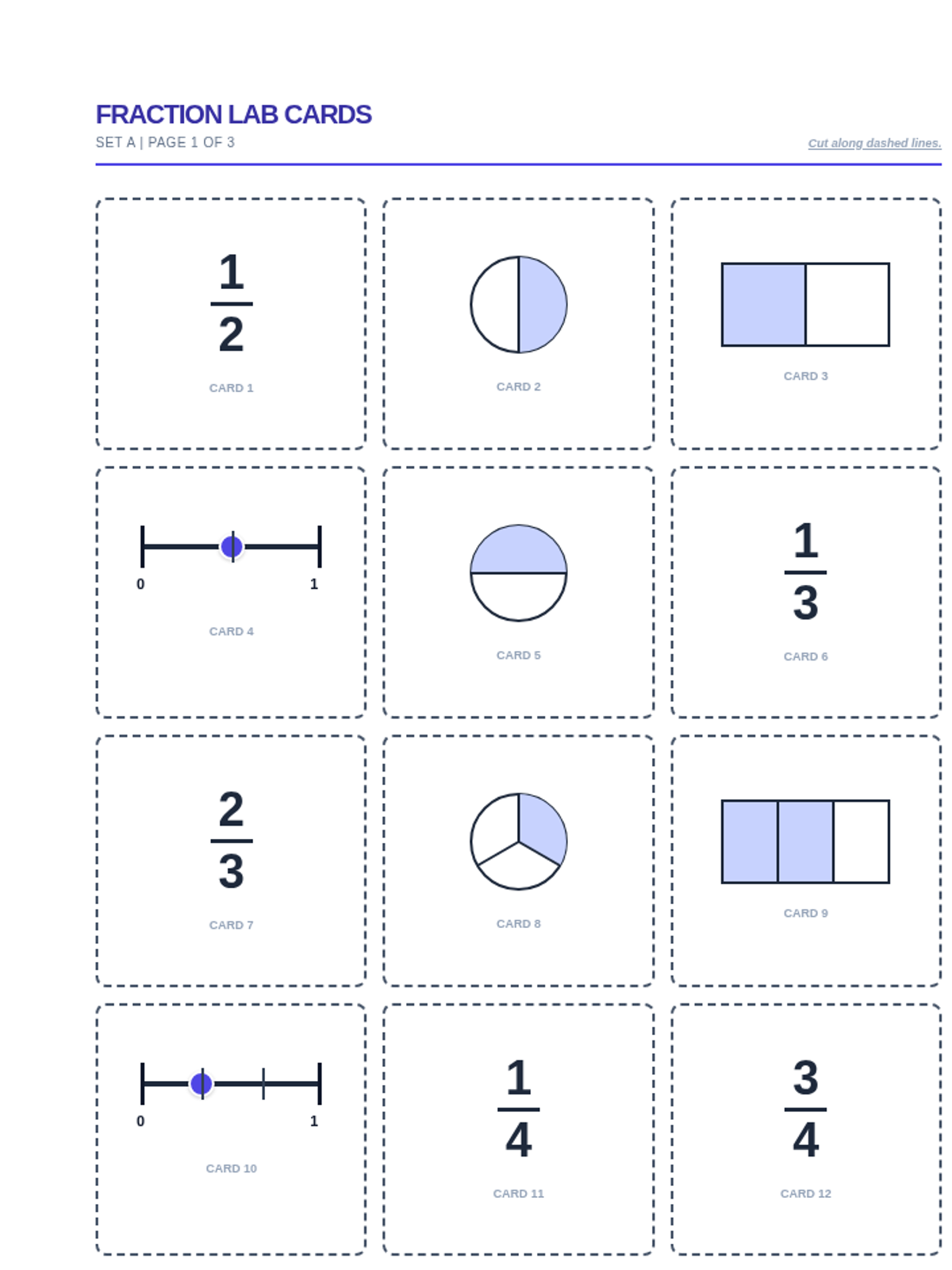
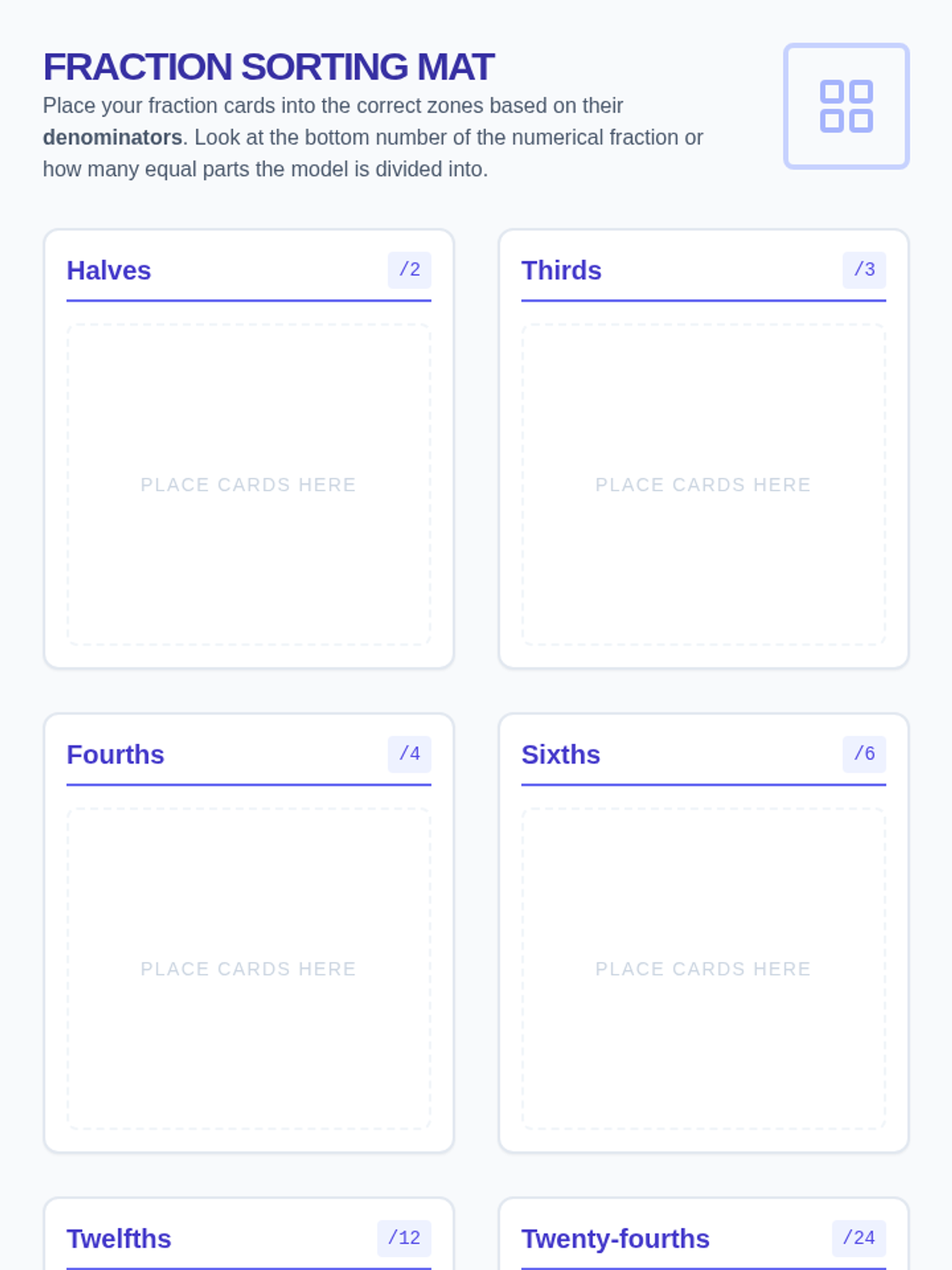
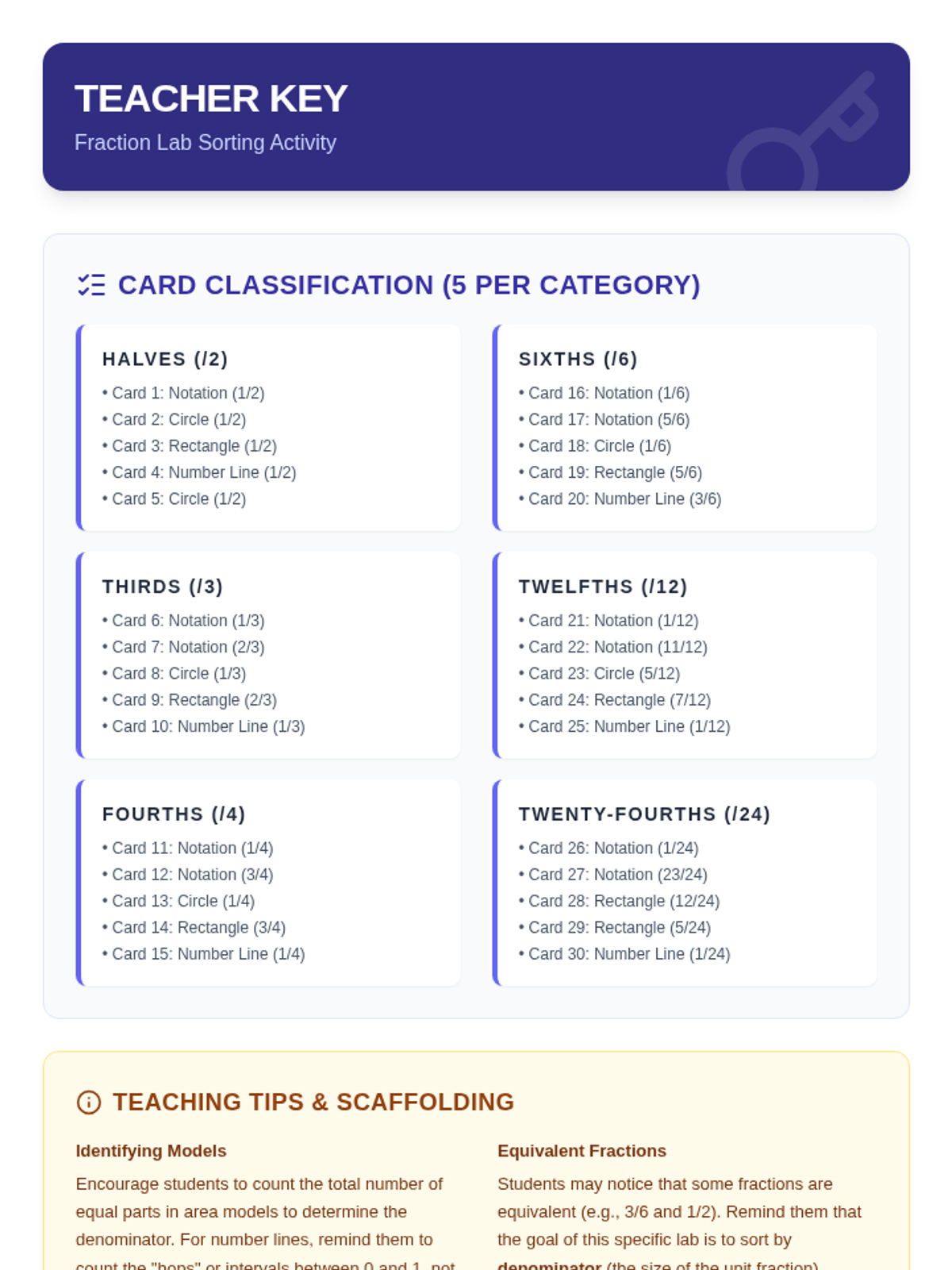
A hands-on exploration of fractions where students identify and sort fractions based on their denominators using various representations including number lines, area models, and numerical forms.
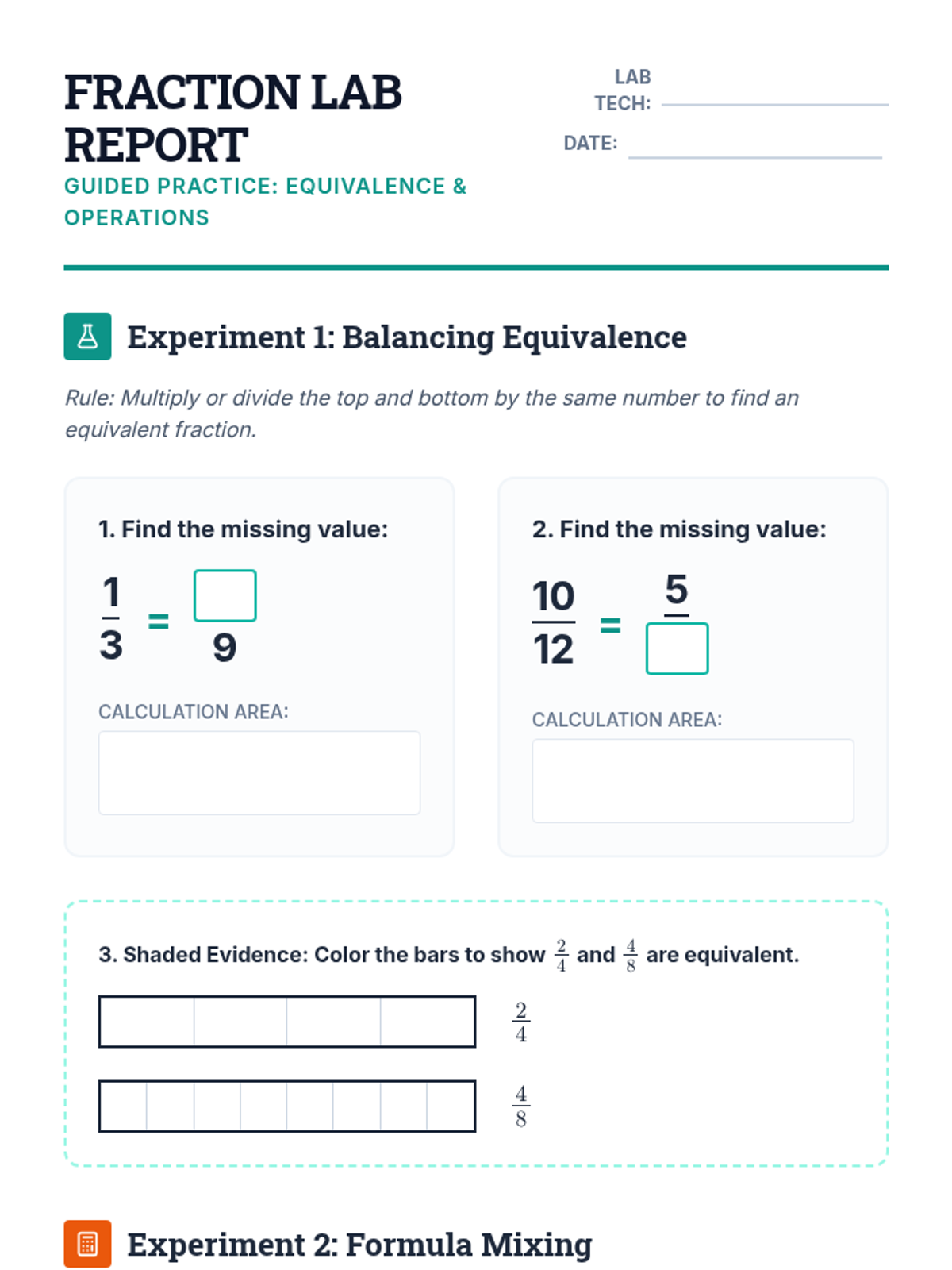
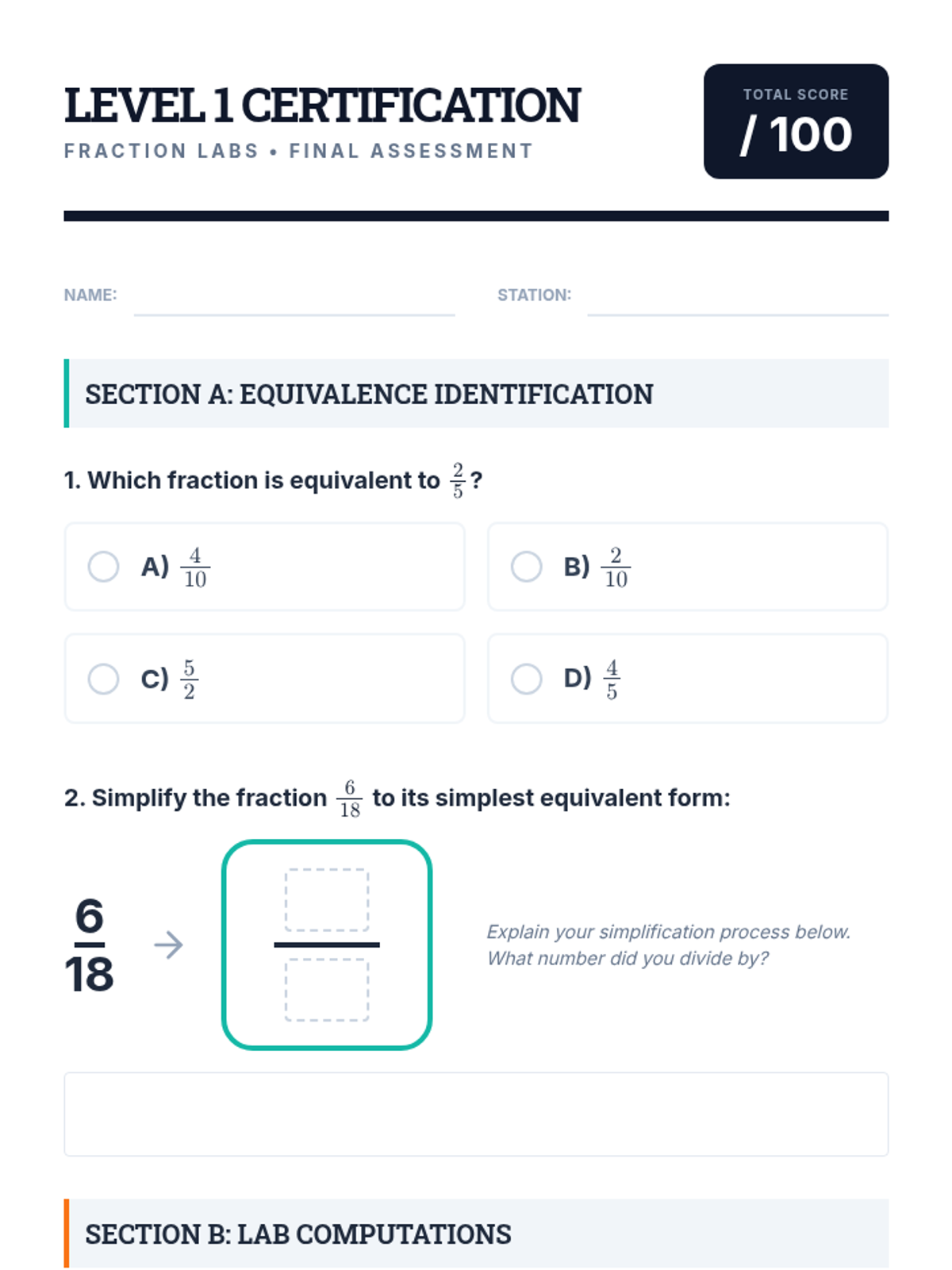
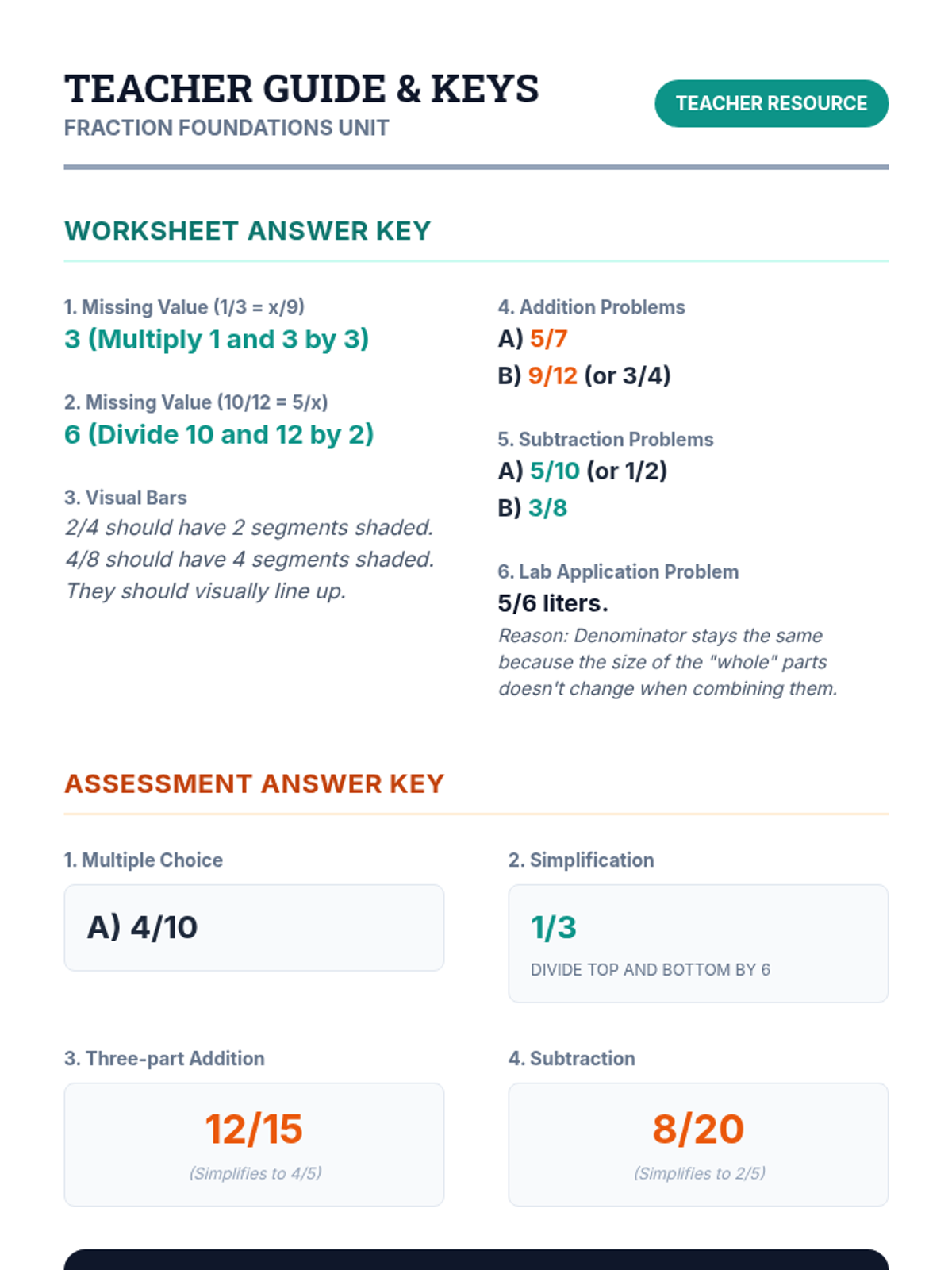
A comprehensive lesson on equivalent fractions and adding/subtracting fractions with like denominators, featuring a science lab theme.
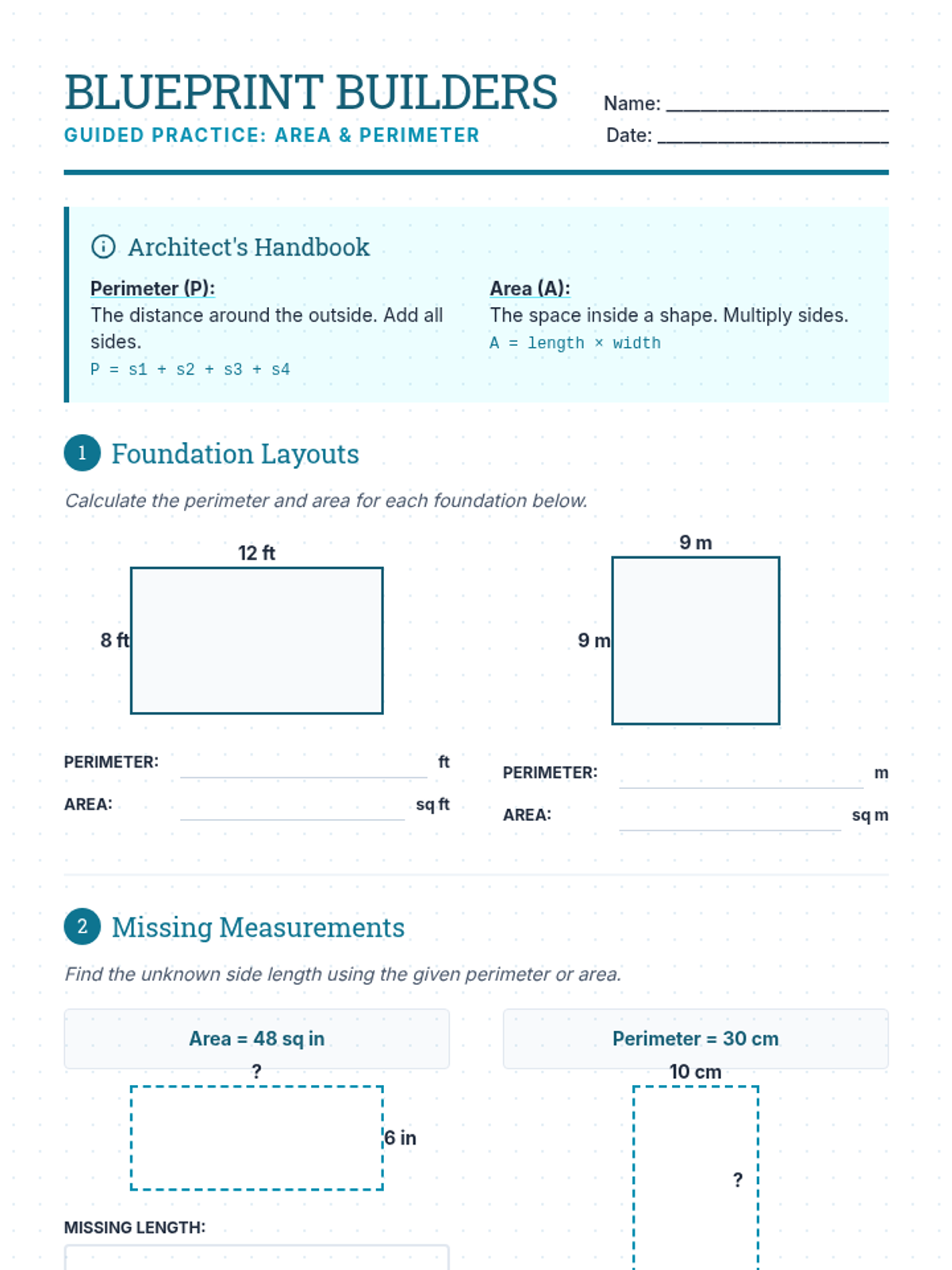
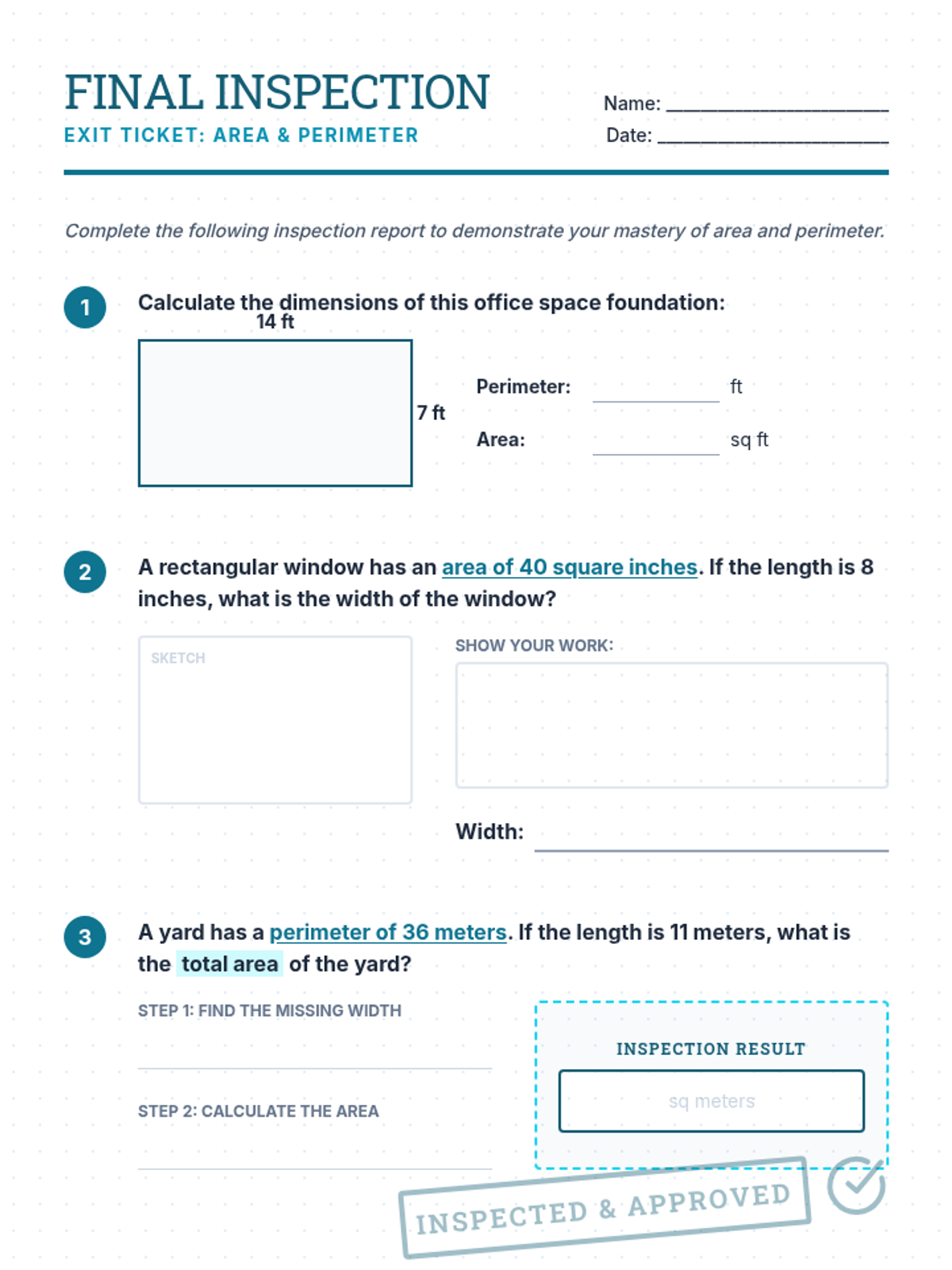
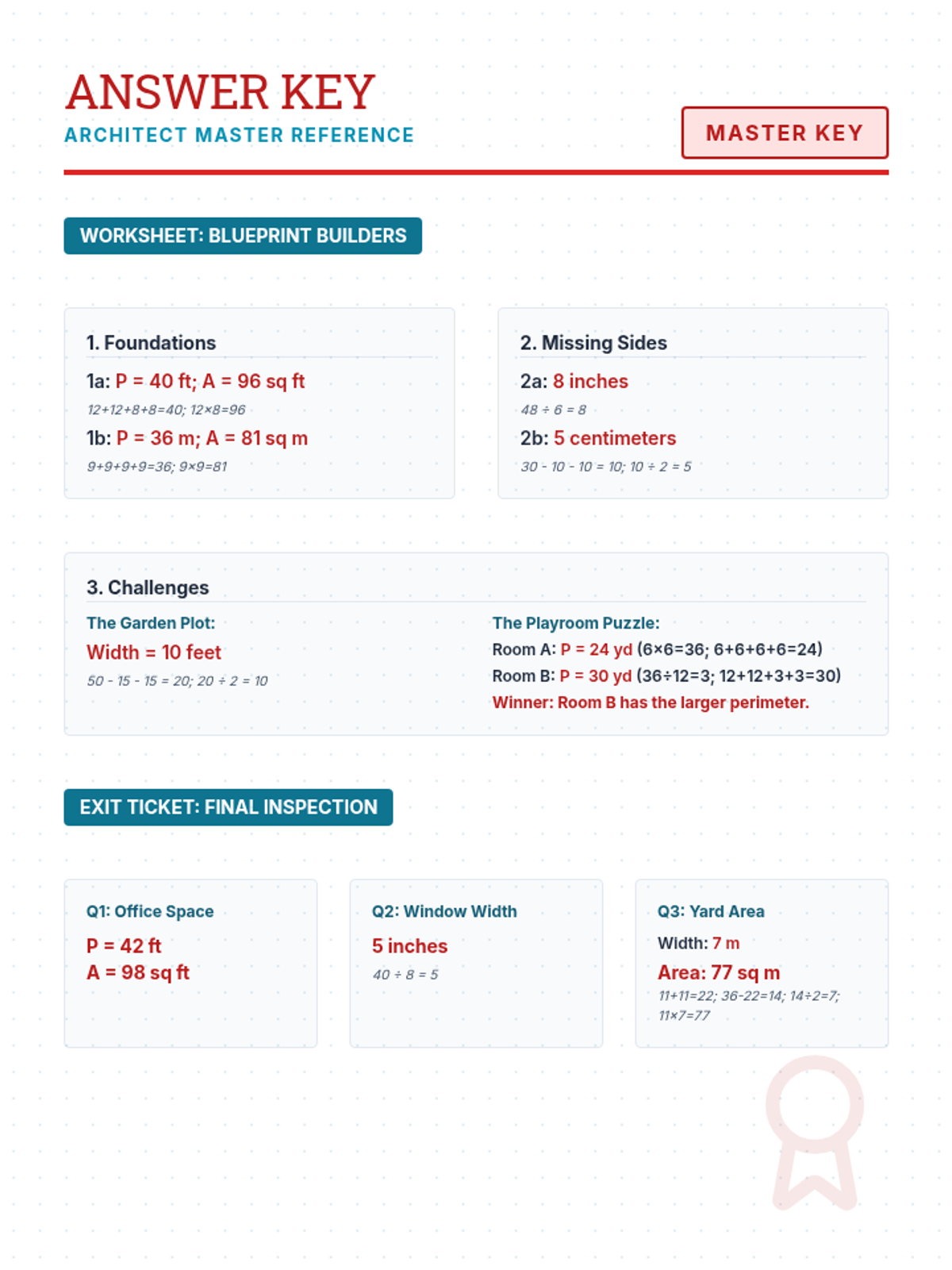
A lesson focused on solving real-world area and perimeter problems, including finding unknown side lengths and comparing rectangles with different dimensions but shared properties. Students act as junior architects to design and analyze blueprints.
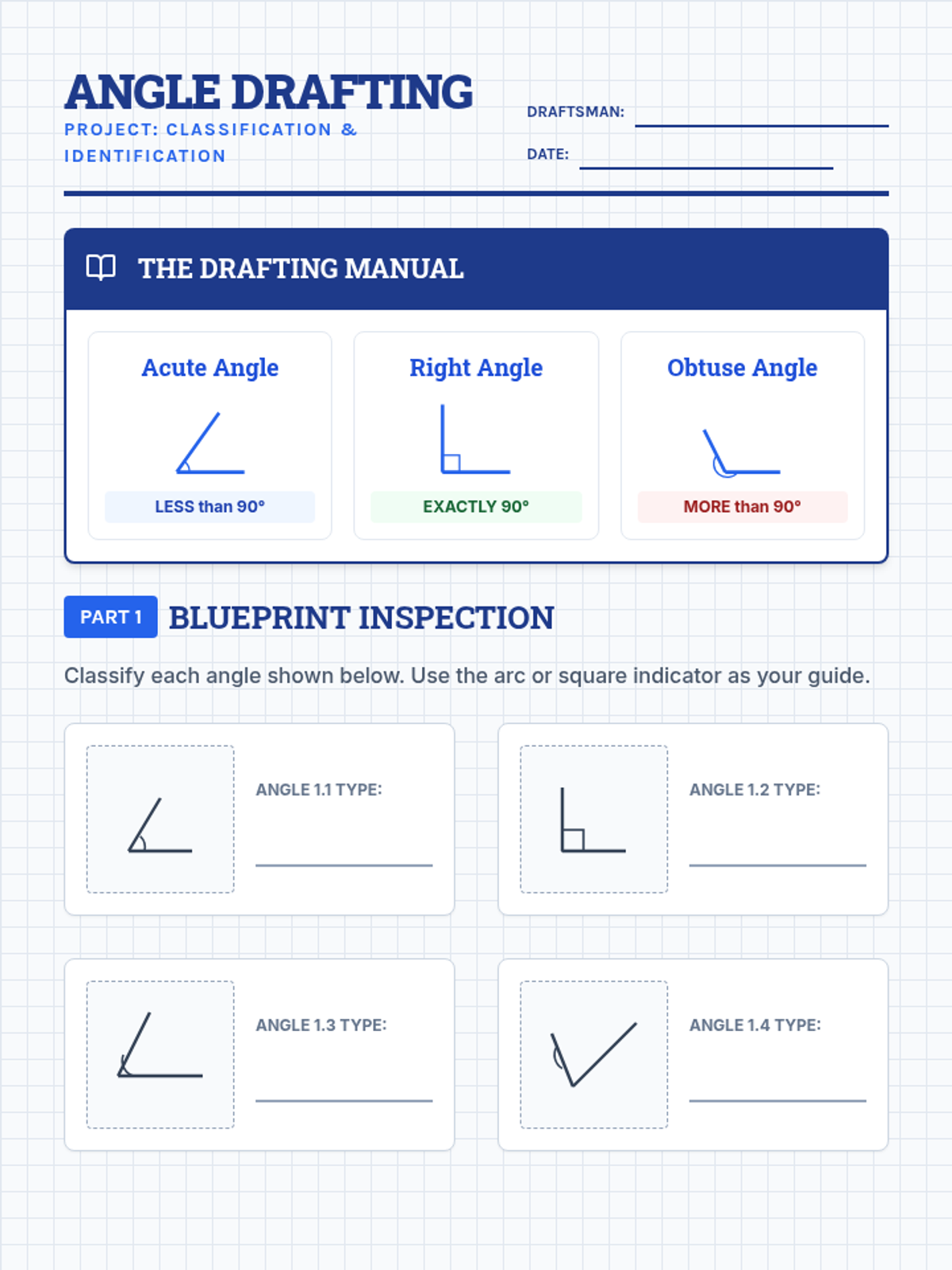
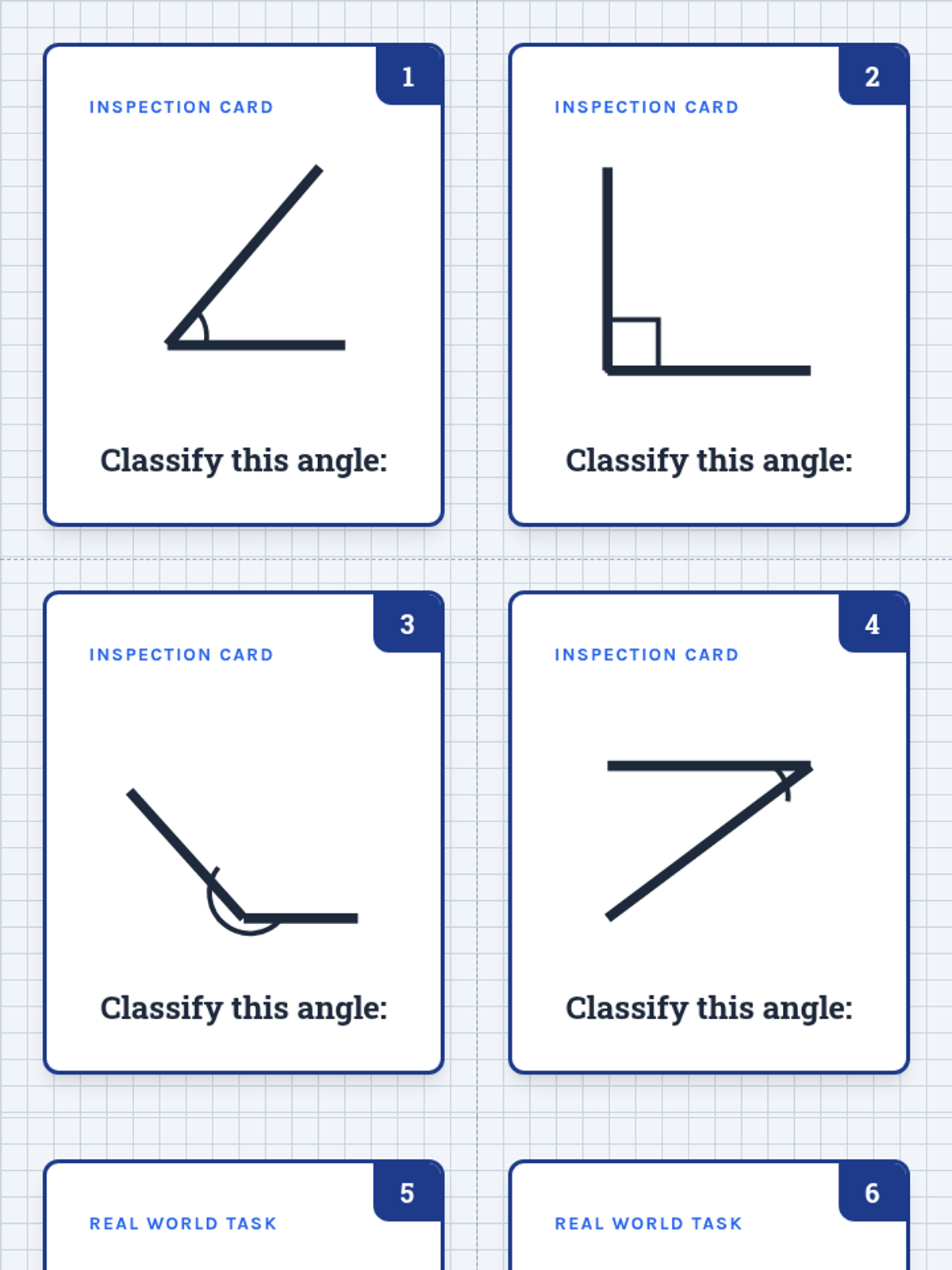
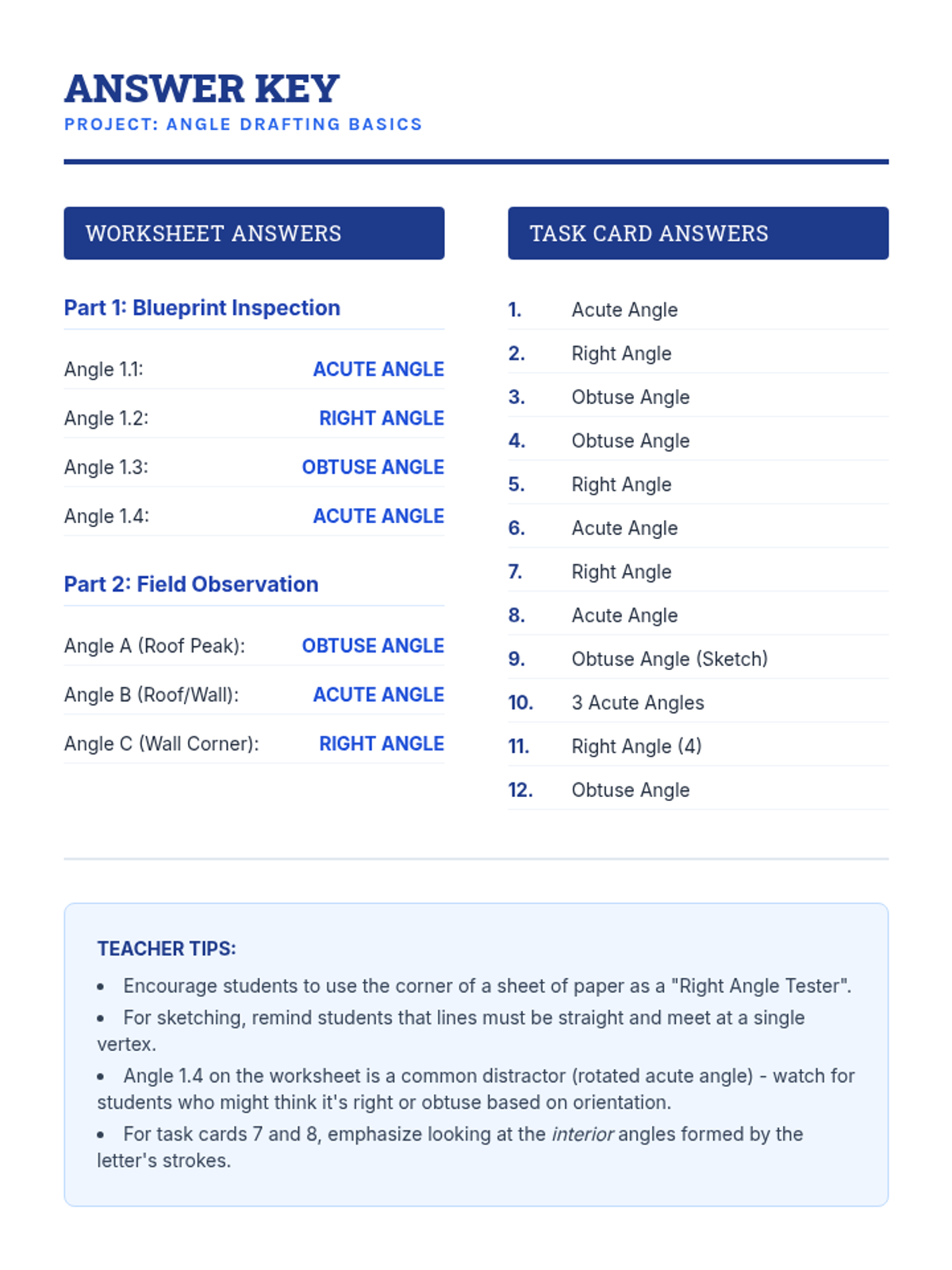
A foundational lesson on classifying angles as acute, obtuse, or right, serving as a prerequisite for measuring with a protractor. Students will identify, classify, and sketch angles within a technical blueprint-themed environment.
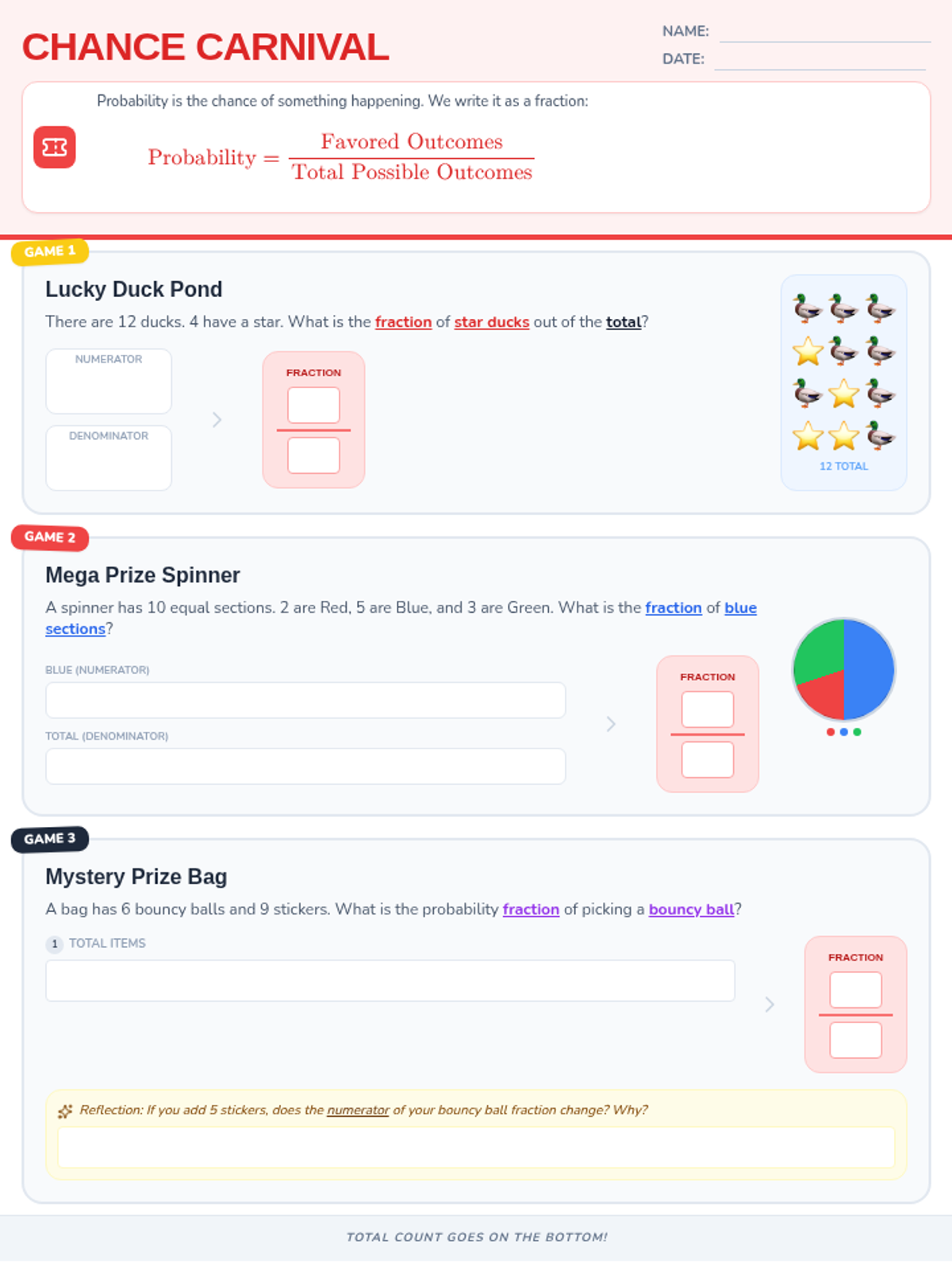
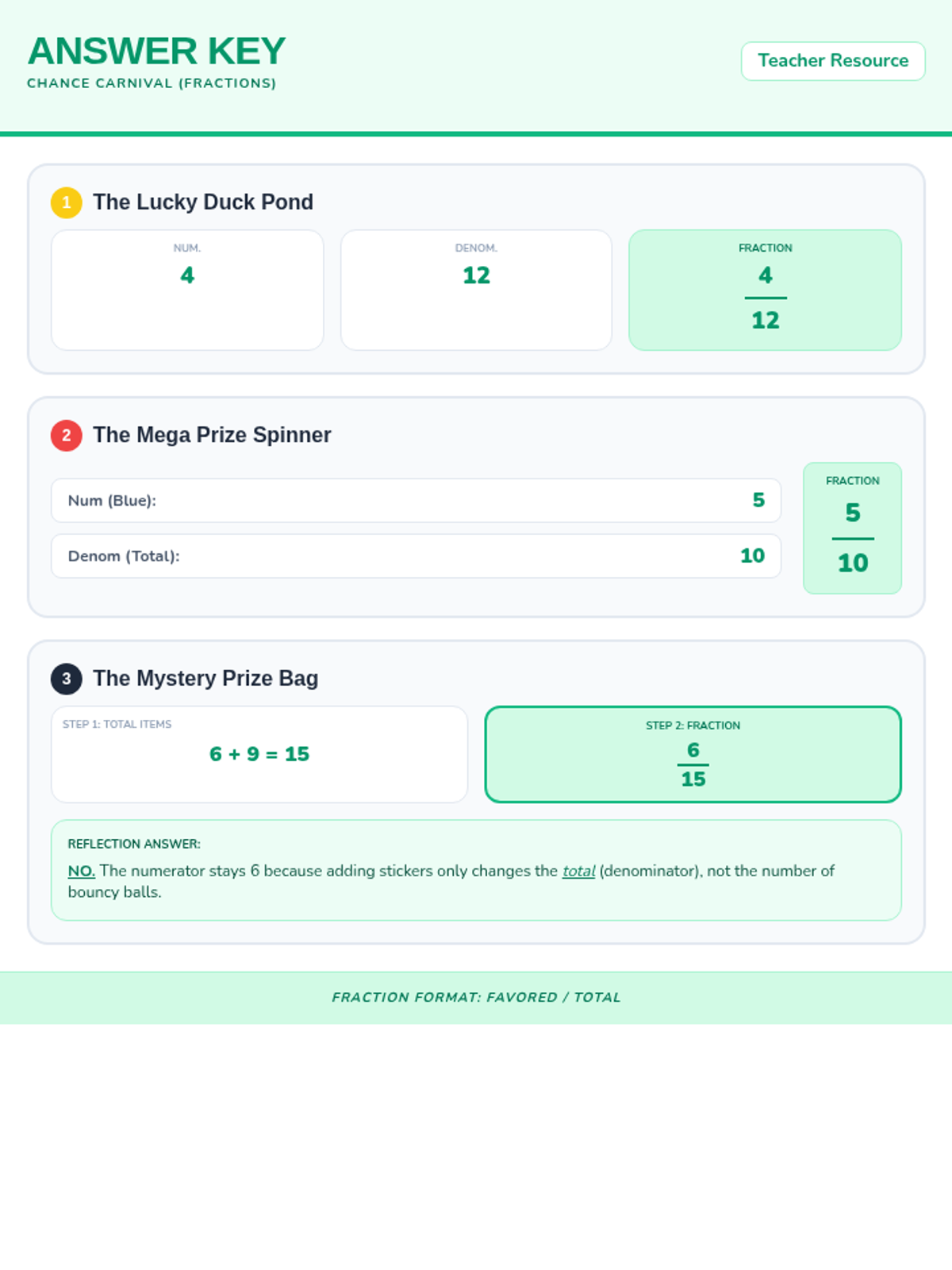
A quick introductory lesson focusing on the fundamental concept of probability as a ratio of favored outcomes to total possible outcomes.
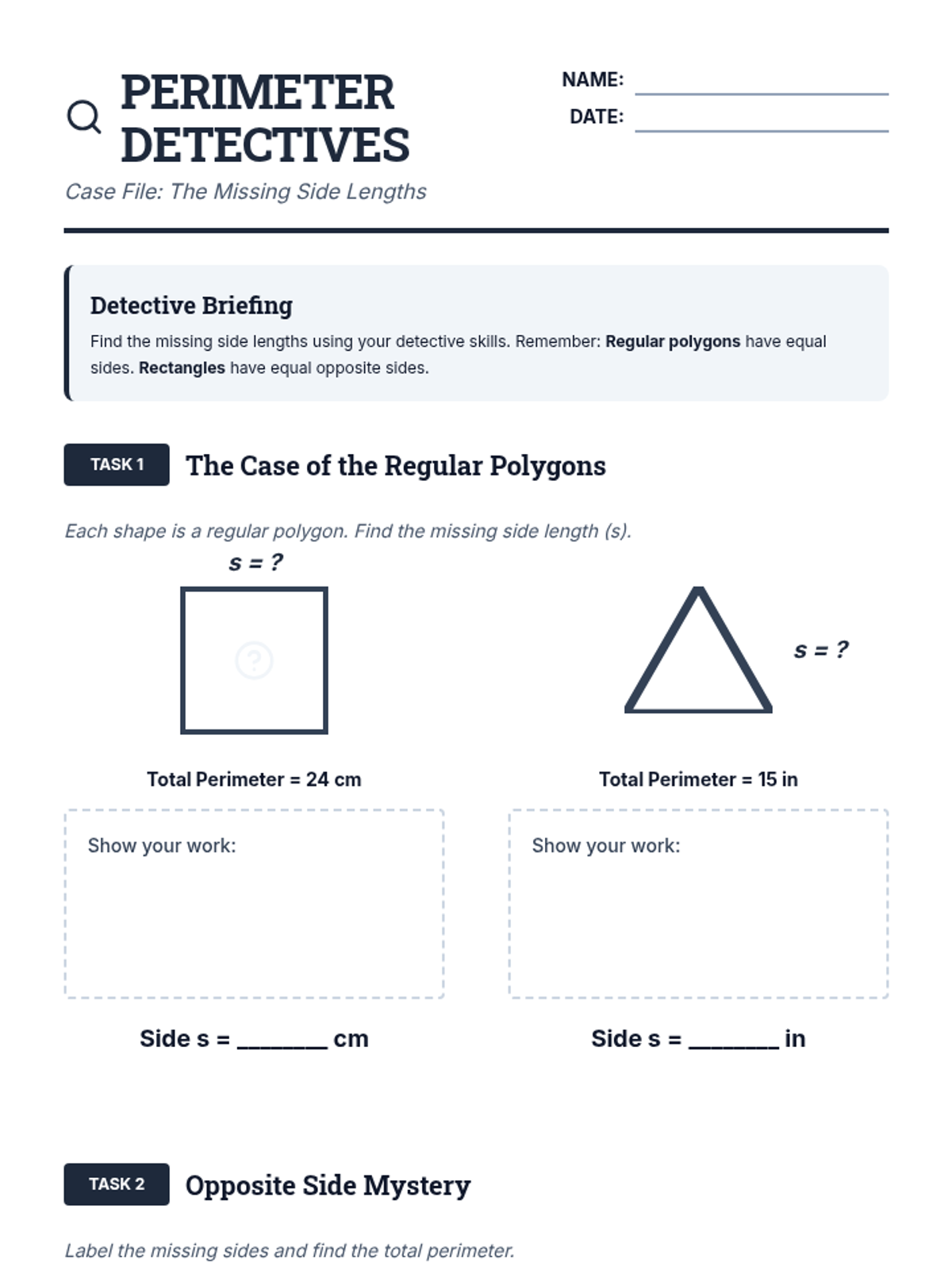
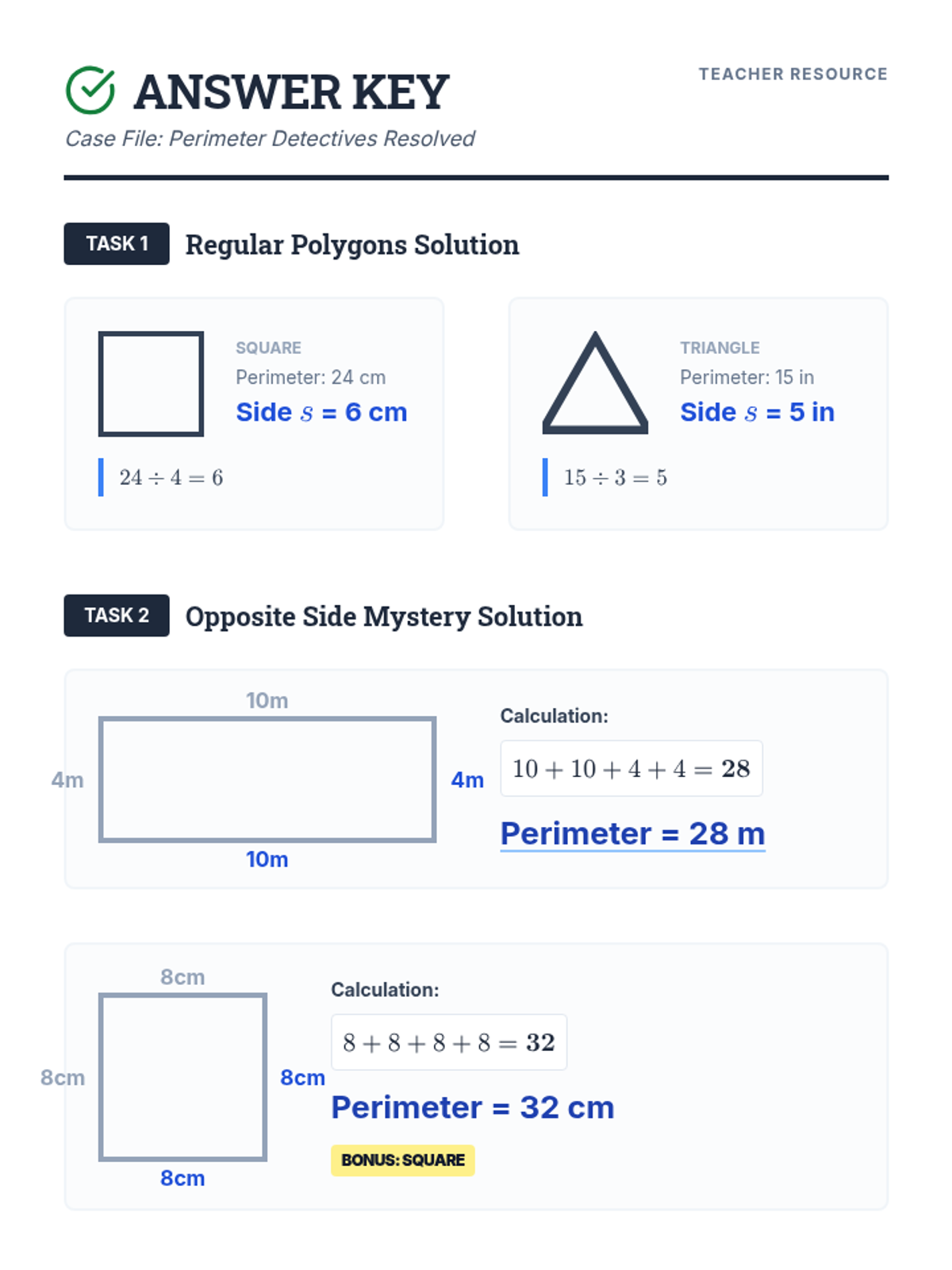
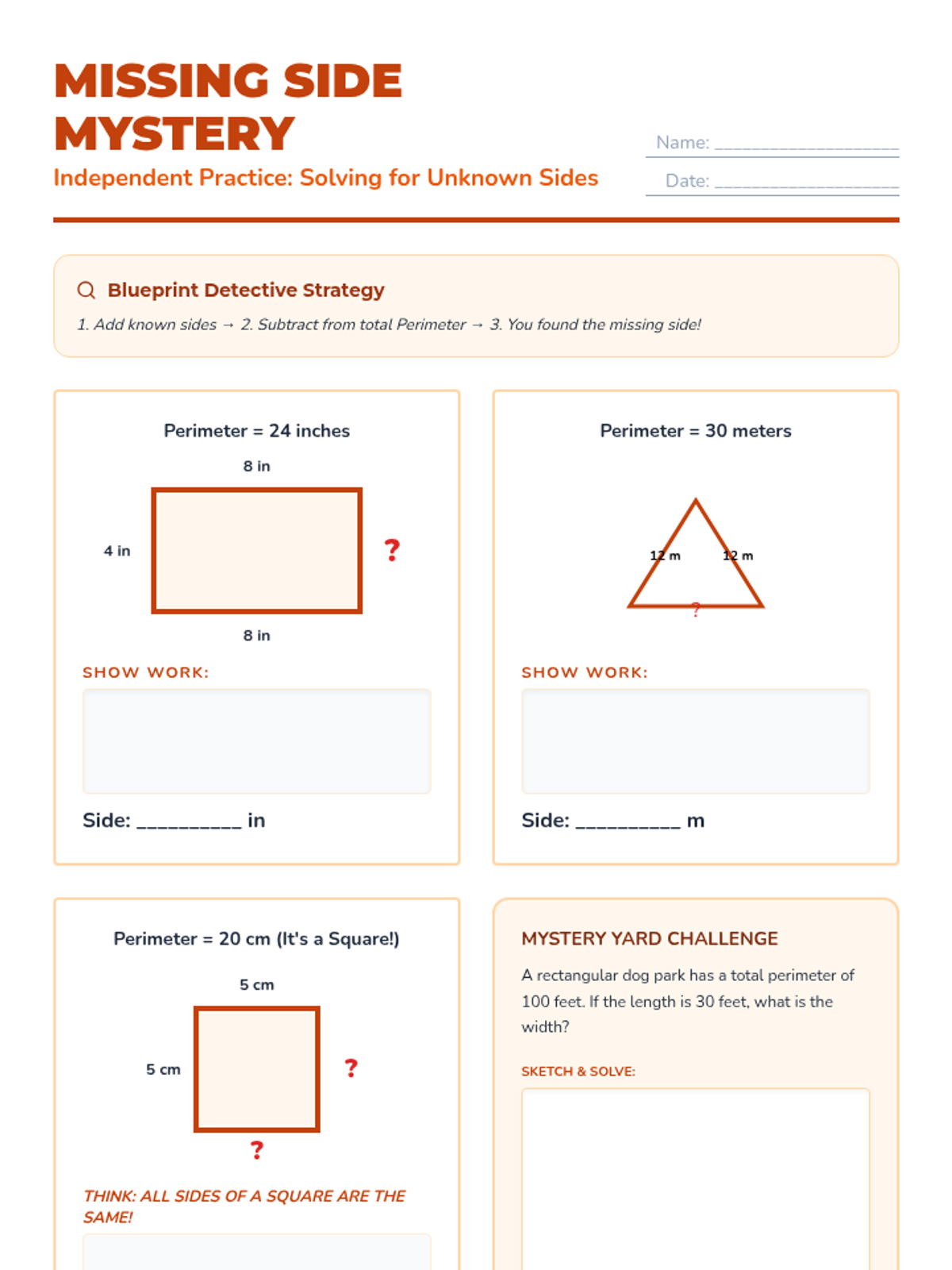
In this lesson, students become 'Perimeter Detectives' to solve for missing side lengths in regular polygons and rectangles. They use their knowledge of polygon properties and addition/subtraction to calculate perimeters and individual side measurements.
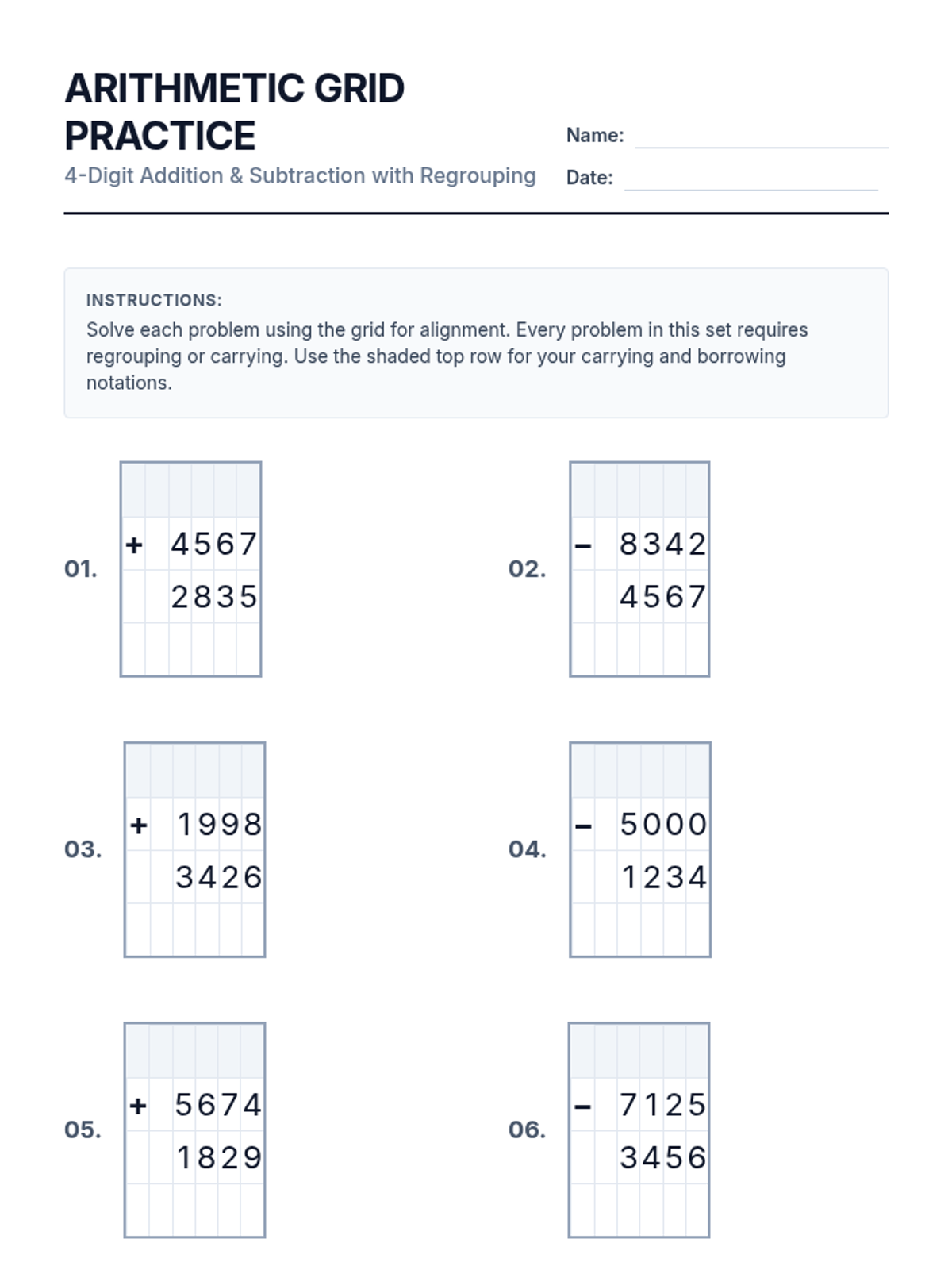
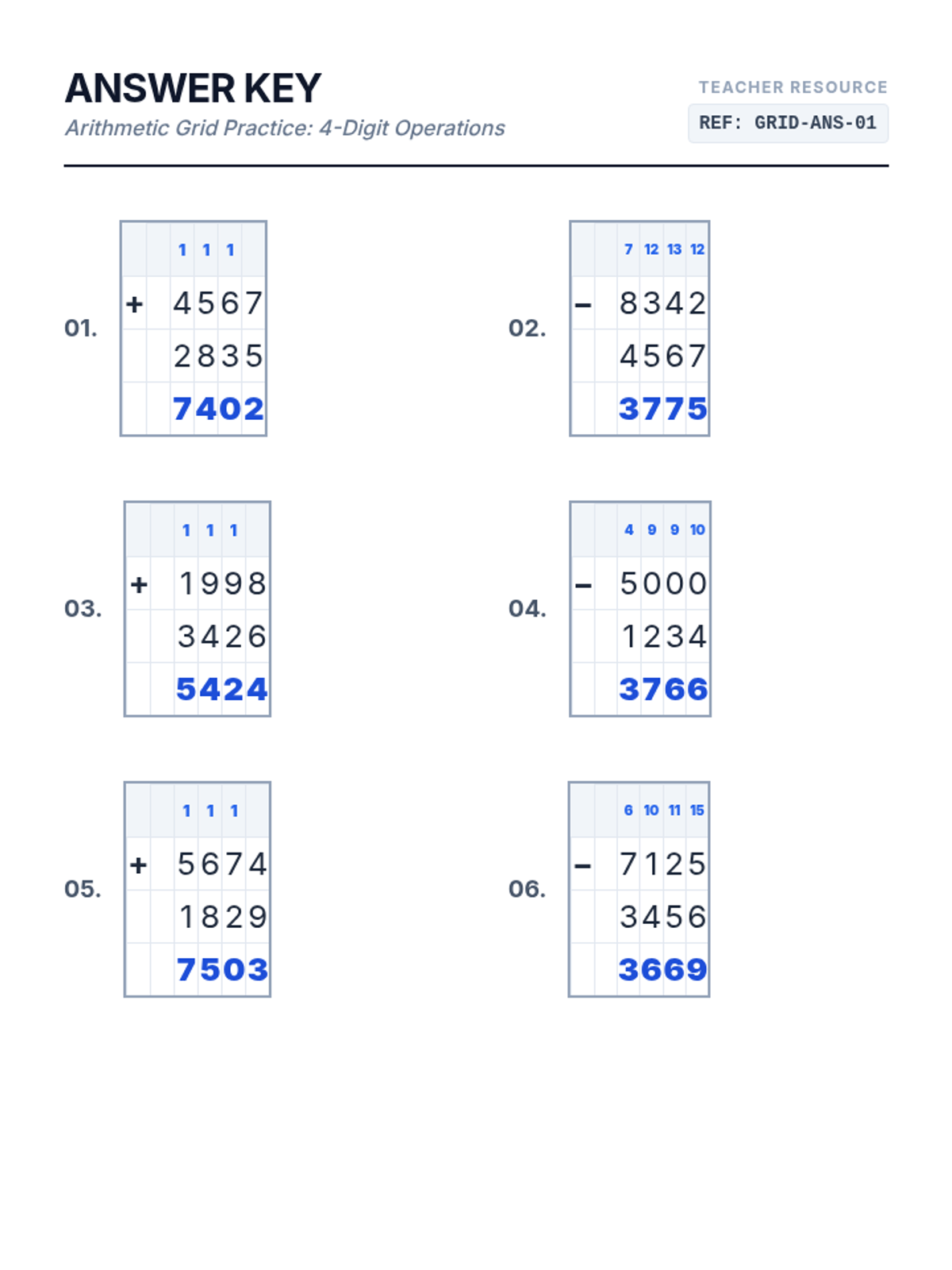
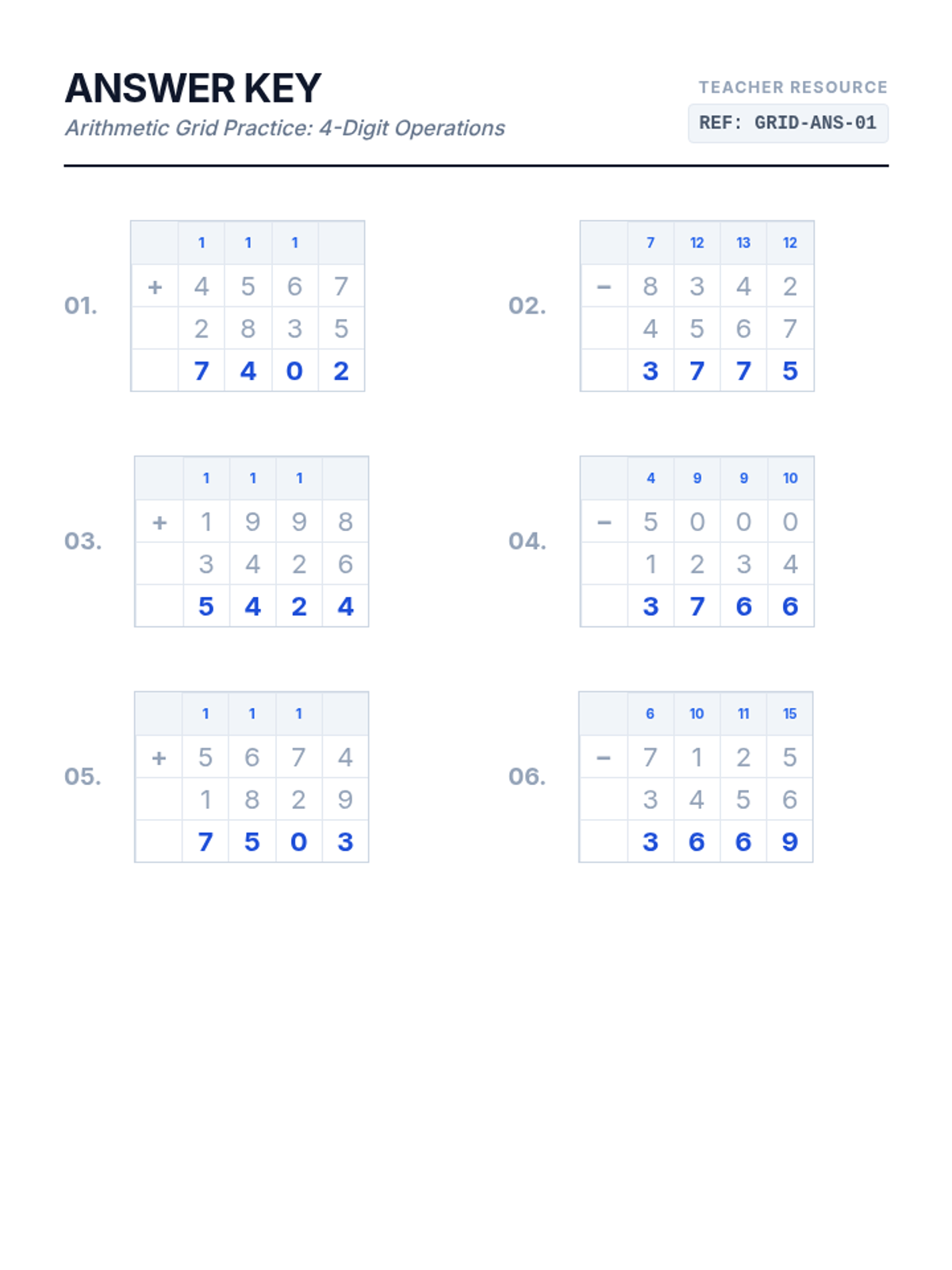
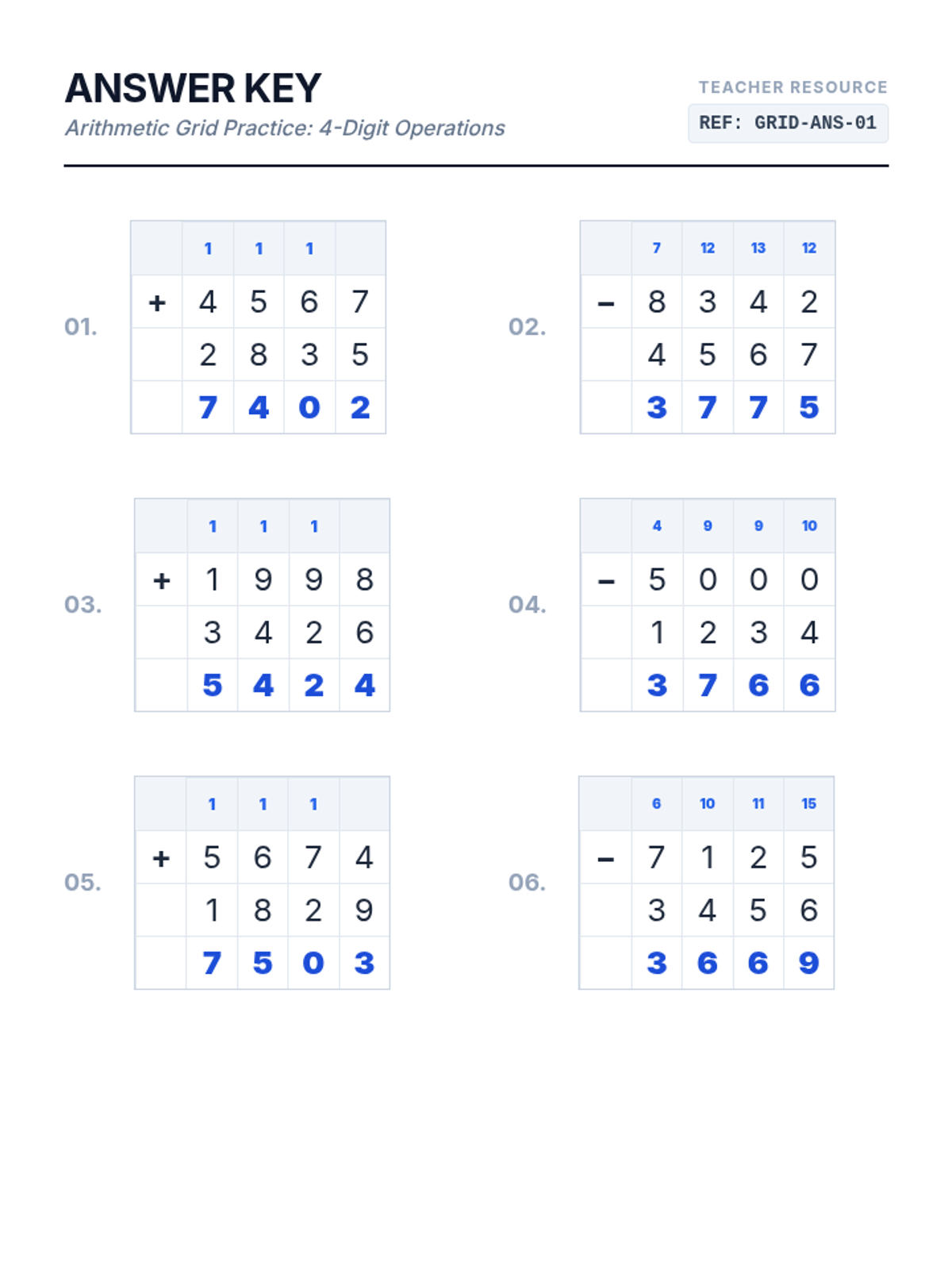
A specialized practice lesson on 4-digit addition and subtraction where every problem requires regrouping or carrying, presented on a clear grid layout for alignment.
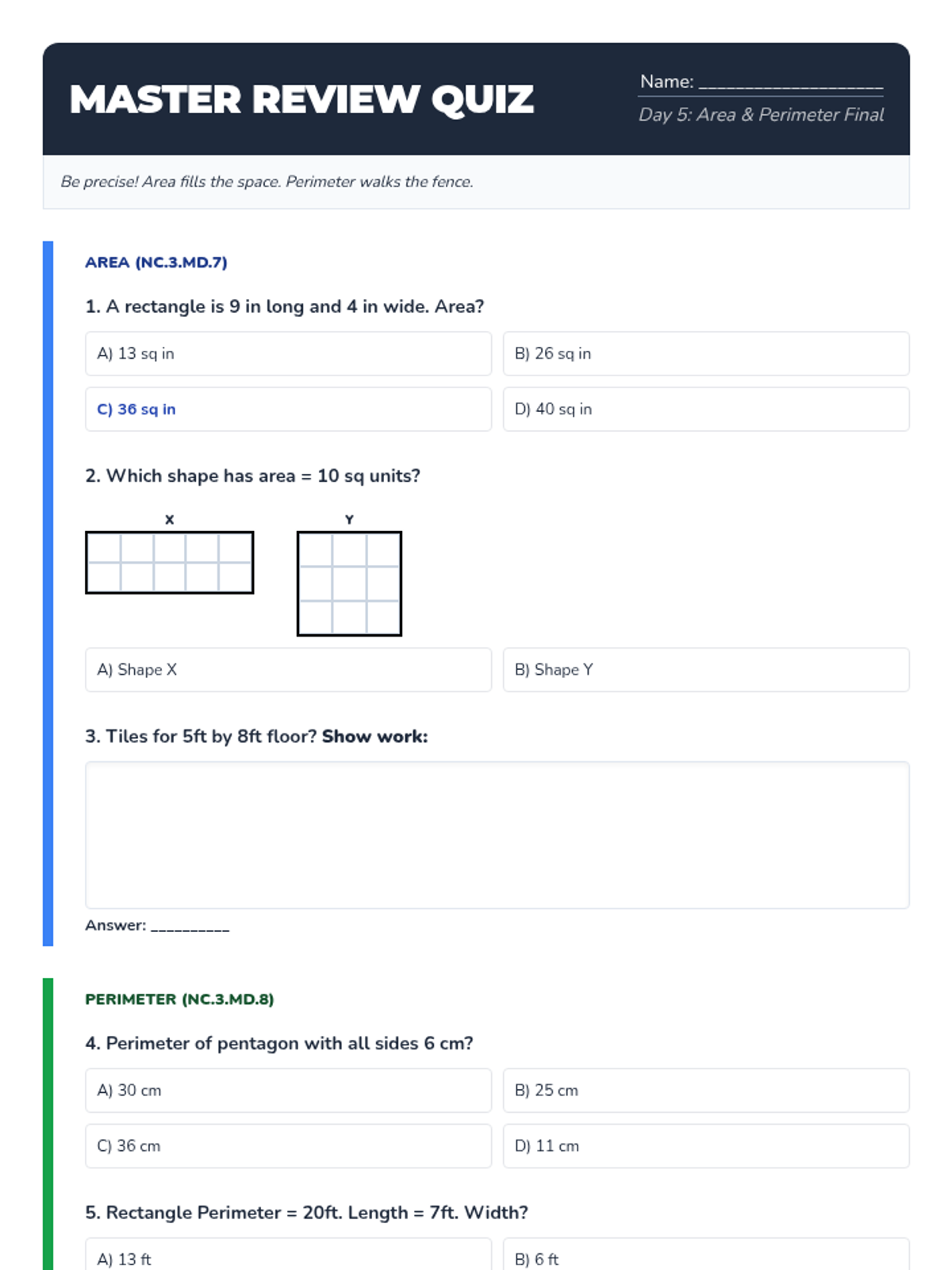
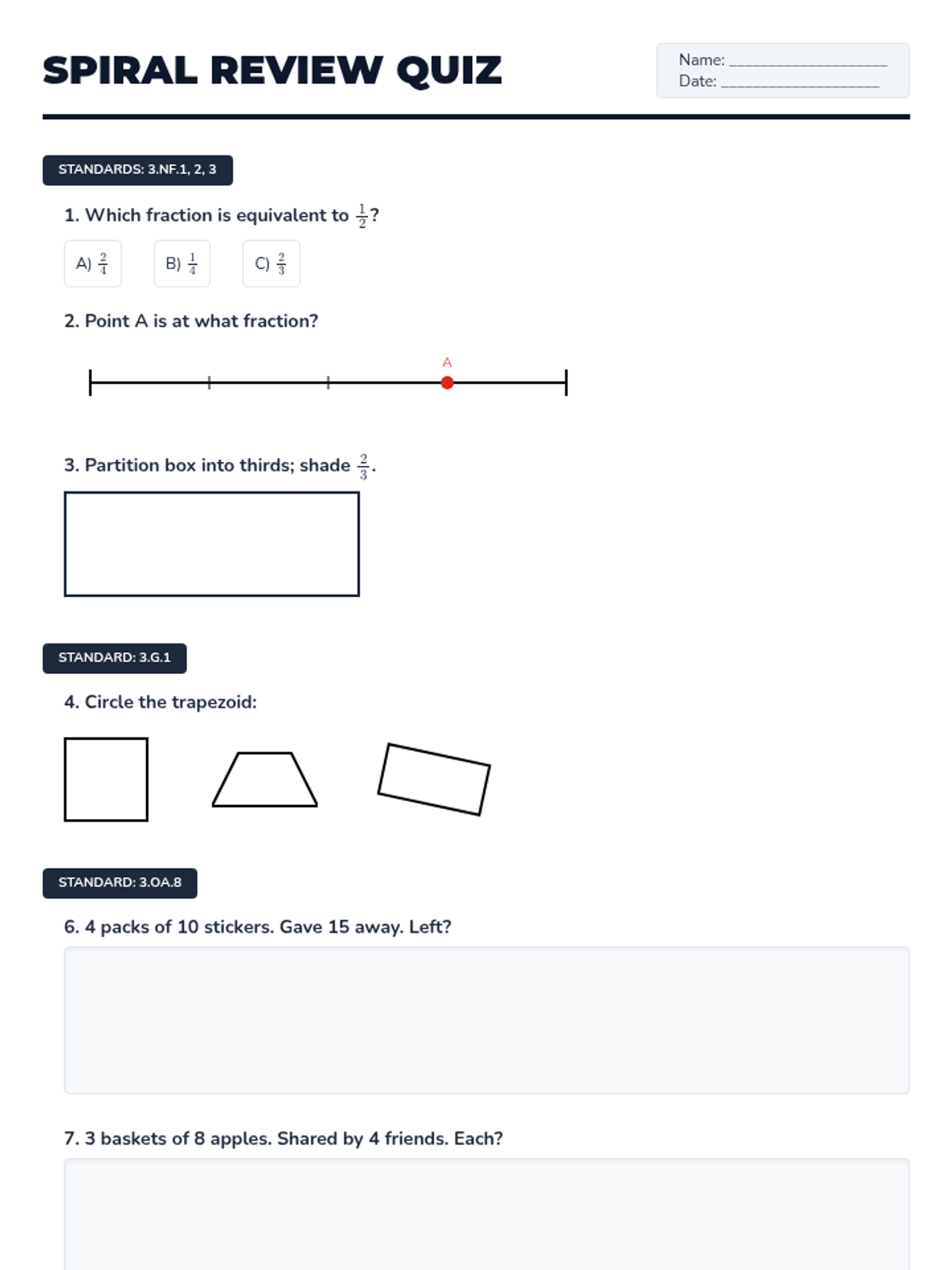
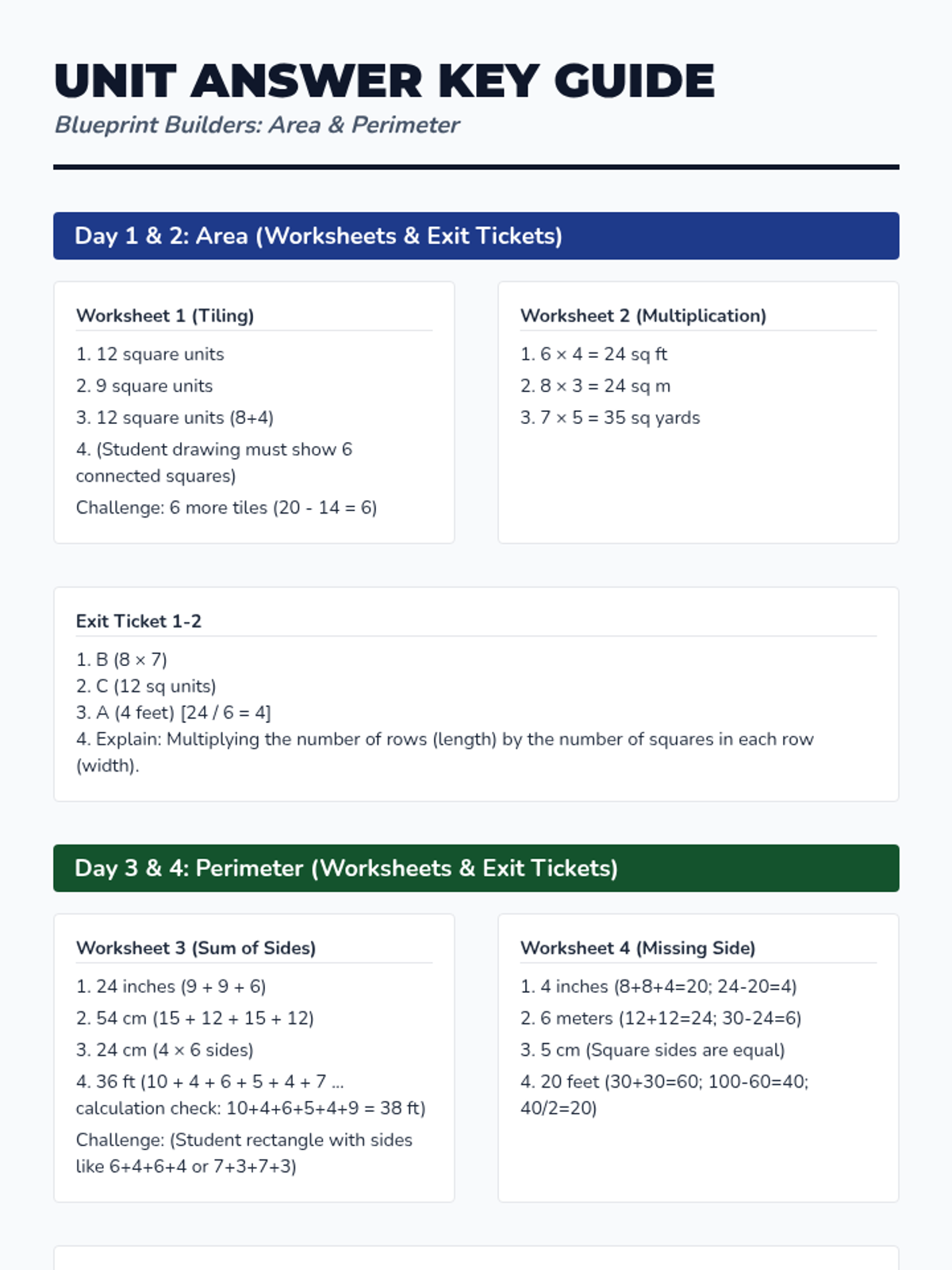
A comprehensive review of area and perimeter concepts including a spiral review assessment.
Challenges students to find missing side lengths when the total perimeter is known.
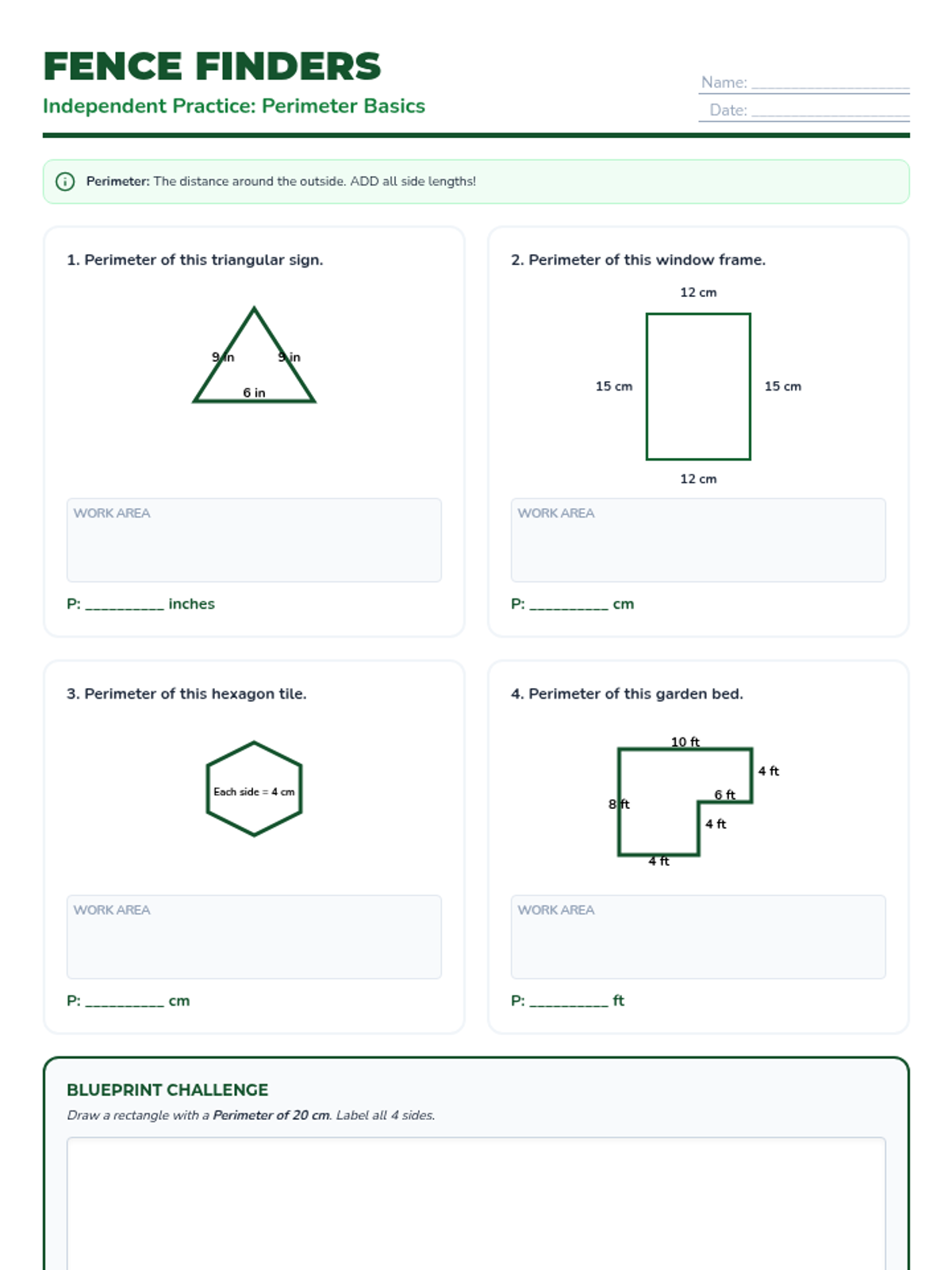
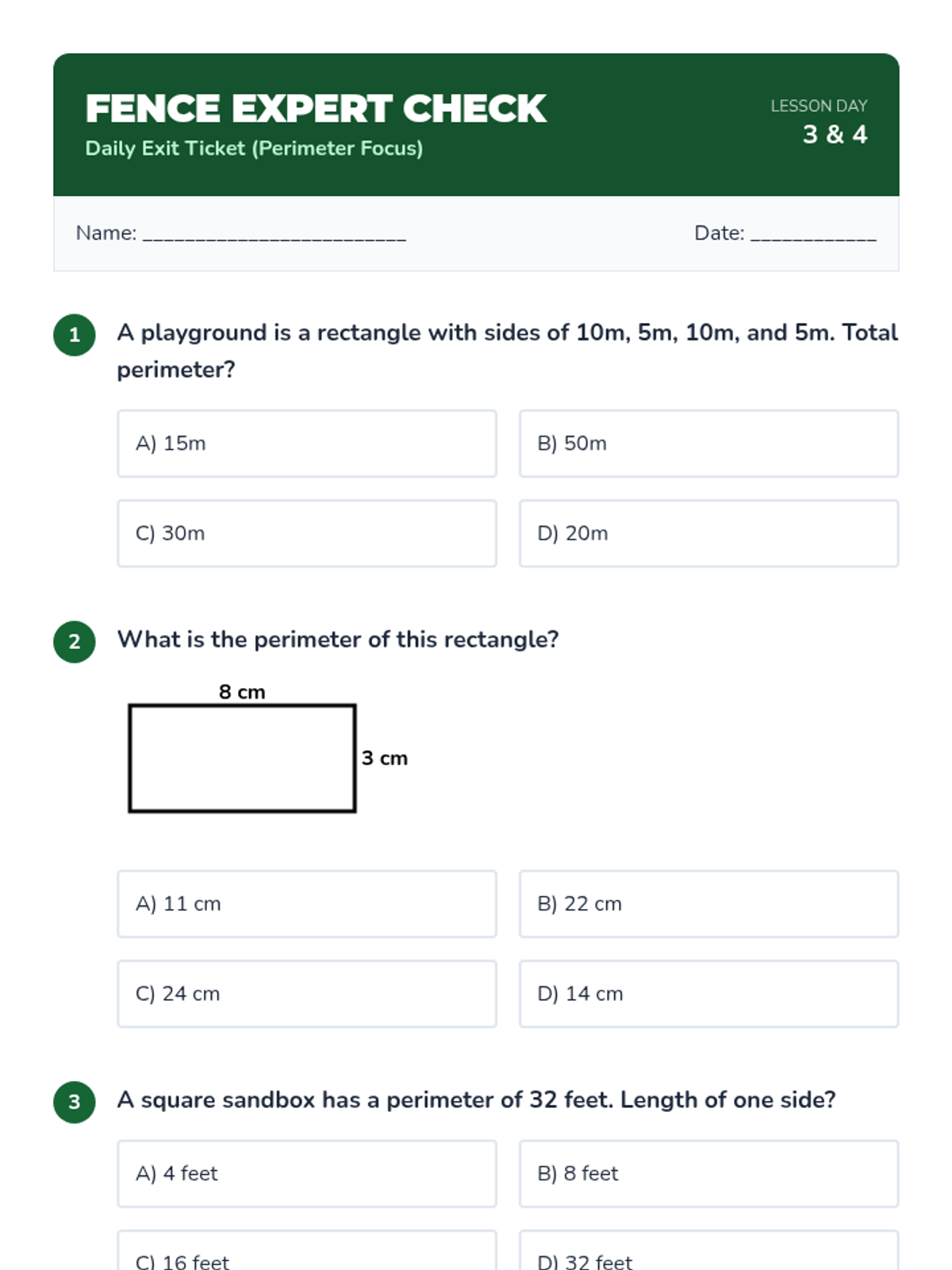
Introduces perimeter as the distance around a shape and calculates it by adding all side lengths.
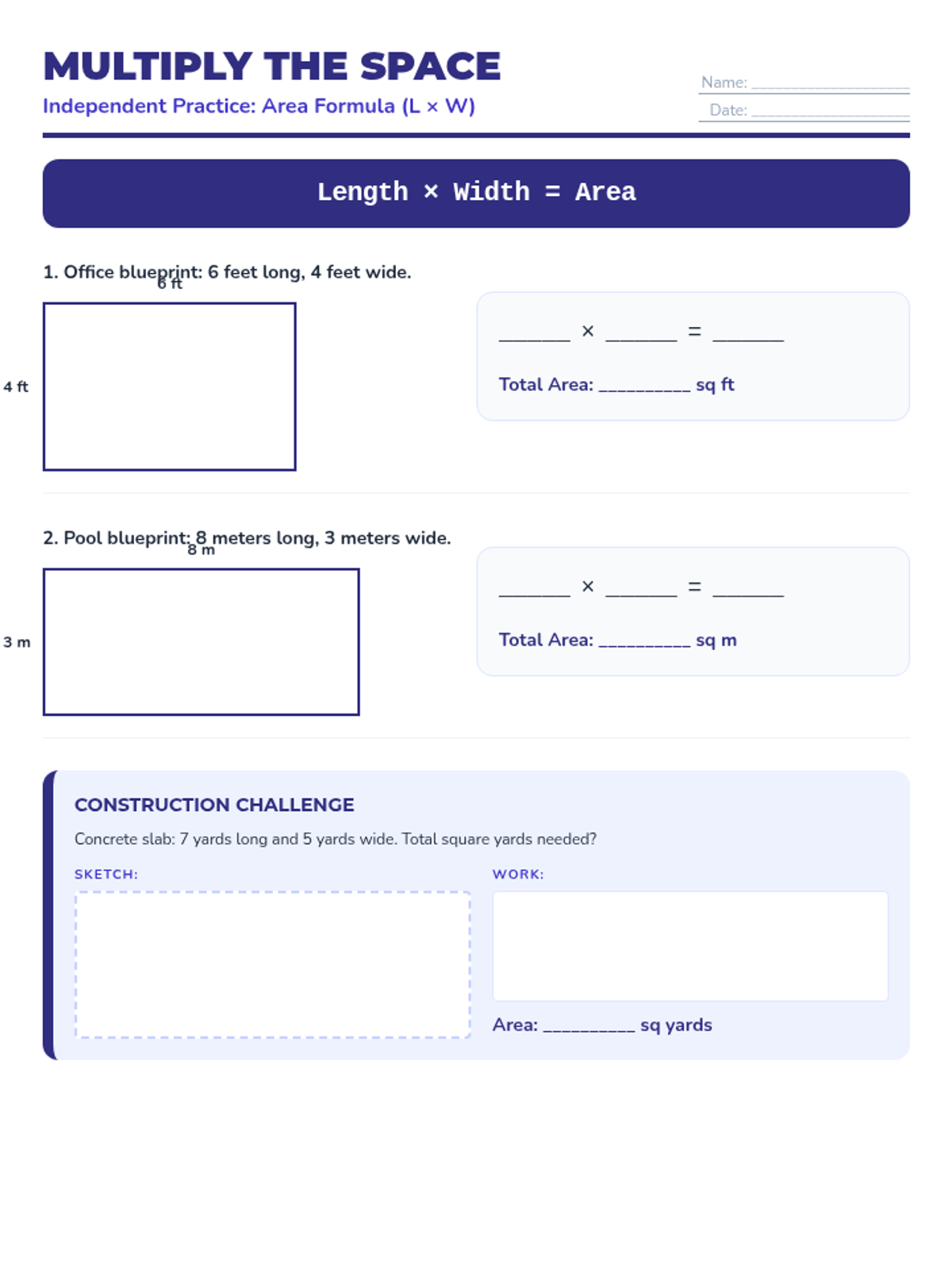
Connects area to multiplication by partitioning rectangles and using the Length x Width formula.