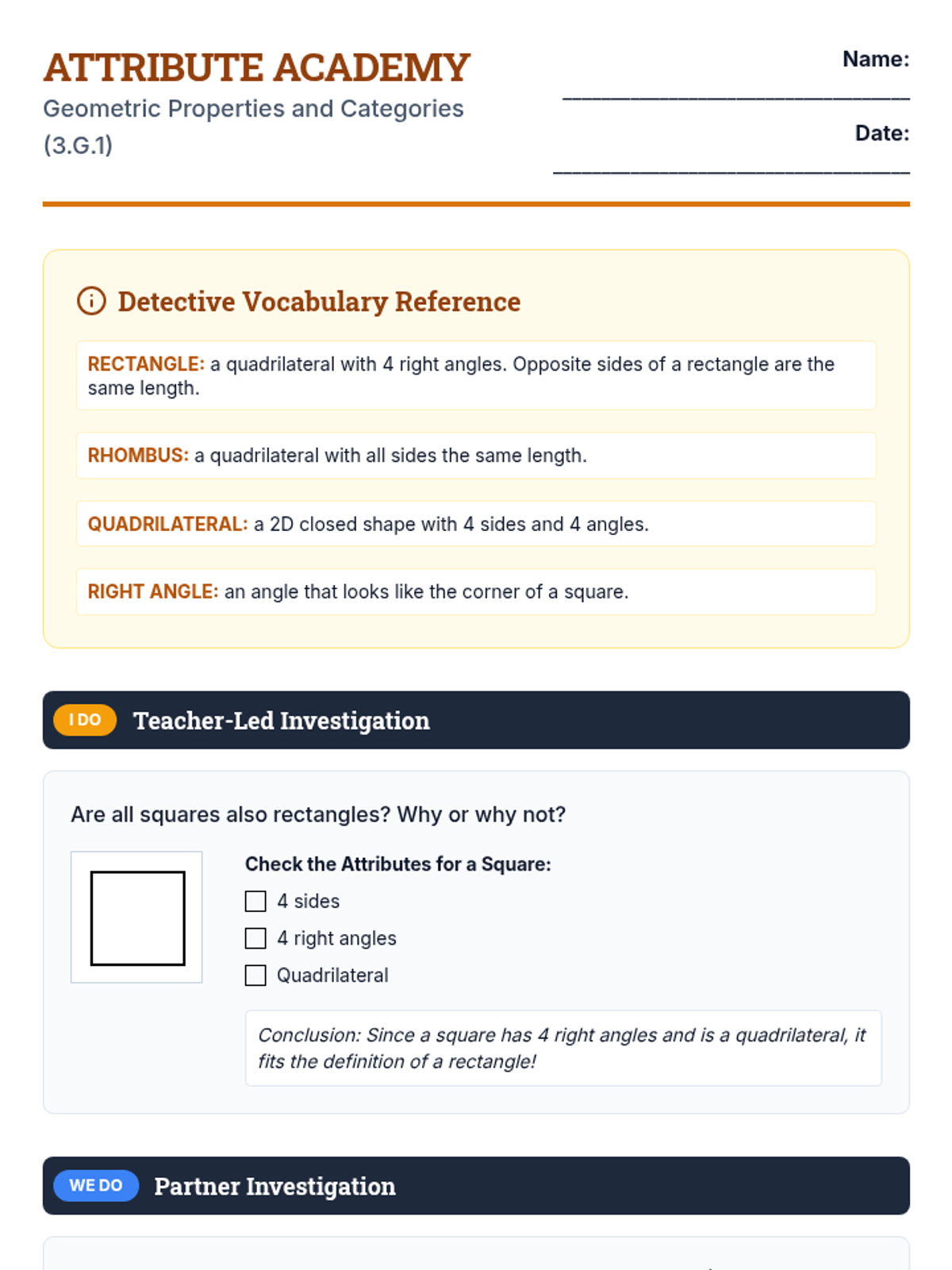
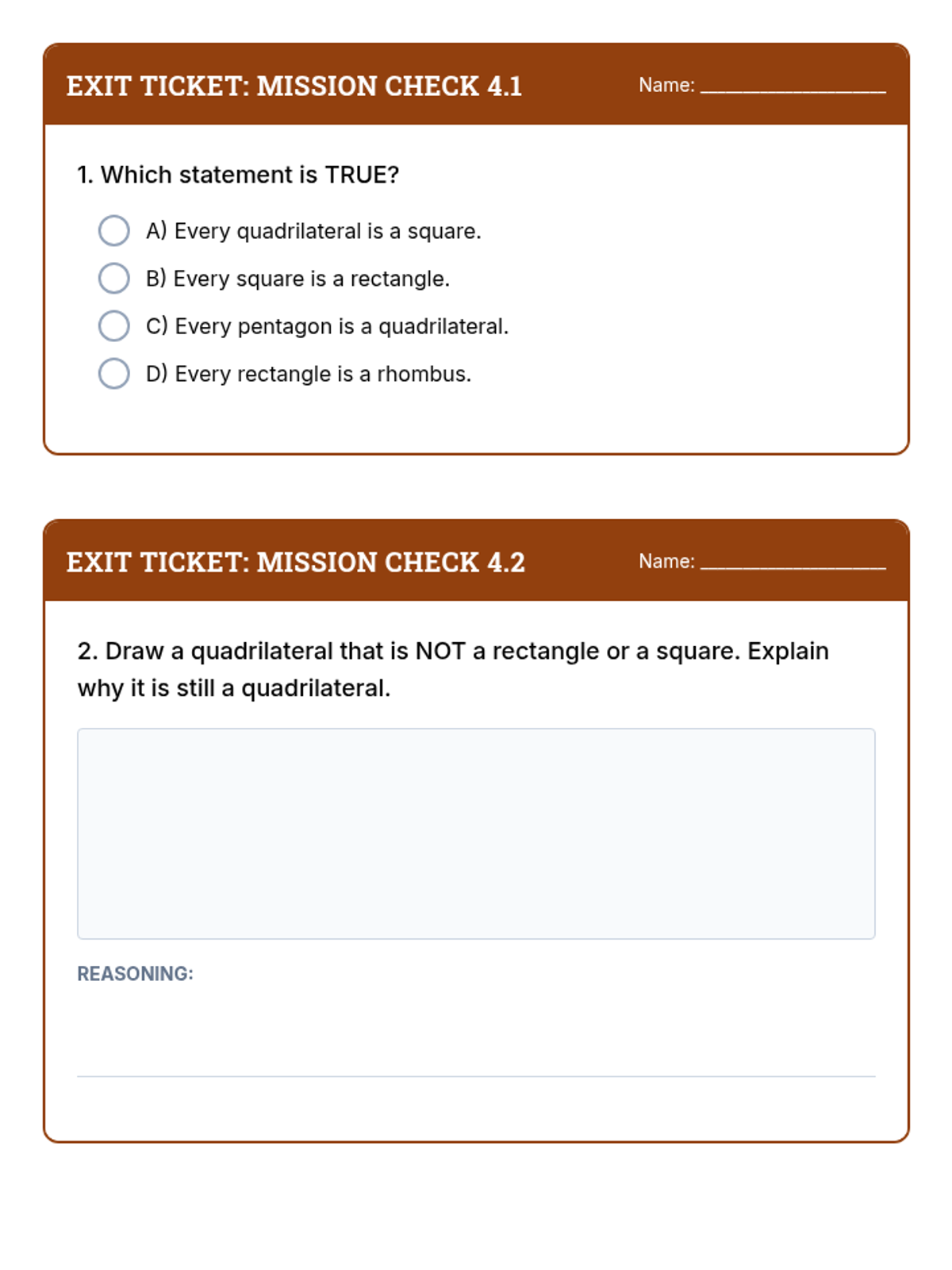
This lesson focuses on the hierarchical classification of quadrilaterals, helping students understand that subcategories inherit properties from their parent categories.
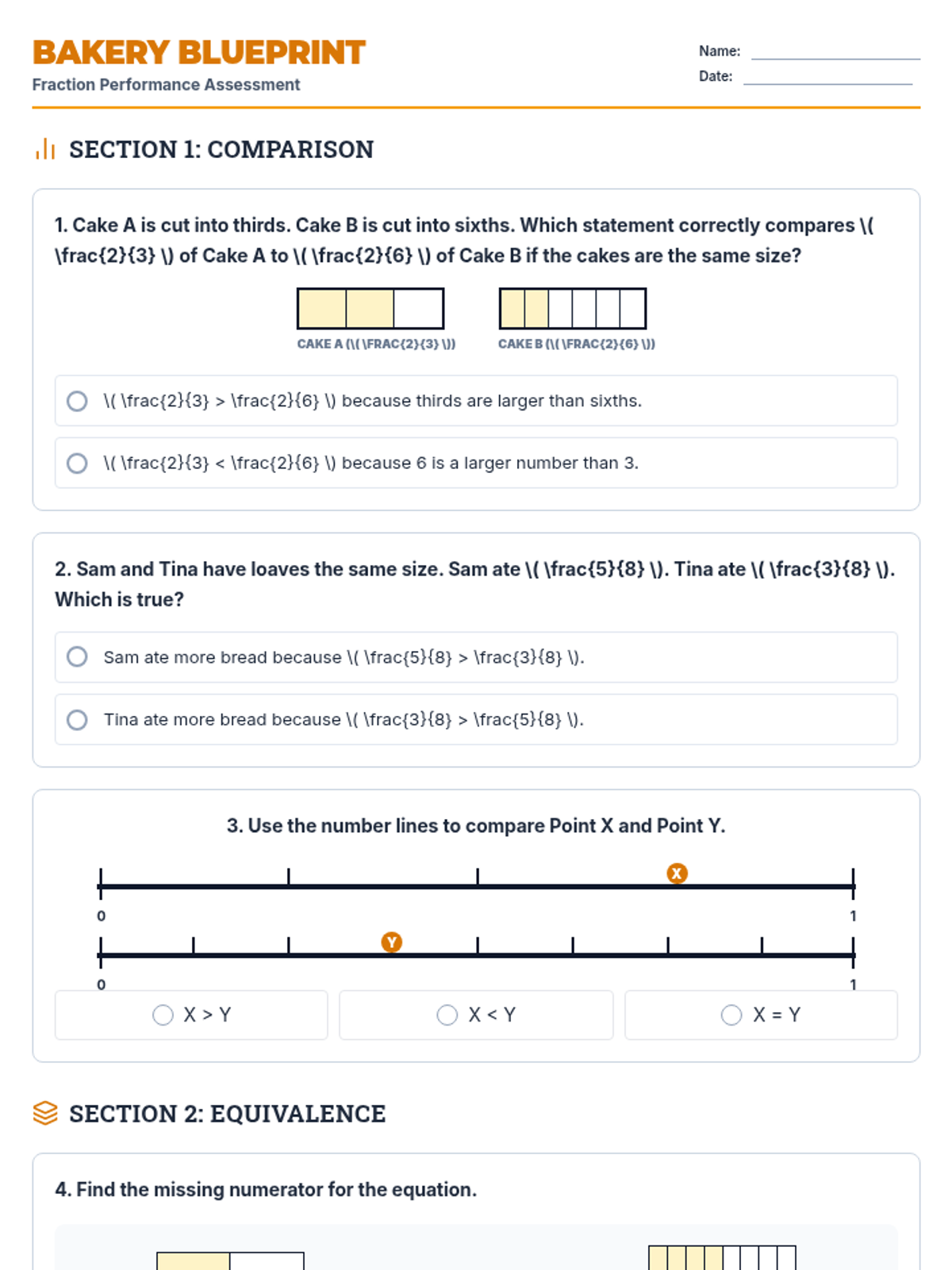
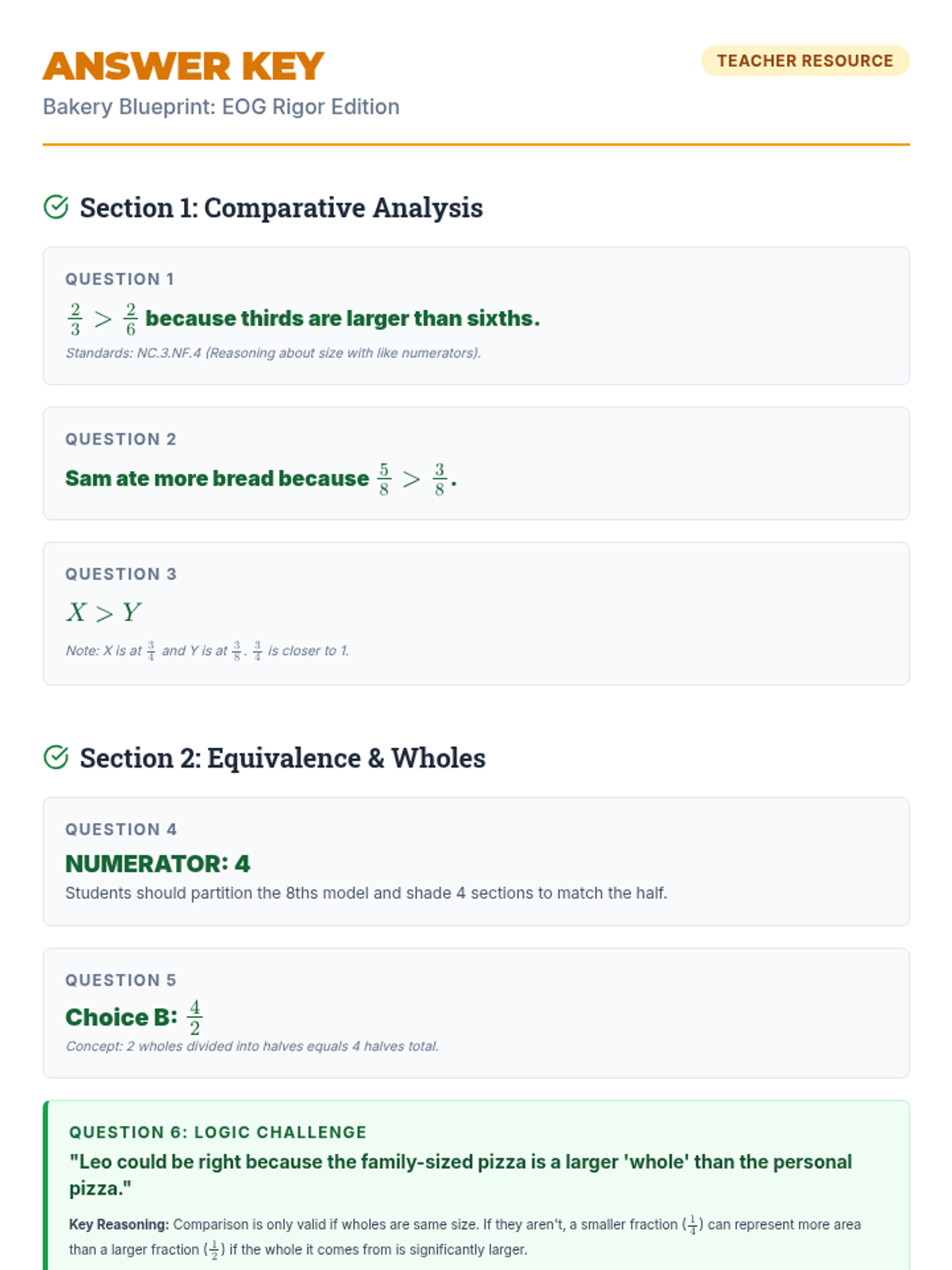
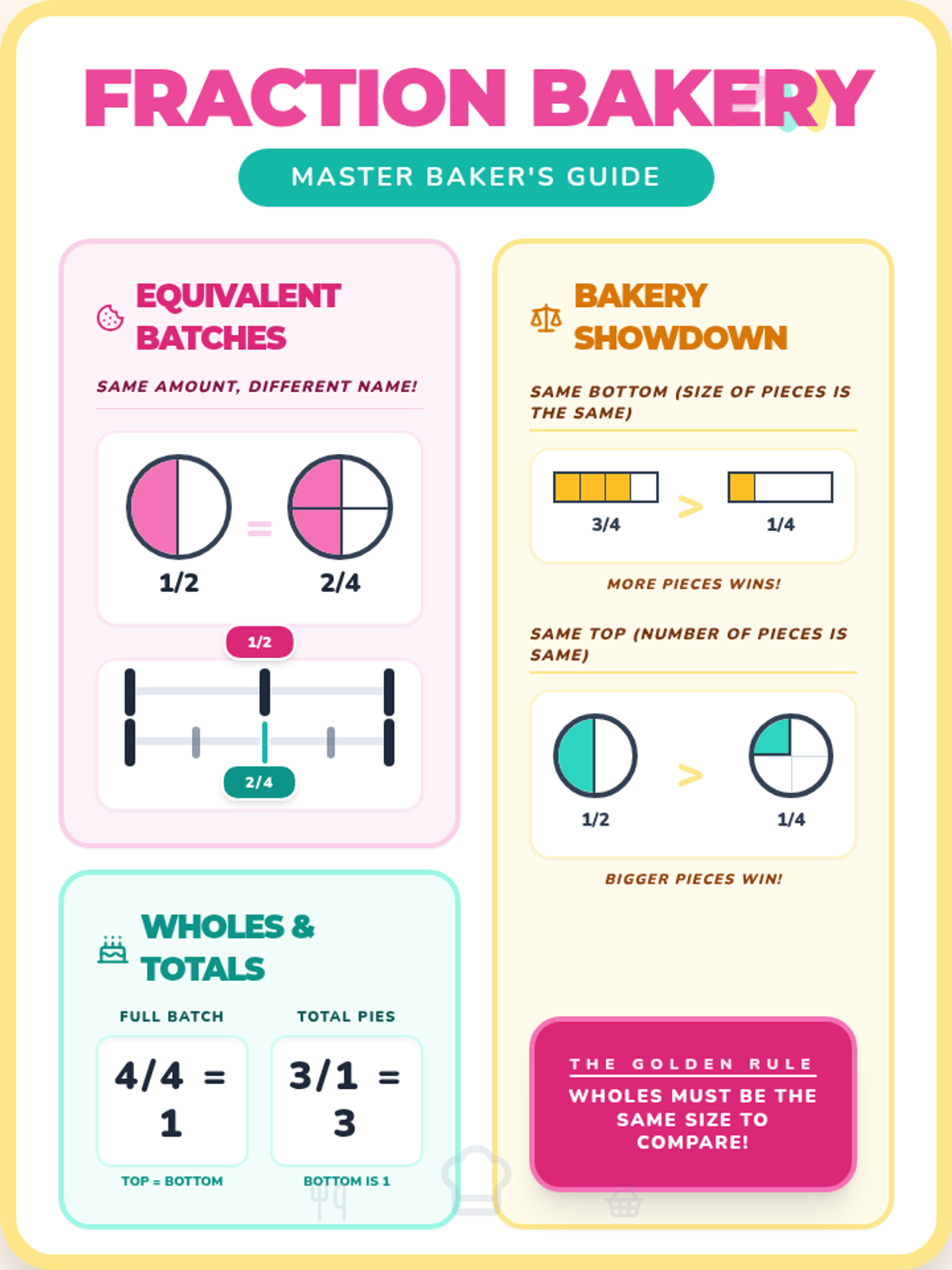
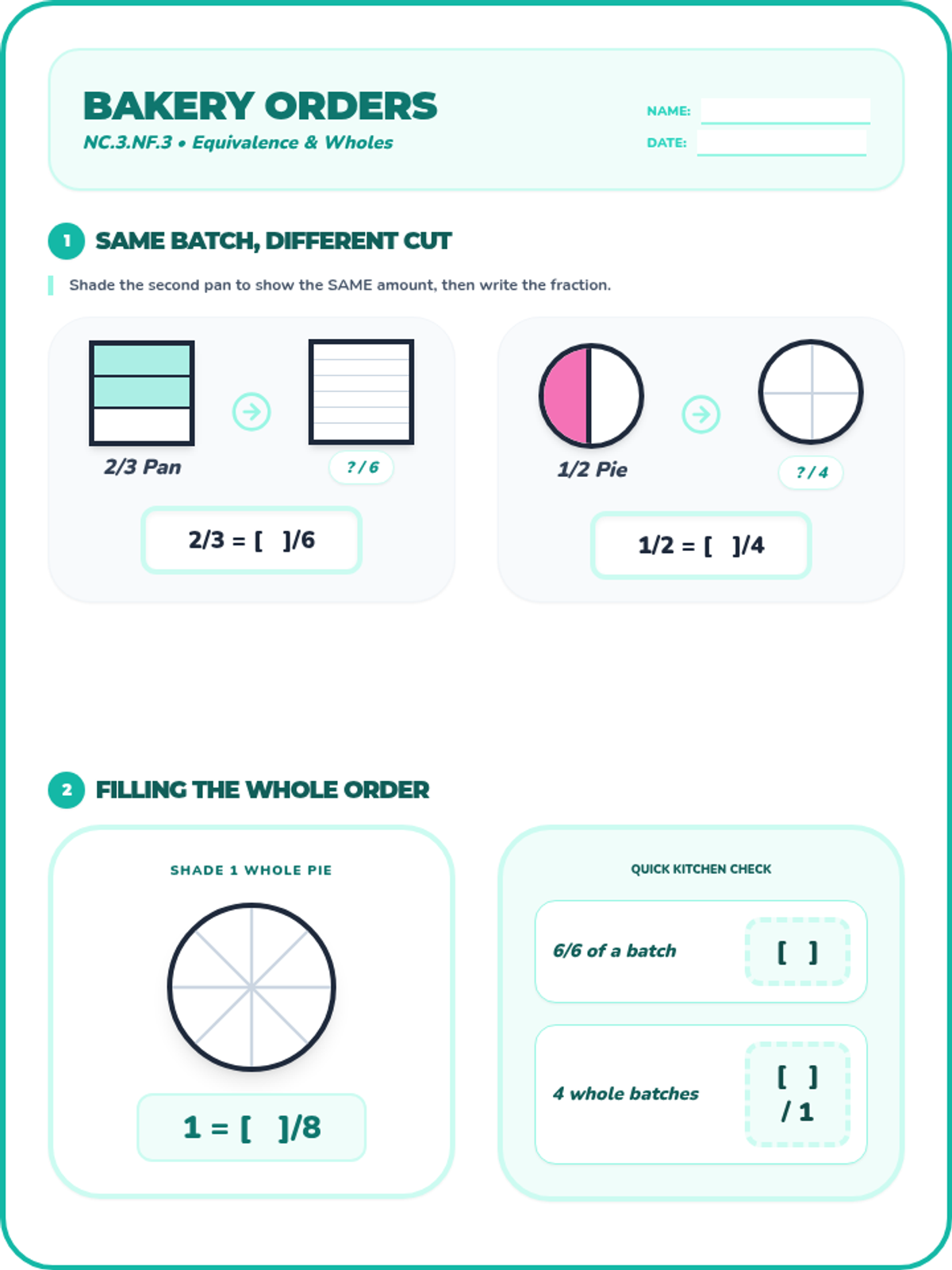
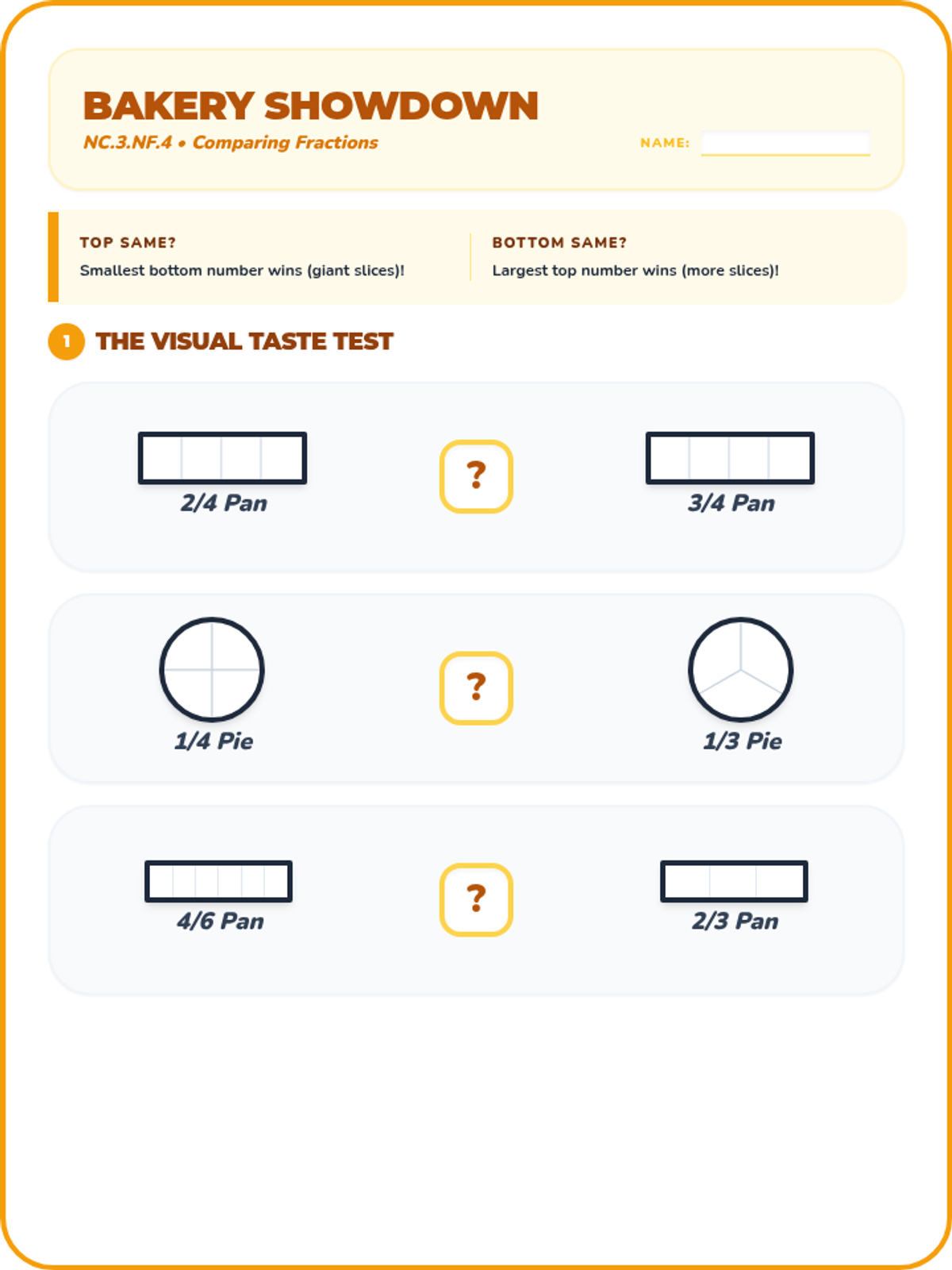
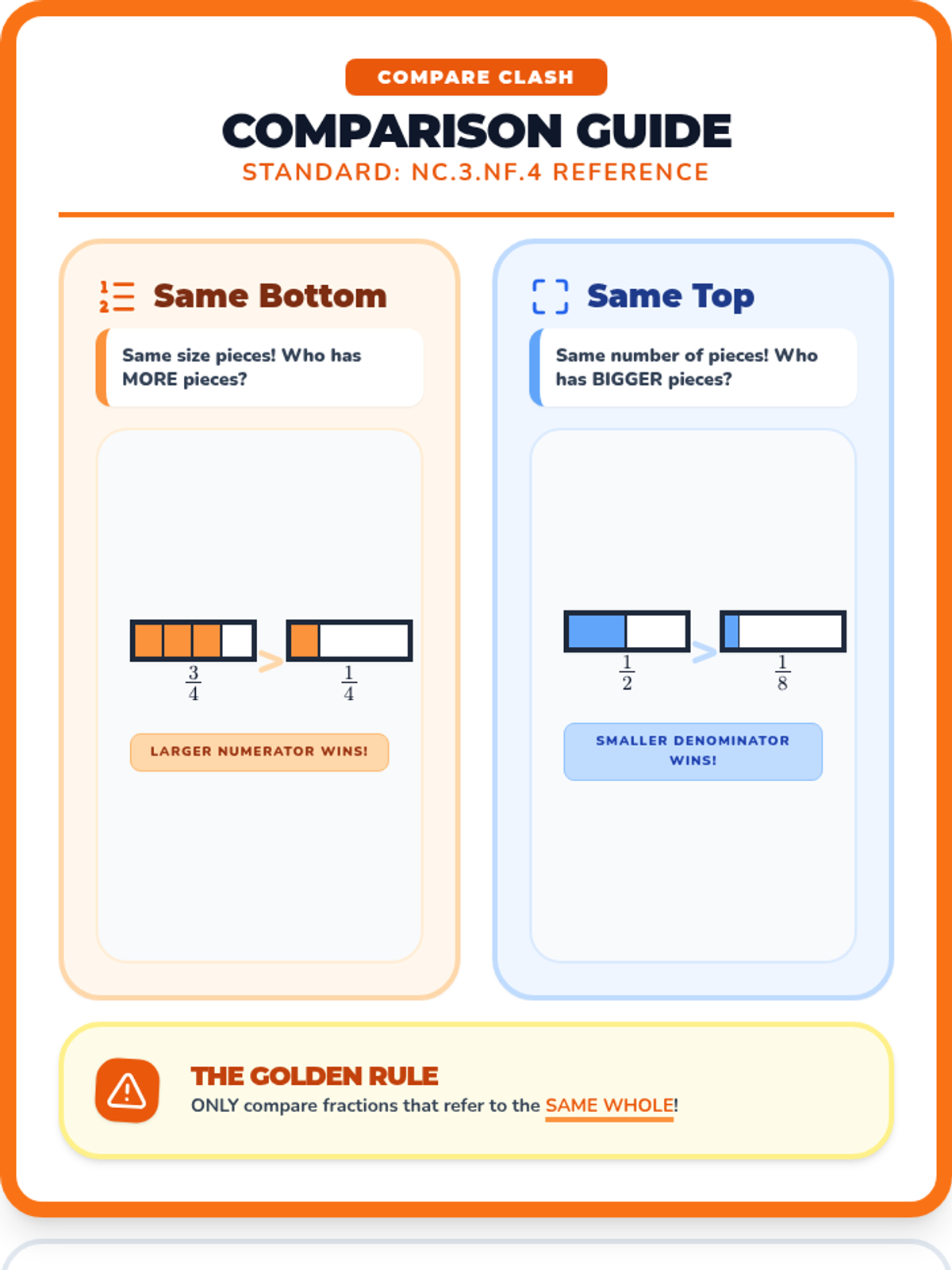
A comprehensive lesson on comparing and representing fractions using area and length models within a bakery-themed context. Students will practice comparing fractions with like numerators or denominators and identifying equivalent fractions and whole numbers.
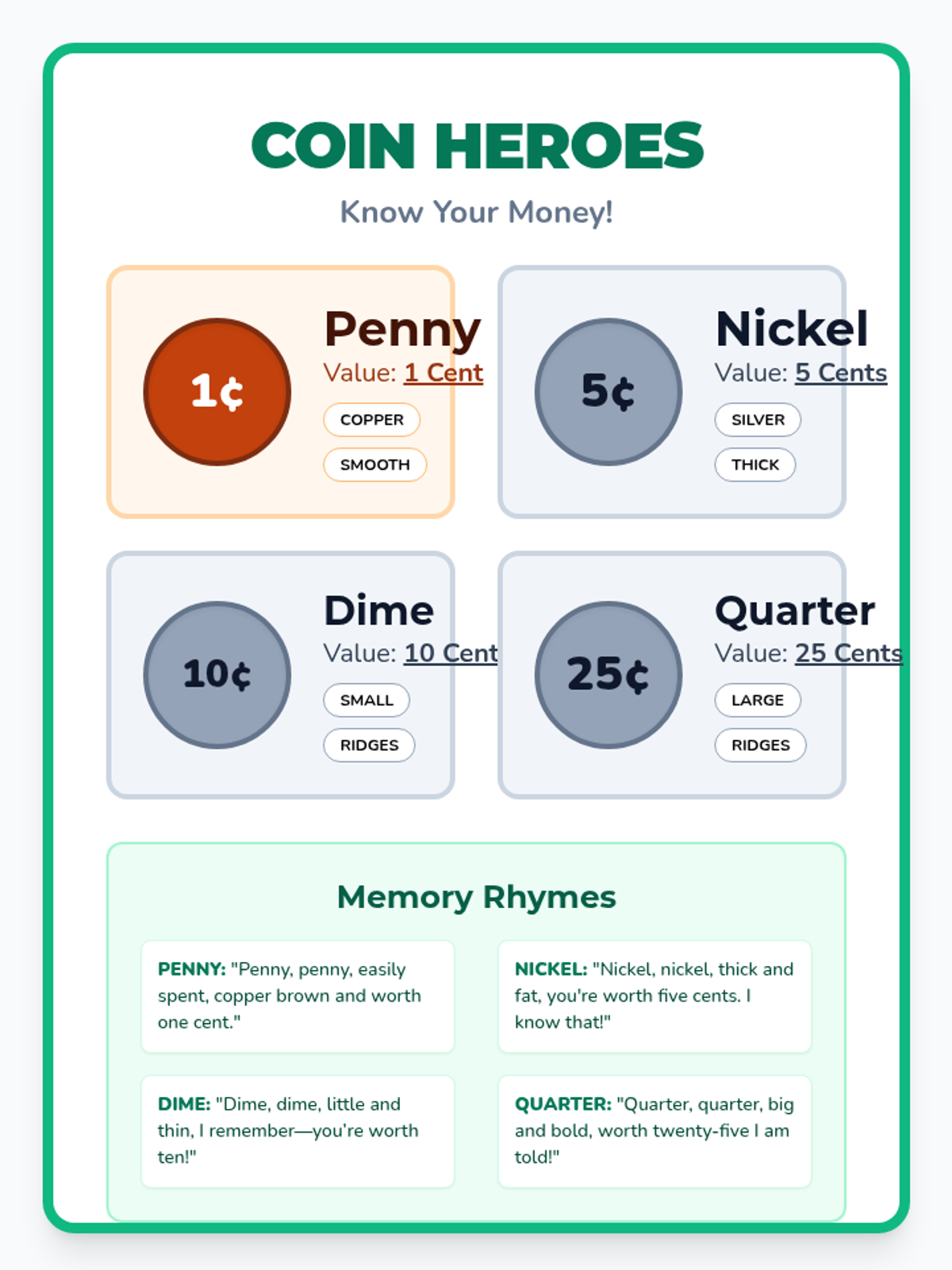
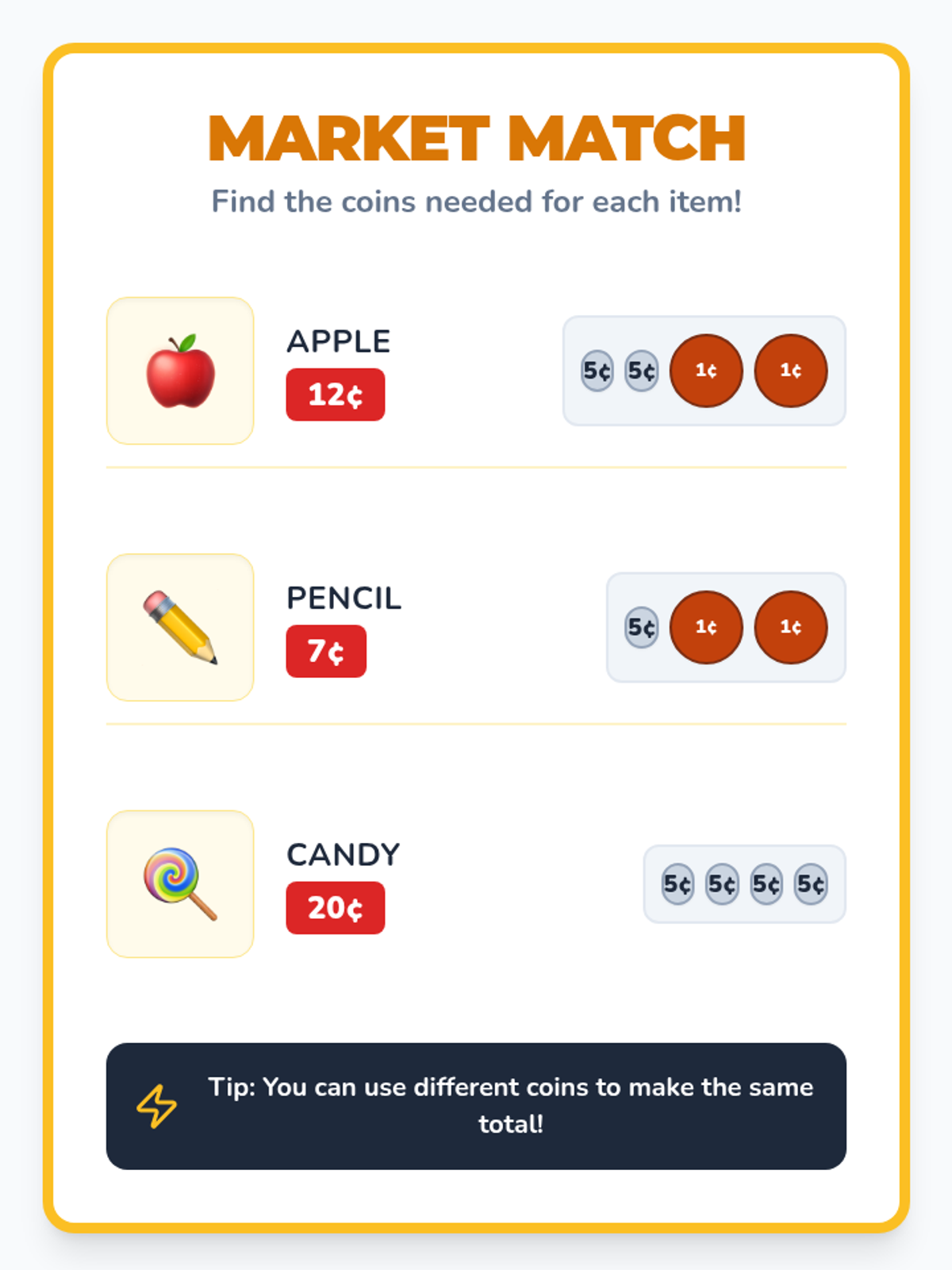
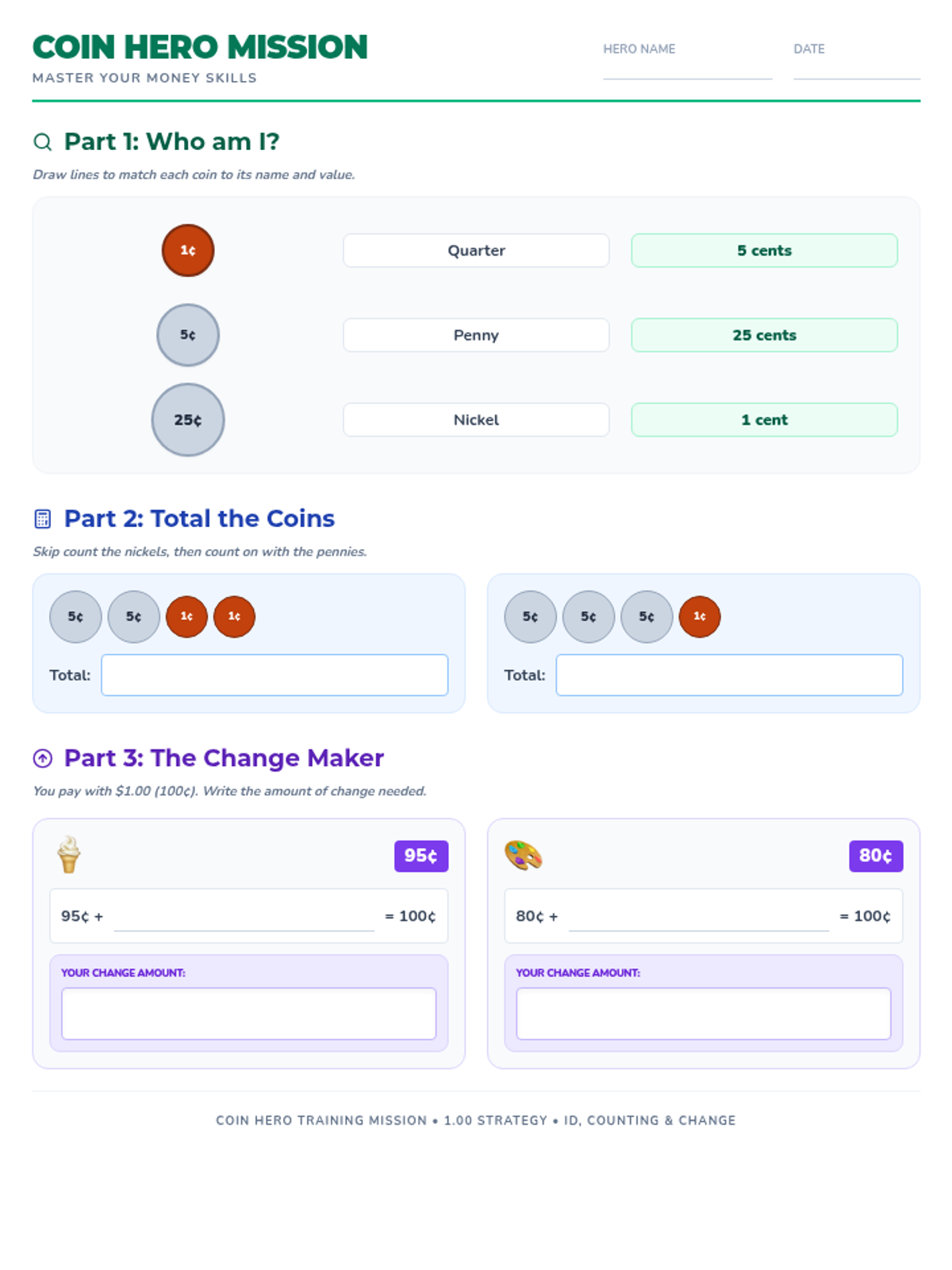
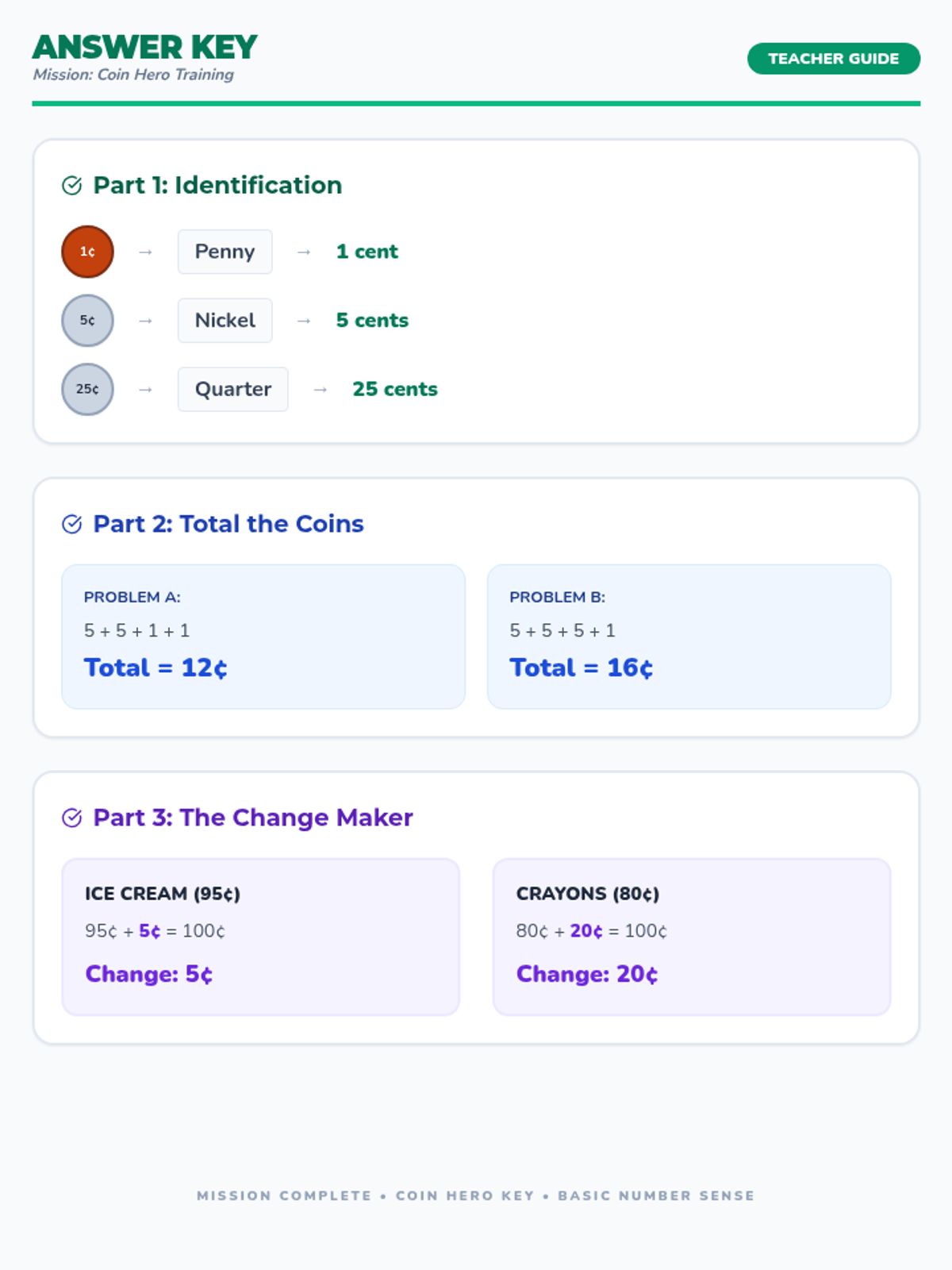
A collection of visual anchor charts and posters designed to teach basic coin identification, counting, and making change from a dollar. These materials use large visuals and clear strategies for early elementary students.
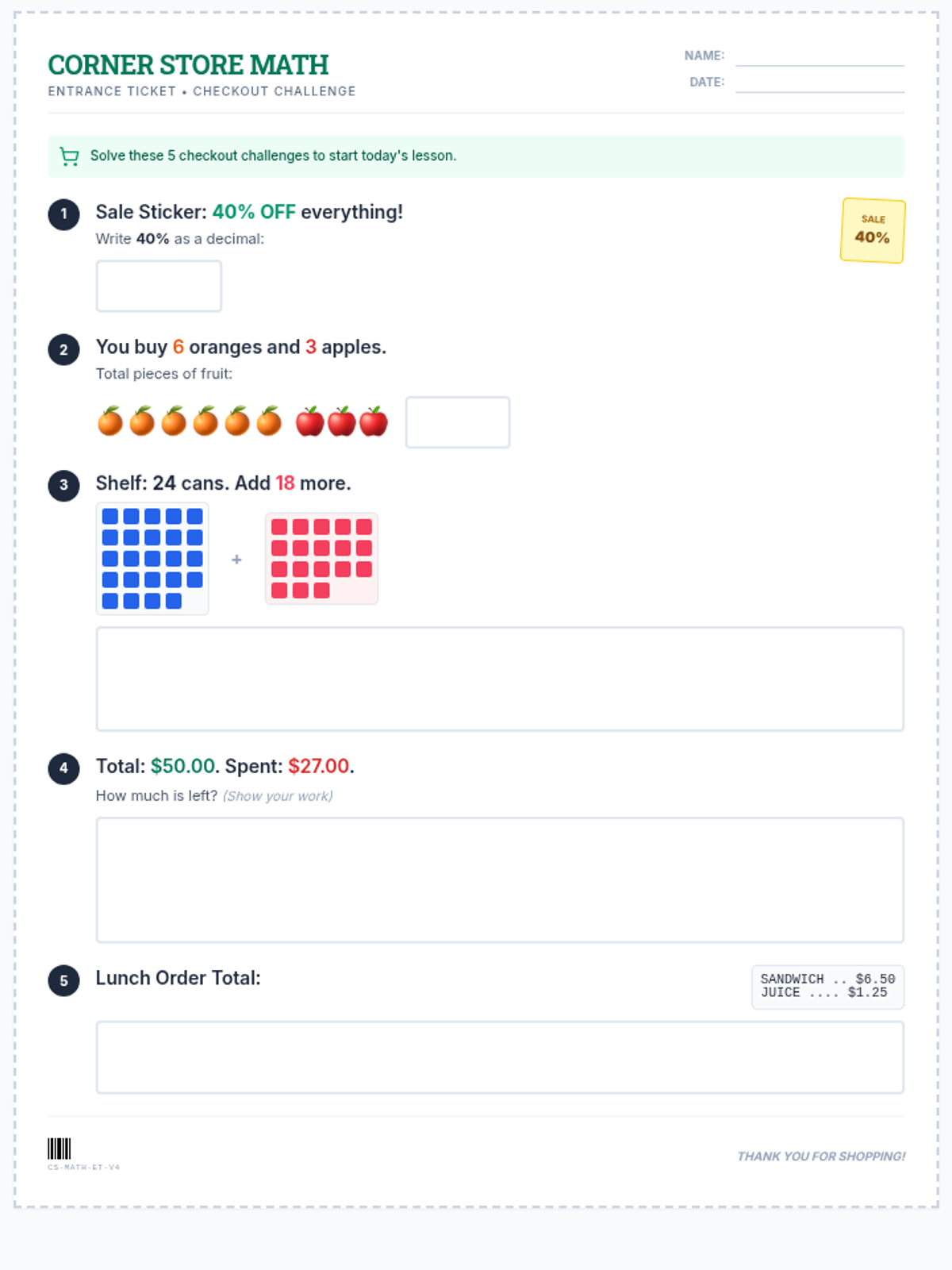
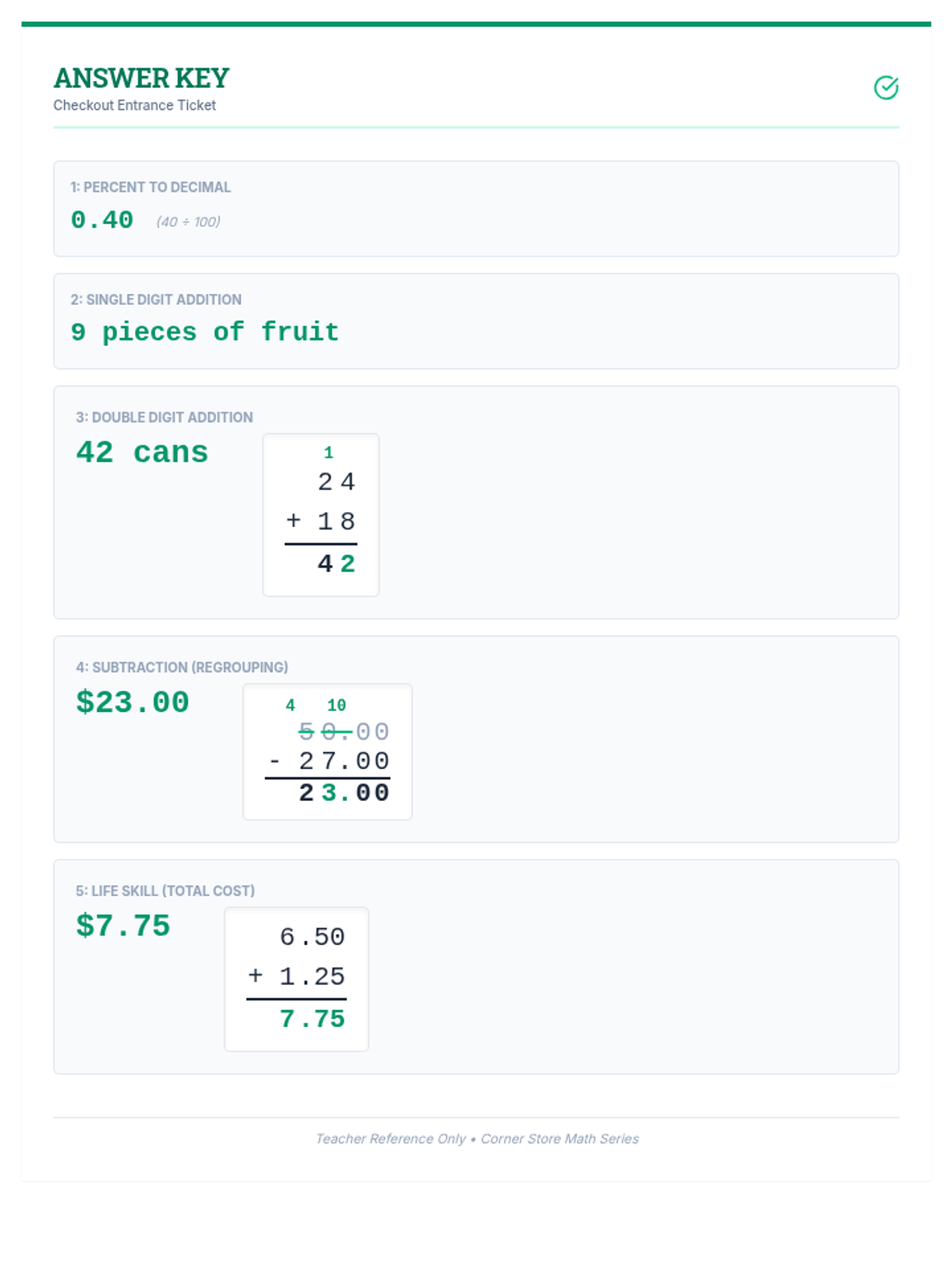
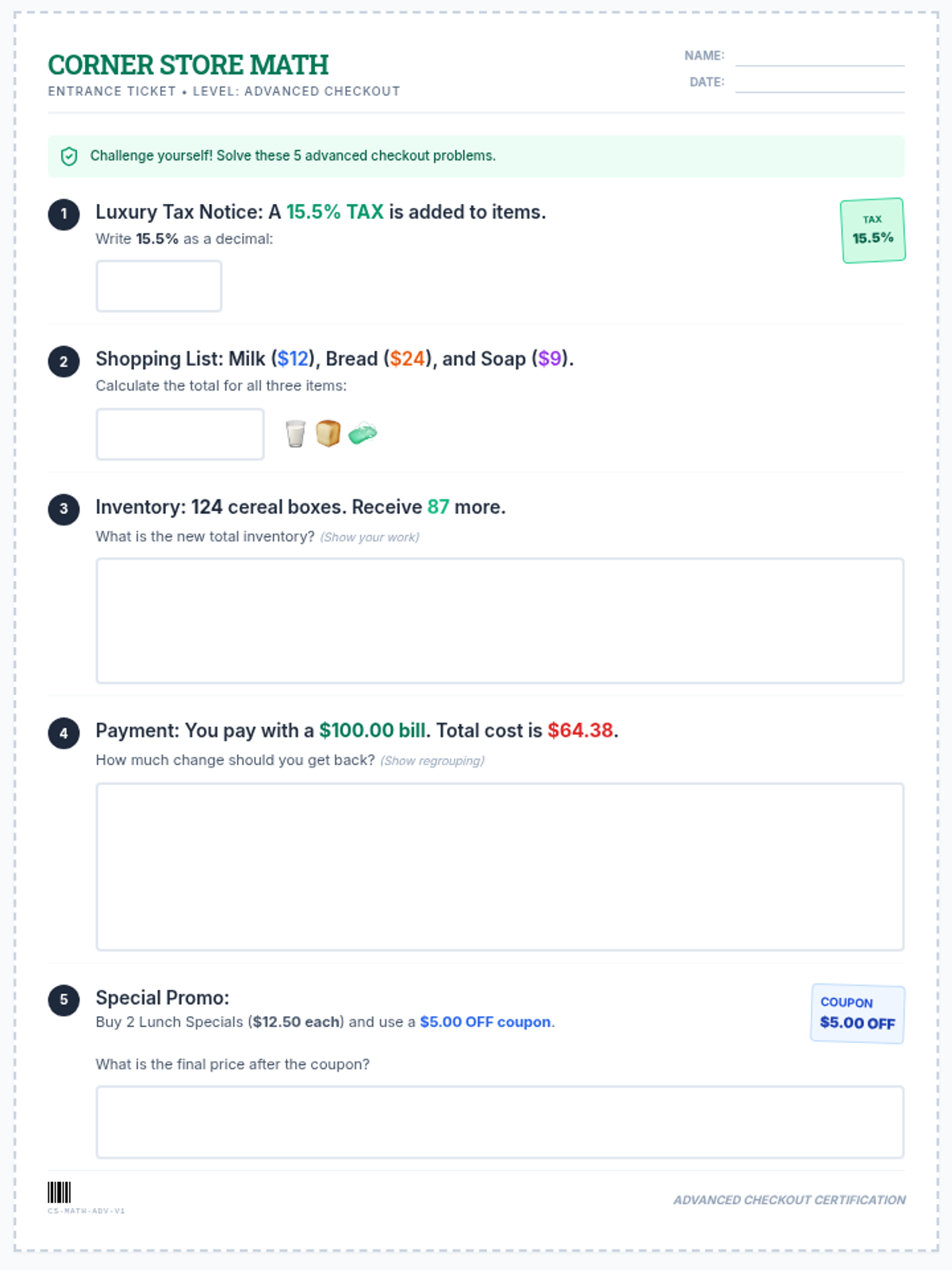
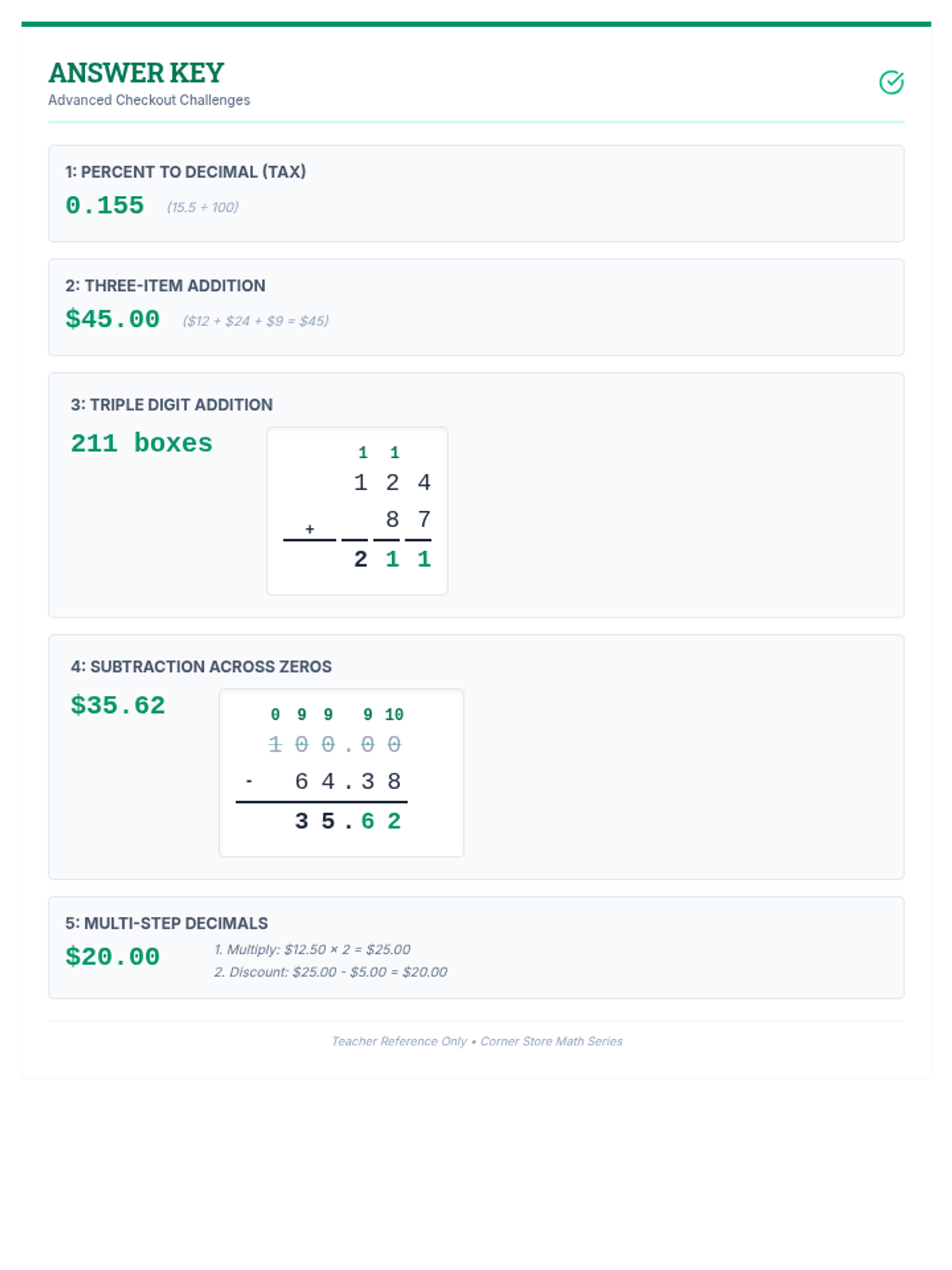
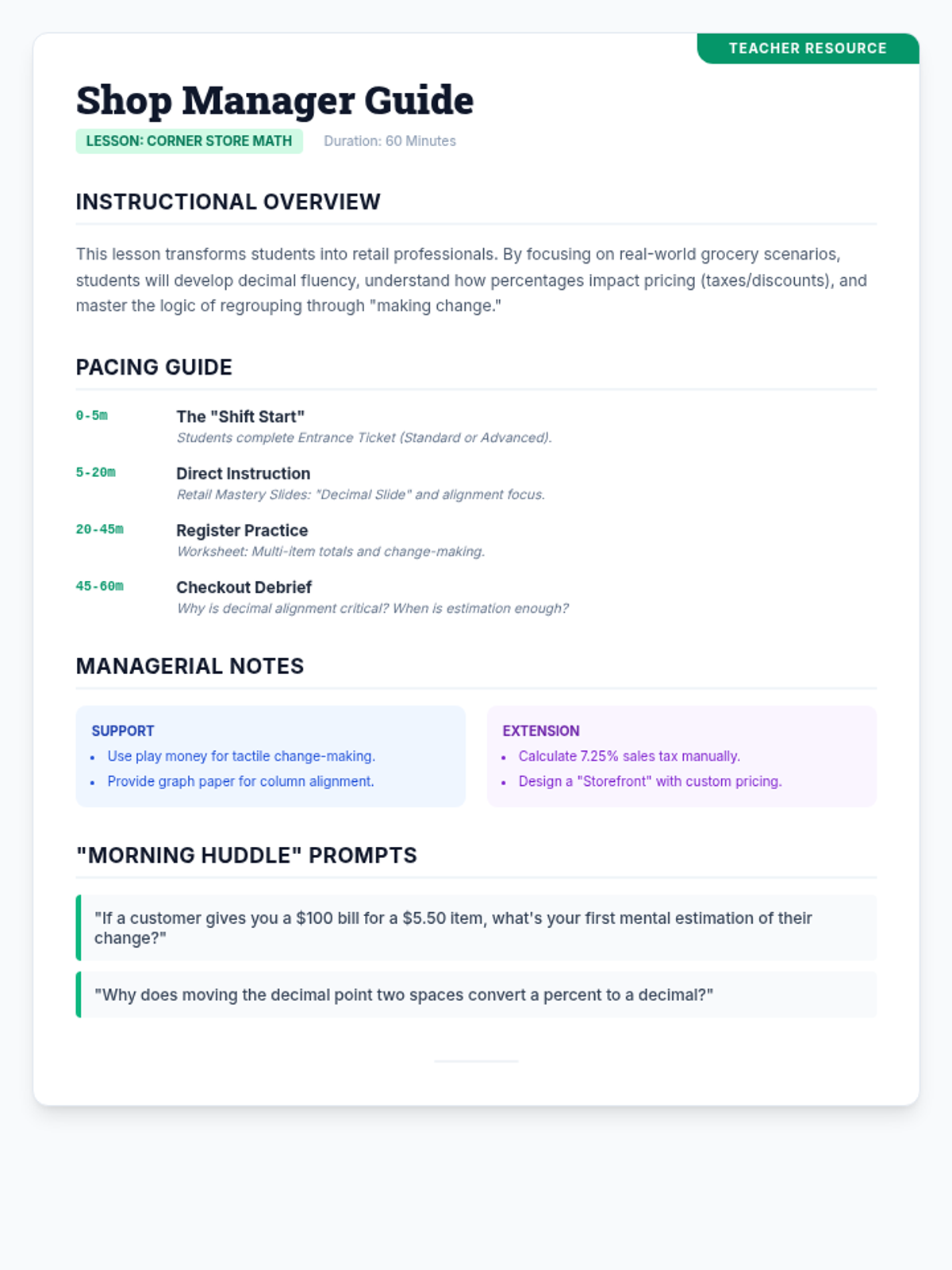
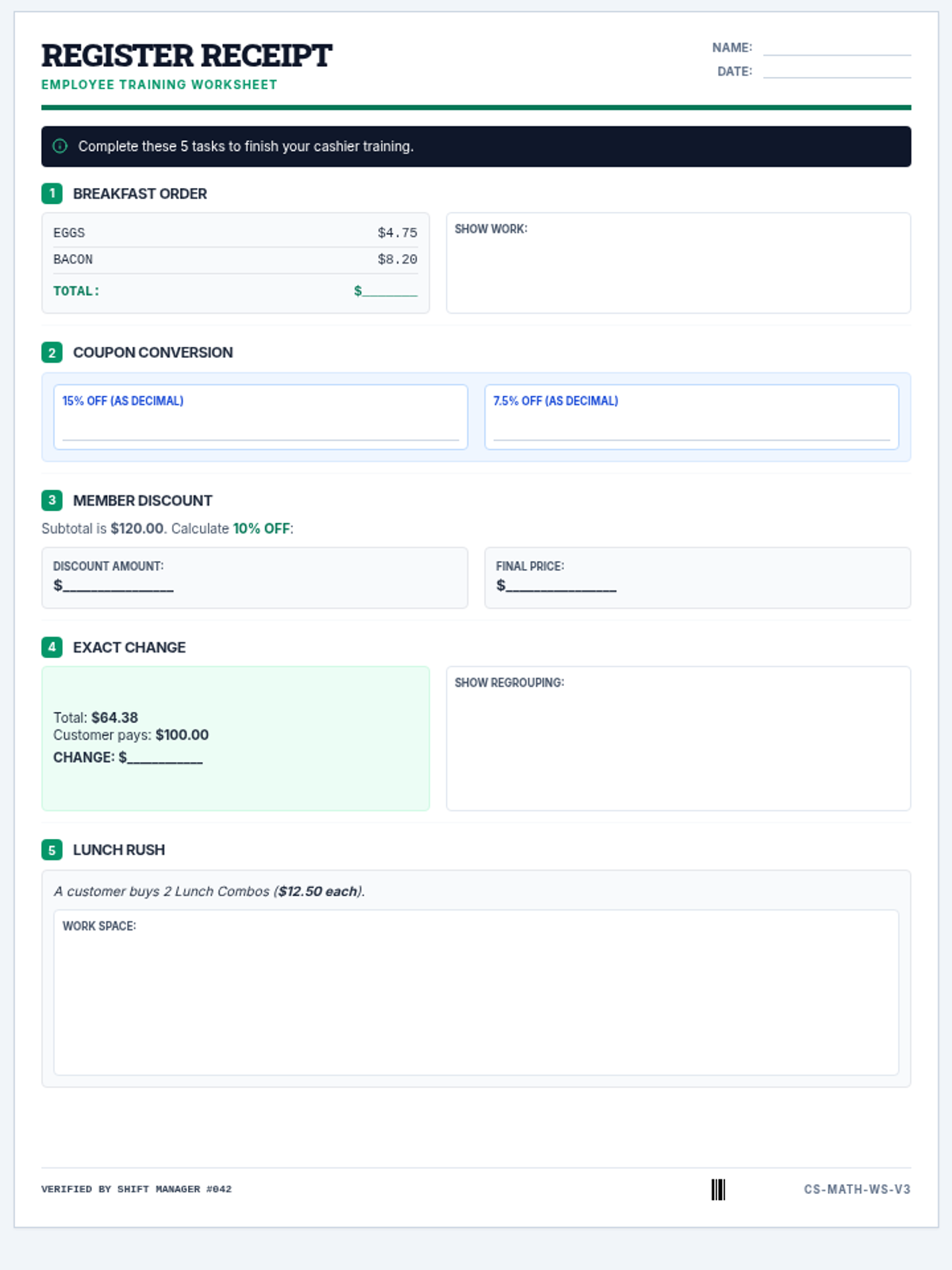
This lesson focuses on practical math applications in a retail setting, covering decimals, percentages, and basic arithmetic with a focus on money management.
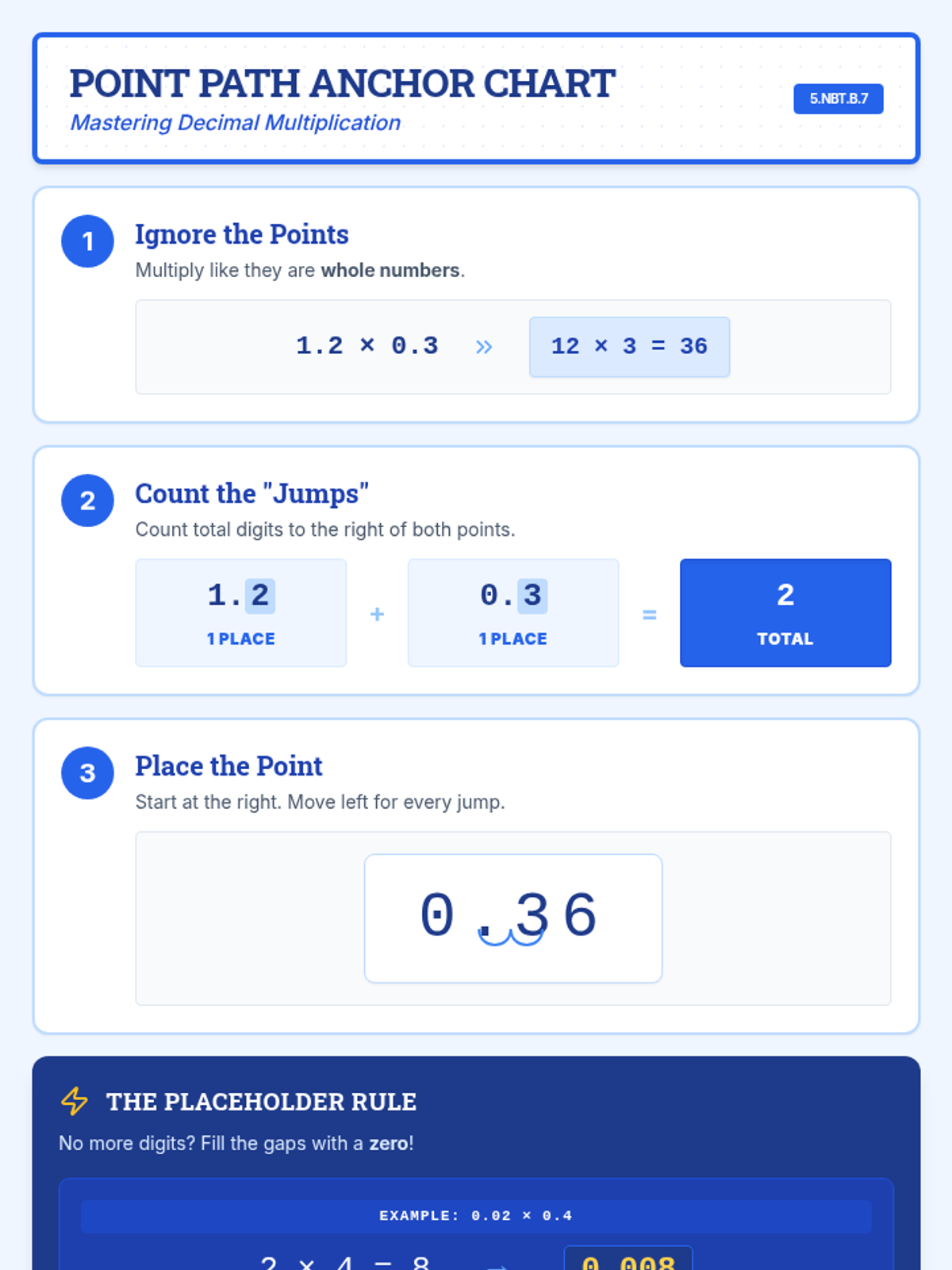
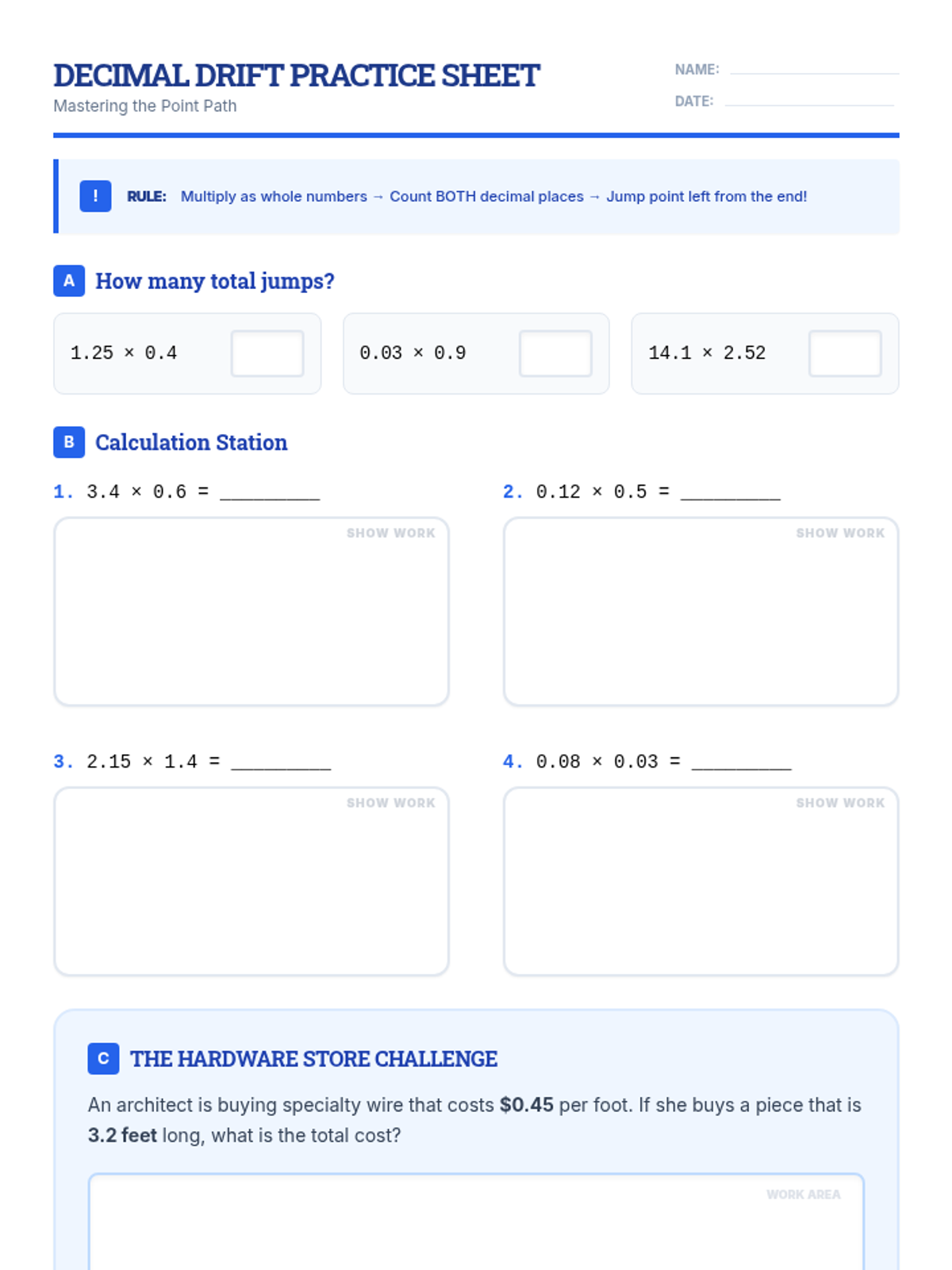
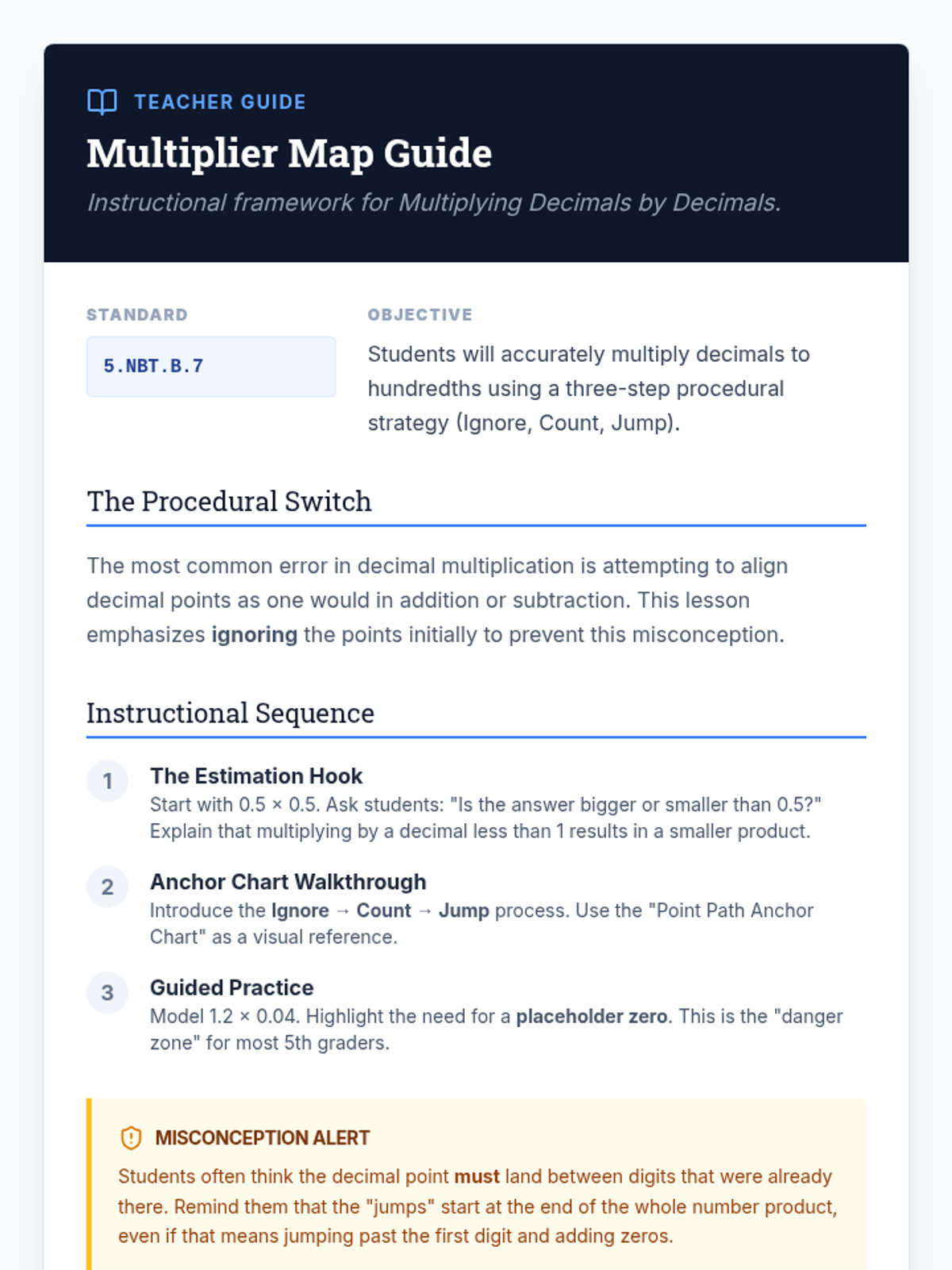
A comprehensive guide to multiplying decimals by decimals using a step-by-step procedural approach. This lesson includes a visual anchor chart for students, a practice worksheet to reinforce the skill, and a teacher guide for effective instruction.
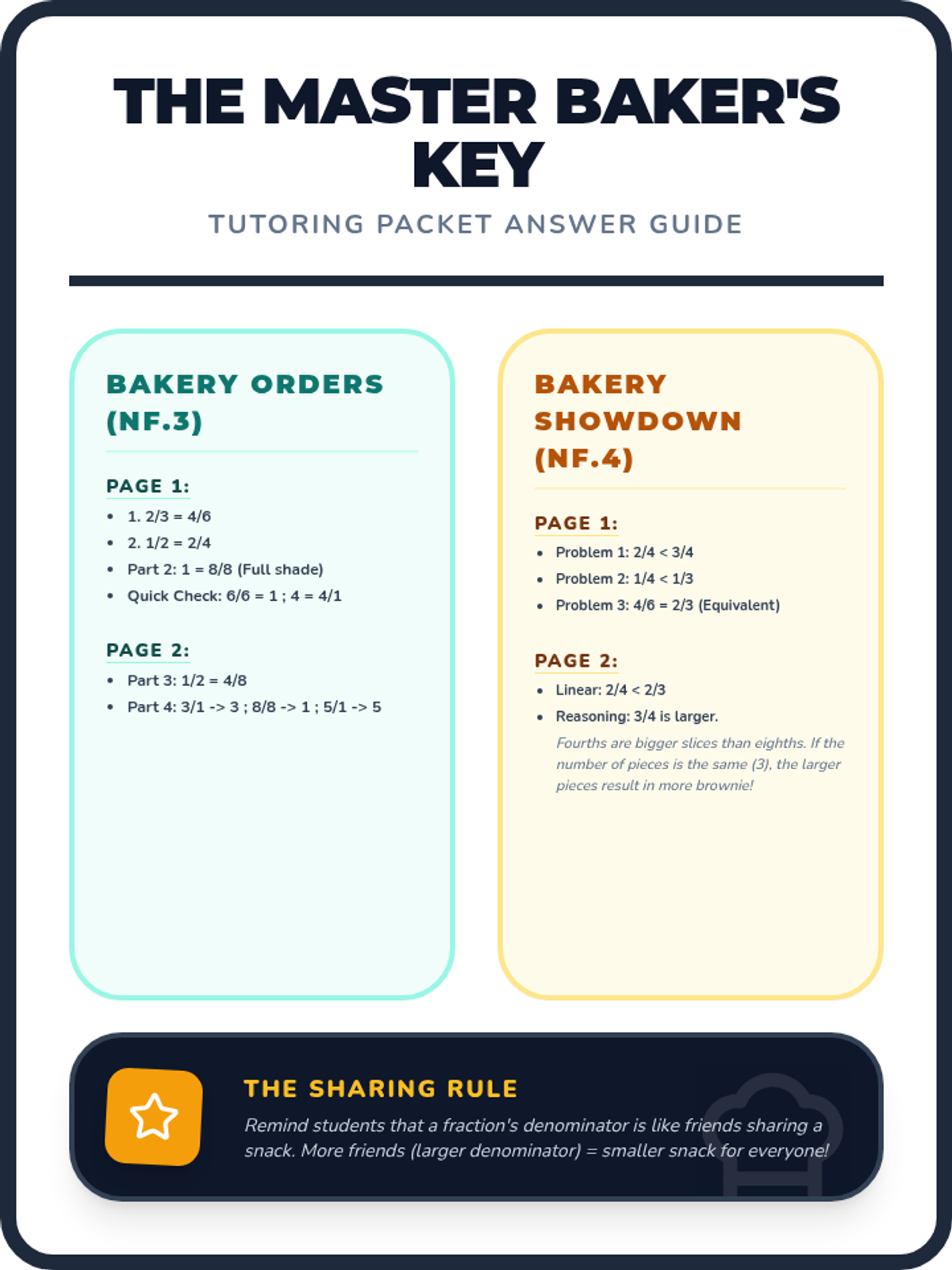
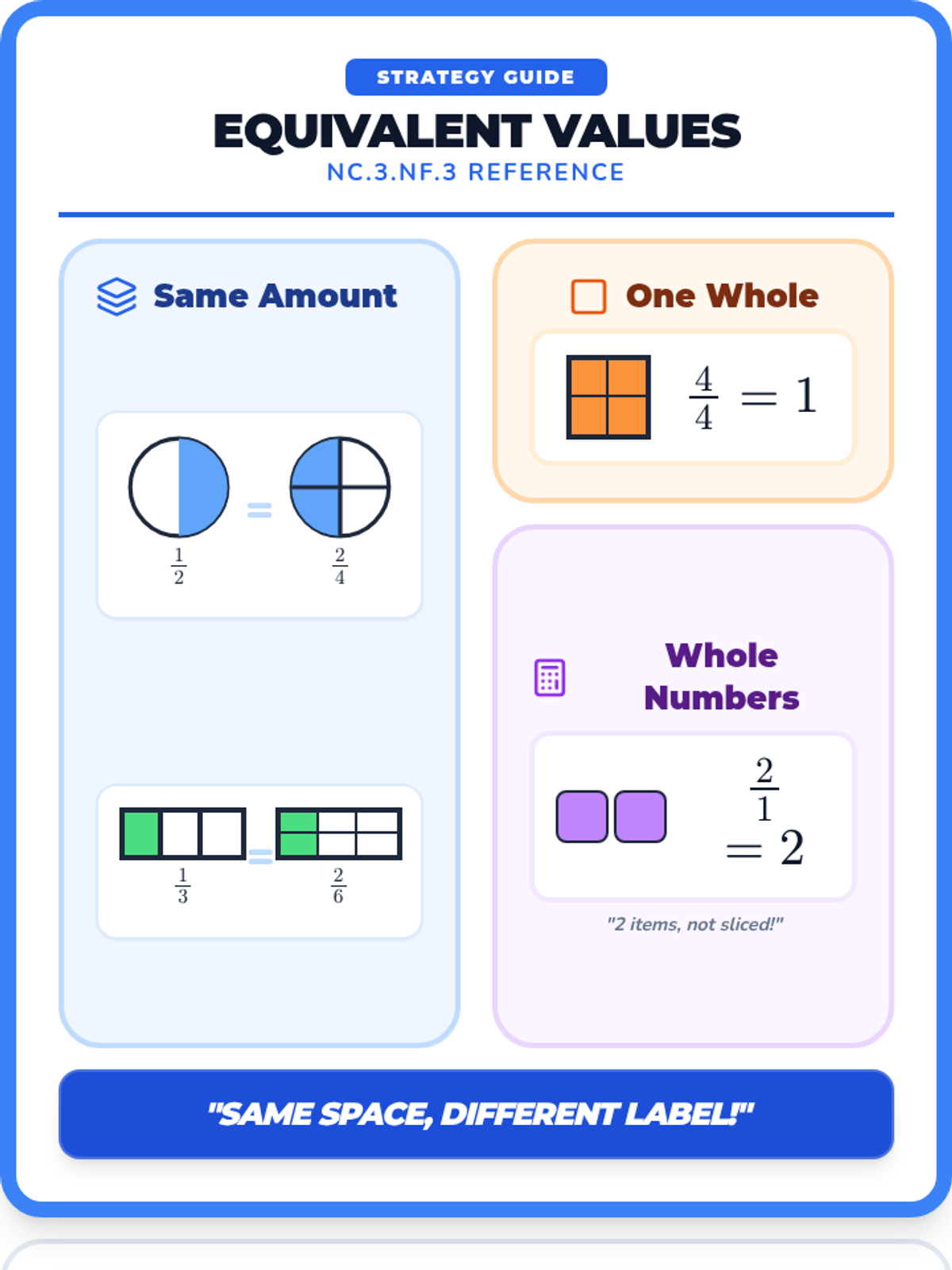
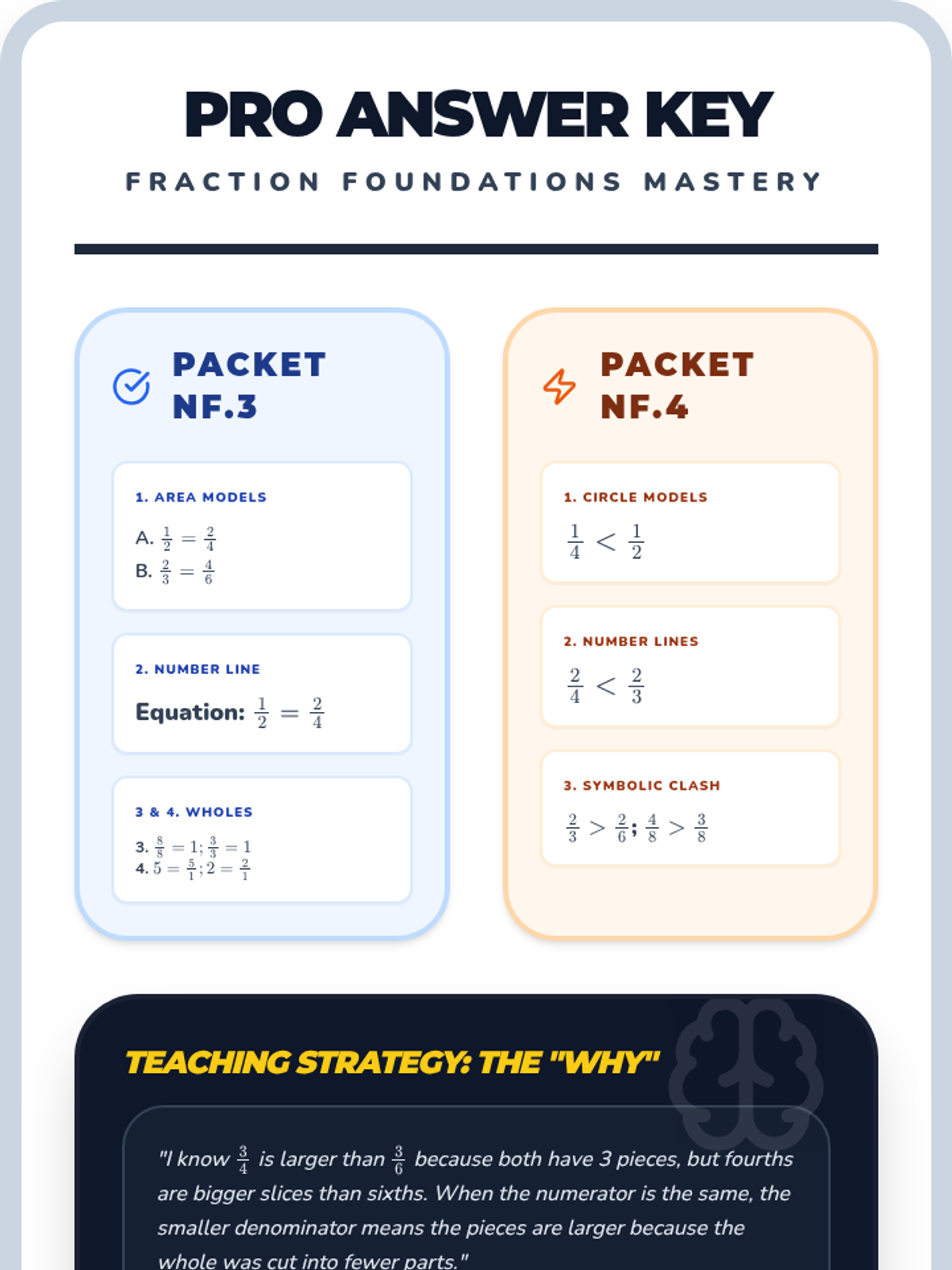
Classroom-ready anchor charts and independent worksheets for NC.3.NF.3 and NC.3.NF.4, focusing on equivalent fractions, wholes, and comparison strategies.
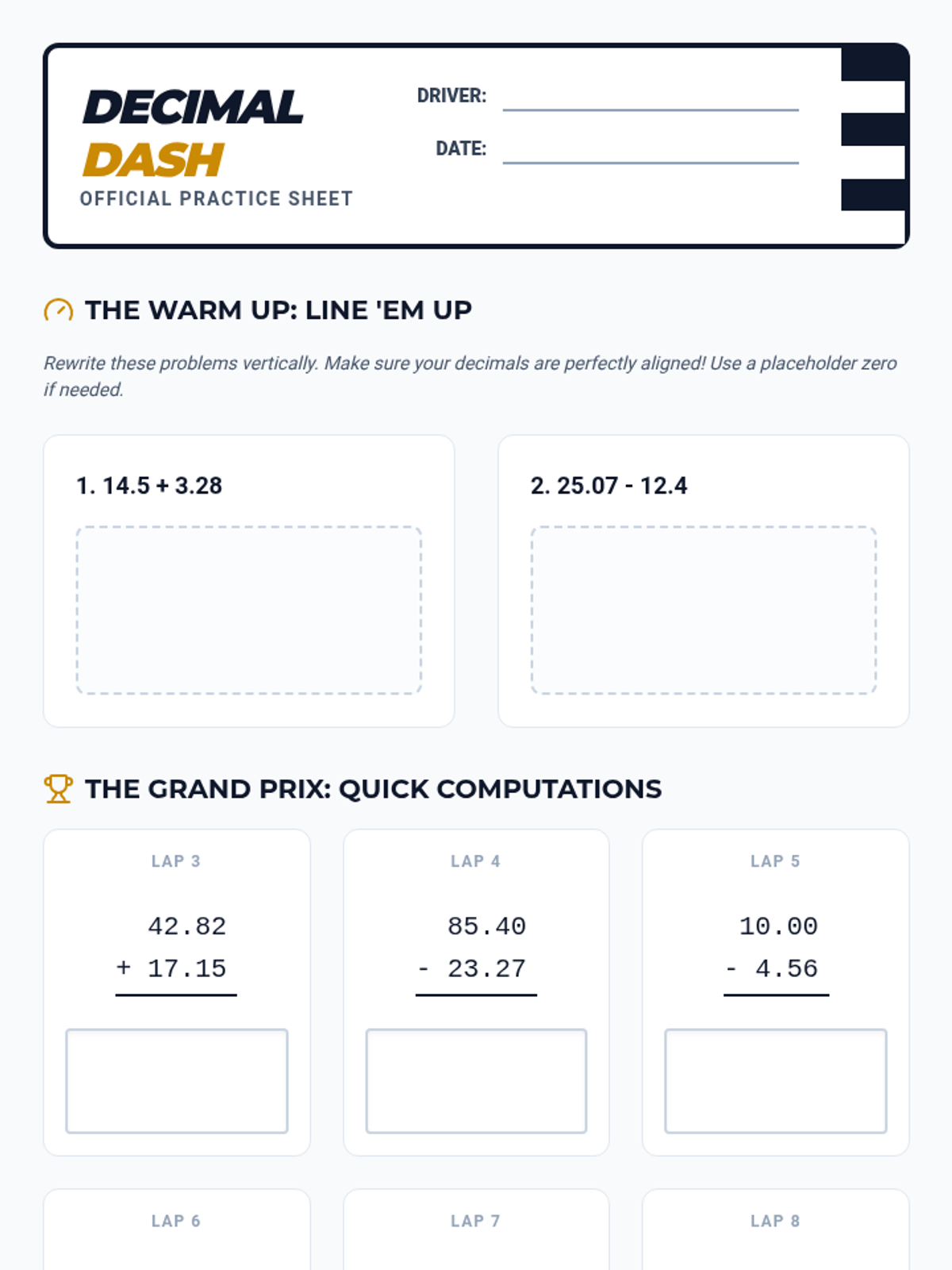
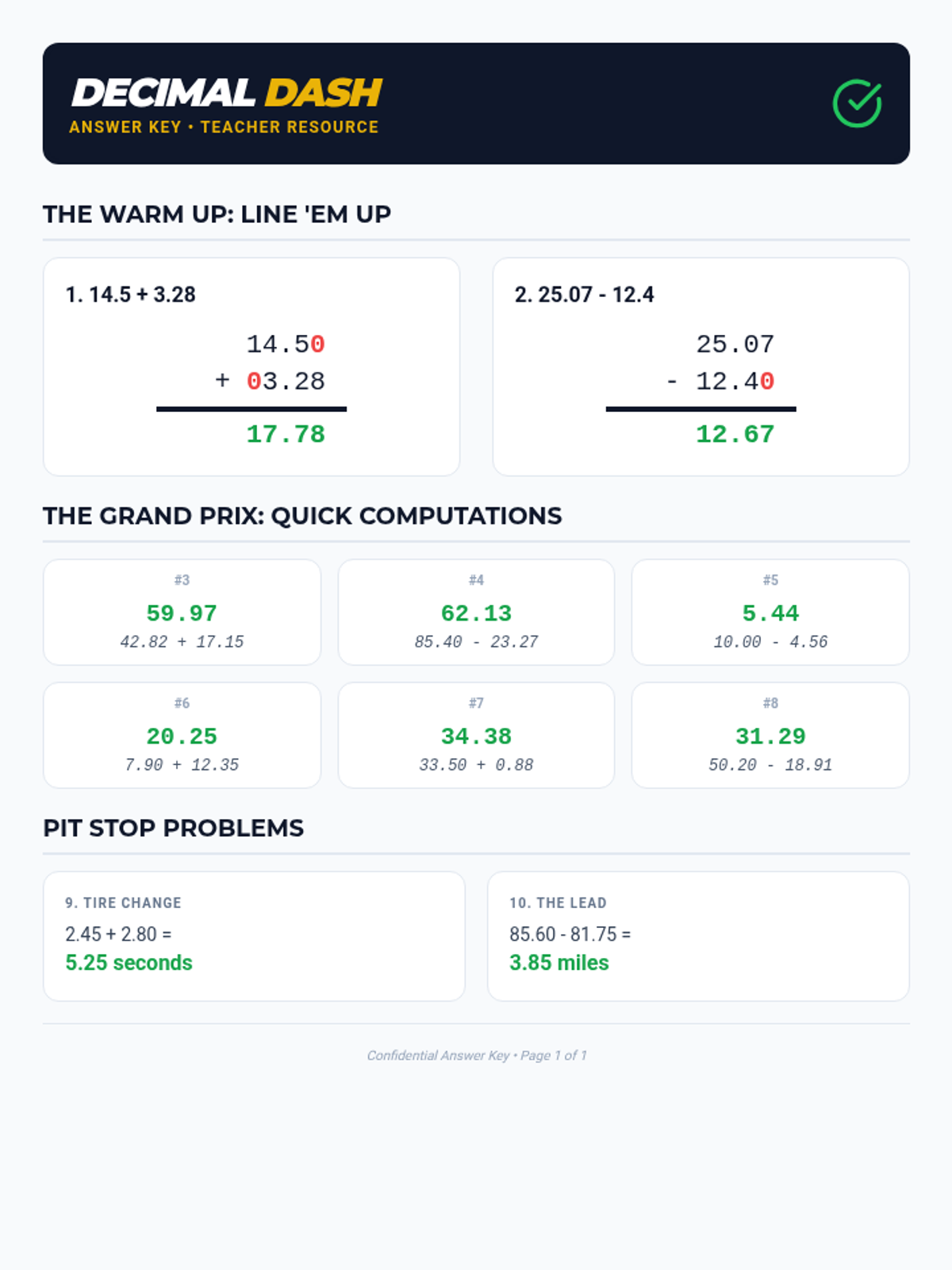
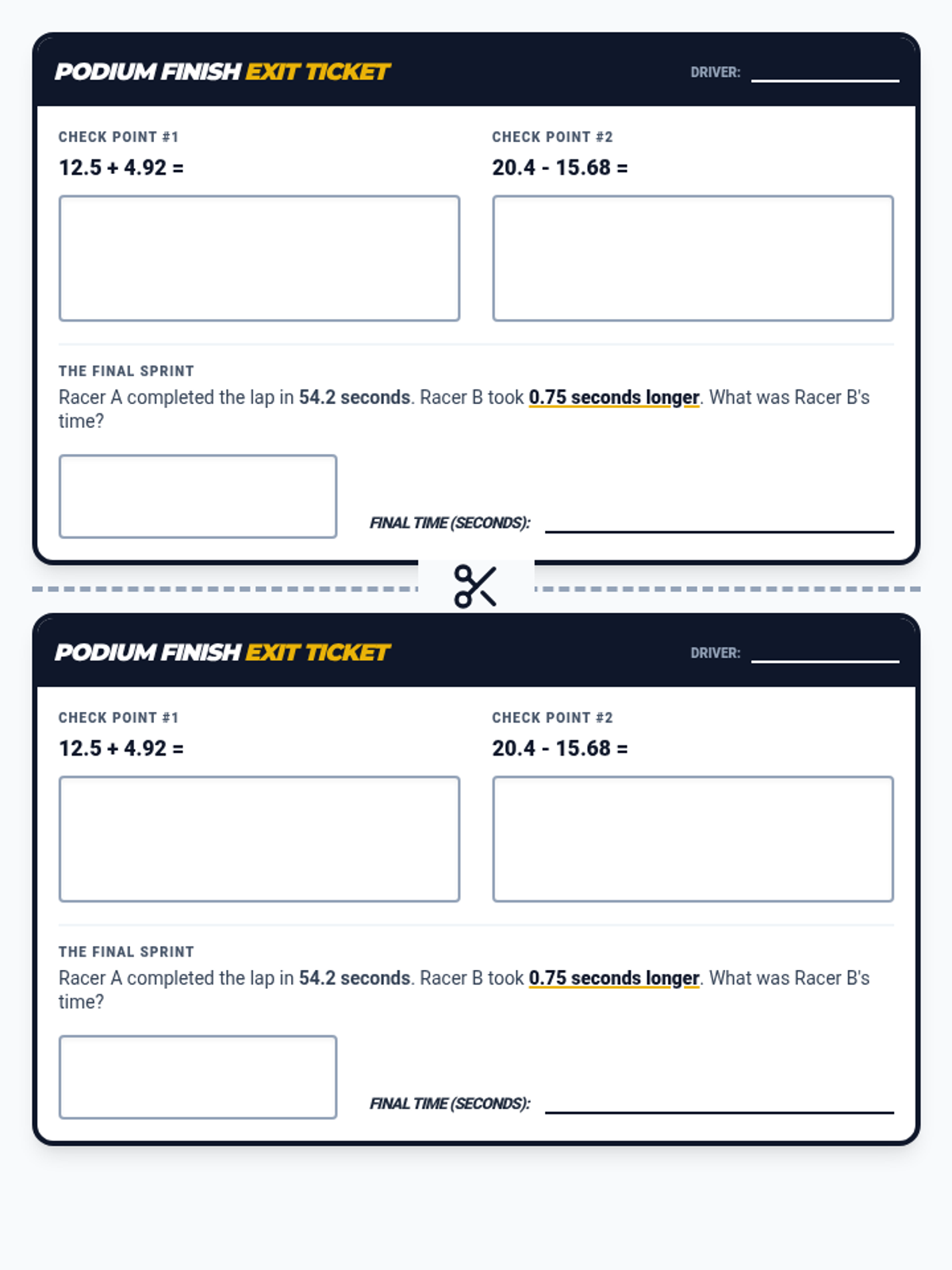
A fast-paced lesson on adding and subtracting decimals through the hundredths place, focusing on the importance of place value alignment. Students will practice lining up decimals and using placeholders to solve real-world racing-themed problems.
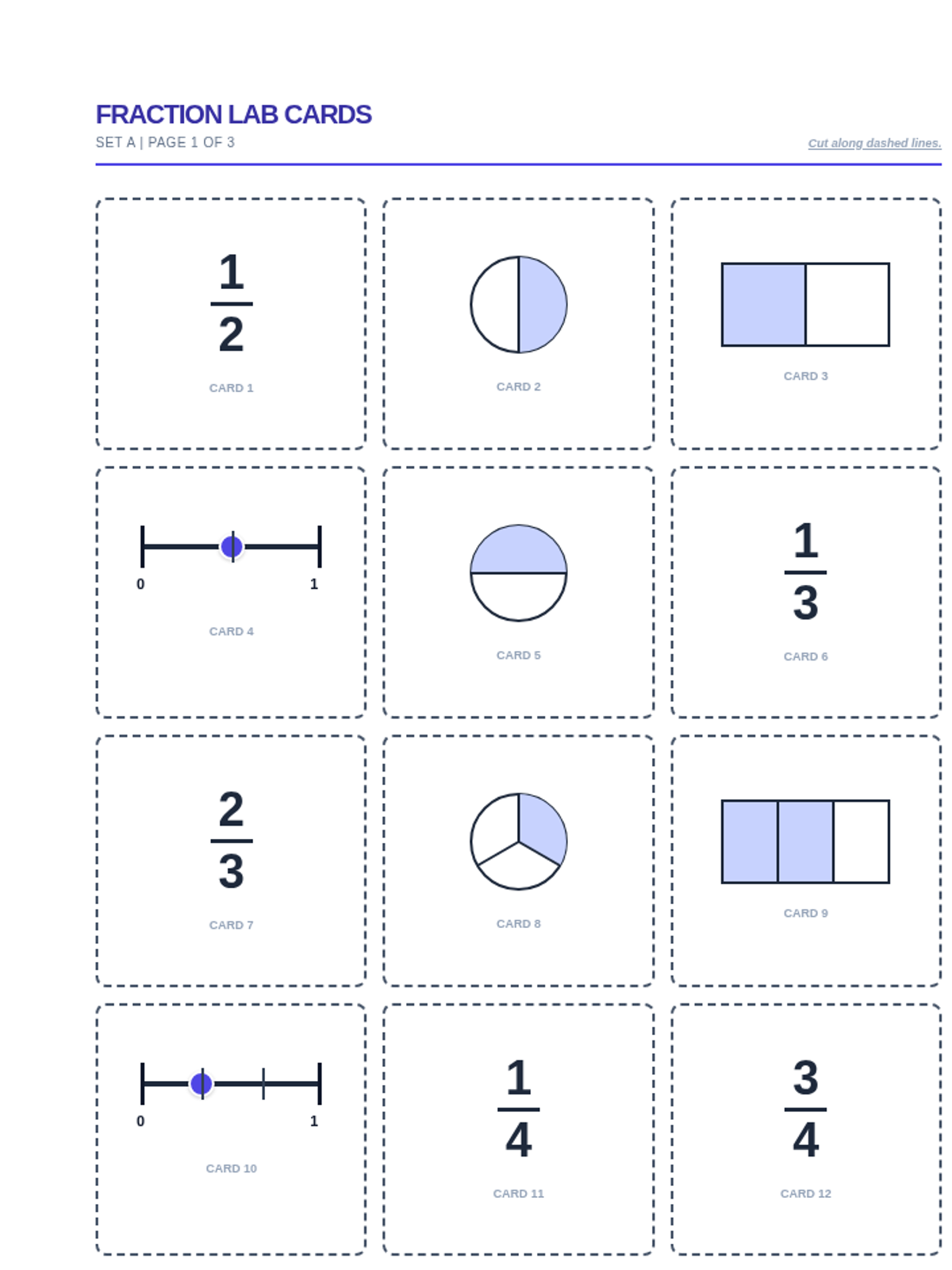
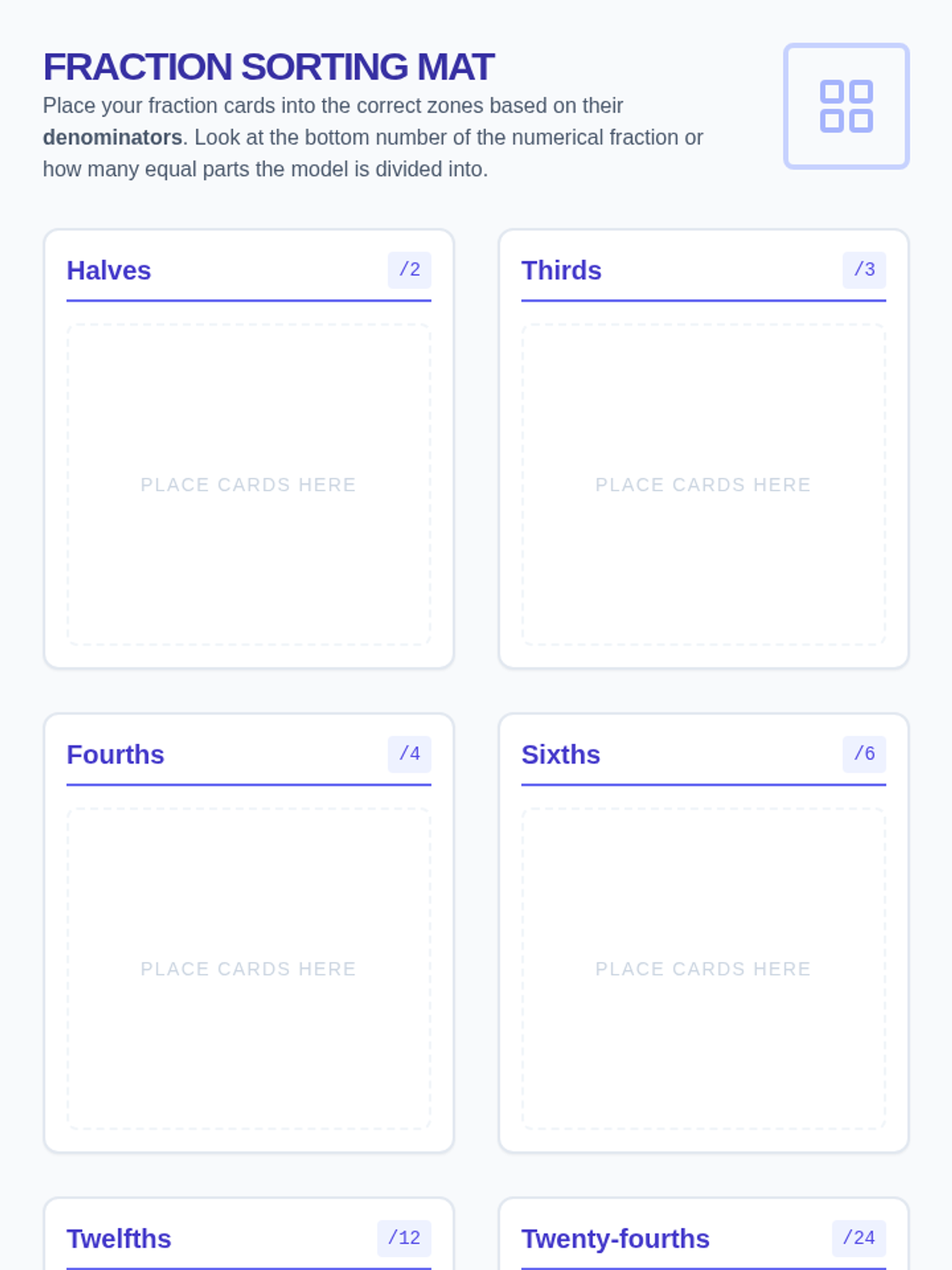
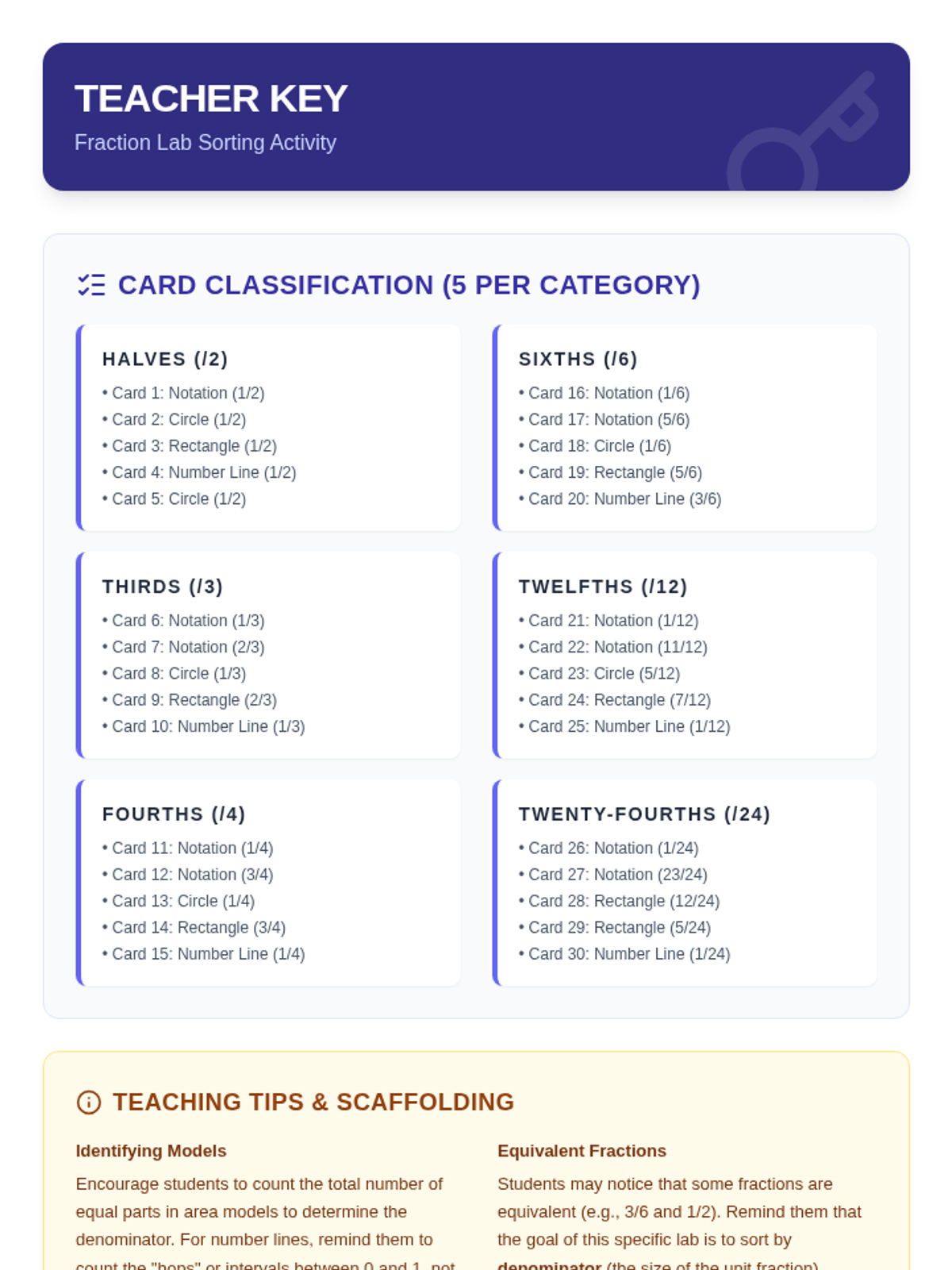
A hands-on exploration of fractions where students identify and sort fractions based on their denominators using various representations including number lines, area models, and numerical forms.
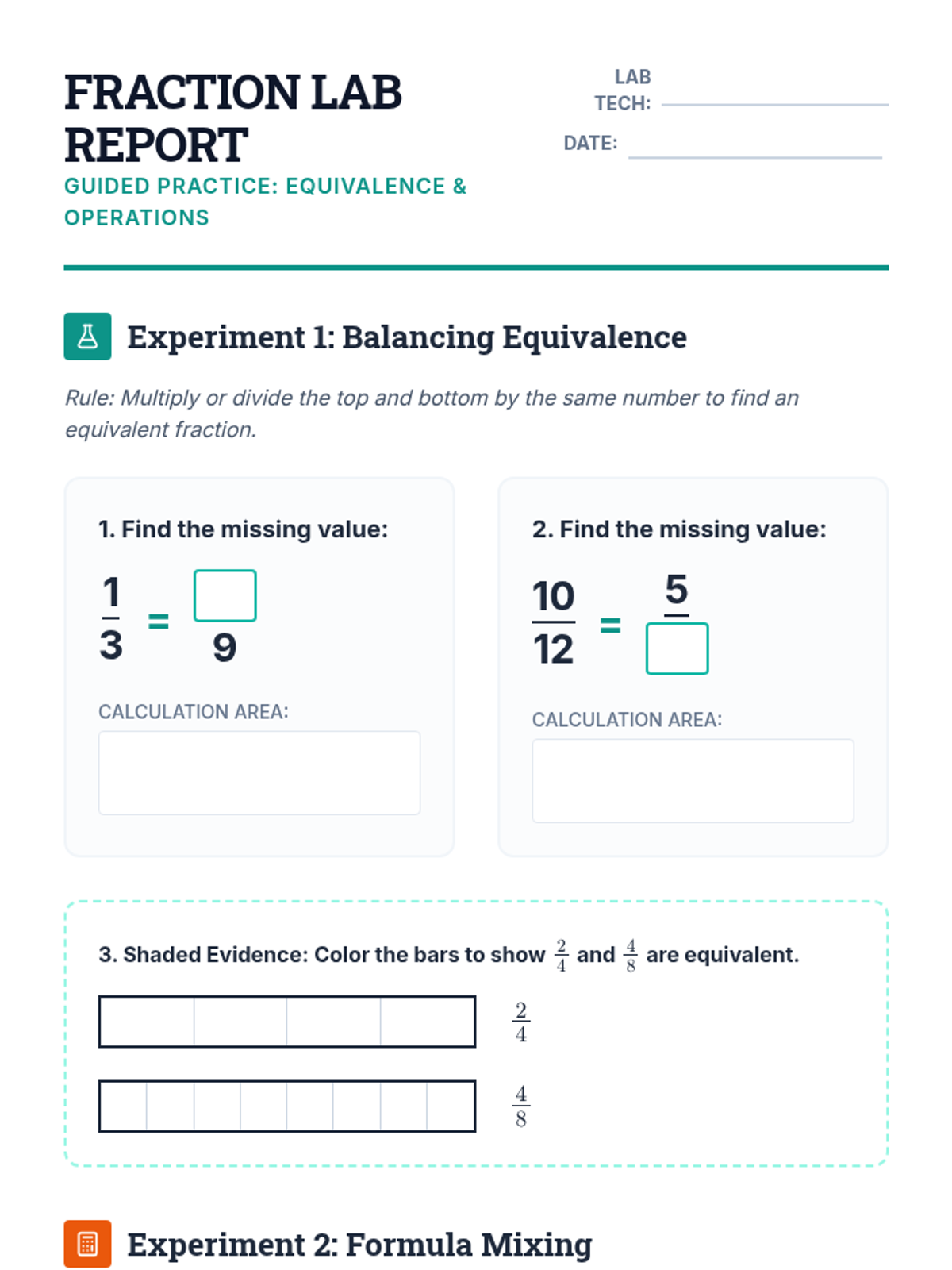
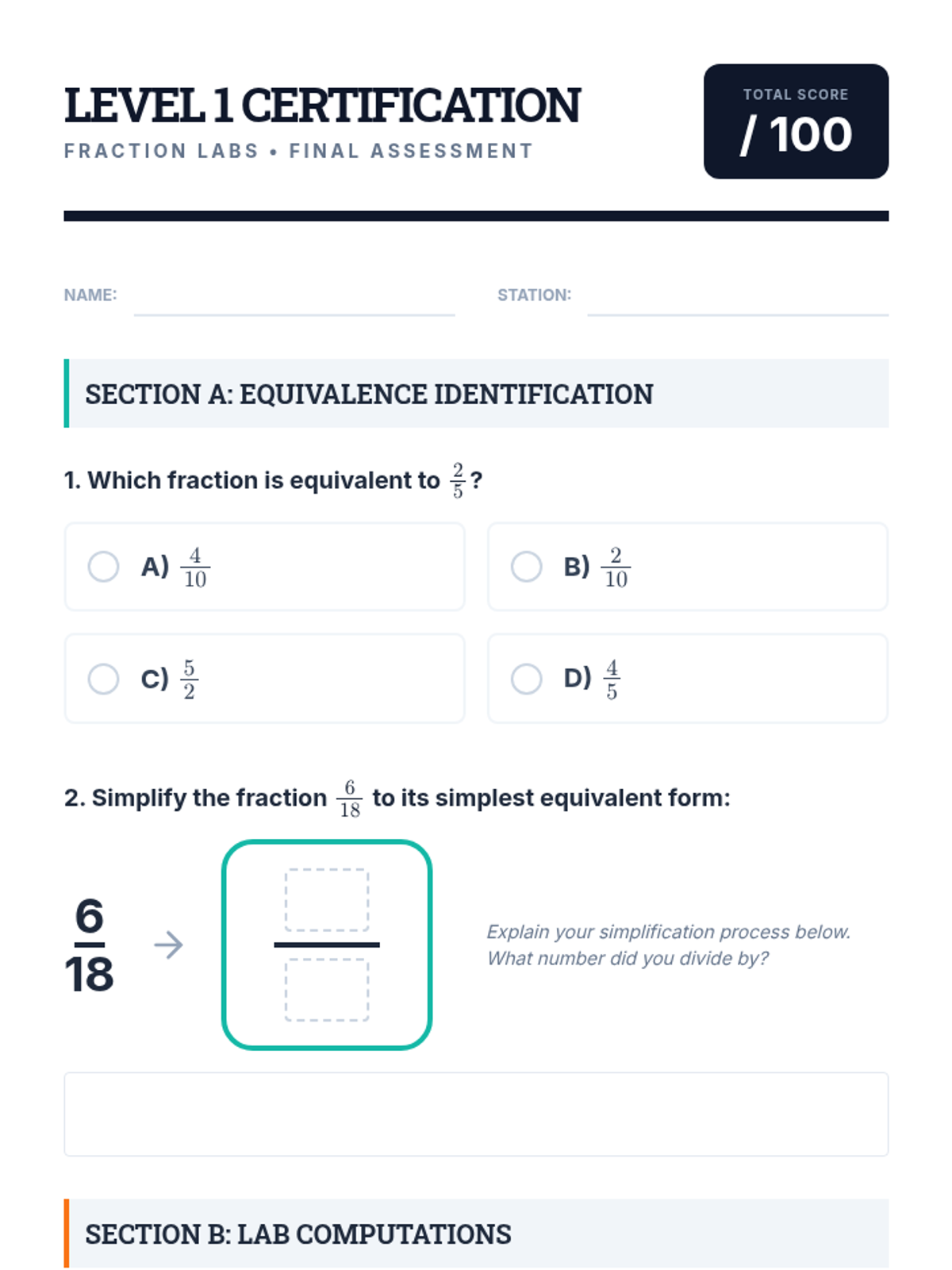
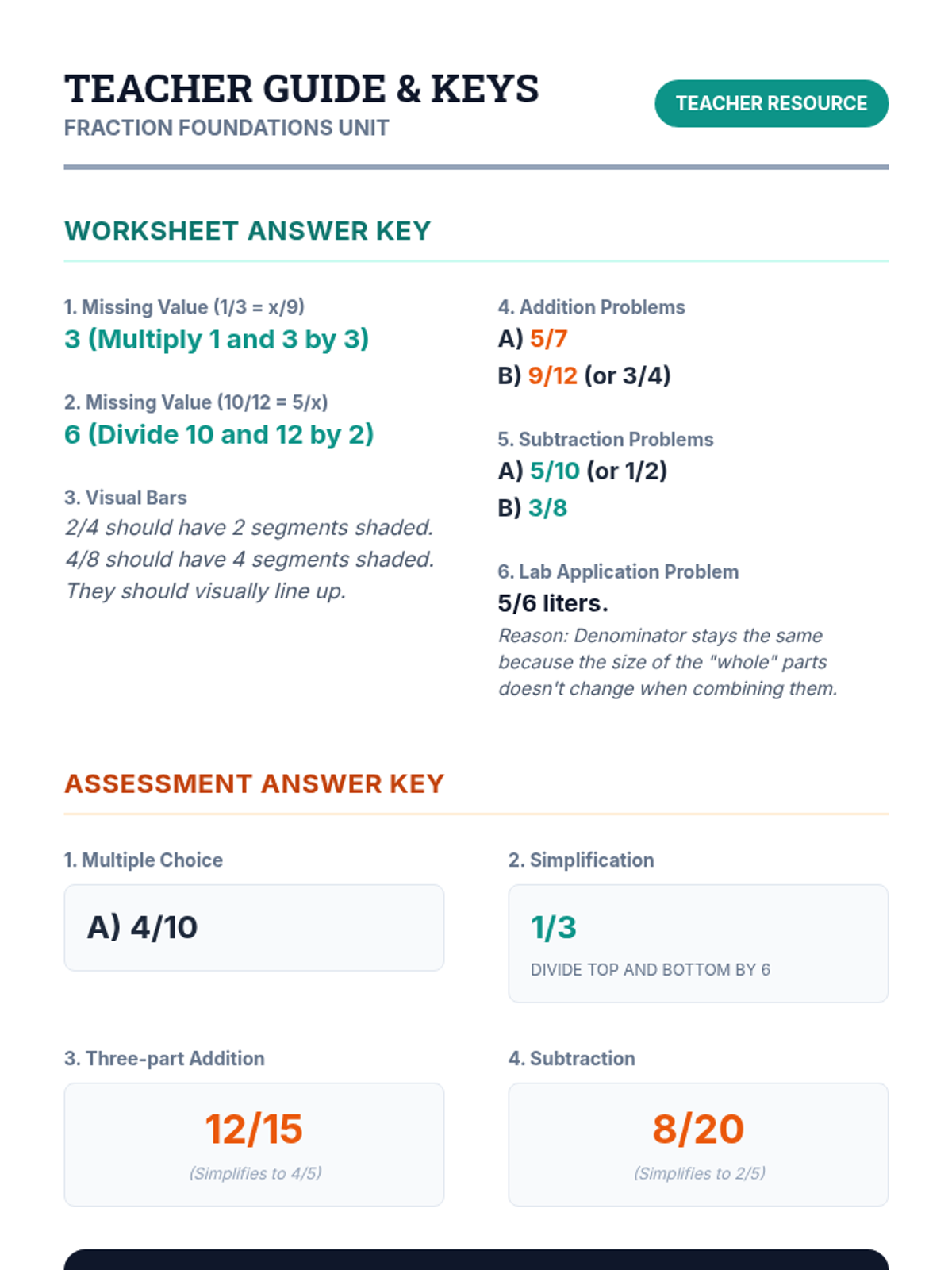
A comprehensive lesson on equivalent fractions and adding/subtracting fractions with like denominators, featuring a science lab theme.
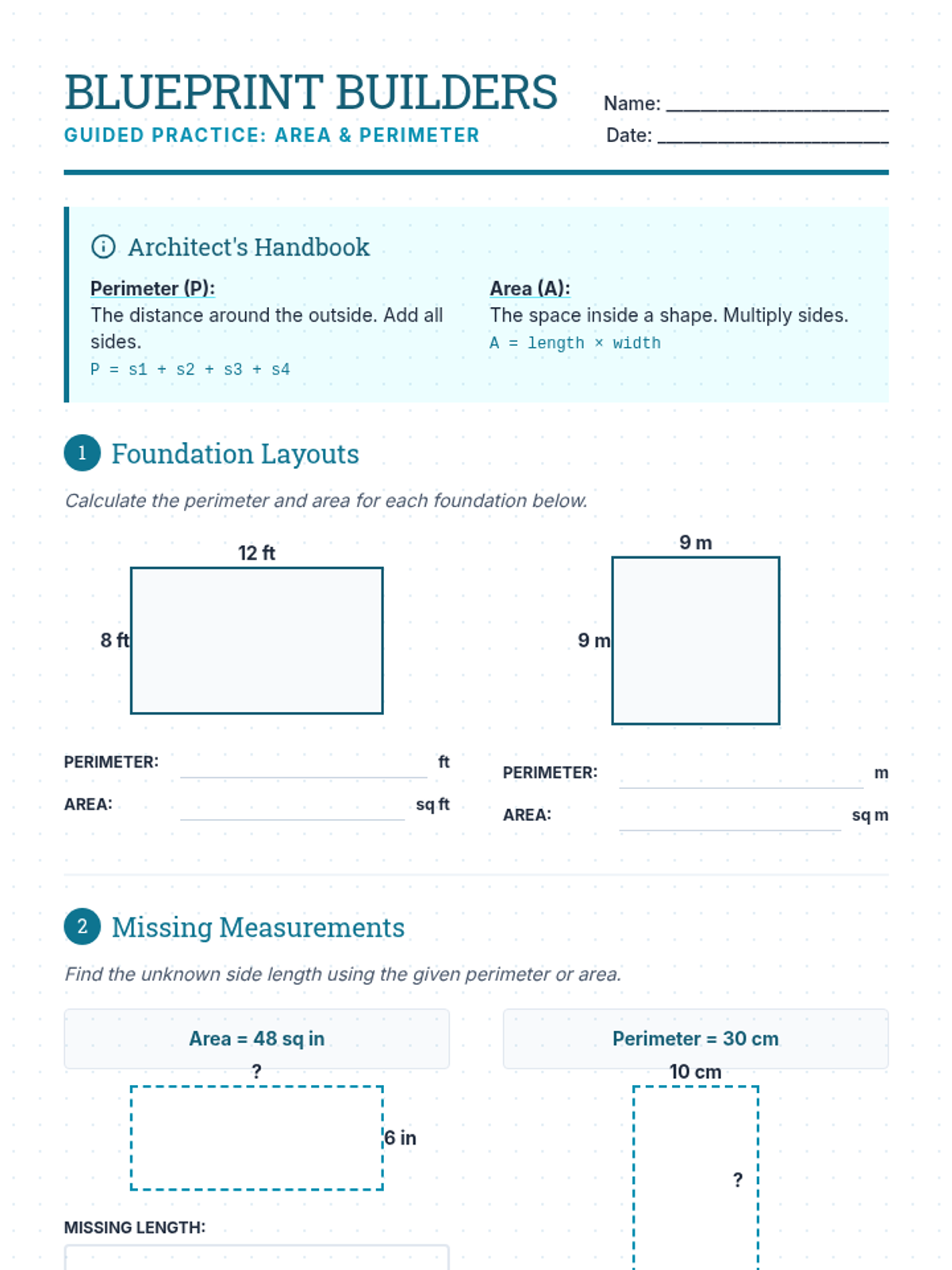
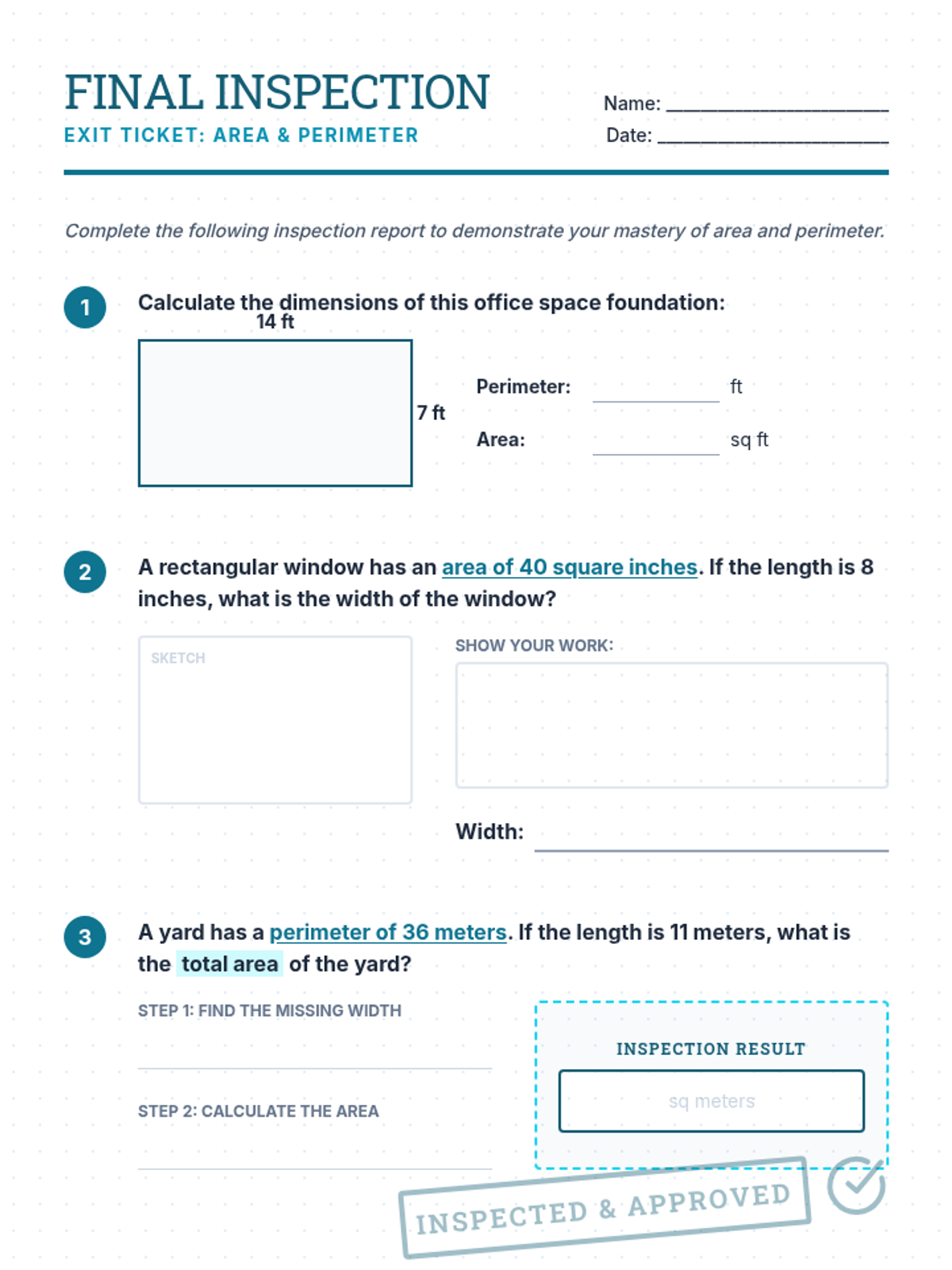
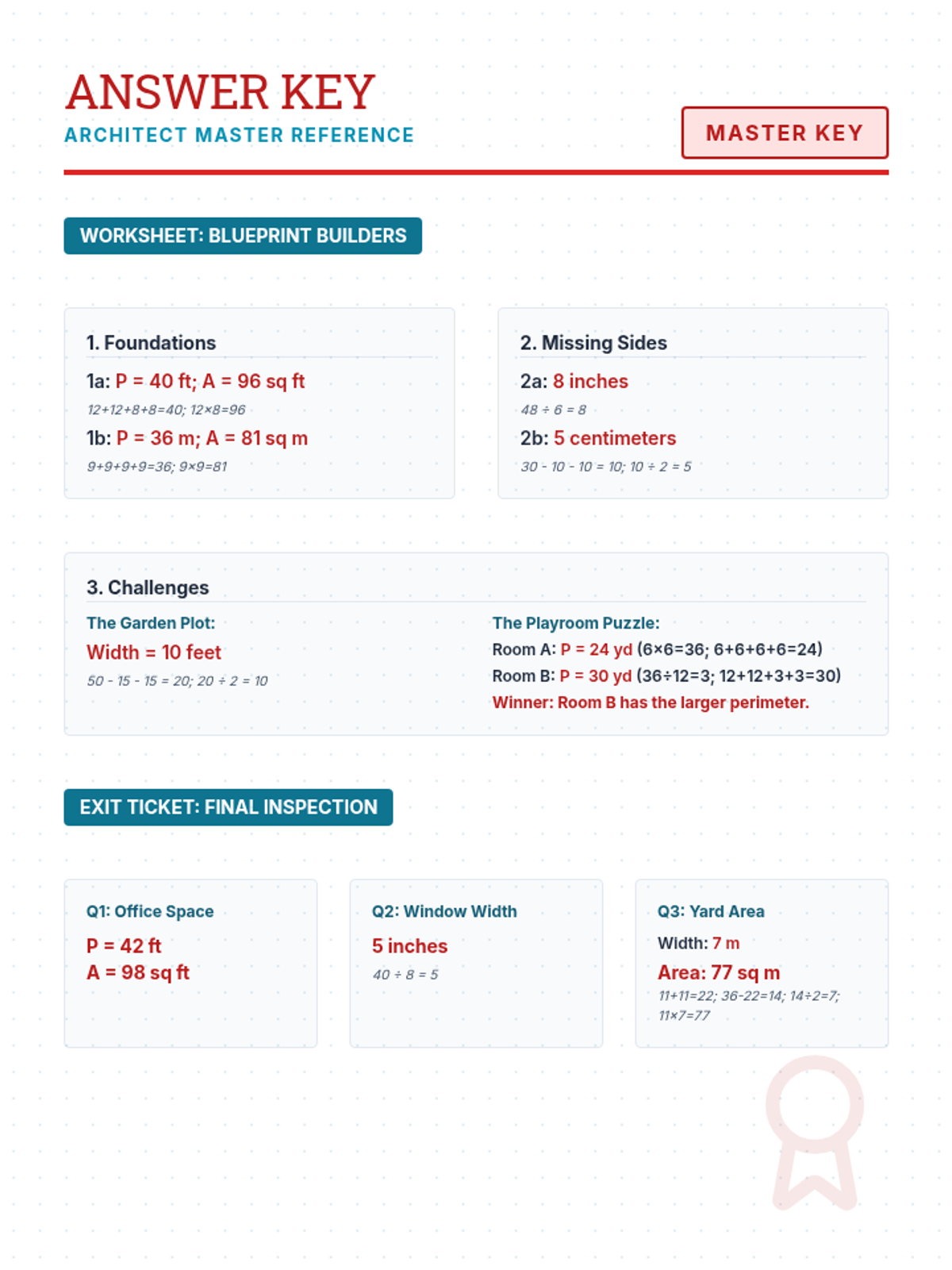
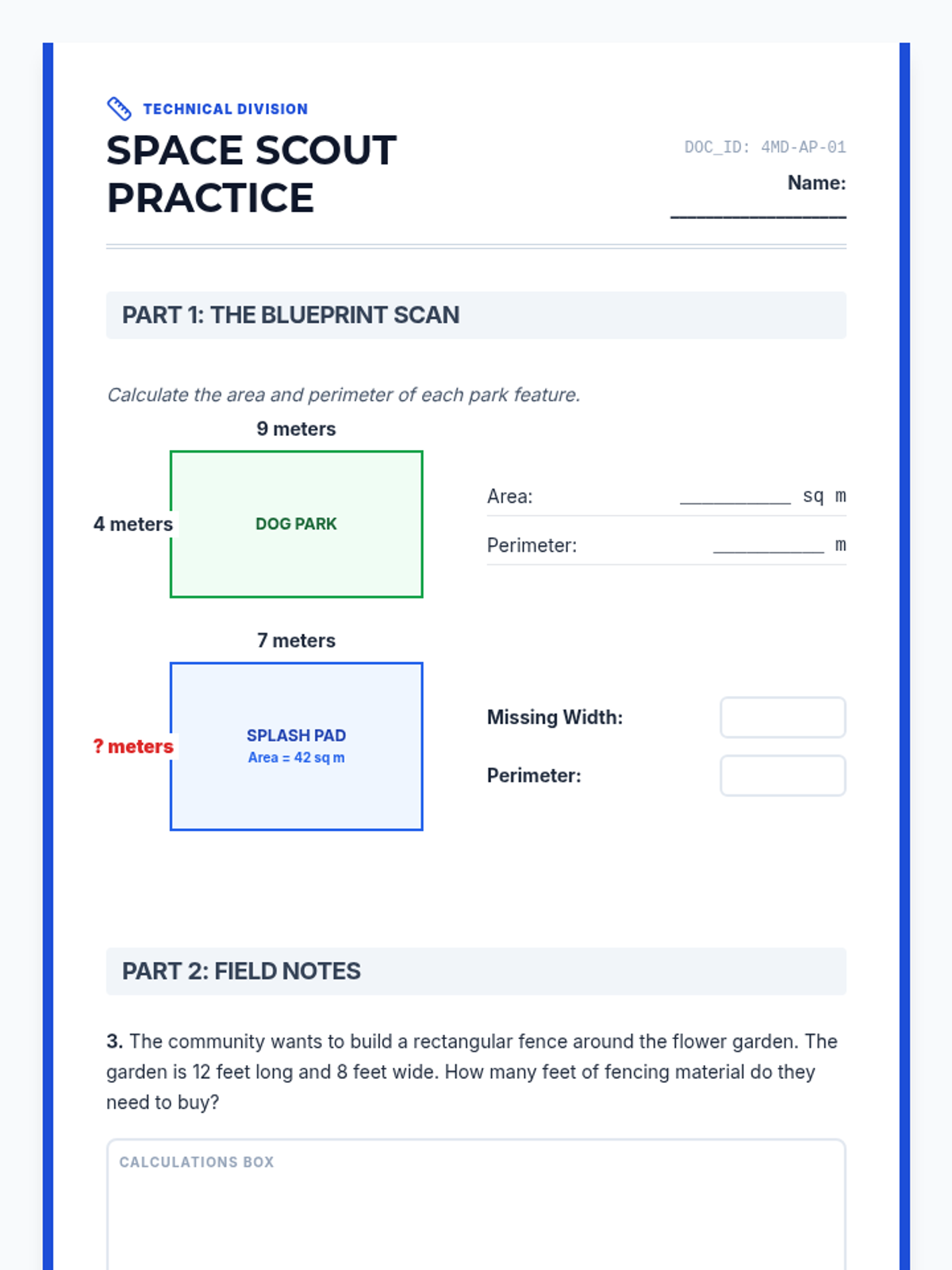
A lesson focused on solving real-world area and perimeter problems, including finding unknown side lengths and comparing rectangles with different dimensions but shared properties. Students act as junior architects to design and analyze blueprints.
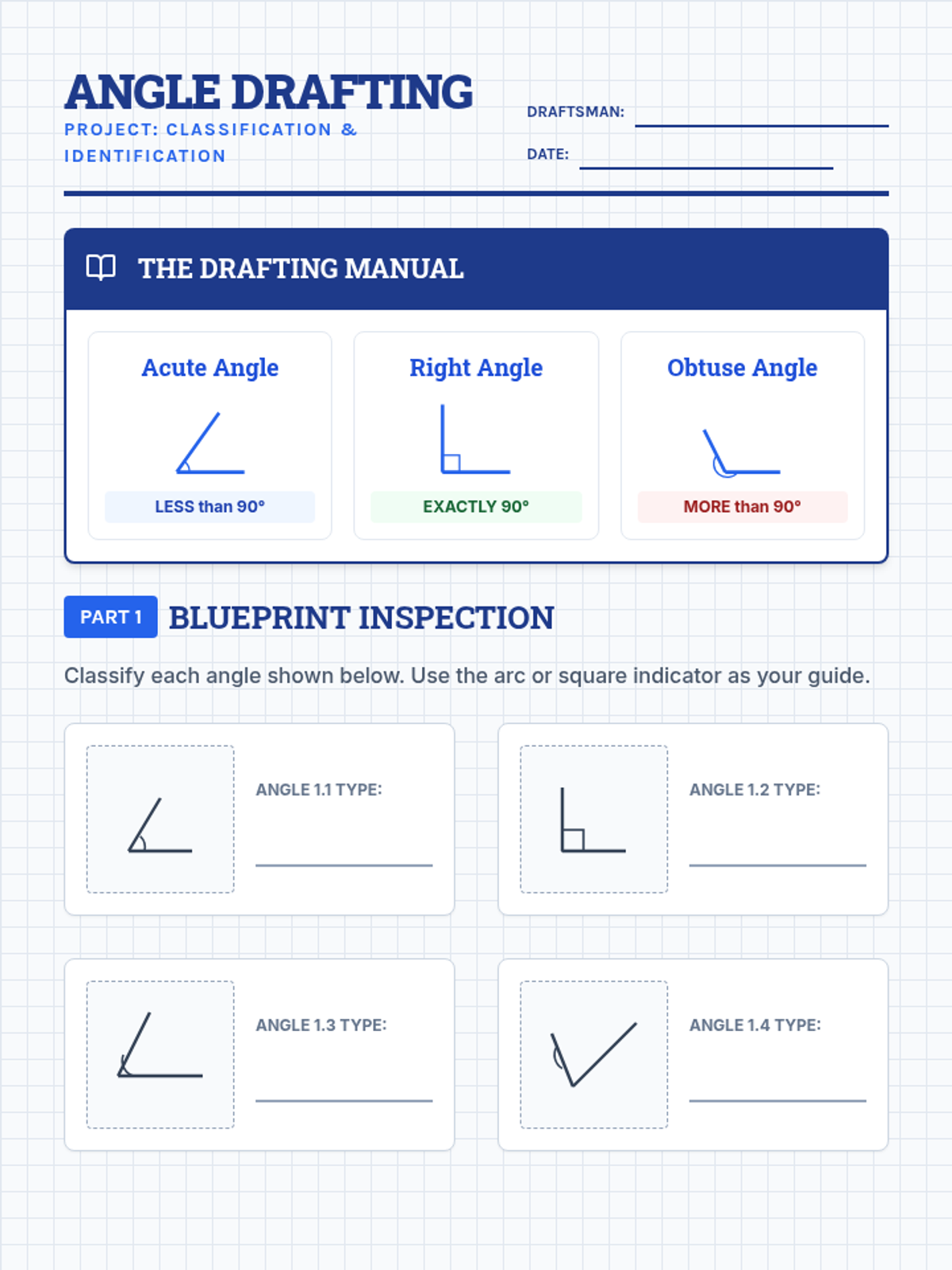
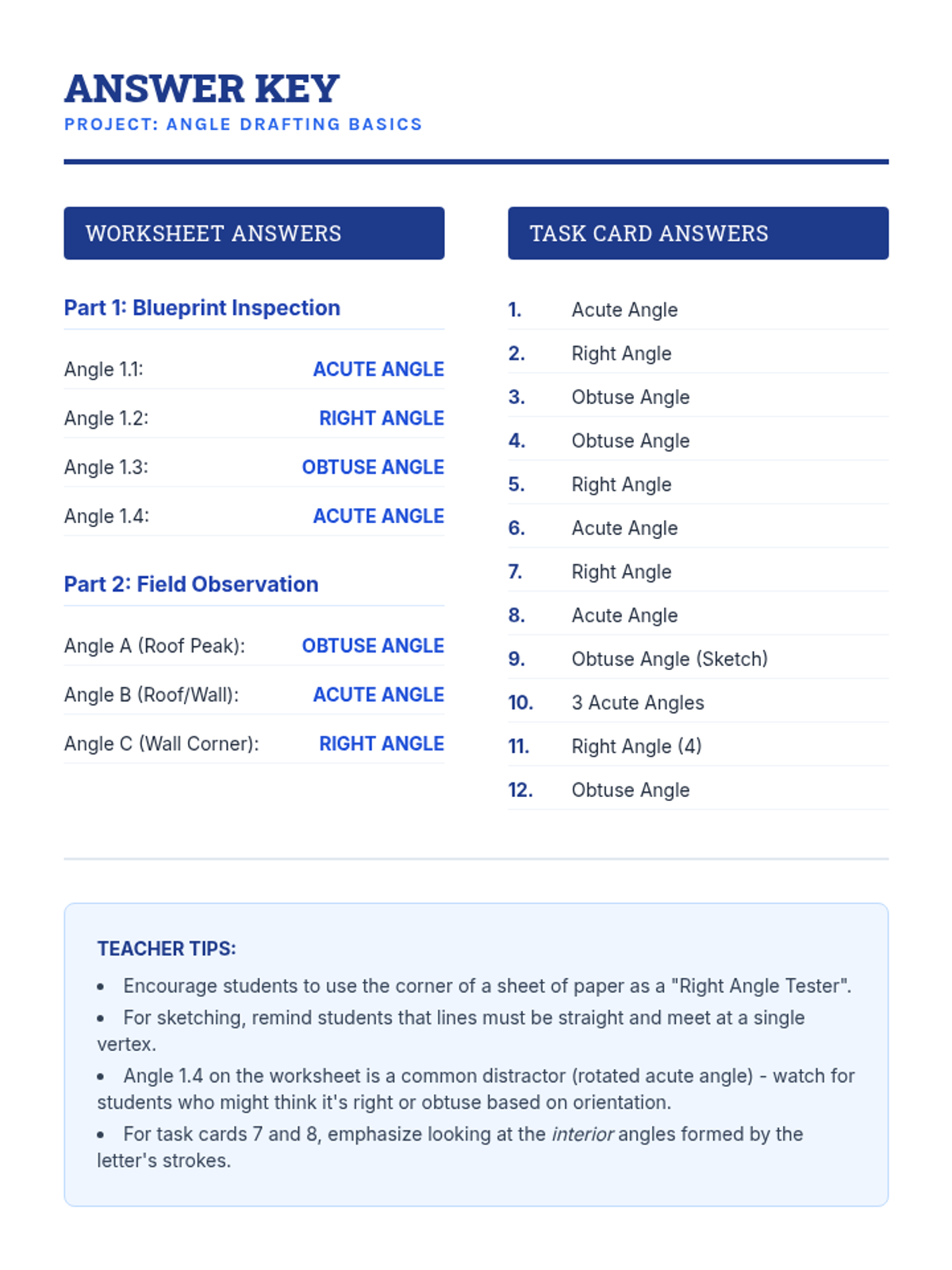
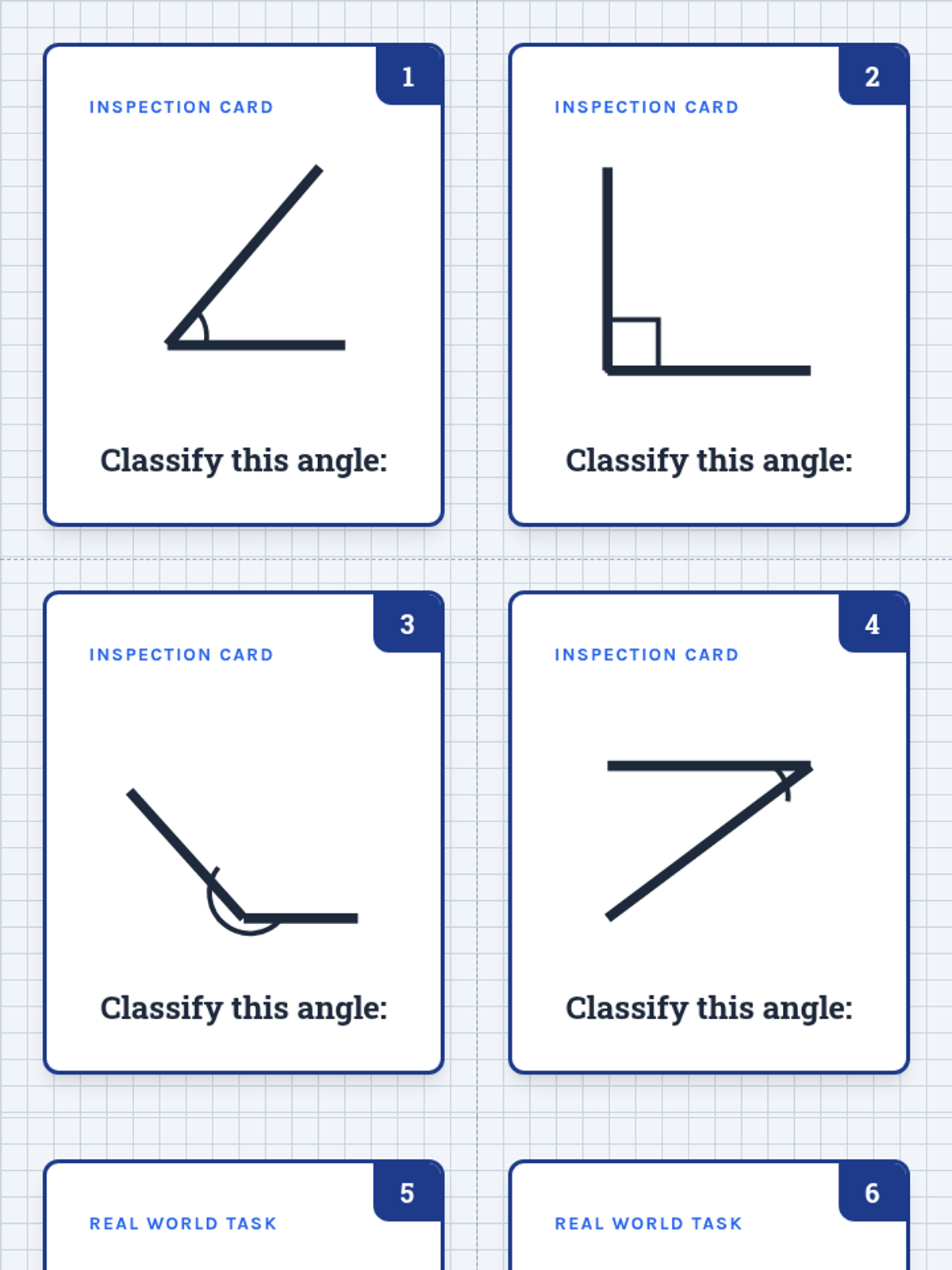
A foundational lesson on classifying angles as acute, obtuse, or right, serving as a prerequisite for measuring with a protractor. Students will identify, classify, and sketch angles within a technical blueprint-themed environment.
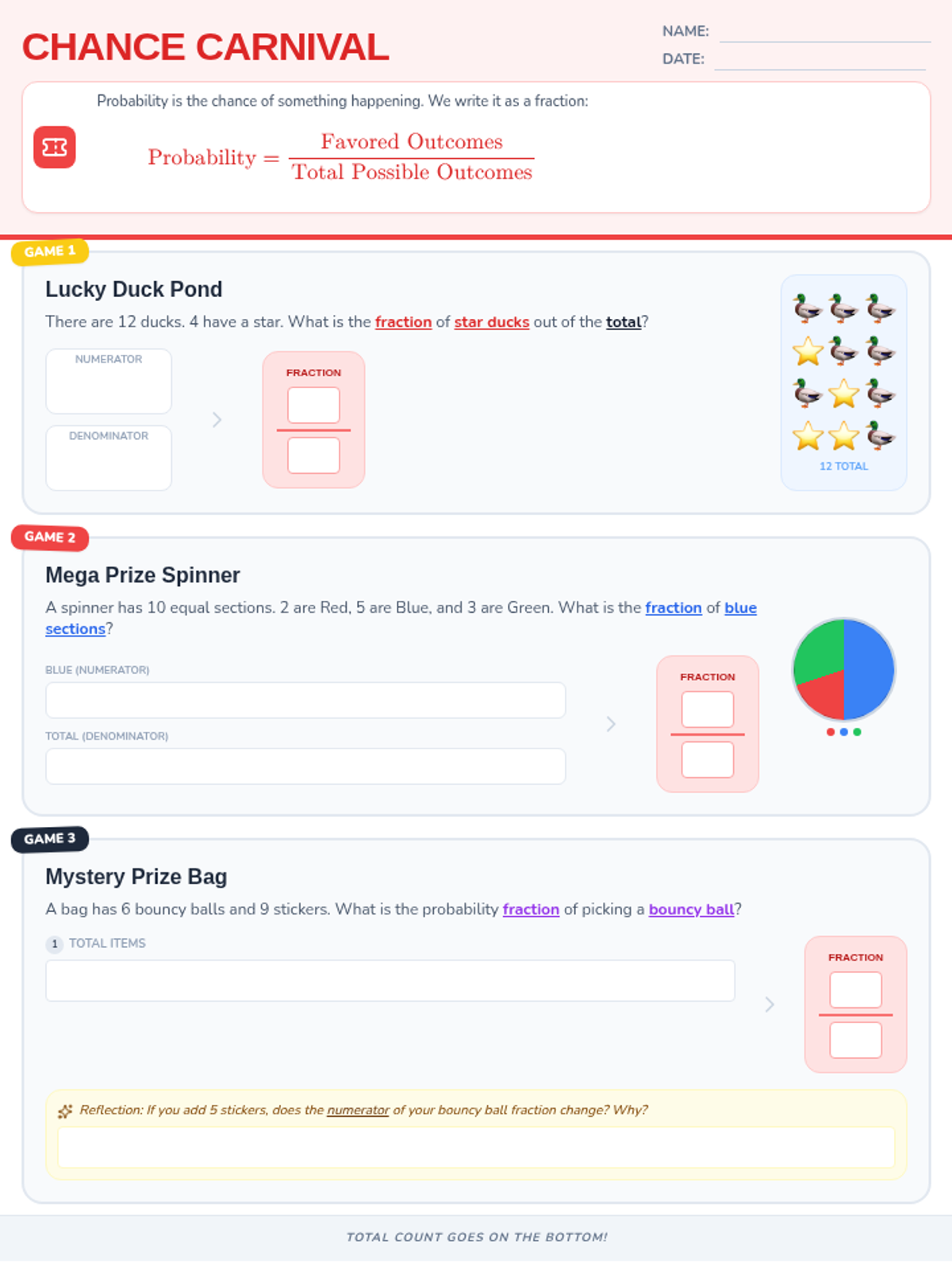
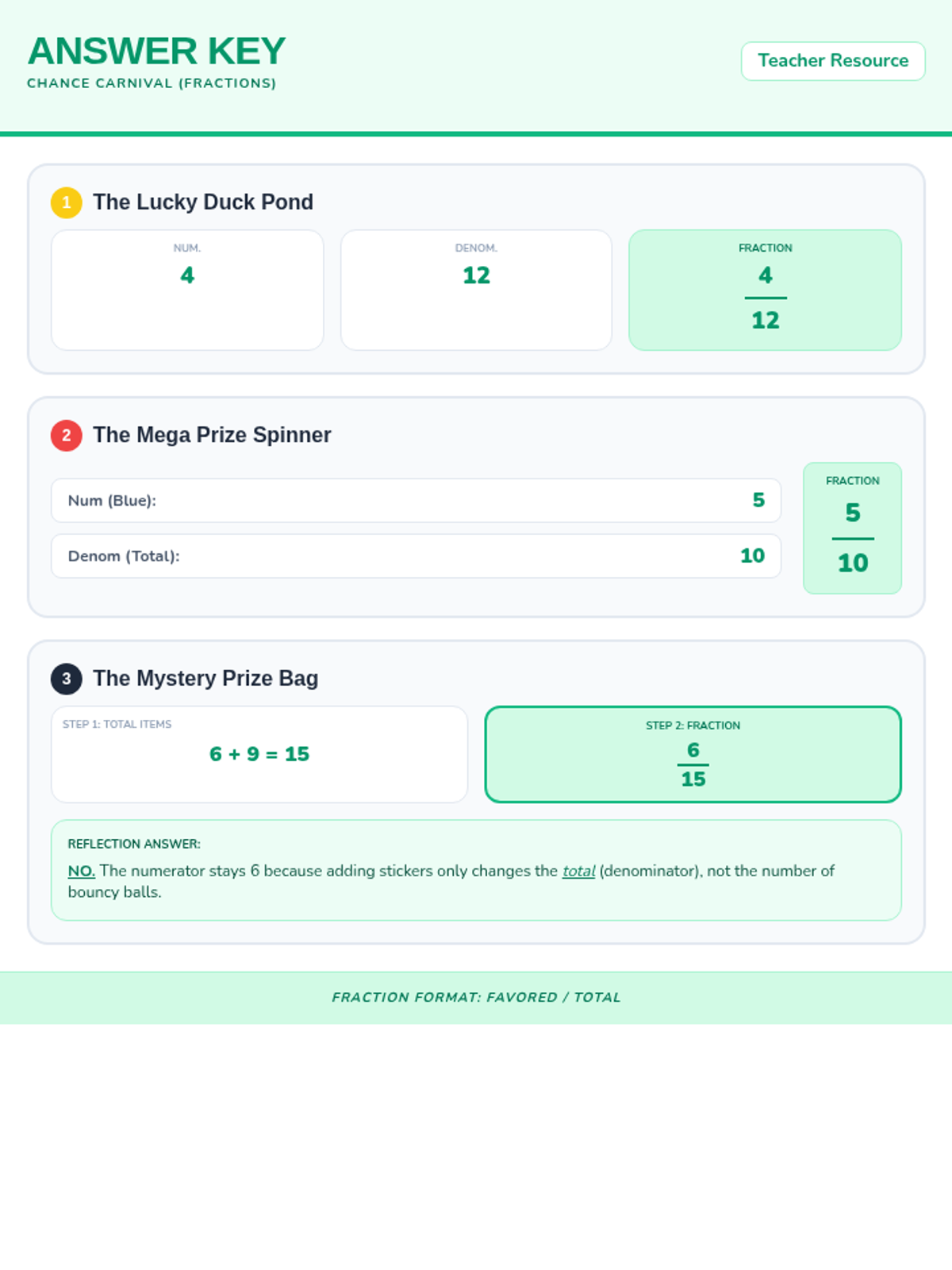
A quick introductory lesson focusing on the fundamental concept of probability as a ratio of favored outcomes to total possible outcomes.
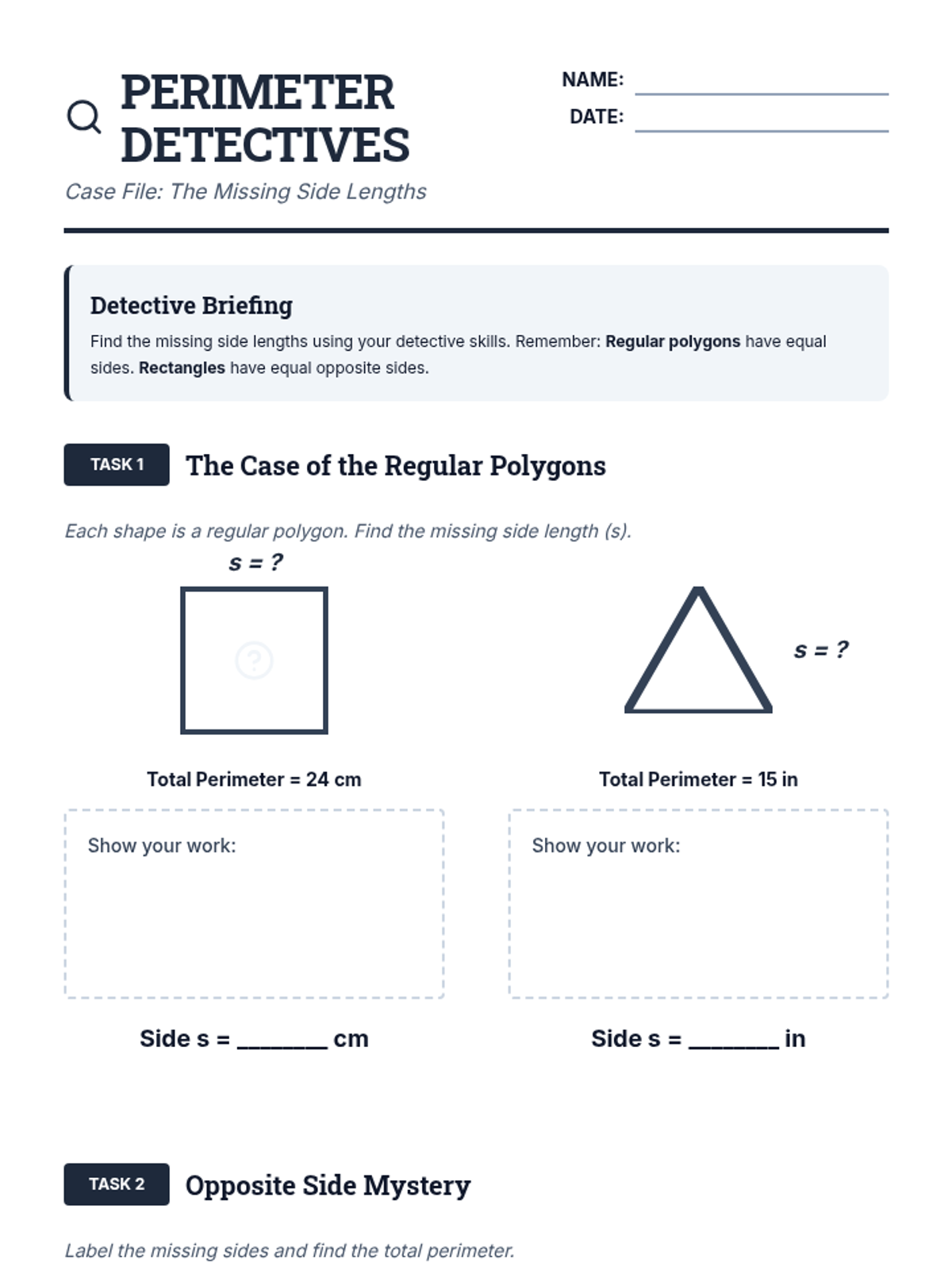
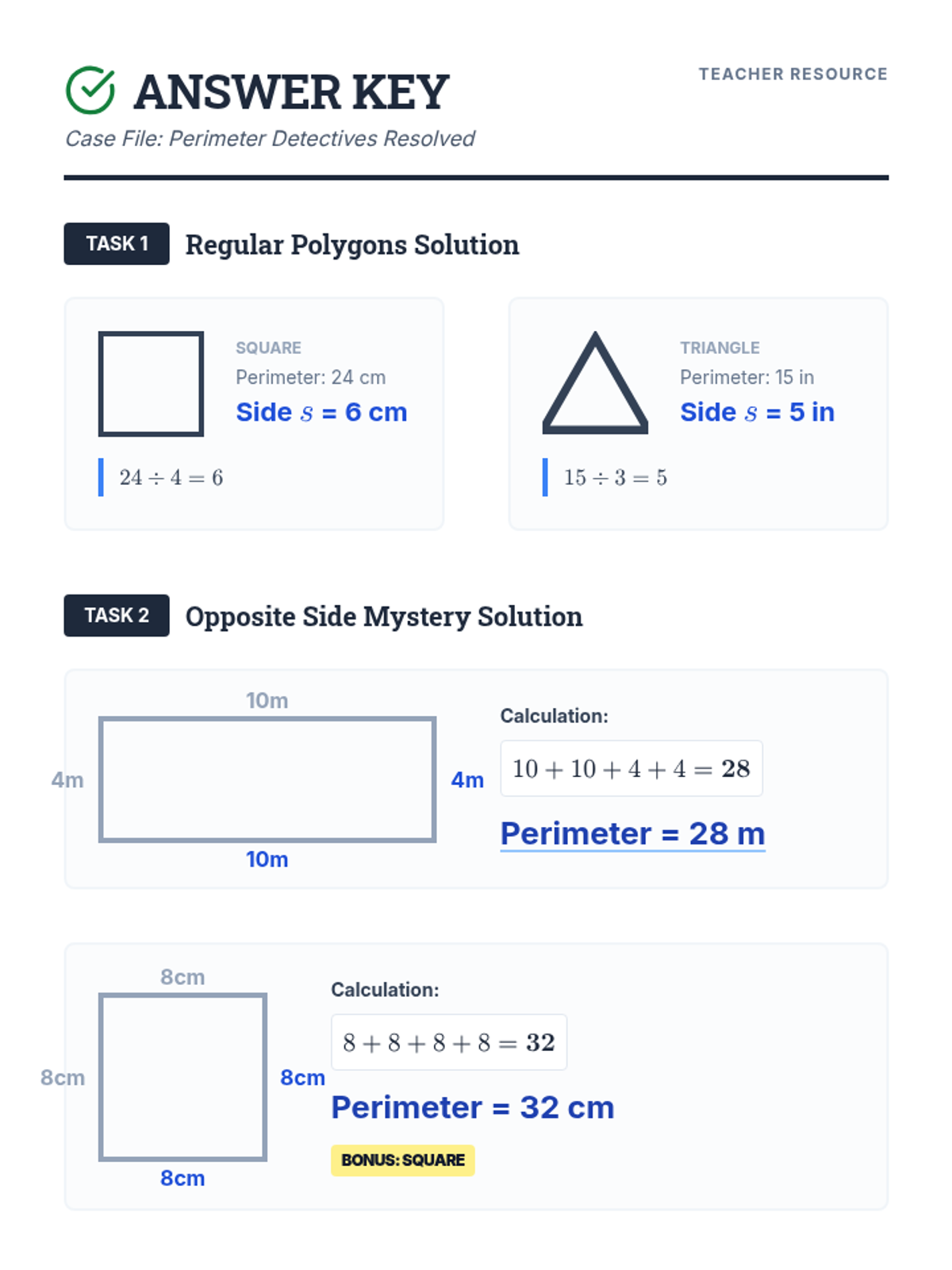
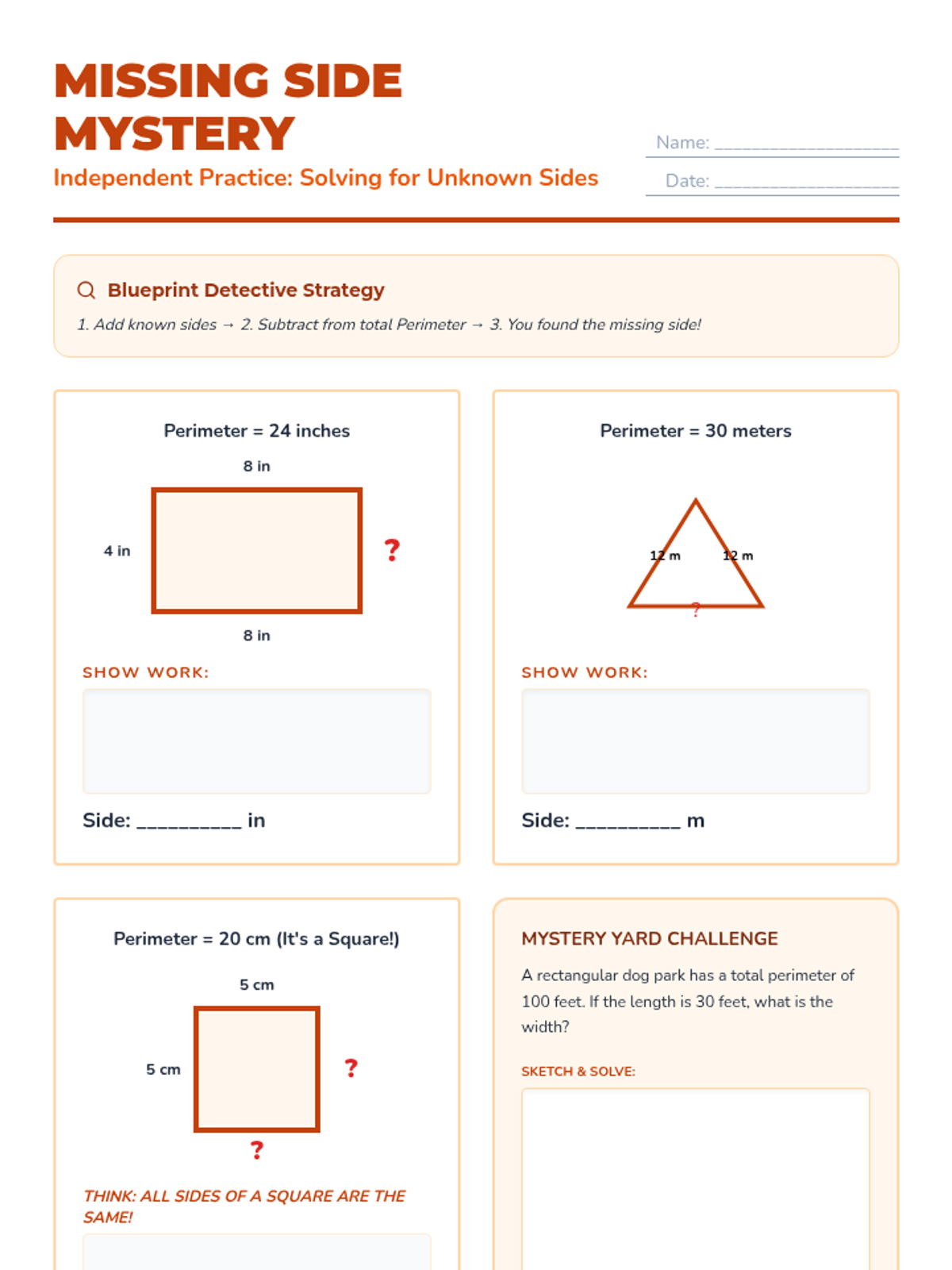
In this lesson, students become 'Perimeter Detectives' to solve for missing side lengths in regular polygons and rectangles. They use their knowledge of polygon properties and addition/subtraction to calculate perimeters and individual side measurements.
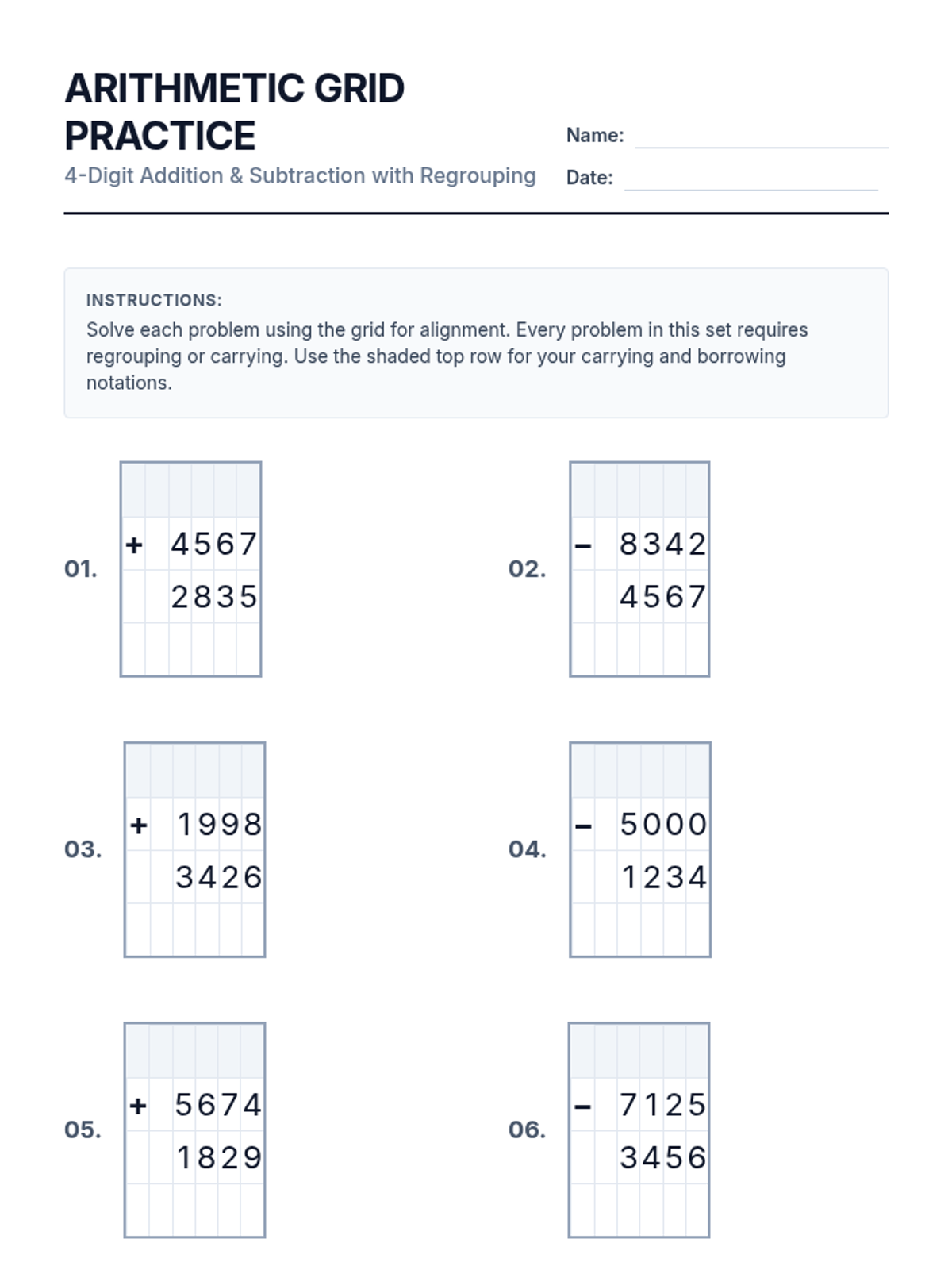
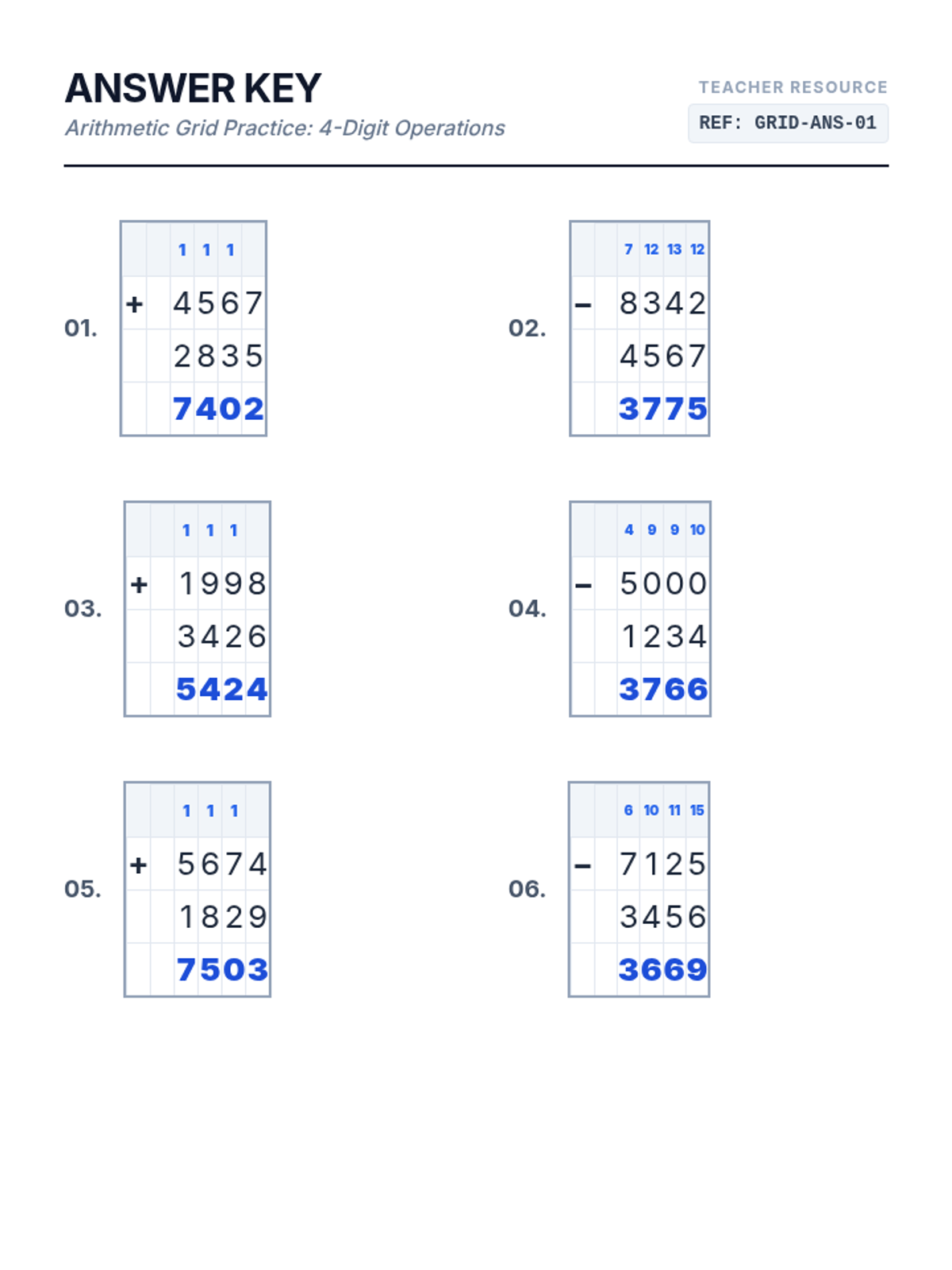
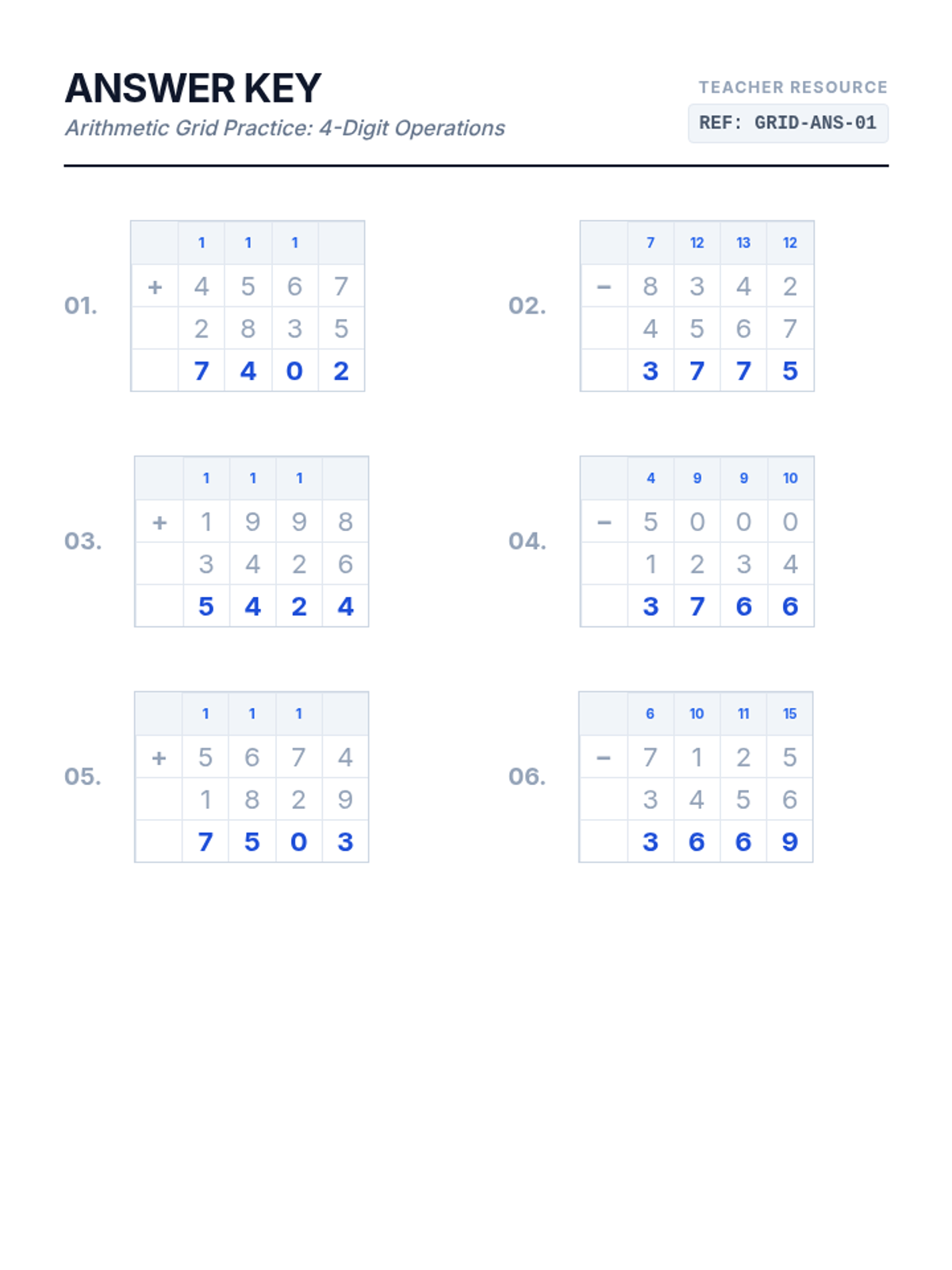
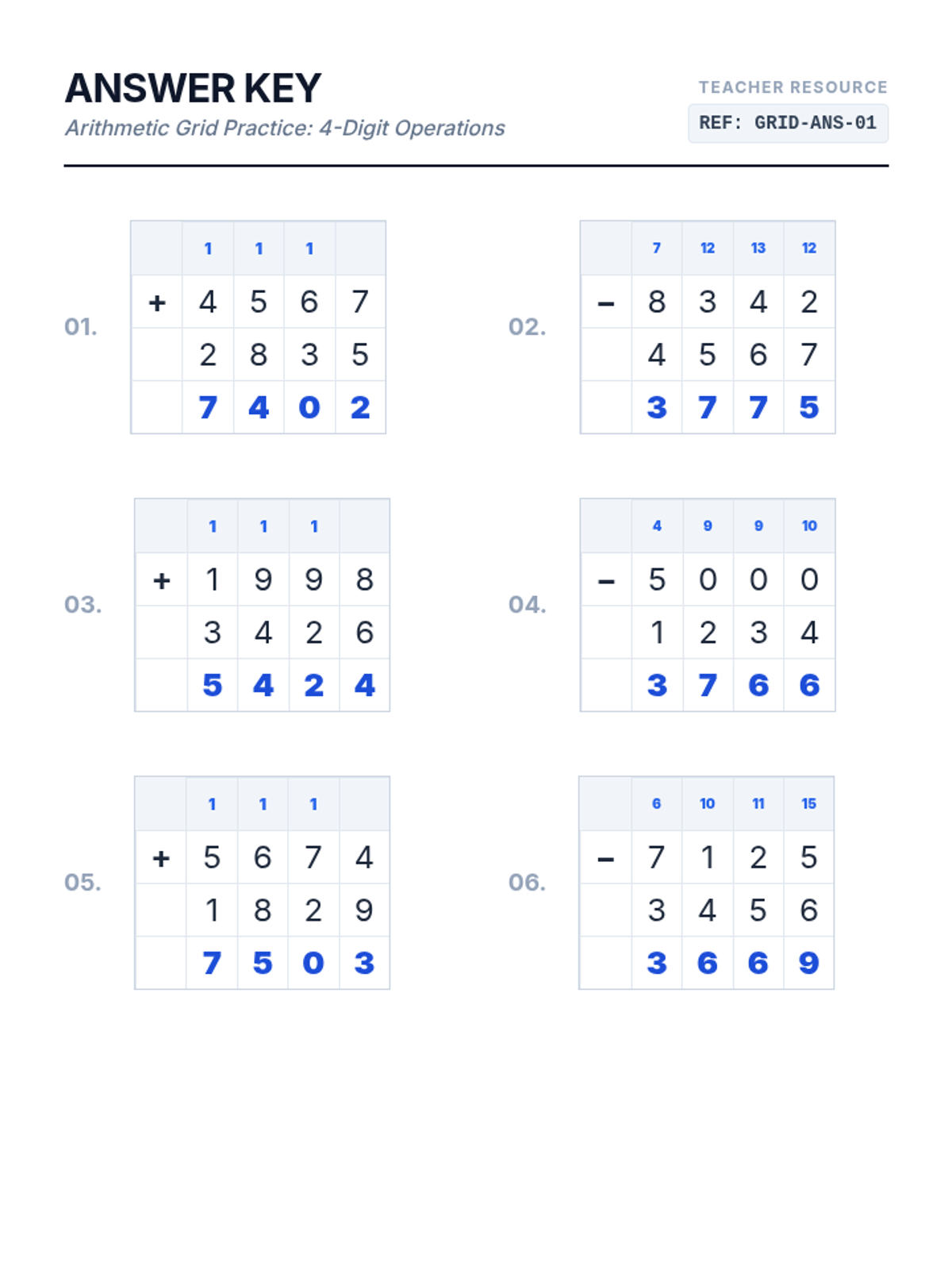
A specialized practice lesson on 4-digit addition and subtraction where every problem requires regrouping or carrying, presented on a clear grid layout for alignment.
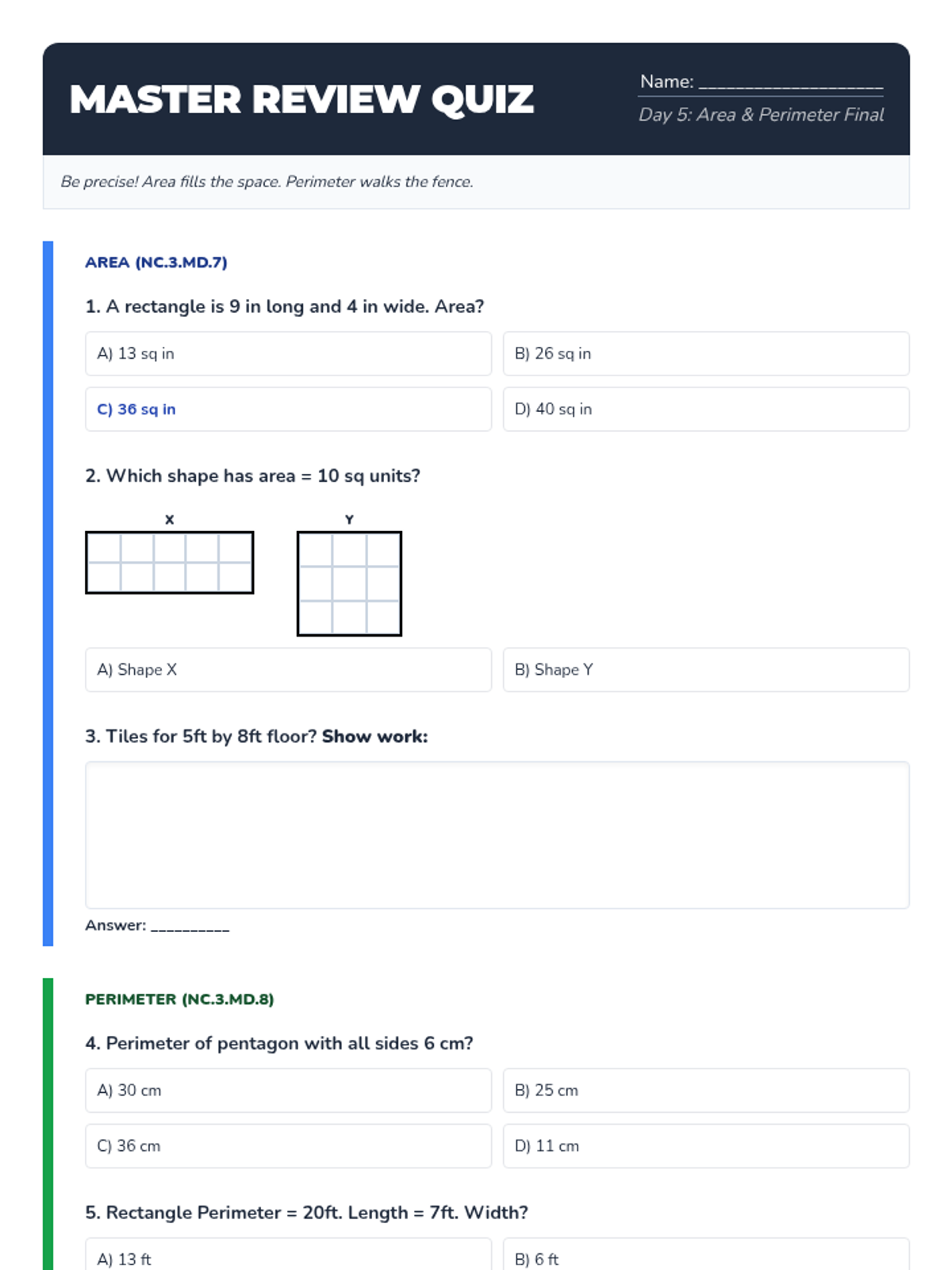
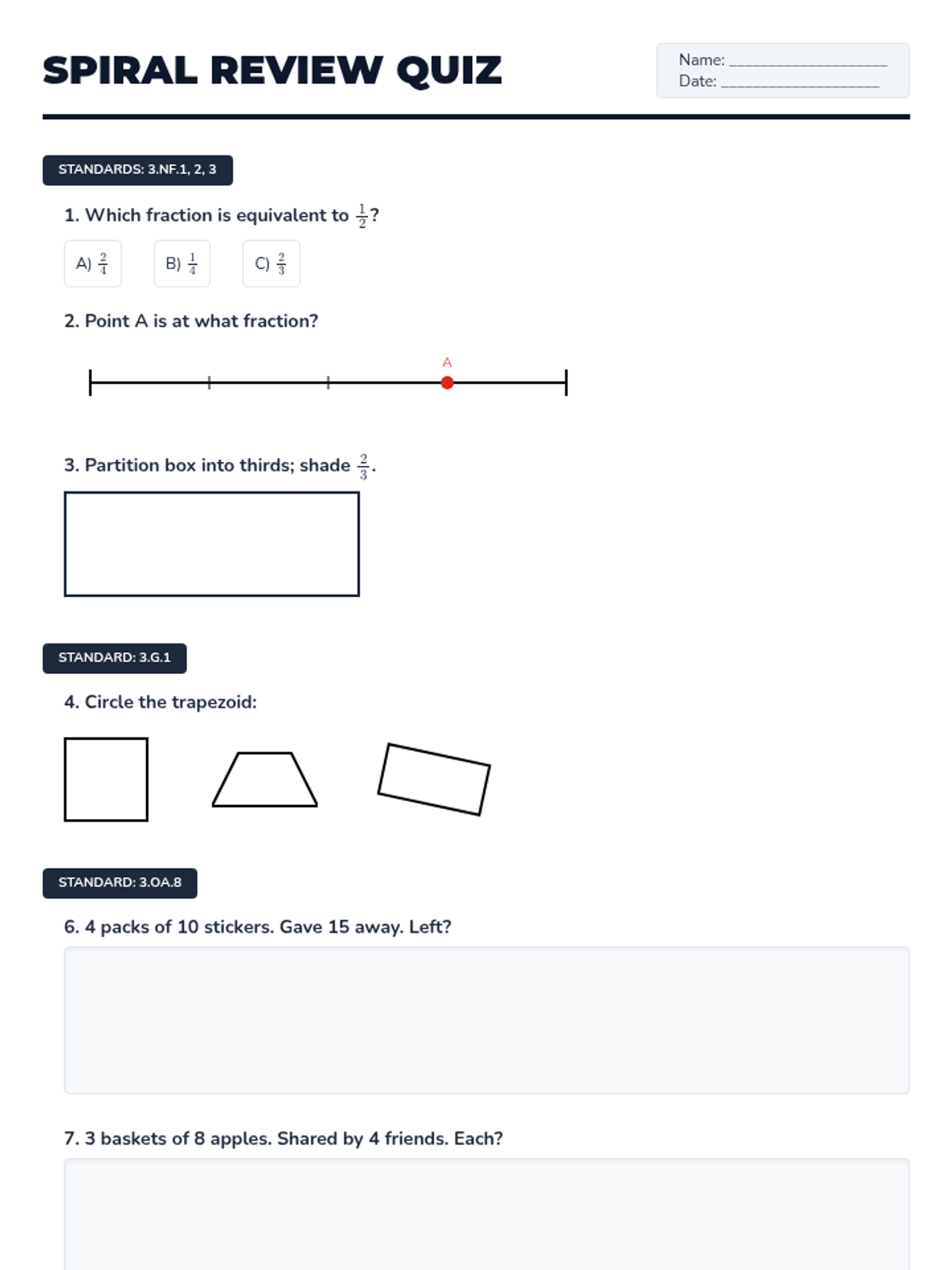
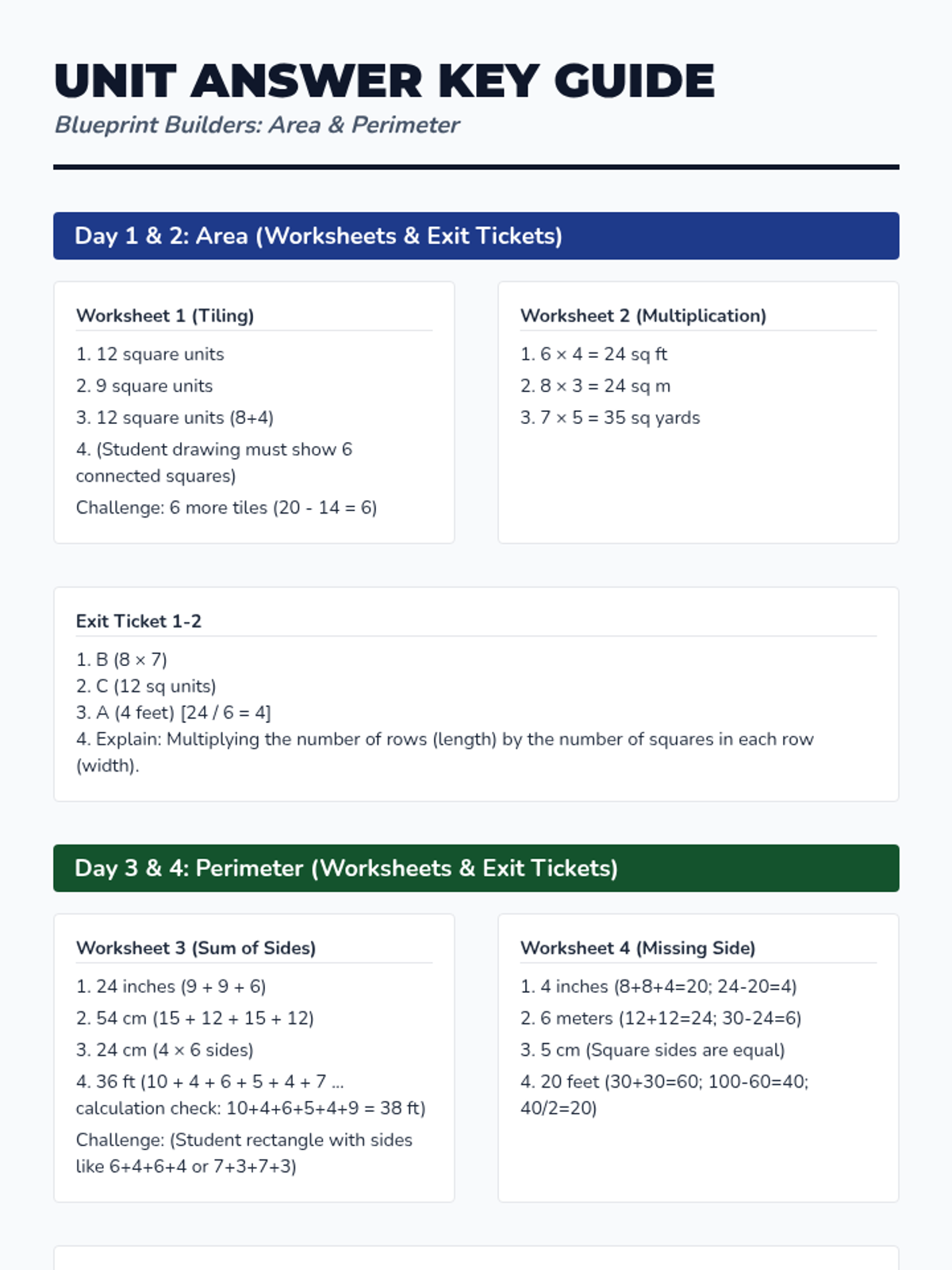
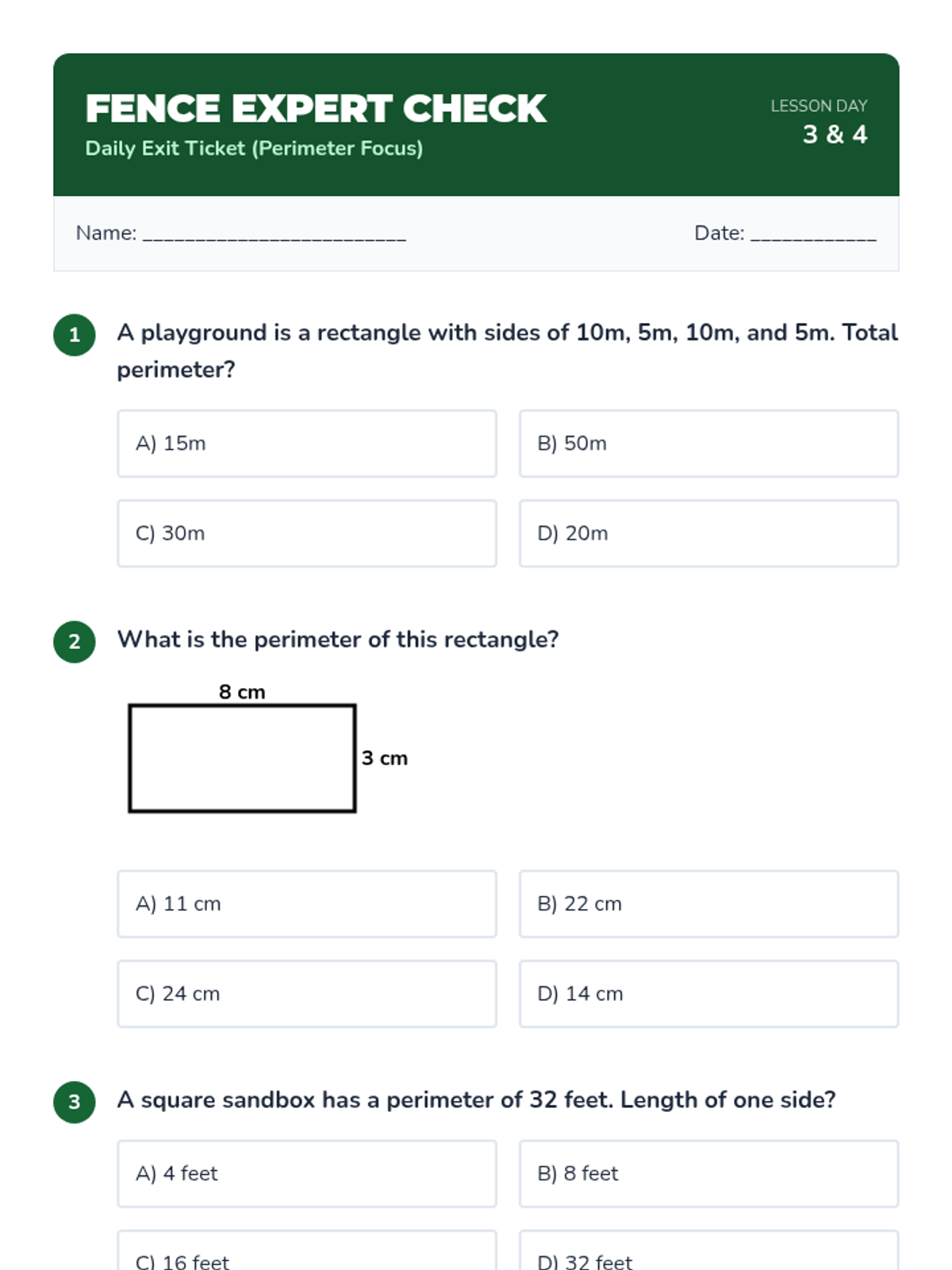
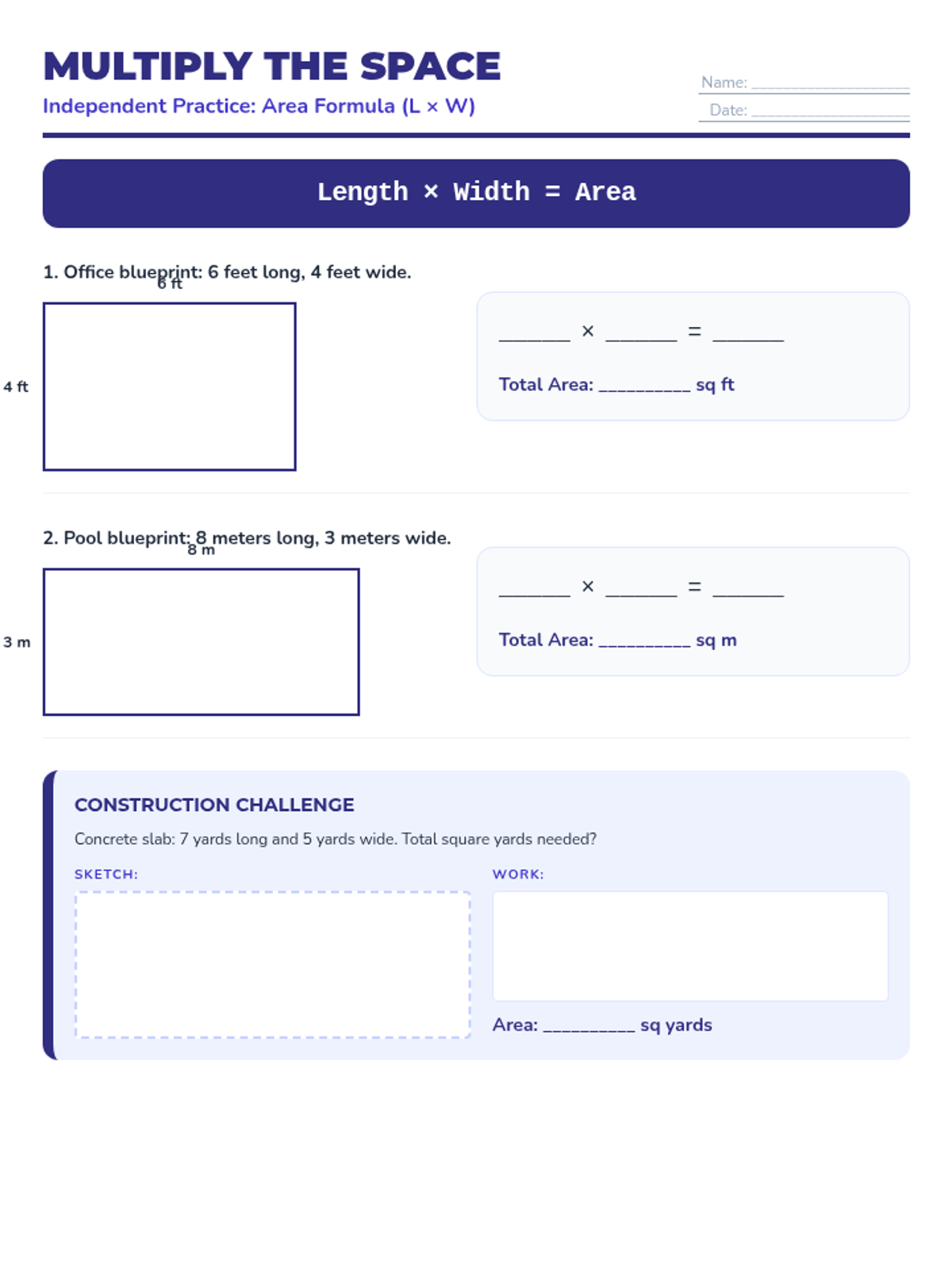
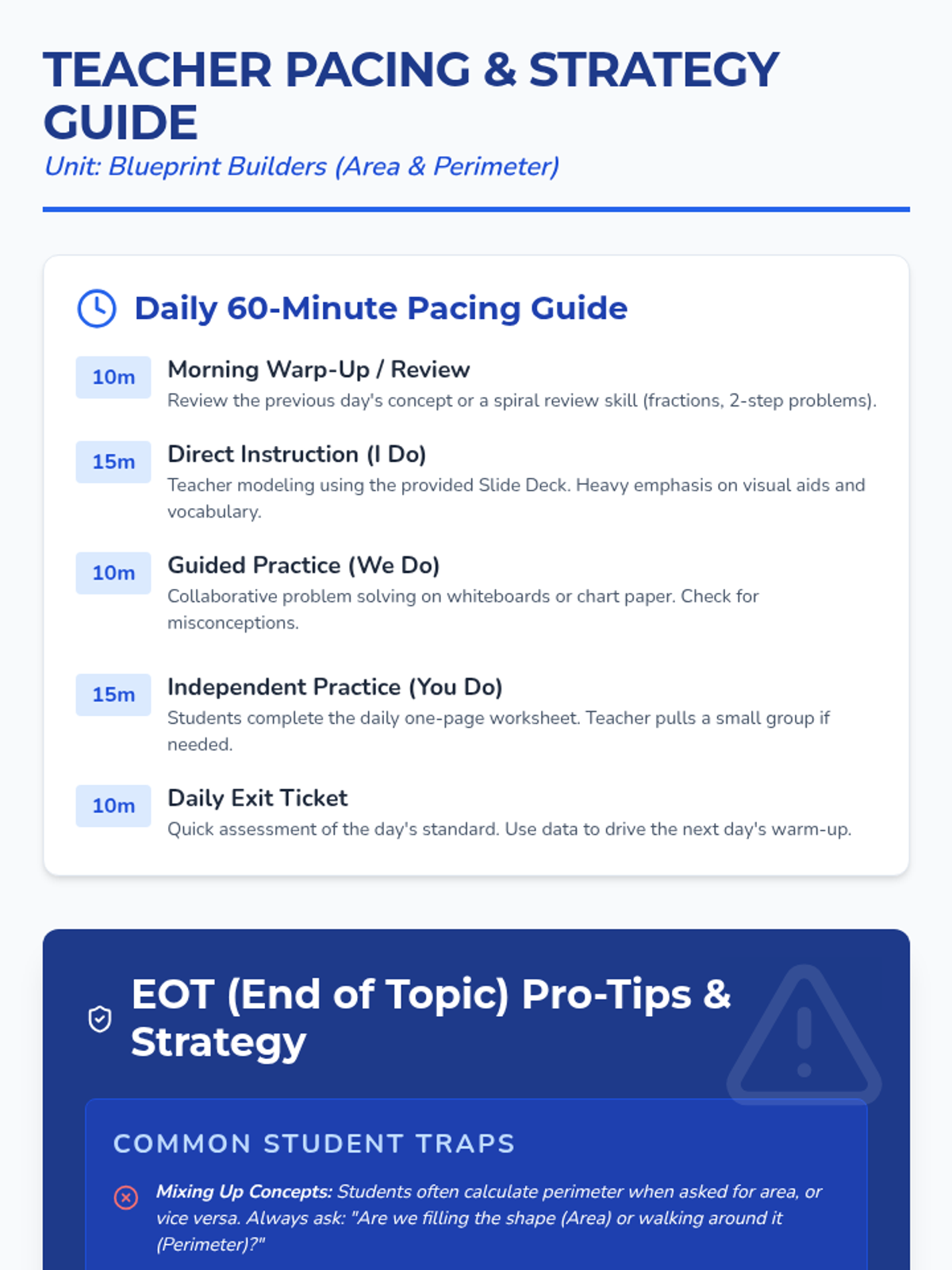
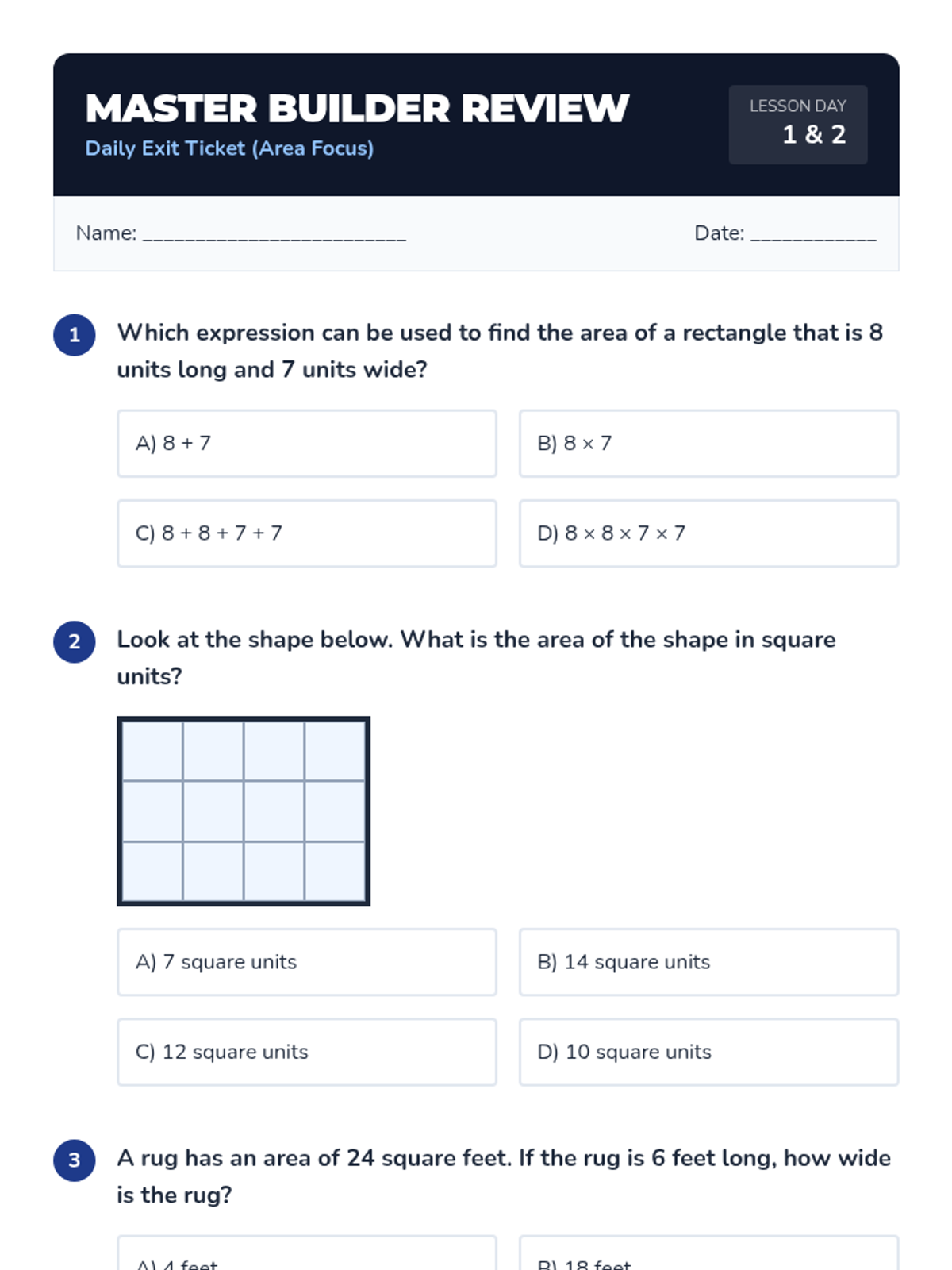
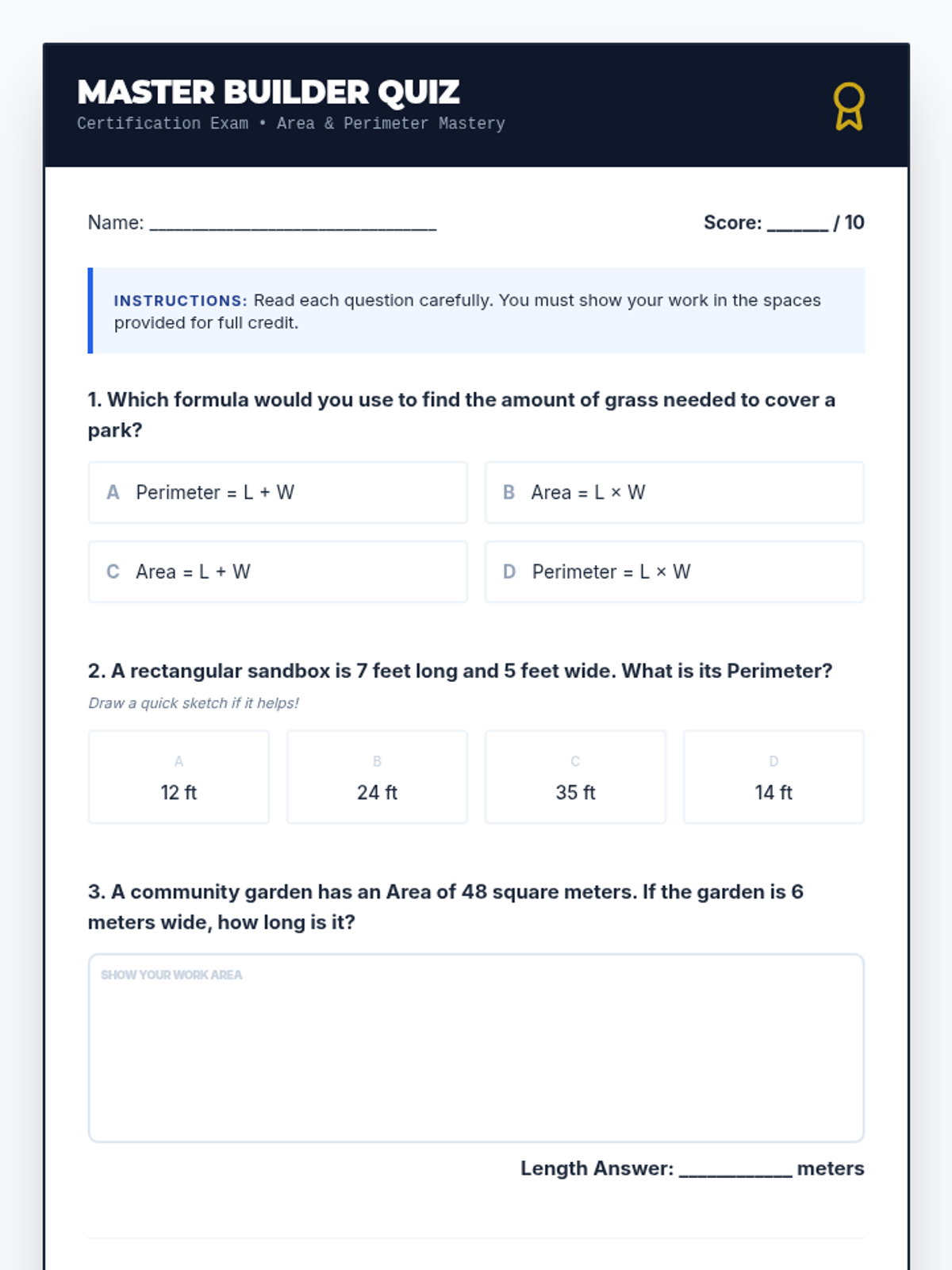
A comprehensive review of area and perimeter concepts including a spiral review assessment.
Challenges students to find missing side lengths when the total perimeter is known.
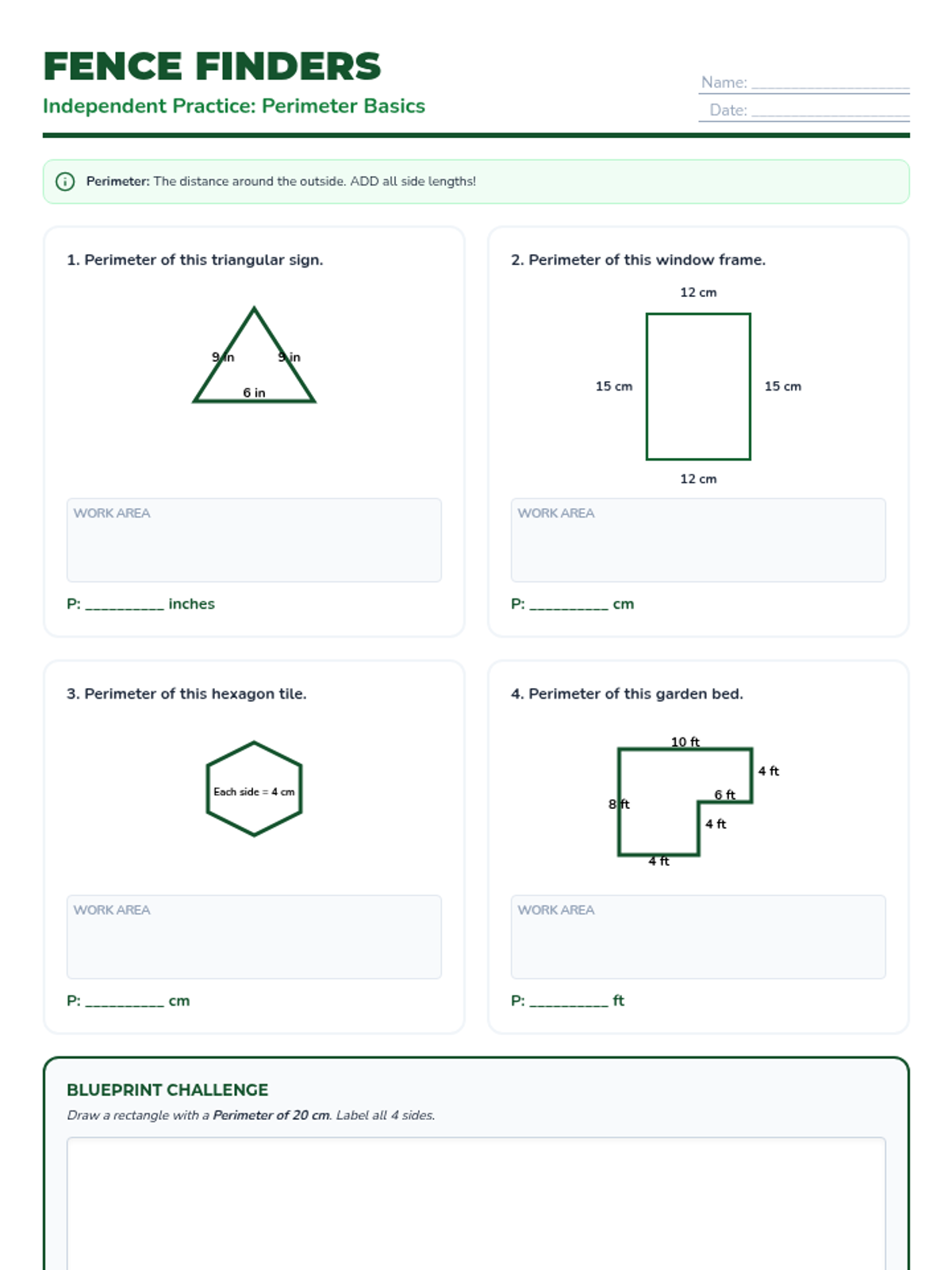
Introduces perimeter as the distance around a shape and calculates it by adding all side lengths.
Connects area to multiplication by partitioning rectangles and using the Length x Width formula.
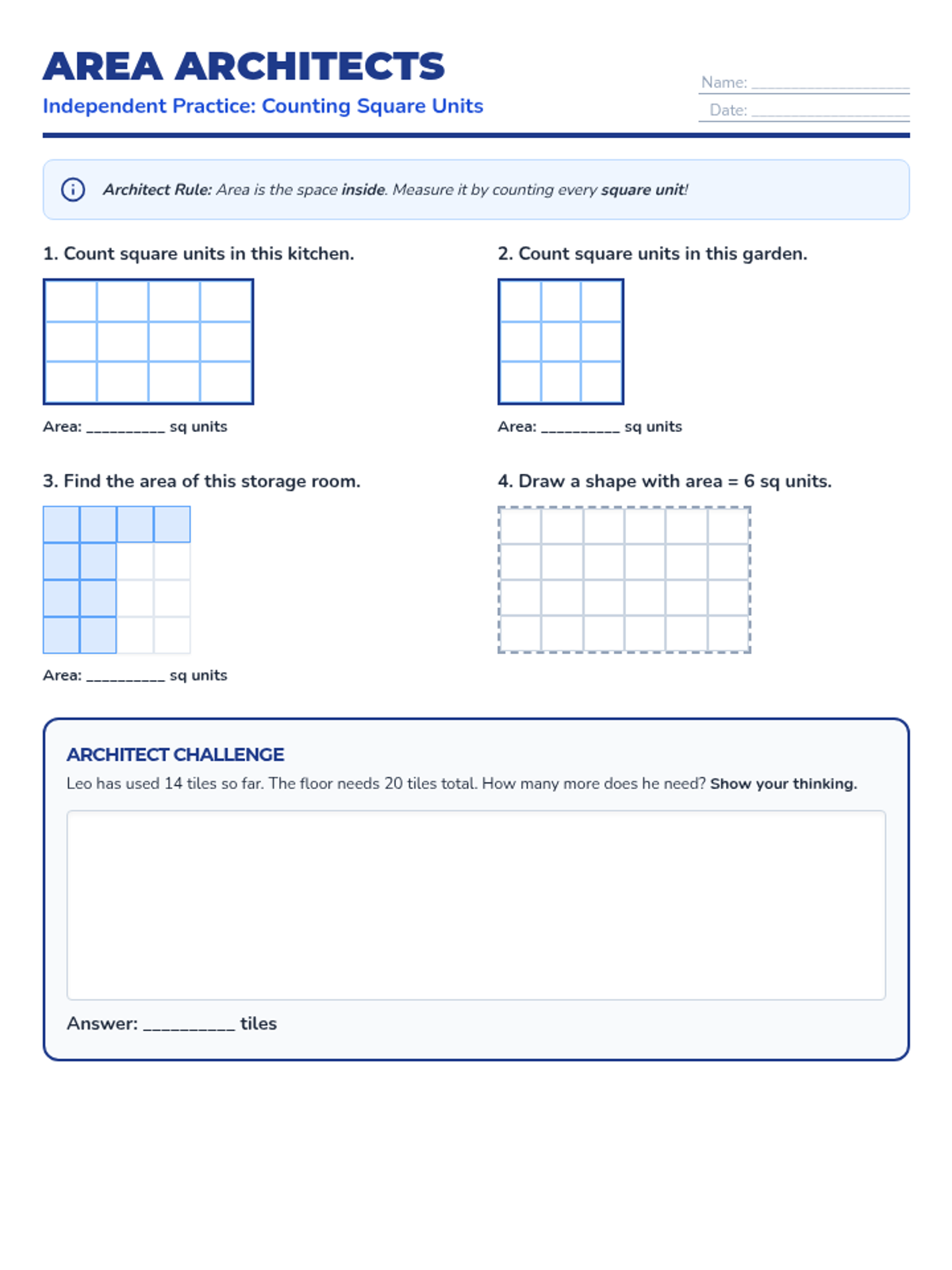
Focuses on relating area to tiling and counting square units to understand the concept of space inside a 2D figure.
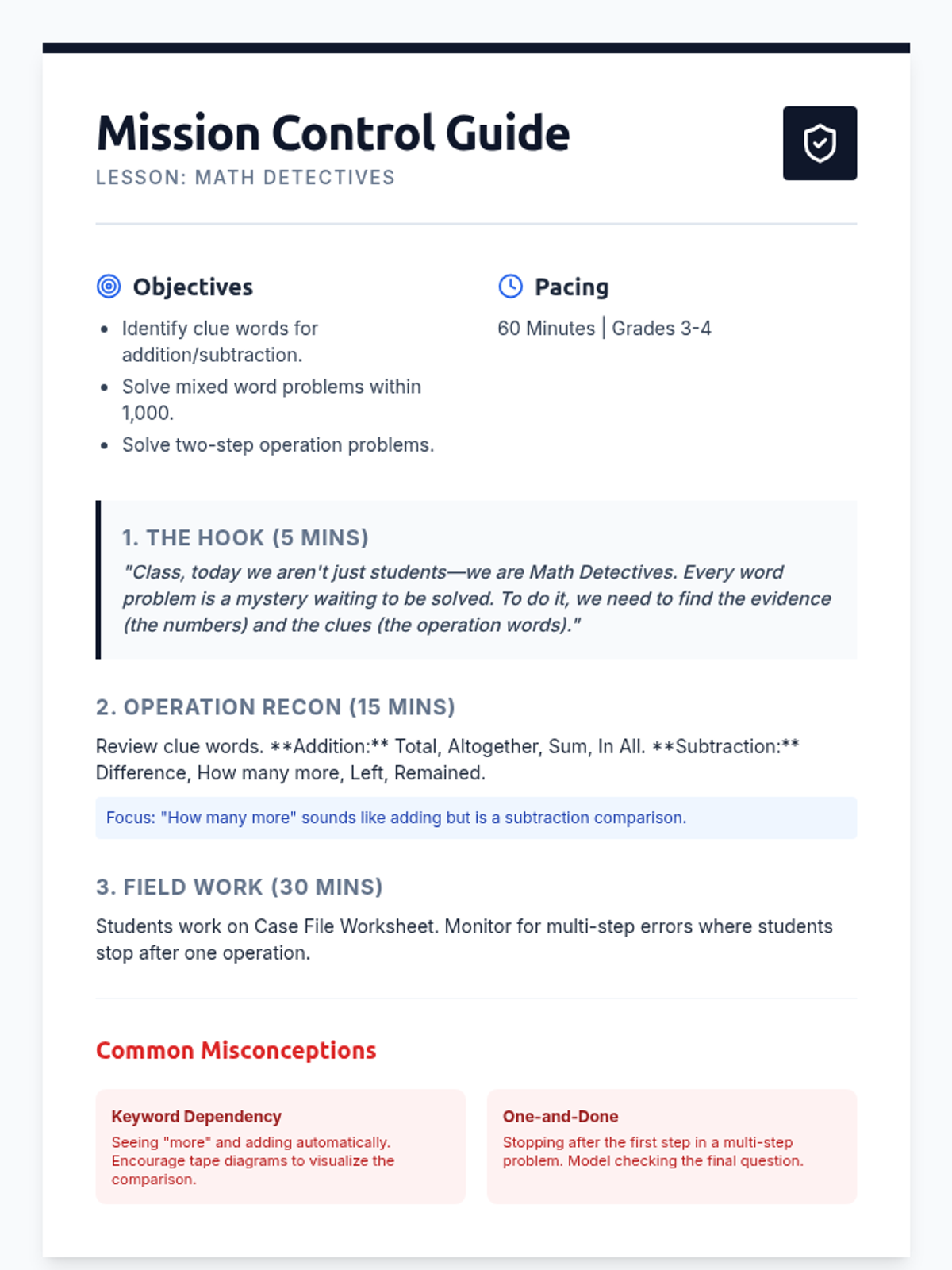
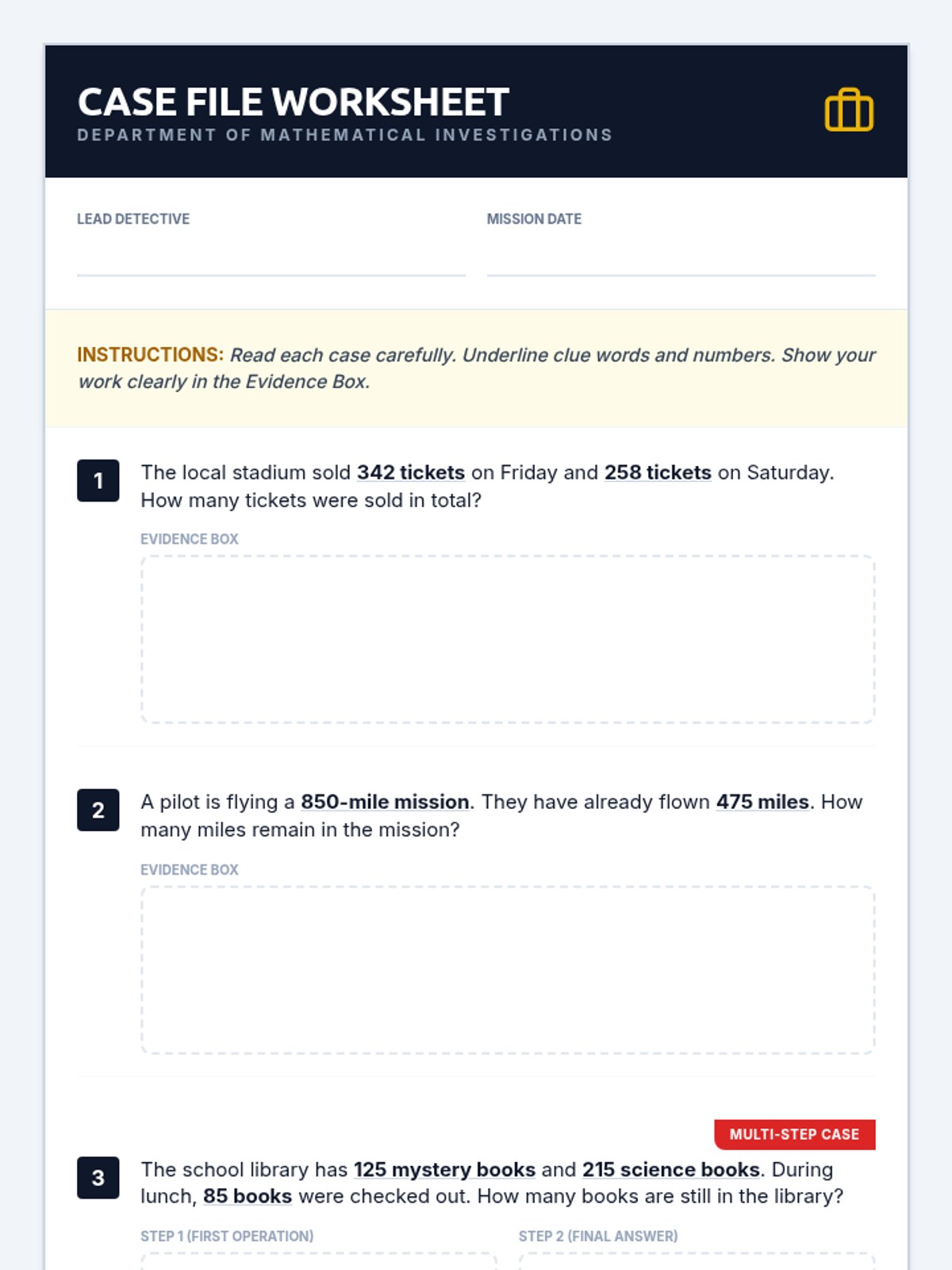
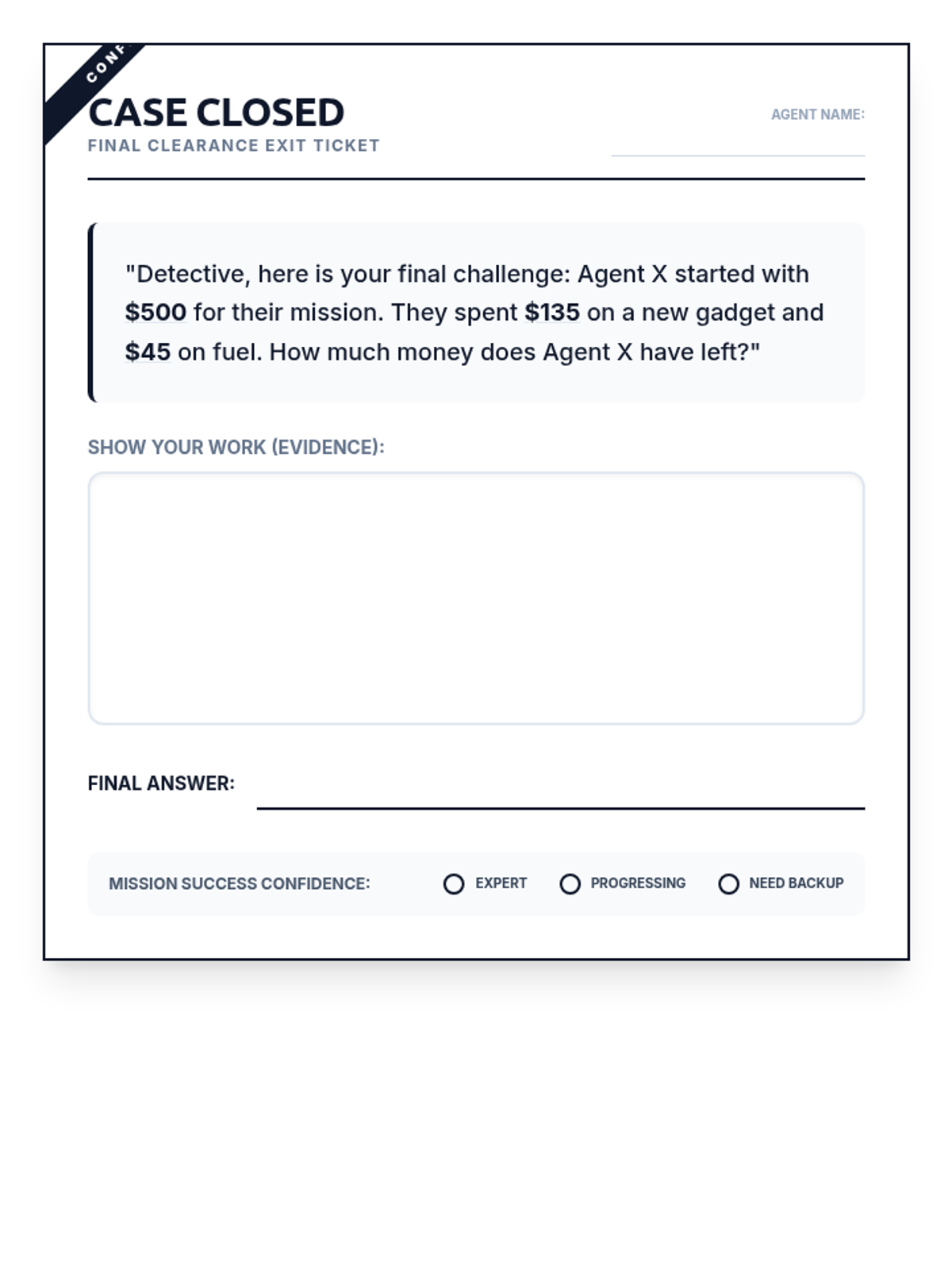
A comprehensive lesson focused on solving one-step and multi-step addition and subtraction word problems within 1,000 using a detective-themed investigative approach.
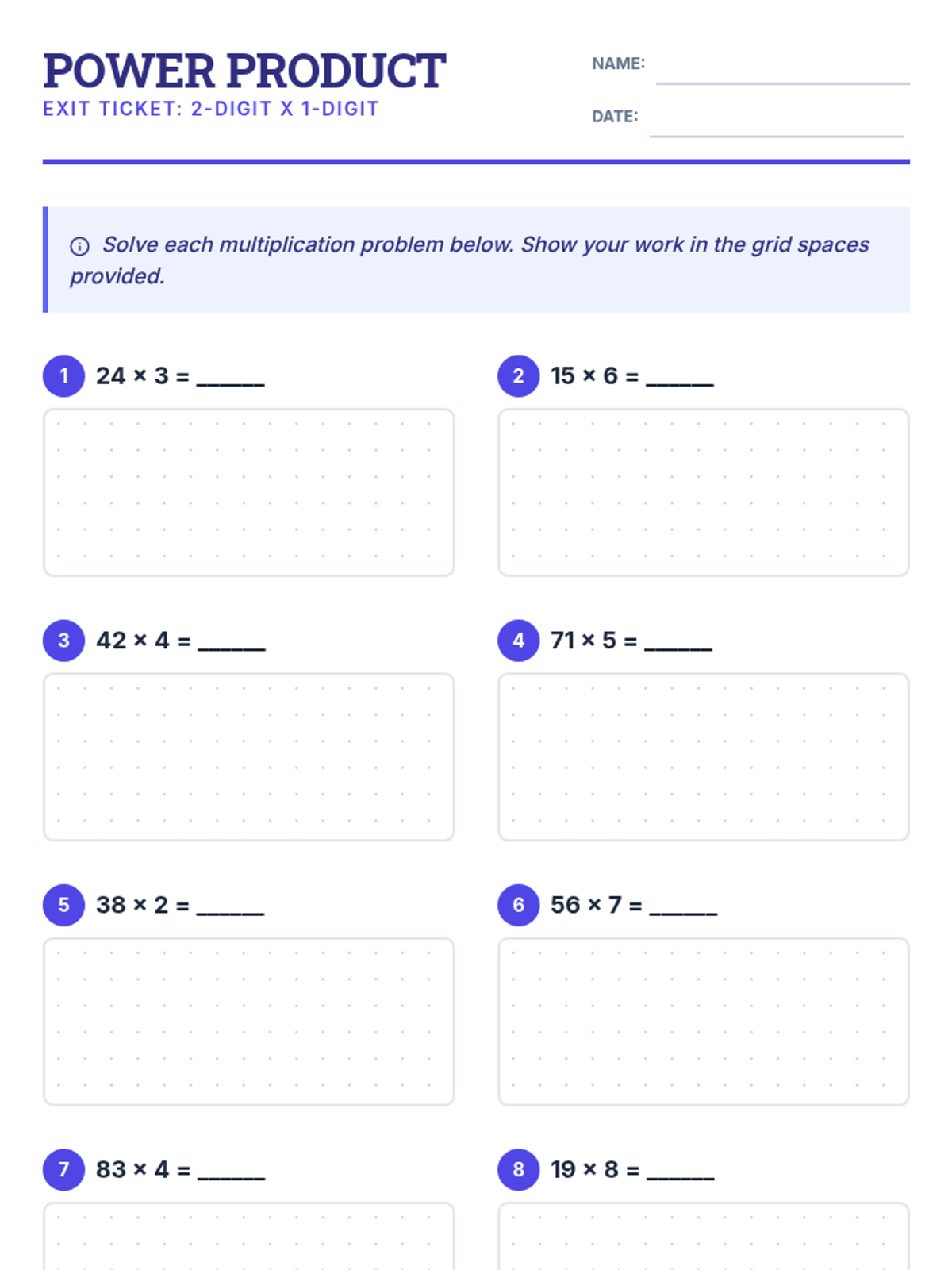
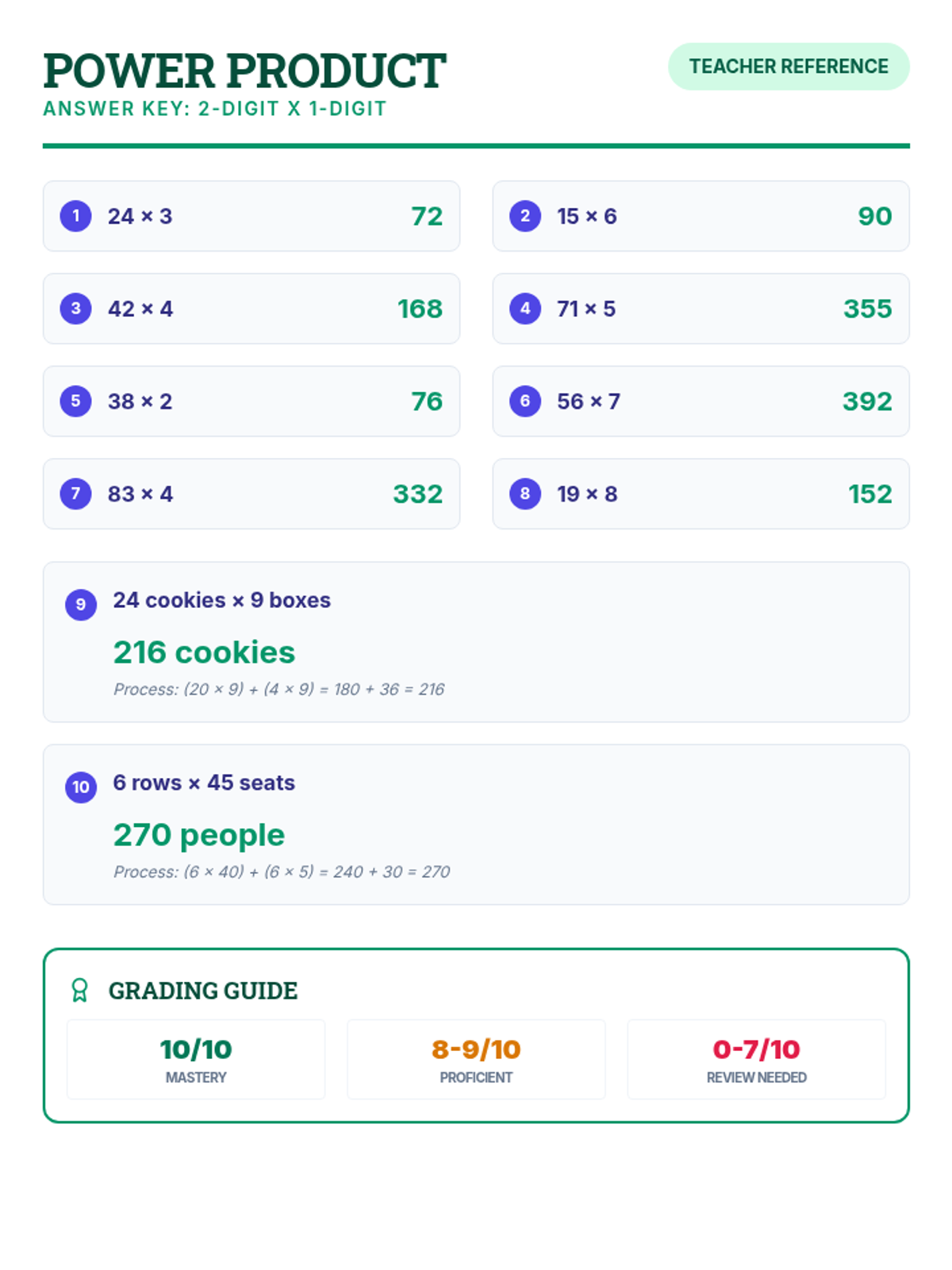
A focused lesson on multiplying 2-digit numbers by 1-digit numbers, emphasizing the standard algorithm and area model strategies.
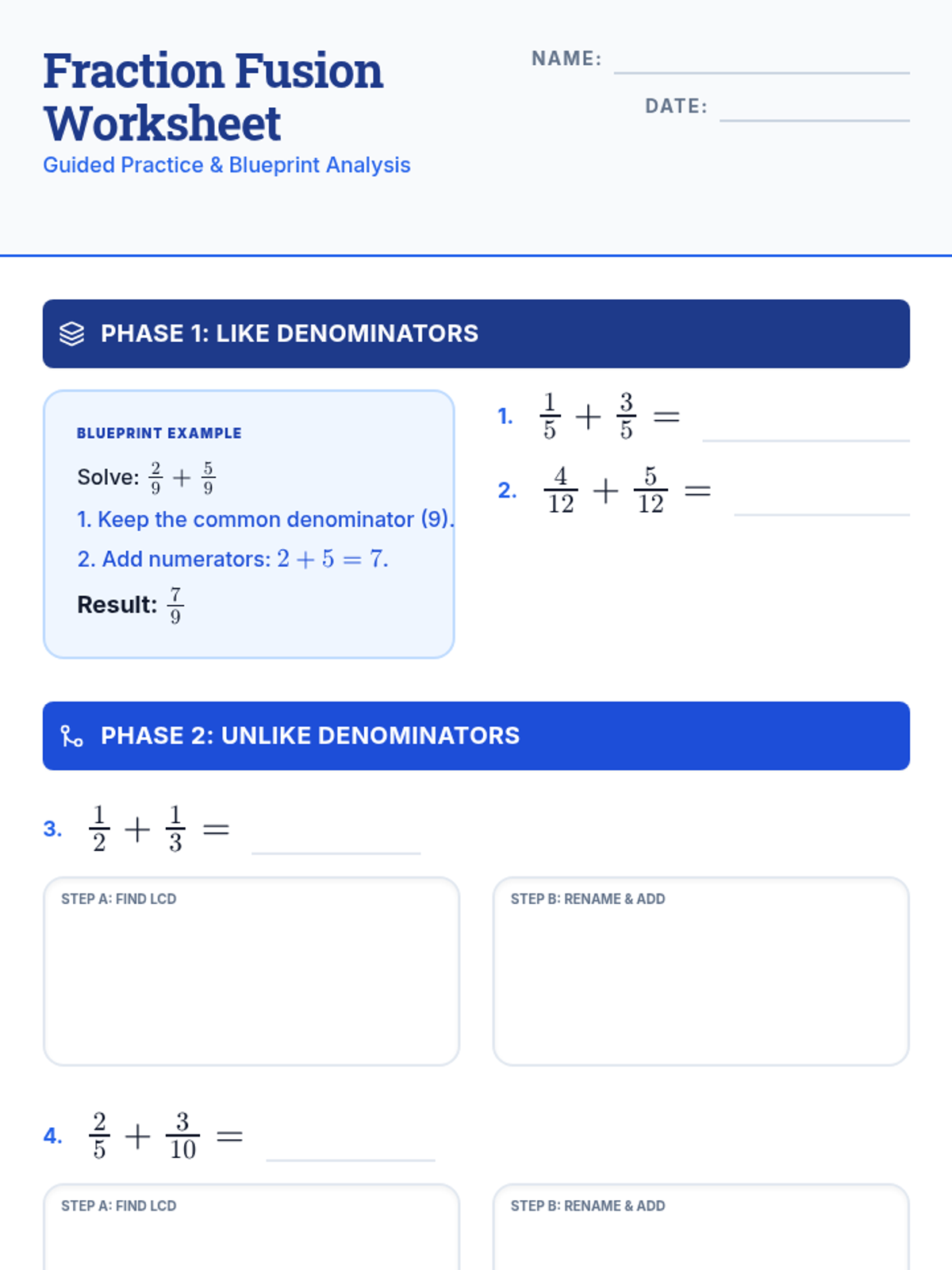
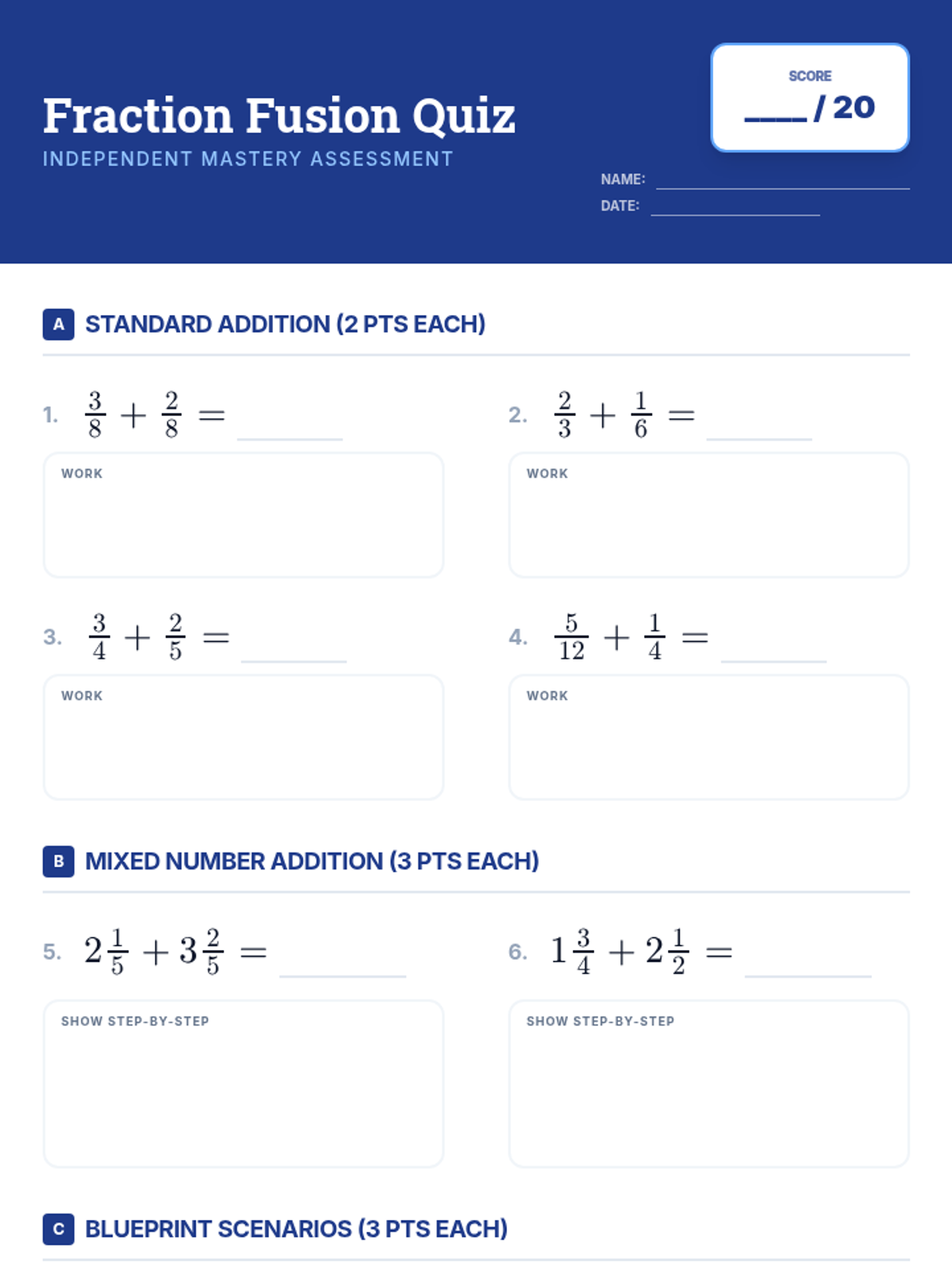
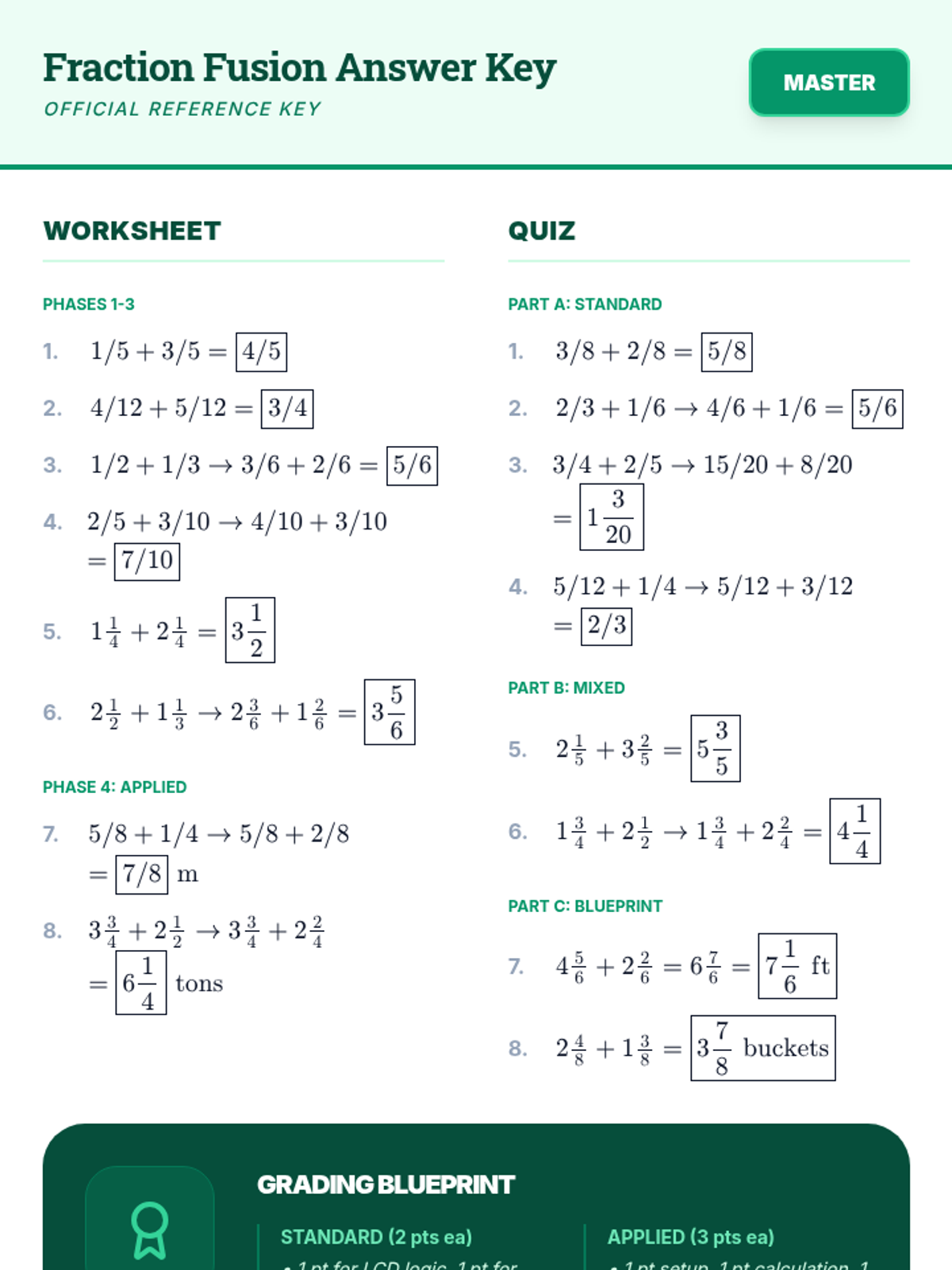
A comprehensive lesson on adding fractions with like and unlike denominators, including mixed numbers and real-world word problems. Students progress from basic addition to complex multi-step problems using a blueprint-themed approach.
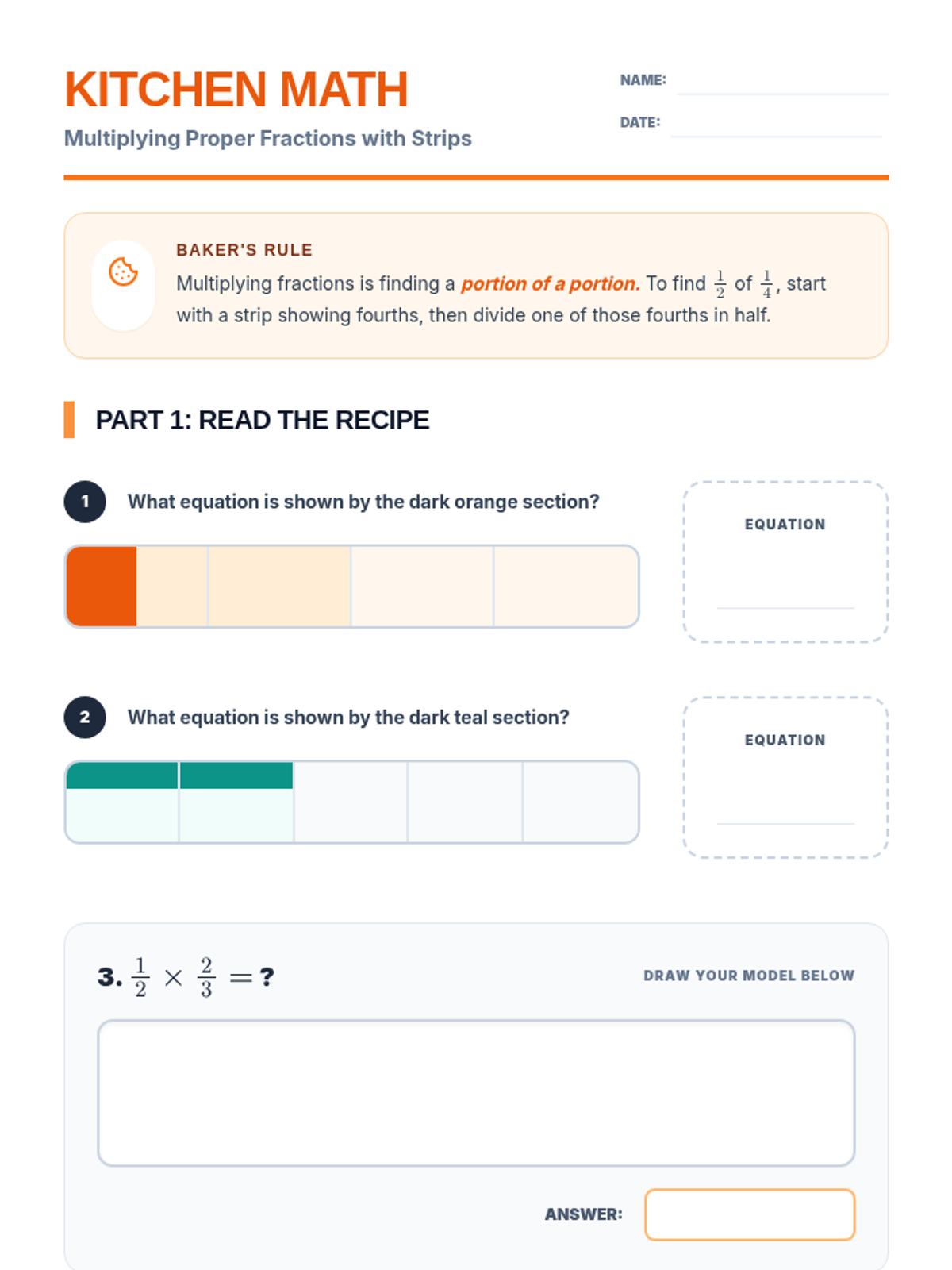
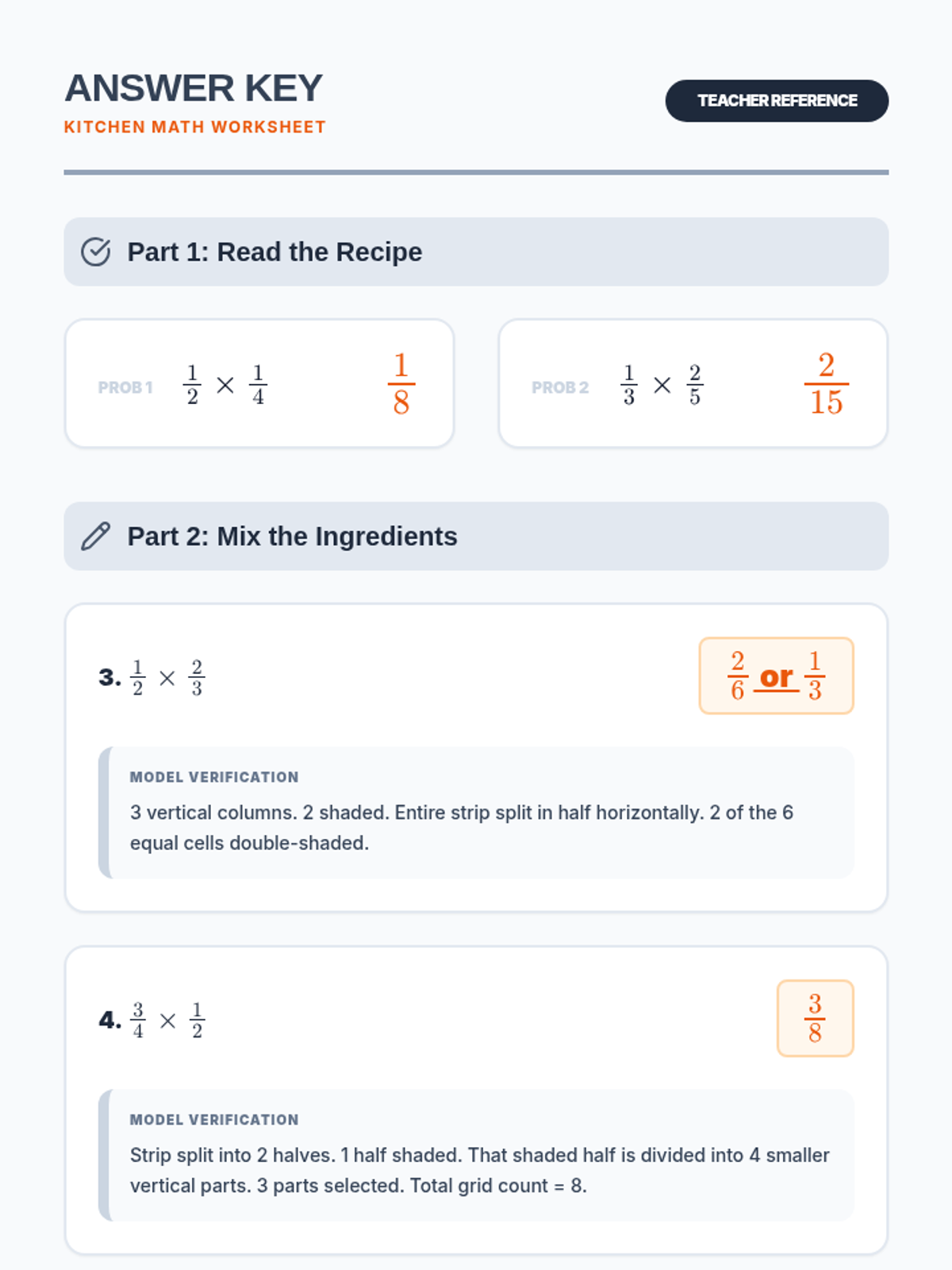
A lesson on multiplying proper fractions using fraction strip models, set in a bakery context to make scaling recipes intuitive and fun.
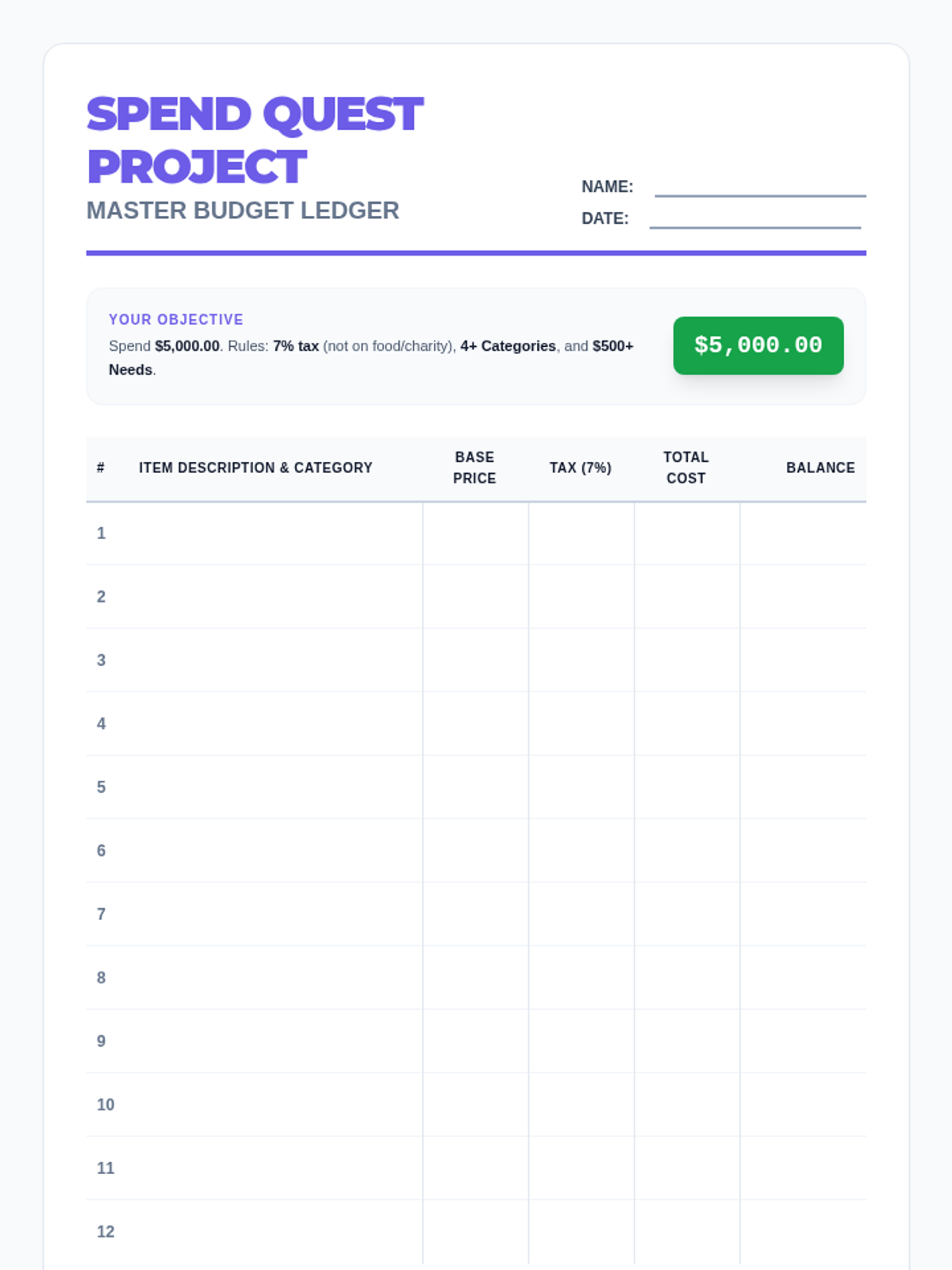
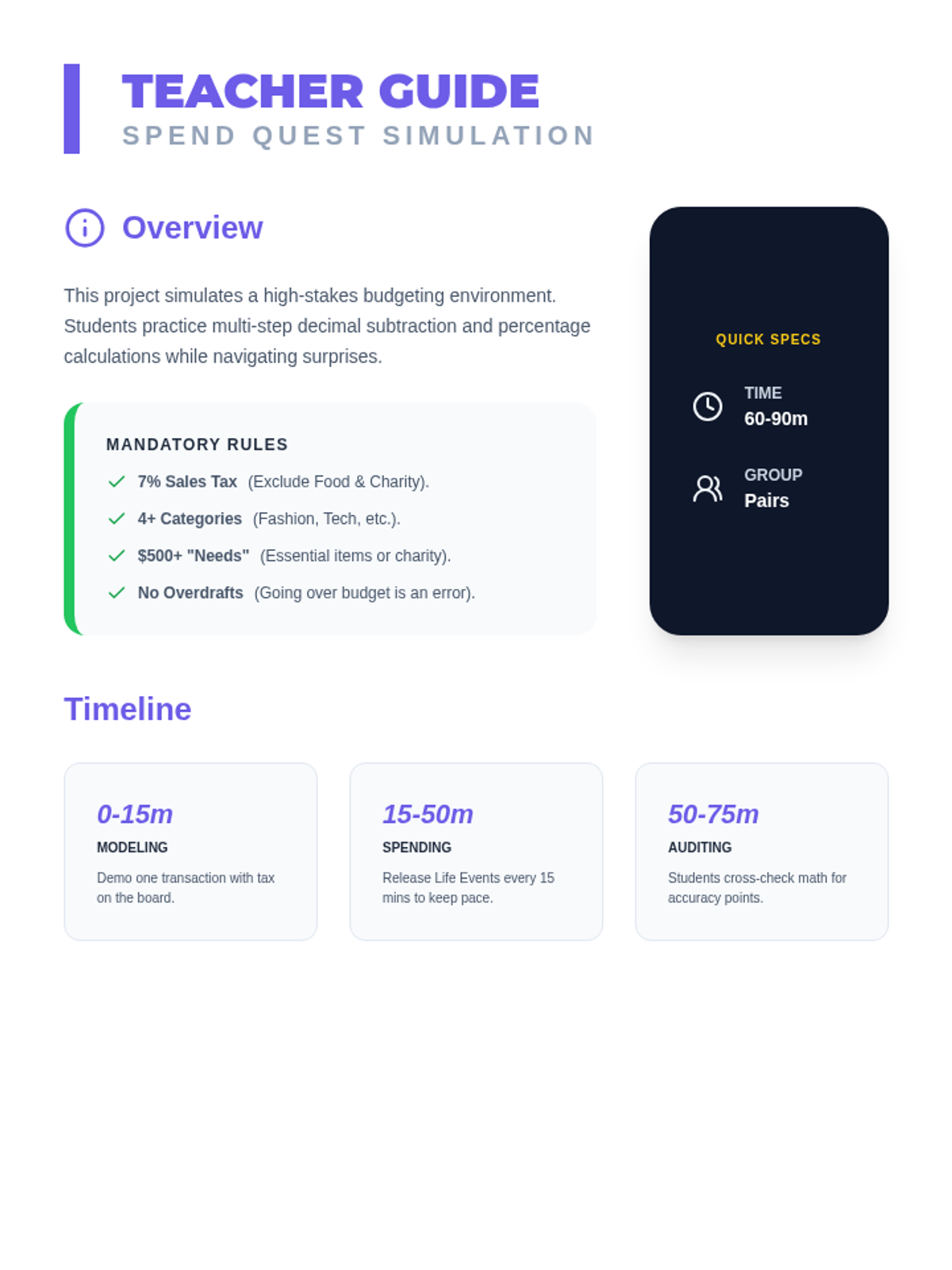
A high-energy math simulation where students manage a large budget, navigate financial constraints, and handle unexpected 'life events' while shopping for their dream items.
Students interpret and create line plots using measurement data involving fractions.
Students combine their knowledge of halves and fourths to measure more precisely and explore fraction equivalence.
Students learn to measure objects to the nearest fourth of an inch and explore partition logic.
Students learn to measure objects to the nearest half-inch and are introduced to mixed numbers.
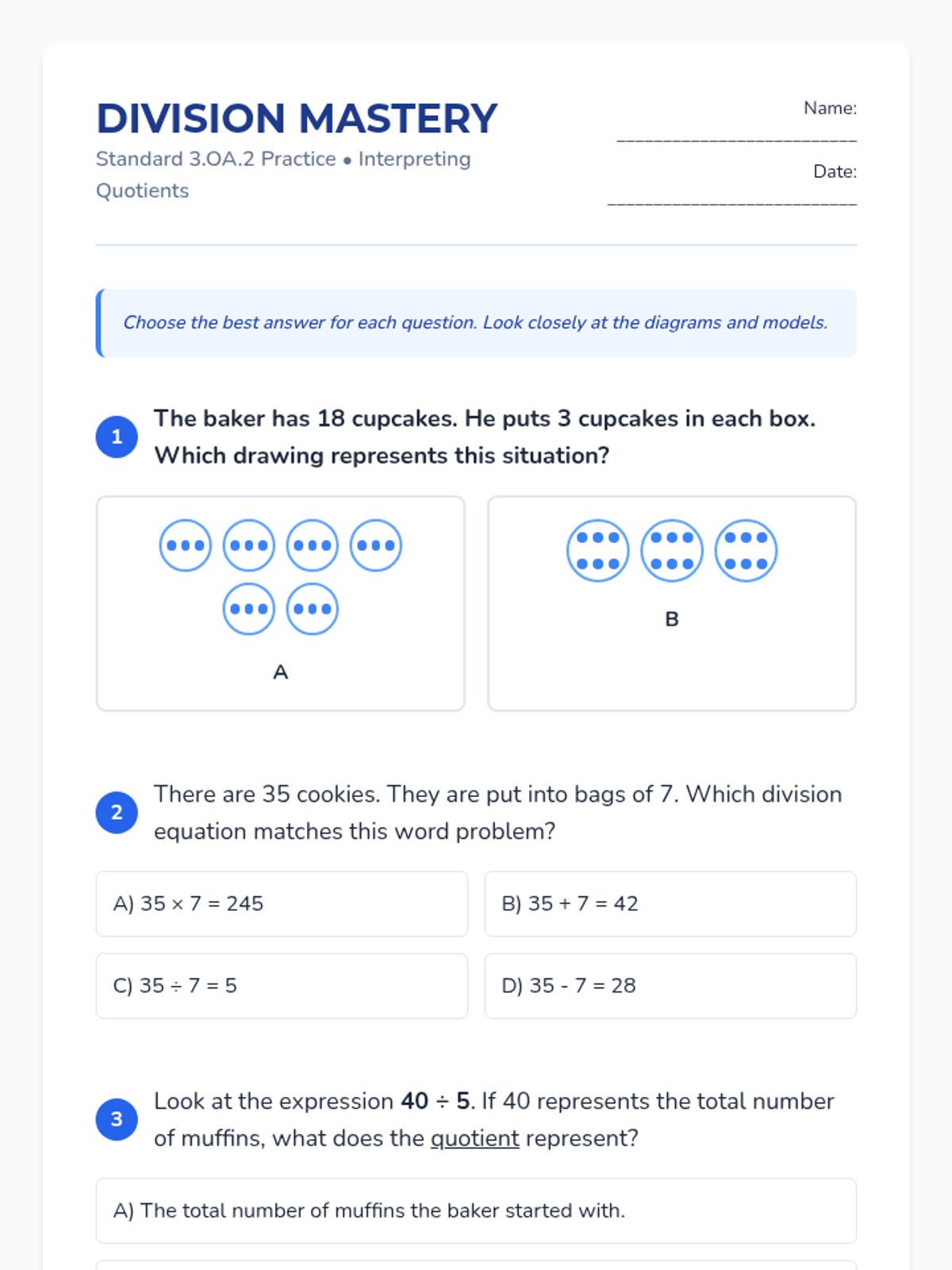
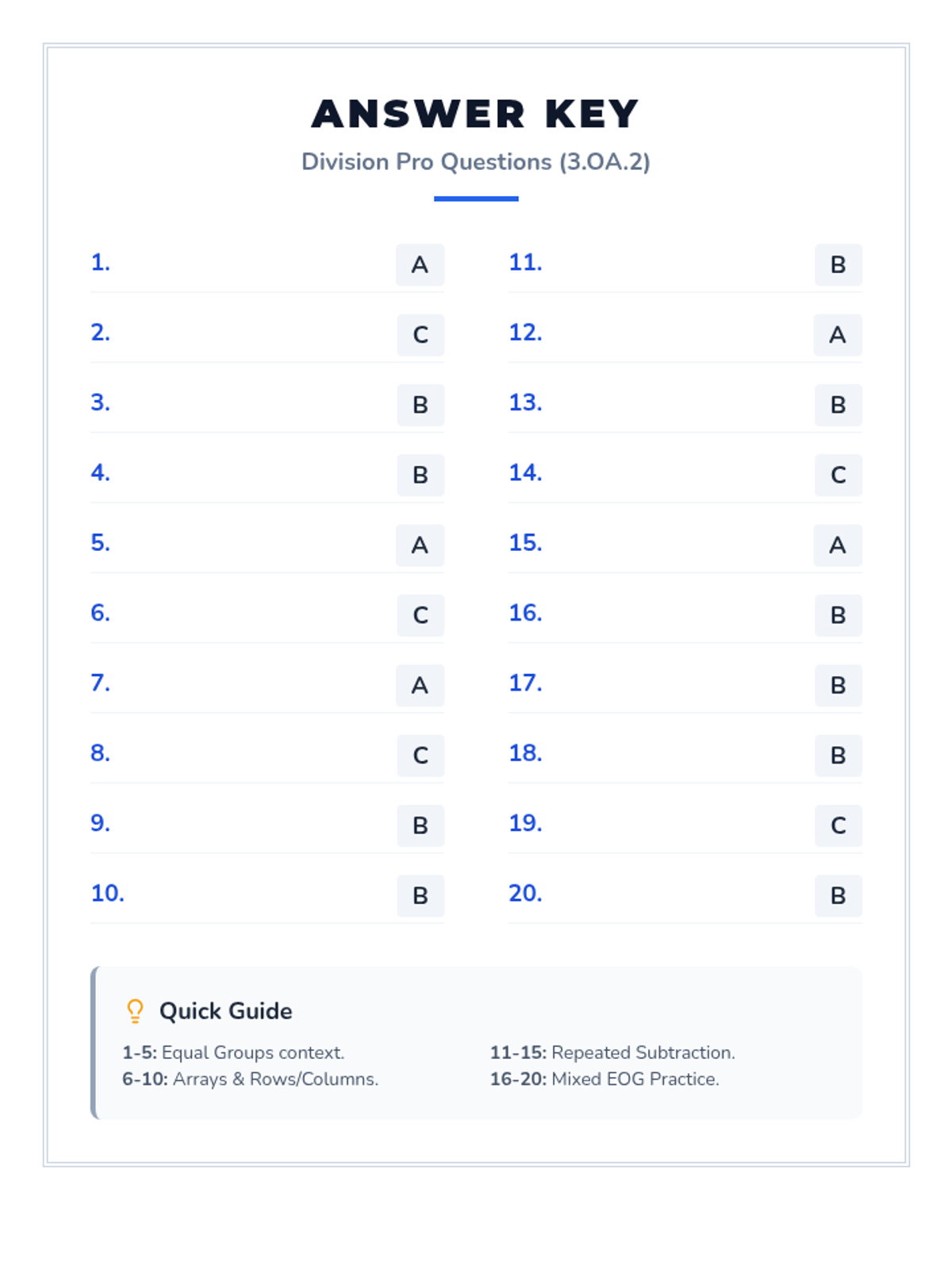
A comprehensive lesson on interpreting quotients through equal groups, arrays, and repeated subtraction, specifically aligned to 3.OA.2 for EOG preparation.
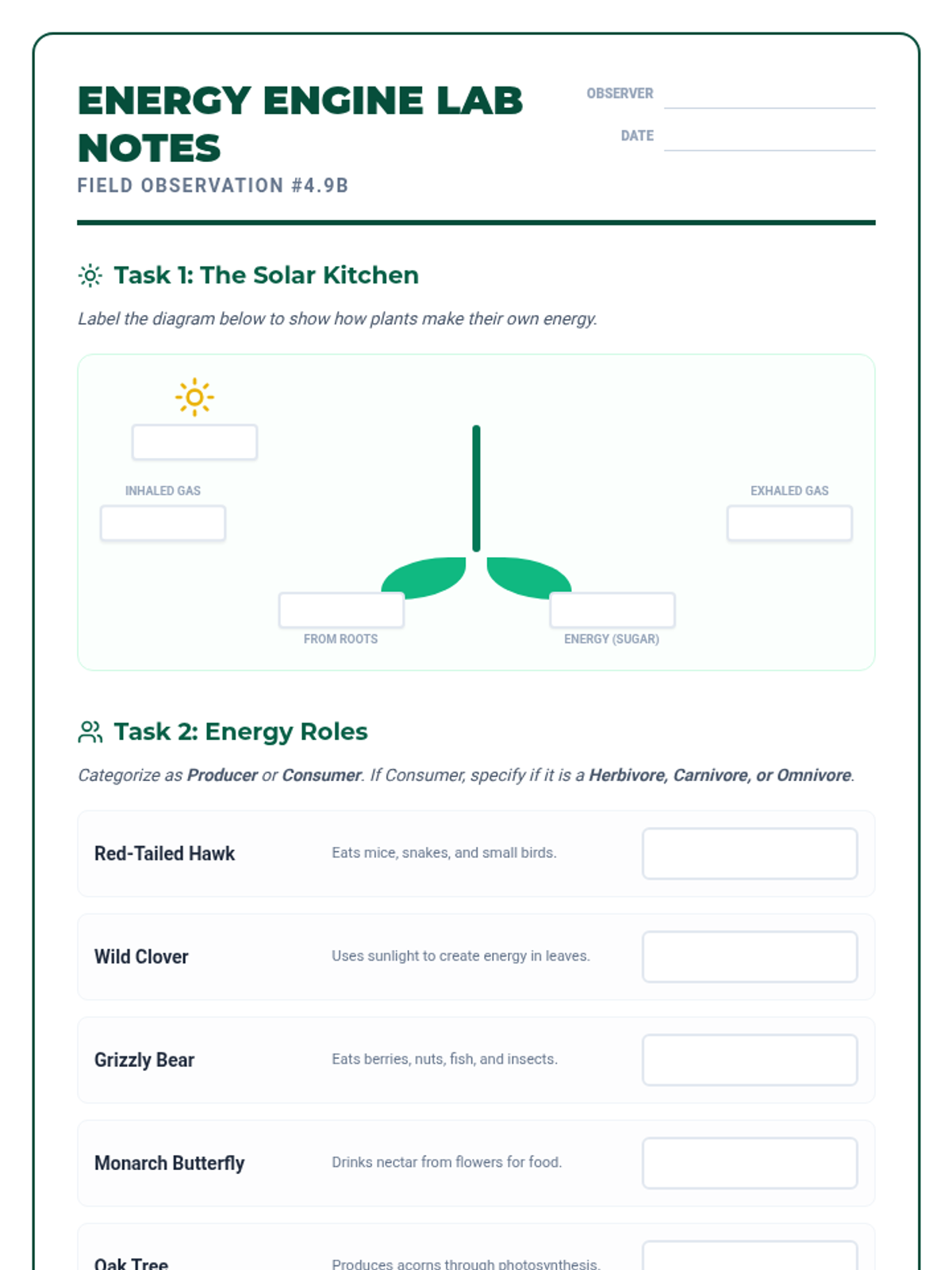
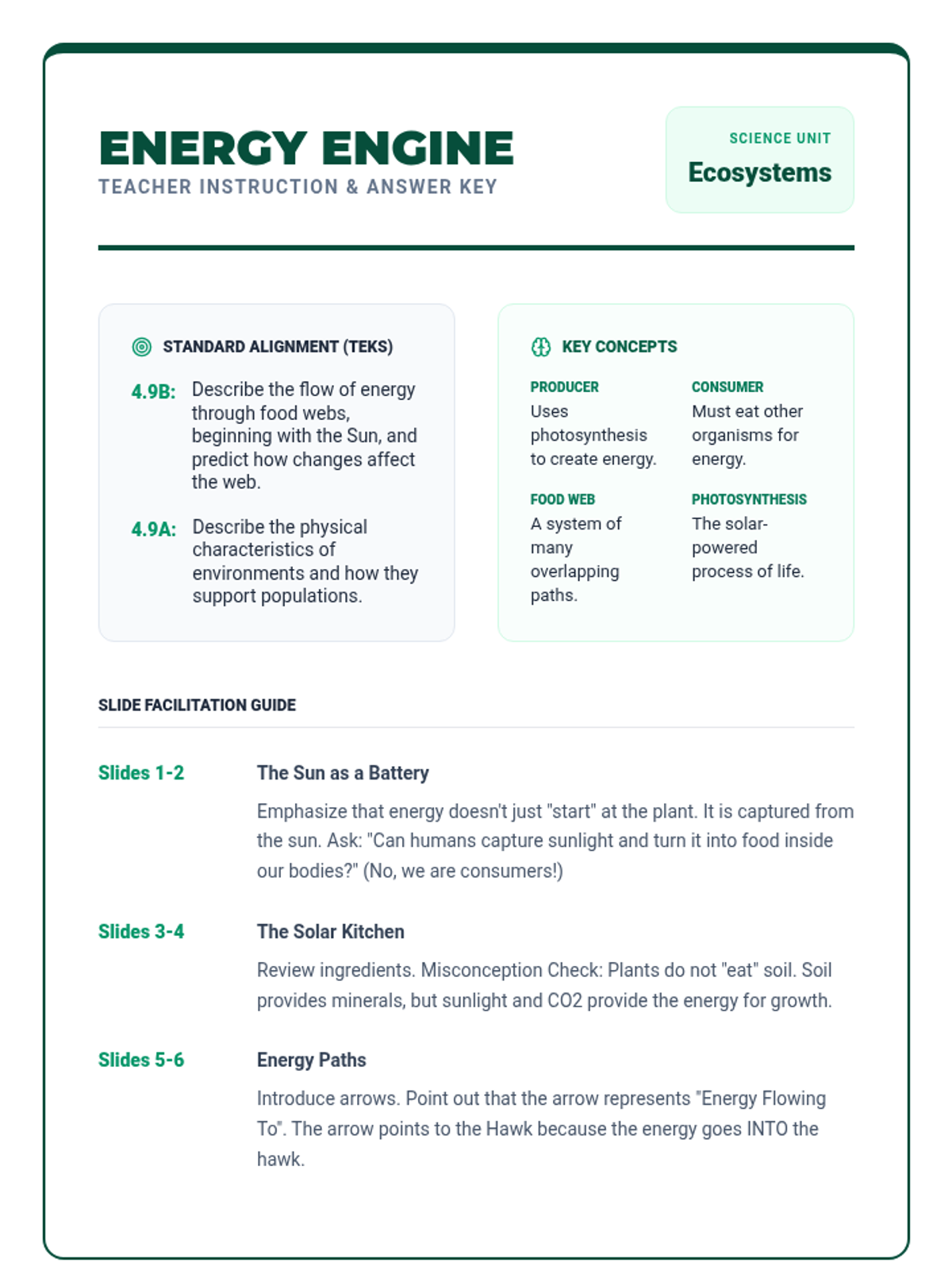
Discover how the Sun powers life on Earth through producers and the amazing process of photosynthesis.
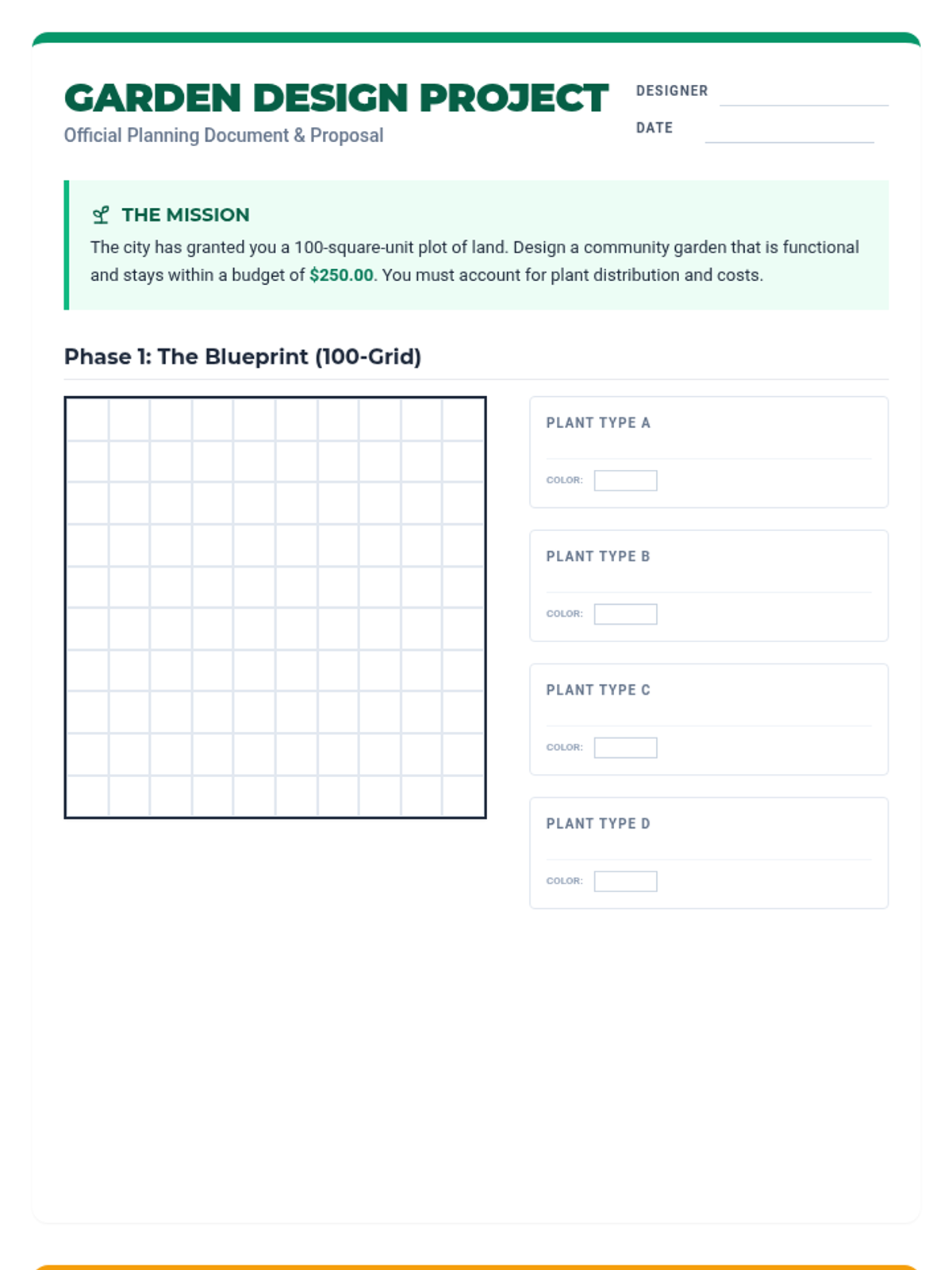
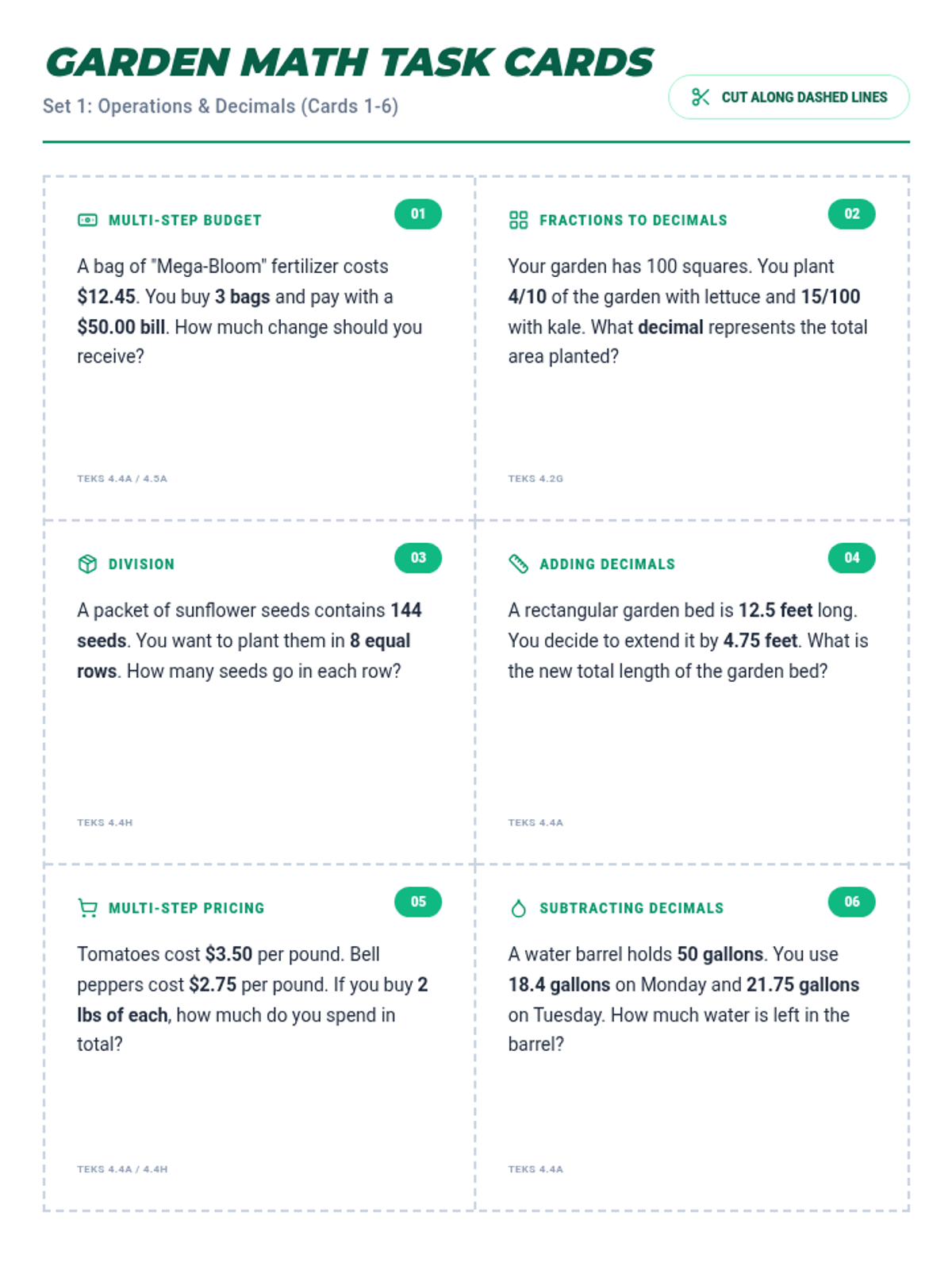
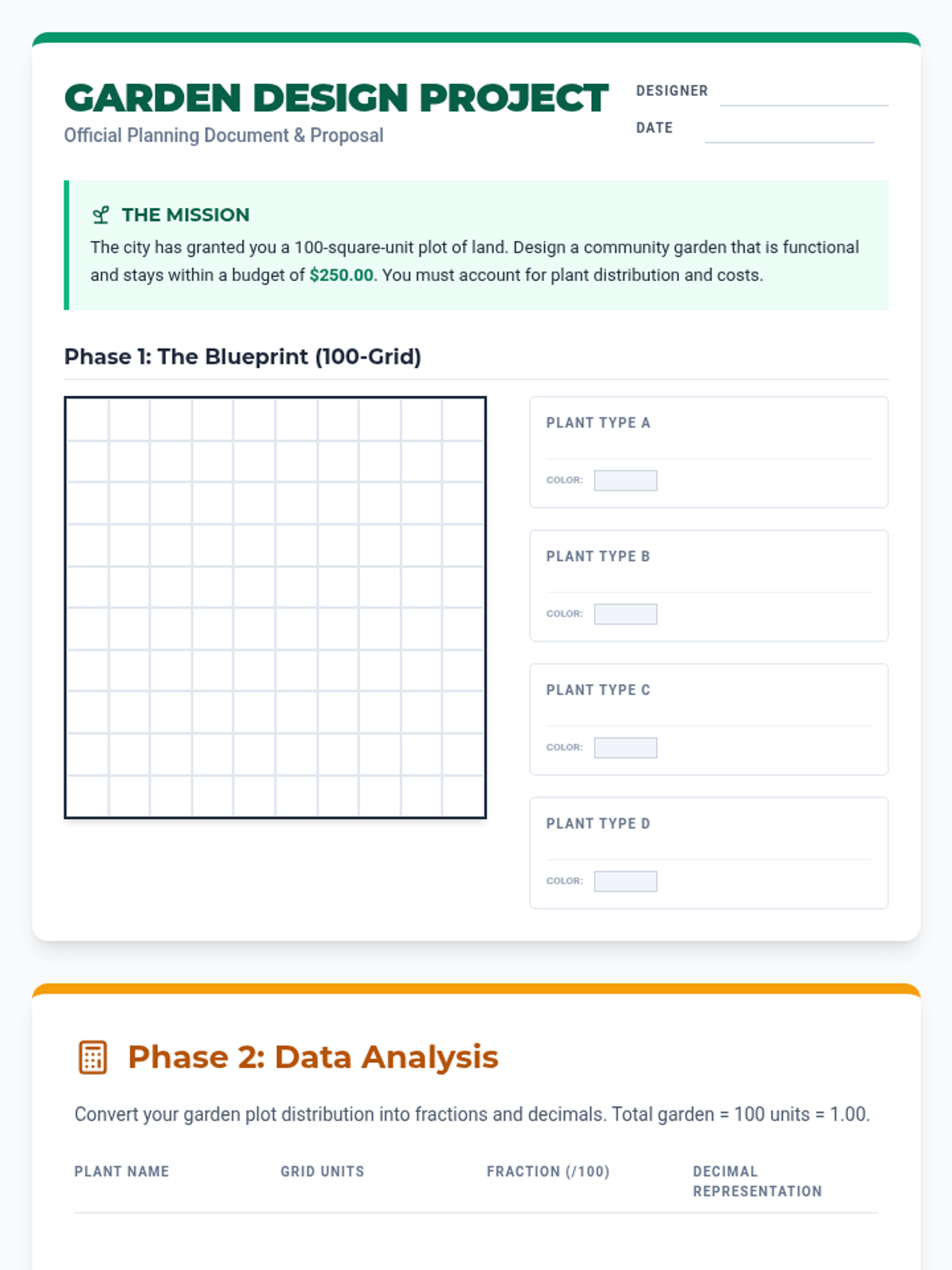
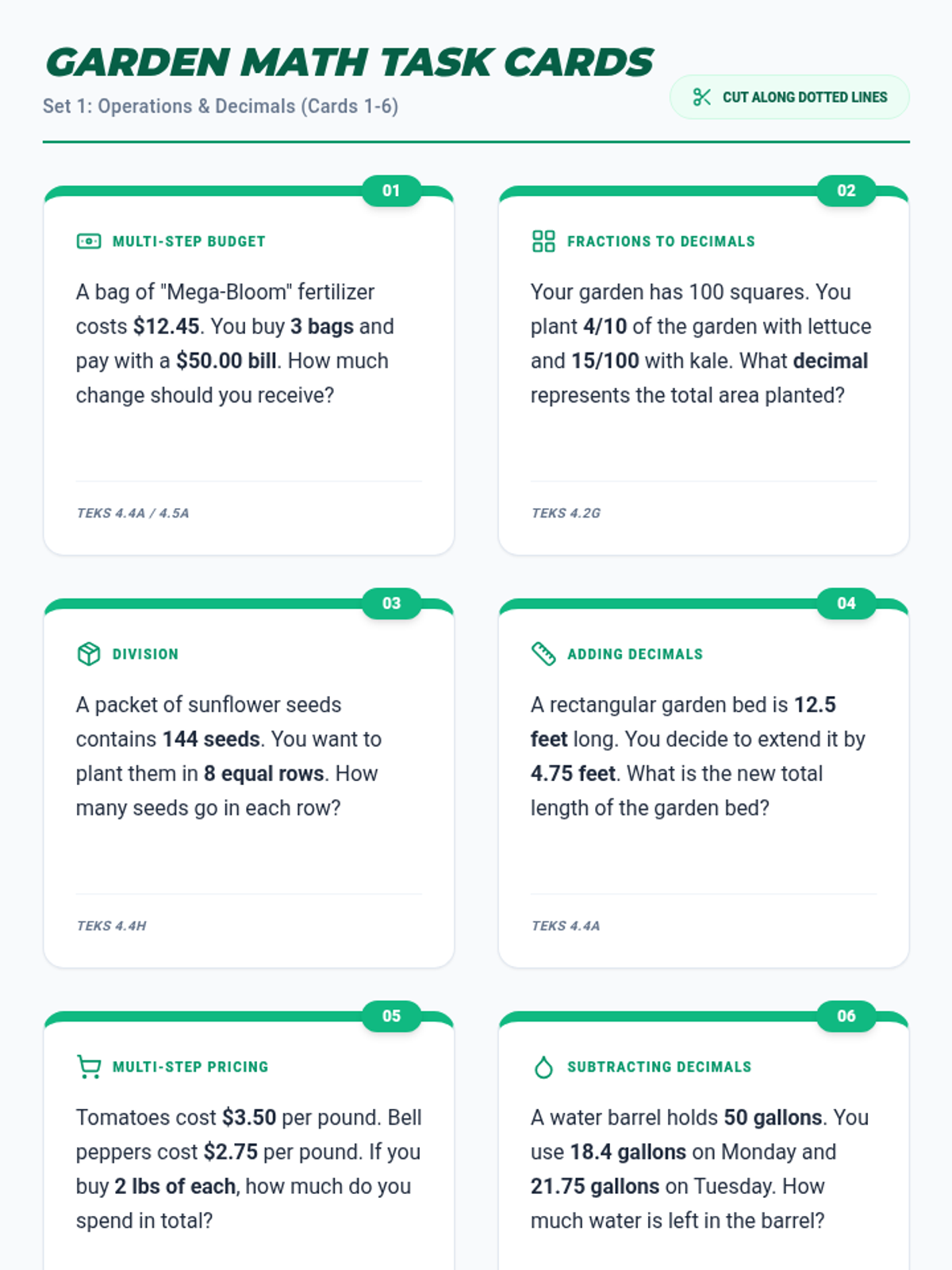
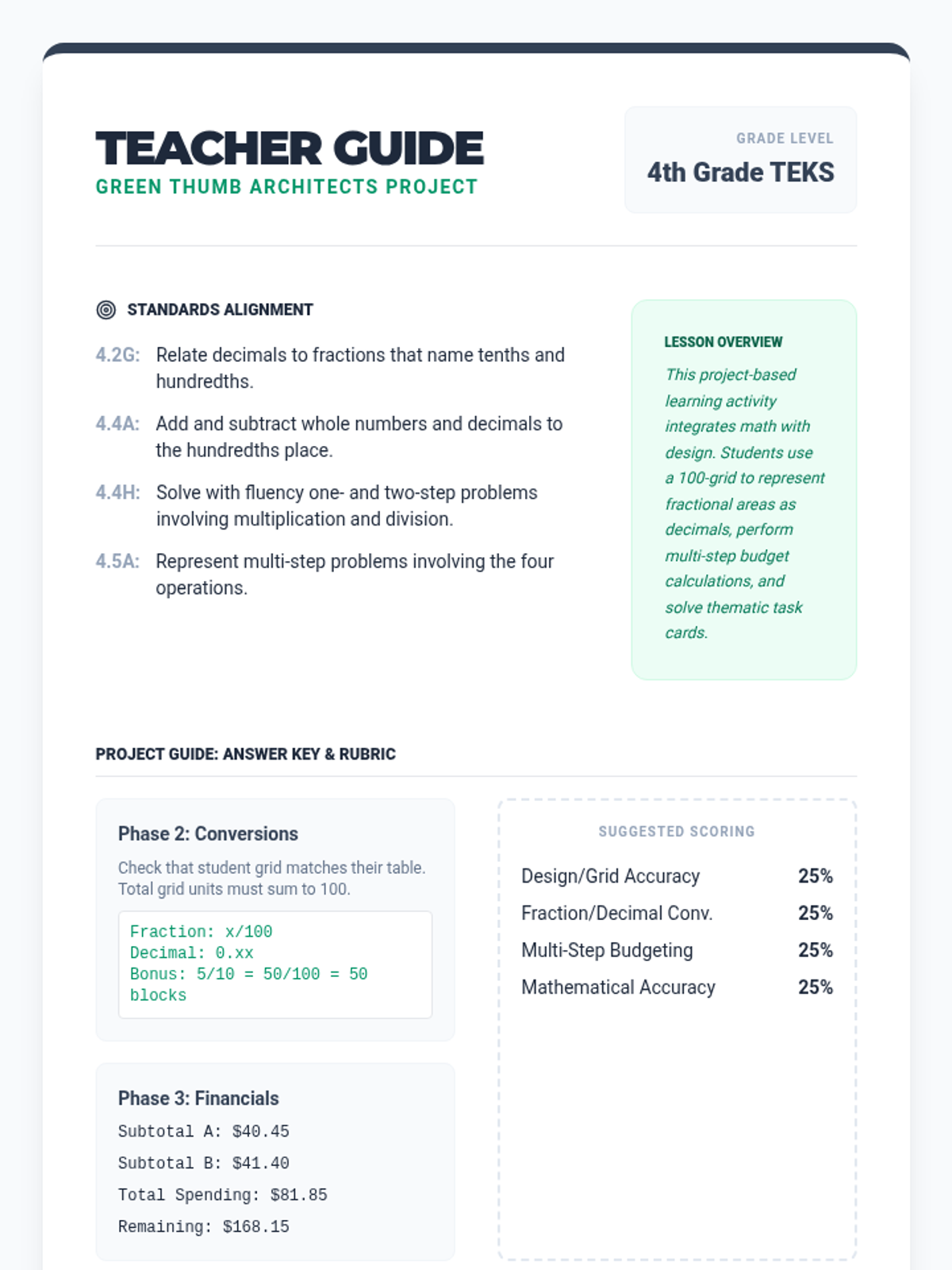
A math-focused project where students step into the role of garden designers to plan a community space while mastering multi-step word problems, decimal operations, and the relationship between fractions and decimals.
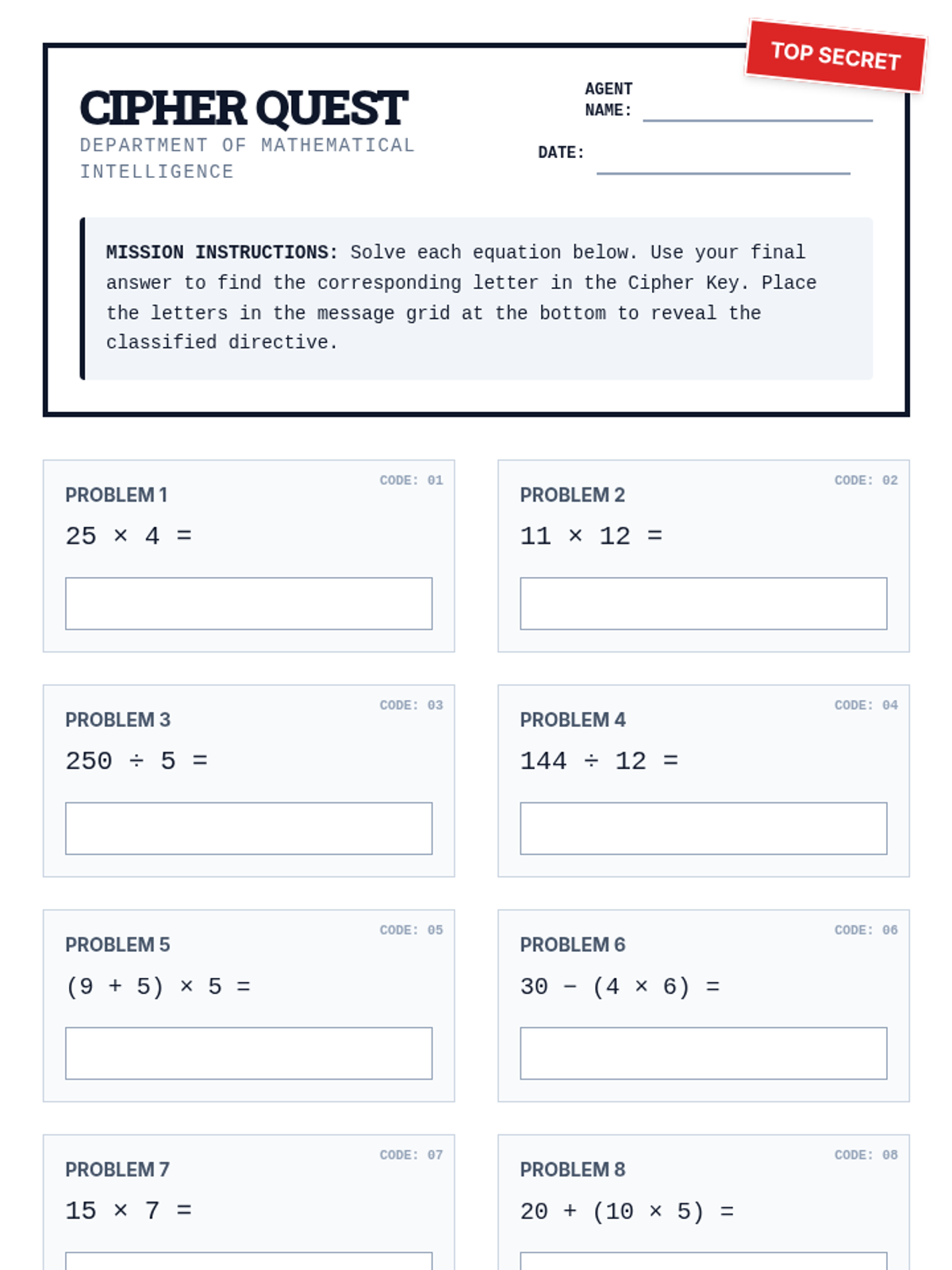
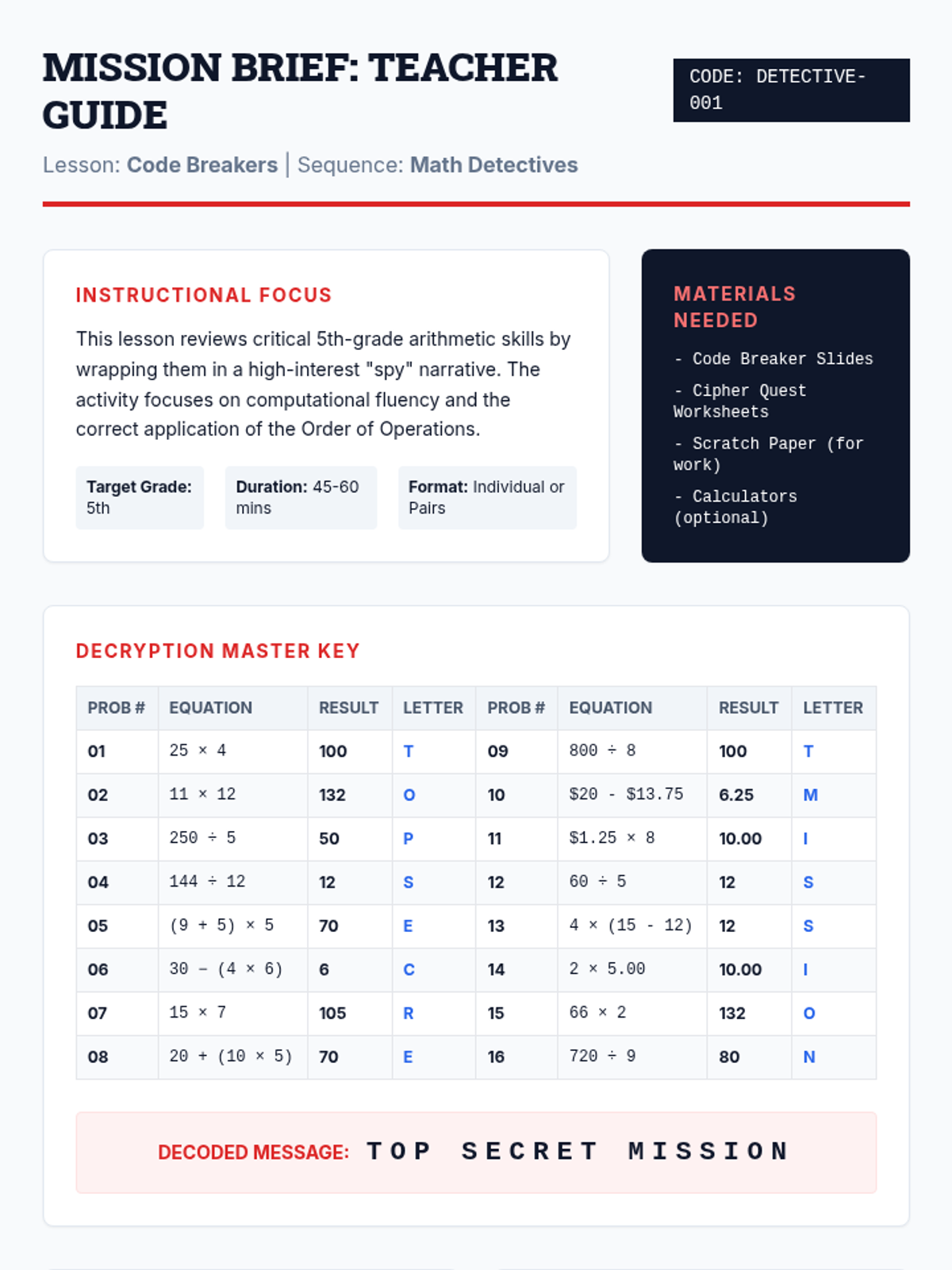
An engaging introduction to multi-digit multiplication, division, and order of operations through a spy-themed decoding challenge. Students act as 'Math Detectives' to solve a series of problems and reveal a hidden message.
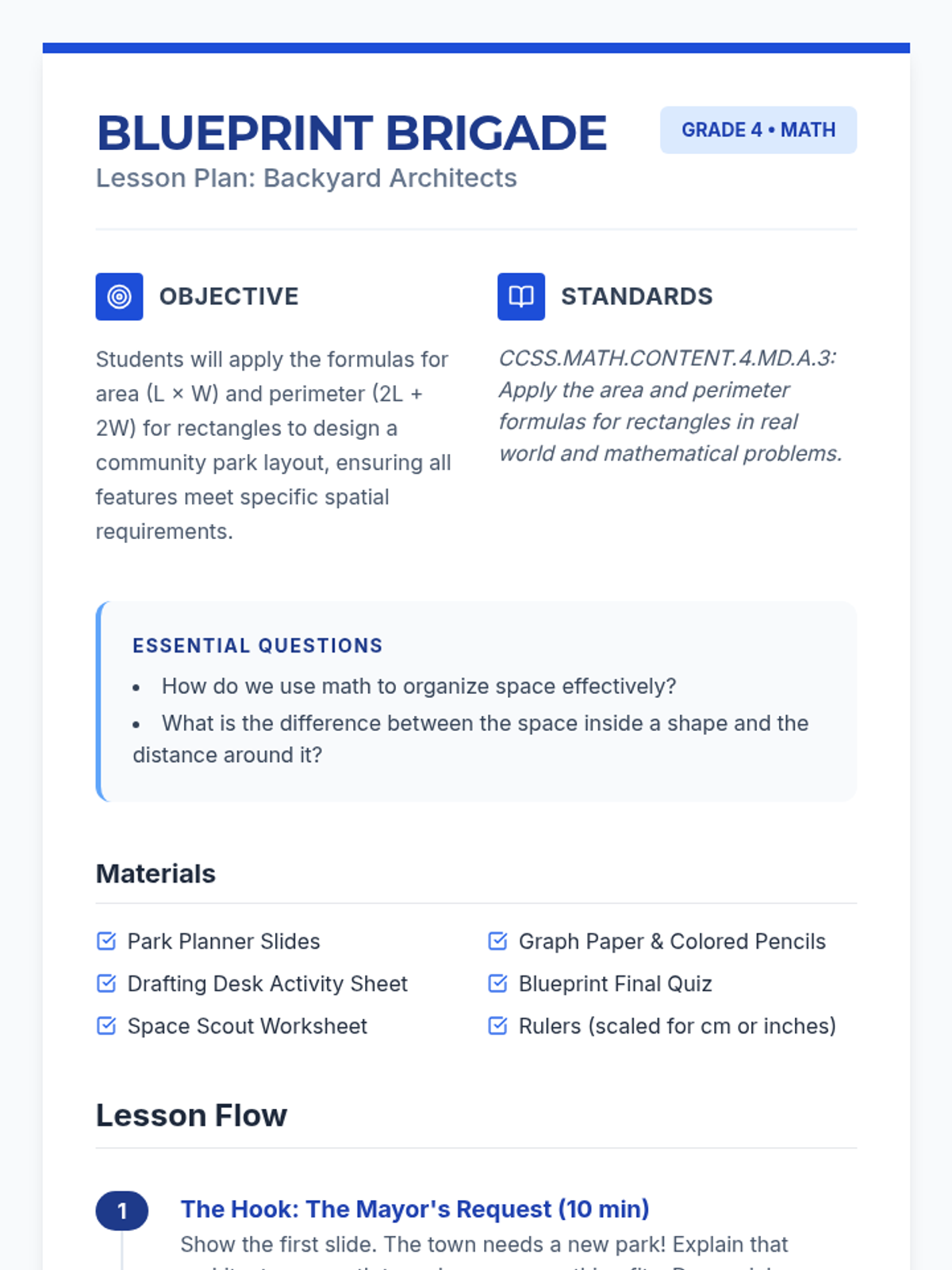
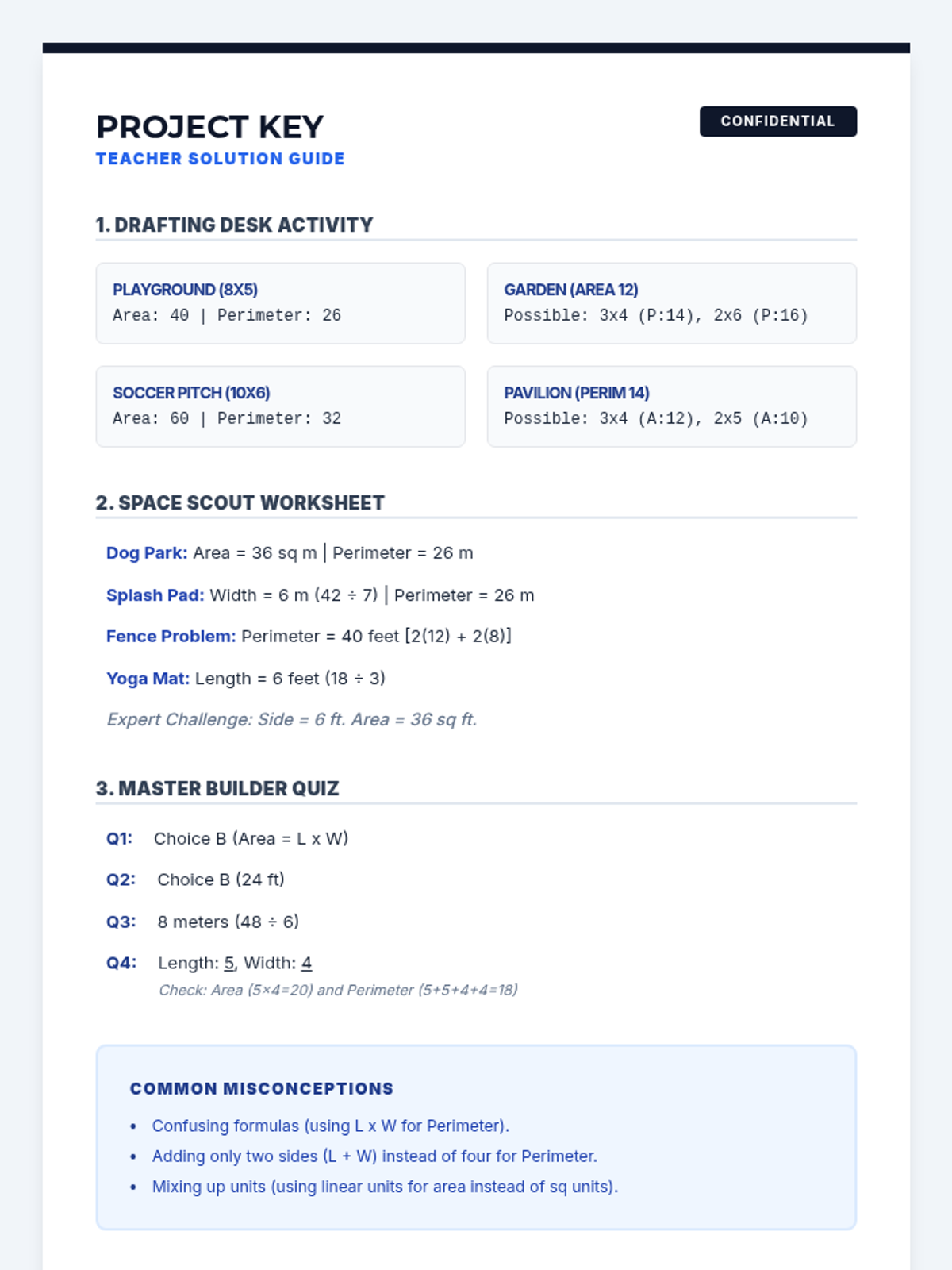
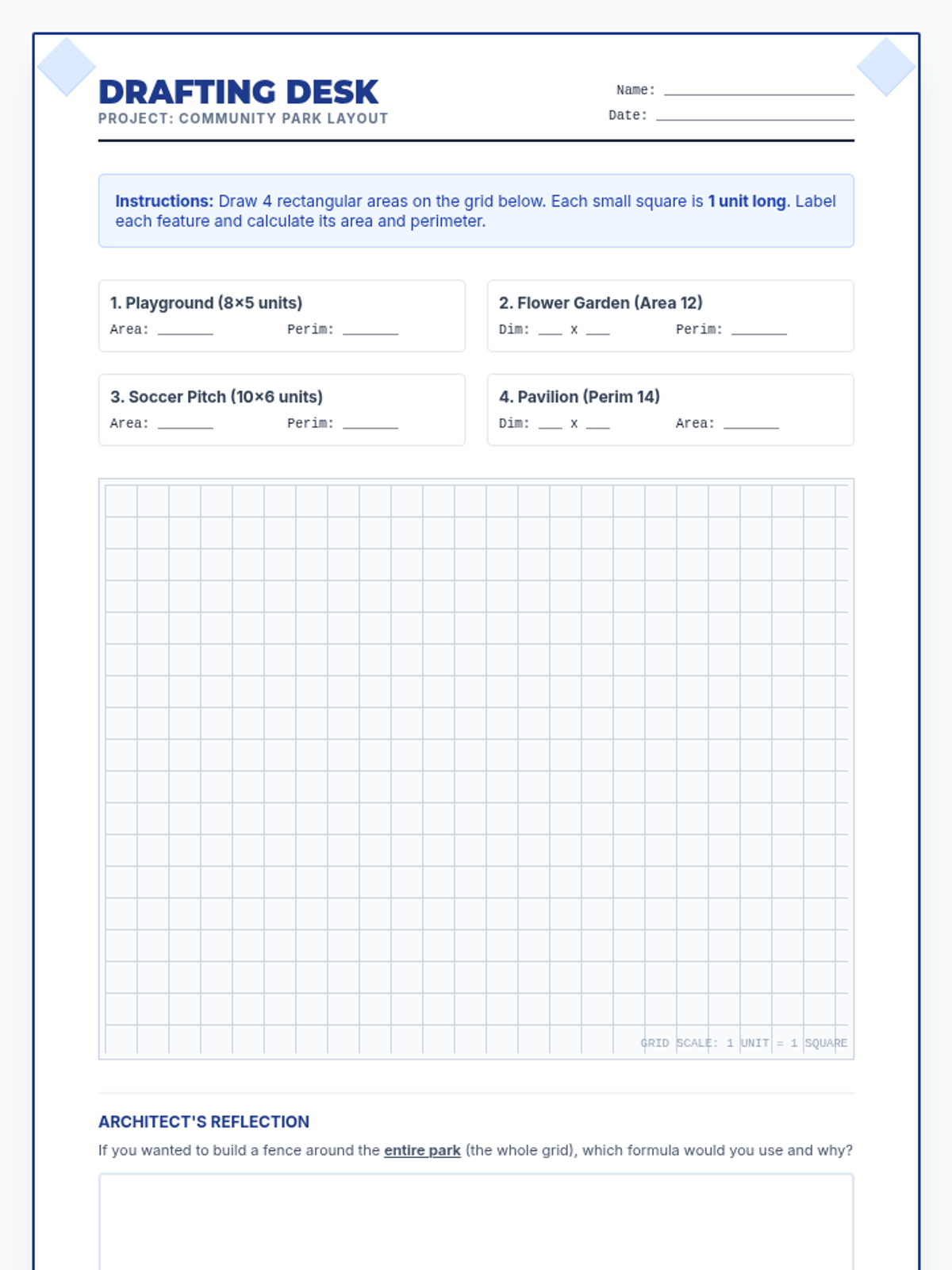
Students become backyard architects, designing a community park by calculating area and perimeter of rectangular features. This lesson bridges multiplicative thinking with real-world spatial planning for 4th graders.
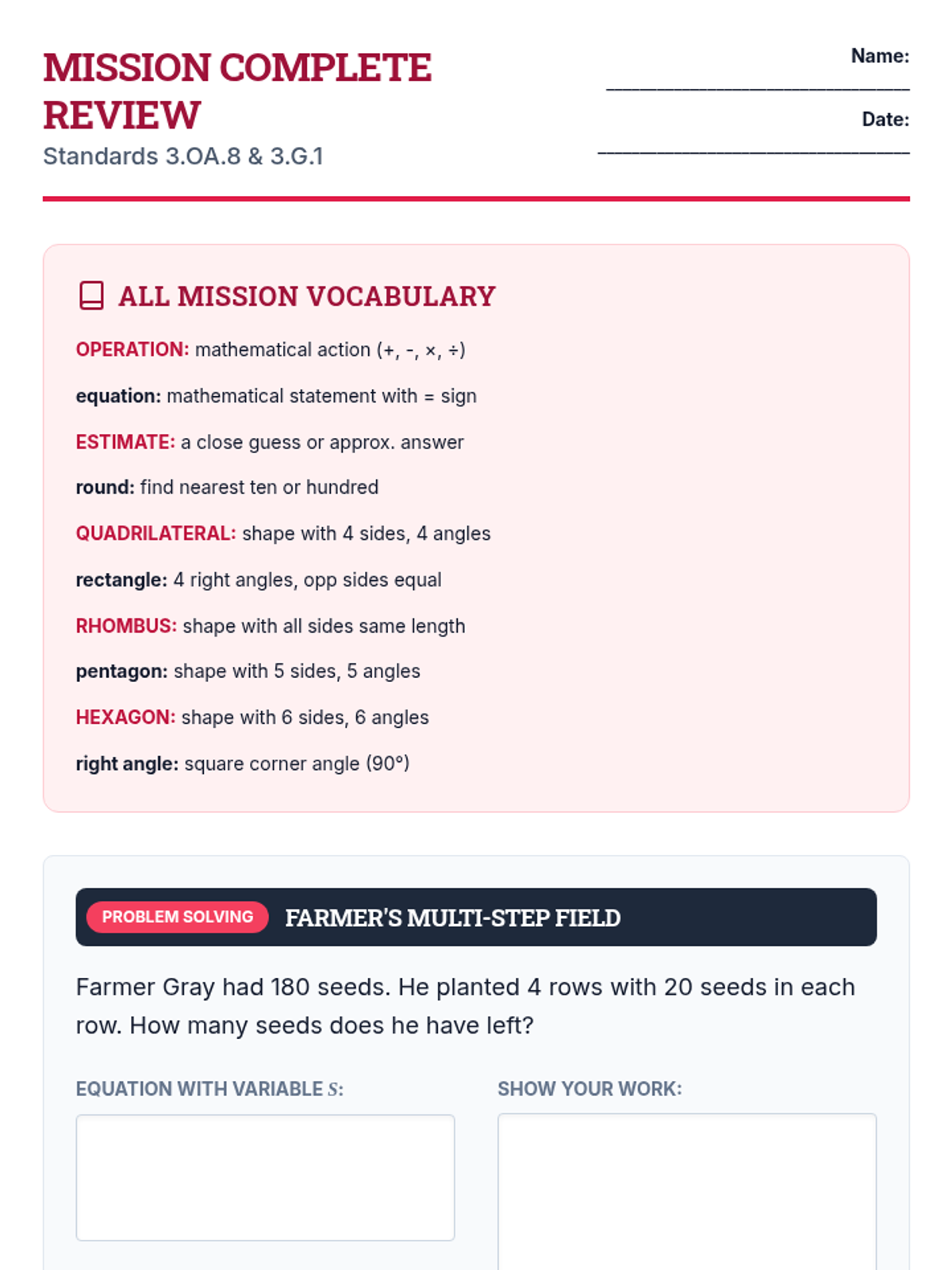
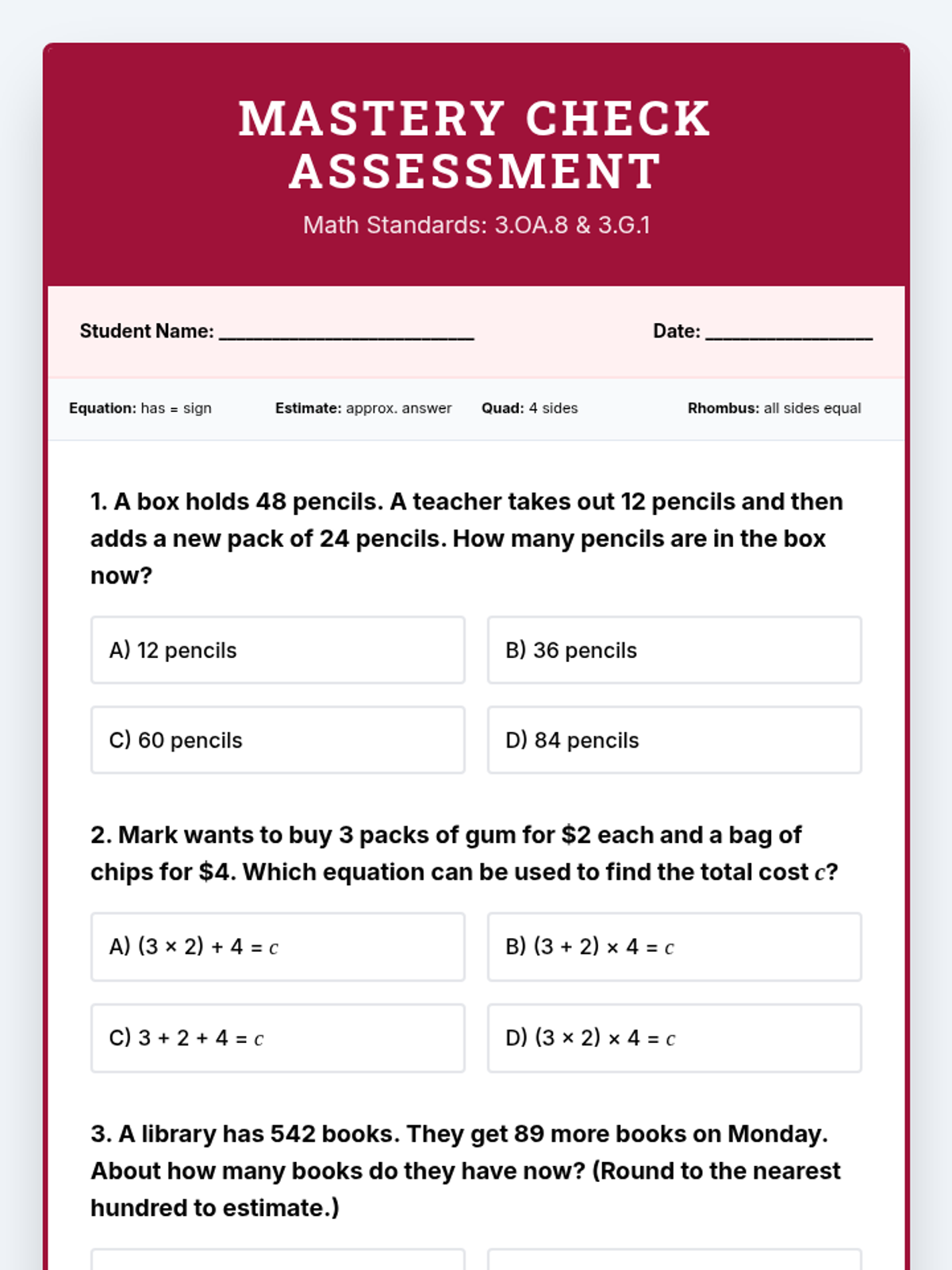
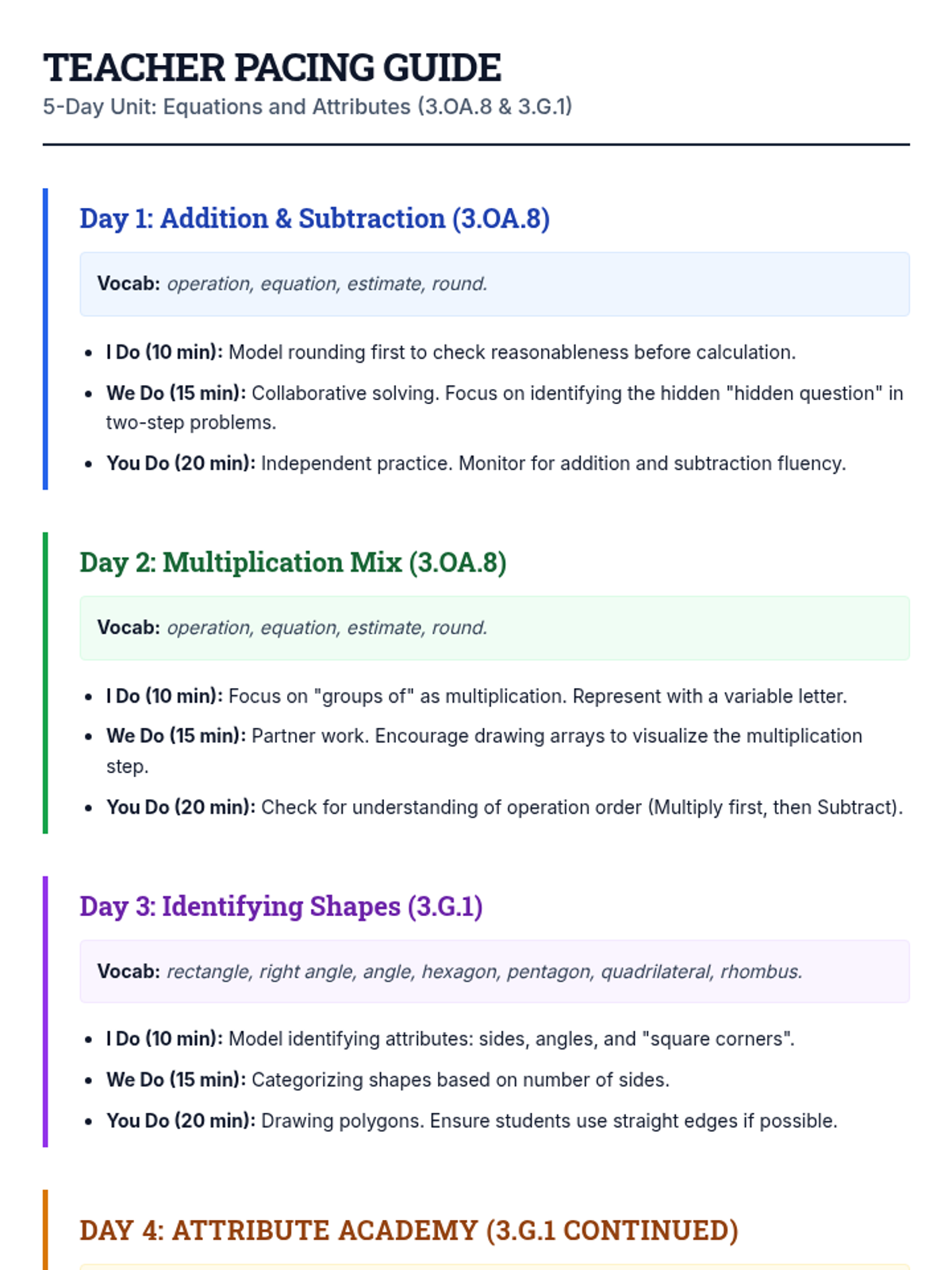
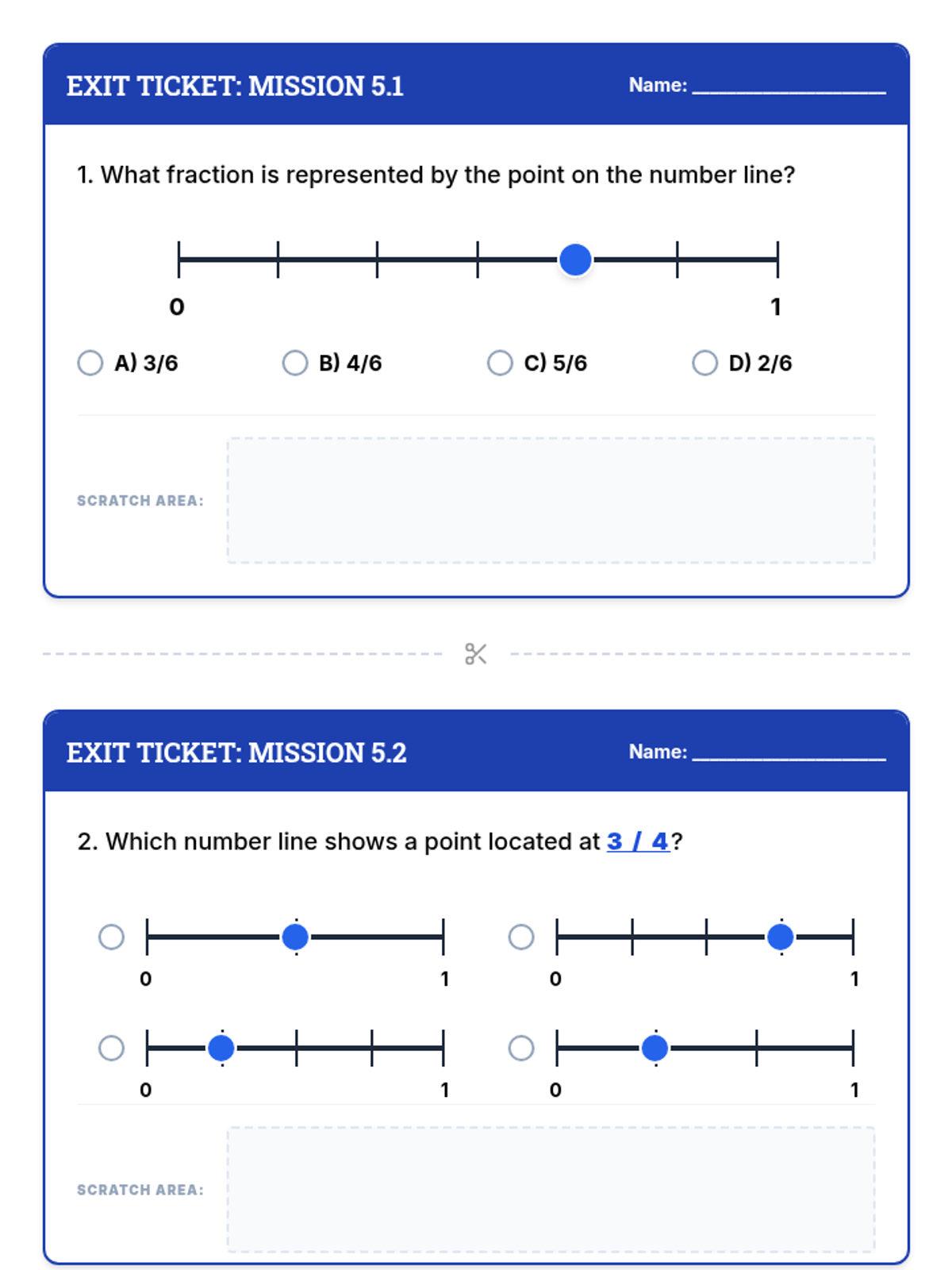
A cumulative review and final assessment covering both word problem solving and geometric classification to ensure mastery of standards 3.OA.8 and 3.G.1.
Deeper exploration of geometric attributes, focusing on classifying shapes within larger categories and recognizing shared properties.