Une évaluation complète de calcul mental pour les élèves de CE2, conçue pour tester les compétences clés de fin de cycle 2. Comprend une fiche de test pour l'élève et un corrigé pour l'enseignant.
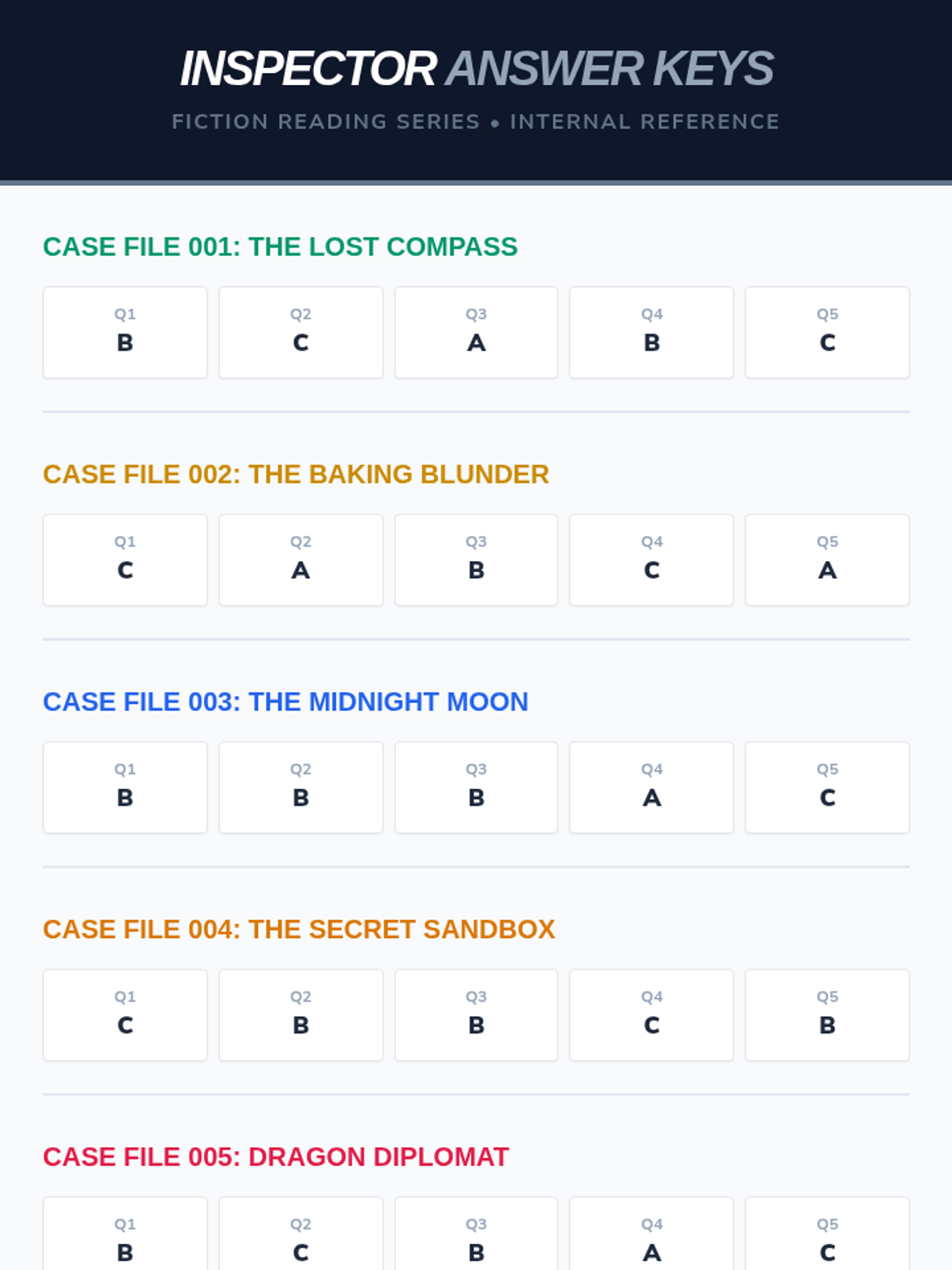
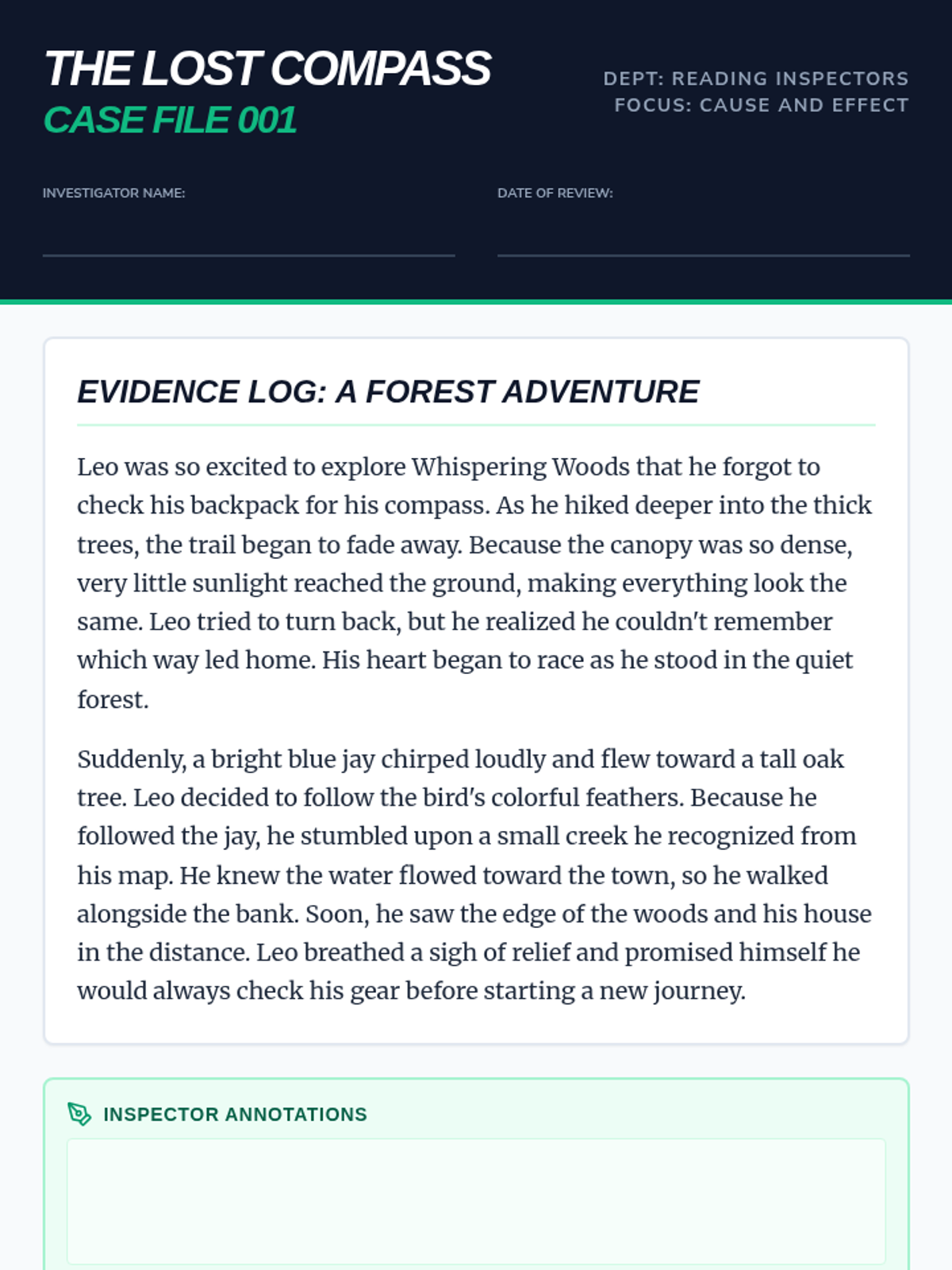
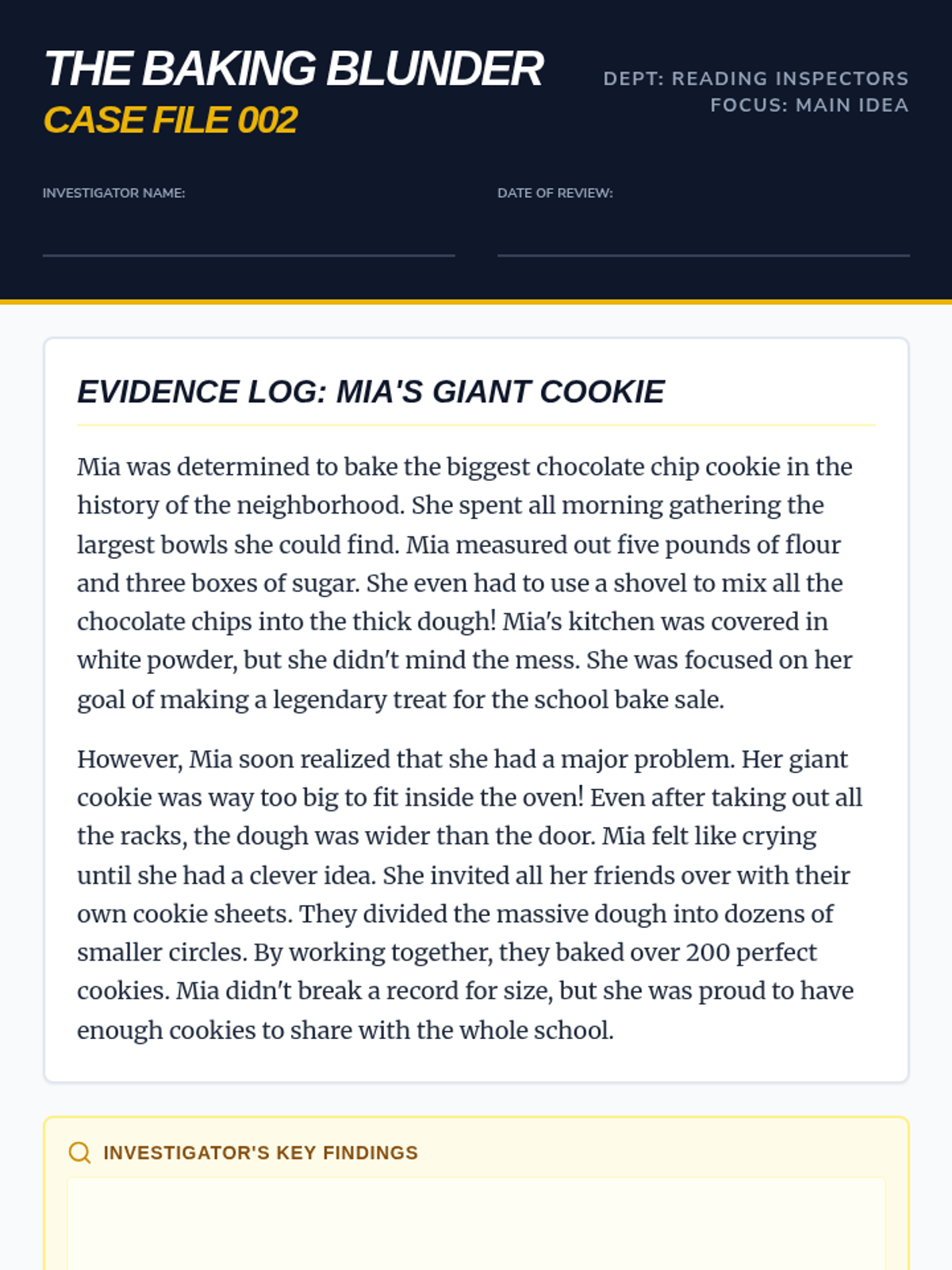
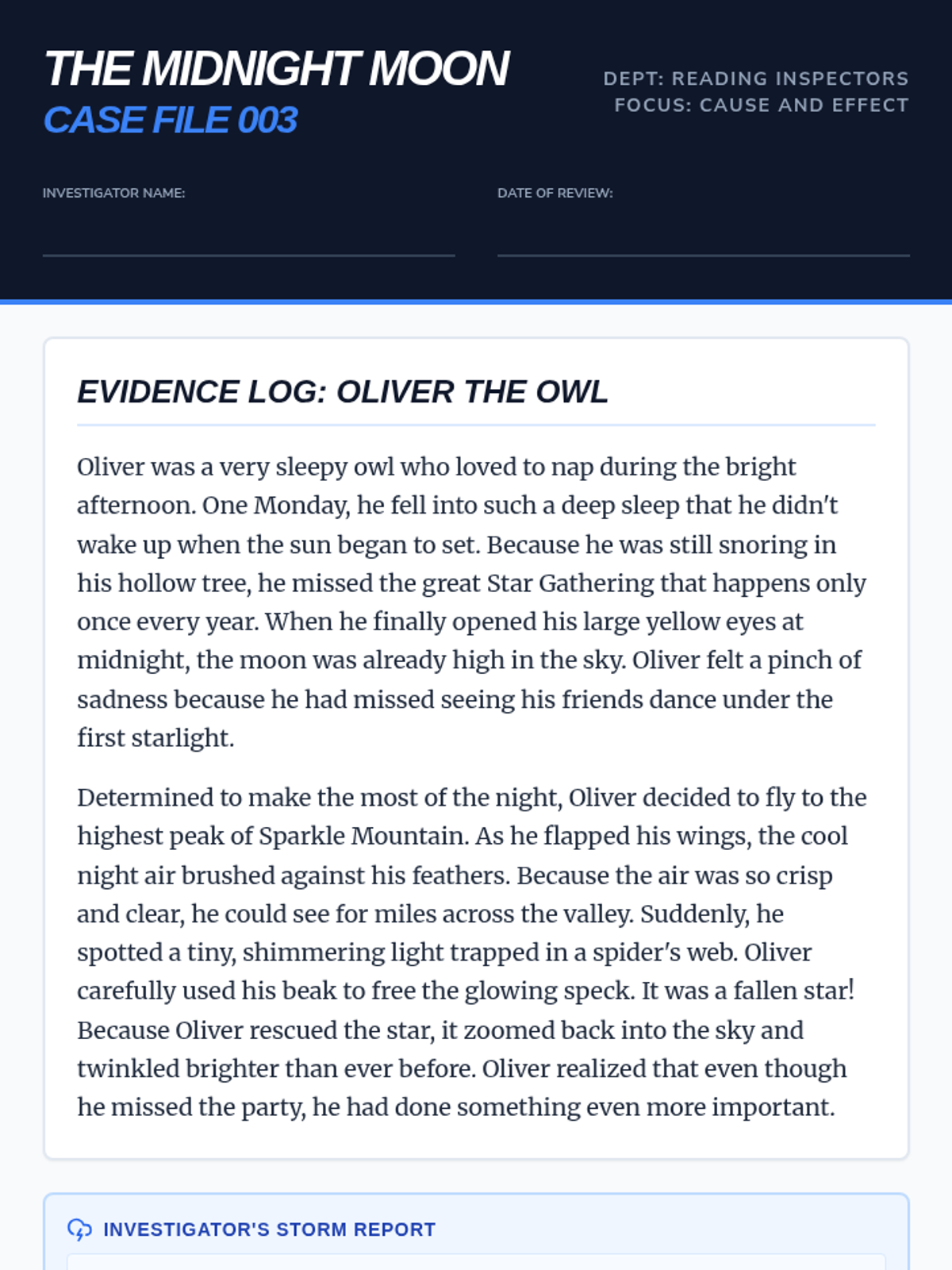
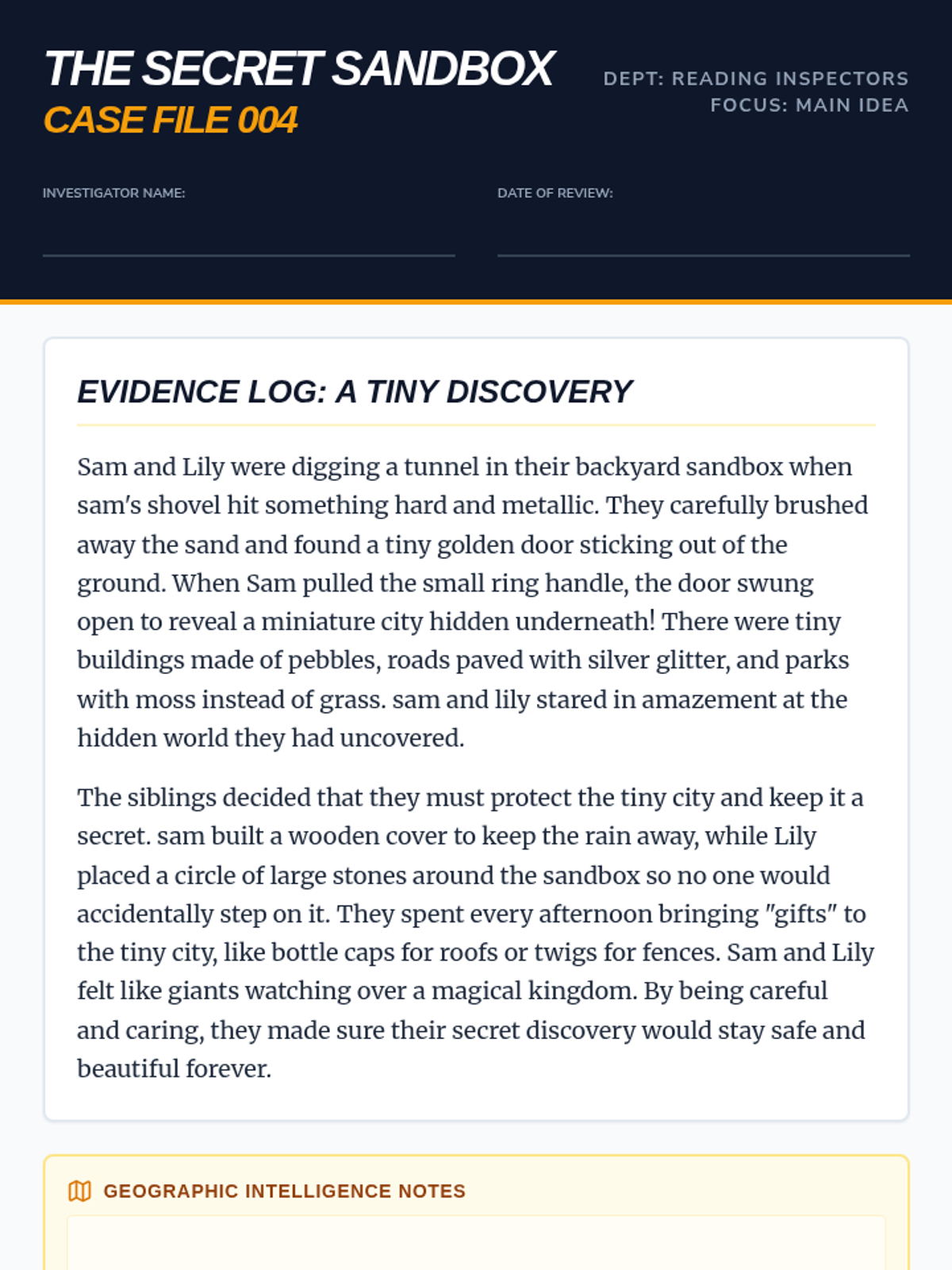
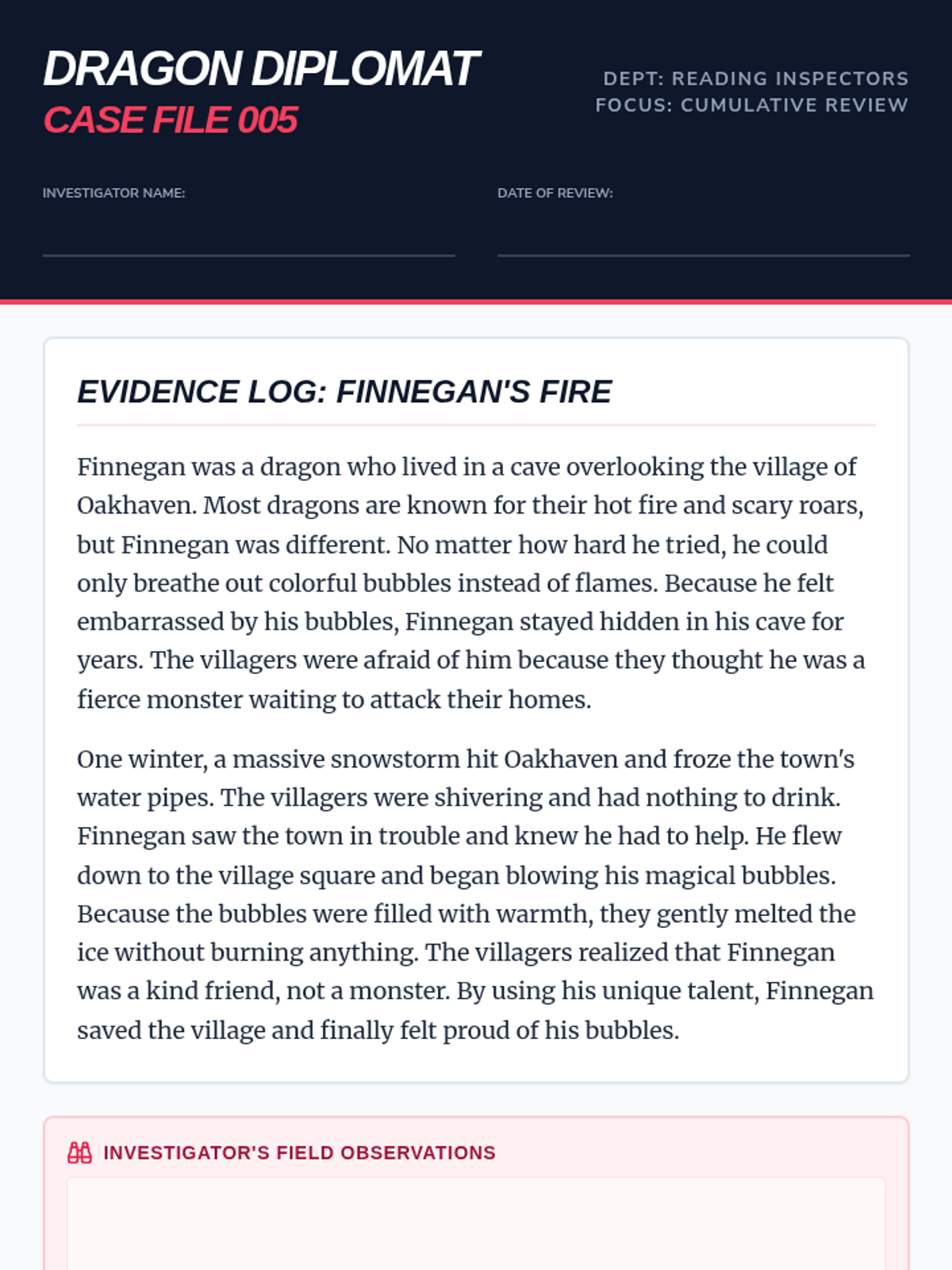
A series of five reading comprehension worksheets for 3rd grade, focusing on cause, effect, and main idea. Each worksheet features a unique passage with five EOG-style multiple-choice questions and space for student annotations or notes.
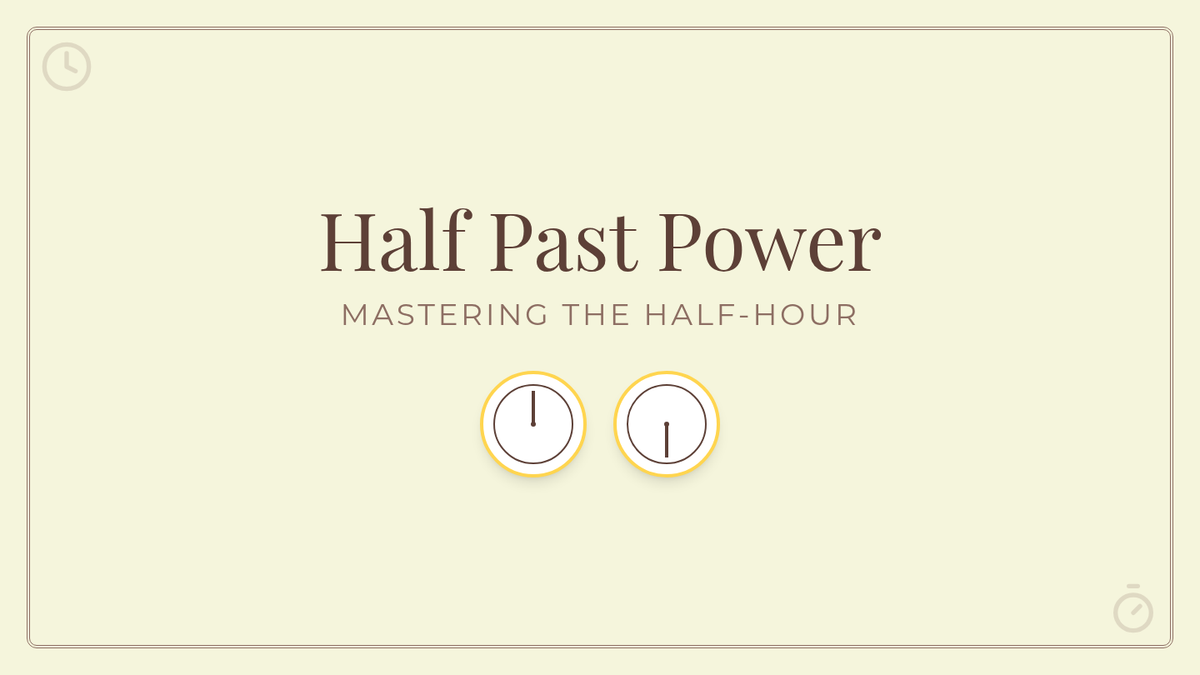
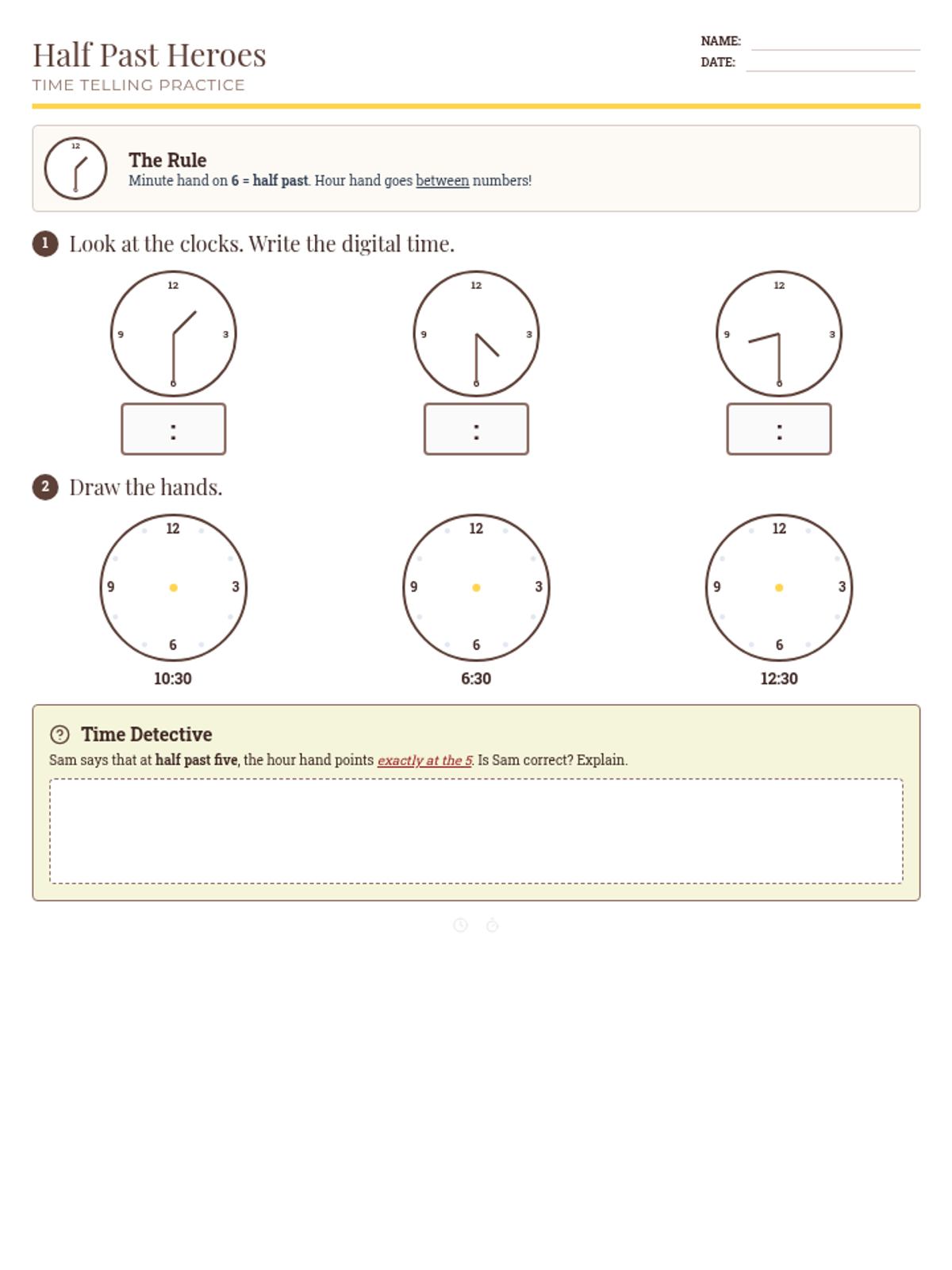
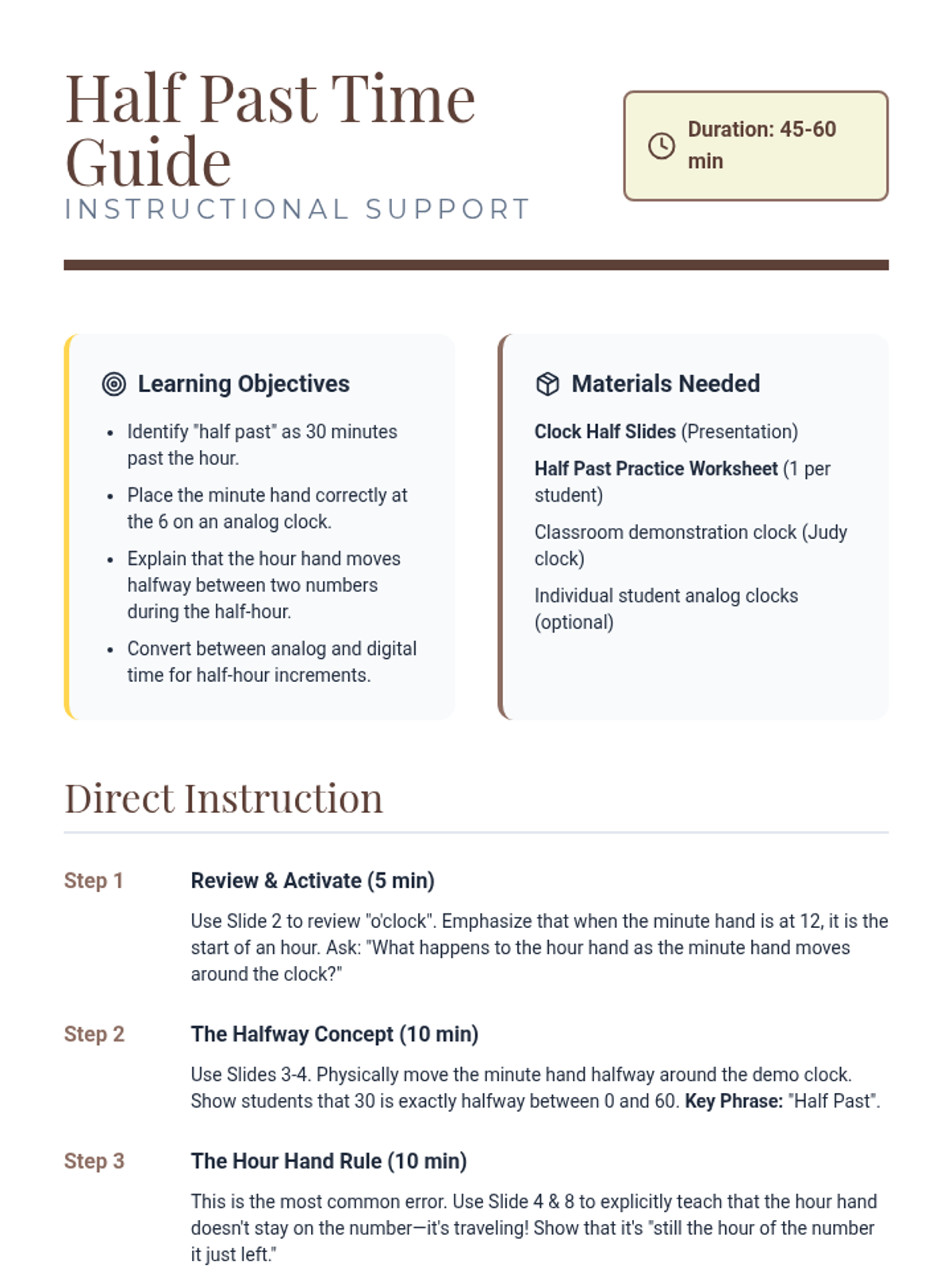
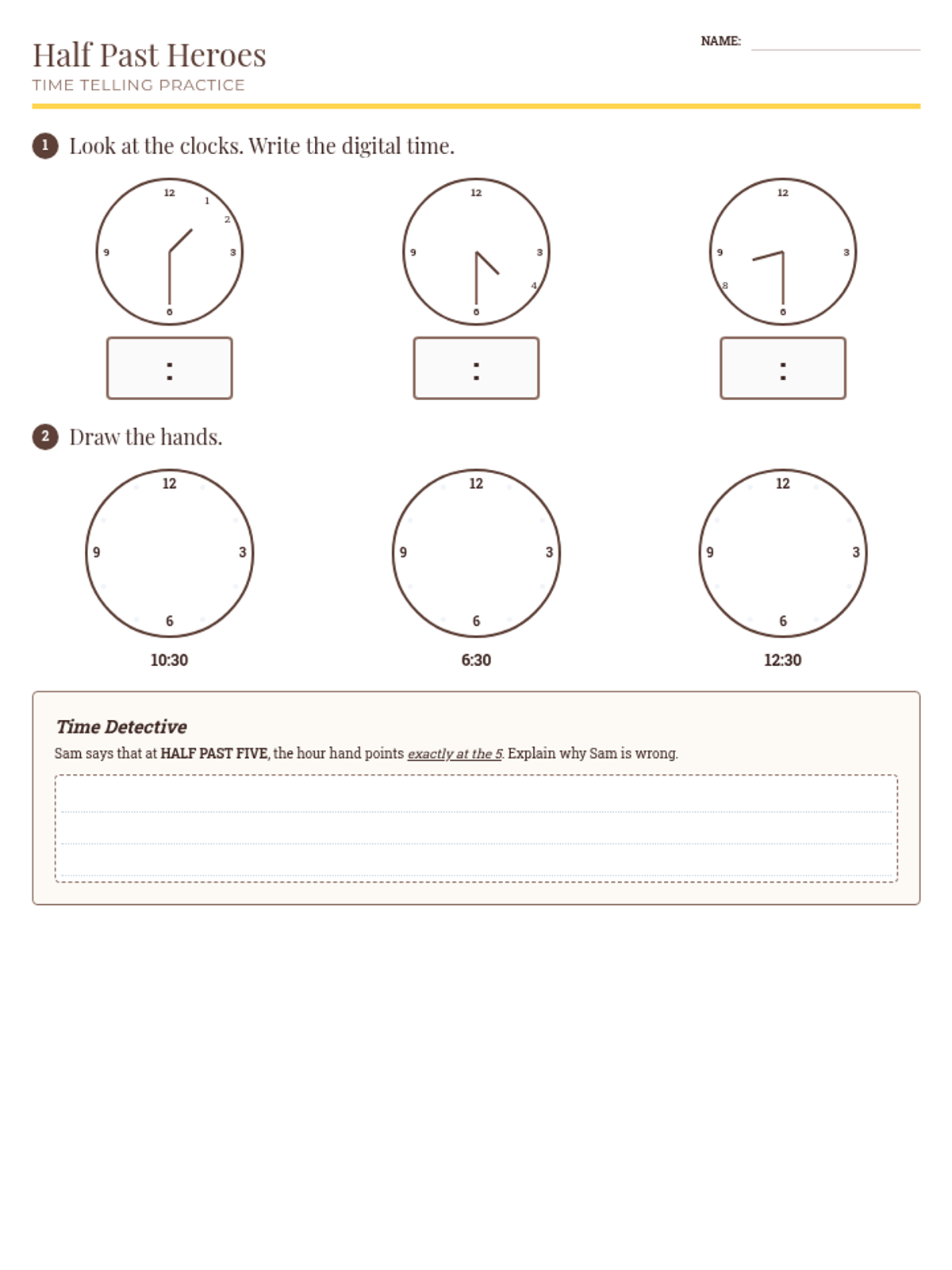
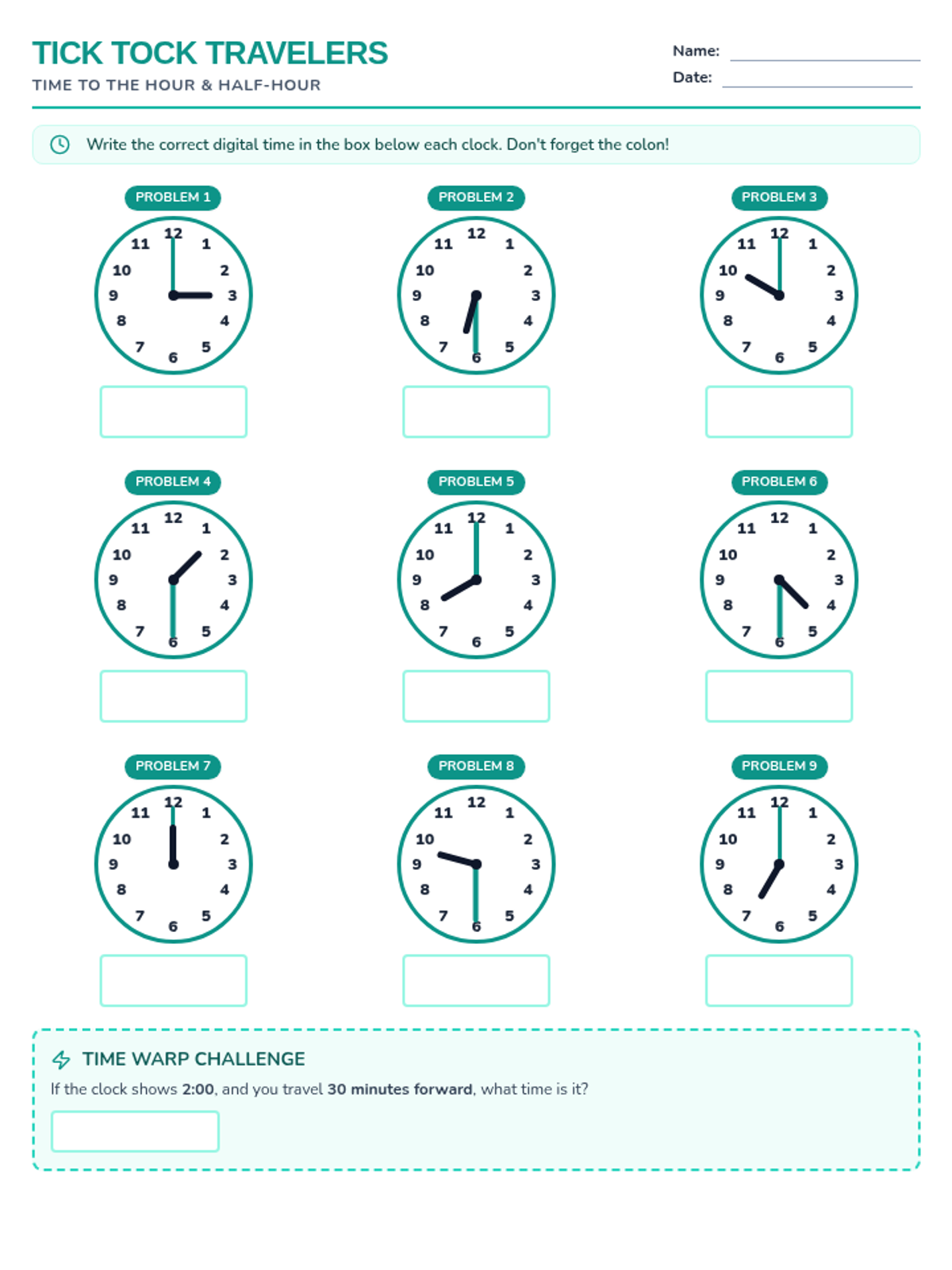
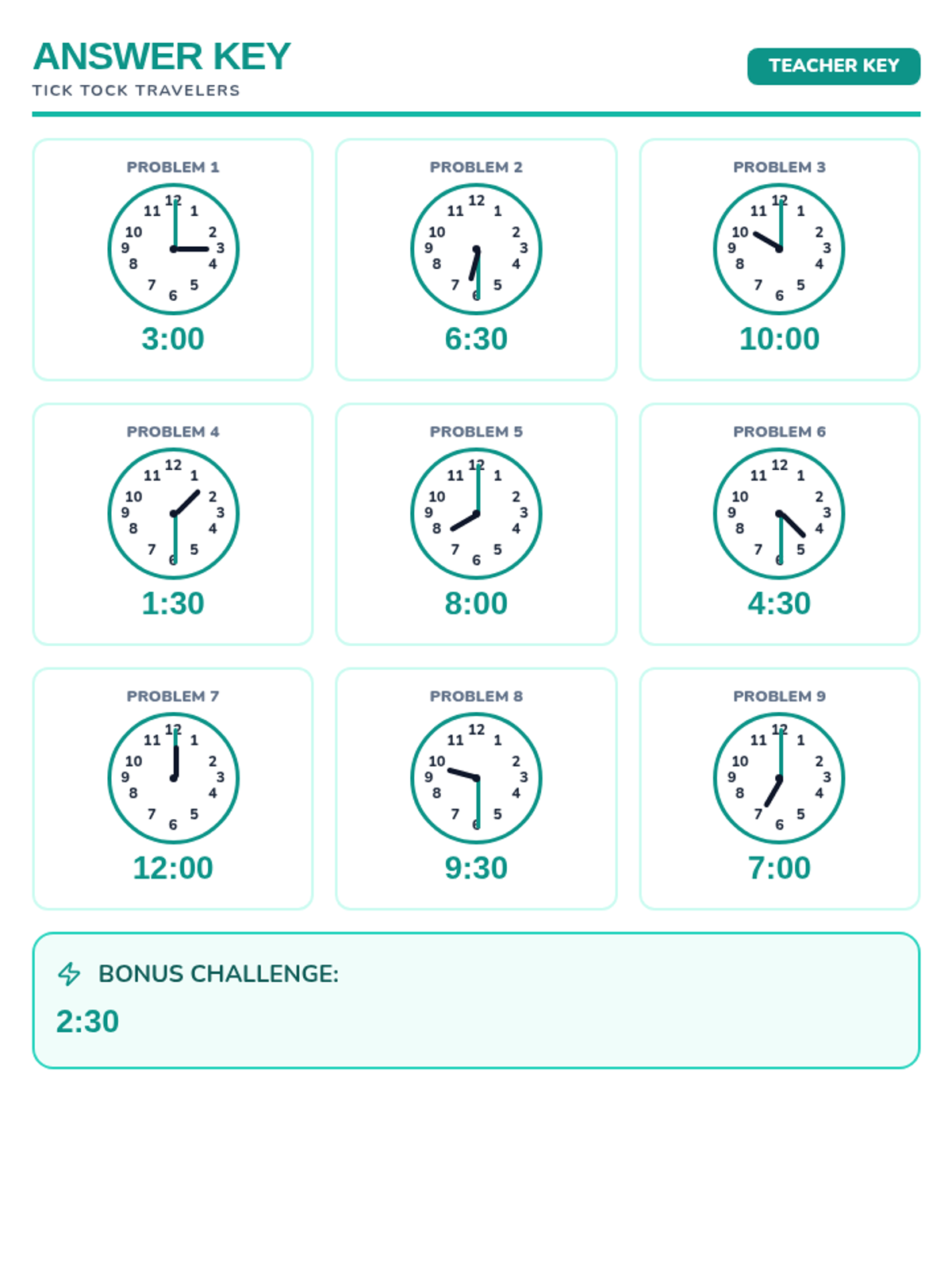
A lesson focused on introducing and practicing telling time to the half-hour, connecting analog and digital representations.
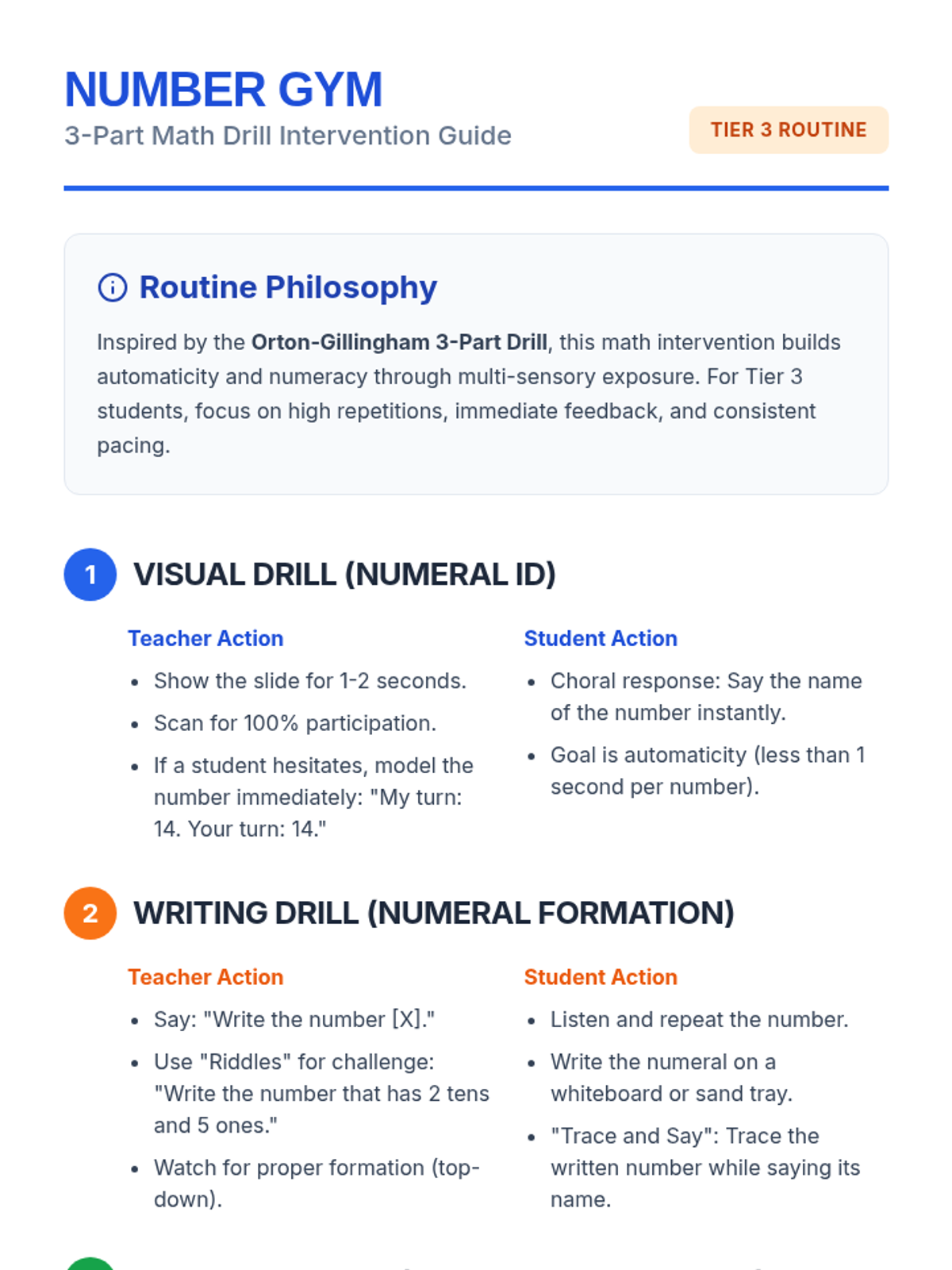
A daily math intervention routine for Tier 3 students focusing on number identification, numeral writing, and sequential counting up to 30. This lesson uses a 3-part drill structure inspired by Orton-Gillingham methodologies to build numeracy fluency.
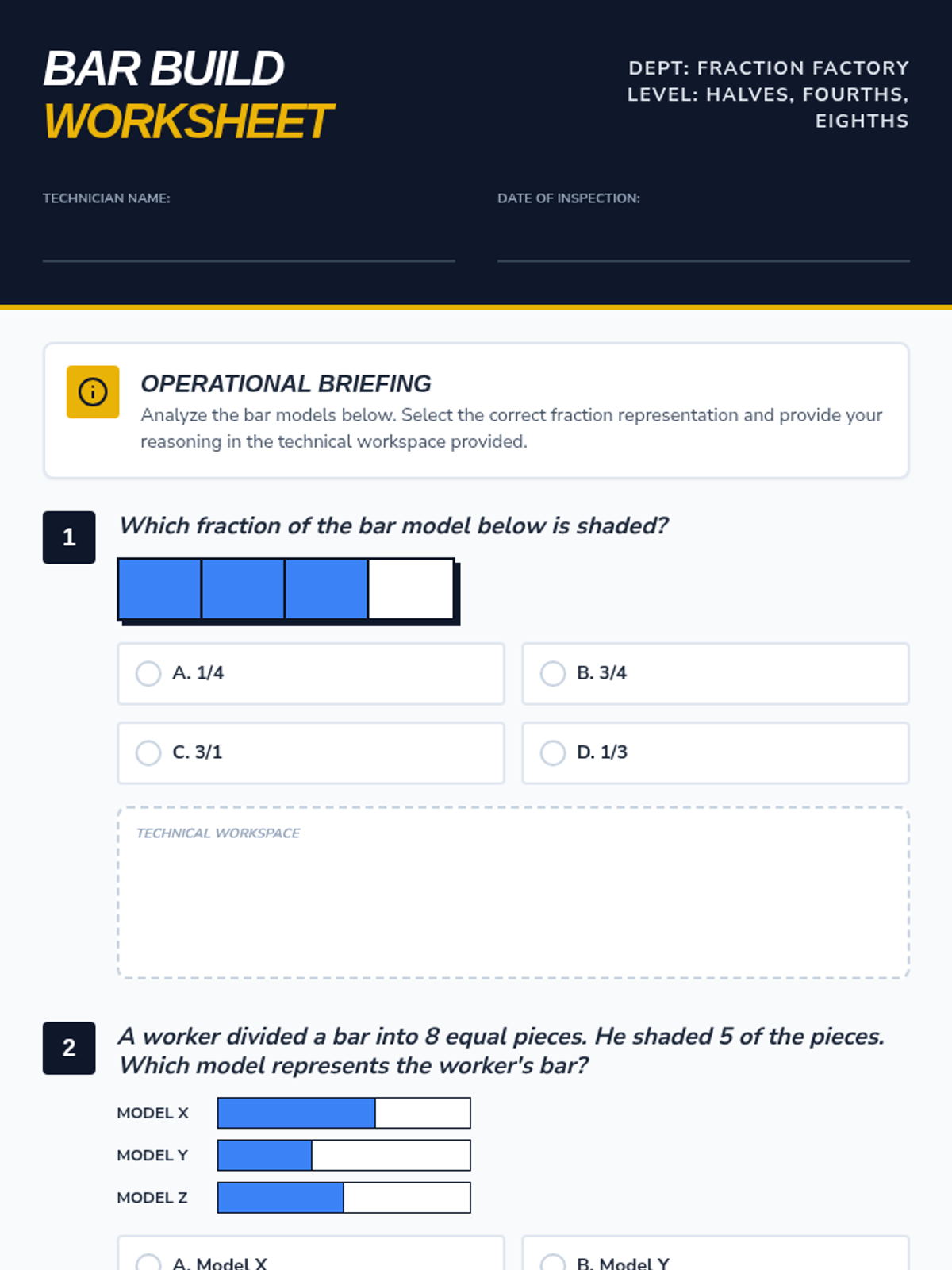
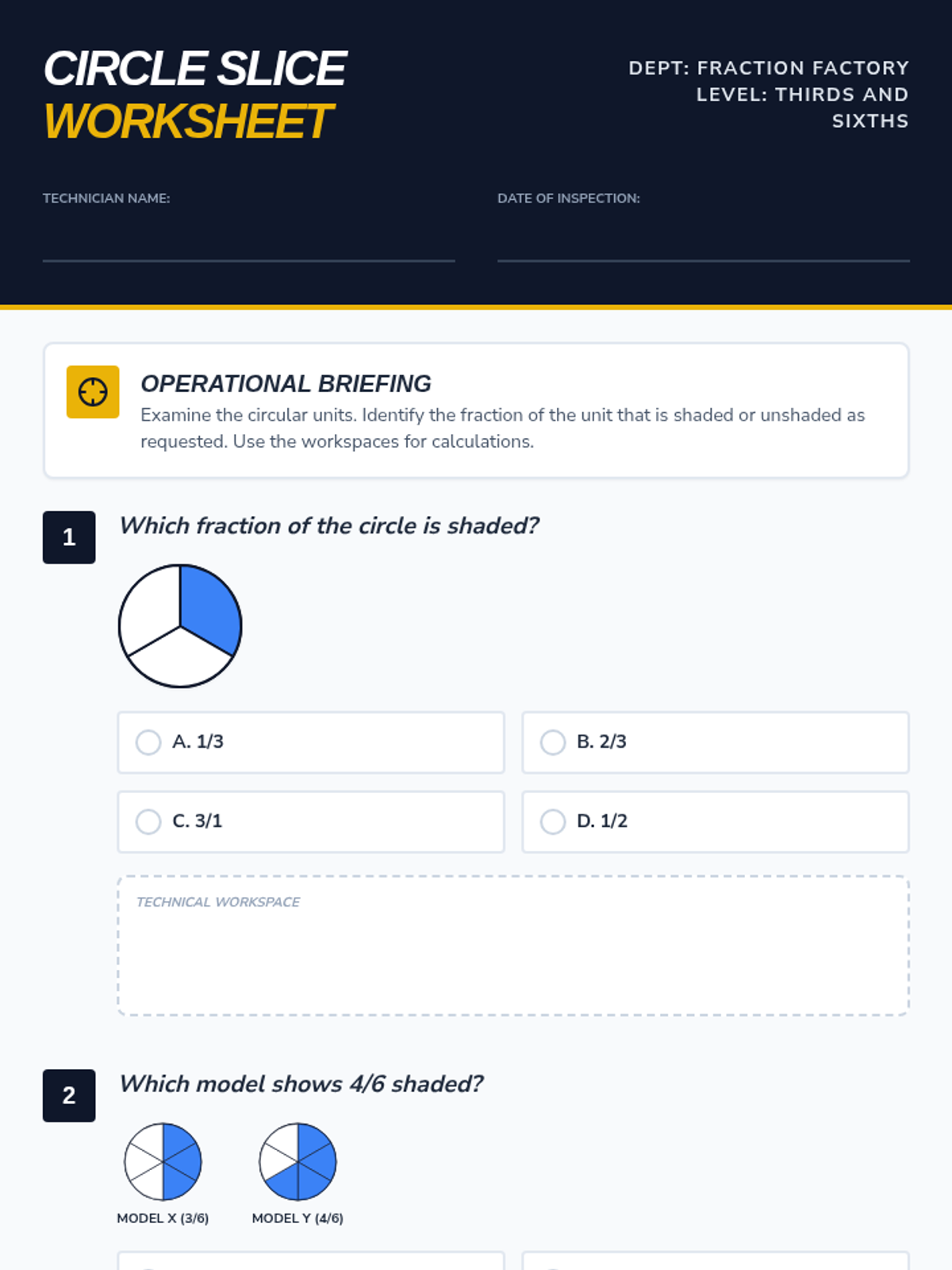
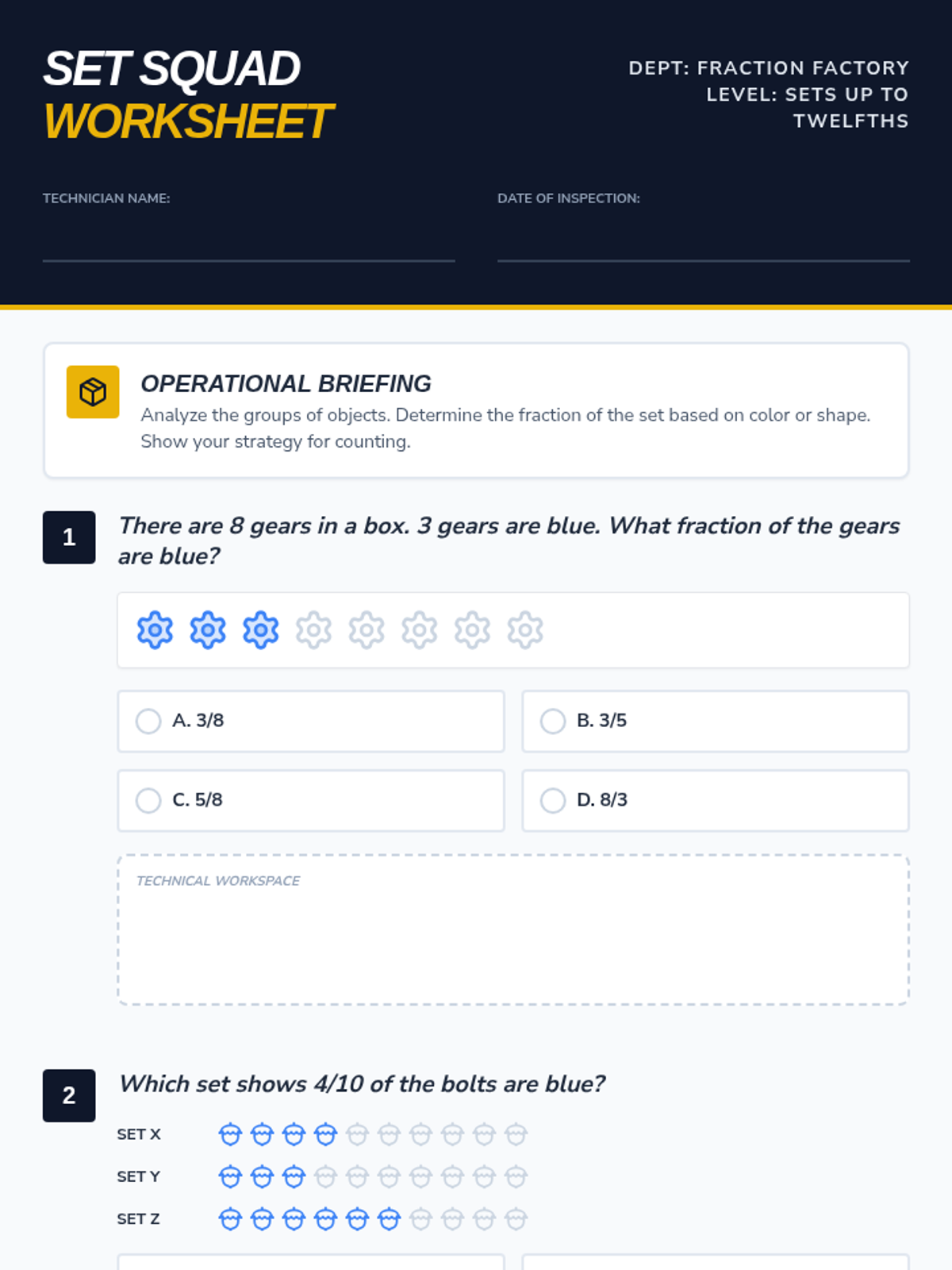
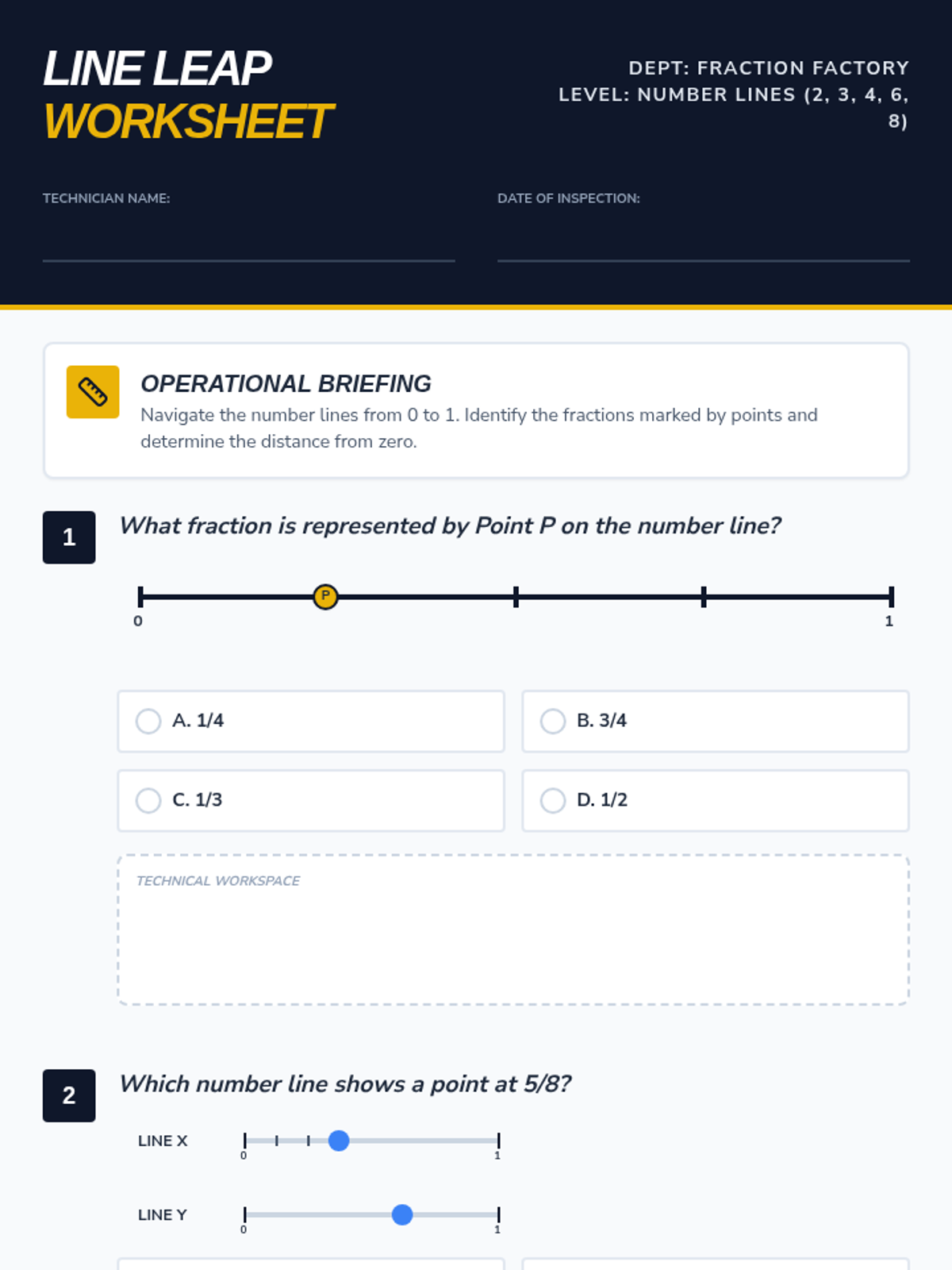
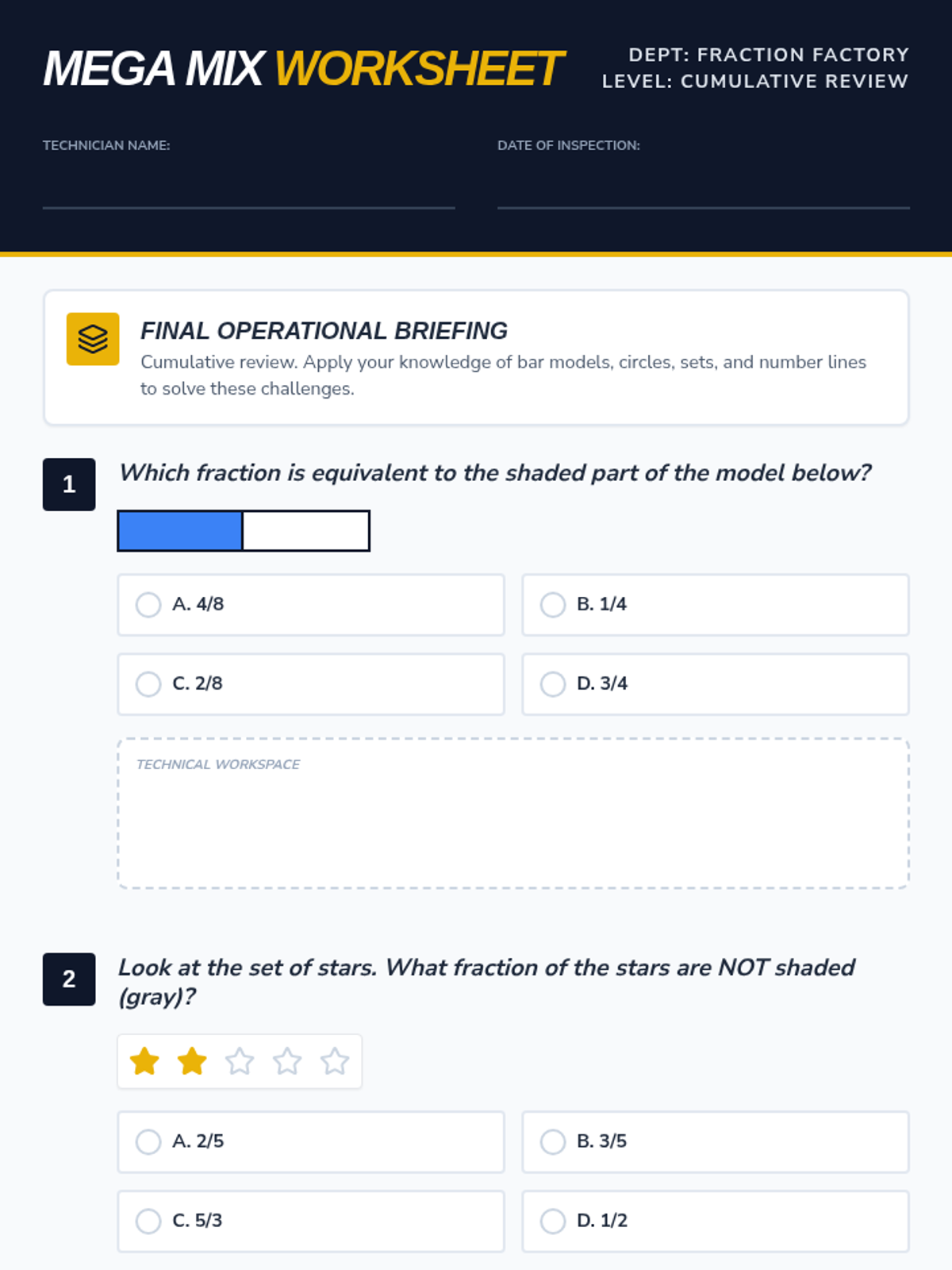
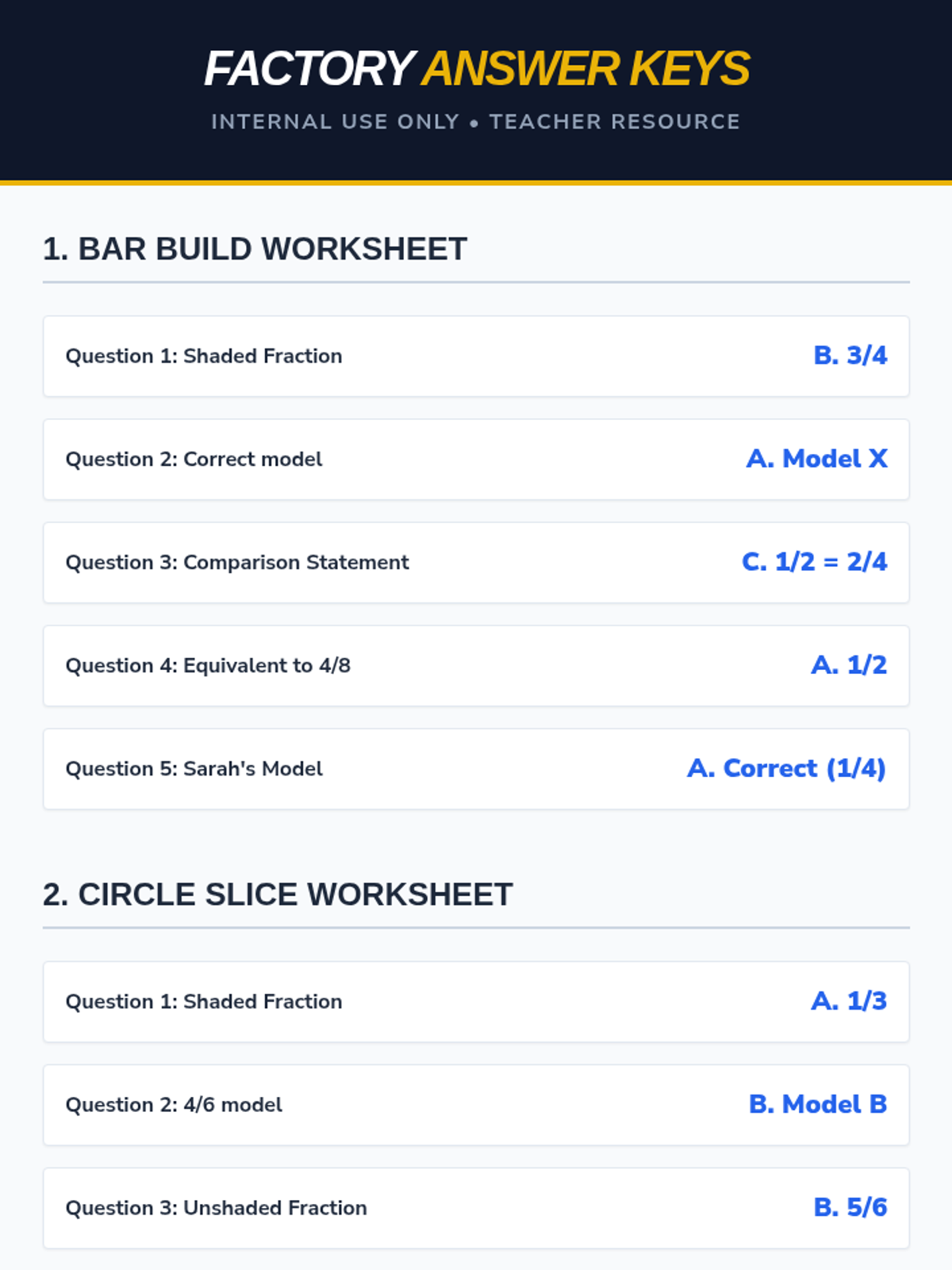
A series of five targeted worksheets designed to review 3rd-grade fraction concepts through various visual models, including bar models, circle areas, set models, and number lines. Each worksheet prepares students for EOG-style questions with rigorous practice and dedicated workspace.
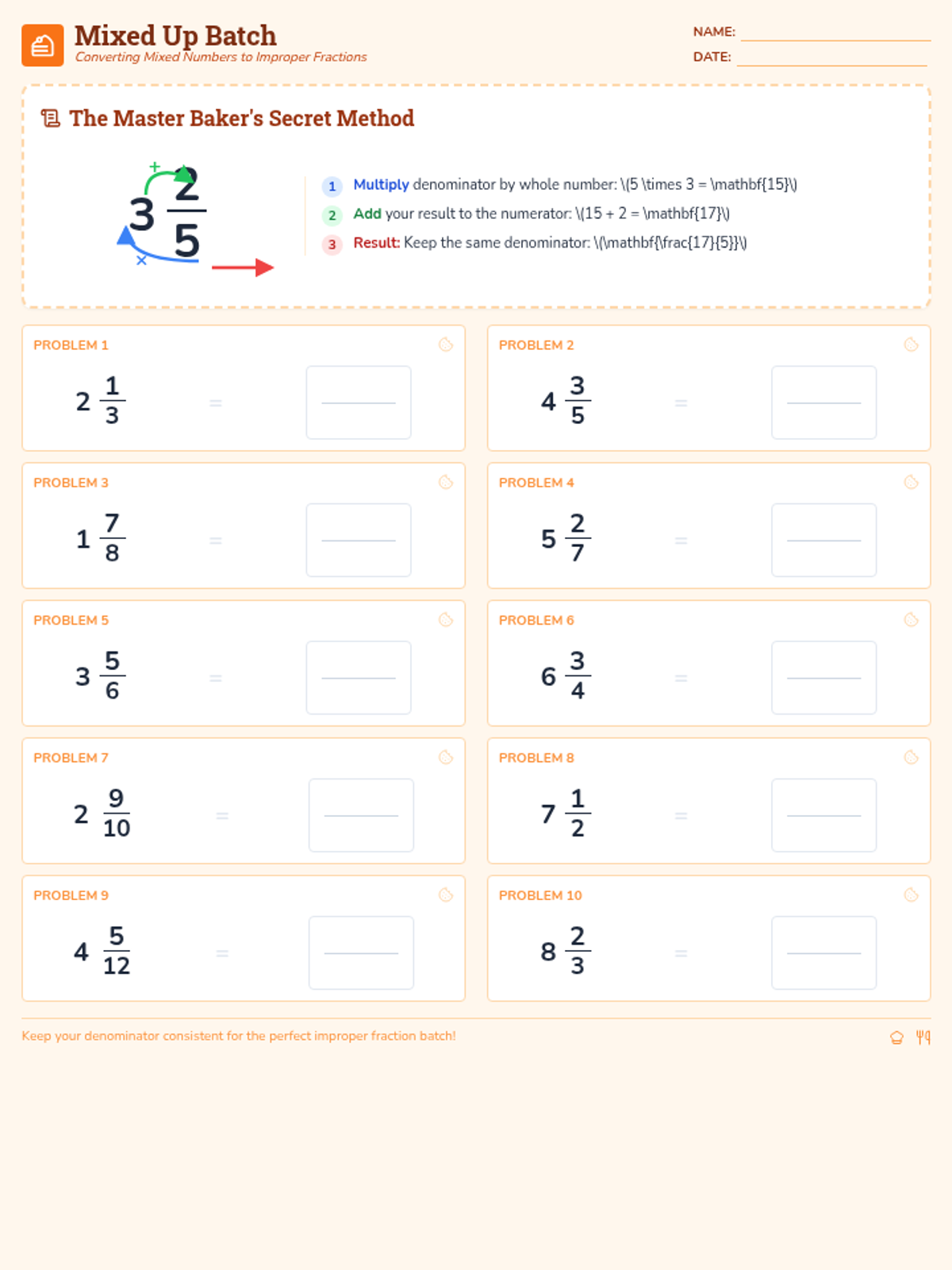
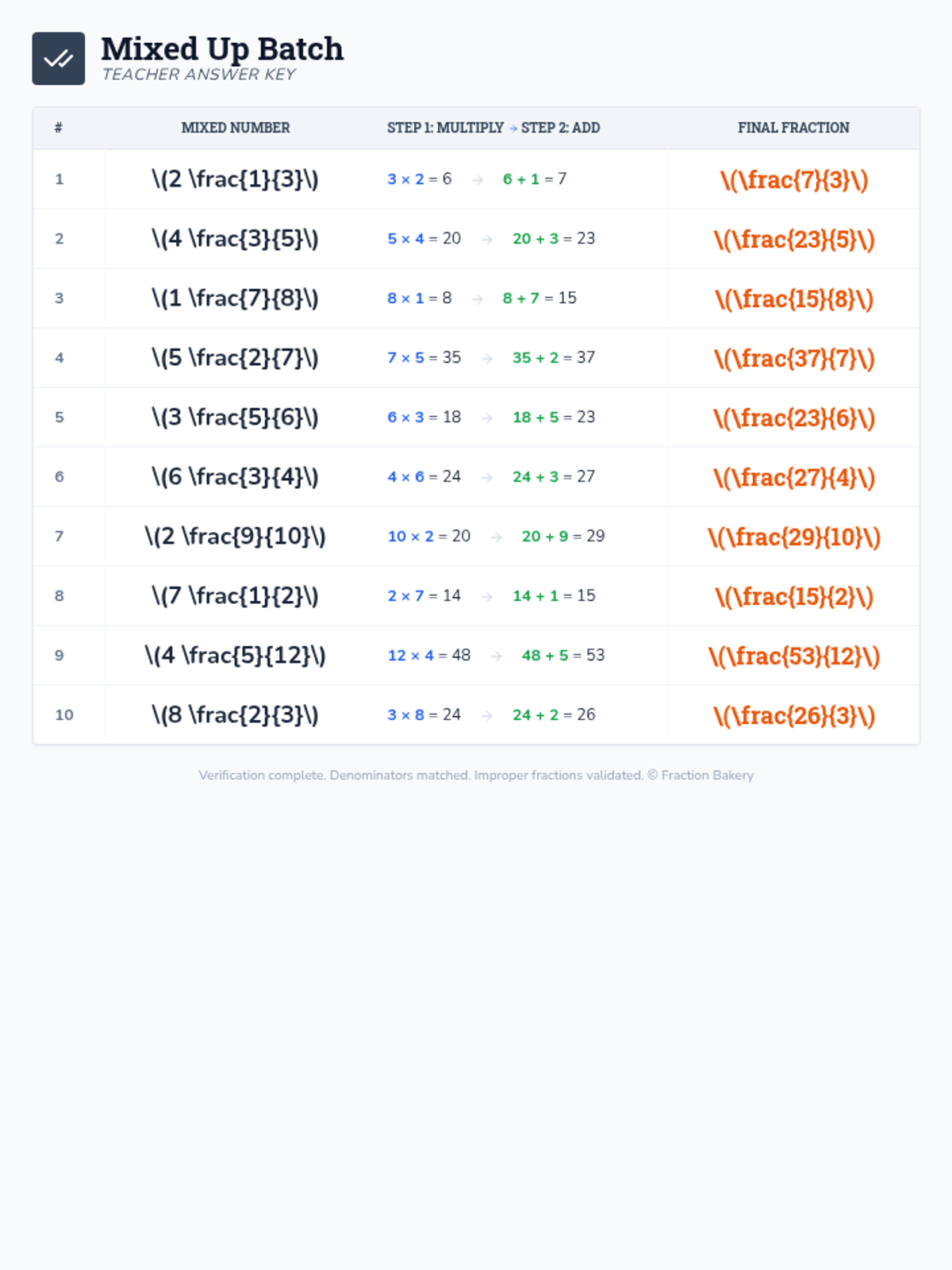
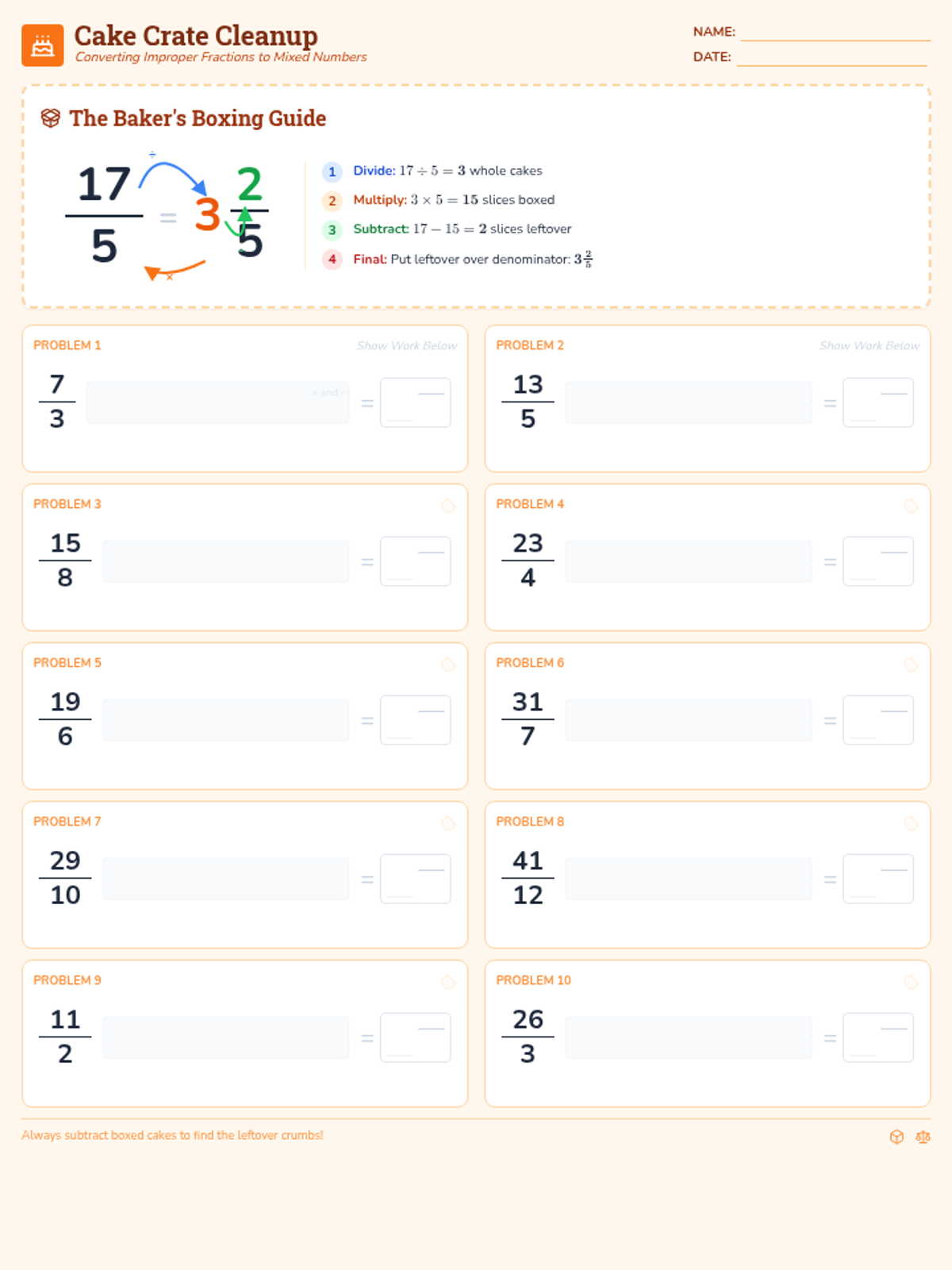
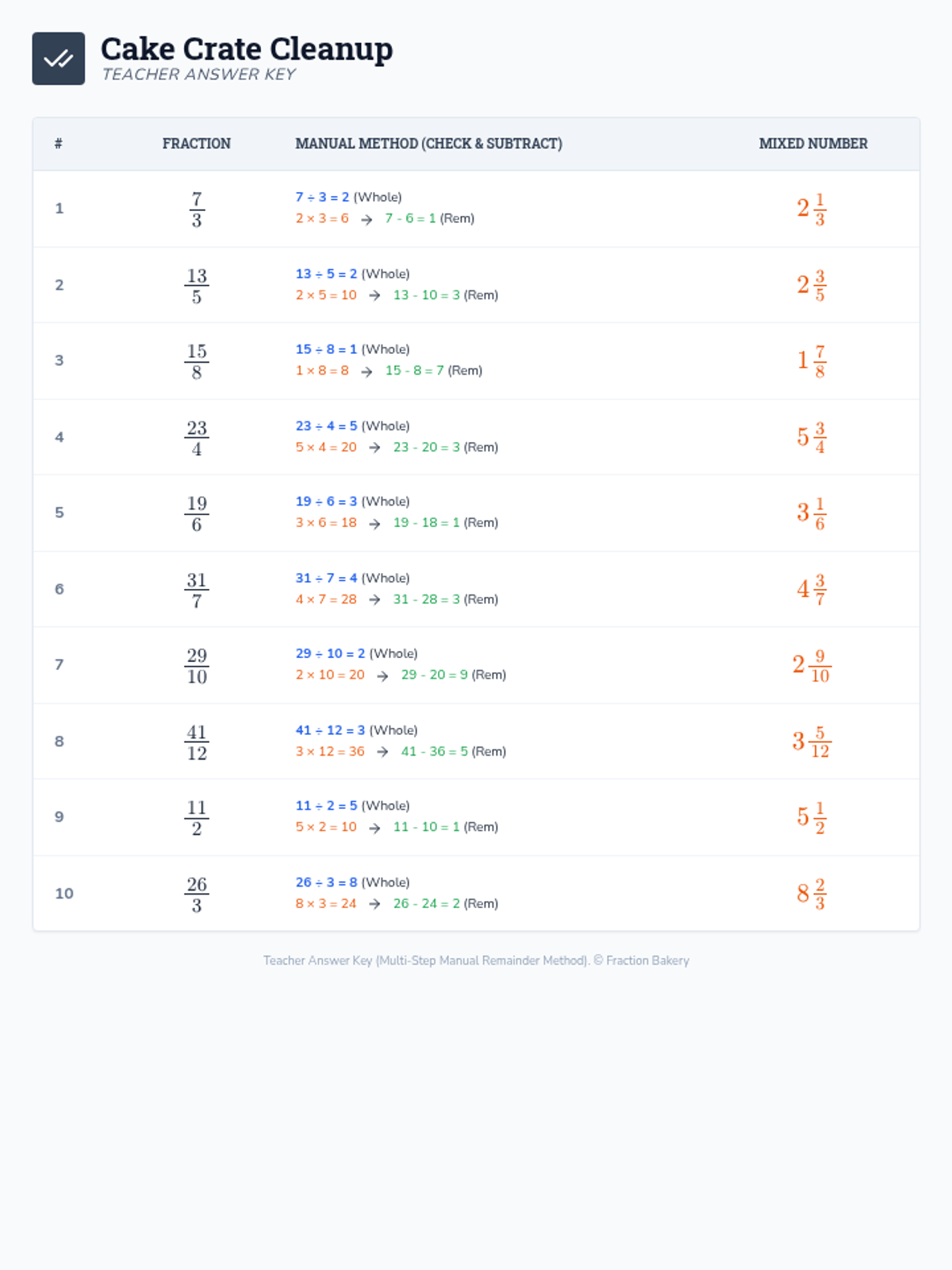
A sweet introduction to converting mixed numbers into improper fractions using a bakery-themed approach. Students will master the 'Multiply then Add' technique with clear visual aids and practice problems.
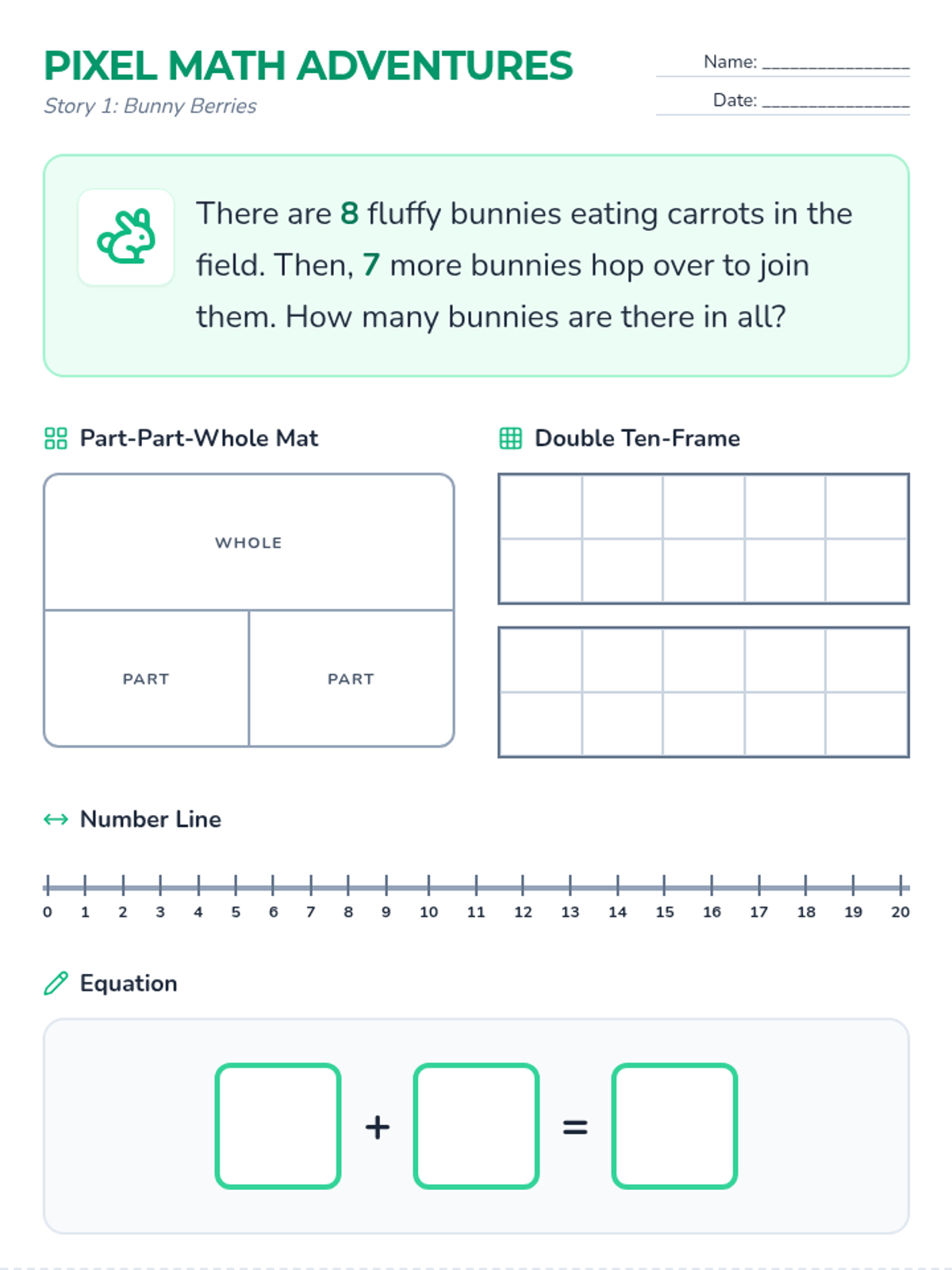
A series of interactive math story problems focused on addition and subtraction within 20, featuring themes of animals, snacks, and gaming.
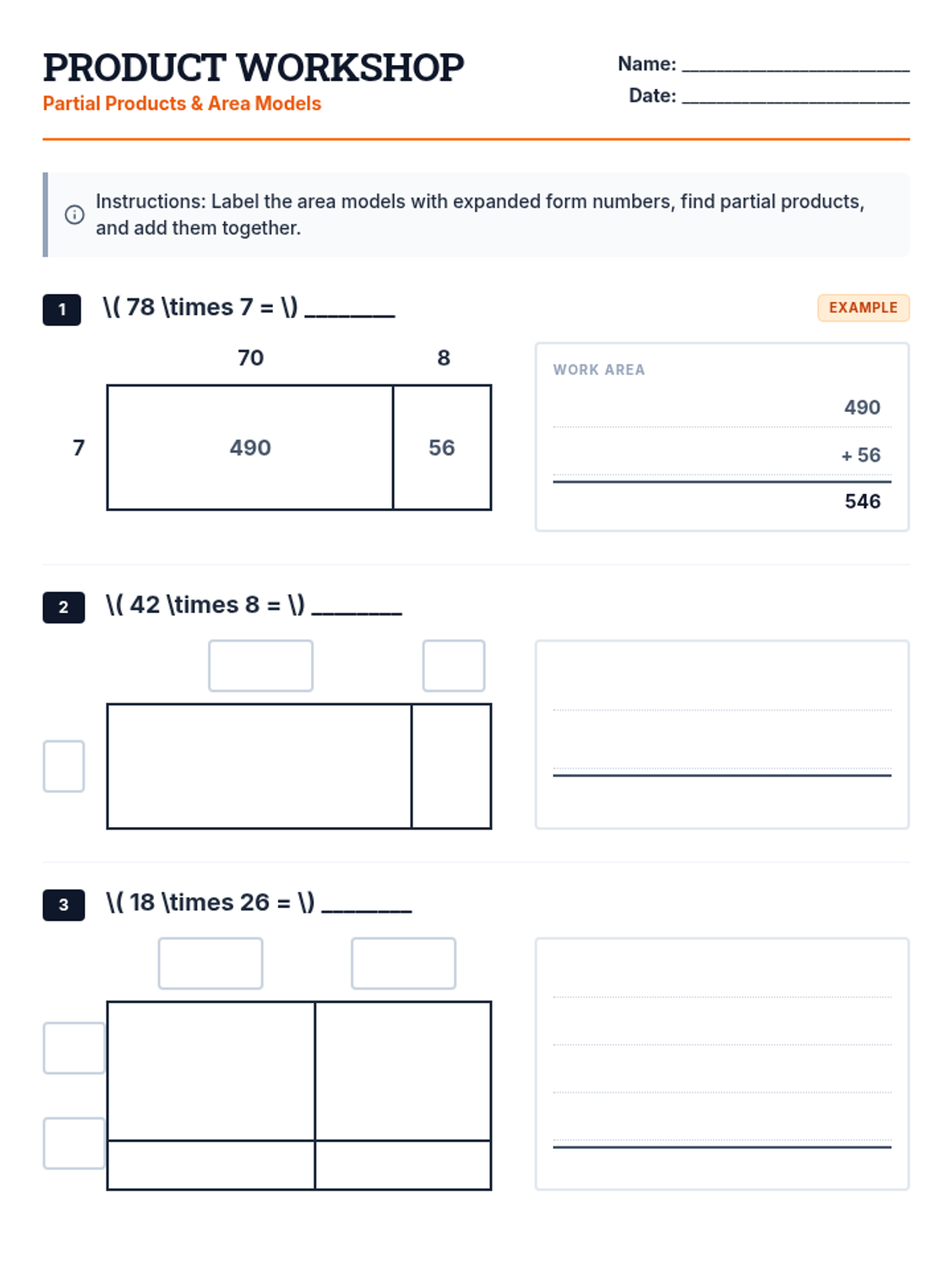
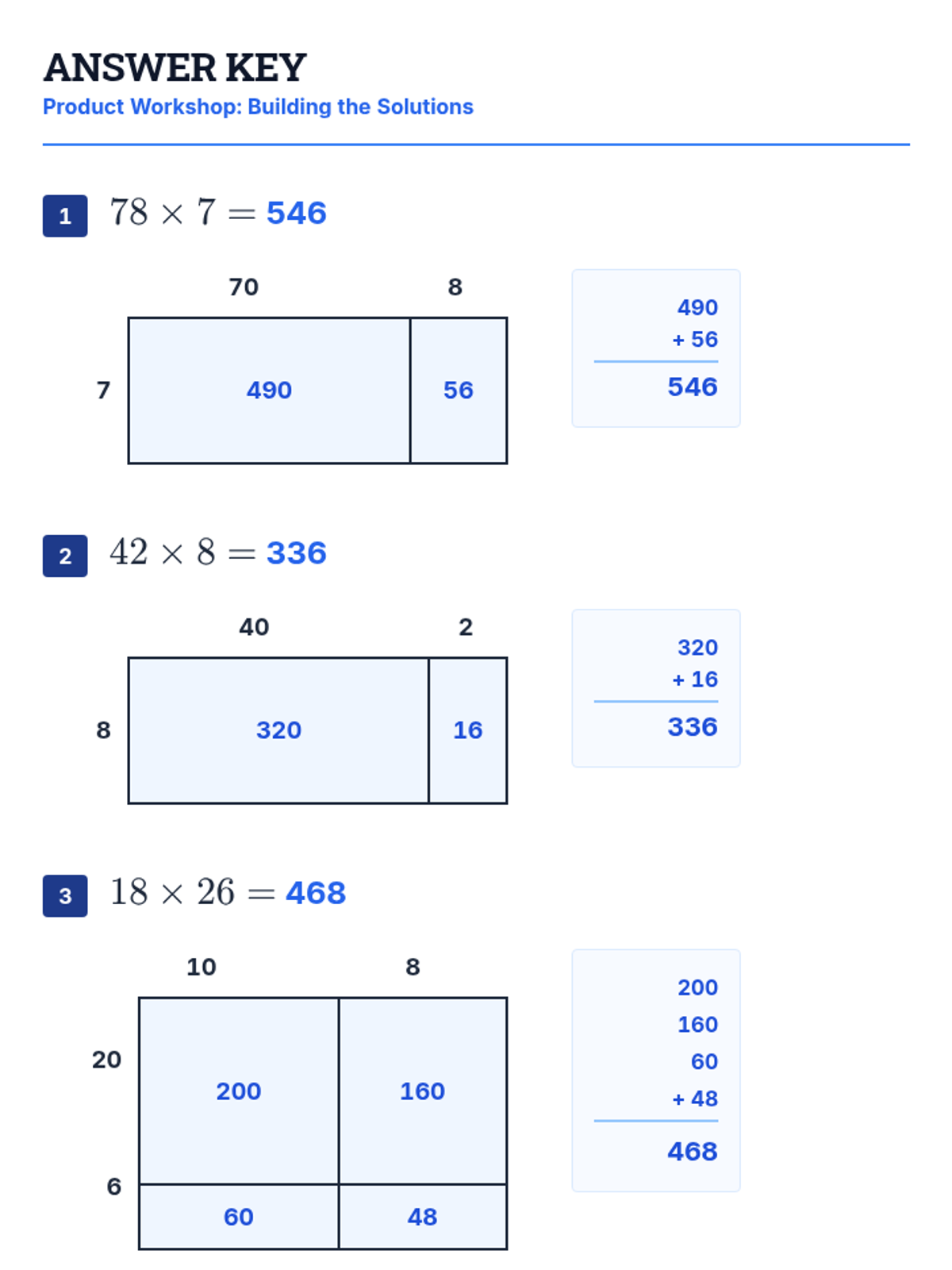
A lesson focused on mastering multi-digit multiplication using the partial products method and area models to visualize the process.
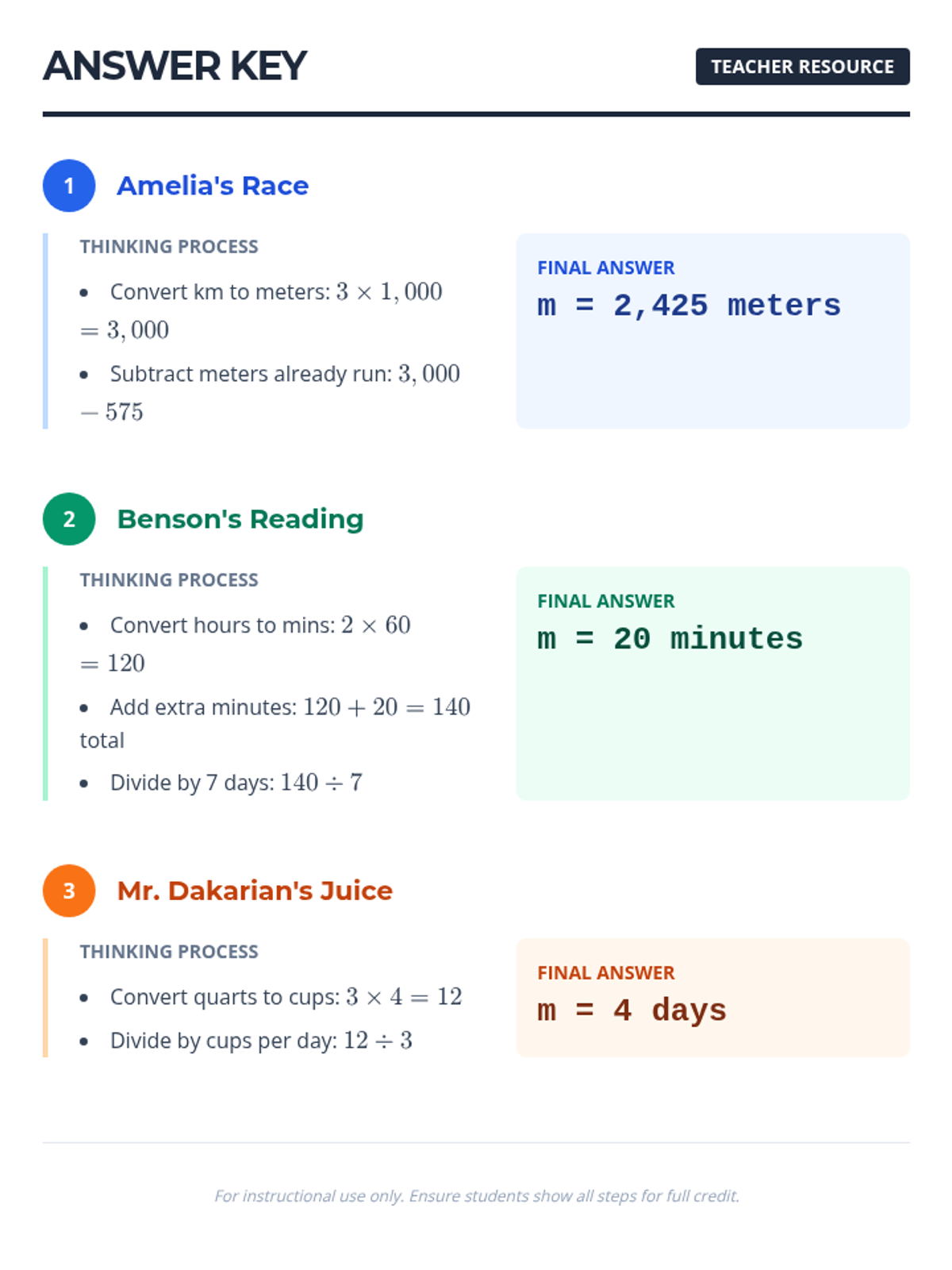
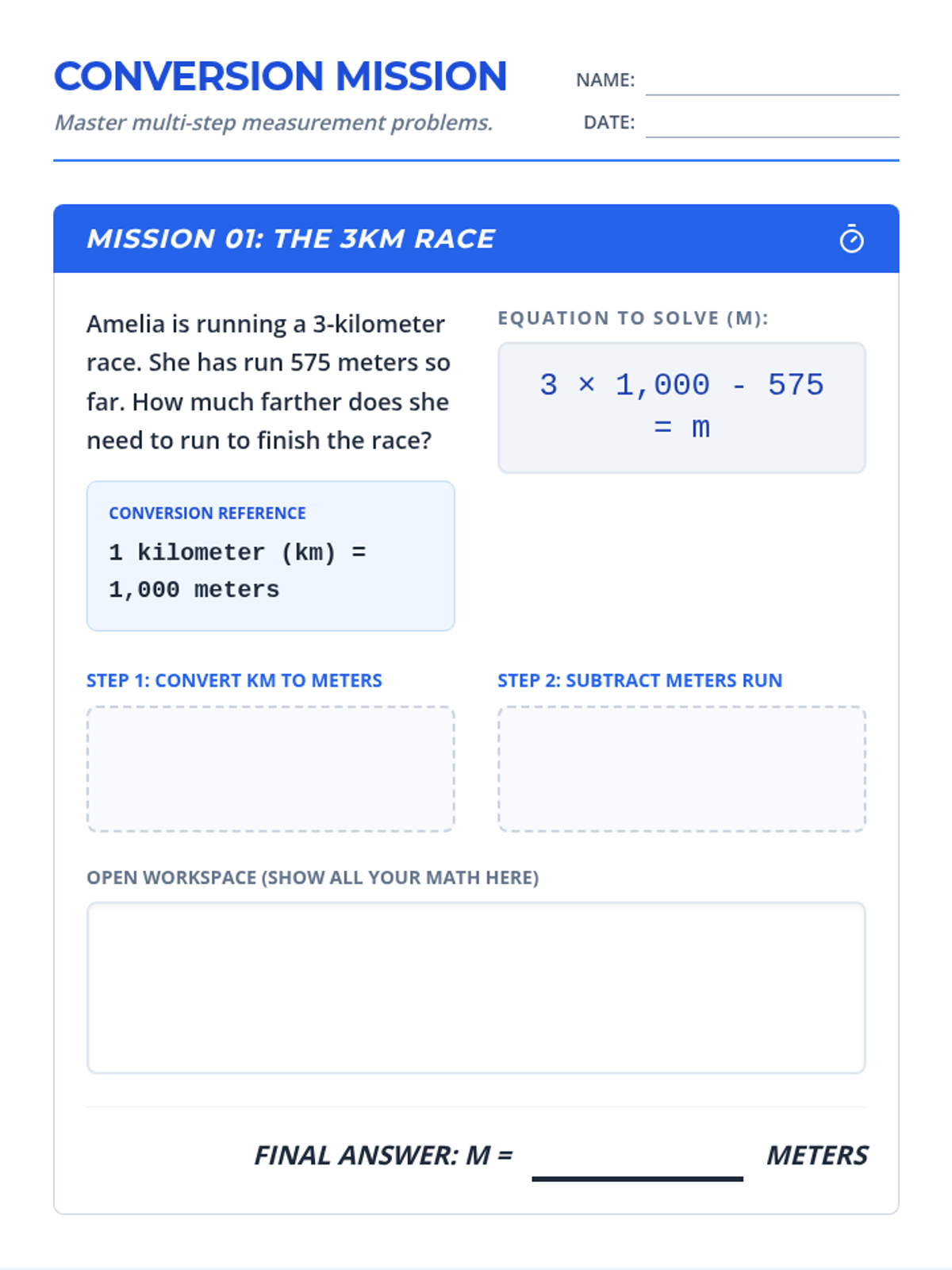
A focused lesson on solving multi-step word problems involving measurement conversions for length, time, and volume. Students practice converting units before applying arithmetic operations to find solutions.
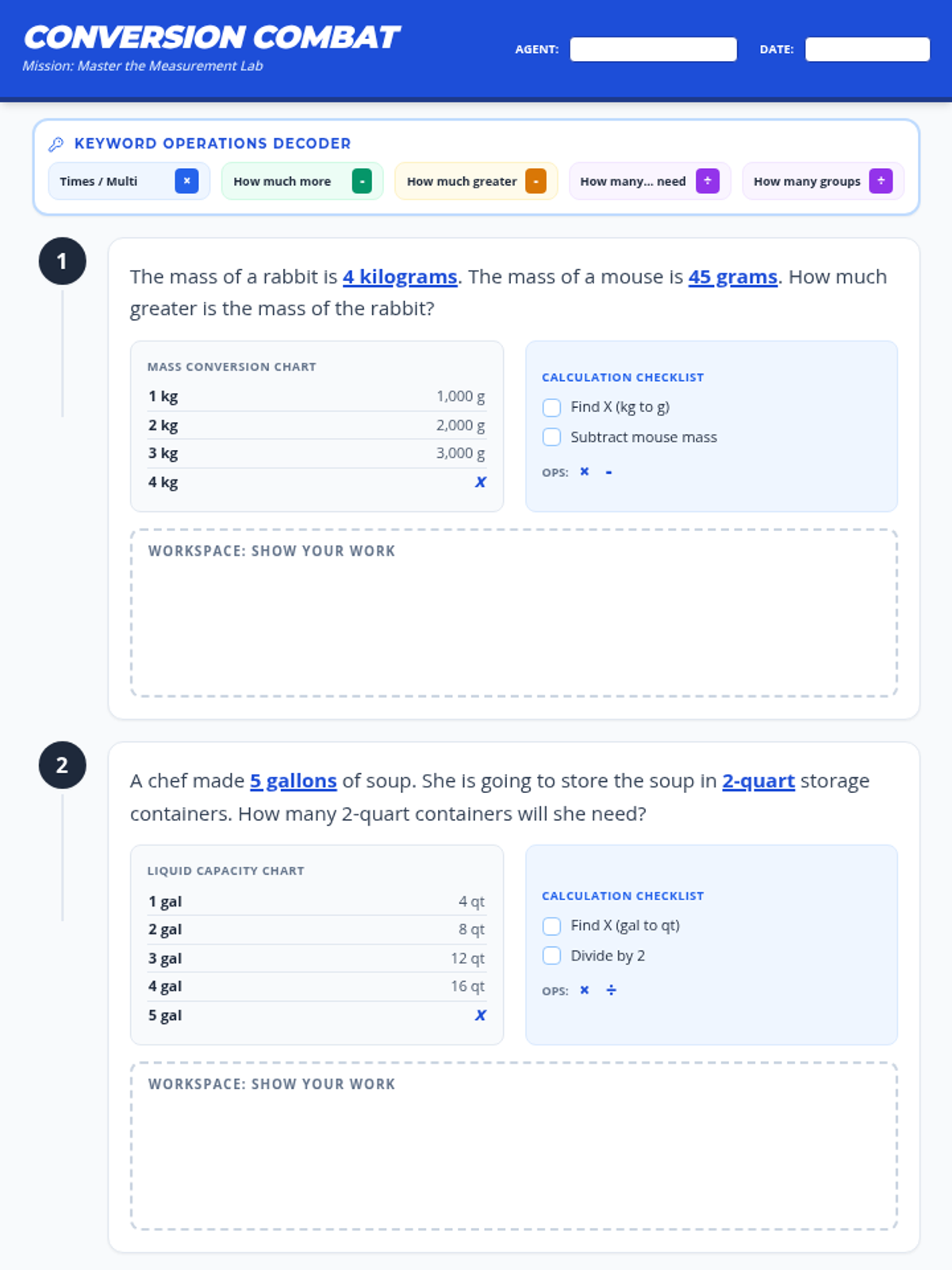
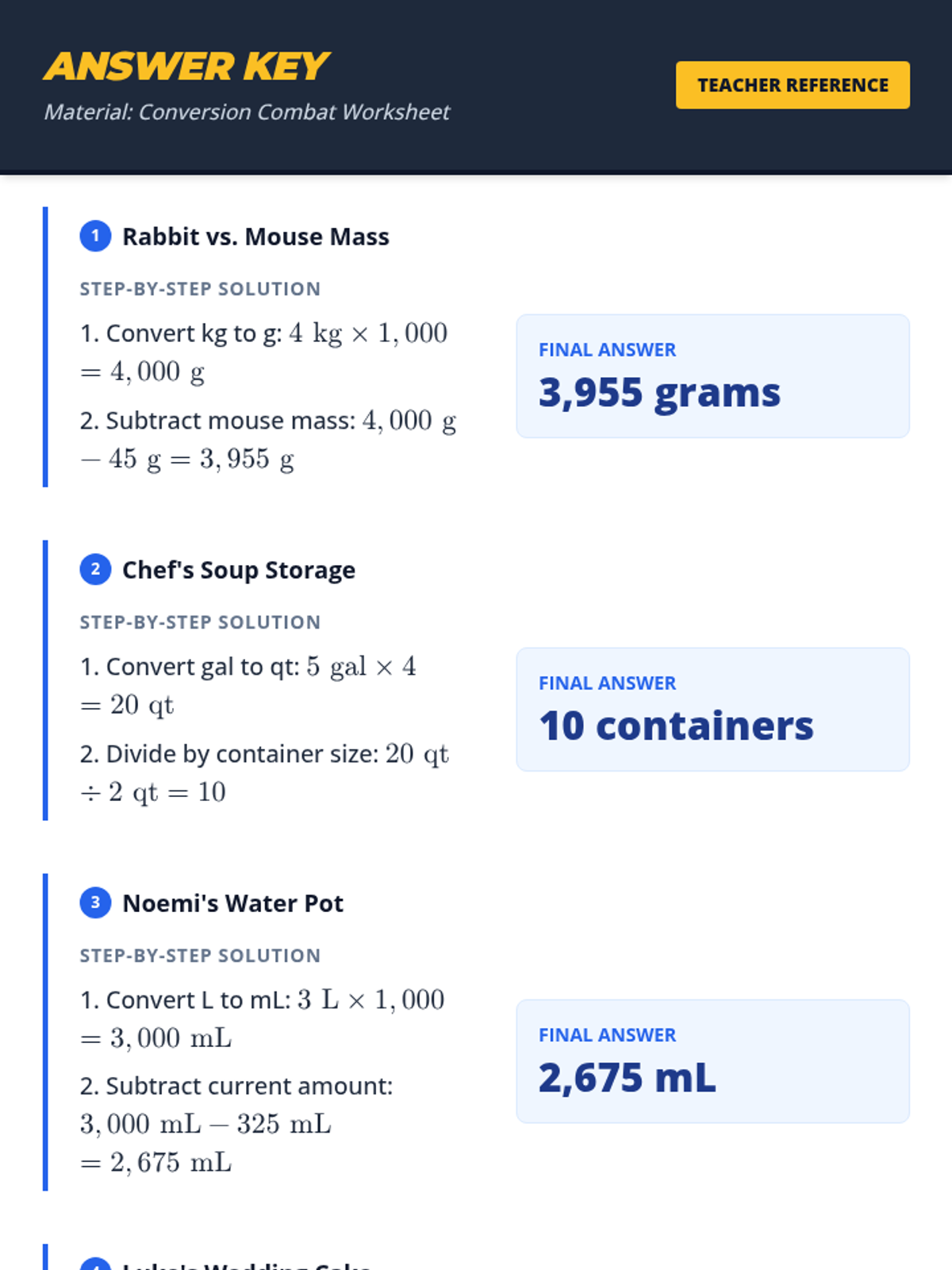
A lesson focused on solving multi-step word problems involving mass, volume, and capacity unit conversions. Students use conversion charts and operation keywords to determine the correct mathematical steps for each scenario.
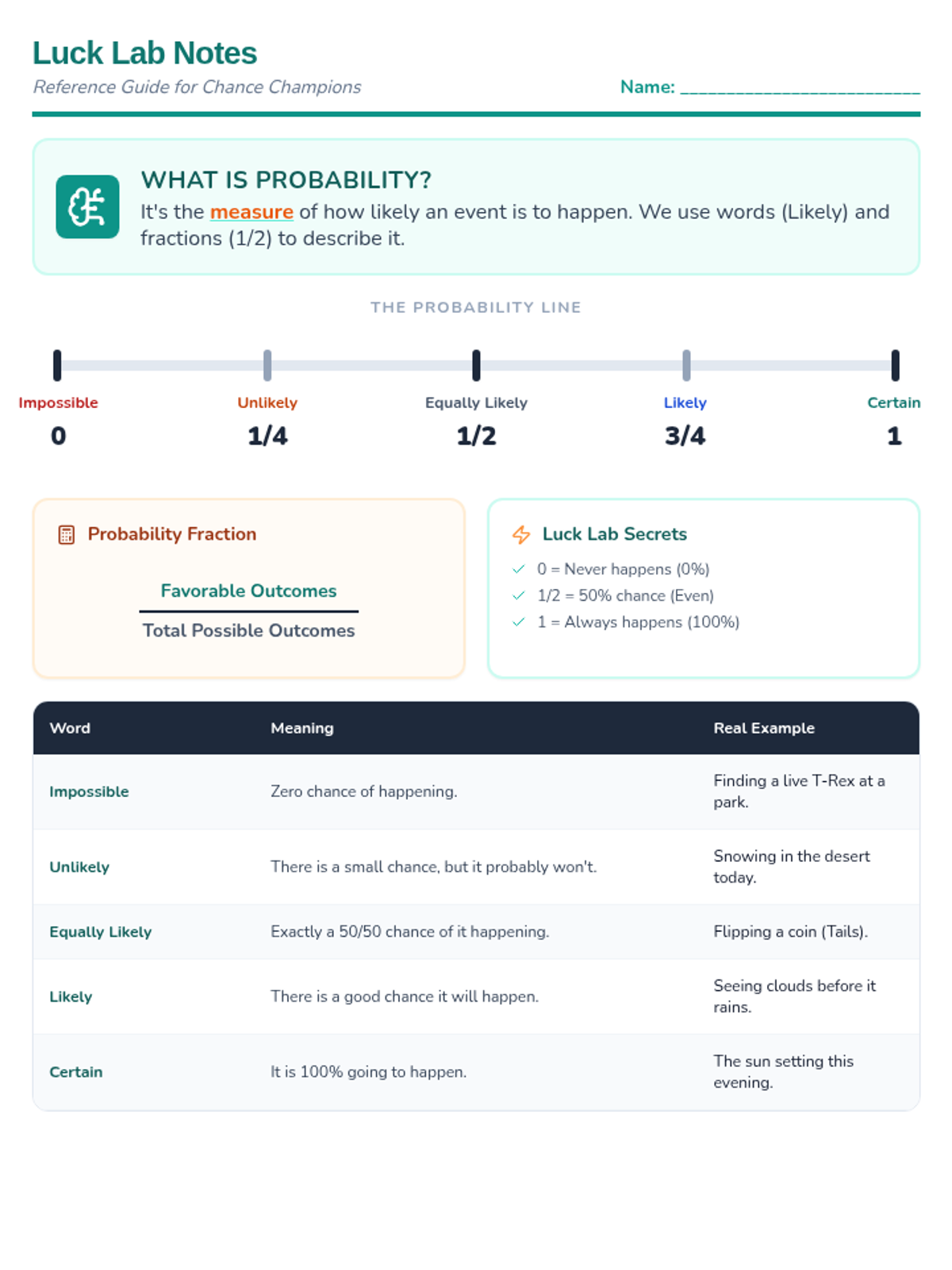
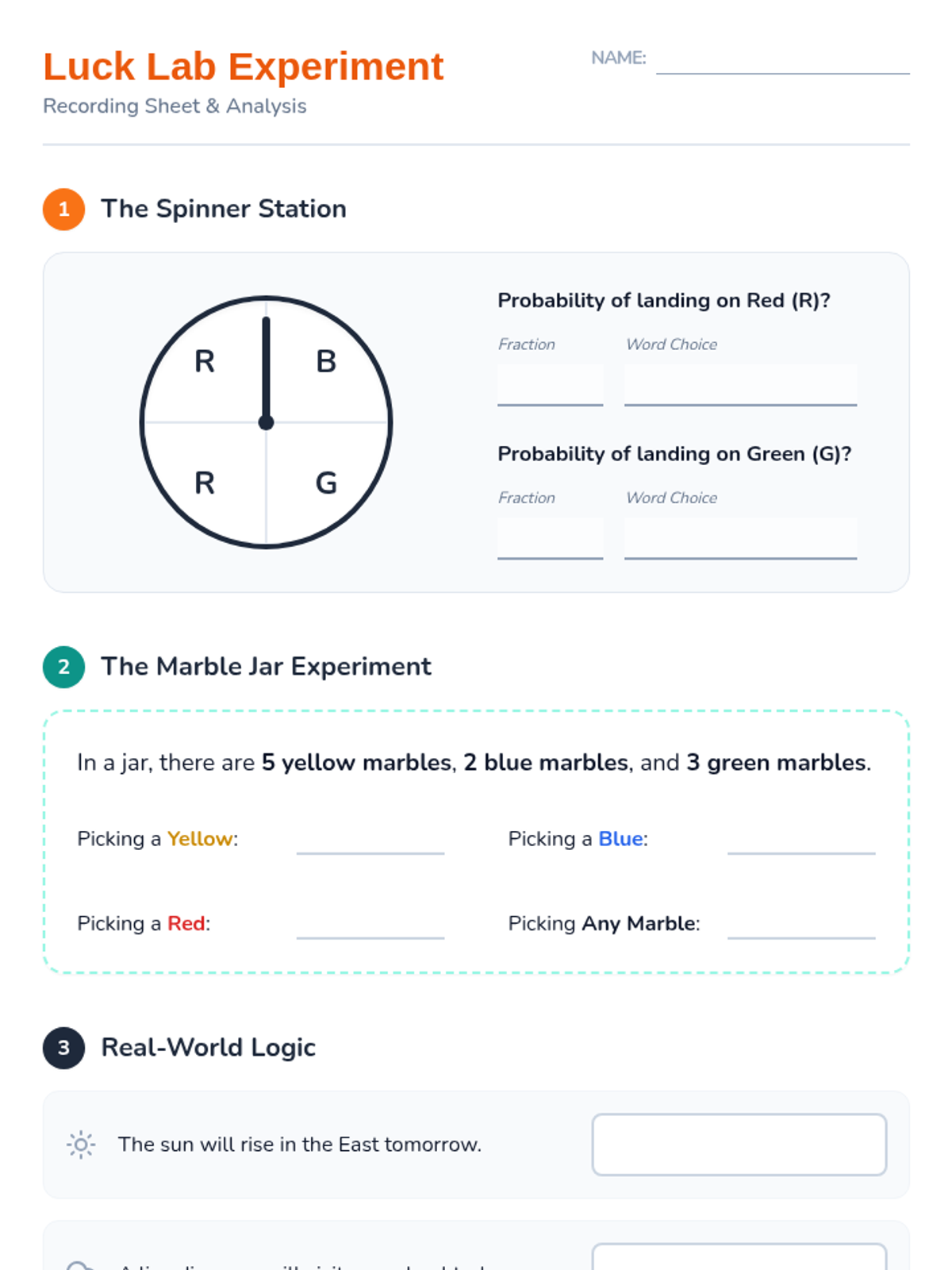
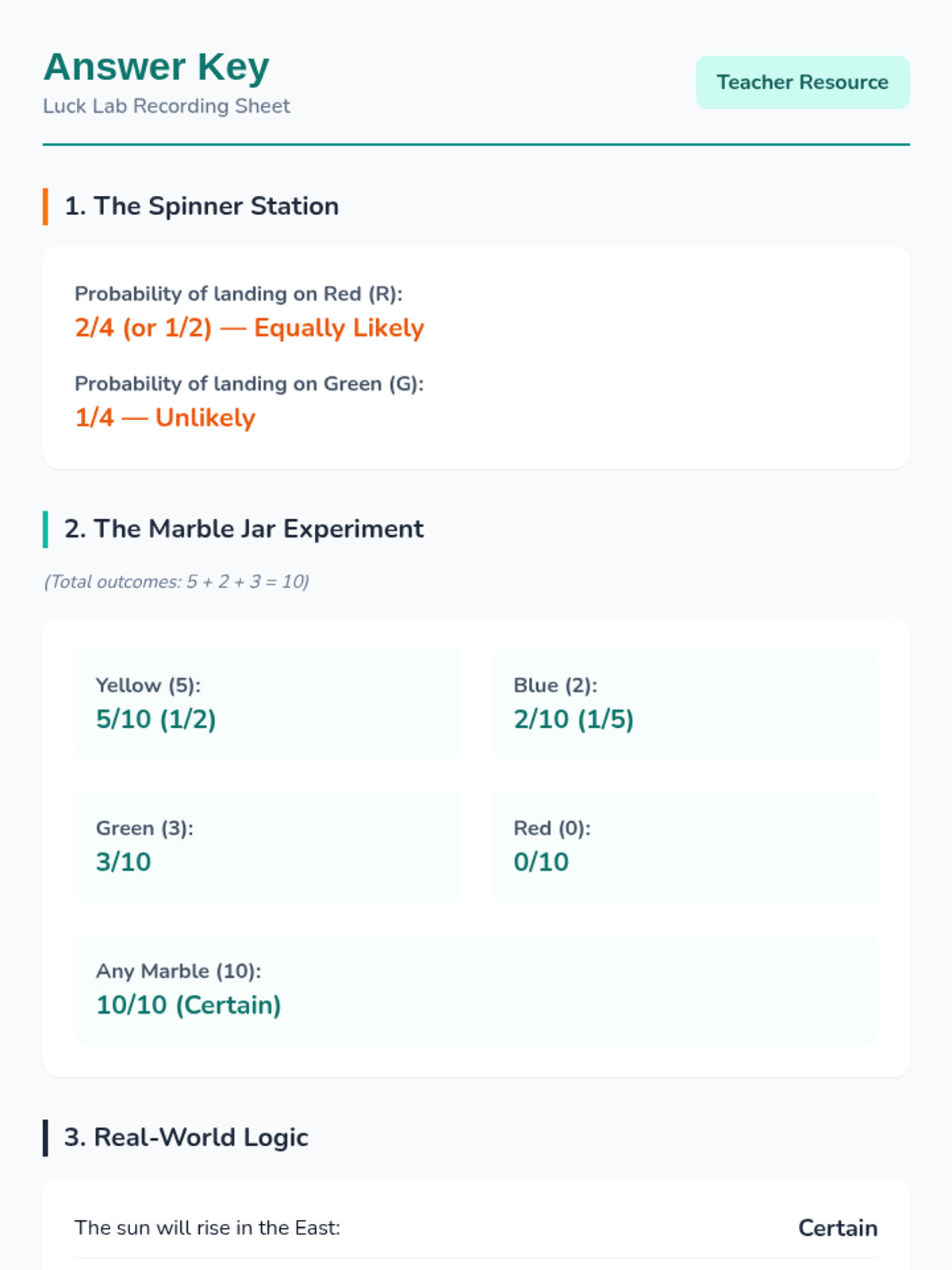
A mini-lesson introducing probability concepts through the lens of 'The Luck Lab', covering vocabulary (certain to impossible) and fractional representations.
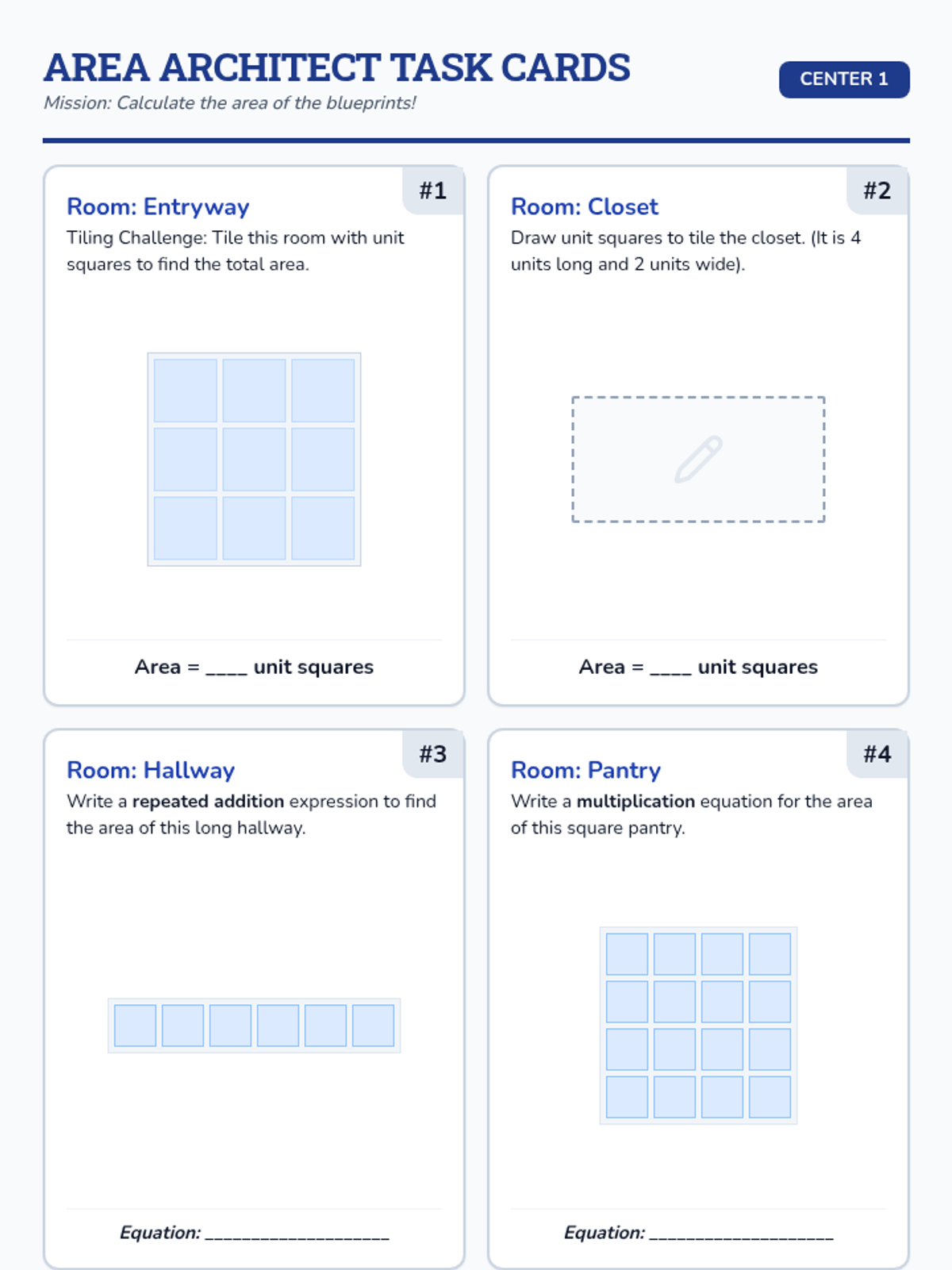
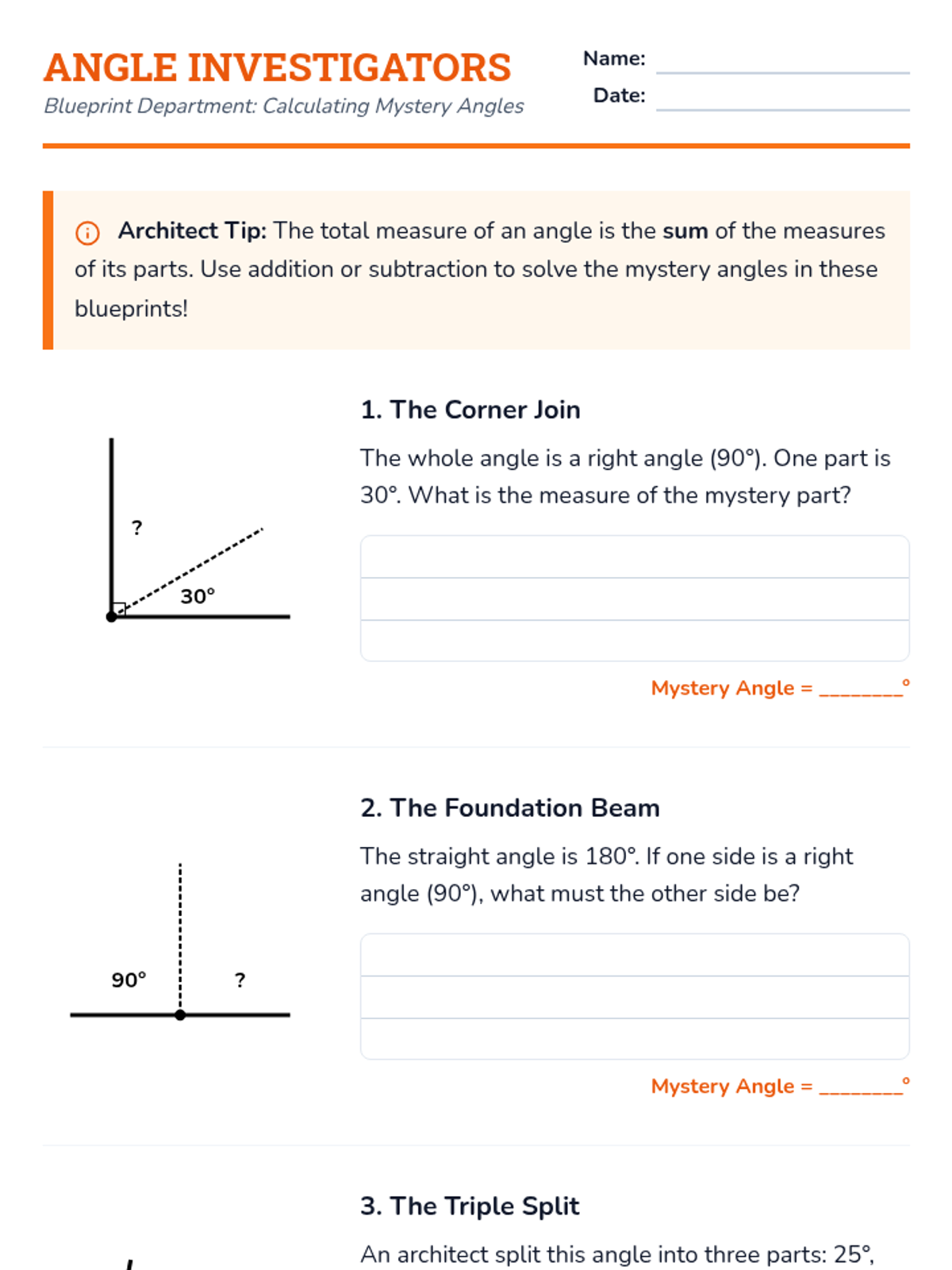
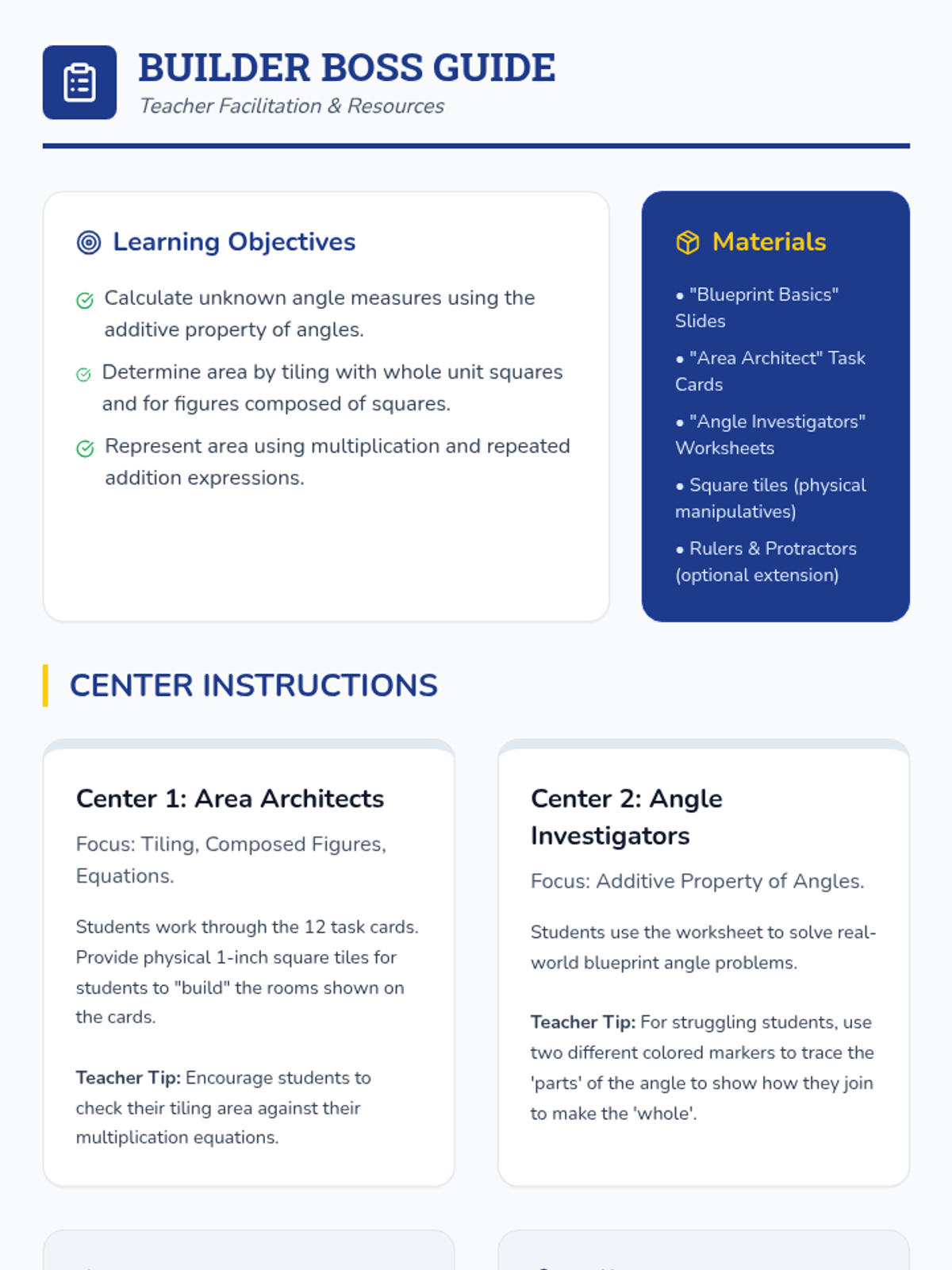
A comprehensive set of small group activities where students calculate unknown angles and determine the area of various figures using tiling and equations. The lesson uses a 'Blueprint Builders' theme to engage students in real-world mathematical applications.
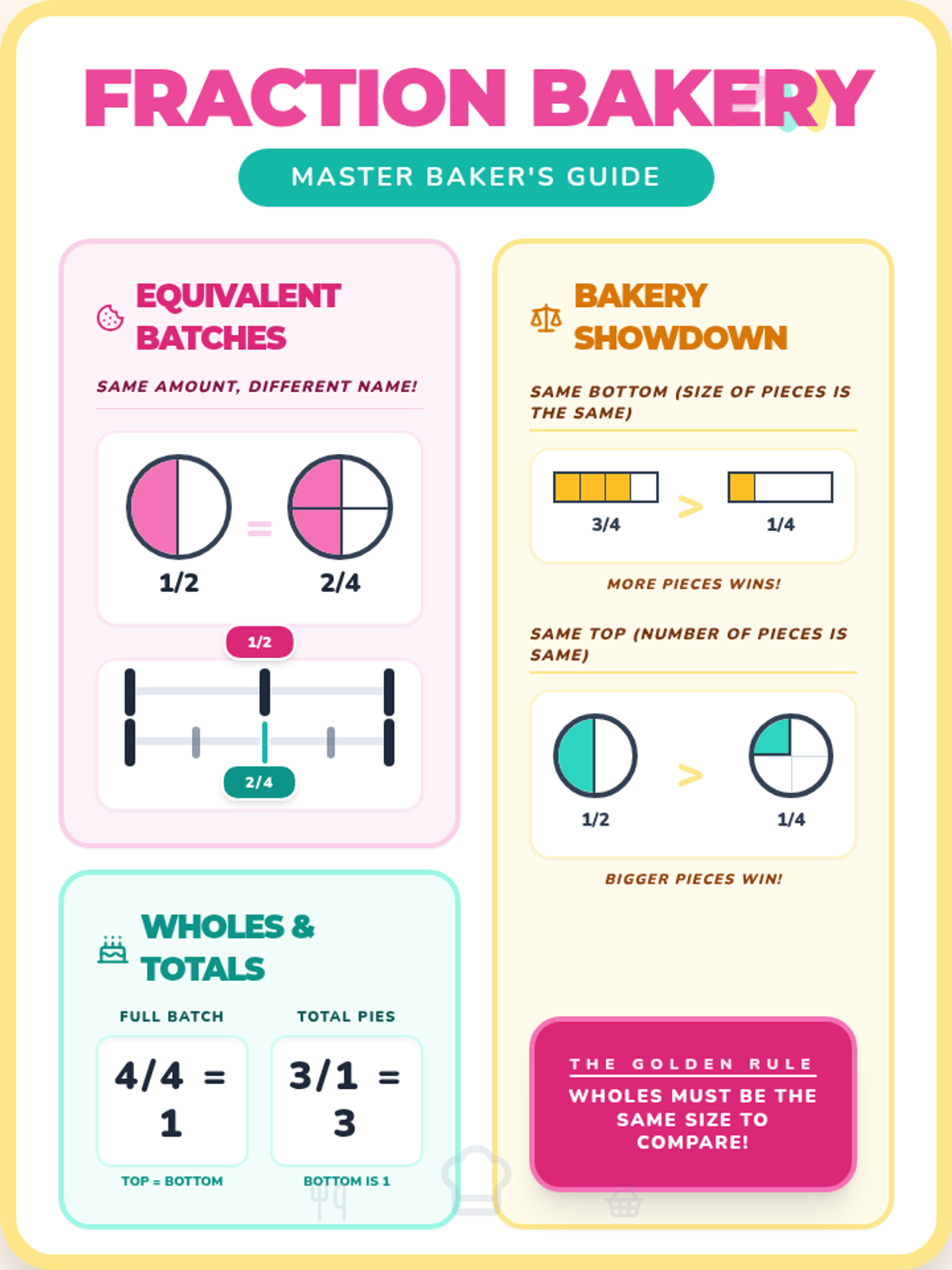
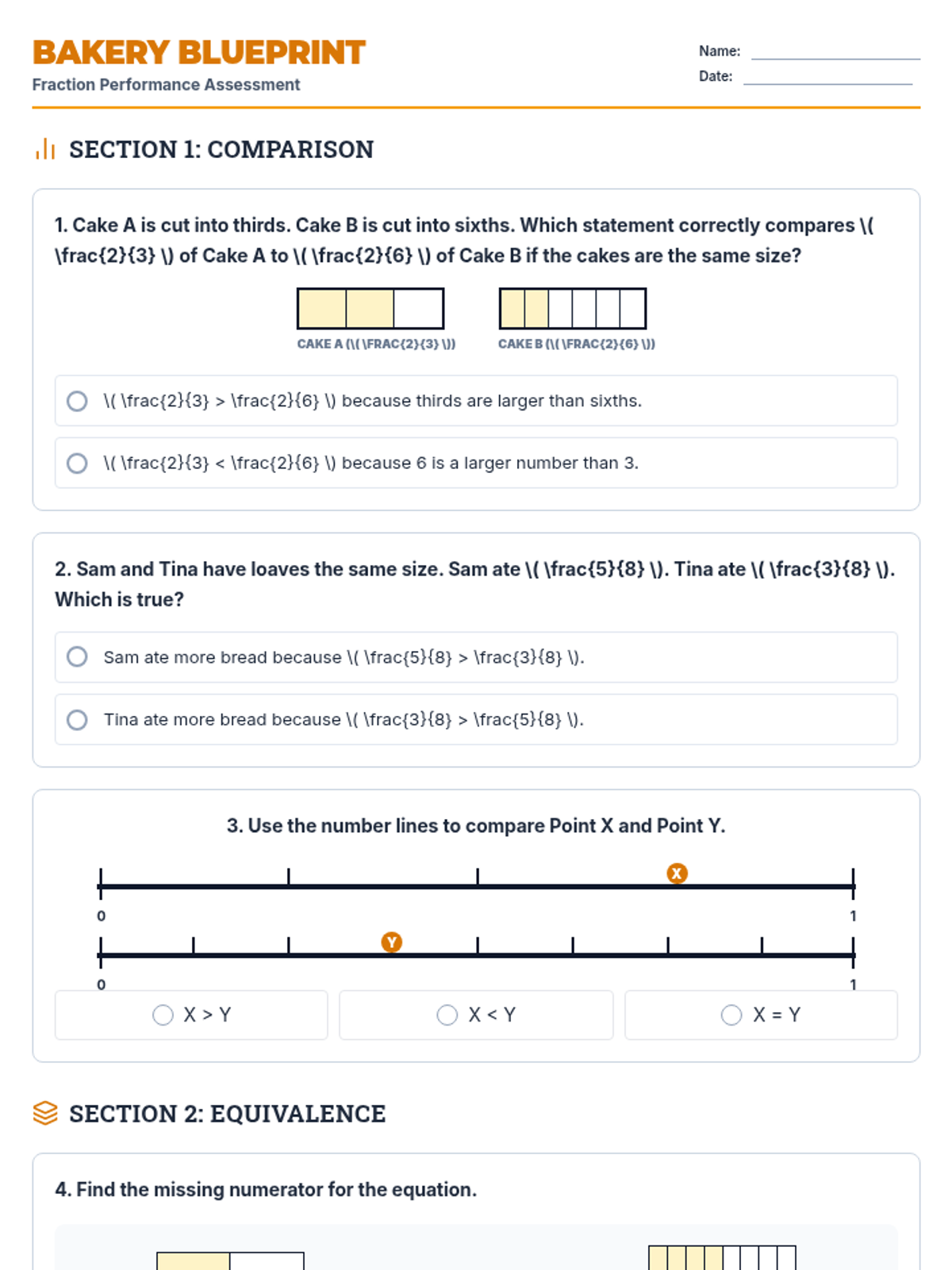
A comprehensive lesson on comparing and representing fractions using area and length models within a bakery-themed context. Students will practice comparing fractions with like numerators or denominators and identifying equivalent fractions and whole numbers.
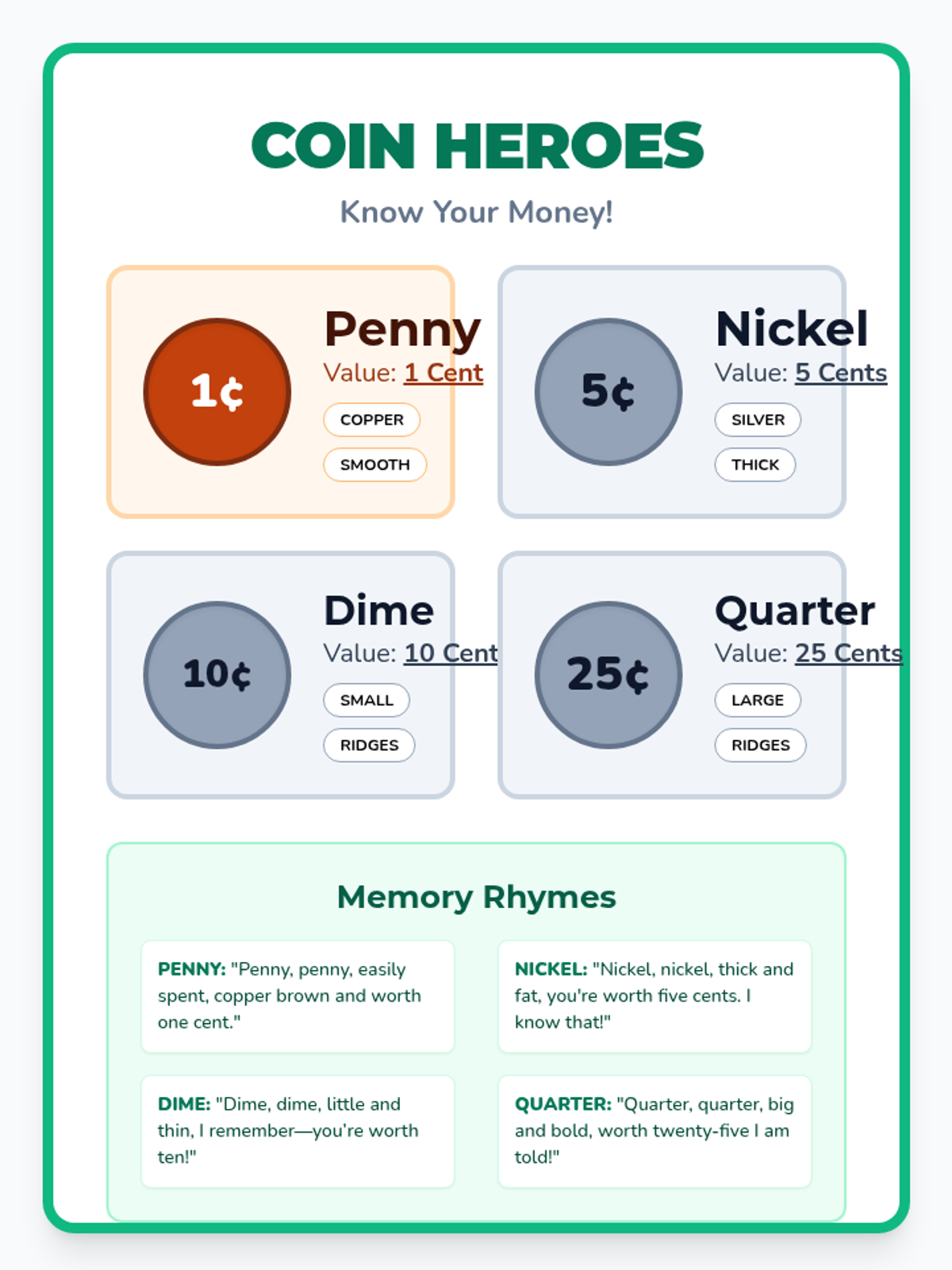
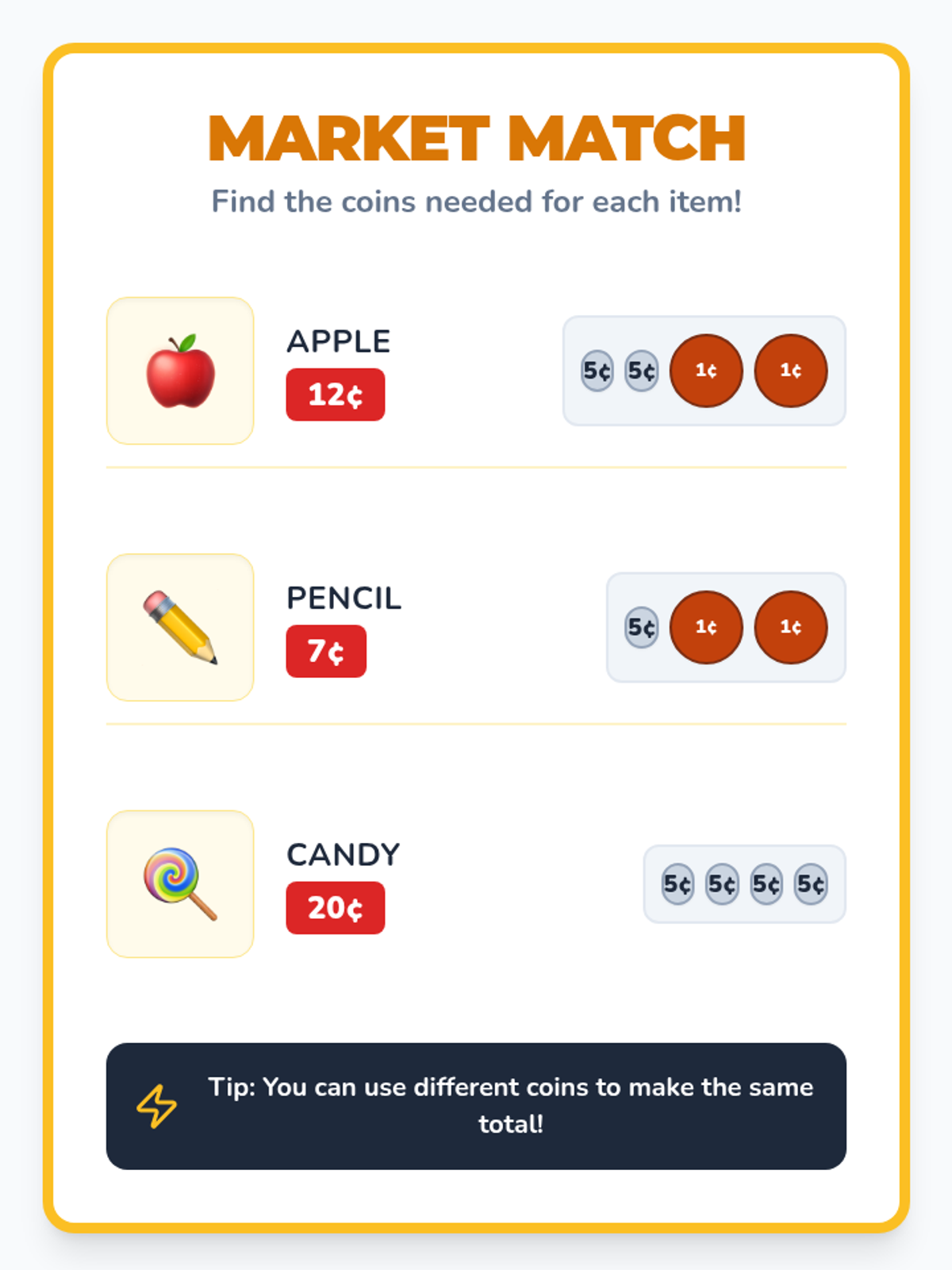
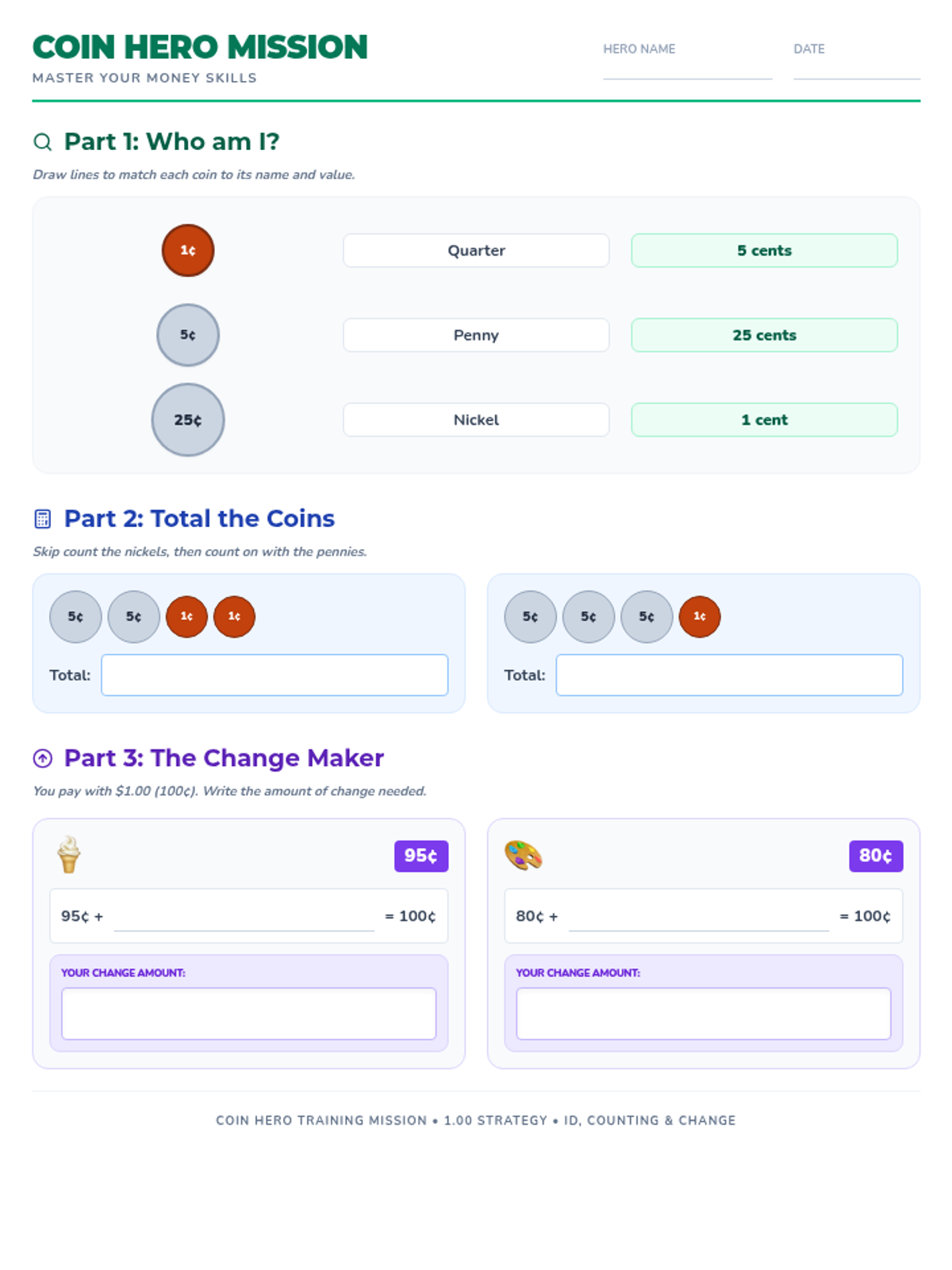
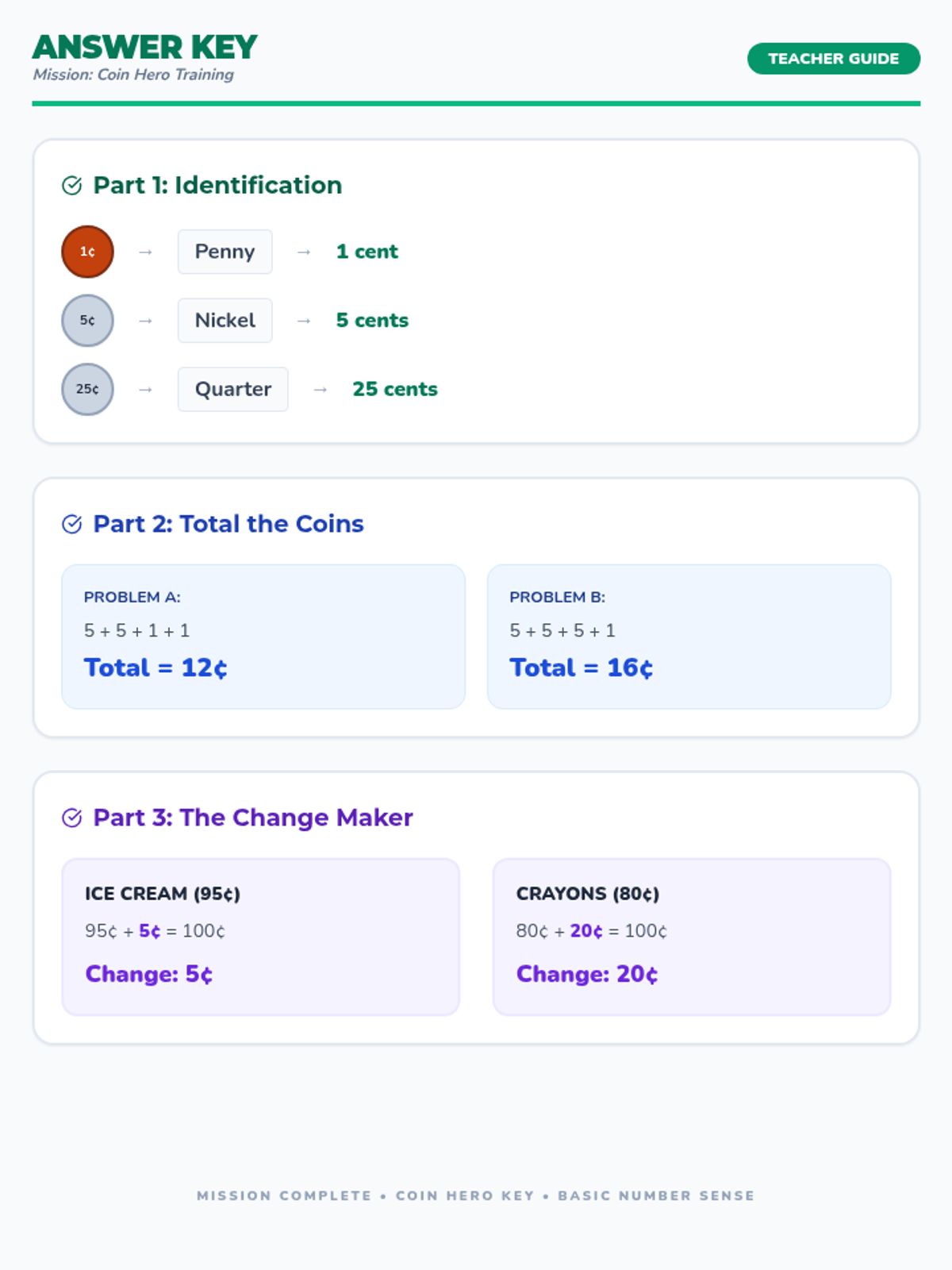
A collection of visual anchor charts and posters designed to teach basic coin identification, counting, and making change from a dollar. These materials use large visuals and clear strategies for early elementary students.
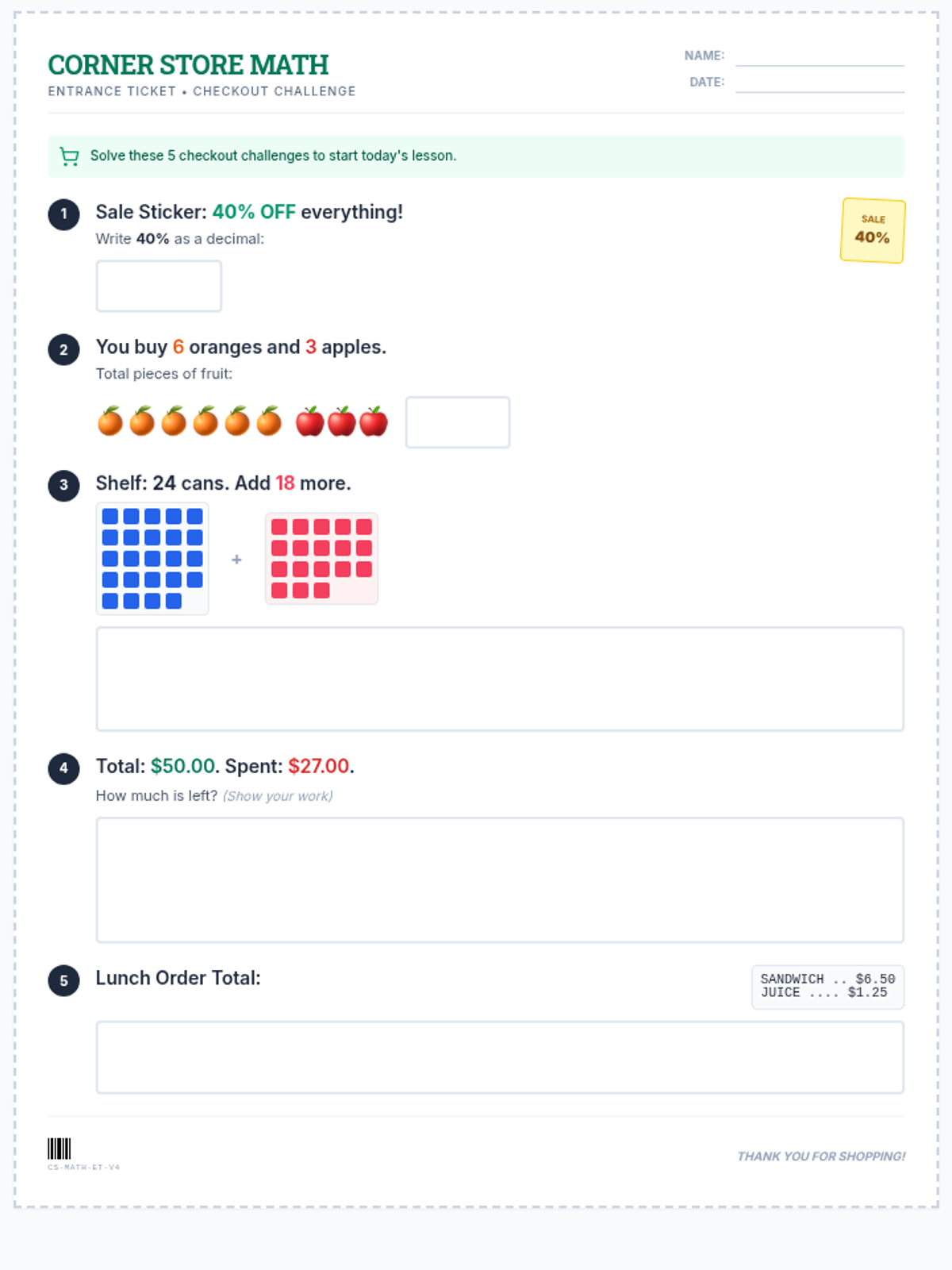
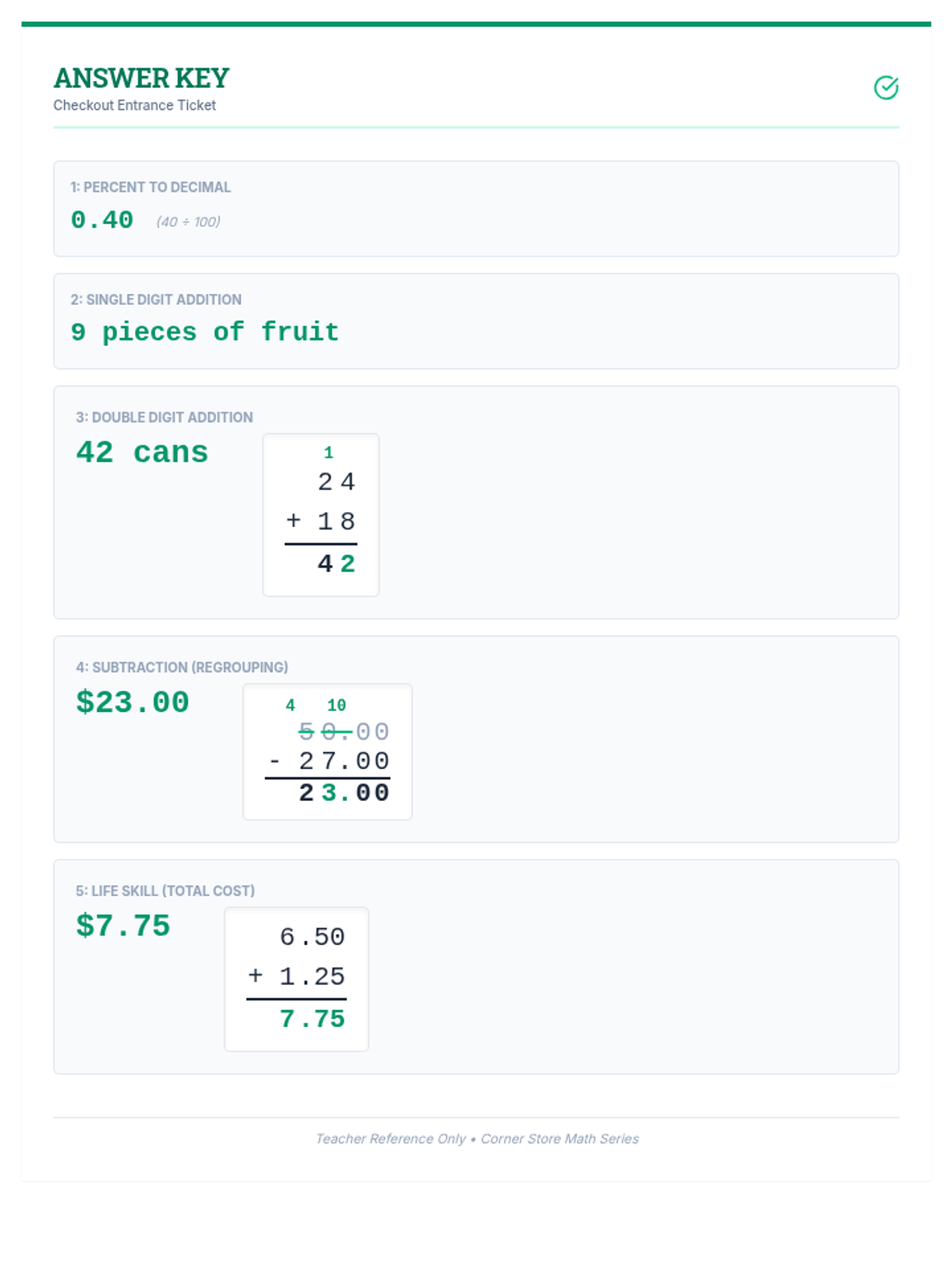
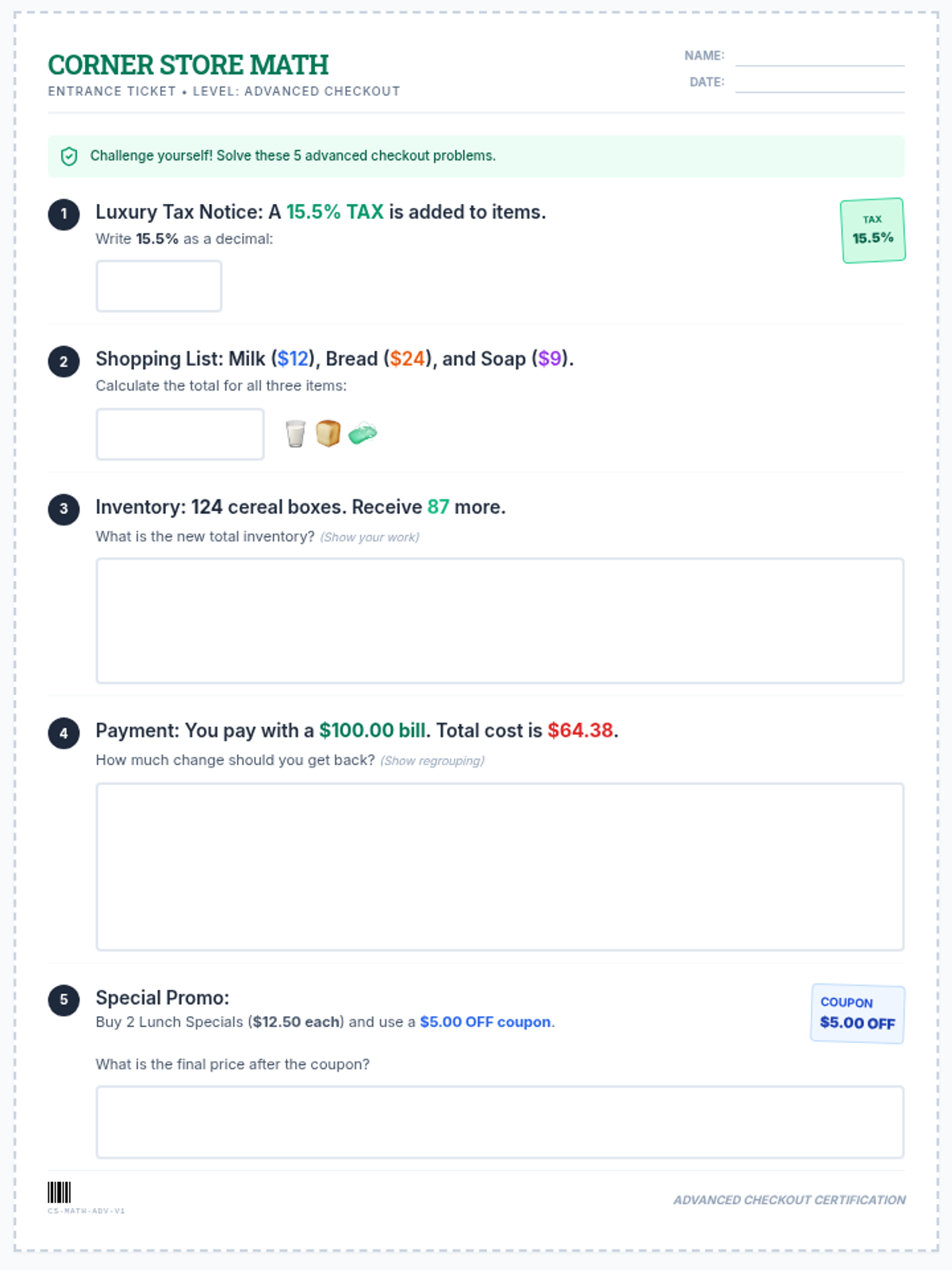
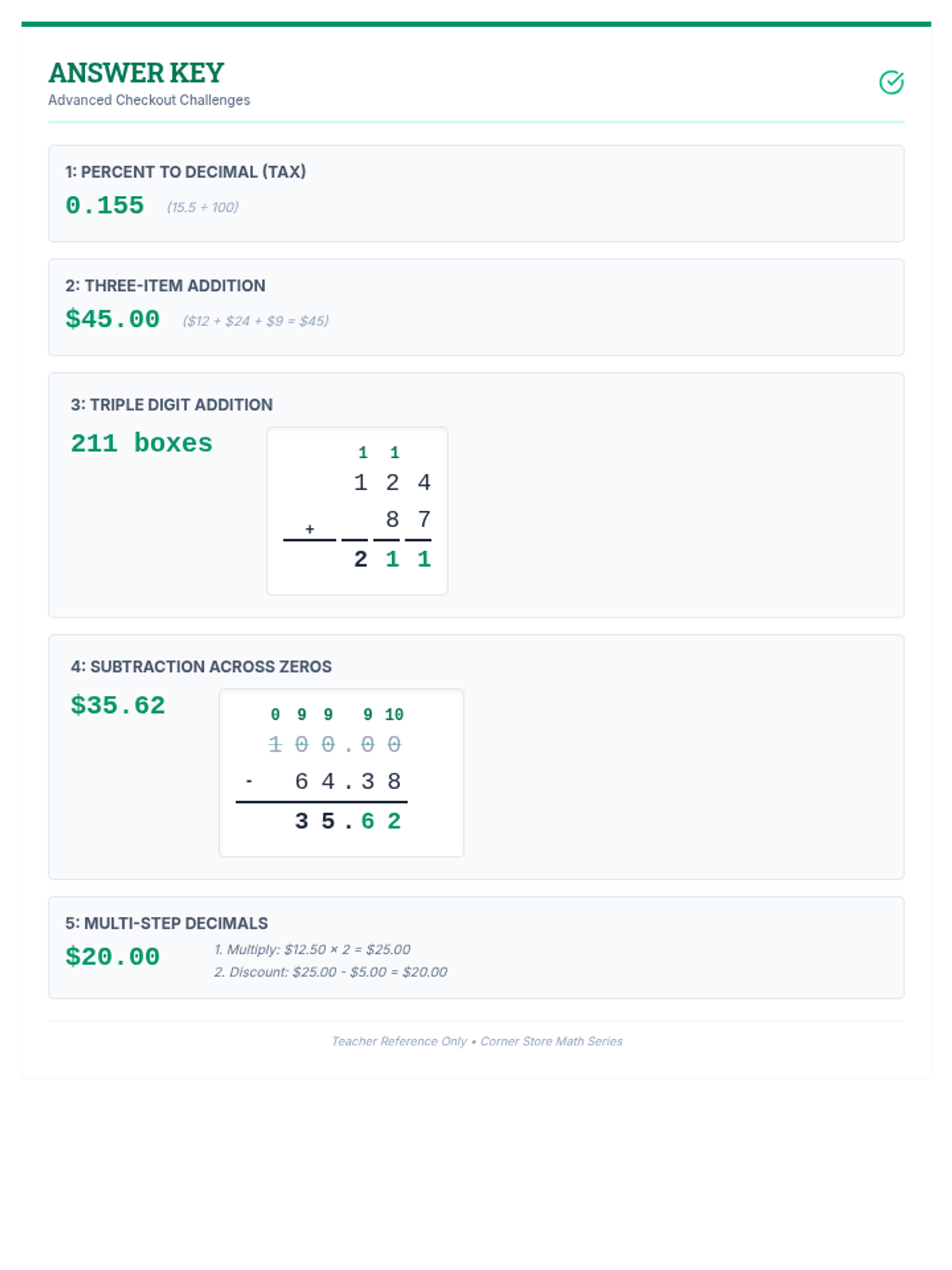
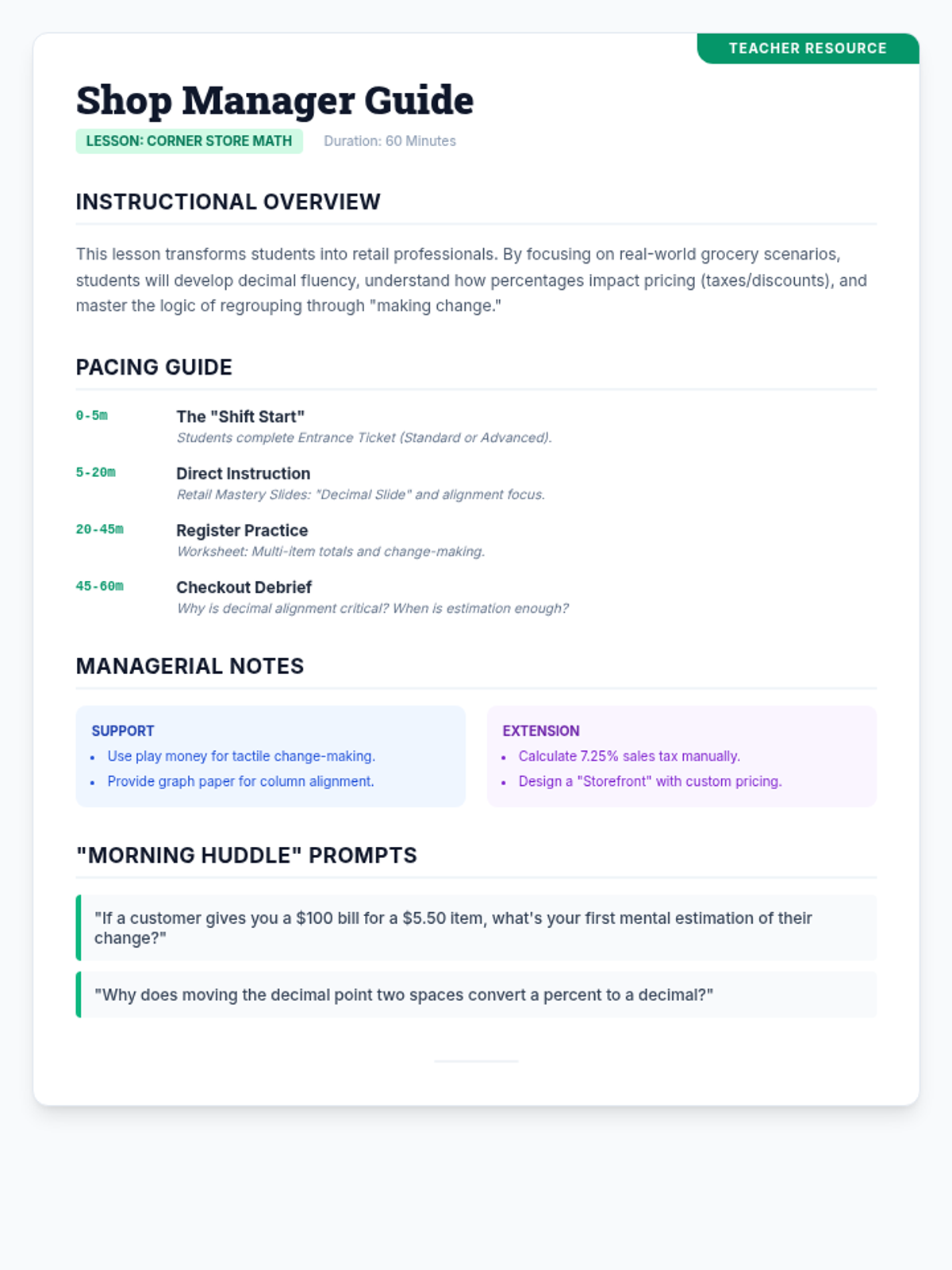
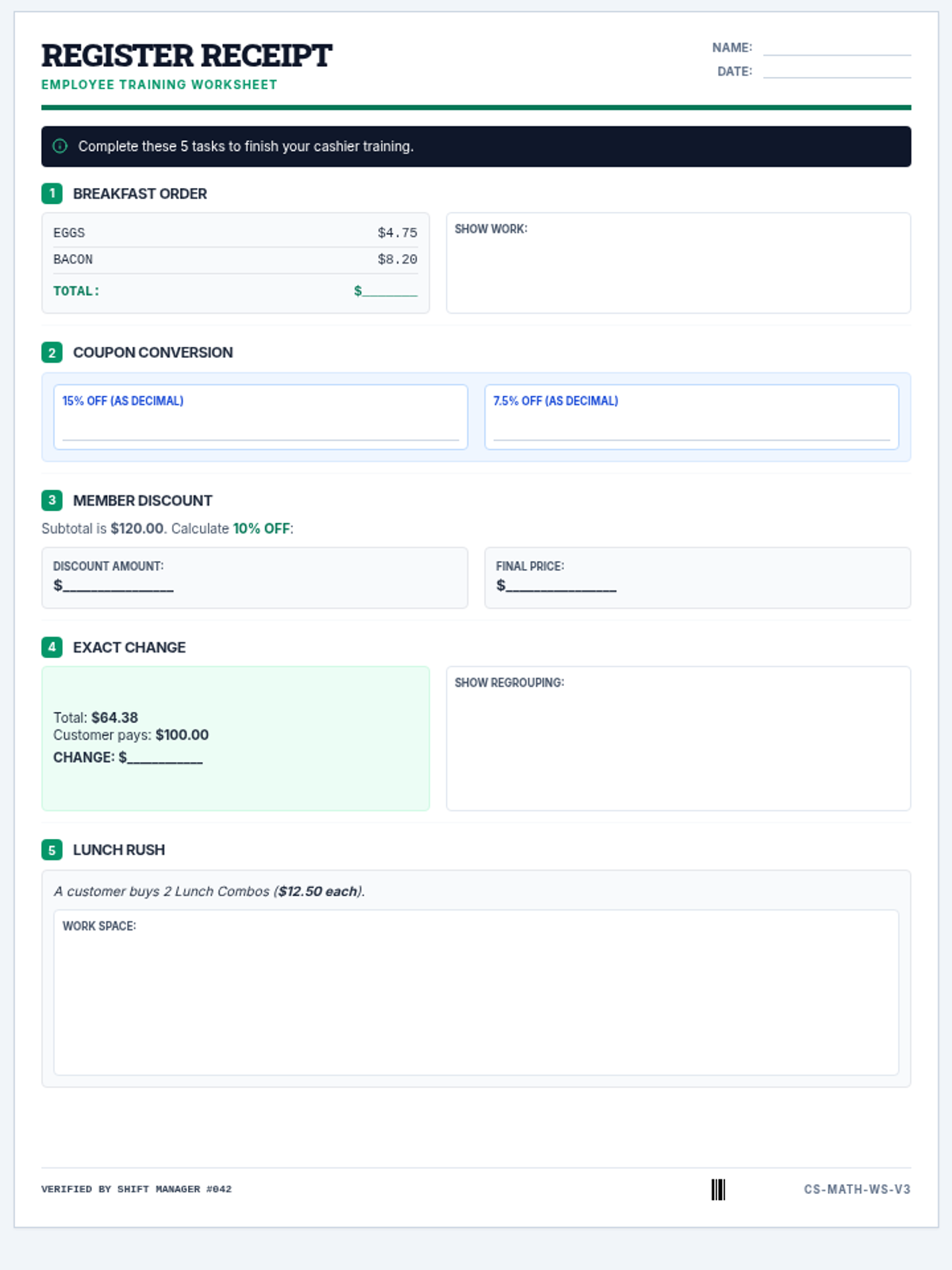
This lesson focuses on practical math applications in a retail setting, covering decimals, percentages, and basic arithmetic with a focus on money management.
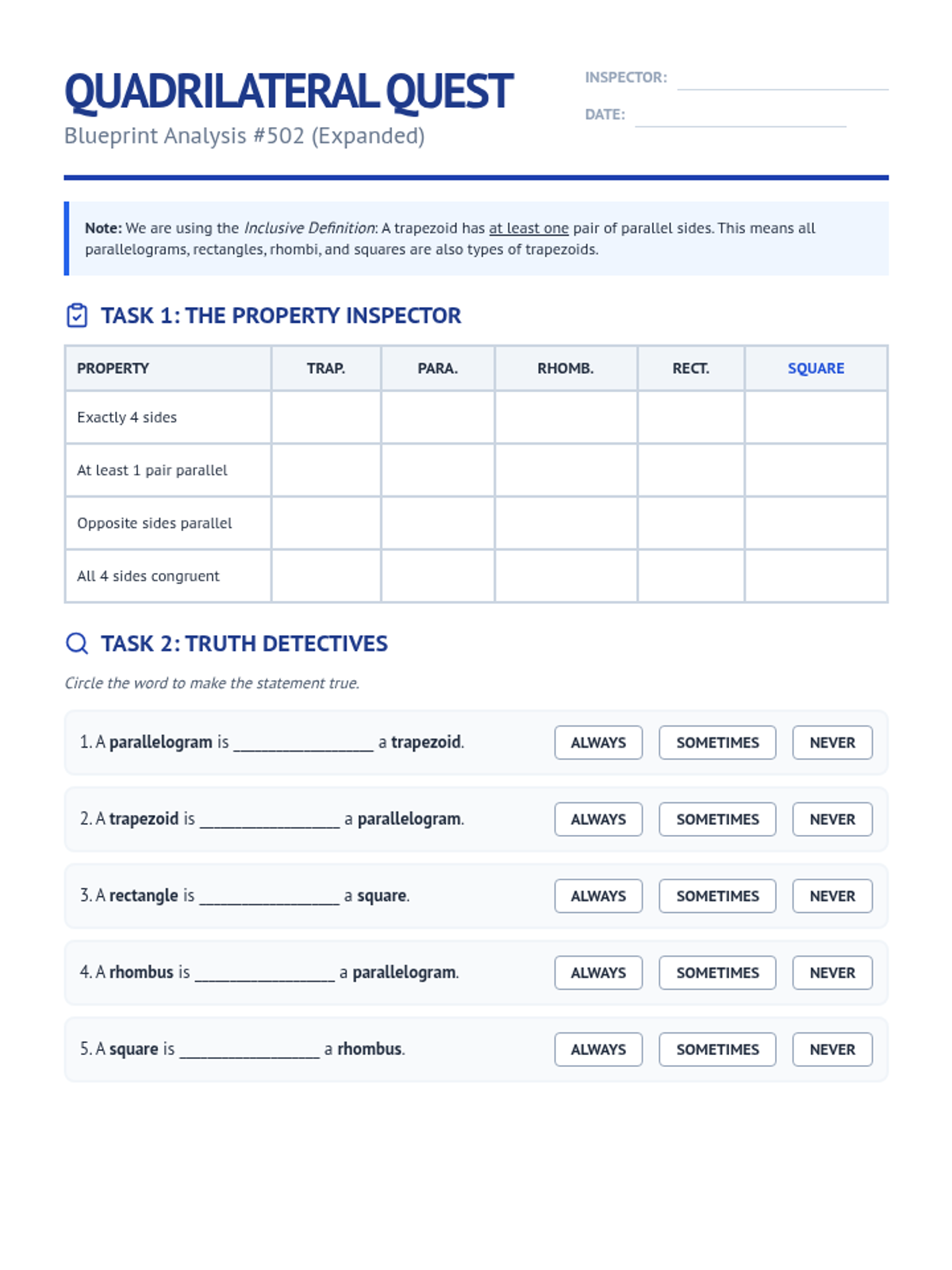
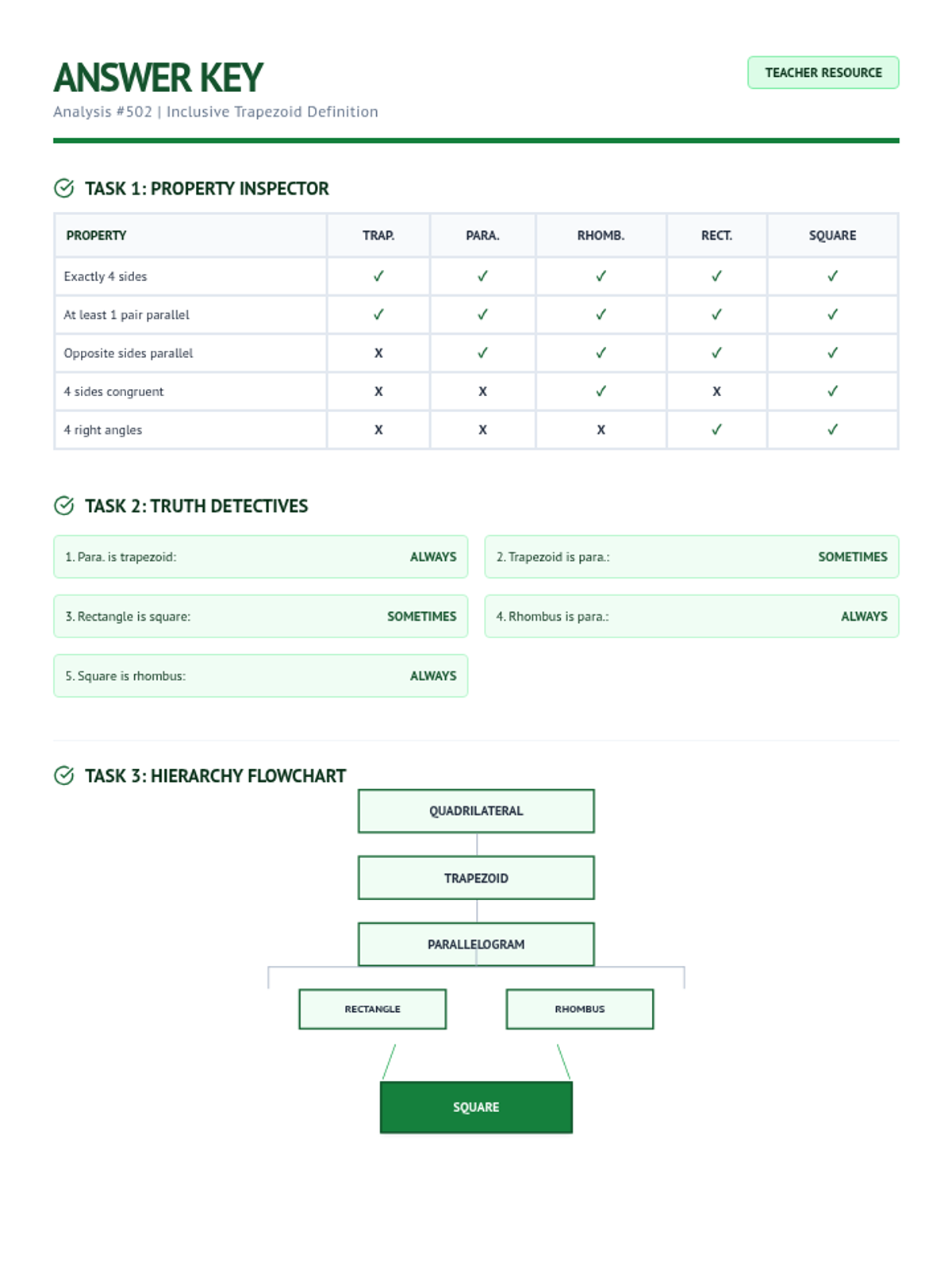
This lesson focuses on the hierarchical classification of quadrilaterals, helping students understand that subcategories inherit properties from their parent categories.
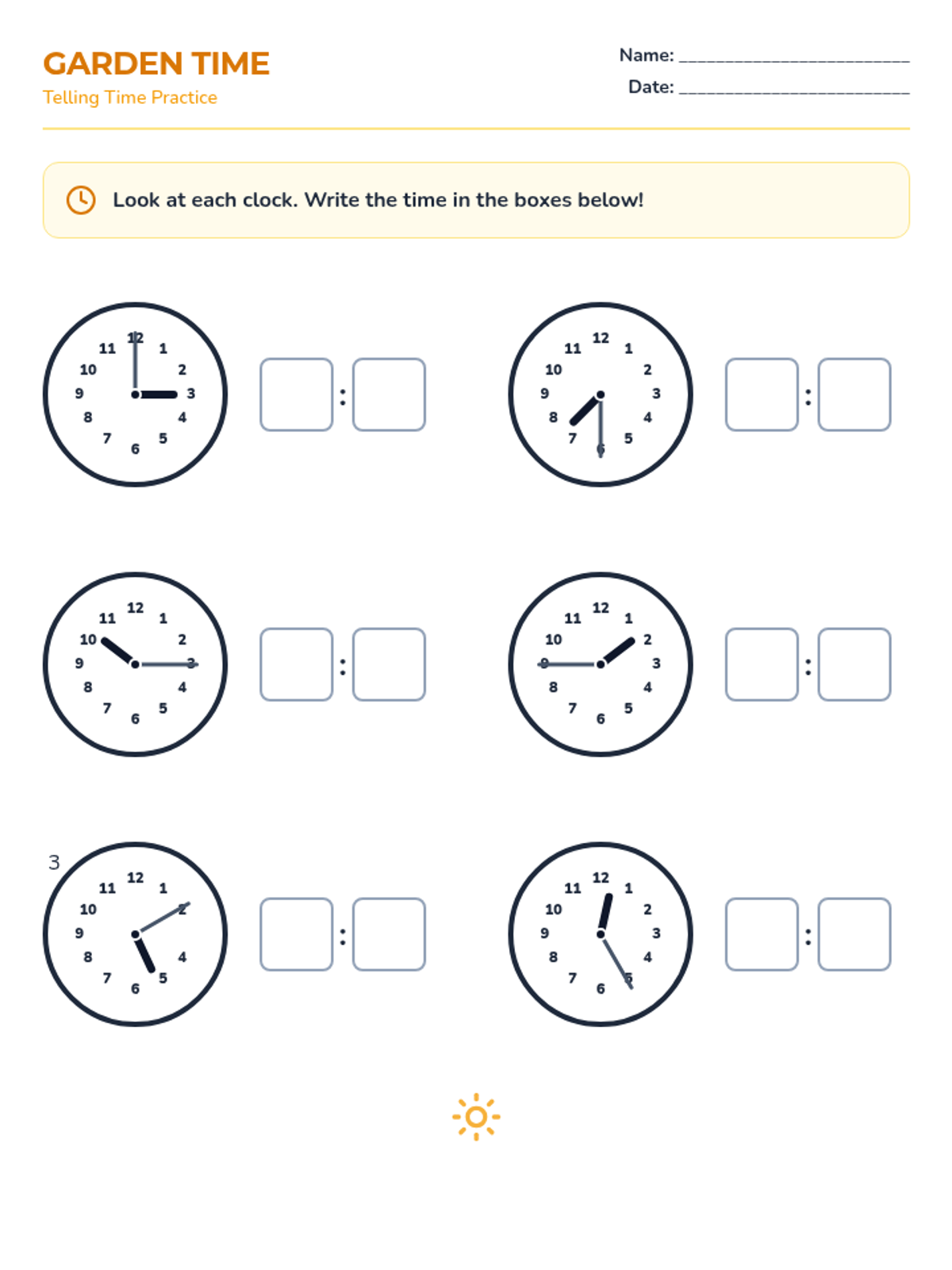
A lesson focused on reading analog clocks to the hour and half-hour, designed for 2nd grade students to practice converting analog time to digital format.
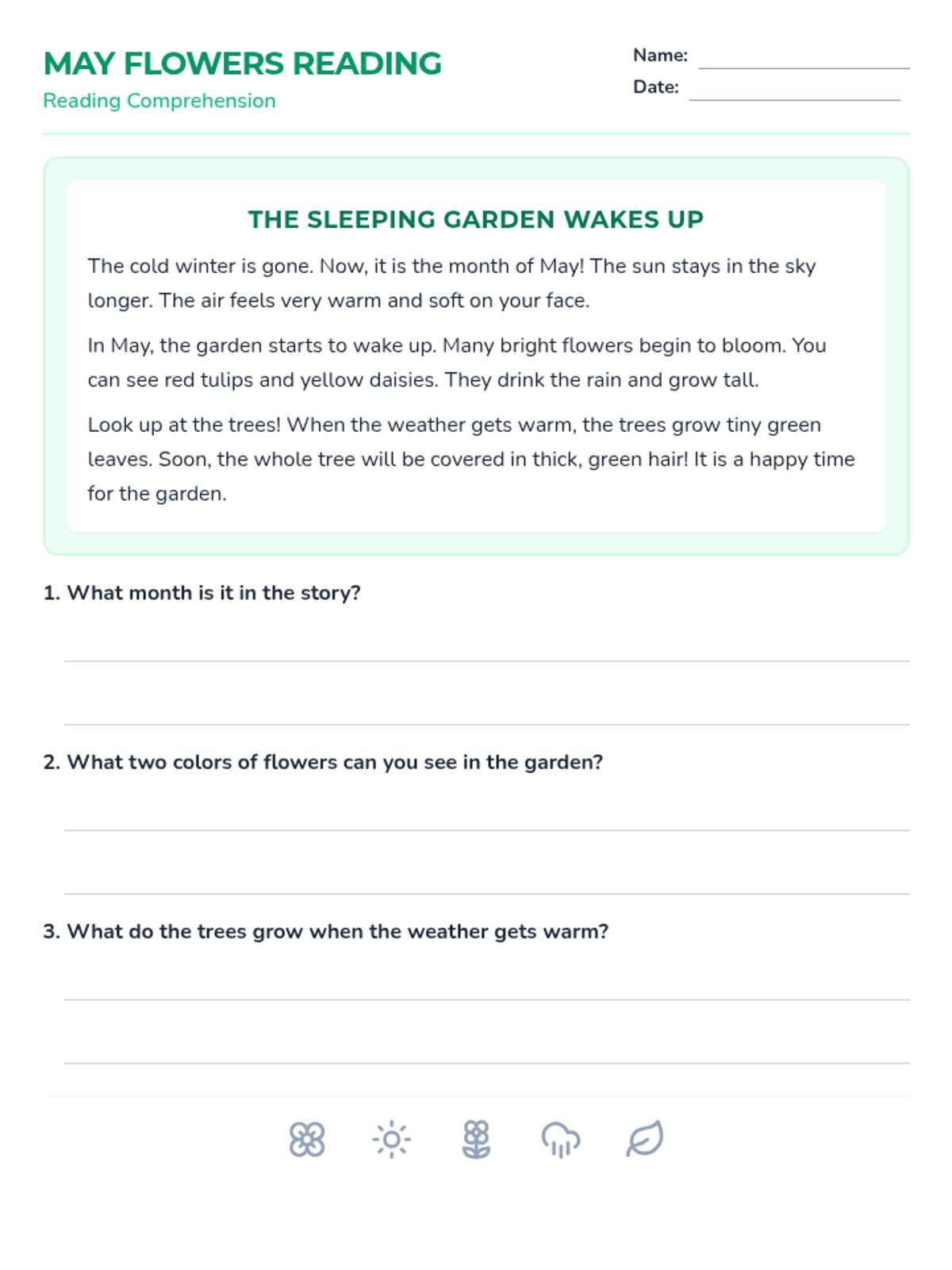
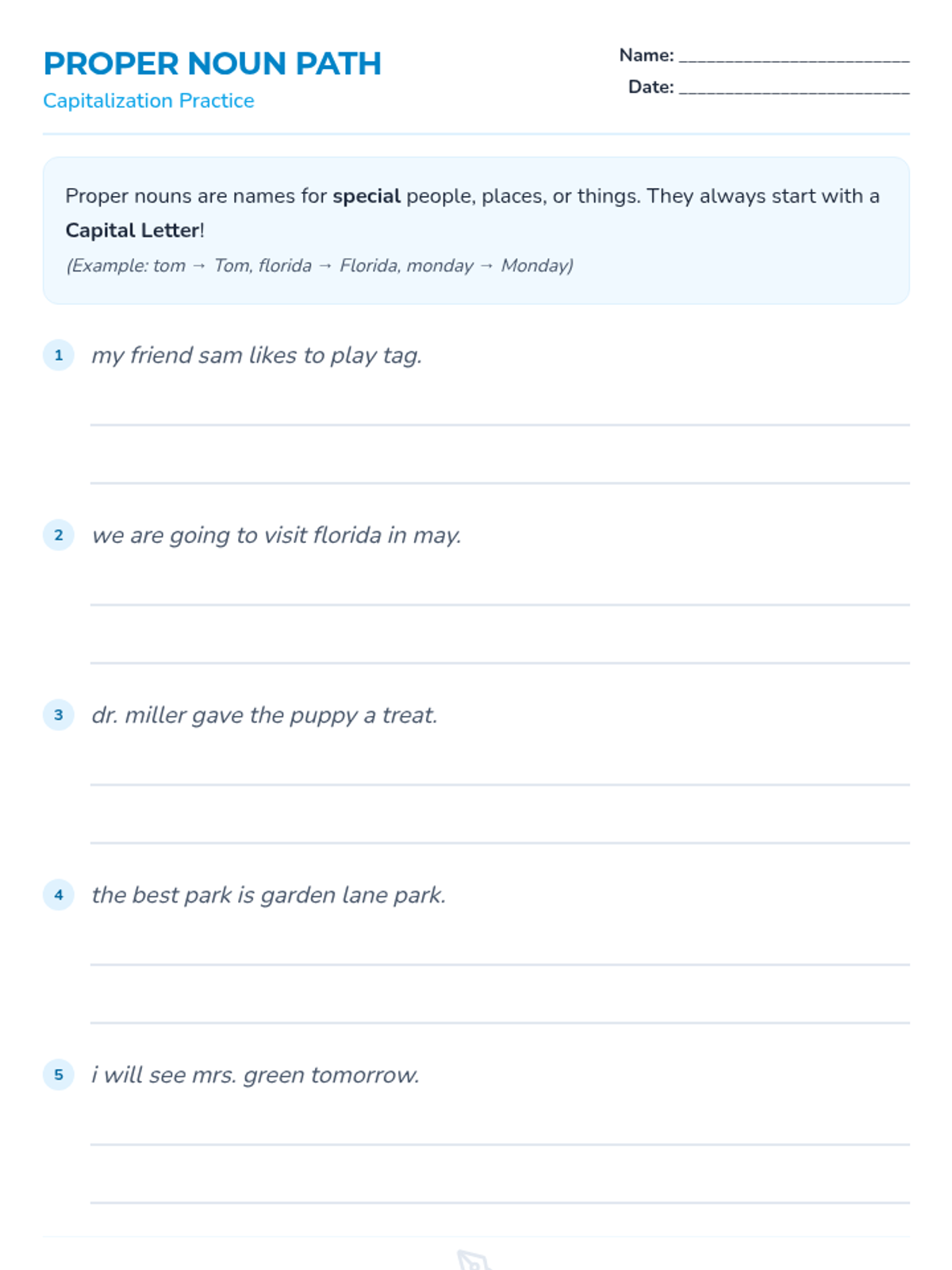
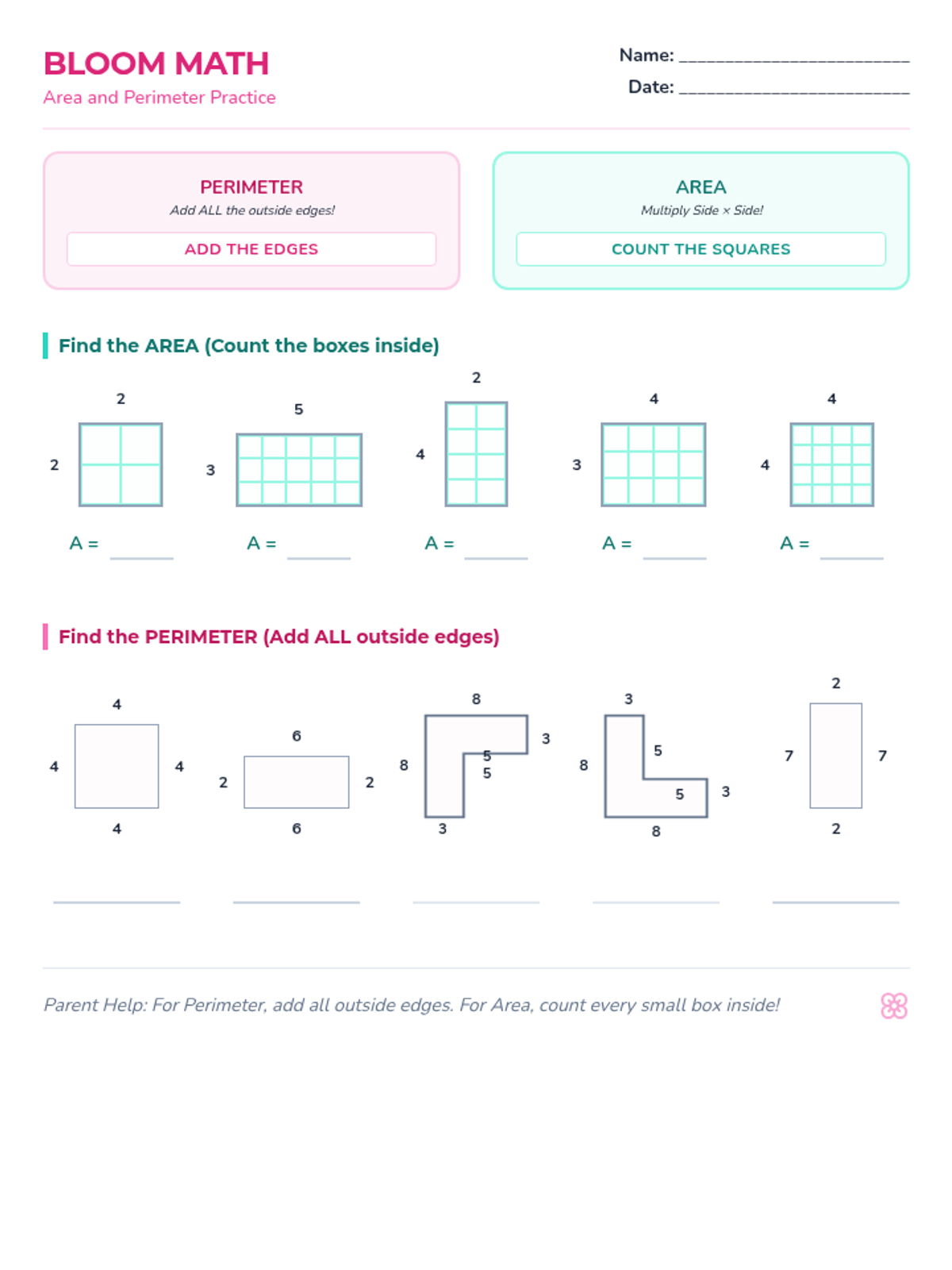
A set of four independent practice worksheets themed around springtime growth, focusing on reading comprehension, time-telling, grammar, and geometry.
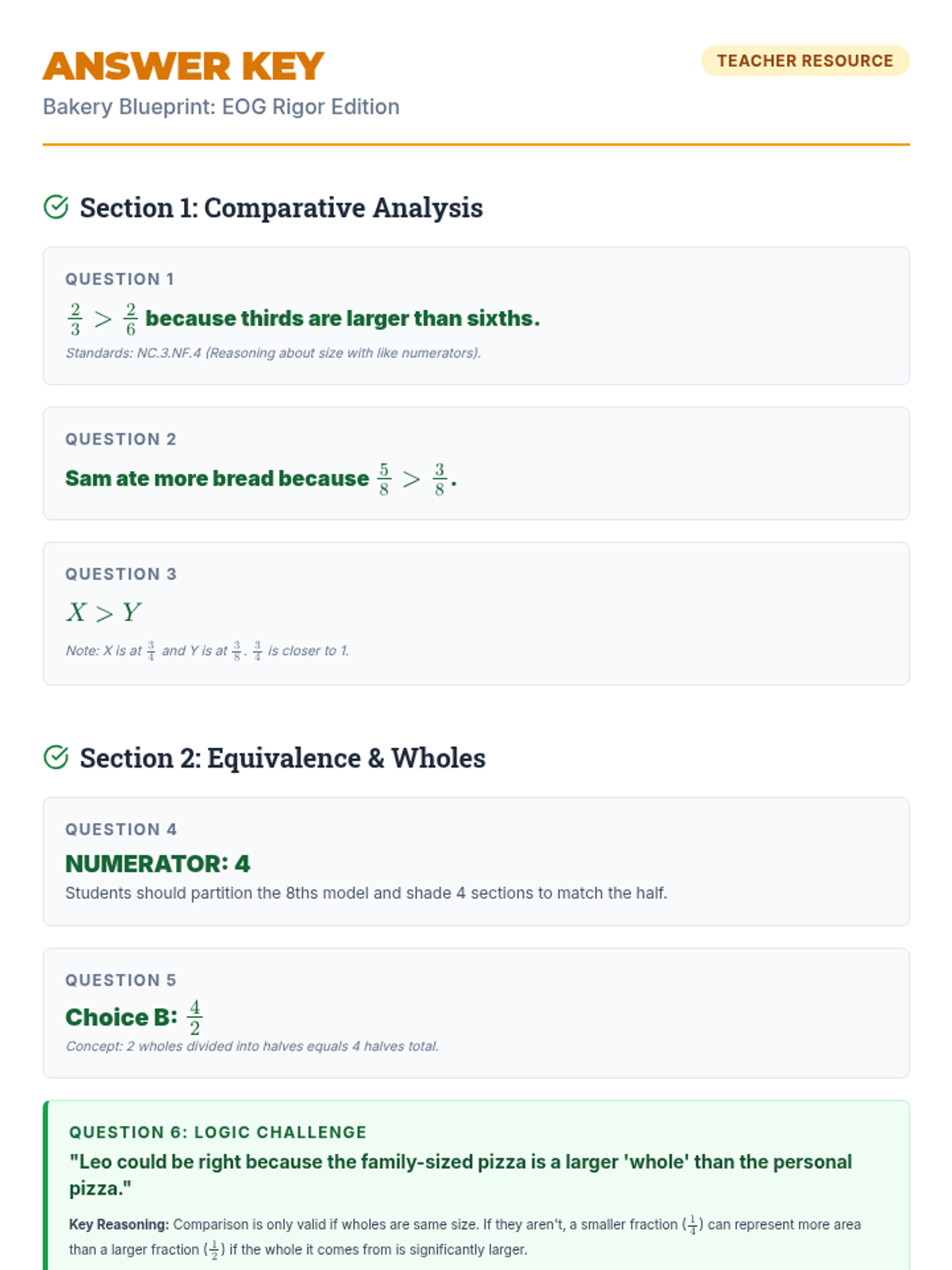
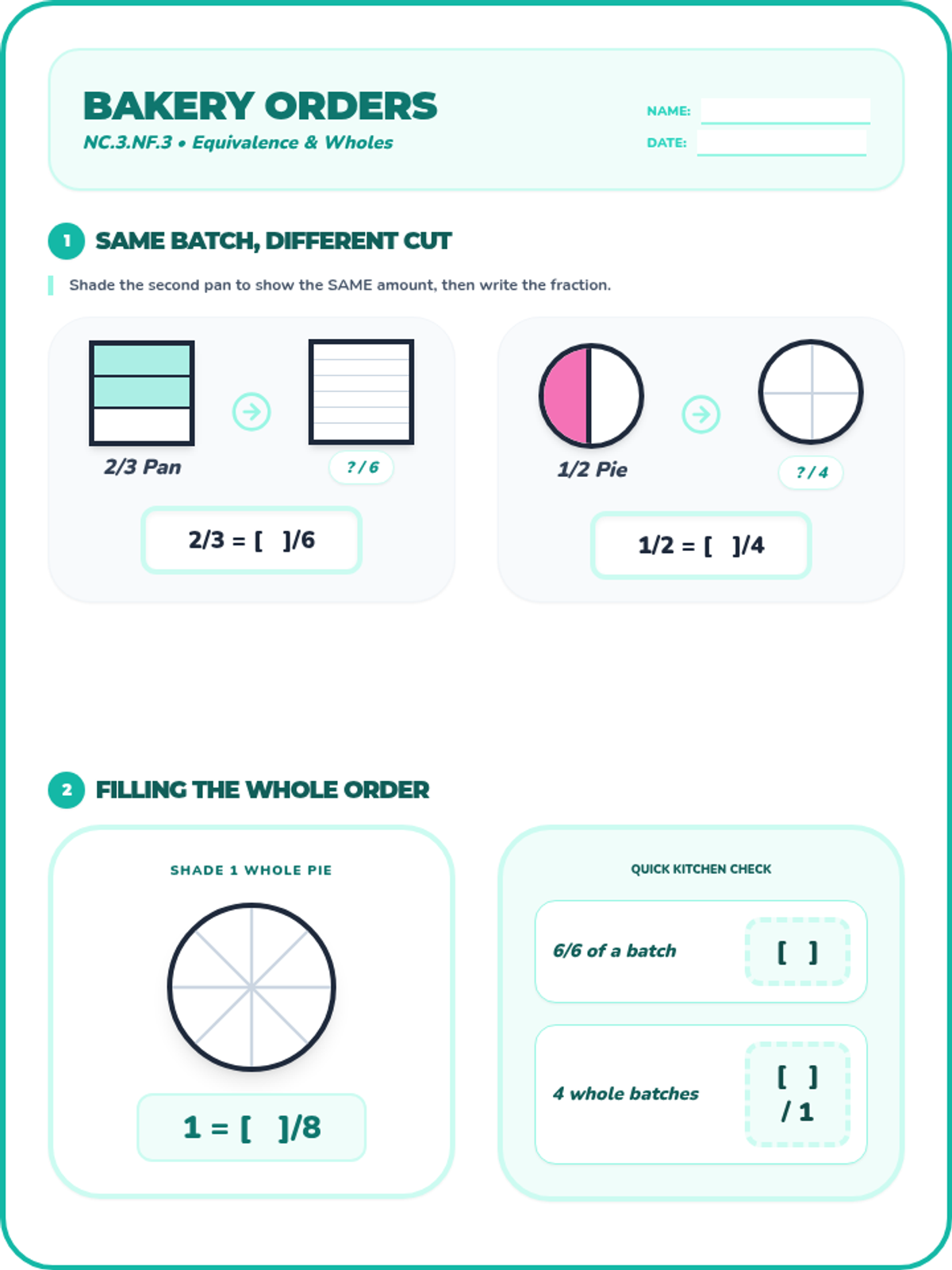
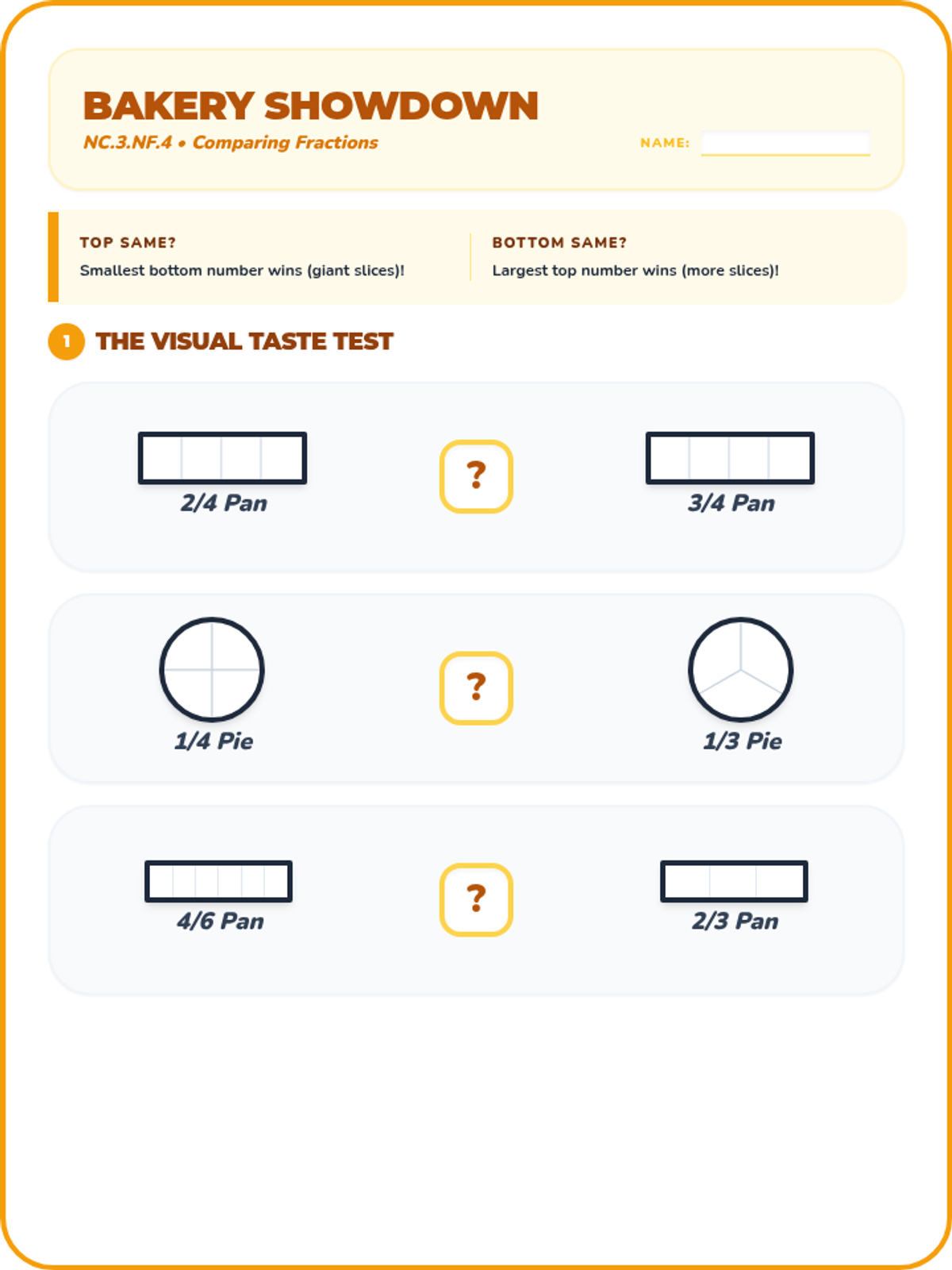
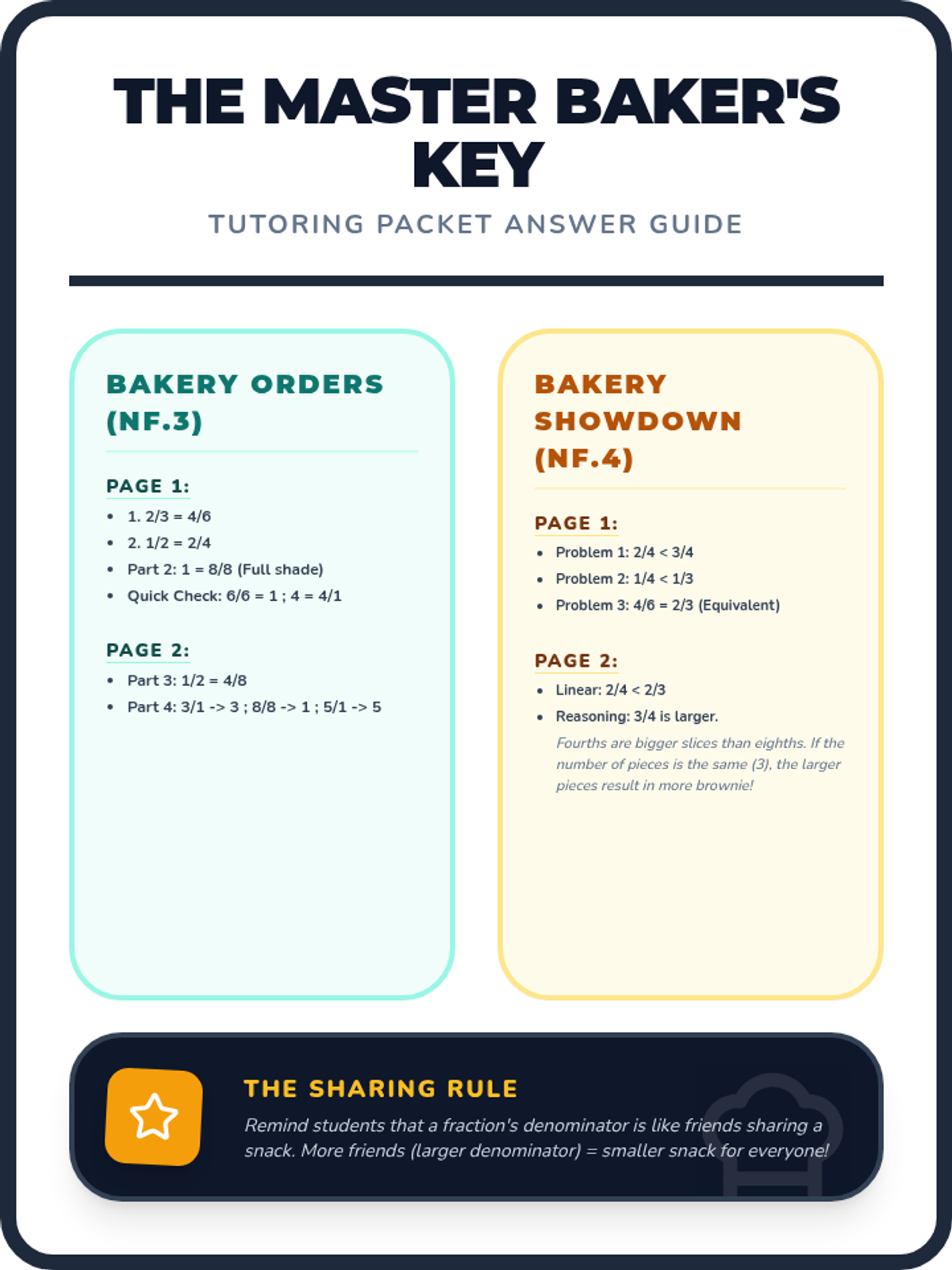
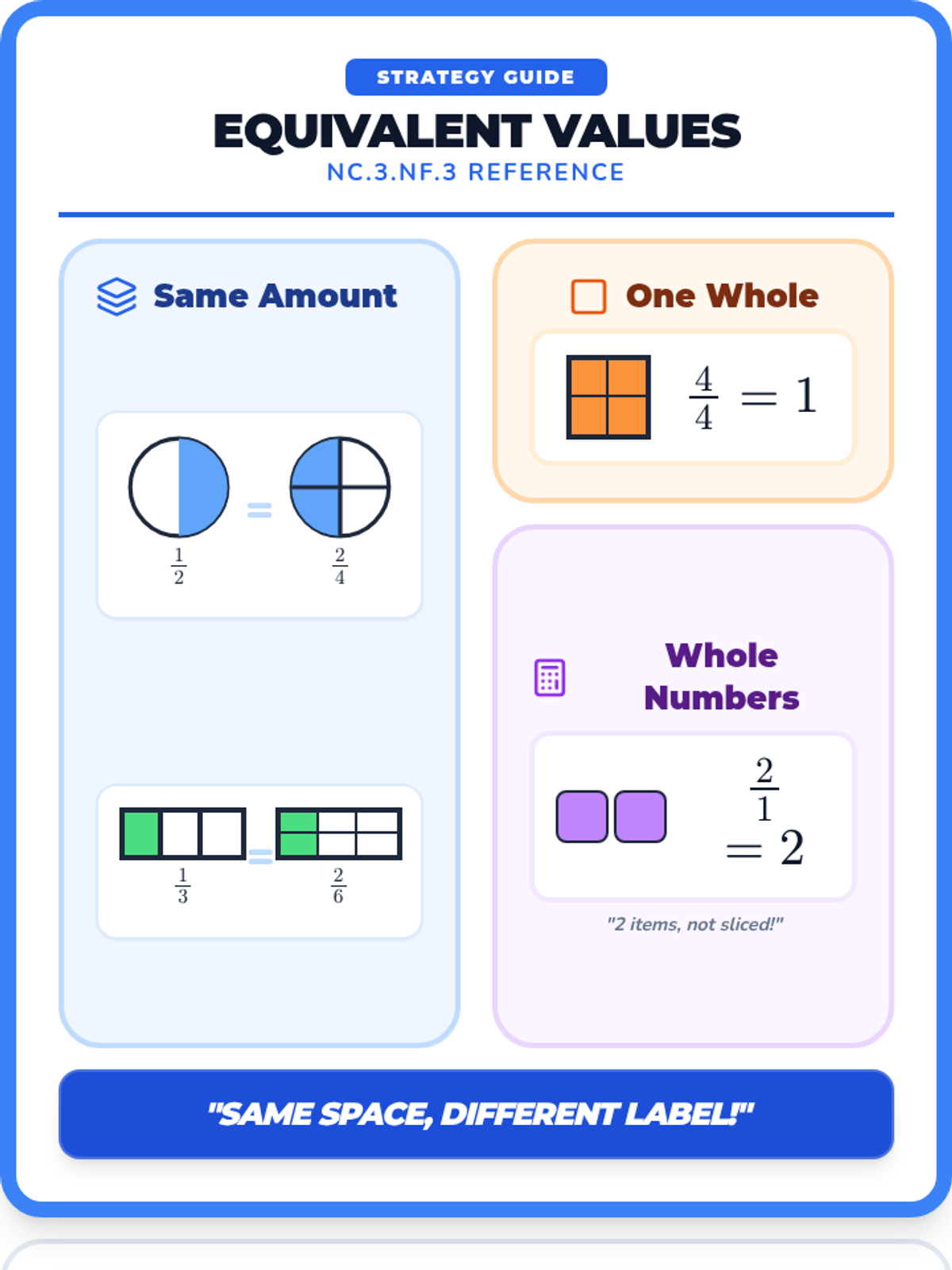
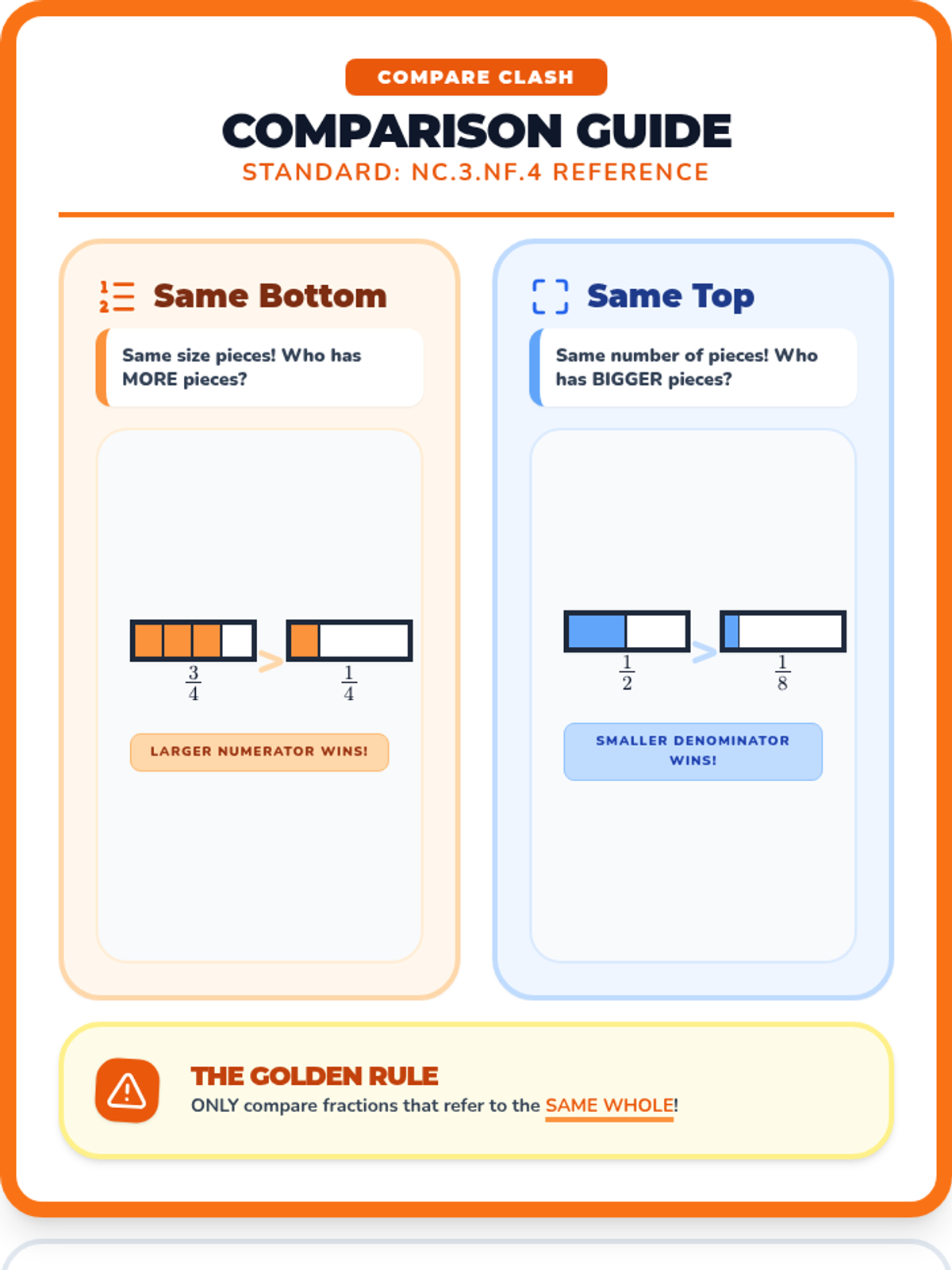
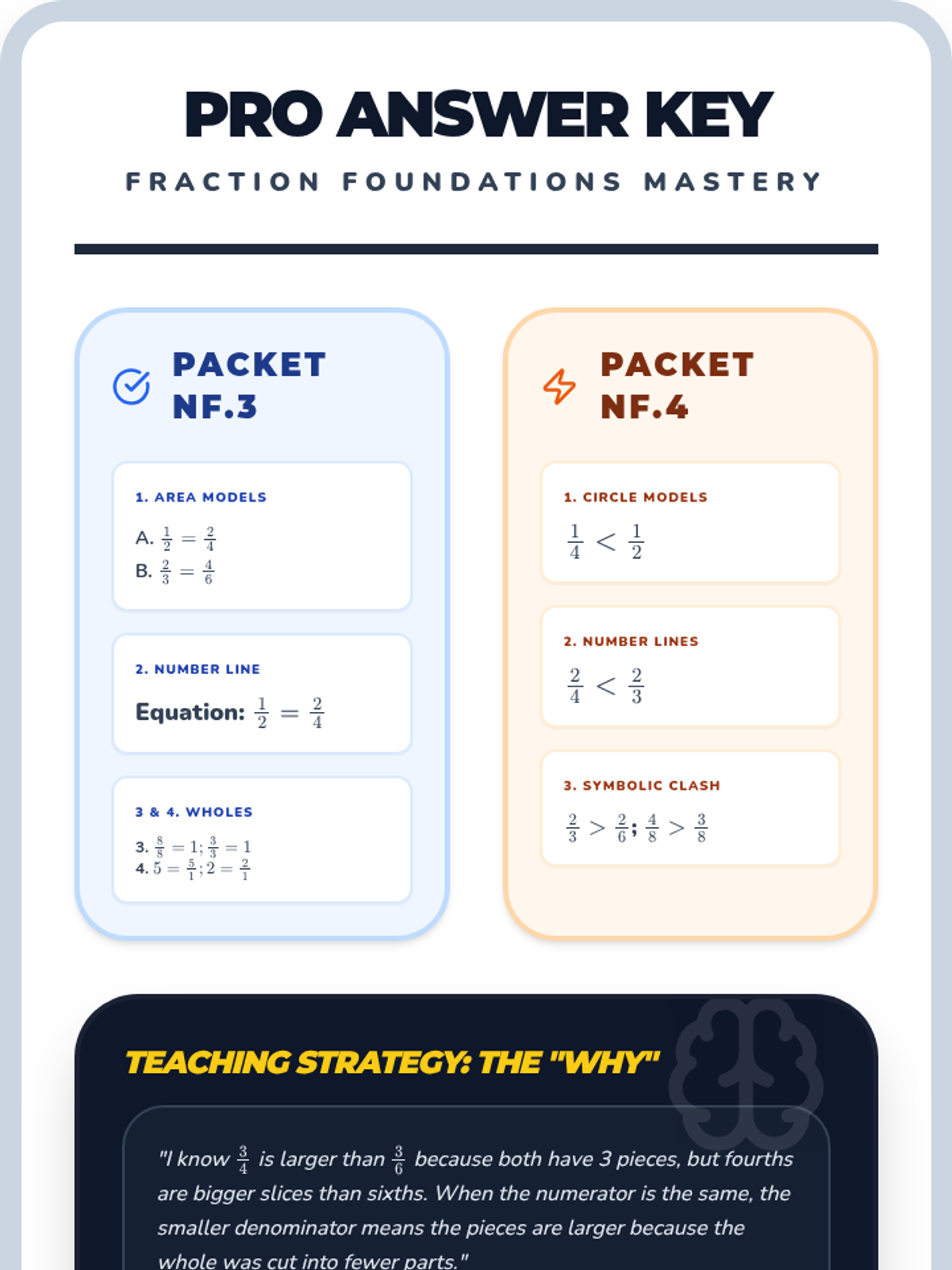
Classroom-ready anchor charts and independent worksheets for NC.3.NF.3 and NC.3.NF.4, focusing on equivalent fractions, wholes, and comparison strategies.
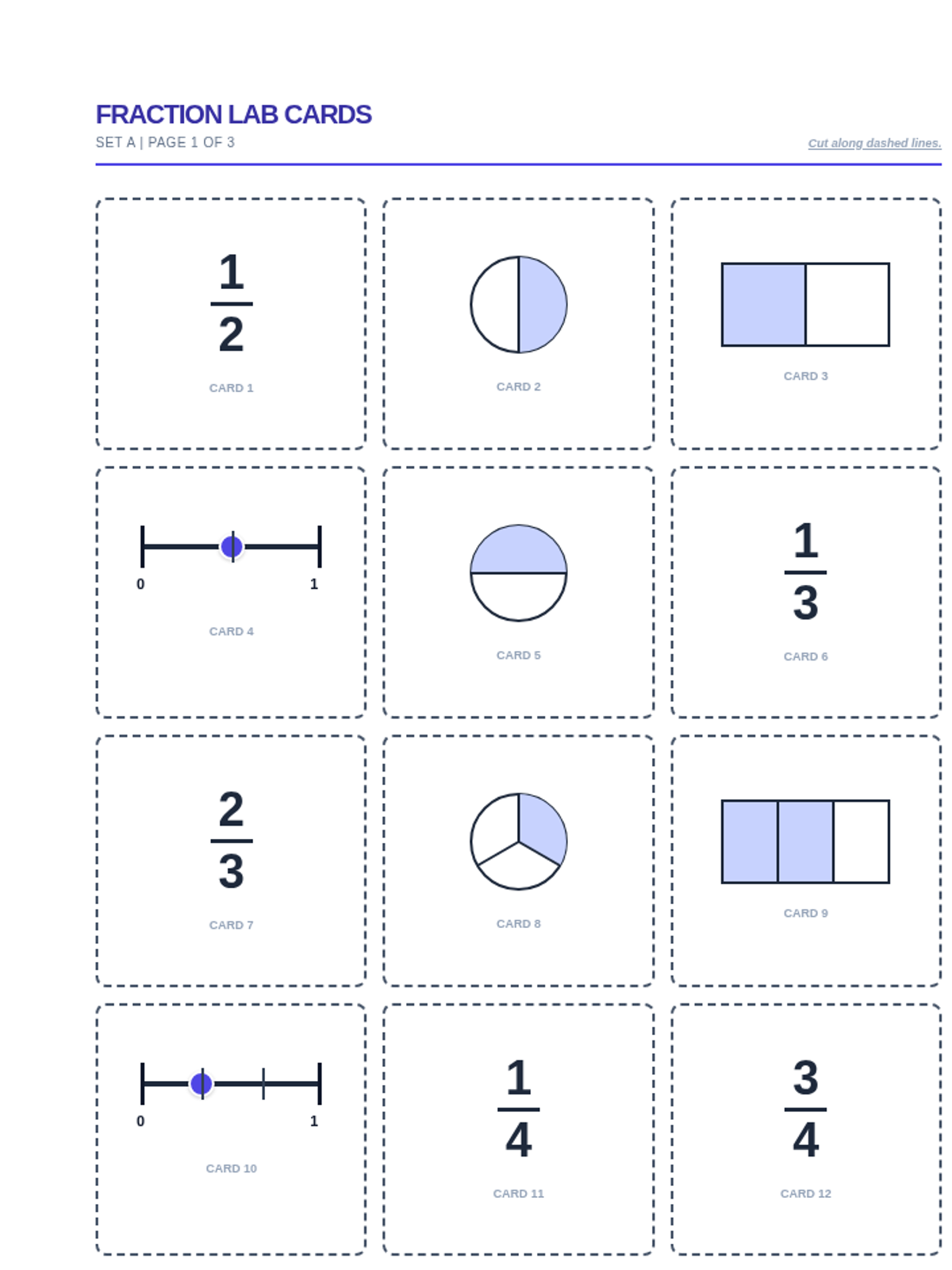
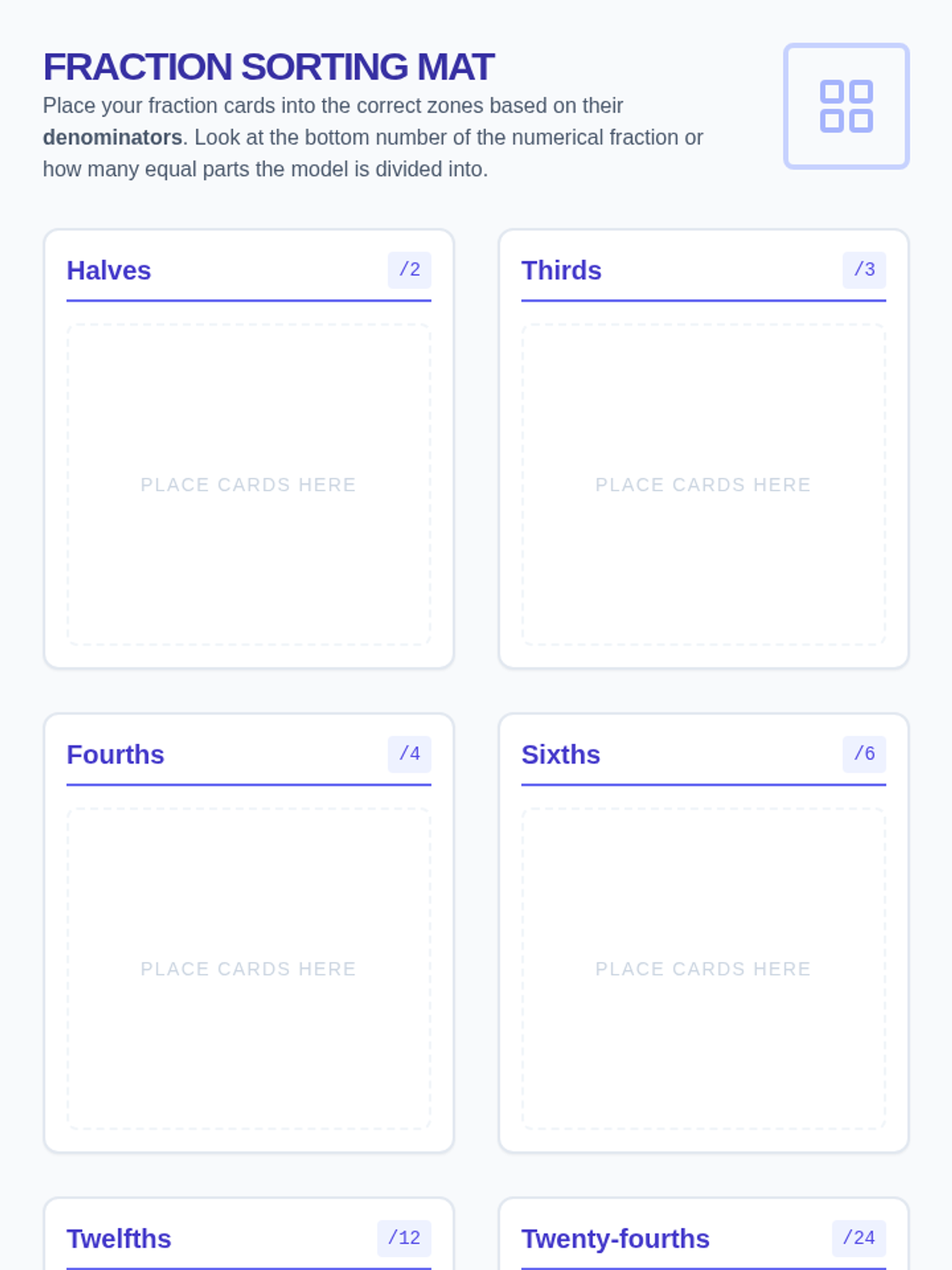
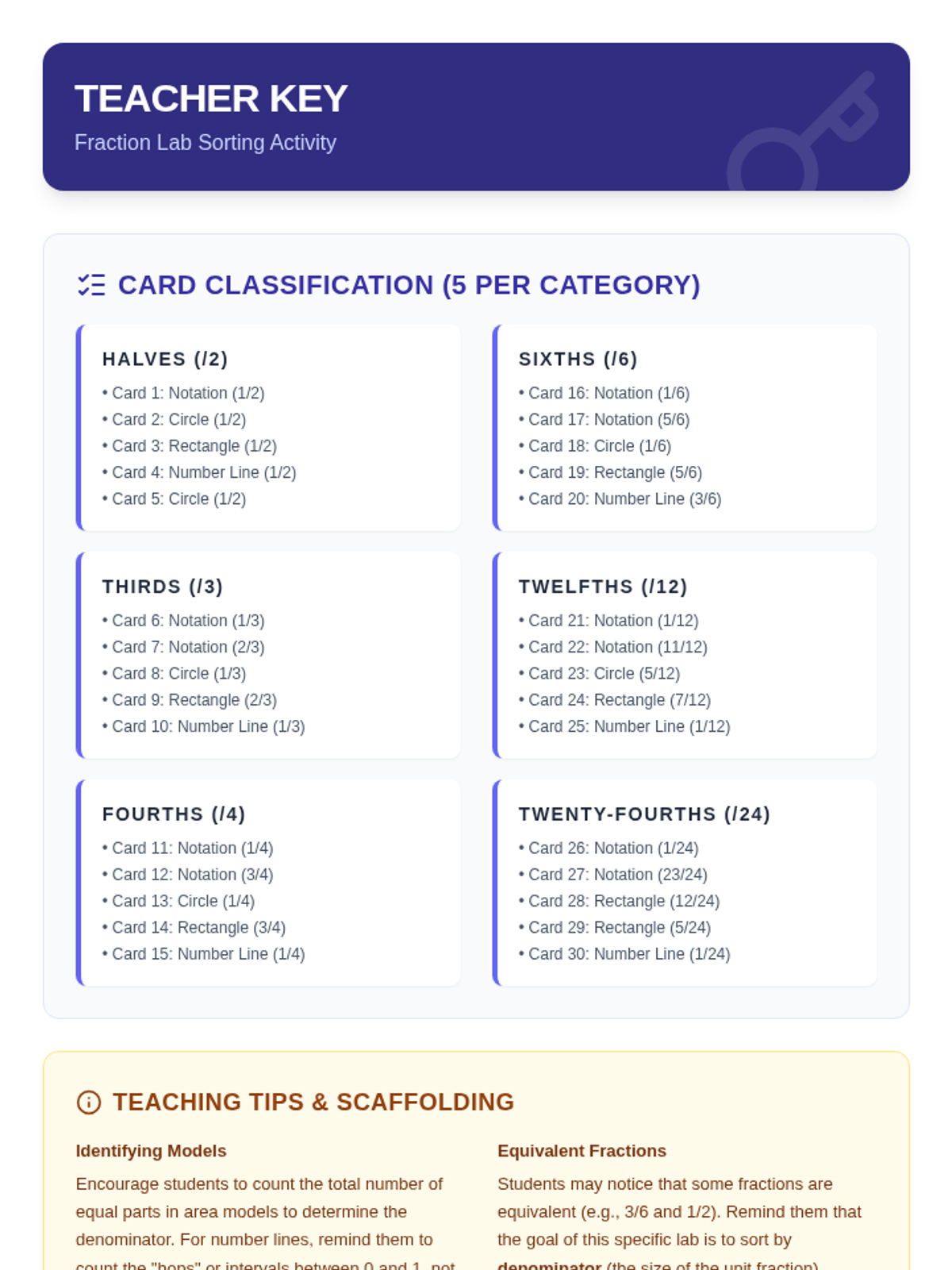
A hands-on exploration of fractions where students identify and sort fractions based on their denominators using various representations including number lines, area models, and numerical forms.
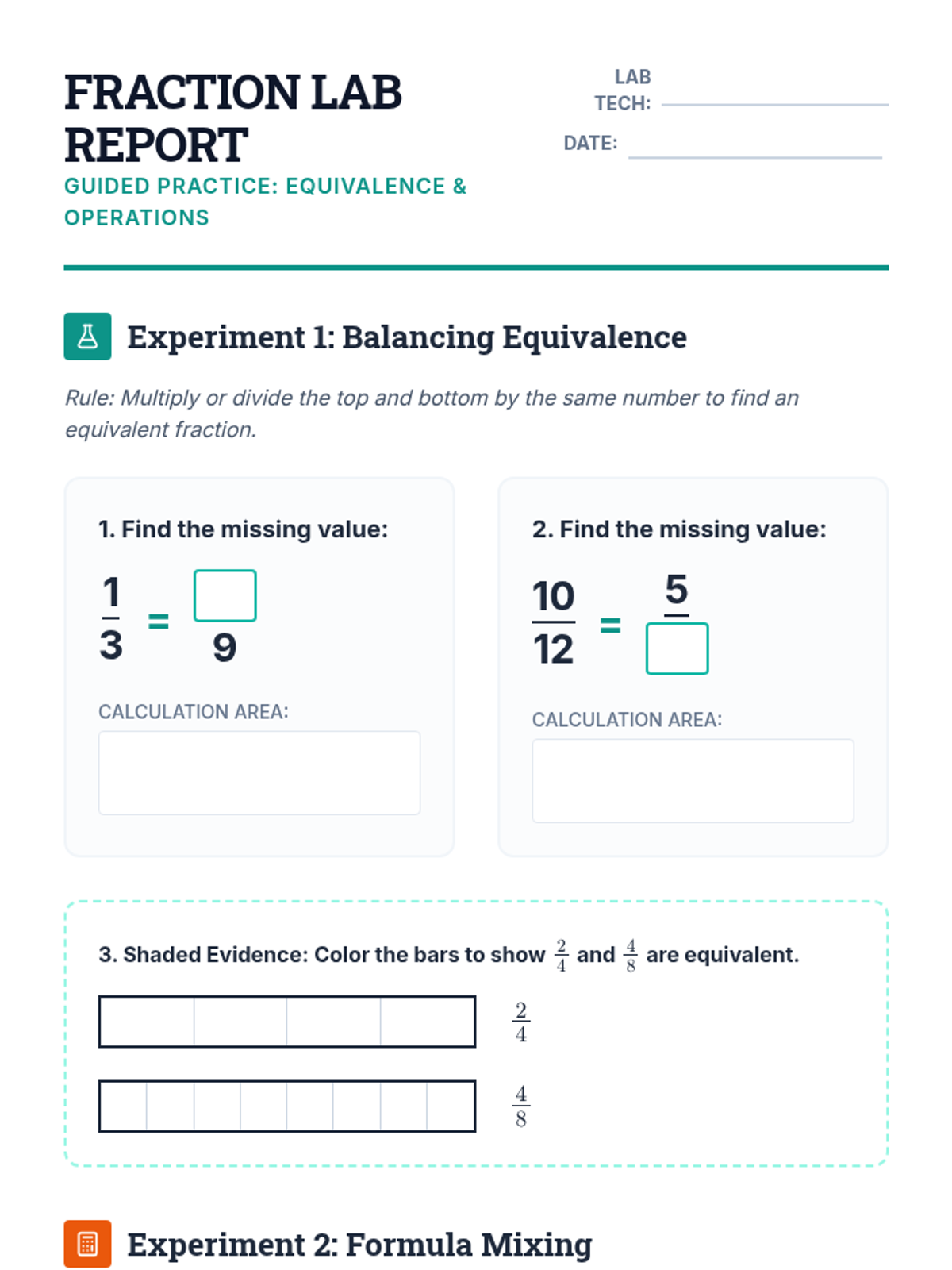
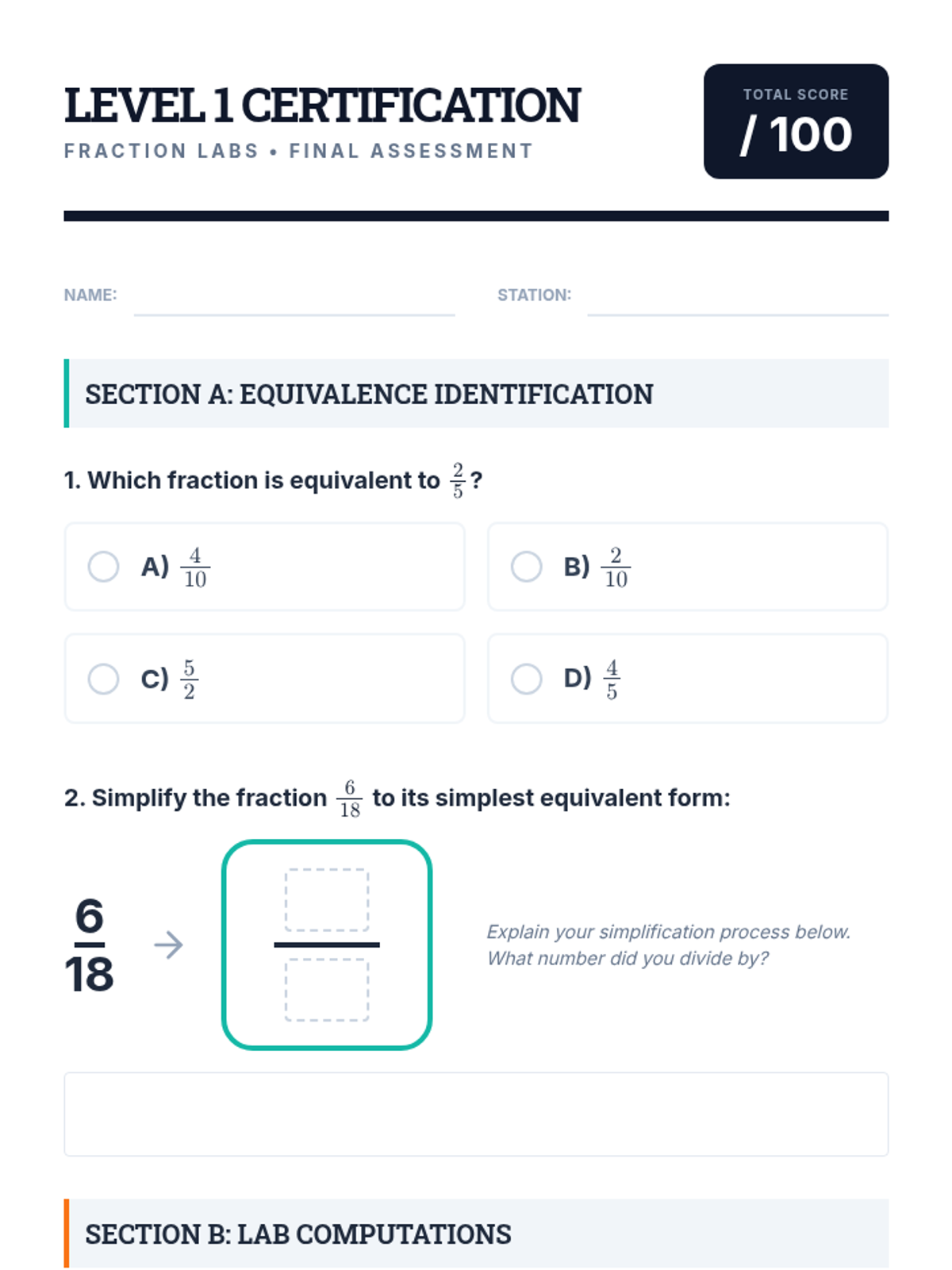
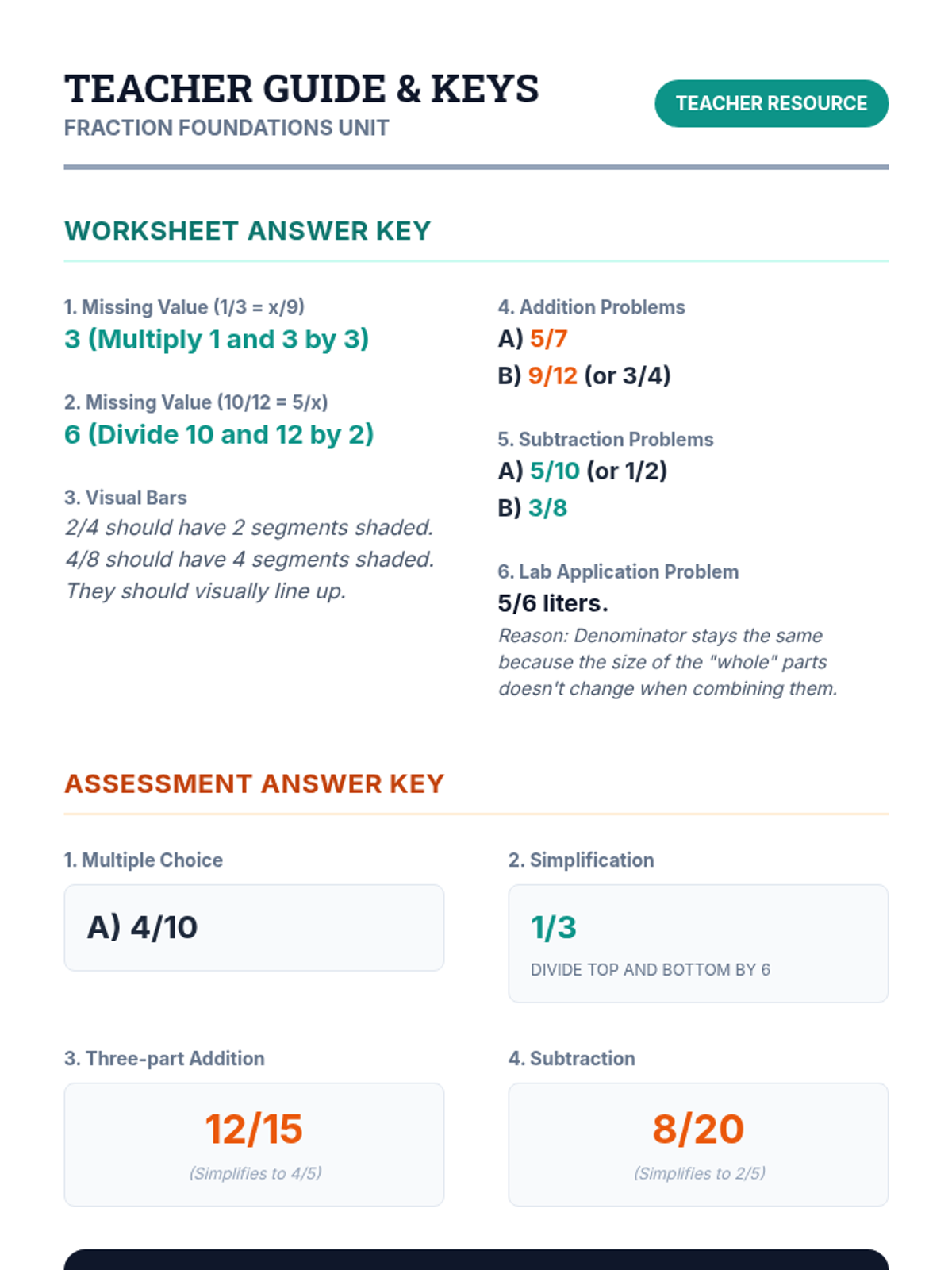
A comprehensive lesson on equivalent fractions and adding/subtracting fractions with like denominators, featuring a science lab theme.
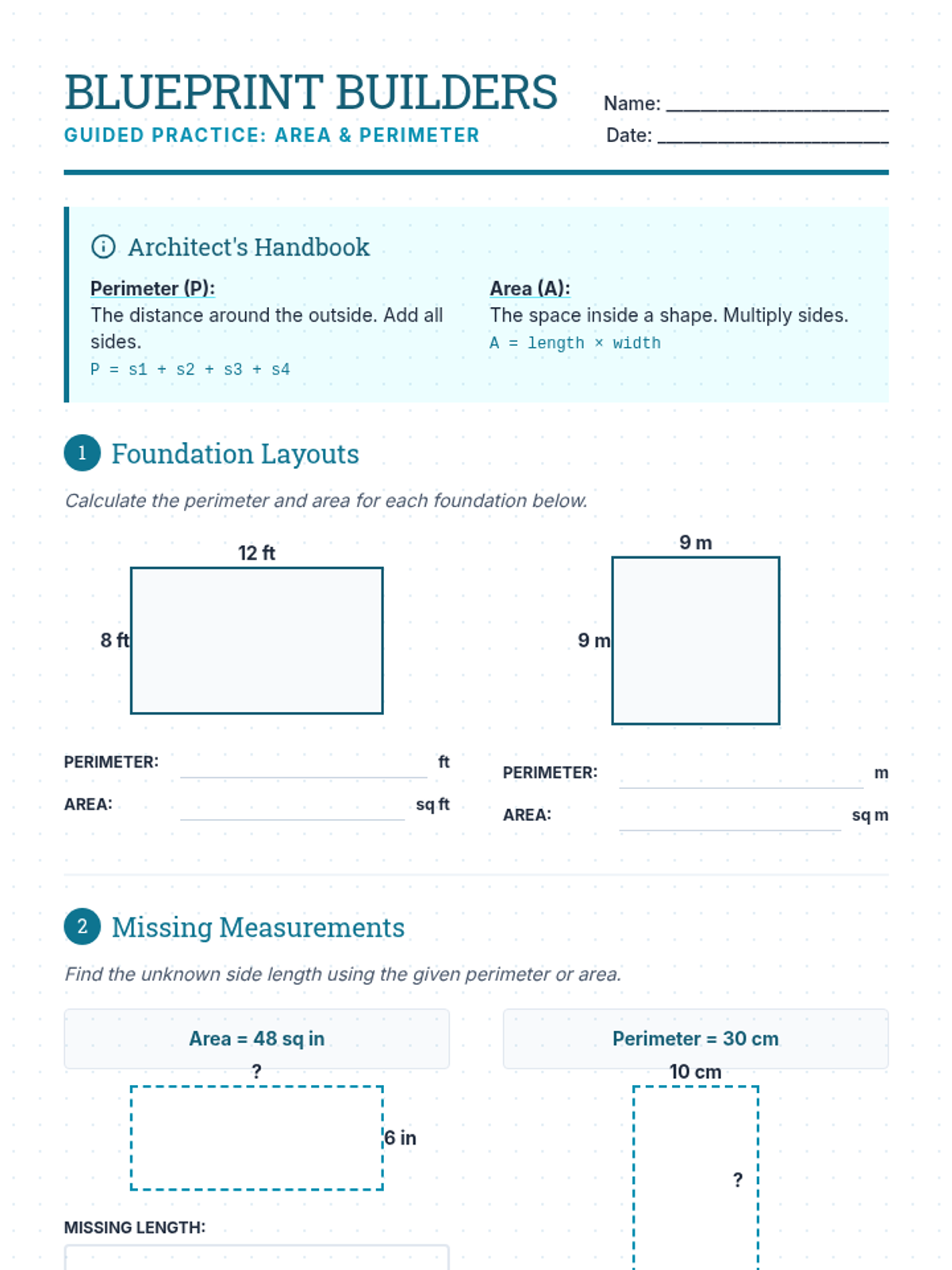
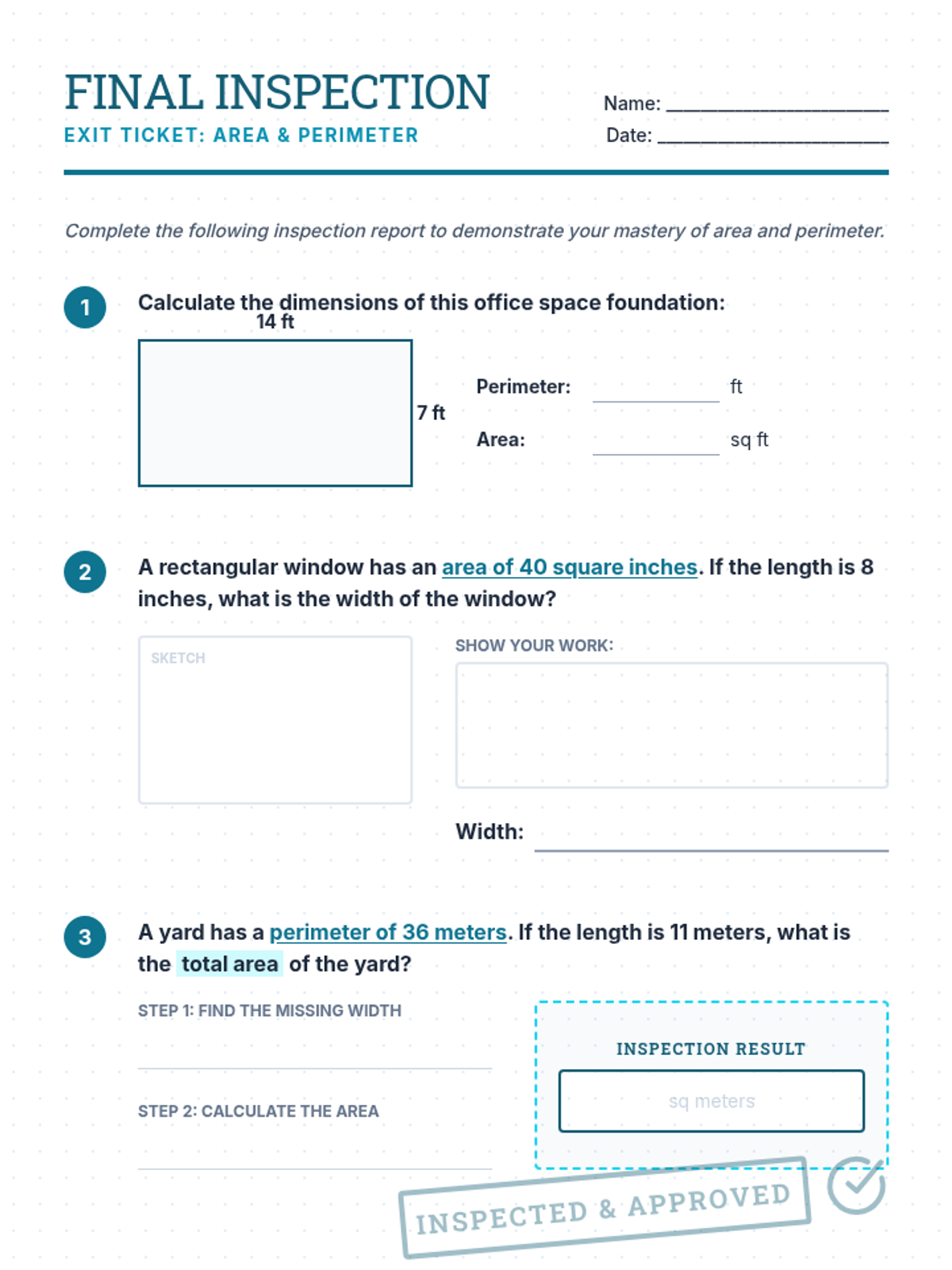
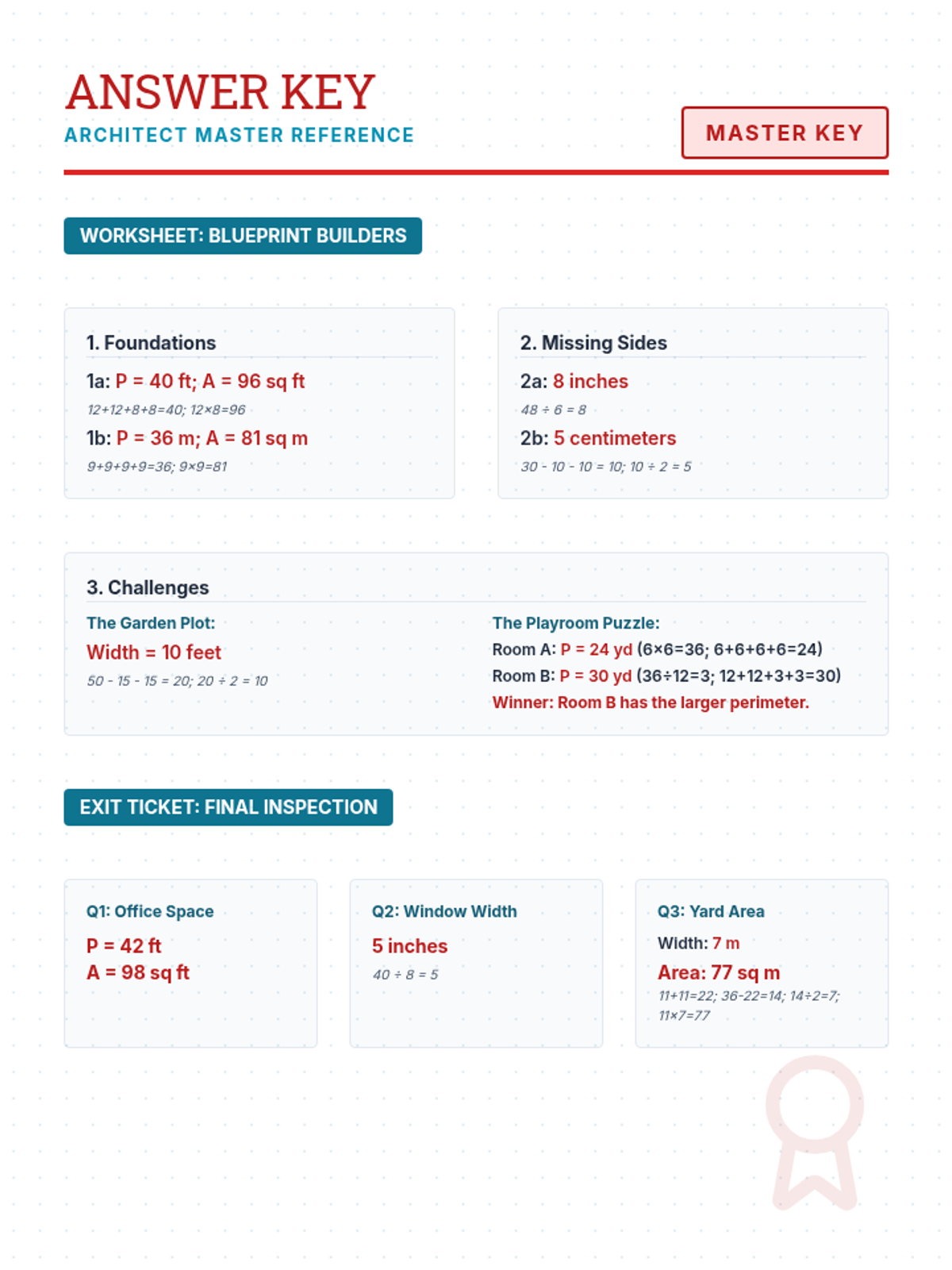
A lesson focused on solving real-world area and perimeter problems, including finding unknown side lengths and comparing rectangles with different dimensions but shared properties. Students act as junior architects to design and analyze blueprints.