An introductory lesson for first graders to identify and understand basic computer parts and technology terms through visual aids and matching activities.
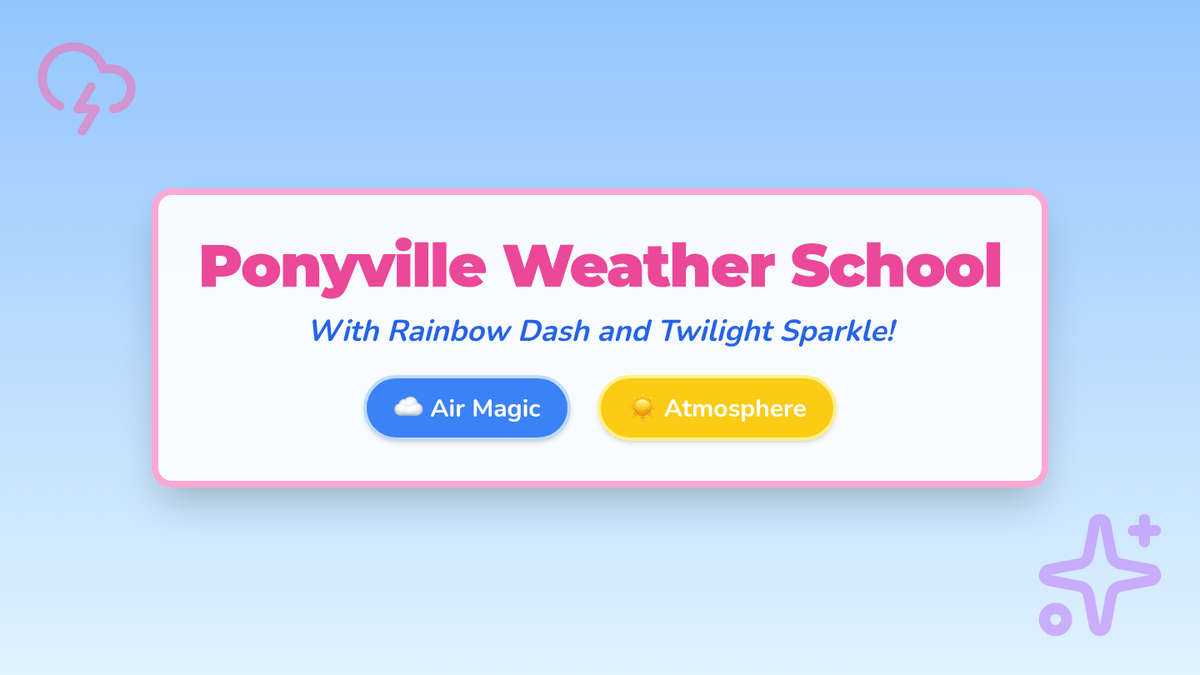
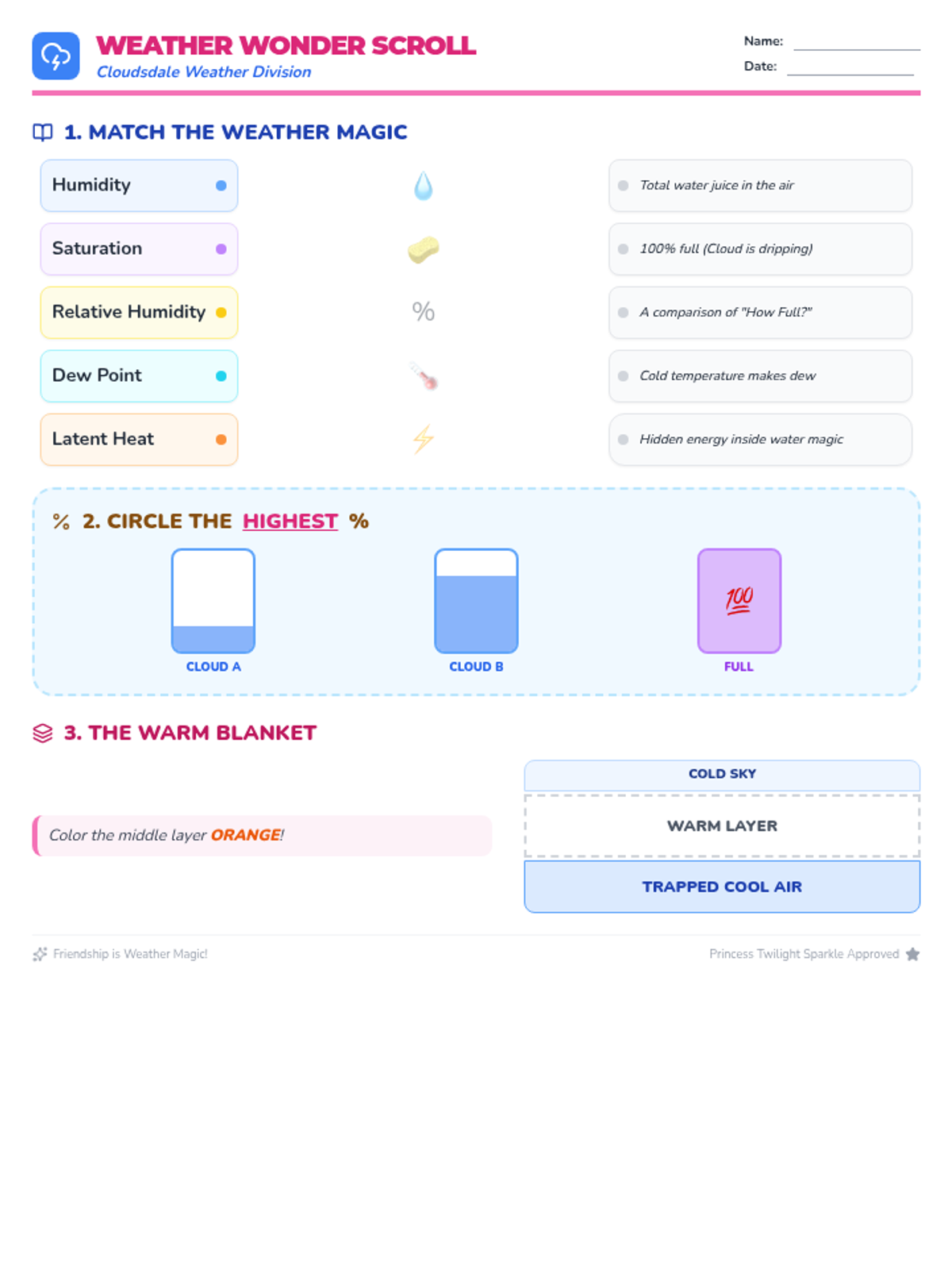
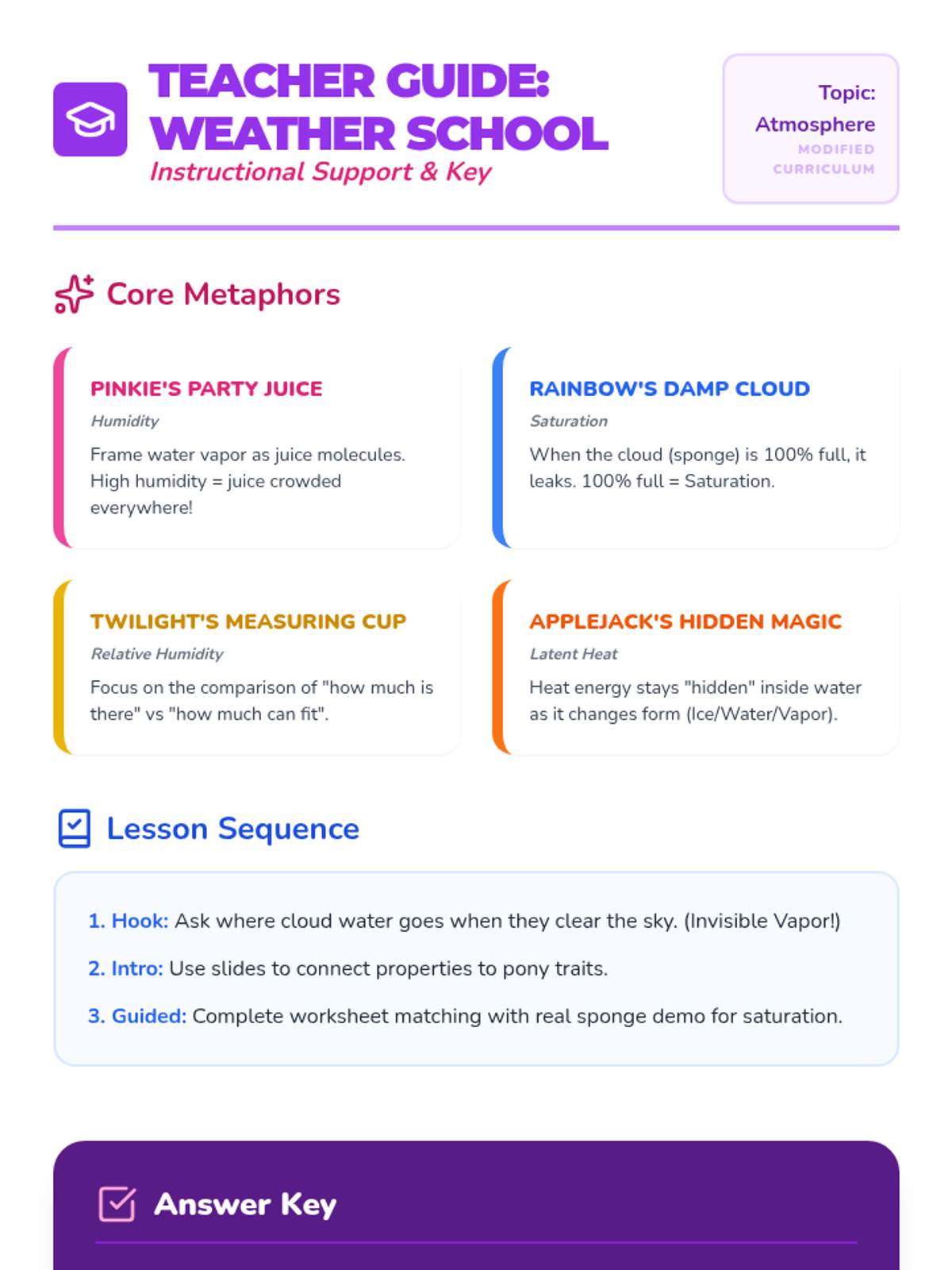
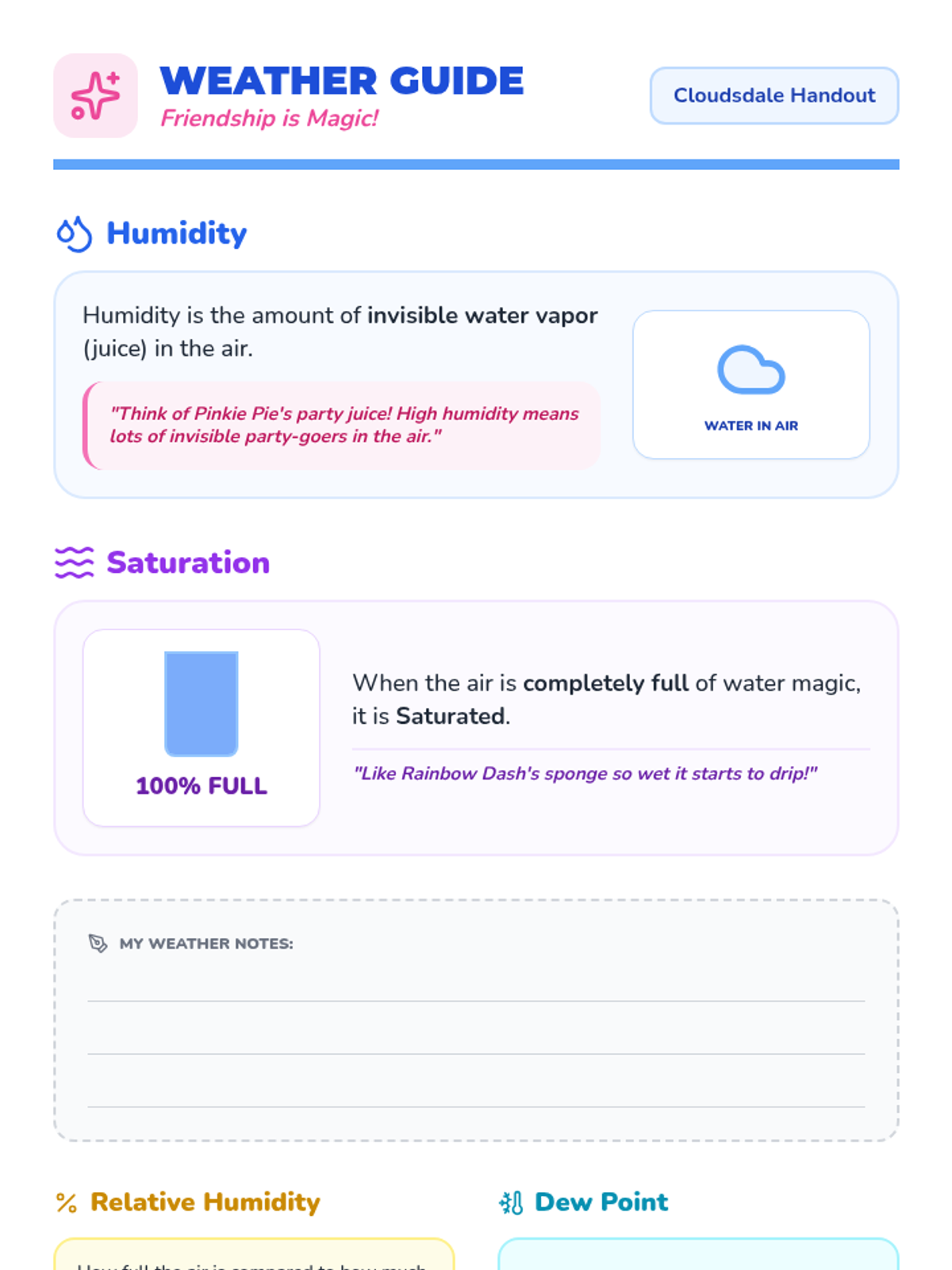
A lesson exploring the properties of the atmosphere using My Little Pony (G4) characters to explain complex weather concepts like humidity, dew point, and latent heat through visual metaphors.
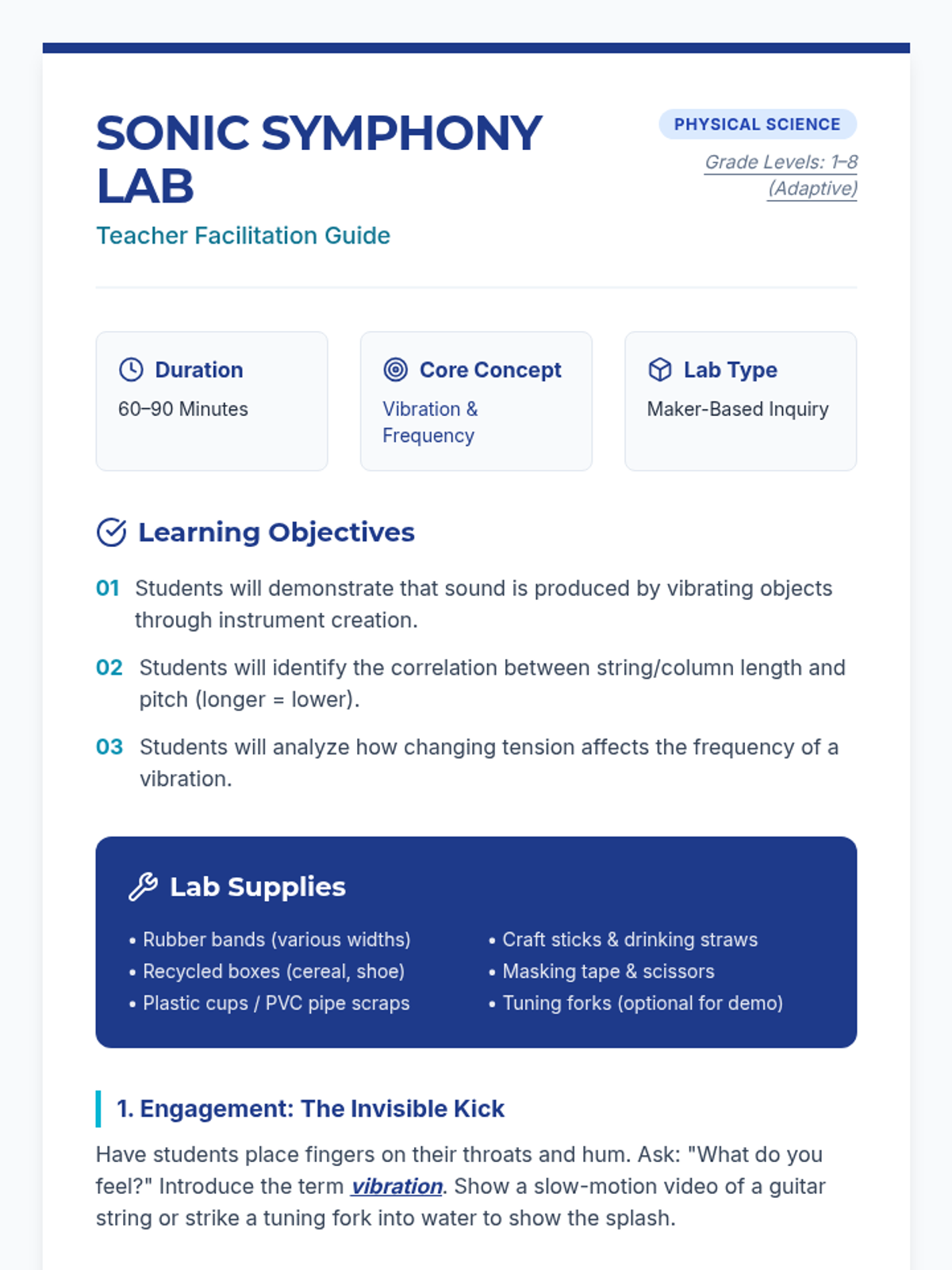
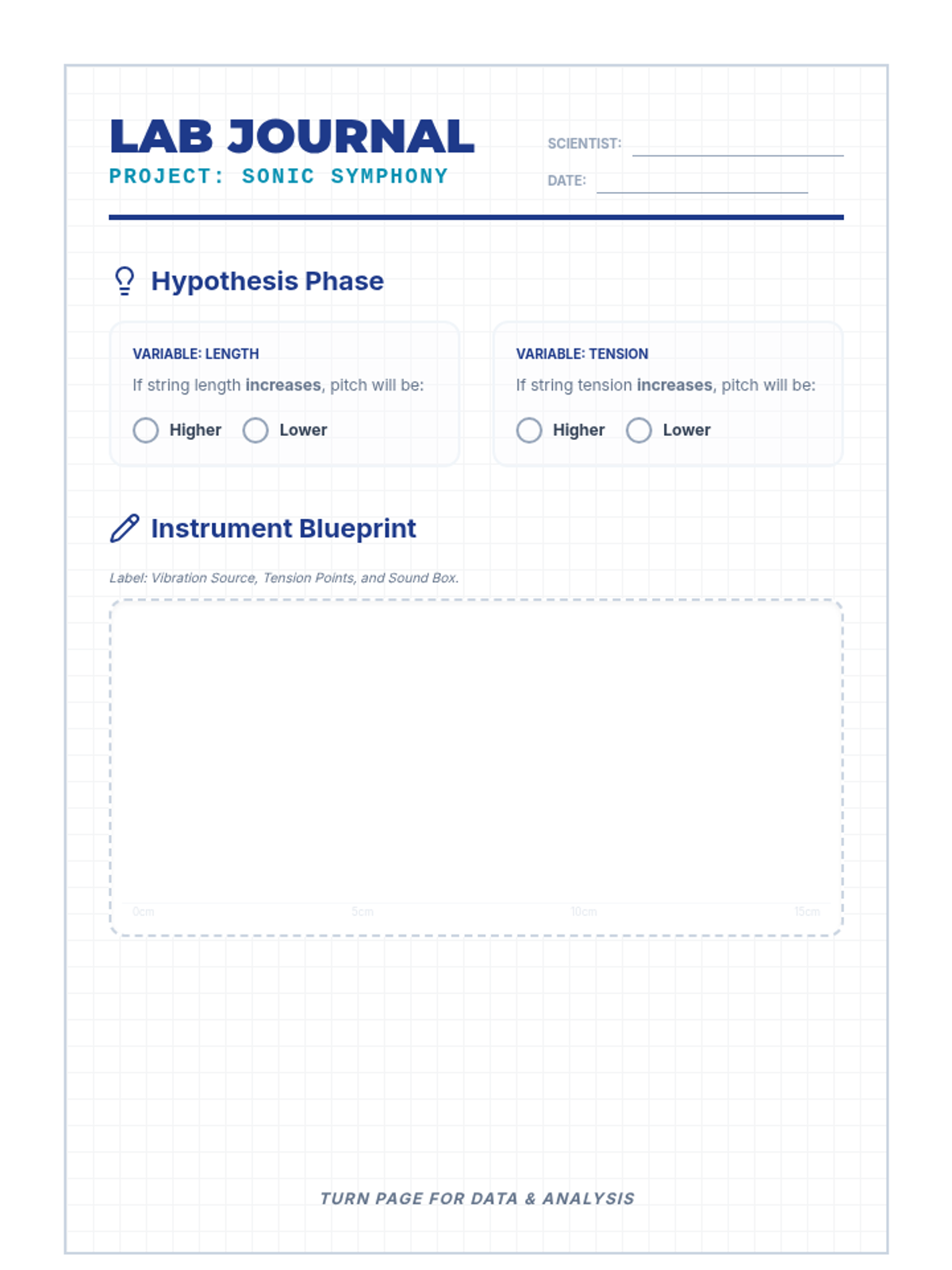
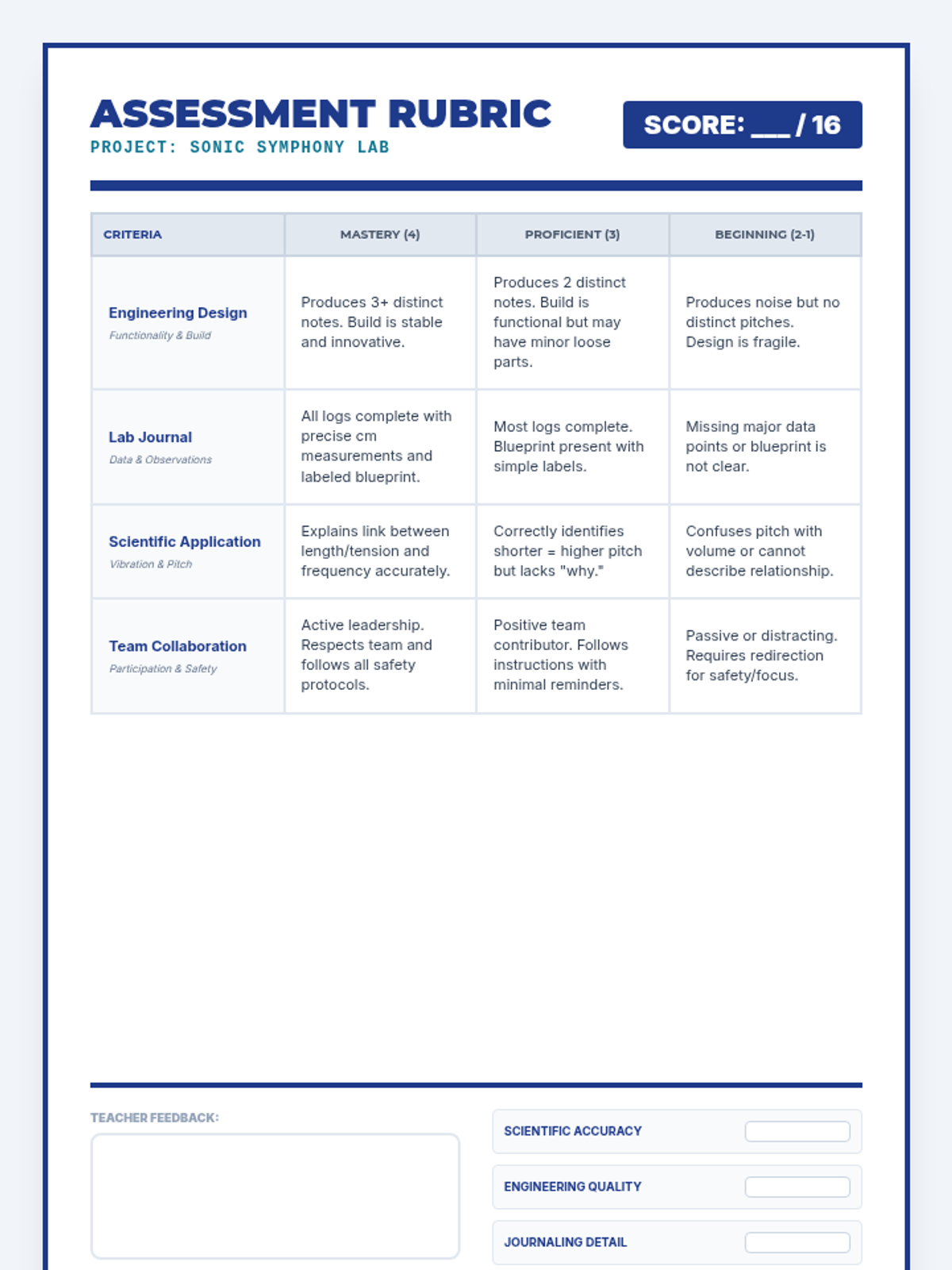
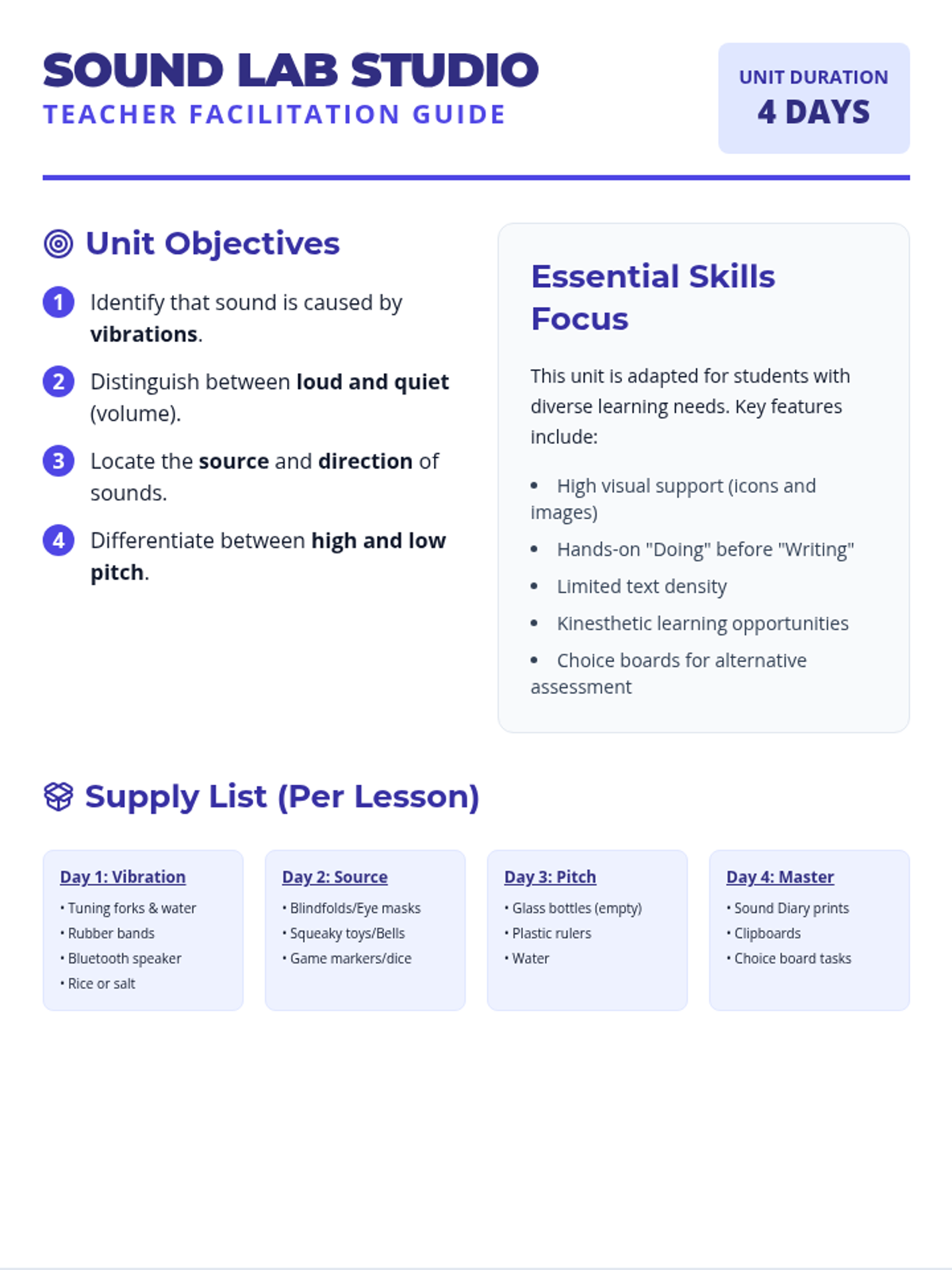
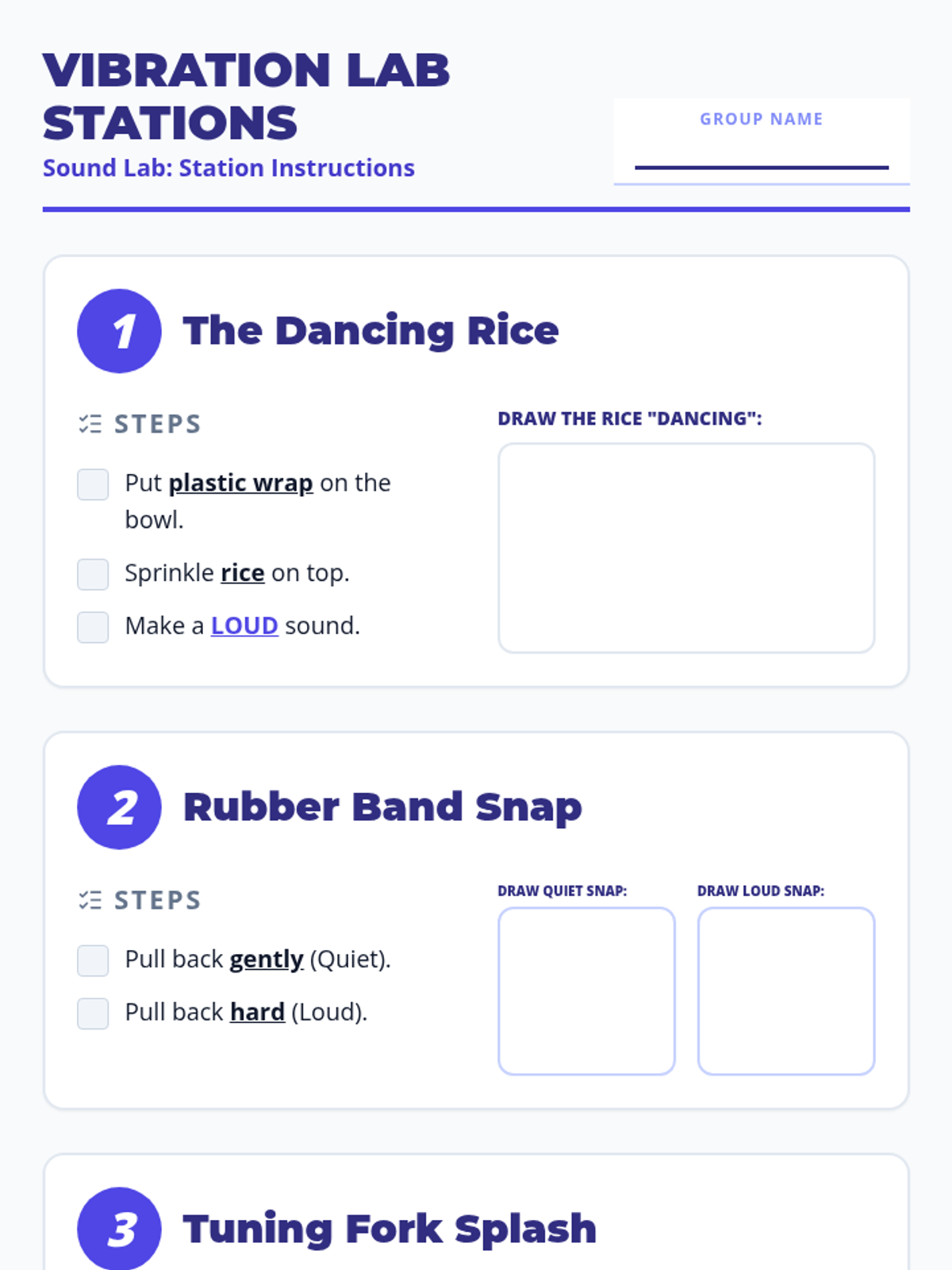
An immersive hands-on investigation into the physics of sound where students build DIY instruments to explore vibrations, pitch, and volume. This lesson bridges sensory exploration with acoustic engineering principles.
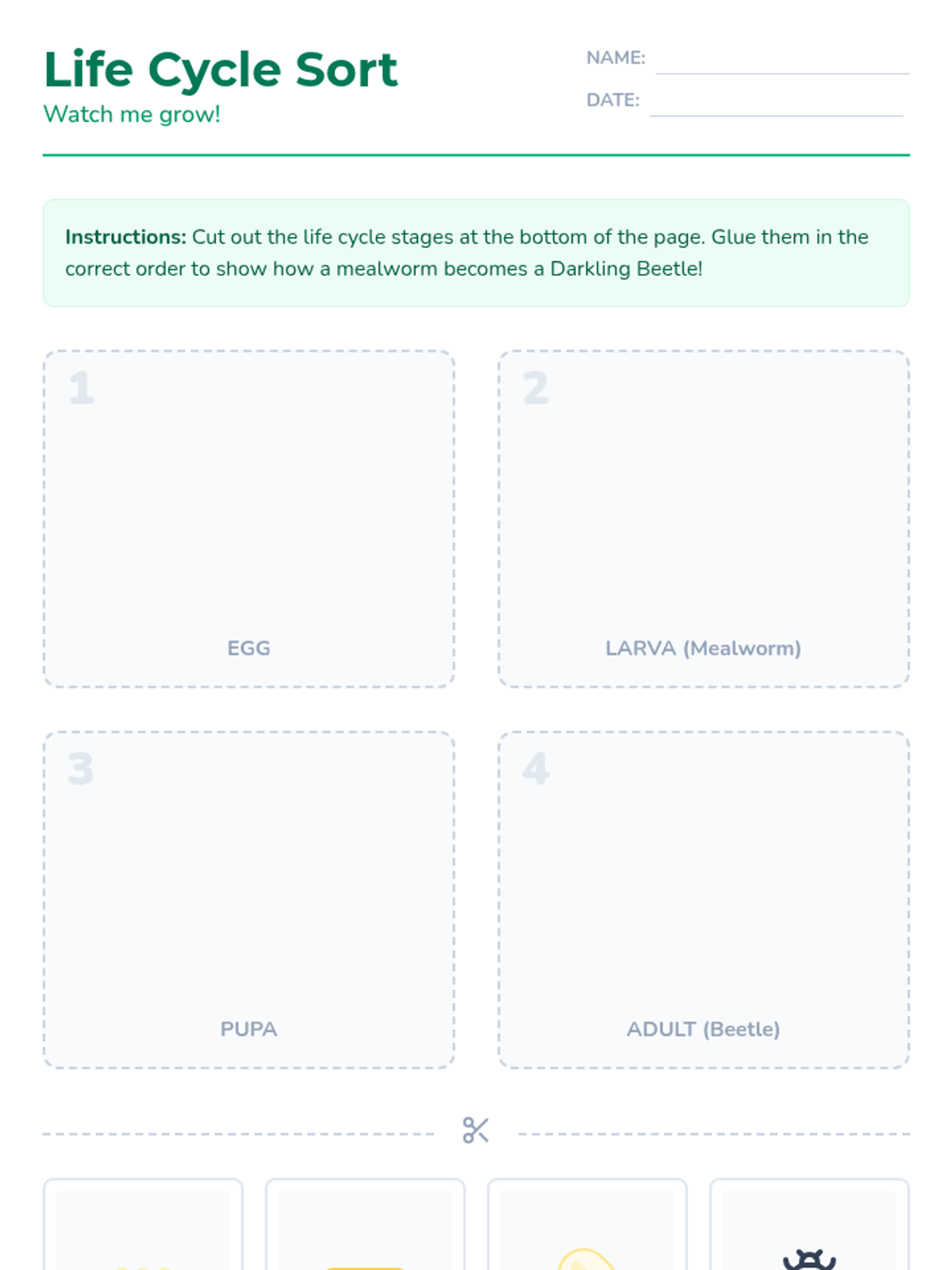
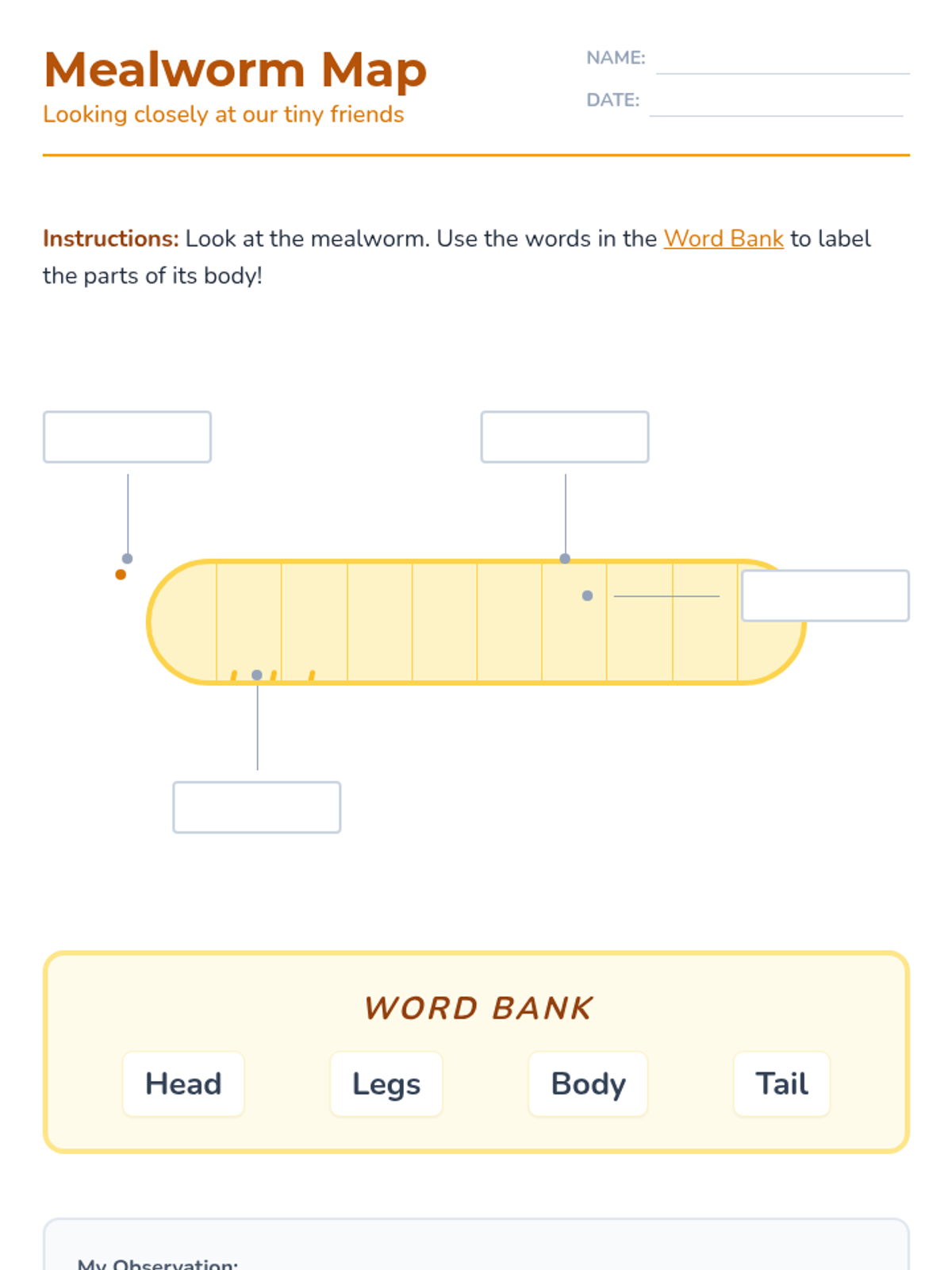
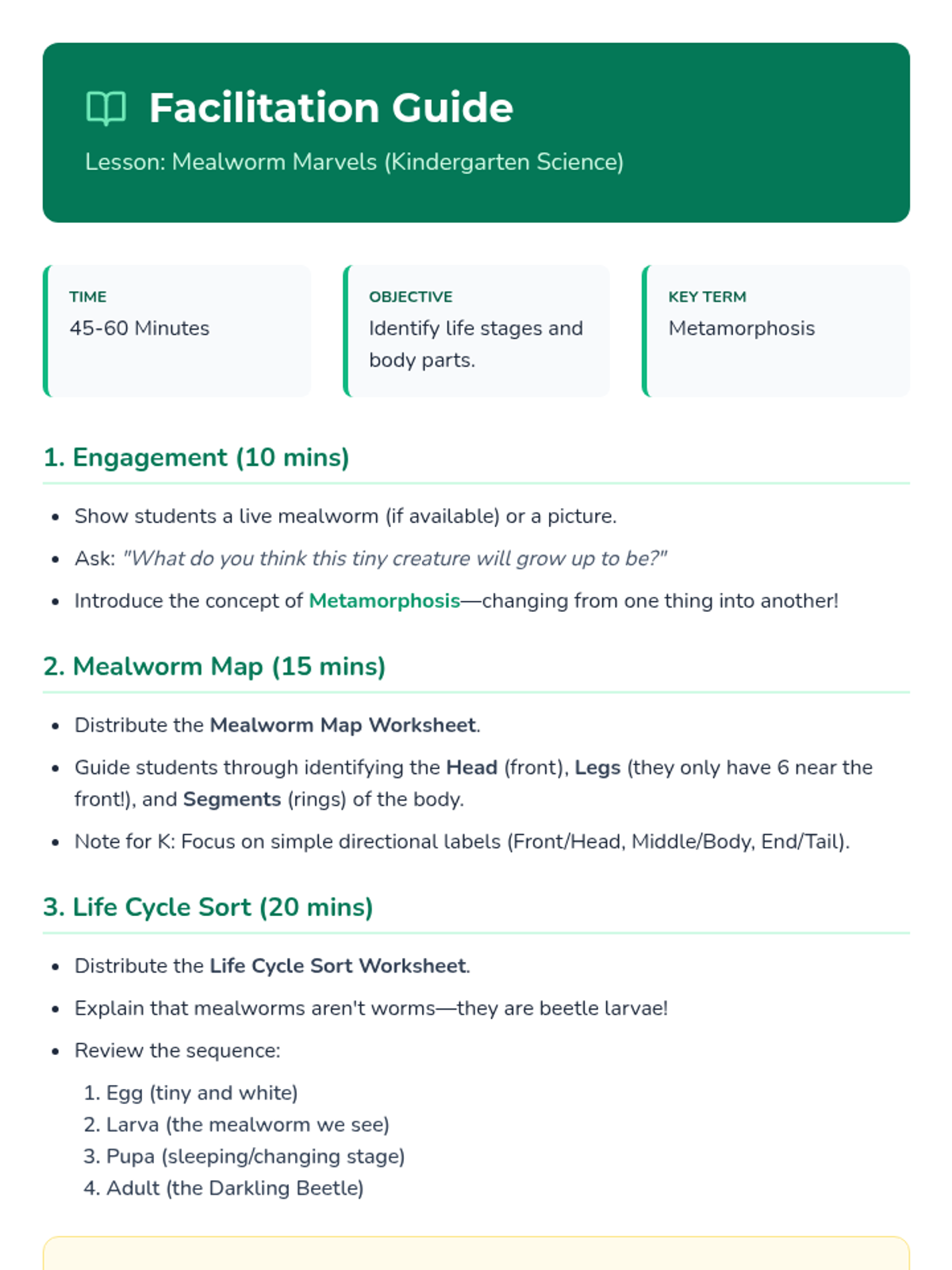
A hands-on exploration of the mealworm life cycle and anatomy designed for early learners to observe and document metamorphosis.
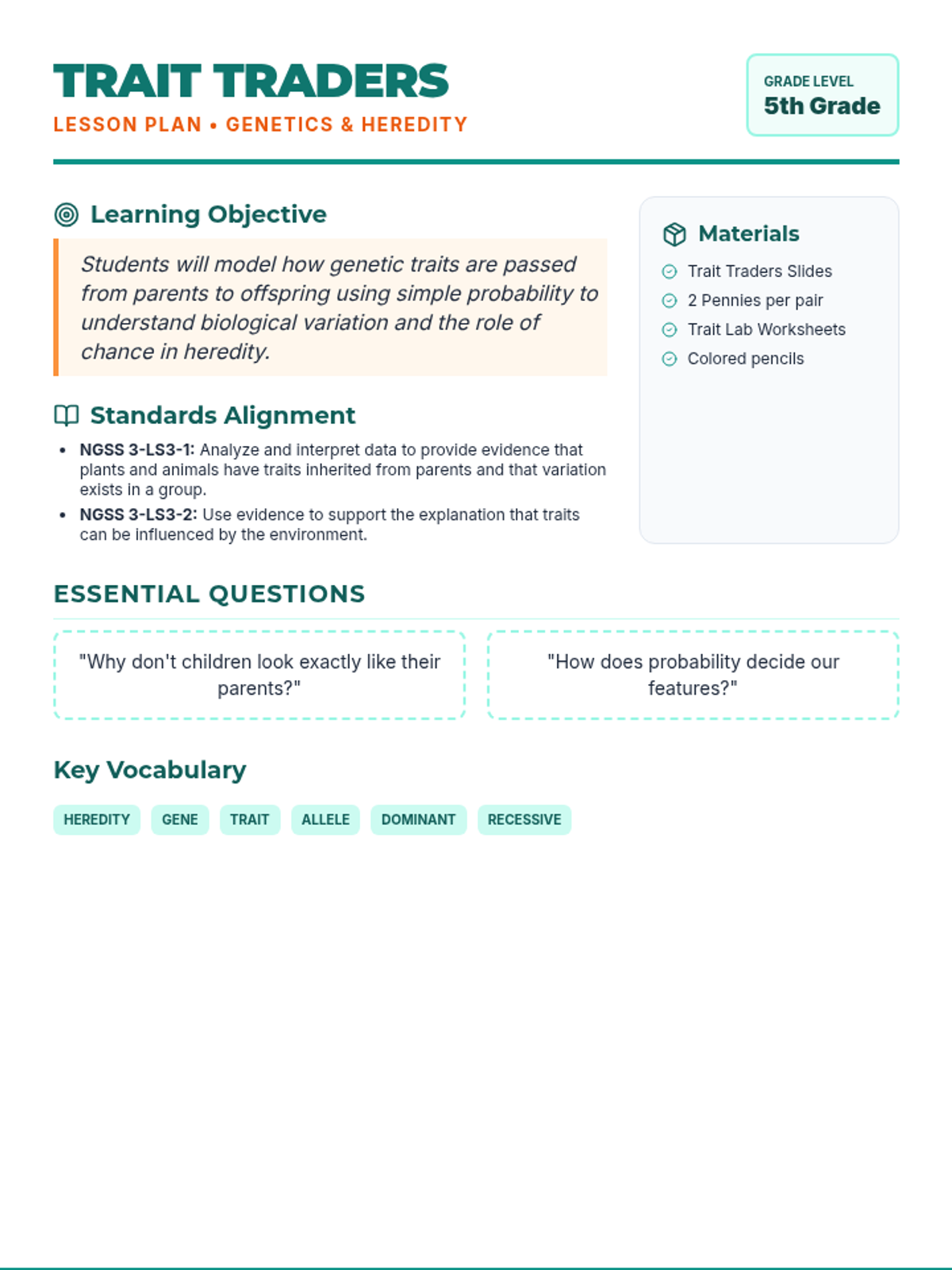
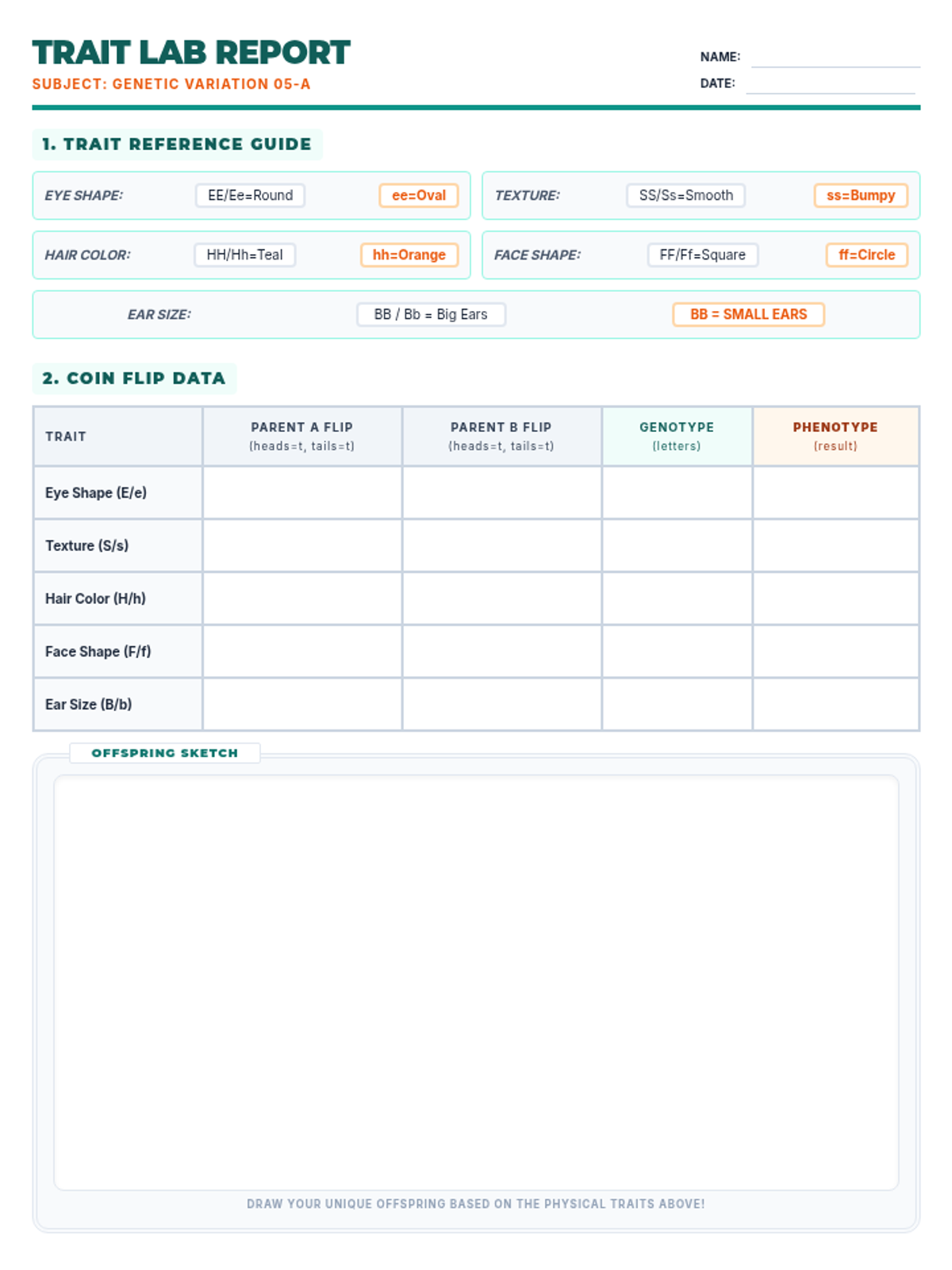
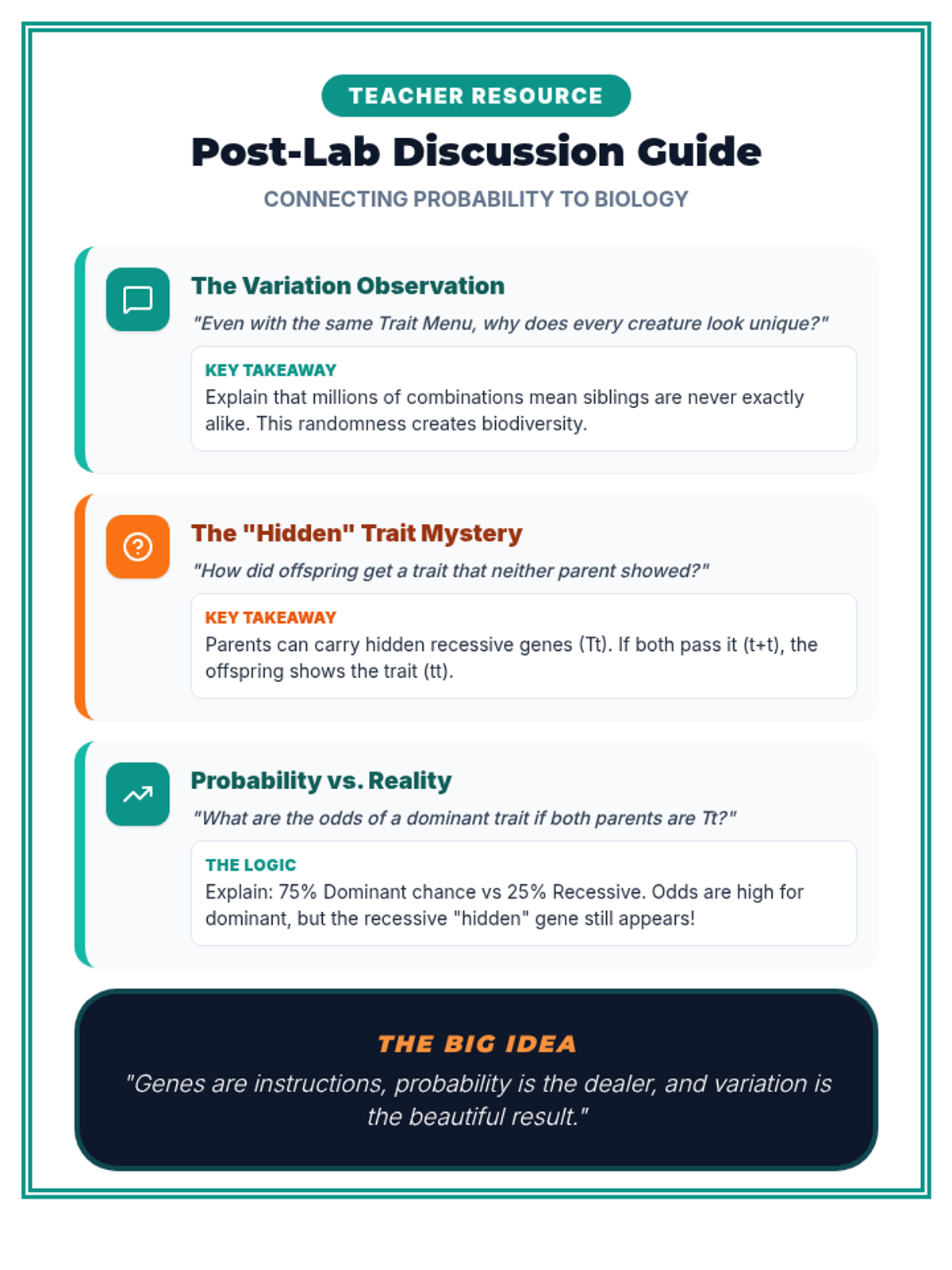
A hands-on exploration of genetics where 5th graders use probability (coin flips) to determine the physical traits of an offspring, demonstrating how heredity leads to biological variation.
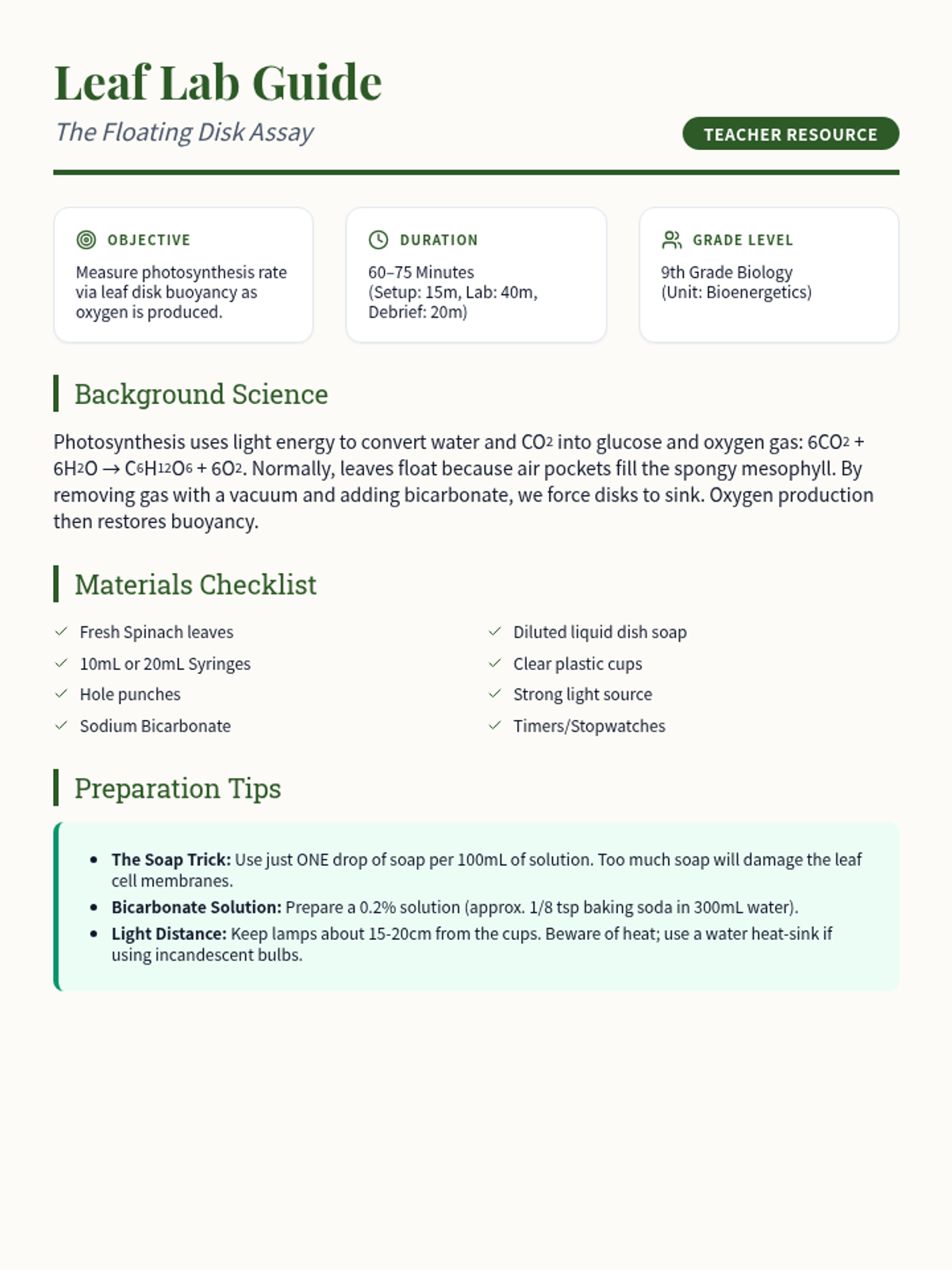
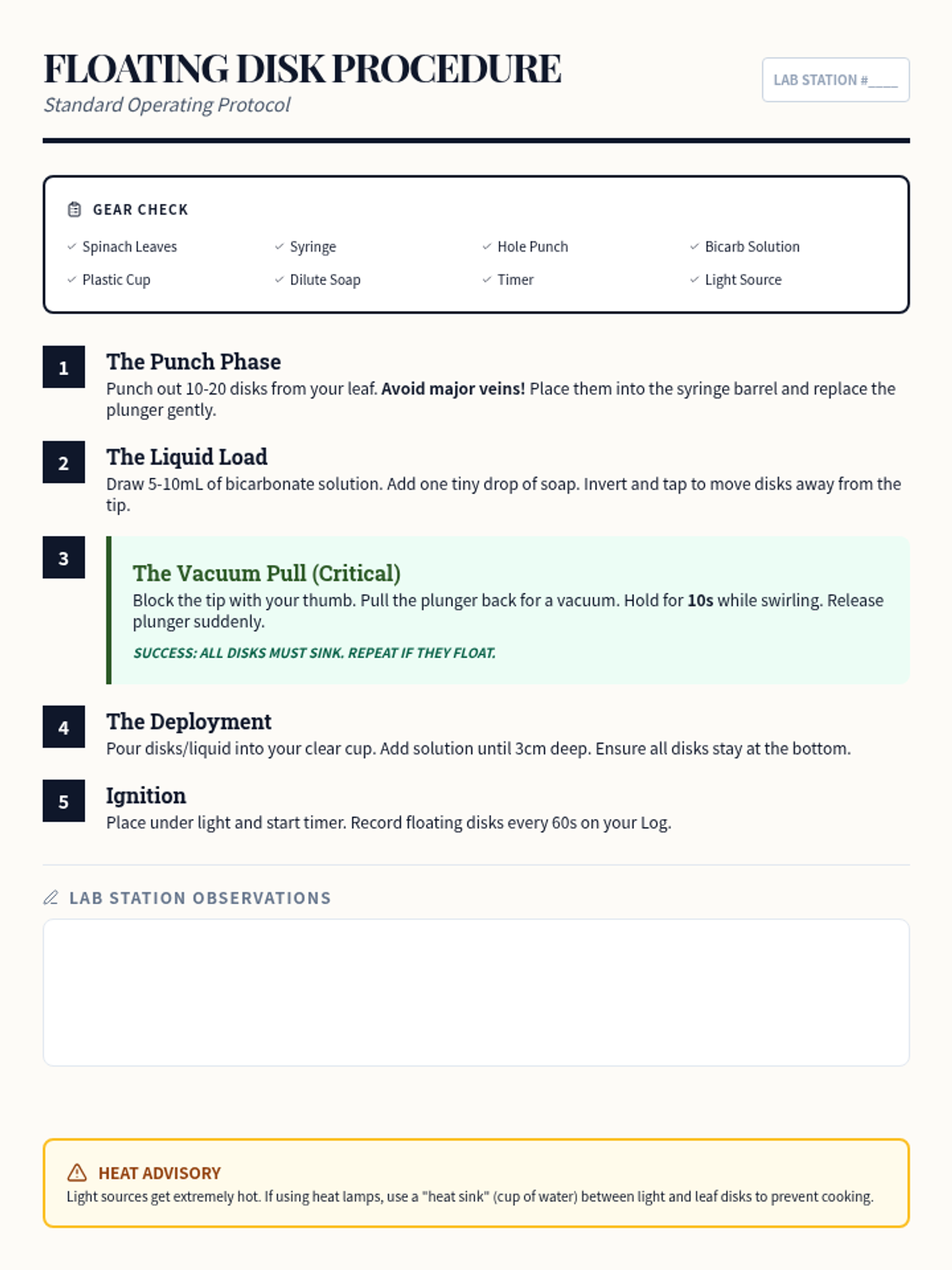
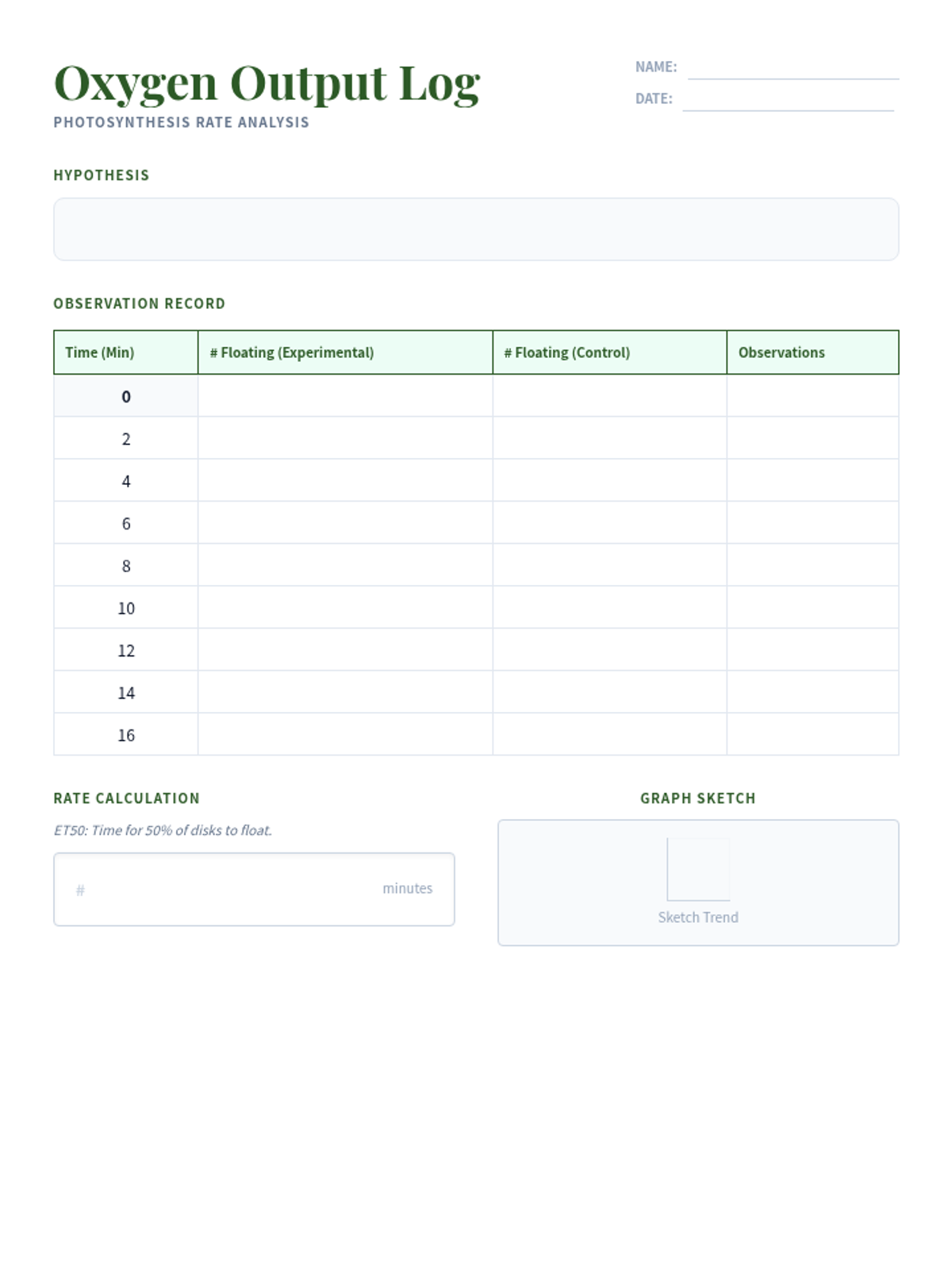
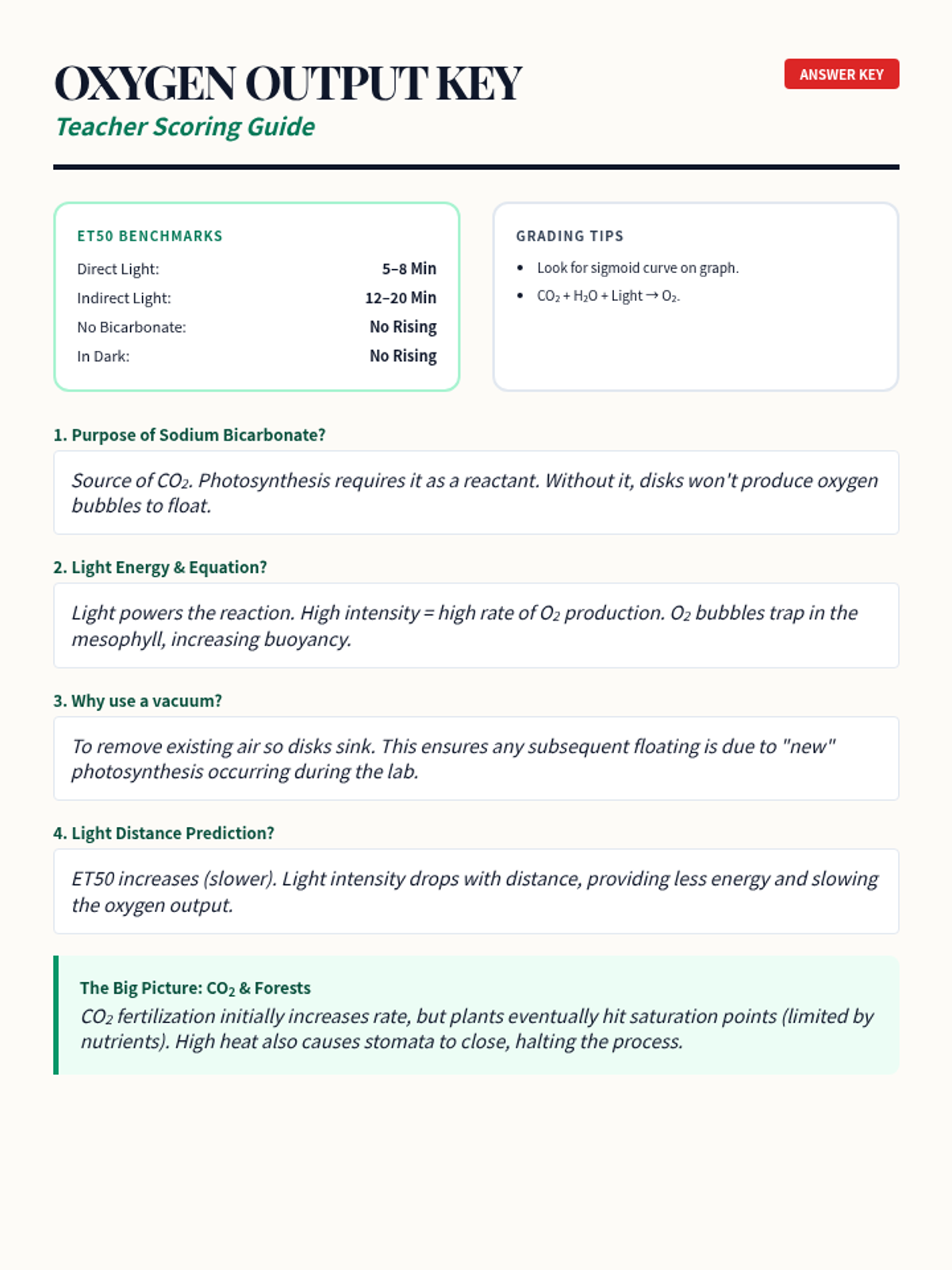
In this hands-on lab, students use the floating leaf disk assay to visualize and measure the rate of photosynthesis. They explore how light intensity and CO2 availability act as variables in oxygen production.
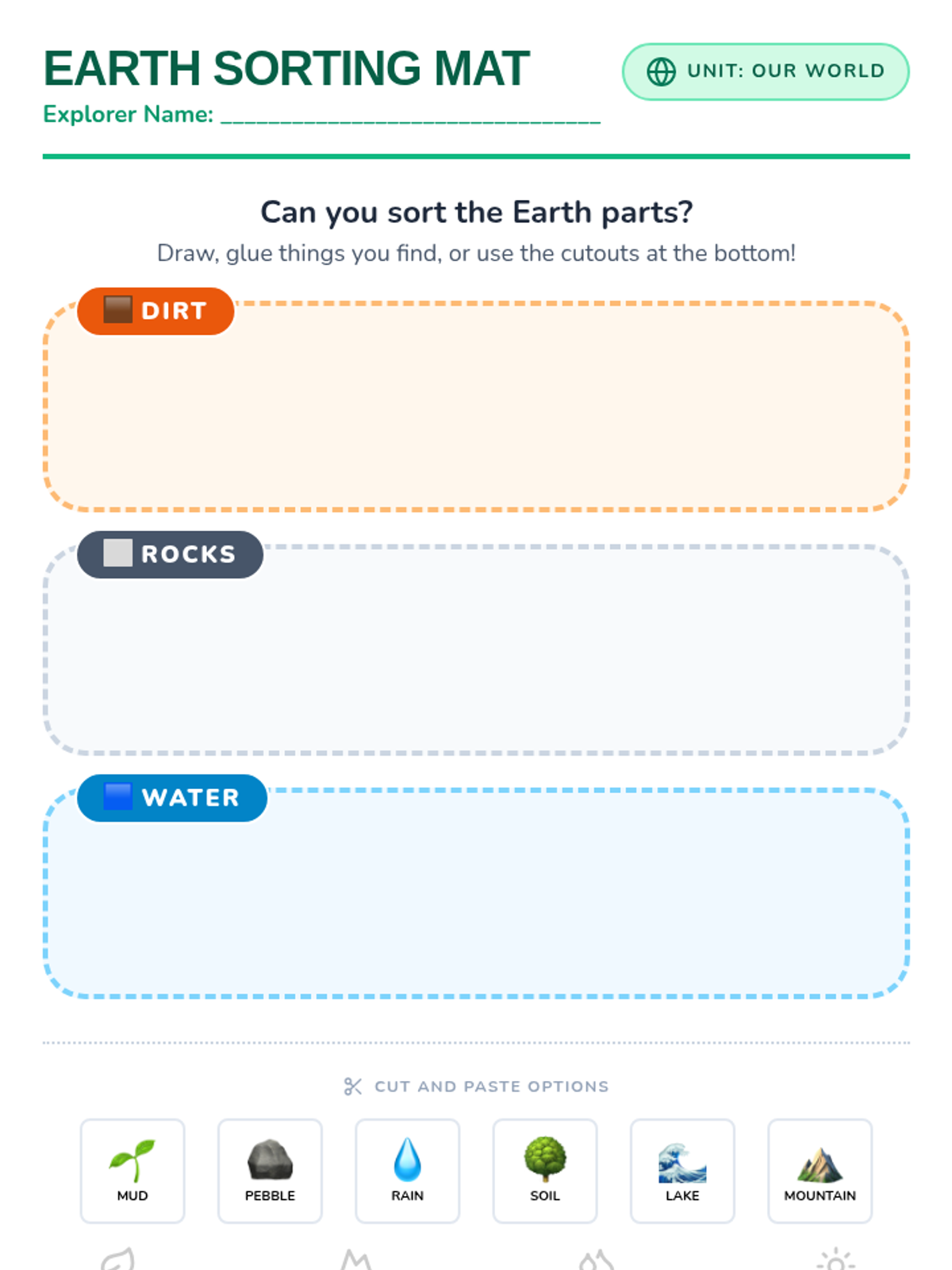
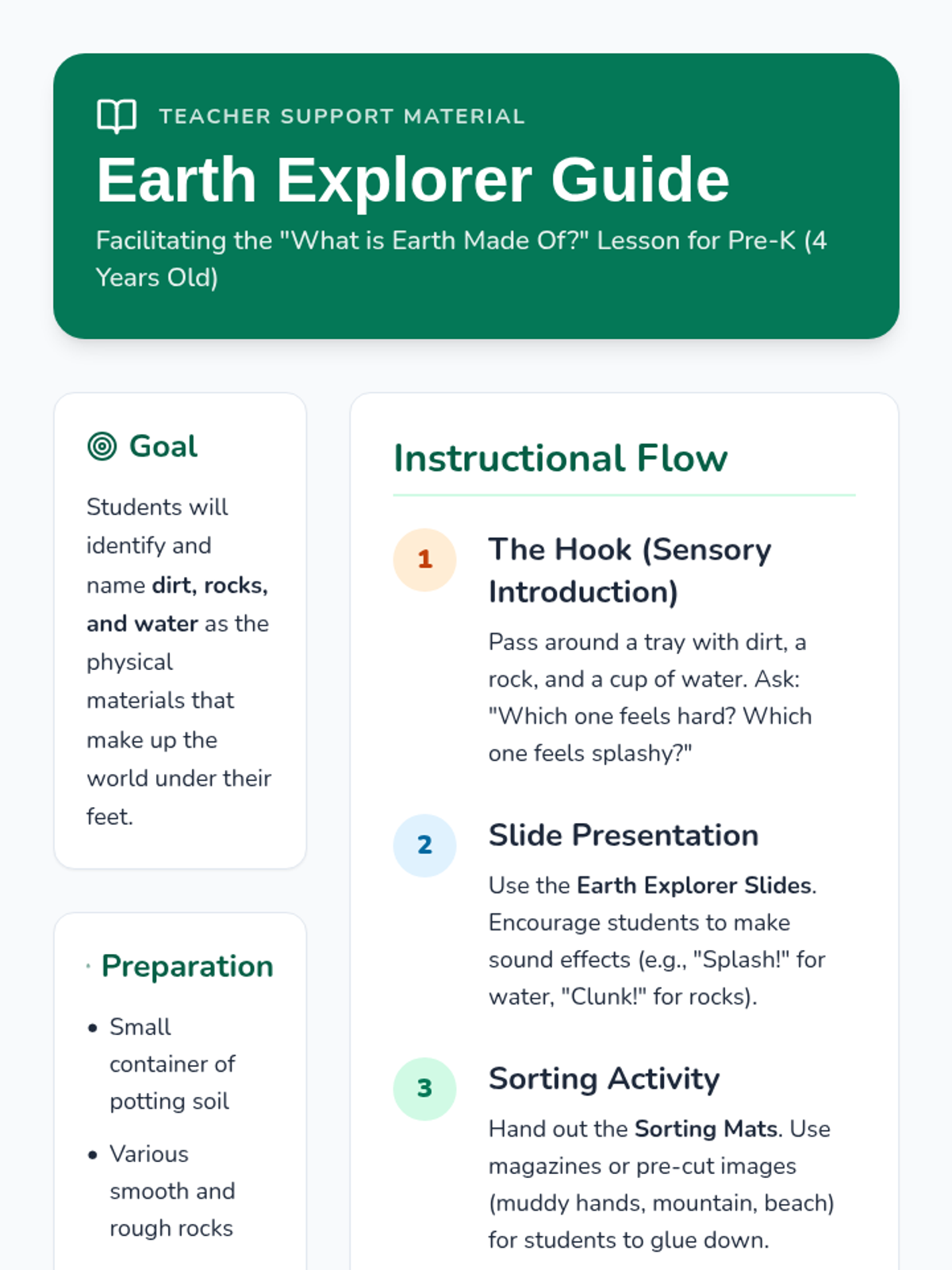
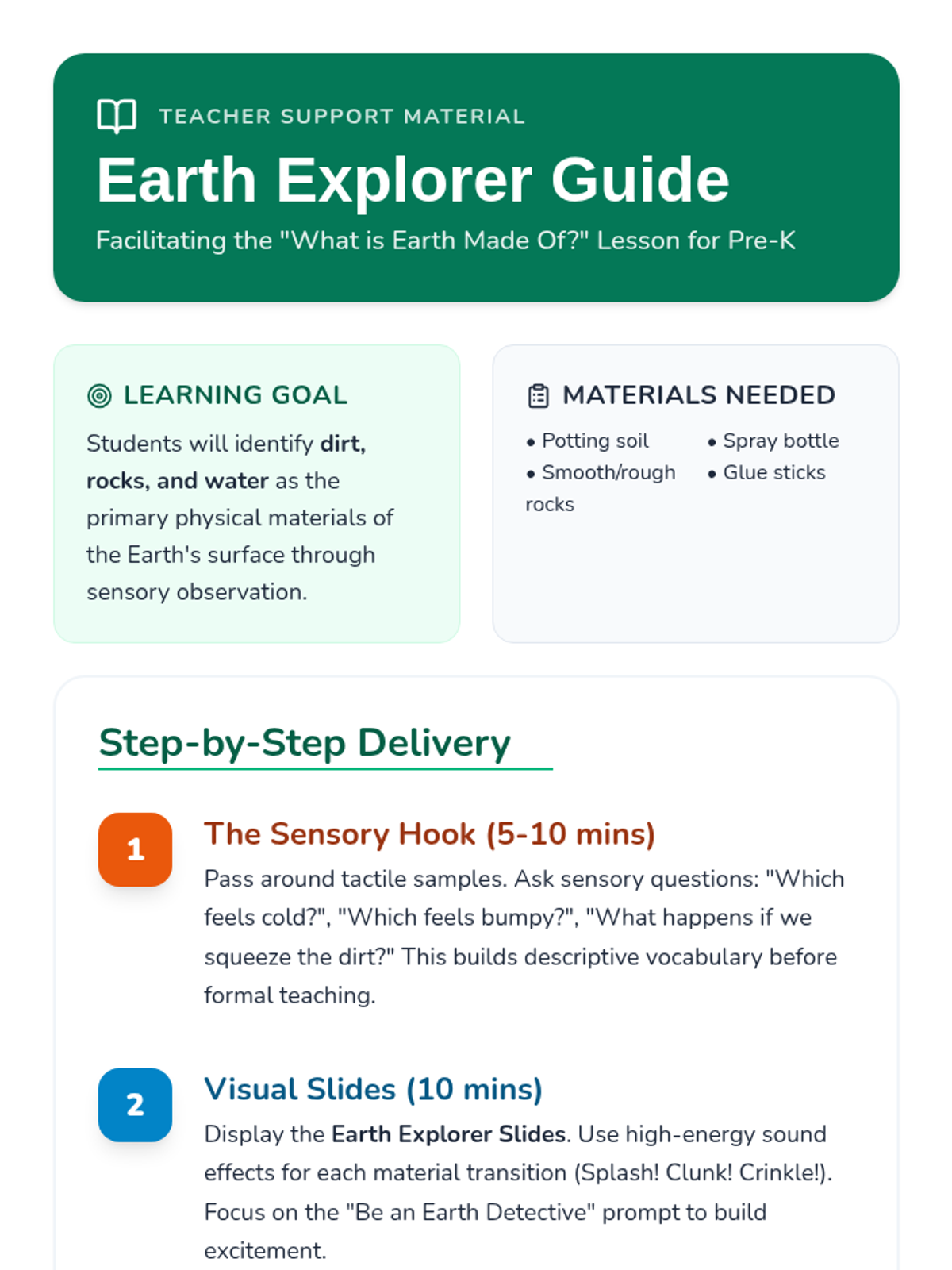
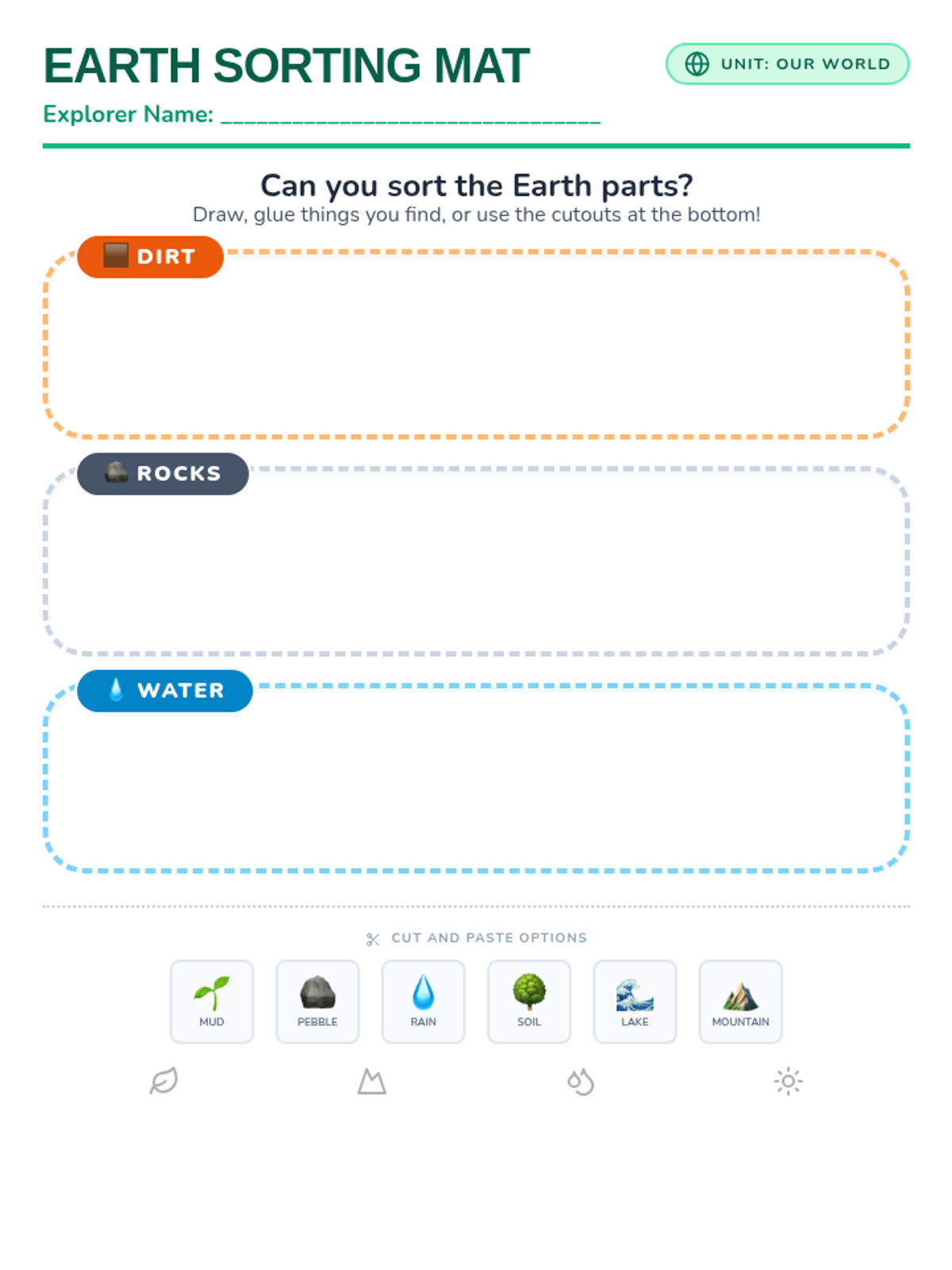
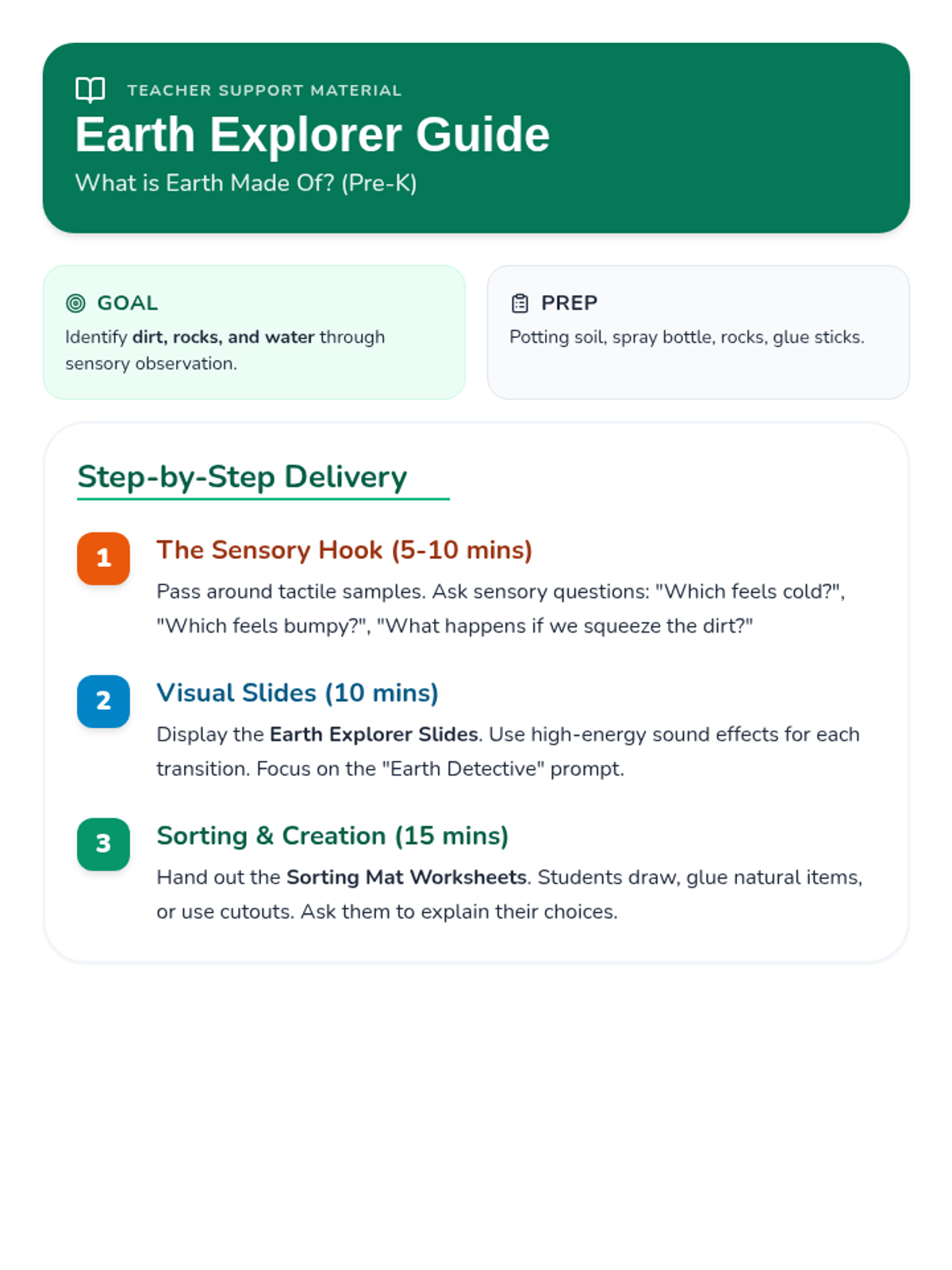
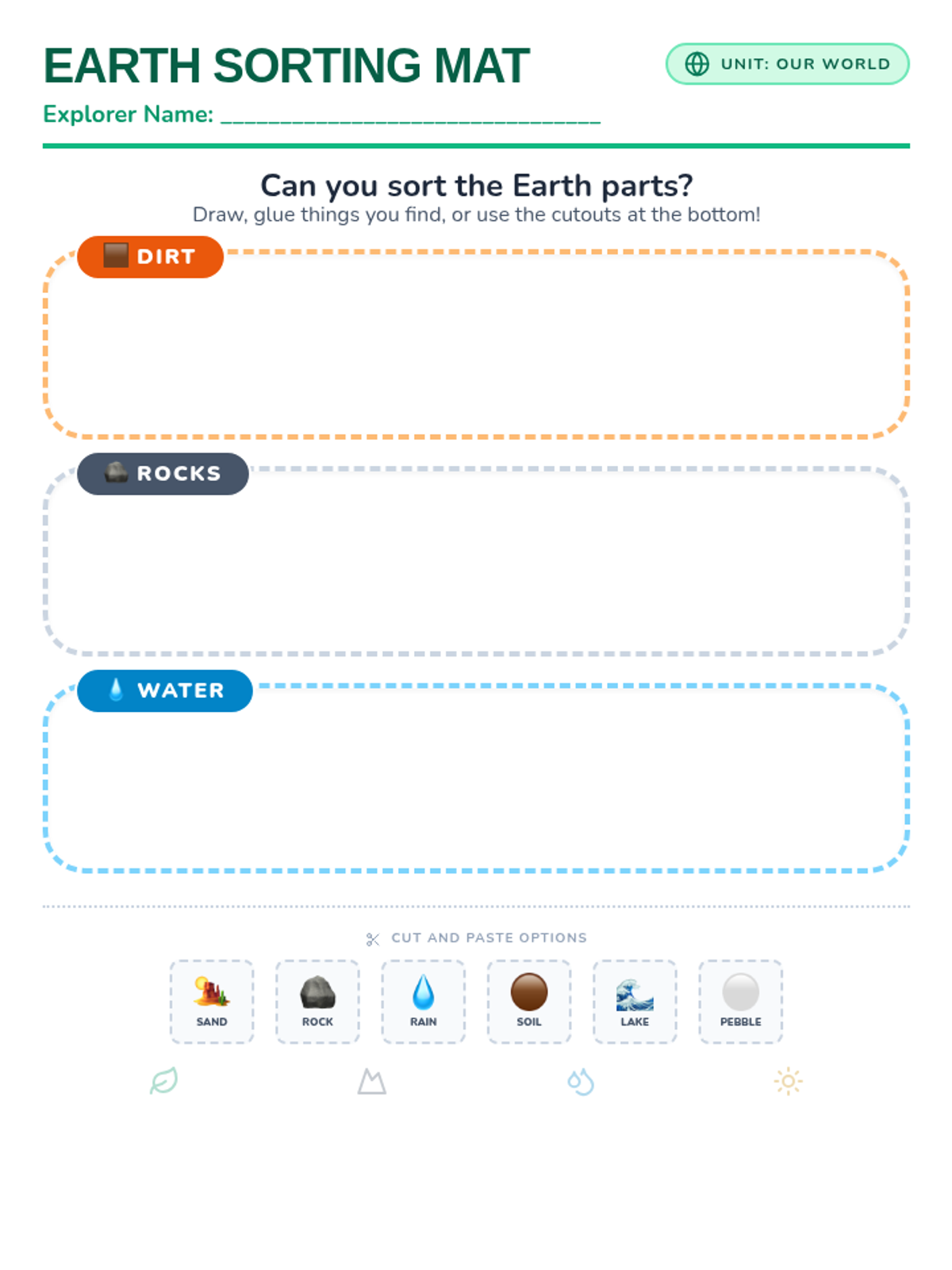
An introductory lesson for Pre-K students to explore the materials that make up the Earth's surface: dirt, rocks, and water through sensory observation and sorting.
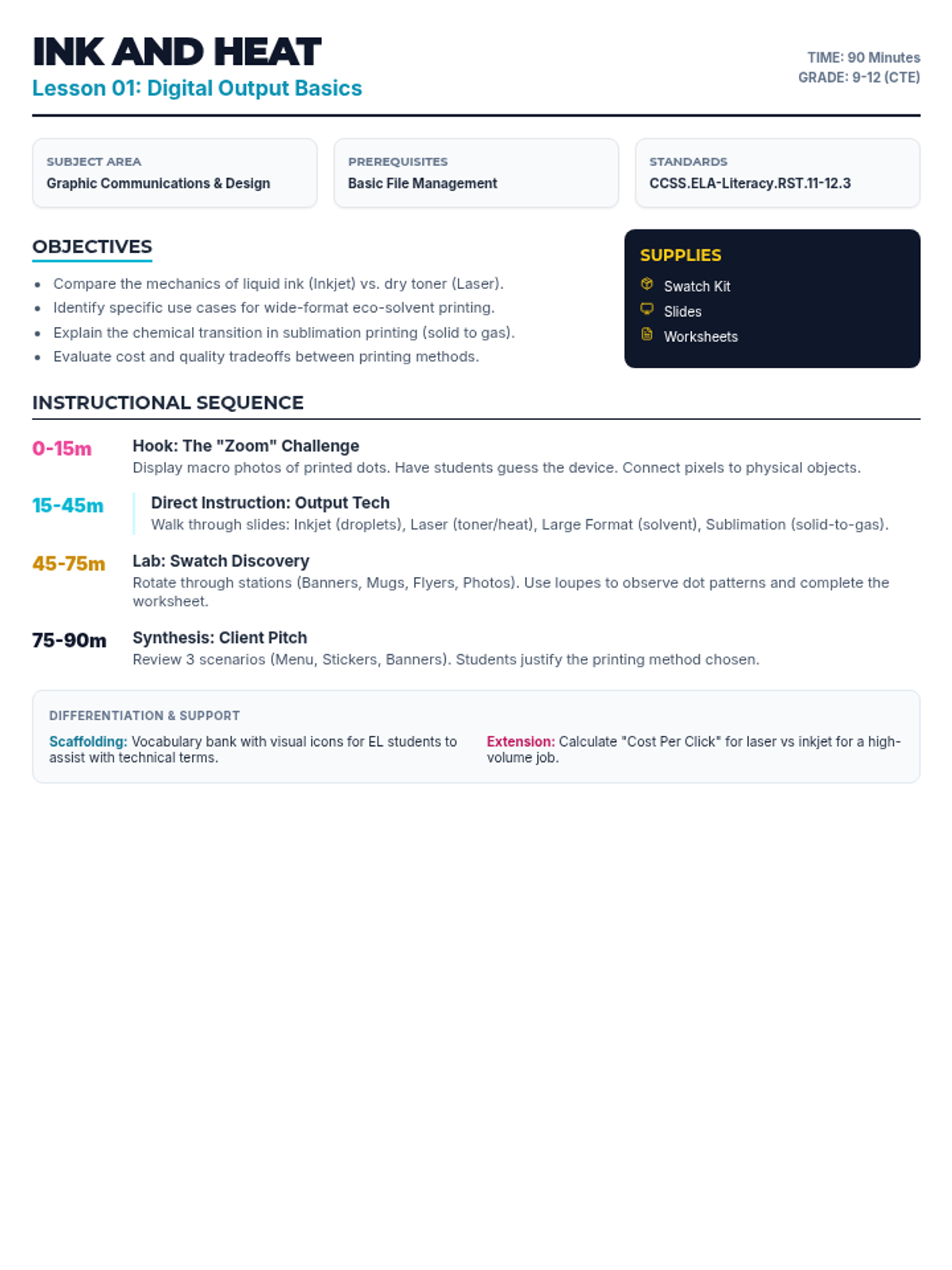
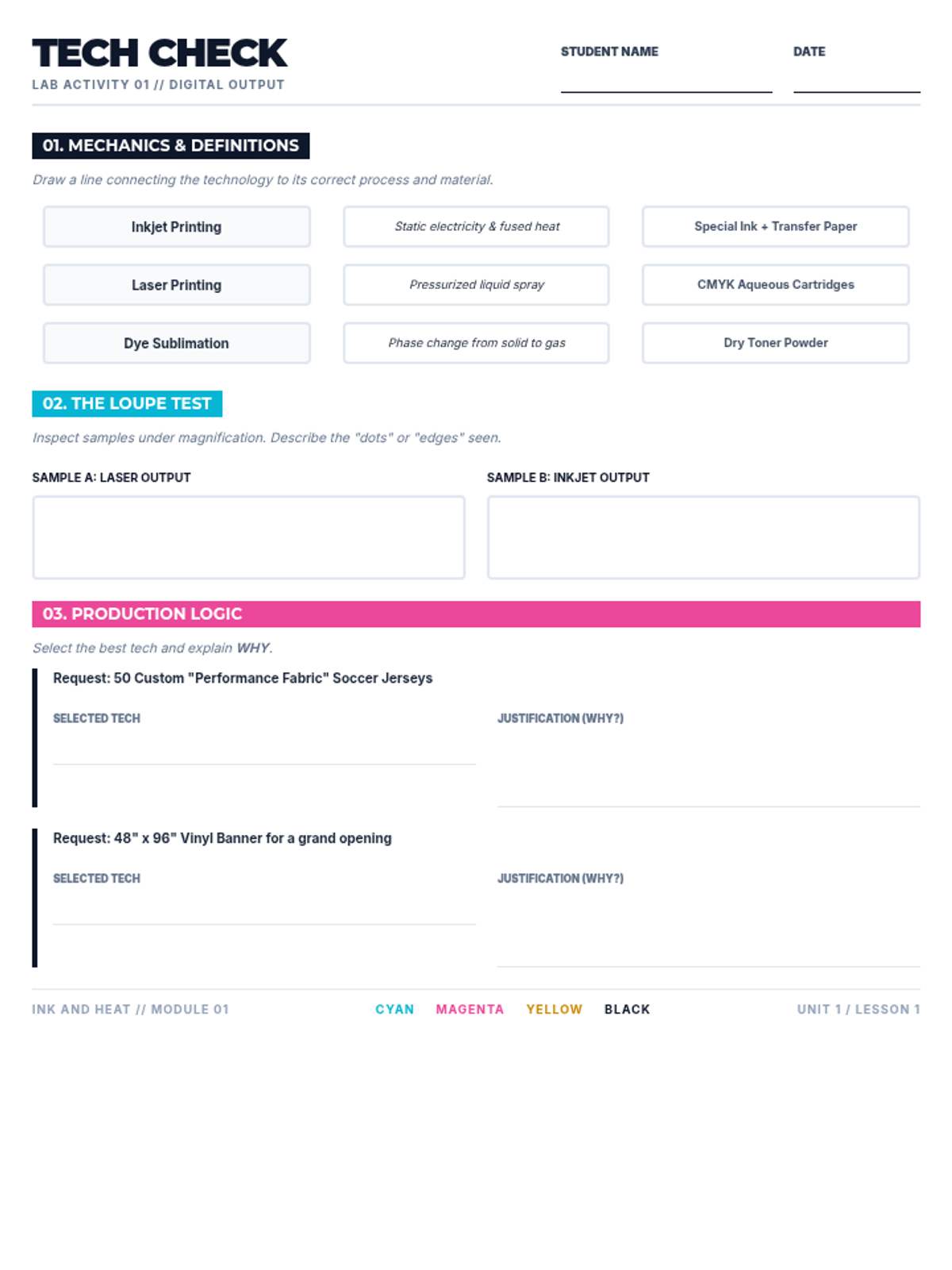
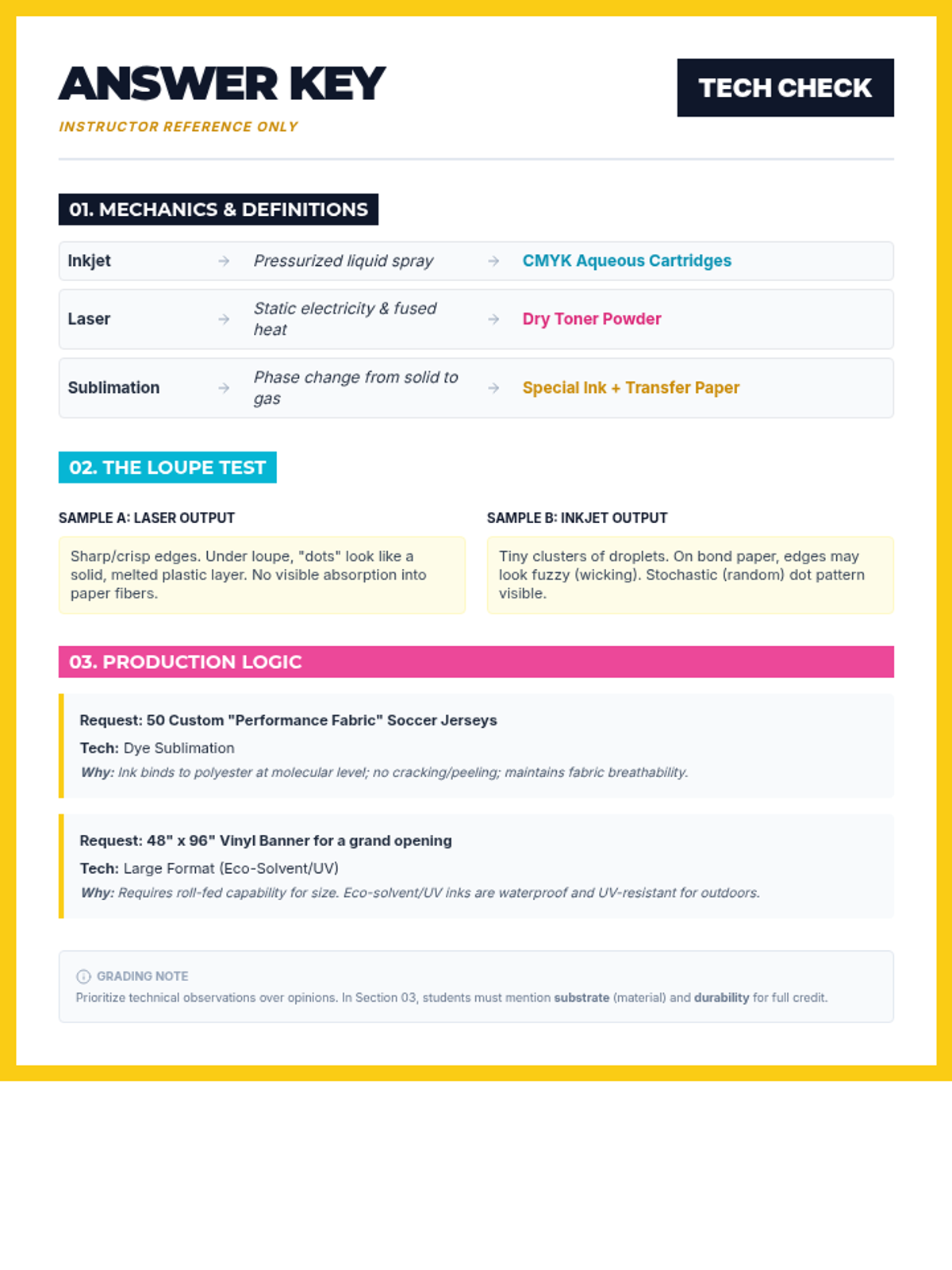
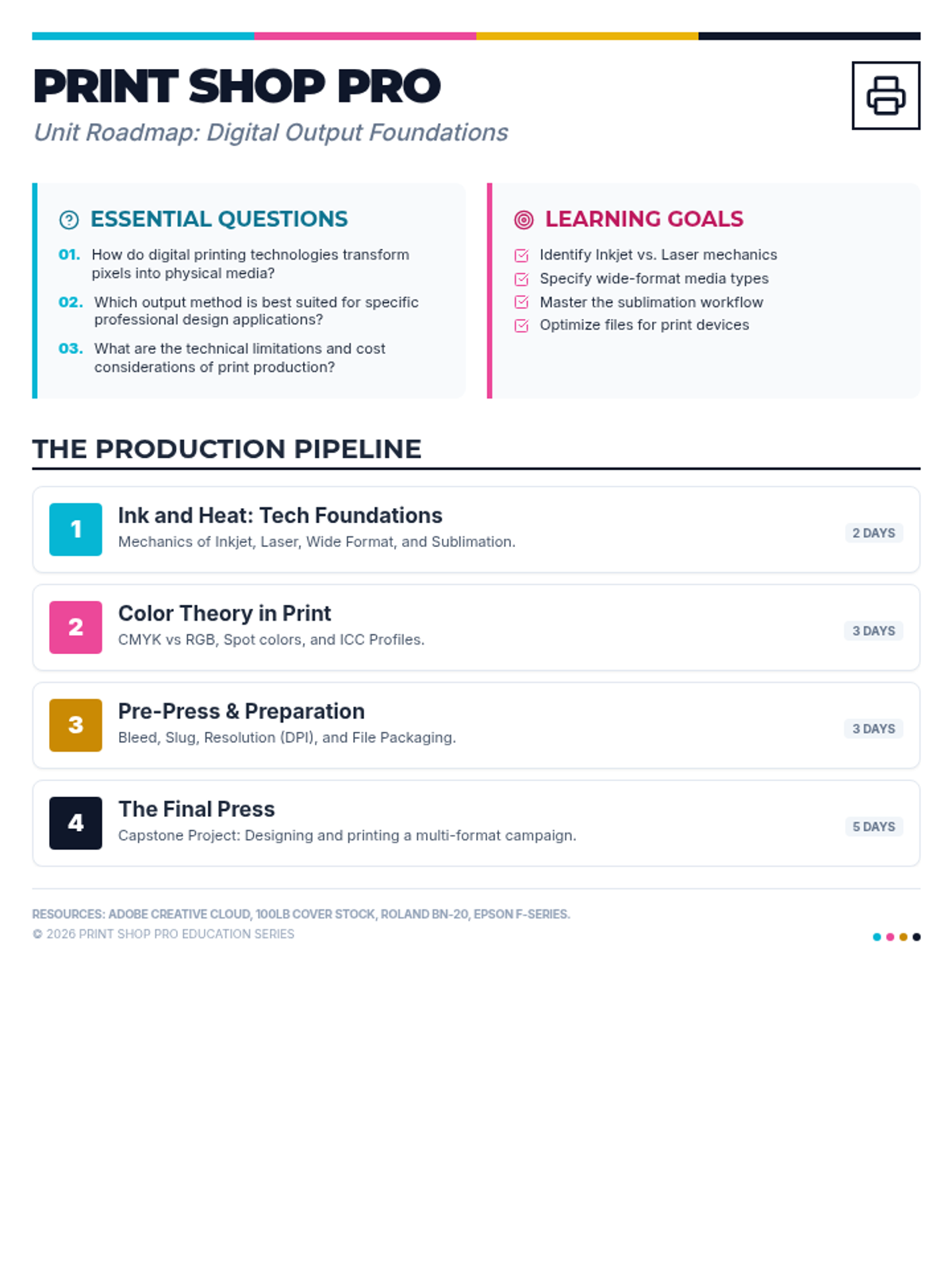
An introductory lesson on digital printing technologies, covering the mechanics of inkjet, laser, large format, and sublimation printing. Students will learn the pros, cons, and specific use cases for each method.
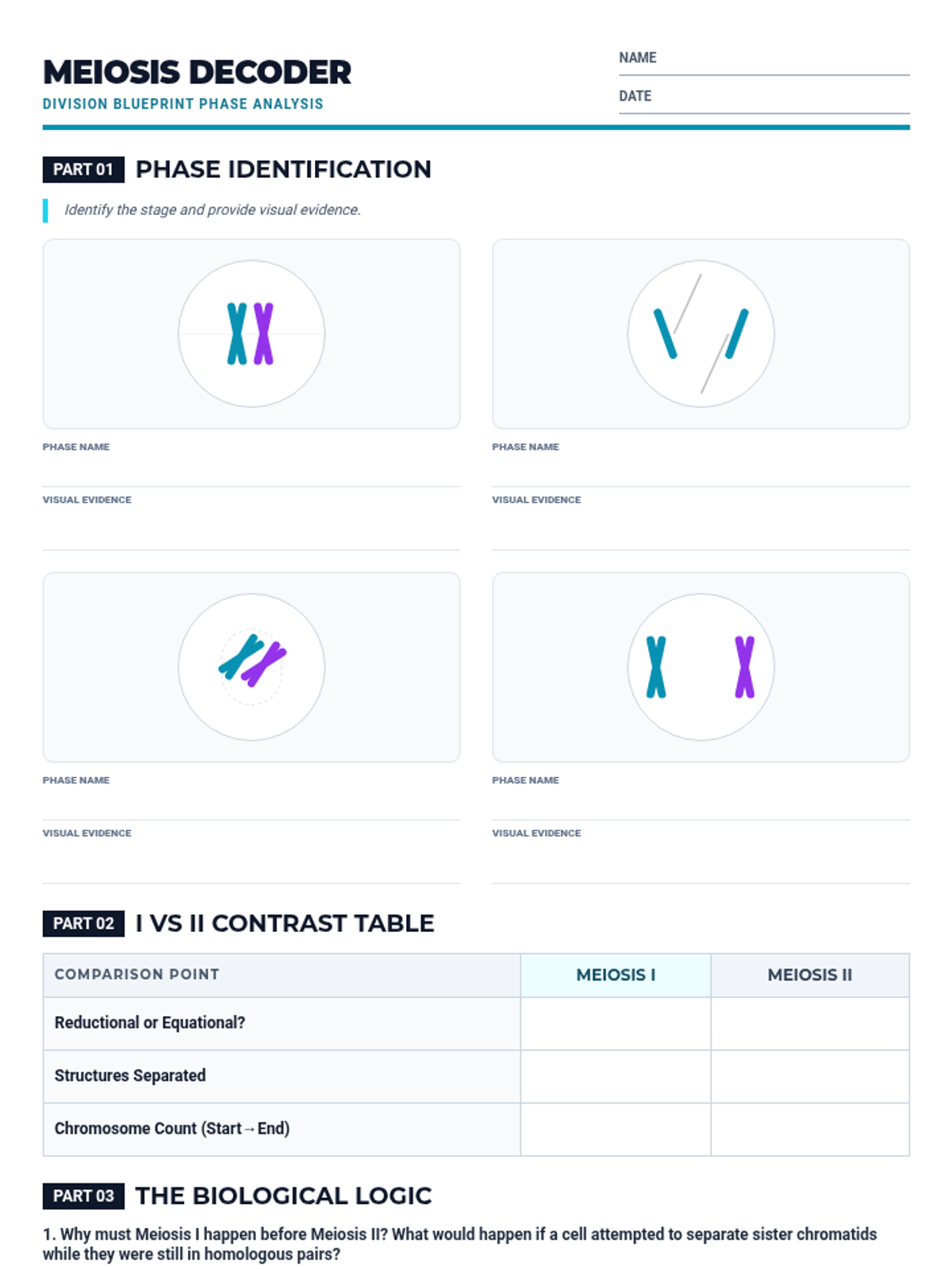
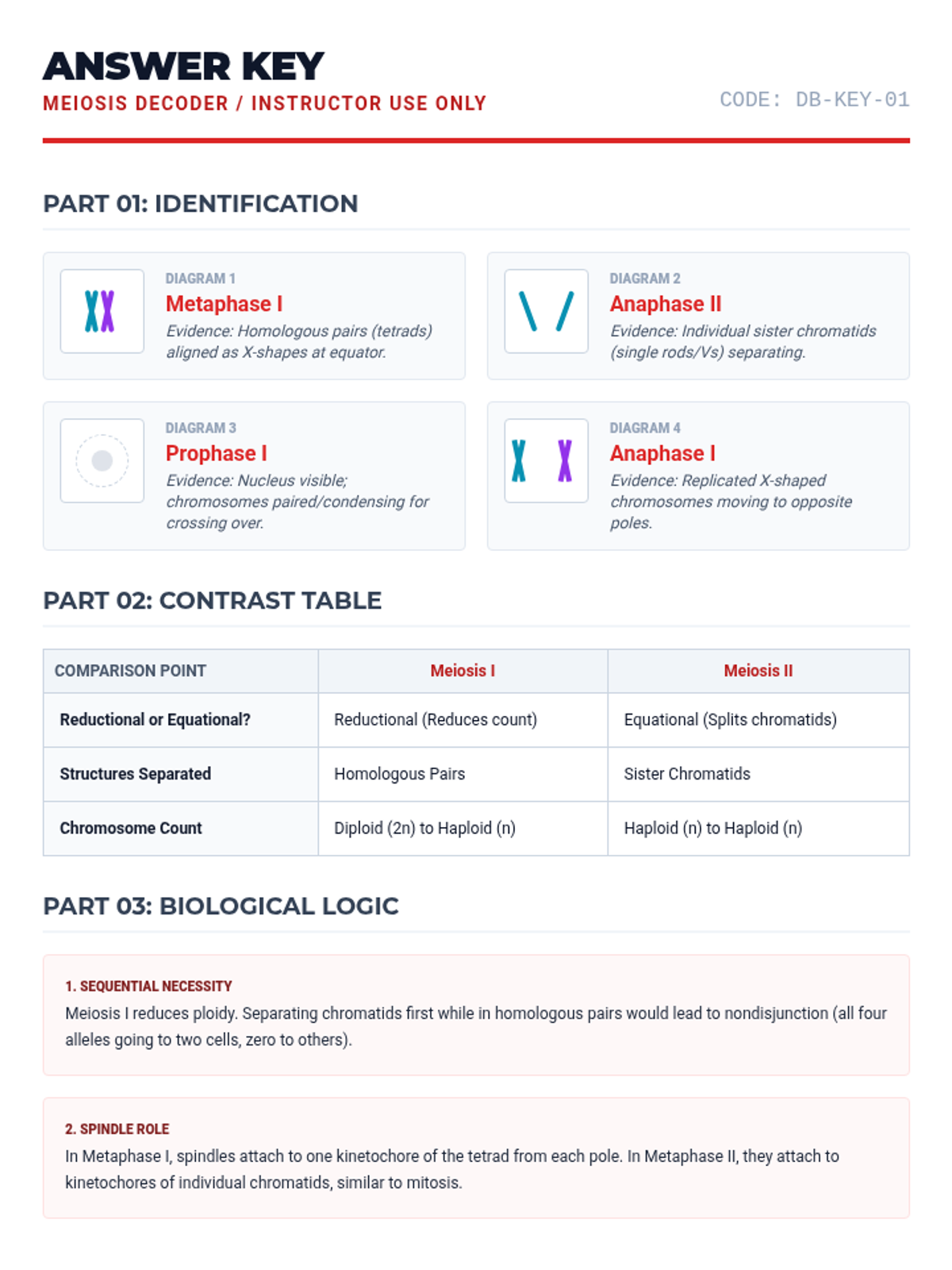
A comprehensive guide to meiosis, focusing on the structural and functional differences between Meiosis I and Meiosis II through visual identification and comparative analysis.
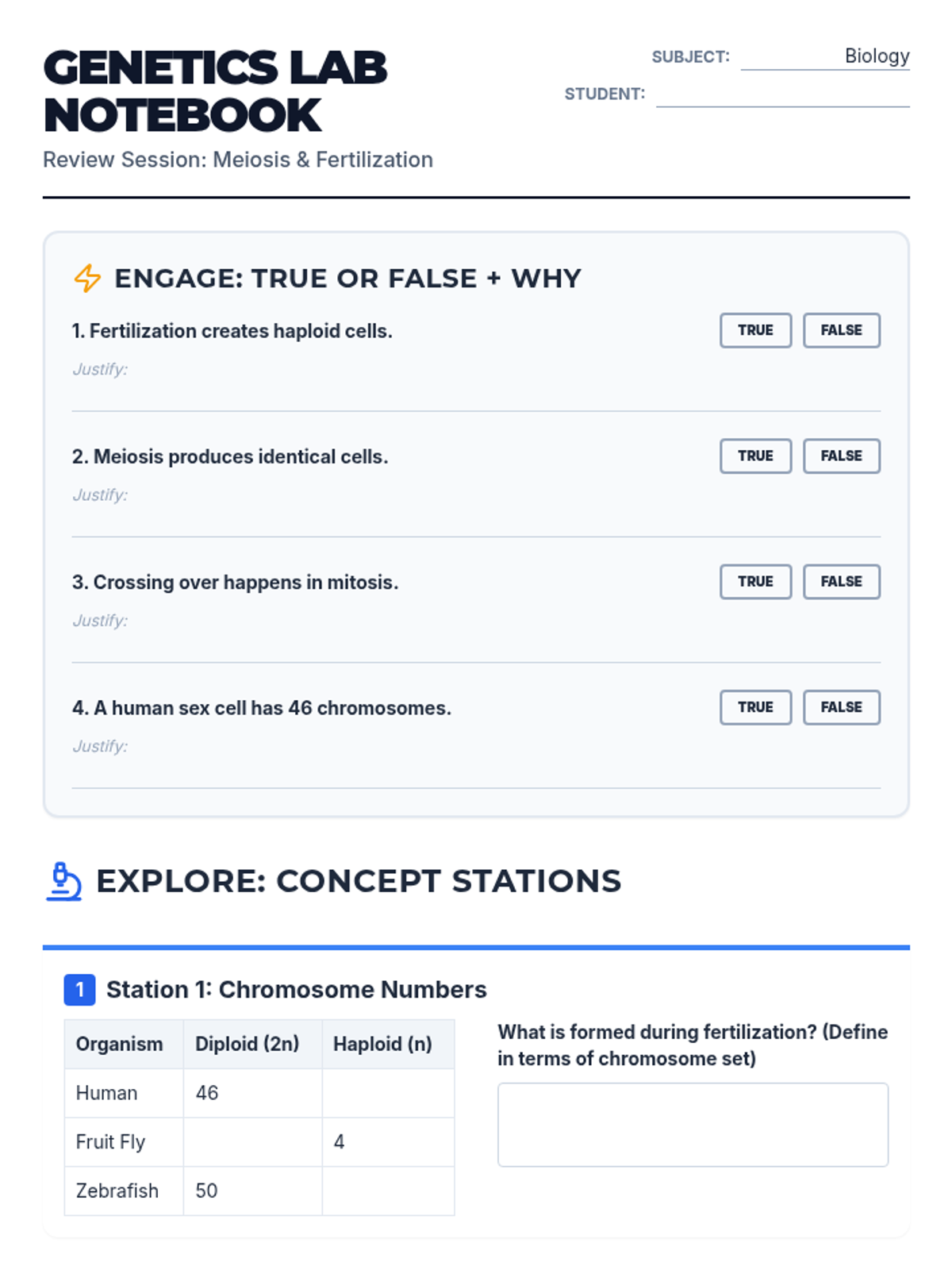
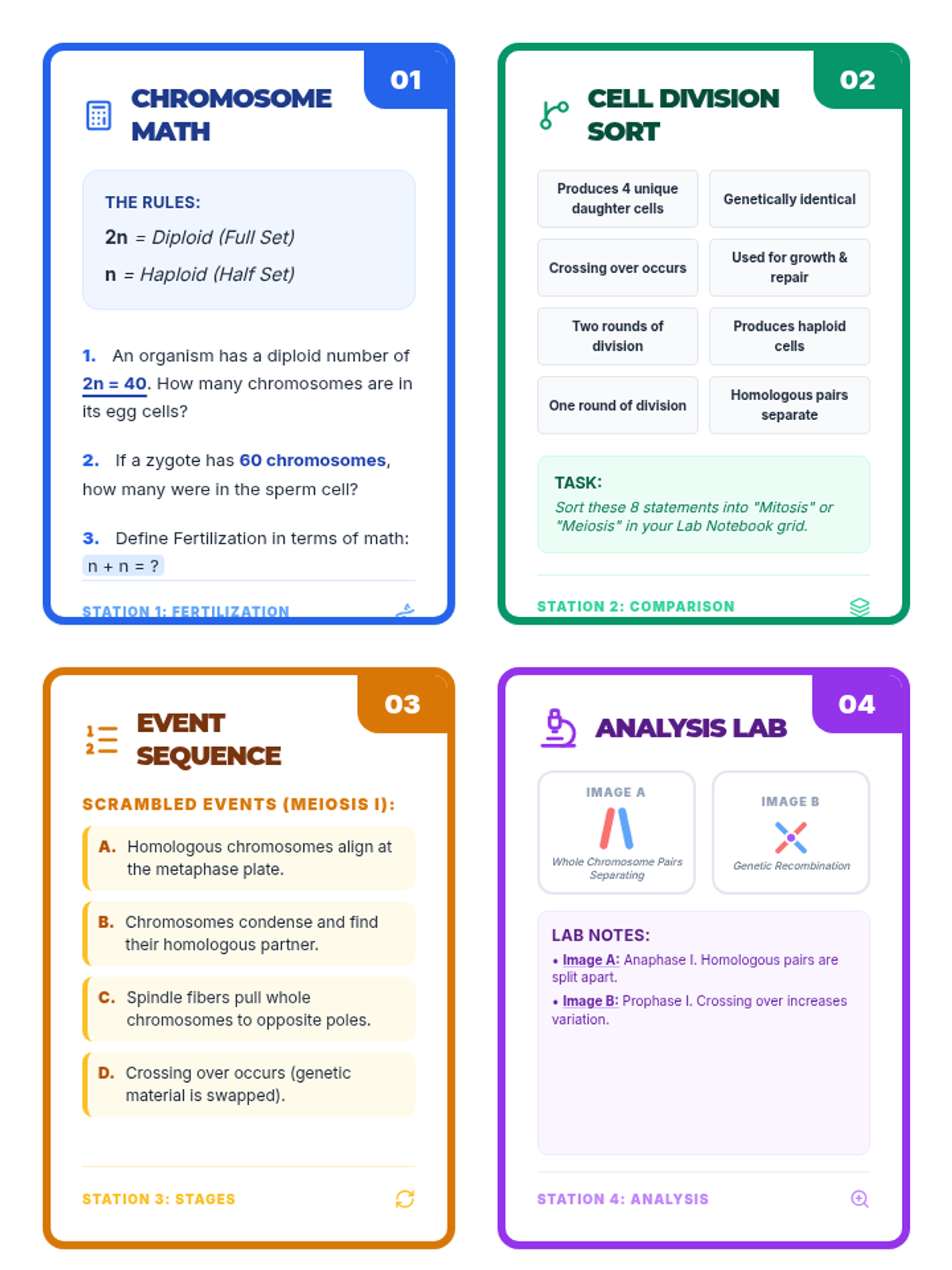
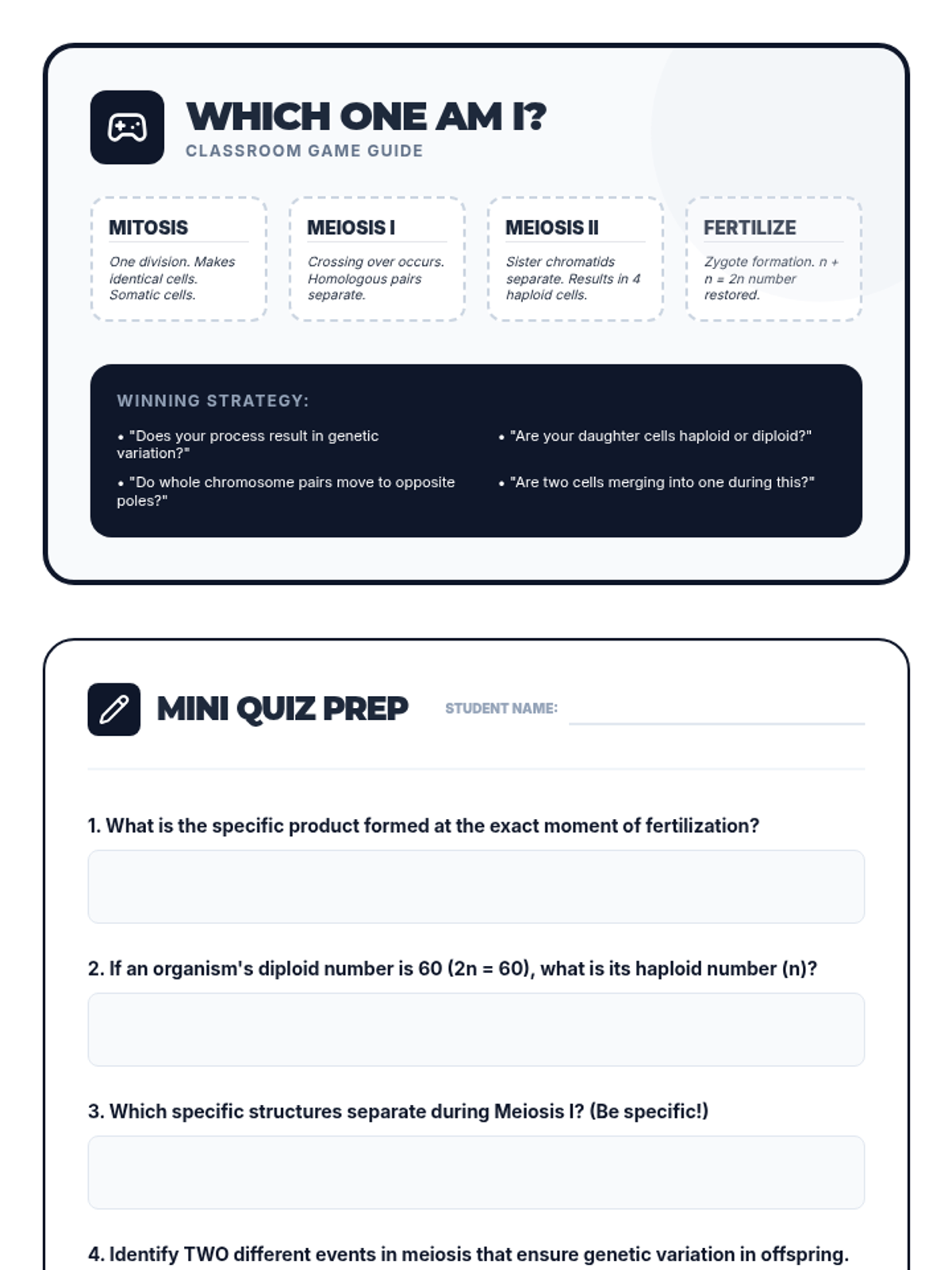
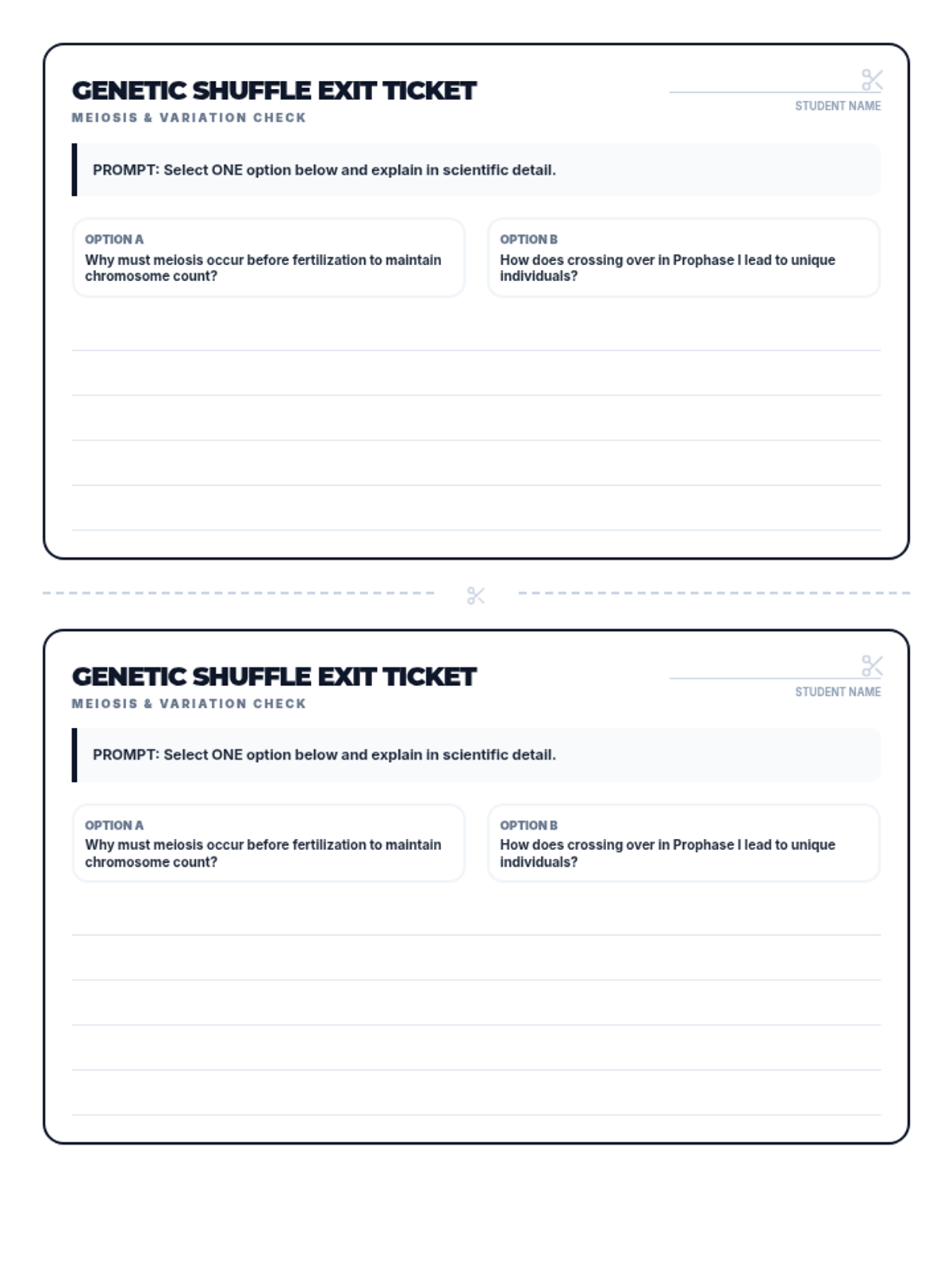
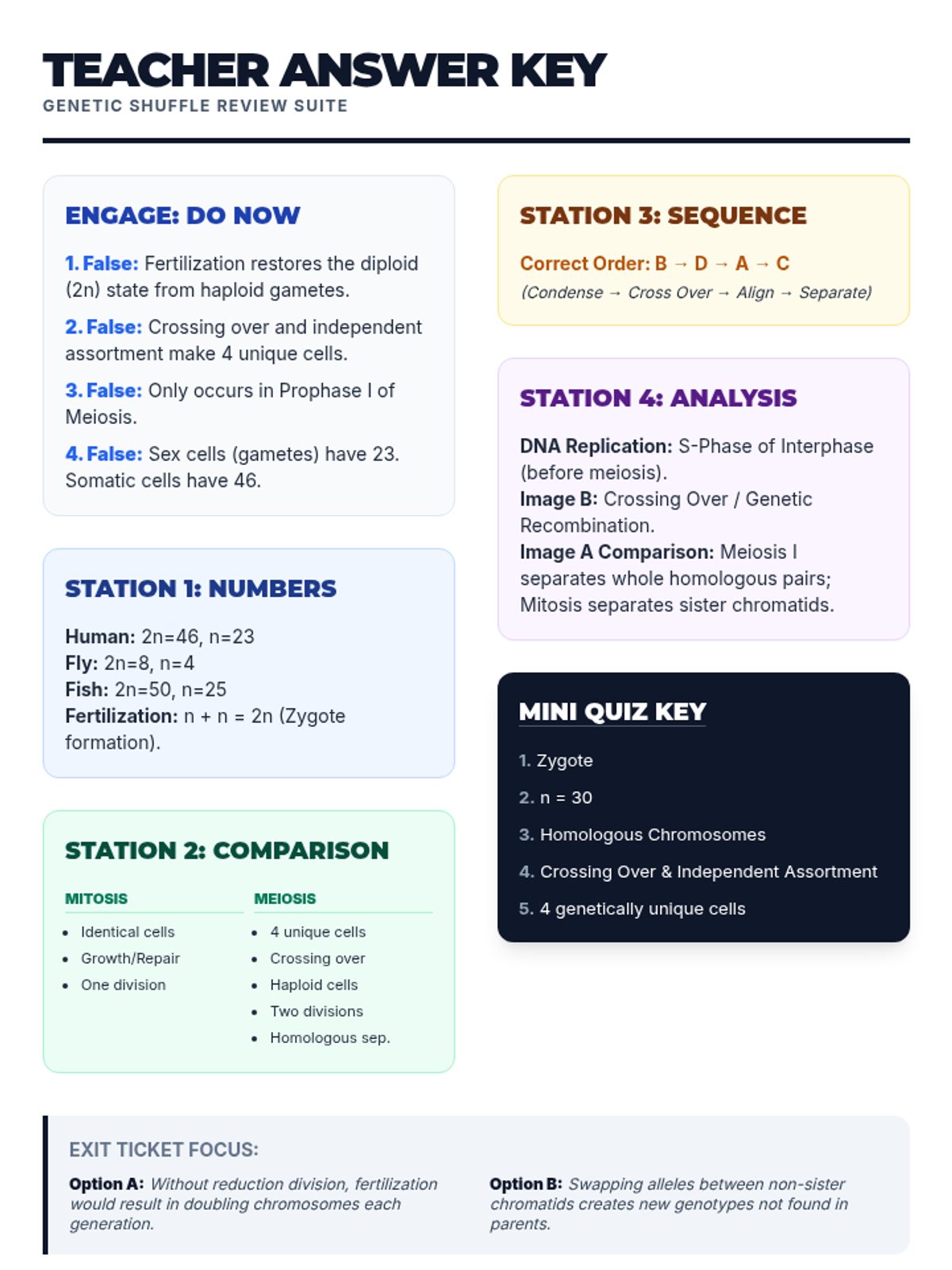
A high-school level review lesson covering meiosis, mitosis, fertilization, and genetic variation. Students rotate through concept stations to master chromosome math and cellular division sequences.
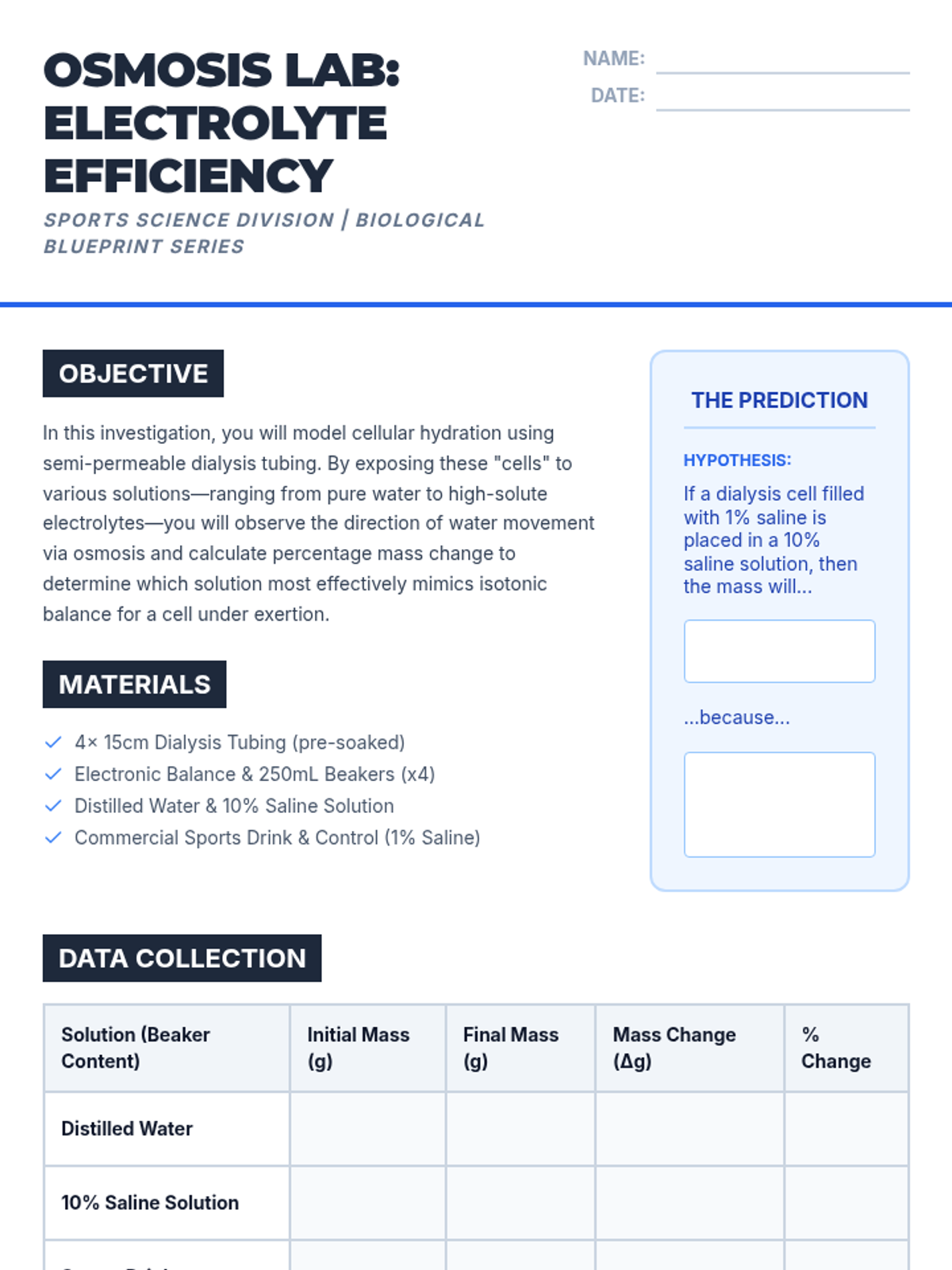
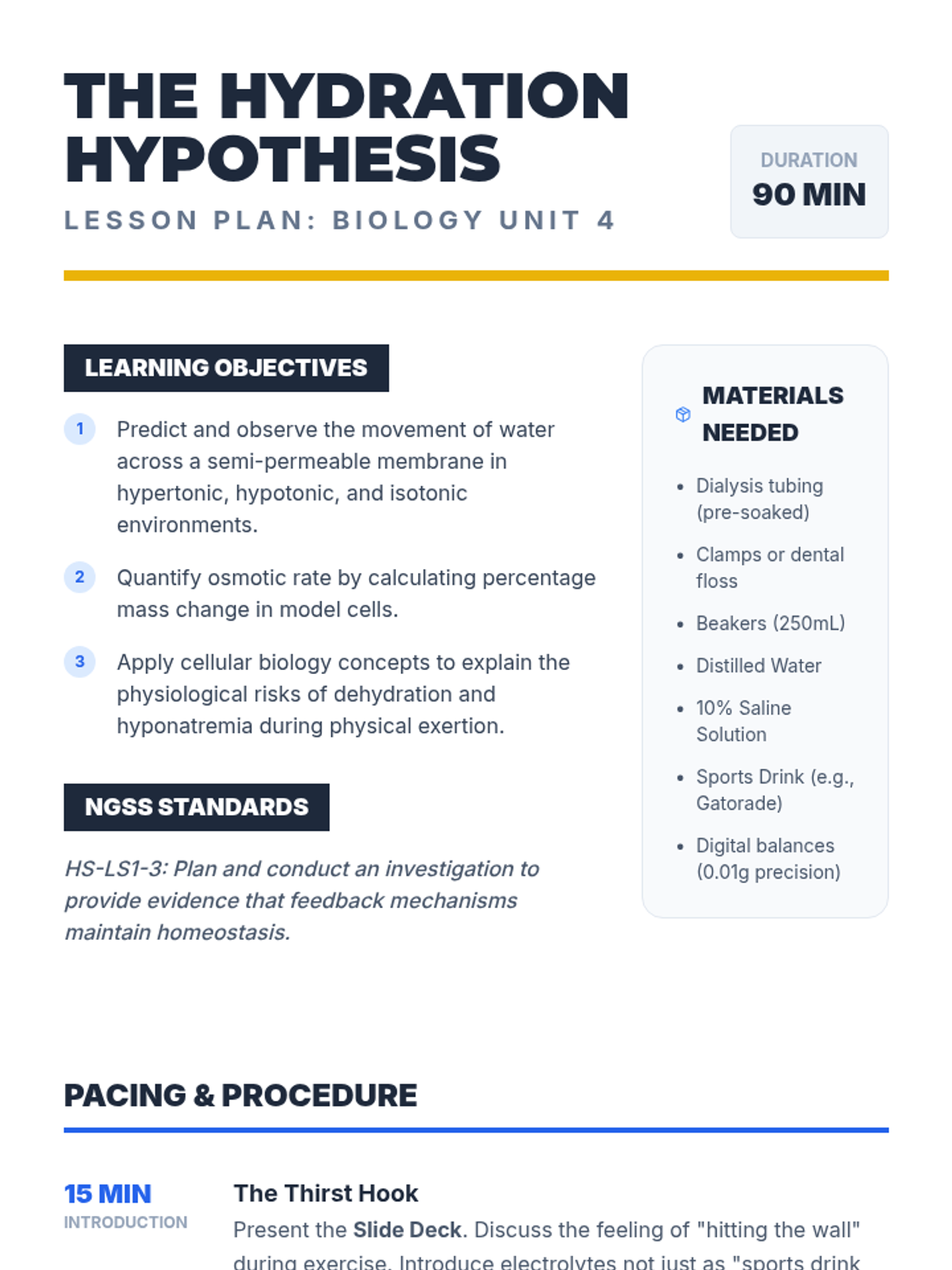
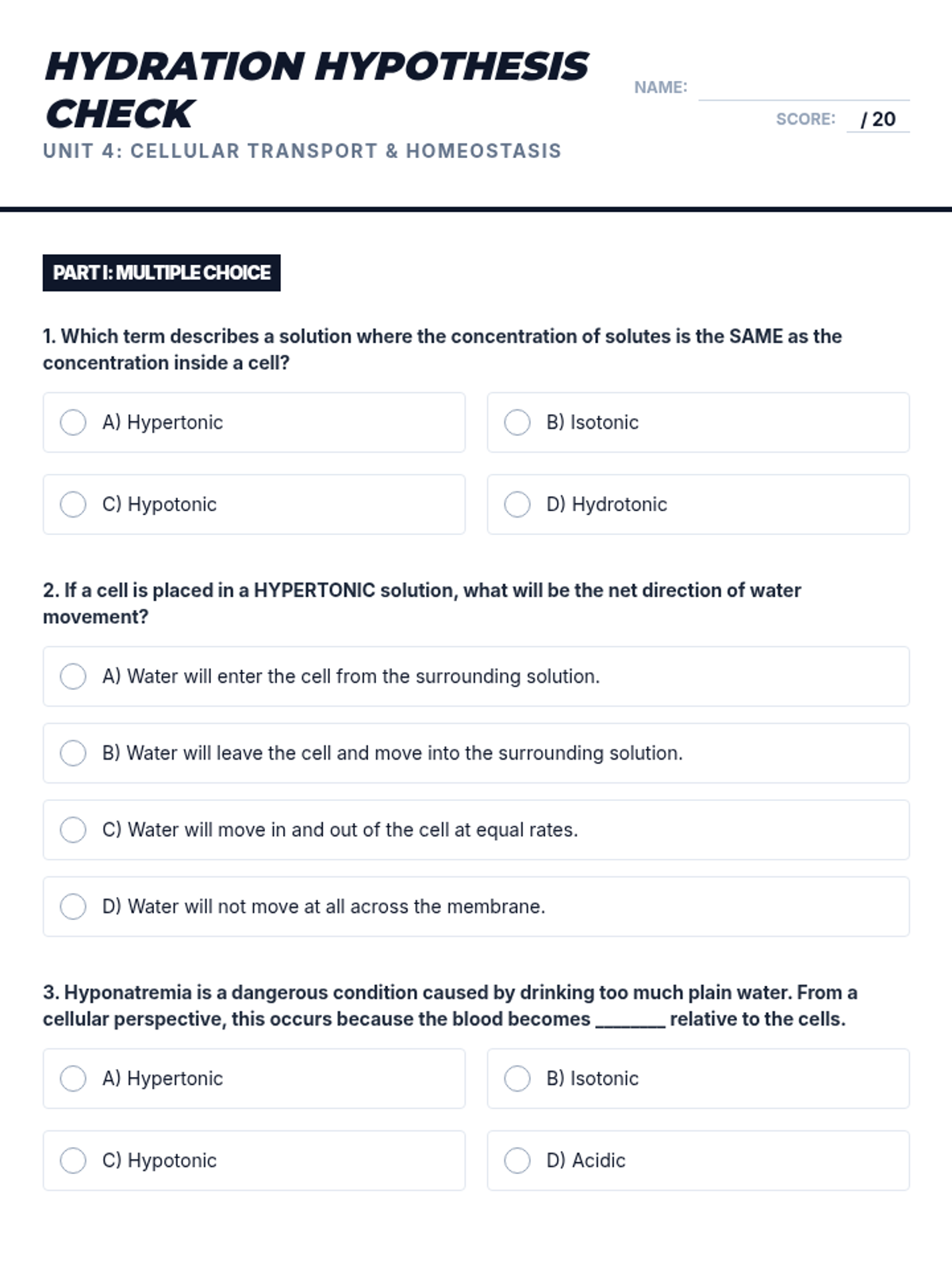
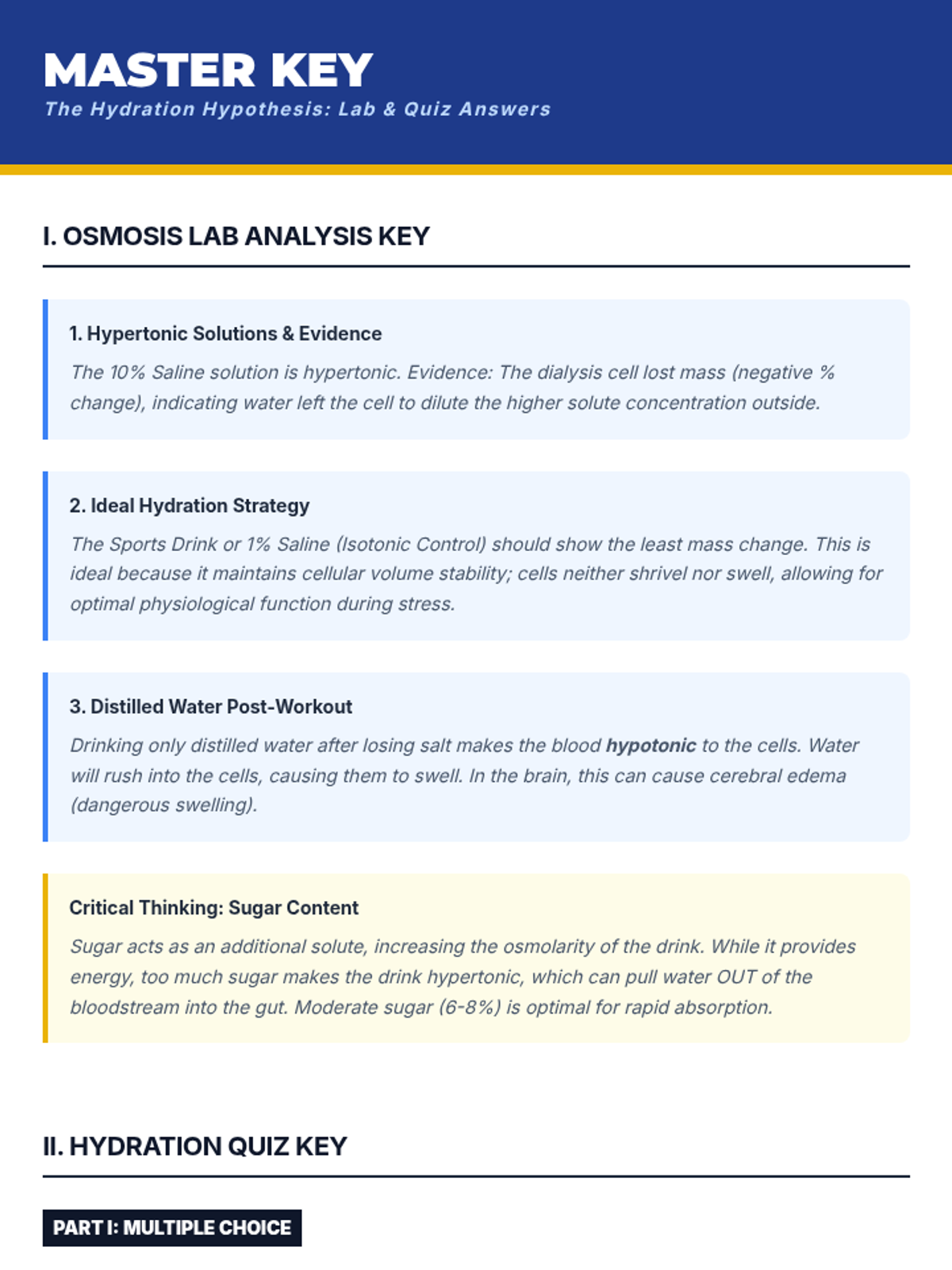
A high school biology lesson exploring the mechanics of cellular hydration, osmosis, and electrolyte balance during physical activity through experimental observation and physiological analysis.
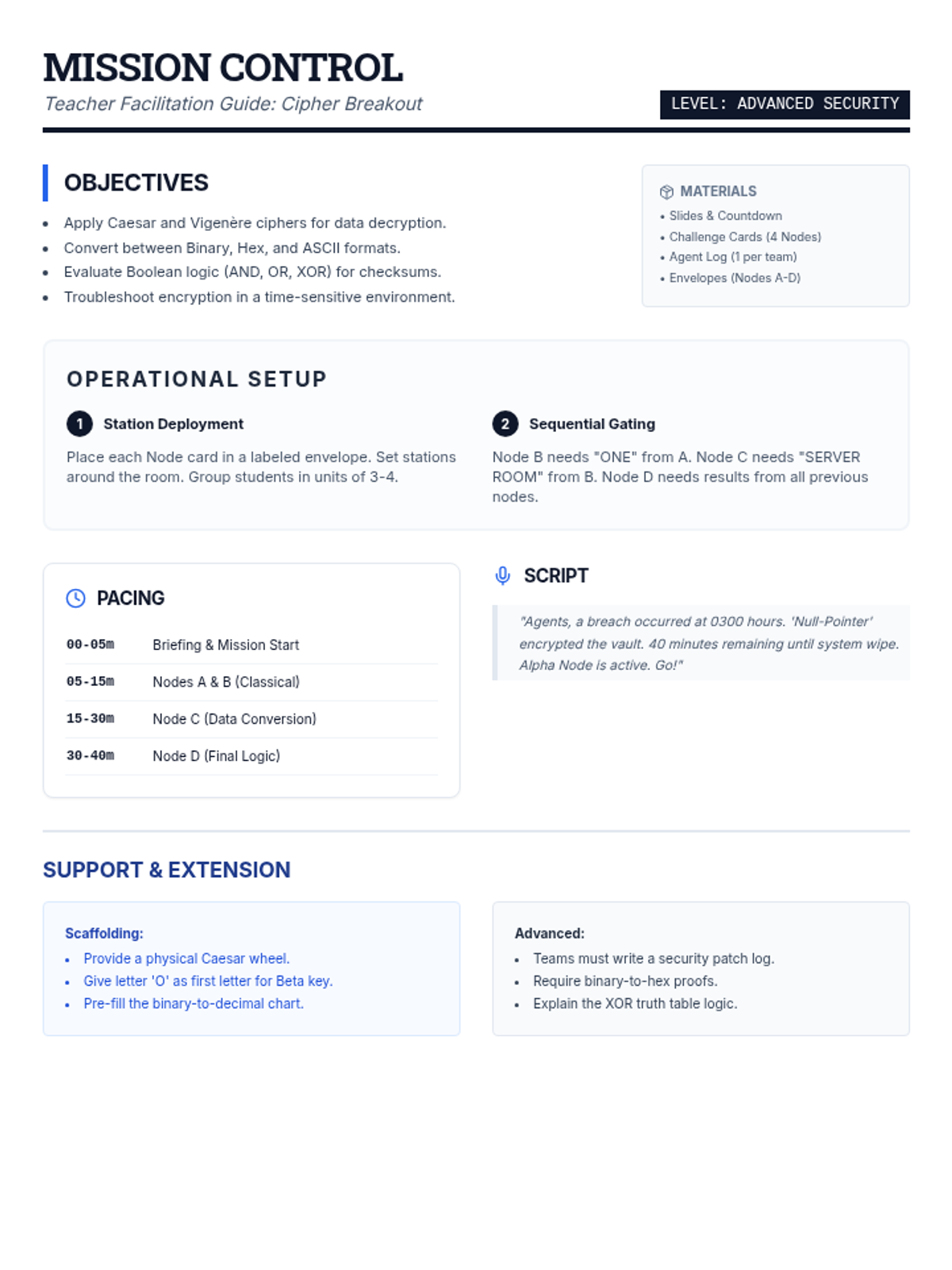
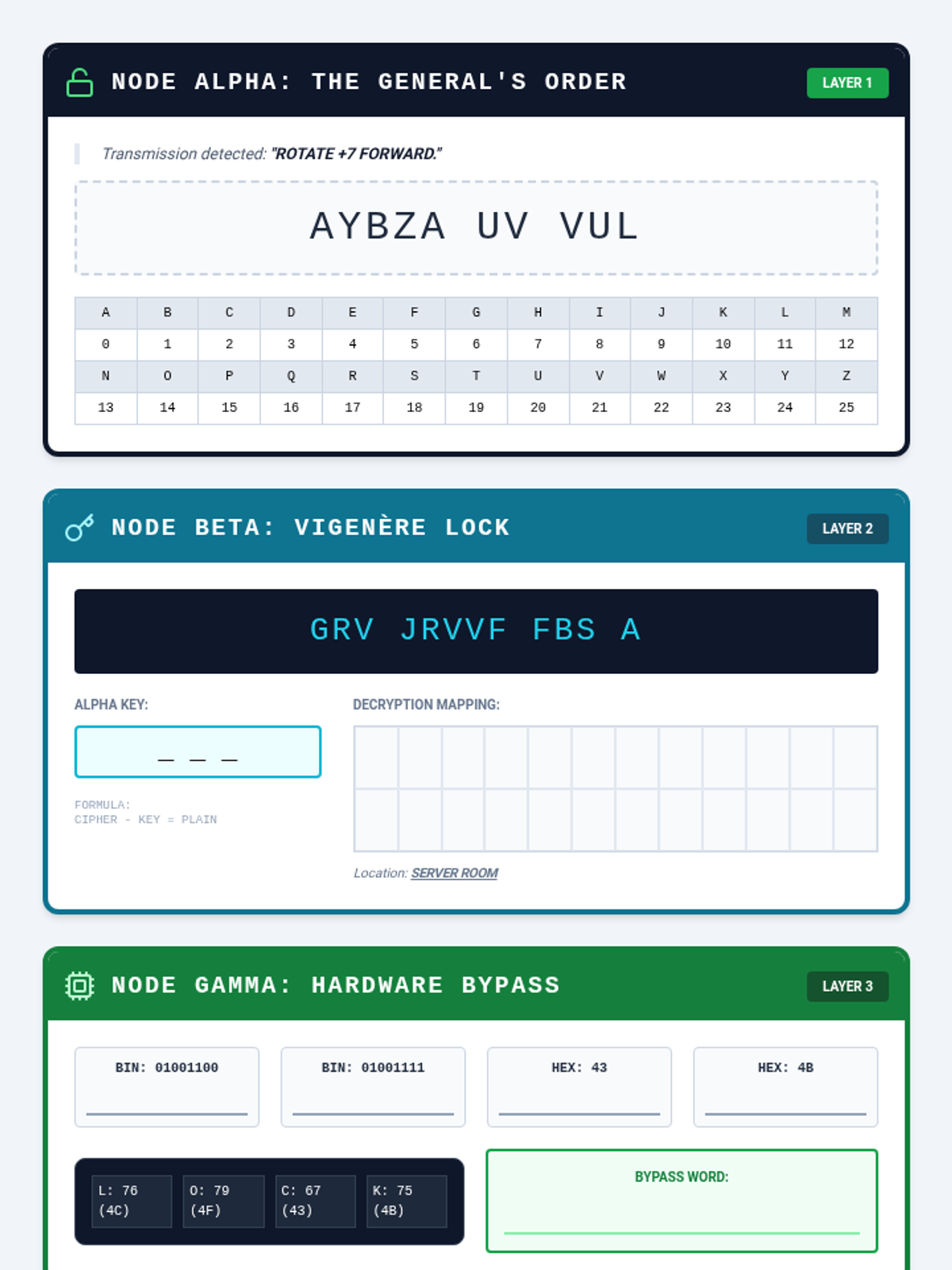
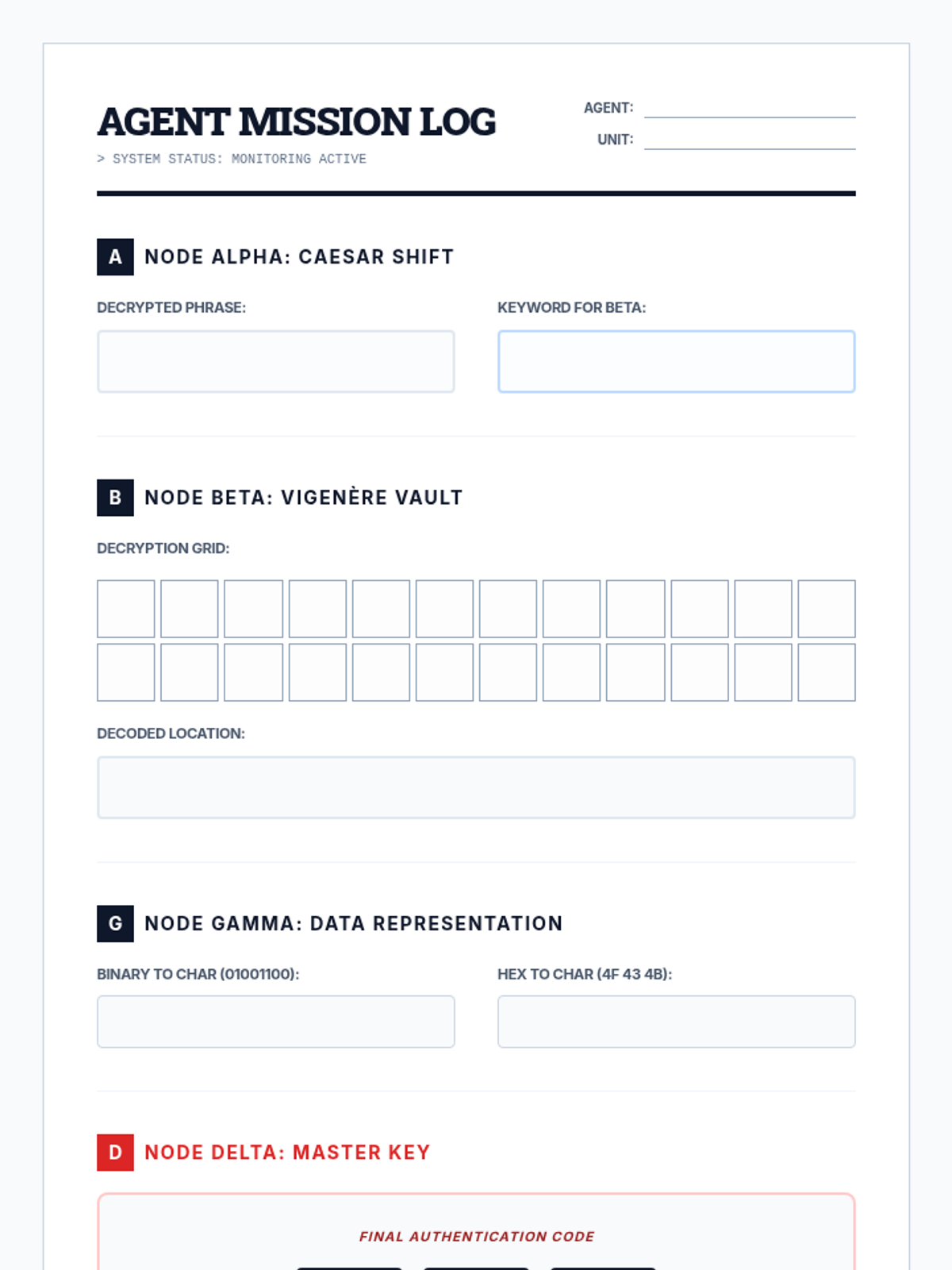
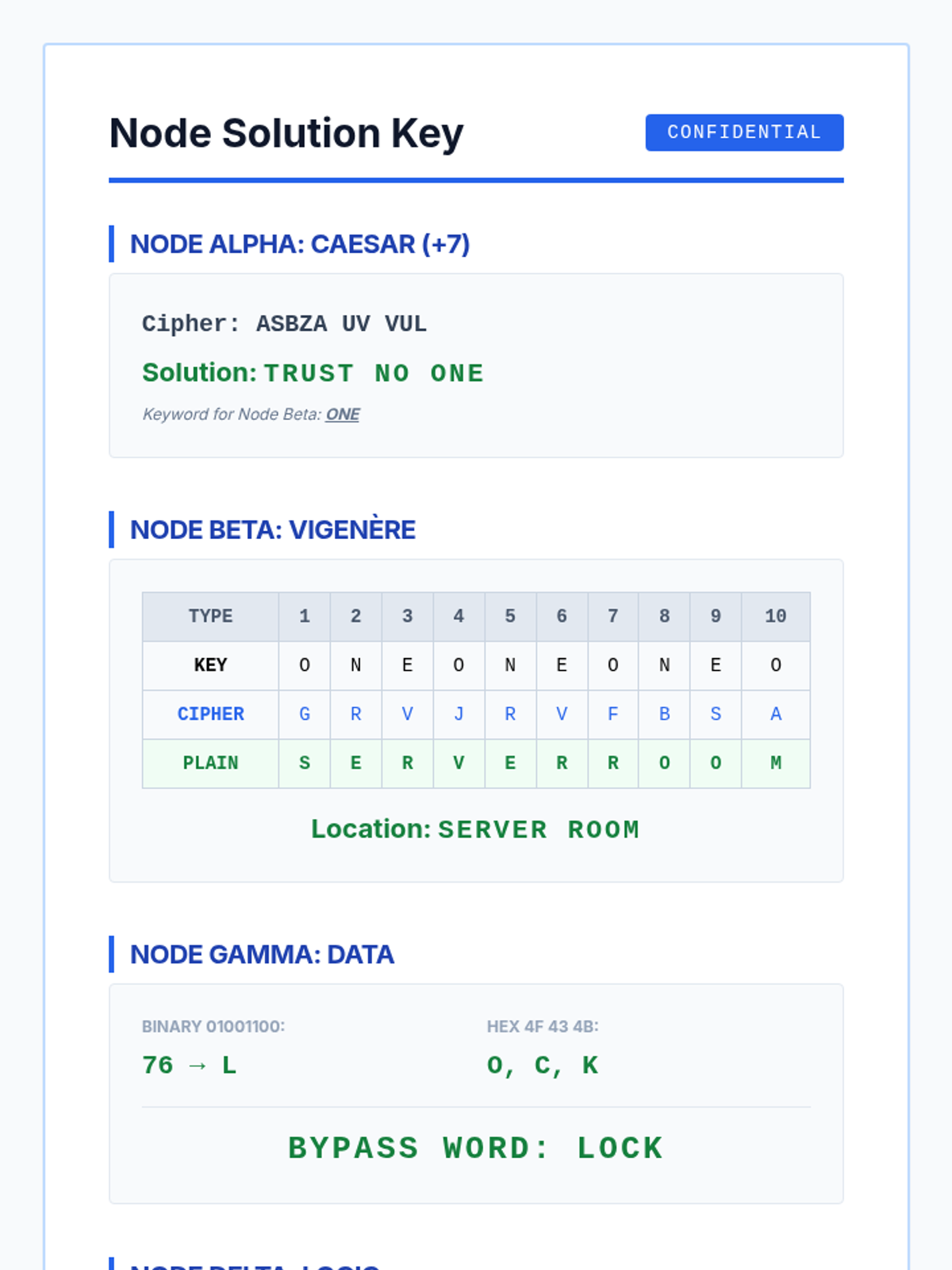
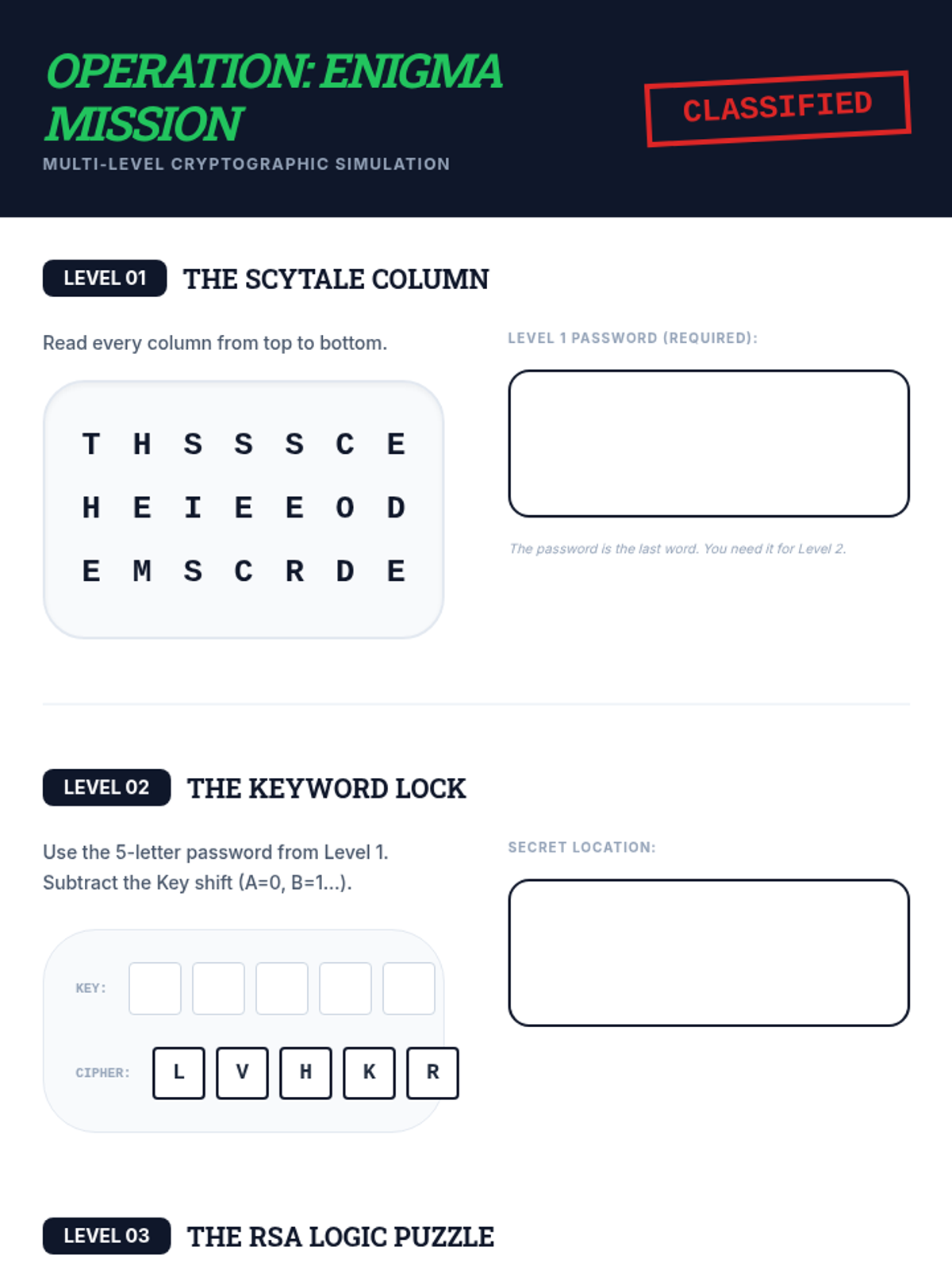
An immersive escape-room challenge for high schoolers to master encryption techniques including Caesar ciphers, Vigenere ciphers, and data representation. Students work in teams to decode clues and 'secure the system' before time runs out.
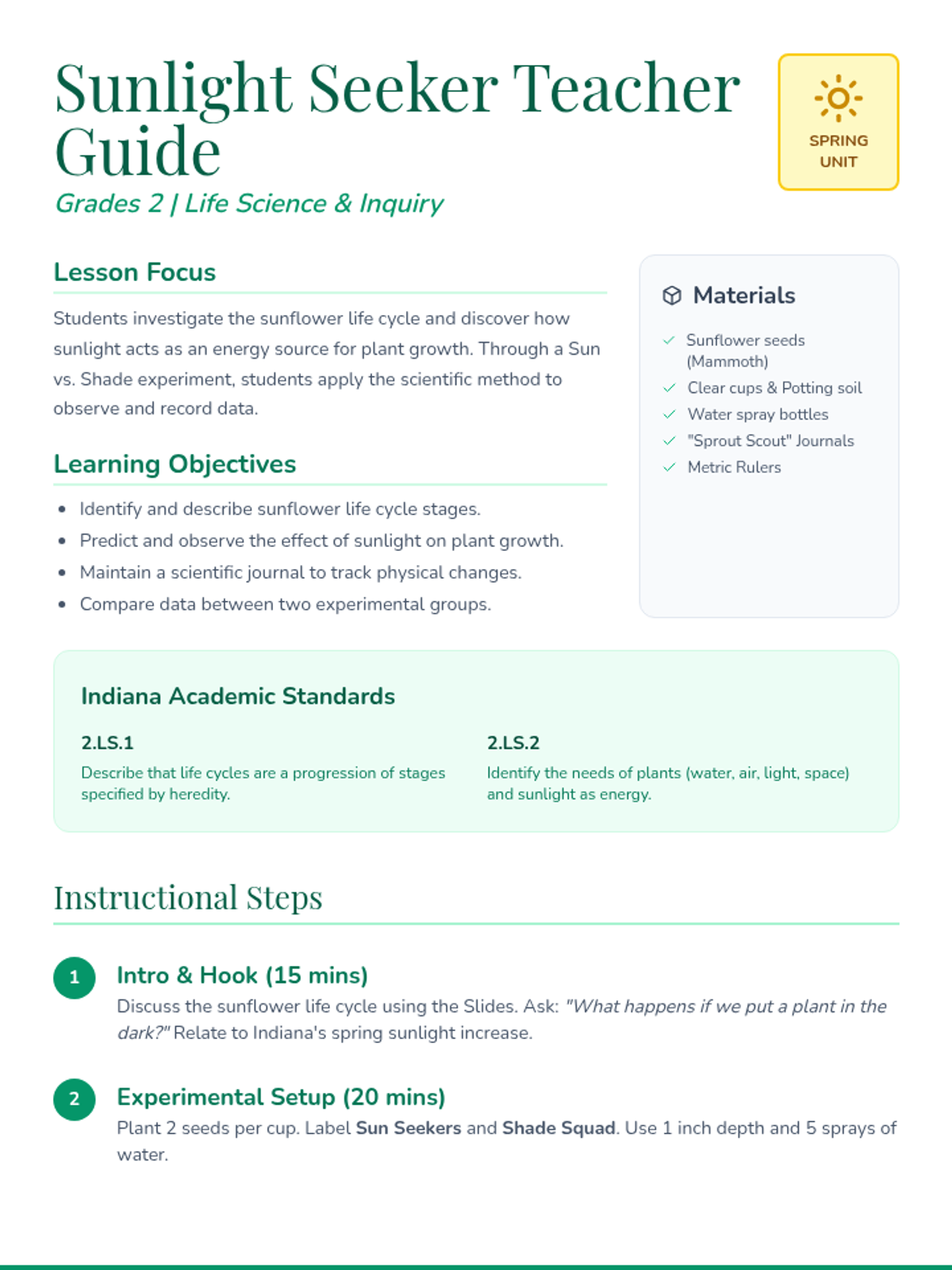
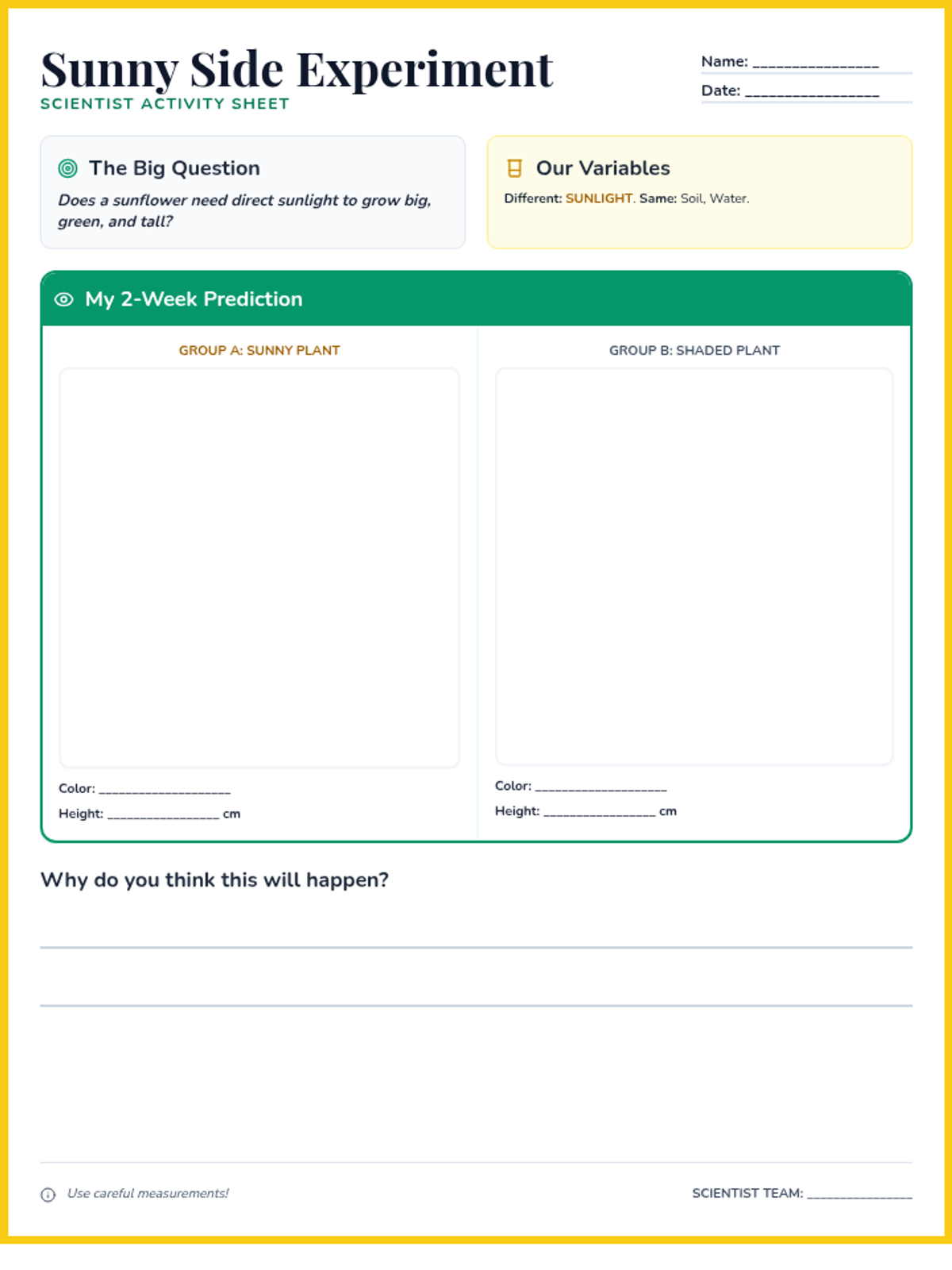
Students explore the plant life cycle and the critical role of sunlight through a hands-on sunflower experiment tailored for Indiana's spring climate.
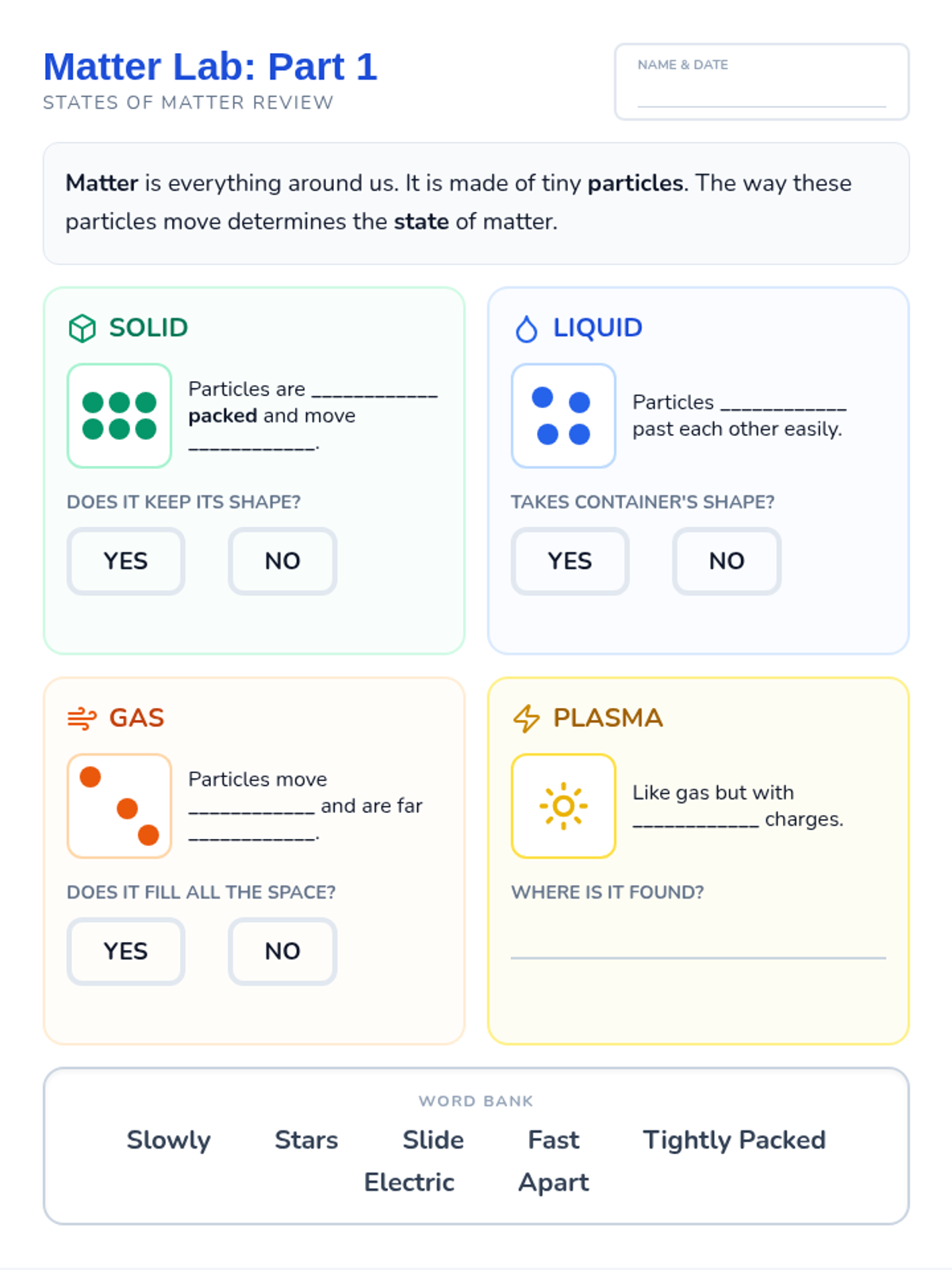
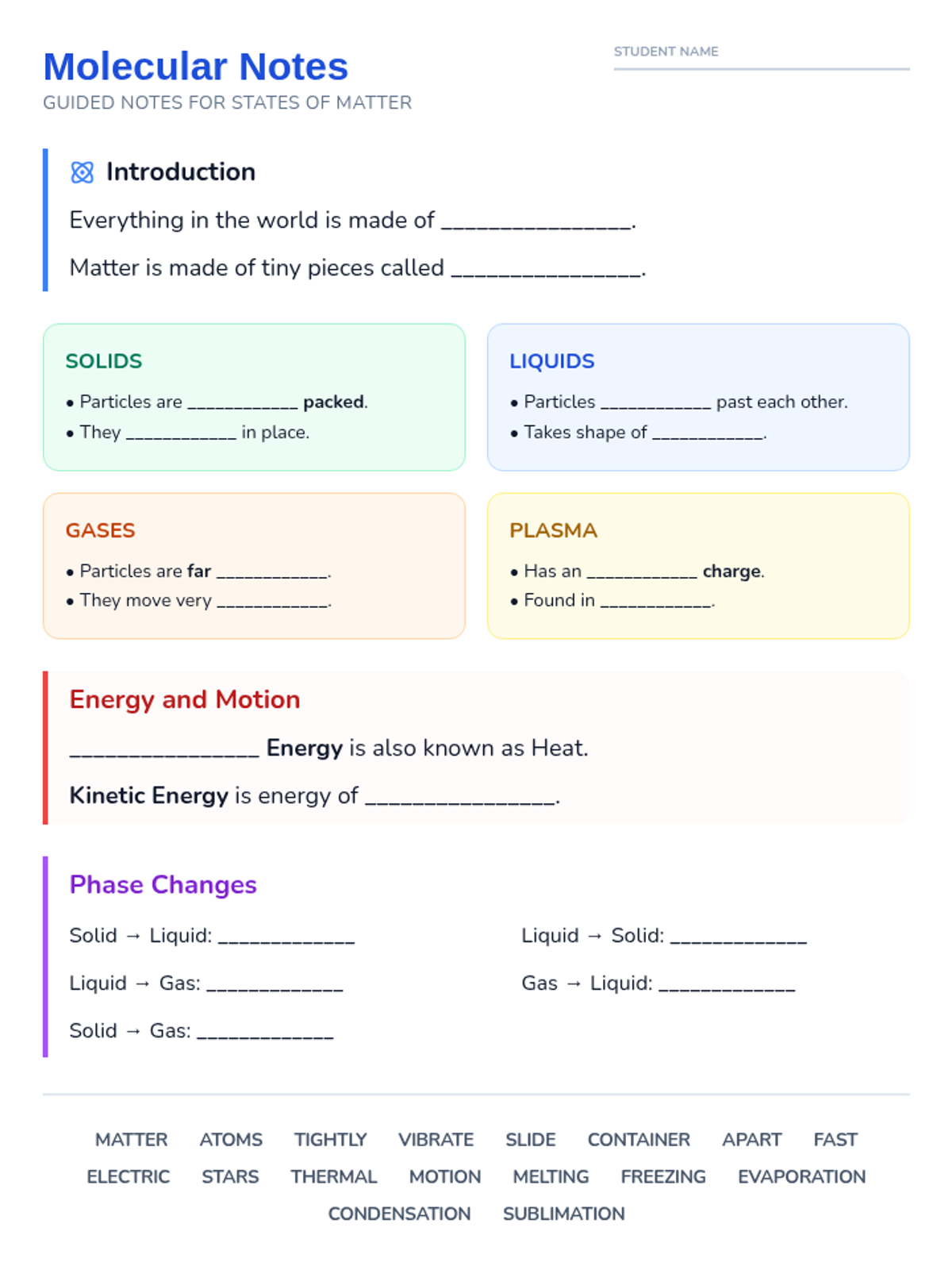
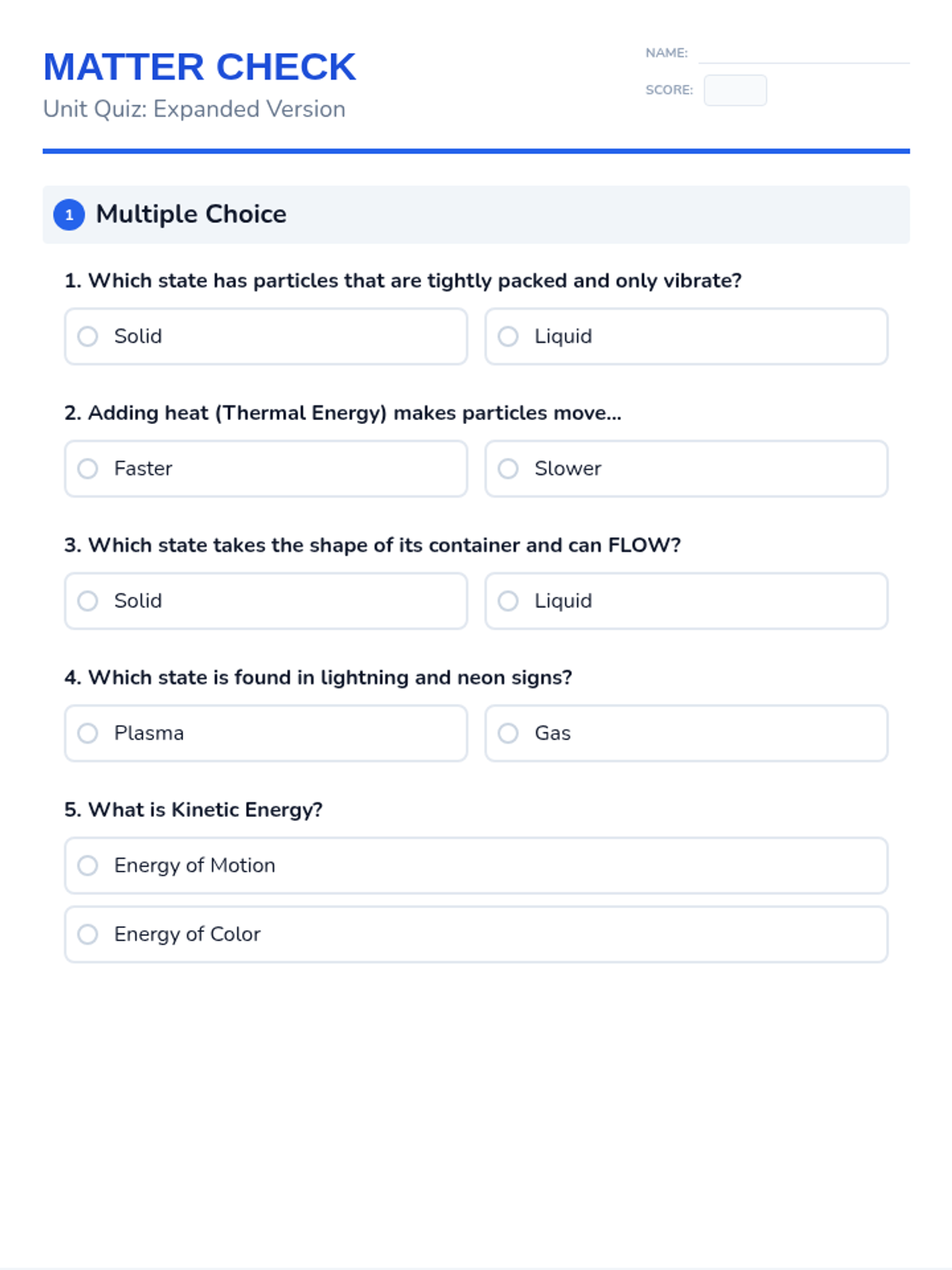
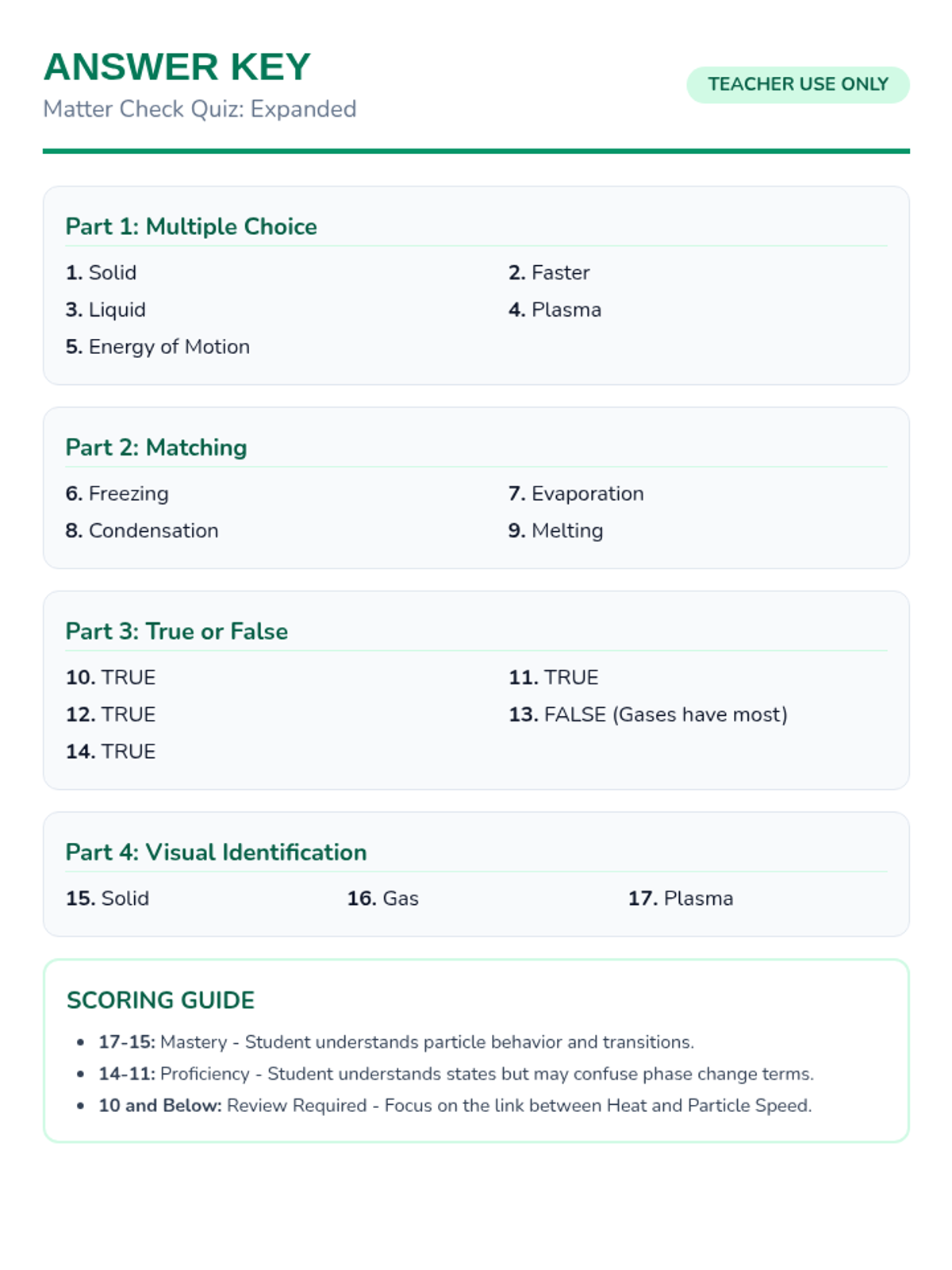
A comprehensive review of the states of matter and phase changes designed for diverse learners, featuring simplified text, visual aids, and structured graphic organizers.
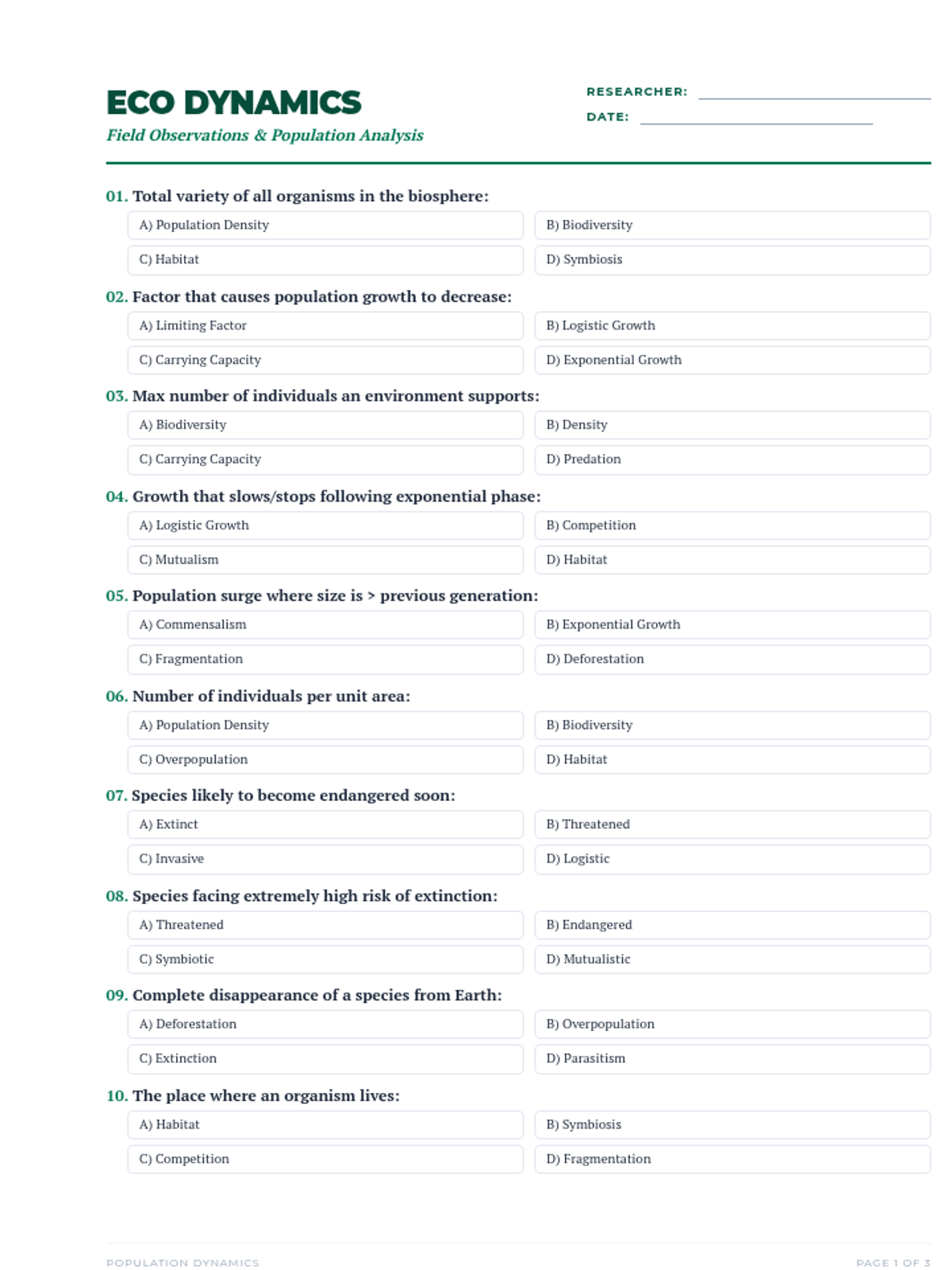
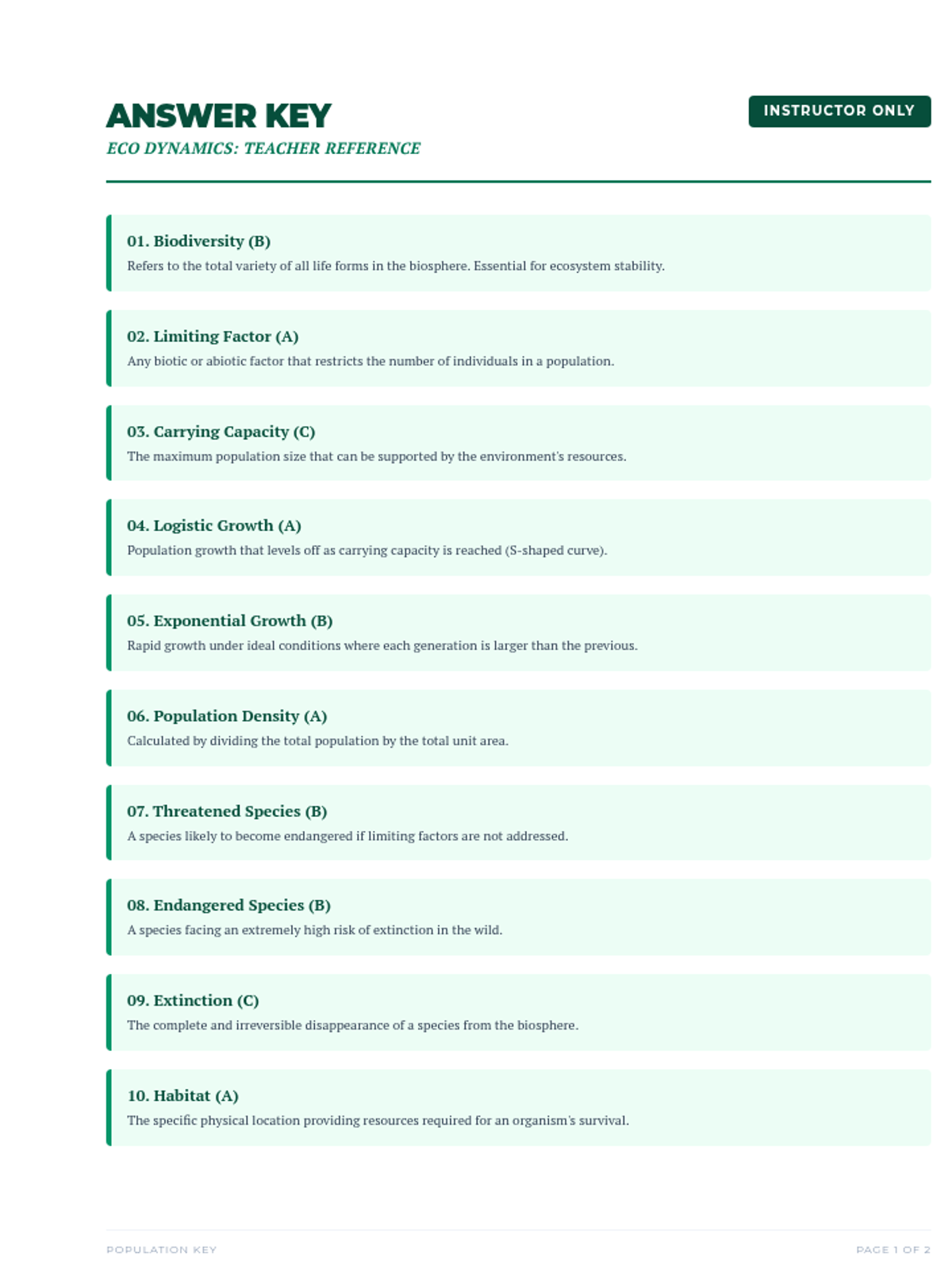
A comprehensive look at ecology, population dynamics, and biodiversity through practice and analysis.
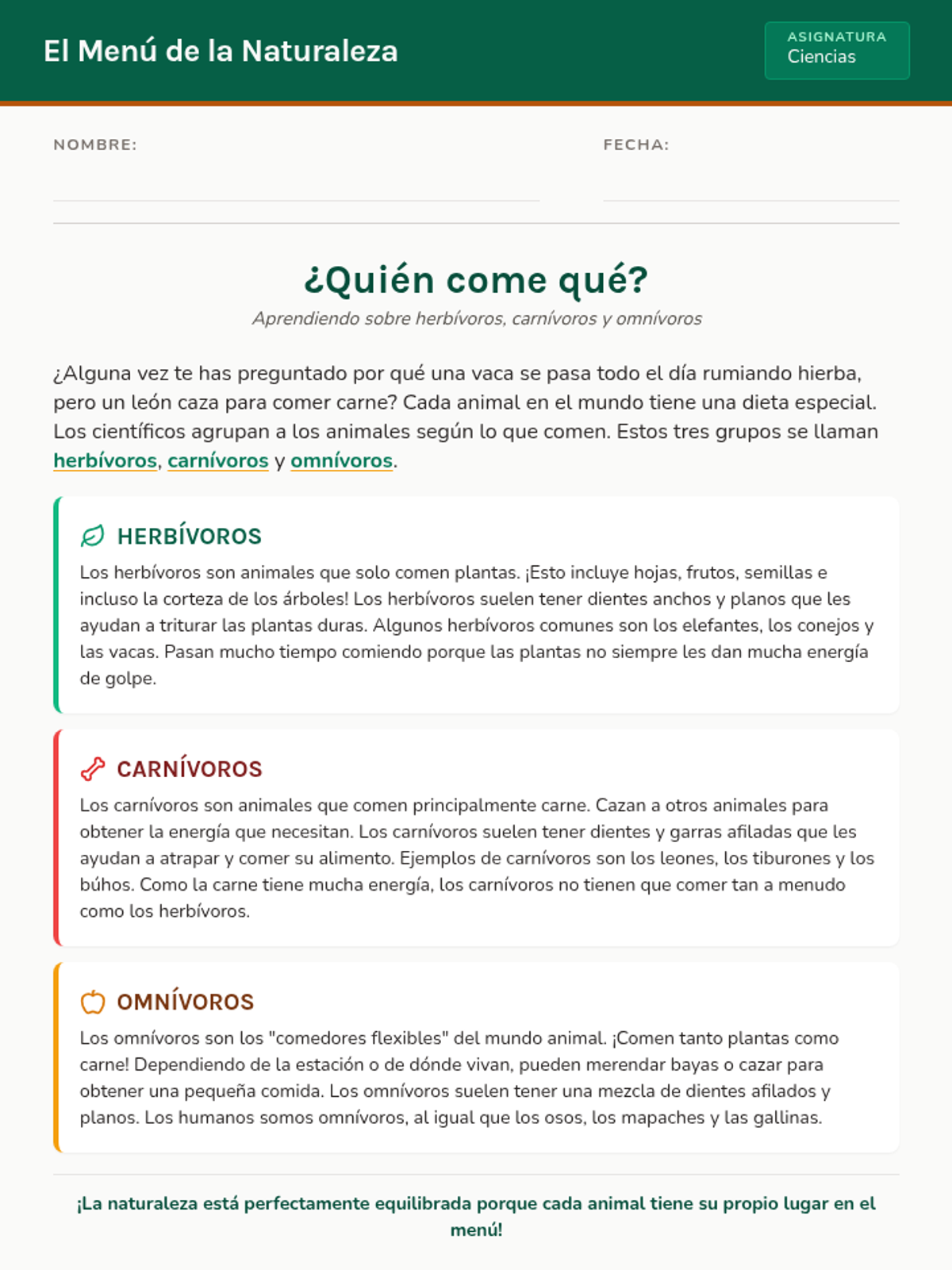
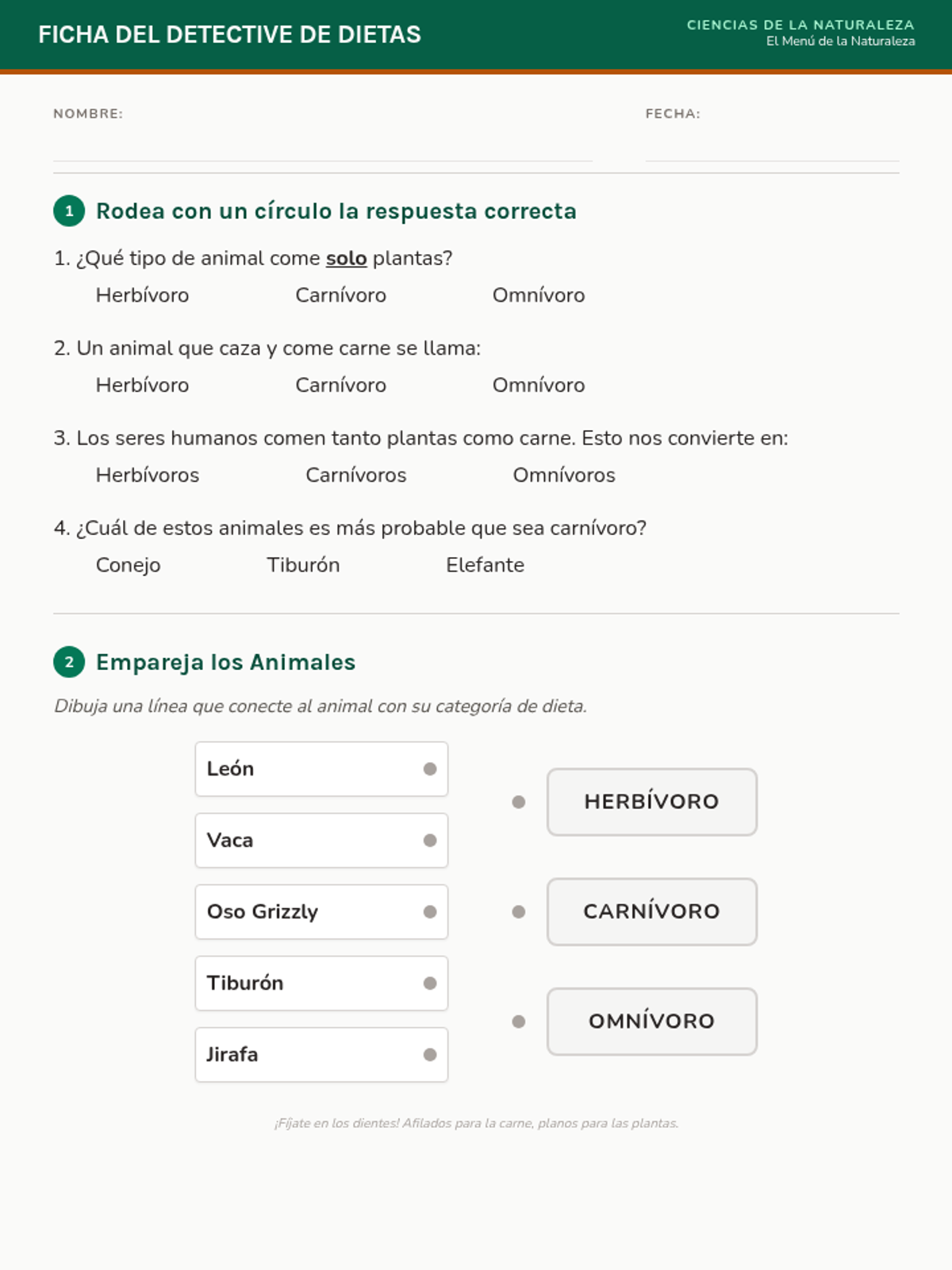
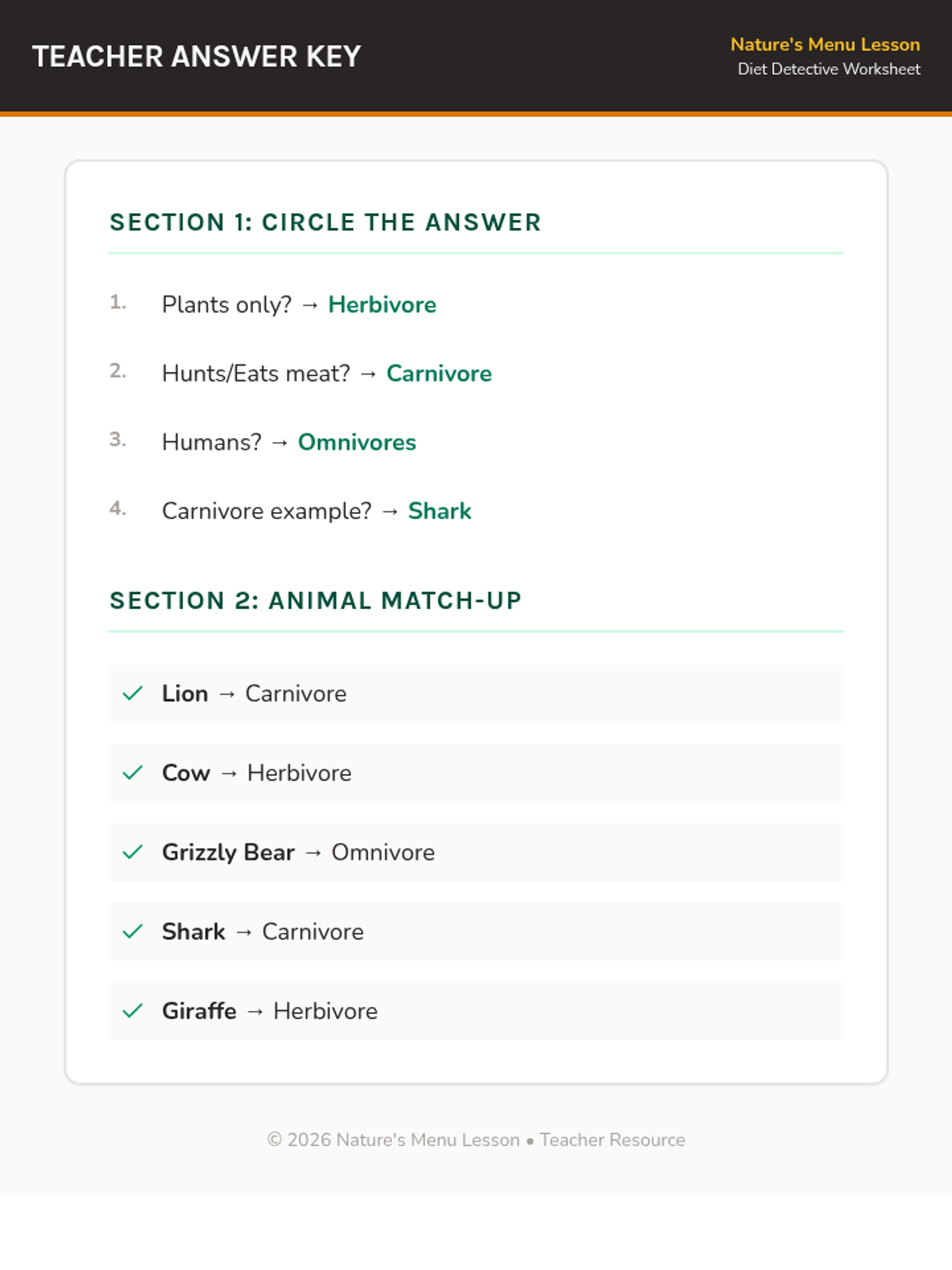
A lesson to help students identify and differentiate between herbivores, carnivores, and omnivores based on their diets and physical traits.
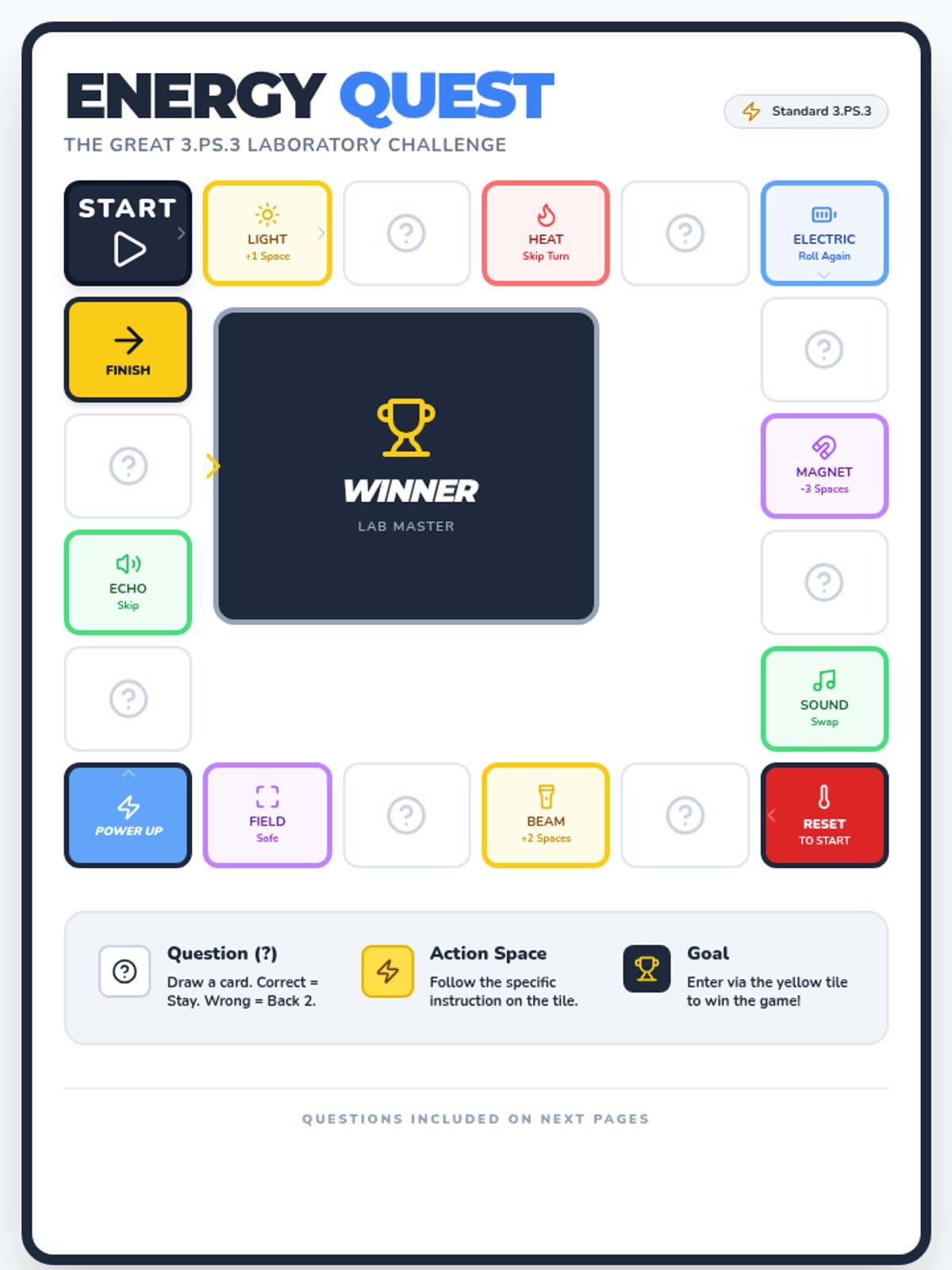
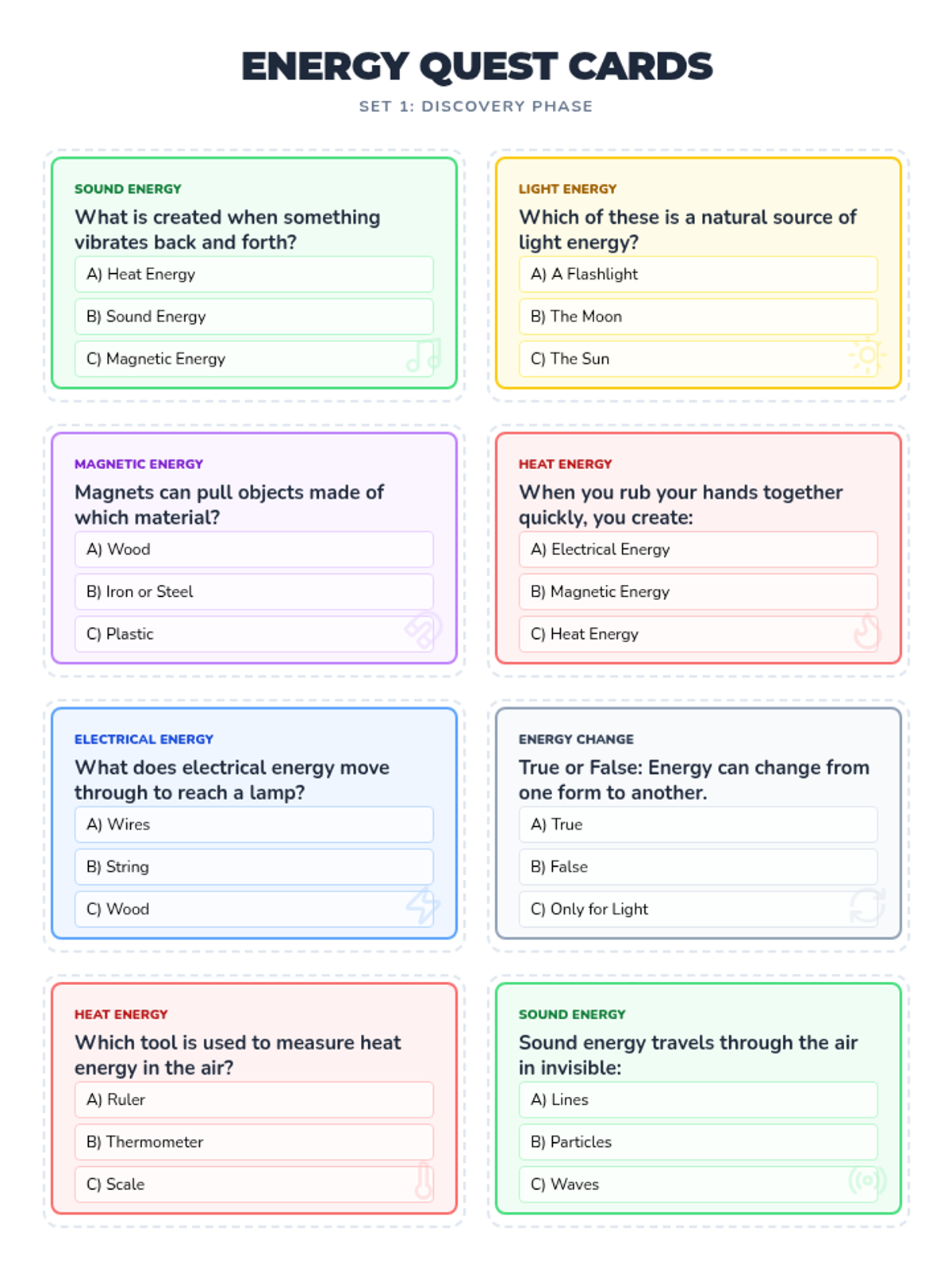
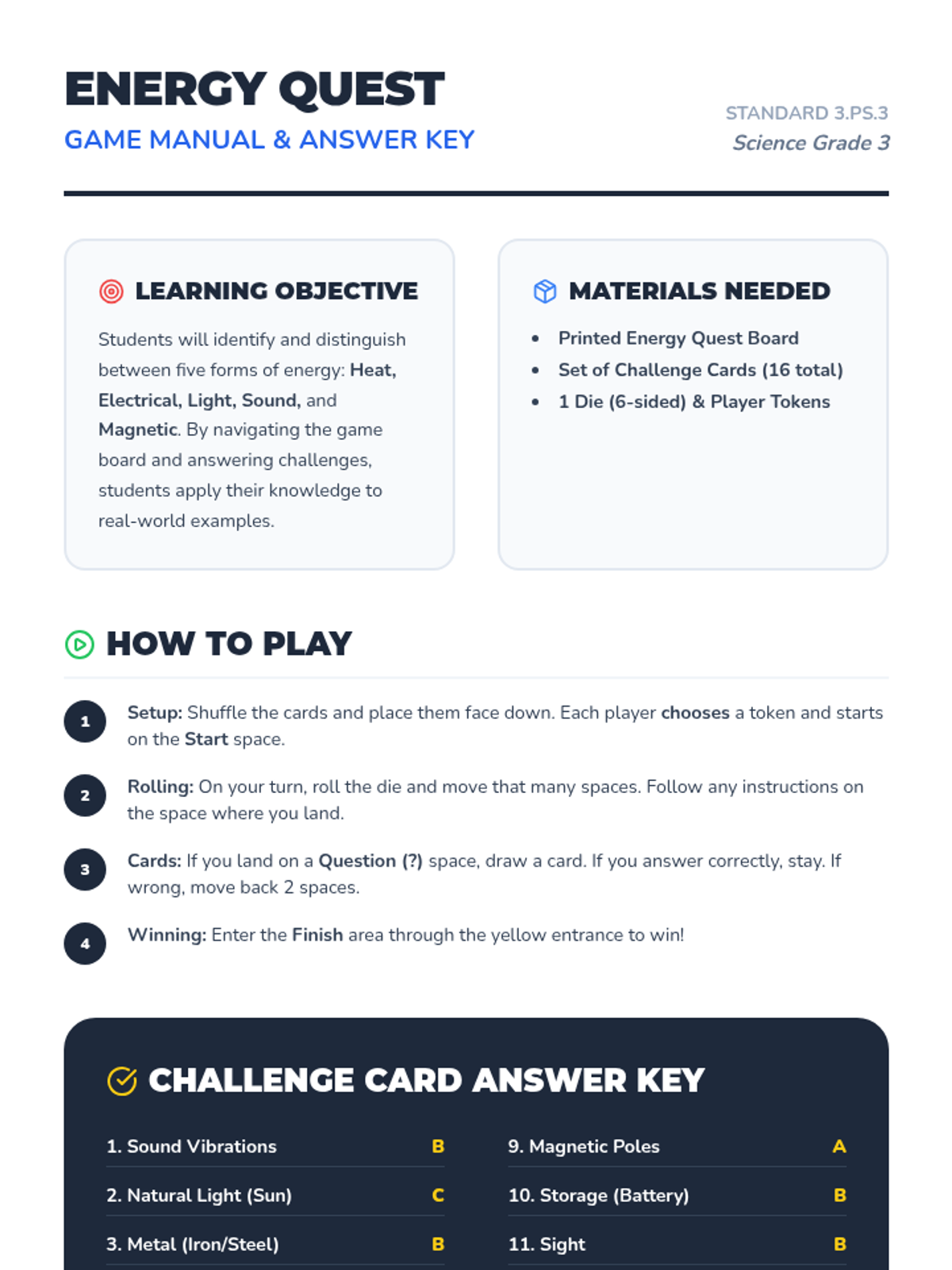
A high-energy science lesson where students explore the five forms of energy (heat, electrical, light, sound, and magnetic) through a collaborative board game and interactive presentation.
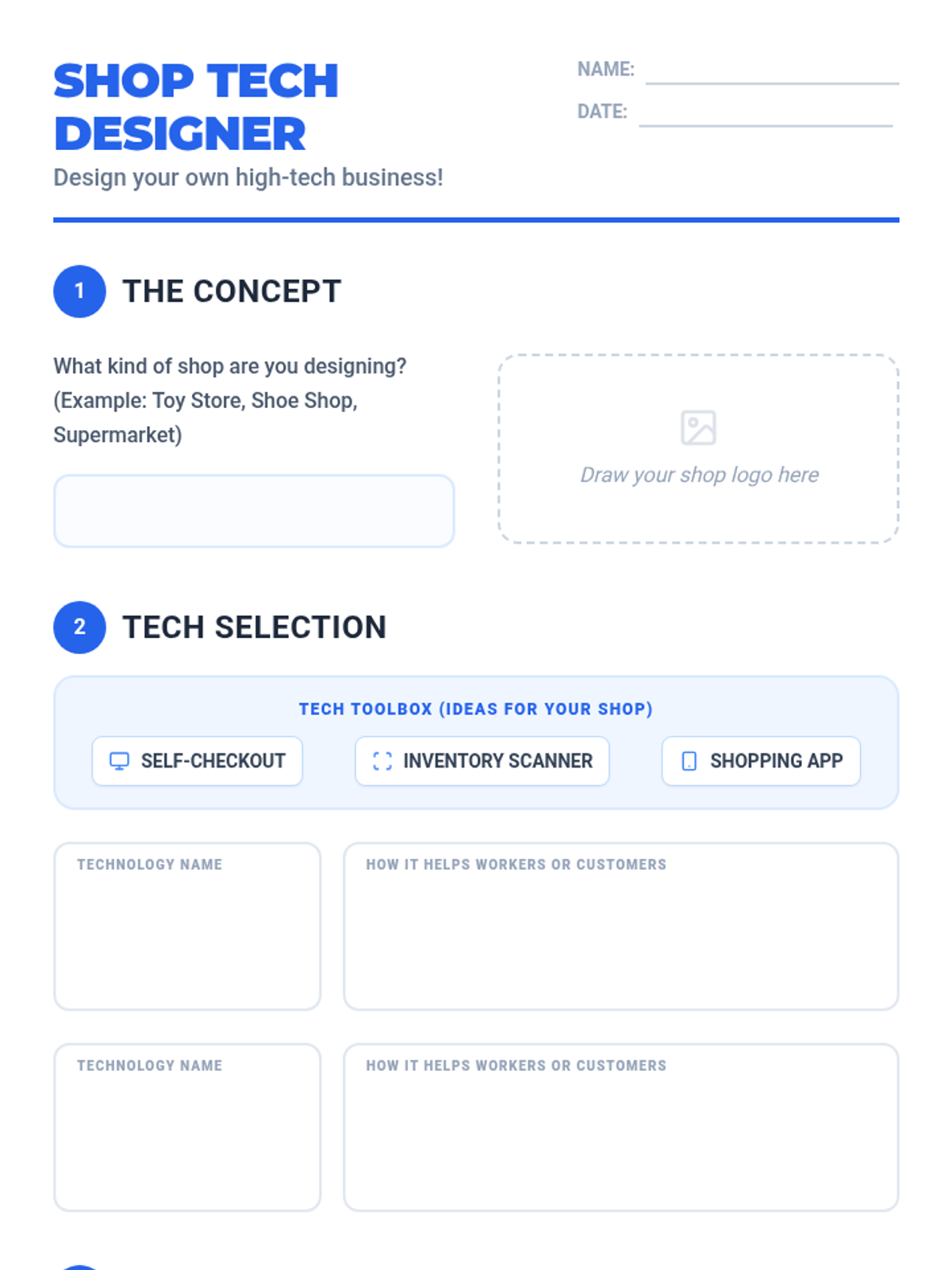
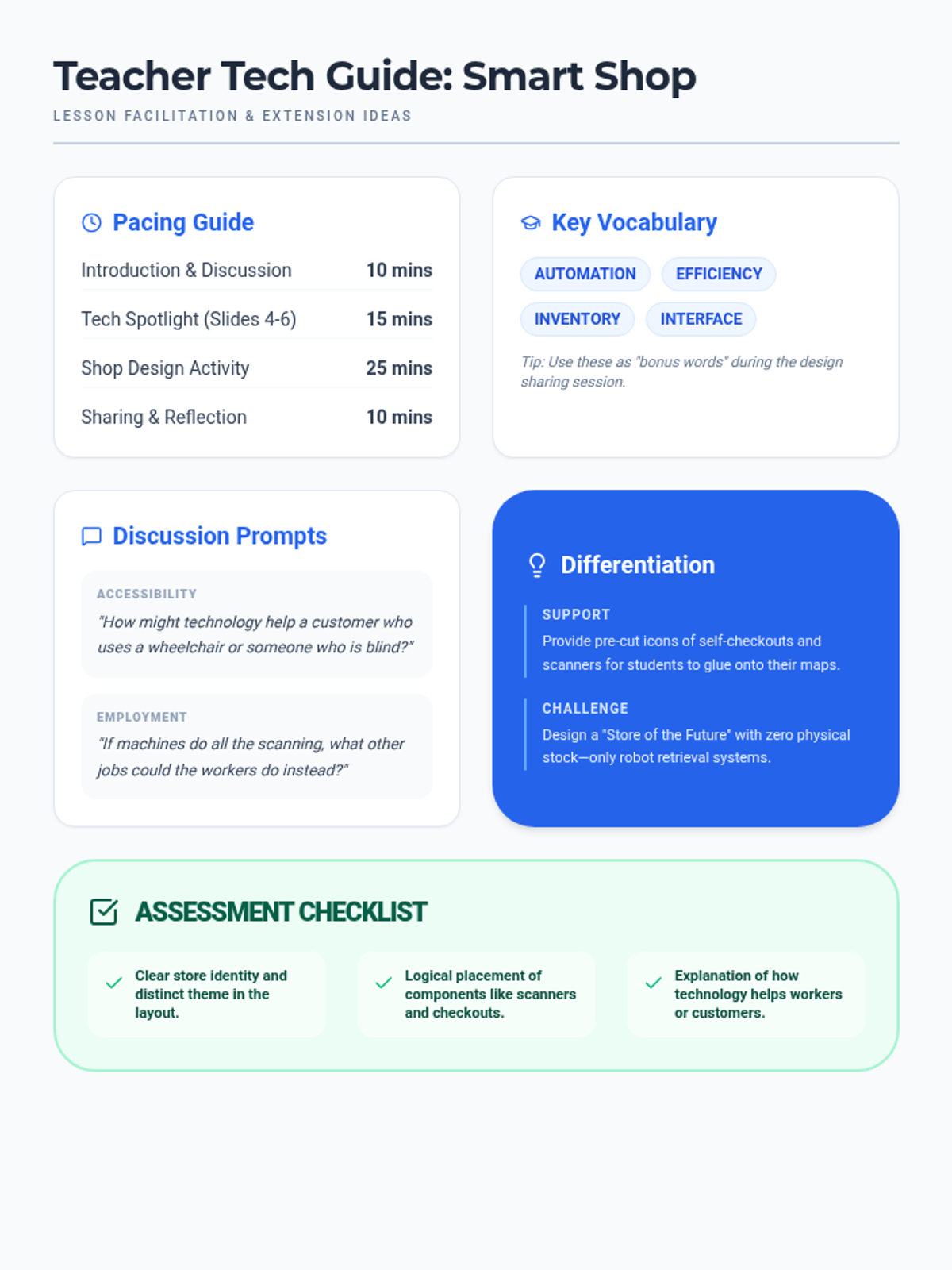
Students explore how technology like self-checkouts, scanners, and apps transform the shopping experience for both workers and customers. The lesson culminates in a creative project where students design their own tech-integrated shop.
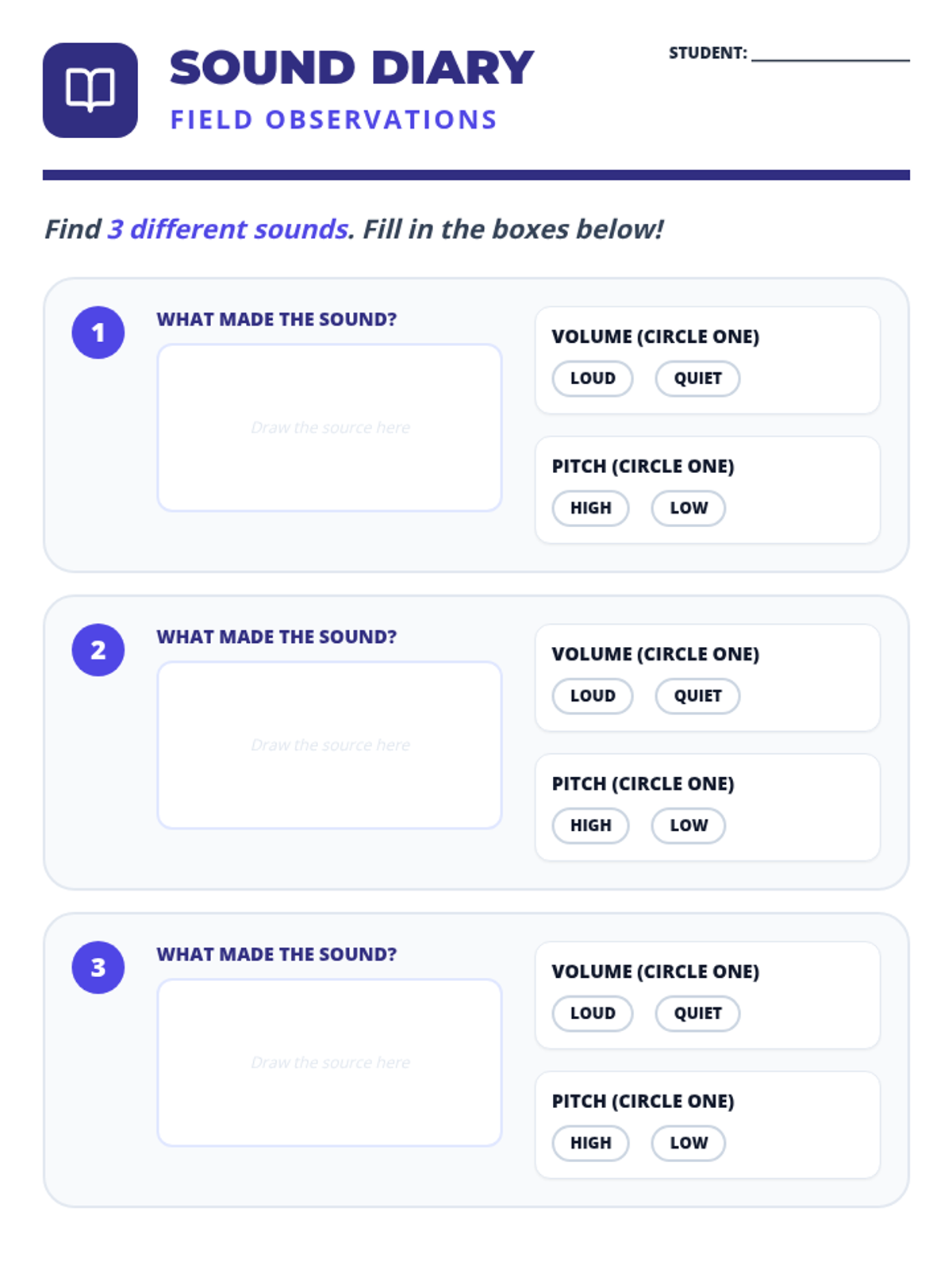
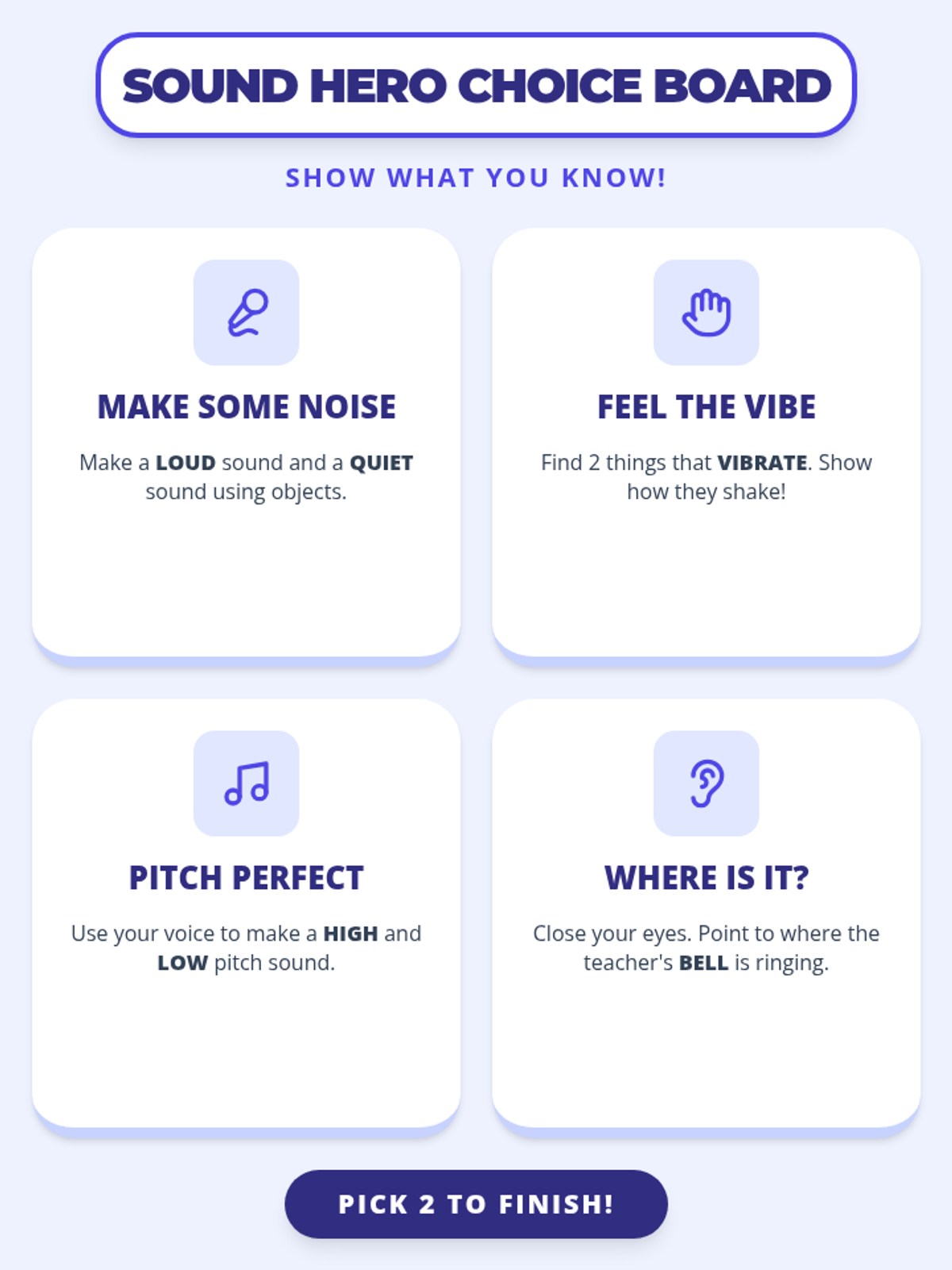
A cumulative review lesson where students synthesize their knowledge through a visual diary and choice board assessment.
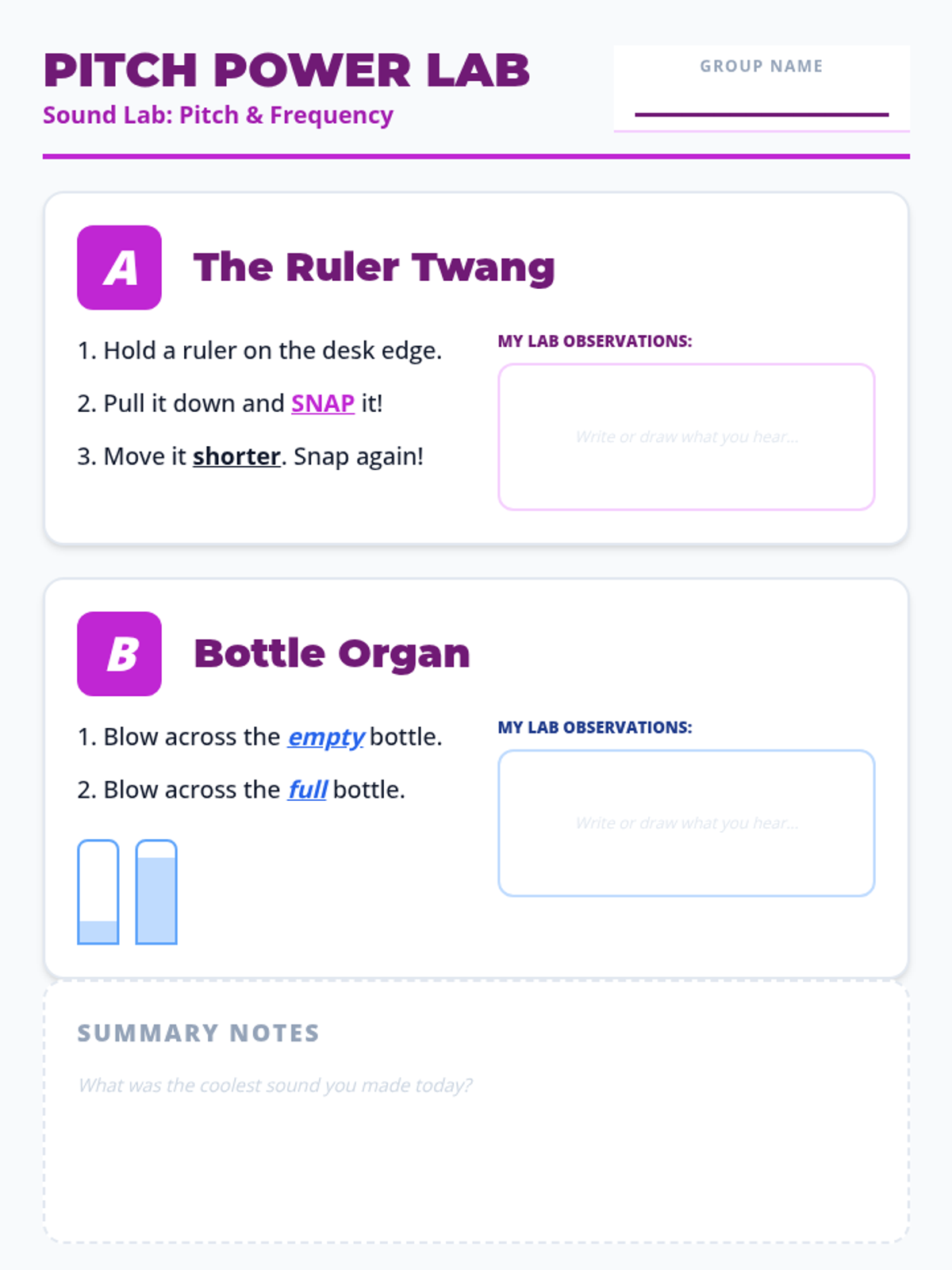
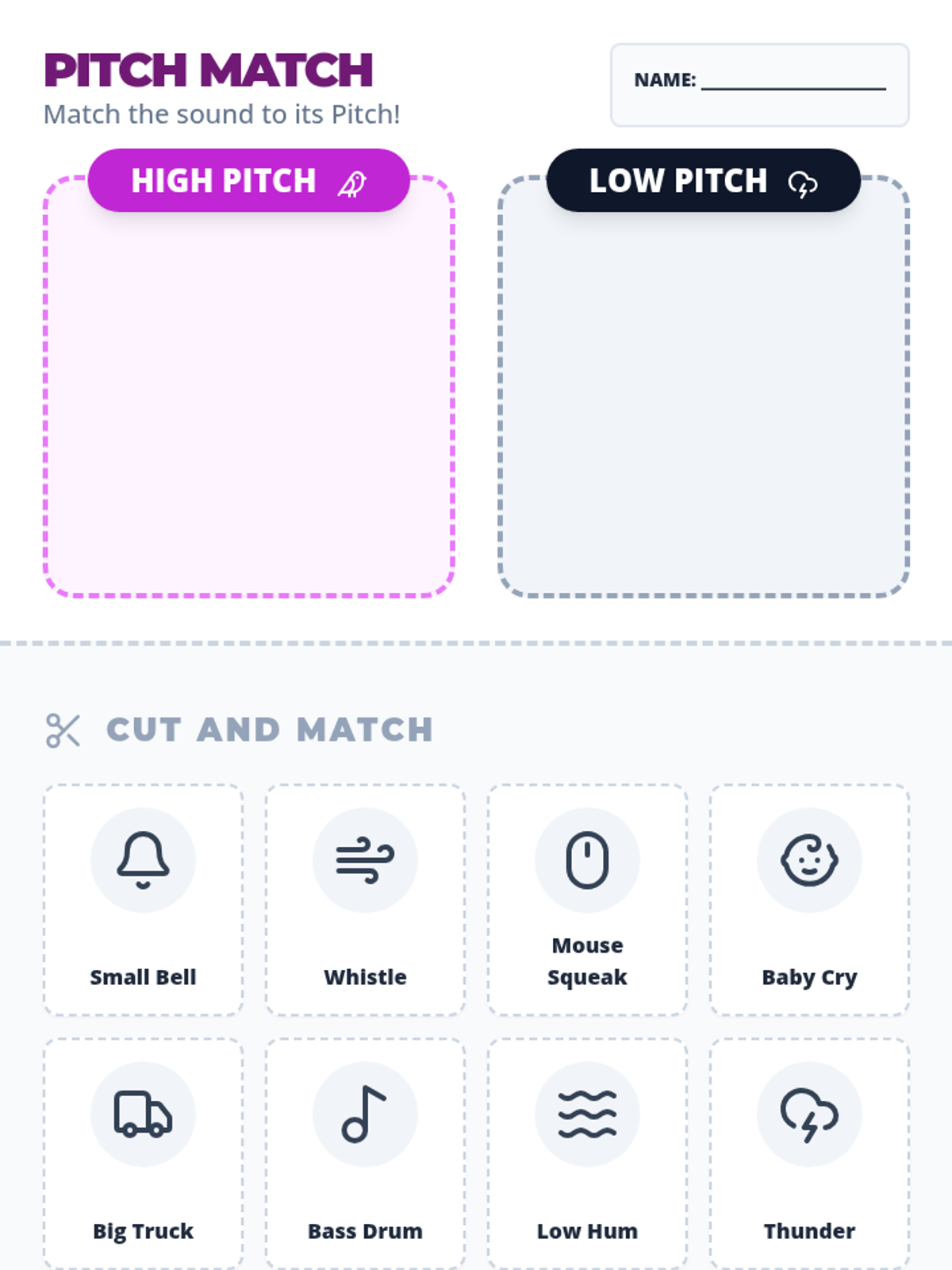
Introduces pitch and frequency through interactive lab stations and a sorting activity comparing high and low pitch sounds.
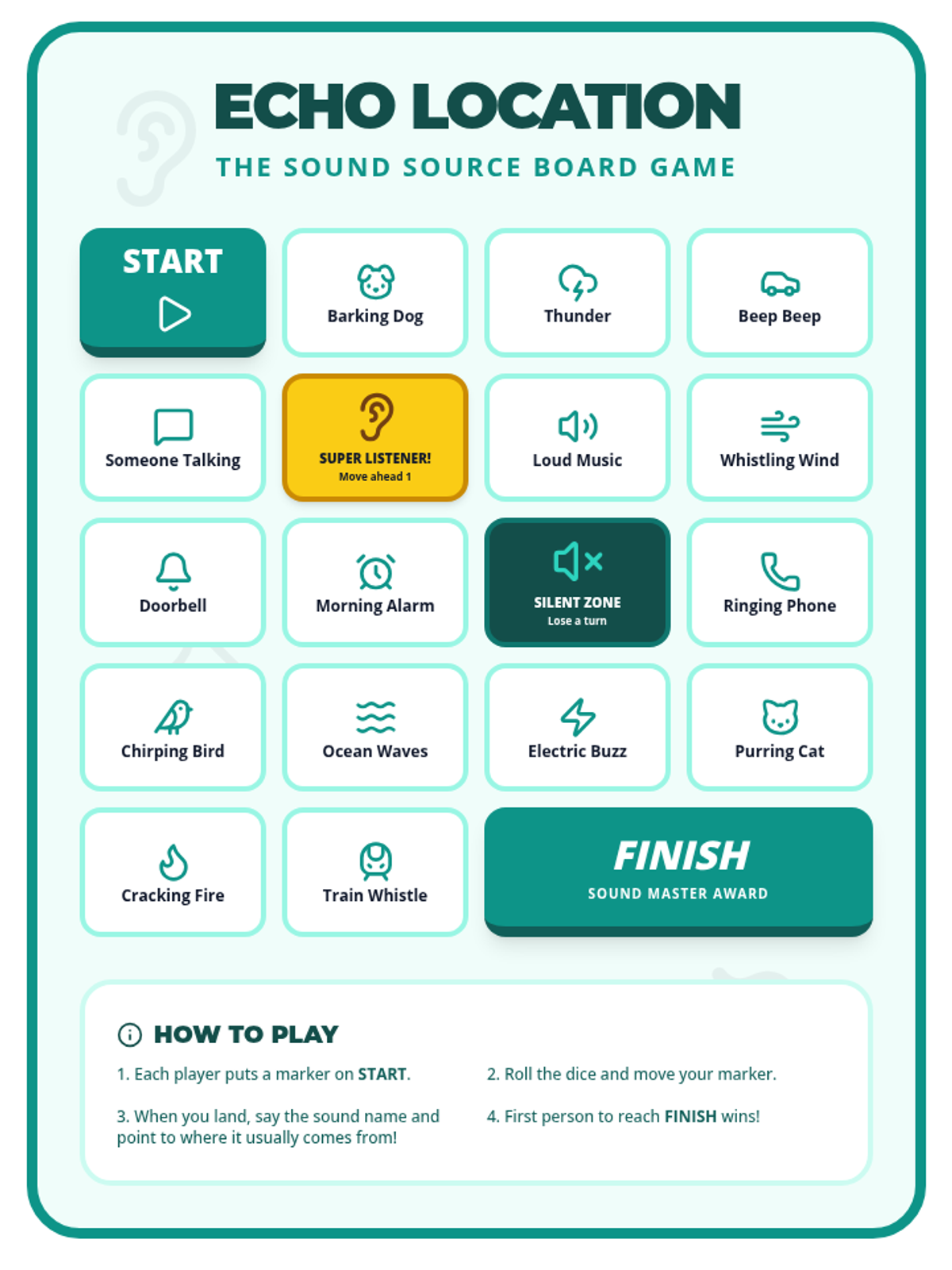
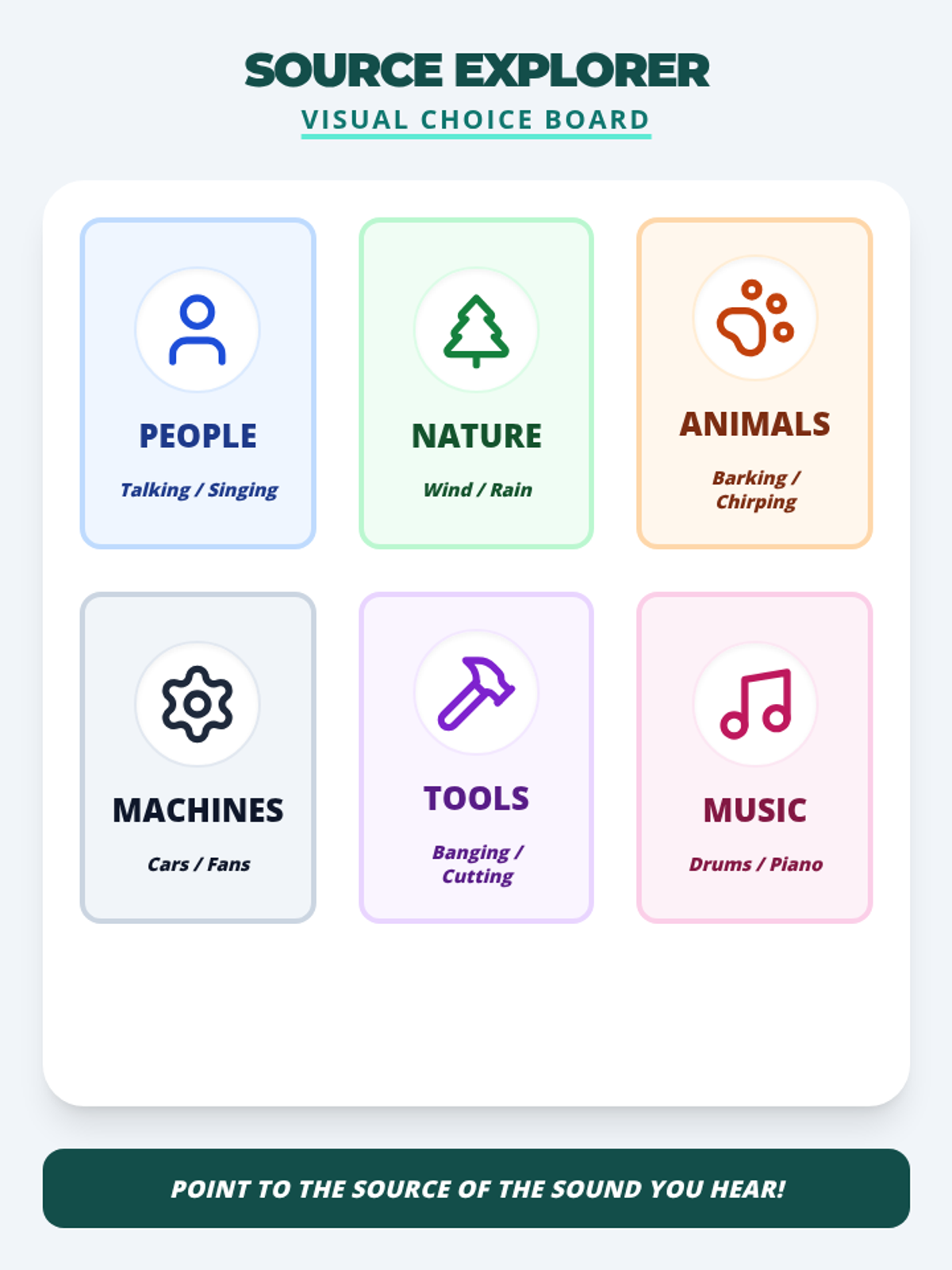
Focuses on identifying where sound comes from and how it travels. Includes a printable board game and a visual choice board for identifying sound sources.
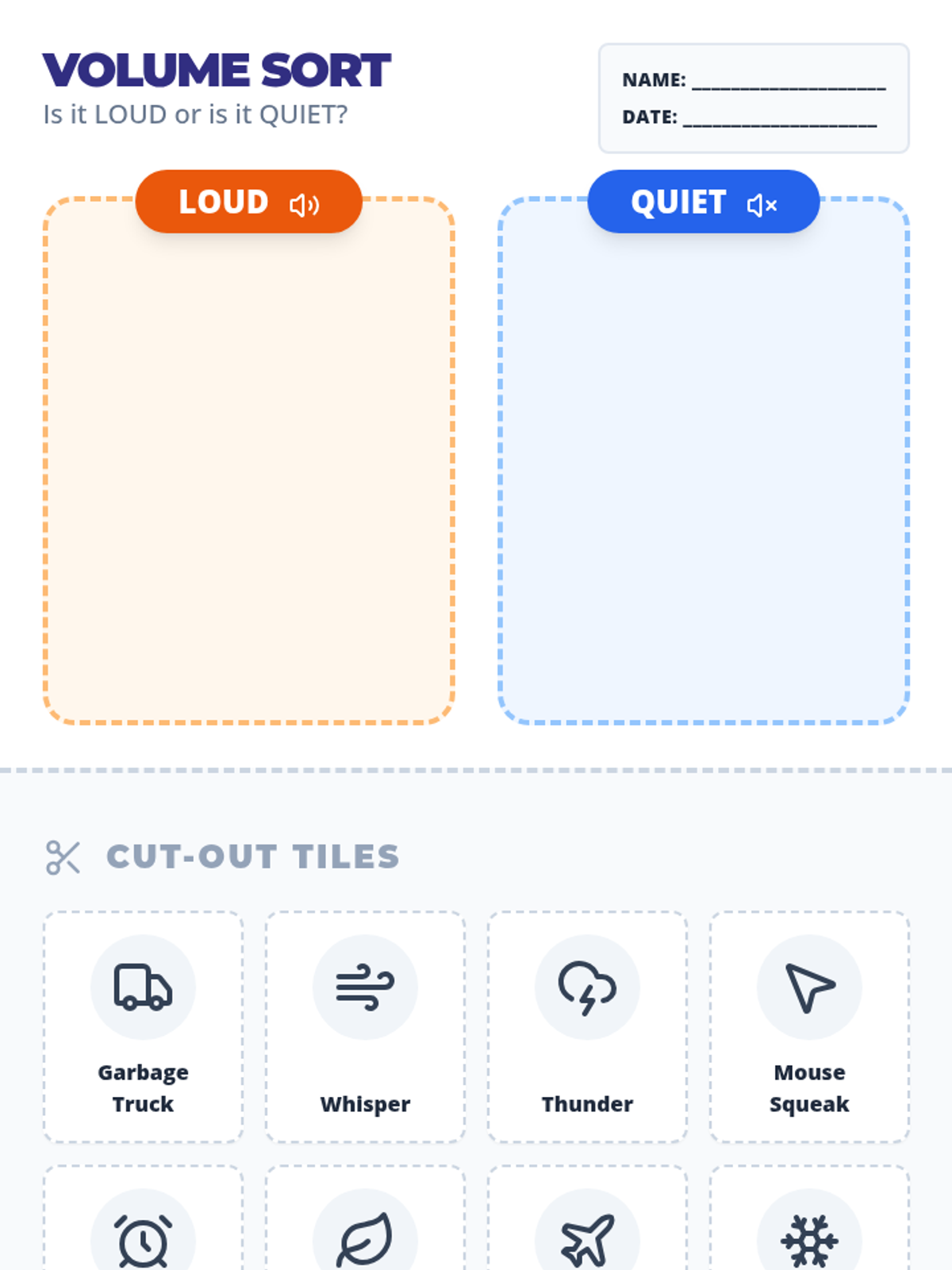
Students explore how sound is created through vibrations and how the amount of energy changes volume. Includes hands-on lab stations and a volume sorting activity.
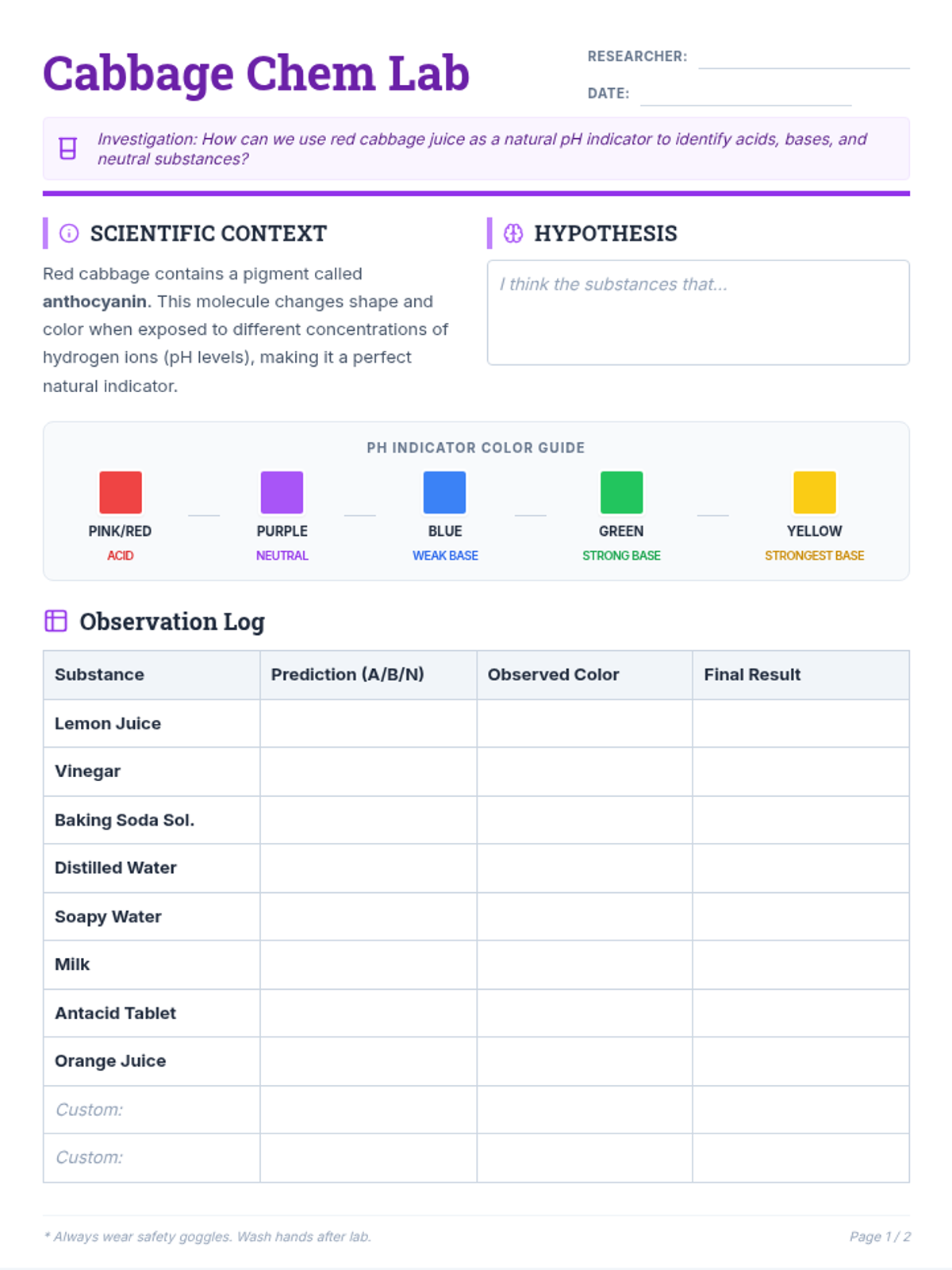
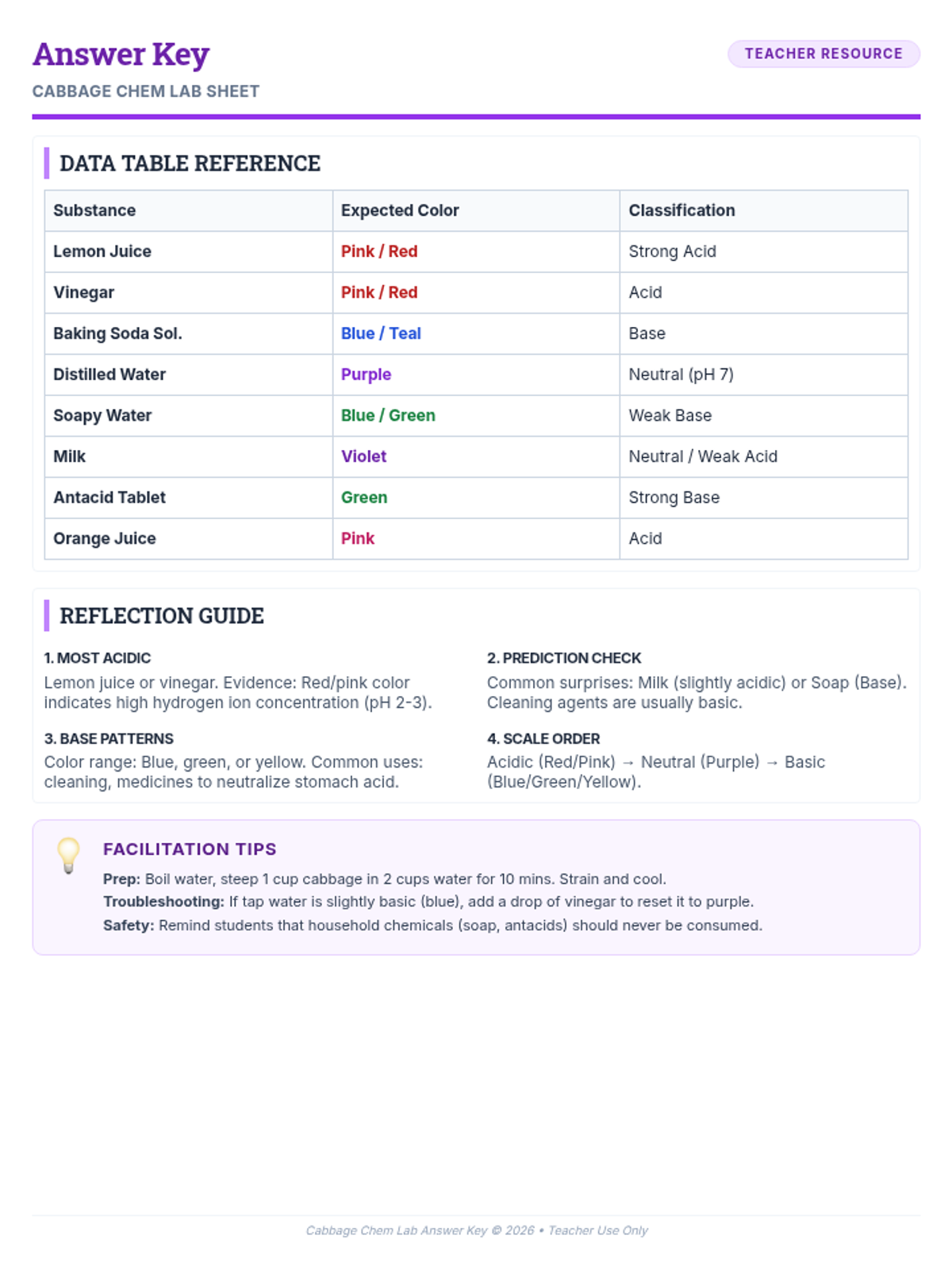
A hands-on investigation into pH levels using red cabbage as a natural indicator to identify acids, bases, and neutral substances.
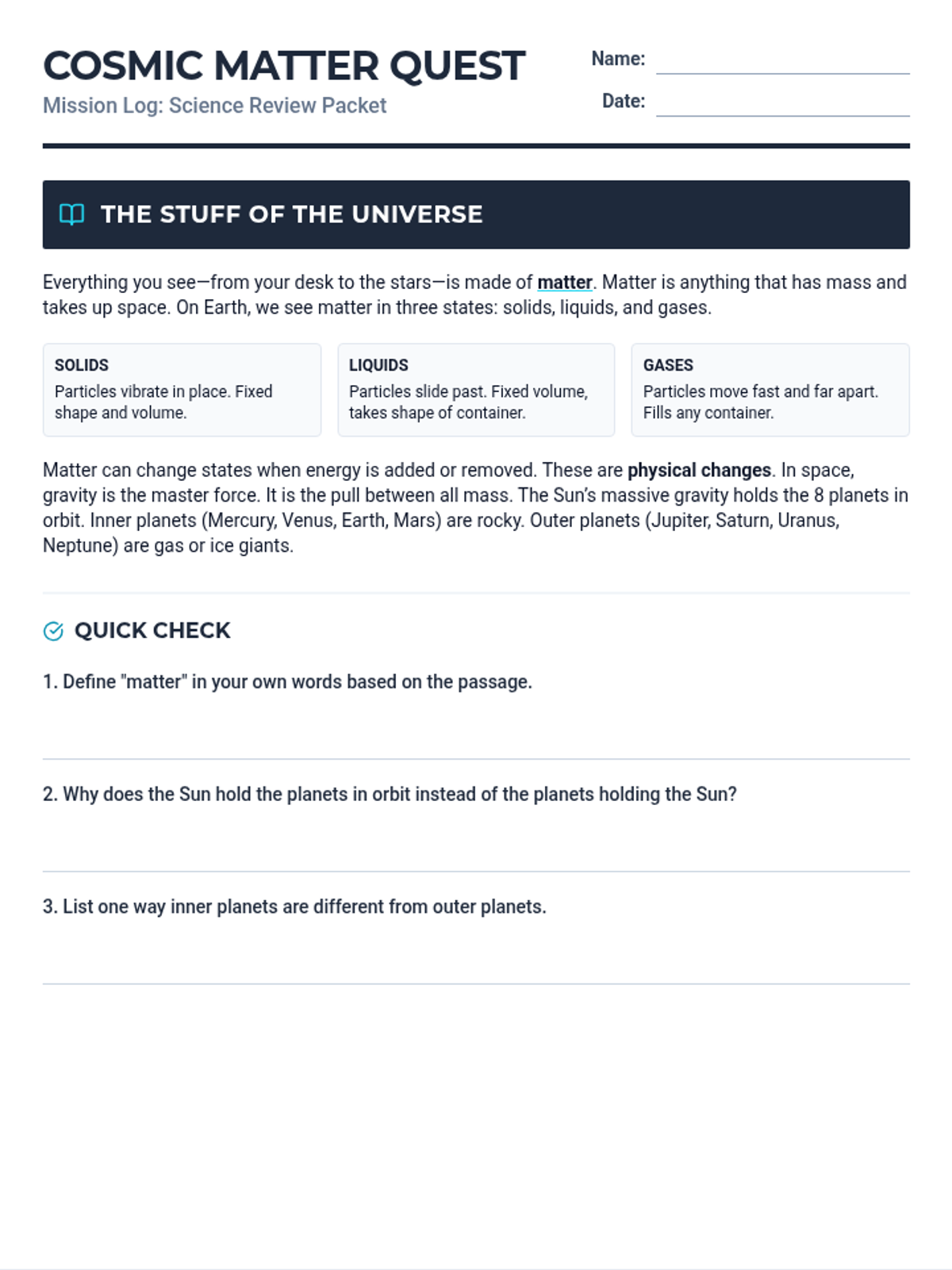
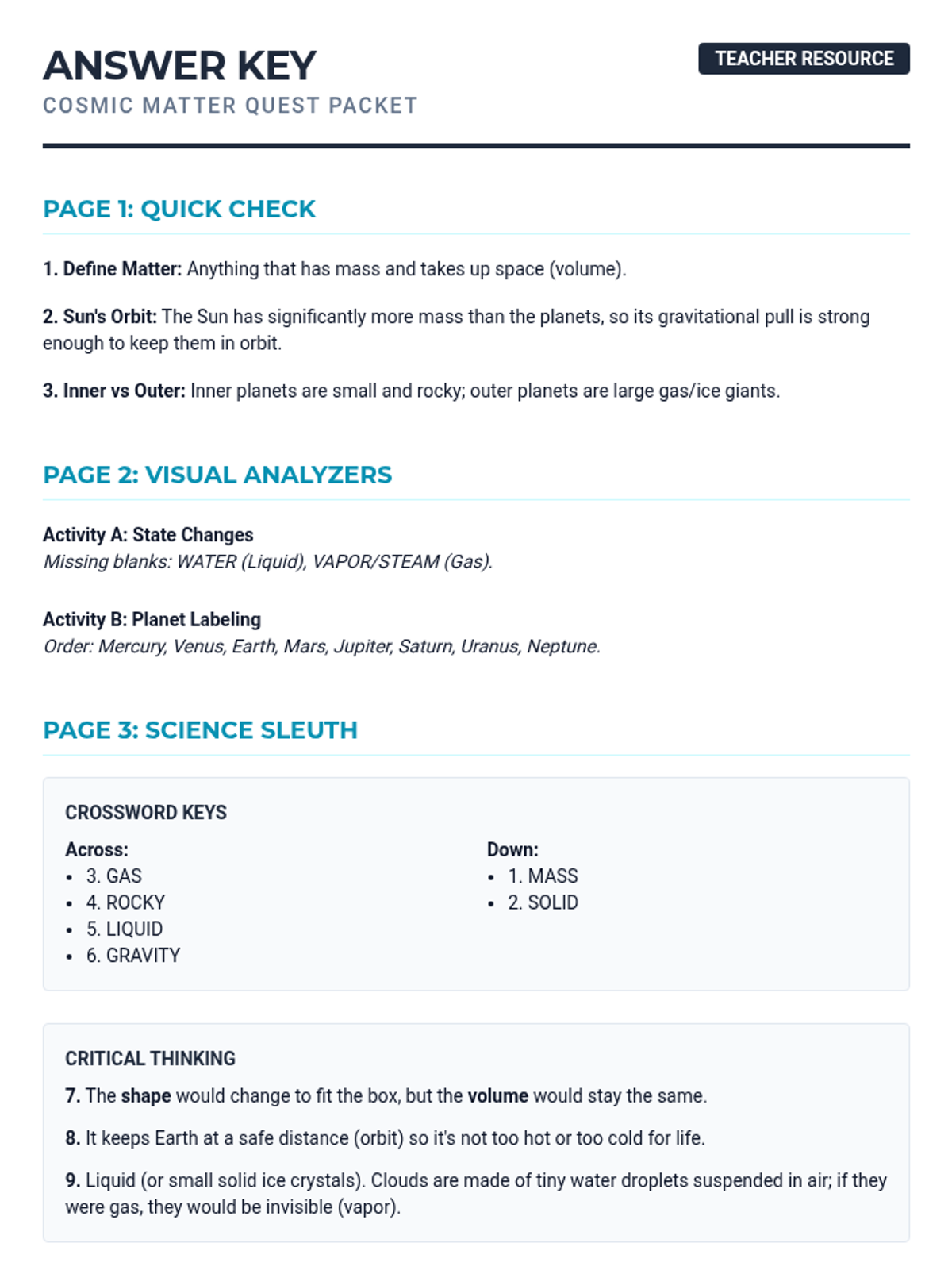
A comprehensive science review packet covering matter, its interactions, and space systems designed for independent student work.
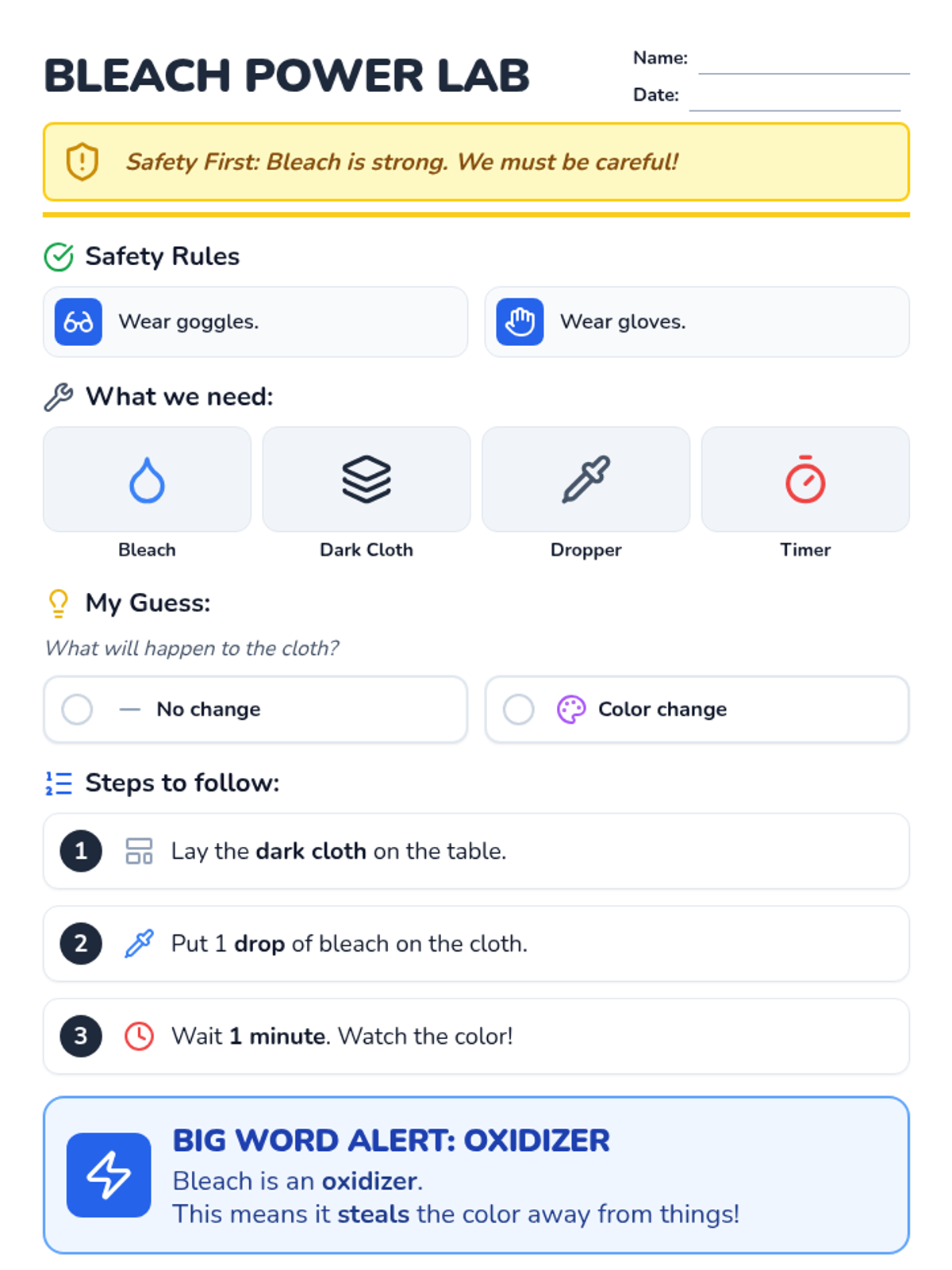
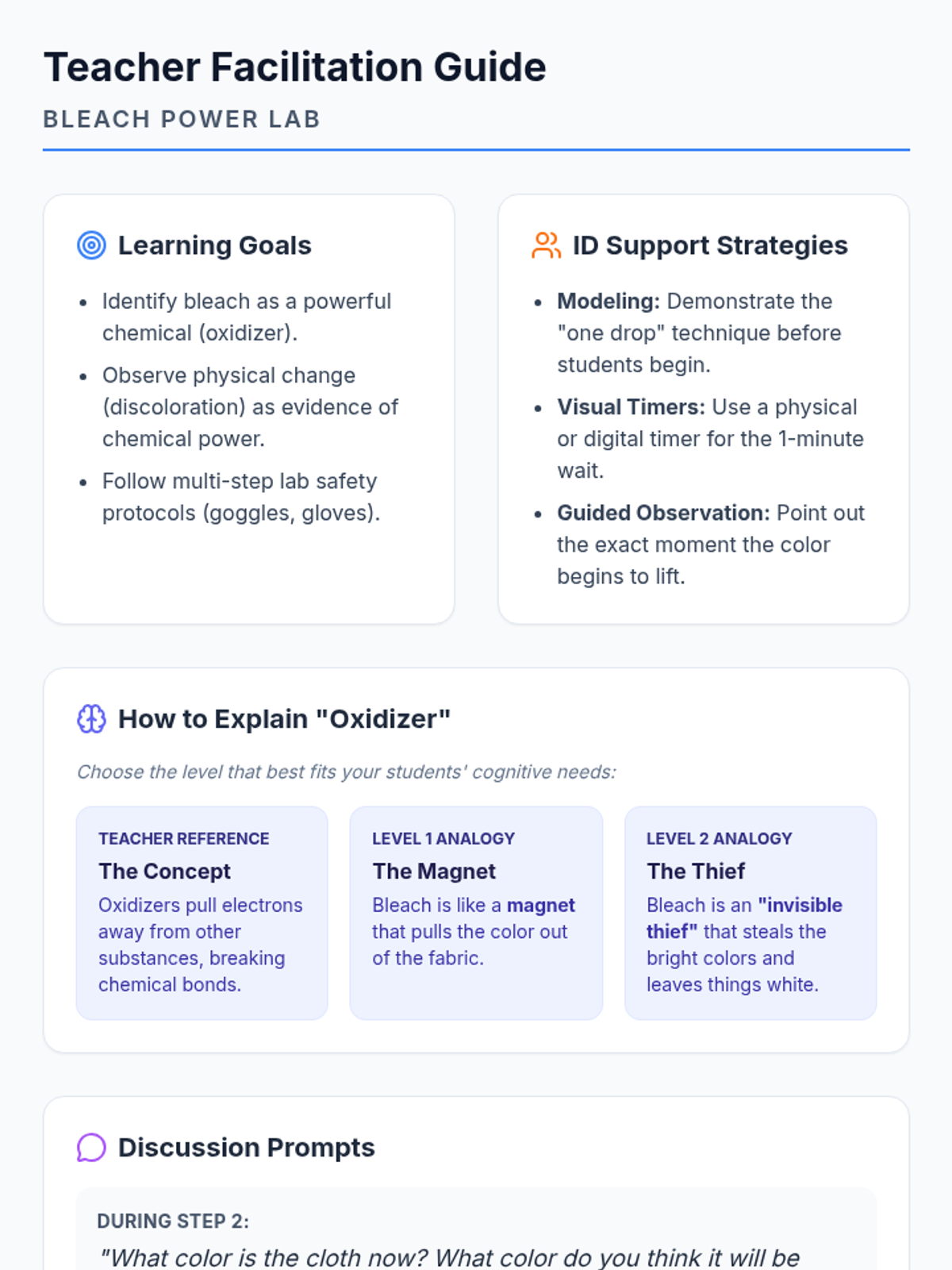
A hands-on chemistry lab designed for students with intellectual disabilities to observe the oxidizing power of bleach through fabric discoloration. The lesson emphasizes lab safety and the chemical strength of household cleaners.
An introductory session reframing Computer Science from "coding on screens" to a tool for problem-solving and organizing thought.
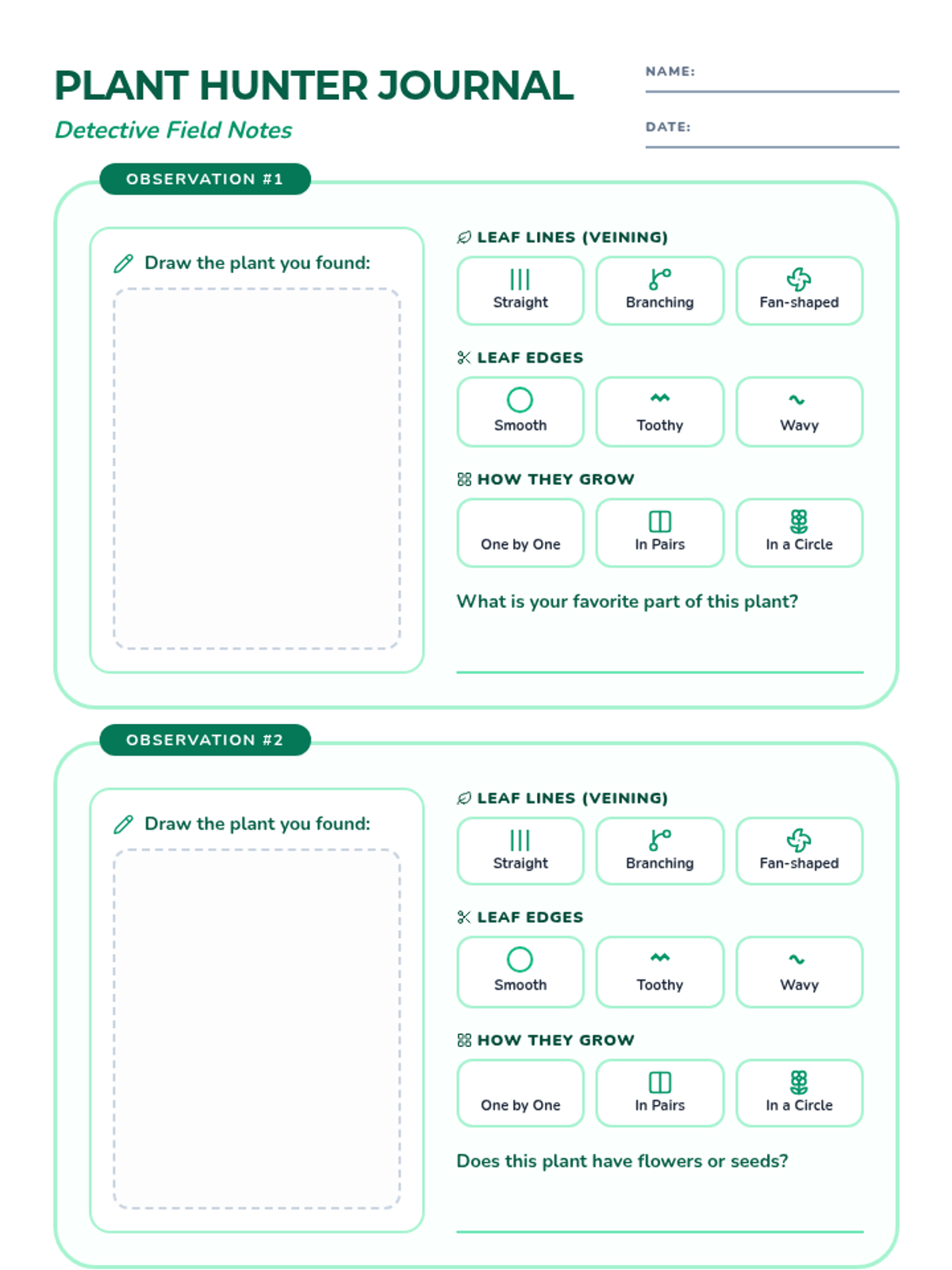
A hands-on exploration of plant characteristics where students observe and document leaf patterns, edges, and arrangements in their local environment.
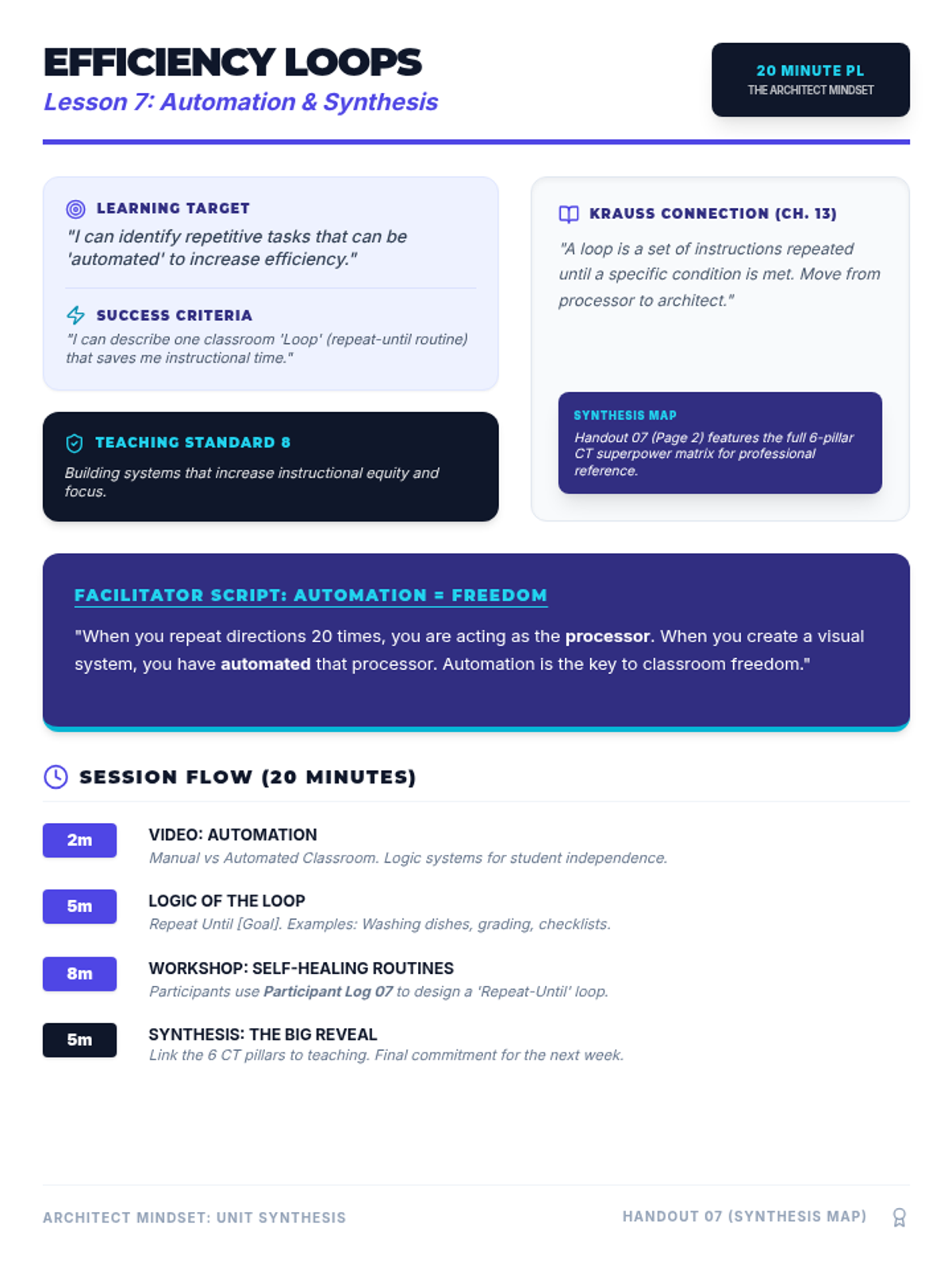
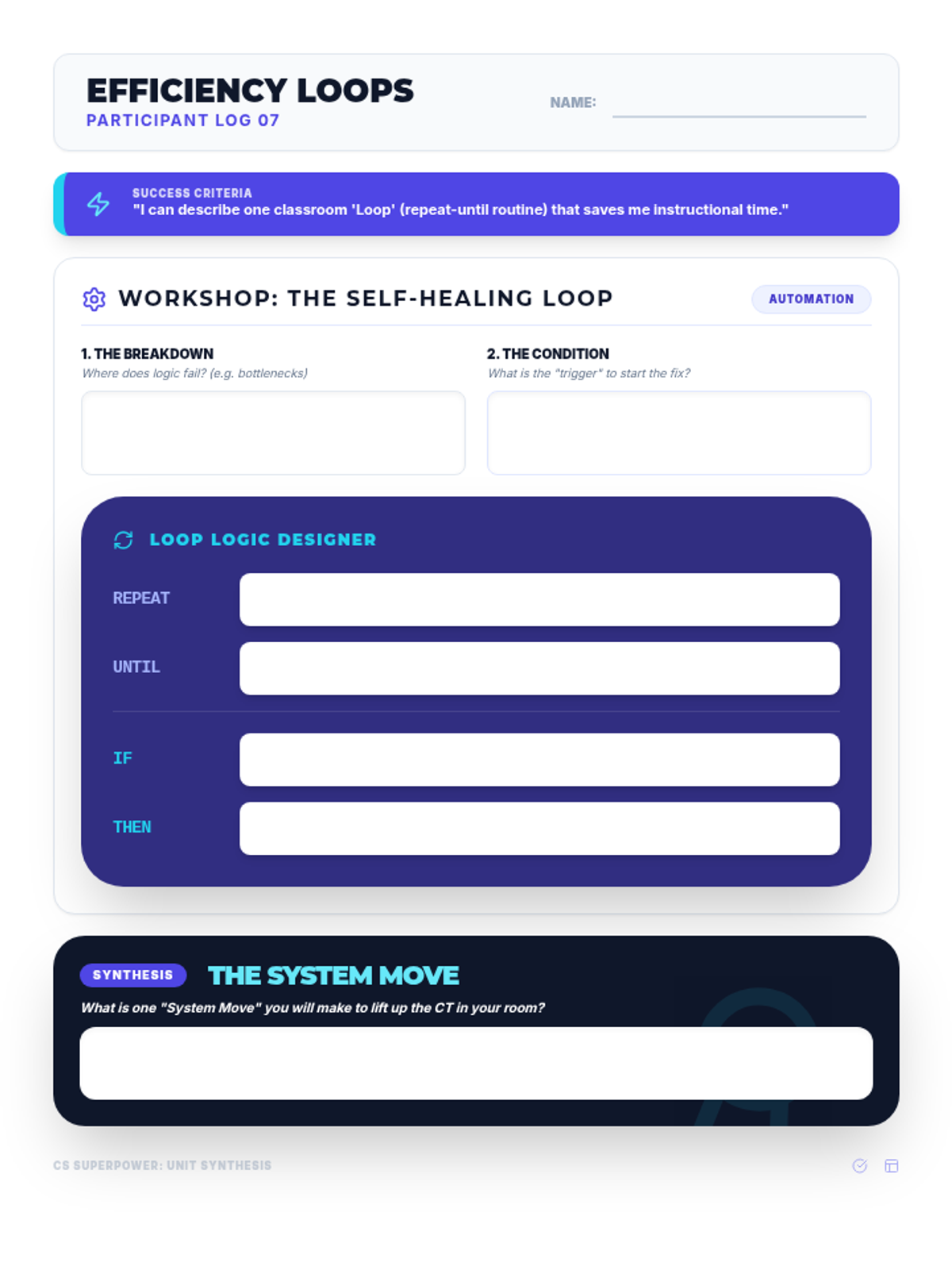
Identifying repetitive tasks that can be turned into "Loops" to increase classroom efficiency and teacher focus.
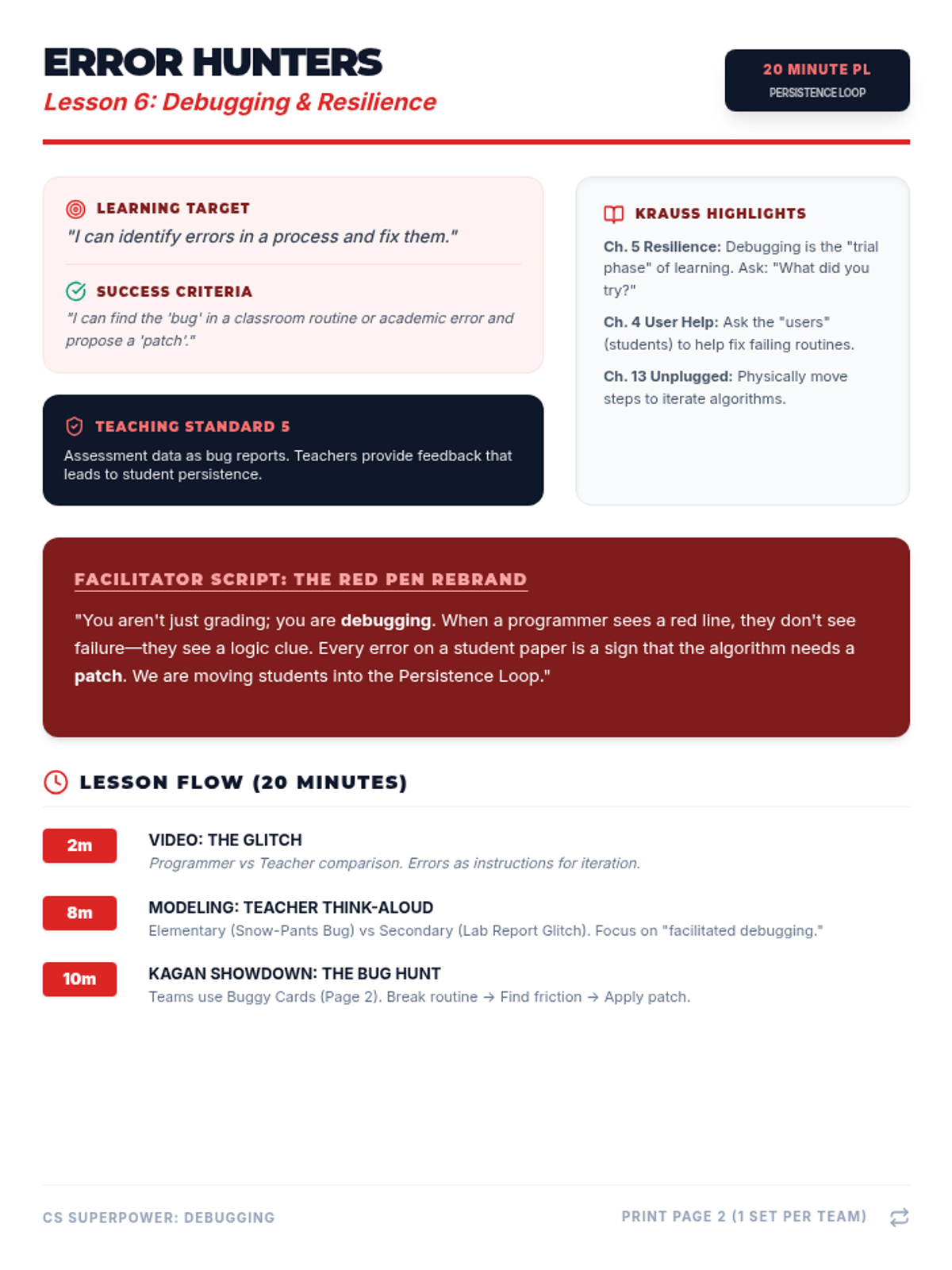
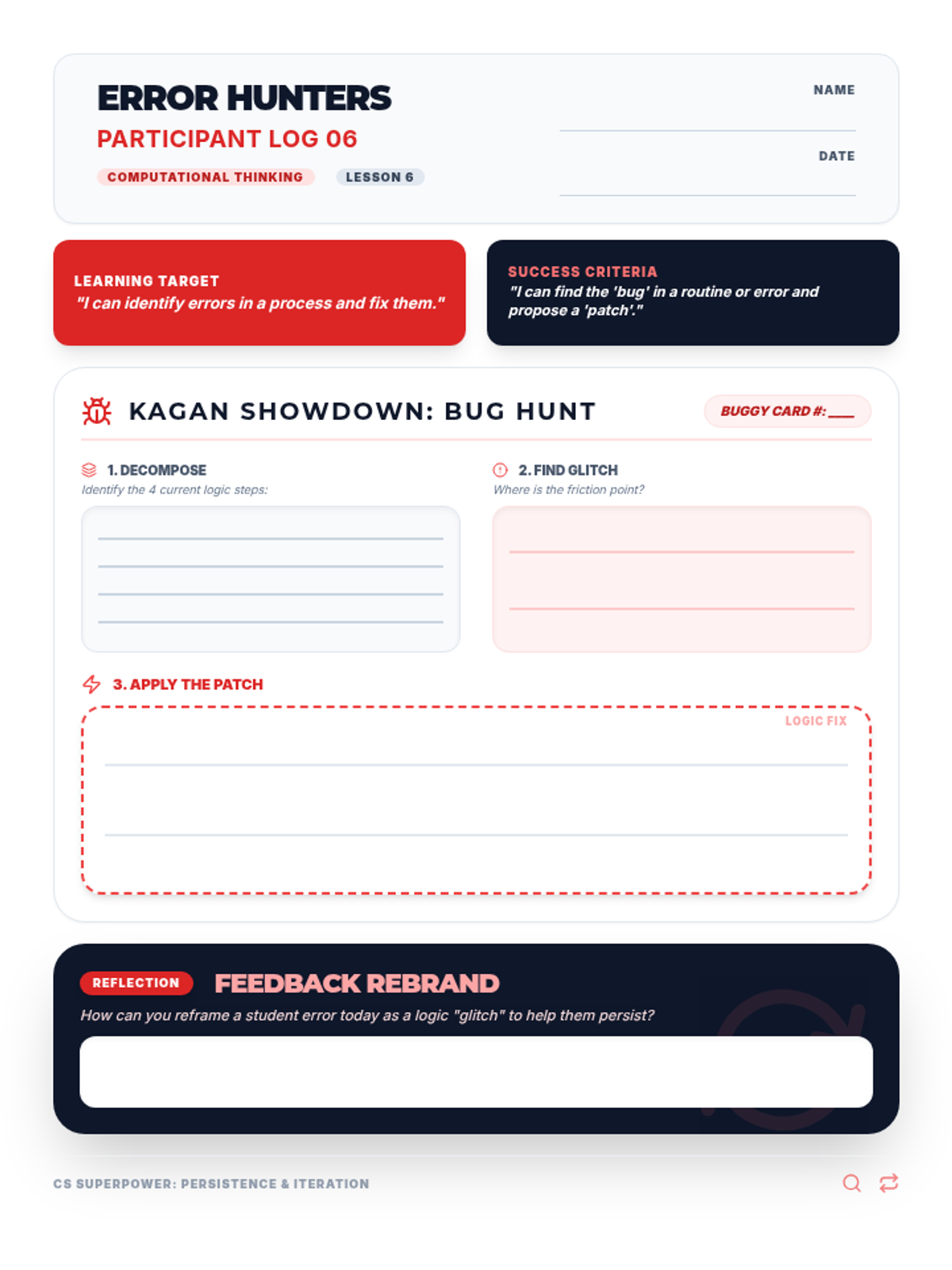
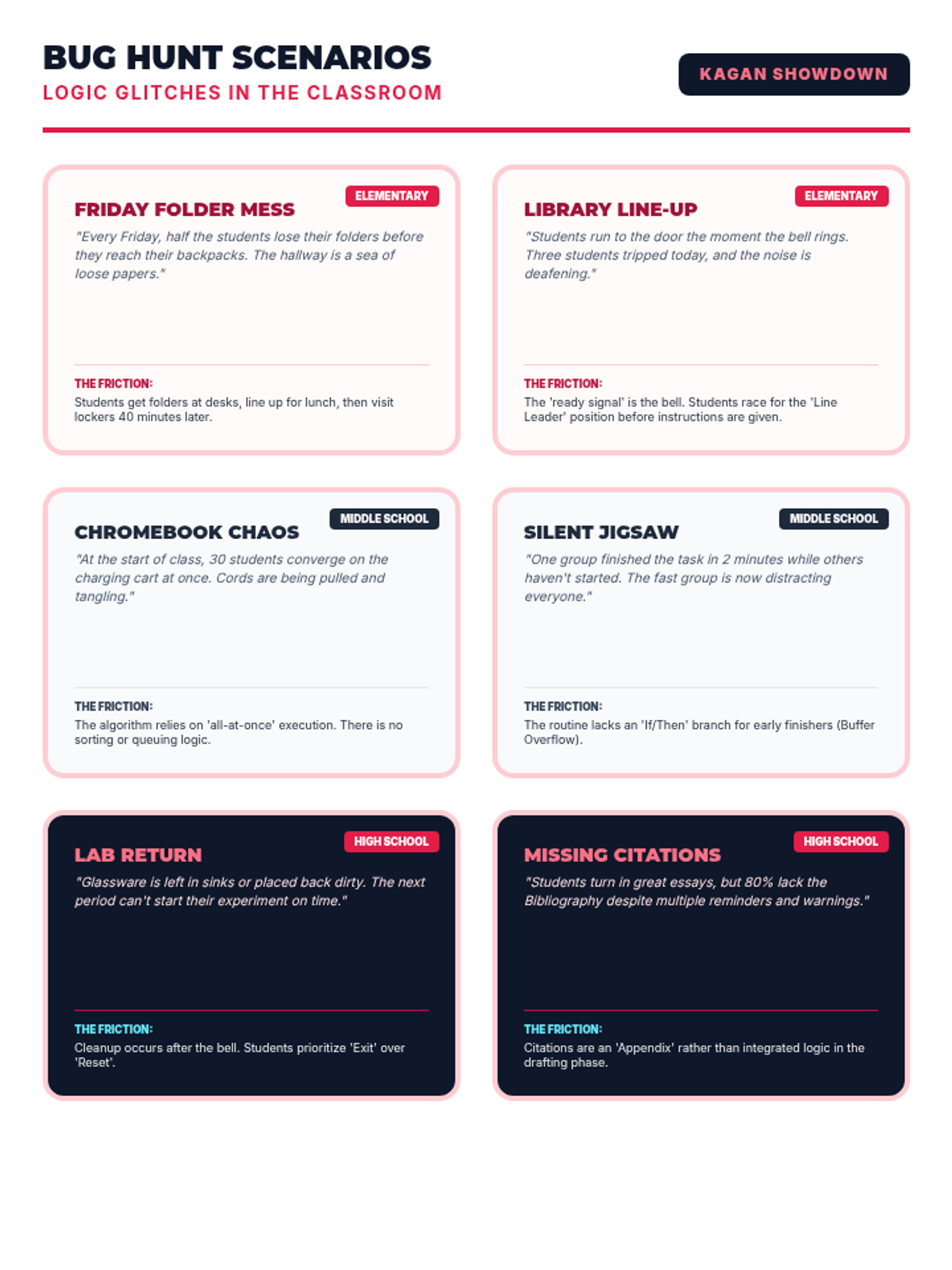
Rebranding grading and feedback as a "debugging" process to identify where student logic breaks down.
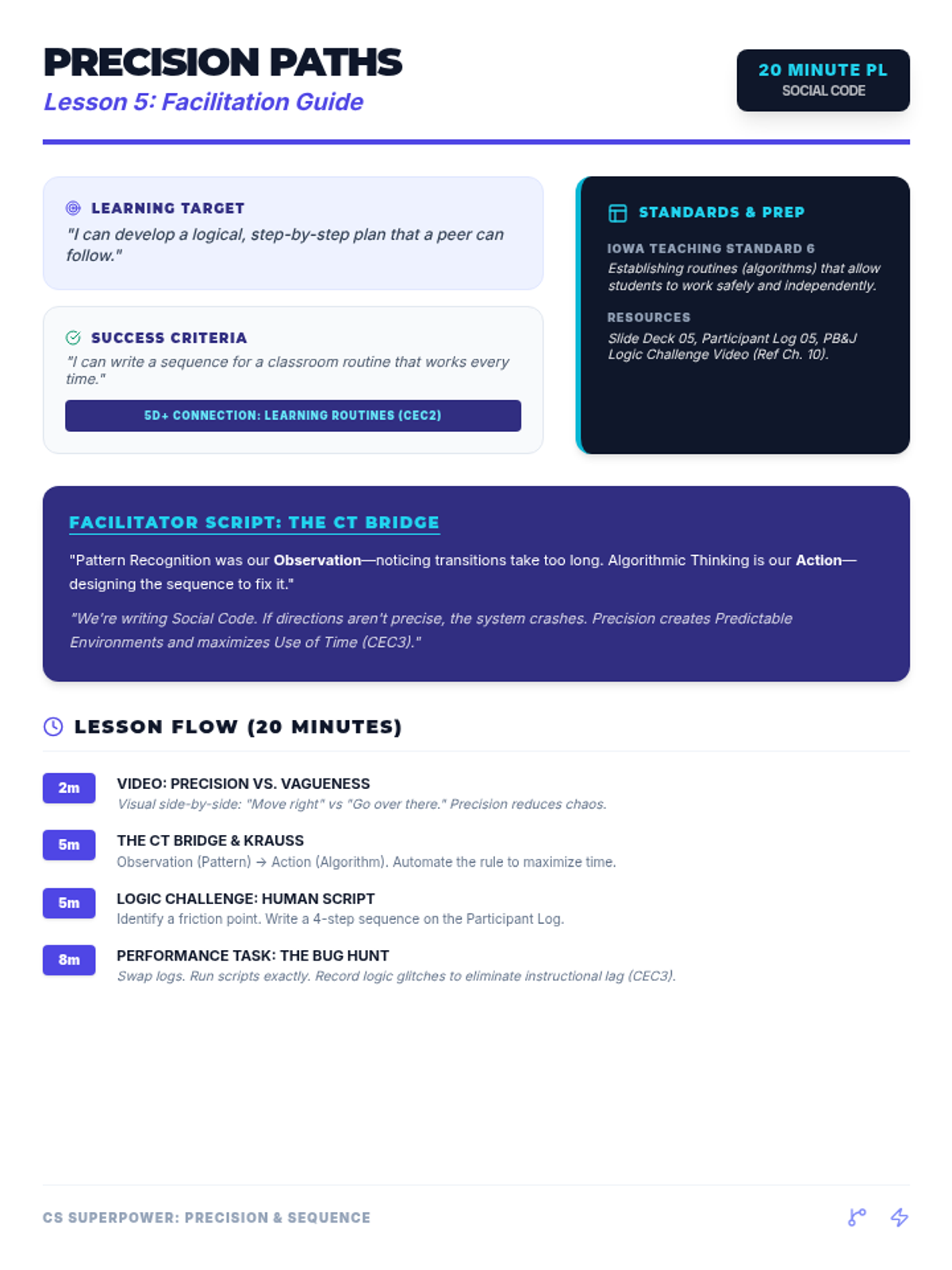
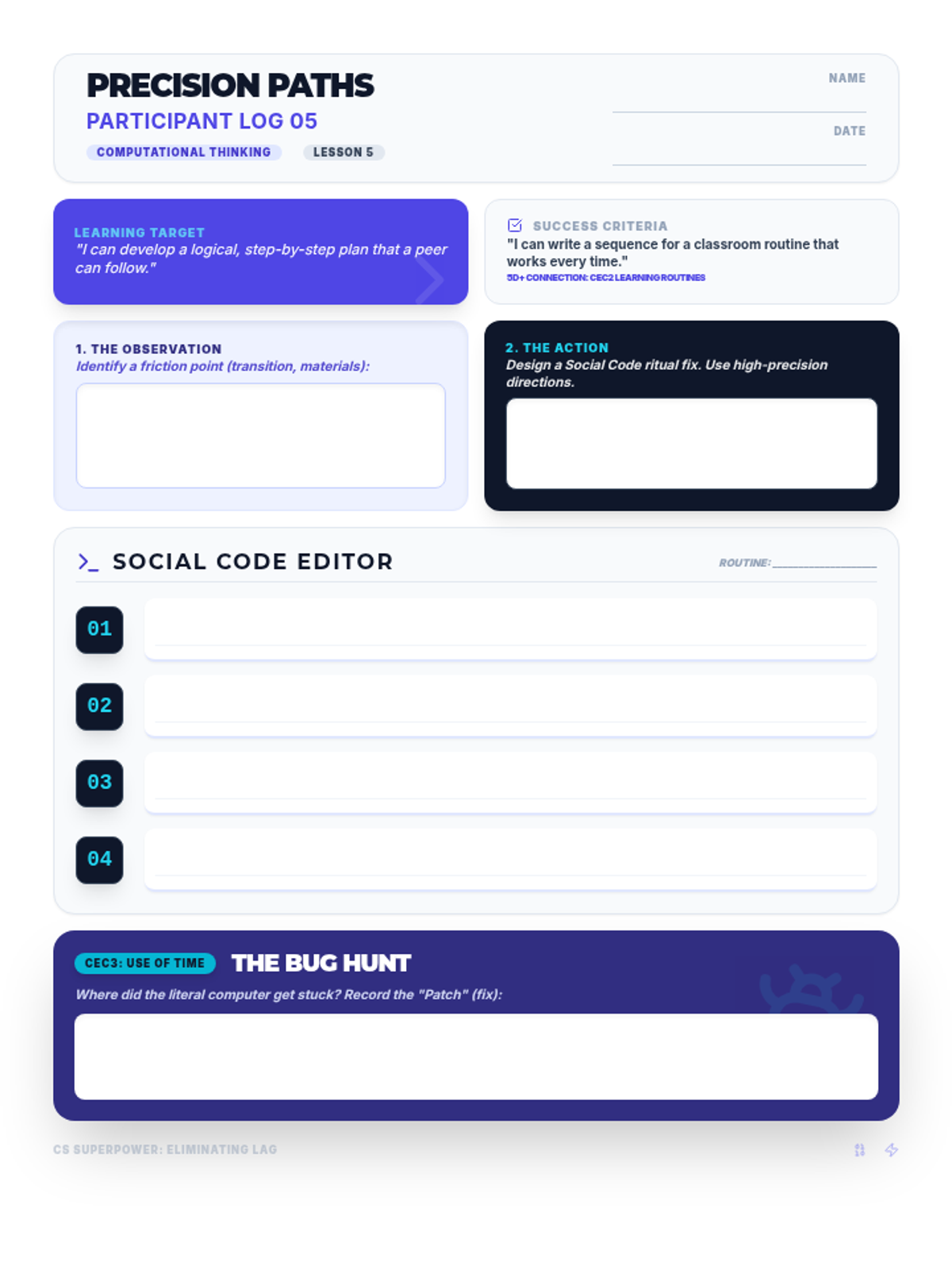
Developing logical, step-by-step plans (social code) that ensure precise and predictable classroom routines.
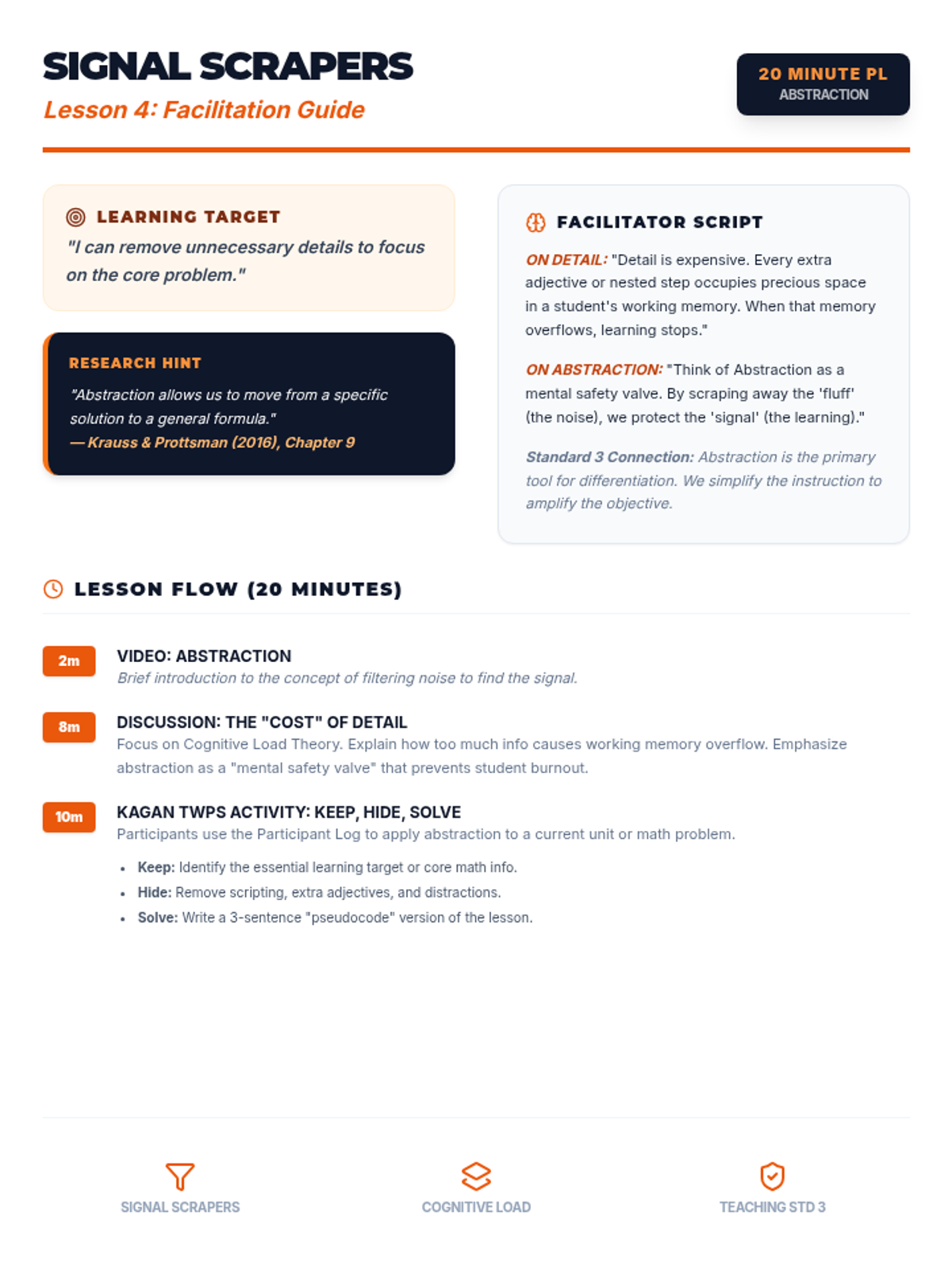
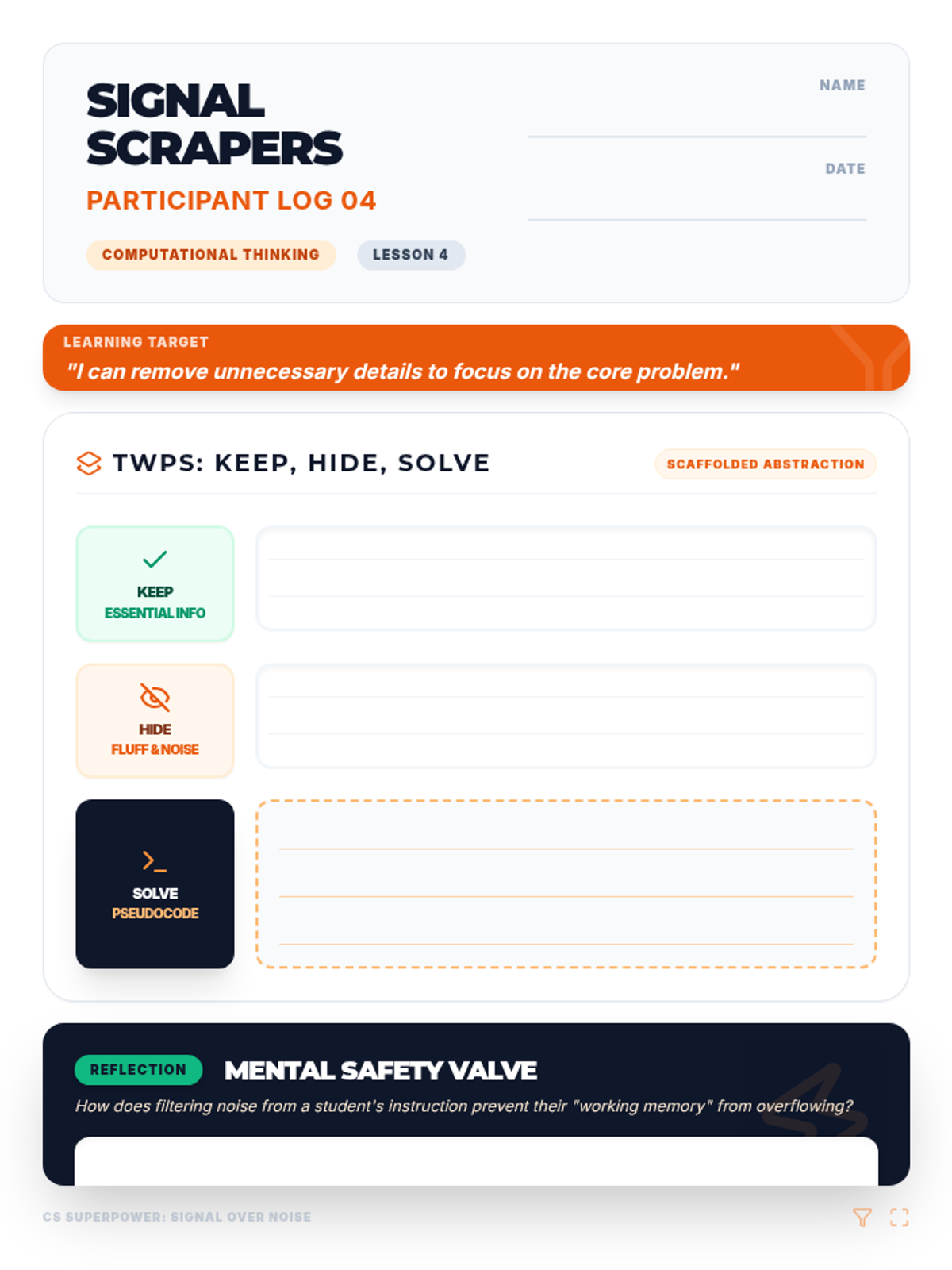
Teachers practice removing unnecessary details from lesson plans and instructions to focus on core learning objectives.
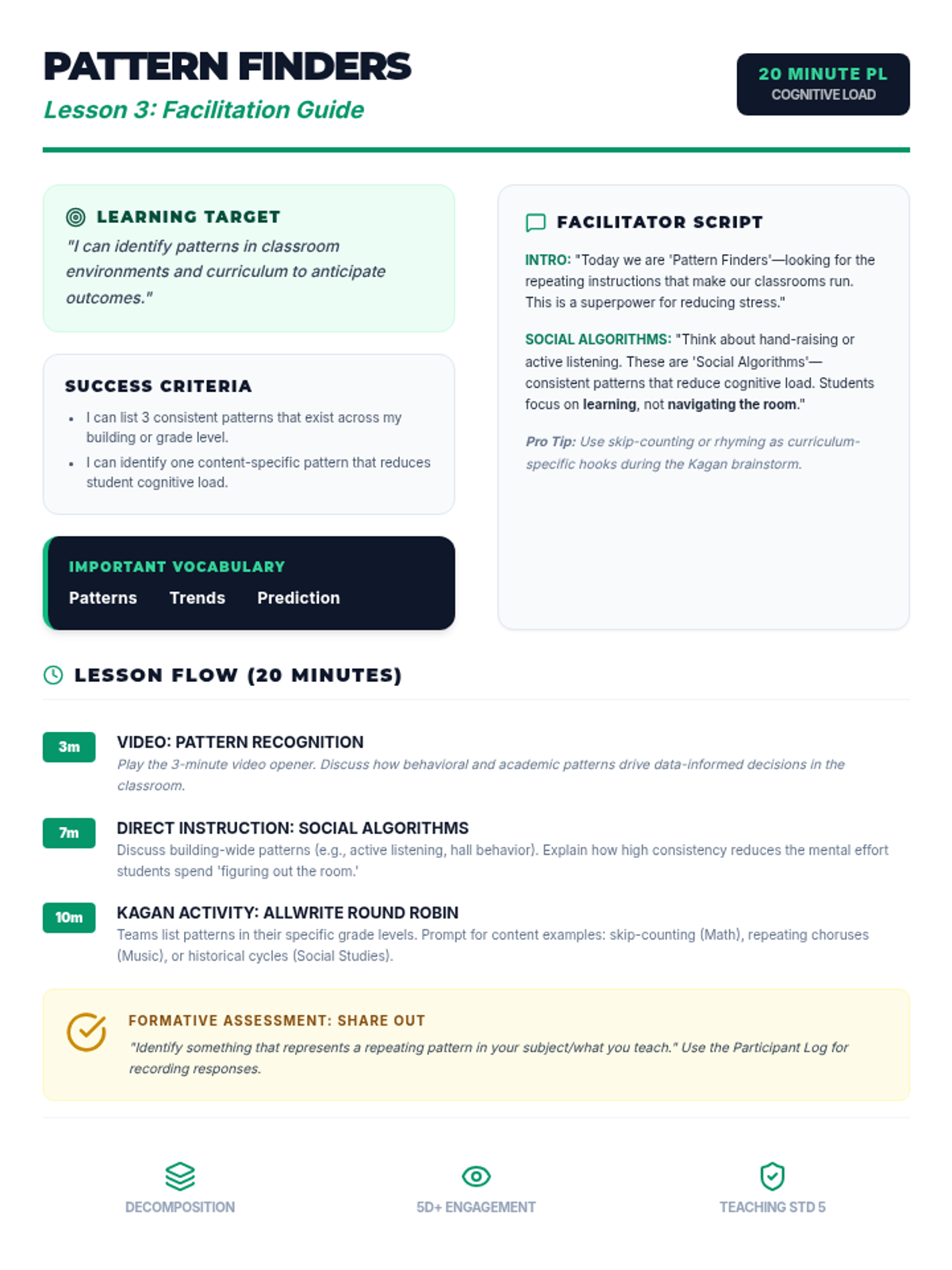
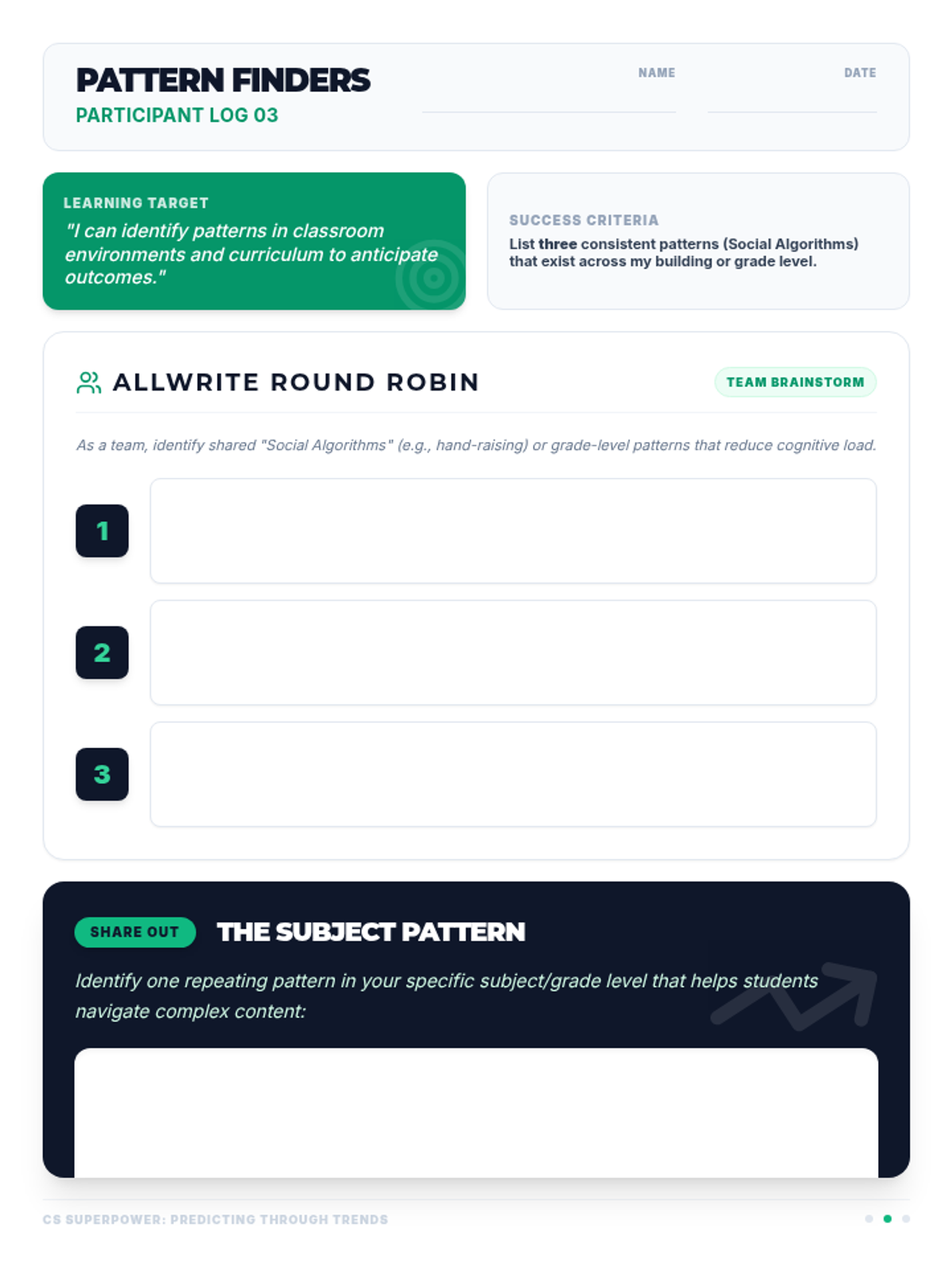
Explores how identifying patterns in classroom environments and curriculum helps anticipate outcomes and reduce cognitive load.
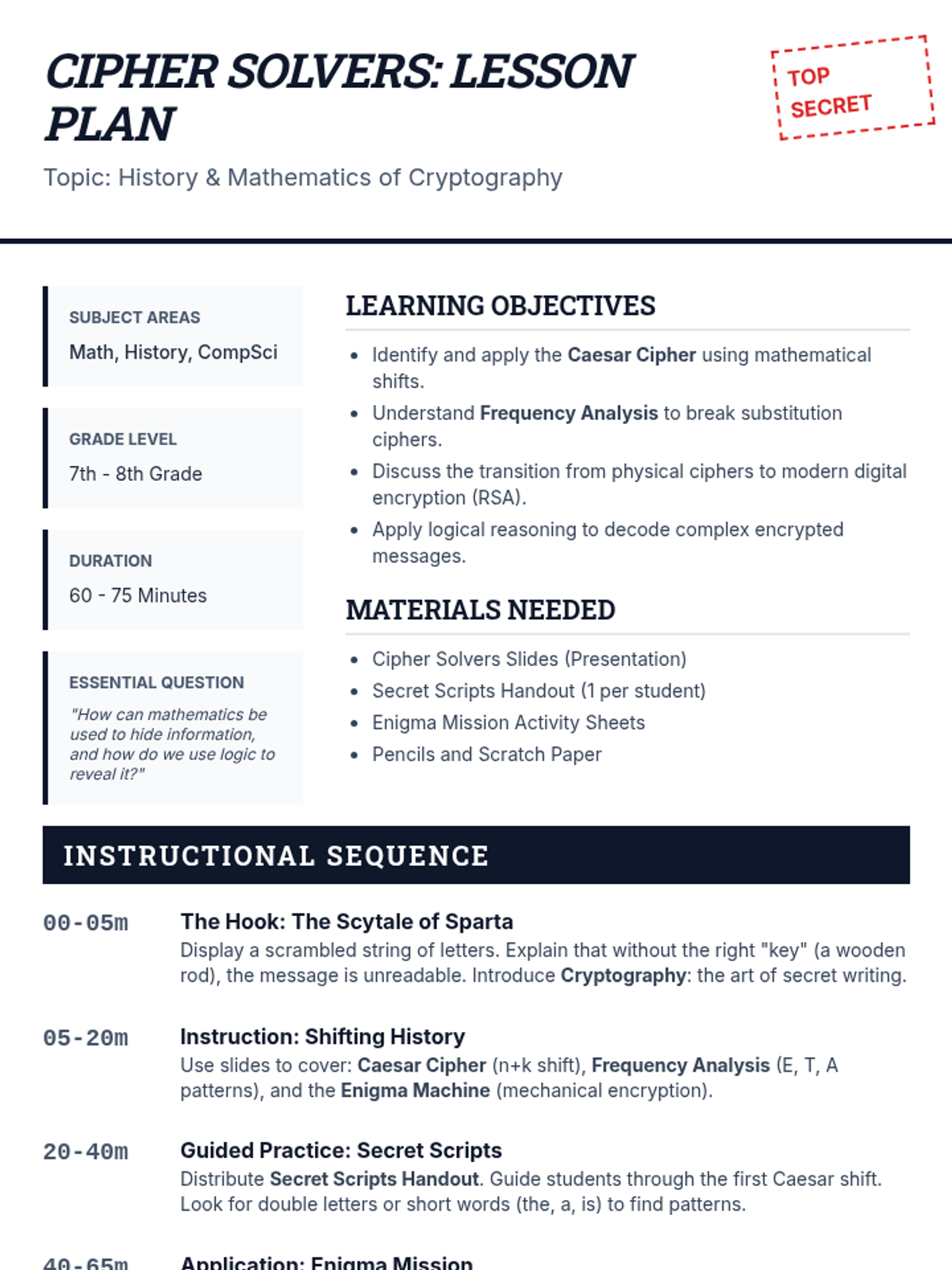
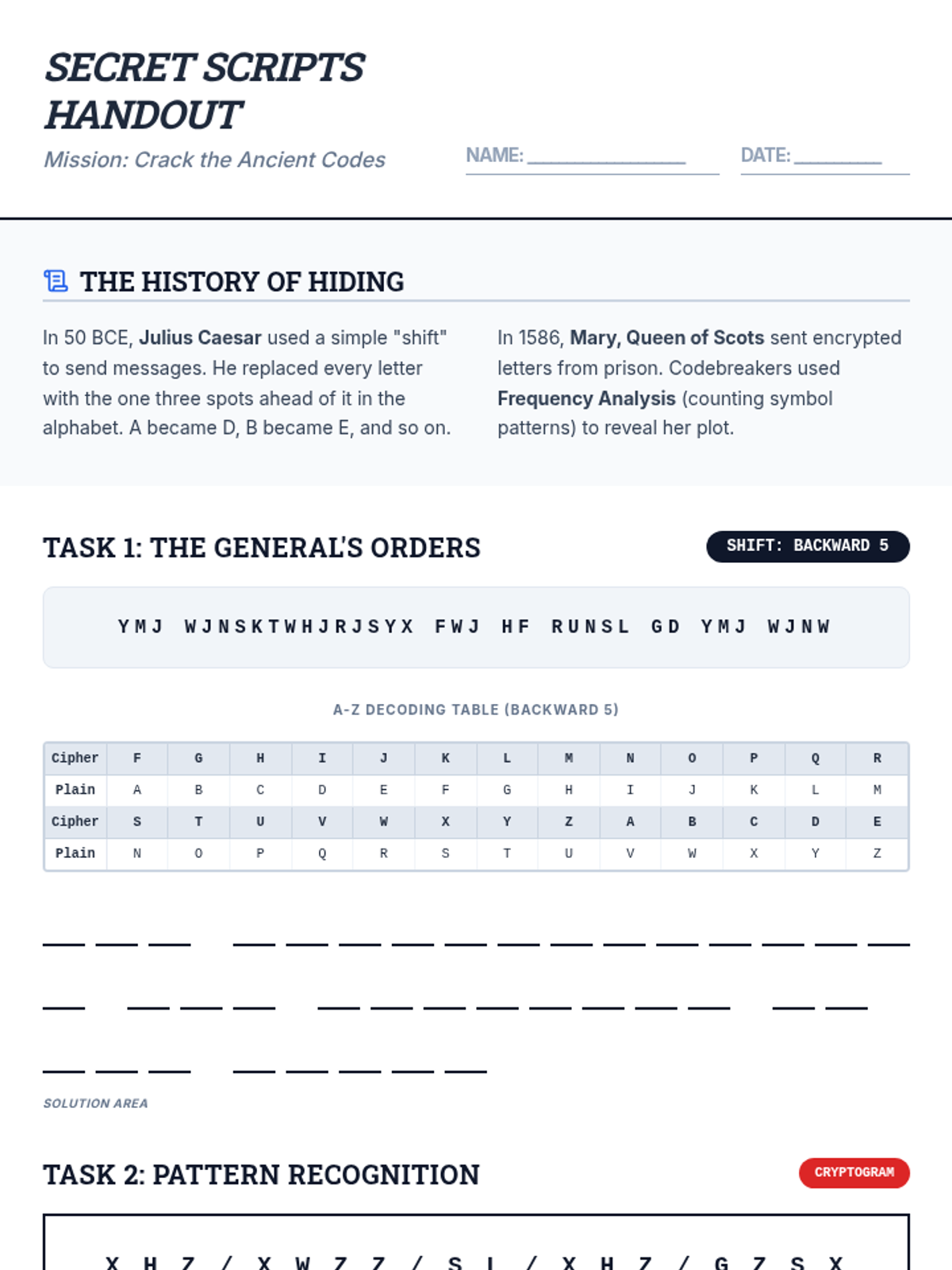
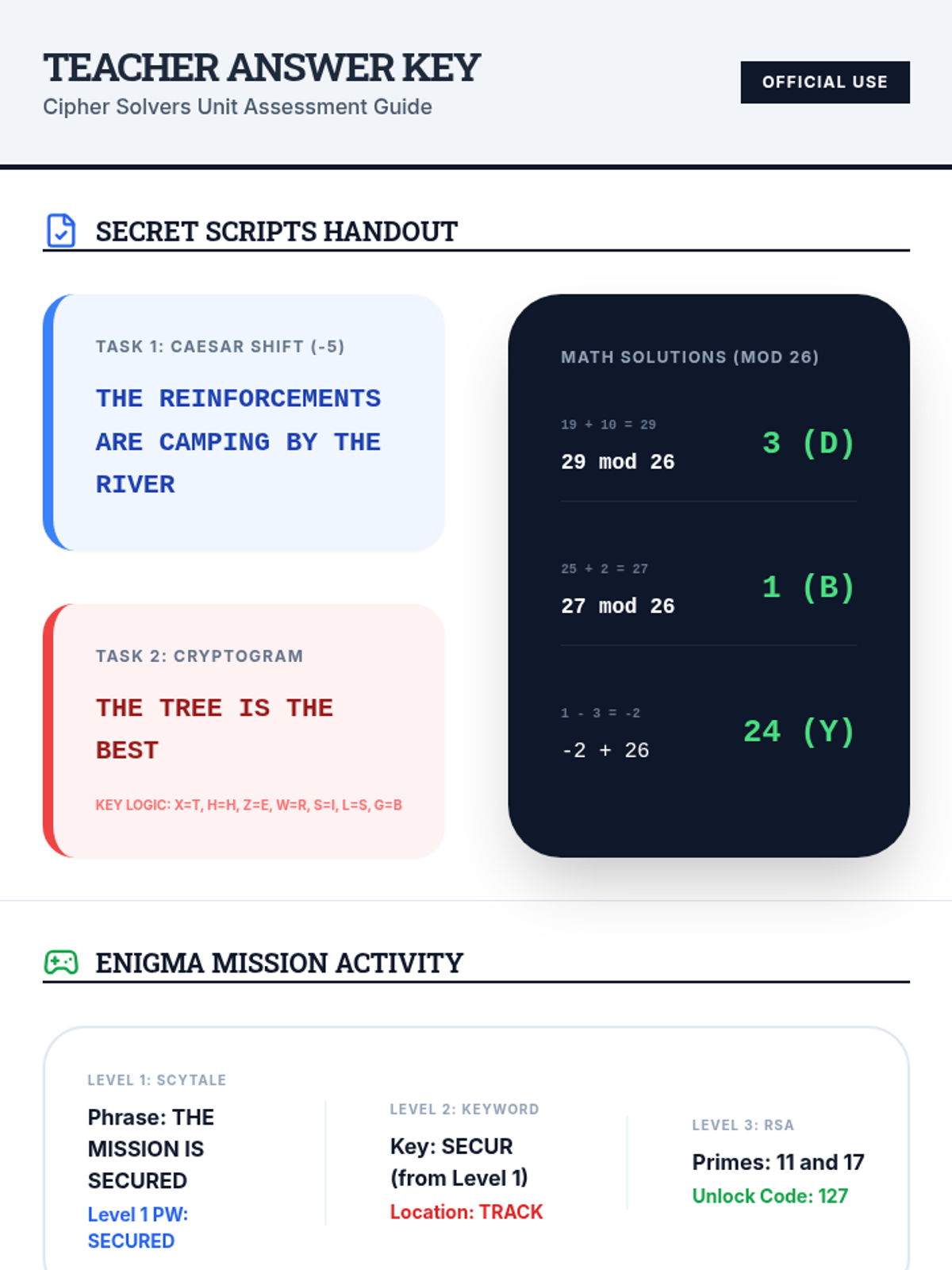
An immersive exploration of cryptography for middle schoolers, covering ancient substitution ciphers, the mathematics of frequency analysis, and the fundamentals of modern digital encryption. Students will analyze historical secret communication and apply logical reasoning to decode complex messages.
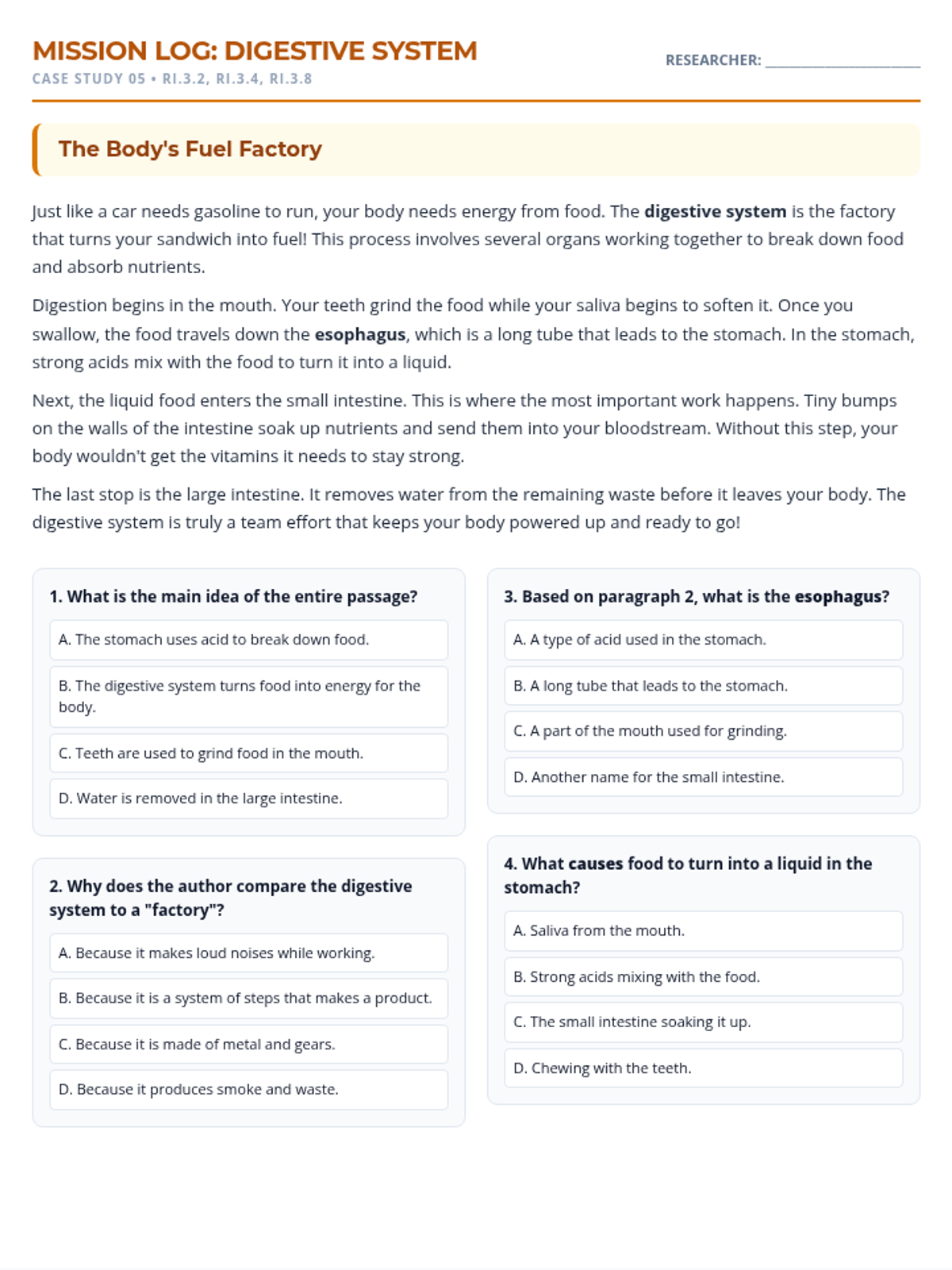
A review of the digestive system and how all body systems work together, synthesizing ELA skills from the week.
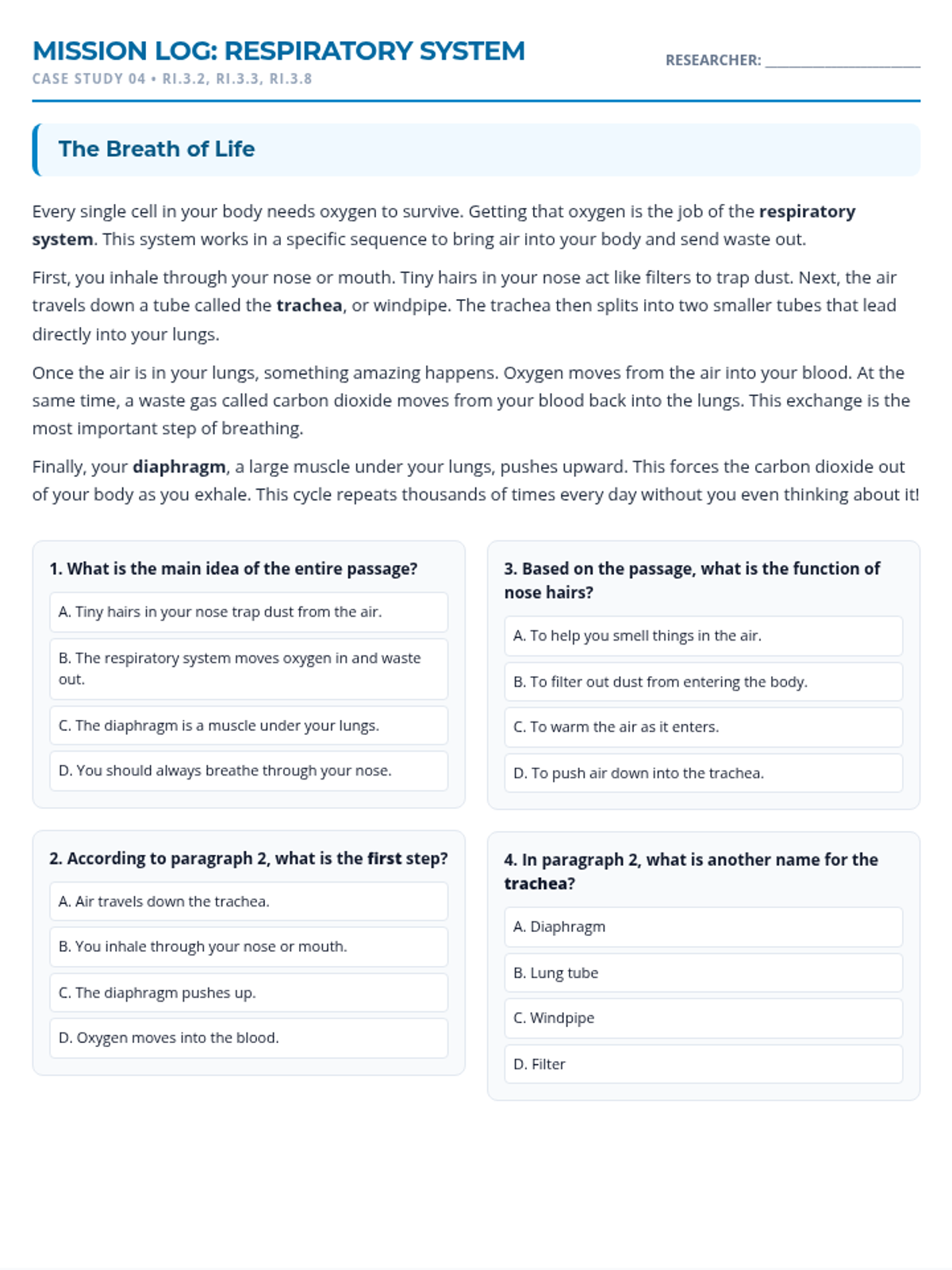
A deep dive into the respiratory system looking at the logical connections and sequence of how we breathe.
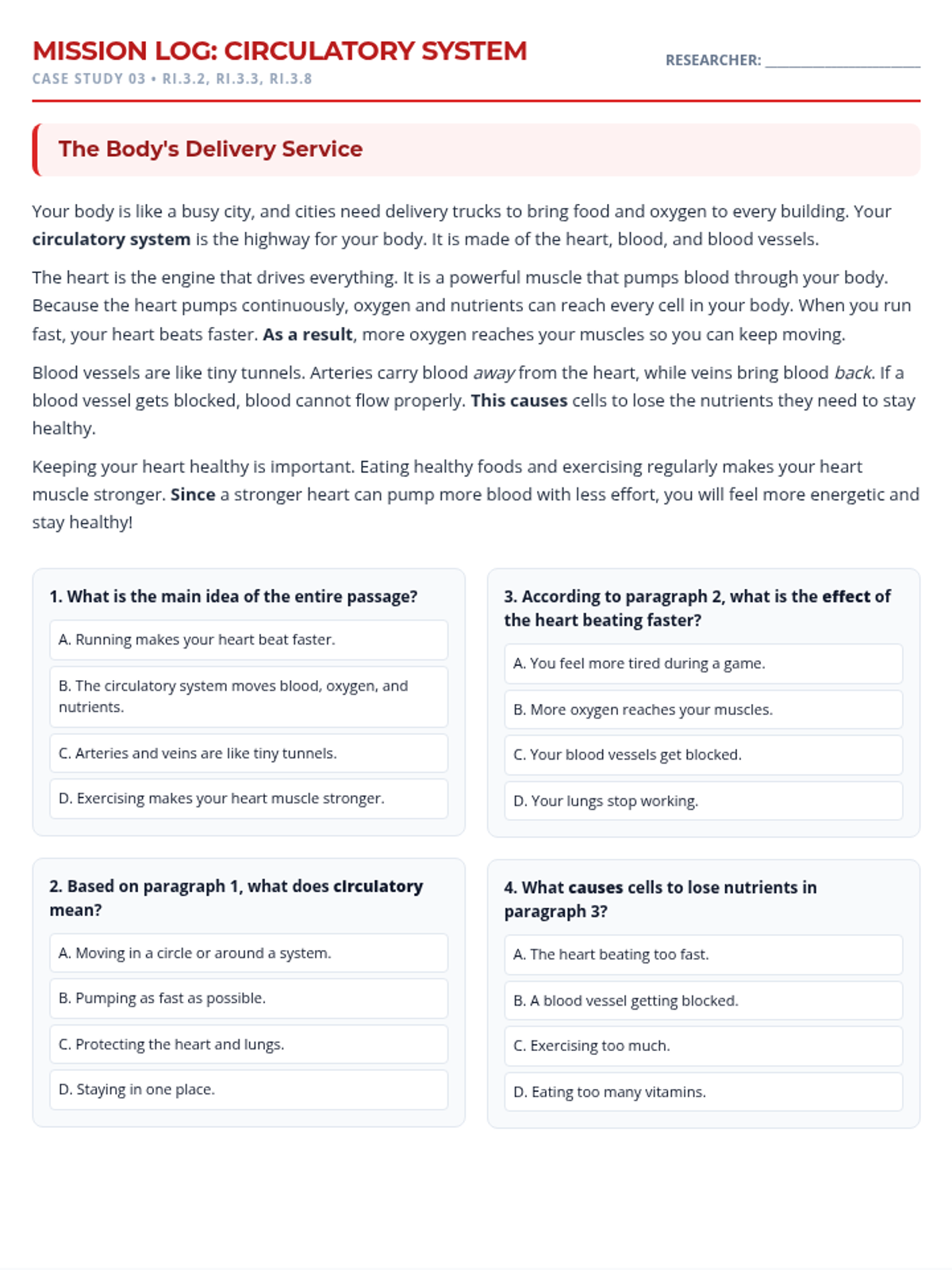
Exploring the heart and blood vessels with a specific focus on identifying cause-and-effect relationships within the body.
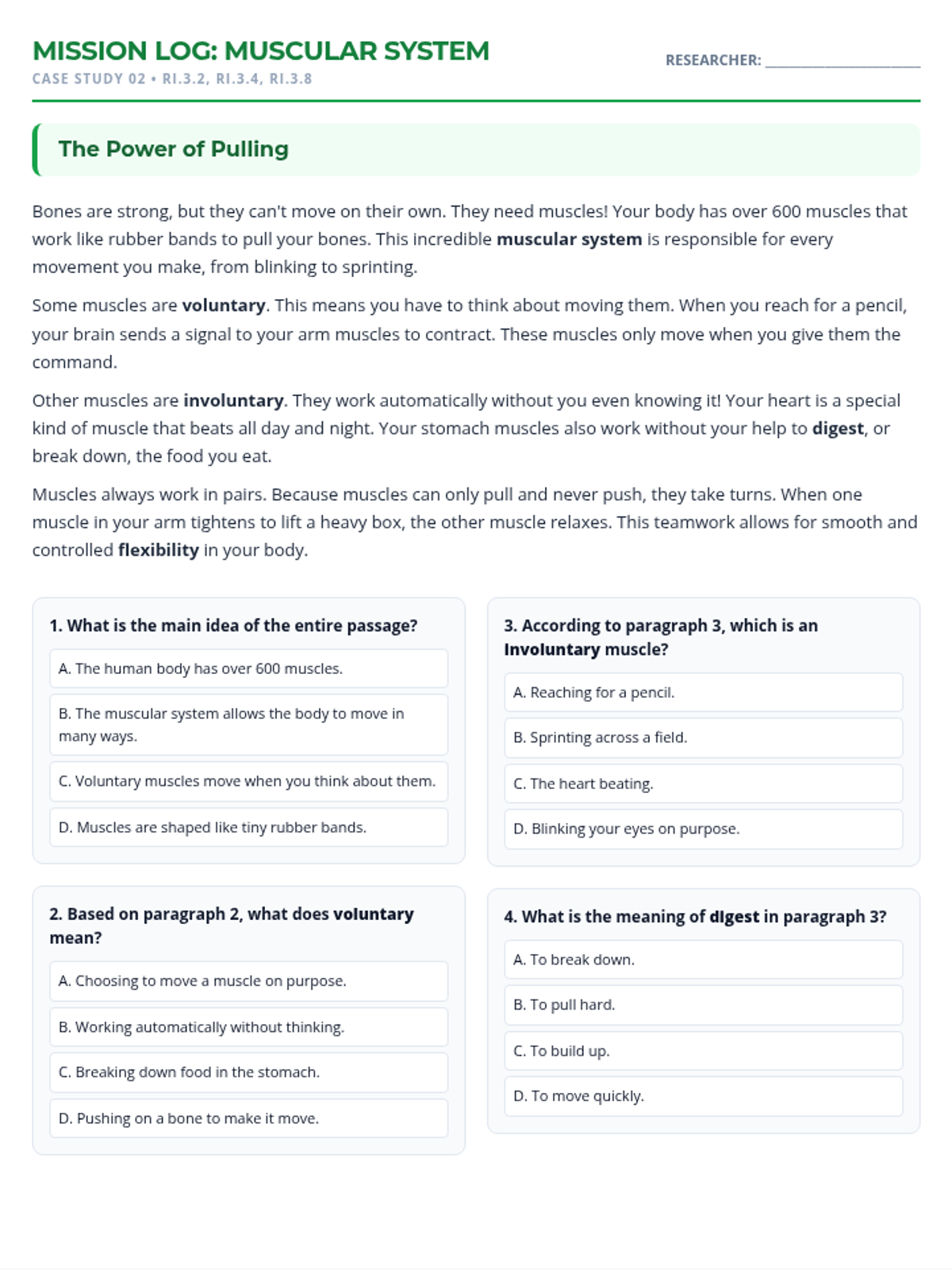
An investigation into the muscular system focusing on using context clues to define scientific vocabulary.
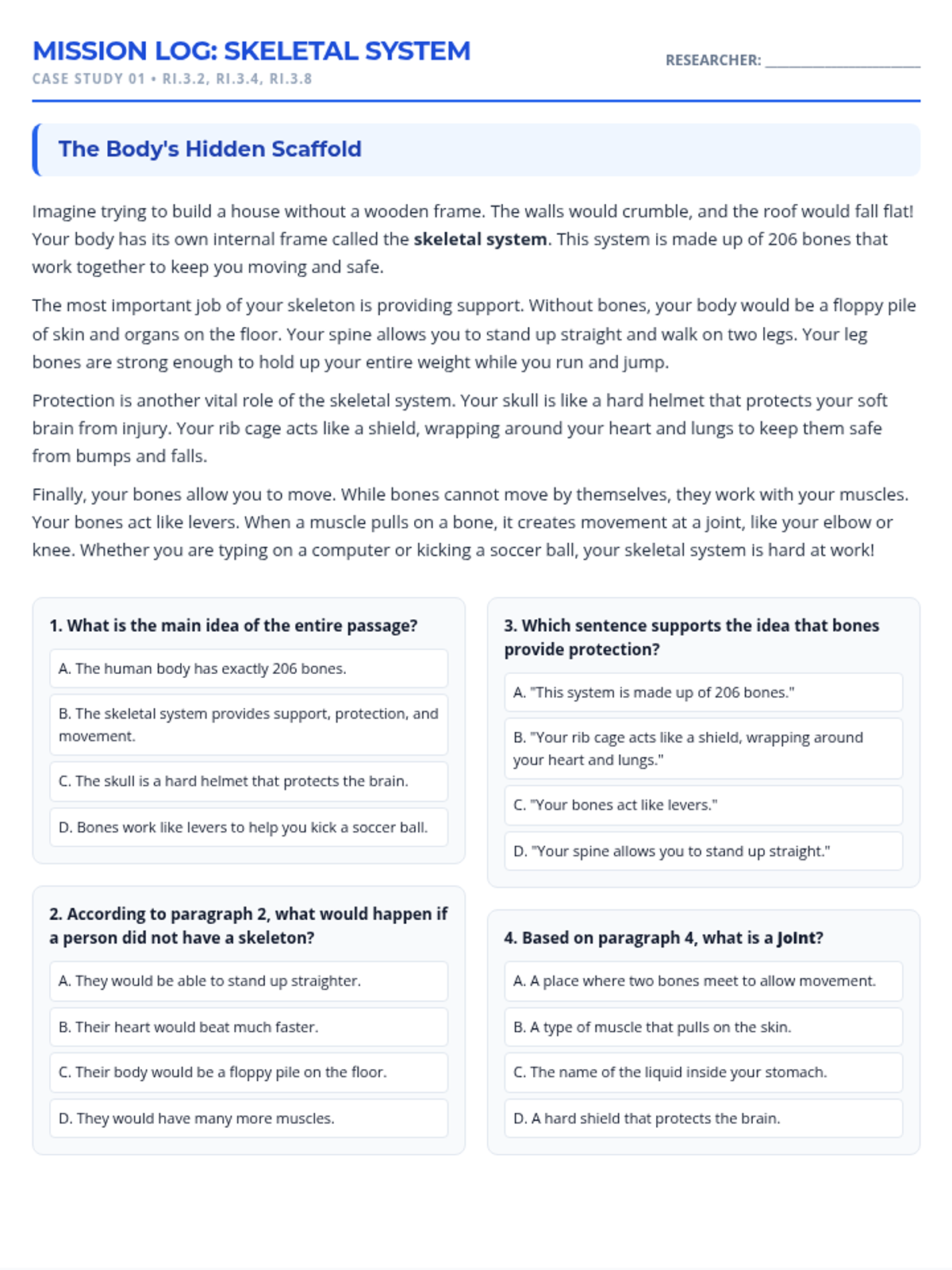
Students explore the skeletal system while practicing identifying the main idea and supporting details in informational text.
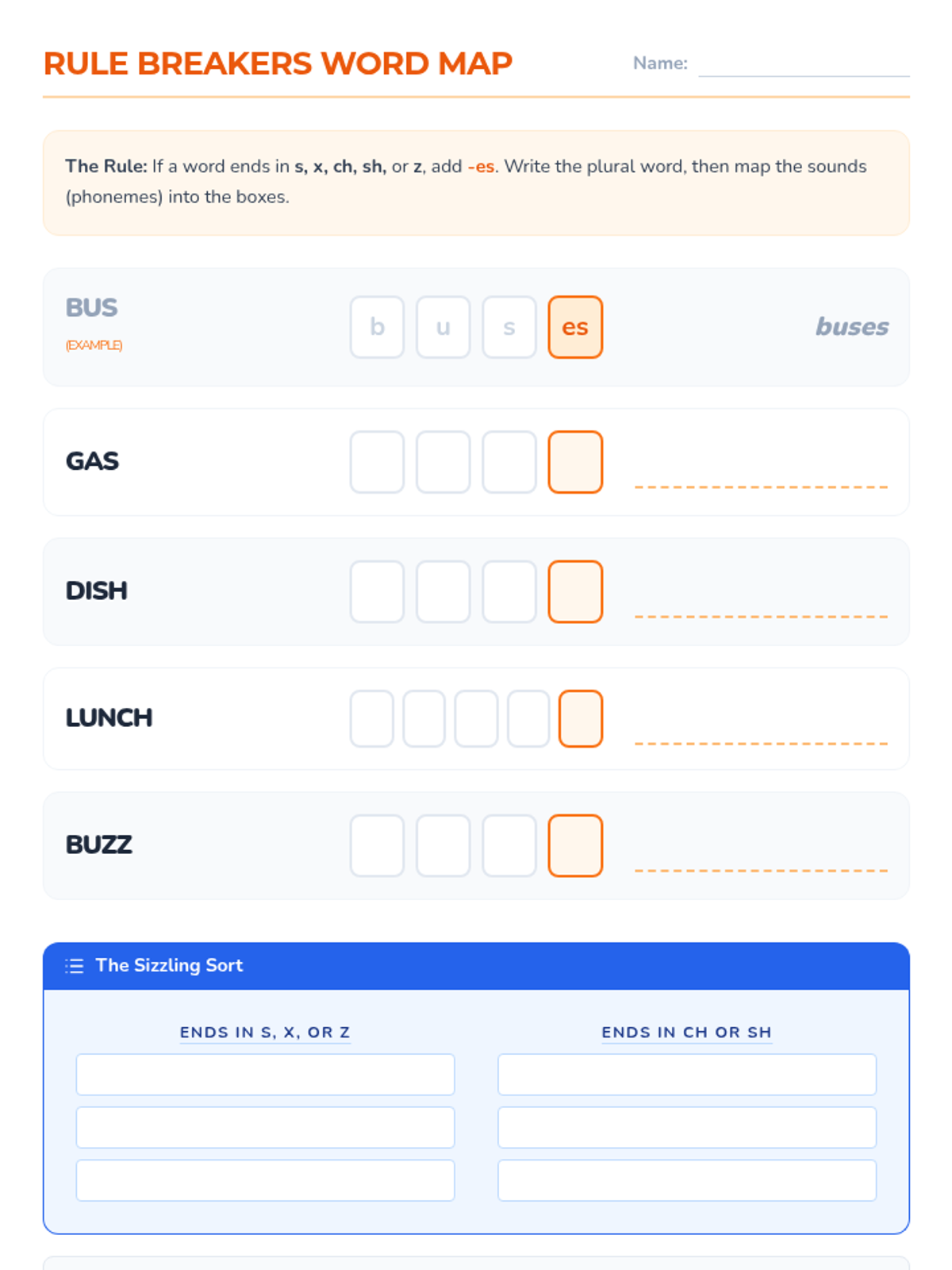
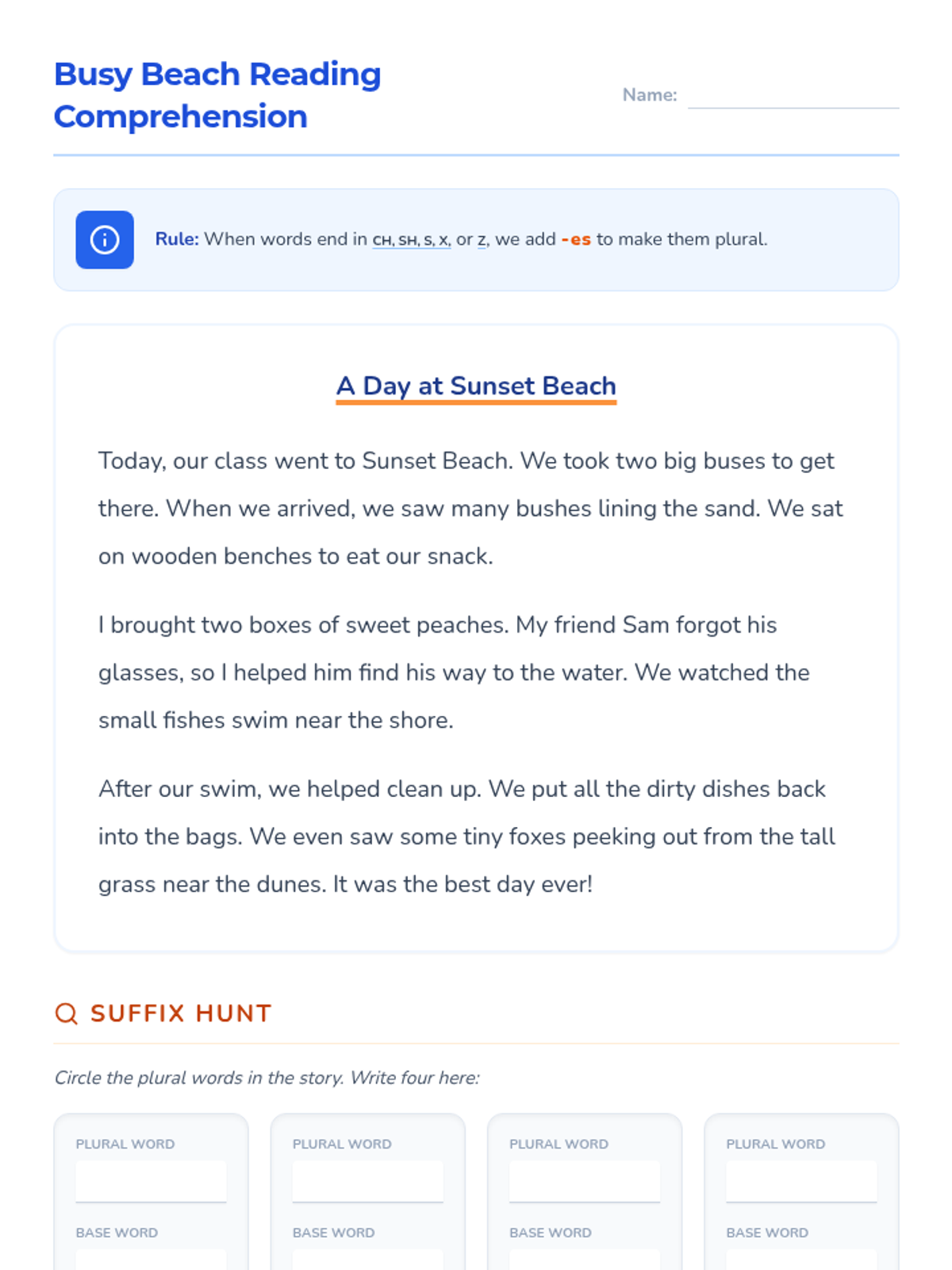
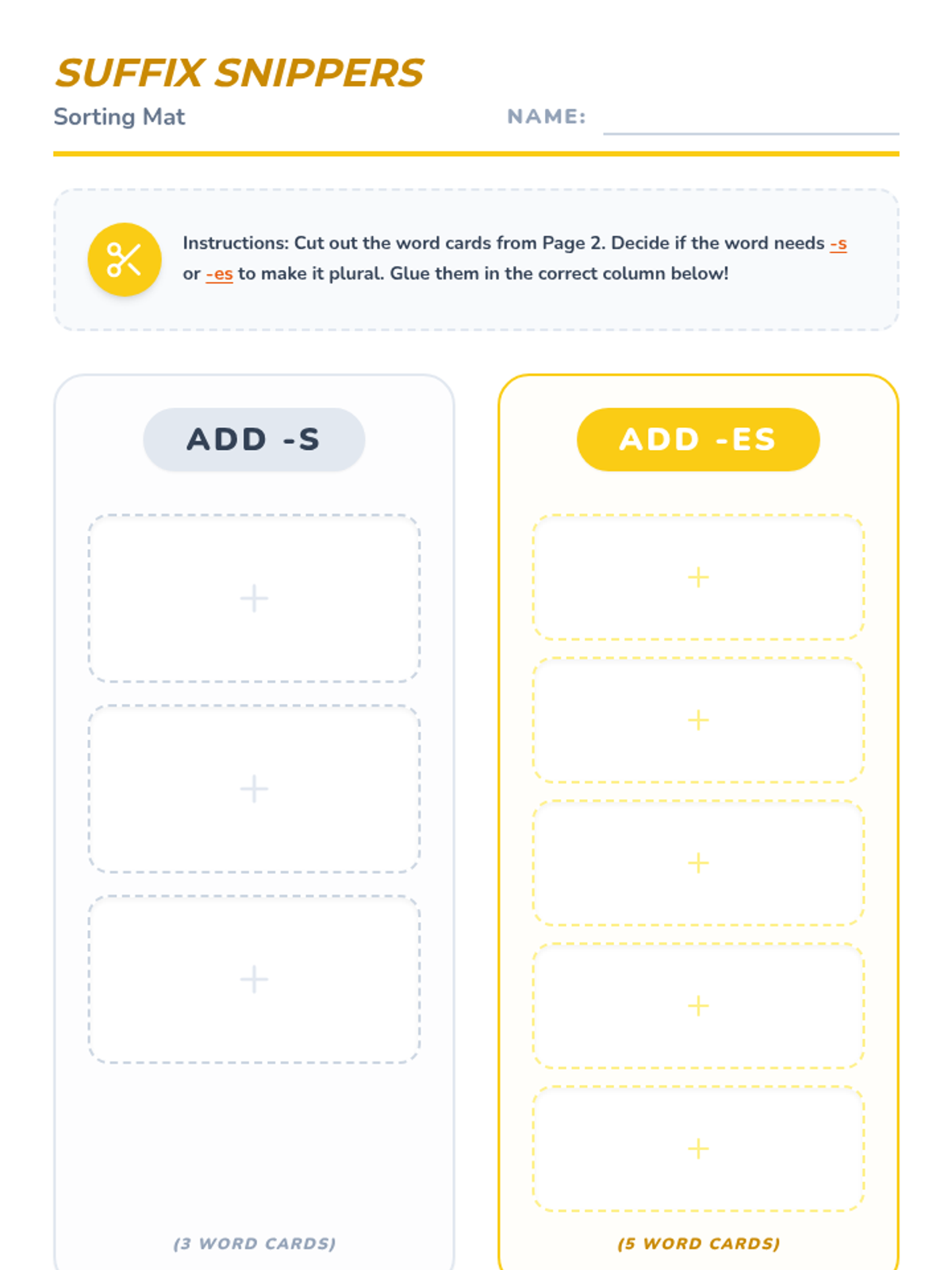
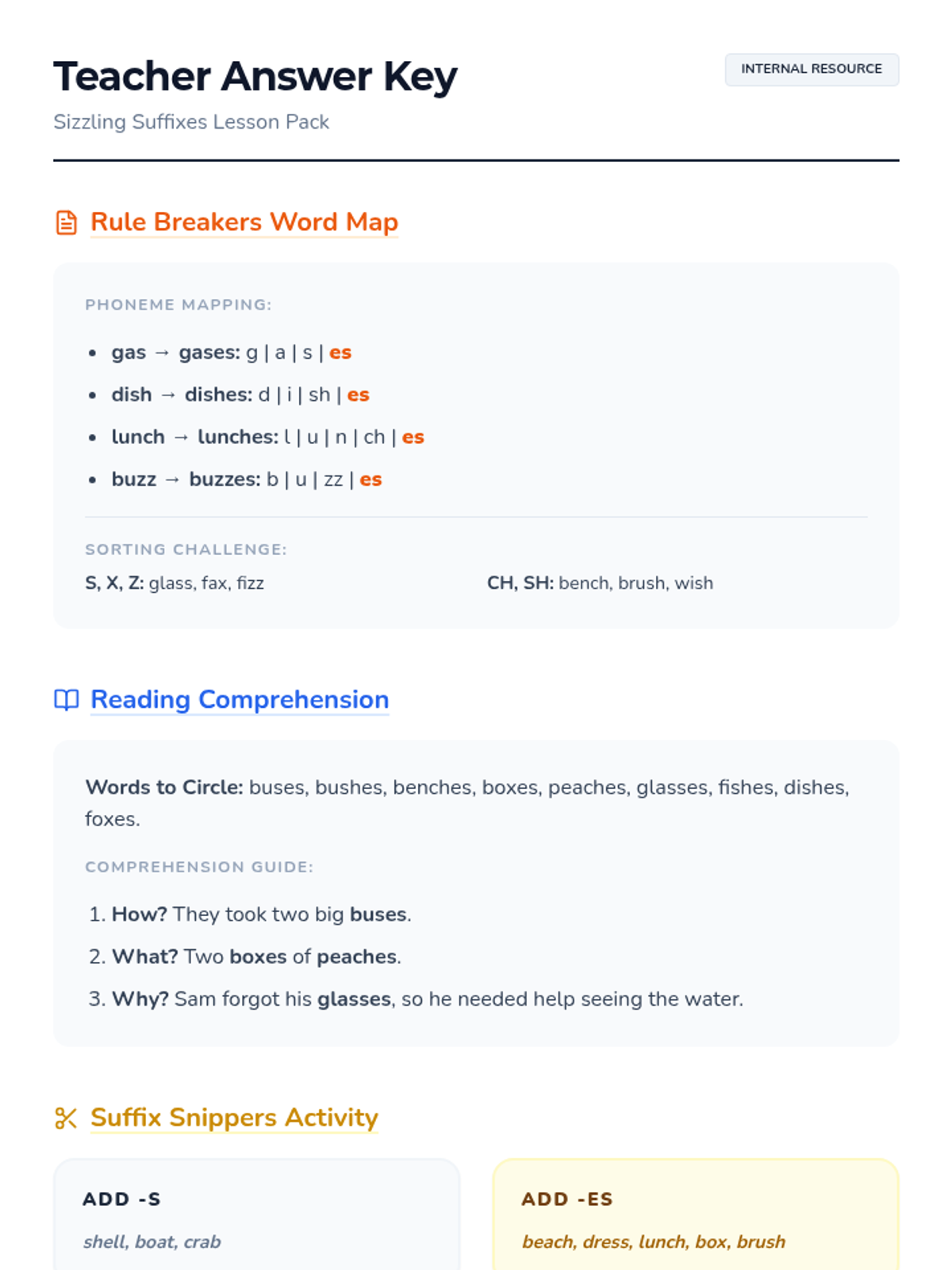
A comprehensive lesson on plurals ending in -es, covering base words ending in s, x, ch, sh, and z through multi-sensory activities.
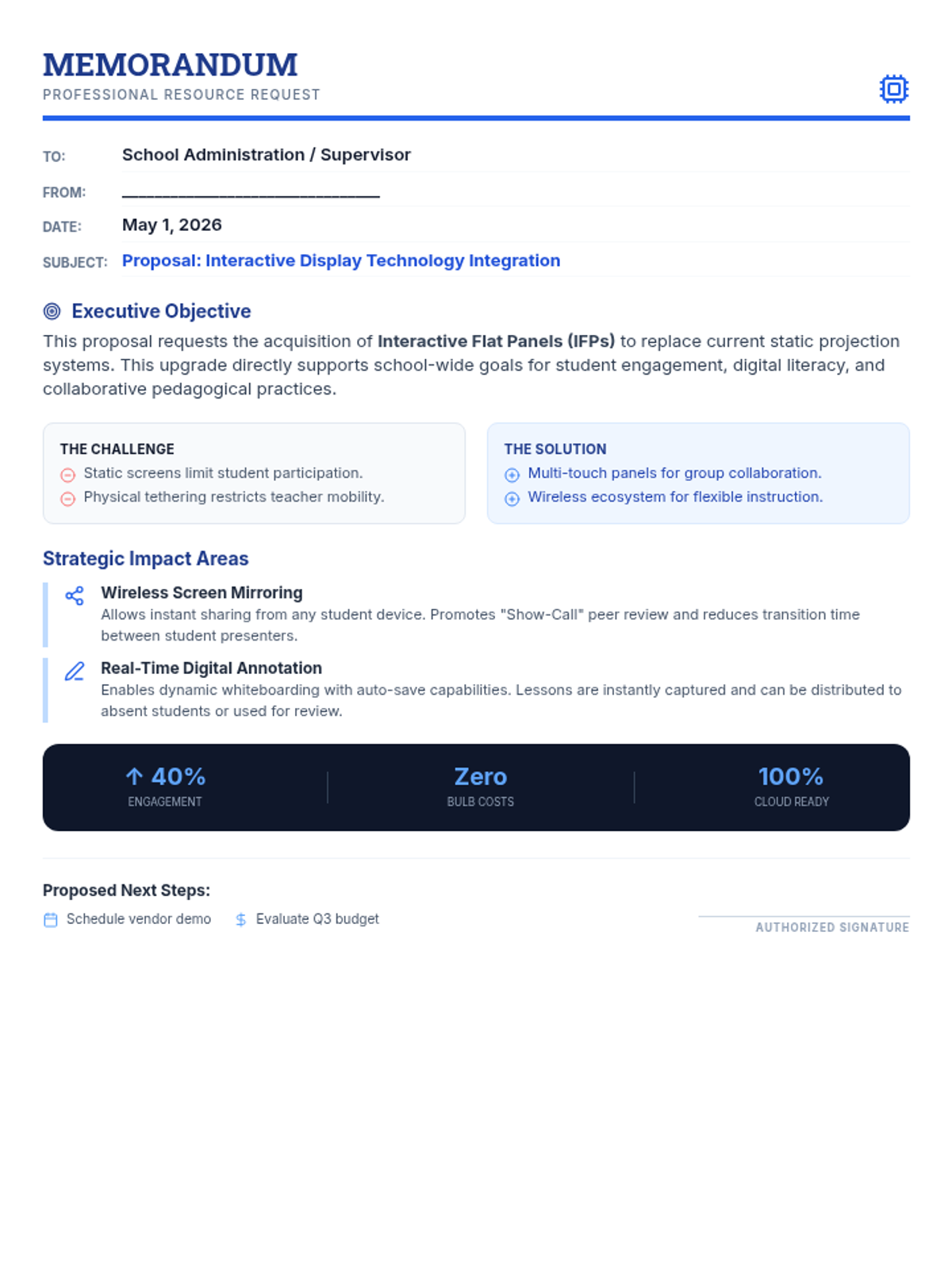
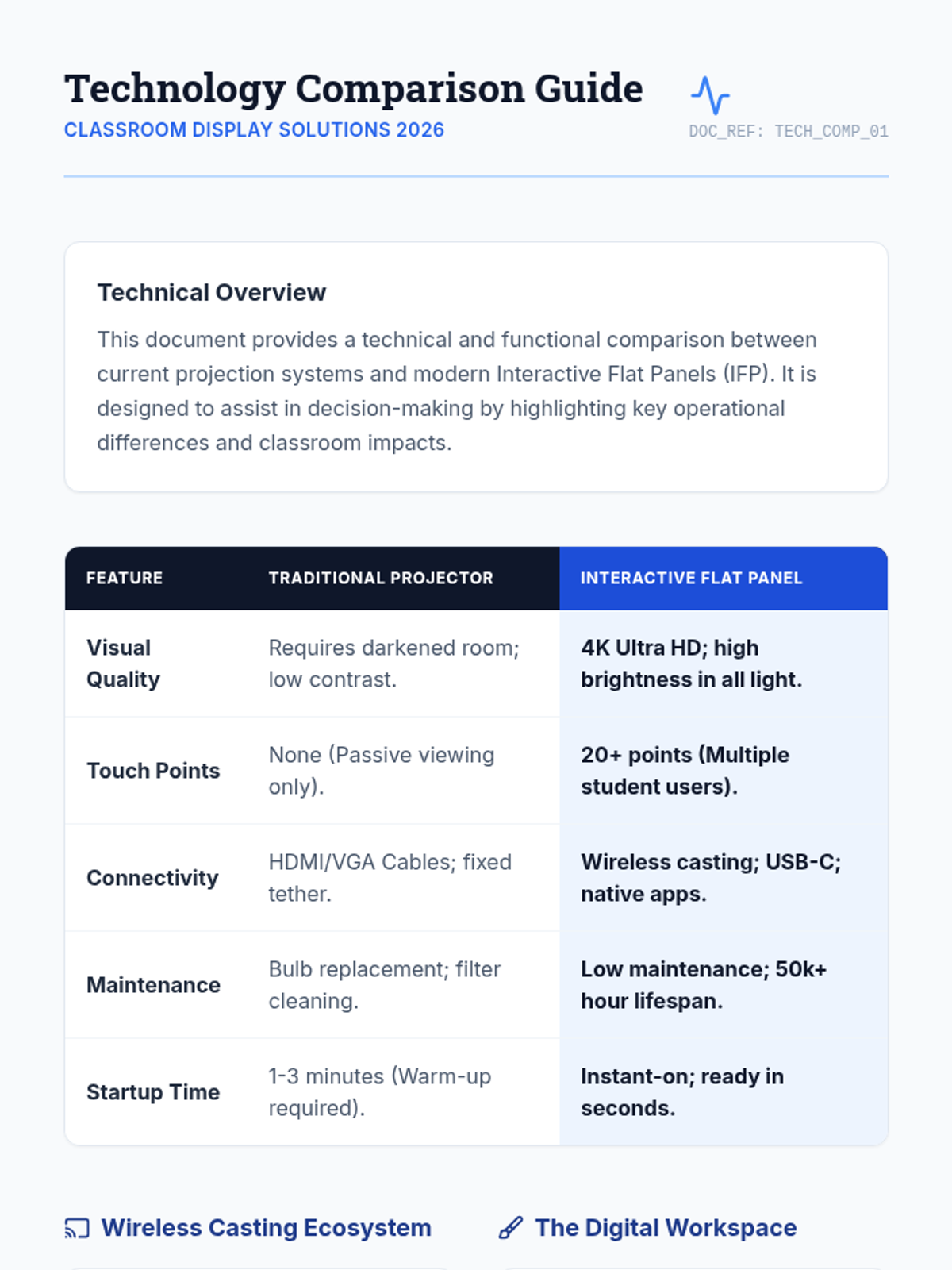
A suite of professional advocacy materials designed to help educators persuade administrators to invest in interactive classroom technology. Includes a formal memo, a visual presentation of benefits, and a technical comparison guide.