Explores how identifying patterns in classroom environments and curriculum helps anticipate outcomes and reduce cognitive load.
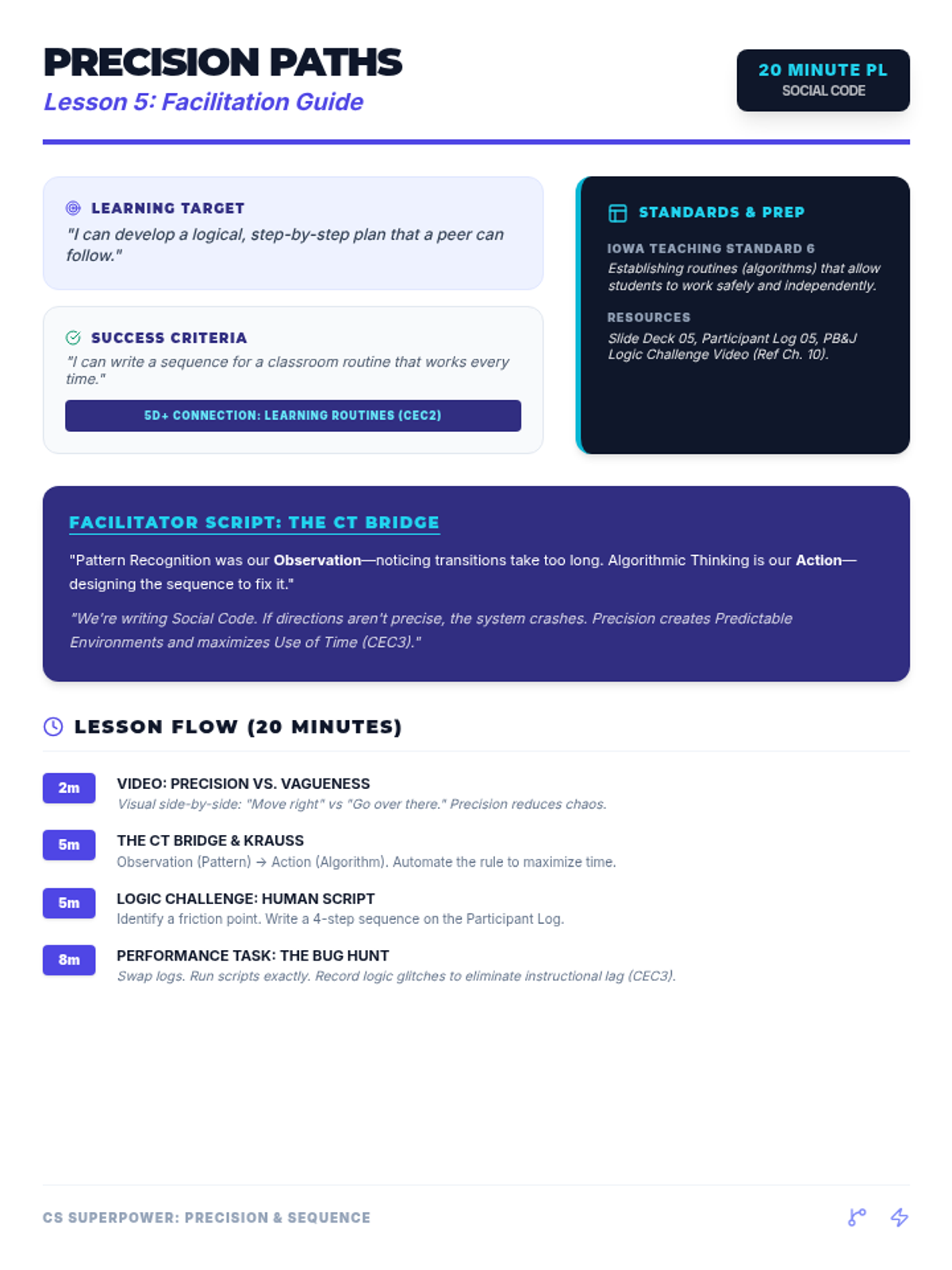
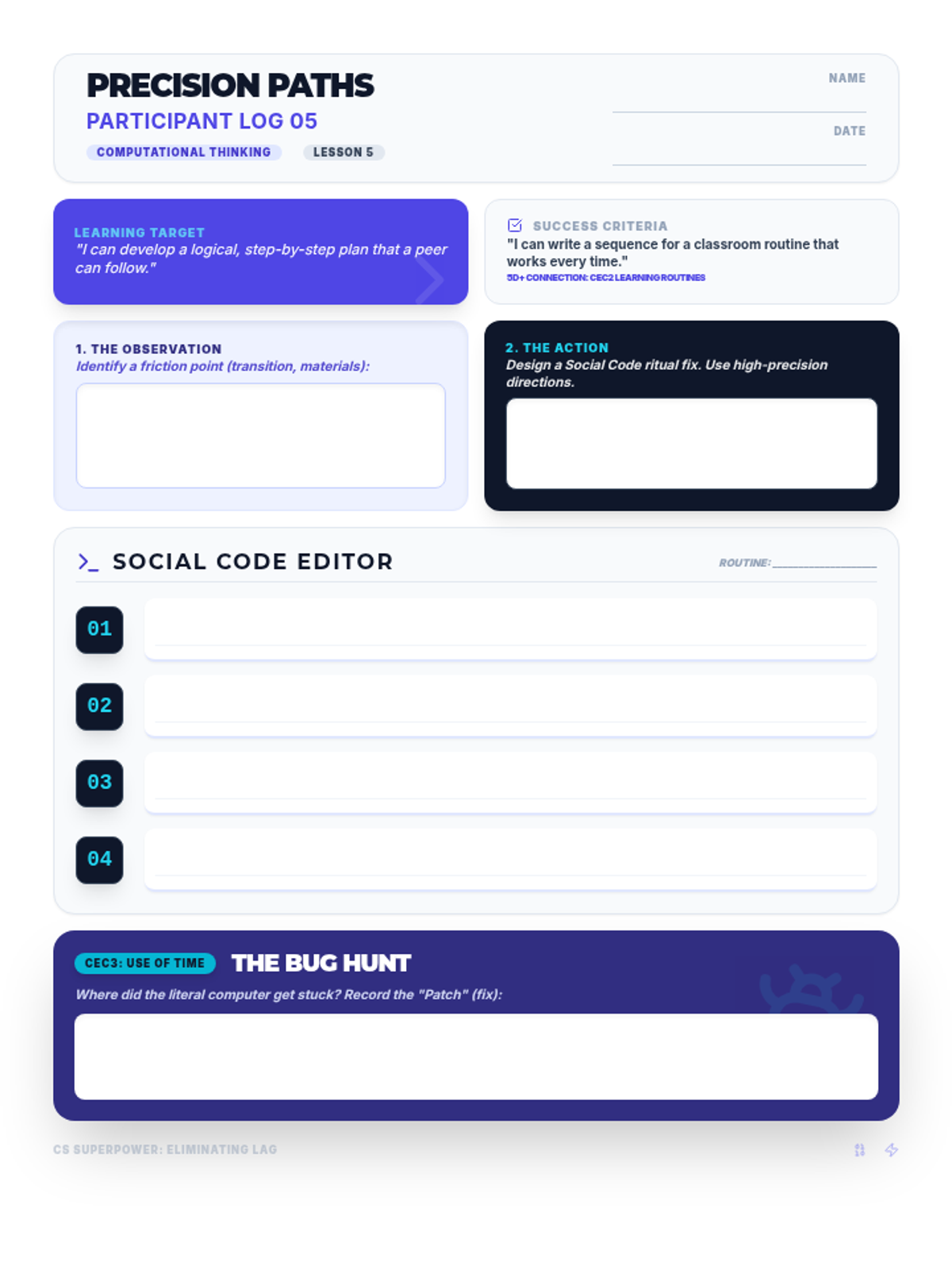
Developing logical, step-by-step plans (social code) that ensure precise and predictable classroom routines.
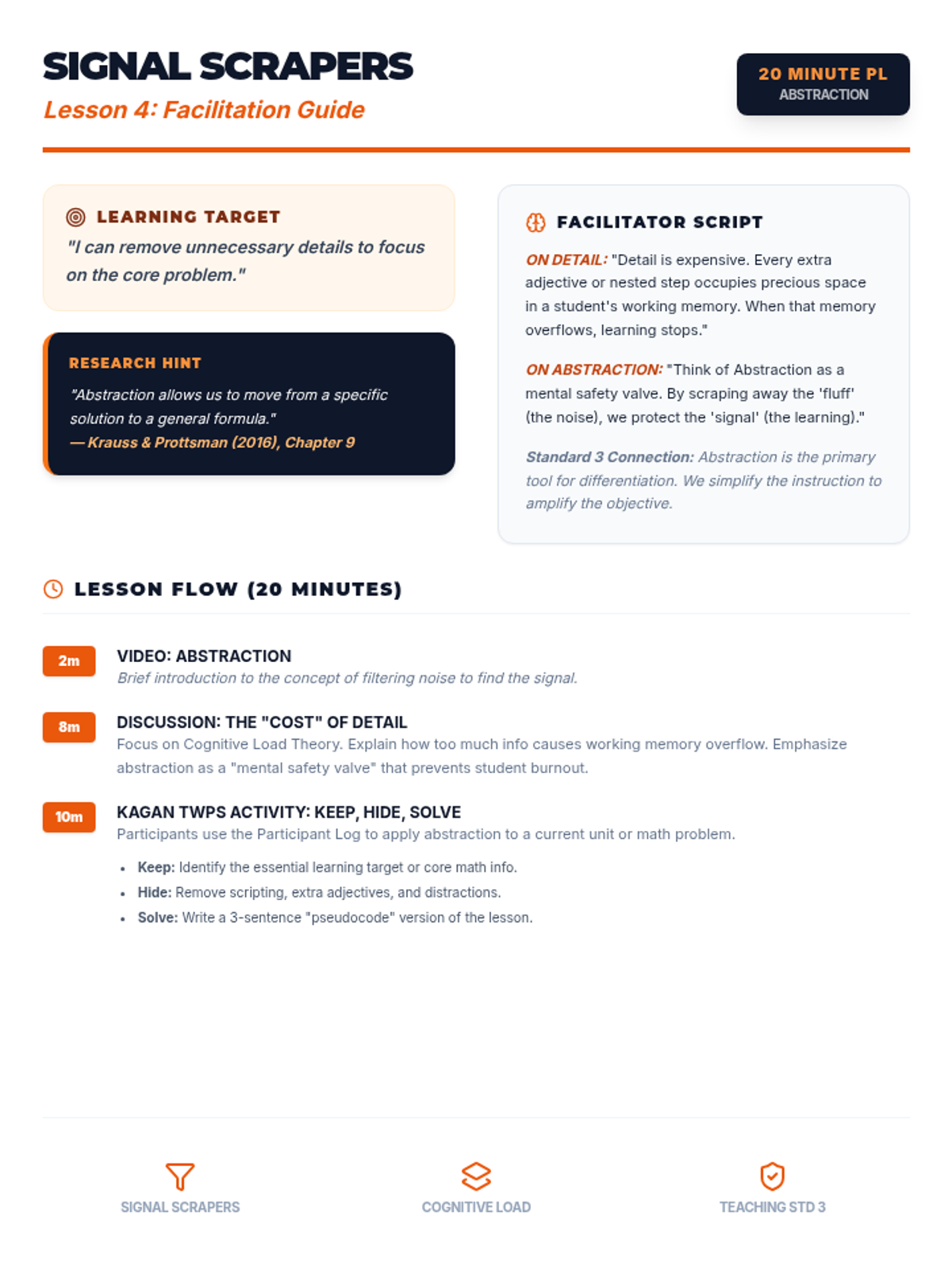
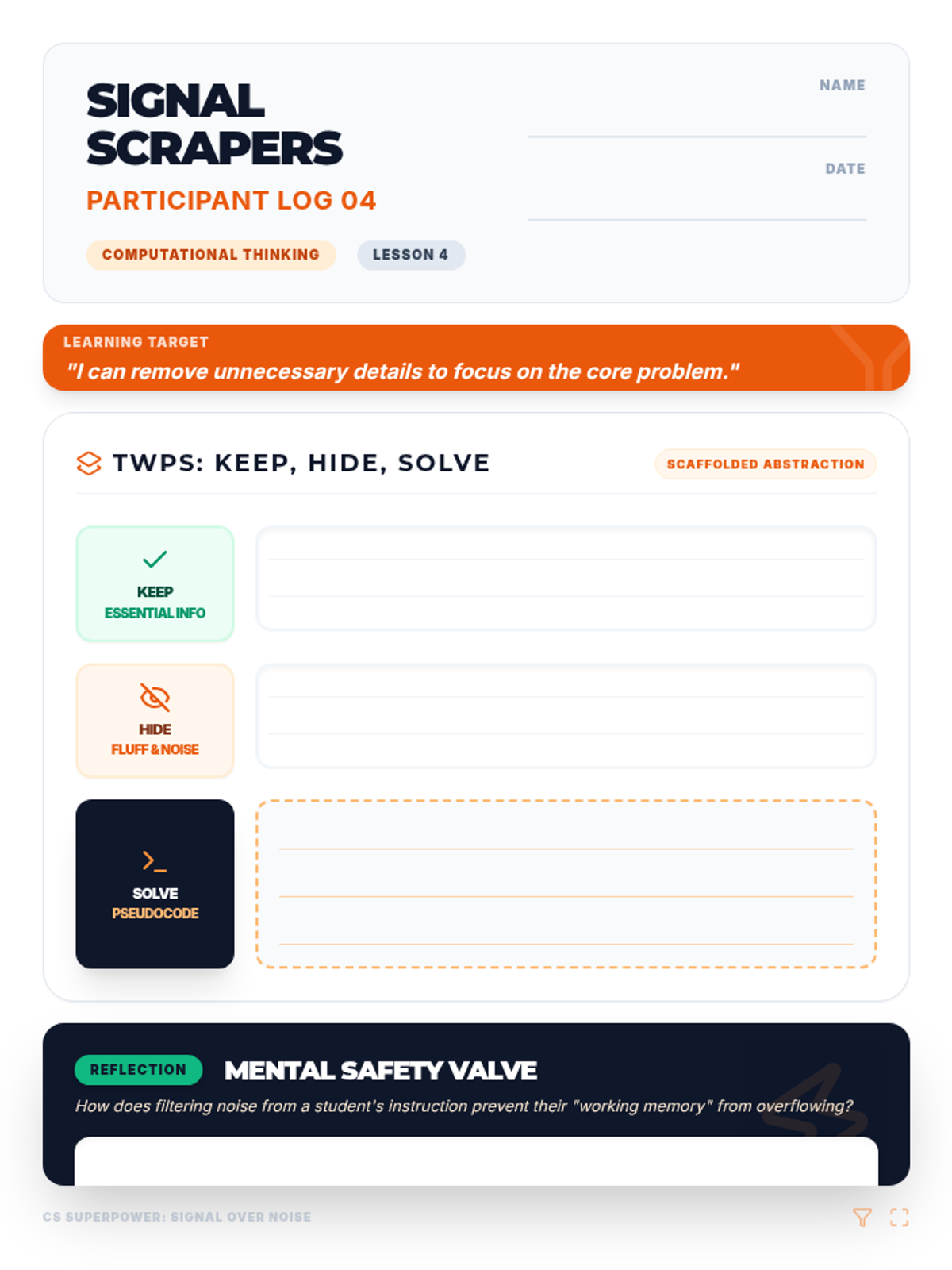
Teachers practice removing unnecessary details from lesson plans and instructions to focus on core learning objectives.
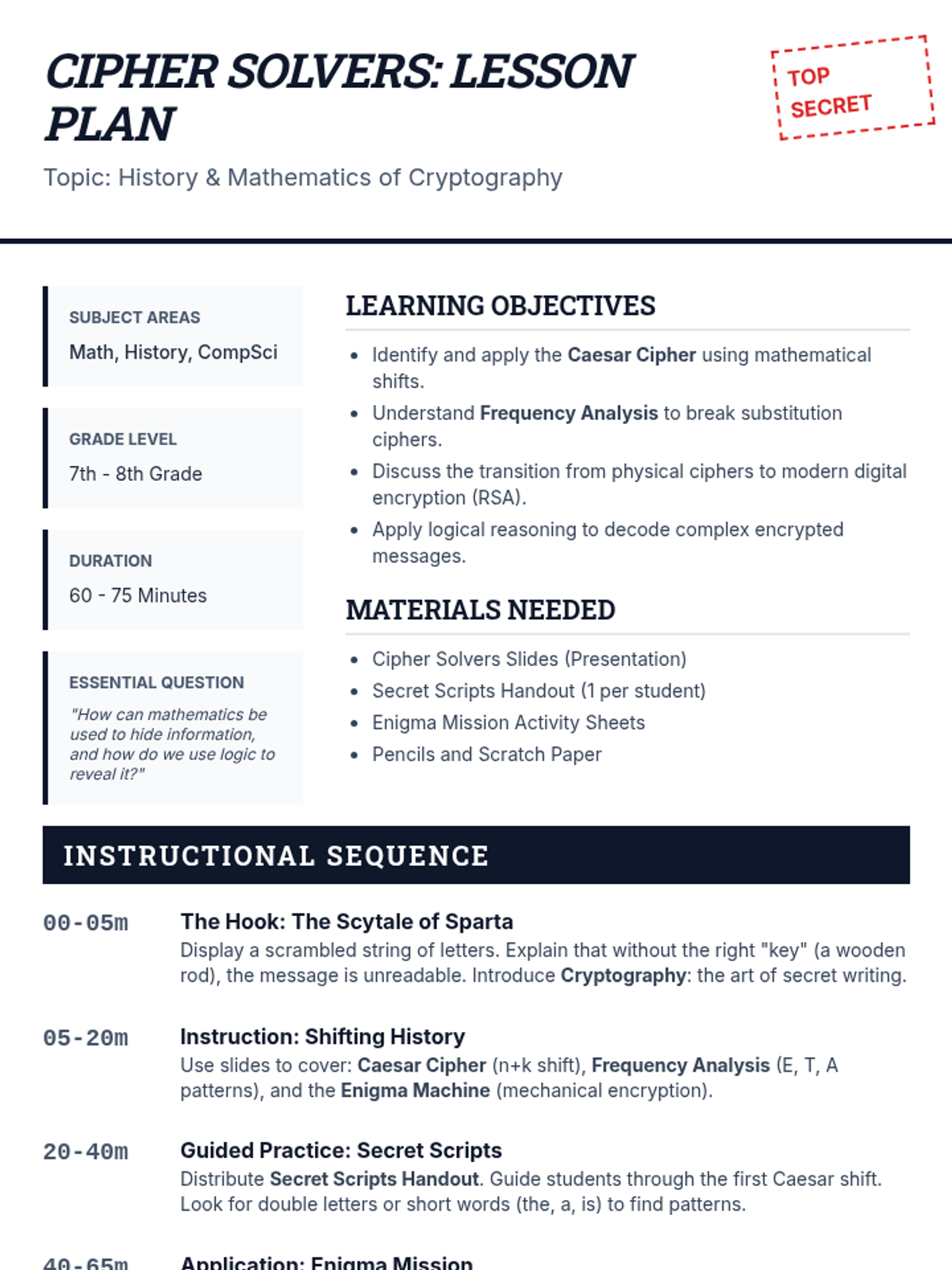
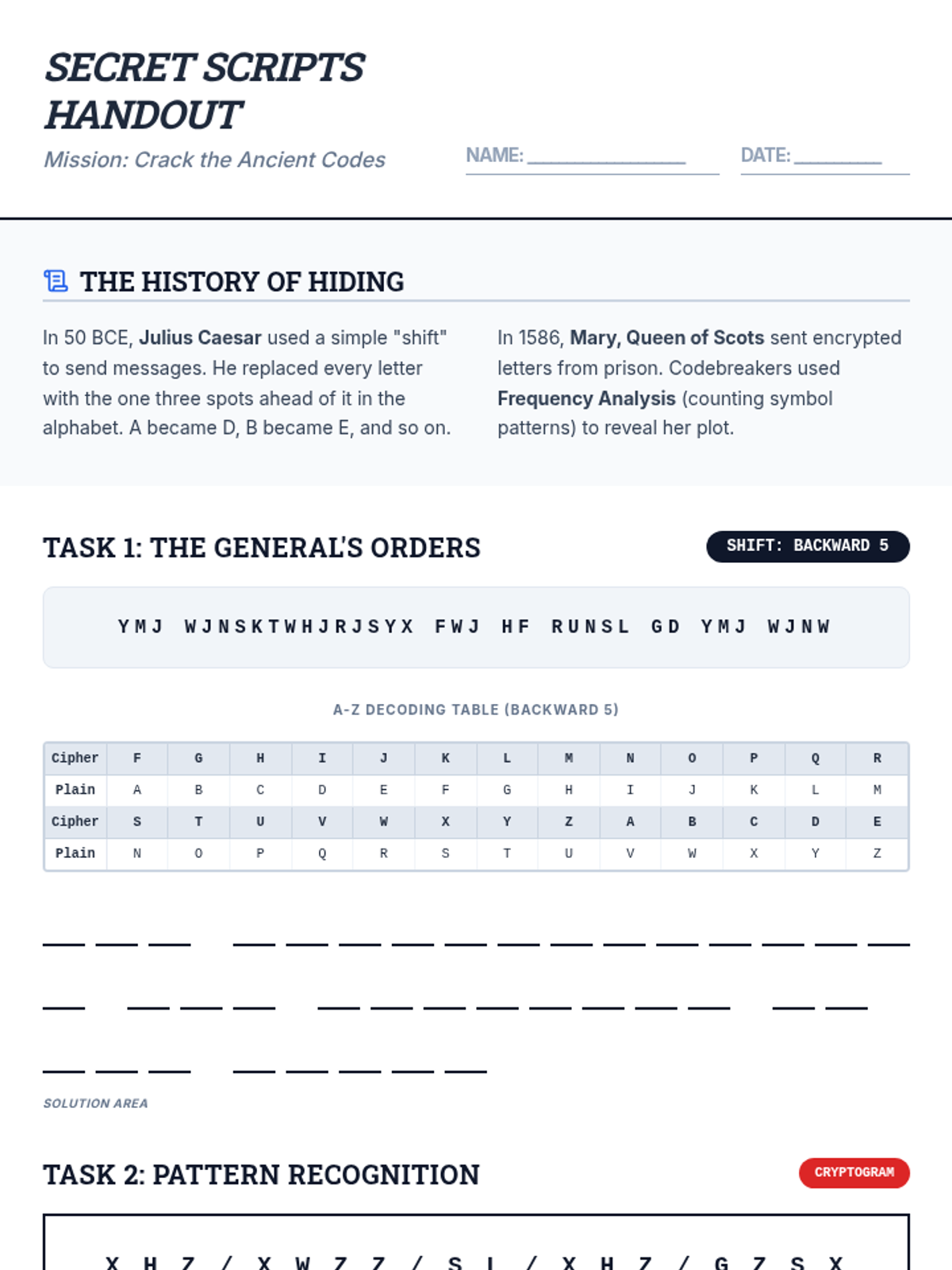
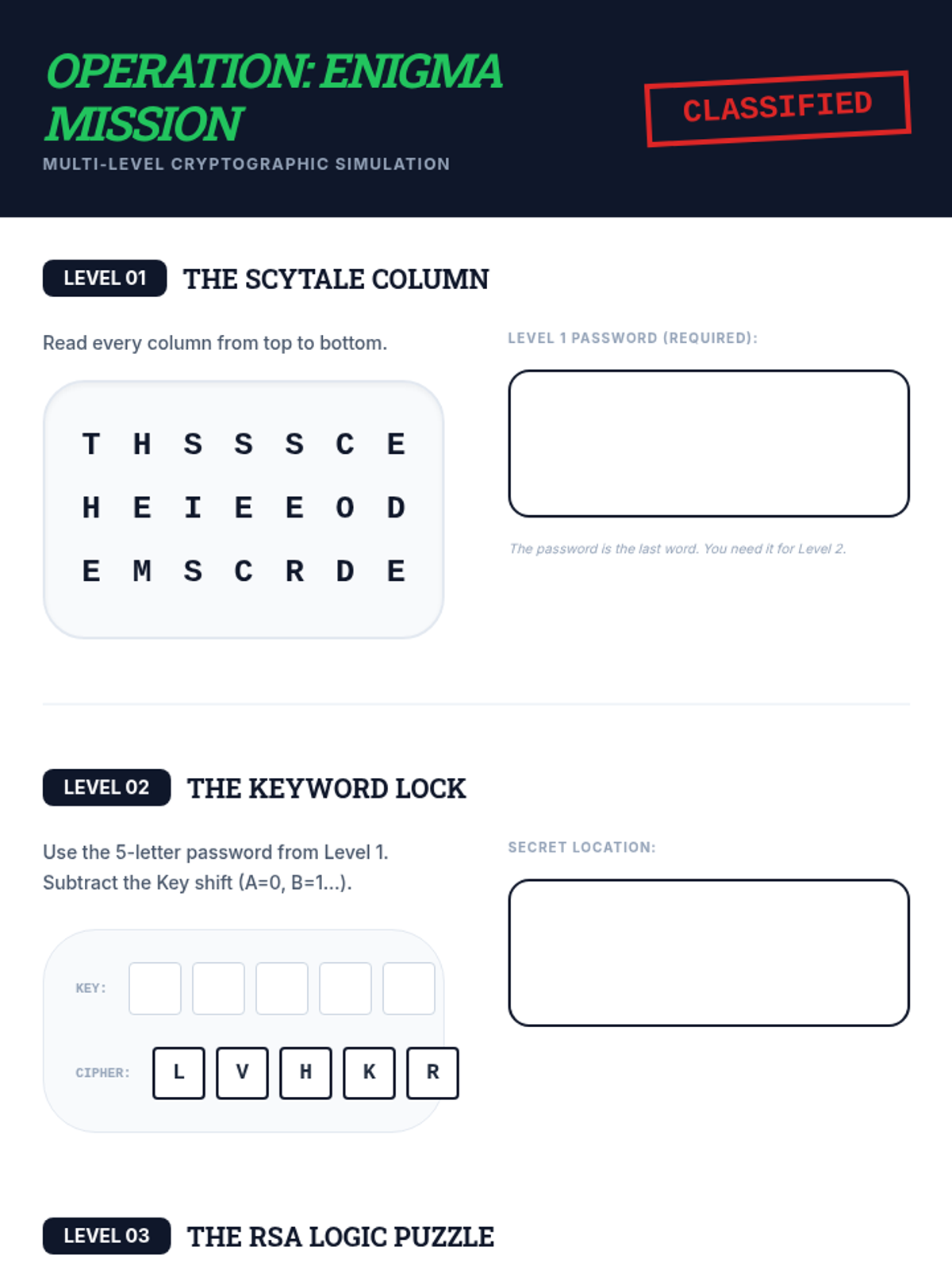
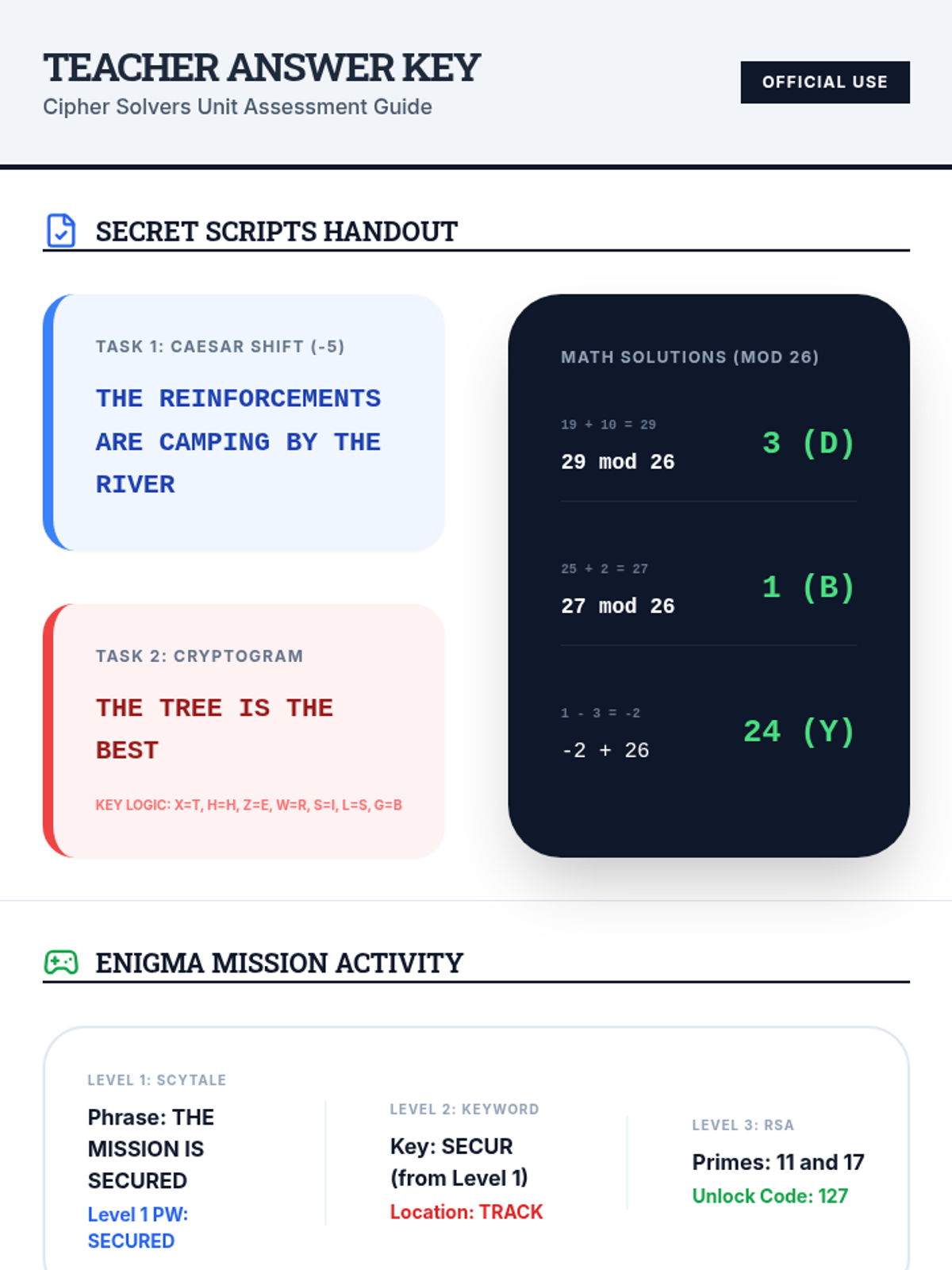
An immersive exploration of cryptography for middle schoolers, covering ancient substitution ciphers, the mathematics of frequency analysis, and the fundamentals of modern digital encryption. Students will analyze historical secret communication and apply logical reasoning to decode complex messages.
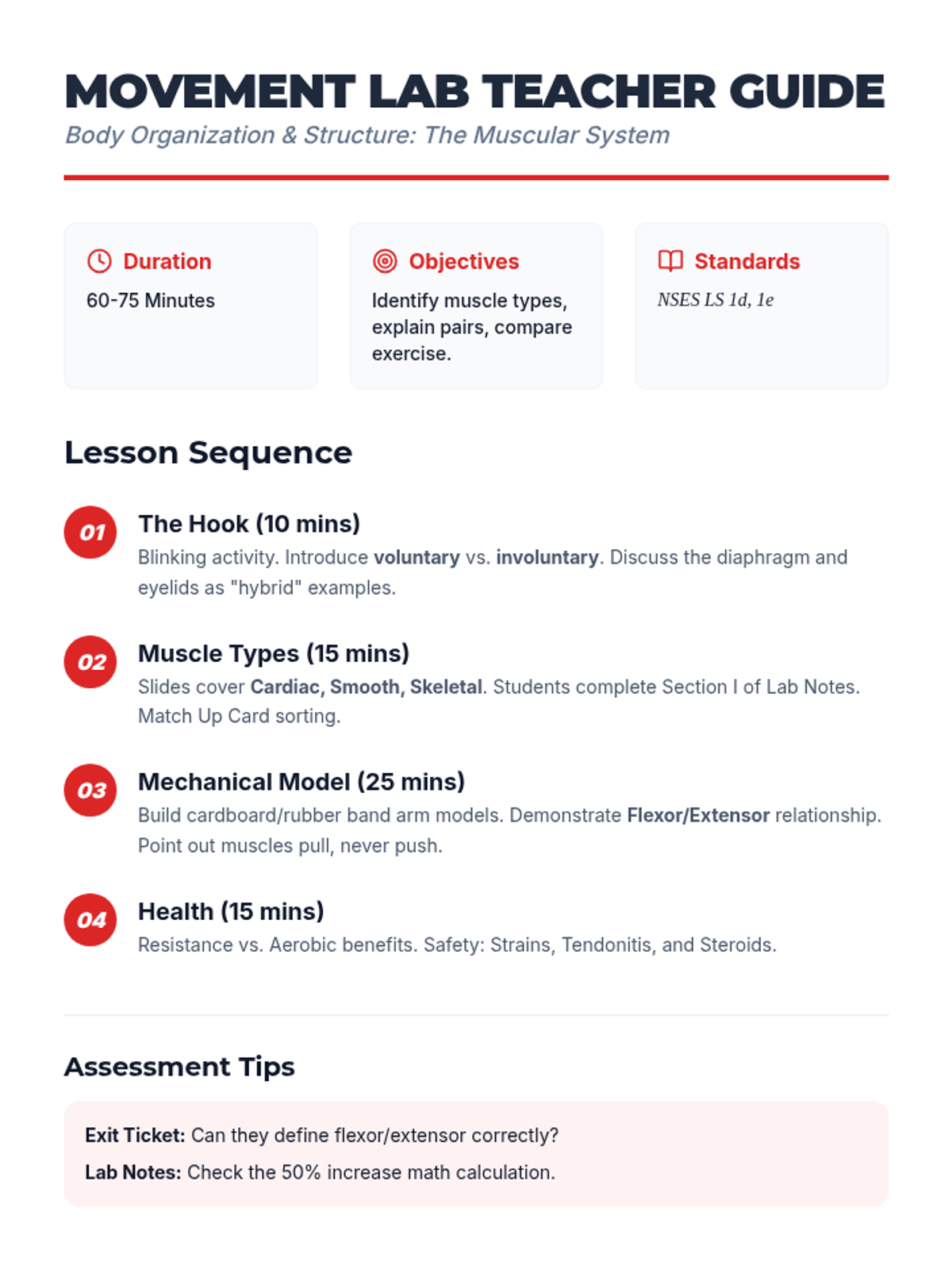
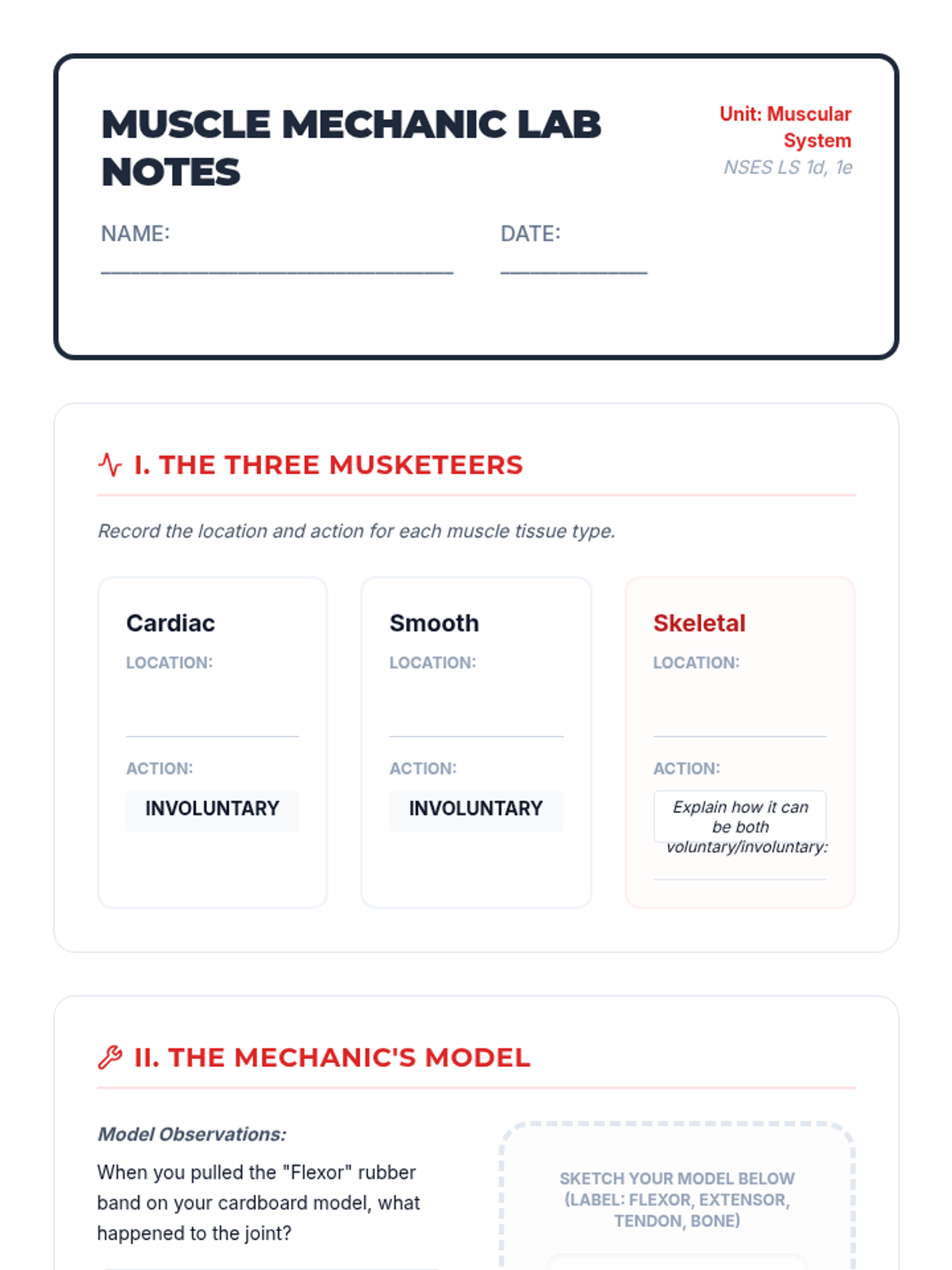
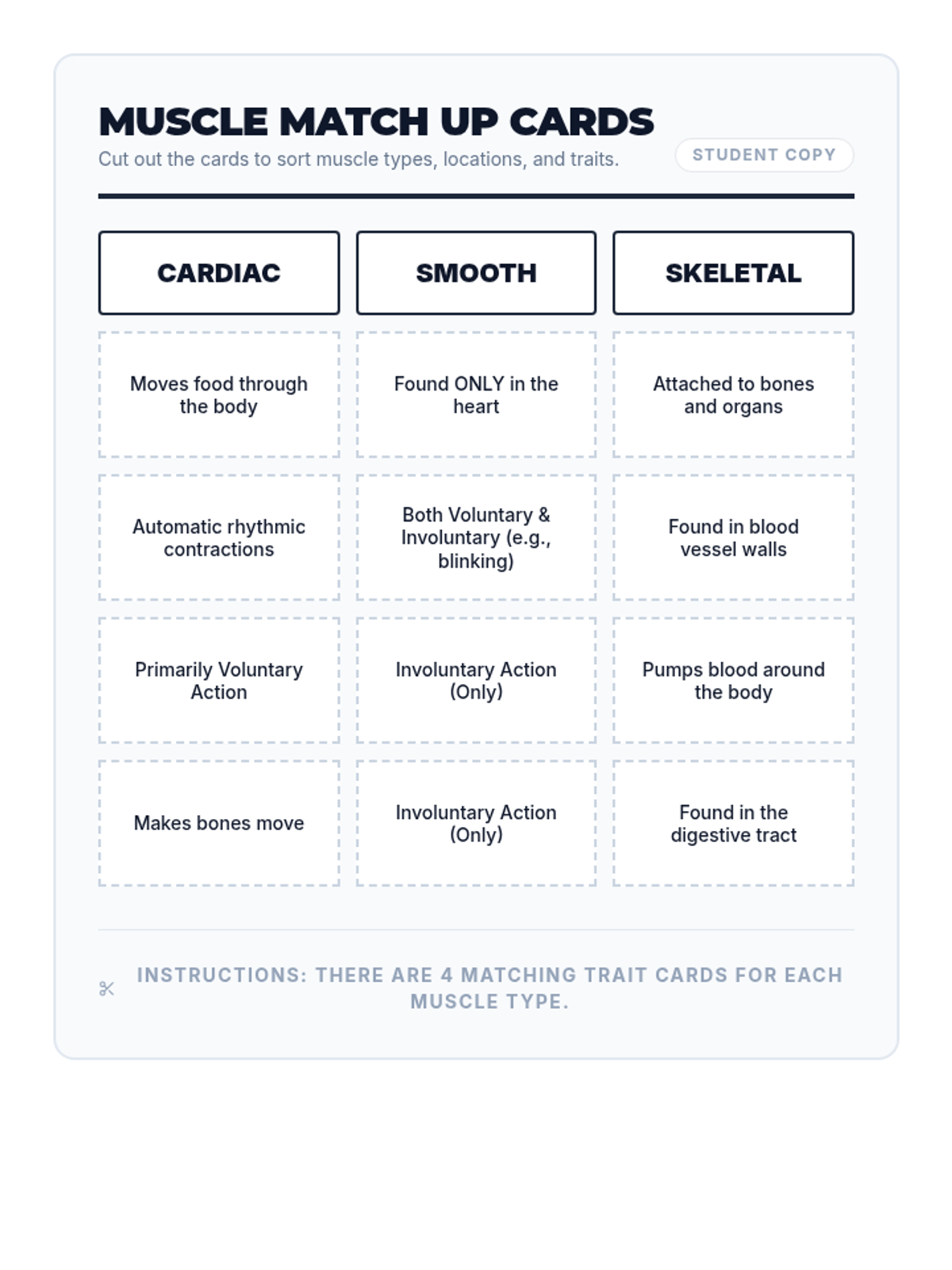
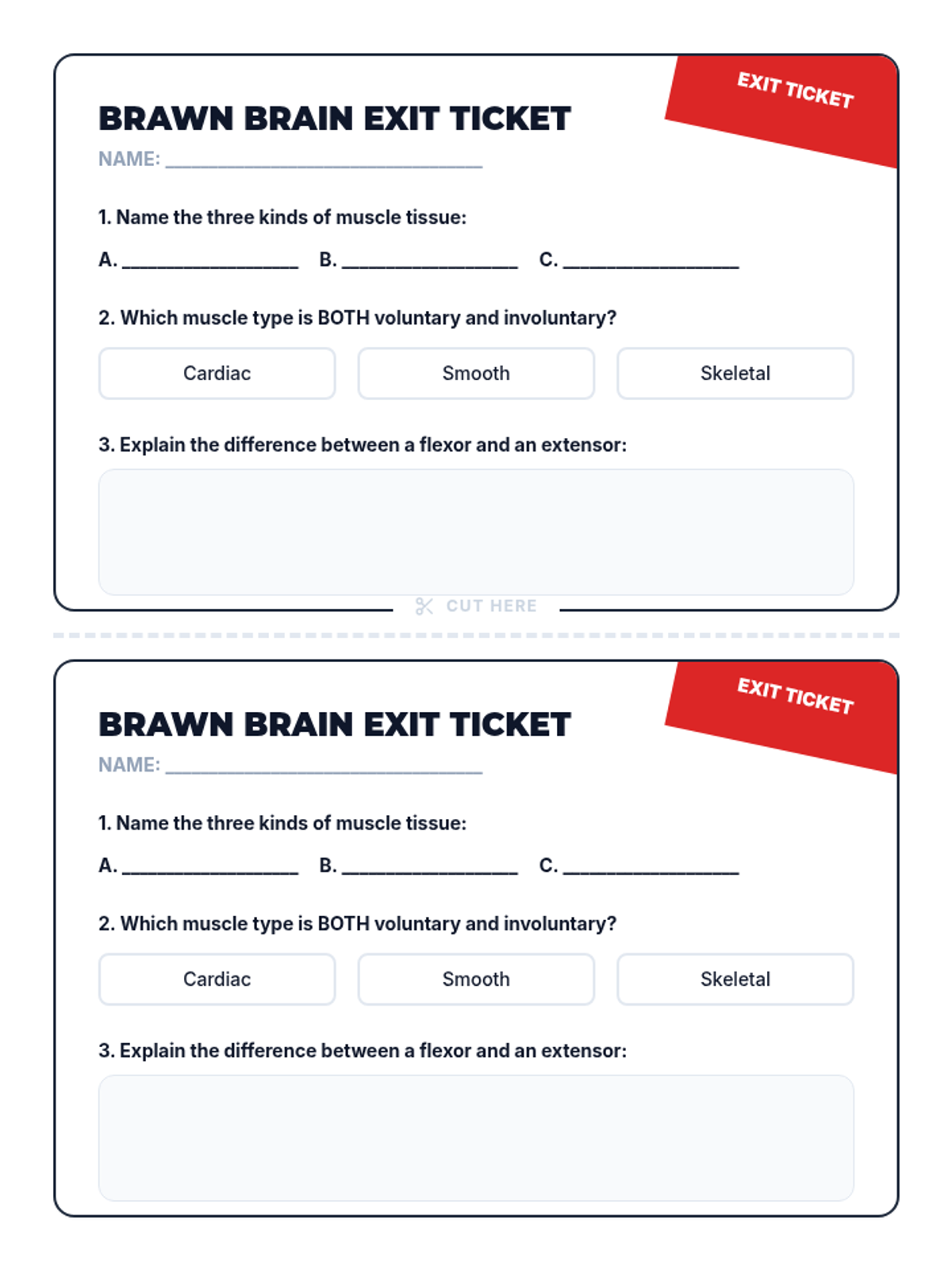
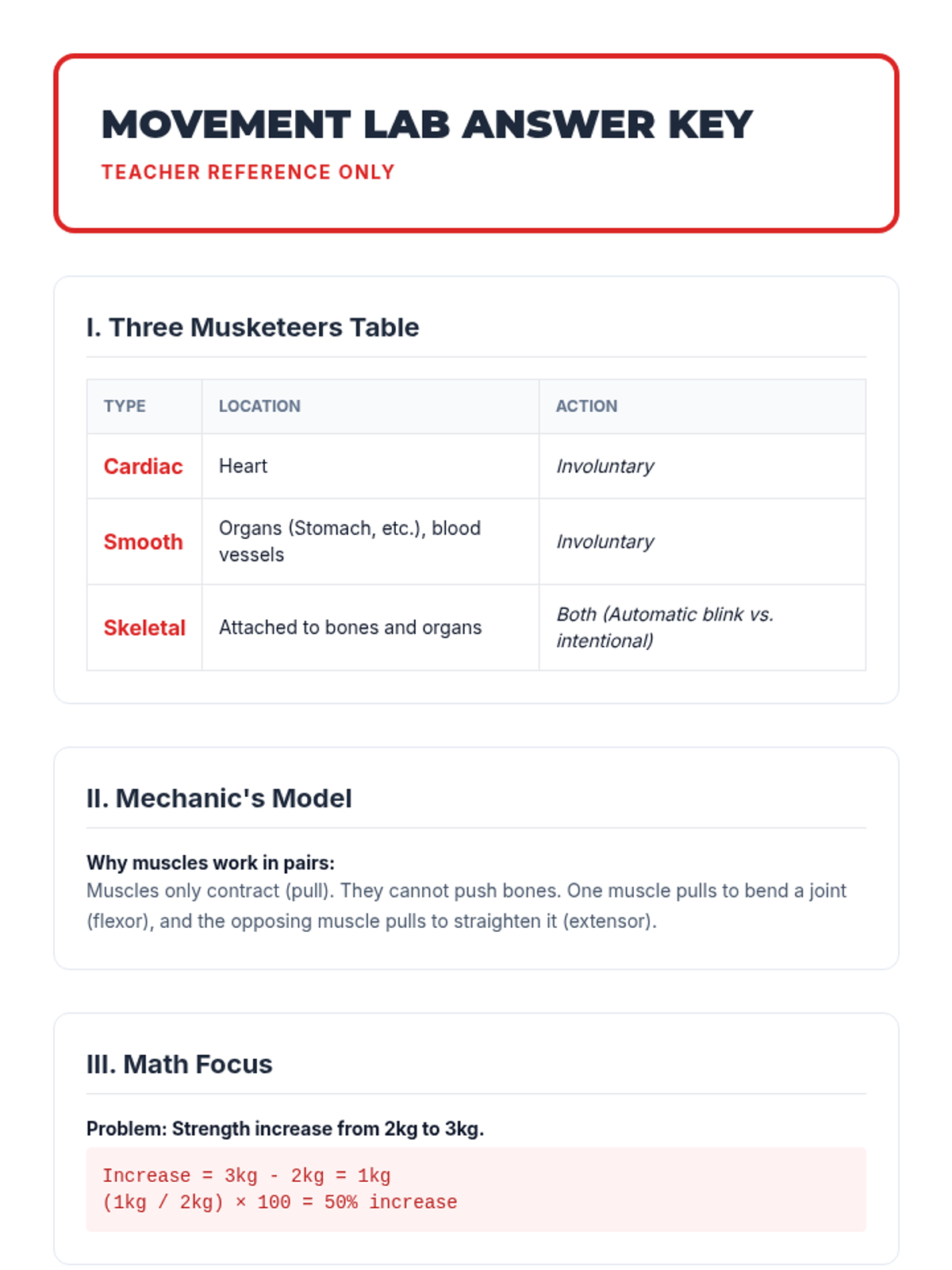
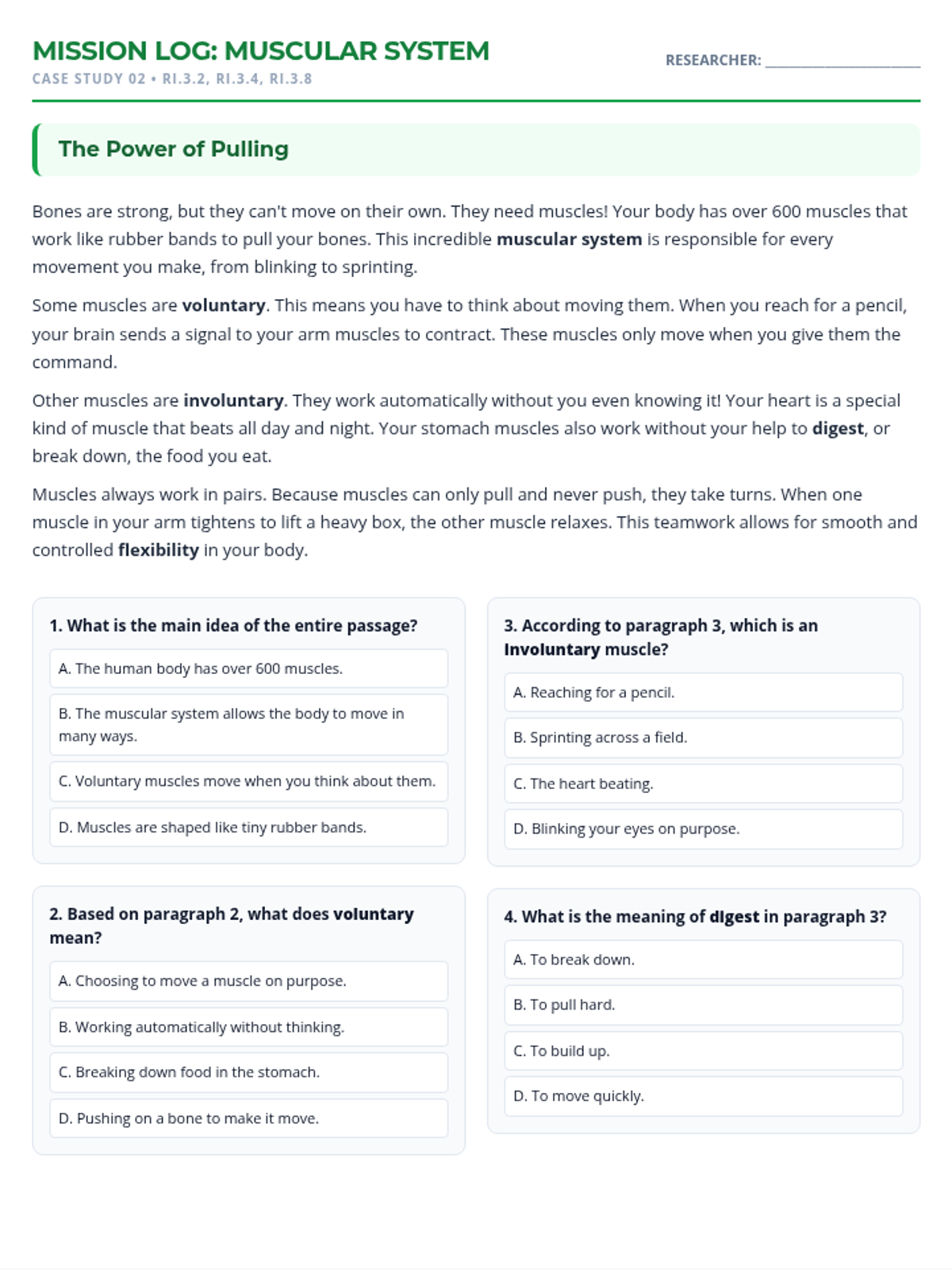
A hands-on exploration of the muscular system, focusing on the three types of muscle tissue, how muscle pairs work to create movement, and the importance of exercise for muscle health.
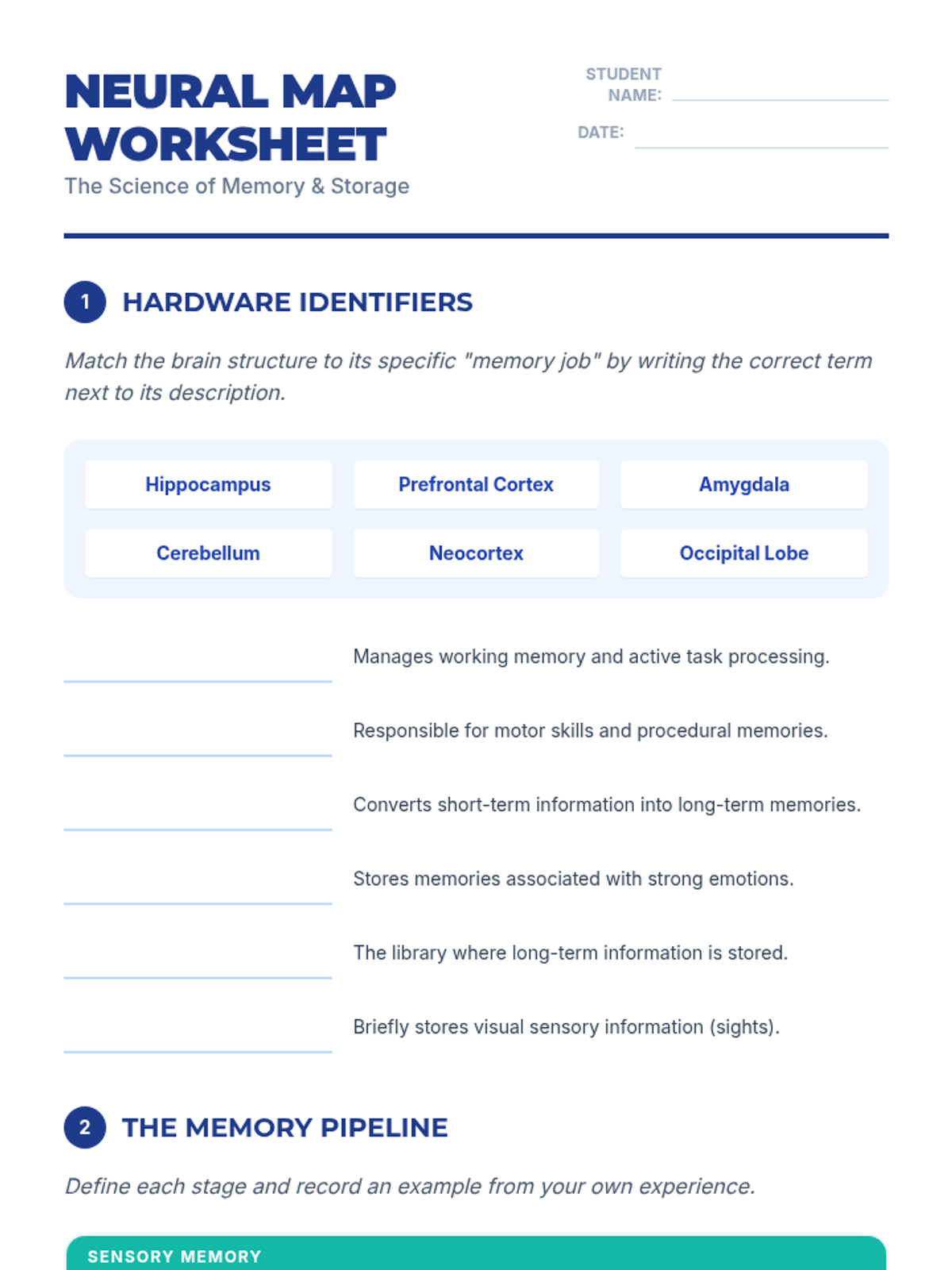
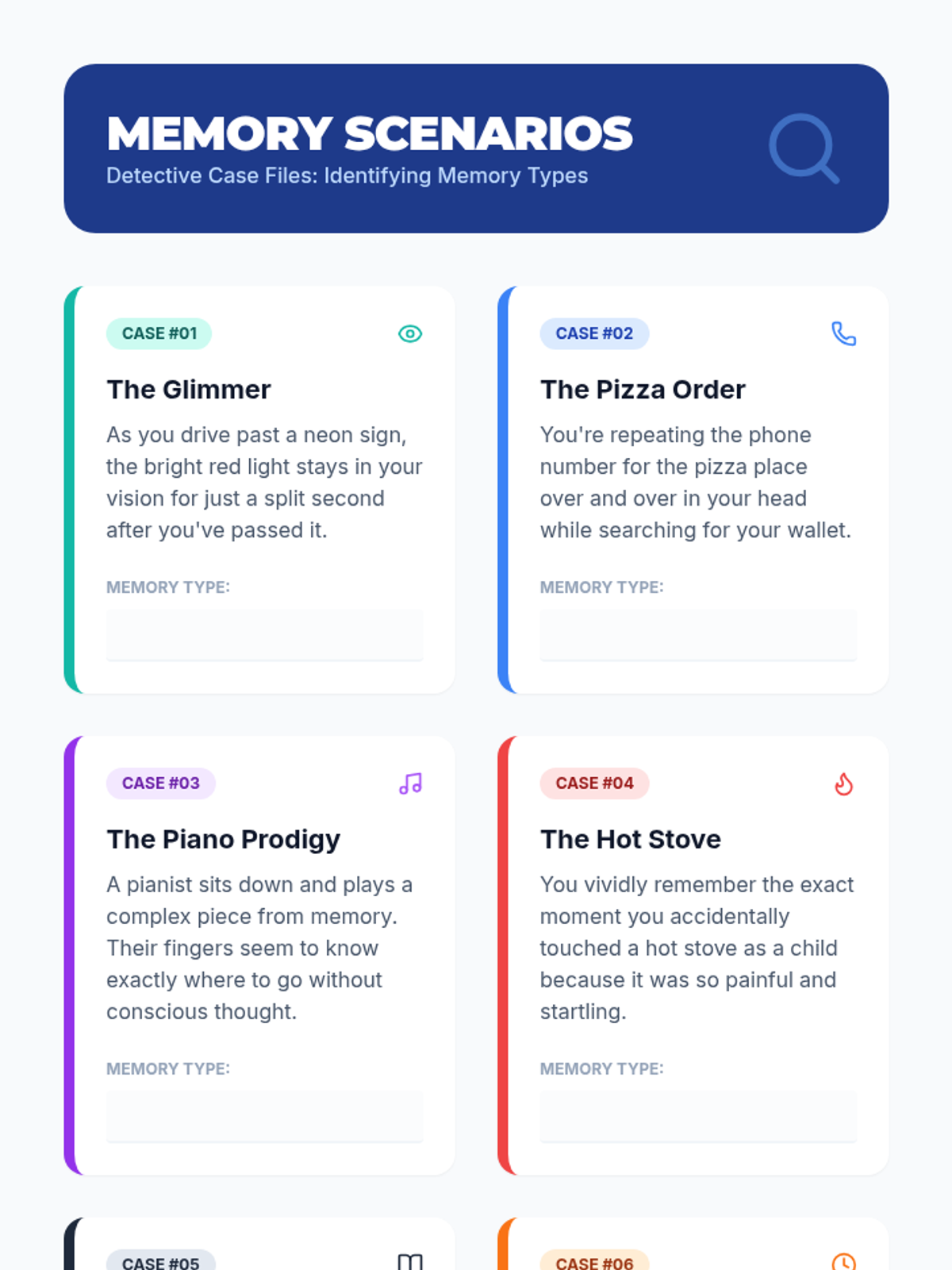
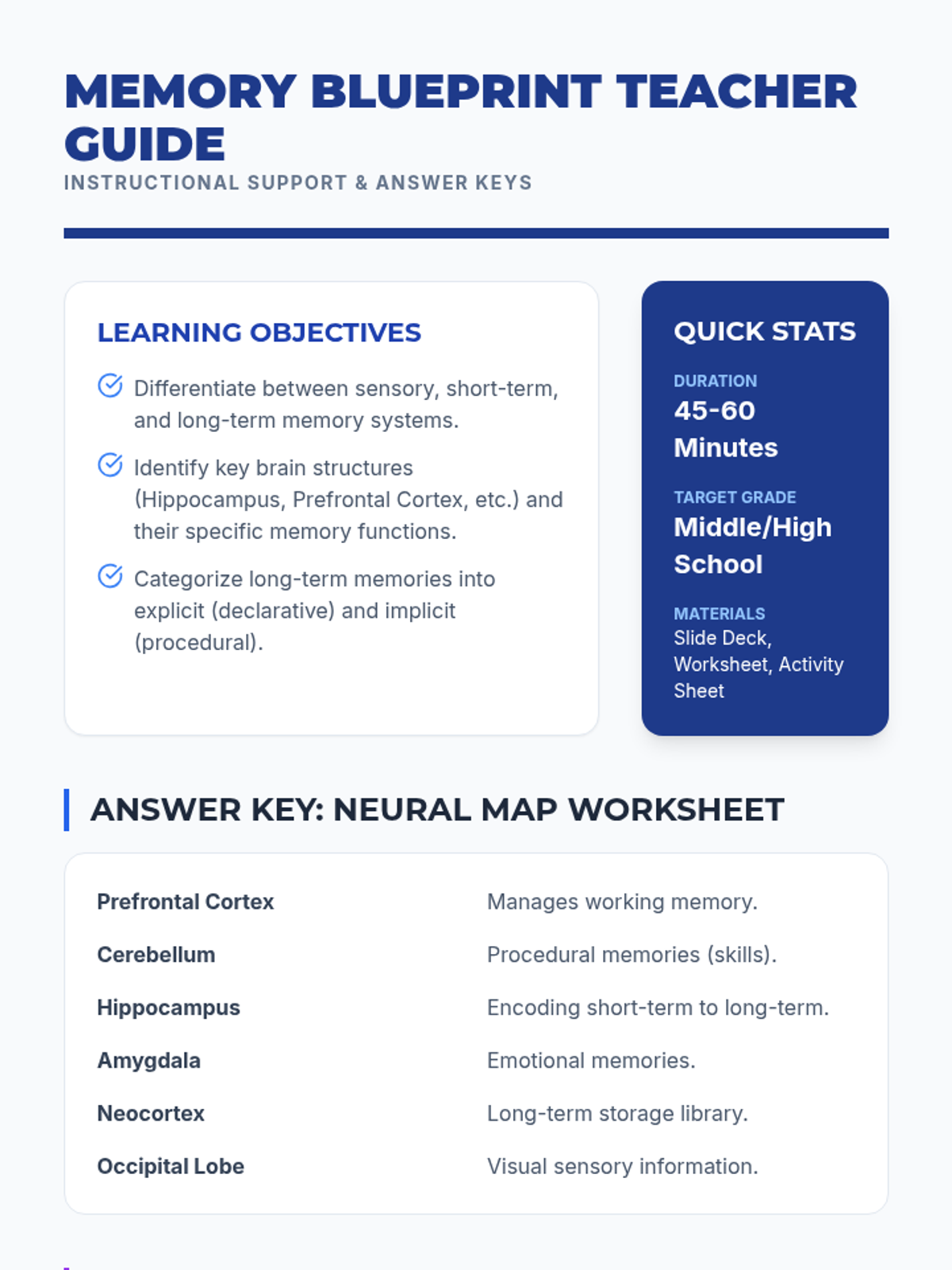
A comprehensive lesson on the three stages of memory (sensory, short-term, and long-term) and the specific brain structures that facilitate encoding and storage. Students will learn to categorize memories and identify the neurological 'hardware' behind their daily experiences.
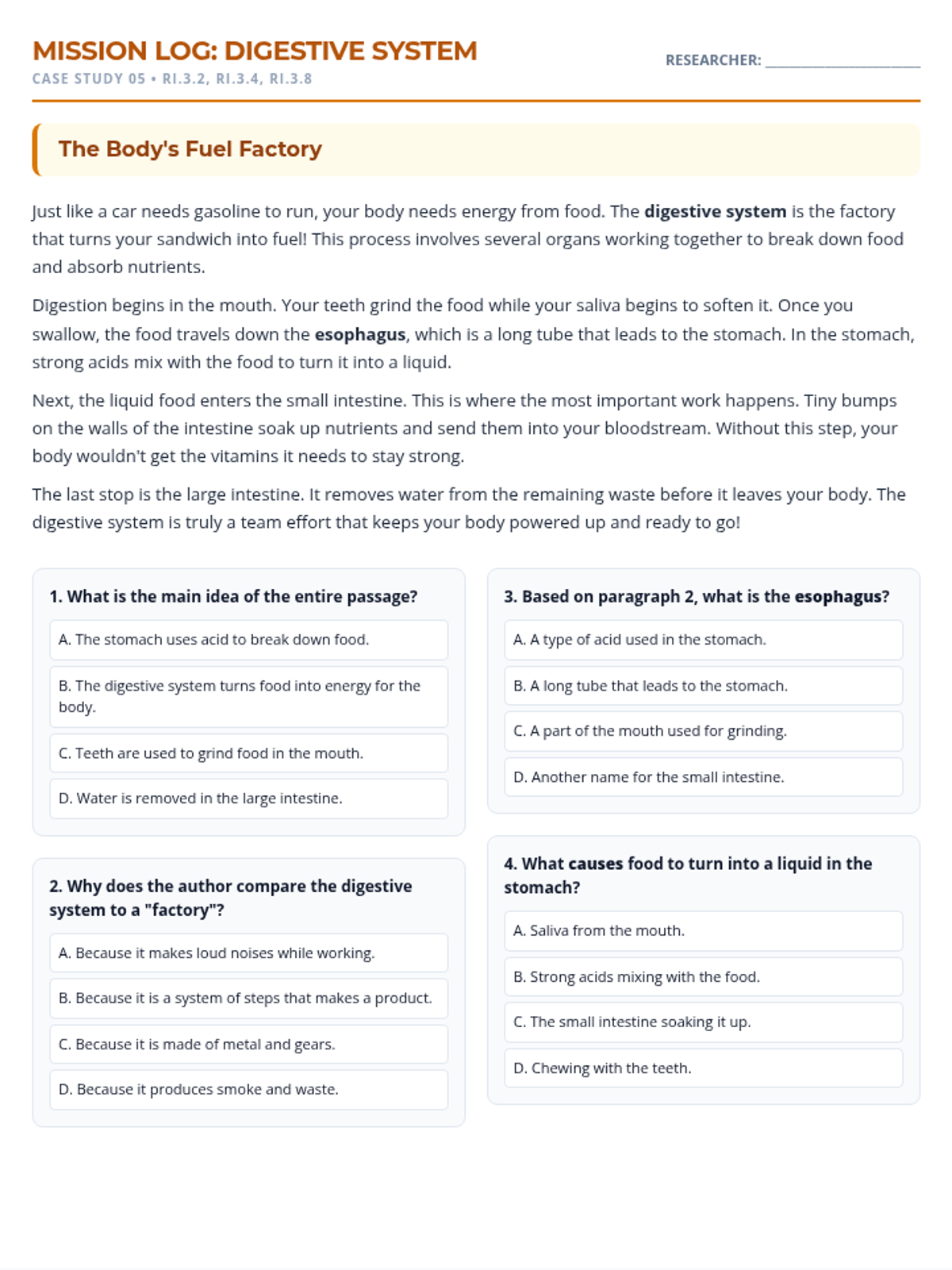
A review of the digestive system and how all body systems work together, synthesizing ELA skills from the week.
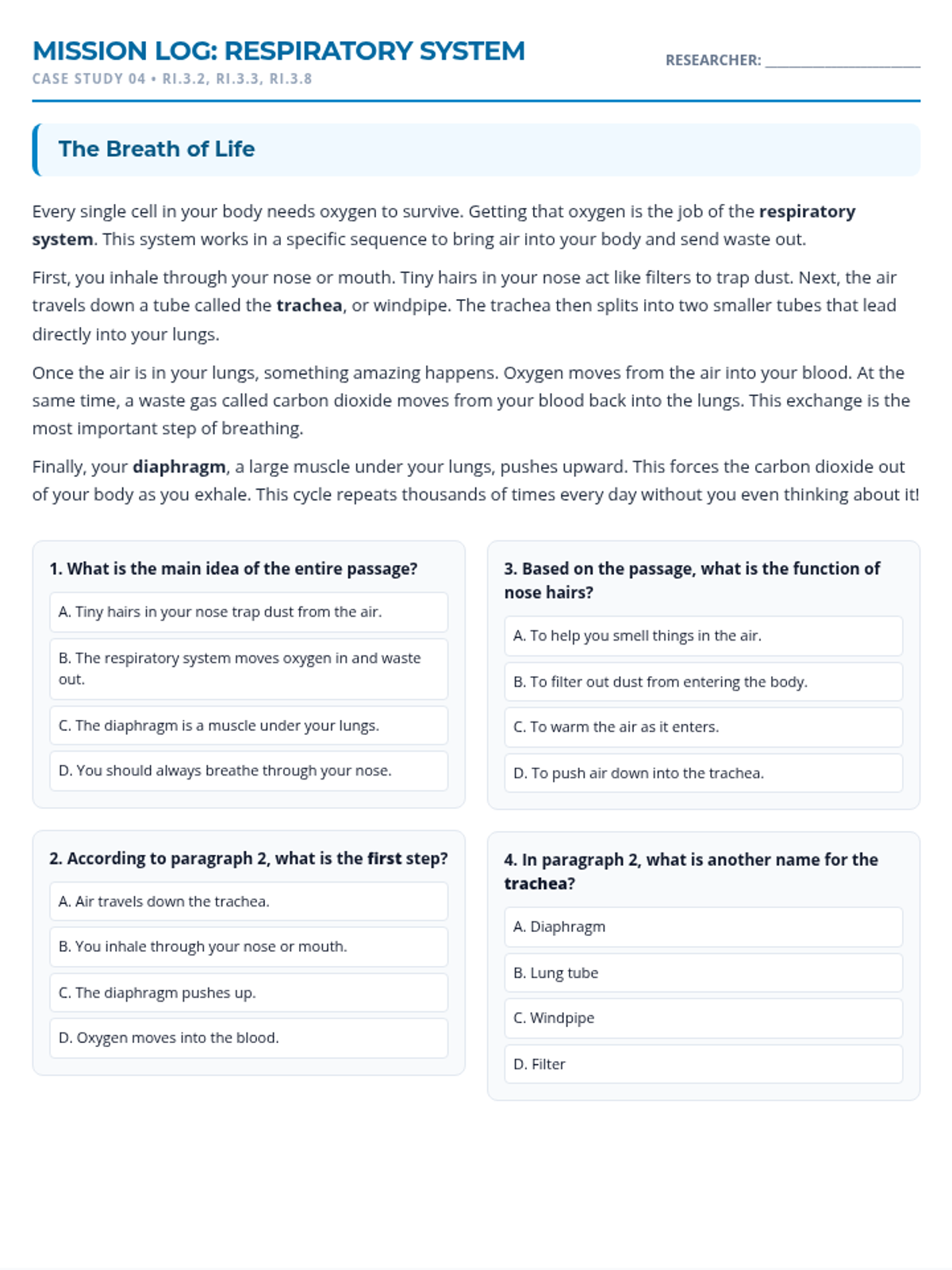
A deep dive into the respiratory system looking at the logical connections and sequence of how we breathe.
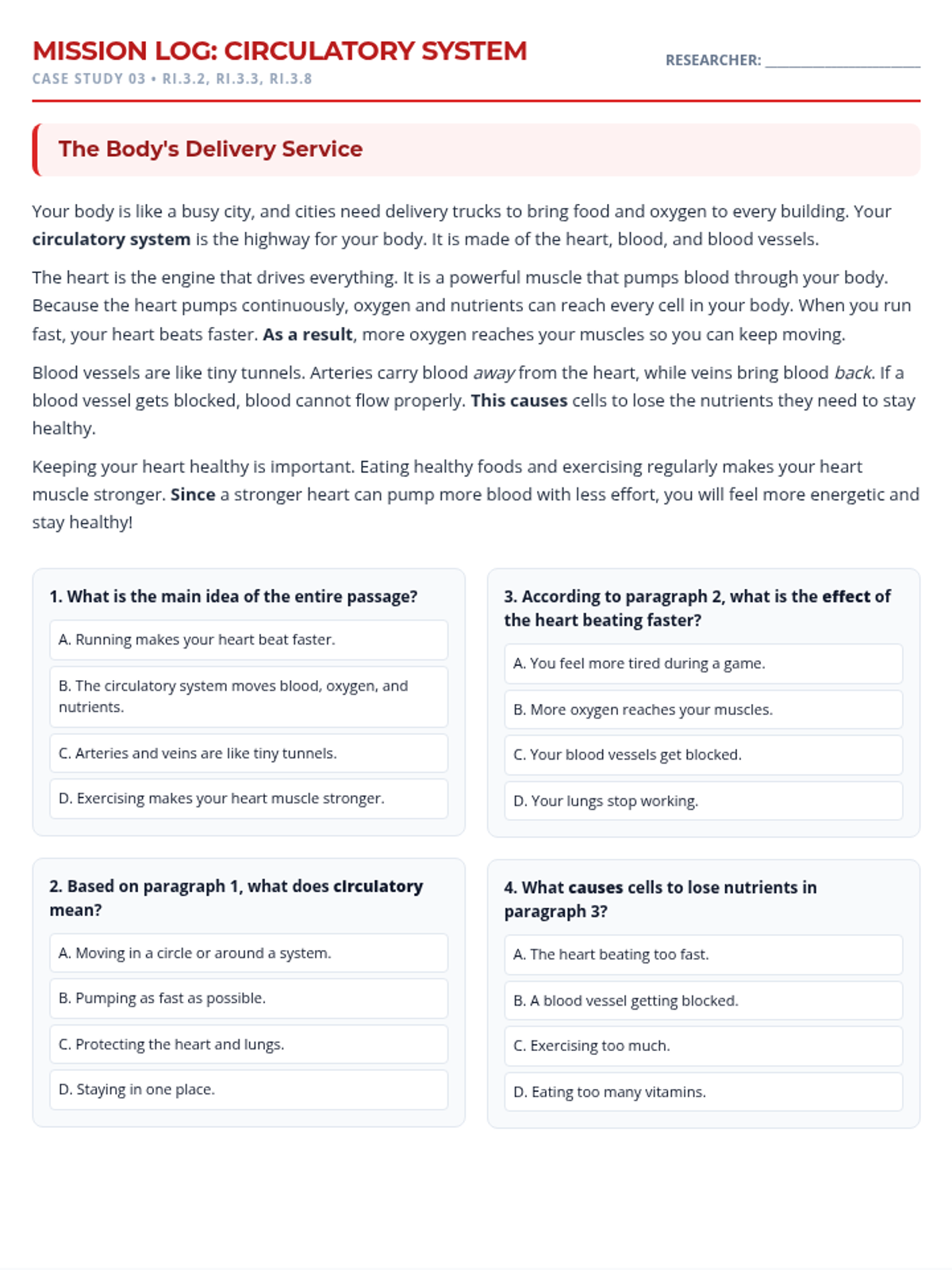
Exploring the heart and blood vessels with a specific focus on identifying cause-and-effect relationships within the body.
An investigation into the muscular system focusing on using context clues to define scientific vocabulary.
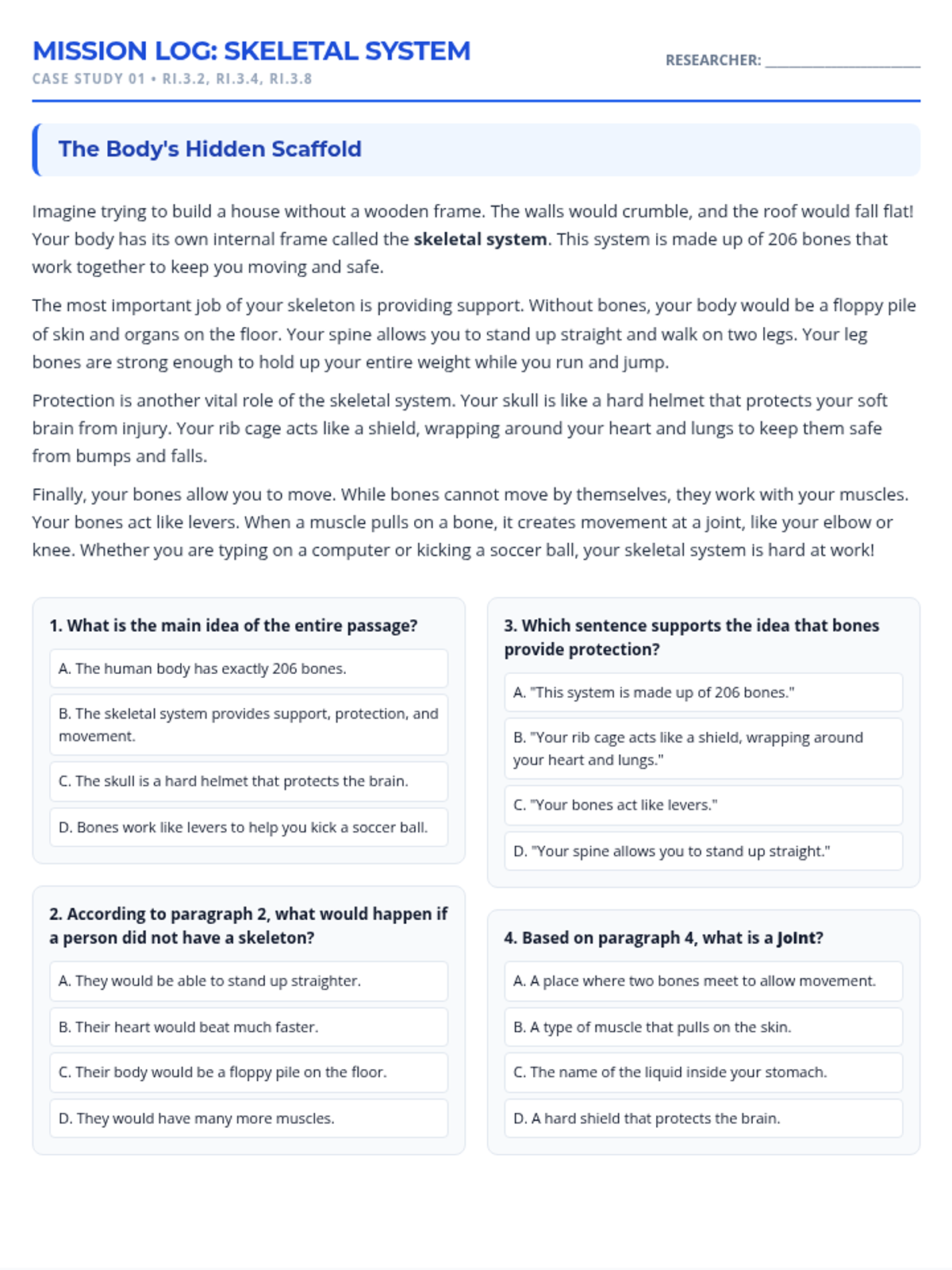
Students explore the skeletal system while practicing identifying the main idea and supporting details in informational text.
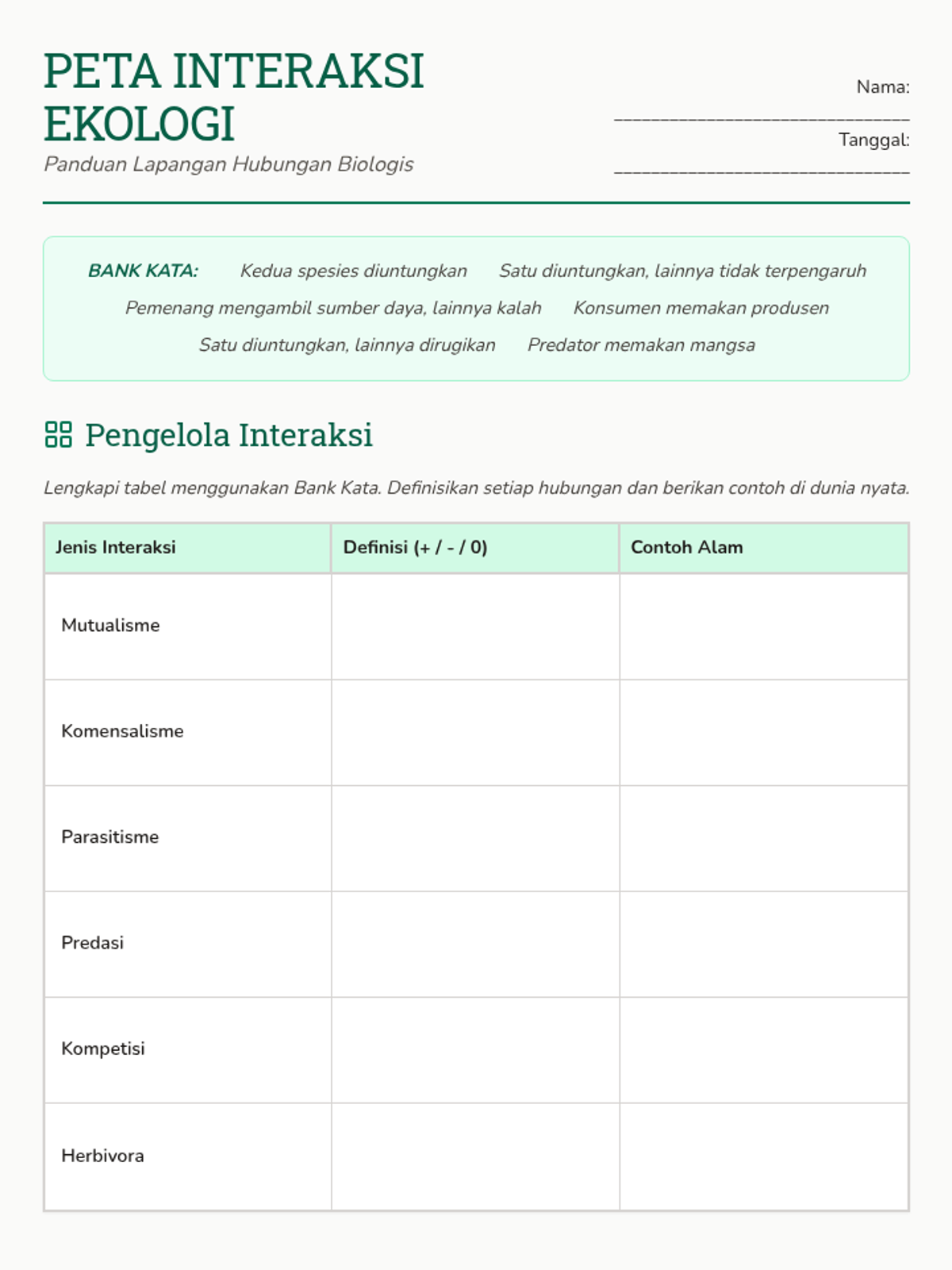
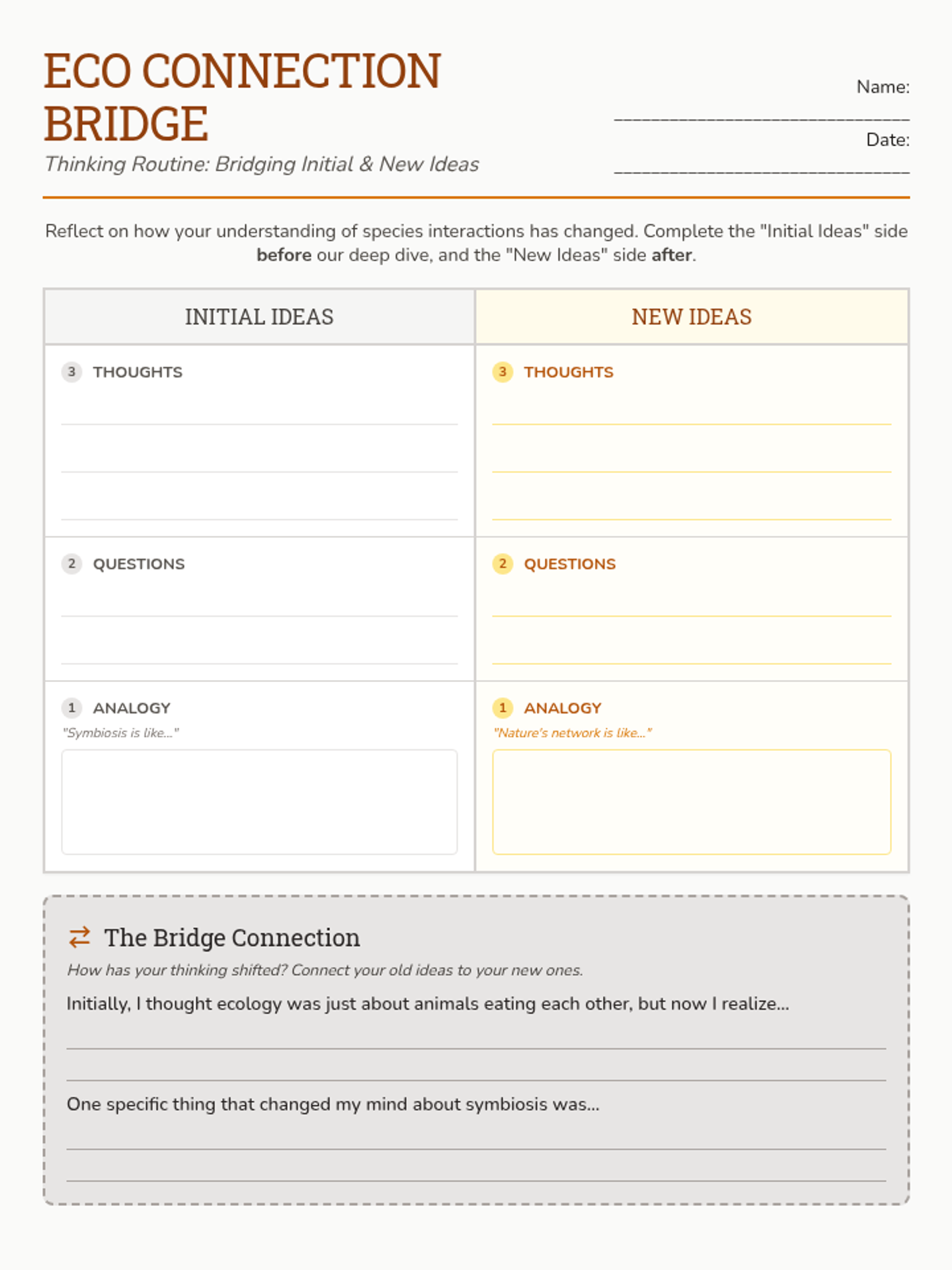
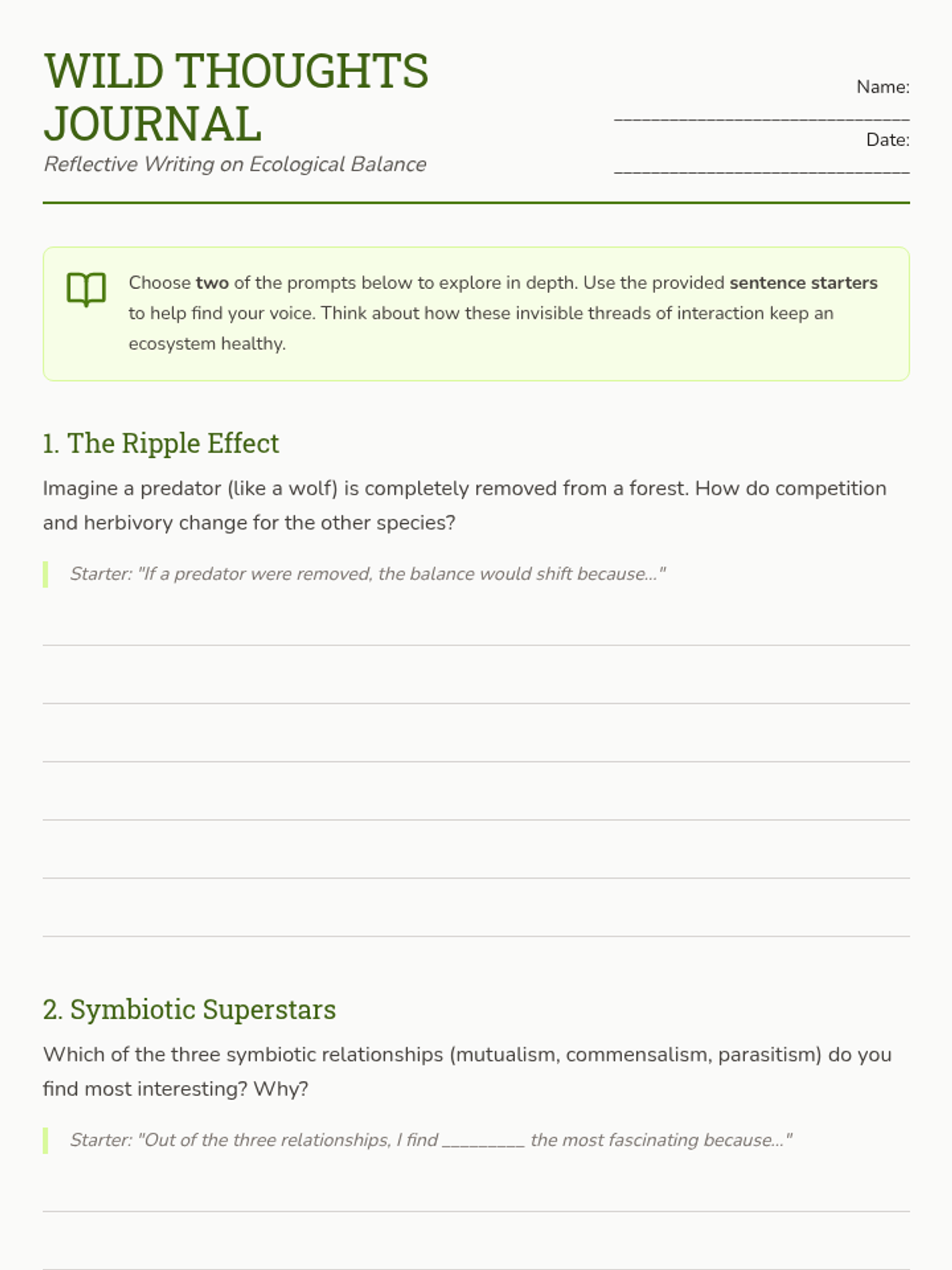
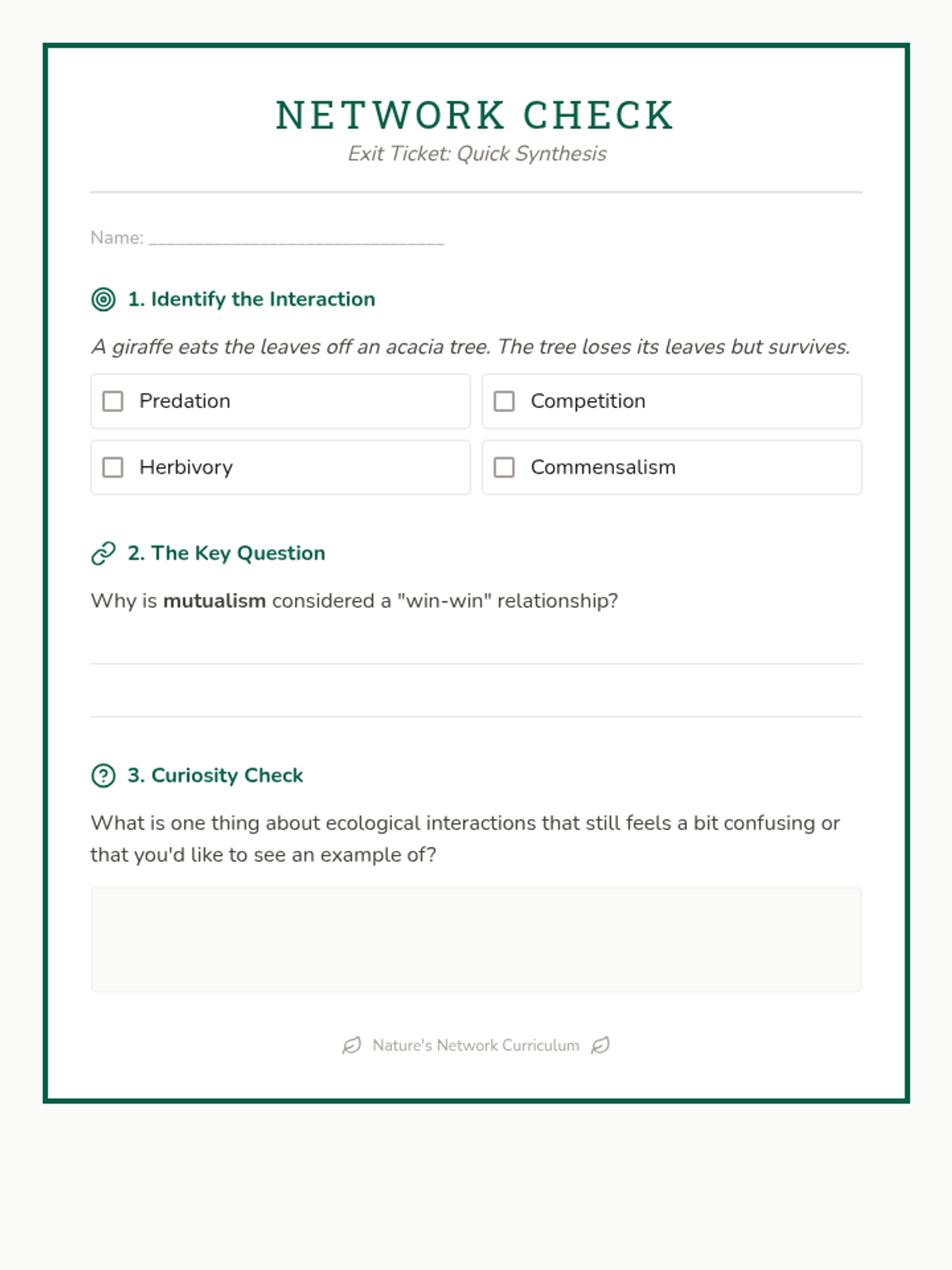
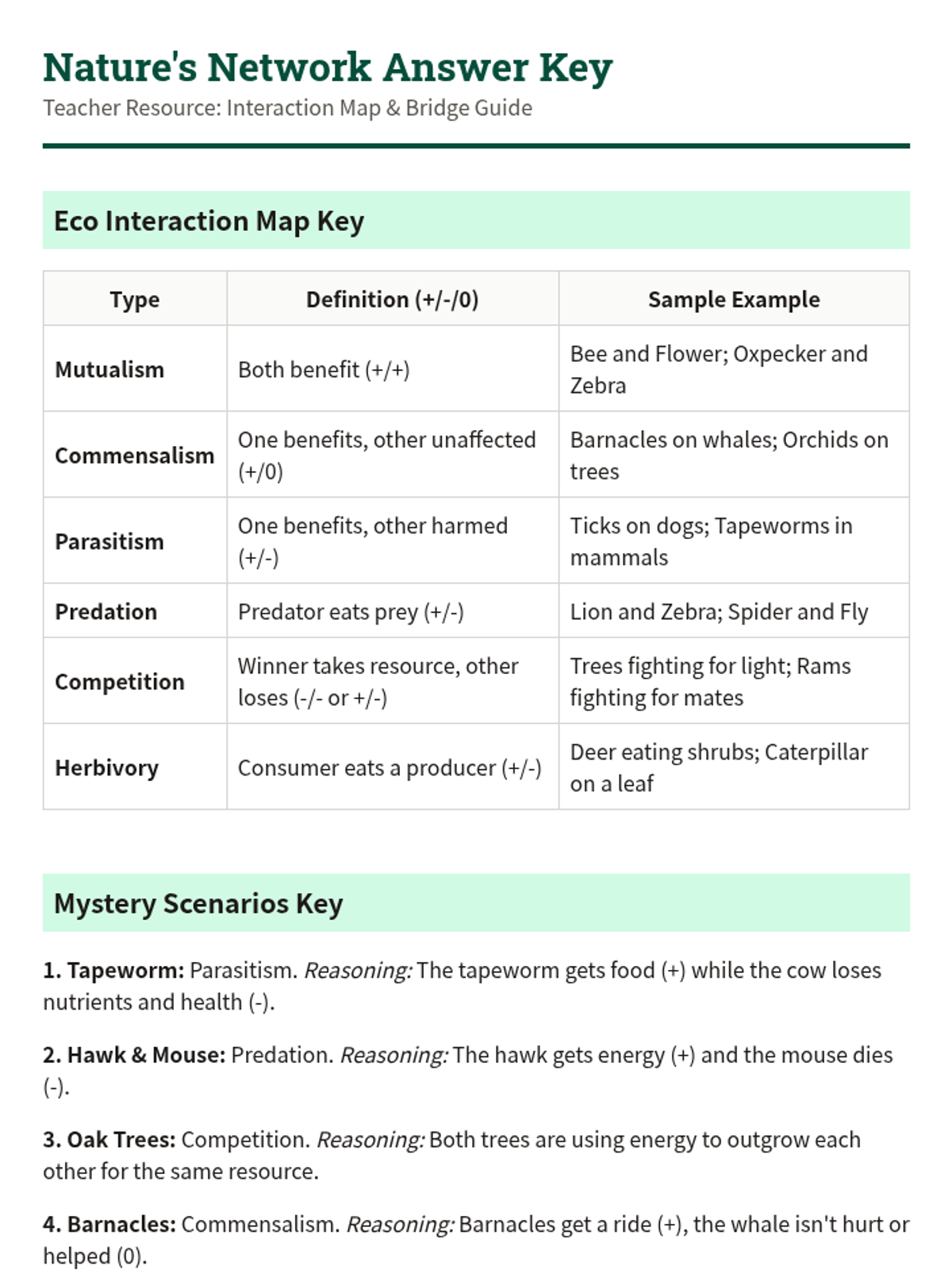
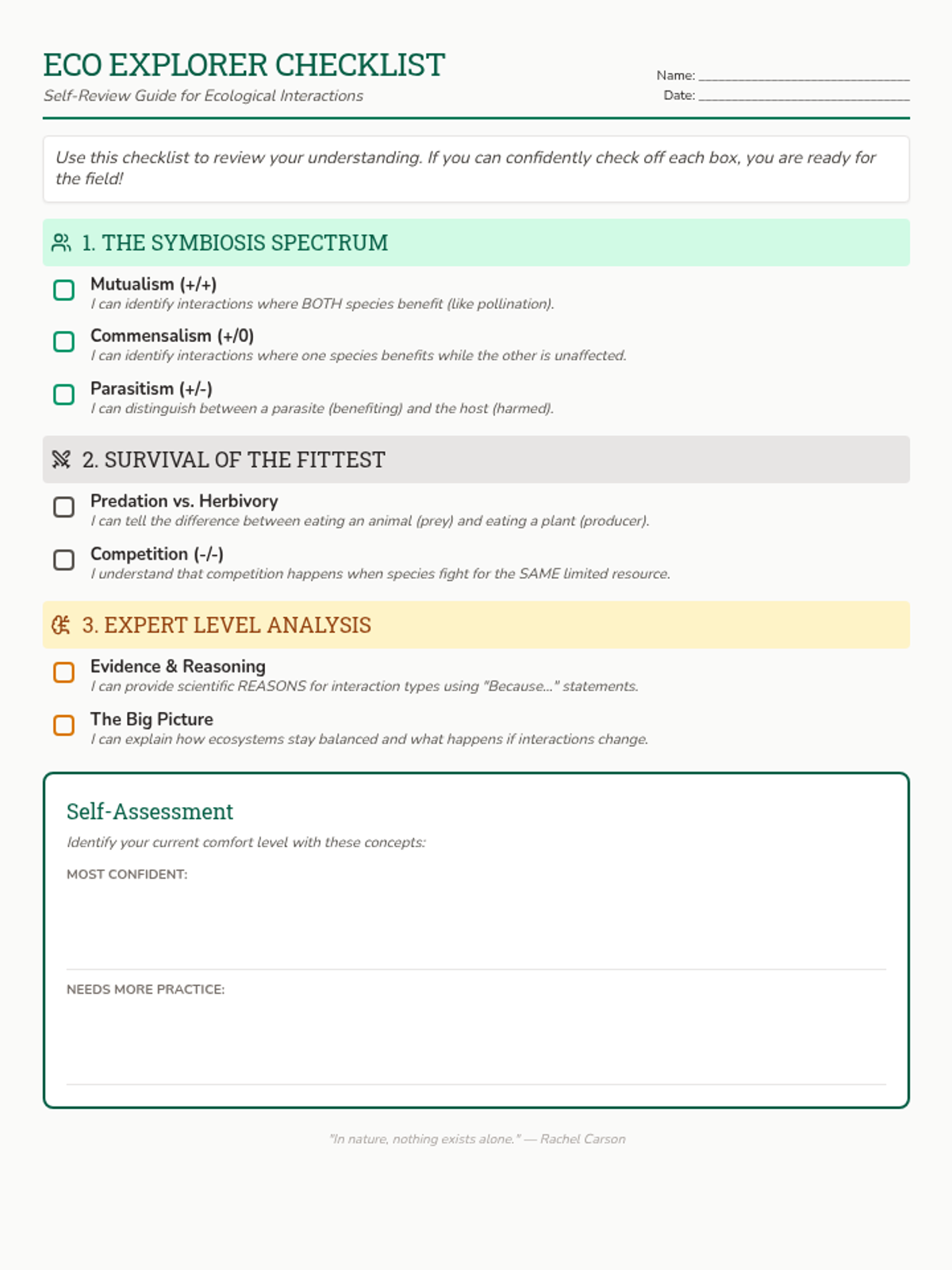
A reflective lesson where students explore and synthesize their understanding of biological interactions through graphic organizers, a 3-2-1 Bridge thinking routine, and journaling.
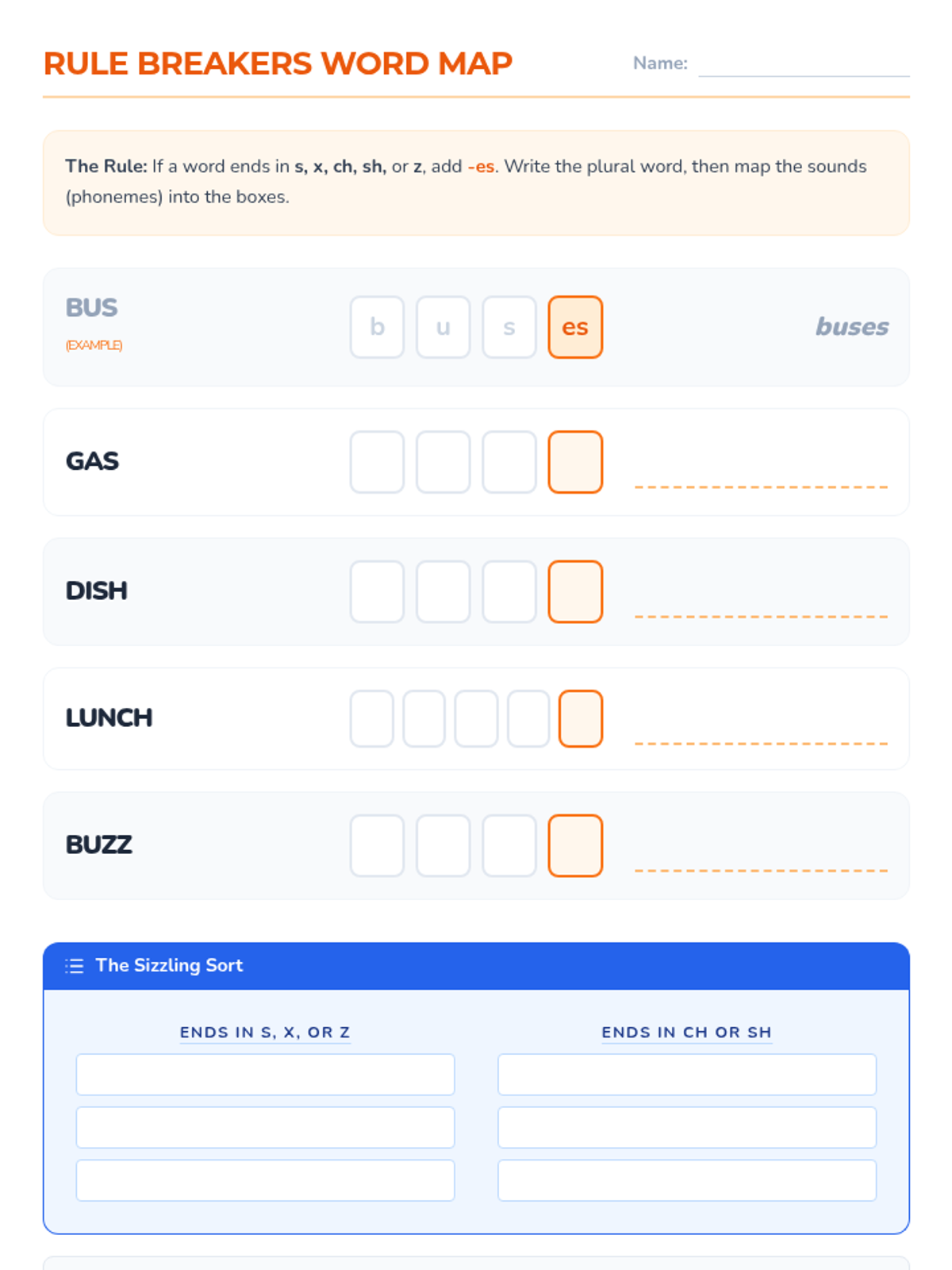
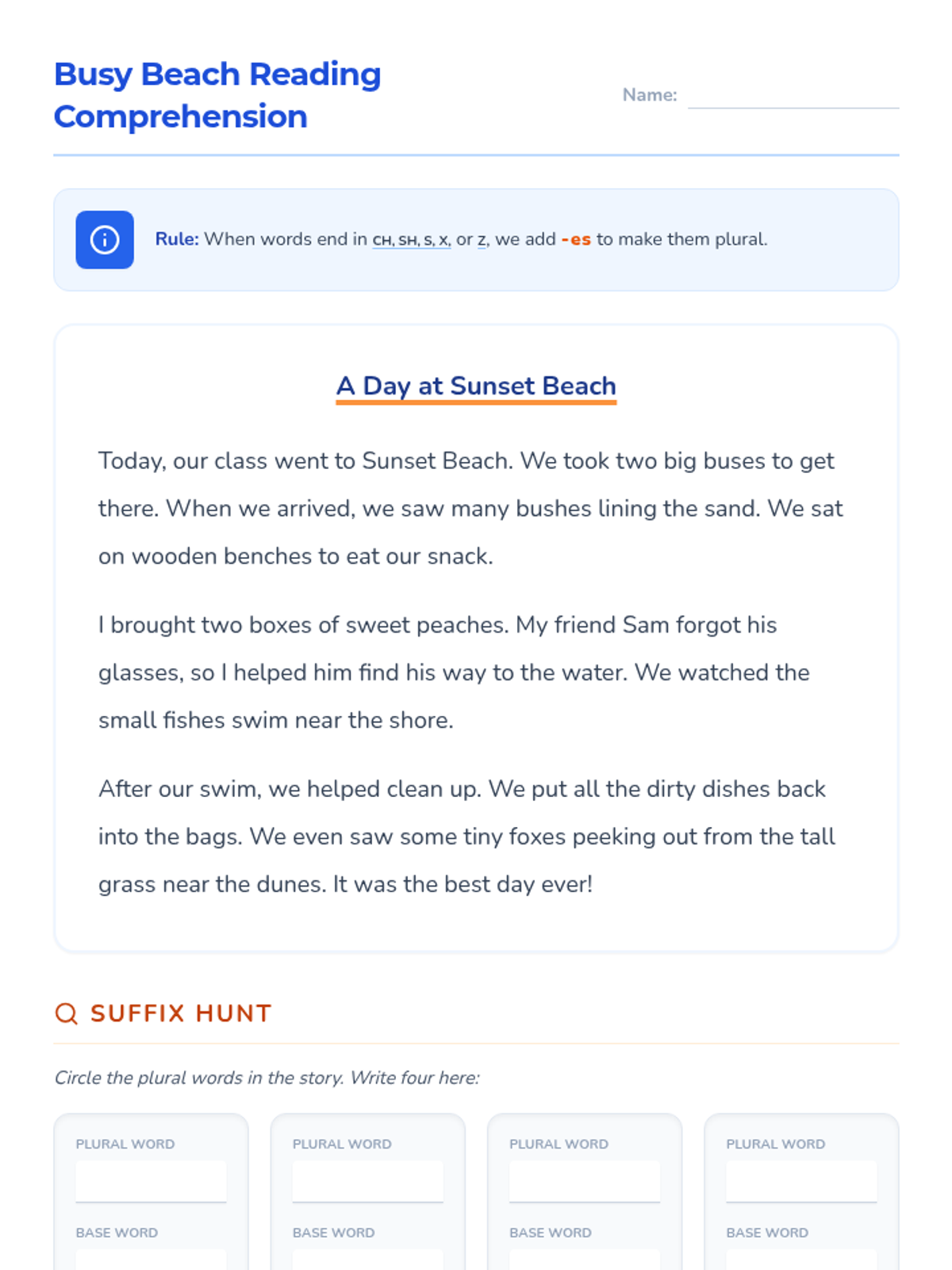
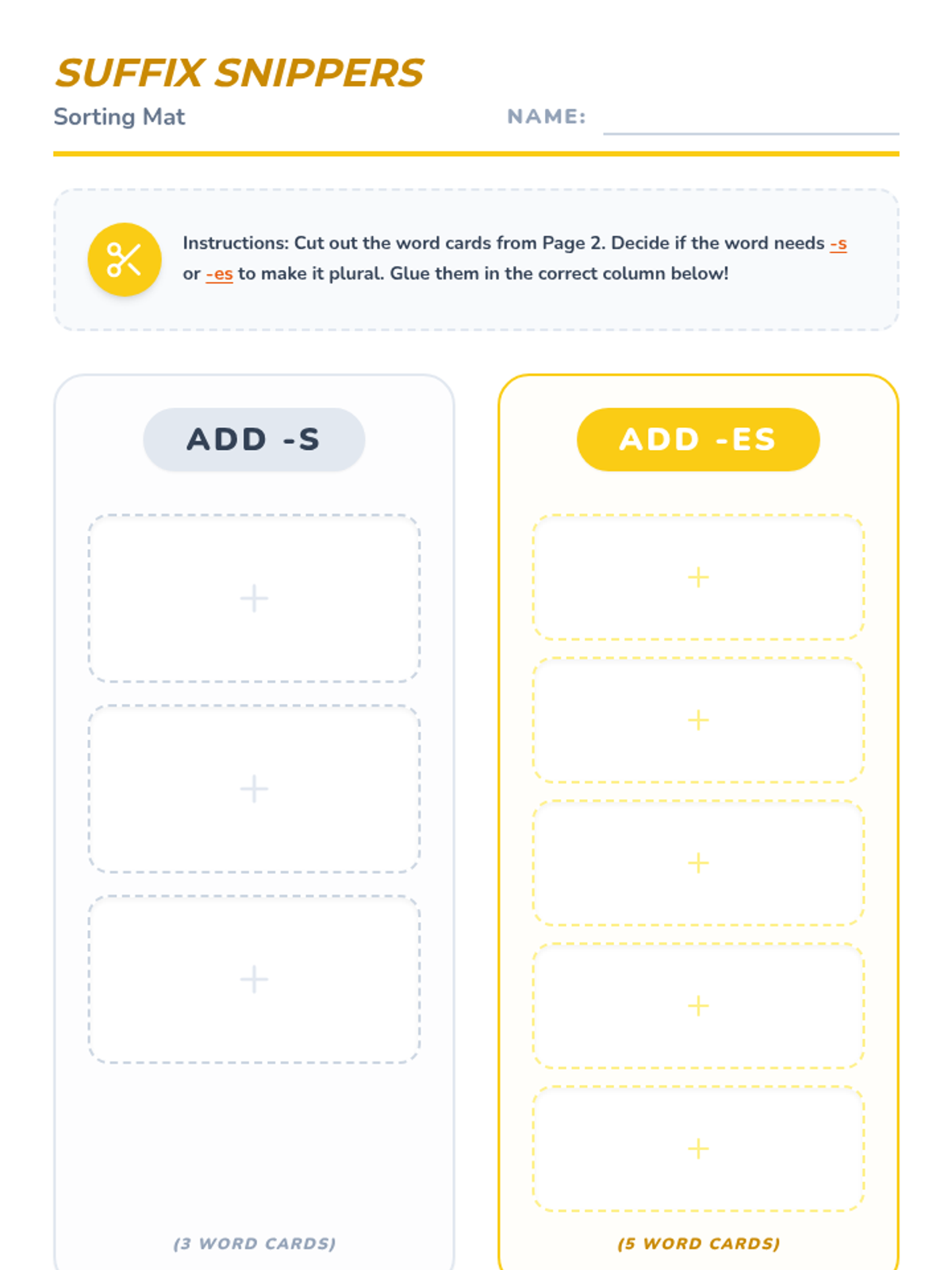
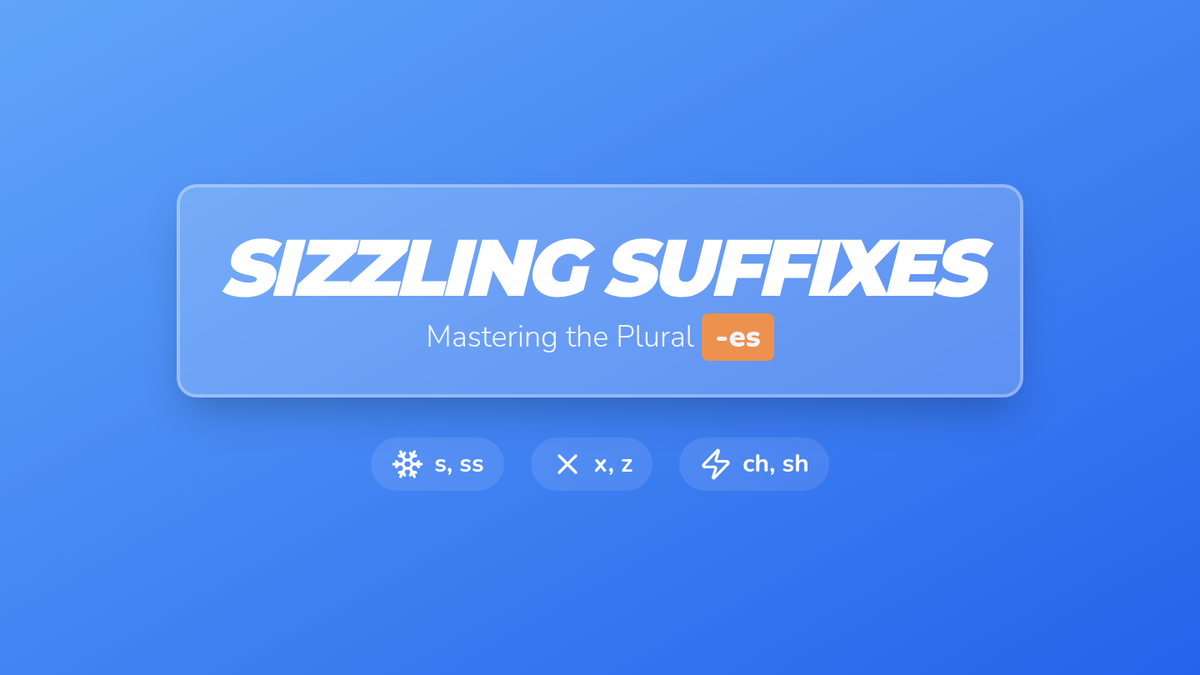
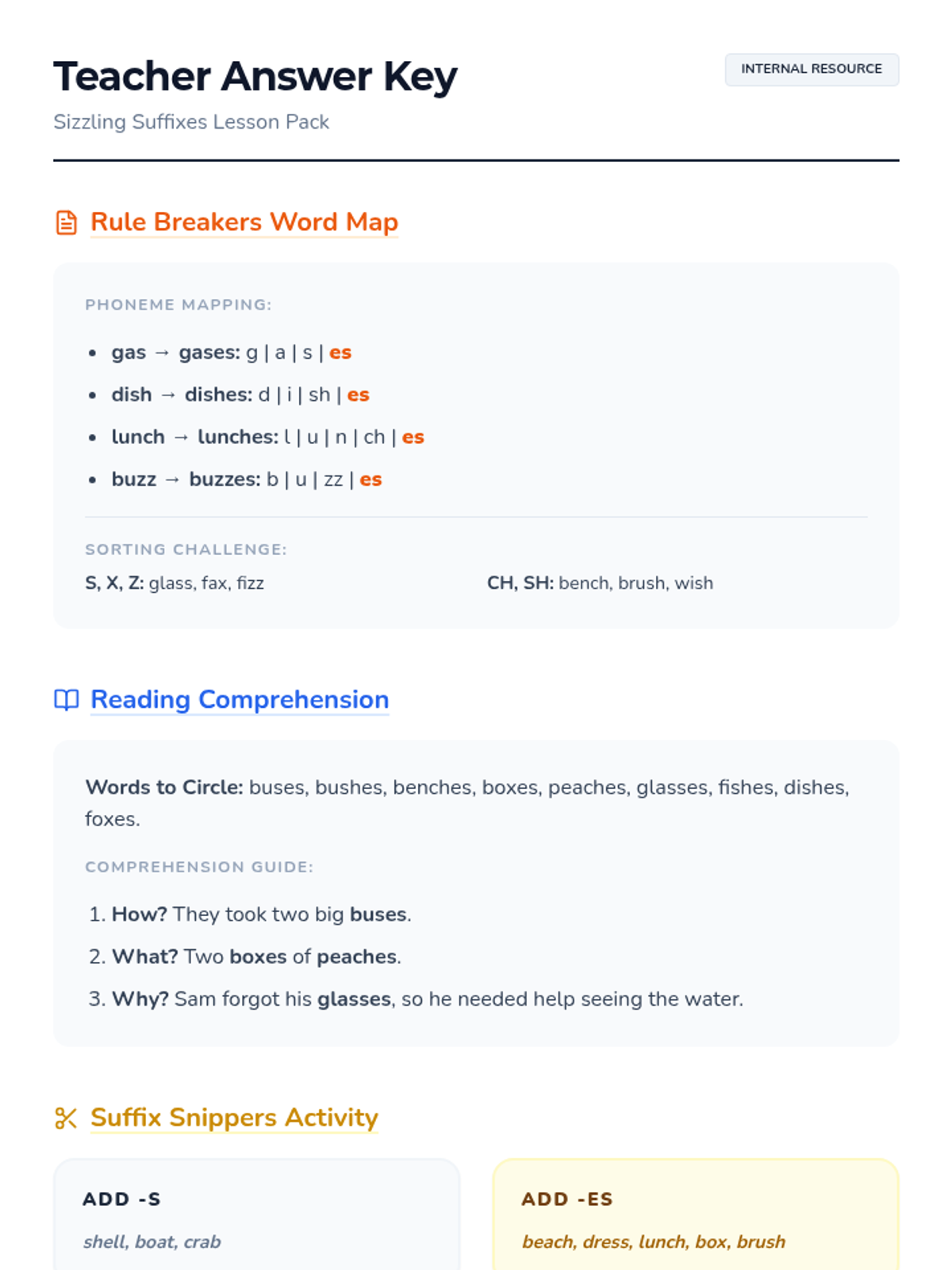
A comprehensive lesson on plurals ending in -es, covering base words ending in s, x, ch, sh, and z through multi-sensory activities.
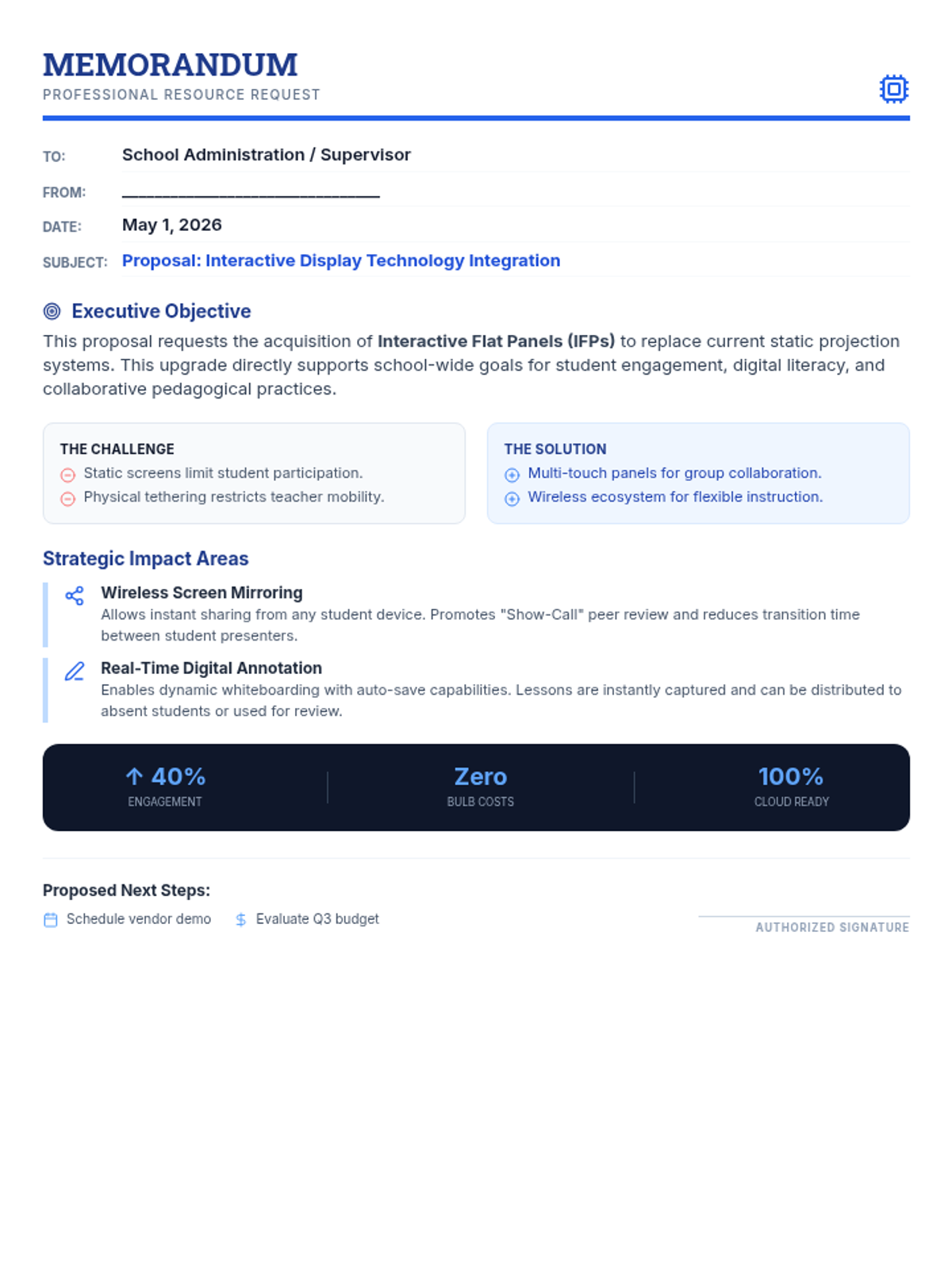
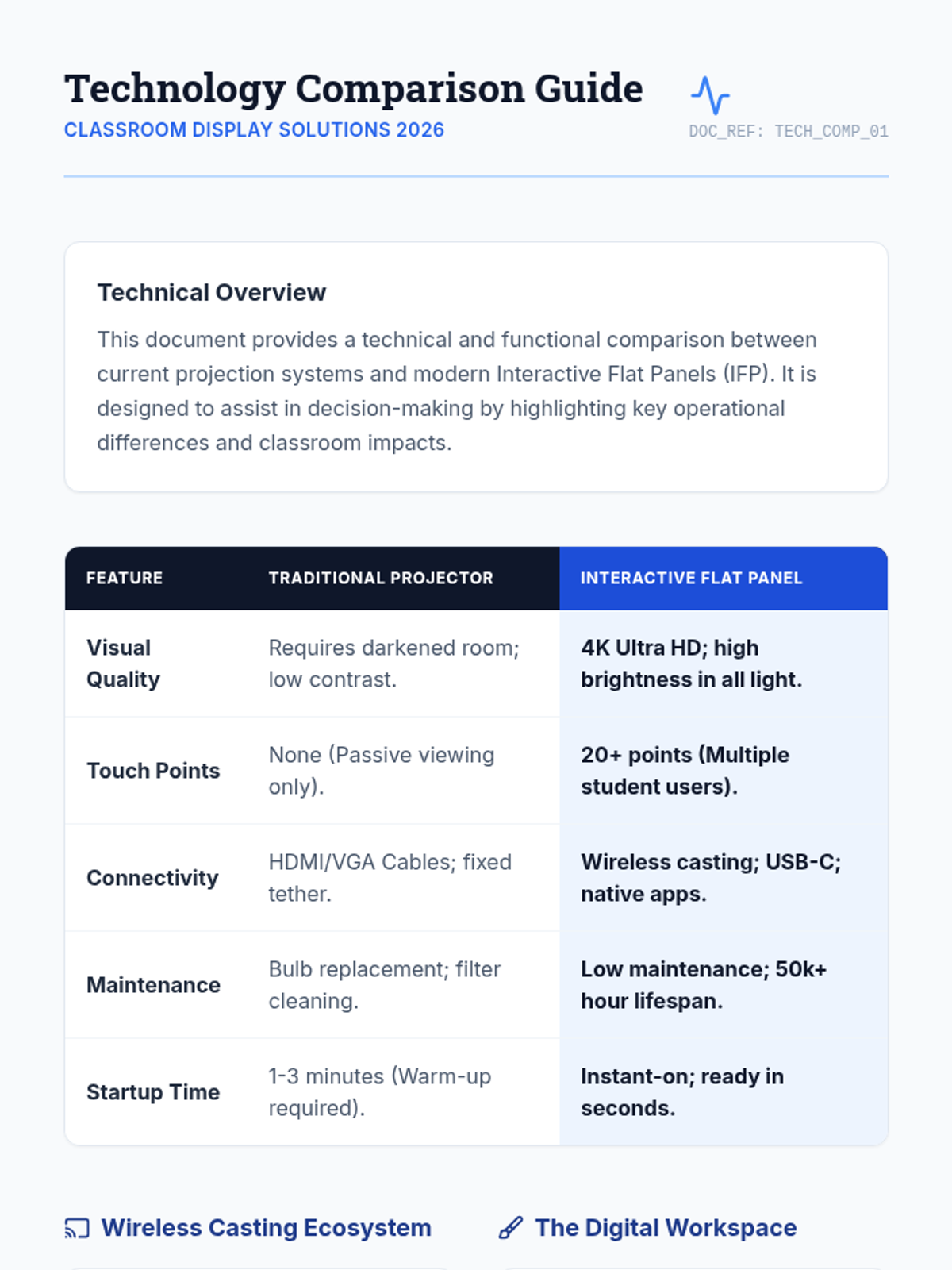
A suite of professional advocacy materials designed to help educators persuade administrators to invest in interactive classroom technology. Includes a formal memo, a visual presentation of benefits, and a technical comparison guide.
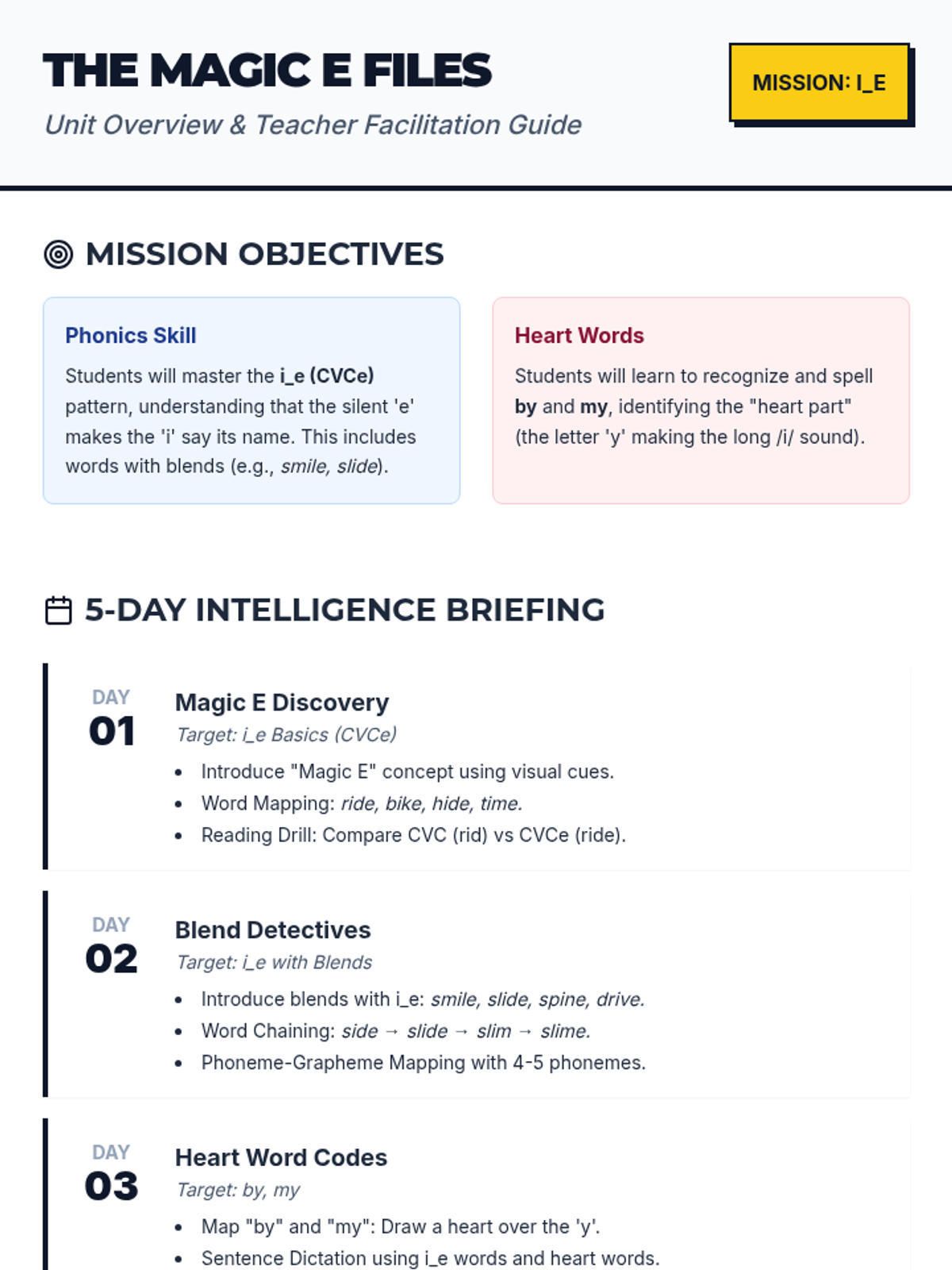
Unit overview and teacher facilitation guide for 'The Magic E Files'.
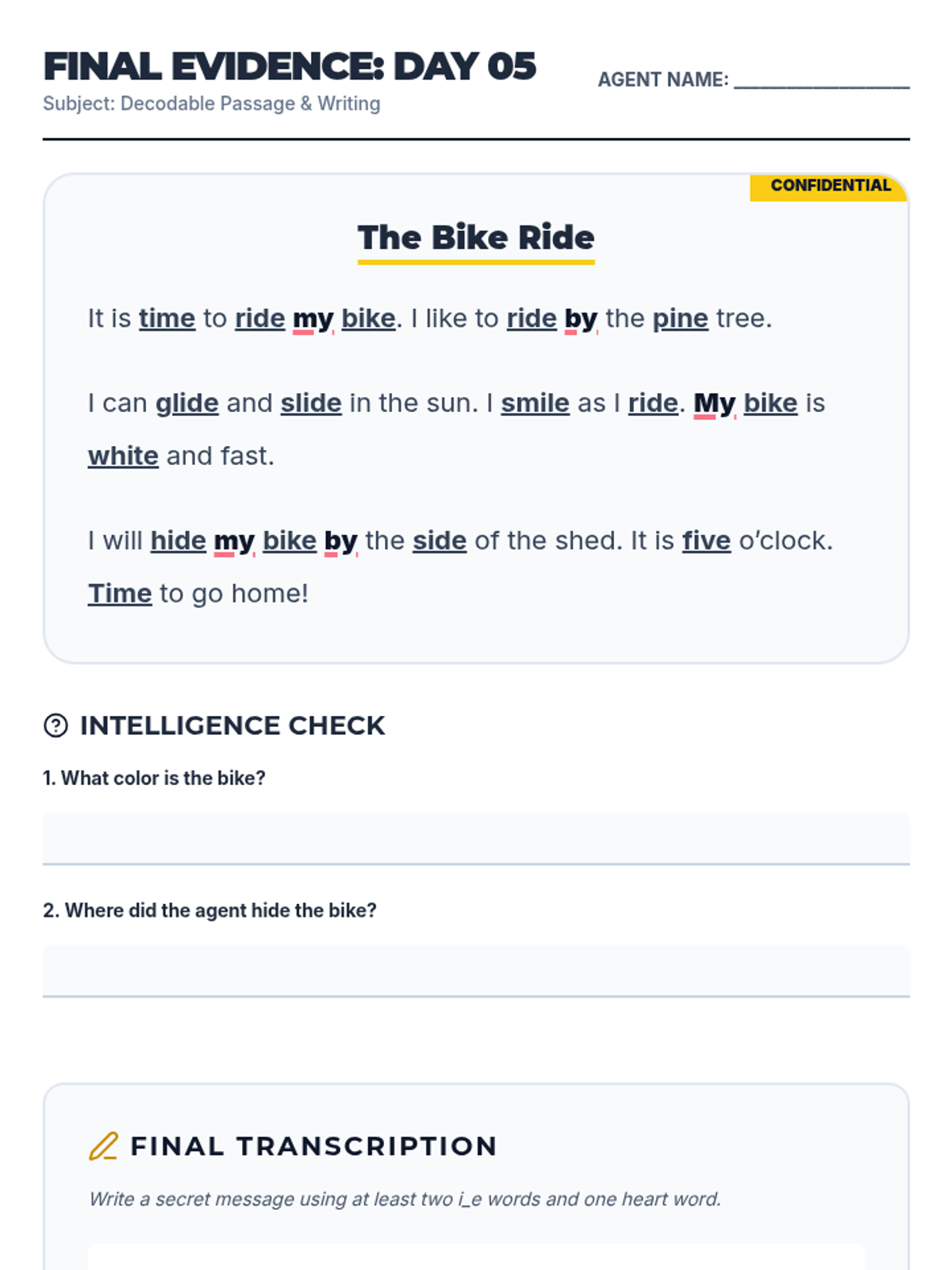
Read a decodable passage featuring i_e words and heart words, followed by a writing application.
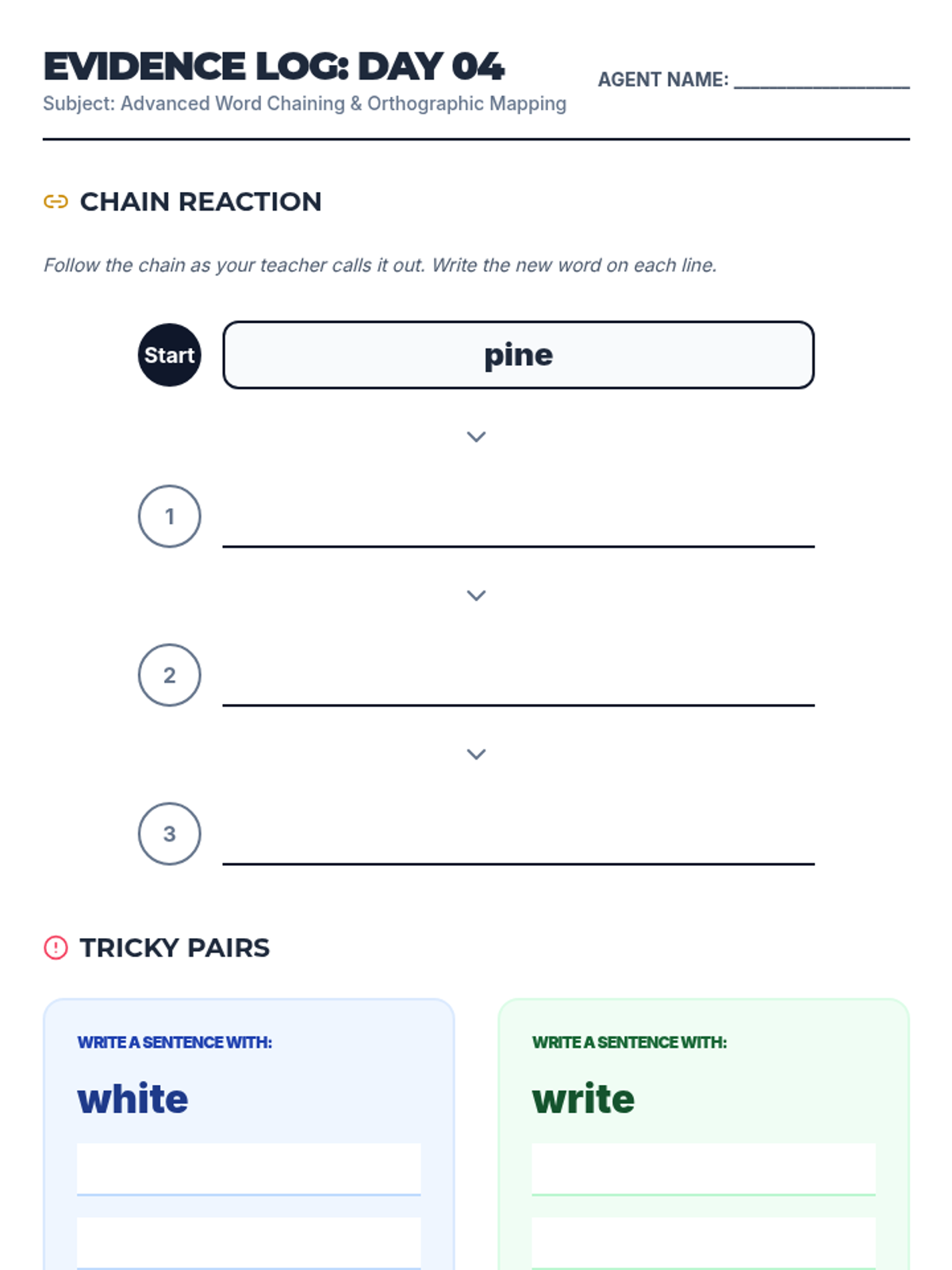
Practice complex word chains and orthographic mapping of i_e words to build automaticity.
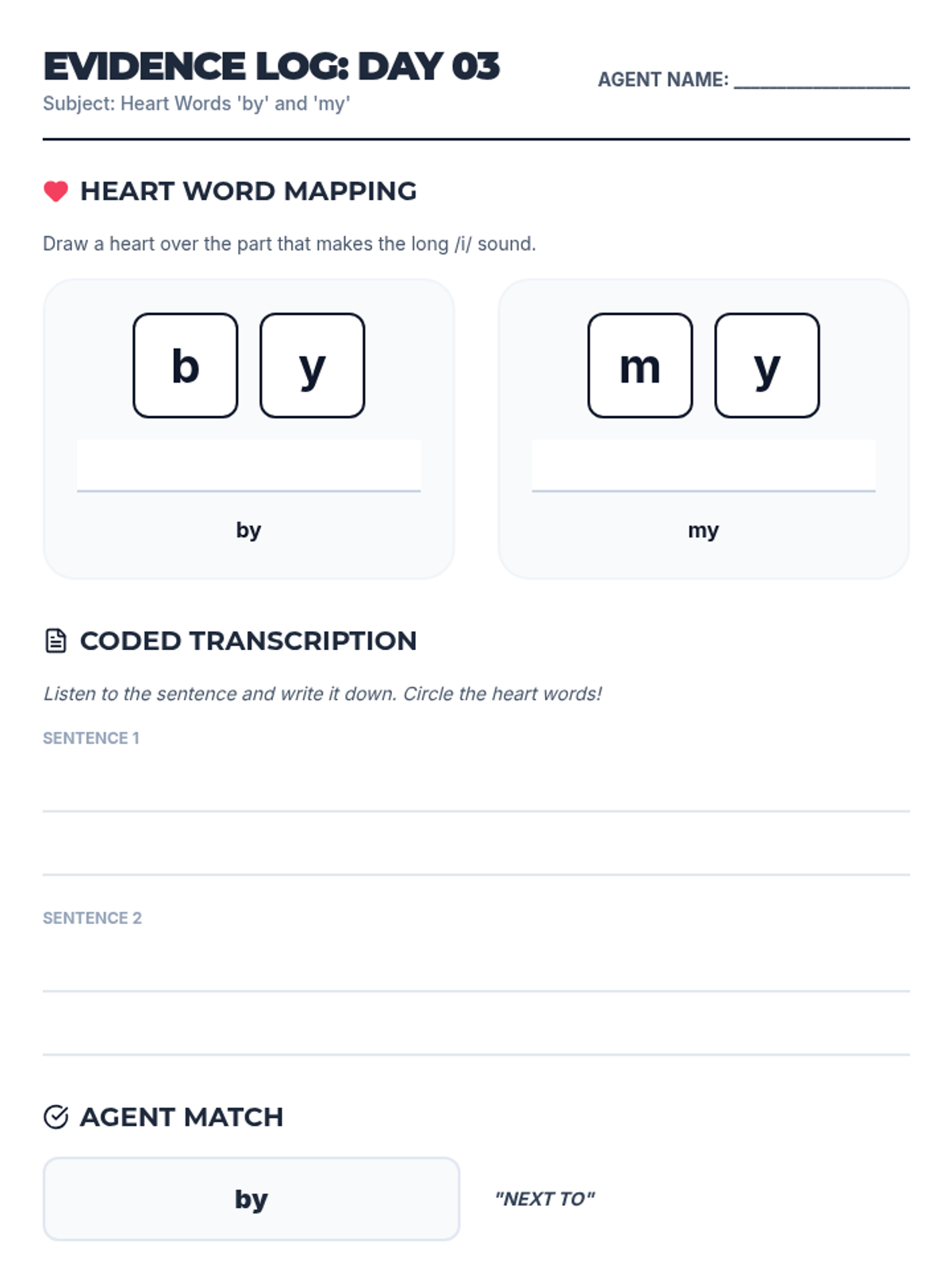
Learn and map heart words 'by' and 'my' while integrating them into i_e word sentences.
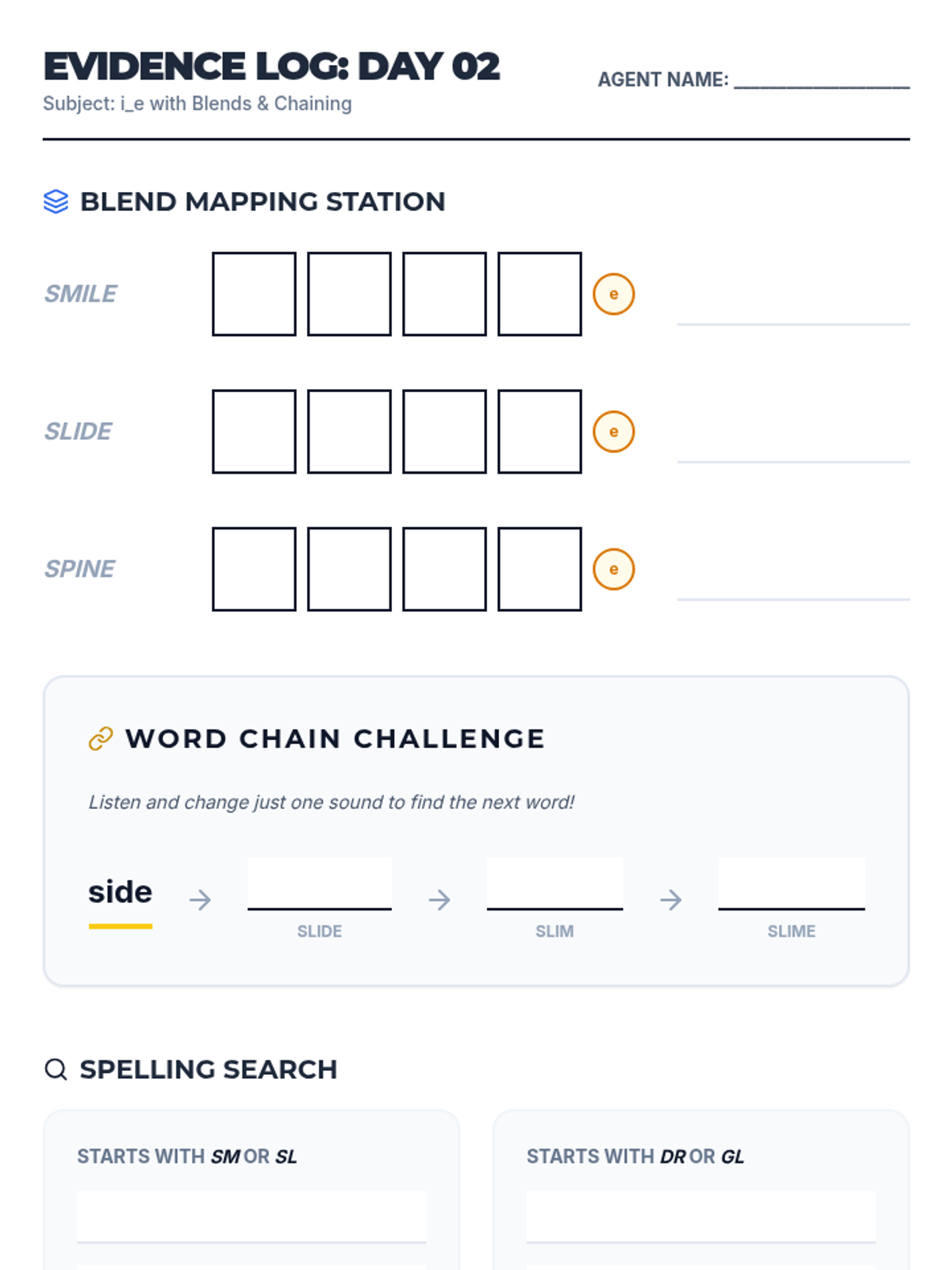
Focus on i_e words with initial and final blends like smile and slide, including word chaining activities.
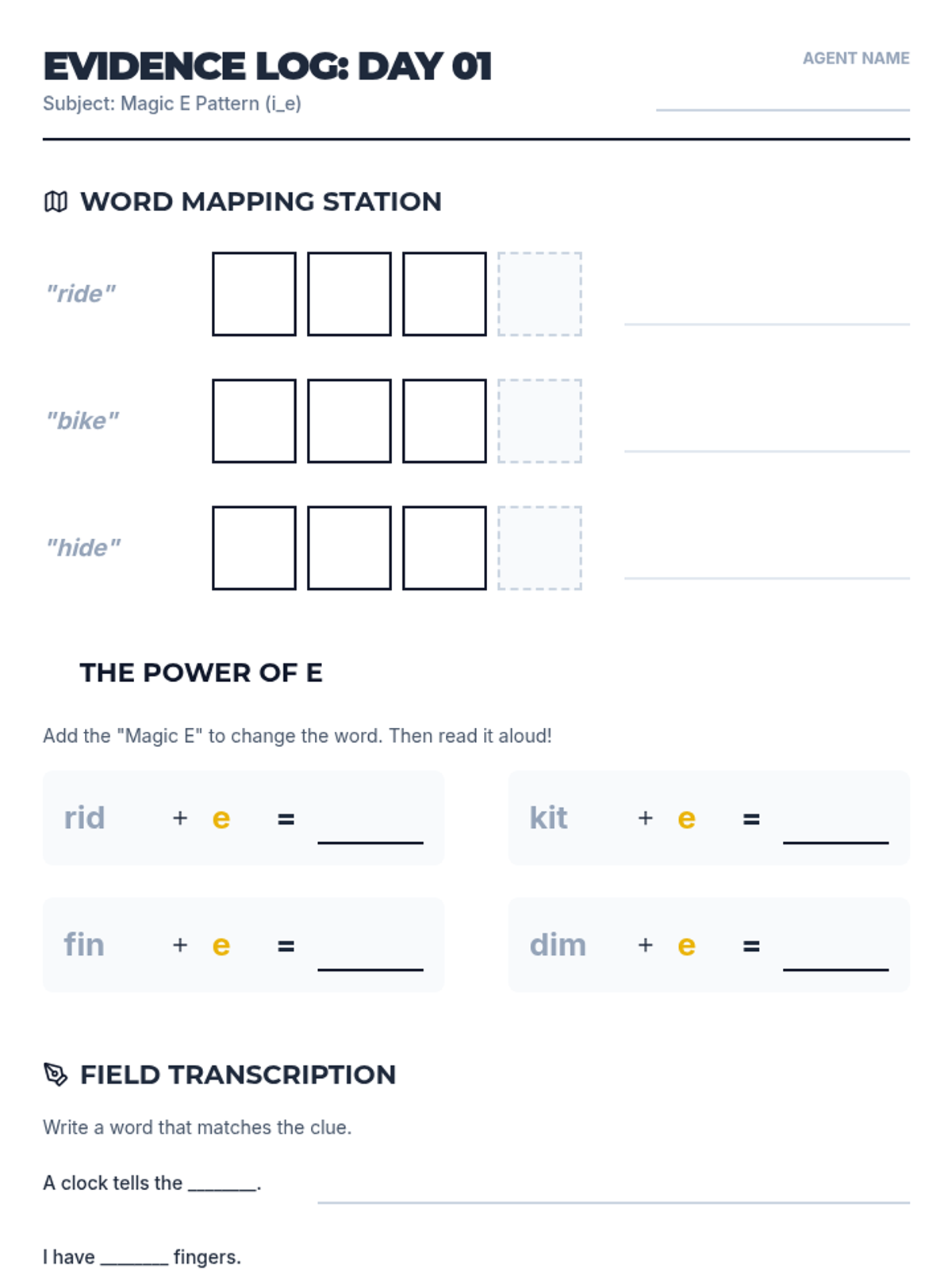
Introduce the magic 'e' concept for the long i sound in CVCe words and practice mapping basic words like ride and bike.
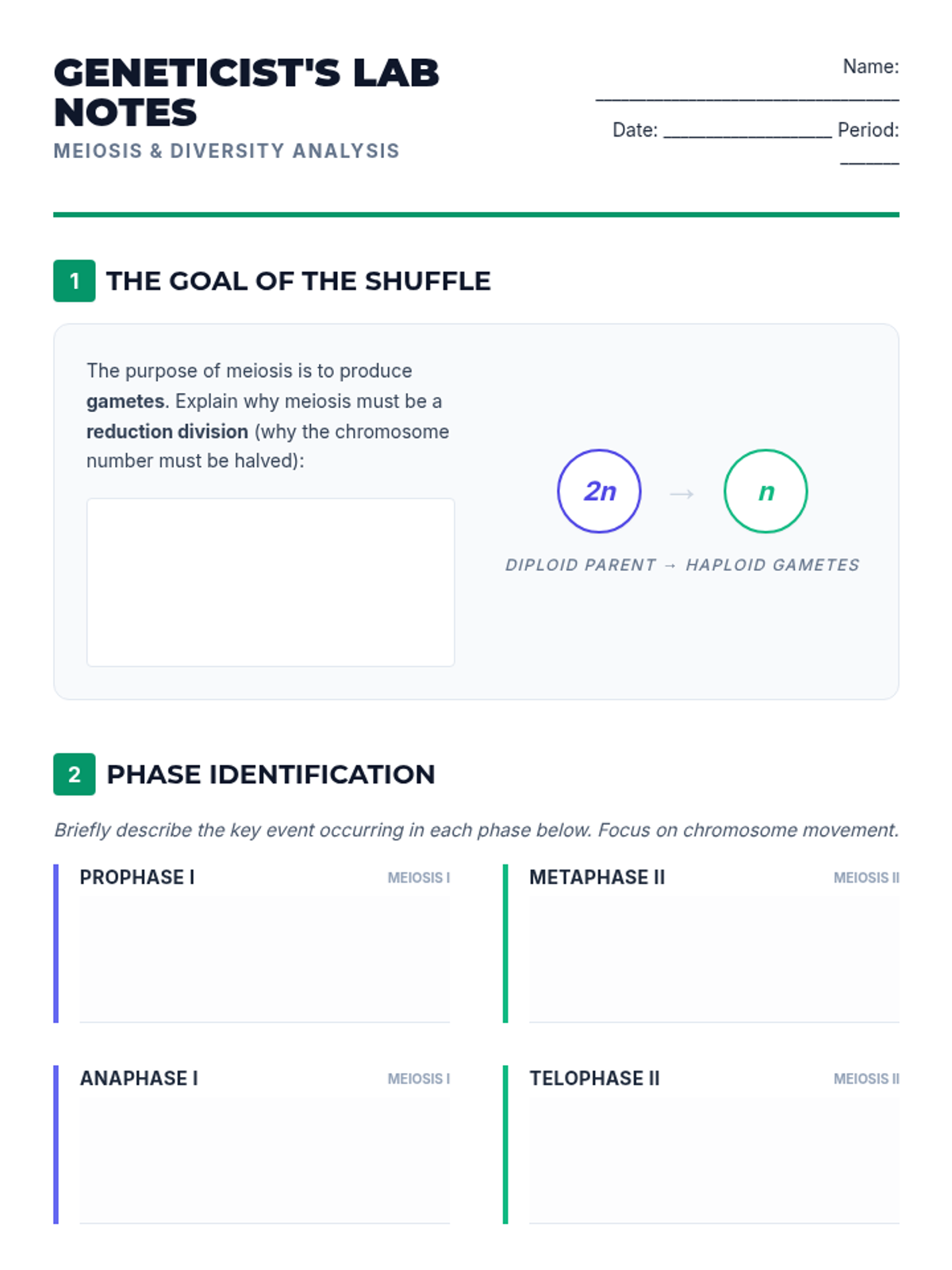
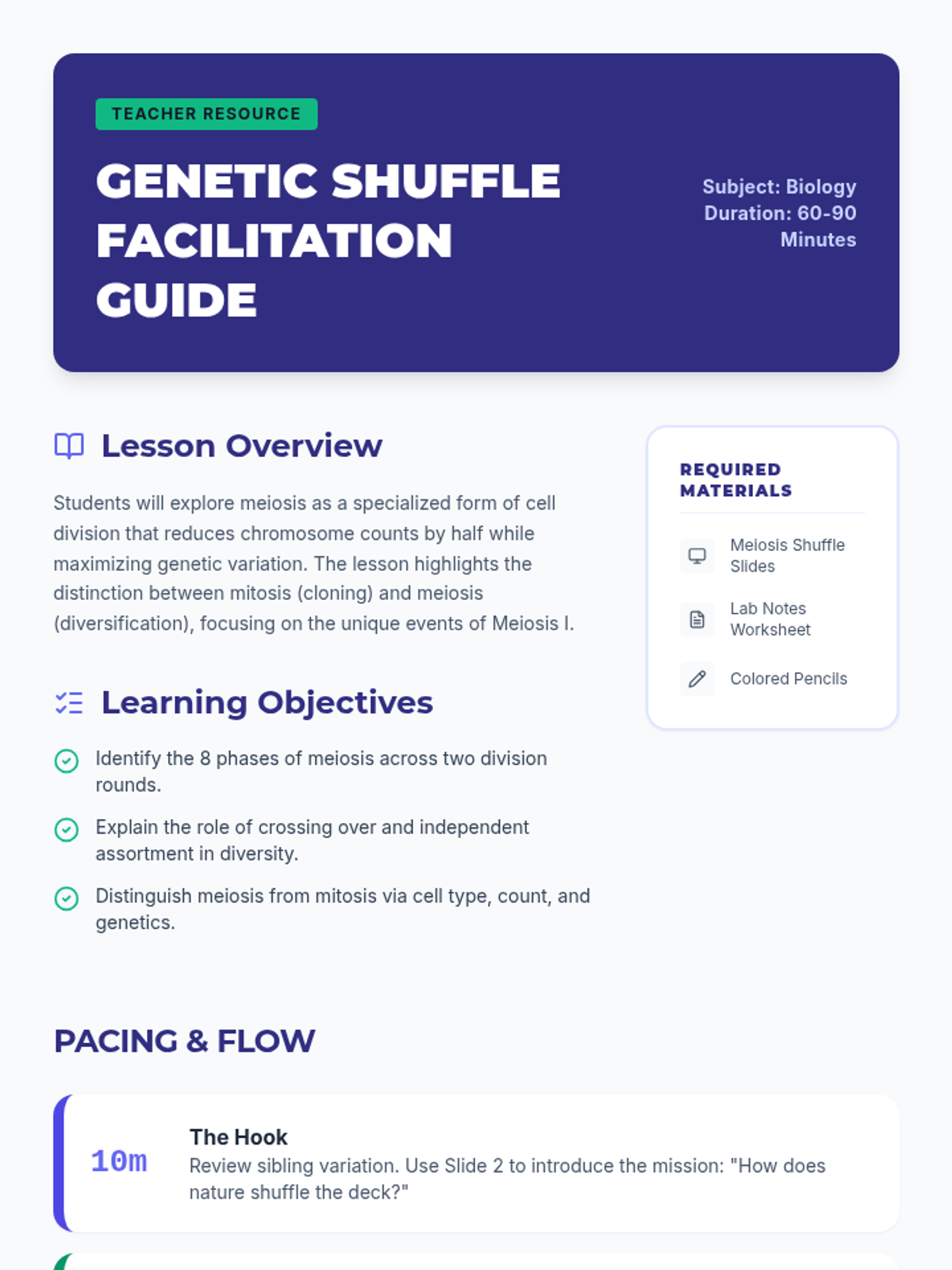
A comprehensive lesson on meiosis covering its phases, final products, and its critical role in genetic diversity compared to mitosis. Students will engage with visual models and comparative analysis.
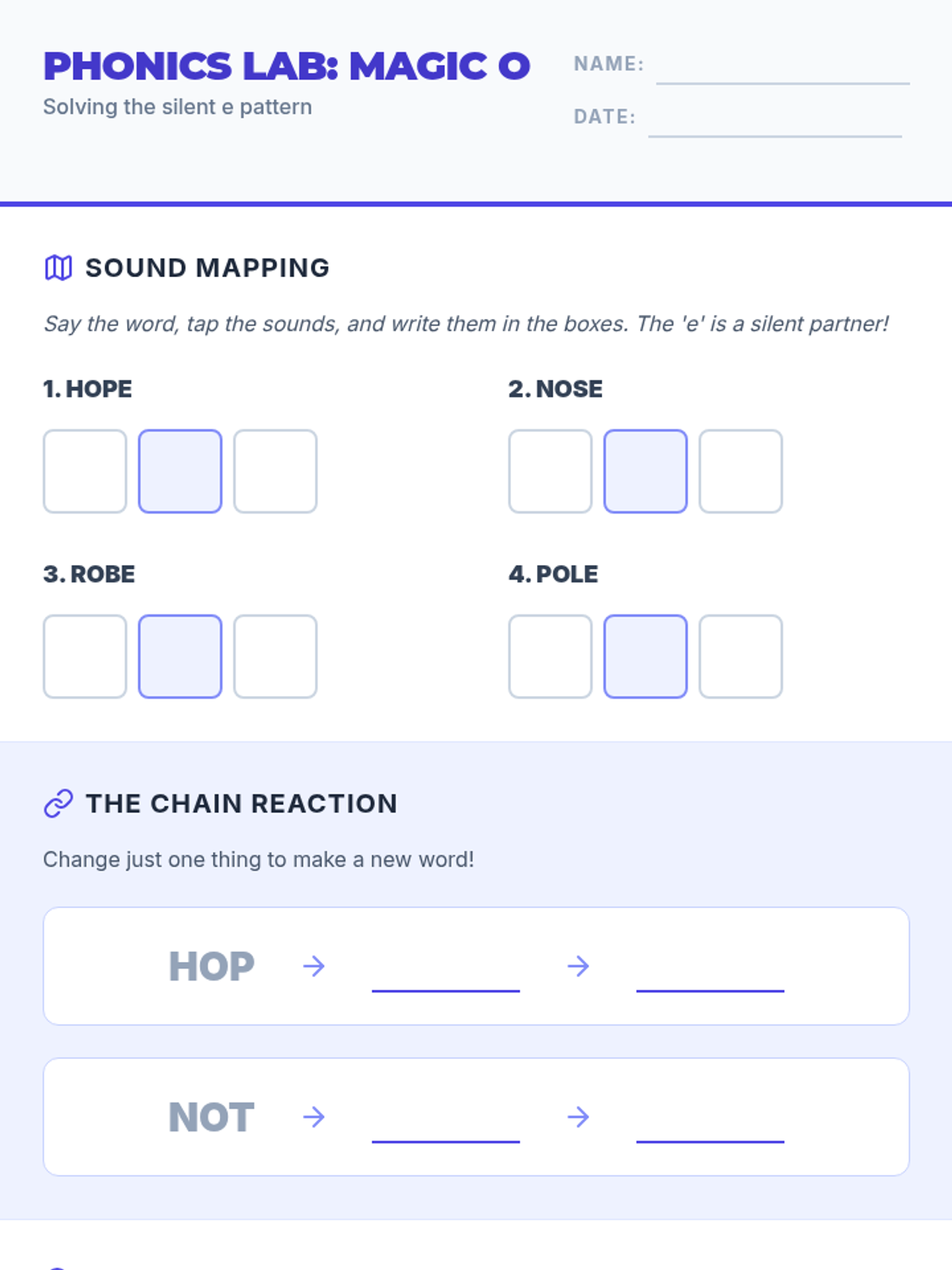
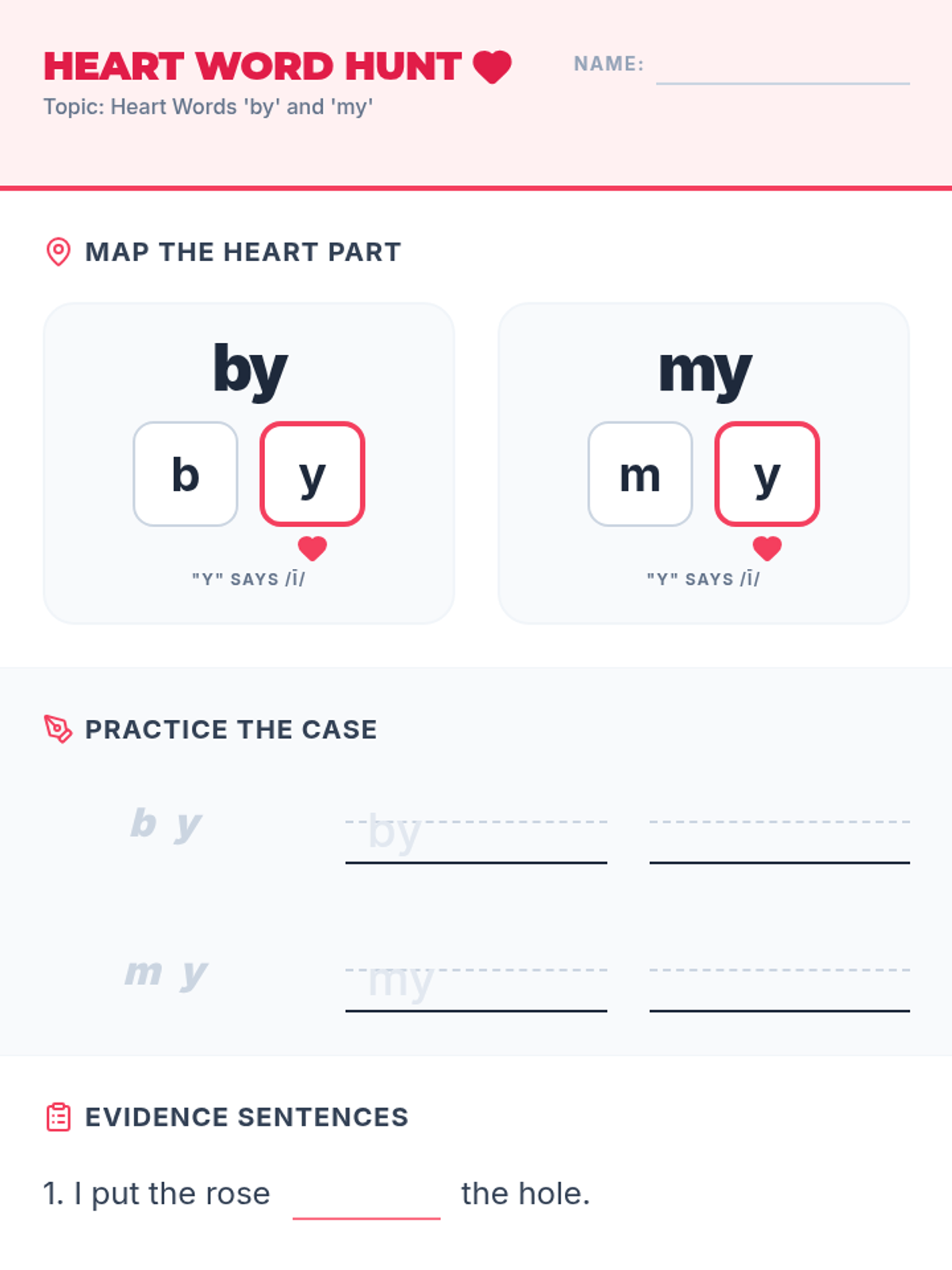
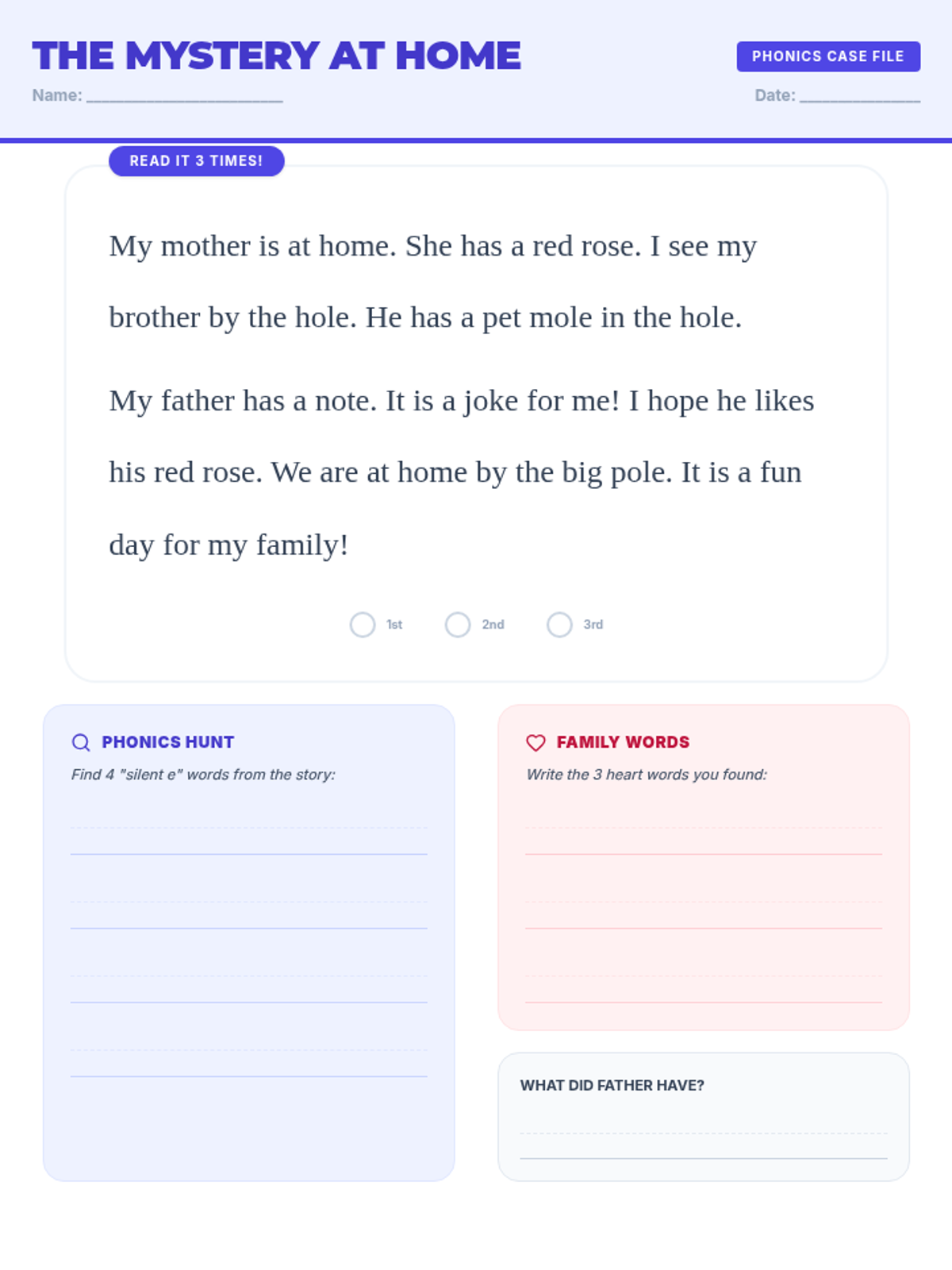
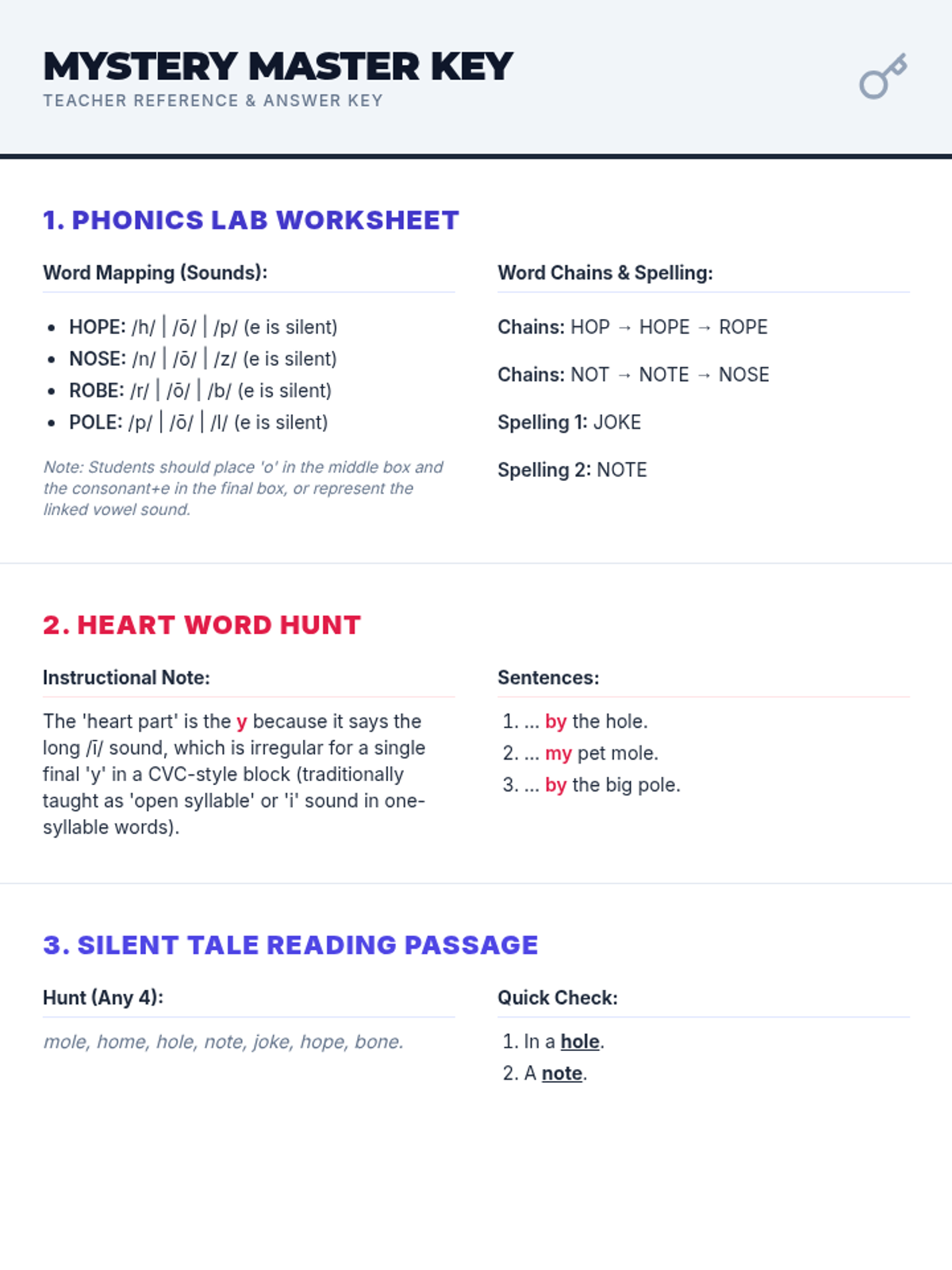
A comprehensive lesson focused on the 'o_e' (silent e) phonics pattern and the heart words 'by' and 'my' through mapping, chains, and reading.
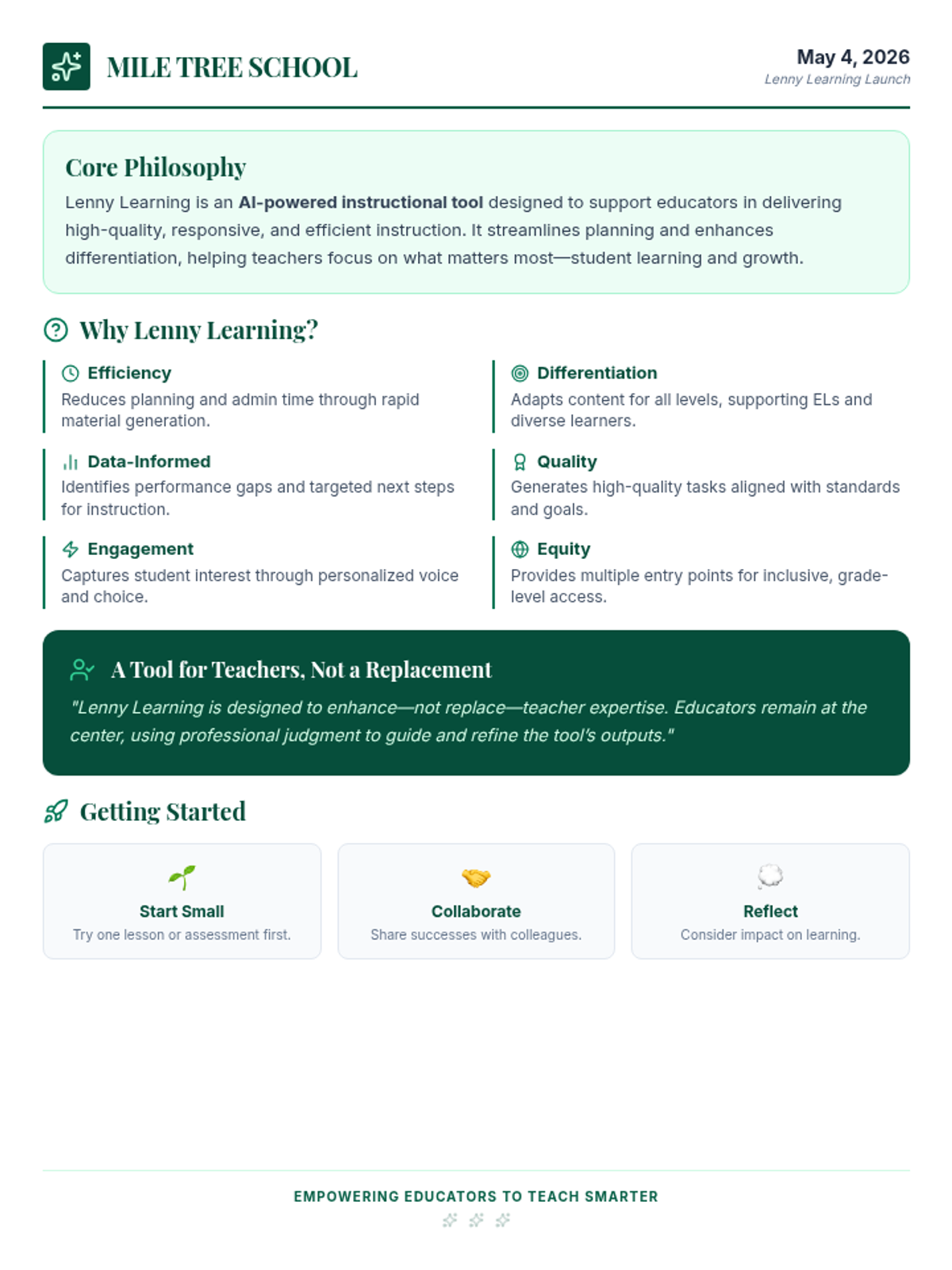
A professional staff presentation introducing Lenny Learning to educators at Mile Tree School, highlighting efficiency, differentiation, and student engagement.
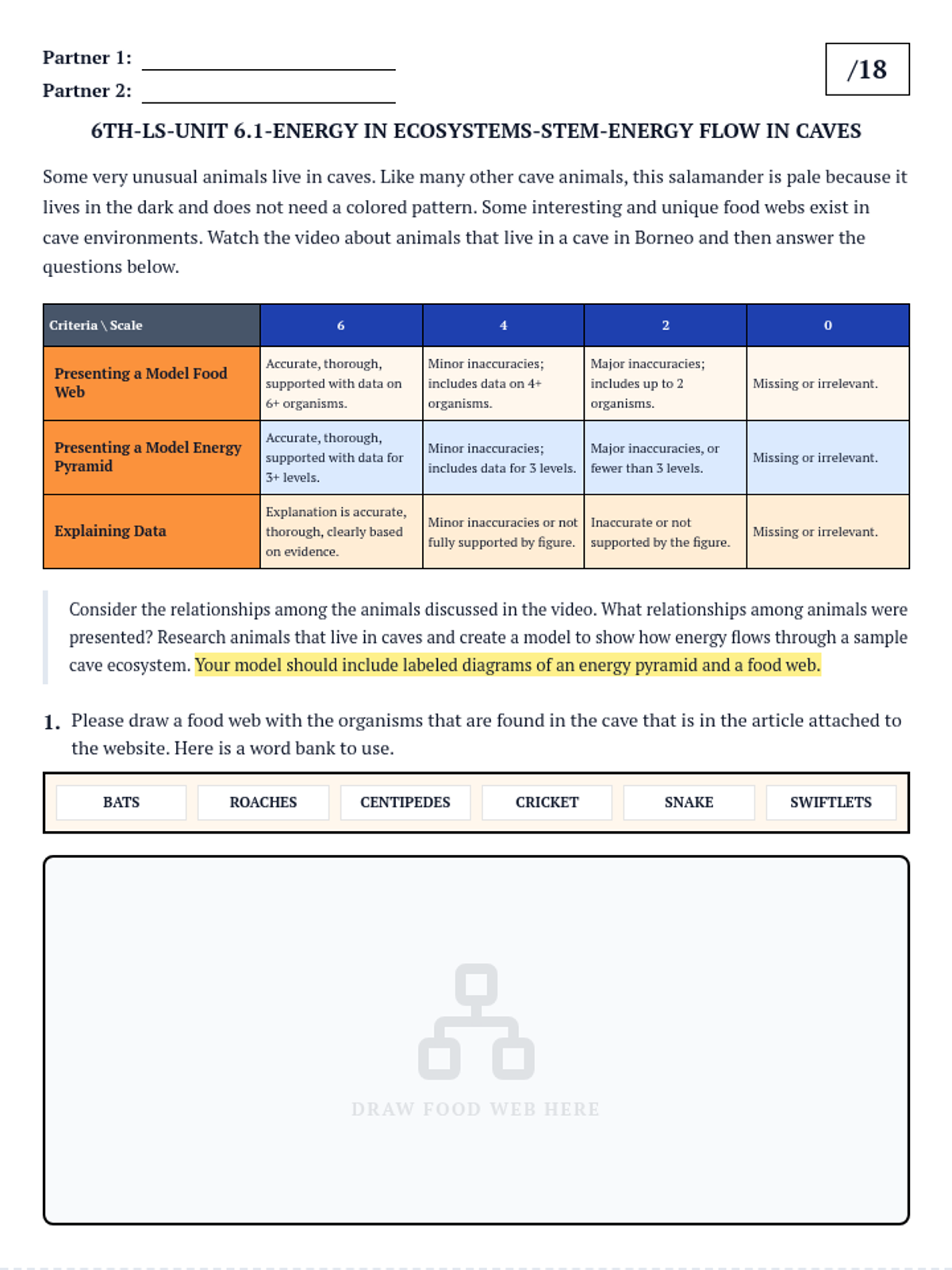
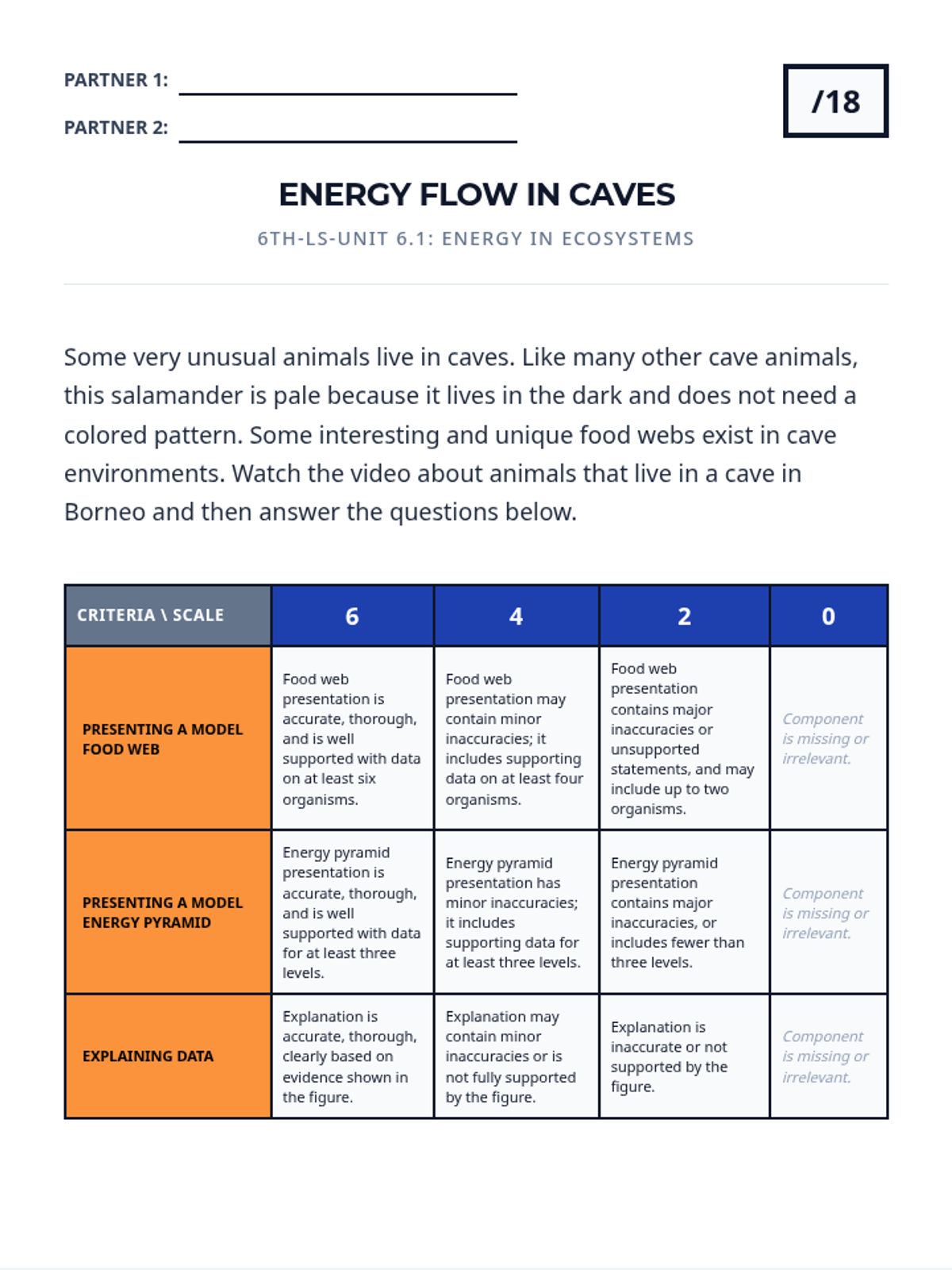
A lesson exploring energy flow within cave ecosystems, focusing on food webs, energy pyramids, and data interpretation based on animal populations.
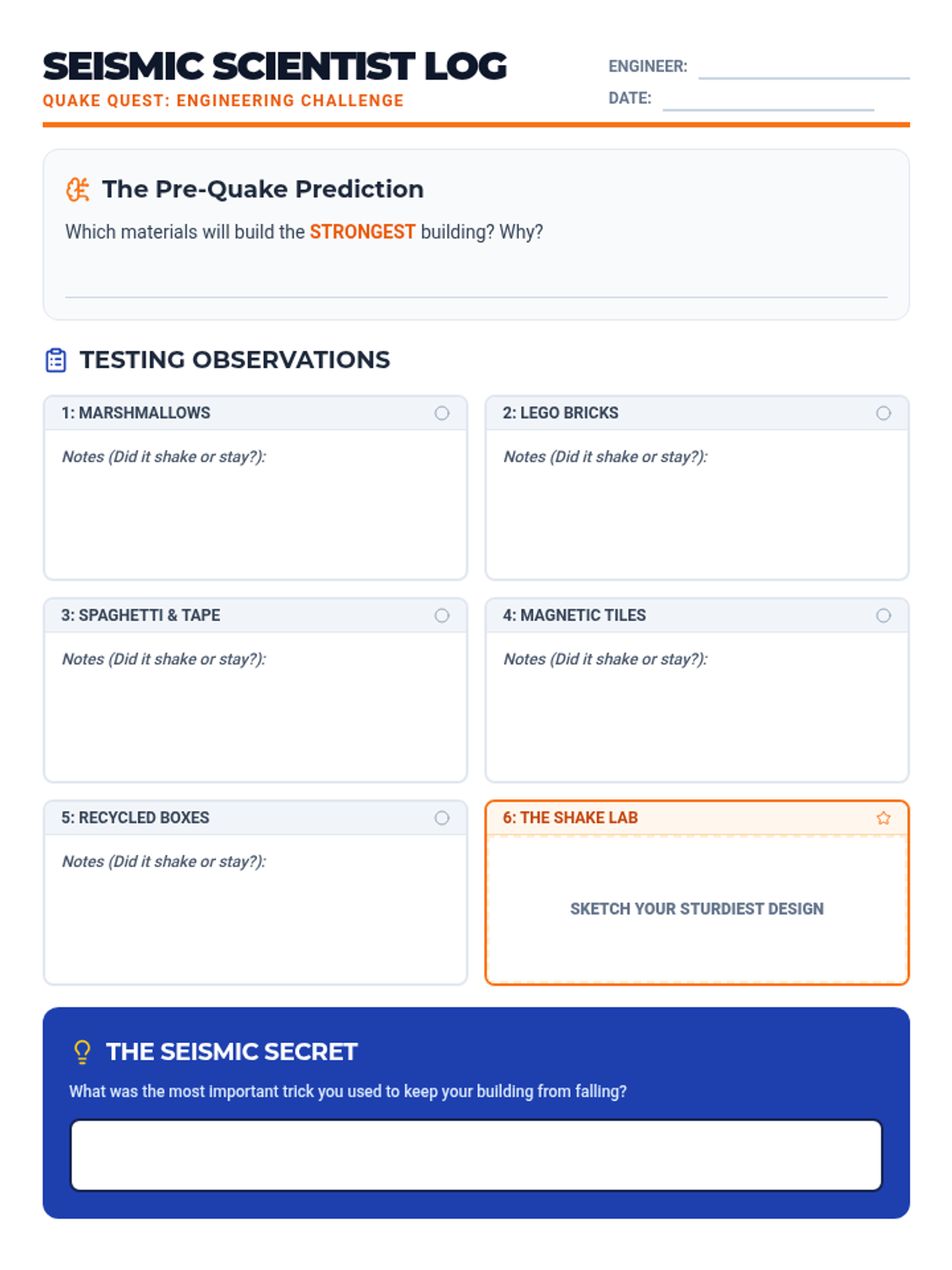
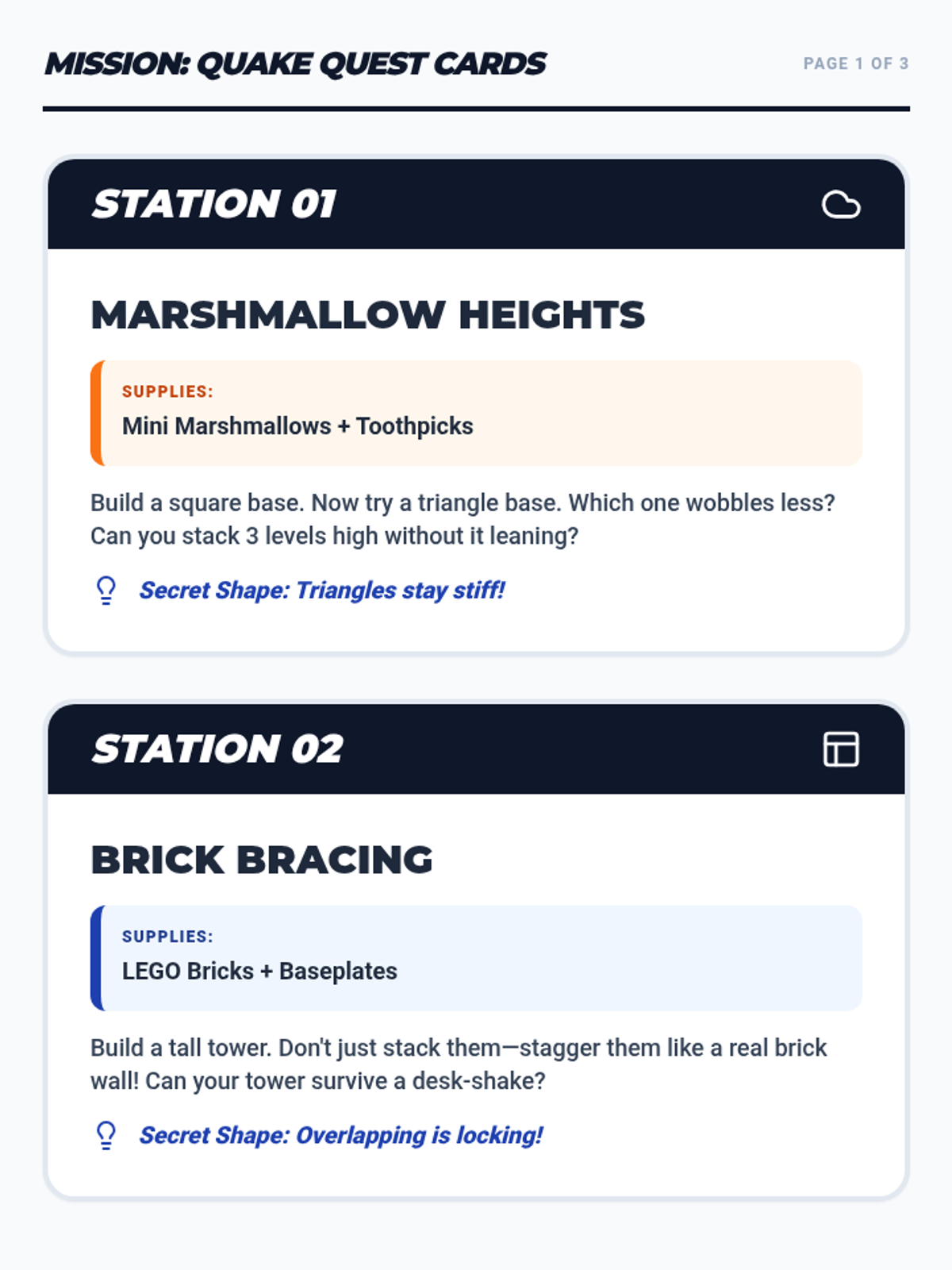
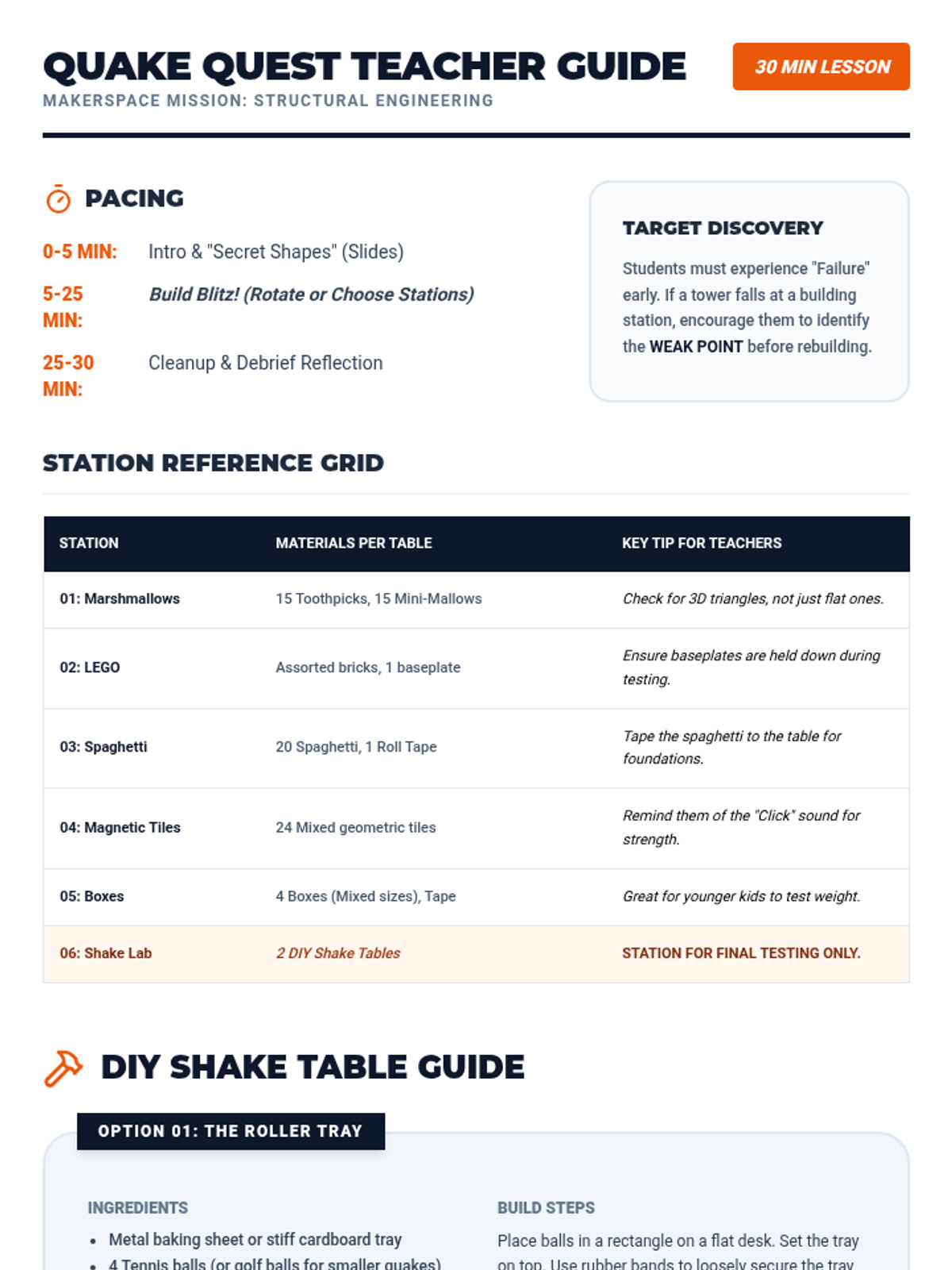
A 30-minute engineering challenge where students build and test structures using six different material stations to understand earthquake stability.
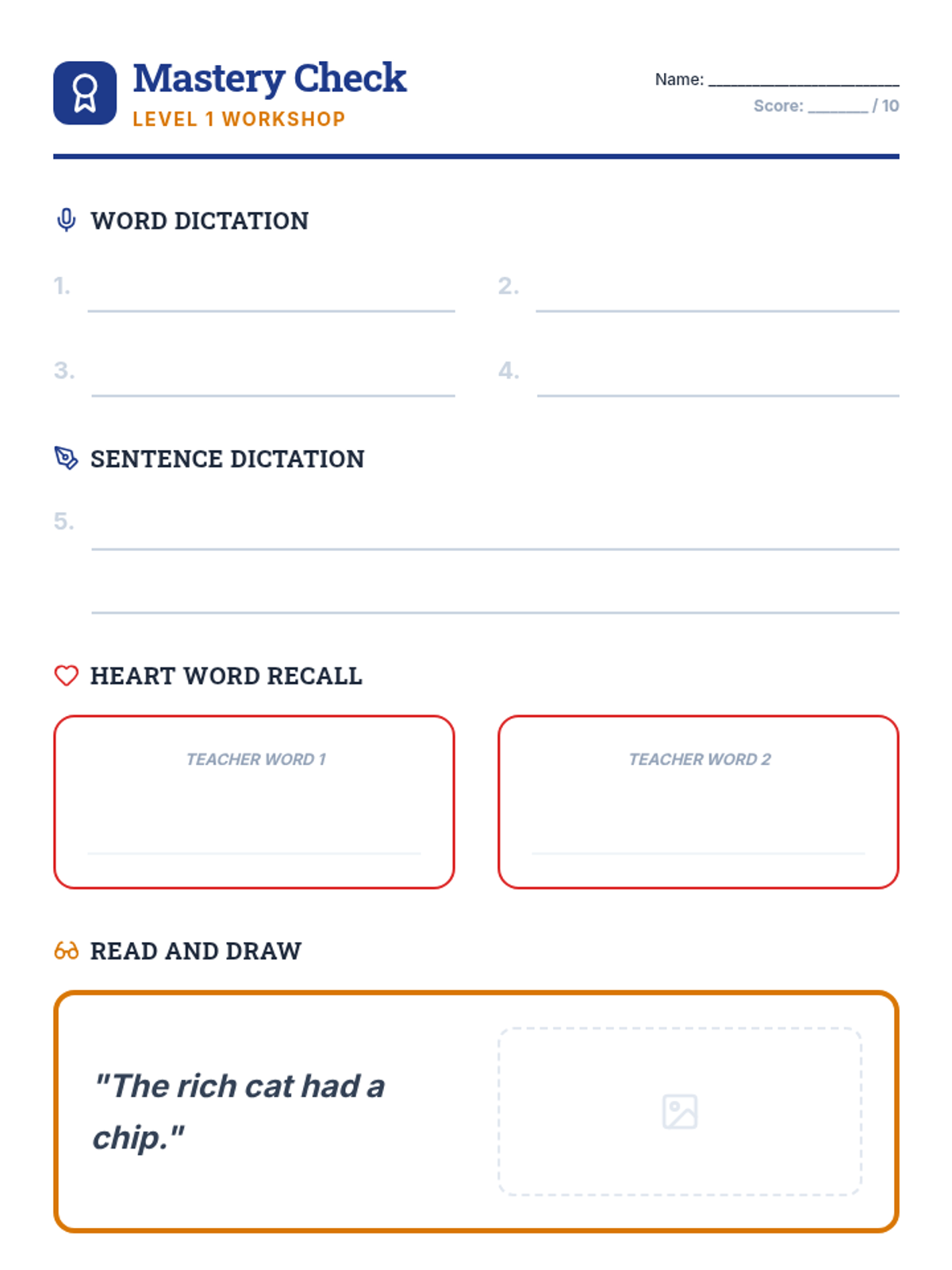
Final review and assessment of the 'ch' digraph and Heart Words. Students demonstrate mastery through dictation and independent application.
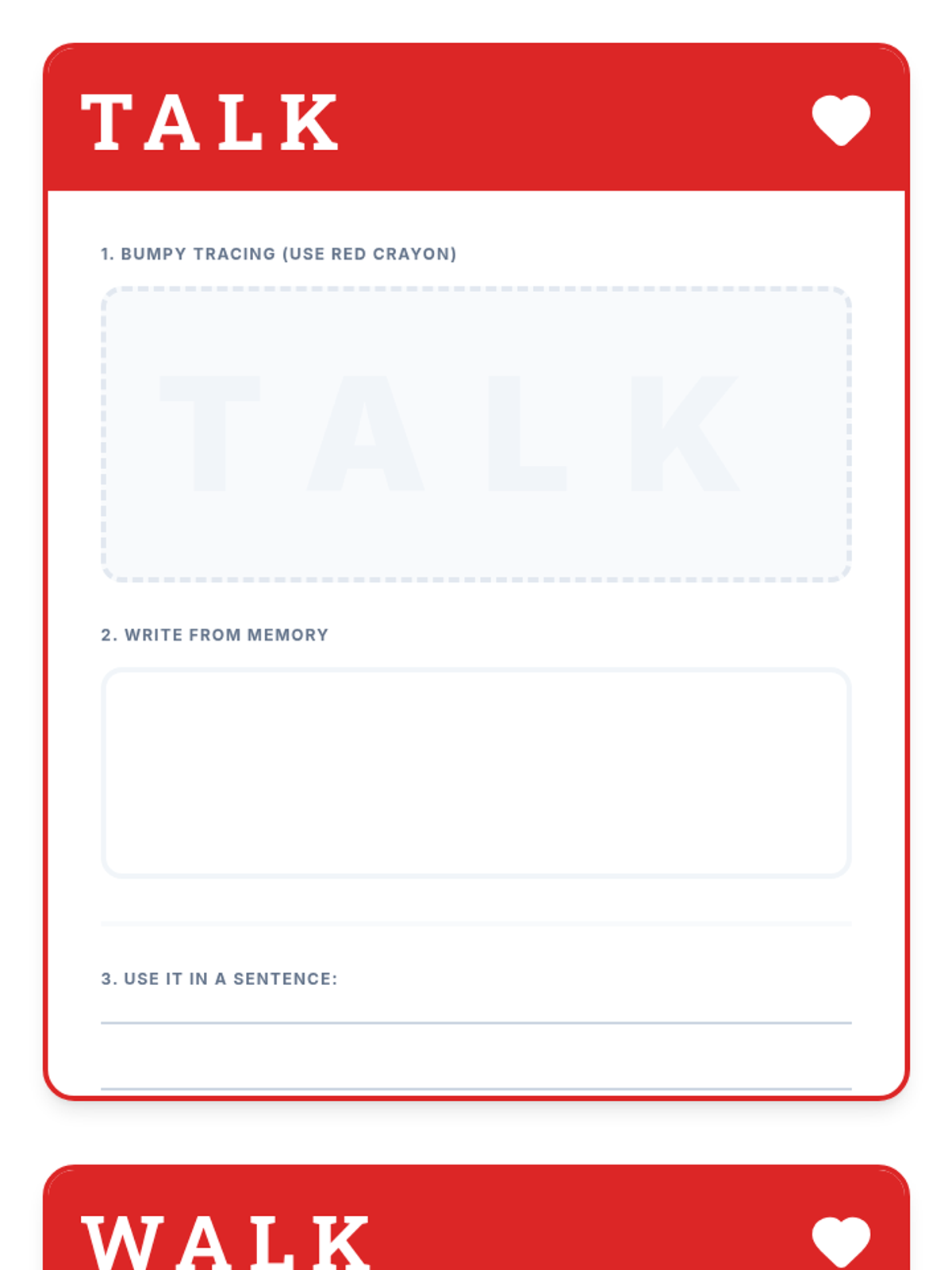
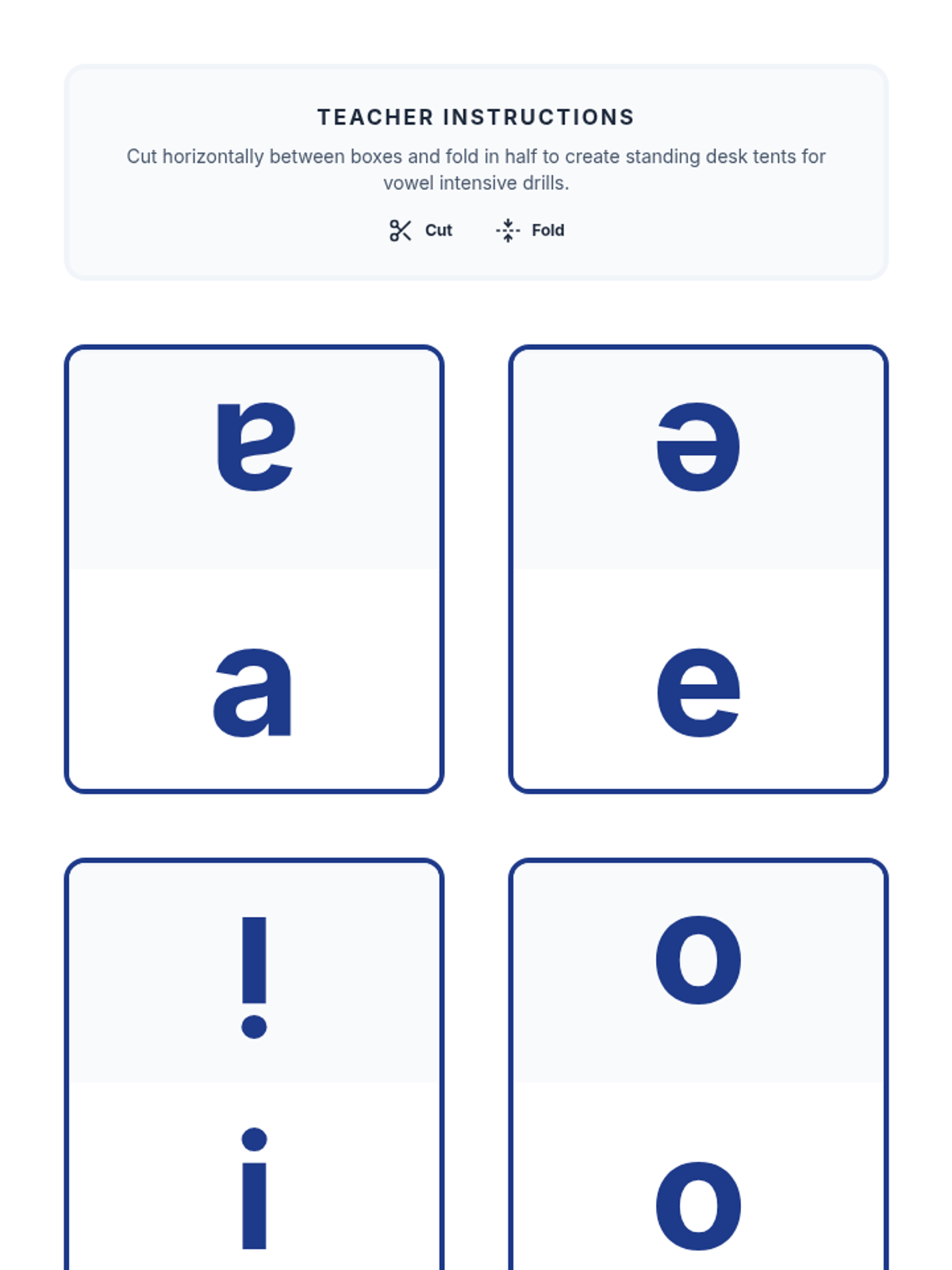
Intensive UFLI-aligned practice including vowel intensive desk tents and a deep-dive tactile study of the Heart Words 'talk' and 'walk'.
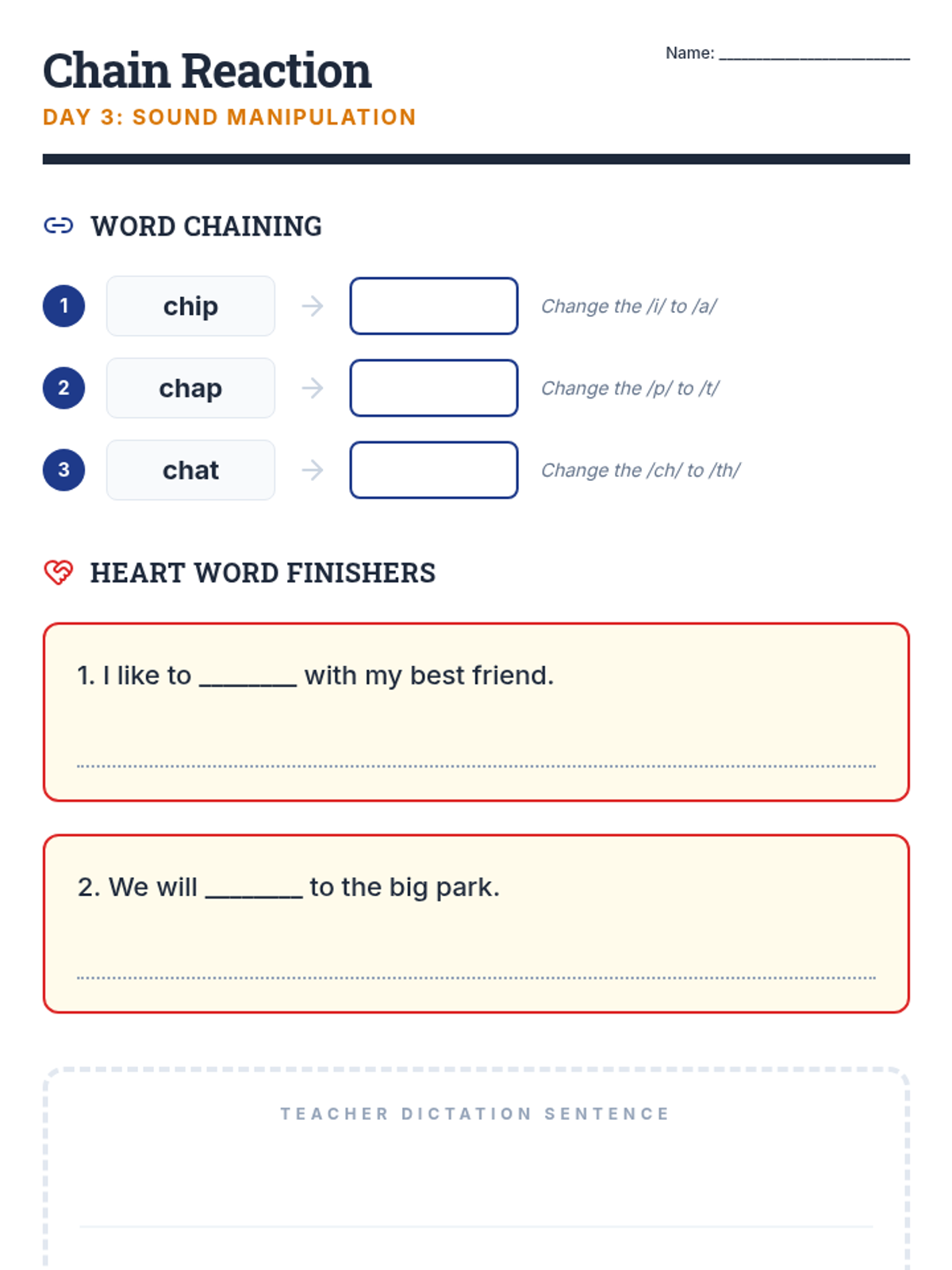
Advanced practice with 'ch' through word chaining and cumulative review. Continued reinforcement of Heart Words.
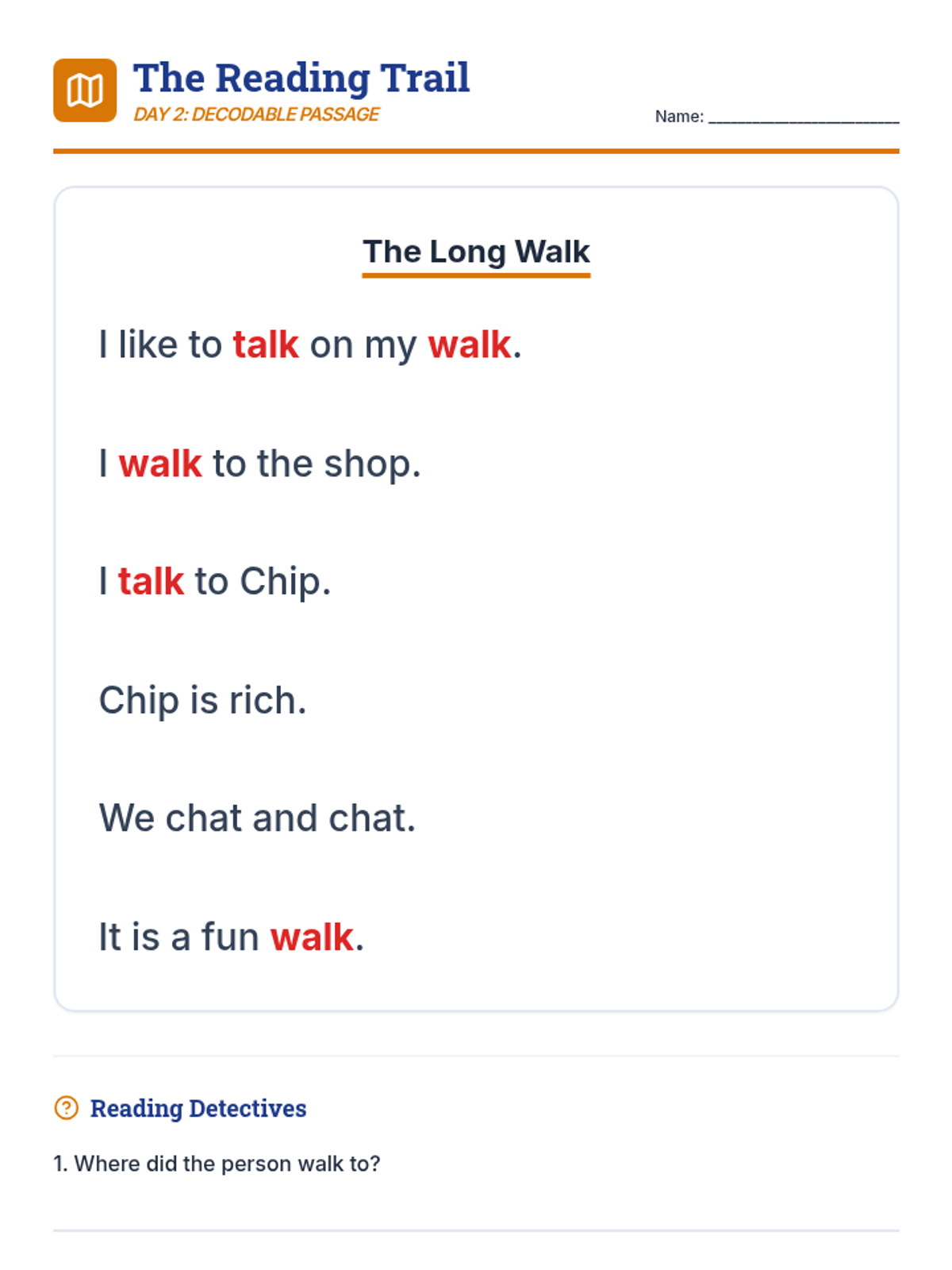
Review of 'ch' spelling and introduction to reading 'talk' and 'walk' within a decodable passage. Emphasis on fluency and comprehension.
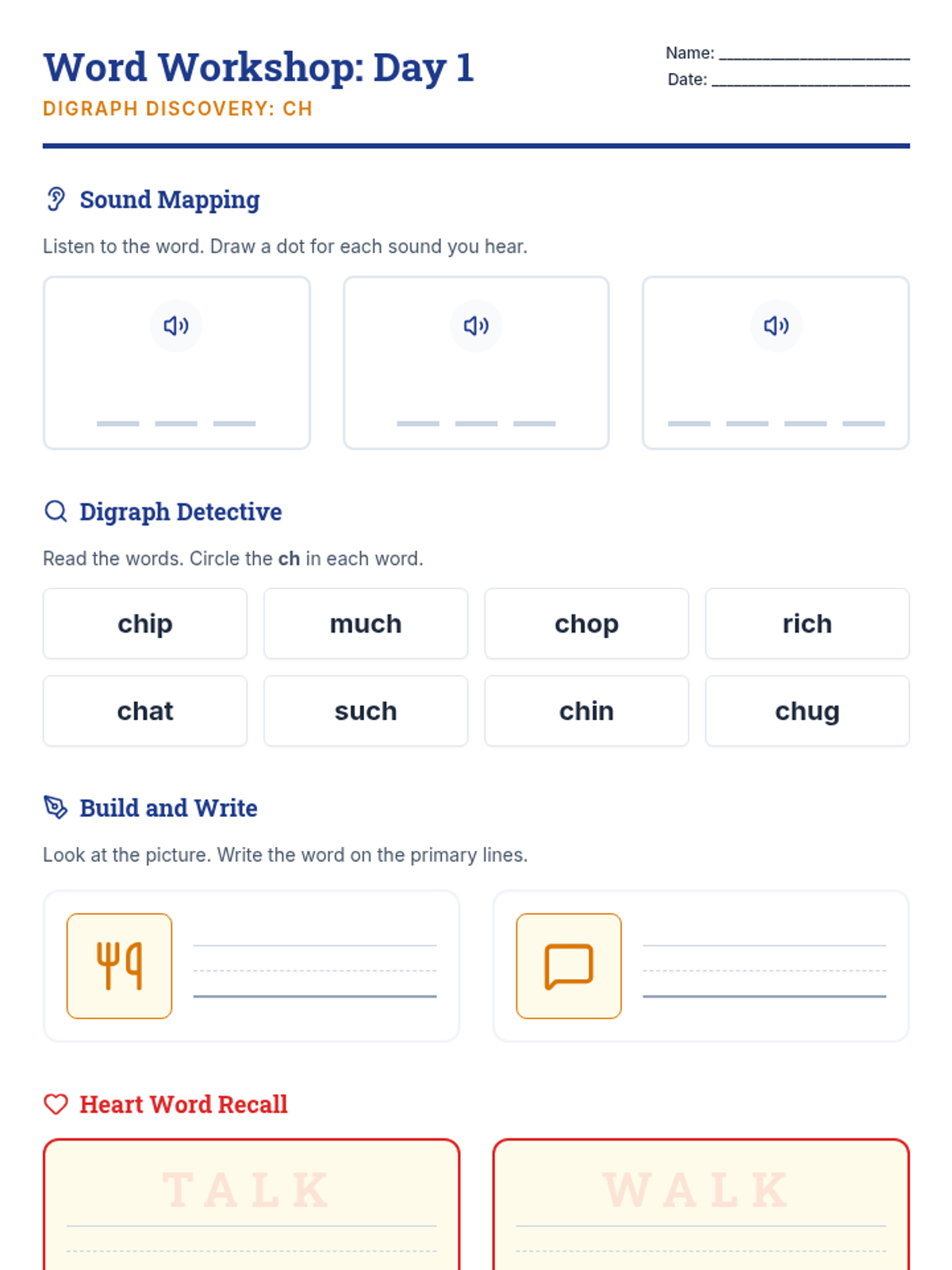
Introduction to the 'ch' digraph with phonemic awareness blending/segmenting and the three-part drill. Focus on initial and final 'ch' in words like 'chop', 'rich', and 'chat'.
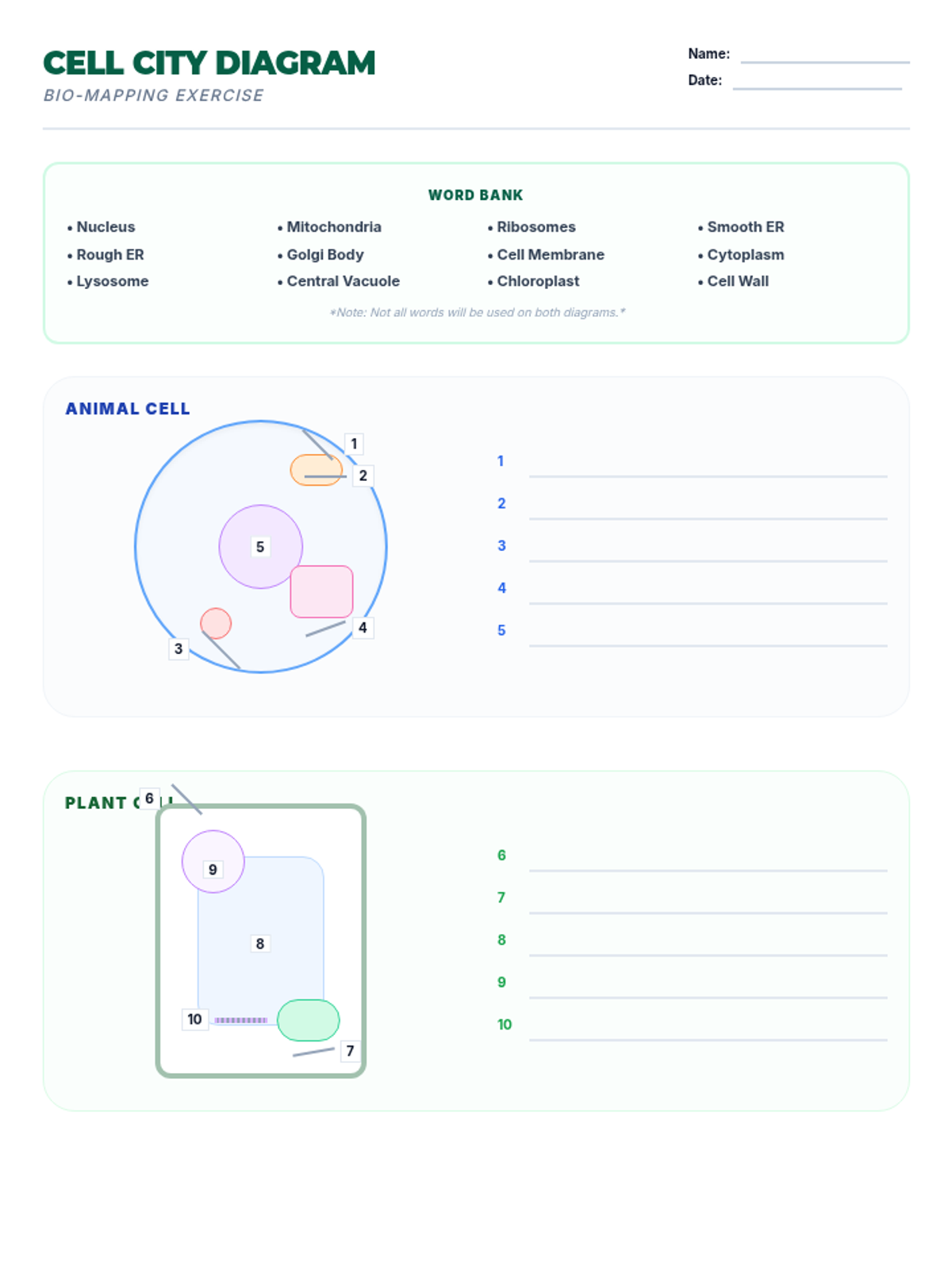
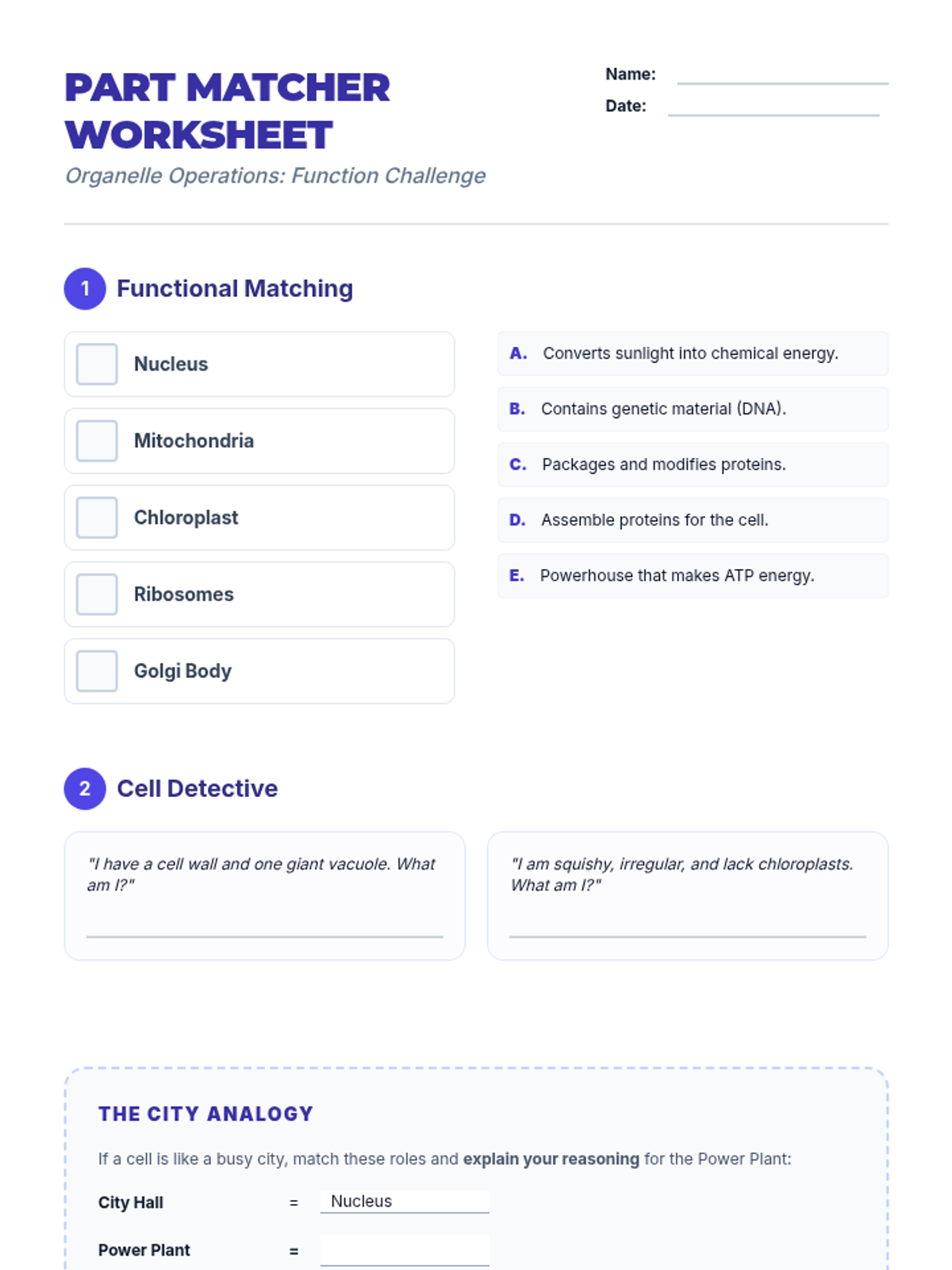
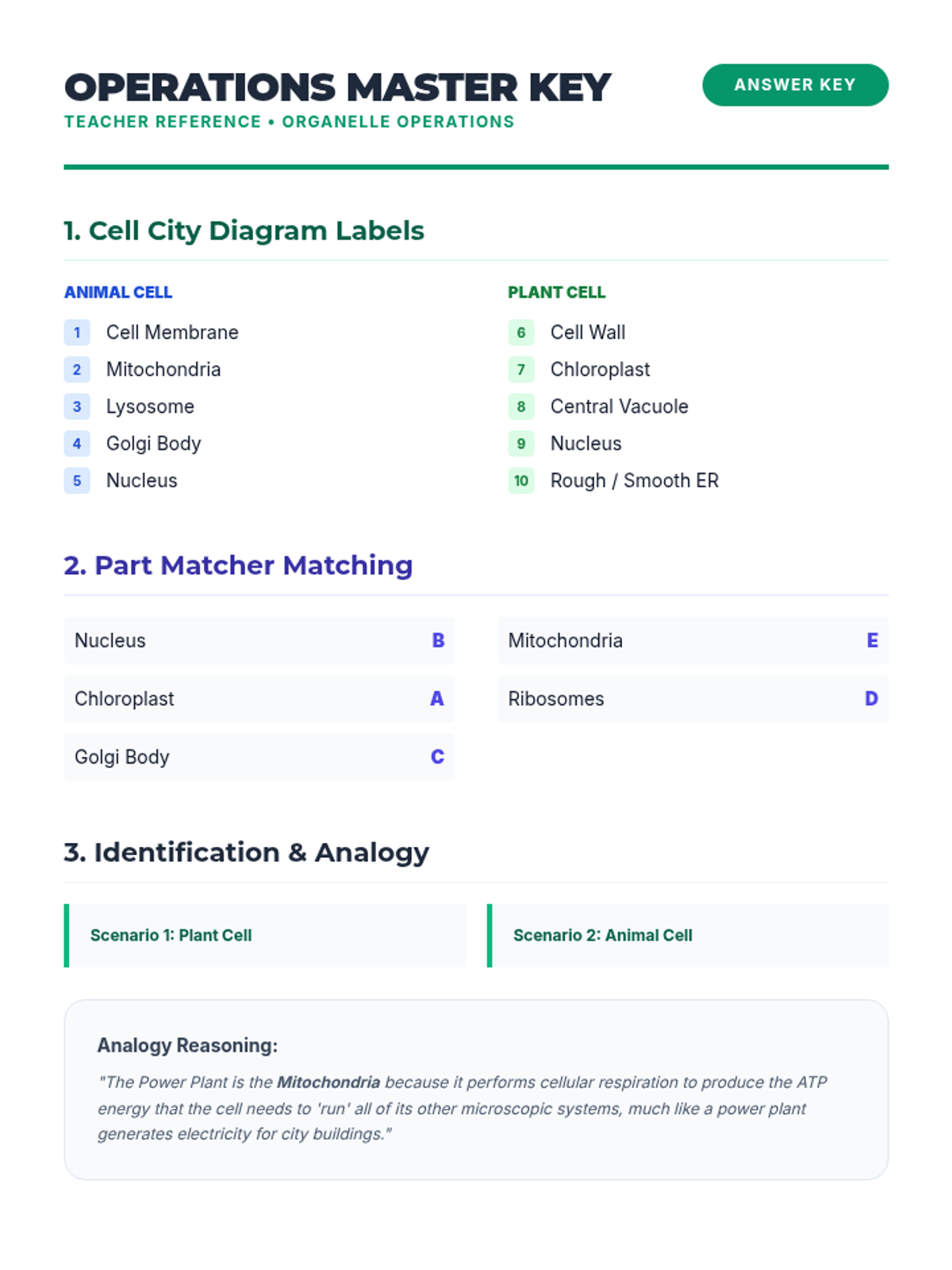
A comprehensive exploration of animal and plant cell organelles, focusing on their structures, functions, and key differences. Students will identify organelles through diagrams and match them to their biological roles.
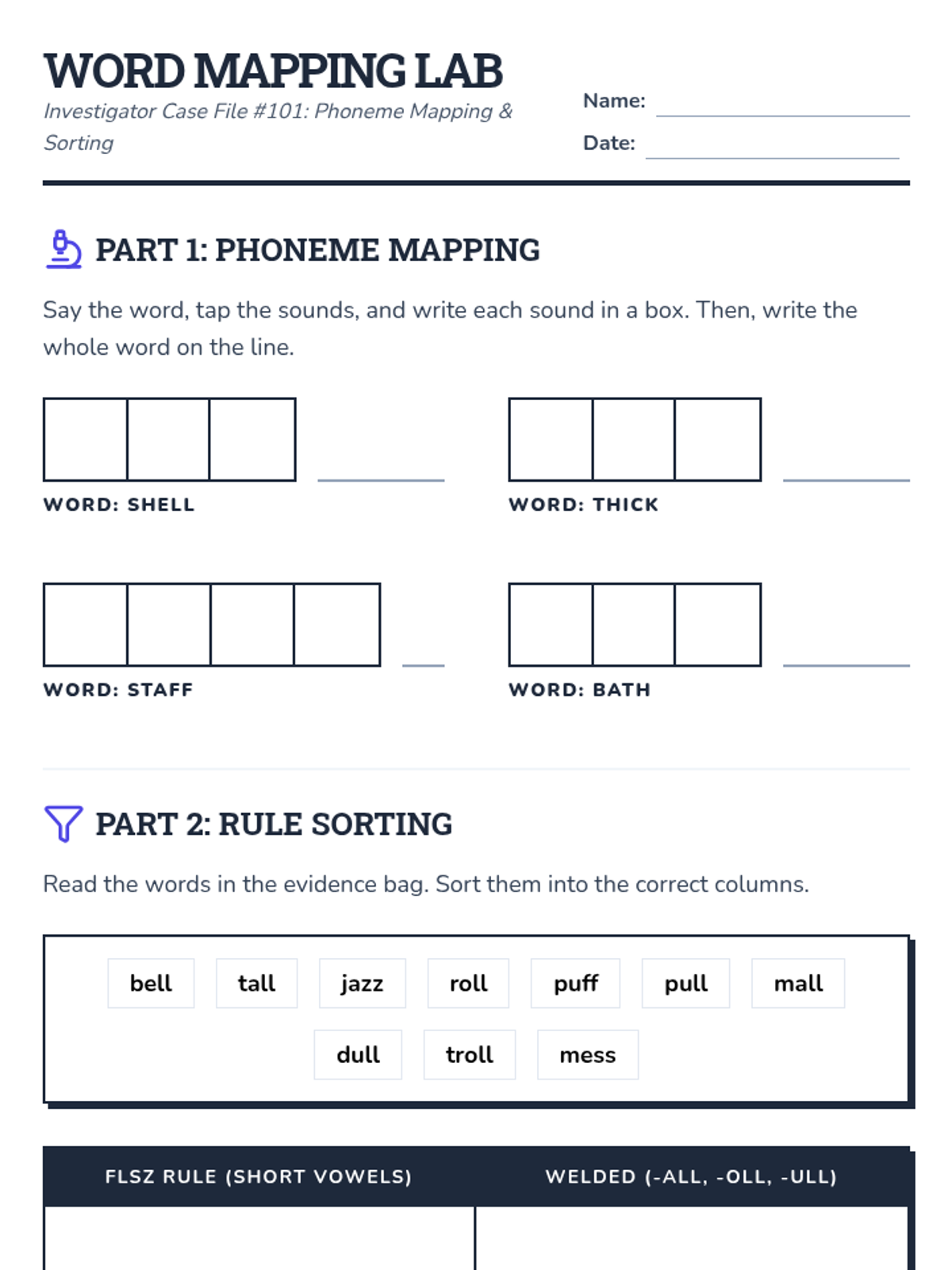
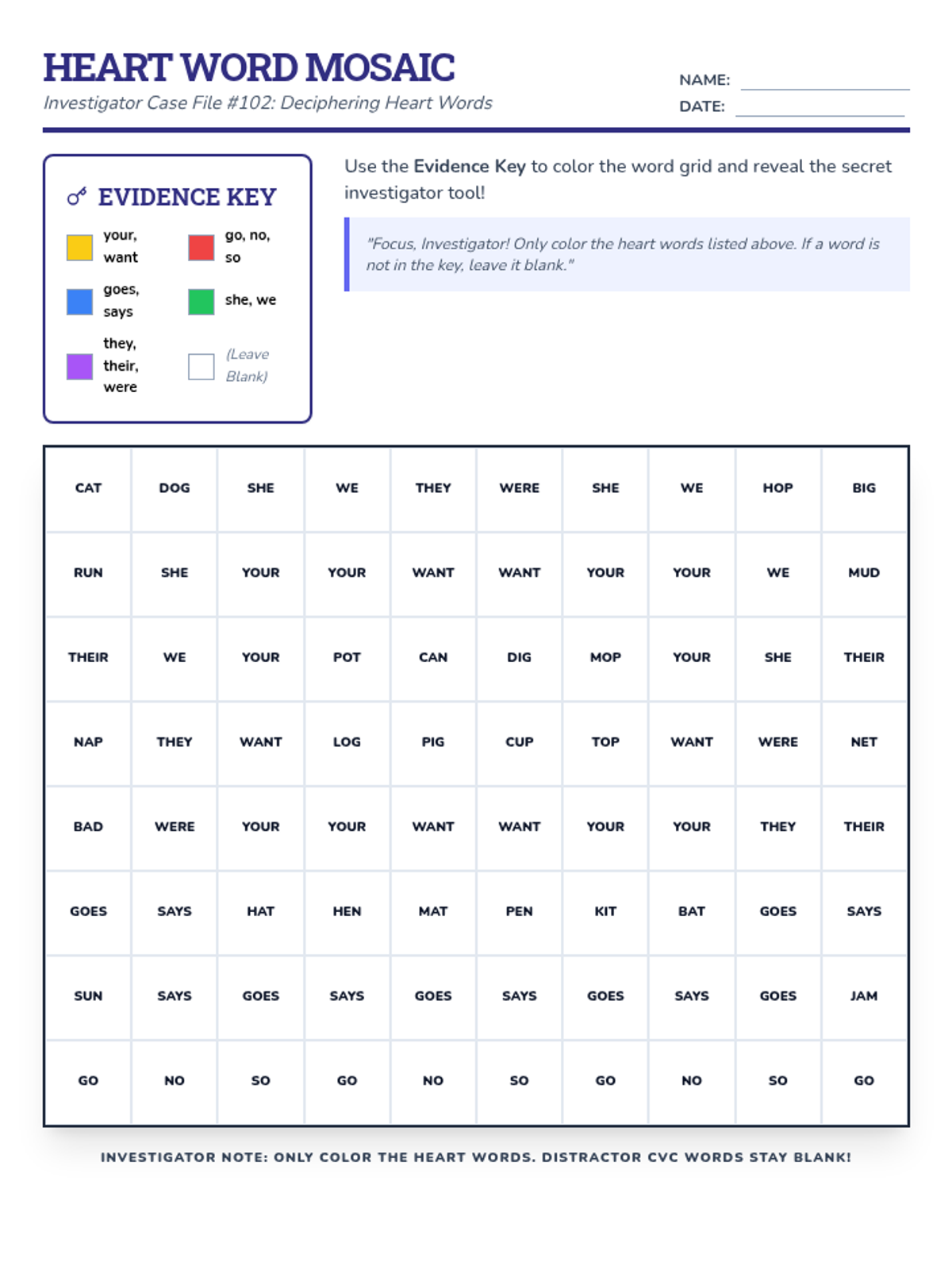
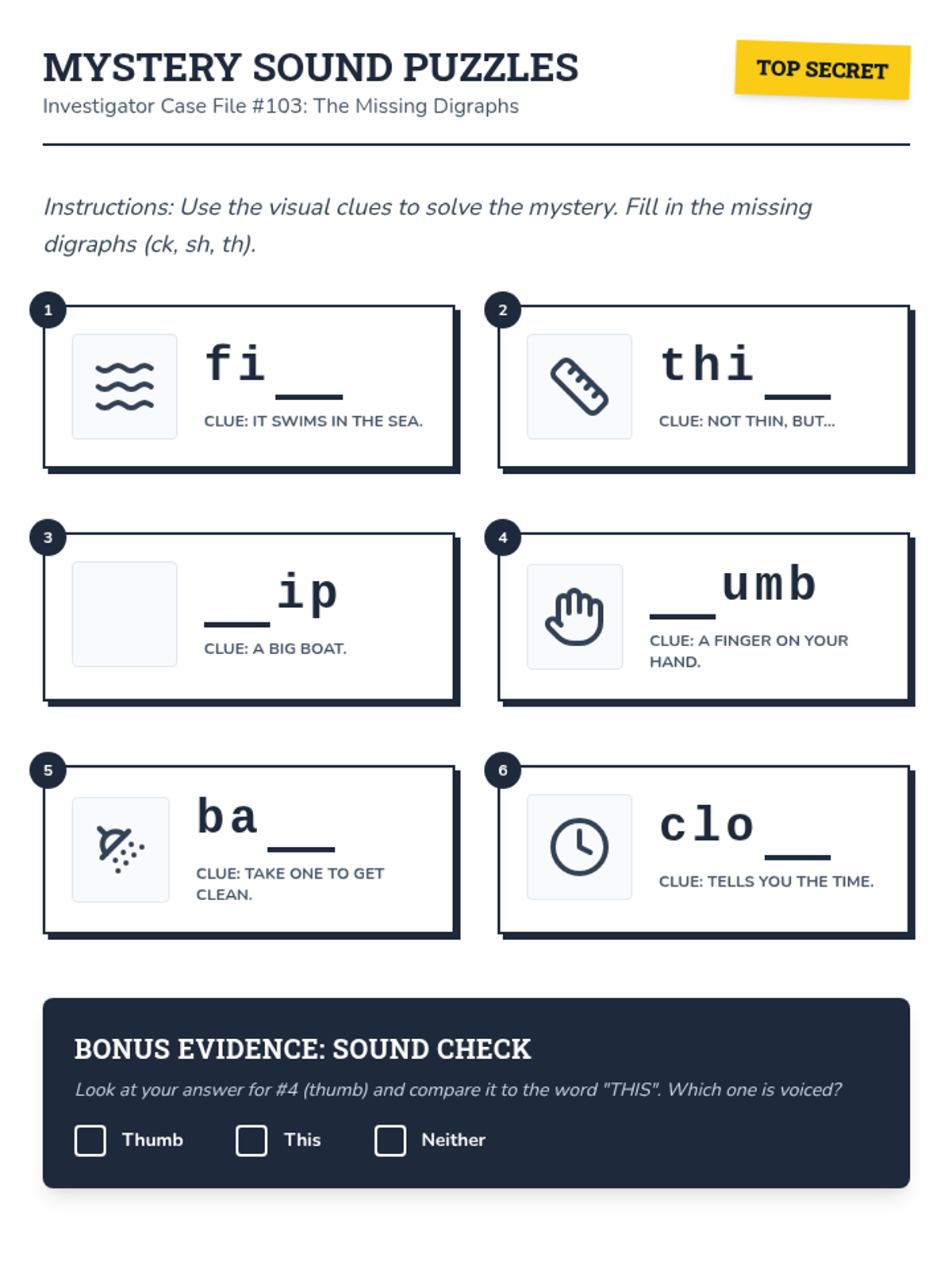
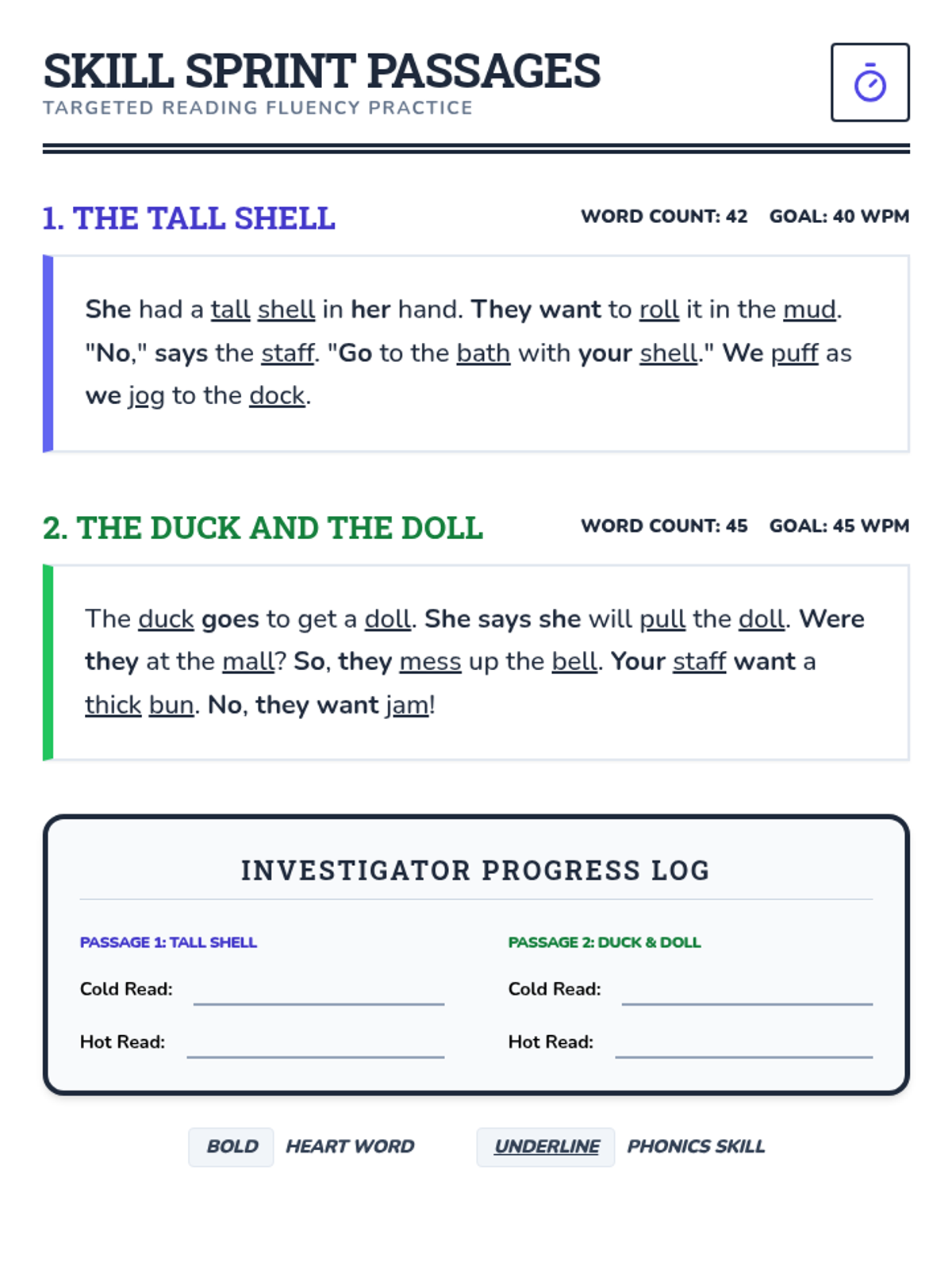
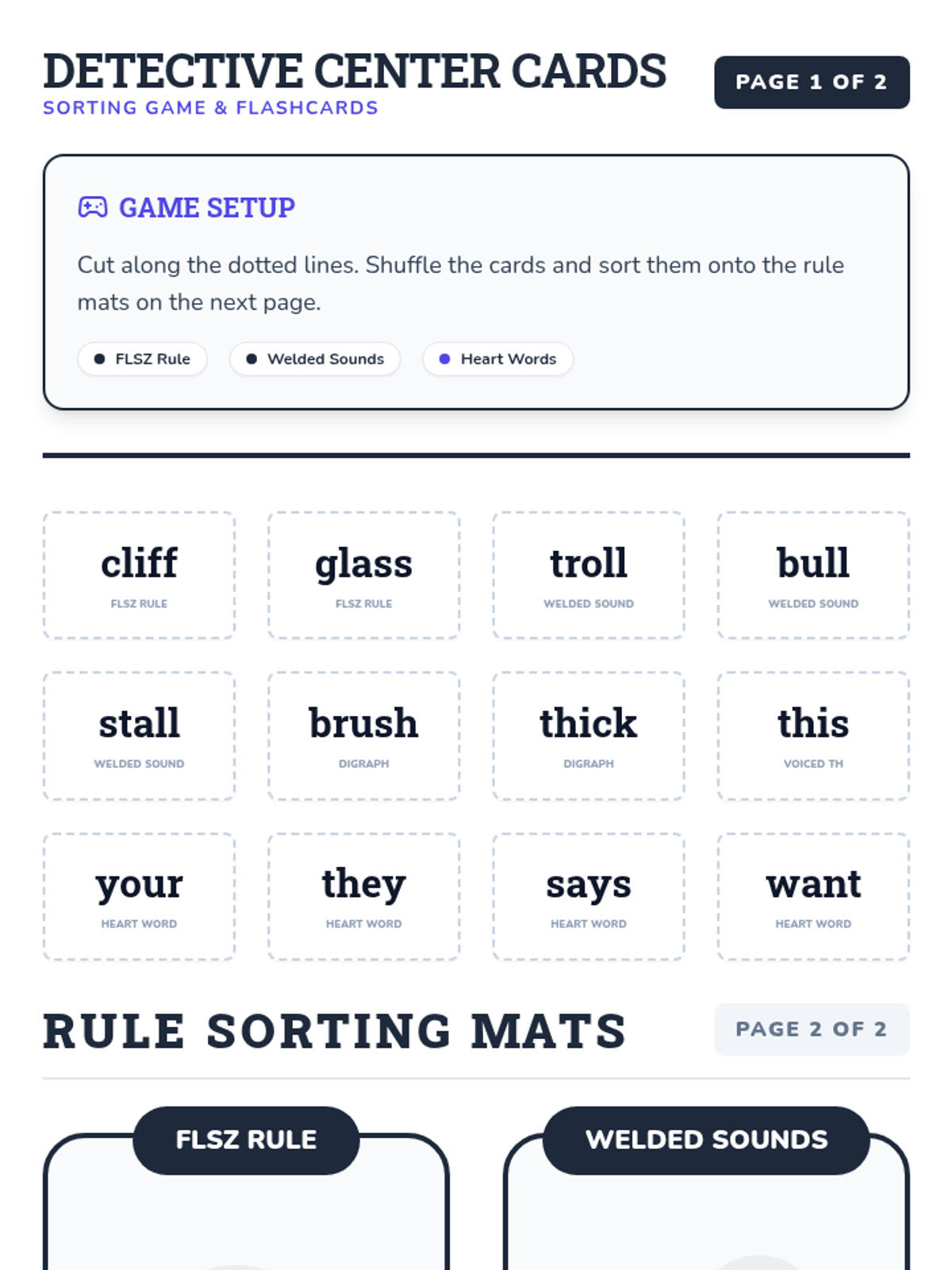
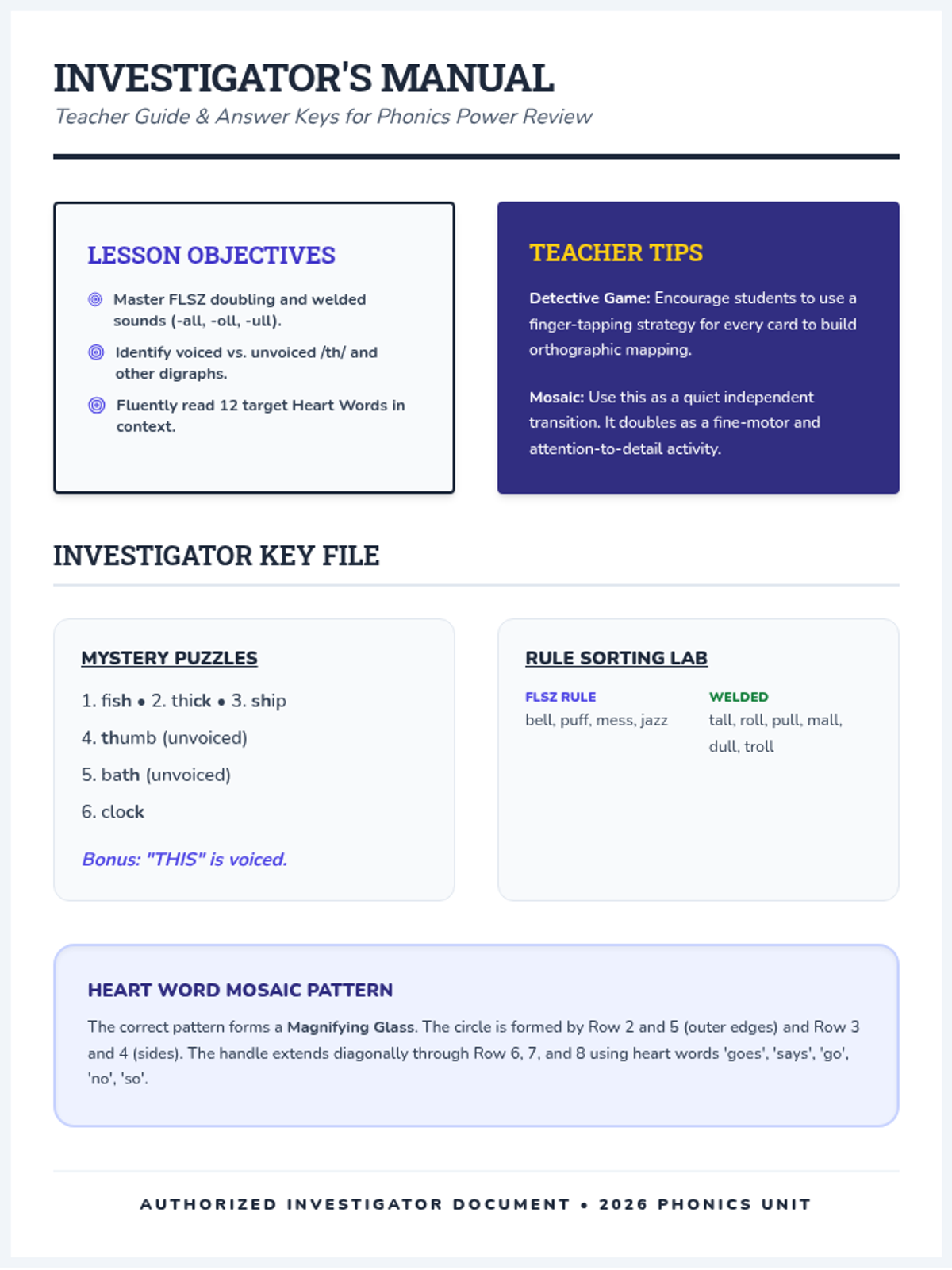
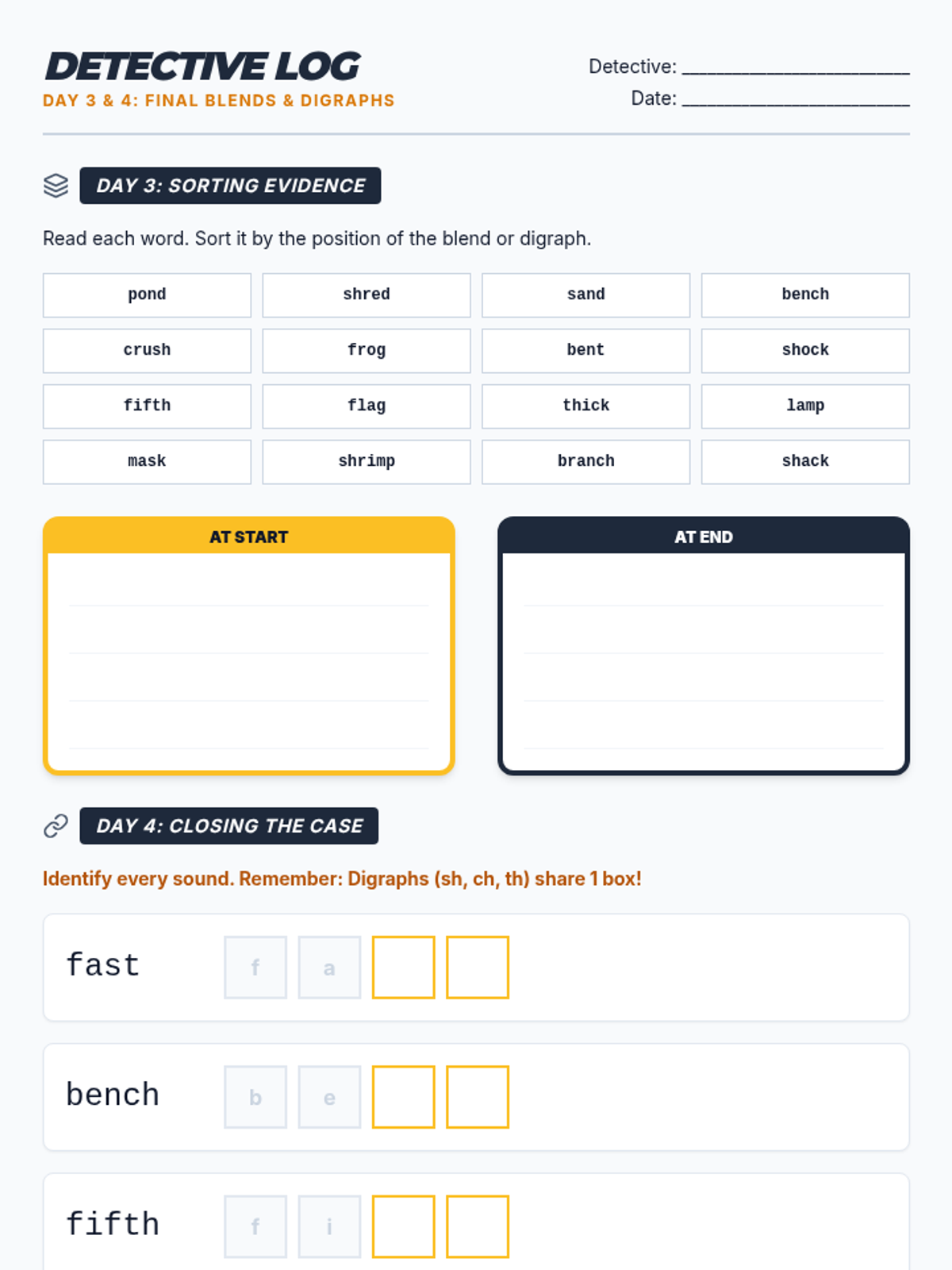
A comprehensive phonics review lesson focusing on short vowels, the FLSZ rule, welded sounds, digraphs, and specific heart words through detective-themed activities.
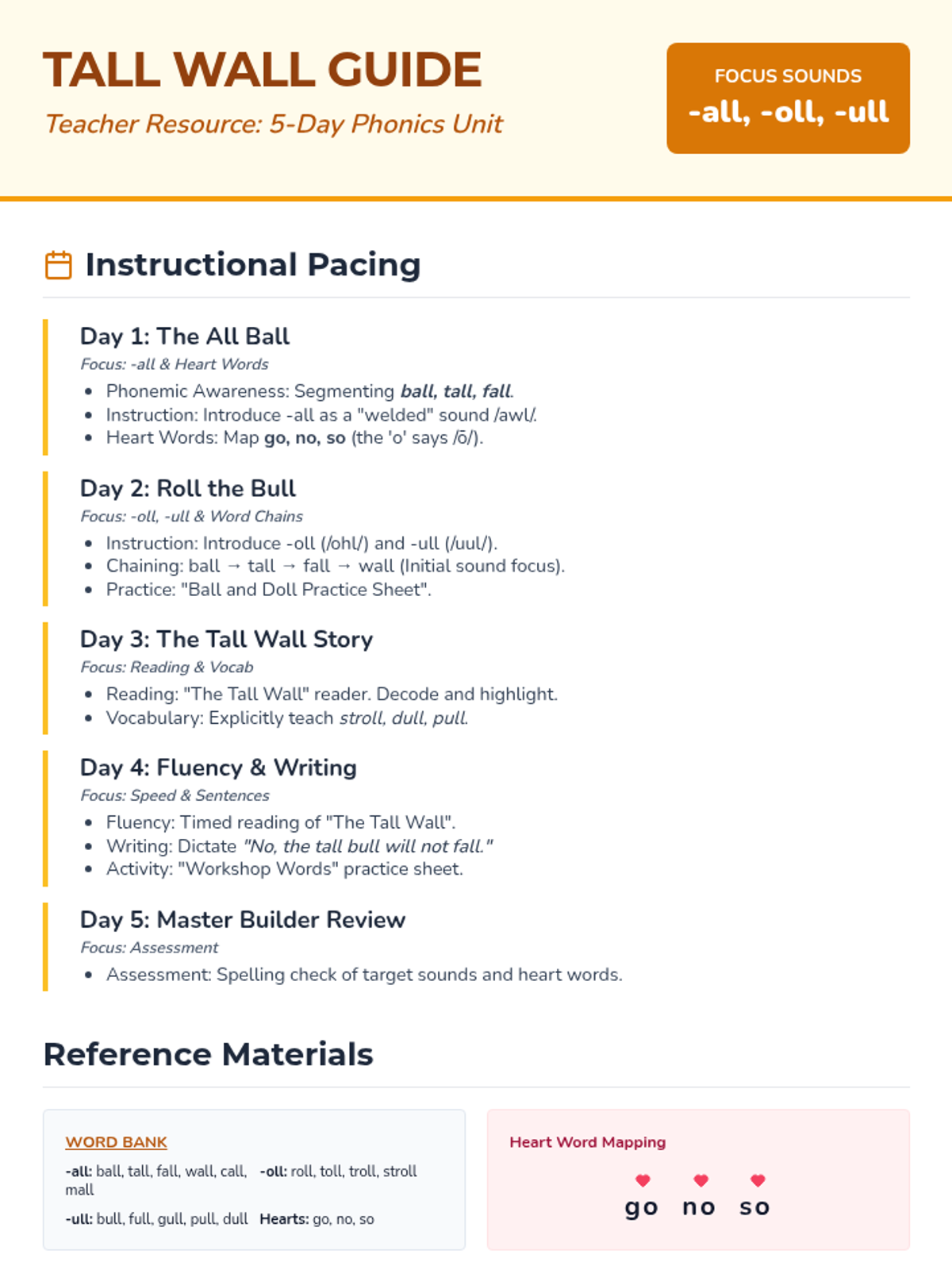
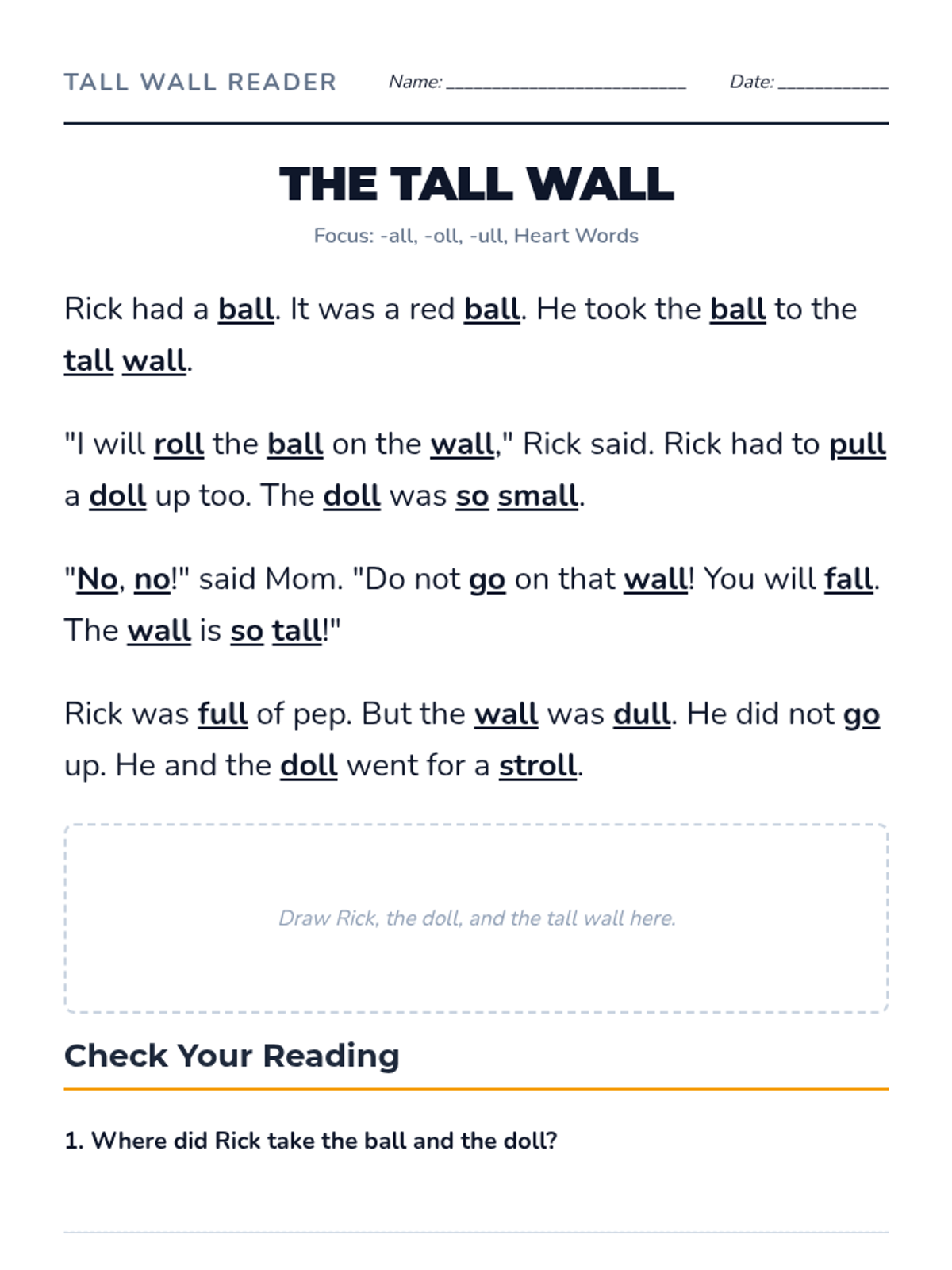
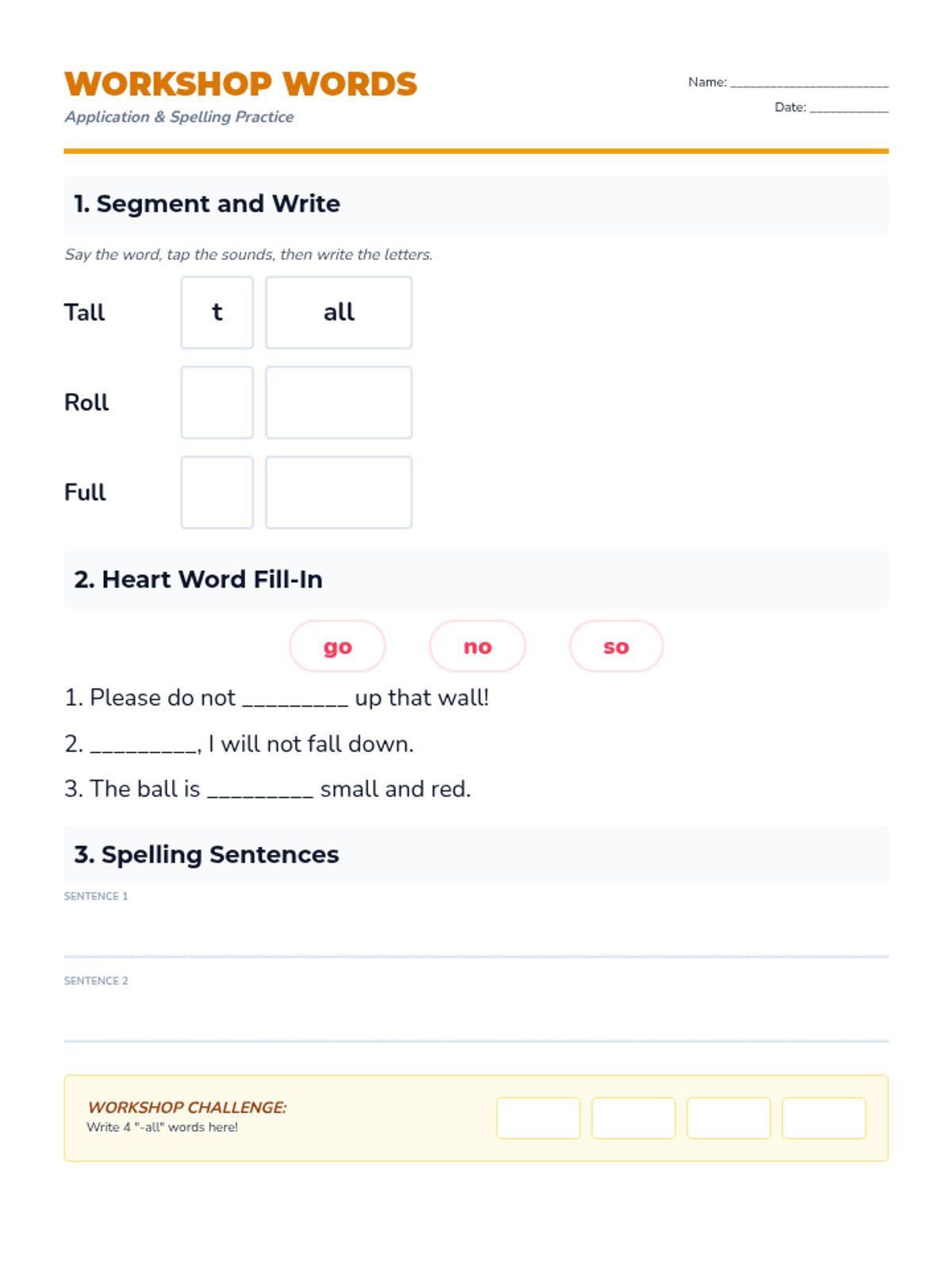
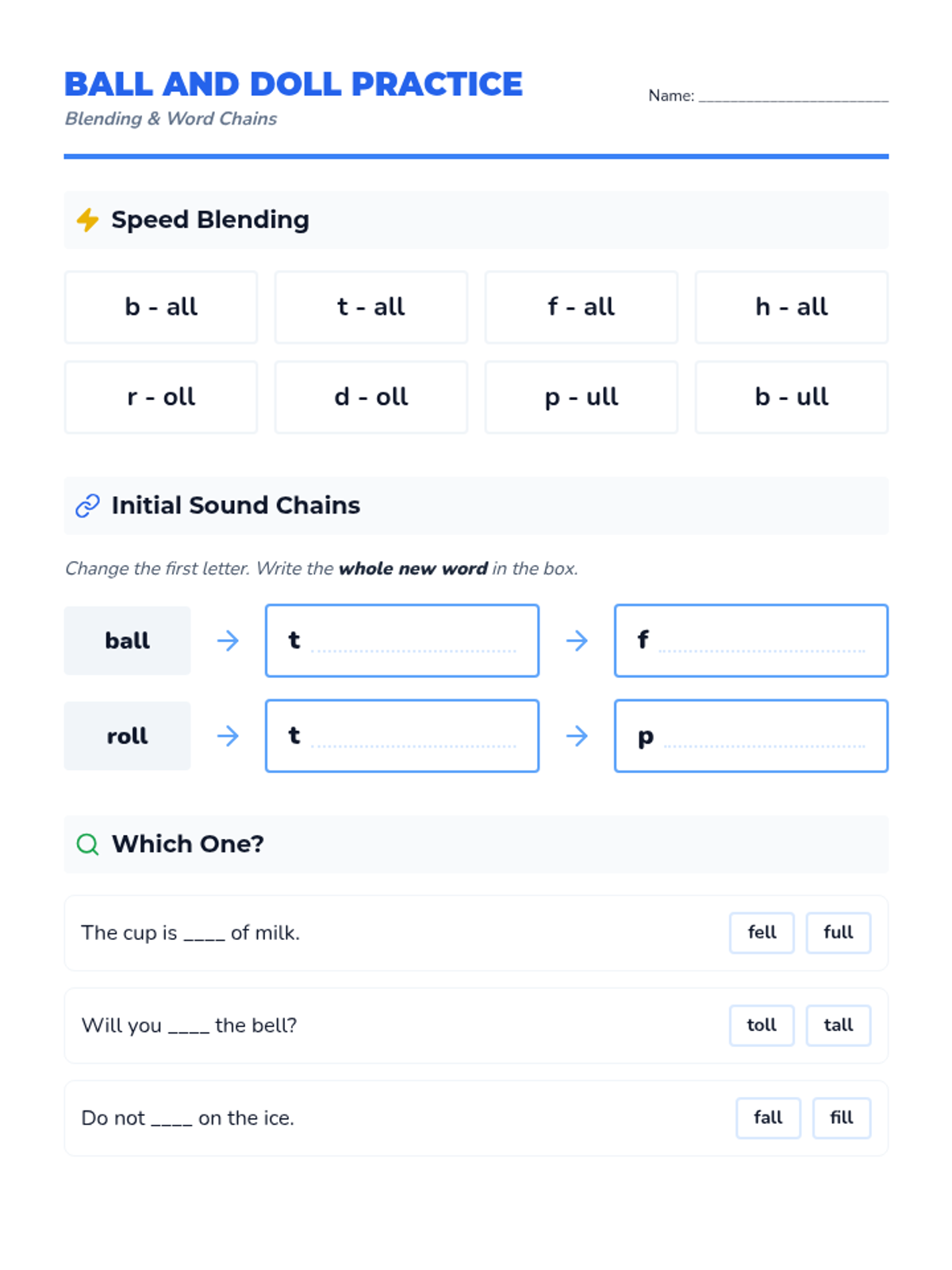
A 5-day instructional sequence for teaching the -all, -oll, and -ull sounds, including heart words, blending, segmenting, and reading application.
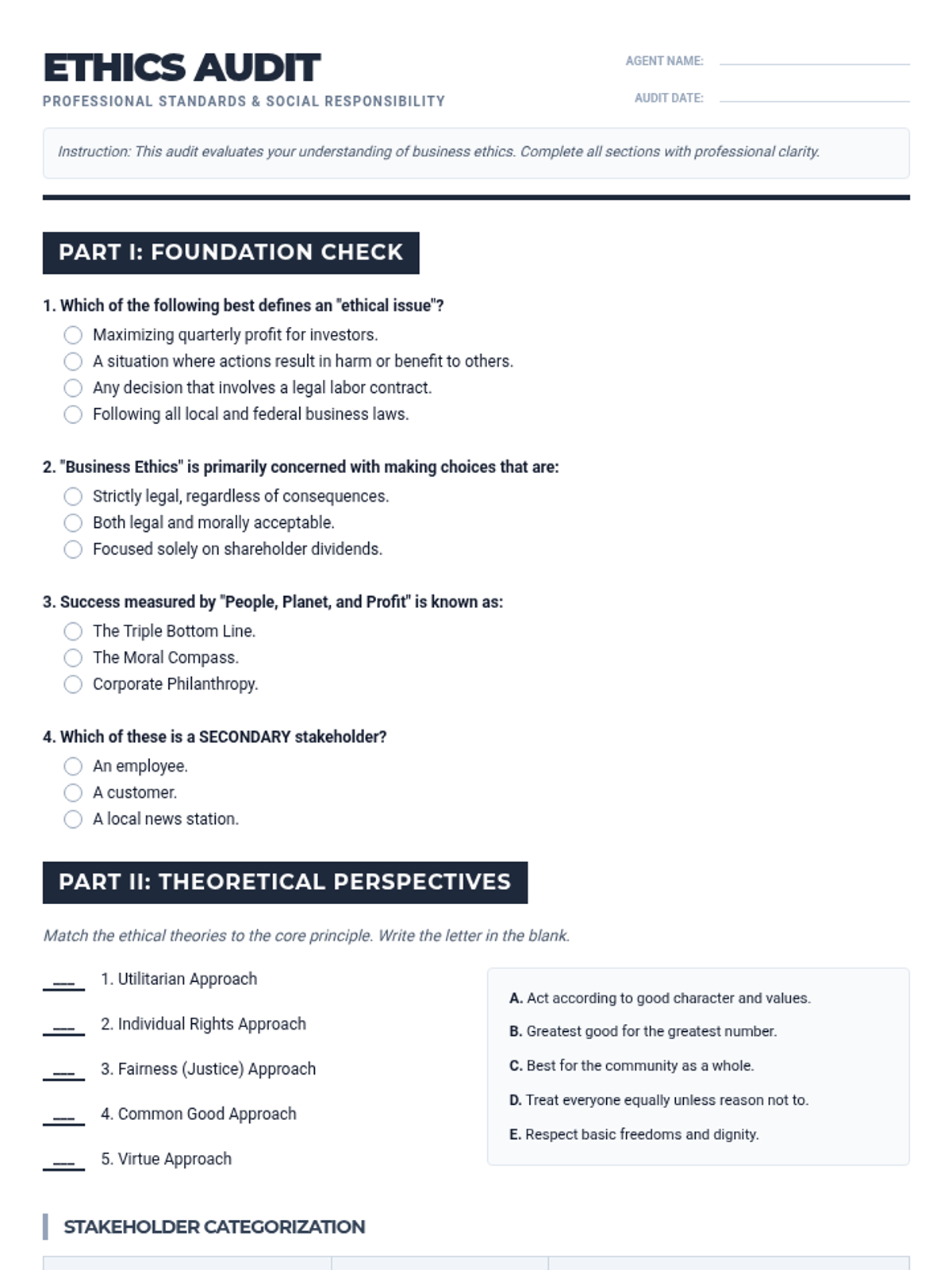
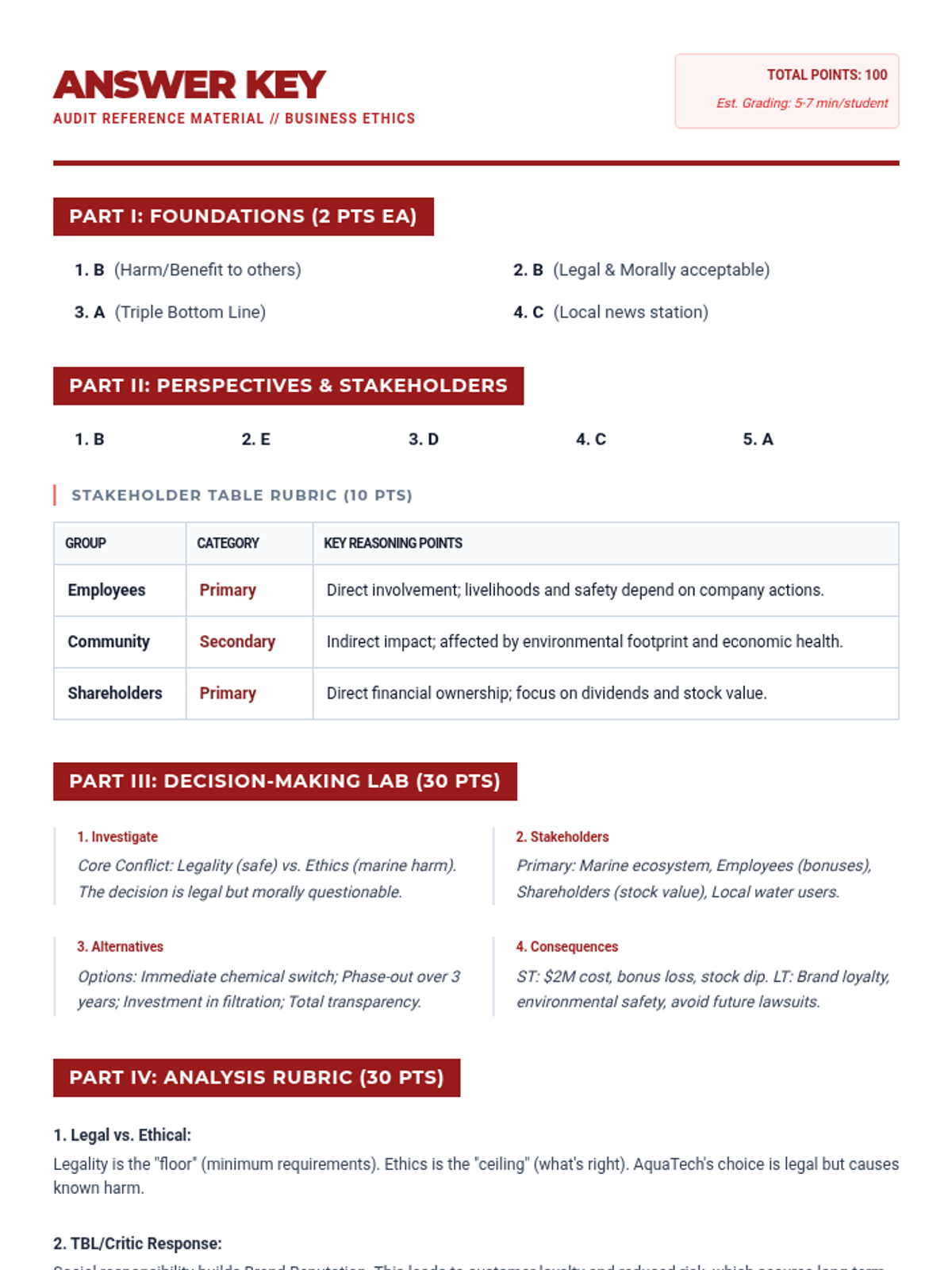
A comprehensive assessment covering business ethics, social responsibility, ethical theories, and the stakeholder decision-making process.
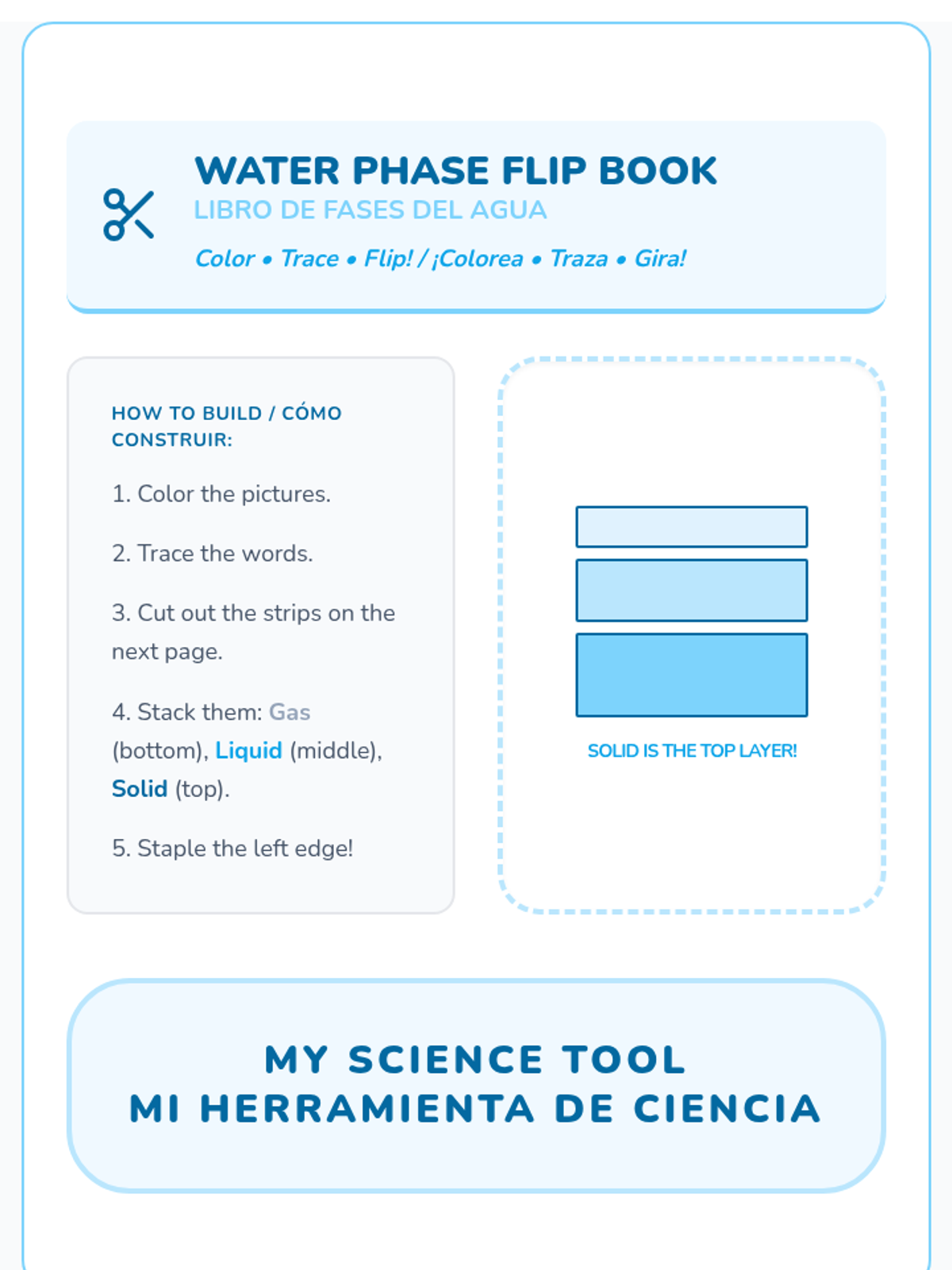
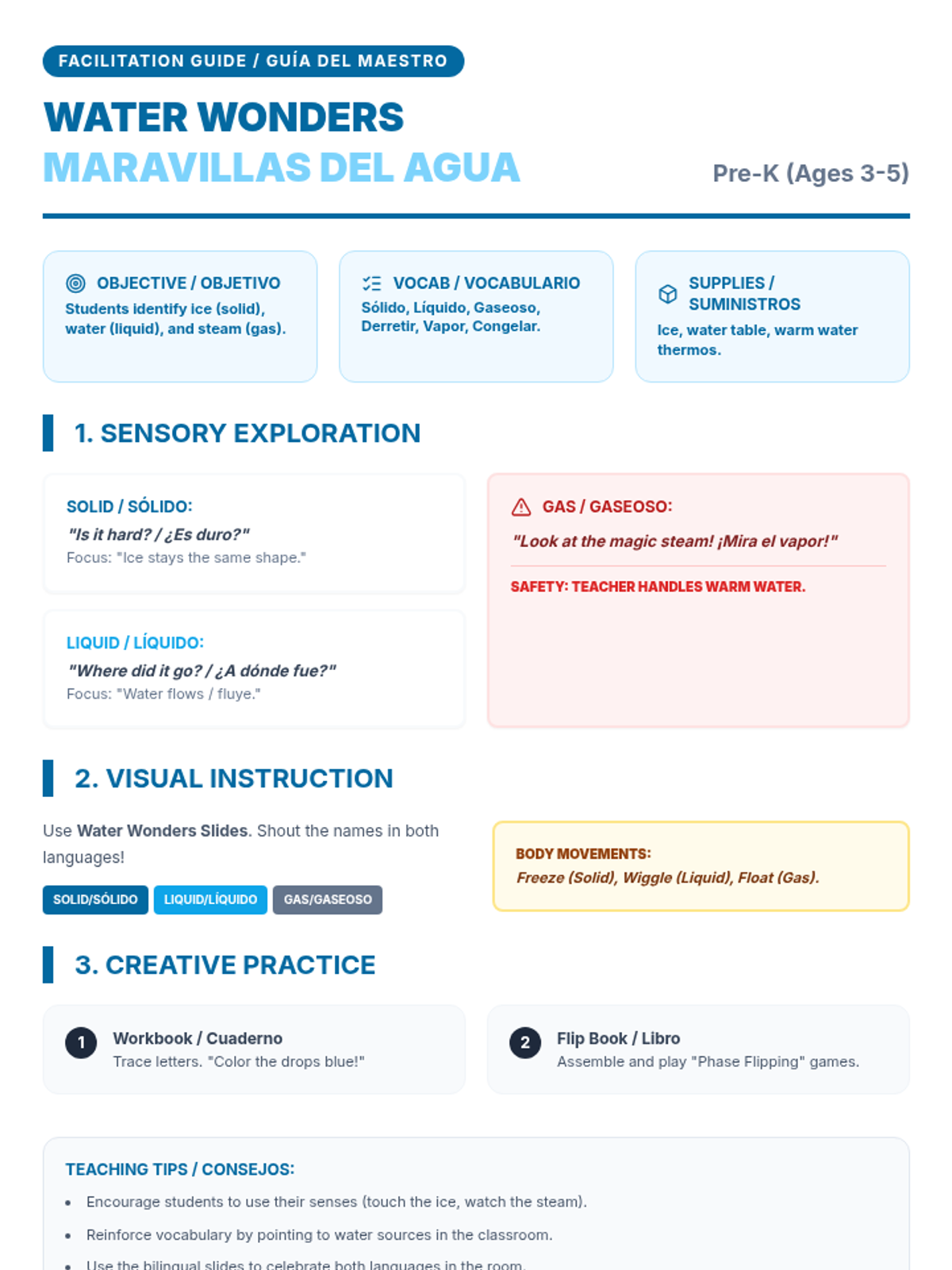
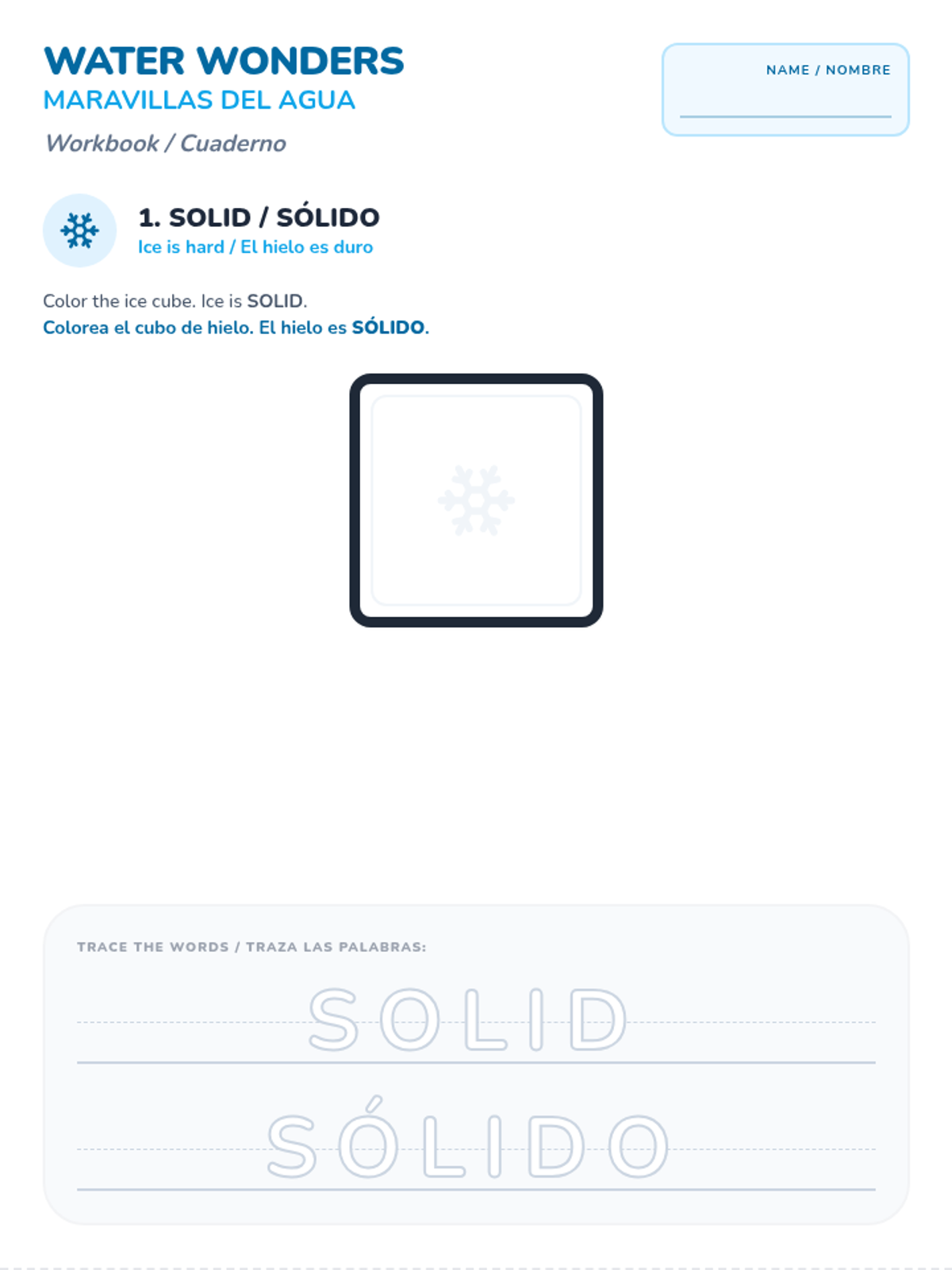
An introductory lesson for Pre-K students to explore the three states of water (solid, liquid, and gas) through hands-on manipulatives, sensory play, and creative activities.
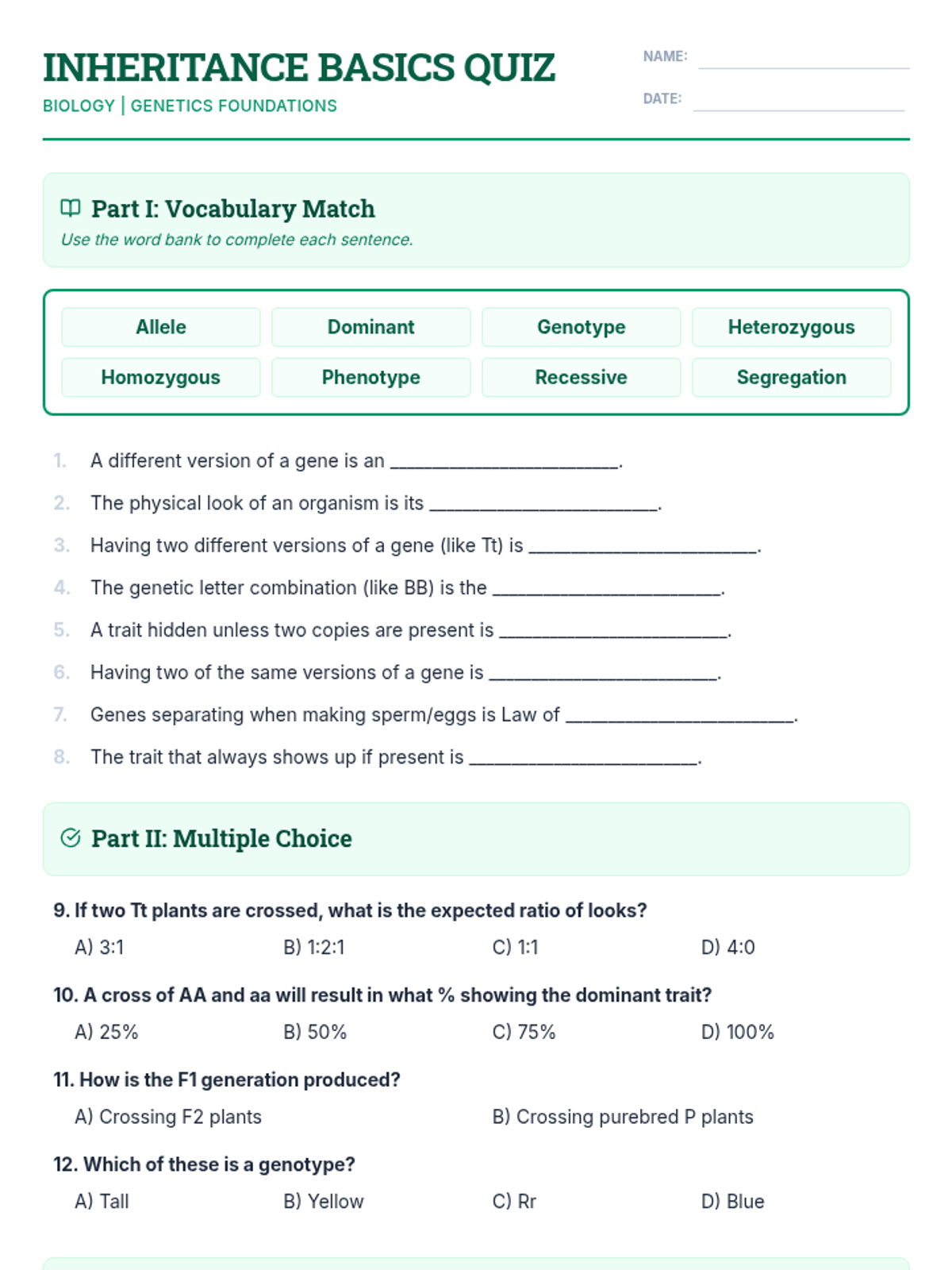
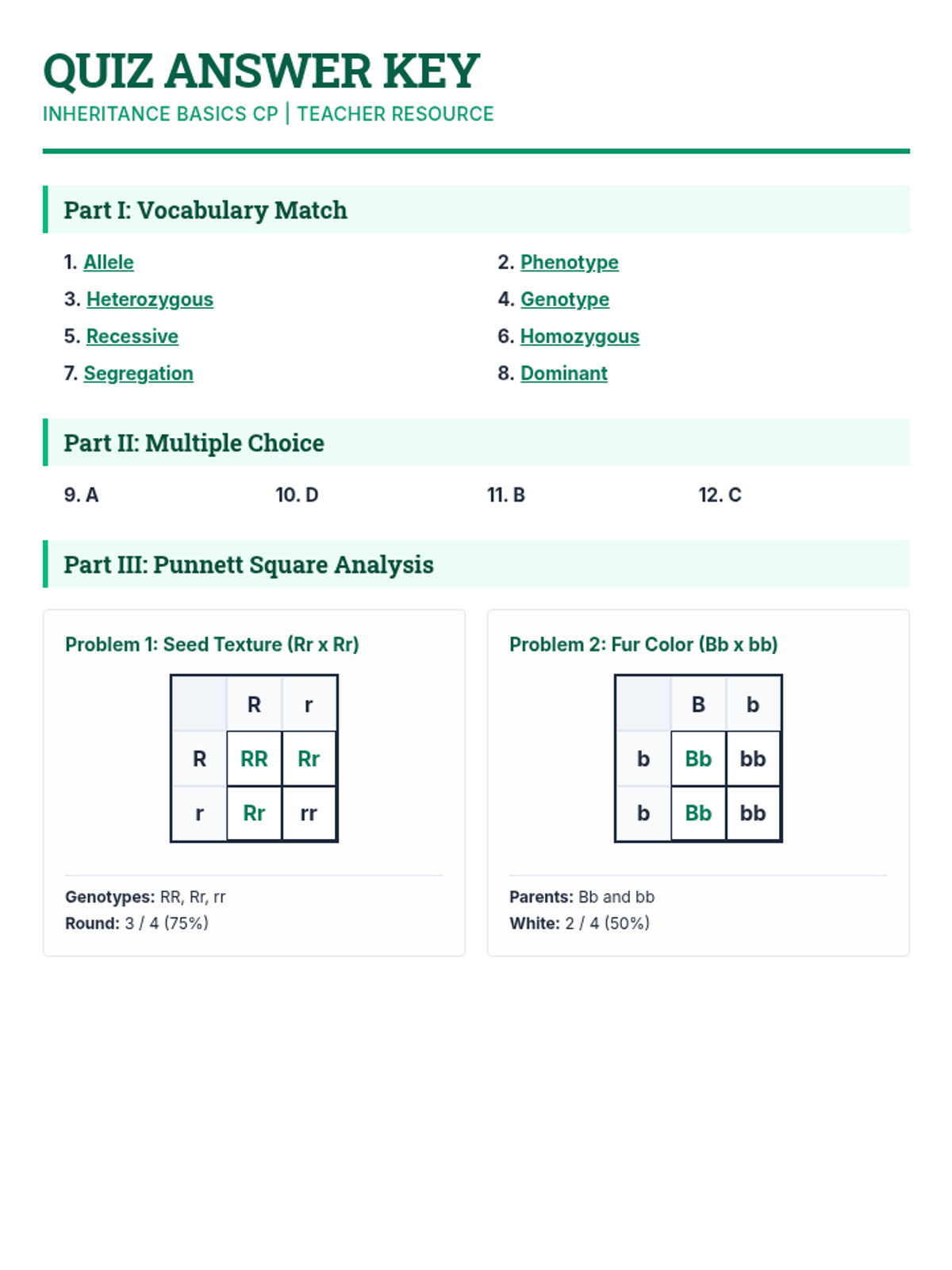
A foundational assessment on Mendelian genetics, simplified for College Prep (CP) biology students with clearer language and vocabulary support.
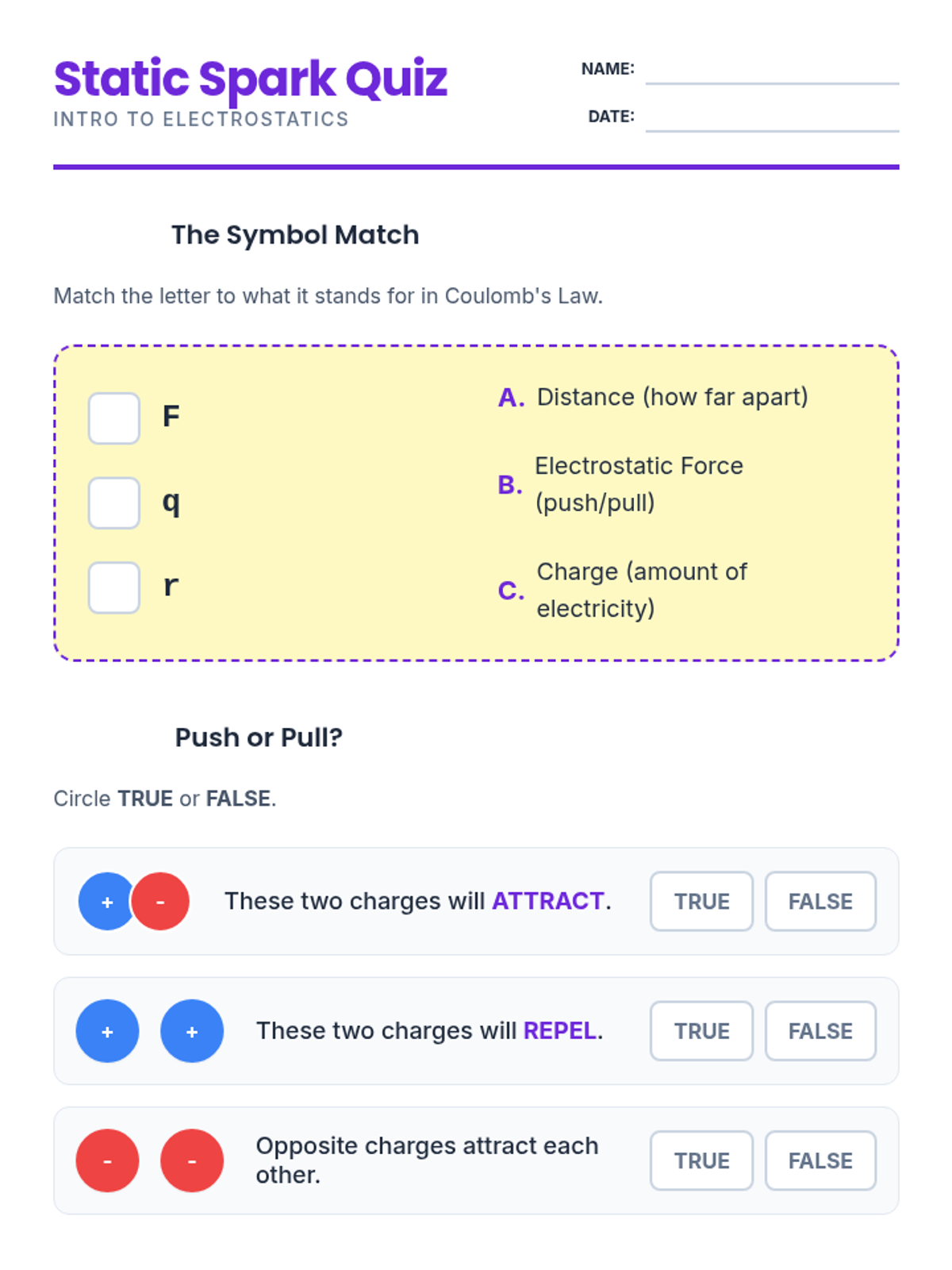
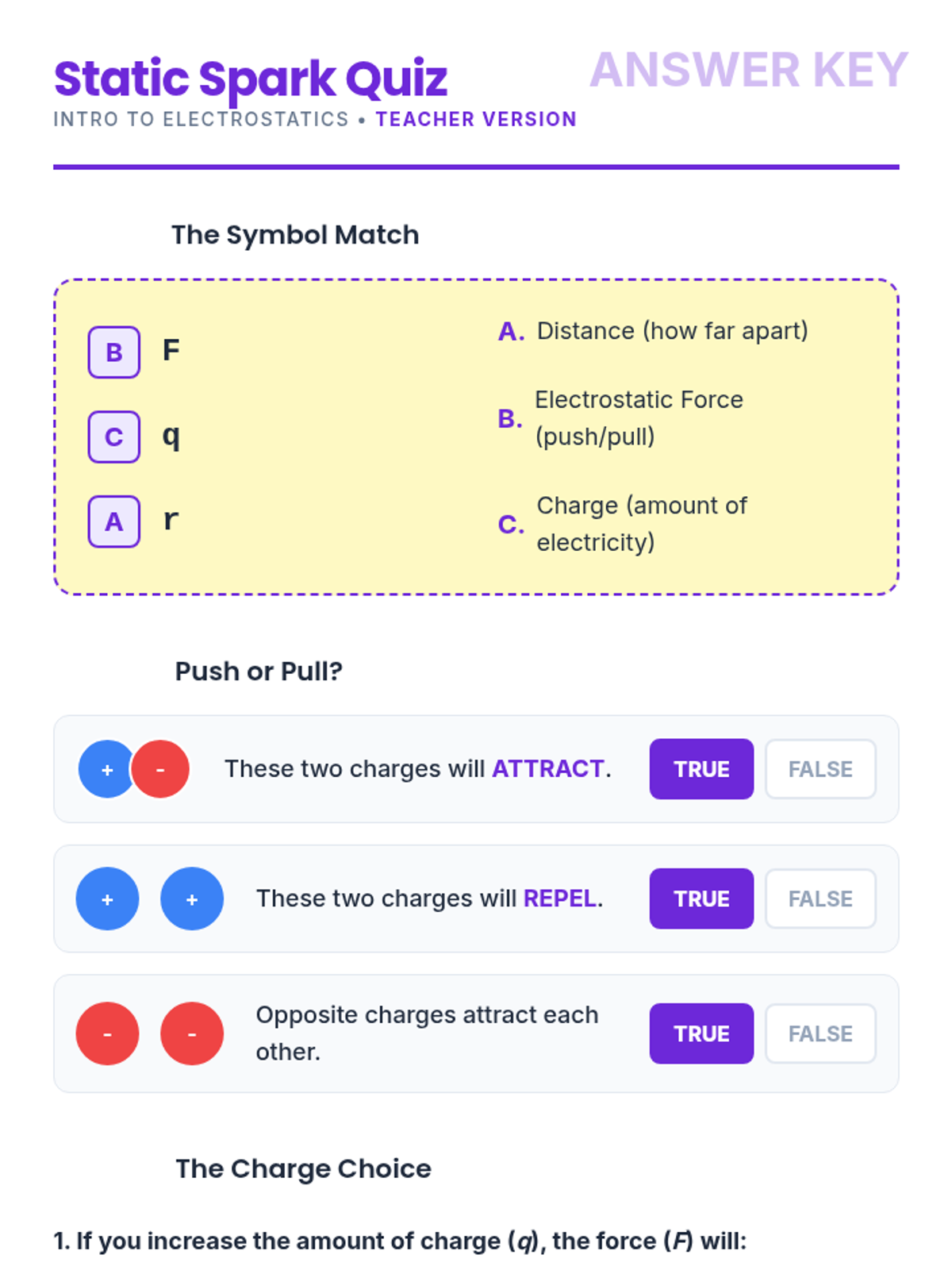
A beginner-friendly lesson on electrostatic forces and Coulomb's Law, emphasizing conceptual understanding and basic calculations.
Review of the week's blend concepts and a formal assessment of decoding and encoding skills for CCVC and CVCC patterns.
Focus on CVCC words ending with S-blends (-st, -sk, -sp) and L-blends (-lt, -lp, -lk). Integration of initial and final blends.
Focus on CVCC words ending with nasal blends (-mp, -nd, -nt, -nk). Students identify the 'stuck' sound before the final consonant.