An engaging vocabulary review lesson where students use a roll-and-read dice board to practice reading fluency and define key multi-syllable academic words with partners.
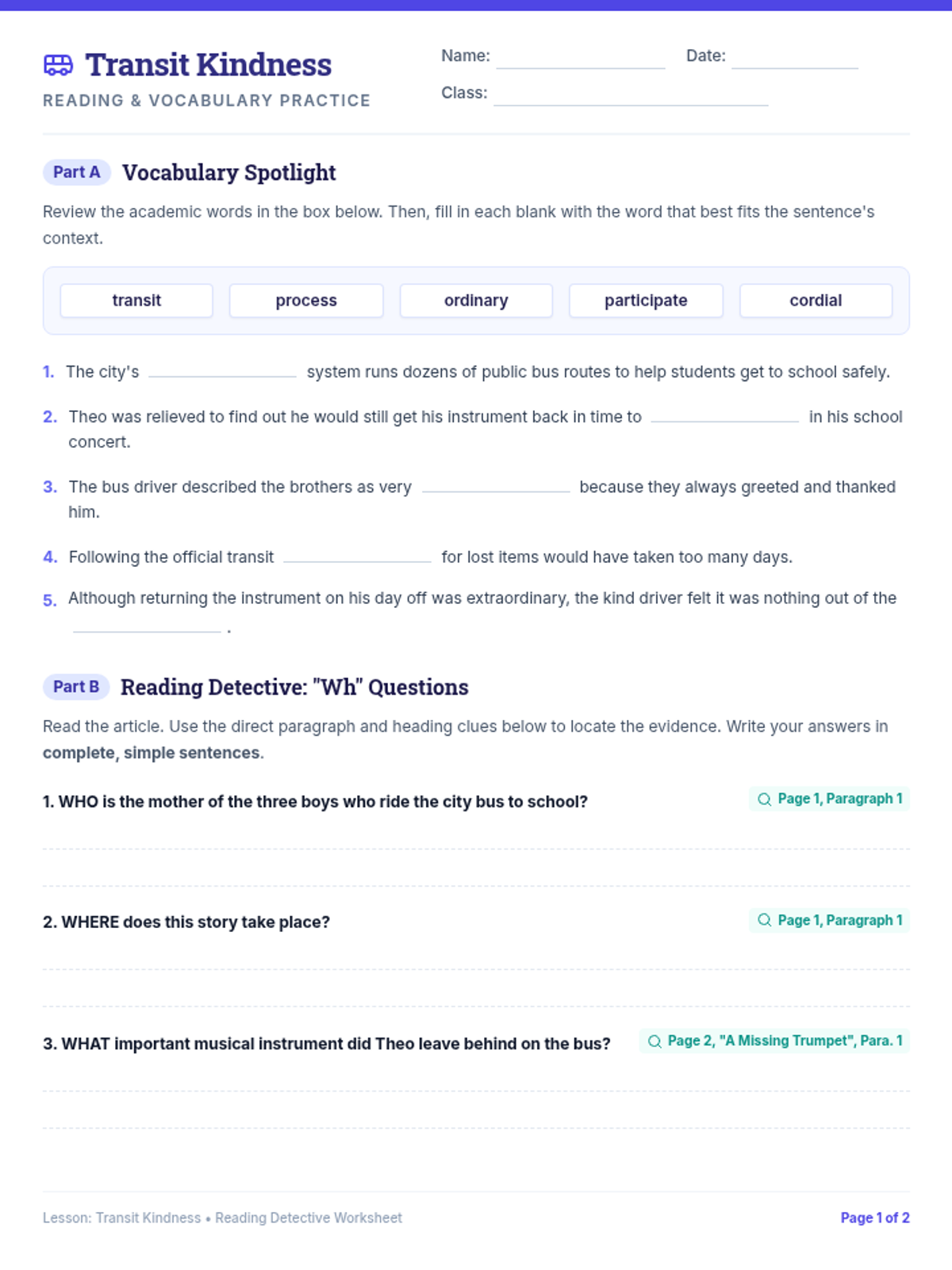
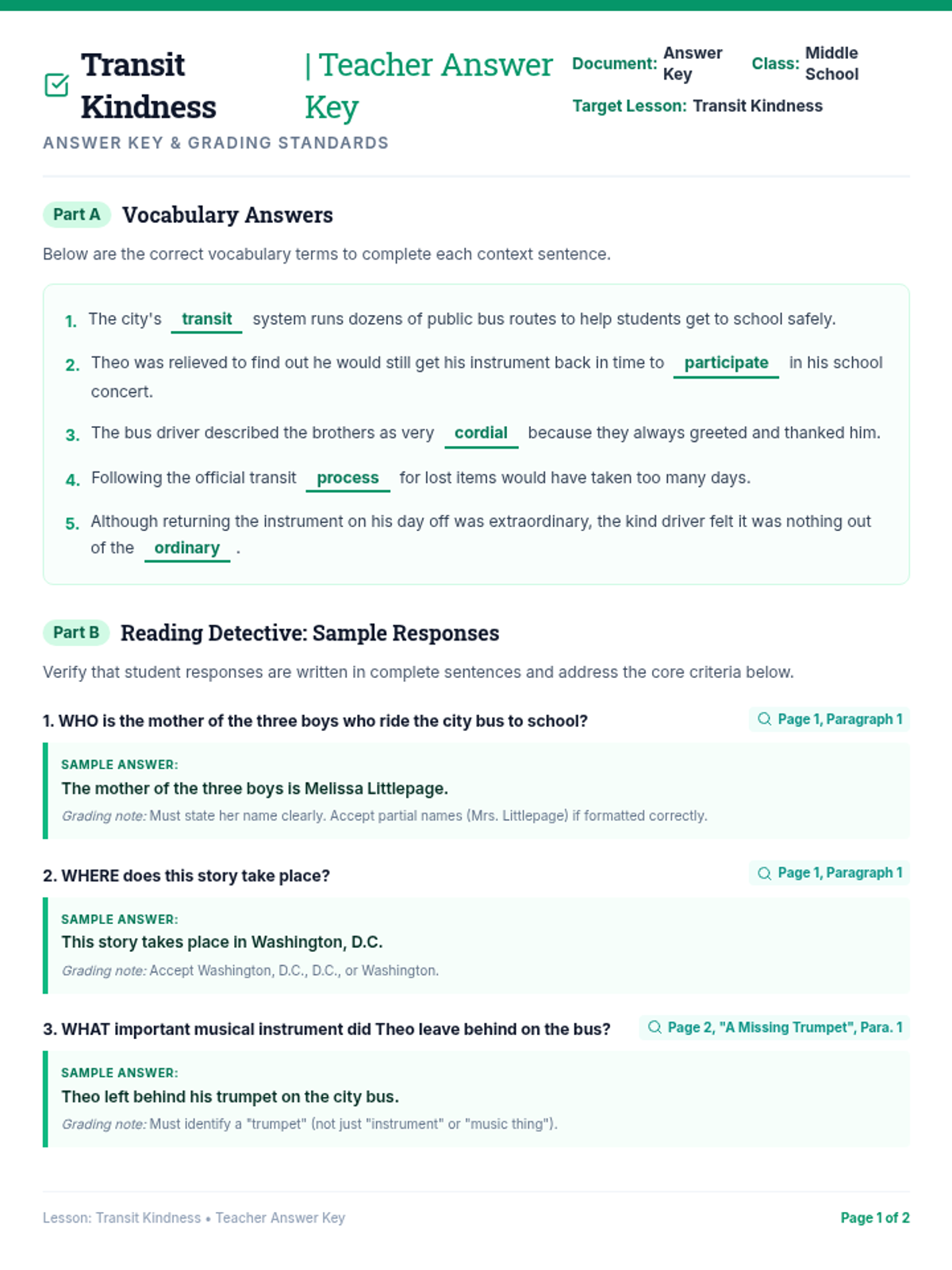
A reading comprehension and vocabulary lesson based on the true story of a D.C. bus driver who went out of his way to return a student's lost trumpet before an important concert. Students develop close reading skills, identify Tier 2 vocabulary in context, and explore themes of community and empathy.
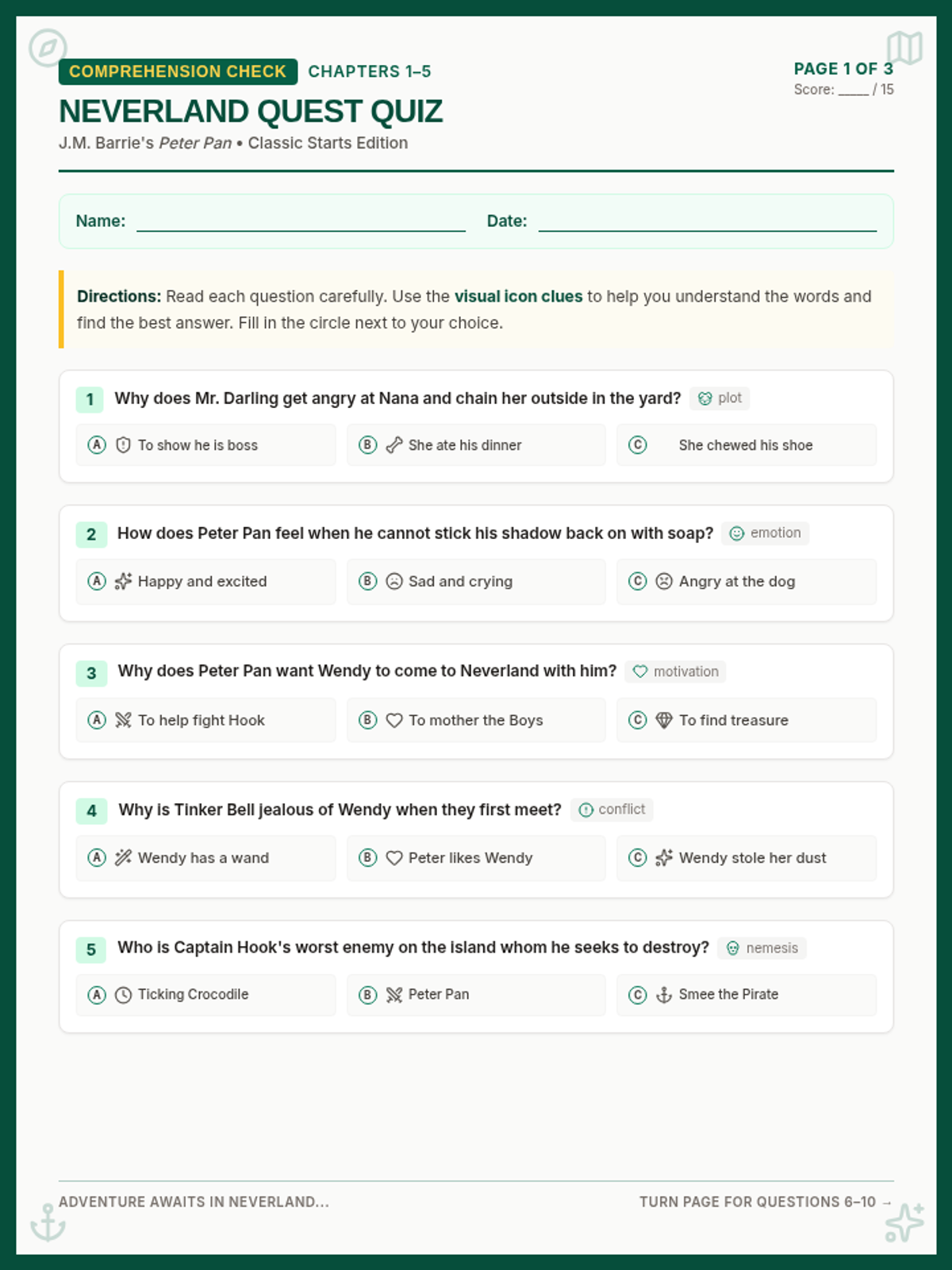
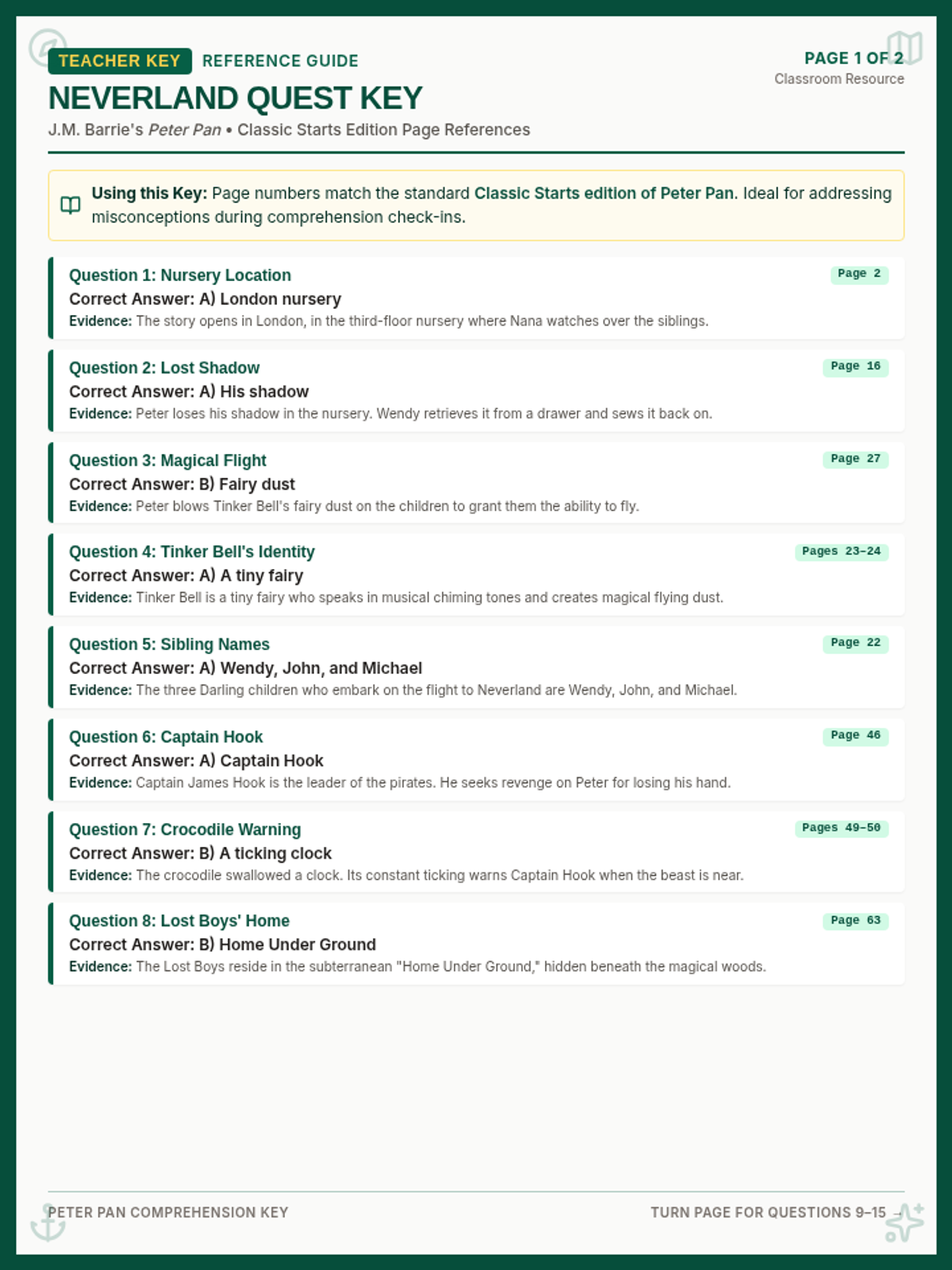
A complete comprehension assessment lesson for J.M. Barrie's Classic Starts: Peter Pan, featuring a student quiz with visual supports and a detailed teacher answer key with page references.
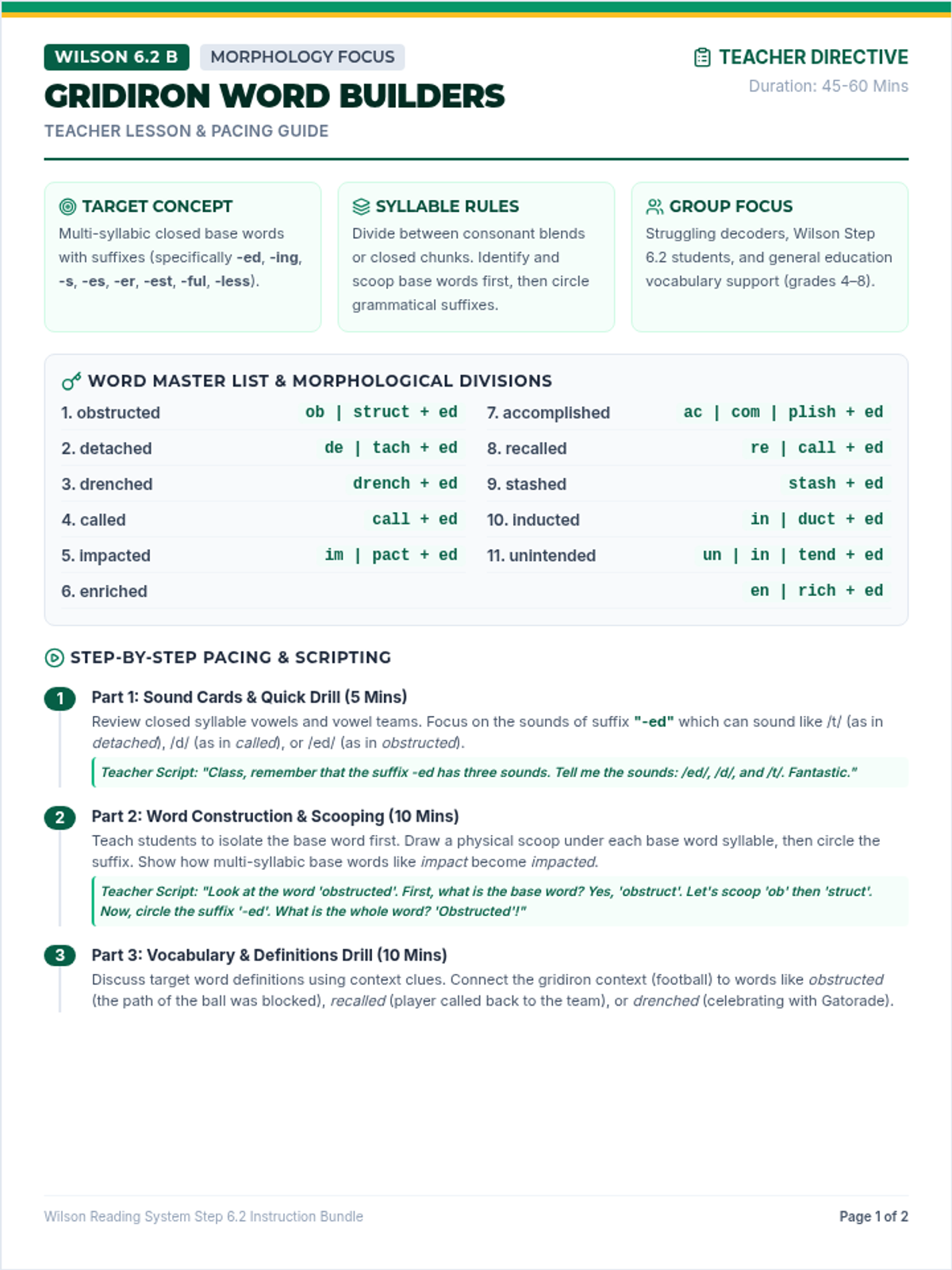
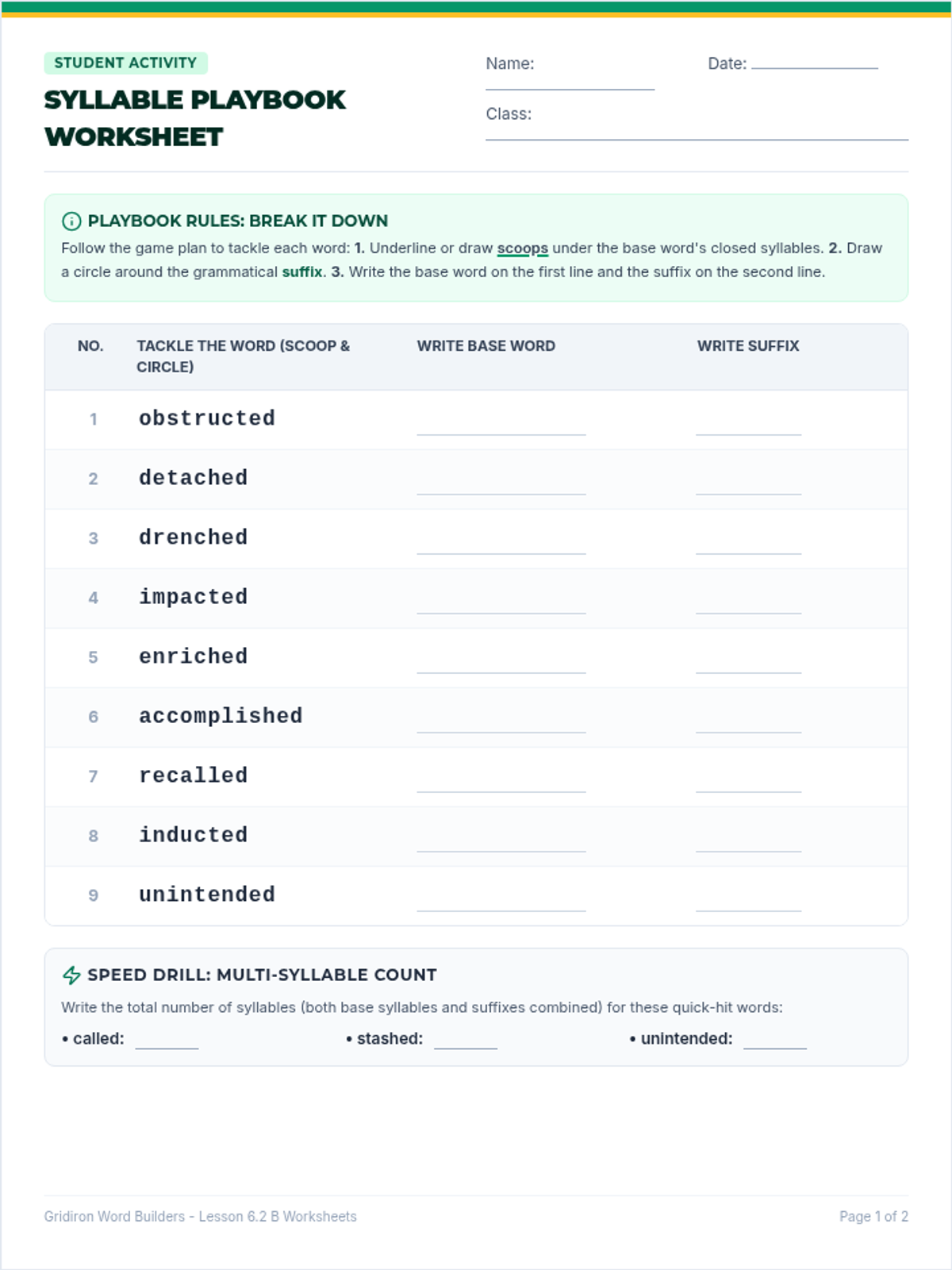
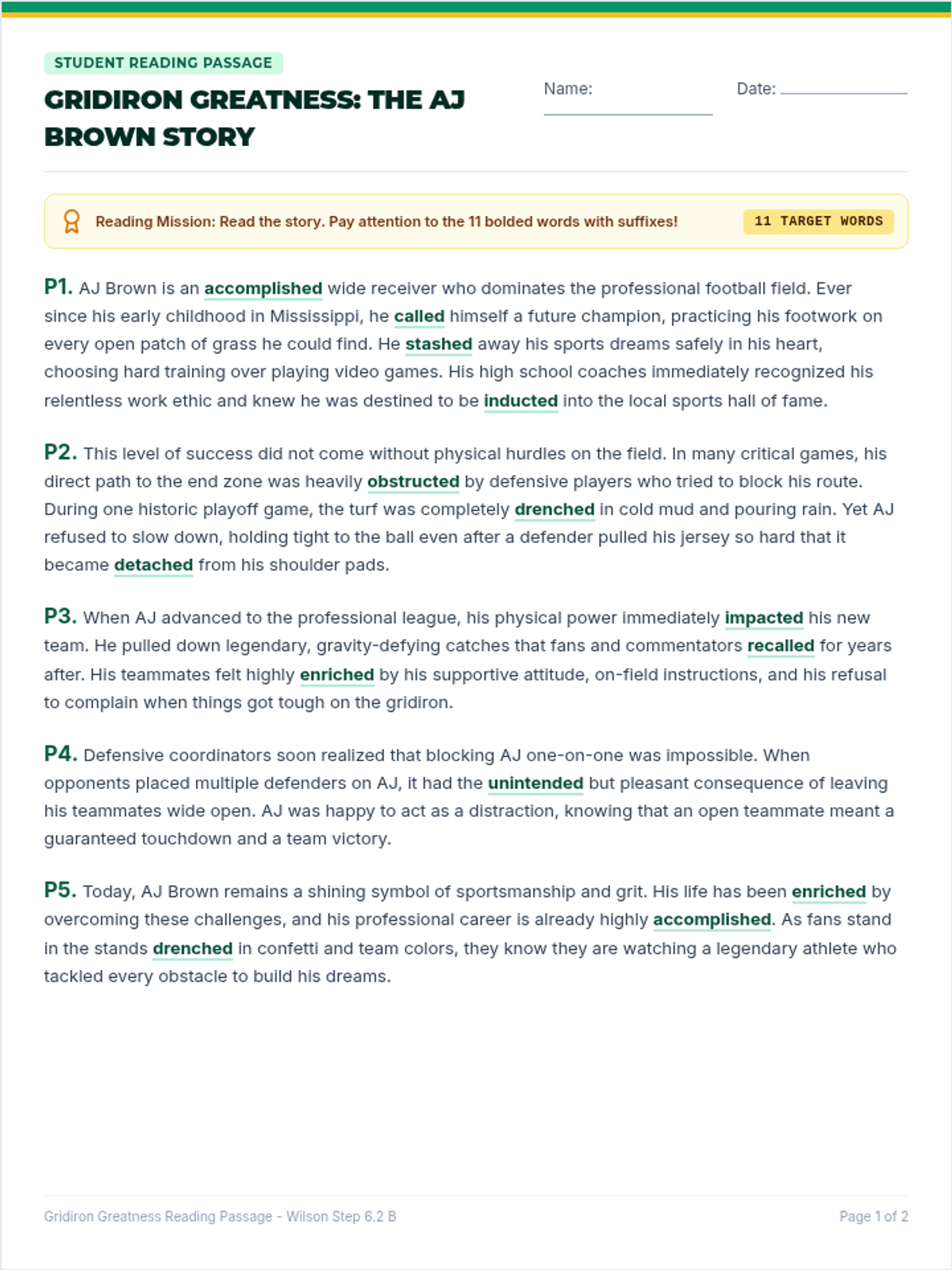
A complete literacy lesson aligned with Wilson Reading System Step 6.2, focusing on multi-syllabic words with suffixes. Students learn to read, scoop, and define complex words while engaging with an inspiring reading passage about NFL wide receiver AJ Brown.
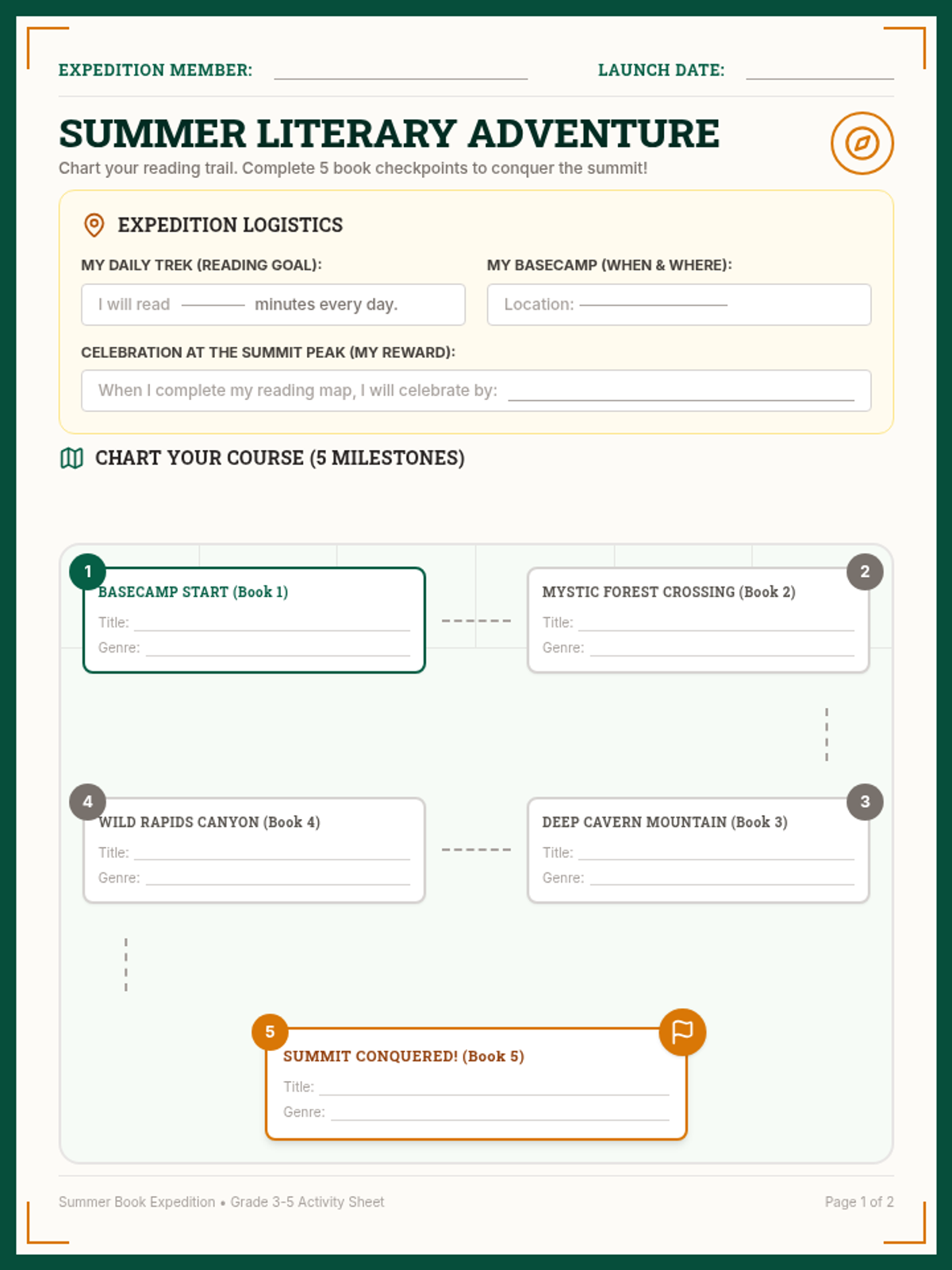
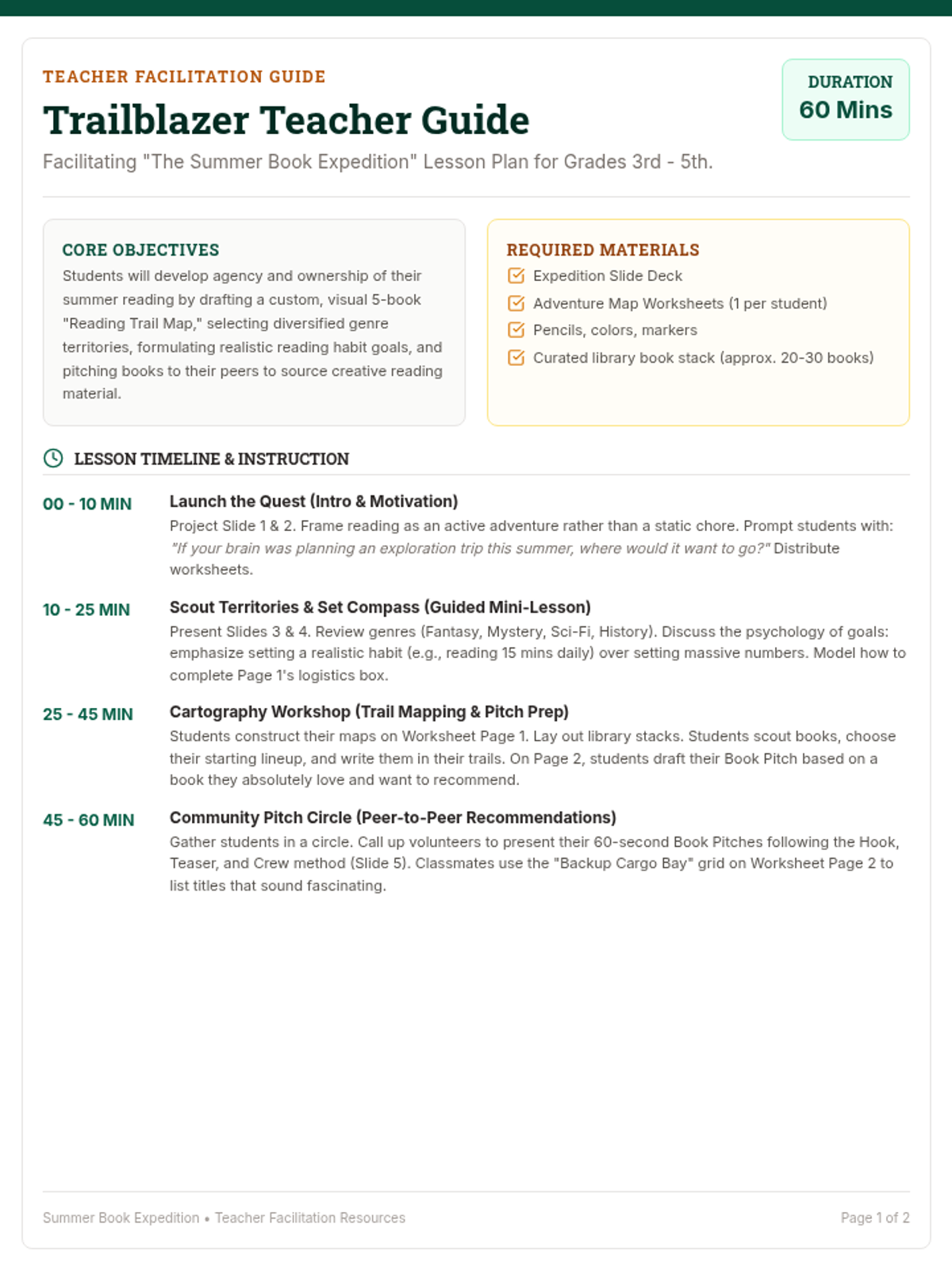
A high-interest, explorer-themed lesson where 3rd-5th grade students design personalized summer reading trail maps, set challenge goals, and pitch books to classmates to embark on a lifelong reading adventure.
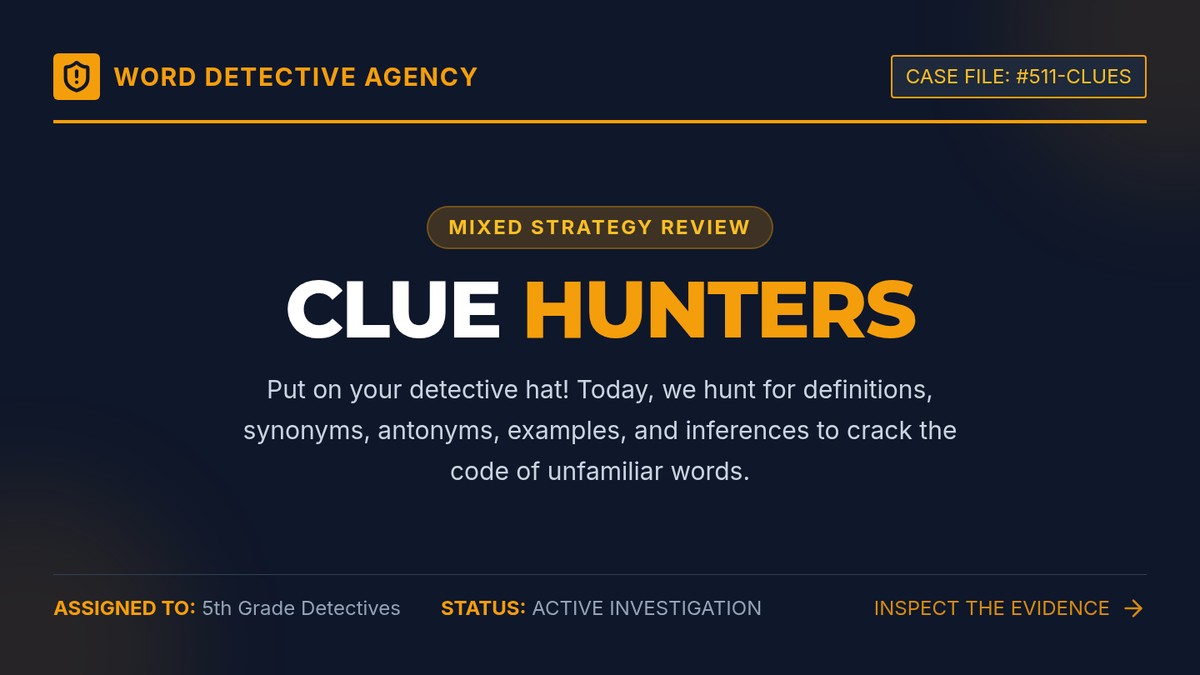
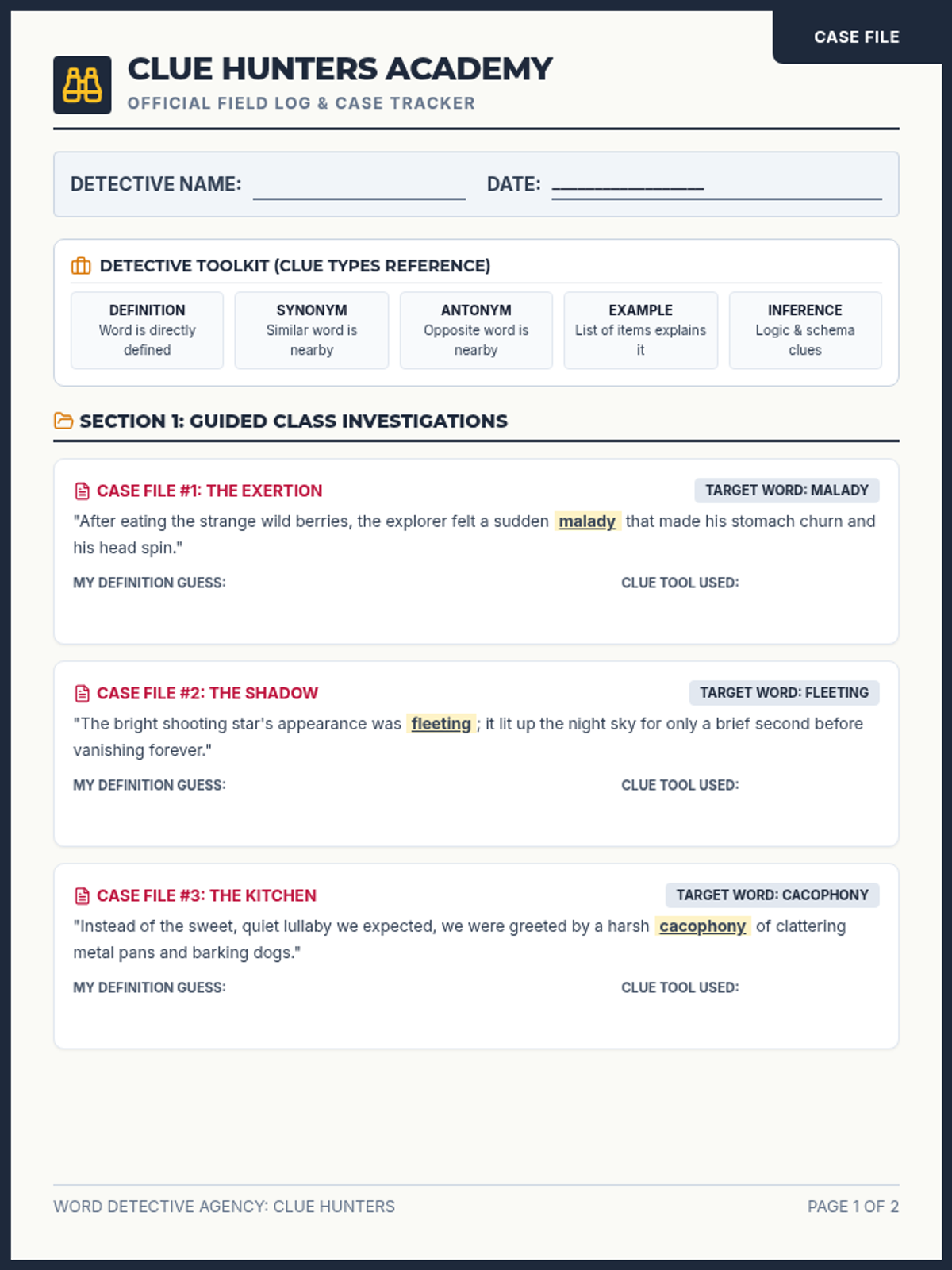
A high-interest, detective-themed mixed context clues lesson for 5th graders. Students analyze challenging sentences to uncover word meanings using definition, synonym, antonym, example, and inference clues.
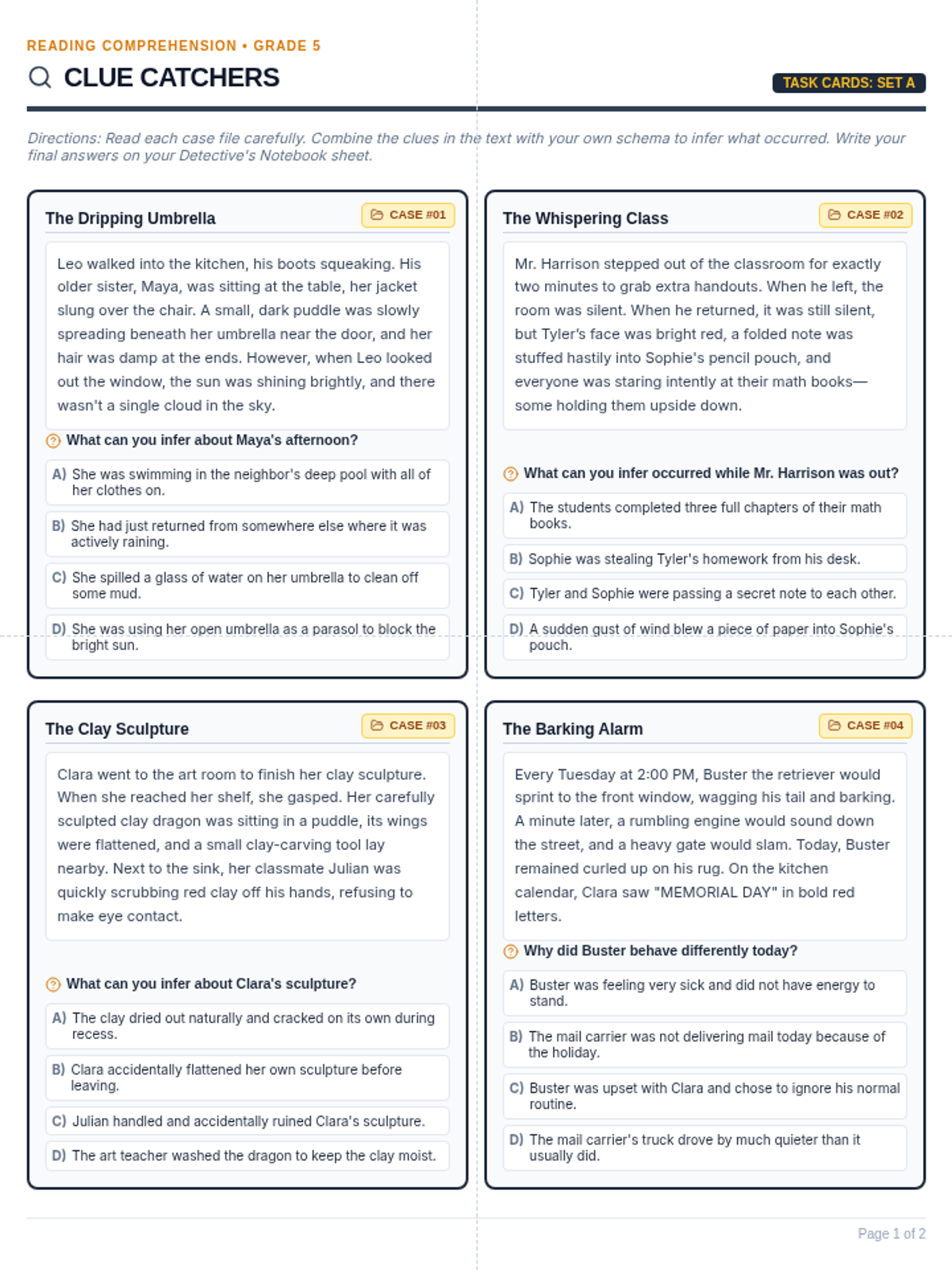
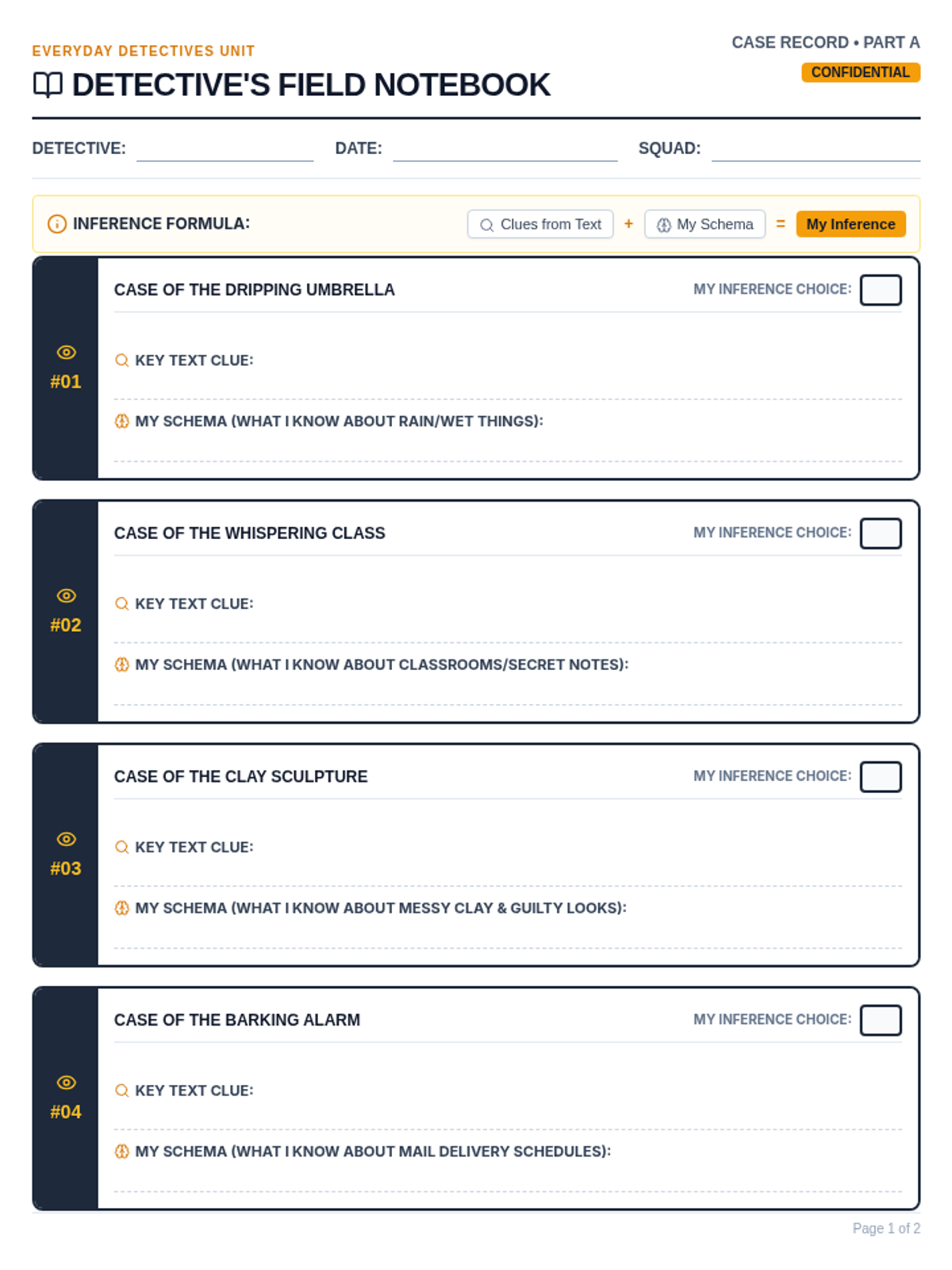
A 5th-grade reading comprehension lesson focused on making inferences. Students read 'Everyday Mysteries'—puzzle-like short passages on printable task cards—and use clues and schema to determine what happened, tracking their thinking on a detective's notebook recording sheet.
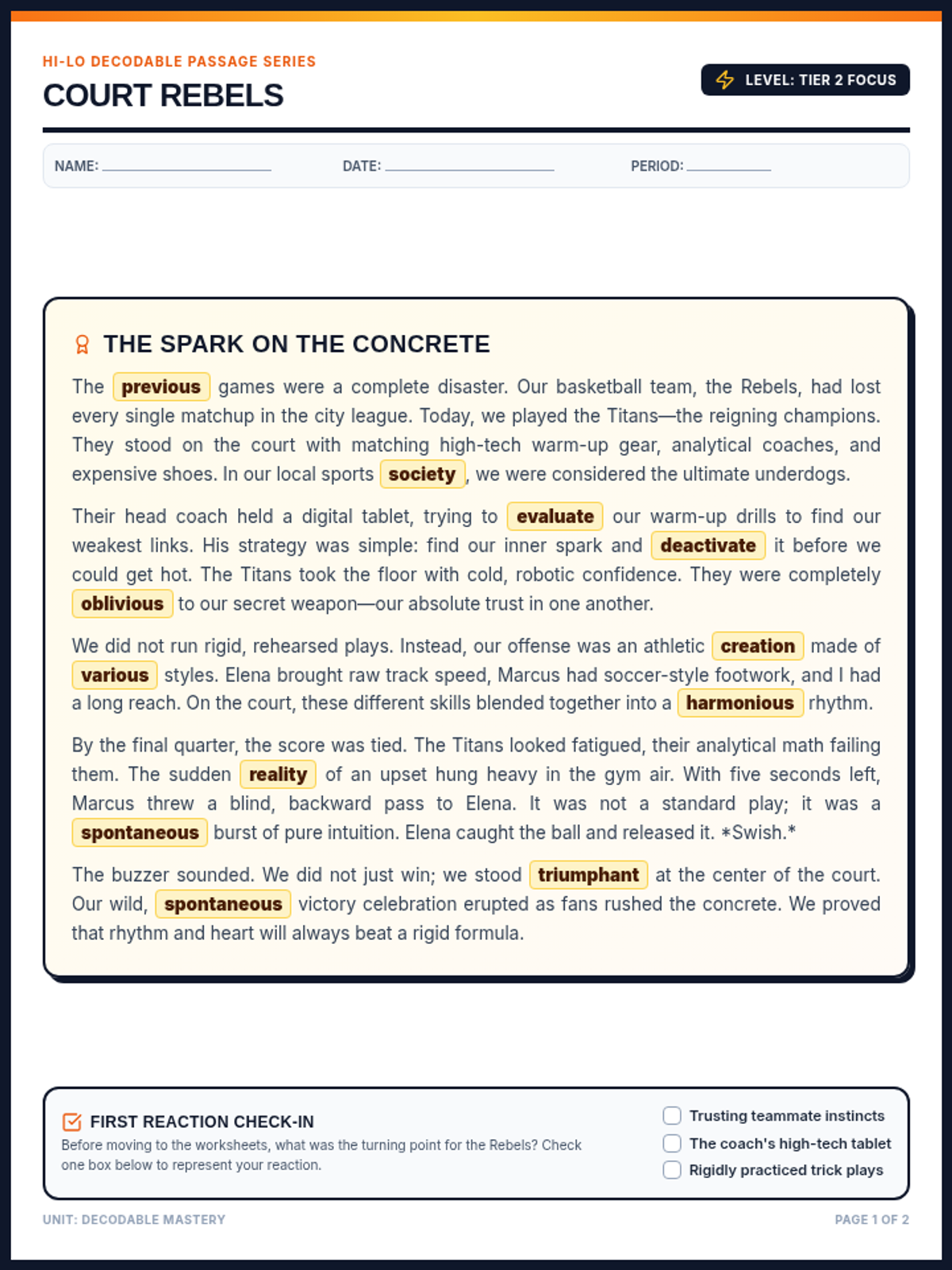
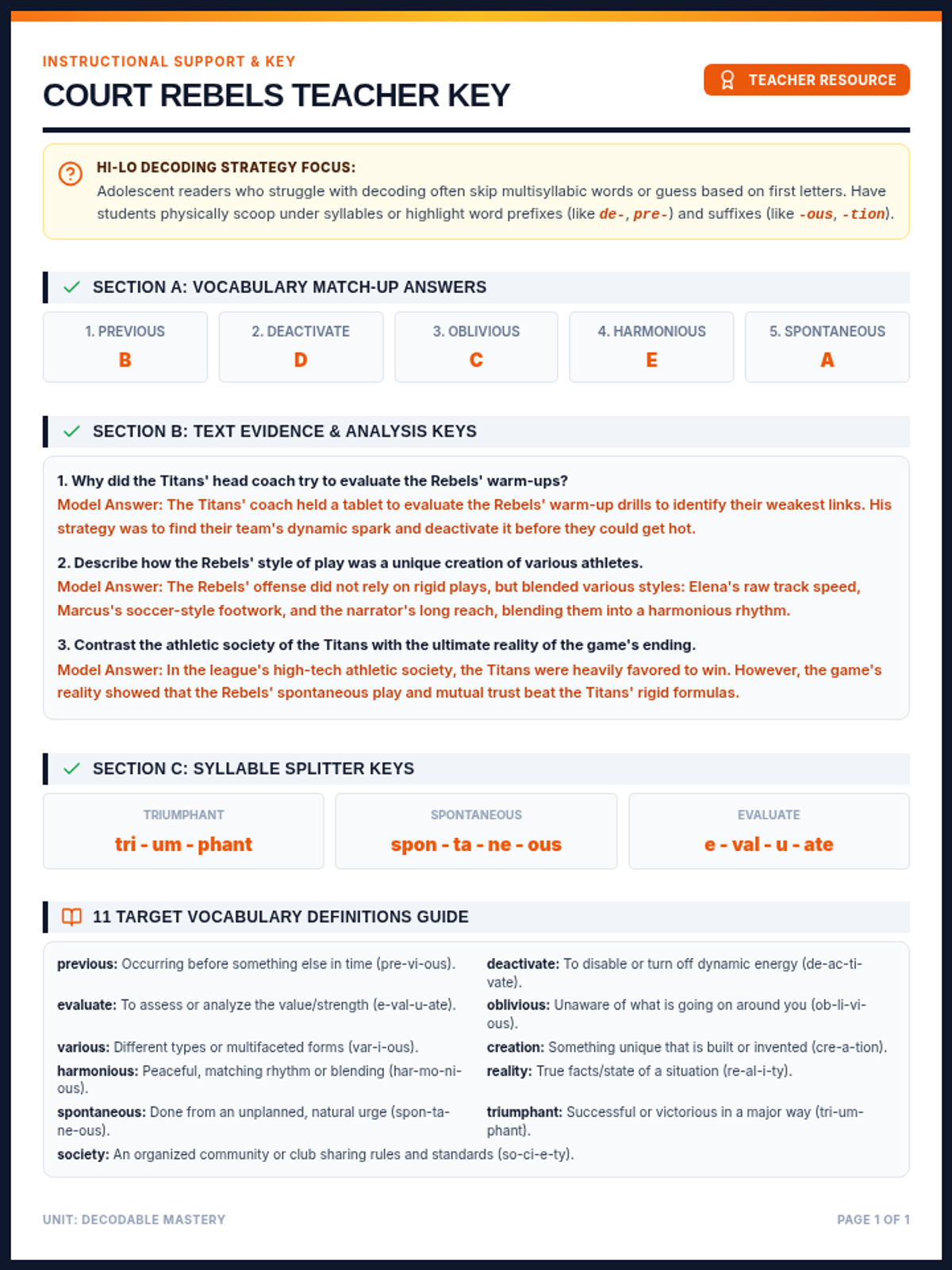
A reading comprehension and vocabulary lesson designed for struggling adolescent readers. It features a high-interest realistic fiction story about an underdog basketball team's unexpected victory, focusing on multisyllabic vocabulary development.
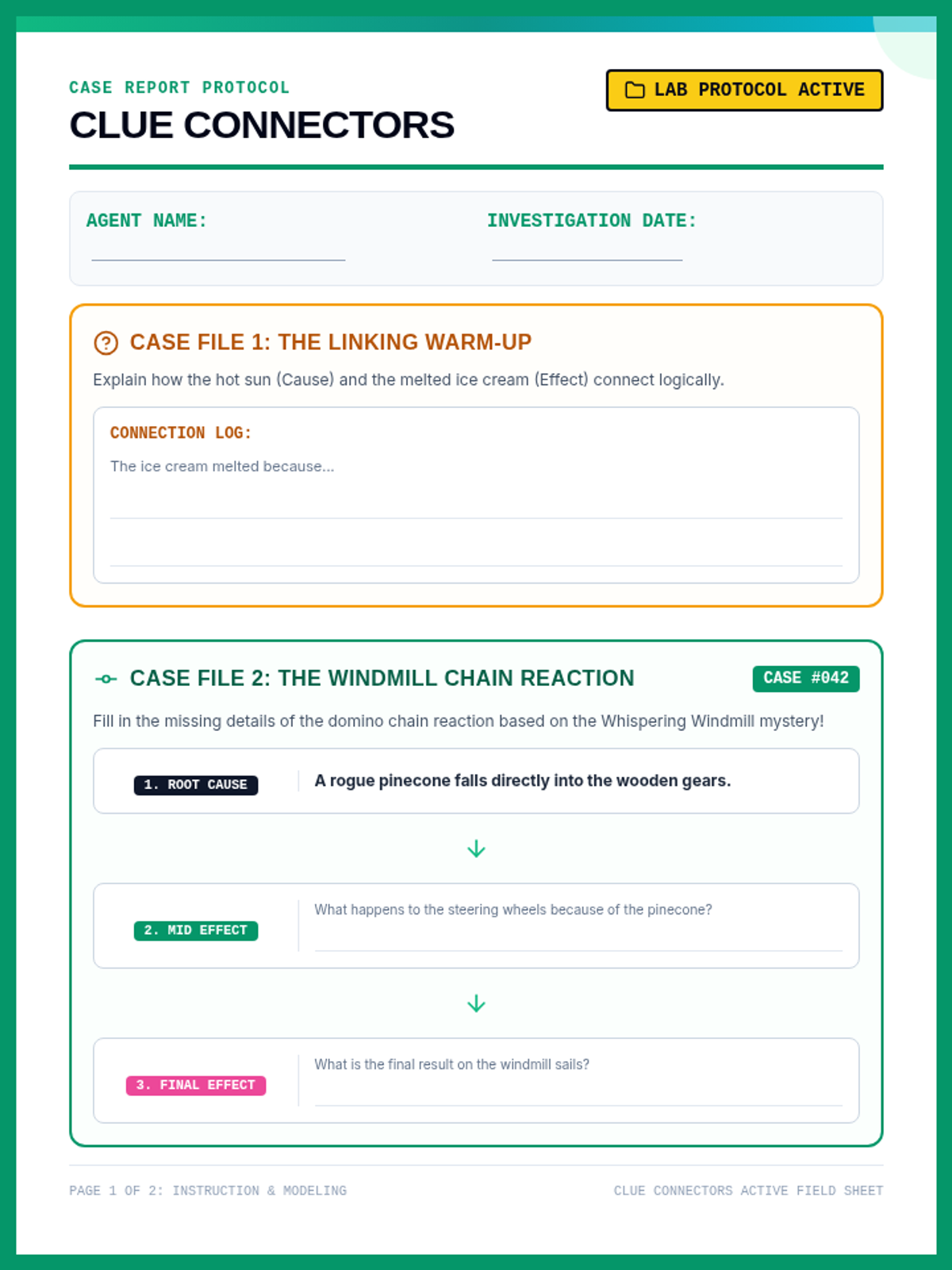
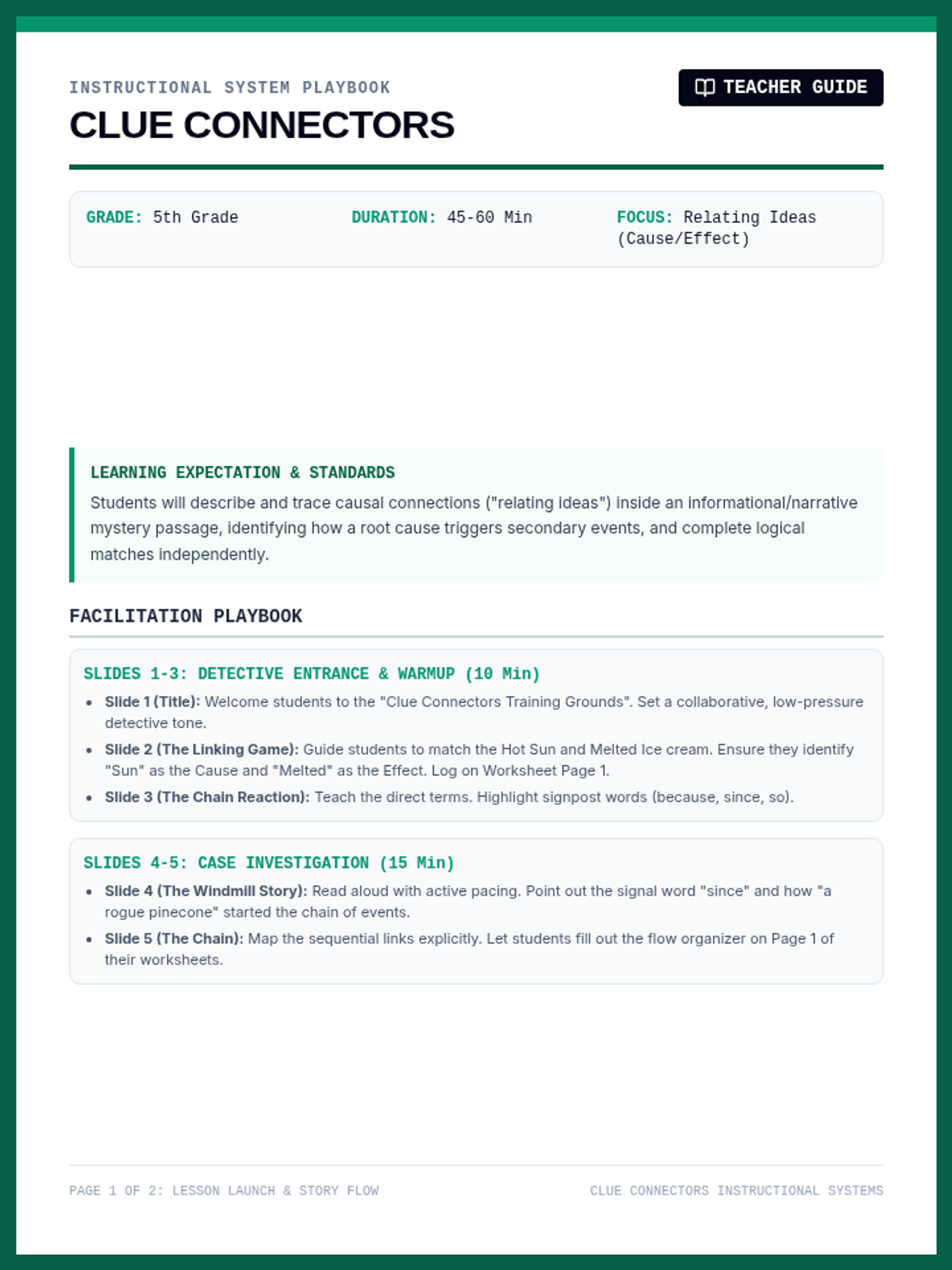
A detective-themed, collaborative lesson on relating ideas in a text (cause & effect, chronological connections) for 5th-grade summer school. Includes simplified interactive matching games, movement resets, and peer-to-peer discussion.
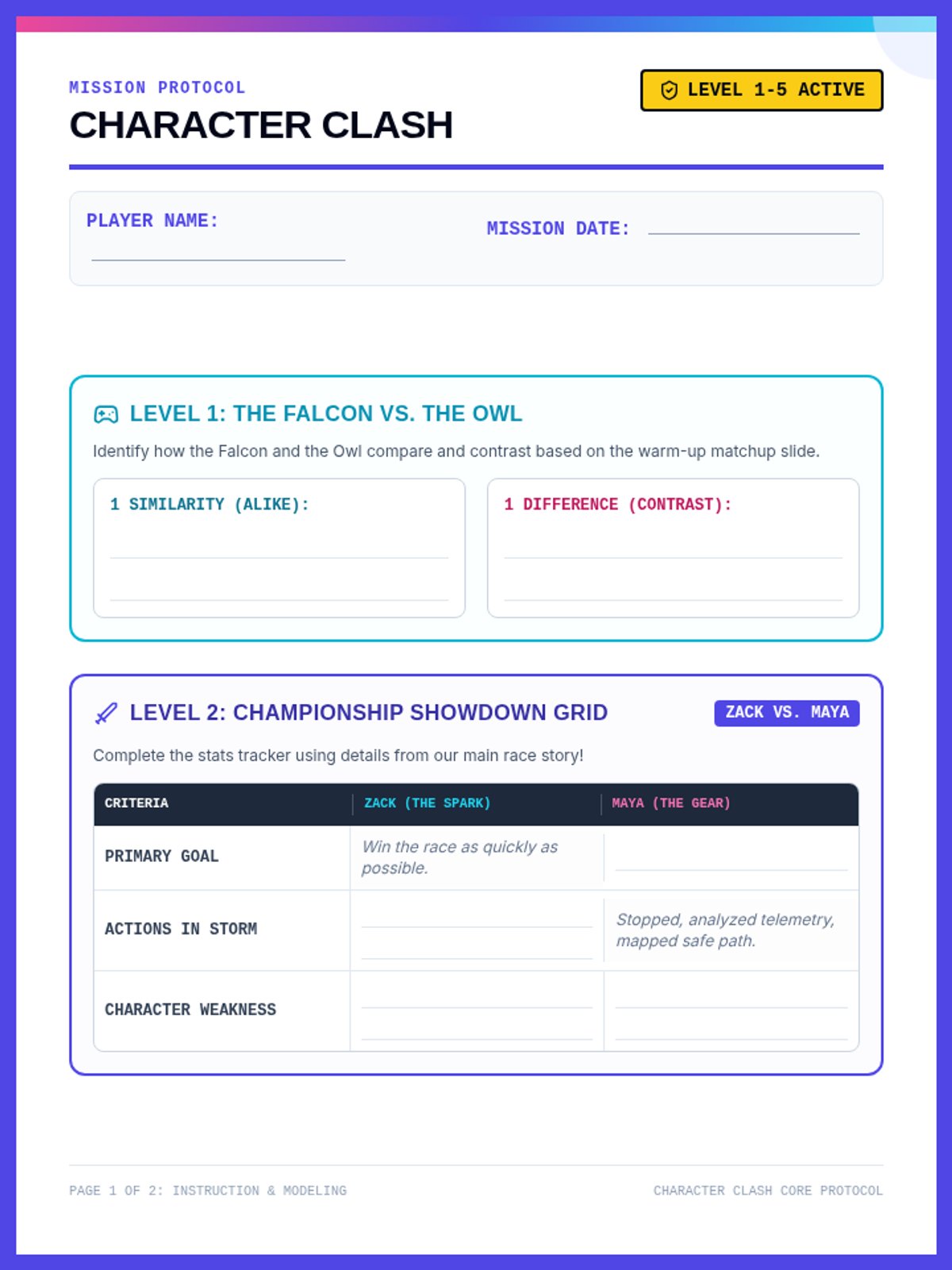
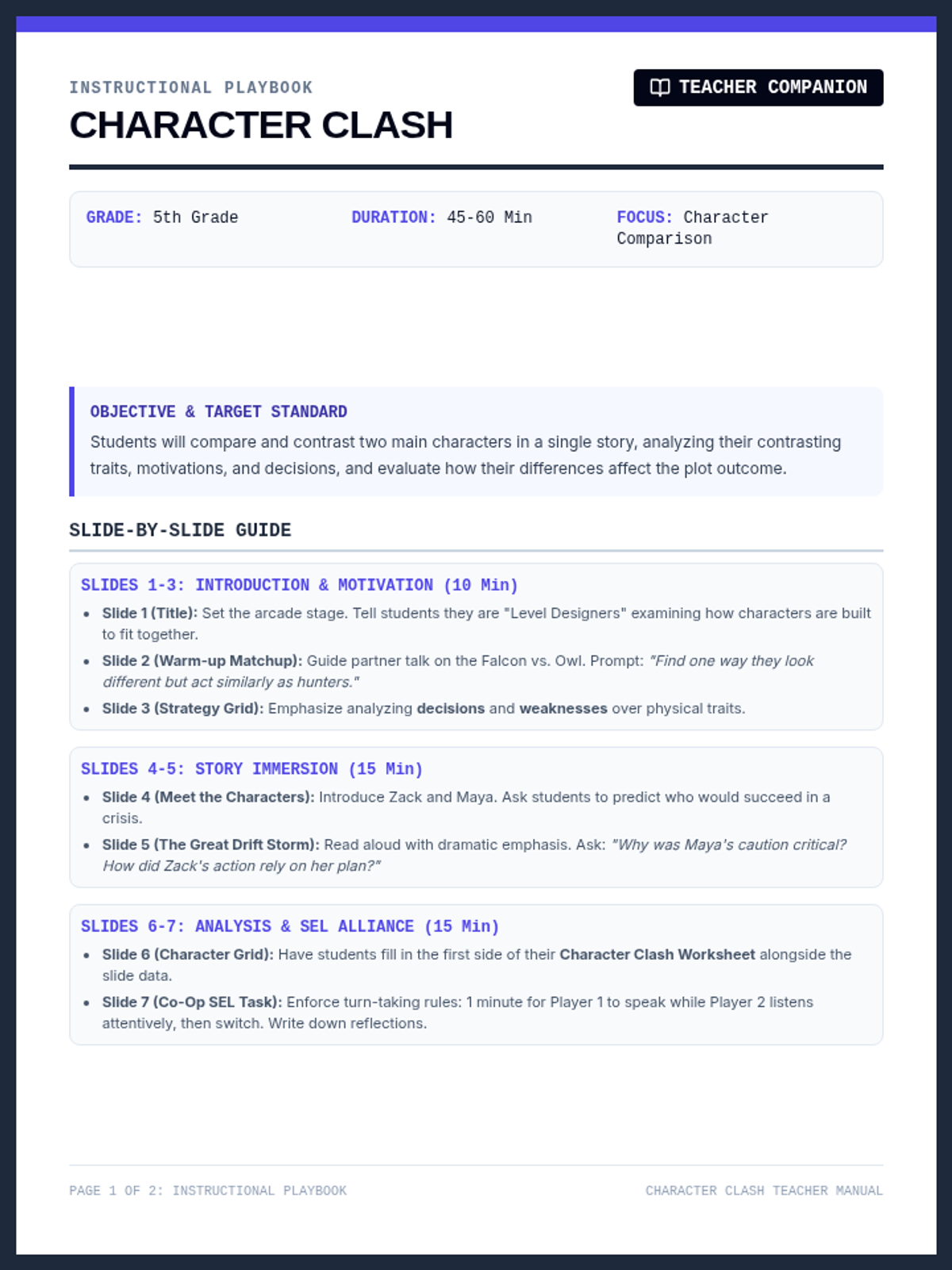
An arcade-themed, high-energy lesson on comparing and contrasting characters for 5th graders. Features interactive games, structured movement breaks, collaborative SEL tasks, and a short story analysis.
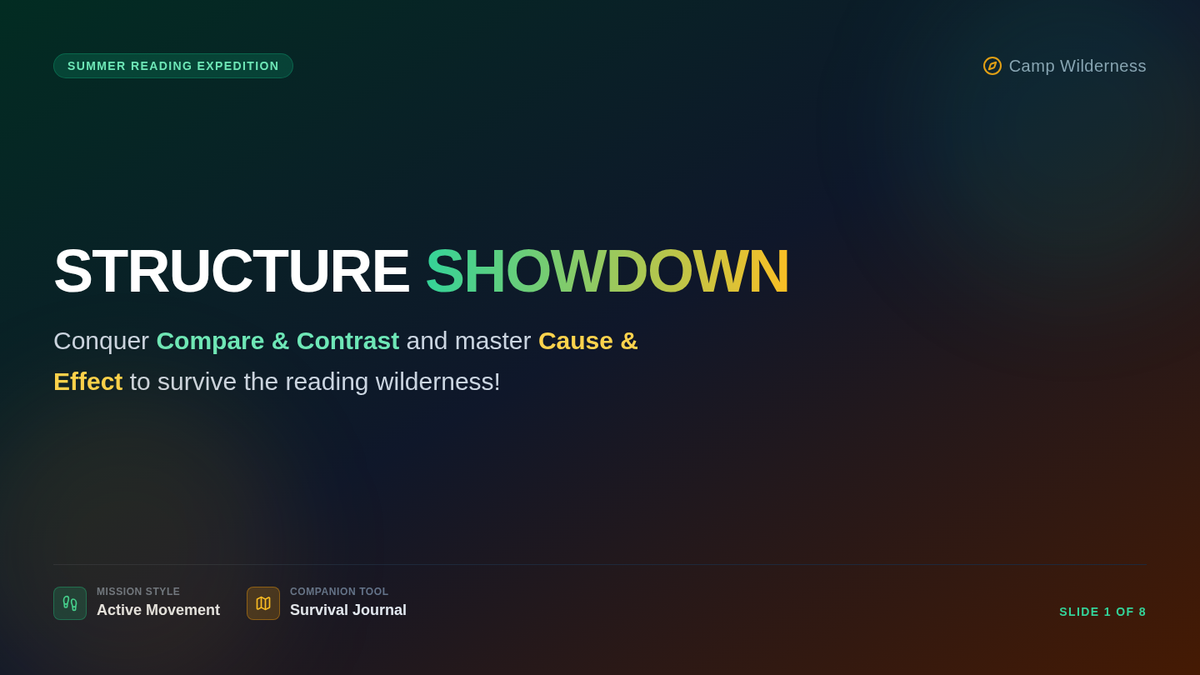
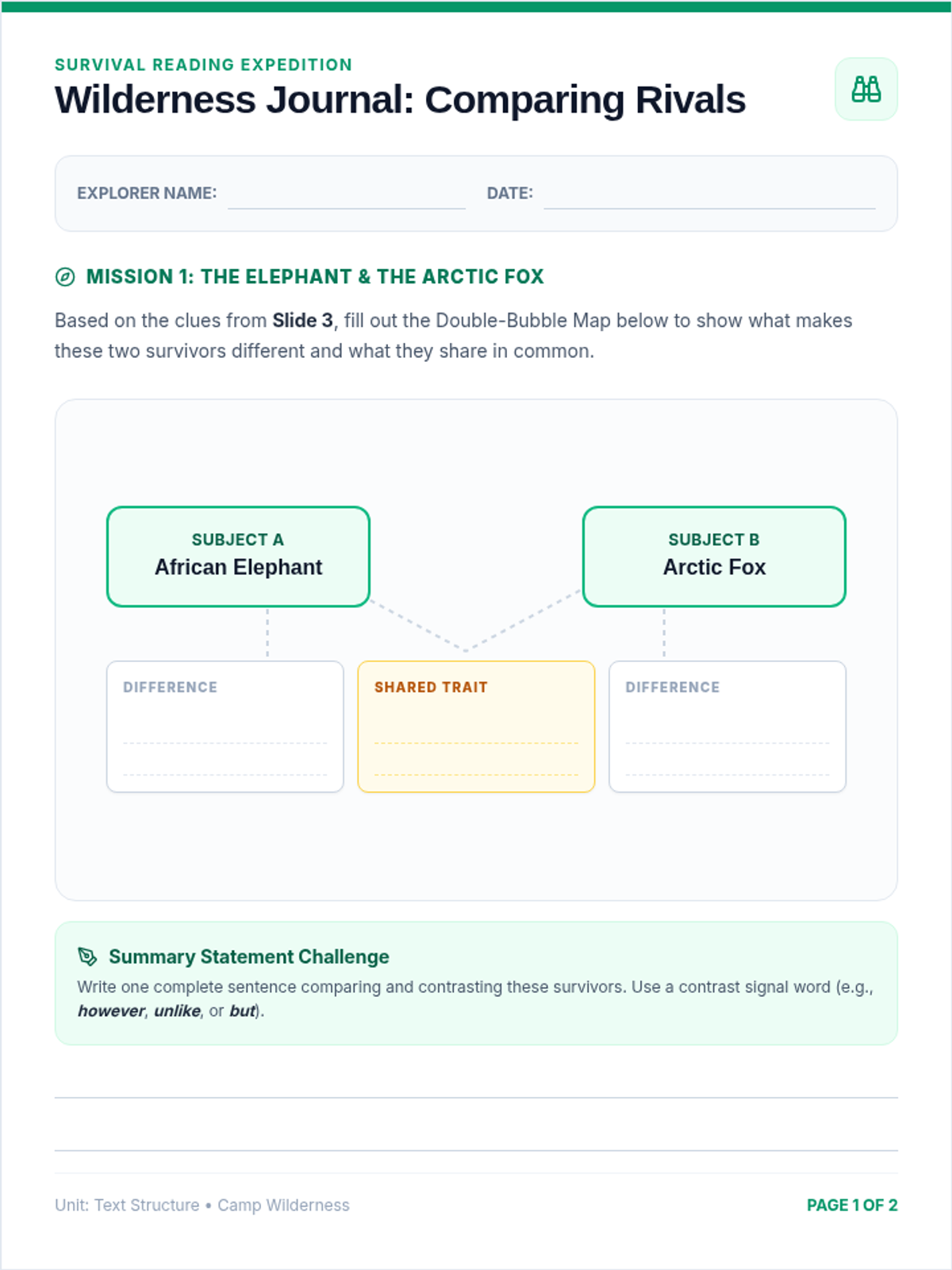
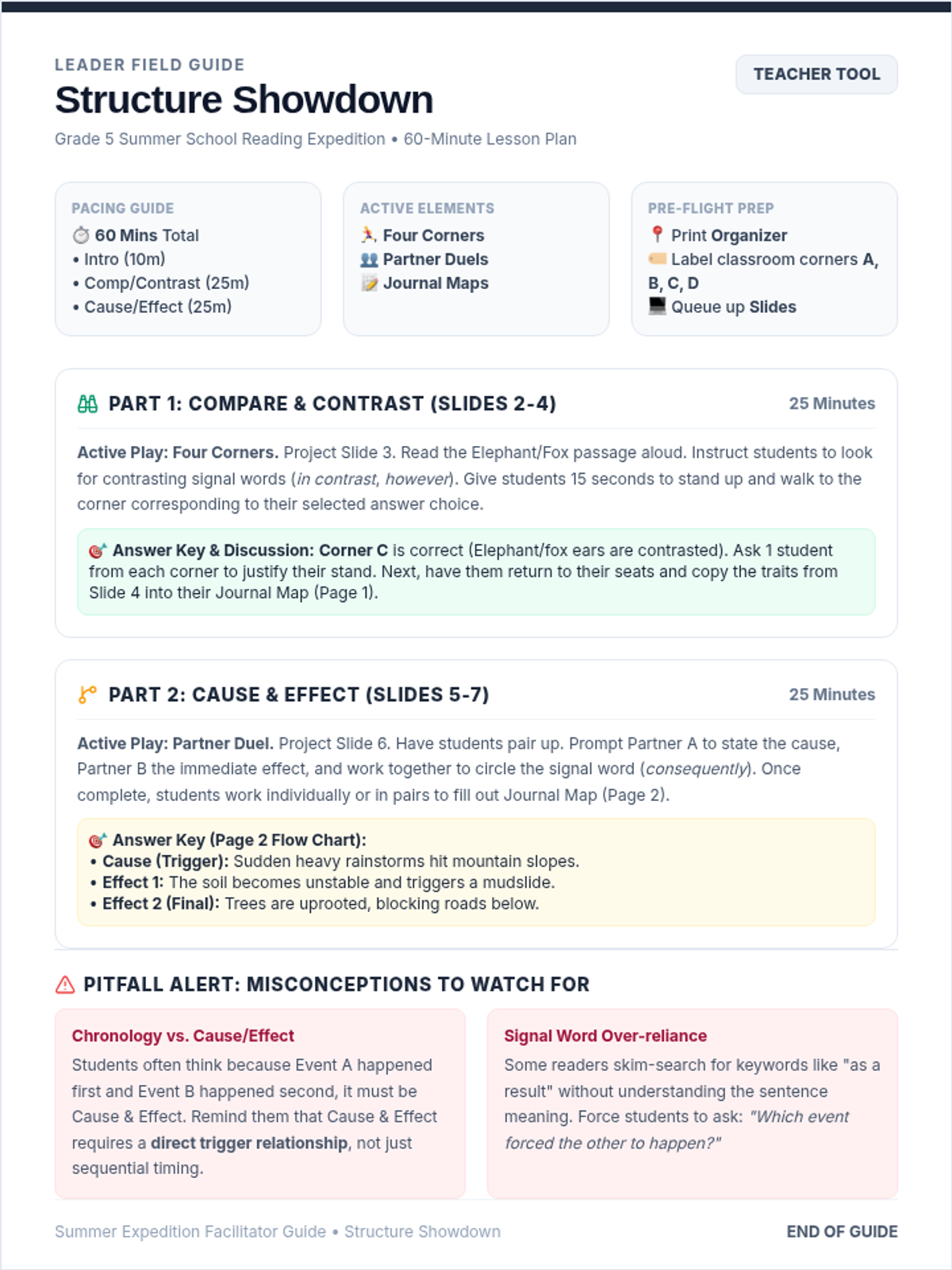
A high-energy, movement-based reading lesson for 5th-grade summer school students to master Compare/Contrast and Cause/Effect text structures through a 'Wild Survival' theme. Includes visual slides, physical movement activities, and companion student graphic organizers.
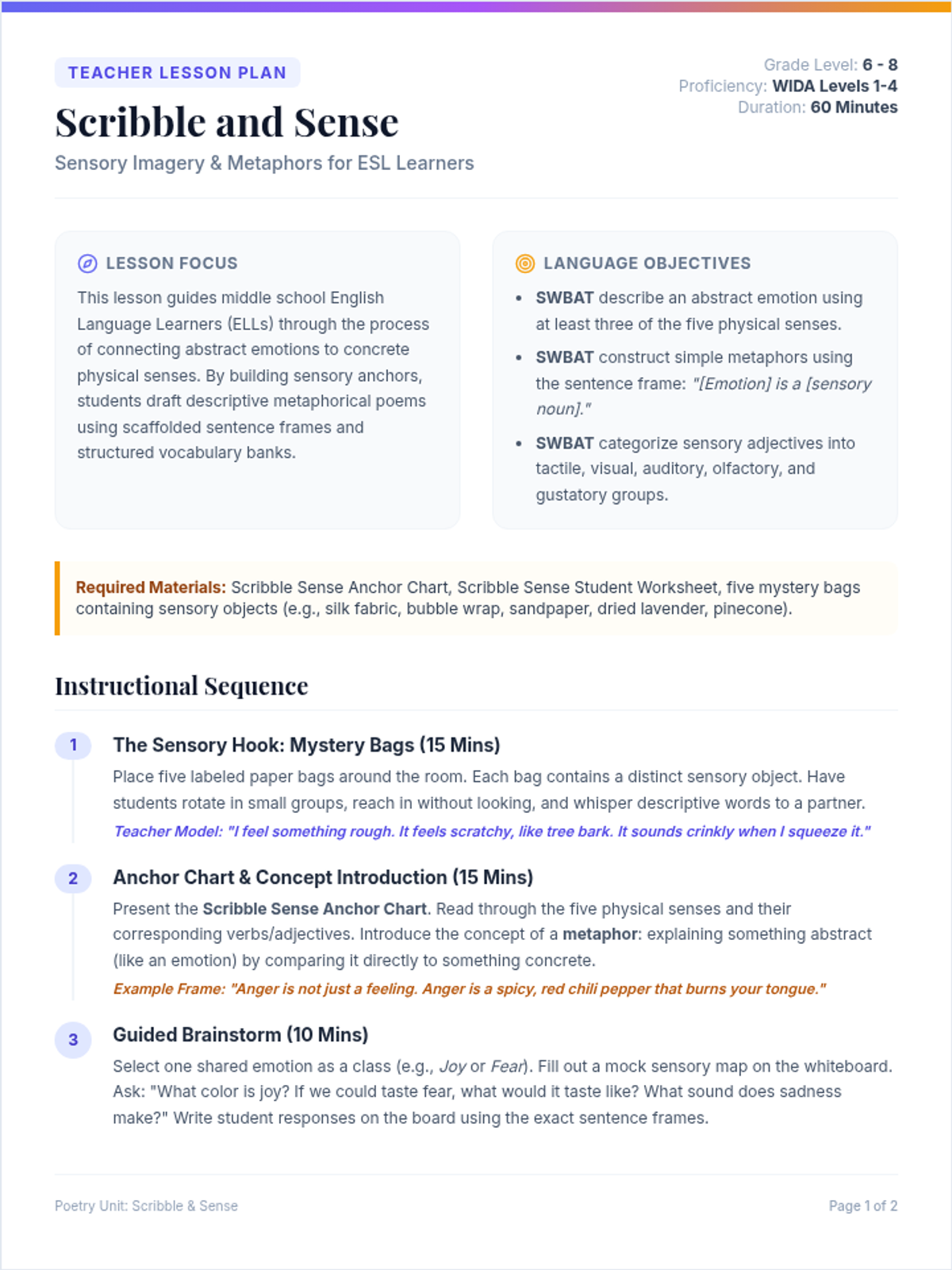
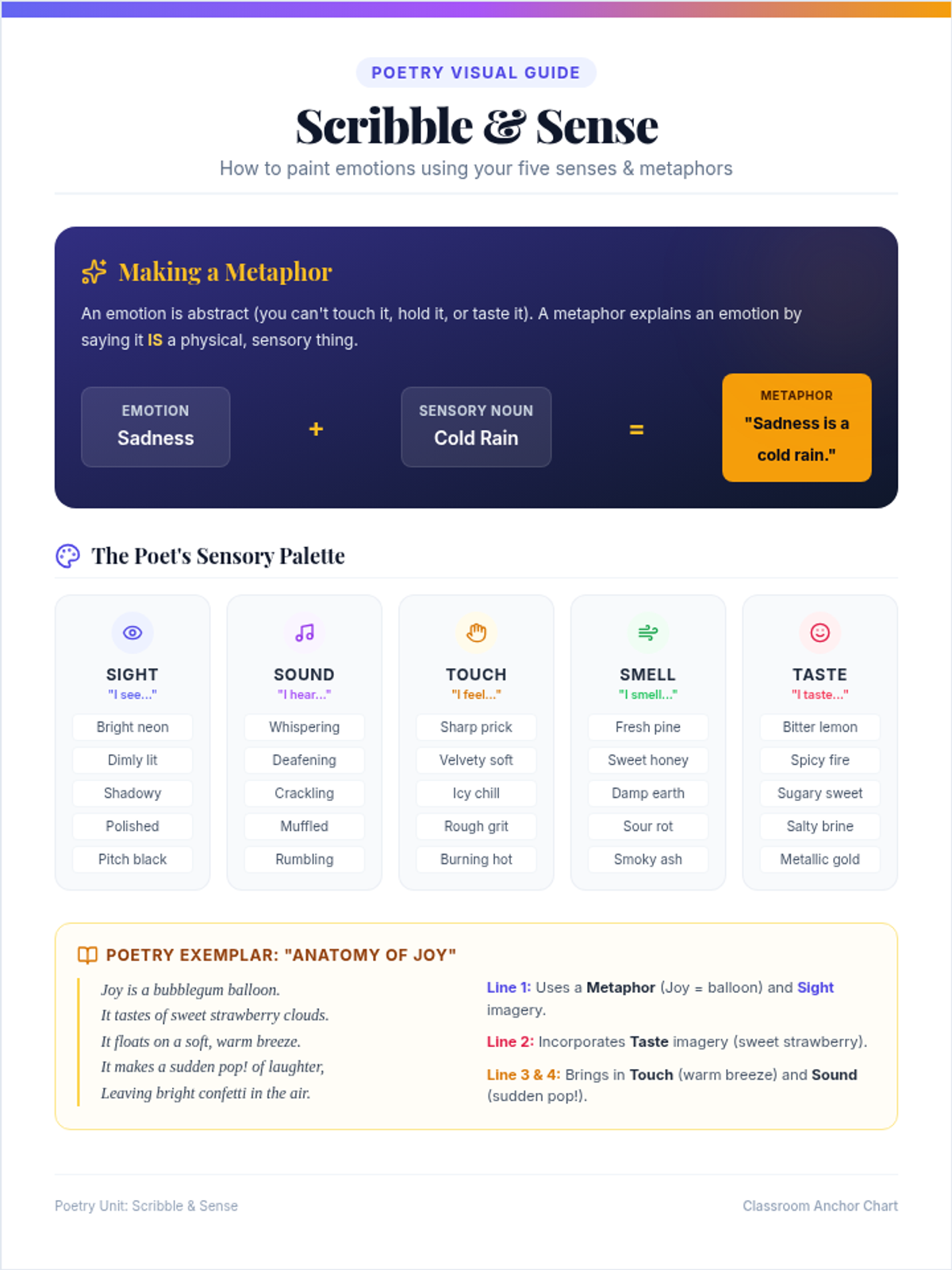
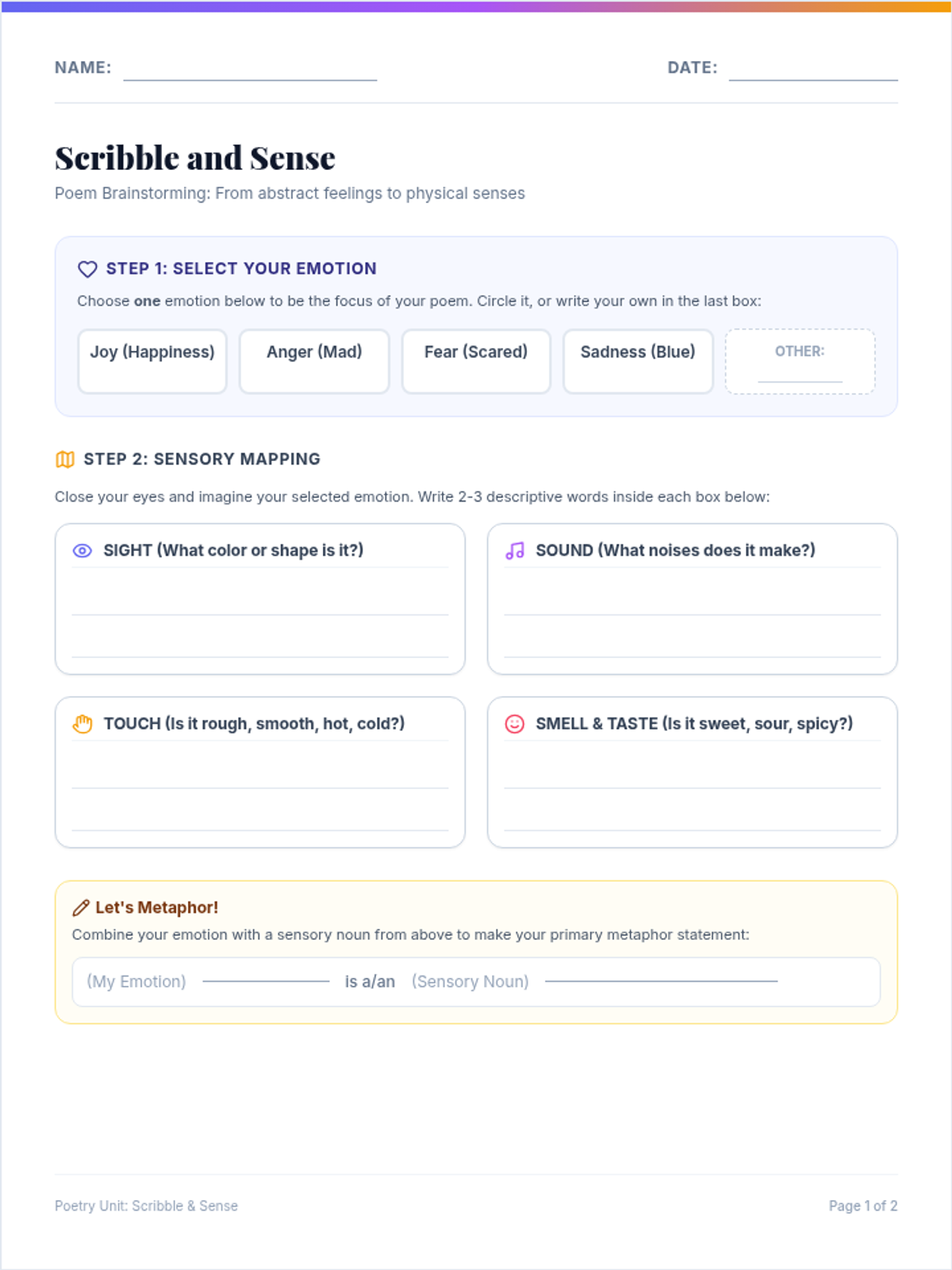
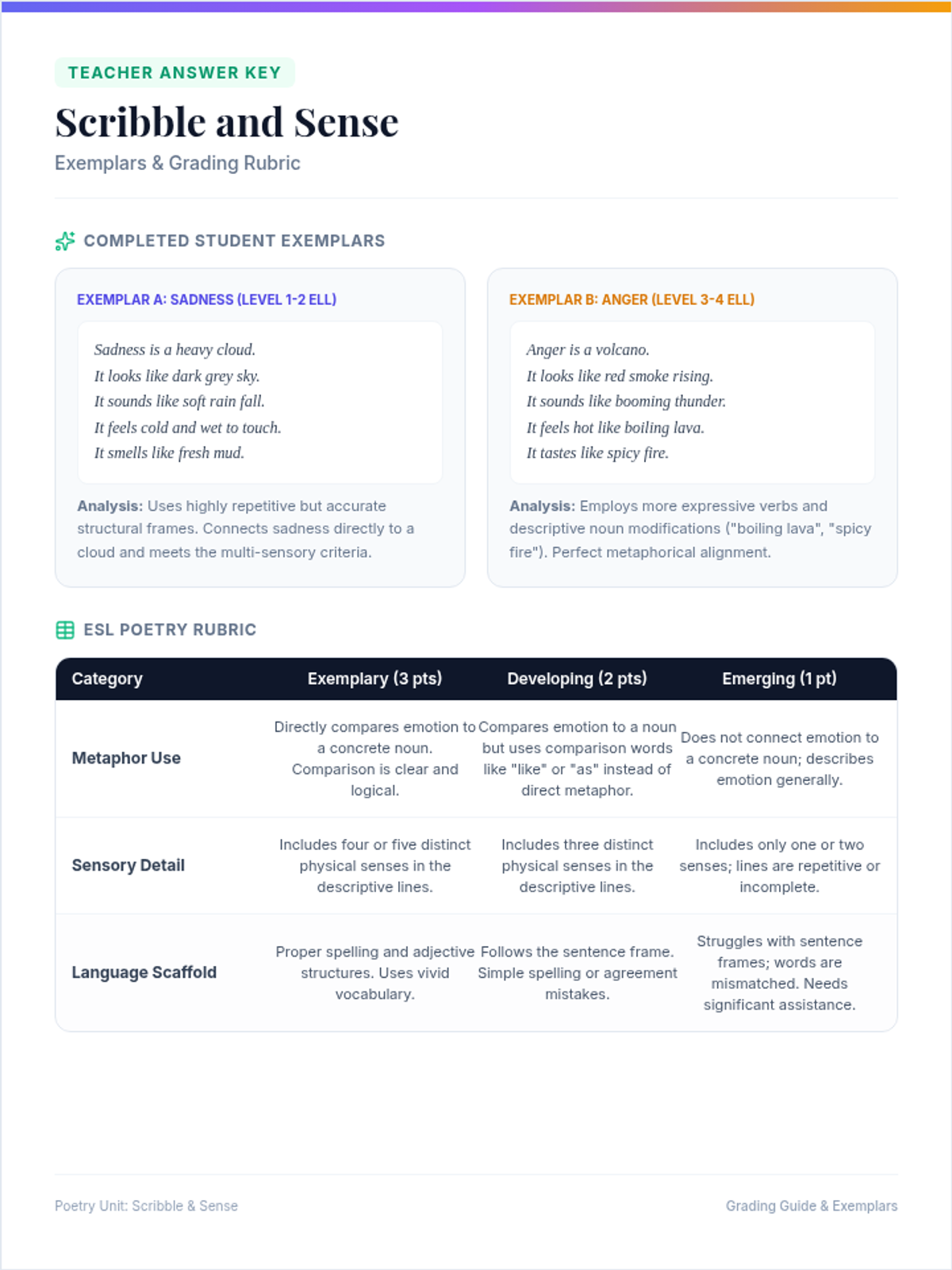
A complete poetry lesson bundle designed for middle school ESL students, focusing on sensory imagery and metaphors. Students explore how to connect their five senses to deep emotional descriptions, using scaffolded writing frames and vivid vocabulary.
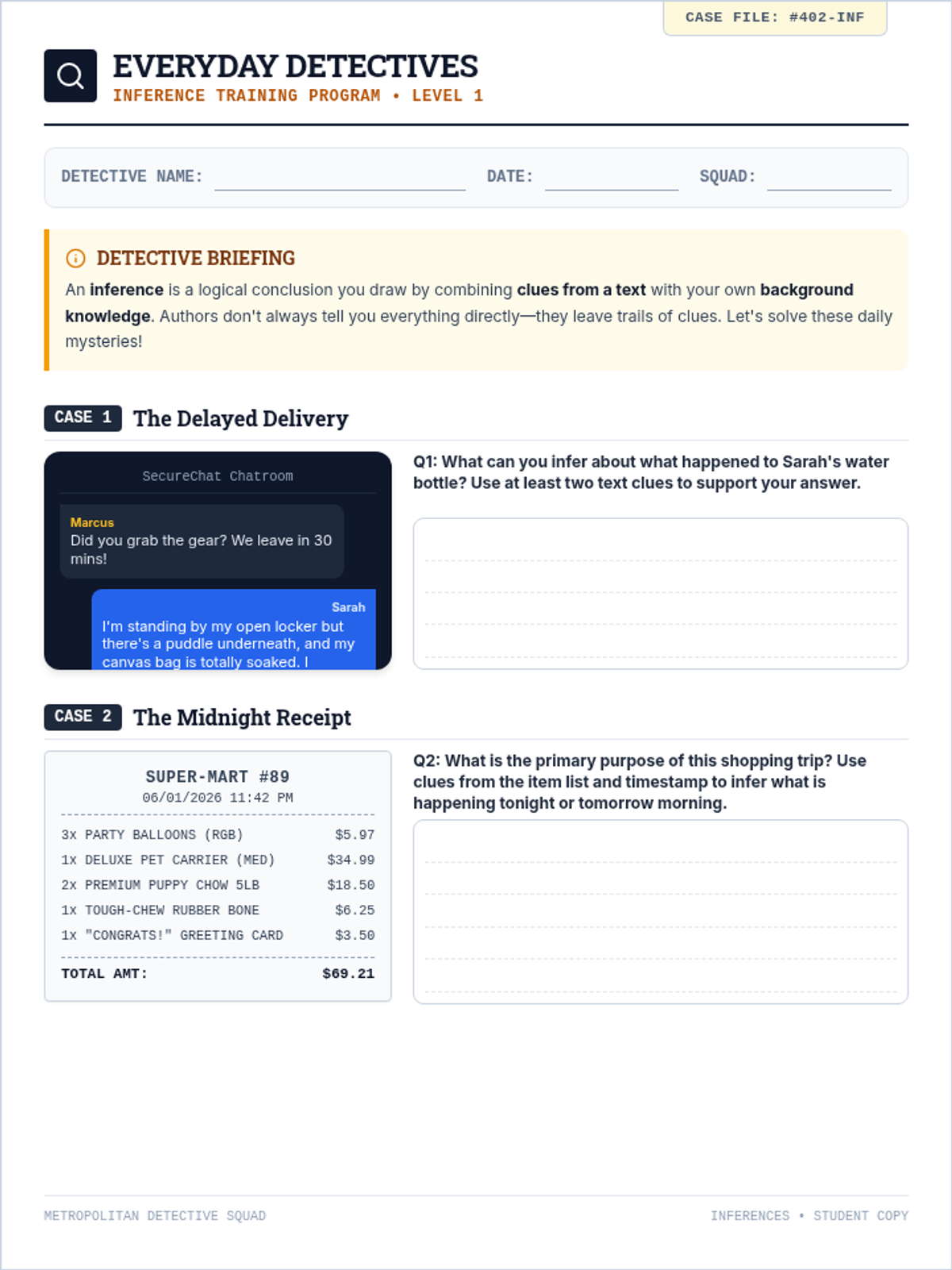
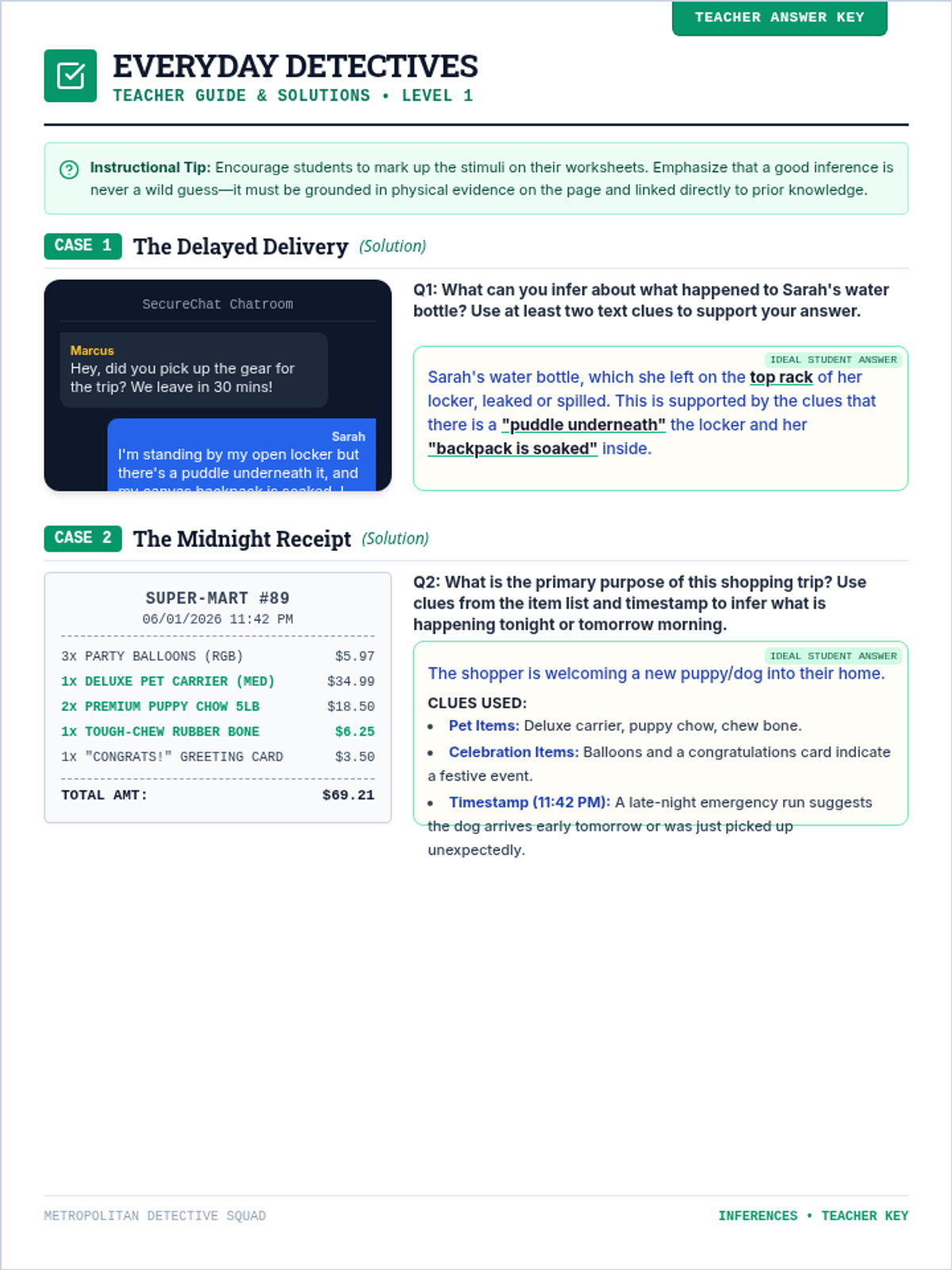
A lesson focused on teaching students how to make logical inferences using everyday functional texts, such as text messages, receipts, schedules, and maps. Students act as 'Everyday Detectives' to piece together clues from real-world documents.
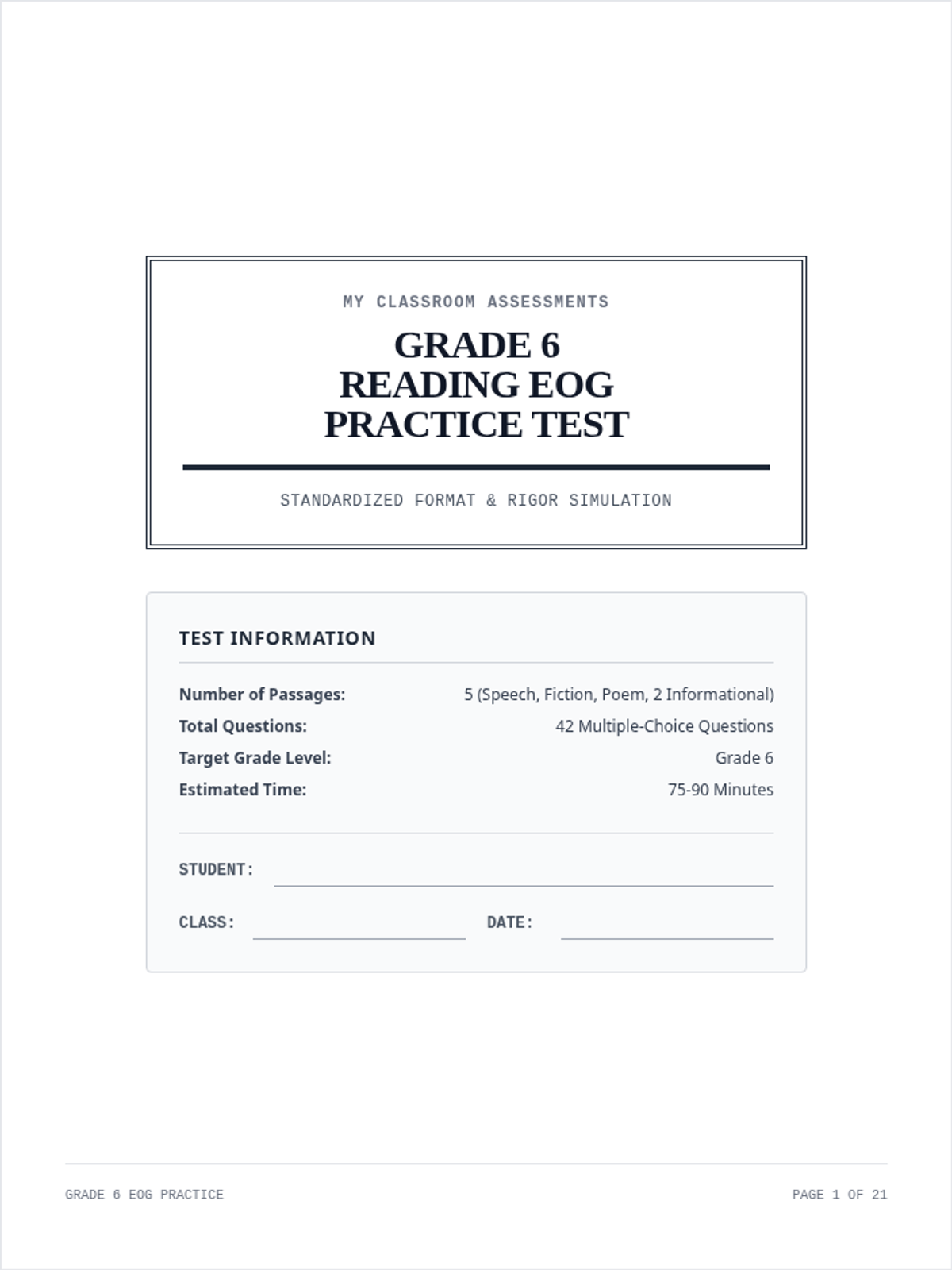
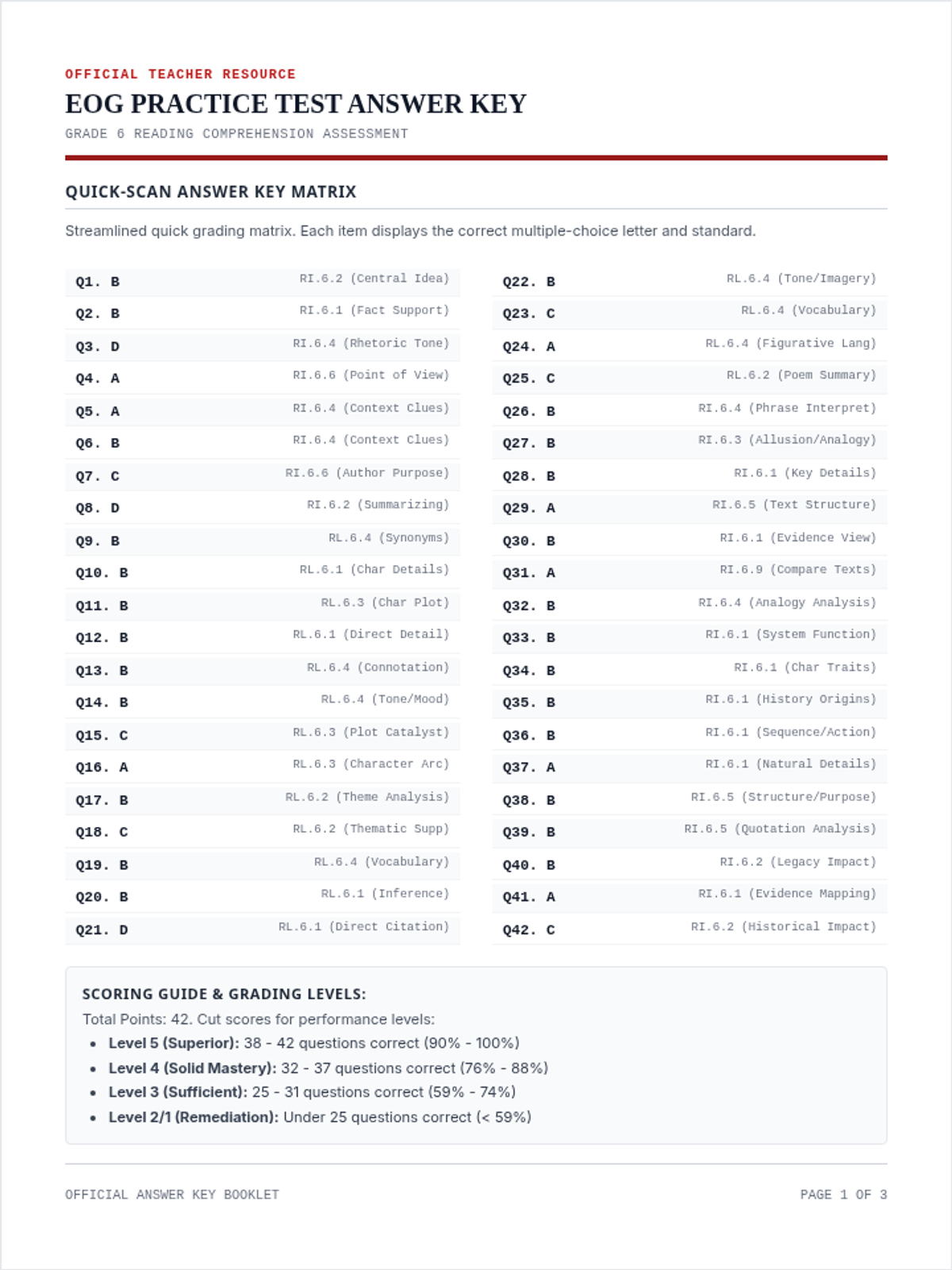
A rigorous, standard-aligned preparation lesson for the Grade 6 Reading EOG, featuring a complete 42-question practice exam and a dedicated standalone answer key with detailed question rationales and standards alignment.
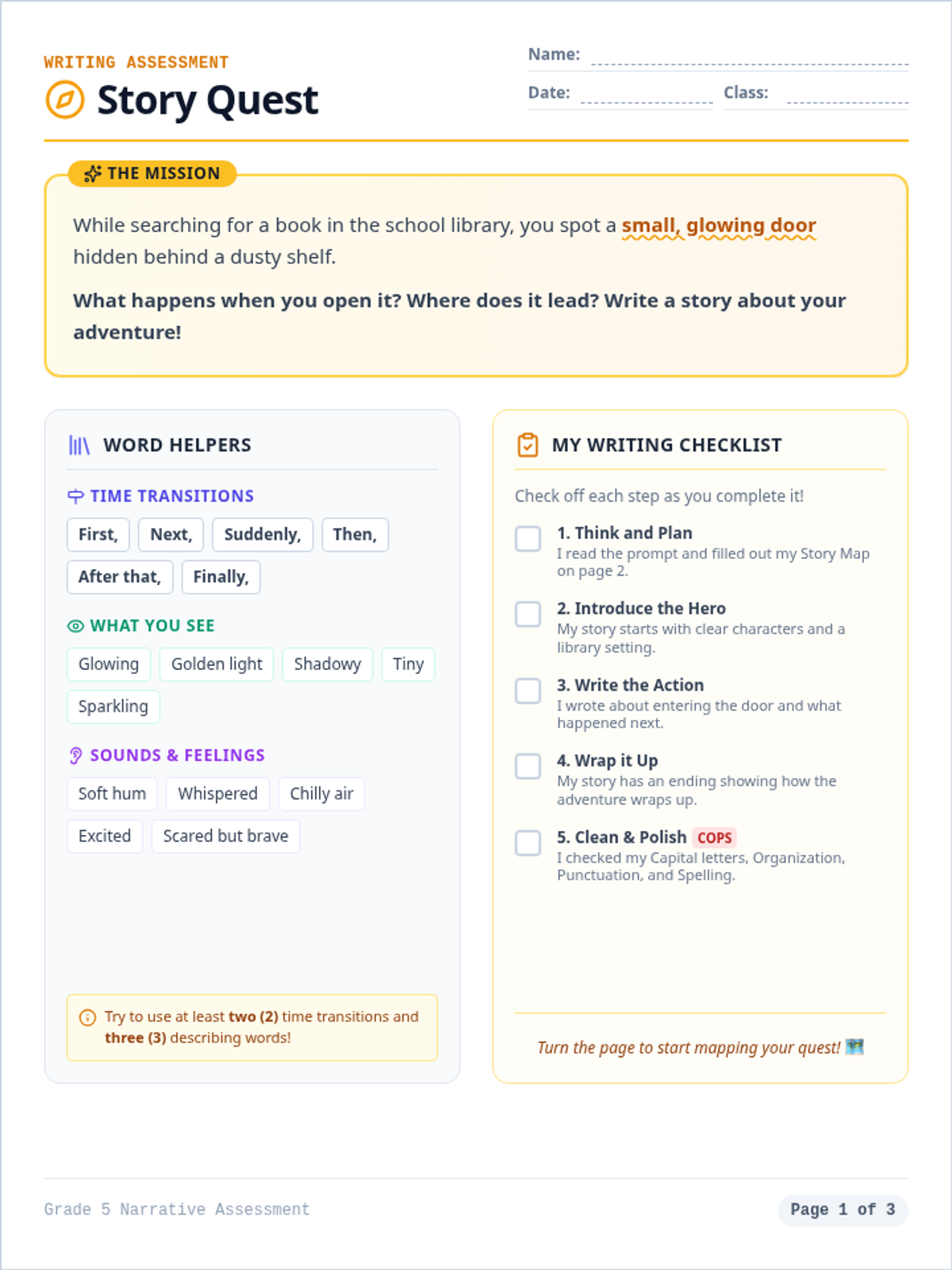
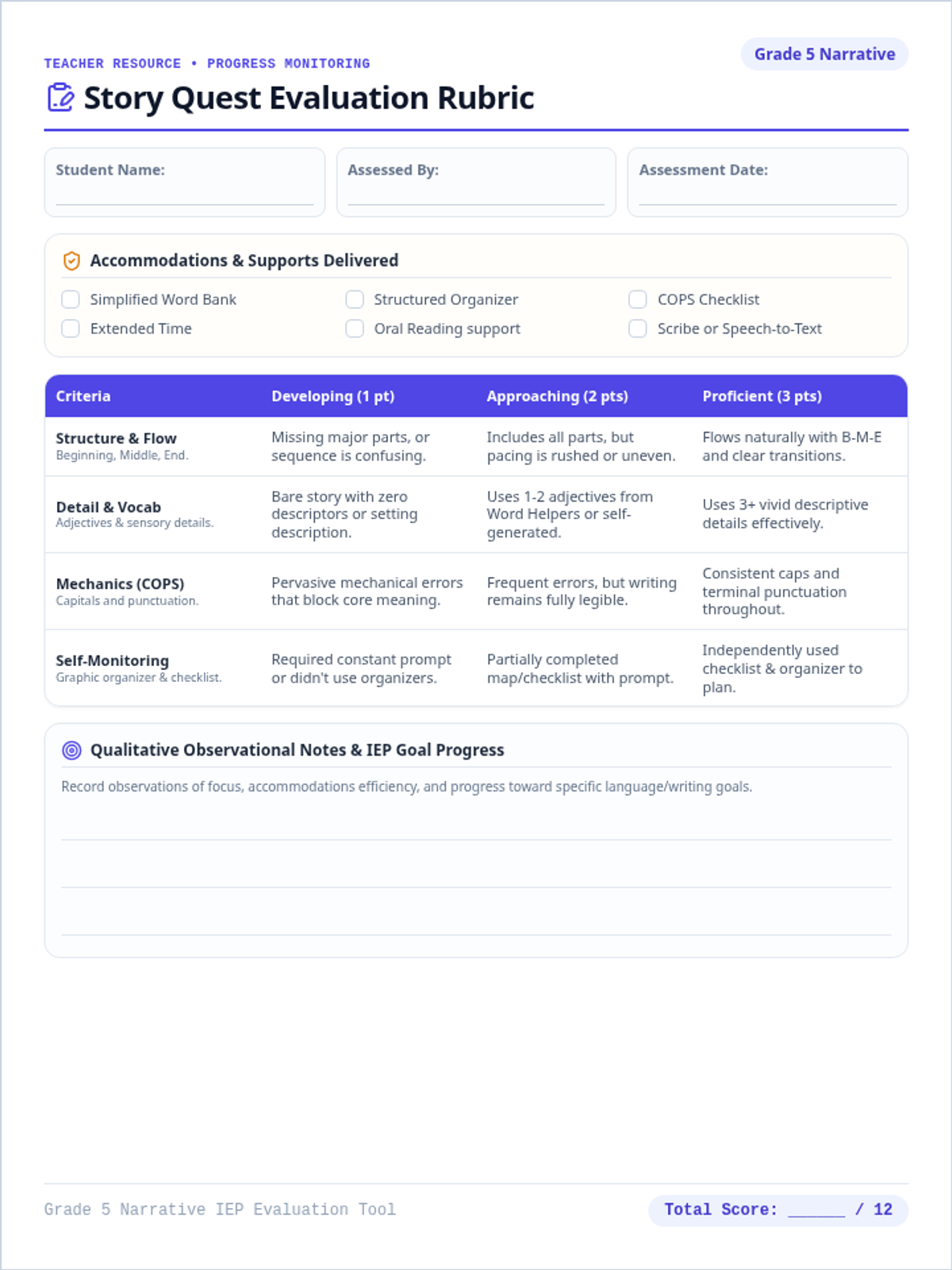
A scaffolded narrative writing assessment unit designed to support fifth-grade students, particularly those with IEP accommodations, in planning, drafting, and checking their own creative stories.
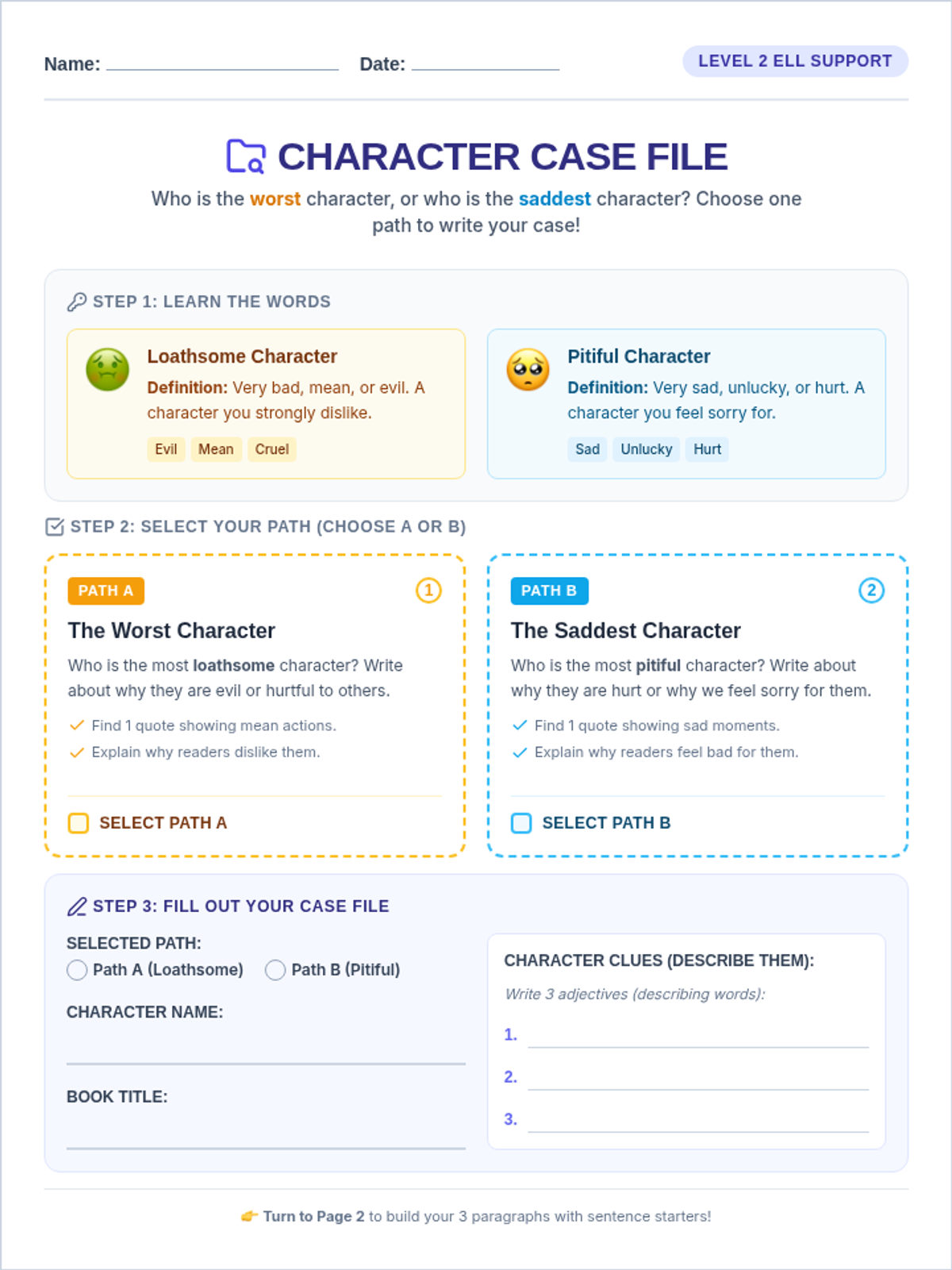
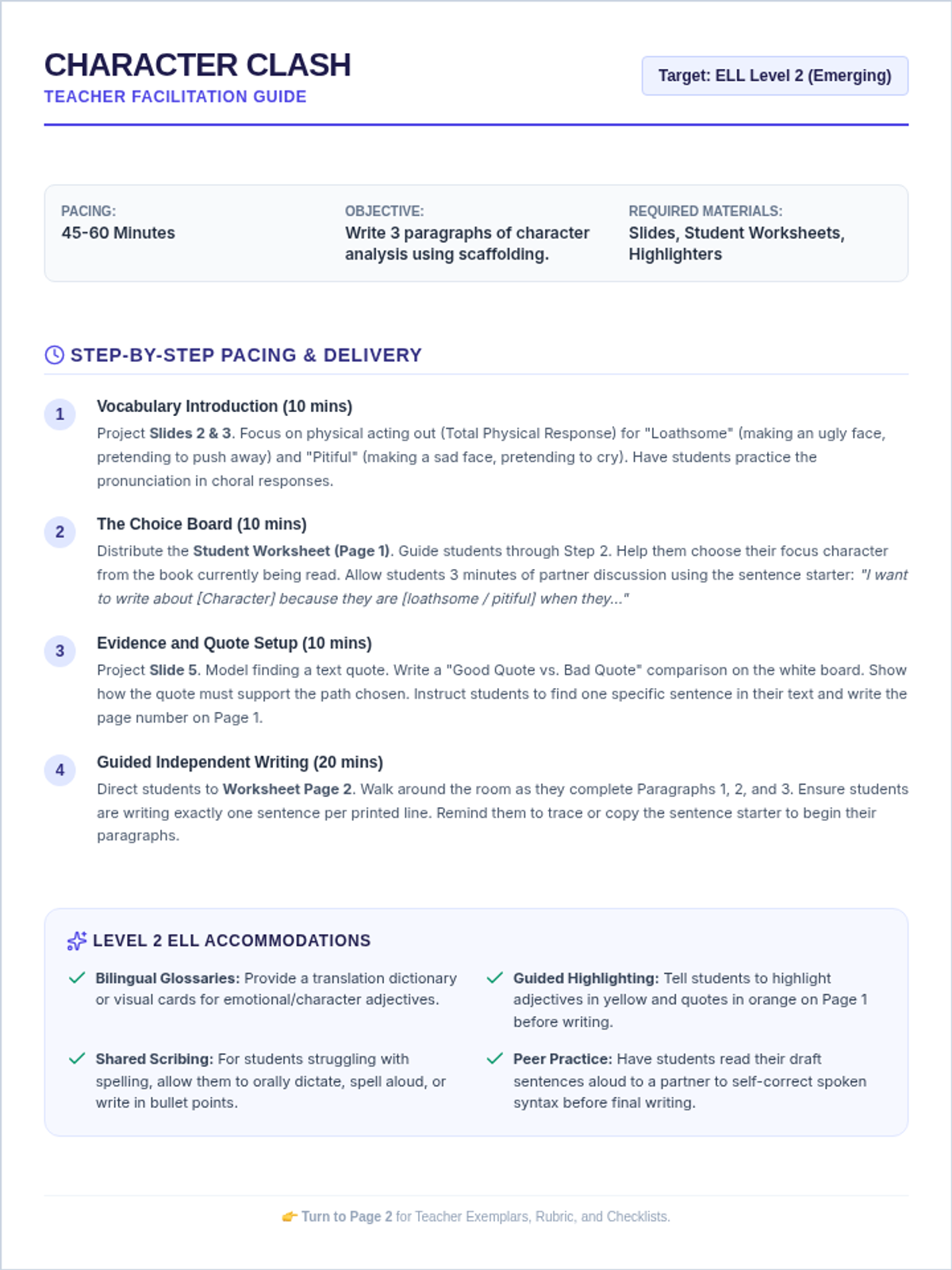
A highly scaffolded character analysis lesson designed for English Language Learners (ELL) Level 2. Students analyze either a loathsome or pitiful character using a visual graphic organizer and sentence starters.
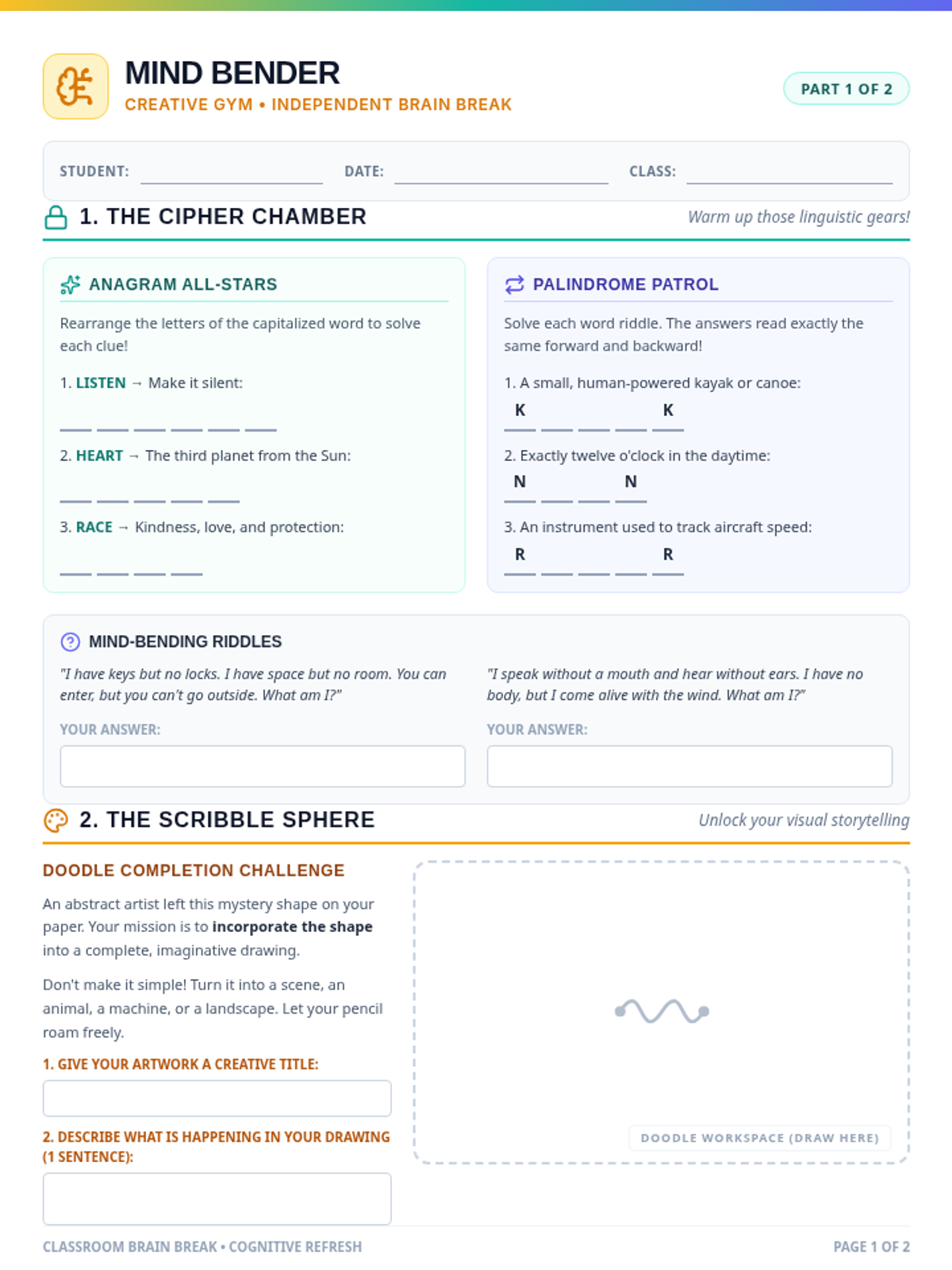
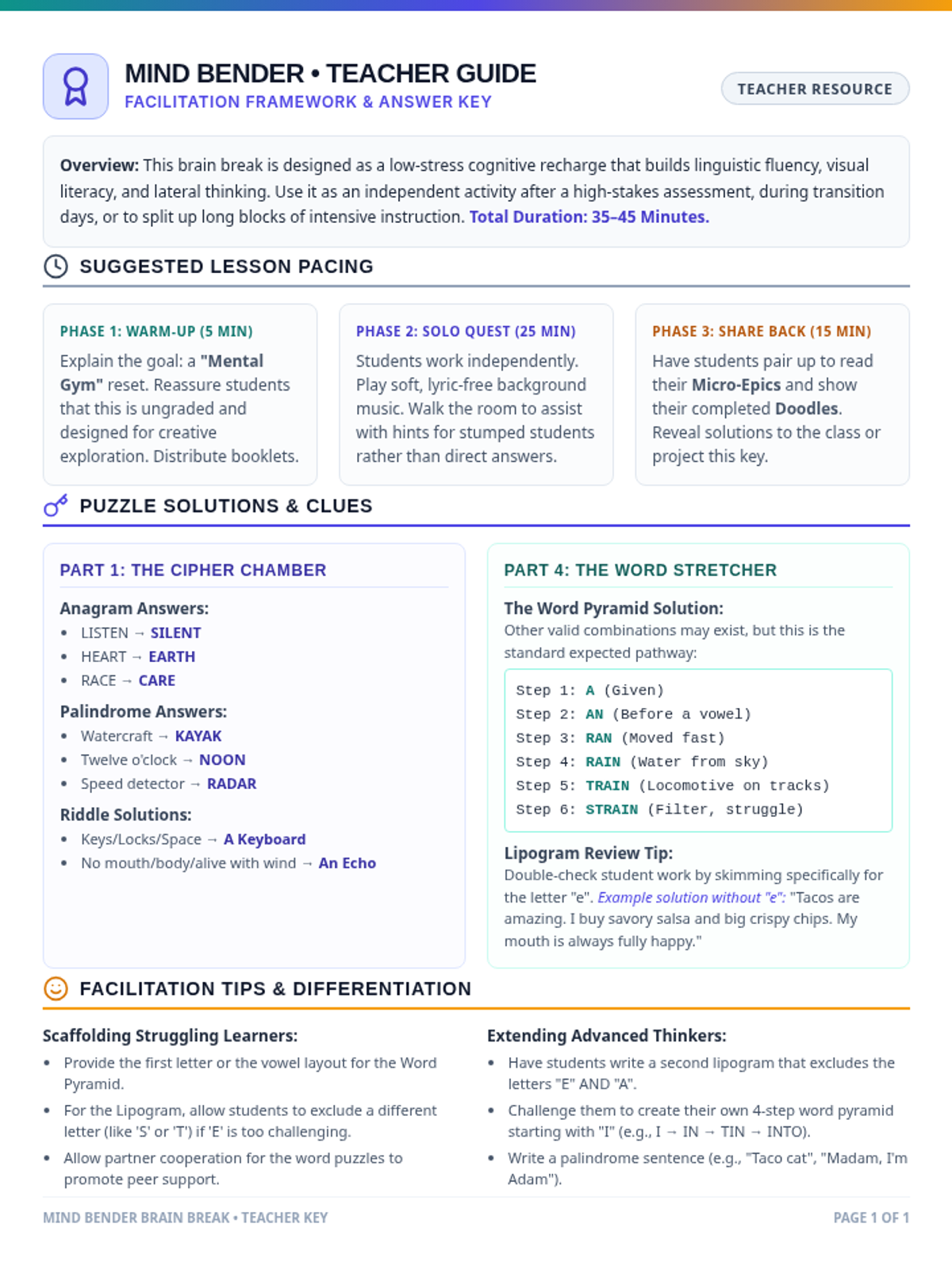
A high-interest, independent brain break lesson focused on creative linguistics, lateral-thinking puzzles, visual literacy doodles, and constrained writing challenges. Perfect for keeping students engaged, productive, and mentally refreshed during ELA periods or transition days.
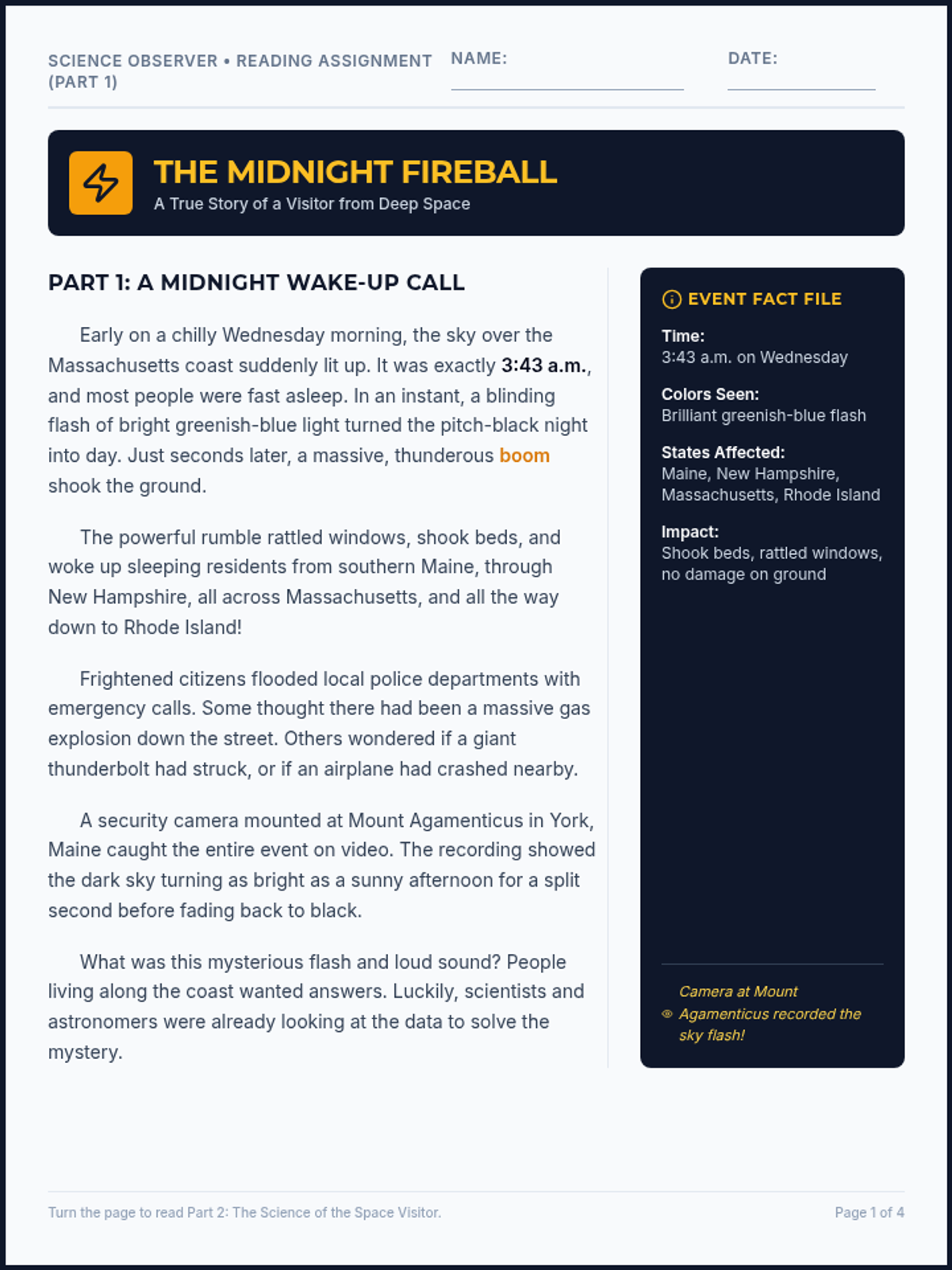
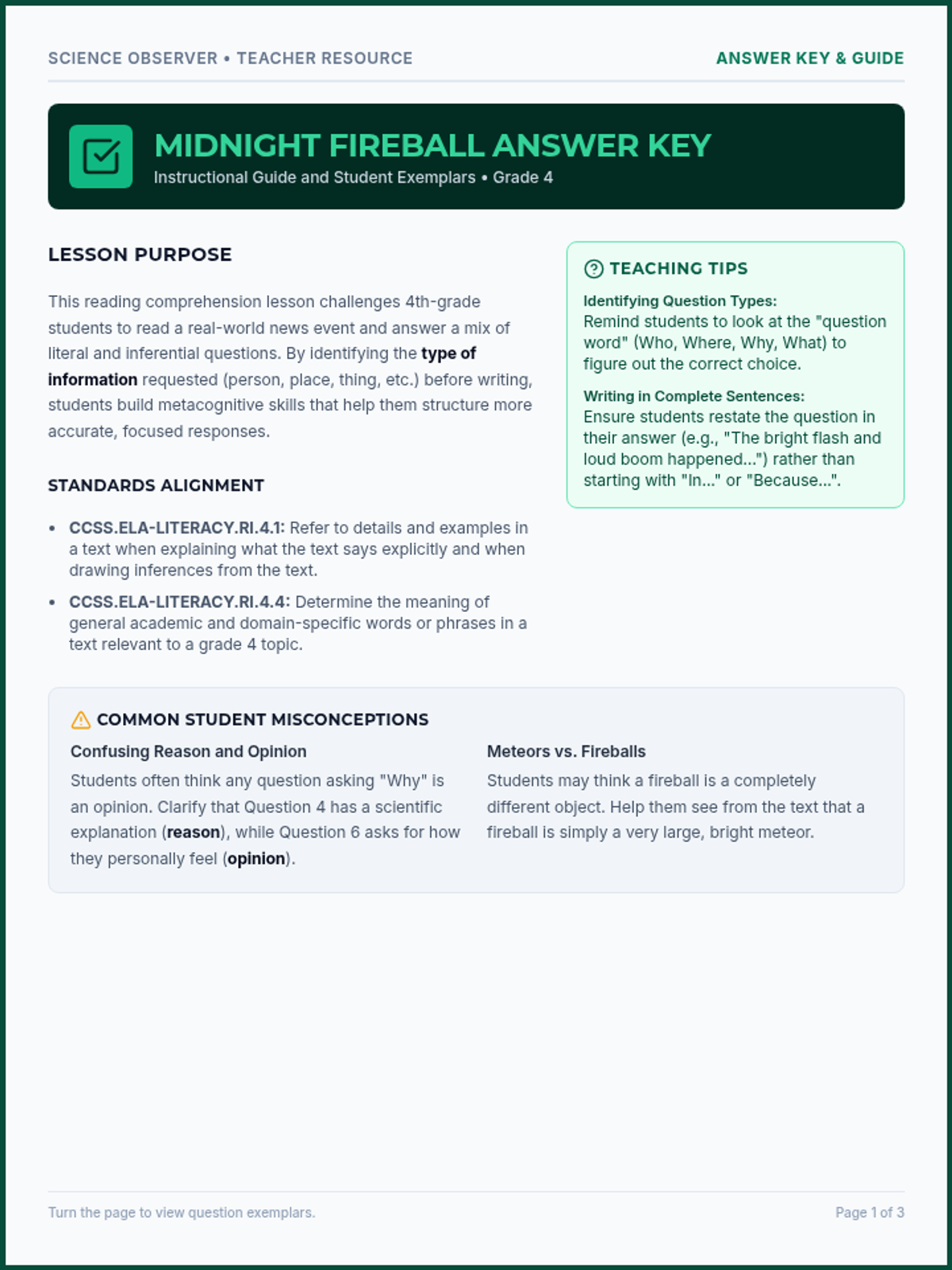
A 4th-grade reading comprehension lesson about a real meteor explosion off the coast of Massachusetts, exploring the science of fireballs and shockwaves.
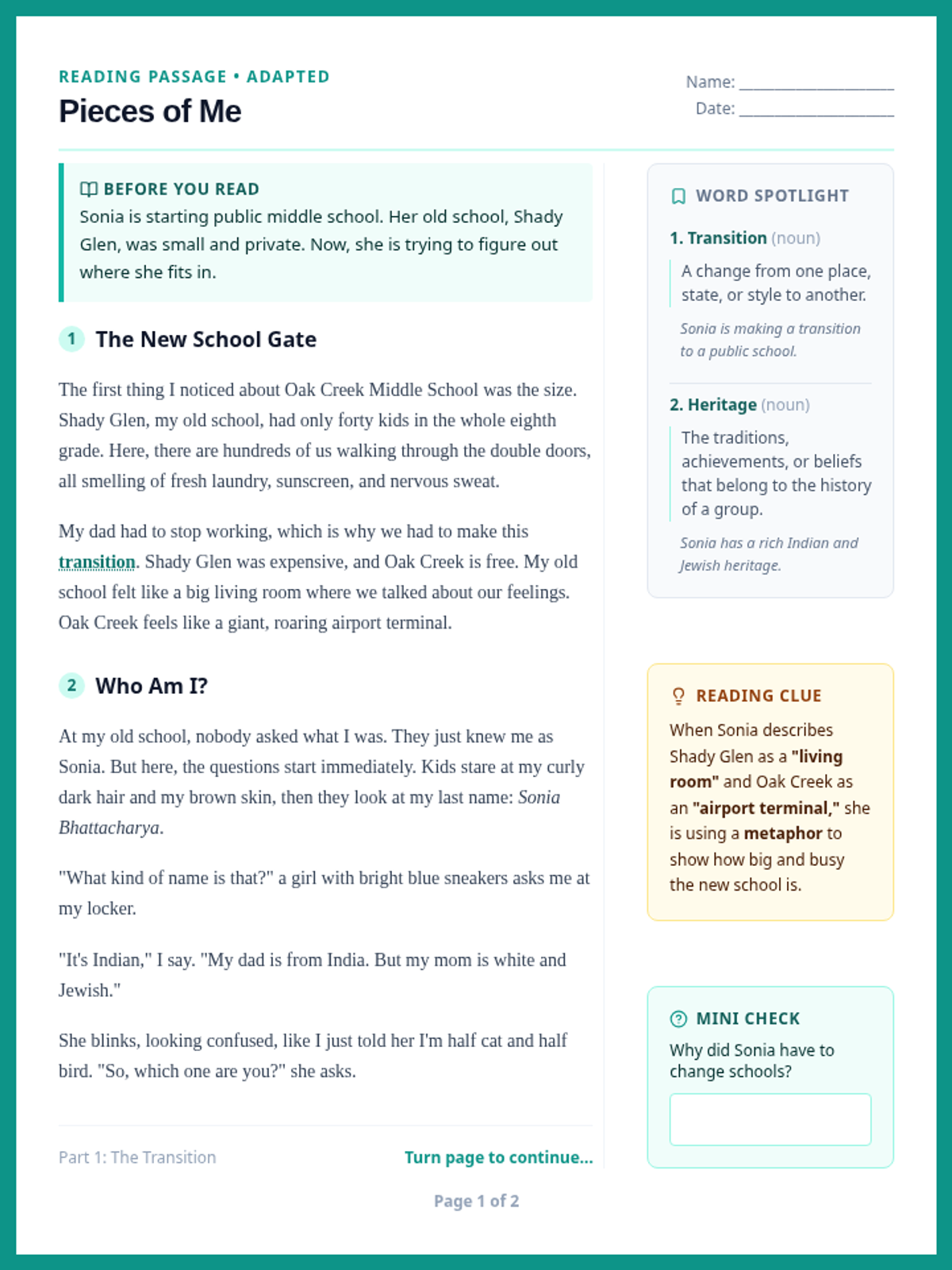
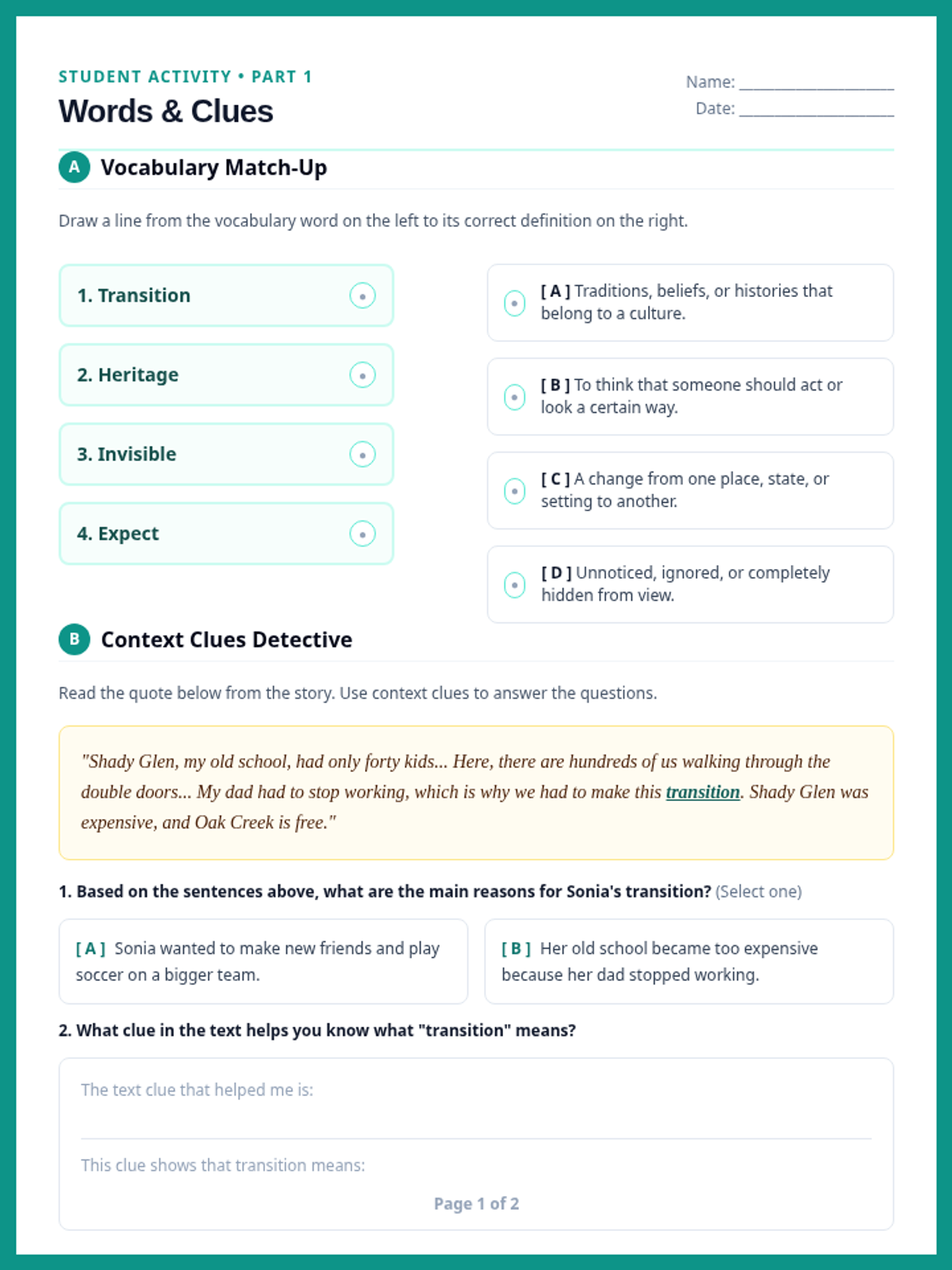
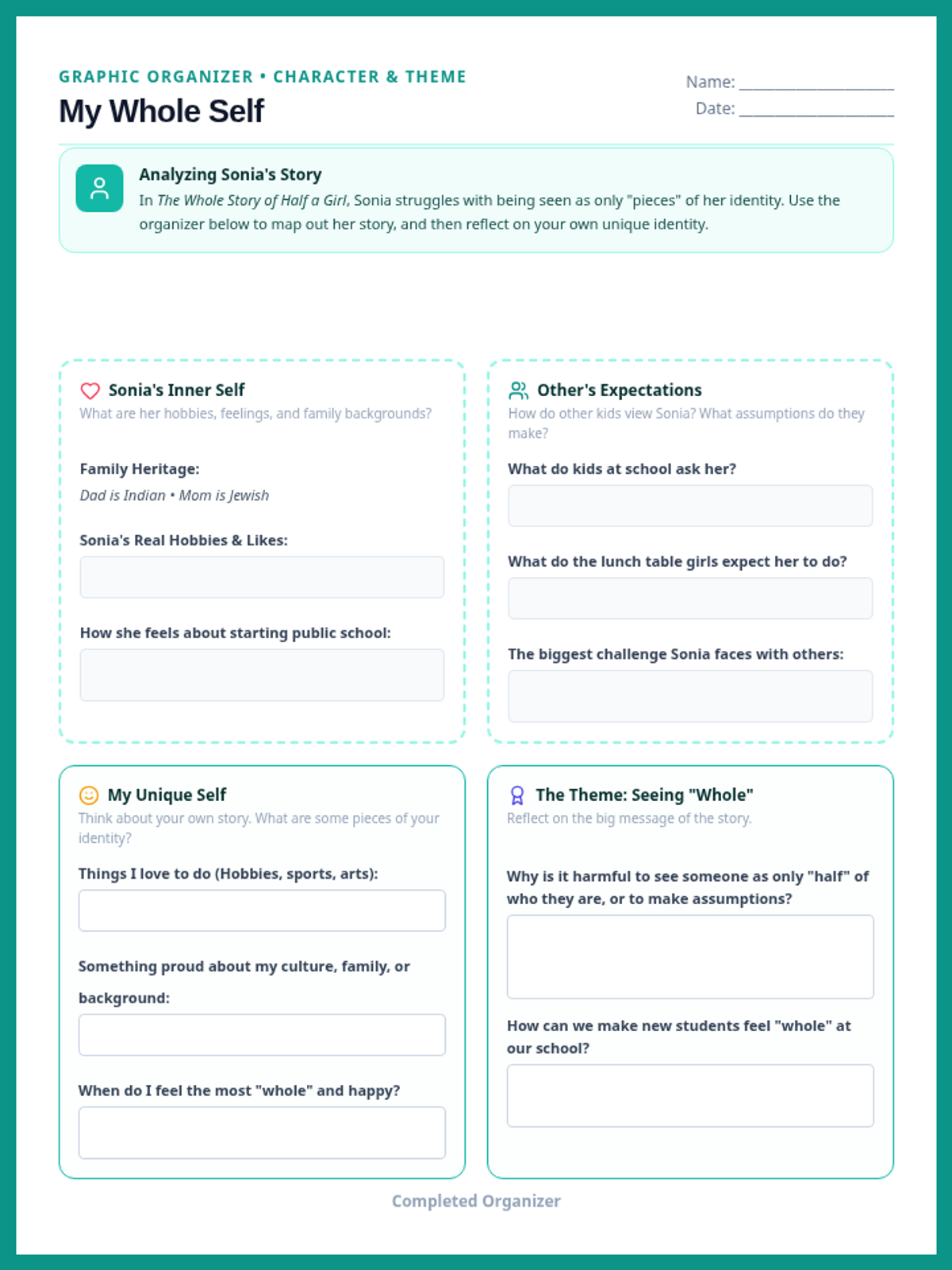
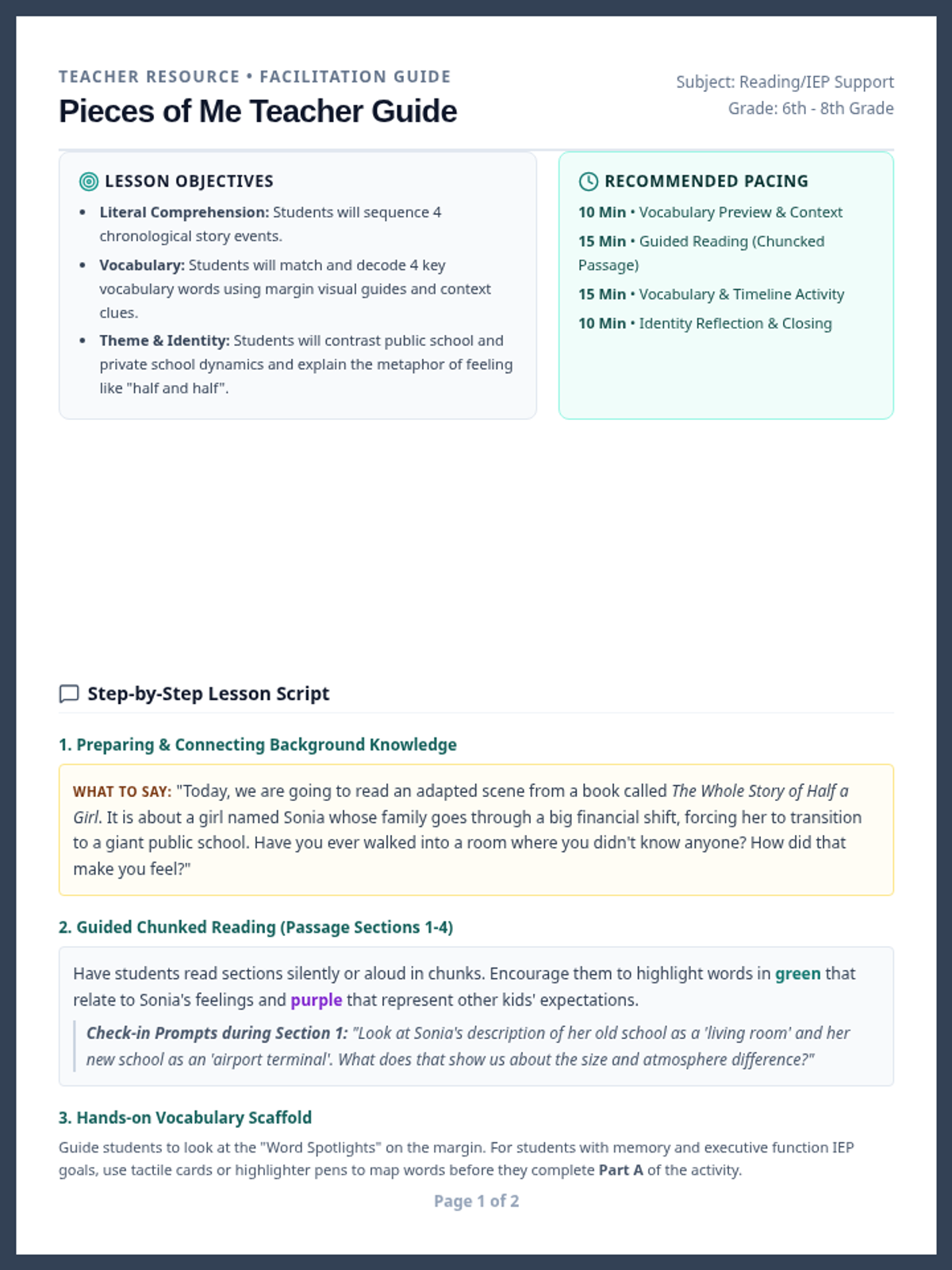
A reading comprehension and identity-focused lesson bundle based on Veera Hiranandani's 'The Whole Story of Half a Girl' tailored for middle school IEP students. Includes an adapted passage, vocabulary scaffolding, sequencing activities, and character analysis organizers.
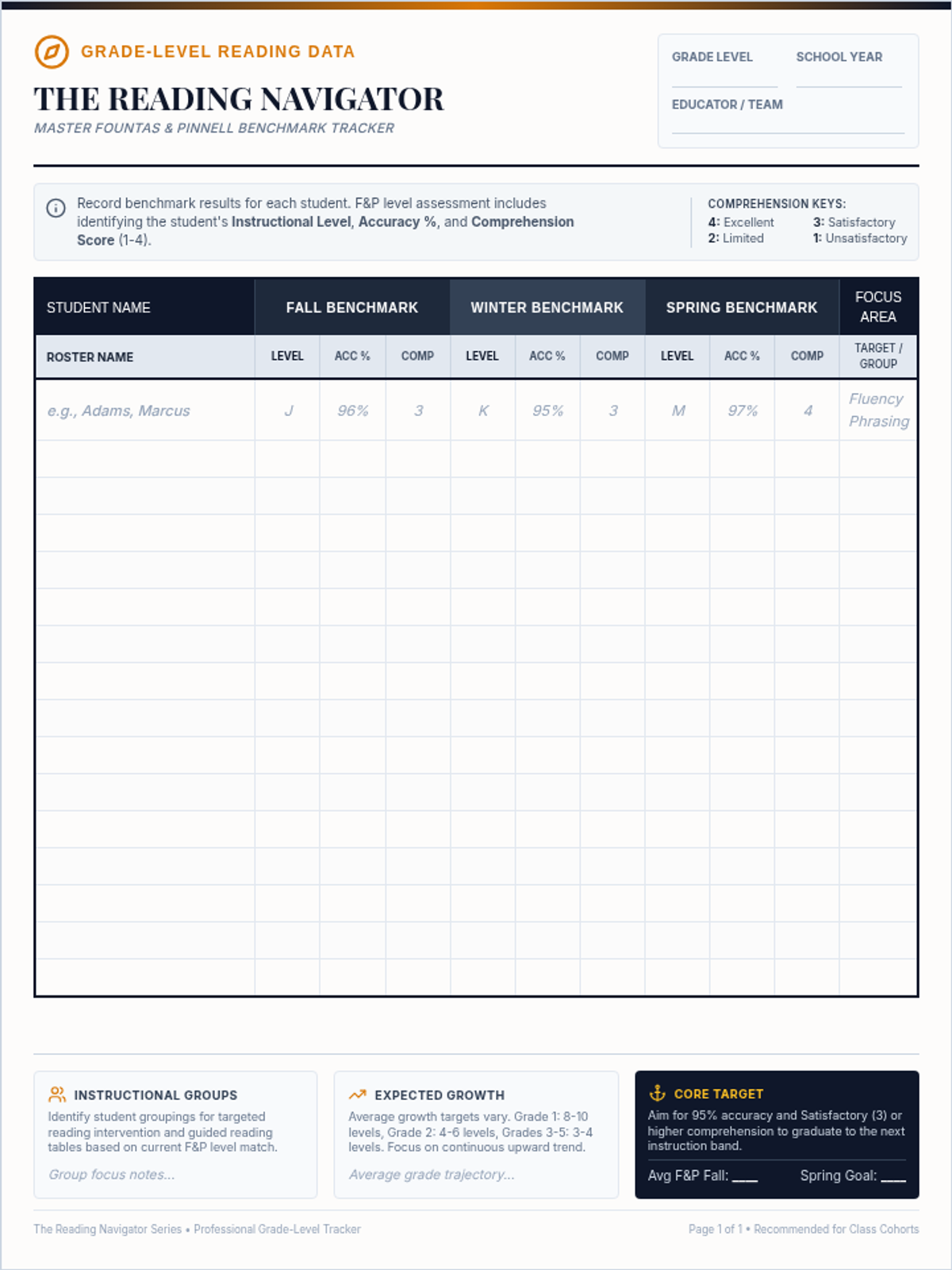
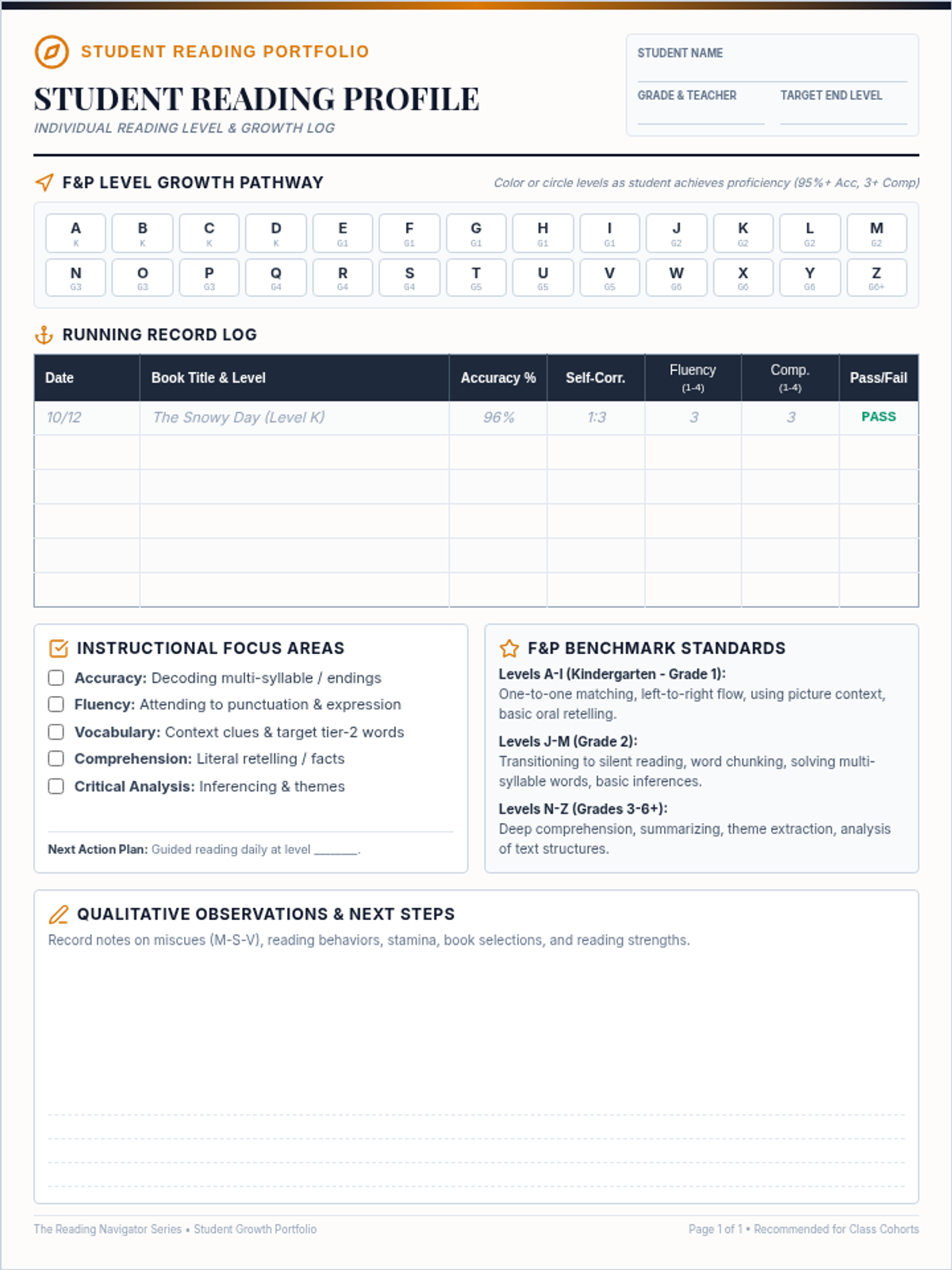
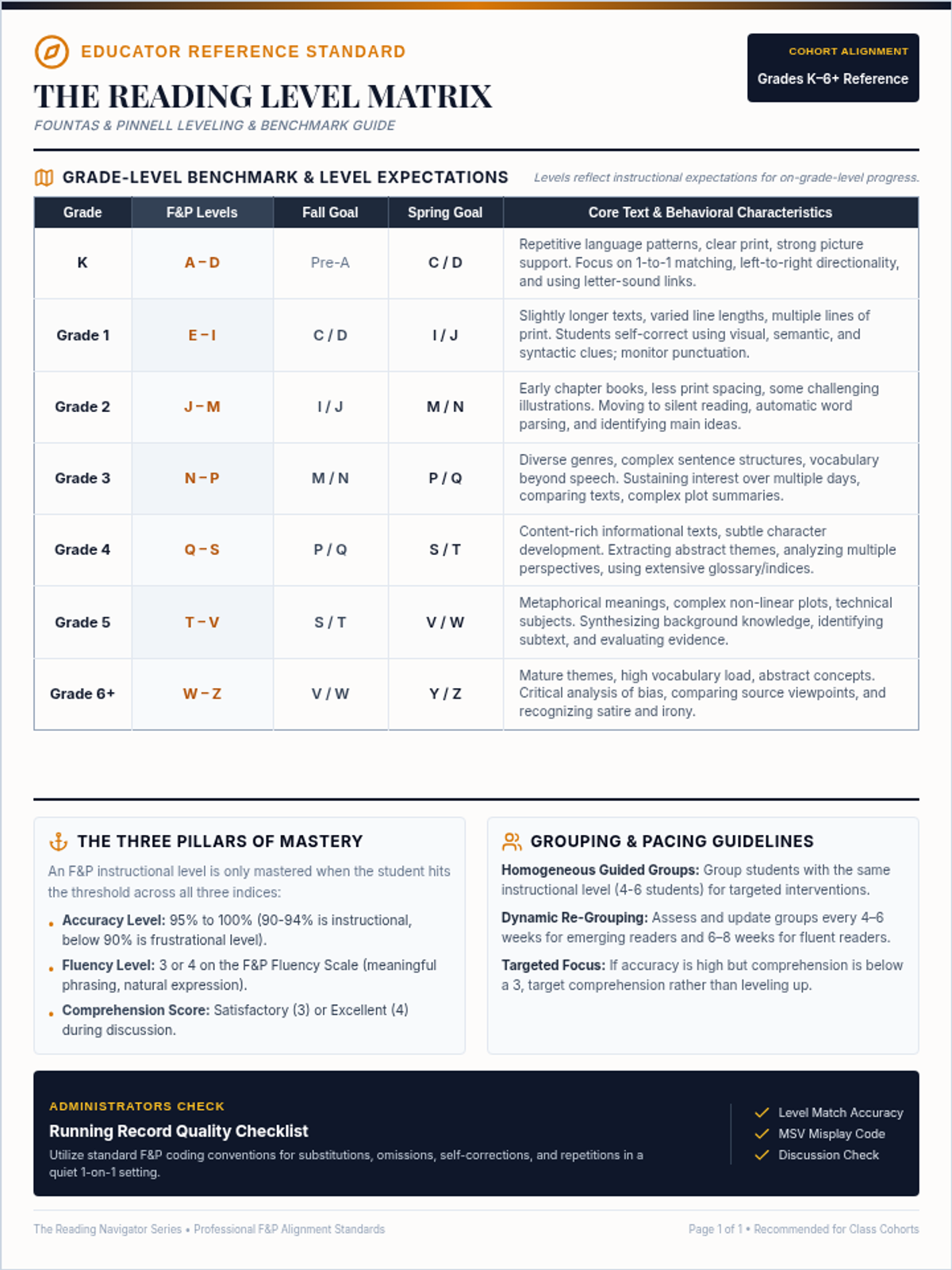
A comprehensive Fountas & Pinnell reading level tracking system for grade-level teams and individual teachers, featuring a master grade-level tracker, individual student profiles, and an F&P levels reference matrix.
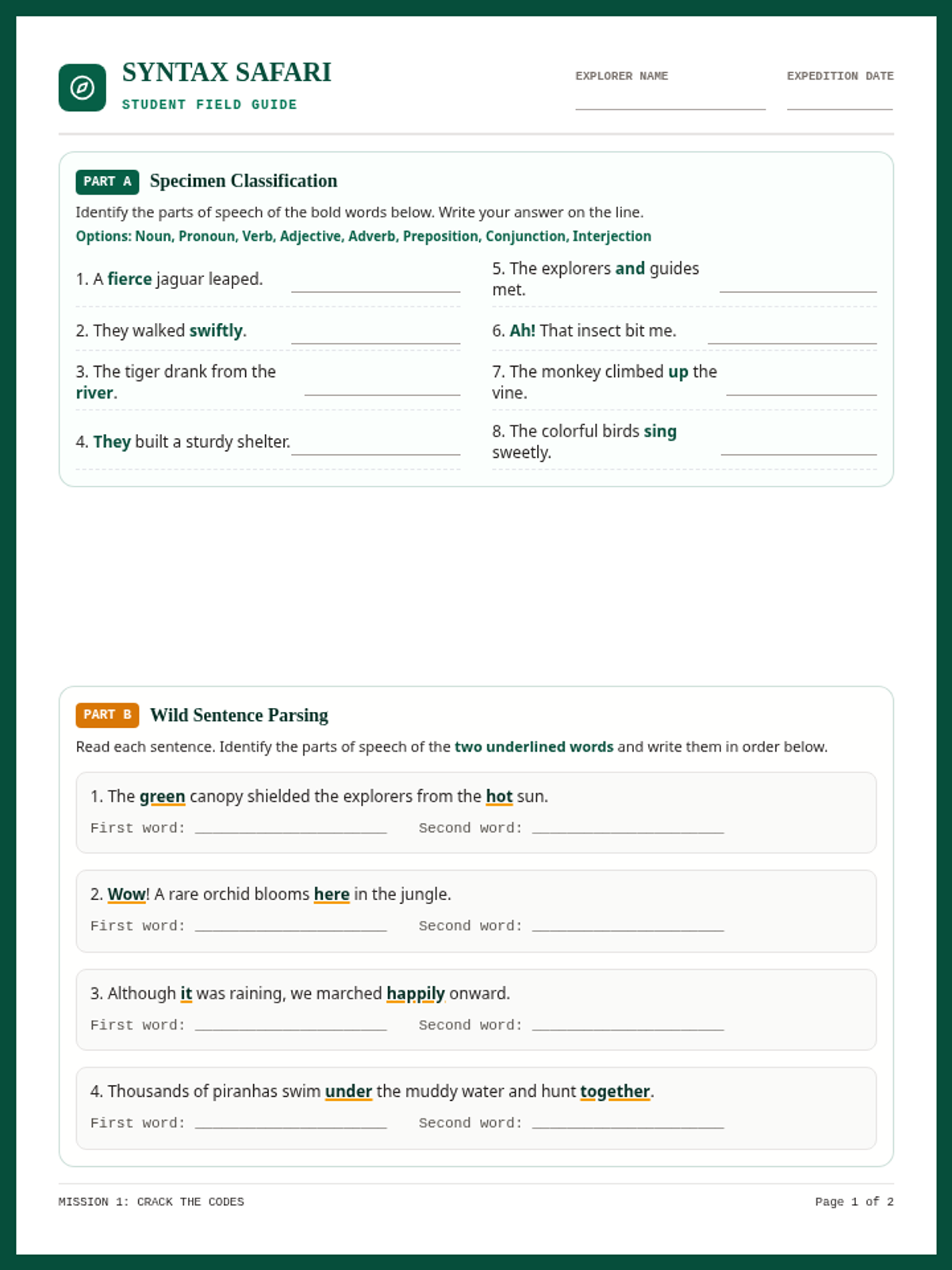
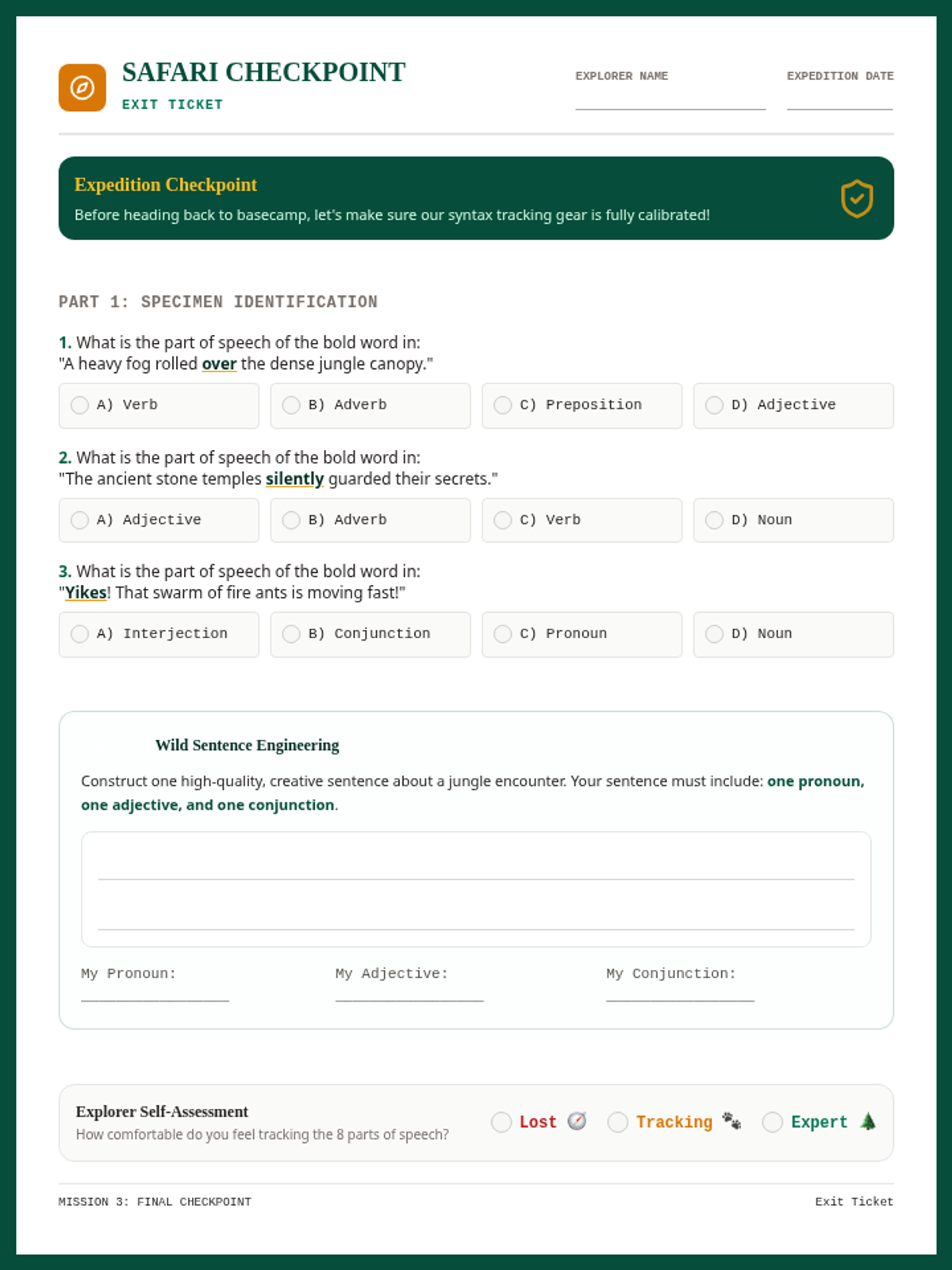
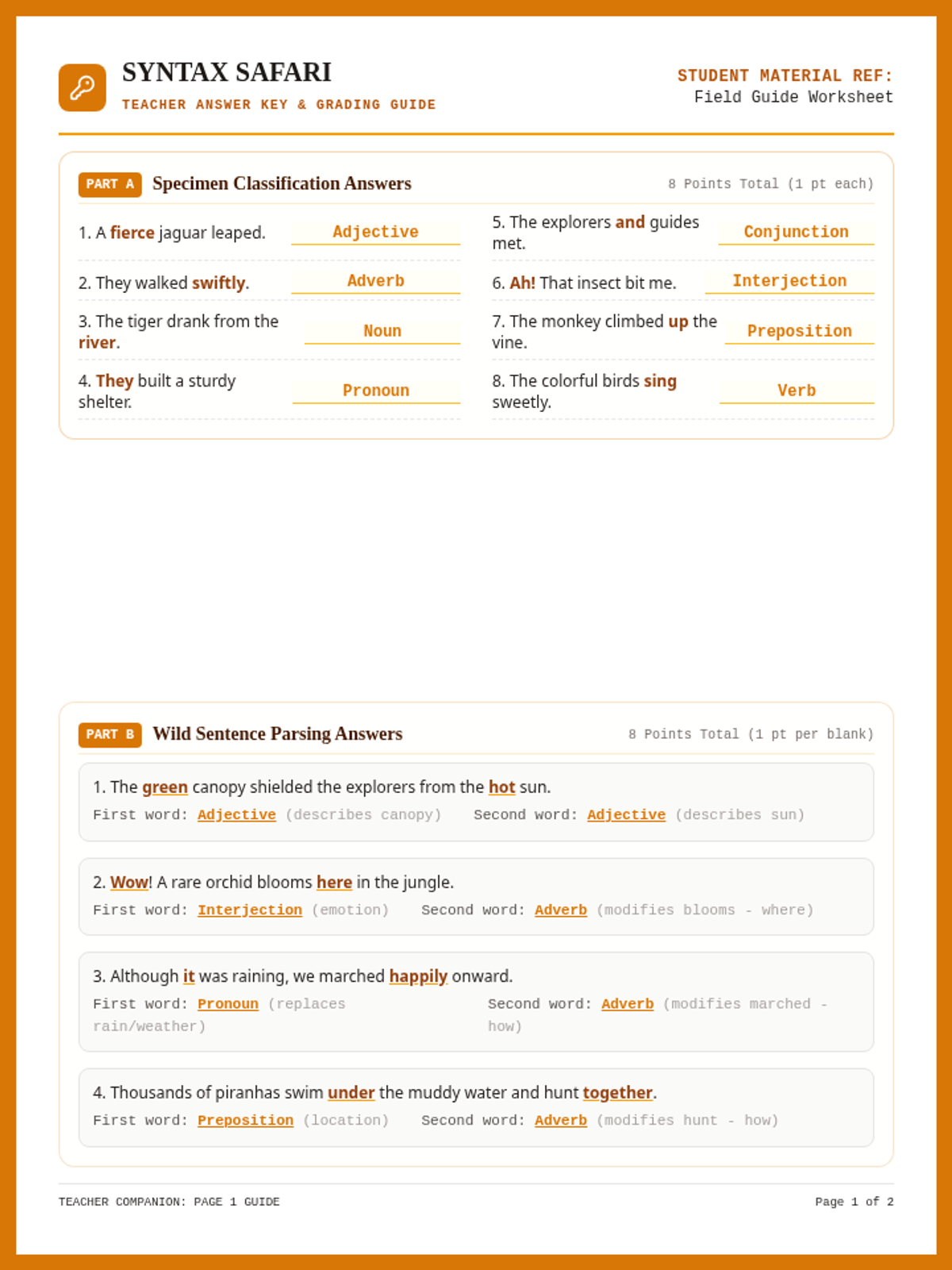
An immersive, adventure-themed lesson exploring the eight parts of speech. Students act as language explorers, tracking down and identifying nouns, pronouns, verbs, adjectives, adverbs, prepositions, conjunctions, and interjections in the wild.
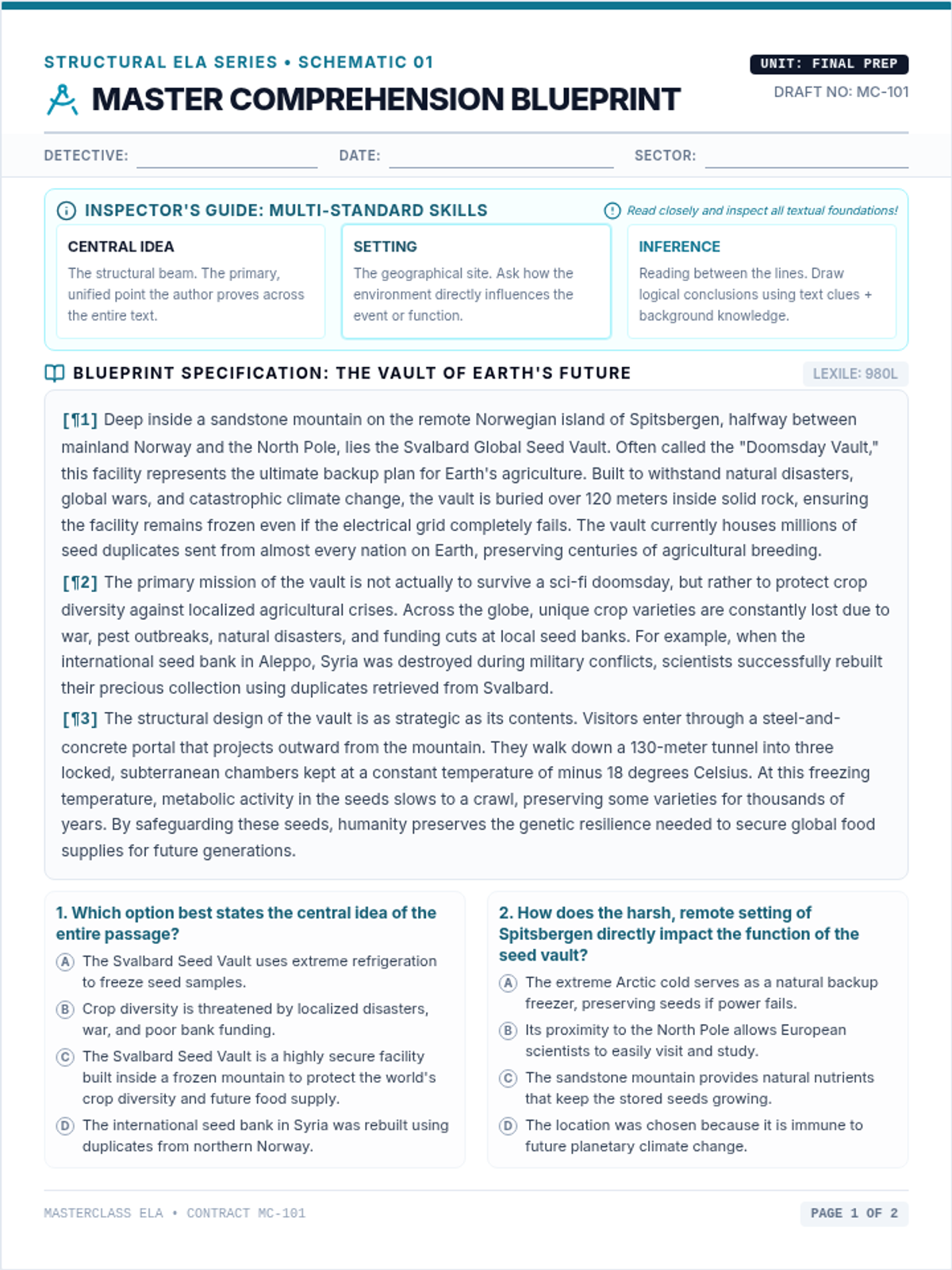
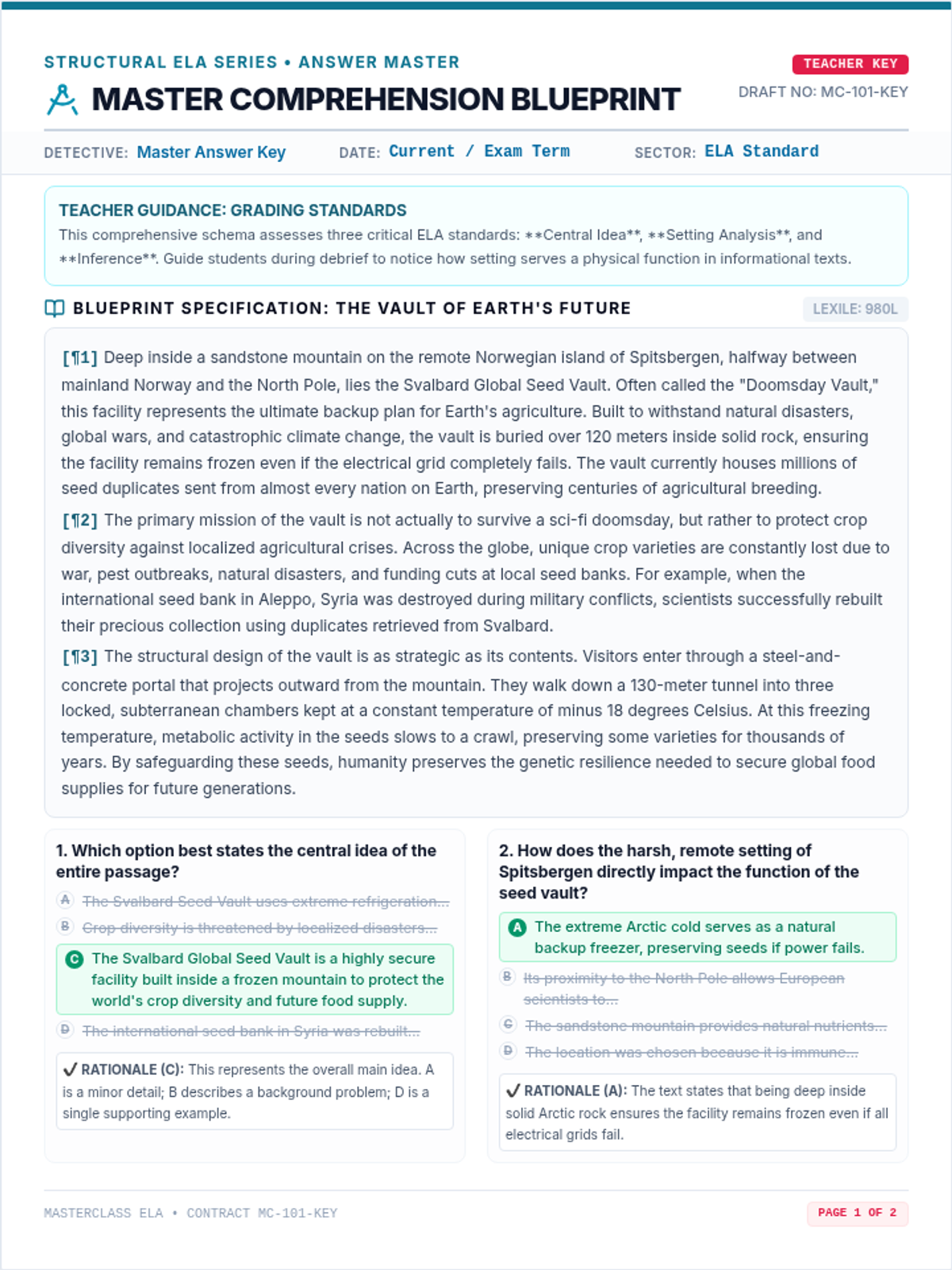
A focused ELA review lesson designed to help students master identifying the central idea and distinguishing it from supporting details. Uses a structural blueprint theme to scaffold learning from graphic organizers to exam-style multiple-choice questions.
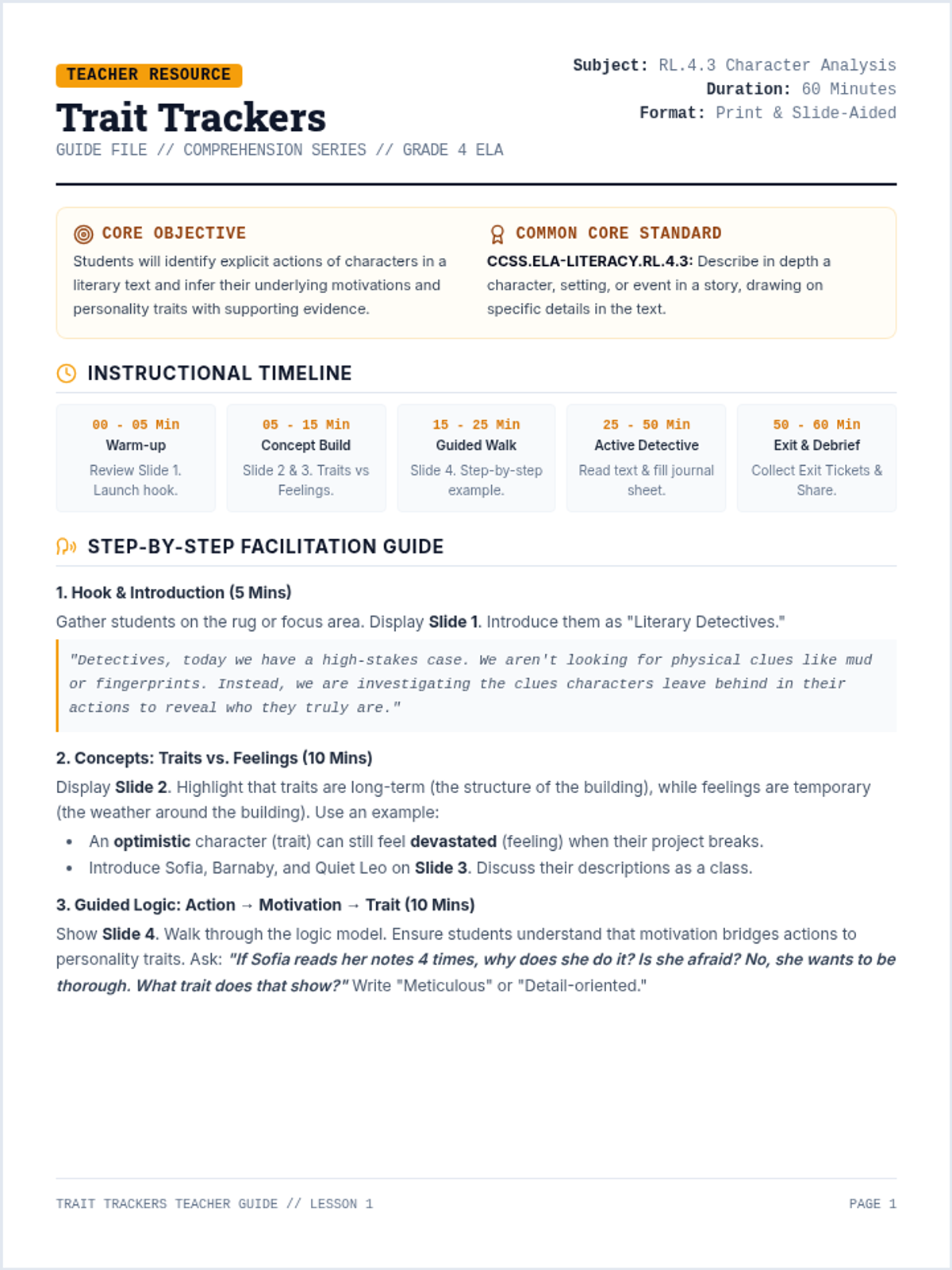
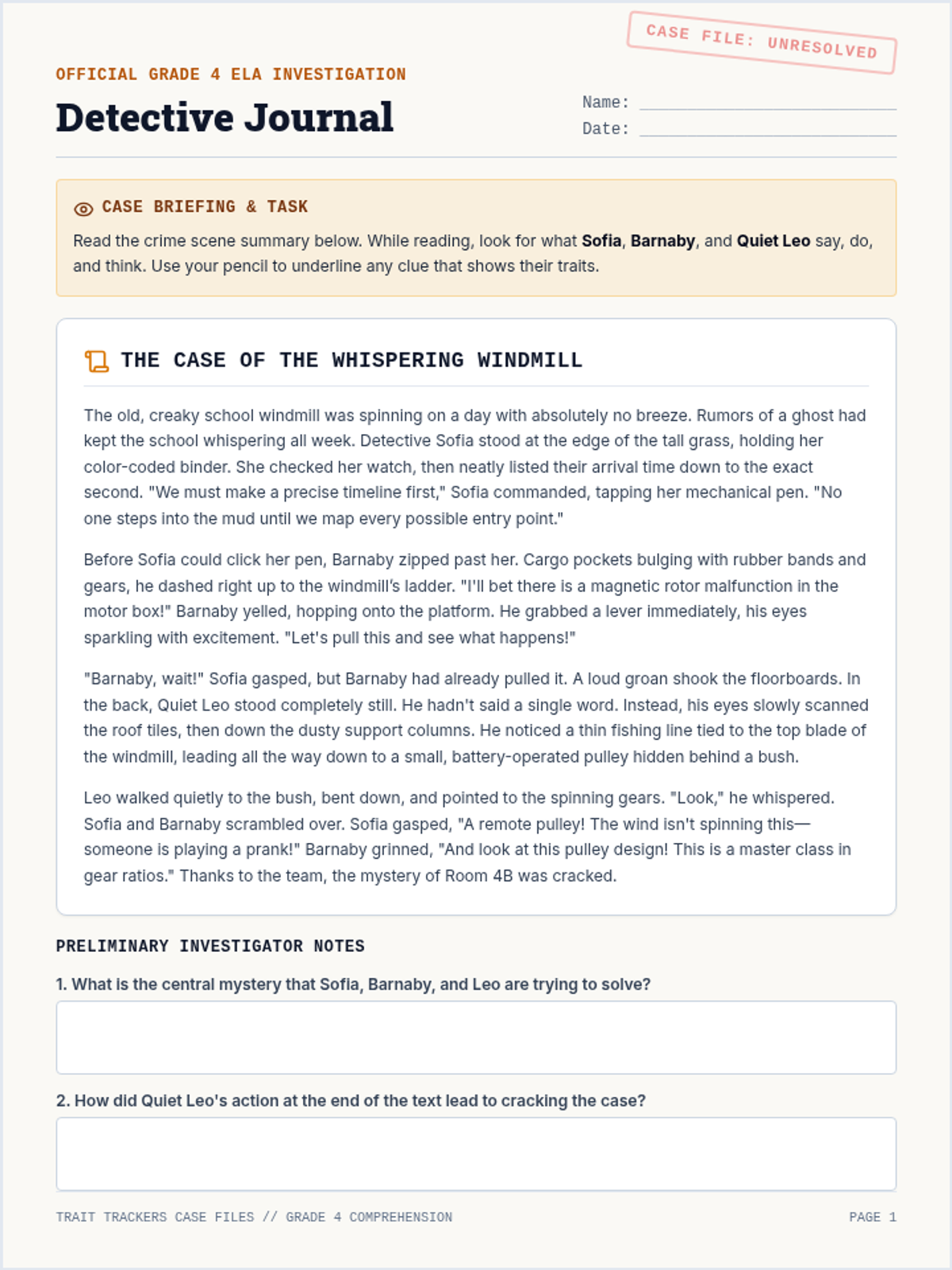
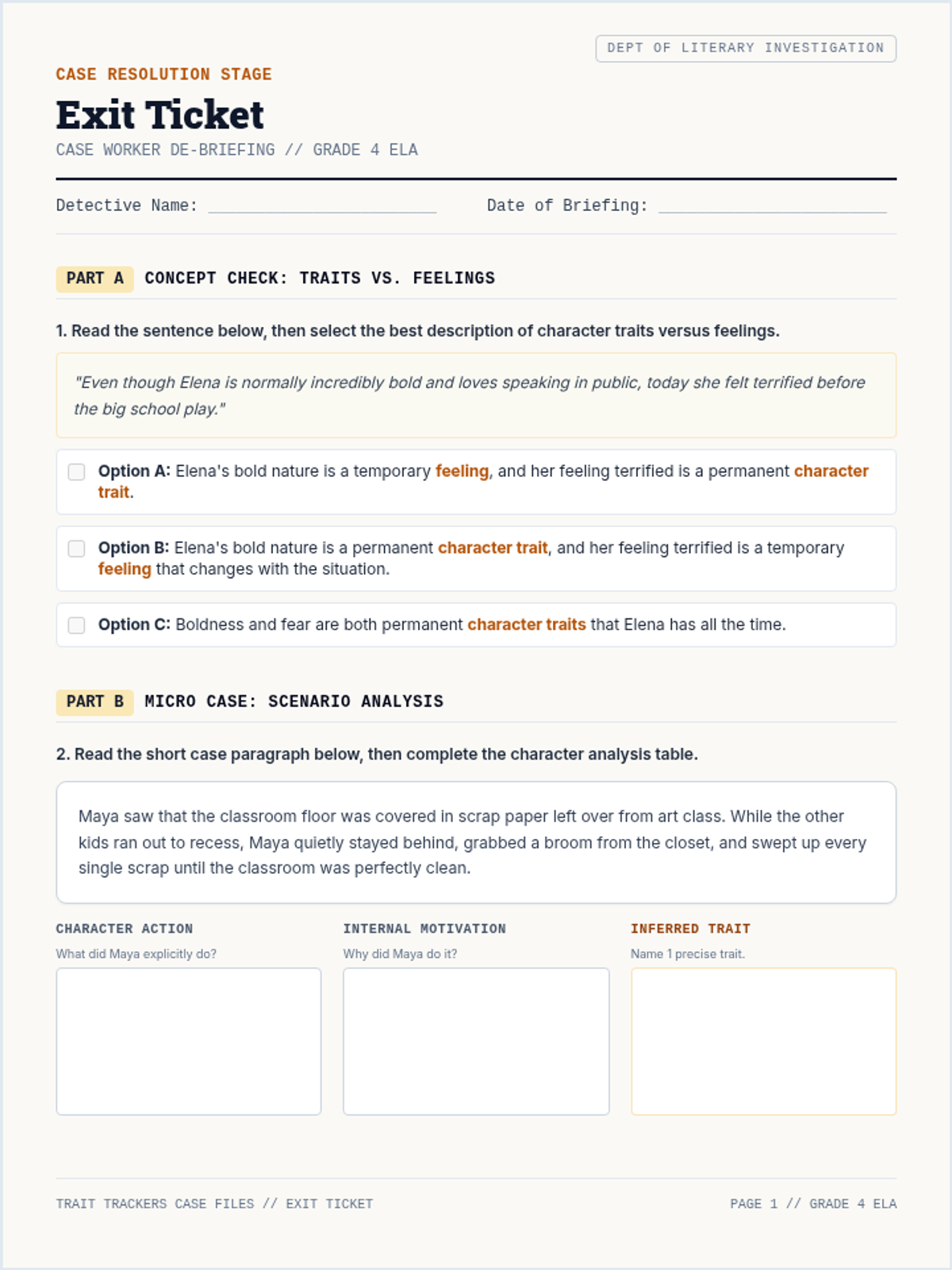
A high-engagement 4th-grade ELA lesson on character analysis, where students become literary detectives to crack character traits, motivations, and actions using textual evidence.
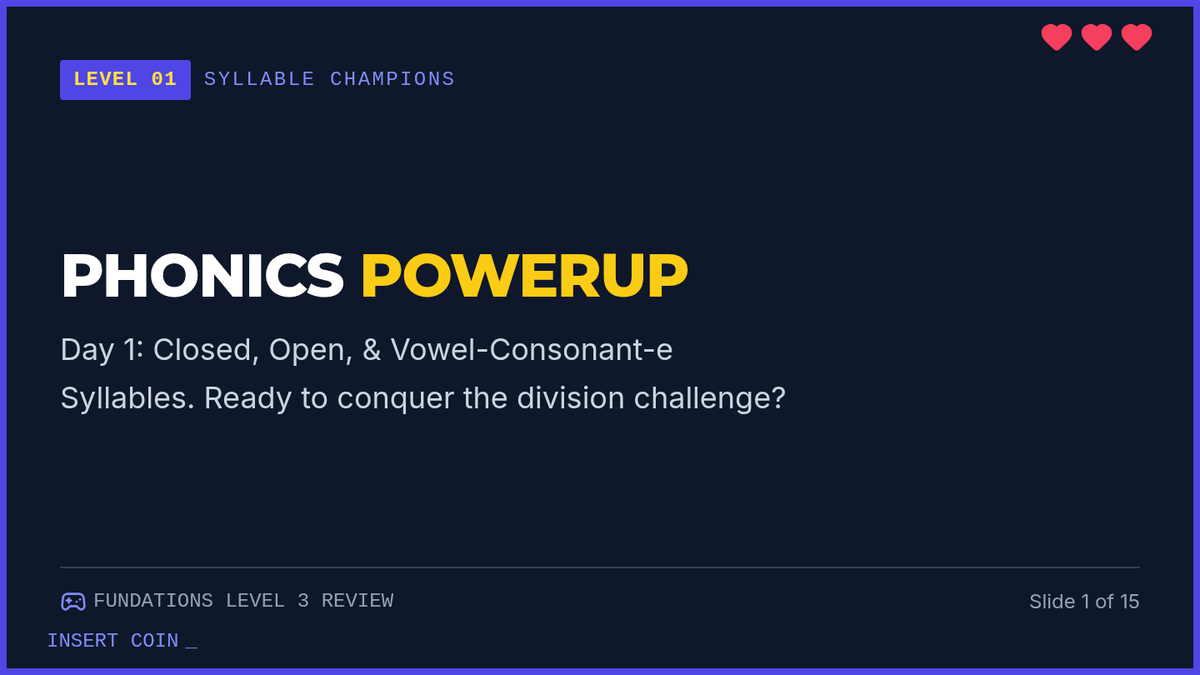
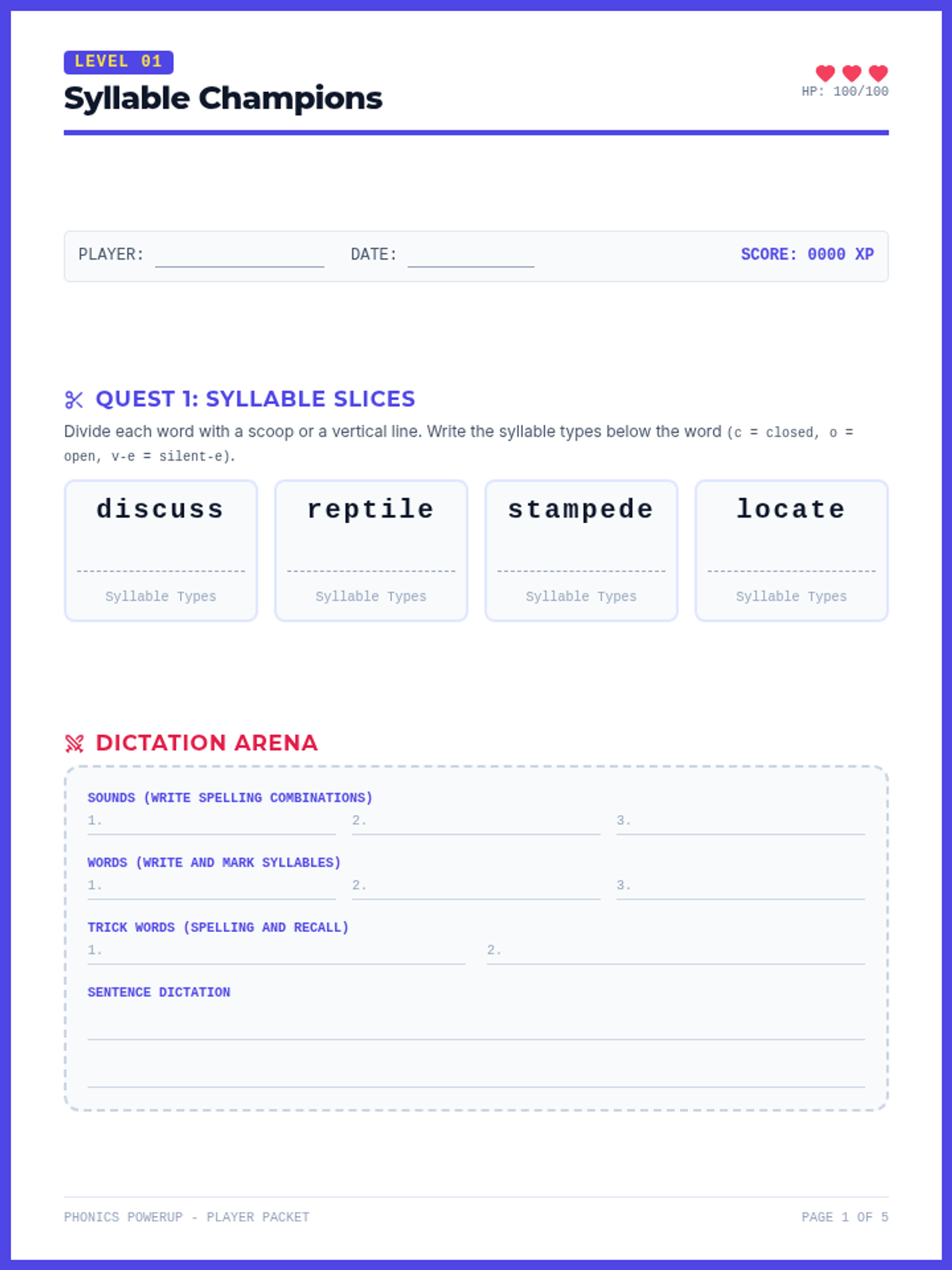
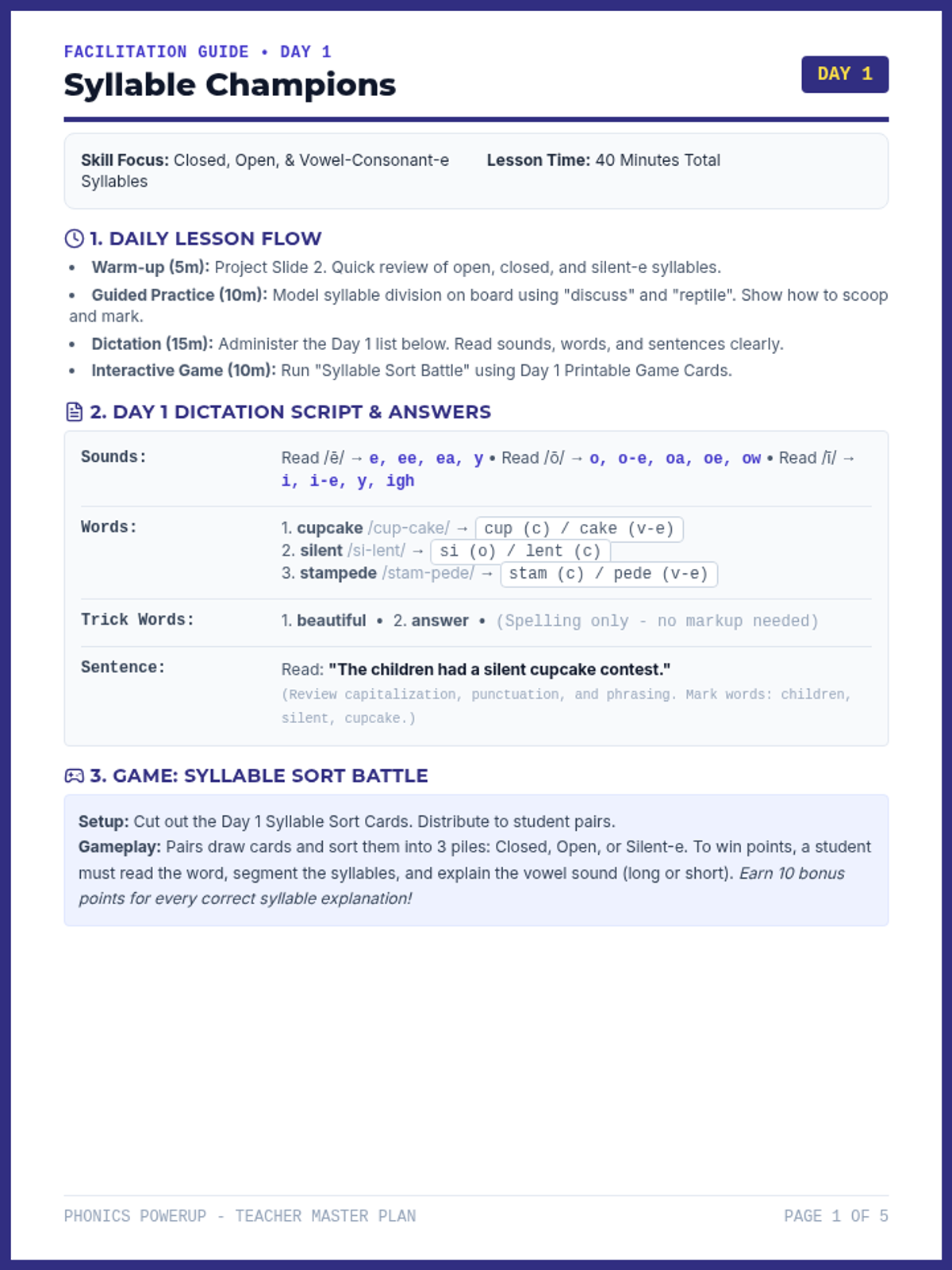
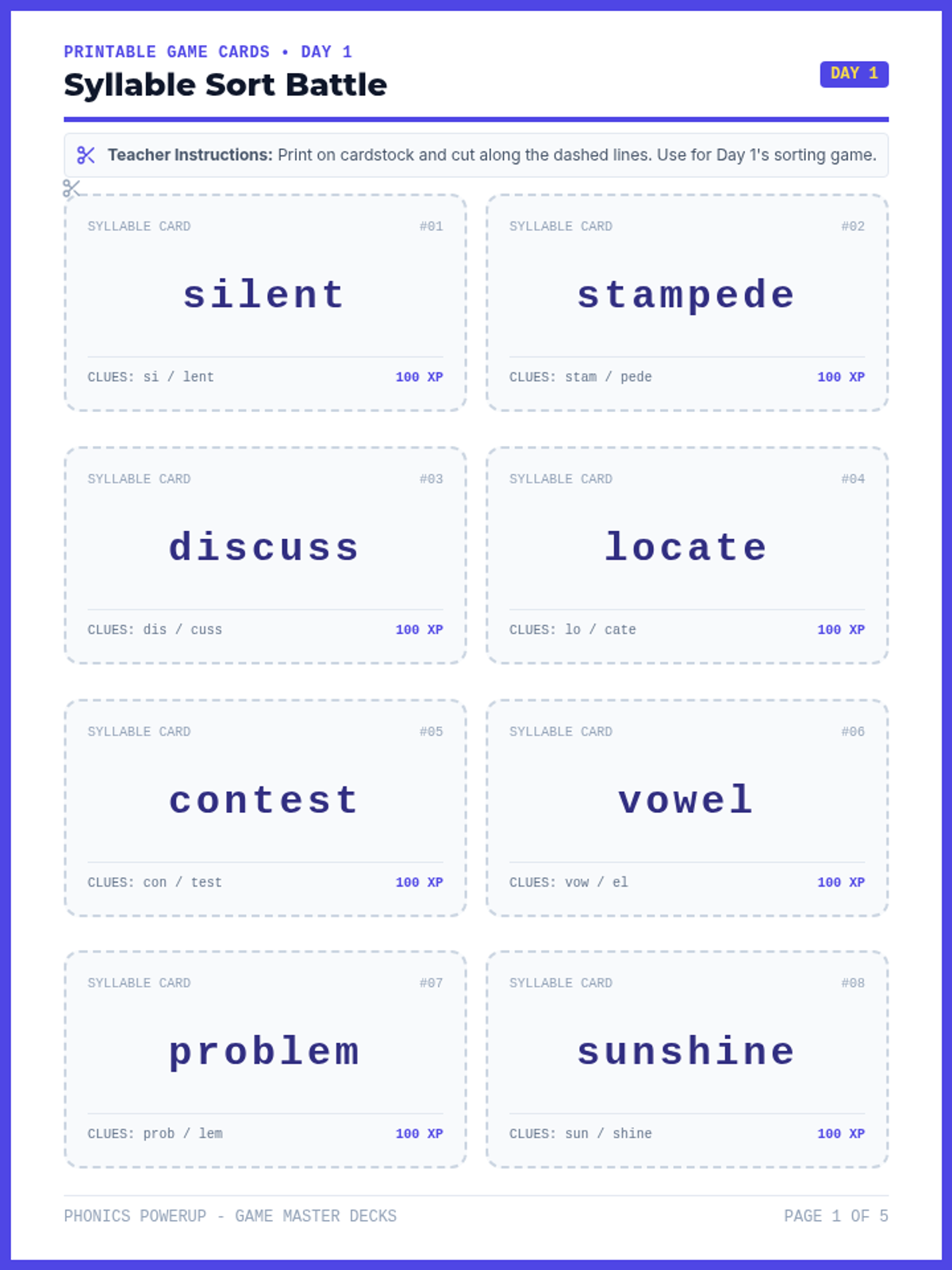
A comprehensive 5-day review of Fundations Level 3 skills (Units 1-9), focusing on suffix rules, syllable division, dictation, and interactive spelling games. Includes visual slides, a printable student packet, a teacher script, and interactive game cards.
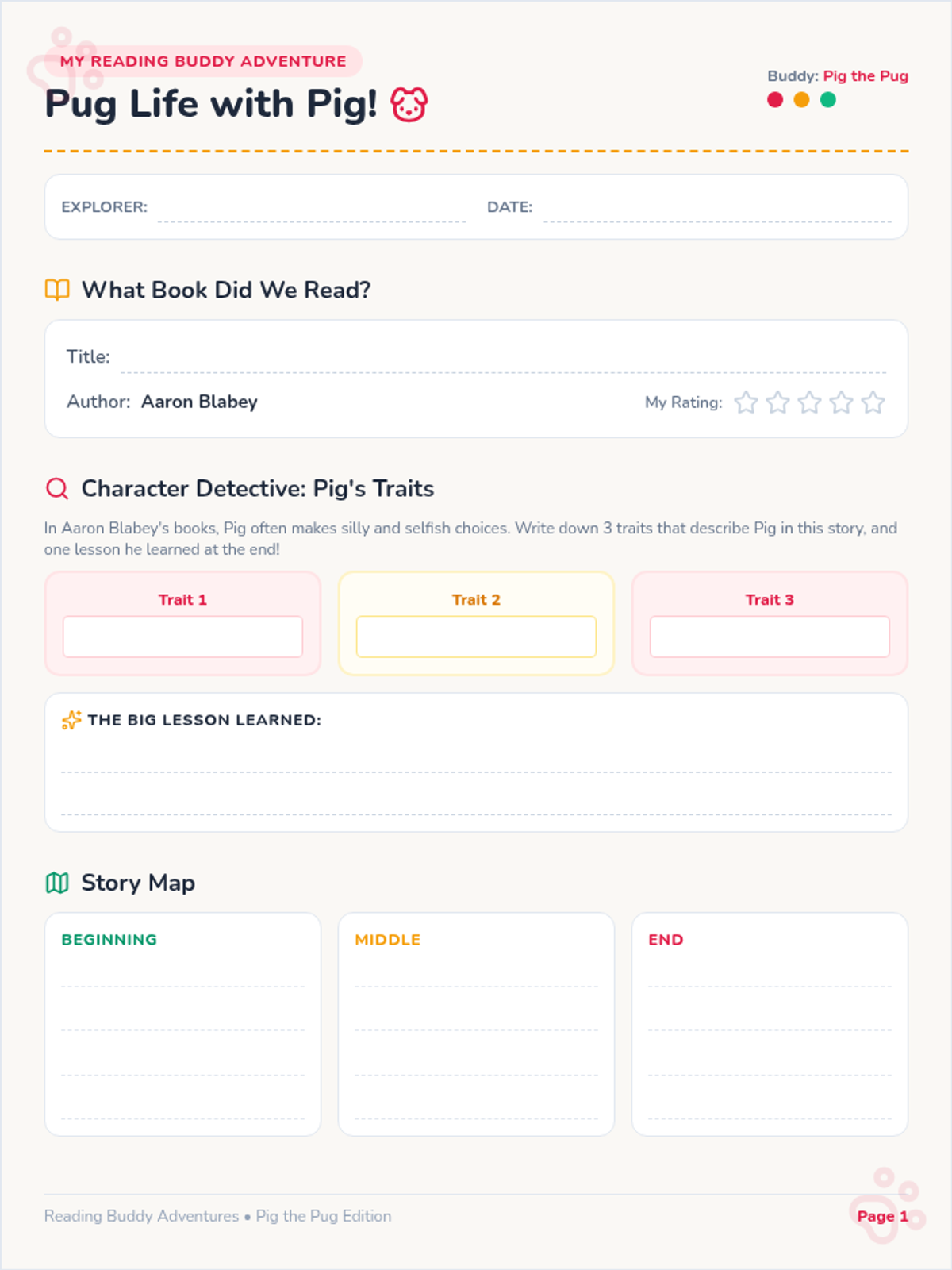
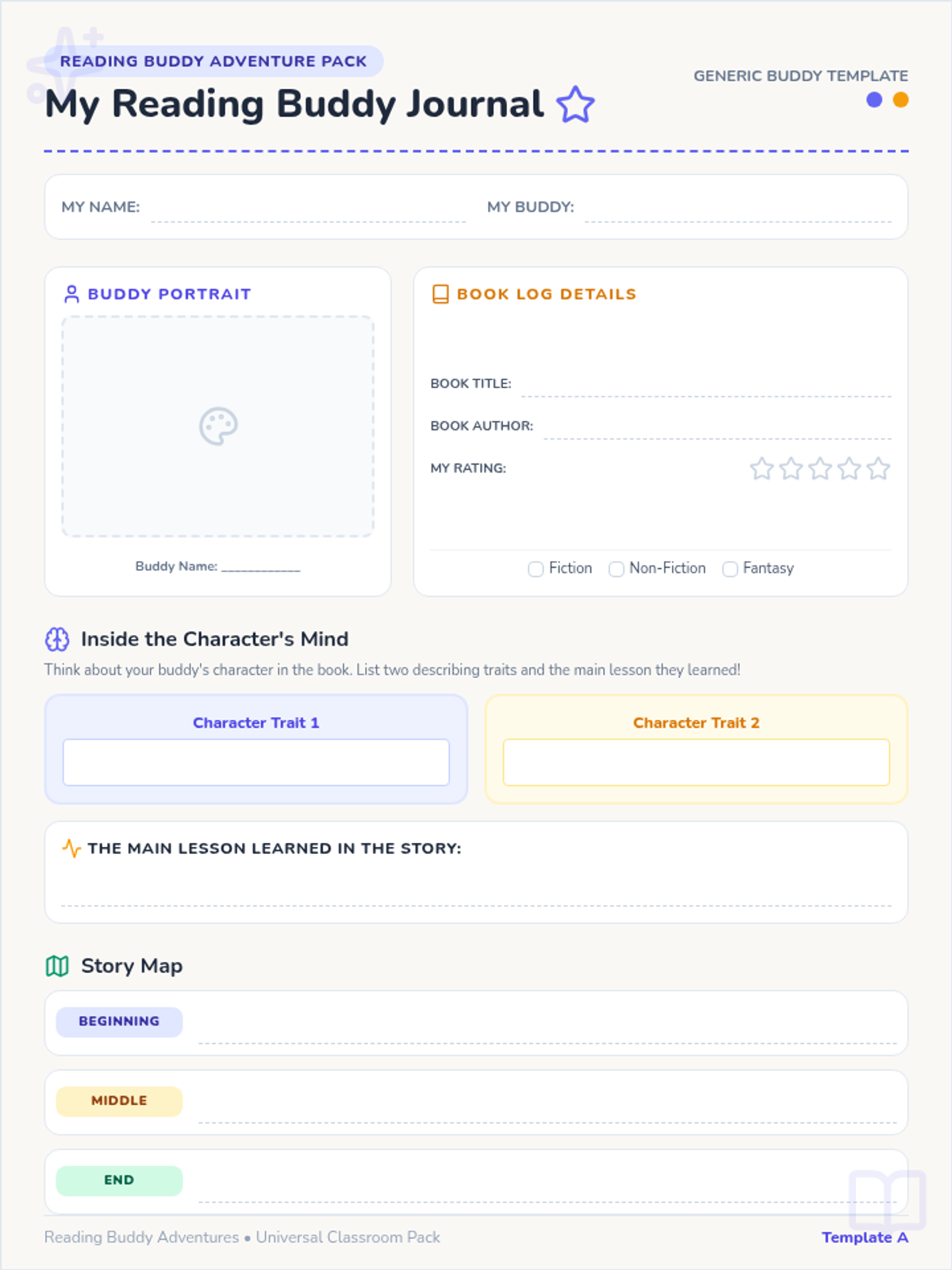
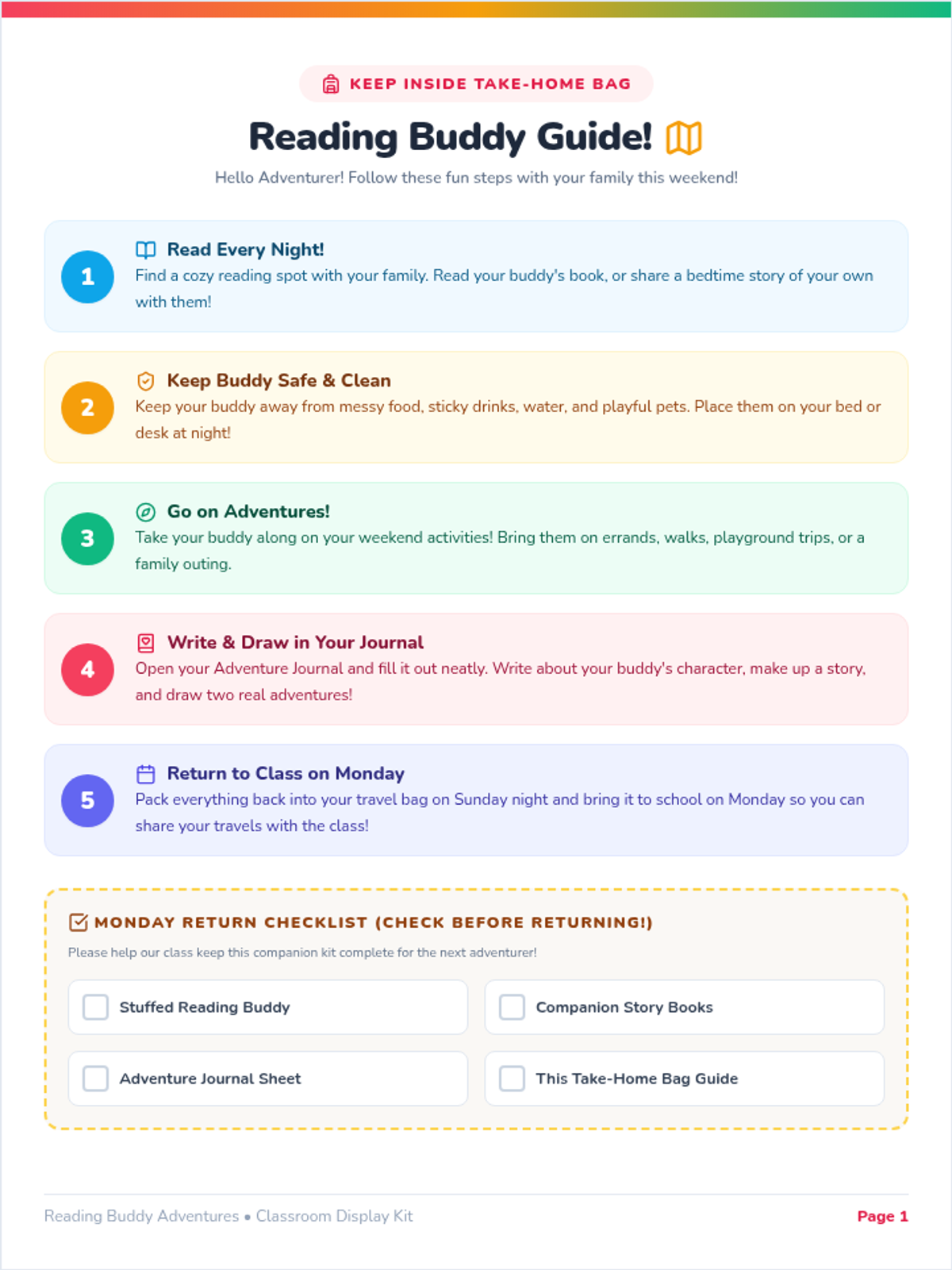
A magical reading initiative where students take home a stuffed book character (starting with Pig the Pug) along with companion books. They read the books, document character traits, write imaginative stories, and keep an interactive travel journal of their real-world adventures with their buddy.
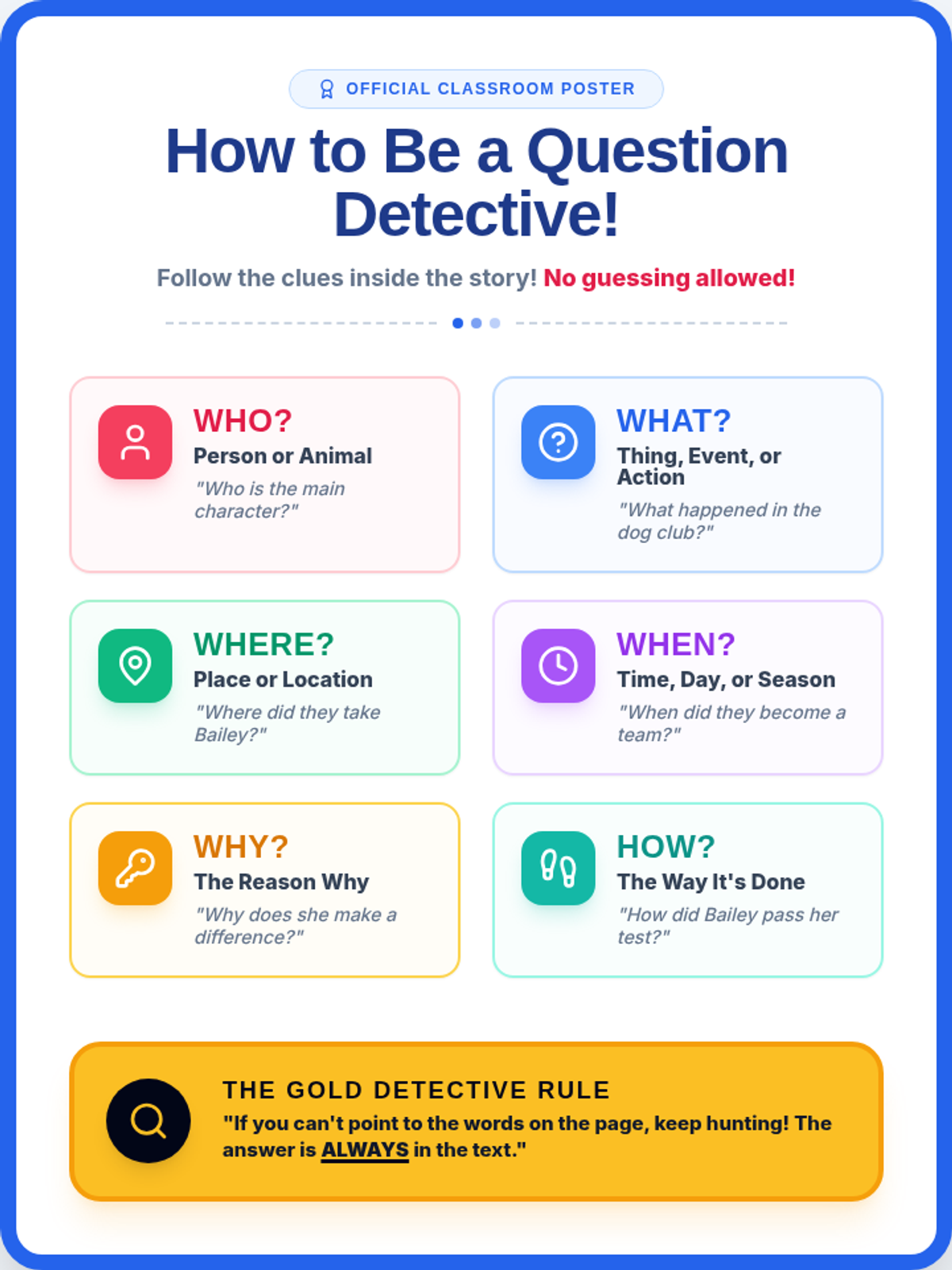
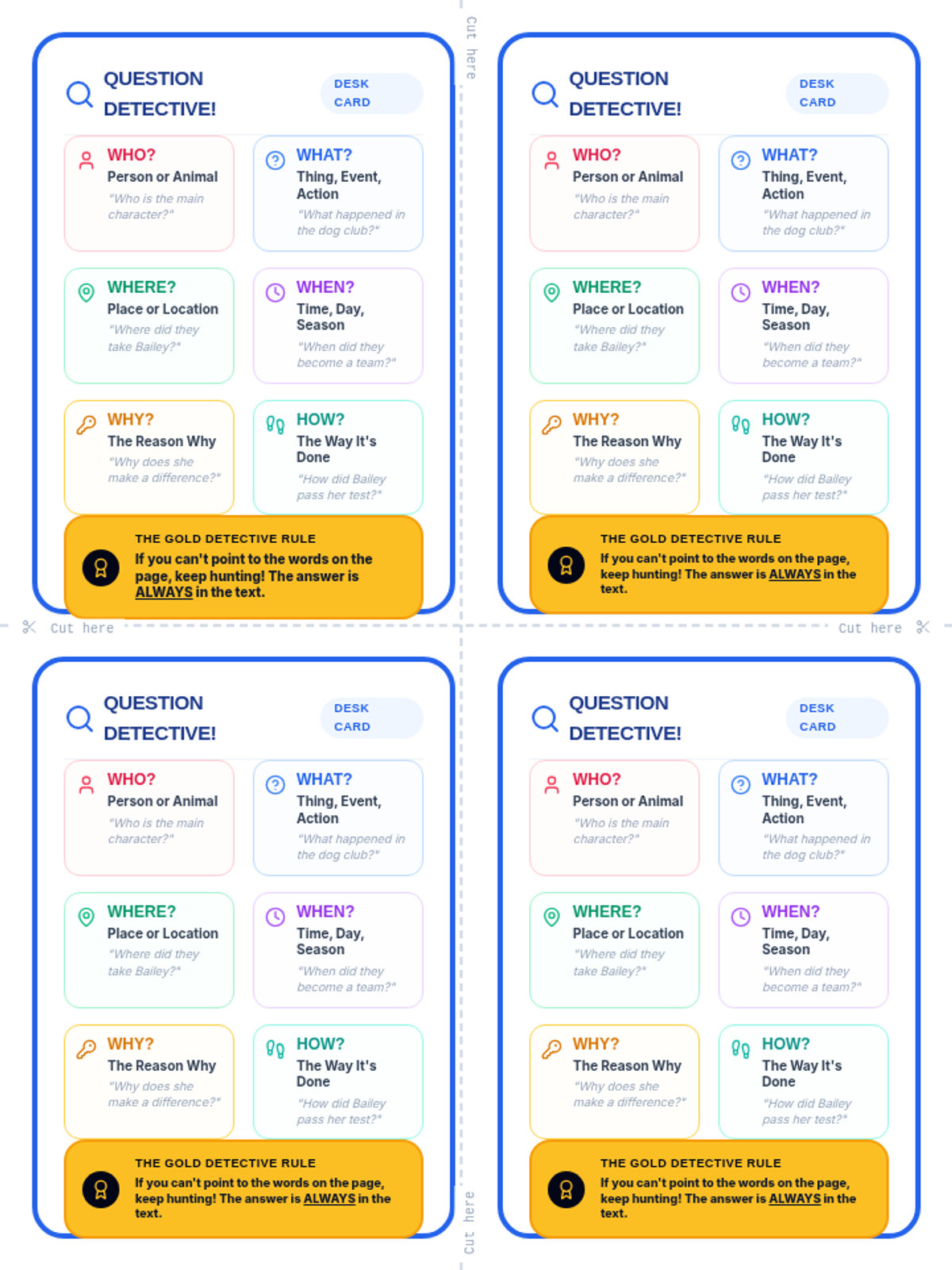
A collection of visual resources to help students locate text evidence and answer key comprehension questions using the 5Ws and How framework.
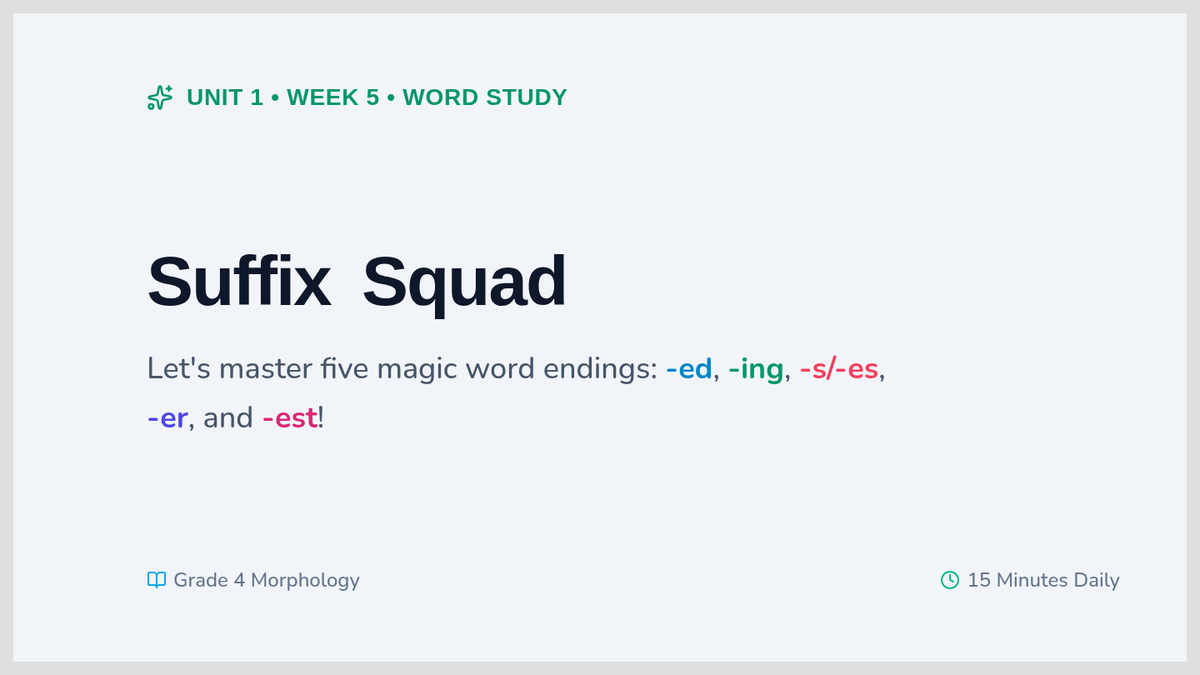
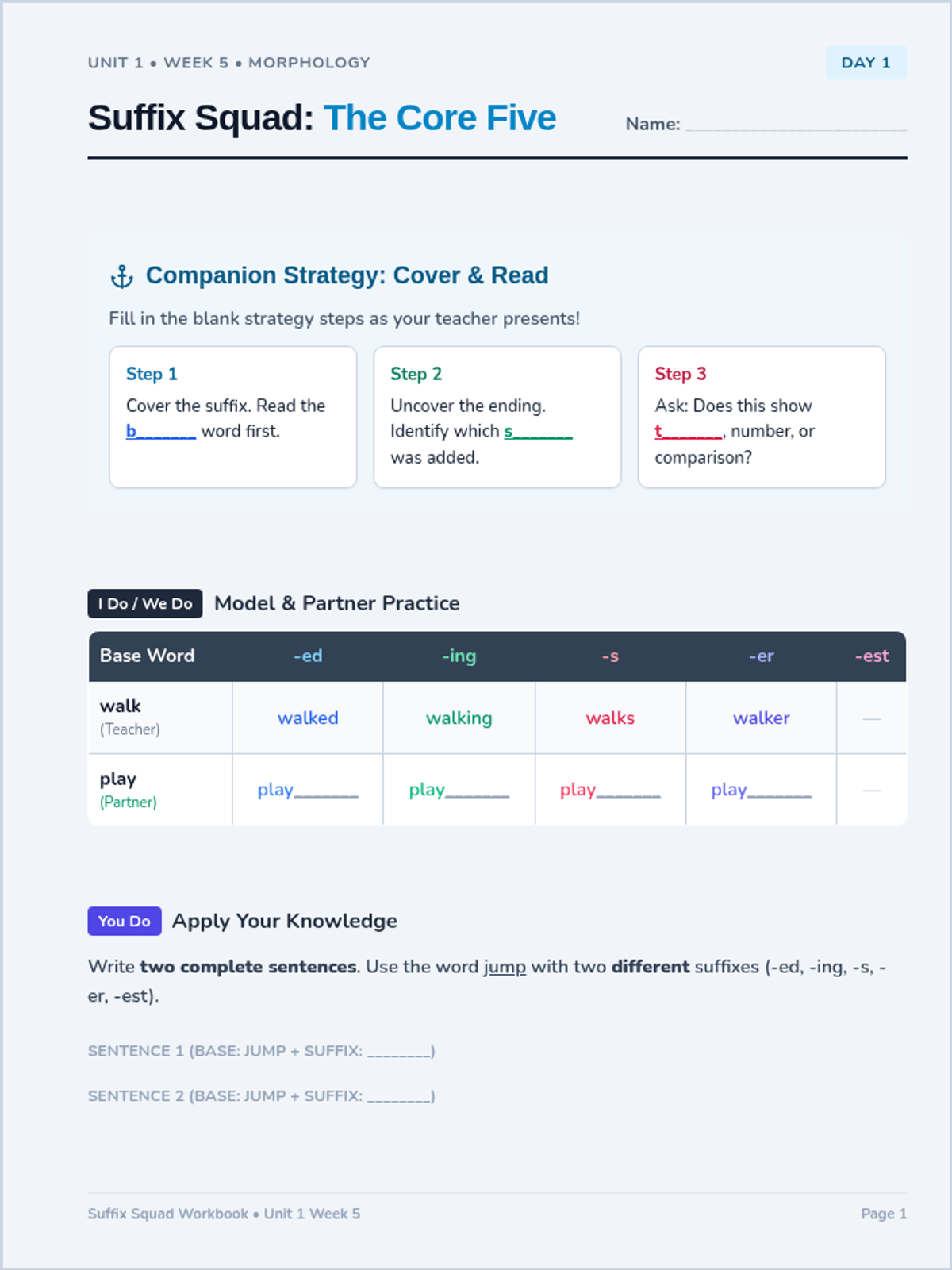
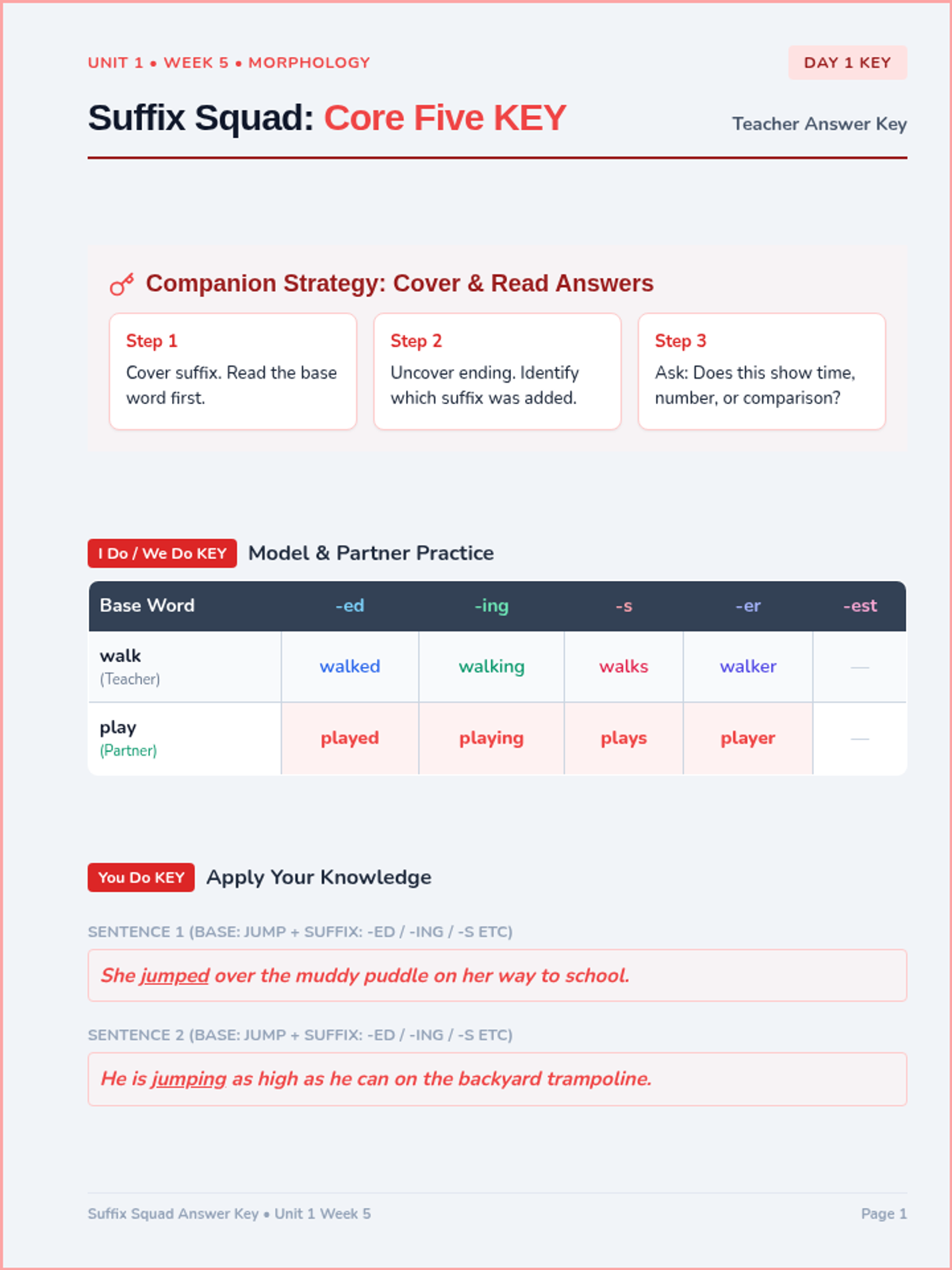
A comprehensive 5-day morphology unit for 4th grade focusing on the inflectional suffixes -ed, -ing, -s/-es, -er, and -est, including spelling rules, pluralization, comparative usage, and cumulative review.
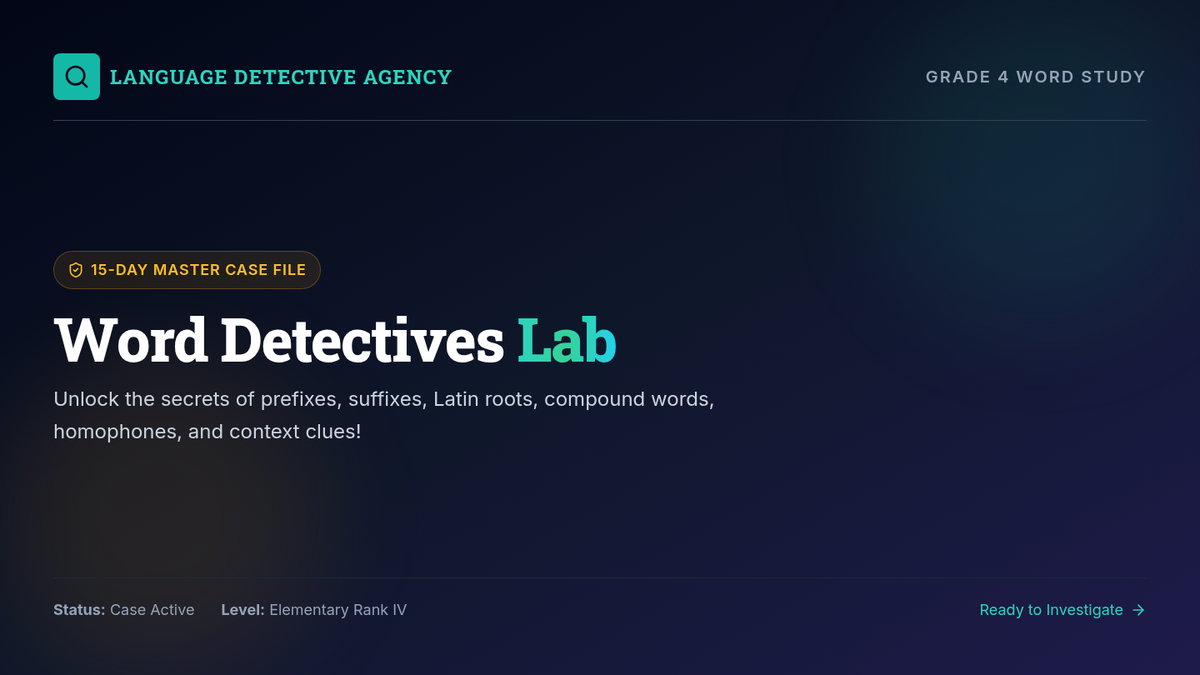
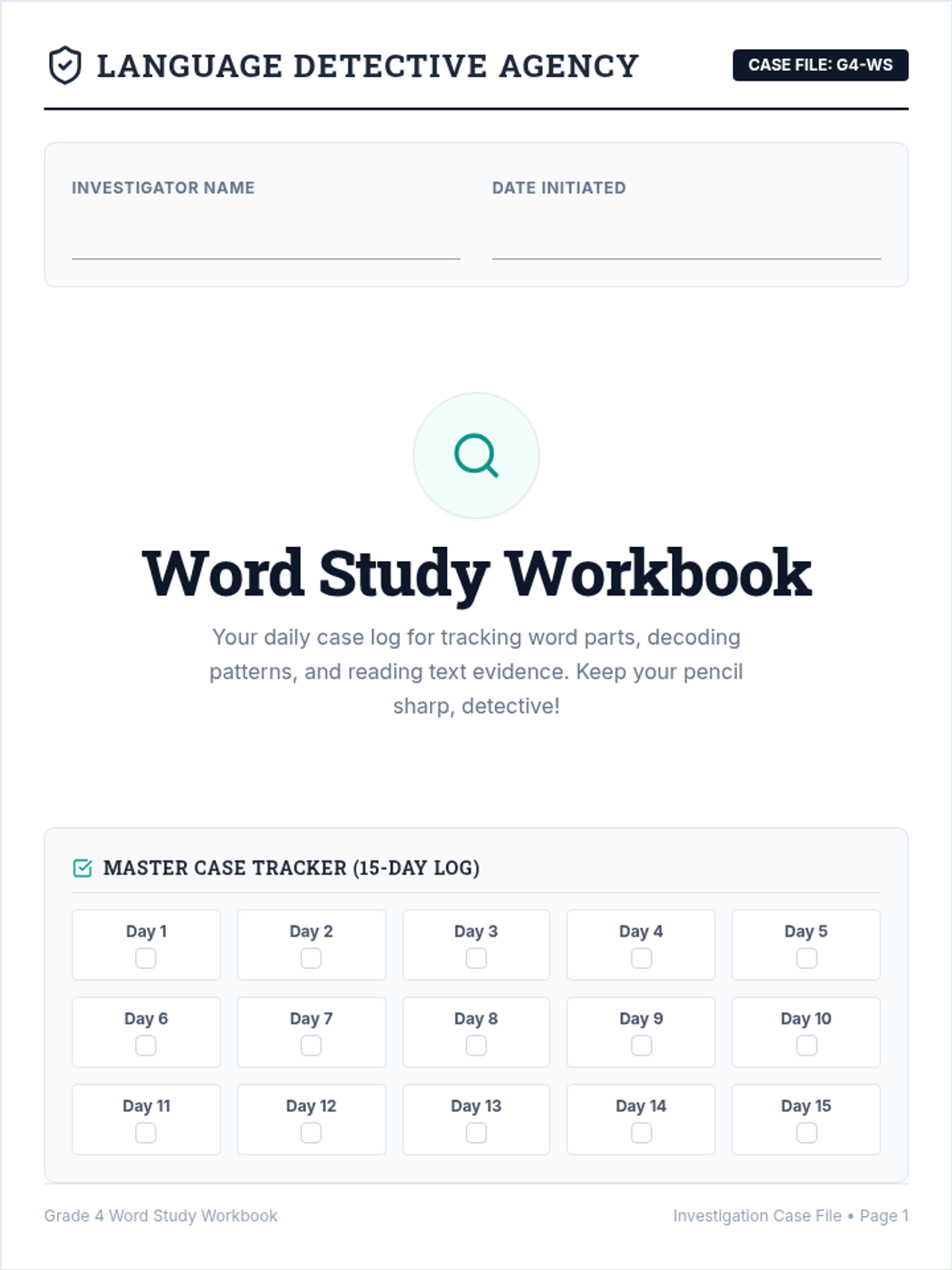
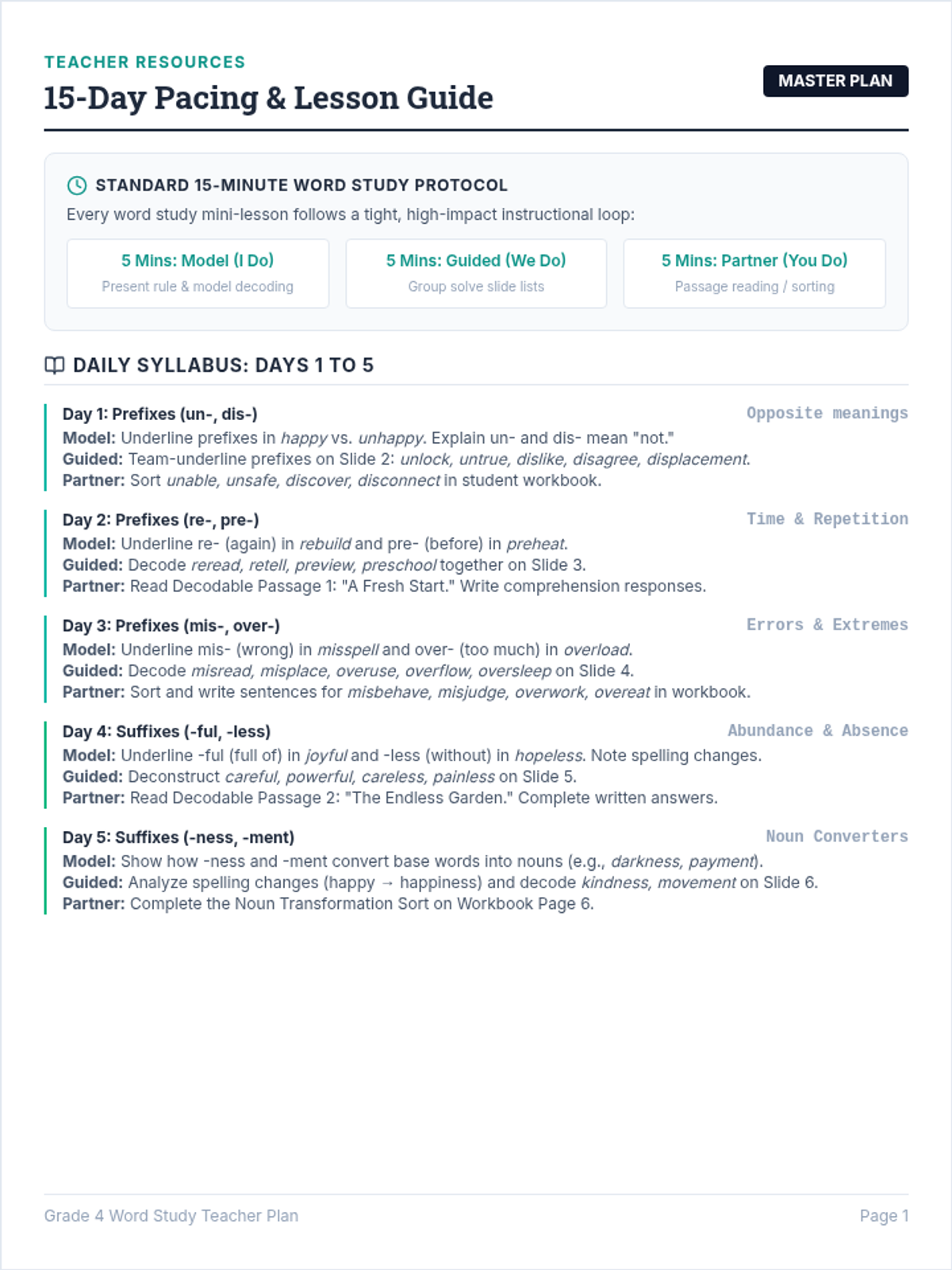
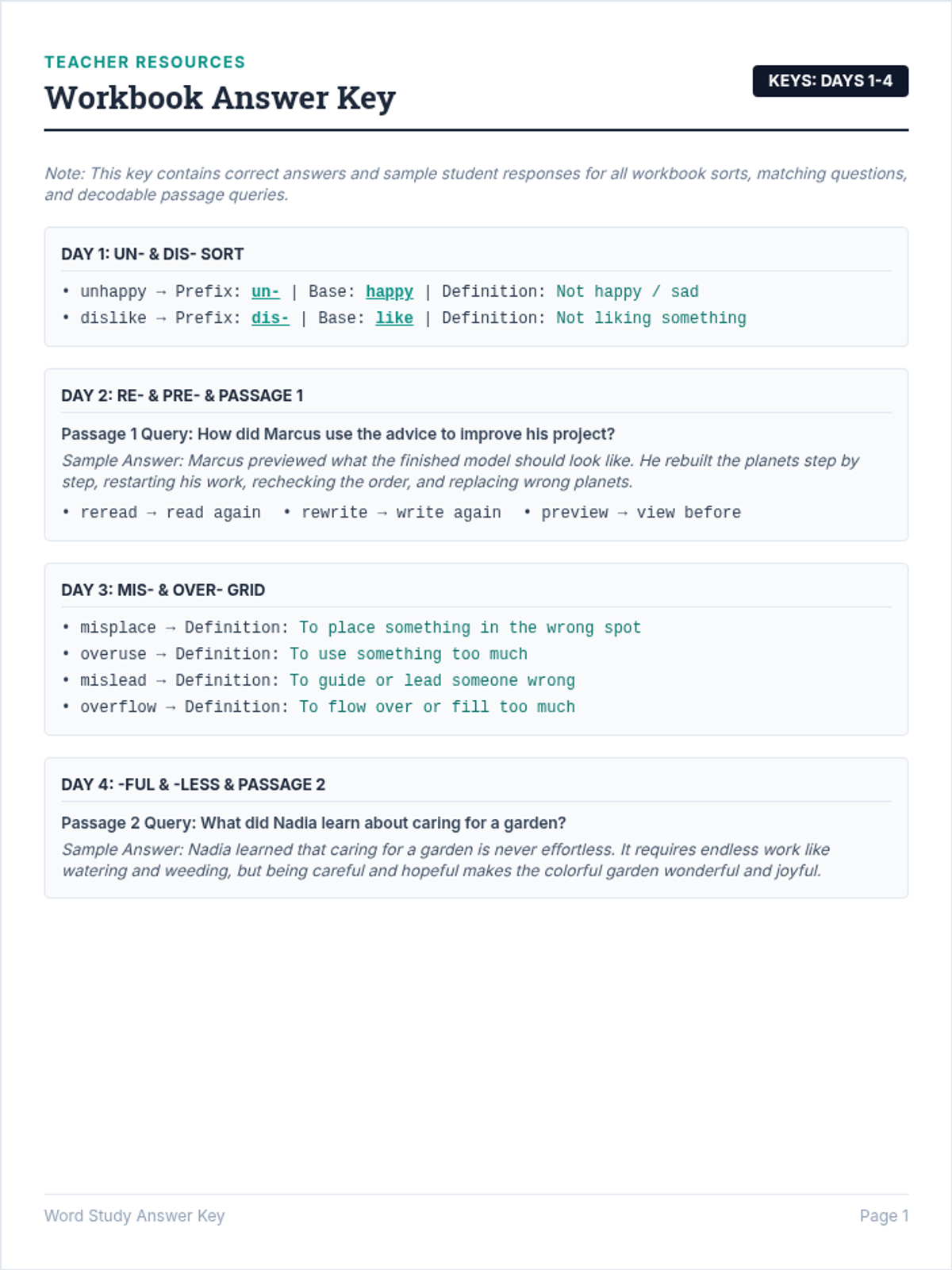
A comprehensive 15-day word study unit for Grade 4 focused on prefixes, suffixes, Latin roots, compound words, homophones, synonyms/antonyms, and context clues. Includes a master slide deck and a complete student workbook.
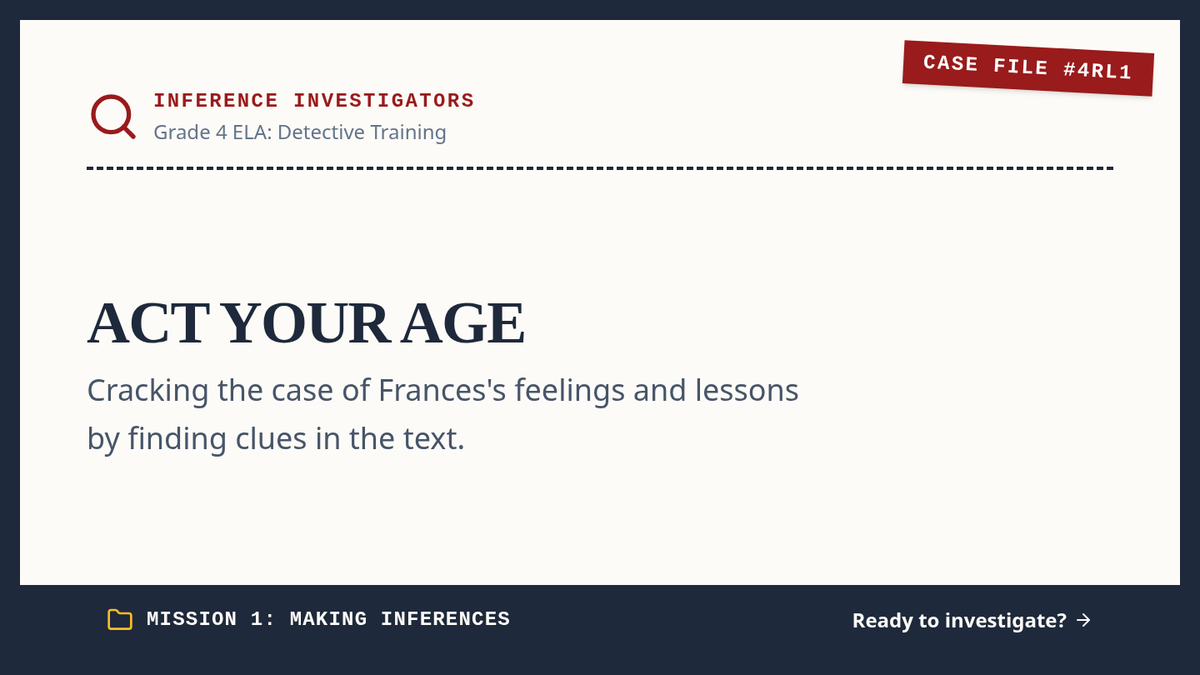
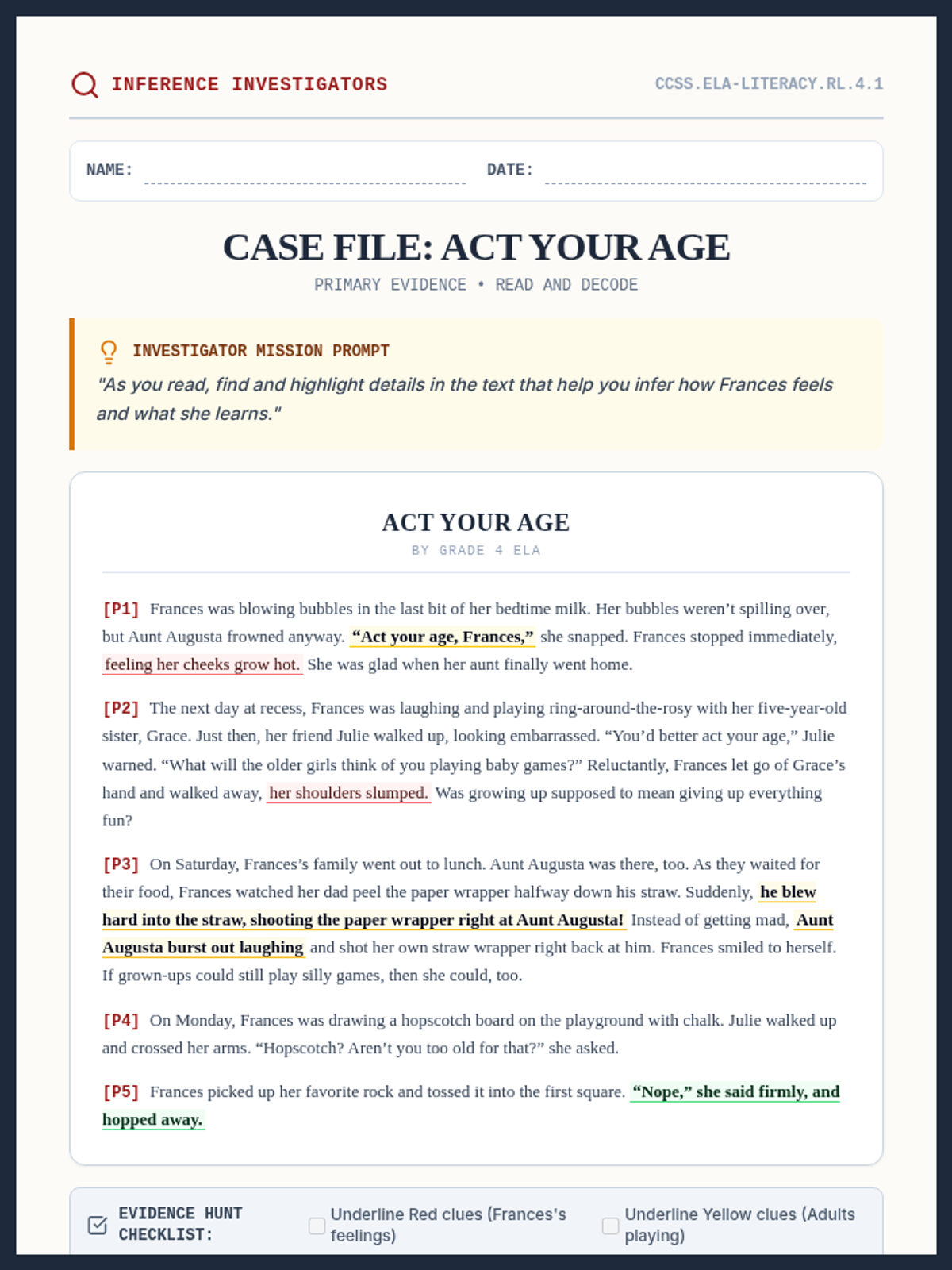
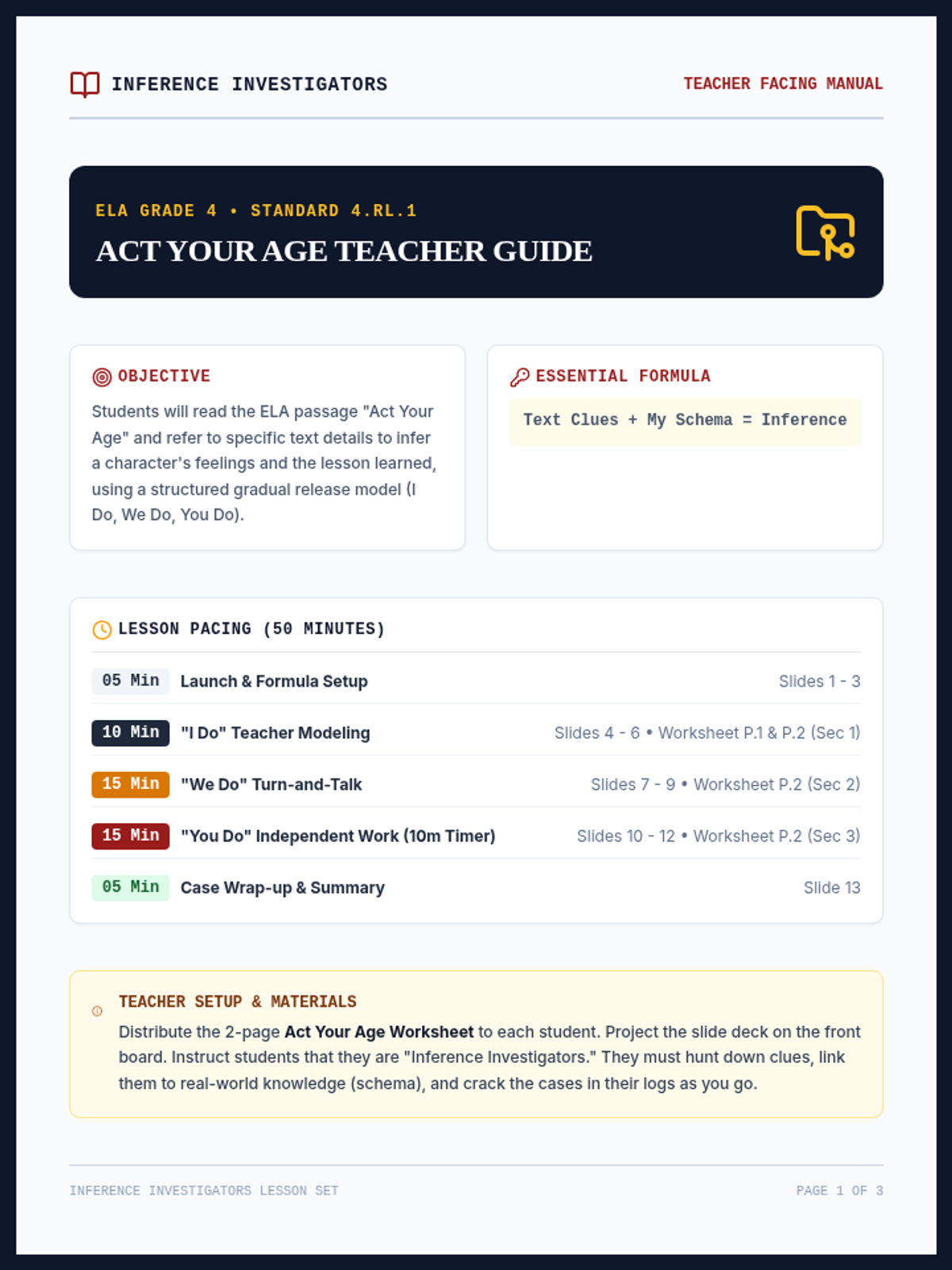
An engaging, detective-themed 4th Grade ELA lesson designed to teach students how to make text-based inferences using the story 'Act Your Age'. Follows an interactive 'I Do, We Do, You Do' gradual release model with class-wide discussion and turn-and-talk prompts.
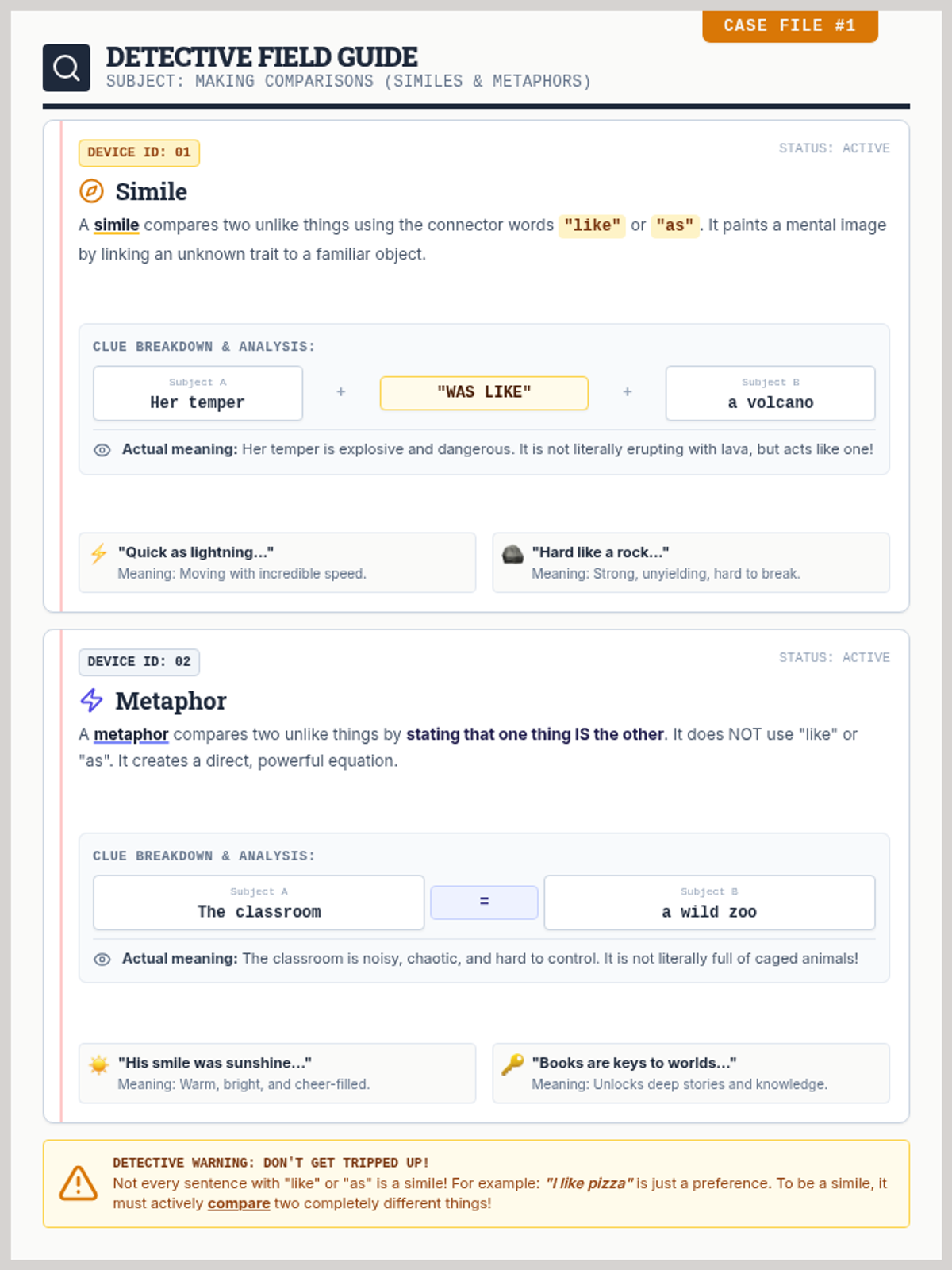
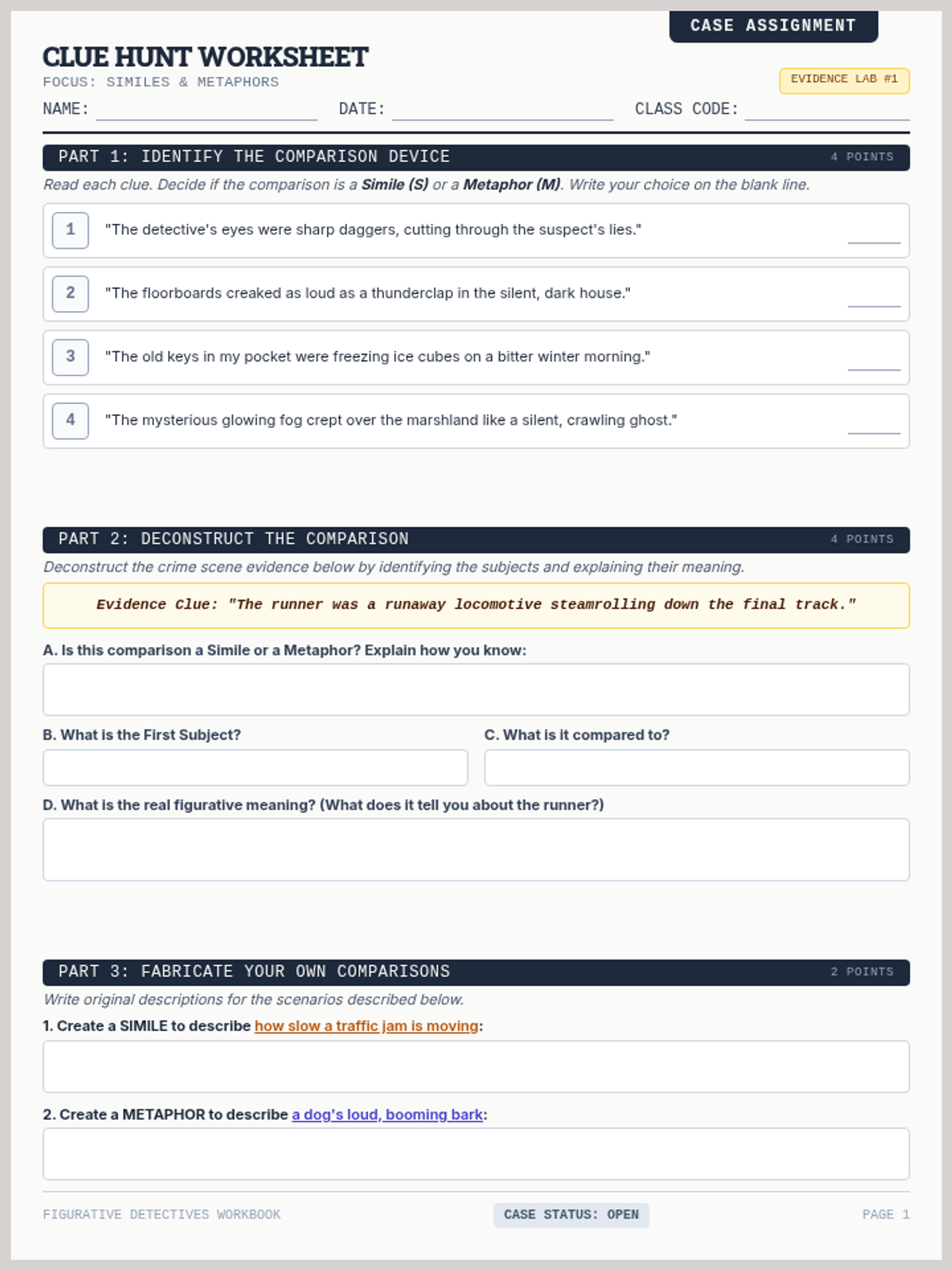
A comprehensive fourth-grade figurative language unit styled as a detective case file. Students act as 'word detectives' tracking down similes, metaphors, idioms, and alliteration through engaging visual guides, targeted clue hunts, and reading passage investigations.
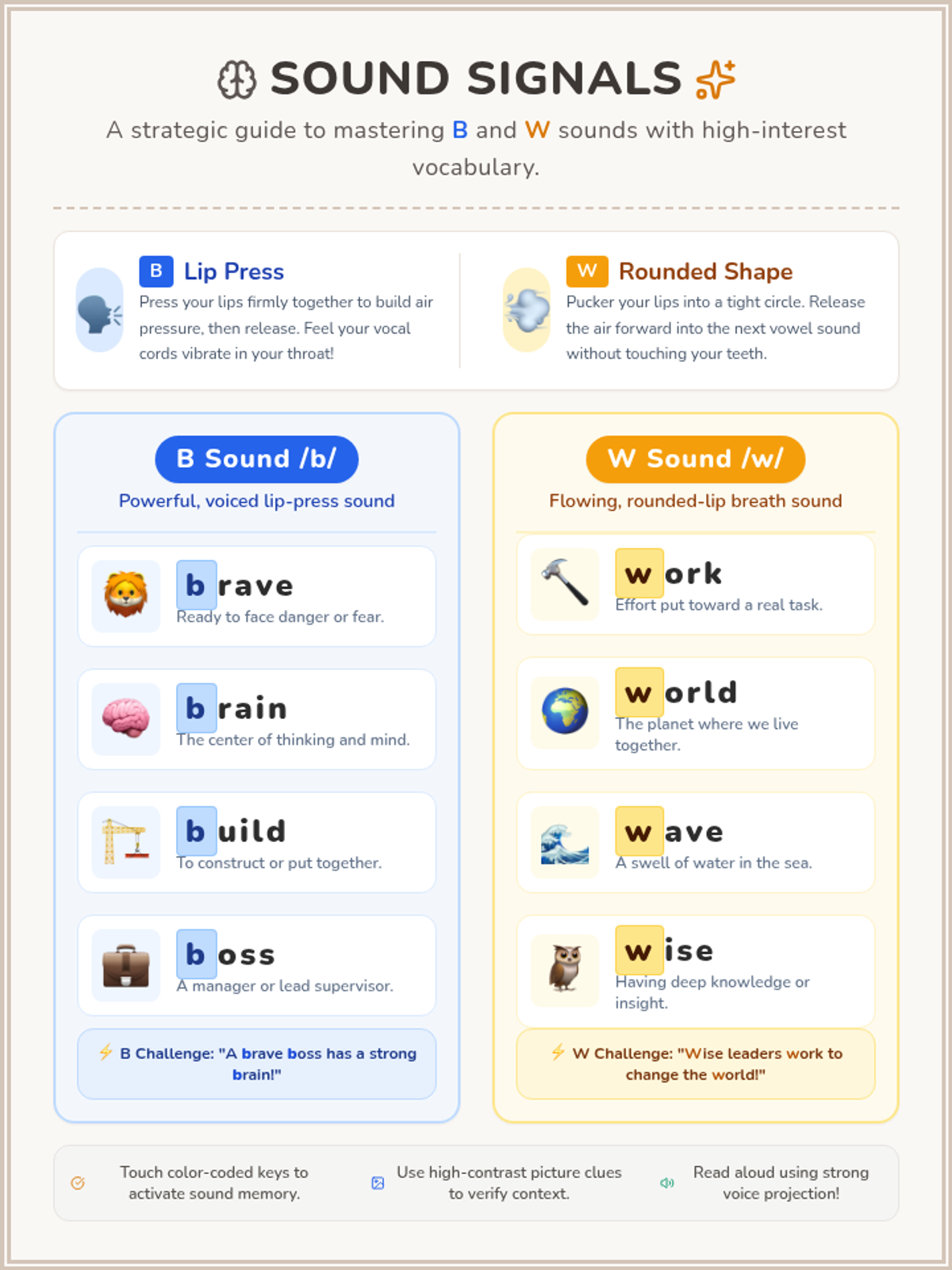
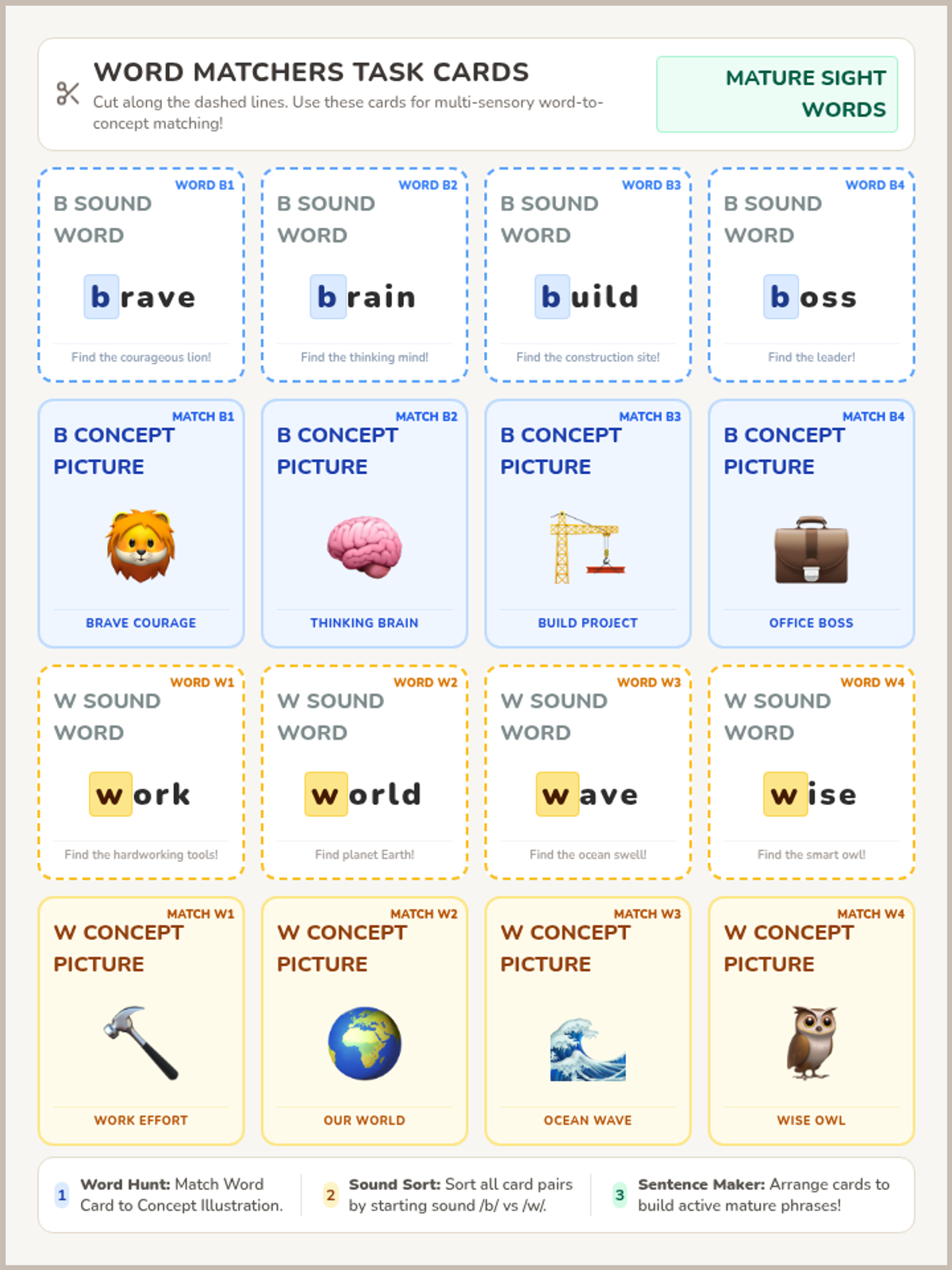
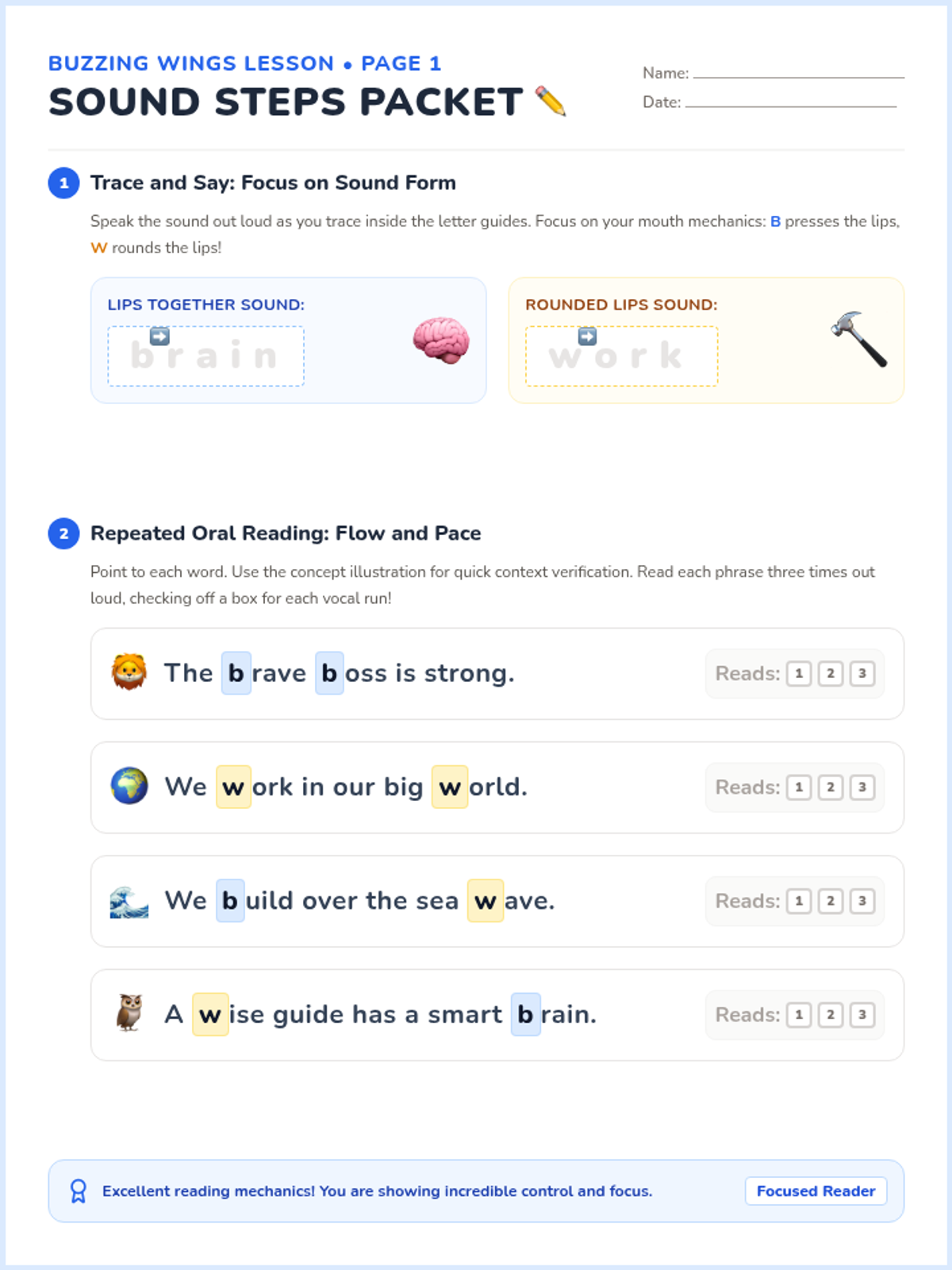
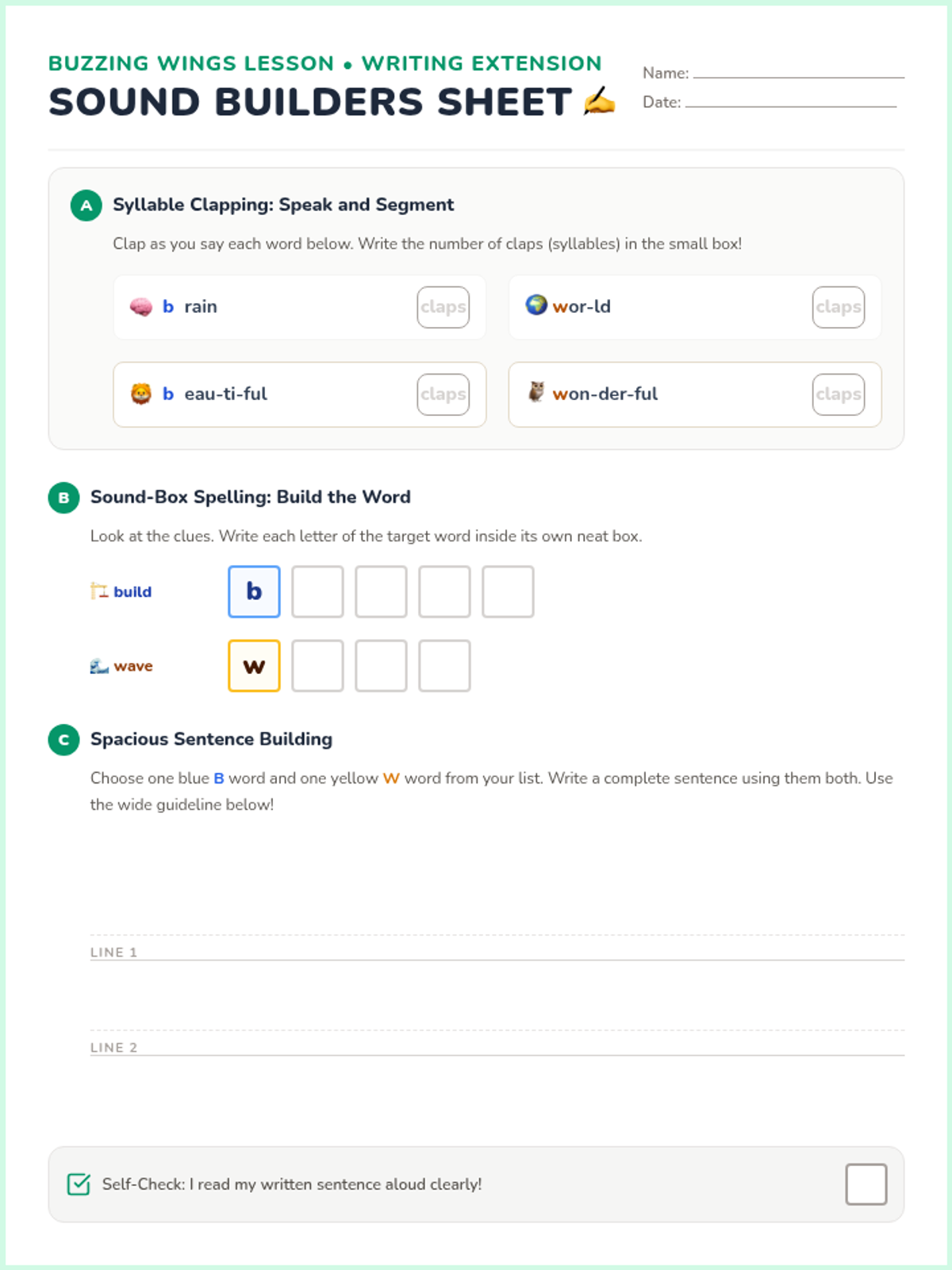
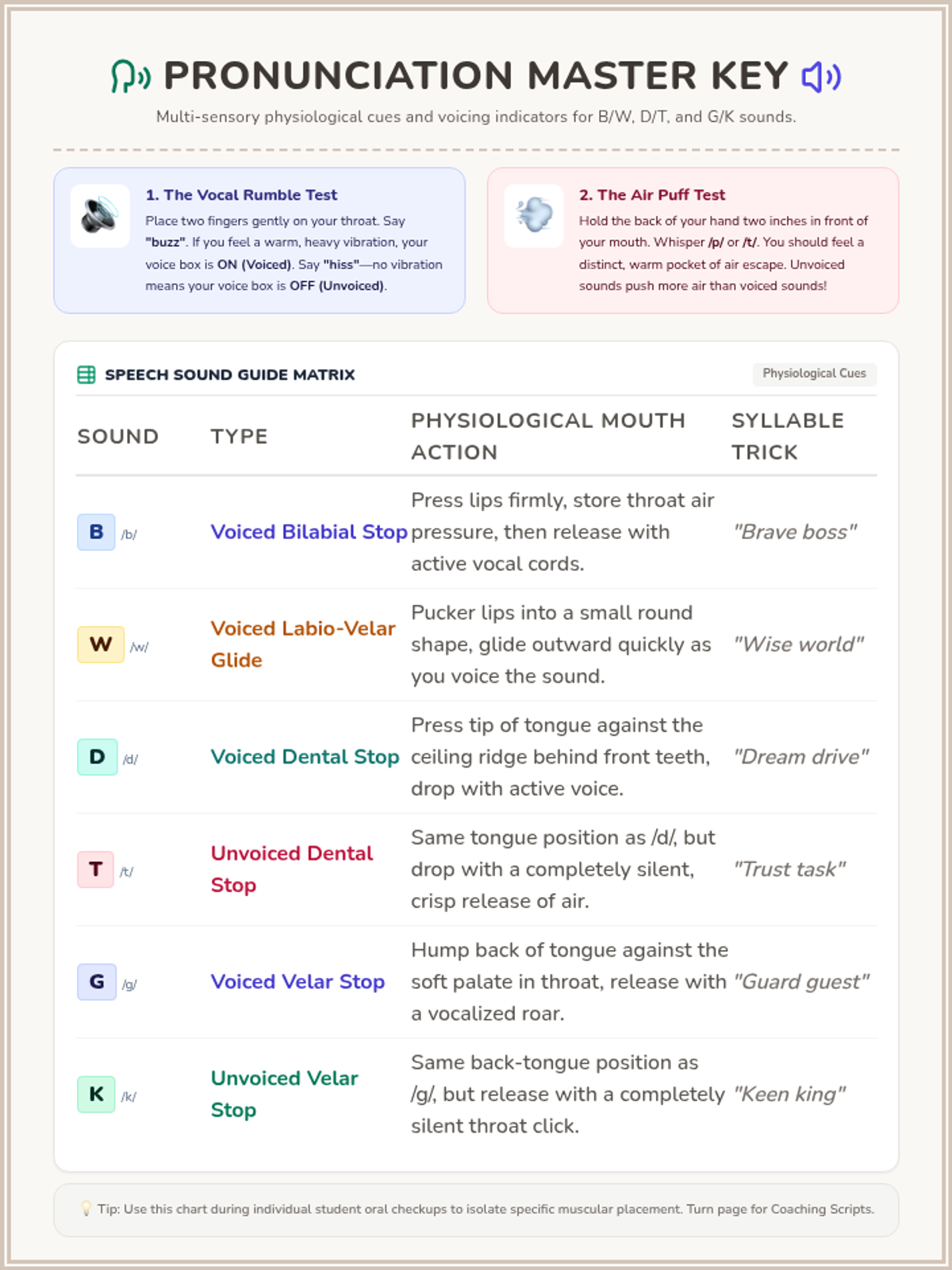
An hour-long structured reading lesson focusing on B and W letter-sound association and common sight words. Designed with dyslexia-friendly spacing, color-coded highlights, and picture scaffolding to support struggling oral readers.
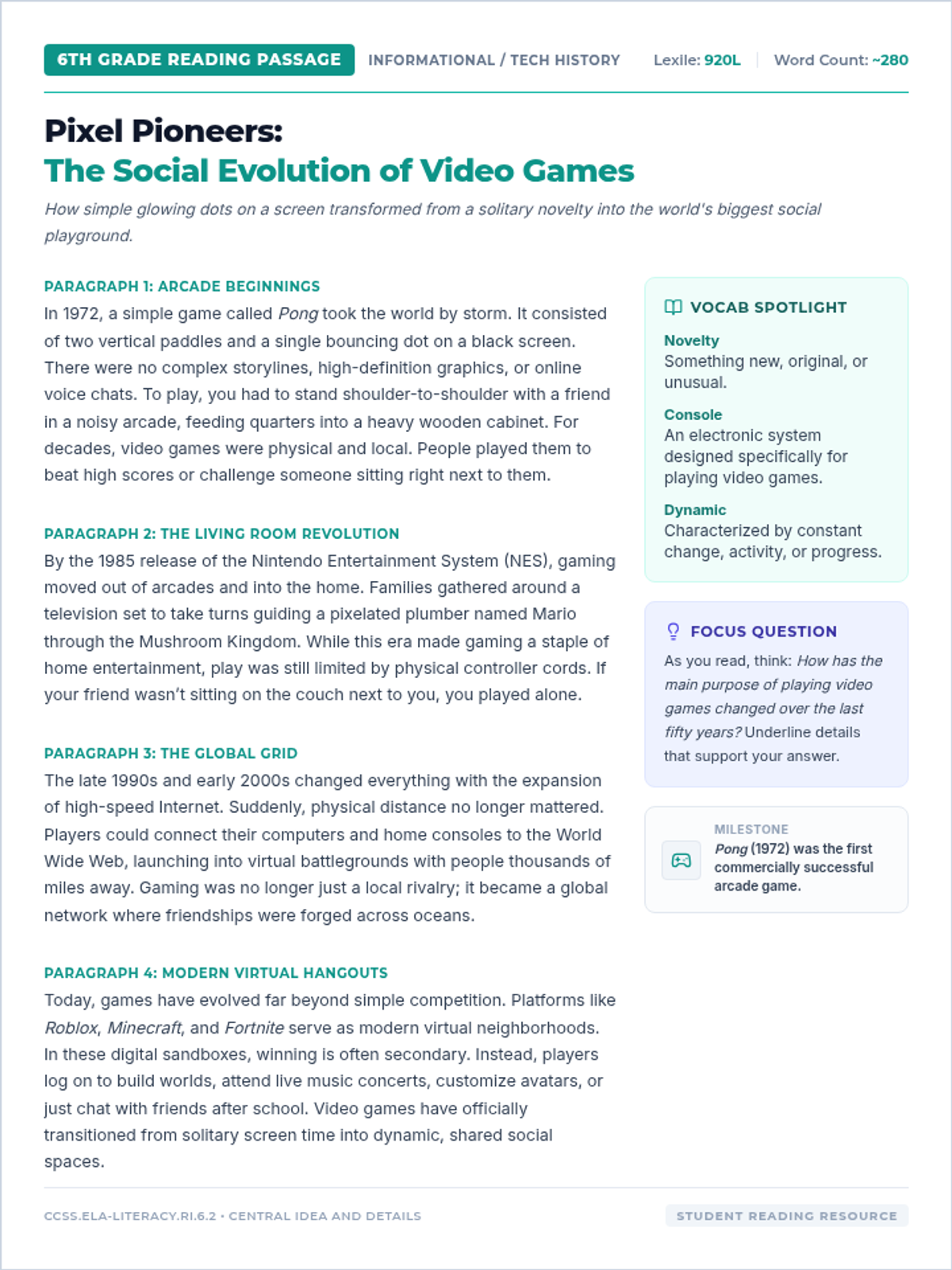
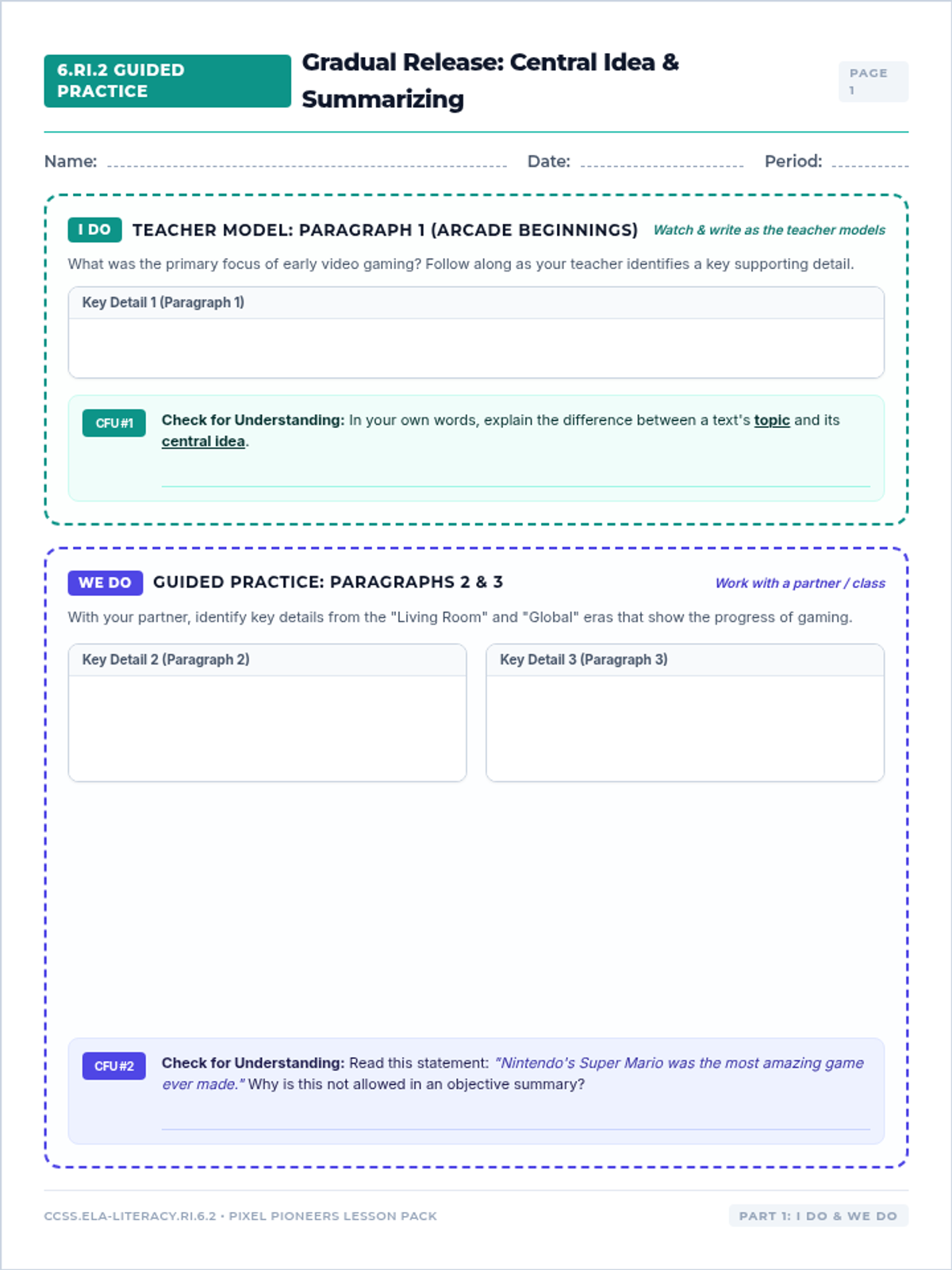
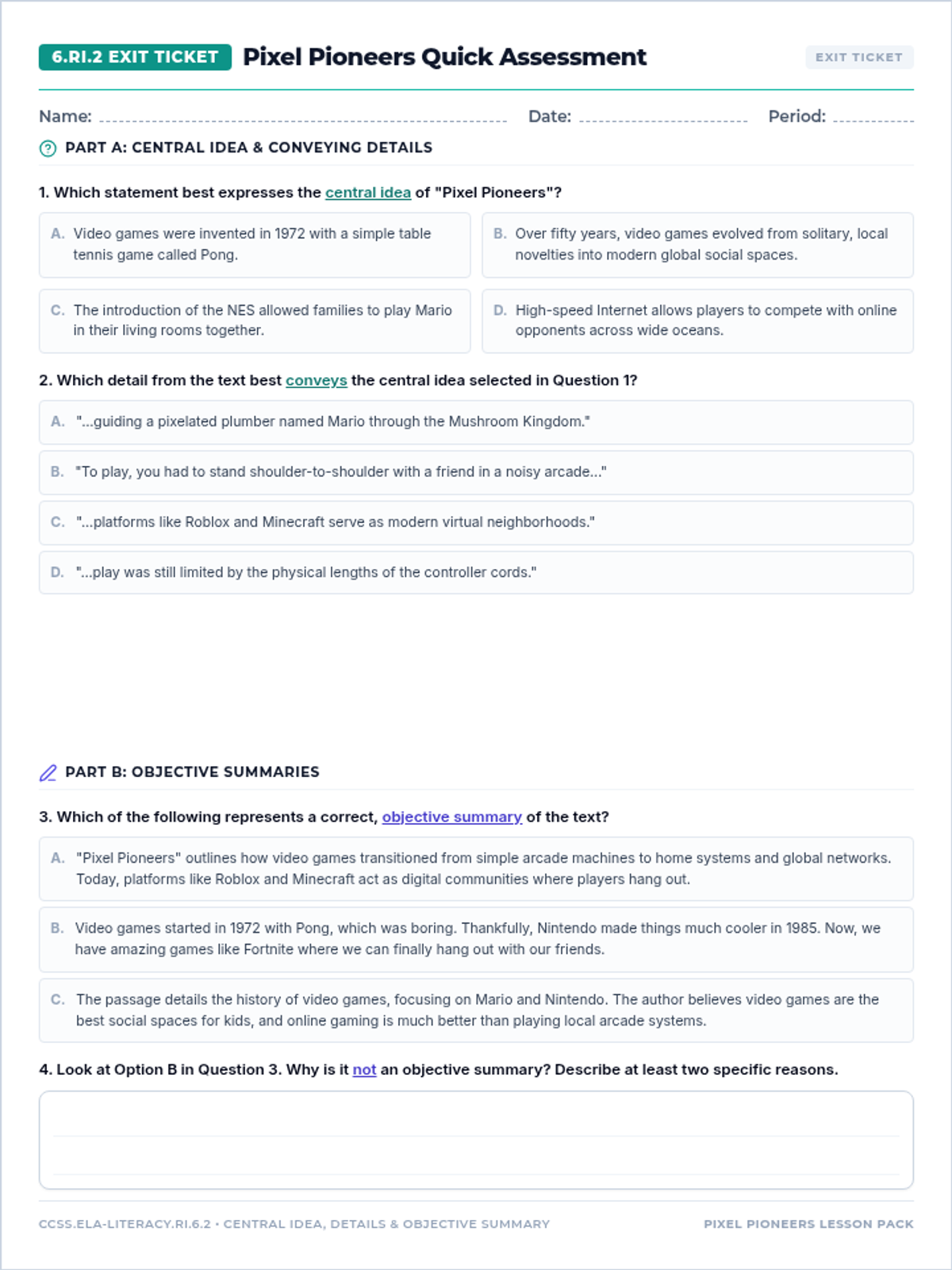
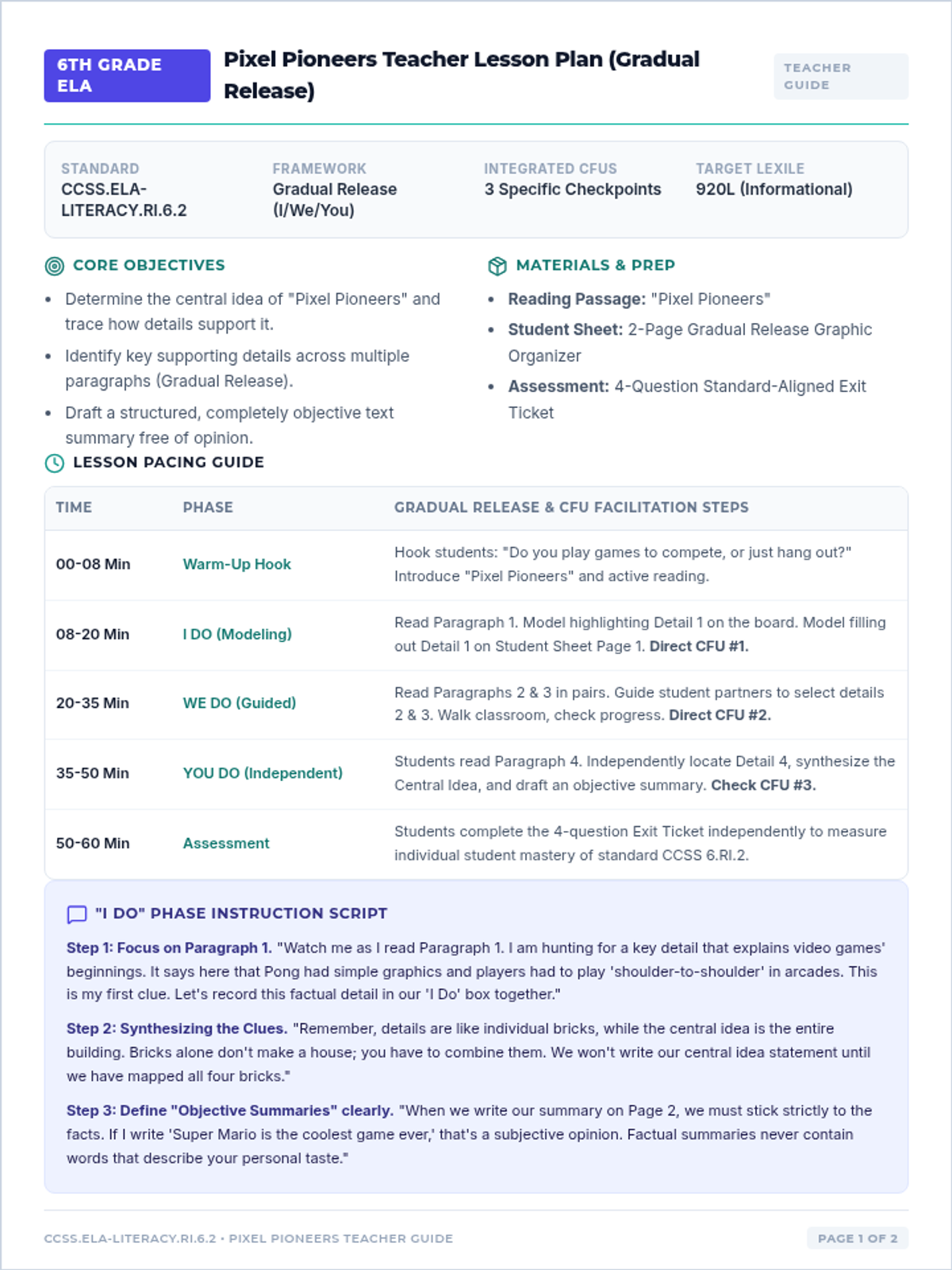
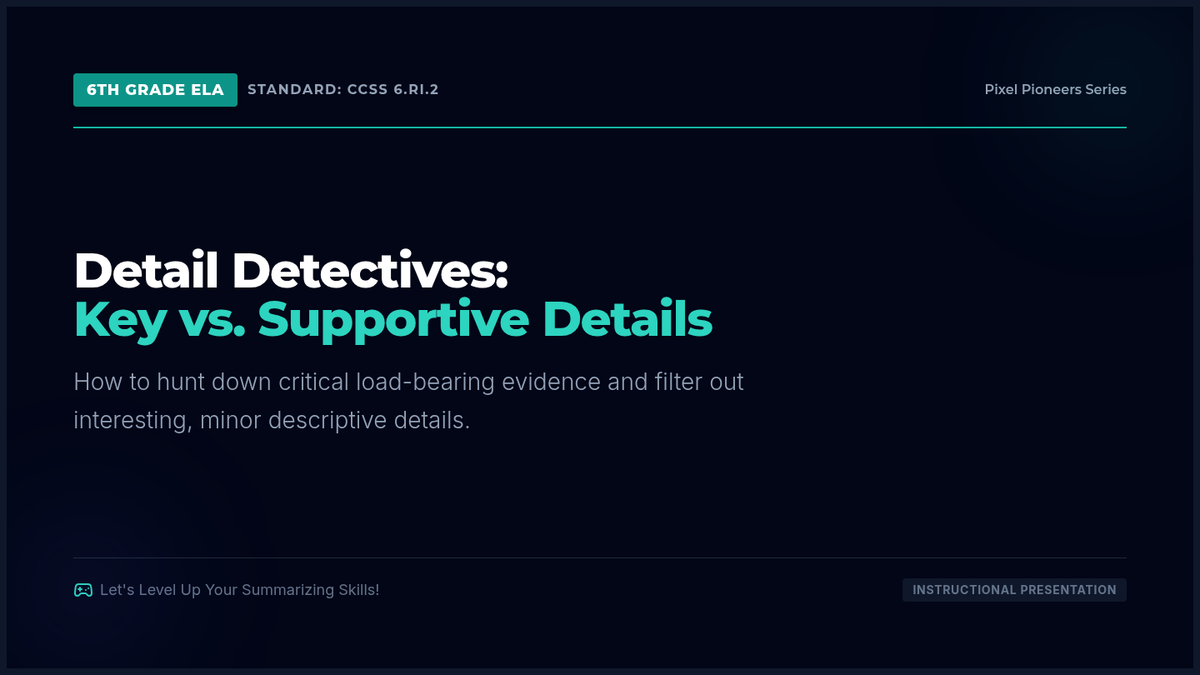
An instructional lesson for 6th grade ELA focused on identifying central ideas, supporting details, and writing objective summaries using a history of video games passage.
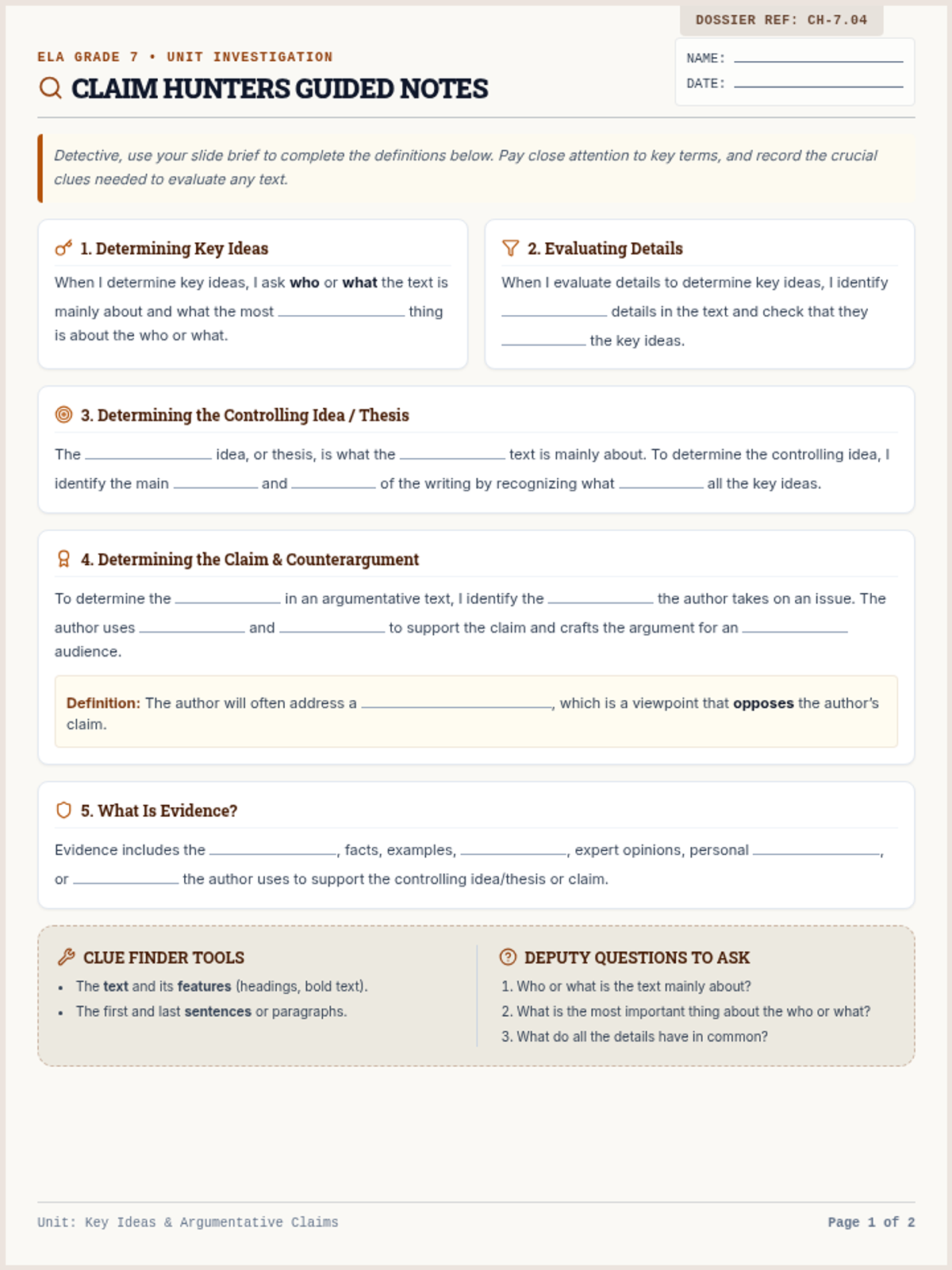
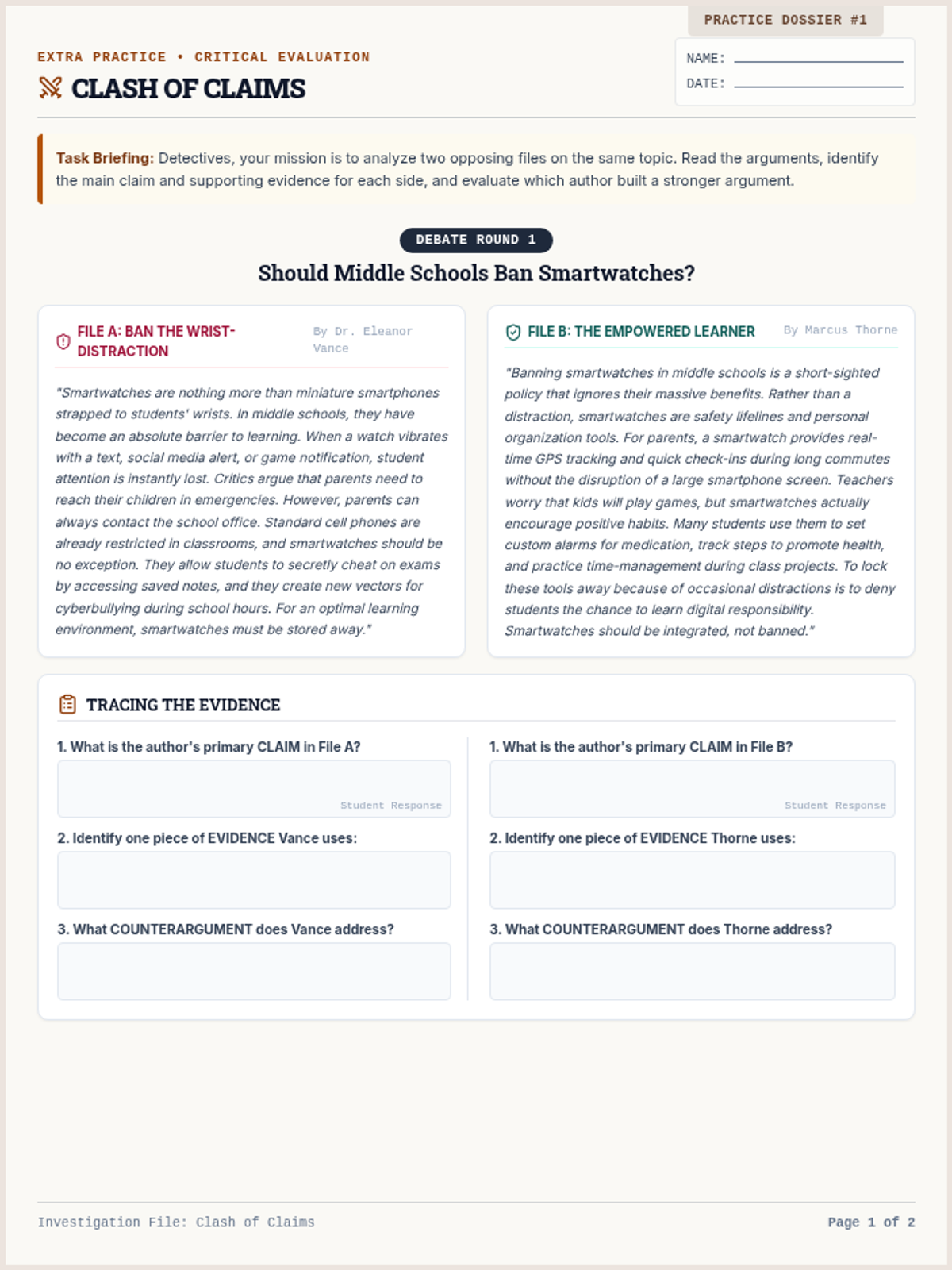
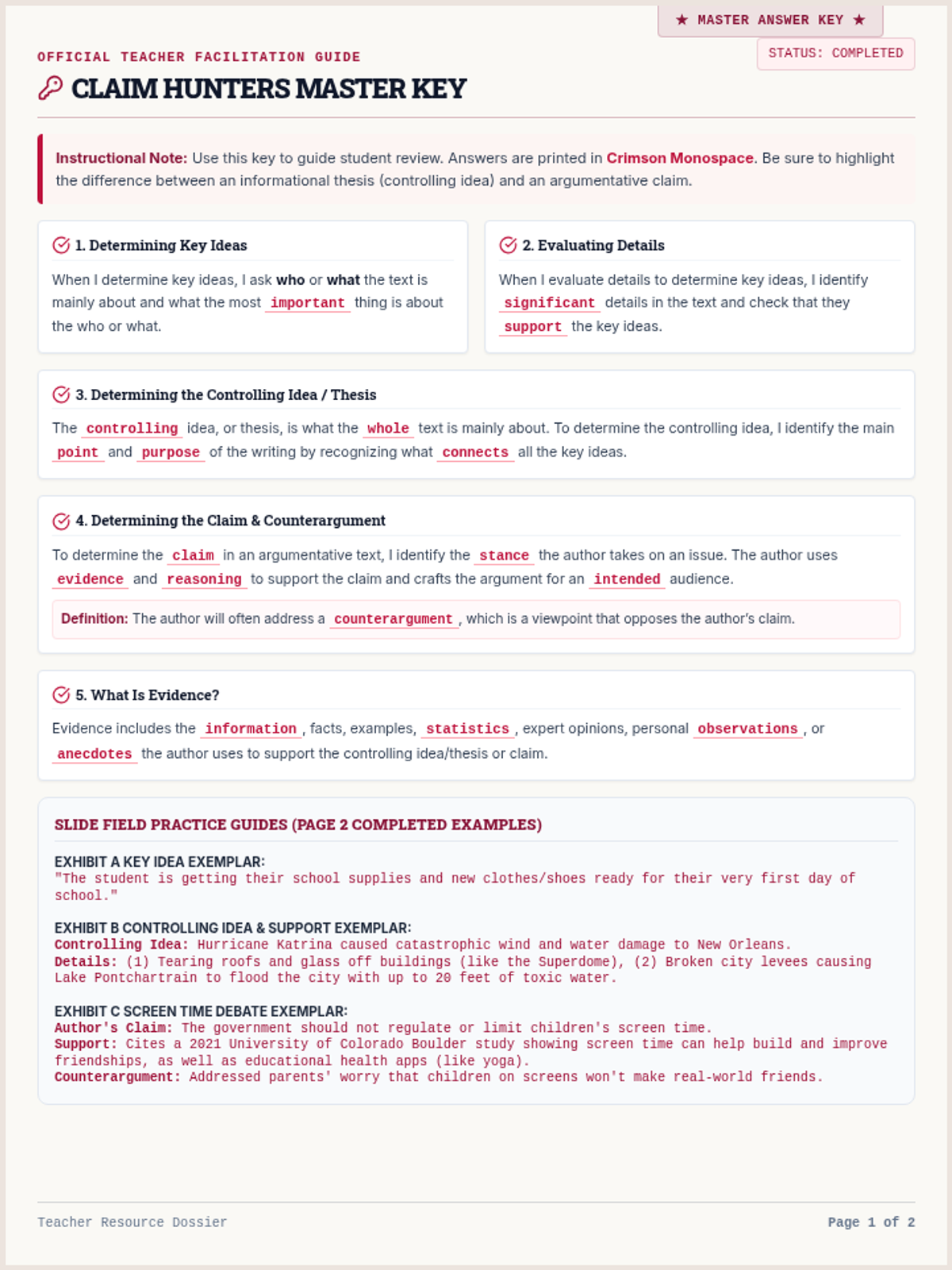
A seventh-grade ELA lesson focused on identifying key ideas, controlling ideas, and argumentative claims with supporting evidence. Students complete a structured guided-notes packet based on instructional slides and apply their skills to evaluate opposing viewpoints.
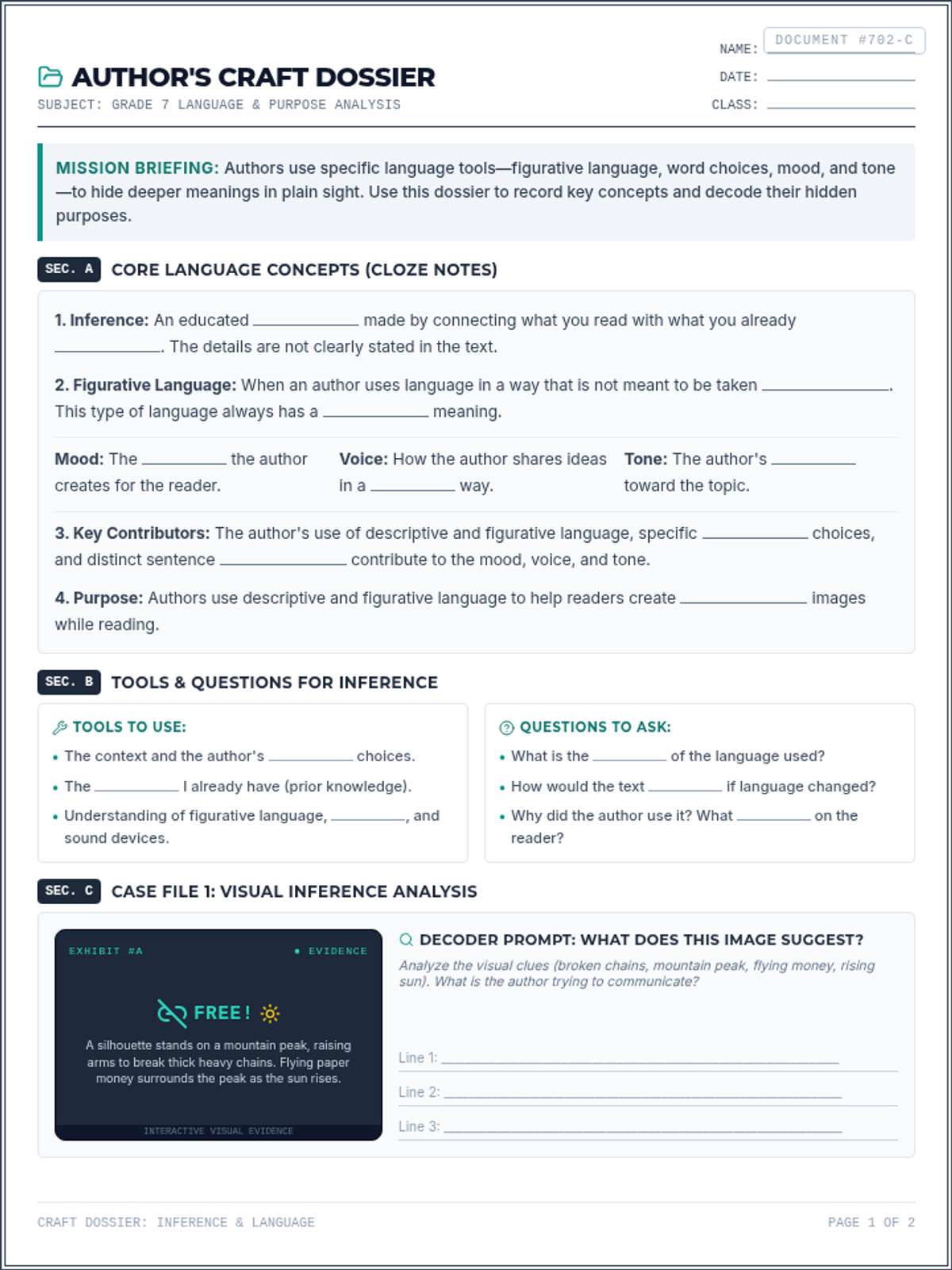
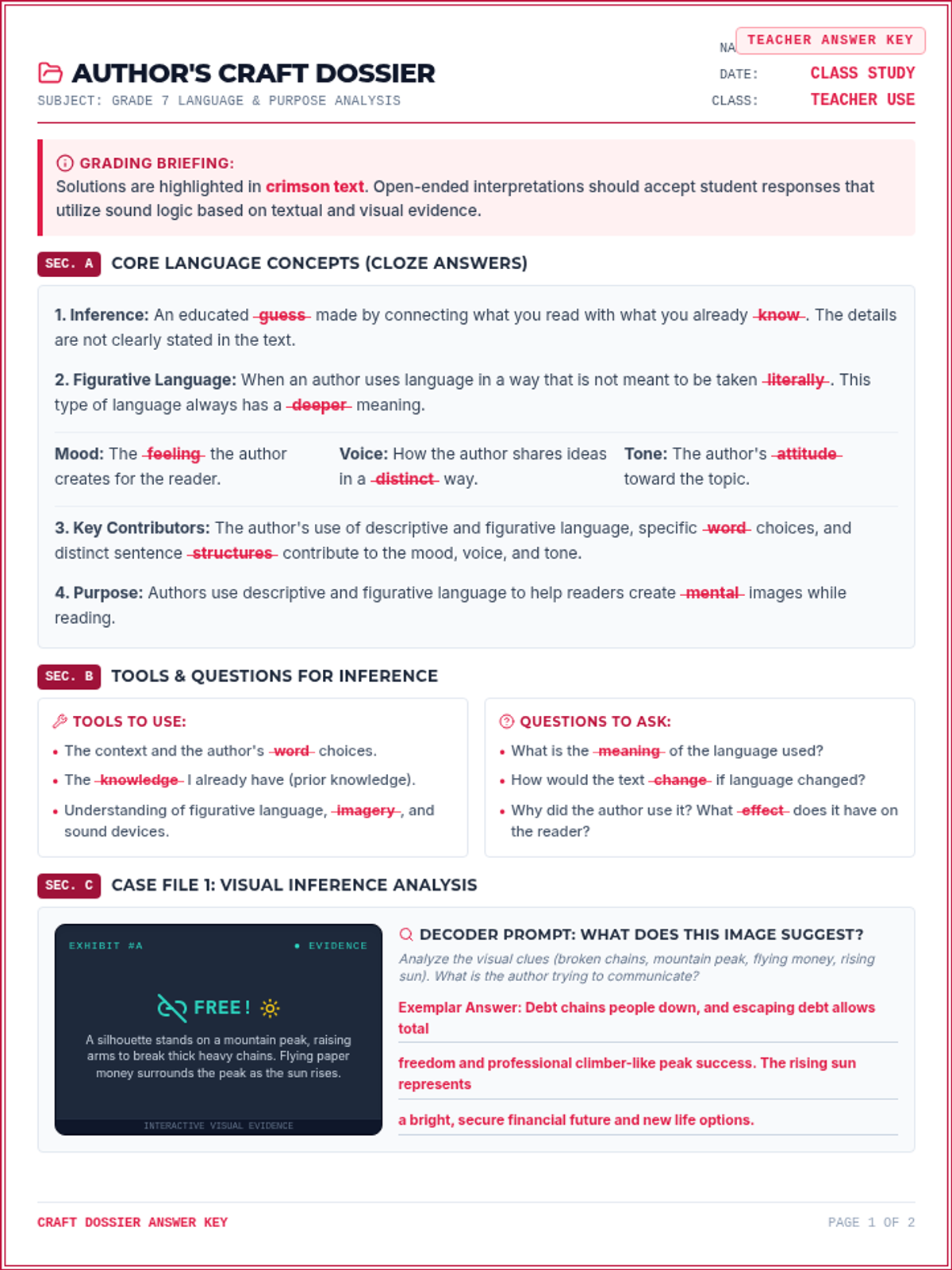
A lesson focused on teaching grade 7 students how to make inferences about an author's use of language, including figurative language, mood, and tone, to understand their specific purposes. Students complete guided cloze notes and apply their learning to analyze Hughes's poem 'Dreams' and identify terms.
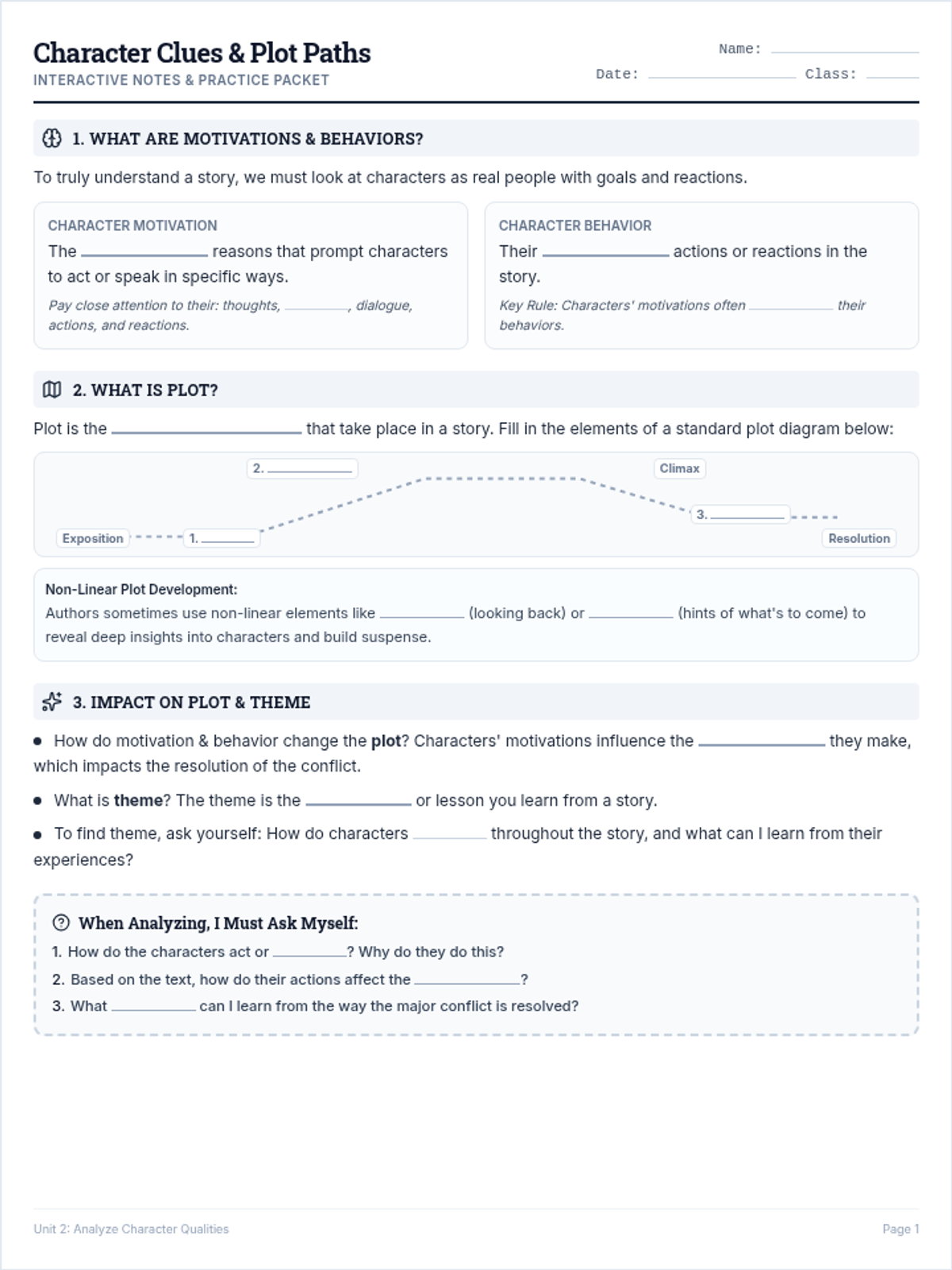
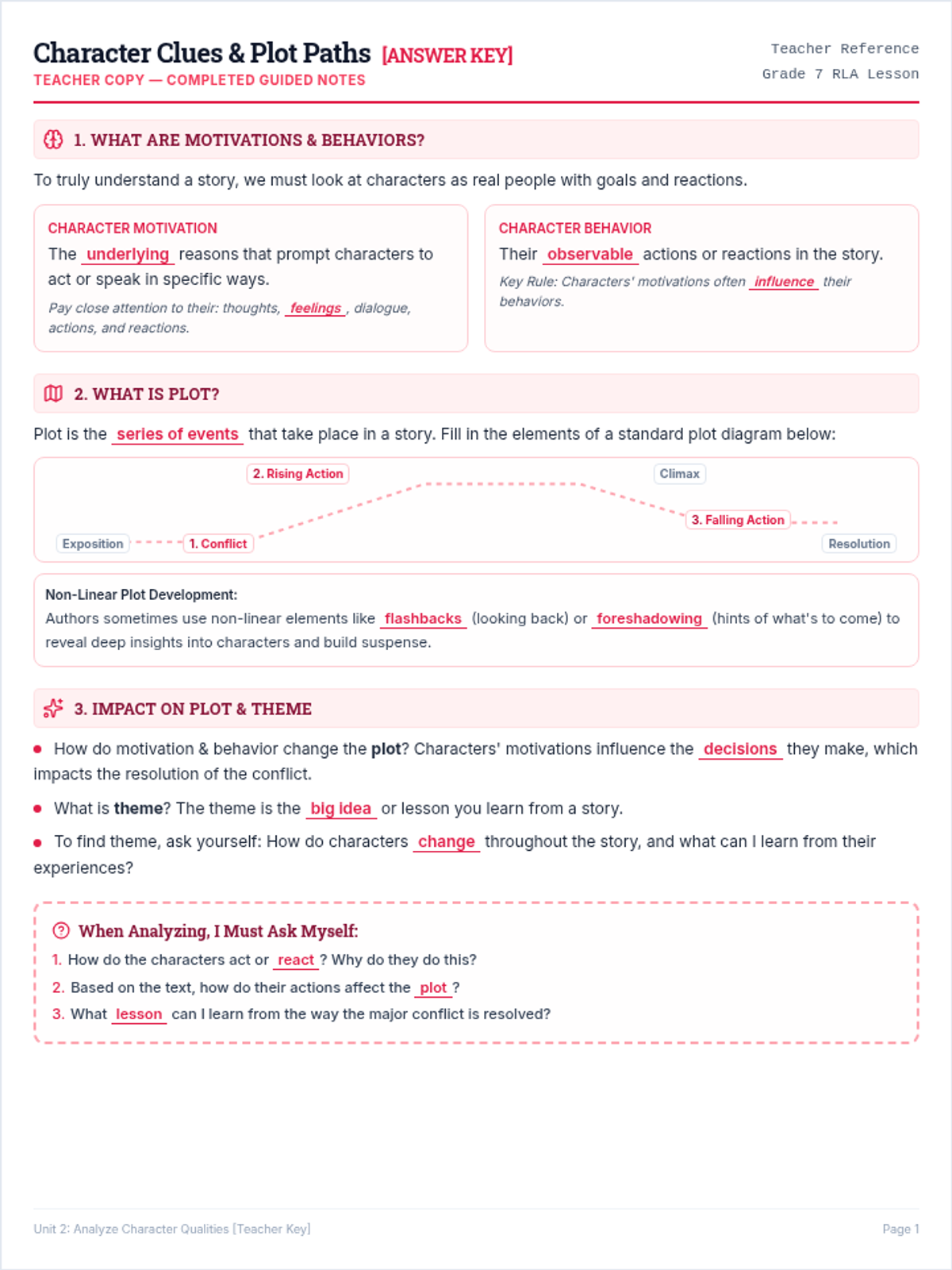
A comprehensive lesson analyzing character motivations, behaviors, and their impacts on plot development and themes using excerpts from The Hunger Games.