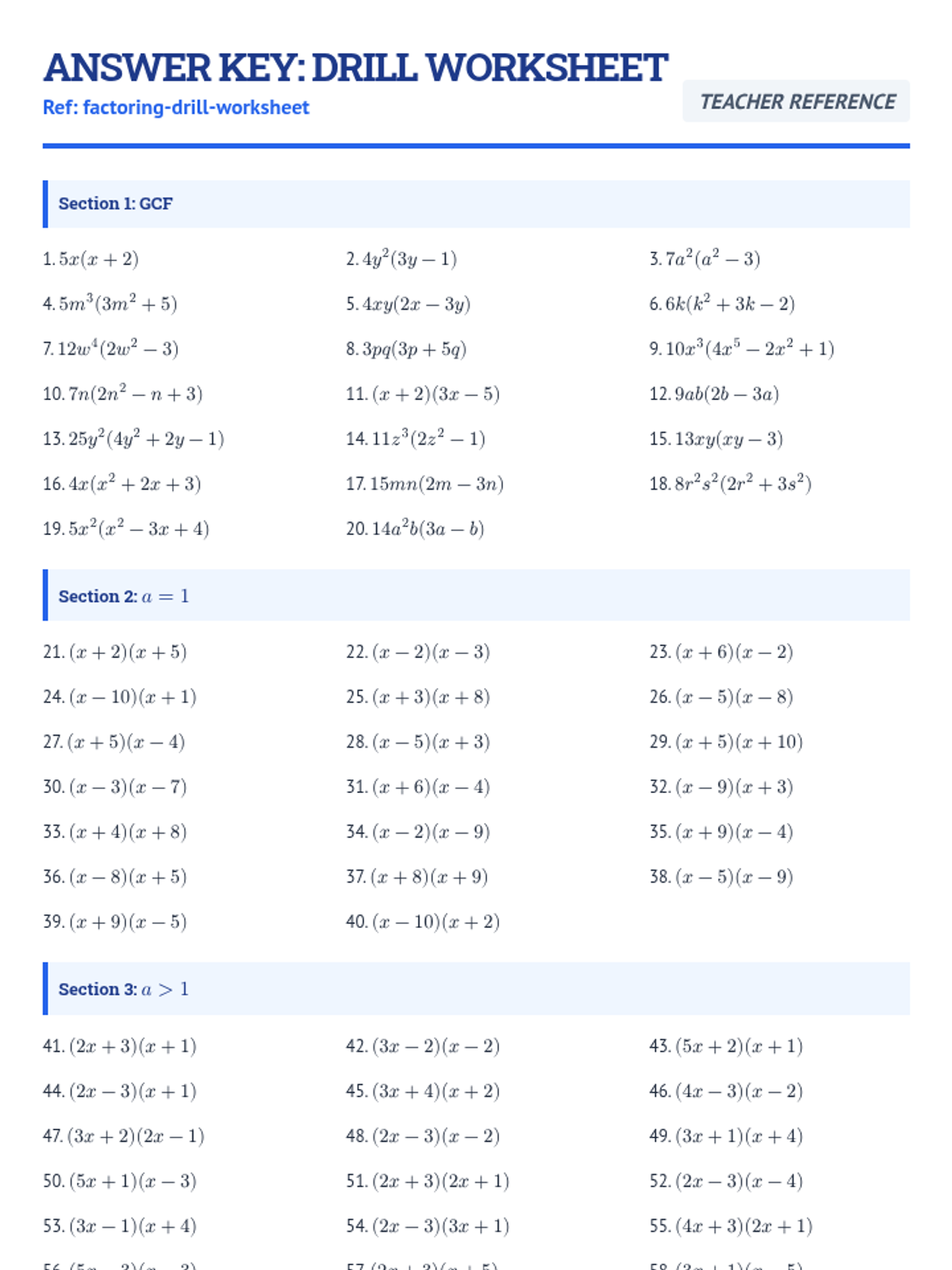
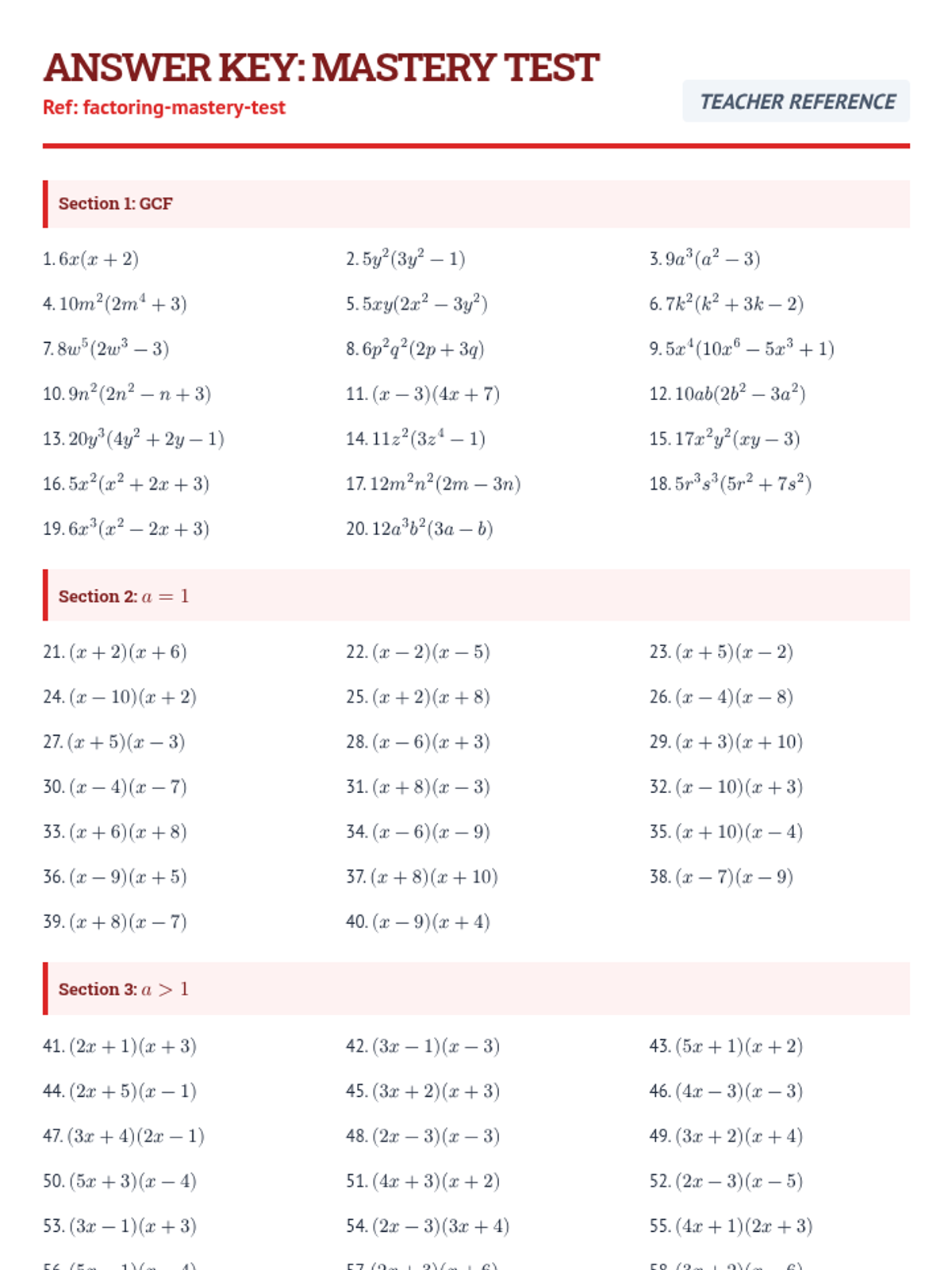
A lesson focused on identifying and applying special product patterns and factoring techniques for binomials and trinomials, including sum and difference of cubes and perfect square trinomials.
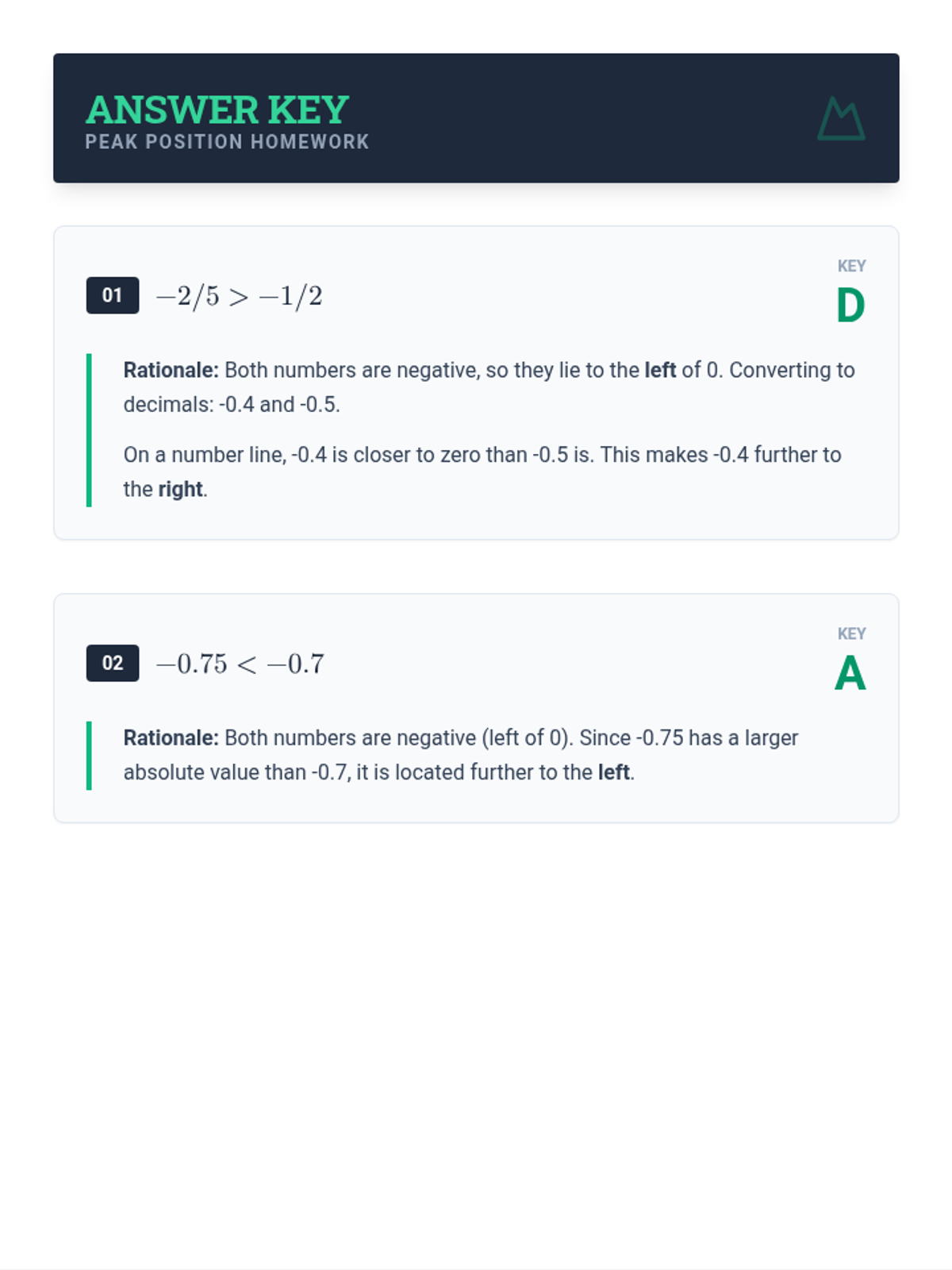
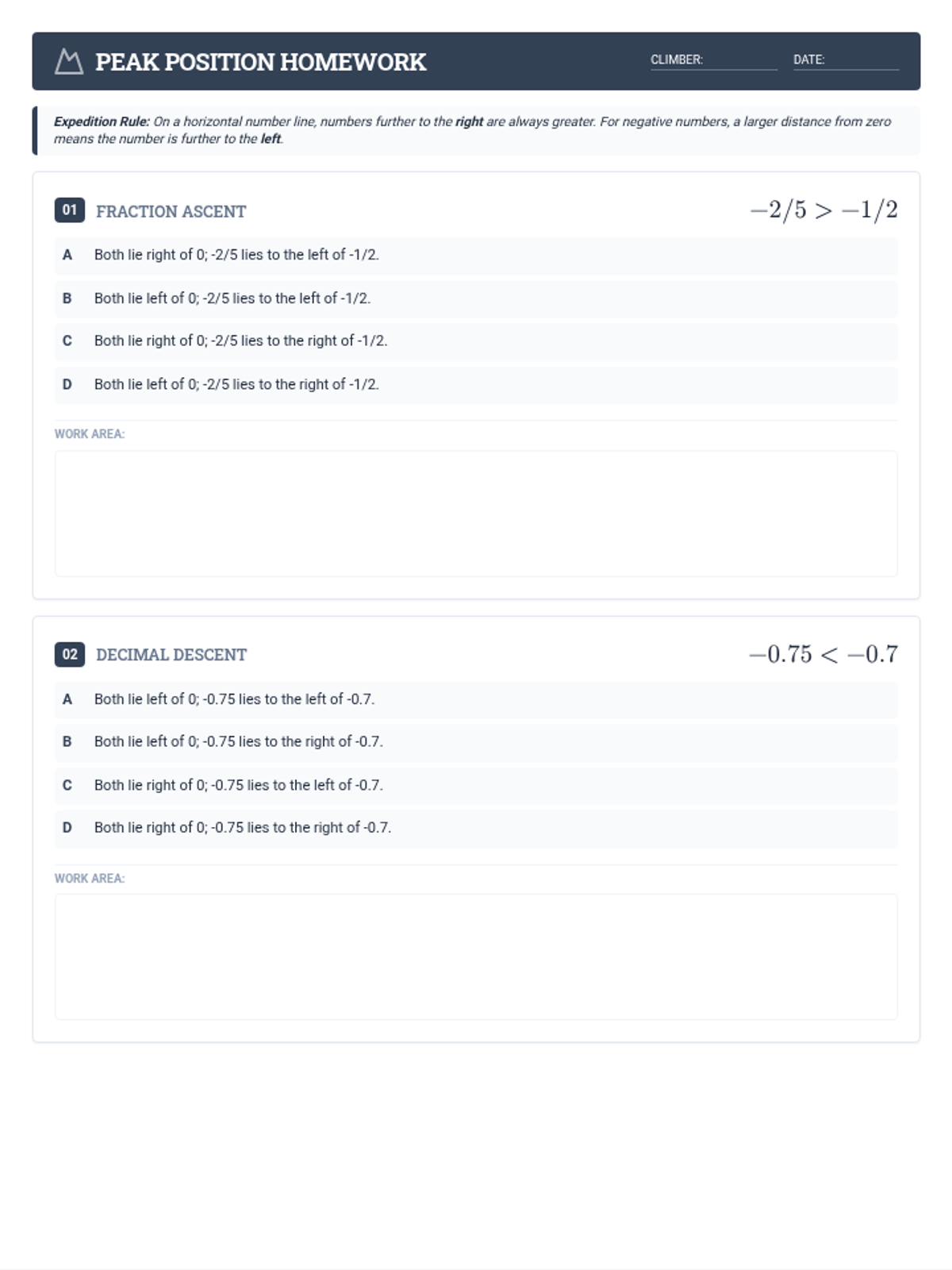
A lesson focused on comparing and ordering rational numbers on a number line, specifically focusing on negative values and their relative positions.
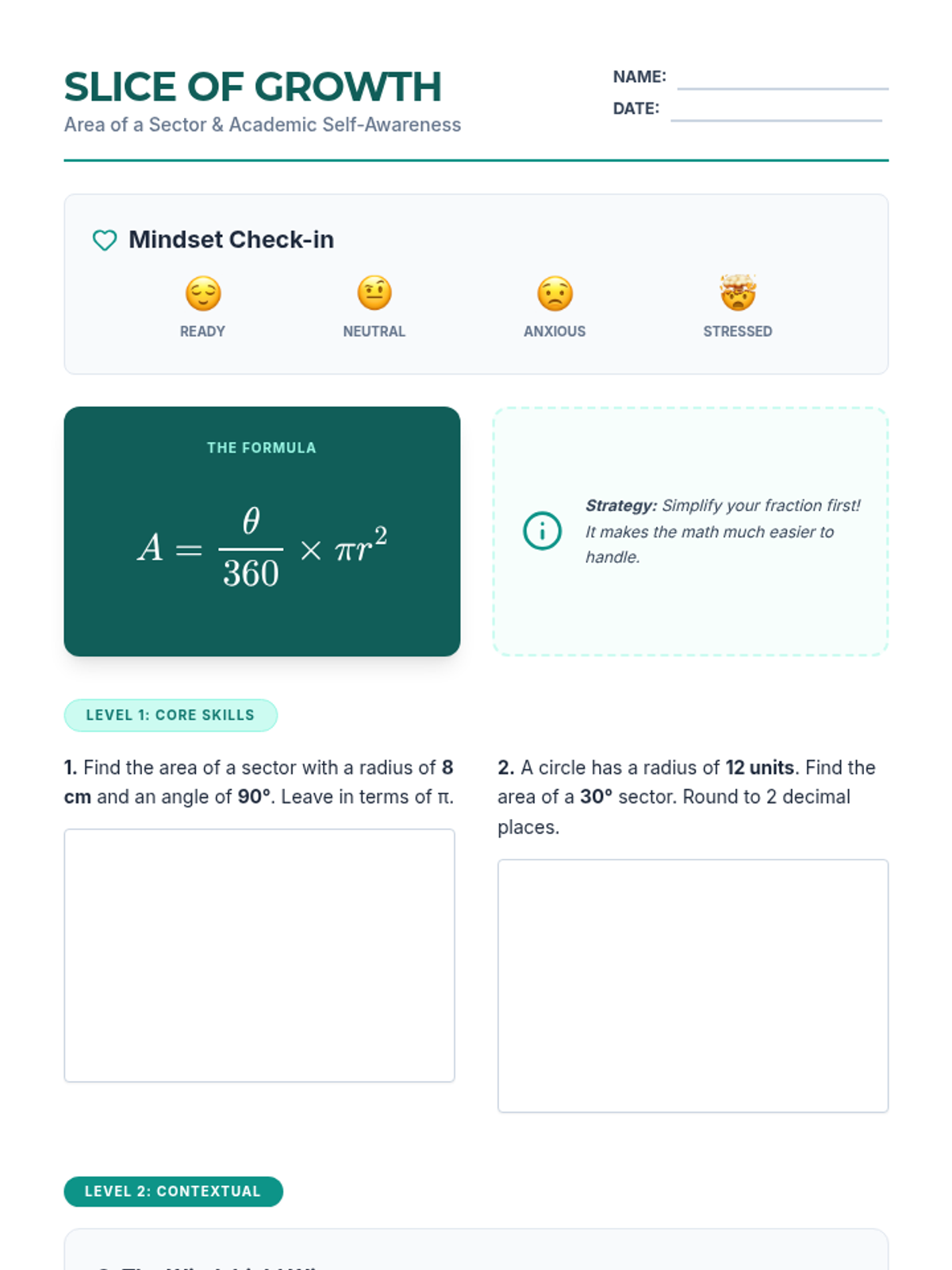
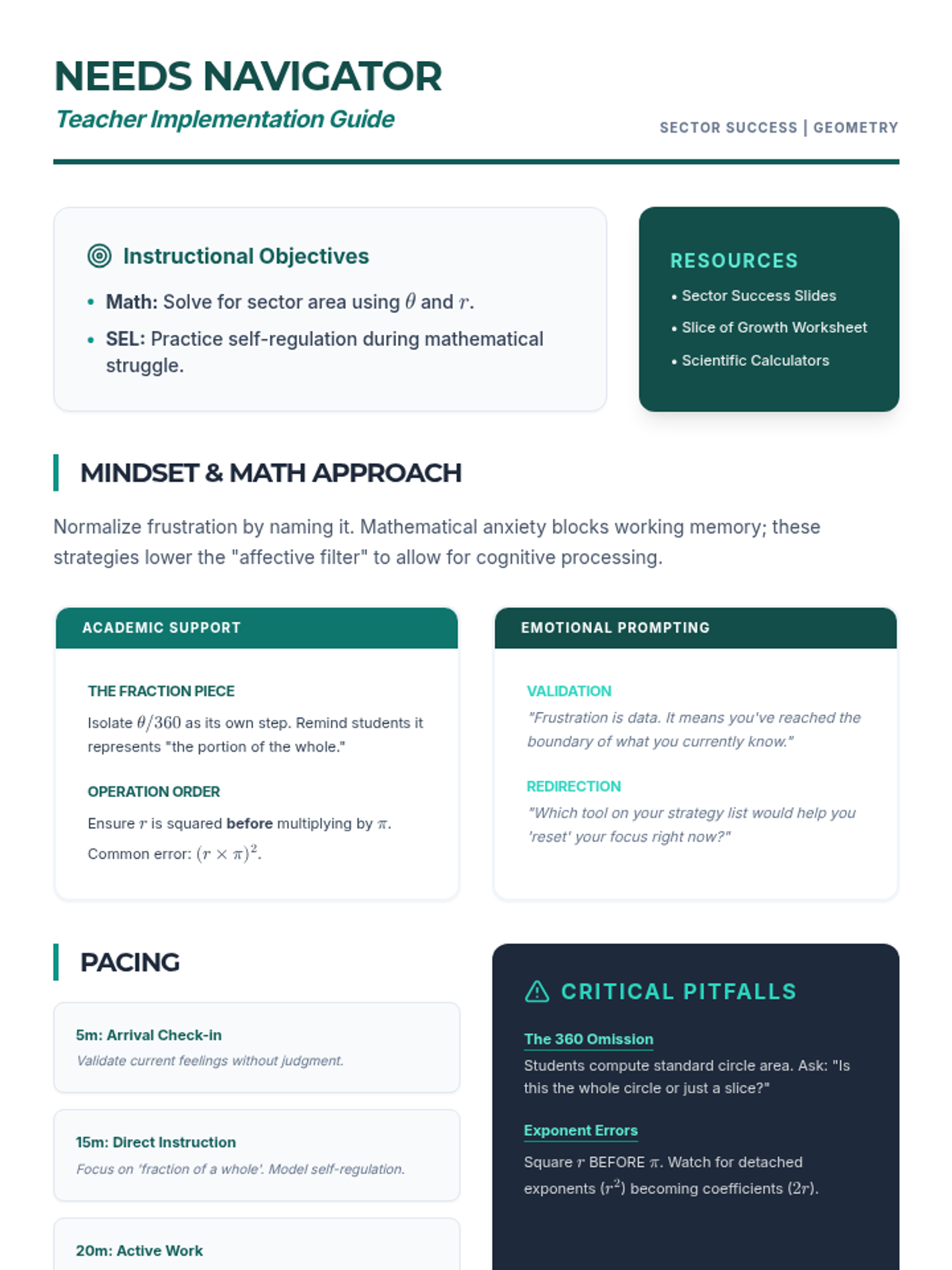
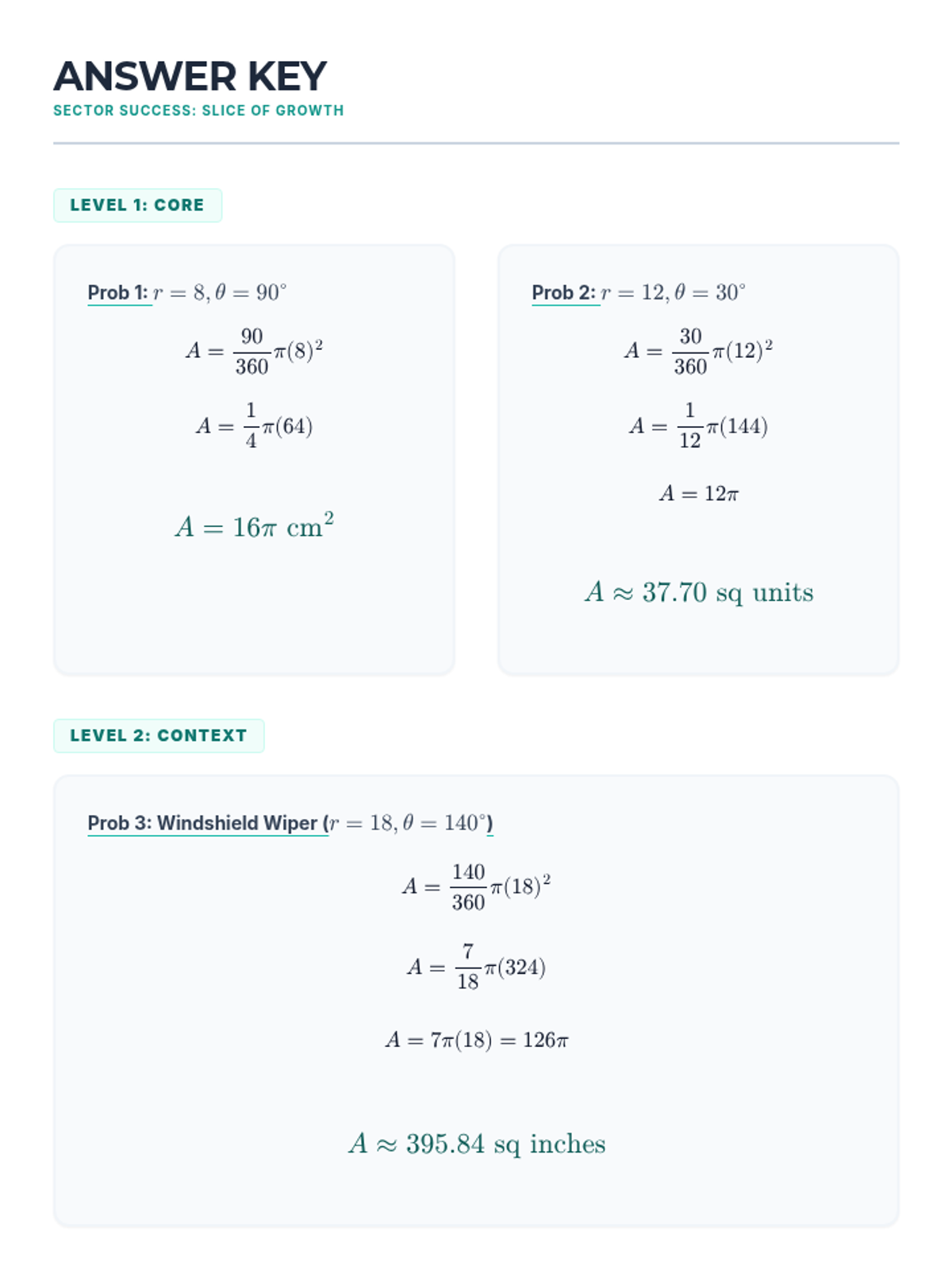
A geometry lesson that balances rigorous academic instruction on calculating the area of a sector with integrated social-emotional support strategies. Students learn the mathematical formula while practicing self-regulation and academic self-advocacy.
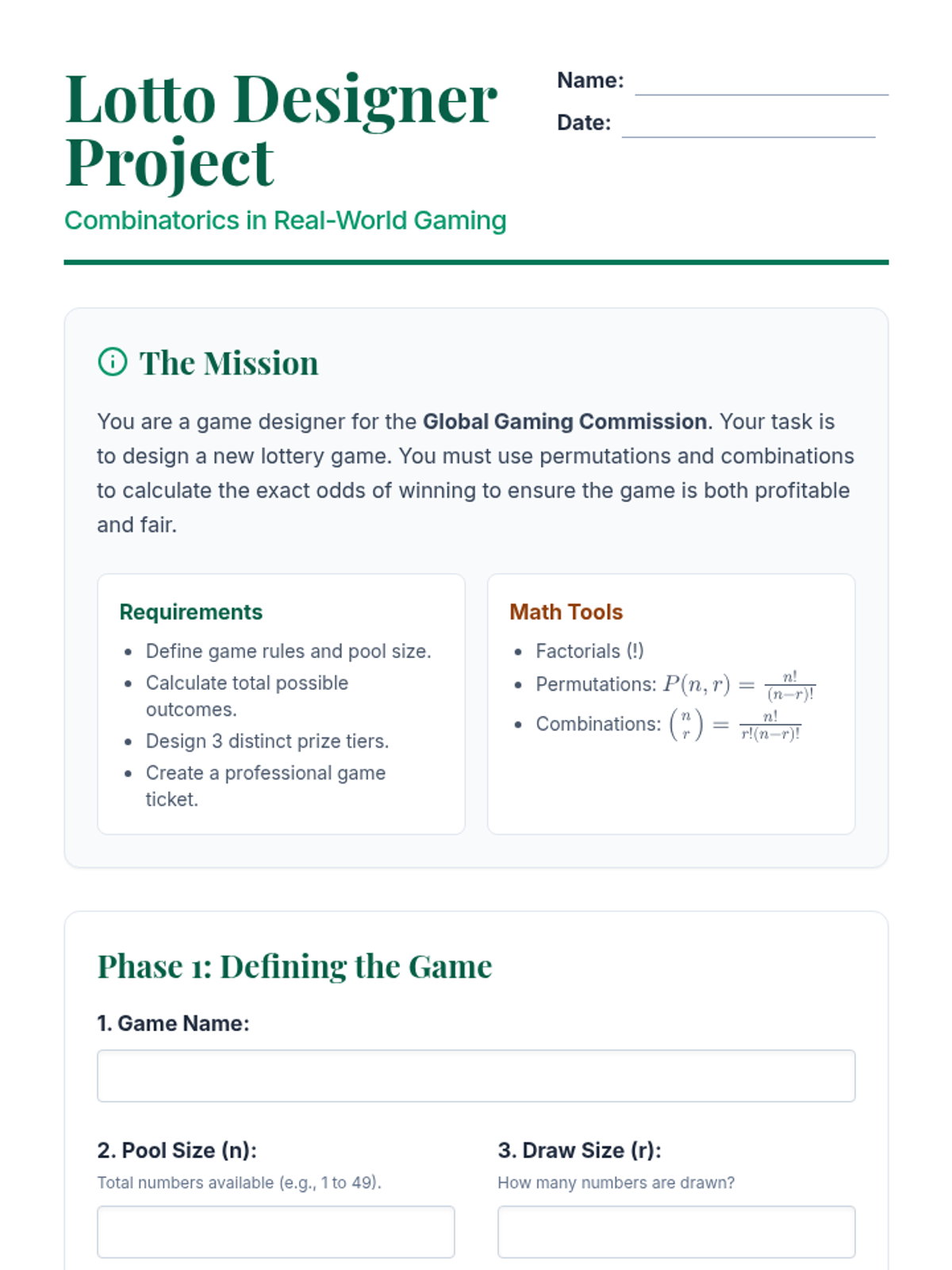
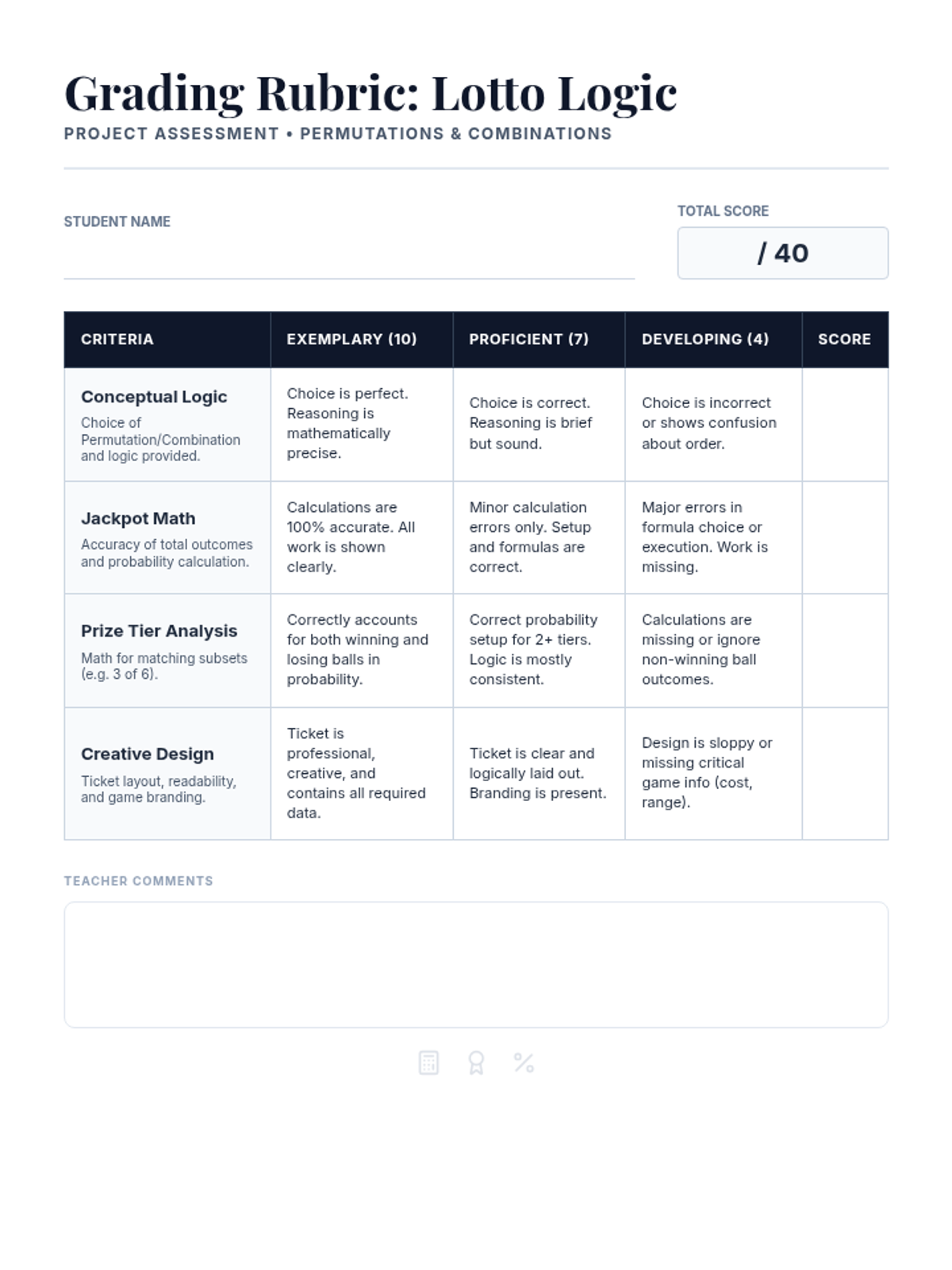
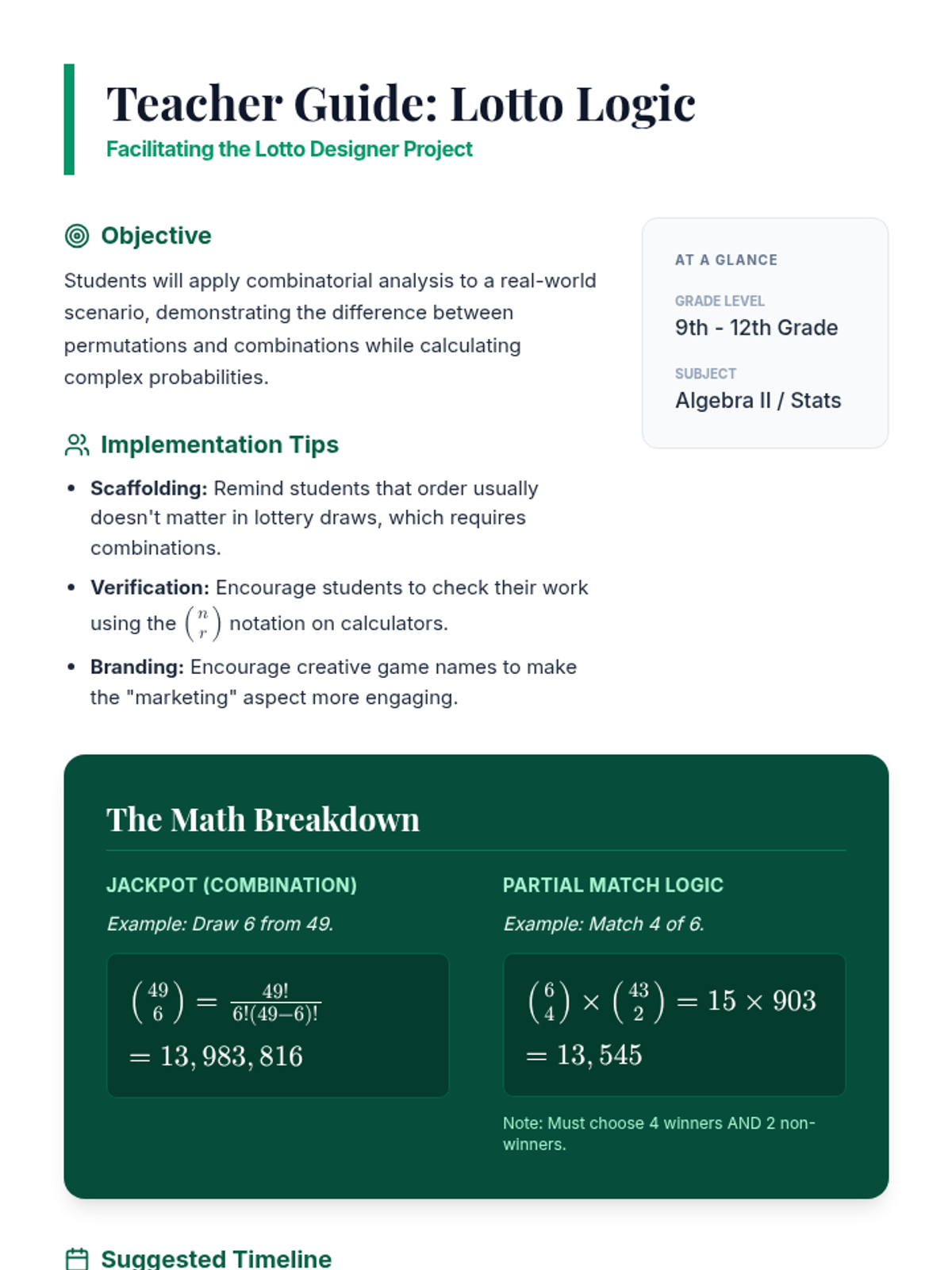
Students apply their knowledge of permutations and combinations to design their own lottery game, calculating the odds of winning and presenting their mathematical findings in a professional format.
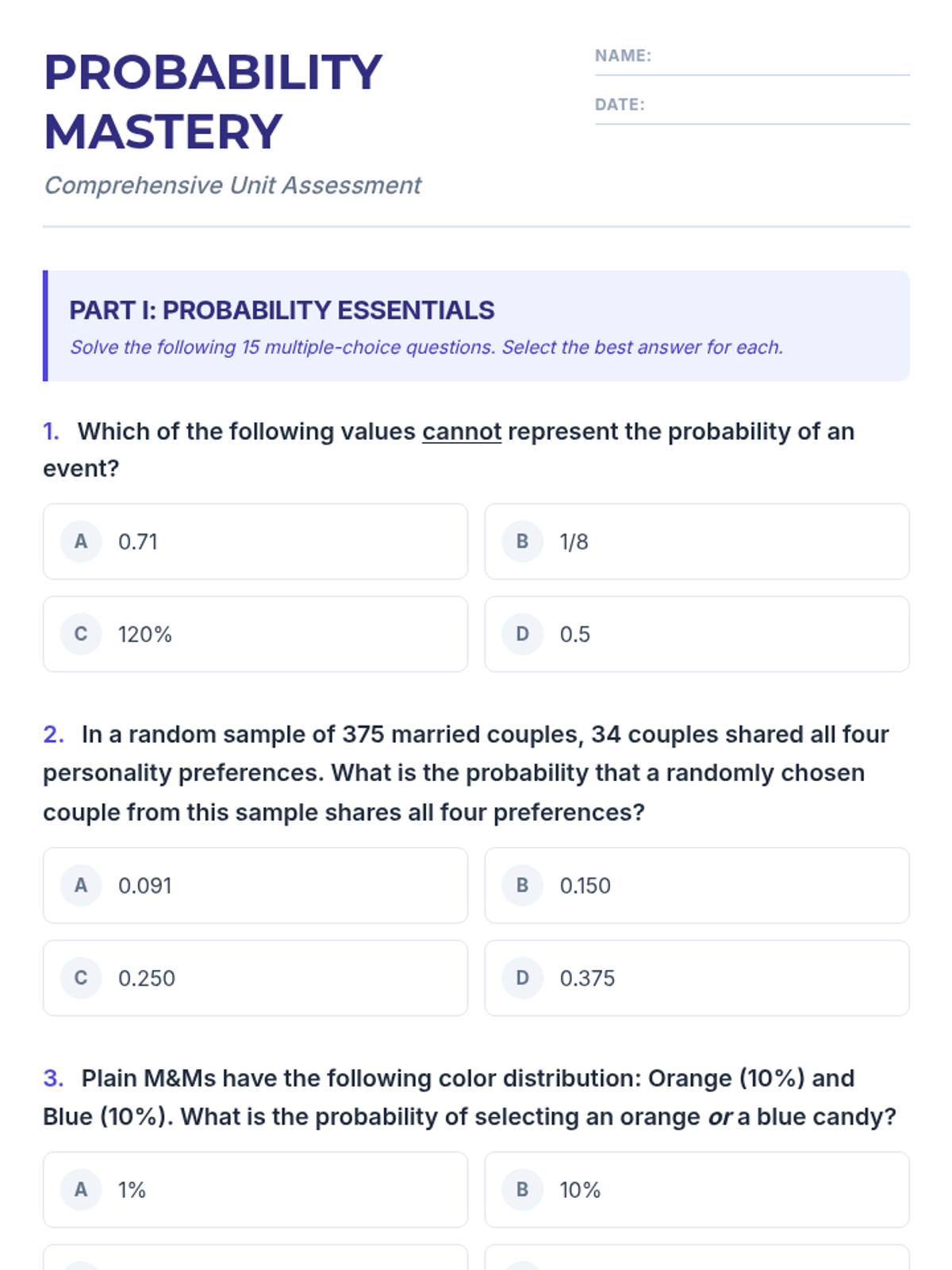
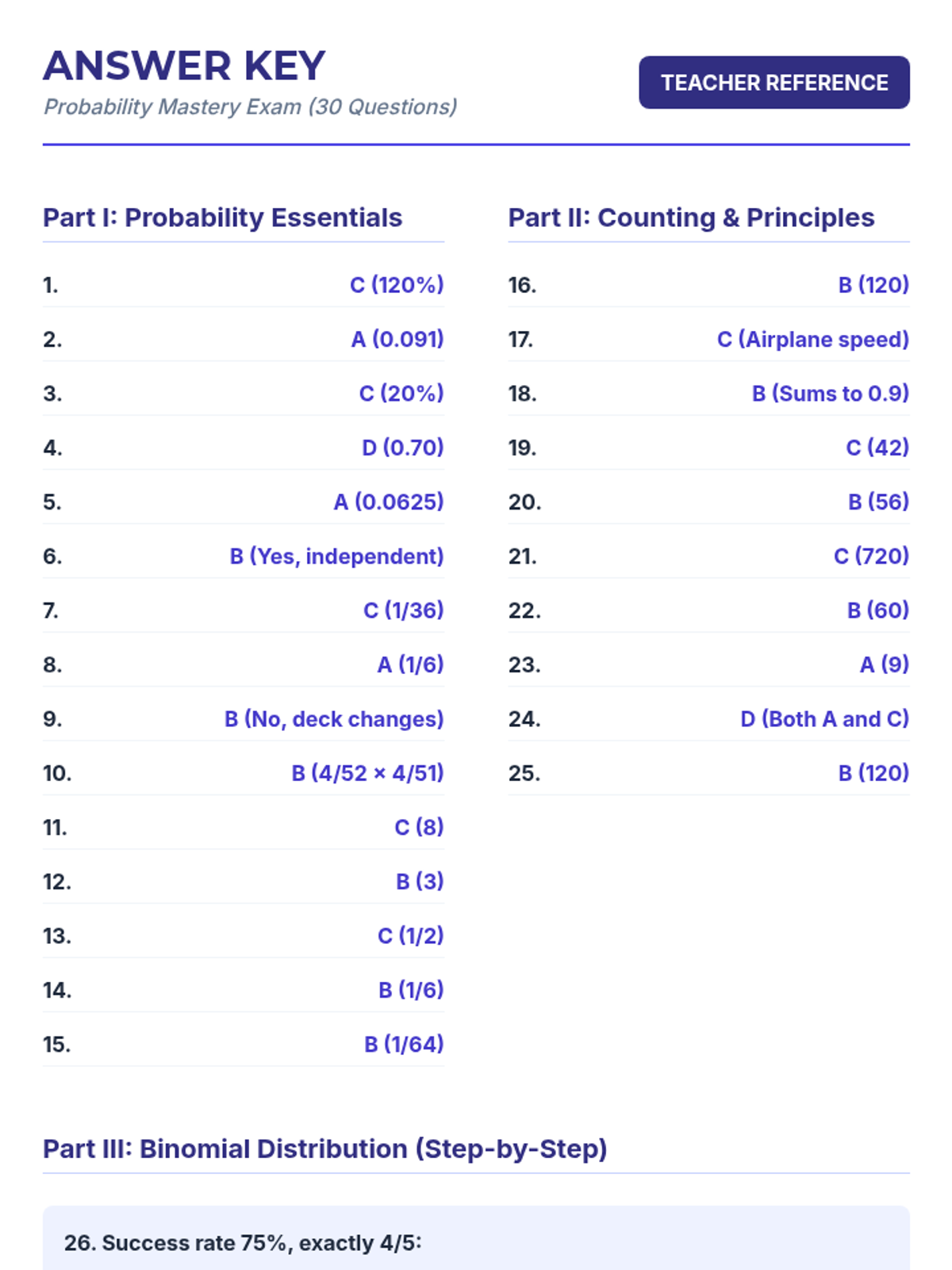
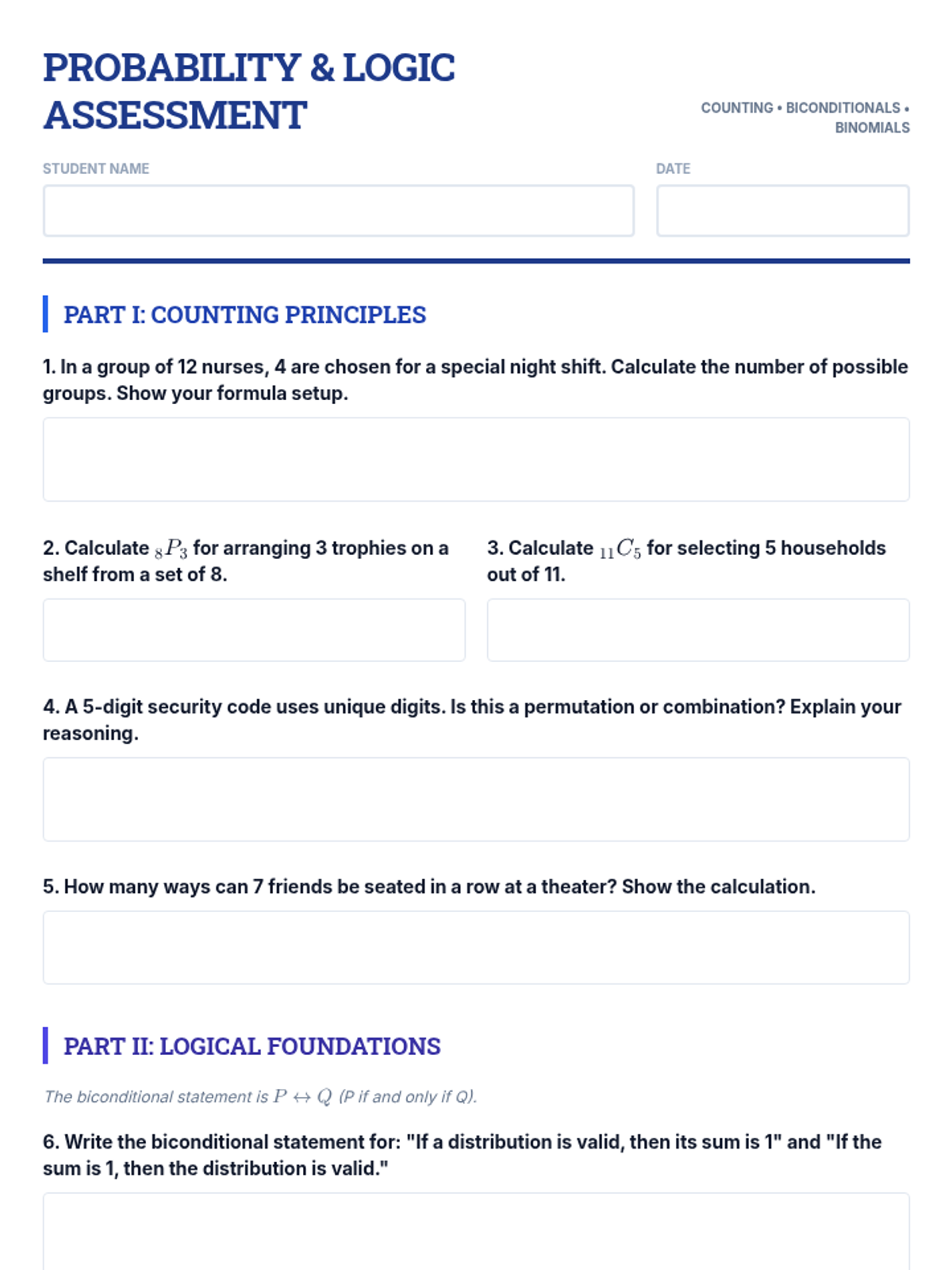
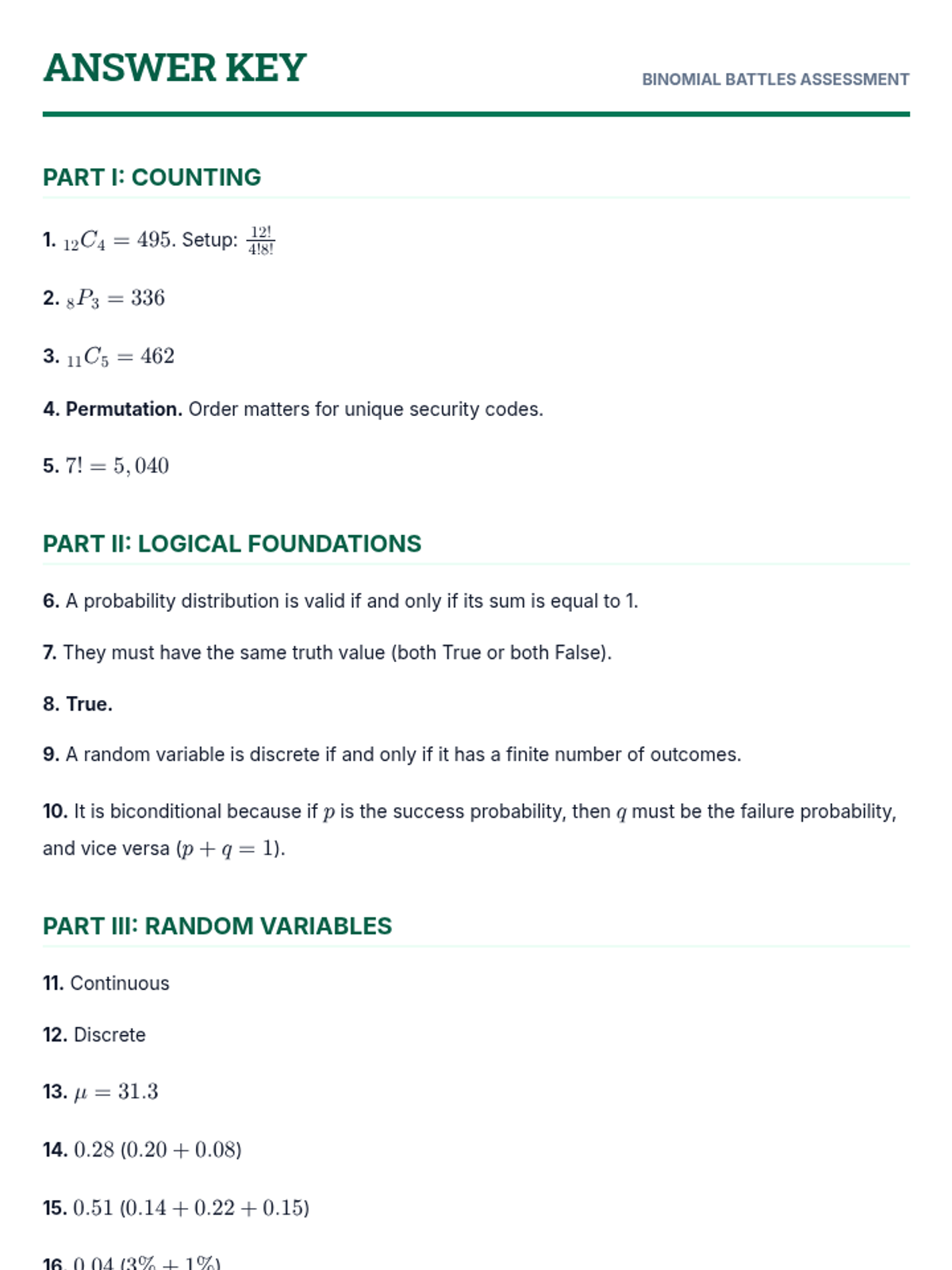
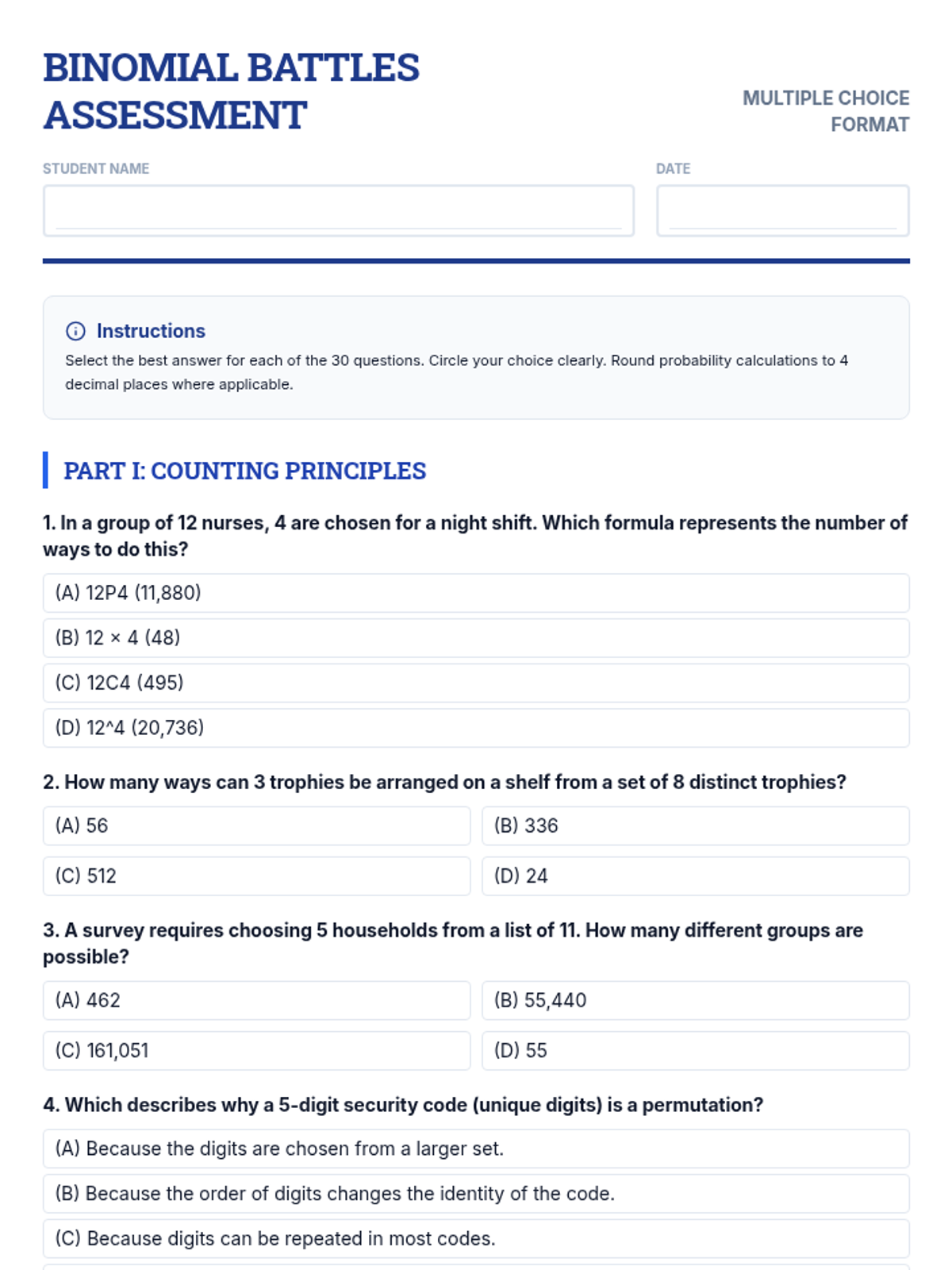
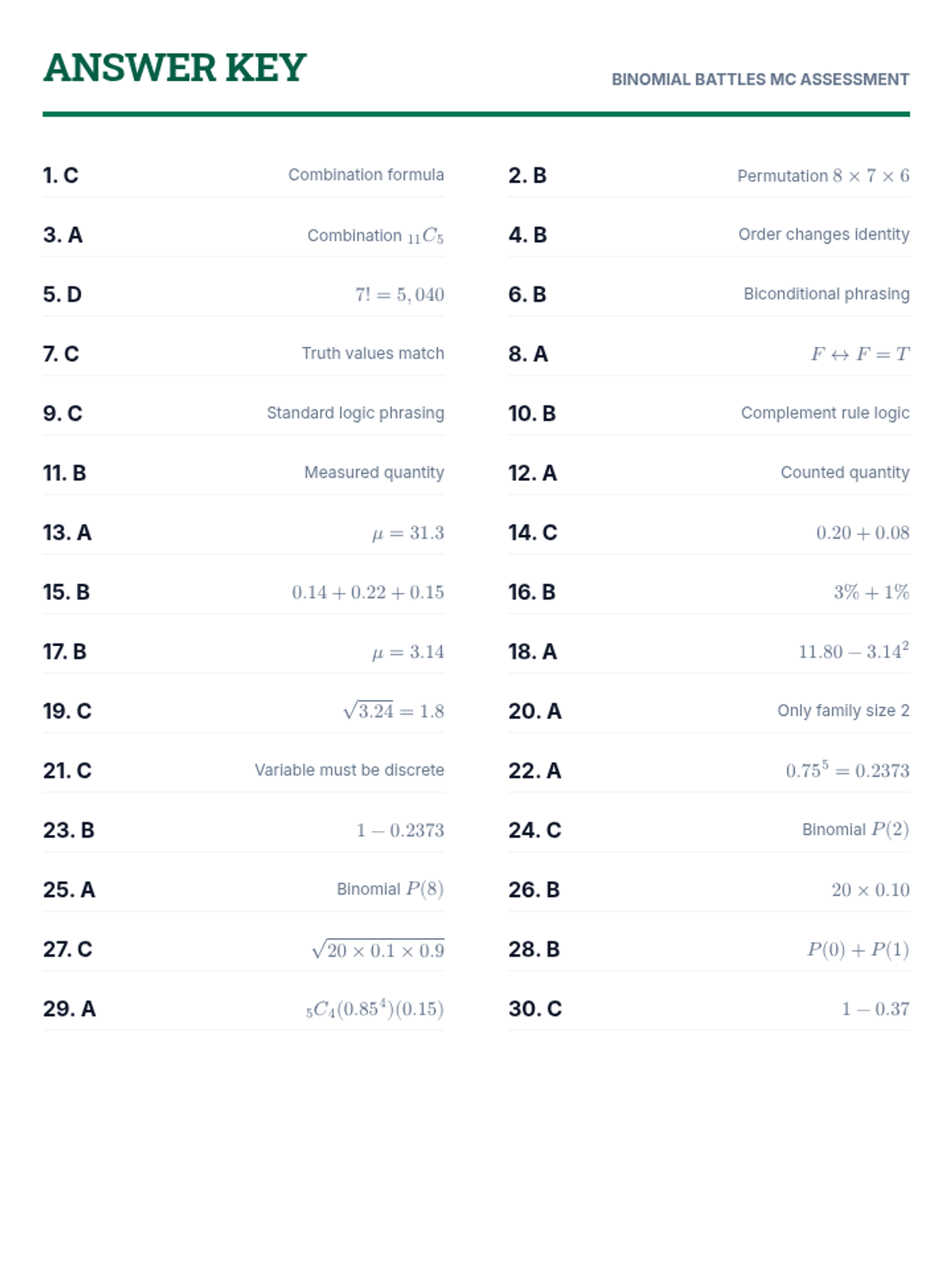
A comprehensive examination combining elementary probability theory, counting principles, and binomial distribution problems into a single rigorous assessment.
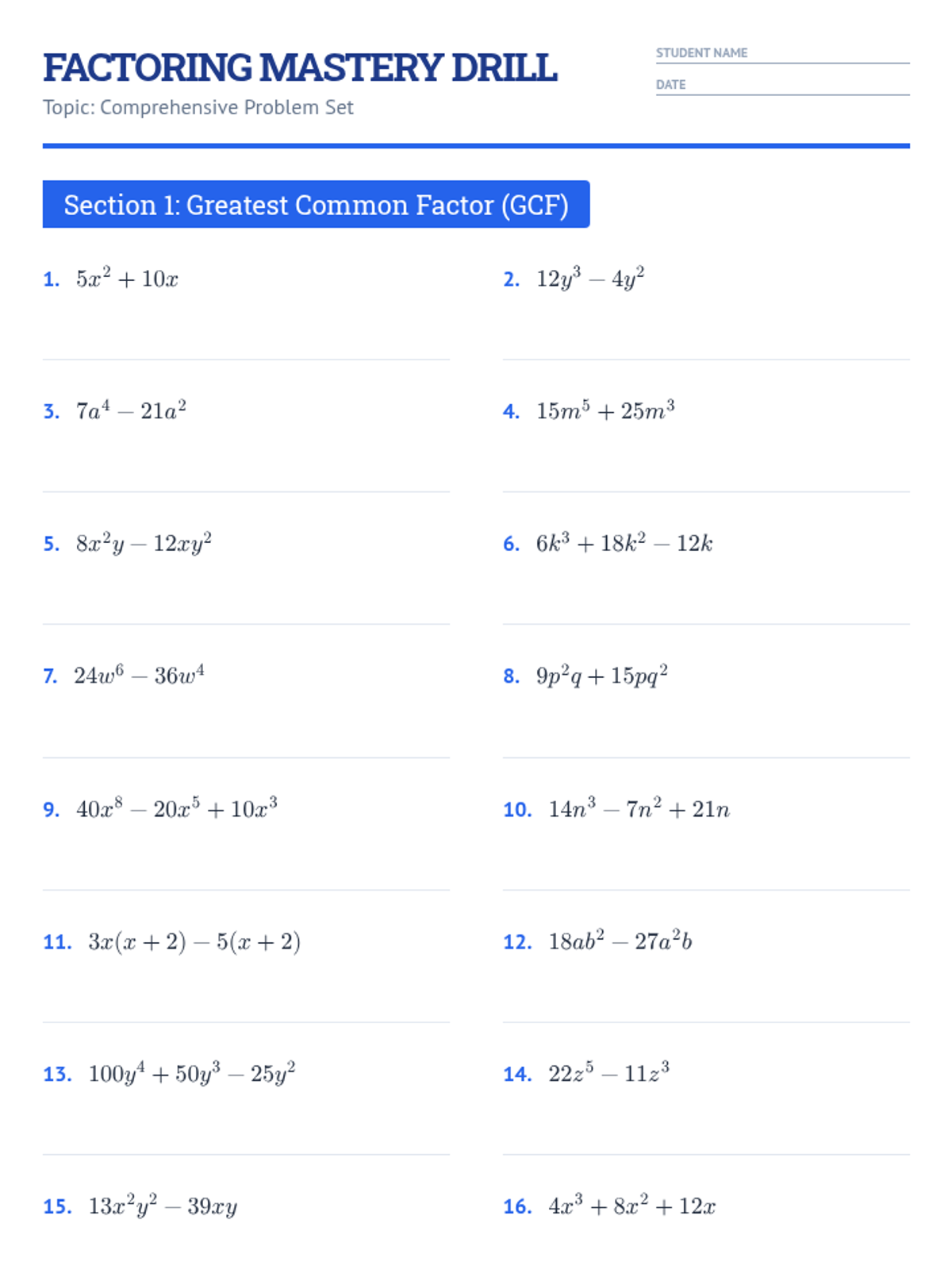
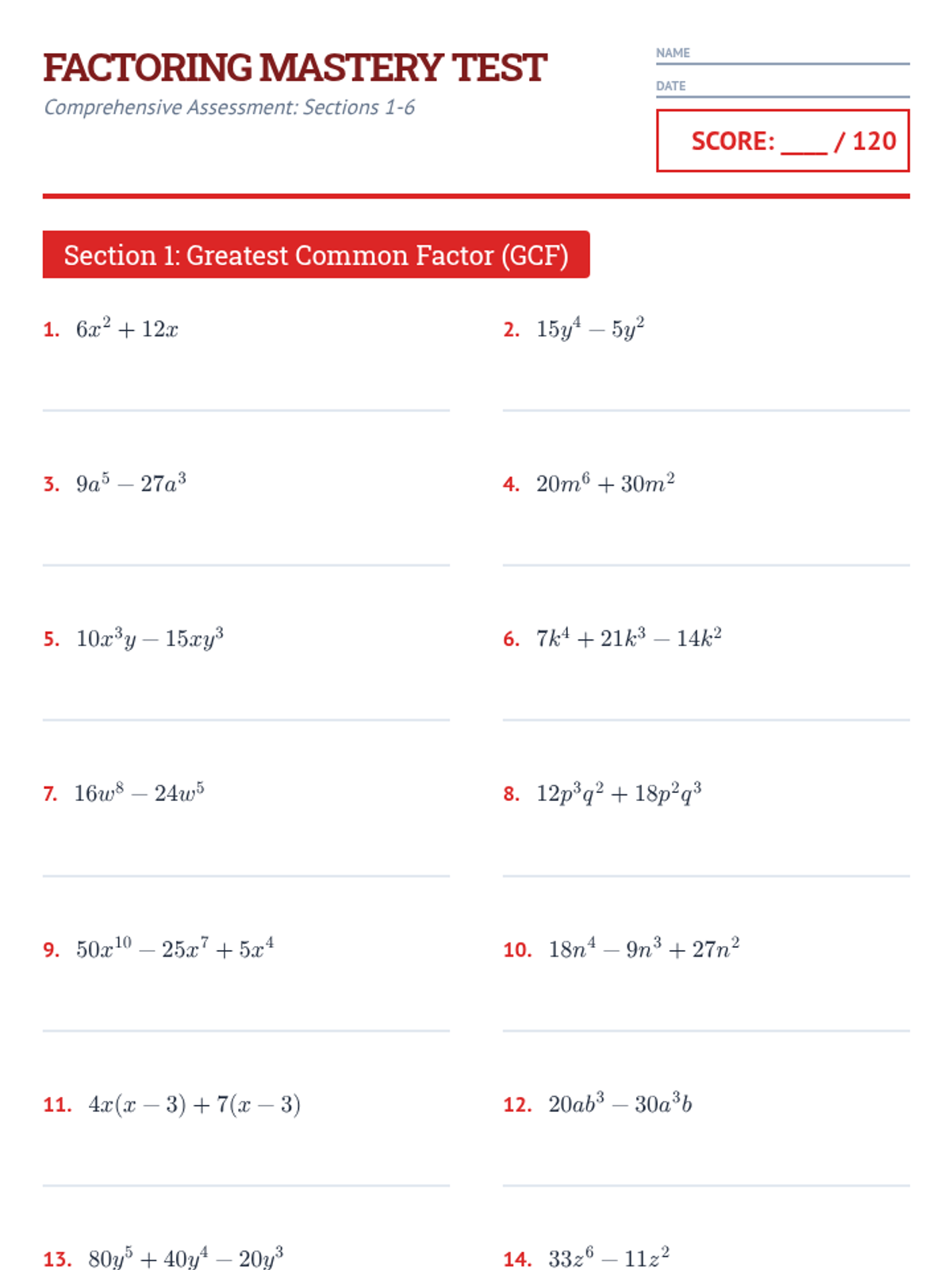
A high-intensity, time-efficient review and assessment unit designed for 30-minute class periods, focusing on core factoring techniques for Algebra 2 credit recovery.
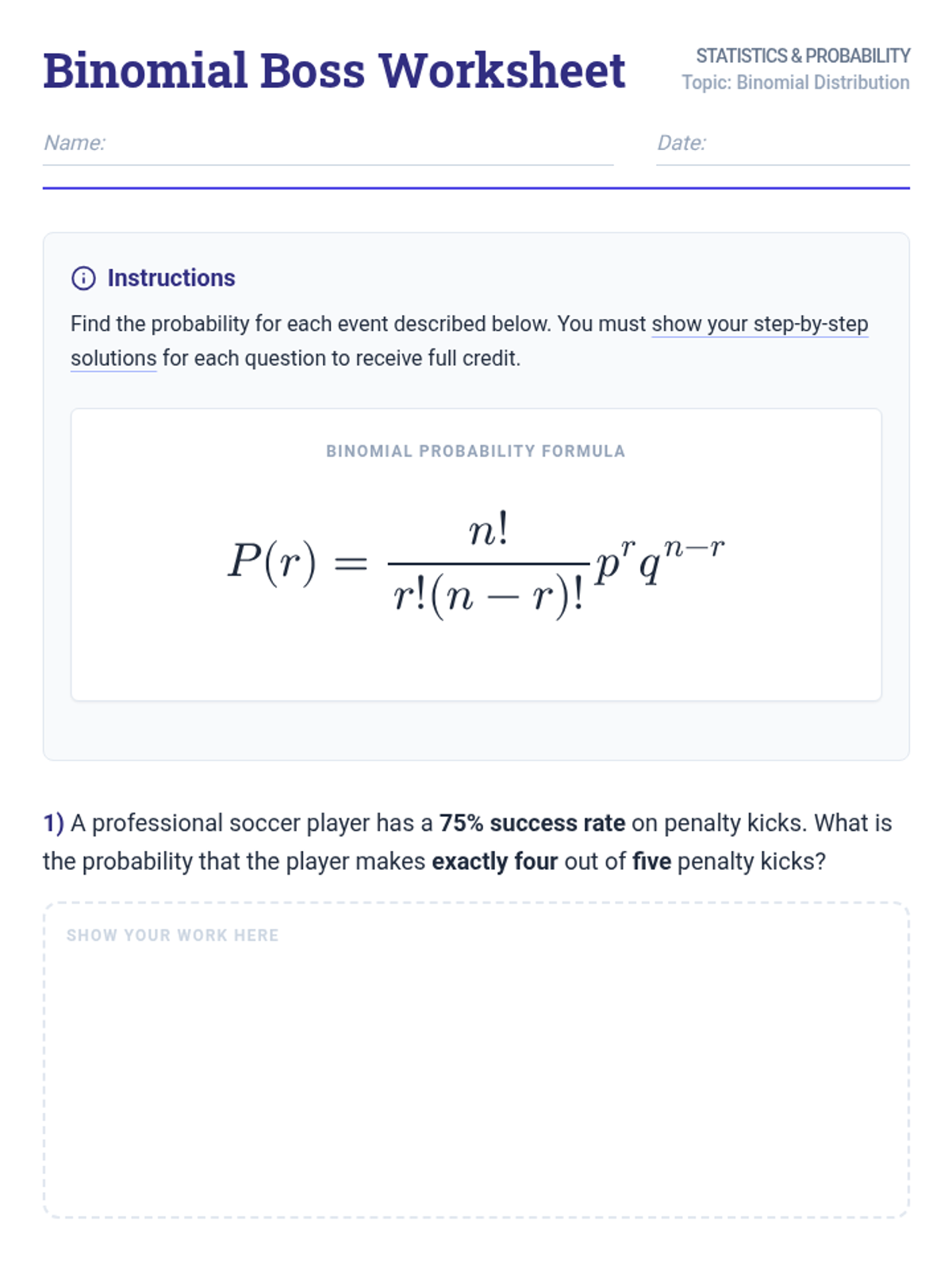
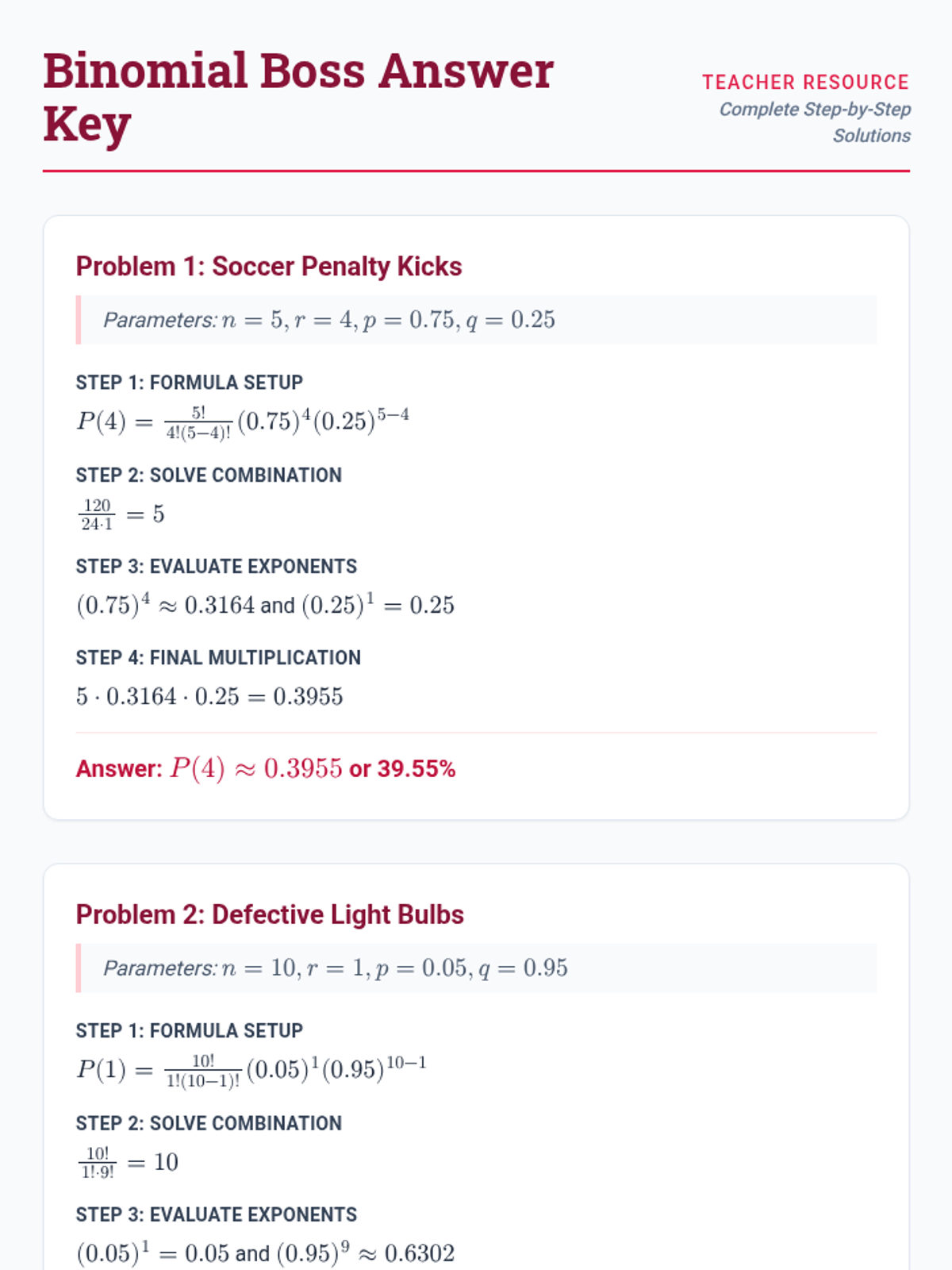
A lesson focused on solving word problems using the binomial probability distribution formula, featuring real-world scenarios and step-by-step calculations.
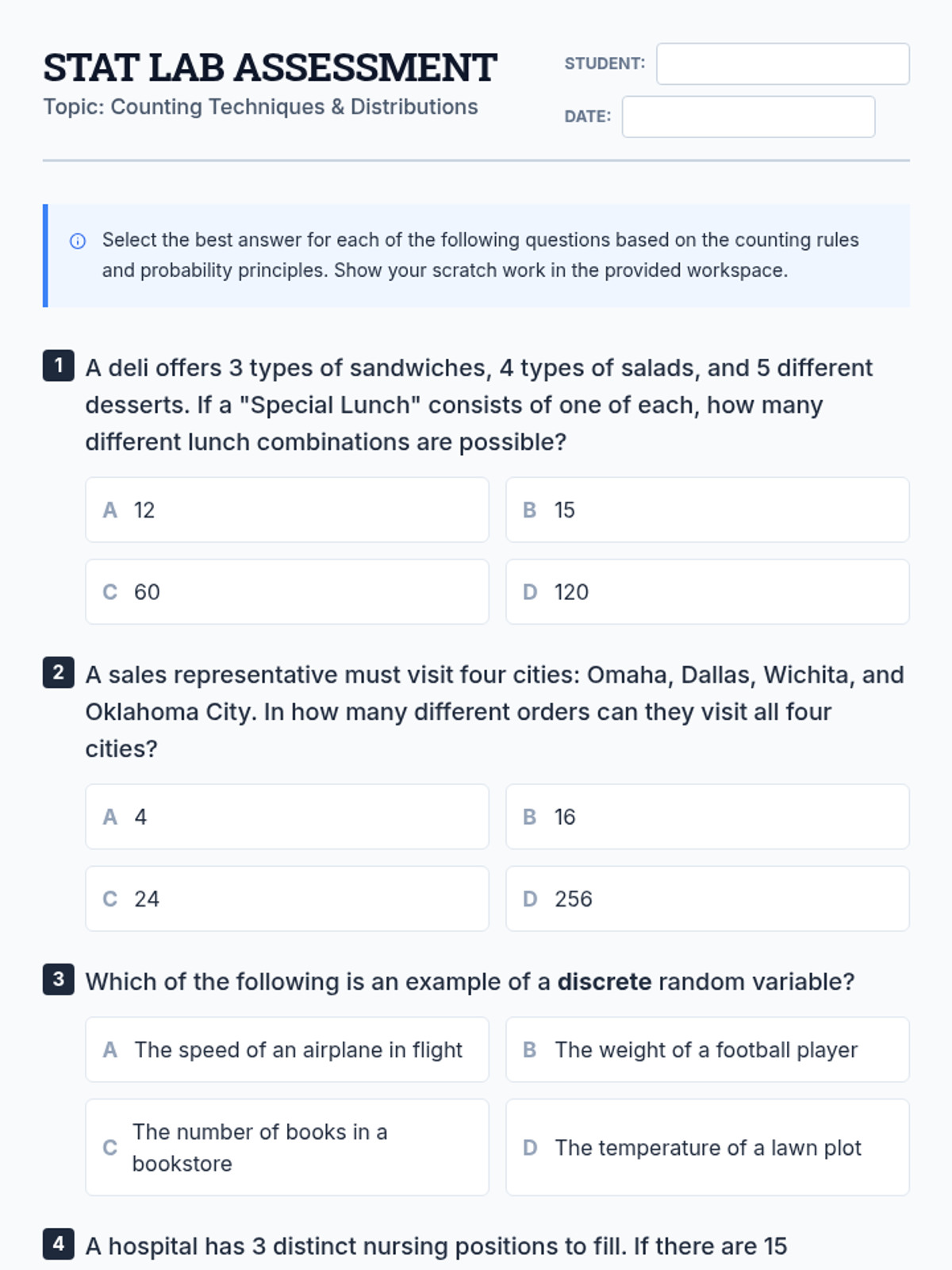
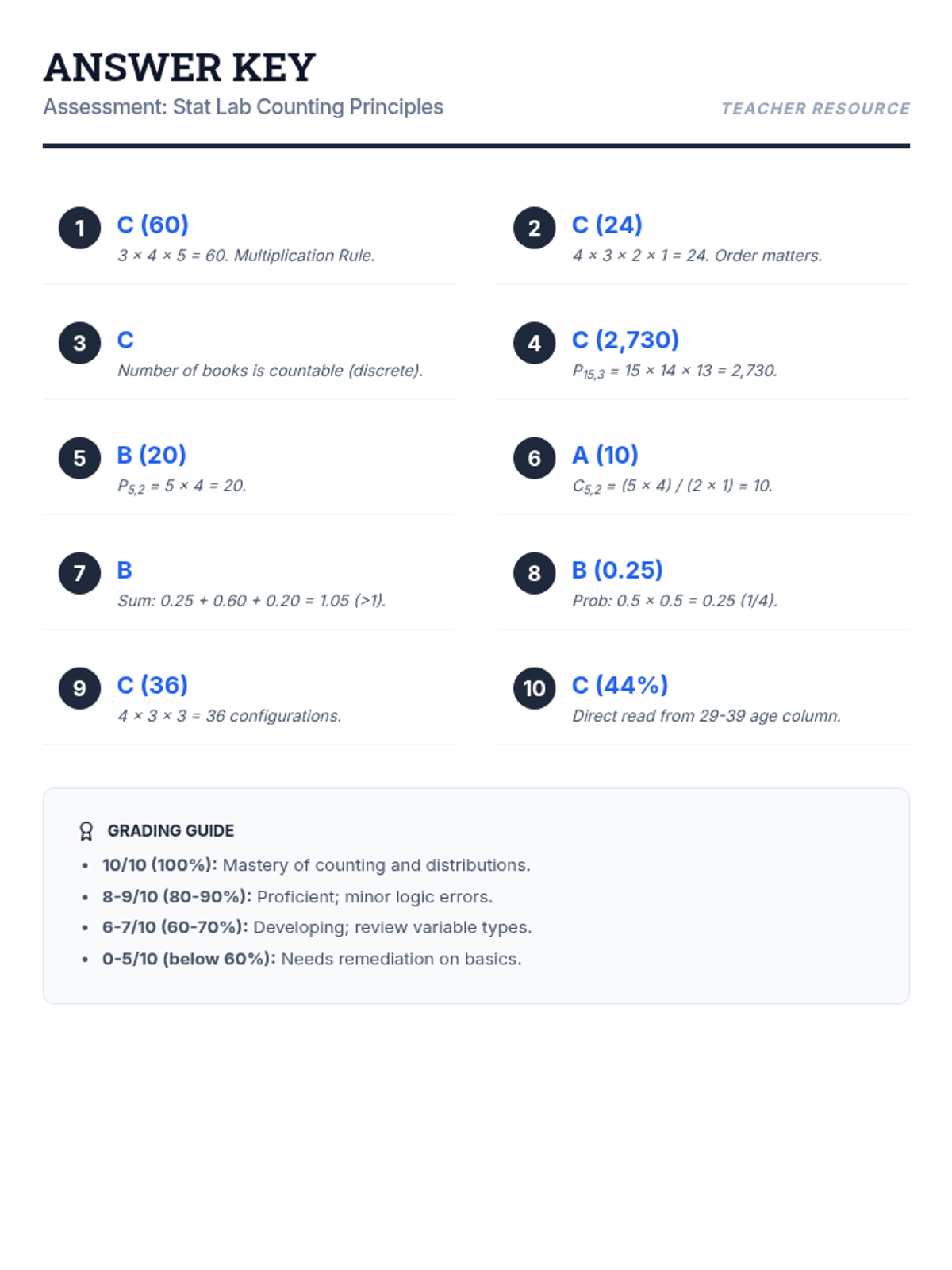
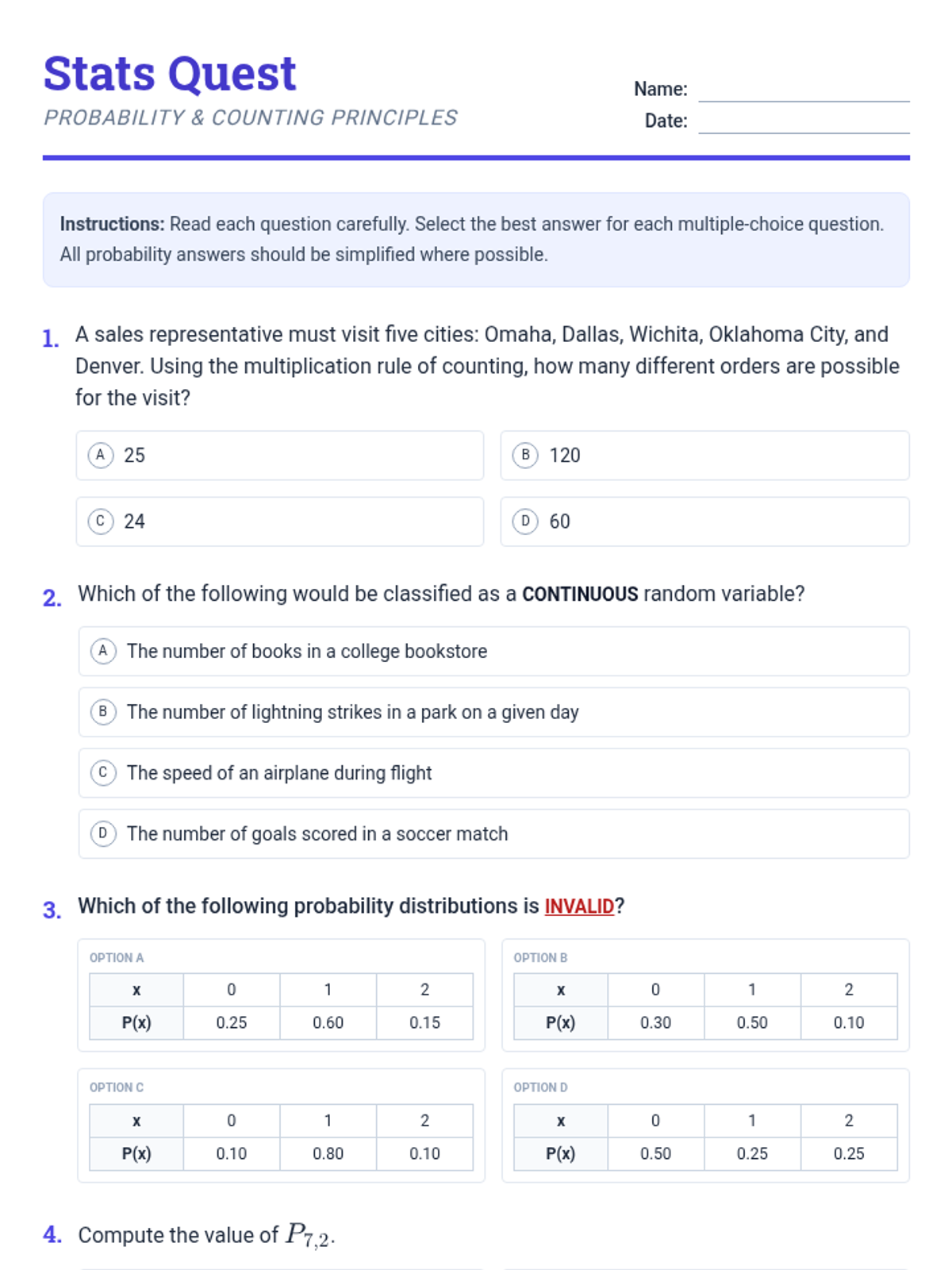
A comprehensive lesson covering counting techniques, permutations, combinations, and basic probability distributions based on statistical principles.
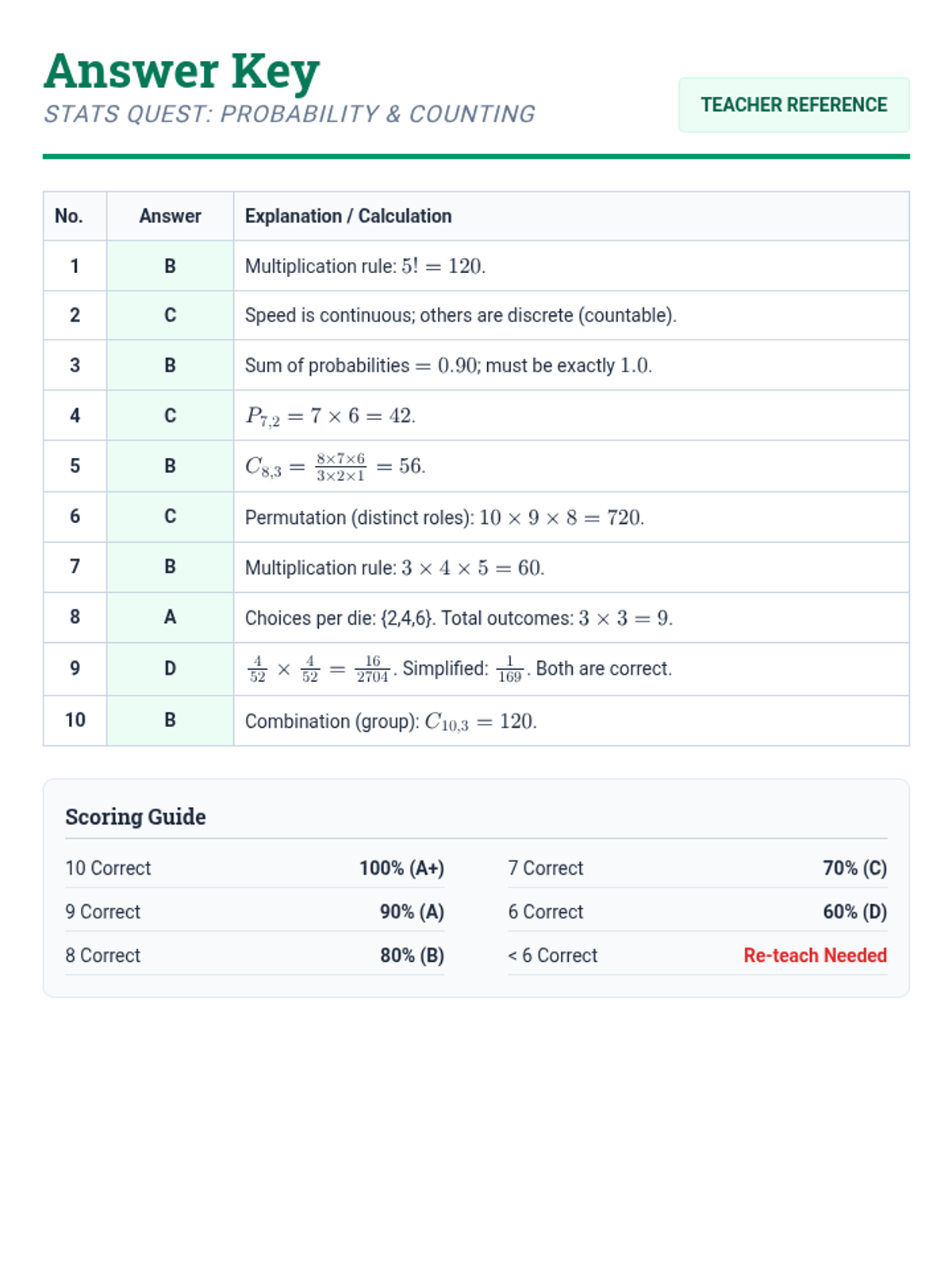
A lesson covering fundamental counting techniques, random variable classification, and probability distributions based on statistical principles.
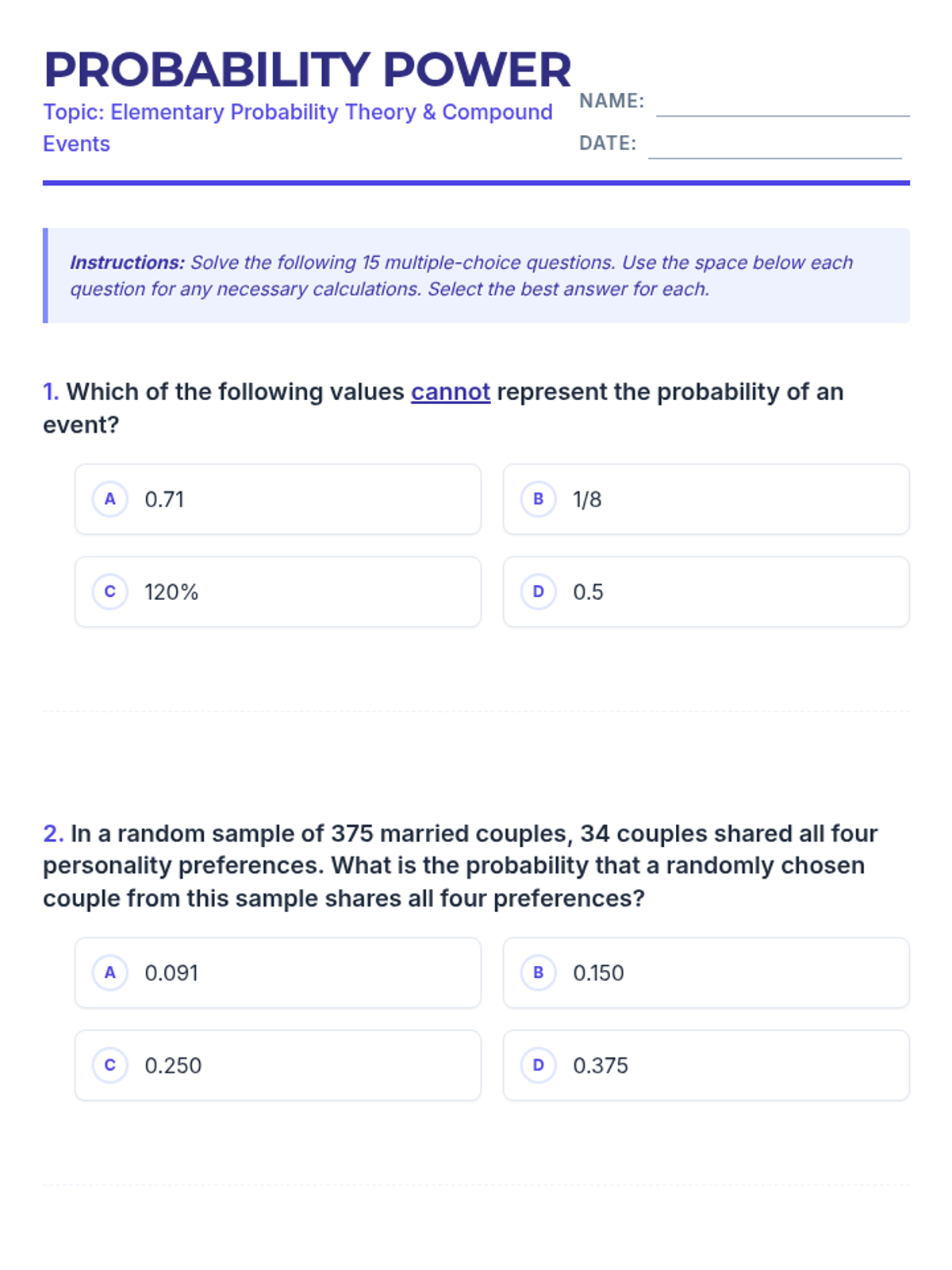
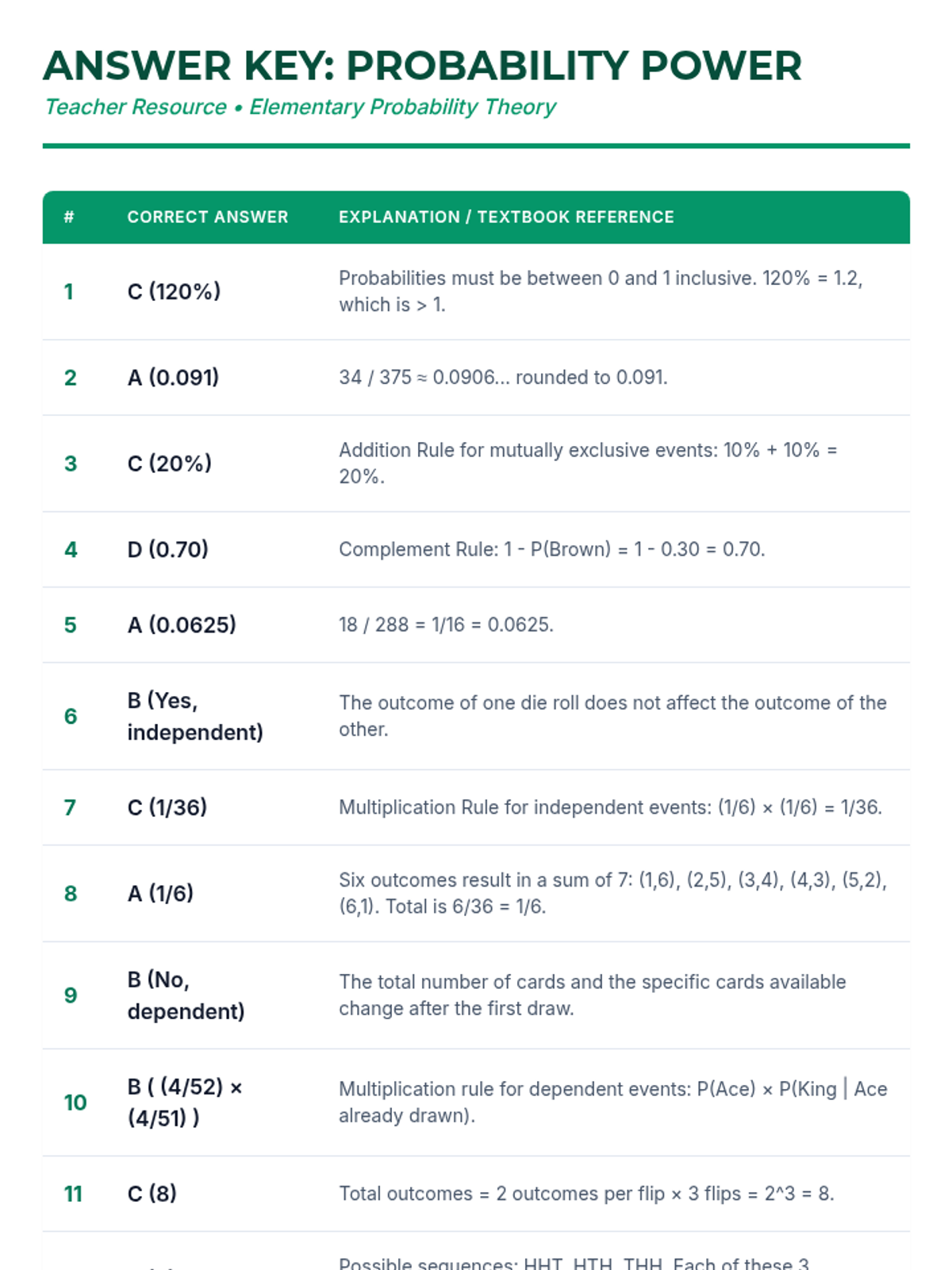
A comprehensive lesson on elementary probability theory covering valid probability ranges, compound events, independent and dependent outcomes, and tree diagrams based on textbook problems.
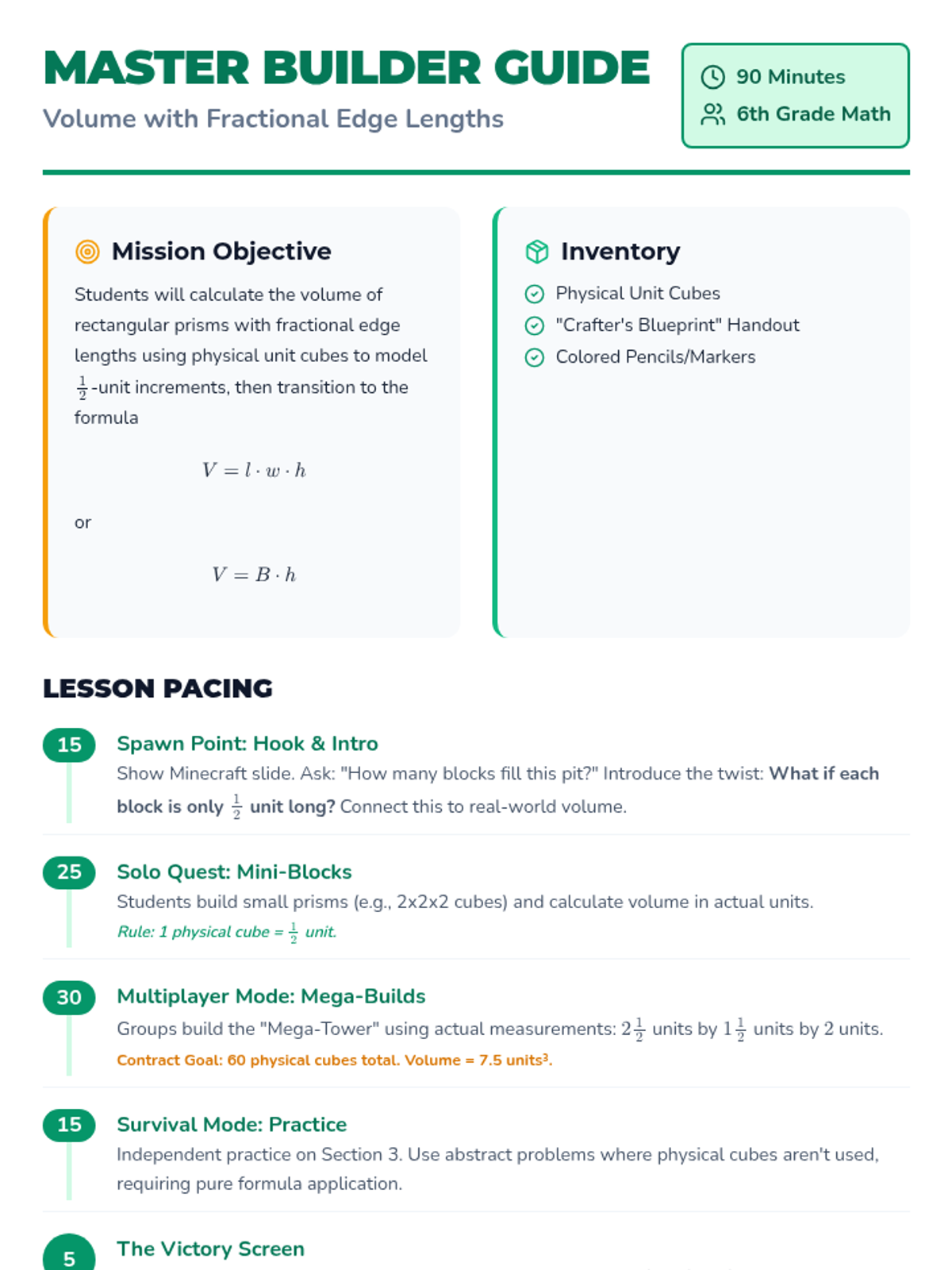
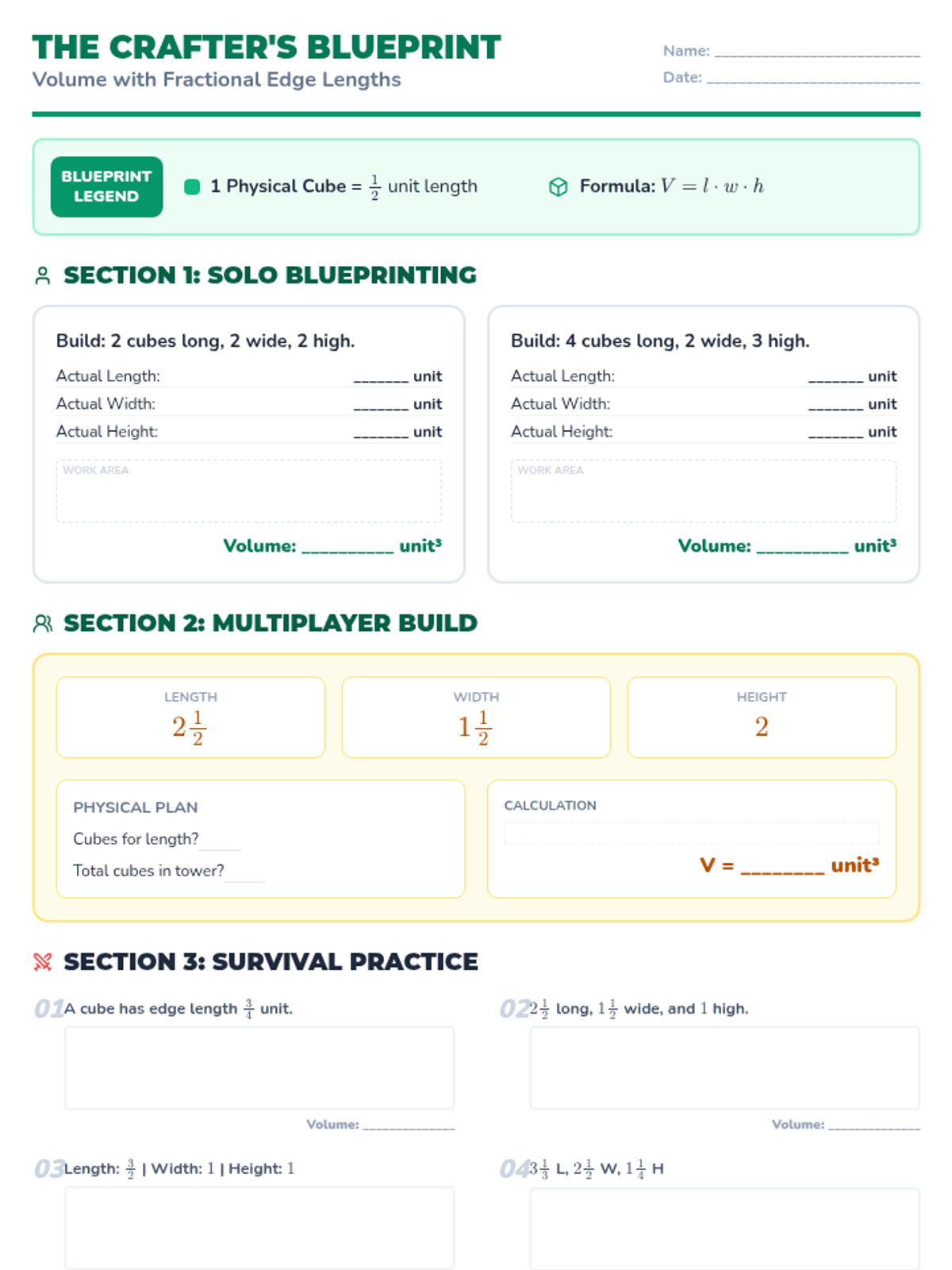
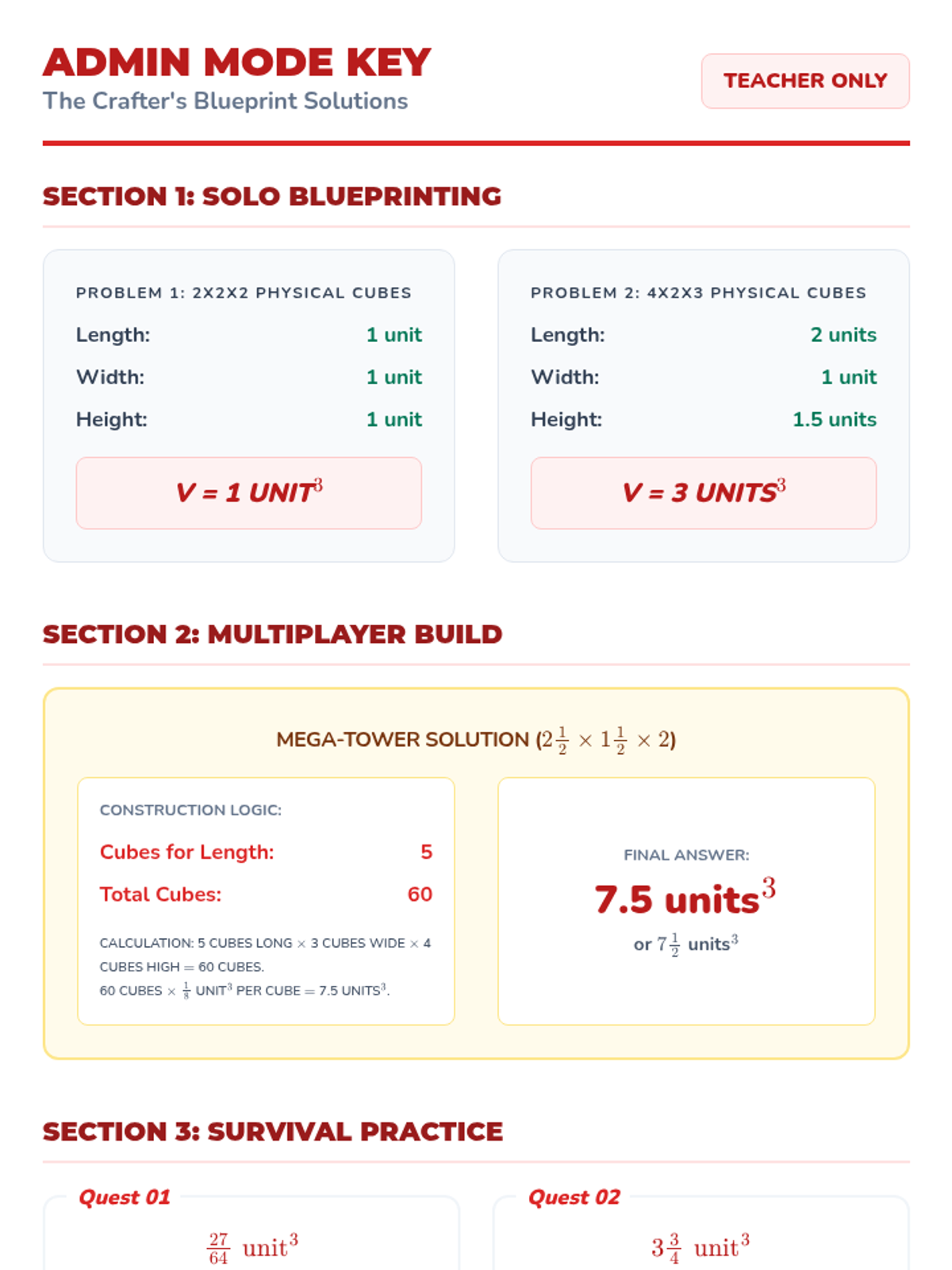
A Minecraft-themed lesson on finding volume with fractional edge lengths. Students use physical unit cubes to model structures and apply formulas to solve building challenges.
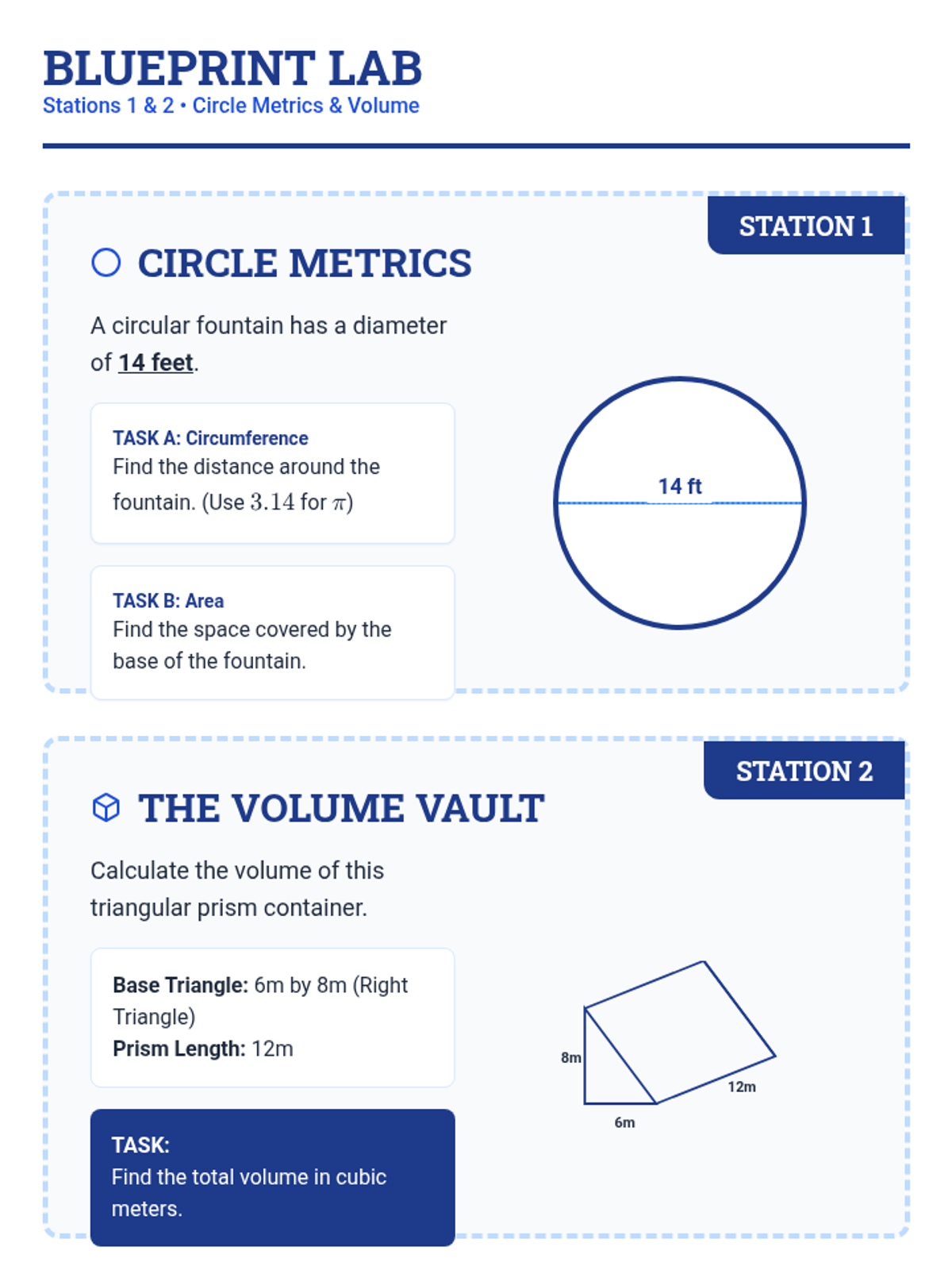
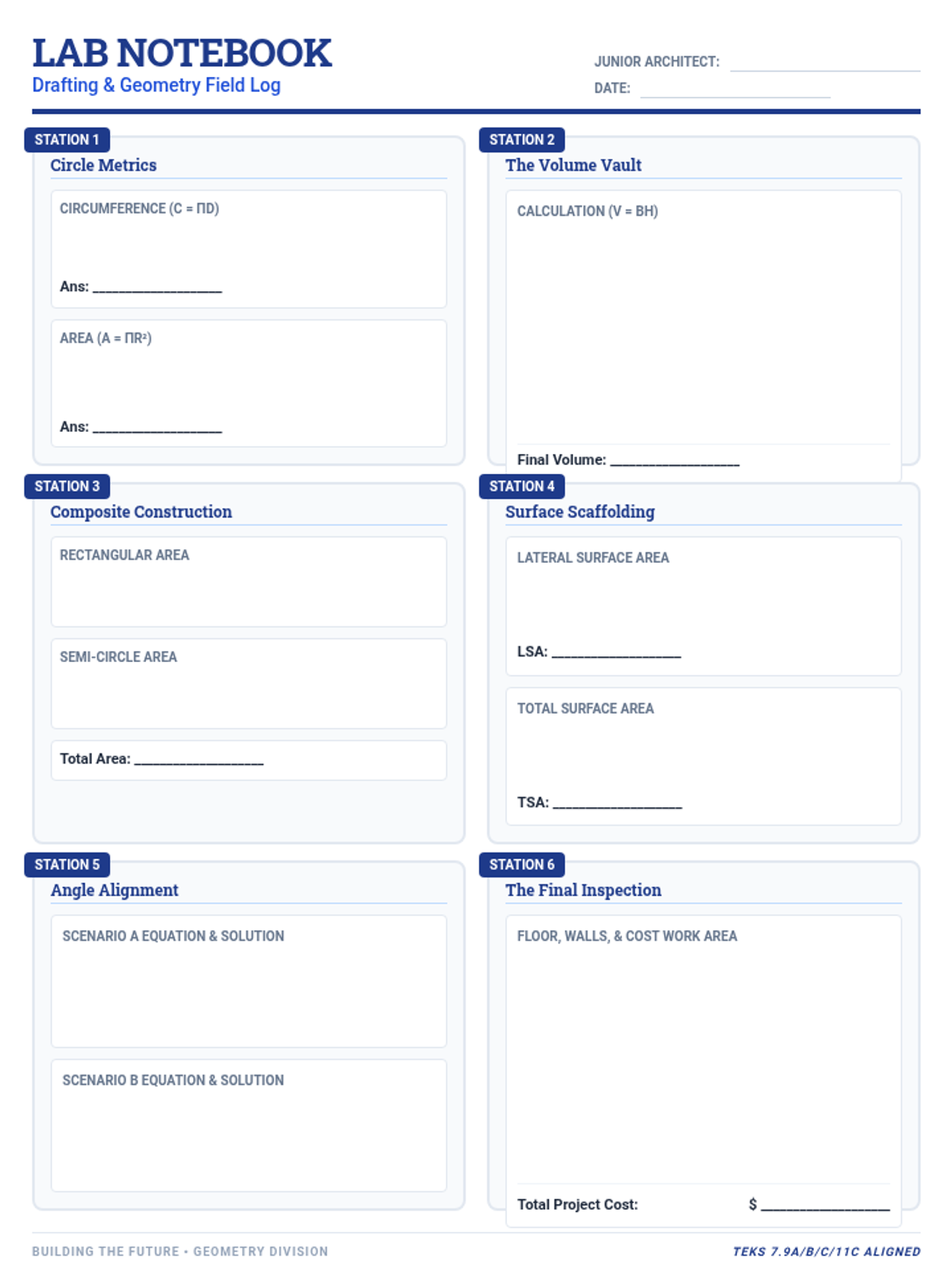
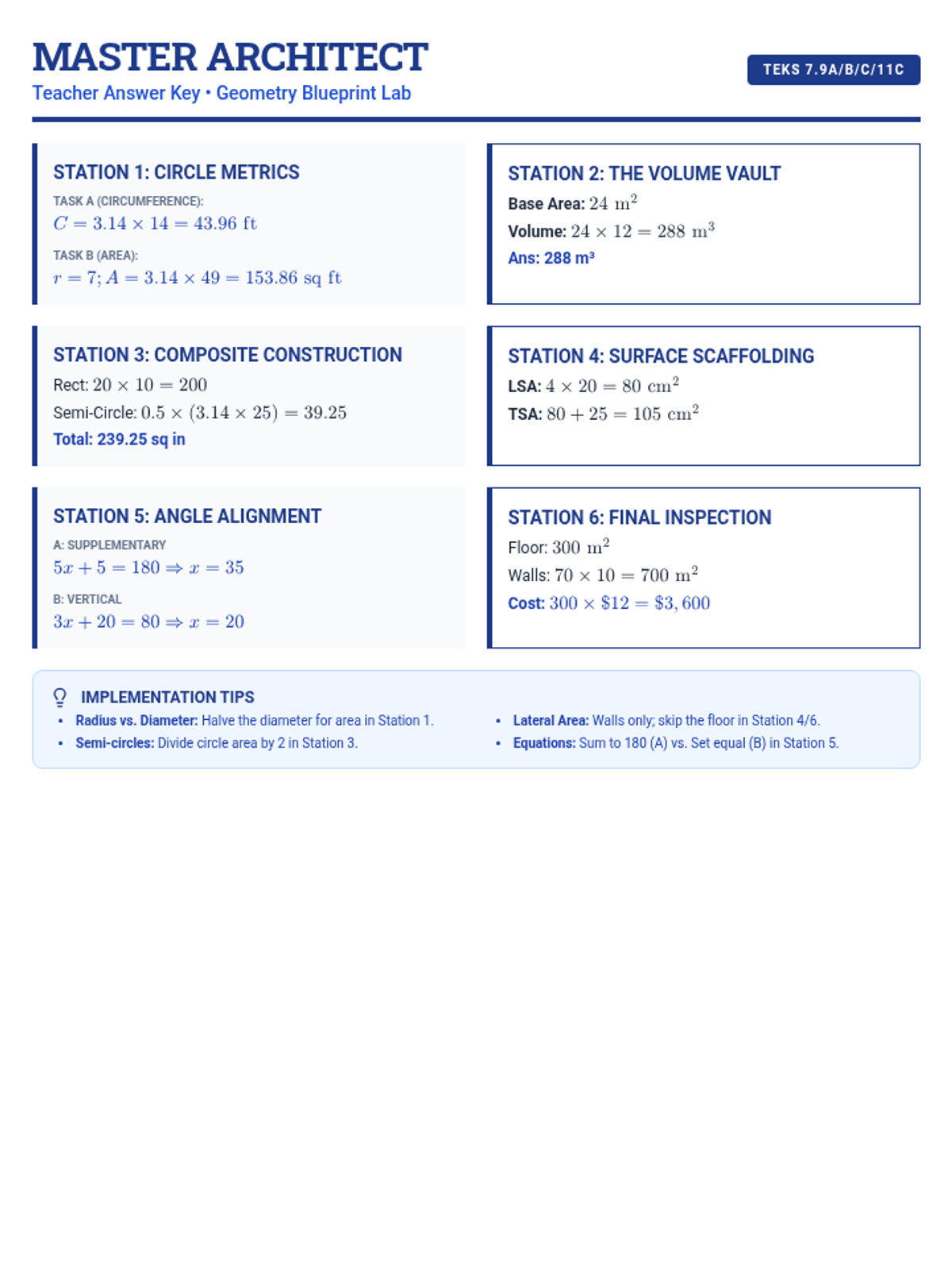
A hands-on geometry station activity focusing on circles, volume, surface area, and angle relationships using an architectural blueprint theme. Students rotate through specialized 'Lab Stations' to apply their geometric knowledge to real-world drafting scenarios.
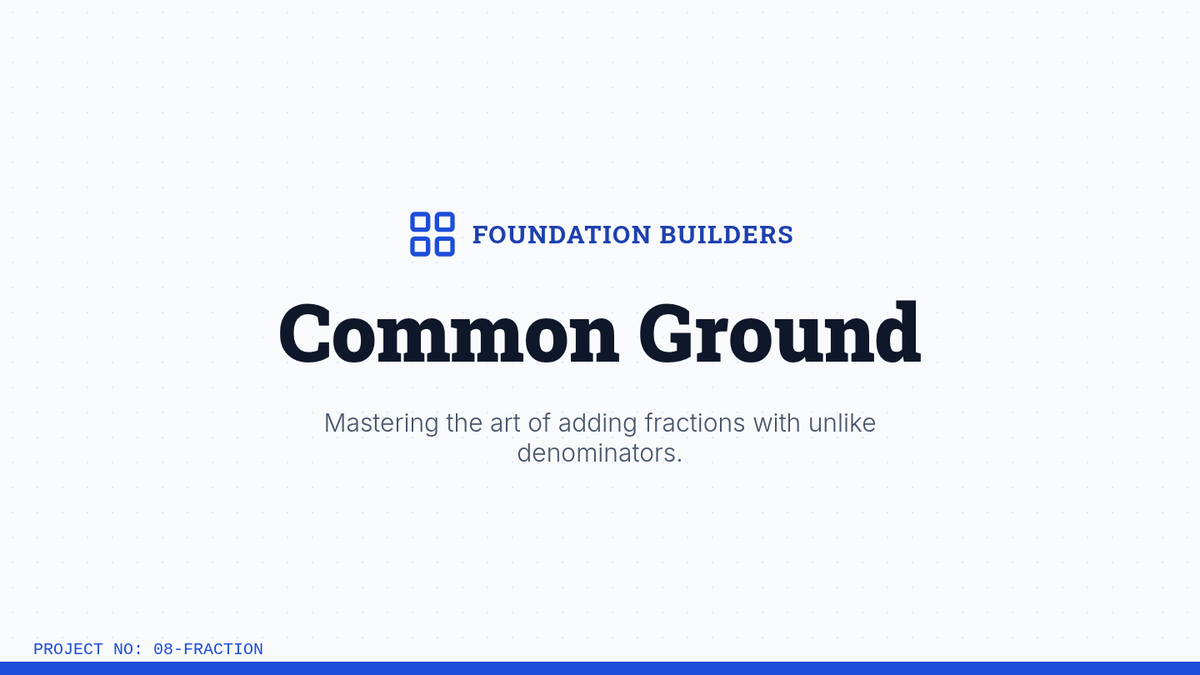
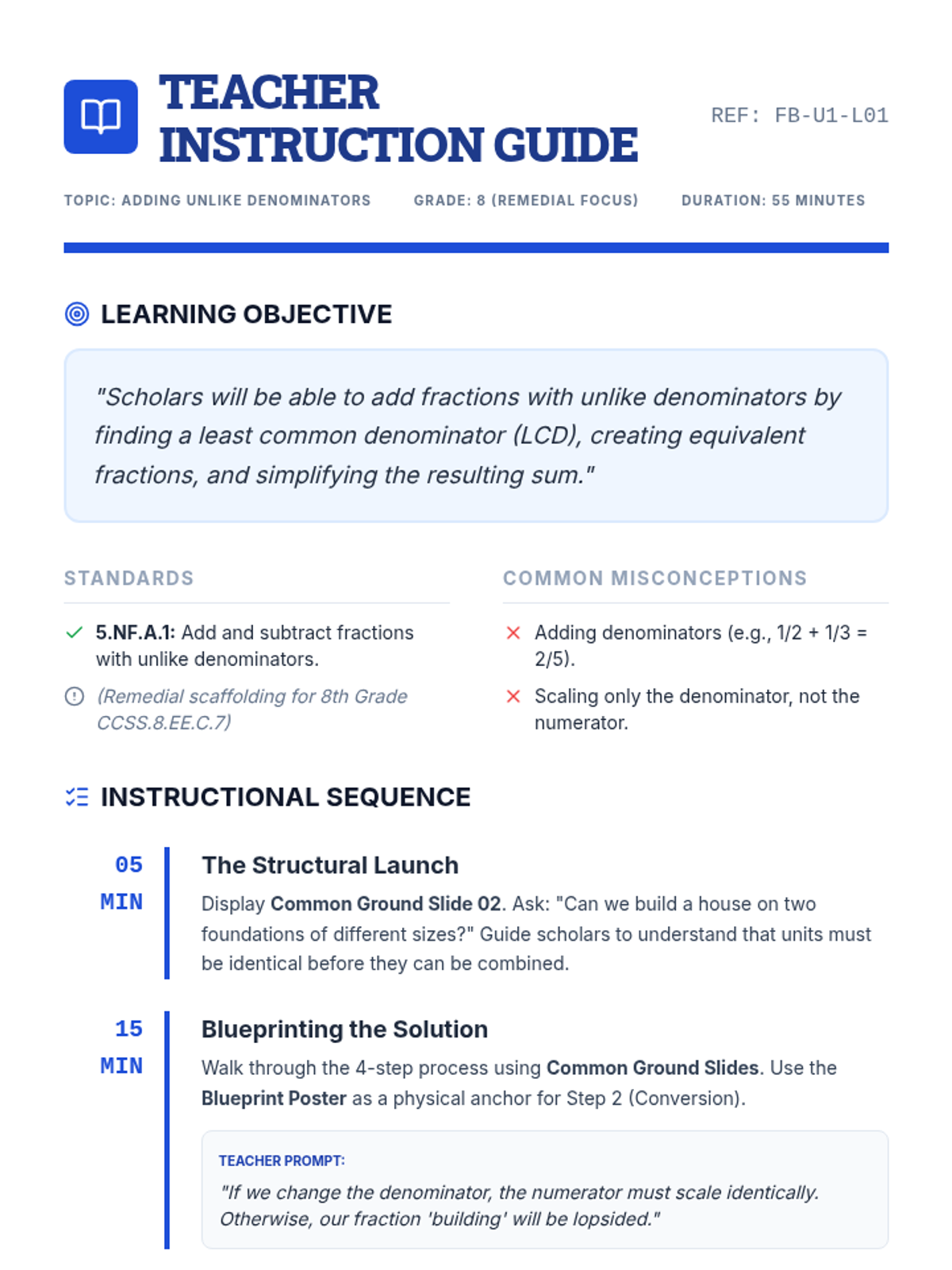
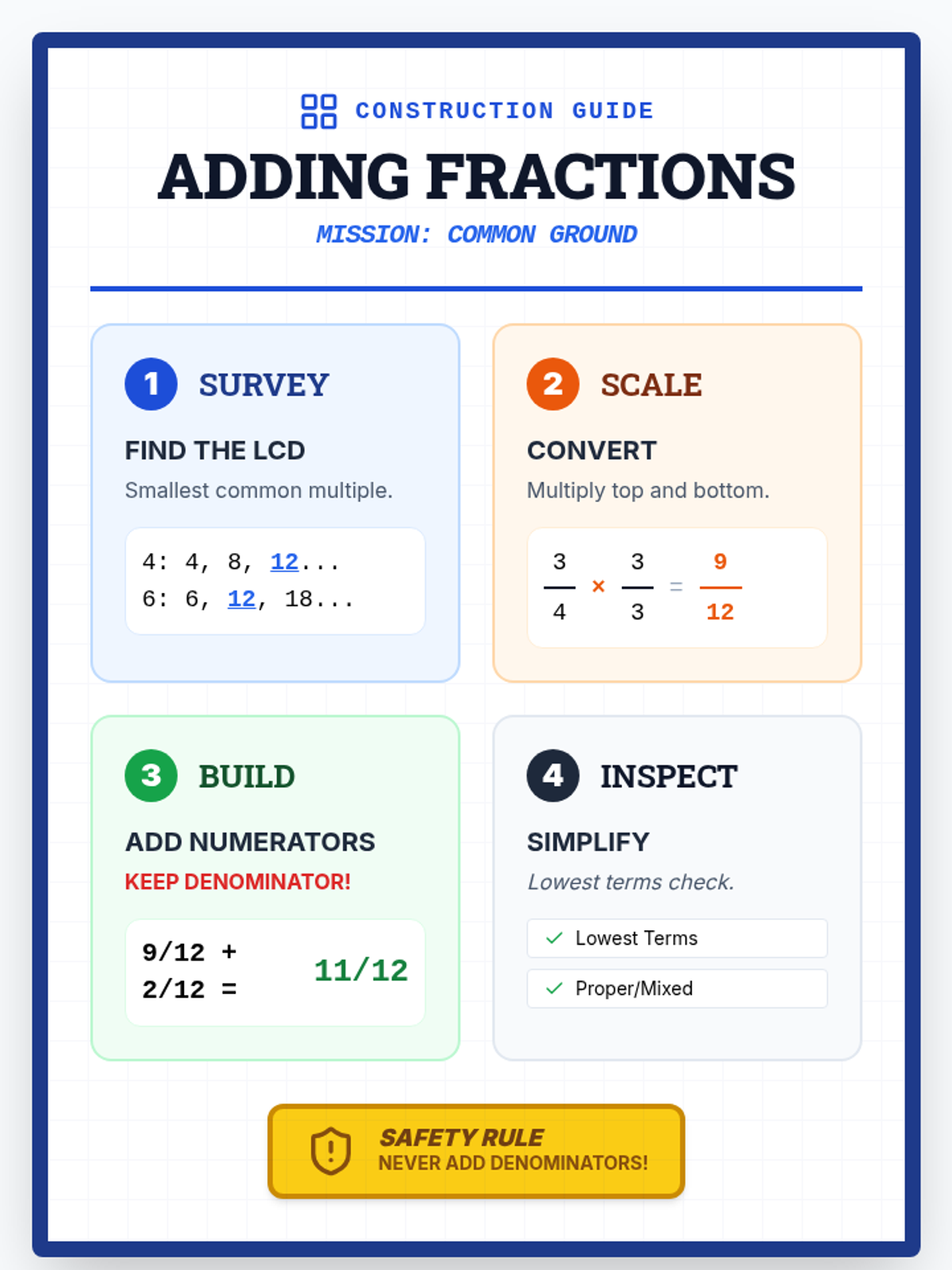
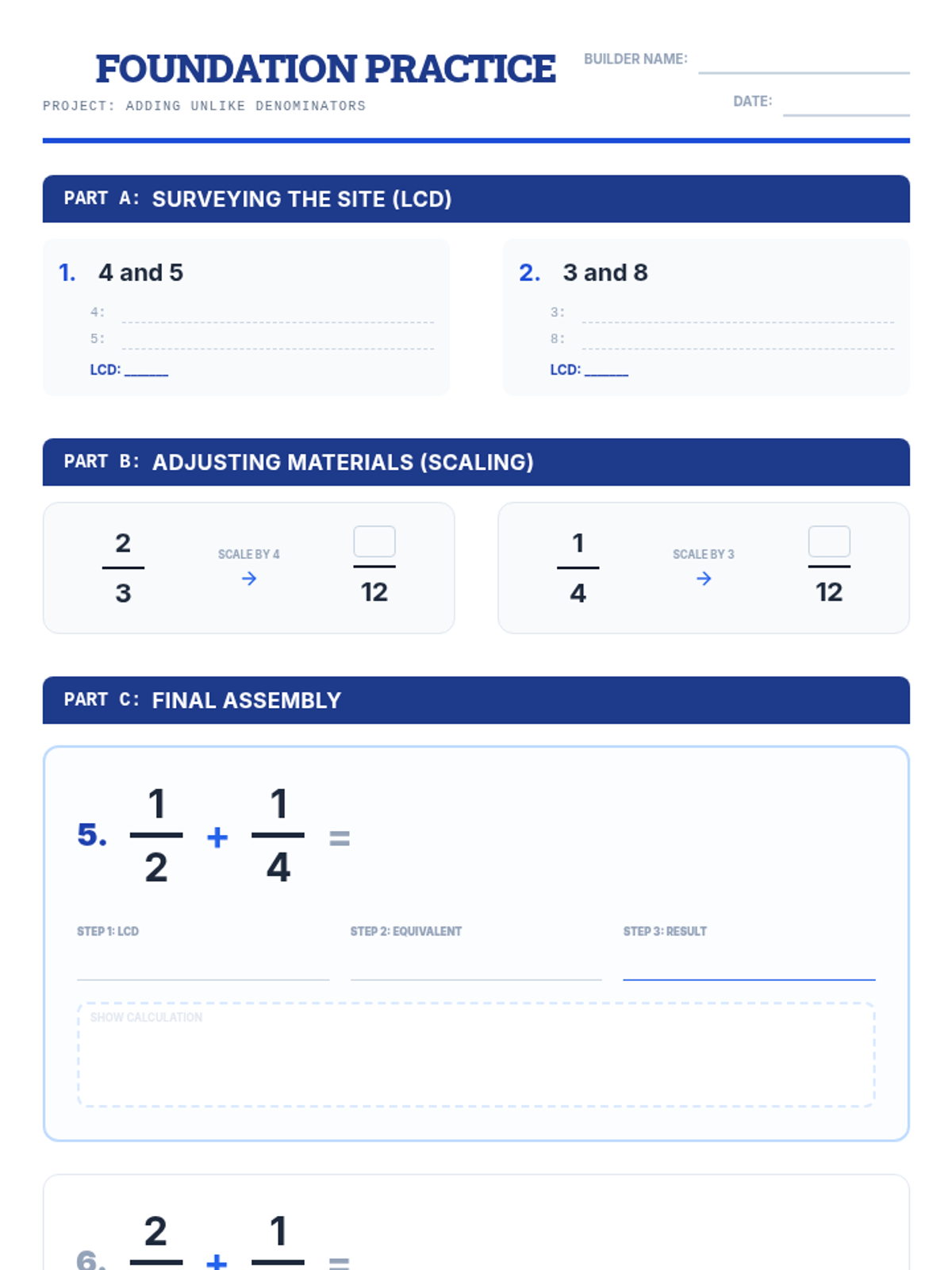
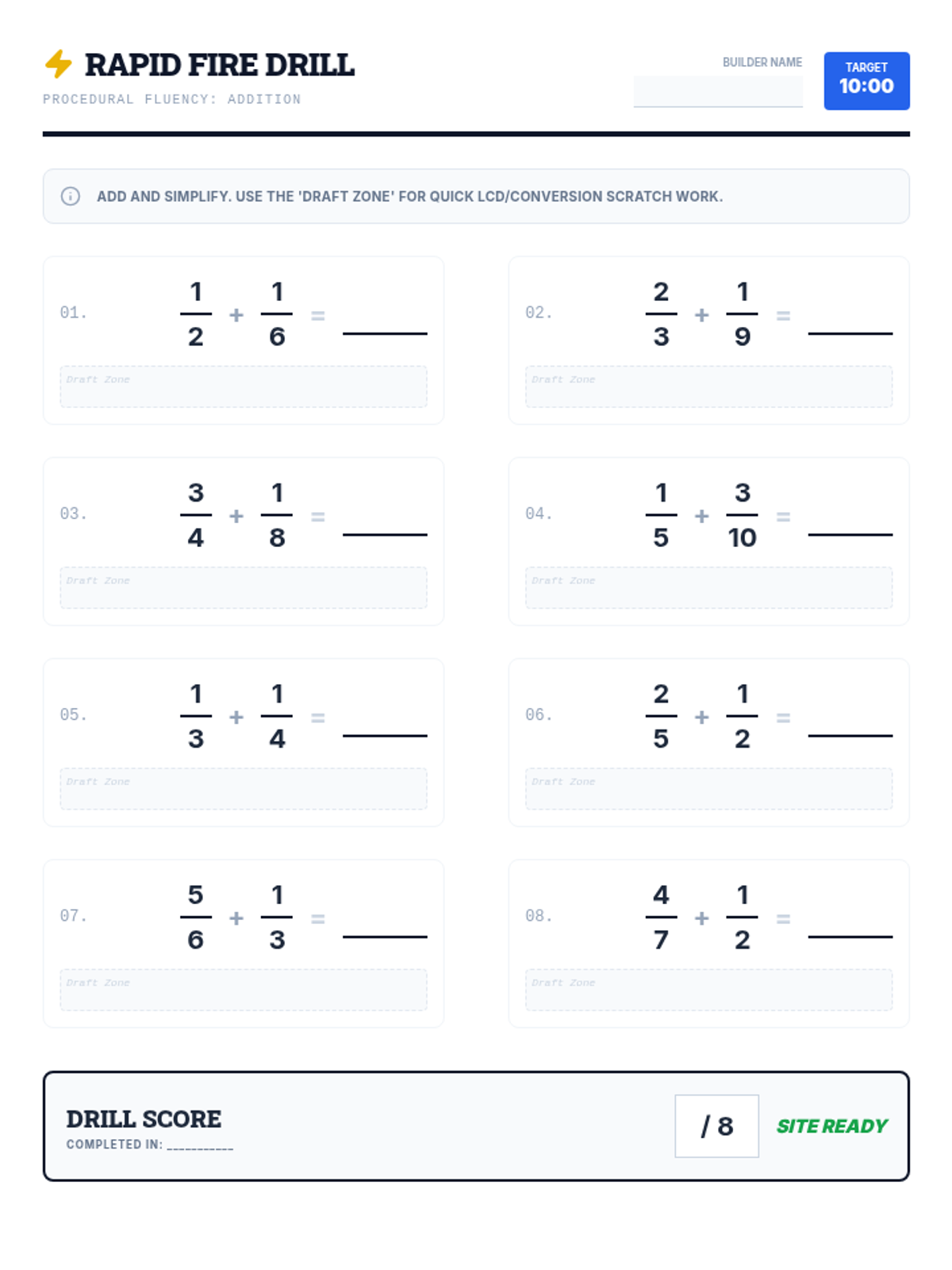
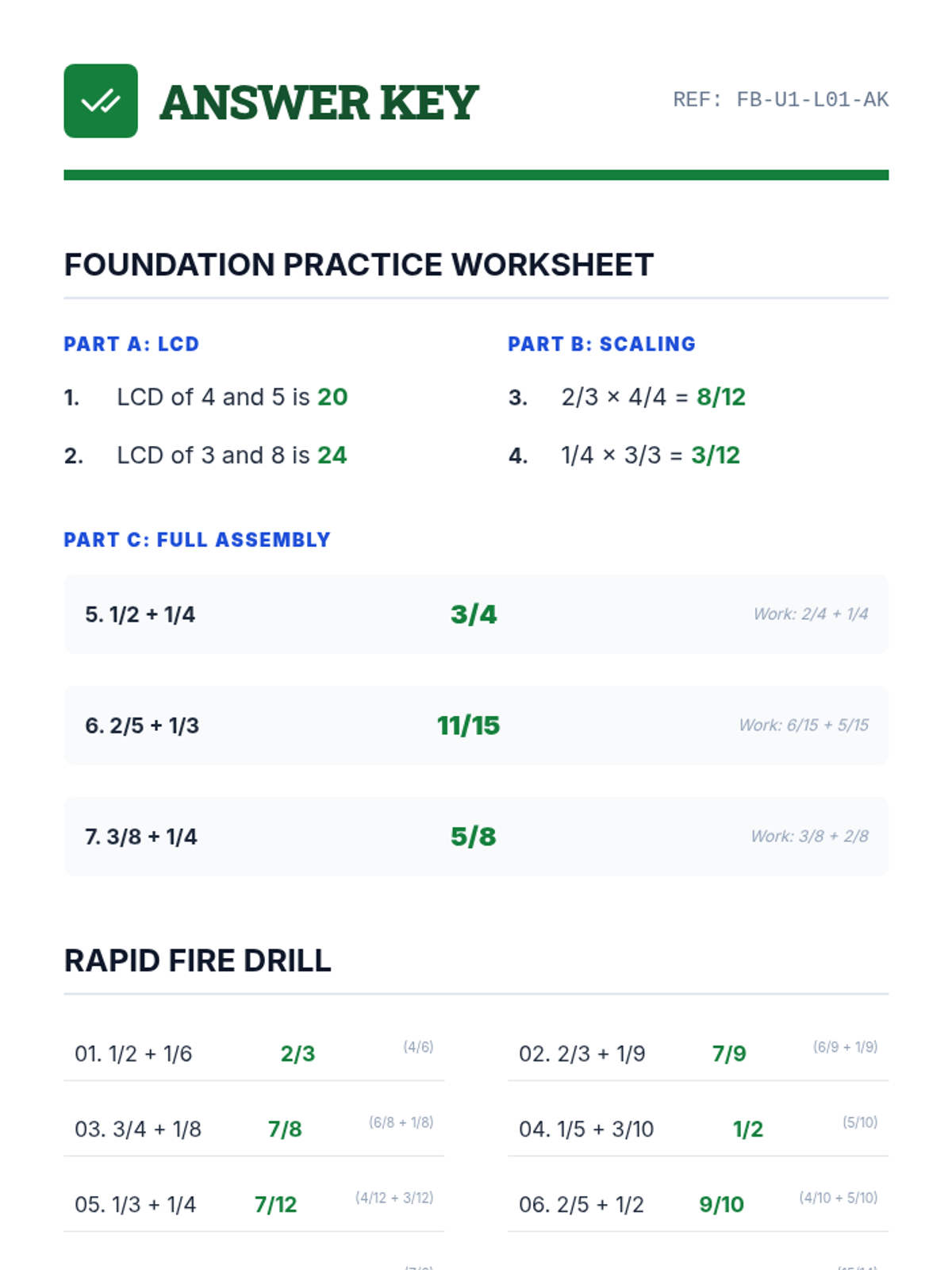
A focused lesson on adding fractions with unlike denominators using a blueprint-inspired approach to building common denominators.
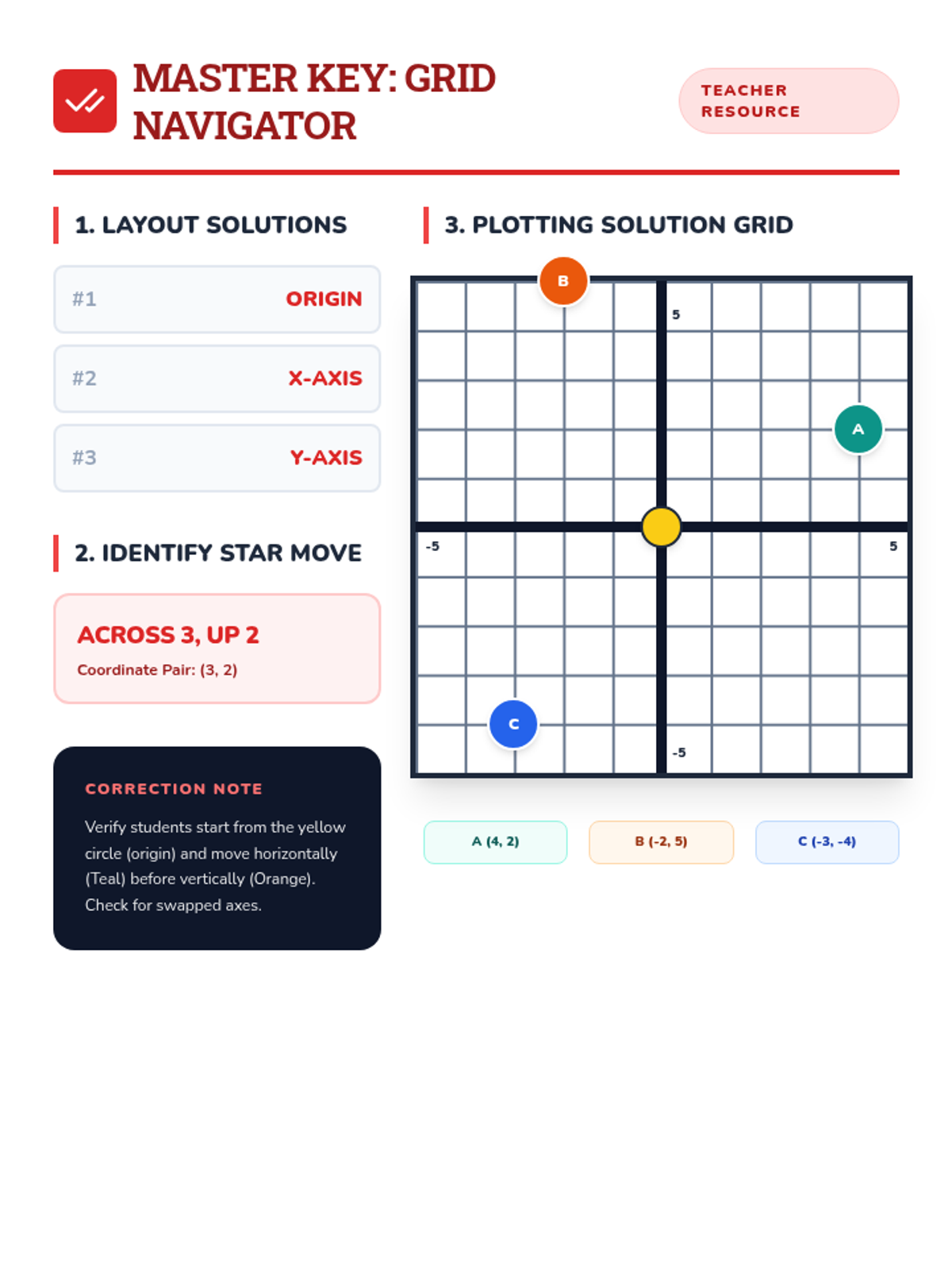
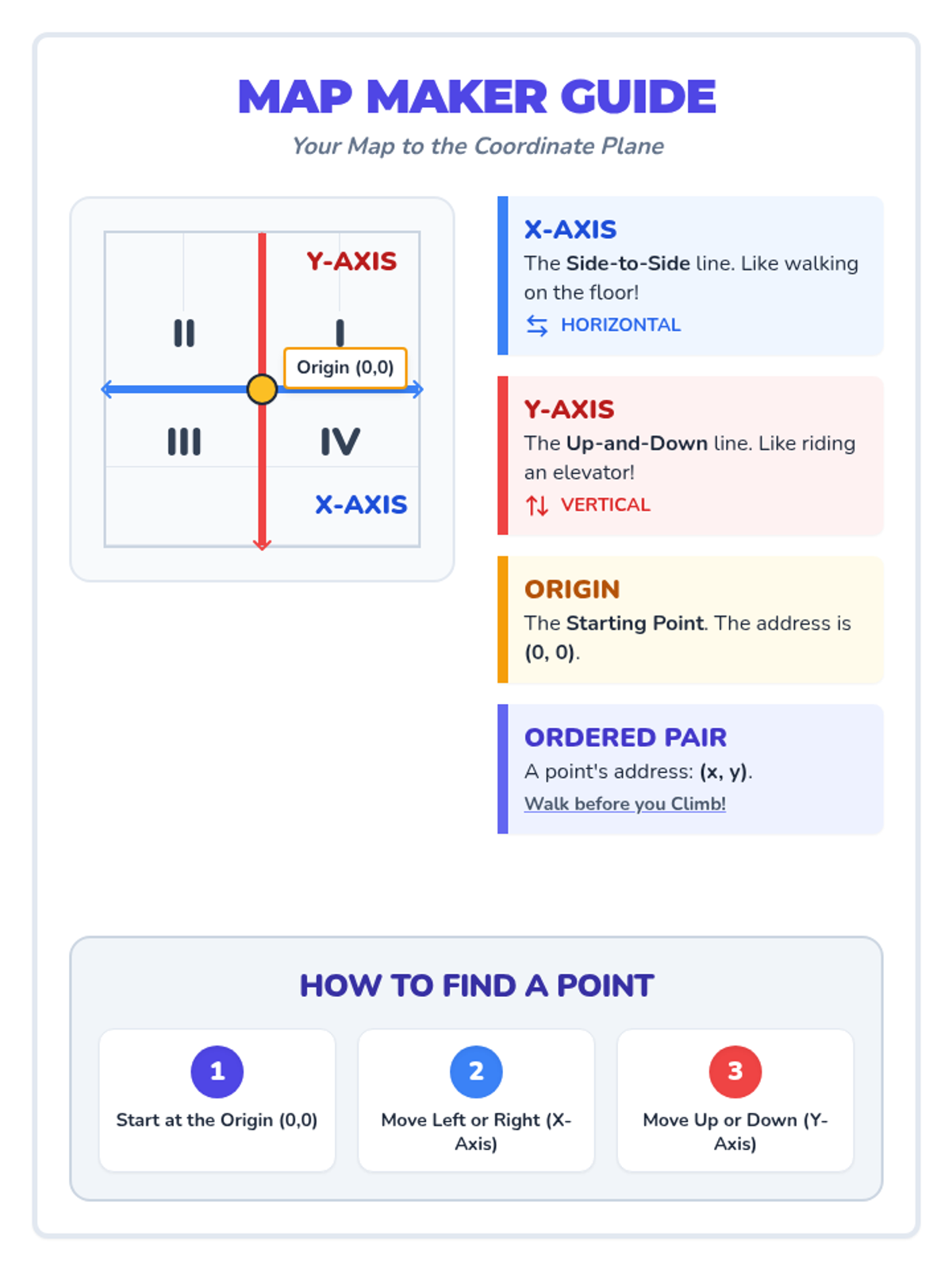
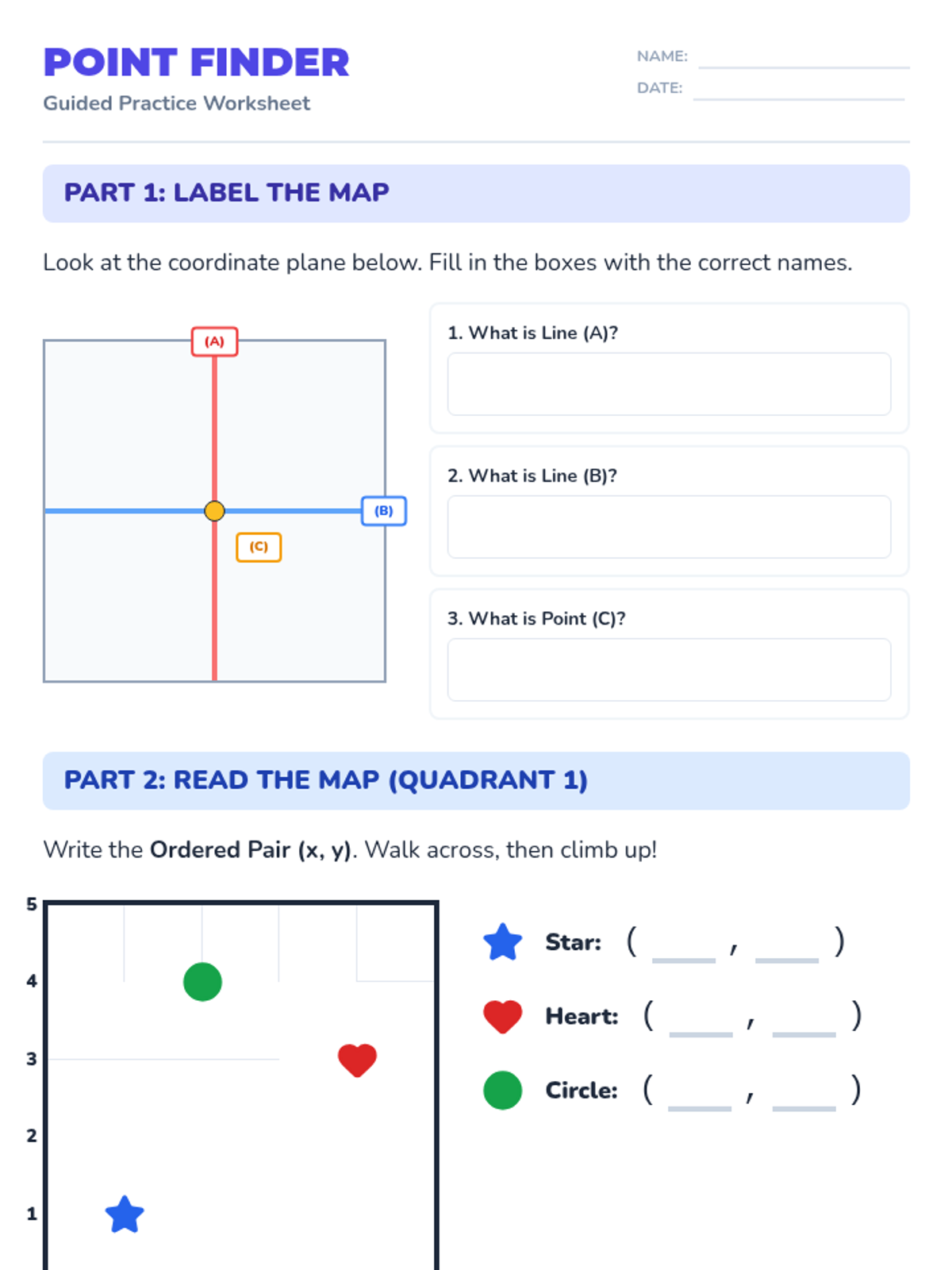
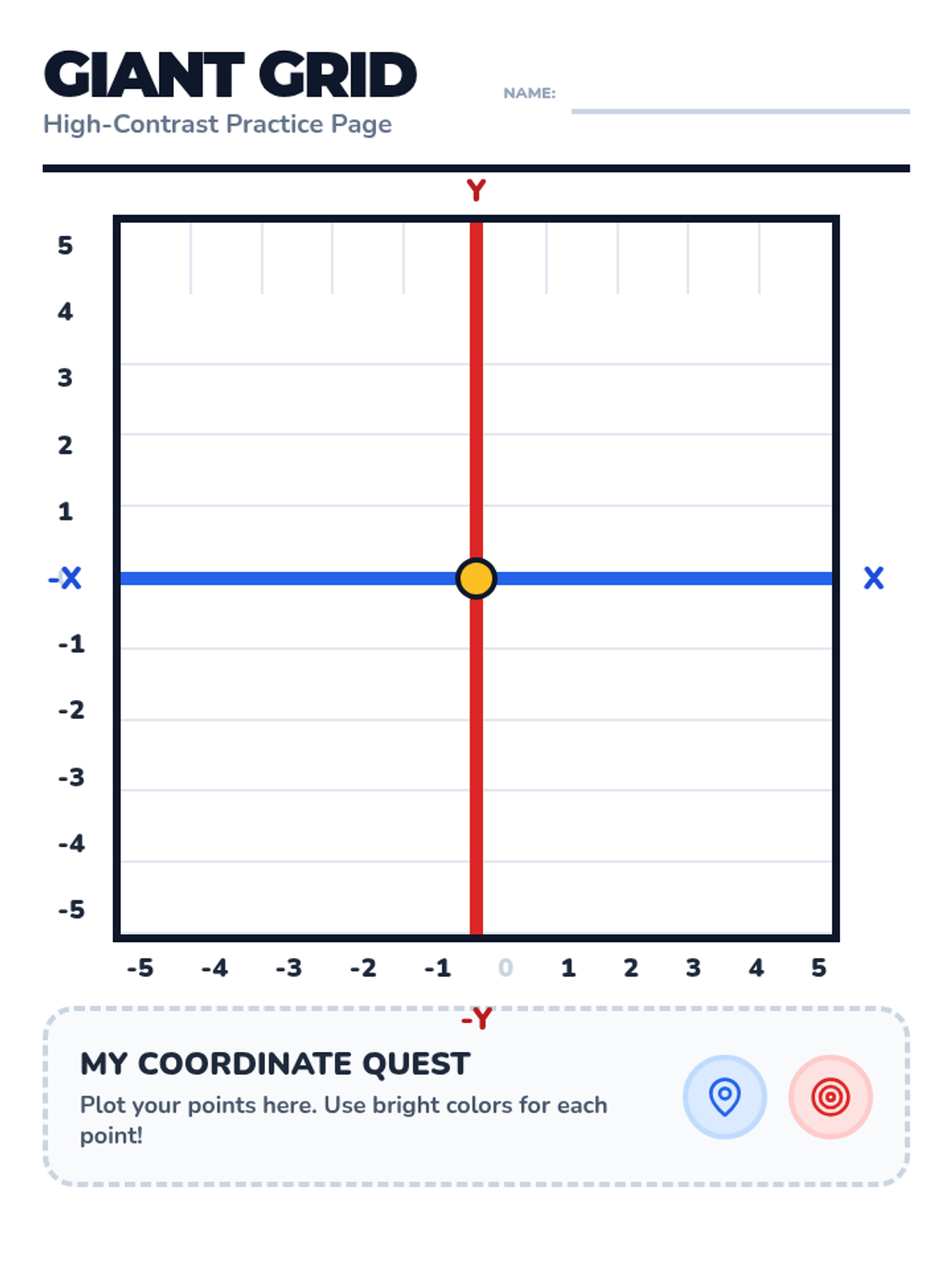
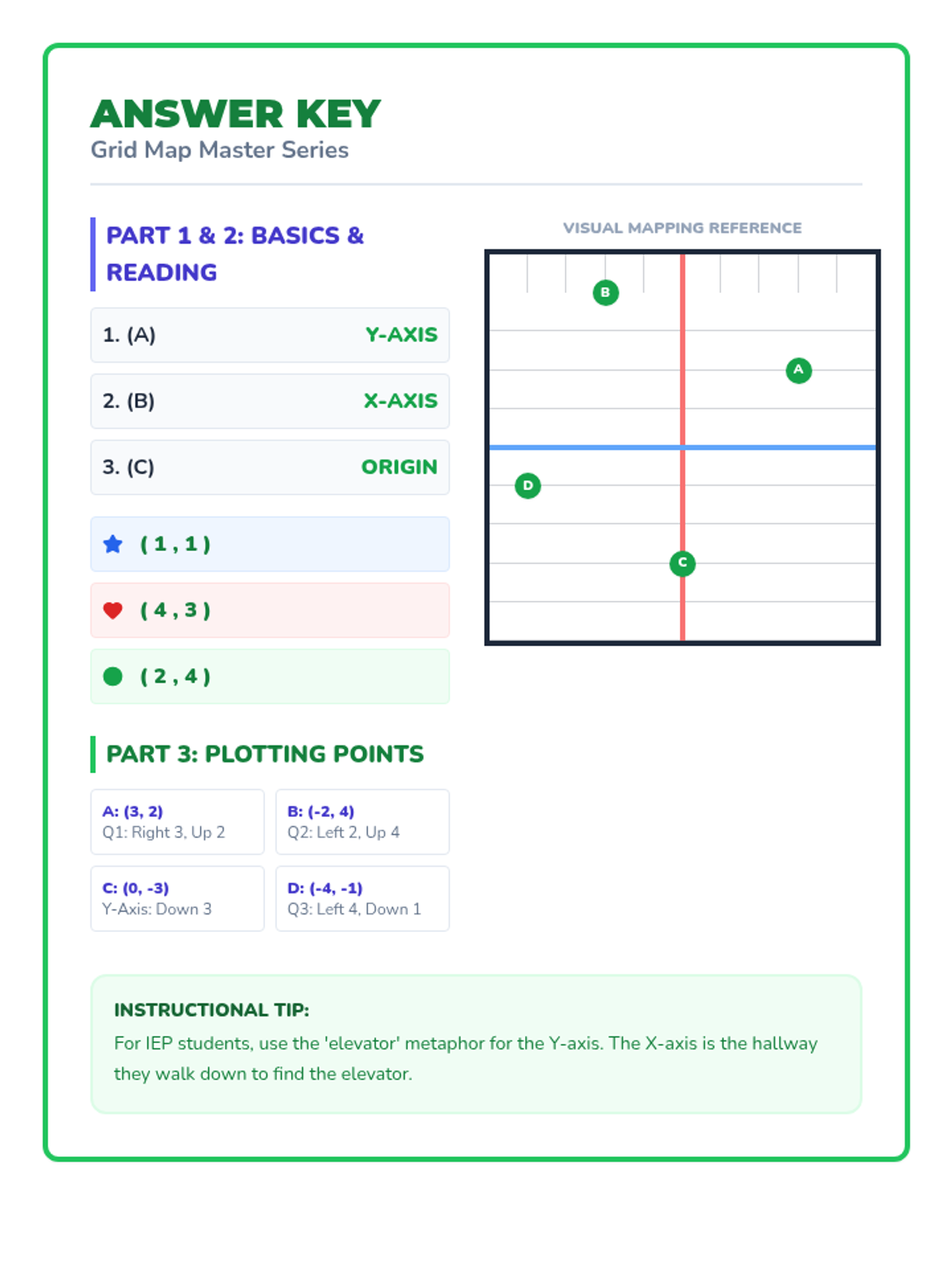
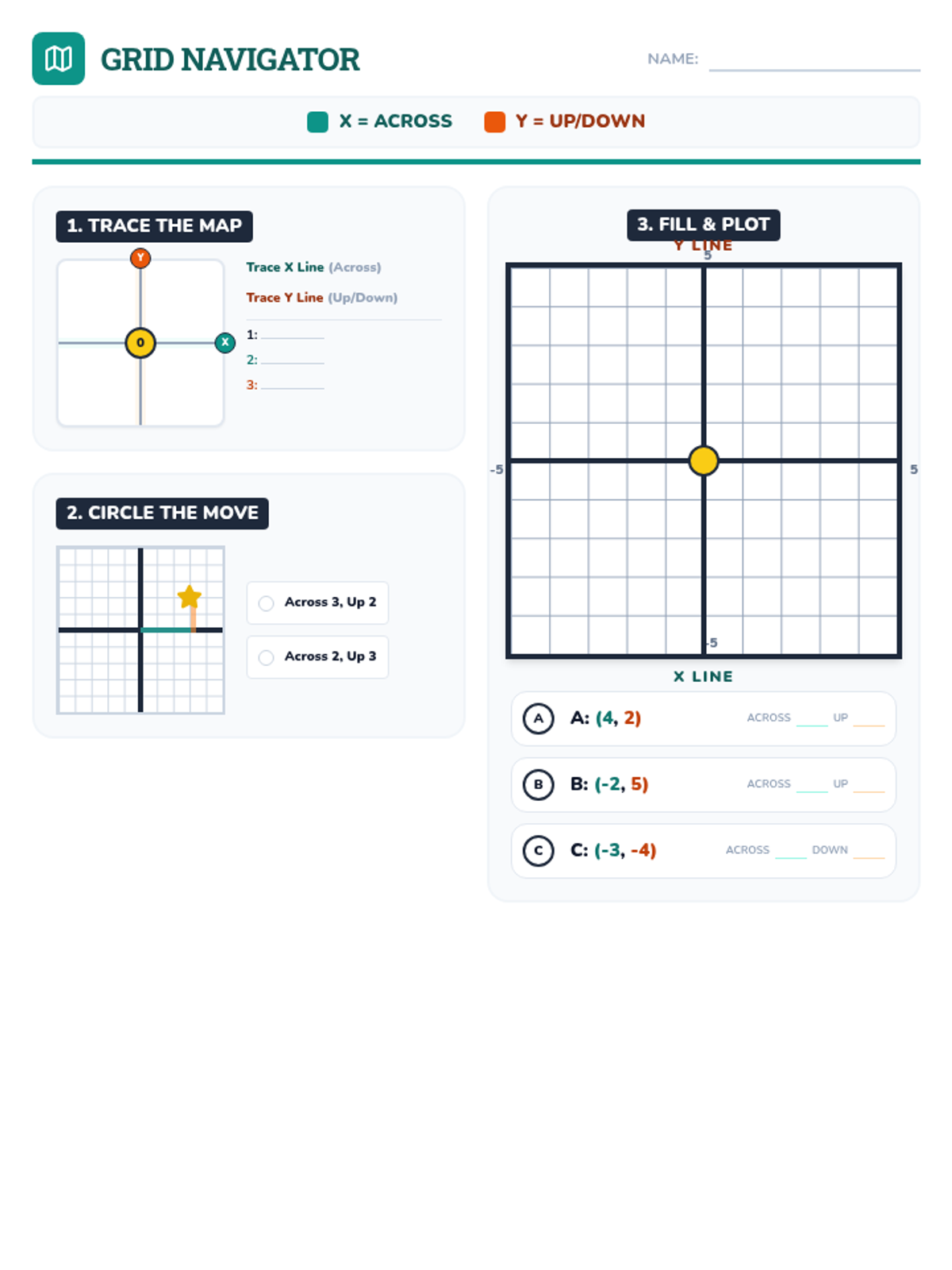
A modified lesson on the coordinate plane focusing on identifying axes, the origin, and plotting points in all four quadrants with visual scaffolding.
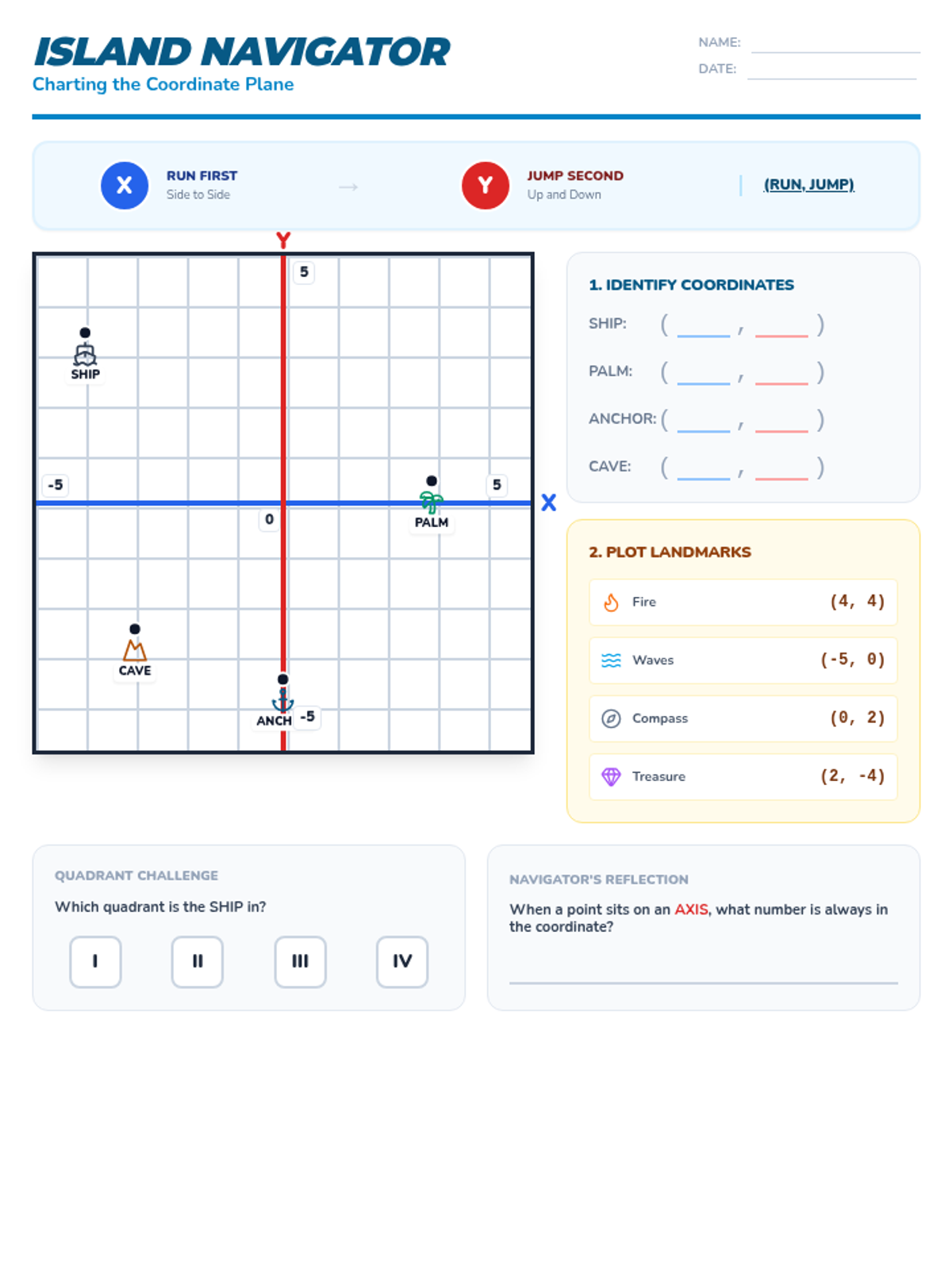
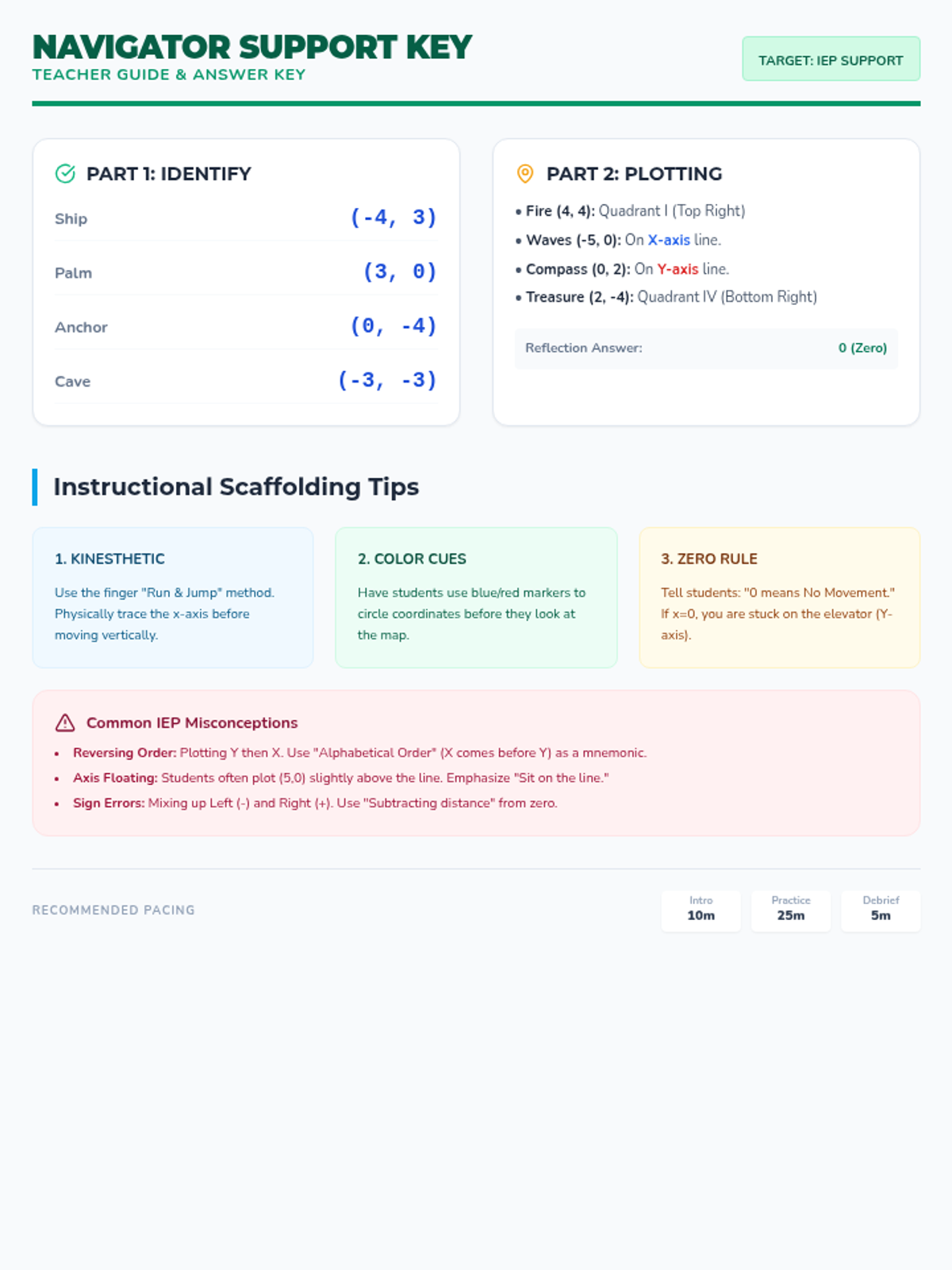
A specialized math lesson for plotting coordinates across all four quadrants and on the axes, designed with heavy scaffolding and visual cues for IEP support. Students will use an island map theme to practice identifying and plotting points.
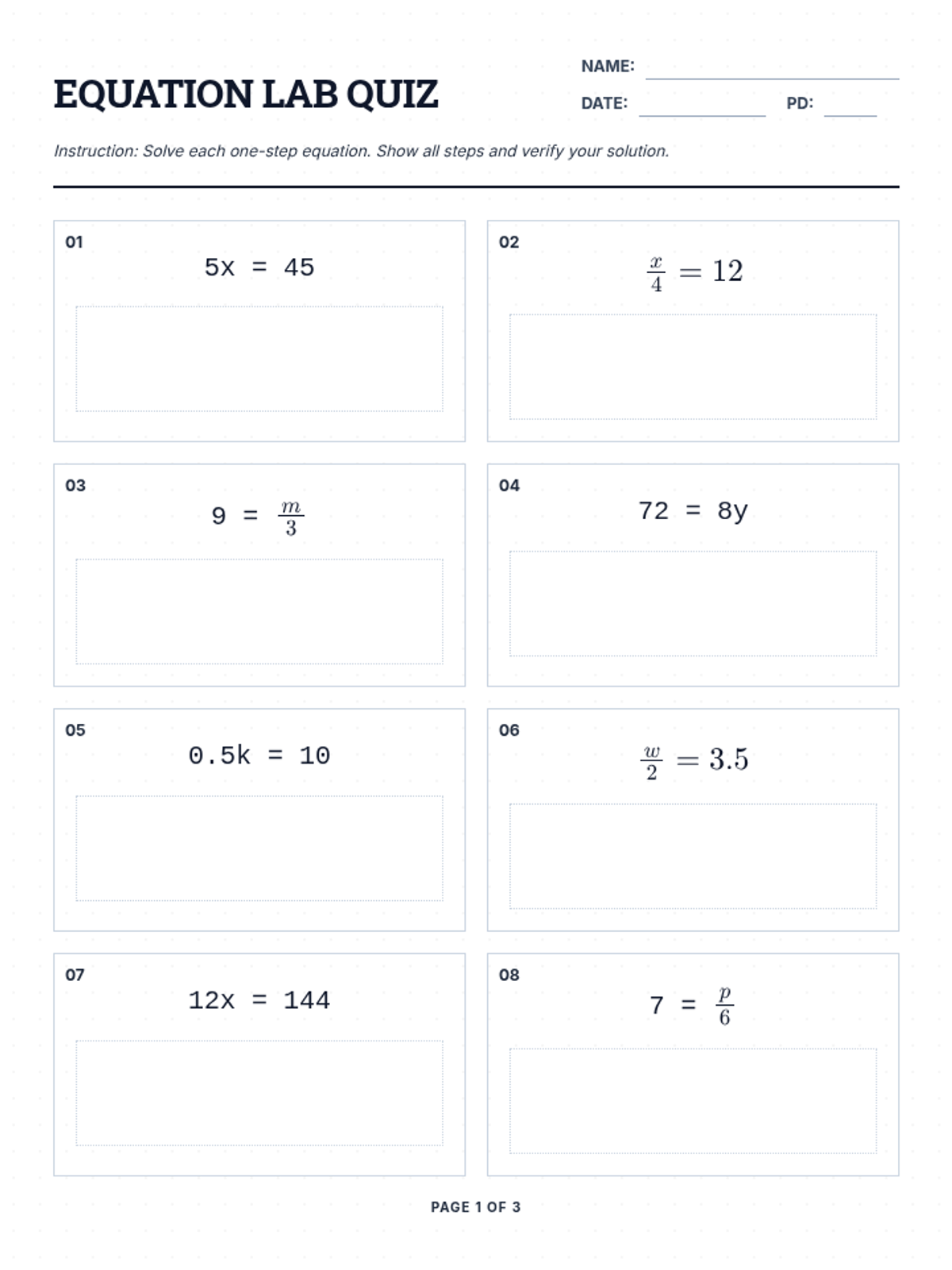
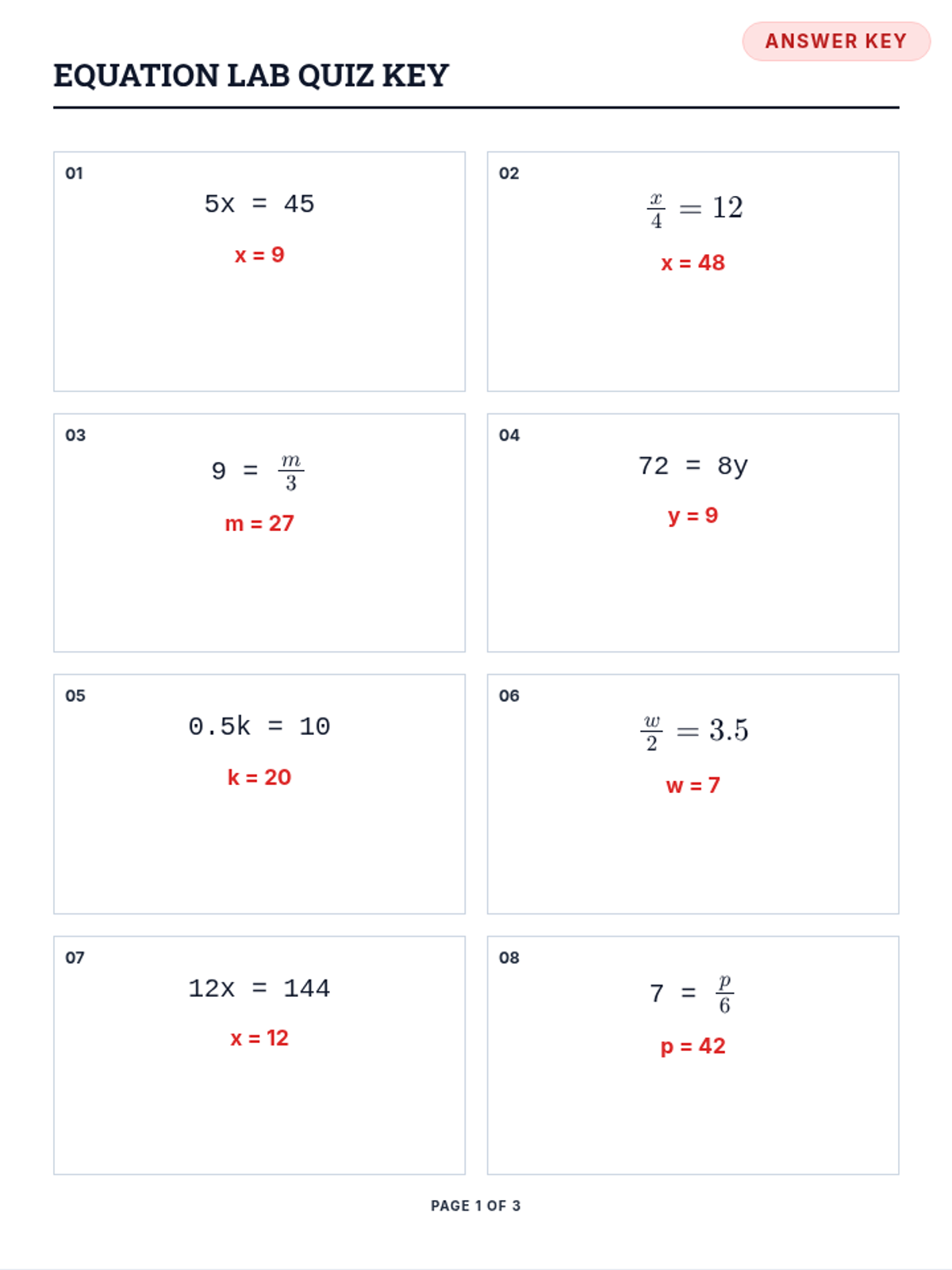
A comprehensive assessment lesson focusing on mastering one-step equations involving multiplication, division, and basic addition/subtraction.
A foundational lesson on the coordinate plane designed for IEP students, focusing on vocabulary, quadrant identification, and step-by-step plotting and reading of points.
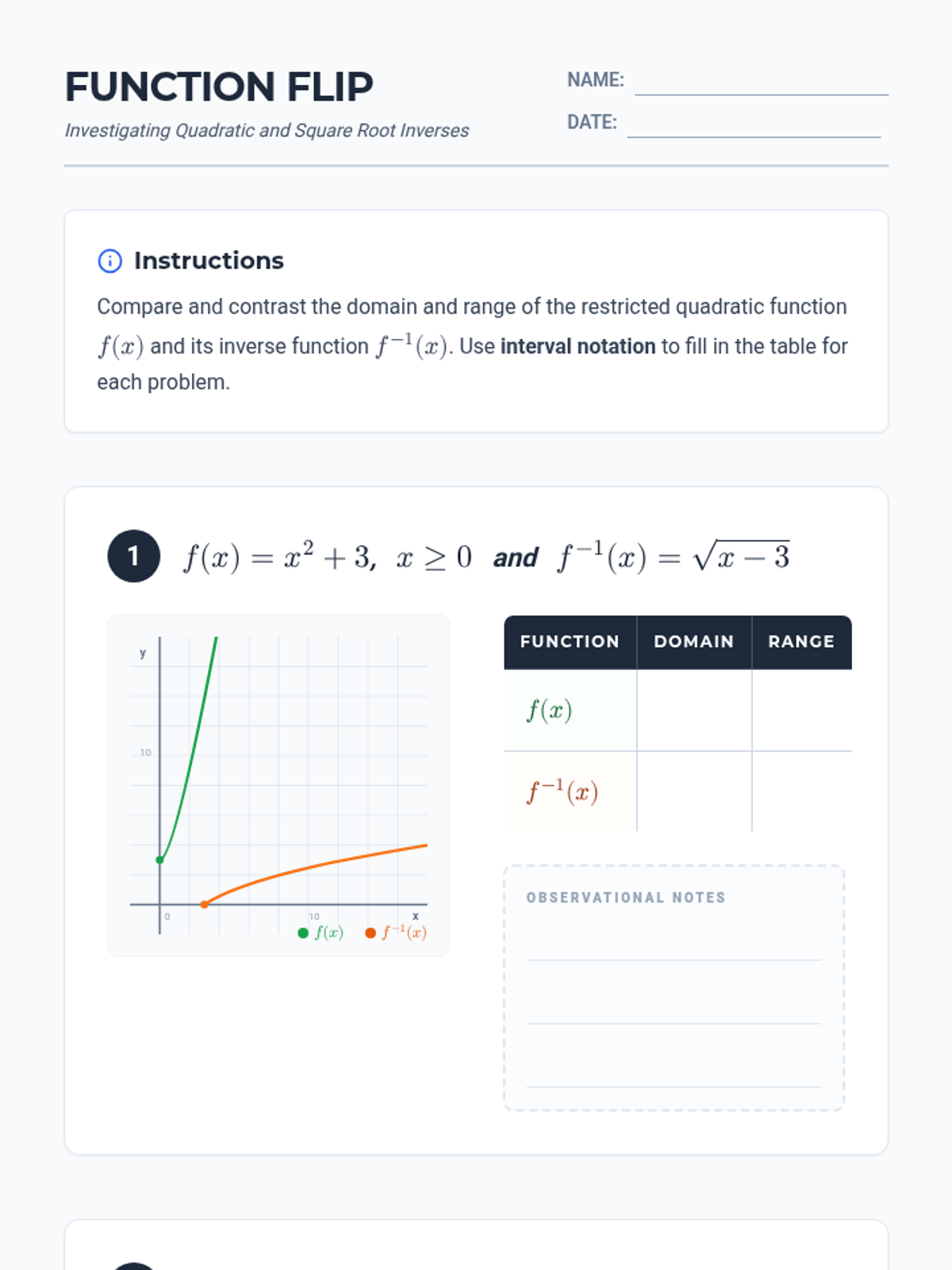
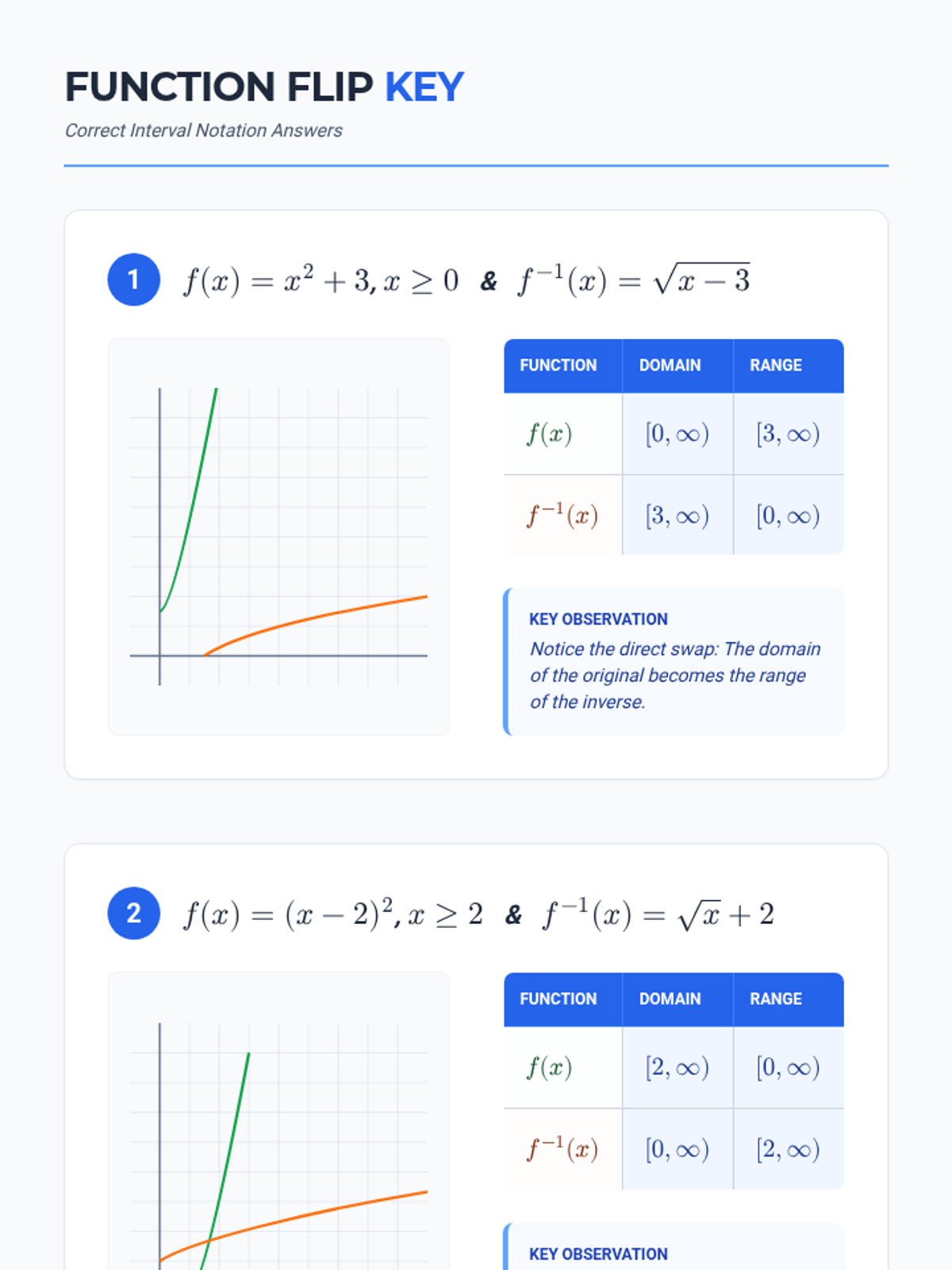
A focused lesson on identifying and comparing the domain and range of quadratic functions and their square root inverses using interval notation and graphical analysis.
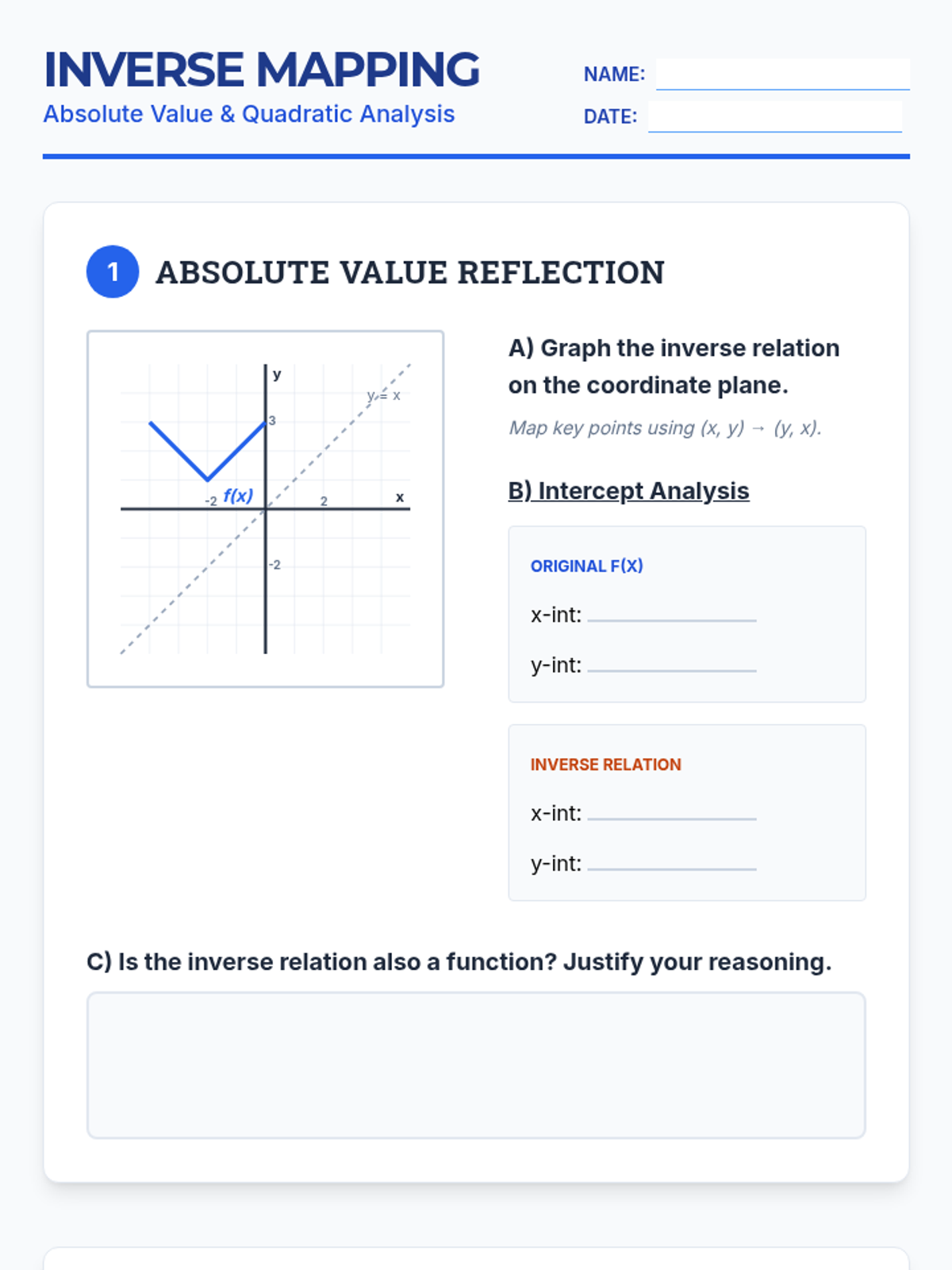
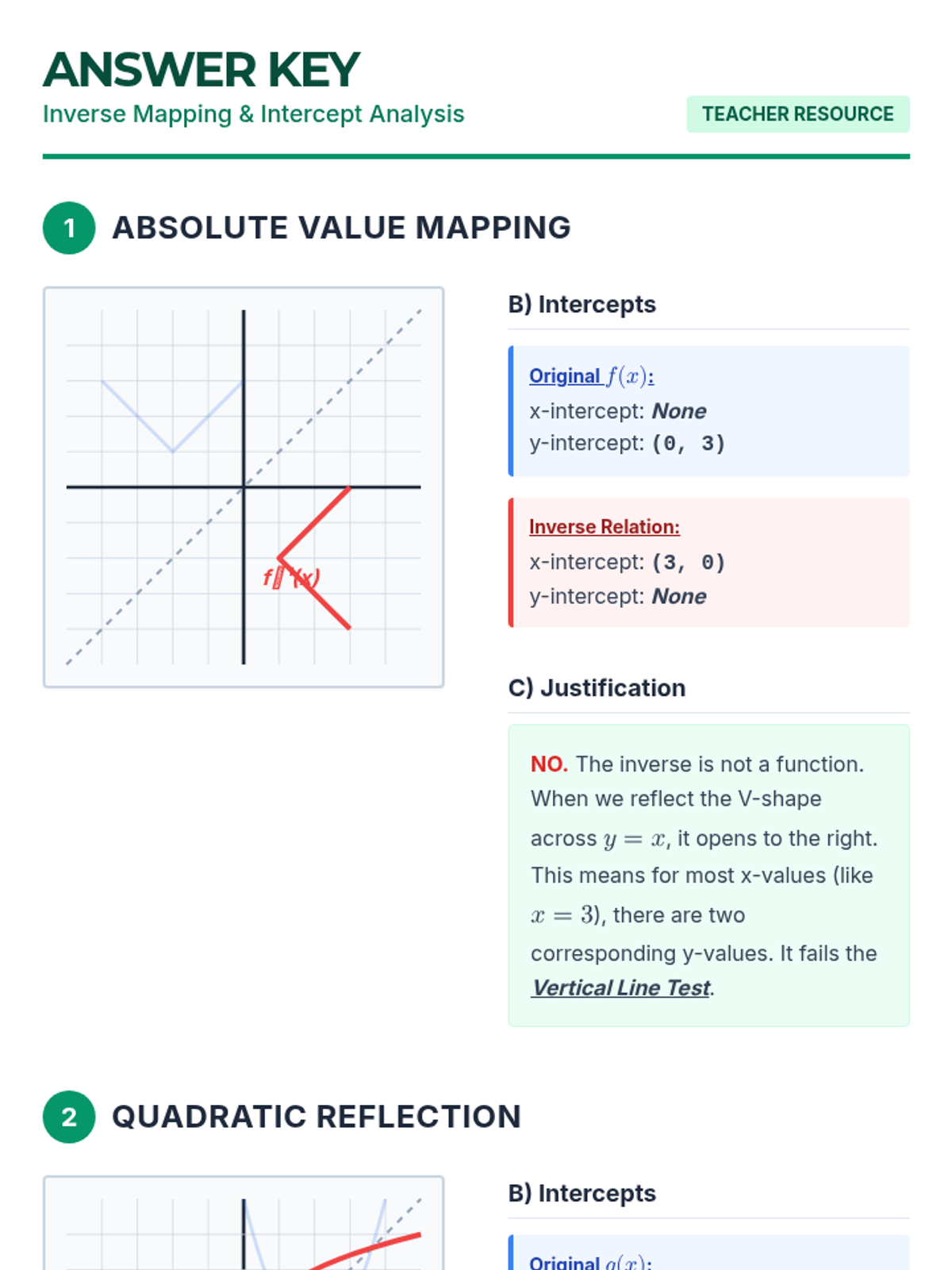
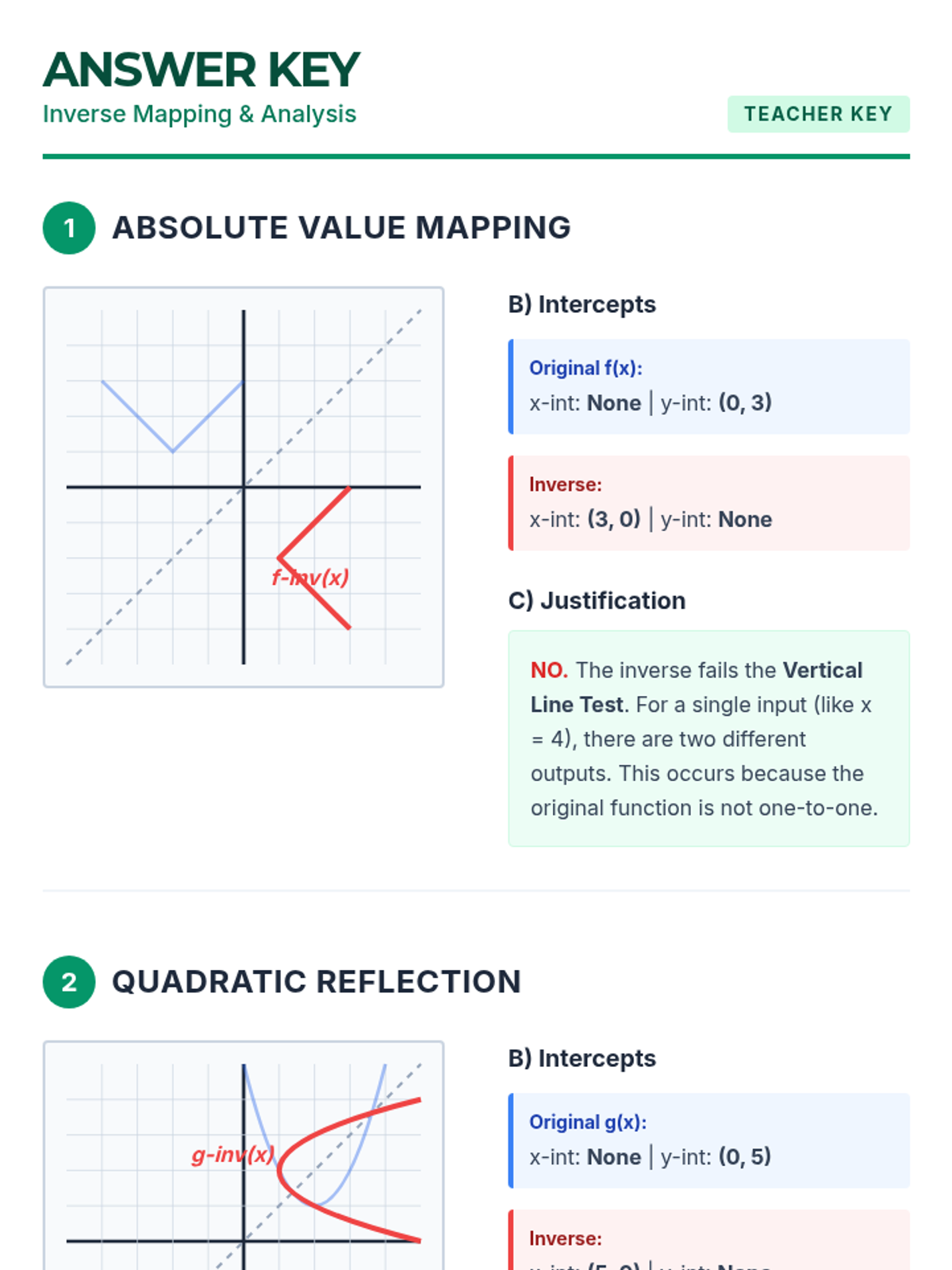
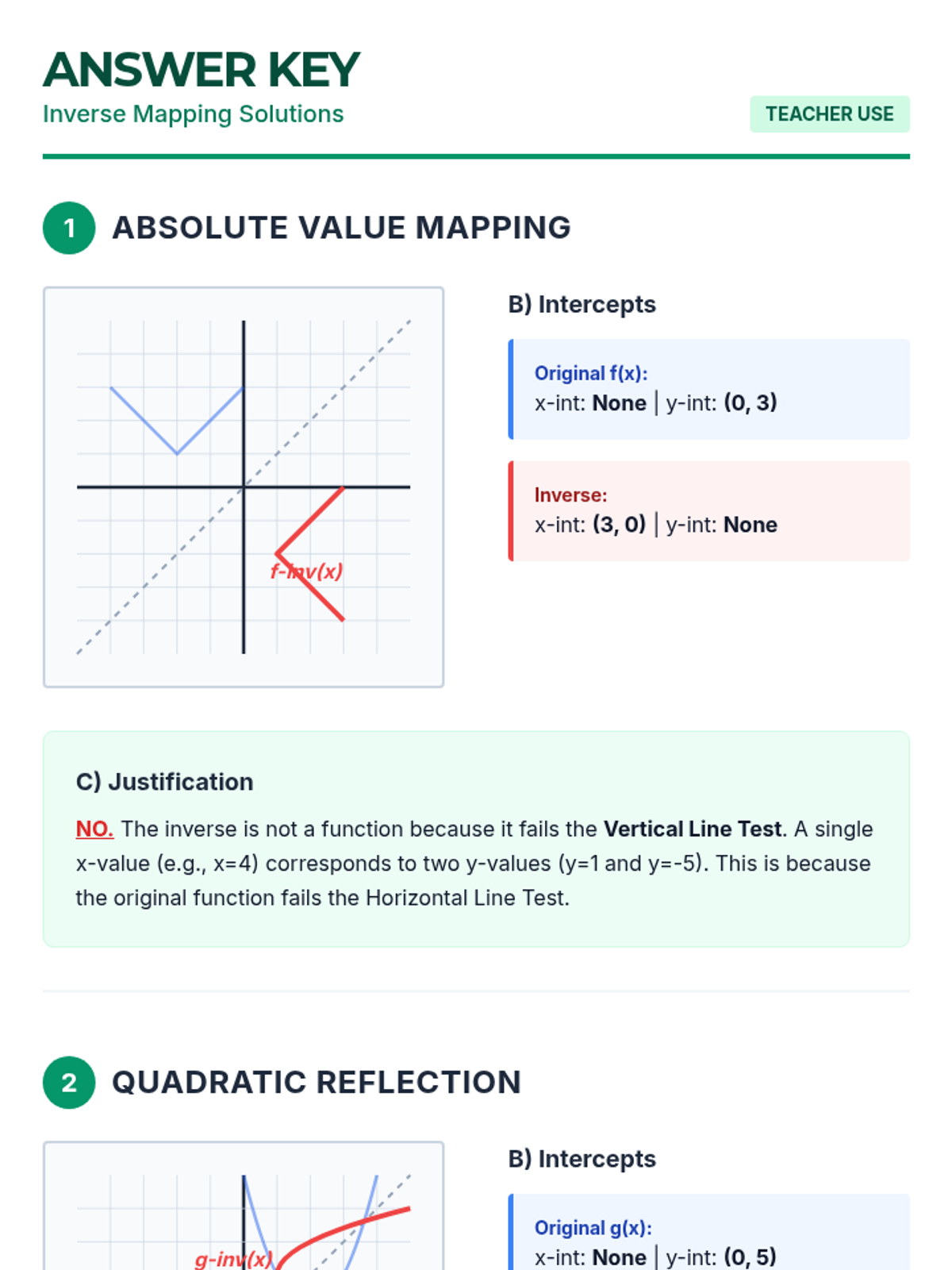
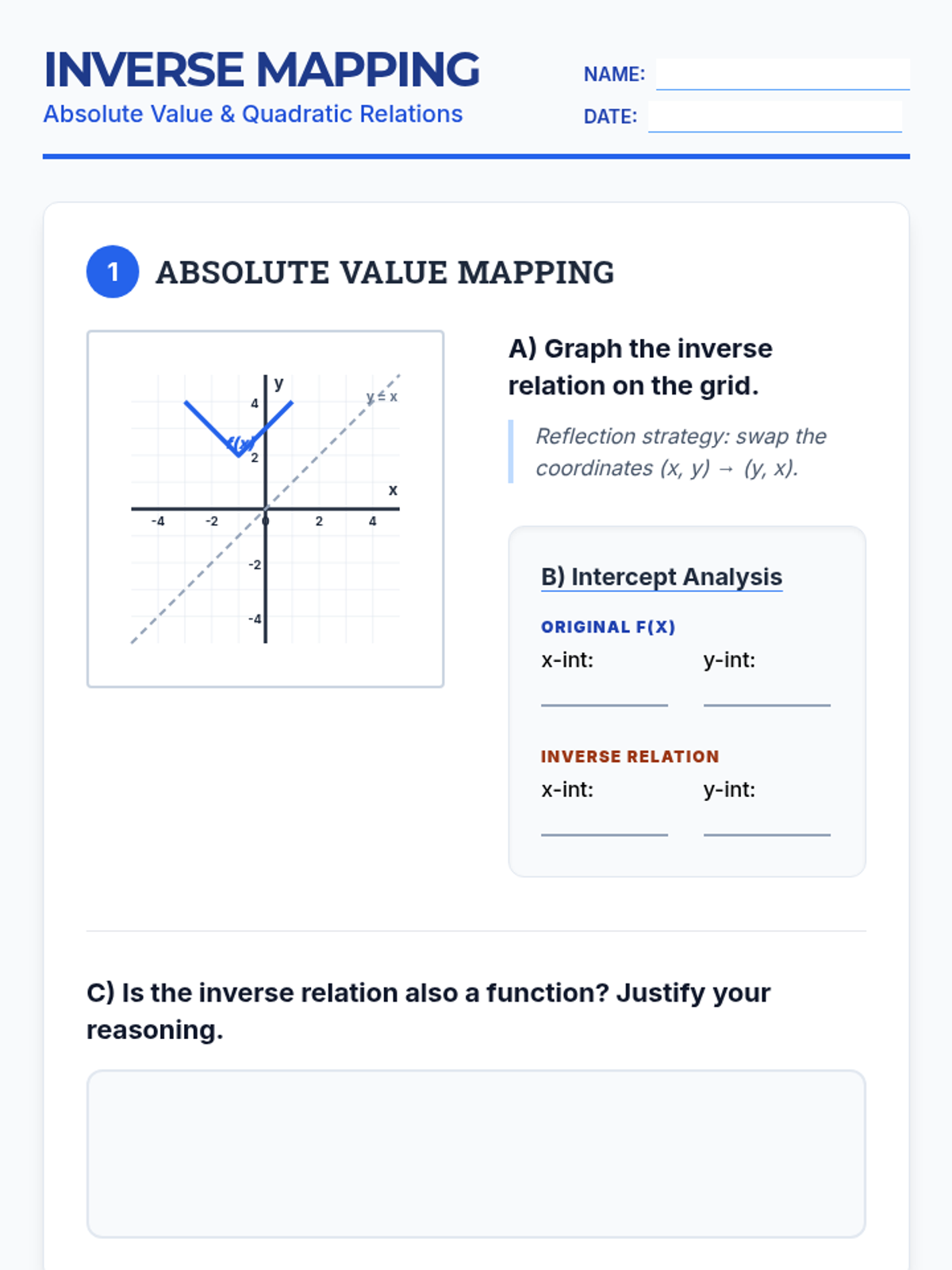
A lesson focused on graphing and analyzing inverse relations for absolute value and quadratic functions. Students learn to reflect functions across y=x and evaluate if the resulting relation is a function.
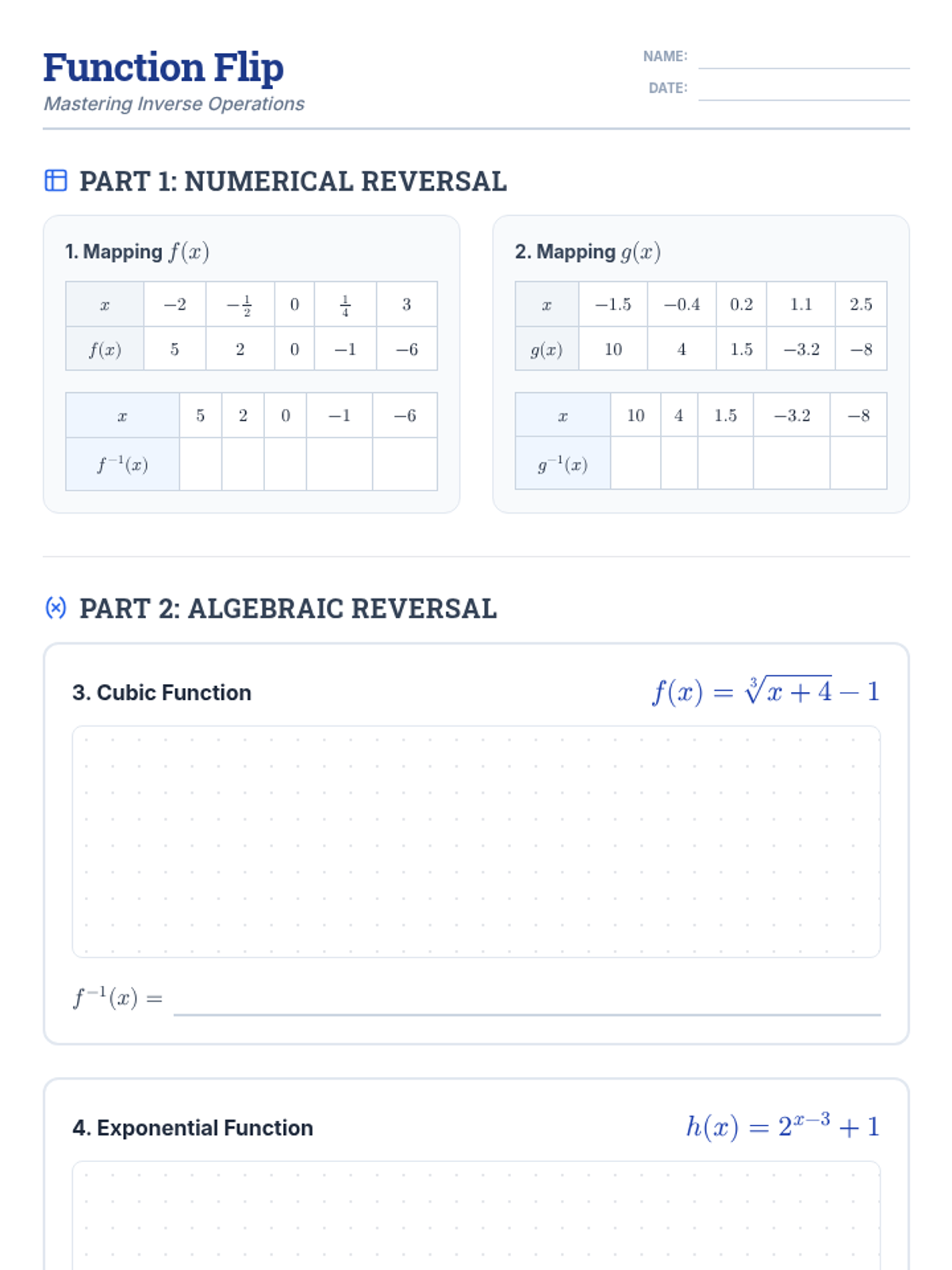
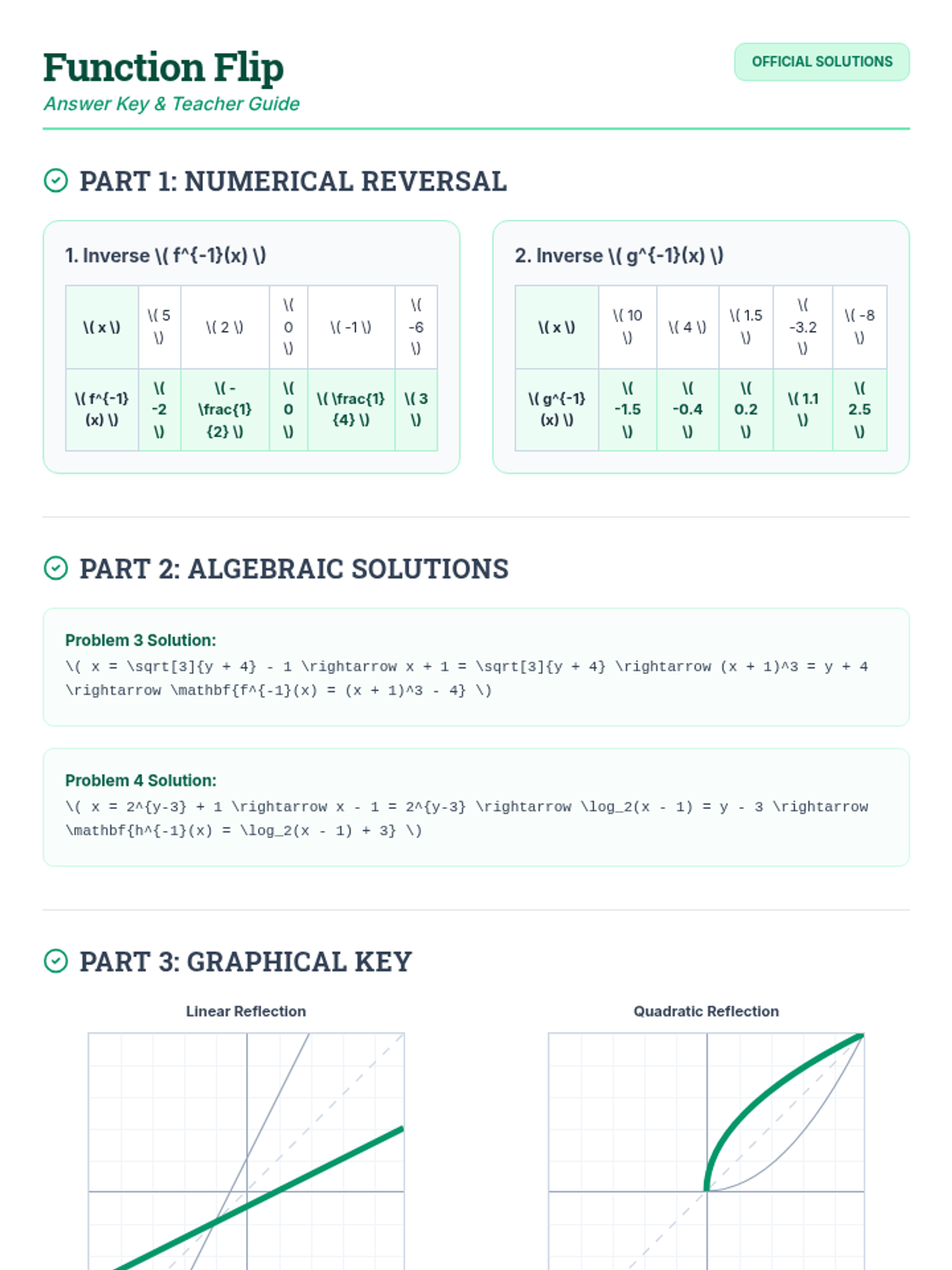
A lesson focused on understanding and calculating inverse functions through multiple representations: numerical tables, algebraic equations, and graphical reflections. Students will practice reversing operations and reflecting functions across the line y=x.
A comprehensive assessment covering discrete random variables, permutations, combinations, and the binomial probability distribution based on real-world statistical data.
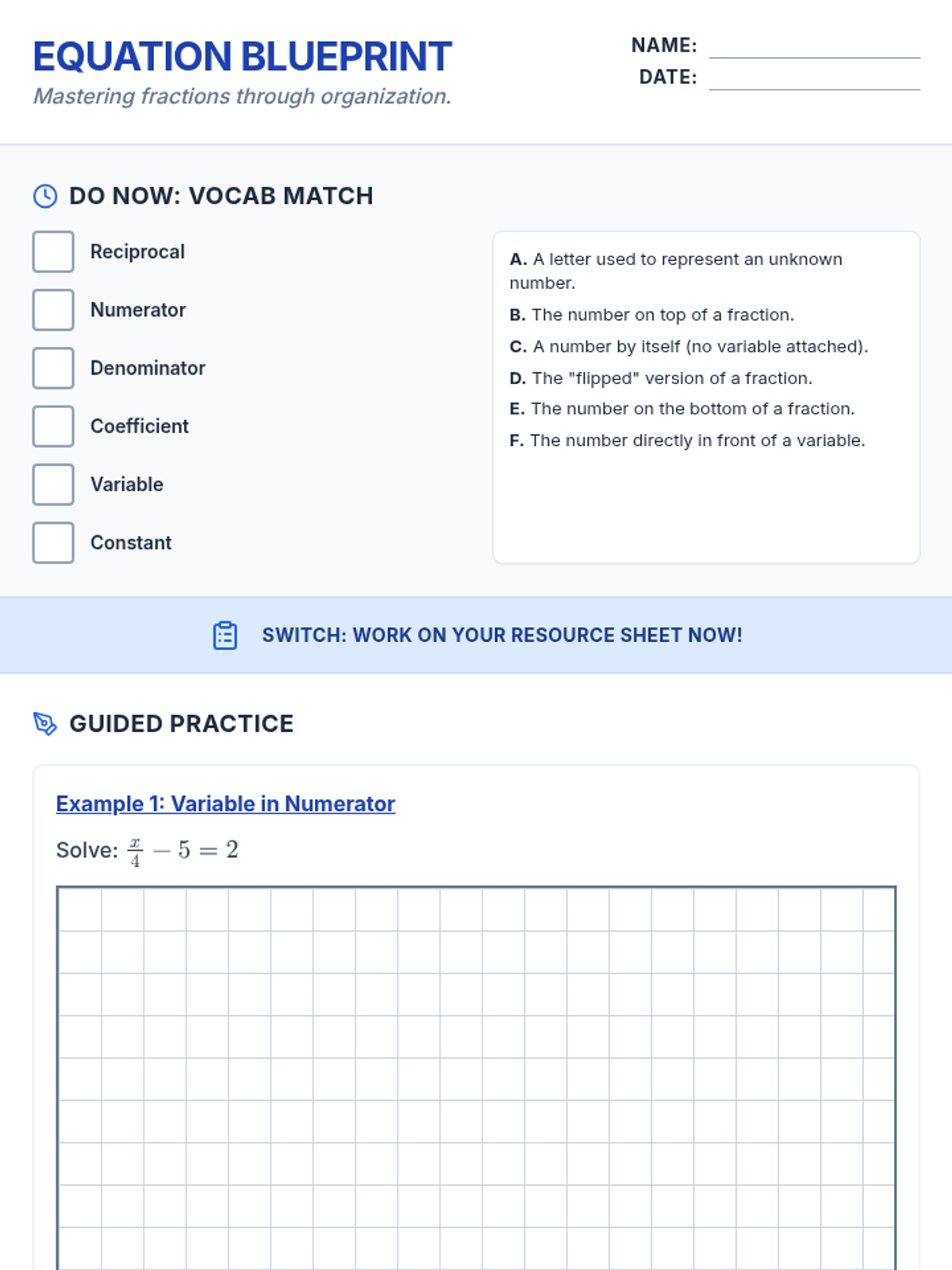
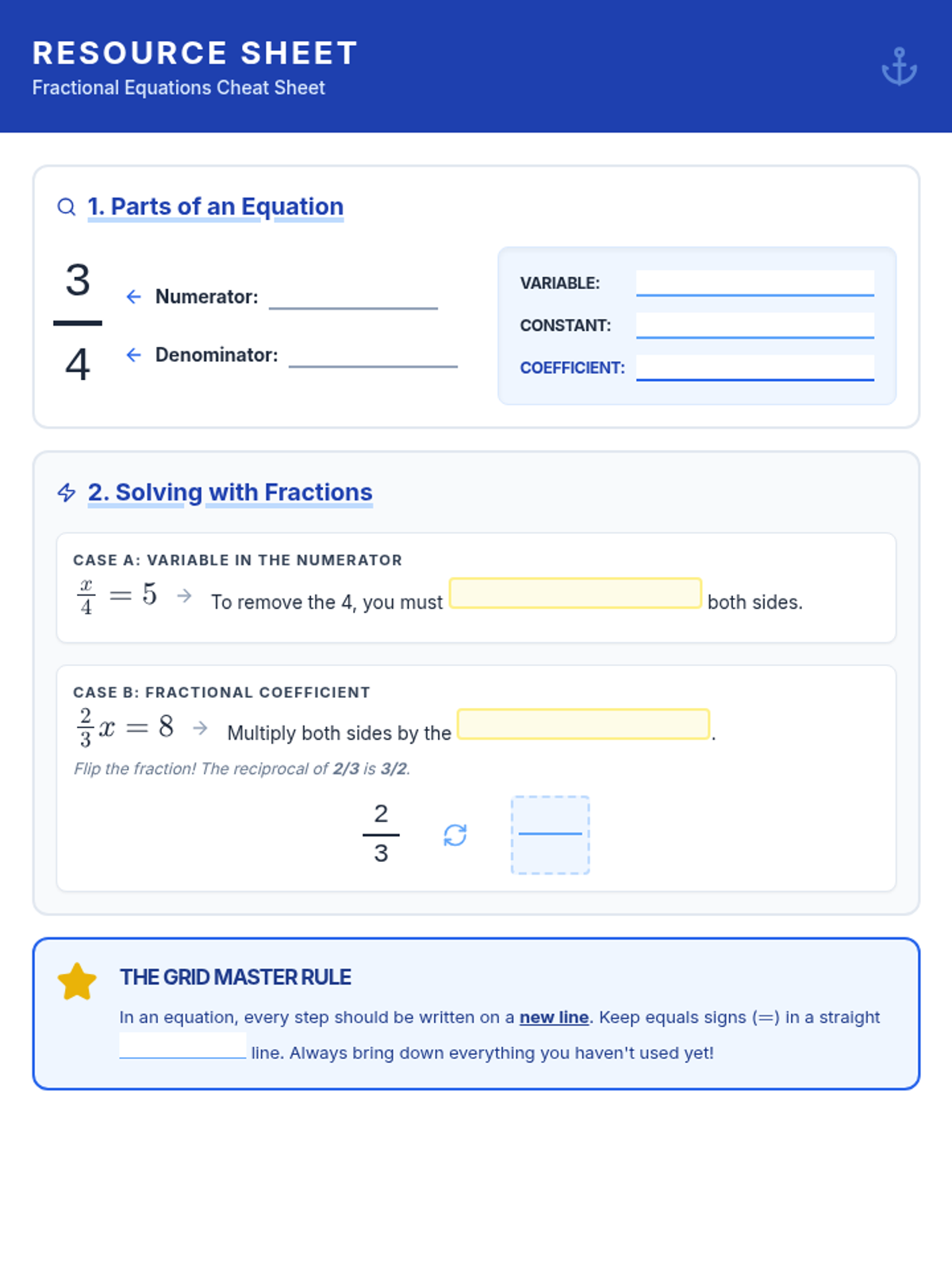
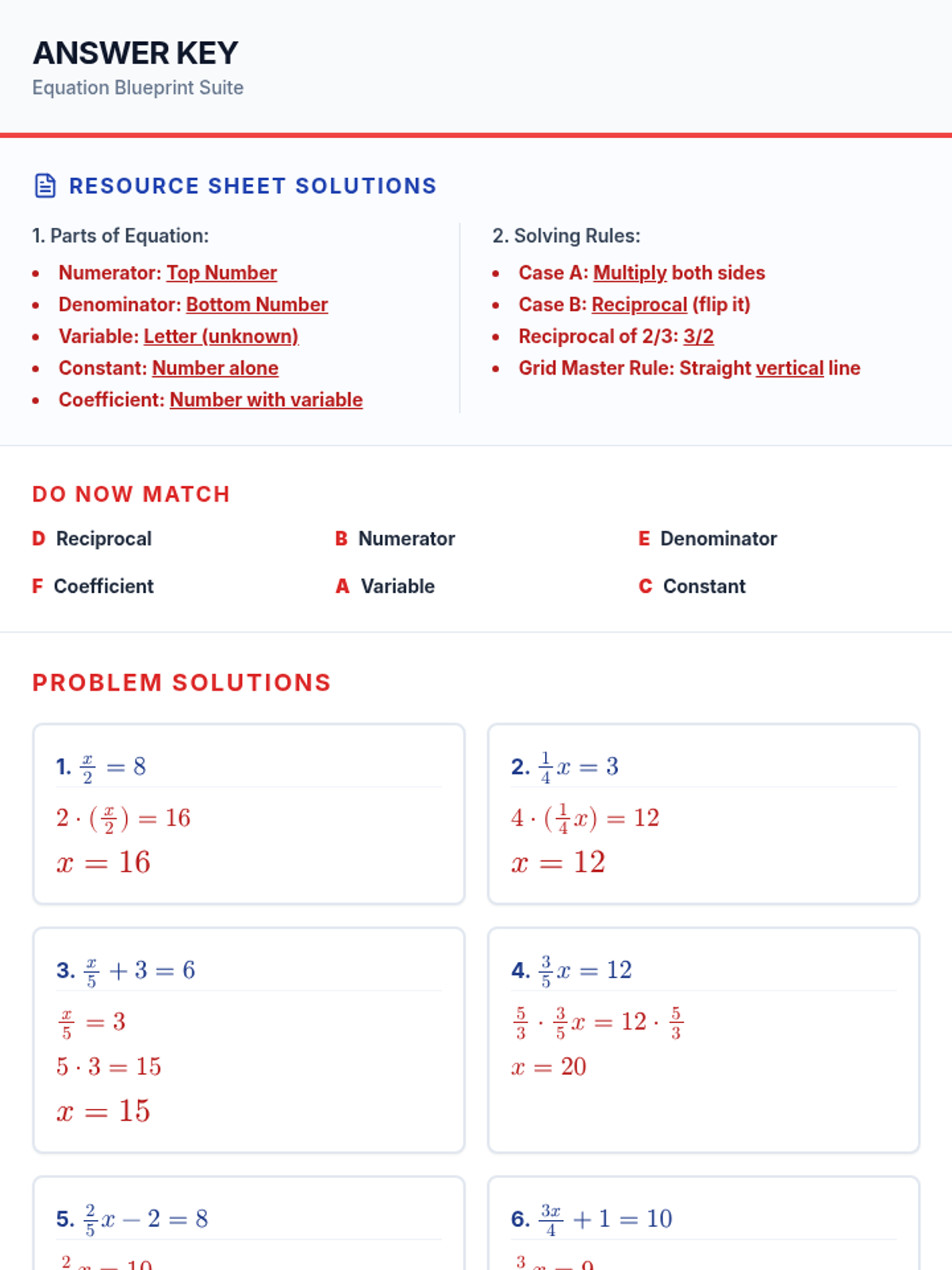
A math foundations lesson for 9th and 10th grade students focusing on solving equations with fractions through organized, line-by-line computation on grid-style layouts.
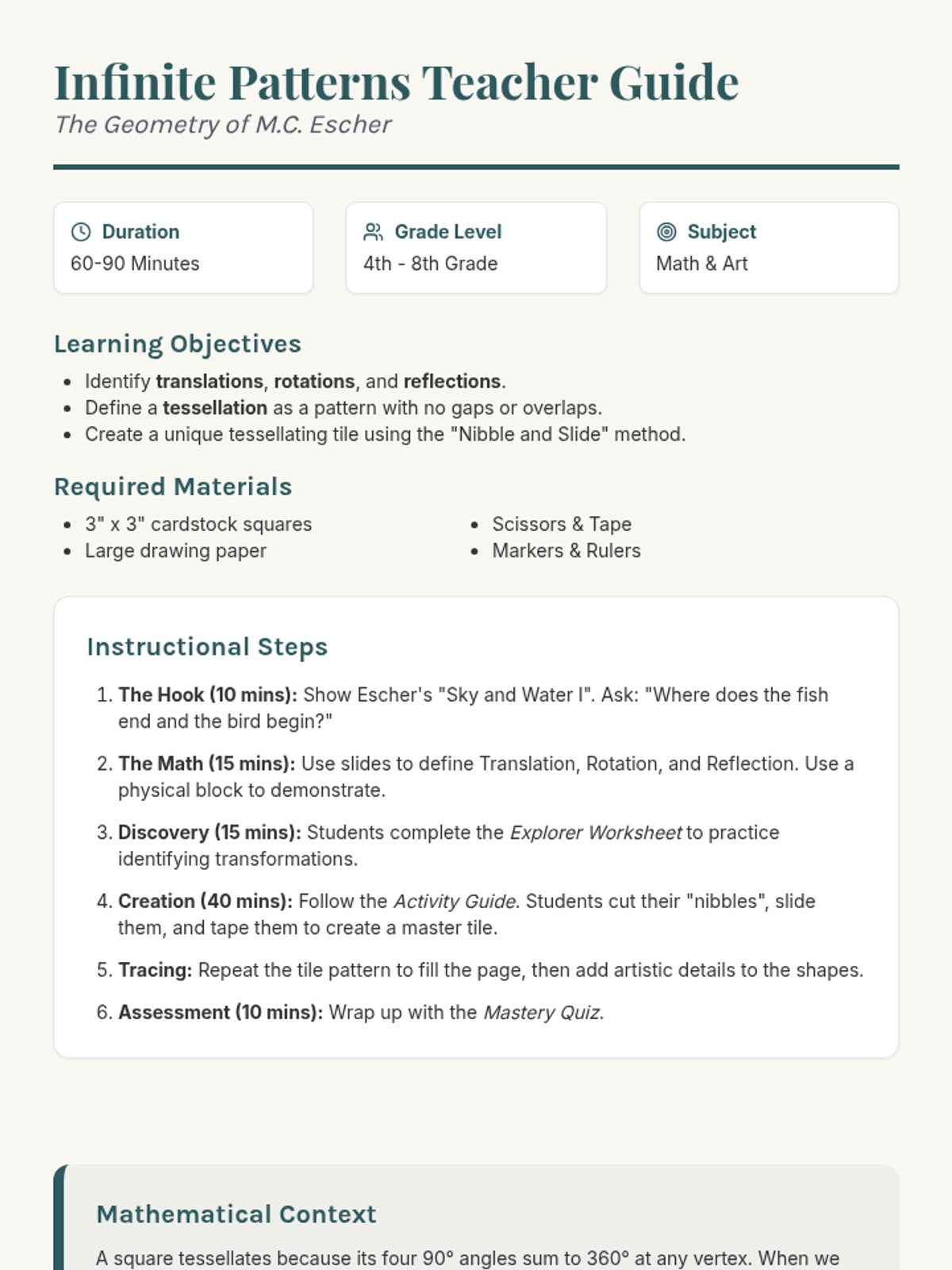
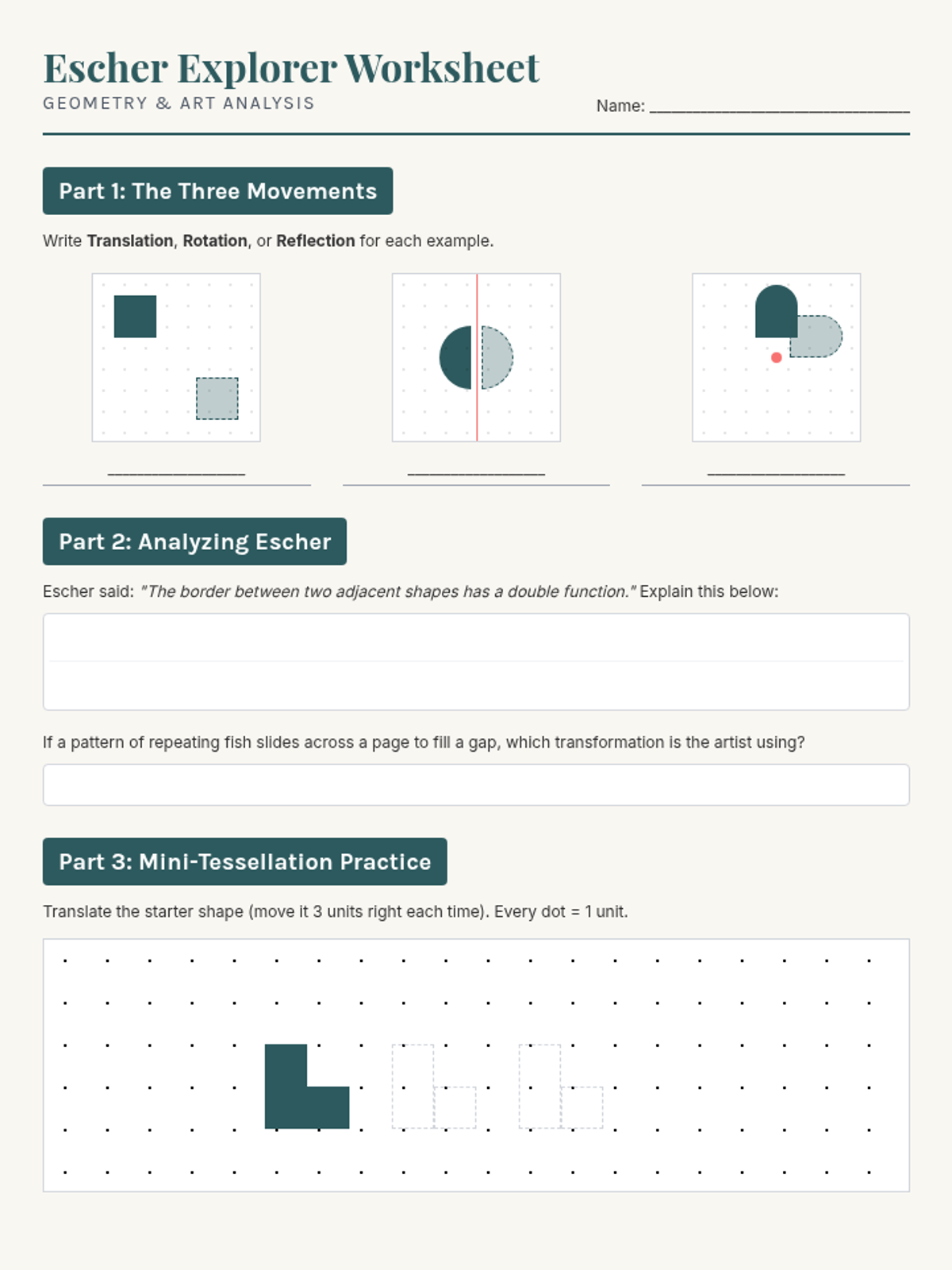
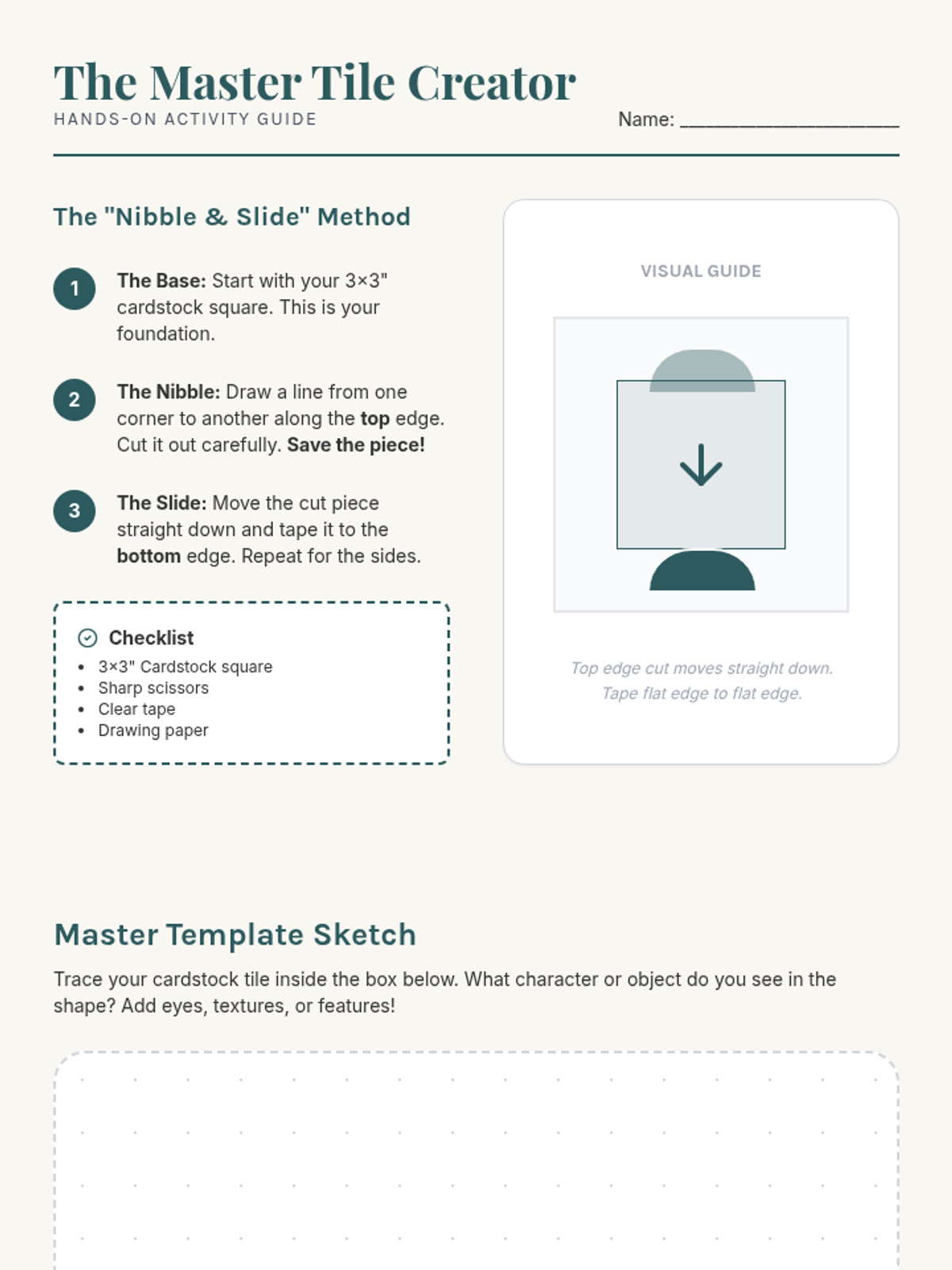
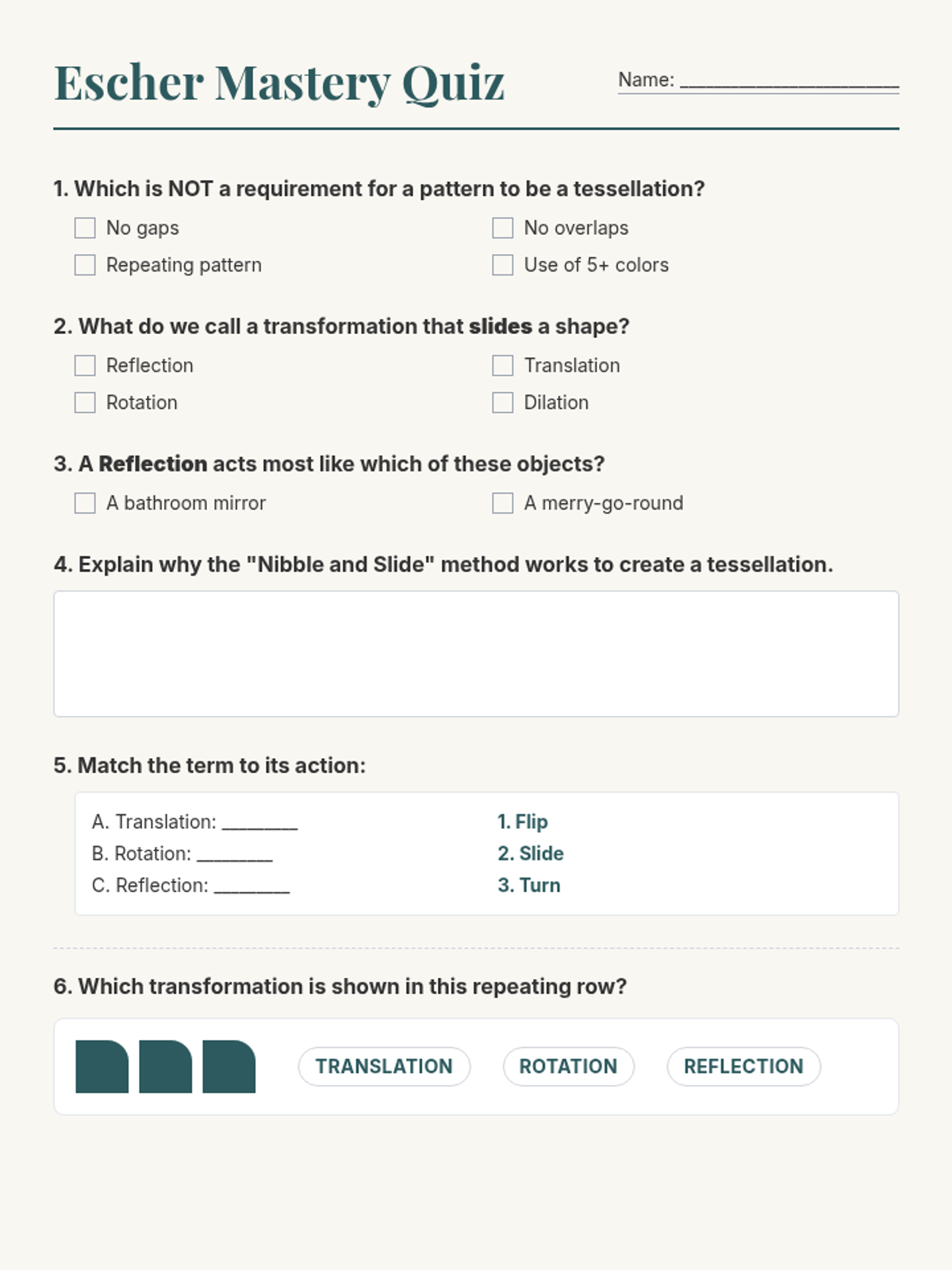
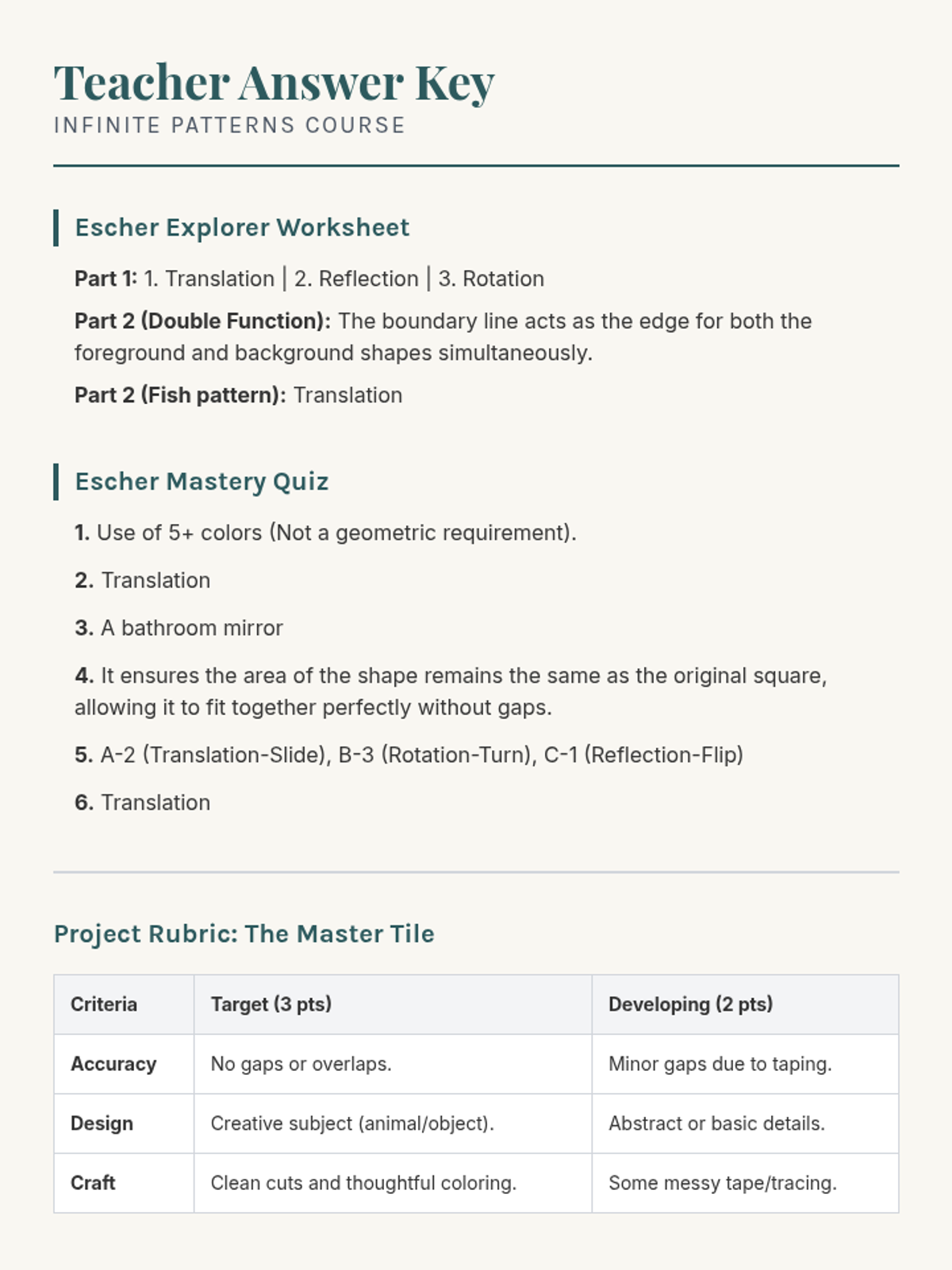
A hands-on interdisciplinary lesson blending geometry and art. Students explore M.C. Escher's work to understand and apply translations, rotations, and reflections through the creation of original tessellating patterns.
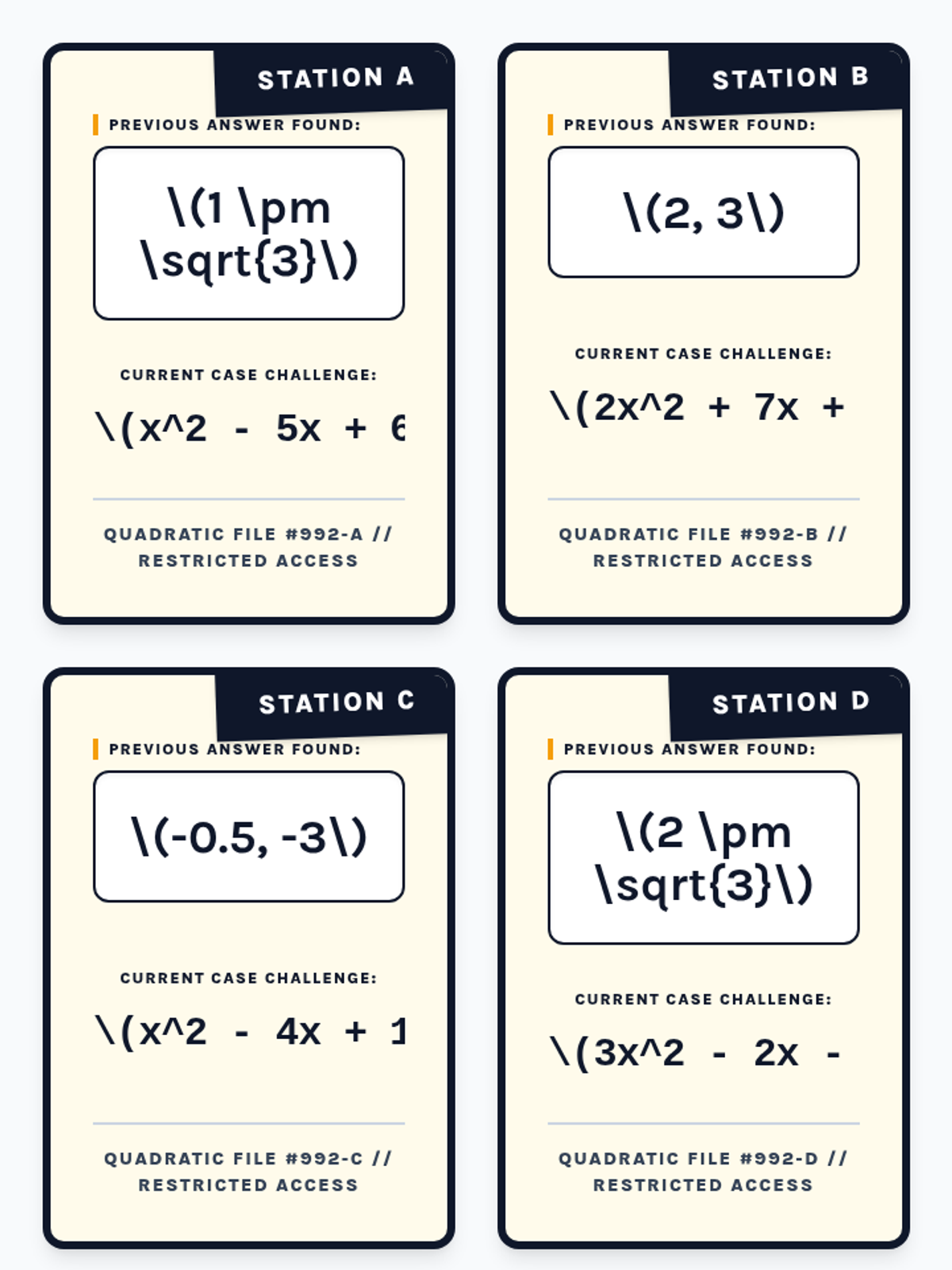
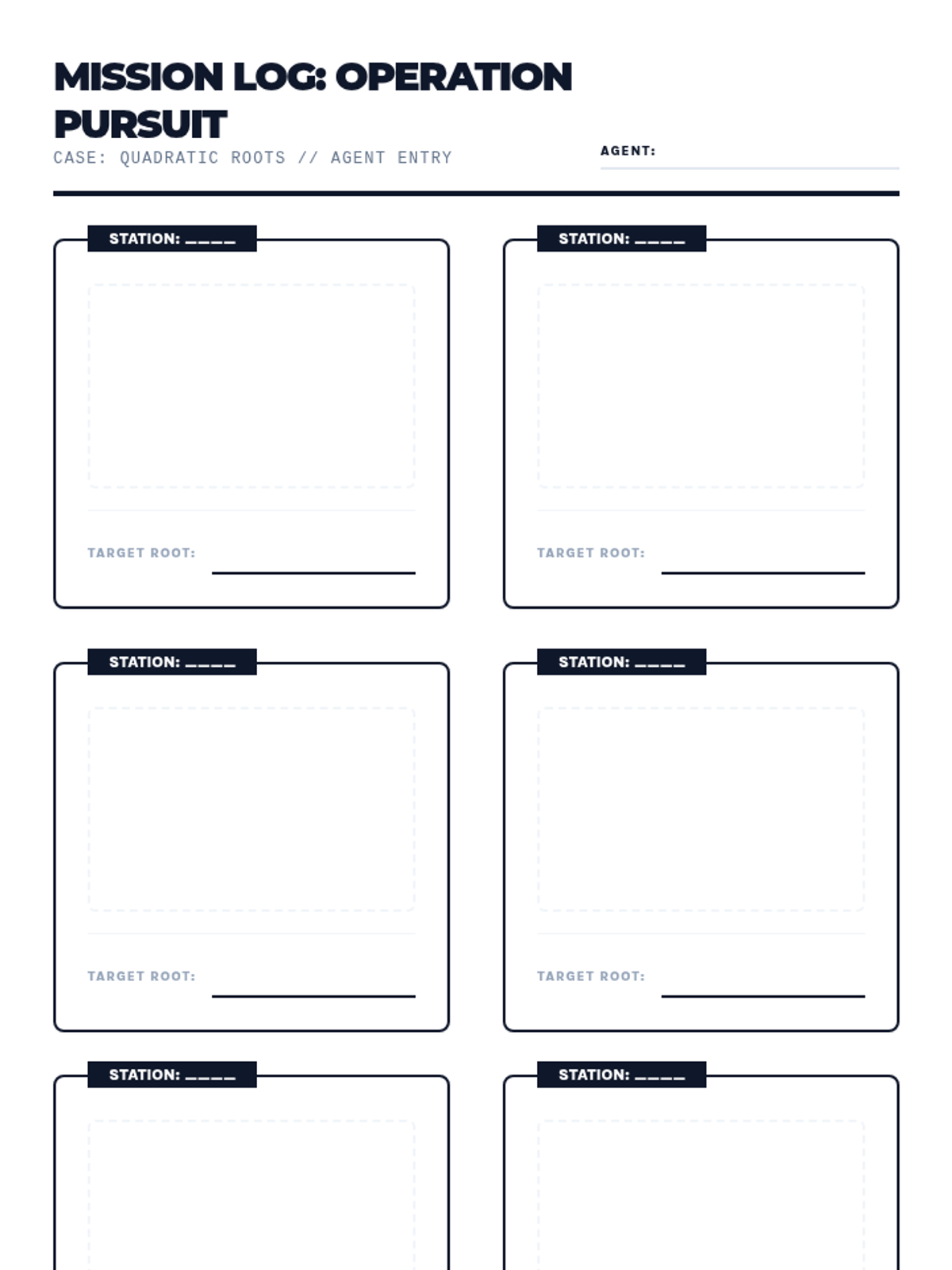
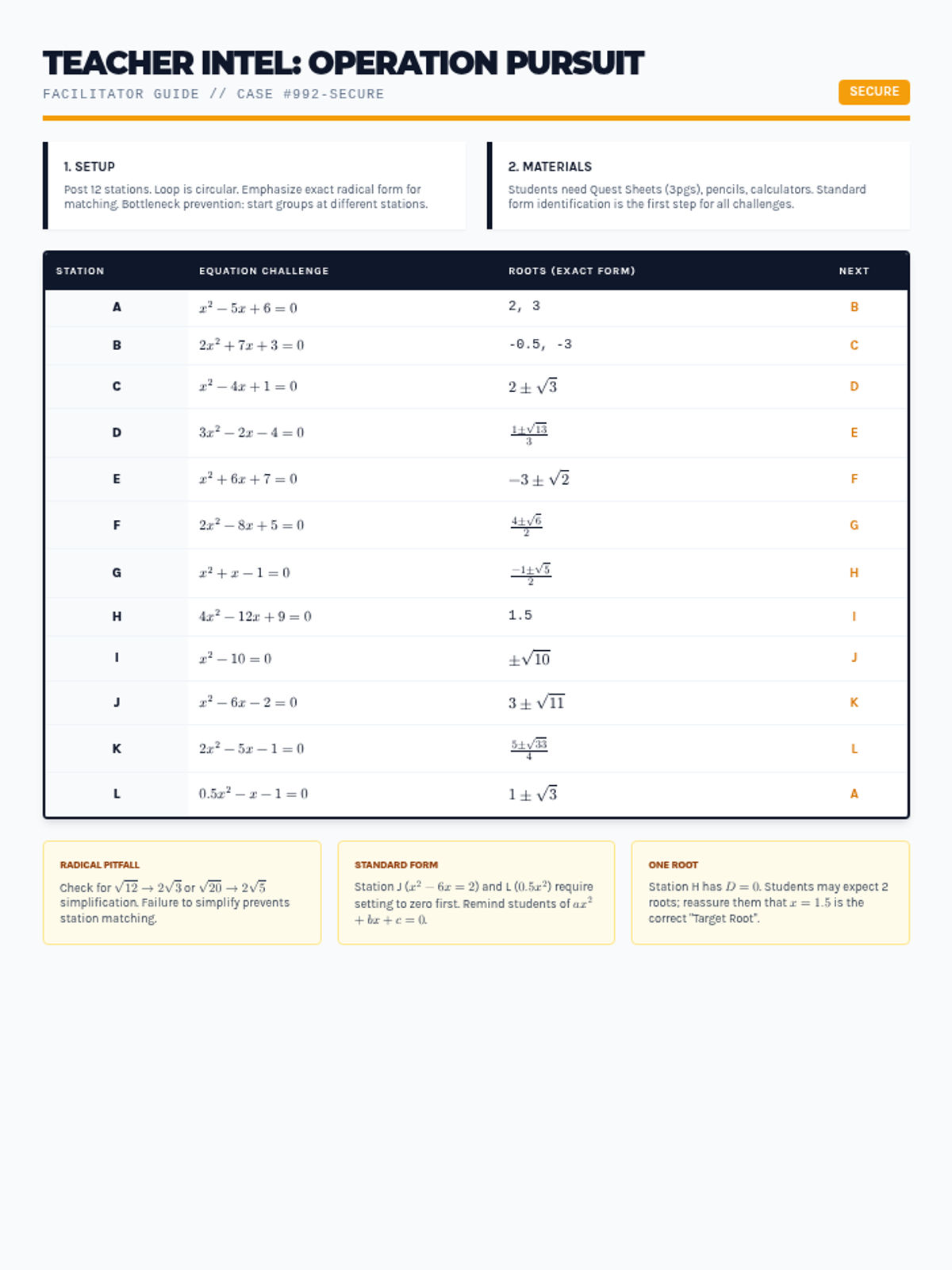
A high-energy, investigative lesson where honors students apply the quadratic formula to solve problems with rational and irrational roots to solve a 'case'.
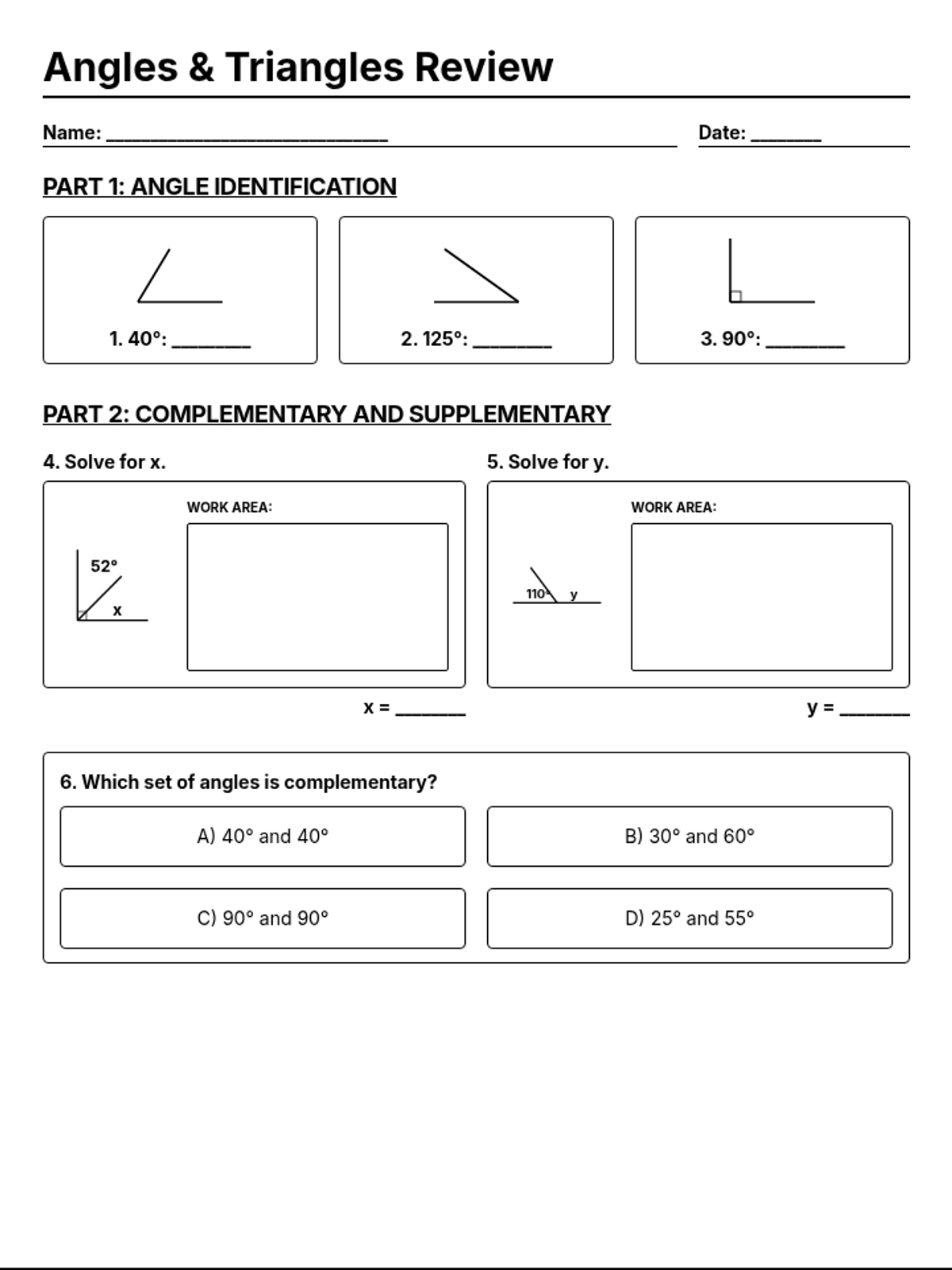
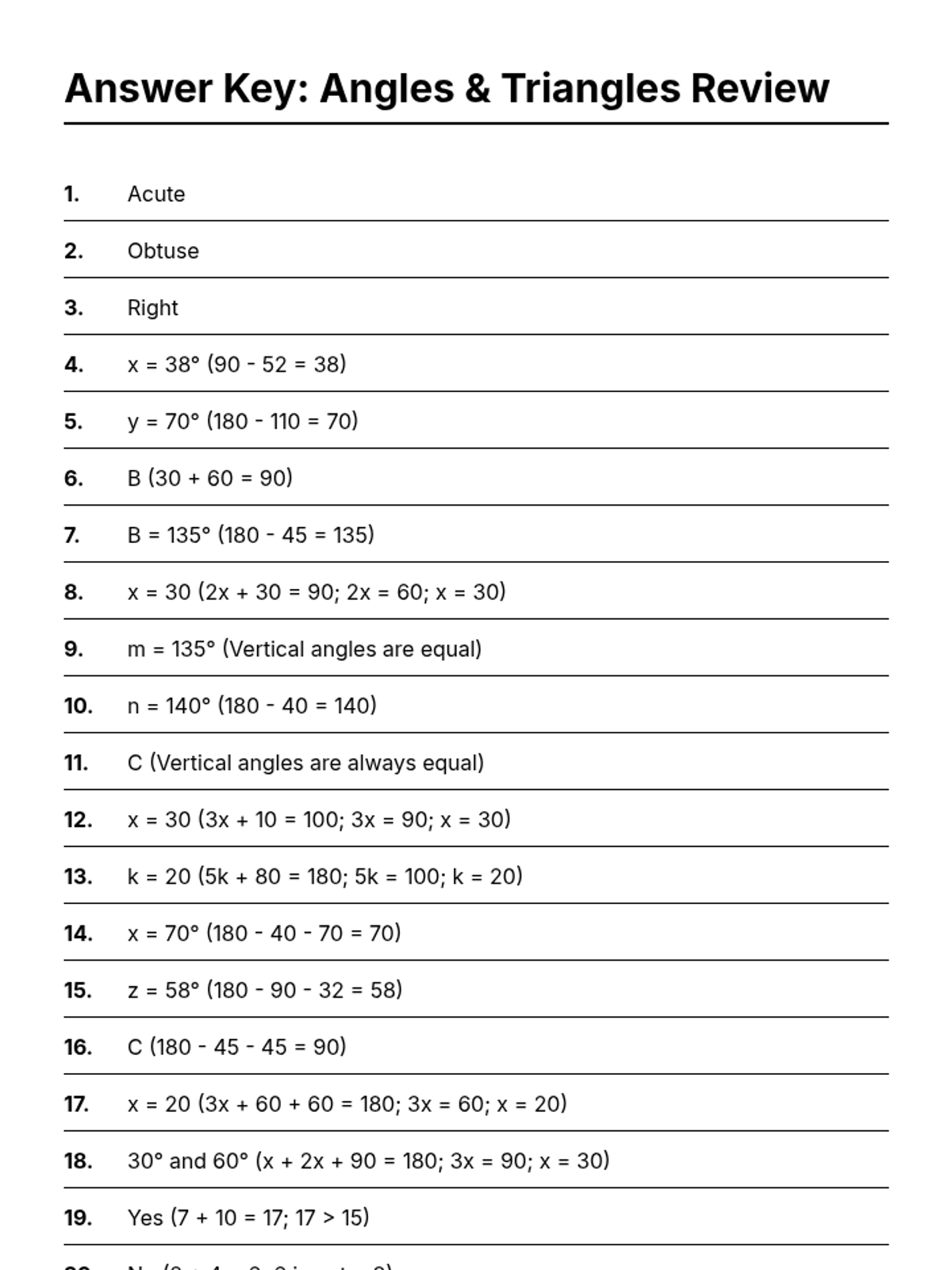
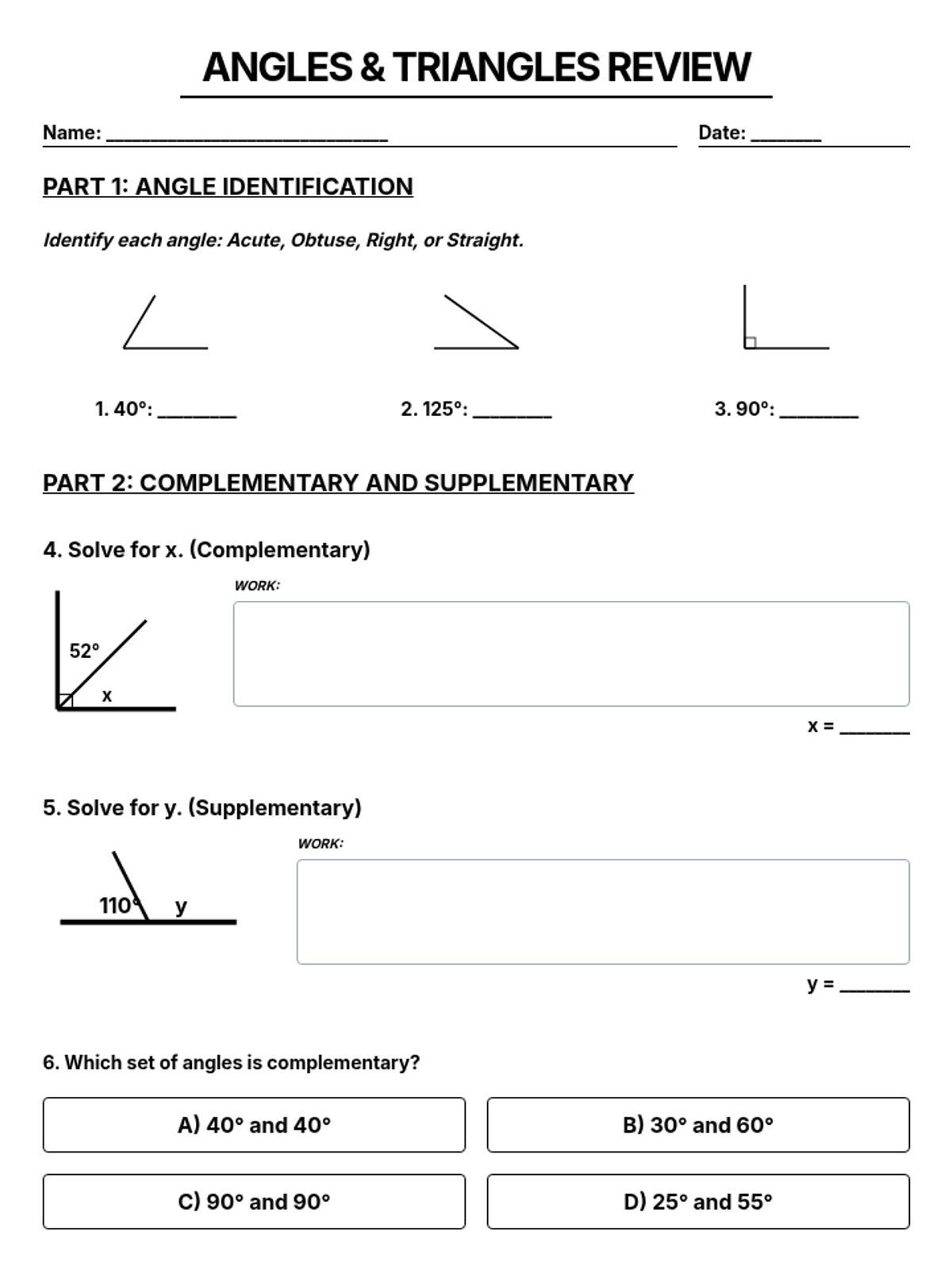
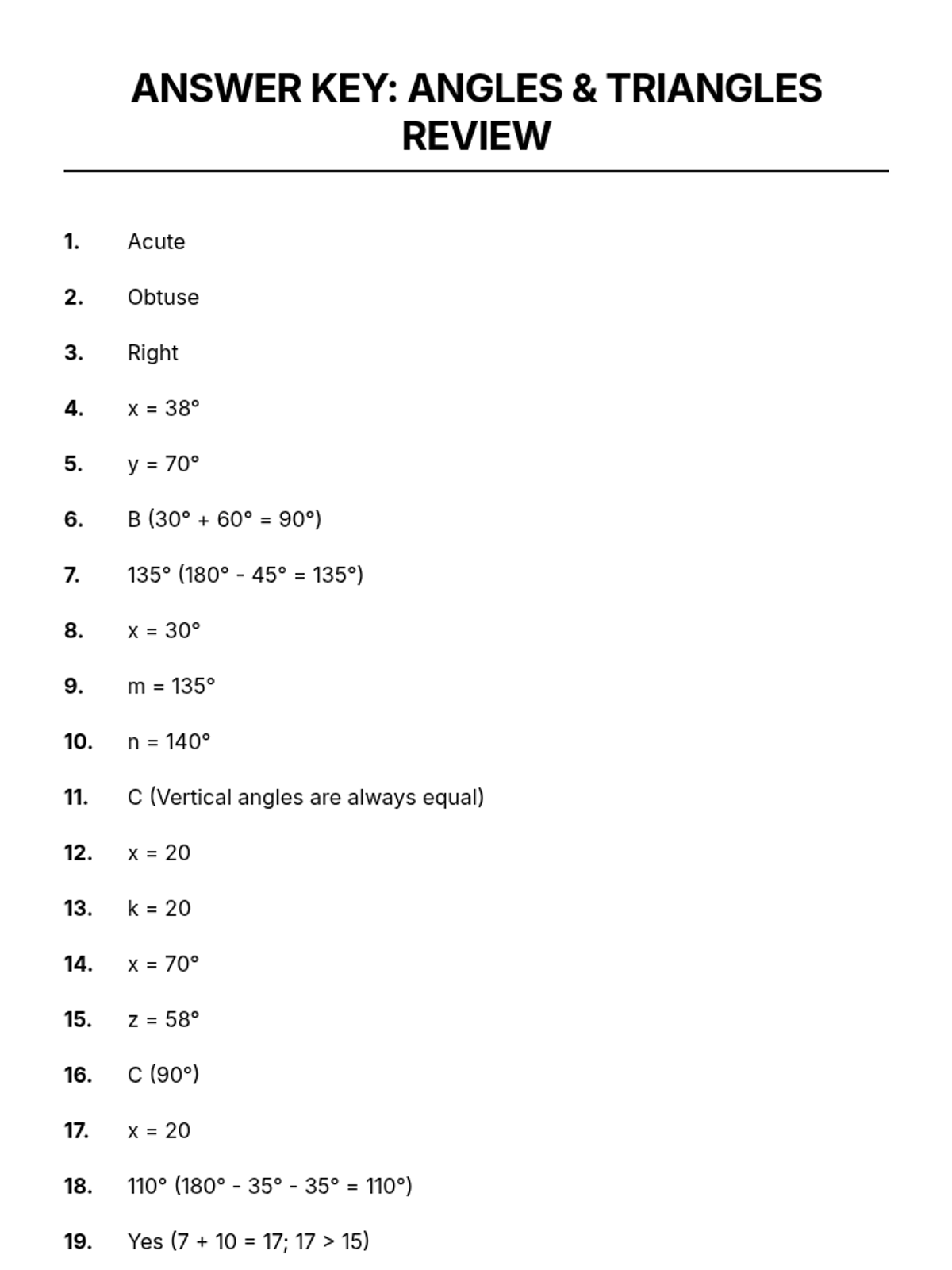
A comprehensive review of angle relationships and triangle properties, featuring guided scaffolds and visual equation solving. Students will master identifying angles, solving for unknowns, and applying triangle theorems.
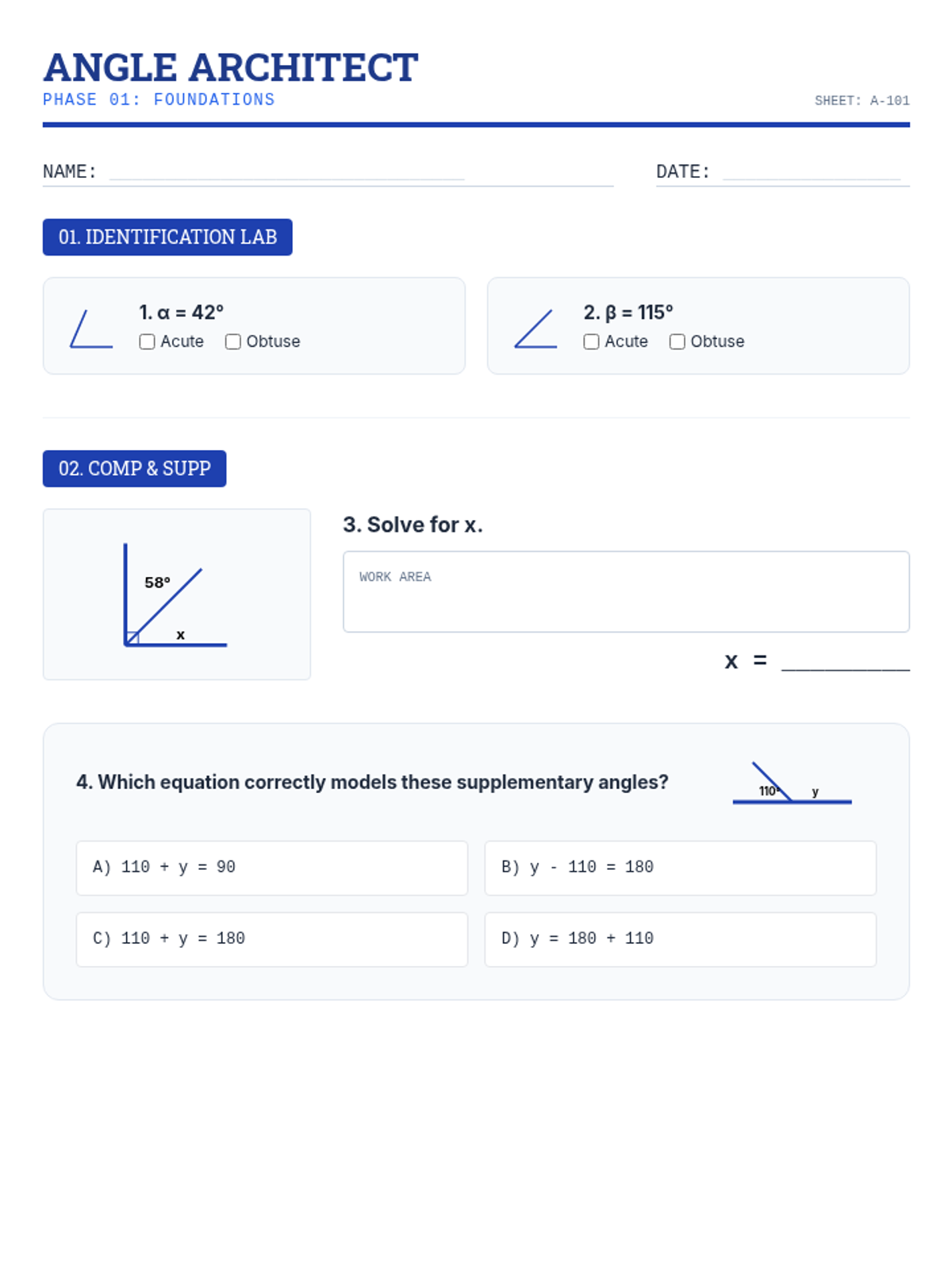
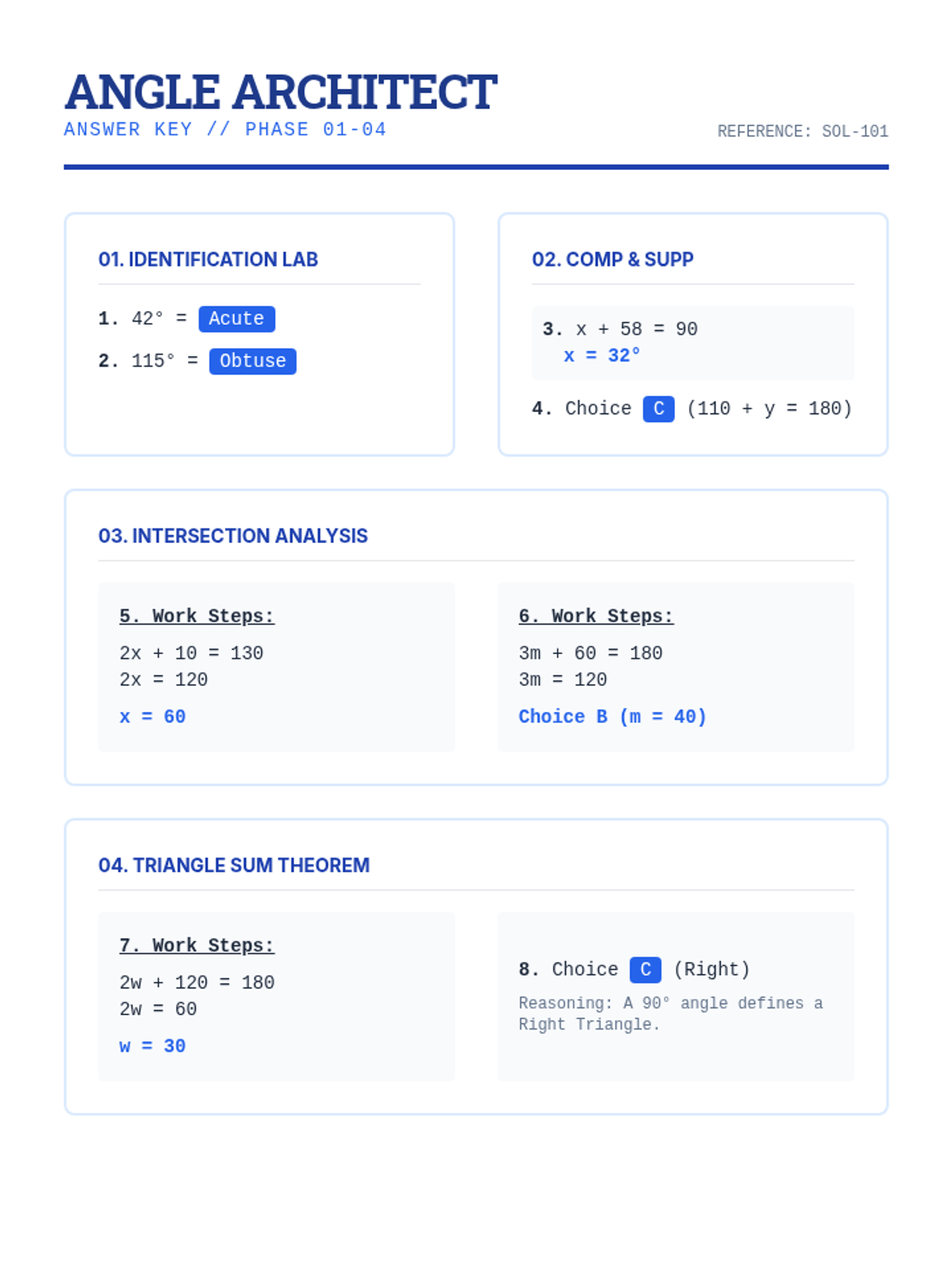
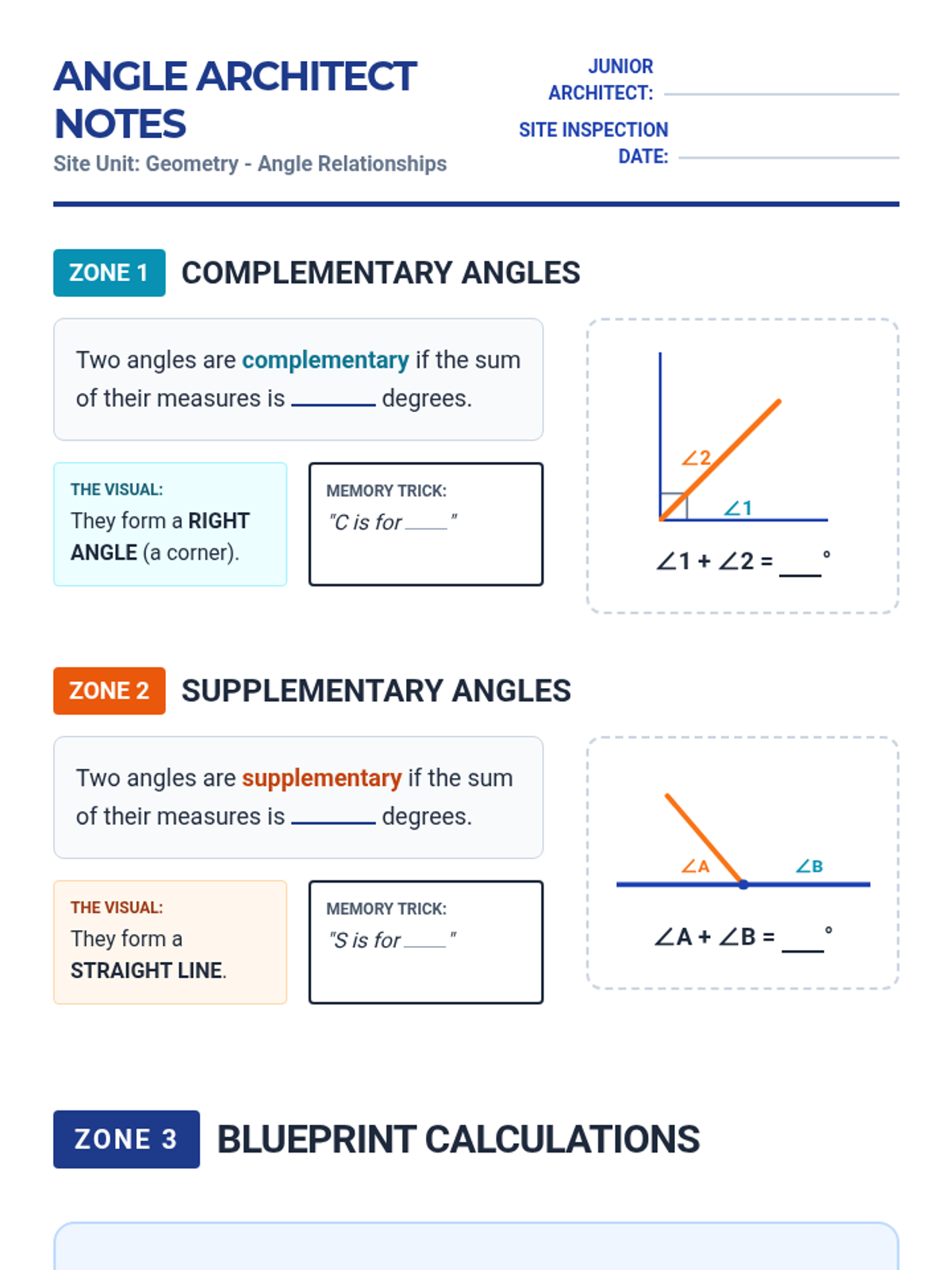
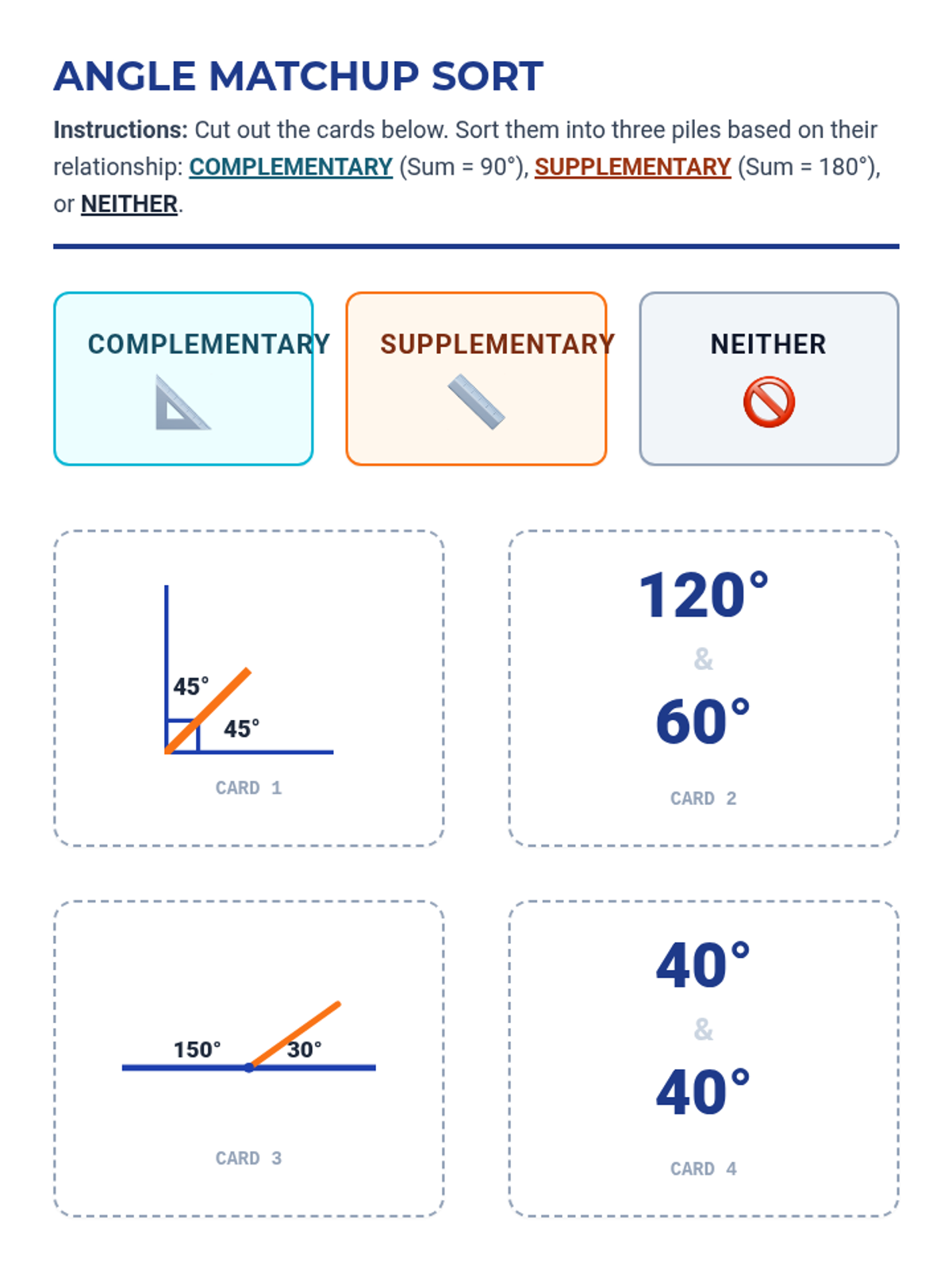
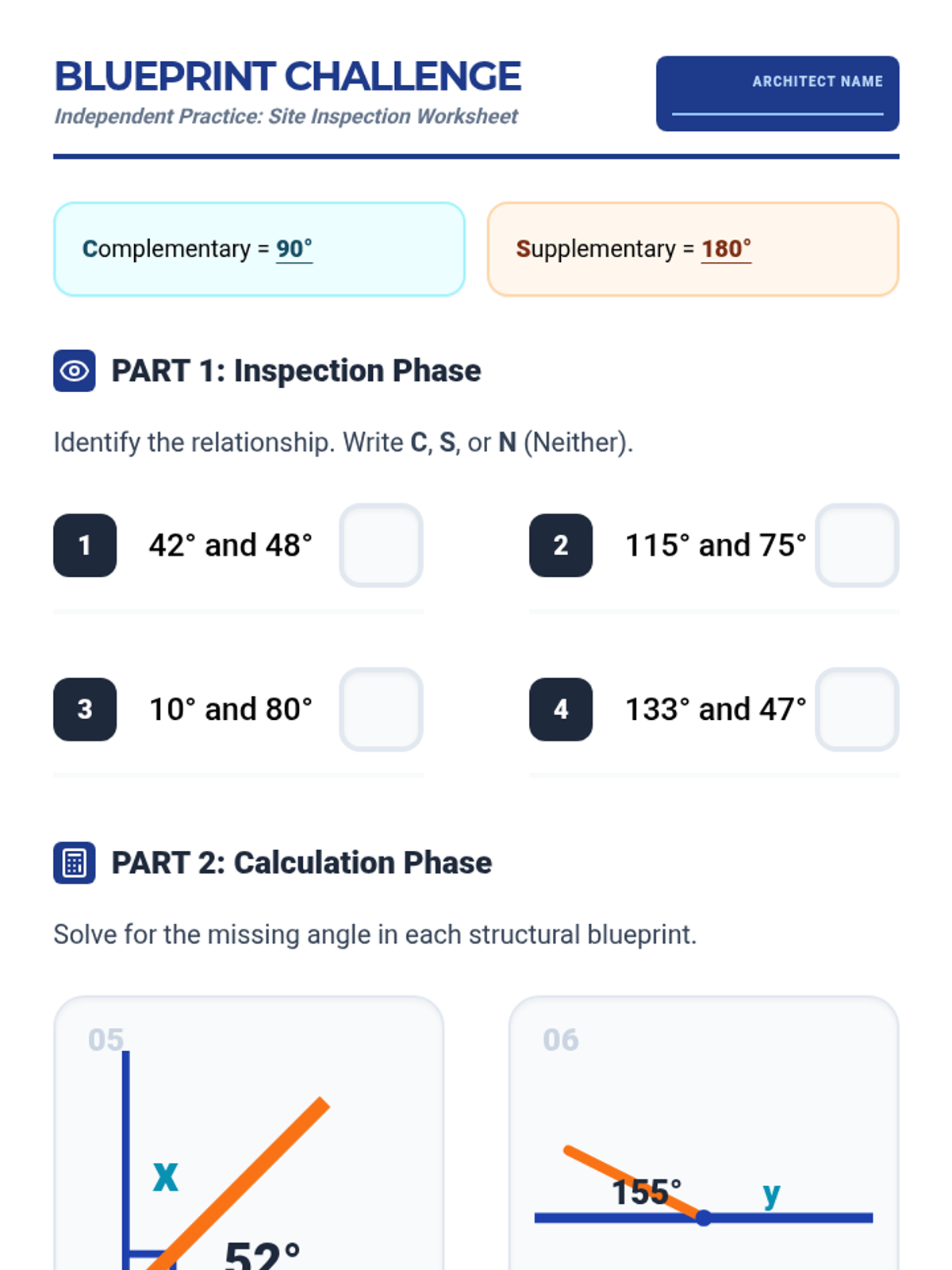
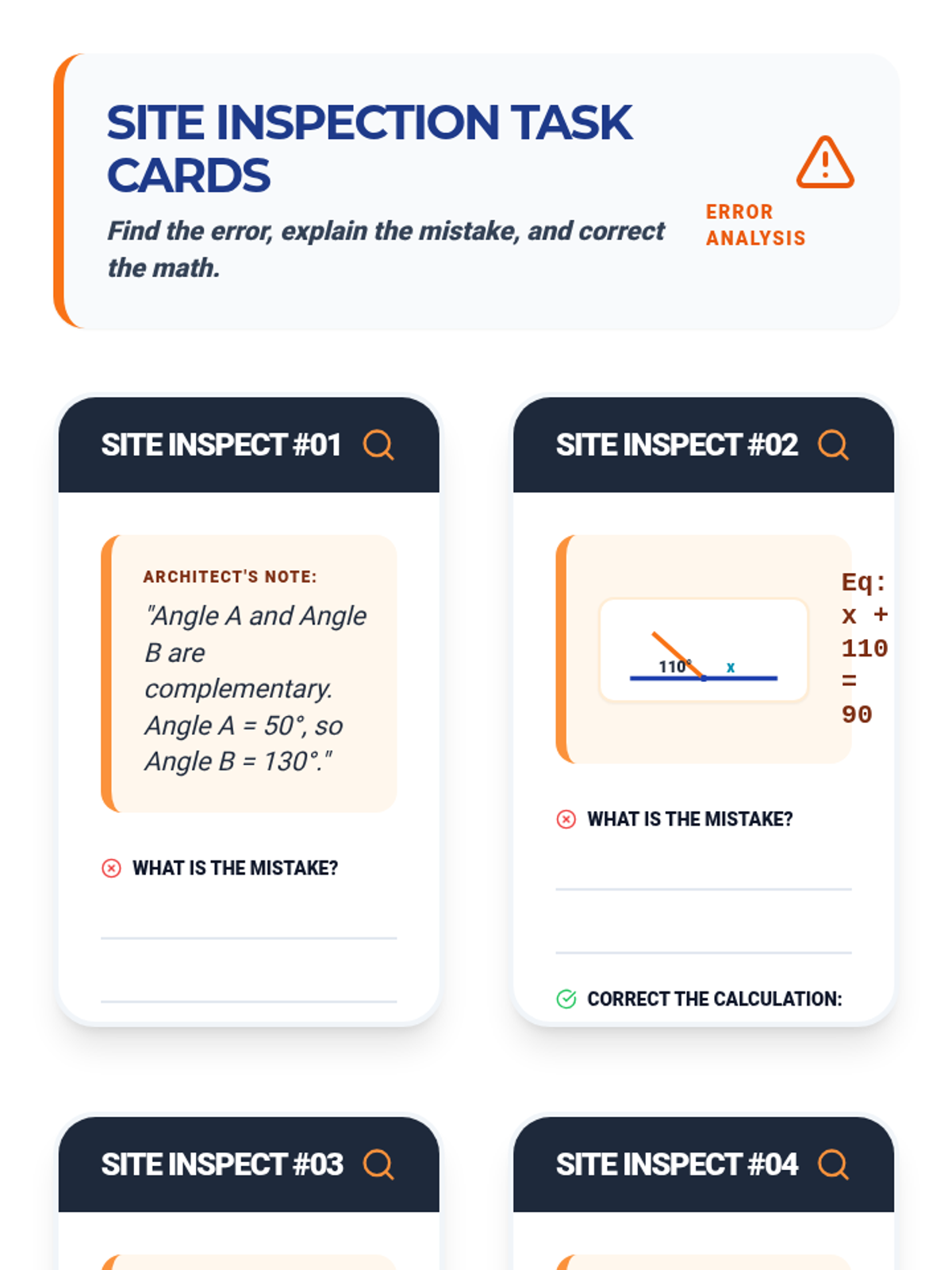
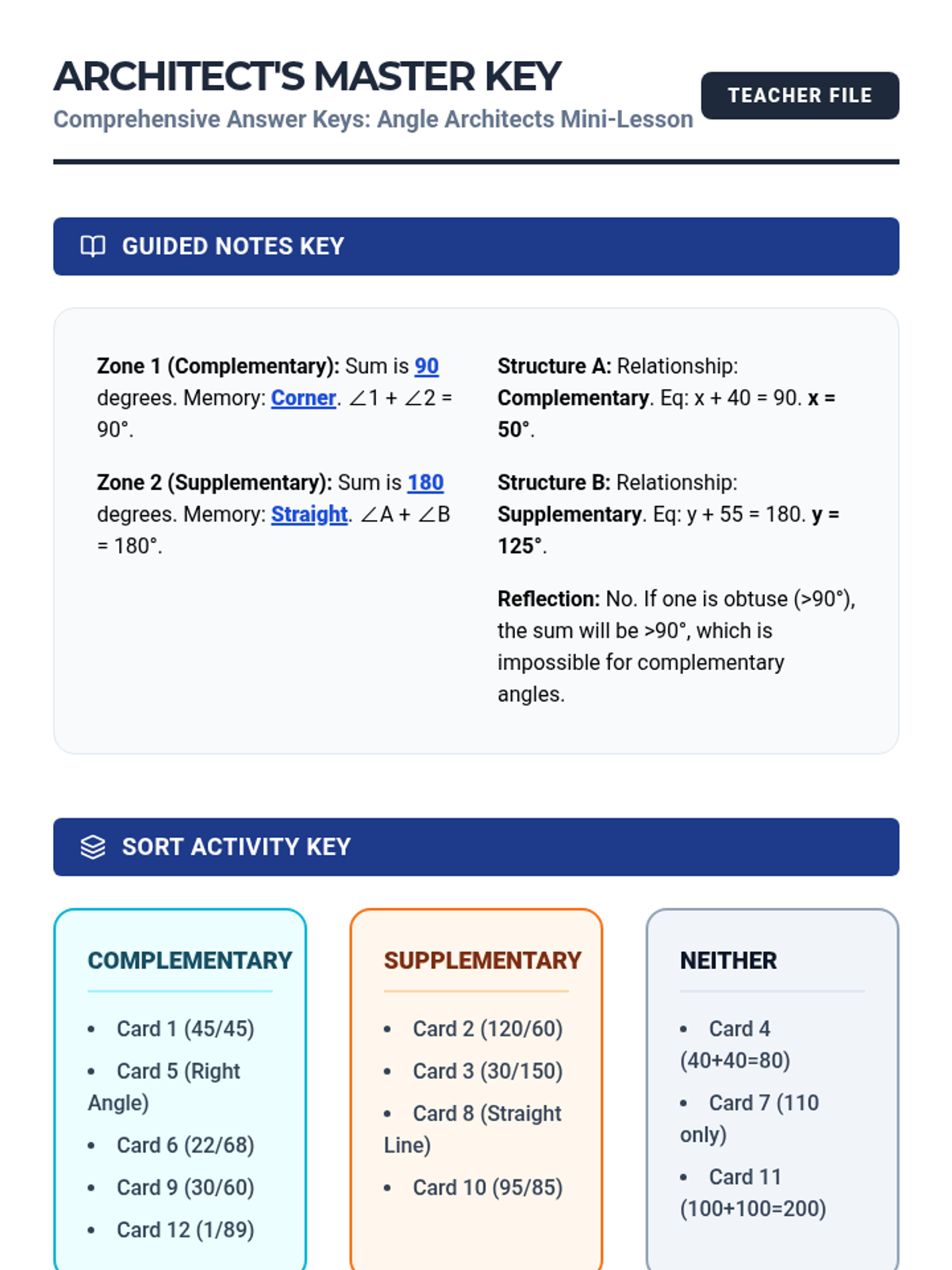
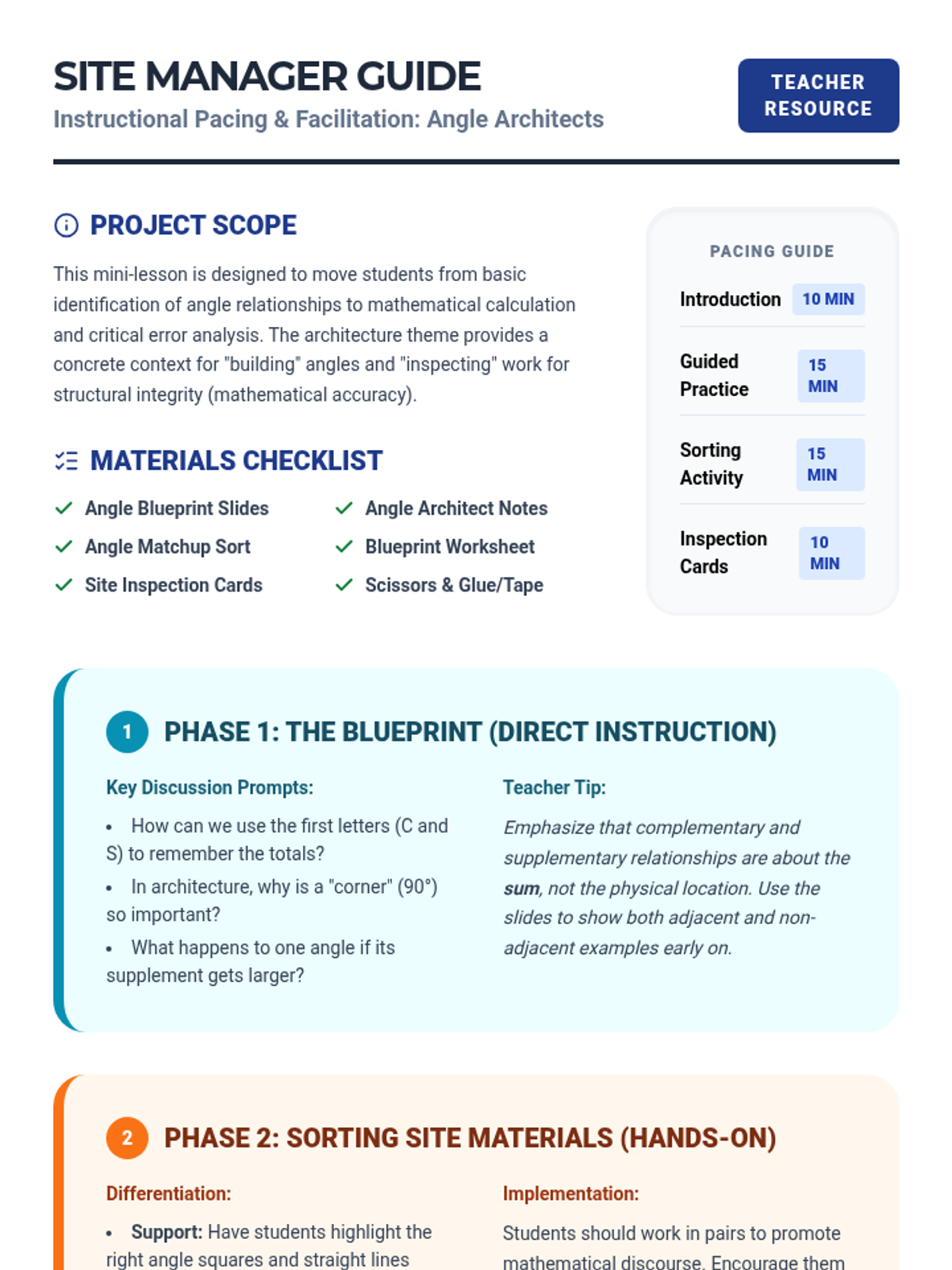
A focused mini-lesson on identifying, calculating, and analyzing complementary and supplementary angles using color-coded visual supports and real-world architect-themed scenarios.