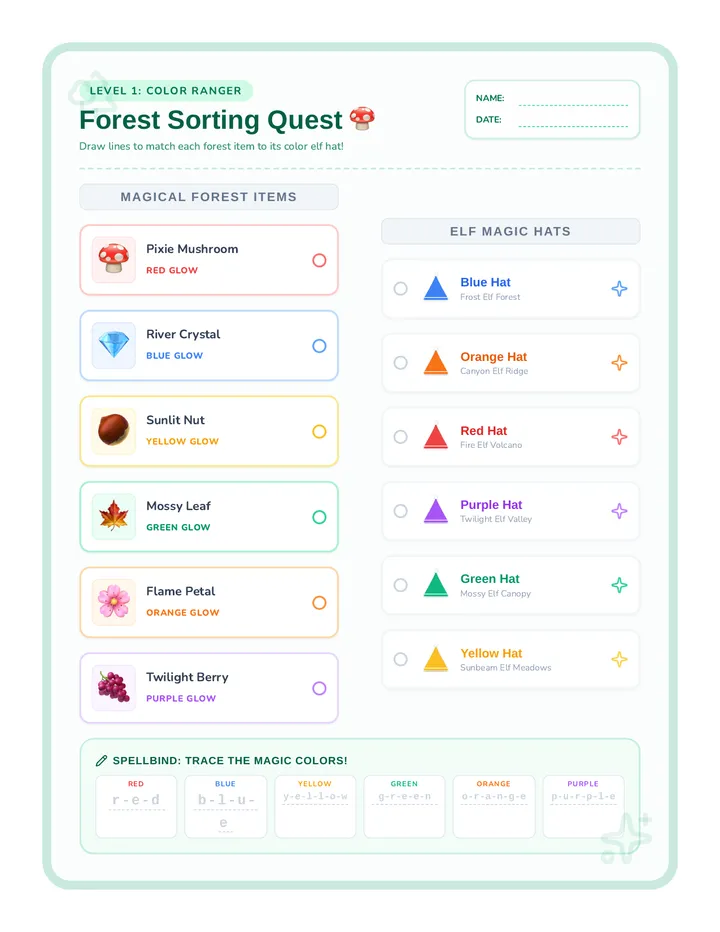
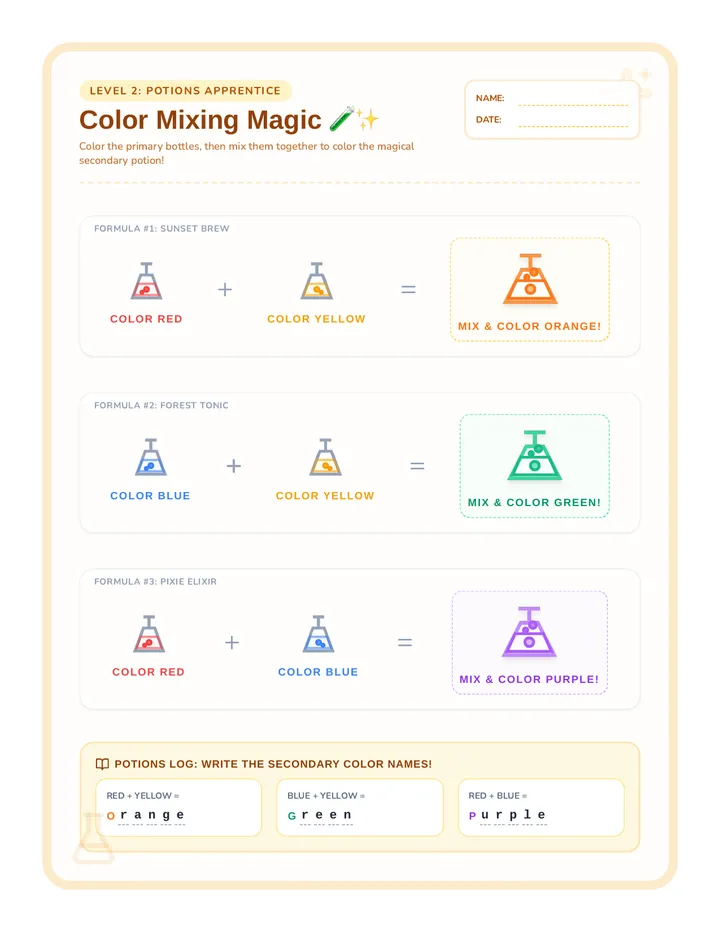
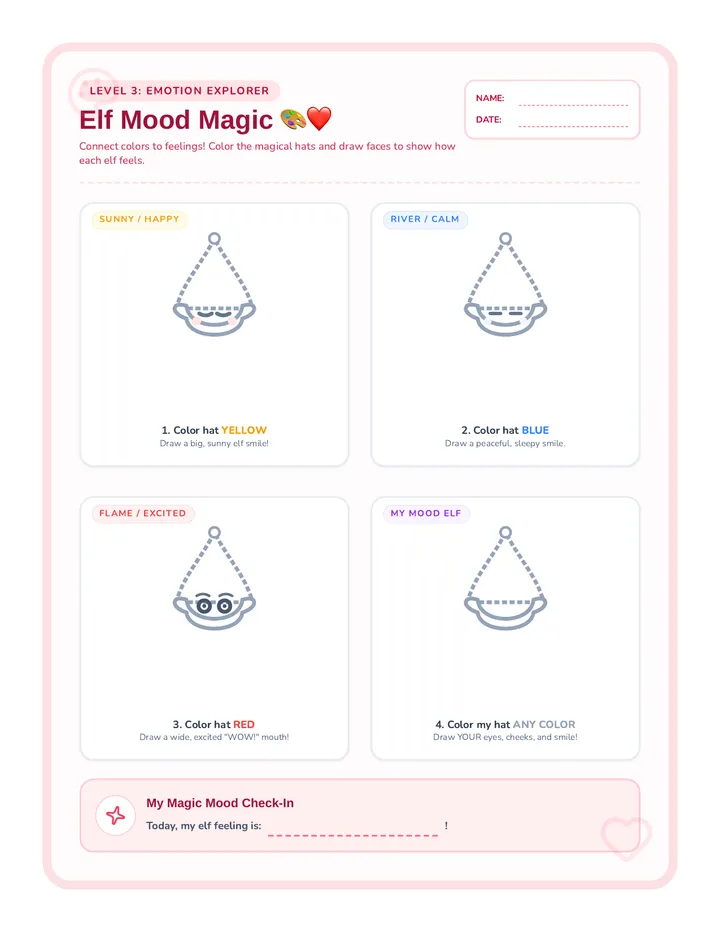
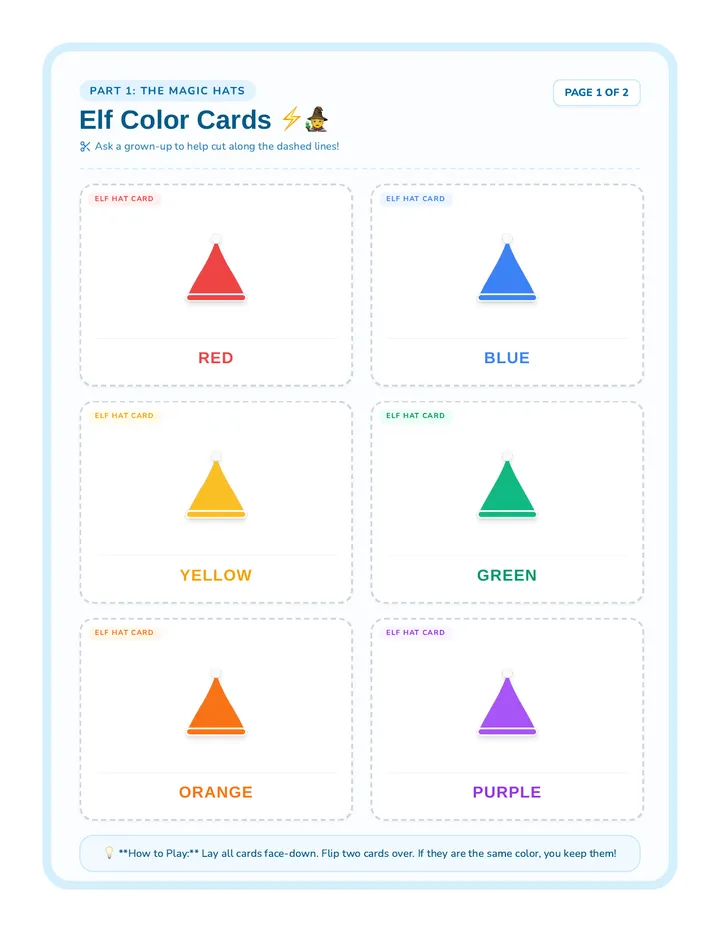
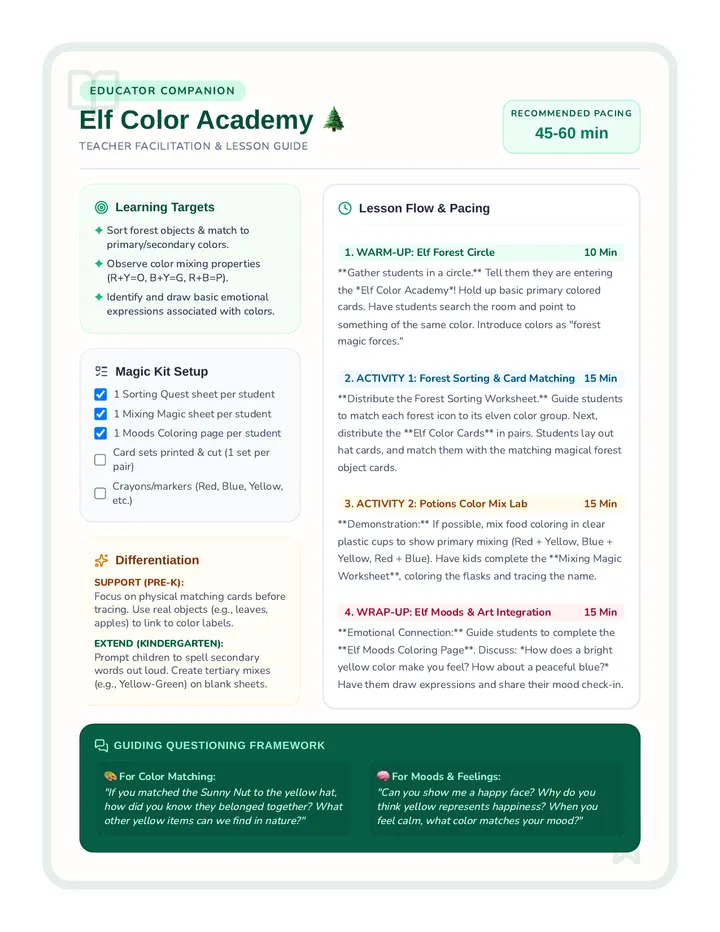
This engaging lesson helps Kindergarten students identify and name basic colors through interactive activities, a scavenger hunt, and creative coloring. It builds foundational vocabulary and observational skills essential for young learners.
Students refine their logo drafts by applying principles of negative space and contrast, creating color and black-and-white versions for professional export.
Students combine their icon and typography choices to build an official brand logo draft, focusing on balance, alignment guides, and the 'Squint Test' for simplicity.
Students master custom shape creation using polyline and curve tools, exploring line weights and the importance of vector scalability for professional branding.
Students move from curating to creating, using Google Drawing to build complex objects with simple geometric shapes while learning the fundamentals of vector design and layering.
Students learn how font choices communicate a brand's tone of voice, distinguishing between serif, sans serif, and display fonts to select a pair that fits their business identity.
Students explore the emotional impact of color in branding, learning to use Hex codes and curated imagery to build a brand mood board that reflects their product's personality.
Students perform quality control on their business proposals through peer review, grammar tools, and text-to-speech auditing before exporting their final work as professional PDFs.
Students learn about intellectual property, source reliability, and technical citation skills like hyperlinking and footnotes to perform ethical competitor research.
Students integrate market research data and customer testimonials into their formal proposals, using evidence to validate their product concepts and finalizing the Solution section.
Students learn to distinguish between product features and customer benefits, drafting the Executive Summary and Problem sections of their business proposal using persuasive formatting.
Students learn the importance of professional document formatting and hierarchy, setting up a formal business proposal template with structured headings and standardized typography.
Students conduct a market research sprint, interviewing classmates to validate their product ideas and learning to 'pivot' based on real user feedback and data synthesis.
Students learn the difference between leading and open-ended questions, developing a research table and interview script to gather unbiased feedback from potential customers.
Students explore the concepts of target markets and customer empathy, moving from personal preferences to identifying specific user needs and mapping out a "Day in the Life" for their ideal customer.
Students explore the fundamental economic concepts of scarcity and opportunity cost, applying them to product development by making difficult trade-offs between competing features within a limited resource budget.
Students learn to identify consumer "pain points" as opportunities for innovation, moving from recognizing everyday frustrations to conceptualizing business solutions.
A series of design-focused sessions where students build the visual foundation of their clothing brand, including logos, color palettes, and initial garment sketches.
An advanced pedagogical exploration of François Delsarte's applied semiotics for undergraduate performance students. The lesson analyzes the triune nature of expression (Mental, Moral/Emotive, Vital) and its influence on modern somatic practices.
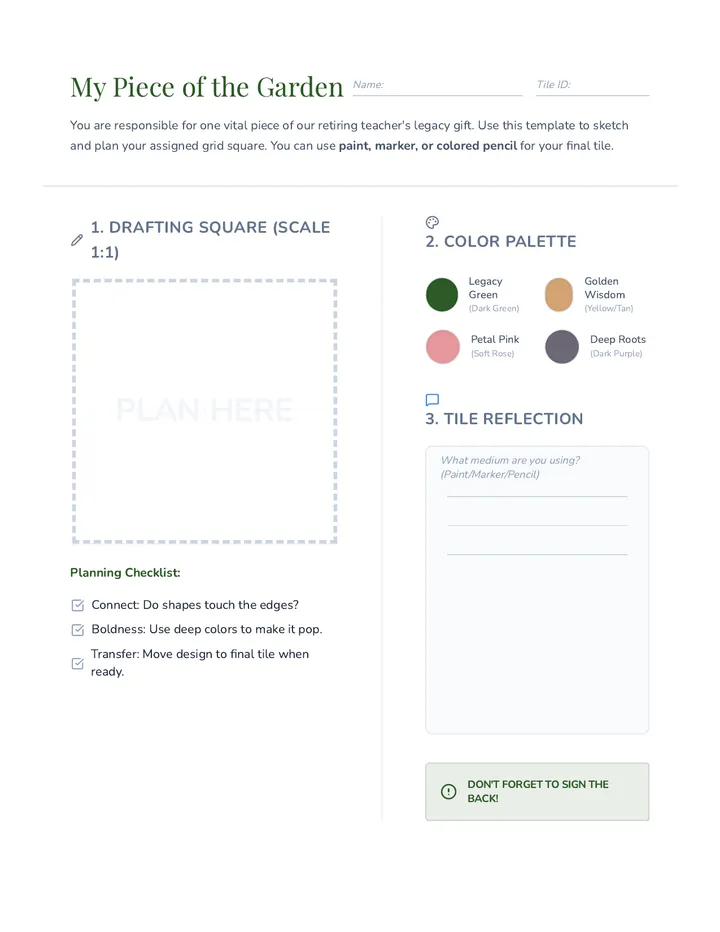
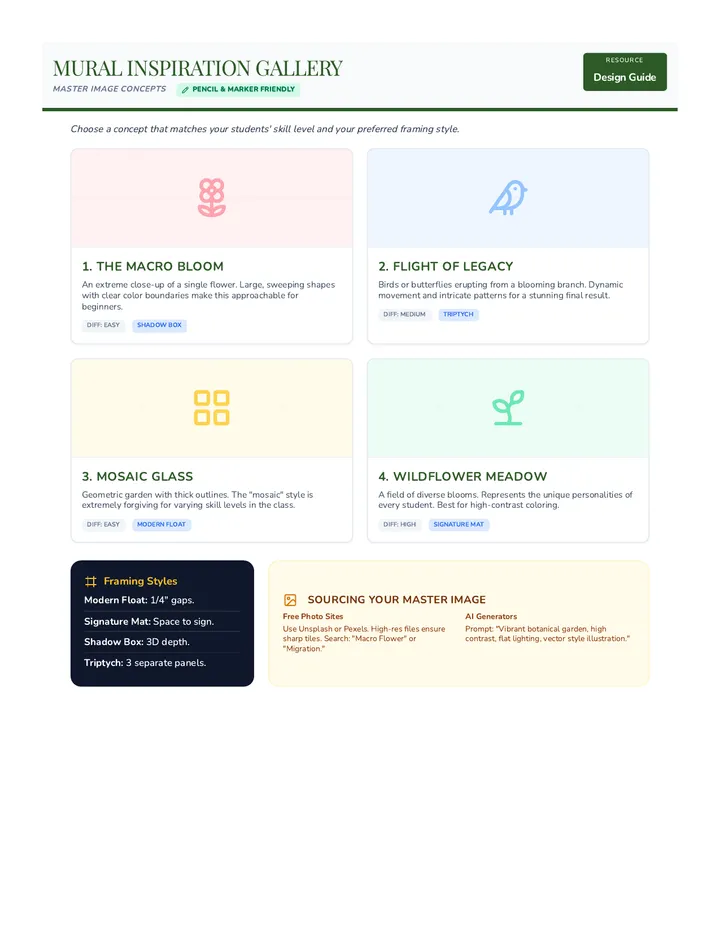
A final unit integrating all skills to create large-scale works inspired by the natural world and global art traditions.
A deep dive into the lives and styles of iconic painters, focusing on impressionism, surrealism, and pop art.
Explores tactile art-making through paper tearing, layering, and found-object assembly.
Focuses on the fundamentals of line, shape, and color through wet and dry media, inspired by landscape and portraiture.
A 40-minute guided art lesson for grades K-3 that introduces the 7 elements of art through a single integrated drawing activity and supporting mini-tasks. Ideal for substitutes, this lesson builds a 'Creative Creature' step-by-step.
A musical exploration where students use the growth of a plant to understand crescendo and decrescendo through movement and voice.
A quick-hit replacement assignment for students who missed a documentary on high-stakes photojournalism. It explores the careers of photographers who work in extreme environments and danger zones.
A comprehensive substitute-friendly lesson introducing the 7 Elements of Art to students in grades K-3 through visual exploration and hands-on practice.
A beginner's guide to drawing classroom objects using basic geometric shapes. Students learn to identify and use circles, triangles, squares, rectangles, and ovals through simple step-by-step visual instructions.
In this lesson, students will identify circles, squares, rectangles, triangles, and ovals in common classroom objects. They will then follow visual, step-by-step directions to draw these objects themselves using primary colors.
A kindergarten lesson focused on identifying and using basic geometric shapes (circle, square, triangle, rectangle, oval) to draw familiar outdoor objects. Students follow three-step visual guides to build their artistic confidence through shape recognition.
A lesson for kindergarteners on how to use basic shapes to draw common outdoor settings and objects, following a step-by-step approach to build artistic confidence.
A hands-on file folder game and introductory lesson focusing on four core elements of art: line, shape, color, and texture. Students learn to identify these elements through visual examples and interactive matching.
A foundational lesson on the precursors to opera, focusing on Renaissance vocal forms like the Chanson, Madrigal, and Lute Song that paved the way for the Baroque invention of opera.
A Gifted and Talented Kindergarten lesson exploring the life and geometric abstract art of Piet Mondrian, focusing on primary colors, grids, and artistic balance.
A creative exploration of colors through a word search activity, designed for young artists or those needing large print accessibility.
A fun, hands-on lesson for kindergarteners to learn how to dress basic shape-based figures using primary colors and simple patterns. Students will practice identifying shapes and making creative choices for their character's outfits.
A simple, step-by-step drawing lesson for kindergarteners to learn basic facial features. Students will follow along to draw eyes, a nose, and a mouth on a circle.
A kindergarten art and geometry lesson where students learn to construct human figures using five basic shapes: circles, triangles, squares, rectangles, and ovals.
A series of hands-on spring-themed craft activities for kindergarteners that focus on fine motor skills, shape recognition, and pre-writing strokes. Students practice cutting, gluing, and drawing through structured, visual step-by-step instructions.
A guided research project where students explore the anatomy, history, and classification of a musical instrument of their choice.
An advanced exploration of microtonal music, covering the physics of pitch, tuning systems beyond 12-TET, and practical experimentation with quarter-tones and just intonation.
A music and movement lesson for early childhood students exploring phrasing and legato through the life cycle of a butterfly. Students use scarves to interpret smooth musical lines while learning about metamorphosis.
Students transition from raw audio to a polished production. This week focuses on Soundtrap technical skills, including multi-track editing, adding bumpers/music, and applying professional mixing and mastering techniques.
Students focus on the journalistic foundations of podcasting: selecting a topic, conducting deep research, and developing professional interviewing techniques. This week culminates in the recording of raw interview footage.
Students explore atmospheric perspective through monochromatic ink wash painting, learning to control water-to-pigment ratios to create depth and mist-filled mountain landscapes.
A creative craft lesson where students color and create their own finger puppets of favorite Zootopia characters to practice storytelling and role-playing.
A primary art lesson exploring the beauty of nature and our role in keeping the Earth clean. Students observe natural wonders and create their own "Earth Treasures" using drawing and sculpting materials.
A hands-on activity for students to identify and match various line types used in art, from basic directional lines to complex decorative patterns.
A collection of three hands-on Mother's Day crafts designed specifically for preschool-aged children using paint, clay, and paper. Students will create personalized keepsakes including a handprint bouquet, a fingerprint dish, and a decorated photo frame.
A focused introduction to the B Major scale for beginner bassoonists. This lesson covers the complex fingerings required for five sharps and provides a daily routine for developing technical fluency and tone.
A lesson focused on the power of peer feedback in the contemporary art process, teaching students how to give and receive constructive criticism to fuel growth.