A comprehensive 5th-grade context clues practice unit featuring a student reference guide, four progressive worksheets focusing on specific clue types, and a complete teacher answer key.
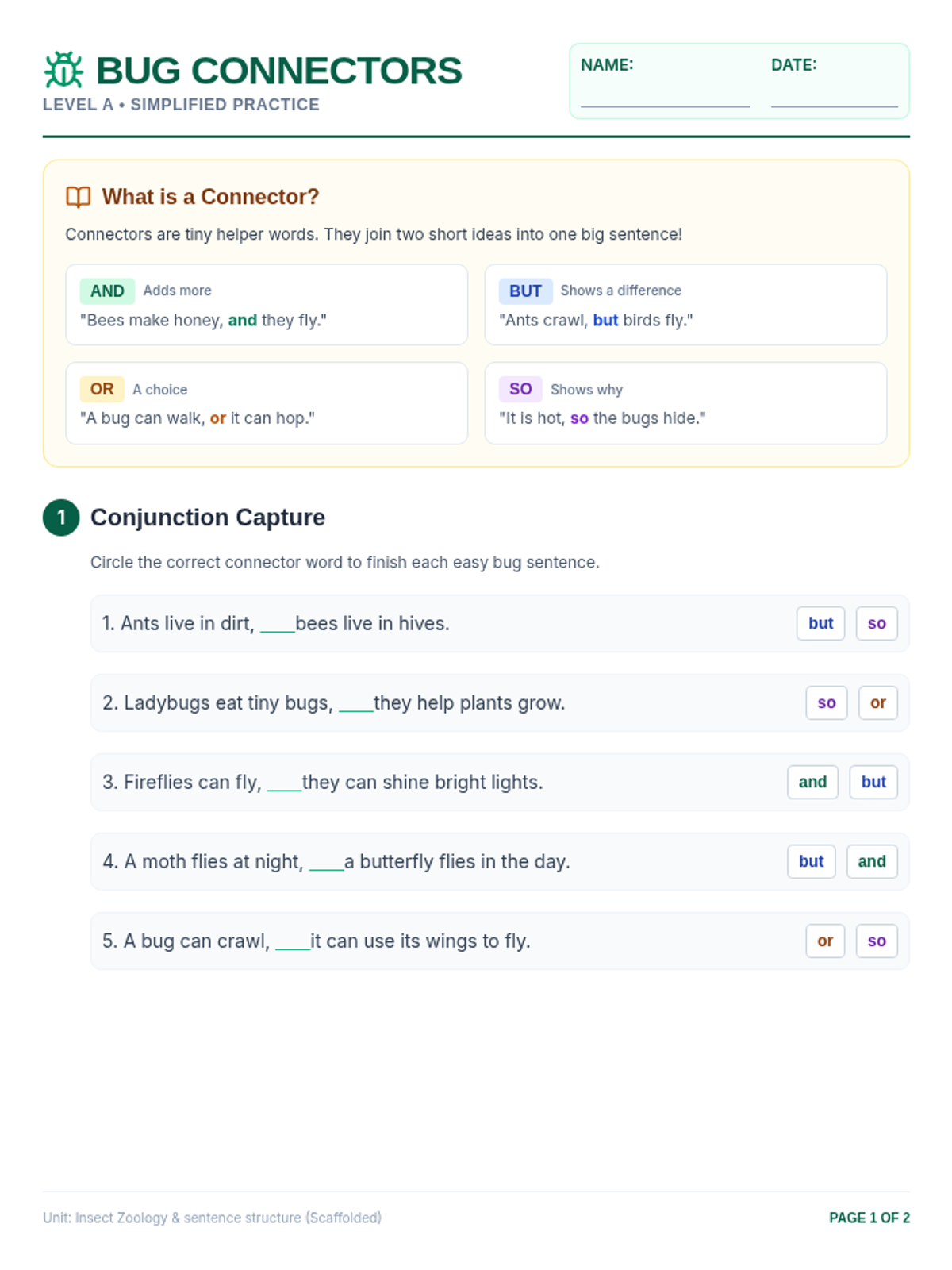
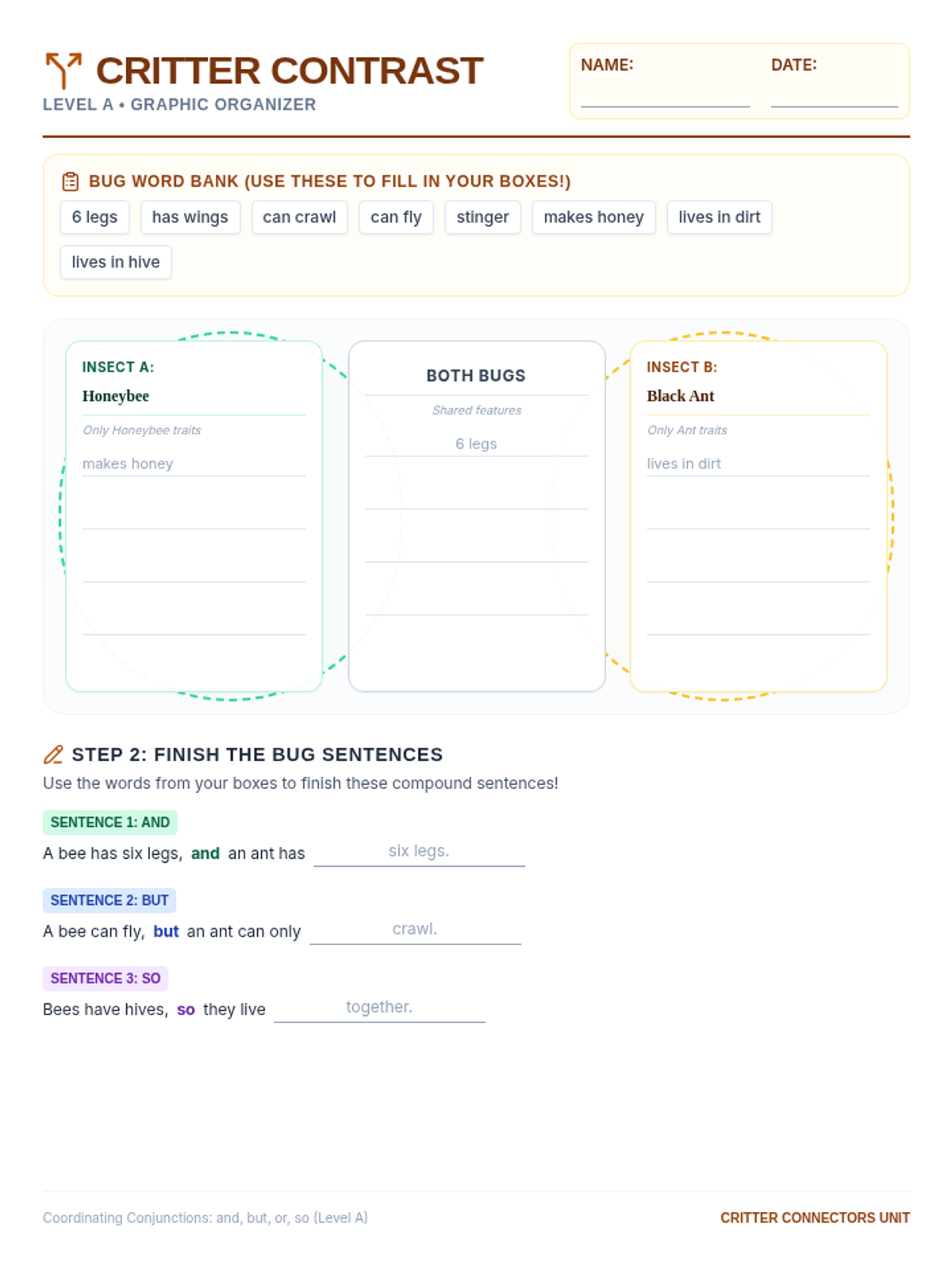
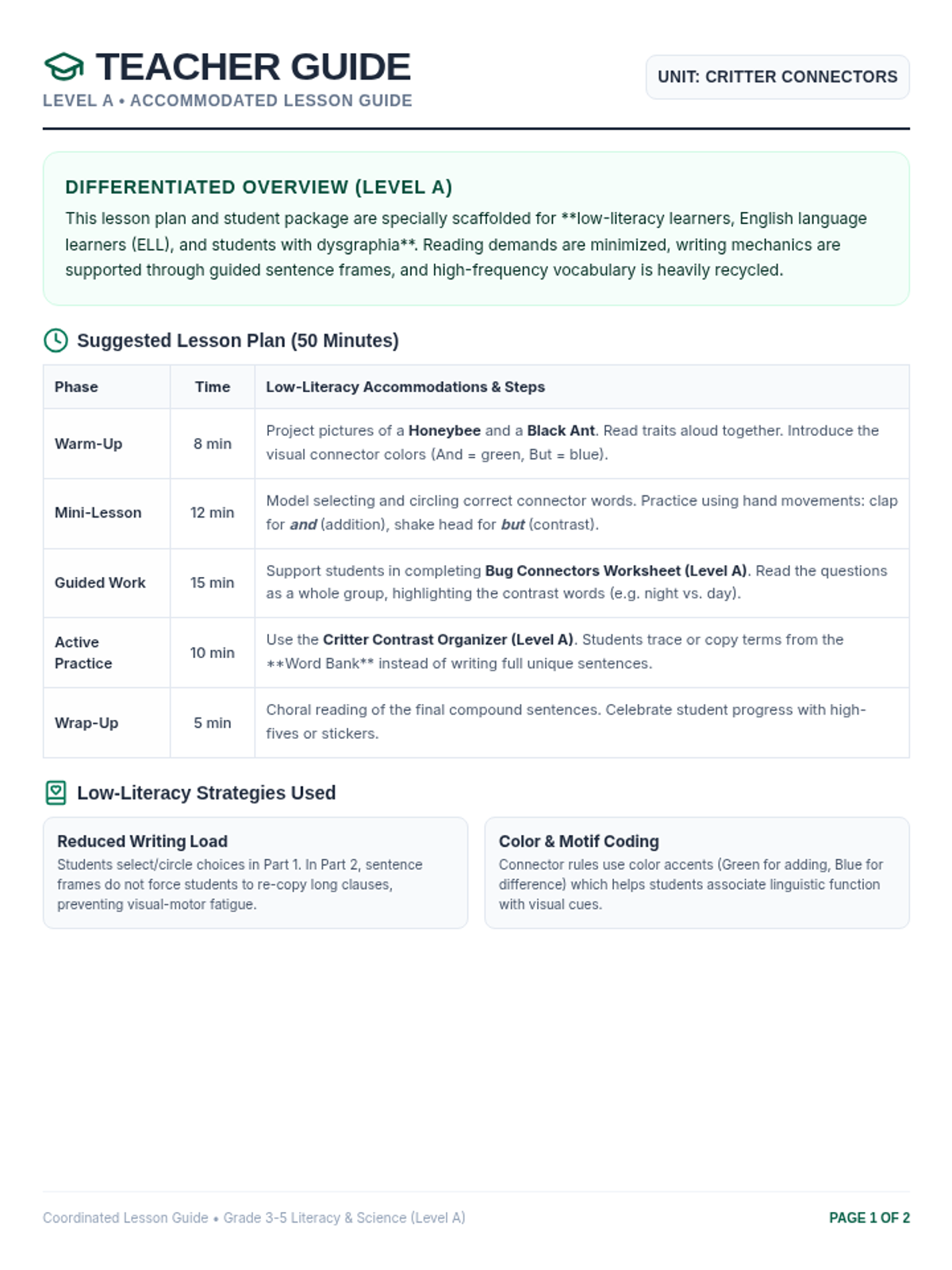
A lesson exploring coordinating conjunctions (and, but, or, so) through the lens of entomology. Students compare and contrast insects while building complete, compound sentences.
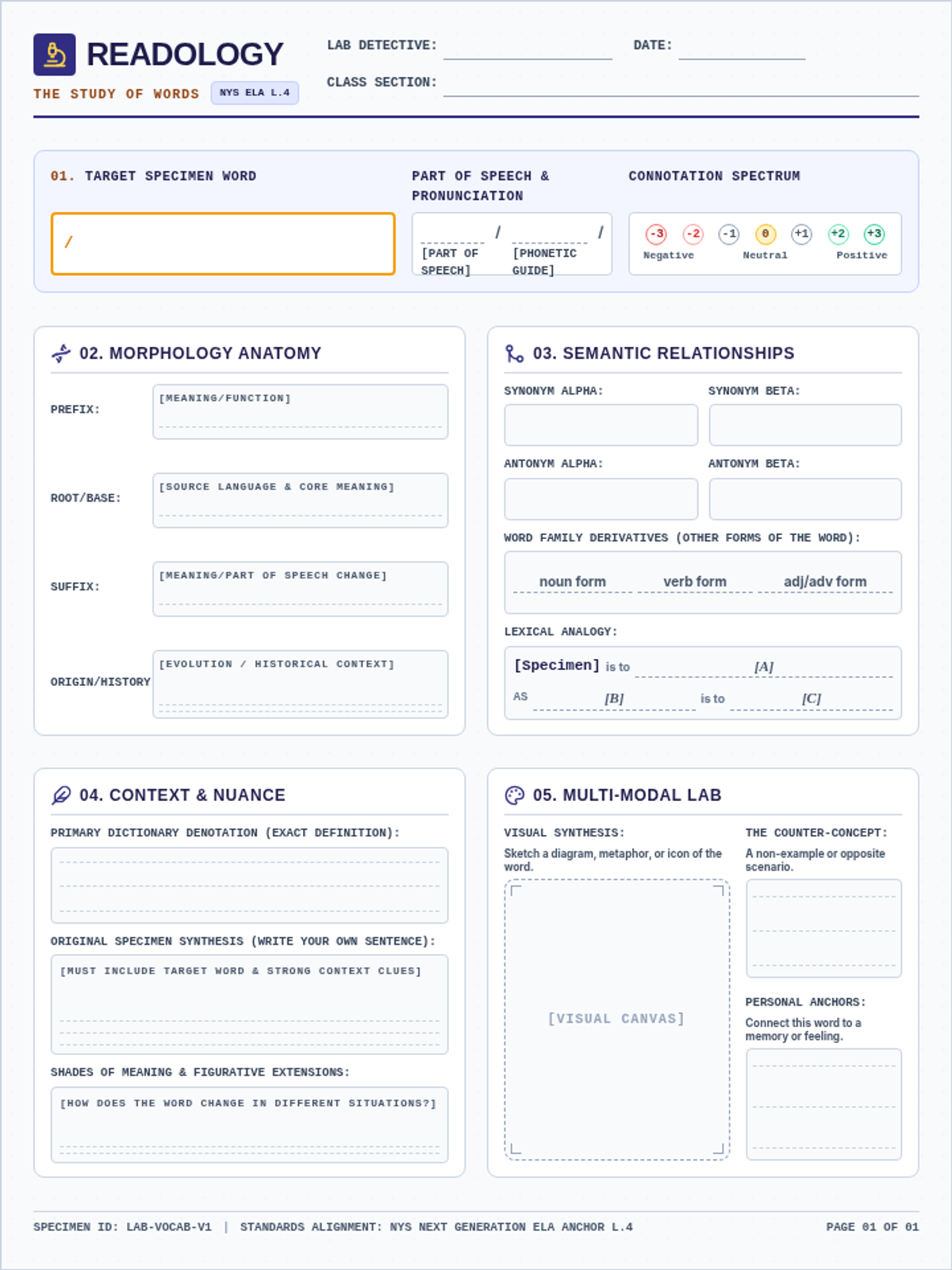
A lesson dedicated to breaking down words into their root structures, semantic relationships, and contextual nuances to build deep, permanent vocabulary comprehension.
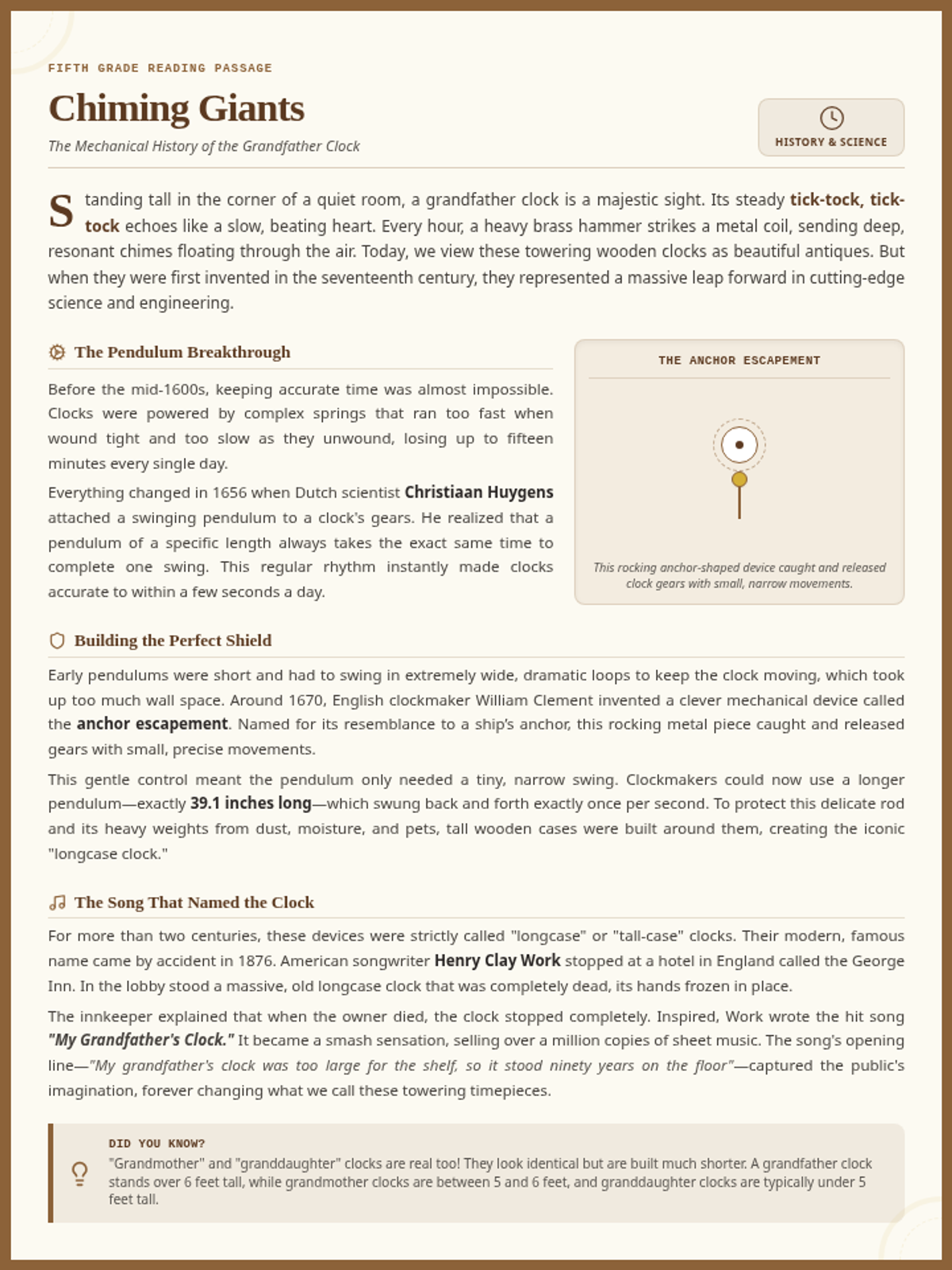
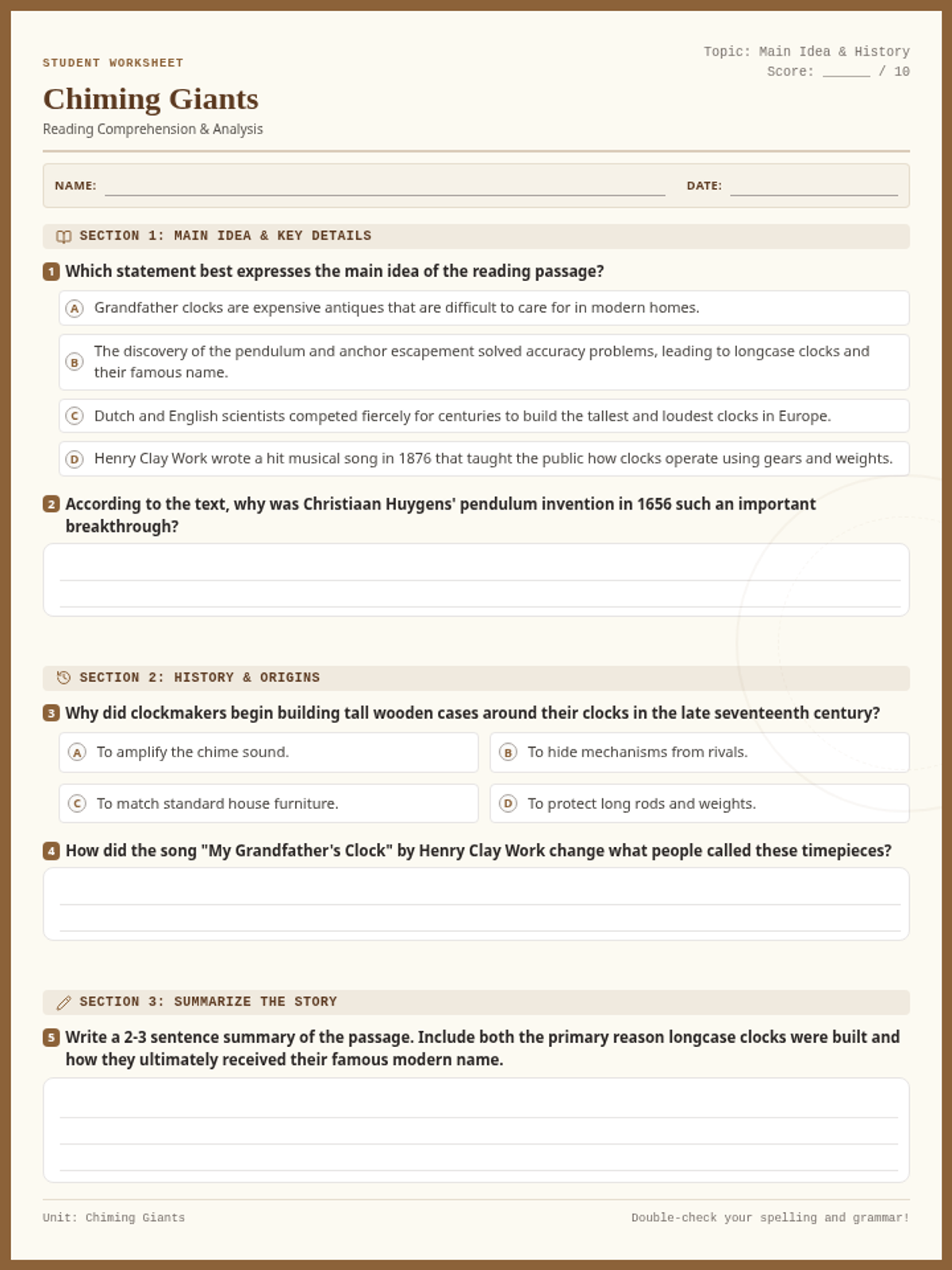
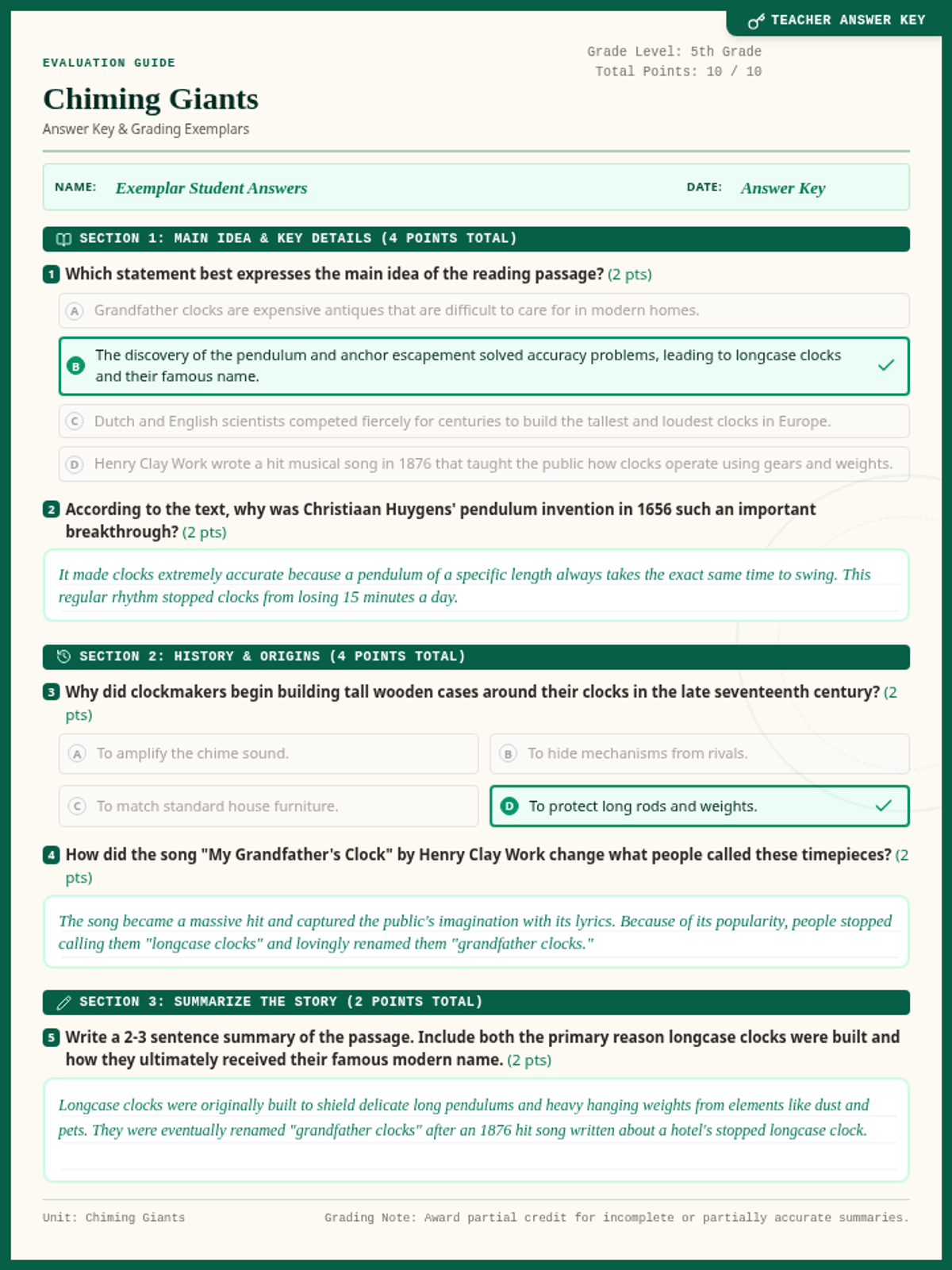
An engaging reading comprehension lesson for fifth graders exploring the fascinating history, mechanism, and origin of grandfather clocks. Students will discover how the anchor escapement and a popular song shaped these iconic timepieces.
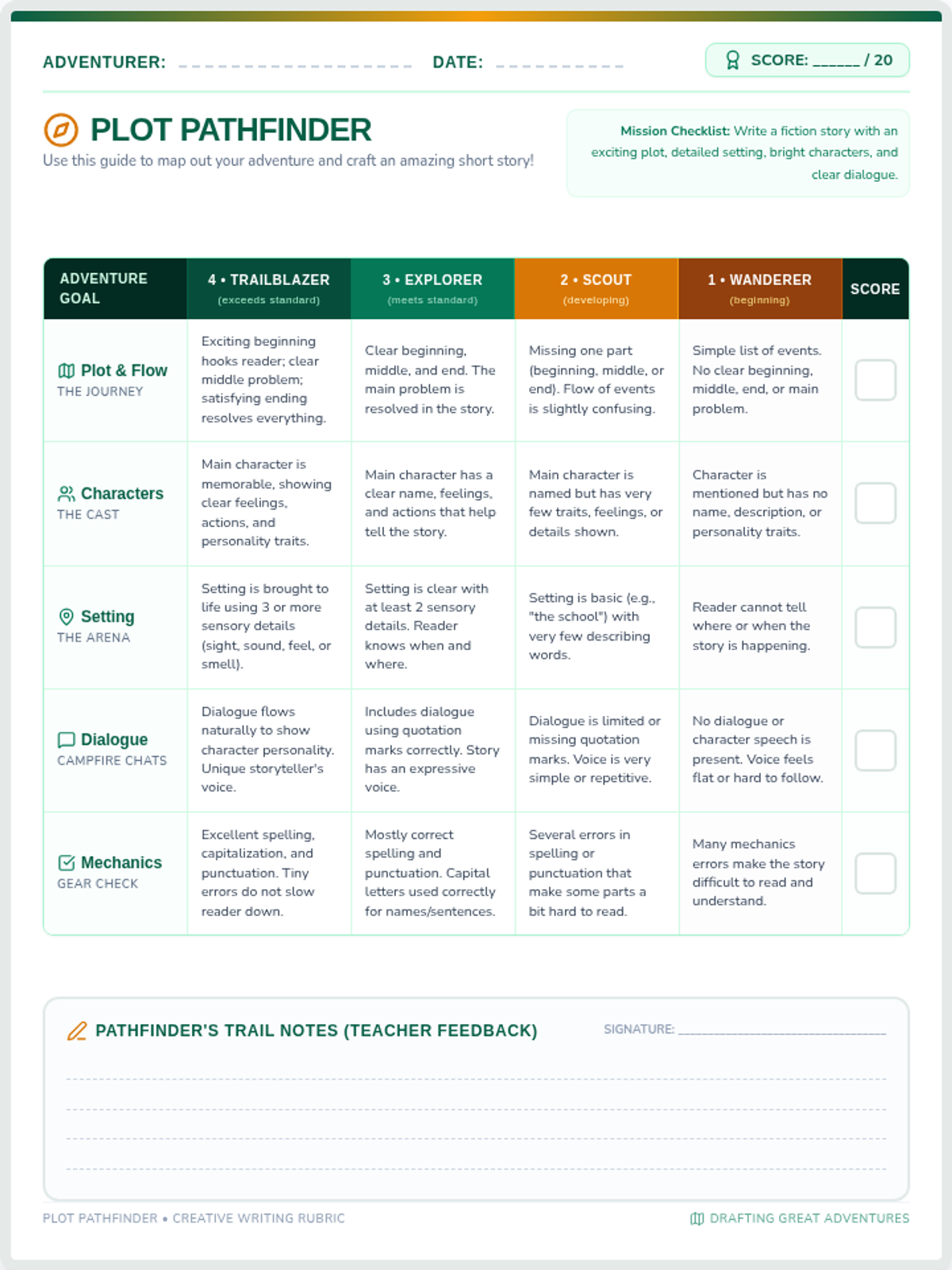
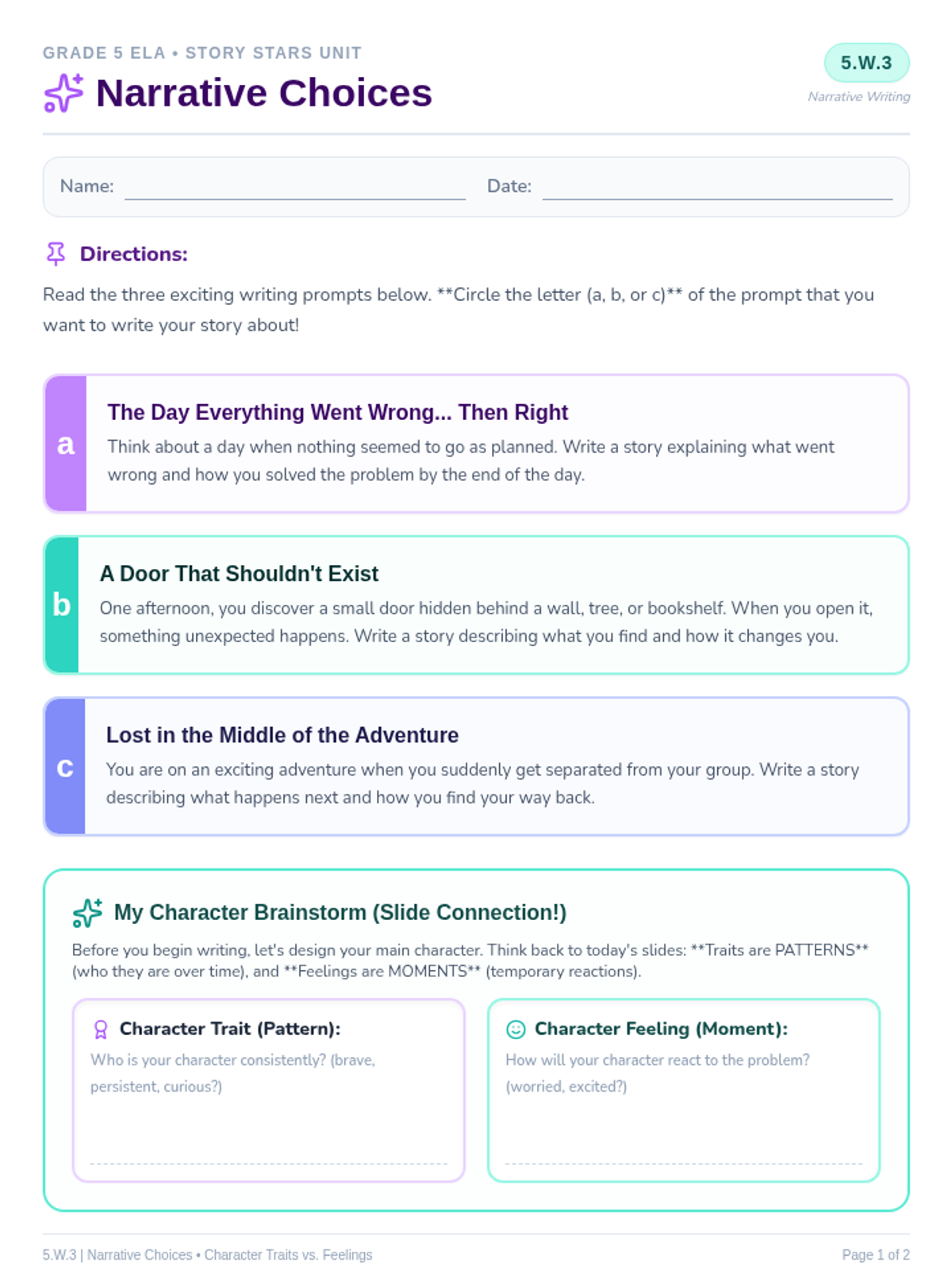
A foundational unit introducing elementary students to the elements of narrative writing, including character creation, setting development, plot structuring, and standard mechanics.
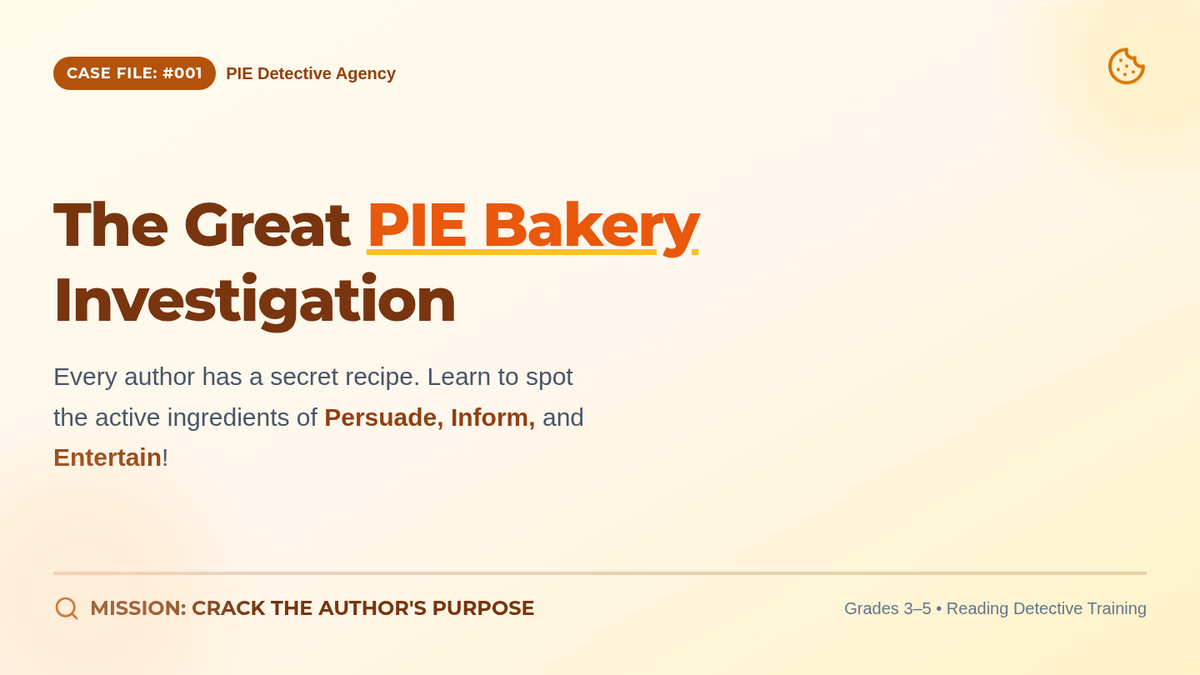
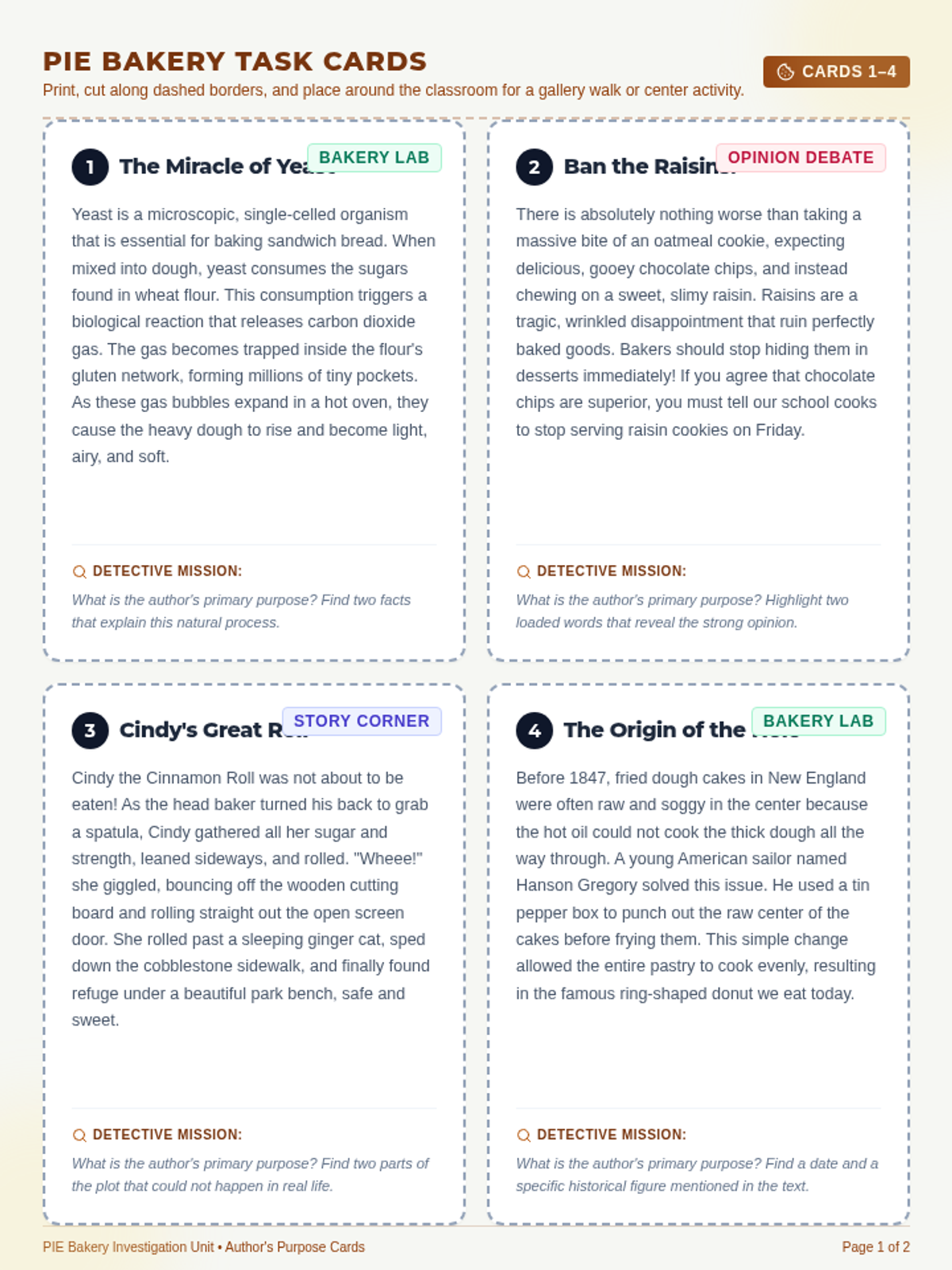
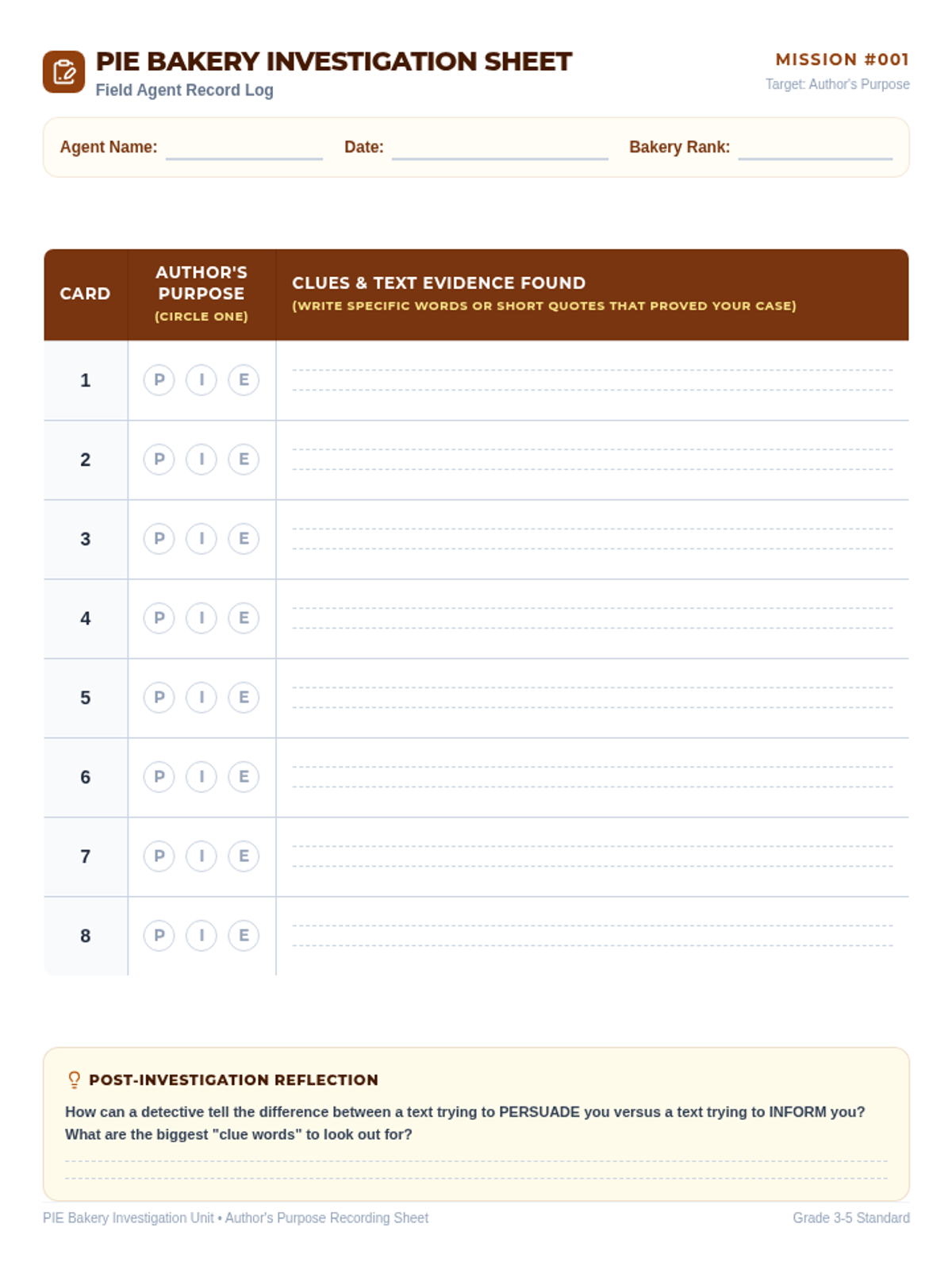
A delicious lesson on Author's Purpose (Persuade, Inform, Entertain) for Grades 3-5, featuring interactive slides, hands-on task cards, and evidence-hunting activity sheets.
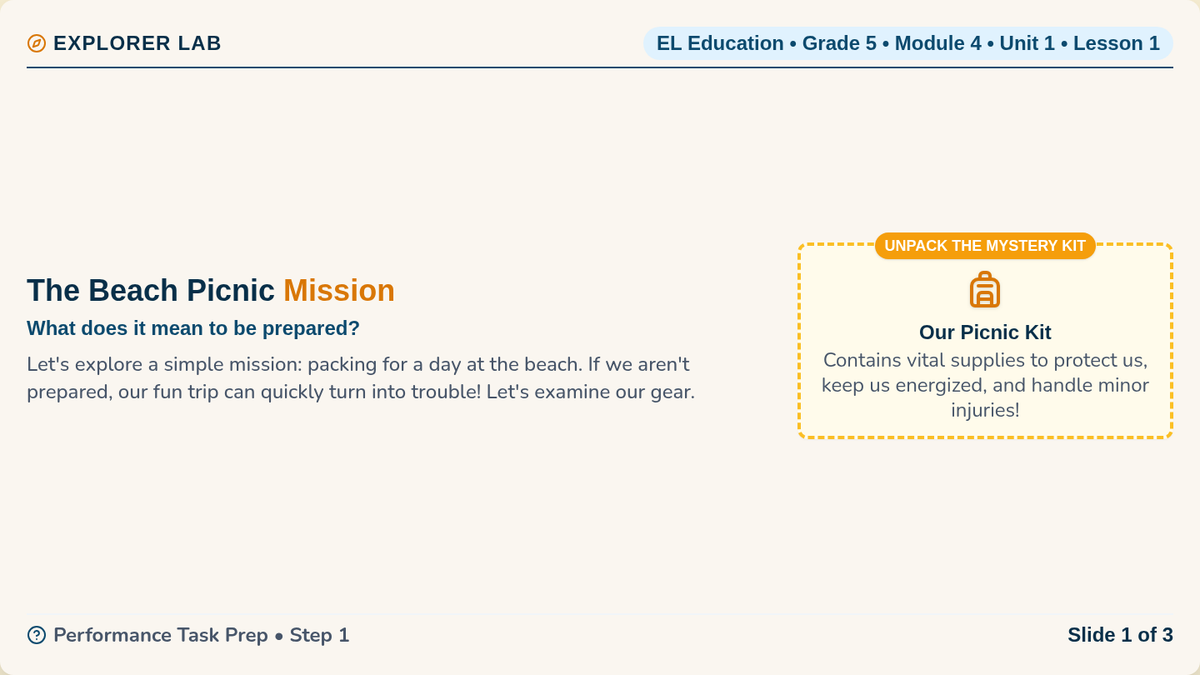
An introductory lesson for EL Education Grade 5 Module 4 Unit 1 Lesson 1. Students unpack a beach picnic kit to explore preparedness concepts before designing emergency kits.
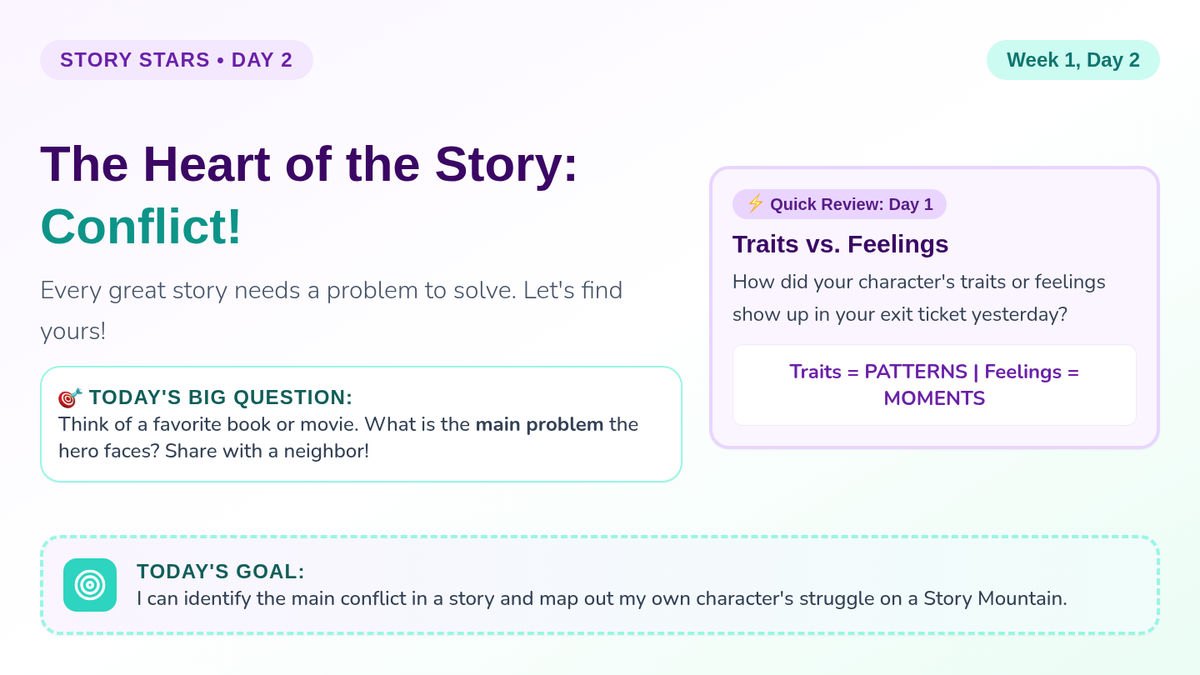
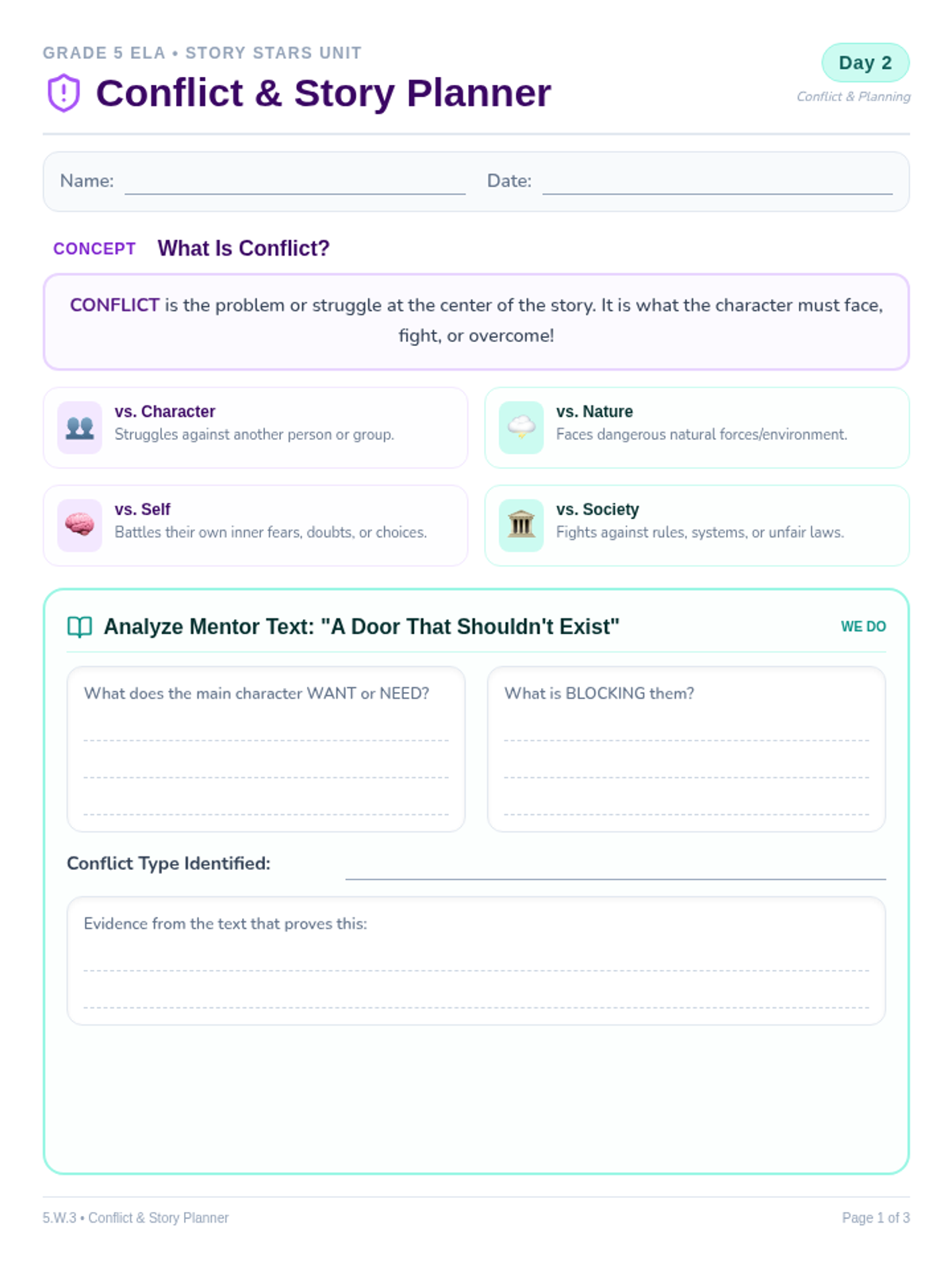
Students identify different conflict types in mentor texts and map out their own narrative using a Story Mountain (plot planner) in this Day 2 lesson.
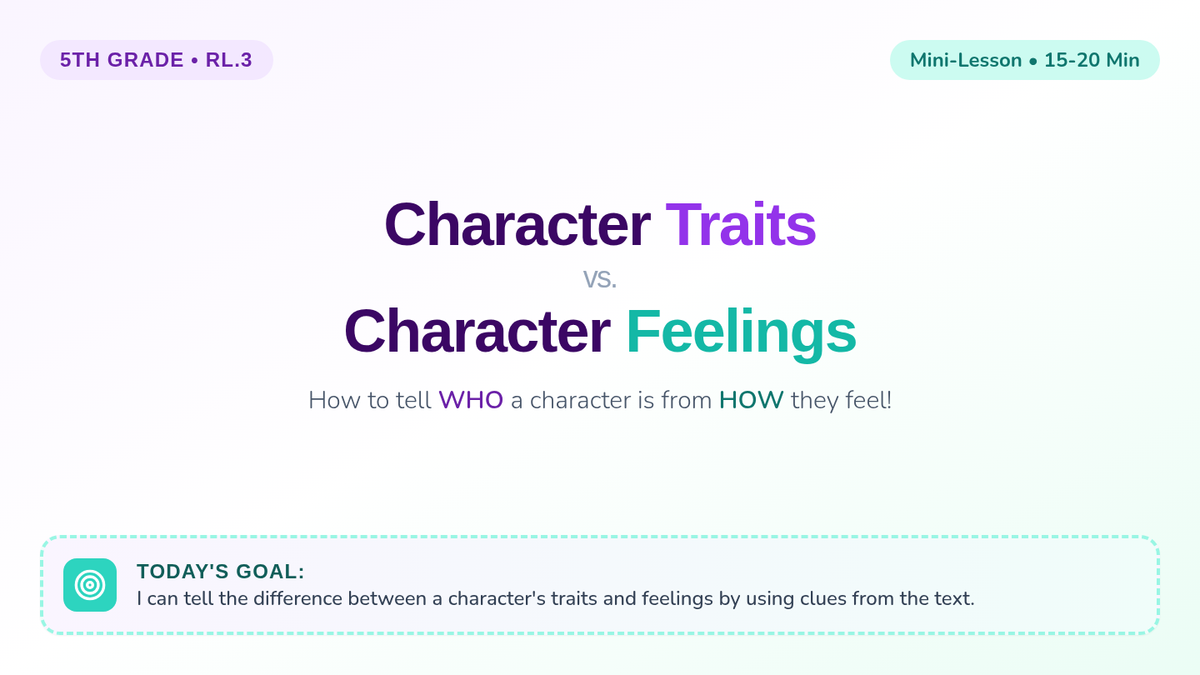
A mini-lesson on RL.3 distinguishing between character traits (patterns) and feelings (moments), condensed and designed beautifully with a cute lavender and mint pastel theme.
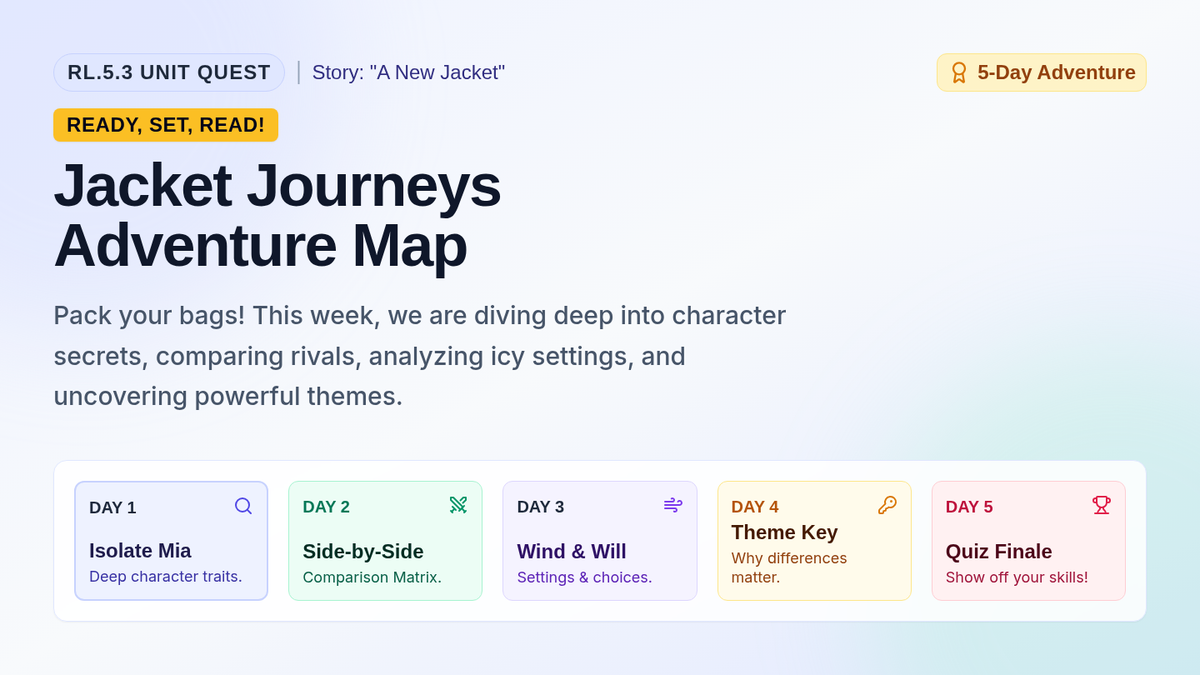
Students analyze character traits, build aligned comparison matrices, examine settings as active forces, connect contrasts to theme, and complete a collaborative weekly review for 'A New Jacket'.
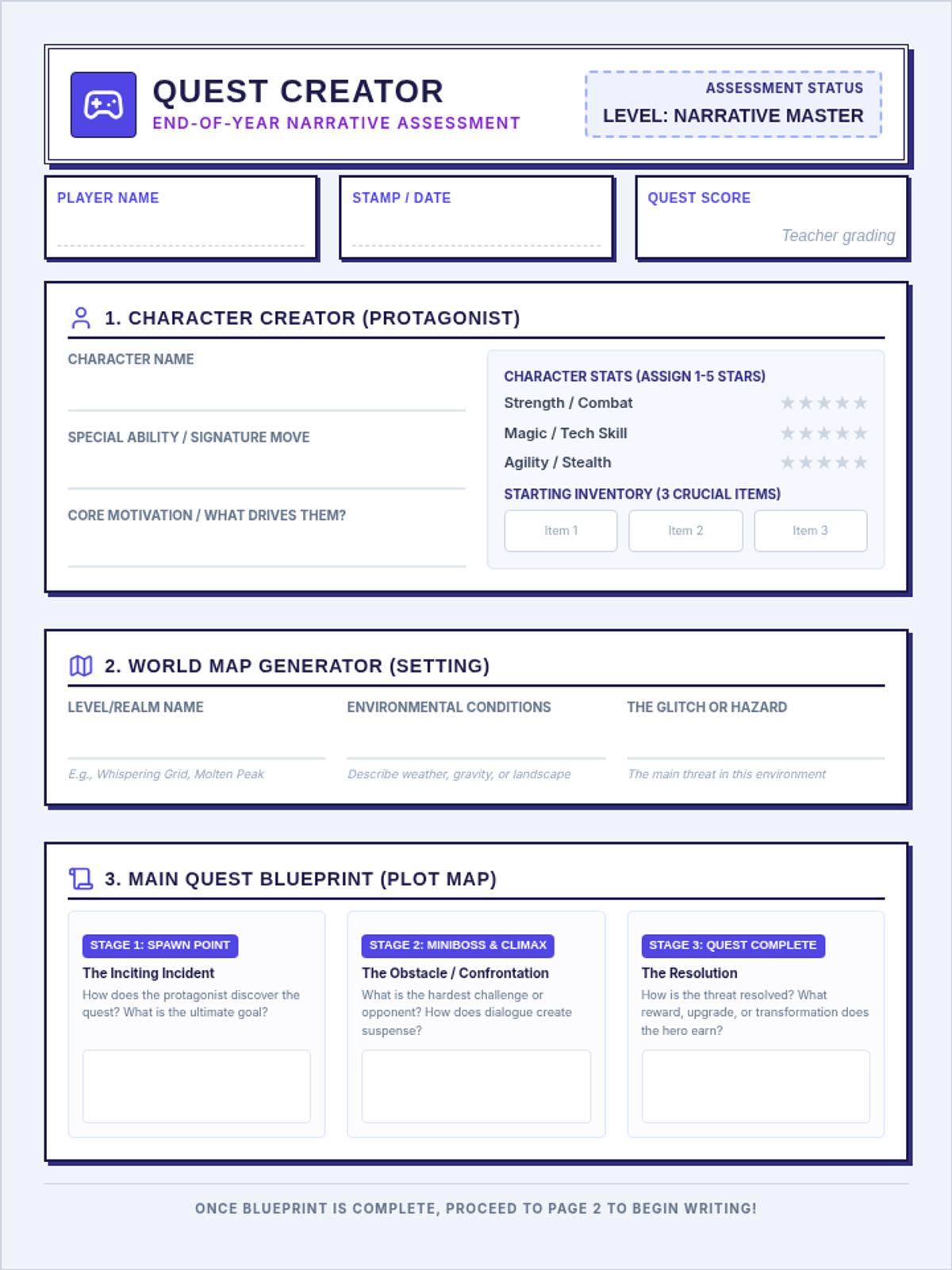
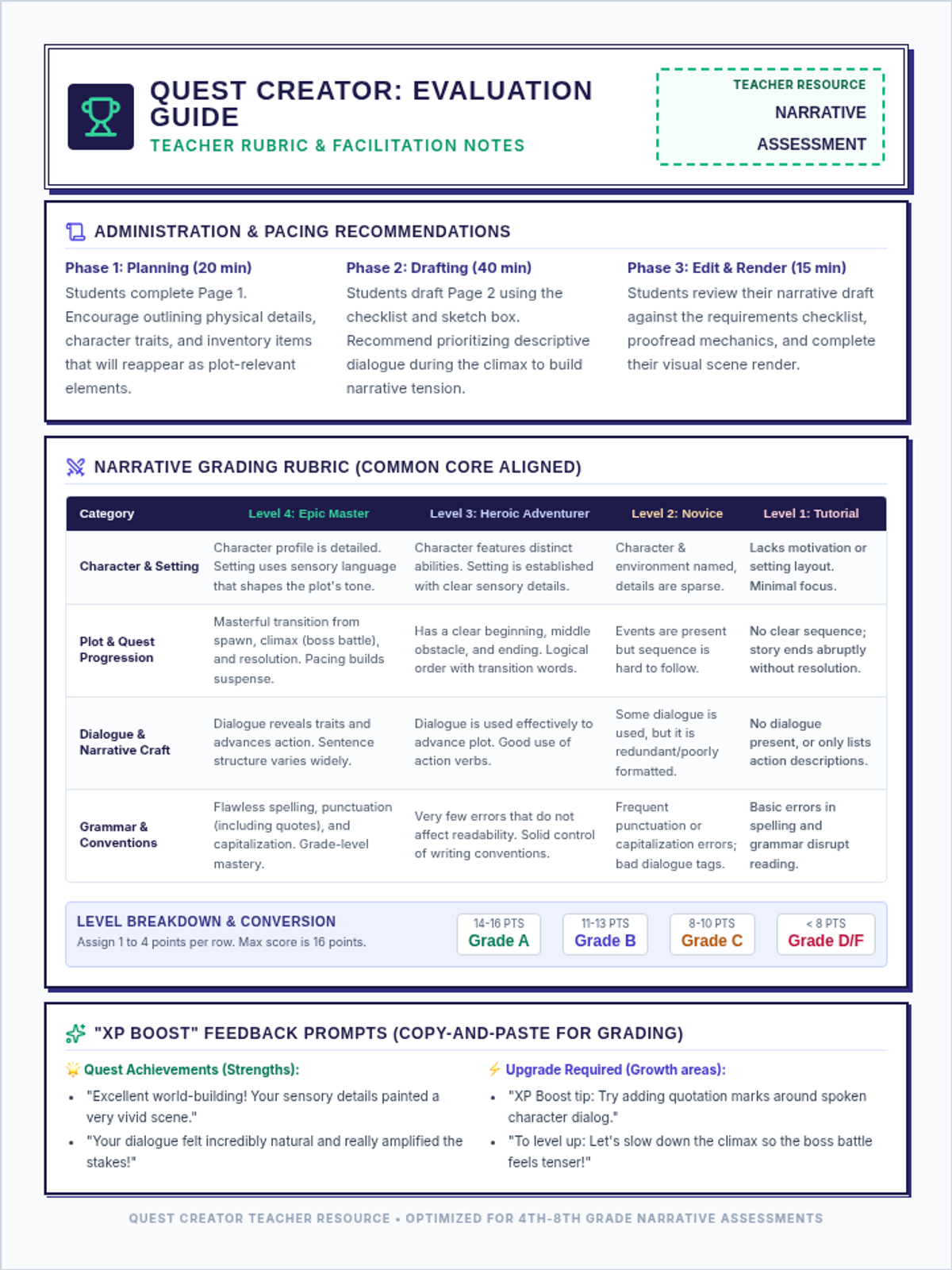
An end-of-year narrative writing assessment where students design their own video game character, setting, and quest, then write an engaging adventure story based on their creation.
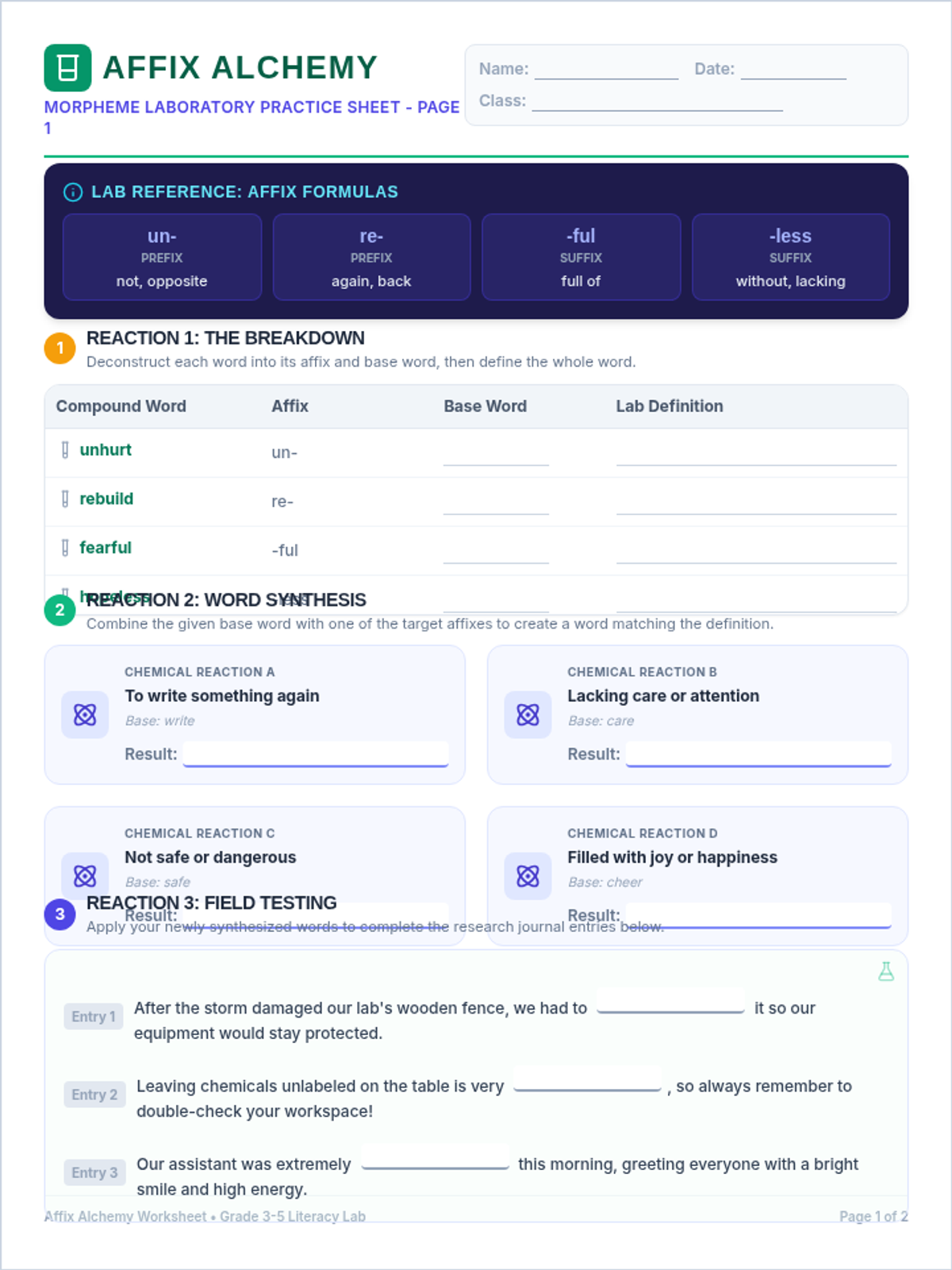
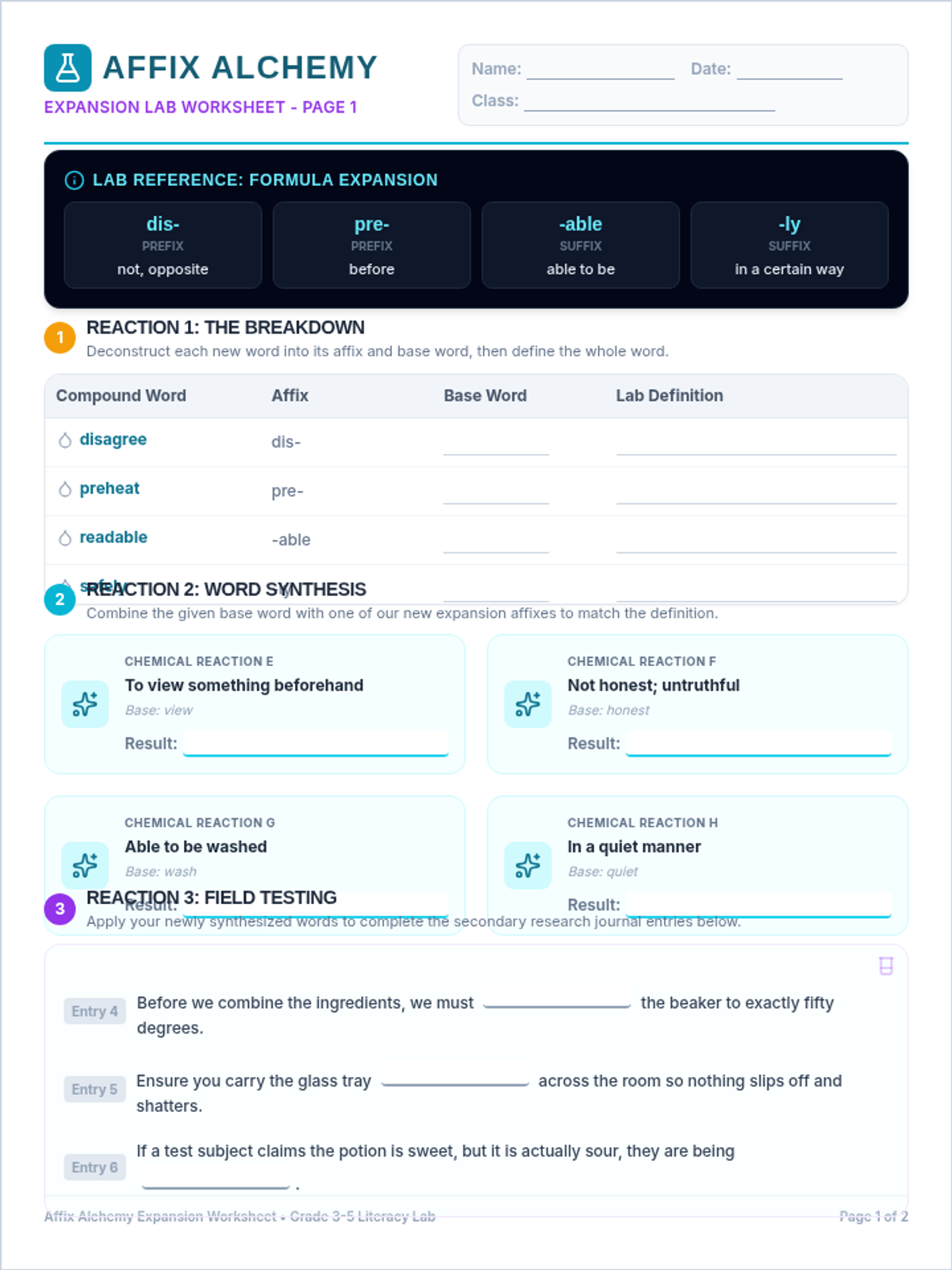
A comprehensive lesson on high-frequency prefixes and suffixes (un-, re-, -ful, -less) designed as a Word Chemistry Lab, helping students master morpheme breakdown, synthesis, and contextual application.
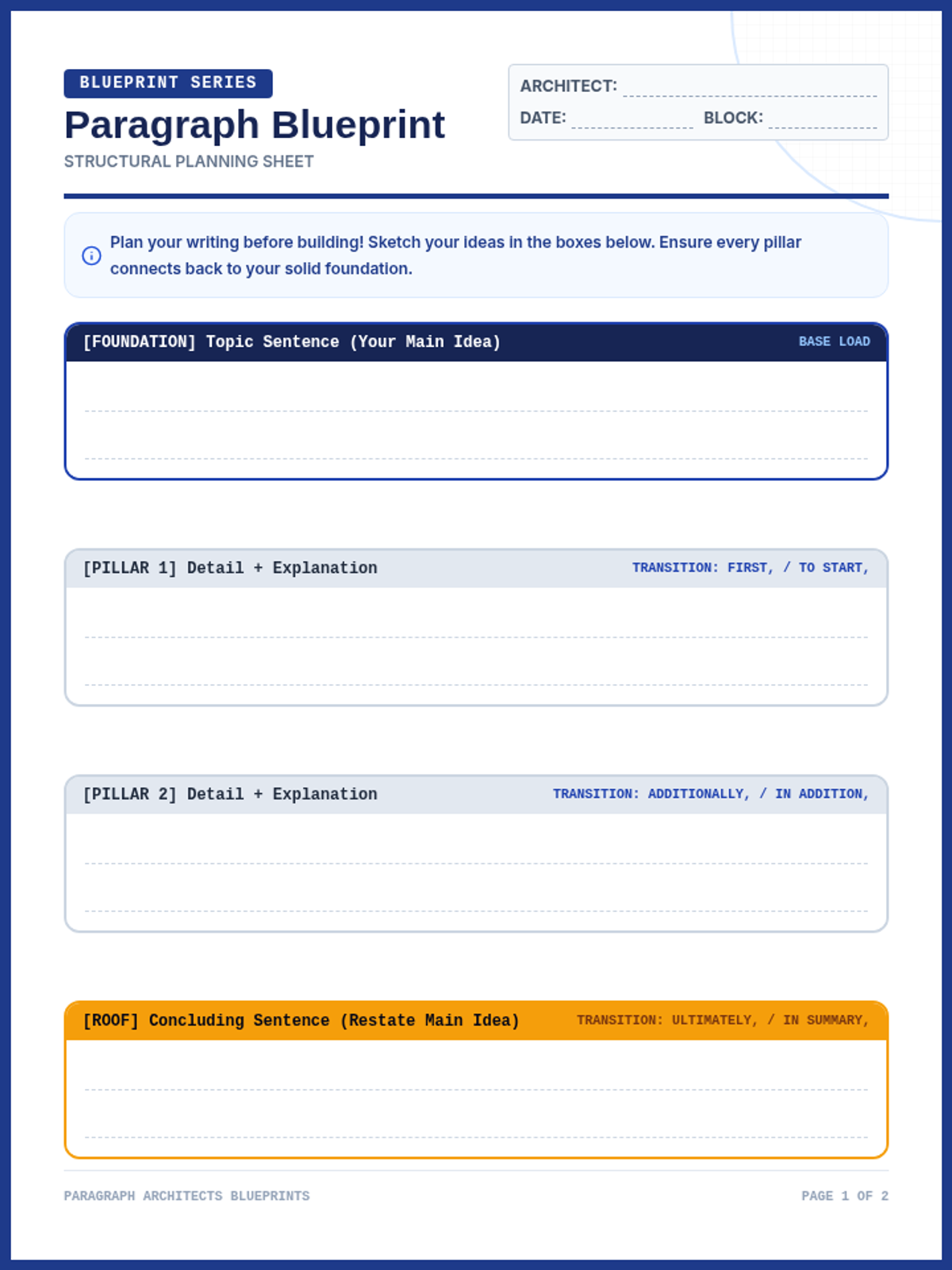
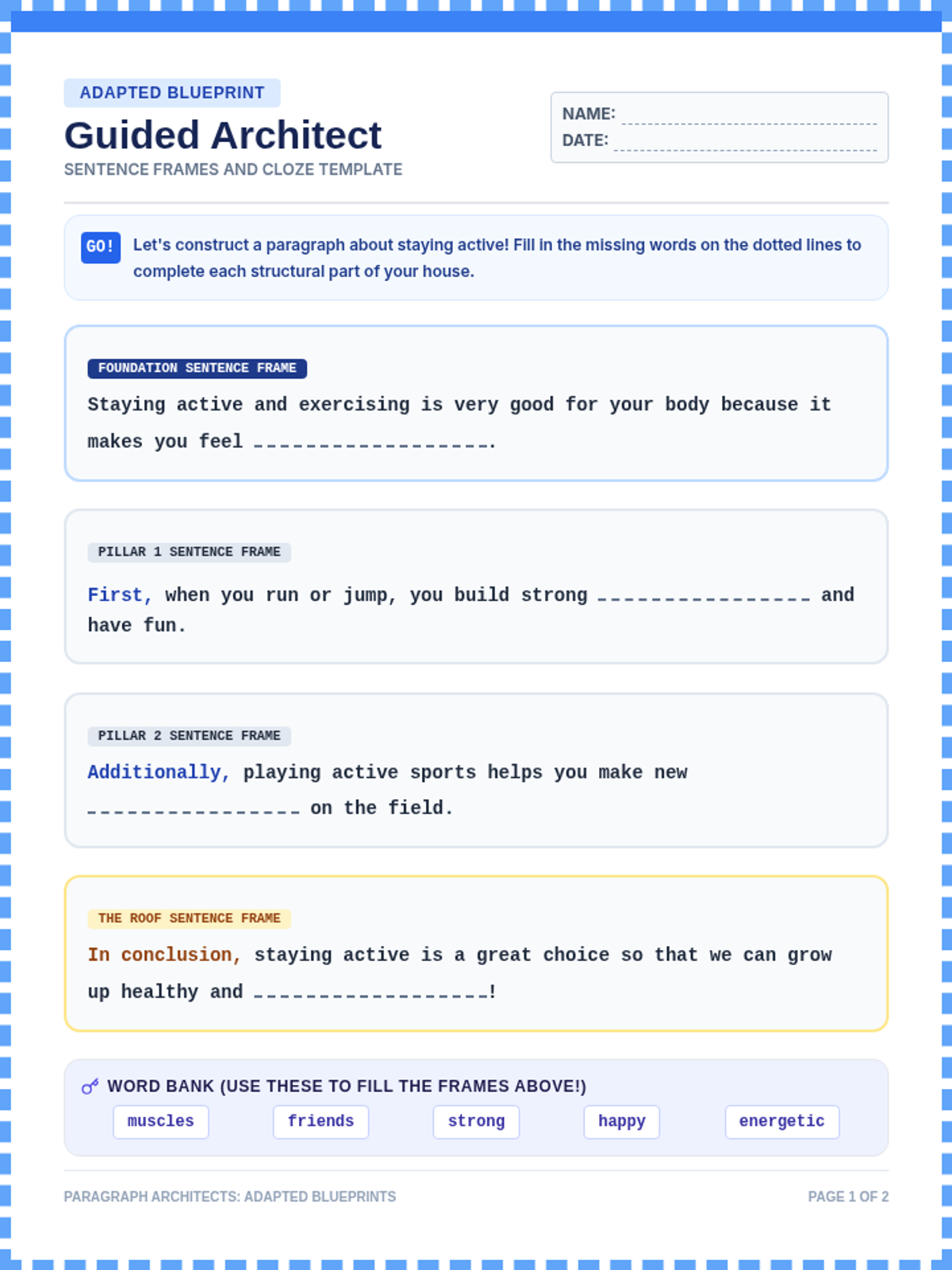
A structural writing lesson guiding students to build organized, cohesive paragraphs with topic sentences, concrete evidence, and transitions.
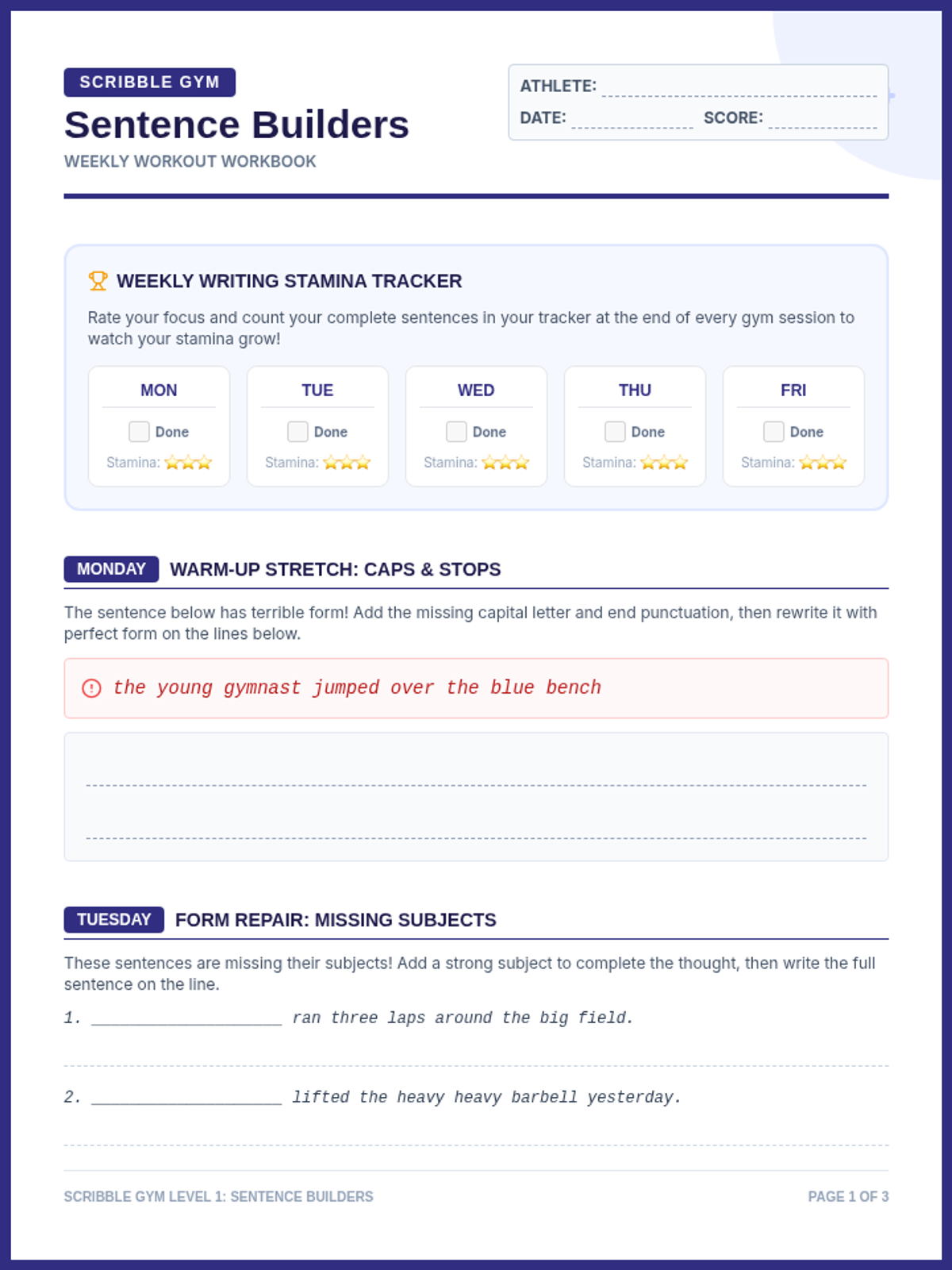
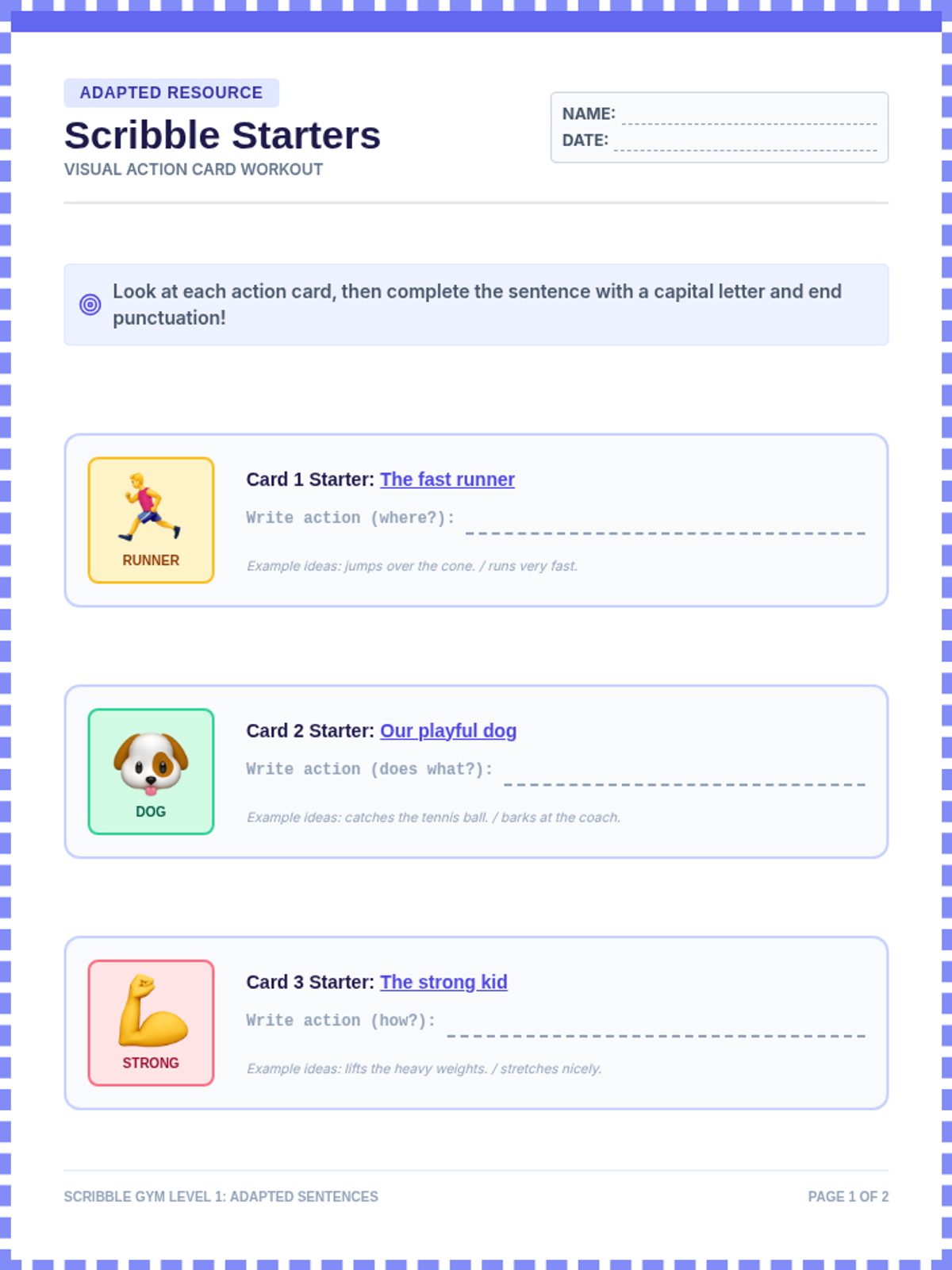
A foundational lesson focused on mastering capitalization, punctuation, and constructing complete simple and compound sentences.
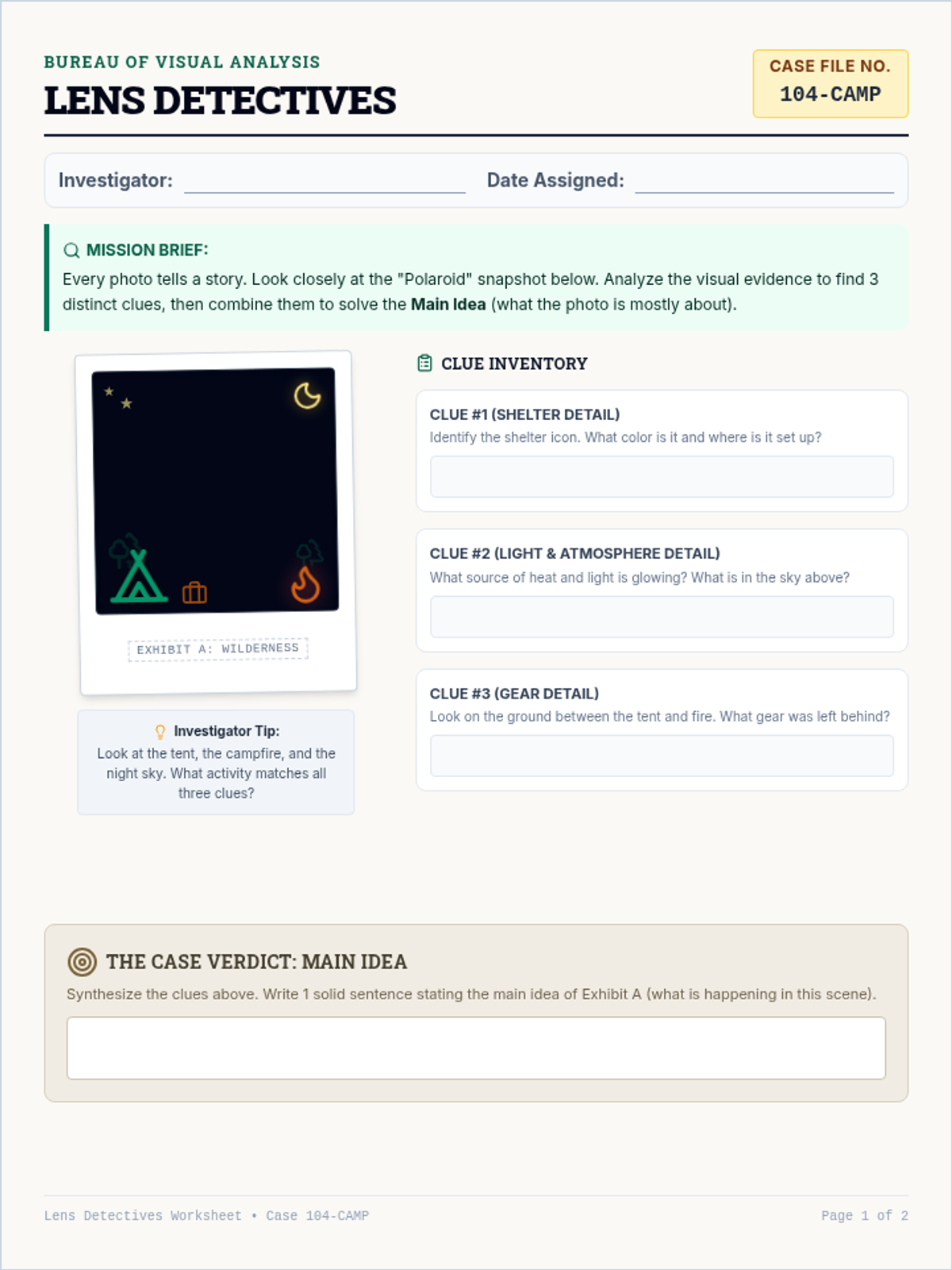
A structured resource pack focusing on Main Idea and Key Details. Students become 'Lens Detectives', analyzing highly detailed visual scenes (styled as polaroid photos) to gather clues, identify the central topic, and draft structured paragraphs using deductive writing scaffolds.
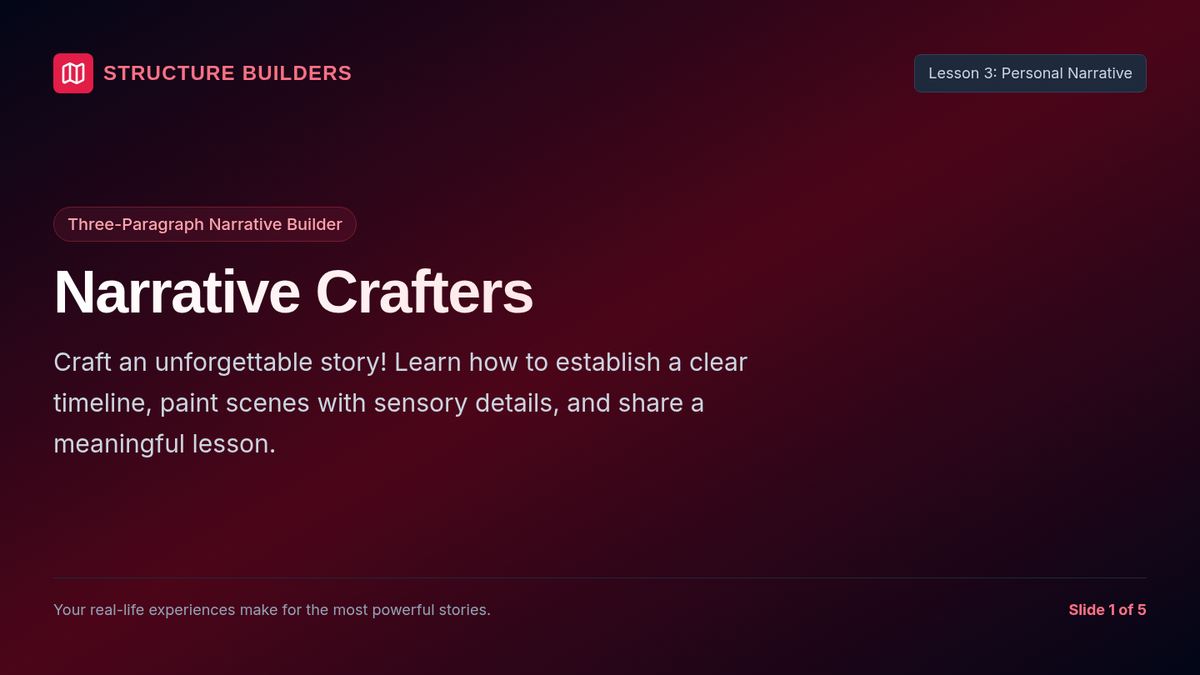
A structured approach to writing a three-paragraph personal narrative. Students develop a clear beginning, middle, and end, using sensory details, transition words, and self-assessment checklists.
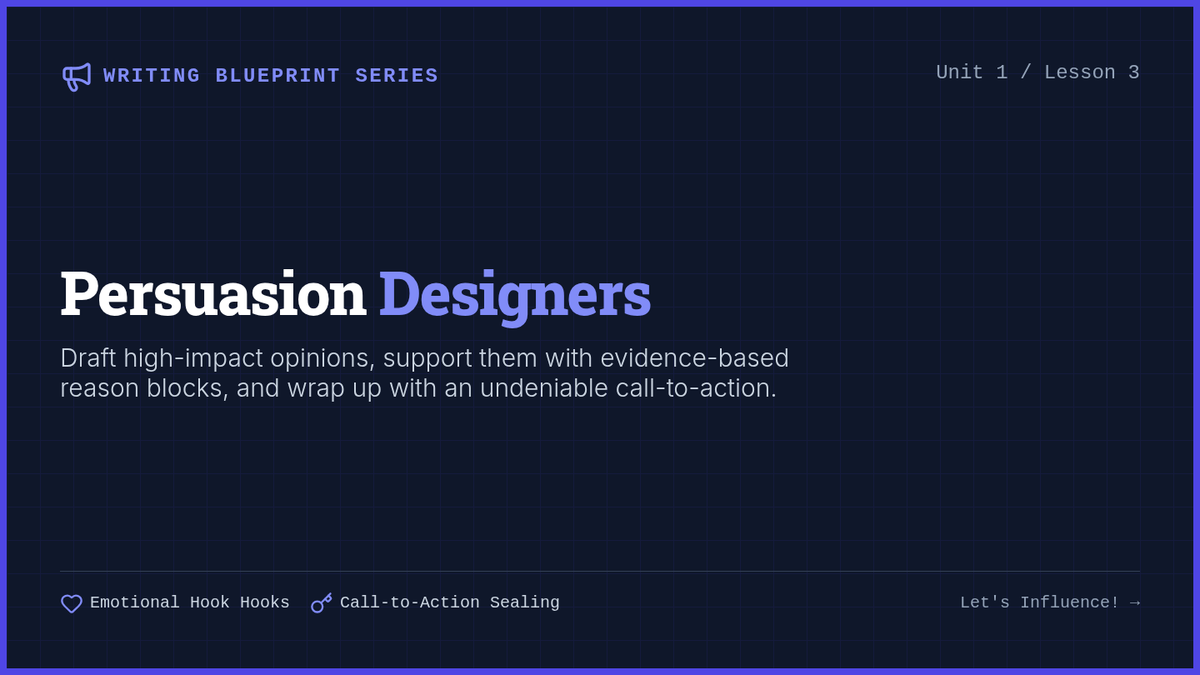
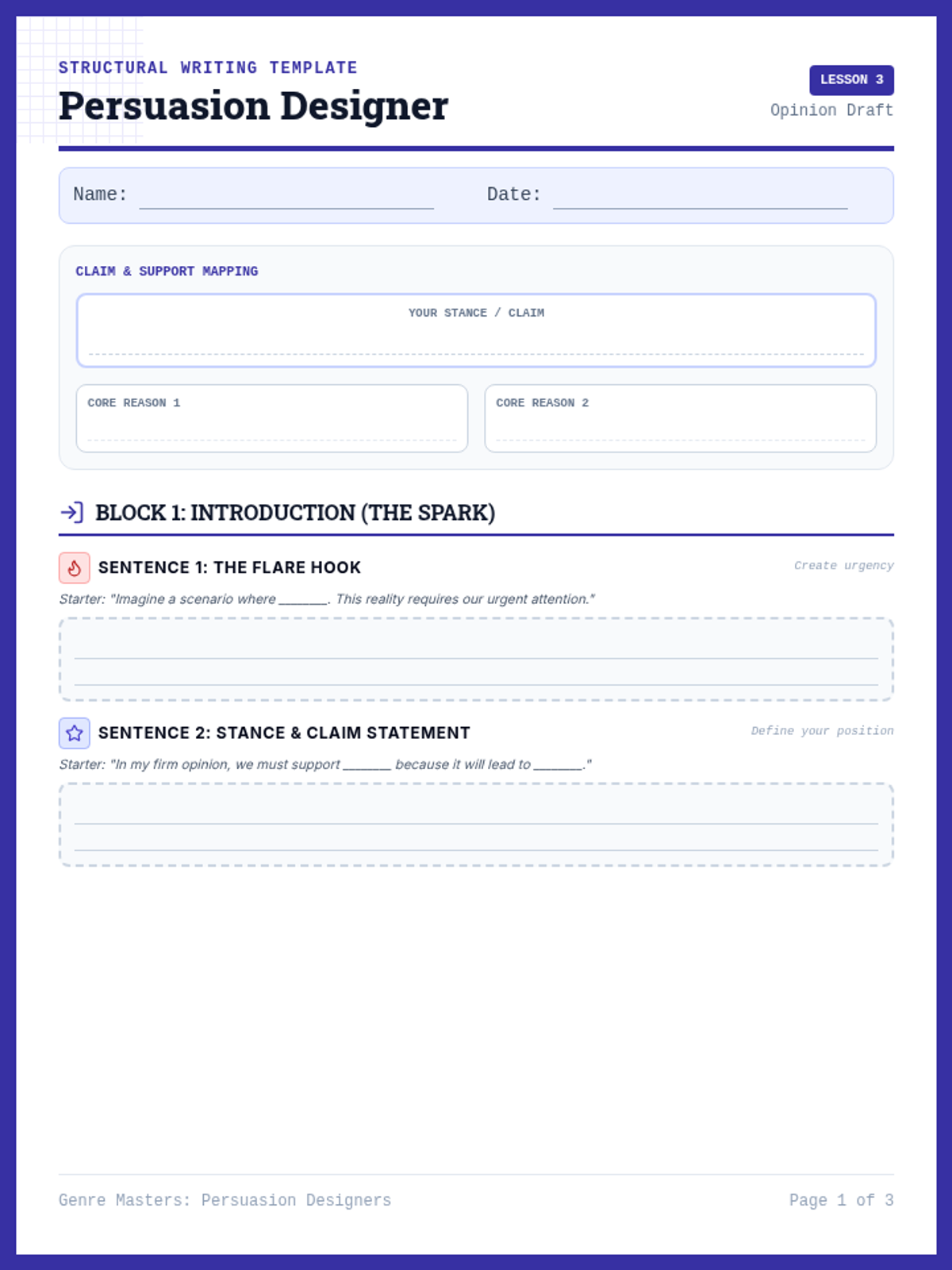
Students structure powerful opinions using a 3-paragraph template. They leverage strong emotional hooks, evidence-based reason body blocks, and persuasive call-to-action conclusions.
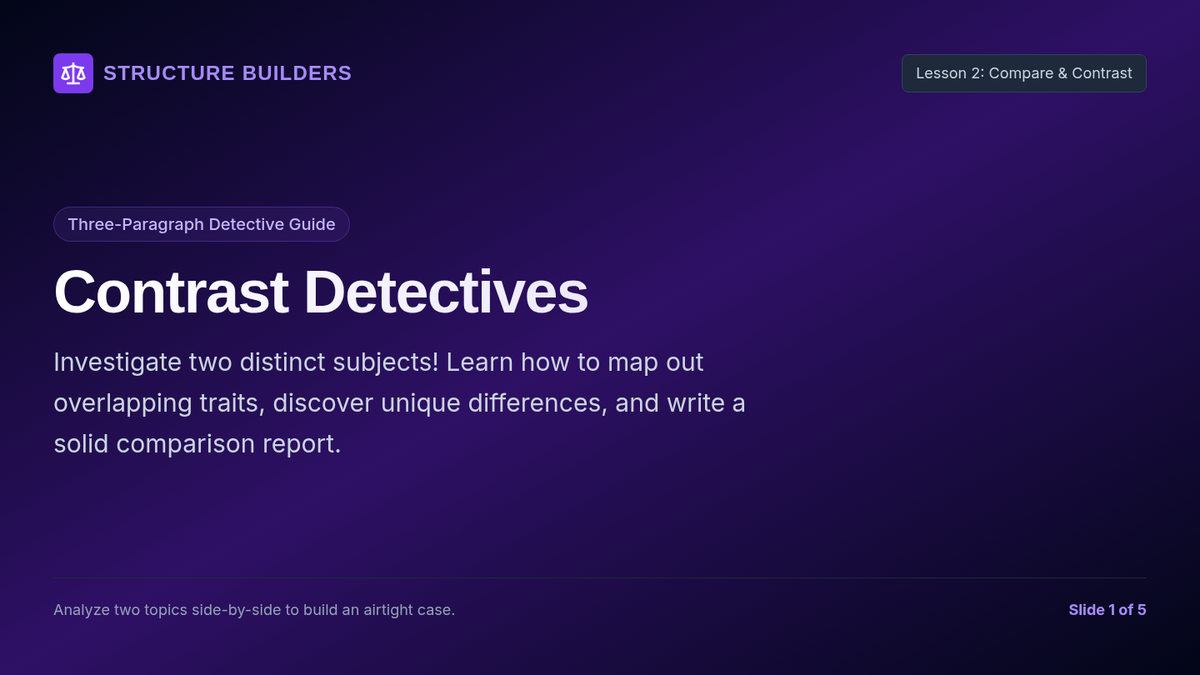
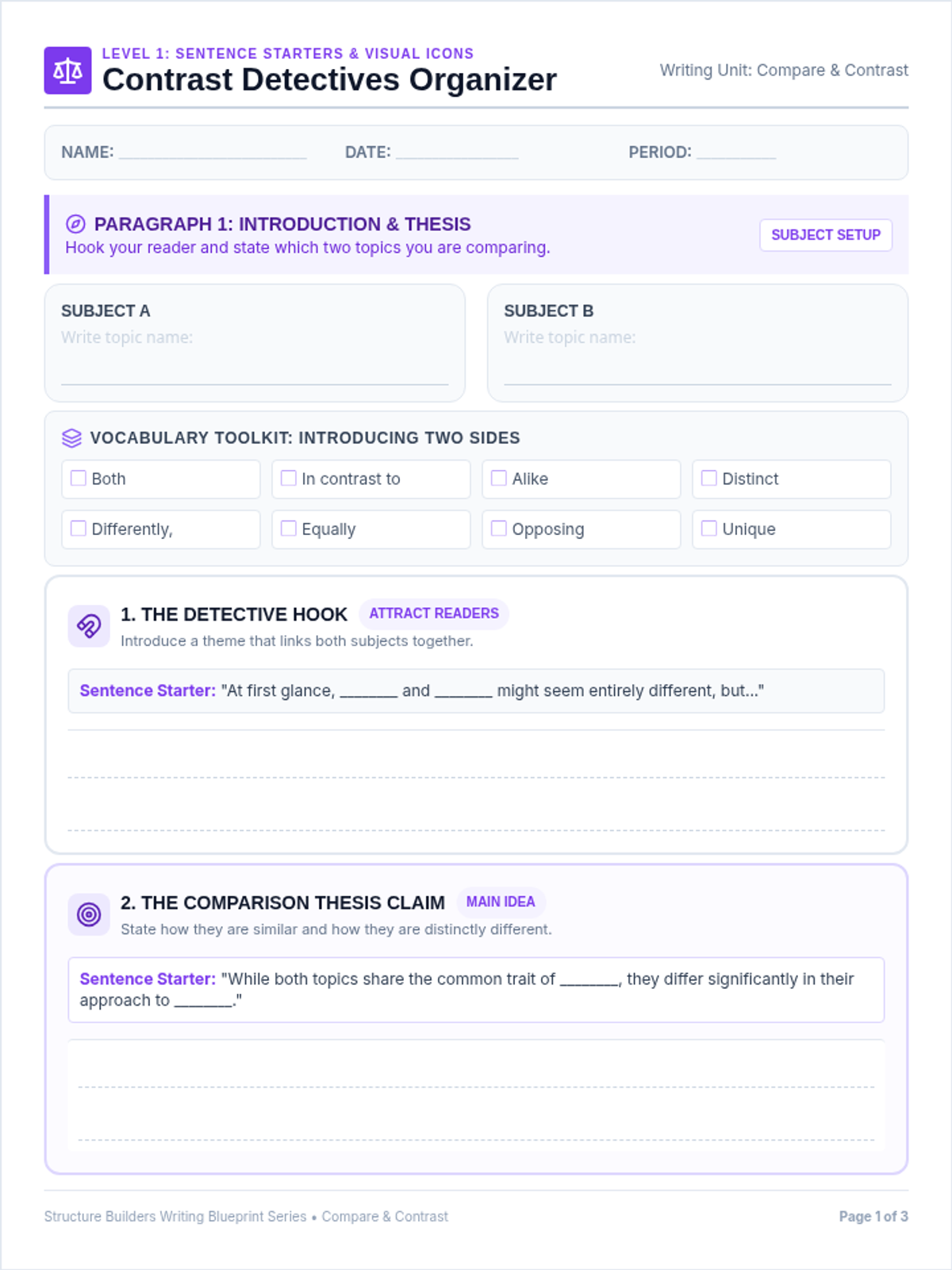
A step-by-step lesson for comparing and contrasting two topics in a three-paragraph format. Students utilize customized sentence frames, comparative word banks, and structured organizers with visual prompts.
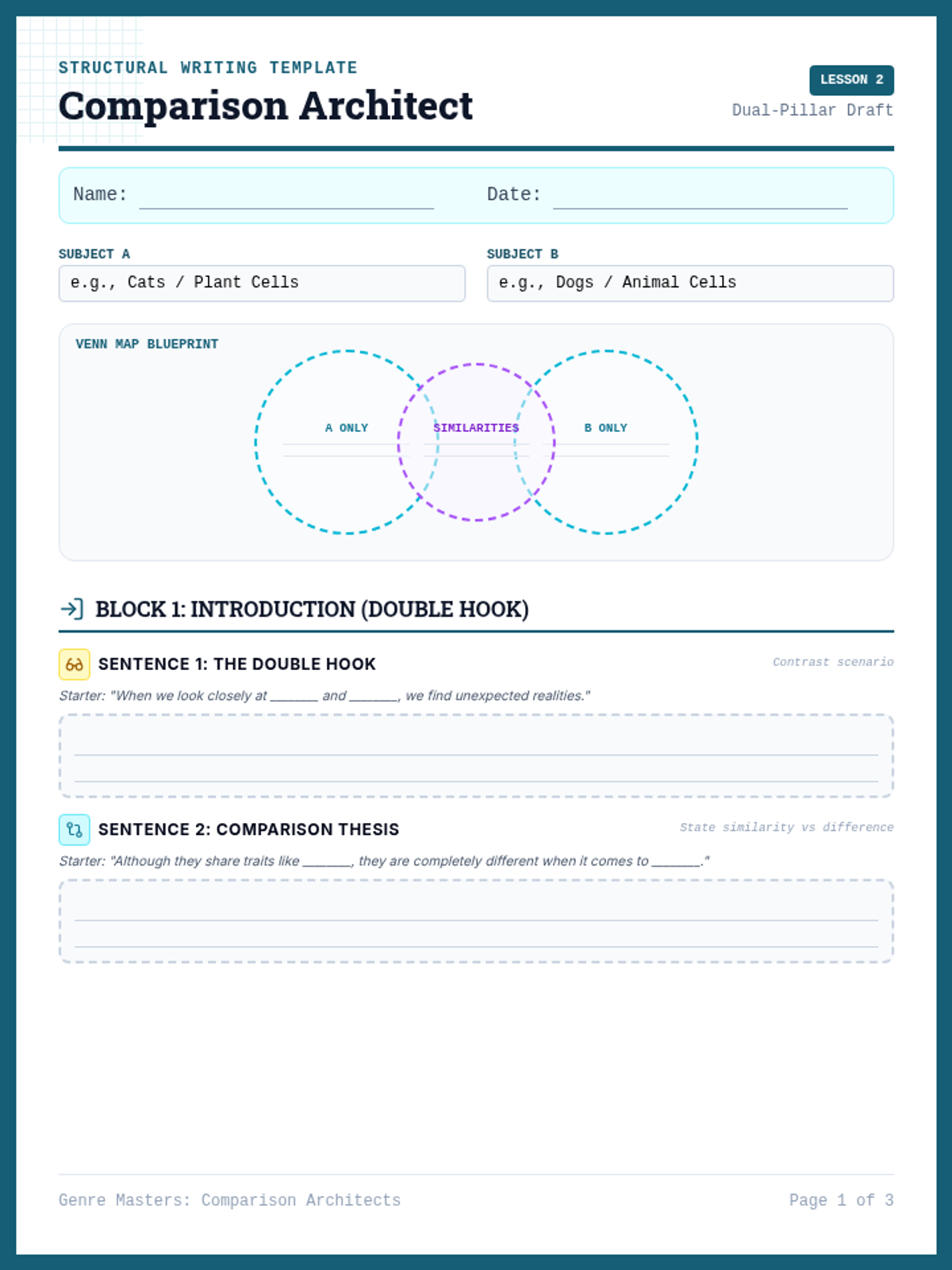
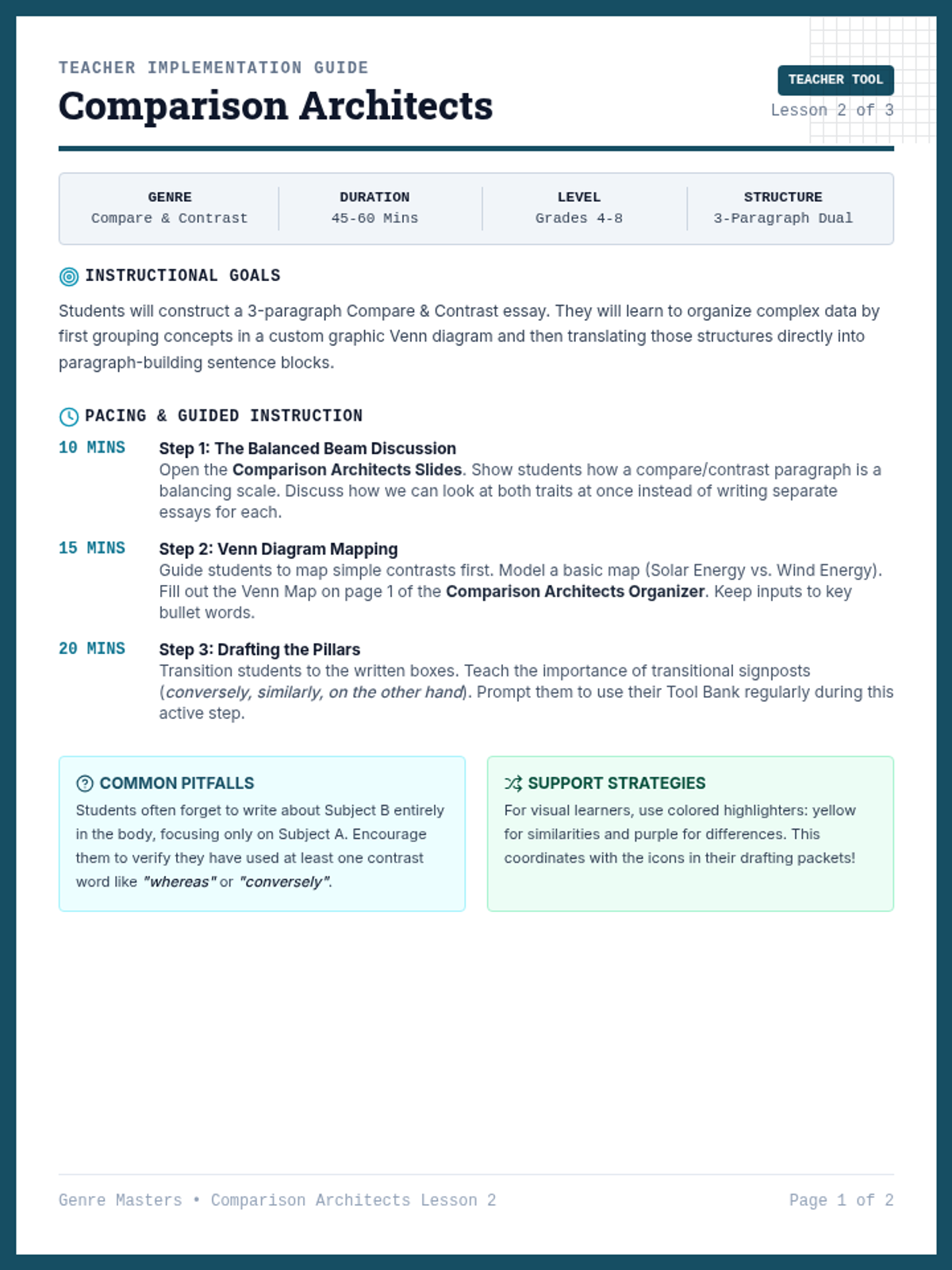
Students learn to contrast and compare two topics using a structured 3-paragraph format. A dual-column layout, custom Venn diagrams, and comparison word banks guide them through similarities and differences.
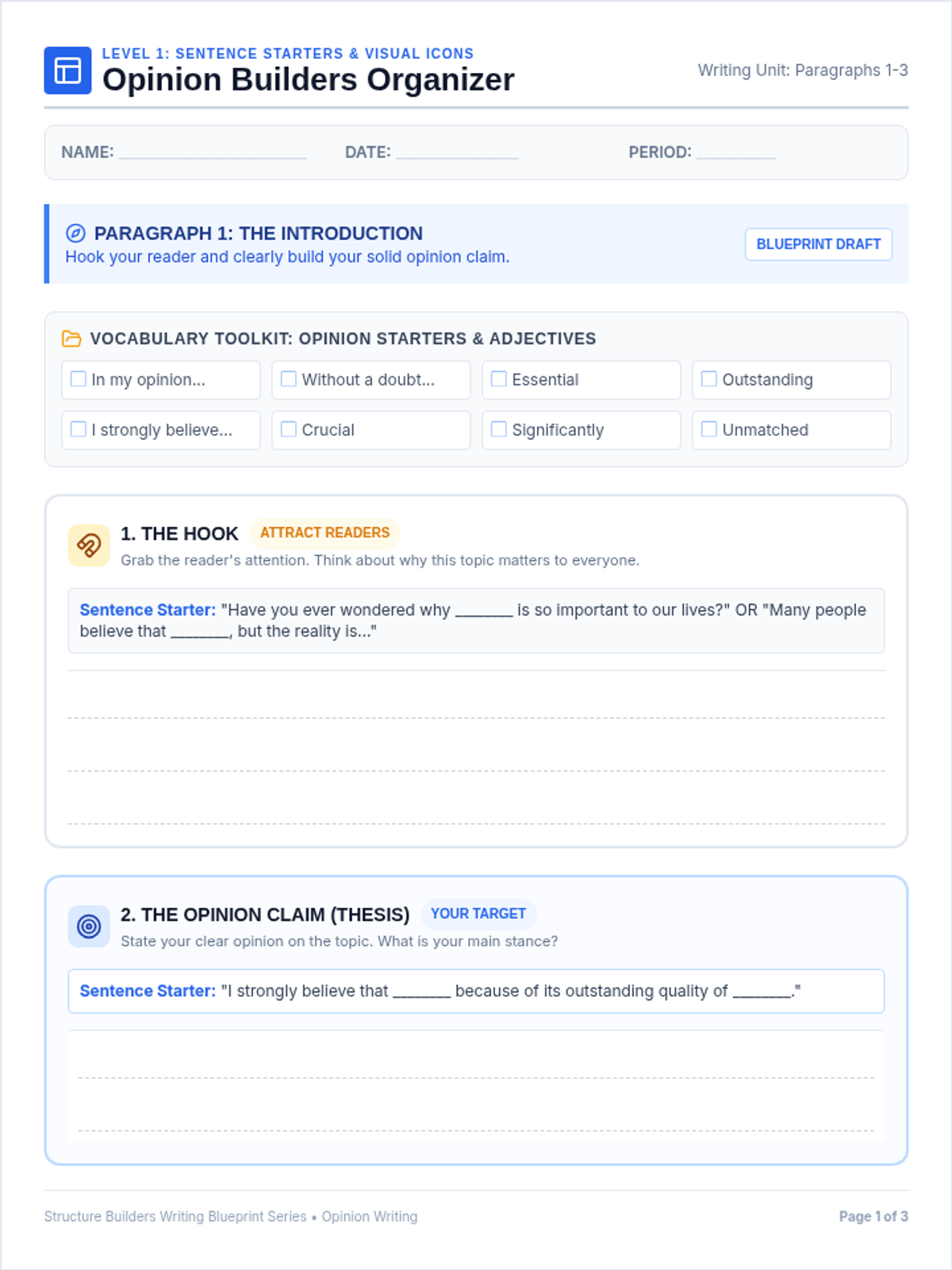
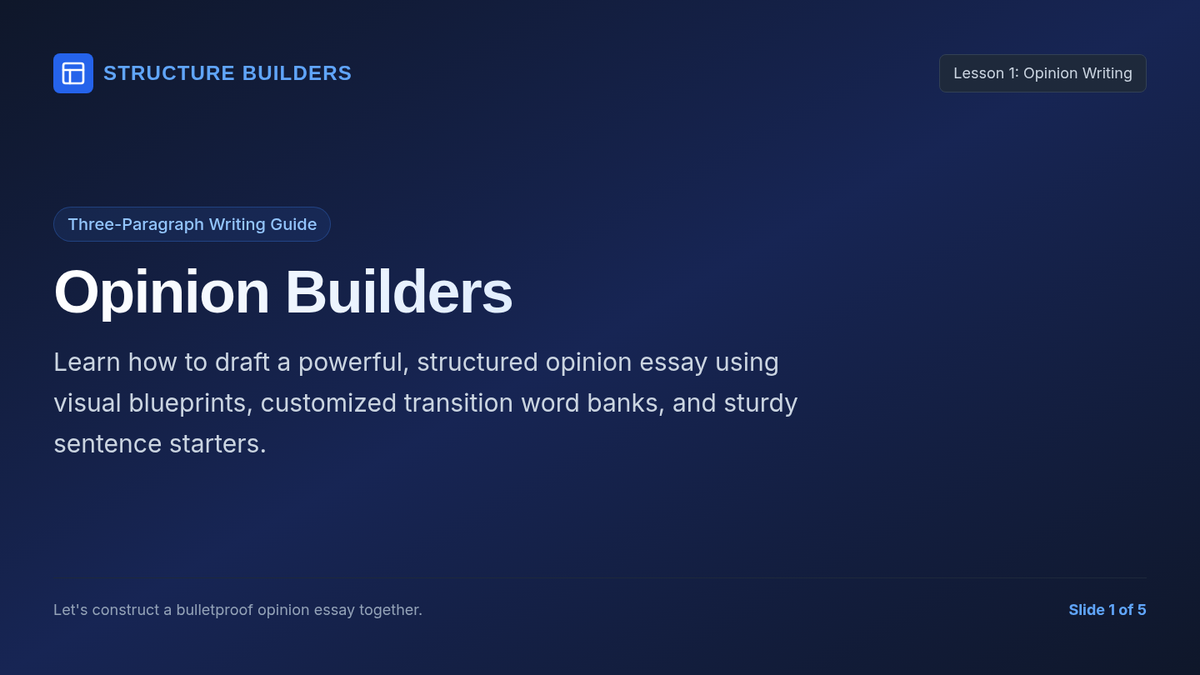
A guided lesson focusing on drafting a three-paragraph opinion essay. Students learn to express a clear claim, back it up with evidence, and write a strong concluding summary using custom sentence frames, interactive word banks, and visual icon prompts.
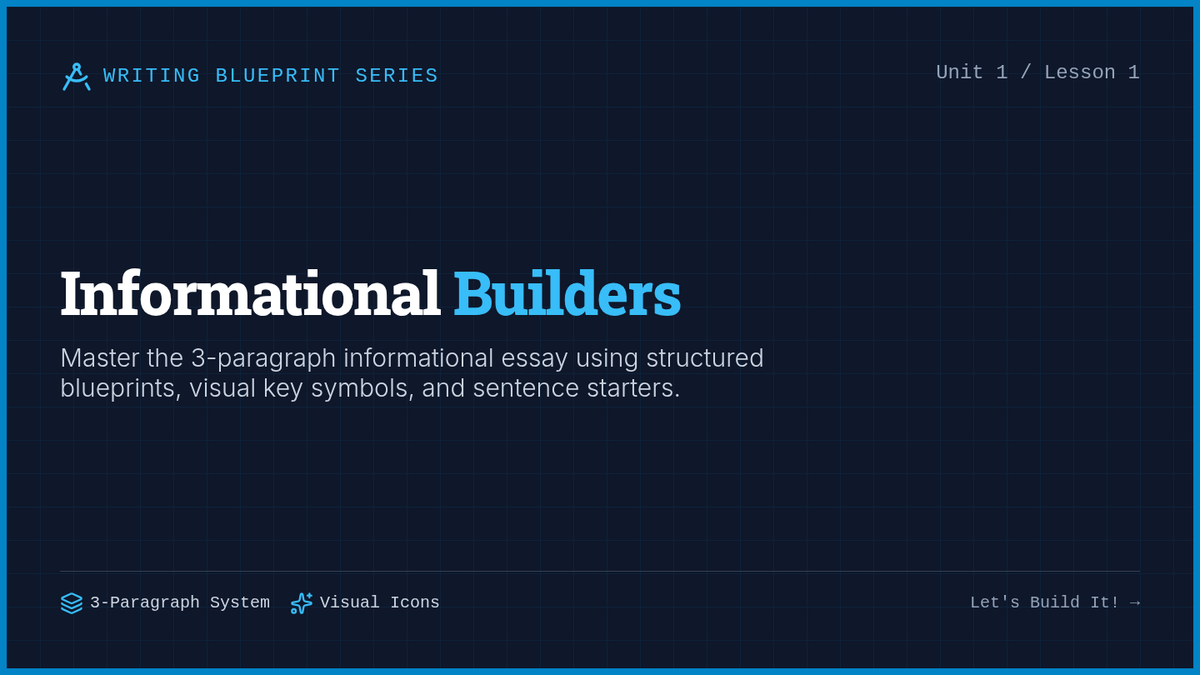
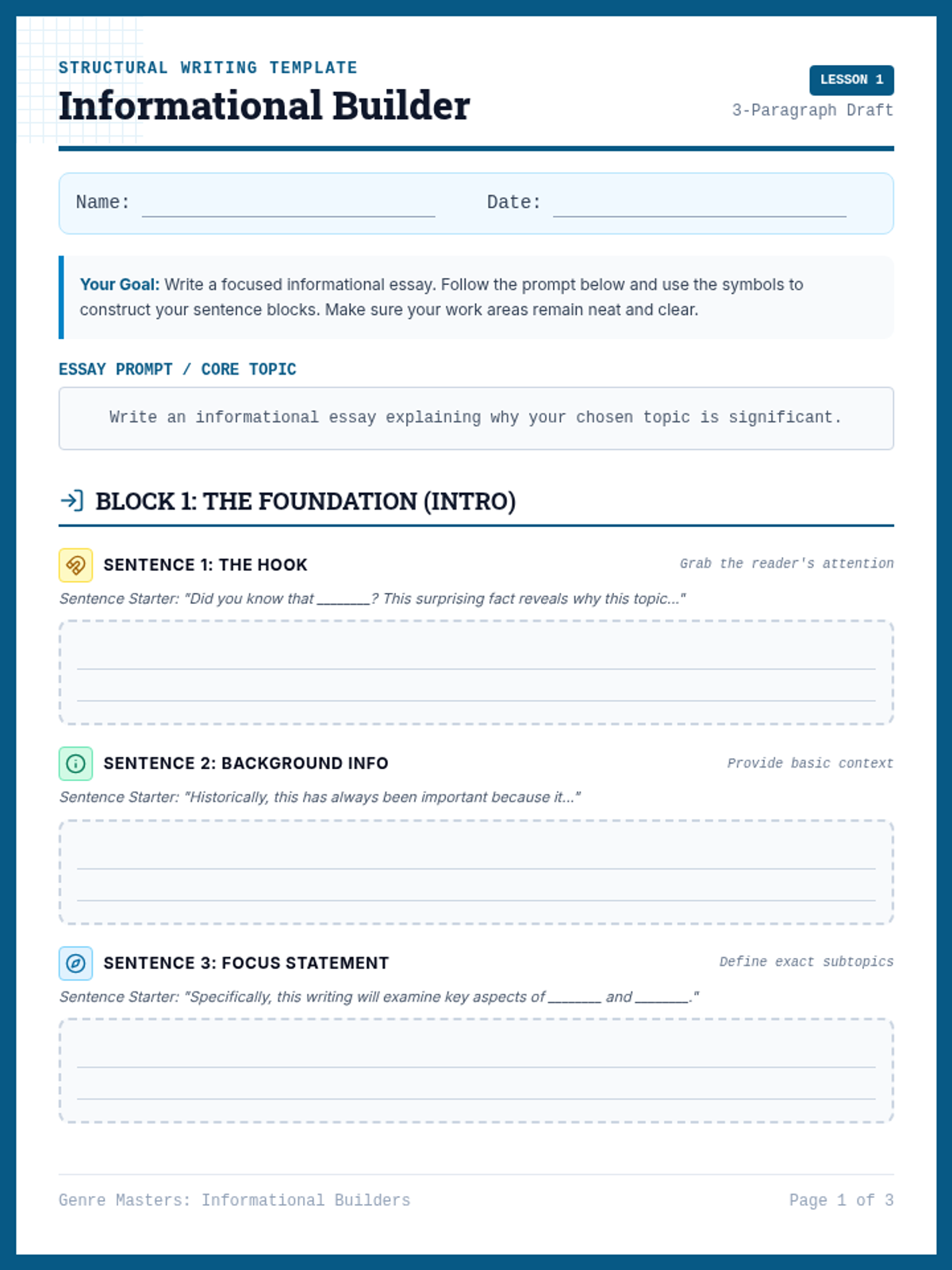
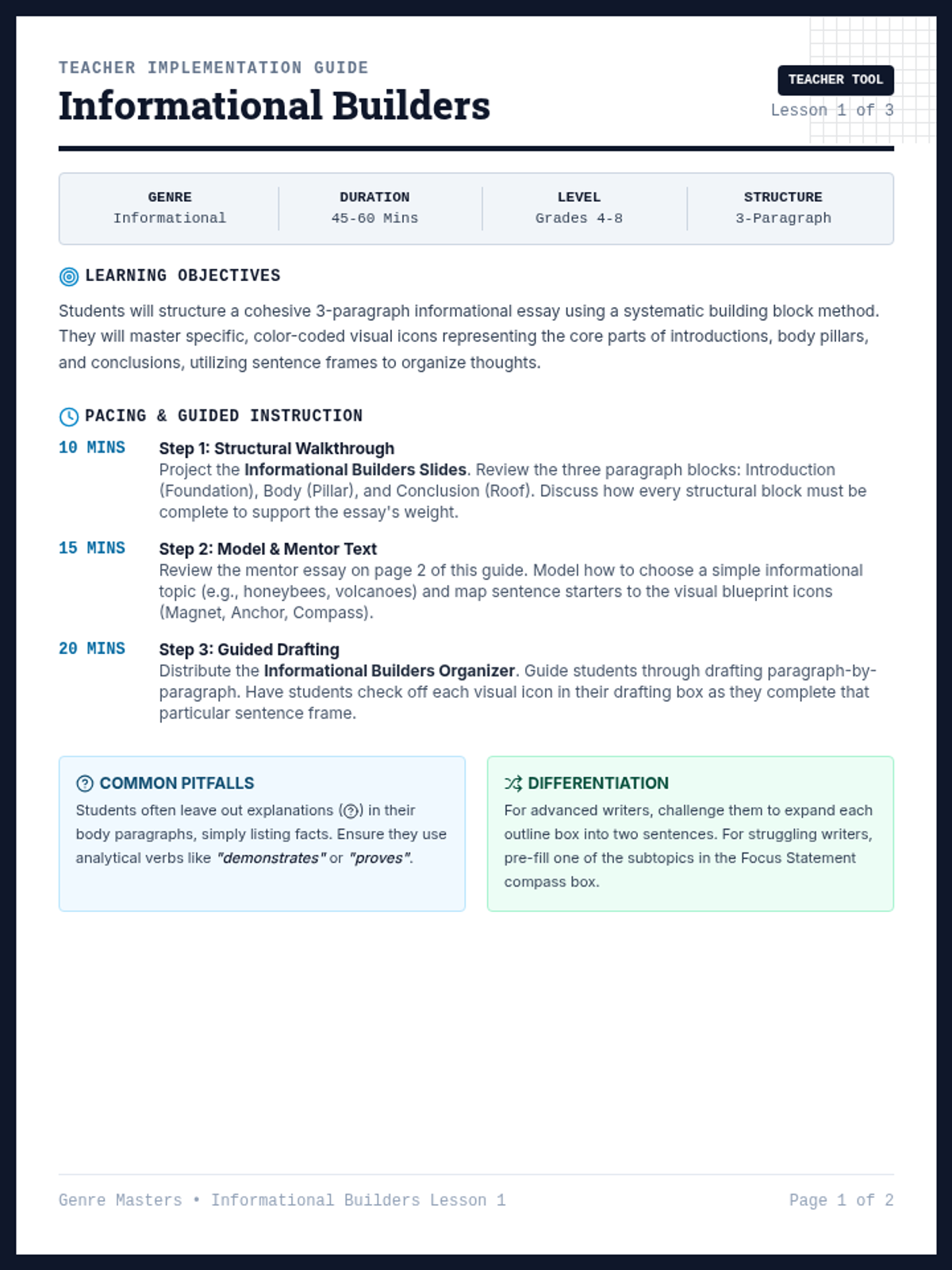
Students master the highly structured 3-paragraph informational essay. They use visual icons, word banks, and fill-in-the-blank sentence starters to build a rock-solid introduction, body, and conclusion paragraph.
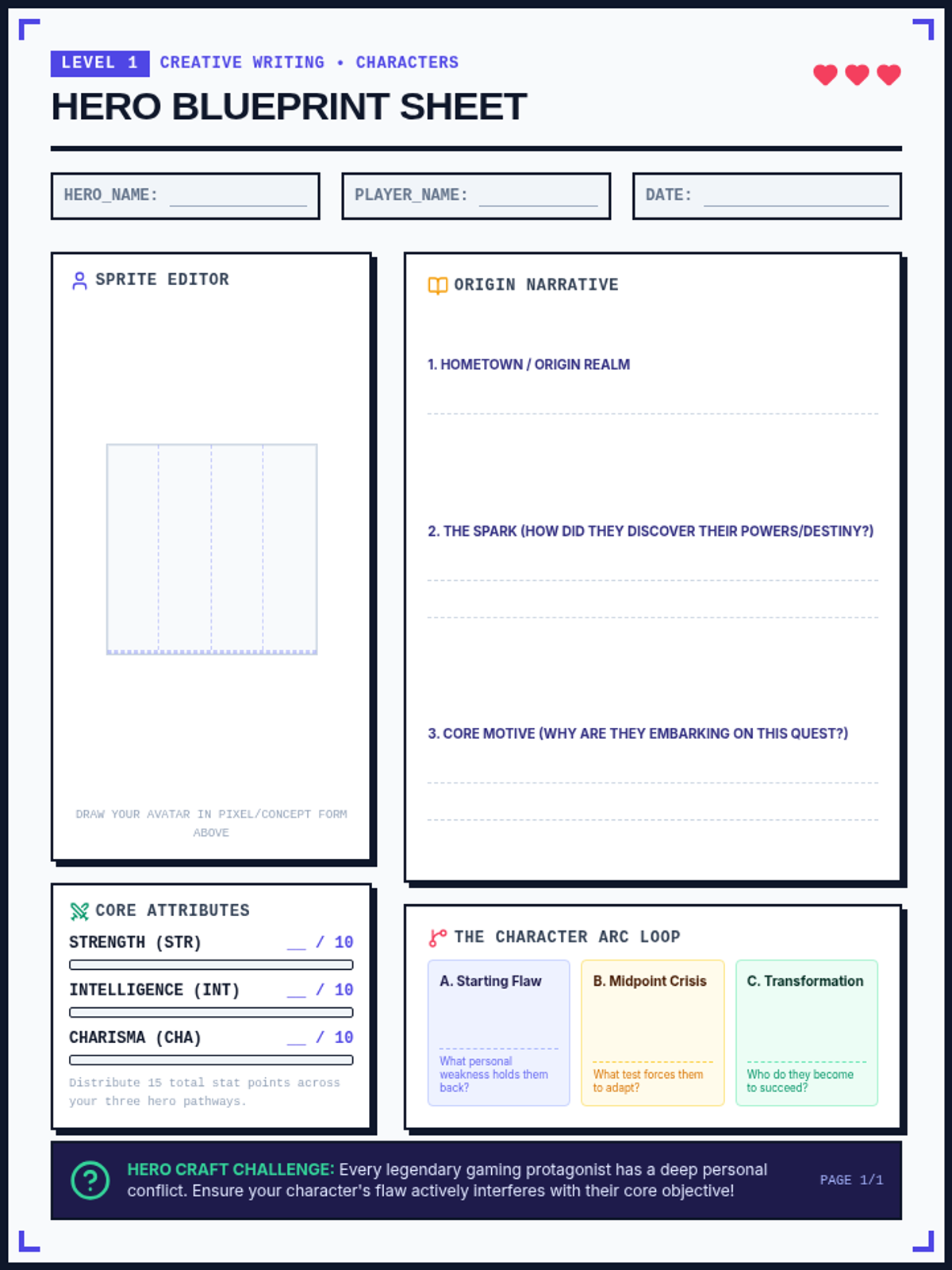
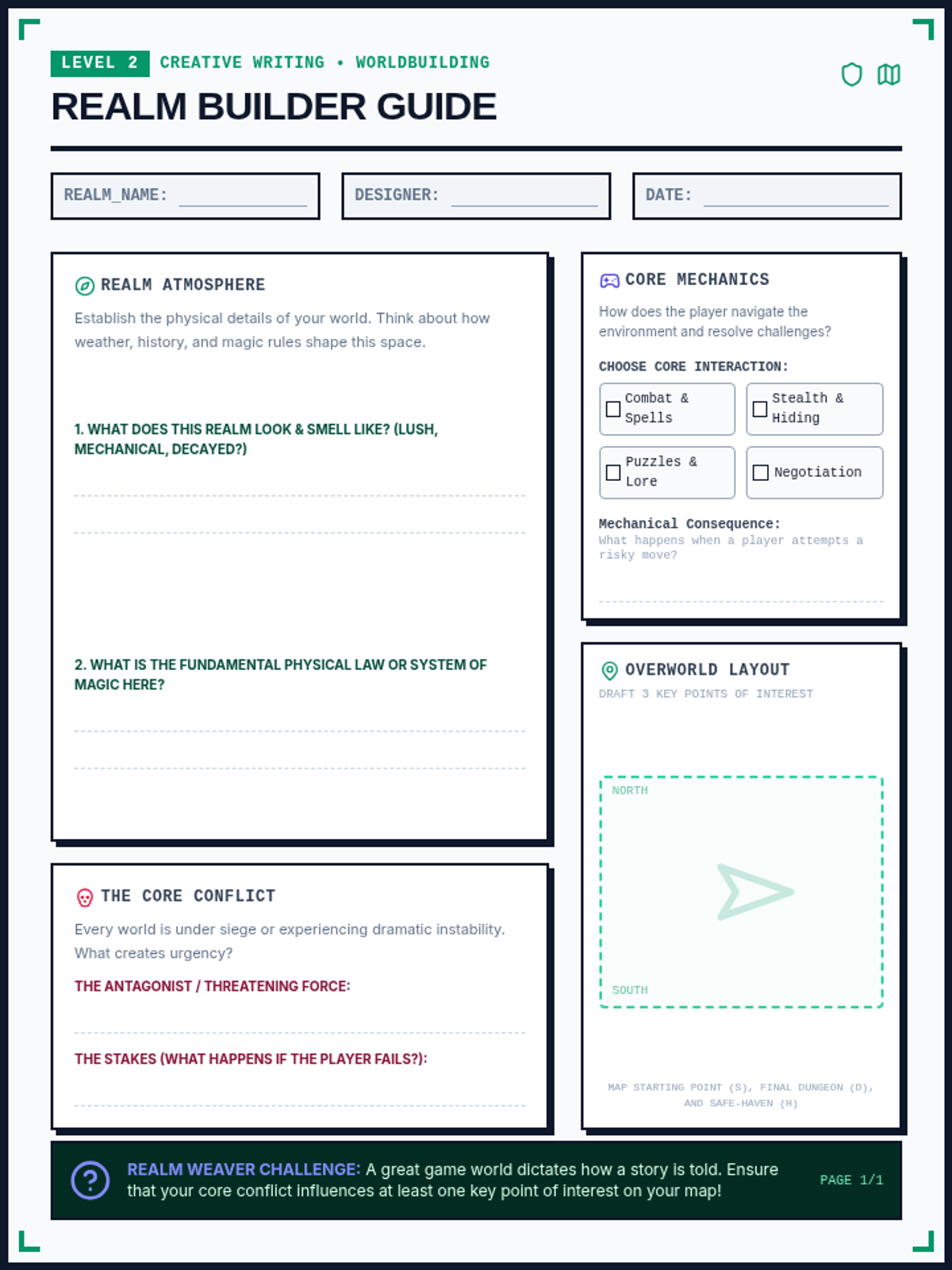
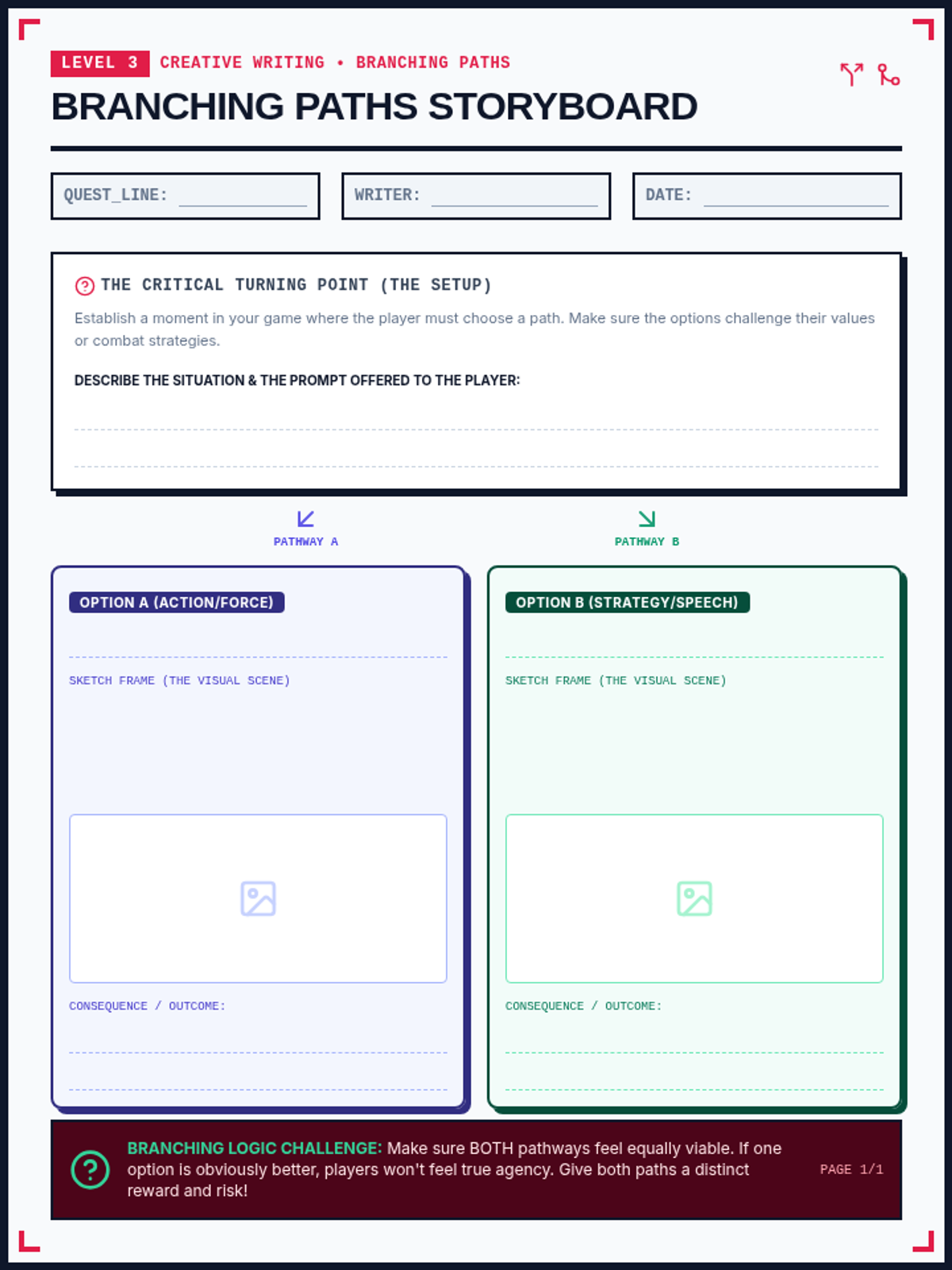
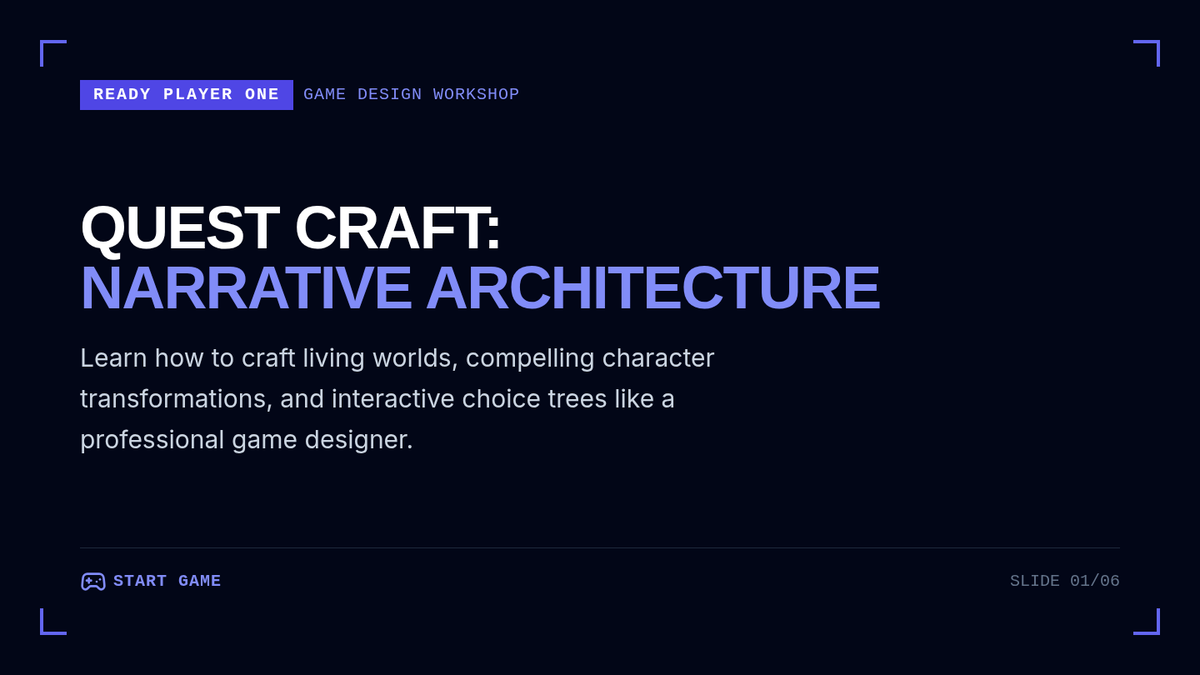
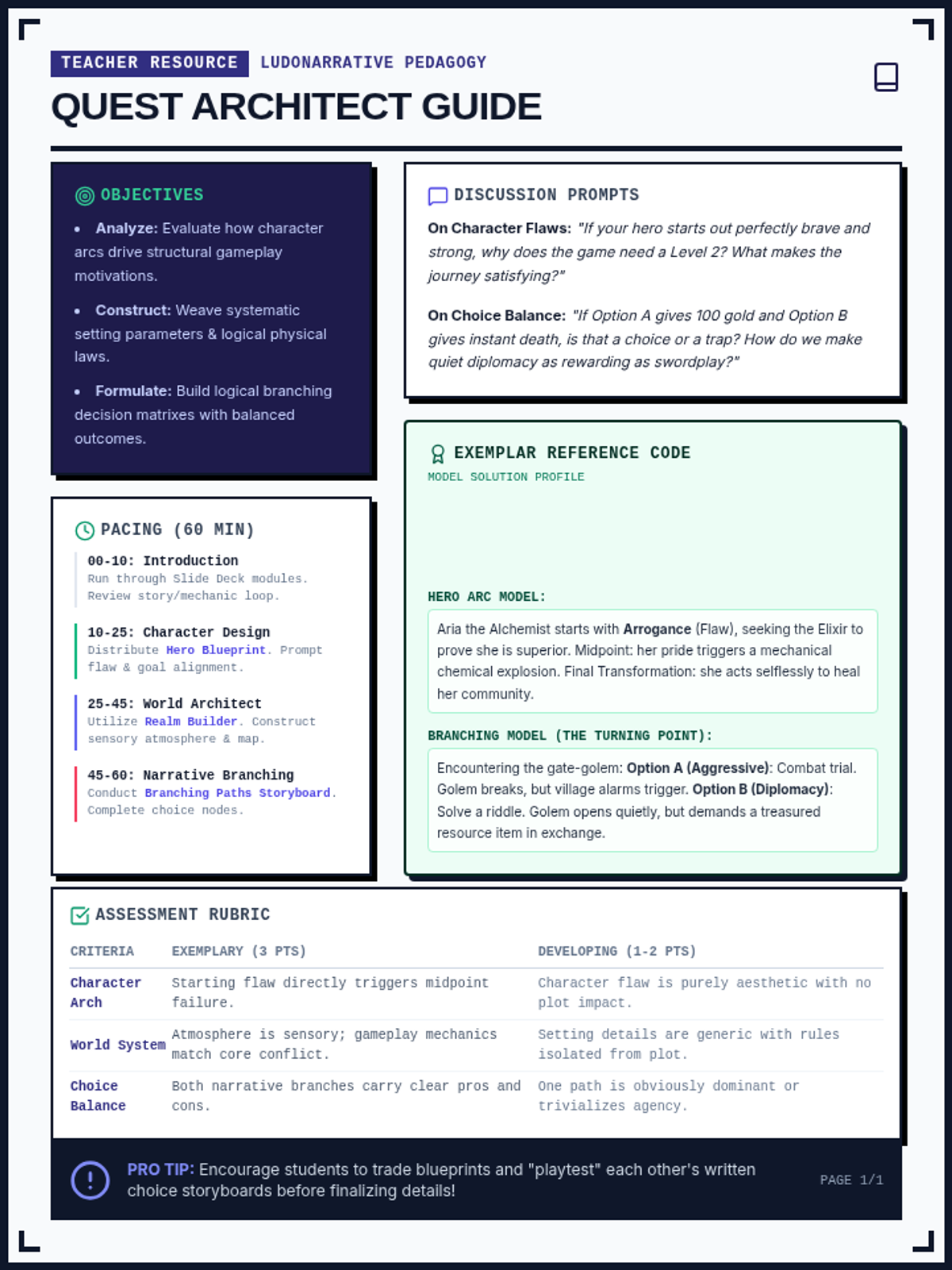
A comprehensive game design lesson focusing on creative writing and narrative architecture. Students learn how to build worlds, draft compelling character arcs, and design branching choice pathways through a series of structured worksheets, guided slides, and educator resources.
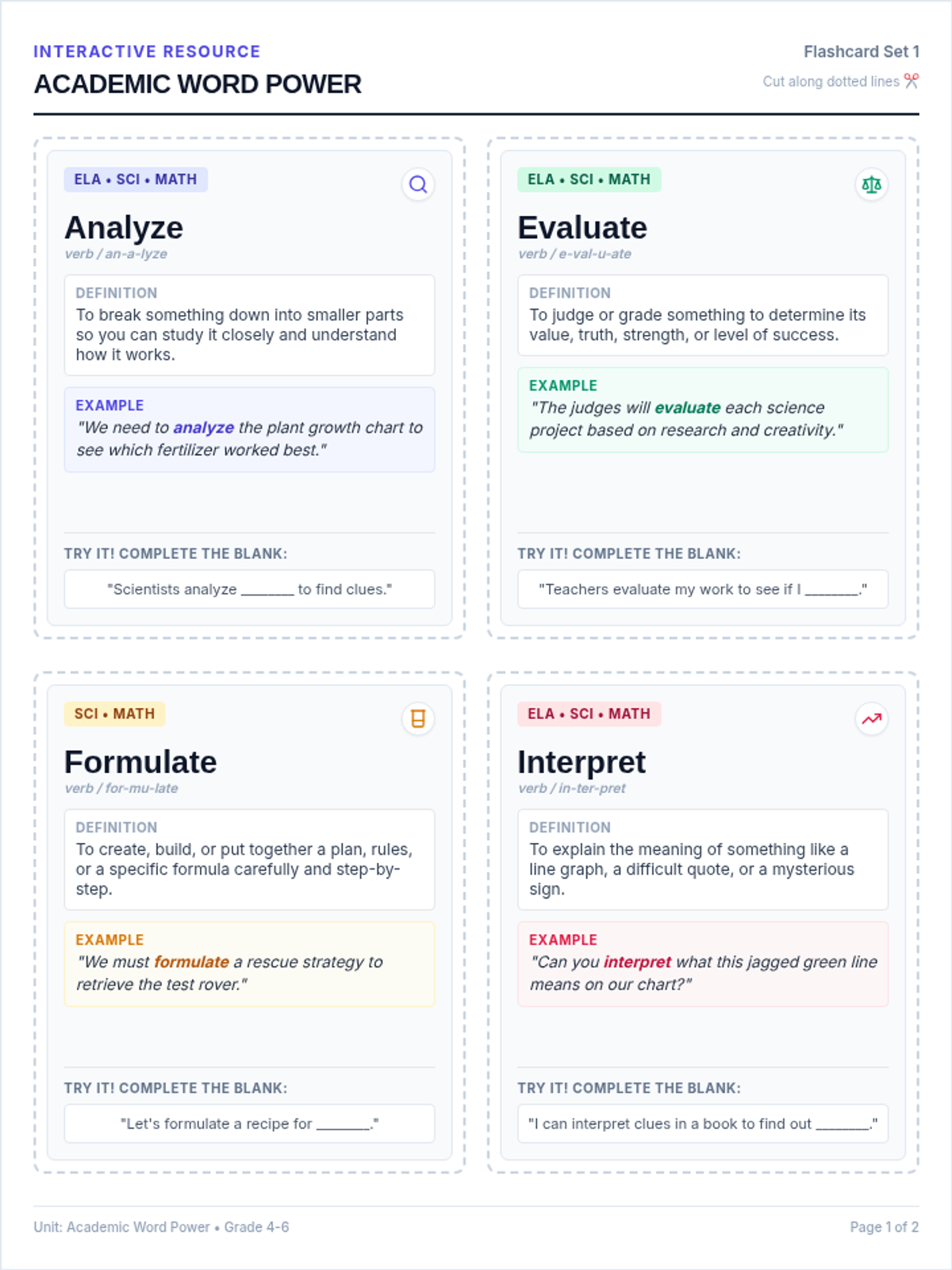
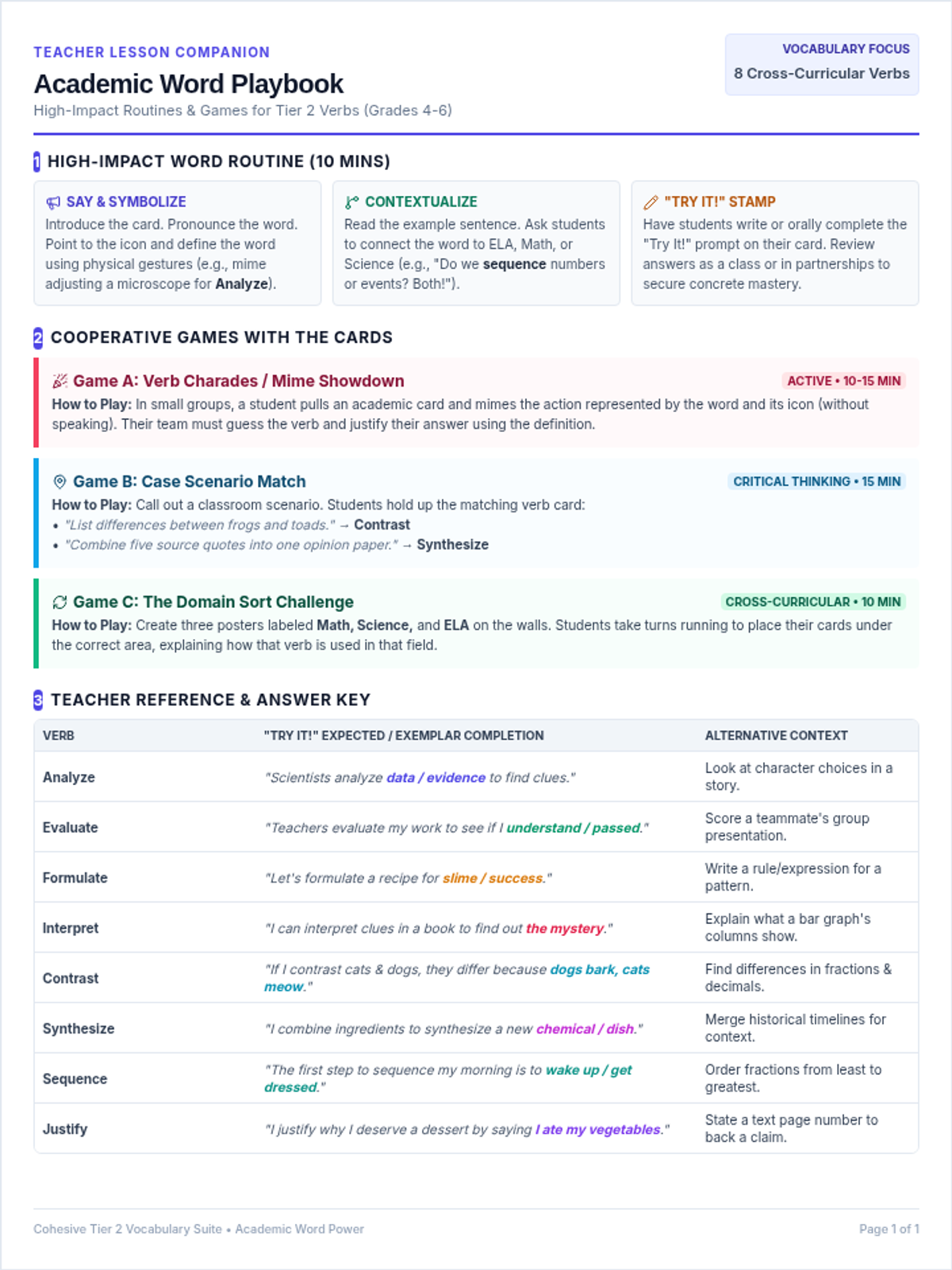
A high-impact Tier 2 vocabulary lesson teaching critical academic verbs used across ELA, Math, and Science, supported by simplified visual symbols.
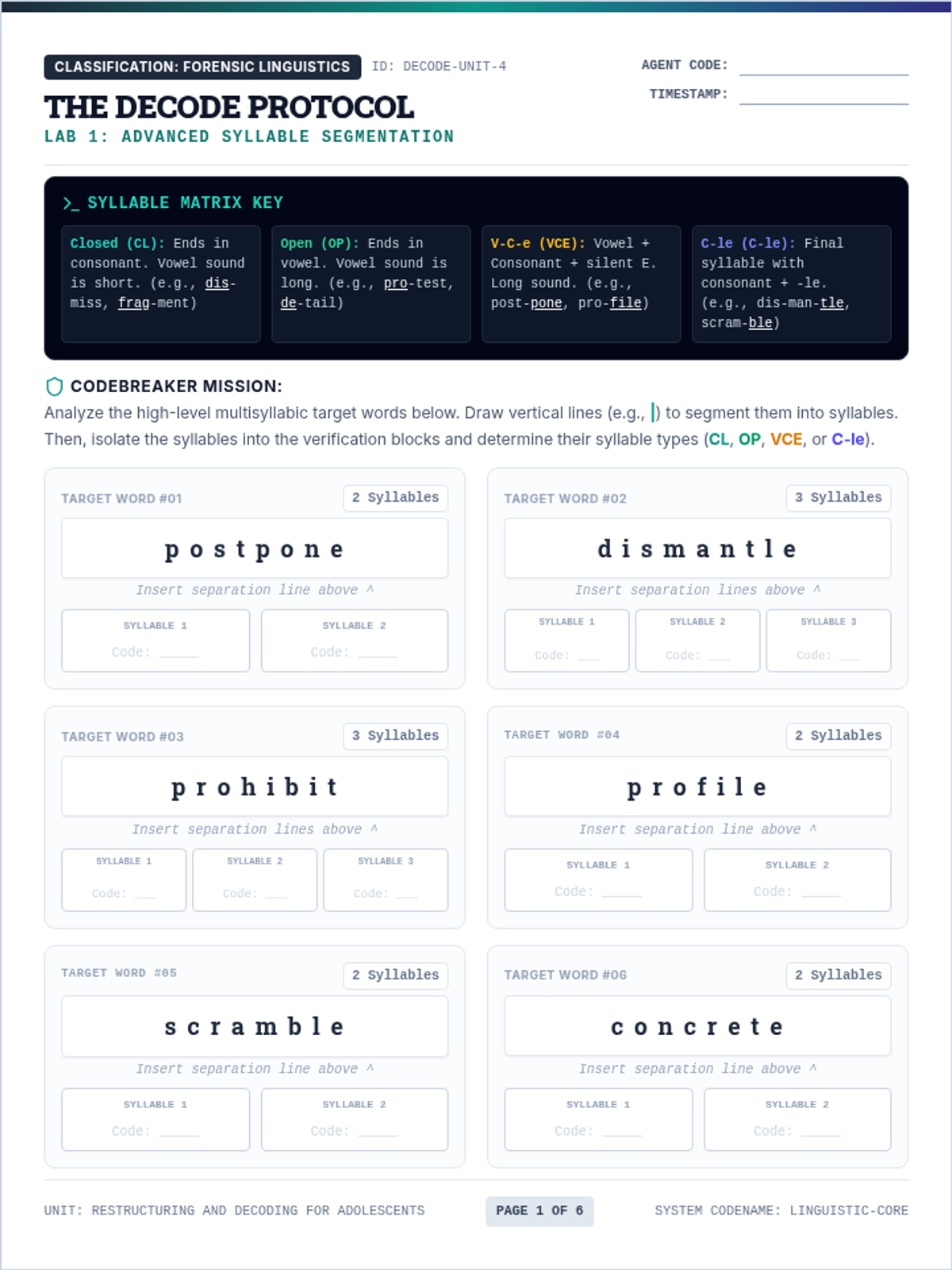
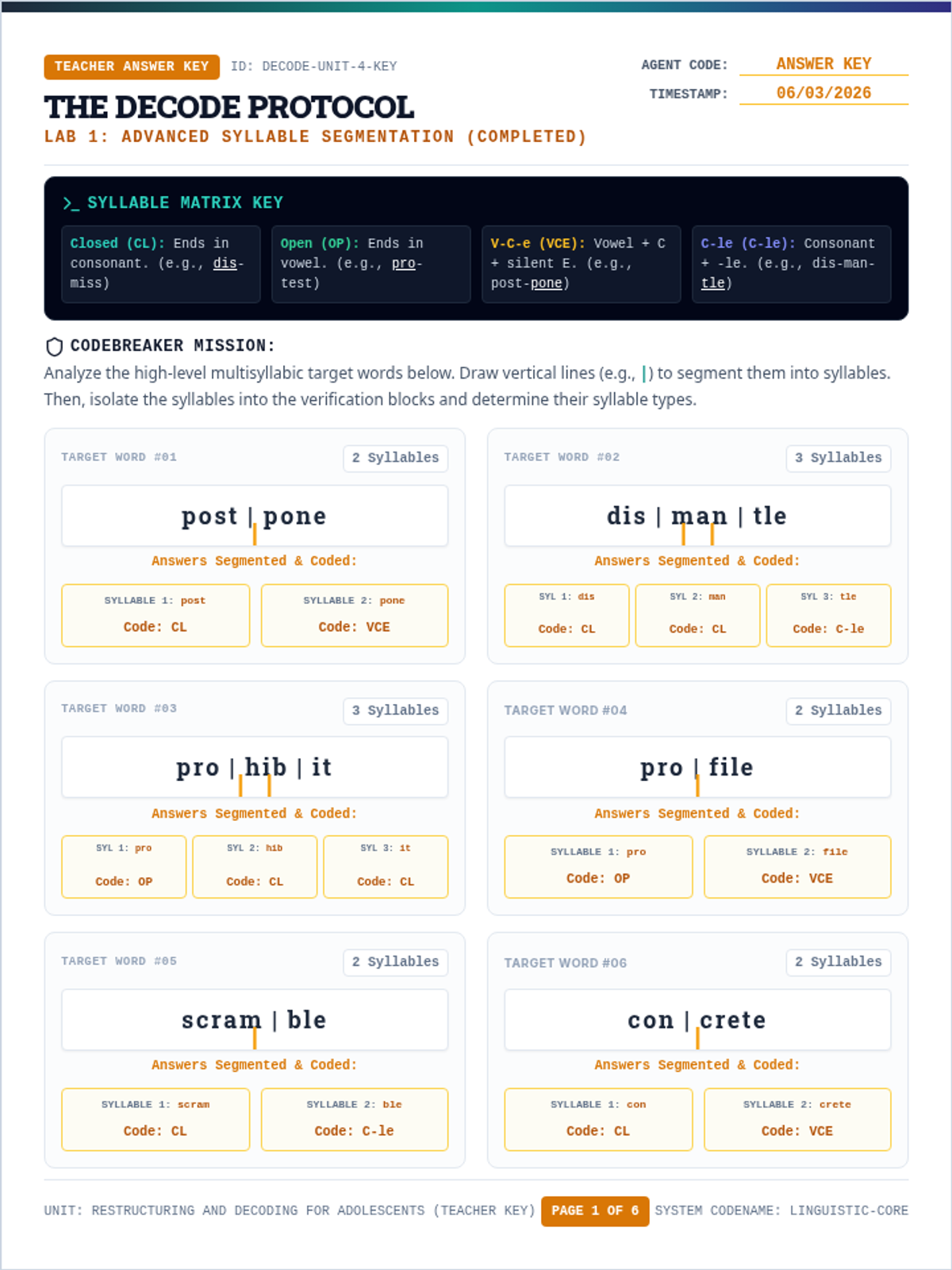
A comprehensive phonics and syllable review unit focusing on vowel teams, r-controlled vowels, syllable division, and affix-based word building. Includes a multi-page student review packet and a corresponding teacher answer key.
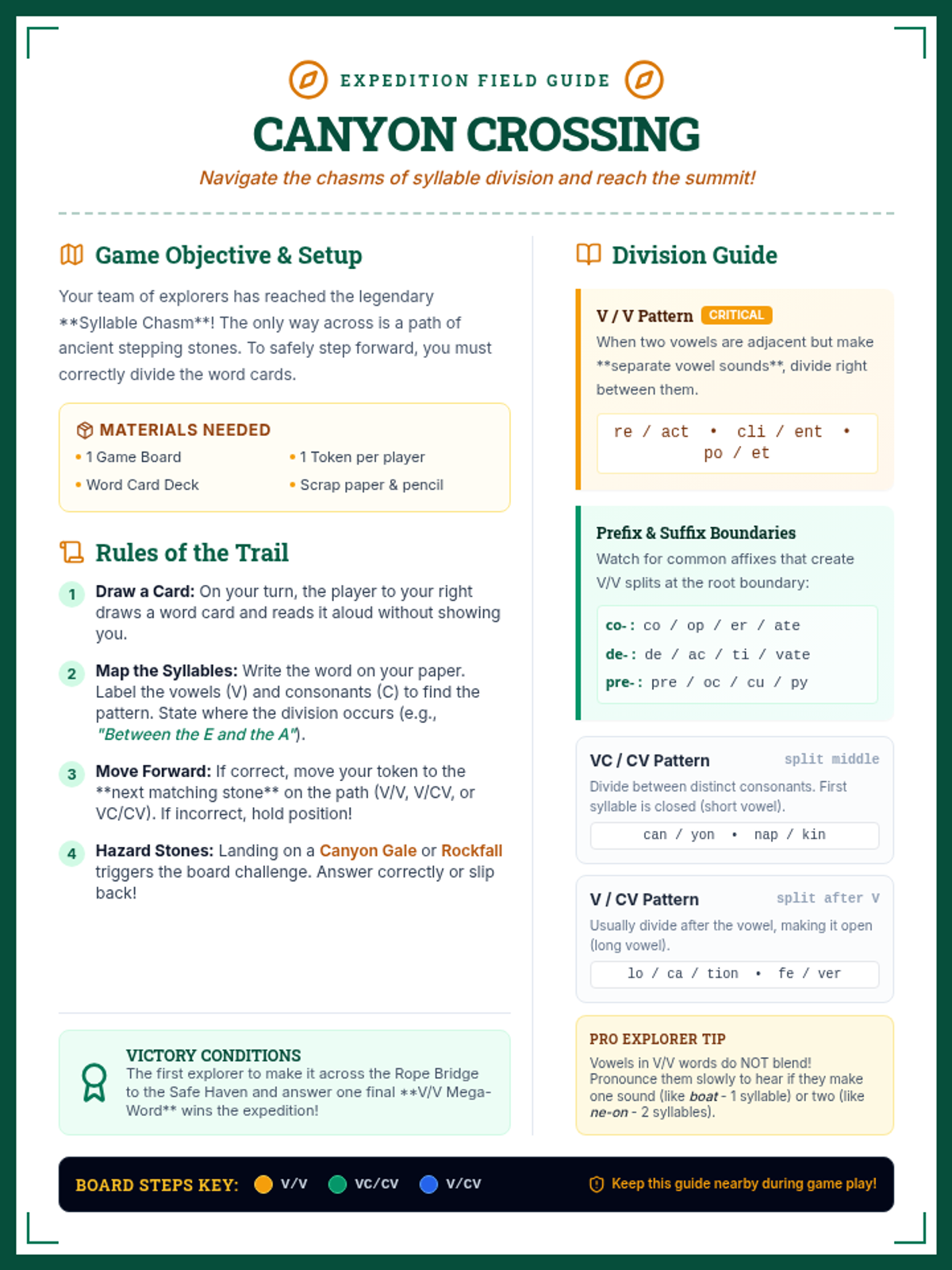
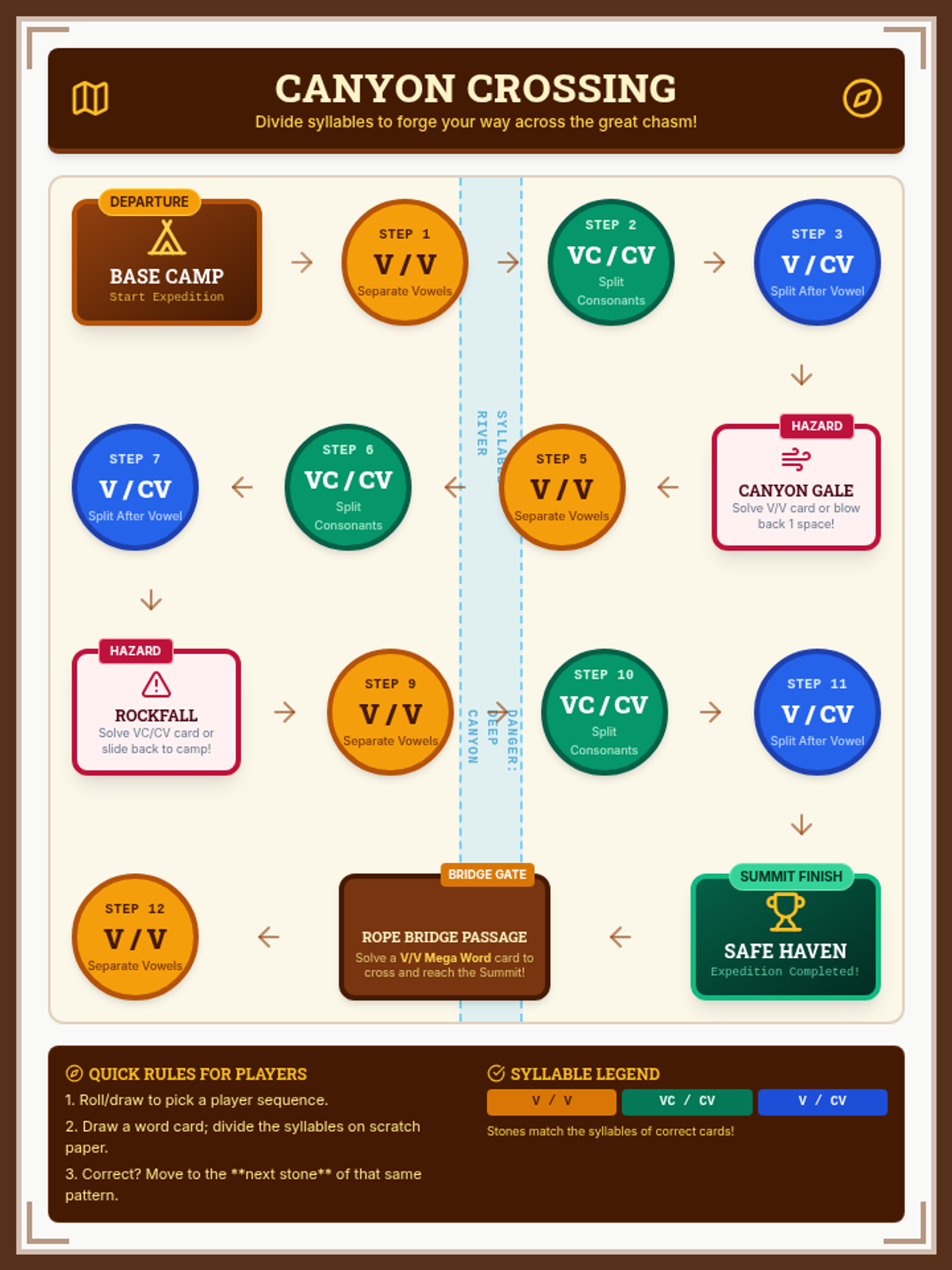
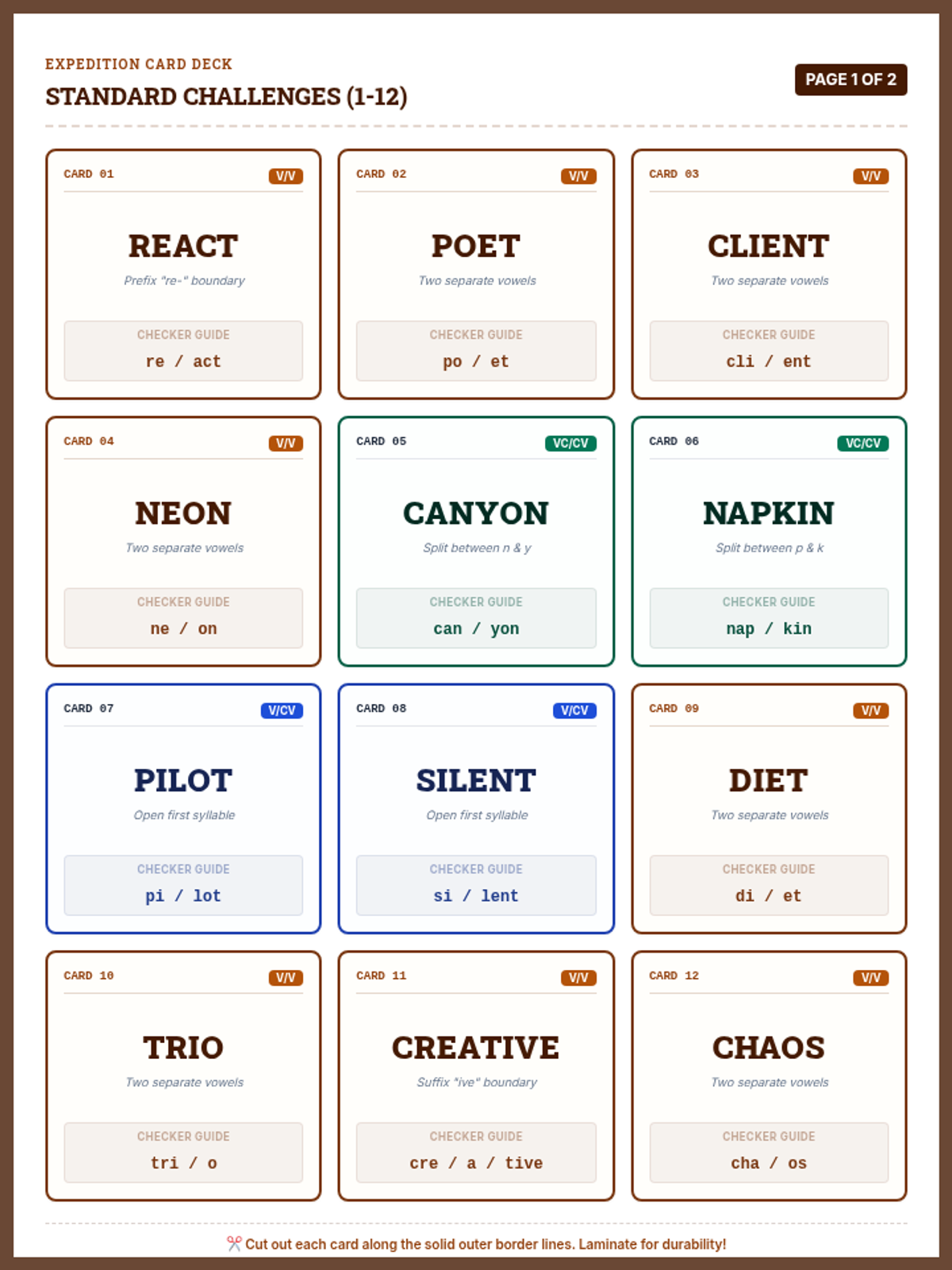
A cooperative and competitive educational board game designed to help students master multisyllabic syllable division. Students navigate a canyon crossing path by correctly dividing words with V/V, VC/CV, and V/CV patterns, with a special focus on prefix/suffix boundaries.
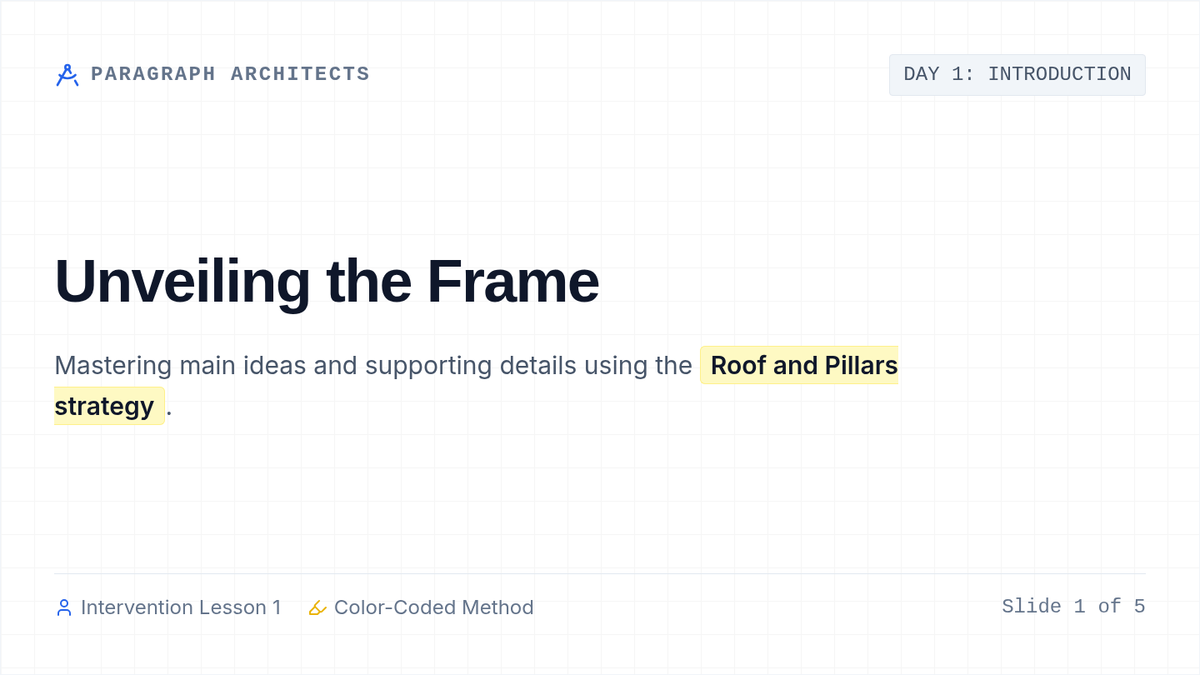
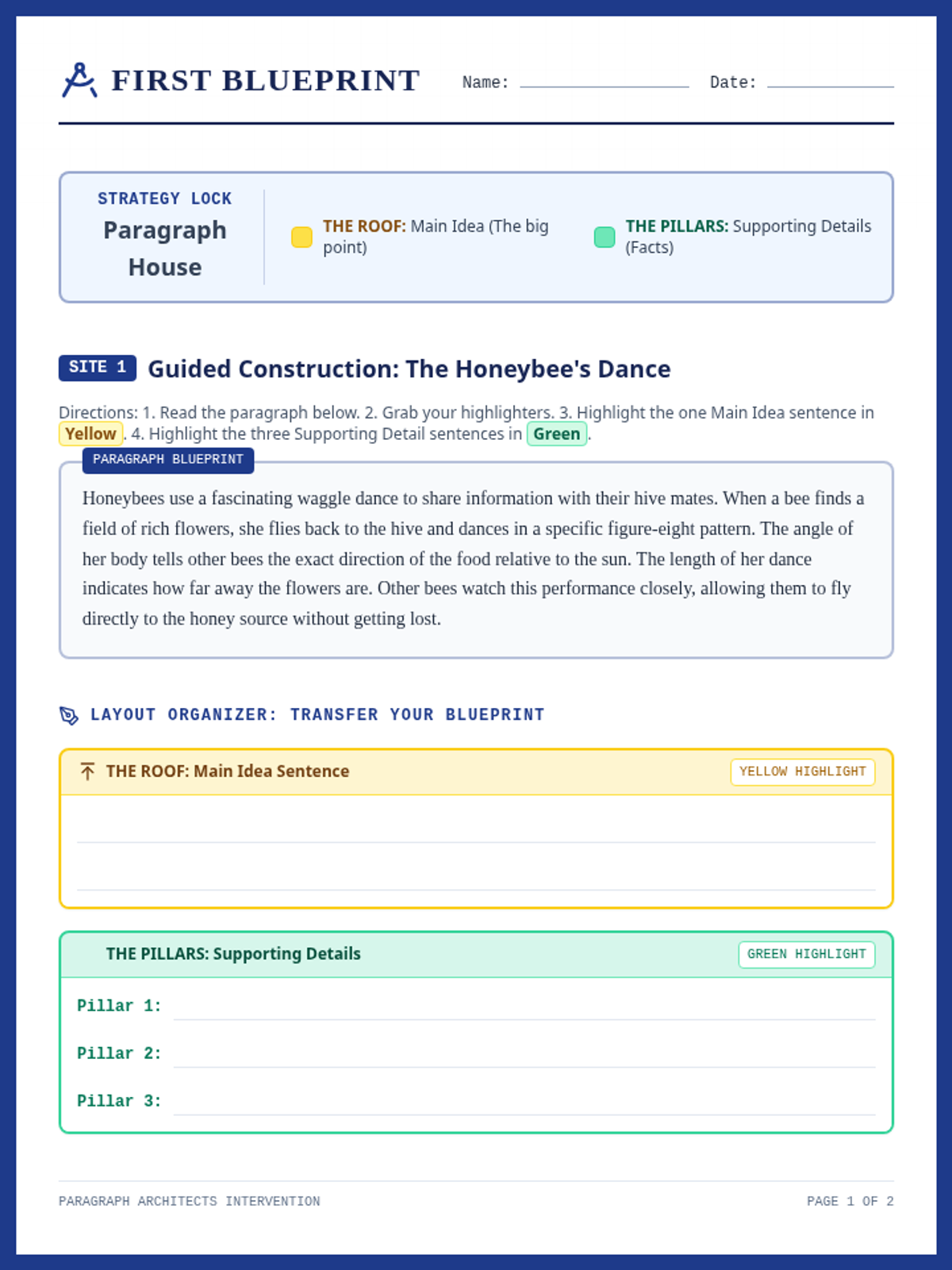
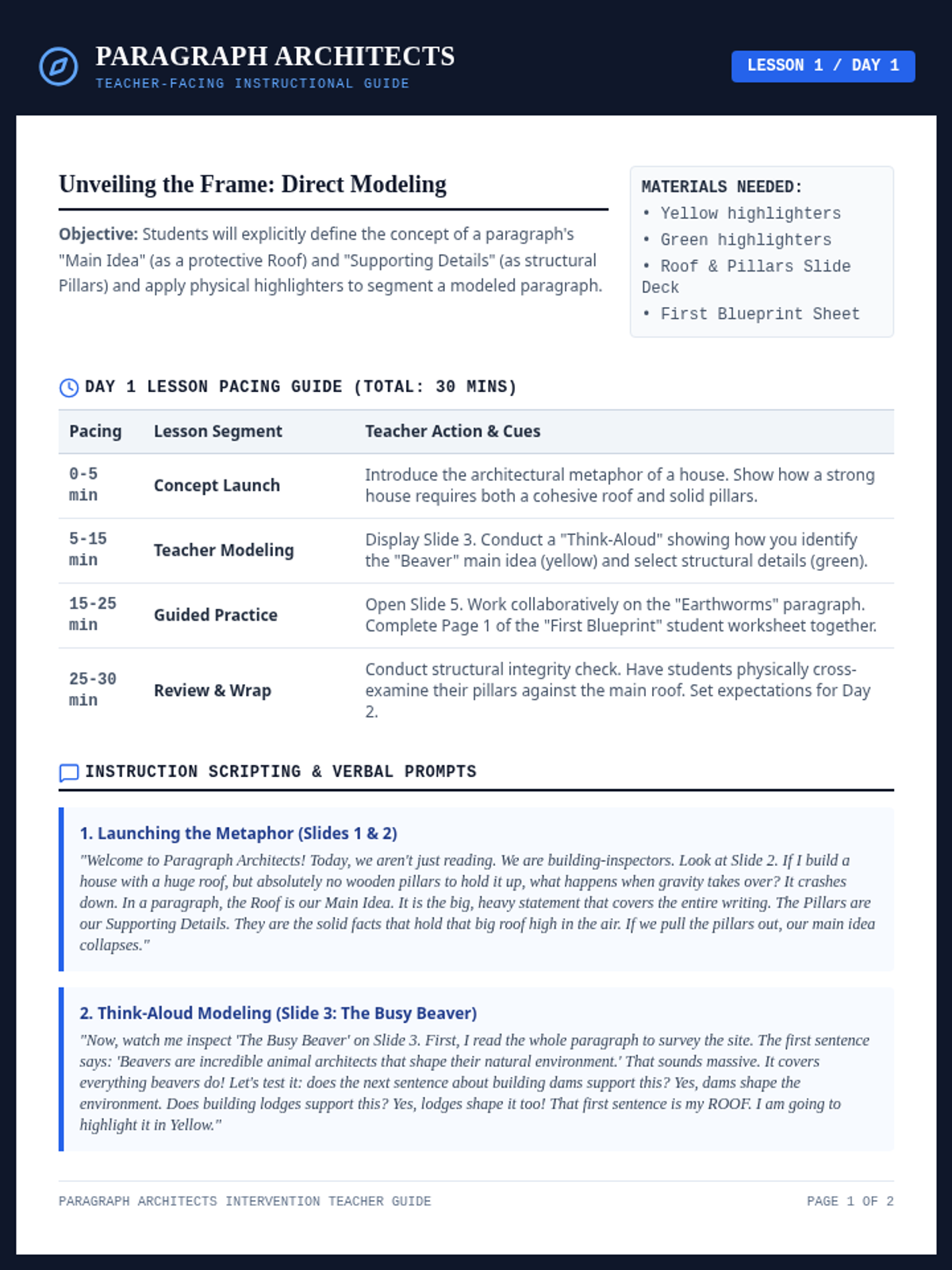
An explicit modeling lesson focusing on introducing the 'Roof' (Main Idea) and 'Pillars' (Supporting Details) concept. Students learn paragraph structure and watch live highlighting demonstrations.
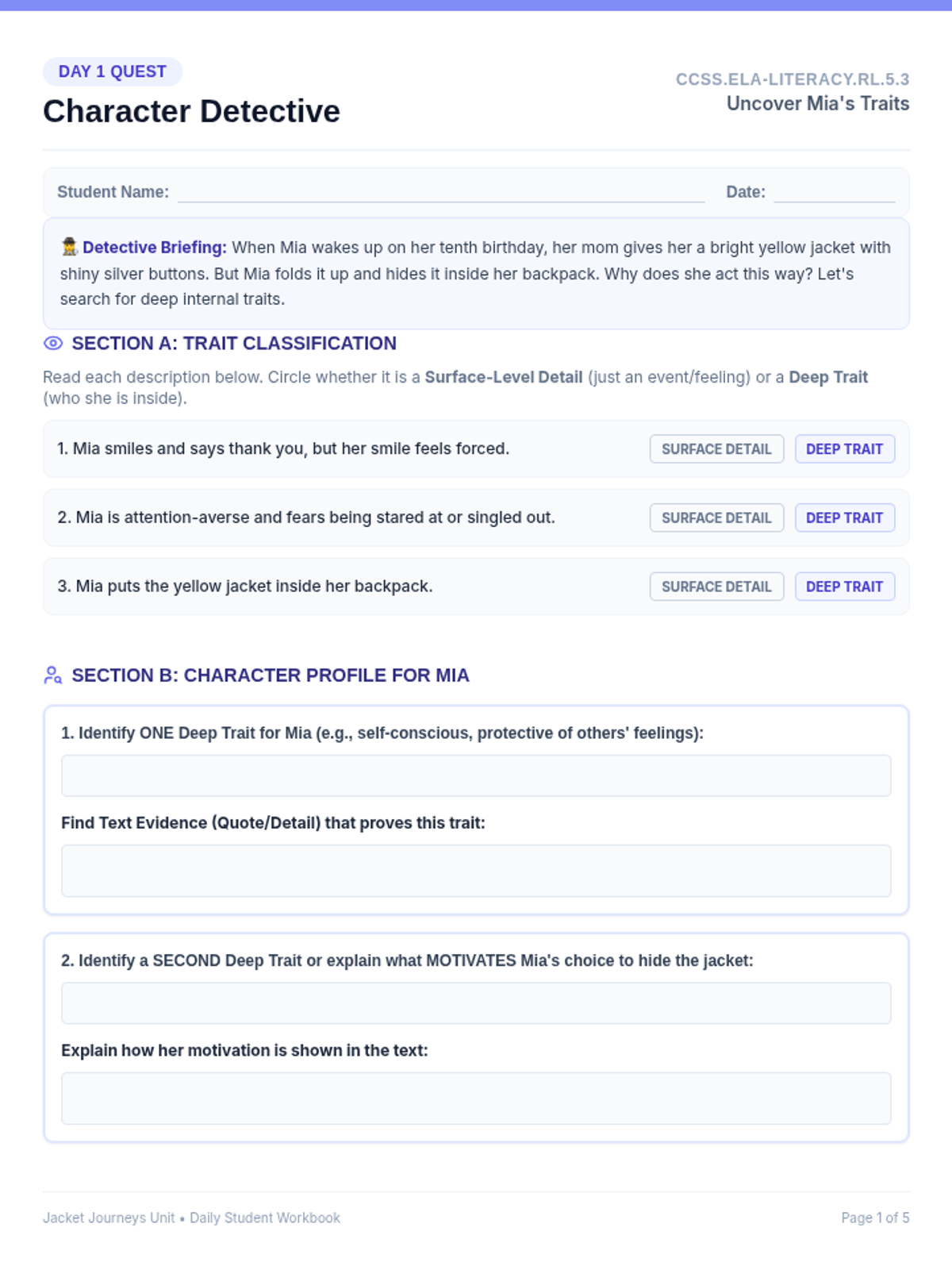
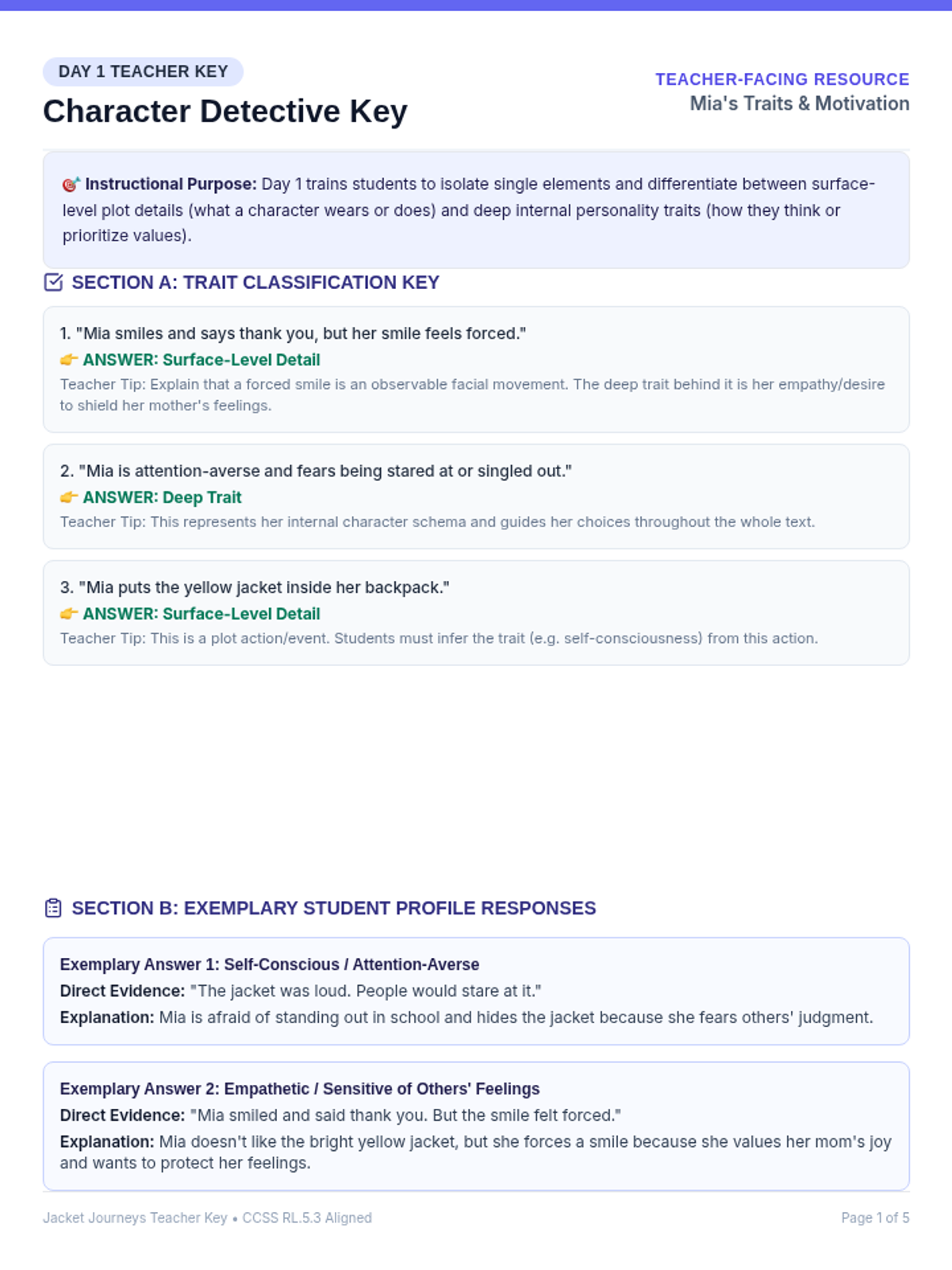
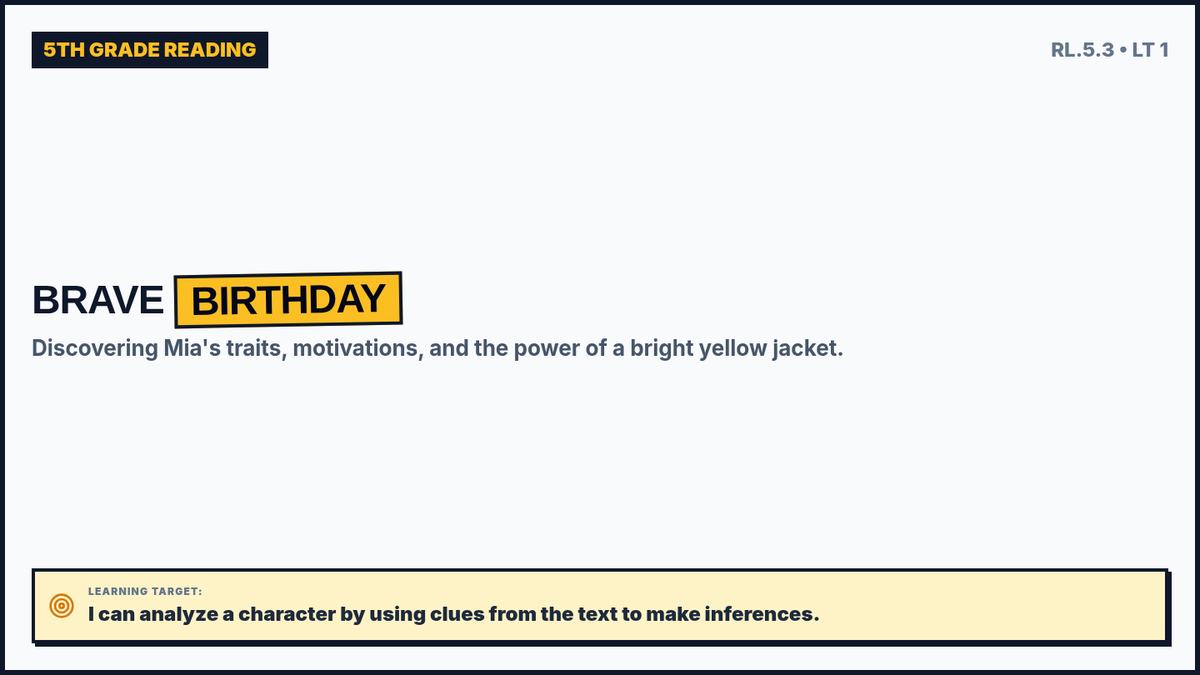
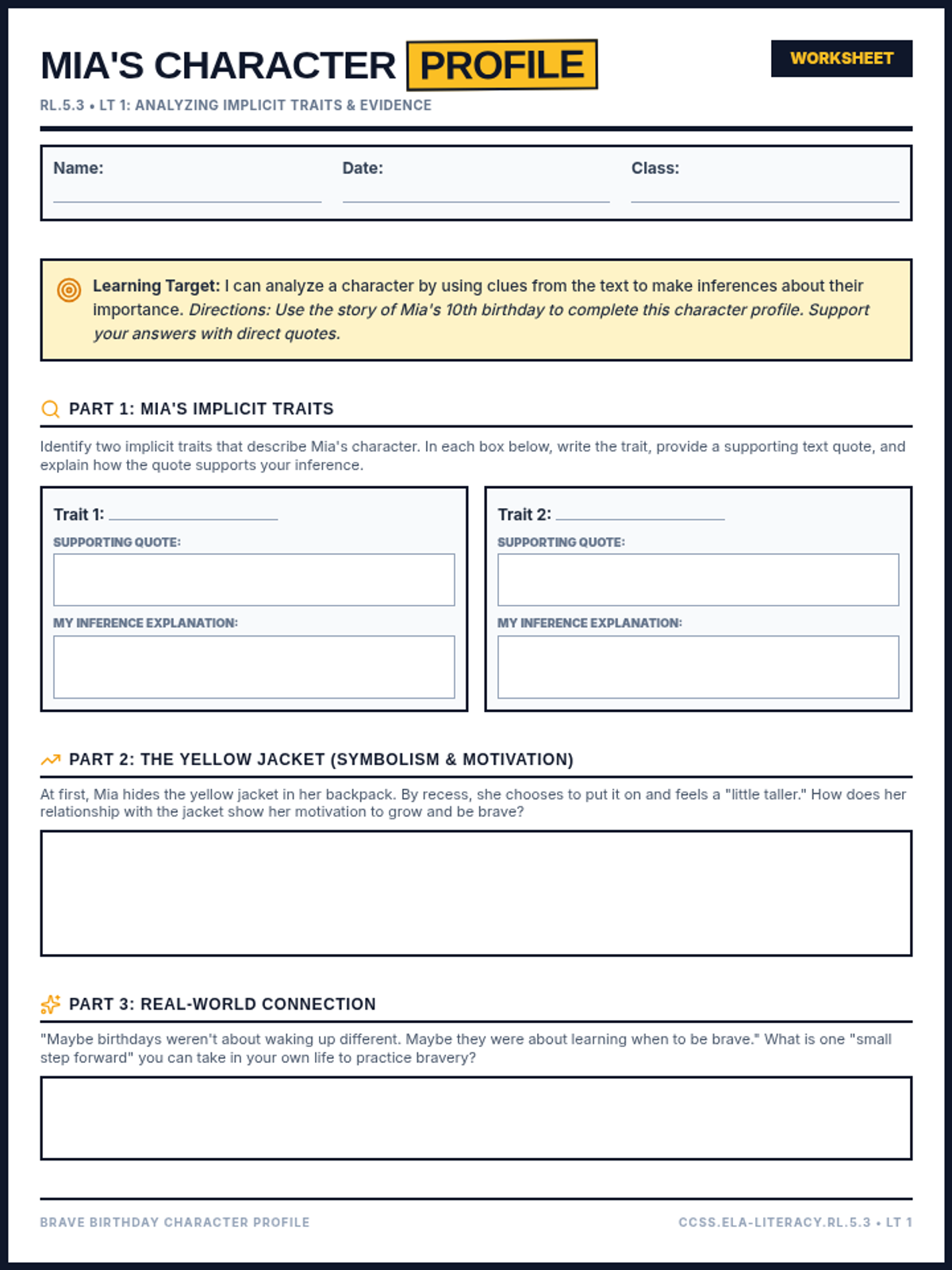
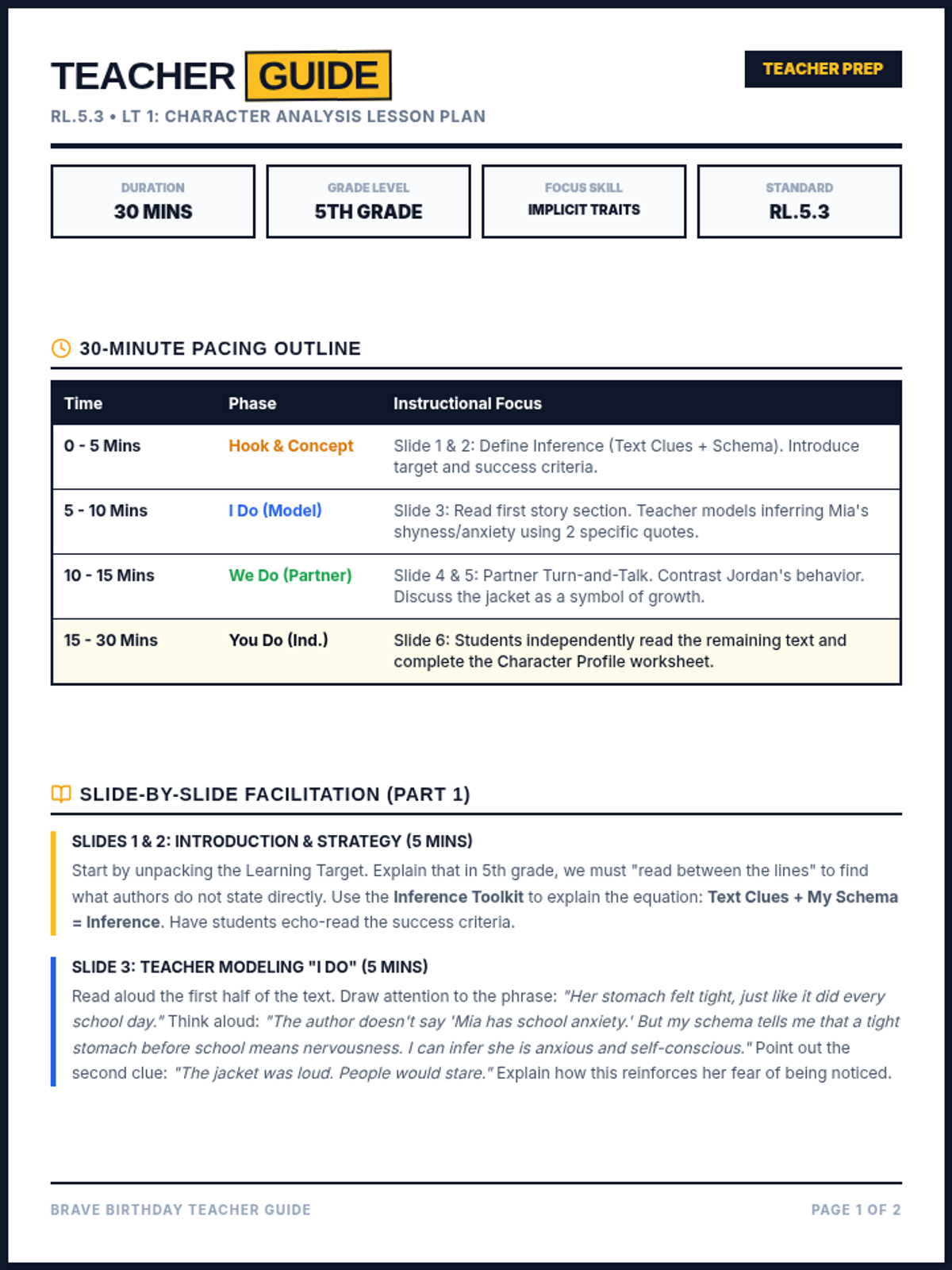
A 30-minute lesson focusing on analyzing a single character's implicit traits and motivations using text evidence. Students read a short story about Mia and her yellow jacket, make inferences, and complete a detailed character profile supported by text quotes.
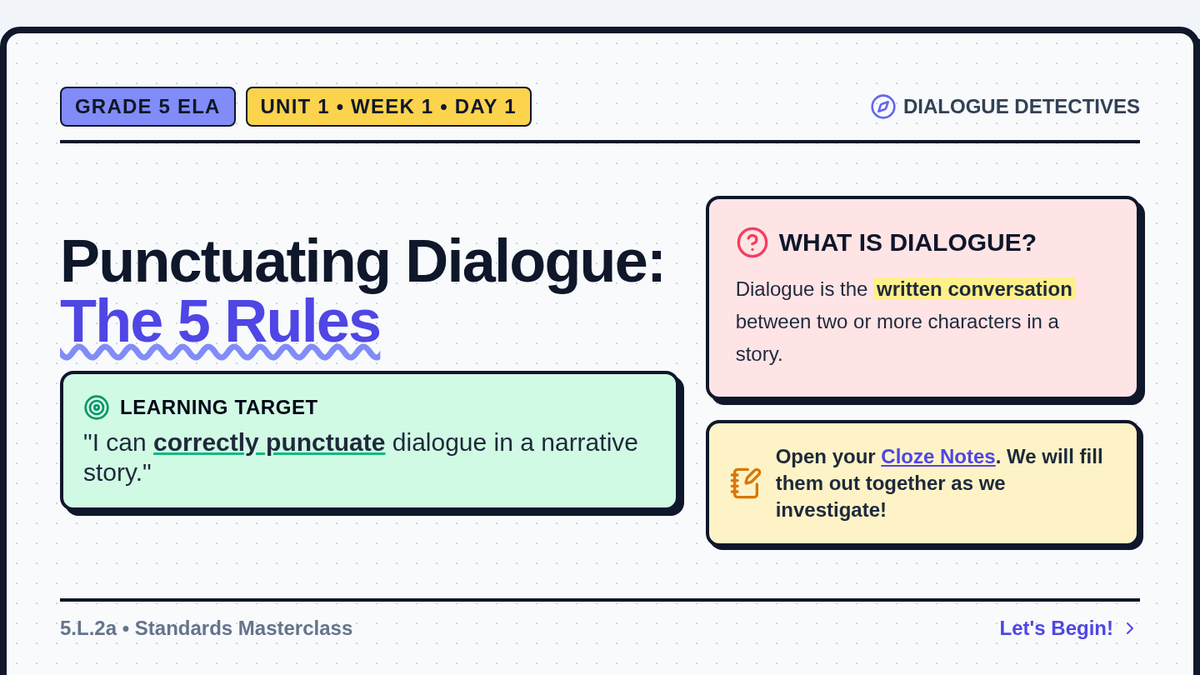
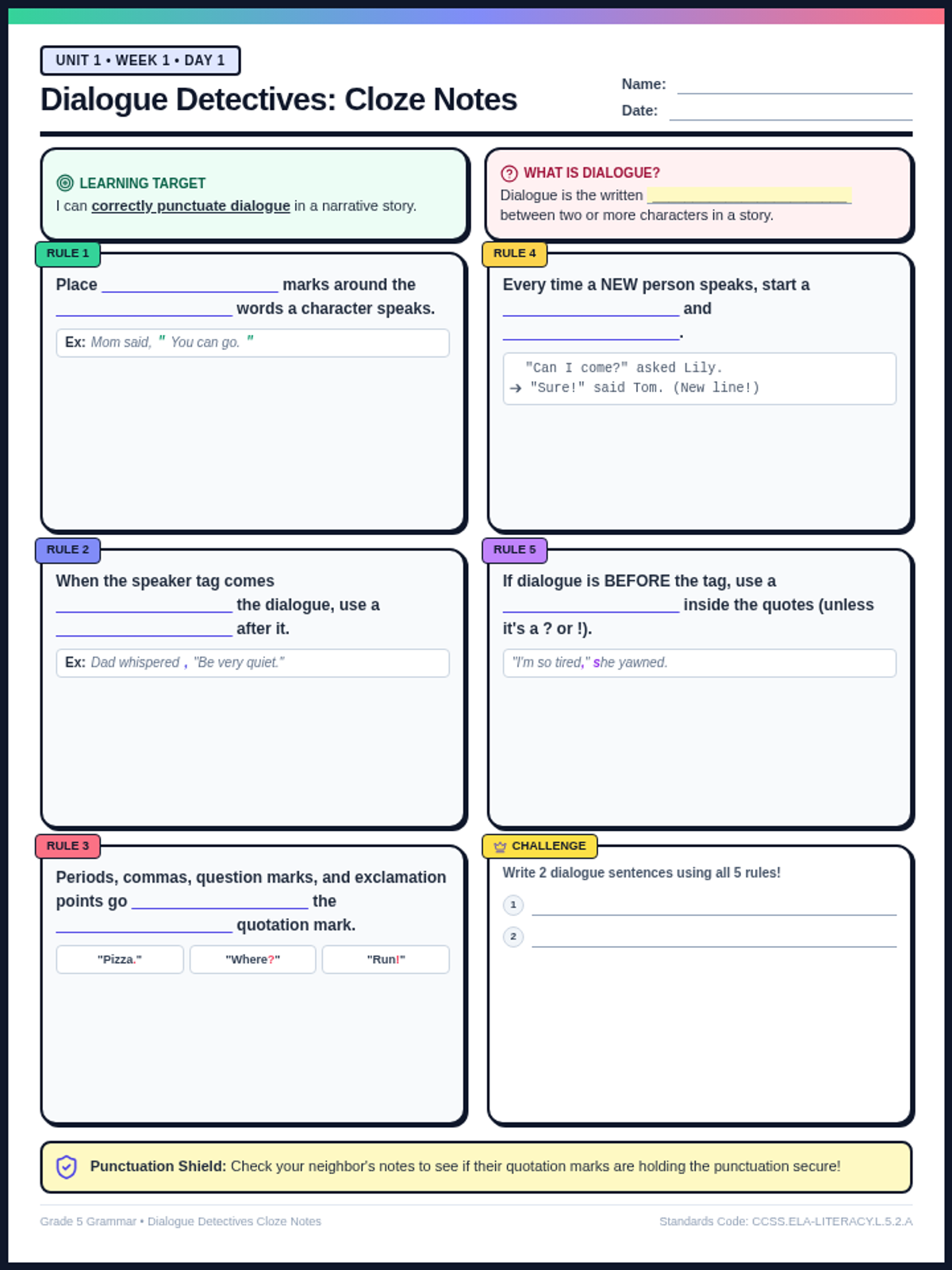
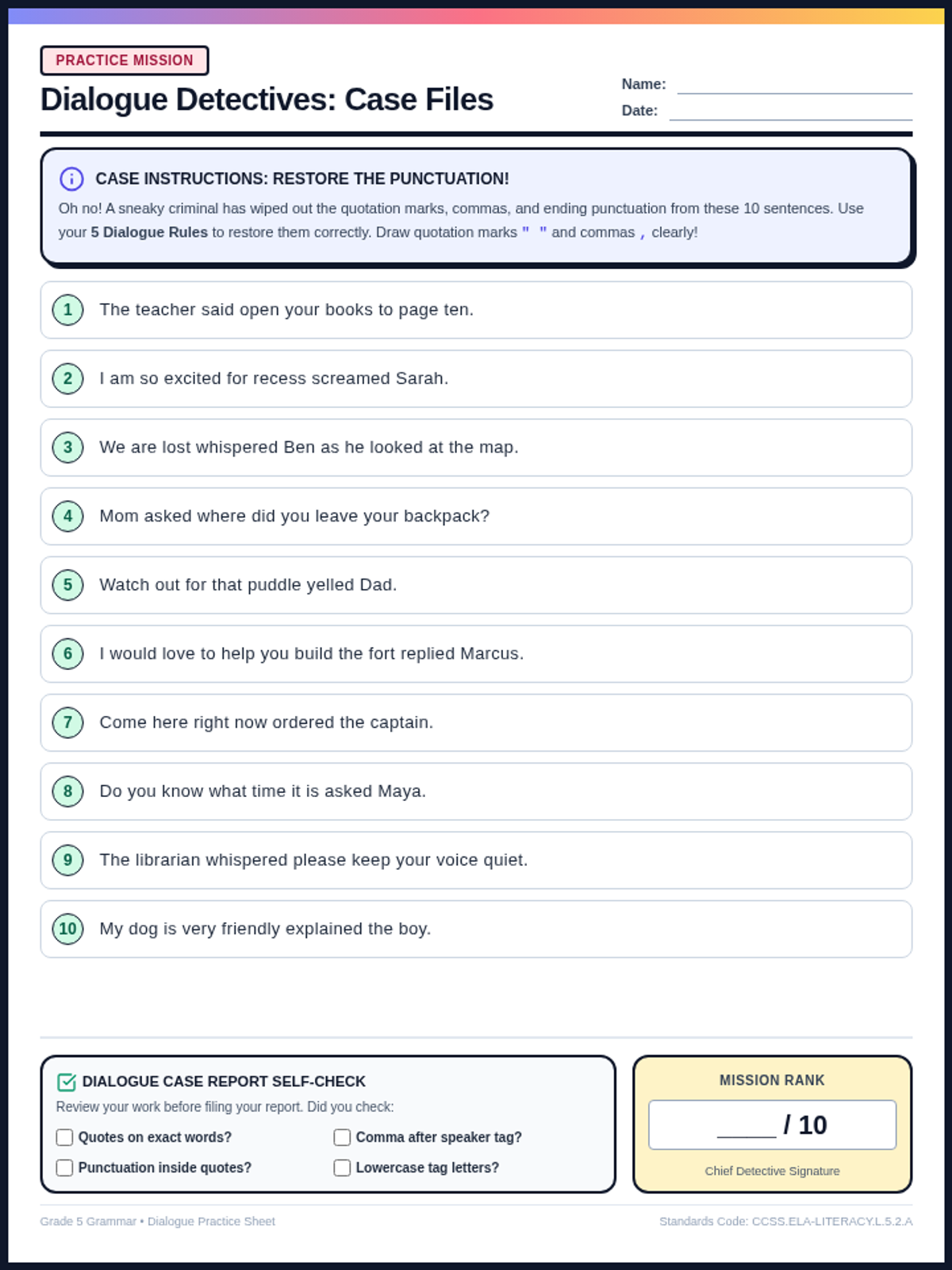
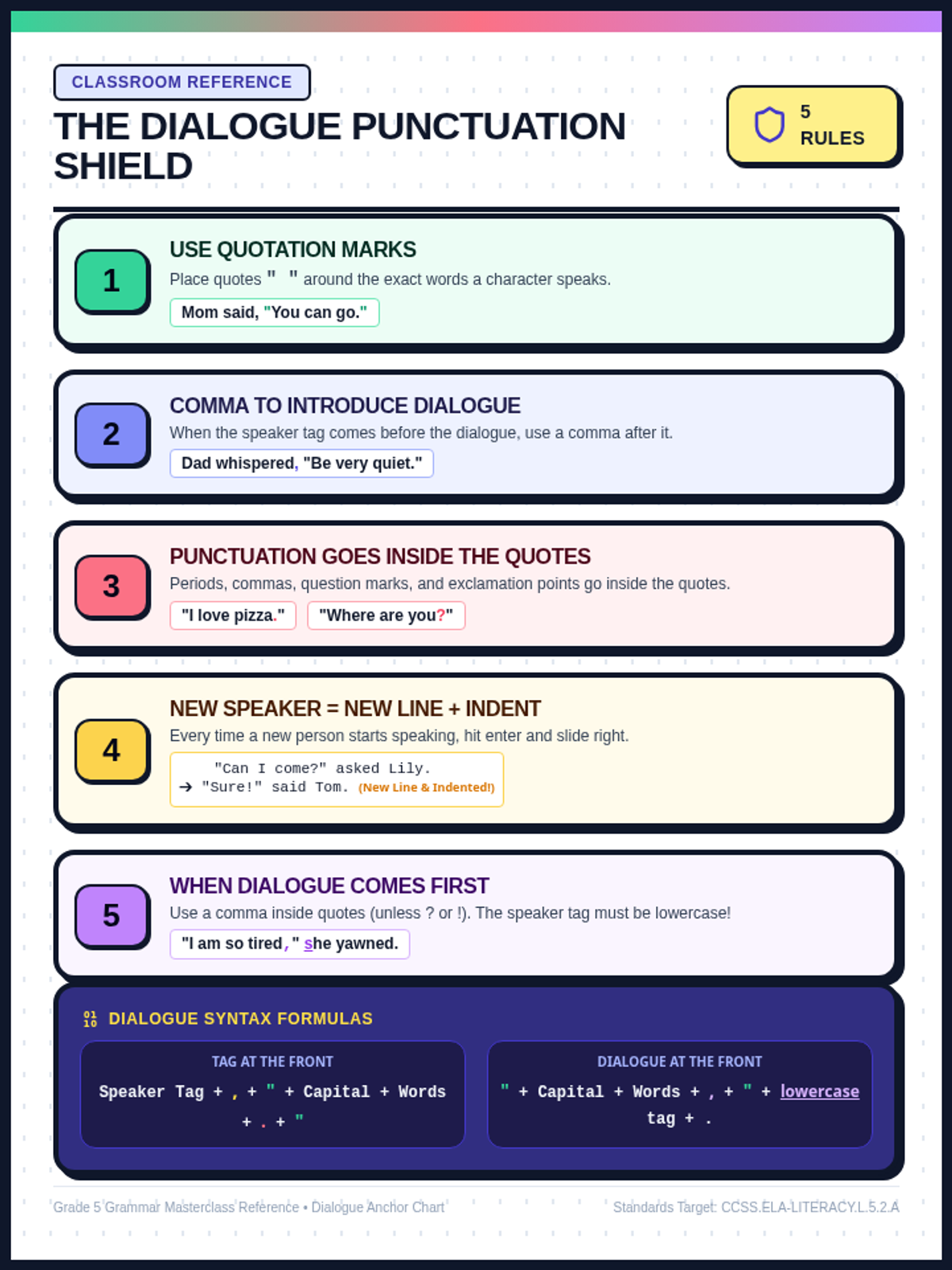
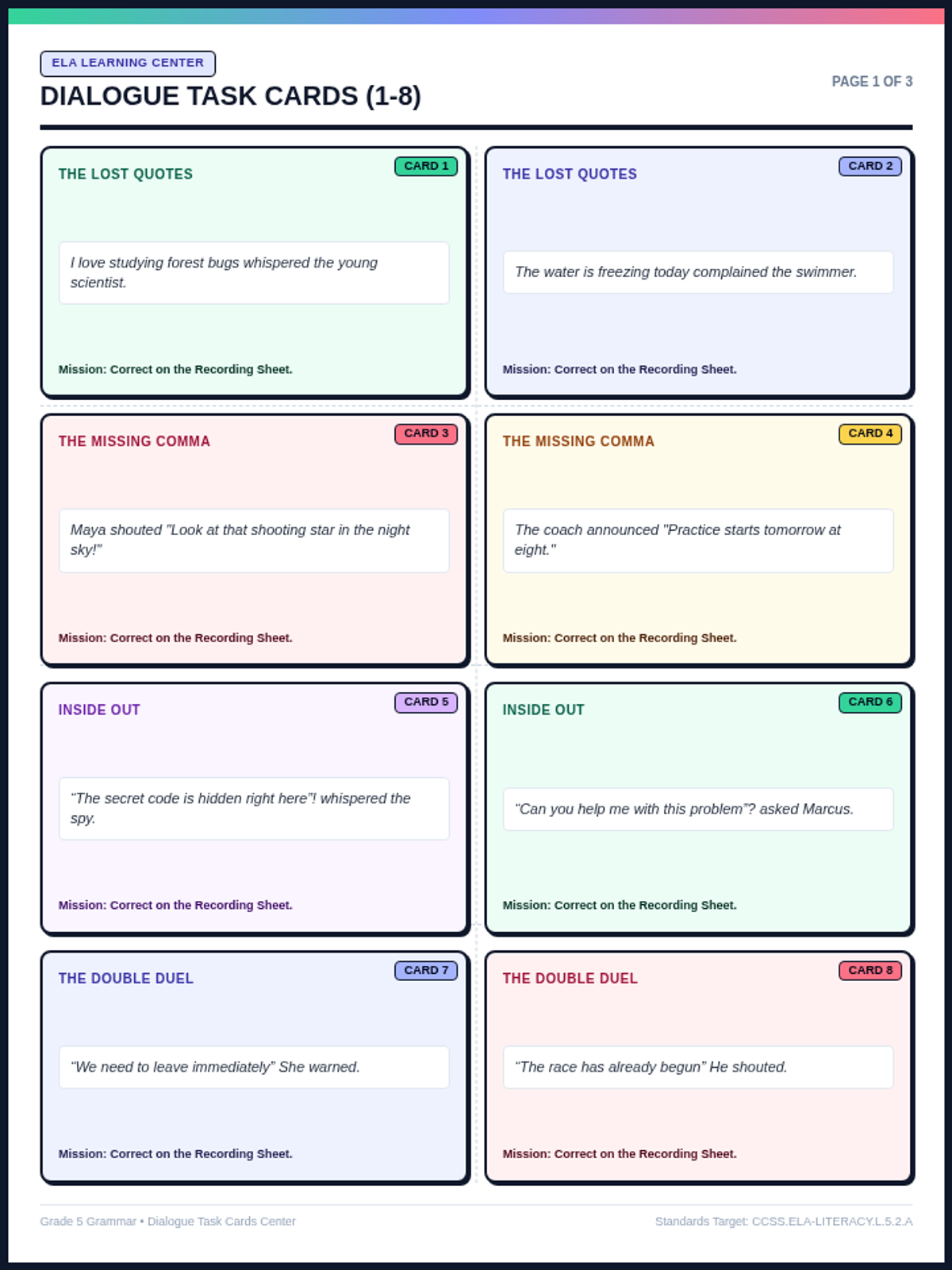
A high-engagement 5th-grade grammar lesson on punctuating dialogue. Includes clean, bold, and colorful slides, student cloze notes, a practice worksheet, desk anchor charts, and center-ready task cards.
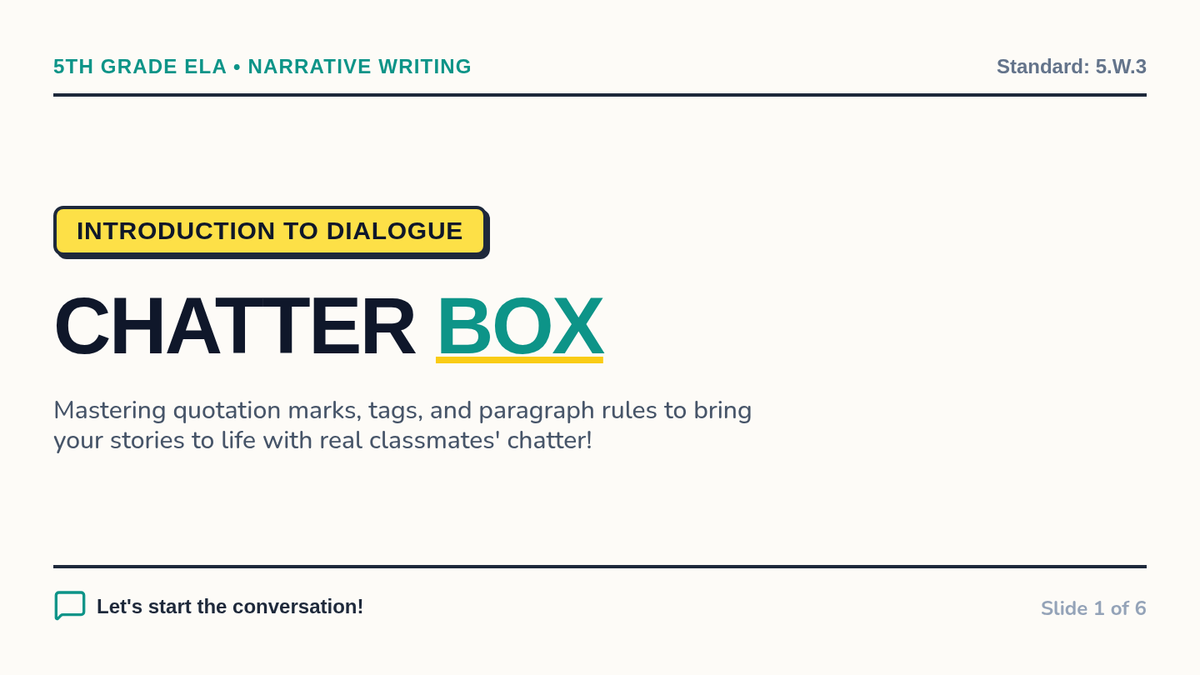
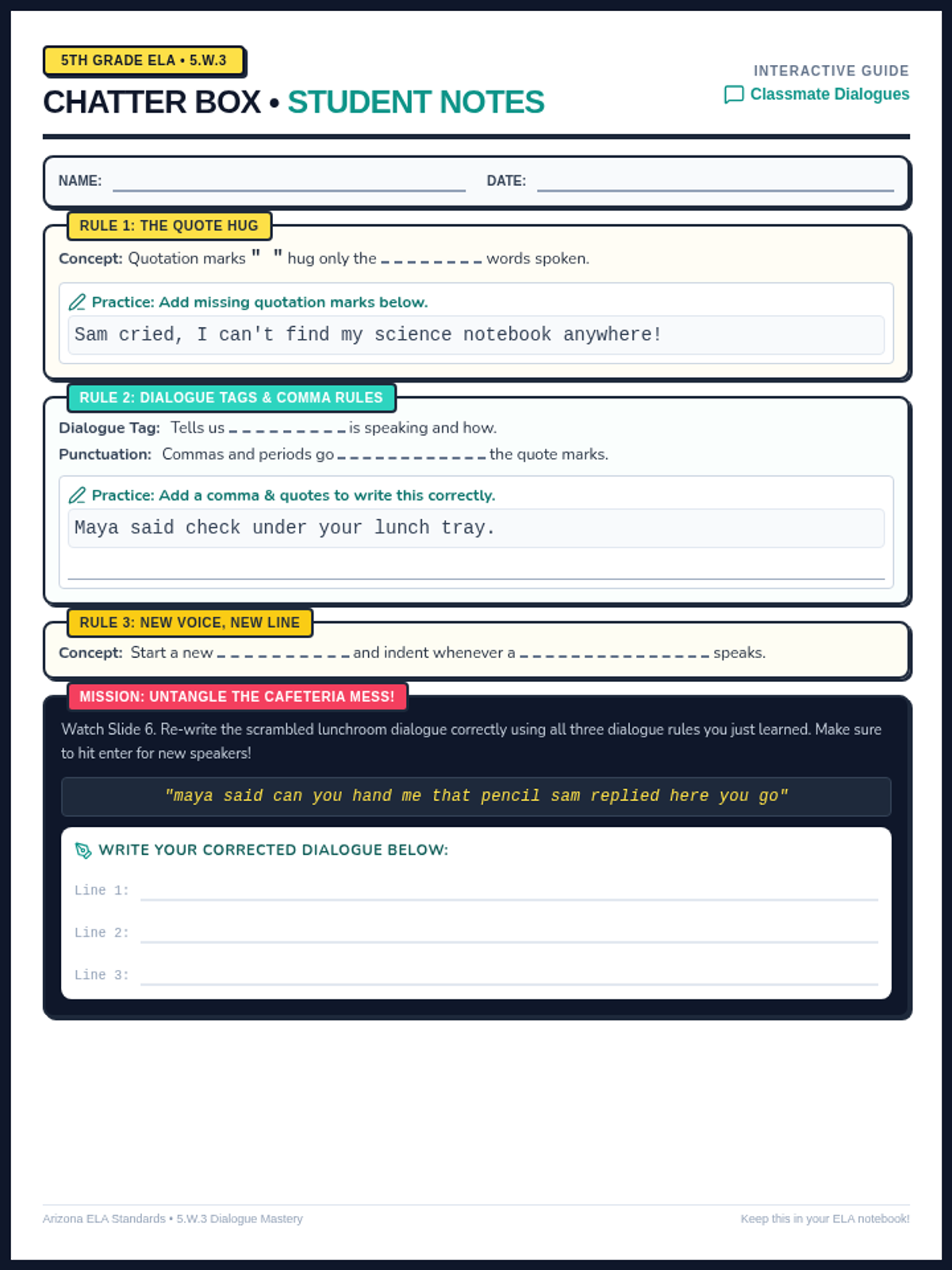
An introductory ELA lesson for 5th graders focusing on the mechanics of writing narrative dialogue, using relatable school and friendship scenarios. Includes a visual slide deck and a matching interactive student notesheet.
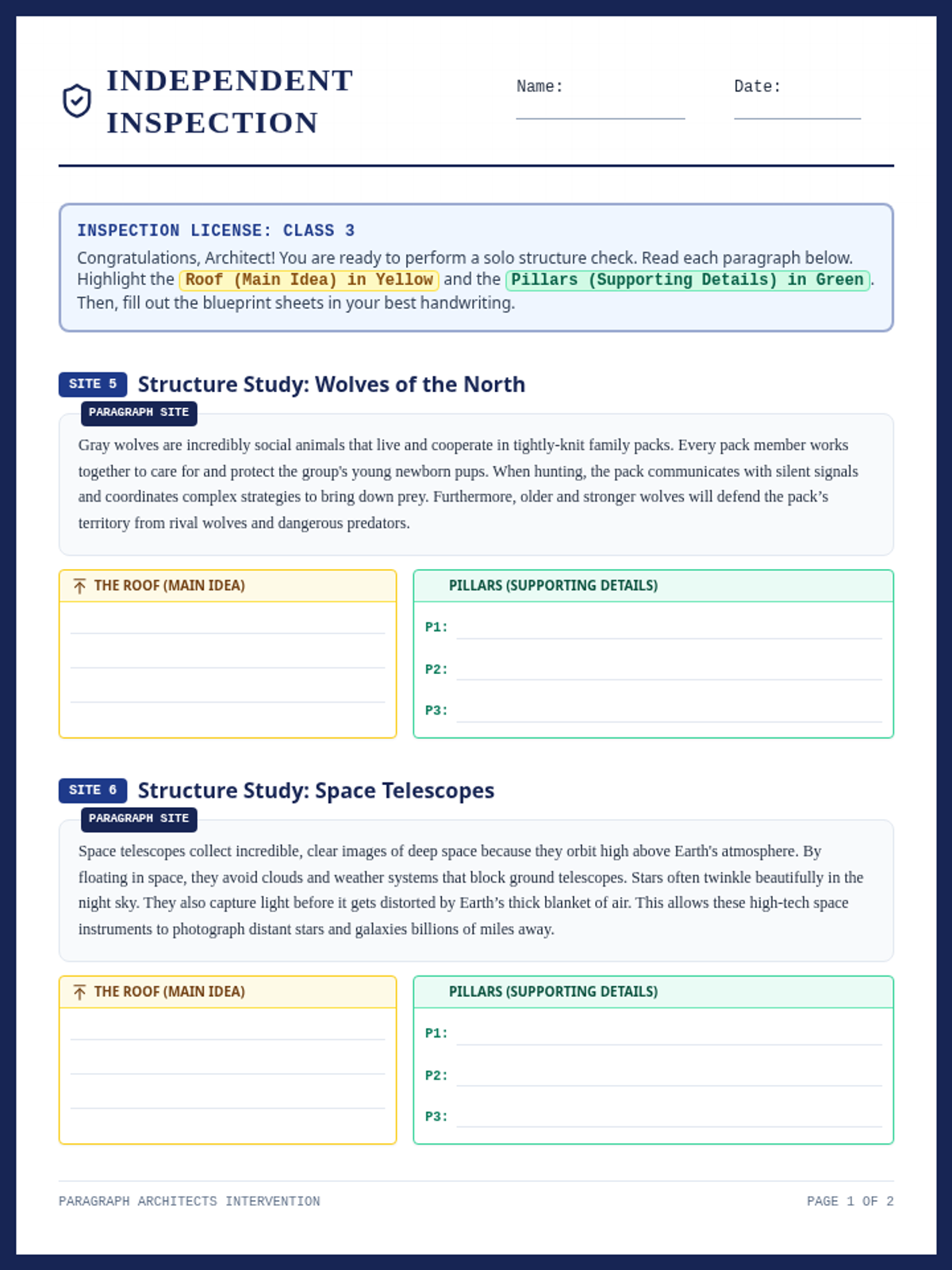
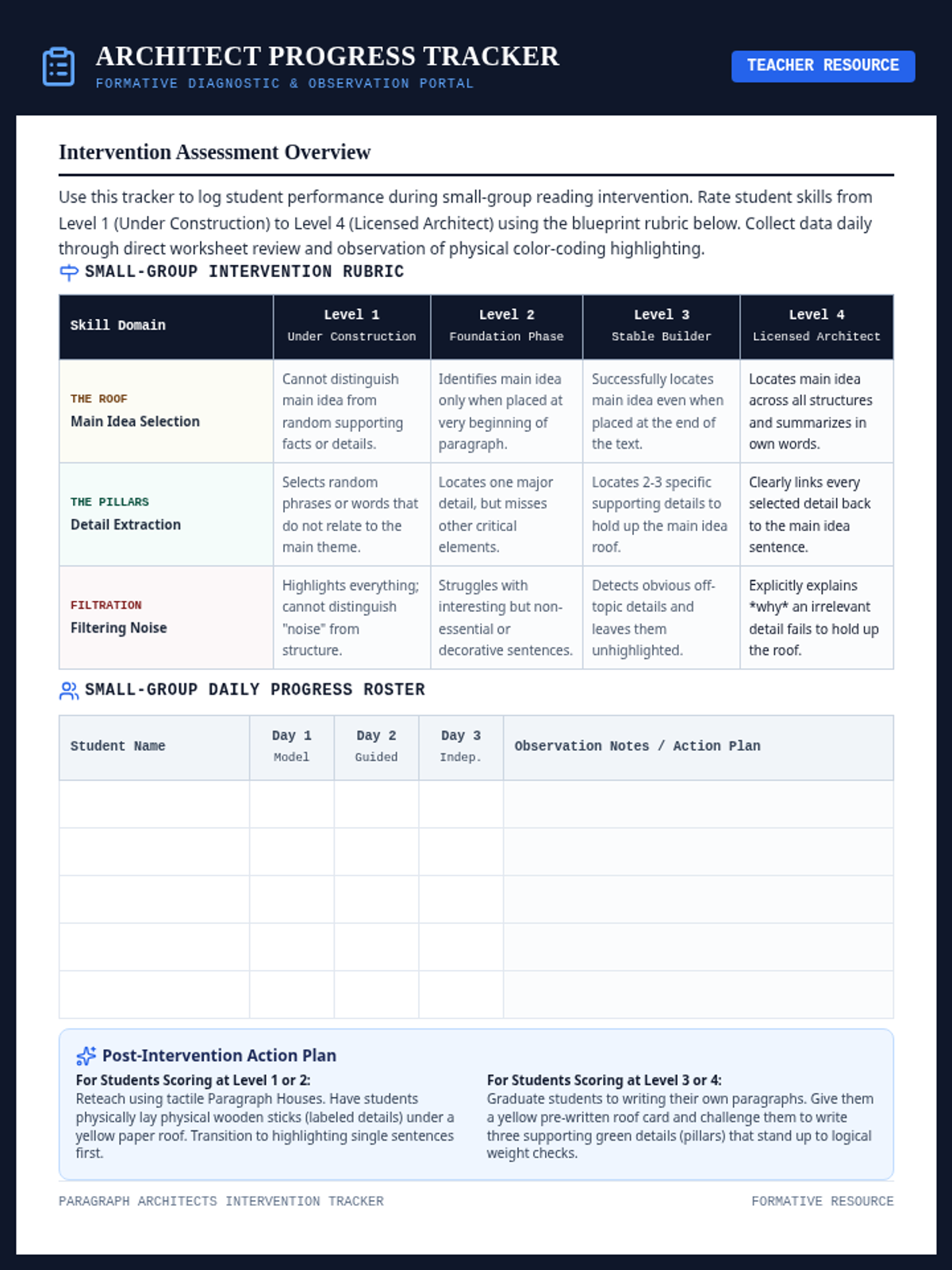
Day 3 focuses on independent execution and performance monitoring. Students independently read, highlight, and analyze paragraph structures to demonstrate mastery, followed by a collaborative review.
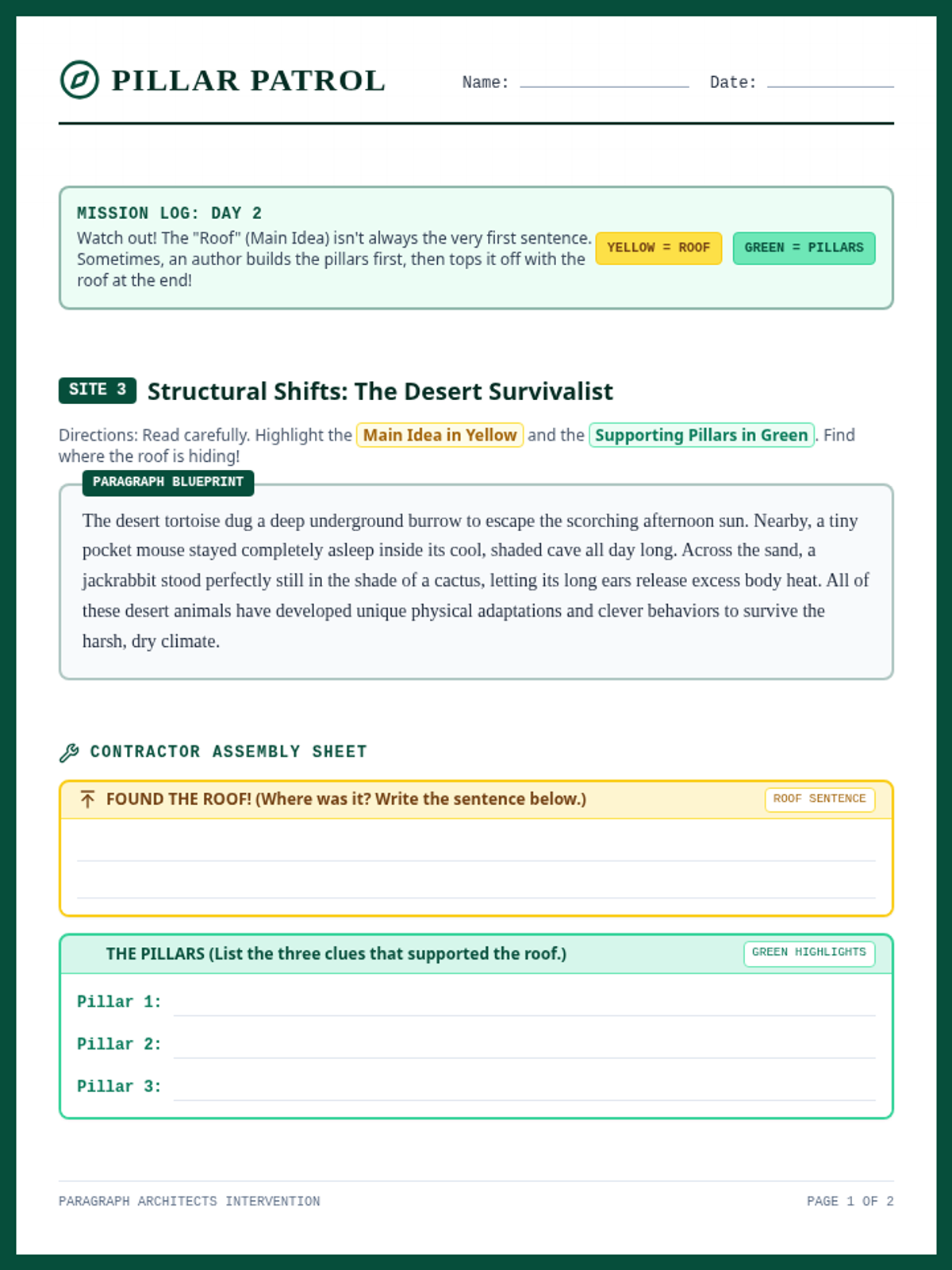
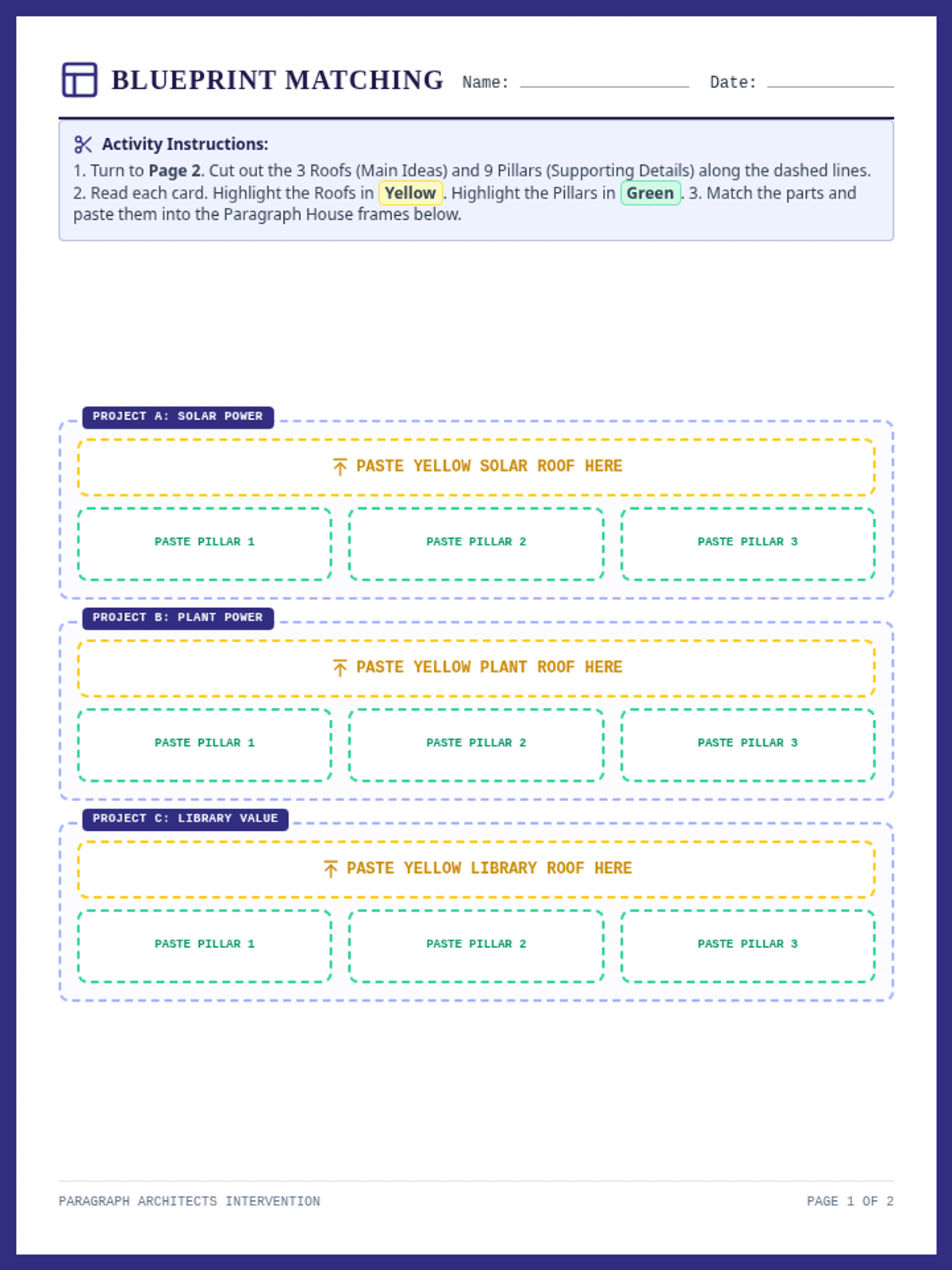
Day 2 transitions to guided practice with fading scaffolds. Students collaborate to highlight and unpack paragraphs, learning to distinguish between critical supporting details and interesting but non-essential information.
Day 1 of the intervention focuses on explicit teacher modeling of the 'Roof' (Main Idea) and 'Pillars' (Supporting Details) concept. Students learn how a paragraph is built, watch a live highlighting demonstration, and participate in highly guided practice using physical highlighters.
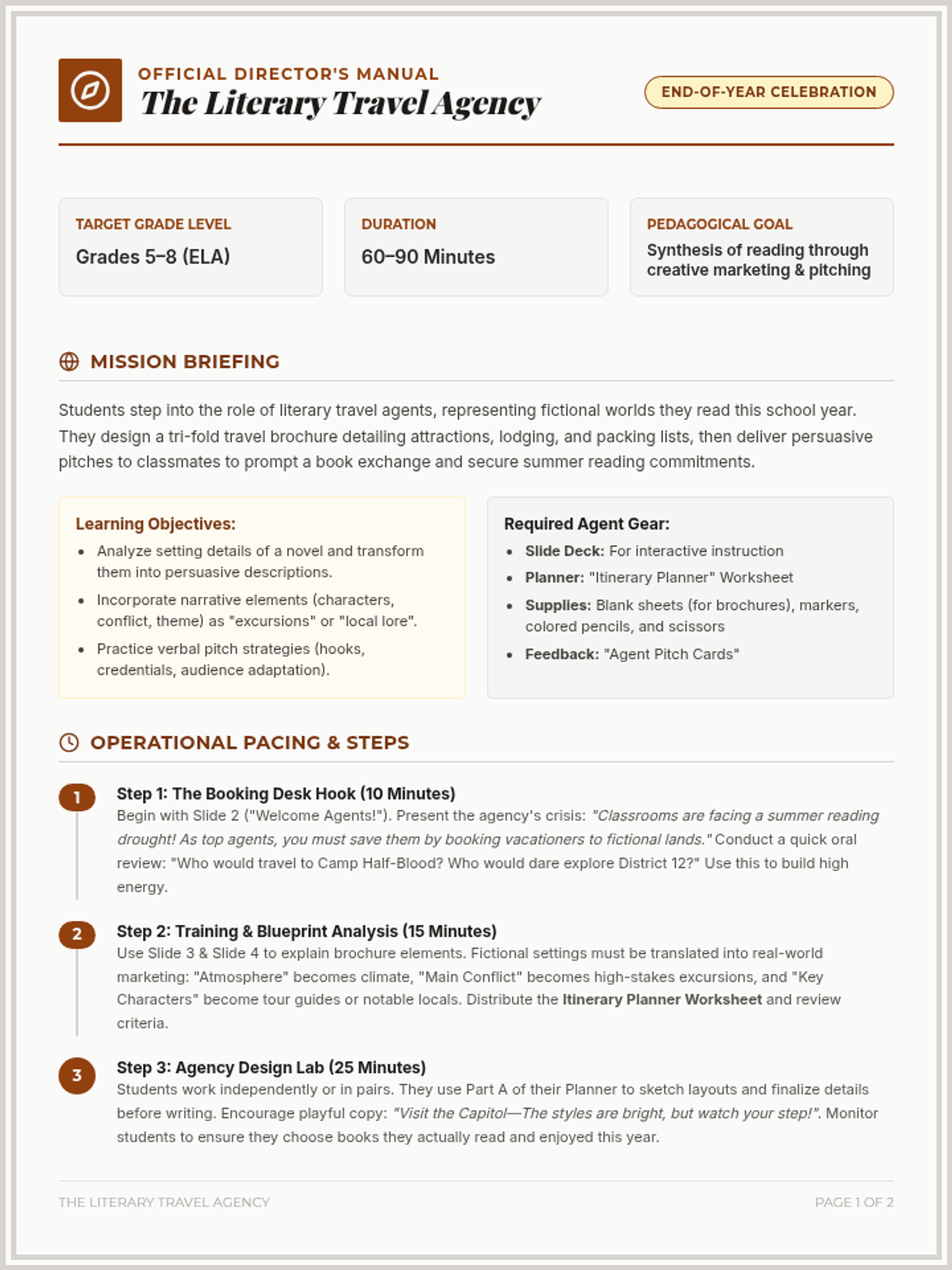
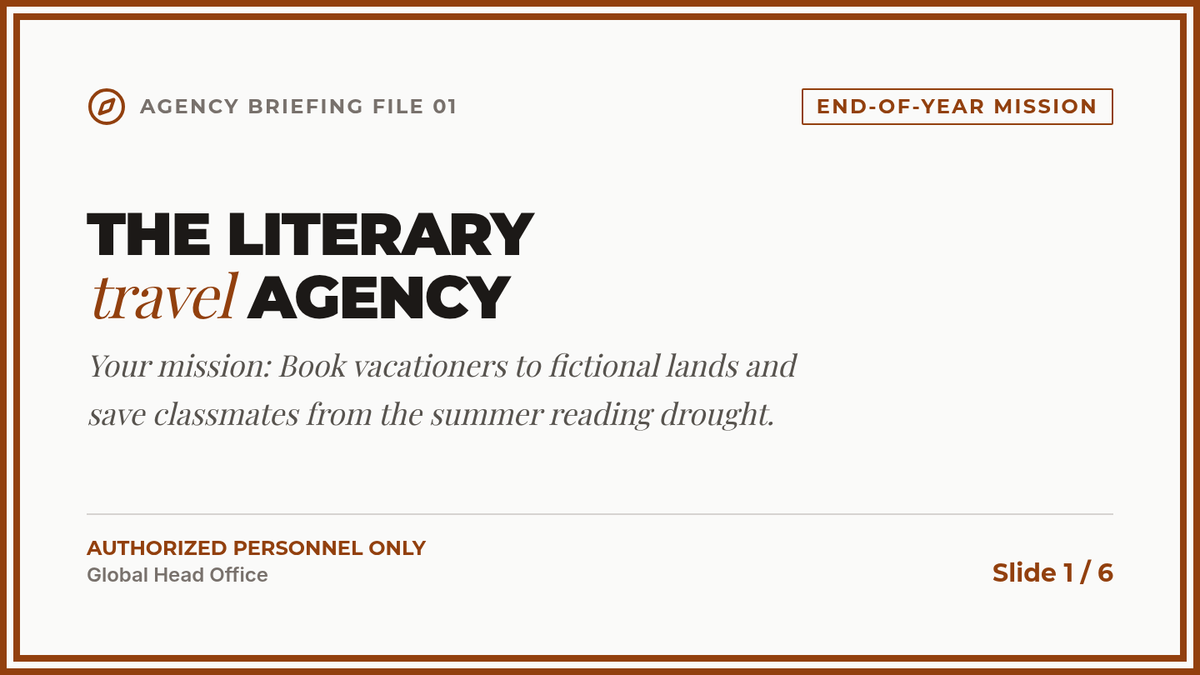
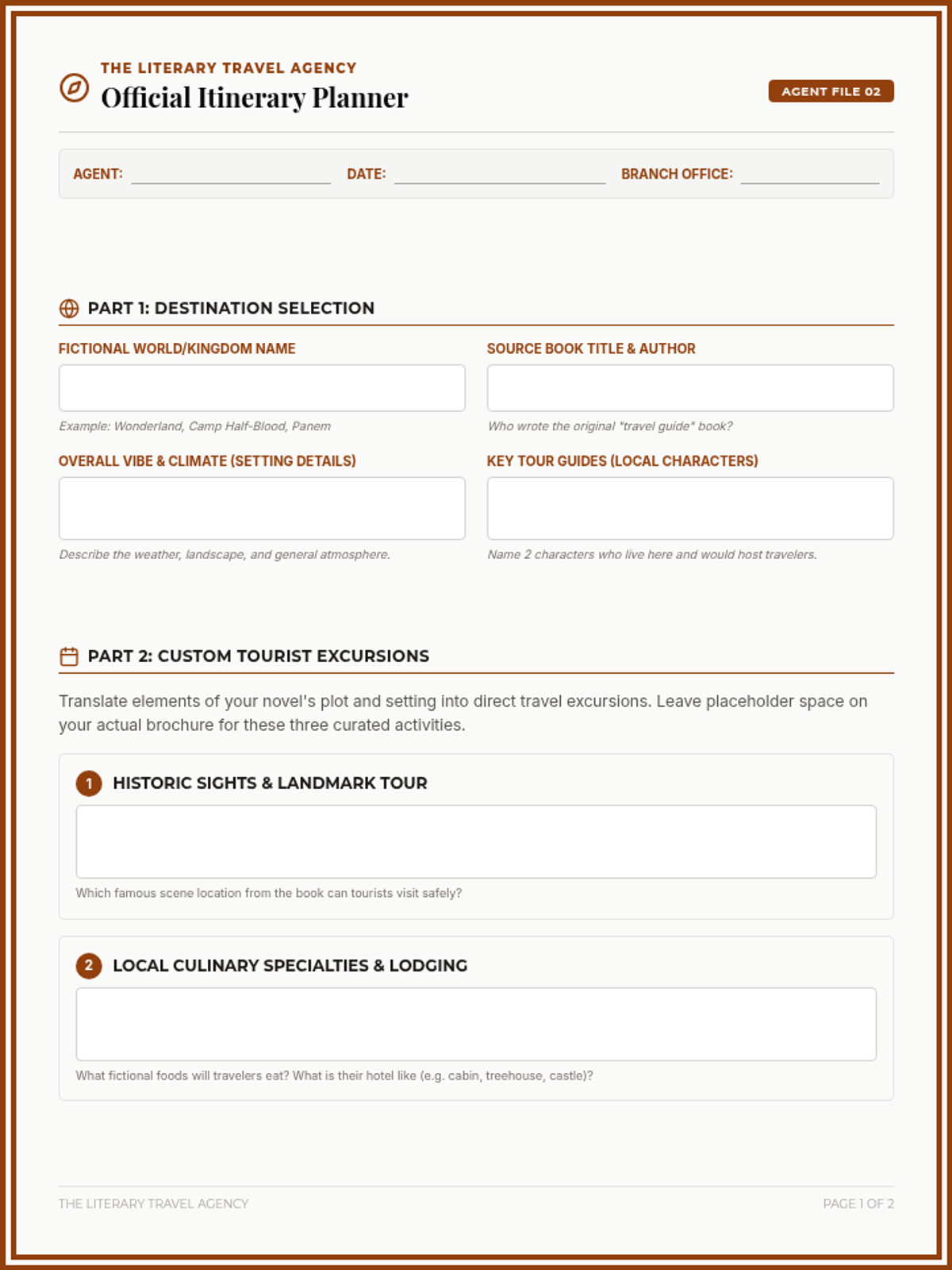
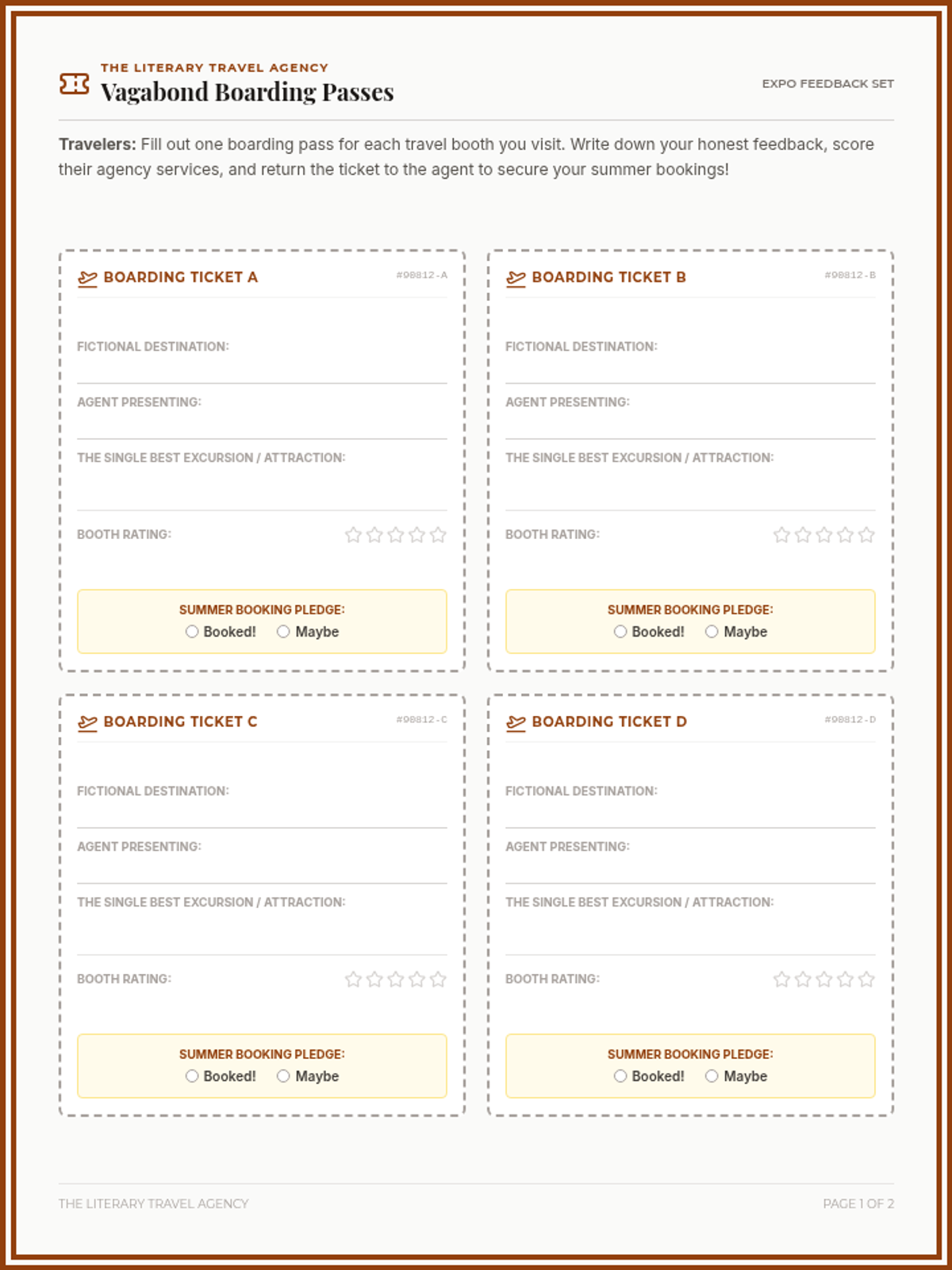
A celebratory end-of-year English Language Arts lesson where students step into the role of literary travel agents, designing promotional brochures and pitching fictional book worlds to classmates to boost summer reading.
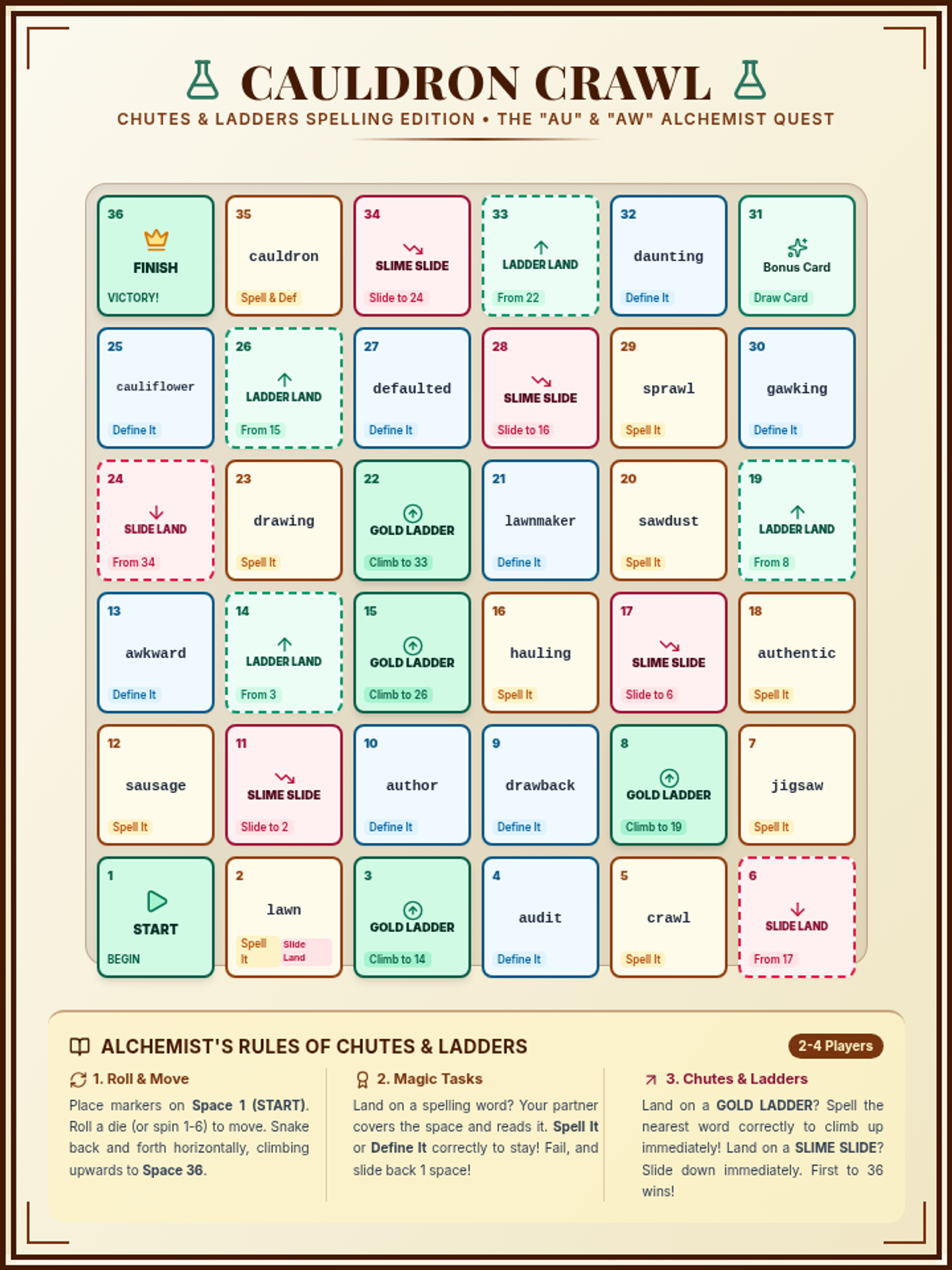
A high-stakes spelling adventure game focusing on "au" and "aw" diphthong words. Students navigate a perilous track to reach the Alchemist's Cauldron by spelling and defining challenging vocabulary.
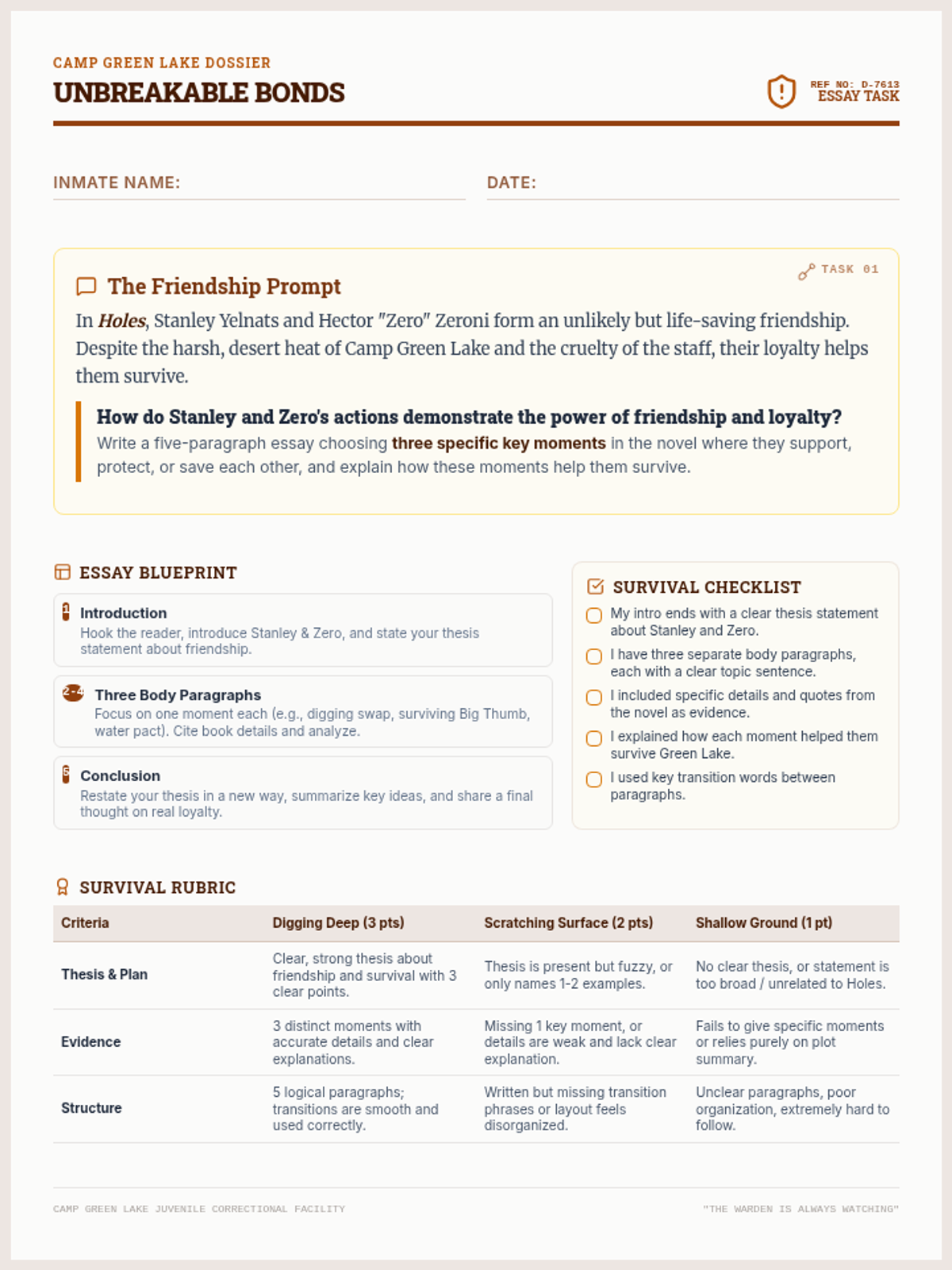
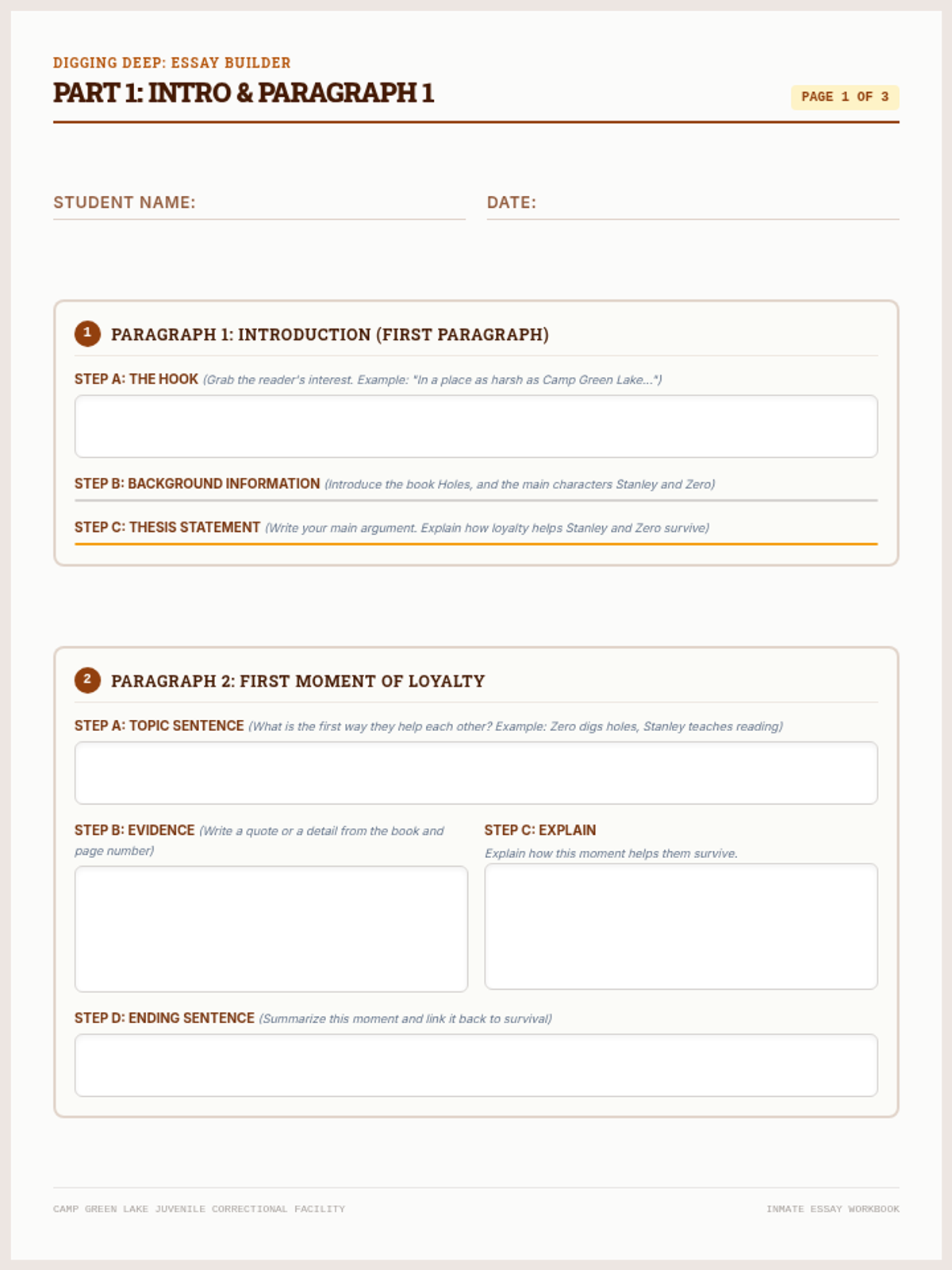
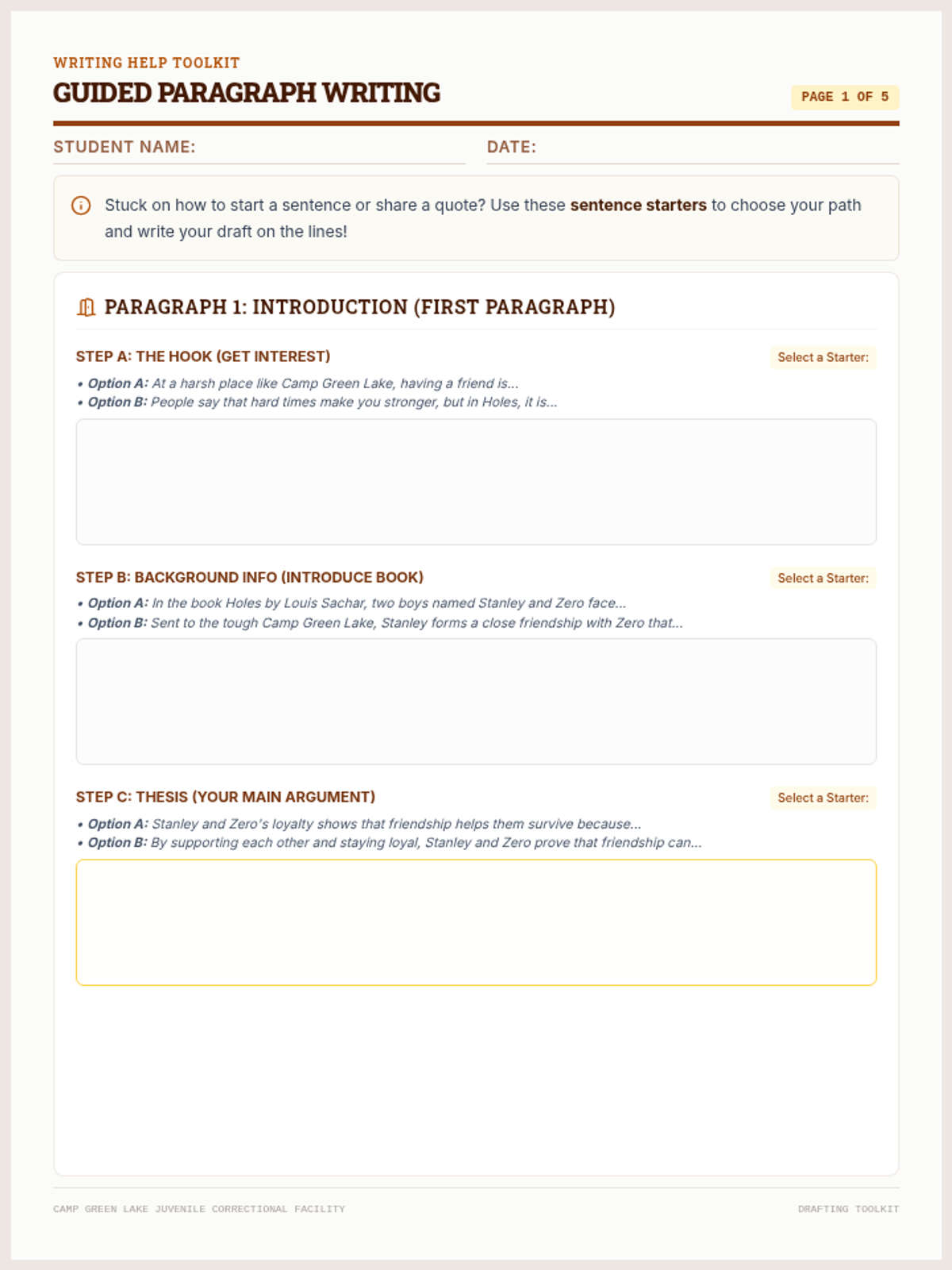
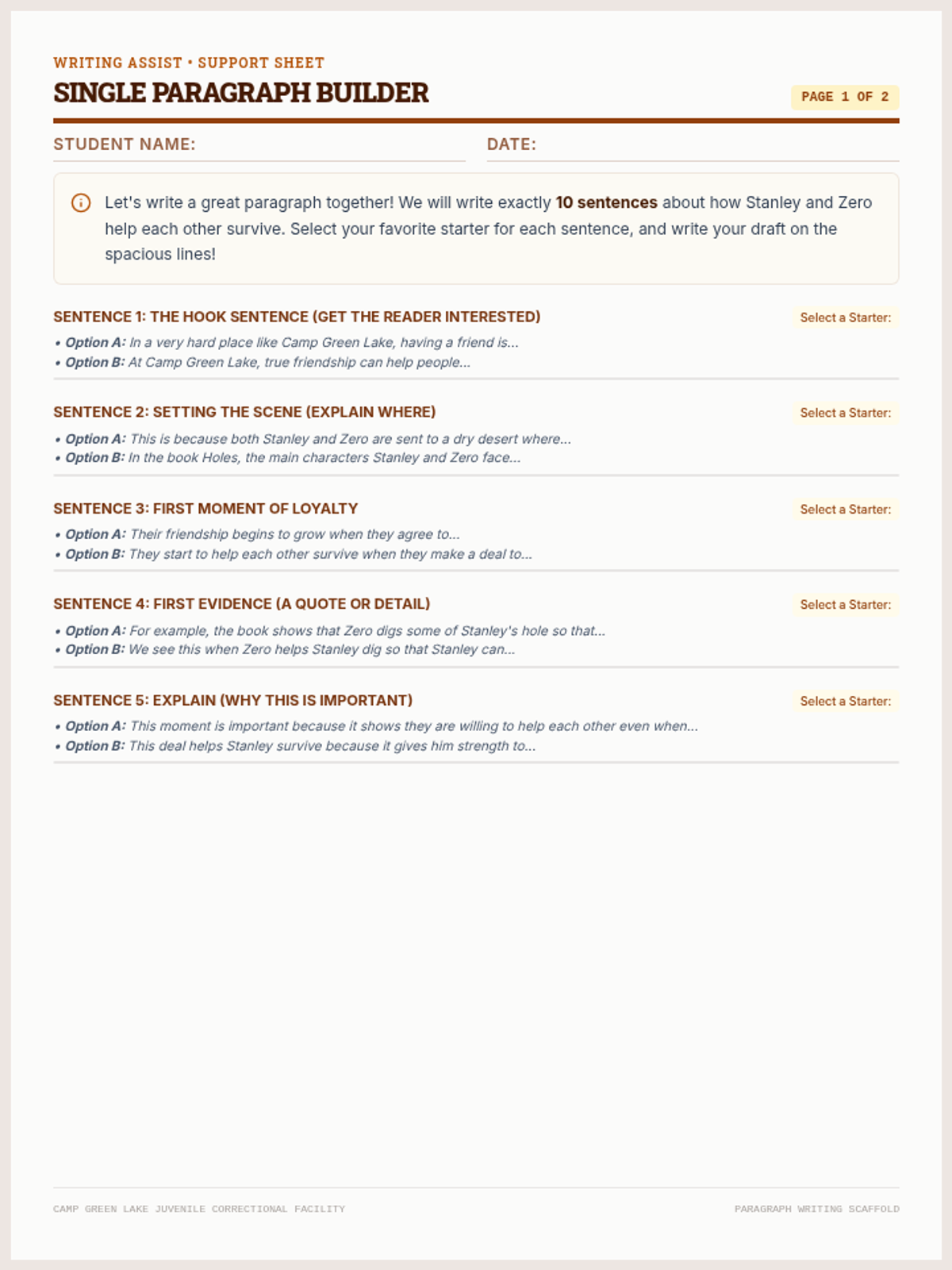
A structured writing unit for Holes by Louis Sachar focusing on the theme of friendship and loyalty. Students analyze Stanley and Zero's relationship and compose a five-paragraph essay using scaffolds, graphic organizers, and sentence frames.
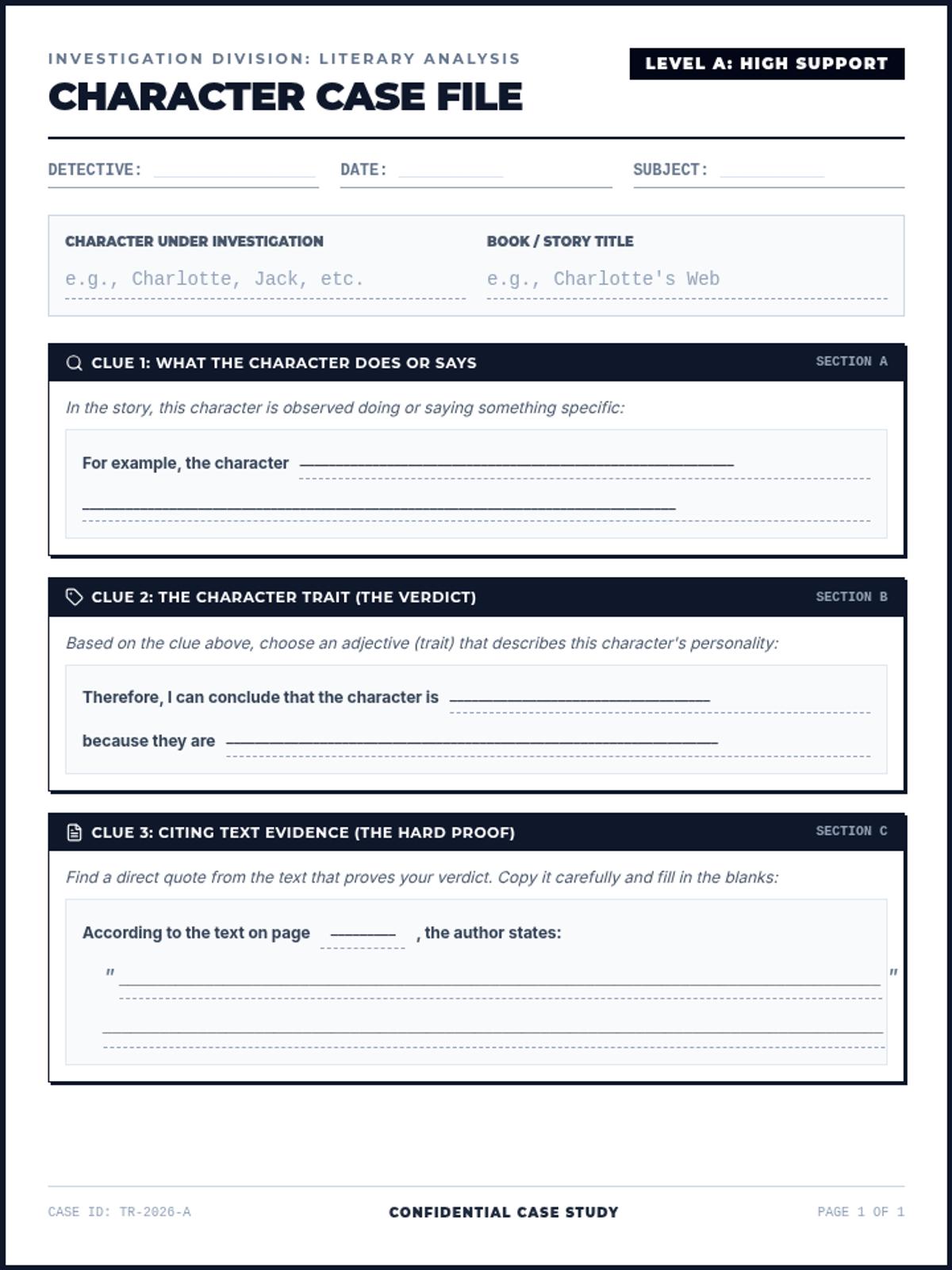
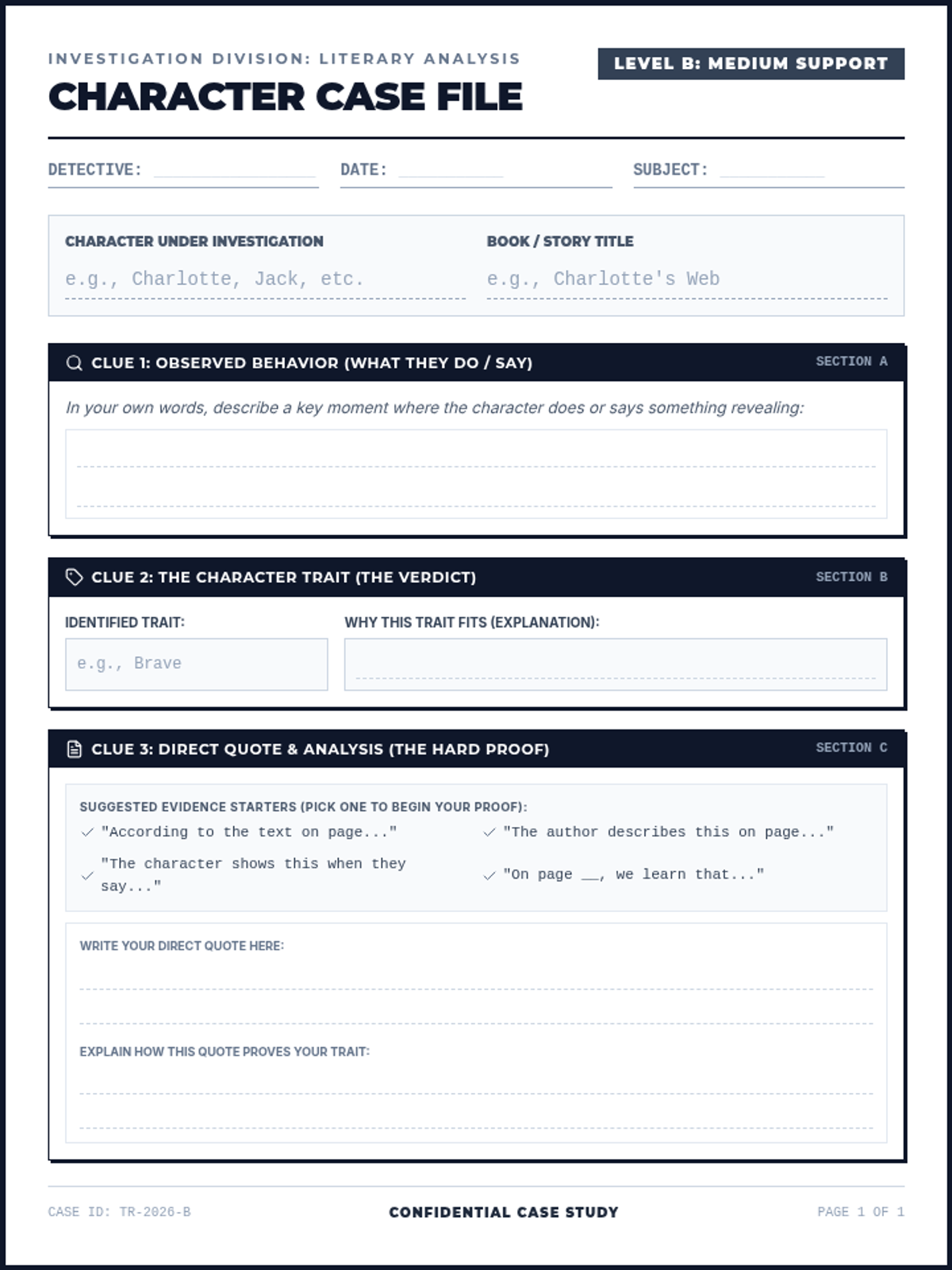
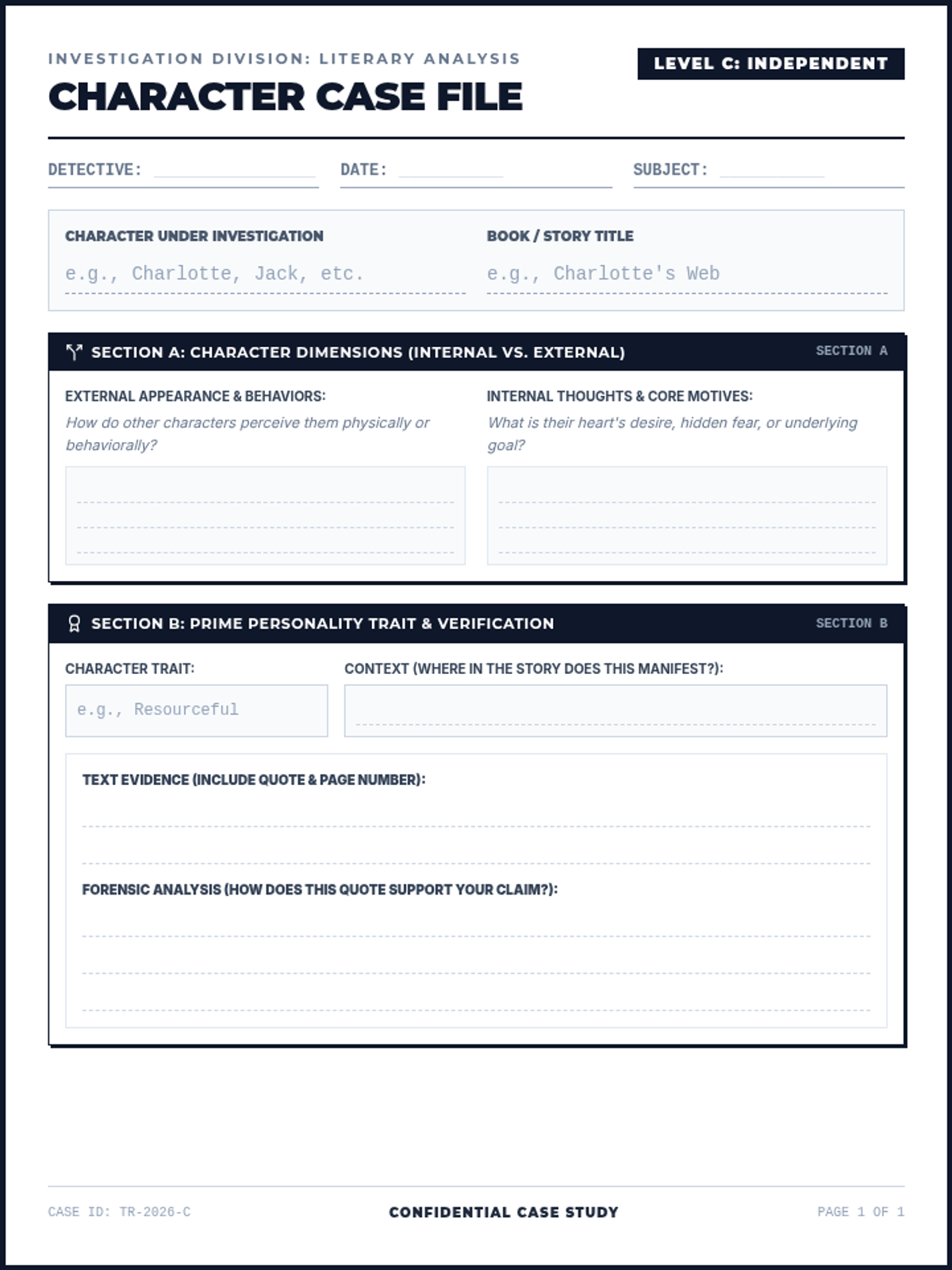
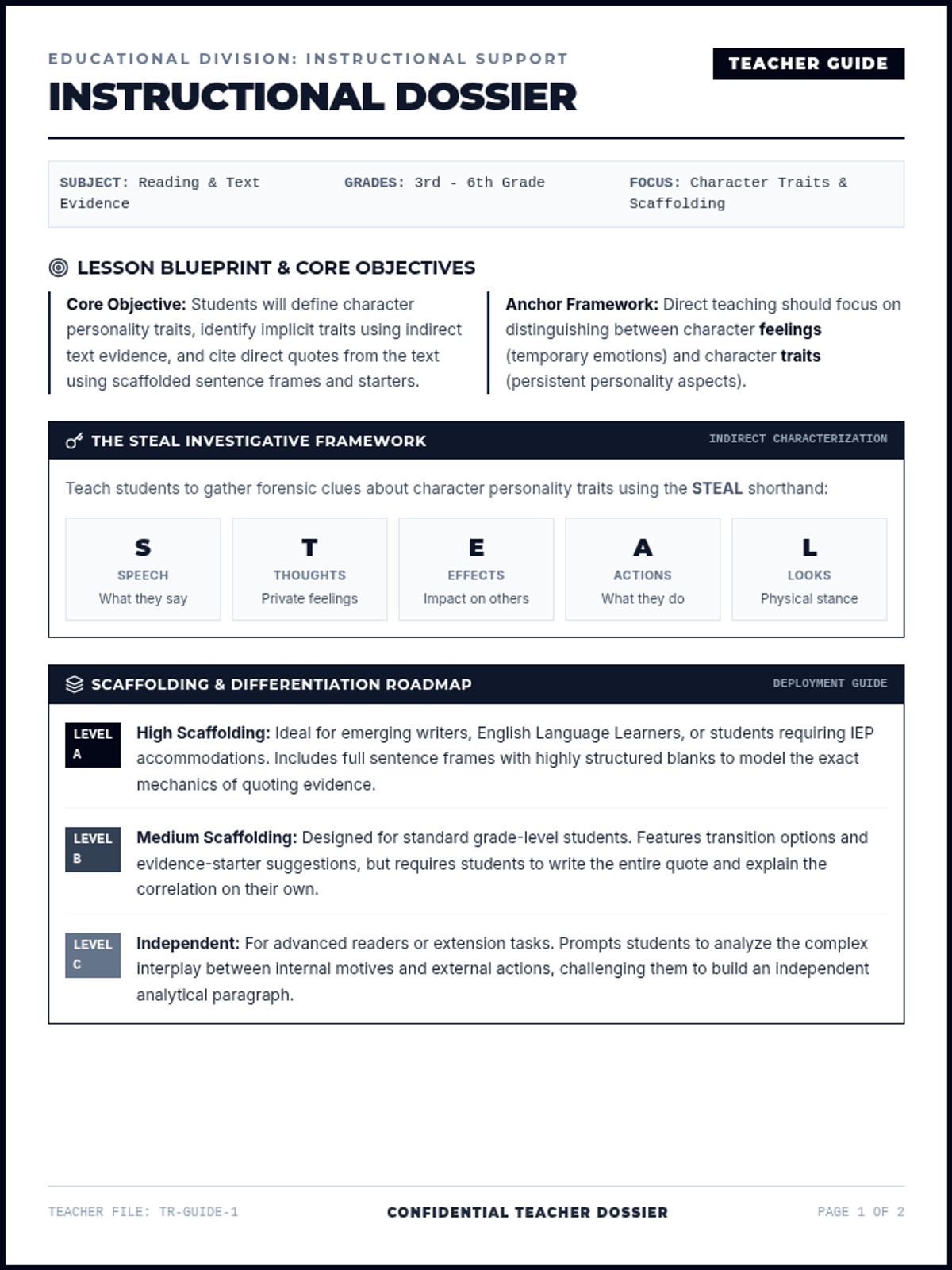
A comprehensive lesson and set of scaffolded graphic organizers designed to help students analyze character traits and master citing text evidence. Includes high, medium, and low levels of scaffolding to differentiate instruction.
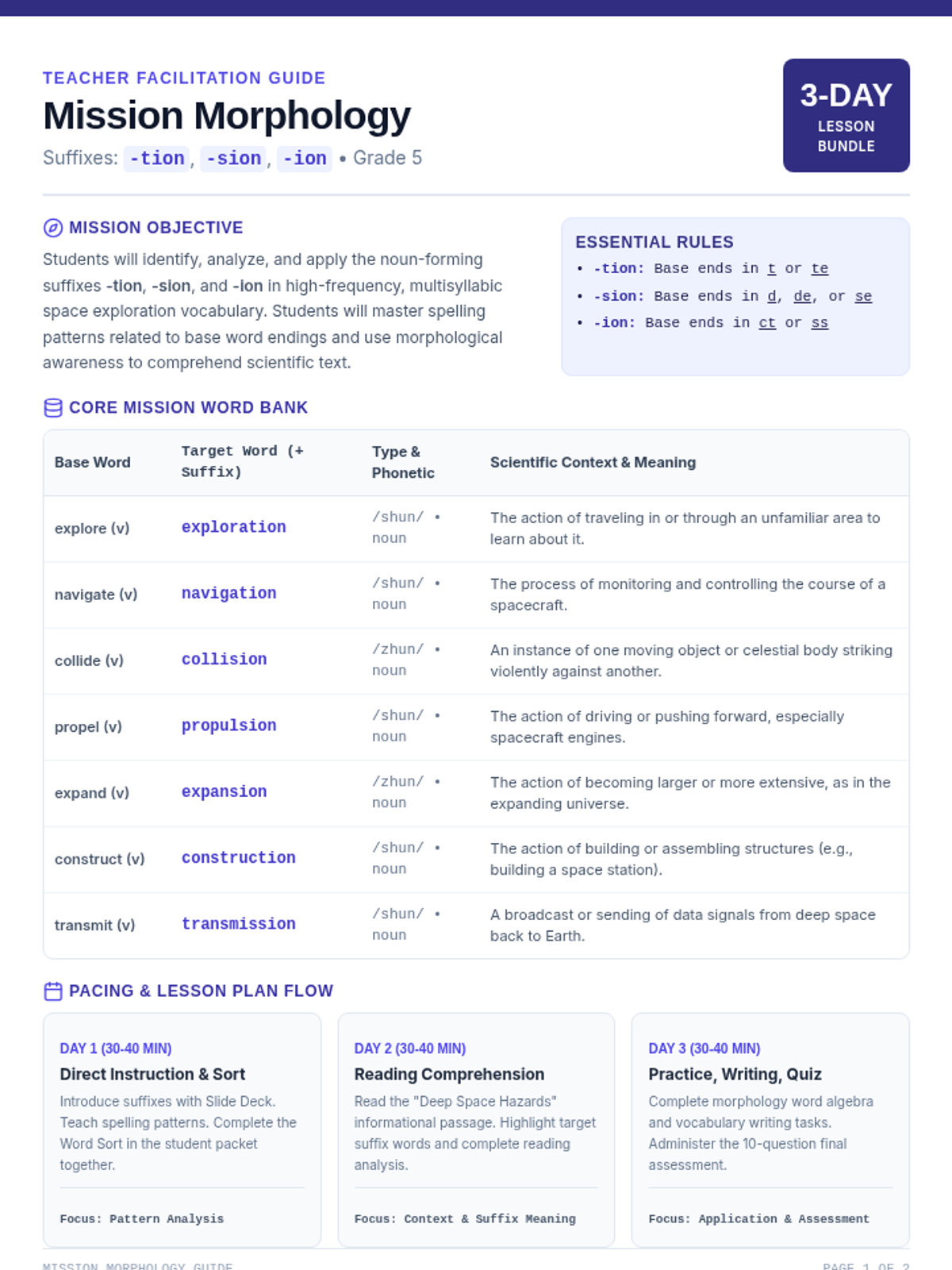
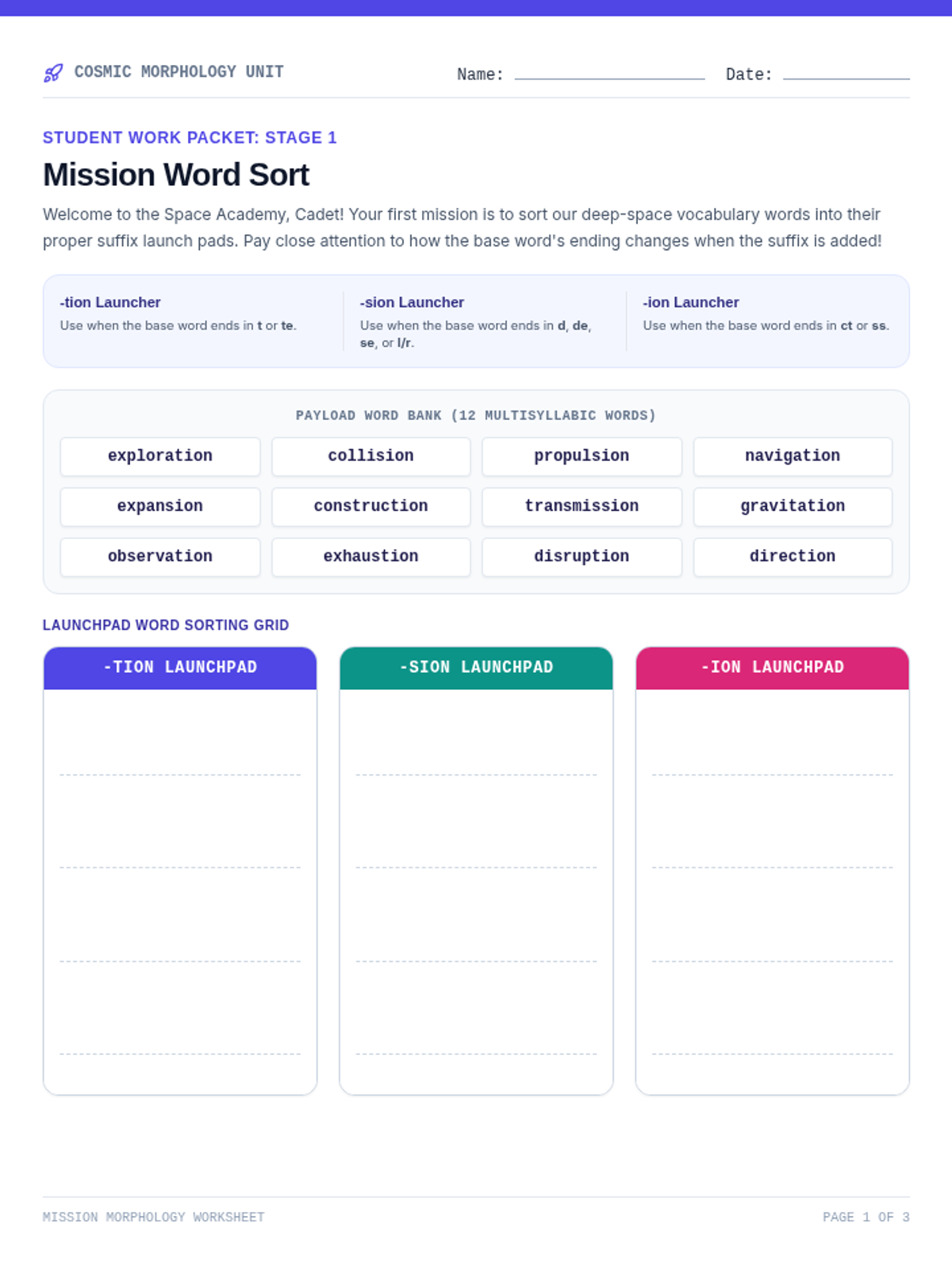
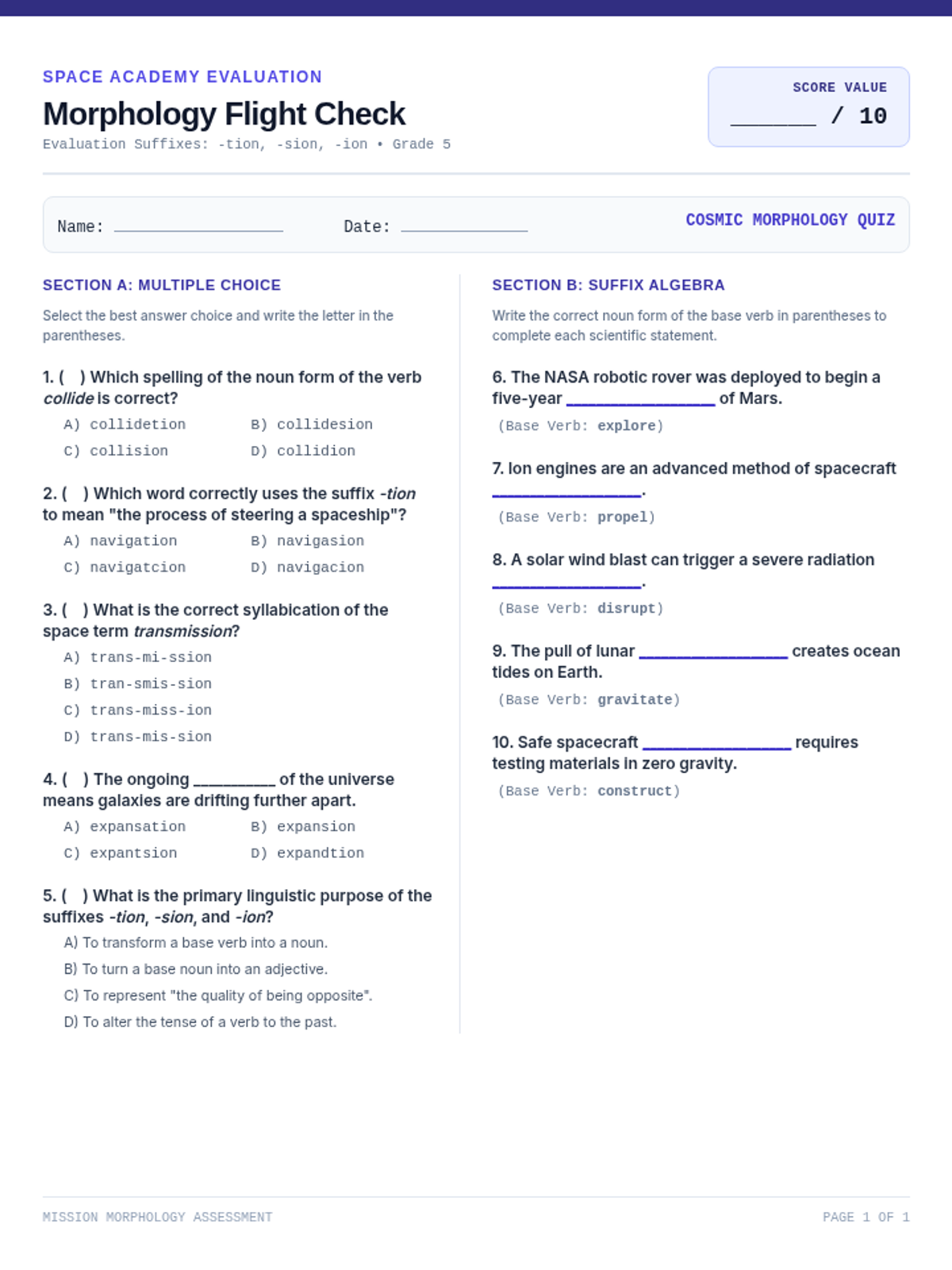
A comprehensive 3-day morphology lesson focused on the suffixes -tion, -sion, and -ion. Students explore space-themed multisyllabic vocabulary, analyzing spelling patterns and reading an informational space science passage.
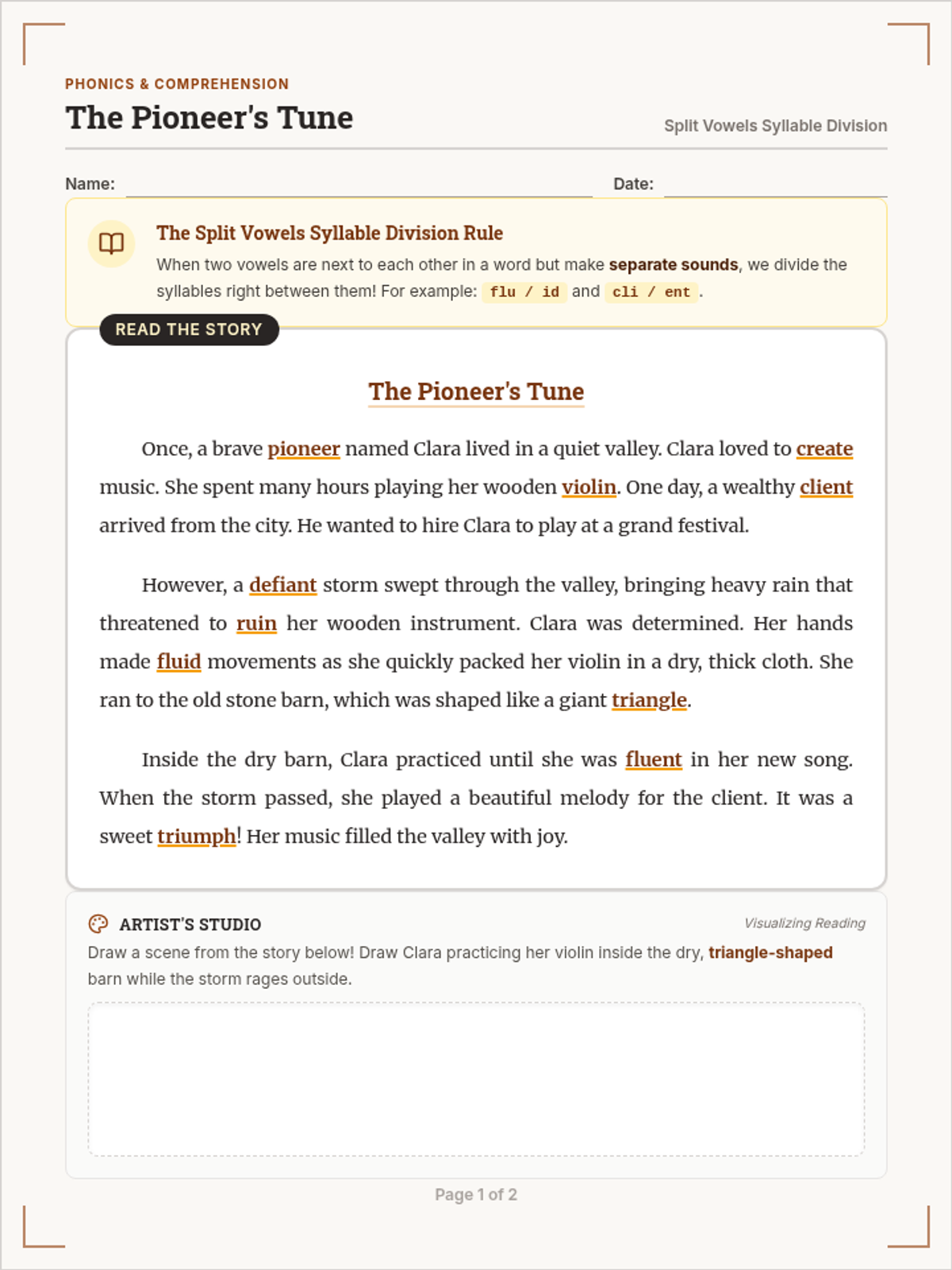
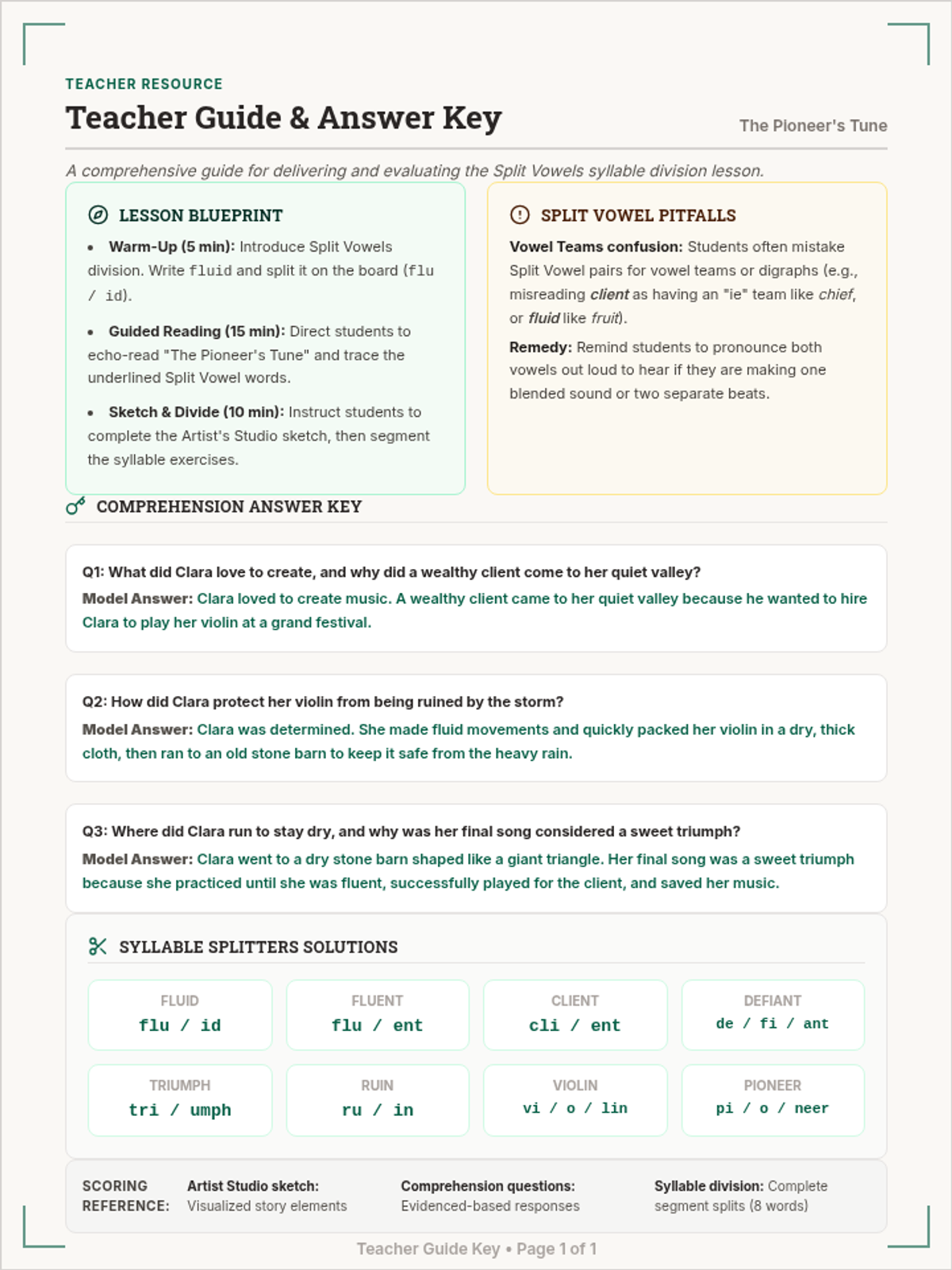
A lesson focused on dividing two-syllable words with adjacent vowels making separate sounds (V/V patterns), featuring a decodable reading passage and comprehension exercises.
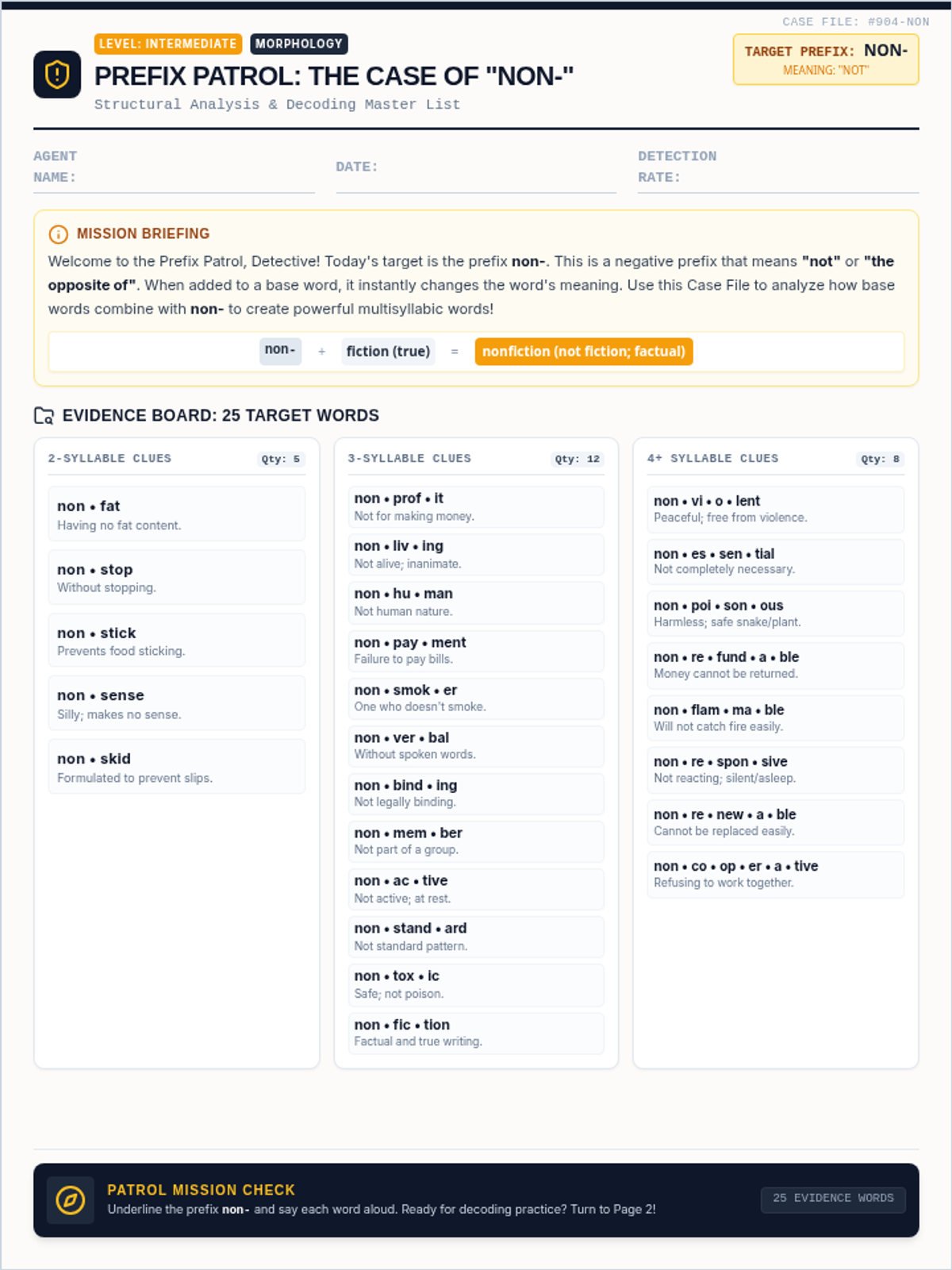
An intermediate phonics and structural analysis lesson exploring the prefix 'non-' through morphological breakdown, sentence decoding, and fill-in-the-blank practice.
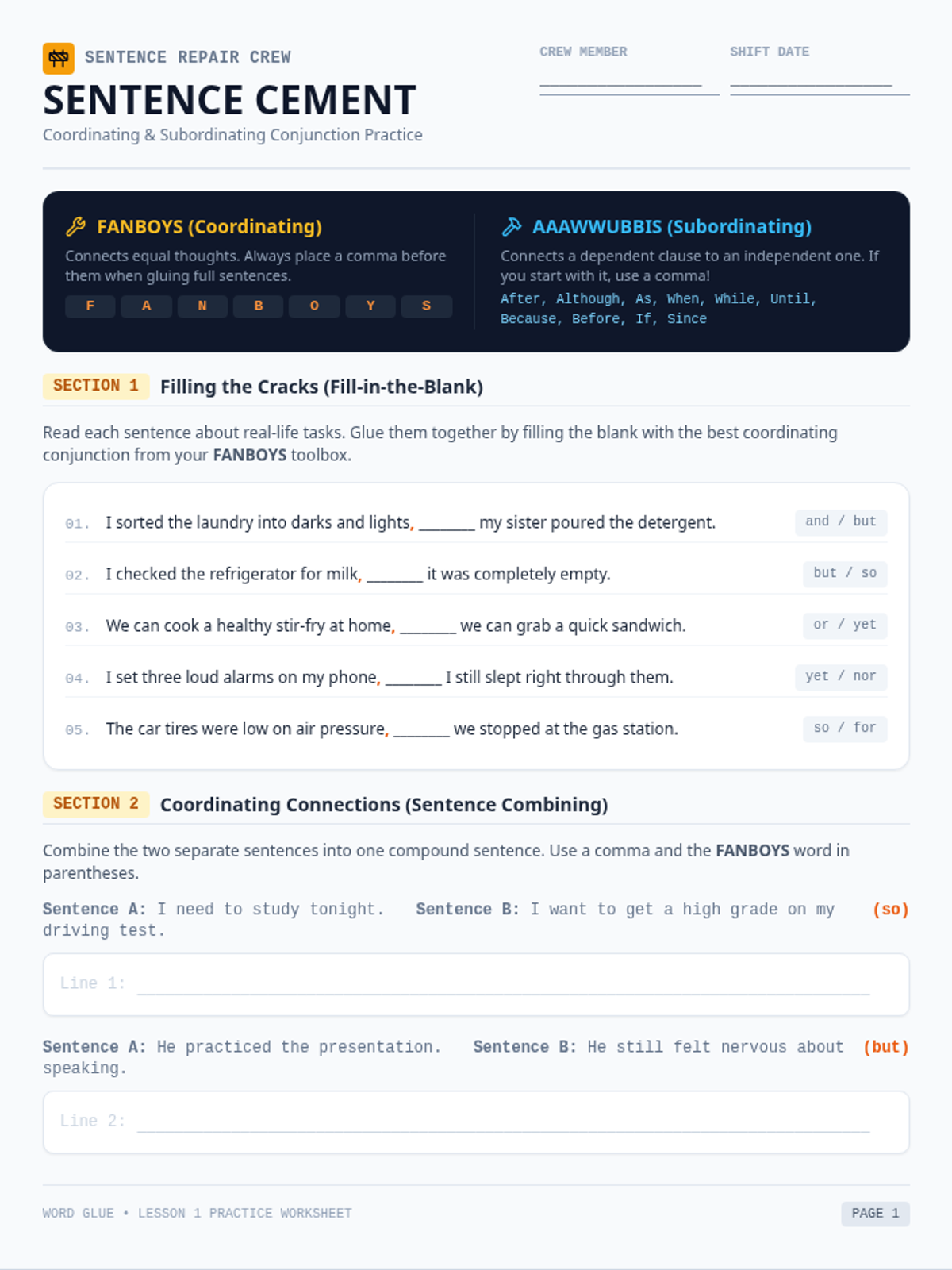
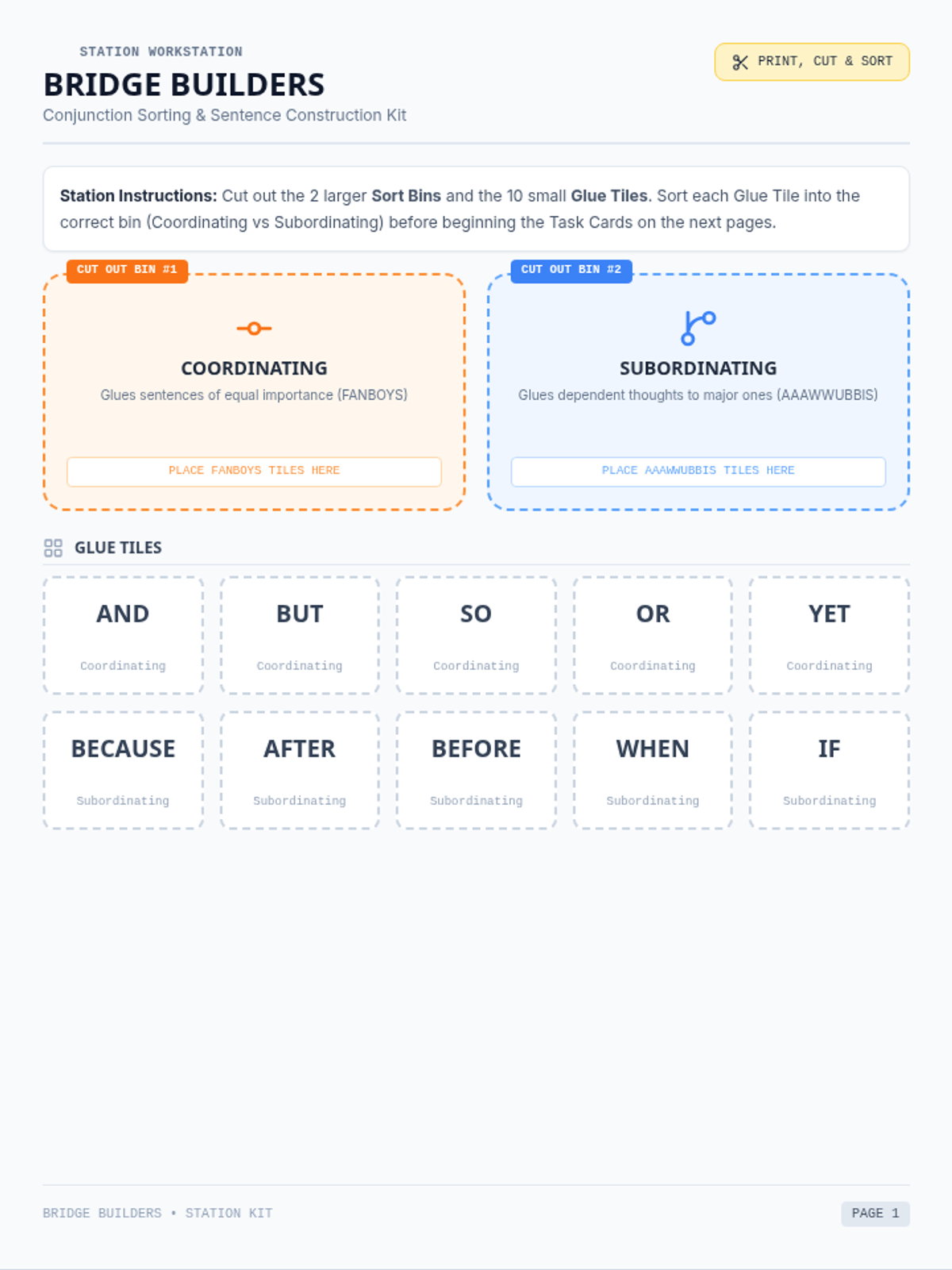
A construction-themed lesson designed to master coordinating and subordinating conjunctions using visual cues, hands-on activities, and real-world daily life contexts.
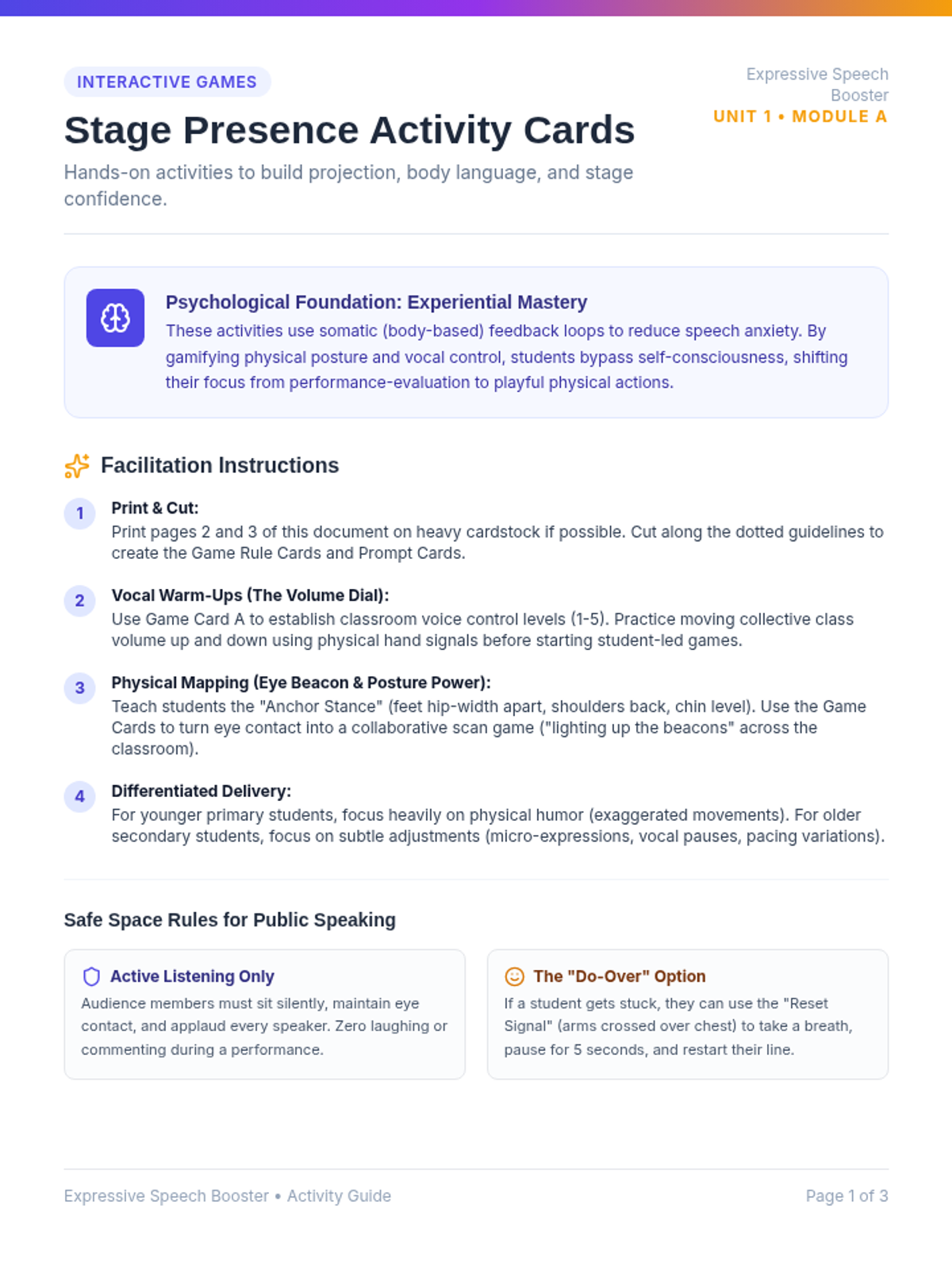
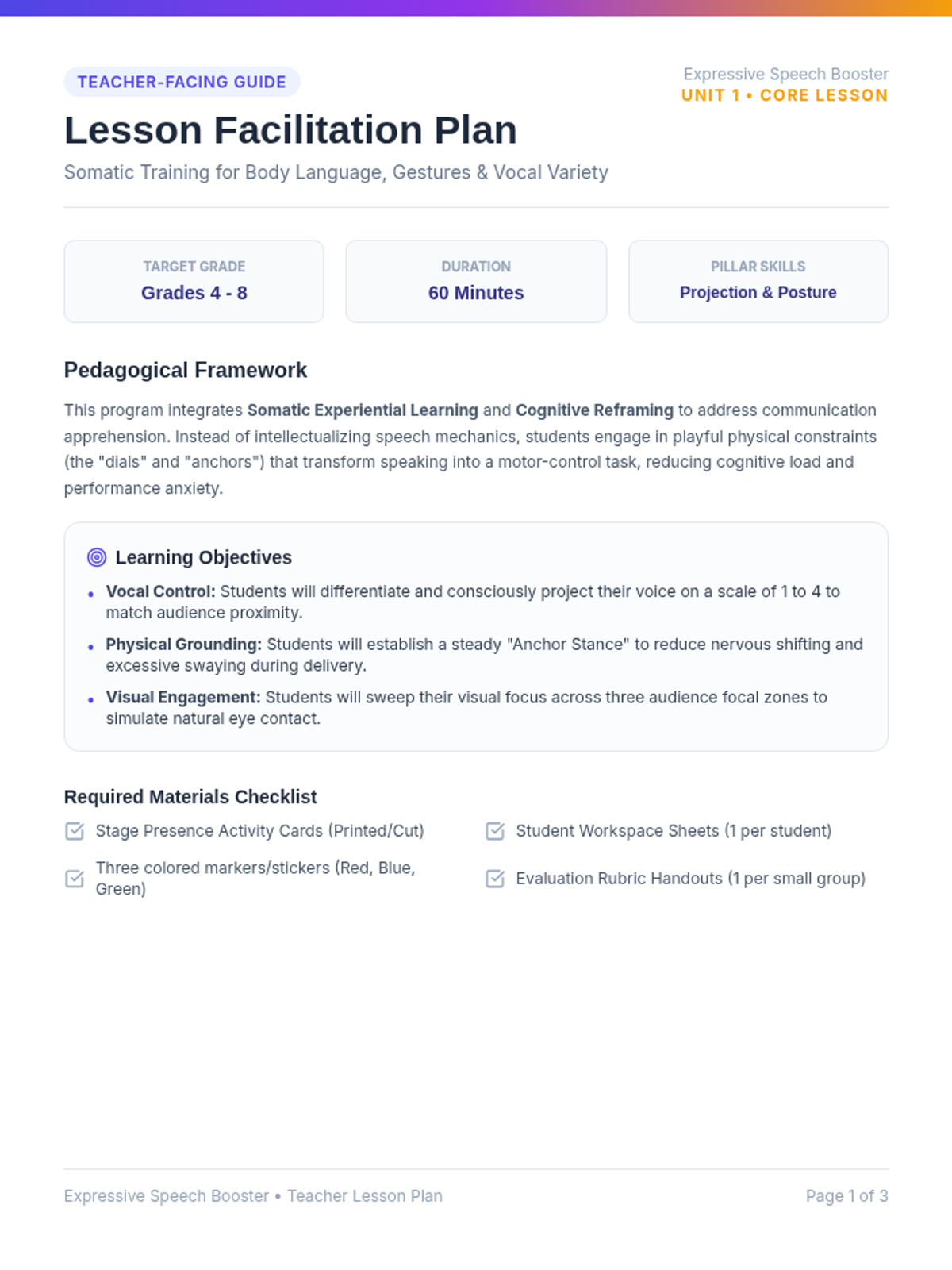
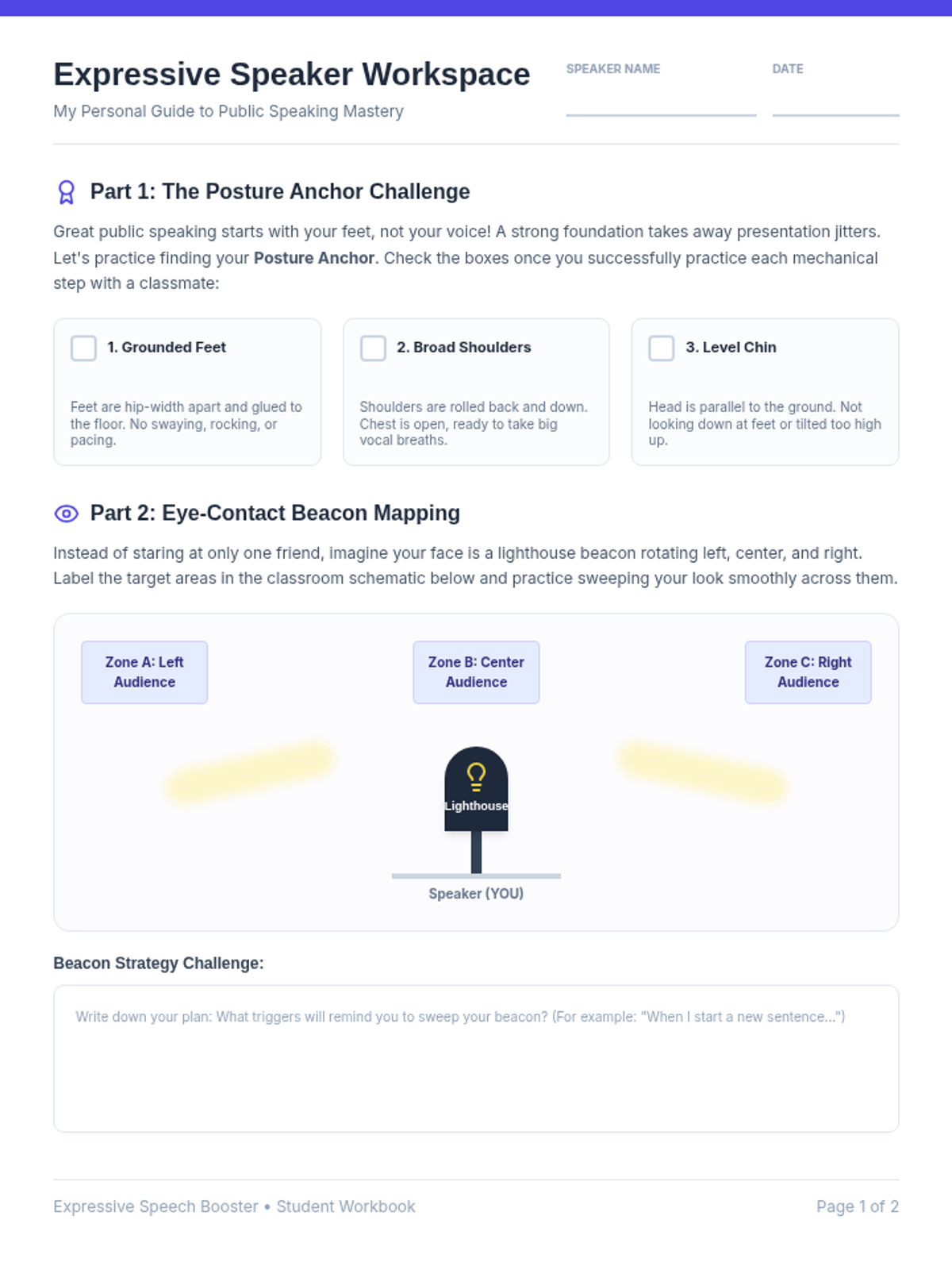
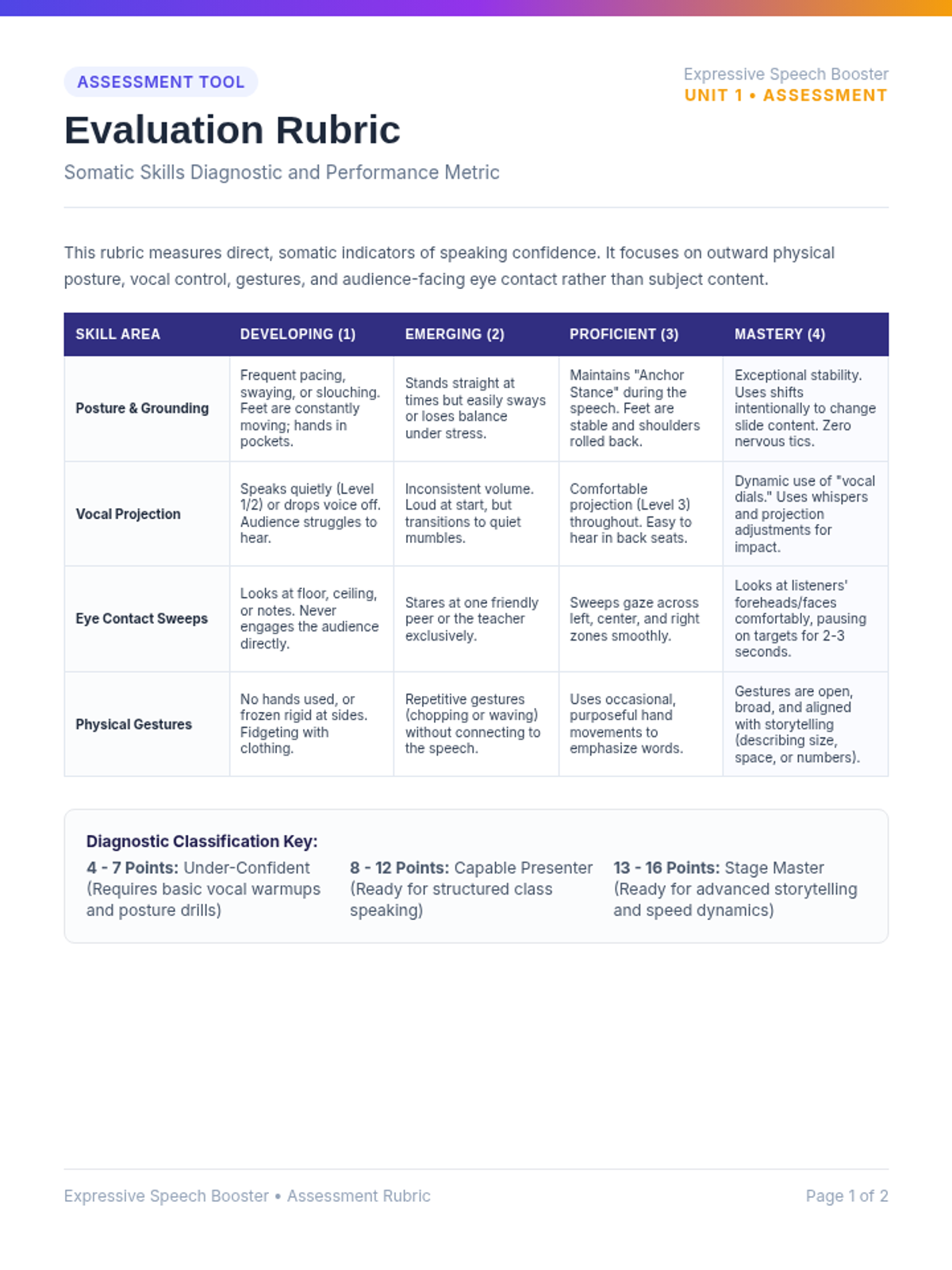
A comprehensive training module for primary and middle school students to master public speaking, body language, and vocal projection through interactive games, structural worksheets, and professional rubrics.