A delicious lesson on Author's Purpose (Persuade, Inform, Entertain) for Grades 3-5, featuring interactive slides, hands-on task cards, and evidence-hunting activity sheets.
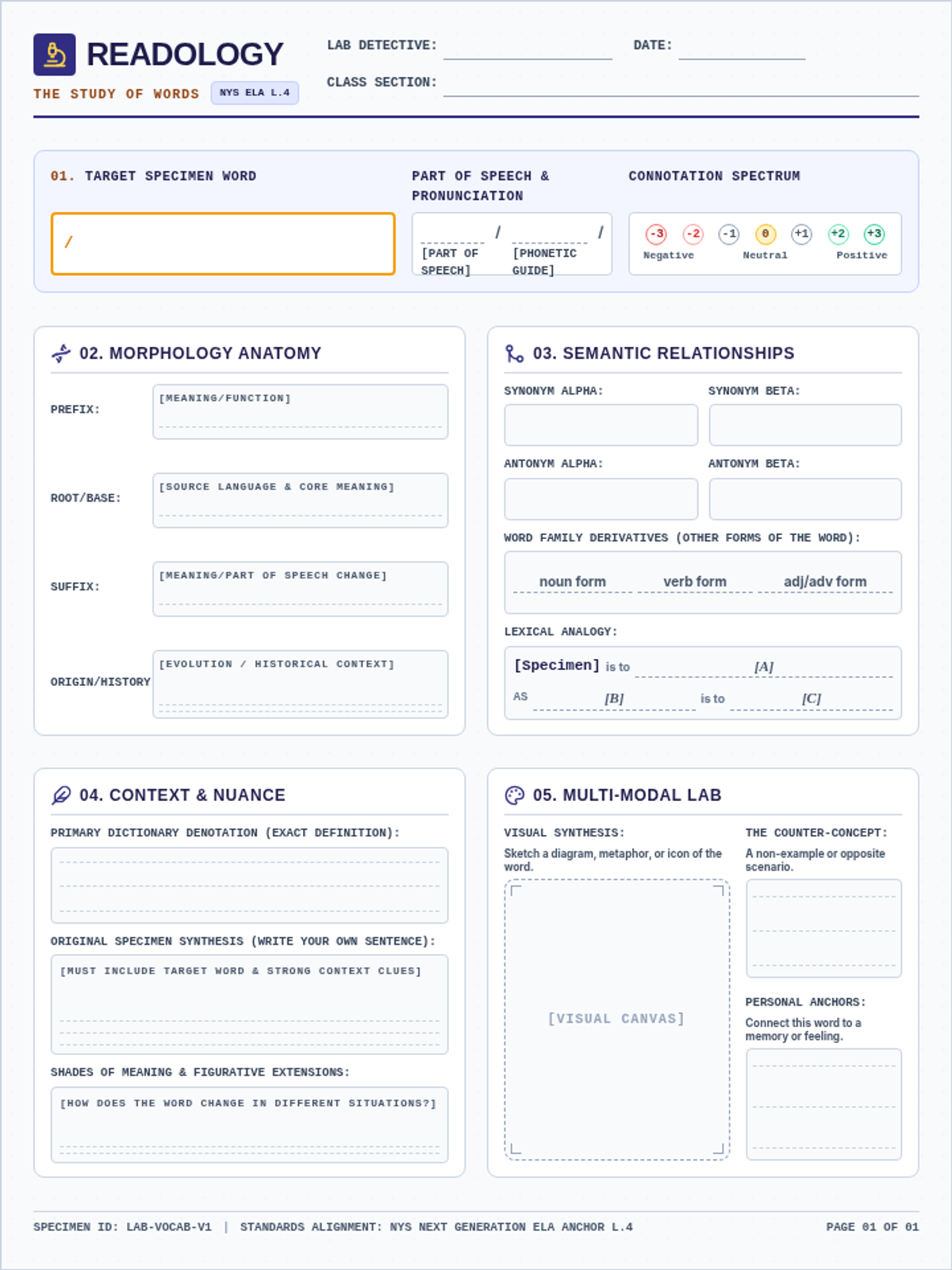
A lesson dedicated to breaking down words into their root structures, semantic relationships, and contextual nuances to build deep, permanent vocabulary comprehension.
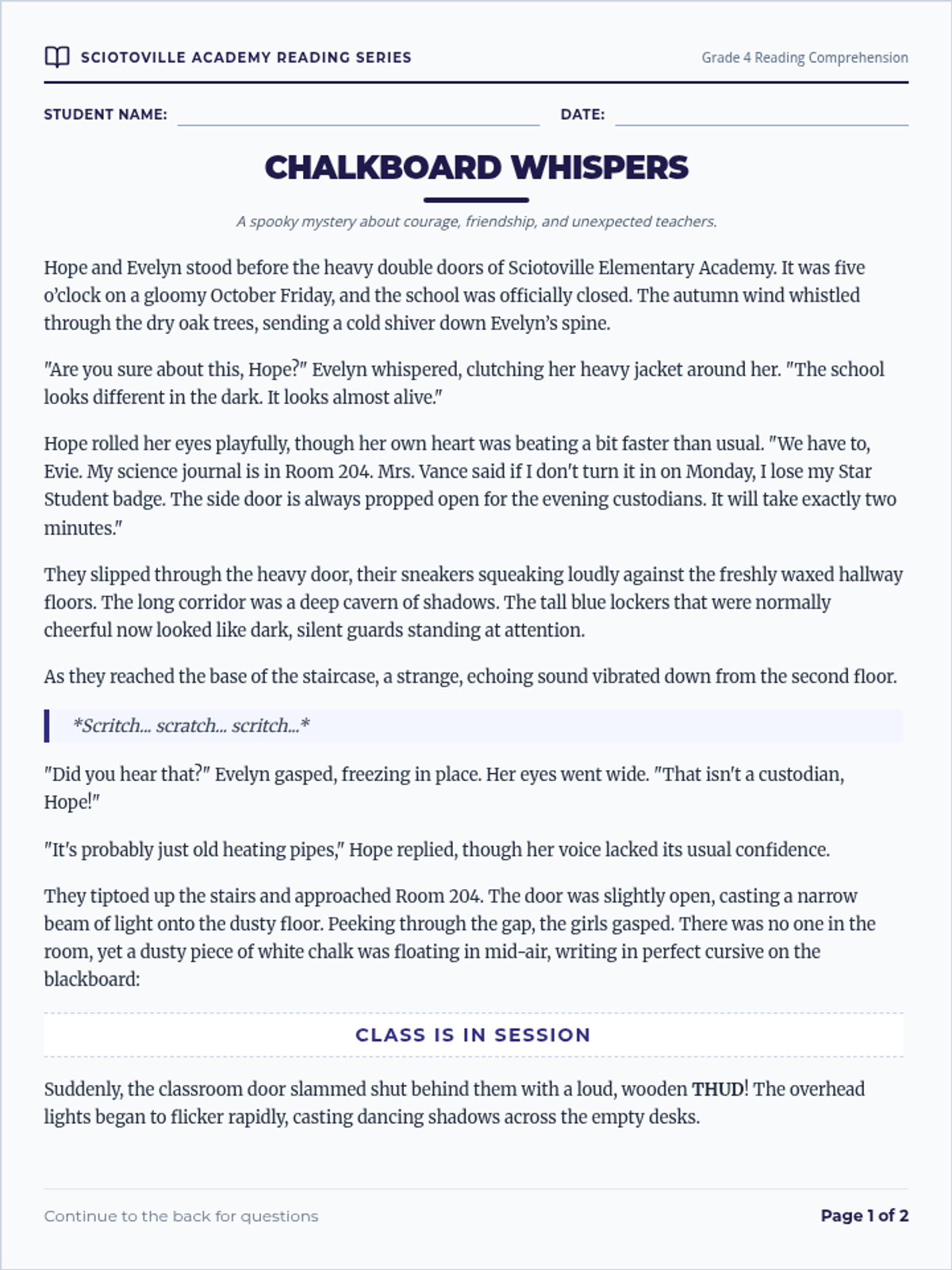
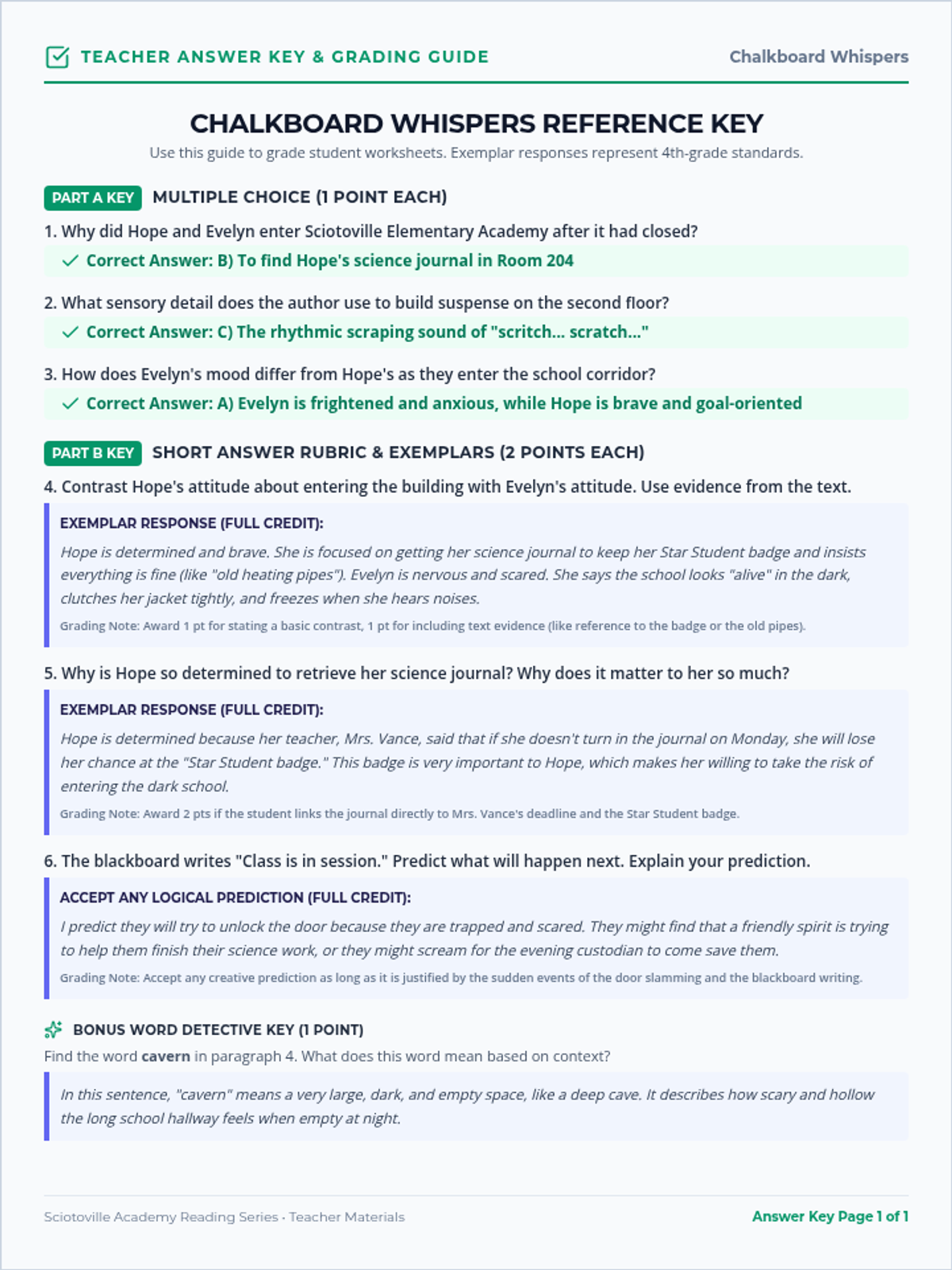
A reading comprehension lesson centered on a spooky, engaging story about two friends exploring their school after dark. Students practice reading fluency, literal comprehension, and inferential analysis.
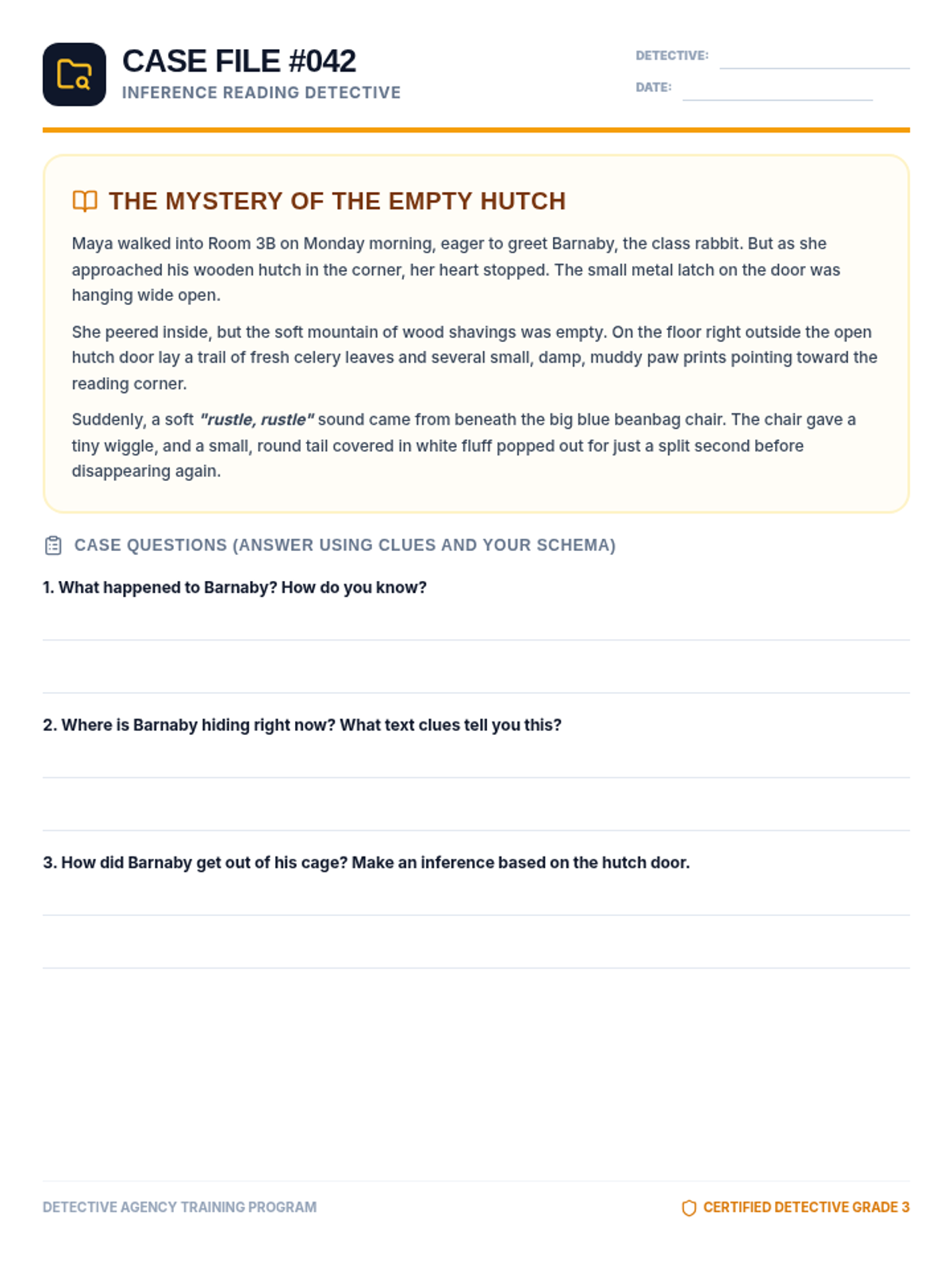
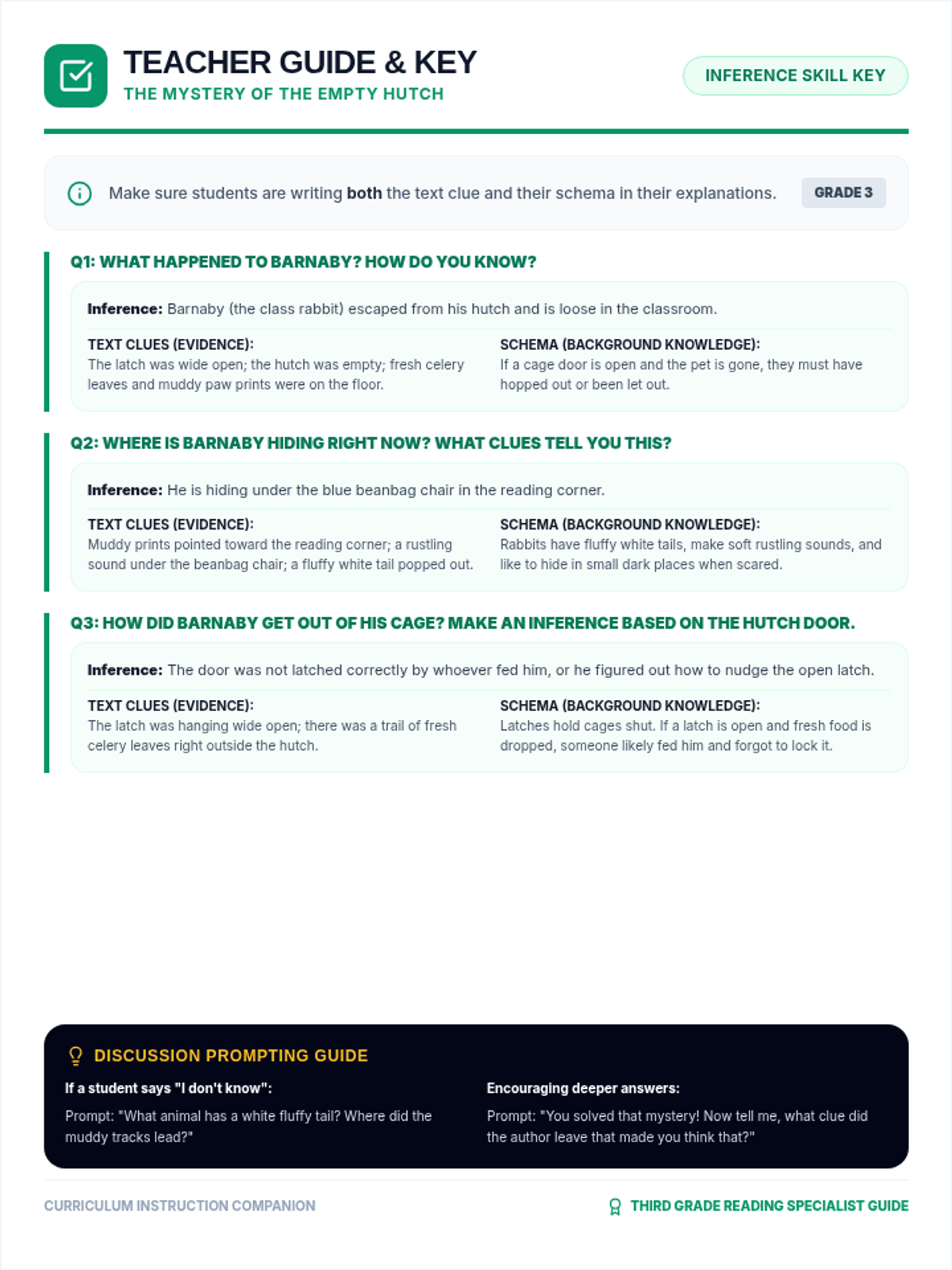
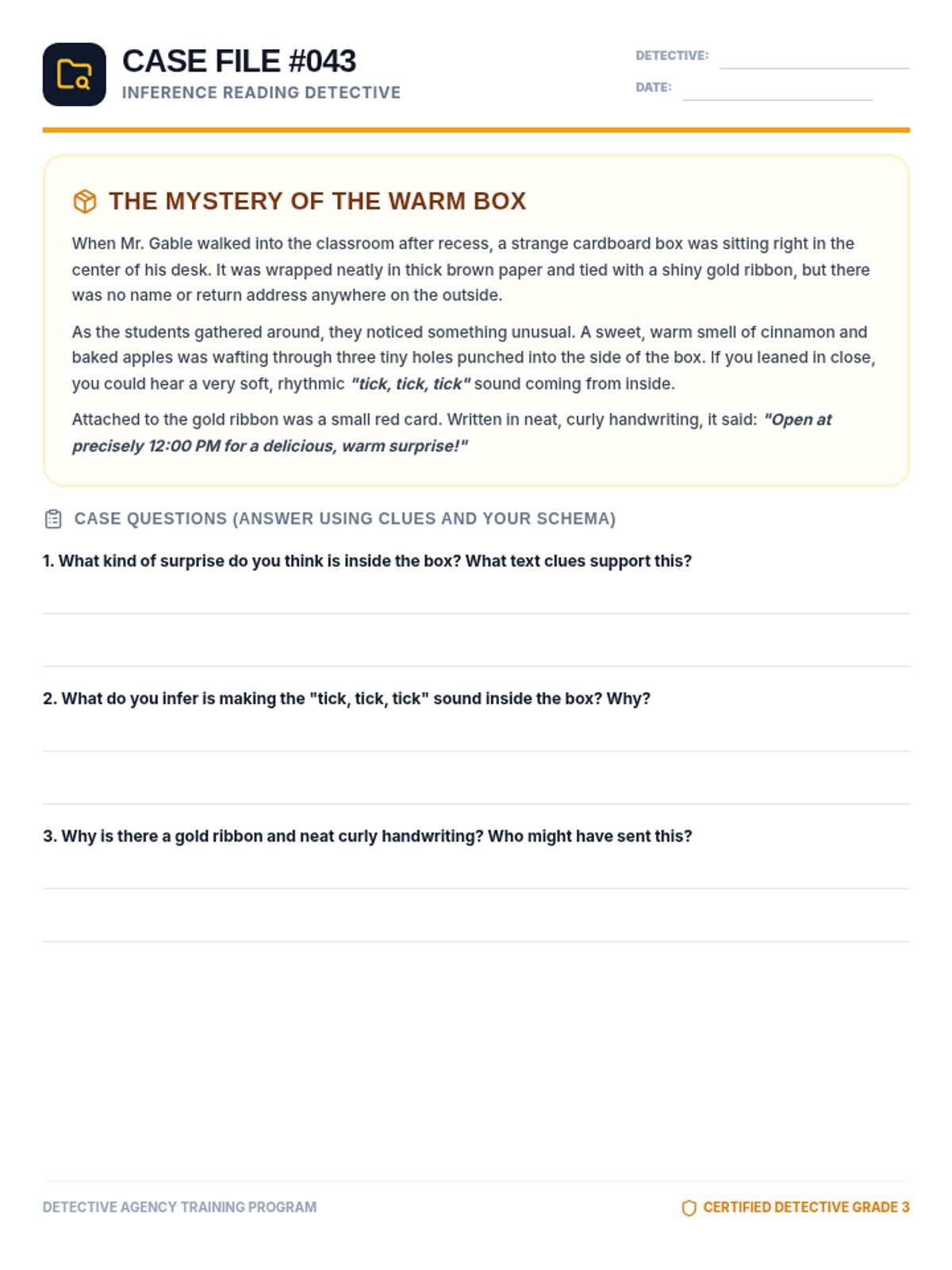
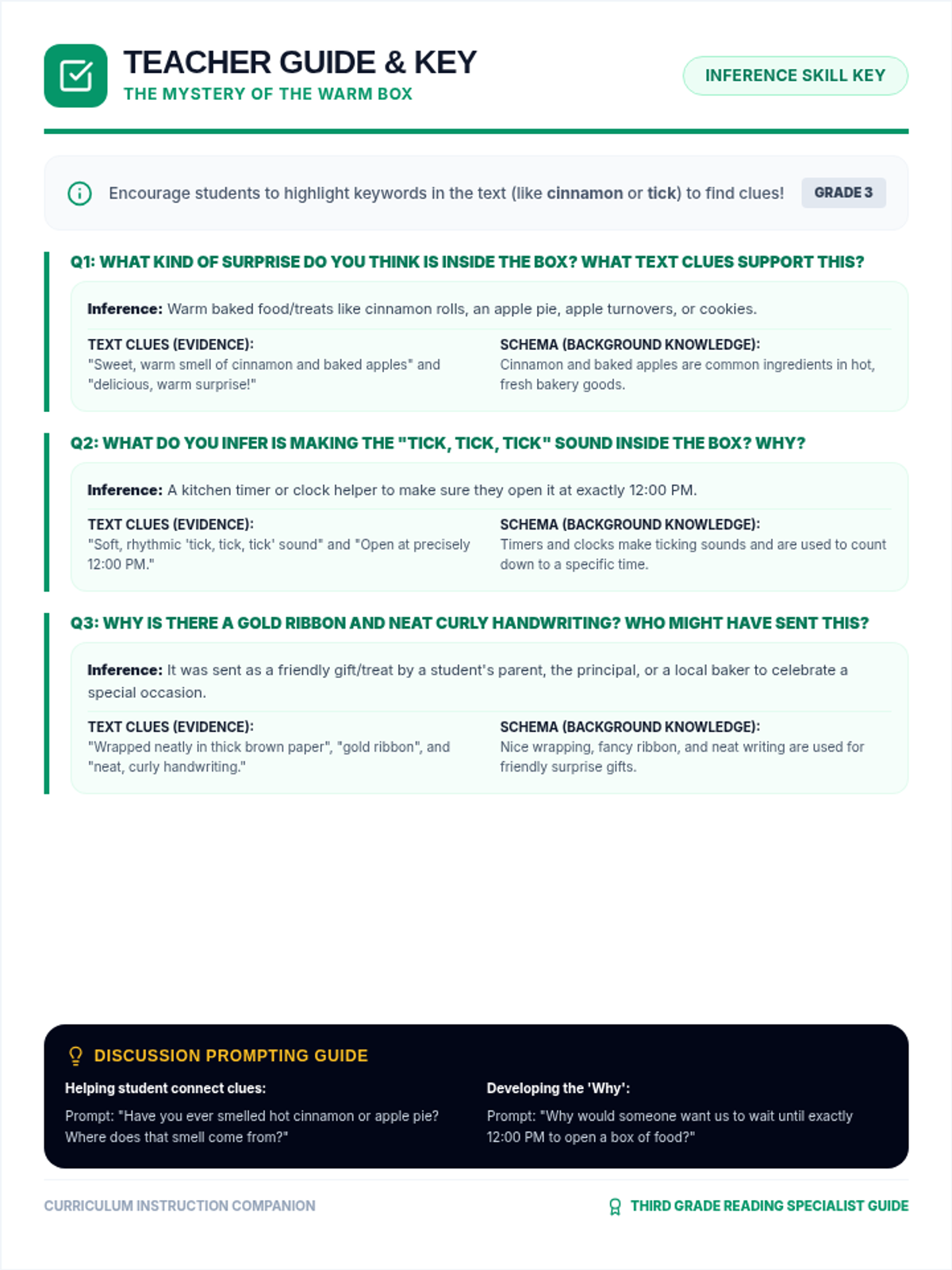
A reading comprehension lesson focused on making inferences. Students will learn to combine clues from the text with their own background knowledge to solve mini-mysteries and answer deep comprehension questions.
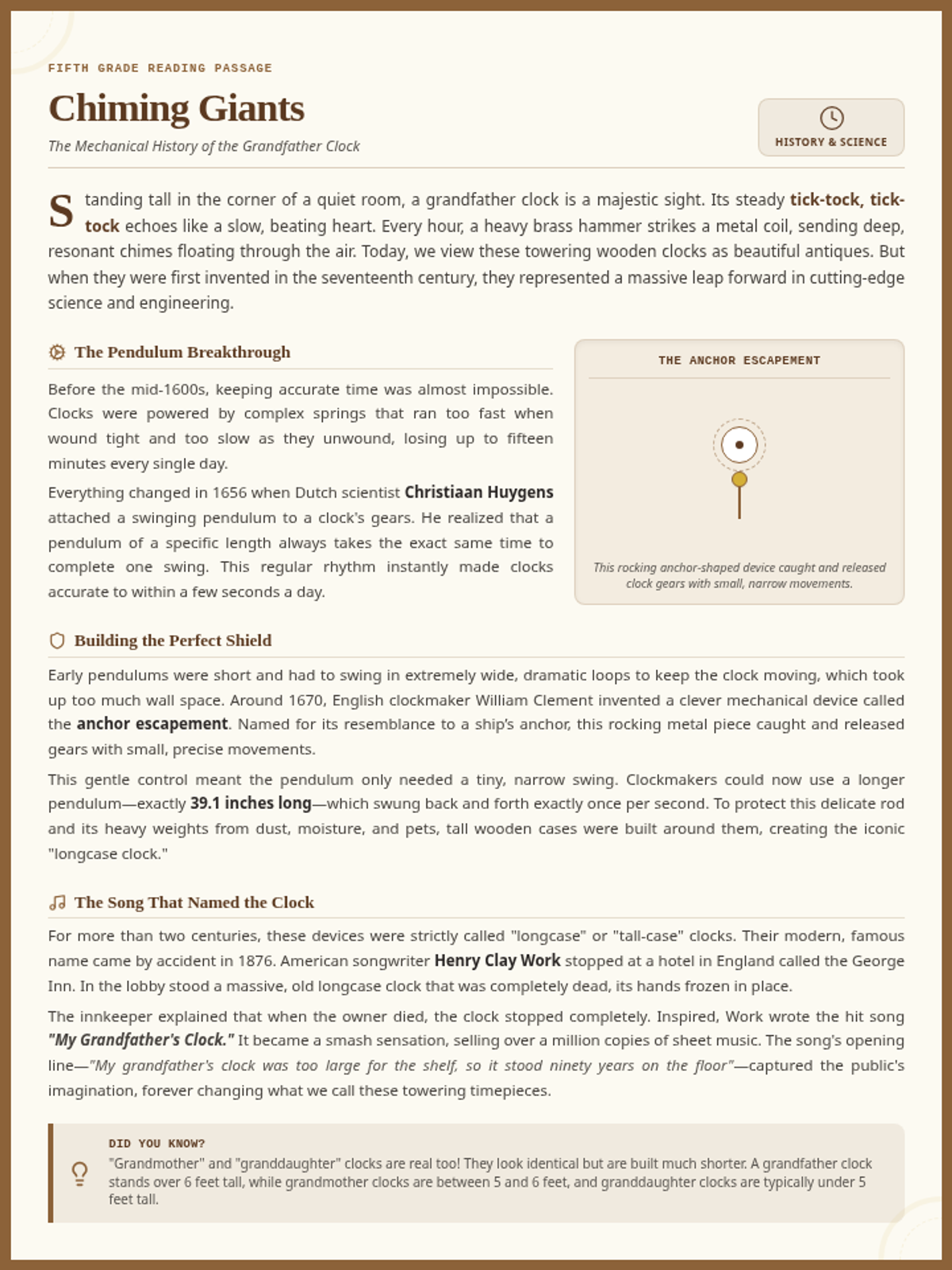
An engaging reading comprehension lesson for fifth graders exploring the fascinating history, mechanism, and origin of grandfather clocks. Students will discover how the anchor escapement and a popular song shaped these iconic timepieces.
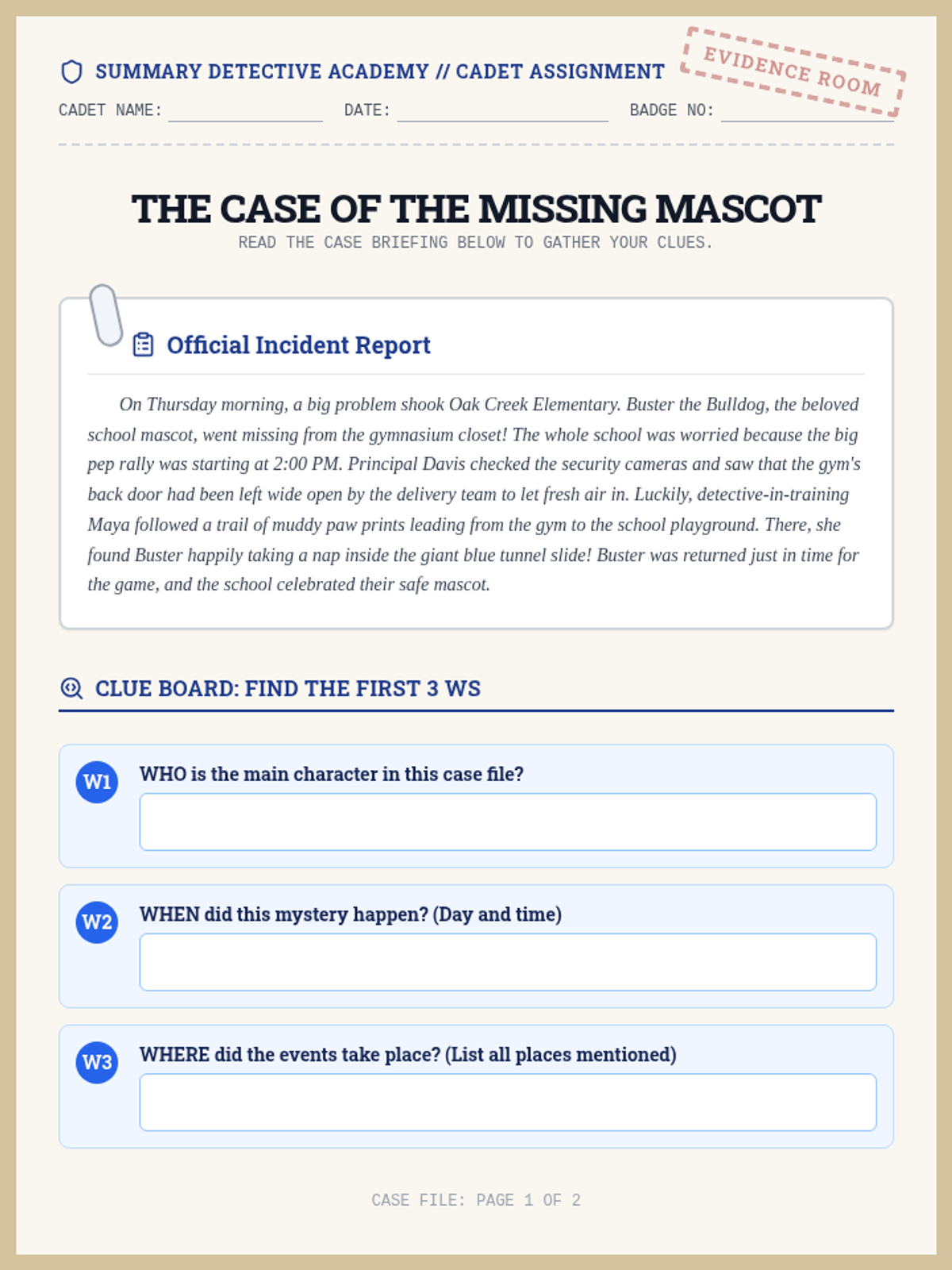
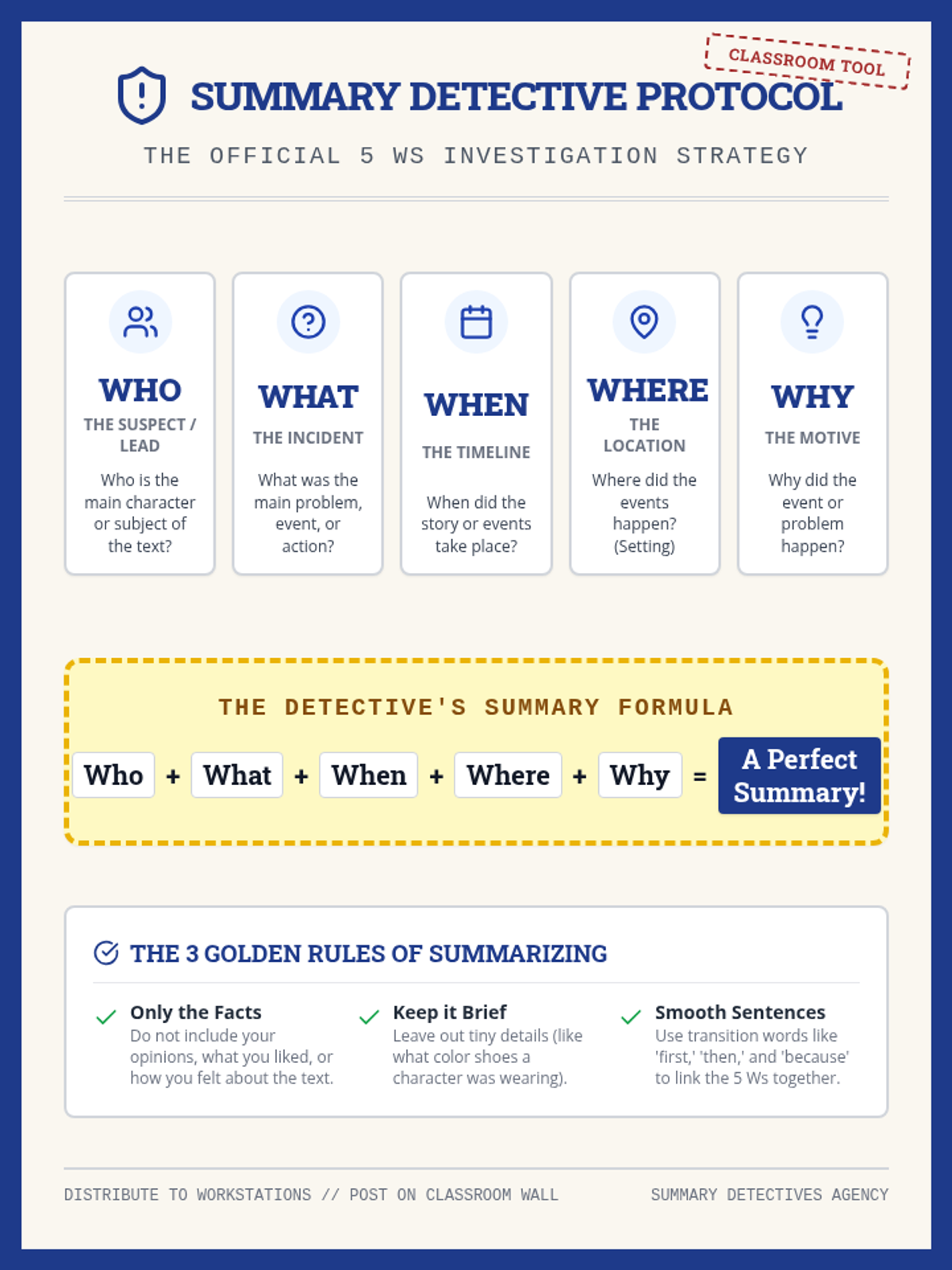
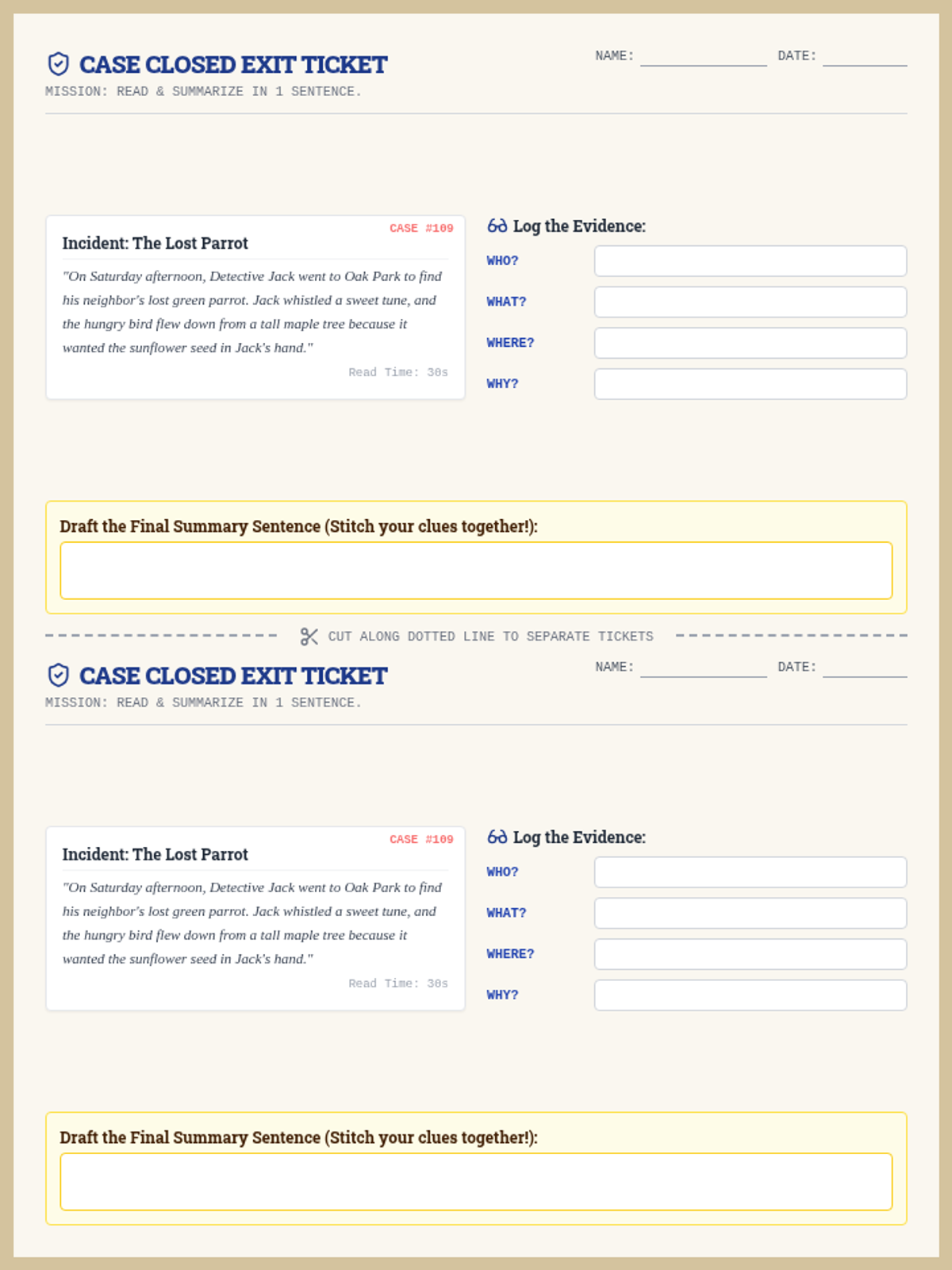
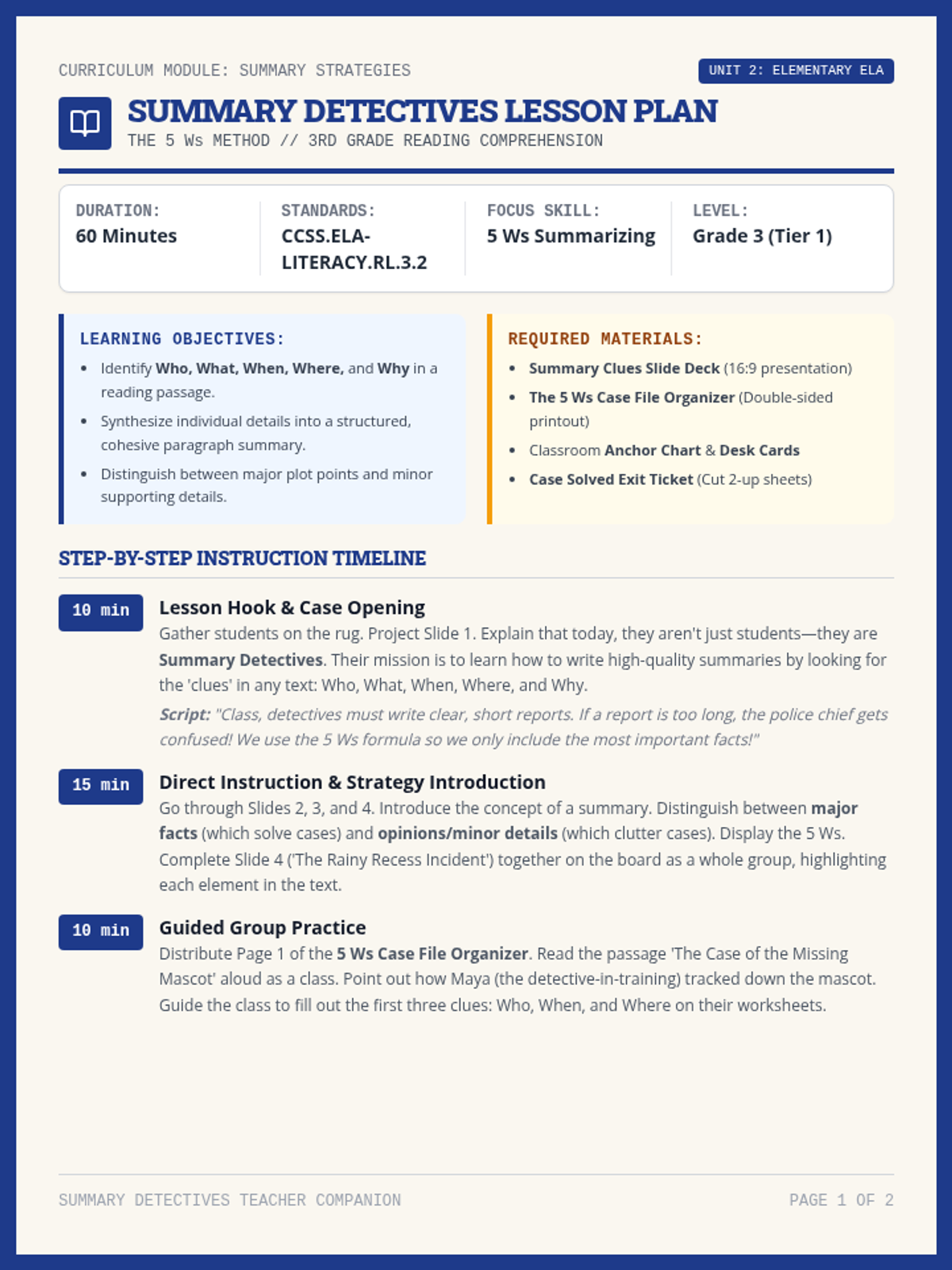
A detective-themed ELA lesson for third graders teaching summary writing using the 5 Ws method. Students become detectives to track down Who, What, When, Where, and Why to solve the Case of the Missing Mascot and write a comprehensive summary.
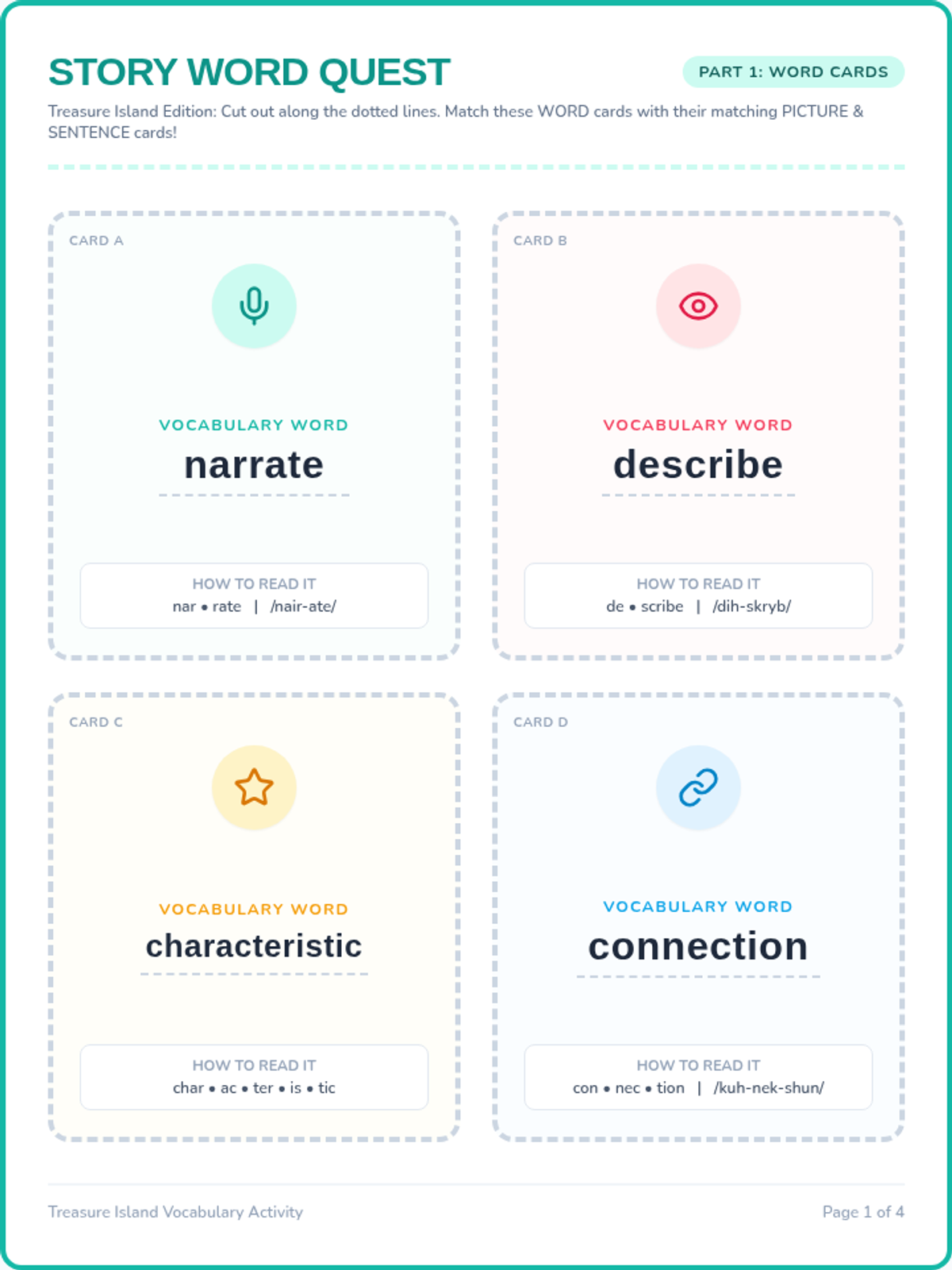
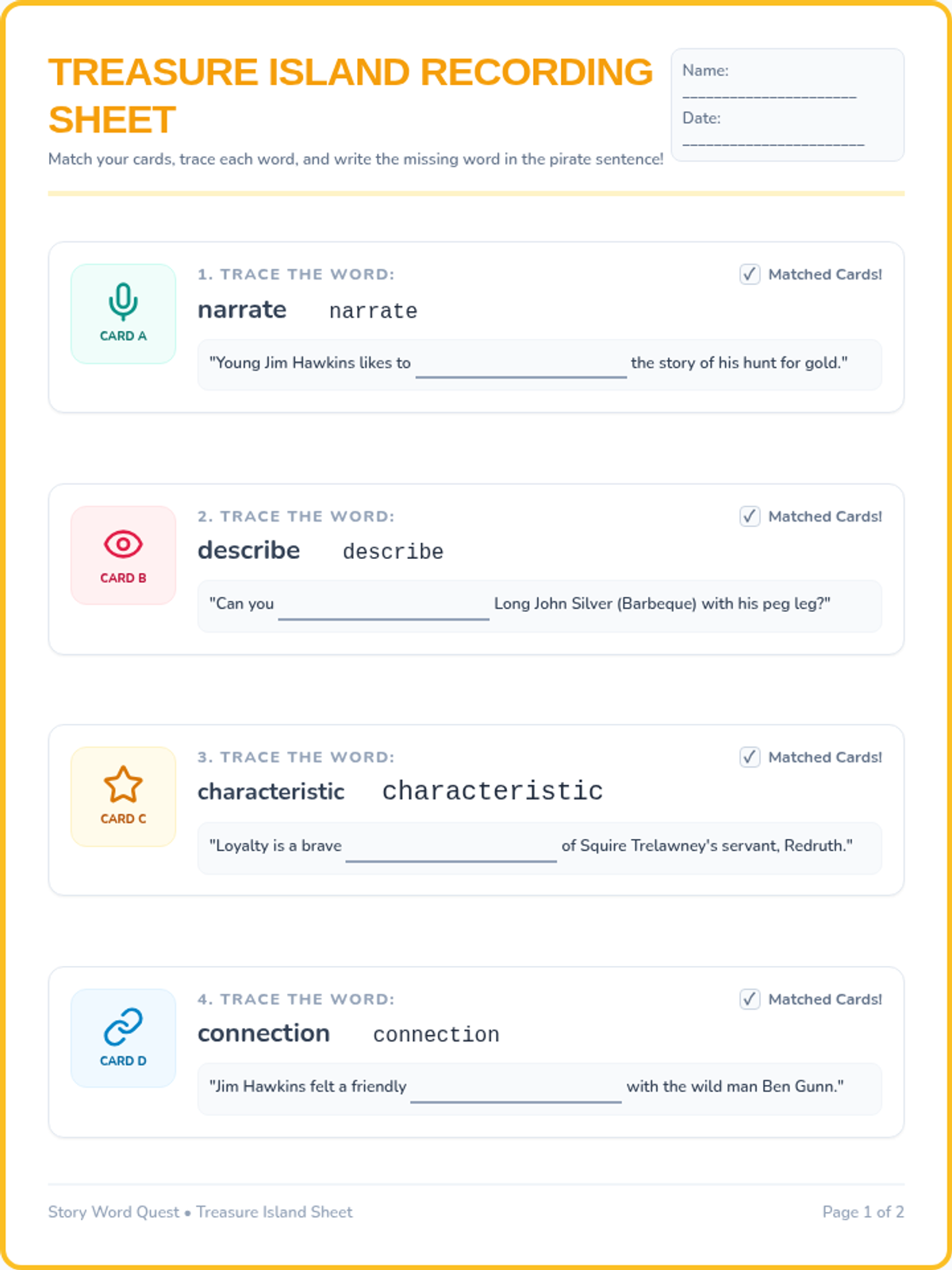
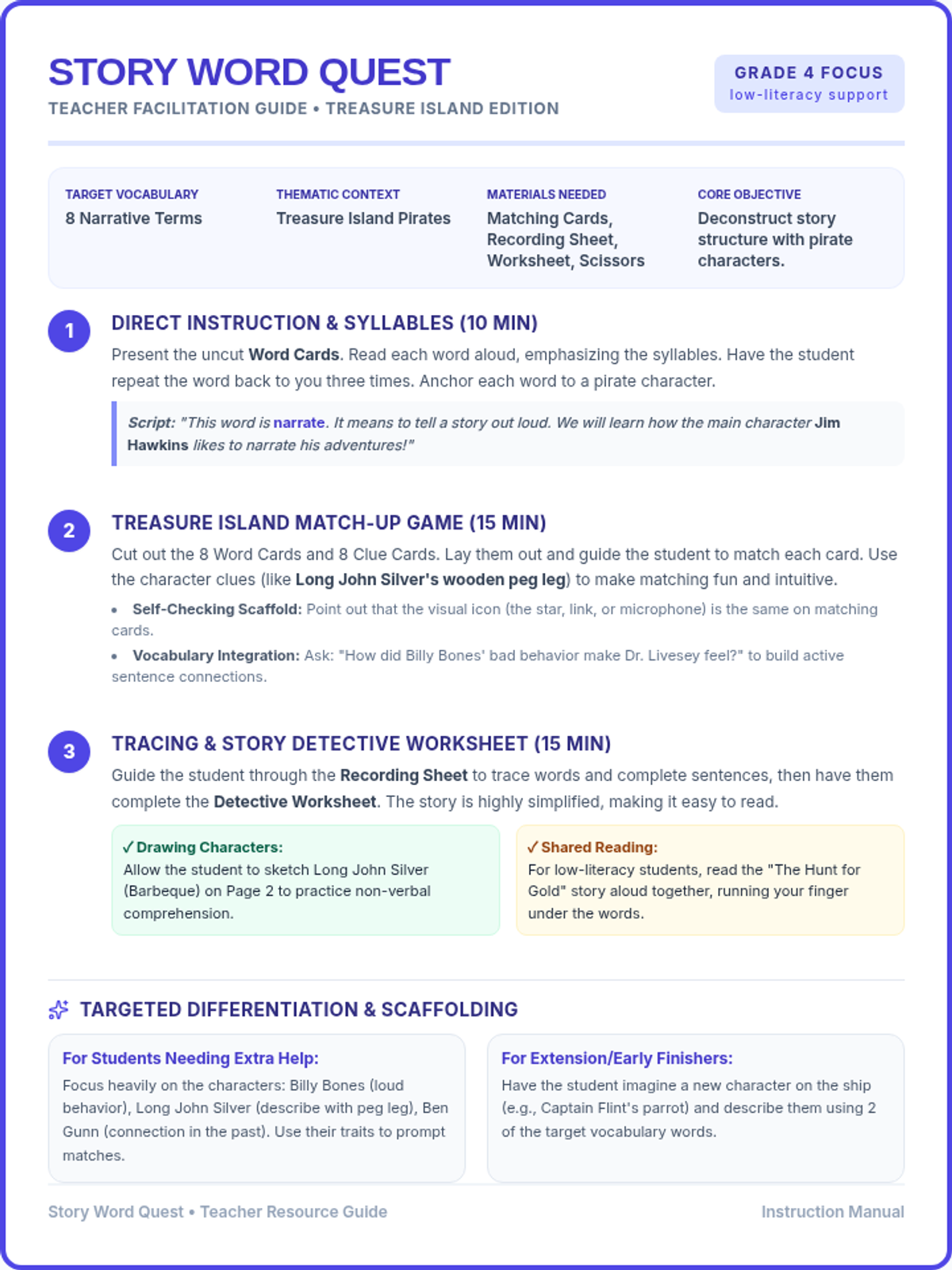
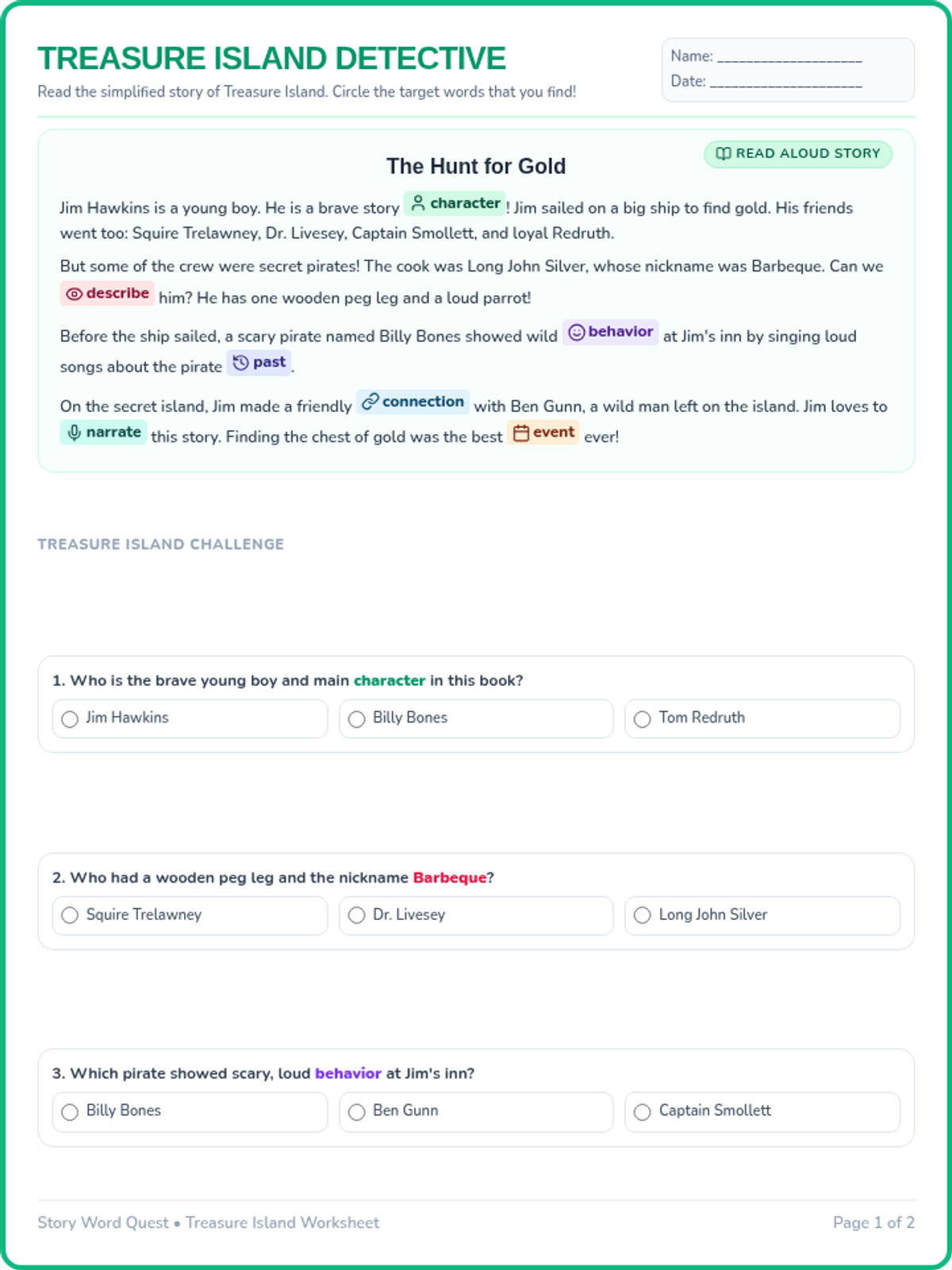
A targeted narrative vocabulary lesson designed for 4th-grade students with low literacy. This lesson features visual matching cards, a sentence-completion recording sheet, and a detailed teacher facilitation guide focusing on eight core narrative academic terms.
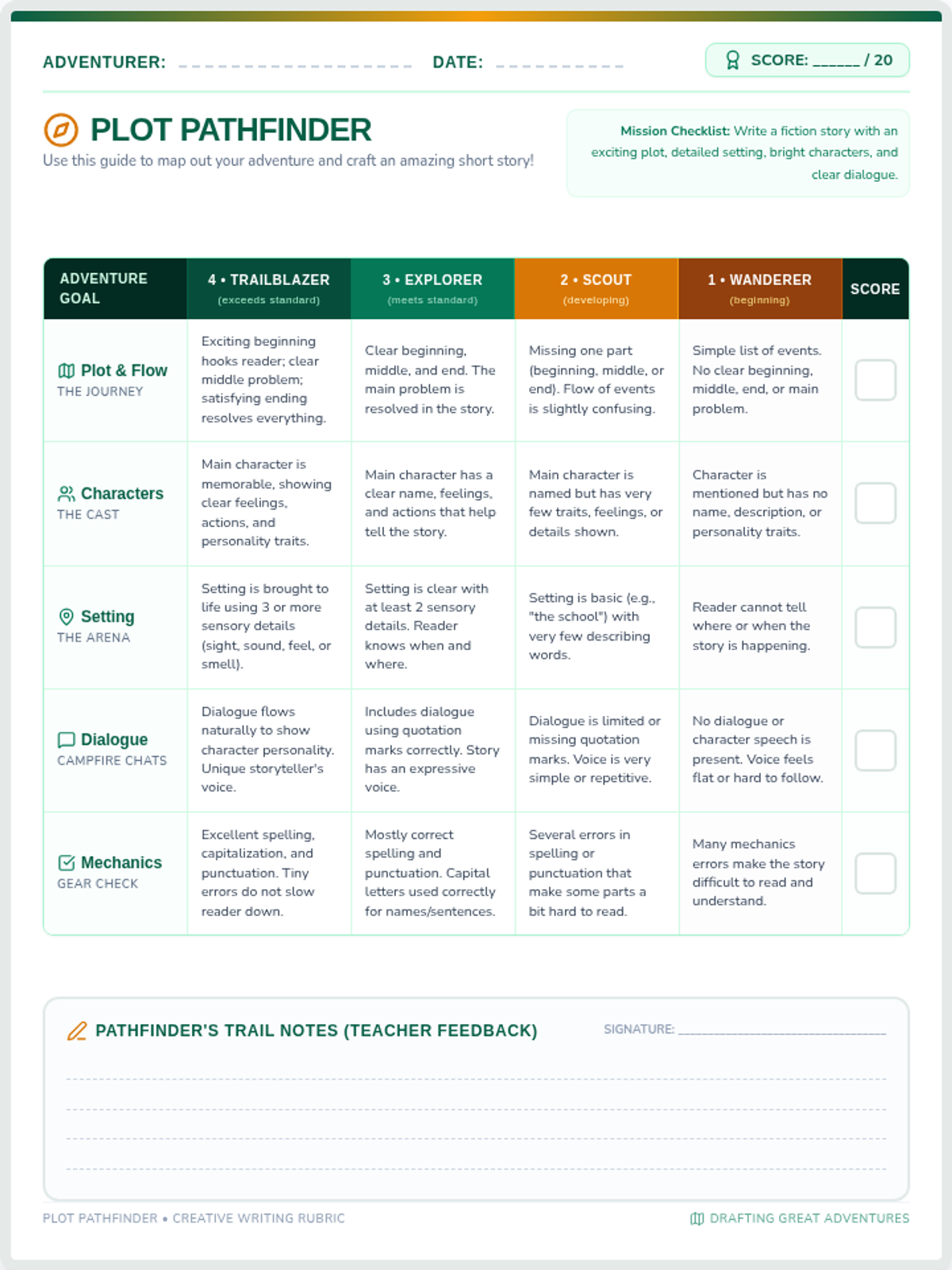
A foundational unit introducing elementary students to the elements of narrative writing, including character creation, setting development, plot structuring, and standard mechanics.
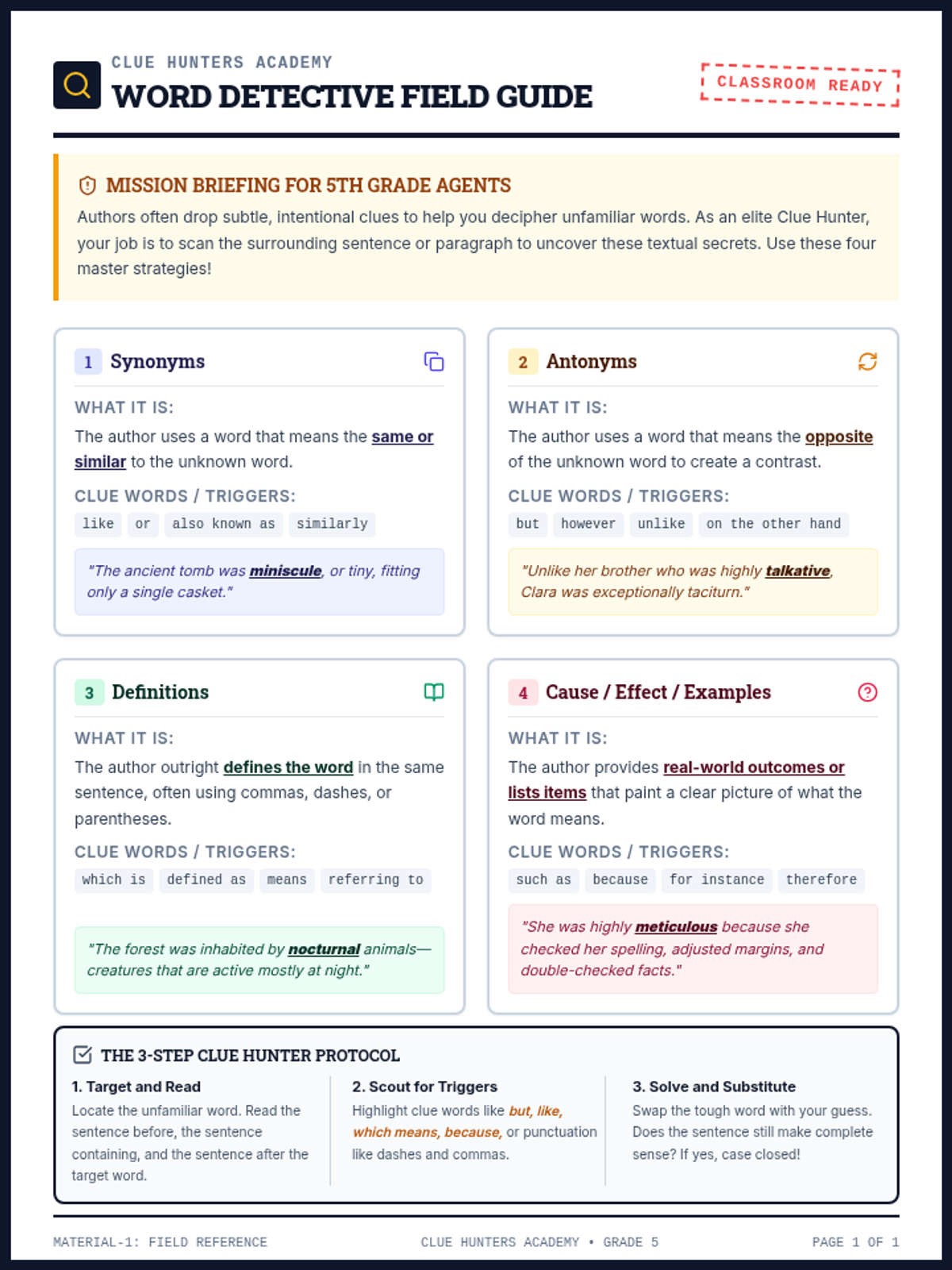
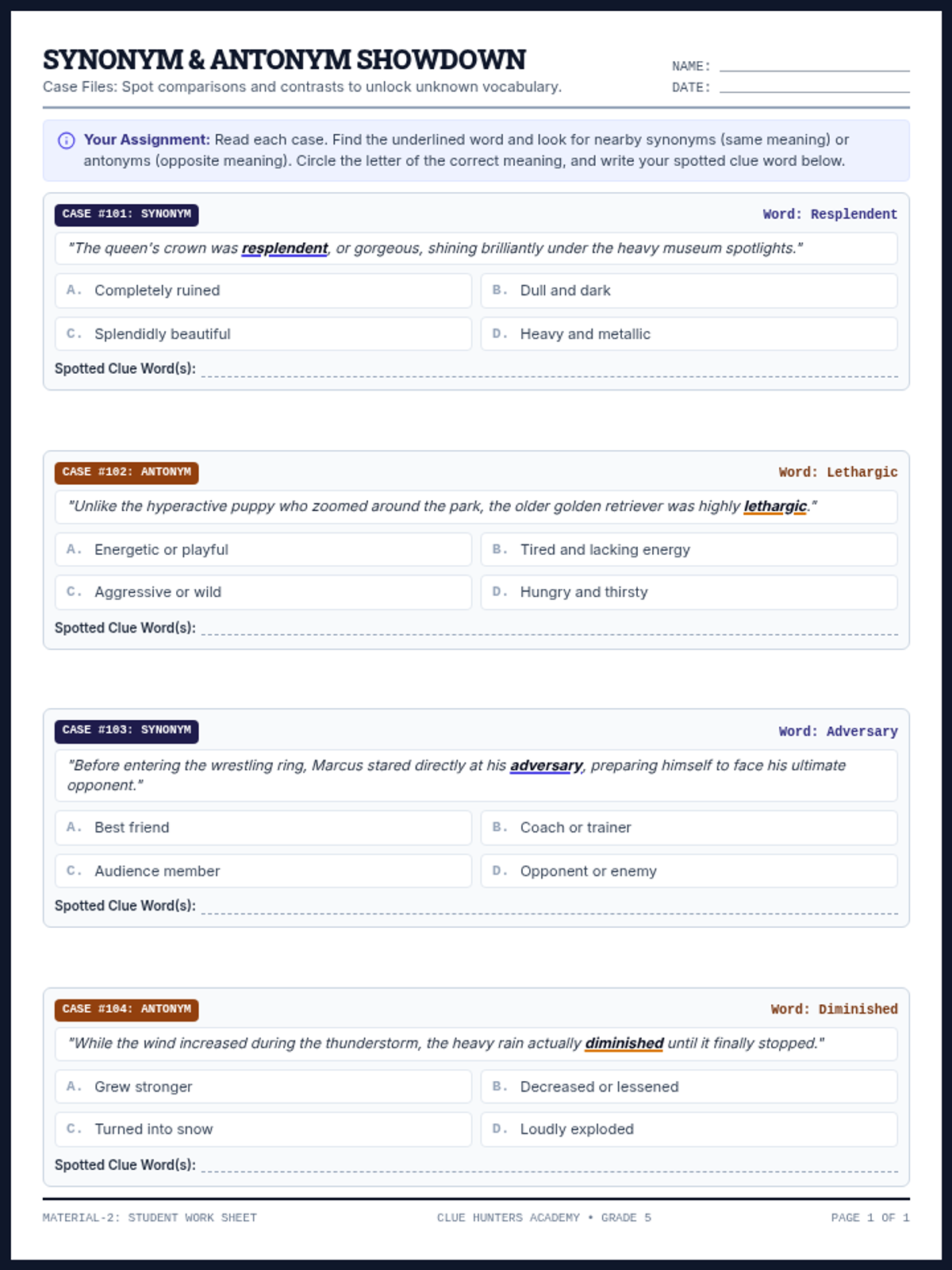
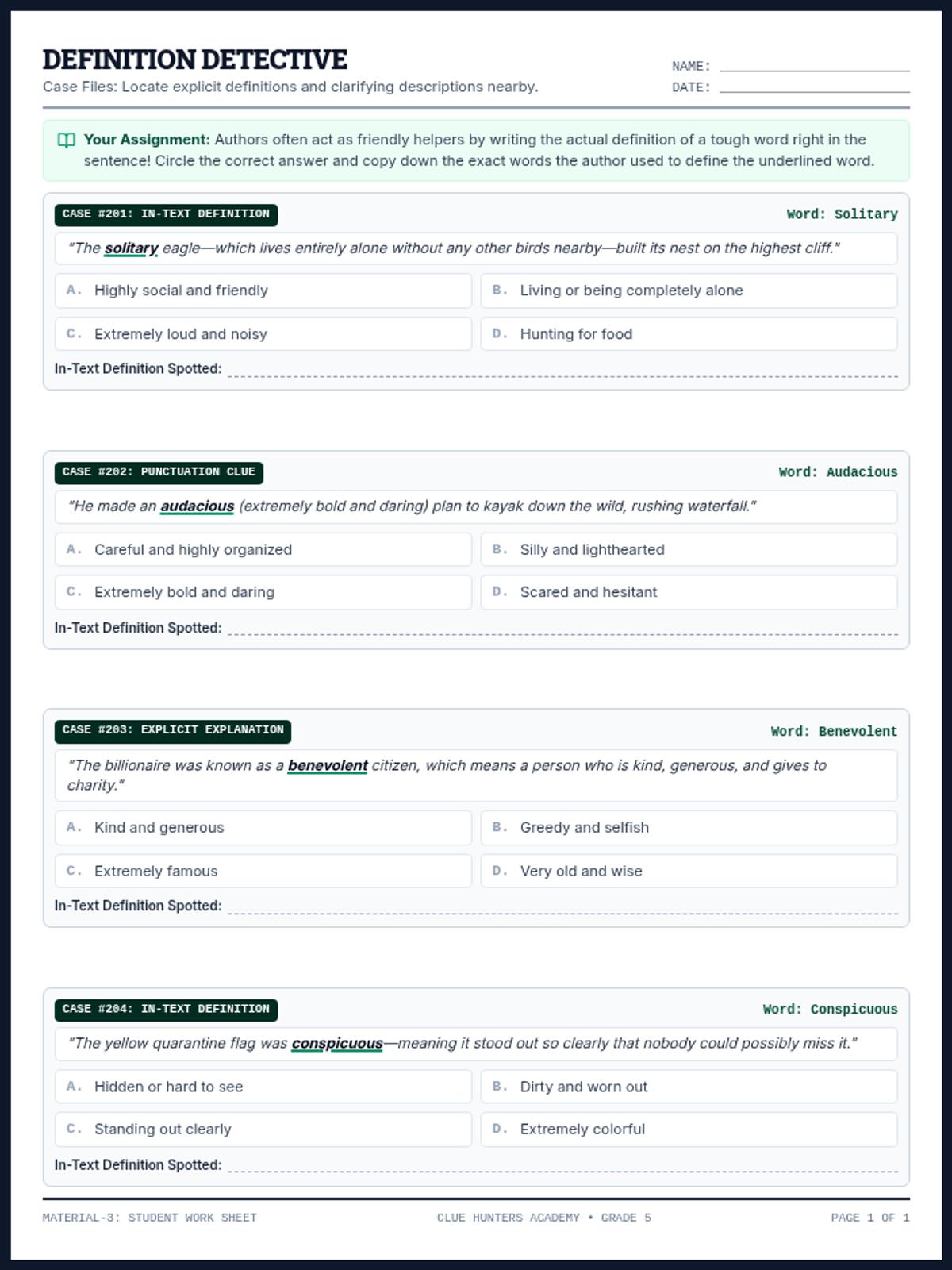
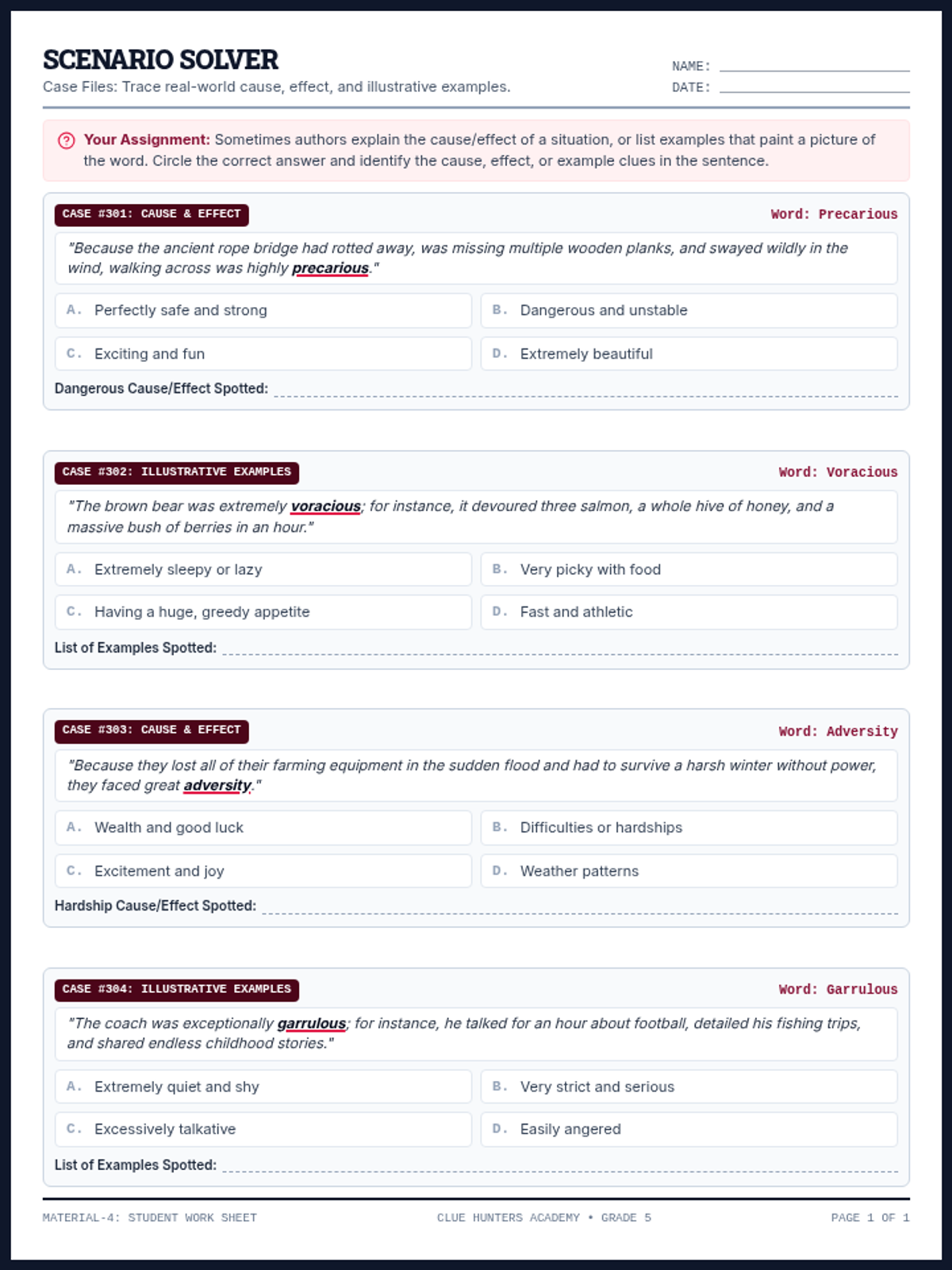
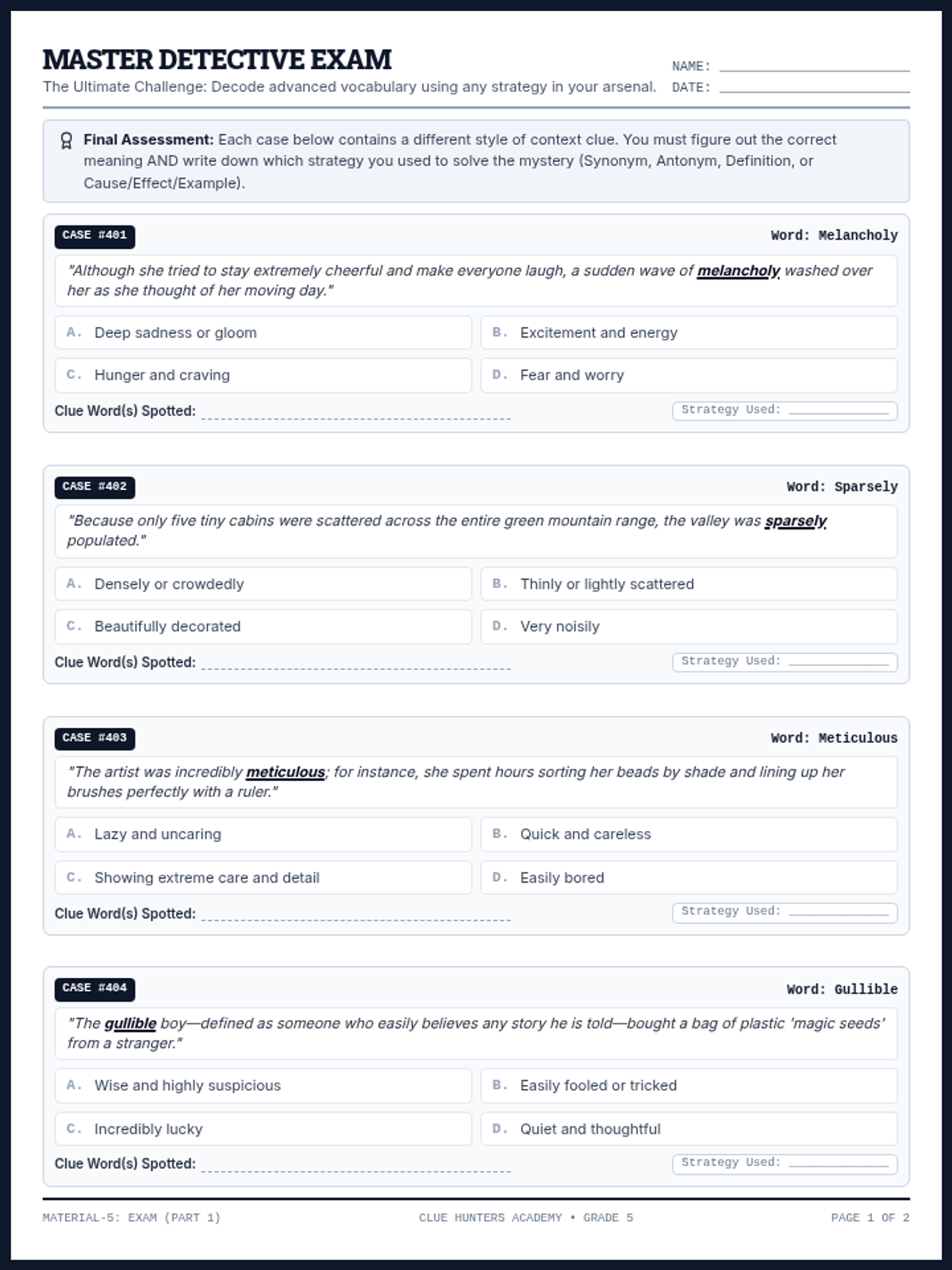
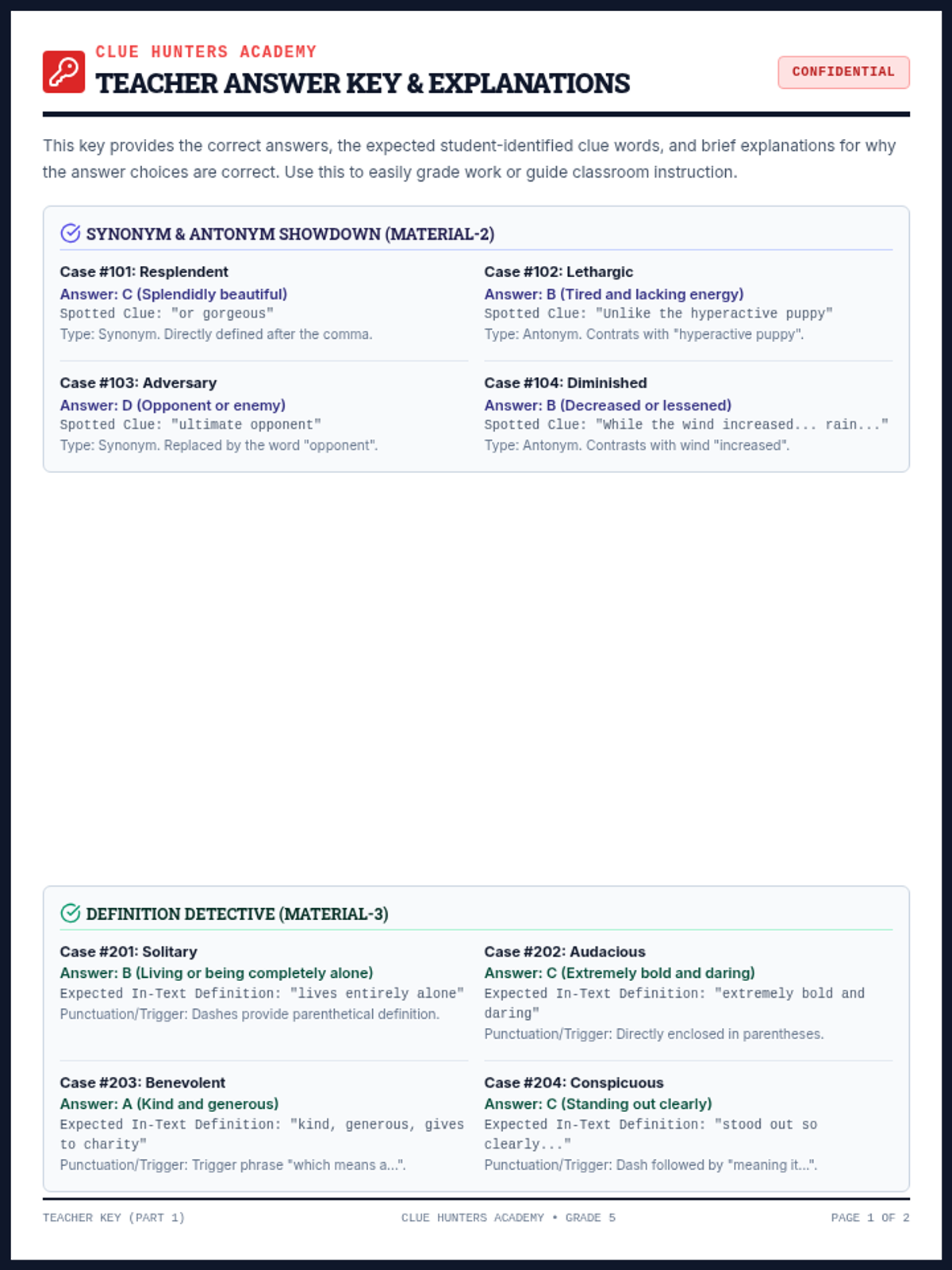
A comprehensive 5th-grade context clues practice unit featuring a student reference guide, four progressive worksheets focusing on specific clue types, and a complete teacher answer key.
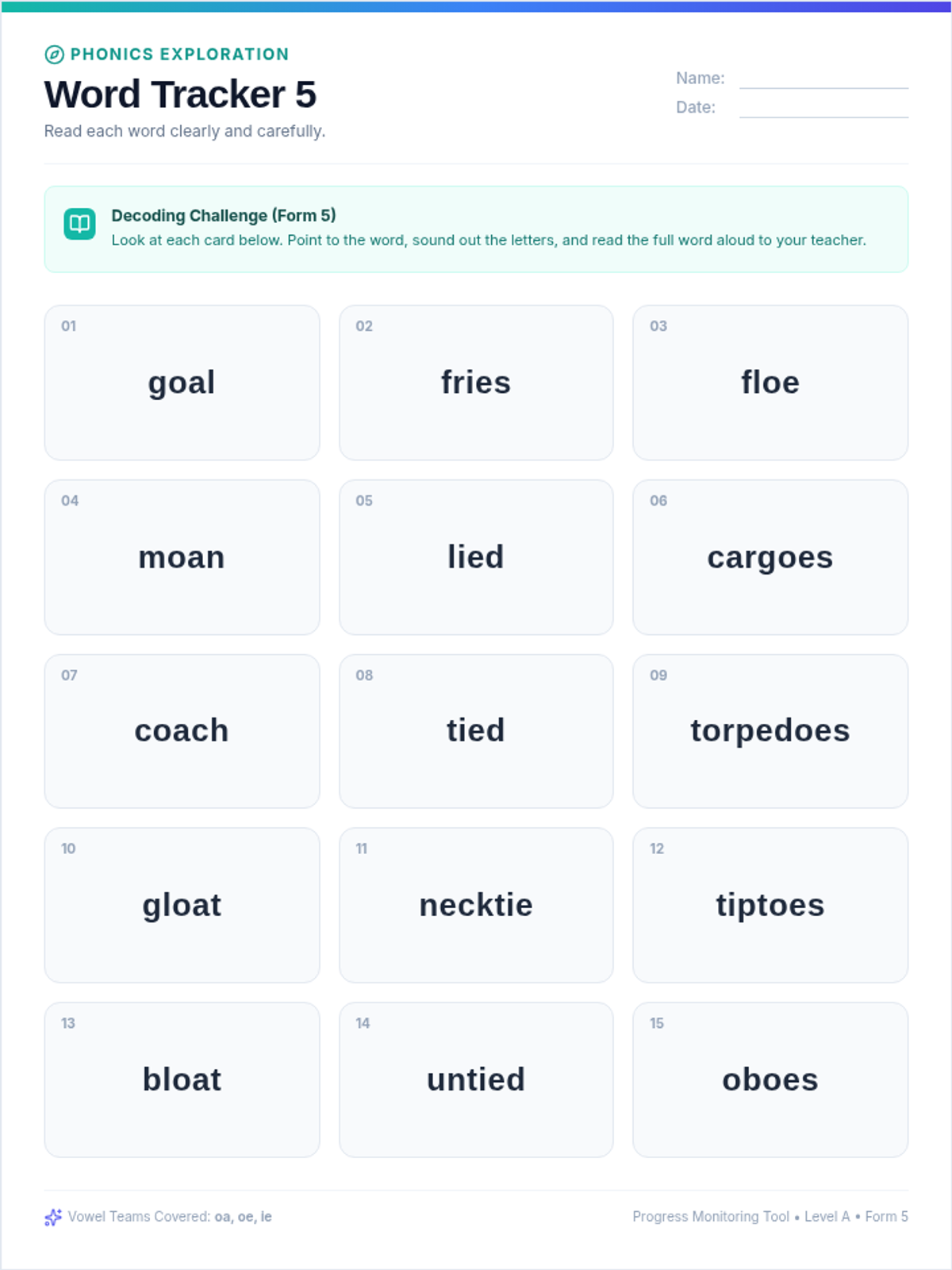
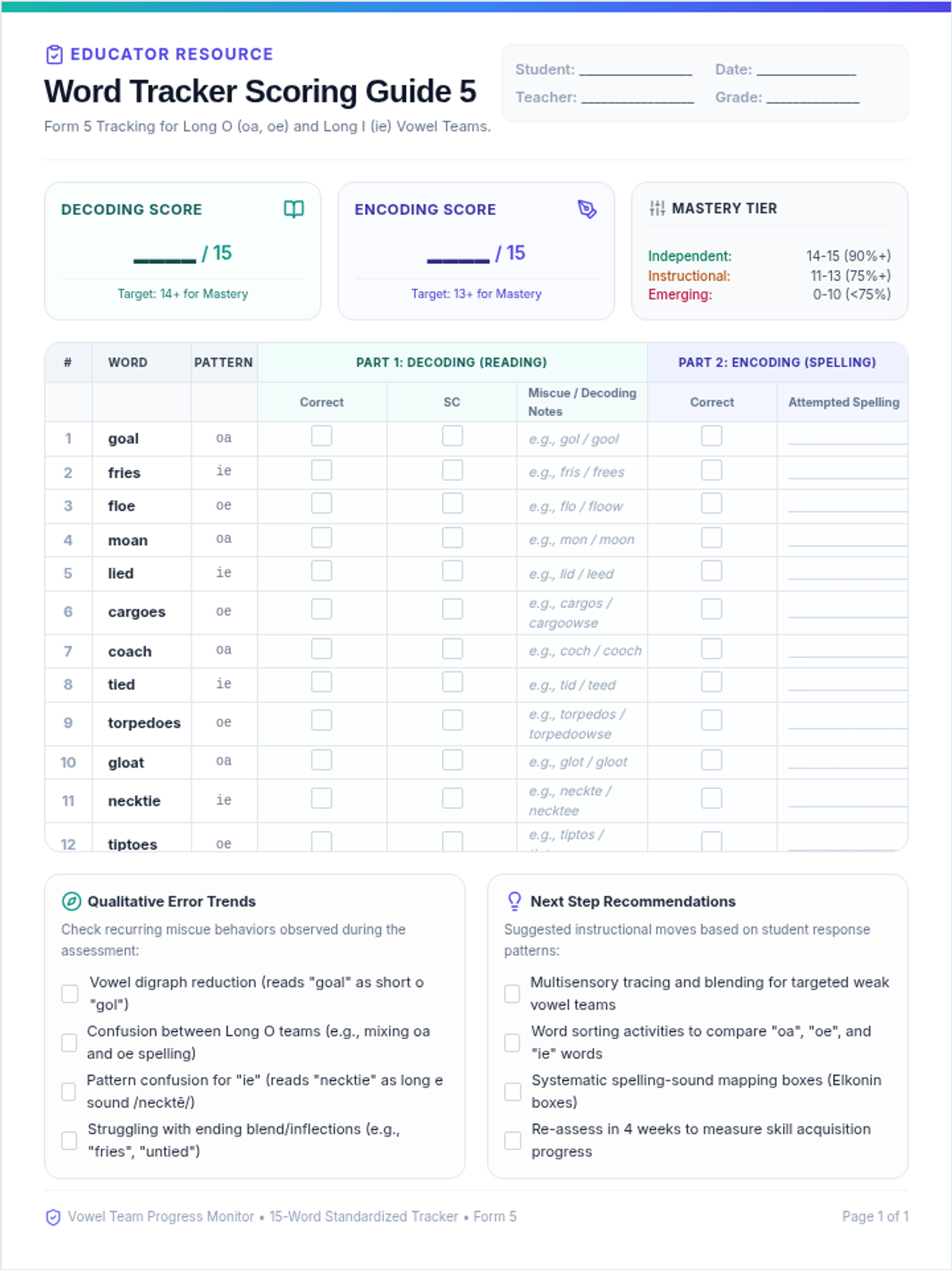
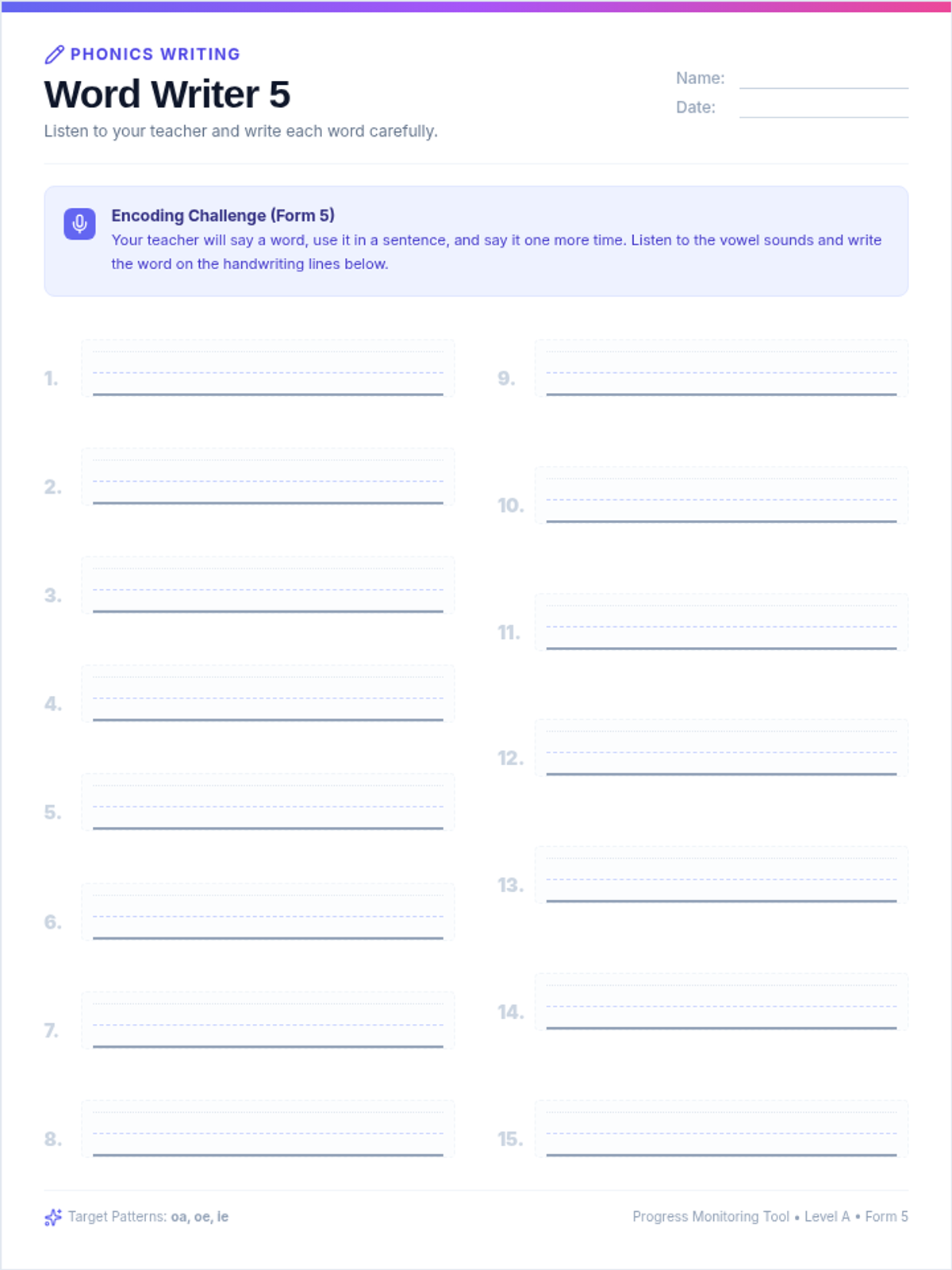
Form 5 of the phonics progress monitoring sequence. Tracks student decoding and encoding of an equivalent parallel set of 15 long o (oa, oe) and long i (ie) words.
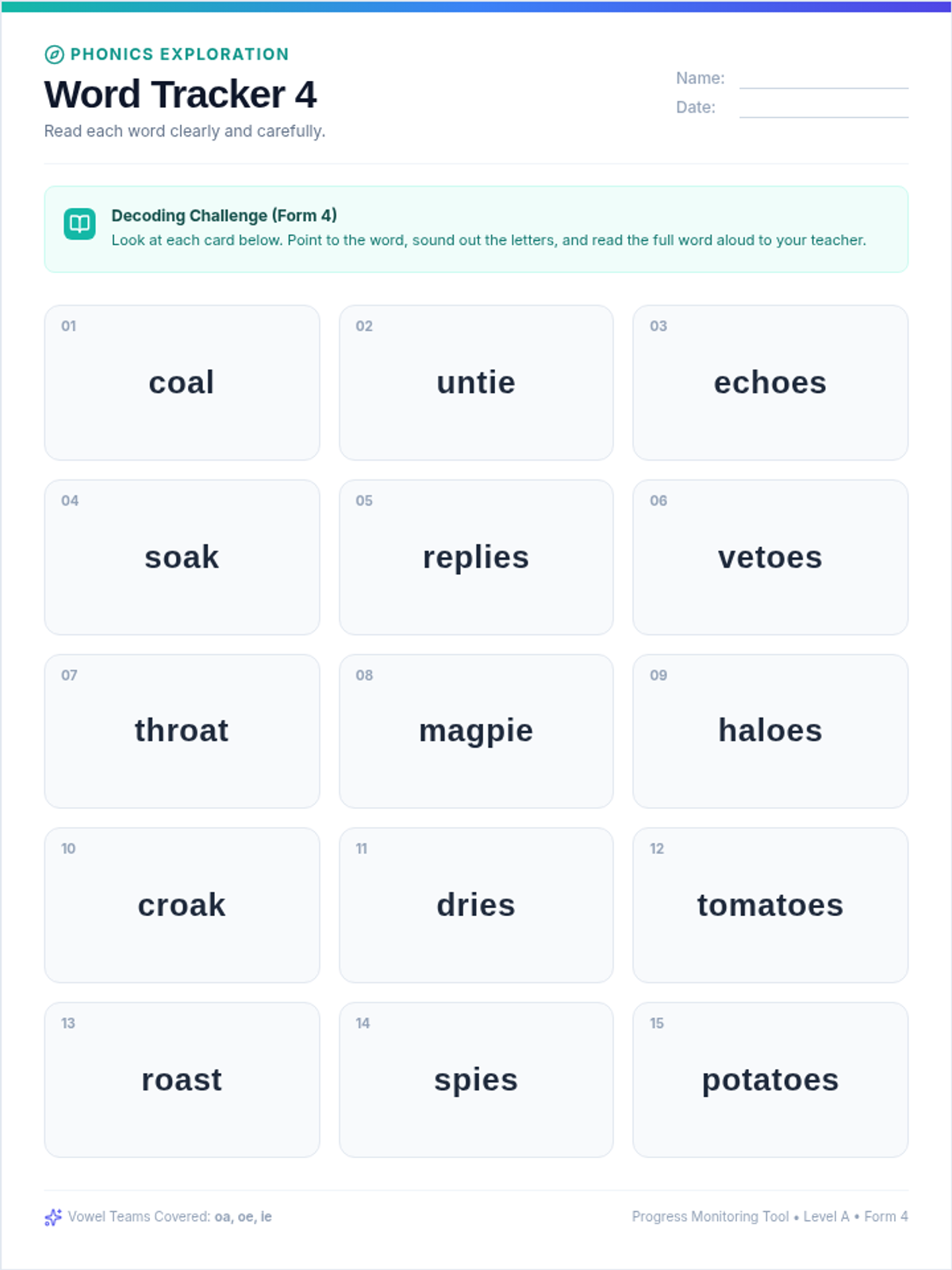
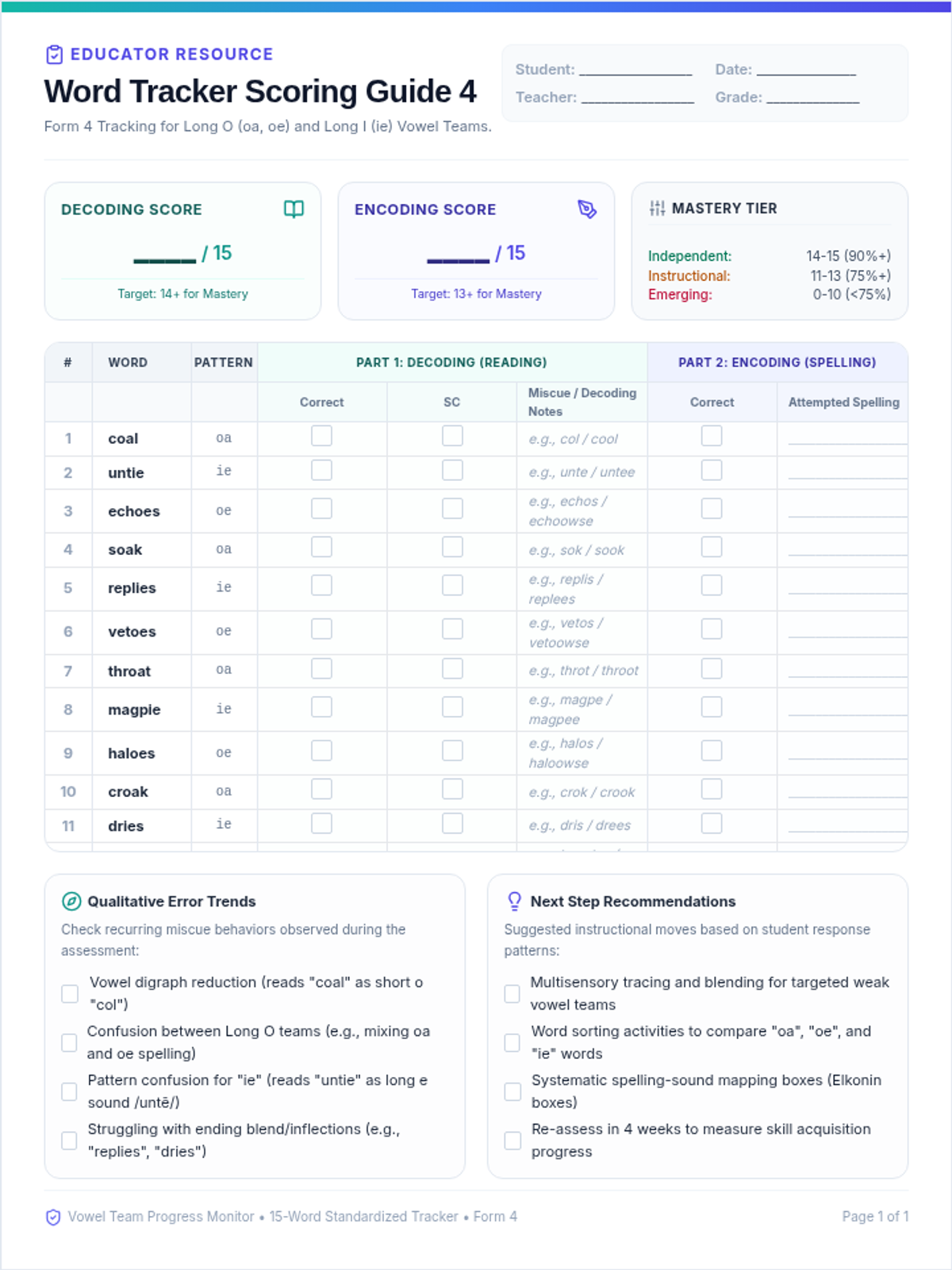
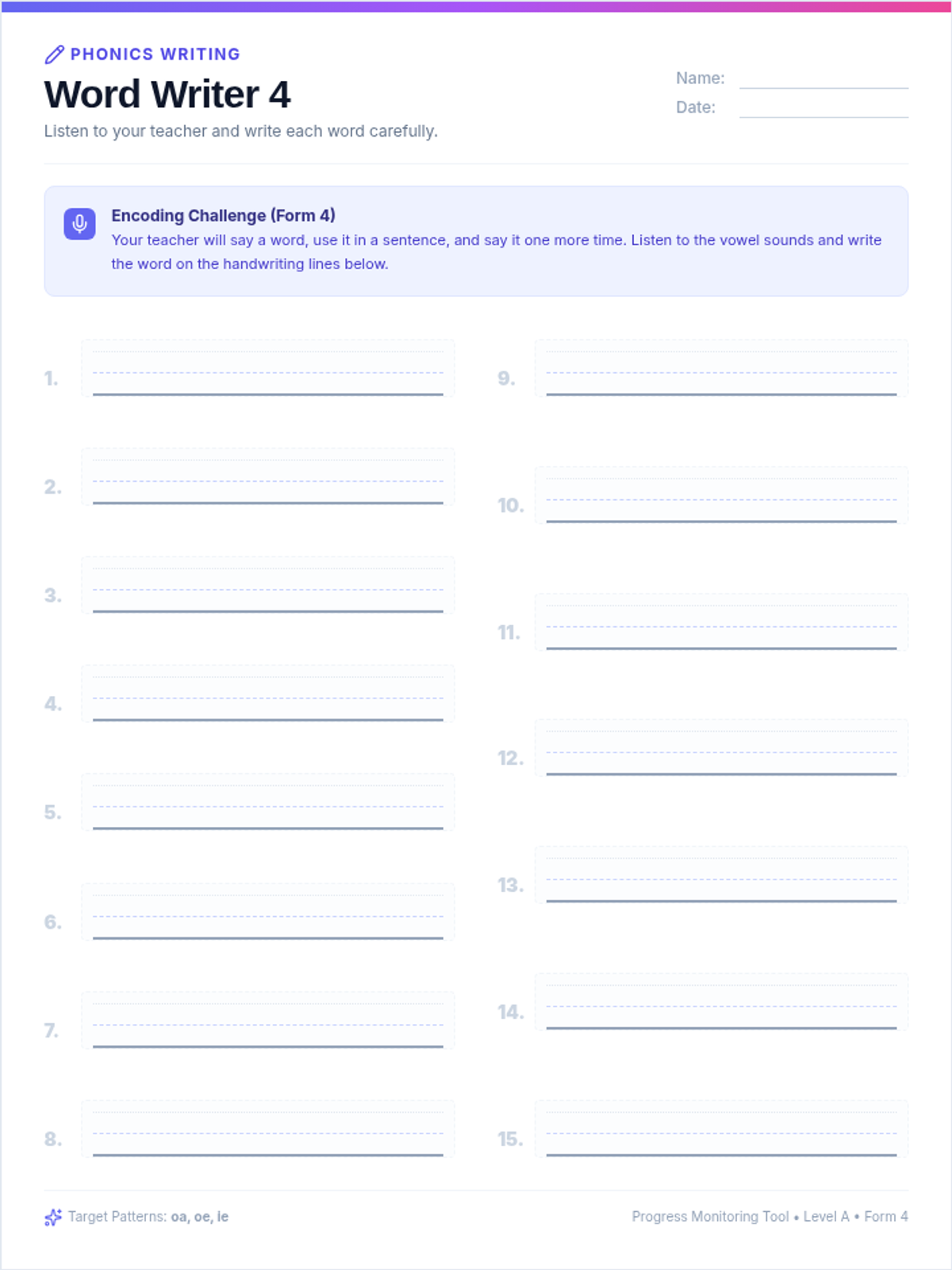
Form 4 of the phonics progress monitoring sequence. Tracks student decoding and encoding of an equivalent parallel set of 15 long o (oa, oe) and long i (ie) words.
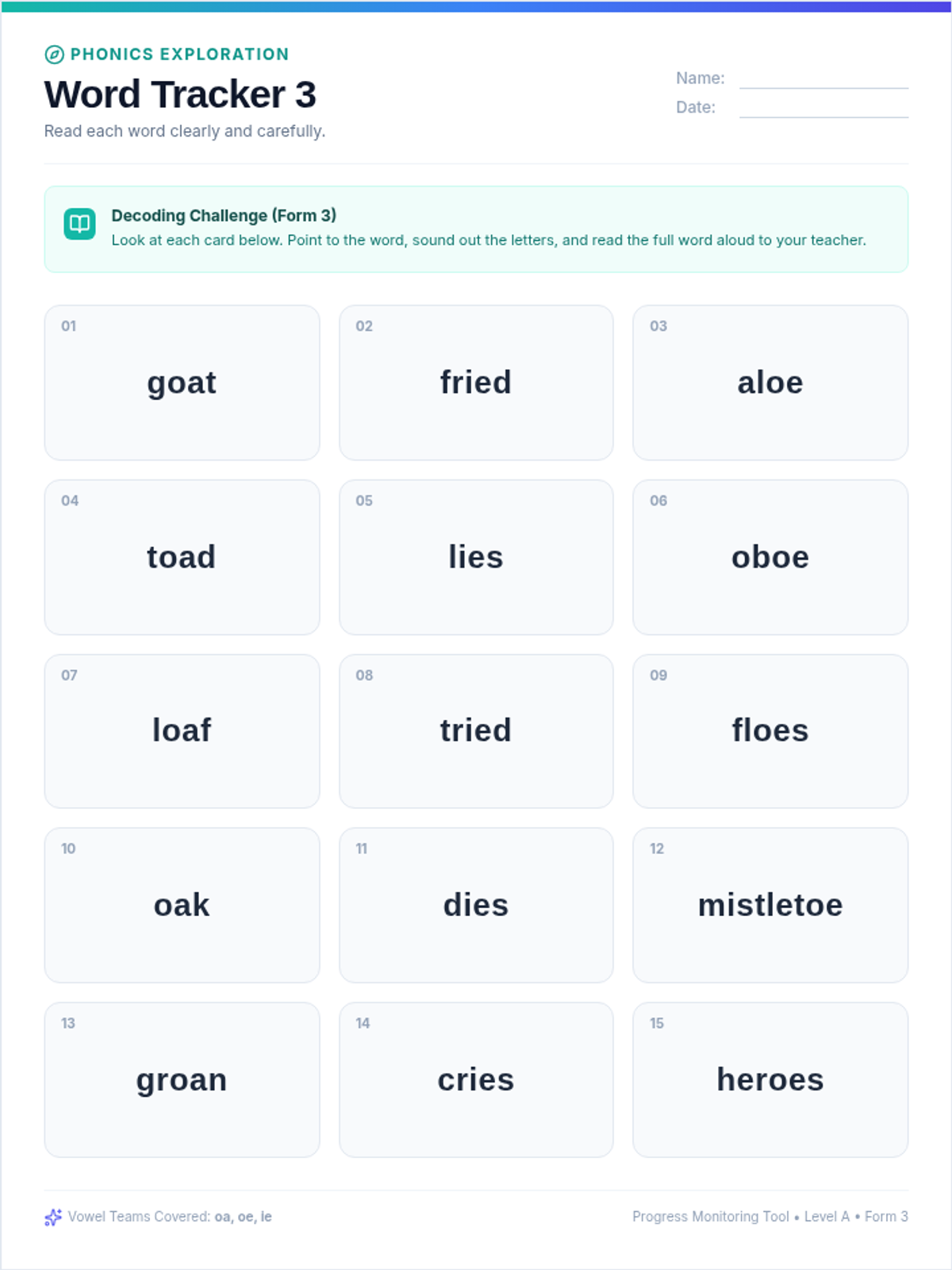
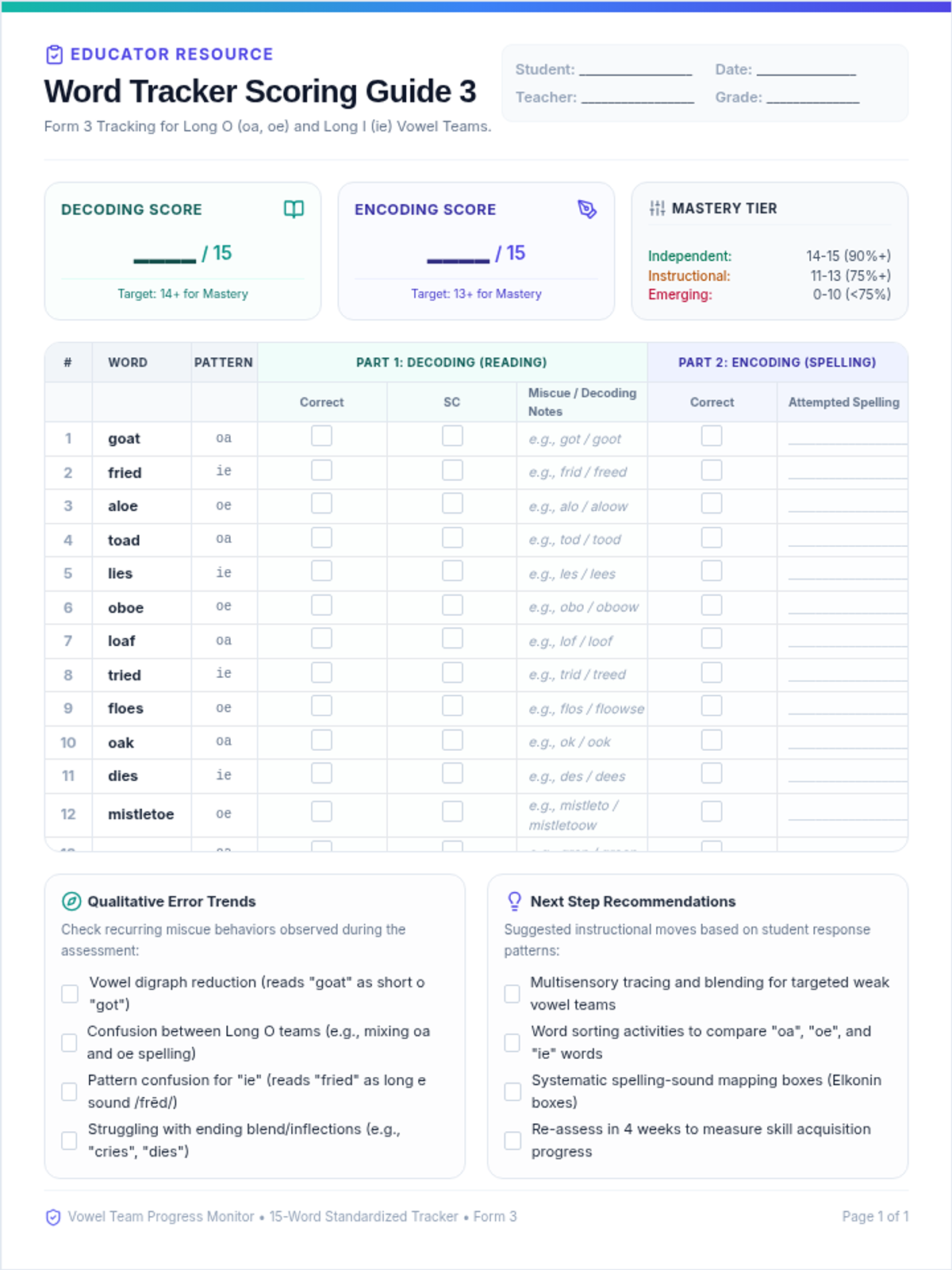
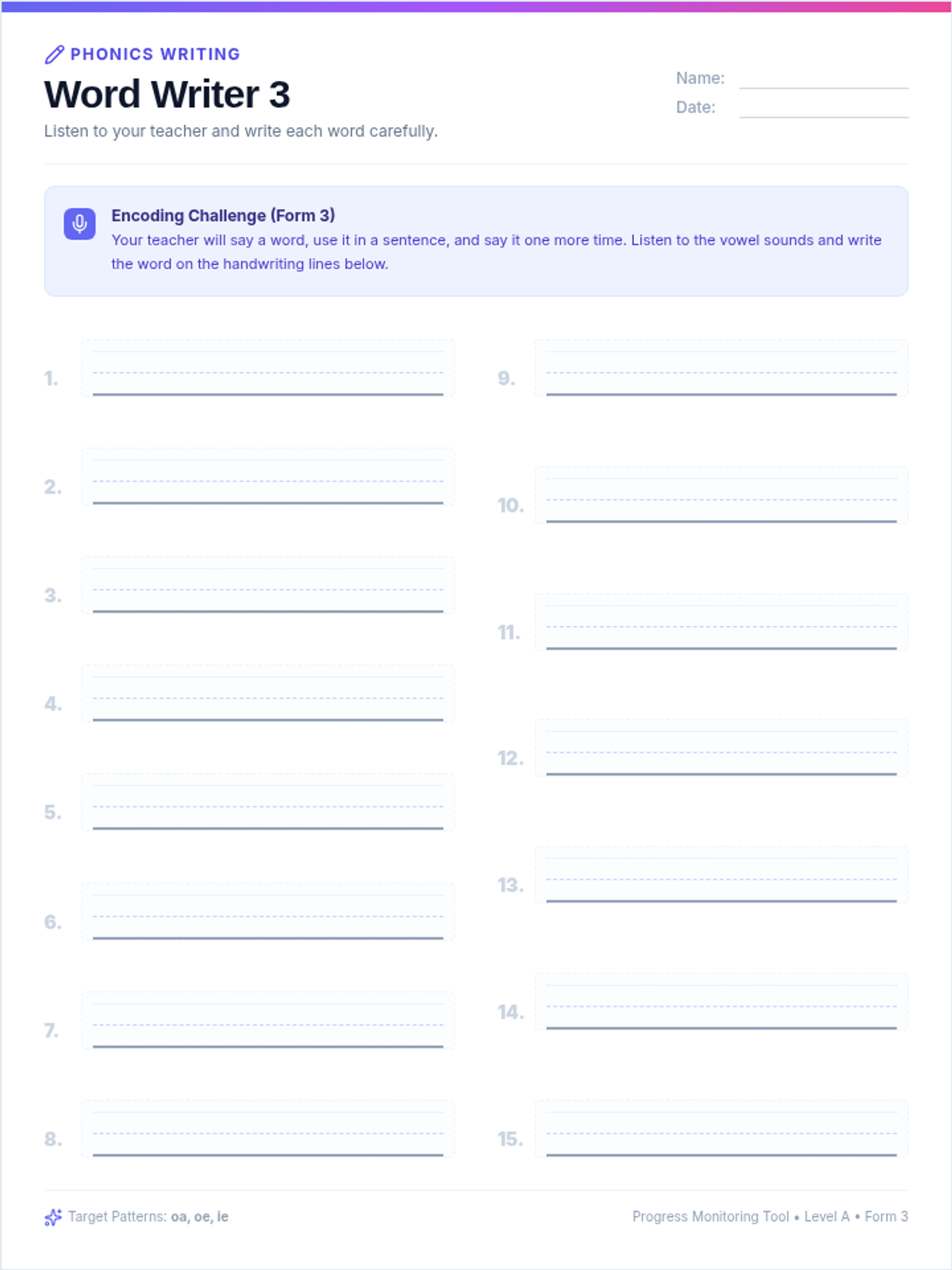
Form 3 of the phonics progress monitoring sequence. Tracks student decoding and encoding of an equivalent parallel set of 15 long o (oa, oe) and long i (ie) words.
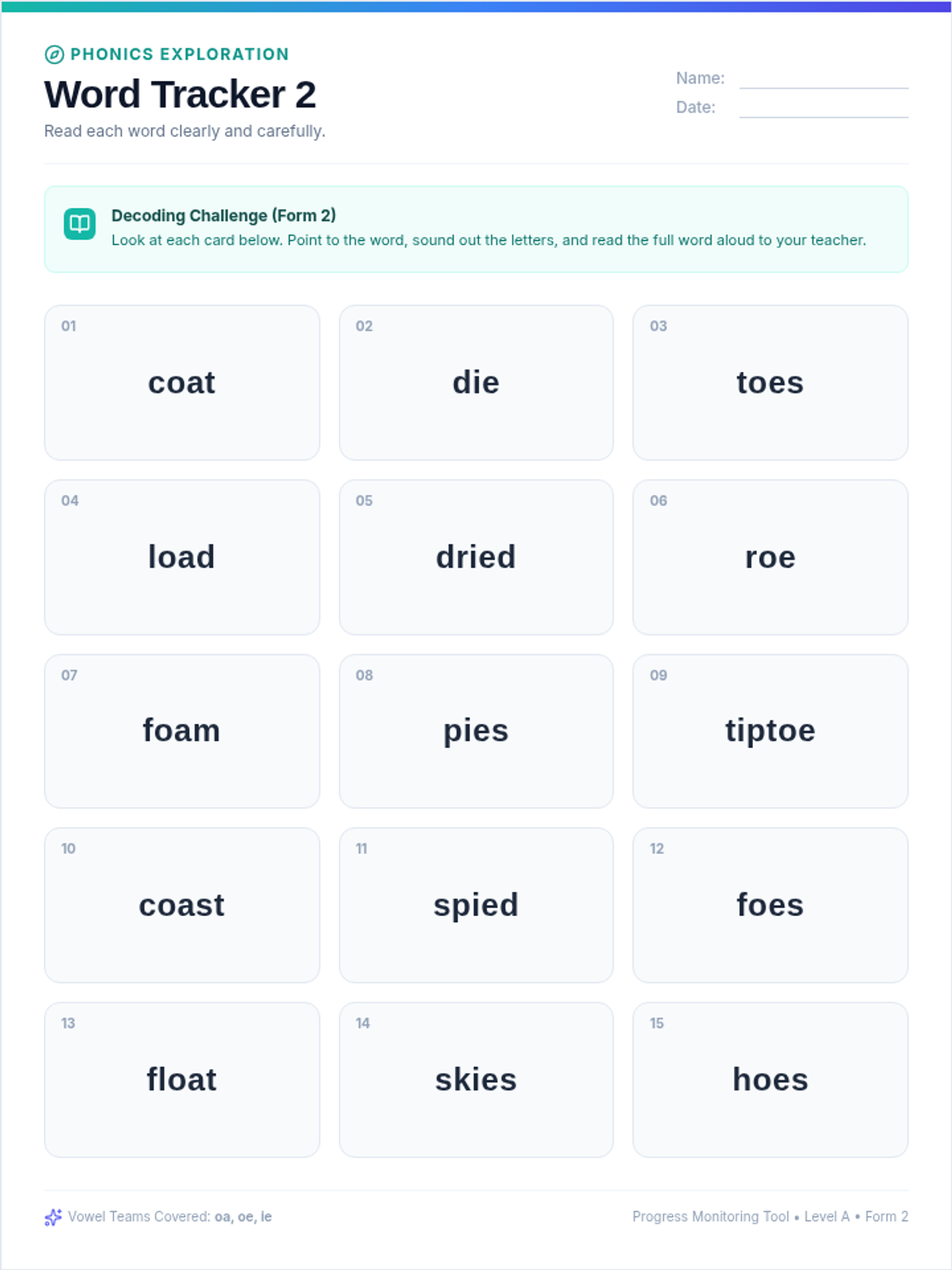
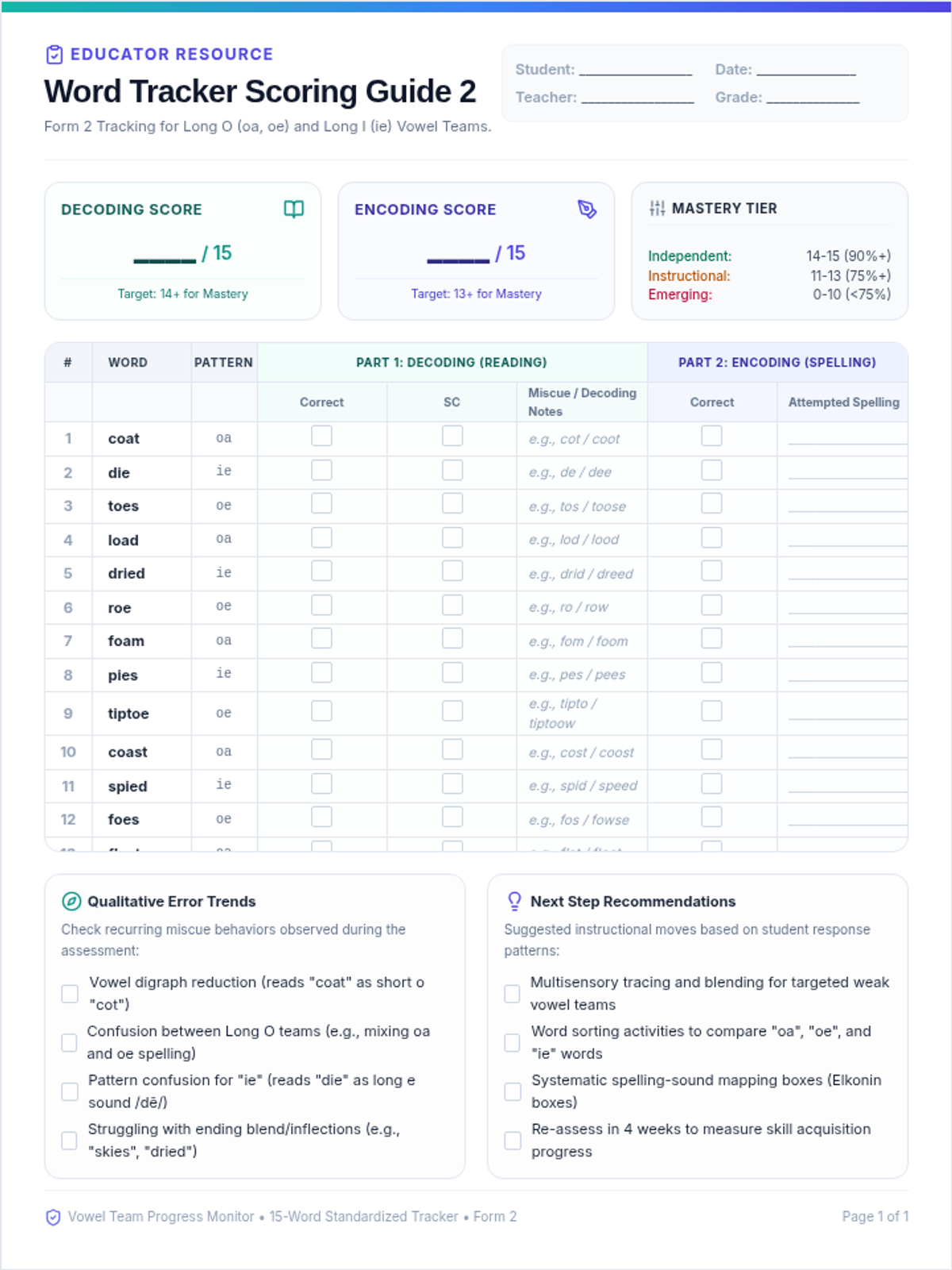
Form 2 of the phonics progress monitoring sequence. Tracks student decoding and encoding of an equivalent parallel set of 15 long o (oa, oe) and long i (ie) words.
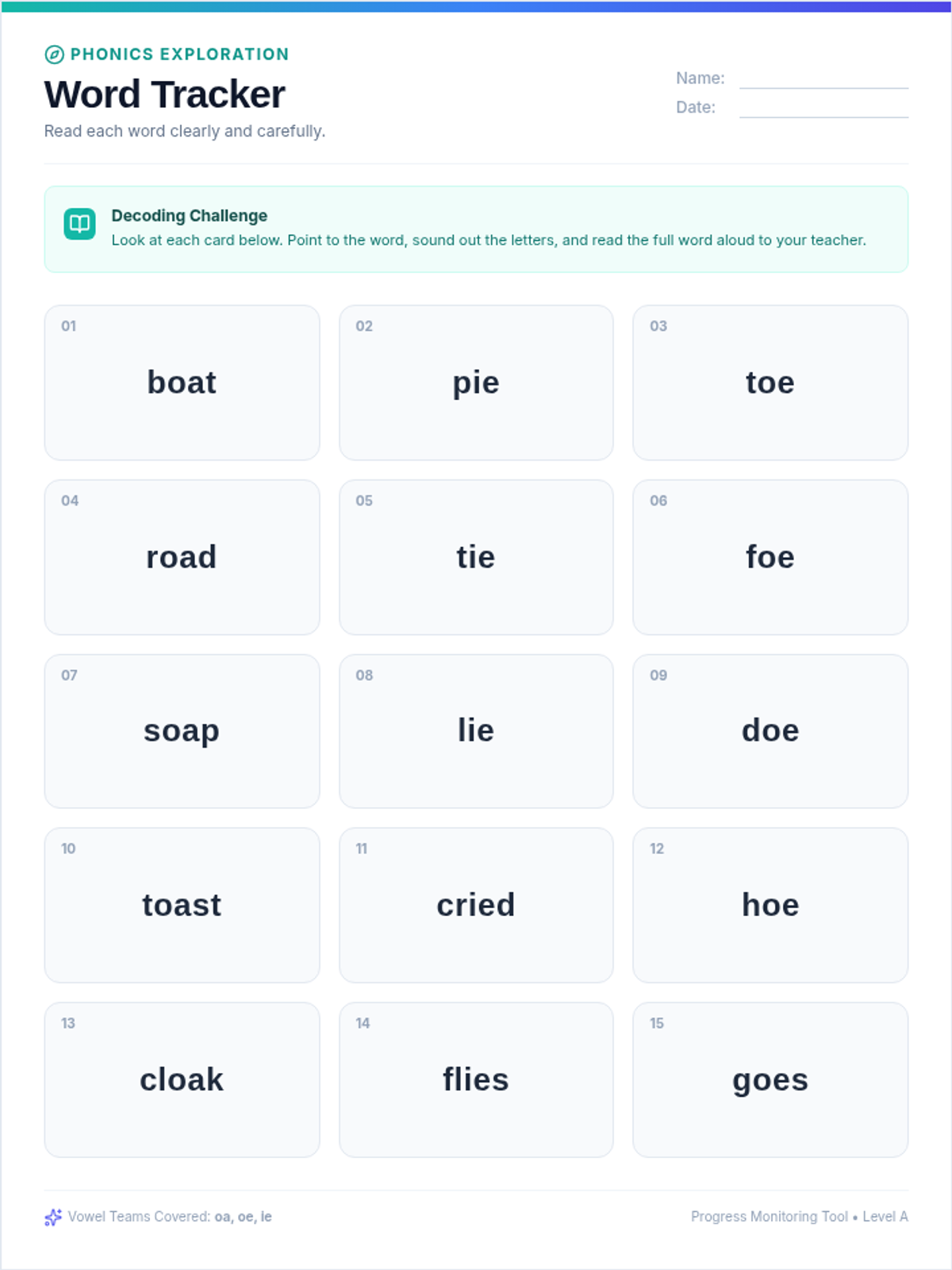
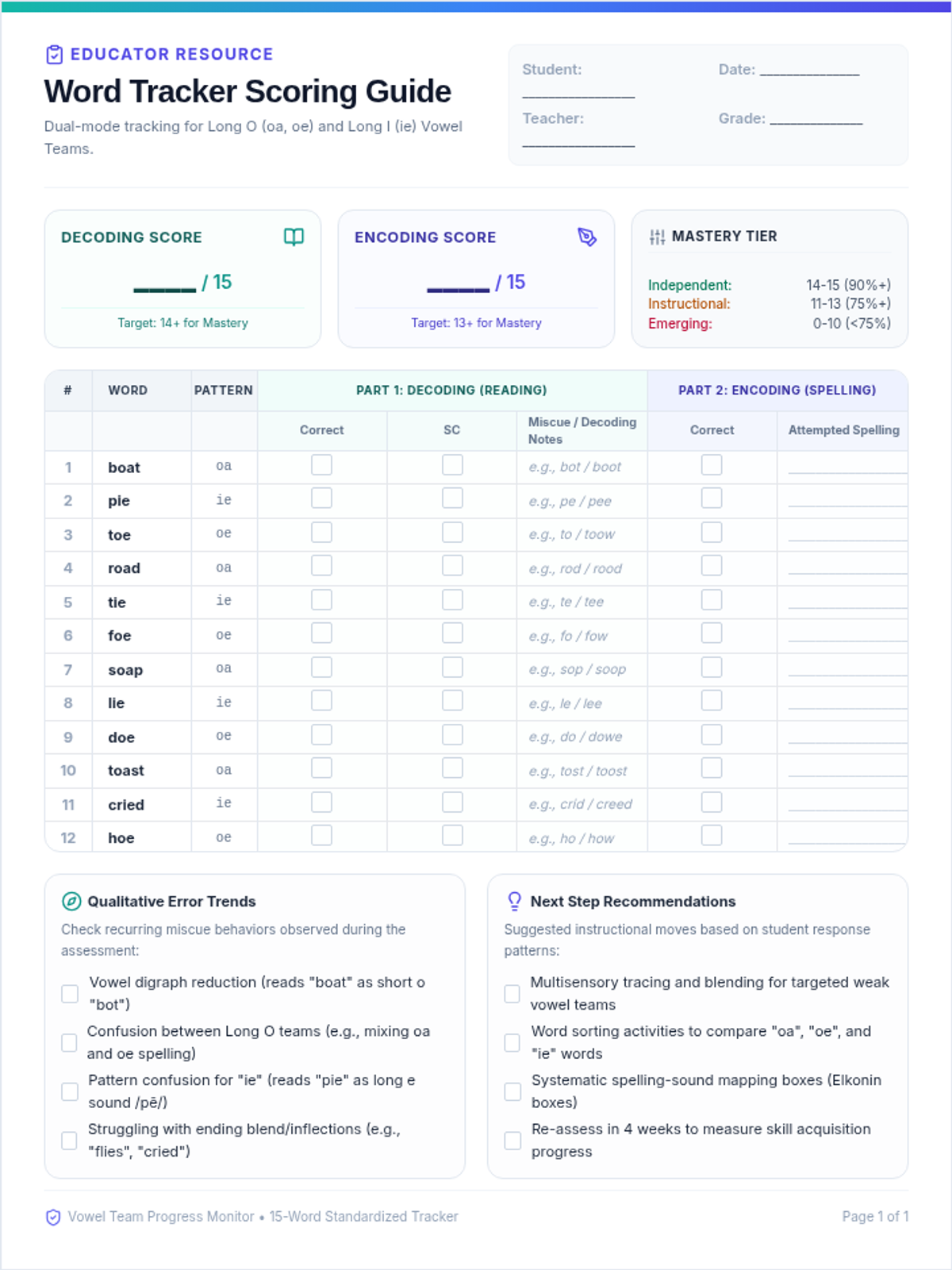
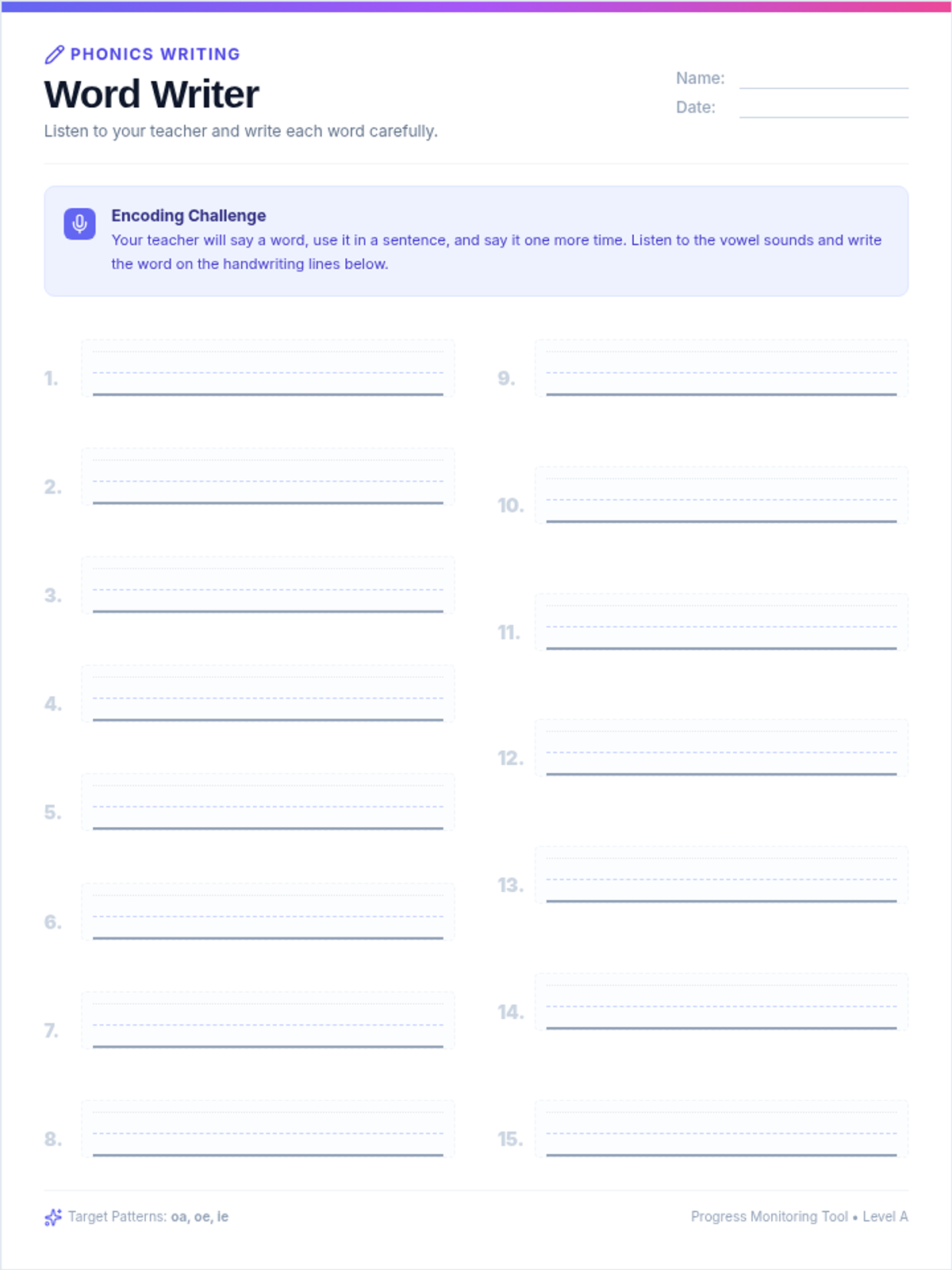
A focused phonics progress monitoring lesson for decoding and encoding long o (oa, oe) and long i (ie) vowel teams. Includes student reading sheets, teacher scoring rubrics, and student dictation worksheets.
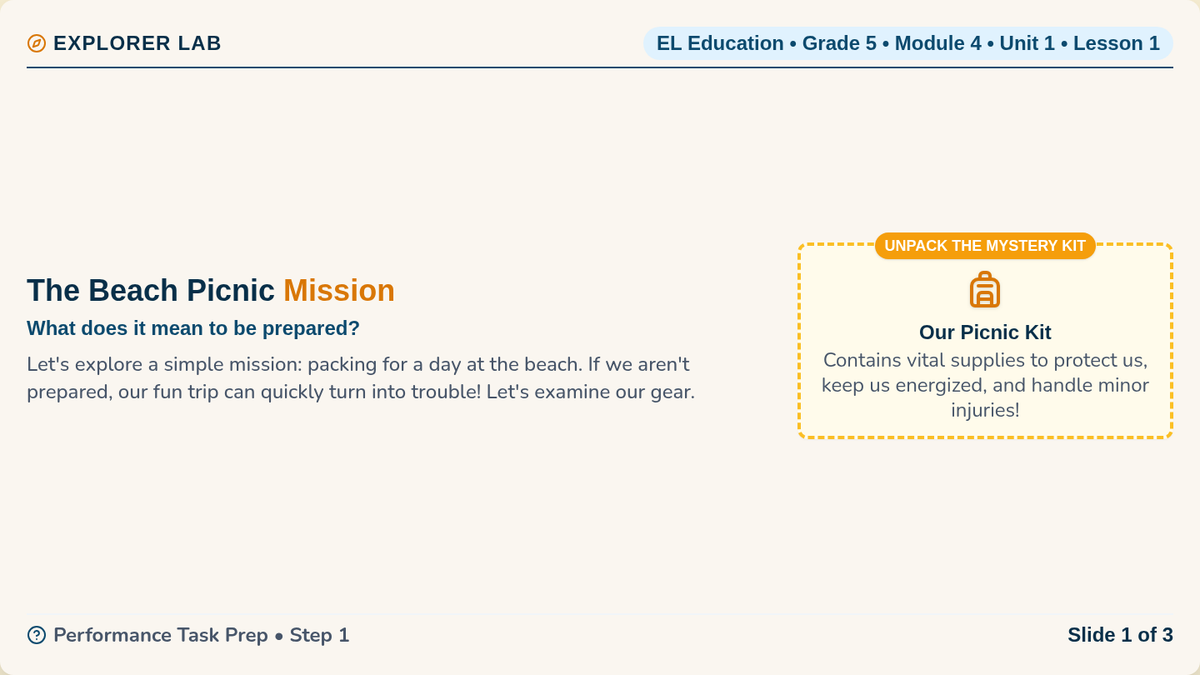
An introductory lesson for EL Education Grade 5 Module 4 Unit 1 Lesson 1. Students unpack a beach picnic kit to explore preparedness concepts before designing emergency kits.
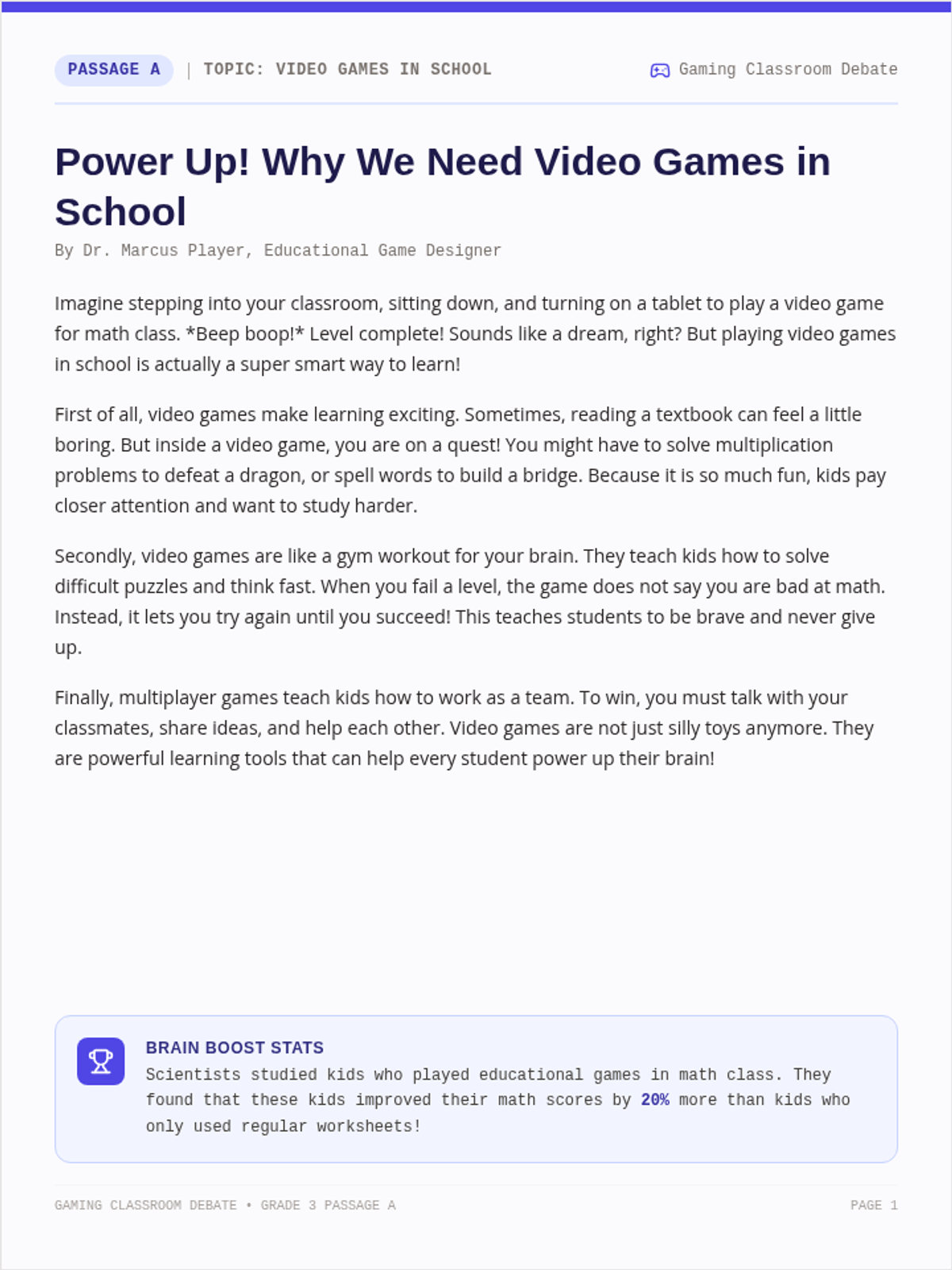
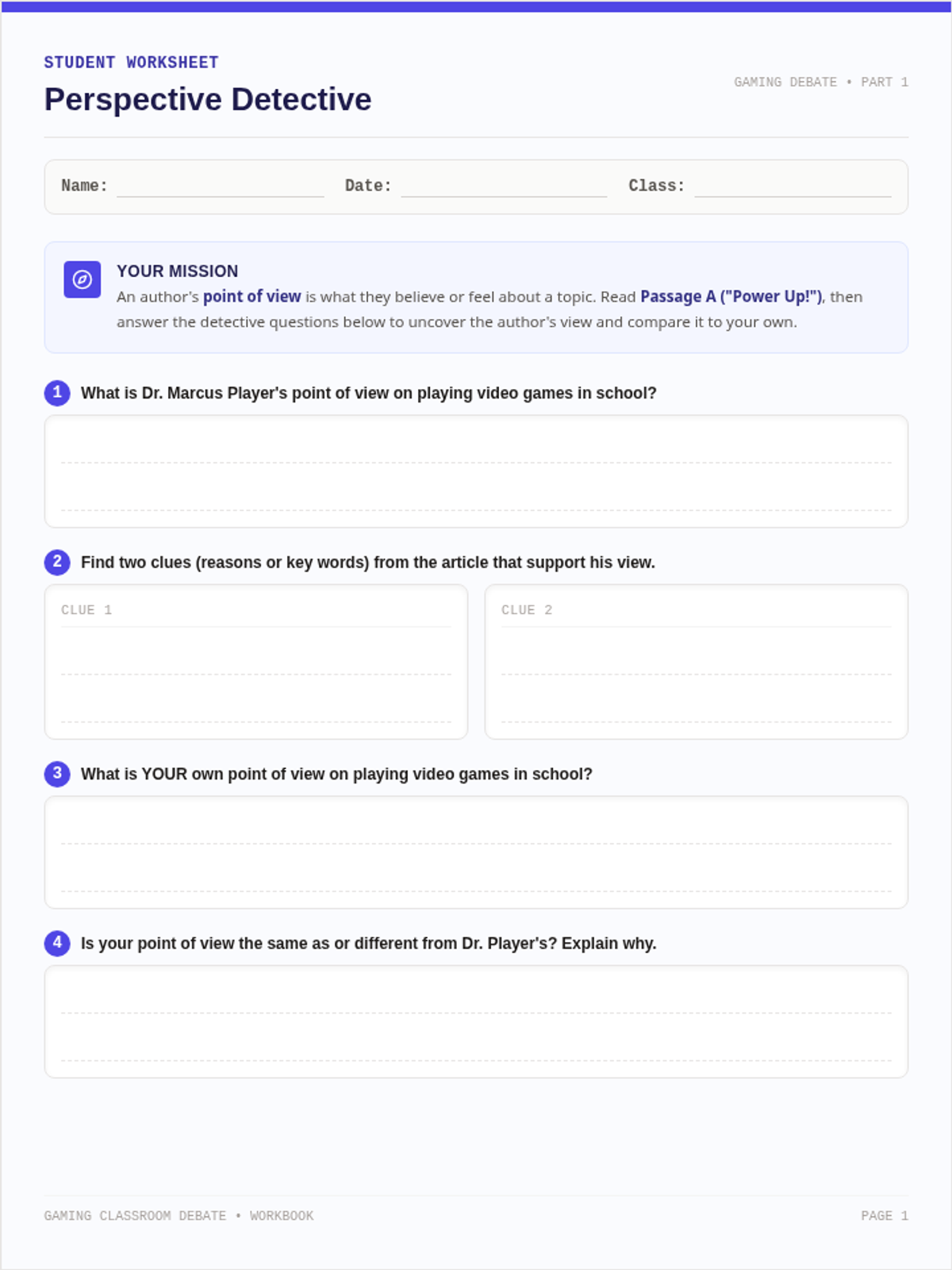
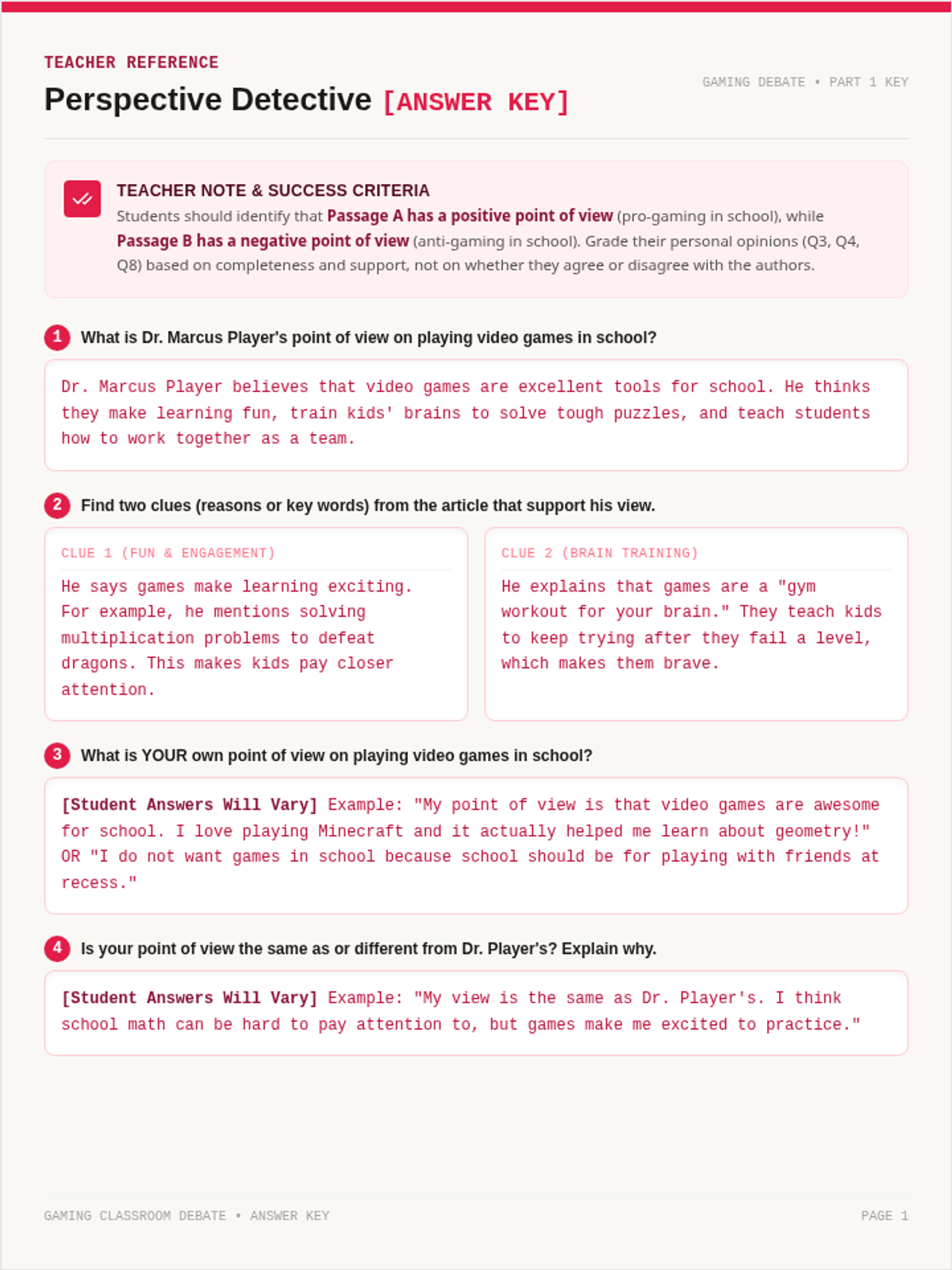
A reading comprehension lesson for 3rd graders focused on distinguishing their own perspective from the author's point of view on a highly engaging, high-interest topic: playing video games in school. Includes two contrasting short articles, a student analysis worksheet, and a teacher answer key.
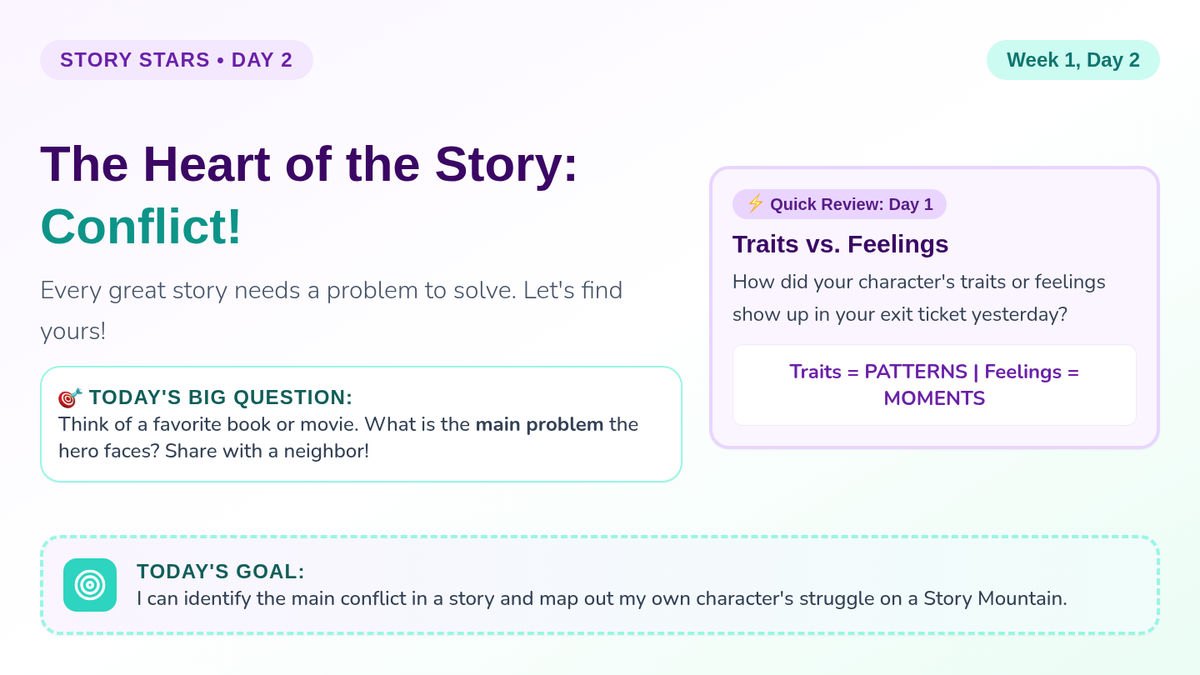
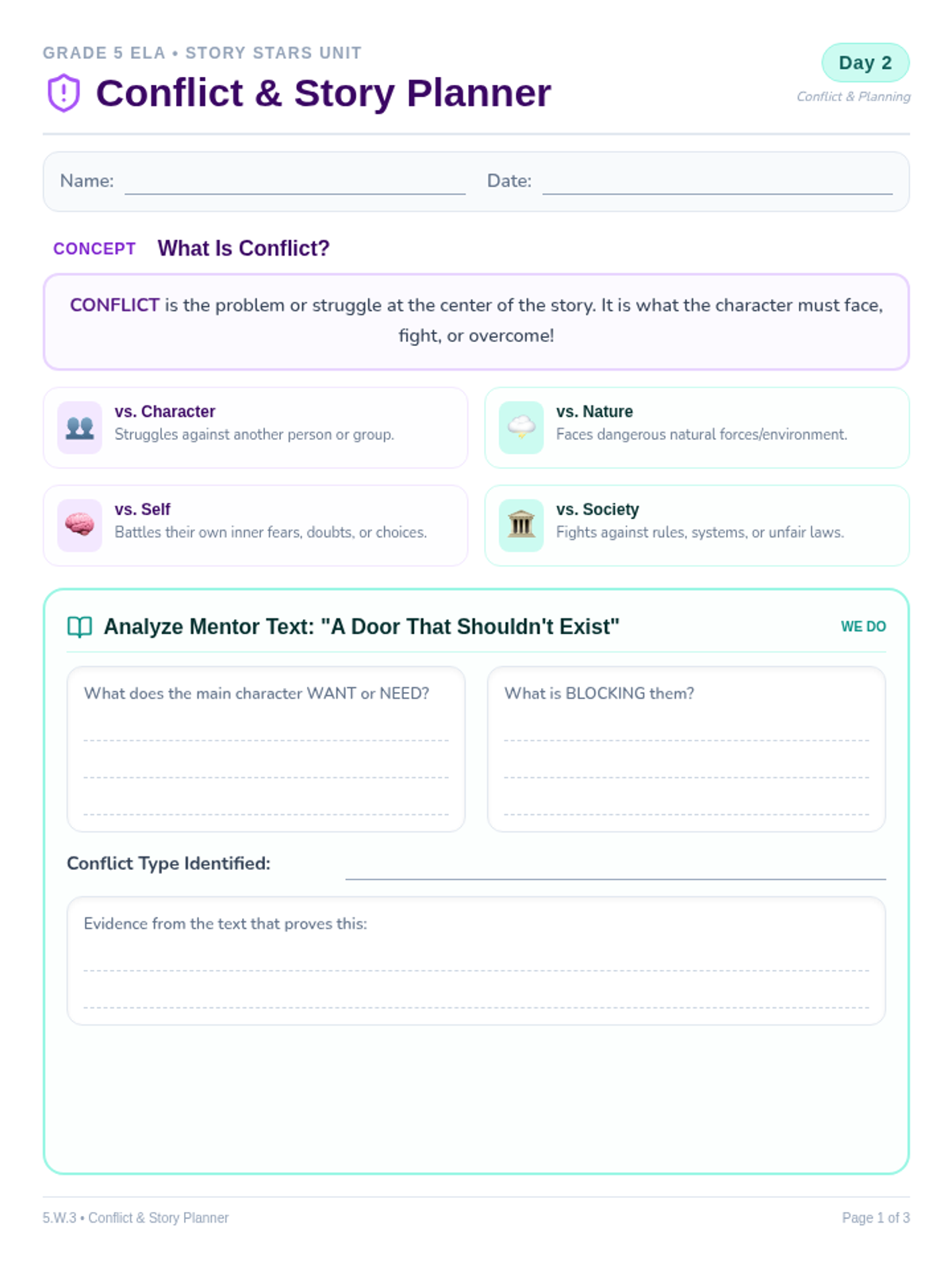
Students identify different conflict types in mentor texts and map out their own narrative using a Story Mountain (plot planner) in this Day 2 lesson.
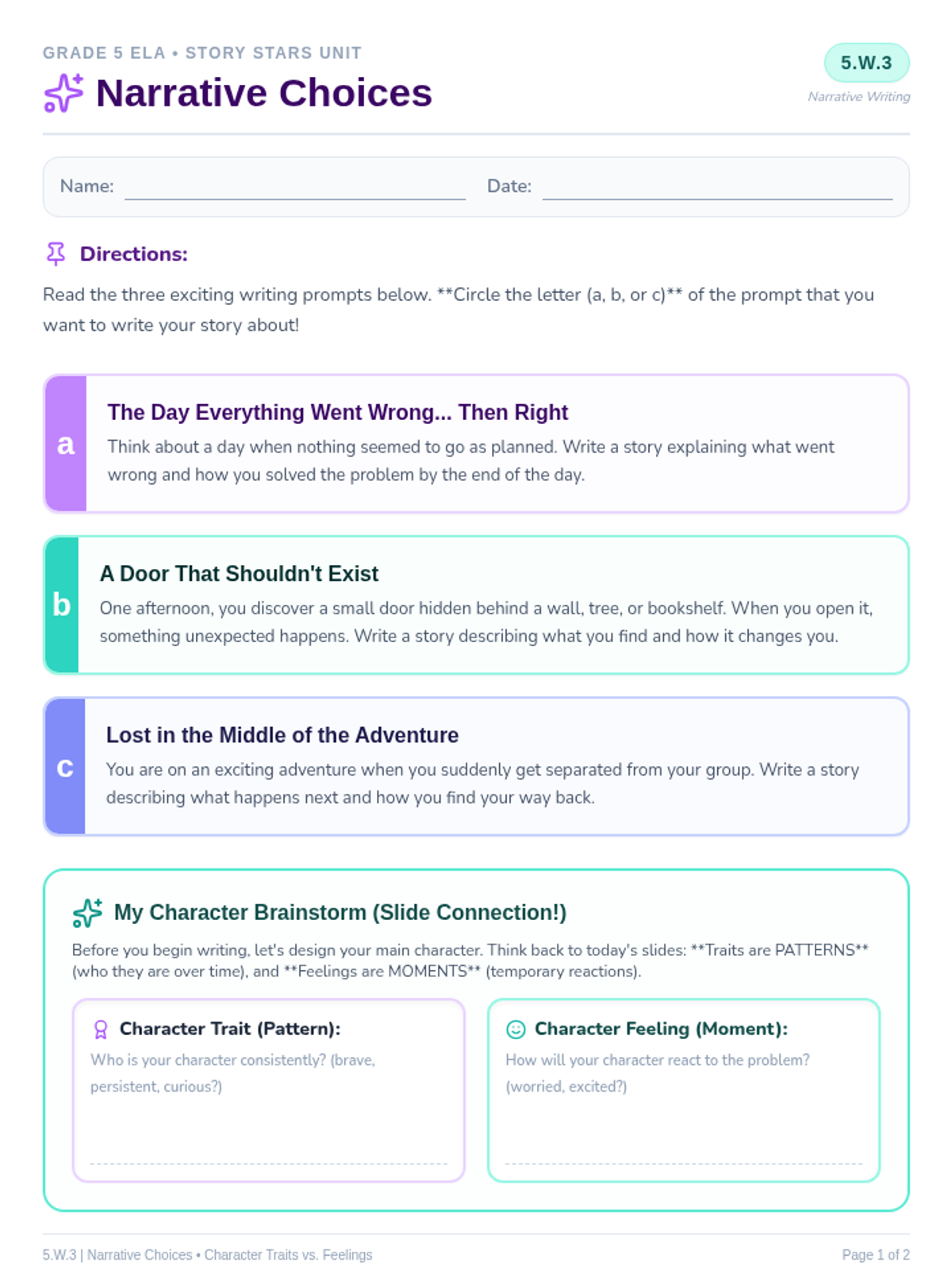
A mini-lesson on RL.3 distinguishing between character traits (patterns) and feelings (moments), condensed and designed beautifully with a cute lavender and mint pastel theme.
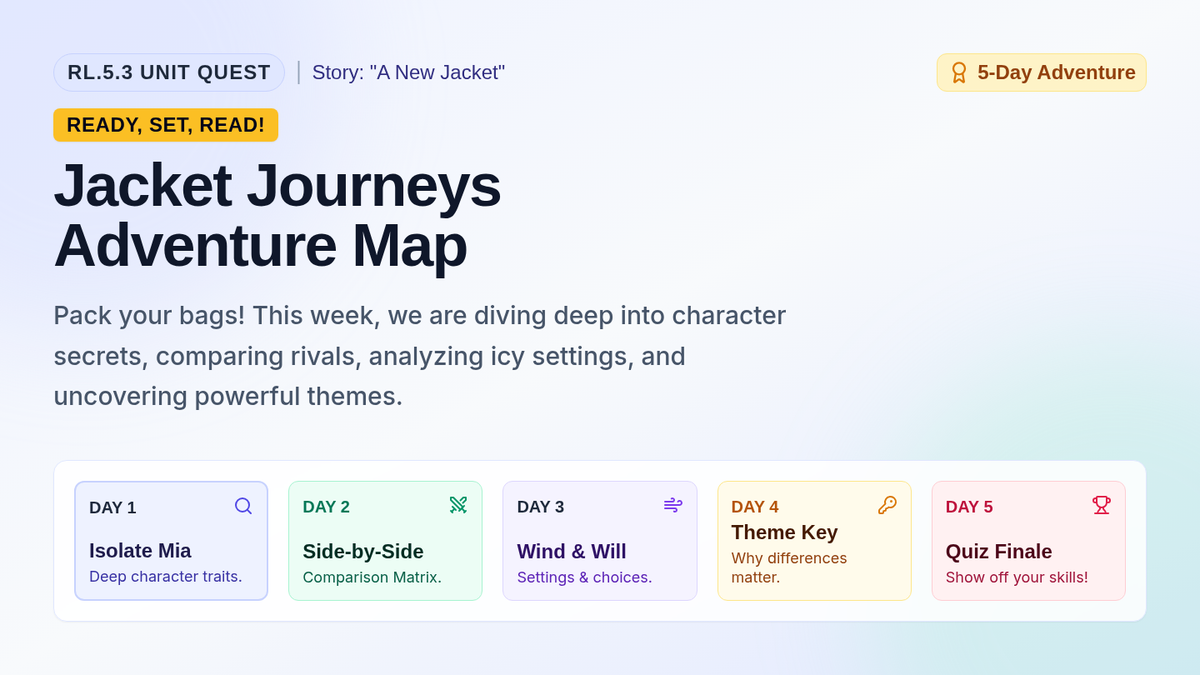
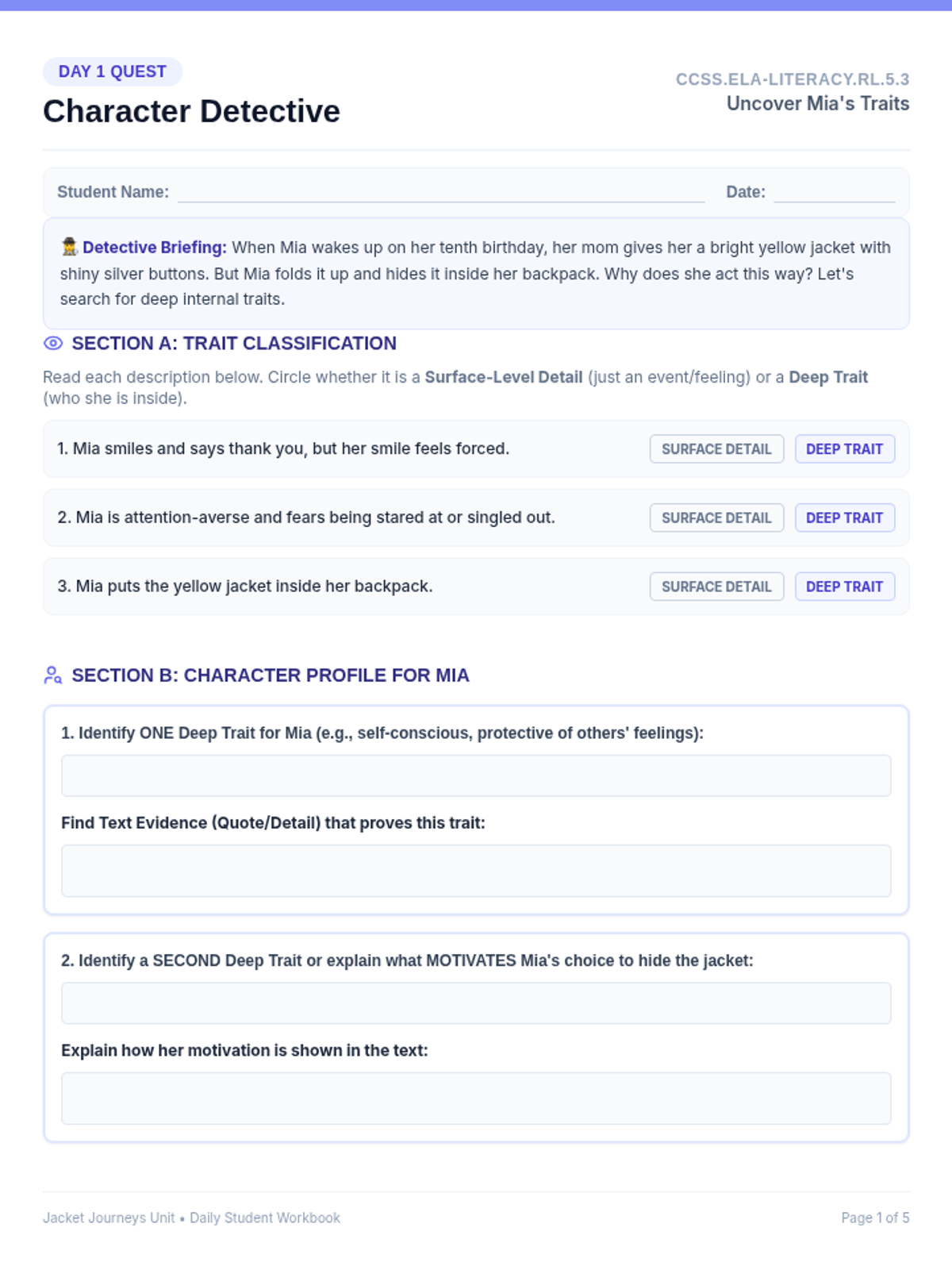
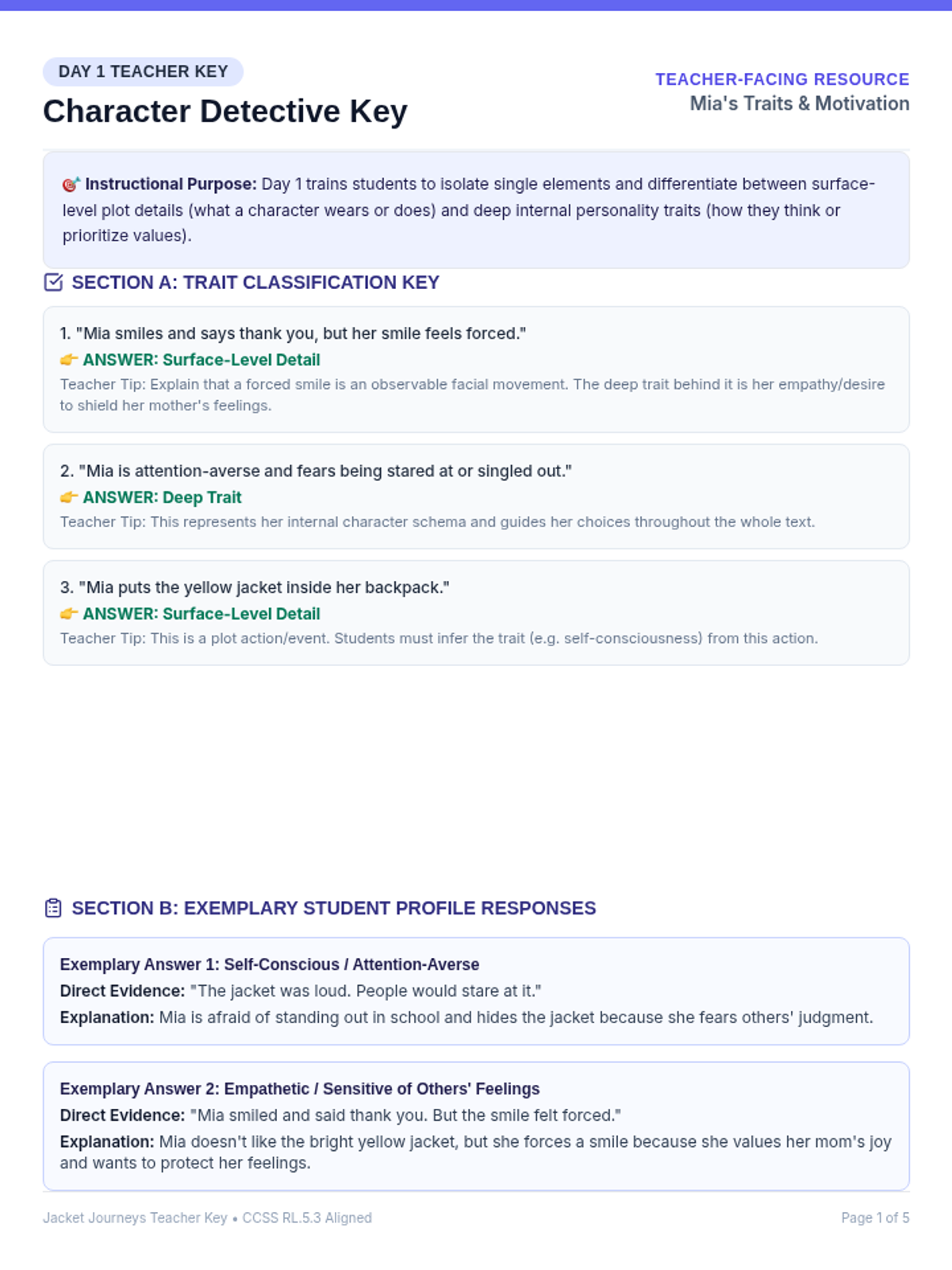
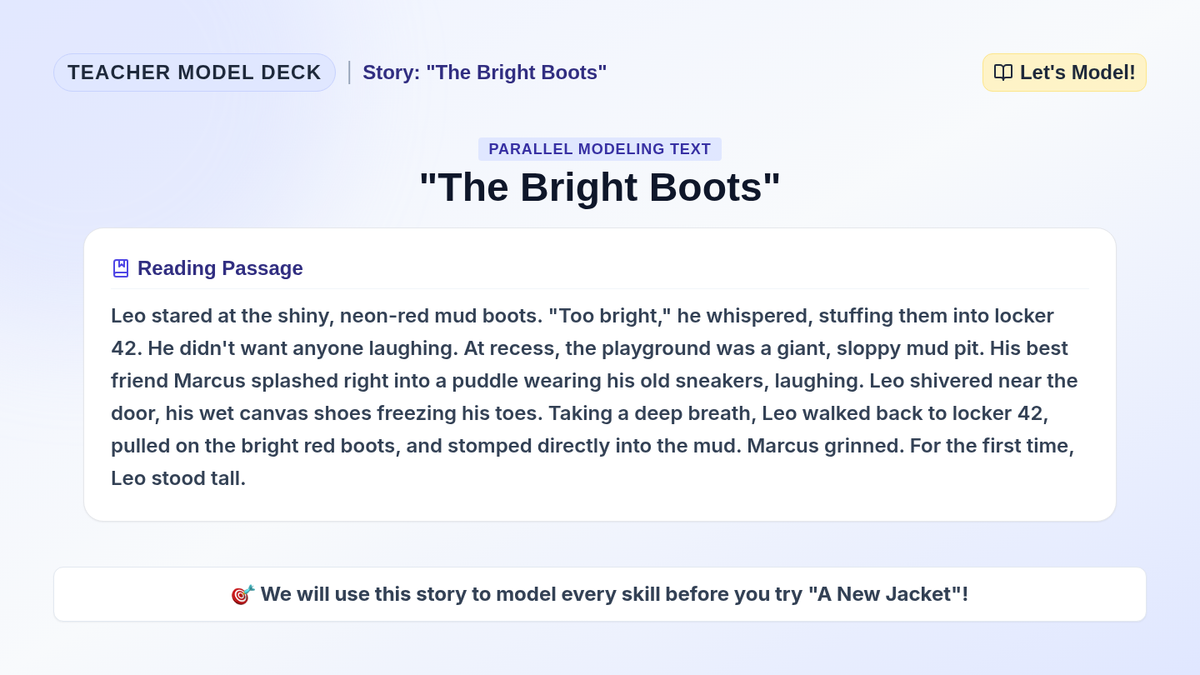
Students analyze character traits, build aligned comparison matrices, examine settings as active forces, connect contrasts to theme, and complete a collaborative weekly review for 'A New Jacket'.
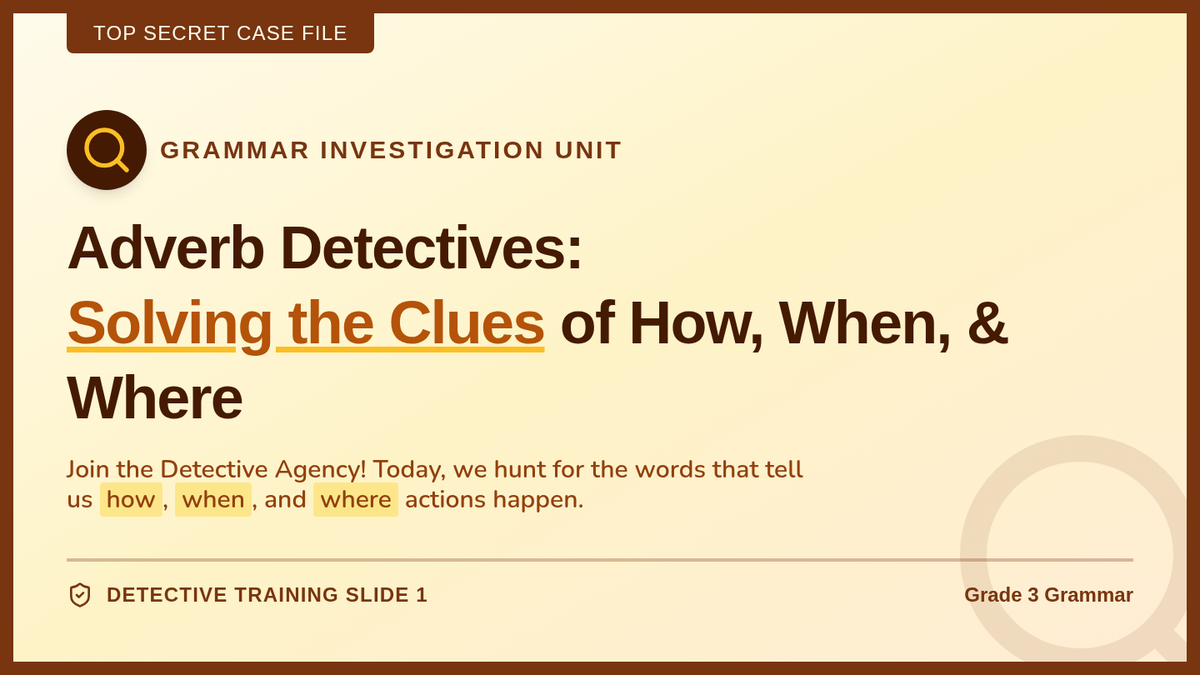
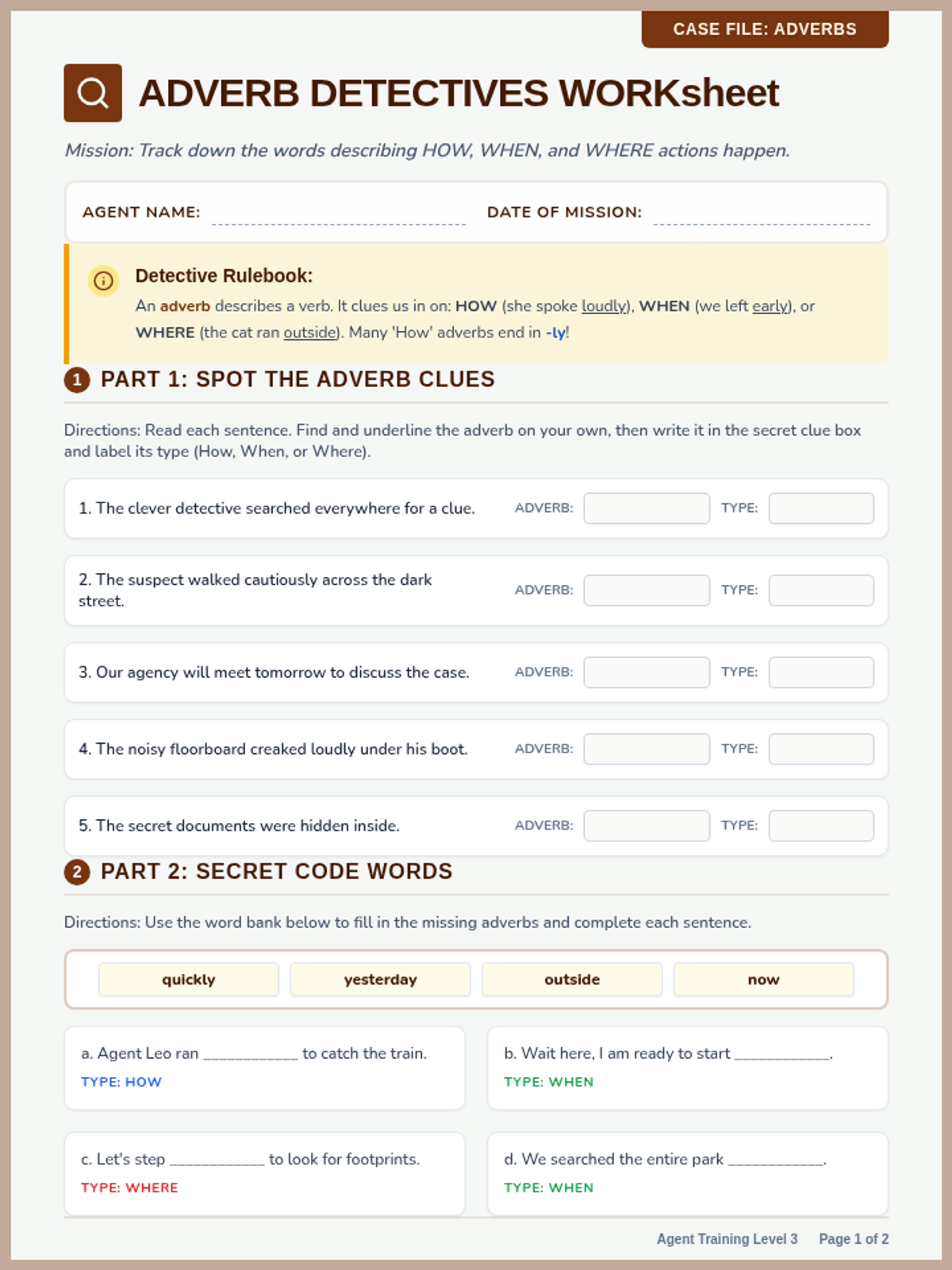
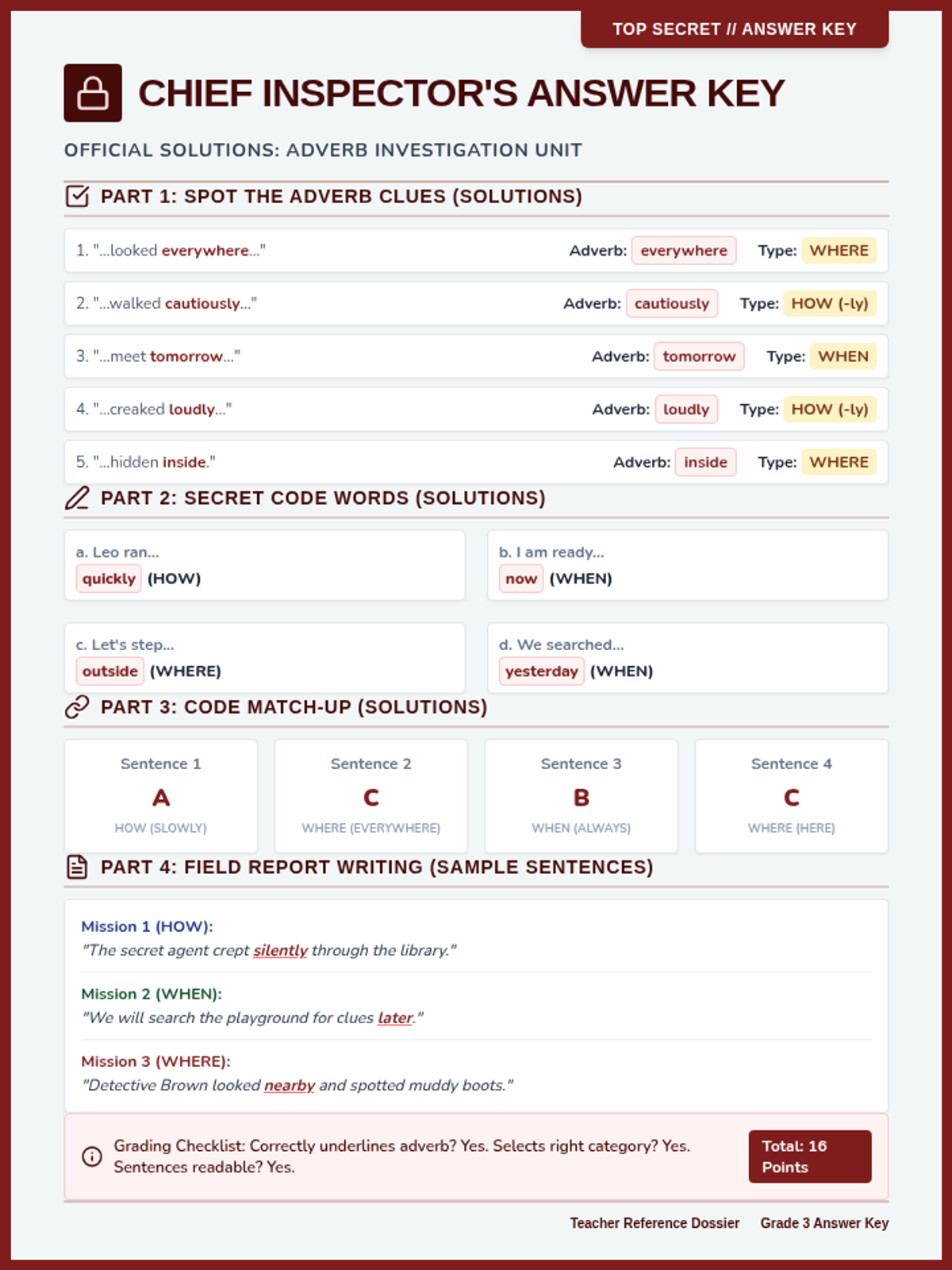
A comprehensive third-grade English grammar lesson introducing adverbs of manner, time, and place (How, When, and Where), with a focus on -ly words. Includes an instructional slide presentation, a student practice worksheet packet, and a teacher answer key.
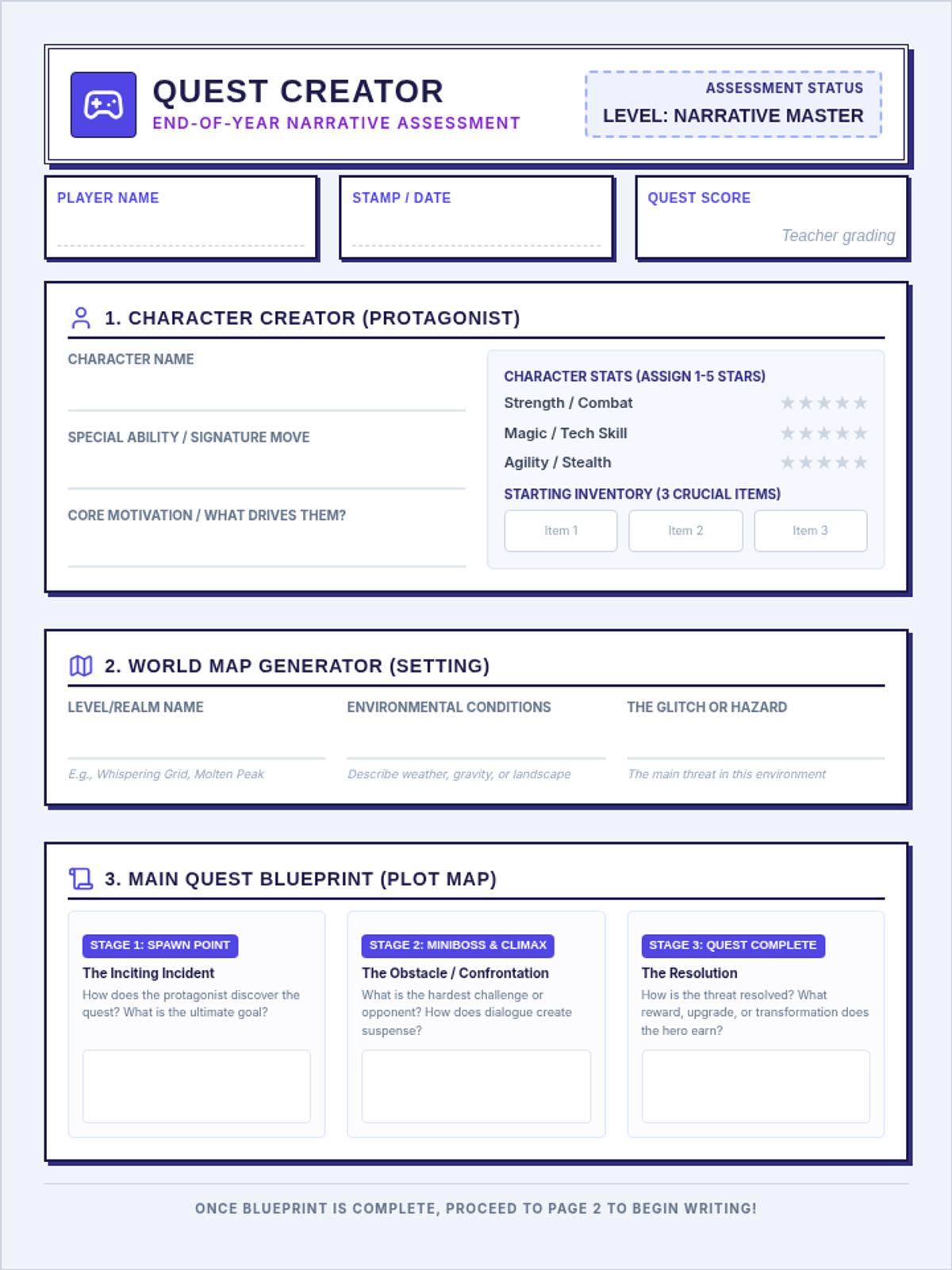
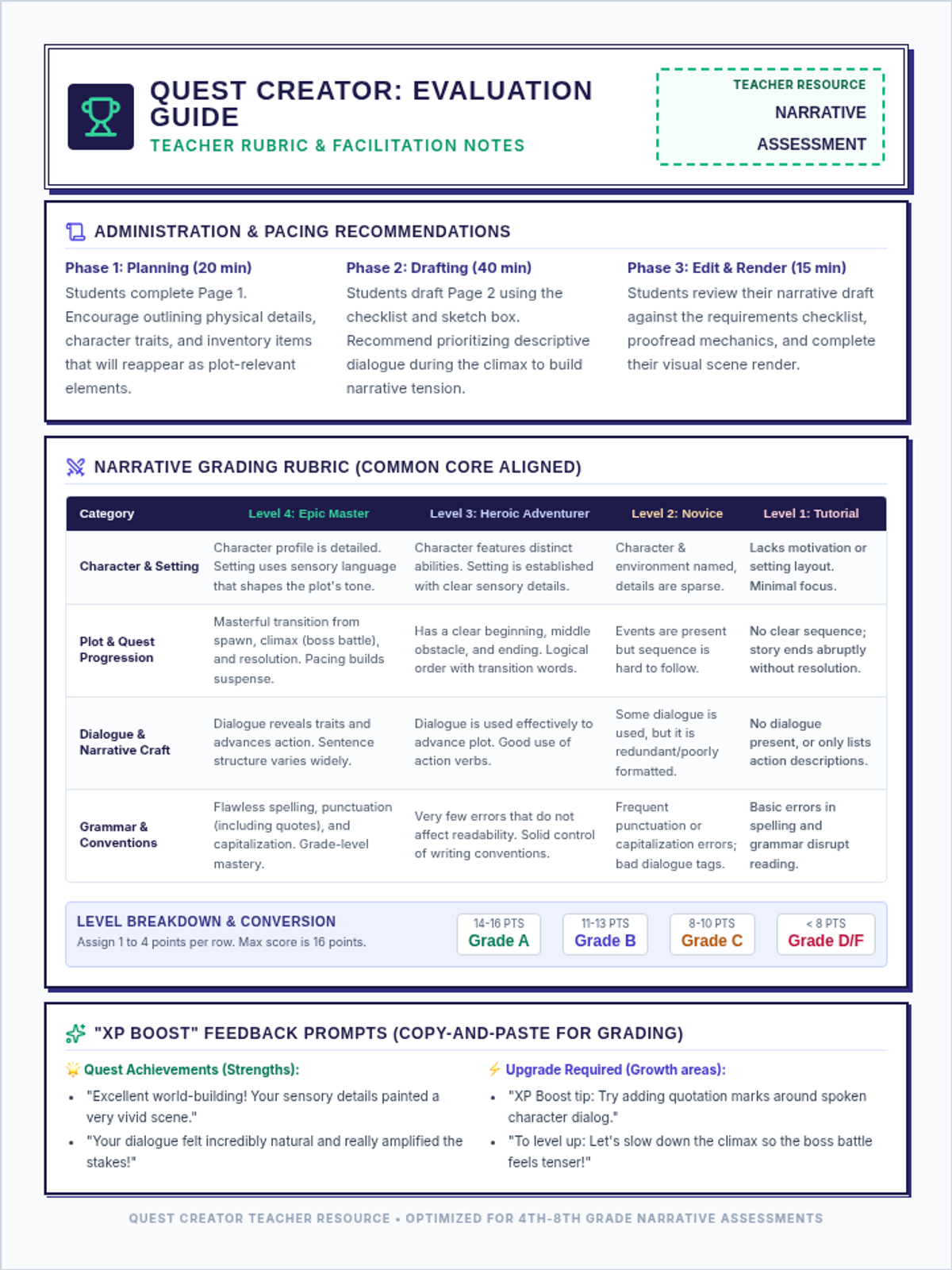
An end-of-year narrative writing assessment where students design their own video game character, setting, and quest, then write an engaging adventure story based on their creation.
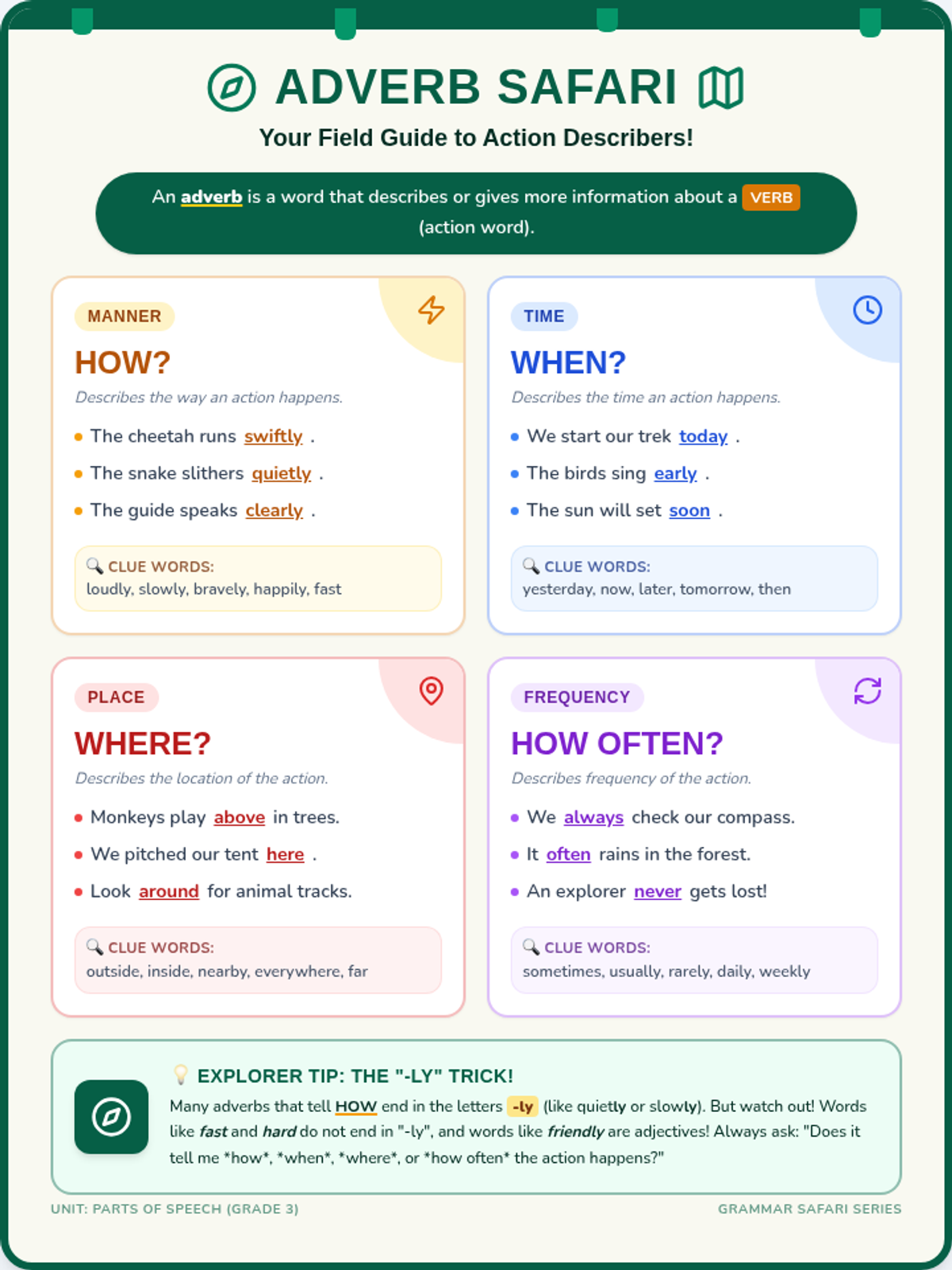
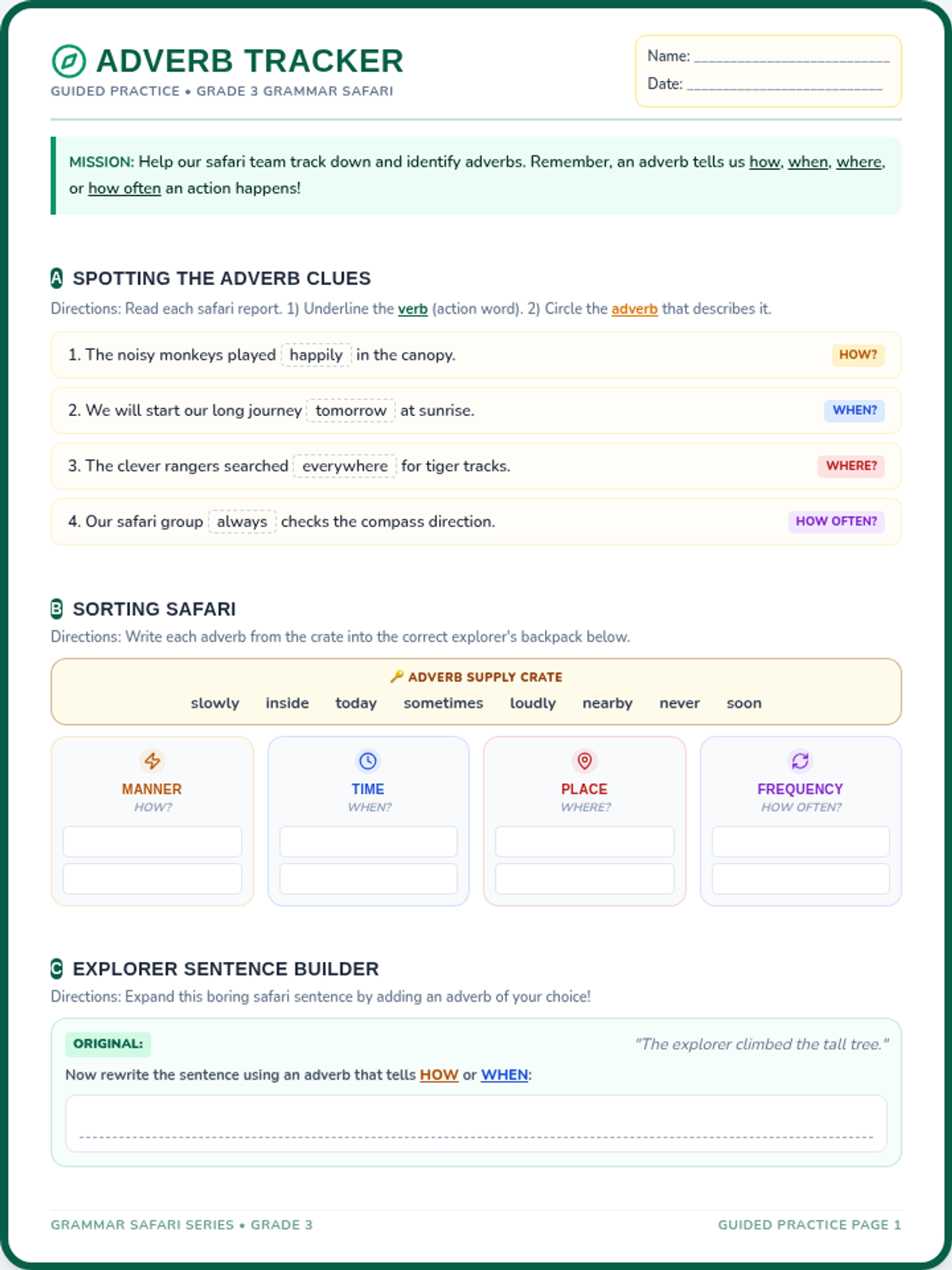
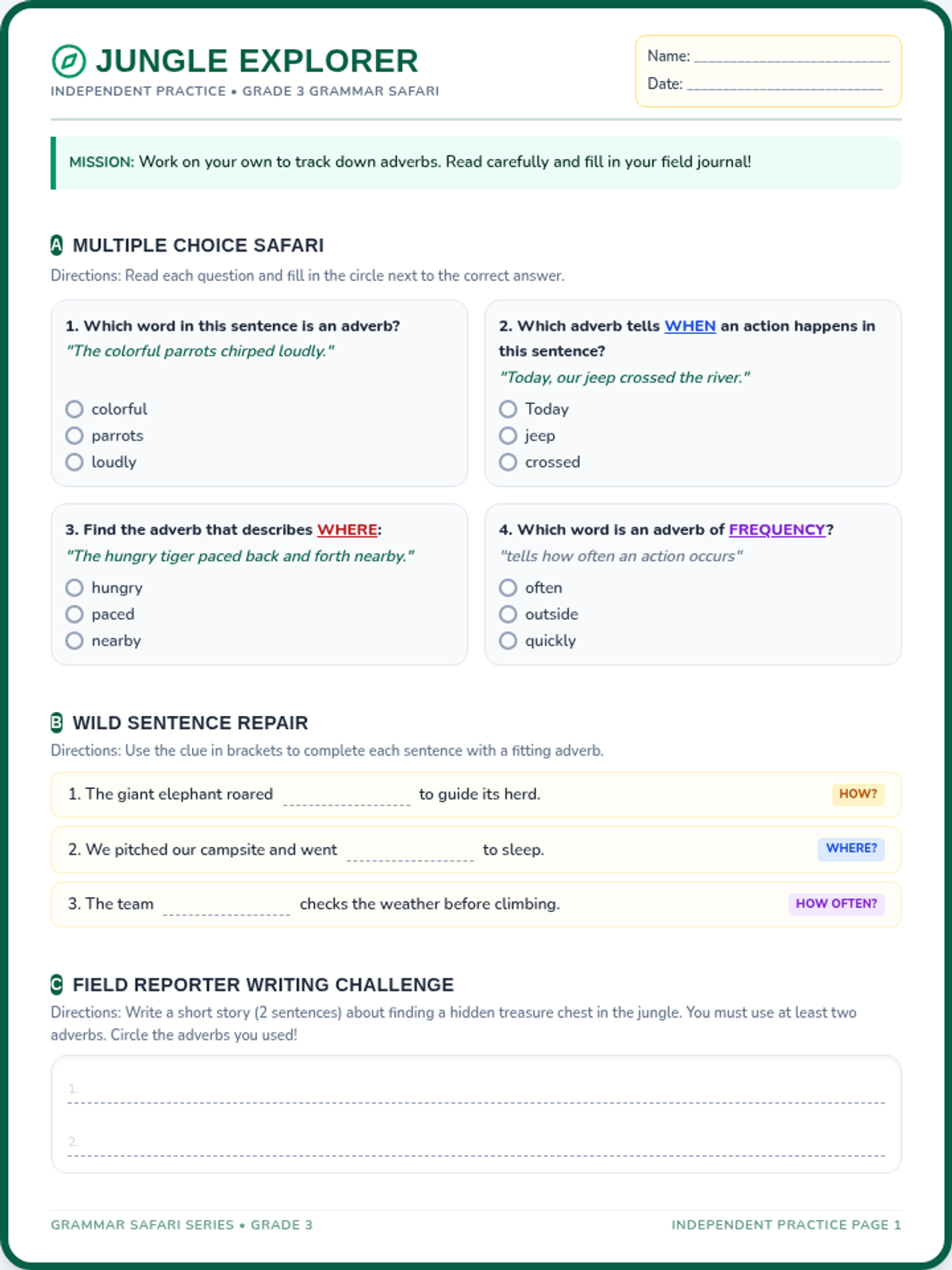
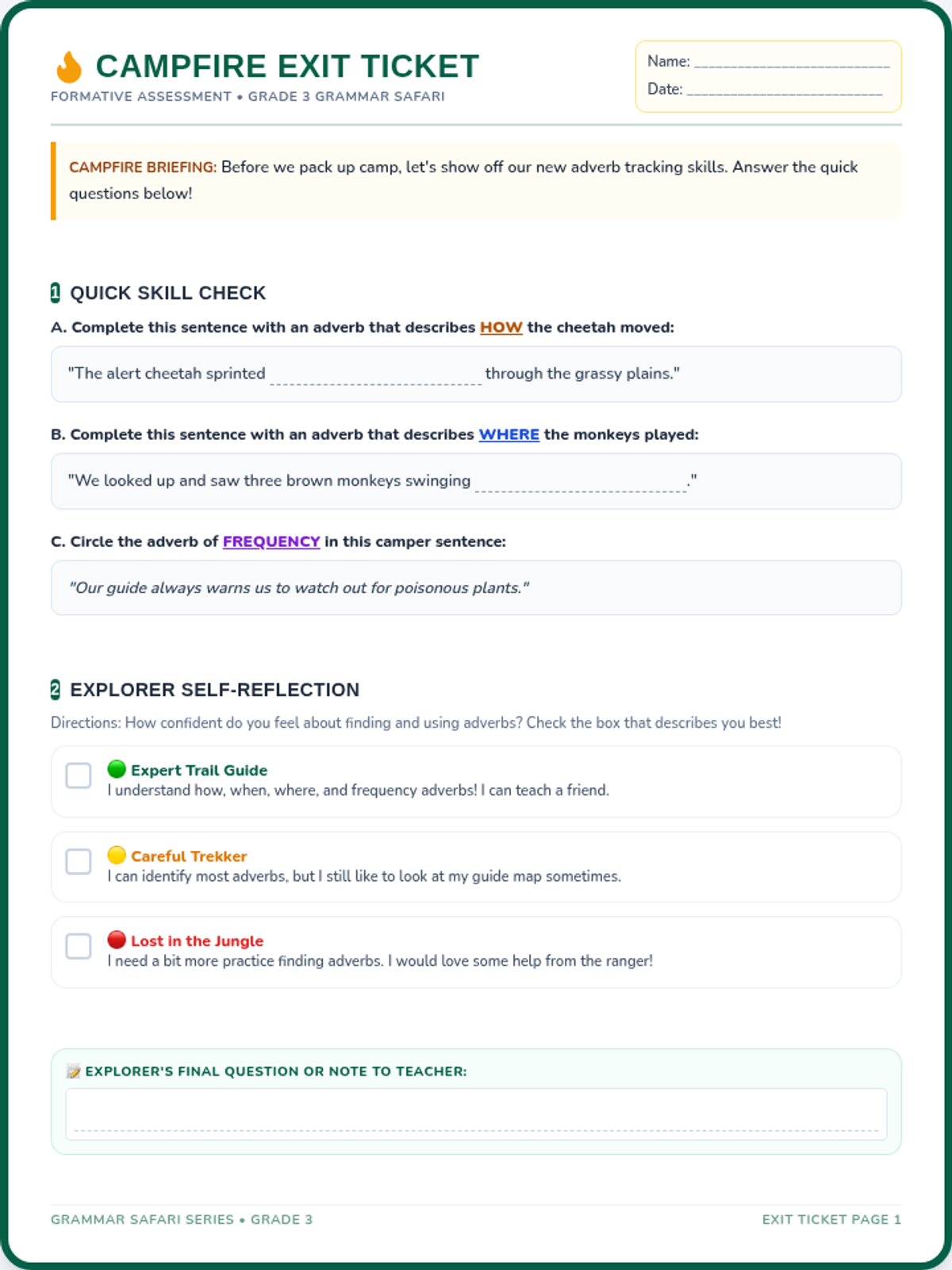
A comprehensive third-grade grammar lesson on adverbs of how, when, where, and how often, featuring interactive practice and assessment in an engaging safari theme.
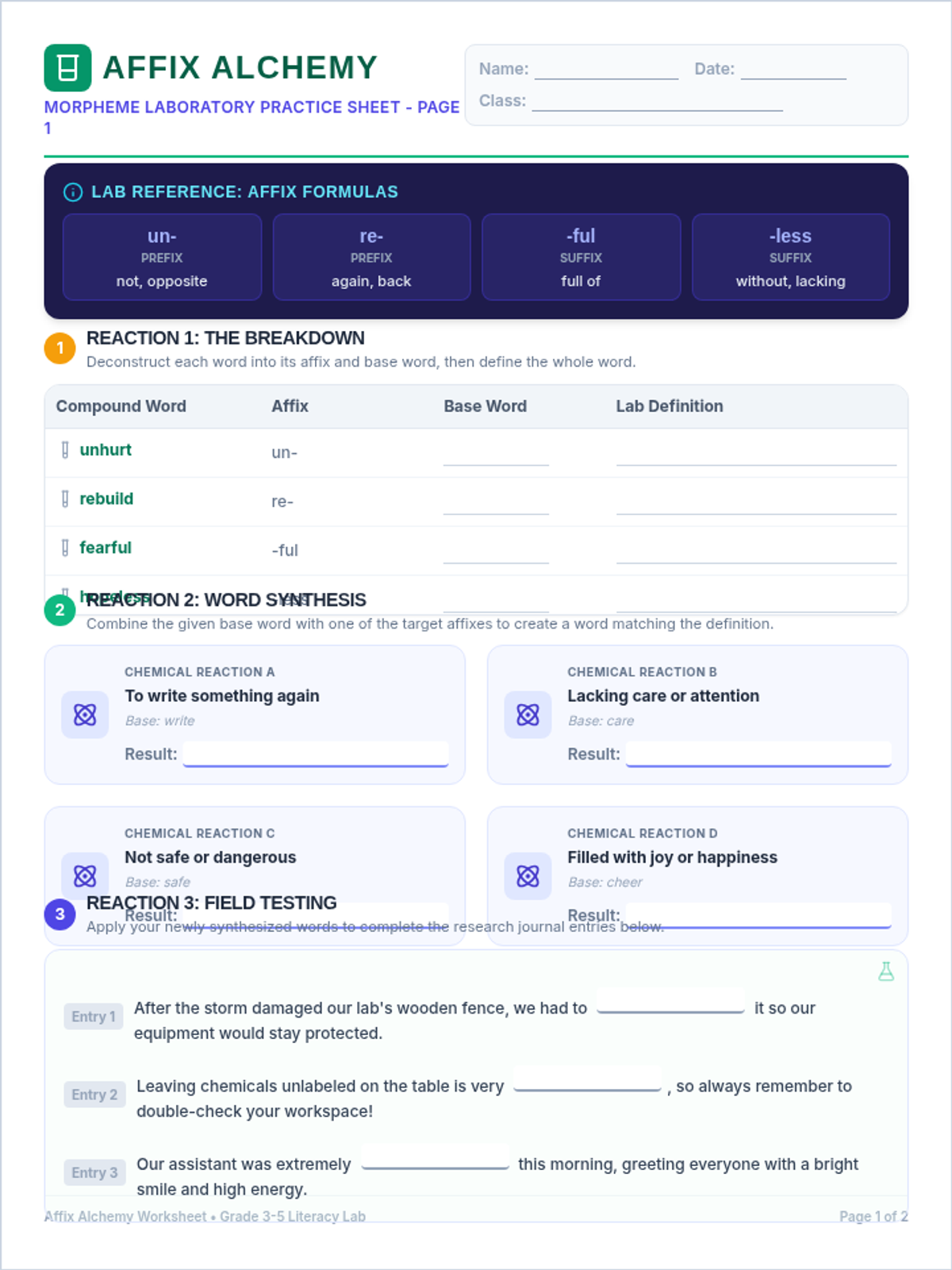
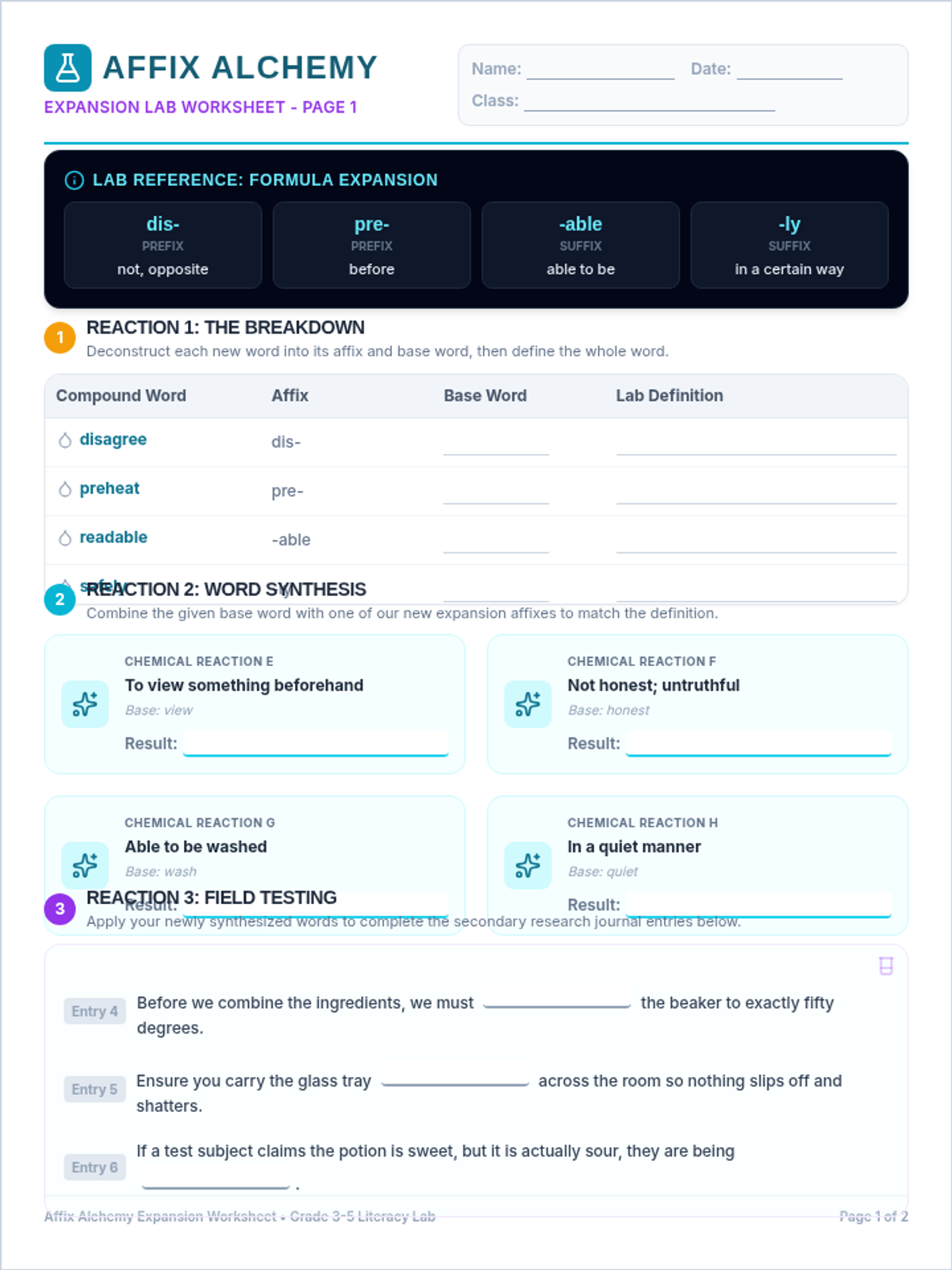
A comprehensive lesson on high-frequency prefixes and suffixes (un-, re-, -ful, -less) designed as a Word Chemistry Lab, helping students master morpheme breakdown, synthesis, and contextual application.
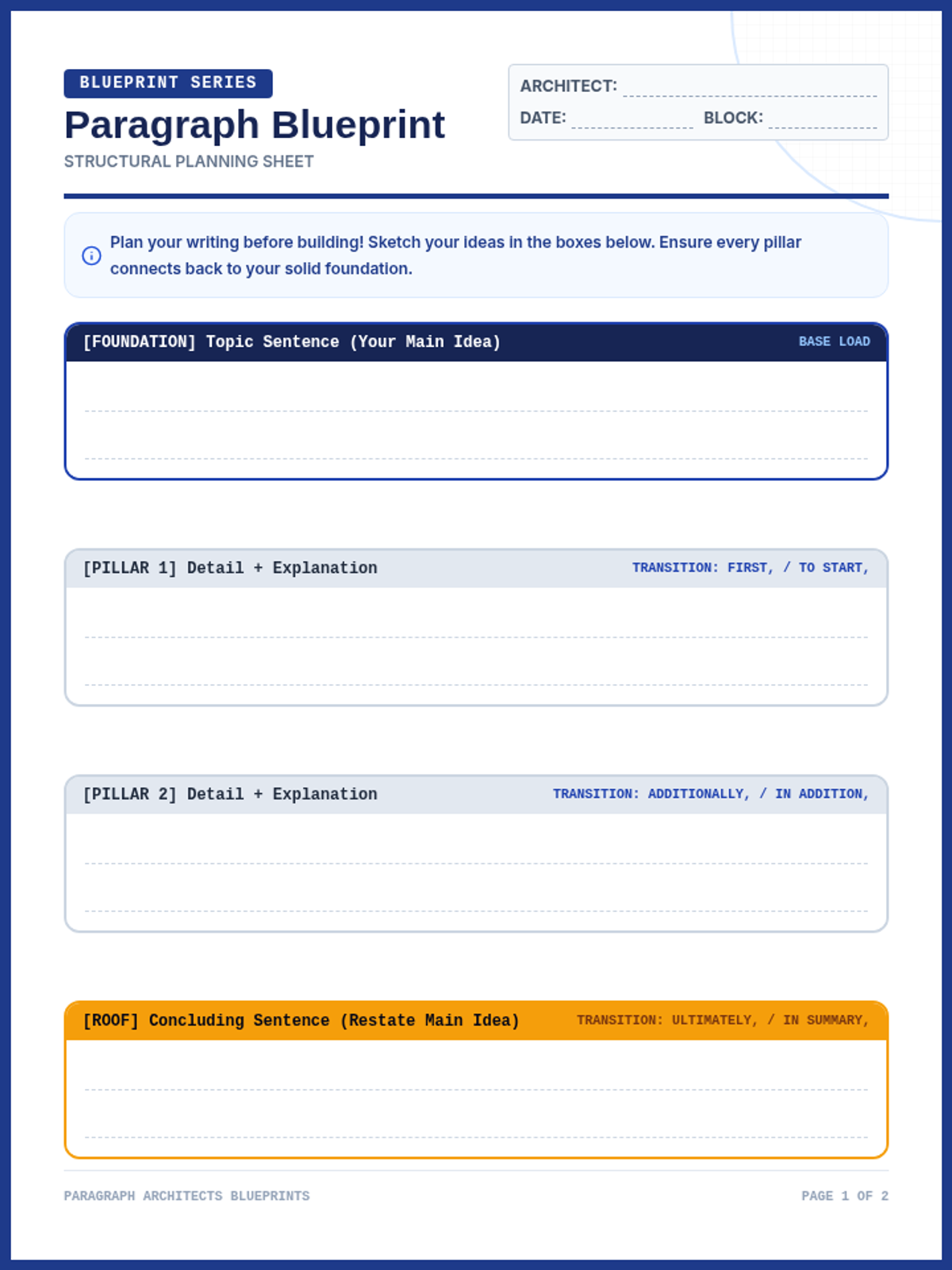
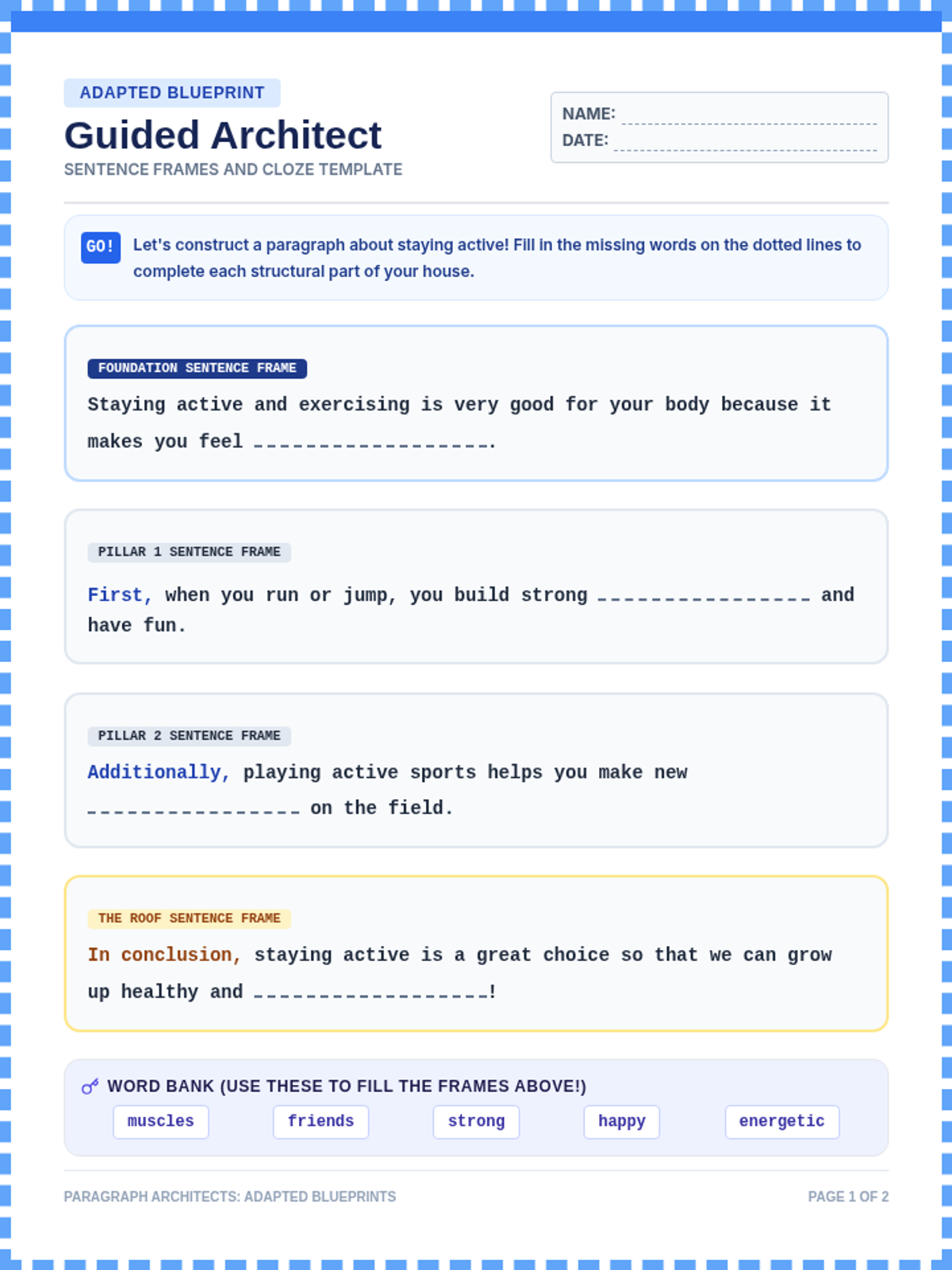
A structural writing lesson guiding students to build organized, cohesive paragraphs with topic sentences, concrete evidence, and transitions.
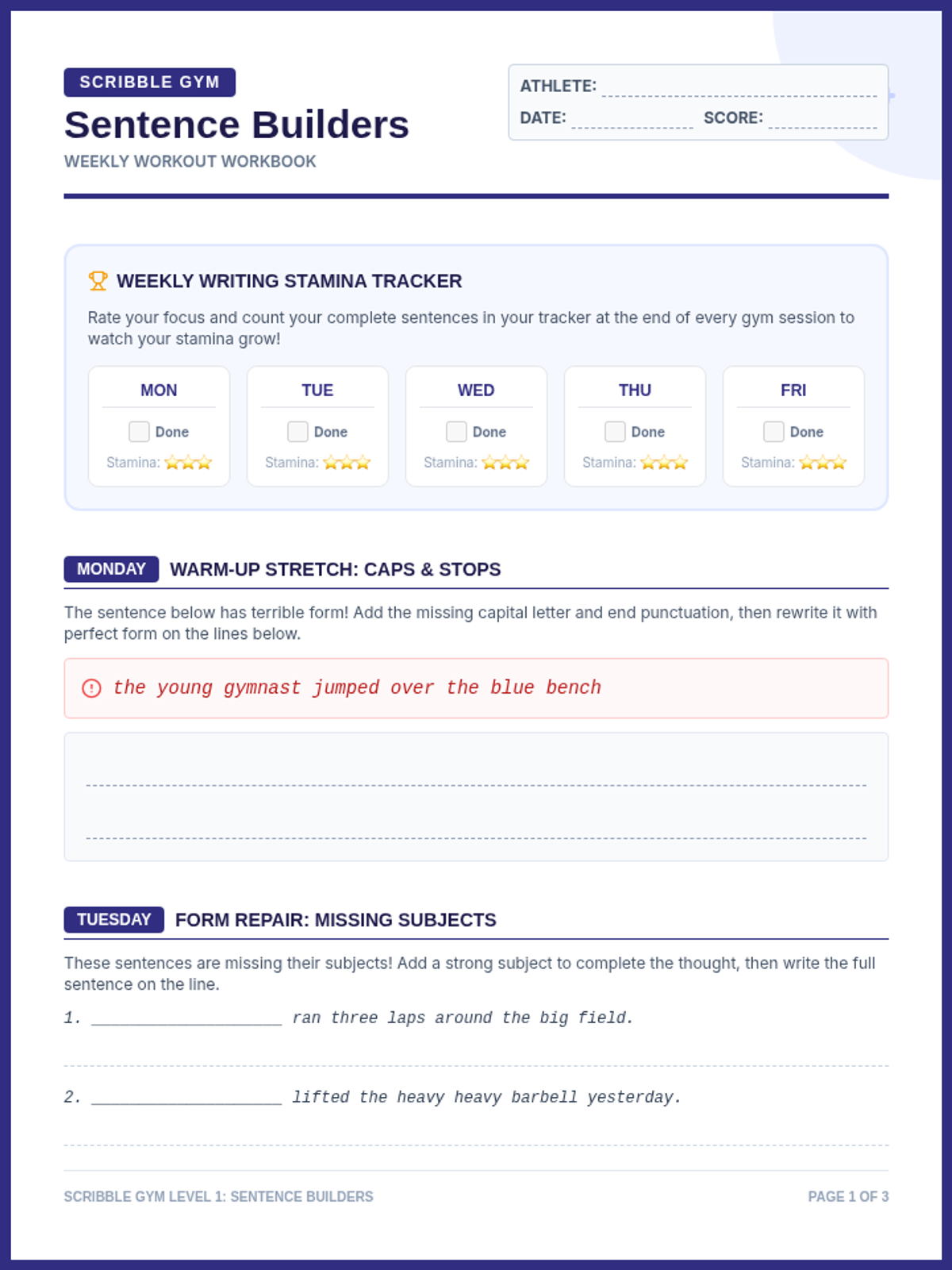
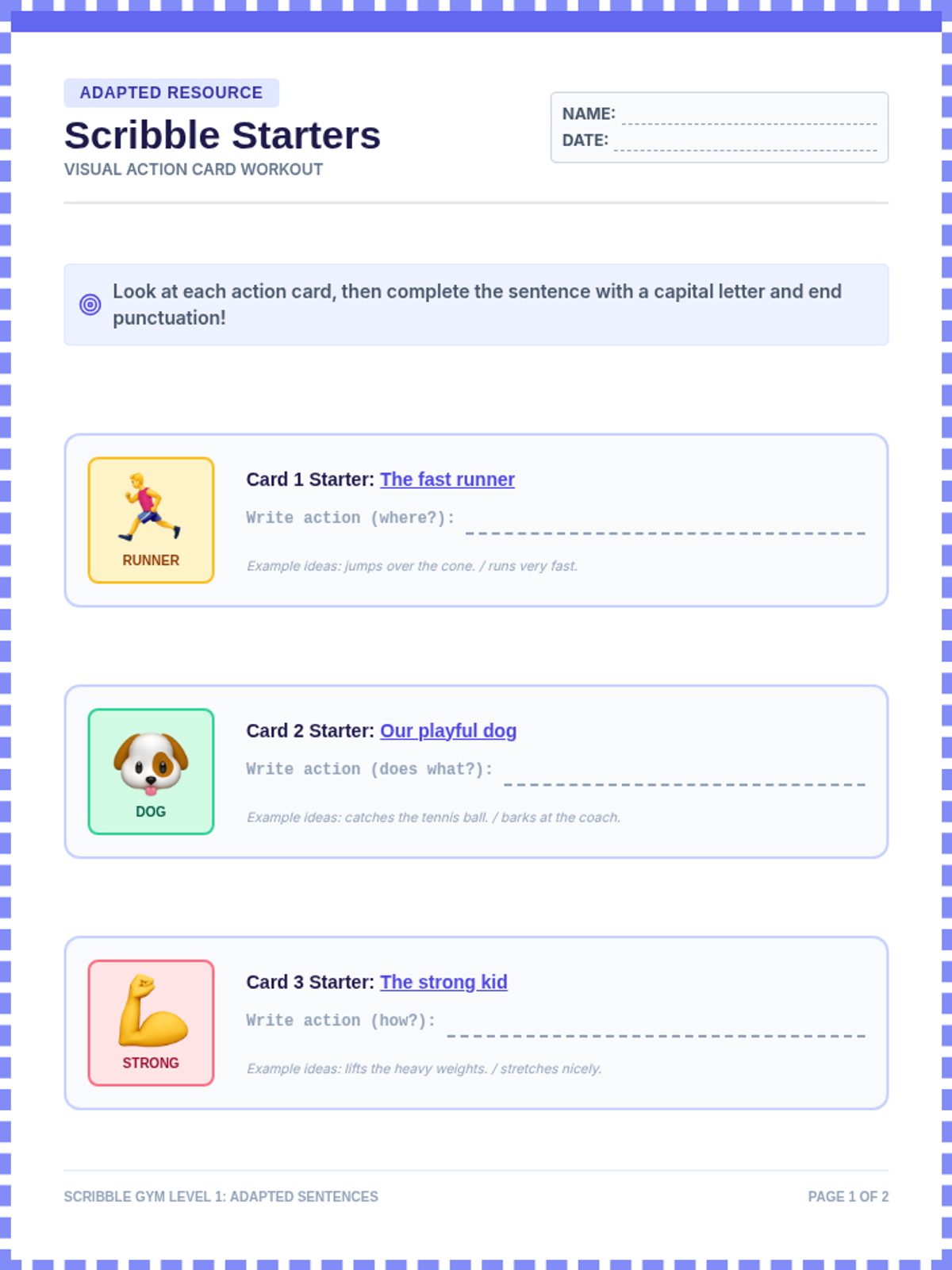
A foundational lesson focused on mastering capitalization, punctuation, and constructing complete simple and compound sentences.
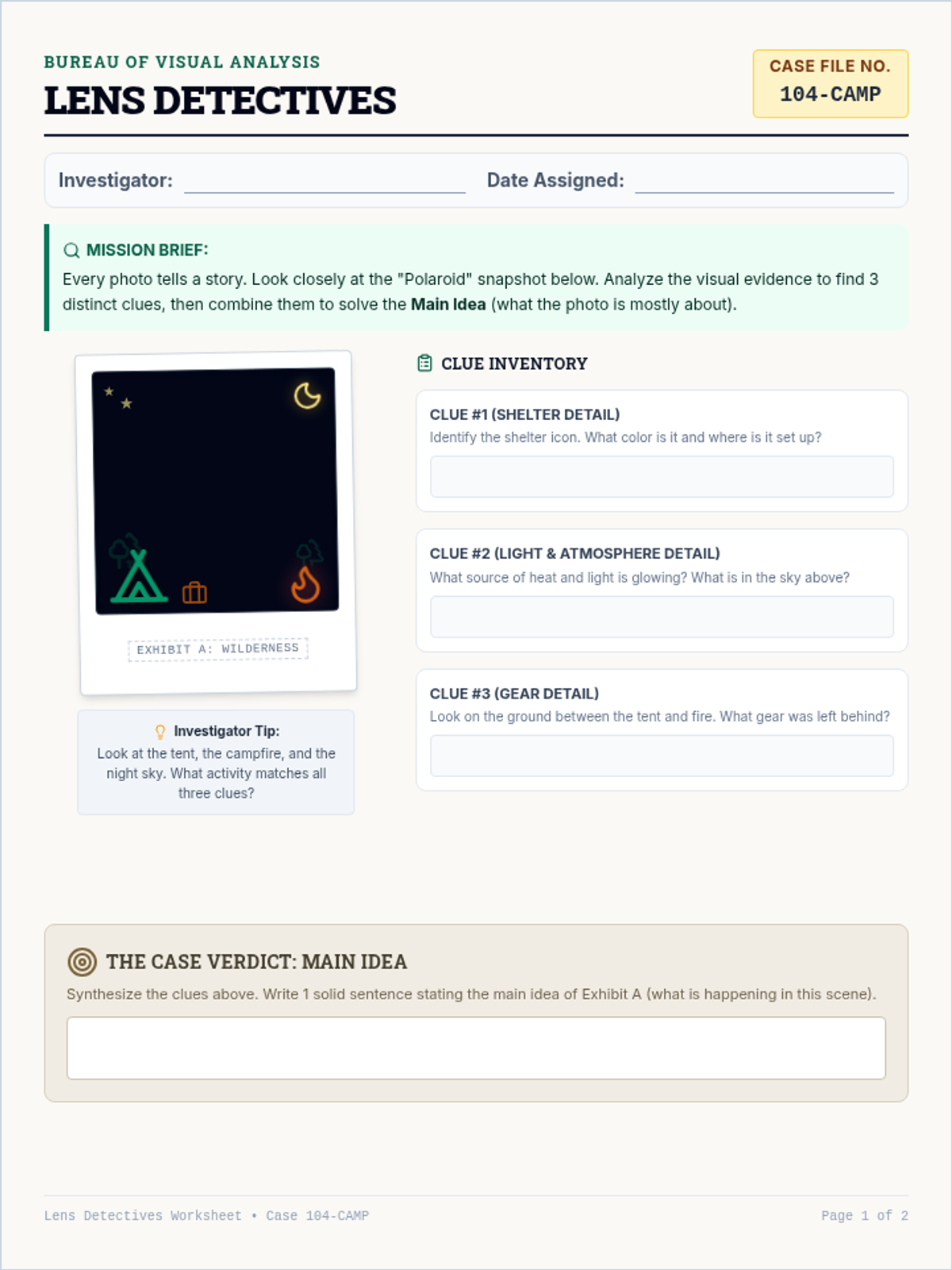
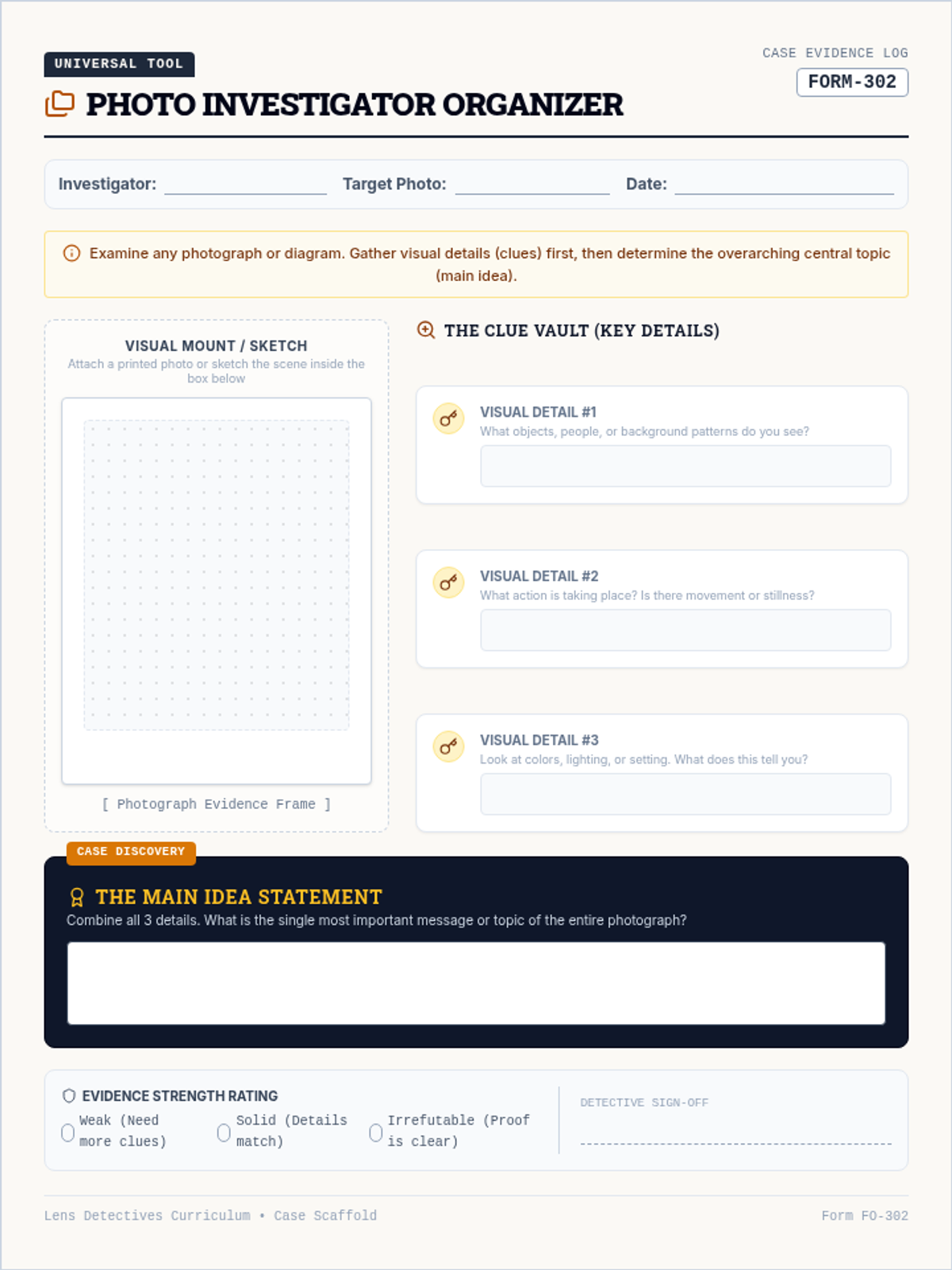
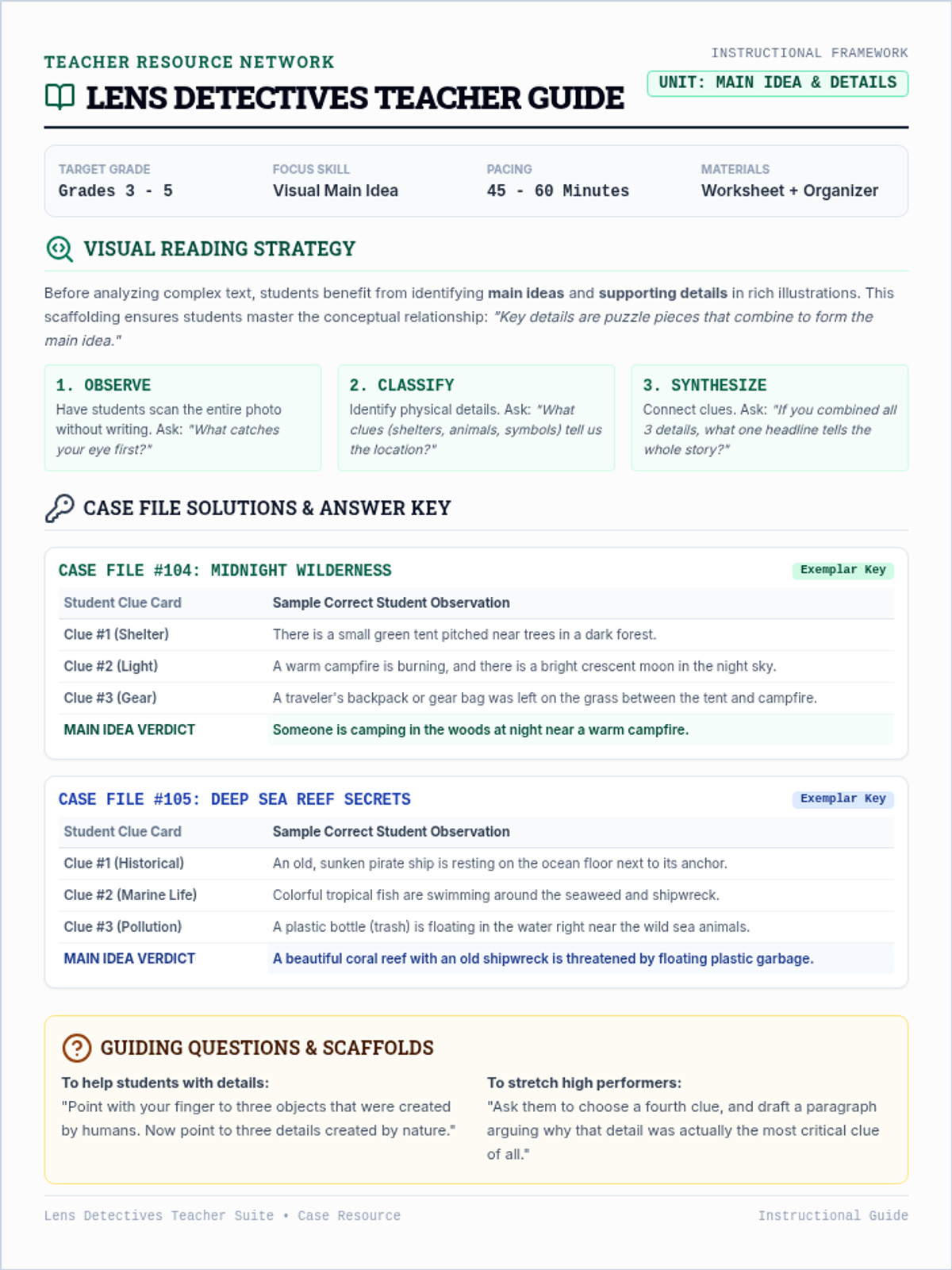
A structured resource pack focusing on Main Idea and Key Details. Students become 'Lens Detectives', analyzing highly detailed visual scenes (styled as polaroid photos) to gather clues, identify the central topic, and draft structured paragraphs using deductive writing scaffolds.
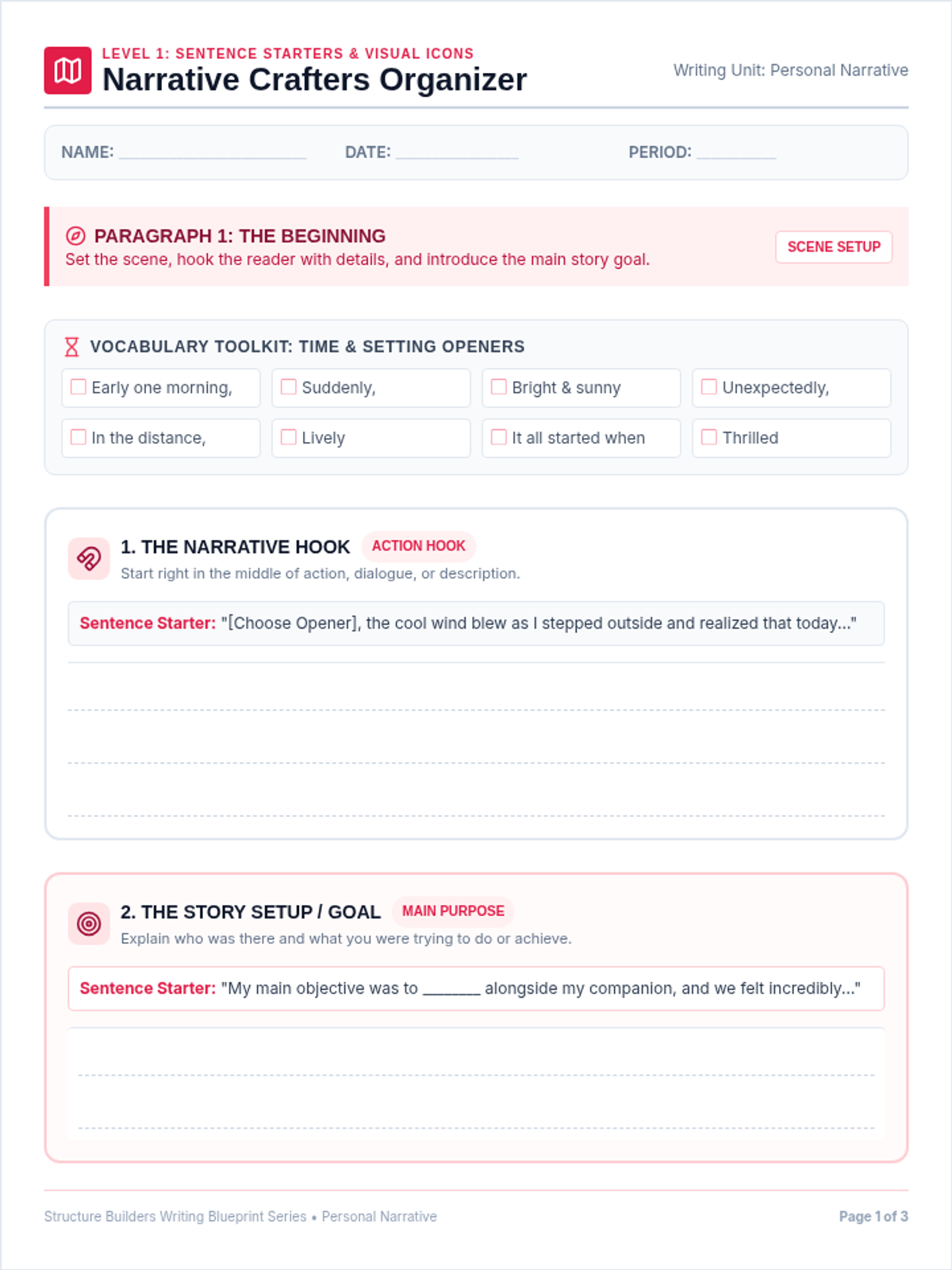
A structured approach to writing a three-paragraph personal narrative. Students develop a clear beginning, middle, and end, using sensory details, transition words, and self-assessment checklists.
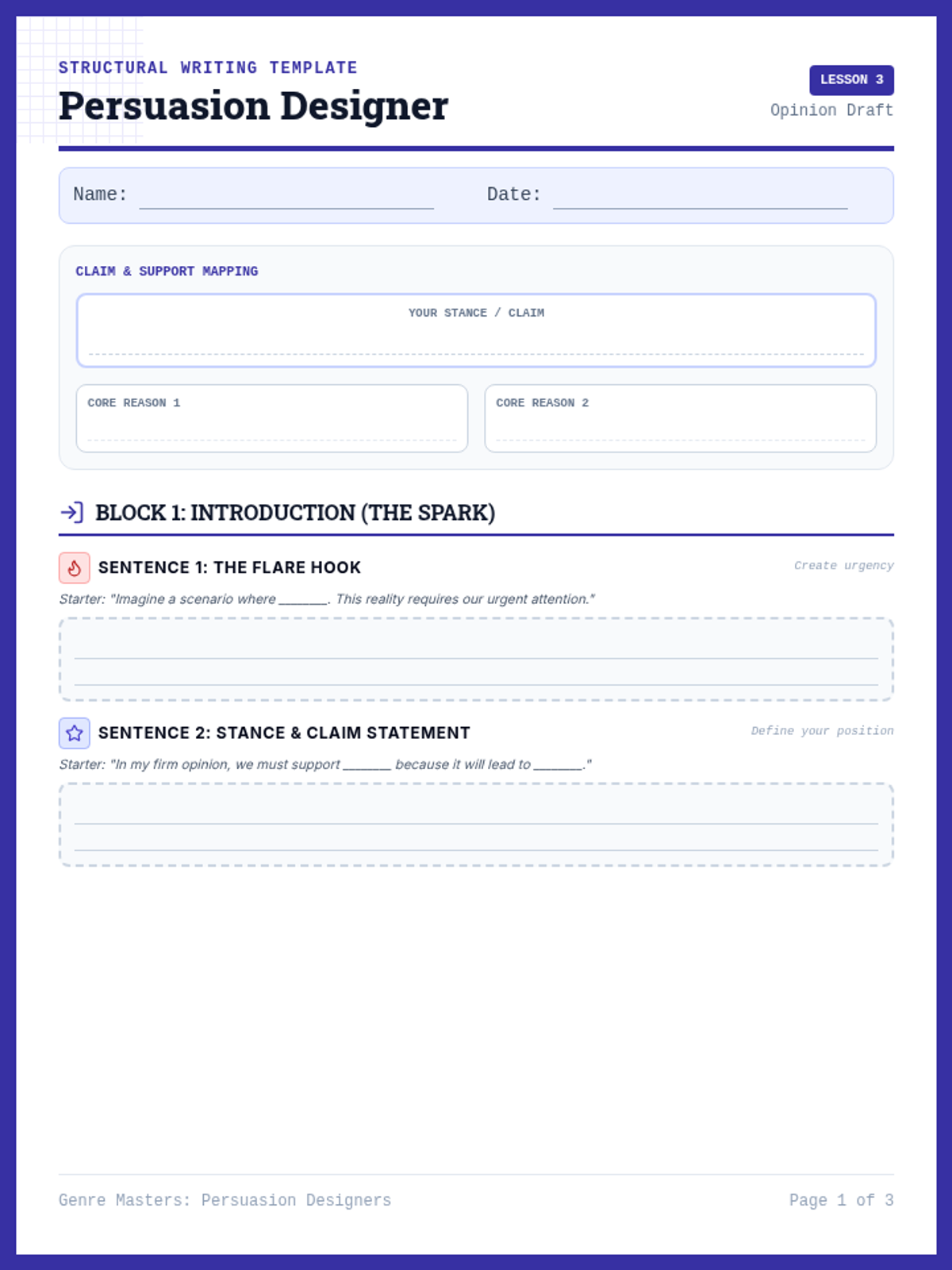
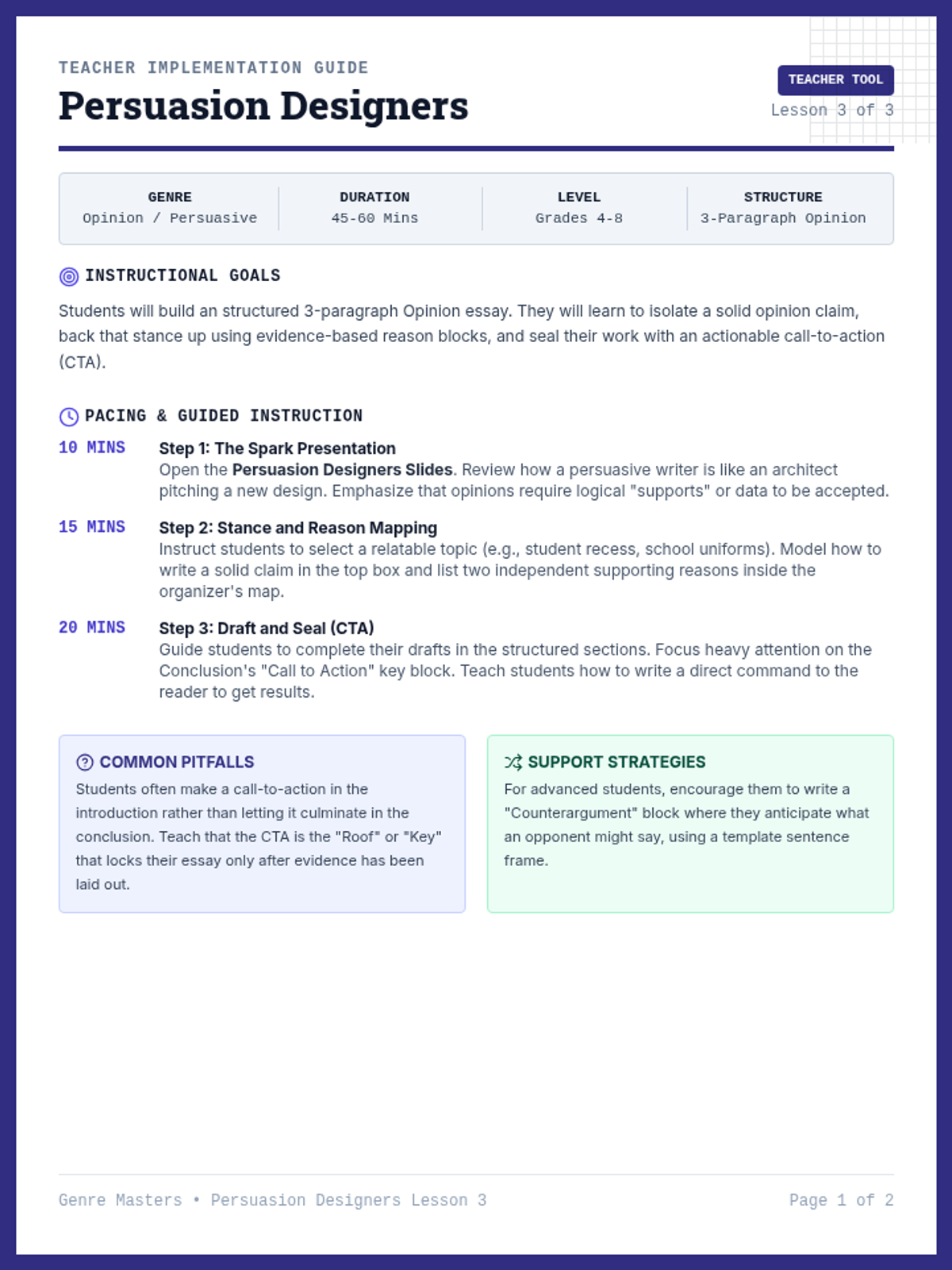
Students structure powerful opinions using a 3-paragraph template. They leverage strong emotional hooks, evidence-based reason body blocks, and persuasive call-to-action conclusions.
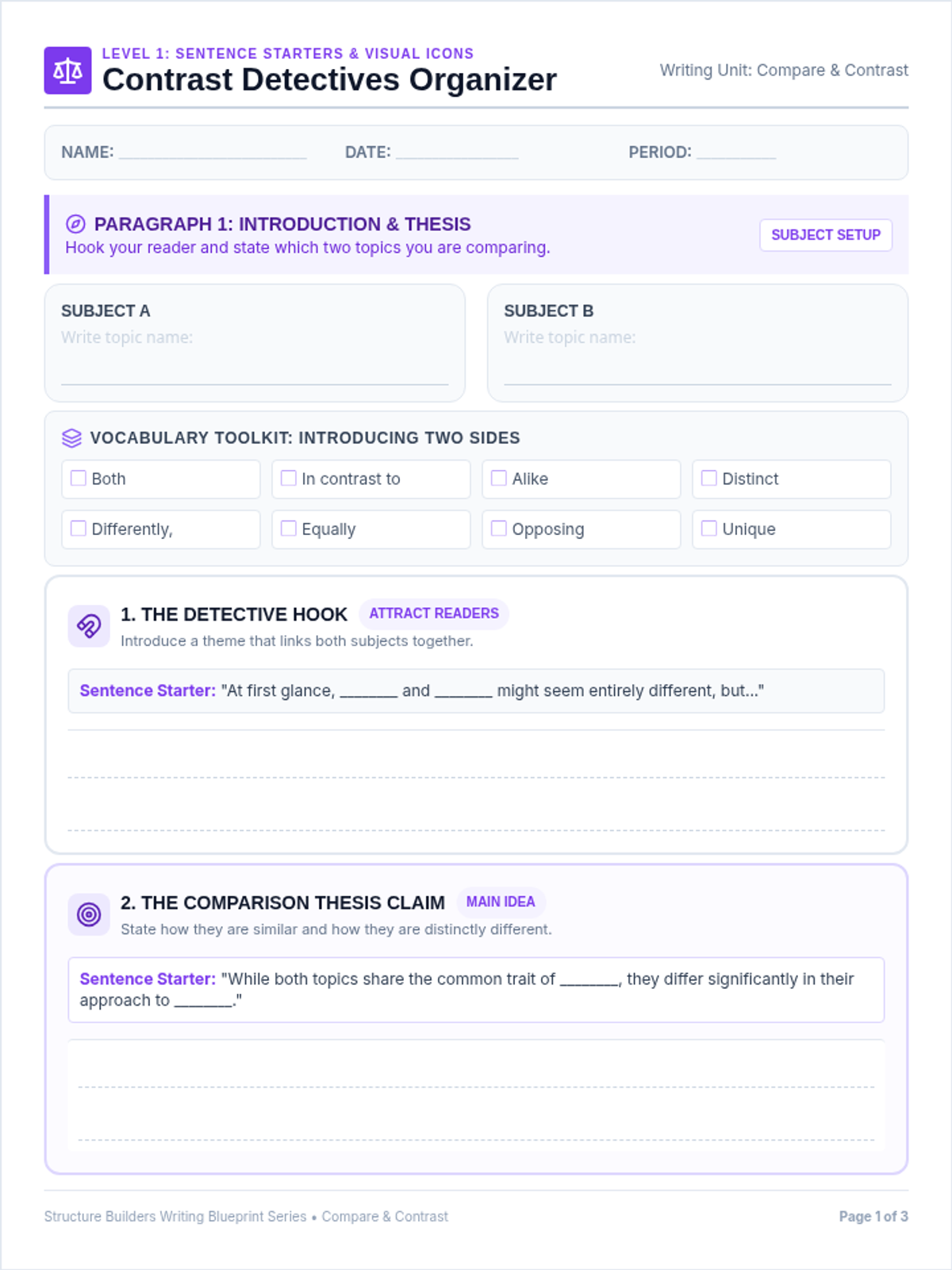
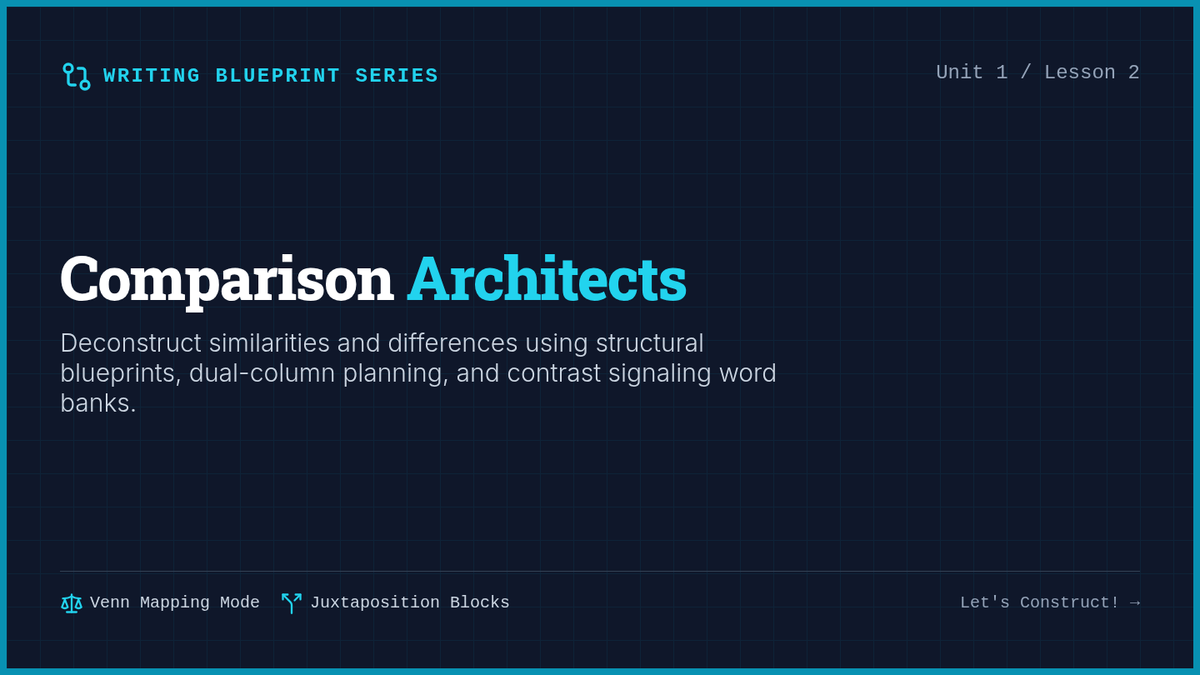
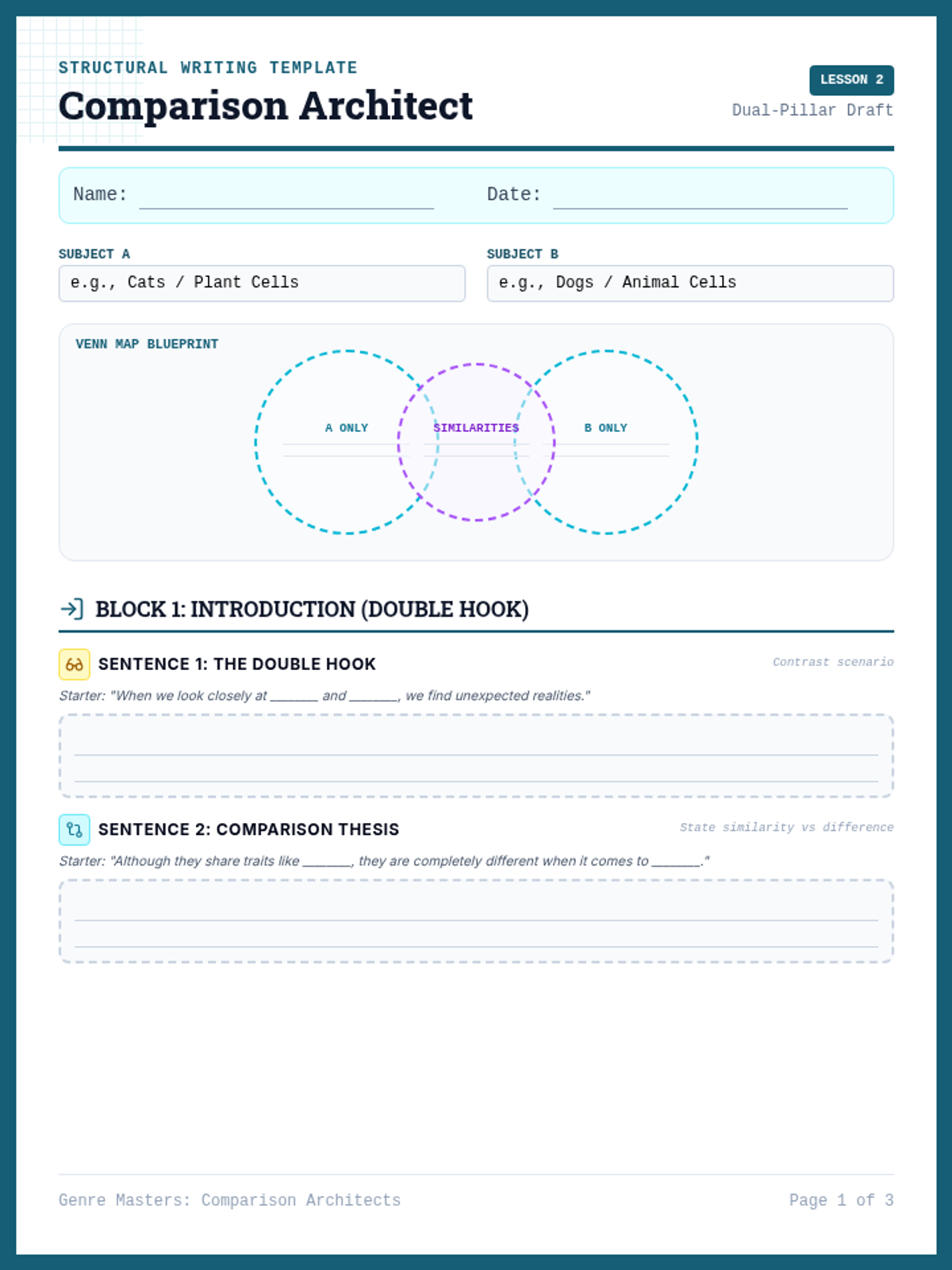
A step-by-step lesson for comparing and contrasting two topics in a three-paragraph format. Students utilize customized sentence frames, comparative word banks, and structured organizers with visual prompts.
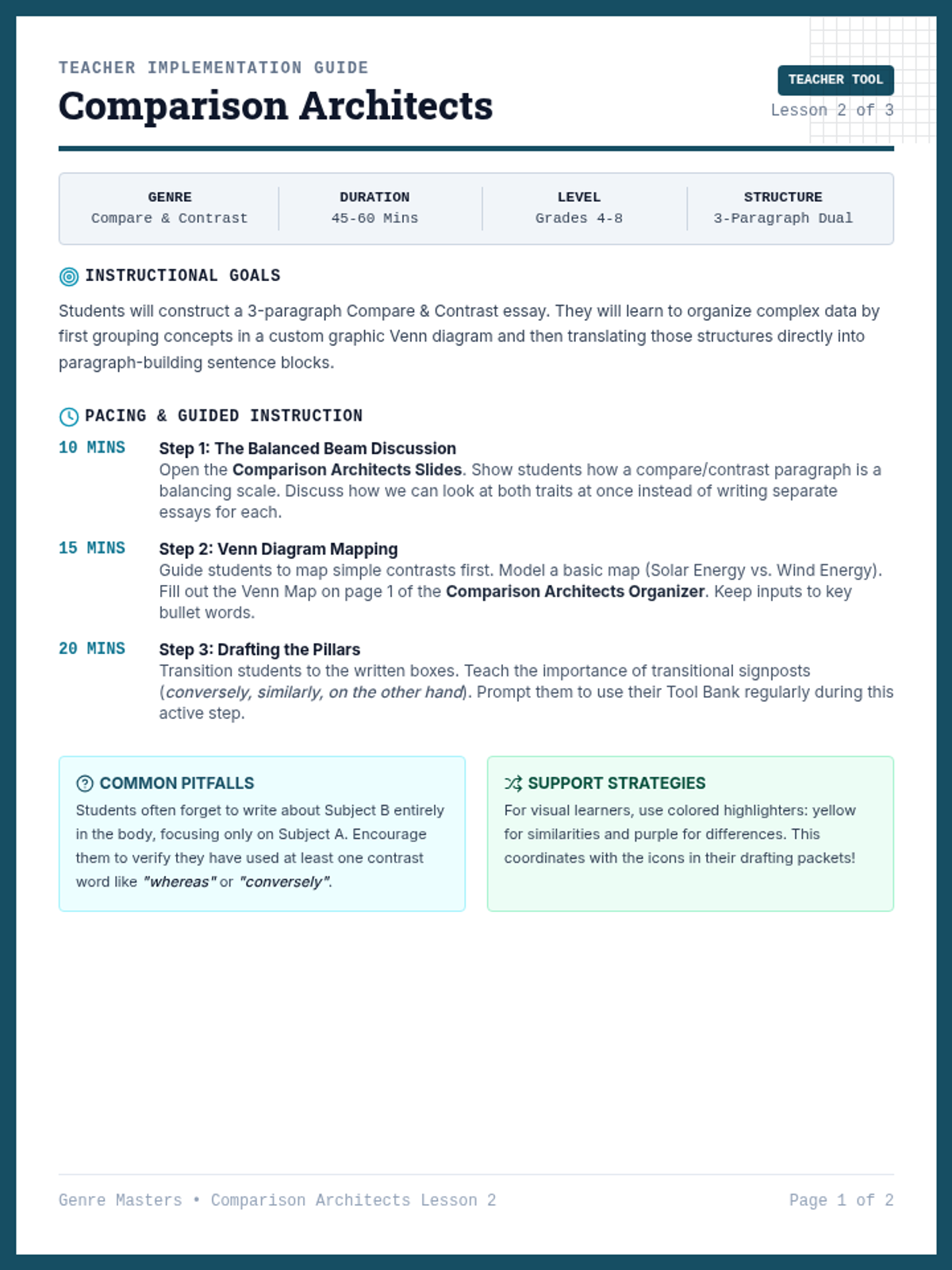
Students learn to contrast and compare two topics using a structured 3-paragraph format. A dual-column layout, custom Venn diagrams, and comparison word banks guide them through similarities and differences.
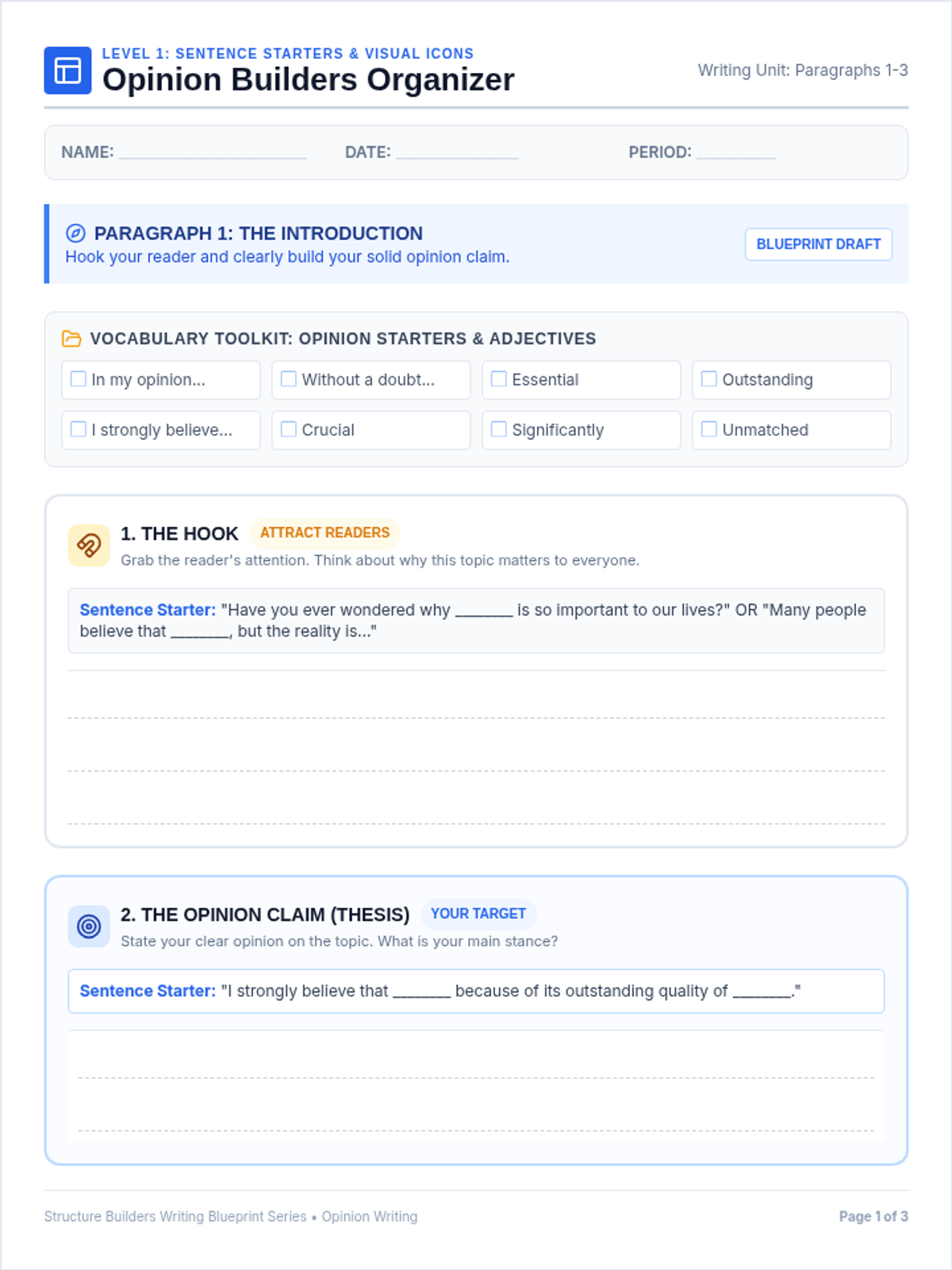
A guided lesson focusing on drafting a three-paragraph opinion essay. Students learn to express a clear claim, back it up with evidence, and write a strong concluding summary using custom sentence frames, interactive word banks, and visual icon prompts.
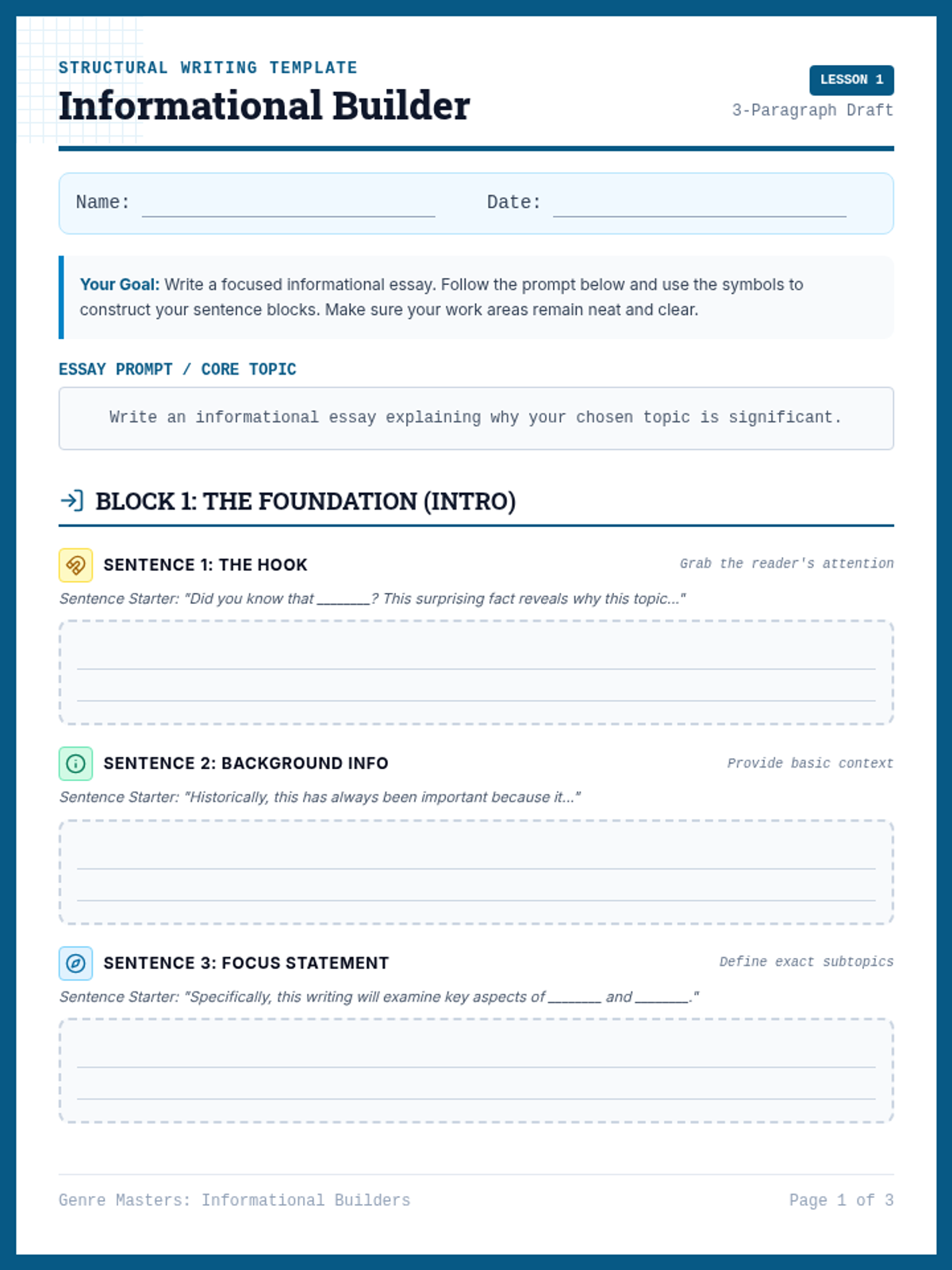
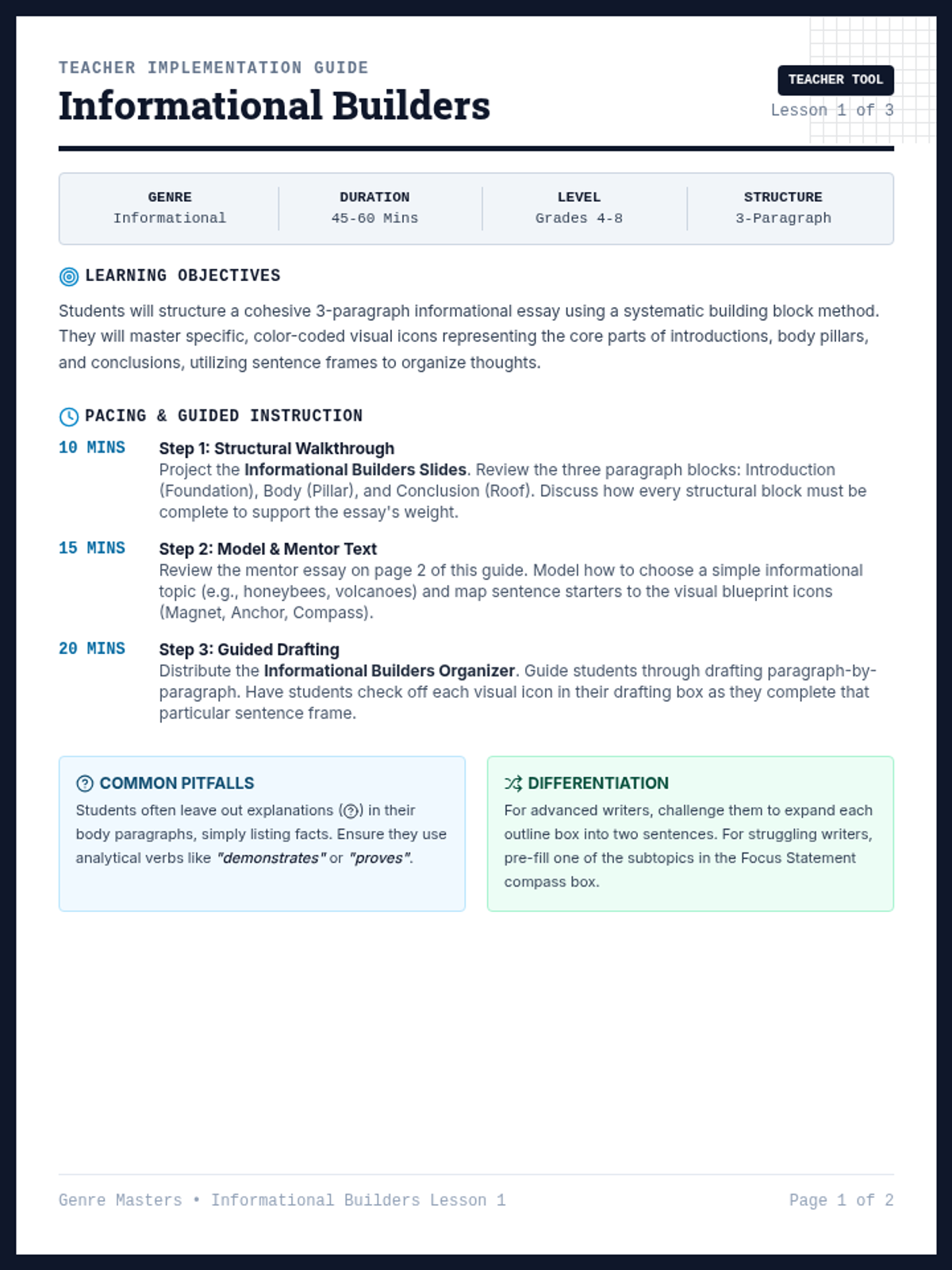
Students master the highly structured 3-paragraph informational essay. They use visual icons, word banks, and fill-in-the-blank sentence starters to build a rock-solid introduction, body, and conclusion paragraph.
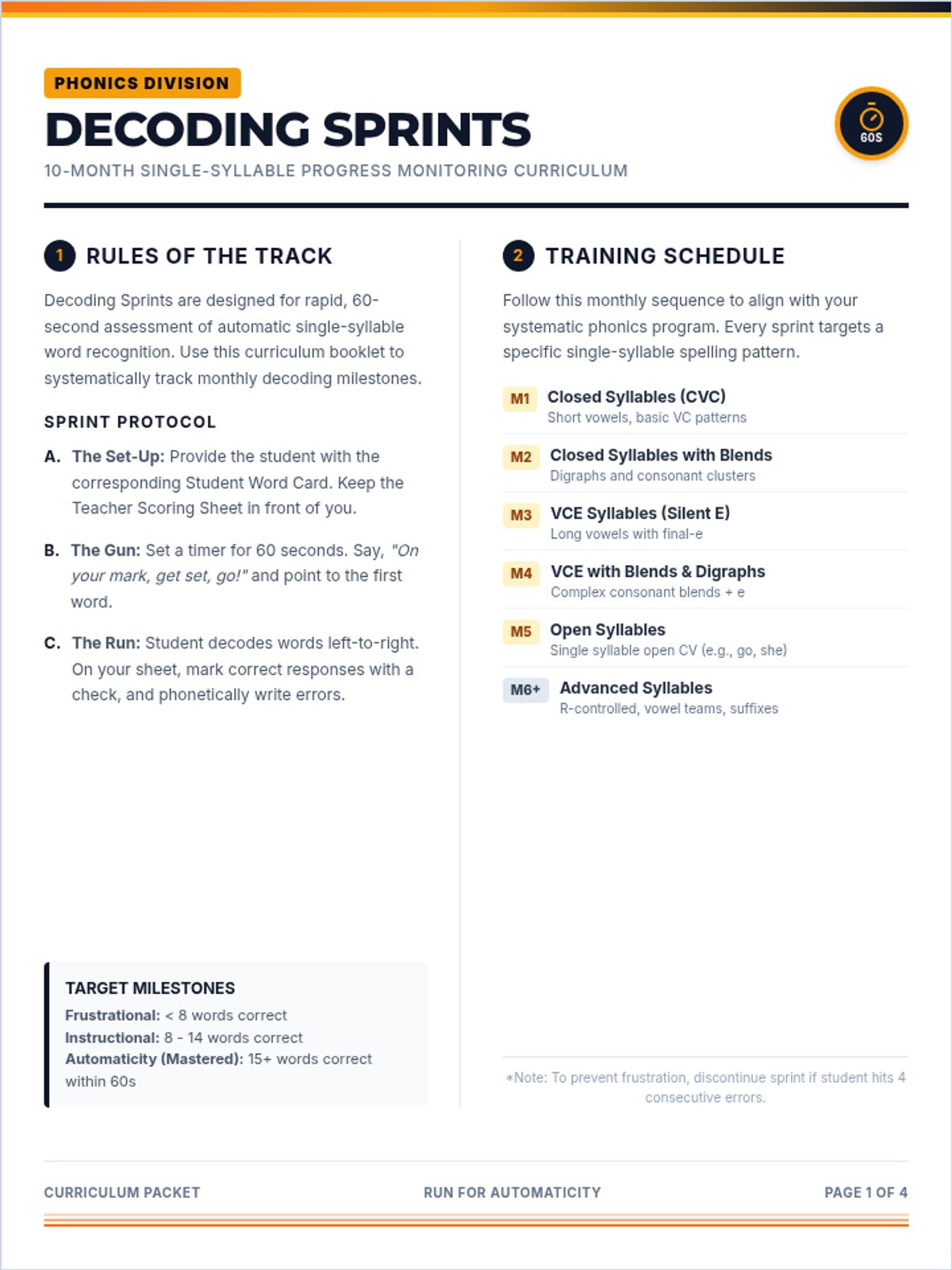
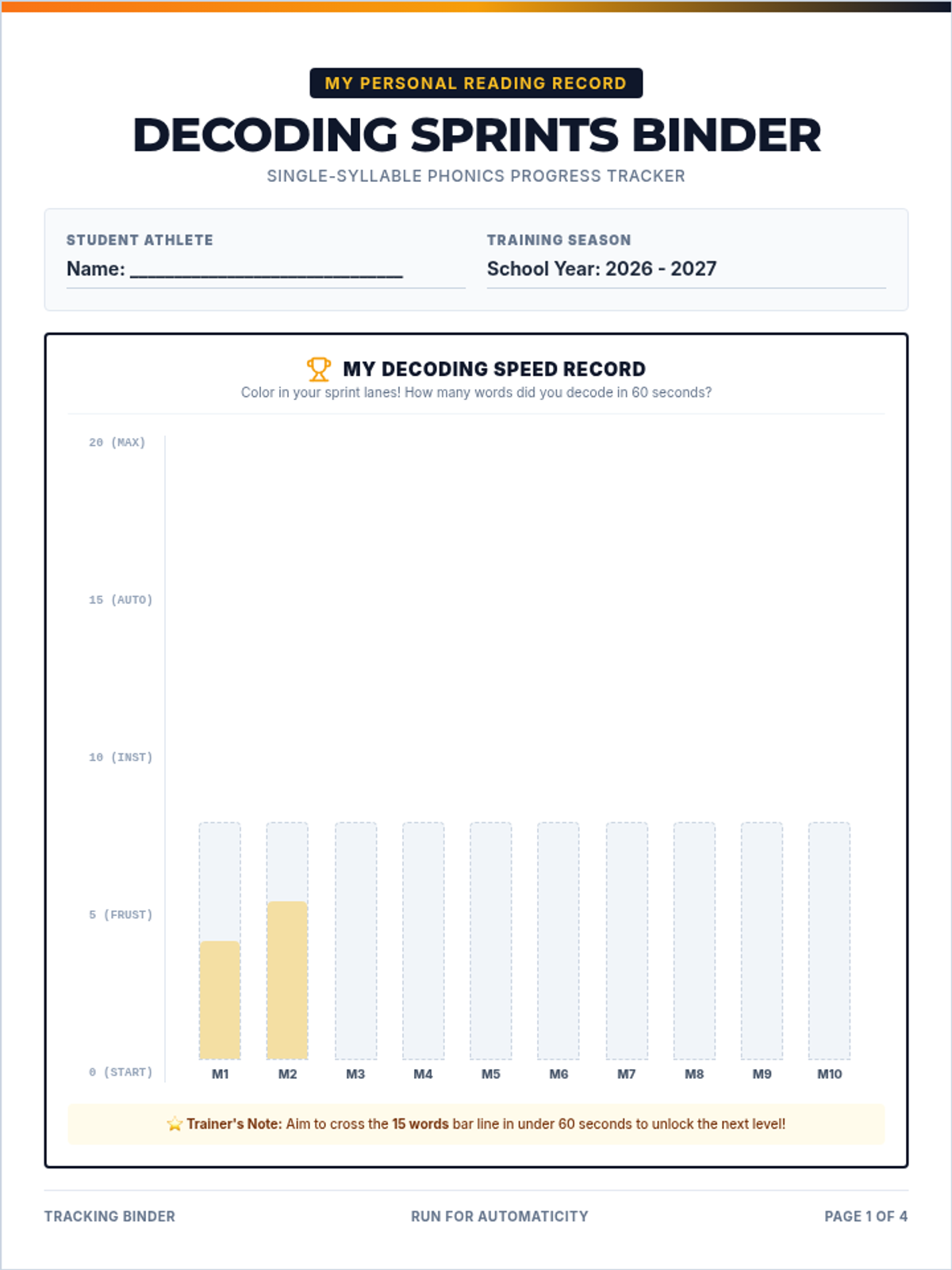
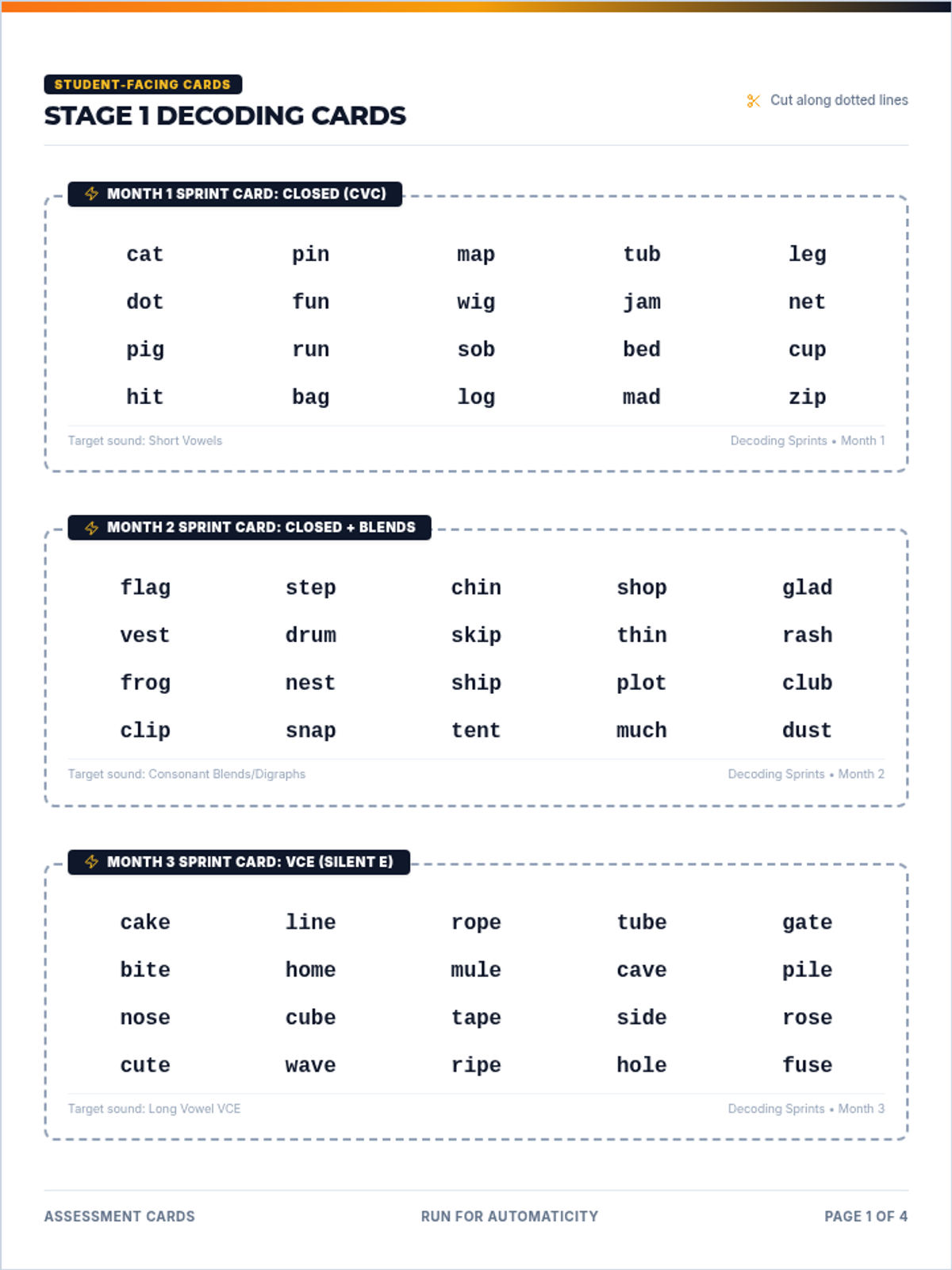
A comprehensive, 10-month progress-monitoring curriculum designed for rapid decoding trials. This lesson contains a student tracking binder, weekly assessment cards, and a complete curriculum booklet focusing on single-syllable phonics patterns.
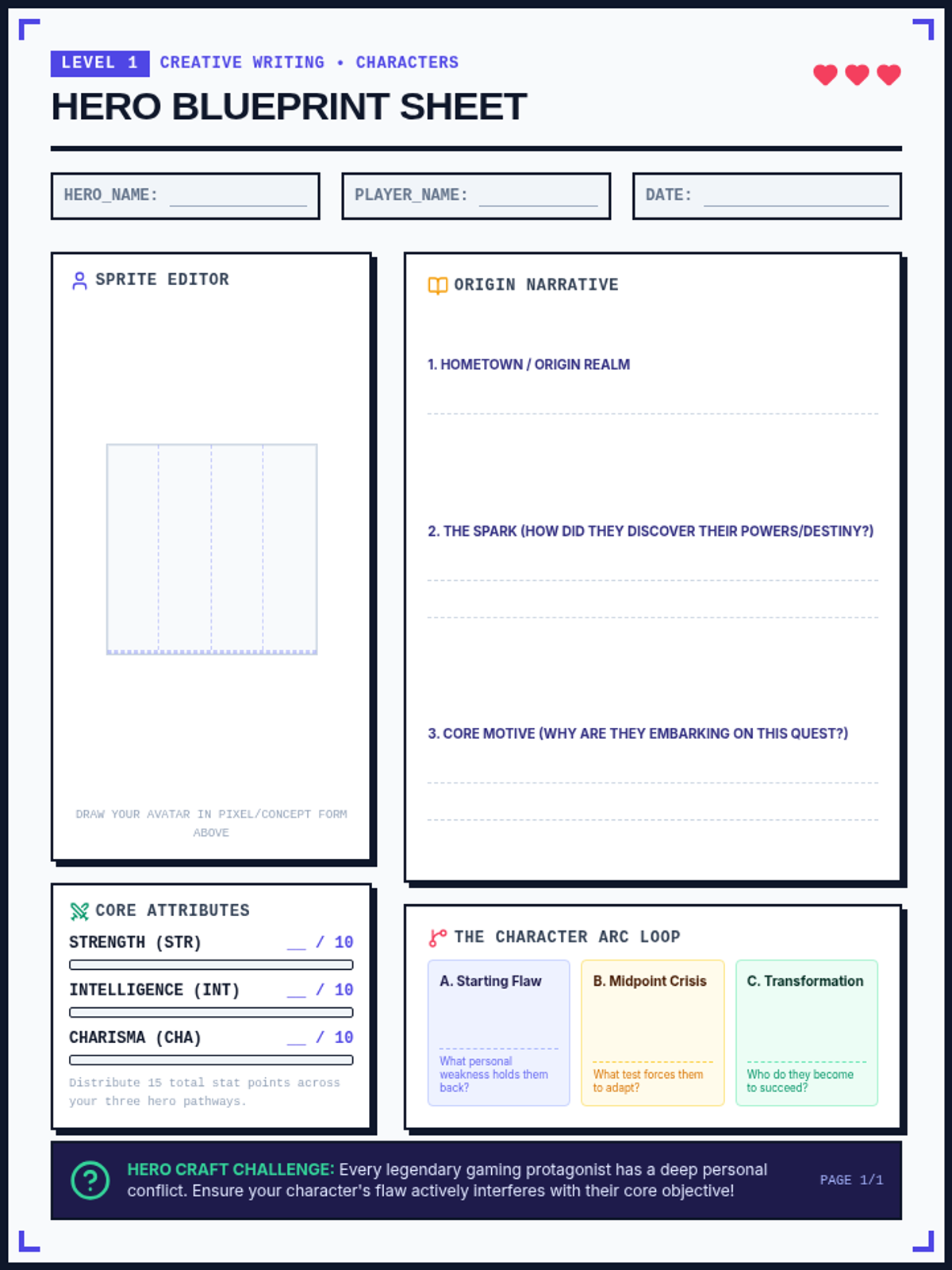
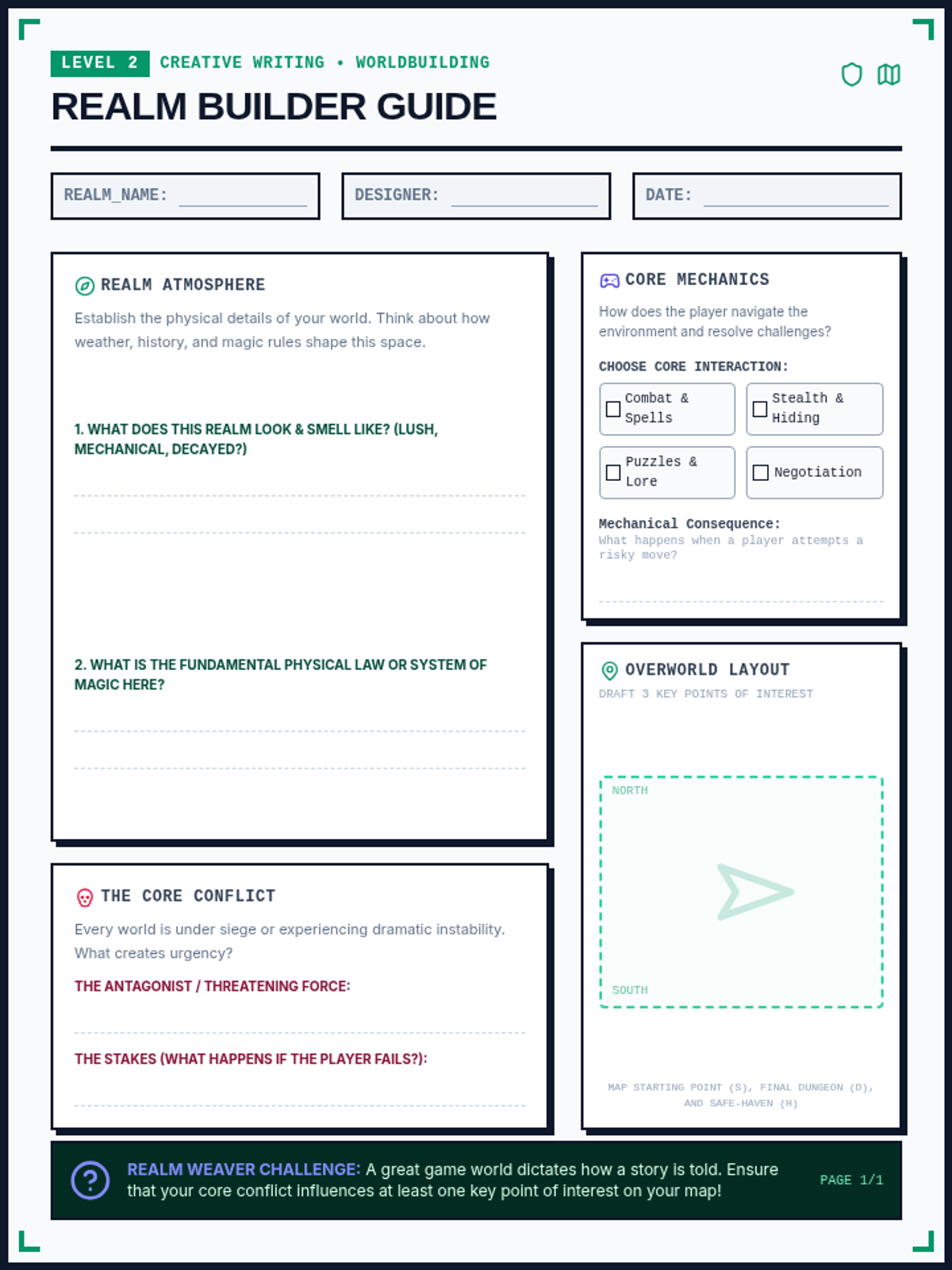
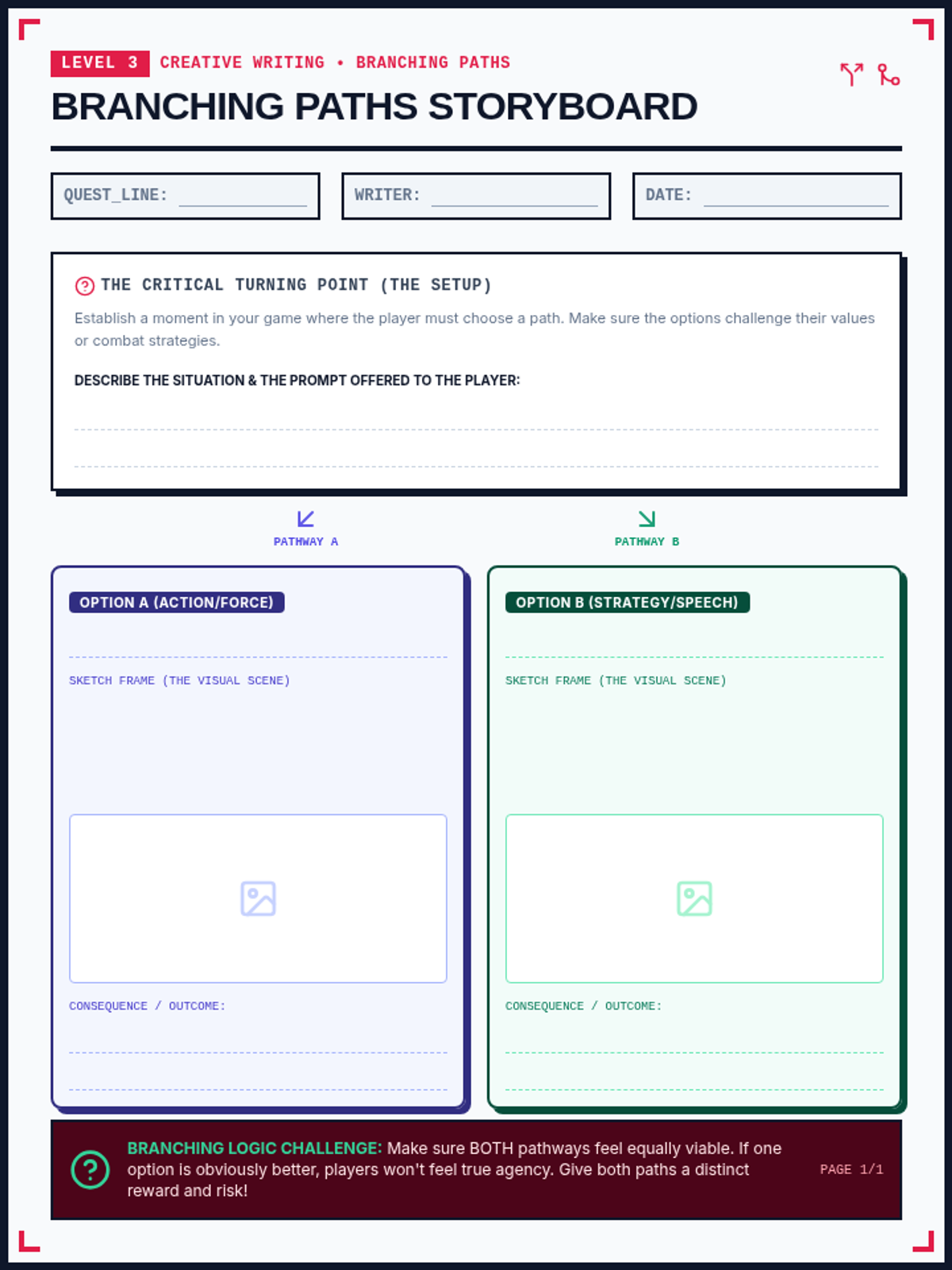
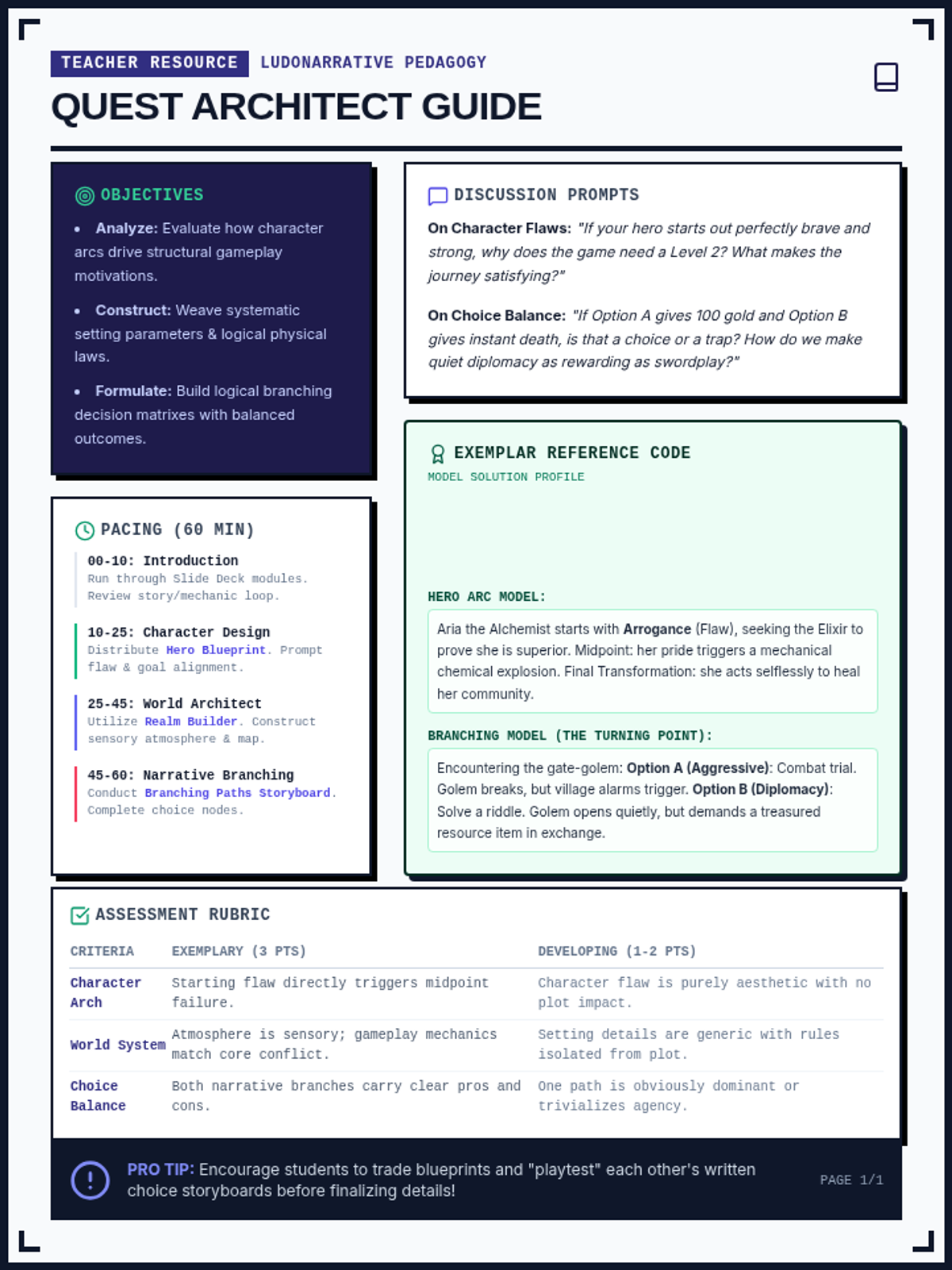
A comprehensive game design lesson focusing on creative writing and narrative architecture. Students learn how to build worlds, draft compelling character arcs, and design branching choice pathways through a series of structured worksheets, guided slides, and educator resources.
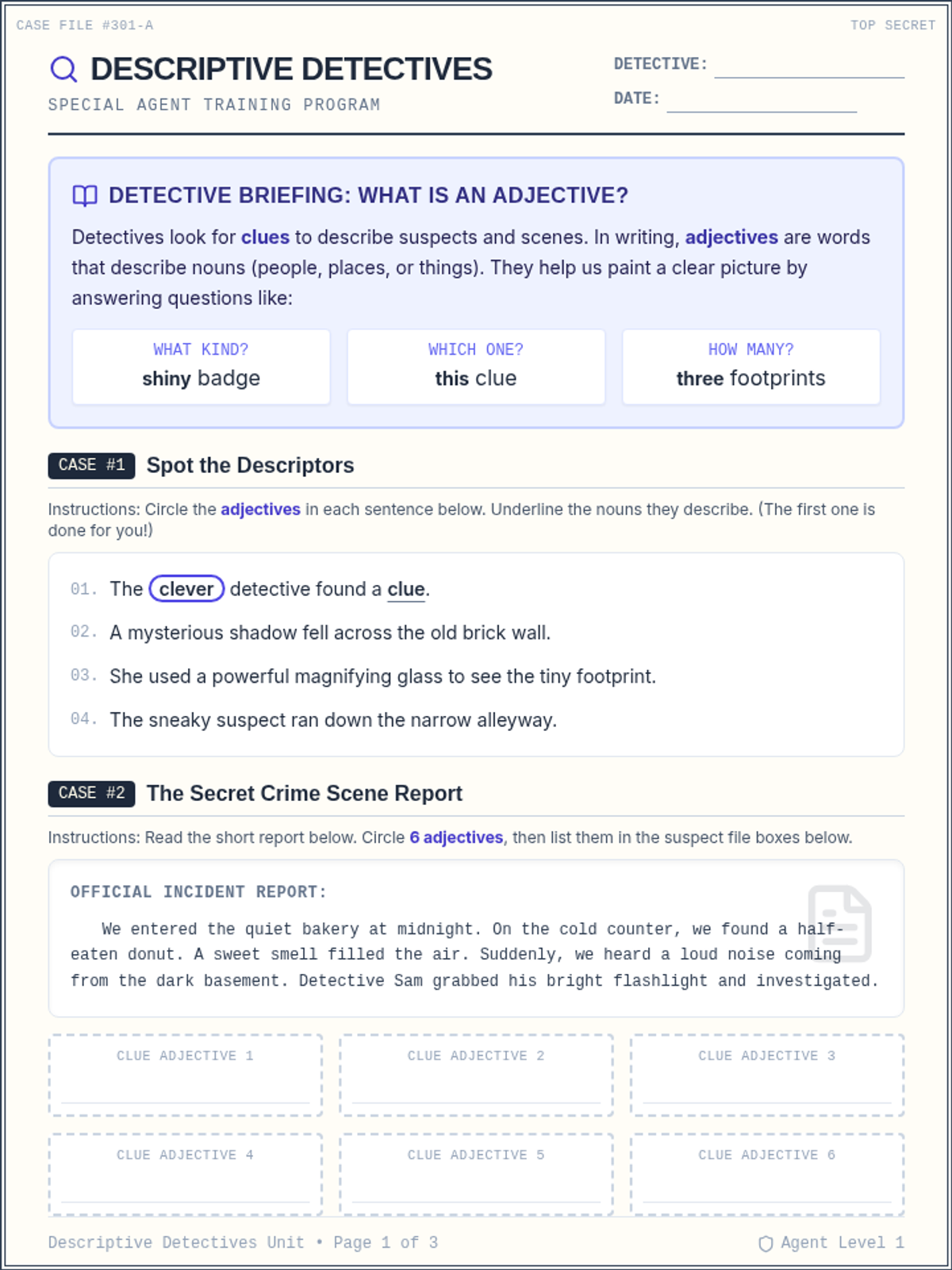
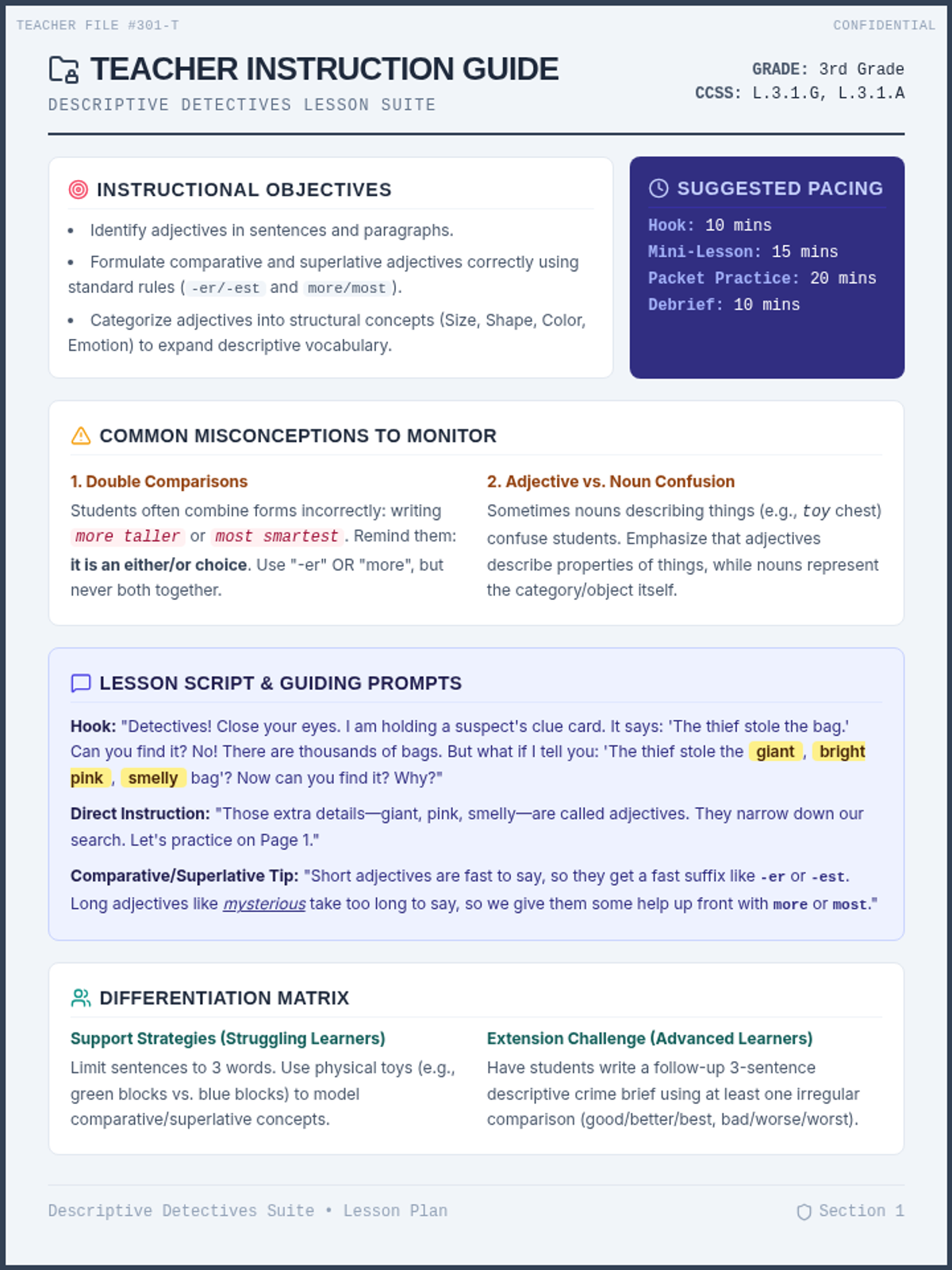
A comprehensive and engaging unit/lesson introducing 3rd graders to adjectives. Students act as 'Descriptive Detectives' to identify, compare, and categorize adjectives through a structured work packet and structured visual guide.
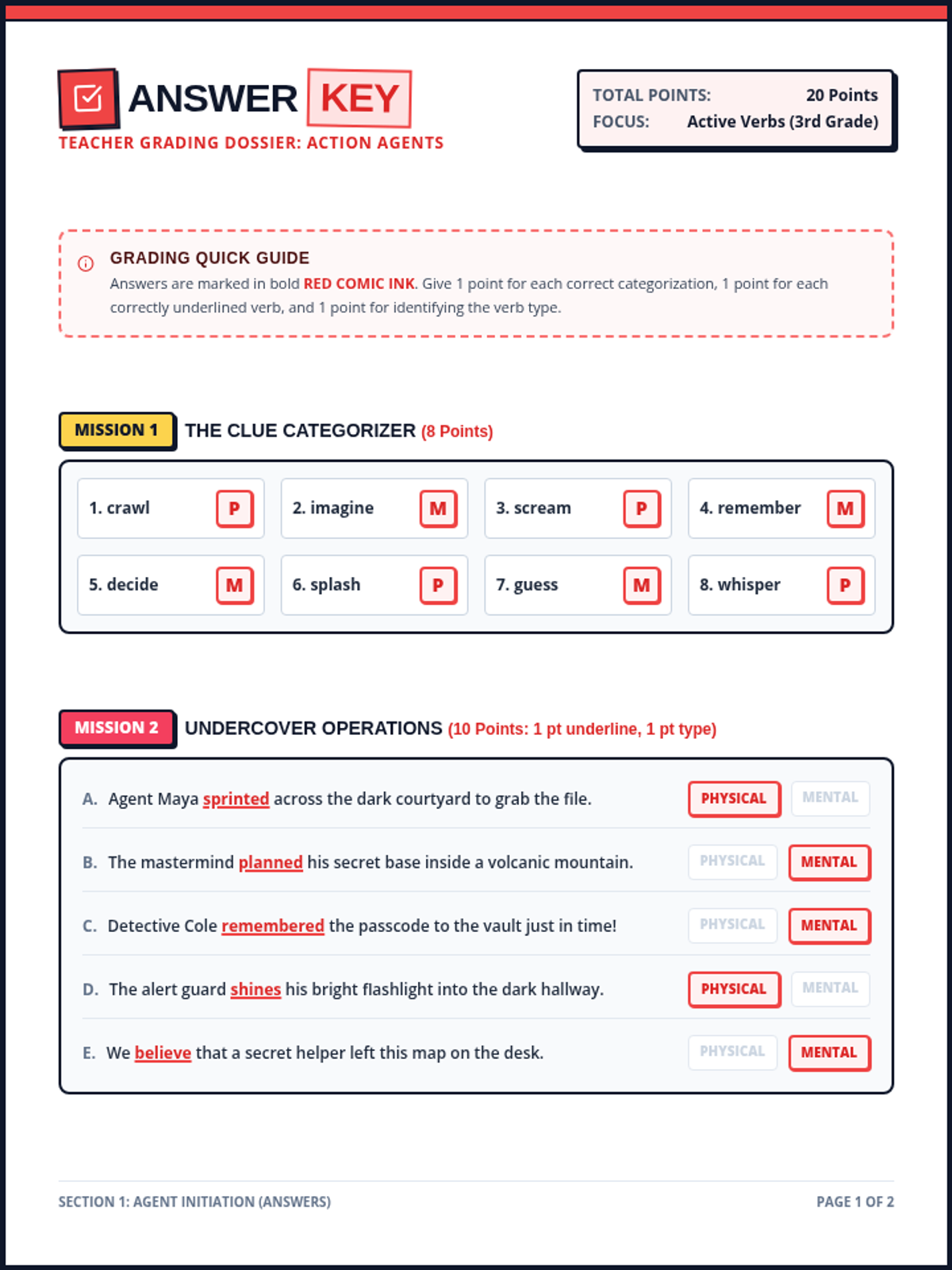
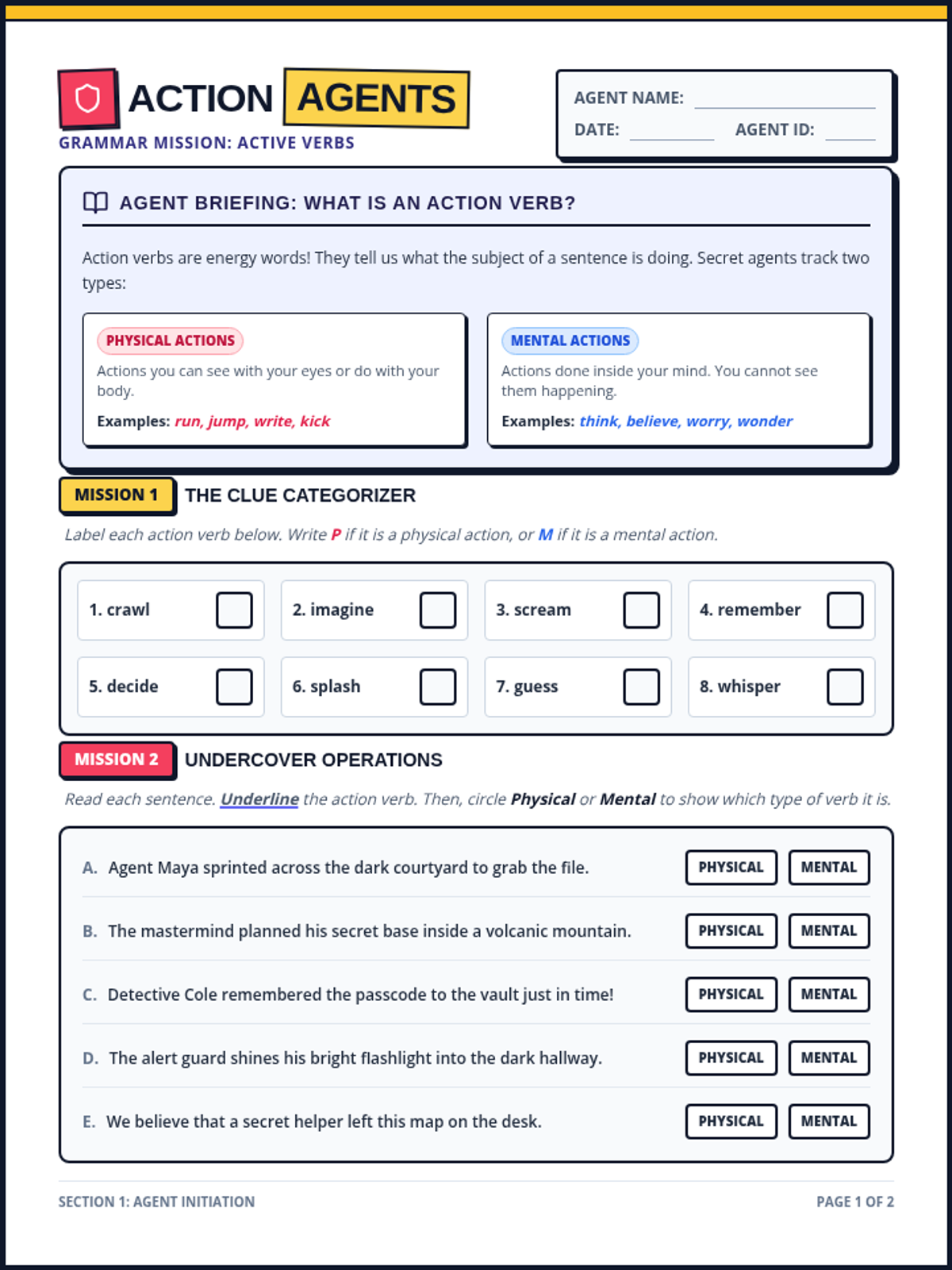
A dynamic 3rd-grade grammar lesson where students become 'Action Agents' to track down, identify, and deploy physical and mental action verbs. Includes a comic-themed visual slide deck, a comprehensive two-page practice worksheet, and a teacher answer key.